Philips PUS9010 (The One 2025) in the 75-inch version with an IPS panel is a TV that clearly shows the differences arising from the panel used. Compared to the VA panel variant, it offers significantly better viewing angles, very good compatibility with consoles, and excellent text readability, but at the same time, it loses out on black levels and maximum brightness. This model is best suited for everyday use, gaming, and in larger living rooms where not everyone is sitting perfectly in front of the screen. The TV performs very well in terms of responsiveness and features for gamers, offering 144 Hz, low input lag, and full support for variable refresh rates. An additional advantage remains Ambilight, which, especially in the evening, can enhance the viewing experience and partly mask the weaker black levels of the IPS panel. After calibration, the picture appears consistent and natural, and the differences compared to the VA version in color reproduction become hard to detect. On the other hand, it must be stated clearly that those focused on cinematic sessions in complete darkness may be disappointed. The poor black levels and boosted brightness due to the quality of our unit means that this variant of the PUS9060 performs worse than the same model with a VA panel. Philips PUS9010 IPS is generally a sensible choice for users looking for a large, modern TV for gaming, PC, and everyday watching with very good viewing angles. However, if deep blacks and better picture quality are a priority, it’s worth considering other variants or a higher class of equipment, as often for a small extra charge, you can get a TV equipped with mini-LED technology.
- Matching (Score) |
- Our verdict |
- TV appearance |
- Where to buy |
- Contrast and black detail |
- HDR effect quality |
- Factory color reproduction |
- Color reproduction after calibration |
- Smoothness of tonal transitions |
- Image scaling and smoothness of tonal transitions |
- Blur and motion smoothness |
- Console compatibility and gaming features |
- Input lag |
- Compatibility with PC |
- Viewing angles |
- Daytime performance |
- Panel details |
- TV features |
- Apps |
- Playing files from USB |
- Sound
PHILIPS PUS9010 (IPS) vs Samsung S90H (QD-OLED)
 Direct comparison
The One 2025 / PUS9060 / PUS9010 / PUS9000

S90HAT / S90HAE / S92HAT
Available screen sizes: 75”
Available screen sizes: 77”
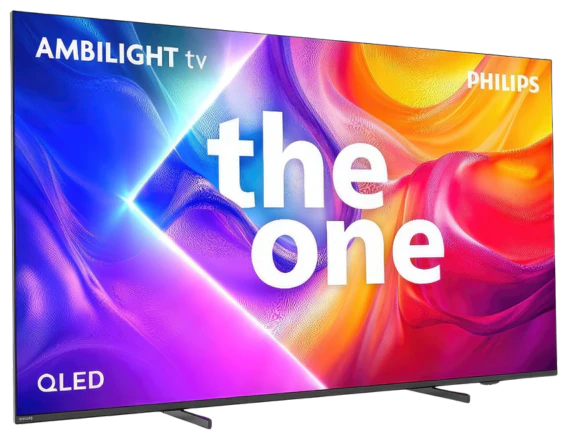
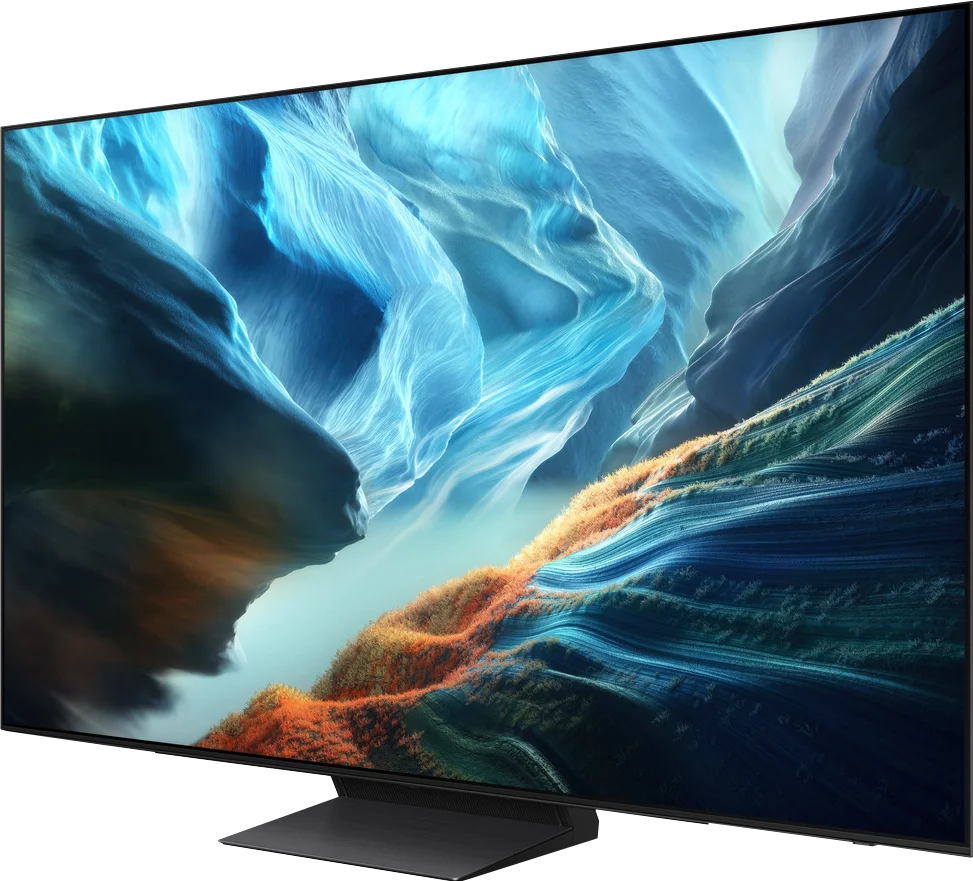
Panel type: LCD IPS
Resolution: 3840x2160
System: Titan OS
Model year: 2025
Complete the survey to find out the result
Panel type: QD-OLED
Resolution: 3840x2160
System: Tizen
Model year: 2026
Complete the survey to find out the result
Overall rating
6.5
8.6
 Movies and series in UHD quality
 5.9
9.0
 Classic TV, YouTube
 5.6
9.3
 Sports broadcasts (TV and apps)
 6.7
9.0
 Gaming on console
 8.1
9.8
 TV as a computer monitor
 8.9
8.6
 Watching in bright light
 5.4
6.4
 Utility functions
 6.1
7.3
 Apps
Apps 6.7
9.3
 Sound quality
 6.6
8.4
Complete the survey to find out what fits your preferences
Advantages

Very good viewing angles thanks to the IPS panel
Great PC compatibility, 144 Hz mode, proper support for G-Sync and FreeSync
Wide range of features for gamers, variable refresh rate, automatic gaming mode, HGiG
Support for multiple HDR formats including HDR10+ and Dolby Vision
Support for Dolby Atmos
Low input lag
Effective P5 image processor for lower quality content
Ambilight system
Backlit remote
Perfect blacks and infinite contrast
Very high HDR brightness (reaching 1700 nits)
Excellent colour gamut coverage (QD-OLED)
Reference-grade image reproduction after professional calibration
Excellent motion handling (no motion blur)
Excellent for gamers (4x HDMI 2.1, VRR, ALLM, low input lag)
High panel refresh rate (up to 165 Hz)
Perfect viewing angles
Effective anti-reflective coating (matte)
Responsive Tizen system
Surprisingly good sound
Disadvantages

Poor blacks and contrast (typical for IPS panels)
Clearly lower brightness than in the VA panel variant
Visible backlight bleed at the edges of the screen in the tested unit
Limited number of applications in the Titan OS system
The remote is still infrared, requiring aiming at the screen
In bright light, blacks can take on a cherry tint (a characteristic of QD-OLED panels)
The matte finish in strong light affects perceived colour saturation
Lacks TV features such as USB recording or PIP
No support for DTS:X (a problem for Blu-ray disc fans)
Why isn't this panel available in all sizes?!
Our verdict
Samsung, what on earth did you do? The S90H is a TV that won us over almost from the first minutes. If you're after a short answer to whether it's worth the money, we’ll be blunt: yes, absolutely. The combination of perfect, organic blacks with very high brightness and the vivid colours of a QD-OLED panel creates an effect that's hugely impressive from the first power-on. Choosing a matte finish proved to be a brilliant move. No more constant battles with the blinds or seeing your own reflection on a sunny day. Sure, purists like us will notice that in a room with strong sunlight the blacks can subtly shift towards grey-maroon tones, but the daytime viewing comfort here is hard to overstate. Most importantly, in the evening and at night the picture still delivers everything we love about OLEDs: perfect blacks, excellent contrast and incredible depth. Add to that a fast, polished Tizen system and a nearly complete suite of gaming features, led by Game Motion Plus. The result is an exceptionally complete TV where minor software niggles don't change the overall, very positive impression. Does the S90H have any major downside? It's hard to point to anything in the TV itself that would seriously detract from this model. The biggest concern is more about Samsung's policy. To this day it's difficult to understand why such a great QD-OLED panel is offered only in the 77-inch model we tested, the one with the HAT suffix in the name. That may change in future, but for now that's how things stand. So if you're specifically aiming for that variant, there's no need to think twice. The Samsung S90H 77-inch with a QD-OLED panel is one of the most exciting TVs of the year. Once the new-product premium fades and bigger discounts start to appear, it could become one of the best-value OLEDs on the market — and very likely one of the biggest bestsellers of 2026.
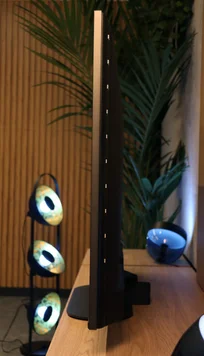
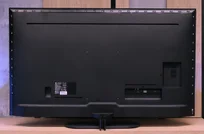
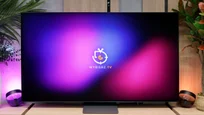
TV appearance





Contrast and black detail
2.9/10
10/10
Local dimming function: No
Contrast:


Result
1,300:1

Result
1,400:1

Result
1,450:1

Result
1,500:1

Result
1,350:1
Result
∞:1
Result
∞:1
Result
∞:1
Result
∞:1
Result
∞:1
Halo effect and black detail visibility:
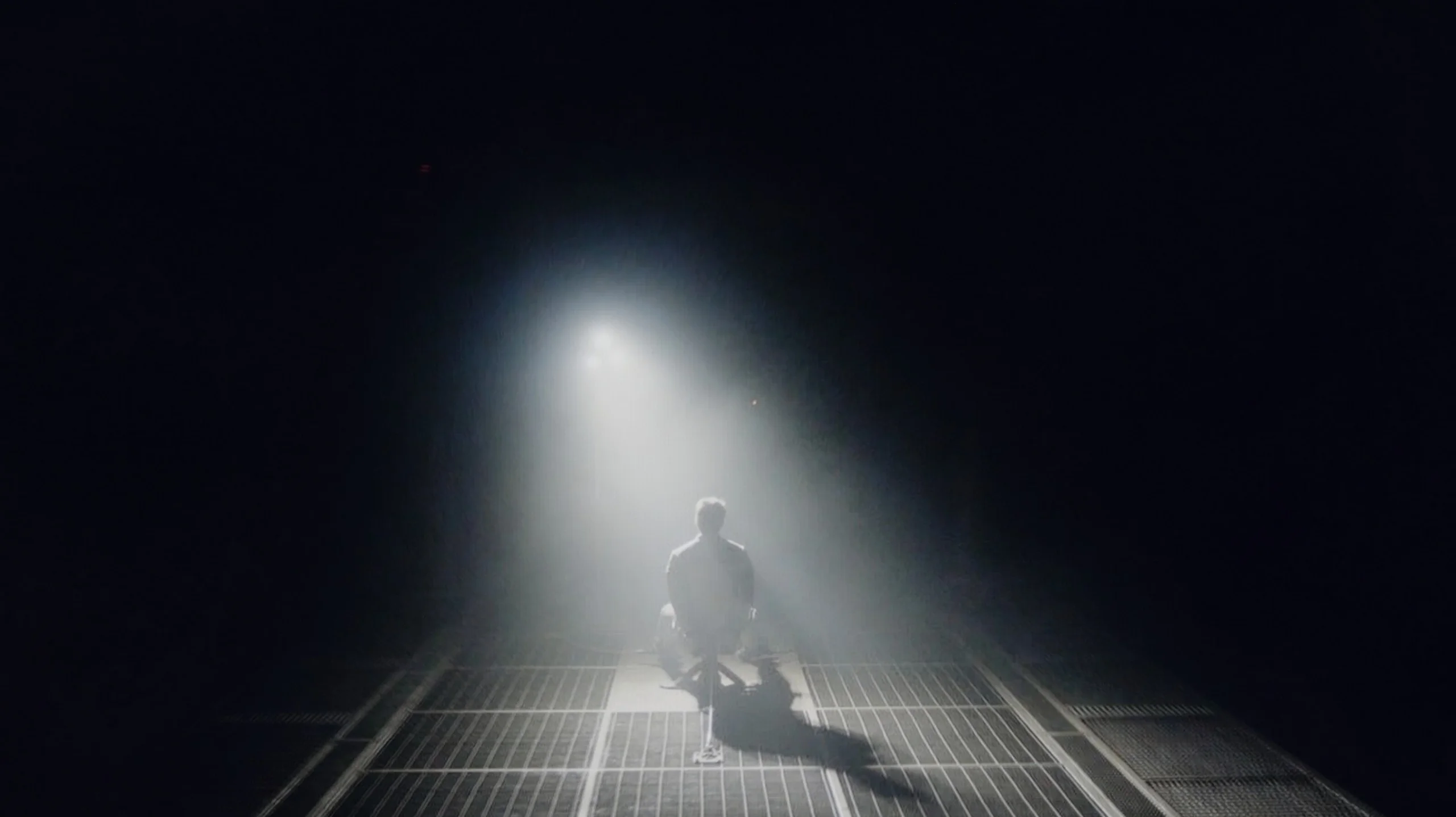
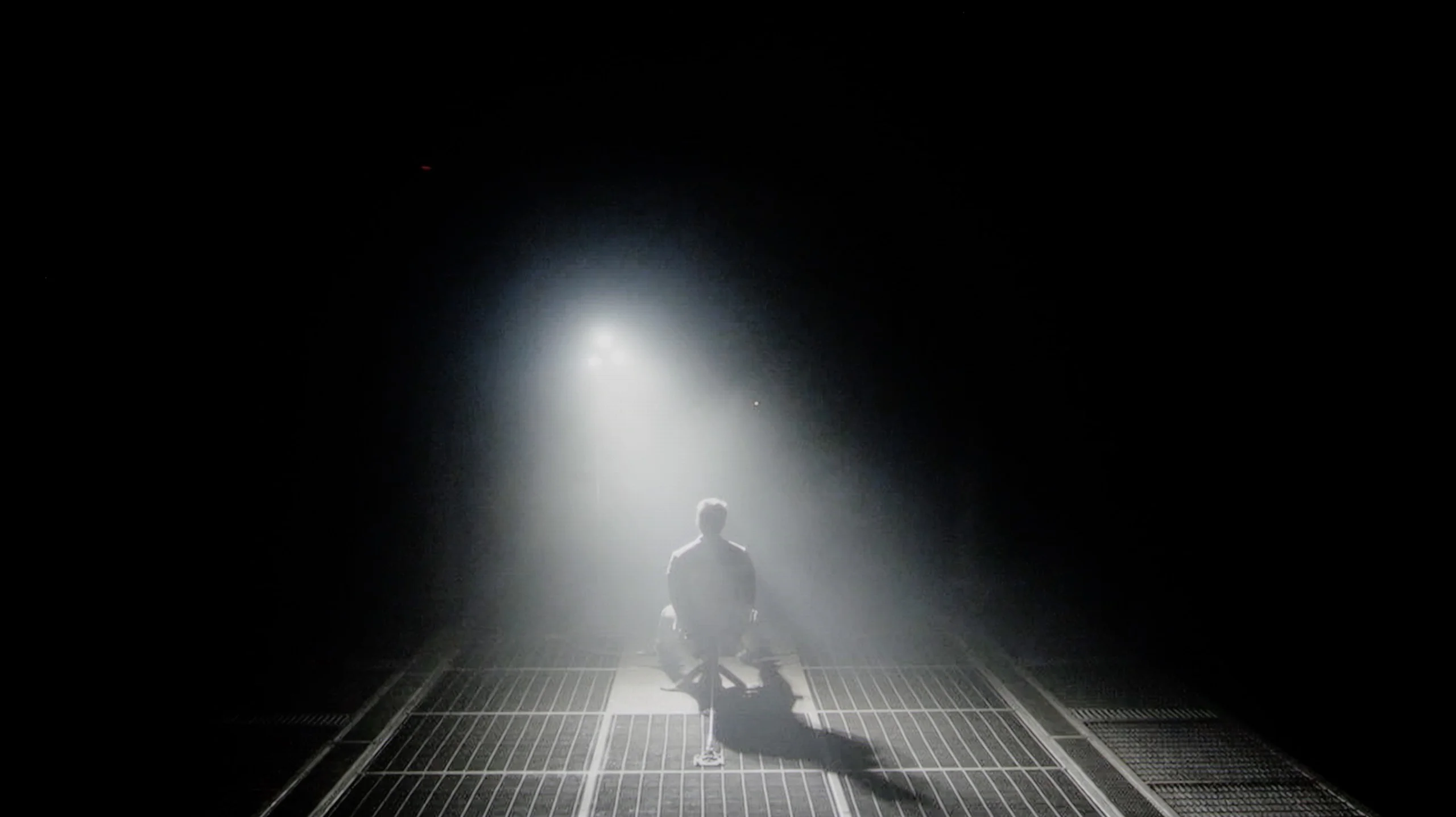
Check the visibility of bright lights on a dark background. Mini-LEDs often struggle with this. The photo does not compare black levels – that’s what the video below is for.
The video accurately shows differences in contrast and black levels between TVs, as well as potential issues: halo around bright objects or Mini-LED zone operation visible as brightness jumps.
In the 75-inch version of the Philips PUS9010 that we tested, an IPS panel has been used, which is immediately evident in the black levels and contrast category. Compared to the 55-inch variant with a VA panel that we tested earlier, the difference is noticeable right from the first screens. The black is shallower, and in a dark room, the display clearly falls into greys. The TV is not equipped with local dimming, so when the lights are out, dark scenes lose depth. In practice, the picture looks distinctly worse than in the smaller 55-inch variant, especially during movie viewings in the evening. The situation is somewhat salvaged by Ambilight. The rear lighting can subtly "deceive" the eye, enhancing the perceived contrast and making the black appear a bit deeper. It’s a simple trick, but it works. That’s why this model is definitely better watched with Ambilight turned on. It doesn’t have to be a multi-coloured mode tracking the image. Even a solid white backlight can improve the perception of dark scenes.
Because the Samsung S90H uses an OLED panel, it earns the highest rating for contrast and black levels. Importantly, this applies both to the WOLED version and to the QD-OLED variant we tested. Each pixel emits its own light and can be switched off completely, so the TV delivers perfect black and virtually infinite contrast. That translates into excellent image depth and a very clear separation of bright elements from dark backgrounds, without the blooming that still appears even in the best LCD TVs. The effect is especially impressive when watching in a darkened room, where dark scenes look incredibly realistic and the picture gains a stronger sense of three-dimensionality and detail.
HDR effect quality
5.2/10
7.8/10
Luminance measurements in HDR:

Result
374 nit

Result
383 nit

Result
397 nit

Result
391 nit

Result
401 nit
Result
1464 nit
Result
1470 nit
Result
1269 nit
Result
1505 nit
Result
902 nit
Scene from the movie “Pan” (about 2800 nits)


Scene from the movie “Billy Lynn” (about 1100 nits)


The photos show two HDR10 movies. 'Pan' is one of the brightest productions ever made, while 'Billy Lynn' (soldier) has brightness typical of streaming (Netflix, Prime, HBO MAX). Notice the intensity of effects and detail in whites.
Static HDR10


The photos present the visibility of white details in various HDR formats. They do not show brightness differences between TVs (these can be compared in the previous gallery).
Dynamic: Dolby Vision
Dynamic: HDR10+


The photos present the visibility of white details in various HDR formats. They do not show brightness differences between TVs (these can be compared in the previous gallery).
HDR luminance chart:
Samsung S90H (QD-OLED)
PHILIPS PUS9010 (IPS)
In the Philips PUS9010 version with an IPS panel, the HDR brightness sadly performs worse than in the previously tested 55-inch variant with a VA panel. The difference reaches about 100 nits, which is noticeably significant given the relatively low values. While the VA version could exceed 500 nits, here the maximum brightness reaches around 400 nits. This level still allows for watching movies and series in HDR, especially on streaming platforms, but the effects are clearly more subdued. Bright elements don't have the same impact, and scenes requiring high luminance are less impressive. On the plus side, the coverage of the DCI-P3 colour gamut is commendable. The IPS version offers about 91%, which is roughly 5% more than the variant with a VA panel. This translates into slightly better colour saturation in HDR content, despite the lower brightness. Colours can appear more vivid and cohesive, especially in colourful scenes.
The Samsung S90H is a really bright TV for the mid-range among OLEDs. In synthetic measurements its peak brightness reached around 1650 nits. That's an outstanding result in this class, roughly 50% higher than what we’ve seen from previous models at this price point. Most importantly, these tests translate directly to real video material. In four out of the five film scenes we tested the S90H’s brightness hovered around 1300-1500 nits. That kind of headroom lets it reproduce most HDR films with very high impact and without obvious compromises, especially material mastered to 1000–1500 nits. In practice, highlights, reflections and explosions have the right punch and the picture doesn’t feel dimmed. Of course, on full-screen, very bright scenes the result is naturally lower and drops to about 900 nits. That’s a direct effect of the protection systems that keep the OLED panel from being overloaded. Even in that scenario there’s little to complain about. Nine hundred nits across the whole screen is still a very high level, guaranteeing excellent dynamics in HDR content. A huge advantage of QD-OLED TVs has always been the colours, and the S90H is no exception. The DCI-P3 colour space we measured reached a full 100% (actually 99.9%), while coverage of the much wider BT.2020 gamut hit about 89%. That’s a great result, allowing very saturated and vivid colours in HDR material. It’s worth emphasising that QD-OLED’s edge over WOLED panels isn’t just about gamut coverage. In practice it’s seen mostly in the higher brightness of saturated colours, in other words greater colour volume. That makes intense reds, greens and blues in HDR look juicier and more impressive.
Factory color reproduction
5.9/10
8.3/10


This gallery shows how colors change after professional TV calibration. If you notice the difference, we recommend ordering this service at SkalibrujTV.com.
Factory Mode
After calibration
We evaluated colour reproduction, as always, on factory settings, focusing on the movie mode, which in the case of Philips usually offers the best starting point. This is also a good moment to show how much the same model of TV can vary depending on the panel used. Looking at the white balance, the overall tendency remains similar to the version with the VA panel. There is still excessive red in the whites, however, in the tested unit with the IPS panel, there are also losses in the blue channel. As a result, the picture has a slightly different colour character, which is well illustrated in the comparative materials. This is a very good example showing why ready-made settings downloaded from the internet do not always work even within the same model.
However, returning to the assessment itself, this unit performs quite well, especially in SDR content. Colour tests show correct saturation and colour consistency, without glaring errors that could hinder everyday viewing. In HDR materials, it is possible to notice slight losses in reds, but these are not flaws that completely spoil the image perception. The biggest limitations do not stem directly from the colours, but rather from the whites and blacks. The use of an IPS panel and slightly lowered gamma means that the image is slightly boosted in brightness, and weak blacks further affect perceived contrast. This makes everything look brighter, but at the same time, it lacks depth, especially during evening viewing.
The next stage of the test was to check how the S90H handles colour reproduction without any calibration. As always, we took measurements in Filmmaker Mode, the best factory picture setting. And here Samsung really deserves praise. The factory tuning is at a very high level, which wasn’t always the case a few years ago. The white balance was set correctly, as was the brightness response. The average colour reproduction error (Delta E) stayed around 3, which is below the level at which most viewers can notice inaccuracies. Only in the brightest shades of grey did the values slightly approach 4, but it’s still hard to call that a real problem during viewing. For out-of-the-box settings, the result is simply excellent.
Color reproduction after calibration
8/10
9.4/10


The photos show how movies look on the TV. Pay attention to black detail visibility, colors, and shadow tint.


The photos show how movies look on the TV. Pay attention to black detail visibility, colors, and shadow tint.
After calibration, the picture has been brought to a really reasonable level. The whole thing looks cohesive and natural, and when it comes to colour reproduction, it's hard to definitively say whether we're dealing with a VA or IPS panel. This is a good sign, showing that the television has a solid foundation for further adjustments. The larger colour gamut in this variant is a plus, as it can subtly enhance the depiction of colourful scenes, especially in HDR content. However, this advantage is largely offset by the boosted blacks resulting from the use of an IPS panel. The limited depth of black affects perceived contrast, particularly when watching in a dark room. As a result, despite noticeable improvement post-calibration, the final rating remains the same as that of the variant with a VA panel. Better colours are not able to fully compensate for the weaker blacks.
All right, but you know we wouldn't be ourselves if we didn't also check how much we could get out of the S90H with professional calibration. And there was no big surprise. Since the out-of-the-box settings were already very good, there wasn't a huge margin for improvement. Even so, we managed to refine the image almost to perfection. After calibration the average colour reproduction errors fell below the threshold of perception, reaching Delta E values under 2 for both SDR and HDR material. We also improved the luminance response, so the picture more faithfully reflects the creators' intent and maintains correct tonality across the entire brightness range. After professional calibration the S90H therefore becomes a screen very close to reference. Will the difference be spectacular for everyone? Not necessarily. The factory settings already deliver a very high level, so in everyday viewing some people may not notice a huge jump. Much also depends on the specific unit. Our sample was very well tuned straight out of the box, but that doesn't mean every S90H will present the same level. Even identical models can differ in their factory calibration. That's exactly why professional calibration makes sense: it lets you bring a particular unit to the highest possible accuracy, rather than relying on a bit of luck when buying.
Smoothness of tonal transitions
8.5/10
9/10




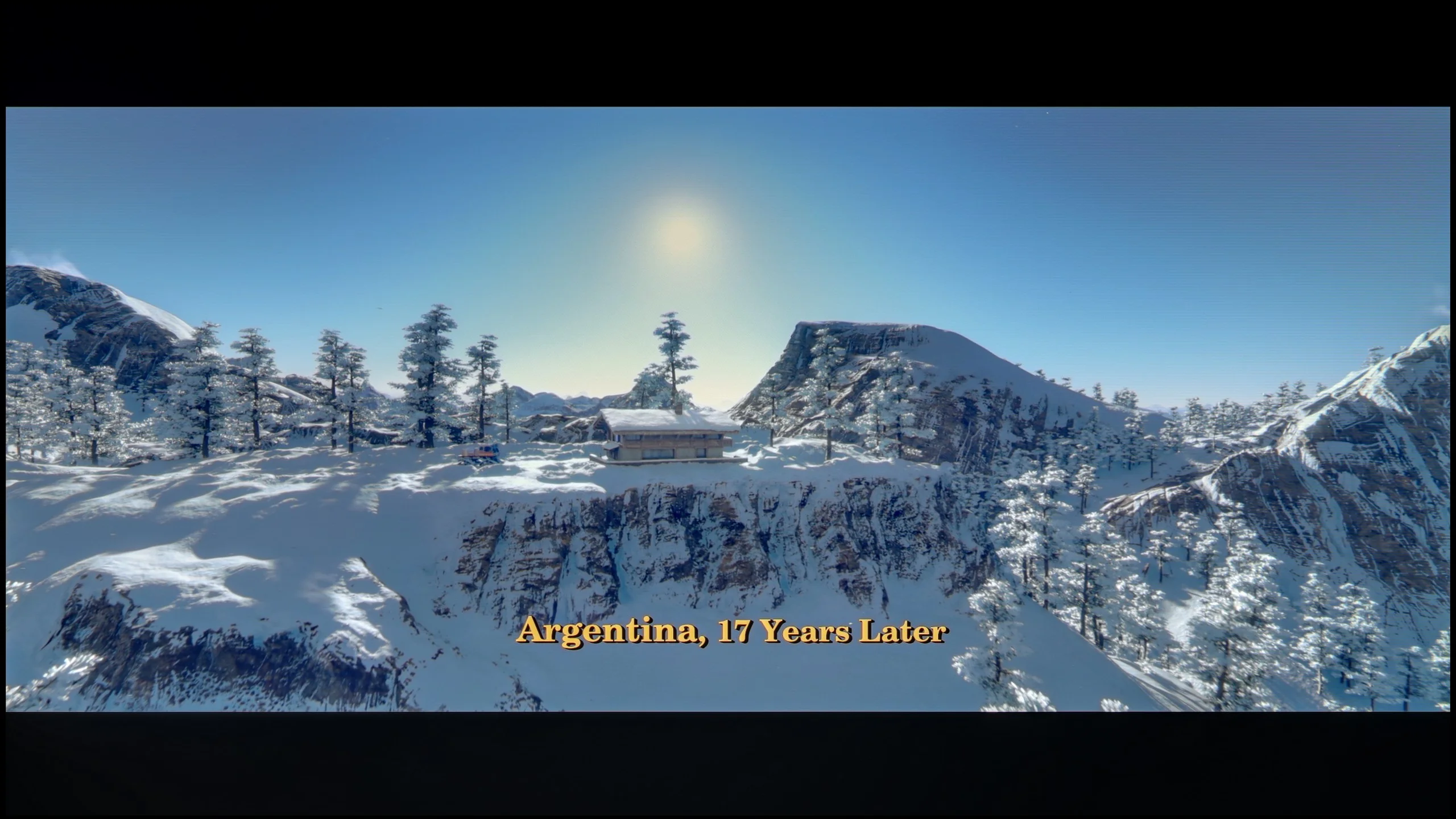
These are selected scenes that show smooth tonal transitions from one color to another. If you see distinct banding, it’s the TV panel’s fault.

These are selected scenes that show smooth tonal transitions from one color to another. If you see distinct banding, it’s the TV panel’s fault.

These are selected scenes that show smooth tonal transitions from one color to another. If you see distinct banding, it’s the TV panel’s fault.

These are selected scenes that show smooth tonal transitions from one color to another. If you see distinct banding, it’s the TV panel’s fault.
When it comes to the fluidity of tonal transitions, in the 75-inch version with an IPS panel, we have mixed feelings. Looking solely at the colour gradients, the transitions perform even better than in the variant with a VA panel. Colours blend more smoothly, and typical banding issues are less noticeable. However, the situation changes drastically in dark scenes. The tragic blacks characteristic of IPS severely mar the perception of tonal transitions in low brightness levels. The boosted blacks make it difficult to discern subtle colour shades, and the very unnatural glow from the panel further worsens the situation. In the tested unit, the backlight bleed was particularly noticeable at the edges, where light practically seeped through to the screen. This not only negatively impacts the perception of dark scenes but also significantly hinders a reliable assessment of the gradation itself.
The smoothness of tonal transitions here is really high. In most content it's hard to spot any obvious posterisation, and when it does appear it's only in the most demanding scenes. That's also one of the traits we often see in well-tuned QD-OLED panels. In practice they can perform more favourably in terms of gradation than many classic WOLEDs, although much depends on the electronics and the specific model. So if you're after the smoothest possible gradients, the version tested with a QD-OLED panel has a clear advantage here.
Image scaling and smoothness of tonal transitions
6.7/10
7.5/10


Smooth transition function

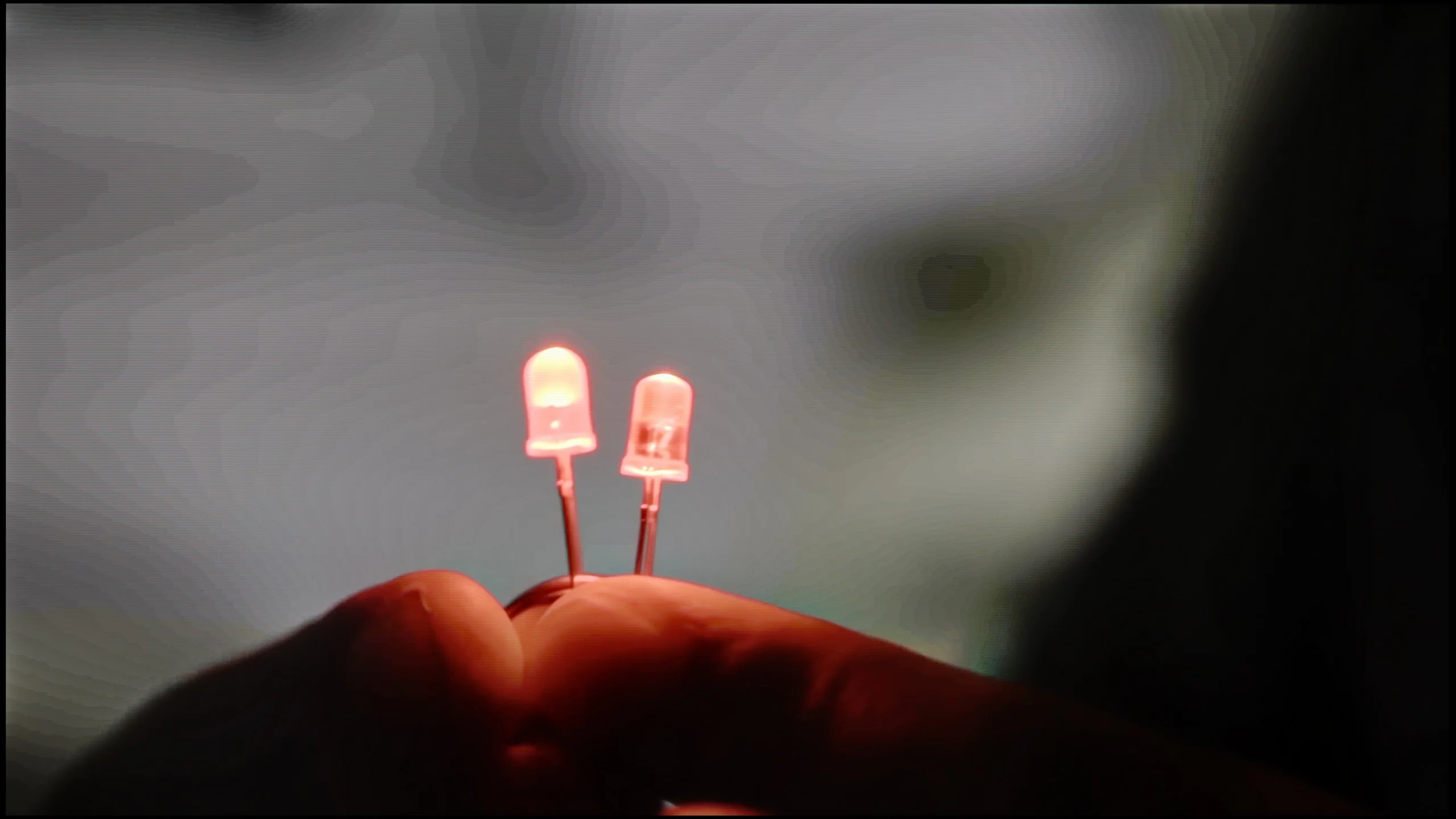
The match photo shows how the TV smooths weak tonal transitions in low-quality video.
Image scaling SD (576i)


The model photo shows how it handles upscaling of SD material.
In the Philips PUS9010, we find another iteration of the P5 Perfect Picture image processor, which aims to improve the quality of lower-grade materials. One of the components of this system is a distortion reduction function that smooths tonal transitions. It works effectively and actually reduces visible banding. Unfortunately, it does so quite aggressively. In practice, it can mute details such as material textures or film grain. This is a clear compromise, so we wouldn't particularly recommend it for movie sessions. For more casual content, like YouTube or regular television, it performs much better. The P5 processor also handles lower resolution materials quite well. The image is soft, at times even too soft, but it can easily be corrected using the sharpness slider, adjusting the effect to personal preferences. A positive aspect is also the absence of edge cropping in SD materials, which is still not standard in this class of televisions.
W tej kwestii Samsung praktycznie nic nie zmienił względem ubiegłorocznego modelu, co akurat jest dość dobrą wiadomością. Funkcja odpowiedzialna za wygładzanie przejść tonalnych nadal bardzo skutecznie ogranicza efekt posteryzacji. Trzeba jednak pamiętać, że działa dość agresywnie, bo oprócz samych artefaktów potrafi usunąć również ziarno filmowe i delikatnie zmiękczyć drobne detale obrazu. Jak zwykle jest to więc kwestia kompromisu i własnych preferencji. Jeśli zależy Wam na jak najwierniejszym odwzorowaniu materiału, polecamy pozostawić tę funkcję wyłączoną.
Również w kwestii upscalingu trudno mówić o rewolucji. S90H korzysta z tego samego autorskiego procesora obrazu NQ4 Gen3 co jego poprzednik, dlatego jakość skalowania pozostała praktycznie bez zmian. Telewizor dobrze radzi sobie z materiałami o niższej rozdzielczości, skutecznie poprawiając ich ostrość. Nadal jednak nie rozwiązano problemu z overscanem. W przypadku niektórych starszych materiałów, zwłaszcza archiwalnych nagrań, może zdarzyć się, że fragment obrazu przy krawędziach zostanie ucięty. To drobna wada, ale szkoda, że Samsung kolejny rok z rzędu pozostawił ten problem bez zmian.
Blur and motion smoothness
7.7/10
8.5/10
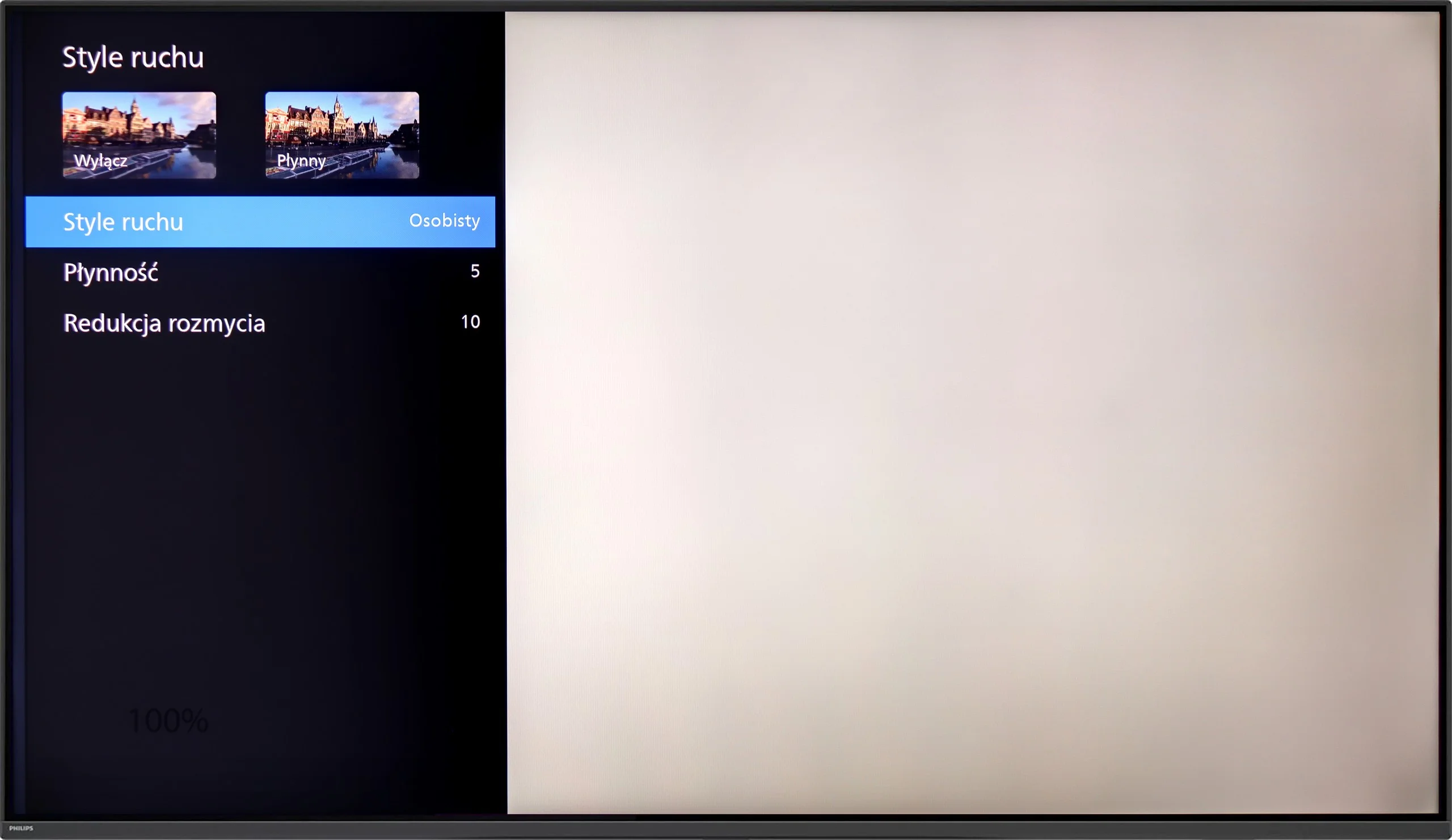
Blur (native resolution, maximum refresh rate):






Blur (BFI function enabled):
Image flickers in this mode



Blur (4K@144Hz):



Blur (4K@165HZ):



Philips PUS9010 has a 4K panel with a refresh rate of 144 Hz, which will be appreciated mainly by sports fans and gamers. This is especially noticeable in dynamic scenes where the motion is sharp, and annoying blur is almost non-existent. When it comes to movies (standard 24 fps), Philips offers us a proven set of settings known from its higher series. Two sliders are used to control motion. “Smoothness” allows you to adjust the picture to your liking: at low settings, it maintains a cinematic character, while moving the slider to the right gives us a perfectly smooth, albeit slightly “theatrical” effect. Meanwhile, “Motion Blur Reduction” is a feature designed for sports – it ensures that fast-moving objects do not lose detail and remain clear.
In terms of motion handling the S90H delivers a very high level of performance. A new feature here is a panel with a refresh rate of up to 165 Hz, although in practice this will mainly benefit PC gamers. Movies, TV series and sports broadcasts don’t use such high refresh rates, so when watching them the difference compared with the standard 120 Hz won’t be noticeable. That said, thanks to the OLED panel’s instantaneous response time, motion is very clean and the image doesn’t suffer from the smearing common to many LCDs. Samsung has equipped the TV with extensive motion settings. You get two sliders: judder reduction and blur reduction, which let you easily tailor the image’s character to your preferences. You can easily achieve very smooth motion for sport, but you can just as easily preserve a more cinematic feel at the typical 24 fps. It all comes down to which effect you prefer.
Console compatibility and gaming features
9.8/10
9.6/10
- ALLM
- VRR
- VRR range48 - 144Hz48 - 165Hz
- Dolby Vision Game Mode
- Correct implementation of HGIG
- 1080p@120Hz
- 1440p@120Hz
- 4K@120Hz
- Game bar
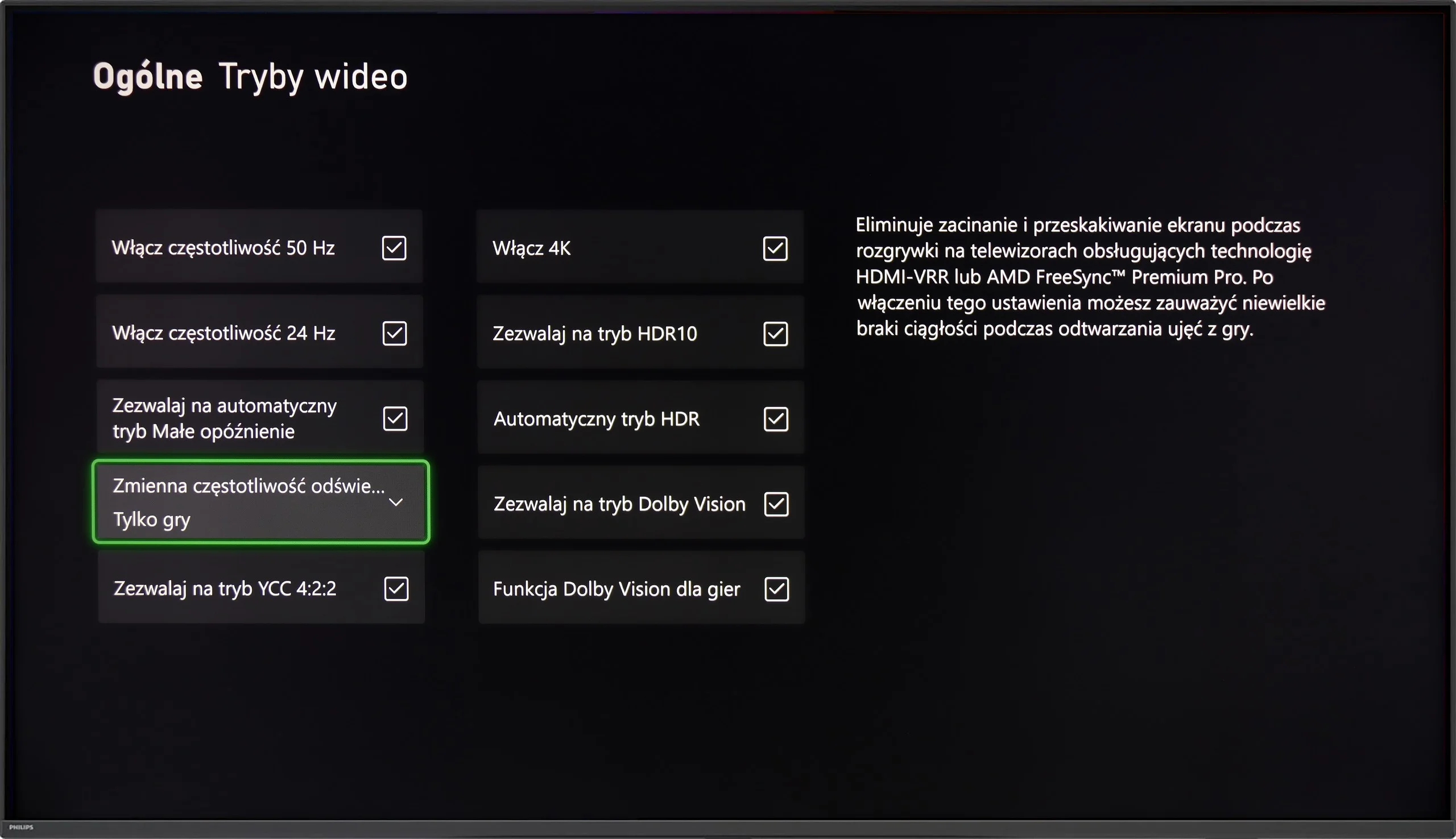
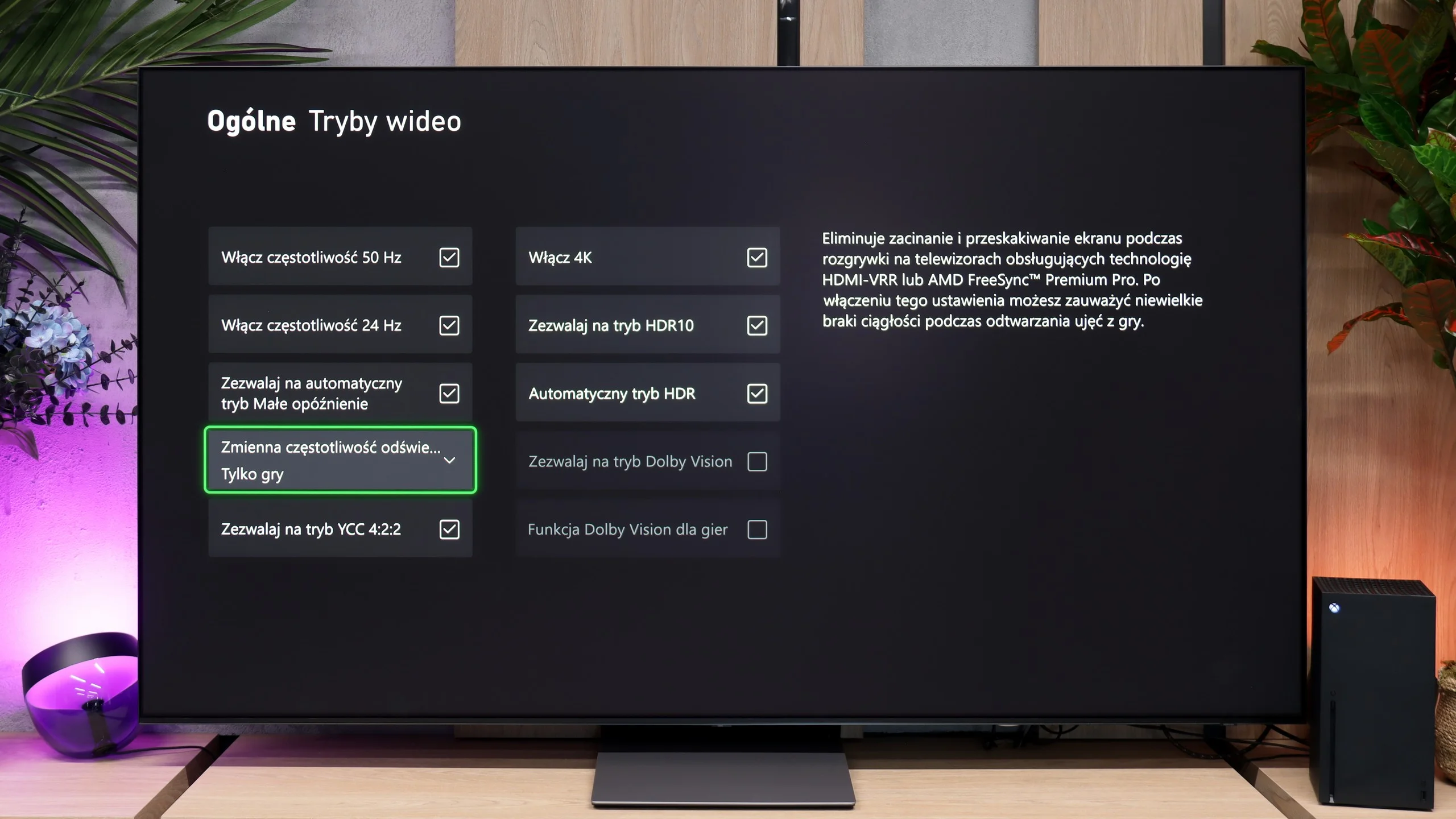
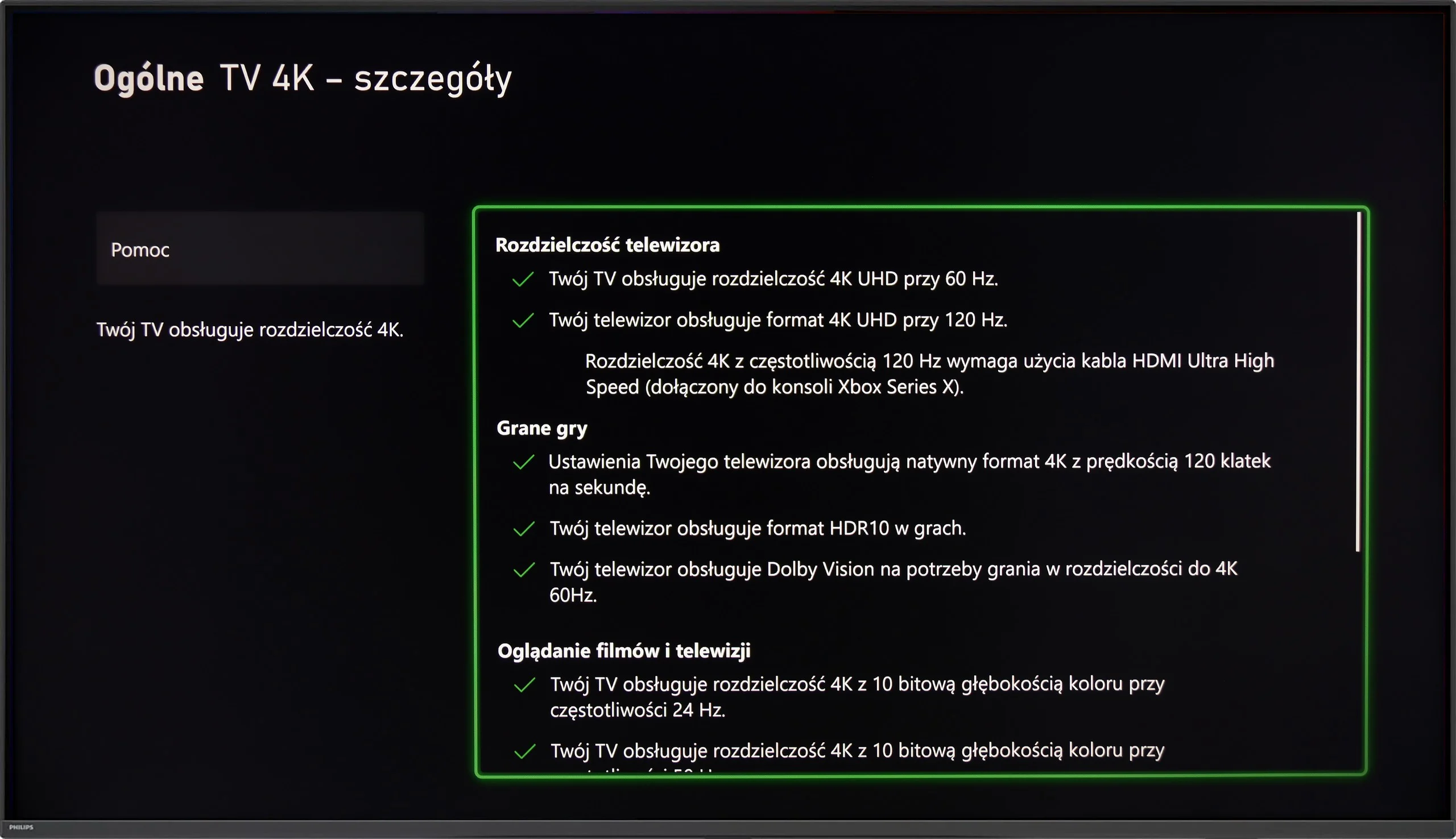
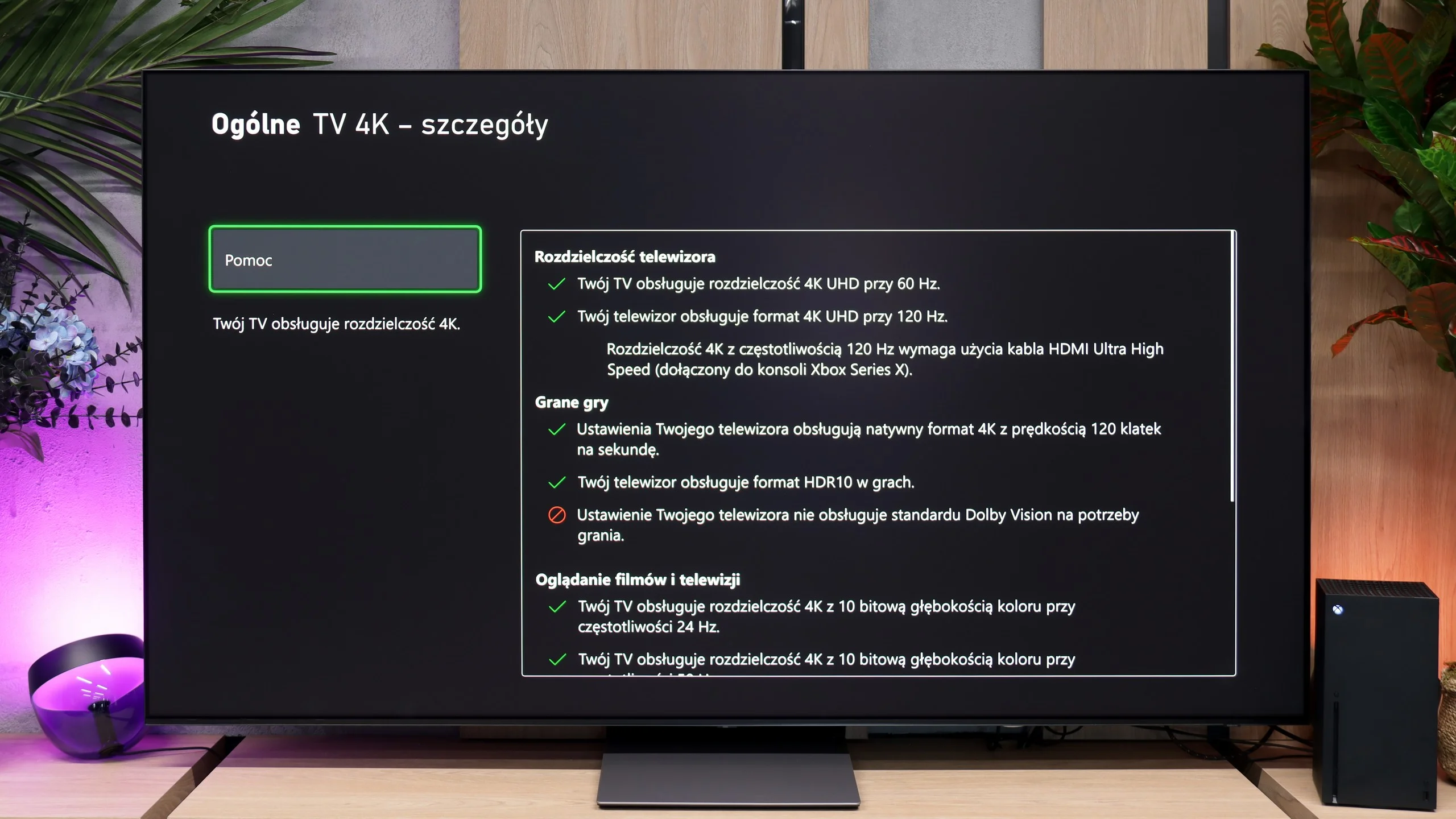
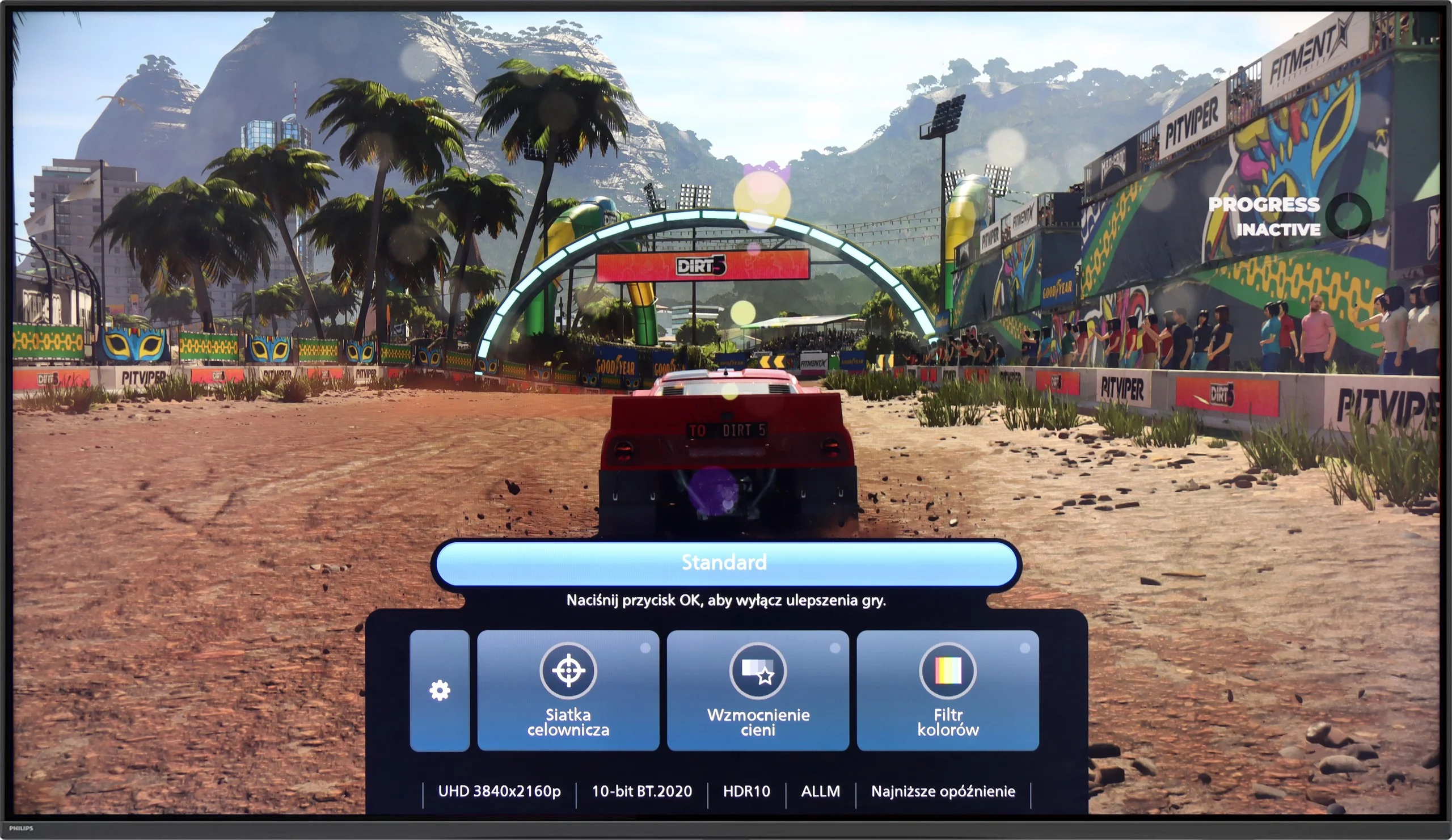
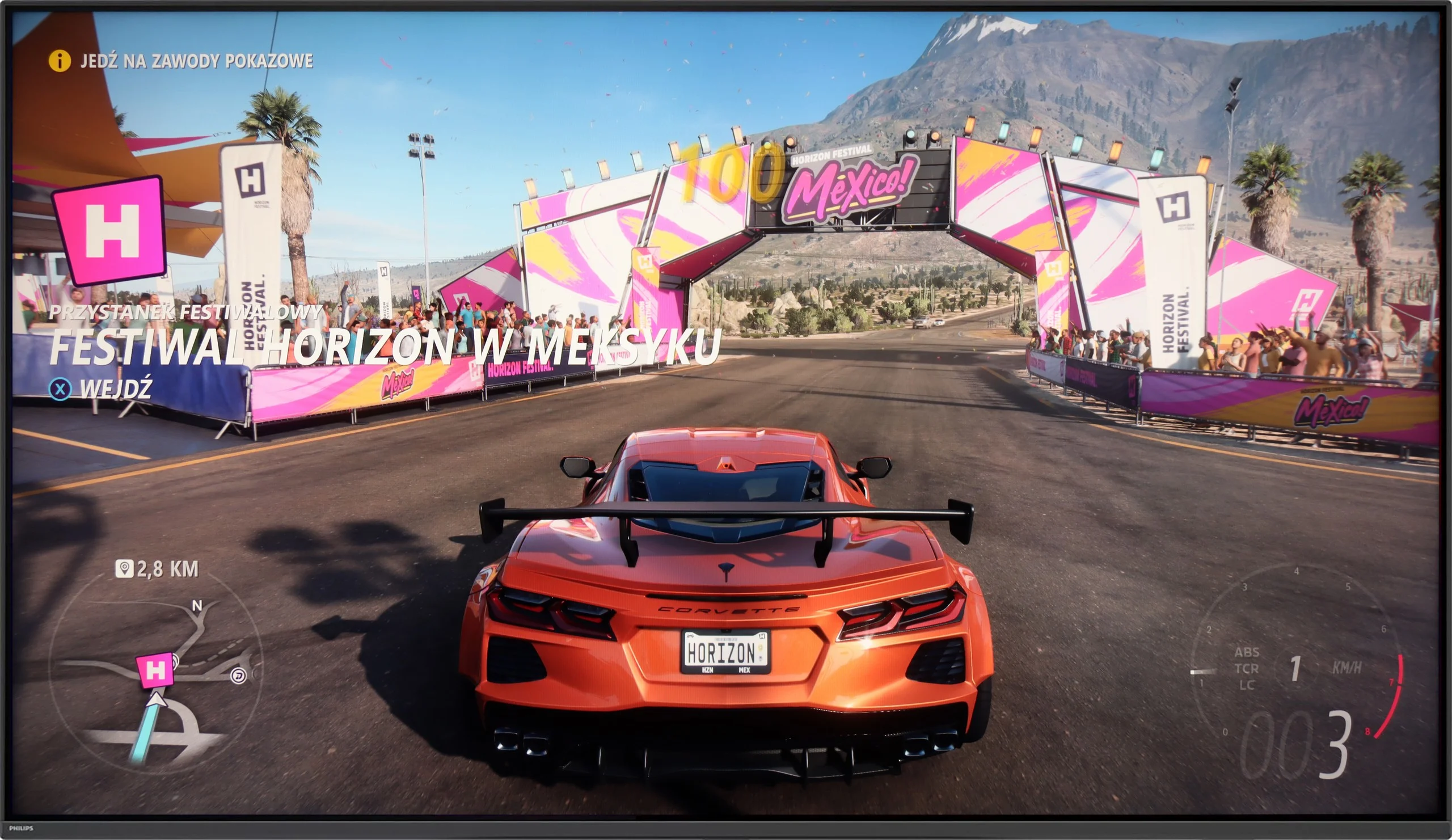
Philips PUS9010 is a solid machine for gaming. It has everything that’s important: VRR, automatic game mode (ALLM), and support for HGiG. The latter is fantastic – it allows you to set HDR in games exactly the way the developers envisioned. The TV handles 120 Hz refresh rates effortlessly at every popular resolution (1080p, 1440p, and 4K). It doesn’t matter if you connect a PS5, Xbox, or a powerful PC – everything runs smoothly and just as it should. Gamers will also appreciate the Game Bar. It’s a quick, clear menu where you can immediately see if the low latency mode is active. This is especially useful when frequently switching between different consoles. The whole experience is enhanced by Ambilight. Evening sessions with this backlighting create a whole different level of atmosphere; the image seems larger, and dynamic scenes are even more impressive. Even if someone isn’t a fan of such “gimmicks,” it’s hard to deny that it makes an impression.
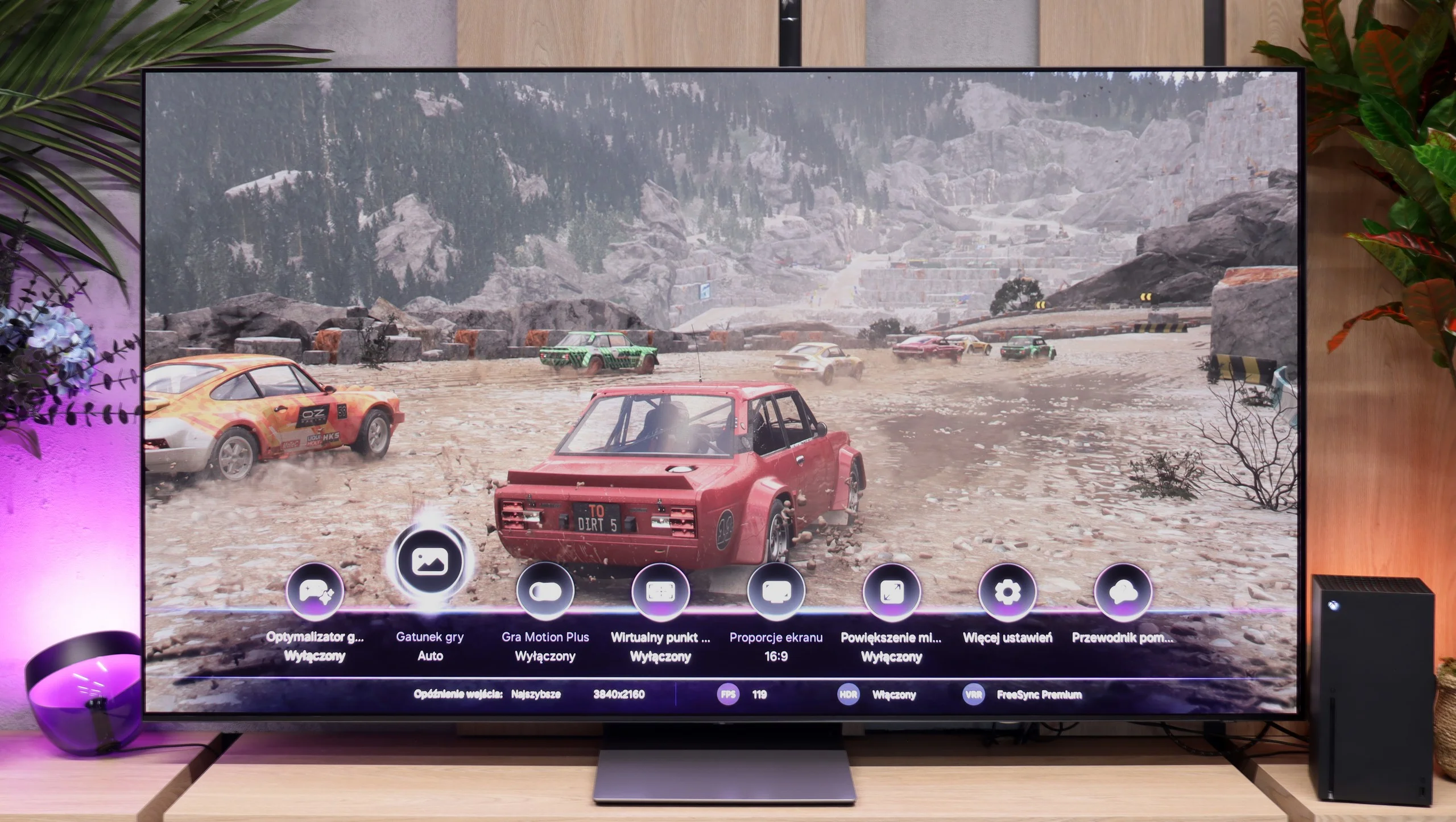
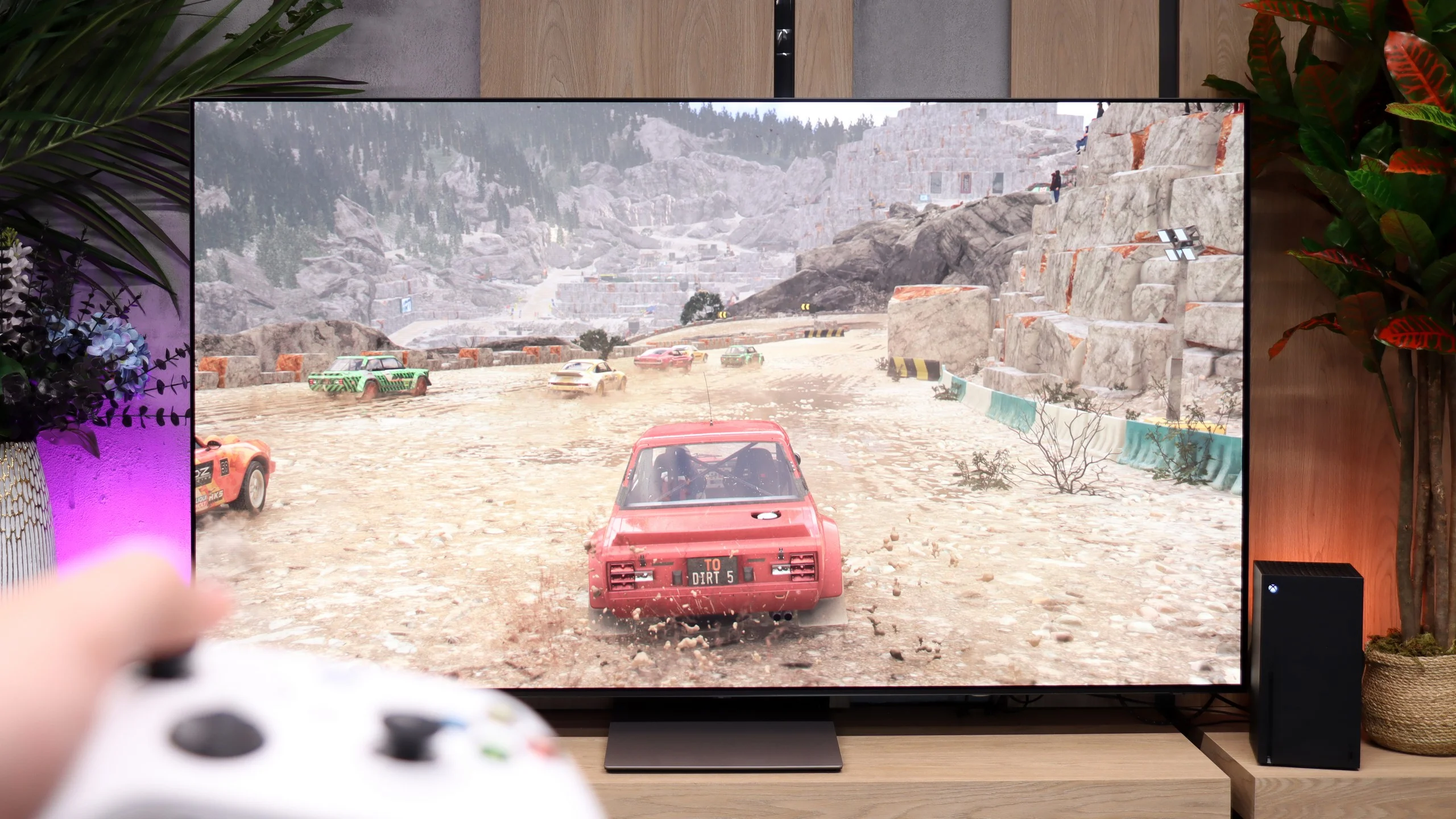
From the start, the Samsung S90H gives the impression of a TV designed with gamers in mind, and it's easy to see why. The maker has equipped it with nearly everything you’d expect from a modern gaming display. You get as many as four full-bandwidth HDMI 2.1 ports, support for ALLM, VRR and very high refresh rates. There's also a clear Game Bar that lets you quickly check key picture parameters or change settings without leaving the game. Another very welcome improvement is HGiG support. Last year it could cause quite a few problems, but in the S90H it works exactly as it should.
Samsung's real ace, however, is its proprietary Game Motion Plus mode. The feature works much like the motion smoothing used in films: it improves animation smoothness in games while keeping input lag at a very reasonable level. For titles running at 30 or 60 fps, with the right settings, input lag in our testing never exceeded 40 ms. That's an excellent result, especially since on many manufacturers' TVs enabling similar features results in delays several times higher. Game Motion Plus doesn't replace Dolby Vision Gaming, of course, since it's a completely different type of feature, but overall for gaming it's an addition that many players may find more noticeable. Smoother motion in 30/60 fps games often makes more of a difference than HDR itself, which, incidentally, is often poorly implemented in games.
Input lag
9.5/10
10/10
SDR
HDR
Dolby Vision
In terms of responsiveness, the Philips PUS9010 performs very well. The input lag is around 9 ms at 120 Hz and 18 ms at 60 Hz, so the response to movement with the controller is quick and predictable. In practice, even dynamic action games or e-sports titles pose no issues. Dolby Vision in games is less impressive. The lag then increases to around 35 ms, which for less demanding players is still acceptable, but more sensitive individuals may feel a slight sluggishness in control. For this reason, HDR10 with HGiG enabled remains the better choice. In this model, it works correctly, providing lower lag and more predictable brightness behaviour, without the issues that can occur with Dolby Vision.
Input lag is another aspect that's really hard to fault. With a 120 Hz signal we measured just around 5 ms, which is an exceptional result. When switching to even higher refresh rates the delay fell to almost astronomically low levels, practically imperceptible during gameplay. The Samsung S90H delivers absolutely market-leading results here.
Compatibility with PC
8.9/10
8.6/10
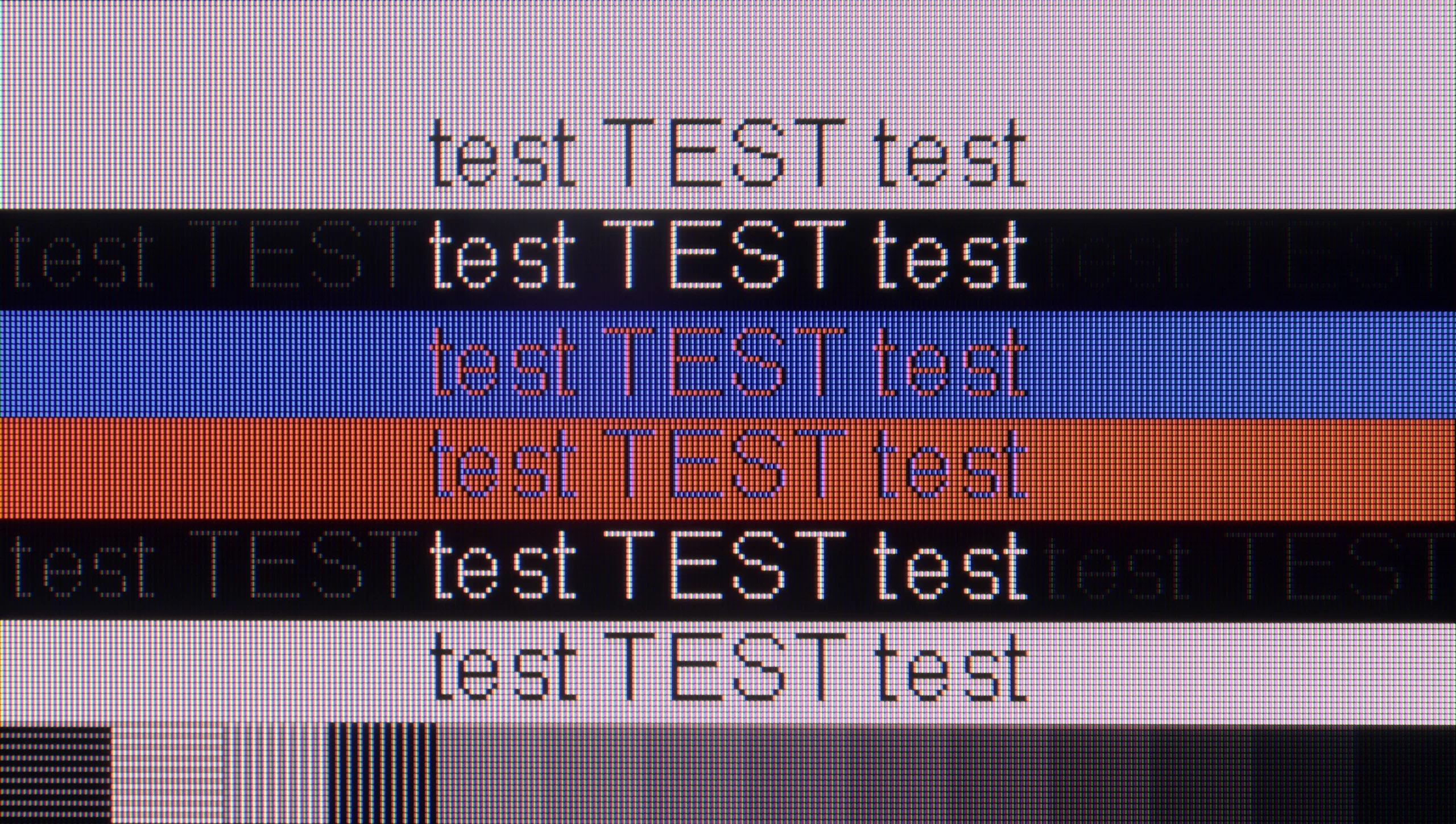
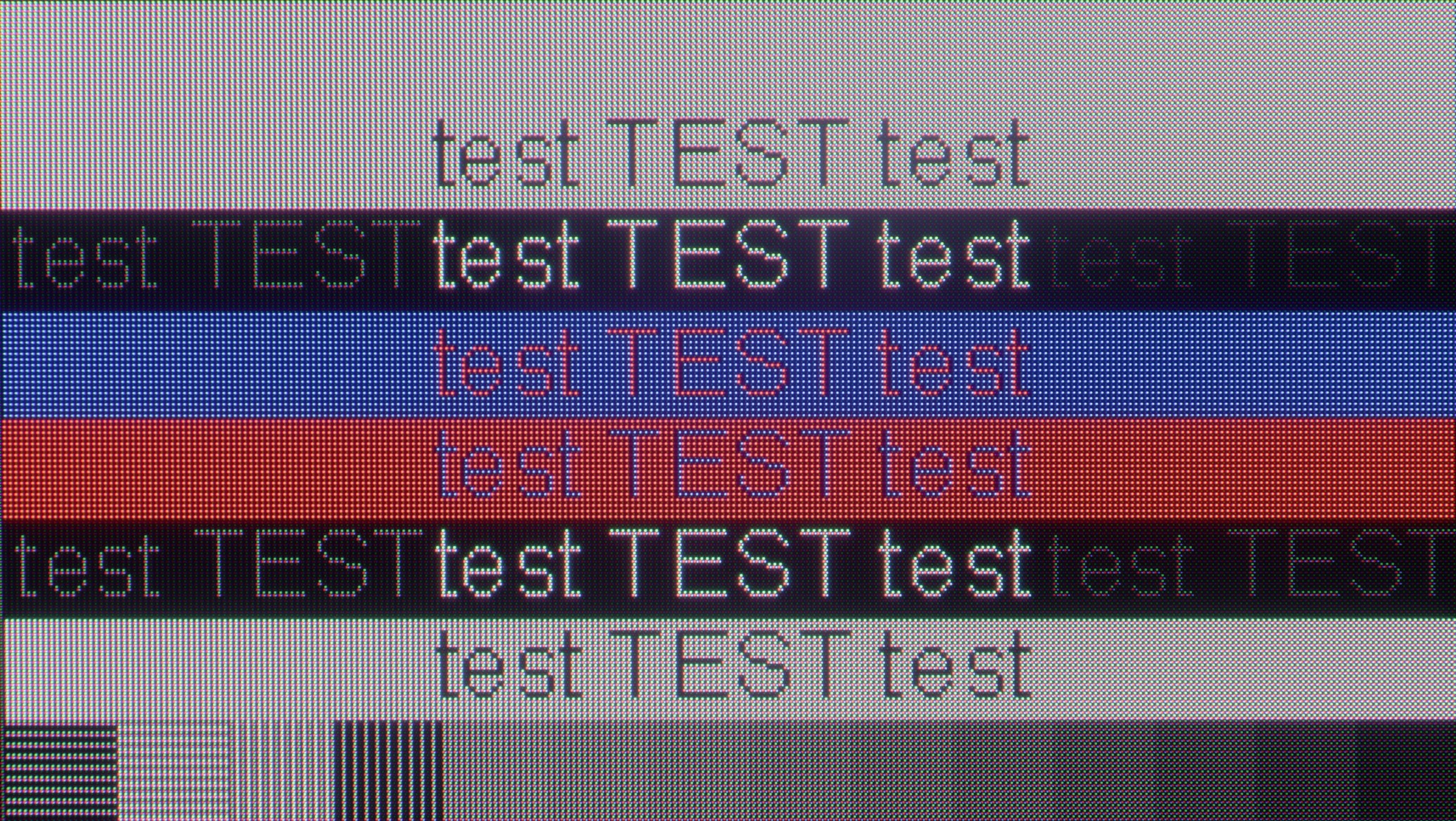
The photo shows the legibility of small fonts. Ideally, lines should be the same thickness on both light and dark text, with minimal pixel gaps.
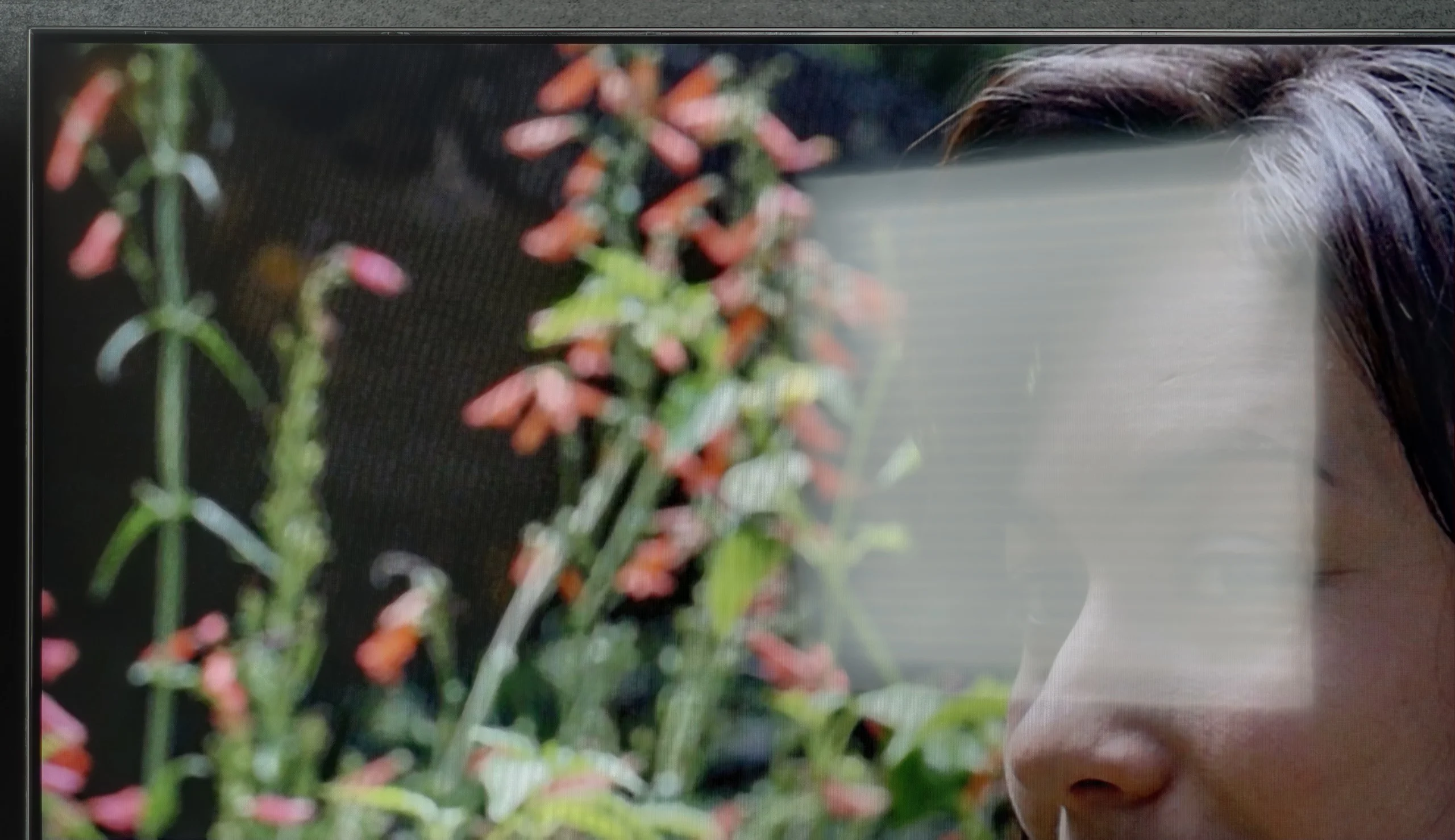
Philips PUS9010 (2025) is a very good television for using with a PC. The manufacturer has included a dedicated 144 Hz mode for PC gamers, and the television correctly supports variable refresh rates for both NVIDIA and AMD graphics cards. G-Sync and FreeSync functions work seamlessly, making PC gaming smooth and free from screen tearing. Since we already know that the television is very suitable for gaming, it’s also worth noting the readability of text, especially during daily work with a PC. The use of an IPS panel definitely works in its favour. Chroma has been implemented correctly, so one can speak of almost perfect font reproduction. Text is sharp, clear, and does not cause problems even with prolonged use. However, from our meticulous observations, we must note a minor detail. With very dark text, vertical and horizontal lines can have slightly different brightness levels. This is, however, purely a technical flaw, virtually imperceptible in practice, especially in the case of the 75-inch variant, where the distance from the screen further masks this effect.
The Samsung S90H makes an excellent large PC screen, and not just because of its gaming feature set. The panel supports refresh rates up to 165 Hz, has very low input lag, and its official NVIDIA G-Sync certification allows smooth gameplay without screen tearing when paired with GeForce cards. If you're after a large display that will handle demanding PC games well, the S90H is a great choice.
And what about everyday work with text or browsing the web? That's good too. Fonts are sharp and legible, though it's worth remembering the specifics of QD-OLED panels. Up very close you can see the characteristic triangular subpixel layout, which can make letter edges look slightly jagged or pick up faint, coloured fringing. Is that a problem? In practice, it's minor. After all, we're talking about a 77-inch screen, so few people will be sitting a few dozen centimetres from the panel. From a normal viewing distance this effect becomes practically invisible.
Viewing angles
5.8/10
9.9/10
The viewing angles on the Philips PUS9010 are very good, and this is one of the biggest advantages of the IPS panel. Compared to the variant with a VA panel, the difference is clear. The image maintains significantly better consistency, and the colours remain stable even when viewed from a large angle. Of course, with a change in position, the brightness level does drop slightly; however, the degradation of the image is much less than in the VA version. It isn't at the level known from OLED screens, but among LCD televisions, you can talk about having one of the better viewing angles available on the market.
As you'd expect from an OLED, the viewing angles are excellent, but the QD-OLED panel used here goes a step further. Even if you sit well off to the side of the screen, the colours hardly lose saturation and the drop in brightness is marginal. There's also no sign of the greenish tint that can be annoying on some TVs with panels from LG Display. The image holds its colours very well regardless of the angle you view it from.
Daytime performance
5.4/10
6.4/10
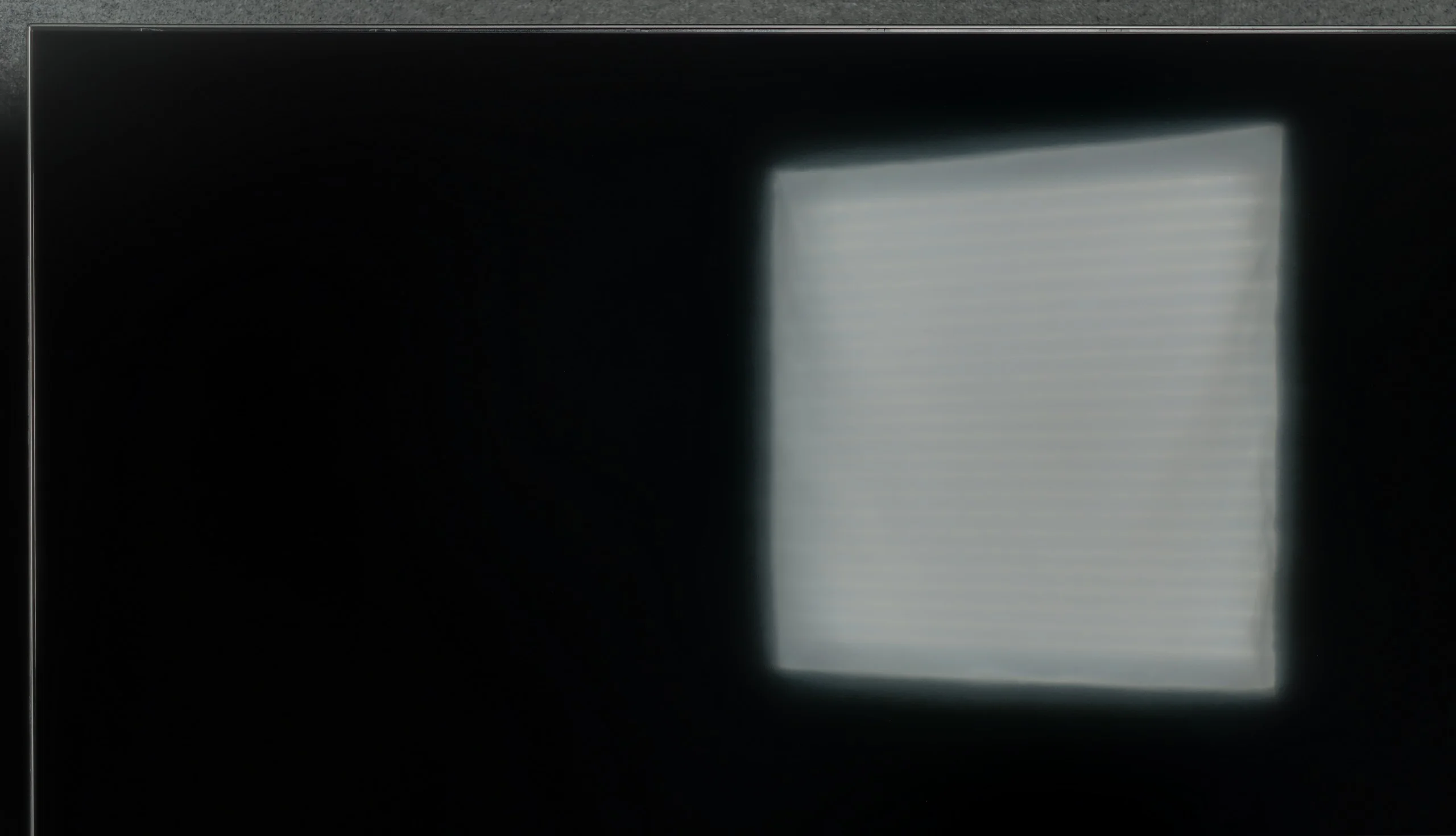
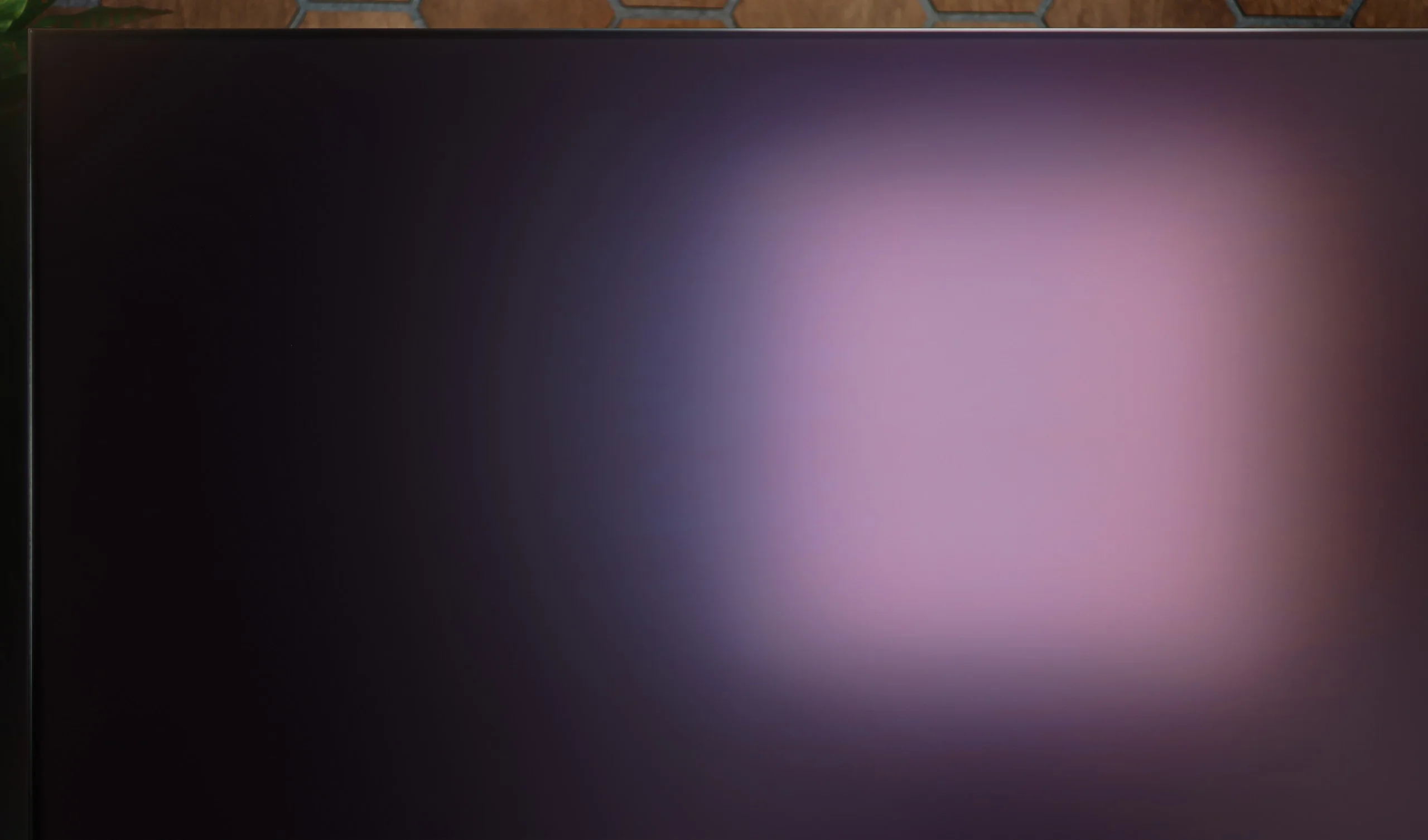

Panel brightness
Samsung S90H (QD-OLED): 486 cd/m2
PHILIPS PUS9010 (IPS): 398 cd/m2
In terms of use in a bright room, the Philips PUS9010 performs reasonably well. The applied satin matrix effectively dampens reflections and does not cause a mirror effect, meaning the screen does not distract as much from light coming in from windows or lamps. Unfortunately, compared to the variant with a VA matrix, the television performs less well. The screen is noticeably darker, which can be felt in a strongly sunlit room. Under normal daytime conditions, this does not present a major problem, but in very bright surroundings, the difference compared to the VA version is noticeable.
The biggest new feature in the S90 series is the matte screen coating. Samsung has taken this step in this line for the first time and, in our view, it was a good move. In practice the difference is obvious straight away. The coating very effectively dampens reflections, so even when there's a window opposite the TV or a strong lamp is shining, you won't see the typical mirror-like glare on the screen. Instead you get only gently diffused light, which interferes much less with viewing. If the TV is going to sit in a bright lounge, that's hard to overstate. Of course there's a trade-off. QD-OLED with a matte coating has its characteristic quirk: when strong light hits the screen, blacks can shift slightly towards a cherry tint and colours may lose a little of their depth. This isn't a fault that appears in every situation, just a feature of this design under heavy lighting. Fortunately the TV is bright enough that daytime viewing isn't a problem. In SDR it reaches about 500 nits of average brightness, and combined with the matte coating this provides really comfortable viewing conditions.
Panel details
Subpixel Structure:
Panel uniformity and thermal imaging:
PHILIPS PUS9010 (IPS)
Samsung S90H (QD-OLED)
TV features
6.1/10
7.3/10
- SystemTitan OSTizen
- System performanceDecentVery good
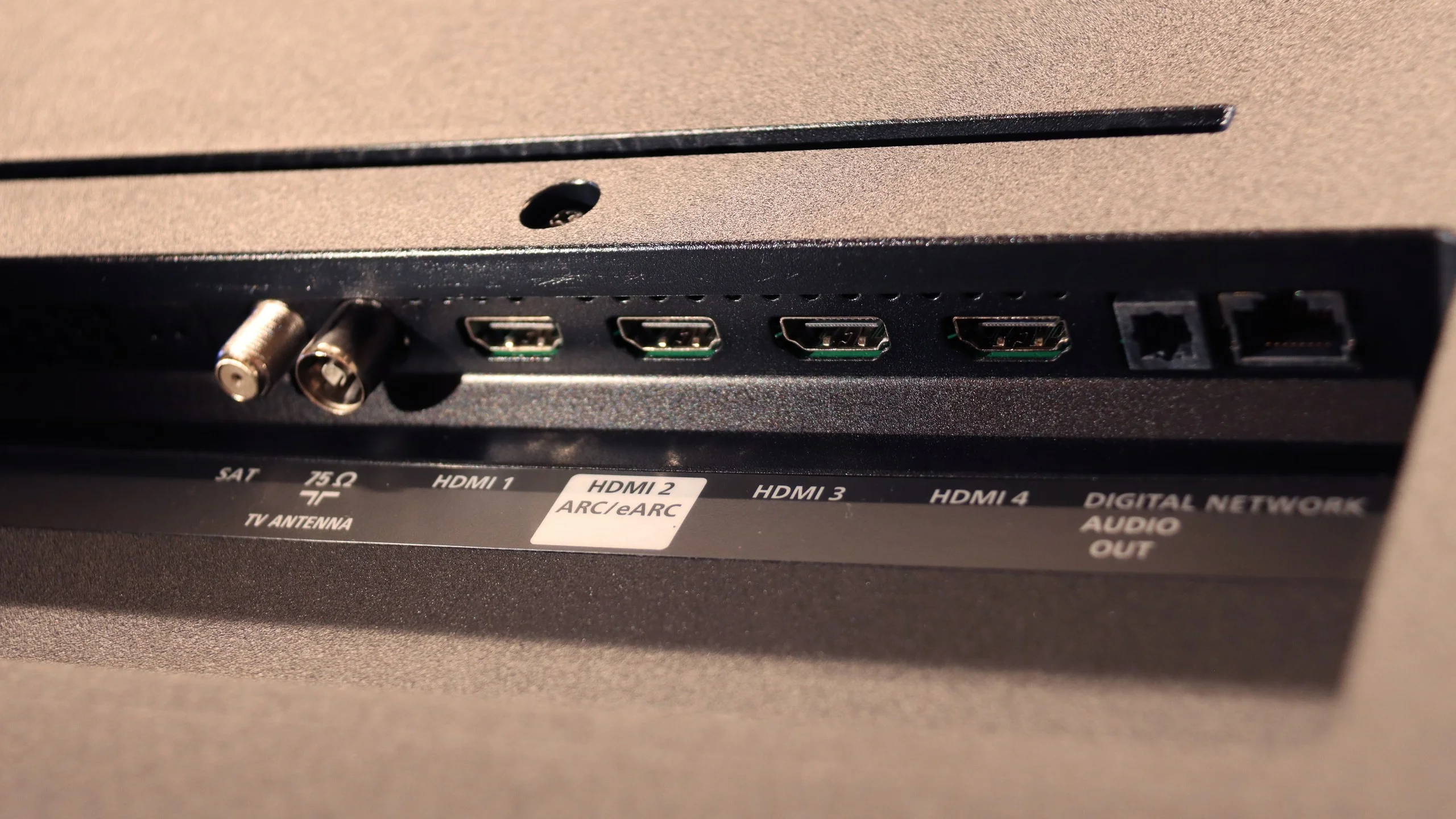
- HDMI inputs2 x HDMI 2.0, 2 x HDMI 2.1 48Gbps0 x HDMI 2.0, 4 x HDMI 2.1 48Gbps
- Other inputsToslink (Optical audio)
- OutputsToslink (Optical audio), eARC (HDMI), ARC (HDMI), Mini-Jack (Headphones)Toslink (Optical audio), eARC (HDMI), ARC (HDMI)
- Network InterfacesWi-Fi 2.4GHz, Wi-Fi 5GHz, Ethernet (LAN) 1GbitWi-Fi 2.4GHz, Wi-Fi 5GHz, Ethernet (LAN) 100Mbps, Ethernet (LAN) 1Gbit
- TV receptionDVB-T, DVB-T2, DVB-S, DVB-S2, DVB-CDVB-T, DVB-T2, DVB-S, DVB-S2, DVB-C
Classic features:
- Recording to USB (terrestrial TV)
- Recording programming
- Picture in Picture (PiP)
- RF remote control (no need to aim)
- Backlit remote control
- Teletext
- Audio only mode
- Bluetooth headphones support
- Simultaneous Bluetooth headphones & TV audio
Smart features:
- AirPlay
- Screen mirroring (Windows Miracast)
- Voice search
- Voice search in native language
- Ability to connect a keyboard and mouse
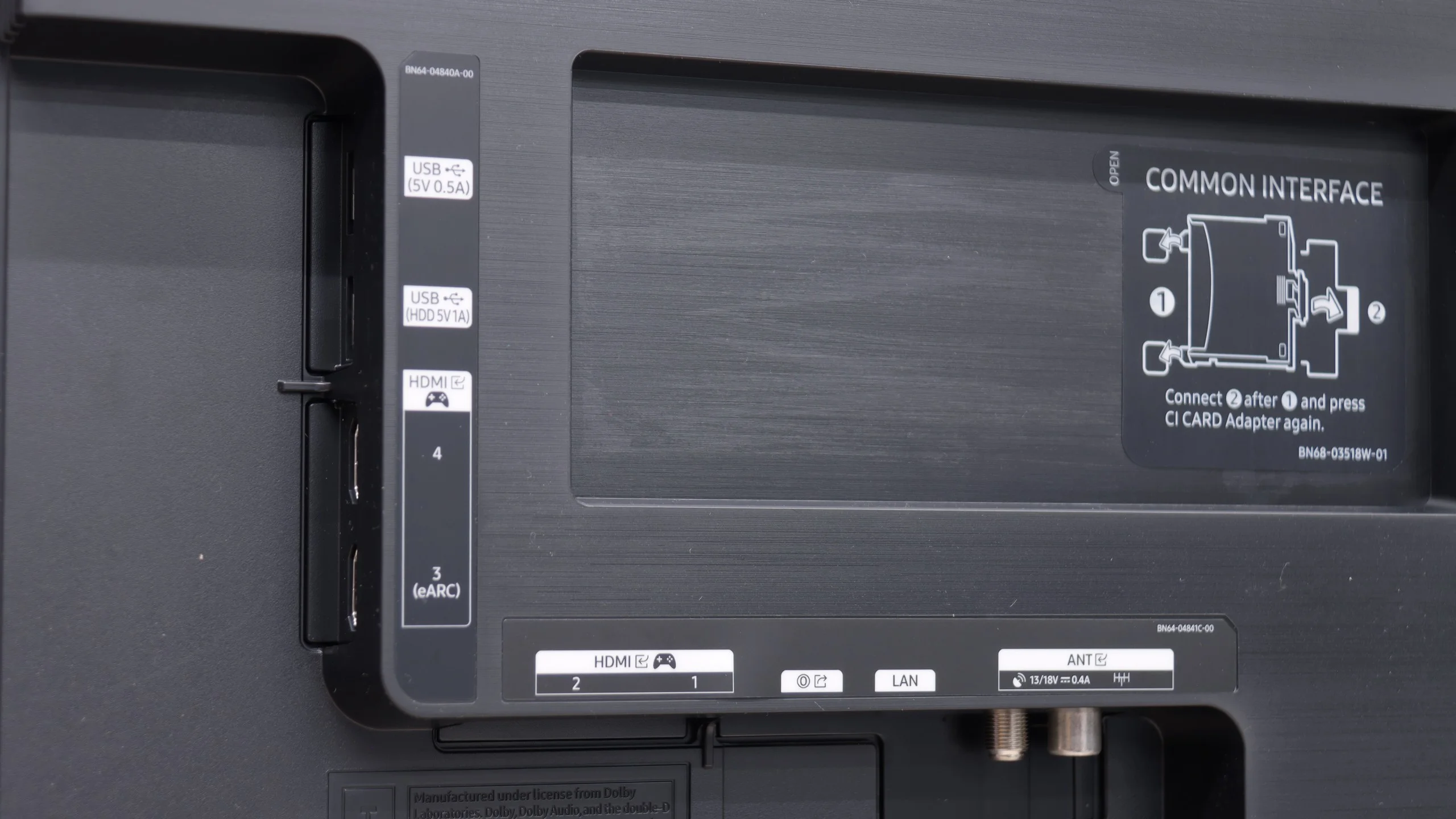
Sound connection options
- HDMI audioeARC (HDMI), ARC (HDMI)eARC (HDMI), ARC (HDMI)
- Other audio outputsToslink (Optical audio), Mini-Jack (Headphones)Toslink (Optical audio)
- Wireless audioBluetoothBluetooth
Supported audio formats (external HDMI eARC audio):
- Dolby Digital Plus 7.1
- Dolby True HD 7.1
- Dolby Atmos in Dolby Digital Plus (JOC)
- Dolby Atmos in Dolby True HD
- DTS:X in DTS-HD MA
- DTS-HD Master Audio
Senior accessibility
- Numeric keyboard on TV
- Font size adjustment
- Audio description
Classic TV Features
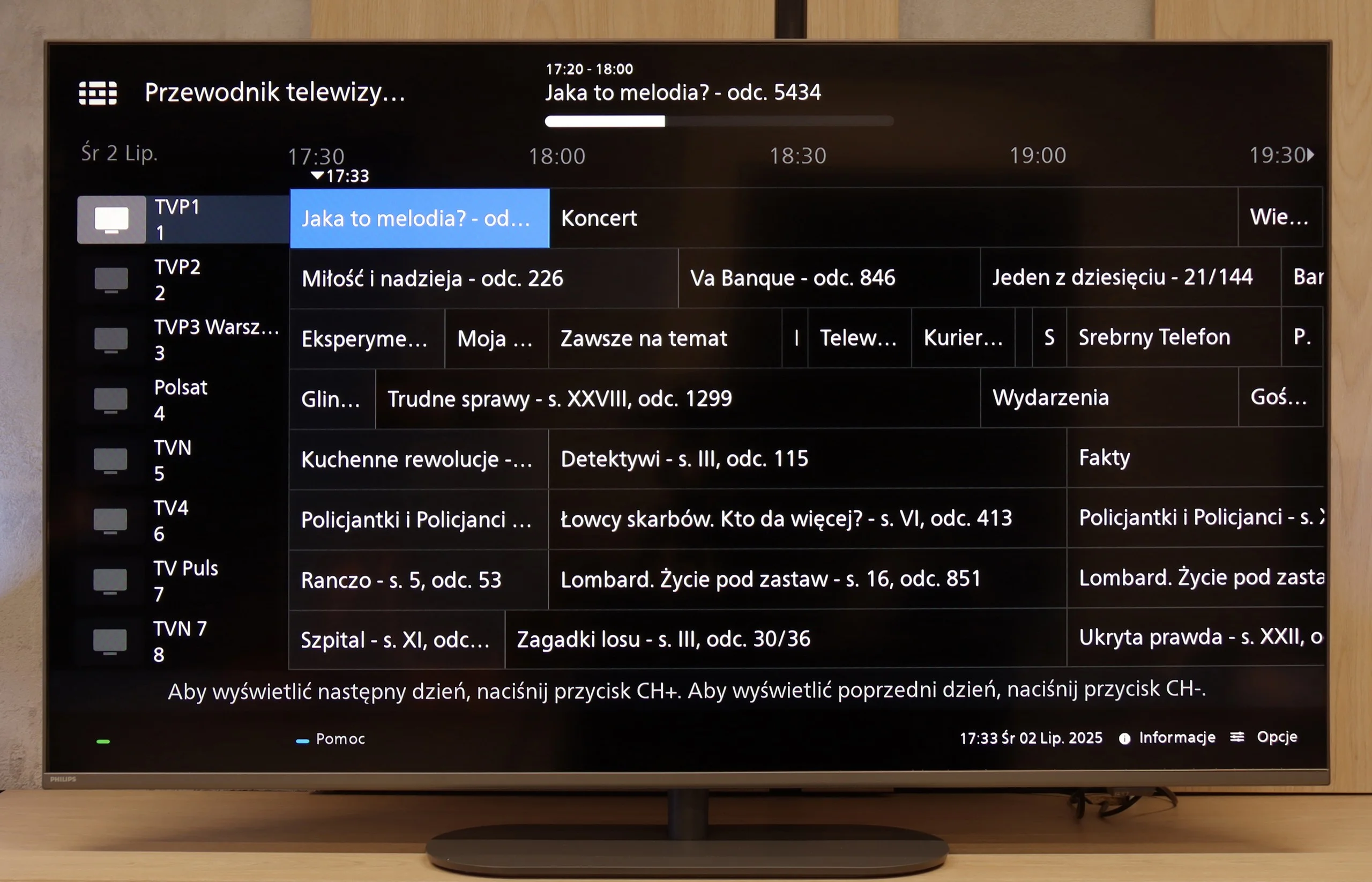
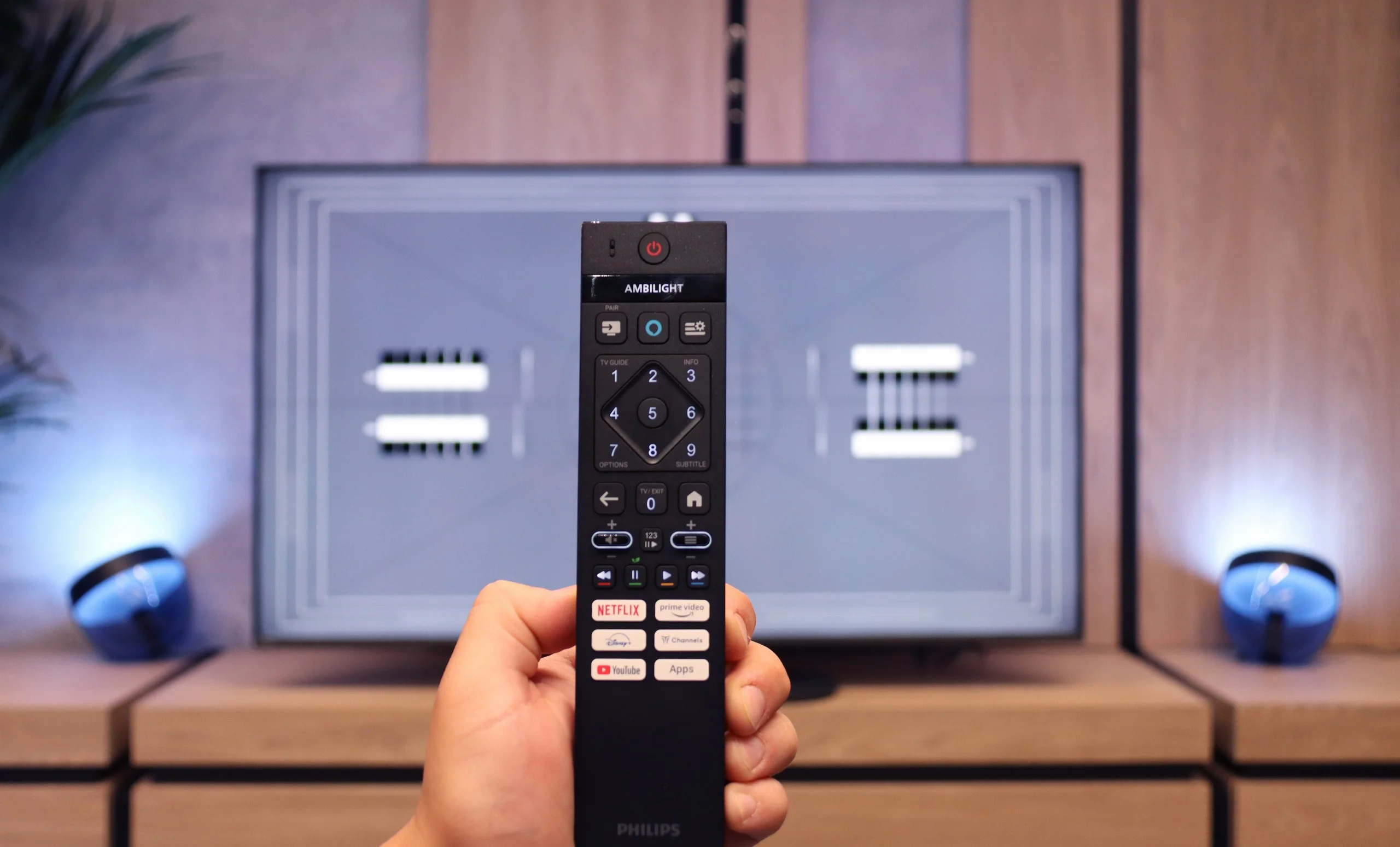
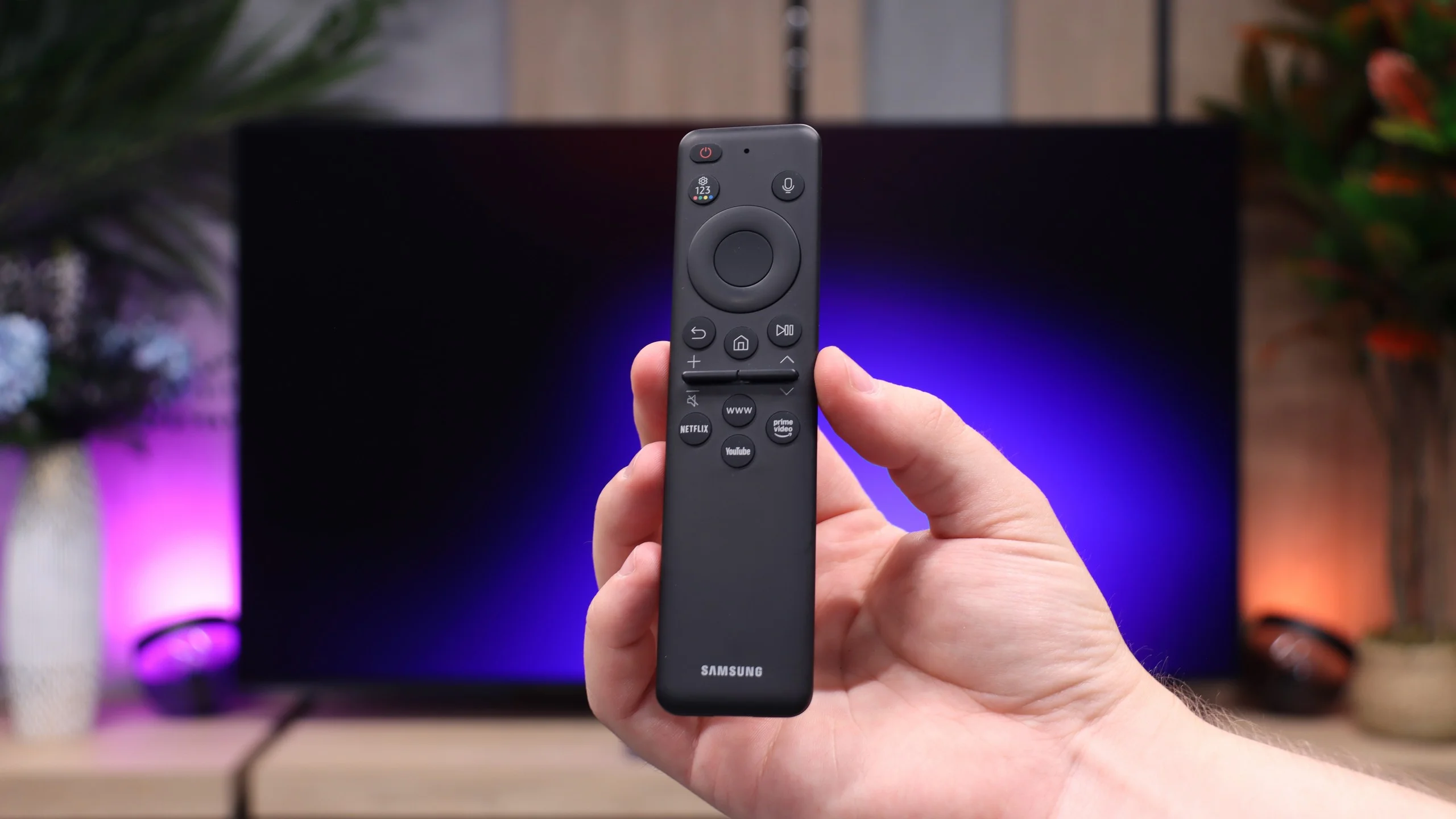
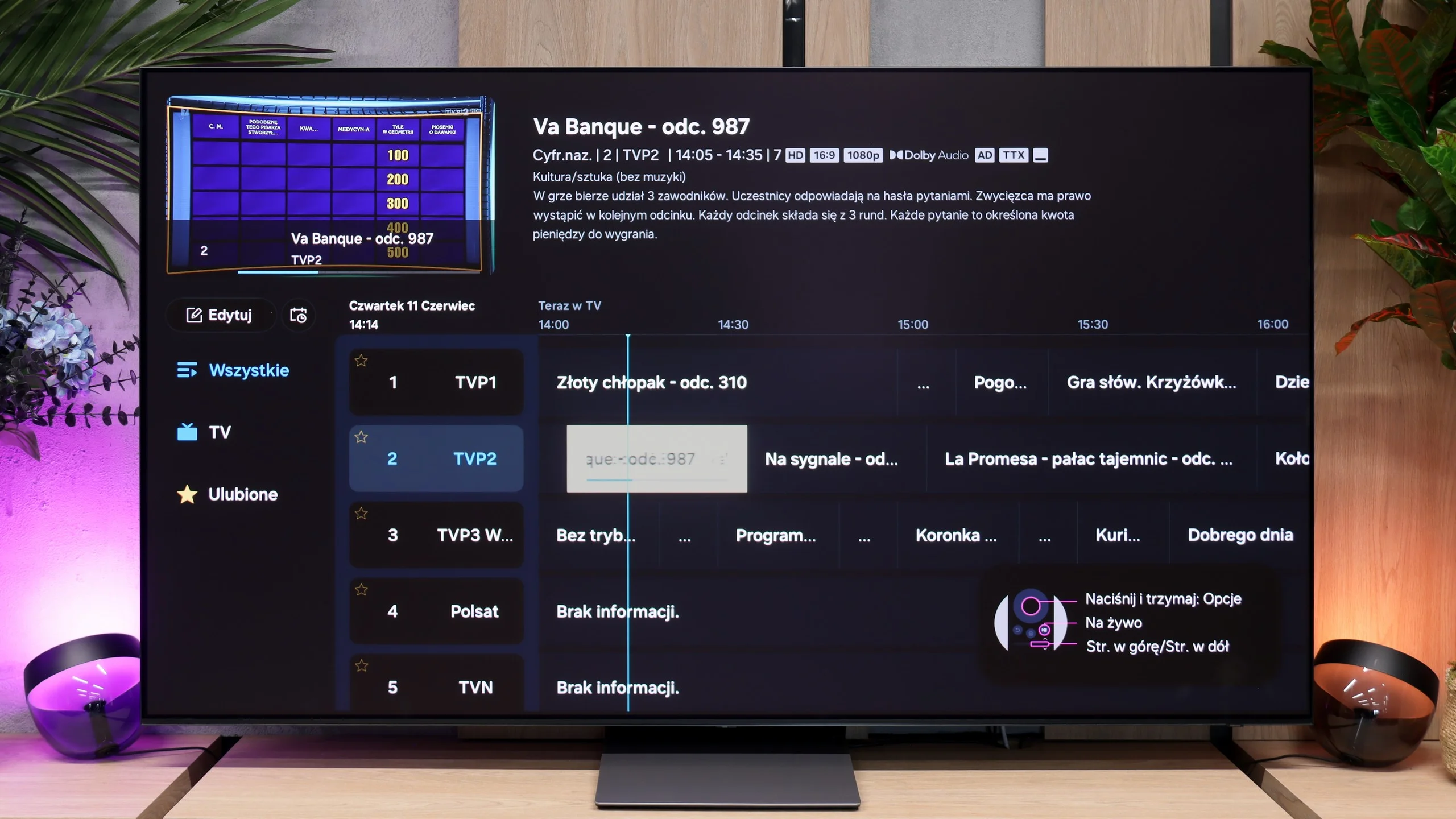
When it comes to classic features, the Philips PUS9010 is rather average. It includes basics such as EPG, teletext, and the ability to connect headphones via Bluetooth. However, that's basically where the stronger points end. Unfortunately, it lacks USB recording and the PiP mode (picture in picture). These are features that are becoming less common, but they can still be useful in everyday use. On the plus side, the remote control comes with a numeric keypad. It's modern, backlit, and visually makes a very good impression. It's just a pity that it's still an infrared remote, so it requires aiming at the screen. With such a modern look, it really would have been nice to have Bluetooth radio control.
Smart TV
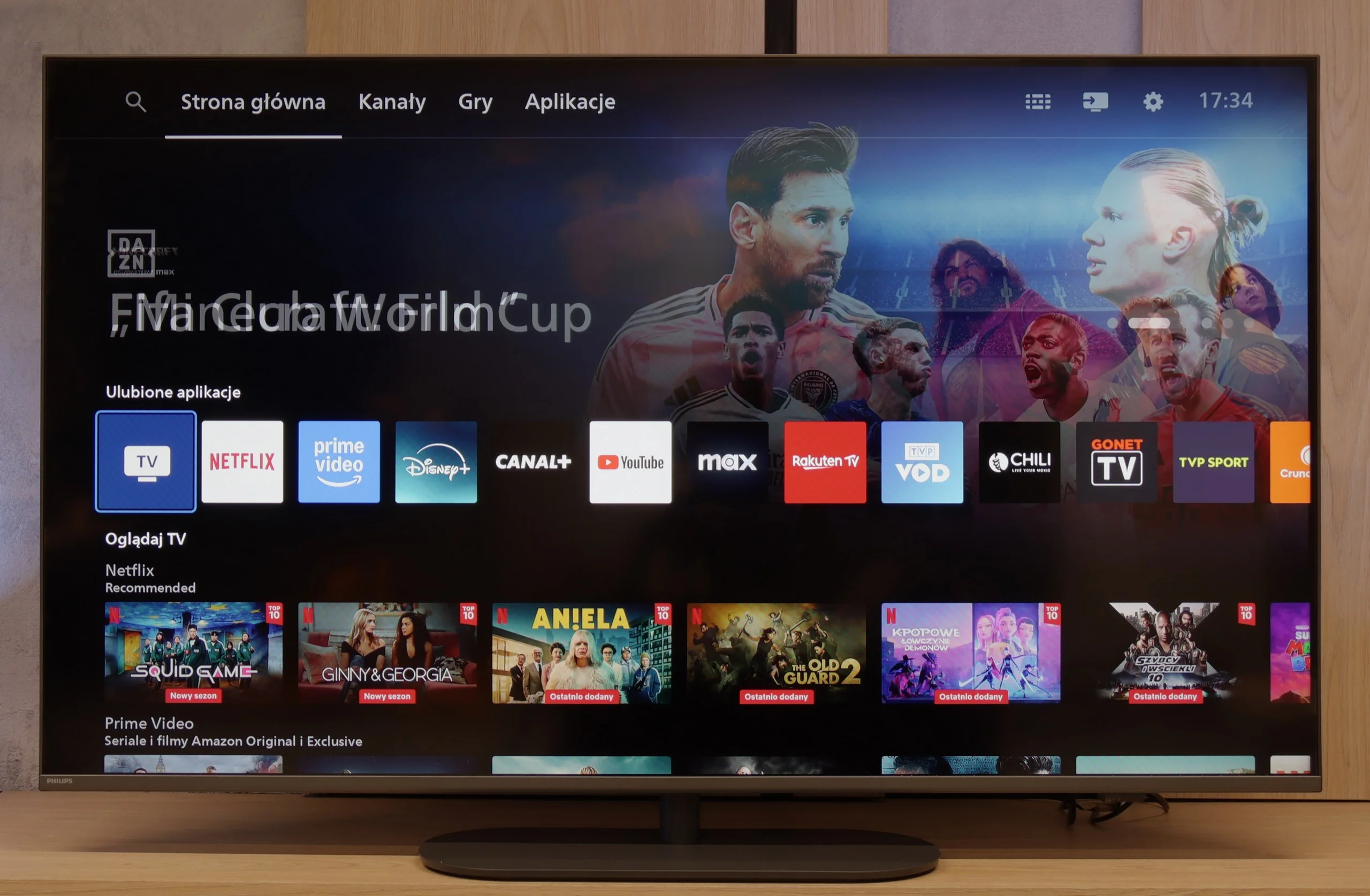
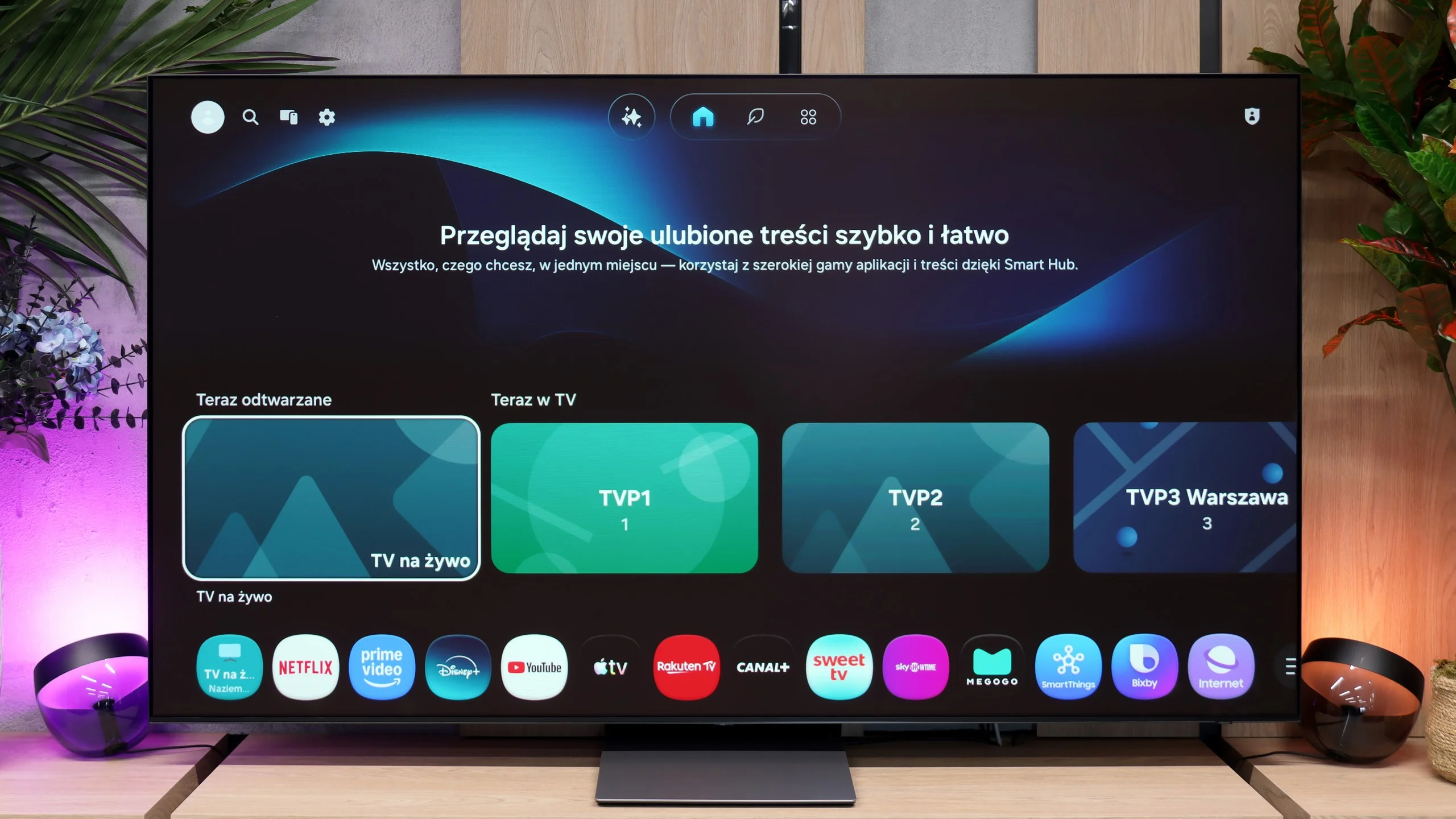
Most Philips TVs from 2025, including the PUS9010, run on the Titan OS system. This is still a relatively young platform and unfortunately, its limitations are still visible. The system itself runs quite smoothly, noticeably better than in the manufacturer's cheaper models, and during testing, it did not encounter problems when using screen mirroring or AirPlay, which is still not a given. However, the biggest drawback remains the limited number of available applications. This can be partially circumvented by connecting a keyboard and mouse to the TV and using the built-in web browser, but this is more of a makeshift solution than a convenient daily option.
Classic TV
When it comes to plain cable or an over‑the‑air antenna, Samsung hasn’t reinvented the wheel. Putting the whole AI stuff to one side, the user largely gets the same as last year. The TV just does its job: it switches channels smoothly, has a tuner and a slot for a CI module, so in many cases you can do without an external set‑top box. Teletext is still available. The compact remote is also worth praising; its biggest advantage is the radio link, so you don’t need to point it directly at the TV to change anything. The problem is most competitors offer these features these days, and the S90H doesn’t bring anything particularly special to the table. What’s more, the maker took a small step backwards. The S90 range has dropped PiP, picture‑in‑picture. If you were used to glancing at the news in the corner while watching another programme, you can’t do that here. A shame.
Smart TV: Tizen
There may be little to get excited about with traditional TV features, but Tizen in its 2026 incarnation is absolutely top‑tier. Again putting AI features to one side, the key point is simple: this system is lightning‑fast. Responses to remote commands are instantaneous, and navigating menus shows no slow animations or annoying stutters. Although it doesn’t use Google TV, the app library is extensive. It includes practically all the major VOD streaming platforms, so there’s little to complain about on that front. Console‑free gamers will be happy too, because Samsung has greatly expanded the cloud gaming section, offering access to the main streaming services directly from the TV. As a Smart TV the S90H is a very well‑rounded and exceptionally fast set.
Apps
6.7/10
9.3/10






















Playing files from USB
7.9/10
9.1/10
Supported photo formats:
Maximum photo resolution:
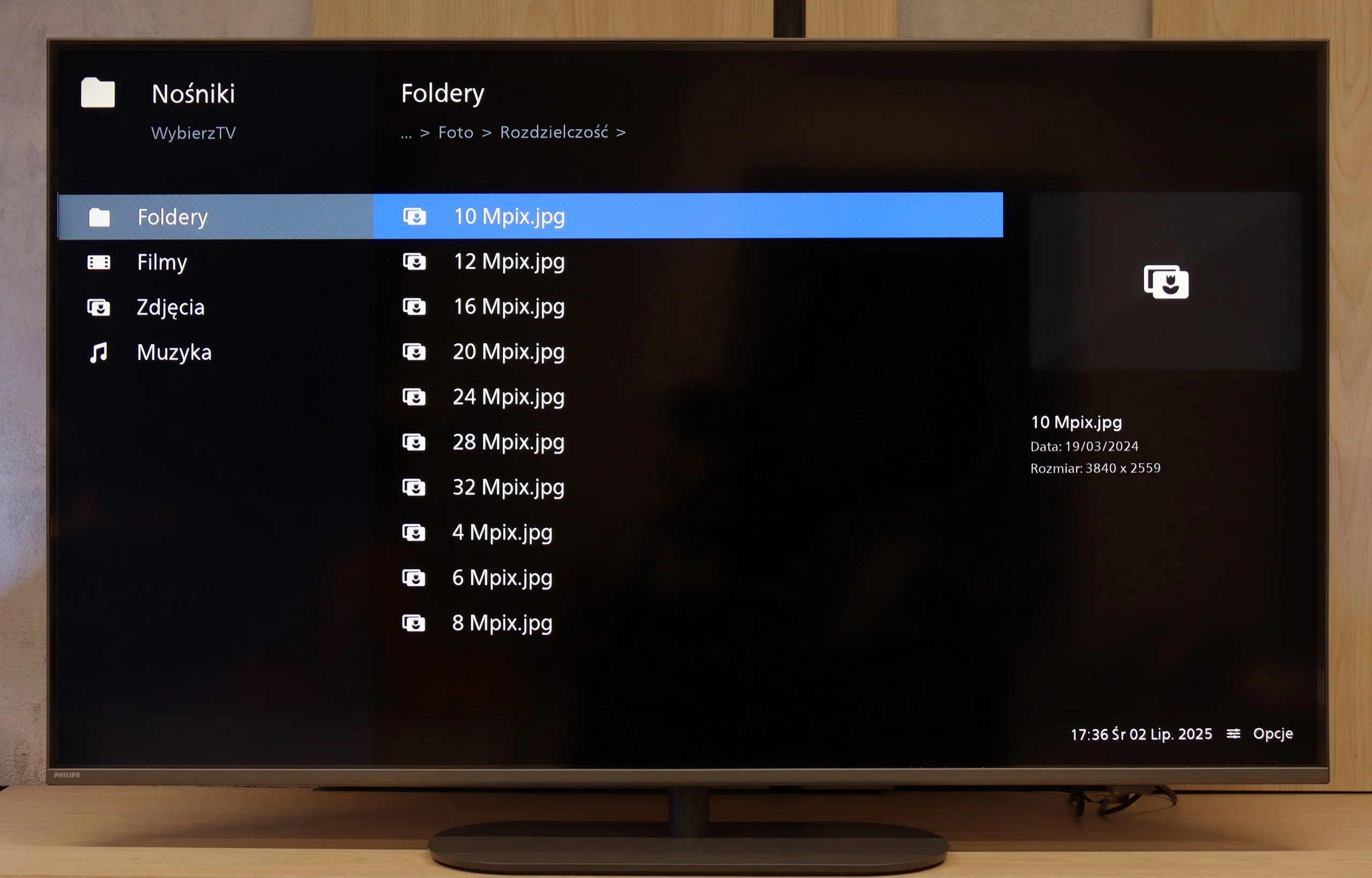
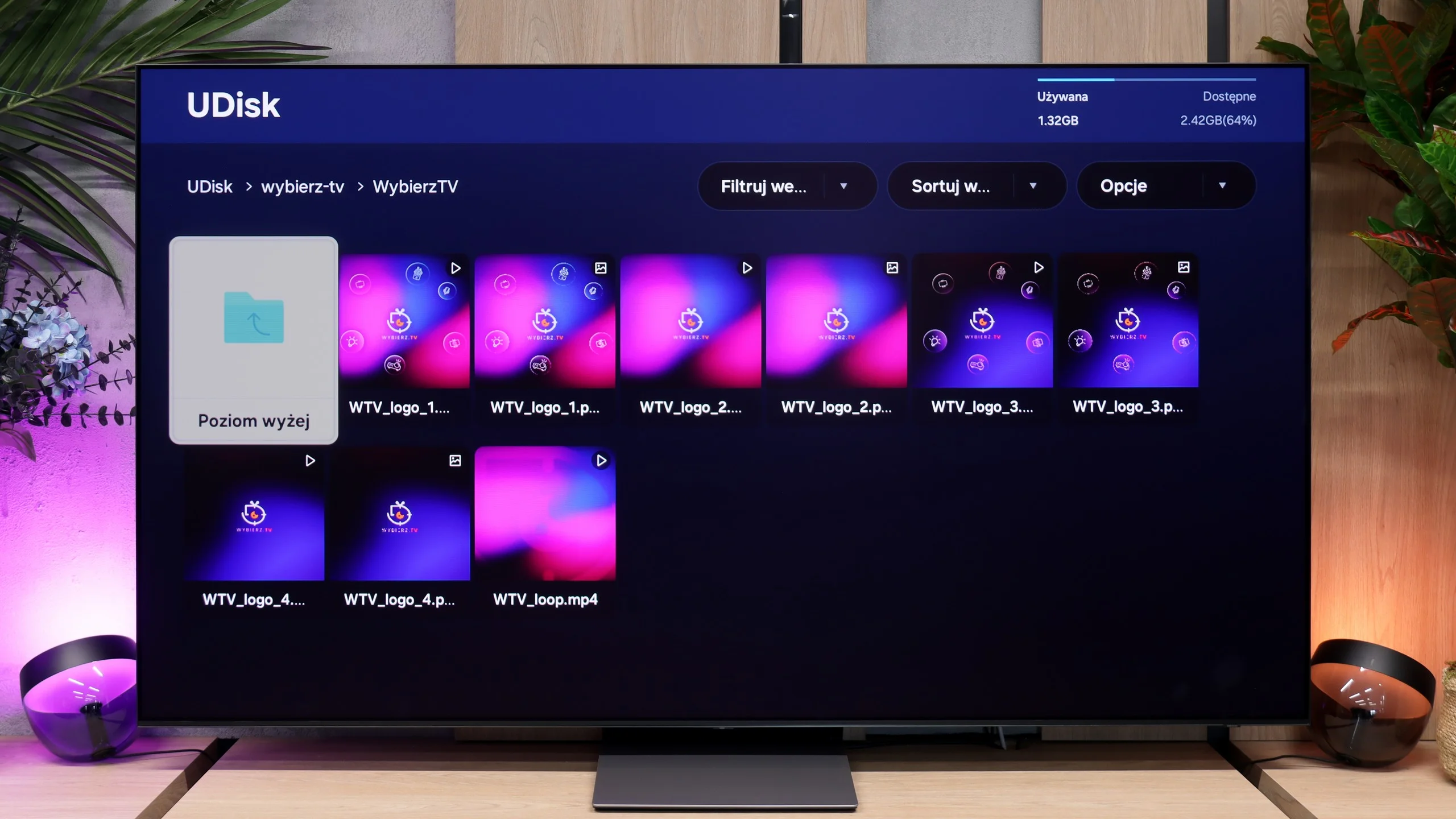
The media player in the new Philips is a solid standard. It handles most popular video and audio files, operating stably and predictably. Although fans of rarer subtitle formats or specific image resolutions might feel a bit disappointed, for the average user, the built-in software does the job. It’s a convenient solution that means we don’t have to involve external equipment to play materials from an external drive.
The built-in player handles most popular video, audio and photo formats very well. Its "playback capabilities" are comprehensive enough that you definitely won't miss the option to install external players like VLC. However, we encountered a serious bug when trying to open HEIC photos from an iPhone. The S90H not only failed to display the files, it caused the system to hang completely. The receiver stopped responding to any of our commands, so we had to reset it; unplugging it solved the problem. This appears to be a software flaw that requires an urgent fix in the next firmware update.
Sound
6.6/10
8.4/10
- Maximum volume85dB89dB
- Dolby Digital Plus 7.1
- Dolby True HD 7.1
- Dolby Atmos in Dolby Digital Plus (JOC)
- Dolby Atmos in Dolby True HD
- DTS:X in DTS-HD MA
- DTS-HD Master Audio
The sound from the Philips PUS9010 is simply adequate. The tested unit offers a 2.0 setup with a total power of 40 W, which is more than sufficient for everyday watching of TV, movies, or series. The sound is pleasant, but it's hard to describe it as anything above average, especially if you're after strong bass or greater dynamics. On the plus side, it supports a wide range of audio formats. When connecting a soundbar or home theatre system, the TV easily handles Dolby Atmos and DTS, without the need to fiddle with settings or lose sound quality. For those planning external speakers, this is definitely good news.
Theoretically the audio spec in the S90 series has been unchanged for several years. We again get a 2.1 speaker system with a total power of 40 W. However, when we fired up the review unit we were pleasantly surprised. The TV sounded noticeably better than the dry specs or memories from tests of previous models would suggest. It's hard to say for sure whether that's down to optimisation of the audio processing software or simply the fact that the 77-inch cabinet allows somewhat larger drivers to be fitted and gives them more room to operate. The fact is the sound is fuller and more dynamic. That's a big plus for the manufacturer. The only real gripe is the lack of DTS support. Unfortunately this format is increasingly being dropped by TV makers, so Samsung is no exception. On board, however, there's support for the most popular spatial format, Dolby Atmos. Still, fans of physical Blu-ray releases, where DTS tracks are still commonly found, may feel slightly let down.
Sound Quality Test
Acoustic Measurements
No acoustic data
89dBC (Max)
75dBC
Reader comments
Comments are provided by the external service Disqus (Zeta Global). Once loaded, Disqus may set cookies and process data about your activity.
We will remember your choice on this device. Provider's privacy policy