 Direct comparison
Philips PUS8359 in 50" is a fairly simple television, yet sufficiently advanced for a large portion of consumers. Its biggest distinguishing feature (as well as the entire brand) is the Ambilight backlighting, which at this price point is definitely an added value and something that may encourage a purchase. In this price range, it's hard to find anything that will give us flawless picture quality, although we can look for units that offer something more. And in our opinion, this tested television is precisely that. In this context, we pay particular attention to the quality of tonal transitions, colour reproduction after calibration, and the television's performance when connected to a computer. Thanks to its low input lag, a casual gaming session will be quite enjoyable. However, we must also point out the unit's drawbacks. Without a doubt, these will be low luminance in HDR content and narrow coverage of the DCI-P3 colour space. Although it’s worth noting that the dynamic tone mapping feature works very effectively. We will also briefly mention the contrast and black levels, which, while not exceptional, are definitely better than in units based on IPS/ADS panels. The operating system of the television can be considered one of the better ones, although it is in development and lacks many features, which we will discuss more in a dedicated paragraph. It also does not have as wide a library of applications as its competitors, although this will likely change soon. Who is the PUS8359 for? One could say it’s for anyone looking for a balance between quality and price.
- Matching (Score) |
- Our verdict |
- TV appearance |
- Where to buy |
- Contrast and black detail |
- HDR effect quality |
- Factory color reproduction |
- Color reproduction after calibration |
- Smoothness of tonal transitions |
- Image scaling and smoothness of tonal transitions |
- Blur and motion smoothness |
- Console compatibility and gaming features |
- Input lag |
- Compatibility with PC |
- Viewing angles |
- Daytime performance |
- Panel details |
- TV features |
- Apps |
- Playing files from USB |
- Sound
PUS8349 / PUS8359
S95H / S99H

Available screen sizes: 50”
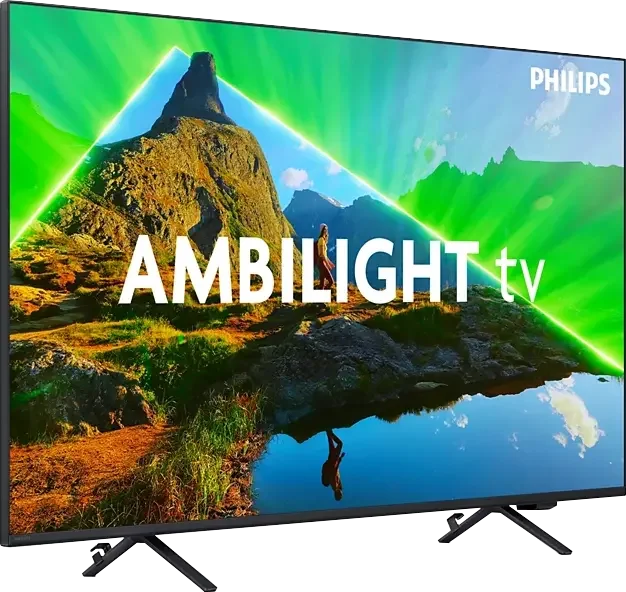
Panel type: LCD VA
Resolution: 3840x2160
System: Titan OS
Model year: 2024
Complete the survey to find out the result
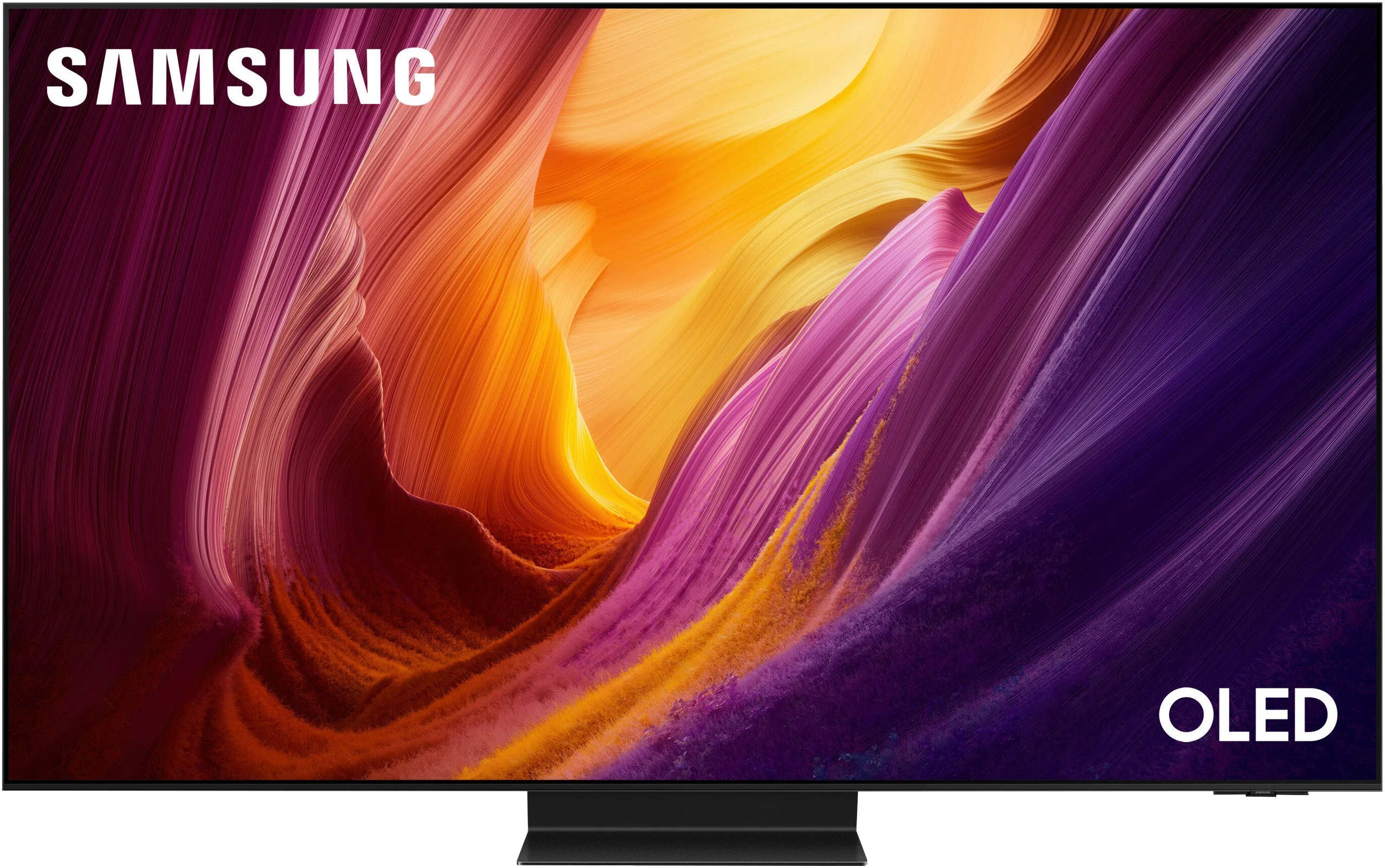
Panel type: QD-OLED
Resolution: 3840x2160
System: Tizen
Model year: 2026
Complete the survey to find out the result
Overall rating
5.4
8.8
 Movies and series in UHD quality
5.2
9.3
 Classic TV, YouTube
5.4
9.4
 Sports broadcasts (TV and apps)
4.5
9.0
 Gaming on console
6.4
9.9
 TV as a computer monitor
6.0
8.8
 Watching in bright light
4.7
7.3
 Utility functions
5.3
7.9
 Apps
6.7
9.3
 Sound quality
6.1
8.0
Complete the survey to find out what fits your preferences
Advantages

Colour representation after calibration
Dynamic tone mapping function - recovers details that are too bright for the television
Smooth tonal transitions
Very good compatibility with computers and consoles - low input lag, chroma 4:4:4
Perfect black levels and OLED contrast
Very high brightness
Rich, highly saturated QD-OLED colours
Natural image after calibration
Excellent tone mapping (lots of detail in bright scenes)
Matte coating effectively reducing reflections
Best viewing angles on the market (QD-OLED)
165 Hz refresh rate and lightning-fast panel response
Very low input lag and extensive gaming features
STUNNING LOOK
One Connect module included
Disadvantages

Low brightness of HDR materials
Missing a significant number of essential applications
Poor viewing angles
Noticeable degradation of black levels in bright ambient light (a characteristic of QD‑OLED panels)
Last year’s version of Tizen
No DTS support (mainly affects Blu‑ray fans)
Our verdict
The Samsung S95H is, in almost every respect, a continuation of the S95F. During testing we often felt like we were watching the same TV. But... is that a bad thing? Not necessarily, because the predecessor set the bar very high. We still get a phenomenal picture and one of the best TVs we've tested in 2026. HDR packs a huge punch, and the colour and black levels make a good film really keep you glued to the screen. With a console or PC the S95H is just as enjoyable because it delivers what we expect from a flagship product.
The strongest argument for this model may, however, be its looks. It's aimed at people who want the slimmest, most minimalist TV possible. On the wall the S95H looks particularly great, and One Connect helps organise the whole setup. If the distinctive bezel of the S99H isn't to your taste, you'll find a more discreet design here. Brightness is admittedly lower than in the higher-end series, but still high enough that it's hard to call it a serious compromise for viewing.
Not everything deserves praise. We were most disappointed by the inclusion of last year's version of Tizen. The system itself runs quickly, but that detail only underlines how little has changed compared with the S95F. Perhaps Samsung will release an appropriate update soon.
Ultimately the S95H is a great choice for someone seeking top-tier picture quality in an exceptionally slim chassis. The Samsung S95H isn't revolutionary, but it's still a TV that, despite giving us a slight déjà vu, left a strong impression.
TV appearance
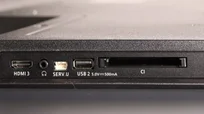
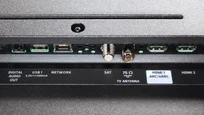
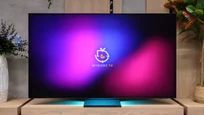




Contrast and black detail
5.6/10
10/10
Local dimming function: No
Contrast:


Result
4,400:1

Result
4,950:1

Result
4,500:1

Result
5,650:1

Result
3,800:1
Result
∞:1
Result
∞:1
Result
∞:1
Result
∞:1
Result
∞:1
Halo effect and black detail visibility:
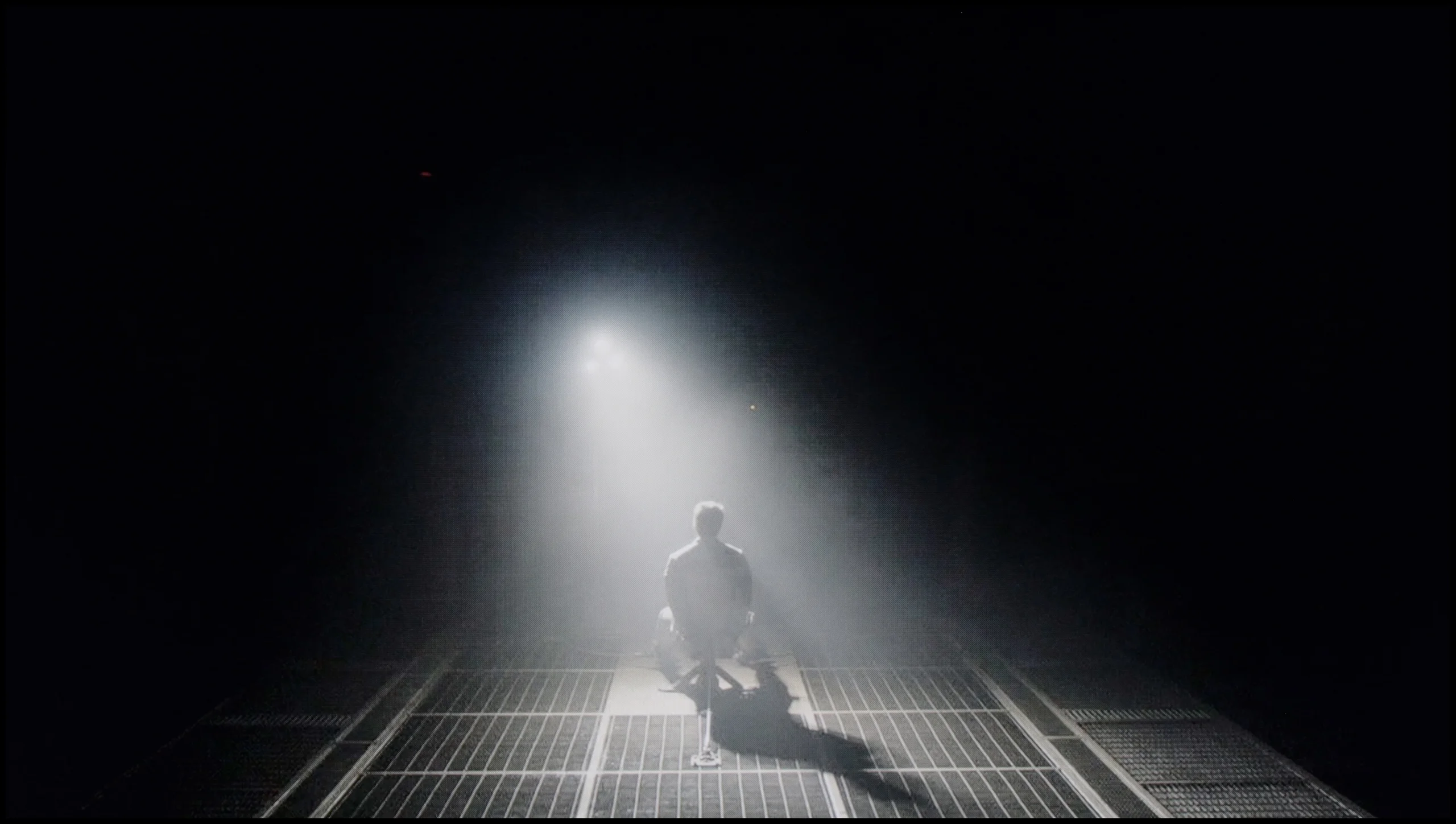
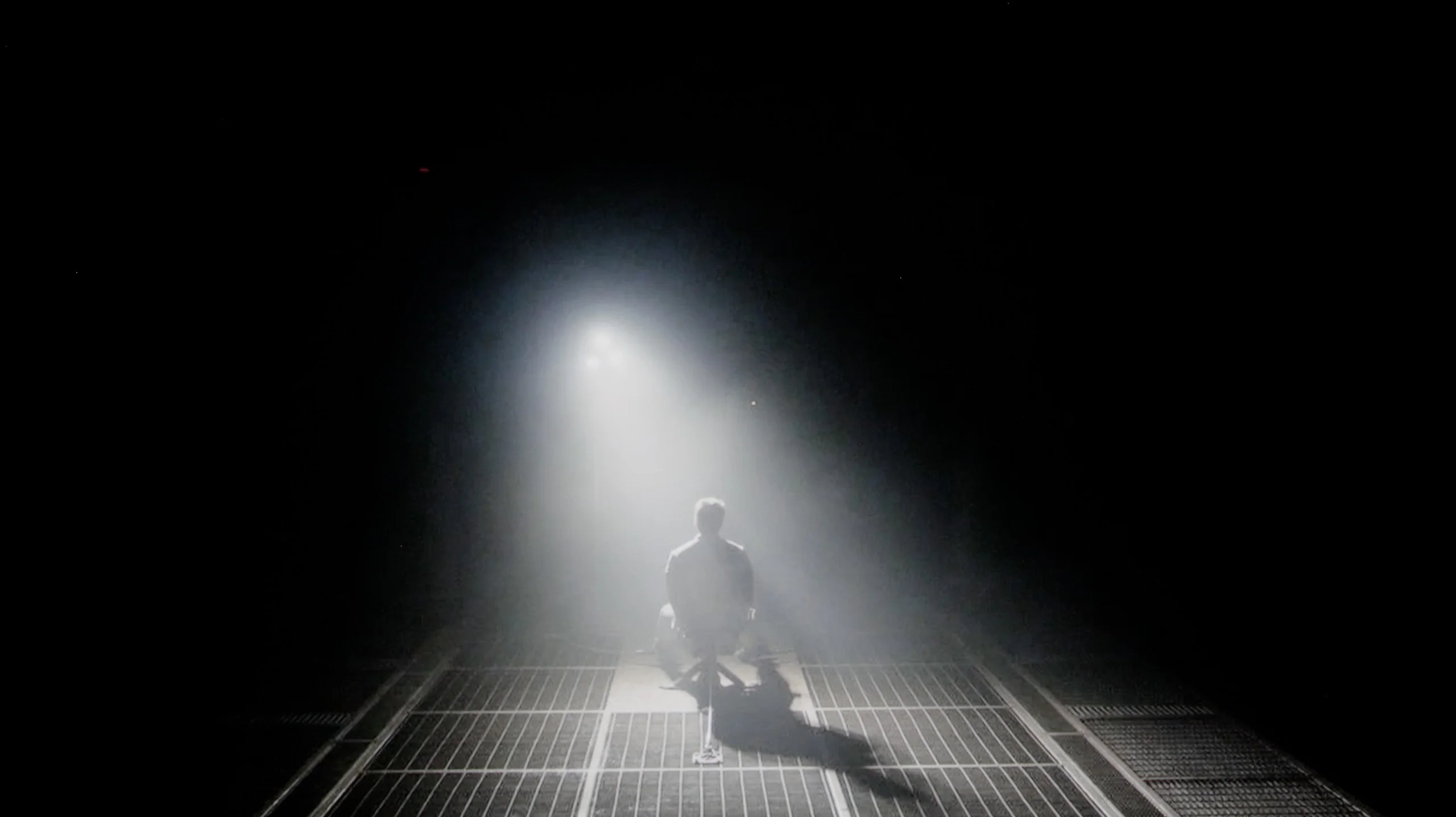
Check the visibility of bright lights on a dark background. Mini-LEDs often struggle with this. The photo does not compare black levels – that’s what the video below is for.
The video accurately shows differences in contrast and black levels between TVs, as well as potential issues: halo around bright objects or Mini-LED zone operation visible as brightness jumps.
Philips PUS8359/12 in the 50-inch version is equipped with a VA panel. We highlight this quite strongly, as the manufacturer is known for intermittently using IPS/ADS panels depending on the diagonal size. This is particularly important in the context of contrast and black levels, which are the primary criteria in assessing image quality. The panel itself uses direct LED backlighting; however, it has not been supported by any local dimming system, which is rather obvious when considering the device's price range. Nevertheless, the use of this type of screen allows for several rows of better black levels and contrast compared to the aforementioned panels that do not have advanced backlighting systems. The simple design of the television has positively affected the visibility of details in the blacks. Our first test scene from the film "Oblivion" showcased quite good blacks, but also excellent separation of lights, which is not an easy task even for much more expensive units. The second material prepared from the film Sicario 2 also presented itself decently. Although due to construction flaws, some light bleeding can be noticed, the details themselves are well visible, and it's hard to criticize them. The fact remains, the black levels could be deeper.
The Samsung S95H we tested, with a 65-inch screen, uses a QD-OLED panel. The same type of panel is also found in the 55- and 77-inch models. A new addition to the range is a 48-inch size, but note, it’s a completely different design. It has neither a QD-OLED panel nor a One Connect module, so our review should not be directly applied to that variant.
Back to the blacks, it’s exactly what you’d expect from any OLED. Each pixel illuminates independently and can switch off completely. That means blacks are truly inky, whether you’re watching a large shadow or a small dark patch right next to a bright light. There are no bright film-like bands or halos caused by local dimming zones. In our test scenes the S95H looked excellent in that regard. Bright objects stood out clearly against the dark background, and blacks retained their depth even in the most demanding shots. In the evening this produces a very pleasing effect, and it’s that kind of picture we love OLEDs for.
It’s worth noting, however, that our unit had a minor issue with so-called black crush. The darkest shades of grey sometimes merged into the black, causing some shadow detail to disappear. The image then appeared even deeper and more contrasty, but this was at the expense of details that should have been visible. The black itself remained perfect; the TV simply didn’t always show what lay just above it.
HDR effect quality
4.6/10
8.8/10
Luminance measurements in HDR:

Result
281 nit

Result
280 nit

Result
324 nit

Result
290 nit

Result
320 nit
Result
2246 nit
Result
2236 nit
Result
2113 nit
Result
2230 nit
Result
1571 nit
Scene from the movie “Pan” (about 2800 nits)


Scene from the movie “Billy Lynn” (about 1100 nits)


The photos show two HDR10 movies. 'Pan' is one of the brightest productions ever made, while 'Billy Lynn' (soldier) has brightness typical of streaming (Netflix, Prime, HBO MAX). Notice the intensity of effects and detail in whites.
Static HDR10


The photos present the visibility of white details in various HDR formats. They do not show brightness differences between TVs (these can be compared in the previous gallery).
HDR luminance chart:
Samsung S95H
Philips PUS8359 (VA)
Philips PUS8359 didn't impress us with its performance in HDR materials. This model is capable of generating a maximum brightness of 320 nits, and often even less. Such results, combined with the lack of support for HDR Dolby Vision, mean that the image will be significantly darker compared to the source material. Therefore, it would be more beneficial for this television to play SDR content. This is also suggested by the quite low coverage of the DCI-P3 colour gamut at 83%, resulting in significant colour deficiencies. The fact remains that the television supports an HDR format based on dynamic metadata; however, HDR10+ is such a niche format that it doesn't offer any major advantages.
The Samsung S95H is an extremely bright OLED TV. It doesn't quite reach the level of this year's S99H, the one with the bezel, but a peak of around 2300 nits is still a phenomenal result. You really notice it in films. Flares, sun reflections and lights on a dark background have the punch we expect from a premium TV. Importantly, the S95H performs well across different scenes. It doesn't need a single small highlight on a black screen to show its capabilities. In the first four test shots we measured over 2100 nits, even though each places slightly different demands on the TV. As a result, the HDR effect is strong both in night scenes and in more evenly lit frames.
Of course, the limits typical of OLEDs remain. When a very bright image covers a large part of the screen, ABL comes into play, the mechanism that limits panel brightness. With an almost white screen the drop can be much larger than with a short, point-like flare. That does not mean bright film scenes look poor. In a demanding shot from 'The Meg' we measured about 1600 nits. That's still an excellent result, and the bright sky and reflections on the water retain a lot of intensity.
QD-OLED colours
The colours on the Samsung S95H are simply superb. It's one of the most "colourful" OLEDs we've tested. Highly saturated reds, greens and neon hues look great and complement the screen's high brightness well. Coverage of the DCI-P3 gamut is as high as 99.9%, so the TV can reproduce virtually the entire colour range used in that space for HDR films.
Interestingly, our measurements also show progress compared with the S95F. Coverage of the wider BT.2020 gamut increased from about 87% to 89.6%. That's very similar to the result we achieved with this year's S99H, which suggests very similar capabilities between the two panels in terms of colour range. The difference versus its predecessor is small but worth noting. The S95H remains at the top of the OLED class in this regard and can easily compete with new displays using SQD quantum dots.
Factory color reproduction
4/10
7.6/10


This gallery shows how colors change after professional TV calibration. If you notice the difference, we recommend ordering this service at SkalibrujTV.com.
Factory Mode
After calibration


This gallery shows how colors change after professional TV calibration. If you notice the difference, we recommend ordering this service at SkalibrujTV.com.
Factory Mode
After calibration
The best factory mode in terms of fidelity to the source material was "Film". This is what we used during our tests. Just like every other factory mode in televisions, it had its drawbacks. So we'll check what exactly was wrong with both SDR and HDR materials. In both cases, the white balance exhibited an excessive dominance of the green and red colour combination. This created a yellow tint spreading across the entire image, causing issues such as yellowed whites and problems with skin tones. This state of affairs was perfectly illustrated on the "ColourChecker" palette, where each of the tested samples was pushed towards its warmer counterparts. The foundation of the image is primarily contrast and black. These are represented by gamma charts and the EOTF curve. Looking at the first one, we can see a true rollercoaster, as both elevated and lowered gamma can be observed. The heavily elevated gamma caused visibility issues in black levels, whereas the lowered gamma resulted in a dramatic reduction in contrast. In this context, the EOTF curve performed significantly better, as it only slightly brightened the image.
Out of the box the Samsung S95H performs quite well, although our unit had a few things that needed improving. In SDR material there is a red bias in the white balance. The picture therefore looks slightly warm, and whites and faces can take on a faint pink tint. It’s not a major shift, but you can spot it when comparing with a reference image. More noticeable is how it handles dark scenes. Gamma sits above the target value of 2.4 across most of the range, and the deviation is particularly large in the deepest shades. The picture thus appears darker and more contrasty than it should, which confirms the previously mentioned issue with losing detail near black. Dark clothing or background elements can merge into a single blotch, even though the source still contains detail. In HDR brightness control is considerably better. The EOTF curve tracks close to the reference, so the TV preserves the brightness of different parts of the scene. There are still minor colour deviations, though. In the brighter areas a dominance of red and blue over green gives whites a slight pinkish–purple cast. Overall the starting point is good, particularly in HDR, but calibration could still make some improvements.
Color reproduction after calibration
5/10
9.4/10


The photos show how movies look on the TV. Pay attention to black detail visibility, colors, and shadow tint.


The photos show how movies look on the TV. Pay attention to black detail visibility, colors, and shadow tint.
Philips provides a wide range of image calibration tools in both its higher-end and budget models. We utilised these tools and got to work, which wasn’t as easy as many of you might think. While we managed to model the white balance, significantly improve the gamma, and refine the EOTF curve in both cases, the deltaE errors remained exceptionally high. There are several reasons for this situation, which are directly related to the low coverage of the DCI-P3 colour gamut and the maximum brightness of the unit in HDR material.
After calibration the S95H looks really excellent. The excess red has been removed, so whites are neutral and faces have regained a natural tone. In SDR colour errors are now very small. The picture retains excellent saturation but no longer adds the tint that was visible on the factory settings. This is how a well-set TV in this class should look. There’s also an improvement in white balance in HDR. In addition, brightness in film scenes stays very close to the reference. Bright highlights have the right intensity, and the TV doesn’t unnecessarily brighten the whole frame. That level of control combined with the QD-OLED panel’s capabilities produces an image that’s simply very pleasant to watch. We really have only two reservations. The first is the loss of the darkest details. Our unit still tended to crush some tones near black, although that may be a characteristic of this particular test sample. The second concerns adjustments to the HDR colour palette. The available settings don’t allow perfect correction of all hues, so some minor inaccuracies remain. That doesn’t change the very good final result; after calibration the S95H delivers a very high-quality image.
Smoothness of tonal transitions
7.4/10
9/10





These are selected scenes that show smooth tonal transitions from one color to another. If you see distinct banding, it’s the TV panel’s fault.

These are selected scenes that show smooth tonal transitions from one color to another. If you see distinct banding, it’s the TV panel’s fault.

These are selected scenes that show smooth tonal transitions from one color to another. If you see distinct banding, it’s the TV panel’s fault.

These are selected scenes that show smooth tonal transitions from one color to another. If you see distinct banding, it’s the TV panel’s fault.
The fluidity of gradation in PUS8359 is at a good level. Practically every scene has preserved tonal transitions. The most difficult scene, which is the second from the film "The Green Knight", turned out not to be the proverbial "killer" and showed that the tested television, given its price range, performs excellently. The only thing we can "pick at" is the darkest scenes, where some inconsistencies can be seen here and there, but this is rather selective. Nonetheless, we rate the fluidity of tonal transitions very well. However, we must mention that this feature is not available in HDR materials.
The S95H handles tonal transitions very well. It's a strong point of QD-OLED panels, which in our tests tend to show distinct banding between shades less often than WOLED panels with a white subpixel. In most scenes, colours transition smoothly from one to another. This is especially noticeable in dark shots, where instead of the characteristic bands we see smooth transitions between shades of grey. It's not completely perfect, though. In some brighter scenes you can spot slight unevenness, although you have to look closely. During normal viewing they are unlikely to distract from the film. Overall the S95H performs very well in this category.
Image scaling and smoothness of tonal transitions
6/10
7.5/10


Smooth transition function
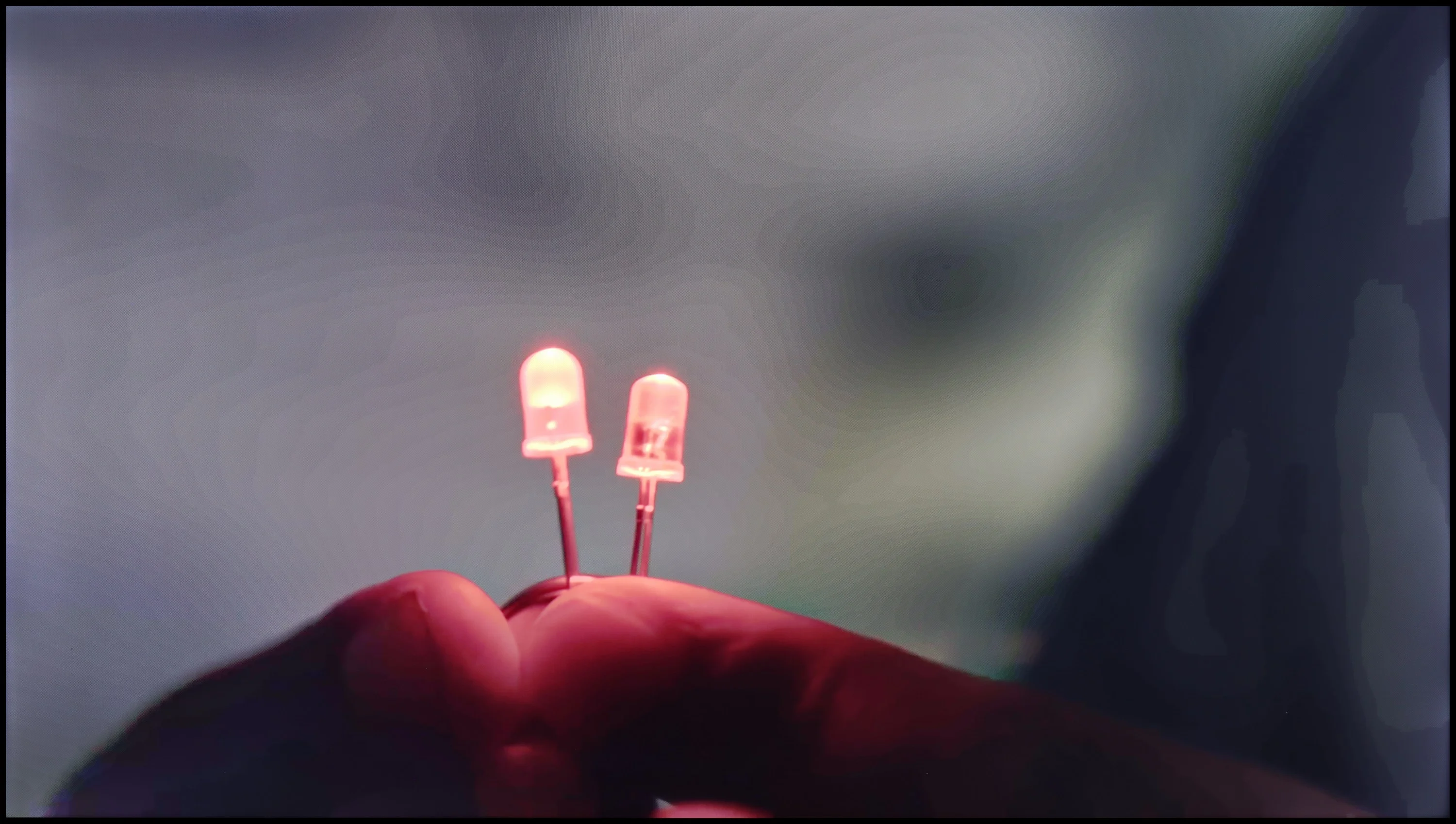
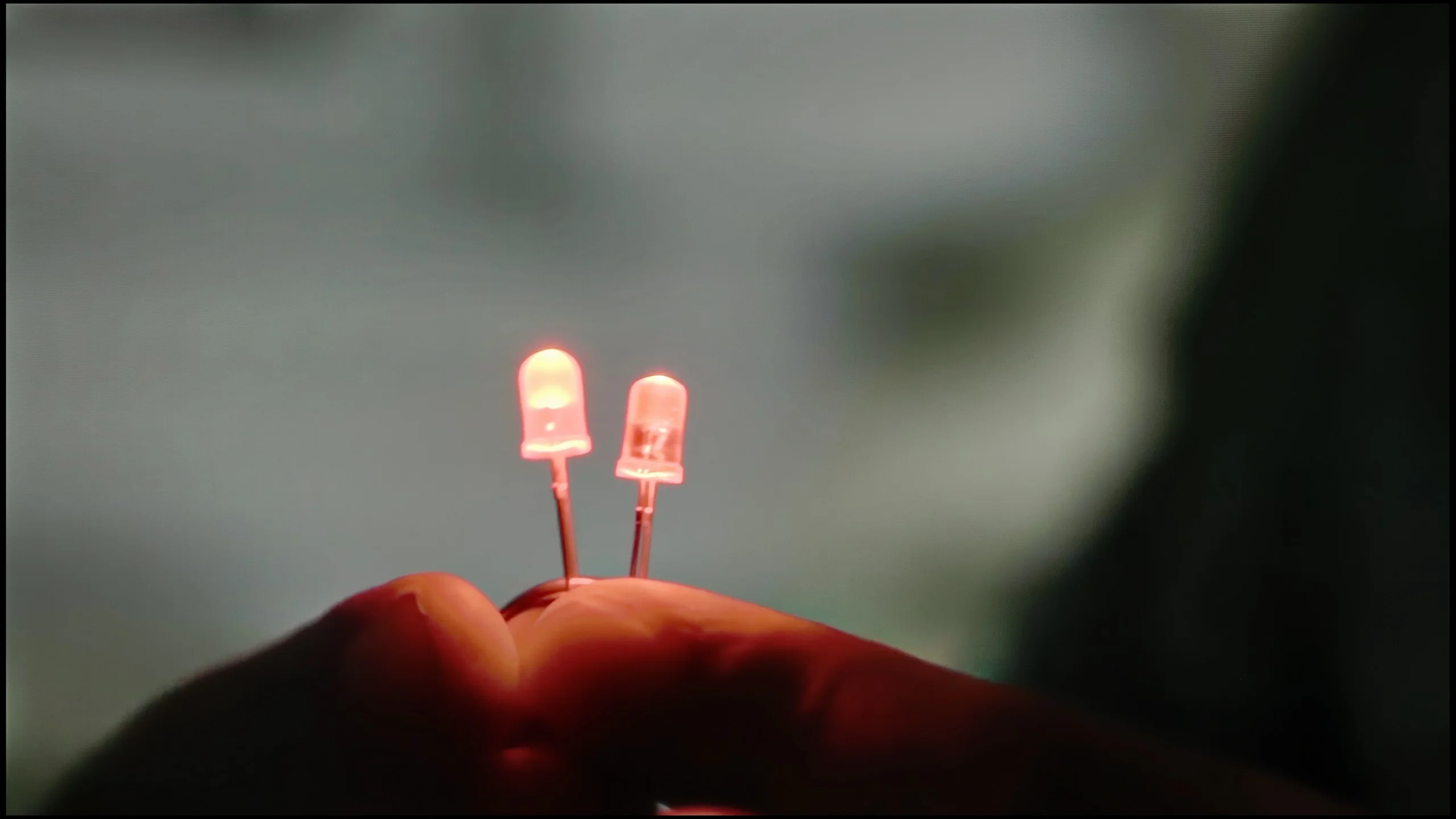
The match photo shows how the TV smooths weak tonal transitions in low-quality video.
Image scaling SD (576i)


The model photo shows how it handles upscaling of SD material.
In this paragraph, we will look at two functionalities. We will once again take a look at the feature responsible for tonal transitions, but we will also check how the television handles image scaling. The option responsible for smooth gradation is called "Distortion Reduction." As we have established, it quite effectively smooths out inconsistencies. However, we must point out two things: we cannot enable it for HDR material, and it blurs details in films.
The tested television does not boast the best image scaling. The overall blurriness of the image is quite noticeable, but what’s worse, it blurs details. This is particularly evident on the branches and hair of the model. There is also a characteristic white halo around the character.
The NQ4 Gen3 processor, the same one used in the S99H, handles upscaling and digital image processing. The conclusions from our tests are also very similar. Lower-resolution material looks really good when upscaled to 4K. The picture is clear, without artificial edge enhancement or over-sharpening. One small caveat concerns very old recordings at 480p or lower. With such a signal the TV can slightly crop the edges of the frame.
The noise reduction feature is used to improve heavily compressed material. It smooths visible banding between shades and reduces other imperfections, for example in poorer YouTube recordings. However, it works quite aggressively. Fine detail and natural film grain can disappear along with the noise. We left it turned off to preserve the original look of the material. If artefacts bother you more than the loss of some detail, it's worth checking how it performs.
Blur and motion smoothness
3.8/10
8.5/10
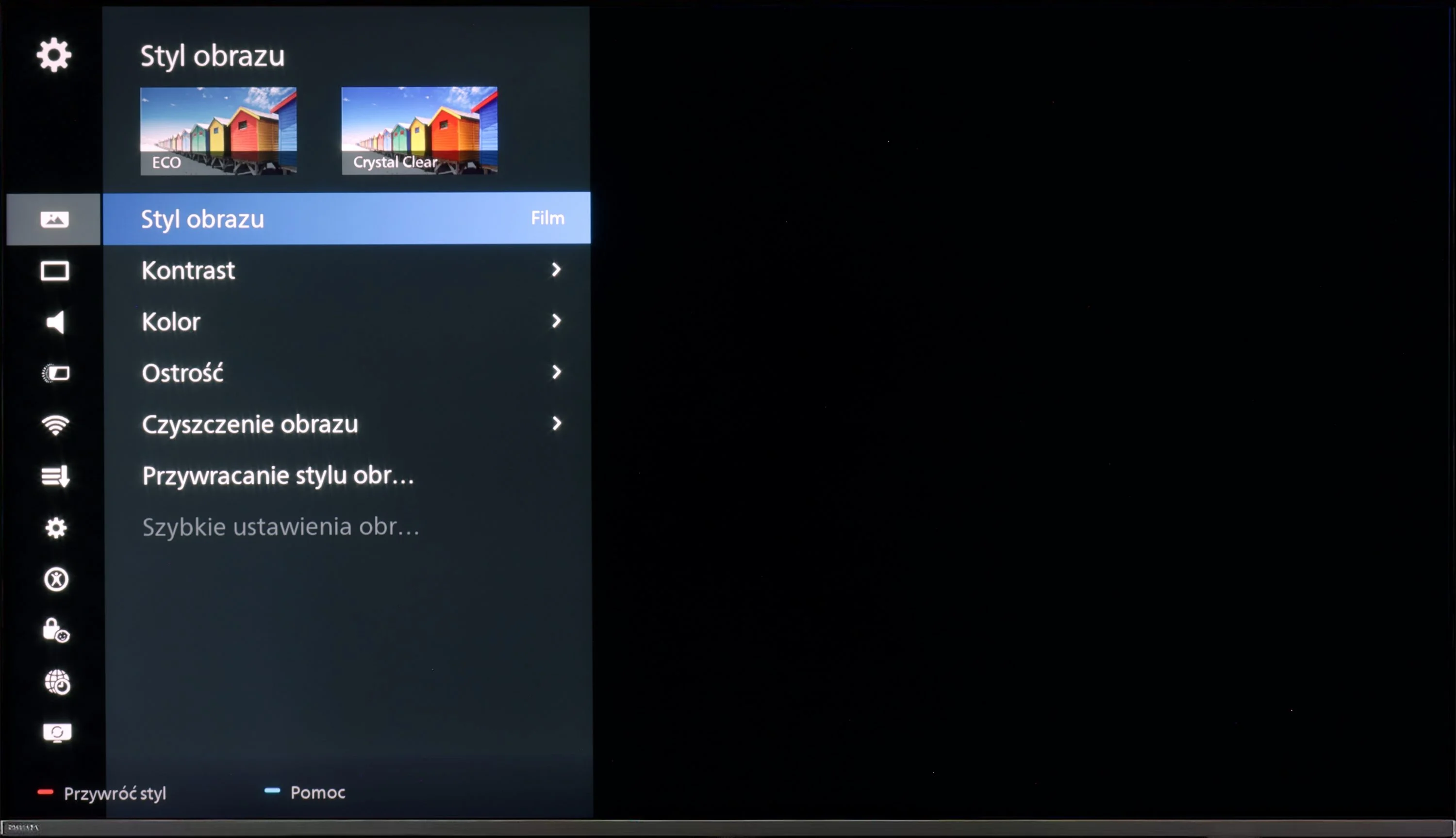
Blur (native resolution, maximum refresh rate):






Blur (BFI function enabled):
Image flickers in this mode



Blur ():
Blur (4K@165Hz):



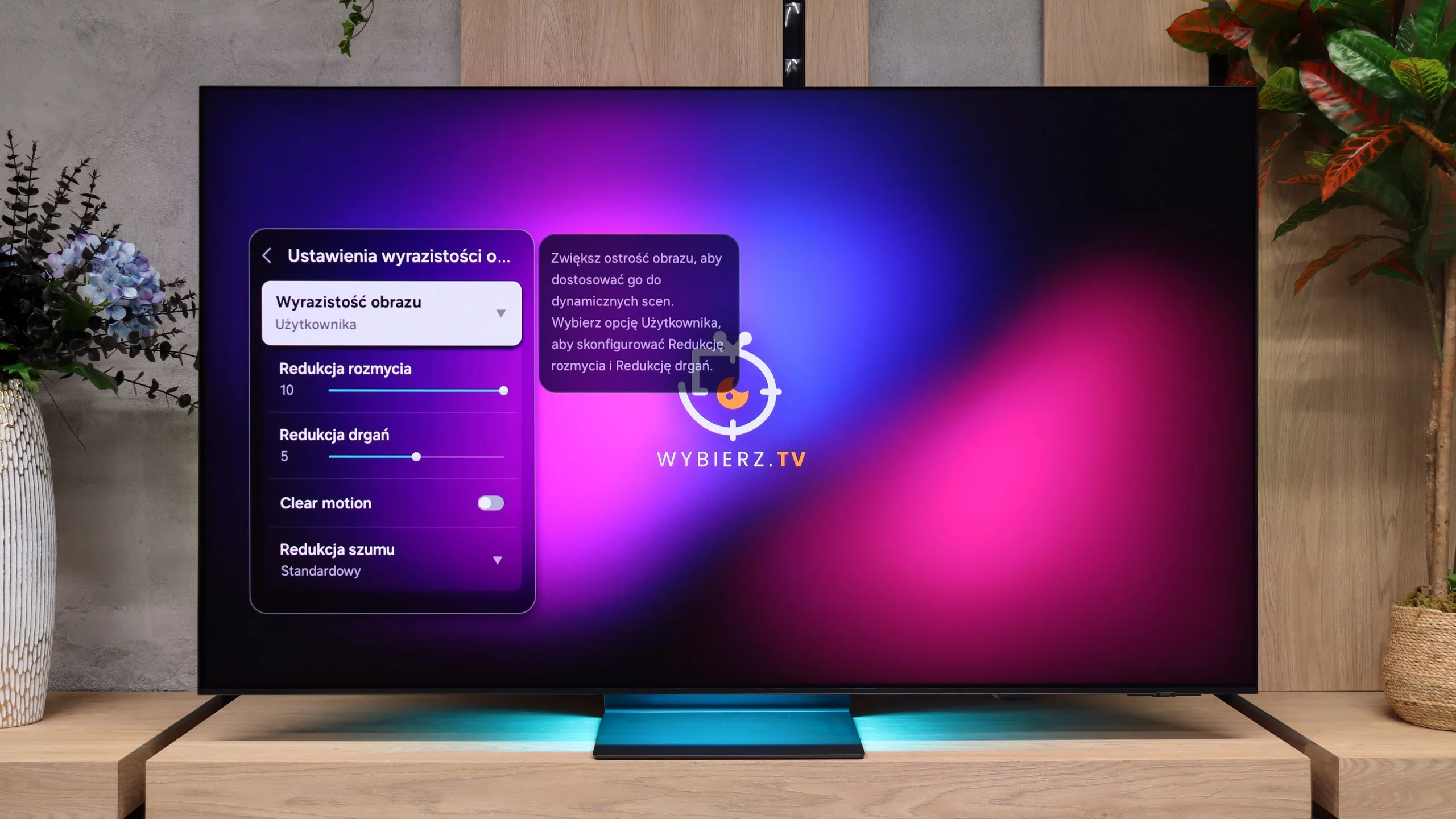
Philips PUS8359 will not be the best television for sports. The reason for this is the lack of implementation of even the basic motion smoothing feature, which was to be expected given the price of the device. We also note that we are dealing with a VA panel, whose sharpness does not stand at the highest level by itself. This type of panel is mainly associated with high contrast, which comes with a rather slow response time, as we can clearly read from the matrix analysis results. As you can see, from the pictures captured in fast motion, the image is blurred typically for this type of panel. While it may not be the ideal option, it can conditionally be used for watching sports; however, one must keep in mind the less-than-sharp motion. It is worth mentioning that movies will be characterised by judder since the television does not possess any, not even the simplest, motion smoother.
The Samsung S95H handles motion very well, which is what you expect from an OLED. The panel supports refresh rates up to 165 Hz, though that’s mainly useful for PC gamers. When watching sport, a lightning-fast pixel response time matters more. A fast-moving ball or player doesn’t leave the characteristic trailing smear. Motion therefore remains clear, without the artefacts typical of slower LCD panels.
There’s also a motion smoothing feature that lets you adjust motion to your liking. In films you can gently reduce judder during camera pans or choose a stronger smoothing effect. A separate setting for faster content is handy when watching sport.
Console compatibility and gaming features
4.7/10
9.6/10
- ALLM
- VRR
- VRR range6048 - 165Hz
- Dolby Vision Game Mode
- Correct implementation of HGIG
- 1080p@120Hz
- 1440p@120Hz
- 4K@120Hz
- Game bar
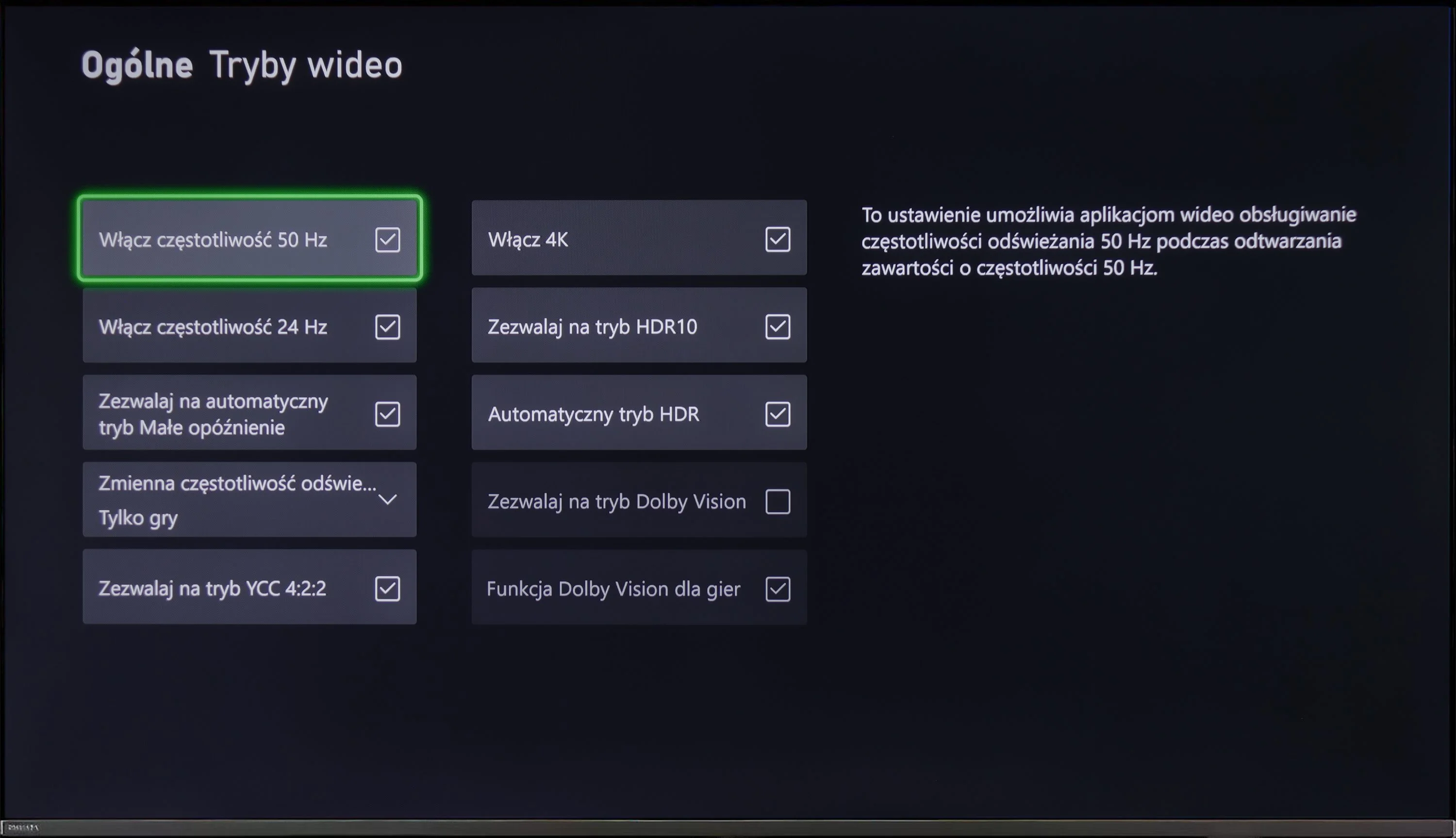
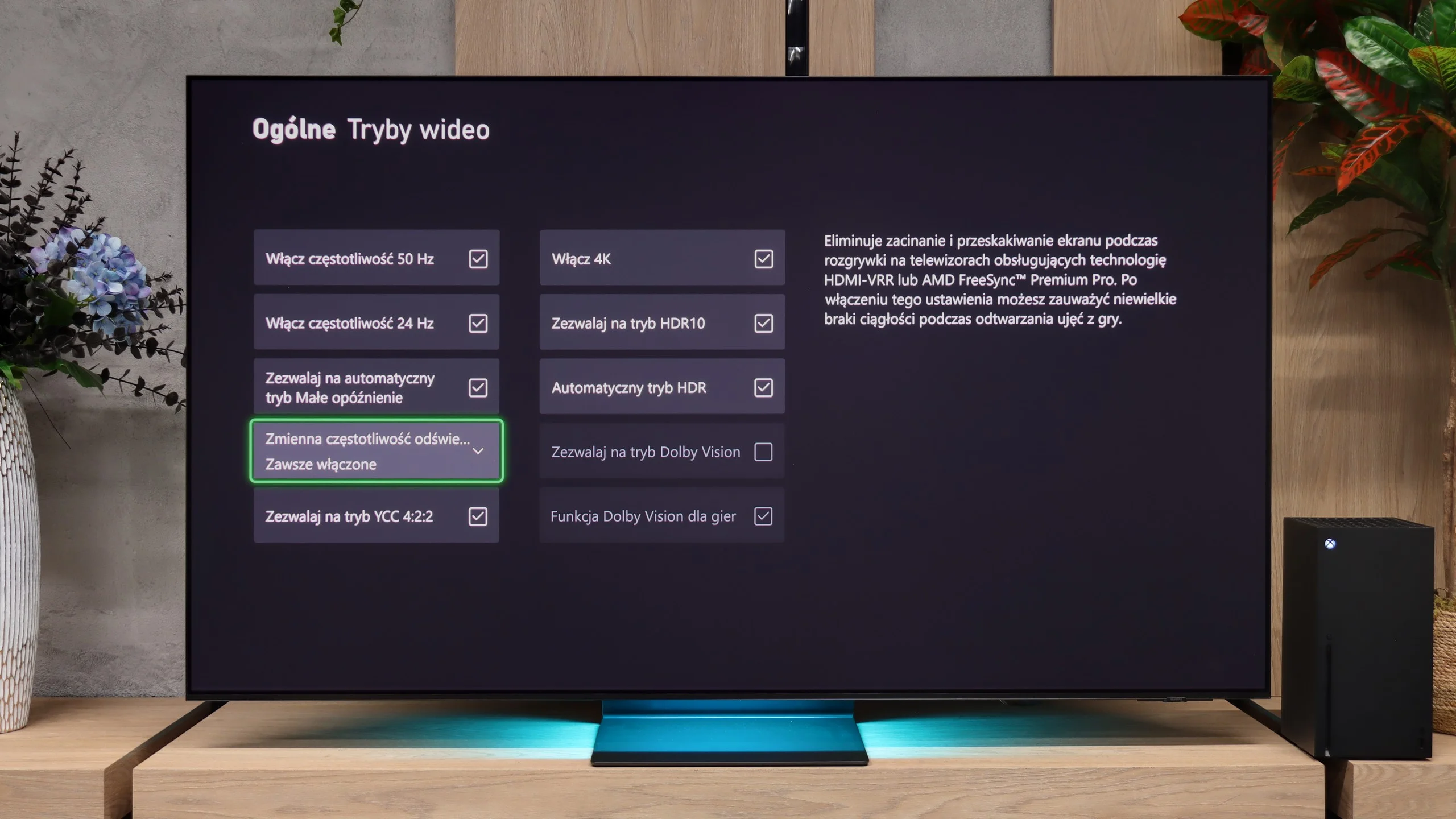
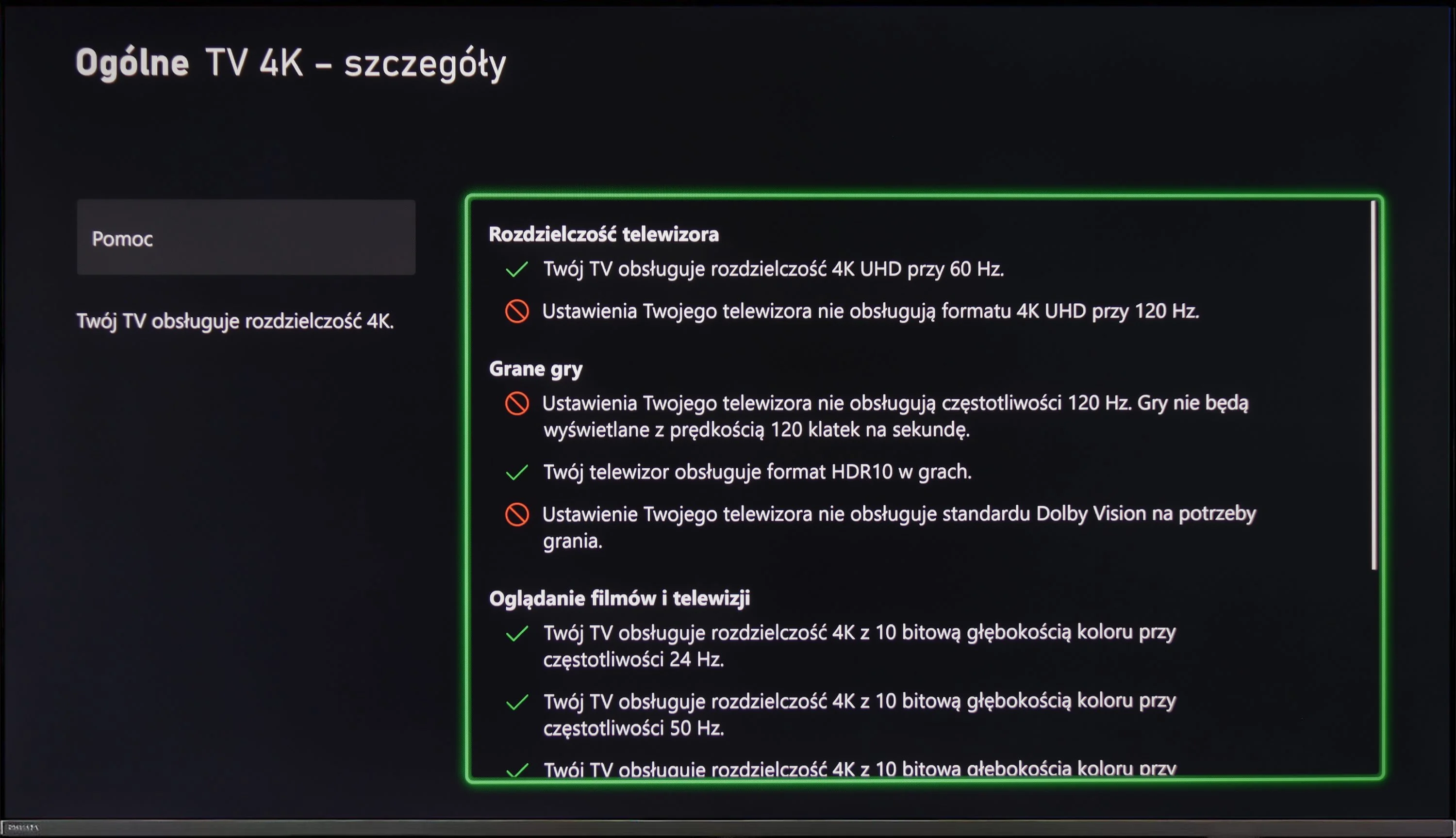
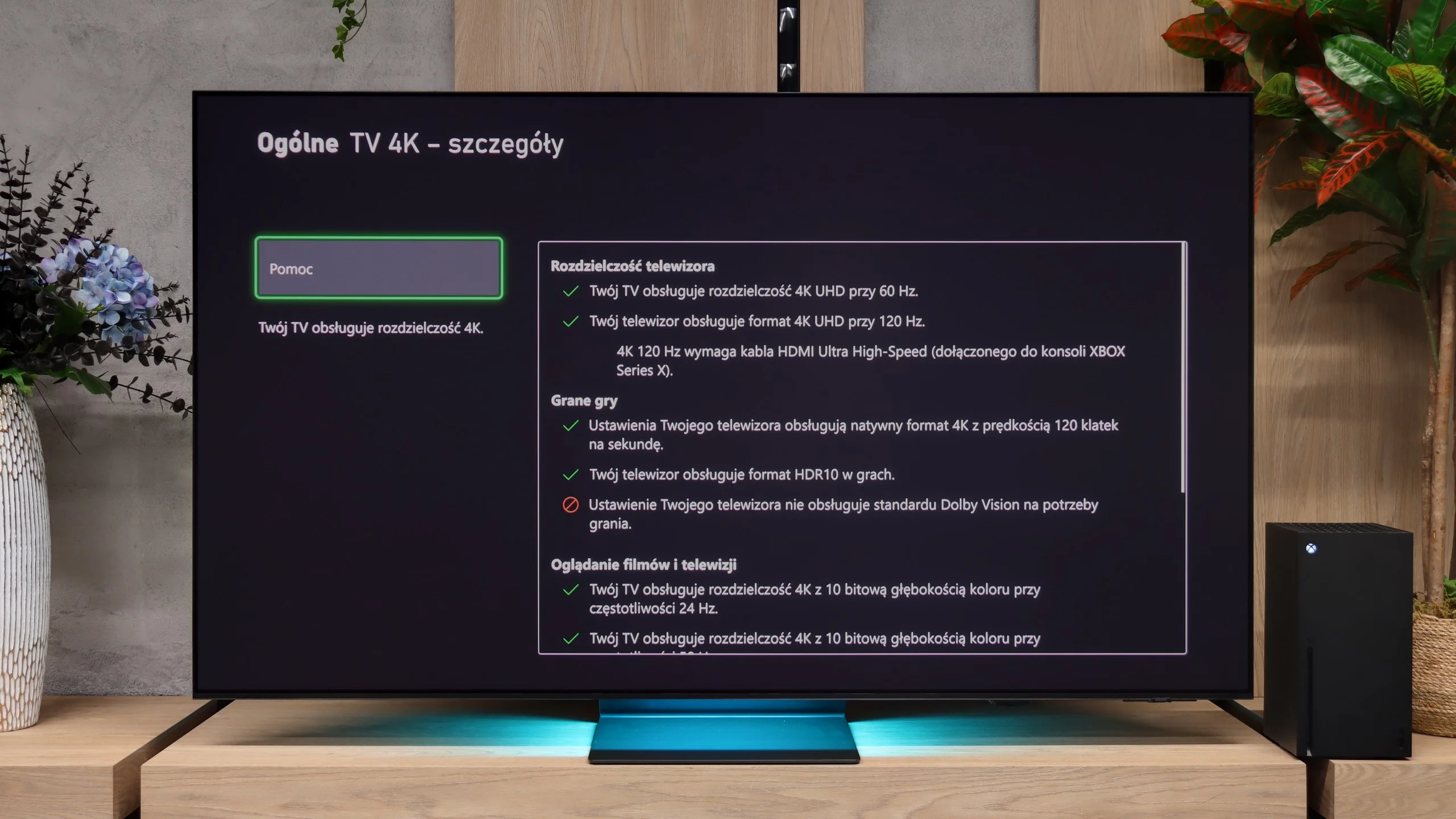
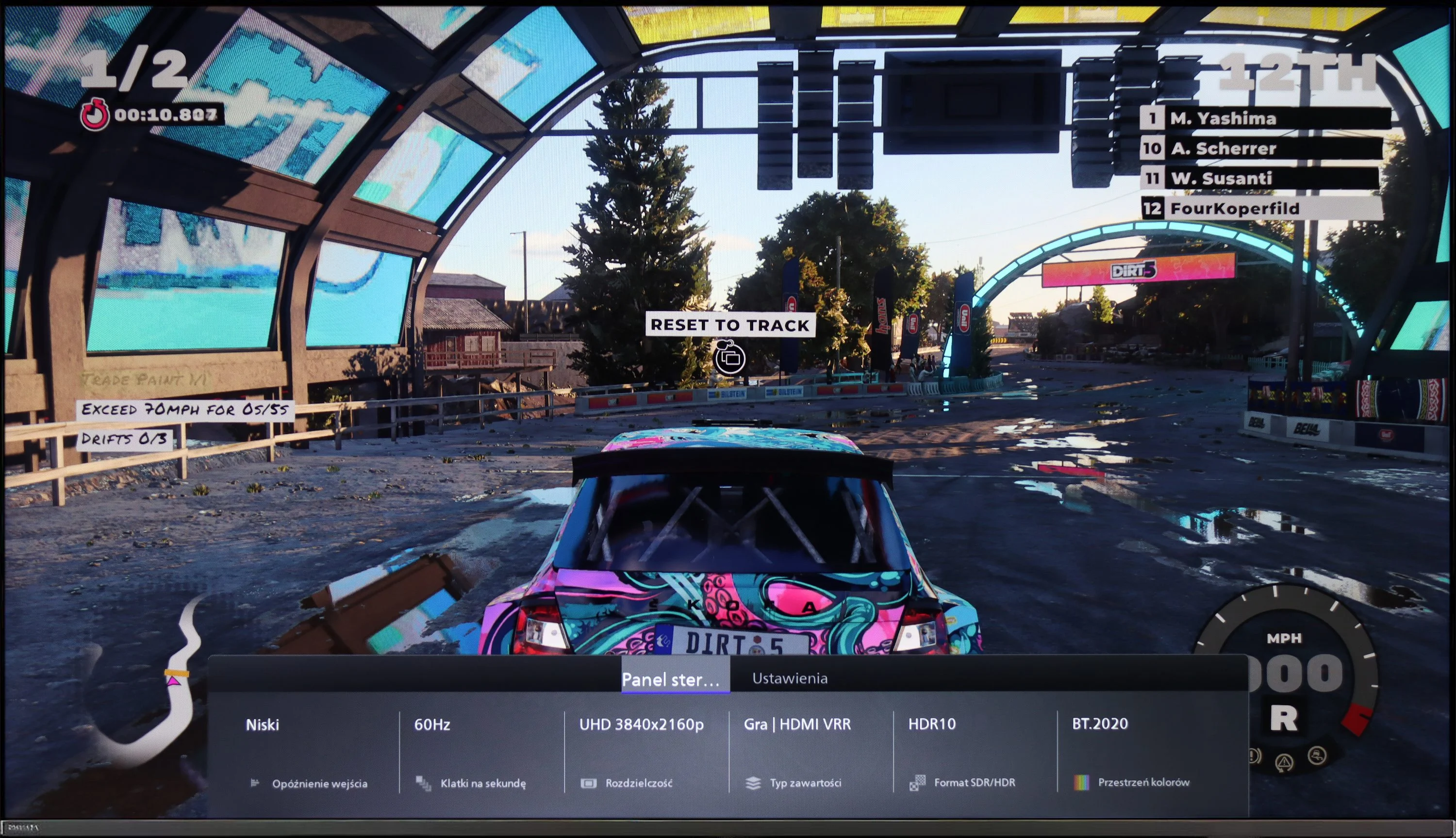
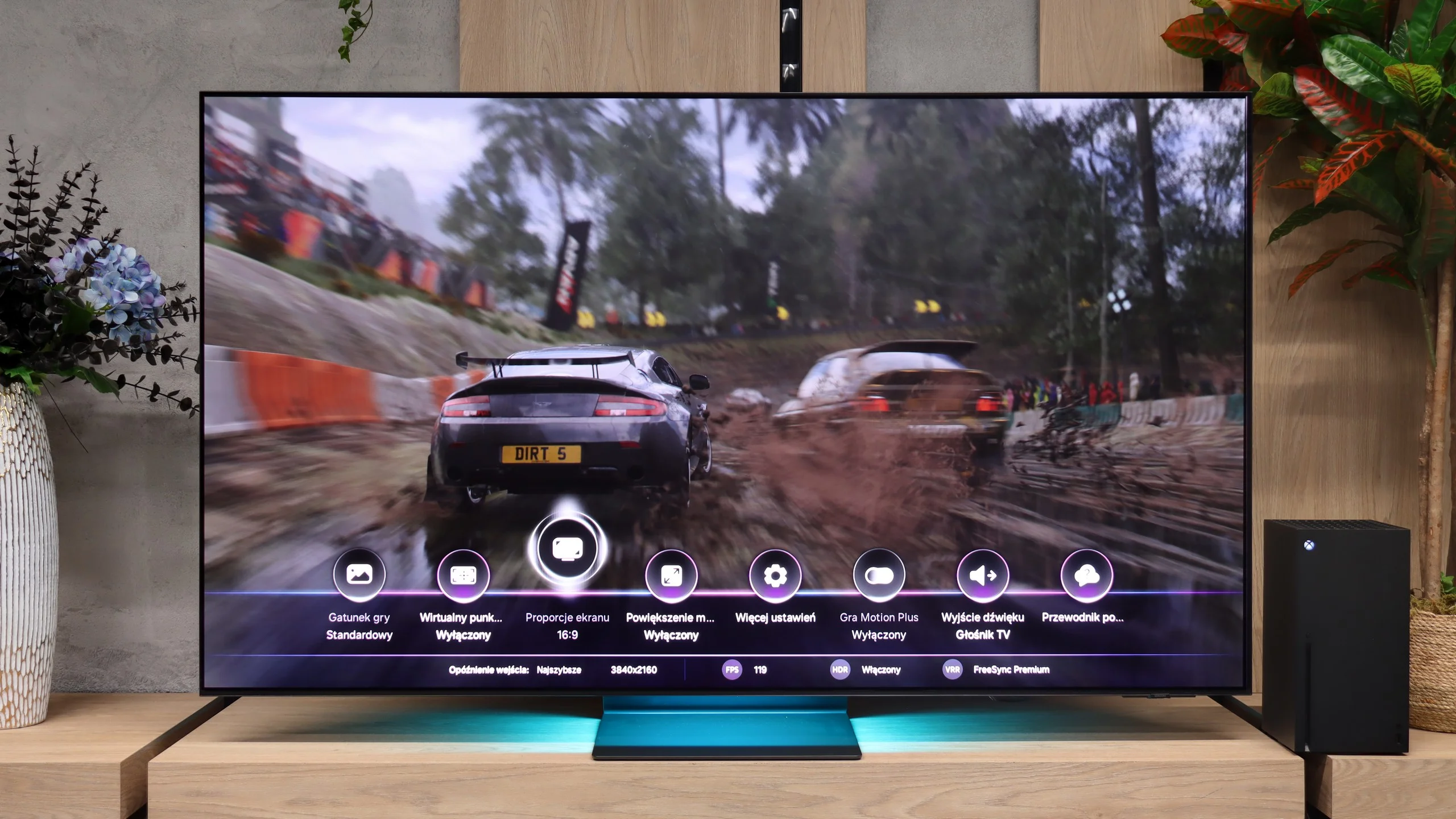
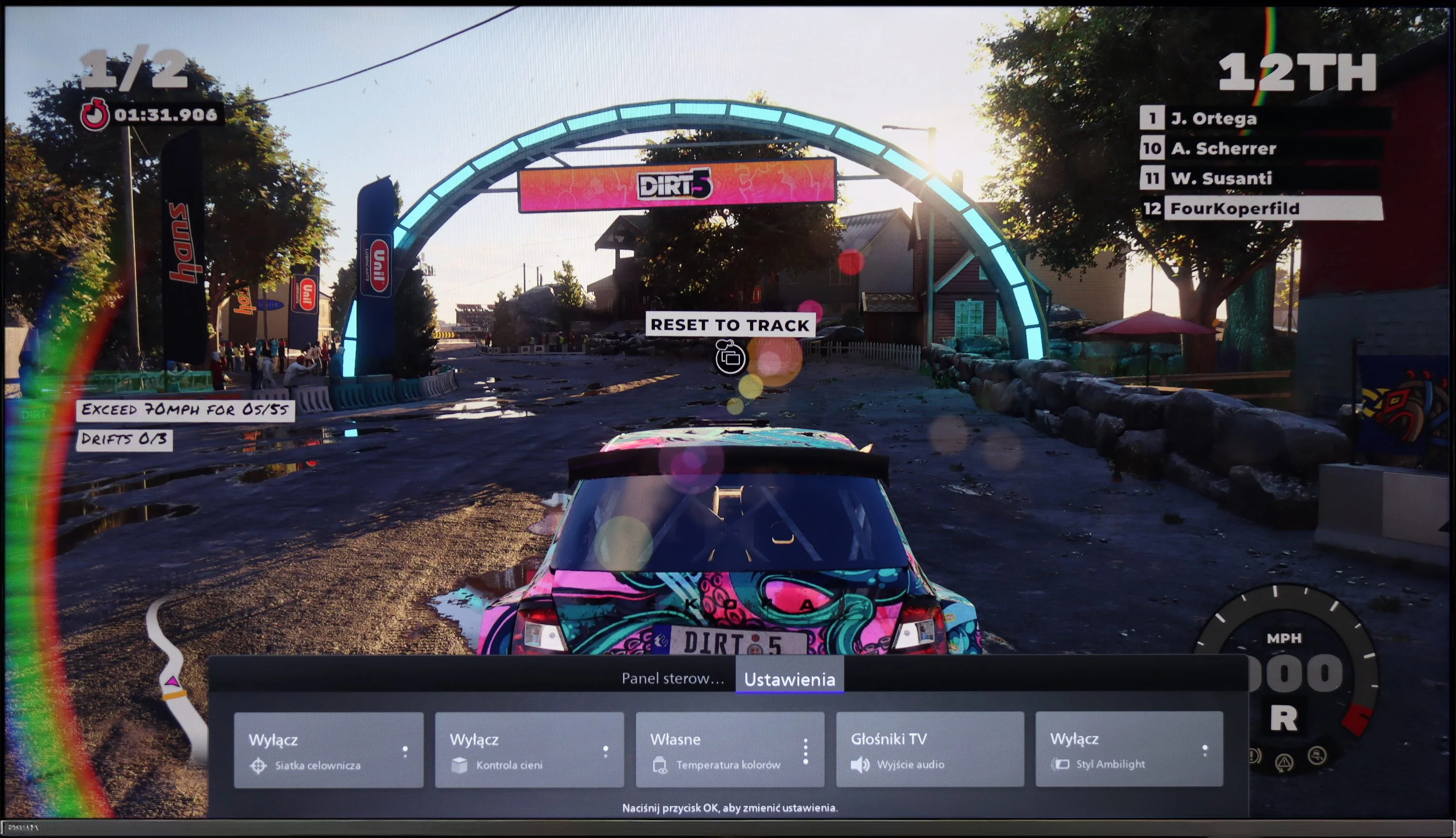
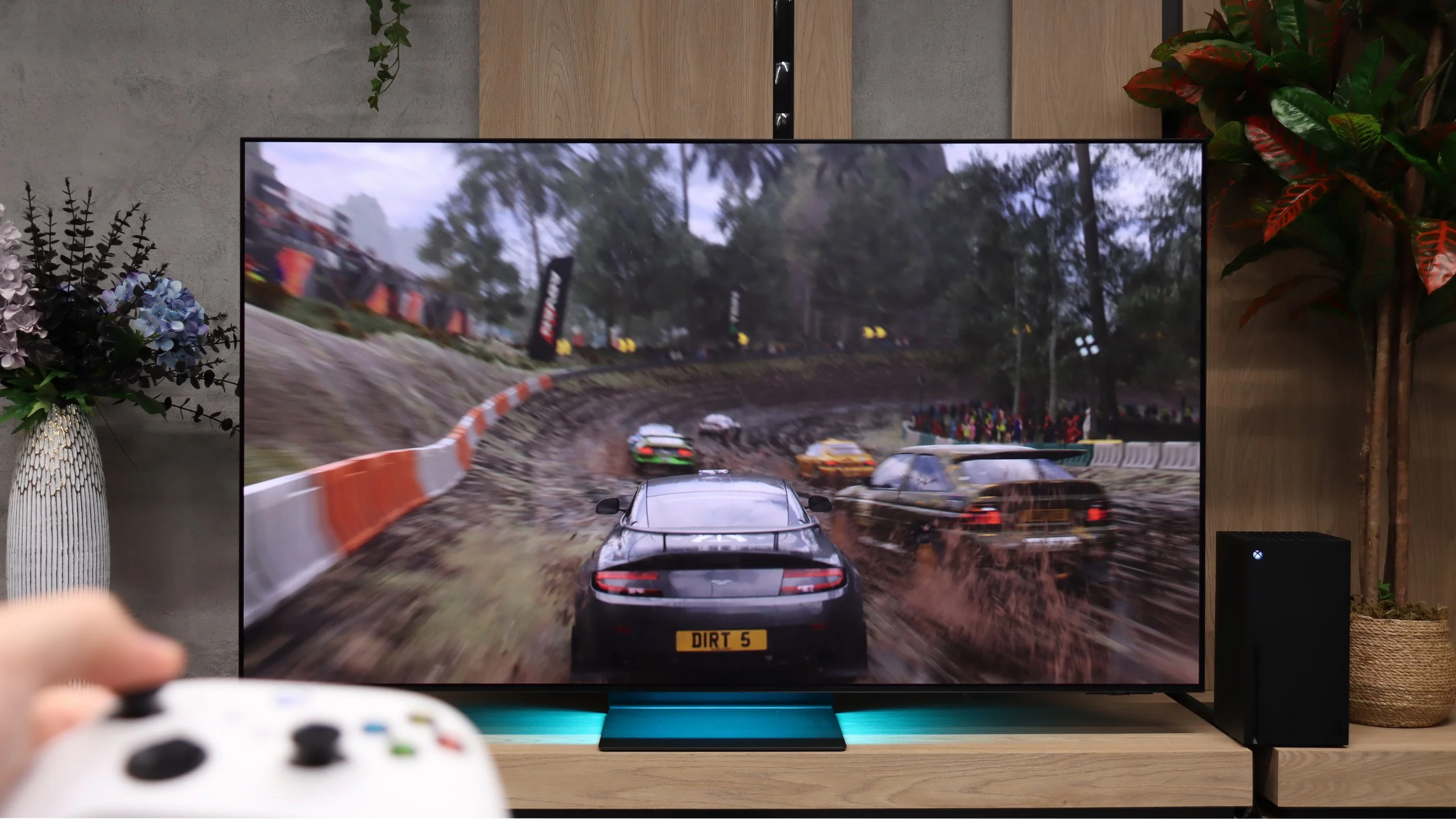
It won’t be a surprise if we say that Philips PUS8359/12 only has the most basic support for consoles. Once we connect the console, we can expect features like VRR and ALLM. This is quite pleasing for the former, as life has shown that even in more expensive units, there can be issues with this. A nice touch is the implementation of a special GameBar that allows changing settings on the "fly", so we won't have to exit the gameplay and become unnecessarily distracted. This feature also allows for adapting the gameplay to the needs of individuals with disabilities, which will certainly be extremely beneficial.
Samsung S95H is a phenomenal TV for gaming. Beyond an excellent picture, it also offers a whole set of useful gaming features. VRR works from 48 to 165 Hz and helps keep things smooth when frame rates fluctuate. ALLM automatically switches to low-latency mode, and properly functioning HGiG makes it easier to set up HDR on a console. It also handles console 120 Hz in Full HD, 1440p and 4K without issues. A handy addition is the Game Bar, which gathers signal information and key settings in one place.
Game Motion Plus deserves special praise. This motion smoother can improve the fluidity of lower-frame-rate games, and in our measurements latency with it was about 20 ms. For additional motion processing that's a very good result. In slower-paced games you can therefore get a smoother image without noticeably sluggish controls.
Among the limitations, it's worth noting the lack of Dolby Vision in games, which mainly affects Xbox users. The HDMI 2.1 ports also have 40 instead of 48 Gb/s bandwidth, likely due to the One Connect module. For typical console gaming at 4K, 120 Hz and 10-bit HDR this doesn't pose a problem or force a drop in picture quality. For most gamers it will therefore be a spec difference they simply won't notice while playing.
Input lag
10/10
10/10
SDR
HDR
Dolby Vision
The measured input lag when connected to the console was very good, with nothing to pick at. Both at FHD and 4K settings, we recorded delays of 12ms, and when adding the HDR format to the higher resolution, the lag dropped to 11ms. Each of these results should be considered more than satisfactory, as such a level allows for gameplay that is practically free of delays between controller, eye, and screen.
In terms of input lag, the S95H performs excellently. At 60 Hz we measured just 9 to 11 ms, and at 120 Hz the delay drops to 5 to 6 ms. Controls are very responsive, so even in fast-paced shooters or racing games it’s hard to find any complaints. Importantly, turning on HDR does not worsen the results. You can therefore use the full picture capabilities without sacrificing quick response to controller inputs.
Compatibility with PC
6/10
8.8/10
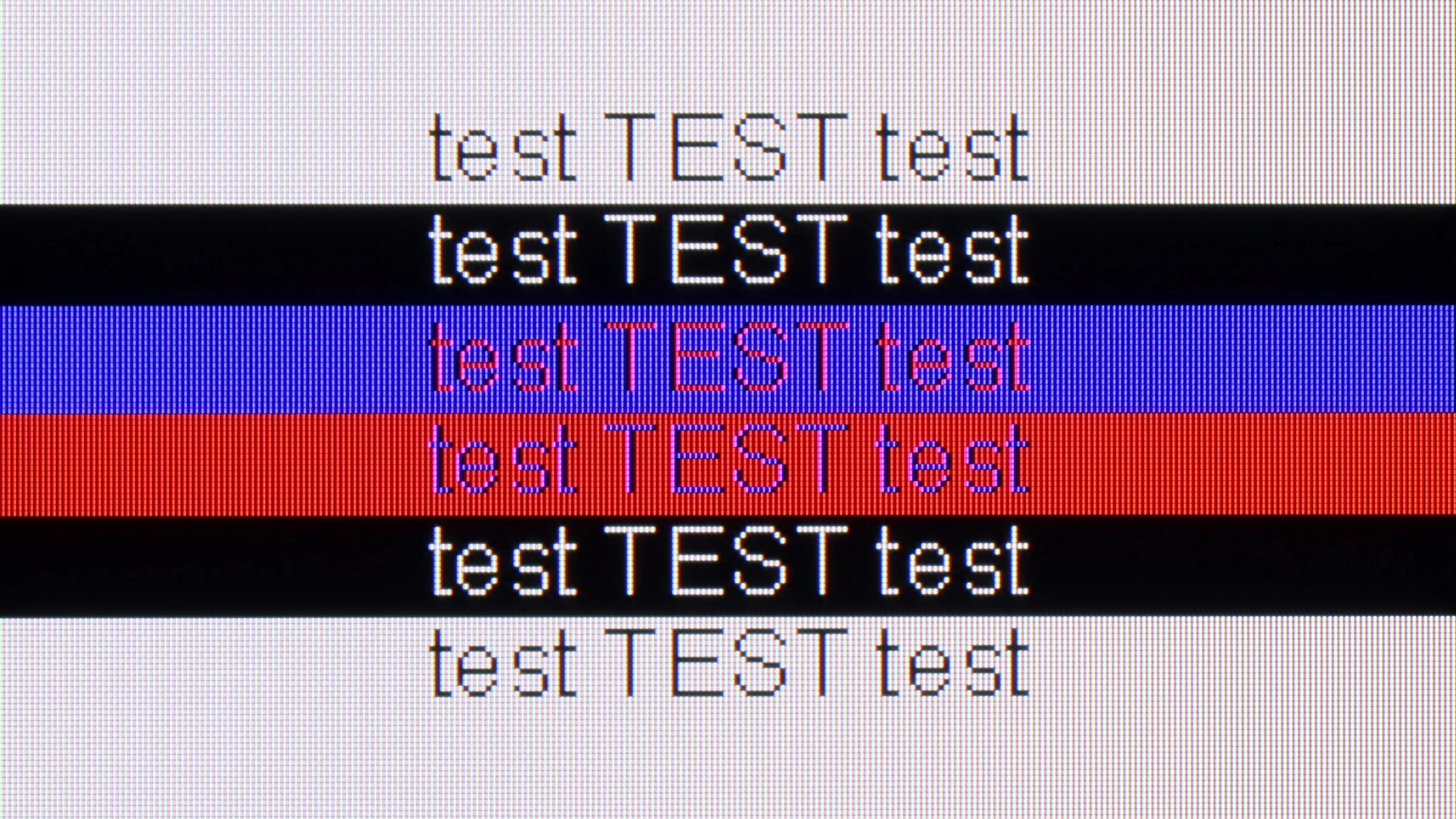
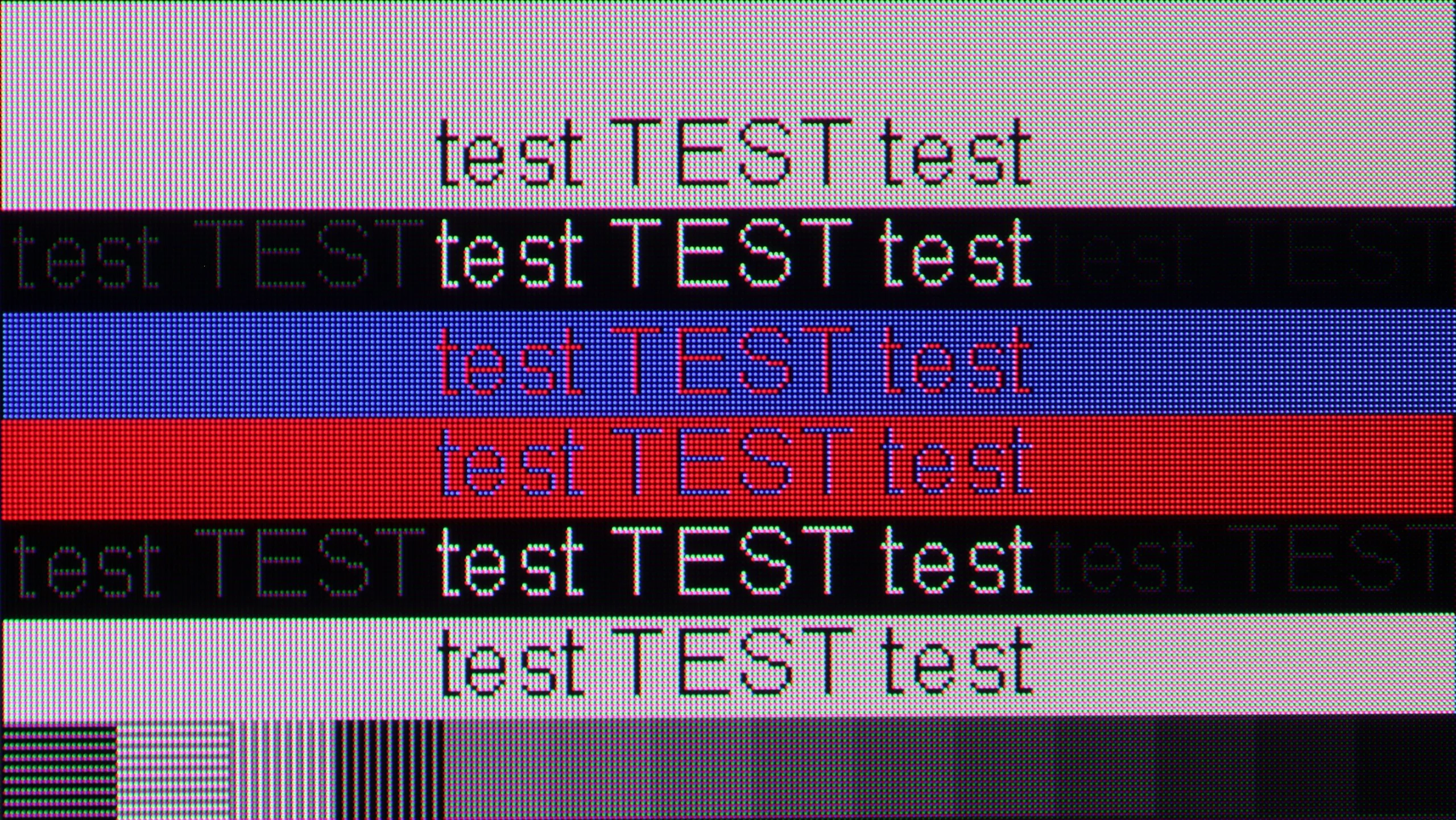
The photo shows the legibility of small fonts. Ideally, lines should be the same thickness on both light and dark text, with minimal pixel gaps.
Connecting the Philips PUS8359 to a computer won't create major complications in terms of gaming. The latency is at a very good level, and working at 4K HDR settings was associated with an 11 ms input lag, which is an imperceptible value on the line from eye to screen to mouse. The tested TV also supports chroma 4:4:4, making work with text files convenient. This model does not support G-Sync and offers a refresh rate of 60 Hz, which can be a significant drawback for PC gamers. Therefore, the gaming rating is lower, although the device performs excellently in everyday office tasks.
Samsung S95H works great with a PC, especially when connected for gaming. You get 4K at 165 Hz, G-Sync support and an input lag of just 6 ms. Combined with the panel's lightning-fast response, this delivers a very smooth and responsive picture. The TV also correctly supports 4:4:4 chroma at its maximum refresh rate, so small colour elements remain legible.
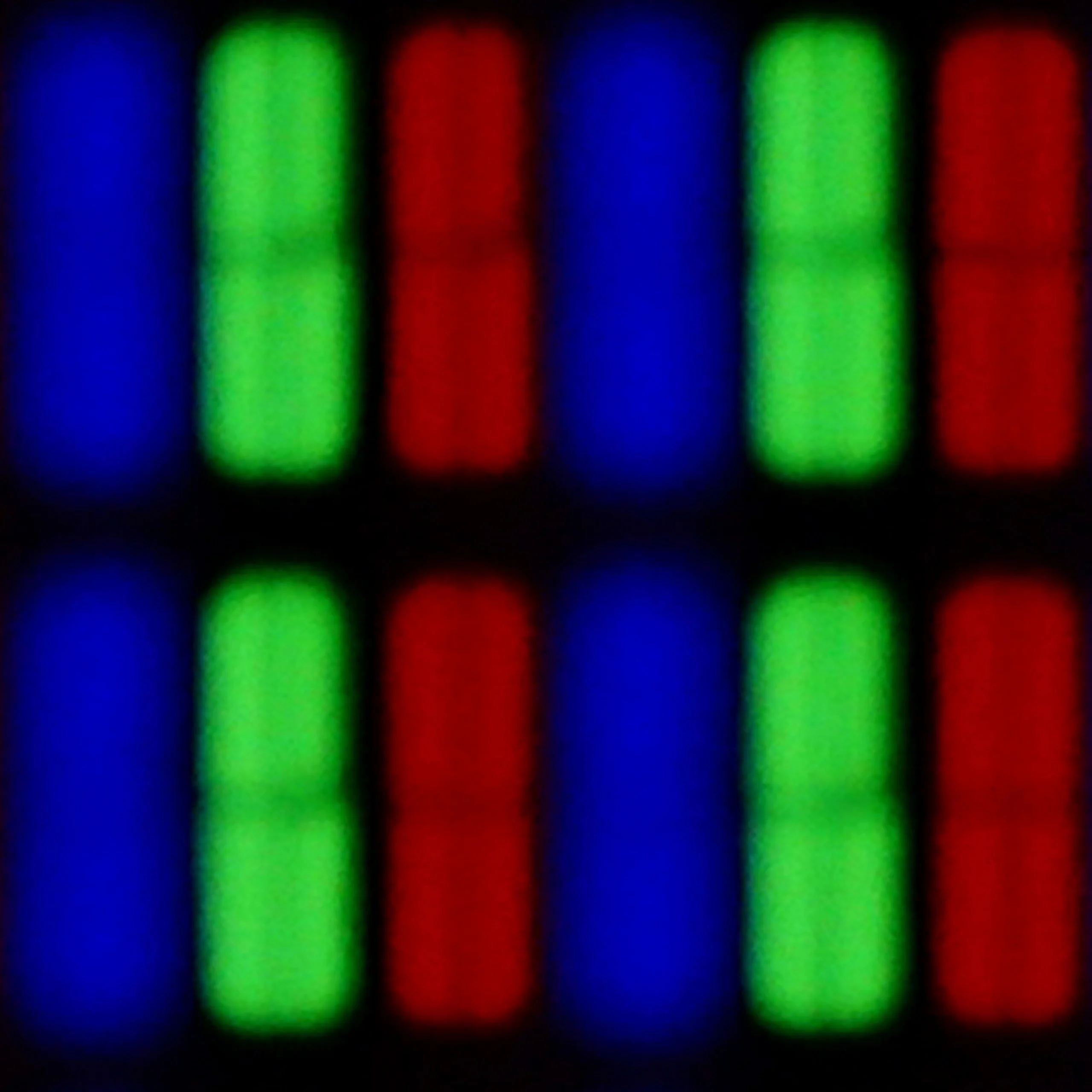
It also handles text well, though it wouldn't be our first choice for all-day document work. Firstly, the QD-OLED versions described here start at 55 inches, so you need a really big desk to use one 😉. Secondly, the triangular subpixel layout means you can see subtle coloured fringes on the tiniest letters. They're mostly visible up close. From a normal TV viewing distance they shouldn't be distracting, so occasional web browsing or working with text isn't an issue.
Viewing angles
3.4/10
9.9/10
The decrease in brightness at a 45-degree angle is 65%. This means that even a slight shift from the center of the screen can cause discomfort related to color degradation and image fading. This is rather a characteristic feature of the vast majority of VA panels that lack an angle coating.
Viewing angles on the S95H are excellent. It's one of the biggest advantages of a QD-OLED panel and in this respect Samsung ranks among the best TVs we've tested. Even when viewed well from the side, colours retain their saturation and the picture doesn't noticeably lose brightness. So when you're at a steep angle or watching a match with a larger group, you don't have to fight for a spot in the centre of the couch. The image still looks great from the sides. 🙂
Daytime performance
4.7/10
7.3/10
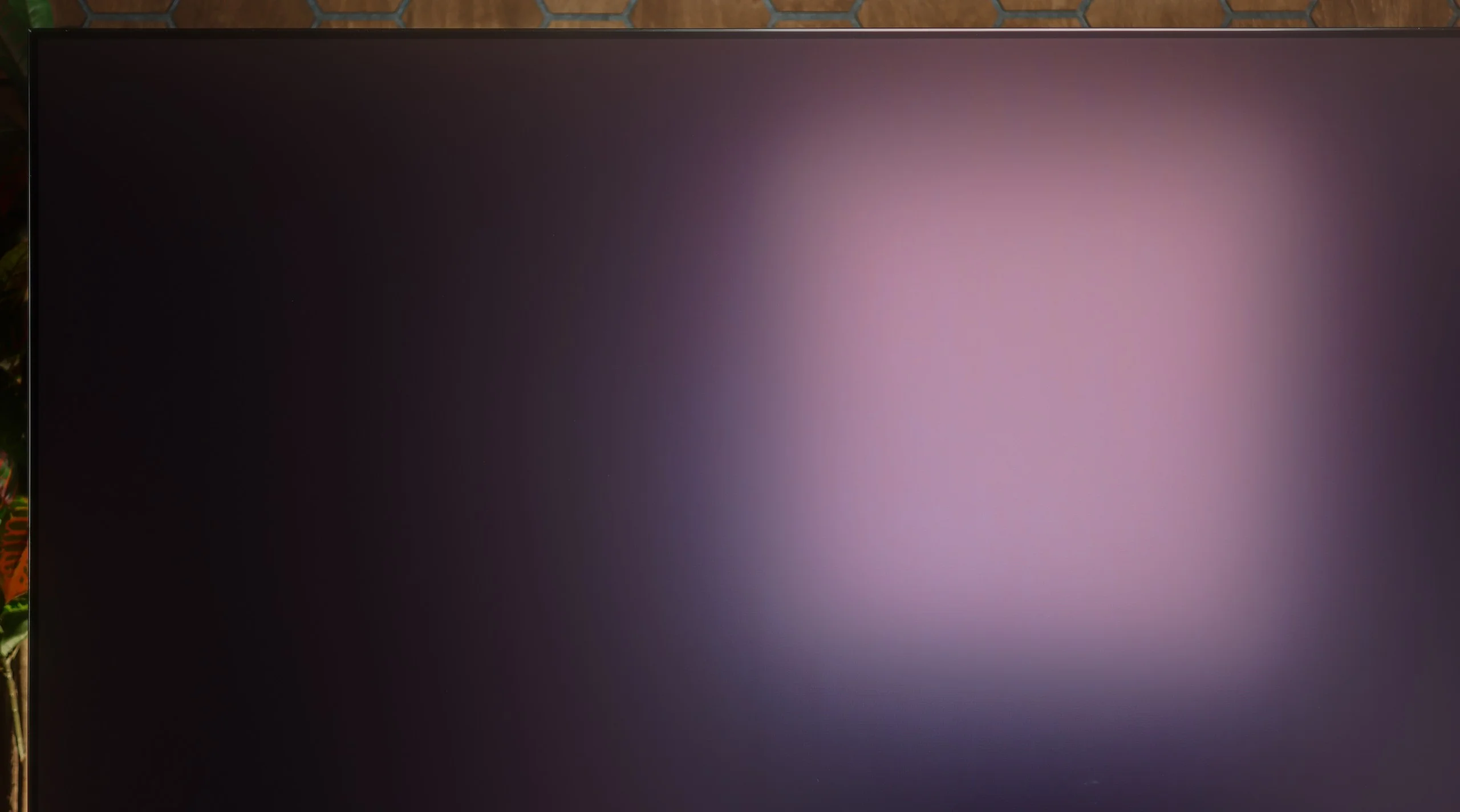
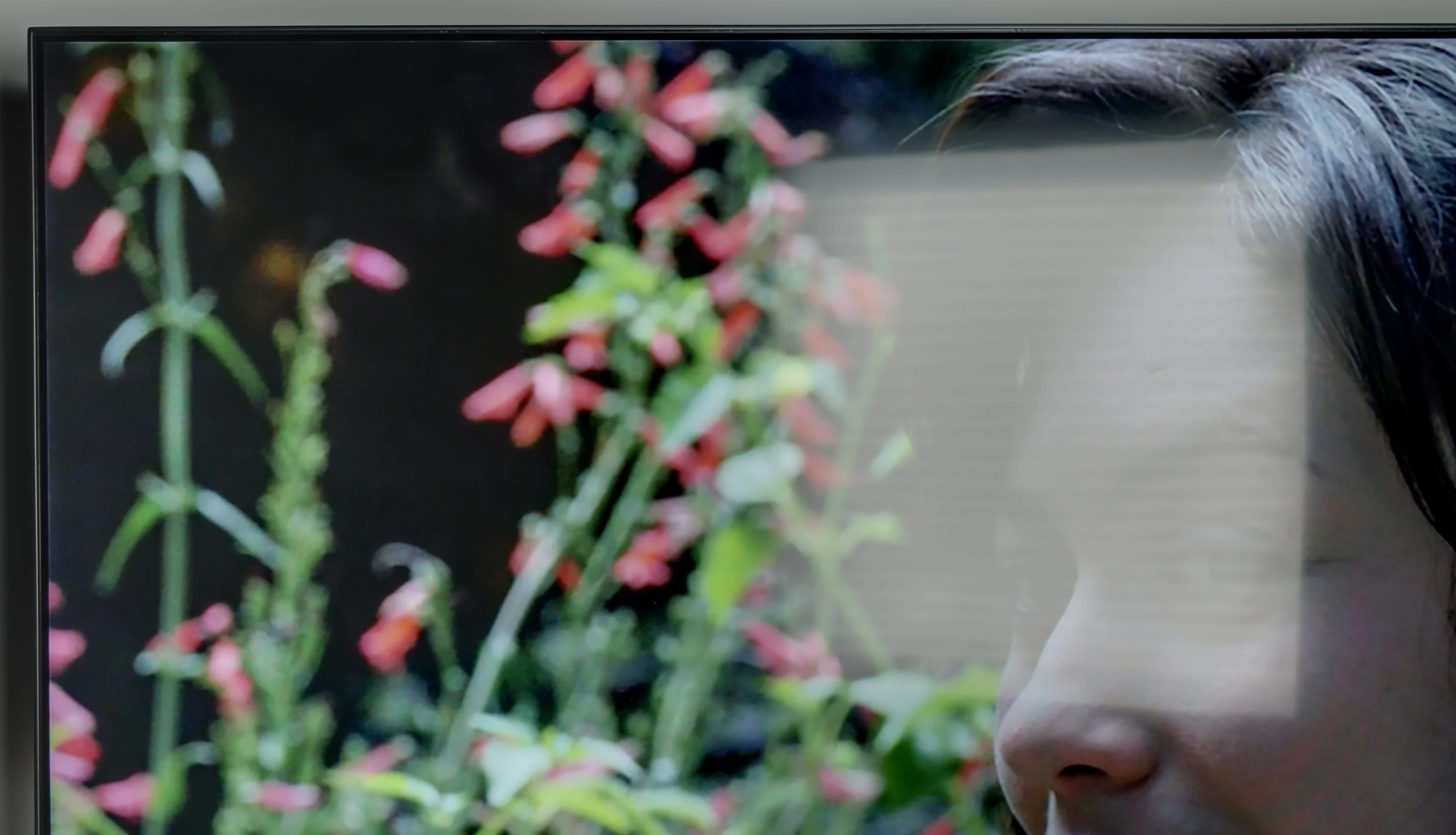
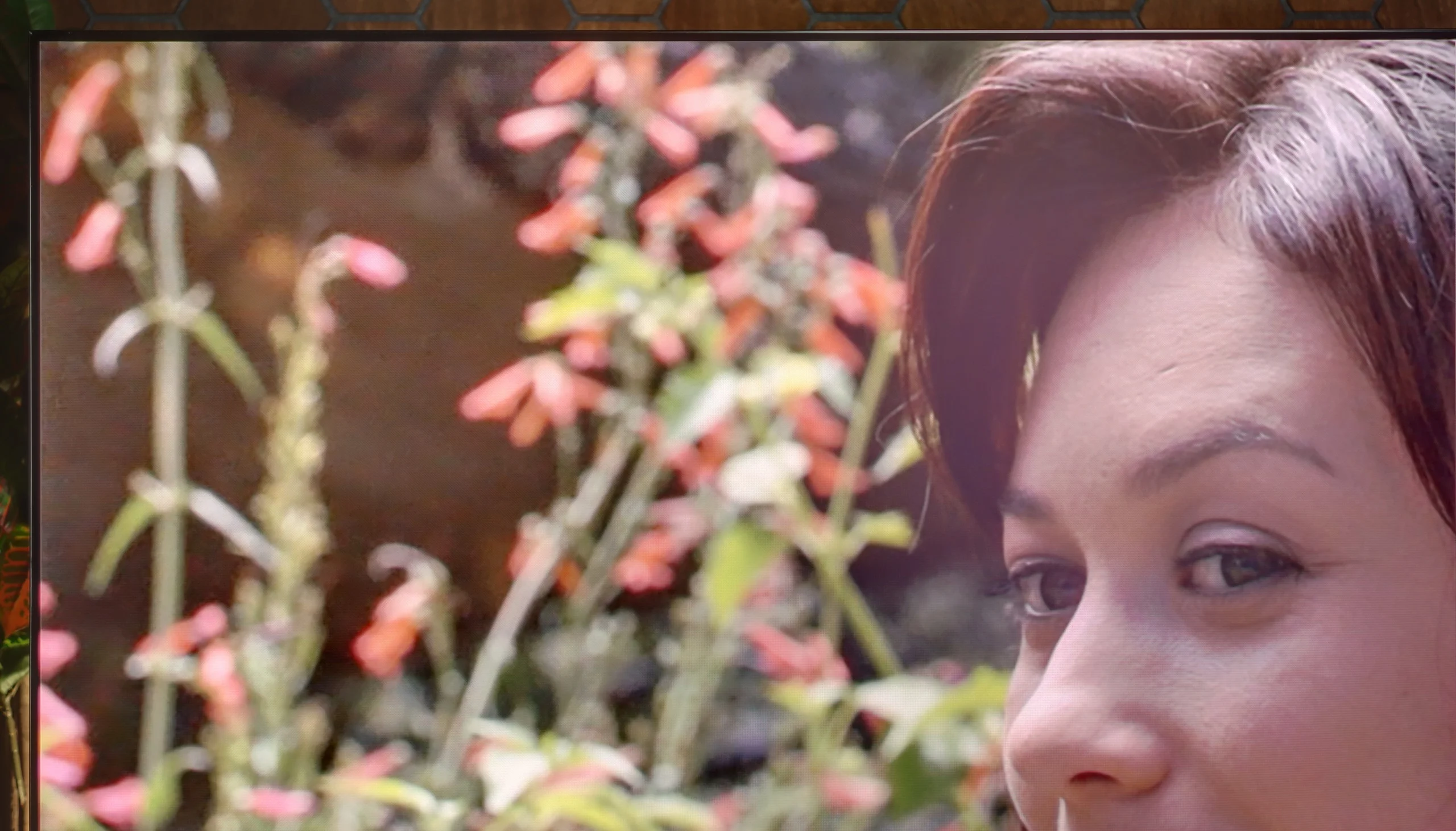
Panel brightness
Samsung S95H: 722 cd/m2
Philips PUS8359 (VA): 318 cd/m2
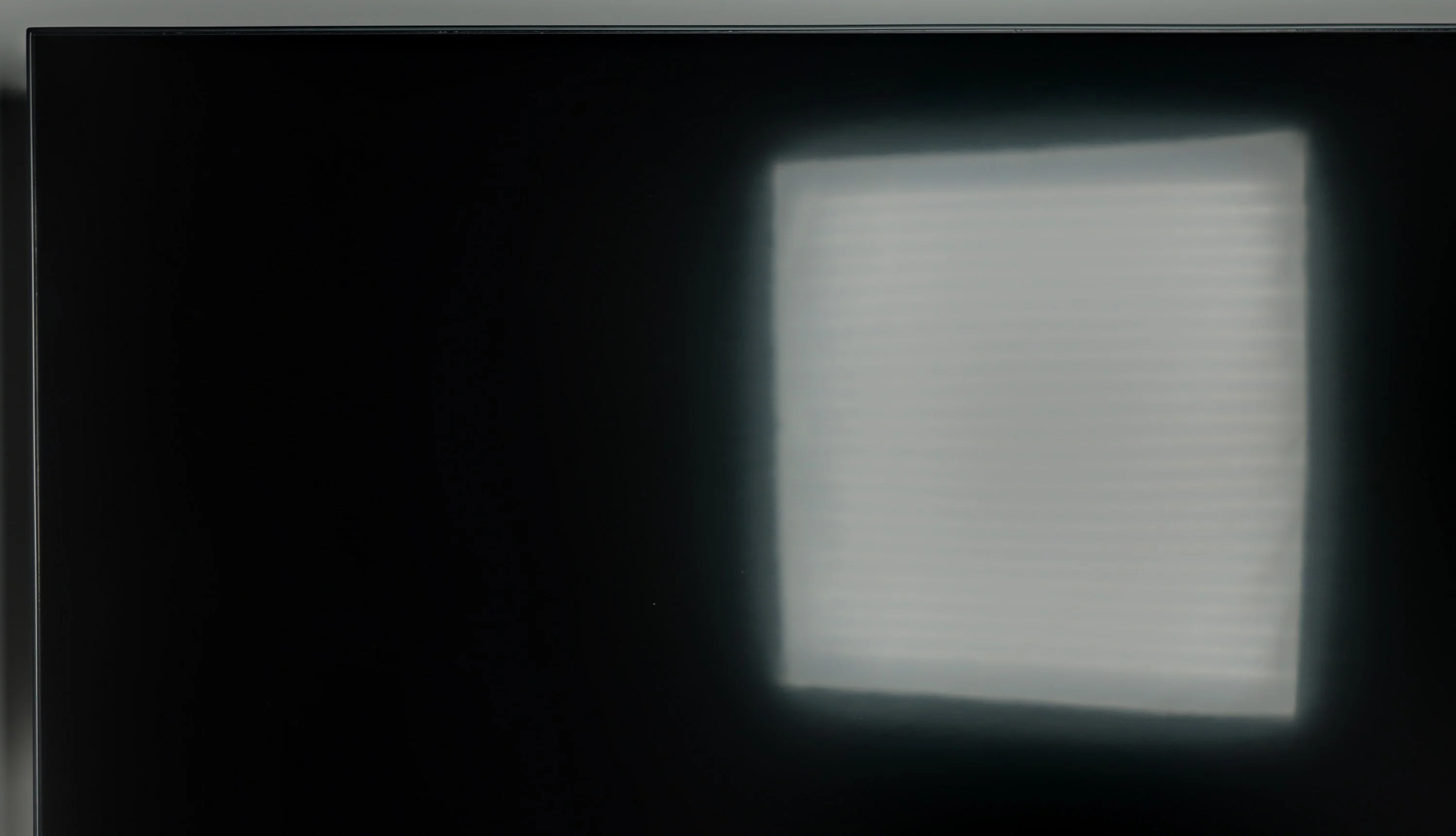
The screen Philips PUS8359/12 has a satin finish. This type of panel finish allows for quite good performance in keeping light reflections in check and provides fairly comfortable viewing of the television during the day. It’s worth mentioning that the maximum brightness of the television in SDR content is about 320 nits, which is a reasonable result, especially since the brightness is maintained even at 100% screen white fill.
Samsung S95H performs very well for daytime viewing. Much of that is down to the matte finish, which effectively diffuses reflections. Instead of clearly seeing a window or lamp in the screen, you see a softer glow. Add to that an average SDR brightness of around 750 nits. For an OLED that's an excellent result and allows you to comfortably watch TV in a bright living room. Bear in mind, though, that brightness depends on what’s on the screen. With smaller bright areas the S95H exceeds 1000 nits, but with a completely white screen it falls to about 400. So when watching winter sports or other very bright material, the image won’t have the same punch as in mixed scenes. The biggest limitation remains black levels in a brightly lit room. First, light hitting the QD-OLED panel visibly brightens it with a cherry tint, which makes it lose its nighttime depth and leaves the picture looking less contrasty. The matte finish handles reflections well, but it also scatters that light more. The S95H is still a very comfortable TV for daytime viewing. You simply see the full depth of its blacks only under dimmer lighting.
Panel details
Subpixel Structure:
Panel uniformity and thermal imaging:
Philips PUS8359 (VA)
Samsung S95H
TV features
5.3/10
7.9/10
- SystemTitan OSTizen
- System performancePoorVery good
- HDMI inputs3 x HDMI 2.0, 0 x HDMI 2.10 x HDMI 2.0, 4 x HDMI 2.1 40Gbps
- Other inputsUSB-C
- OutputsToslink (Optical audio), eARC (HDMI), ARC (HDMI), Mini-Jack (Headphones)Toslink (Optical audio), eARC (HDMI), ARC (HDMI)
- Network InterfacesWi-Fi 2.4GHz, Wi-Fi 5GHz, Ethernet (LAN) 100MbpsWi-Fi 2.4GHz, Wi-Fi 5GHz, Ethernet (LAN) 100Mbps
- TV receptionDVB-T, DVB-T2, DVB-S, DVB-S2, DVB-CDVB-T, DVB-T2, DVB-S, DVB-S2, DVB-C
Classic features:
- Recording to USB (terrestrial TV)
- Recording programming
- Picture in Picture (PiP)
- RF remote control (no need to aim)
- Backlit remote control
- Teletext
- Audio only mode
- Bluetooth headphones support
- Simultaneous Bluetooth headphones & TV audio
Smart features:
- AirPlay
- Screen mirroring (Windows Miracast)
- Voice search
- Voice search in native language
- Ability to connect a keyboard and mouse
Sound connection options
- HDMI audioeARC (HDMI), ARC (HDMI)eARC (HDMI), ARC (HDMI)
- Other audio outputsToslink (Optical audio), Mini-Jack (Headphones)Toslink (Optical audio)
- Wireless audio
Supported audio formats (external HDMI eARC audio):
- Dolby Digital Plus 7.1
- Dolby True HD 7.1
- Dolby Atmos in Dolby Digital Plus (JOC)
- Dolby Atmos in Dolby True HD
- DTS:X in DTS-HD MA
- DTS-HD Master Audio
Senior accessibility
- Numeric keyboard on TV
- Font size adjustment
- Audio description
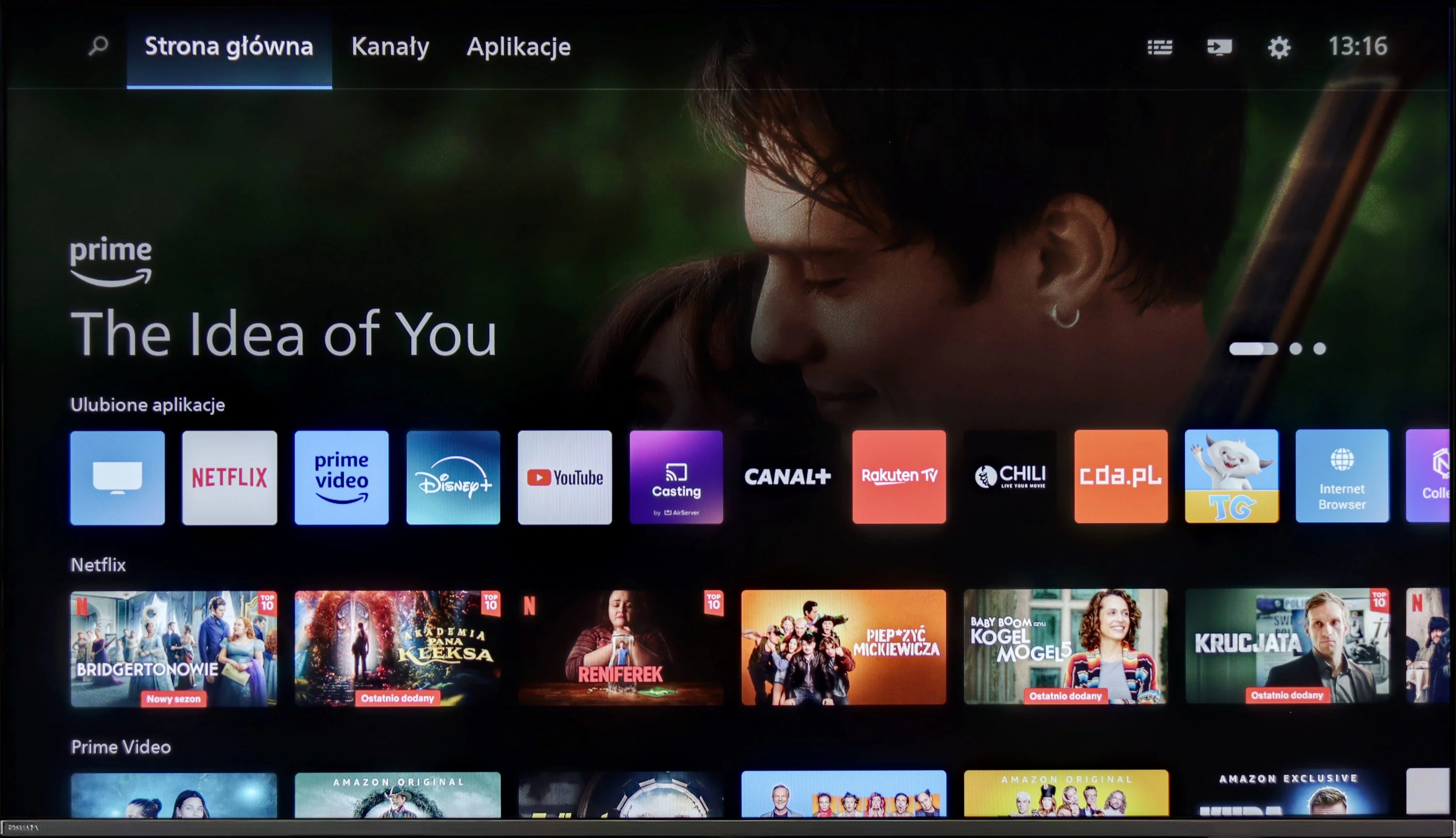
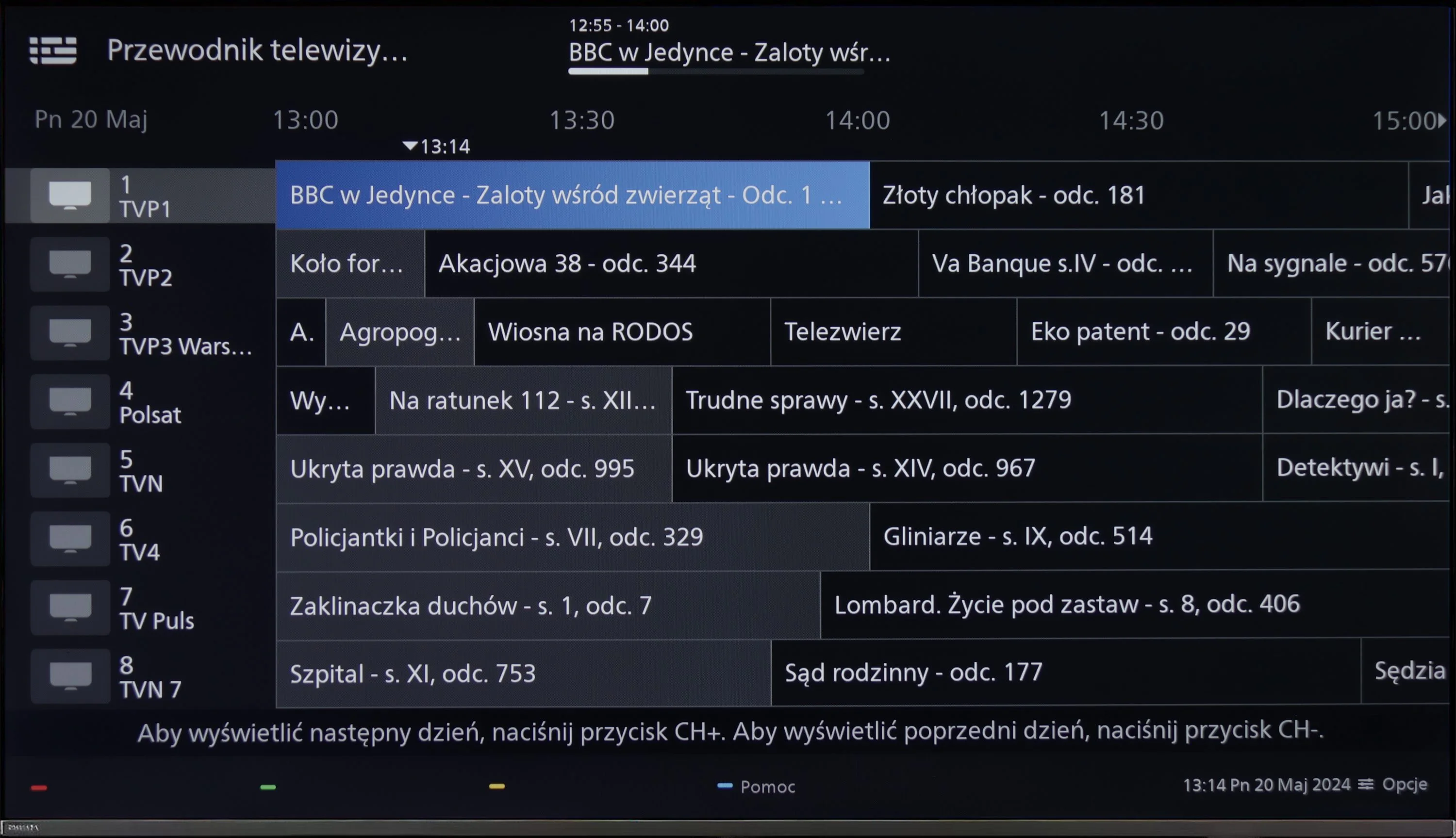
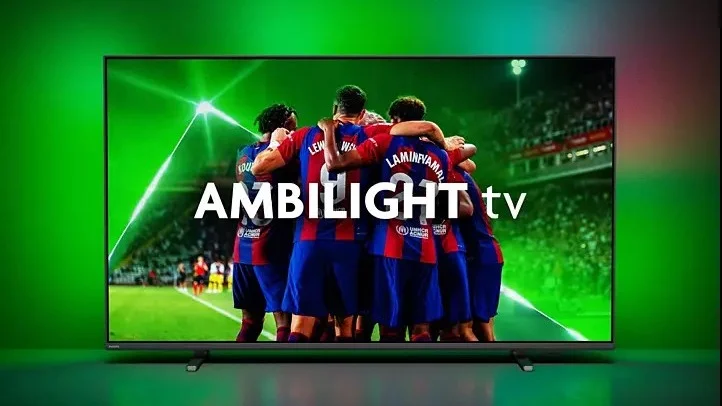
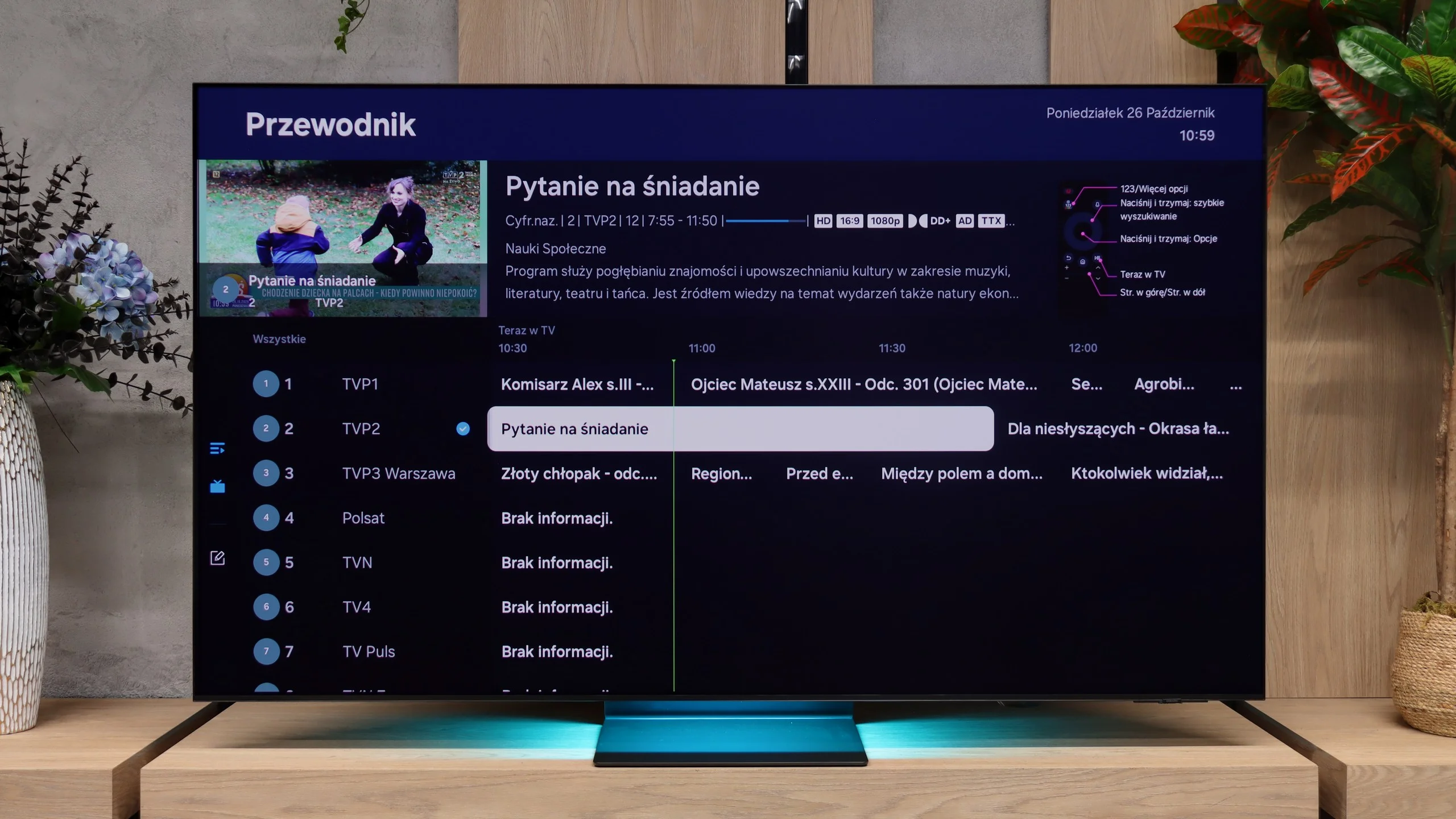
It’s hard not to mention the biggest differentiator of the manufacturer’s TVs first. We’re of course talking about the colorful Ambilight backlighting, which is placed on the back of the device and displays colours customised to what’s happening on the screen, often allowing for an even greater immersive experience. The operating system responsible for the TV’s functioning is Philips' proprietary system cleverly named TitanOs. It is definitely more closed off and limited in terms of app resources than is the case with this manufacturer’s TVs based on GoogleTv. Besides the lack of significant applications, its closed nature also reveals itself in another aspect. We won’t be able to do basic things like programming recordings or recording to USB. People using Apple devices may also feel disappointed by the absence of AirPlay, which allows for easy screen streaming. Fortunately, there is an option to connect a keyboard and mouse for easier navigation through the TV’s menu. It’s worth mentioning that there is the possibility of connecting headphones, but only wired ones. If we plug them in, we can also play audio through the TV’s speakers. It’s also worth adding that controlling the TV happens via IR, not Bluetooth, which is quite inconvenient these days.
In summary: TitanOs has quite a few “buts,” especially when we are aware users needing and using various streaming platforms. It’s rather an option for those limiting themselves to the so-called holy trinity, which is Netflix, YouTube, and CDA.
Tizen
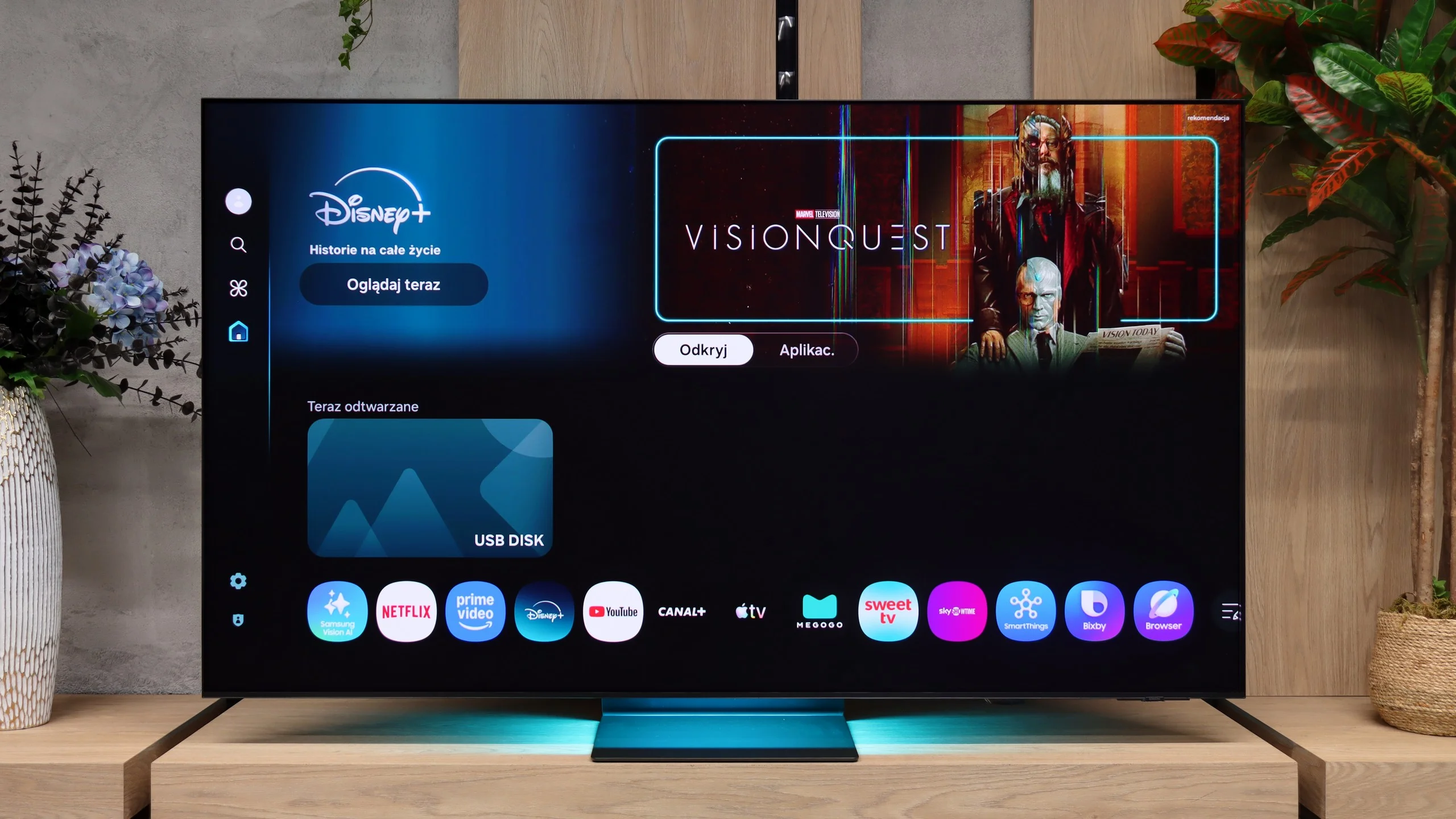
The S95H uses Tizen, which runs very quickly here. Switching between apps and settings is smooth, so daily use doesn't test your patience. There’s a wide selection of streaming apps, voice search and AirPlay for streaming content from Apple devices. You can also wirelessly display a computer’s screen. It’s a well-equipped smart TV where it’s easy to find something to suit you.
However, we noticed something odd. Our unit had 2025 software even though the S95H is a 2026 model. At the time of testing we couldn't find an update to this year’s system on the manufacturer’s website either. That’s surprising, as other Samsung models have already received it. Tizen itself runs well, but for a new TV of this class we'd expect the system to be up to date too.
TV features and remote
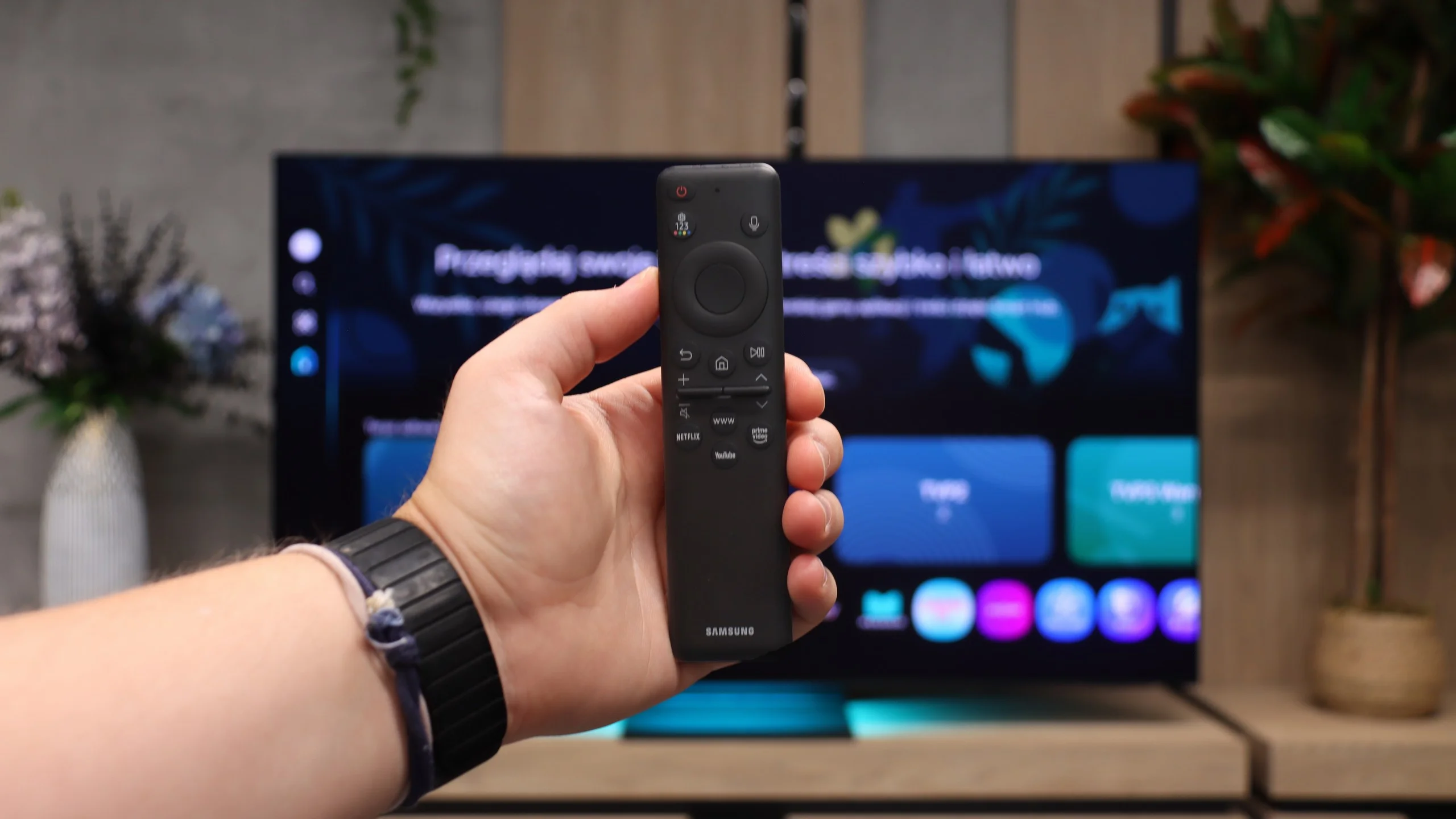
Among the classic features there’s teletext and picture-in-picture, but there’s no option to record programmes to USB. It can also be useful to play audio simultaneously through the TV speakers and Bluetooth headphones. The remote control is very minimalist and works without needing to point it at the screen, though it’s a pity it doesn’t have backlit buttons. A definite plus is that it doesn’t require battery replacements and can be charged using solar power.
One Connect
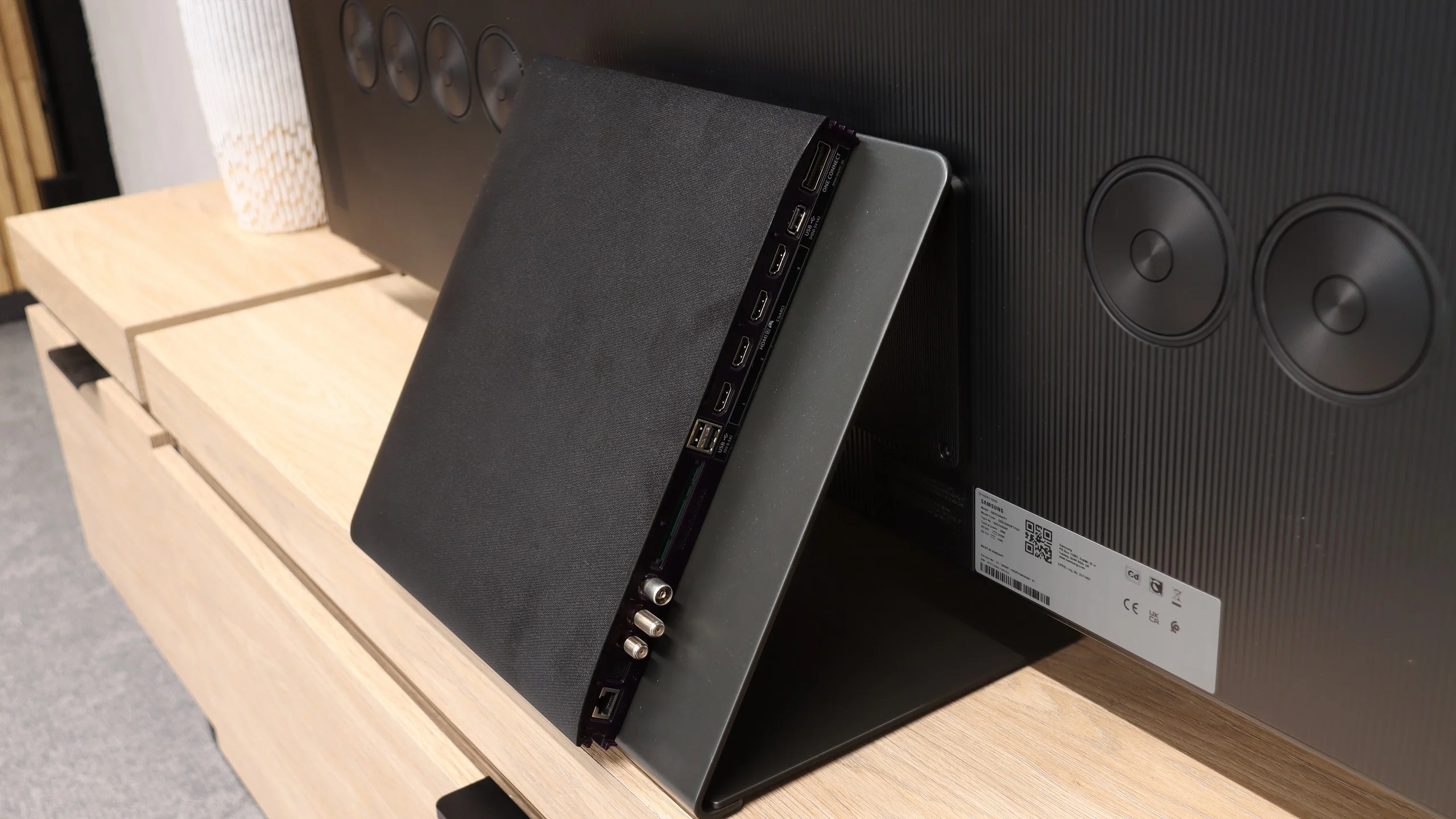
An important addition is the One Connect module, which earns Samsung TVs a small plus from us. It contains four HDMI 2.1 inputs with 40 Gb/s bandwidth, and you can connect a soundbar via eARC or the optical output. The biggest advantage of this solution is simple: only one cable runs to the screen. It’s easier to hide cables and connect another device without reaching behind the TV. People who plan to wall-mount the S95H will particularly appreciate this.
Apps
6.7/10
9.3/10






















Playing files from USB
8/10
9.1/10
Supported photo formats:
Maximum photo resolution:
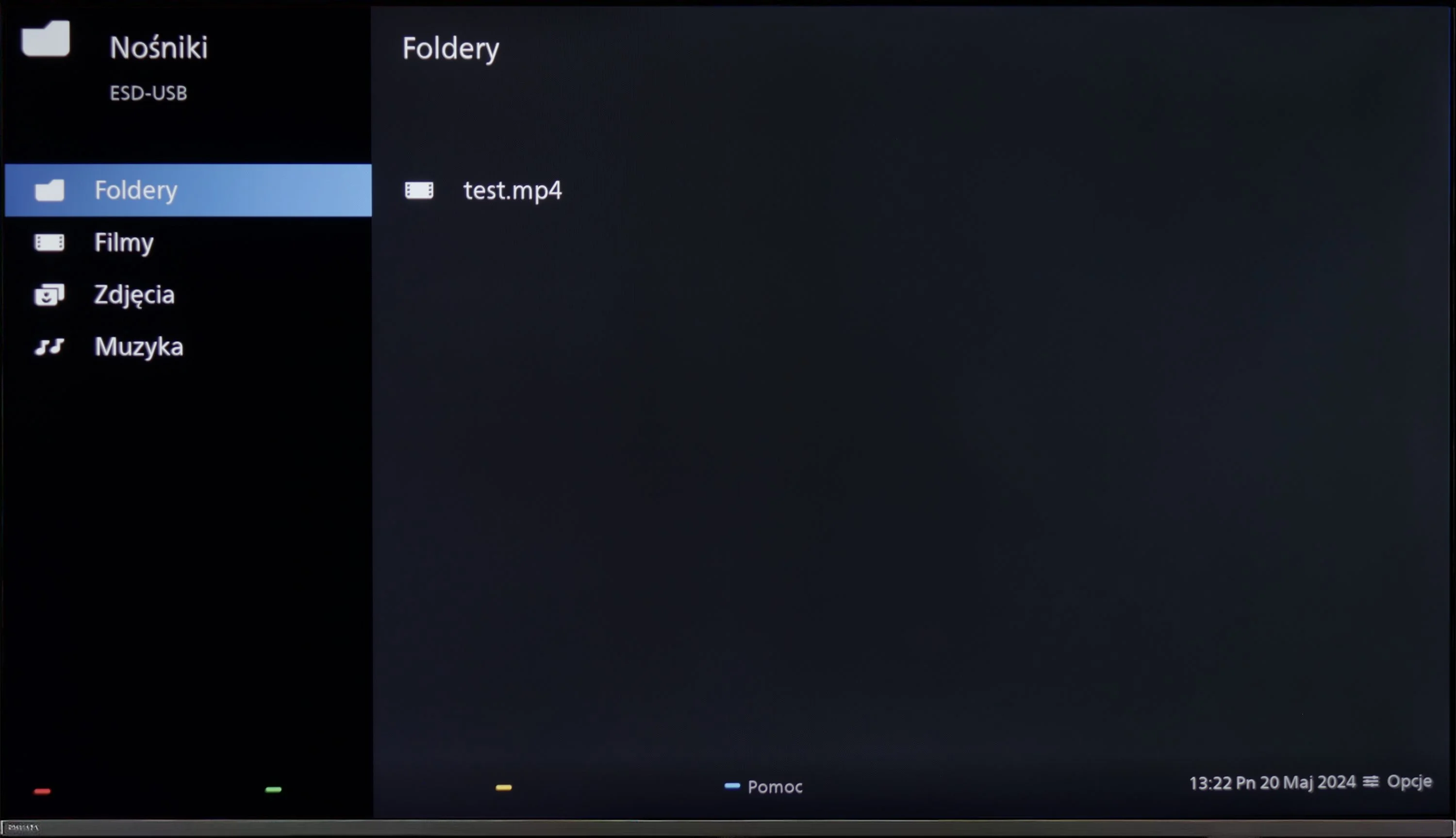
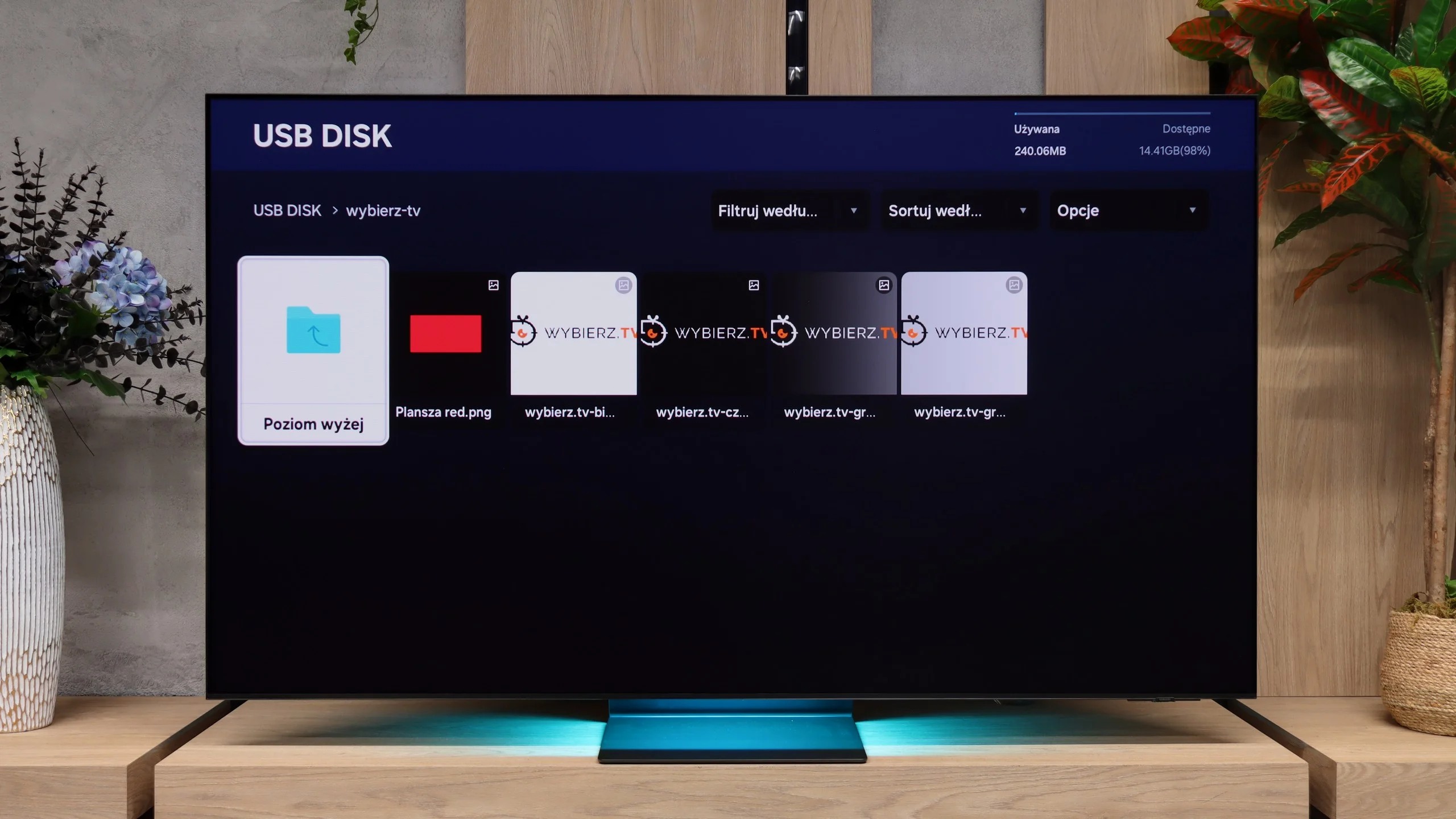
The default media player built into Philips PUS8359/12 offers quite a wide range of capabilities, but it also has its limitations. It plays virtually all video formats, with the obvious exception of Dolby Vision and the less obvious .asf, which is not commonly encountered. However, the issue lies in the lack of the H.265 HEVC codec at high bitrate. When it comes to photos, the player performs adequately, but it lacks support for some popular resolutions and formats, such as HEIC, used on Apple devices. The player performs best with audio, where it can be praised. Unfortunately, due to system limitations, there is no possibility to expand its features, which means we are left with what the manufacturer has provided.
The built-in file player runs quickly and smoothly. The S95H opened almost all the audio and video files we prepared and expected it to support. You don't have to wait long for them to load, and browsing the storage device's contents is straightforward.
It's a shame it doesn't support HEIC photos, the default format used by many iPhones. So if you want to show photos from your phone directly from a USB stick, you'll need to convert them first, for example to JPEG.
Sound
6.1/10
8/10
- Maximum volume-86dB
- Dolby Digital Plus 7.1
- Dolby True HD 7.1
- Dolby Atmos in Dolby Digital Plus (JOC)
- Dolby Atmos in Dolby True HD
- DTS:X in DTS-HD MA
- DTS-HD Master Audio
The built-in audio system in the Philips PUS8359 consists of a basic connection of speakers 2x 10 W each. As you can probably guess, you can't expect too much from such a configuration. Nevertheless, if we don't exceed 50% of the maximum volume, it won't give us any negative thoughts. We definitely recommend connecting even cheaper soundbars. These, due to a range of codecs prepared by the manufacturer, will certainly work very well. It's worth noting the implementation of Dolby Atmos and DTS-HD Master Audio.
In terms of sound the S95H is essentially a copy of last year’s model. Despite its very slim chassis it sounds clean and pleasant, but the presentation is fairly flat. It lacks depth and stronger bass, which feels like a drawback next to such an impressive picture. On the other hand, you can’t expect large drivers in a TV only about a centimetre thick. The beautiful looks come at a price.
It’s therefore worth pairing the S95H with a soundbar or a separate audio system so the sound can better keep pace with the picture. The TV supports Dolby Atmos, which lets you expand the setup with immersive sound. It does not, however, support DTS. That limitation may be an issue mainly for people watching films on discs with DTS soundtracks.
Sound Quality Test
No sound test video
Acoustic Measurements
No acoustic data
86dBC (Max)
75dBC
Reader comments
Comments are provided by the external service Disqus (Zeta Global). Once loaded, Disqus may set cookies and process data about your activity.
We will remember your choice on this device. Provider's privacy policy