 Direct comparison
Philips MLED920 is a natural continuation of last year’s PML9000 model, but it’s not a rehash. It’s clear that the manufacturer has done their homework – primarily, the local dimming algorithms have been improved, which last year could really spoil the viewing experience. Now, black levels and contrast are definitely better, and combined with Dolby Vision here, even HDR content looks quite decent. The picture can sometimes shine where it should, and it doesn’t strain the eyes in more challenging scenes. Undoubtedly, the greatest asset of the MLED920 is its unique Ambilight system. The three-sided backlighting can give films and games a whole new atmosphere – it’s as if the screen is extending beyond its boundaries, and the whole room becomes part of the viewing experience. This is something that will be appreciated not only by movie buffs but also by gamers, who, in addition to the lights, get a full set of features typical of modern gaming TVs: 144 Hz, VRR, ALLM, and Dolby Vision Gaming. In this regard, Philips has a lot to offer. But. Well, there’s a big but – this is where we reach the most difficult part of this verdict – it’s still a dual-purpose device. On one hand, we have strong picture quality and the unique Ambilight feature, on the other, there are hardware limitations that are hard to ignore. Titan OS in its current form is a big hindrance, full of bugs and shortcomings that make the TV lag behind the competition. Added to this is the price, which is by no means low for the features offered. Therefore, it’s hard to recommend it unequivocally to everyone. However, if you’re looking for Philips' brightest screen at a reasonable price, with Ambilight, a full set of features for gamers, and basic apps – the MLED920 will be quite a good choice.
- Matching (Score) |
- Our verdict |
- TV appearance |
- Where to buy |
- Contrast and black detail |
- HDR effect quality |
- Factory color reproduction |
- Color reproduction after calibration |
- Smoothness of tonal transitions |
- Image scaling and smoothness of tonal transitions |
- Blur and motion smoothness |
- Console compatibility and gaming features |
- Input lag |
- Compatibility with PC |
- Viewing angles |
- Daytime performance |
- Panel details |
- TV features |
- Apps |
- Playing files from USB |
- Sound
MLED920 / MLED910

R85H / R86H / Micro RGB
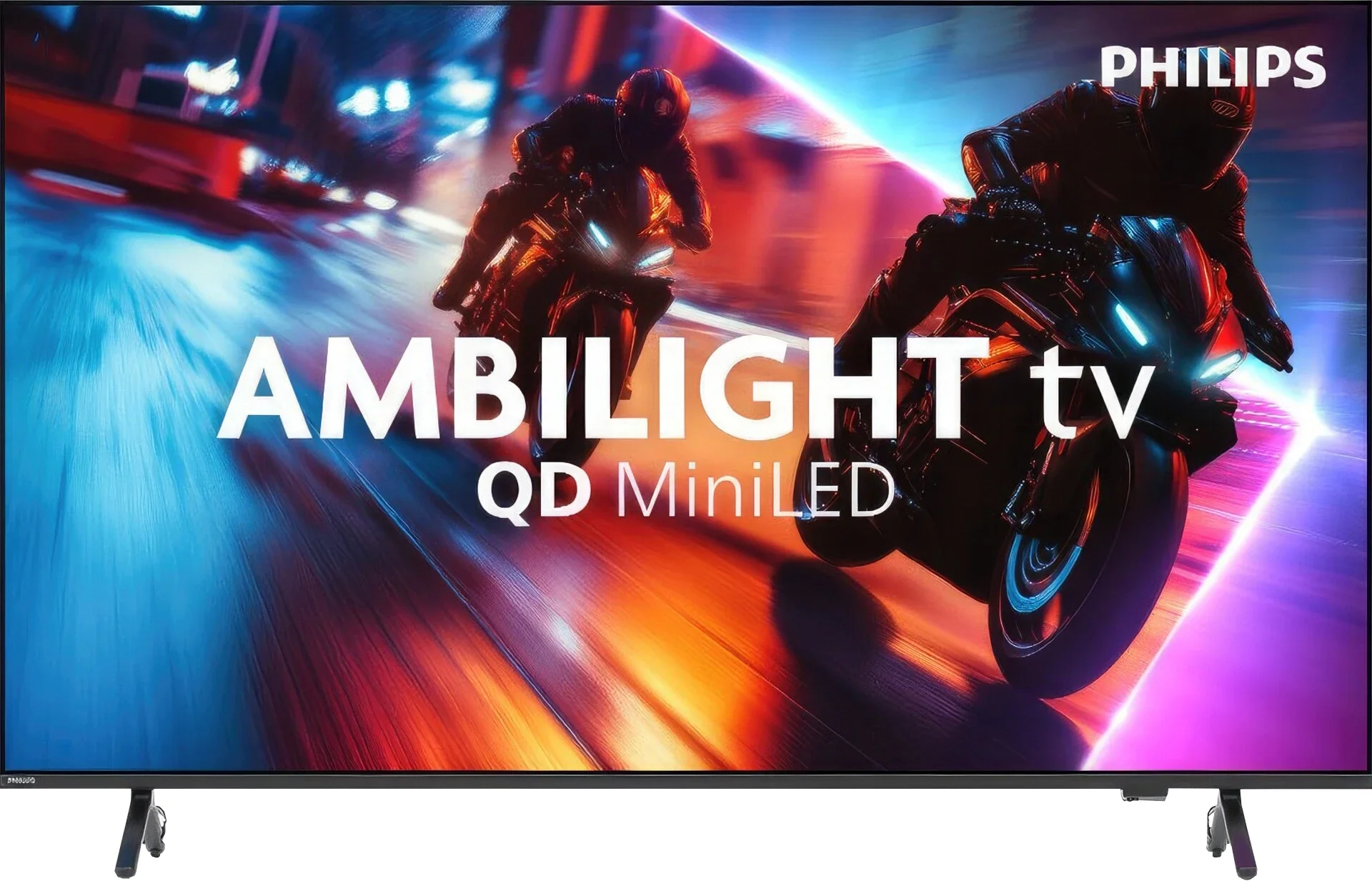
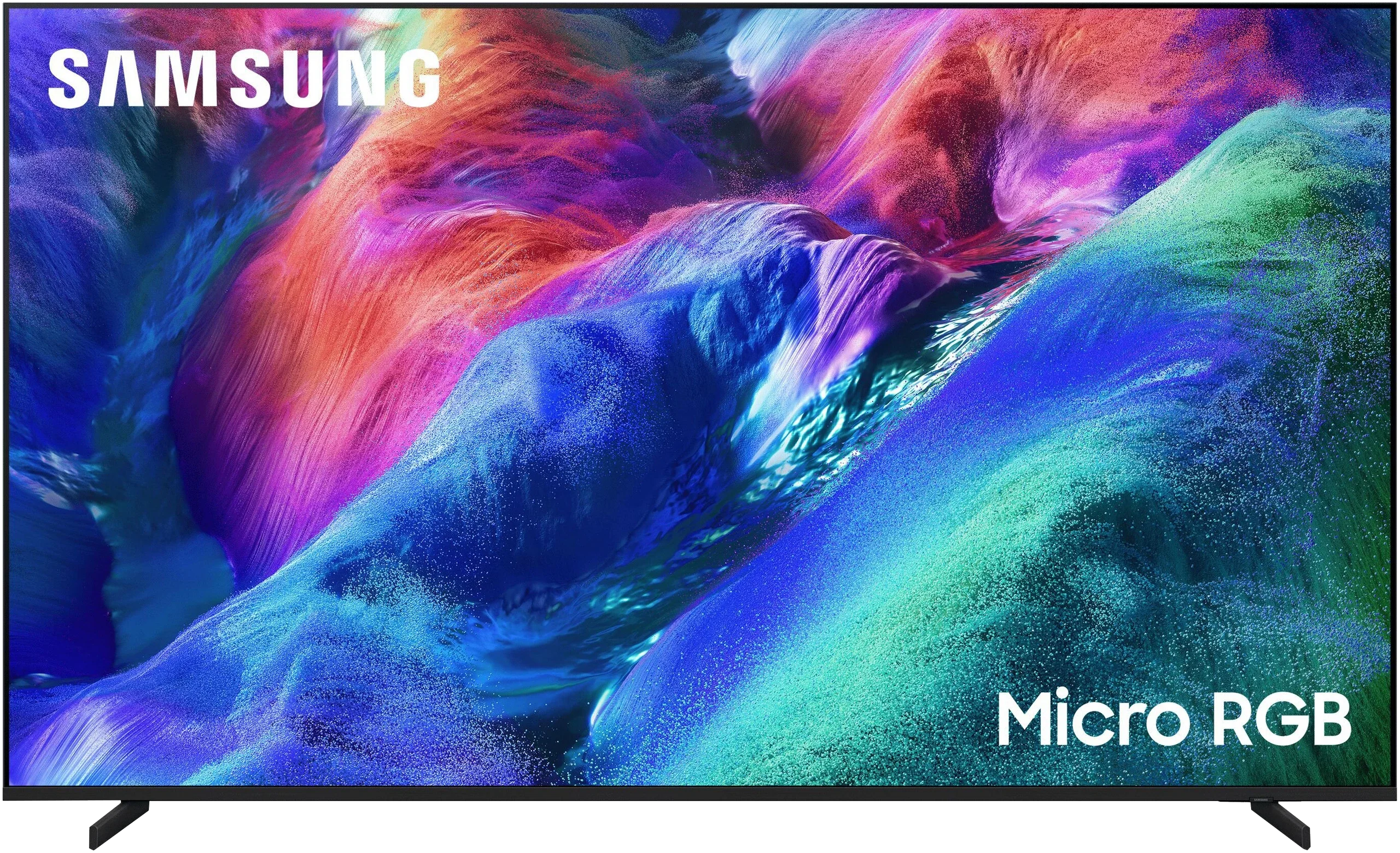
Panel type: LCD VA
Resolution: 3840x2160
System: Titan OS
Model year: 2025
Complete the survey to find out the result
Panel type: LCD VA
Resolution: 3840x2160
System: Tizen
Model year: 2026
Complete the survey to find out the result
Overall rating
6.5
7.7
 Movies and series in UHD quality
6.4
7.3
 Classic TV, YouTube
6.8
7.6
 Sports broadcasts (TV and apps)
6.8
7.2
 Gaming on console
8.5
8.9
 TV as a computer monitor
4.0
8.0
 Watching in bright light
5.5
7.3
 Utility functions
5.5
7.3
 Apps
6.7
9.3
 Sound quality
6.2
7.1
Complete the survey to find out what fits your preferences
Advantages

Solid black and high contrast thanks to mini-LED backlighting
HDR brightness reaching 700–800 nits in real movie scenes
Support for multiple HDR formats including Dolby Vision and HDR10+
Ambilight – an element that adds atmosphere, especially in the evening
A lot of supported audio formats: DTS:X, Dolby Atmos, Dolby True HD 7.1
144 Hz panel with support for VRR, ALLM, and Dolby Vision Gaming
Loud sound (up to 88 dB)
Illuminated remote
Good blacks and contrast: VA panel with local dimming
High HDR brightness: approx. 1000 nits
Very wide colour gamut and high colour volume
Matte anti-reflective coating
Panel 144 Hz / 240 Hz (DLG)
4x HDMI 2.1
Extensive gaming features (ALLM, VRR, low input lag, G-Sync)
Fast, feature-rich Tizen OS (7 years of support)
Good viewing angles (for a VA panel)
Adjustable stand width and height
Disadvantages

Titan OS is quite underdeveloped – there are significant errors and missing features in the applications
Few user-friendly features
Hybrid infrared remote
Issues with the smoothness of tonal transitions in dark scenes
The television is not suitable (aside from gaming) for working with a PC – strong dithering and poor readability of fonts, especially coloured ones and on dark backgrounds
Limited number of local dimming zones
RGB backlighting can't always realise its full potential
Visible smearing on the VA panel
No Dolby Vision or DTS:X
Our verdict
The Samsung R85H is above all a very versatile TV that performs well in pretty much any use case. You can put it in a bright lounge, hook up a console, watch a movie or series in the evening, or use it for everyday broadcast TV, and each time you’ll get a solid picture. It may not make the same immediate impression as Samsung’s best OLEDs, but it’s hard to point to a single feature that would seriously limit its usefulness. That versatility is probably its biggest strength. Of course the thing that draws most attention with the R85H is the new "Micro RGB" backlight. From our tests we’d say it can indeed deliver an advantage over classic Mini-LED, although not always in the areas the manufacturer emphasises most. On measurement charts its colour reproduction is impressive, but in real, more complex scenes the TV doesn’t always exploit the full potential of the three‑colour backlight. Its benefits are easiest to spot on simpler parts of the image, where intense reds, greens and blues can look really striking. Viewing angles are also slightly better, since colours retain their saturation off‑axis longer than on typical LCD TVs. Micro RGB doesn’t, however, solve all the limitations of RGB technology. With very saturated elements you can sometimes notice slight colour bleeding into adjacent bright parts of the image, and the relatively small number of local dimming zones means the backlight can’t always act as precisely as its on‑paper capabilities might suggest. The R85H shows that RGB does have potential and could be the next step in LCD TV development, but using coloured LEDs alone doesn’t automatically produce a huge jump in image quality. We’d therefore treat the R85H mainly as a somewhat better and more interesting alternative to the QN80H, not as a TV you must buy at all costs just because it says Micro RGB. If the price gap between the models is sensible, we’d pick the R85H. We wouldn’t pay a large premium solely for the new backlight, because its everyday advantage isn’t always as big as the marketing materials might imply. All the same, the R85H is a successful all‑round TV, and that’s probably the best way to look at it.
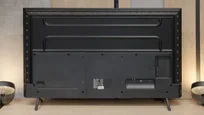
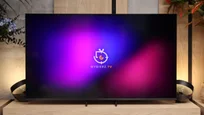
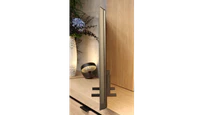
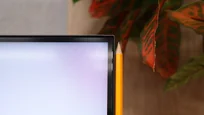
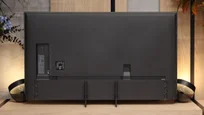
TV appearance



Contrast and black detail
7.9/10
7.9/10
Local dimming function: Yes, number of zones: 144 (12 x 12)
Local dimming function: Yes, number of zones: 150 (10 x 15)
Contrast:


Result
298,900:1

Result
38,500:1

Result
23,950:1

Result
16,850:1

Result
8,000:1
Result
182,800:1
Result
46,750:1
Result
22,450:1
Result
10,900:1
Result
9,050:1
Halo effect and black detail visibility:
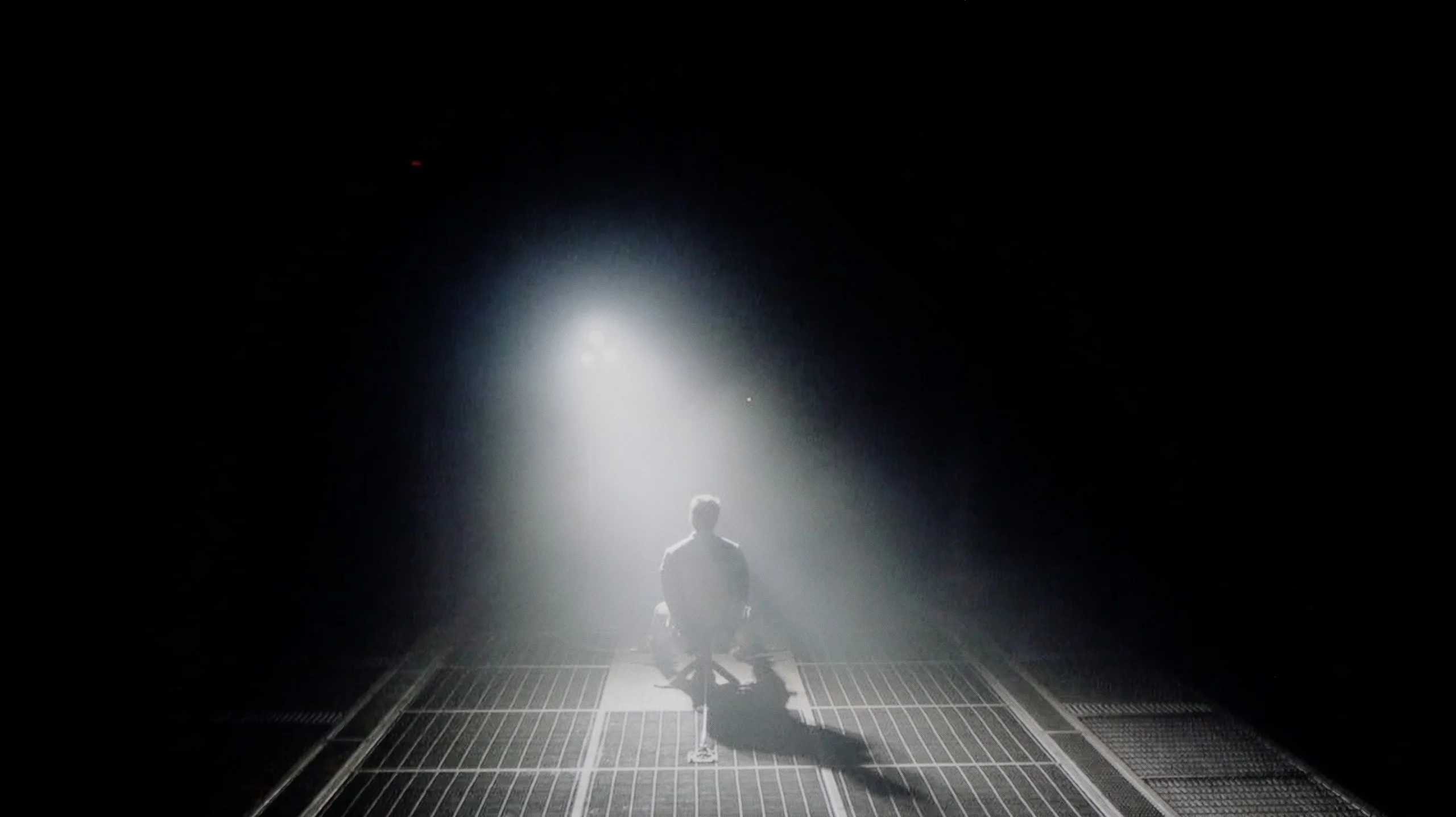
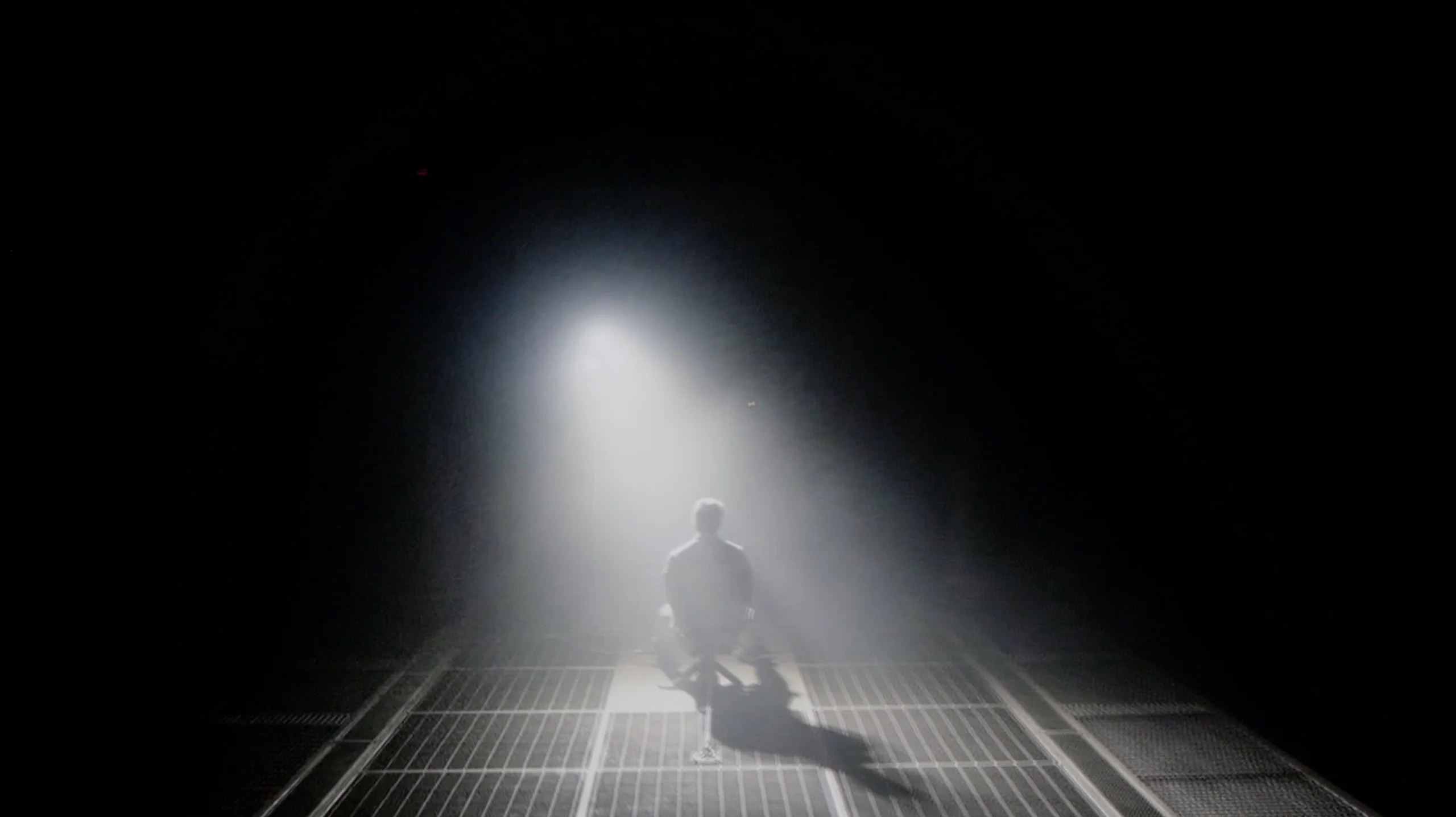
Check the visibility of bright lights on a dark background. Mini-LEDs often struggle with this. The photo does not compare black levels – that’s what the video below is for.
The video accurately shows differences in contrast and black levels between TVs, as well as potential issues: halo around bright objects or Mini-LED zone operation visible as brightness jumps.
Philips MLED920 in the 55-inch version that we had the opportunity to test uses a high-contrast VA panel. The panel itself is one thing, but the real standout feature of this model is the mini-LED backlighting. This largely determines how black and contrast look – and it must be said that Philips has taken a big step forward compared to the models from 2024, where the local dimming algorithms performed just average. In this new version, it is significantly better, and the contrast presented by the MLED920 can truly surprise in a positive way. At times, it even approaches the level known from the best LCD TVs on the market – blacks can be deep, the image gains a three-dimensional quality, and viewing experiences in a dark room leave a great impression. Of course, as with any mini-LED TV, this is not an image completely free of compromises. With a large number of small elements on the screen, the local dimming algorithms can sometimes get confused – at times dimming details more than we would like and other times brightening the background, resulting in slight, light blue halos around objects (the so-called halo effect). Despite these imperfections, we must emphasize that black and contrast are truly strengths of the Philips MLED920 and definitely one of the reasons to consider it in the mid-range segment.
The Samsung R85H uses a Micro RGB backlight with zonal local dimming and can perform very well in terms of black levels. In the 55-inch sample we tested we counted around 150 dimming zones, so it’s not on the level of the most advanced Mini-LEDs, where that number can run into the thousands. Even so, the local dimming algorithm handles many scenes quite effectively. With larger, clearly separated objects on a dark background blacks are deep and contrast can be very impressive. The halo effect is also reasonably well controlled, so during typical viewing the R85H can really show the benefits of local dimming. The limitations of the relatively small number of zones become apparent with more demanding material, especially when there are lots of very small bright elements on screen. A good example is scenes with a starry sky. In those situations the TV can practically abandon local dimming, causing blacks to lift significantly and the image to lose a large part of its contrast. Interestingly, we noticed similar behaviour even when the number of bright points was much lower, so it seems to be more a matter of how the algorithm works than just the physical number of zones. Overall, though, the R85H’s blacks are good. It’s not at the level of the most expensive Mini-LEDs equipped with thousands of independently controlled zones, and the difference is evident in tough scenes. For most content, however, local dimming does its job and delivers noticeably better blacks.
HDR effect quality
5/10
5.6/10
Luminance measurements in HDR:

Result
722 nit

Result
177 nit

Result
775 nit

Result
131 nit

Result
677 nit
Result
860 nit
Result
214 nit
Result
758 nit
Result
235 nit
Result
912 nit
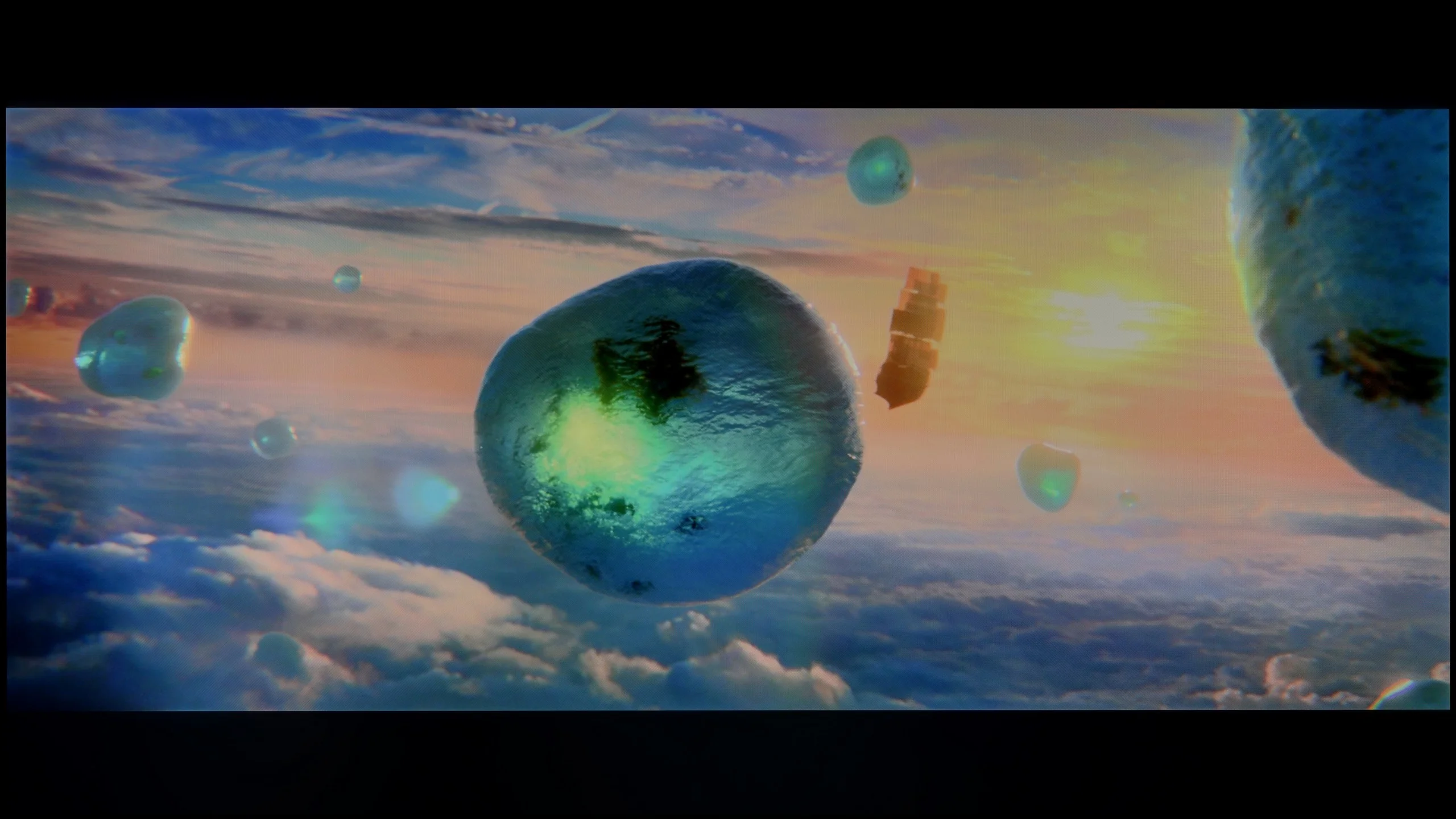
Scene from the movie “Pan” (about 2800 nits)

Scene from the movie “Billy Lynn” (about 1100 nits)
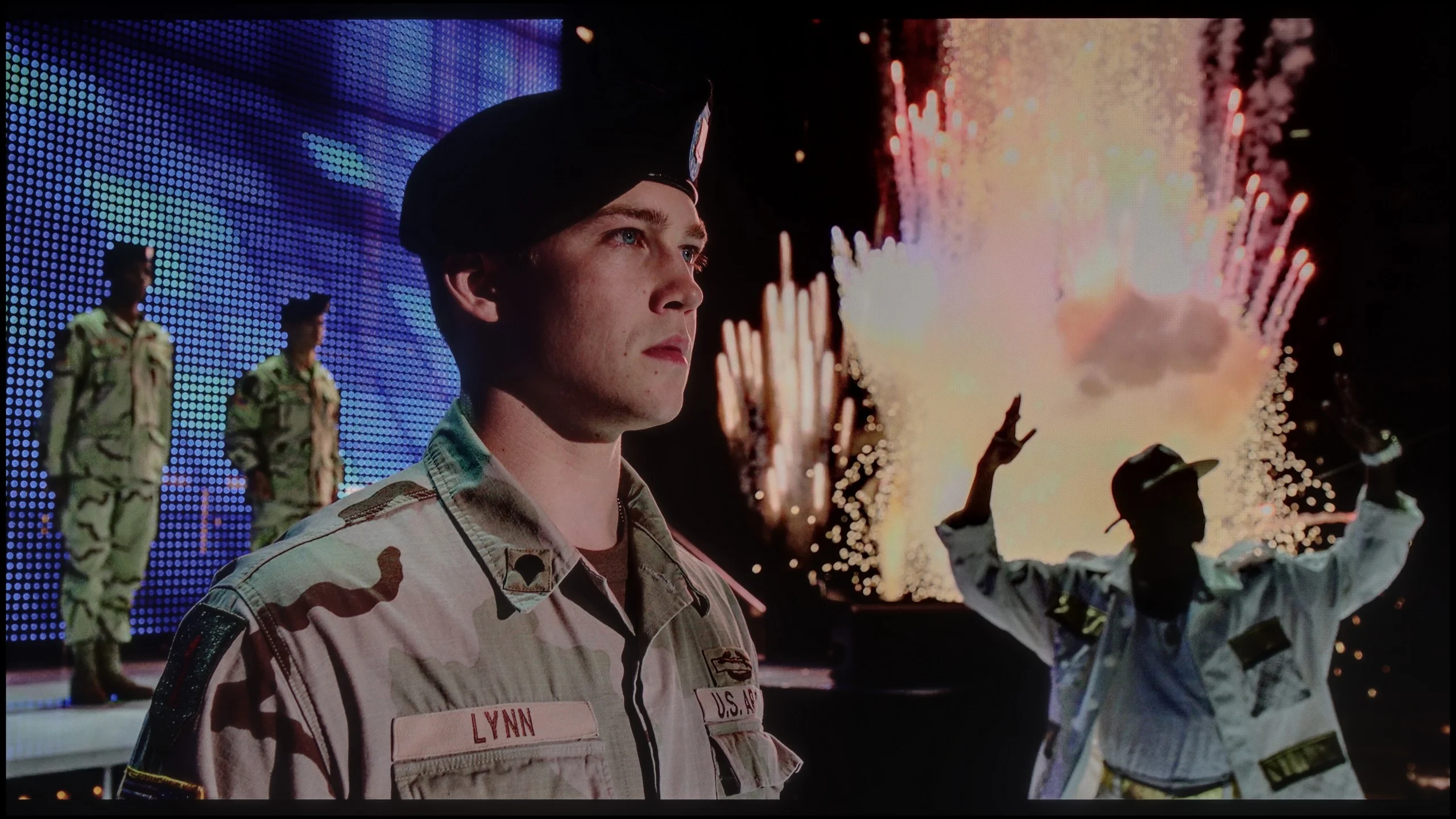
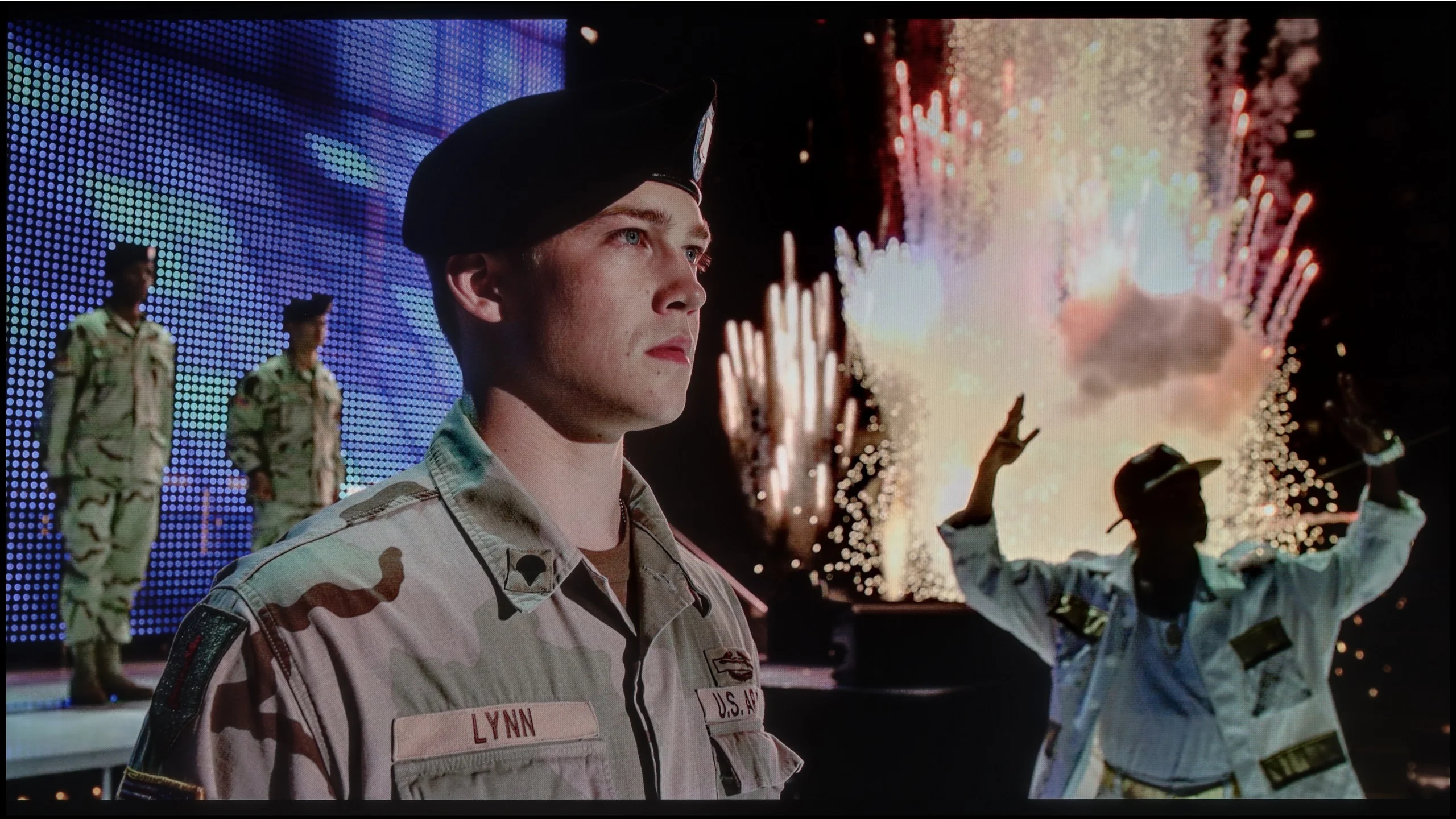
The photos show two HDR10 movies. 'Pan' is one of the brightest productions ever made, while 'Billy Lynn' (soldier) has brightness typical of streaming (Netflix, Prime, HBO MAX). Notice the intensity of effects and detail in whites.
Static HDR10


The photos present the visibility of white details in various HDR formats. They do not show brightness differences between TVs (these can be compared in the previous gallery).
Dynamic: Dolby Vision
Dynamic: HDR10+


The photos present the visibility of white details in various HDR formats. They do not show brightness differences between TVs (these can be compared in the previous gallery).
HDR luminance chart:
Samsung R85H / R86H
Philips MLED920 / MLED910
Philips MLED920 in our measurements in static tests even reached around 900 nits, which for a mid-range model is quite an impressive result. In practice, this translates to a lot of satisfaction during viewing – in scenes rich in bright light, such as the first, third, or fifth test patterns, the screen was able to generate around 700 nits, which is sufficient to feel the real "HDR effect". However, it cannot be denied that the limited number of backlight zones and the typical mini-LED compromises in dimming algorithms reveal their flaws in more demanding scenes. In sequences with small light sources – like the moon or a scene from the film Sicario 2 – the television clearly prioritises maintaining deeper blacks at the expense of the brightness of these small elements. For most viewers, this is still a reasonable compromise, as the dark background looks much better, although it should be noted that the details themselves may not dazzle with intensity. The question of colours also leaves a bit to be desired. Although the employed PFS filter (the equivalent of quantum dots known from QLEDs) does its job and the colours appear quite vibrant, the coverage of the DCI-P3 colour space reaches "only" 90%. In everyday viewing, this will be sufficient, but in extremely colourful productions – like the latest Disney animations – one can notice that some tones are not as vivid as they could be in other constructions.
When it comes to brightness, the R85H performs quite well. In most of our test scenes the TV reaches around 800–900 nits, and with larger bright elements it can exceed 1000 nits. These aren't, of course, on the level of the most expensive Mini-LEDs, but they're more than enough for watching films and TV series in HDR and the effect can be quite noticeable. The problem reappears in more demanding scenes, where there's a small bright element on a very dark background. Here the TV can greatly reduce its brightness to avoid lighting up too much of the screen. In our measurements such small highlights fell as low as around 200–250 nits, so it's clear that a limited number of local dimming zones combined with the specific behaviour of the algorithm has consequences here. Fortunately, it doesn't affect viewing all the time. In typical, mixed HDR scenes the R85H looks good and can provide good image dynamics. It's just that with very small points of light you shouldn't expect as strong an effect as on TVs with a much larger number of zones or on OLEDs.
Factory color reproduction
5/10
5.4/10
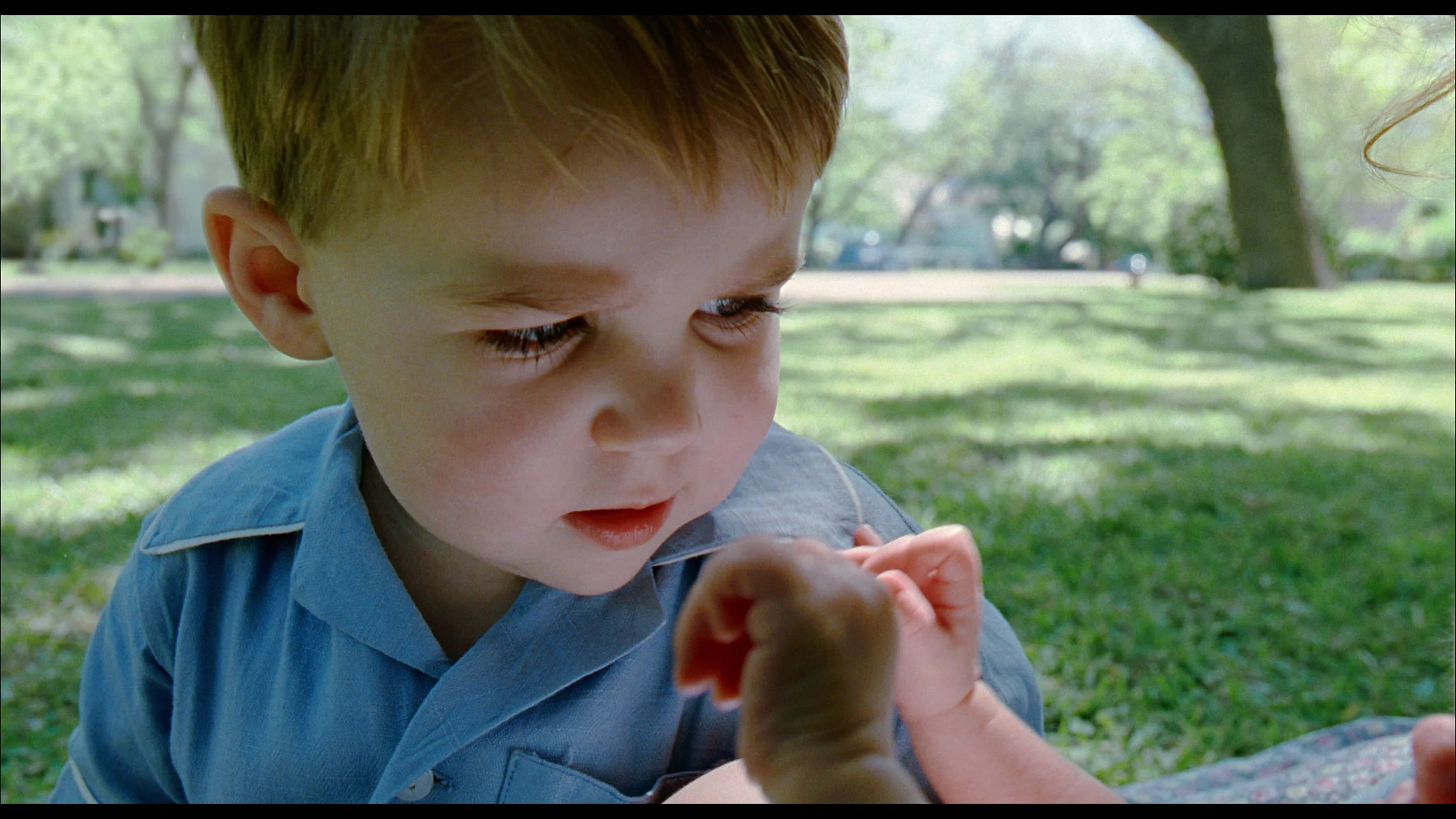
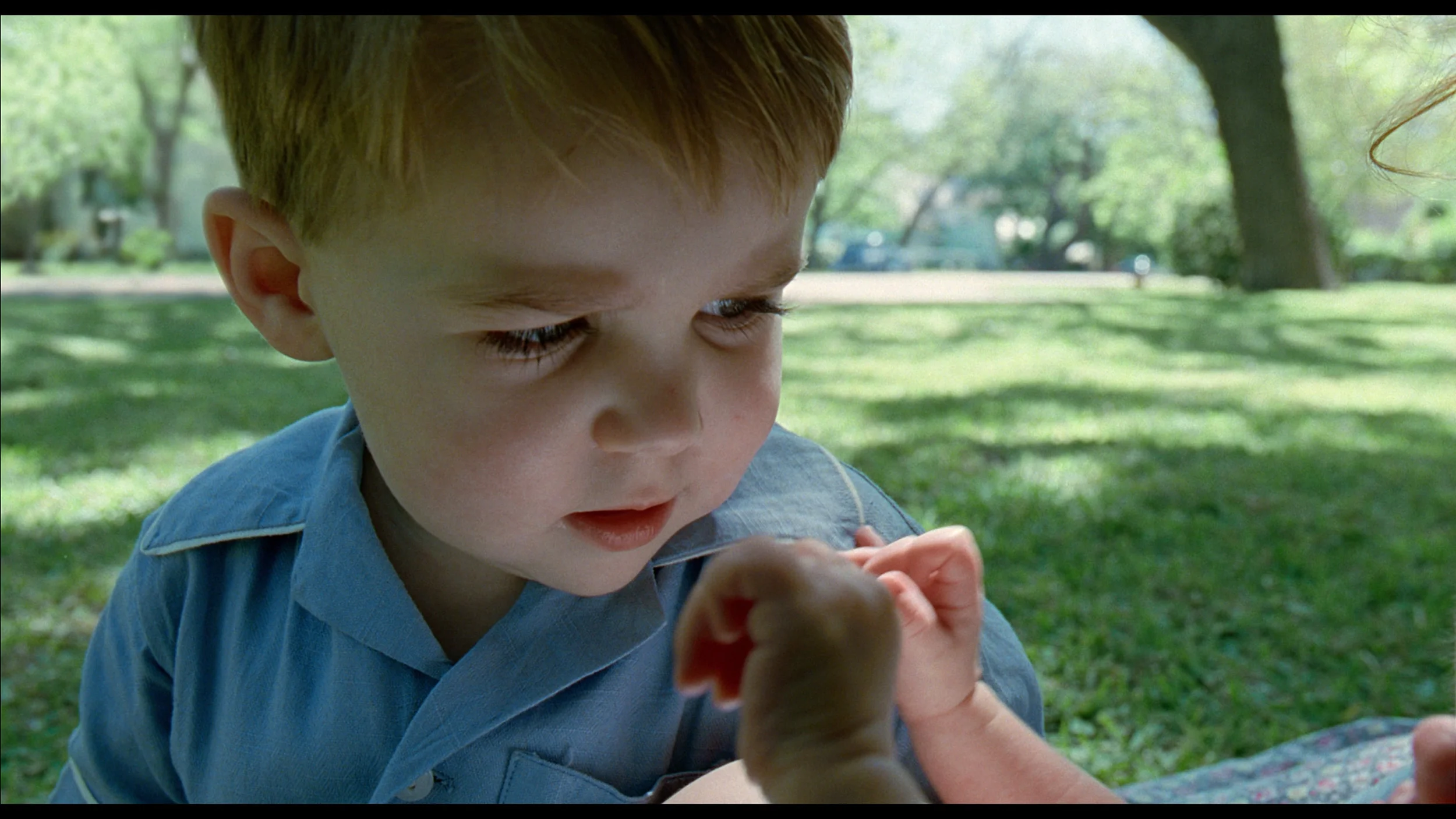
This gallery shows how colors change after professional TV calibration. If you notice the difference, we recommend ordering this service at SkalibrujTV.com.
Factory Mode
After calibration


This gallery shows how colors change after professional TV calibration. If you notice the difference, we recommend ordering this service at SkalibrujTV.com.
Factory Mode
After calibration
Like every Philips TV we've tested, the MLED920 was primarily assessed in Filmmaker mode – the so-called "most honest" mode, designed for films and to faithfully convey the intentions of the creators. Indeed, in terms of colour accuracy, it performs best among all the modes available on the TV, but it is not without flaws. The first thing that stands out is the white balance. The image has a slight tendency towards purple-pink tones, giving it a somewhat unnatural character. However, an even bigger problem turned out to be what we mentioned earlier – image clipping. Just looking at the gamma or EOTF charts reveals that the line deviates significantly from the norm, dropping below a value of 1.8. In practice, this means "bleeding" of the brightest whites, where the image becomes almost milky. Fortunately, most of these issues can be corrected – the MLED920 responds to calibration, and with a few adjustments, image quality can be significantly improved.
In Filmmaker mode our R85H sample in SDR performed adequately, but a few issues immediately stood out in the measurements. In the white balance, as brightness increased more red was added while blue decreased. As a result, the brighter parts of the image had a slightly too-warm tint. Gamma only held the target value at the start. It then gradually fell, which left most of the image a little too bright. The combination of these two factors also affected the colours, with errors growing particularly in the brighter and more saturated samples. It did not look bad, but for Filmmaker mode we expected a bit more accuracy. Interestingly, our sample fared noticeably better in HDR. The white balance was much more even and the individual components stayed close to one another across most of the range. Only in the brightest parts did red start to be lacking, causing white to shift subtly. The EOTF curve looked very good, tracking the target luminance across almost the entire range. That does not mean HDR colours were perfect. The Colour Checker still shows some deviations, especially for some of the more saturated colours, but the errors are clearly smaller than in SDR.
Color reproduction after calibration
7.5/10
8.6/10
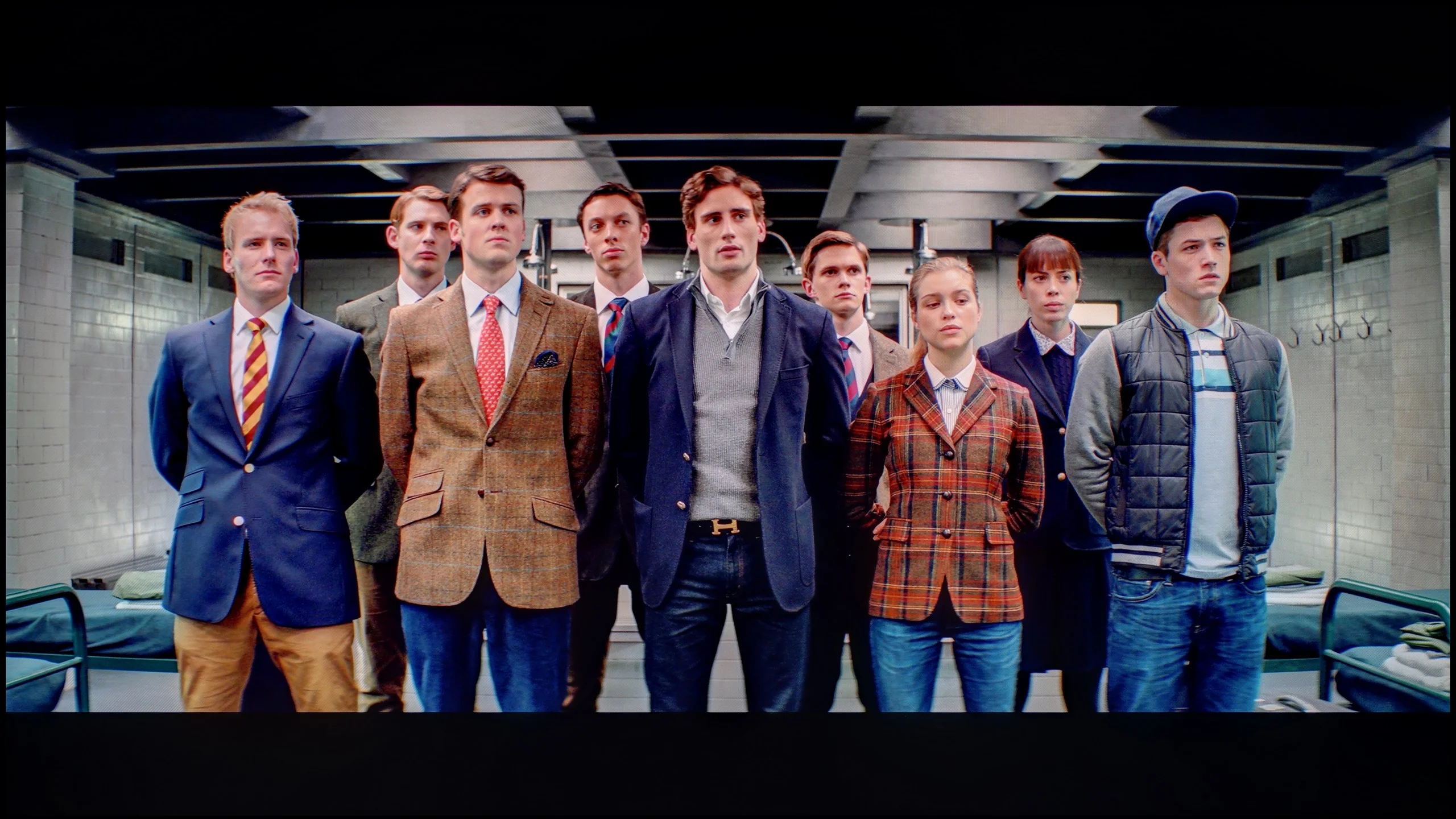
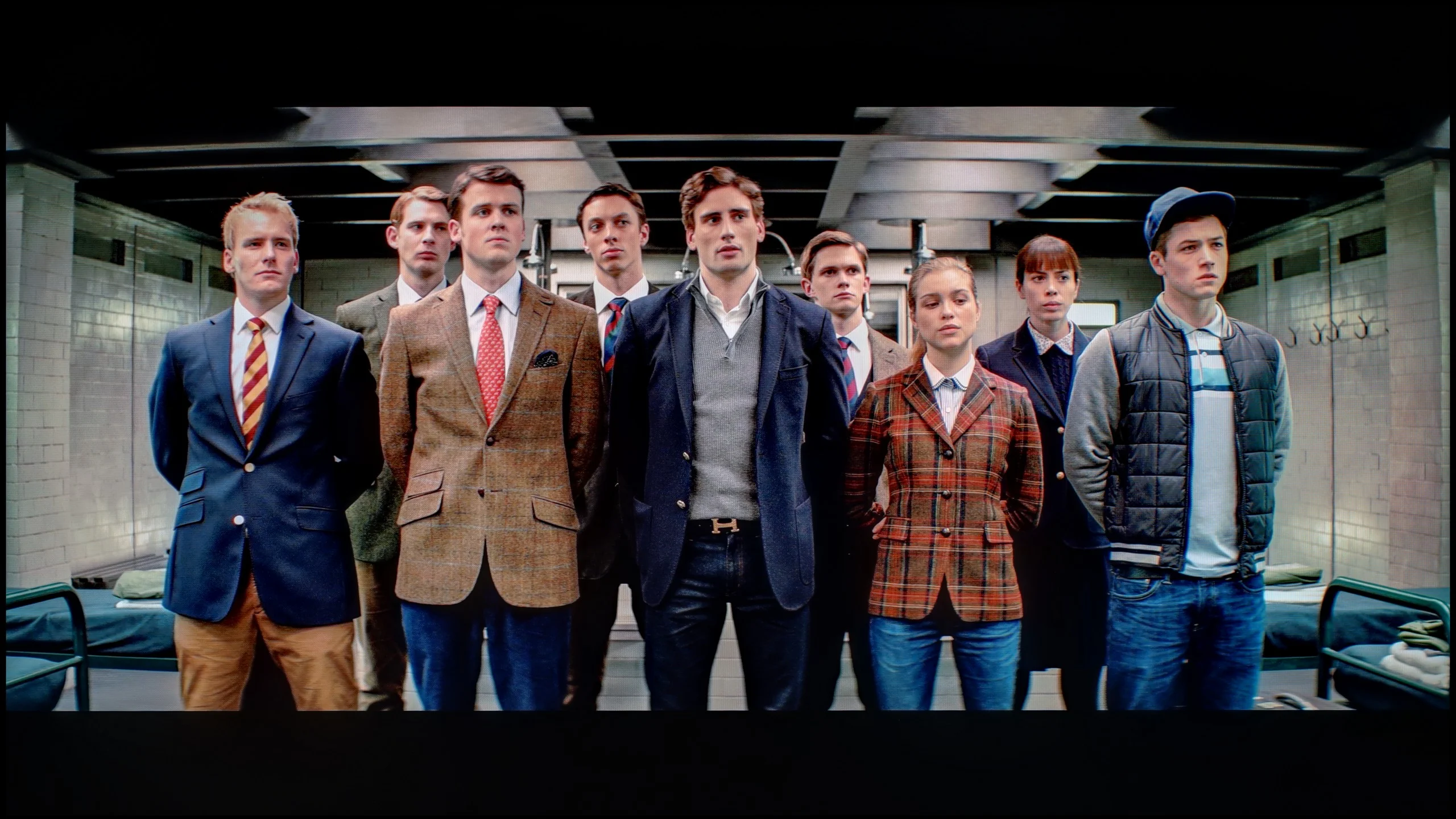
The photos show how movies look on the TV. Pay attention to black detail visibility, colors, and shadow tint.


The photos show how movies look on the TV. Pay attention to black detail visibility, colors, and shadow tint.
After calibration, we managed to largely tame the white balance – to the extent that the average viewer will not be able to detect colour inaccuracies. The characteristic pink-purple glow that previously disrupted the naturalness of the image has also disappeared. The colour palette has been organised, and the colours appear more cohesive and neutral. The gamma in SDR content looks really good after calibration – there’s no sign of the earlier “bleeding” effect in bright scenes. The image has become more contrasty and free from the milky effect that previously severely affected the viewing experience. In the case of HDR content, the improvement is also noticeable, although here it is still evident that the television goes “its own way”. The EOTF curve cannot be fully adjusted, as Philips simply does not offer tools for precise control of this parameter in its settings. In many films, the television still exposes the image “in its own way”. Despite these limitations, calibration has brought a lot of good – the majority of colour inaccuracies have been minimised and the overall image balance has significantly improved. However, one must remember that certain barriers arise from the very hardware construction and simply cannot be overcome.
After calibration the R85H shows it has really substantial colour reproduction capabilities. SDR performed best: white balance could be brought almost perfectly into line, and gamma stays very close to the target value across most of the range. That also translated into very low errors in the ColorChecker, so there's really little to criticise here. HDR also shows a clear improvement, although some issues can't be corrected as well. At the highest brightness levels the character of the backlight itself becomes apparent and the individual components of the white balance begin to diverge. The same applies to the most saturated colours, which don't always land exactly where they should. Despite these limitations the overall picture is considerably more accurate than factory settings, and the biggest difference is definitely visible in SDR. However, there is one thing calibration can't fix. With heavily saturated elements the colour can slightly bleed onto adjacent bright areas of the image. It's easiest to notice on white, which can pick up a faint tint of a neighbouring hue. It doesn't occur in every scene, but when the material is demanding the effect can be visible. This is more a feature of the way the RGB backlight operates than an issue with picture settings.
Smoothness of tonal transitions
6.5/10
8.9/10
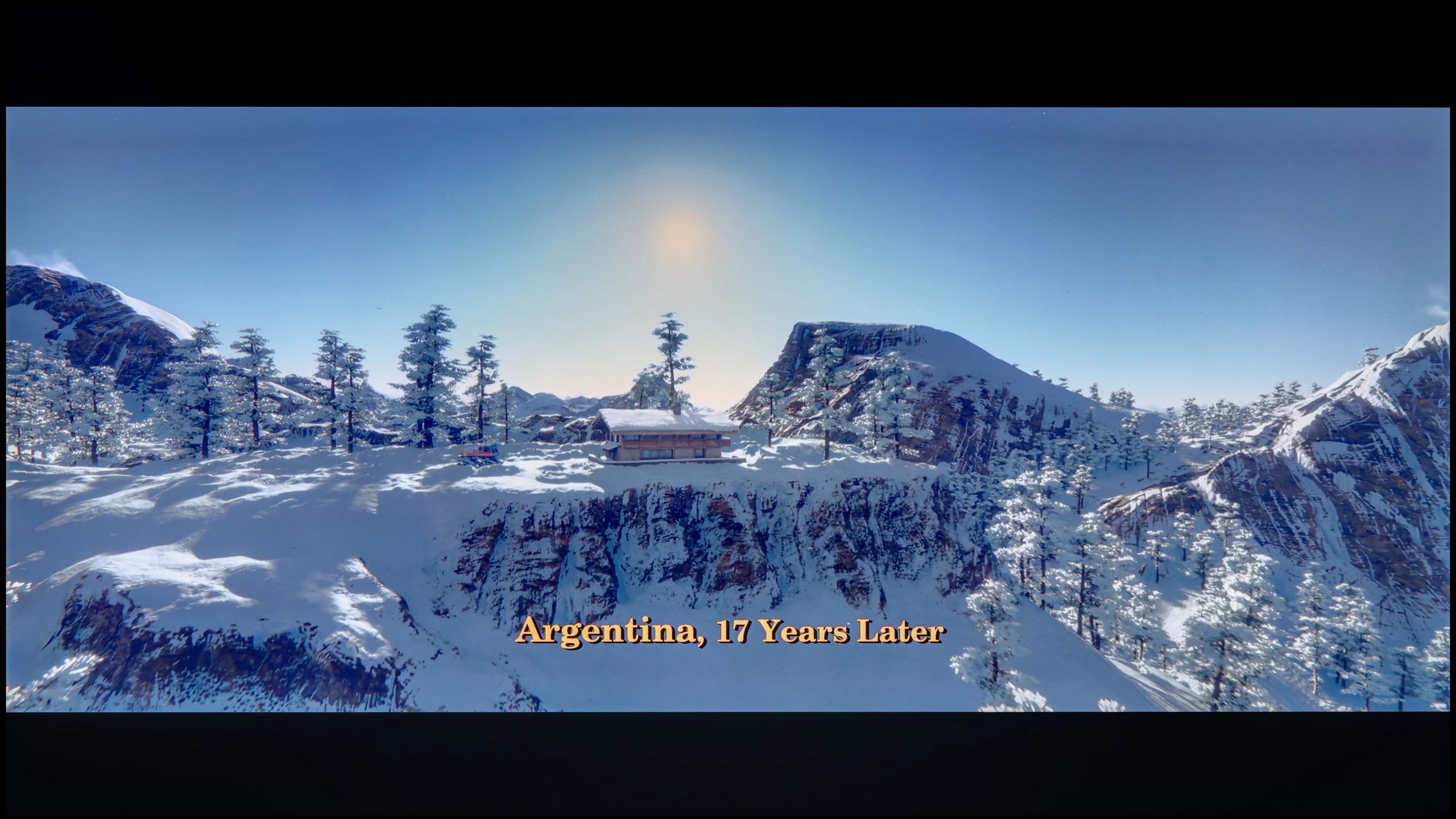
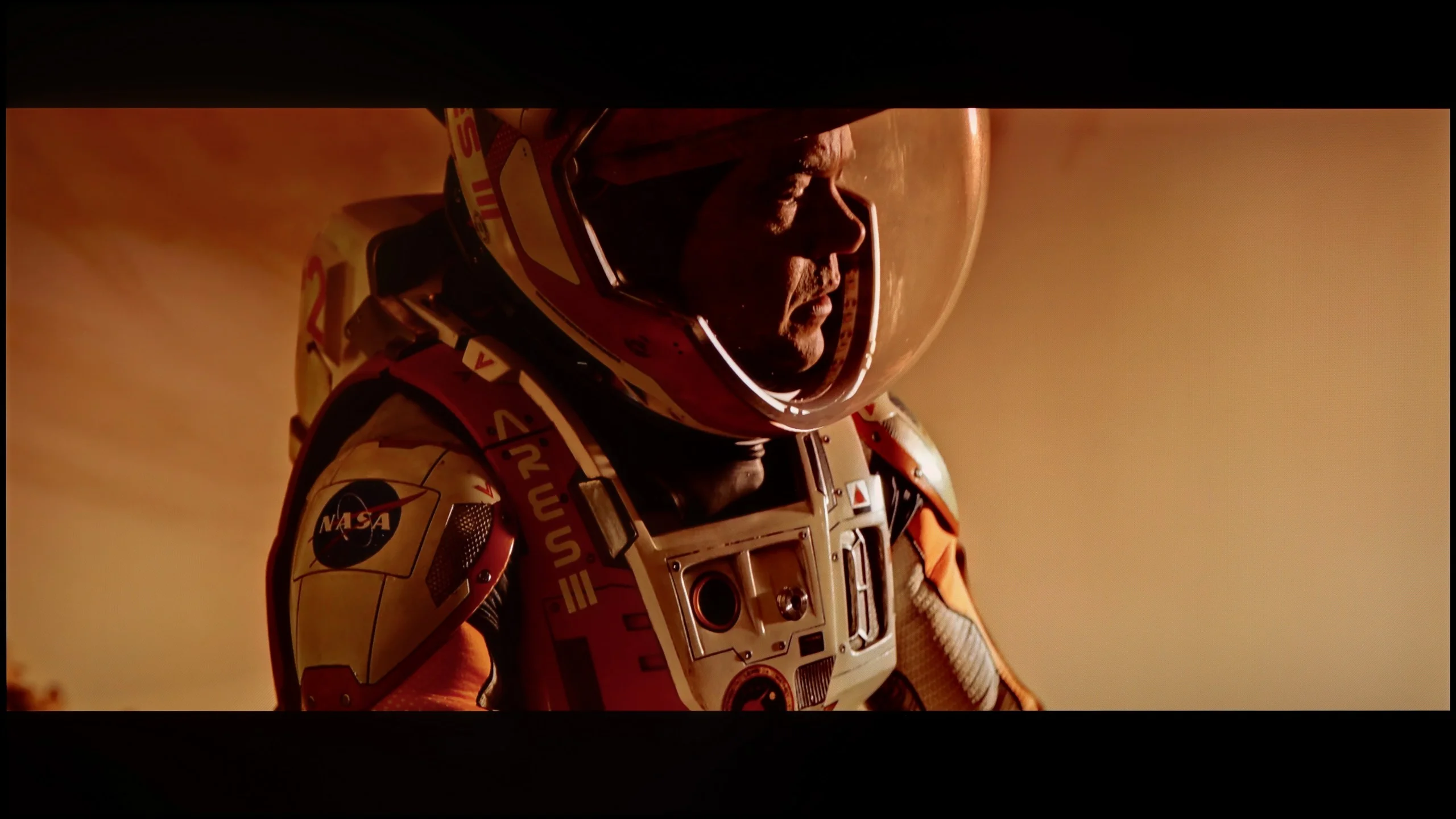
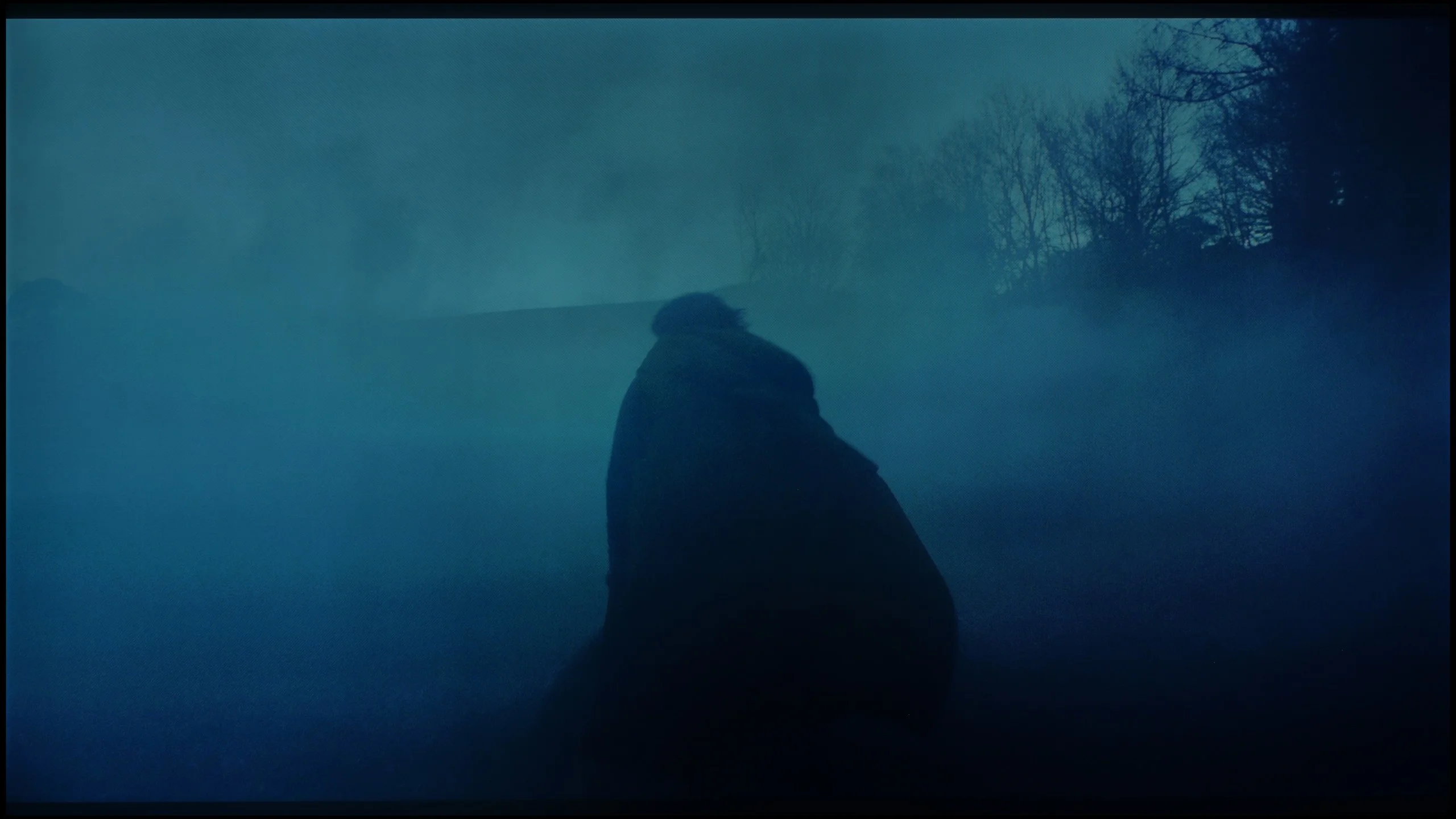
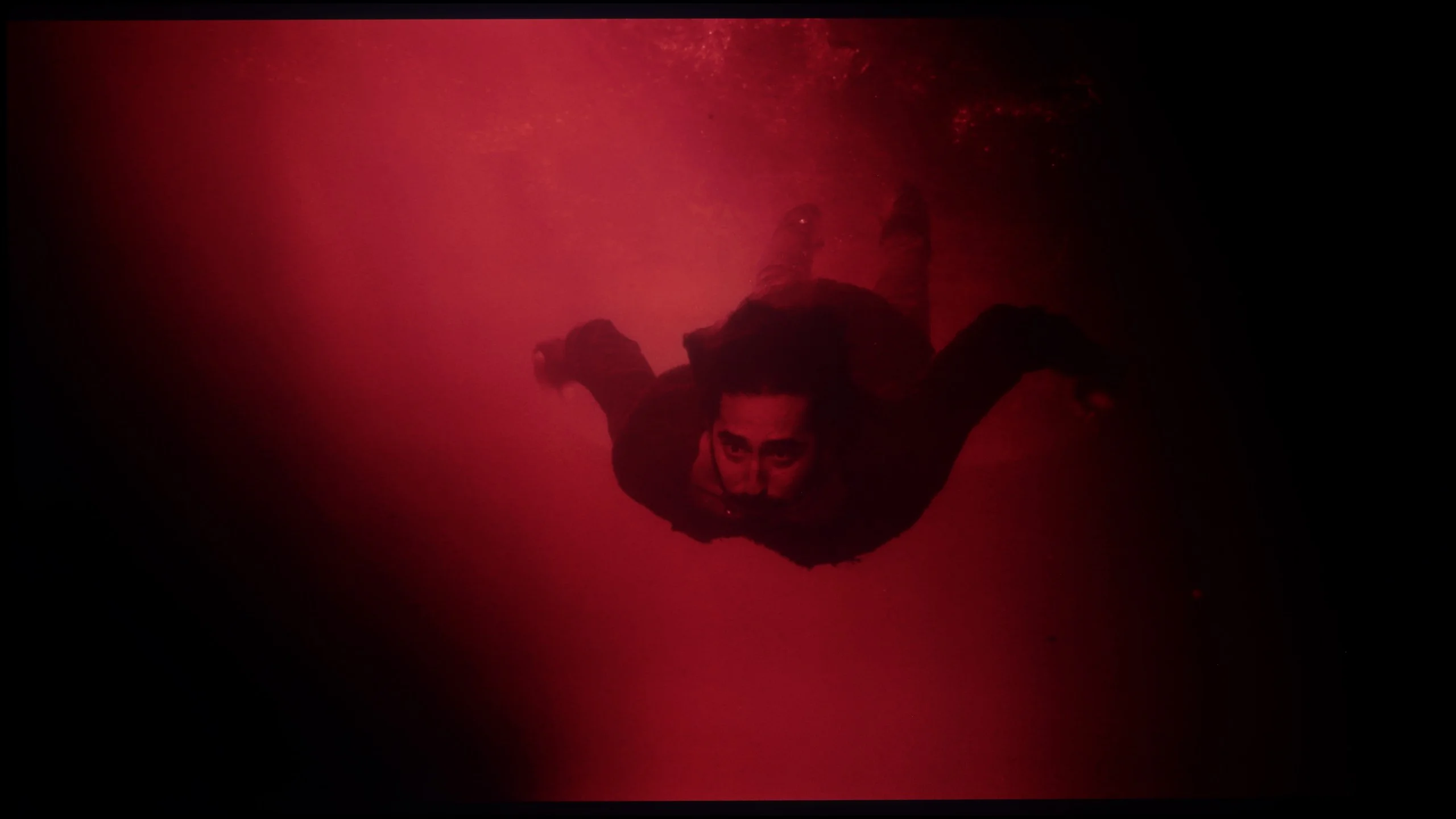
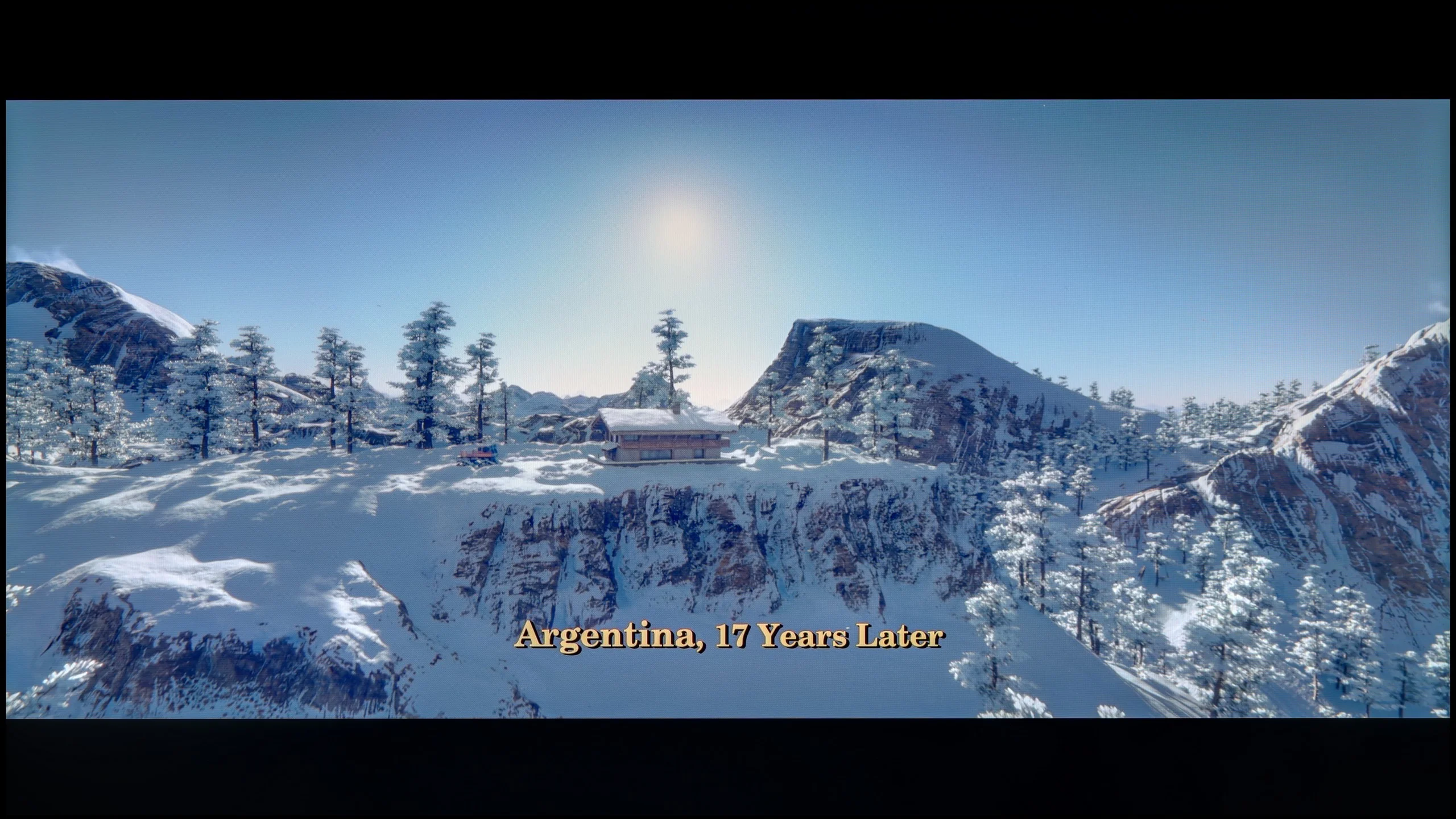
These are selected scenes that show smooth tonal transitions from one color to another. If you see distinct banding, it’s the TV panel’s fault.
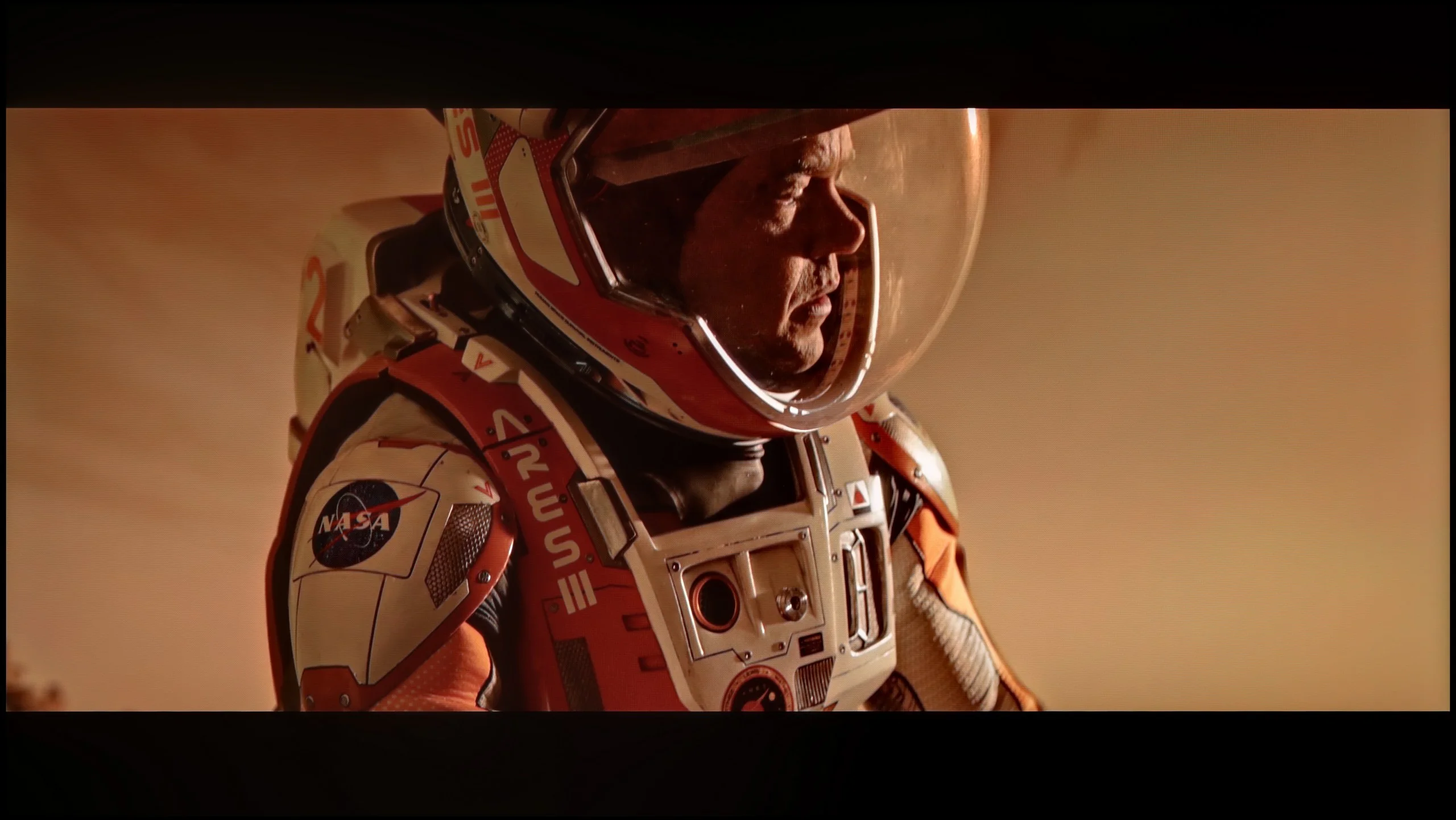
These are selected scenes that show smooth tonal transitions from one color to another. If you see distinct banding, it’s the TV panel’s fault.
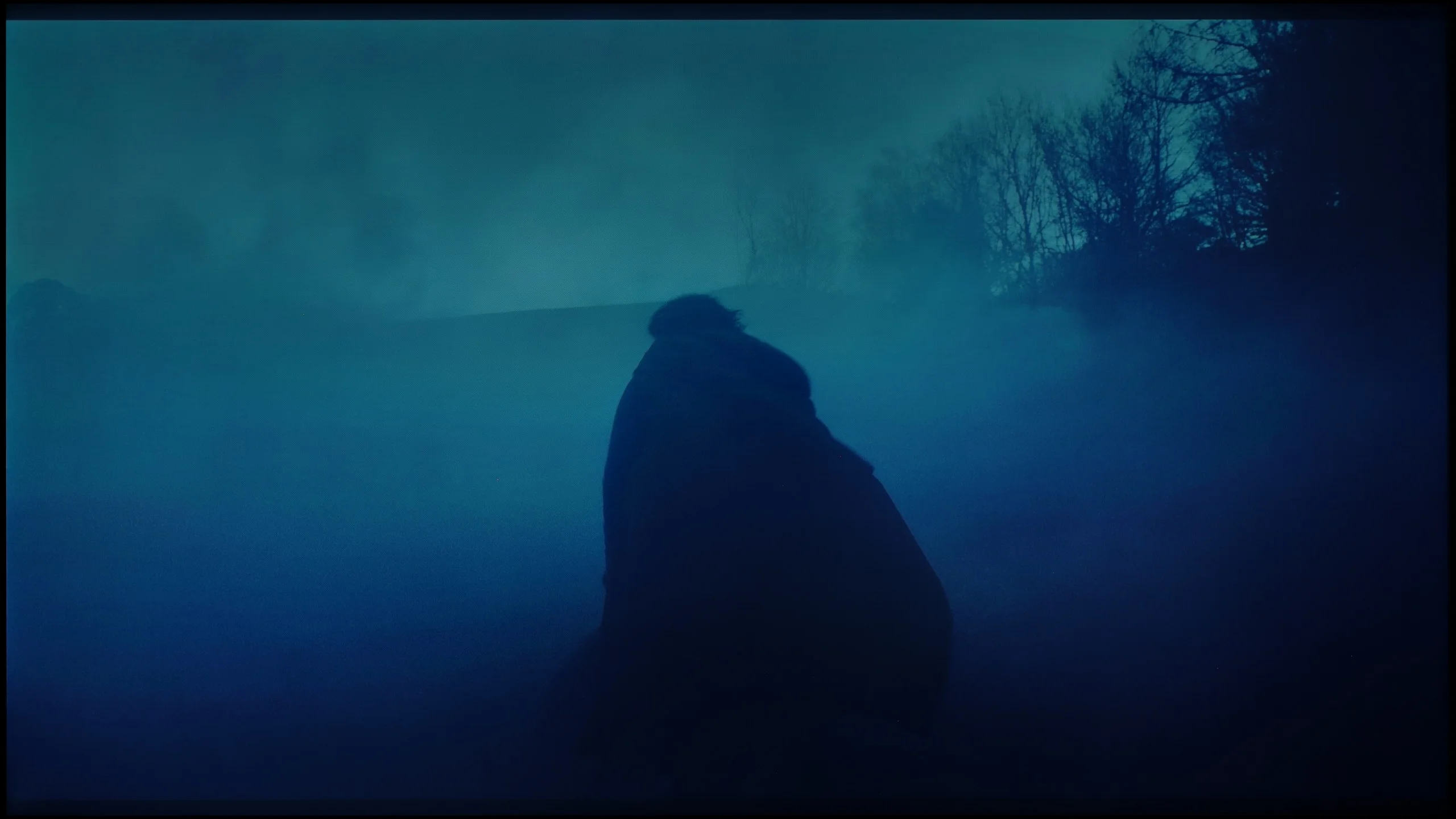
These are selected scenes that show smooth tonal transitions from one color to another. If you see distinct banding, it’s the TV panel’s fault.
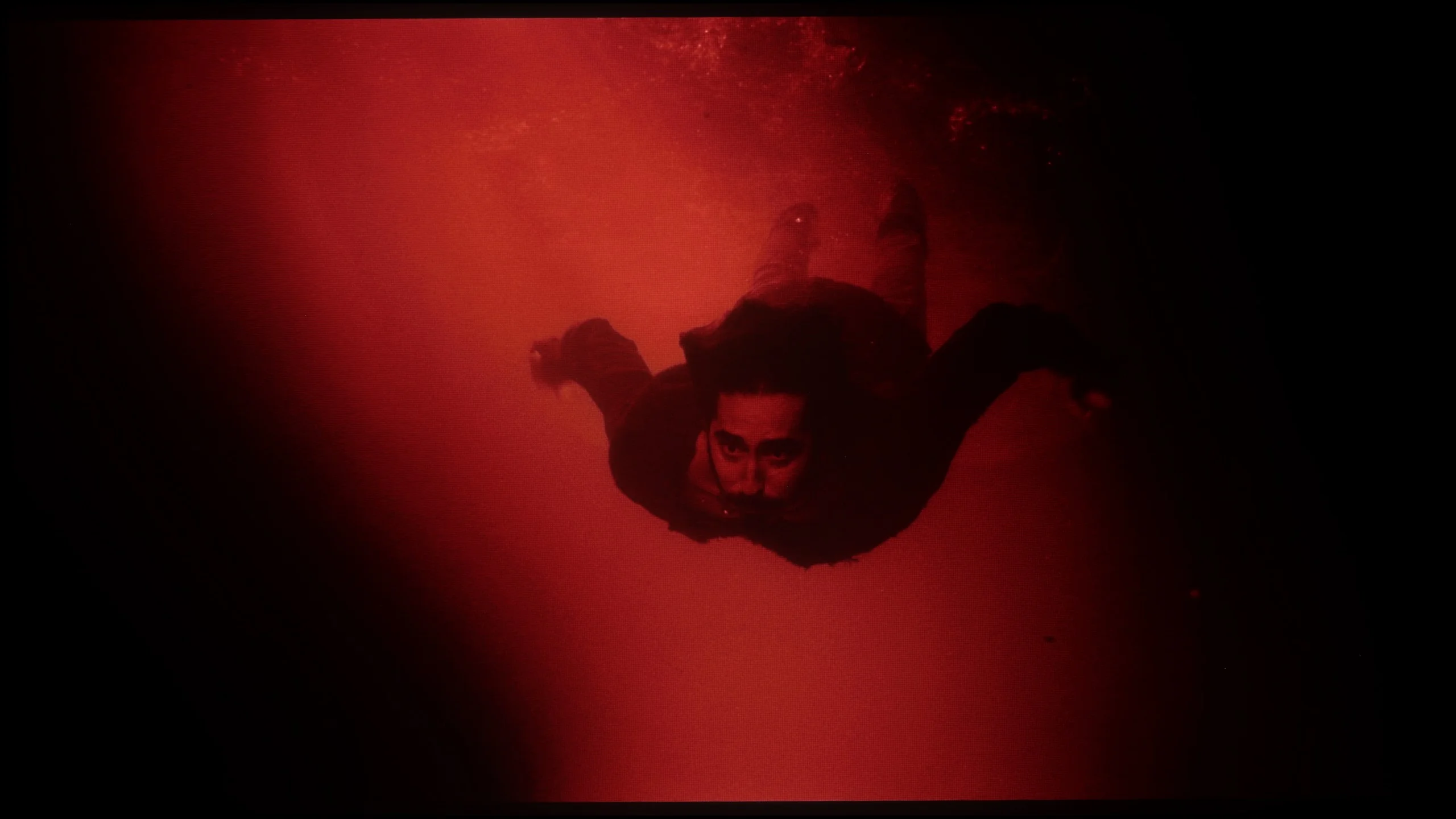
These are selected scenes that show smooth tonal transitions from one color to another. If you see distinct banding, it’s the TV panel’s fault.
The fluidity of tonal transitions in the Philips MLED920 is not its strongest suit. In our tests, we quickly noticed that the television has noticeable issues in darker scenes – examples include segments from the film The Green Knight or test grey palettes. There, you can see characteristic banding of colours and too harsh transitions between shades, which can be quite noticeable in productions with a darker aesthetic. Fortunately, the situation looks better in brighter scenes – there, the image presents smoothly and without significant artifacts.
Samsung R85H handles tonal transitions quite well, and during normal viewing this is not something that particularly draws attention. On bright gradients the transitions are mostly smooth, and only on closer inspection can you notice slight stepping between some brightness levels. These are not pronounced and generally don't noticeably affect the perceived image. It looks much the same in darker areas. Here you can sometimes pick up small steps between similar shades, but there is no severe banding or obvious breakup of gradients. Bright skies, mist and darker shadows are all rendered smoothly and without major issues.
Image scaling and smoothness of tonal transitions
7/10
7.5/10


Smooth transition function
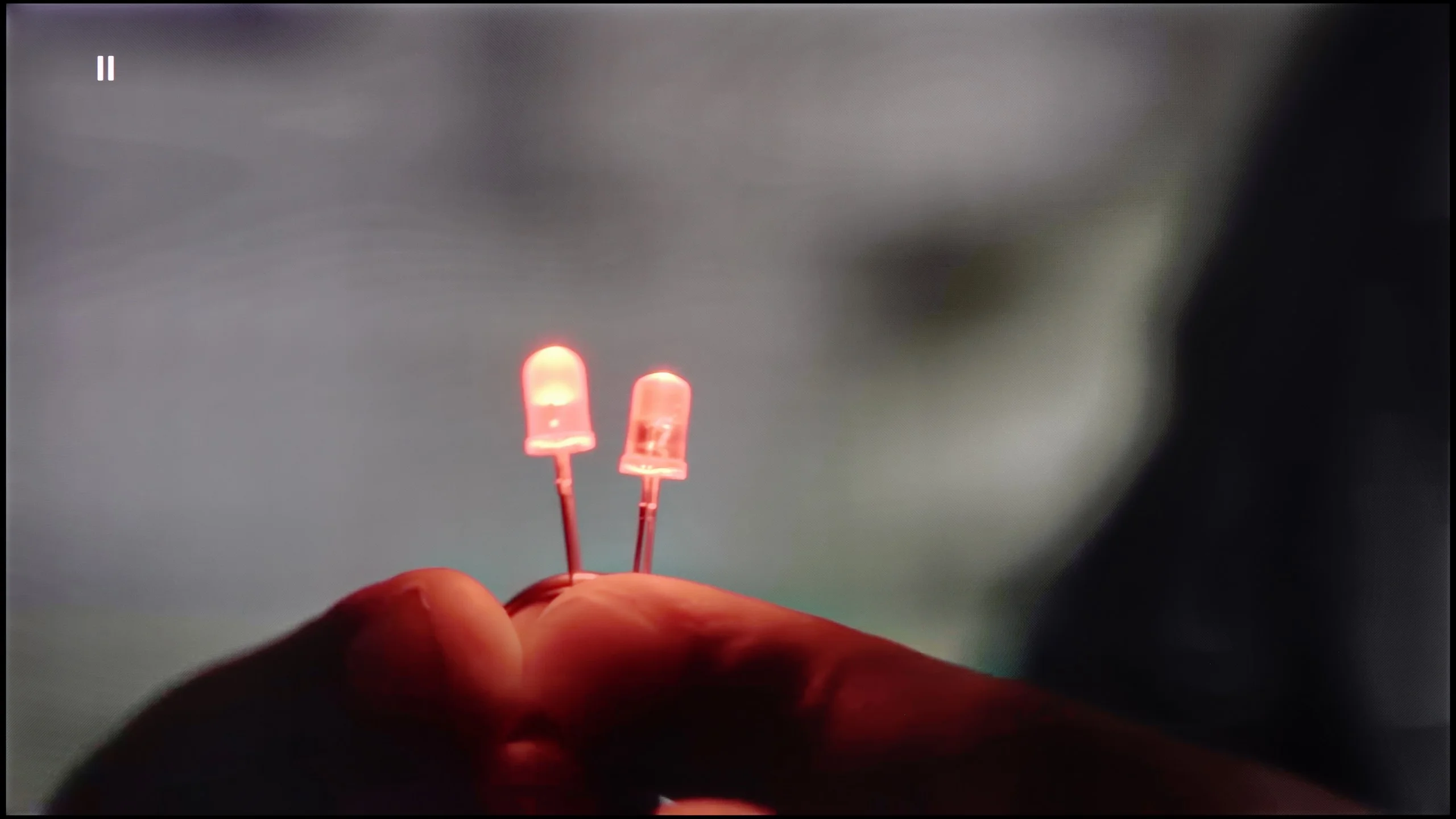
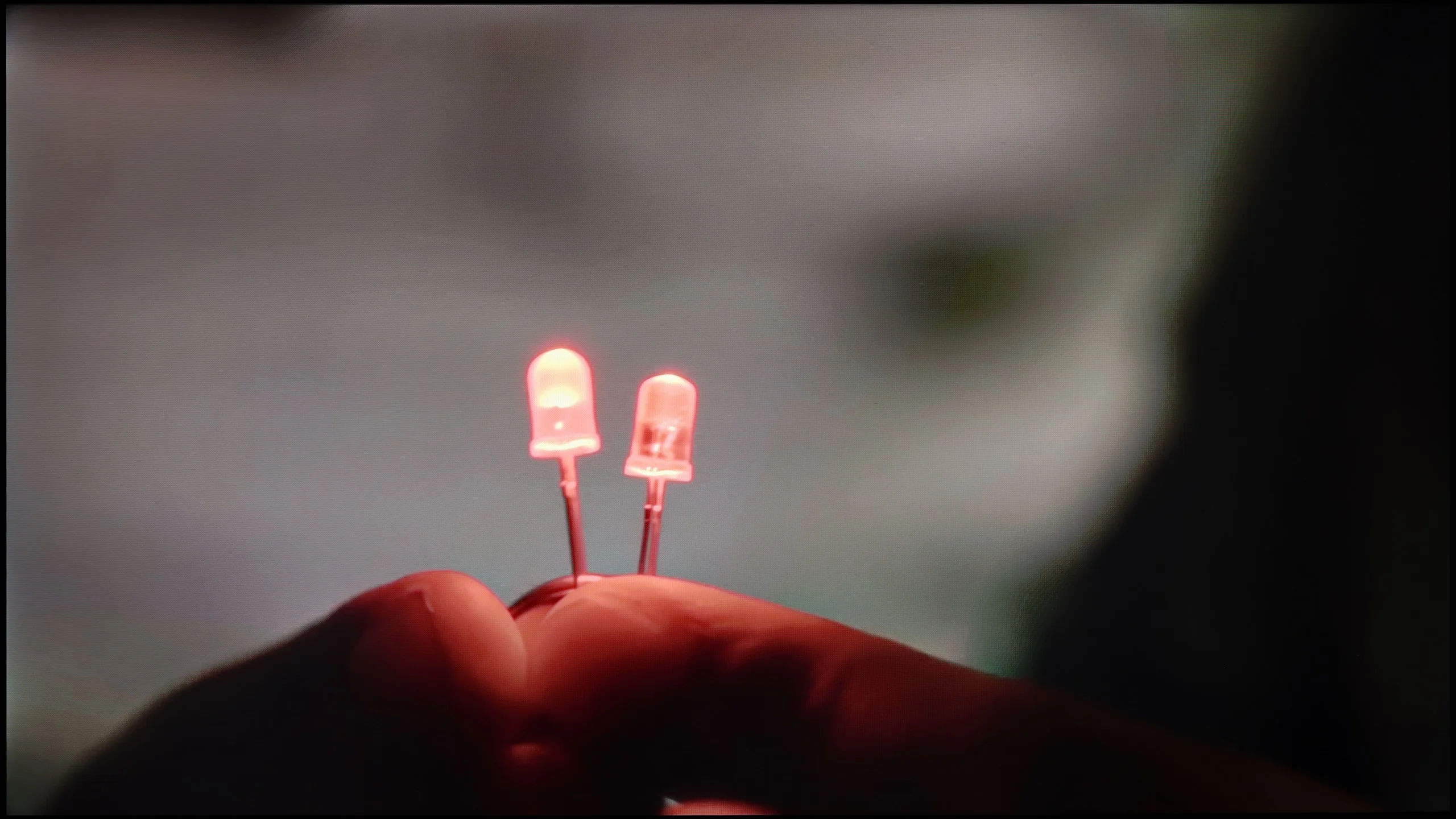
The match photo shows how the TV smooths weak tonal transitions in low-quality video.
Image scaling SD (576i)


The model photo shows how it handles upscaling of SD material.
The manufacturer has equipped this model with several features that improve signal quality, and although we usually approach such “enhancers” with caution, here they prove to be really helpful. The key option is called “distortion reduction” – it works best at a medium level because, on one hand, it effectively smooths out unwanted steps and colour transitions, and on the other, it doesn’t excessively cut details, meaning the image still looks natural.
It’s a bit worse when it comes to upscaling. Lower quality materials – such as the test video with the model – appeared soft and lacking sharpness. Of course, it can be partially adjusted with the sharpness slider in the menu, but the result still falls short compared to what competitors offer at a similar price. Philips still needs to work on this aspect because, in light of the successful improvement of tonal transitions, the upscaling simply comes off weak.
In the R85H, image processing is handled by the Micro RGB AI Processor. The name is new, but when it comes to upscaling lower-quality sources, the TV's behaviour is very similar to what Samsung has shown before. And that's not a bad thing, because Samsung has handled this aspect quite well for years. Lower-resolution material is displayed cleanly, edges don't become overly soft, and the TV doesn't try to artificially extract detail at all costs. The result is simply balanced, and for regular TV or older recordings the R85H performs as you'd expect from Samsung at this level. There's still a small downside: overscan, which can't be completely switched off at the lowest resolutions. Another matter is the extra processing applied to low-quality sources. The R85H can smooth posterization and tidy up heavily compressed footage, but it's worth emphasising that it does so relatively aggressively. At stronger noise reduction settings it starts removing not only compression artefacts but also fine detail and the natural film grain. So it's best to use it only when the source actually needs it.
Blur and motion smoothness
7.7/10
7.4/10
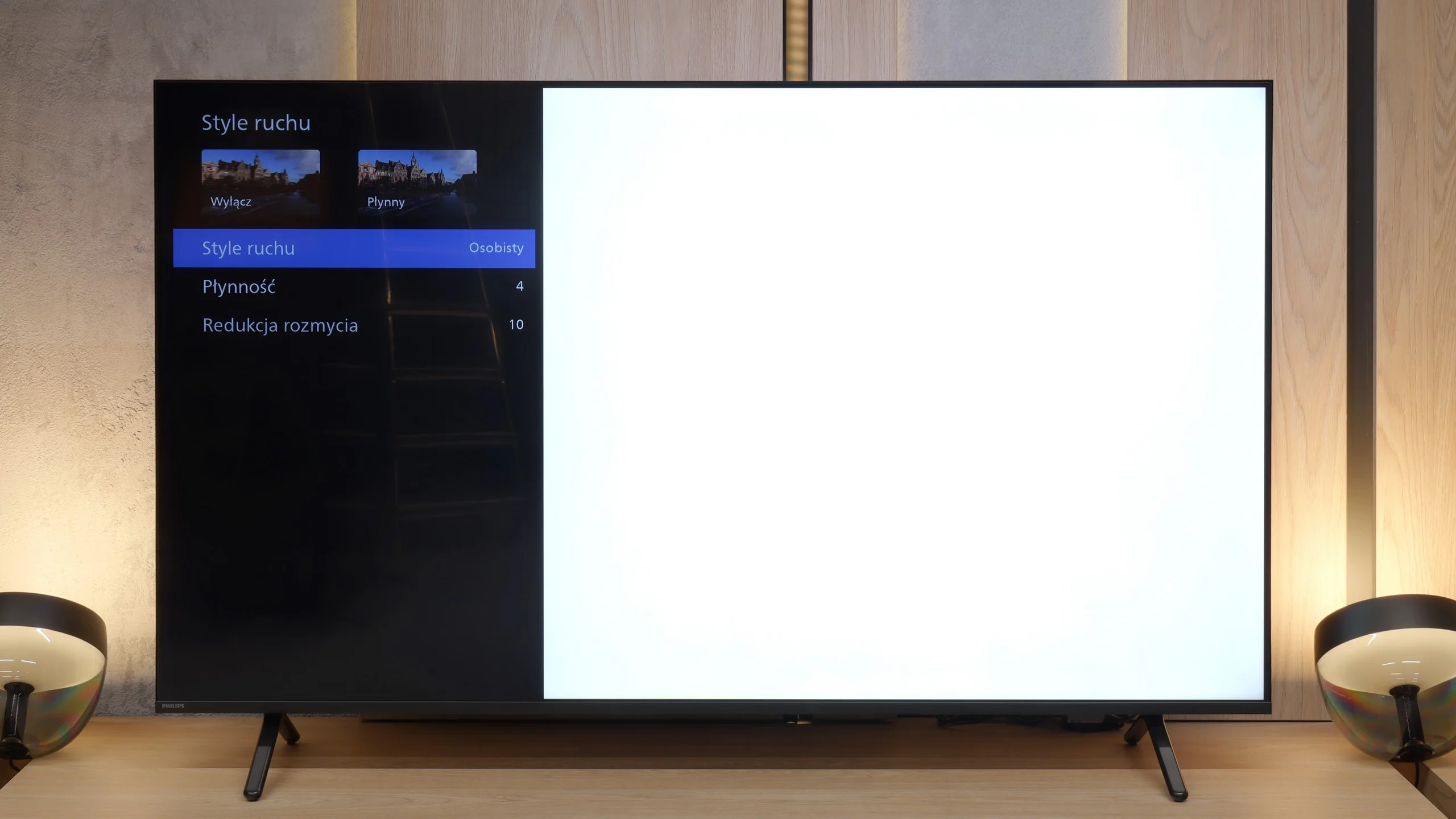
Blur (native resolution, maximum refresh rate):





Blur (4K@144Hz):



Blur (1080p@240Hz):


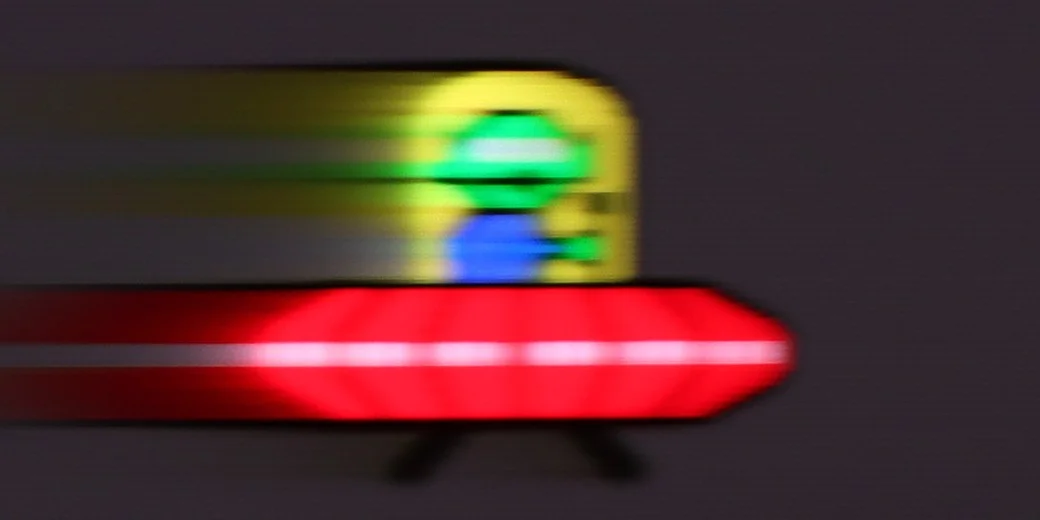
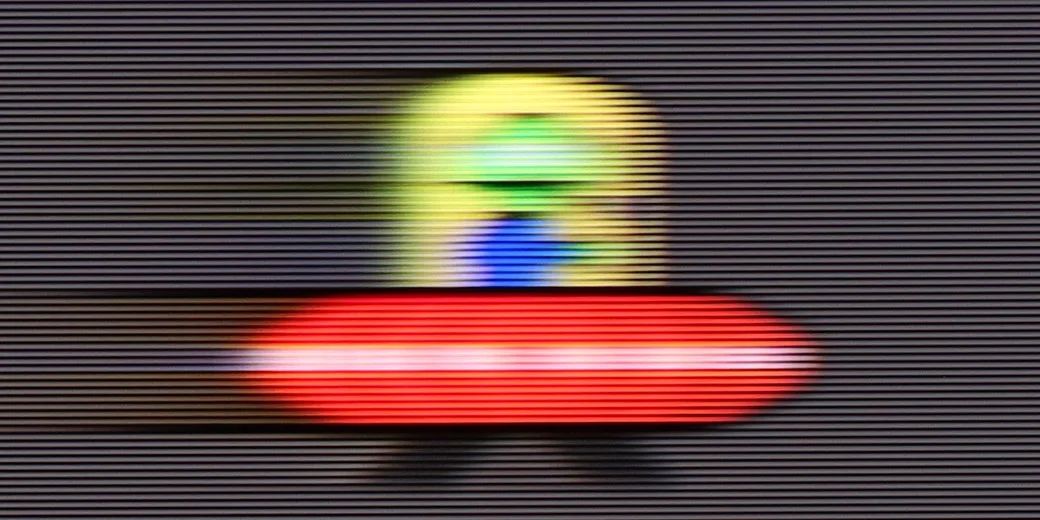
Philips MLED920 features a 144 Hz panel, which immediately suggests that we shouldn’t complain about motion smoothness. And indeed – for a VA panel, the motion blur is relatively low here, and while you can sometimes notice slight issues on darker backgrounds, they’re not something that will catch the eye of most people during regular viewing.
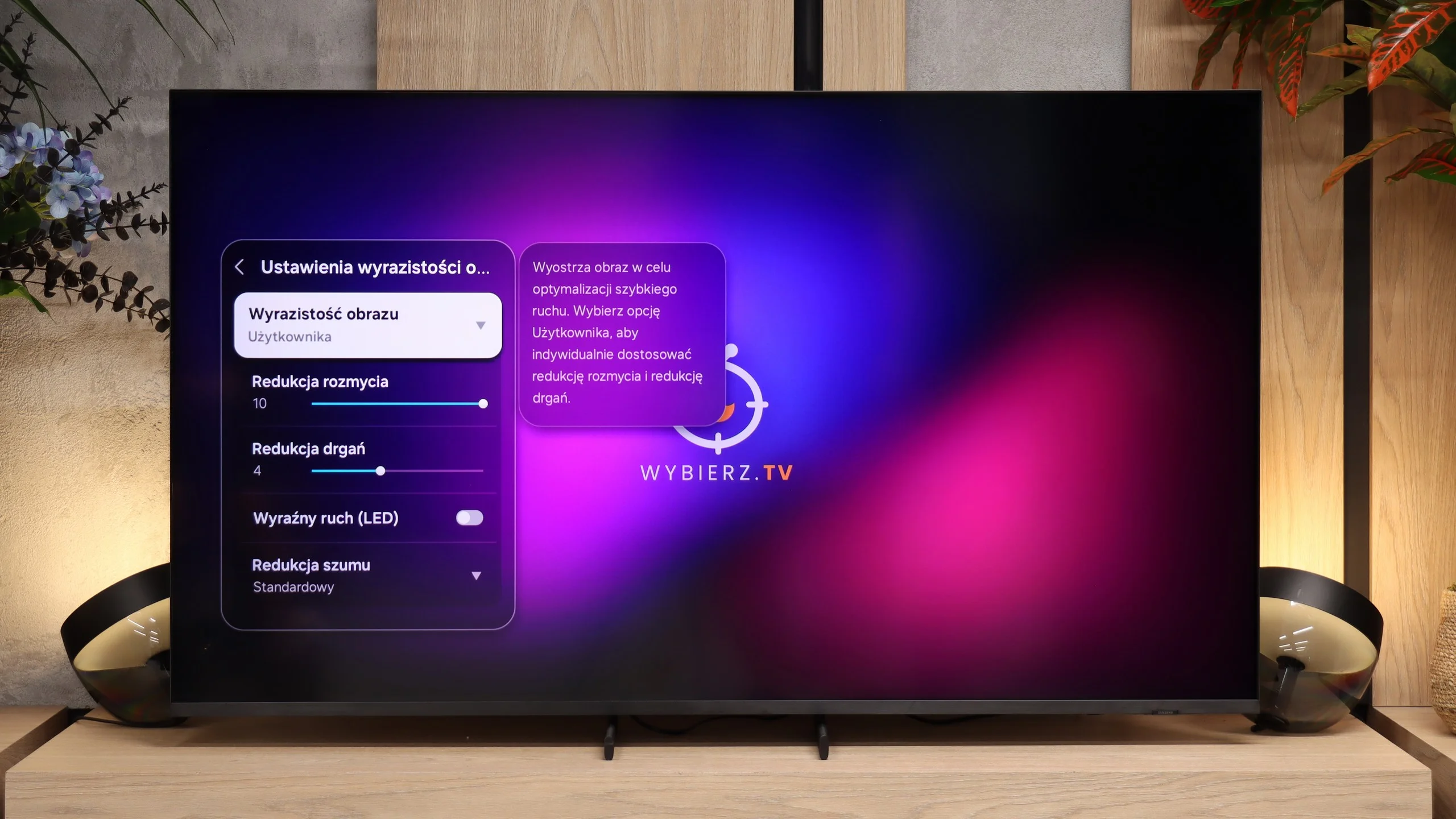
A big plus is also the presence of a motion smoother called “Motion Style.” It allows you to adjust the smoothness to your own preferences – if someone prefers a more “theatrical,” almost television-like character of the image, they can increase the sliders, and if they want to maintain the natural “judders” of a cinematic frame, they just need to set lower values. This way, everyone can find a happy medium.
R85H has a 144 Hz panel, so motion handling is really good here. You should remember that the extra hertz above 120 will mainly be used when connected to a computer, so in this category we don't treat them as any particular advantage. For films and TV, what's more important is that the panel is fast enough to provide access to an advanced motion smoothing feature, "Motion Clarity", which lets us set motion from more film-like to very smooth. The panel's response time is a bit worse. Since it's a VA panel, fast-moving objects can leave a slight trail. On a bright background this isn't very noticeable, but the darker the scene, the more noticeable the smearing becomes. This is a typical characteristic of this type of panel and it's easiest to spot in dark scenes.
Console compatibility and gaming features
9.8/10
9.6/10
- ALLM
- VRR
- VRR range48 - 144Hz48 - 240Hz
- Dolby Vision Game Mode
- Correct implementation of HGIG
- 1080p@120Hz
- 1440p@120Hz
- 4K@120Hz
- Game bar
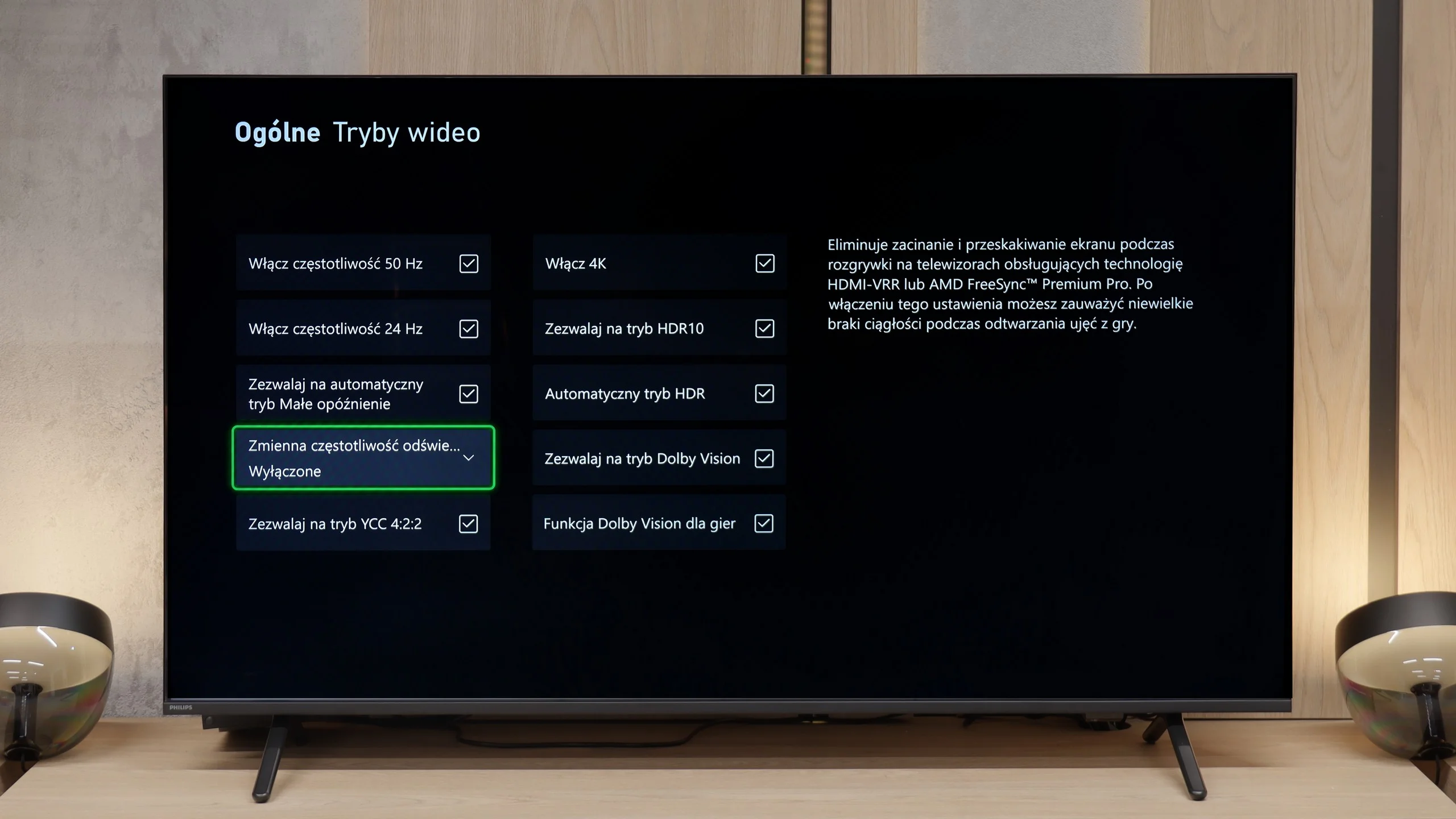
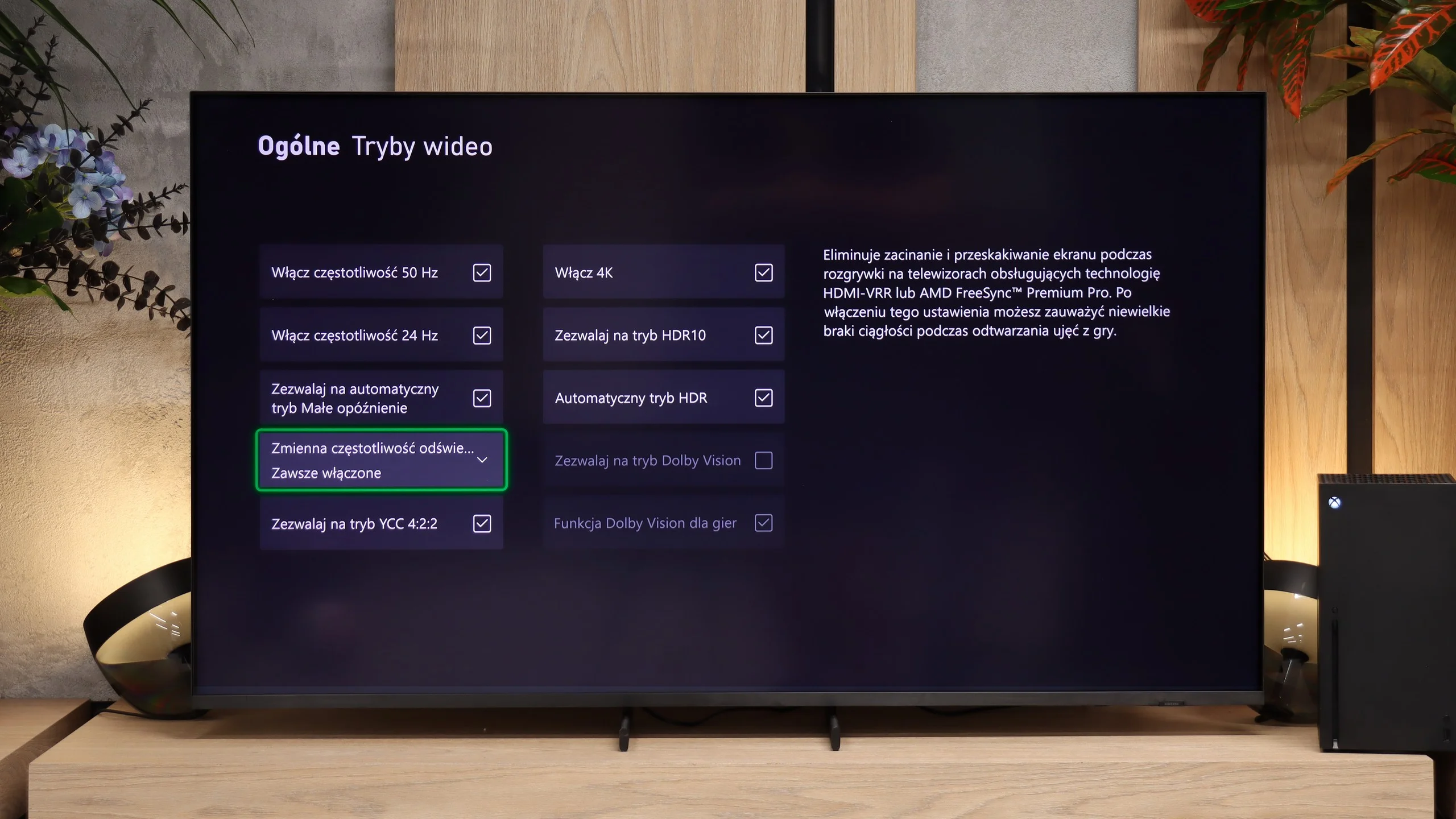
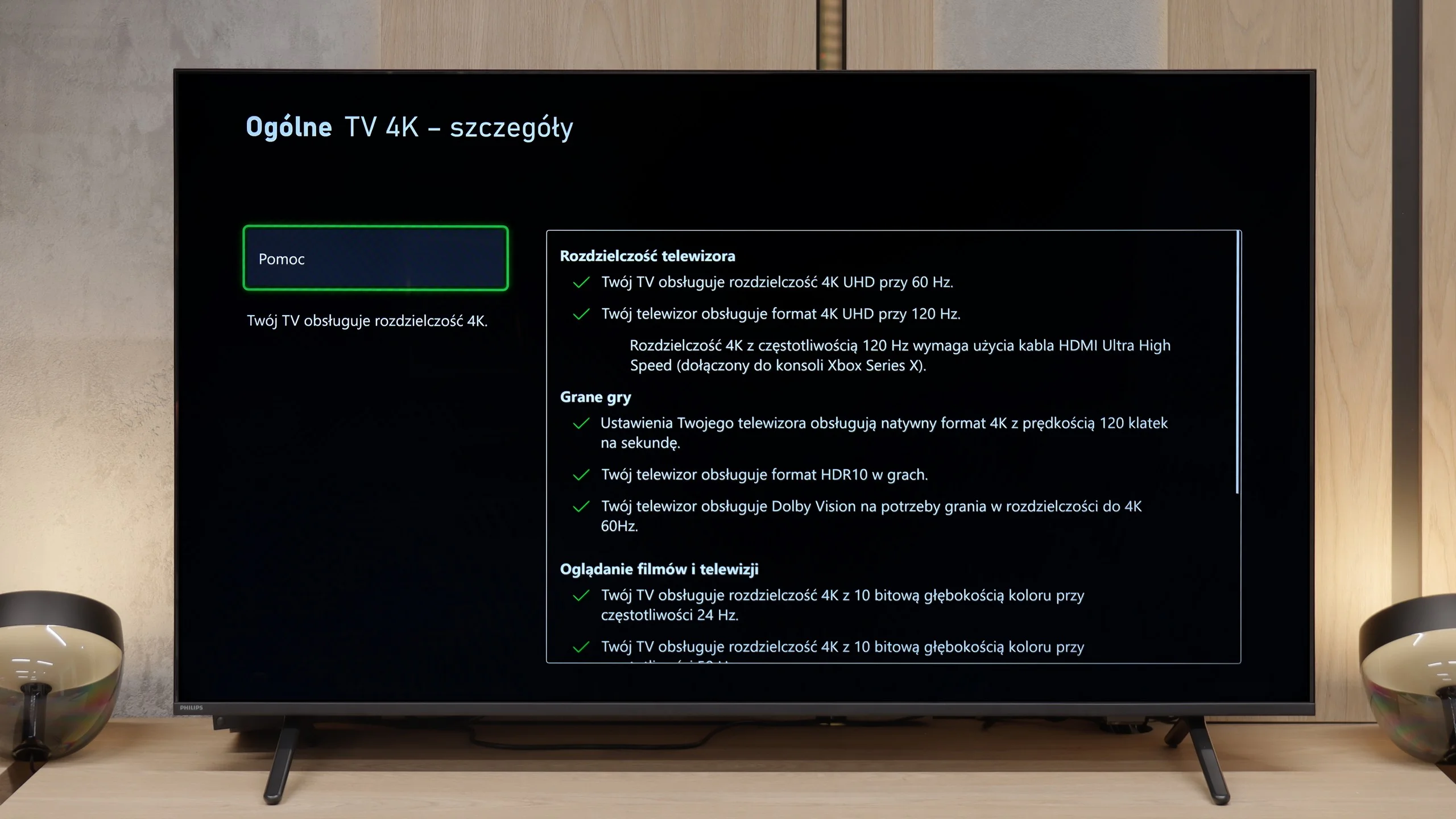
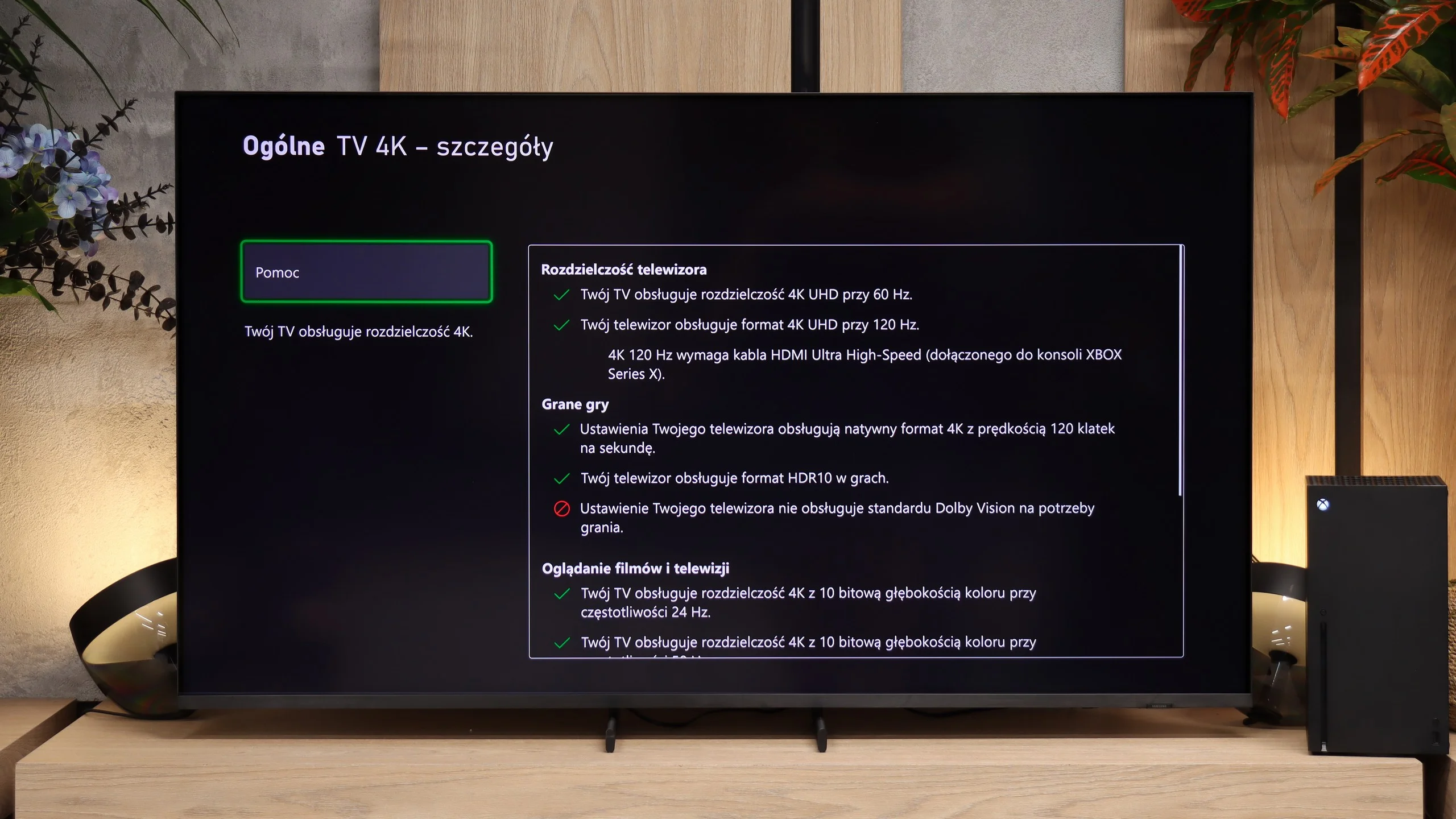
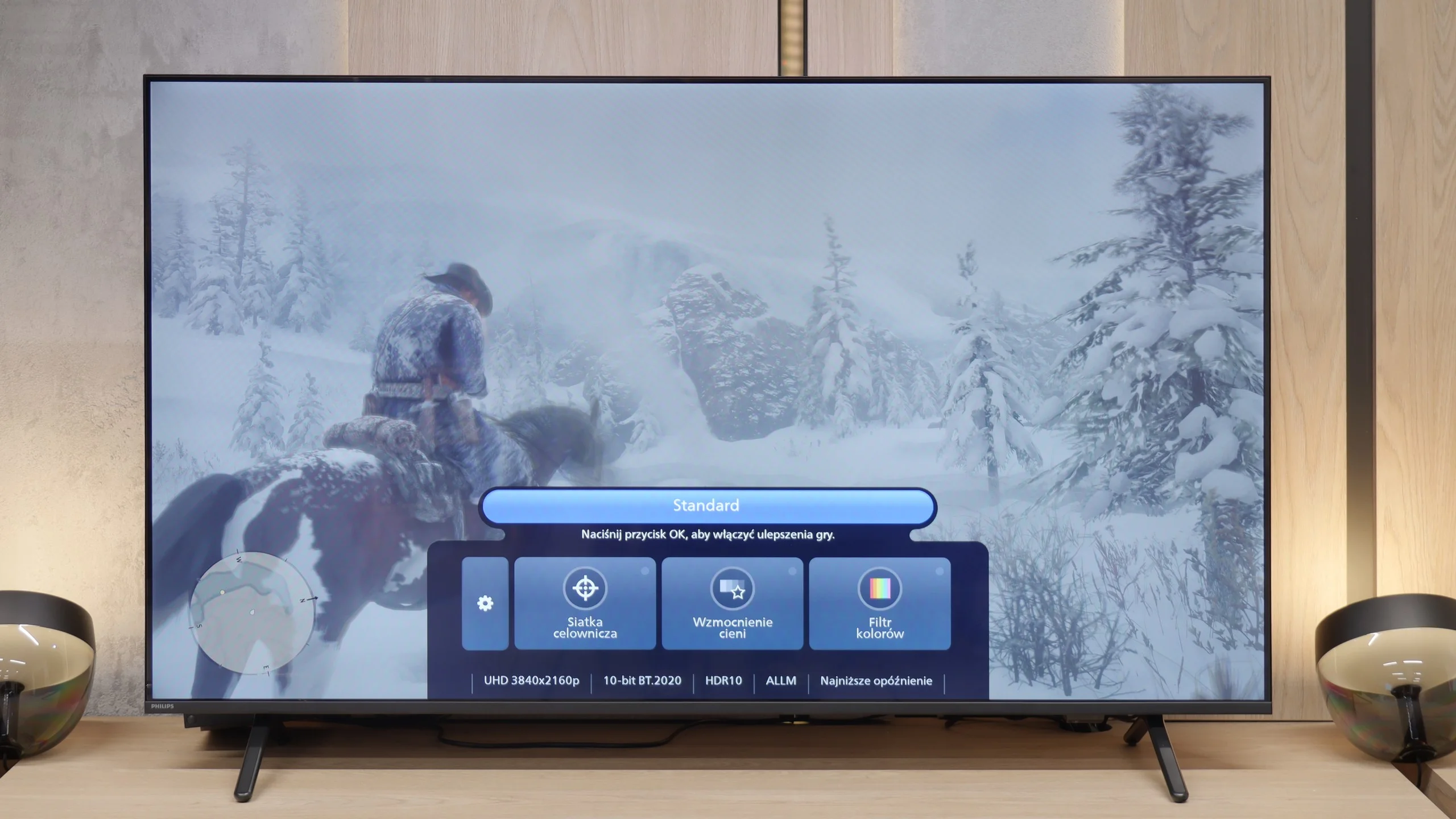
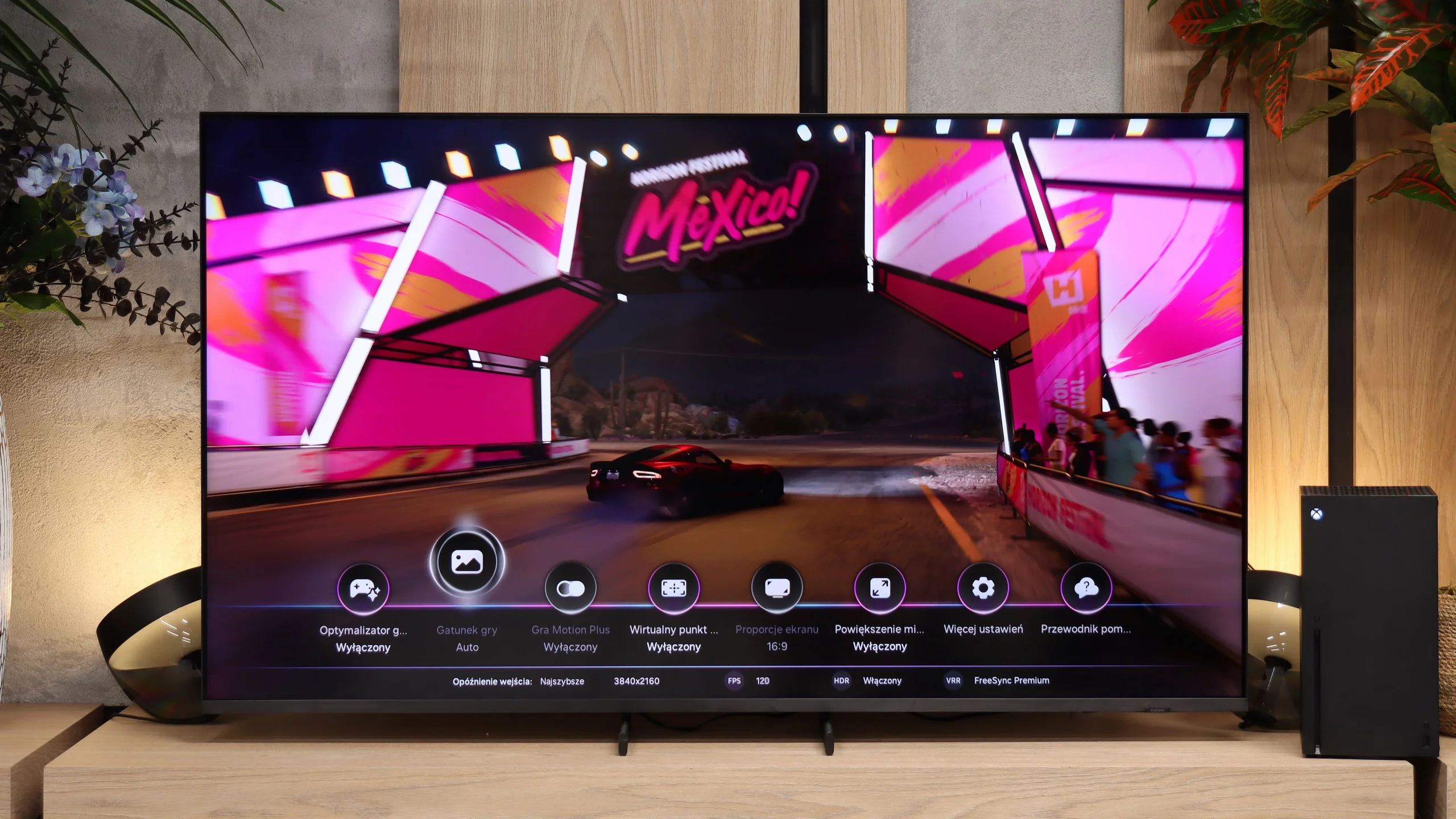
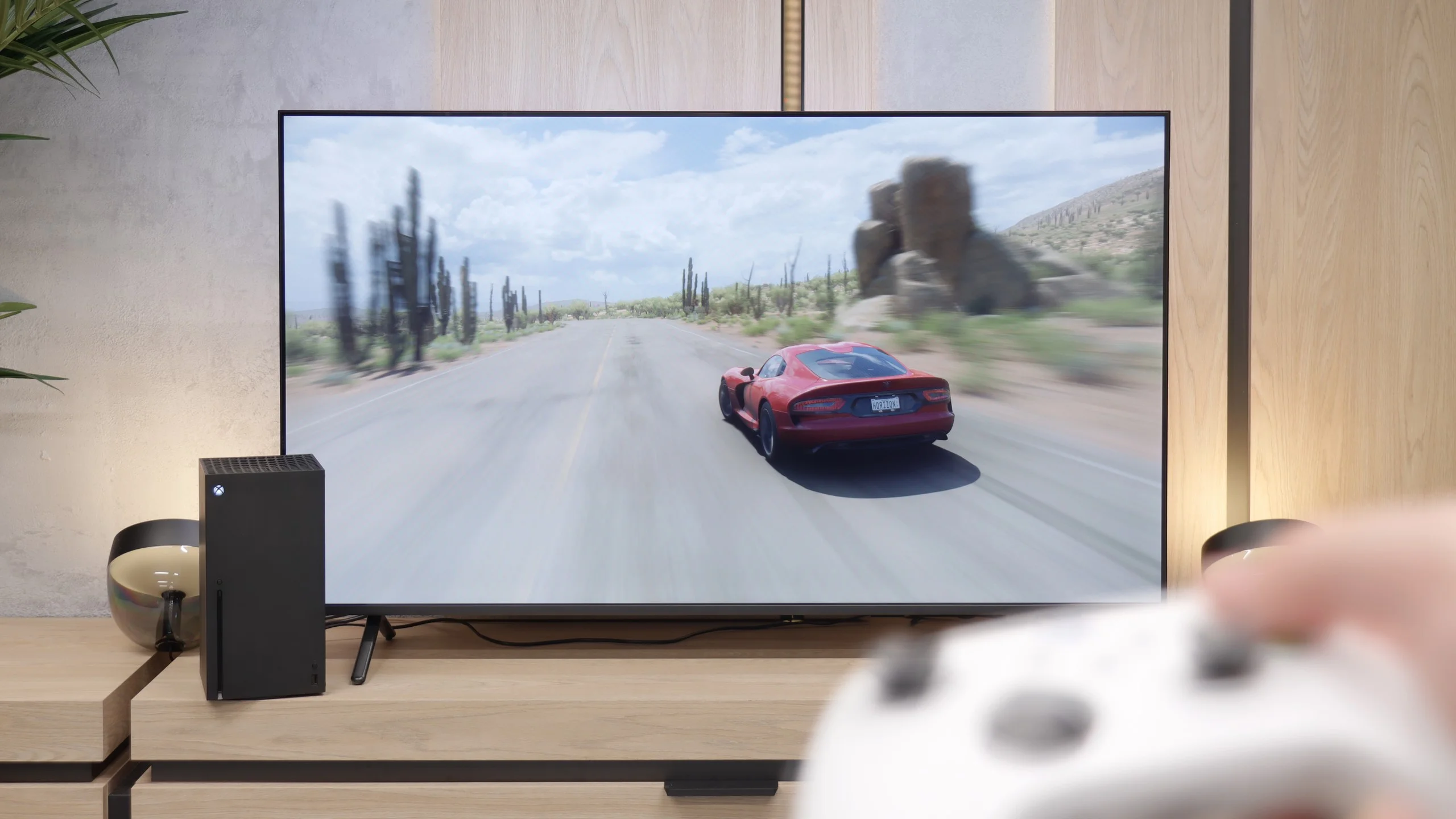
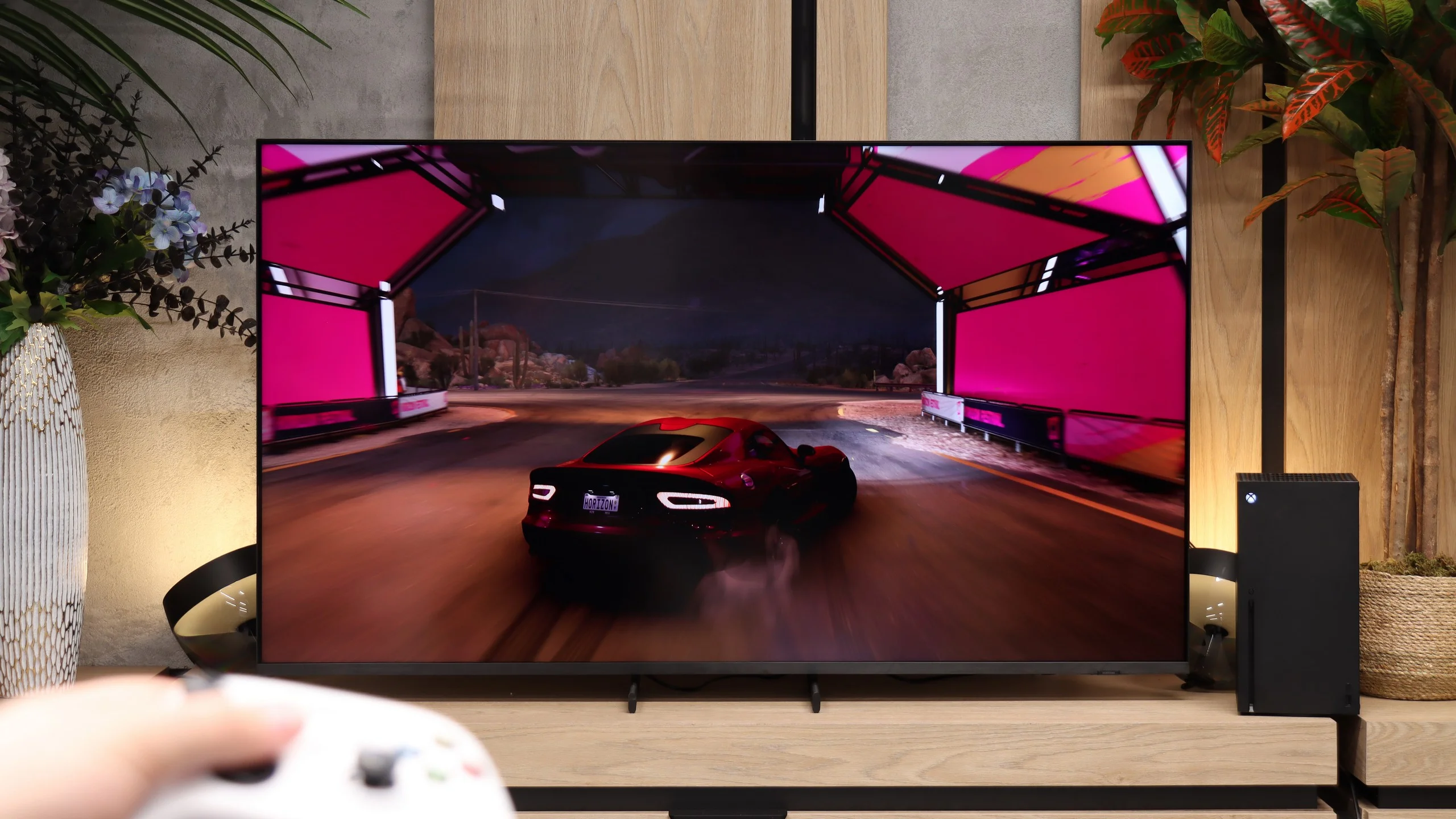
For gamers, the Philips MLED920 is truly a complete tool. The manufacturer has taken care of everything that is now considered standard in televisions for consoles and PCs. It has ALLM, so the console automatically switches the screen to game mode, there’s VRR and a 144 Hz refresh rate that ensures smooth gameplay even in fast-paced titles. All key HDR formats are supported – including HGiG and Dolby Vision Gaming for Xbox – which means that regardless of what you’re playing and on which console, the television will be able to extract the maximum potential from the image. In everyday gaming, the Game Bar proves useful too – a relatively simple implementation by Philips, but a functional panel where you can quickly check image parameters, enable VRR, or adjust details without leaving the game. It’s not as elaborate as the competition, but it does its job without any complaints. And finally, something that sets Philips apart from the competition – Ambilight. The three-sided LED backlighting can make a huge impression in games, especially in the evening. It’s also a way to slightly 'expand' the screen and create a greater sense of immersion. And since coloured LEDs have recently become almost an essential element of a gamer’s room, the MLED920 fits perfectly into this trend.
Samsung has been steadily expanding its gamer features for several years, and the R85H really doesn't lack anything important. The TV supports 4K at 120 Hz, VRR and ALLM, so it can easily make full use of the PlayStation 5 or Xbox Series X. HGiG also works properly, so when HDR is set correctly on the console, games maintain their intended brightness and you don't unnecessarily lose detail in the brightest parts of the image. The only bigger omission is Dolby Vision Gaming, which Samsung doesn't support on any of its TVs.
The Game Bar is also very useful, a handy menu you can bring up without leaving the game. You can quickly check the frame rate, VRR status or change the key picture settings. Samsung also includes a few less obvious features, like the ability to change the aspect ratio or Game Motion Plus, which can further smooth games running at 30 or 60 fps. Of course this comes at the cost of higher input lag (around 55 ms), but for slower-paced titles it may be an interesting option for some.
Input lag
9.6/10
9.6/10
SDR
HDR
Dolby Vision
The input lag on the Philips MLED920 is really very good – in 120 Hz mode, we measured values below 10 ms, which places this model among the absolute top of LCD TVs in terms of responsiveness. Even at 60 Hz, a result of around 18 ms is fully acceptable and won't interfere with any type of gameplay. One exception is the Dolby Vision mode at 60 frames, where the latency can increase to as much as 35 ms. This is a result that may be a bit glaring for esports players, but it must be stated honestly – for most so-called "casual gamers," it will be absolutely imperceptible. Especially since we're talking about values that still allow for comfortable gaming without major compromises.
Input lag on the R85H is low, though not record‑breaking. At 120 Hz it's around 12–13 ms, and at 60 Hz about 17–18 ms. In practice it doesn't make much difference. Controls are responsive and you don't notice any delay during normal gaming.
Compatibility with PC
4/10
8/10
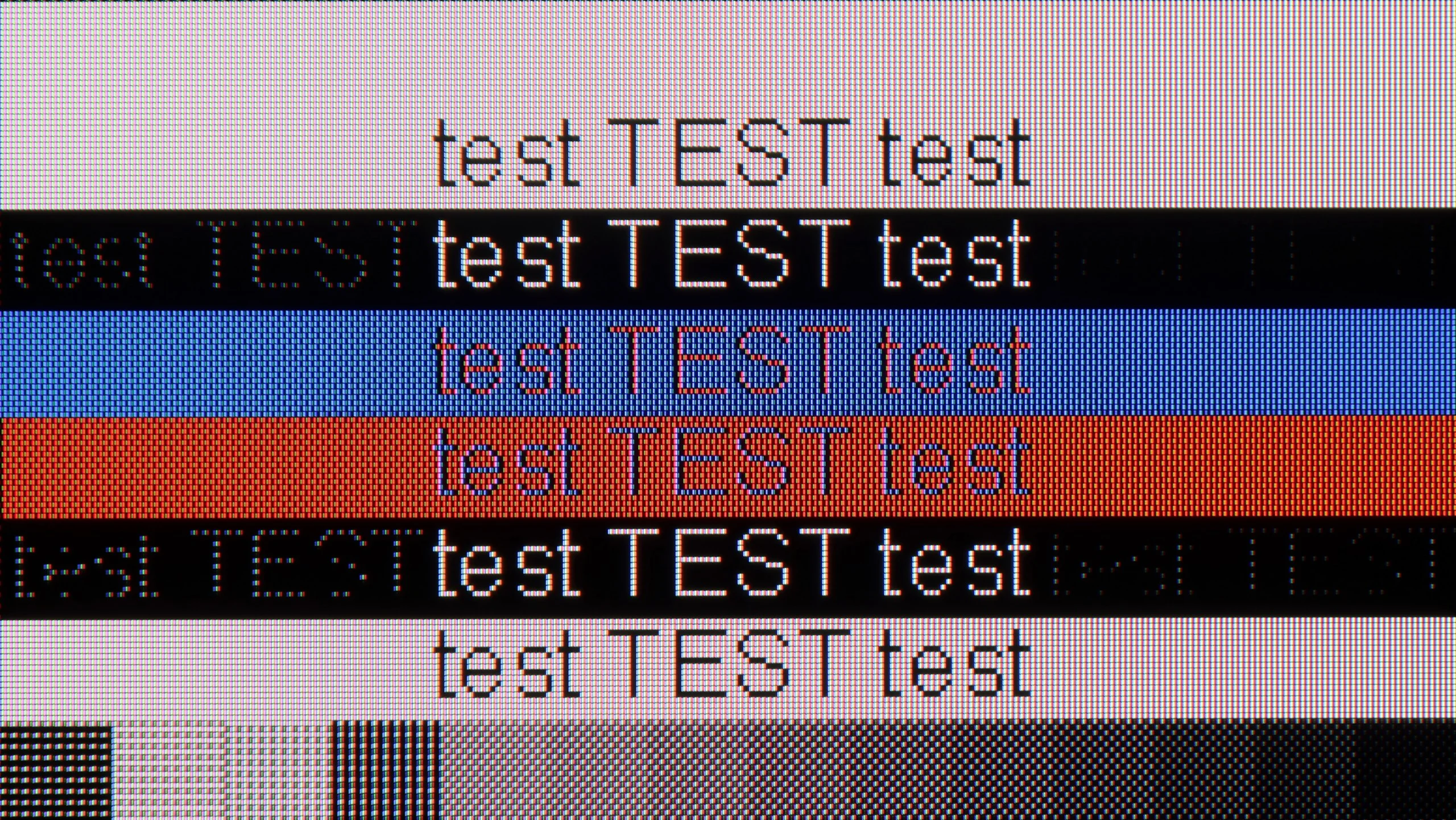
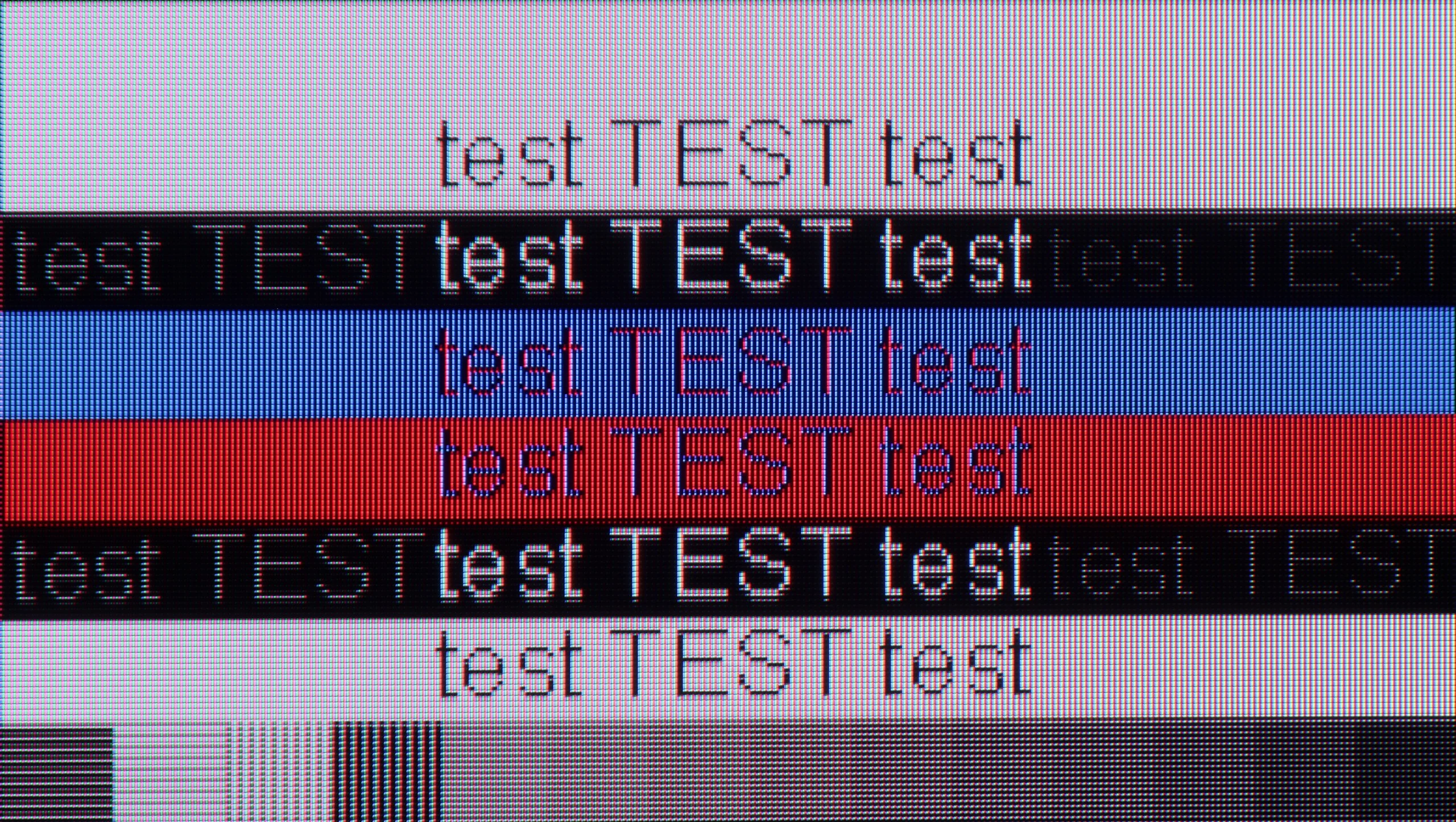
The photo shows the legibility of small fonts. Ideally, lines should be the same thickness on both light and dark text, with minimal pixel gaps.
When it comes to working with a PC, the Philips MLED920 evokes quite mixed feelings. On one hand, it looks impressive on paper – we have 144 Hz, support for G-Sync and FreeSync, so in terms of gaming on PC, the TV does not disappoint. Anyone looking for a large screen for computer games gets a solid package of features here. However, when we try to use it as a typical monitor for everyday work, its limitations quickly become apparent. The fonts do not look the best – there is noticeable strong dithering, coloured letters can be jagged, and with very dark text, there are even strange anomalies, as if the panel is losing thin lines and having trouble reproducing them correctly. In short: For PC gaming, yes. For any work and reading text: a definite no.
The R85H has plenty to offer when hooked up to a PC as well. In 4K it can run at the full 144 Hz, and if you prioritise getting the highest possible frame rate, dropping down to Full HD lets the TV push the refresh rate up to 240 Hz. It also supports G-Sync and FreeSync and has low input lag, so for gaming the R85H can comfortably serve as a large monitor for players. Text legibility, however, is a bit weaker. The TV correctly supports 4:4:4 chroma, so in theory you have everything needed for sharp font rendering. In practice, though, some fonts show small coloured artefacts, especially with dark text and high-contrast edges. It's not a problem that prevents normal use, but if you plan to sit close to the screen and use the R85H mainly as a monitor for text, it's worth keeping in mind. It's definitely better suited to PC gaming.
Viewing angles
3.2/10
4.8/10
The viewing angles on the MLED920 are classic for VA type panels – even a slight tilt from the centre causes the image to start losing colours, contrast weakens, and the overall picture becomes quite flat and less appealing. There are no miracles here. So if you’re watching films with a larger group and everyone is sitting a bit to the side, this will be slightly noticeable. On the other hand, you get what you pay for: thanks to this panel, the MLED920 can display a much deeper black than TVs with IPS panels.
The viewing angles on the R85H are fairly acceptable, and that's really about the best thing you can say about them. It's still a VA panel, and those types of panels aren't the best choice when you often watch the TV from a wide angle. As you move to the side the image loses contrast, and the blacks start to get greyer. The R85H does, however, have an advantage over classic VA TVs. Thanks to its three-colour RGB backlight, colours viewed at an angle don't lose saturation as quickly and the washed-out effect is a bit less noticeable. If you often watch TV in a larger group and some people sit well off to the side, though, you'll find screens on the market that handle this much better.
Daytime performance
5.5/10
7.3/10
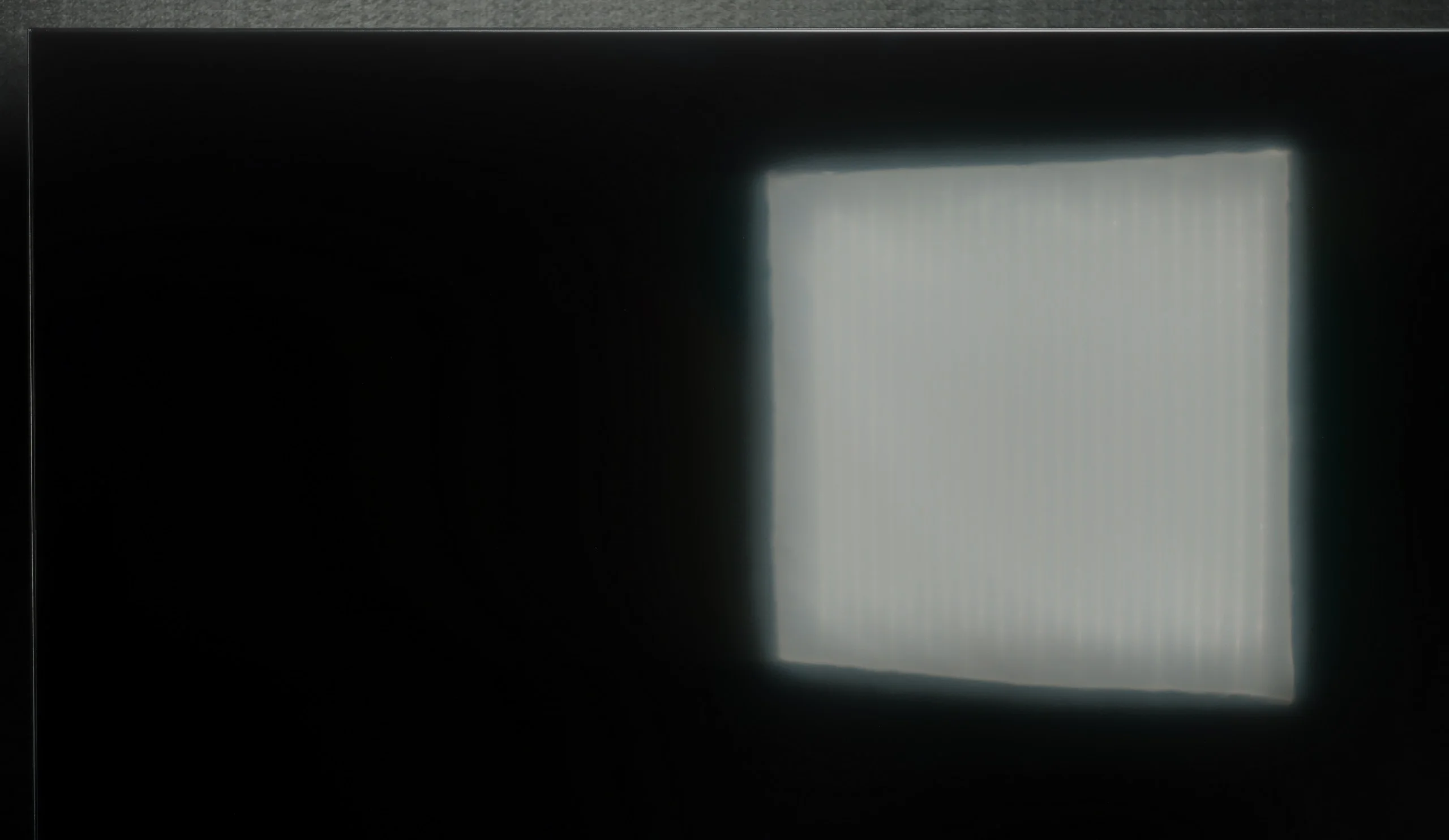
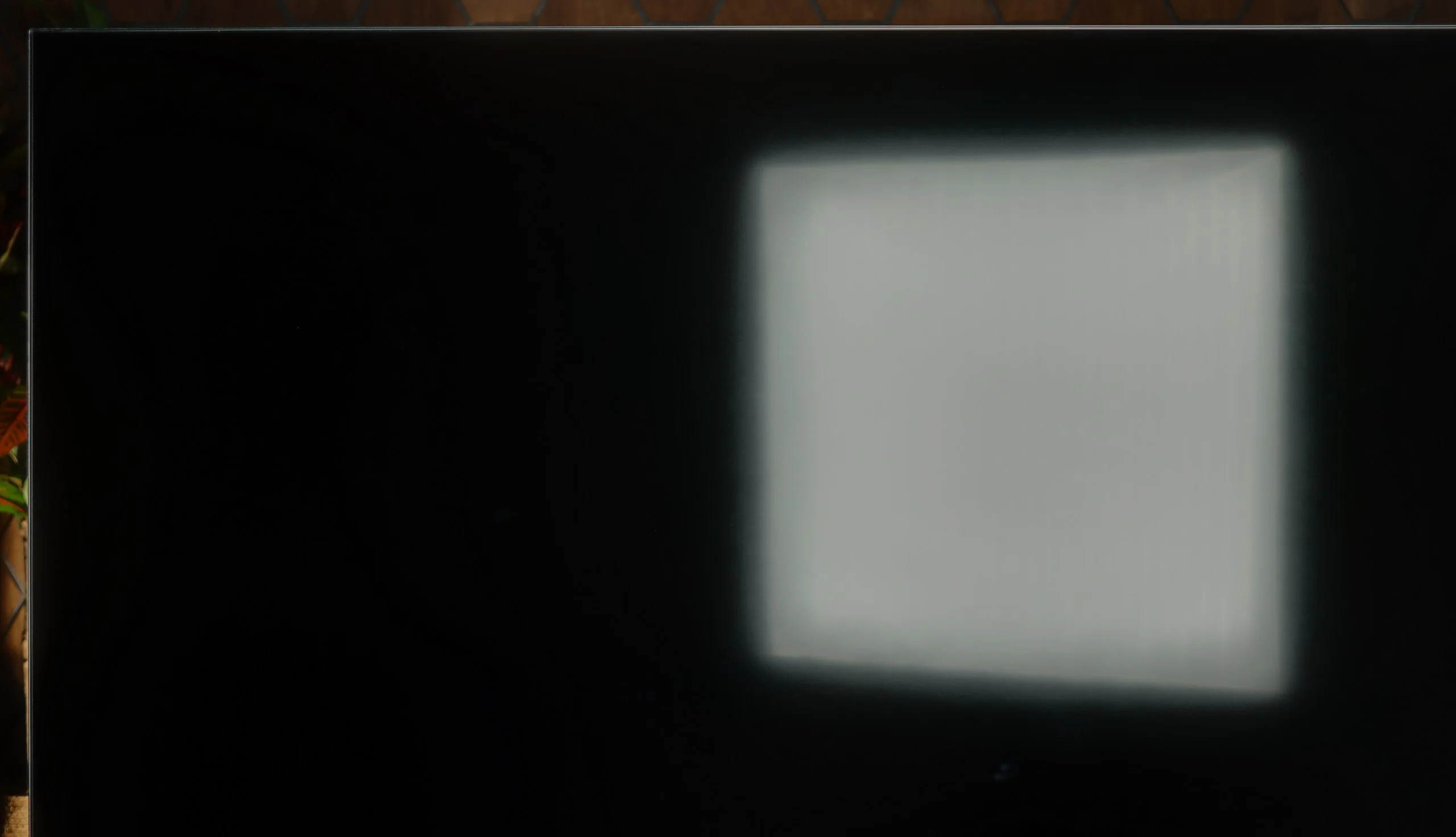
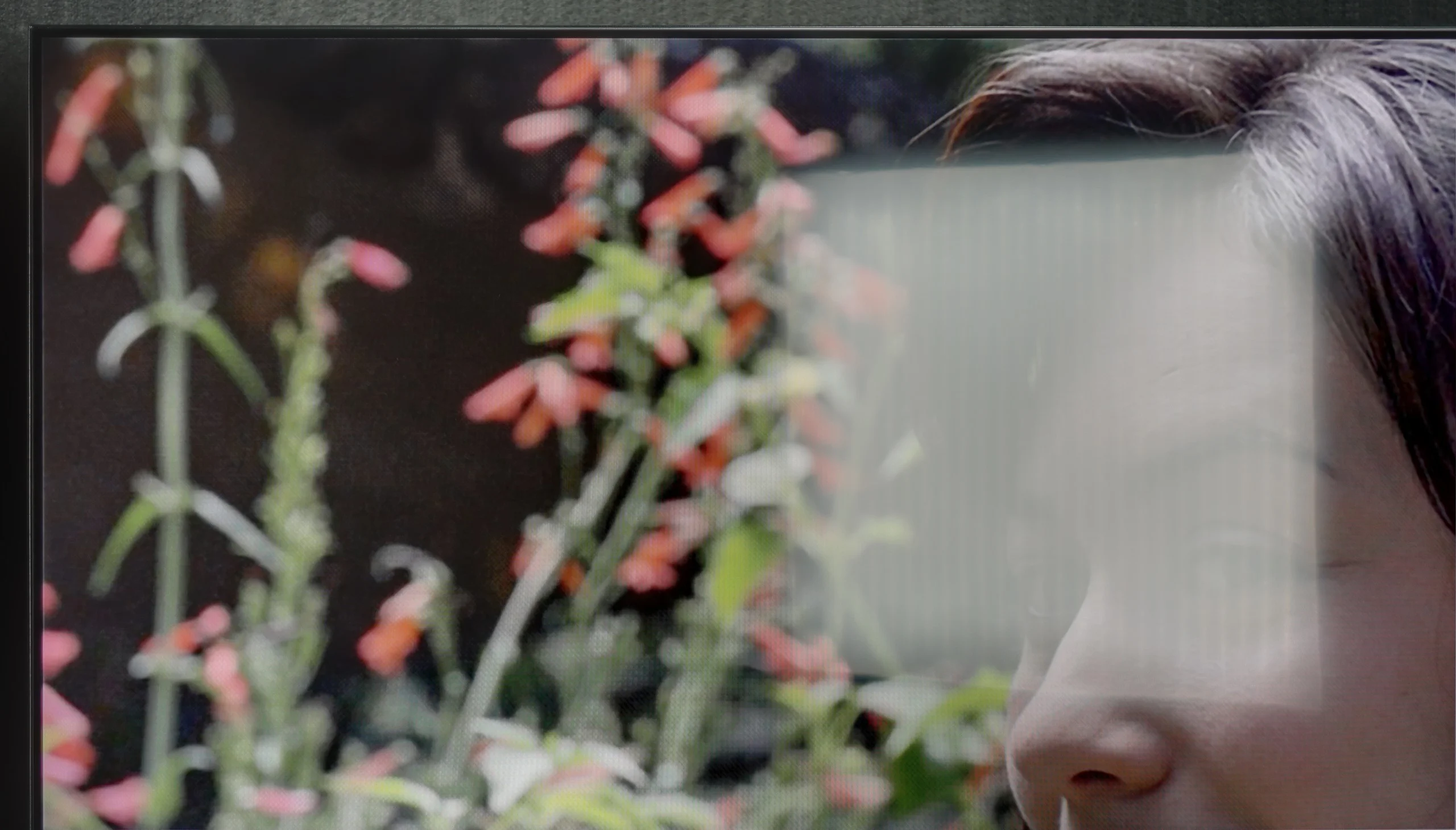
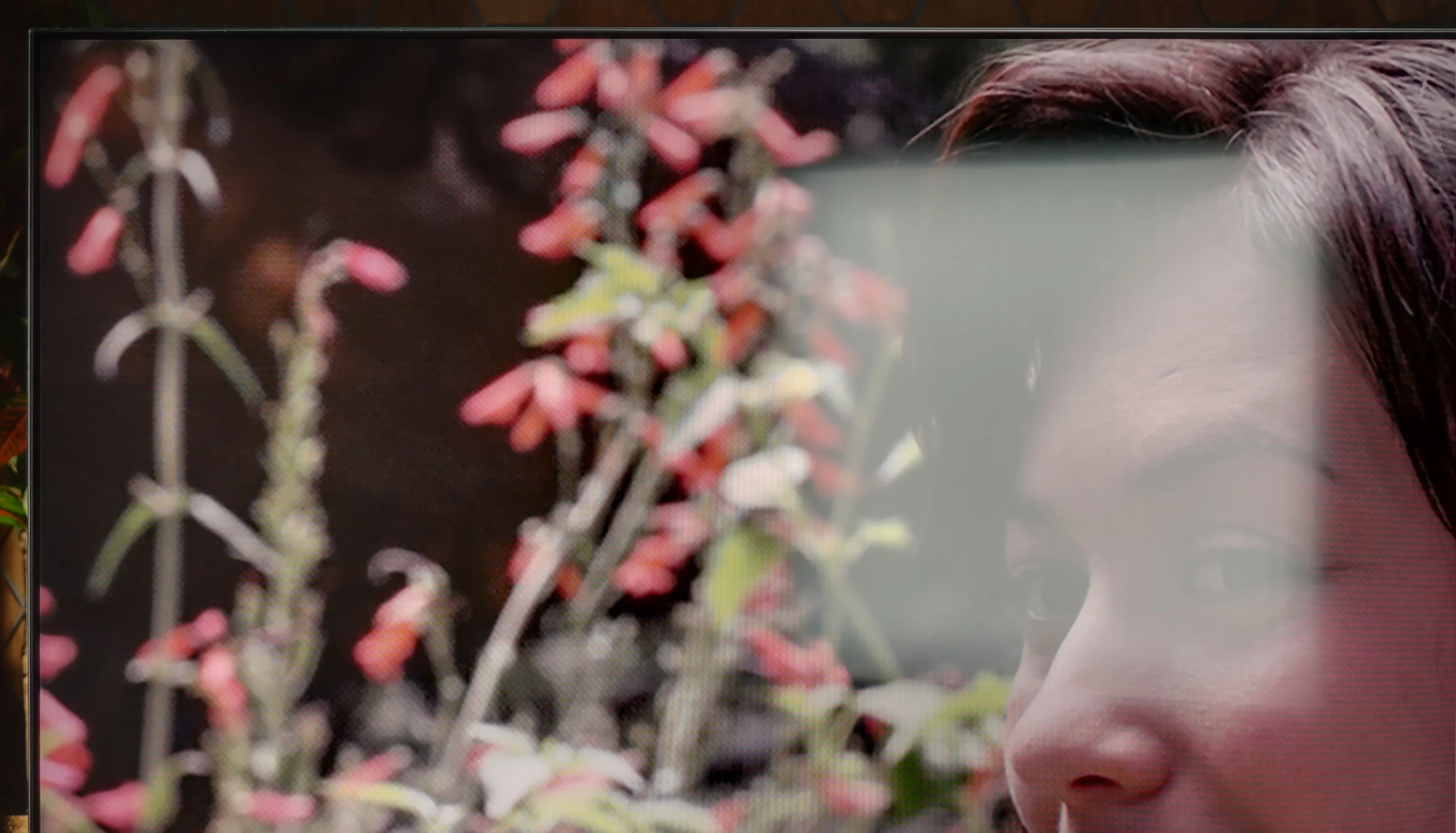
Panel brightness
Samsung R85H / R86H: 726 cd/m2
Philips MLED920 / MLED910: 421 cd/m2
Philips MLED920 performs quite well in everyday use. The satin finish on the panel effectively reduces reflections, and in most moderately sunny living rooms, it manages unwanted glare quite well. However, it's important to remember that this is not a TV that dazzles with brightness – the average value in SDR hovers around 450 nits. In very bright rooms, particularly with large south-facing windows, the screen doesn't always stand up to the intense daylight. In such situations, it's worth supporting it with even light curtains, so viewing comfort doesn't suffer too much.
In a bright room the R85H performs quite well, although a lot depends on the local dimming setting. For daytime viewing we recommend setting it to High, because the TV noticeably increases its brightness then. On large bright areas it reaches around 600 nits, and on smaller sections it can approach even 1000 nits, so the picture stays readable even with stronger light in the living room. The satin coating handles reflections decently and in most cases does not turn the screen into a mirror, though strong light sources will still of course be visible.
However, keep in mind that the High setting means the local dimming algorithm works more aggressively. So for evening viewing we recommend switching it to Low. The TV does not shine as brightly then, but it preserves detail in the brightest parts of the image better, which after dark we think is far more important than maximum brightness.
Local dimming | 5% | 10% | 20% | 30% | 40% | 50% | 60% | 70% | 80% | 90% | 100% |
|---|---|---|---|---|---|---|---|---|---|---|---|
Low | 445 | 485 | 517 | 532 | 537 | 542 | 551 | 556 | 556 | 573 | 556 |
Panel details
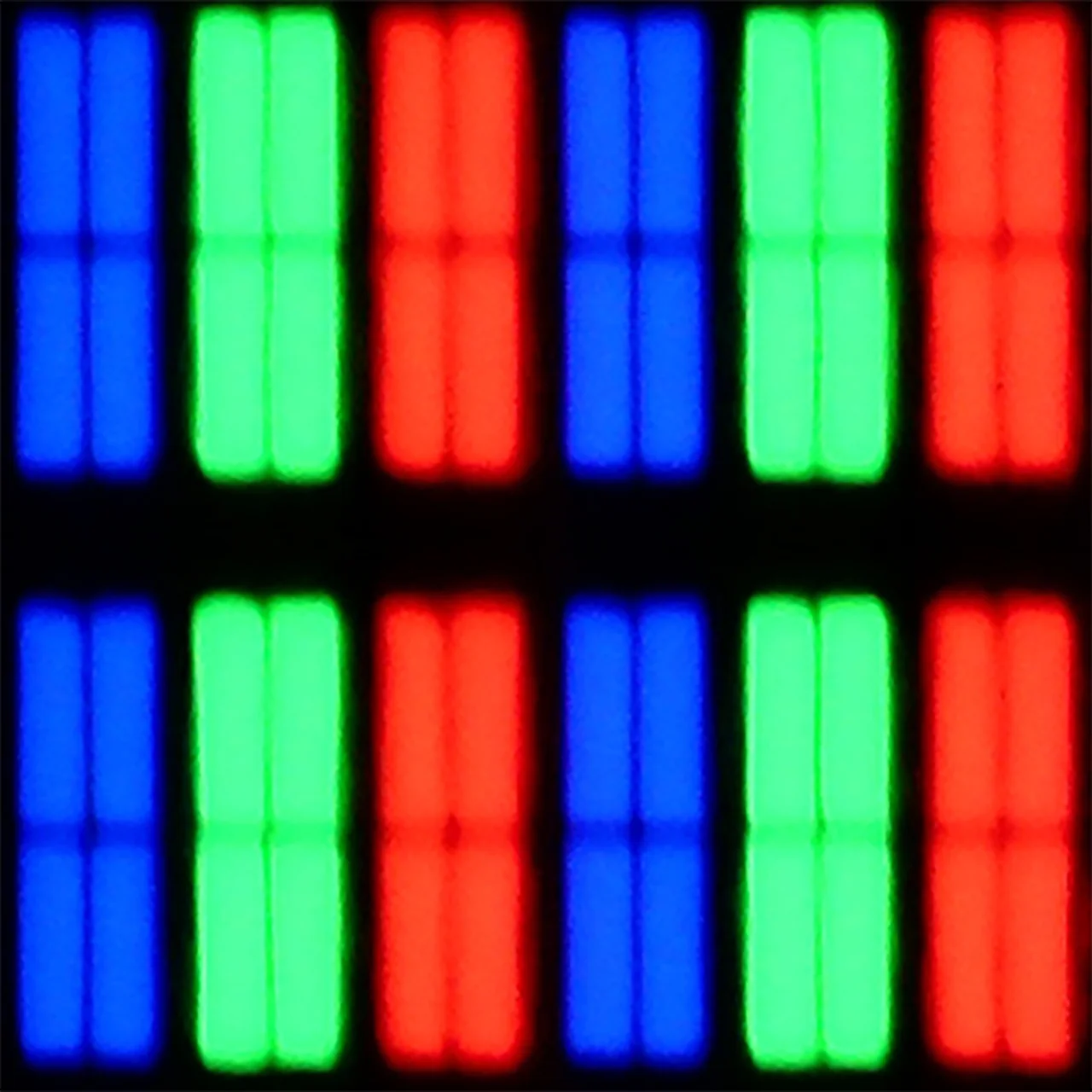
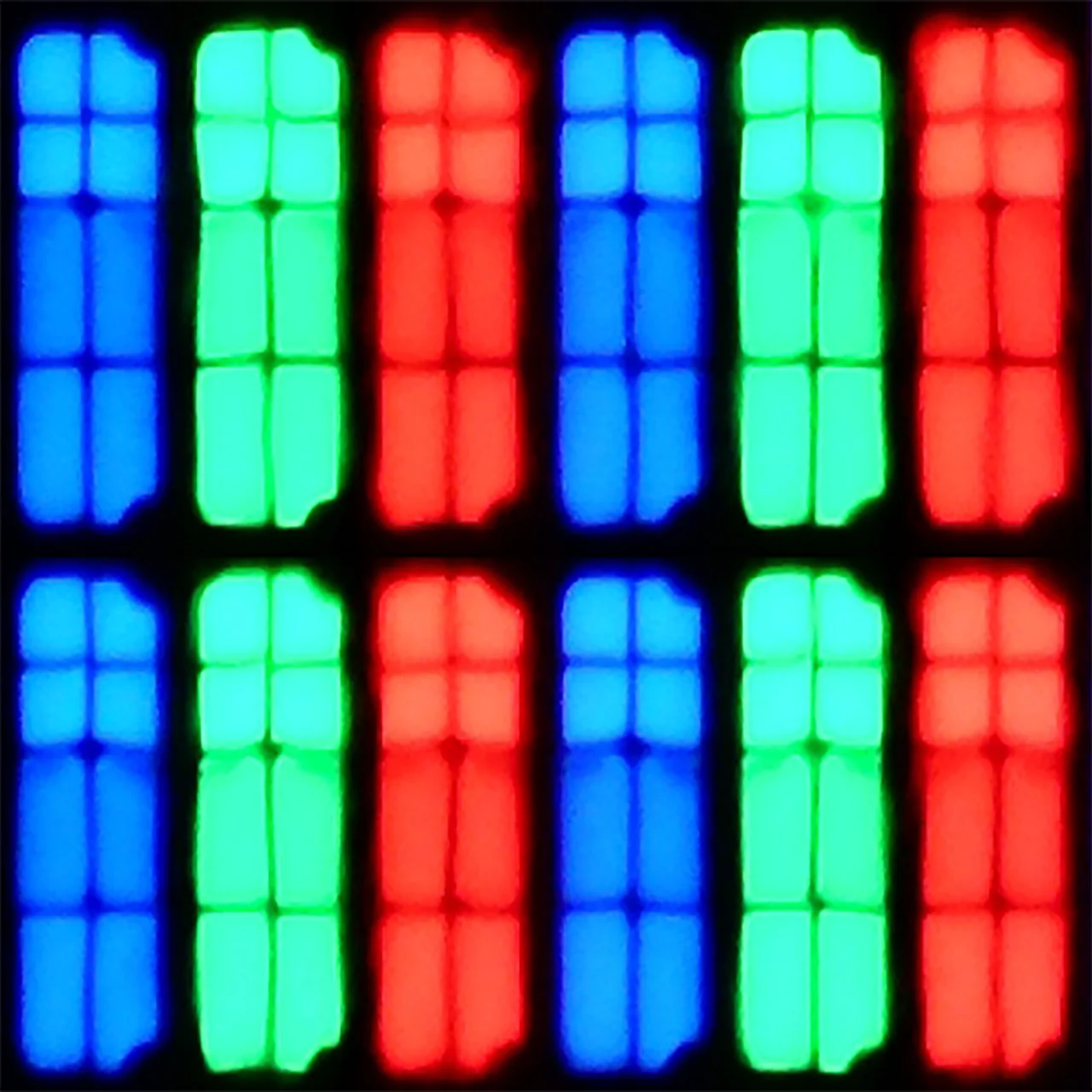
Subpixel Structure:
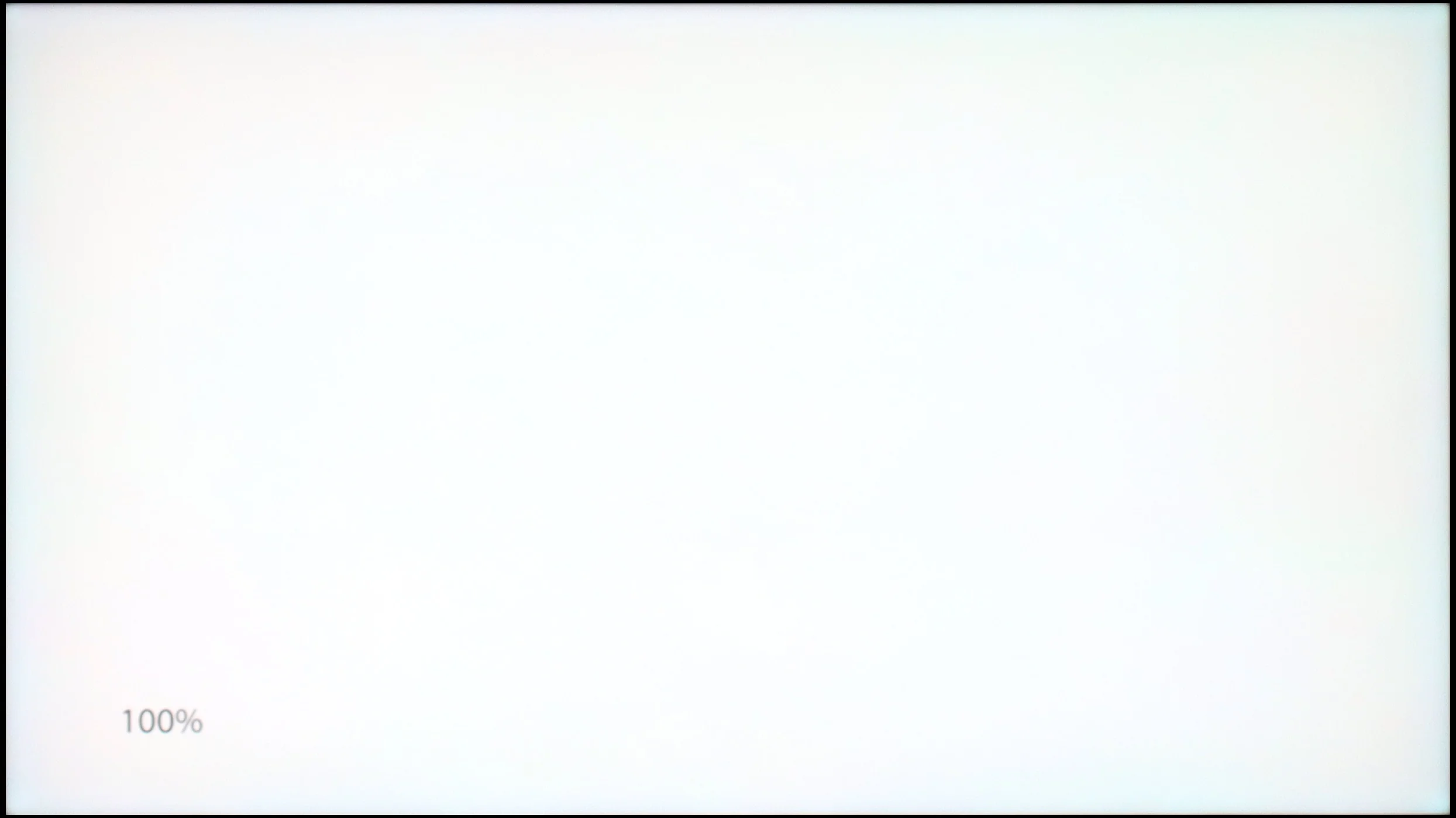
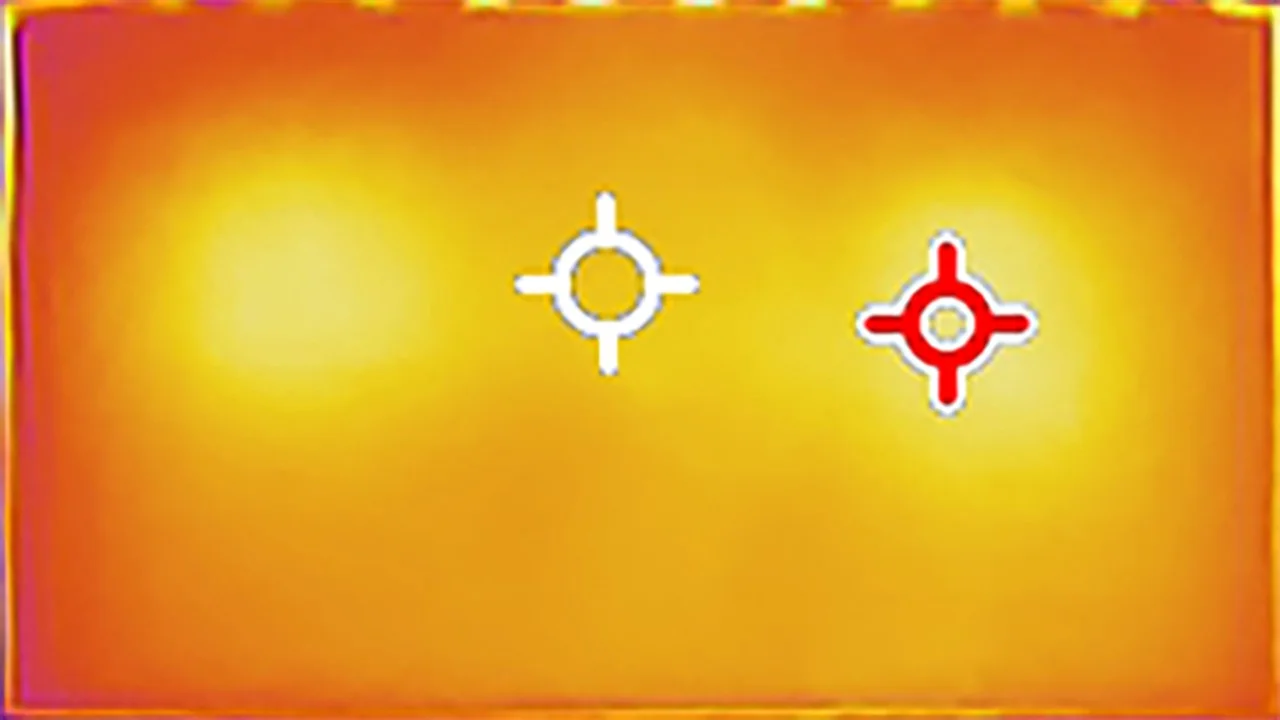
Panel uniformity and thermal imaging:
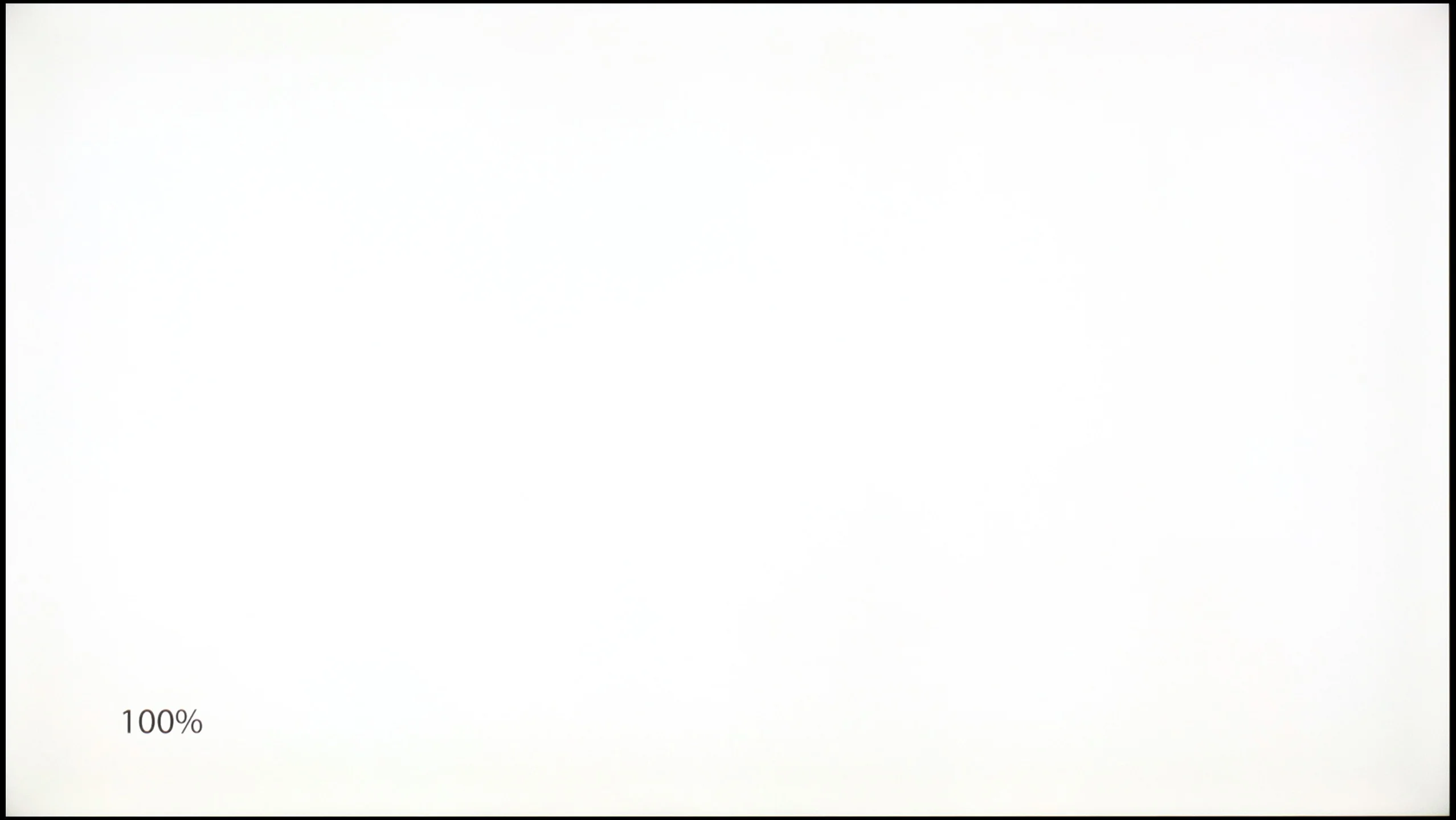

Philips MLED920 / MLED910
Samsung R85H / R86H
TV features
5.5/10
7.3/10
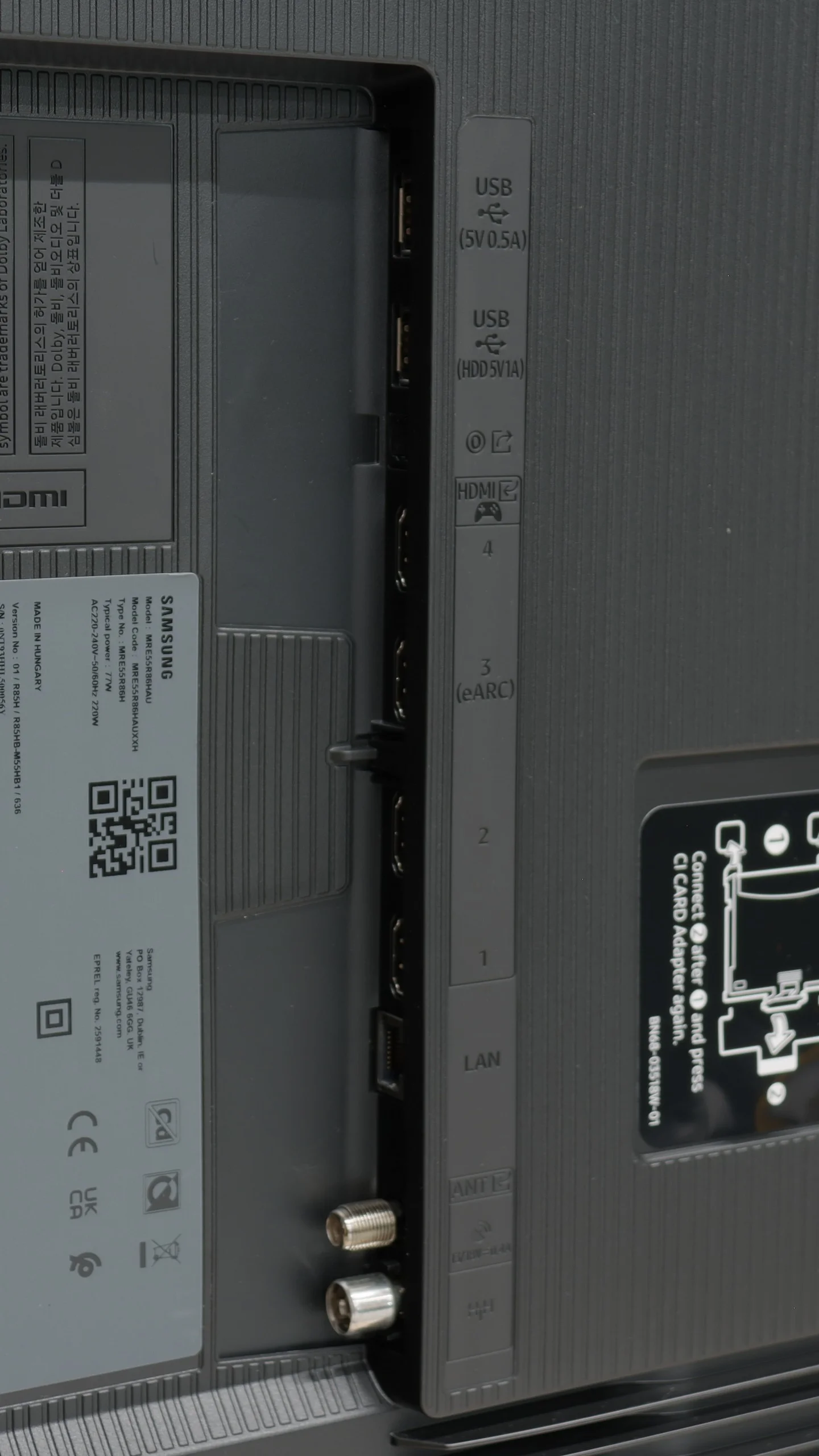
- SystemTitan OSTizen
- System performanceDecentVery good
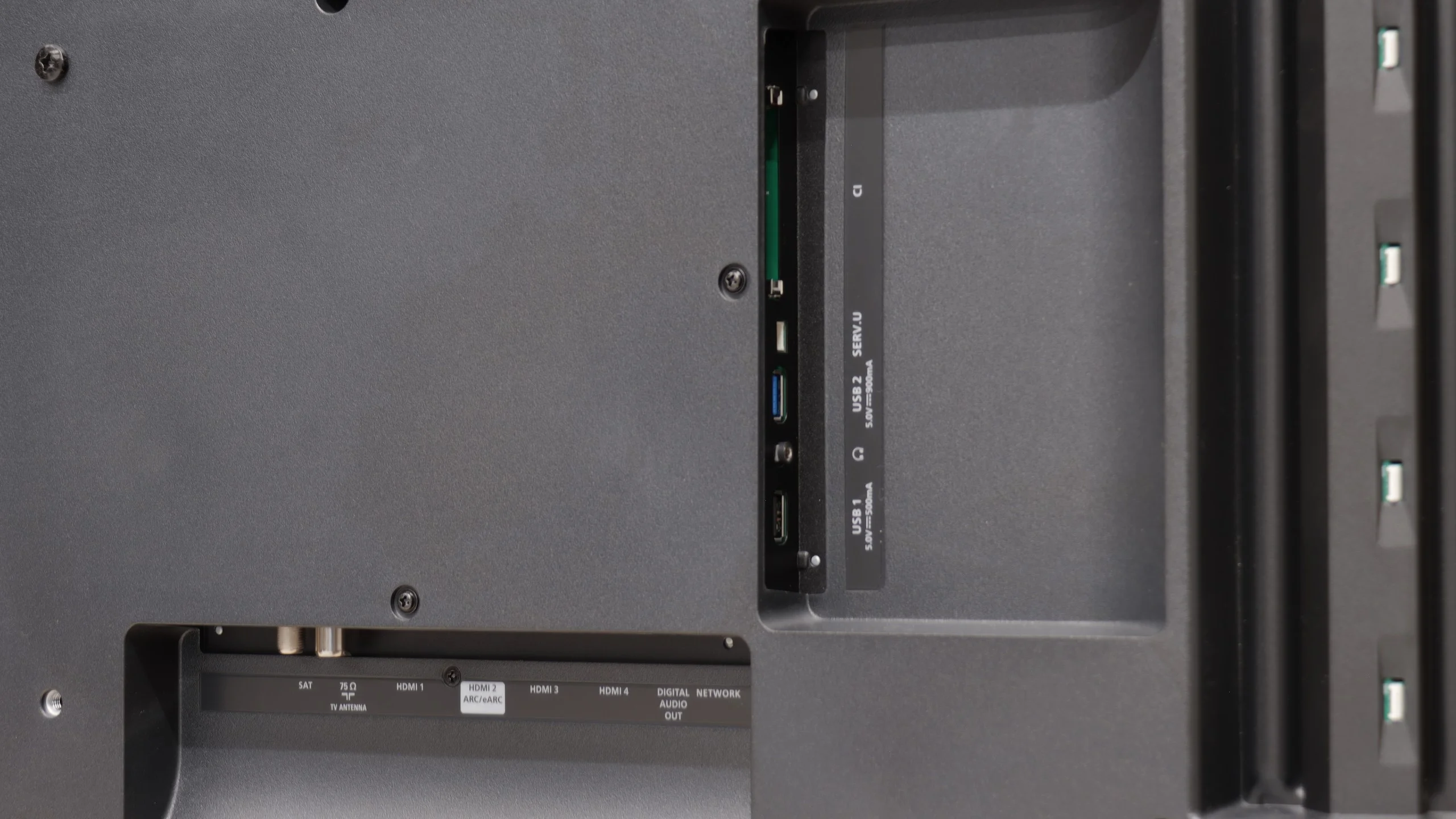
- HDMI inputs0 x HDMI 2.0, 4 x HDMI 2.1 48Gbps0 x HDMI 2.0, 4 x HDMI 2.1 48Gbps
- OutputsToslink (Optical audio), eARC (HDMI), ARC (HDMI), Mini-Jack (Headphones)Toslink (Optical audio), eARC (HDMI), ARC (HDMI)
- Network InterfacesWi-Fi 2.4GHz, Wi-Fi 5GHz, Ethernet (LAN) 100MbpsWi-Fi 2.4GHz, Wi-Fi 5GHz, Ethernet (LAN) 100Mbps
- TV receptionDVB-T, DVB-T2, DVB-S, DVB-S2, DVB-CDVB-T, DVB-T2, DVB-S, DVB-S2, DVB-C
Classic features:
- Recording to USB (terrestrial TV)
- Recording programming
- Picture in Picture (PiP)
- RF remote control (no need to aim)
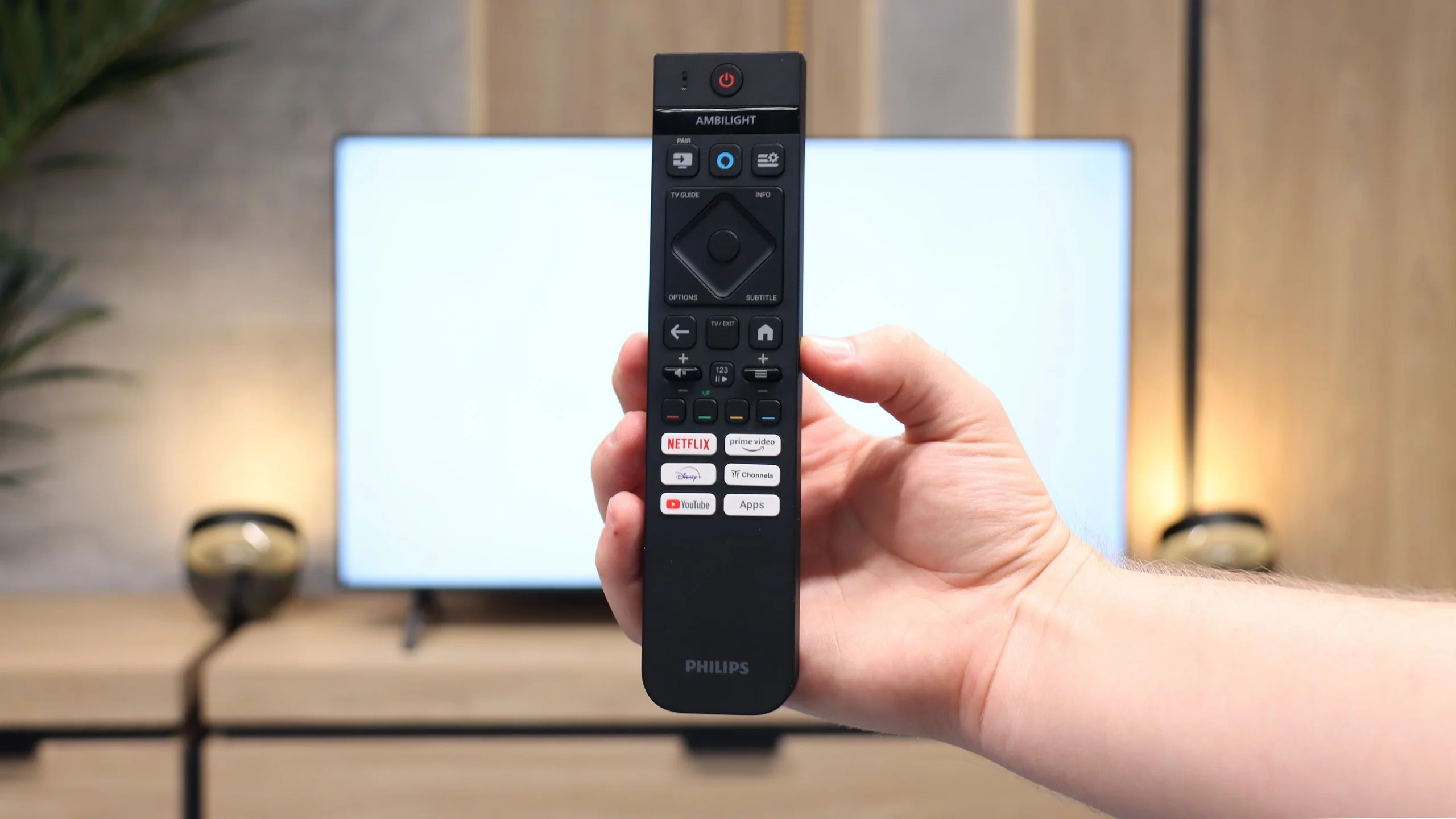
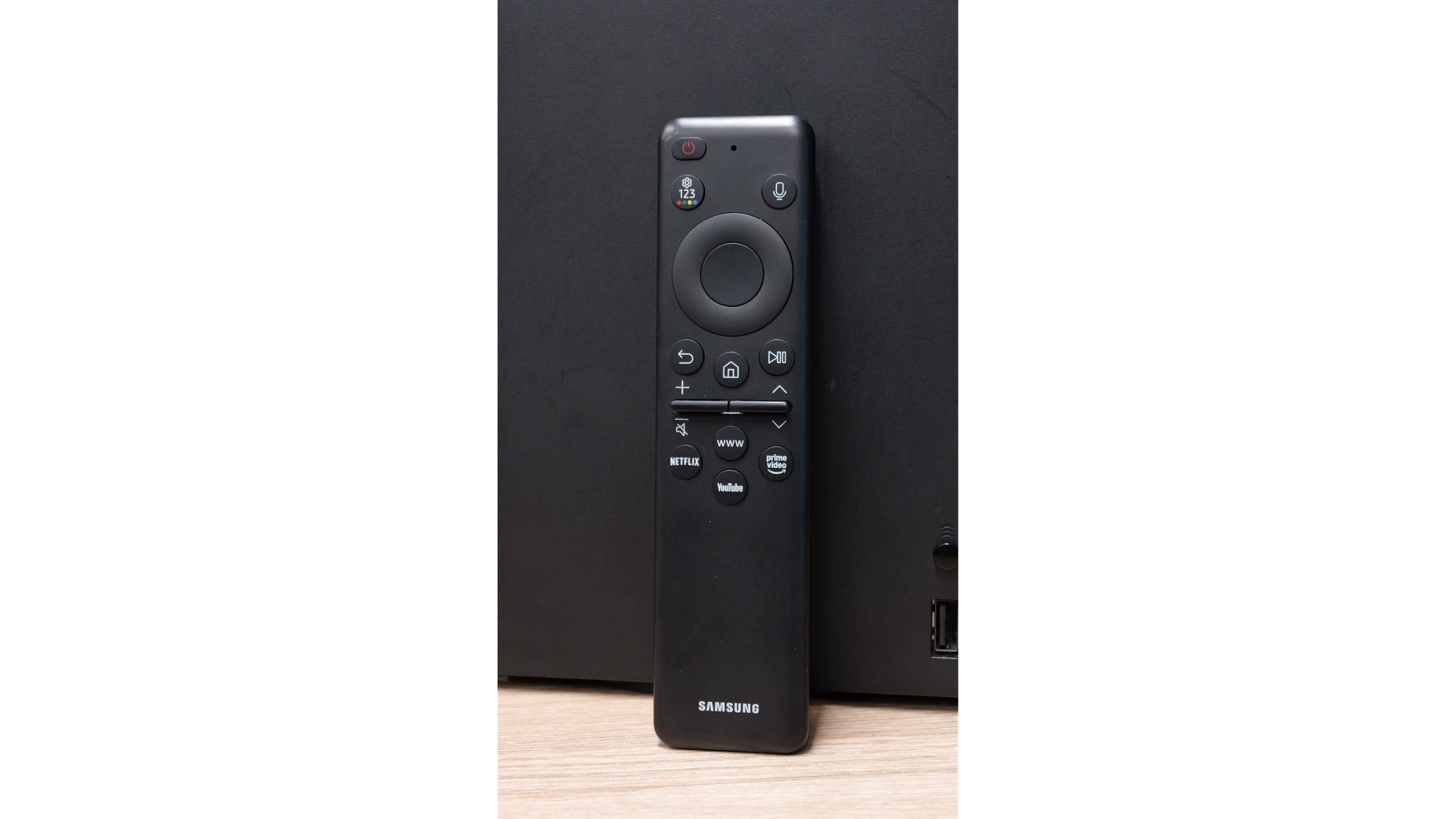
- Backlit remote control
- Teletext
- Audio only mode
- Bluetooth headphones support
- Simultaneous Bluetooth headphones & TV audio
Smart features:
- AirPlay
- Screen mirroring (Windows Miracast)
- Voice search
- Voice search in native language
- Ability to connect a keyboard and mouse
Sound connection options
- HDMI audioeARC (HDMI), ARC (HDMI)eARC (HDMI), ARC (HDMI)
- Other audio outputsToslink (Optical audio), Mini-Jack (Headphones)Toslink (Optical audio)
- Wireless audioBluetooth, DTS Play-FiBluetooth, DTS Play-Fi
Supported audio formats (external HDMI eARC audio):
- Dolby Digital Plus 7.1
- Dolby True HD 7.1
- Dolby Atmos in Dolby Digital Plus (JOC)
- Dolby Atmos in Dolby True HD
- DTS:X in DTS-HD MA
- DTS-HD Master Audio
Senior accessibility
- Numeric keyboard on TV
- Font size adjustment
- Audio description
Smart TV – Titan OS
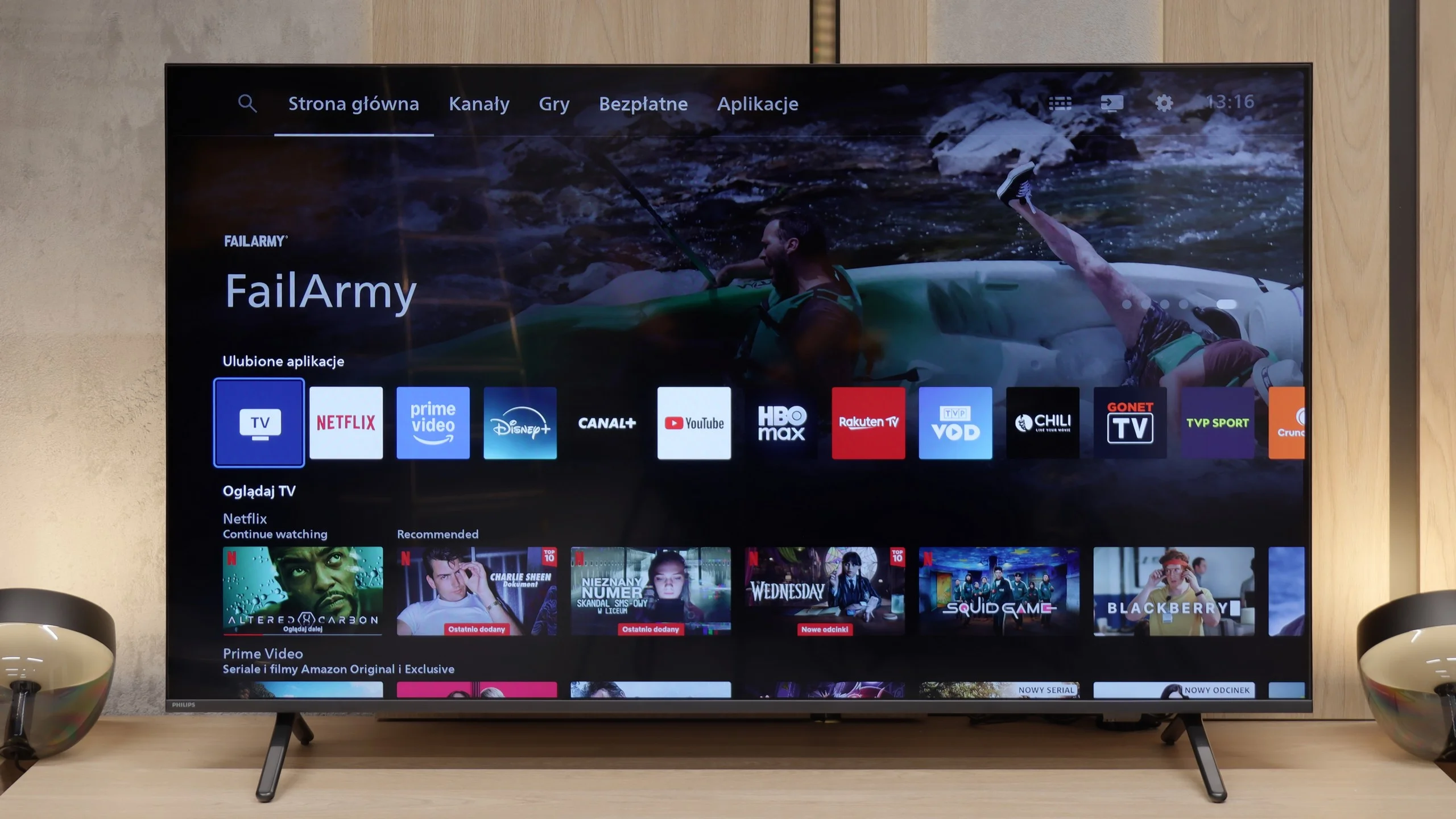
Philips MLED920 uses the proprietary Titan OS, which is just starting its adventure in the TV market and unfortunately, this is evident at every turn. On one hand, we have basic features – such as AirPlay support or the ability to mirror content from a smartphone, but on the other hand, its limitations quickly become apparent. Screen mirroring works only with a phone, but not with a laptop. Voice search? Yes, but it only works with Amazon Alexa and in languages supported by this assistant. The system operates fairly quickly, but every now and then it can "fail" and gives the impression of something that is underdeveloped and still evolving.
Classic TV Functions
Titan OS also doesn't excel in terms of classic TV functions. Aside from the hybrid remote with a numeric keypad – which is indeed backlit and thoughtfully designed in two modes, it unfortunately operates on infrared – there’s nothing here that would truly set the MLED920 apart from the competition. There’s a lack of USB recording or a PiP function, and such solutions could be useful in this class. From unusual additions, we have an analog output in the form of a jack, which allows for connecting headphones or older speakers. It’s a small nod to users who still use older equipment.
Ambilight TV
What definitely draws attention away from the shortcomings of Titan OS is the unique, three-sided Ambilight system. Here, Philips still plays in its own league and can impress those who haven't experienced this feature before. The colour backlighting that reacts to the content on the screen adds a unique atmosphere to viewing sessions and is something that the competition does not offer in a similar form. It is precisely Ambilight that is meant to ensure that other shortcomings – both system-related and functional – take a back seat.
TV features
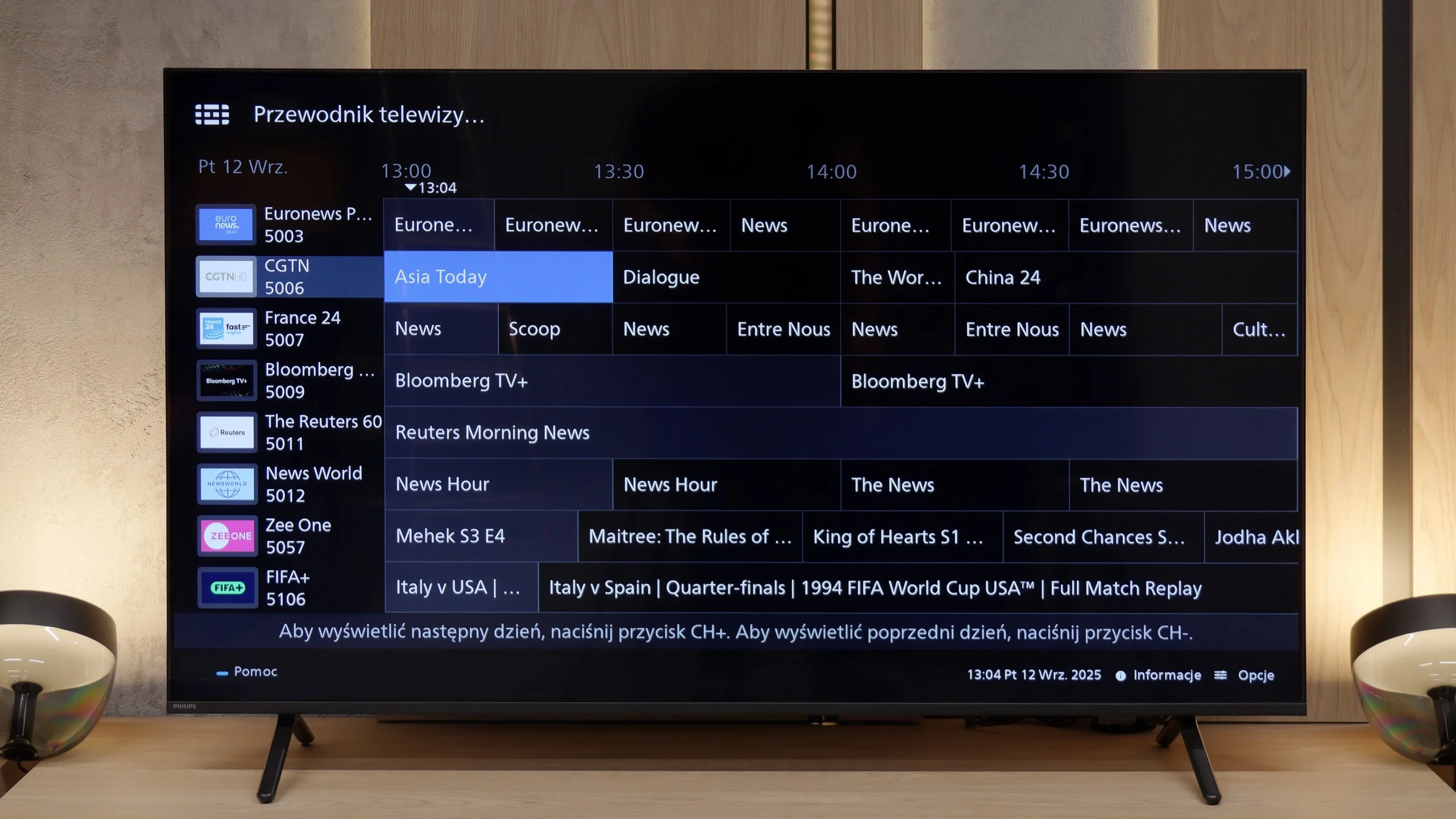
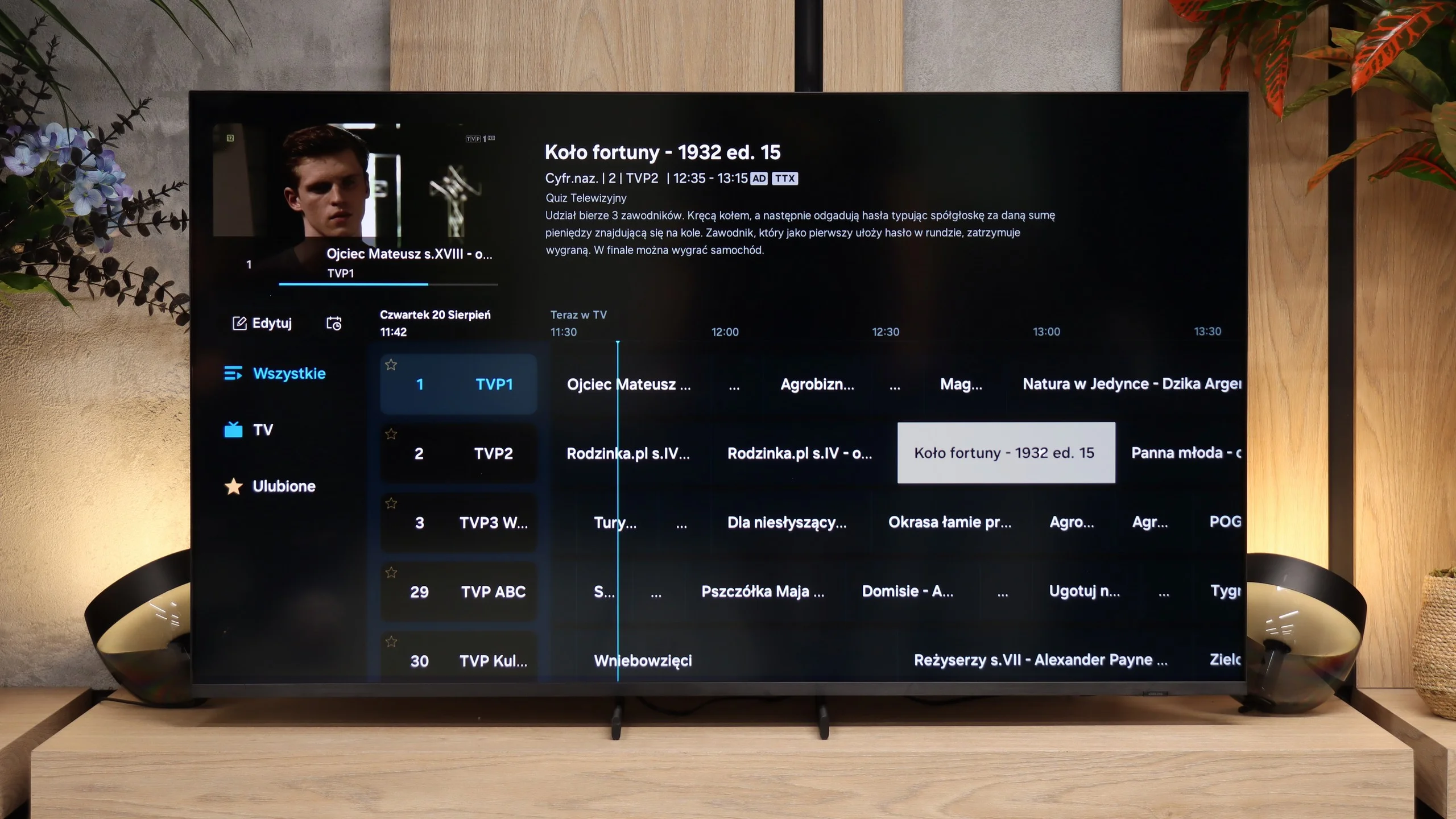
If the R85H is also going to be used for watching traditional TV, Samsung pretty much offers everything you can expect from a modern set. Channel handling is convenient, the program guide is clear, and switching between channels isn't overly slow. You also get the usual set of tuners and CI+ module support. It's a shame, though, that Samsung has for some time been scaling back some of the more traditional features that used to be a hallmark of their feature-rich TVs. It's clear that streaming and the whole Smart TV ecosystem have become far more important to the manufacturer. You won't find, for example, the ability to record TV channels to USB storage or to split the screen via PiP.
Smart TV features
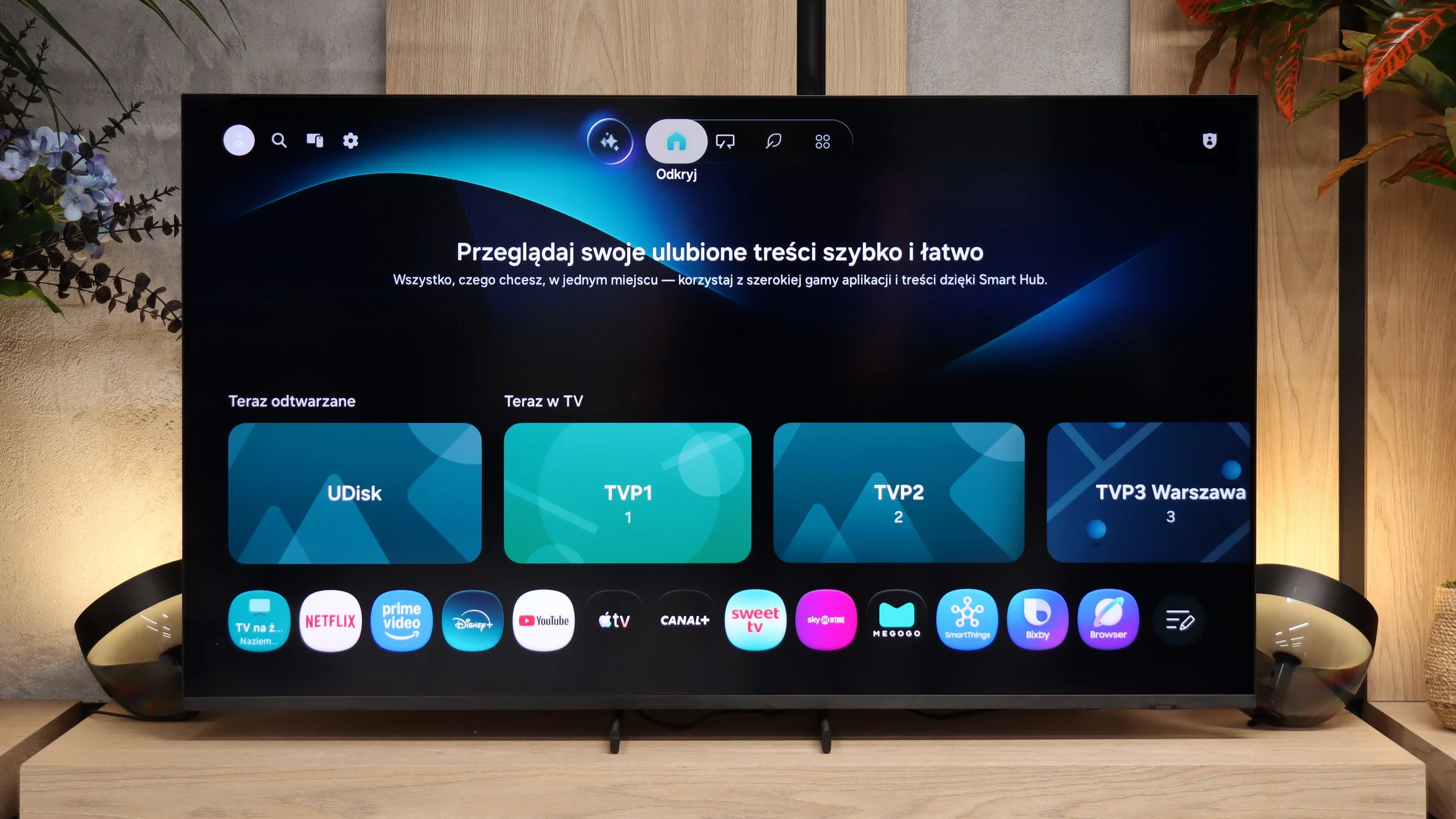
The well-known Tizen handles this area. The system runs smoothly and gives access to practically all popular VOD apps, so you'll find Netflix, Disney+, Max, Prime Video, YouTube and other local services without much trouble. The interface itself is fairly extensive and takes a little getting used to at first, but navigating it becomes very comfortable. Samsung also develops features that go beyond just watching movies and series. SmartThings lets you connect the R85H to smart home devices and control them directly from the screen. There's AirPlay, screen mirroring from a smartphone, and Multi View if you want to display two different sources side by side. So it's hard to fault the system's capabilities.
Apps
6.7/10
9.3/10






















Playing files from USB
8.5/10
9.1/10
Supported photo formats:
Maximum photo resolution:
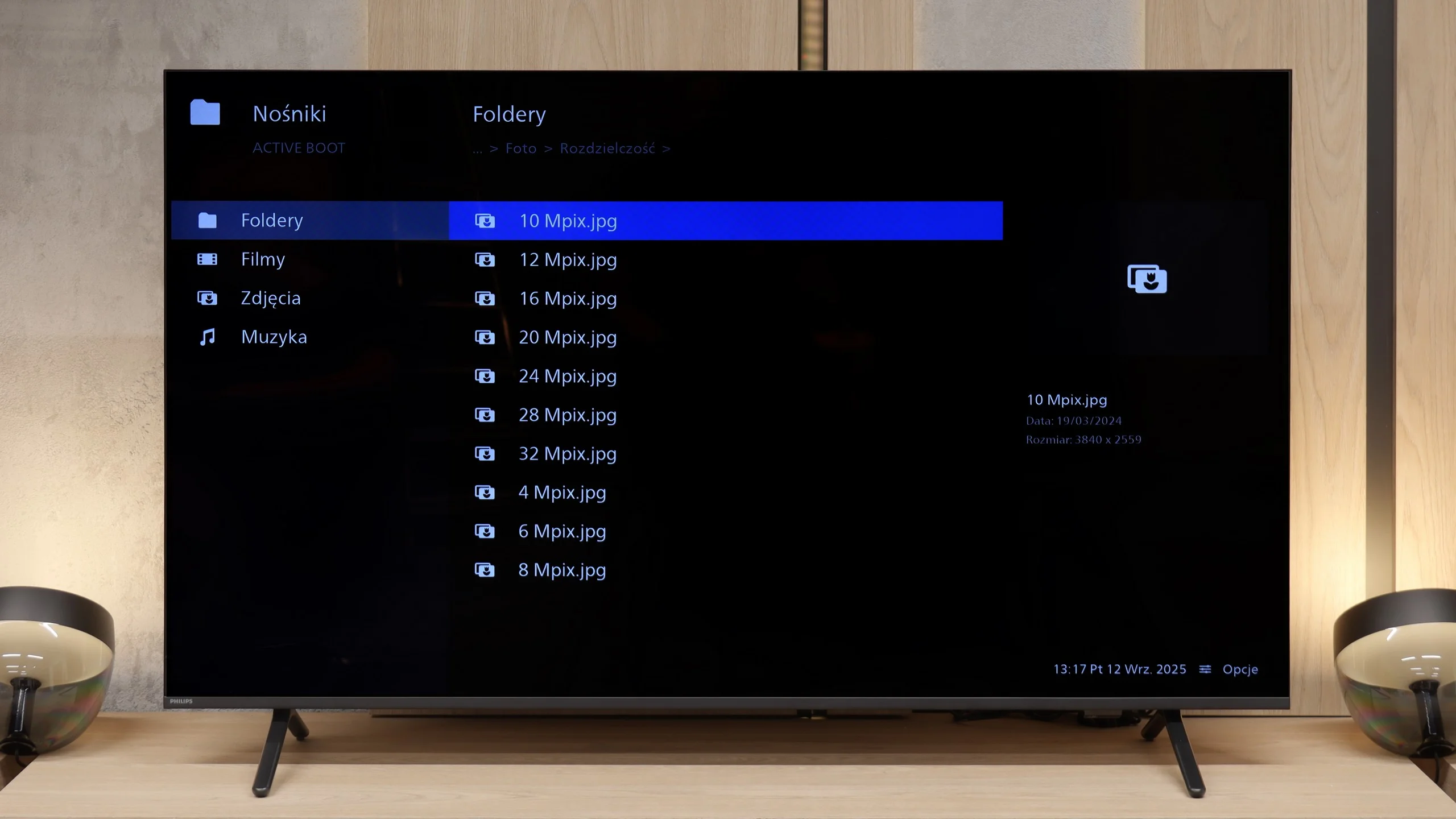
The built-in player in the Philips MLED920 works quite well and handles most popular audio and video files without any major issues – just as you can see in our test table. So there’s no worry about typical movie or music formats. The only complaint we can have is regarding its rather selective support for photo formats and some resolutions.
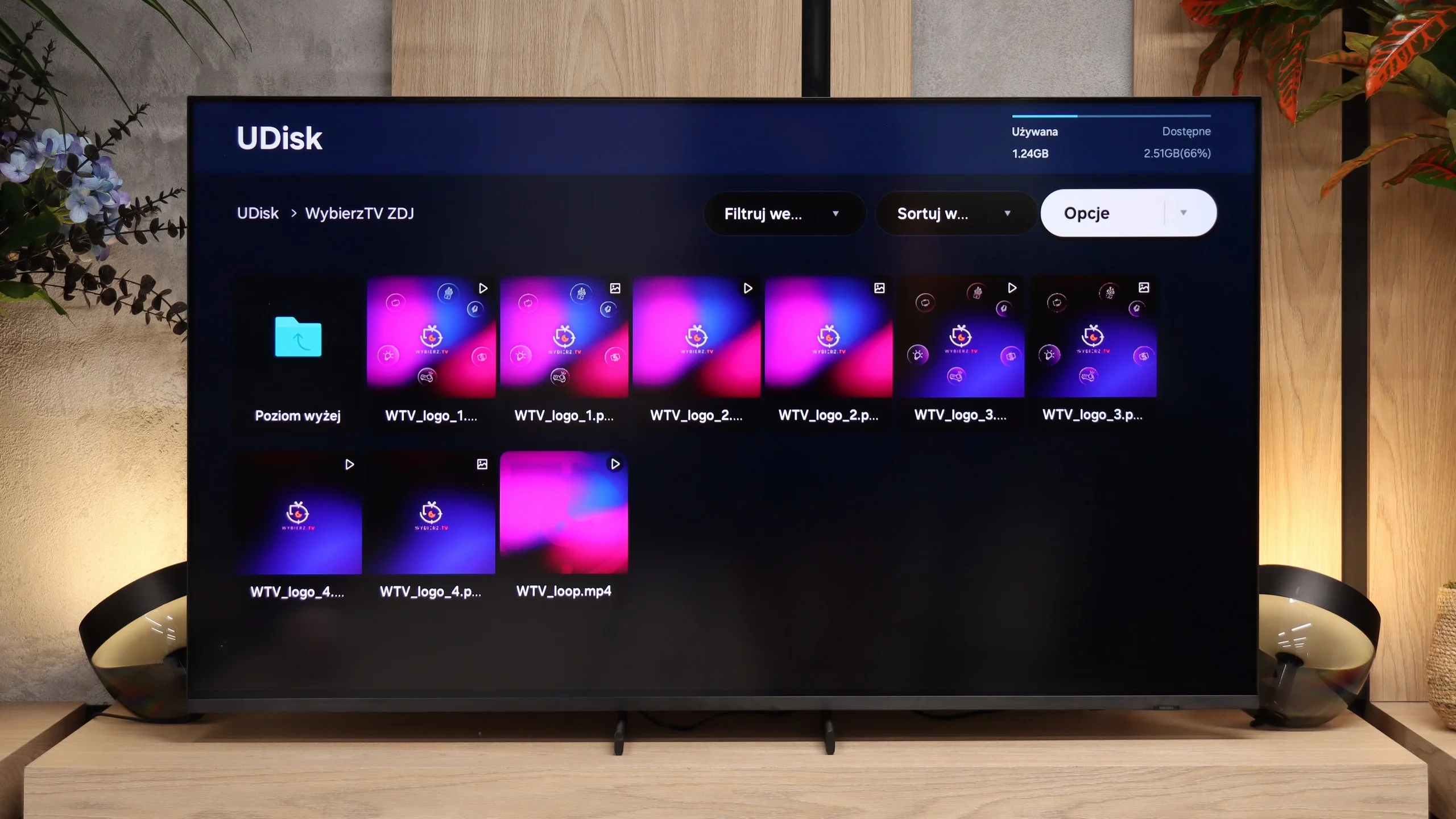
The built-in media player handles most popular video, audio and image formats. The menu runs smoothly and thumbnails load without delay even in folders with hundreds of files. For photos you can open high-resolution JPEG, PNG or BMP files without any problems, though the list of supported formats has gaps. The biggest drawback is the lack of support for HEIC (iPhone photos) and for more niche formats such as WebP, GIF or TIFF. For a traditional holiday photo slideshow, however, the player is more than enough.
Sound
6.2/10
7.1/10
- Maximum volume88dB89dB
- Dolby Digital Plus 7.1
- Dolby True HD 7.1
- Dolby Atmos in Dolby Digital Plus (JOC)
- Dolby Atmos in Dolby True HD
- DTS:X in DTS-HD MA
- DTS-HD Master Audio
The sound in the Philips MLED920 is probably not the element that will impress you the most. It sounds fairly flat, lacking depth and clearer bass, which means movies or concerts don't have that extra layer of immersion that a better audio system can provide. However, it must be said that the volume is at a really decent level – the TV can ramp up to even 88 decibels. A big plus of the MLED920 is not so much the sound quality itself, but the support for audio formats. Philips has ensured compatibility with virtually all the major standards, including Dolby Atmos, DTS, and Dolby TrueHD 7.1. This means that if someone decides to connect an external soundbar or amplifier, they won't encounter any limitations and will be able to enjoy the full cinema sound.
The audio section in the R85H is a carbon copy of the QN80H’s. It features the same 2.0 stereo setup delivering 30 W, which easily handles dialogue clarity in news programmes and TV series, although for movie blockbusters it’s definitely worth buying a soundbar. Onboard there’s support for Dolby Atmos, Q-Symphony (for pairing with Samsung soundbars) and an "AI Football" mode. The latter lets you use sliders to boost or almost completely remove the commentator’s voice relative to the stadium crowd, and although the algorithm sometimes falters, for fans it can be a great addition.
Sound Quality Test
Acoustic Measurements
88dBC (Max)
75dBC
89dBC (Max)
75dBC
Reader comments
Comments are provided by the external service Disqus (Zeta Global). Once loaded, Disqus may set cookies and process data about your activity.
We will remember your choice on this device. Provider's privacy policy