 Direct comparison
Hisense U7Q is one of the most interesting Mini-LED TVs in its price segment, clearly demonstrating that Hisense is starting to make a mark in the market not only through the price-to-performance ratio but also through increasingly refined picture quality. Let's start with what truly impresses: the contrast and black levels are at a level that was recently unattainable in this price range. Combined with smooth tonal transitions, solid brightness, and a fast 144Hz panel, the U7Q becomes a TV that excels in both movies and gaming. Gamers will find almost everything they can expect here – support for variable refresh rate (VRR), automatic game mode (ALLM), very low input lag, and even 240Hz in Full HD. All of this makes the U7Q suitable for both next-gen consoles and PCs. However, there are some downsides. When it comes to HDR content, one might want to say: “untapped potential” – you may ask why? The TV, due to its algorithms, dims small bright elements or excessively boosts them, which can spoil the viewing experience. There is also a lack of support for HGiG, the feature that would better match the console with the TV regarding HDR. In summary, briefly – the Hisense U7Q is a very versatile and complete TV that has its imperfections but makes up for them in many key aspects. For gamers, occasional movie watchers, or anyone looking for good equipment for everyday use – it’s one of the most cost-effective options in 2025. You just need to know what compromises you’re willing to make – and then it’s hard to be disappointed.
- Matching (Score) |
- Our verdict |
- TV appearance |
- Where to buy |
- Contrast and black detail |
- HDR effect quality |
- Factory color reproduction |
- Color reproduction after calibration |
- Smoothness of tonal transitions |
- Image scaling and smoothness of tonal transitions |
- Blur and motion smoothness |
- Console compatibility and gaming features |
- Input lag |
- Compatibility with PC |
- Viewing angles |
- Daytime performance |
- Panel details |
- TV features |
- Apps |
- Playing files from USB |
- Sound
U7Q / U78Q

U7S / U77S
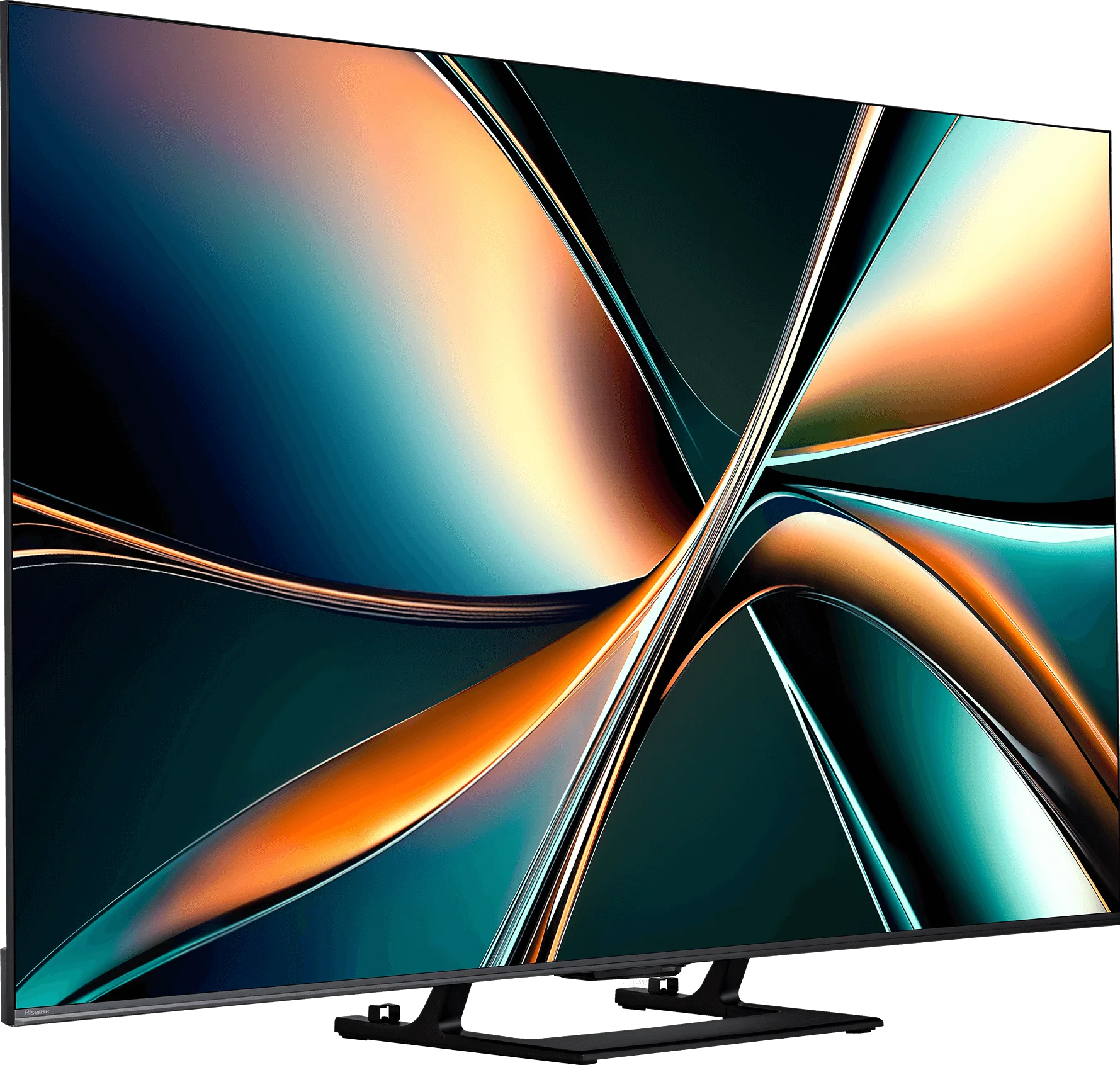
Panel type: LCD VA
Resolution: 3840x2160
System: VIDAA
Model year: 2025
Complete the survey to find out the result
Panel type: LCD VA
Resolution: 3840x2160
System: VIDAA
Model year: 2026
Complete the survey to find out the result
Overall rating
7.1
7.3
 Movies and series in UHD quality
6.7
6.9
 Classic TV, YouTube
6.8
6.9
 Sports broadcasts (TV and apps)
6.3
6.4
 Gaming on console
8.0
8.2
 TV as a computer monitor
8.6
8.2
 Watching in bright light
6.2
7.0
 Utility functions
8.9
8.9
 Apps
7.7
8.3
 Sound quality
7.2
7.2
Complete the survey to find out what fits your preferences
Advantages

Great contrast and deep black
Very good fluidity of tonal transitions (close to reference level)
High brightness
Supports 4K 144 Hz and even 240 Hz in Full HD
VRR, ALLM, G-SYNC – a full package for gamers
Low input lag
Pleasant sound with light bass
Many classic TV features built into the VIDAA system
Deep blacks thanks to a MINI-LED backlight and a VA panel
Bright, clear picture even in daylight
Natural colours after calibration when watching regular TV and SDR content
Plenty of options for PC and console gamers
Low input lag
Extensive VIDAA system
Support for many audio and video formats, including Dolby Vision, Dolby Atmos and DTS
Pleasant sound with subtle bass
Disadvantages

No support for HGiG (makes setting HDR on consoles difficult)
Brightness management issues
Poor viewing angles – typical for VA panels
Closed VIDAA system – missing some apps
Pronounced ghosting on the VA panel
HDR image is overly bright, clearly at odds with the creators' intent
HGiG not working correctly, making it hard to set up HDR in games
Poor viewing angles
Some apps missing from the VIDAA system
Our verdict
Hisense U7S is the latest iteration of the U7 series, whose biggest advantage remains its price-to-performance ratio. You get a Mini LED TV with local dimming, which genuinely improves black levels and gives the picture more depth for evening viewing. During the day a generous brightness reserve helps, so you don't have to rush to close the curtains. It's not a device without compromises, but as an everyday TV it makes a lot of sense. Gamers get a lot too. The U7S supports high refresh rates from consoles and PCs, has an extensive set of gaming features and responds very quickly to controller input. Pleasingly, the low input lag is maintained even in Dolby Vision. On top of that there's the smooth-running VIDAA, which offers both Smart features and handy extras for regular TV. Overall it's quite versatile, although compared with last year's U7Q it's hard to call it a big step forward.
Unfortunately there are also things that clearly bother us. The first is motion smearing. The panel has a high refresh rate, but its pixels don't always keep up, so moving objects leave noticeable trails. Fans of sport and fast-paced games will feel this most. The second issue is HDR, which the TV handles a bit 'its own way'. Instead of sticking to the brightness encoded in the content, it aggressively brightens parts of the image. The aim was probably to make things more striking, but often the opposite happens: a scene becomes overbright, loses depth and clearly departs from the creators' intent. It's a shame that this behaviour can't be effectively corrected even during calibration.
Despite these caveats the U7S remains an interesting choice if you're after as much as possible for a reasonable price. Compared with basic LCDs without local dimming, which you can still find at similar price points, it primarily offers much better black levels. And that's where its biggest strength lies. You don't need to reach for an expensive model to get a Mini LED whose benefits are actually visible in viewing. If you accept its flaws, the Hisense U7S can above all be a very good-value purchase.
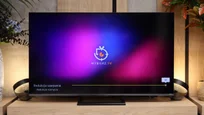
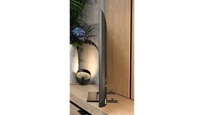
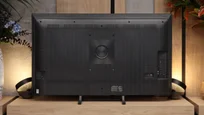
TV appearance



Contrast and black detail
7.5/10
8/10
Local dimming function: Yes, number of zones: 220 (10 x 22)
Local dimming function: Yes, number of zones: 192 (8 x 24)
Contrast:


Result
278,000:1

Result
28,800:1

Result
11,100:1

Result
10,800:1

Result
6,250:1
Result
507,800:1
Result
51,250:1
Result
30,900:1
Result
21,250:1
Result
5,650:1
Halo effect and black detail visibility:
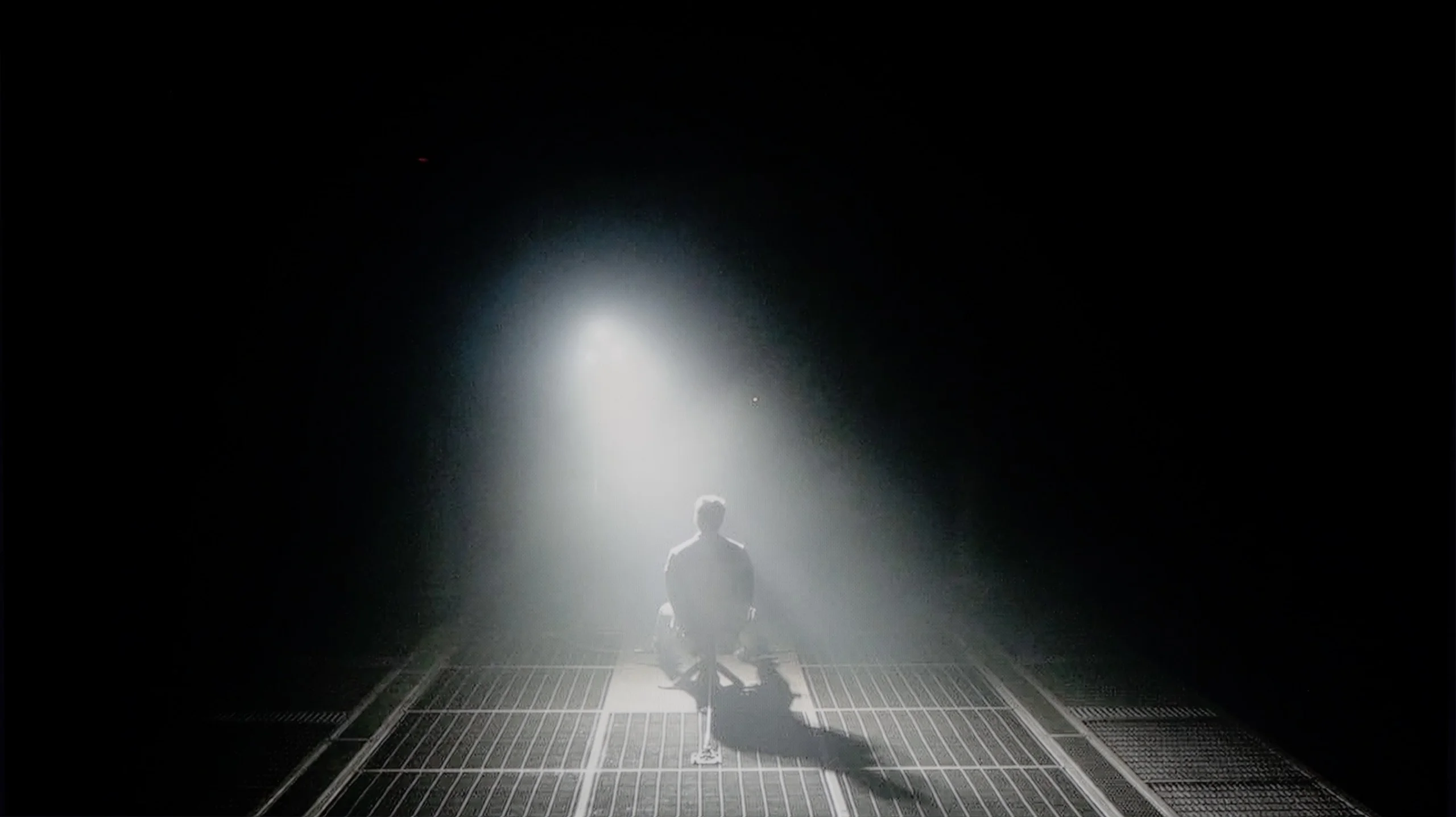
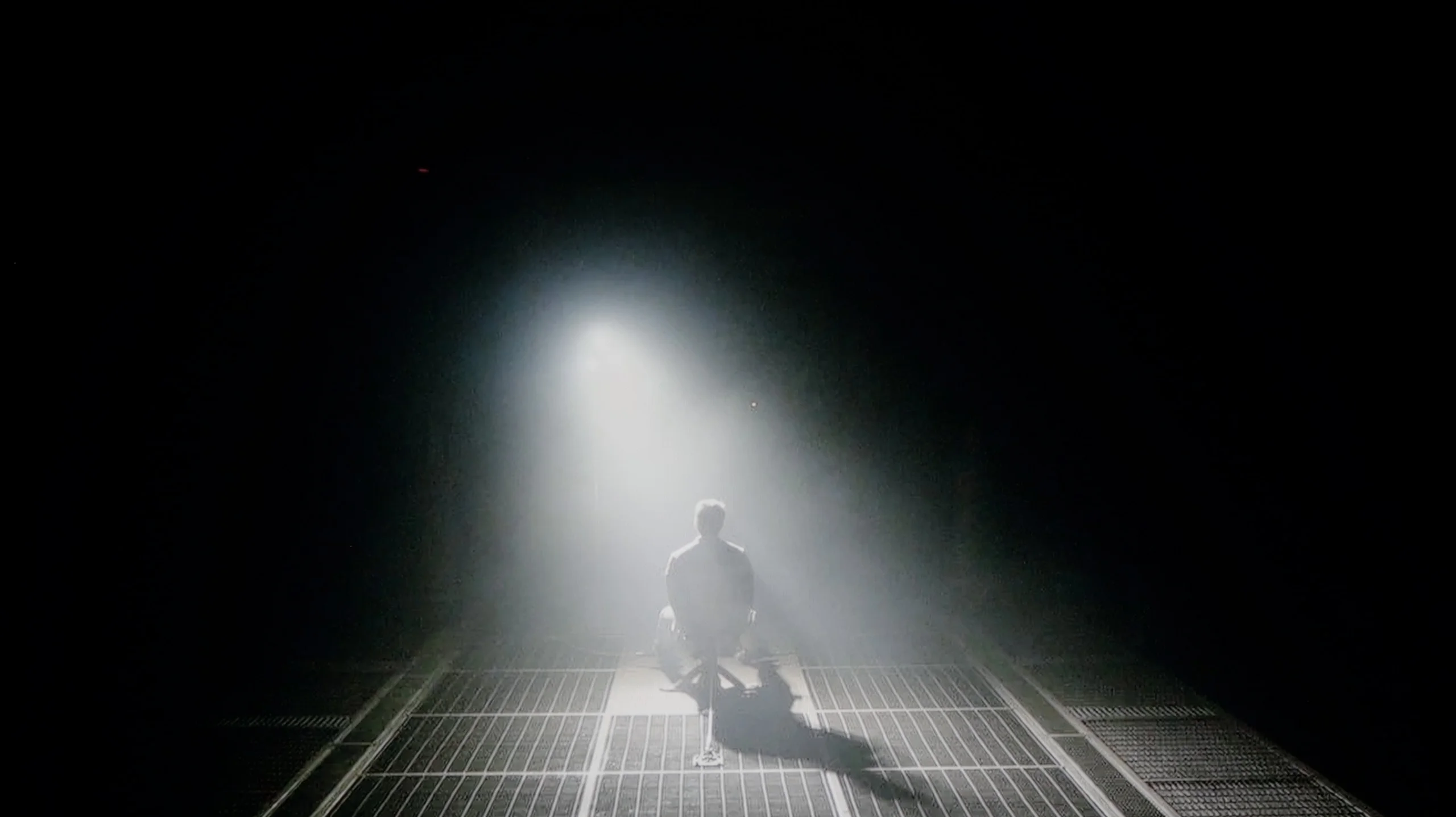
Check the visibility of bright lights on a dark background. Mini-LEDs often struggle with this. The photo does not compare black levels – that’s what the video below is for.
The video accurately shows differences in contrast and black levels between TVs, as well as potential issues: halo around bright objects or Mini-LED zone operation visible as brightness jumps.
U7Q is a Mini-LED backlit TV – just like the PRO version. What’s the difference? The version without the suffix simply has fewer dimming zones. In our 65-inch model with a VA panel, we counted 220 of them. And while that doesn’t impress as much as in the U7Q PRO, it still looks very good on paper for this price range. Alright, but how does it perform in practice? Surprisingly well. The contrast in the U7Q can reach up to 300,000:1, which provides a really solid black effect. In many scenes, it’s hard to find fault – the image has depth, and the highlights are well separated. Of course, Mini-LED is not OLED – so there are some limitations. In very challenging scenes with many dark details, the TV sometimes either ‘eats’ them, leaving a nice black, or slightly brightens the background, which can create a halo effect. That’s normal in this technology and should be taken into account. Despite these minor drawbacks – the contrast in the U7Q is really good.
The Hisense U7S shows good black levels, especially for one of the entry-level mini-LED models. The 55-inch test size uses 192 local dimming zones that work well with the VA panel. In most of our scenes contrast ranged from about 21,000:1 to over 51,000:1, and in one it even exceeded 500,000:1. In many films you can plainly see it — dark scenes have depth, and blacks don’t glow grey like on many cheaper LCDs without local dimming.
It’s worse when the screen shows lots of small bright objects against a dark background (for example the scene shown below). There aren’t enough zones to light each of them individually, so you can see a bright halo around small objects. This so-called halo effect is easiest to spot when watching in a dark room. In the most demanding shot the contrast dropped to about 5,650:1, and here the backlight limitations are clearly noticeable. Despite that, given the TV’s class, it’s hard to call this a fault, because many mini-LED TVs in a similar price range will have similar problems.
HDR effect quality
4.6/10
5.5/10
Luminance measurements in HDR:

Result
521 nit

Result
160 nit

Result
351 nit

Result
98 nit

Result
674 nit
Result
700 nit
Result
297 nit
Result
640 nit
Result
154 nit
Result
745 nit
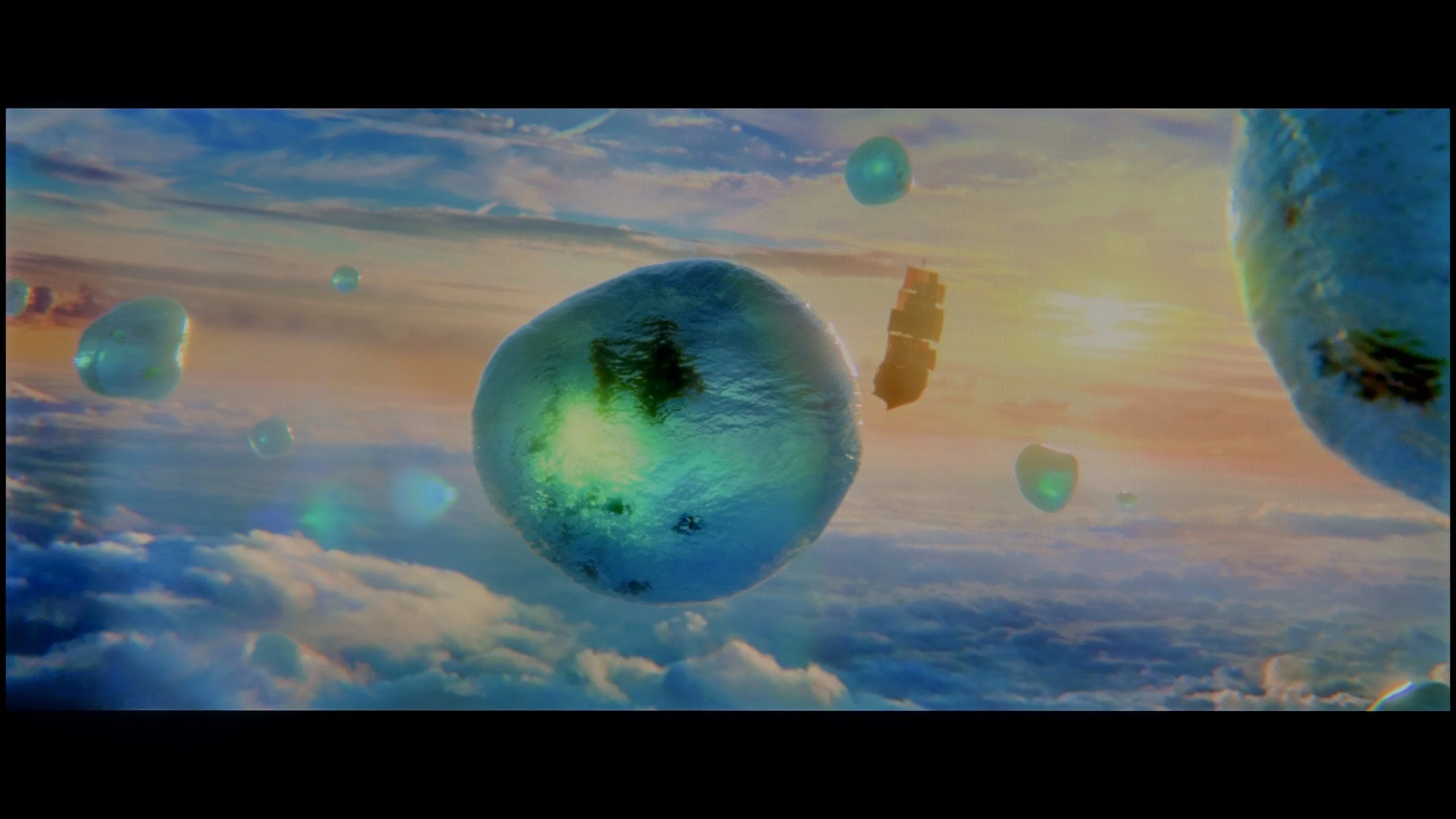
Scene from the movie “Pan” (about 2800 nits)
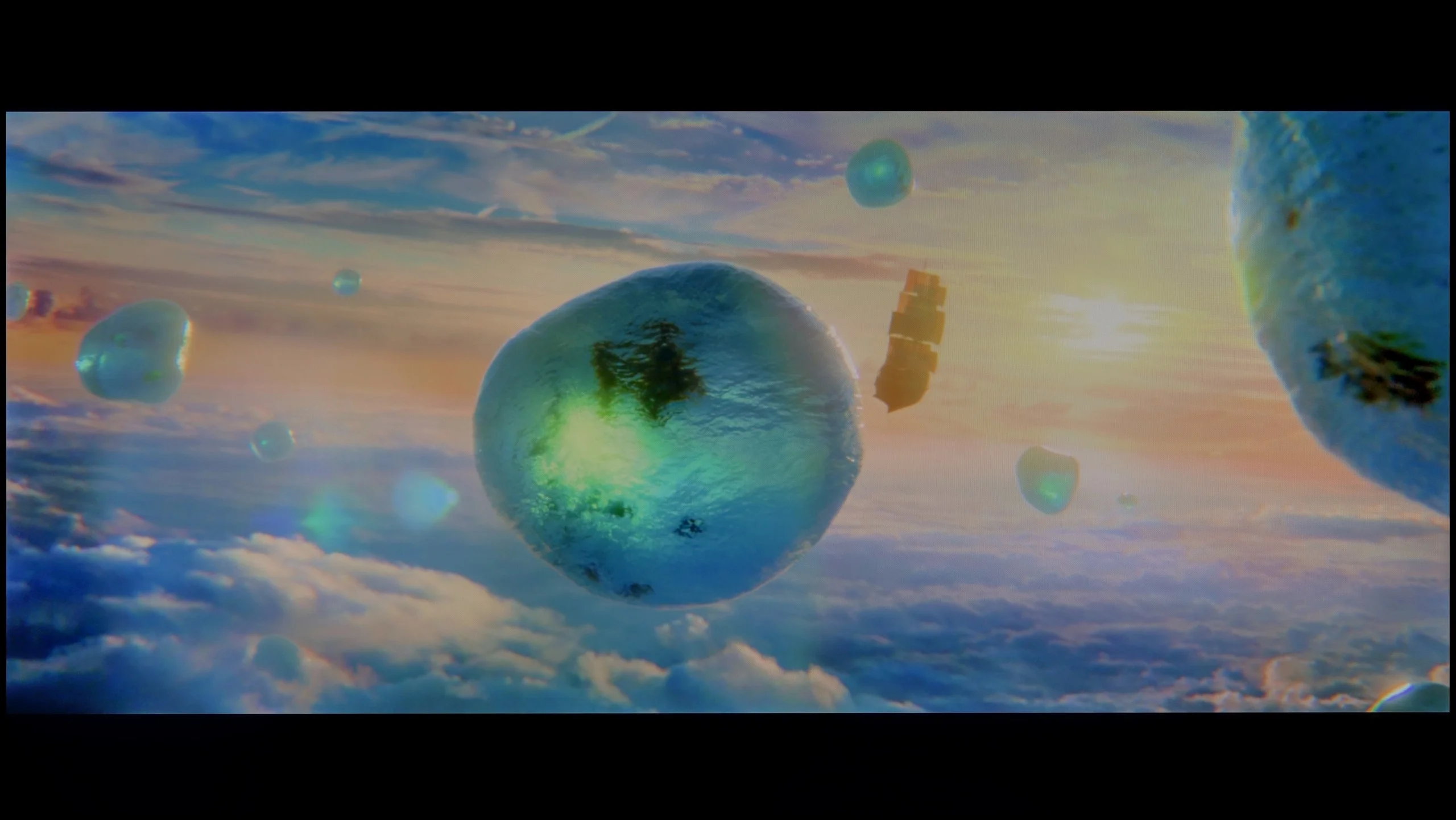
Scene from the movie “Billy Lynn” (about 1100 nits)
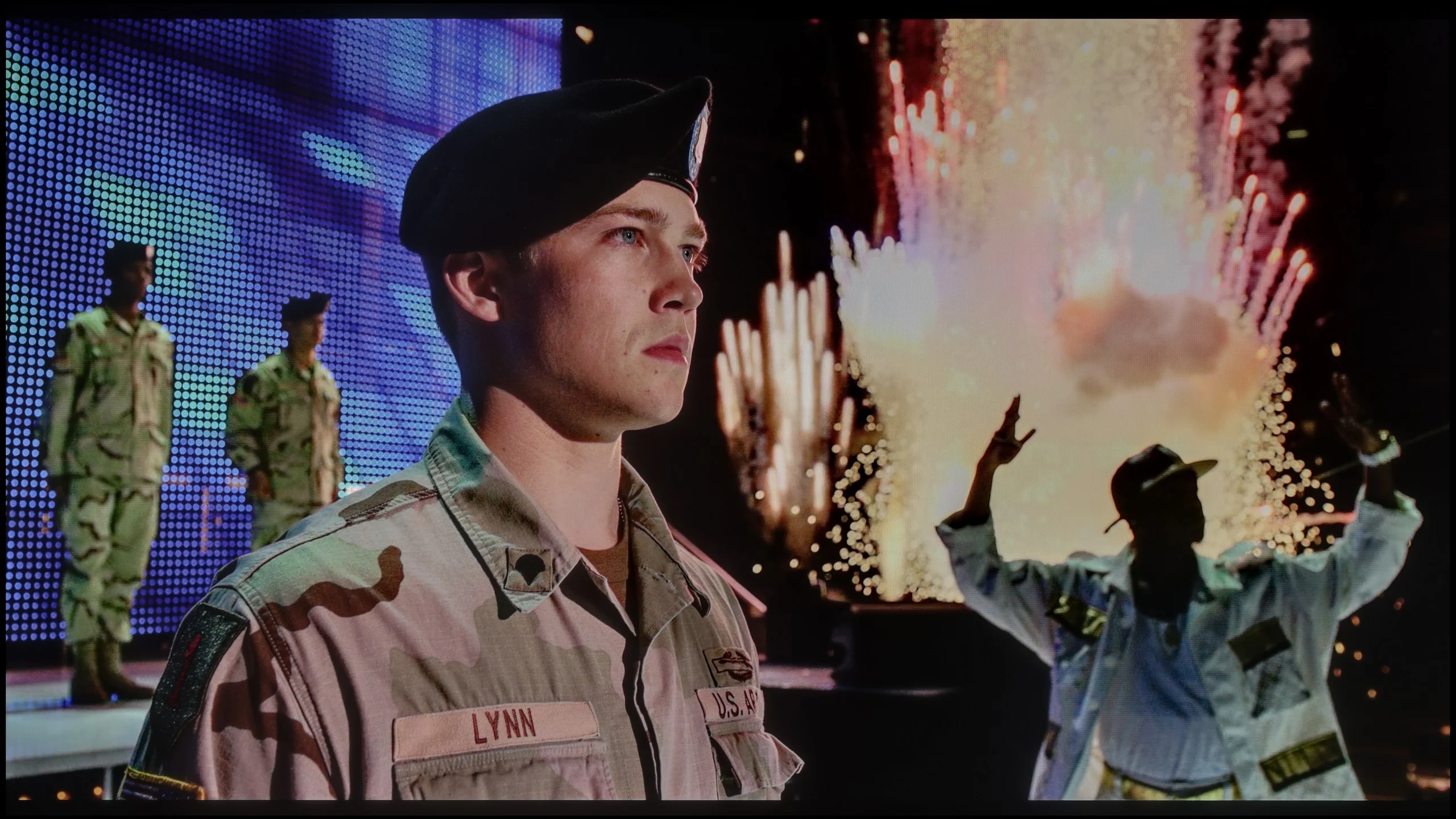
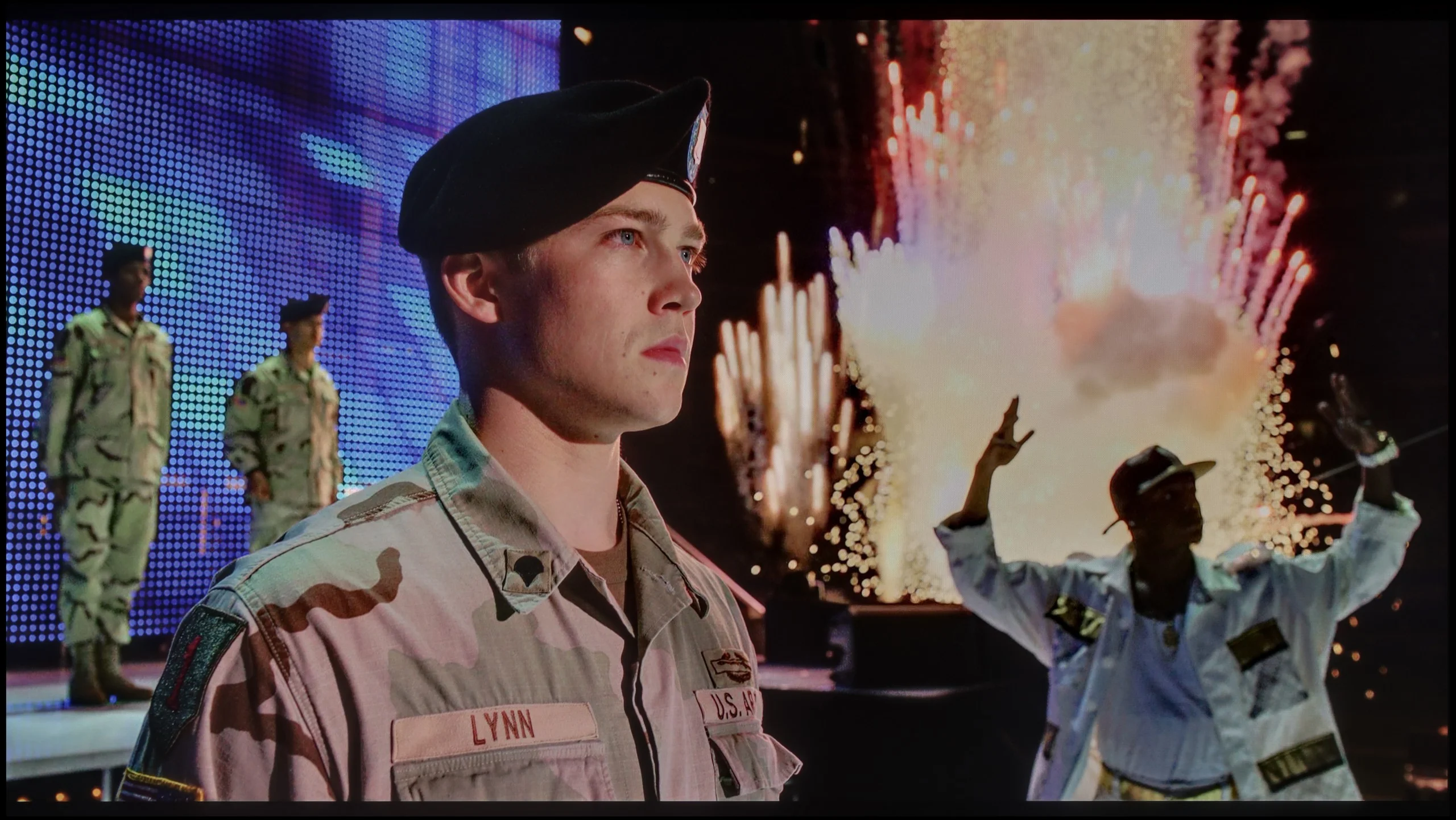
The photos show two HDR10 movies. 'Pan' is one of the brightest productions ever made, while 'Billy Lynn' (soldier) has brightness typical of streaming (Netflix, Prime, HBO MAX). Notice the intensity of effects and detail in whites.
Static HDR10


The photos present the visibility of white details in various HDR formats. They do not show brightness differences between TVs (these can be compared in the previous gallery).
Dynamic: Dolby Vision
Dynamic: Dolby Vision


The photos present the visibility of white details in various HDR formats. They do not show brightness differences between TVs (these can be compared in the previous gallery).
HDR luminance chart:
Hisense U7S / U77SE
Hisense U7Q
Since the algorithms responsible for blacks are performing quite well, we expected a similarly good outcome when it comes to brightness and overall HDR quality. Unfortunately, we have to disappoint you a bit here.
The U7Q is quite a bright television – under the best conditions, it can reach around 800 nits, which indeed impresses in some scenes, especially in scenes like those from the movie The Meg. Bright segments can shine, and the HDR effect is noticeable. The problem arises when very small, bright elements appear on a dark background – for example, in Sicario 2 or in the second scene from Life of Pi. At such moments, the dimming algorithms operate too aggressively. Yes, the blacks look great at that point, but the brightest spots can almost completely disappear, causing the HDR effect to vanish and details to be barely visible. That’s just the charm of this technology in this price segment.
As a consolation, it is worth mentioning that the U7Q is marketed as a QLED (in practice, a PFS layer is used, which operates very similarly), and it can indeed display a wide colour gamut – a DCI-P3 coverage of around 94% is a very good result for this class.
The Hisense U7S has considerable HDR potential, but it can’t make full use of it in every scene. On a test pattern it reaches about 1100 nits, so the backlight is genuinely strong. In our brighter film scenes we measured around 640 to 745 nits. That’s still enough for the sun or bright highlights to have a distinct bloom and to show an advantage over SDR material. When the TV needs to light a larger portion of the image, it handles it quite well.
The problem appears with small lights on a dark background. Each of the 192 zones covers an area considerably larger than a tiny point on the screen. If the TV were to drive such a zone strongly, it would brighten the surrounding area along with the light. Hisense tries to avoid that and dims the whole zone. Blacks look better as a result, but a small bright object that should draw the eye also loses intensity. That’s why in two tougher scenes we recorded only 297 and 154 nits. The difference is large: in one shot HDR can impress, and in the next small highlights are noticeably muted. The U7S therefore prioritises keeping deep blacks, even at the expense of bright details. With this number of zones it’s an understandable compromise, but it’s worth remembering that the peak 1100 nits tells us about the backlight’s capability, not how brightly the TV will show every element of a film.
Colours
Hisense markets the U7S as ULED, but that’s a marketing name; the wider colour gamut here is achieved by a PFS phosphor backlight. In our measurements the TV covered about 91% of the DCI-P3 space and 71% of BT.2020. Those are good results, though a little short of the best screens on the market. The biggest shortfall is in green — the TV doesn’t even reach the DCI-P3 boundary there, so the most intense green hues will be less saturated than they should be. Most colours in HDR films and series still look suitably vivid, however. A positive is the repeatability of the results: gamut coverage on test patterns and in film scenes is practically identical.
Factory color reproduction
6.3/10
5.8/10
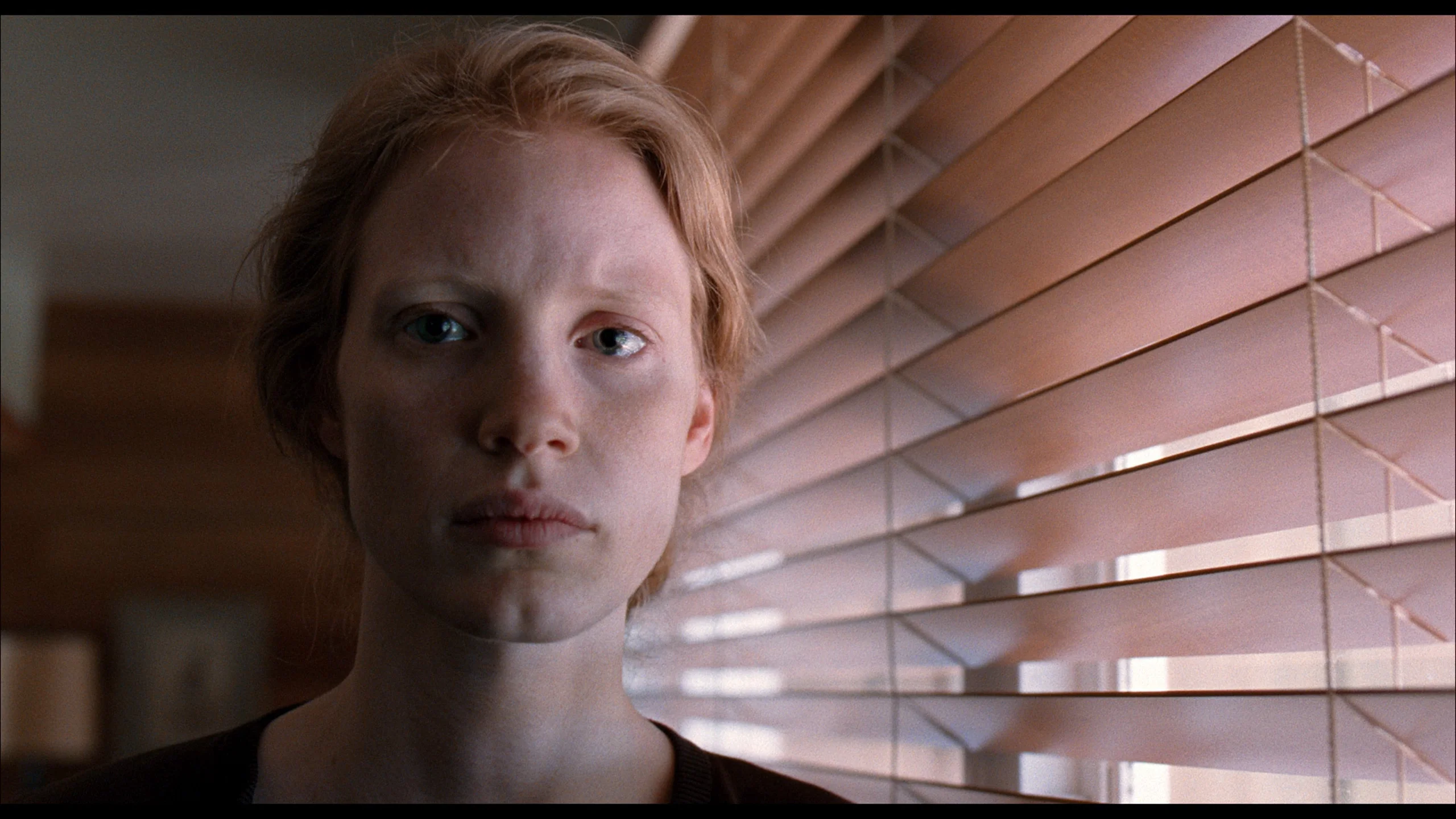
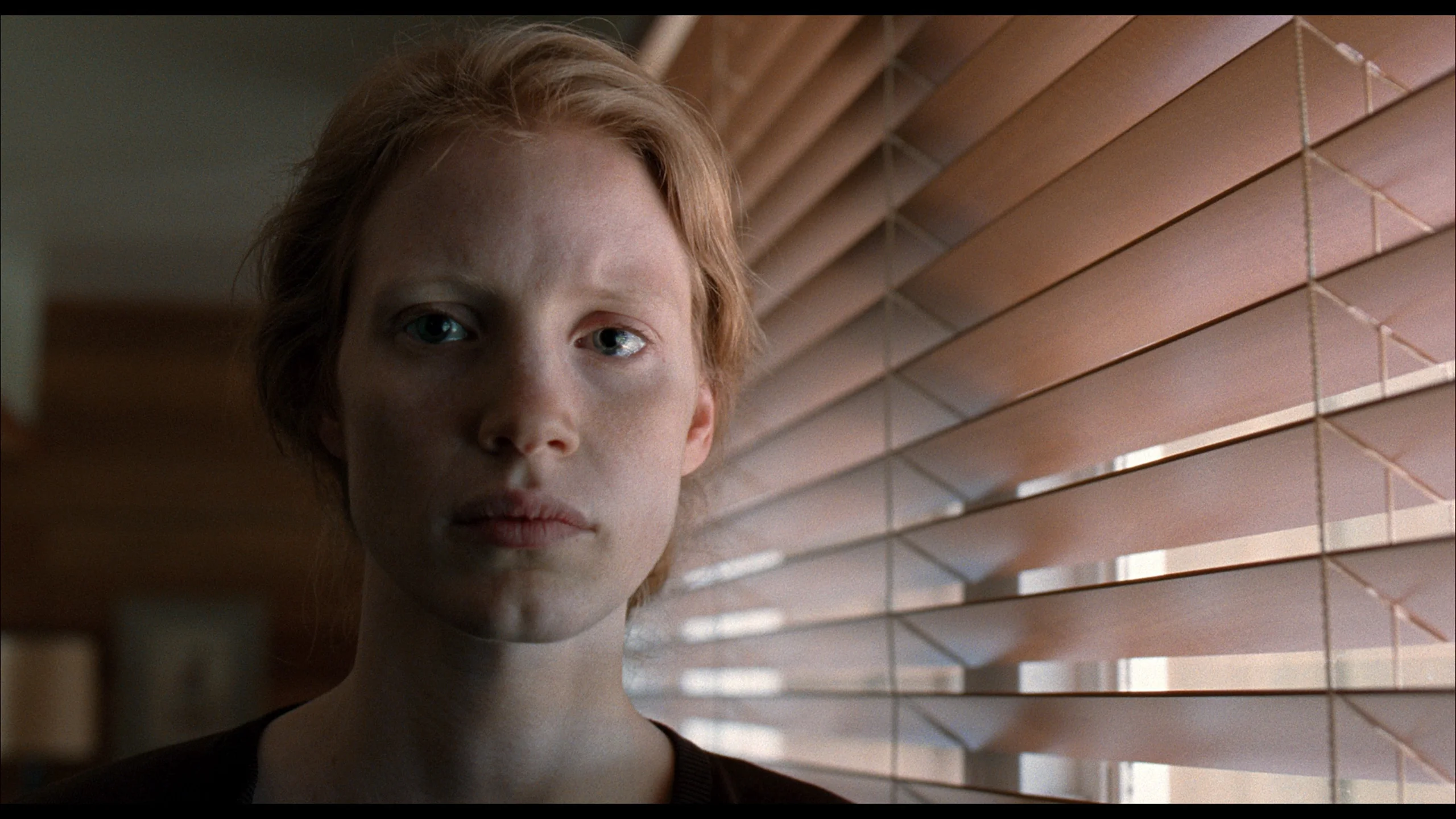
This gallery shows how colors change after professional TV calibration. If you notice the difference, we recommend ordering this service at SkalibrujTV.com.
Factory Mode
After calibration


This gallery shows how colors change after professional TV calibration. If you notice the difference, we recommend ordering this service at SkalibrujTV.com.
Factory Mode
After calibration
We tested the U7Q in the best possible picture mode, which is Filmmaker Mode. This mode is supposed to provide the most "cinematic" experience that aligns with the creators' intentions – straight out of the box. Unfortunately… even this professionally sounding name doesn’t guarantee a perfect image.
In our unit, the problem lay in the poorly set white balance. In both HD and 4K content, the image had too much blue and red, resulting in a slightly pinkish hue on the screen. It didn’t look terrible, but it was noticeable – especially in bright scenes and on white backgrounds. That alone could have been forgiven, but the biggest issue is managing brightness in HDR content. The EOTF curve from the measurements confirms what we saw earlier during scene tests: the television can overly dim the smallest bright elements, causing them to nearly disappear, or conversely – excessively brighten the brightest parts, which affects the naturalness of the image.
Factory colours on the Hisense U7S are decent, but there are a few things to fix. In SDR the white balance favours red, so the image looks too warm, in places with a slightly pink tint. You can see this on faces and bright, neutral surfaces. Gamma also runs below the target, so the TV brightens the image, especially in darker areas. That makes it easier to see shadow detail, but the scene loses some of its depth.
In HDR the white balance is a bit more even, but not completely neutral, with midtones lacking blue and the brightest parts lacking red. A bigger problem is the way brightness is reproduced. The EOTF curve shows that a large portion of the midtones is boosted, making the image appear brighter than the source material intends. Color Checker measurements also fare worse than in SDR: many errors are around 3 to 4, and individual ones reach as high as 8. Colours can therefore look attractive, but they're not always faithful to what we should be seeing. There’s room for improvement and we’ll see how much can be corrected with calibration.
Color reproduction after calibration
7.4/10
7.5/10
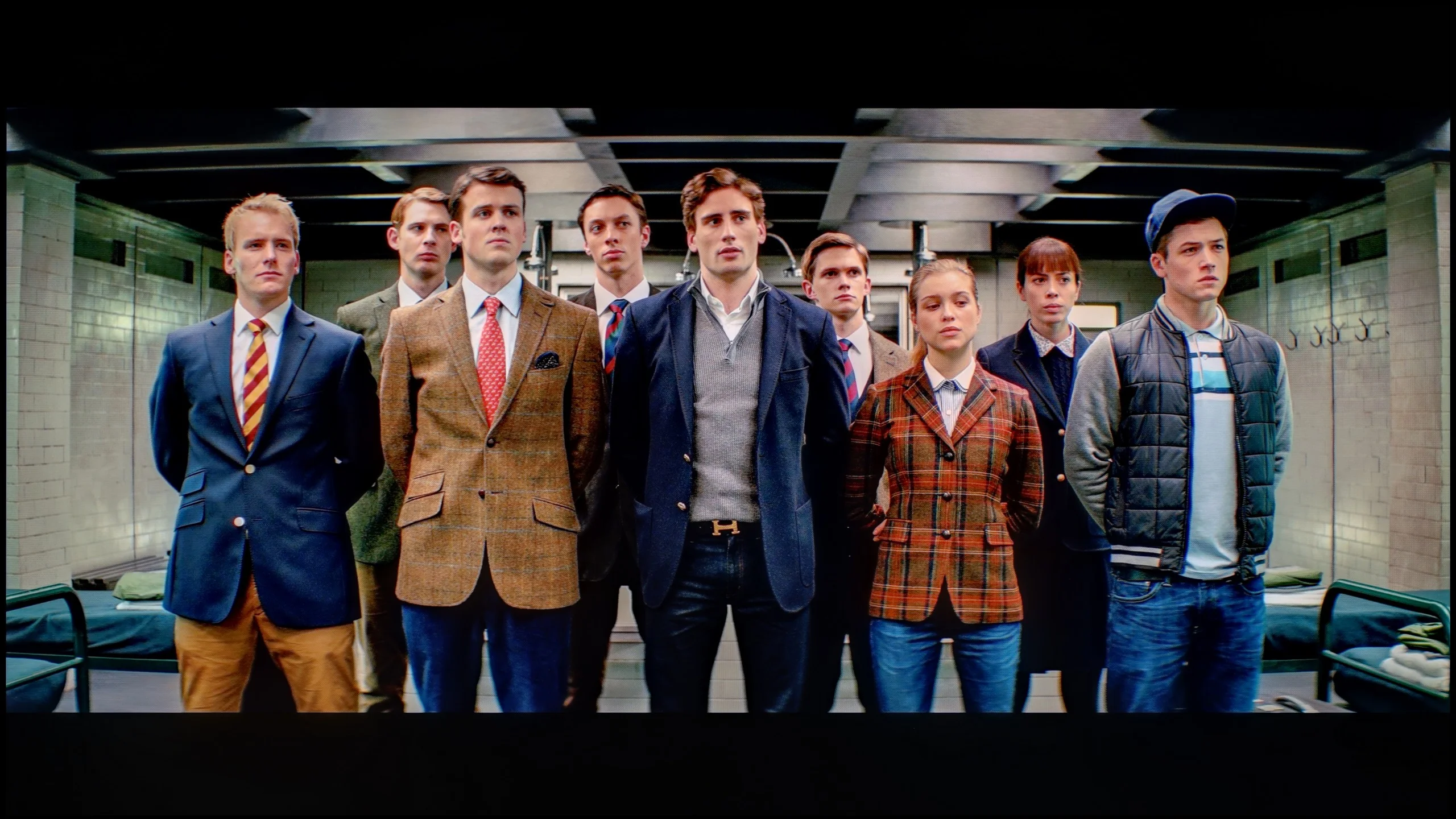
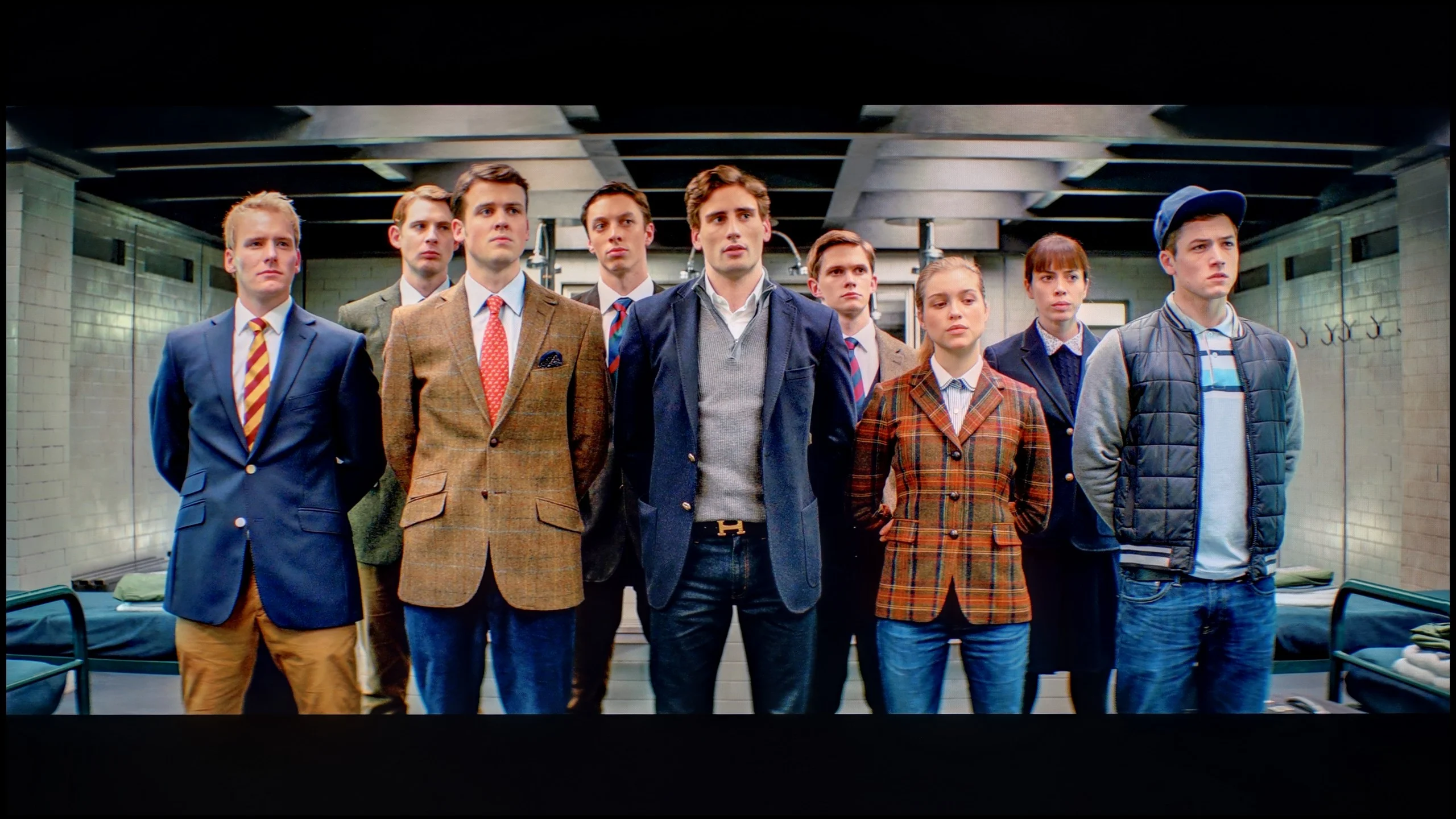
The photos show how movies look on the TV. Pay attention to black detail visibility, colors, and shadow tint.


The photos show how movies look on the TV. Pay attention to black detail visibility, colors, and shadow tint.
Thanks to specialist tools, we managed to correct the colour quality in SDR content to almost perfection. In materials with lower dynamics, delta E errors dropped below 0.5, which can be considered an almost reference result. The picture on television, YouTube, or classic Full HD looks really good after calibration. Well then – but where was it not so easy to improve the image? Primarily it concerns HDR quality content. Although we managed to somewhat "tame" the white balance and eliminate pink tints in most scenes, unfortunately, we did not have full control over brightness management. We set the local dimming settings according to the best observations – SDR: Medium, HDR: High – but the U7Q still did everything a bit its own way. There were still cases of overly strong dimming or brightening of details that calibration simply could not eliminate. And although the overall reception of content is much better, one must reckon that the U7Q will always have something to say at the end with "but".
Calibrating the Hisense U7S did the most for SDR content. We managed to even out the white balance, so the earlier warm tint is gone and whites and greys look neutral. Gamma now sits very close to the reference, so the TV no longer brightens the image unnecessarily and darker scenes have regained depth. Color Checker measurements confirm the improvement: most errors are below 2. For watching regular TV and SDR films, this delivers a really well calibrated picture. Calibration in HDR wasn’t as smooth. The TV lacks an effective way to correct the EOTF curve, so Hisense still interprets the film’s brightness a bit on its own. It brightens parts of the image and, depending on the scene and local dimming, can tone down the brightest elements. That couldn’t be eliminated by calibration. This also shows up in the Color Checker results, where many errors remain around 3–4 and some exceed 7. In SDR the result is therefore very good, but in HDR we have to accept that the TV adds its own interpretation of brightness to the image.
Smoothness of tonal transitions
9.9/10
8.5/10
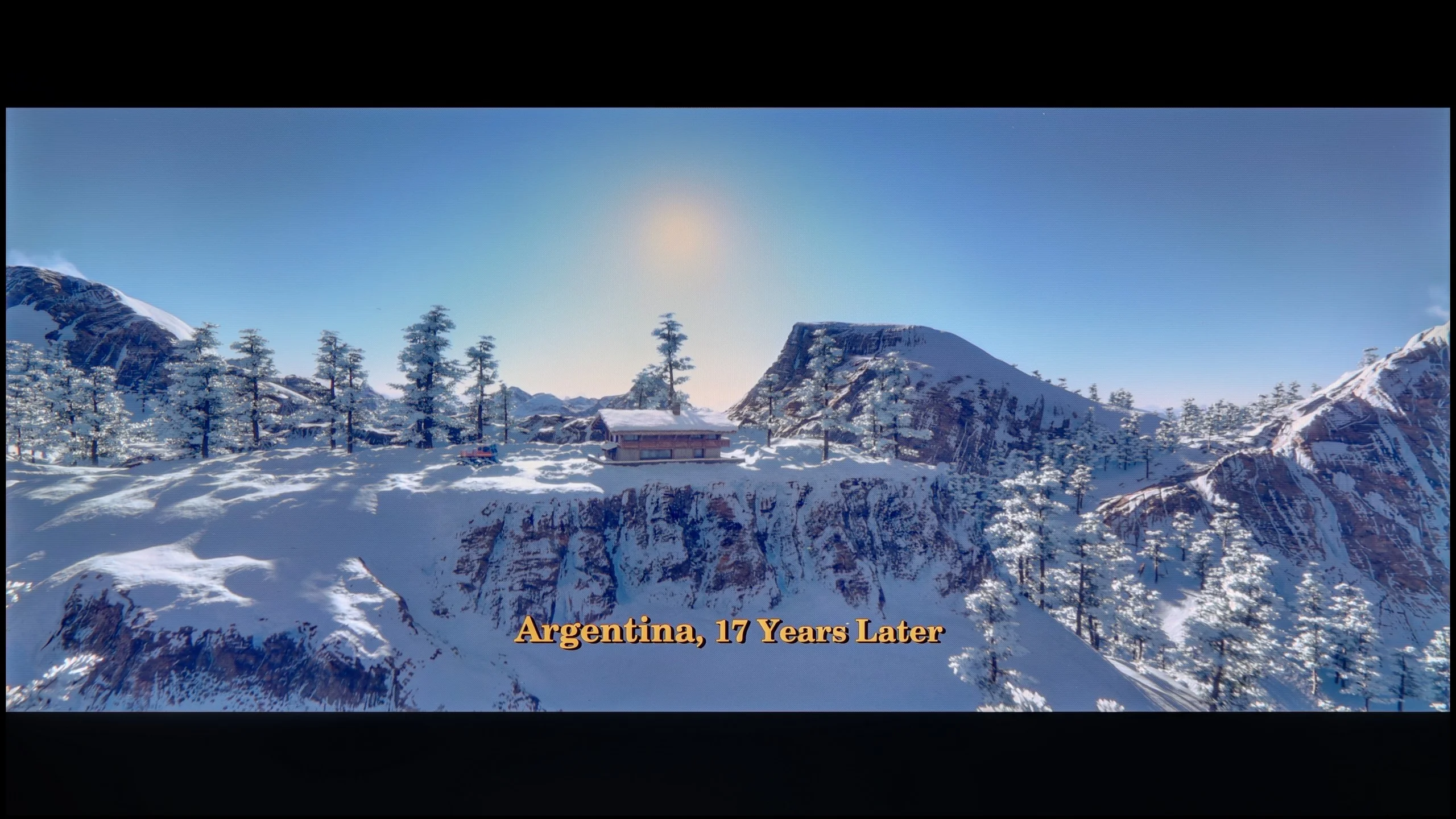

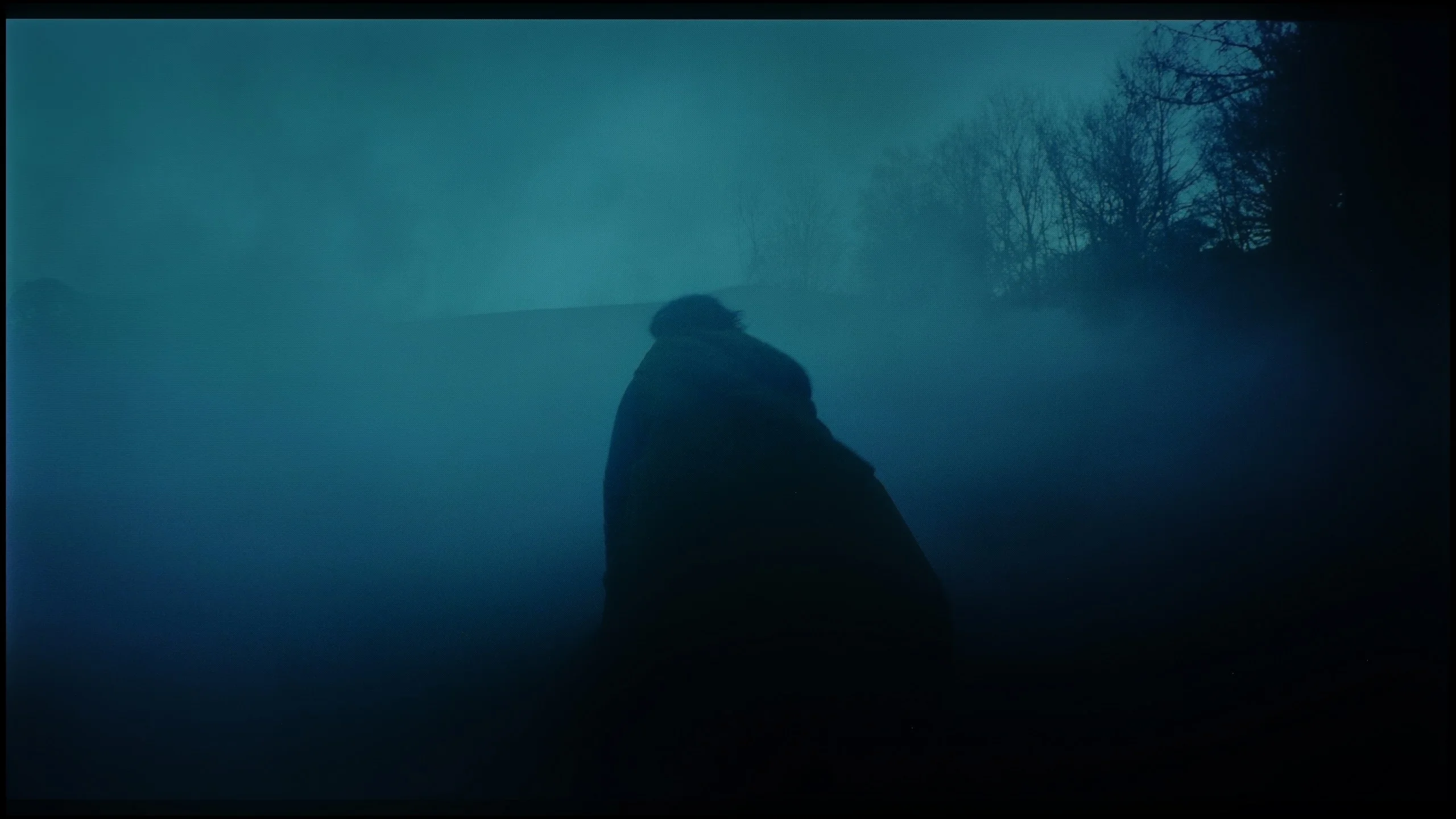
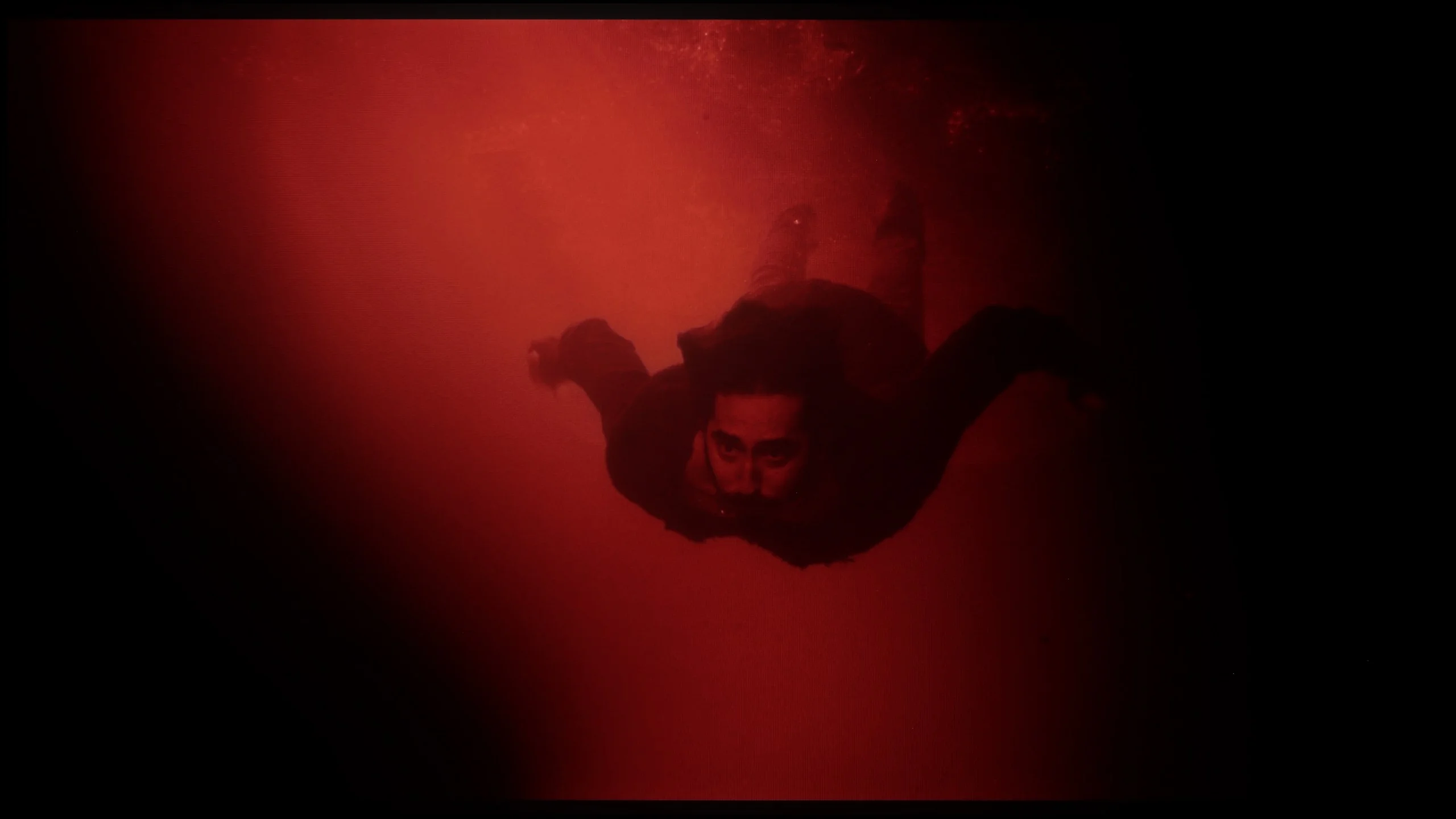
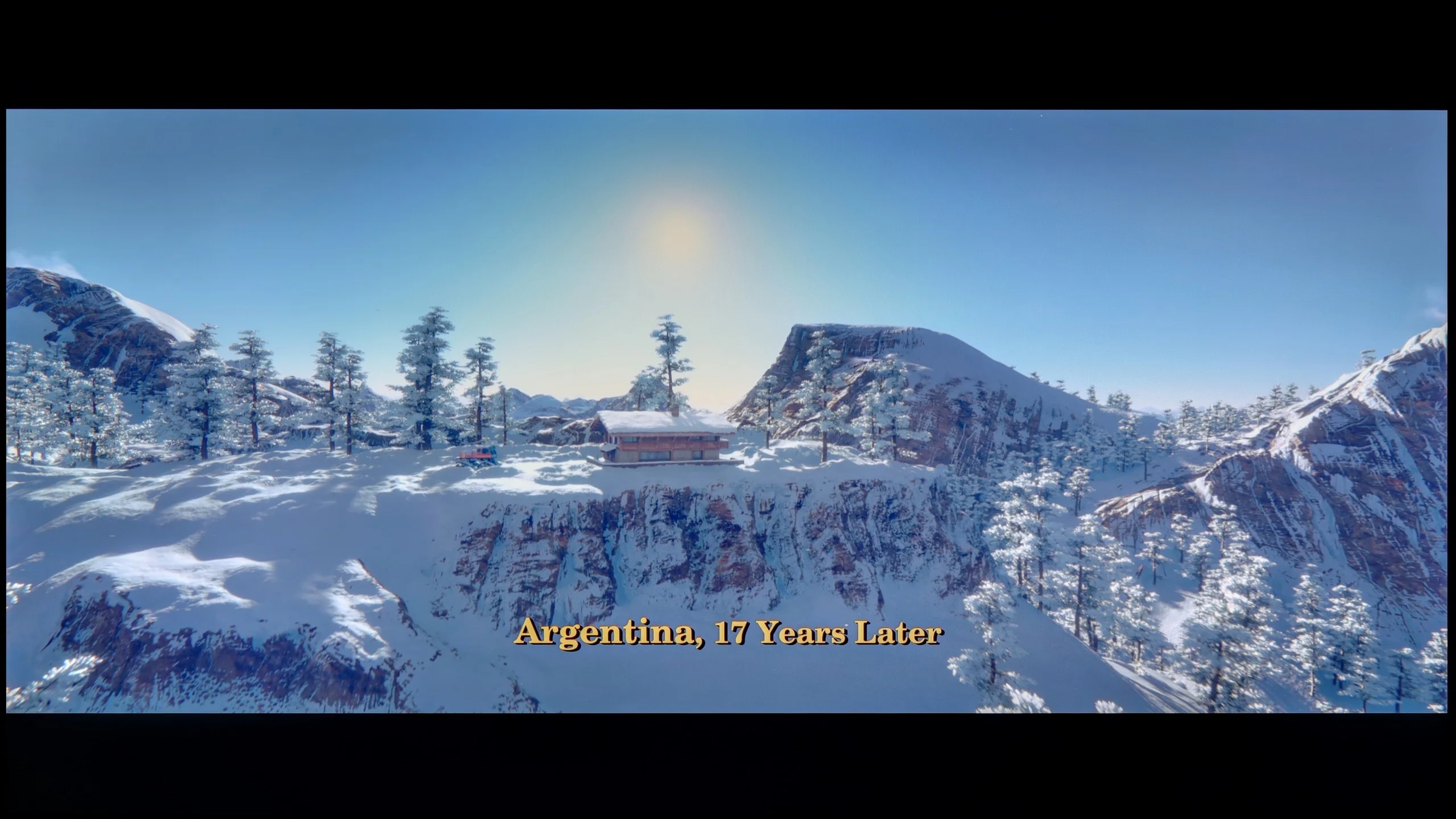
These are selected scenes that show smooth tonal transitions from one color to another. If you see distinct banding, it’s the TV panel’s fault.

These are selected scenes that show smooth tonal transitions from one color to another. If you see distinct banding, it’s the TV panel’s fault.
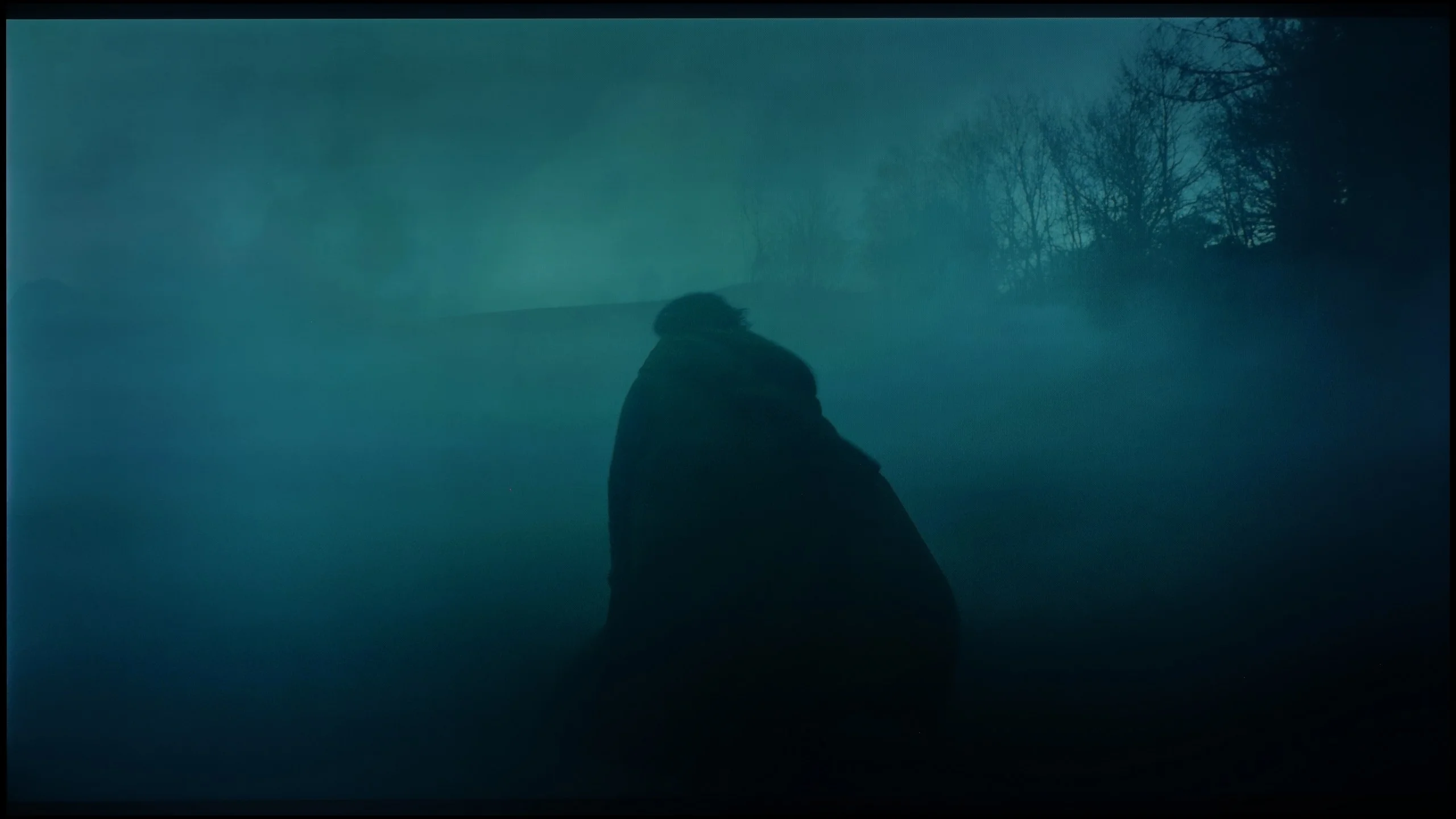
These are selected scenes that show smooth tonal transitions from one color to another. If you see distinct banding, it’s the TV panel’s fault.
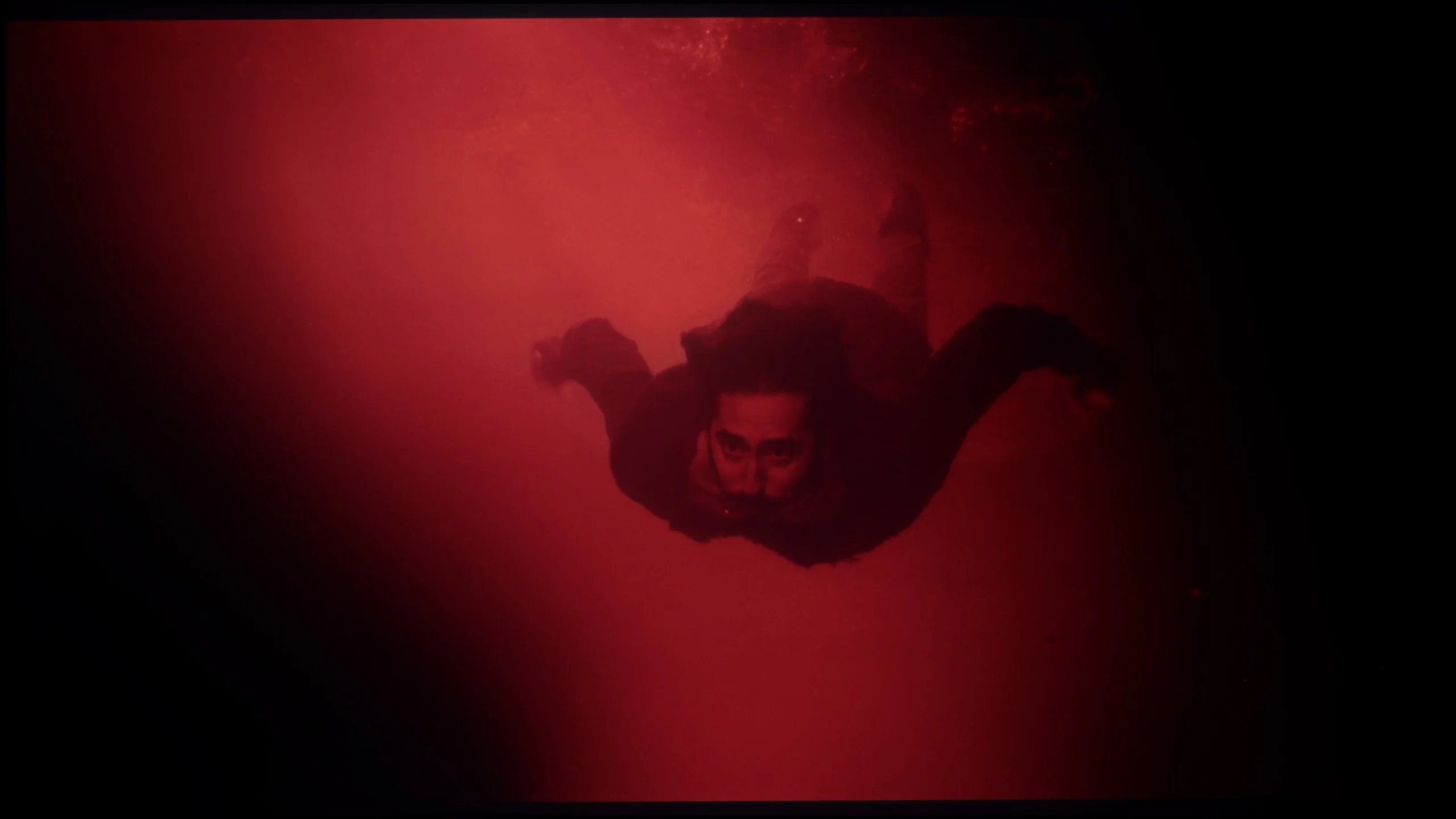
These are selected scenes that show smooth tonal transitions from one color to another. If you see distinct banding, it’s the TV panel’s fault.
U7Q performs exceptionally when it comes to tonal transitions – we can confidently say that it’s nearly at a reference level, which is why this television receives one of the highest possible ratings from us in this category. The colour blends are smooth, clear, without any noticeable banding. In most scenes, everything looks just perfect, and any minor imperfections may only appear in very specific shots – though we hardly noticed them during testing.
The smoothness of tonal transitions is one of the Hisense U7S’s stronger points. HDR10 content performs particularly well, with colours gently flowing from one to another without noticeable banding. Even in dark scenes it's hard to find significant issues. Minor tone joins only become visible in brighter shots, but during normal viewing they rarely draw attention. It's a bit worse with Dolby Vision, where the boundaries between tones can be more apparent. That's why Hisense loses some points with us, although overall it's still a very good result and one of the better performers in its class.
Image scaling and smoothness of tonal transitions
6/10
6/10

Smooth transition function
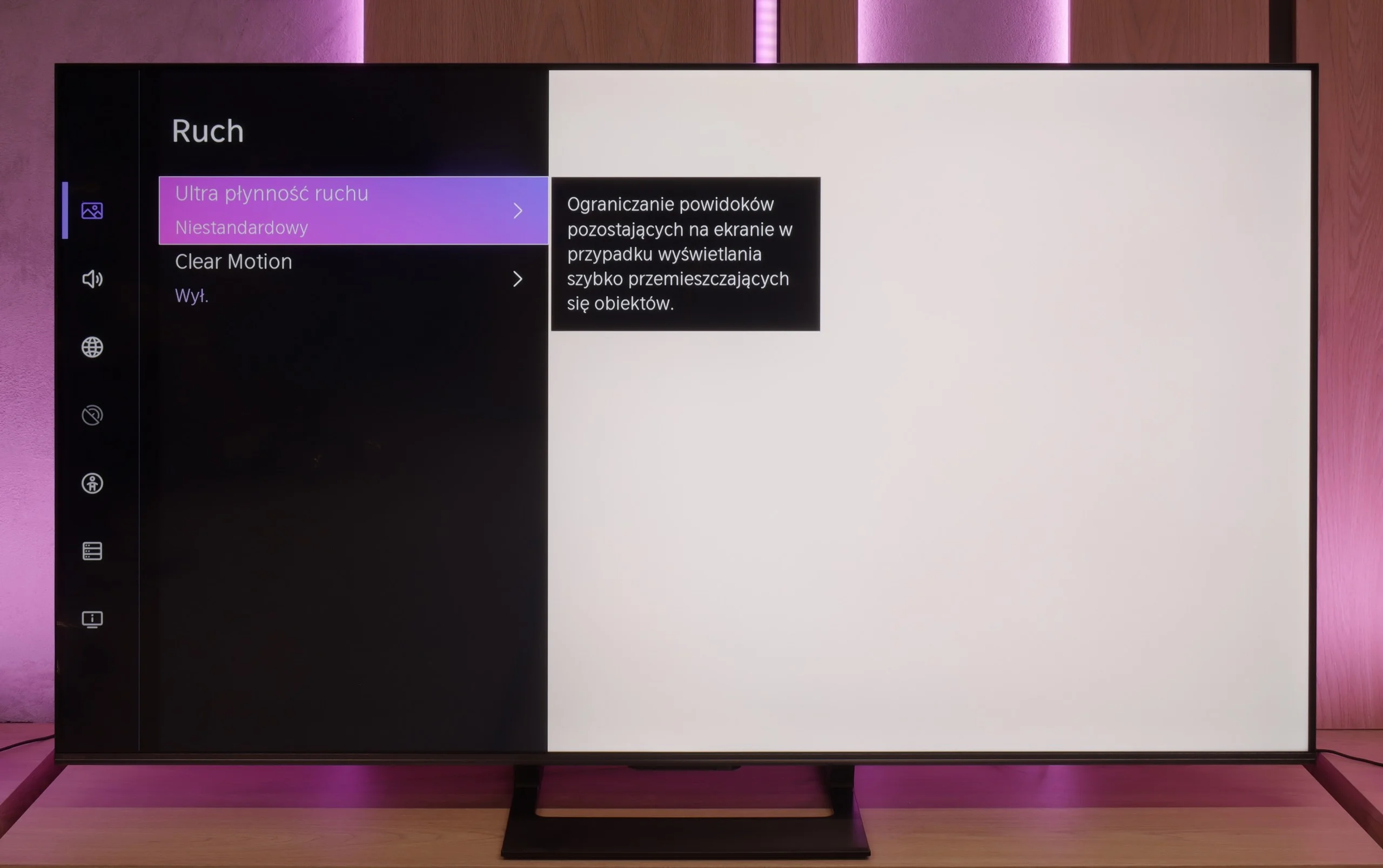
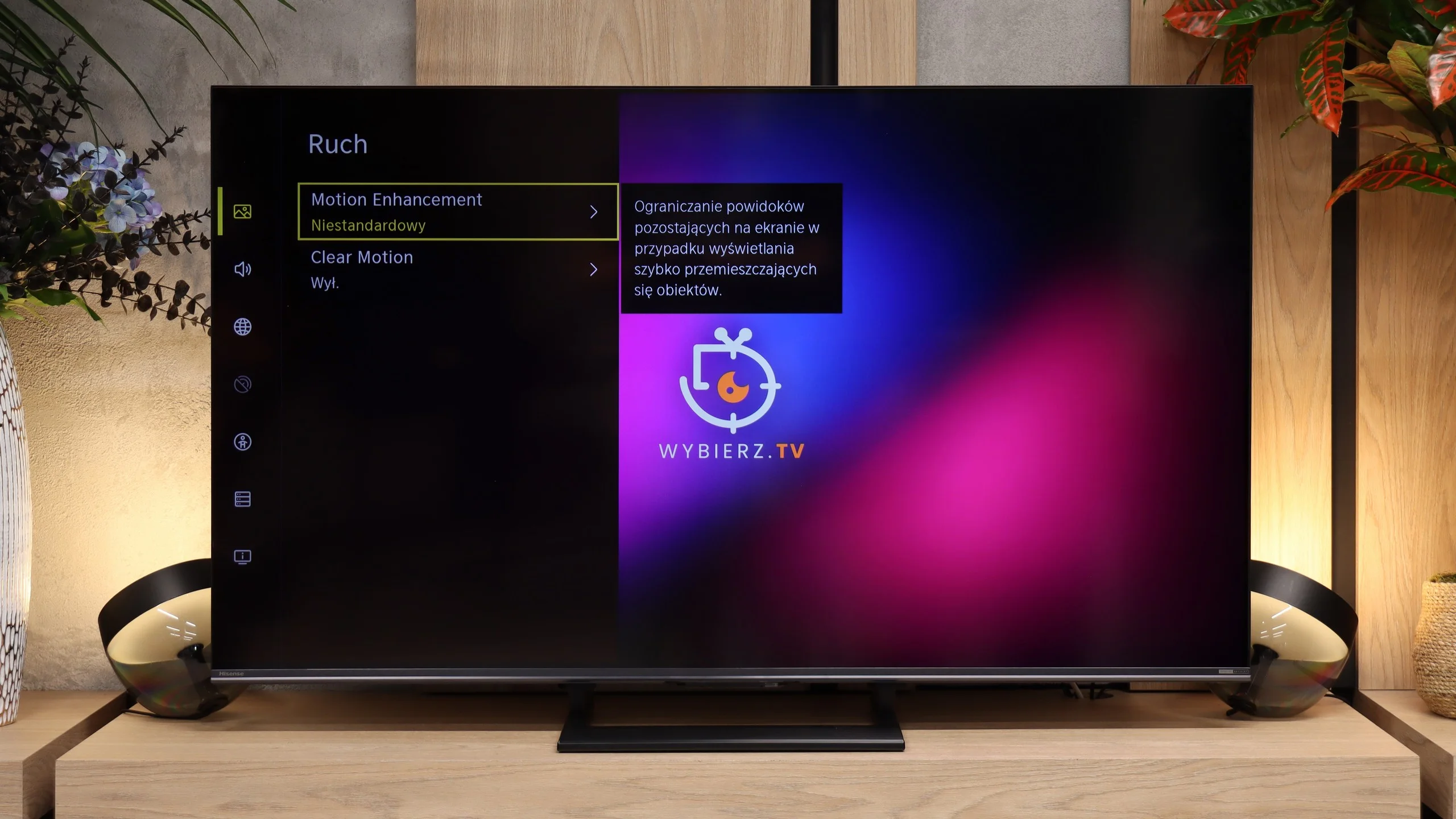
The match photo shows how the TV smooths weak tonal transitions in low-quality video.
Image scaling SD (576i)


The model photo shows how it handles upscaling of SD material.
There are situations where we would like to smooth out tonal transitions a bit, especially in older materials – those with limited source quality. The U7Q has been equipped with a feature called “Smooth and Gradient Image,” but unfortunately… it works very poorly. In the “Low” option, the effects are practically unnoticeable, and other settings smooth out the details but don’t improve tonal transitions. The only positive thing is that the feature doesn’t interfere with the film grain, so it doesn’t ruin the natural structure of the image.
Fortunately, content scaling performs quite well. The image is not overly sharpened, there is no artificial clarity – and while it’s known that this isn’t the level of high-end TVs, the U7Q has no problem displaying really old content in a completely acceptable manner.
The processing of lower-quality material in the Hisense U7S is fairly average. The Pentonic 700 chipset used here doesn't cope particularly well with the effects of heavy compression. There's a "Smooth and Gradient Picture" function in the menu, but its performance leaves a lot to be desired. At the low setting it's hard to see any improvement in tonal transitions, though at least the picture doesn't suffer. Medium and high settings still don't remove visible banding between tones and begin to blur details; in our clips parts of characters' faces even vanished. Interestingly, film grain remains untouched at every level. If you do use this function, stick to the low setting. Its current performance needs refinement, but that's mainly down to the processor used here.
Upscaling to 4K performs much better. Lower-resolution content gains clarity, edges are well reproduced and fine details look sharp. That doesn't mean the TV can recover details that weren't in the recording, but it makes good use of what's provided by the source. Another plus is the lack of edge cropping, even with an SD signal.
Blur and motion smoothness
7.1/10
7/10
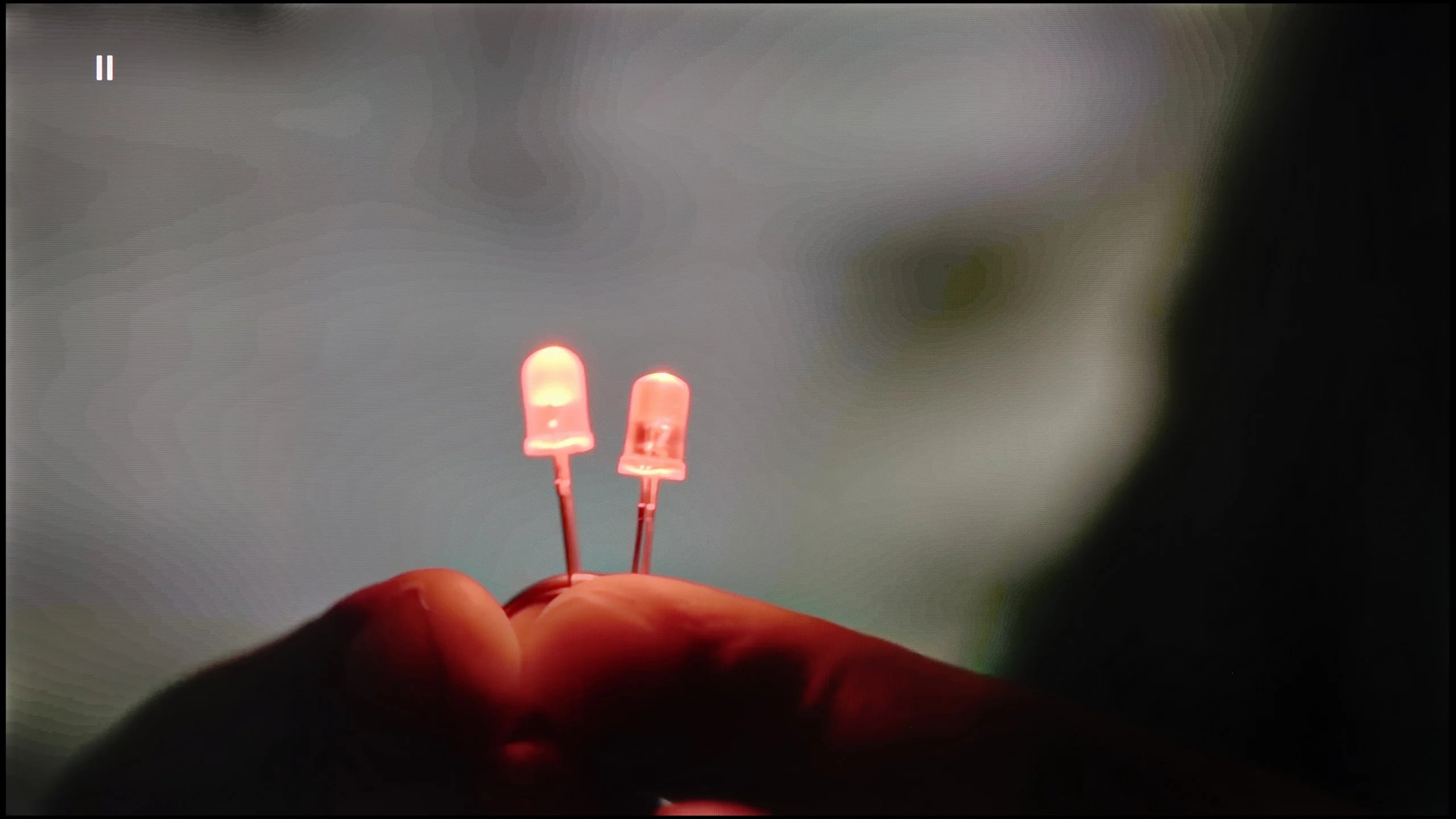
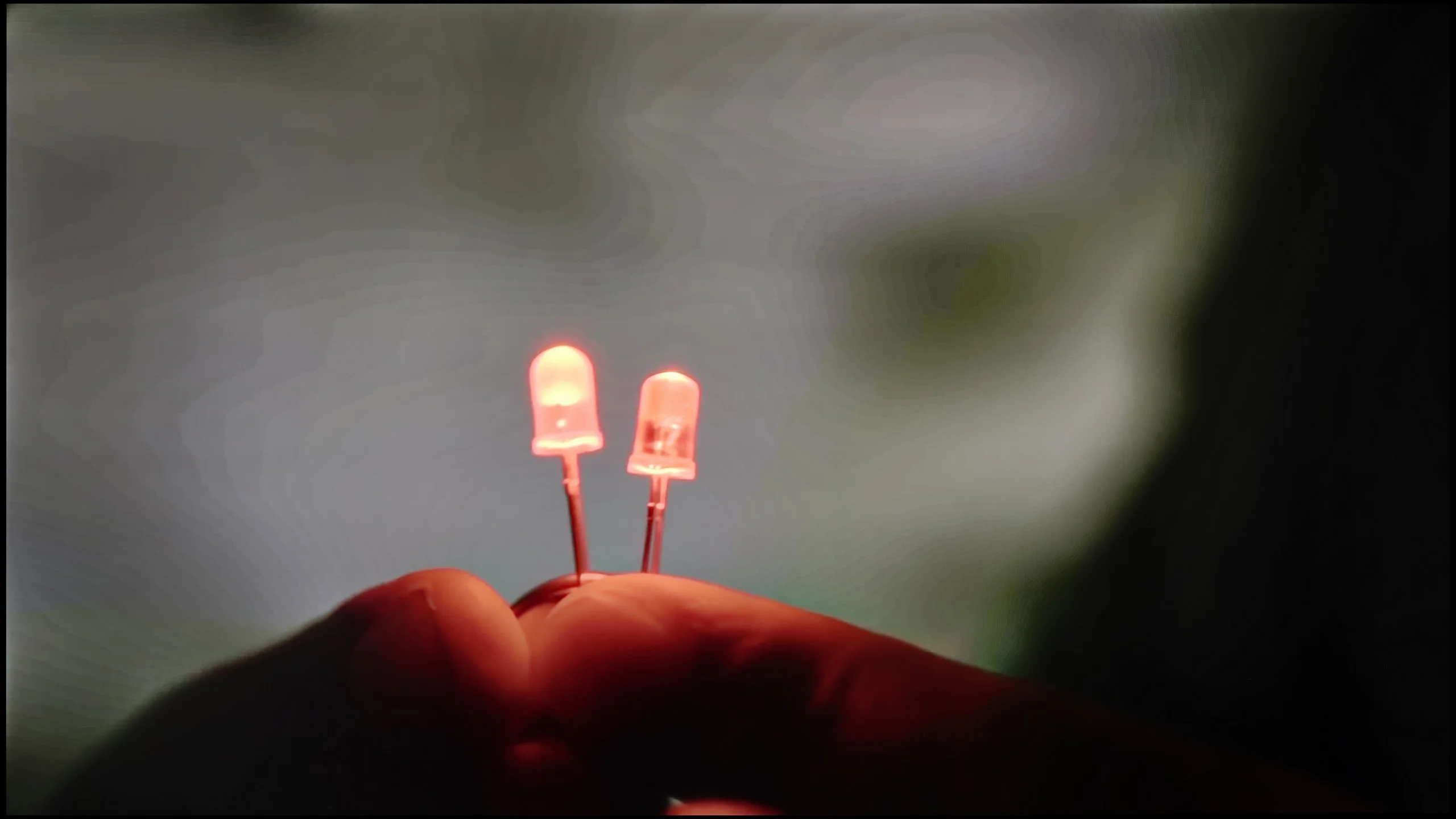
Blur (native resolution, maximum refresh rate):

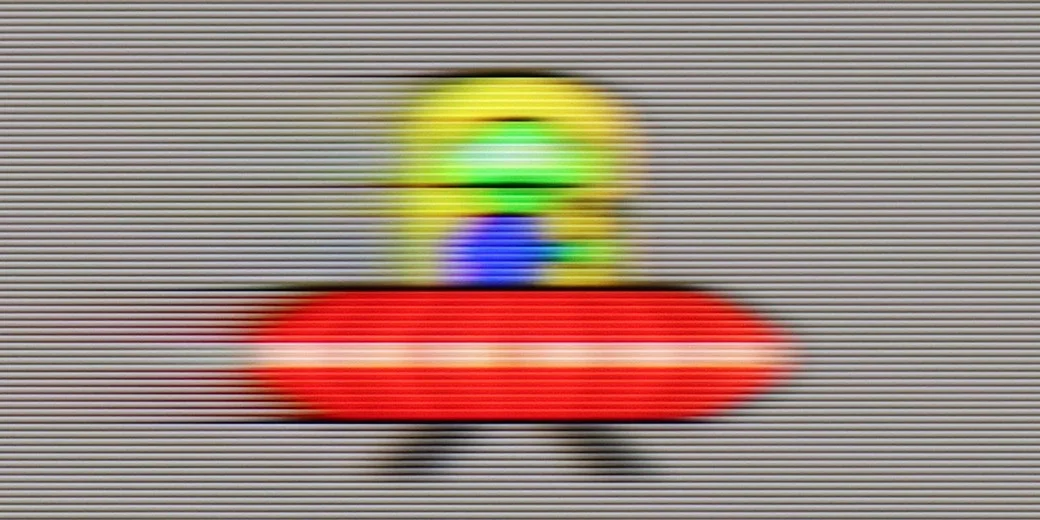


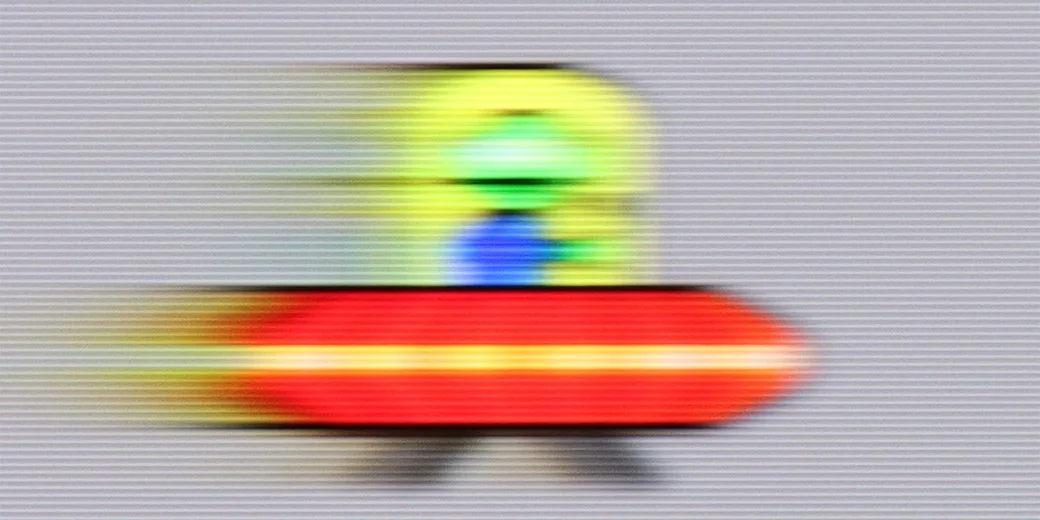
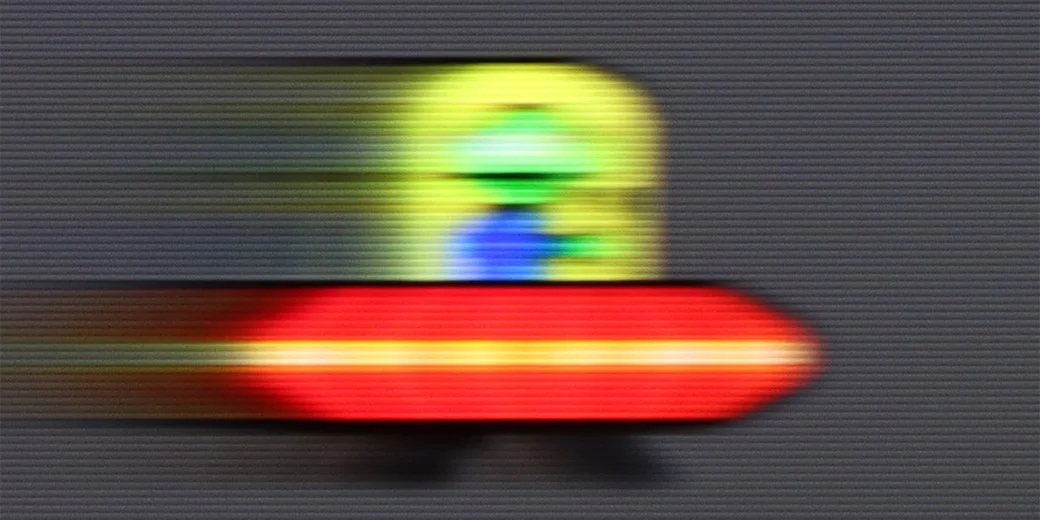
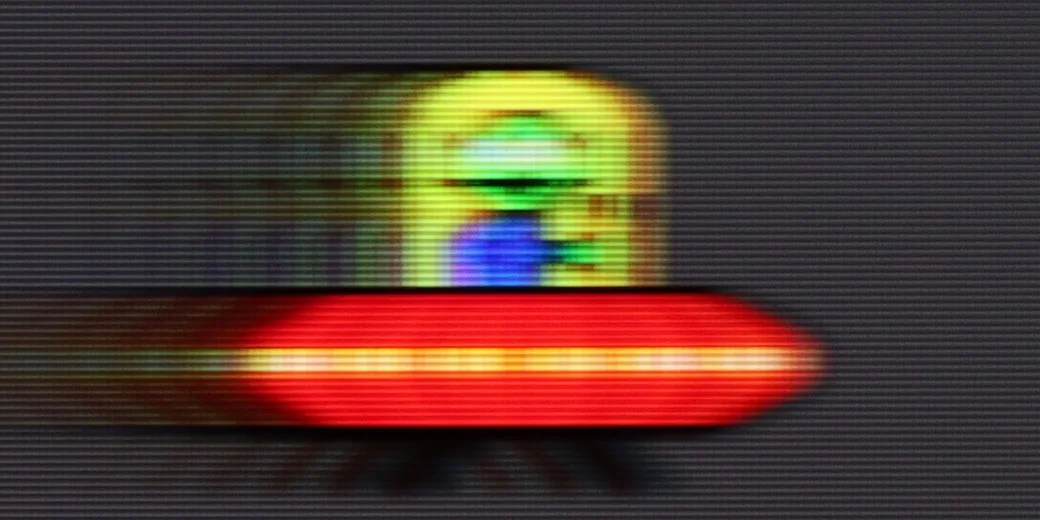
Blur (BFI function enabled):





Blur (1080p 240Hz):
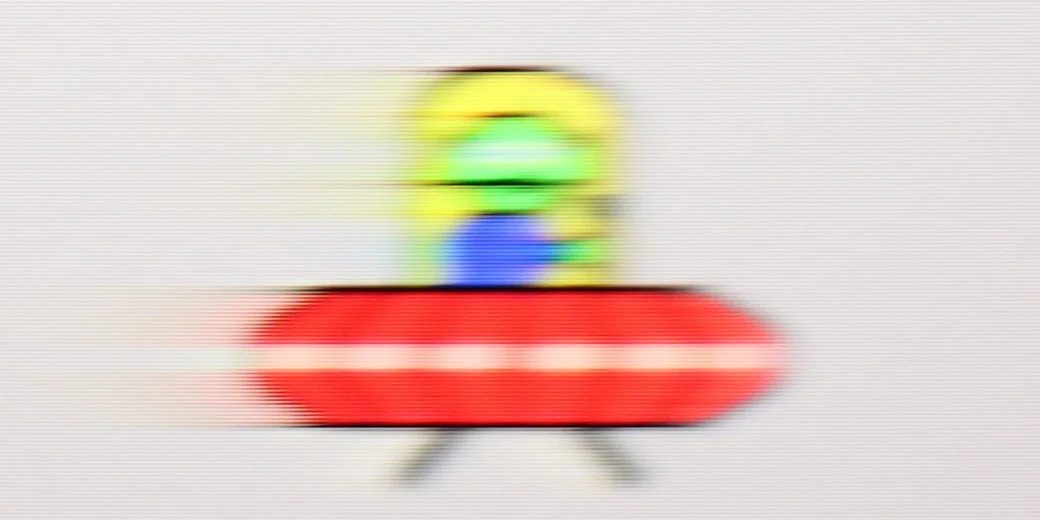
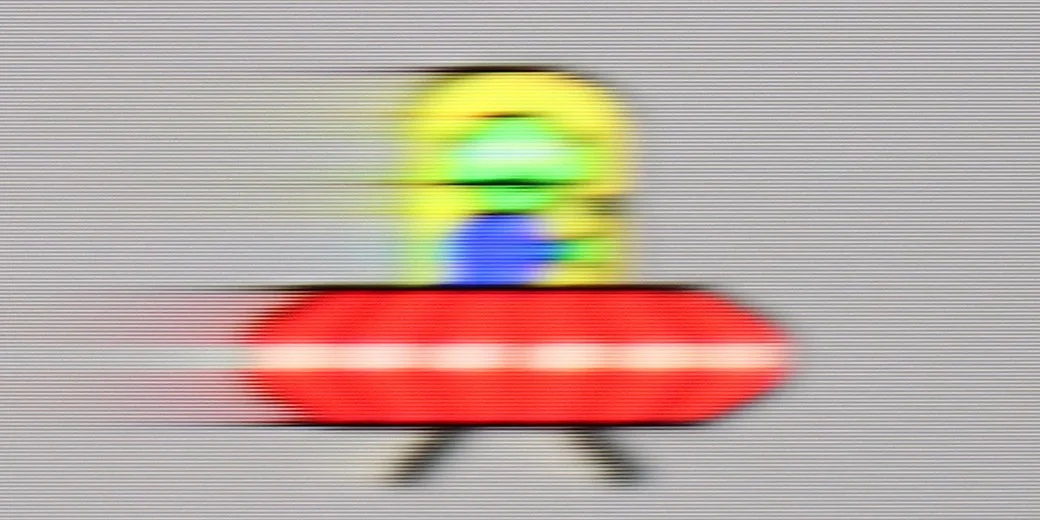
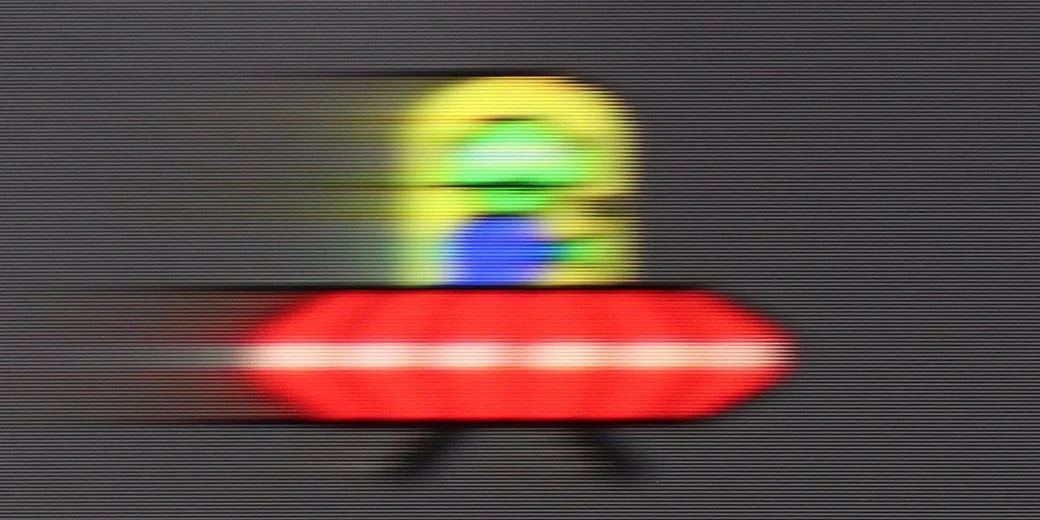
Blur (1080p@240Hz):



U7Q is a truly fast TV, much like its more powerful version “PRO”. At 4K resolution, it supports up to 144 Hz refresh rate, and if someone wants even more – in Full HD, you can achieve up to 240 Hz! This will mainly benefit PC gamers, but it’s worth appreciating – it’s a rare feature in this price segment. Right from the start, it’s clear that the U7Q has been designed with dynamic content in mind, such as games or sports. In films, we’re not left “out in the cold” either – the U7Q offers an “Ultra Motion Smoothness” feature, where with two sliders, you can adjust whether you want a smoother, theatrical picture, or something closer to cinematic style with a visible frame. It’s good that, like most manufacturers, we have a choice here and can customise it to our own preferences.
Motion handling on the Hisense U7S is decent thanks to its 144 Hz refresh rate. For films there's also a motion smoothing option with adjustable judder and blur reduction. You can keep a more cinematic feel to motion or increase smoothness if choppy camera pans bother you. High refresh is also useful for sport and gaming, but unfortunately it doesn't solve the panel's biggest problem.
The issue is pixel response time. Fast-moving objects leave long, distinct trails, as our UFO test shows. It's worst on dark backgrounds, where the trail is particularly pronounced. So motion can be smooth, but the moving object loses sharpness, and that difference on the U7S is fairly easy to spot.
Console compatibility and gaming features
8.5/10
8.5/10
- ALLM
- VRR
- VRR range48 - 240Hz48 - 240Hz
- Dolby Vision Game Mode
- Correct implementation of HGIG

- 1080p@120Hz
- 1440p@120Hz
- 4K@120Hz
- Game bar
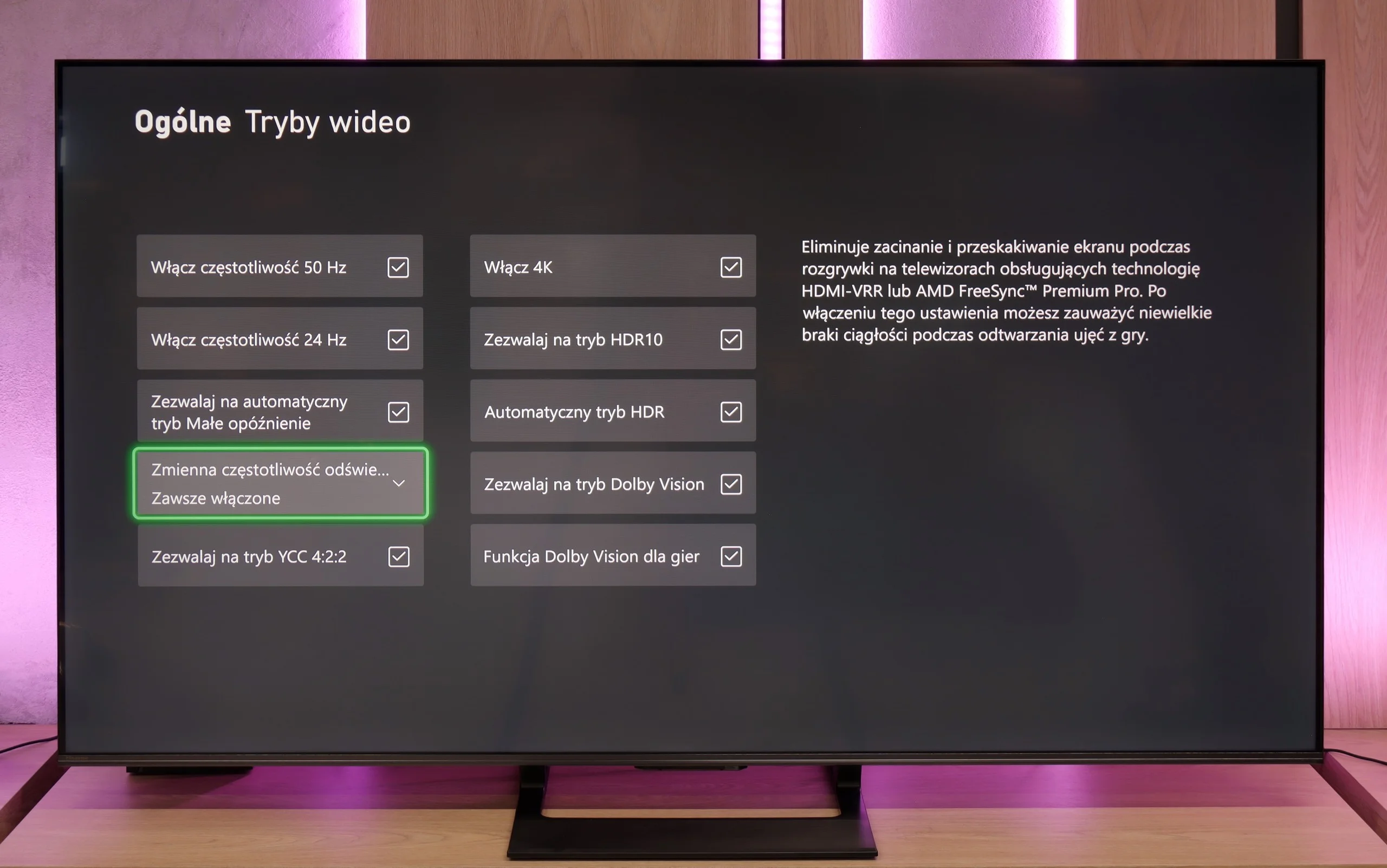
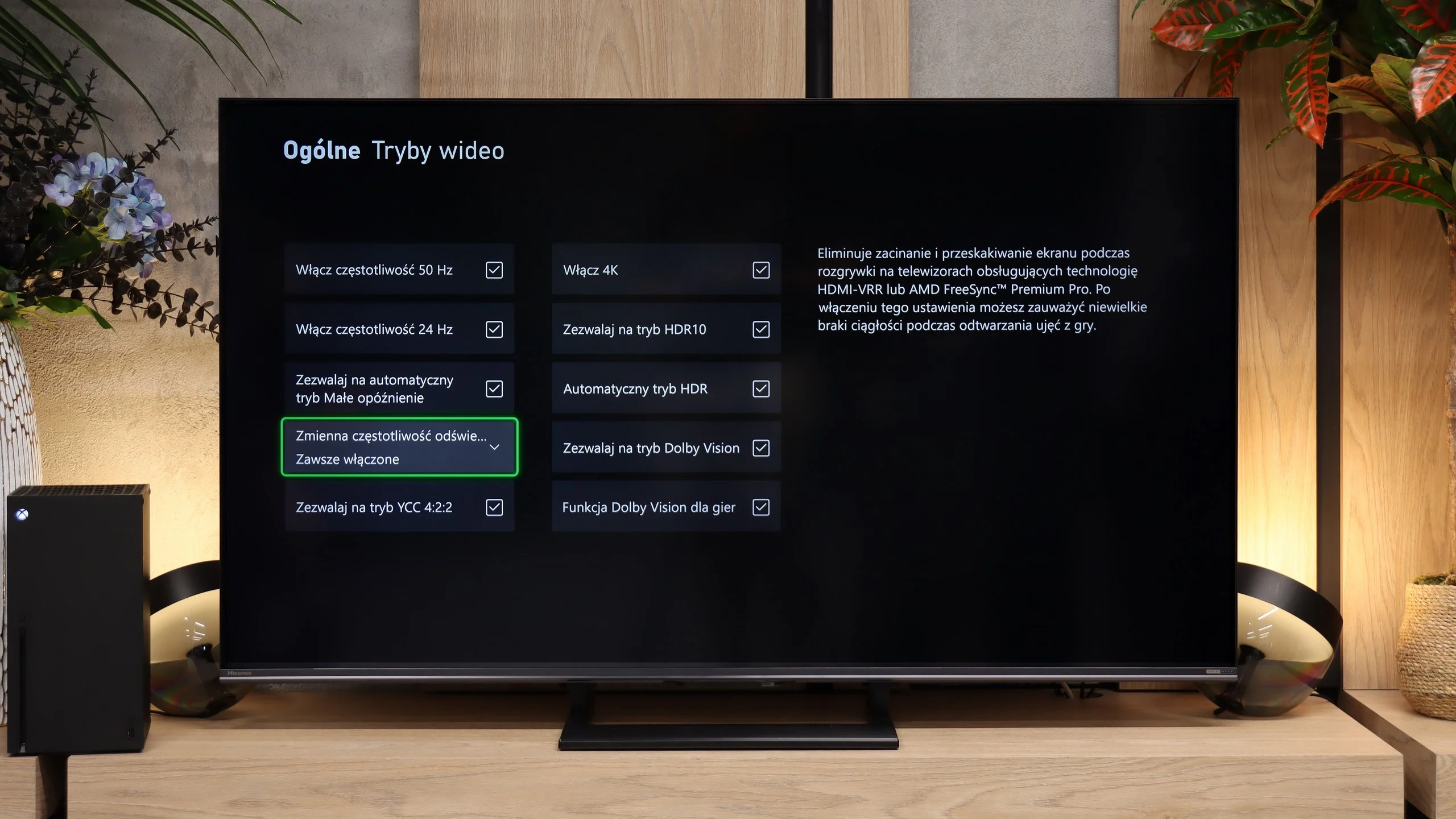
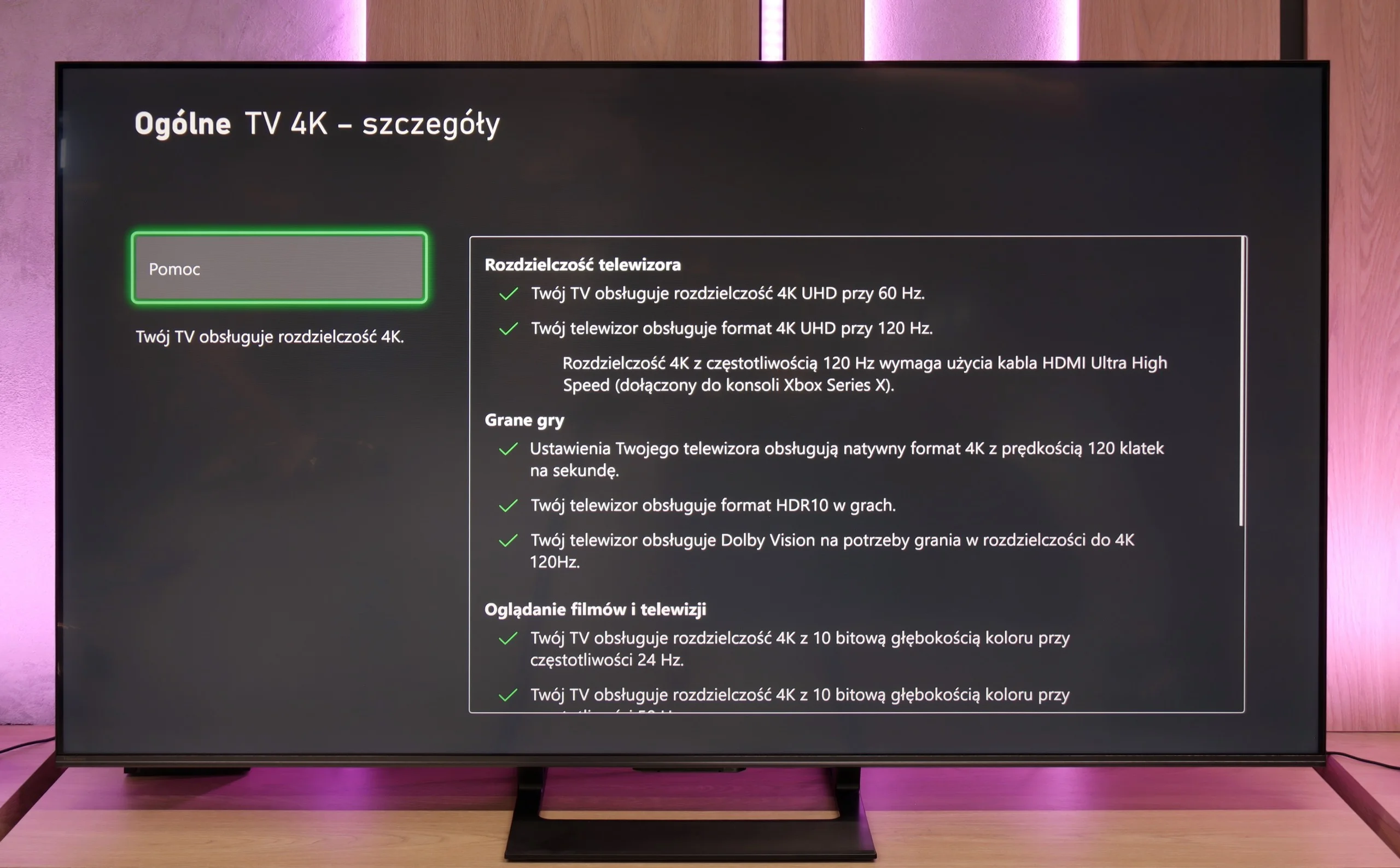
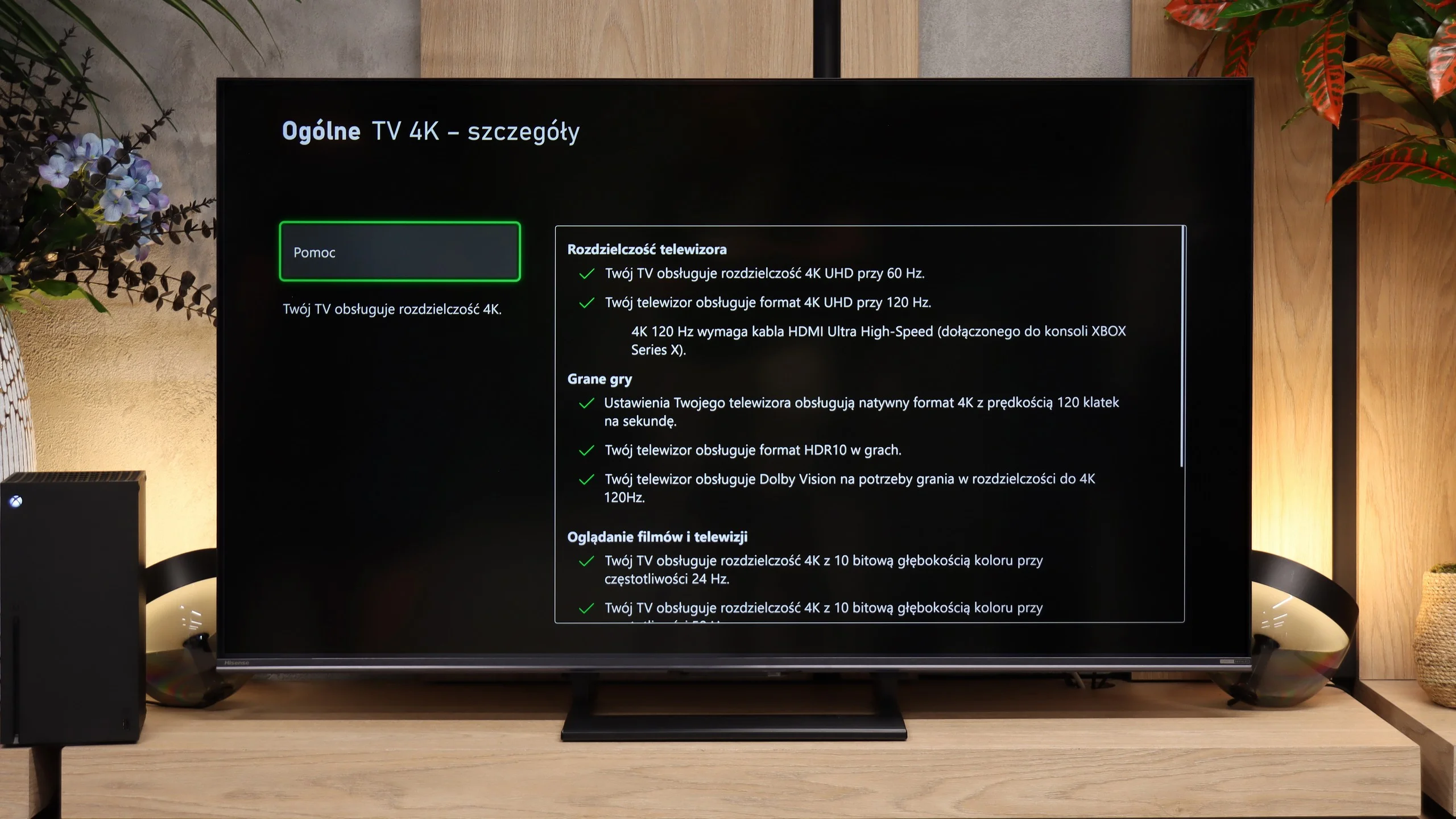
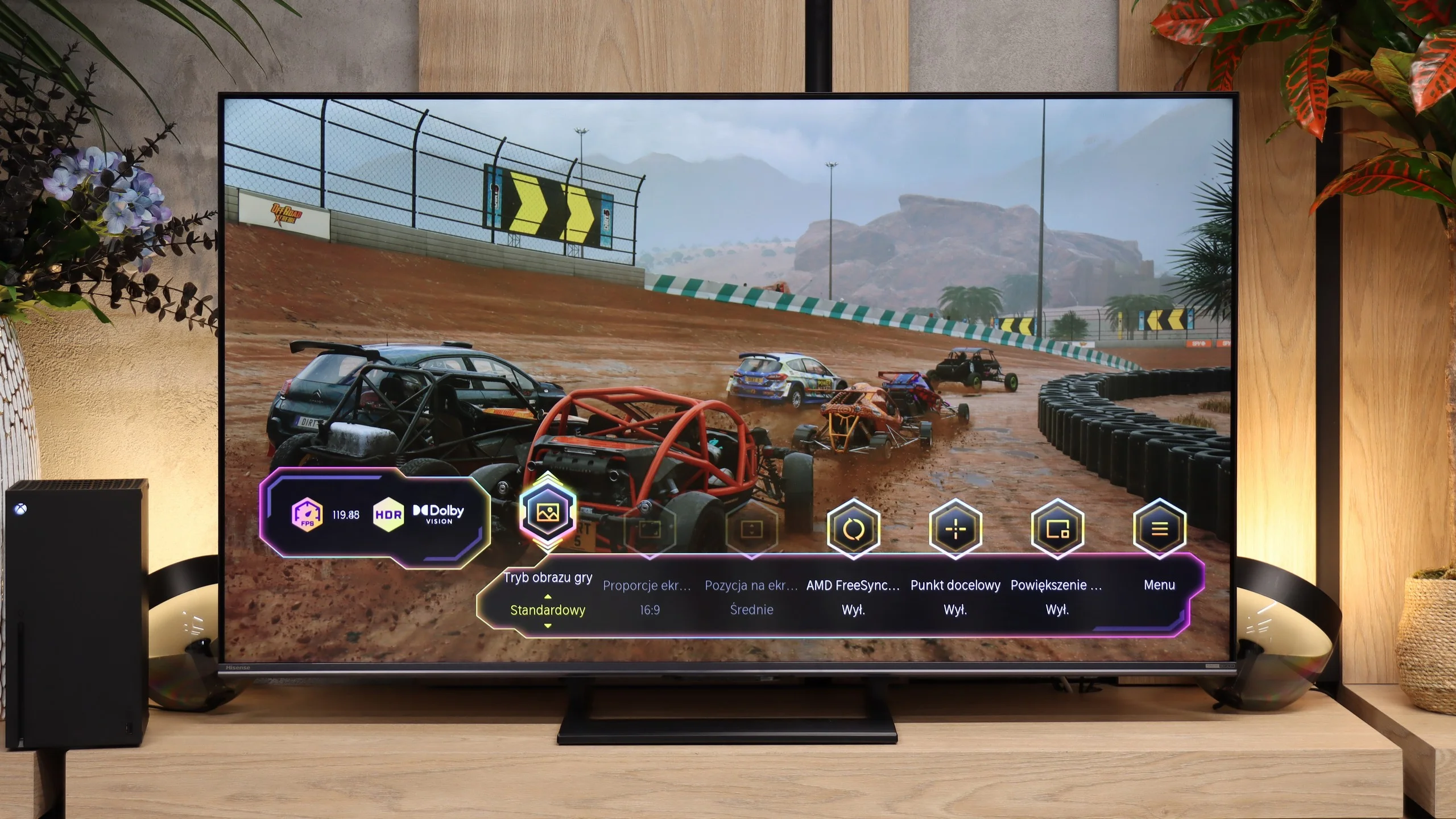
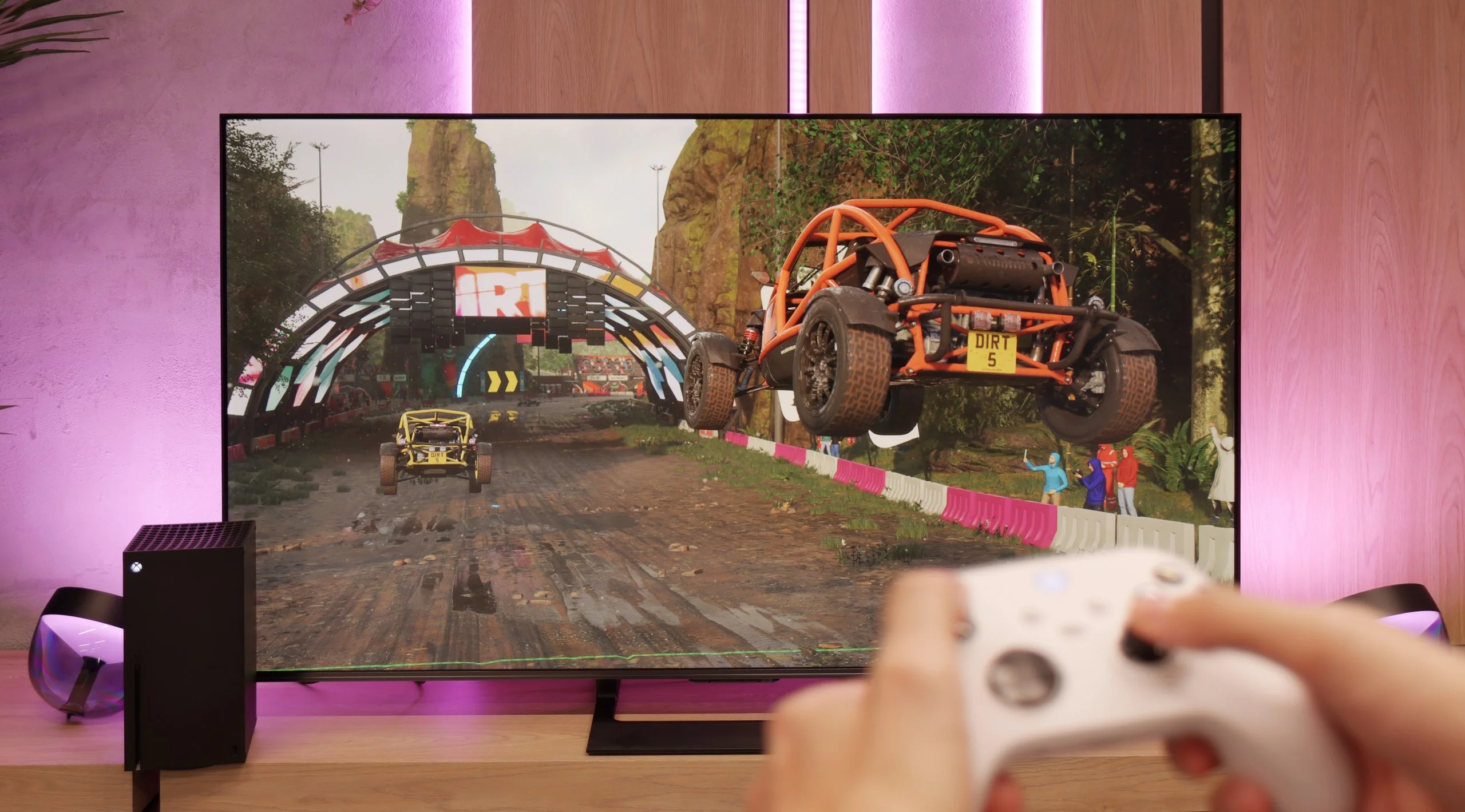
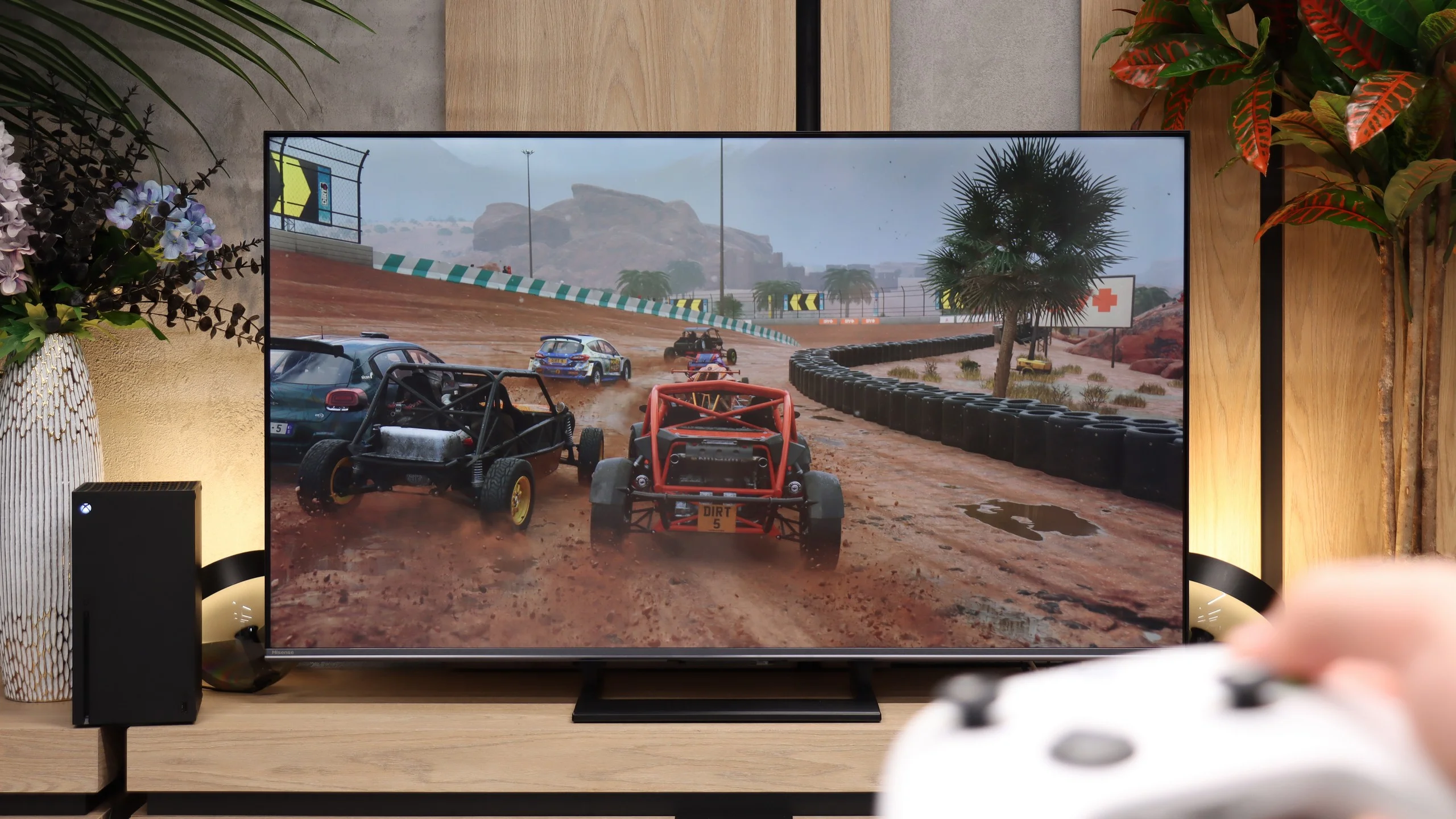
The Hisense U7Q is a TV designed with gamers in mind – and you can see that straight away with its gaming capabilities. It has practically everything you could wish for: Variable Refresh Rate (VRR) – check, Auto Low Latency Mode (ALLM) – check, and high refresh rates of up to 240 Hz in Full HD, along with support for various resolutions, not just 4K. It’s truly an impressive set of features that makes the U7Q perform well with both fast-paced shooters on consoles and more demanding titles on PC. Of course – like most Hisense models – it lacks a proper implementation of the HGiG feature. It’s a shame because HGiG allows the console's brightness to be adjusted to the specific TV, which in practice makes it easier to display HDR games according to the creators' intentions. Without this, you just have to deal with some limitations in the final HDR image in games.
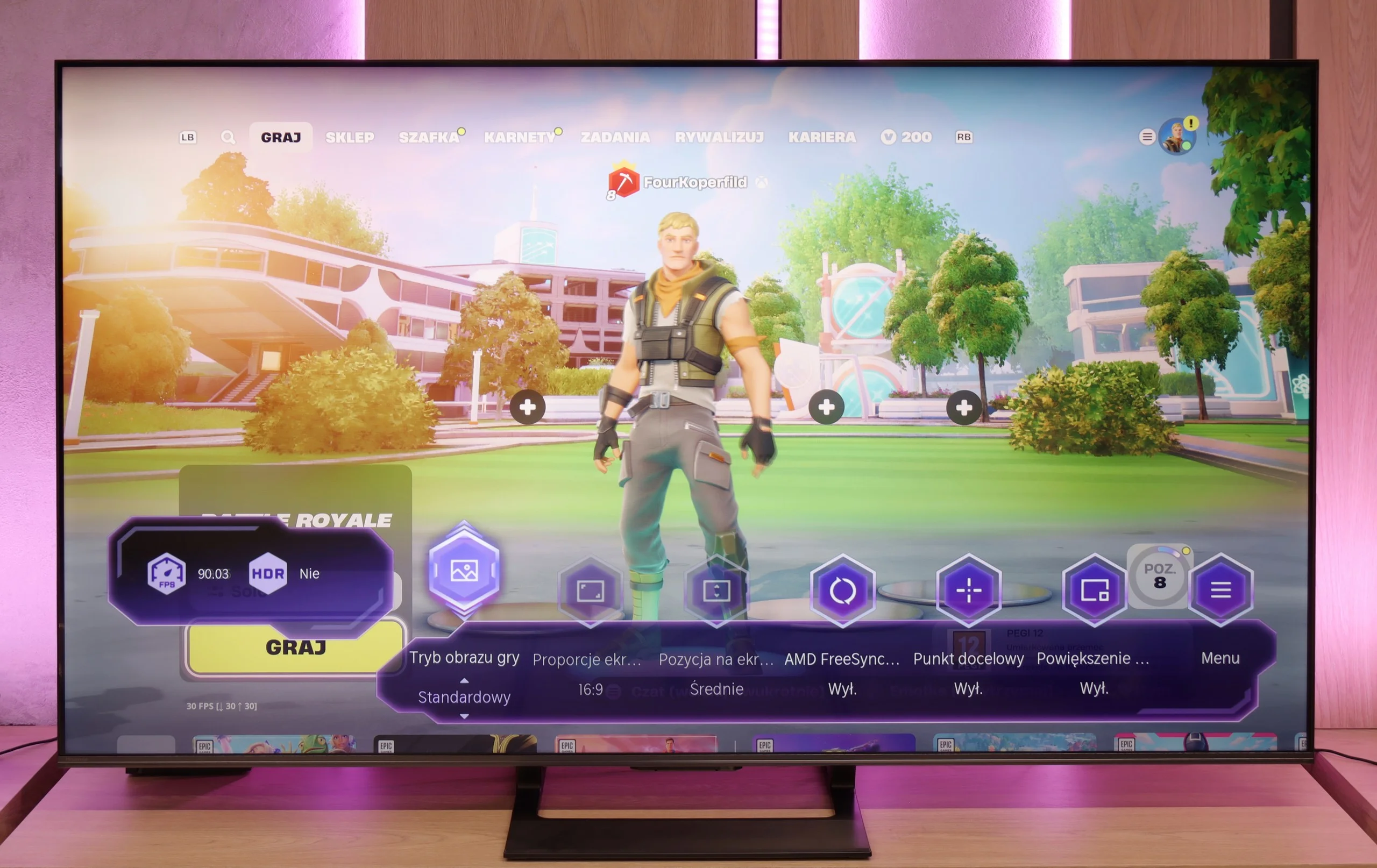
The Hisense U7S has plenty to offer gamers. You get two HDMI 2.1 ports and support for 120 Hz in Full HD, 1440p and 4K, so modern consoles’ capabilities are well utilised. When connected to a PC you can use 144 Hz at 4K or switch the resolution to Full HD and run 240 Hz. So there’s a lot of choice, although it’s worth remembering the motion smearing mentioned earlier, which the high refresh rate doesn’t eliminate. VRR and ALLM are present as well. VRR helps keep the picture tear-free when a game’s frame rate changes. ALLM automatically switches the TV into game mode, so you don’t have to go into the menu each time. VRR works from 48 to 240 Hz, with the highest refresh rate available in Full HD. Xbox users can also play in Dolby Vision at 120 Hz. Importantly, that format does not cause significant input lag here. The Game Bar also looks great. It’s clear and attractive, and lets you quickly check what signal the TV is receiving. Handy gaming settings are close to hand too, including shadow brightening. If it’s hard to spot an opponent in a dark game, you can improve visibility without digging through the whole menu.
Our biggest complaint is HGiG. Hisense keeps doing its own tone mapping, which makes setting up HDR on the console confusing. You adjust the checkerboard pattern, and the TV continually alters its appearance. As a result, the point at which the pattern disappears does not correctly indicate the display’s brightness limit, and it’s easy to set the value too high. For this model it’s better to set the target HDR brightness on the console to around 900 to 1000 nits, rather than rely on the configurator.
Input lag
9.7/10
9.9/10
SDR
HDR
Dolby Vision
The input lag on the U7Q is really impressive. With 120 Hz content, we achieved around 9 ms, and with 60 Hz – around 17 ms. These are fantastic results that make the TV great for even dynamic games requiring quick responses. It’s hard to fault anything here. Of course, as is often the case, the Dolby Vision mode in games seems a bit slower compared to standard SDR or HDR. This will be mainly noticeable for Xbox Series X/S console users, who are the only ones supporting Dolby Vision Gaming. Fortunately, the input lag still remains below 30 ms, so in practice, this is still an acceptable level even for more demanding gamers.
In terms of input lag the Hisense U7S performs excellently. At 60 Hz we measured 14–16 ms, and at 120 Hz just 9–10 ms. Input is responsive and even in fast-paced games the TV doesn't introduce any noticeable delay. Importantly, Dolby Vision performs just as well: 14 ms at 60 Hz and 9 ms at 120 Hz mean you don't have to forgo the format for fear of added latency. The smearing described earlier is a separate issue. The screen reacts quickly to inputs, but the pixels don't always keep up with colour changes.
Compatibility with PC
8.6/10
8.2/10
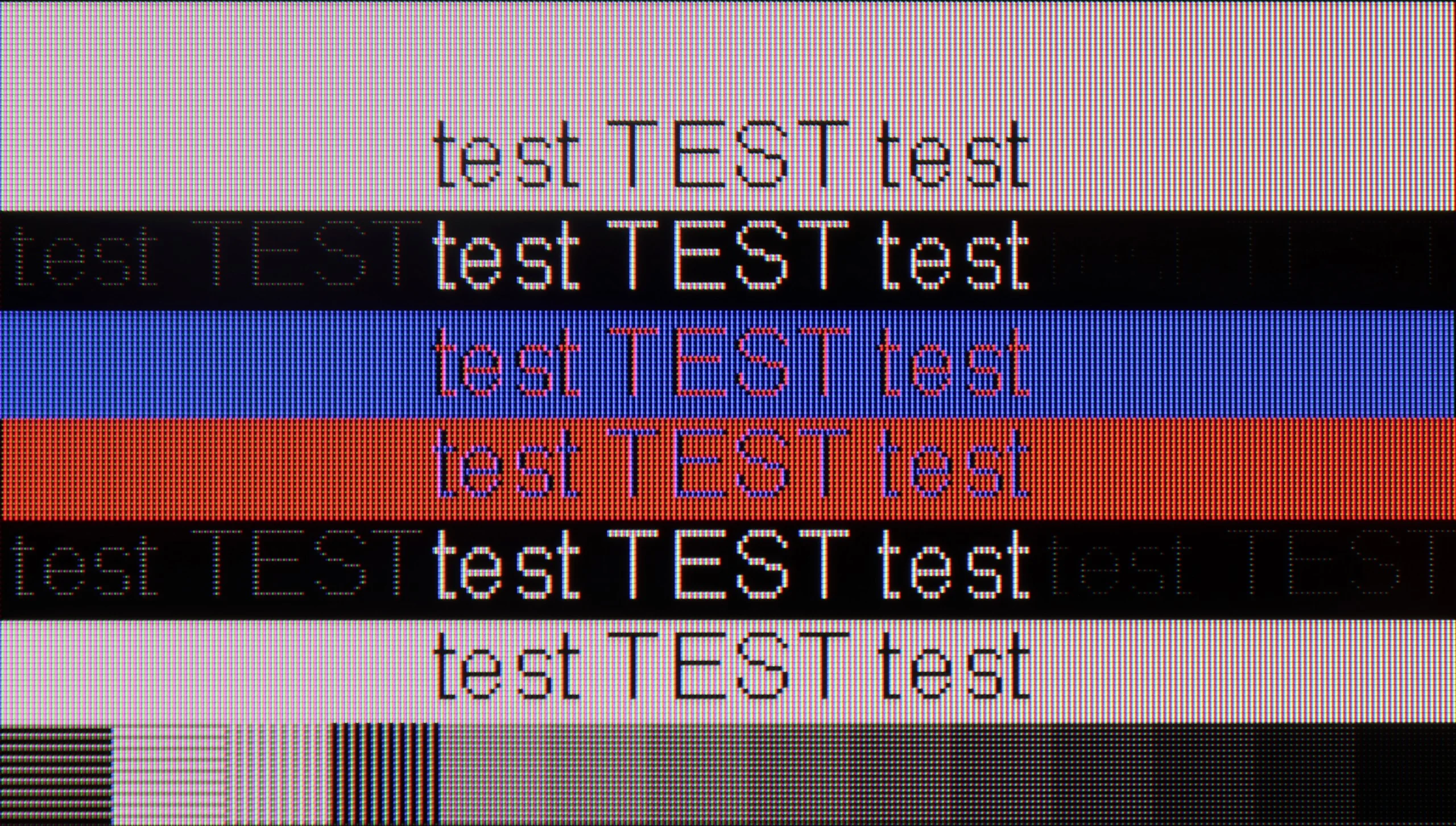
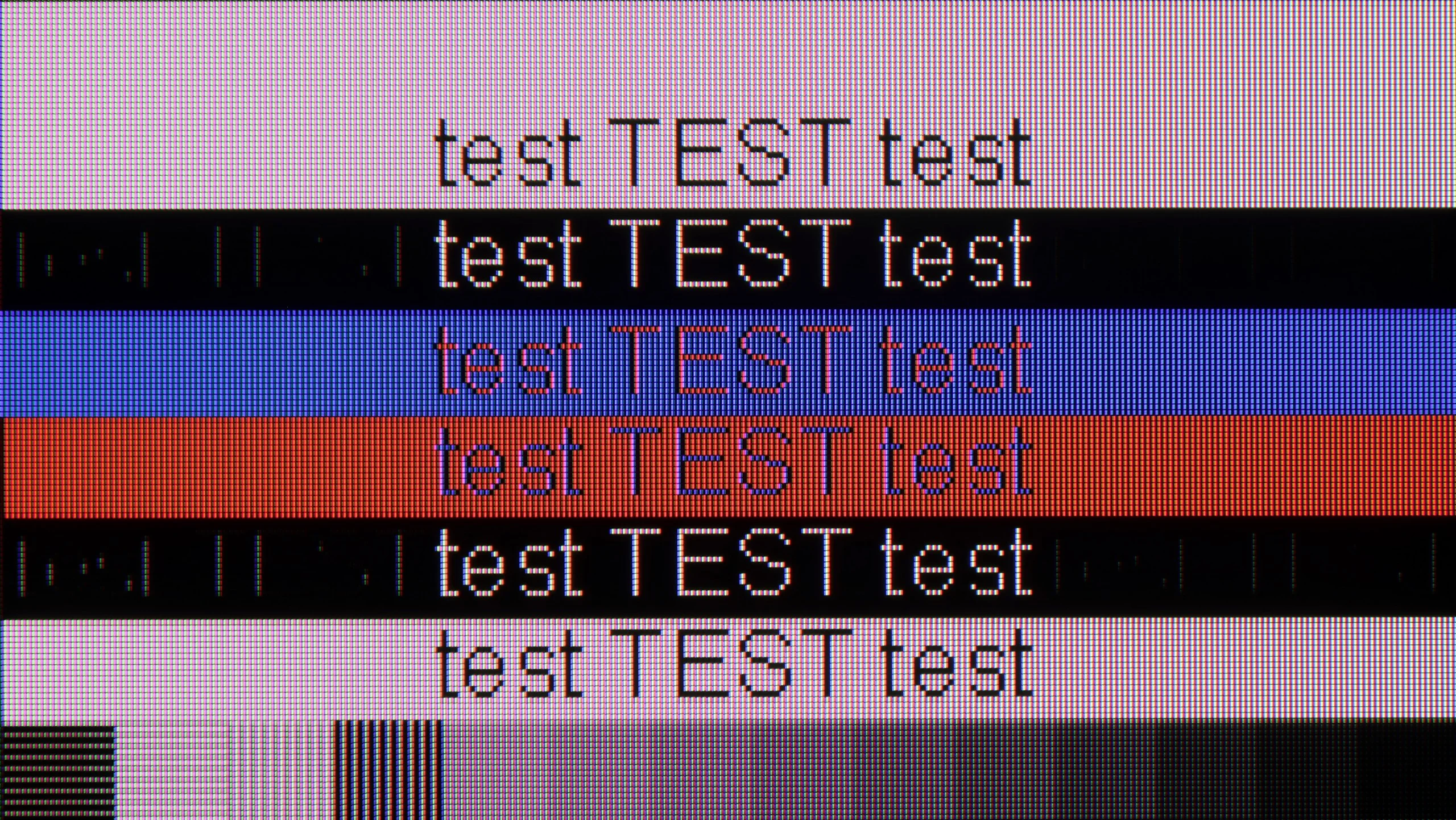
The photo shows the legibility of small fonts. Ideally, lines should be the same thickness on both light and dark text, with minimal pixel gaps.
The U7Q communicates great with the computer. For gamers, this is fantastic news – we have high refresh rates, low input lag, and G-SYNC support, making gaming from a PC an absolute pleasure. But the U7Q also performs well in everyday tasks. If someone uses a computer for text, web browsing, or office work – there’s nothing to nitpick about. The TV correctly handles chroma 4:4:4, so fonts look sharp and clear, without blurring or strange outlines. Both small and capital letters are simply legible – just as they should be.
Po podłączeniu komputera możemy korzystać z 4K przy 144 Hz, działającego G-Sync i opóźnienia na poziomie 10 ms. To dobry zestaw do grania, choć w dynamicznych scenach nadal daje o sobie znać smużenie matrycy. Poprawnie działa też chroma 4:4:4, również przy maksymalnym odświeżaniu, dzięki czemu kolorowe napisy i drobne elementy pulpitu pozostają czytelne.
Do przeglądania internetu czy okazjonalnej pracy U7S nadaje się całkiem dobrze, ale nie wszystkie czcionki wyglądają równie wyraźnie. Najwięcej uwag mamy do drobnego, ciemnego tekstu — cienkie fragmenty liter potrafią zanikać i znaki wyglądają nierówno. Z kanapy trudno to zauważyć, natomiast przy pracy z bliska, szczególnie z tekstem czy arkuszami, może już przeszkadzać.
Viewing angles
3/10
3.1/10
The viewing angles on the U7Q are rather weak – that's just typical for VA panel characteristics. Directly in front, everything looks very good: blacks are deep, colours are saturated, and the contrast is high. But just moving slightly to the side is enough for the picture to start losing quality – colours become paler, and blacks begin to resemble dark grey. Compared to TVs with IPS panels, the U7Q performs worse, although on the other hand, it compensates with better contrast and deeper blacks.
Viewing angles are unfortunately a weak point of the Hisense U7S. Even after shifting to the side, colours lose saturation, blacks become lighter and the picture looks washed out. At a 45-degree angle we measured a brightness drop of as much as 74%, so the difference compared with watching straight on is really significant. That's a typical limitation of VA panels. When seated centrally we can appreciate its good contrast, but people sitting at the far ends of a wide couch will see a noticeably worse picture. The U7S is therefore best suited to setups where viewing positions are as close to directly in front of the screen as possible.
Daytime performance
6.2/10
7/10
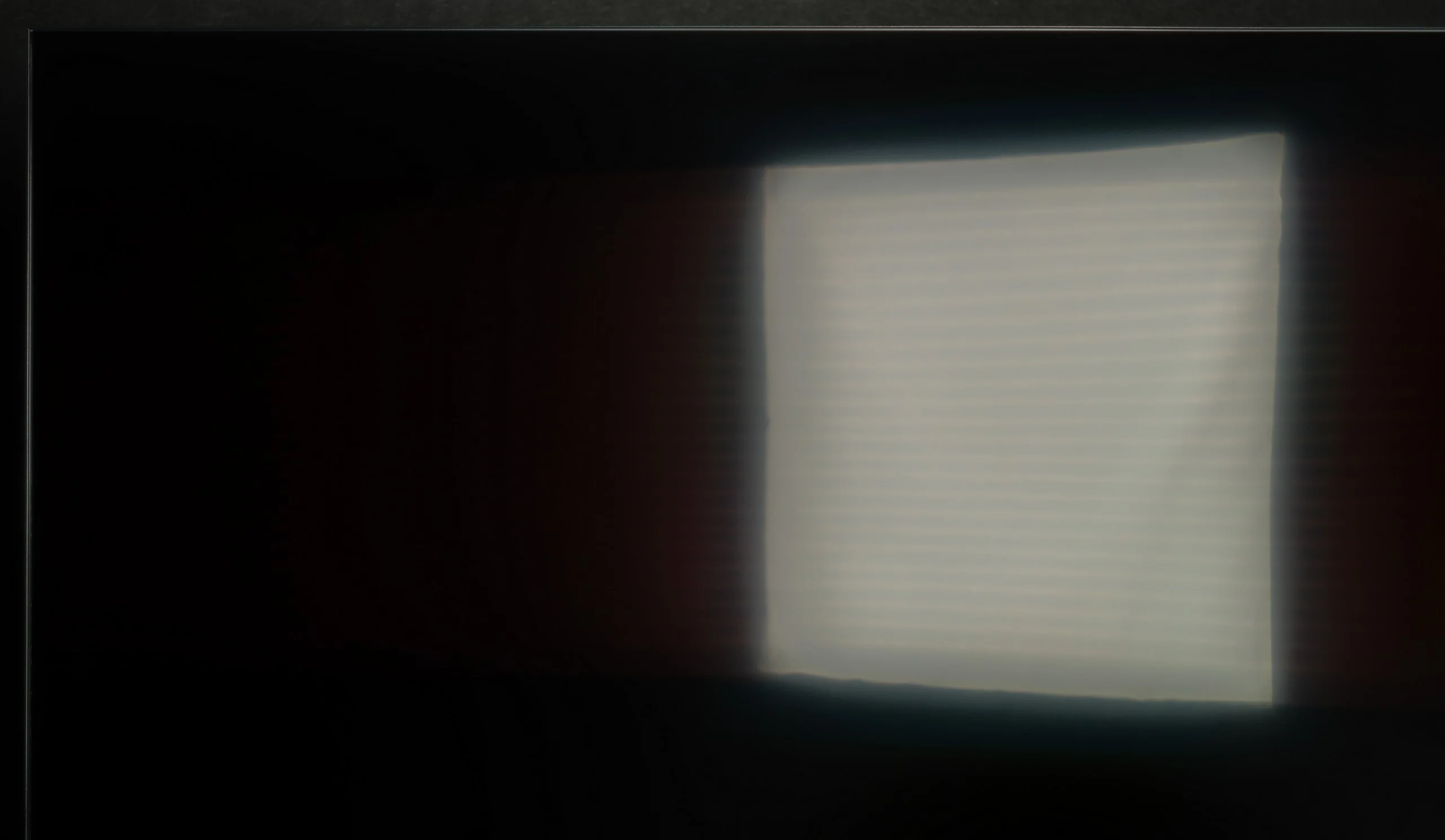
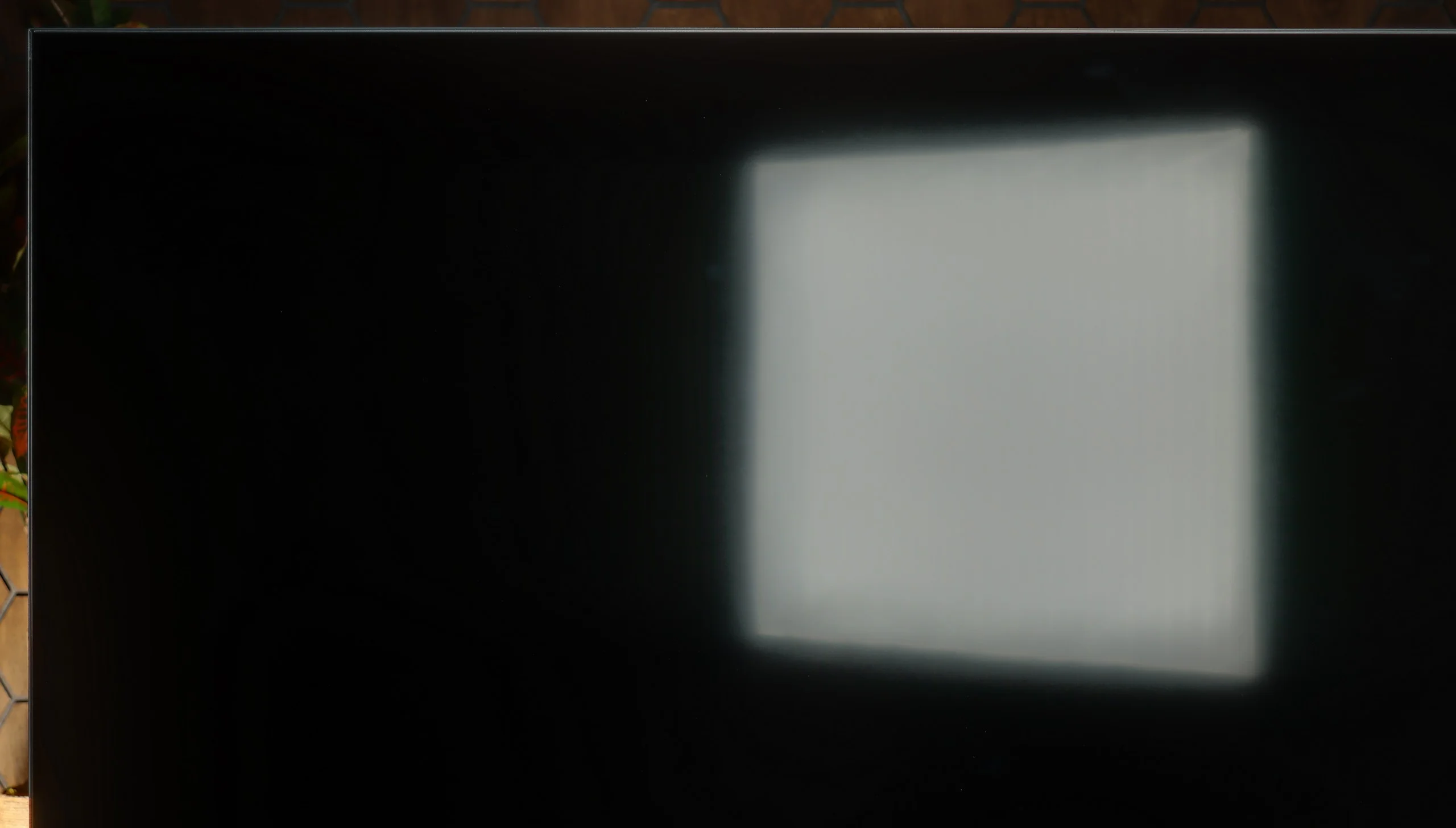
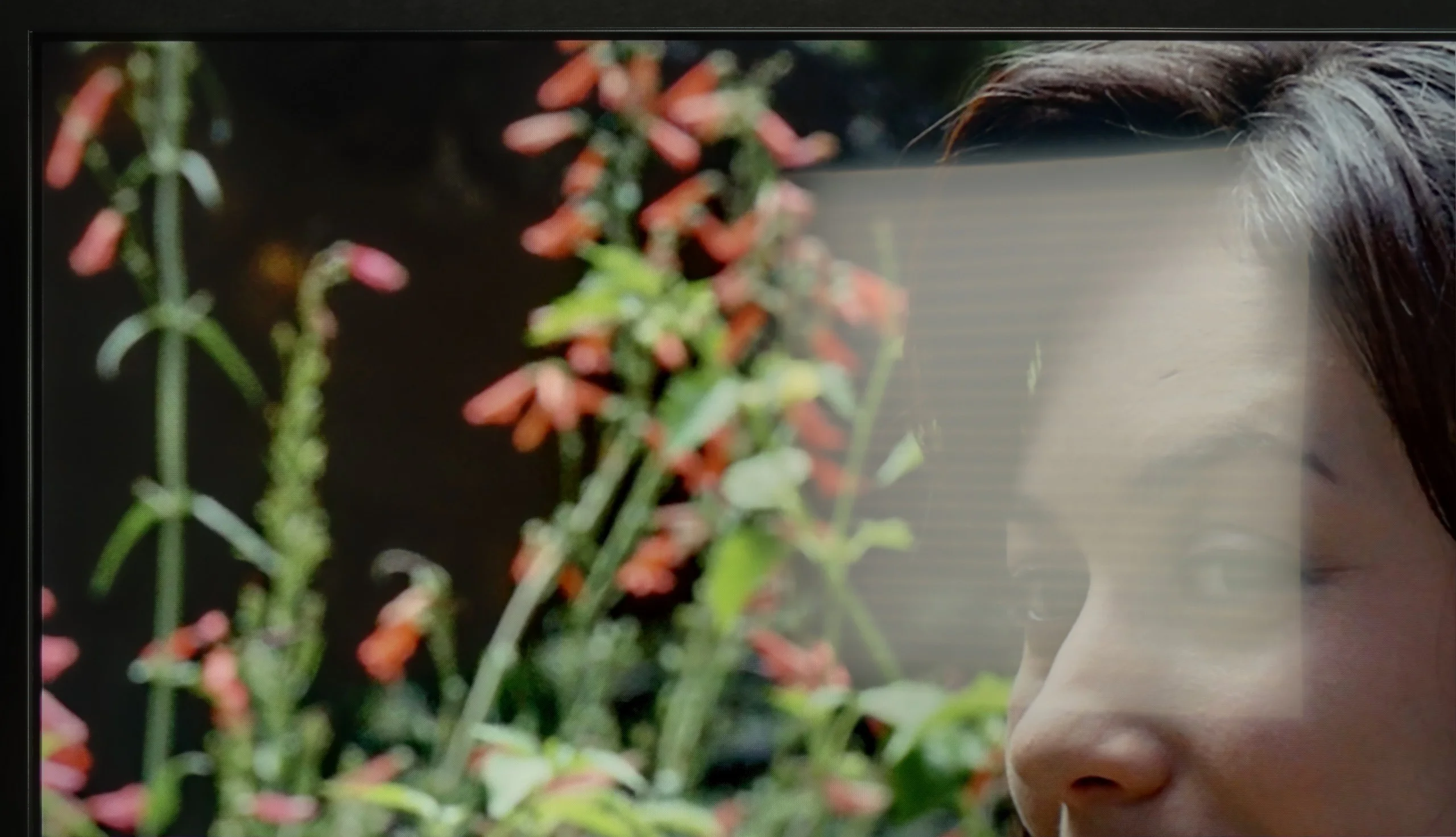
Panel brightness
Hisense U7S / U77SE: 664 cd/m2
Hisense U7Q: 519 cd/m2
The U7Q performs quite well in sunny rooms. Brightness in SDR mode averages around 520 nits, which practically means that even on a sunny day, you can comfortably watch television without the feeling that everything is drowning in reflections. Additionally, thanks to the satin coating on the panel, the television handles reflections well.
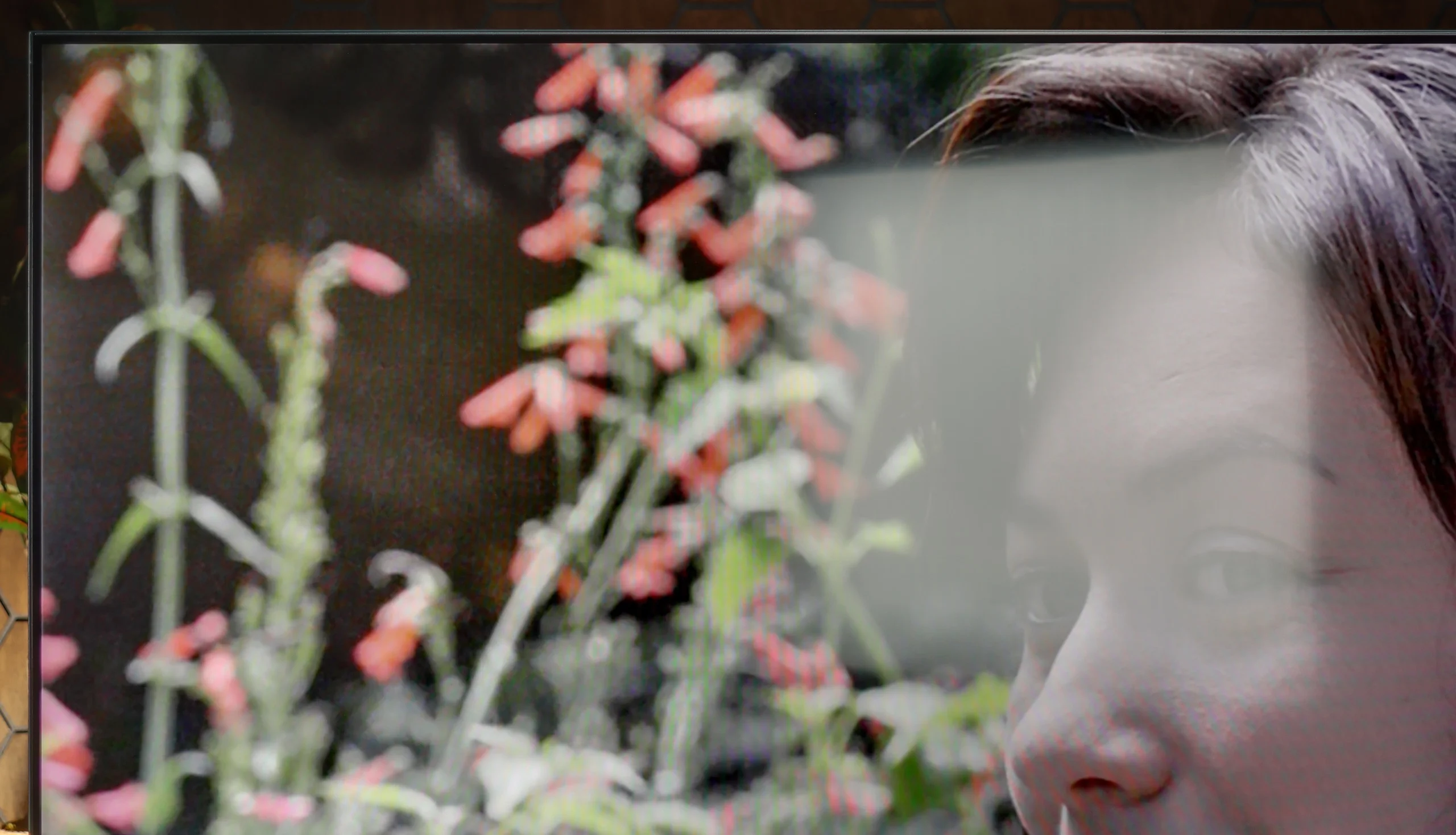
Hisense U7S handles daytime viewing well. In SDR we measured on average about 664 nits, and depending on the onscreen content the brightness ranged roughly between 500 and 800 nits. Even with an all-white image it stays above 500 nits, so a sports broadcast or a bright TV programme won't suddenly look dim. That's enough headroom for comfortable viewing in most living rooms. The satin finish does a decent job of suppressing reflections, but a window opposite the TV will still be visible. The photo shows clearly that its reflection can obscure part of the picture, so high backlight alone doesn't solve everything. On the plus side, blacks and colours hold up in daylight and don't become overly grey. Overall the U7S will work well in a bright room, although it's worth positioning it to avoid direct window reflections.
Panel details
Subpixel Structure:
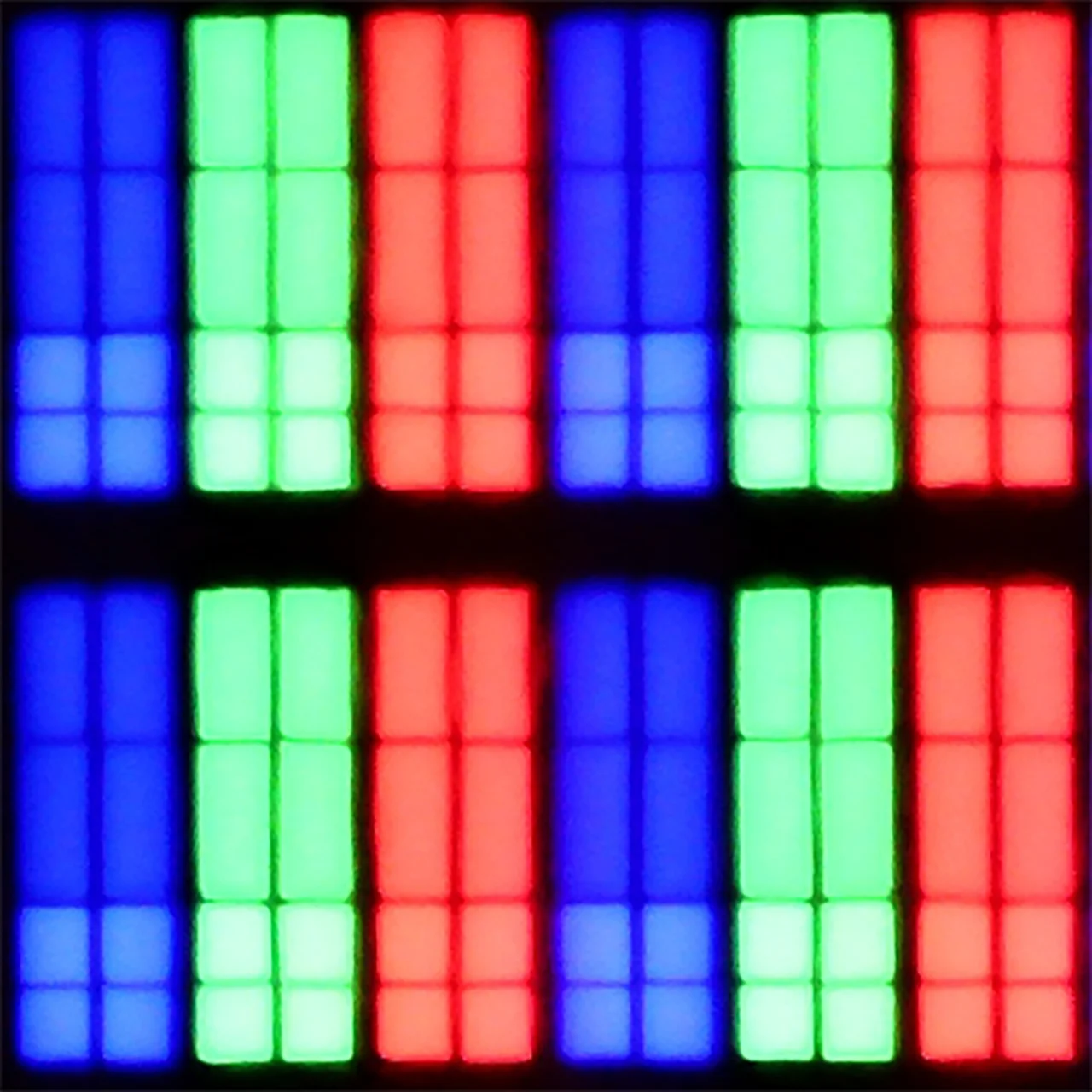
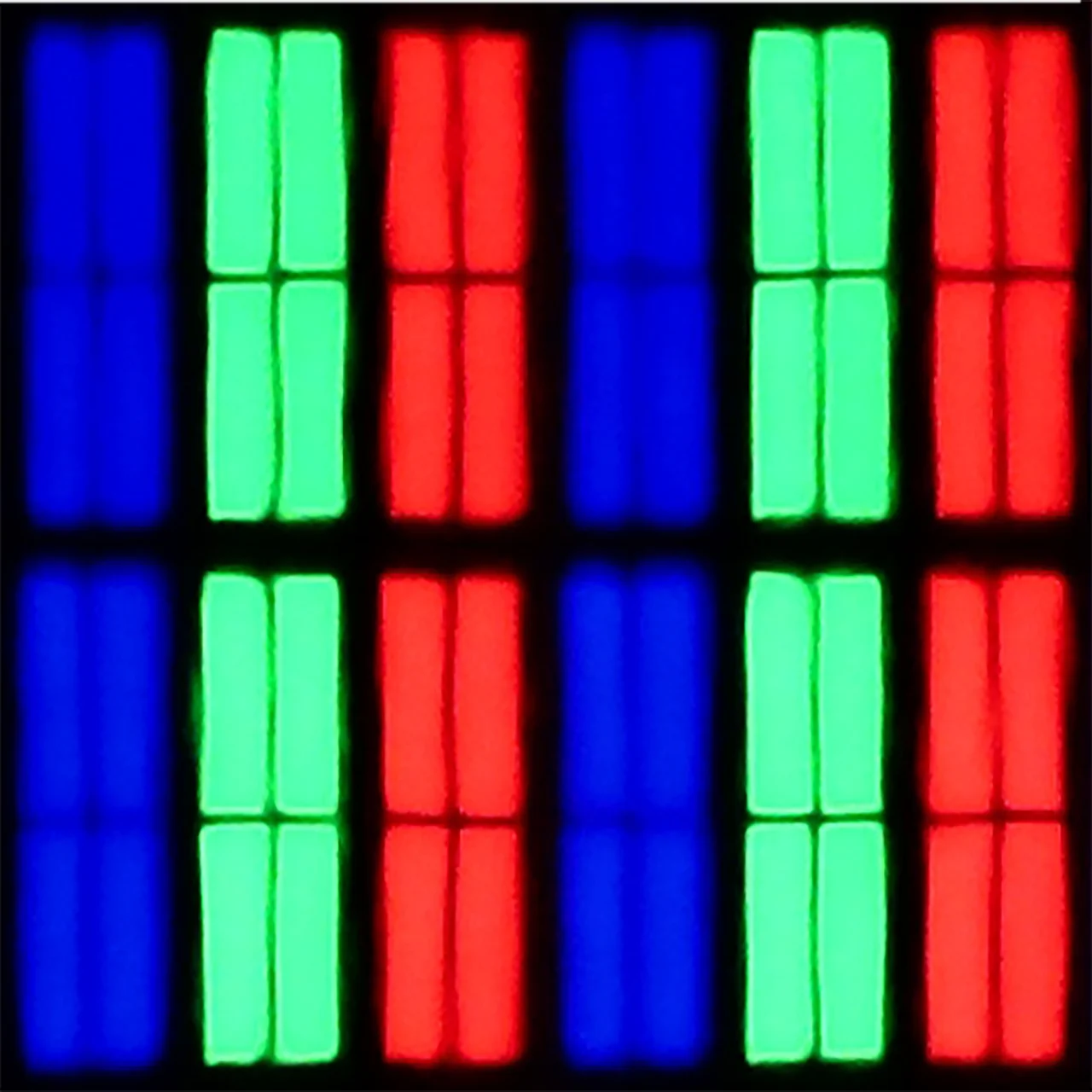
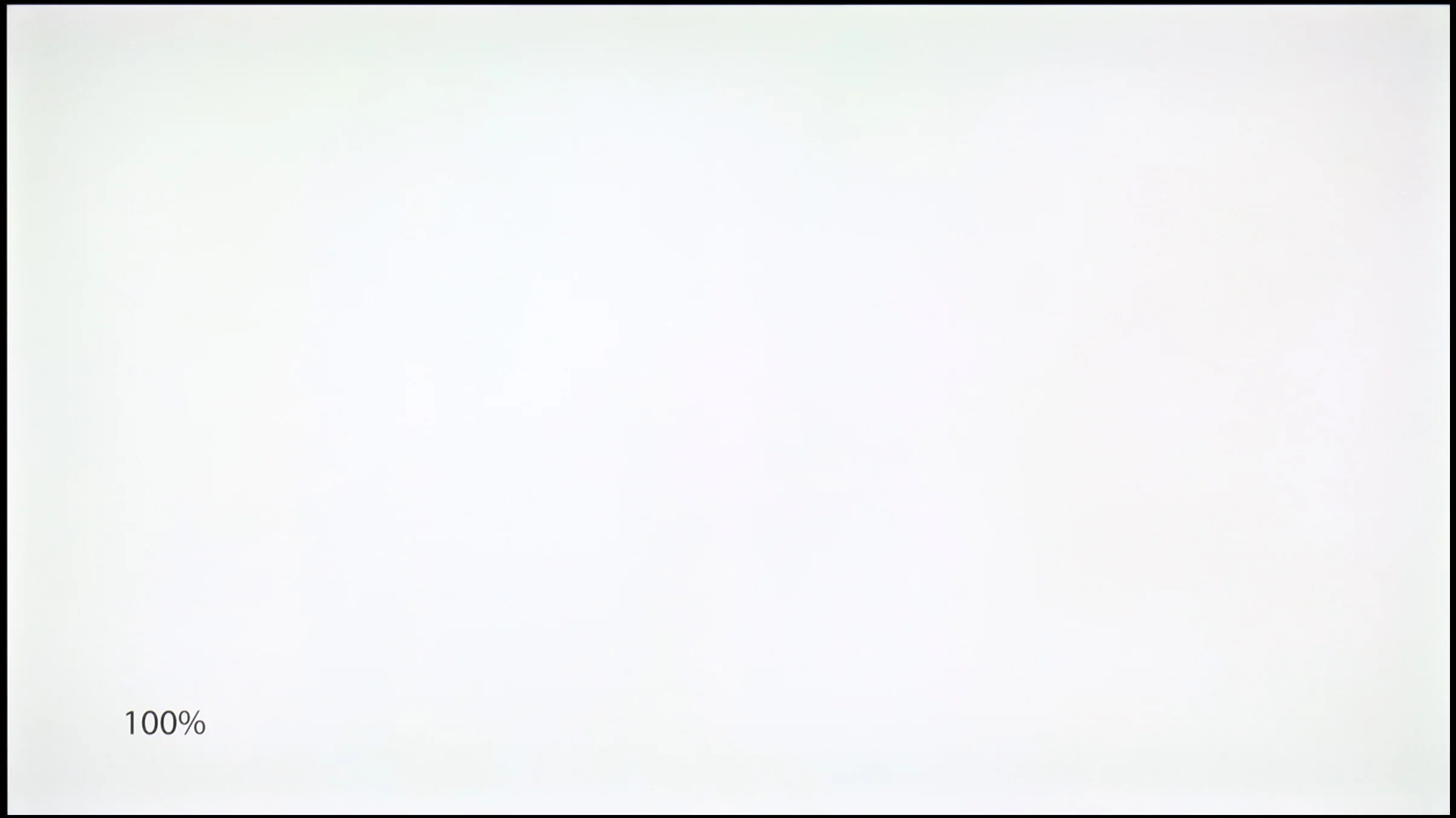
Panel uniformity and thermal imaging:

Hisense U7Q
Hisense U7S / U77SE
TV features
8.9/10
8.9/10
- SystemVIDAAVIDAA
- System performanceGoodGood
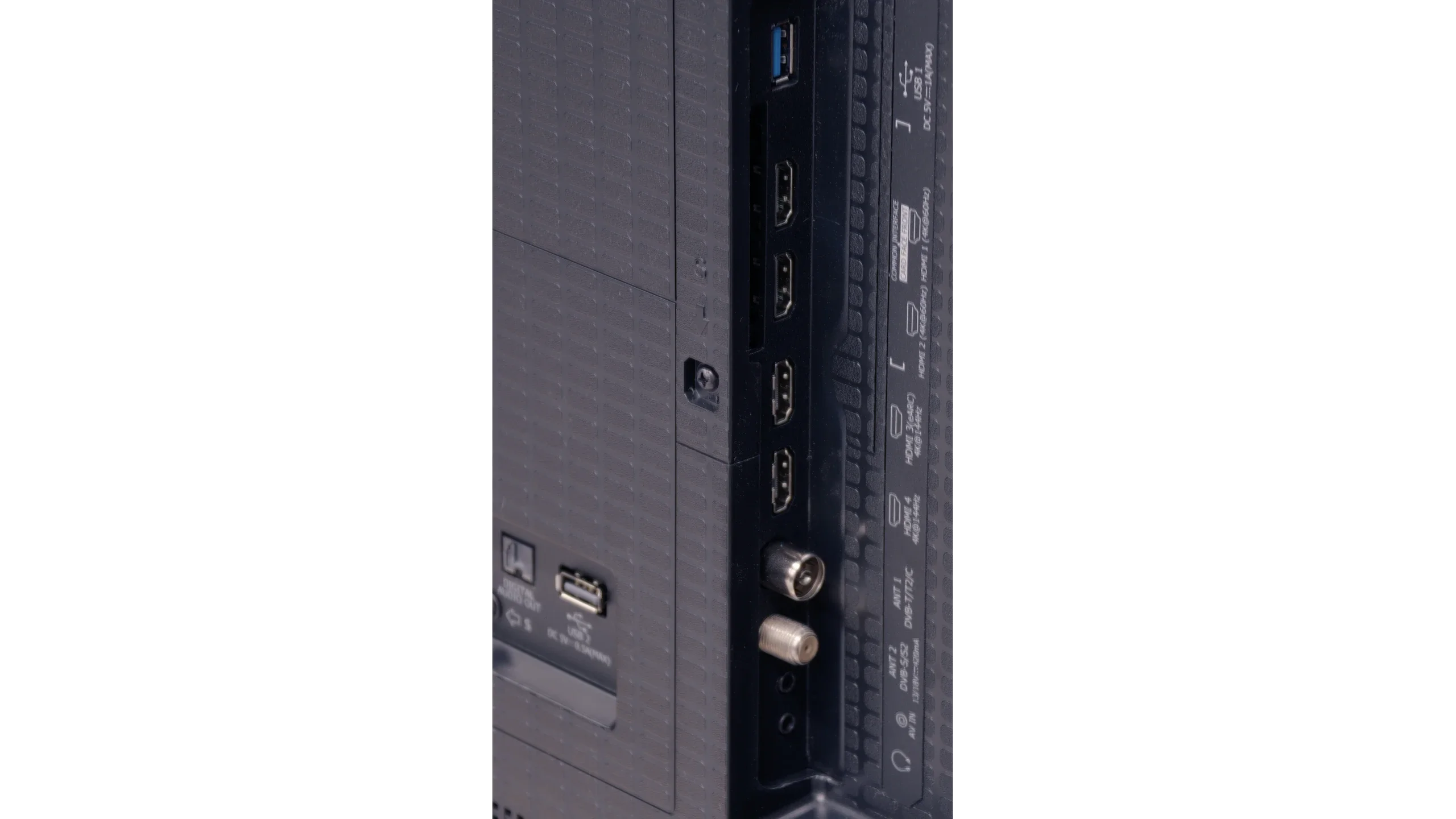
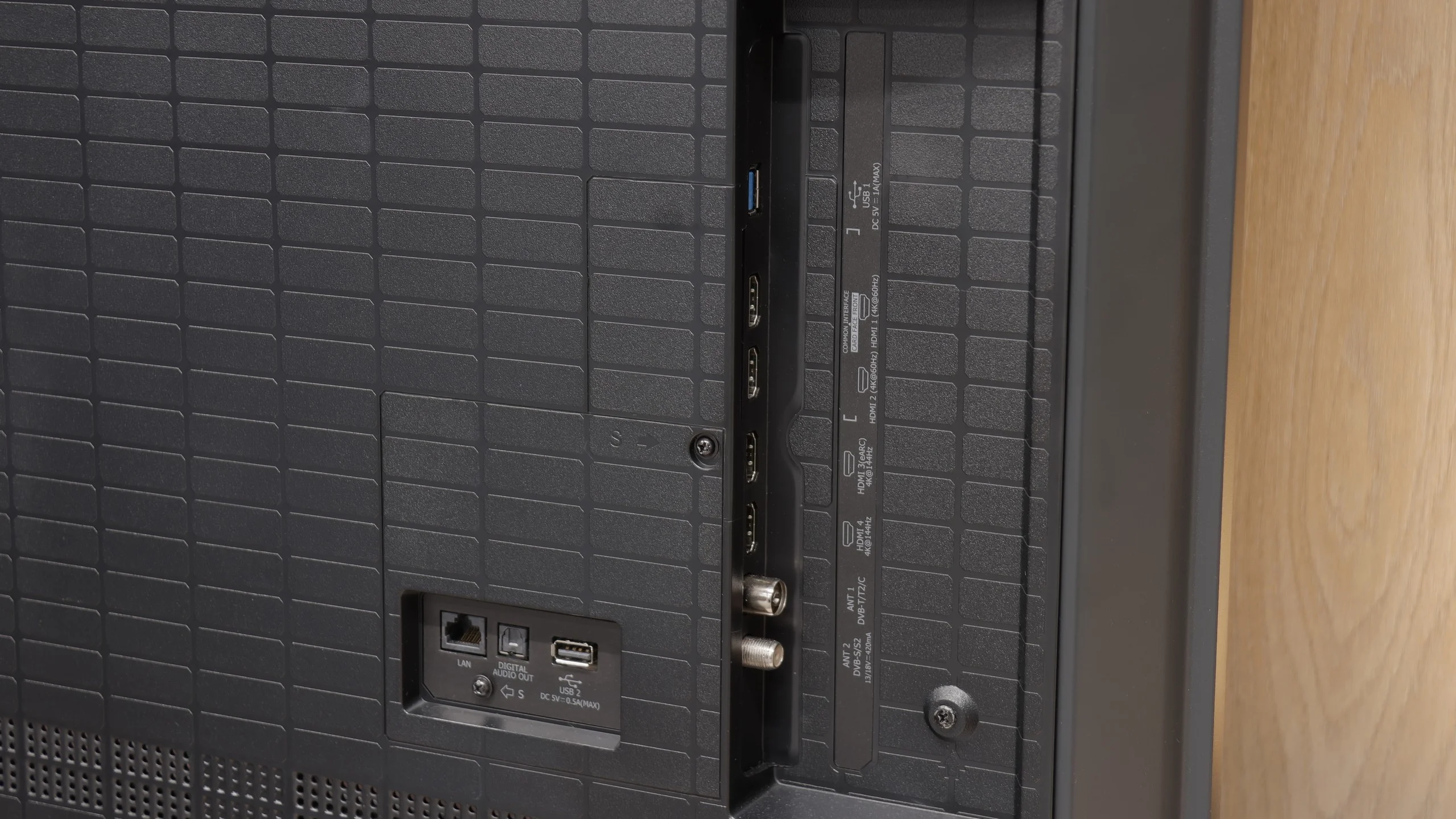
- HDMI inputs2 x HDMI 2.0, 2 x HDMI 2.1 48Gbps2 x HDMI 2.0, 2 x HDMI 2.1 48Gbps
- Other inputsRCA (Chinch)
- OutputsToslink (Optical audio), eARC (HDMI), ARC (HDMI), Mini-Jack (Headphones)Toslink (Optical audio), eARC (HDMI), ARC (HDMI)
- Network InterfacesWi-Fi 2.4GHz, Wi-Fi 5GHz, Ethernet (LAN) 100MbpsWi-Fi 2.4GHz, Wi-Fi 5GHz, Ethernet (LAN) 100Mbps
- TV receptionDVB-T, DVB-T2, DVB-S, DVB-S2DVB-T, DVB-T2, DVB-S, DVB-S2, DVB-C
Classic features:
- Recording to USB (terrestrial TV)
- Recording programming
- Picture in Picture (PiP)
- RF remote control (no need to aim)
- Backlit remote control
- Teletext
- Audio only mode
- Bluetooth headphones support
- Simultaneous Bluetooth headphones & TV audio
Smart features:
- AirPlay
- Screen mirroring (Windows Miracast)
- Voice search
- Voice search in native language
- Ability to connect a keyboard and mouse
Sound connection options
- HDMI audioeARC (HDMI), ARC (HDMI)eARC (HDMI), ARC (HDMI)
- Other audio outputsToslink (Optical audio), Mini-Jack (Headphones)Toslink (Optical audio)
- Wireless audioBluetoothBluetooth
Supported audio formats (external HDMI eARC audio):
- Dolby Digital Plus 7.1
- Dolby True HD 7.1
- Dolby Atmos in Dolby Digital Plus (JOC)
- Dolby Atmos in Dolby True HD
- DTS:X in DTS-HD MA
- DTS-HD Master Audio
Senior accessibility
- Numeric keyboard on TV
- Font size adjustment
- Audio description
Classic features of U7Q
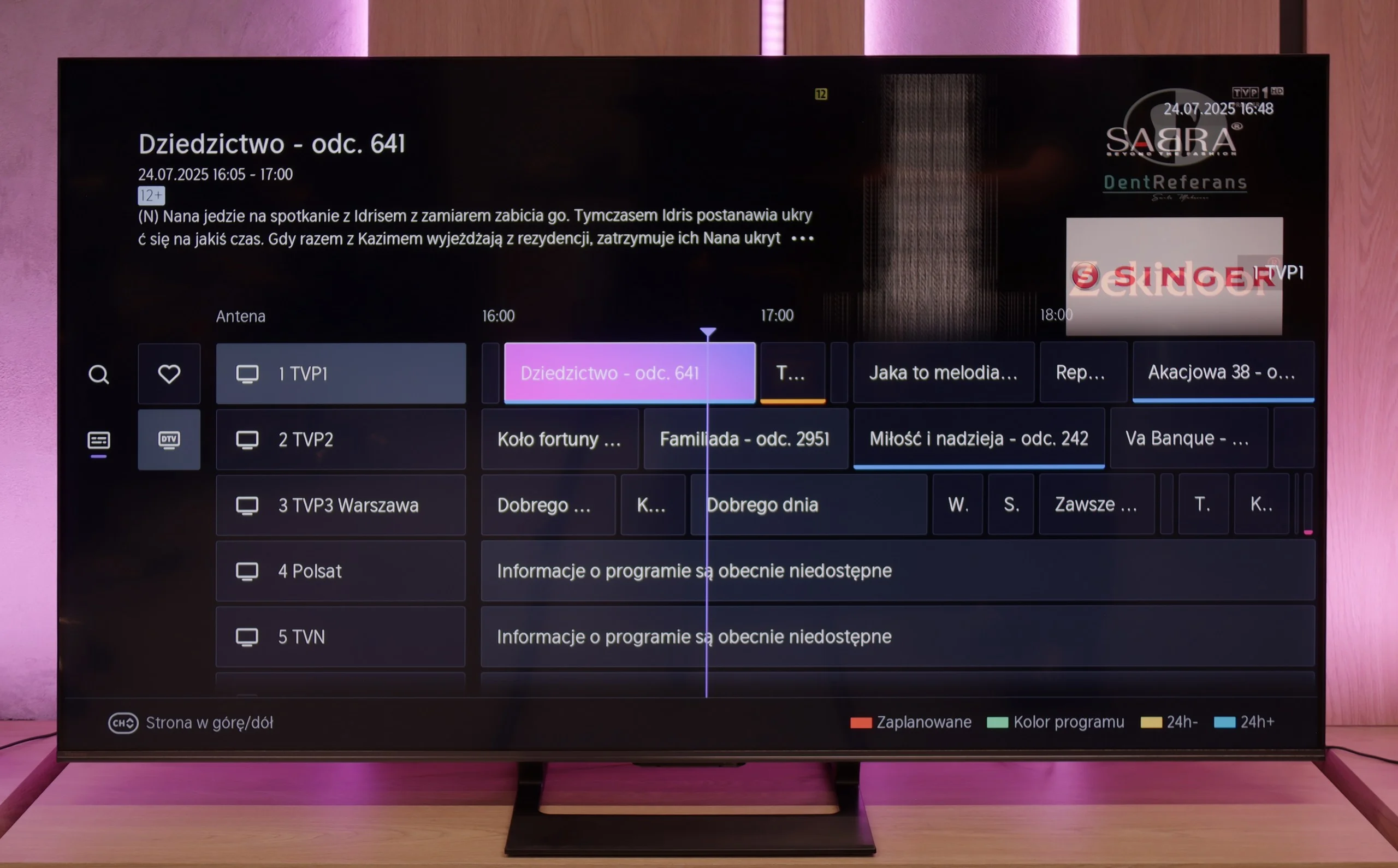
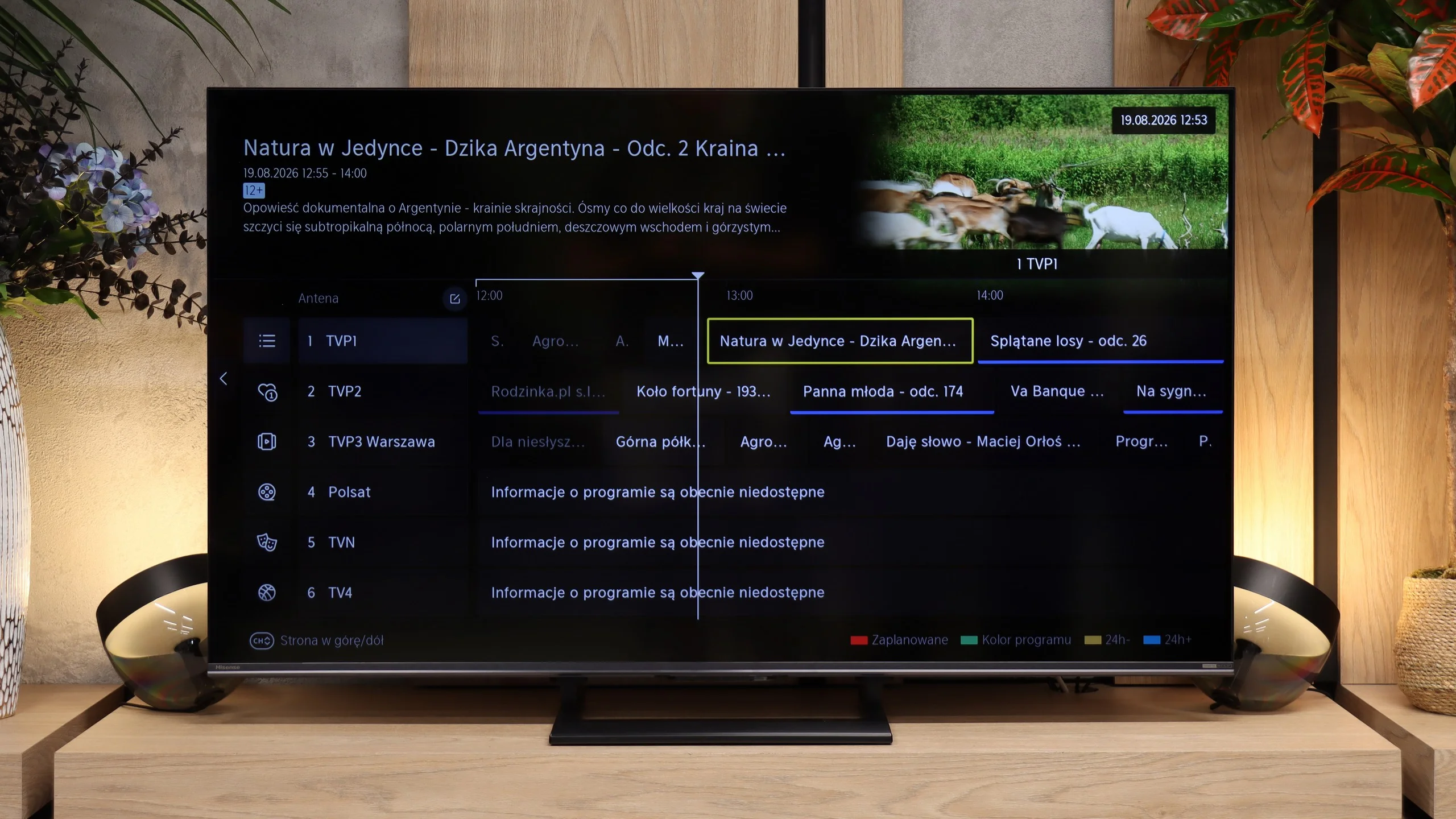
Hisense U7Q really has a lot to offer when it comes to classic TV features. You can record shows onto USB, easily connect external devices via Bluetooth, and the interface – such as the EPG – is clear and readable. It may sound like something that mainly seniors would appreciate, but the truth is that U7Q has practically everything needed for watching classic television. The only thing missing here is the PiP (picture-in-picture) feature.
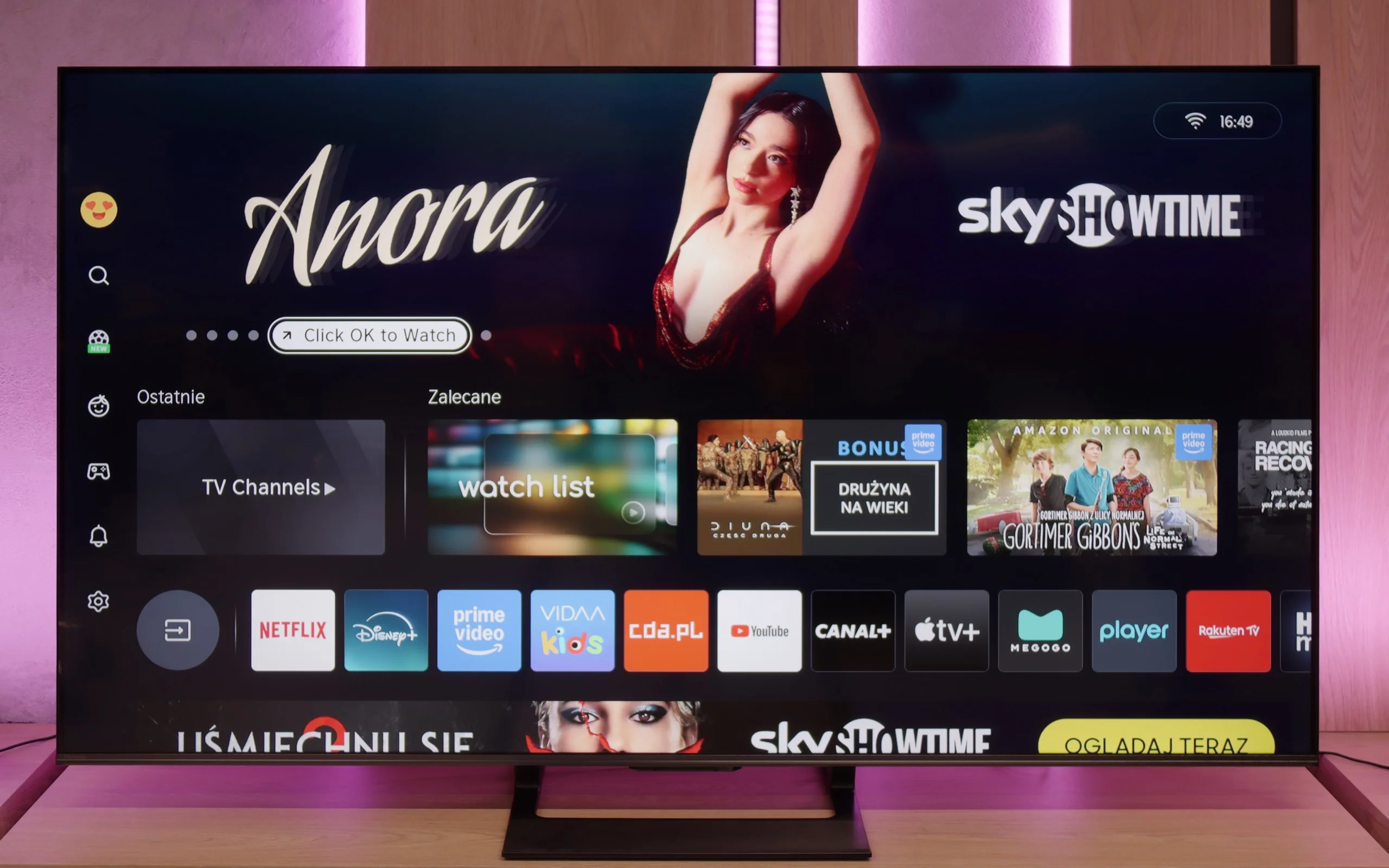
Smart TV U7Q: Vidaa
When it comes to smart features, U7Q runs on the proprietary VIDAA system. And I must say – it runs really smoothly. Voice search in Polish? No issues at all. AirPlay and screen mirroring? They also work without a hitch. Of course, one must be aware that VIDAA is a closed system, so – as is often the case – it lacks a few popular apps, especially those related to music. Therefore, it’s worth checking before purchasing to see if all the apps you use daily are available.
Smart TV: VIDAA
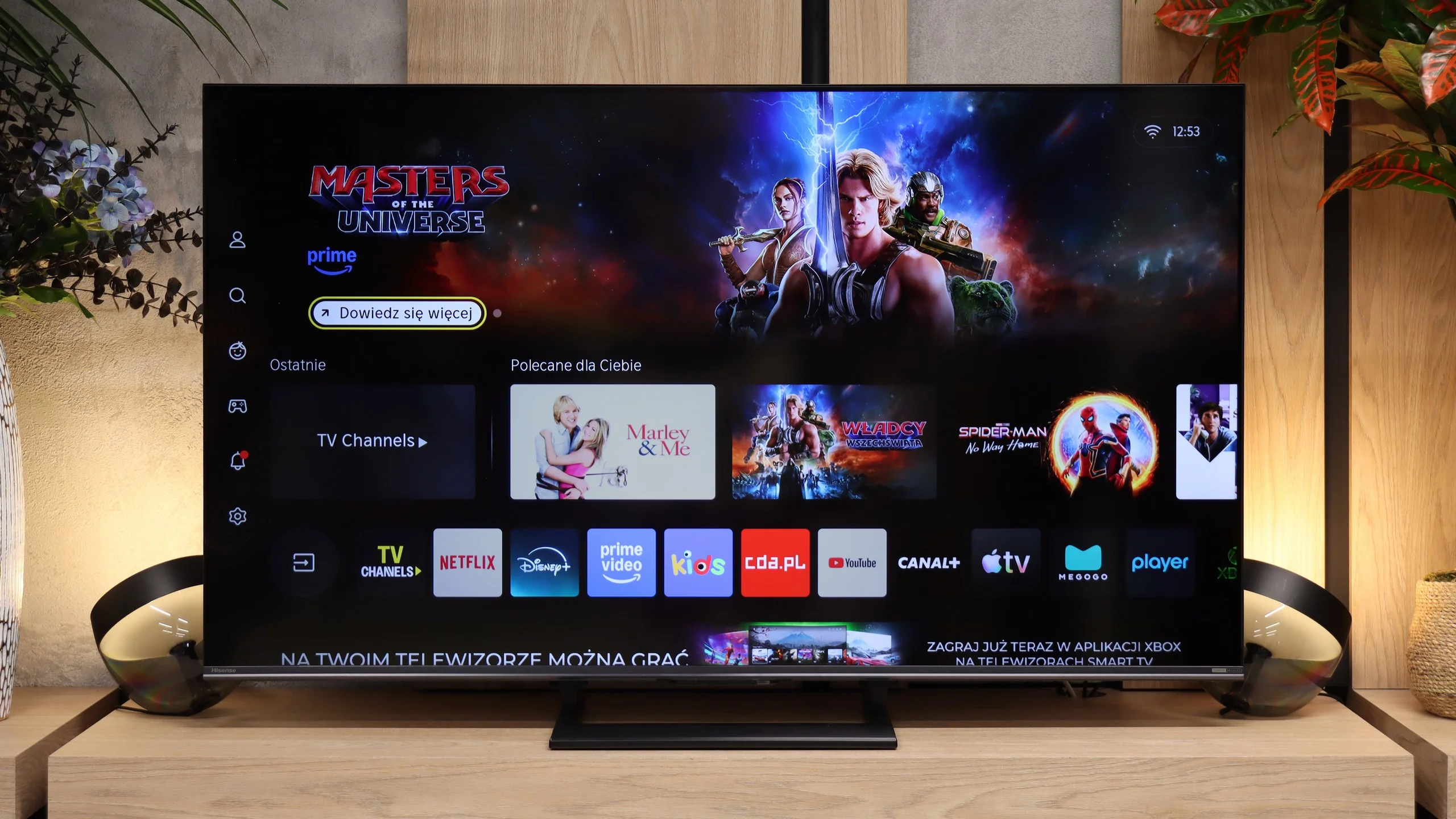
VIDAA HOME OS on the Hisense U7S is feature-rich, yet runs quickly and doesn't complicate everyday use. Besides apps, there is AirPlay for streaming from Apple devices and Miracast, which lets you mirror a computer screen. Voice search in Polish also works, so instead of typing a film title with the remote you can just say it. You can also connect a keyboard and mouse. It's hard to complain about the Smart features, though before buying it's worth checking the availability of the specific apps you use, because the selection isn't as extensive as on competing systems.
Classic features and the remote
Hisense hasn't forgotten viewers who watch regular TV. The U7S lets you record programmes from terrestrial TV to USB and schedule recordings for later. There's teletext, the option to listen to audio with the screen off, and support for Bluetooth headphones. Usefully, headphones can operate at the same time as the TV speakers, so one person, for example a senior, can use them while others continue to listen normally. The main omission is really picture-in-picture, PiP.
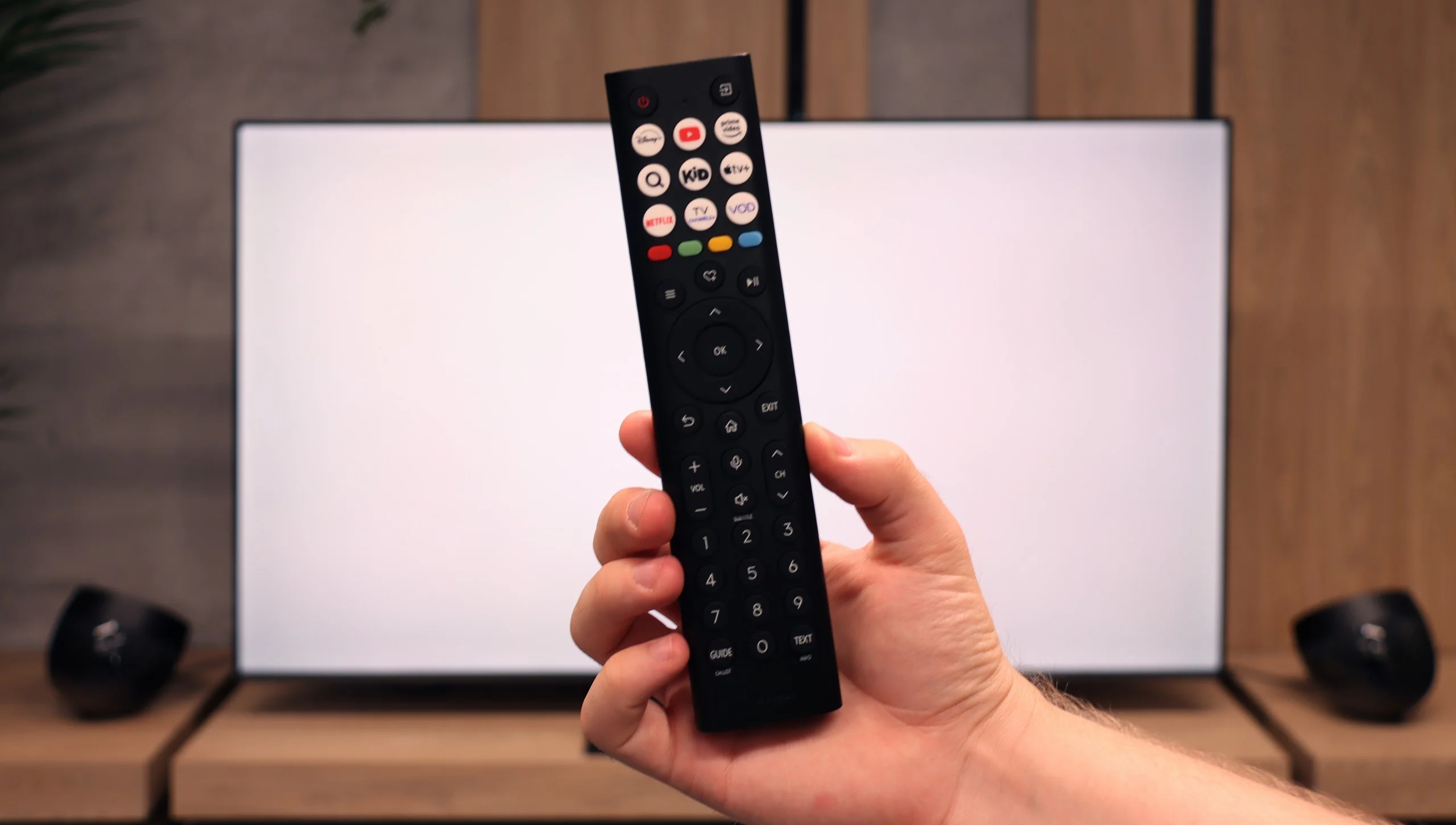
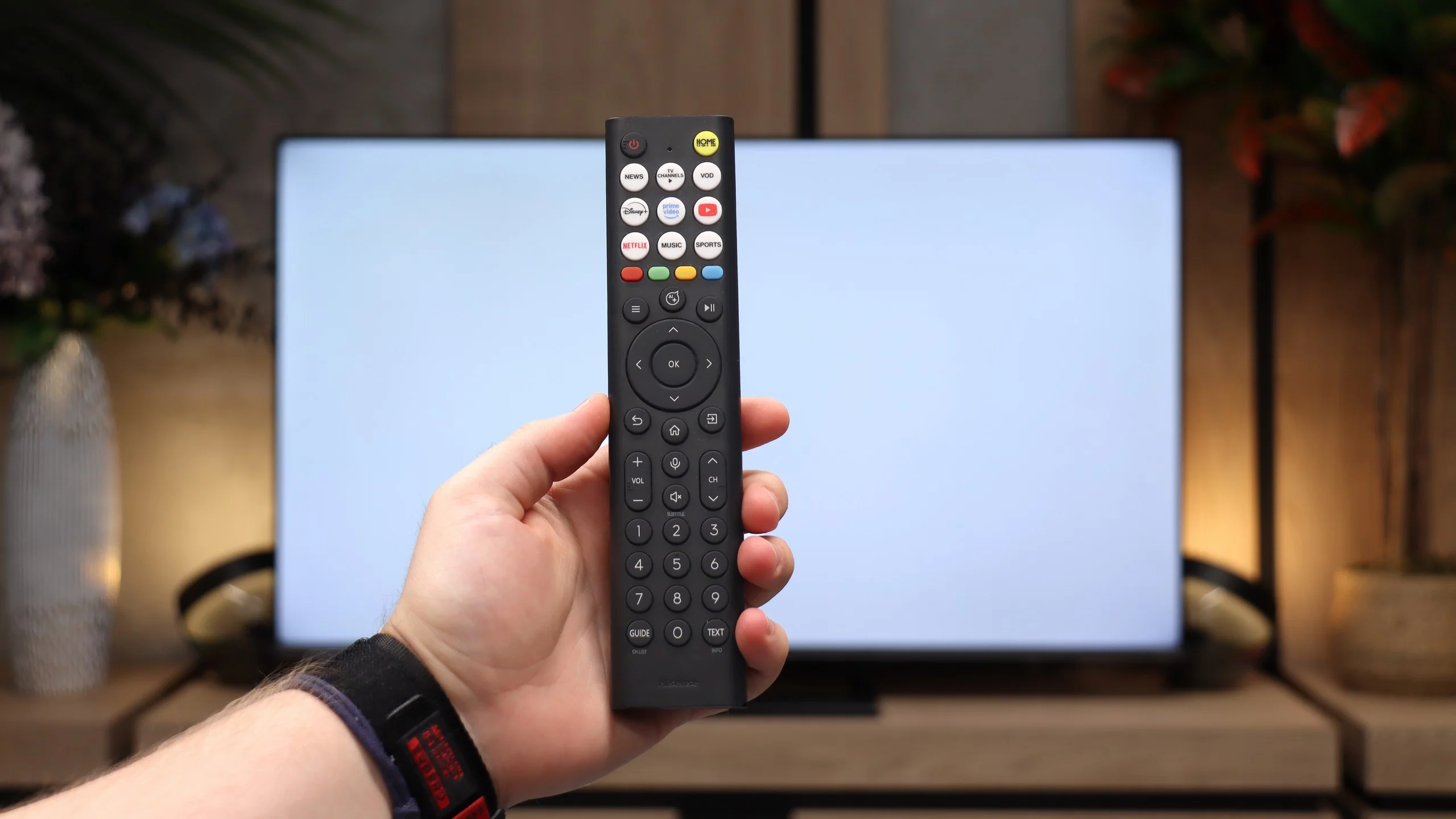
We weren't keen on the remote itself. It's quite plasticky and looks rather "cheap", but it does its job well. It has a full numeric keypad, plenty of shortcuts and controls the TV via radio, so you don't have to point it at the screen. It's just a shame the buttons aren't backlit. Hisense reserves more elegant remote versions for higher-end models, such as the U7S Pro.
Apps
7.7/10
8.3/10






















Playing files from USB
8.2/10
8.4/10
Supported photo formats:
Maximum photo resolution:
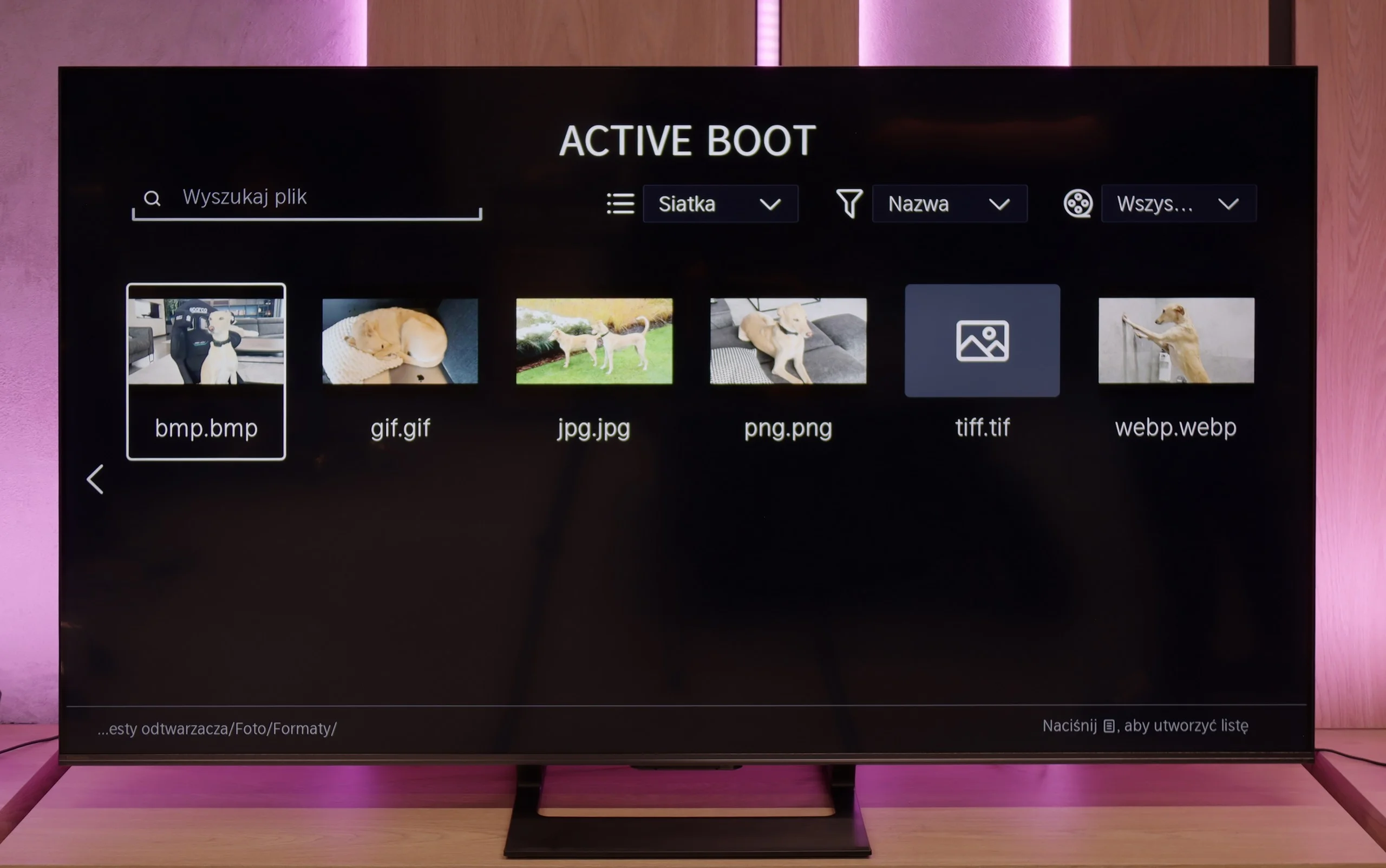
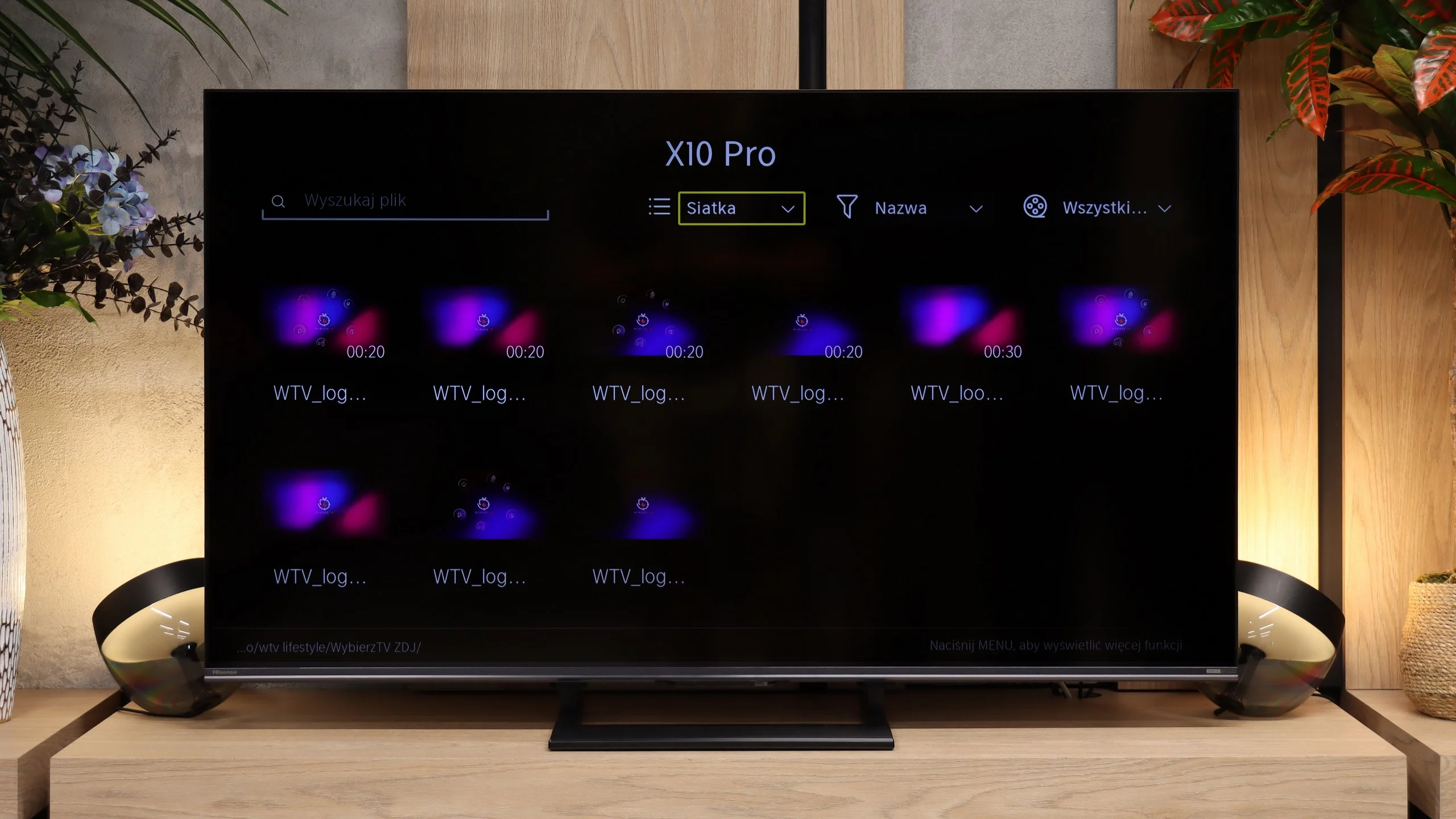
The built-in player in the U7Q completely meets the needs of most future users. The television effortlessly supports Polish characters and most popular video, audio, and photo formats. If we had to nitpick, it would only be the limited support for certain photo resolutions – there are times when files from the camera are not displayed correctly. So it’s worth keeping this in mind if you plan to show photos straight from a DSLR or phone.
The USB player in the Hisense U7S handles most common files. It played our H.264 and H.265 material without any problems, including high-bitrate 4K recordings and a Dolby Vision test file. SRT and SUB subtitles work, as do Polish characters and font colour changes. Not everything could be run, though. AV1 and H.266 VVC files failed to play, as did ASS and TXT subtitles. Audio support is good, from simple MP3s to FLAC 96 kHz/24 bit, although AIFF and DSD are not supported.
Our biggest issues are with photos. The selection of supported formats is wide — besides JPEG and PNG it also handles WebP and TIFF, but HEIC won’t open. The way it handles resolution is odd too. The TV displayed images at 4, 6, 8, 16 and 32 Mpix, but couldn’t cope with 10, 12 or 24 Mpix files. So it’s not a straightforward size limit. The player is perfectly adequate for movies and music, but when showing holiday photos you may find some files need converting first.
Sound
7.2/10
7.2/10
- Maximum volume82dB88dB
- Dolby Digital Plus 7.1
- Dolby True HD 7.1
- Dolby Atmos in Dolby Digital Plus (JOC)
- Dolby Atmos in Dolby True HD
- DTS:X in DTS-HD MA
- DTS-HD Master Audio
Sound is one of the biggest advantages of the U7Q. The TV plays really nicely – there's a slight discernible bass, good tonal balance, and it's definitely more than just for "casual news watching." You can easily play music on it and just sit back and enjoy the sound – of course, in an entertainment sense, not an audiophile one 😉. A big plus is also the full support for the most important audio codecs, which worked flawlessly. The only exception is Dolby Atmos in TrueHD format, which didn’t fully work when connected to the home theatre, so if someone uses that format – it's worth keeping in mind - perhaps it's a software glitch.
The USB player in the Hisense U7S handles most common movies and music well. It supports 4K content, including a Dolby Vision file we tested, and displays Polish characters correctly in subtitles. It should therefore be sufficient for everyday use with a USB stick, although it can struggle with less common formats. Our biggest reservations concern photos. The TV treats image resolutions quite selectively and may open a larger photo but refuse to display a smaller one. When browsing a holiday album this can be annoying, because you can't be sure all the photos will work. Some will need to be prepared on a computer beforehand.
Sound Quality Test
Acoustic Measurements
82dBC (Max)
75dBC
88dBC (Max)
75dBC
Reader comments
Comments are provided by the external service Disqus (Zeta Global). Once loaded, Disqus may set cookies and process data about your activity.
We will remember your choice on this device. Provider's privacy policy