 Direct comparison
The U7Q PRO is a TV that makes it clear within minutes: "speed is what matters here". Hisense has surprised us with how much they’ve packed into a device that doesn’t cost a fortune. A refresh rate of 165 Hz in 4K, and even 288 Hz in Full HD – not long ago, such figures were reserved exclusively for top-end gaming monitors. And here we have a mid-range TV with almost a full suite of features for gamers, confidently throwing down the gauntlet to much pricier competitors. But it doesn’t stop at speed. The U7Q PRO also boasts a very bright screen, peaking at an impressive 1500 nits. Like every Mini-LED, it has its typical "moods", occasionally exaggerating the image, but the overall visual effect remains very positive – especially in HDR content. It’s also worth mentioning the Vidaa operating system – fast, intuitive and equipped with features like AirPlay, a voice assistant, and a web browser. While it doesn’t offer the full range of apps found on Android, in everyday use the system performs exceptionally well. So, why is it “almost” perfect for gamers? It just lacks the HGiG feature, which allows for precise adjustment of brightness levels in HDR games. It’s a minor drawback, but it can be significant for console purists. Nevertheless, the U7Q PRO remains a very solid proposition – and a testament to the fact that Chinese manufacturers have not only caught up with competitors from Korea and Japan, but in some aspects have even begun to overtake them.
- Matching (Score) |
- Our verdict |
- TV appearance |
- Where to buy |
- Contrast and black detail |
- HDR effect quality |
- Factory color reproduction |
- Color reproduction after calibration |
- Smoothness of tonal transitions |
- Image scaling and smoothness of tonal transitions |
- Blur and motion smoothness |
- Console compatibility and gaming features |
- Input lag |
- Compatibility with PC |
- Viewing angles |
- Daytime performance |
- Panel details |
- TV features |
- Apps |
- Playing files from USB |
- Sound
U7Q PRO / U78Q PRO

BRAVIA 3 II / XR35M2
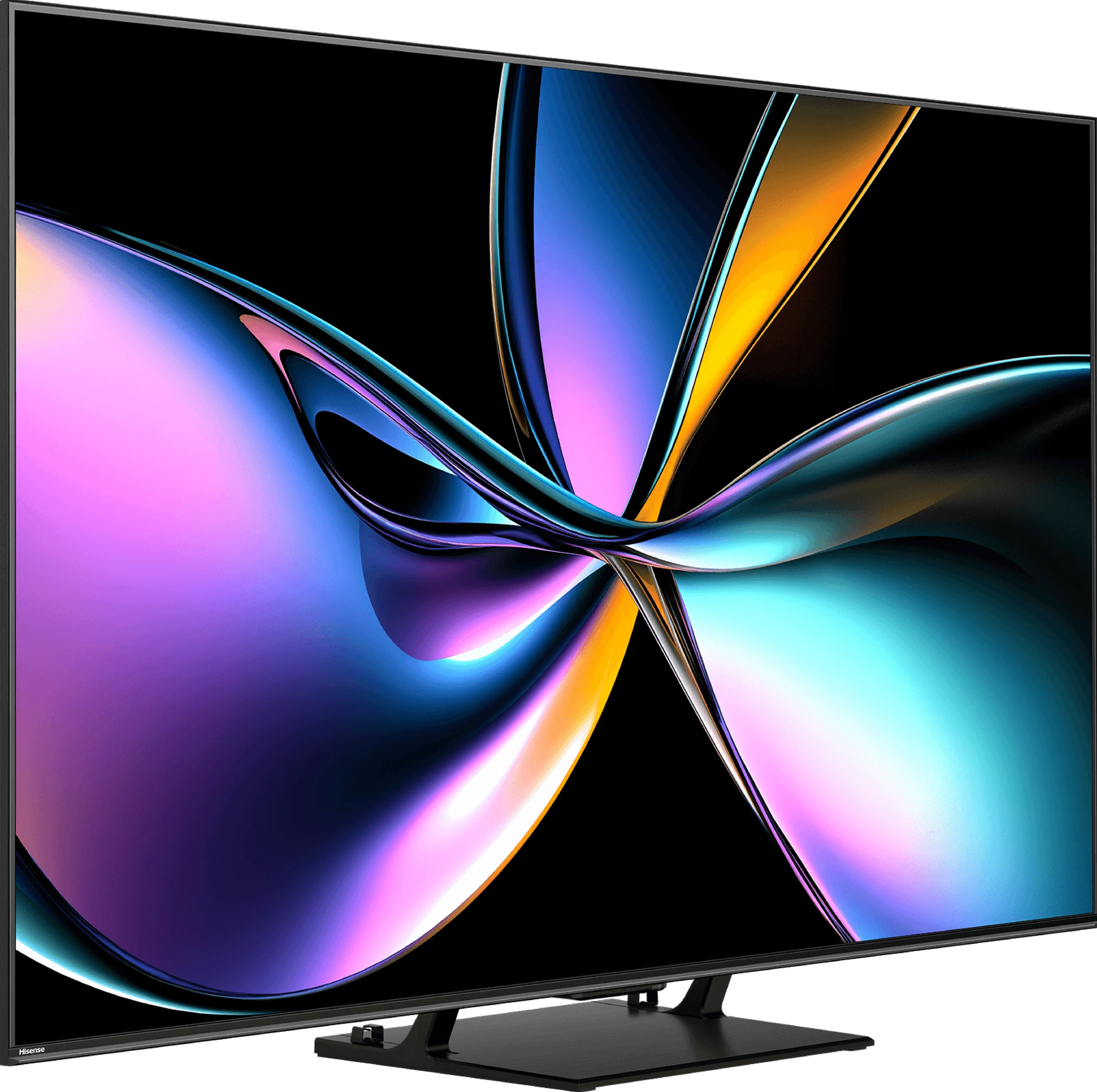
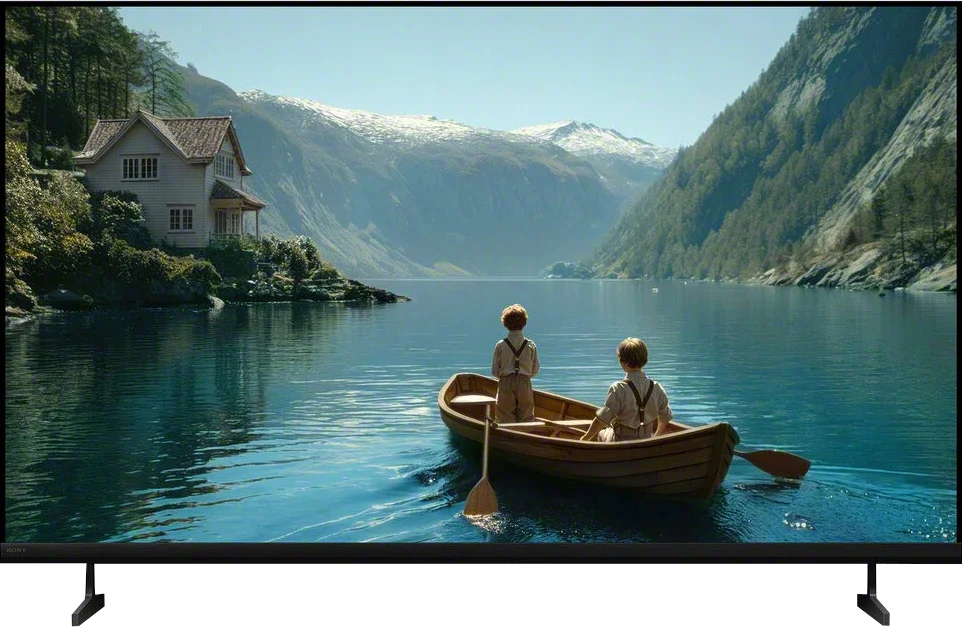
Panel type: LCD VA
Resolution: 3840x2160
System: VIDAA
Model year: 2025
Complete the survey to find out the result
Panel type: LCD VA
Resolution: 3840x2160
System: Google TV
Model year: 2026
Complete the survey to find out the result
Overall rating
7.4
7.0
 Movies and series in UHD quality
7.2
6.5
 Classic TV, YouTube
7.2
6.3
 Sports broadcasts (TV and apps)
6.7
6.7
 Gaming on console
8.2
8.1
 TV as a computer monitor
8.2
7.2
 Watching in bright light
6.2
5.8
 Utility functions
9.4
7.9
 Apps
7.7
9.6
 Sound quality
7.8
6.8
Complete the survey to find out what fits your preferences
Advantages

Excellent contrast and black - true Mini-LED backlighting with VA panel (65")
Very good motion fluency - 4K@165 Hz panel
Very high HDR brightness - even above 1500 nits
Perfect for gaming - Low input lag, VRR, ALLM, 4x HDMI 2.1, 288Hz at 1080p.
Vidaa operating system has many features like Airplay, USB recording
Outstanding quality of tonal transitions
Very good motion clarity and exceptionally low motion blur for a 120Hz LCD TV
Finally, 4 × HDMI 2.1 48 Gb/s!
Lots of gaming features: VRR, ALLM, low input lag
Wide colour gamut: QLED (PFS)
Dolby Vision support
Google TV with a wide range of apps and features
Broad audio format support: Dolby Atmos and DTS
Record programmes to USB
Two remotes included
Disadvantages

No support for HGiG
Average viewing angles
Missing apps on the VIDAA platform
High price for what it offers; for only a little more you can buy the much better BRAVIA 5 model
No local dimming
No proper HGiG support
Average processing of lower-quality source material
Our verdict
The Sony Bravia 3 II is a TV where you can quickly see what the manufacturer had in mind for this model. It’s meant above all to be a sensible Bravia for gaming, and in that respect the changes are quite significant. Sony has finally fixed one of the biggest headaches of its TVs, namely having only two full HDMI 2.1 ports. This one has four, and that alone makes the Bravia 3 II a much more convenient choice for anyone who wants to connect a lot of gaming gear. Fortunately it’s not limited to gaming. The 120 Hz panel performs very well for motion, motion blur is minimal, and the motion-enhancing systems work surprisingly effectively, at times even better than on Sony’s top sets. That makes sport another use case where the Bravia 3 II feels right at home. Add Google TV with its full suite of apps and features, and in terms of everyday use it’s just the Sony we’ve known for years.
The biggest problem with this model, however, isn’t the TV itself but its current price. The Bravia 3 II is today dangerously close in price to the Bravia 5, and when the extra cost for the higher model is just a few percent, choosing the lower series starts to make less sense. The Bravia 5 already offers a full Mini-LED backlight with local dimming, which is exactly what the Bravia 3 II most lacks for evening viewing and HDR. That’s why we look at this model mainly through the lens of price. The Bravia 3 II itself is a very successful lower-mid-range TV and, at the right price, could easily be one of the more interesting choices for a gamer or sports fan. However, if the gap to the Bravia 5 remains small, it will be hard to recommend it wholeheartedly.
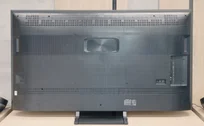
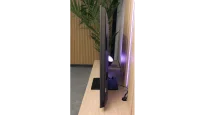
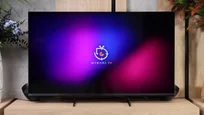
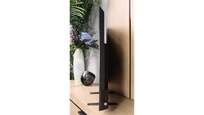
TV appearance
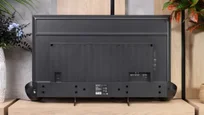

Contrast and black detail
8/10
5.6/10
Local dimming function: Yes, number of zones: 560 (20 x 28)
Local dimming function: No
Contrast:


Result
340,000:1

Result
62,850:1

Result
42,000:1

Result
11,100:1

Result
7,500:1
Result
3,050:1
Result
4,650:1
Result
5,850:1
Result
6,400:1
Result
4,350:1
Halo effect and black detail visibility:
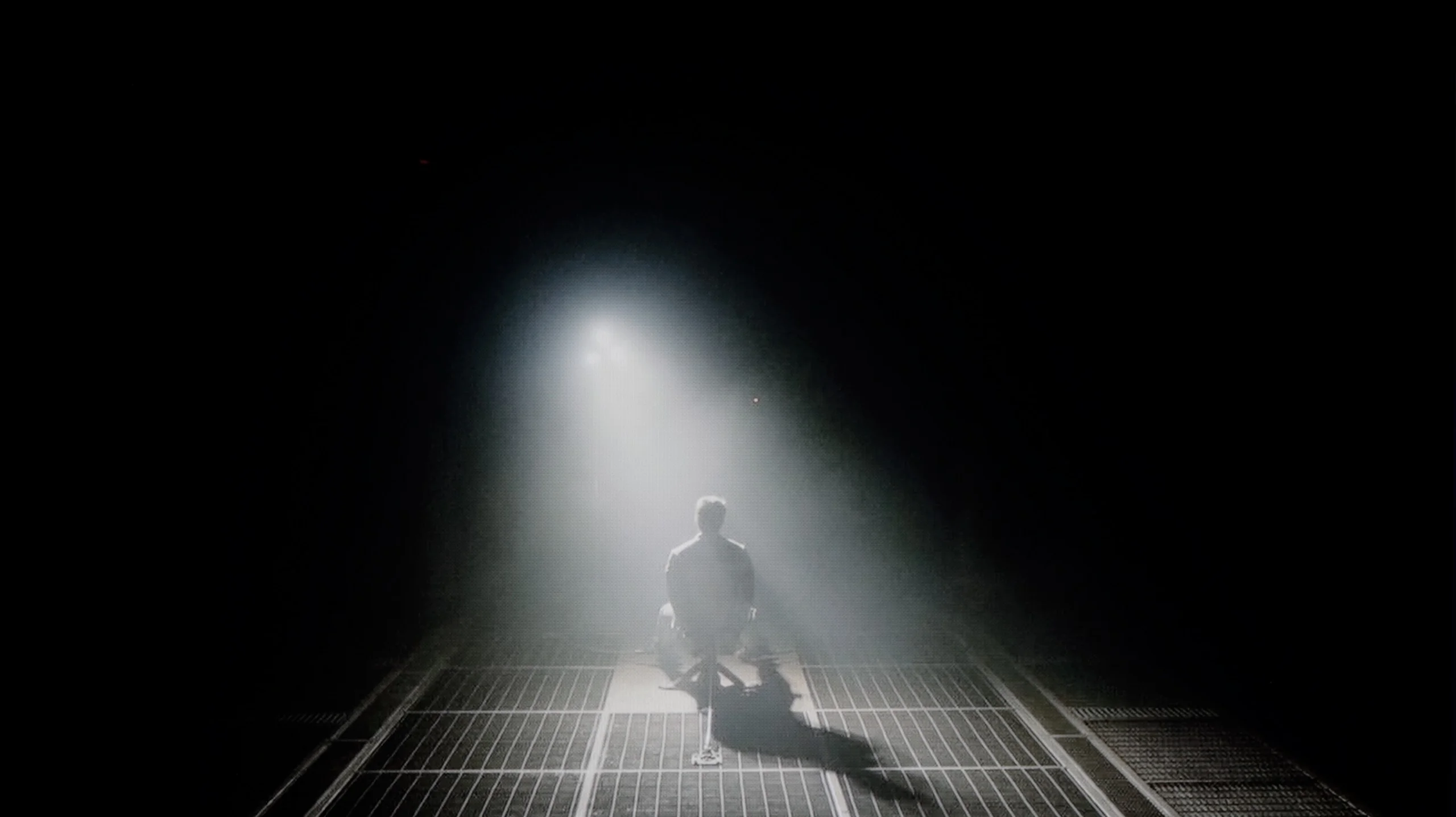
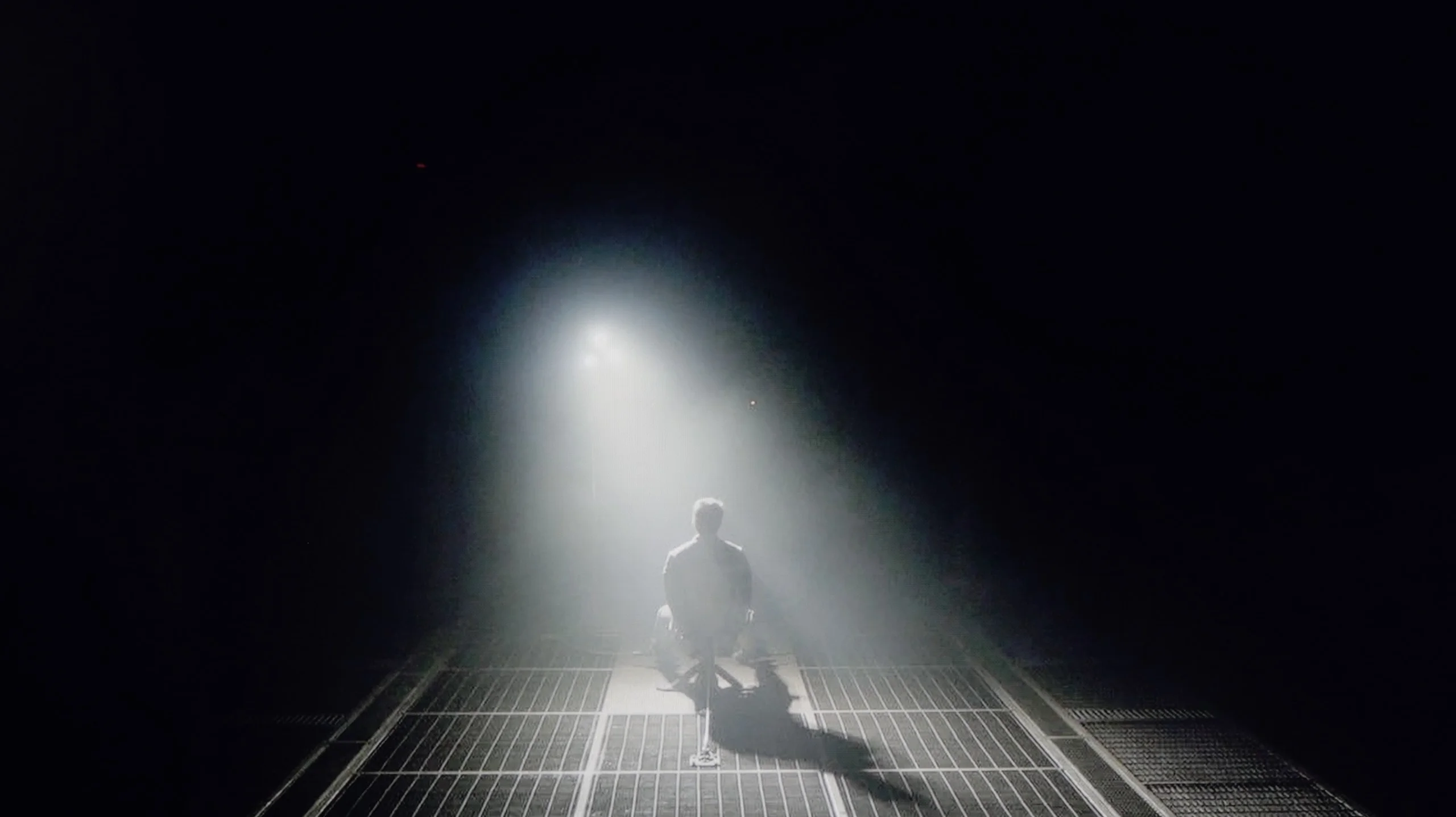
Check the visibility of bright lights on a dark background. Mini-LEDs often struggle with this. The photo does not compare black levels – that’s what the video below is for.
The video accurately shows differences in contrast and black levels between TVs, as well as potential issues: halo around bright objects or Mini-LED zone operation visible as brightness jumps.
Hisense U7Q PRO is a mini-LED television with a VA panel and – in the version we tested, 65 inches – 560 local dimming zones. It's worth noting straight away that this number varies depending on the size – larger diagonals get more zones, while smaller ones get fewer accordingly. But regardless, the dimming system itself works really solidly here.
The contrast is genuinely very good for the price range in which this model is placed. In optimal conditions, the U7Q PRO can achieve results close to six-figure values, which until recently was reserved for much higher-end equipment. In practice – in scenes like the one from the film Oblivion – the picture looks stunning. With the lights on in the room, it's hard at first glance to distinguish this TV from organic screens. Of course, it’s still an LCD with local dimming, so compromises are unavoidable. In more challenging scenes, where there are many small light sources, the U7Q PRO tends to dim too aggressively. Instead of a slight degradation of black – some details that should be visible disappear. This is a side effect of the algorithm, which firmly adheres to the principle of “black should be black,” even at the expense of subtle elements in the picture.
But nonetheless – contrast is one of the stronger points of this model.
Bravia 3 II uses a VA panel, a solution that by nature delivers significantly better contrast than IPS or ADS panels. In our unit the native contrast ratio was around 5000:1 and, for a TV without local dimming, that's a pretty good result. In practice that means in a lightly lit room blacks can look genuinely decent. Dark parts of the image do not immediately go grey, and night scenes have noticeably more depth than on many TVs with IPS panels. The poorer black performance becomes visible, however, when you turn the lights off. The Bravia 3 II does not have local dimming, so the entire backlight operates in a similar way regardless of what is happening in a given area of the image. In a dark room it is easy to notice that black is no longer truly black but starts to shift towards a dark navy. It is not a level that severely spoils the film, but during an evening viewing the difference compared with Mini-LED, and even more so with an OLED TV, becomes very clear.
HDR effect quality
6/10
5.3/10
Luminance measurements in HDR:

Result
1129 nit

Result
323 nit

Result
721 nit

Result
267 nit

Result
736 nit
Result
408 nit
Result
430 nit
Result
449 nit
Result
457 nit
Result
455 nit
Scene from the movie “Pan” (about 2800 nits)
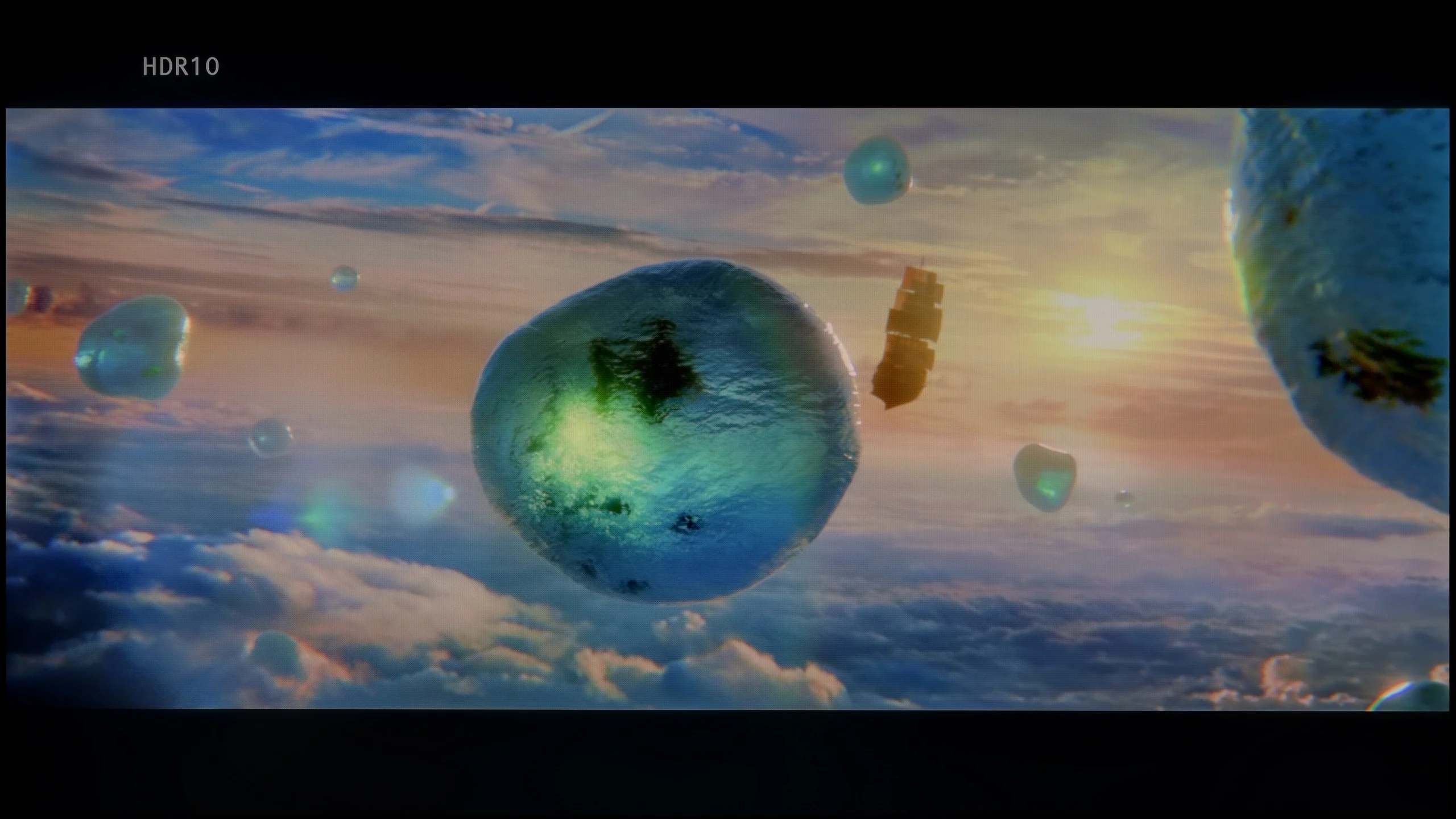
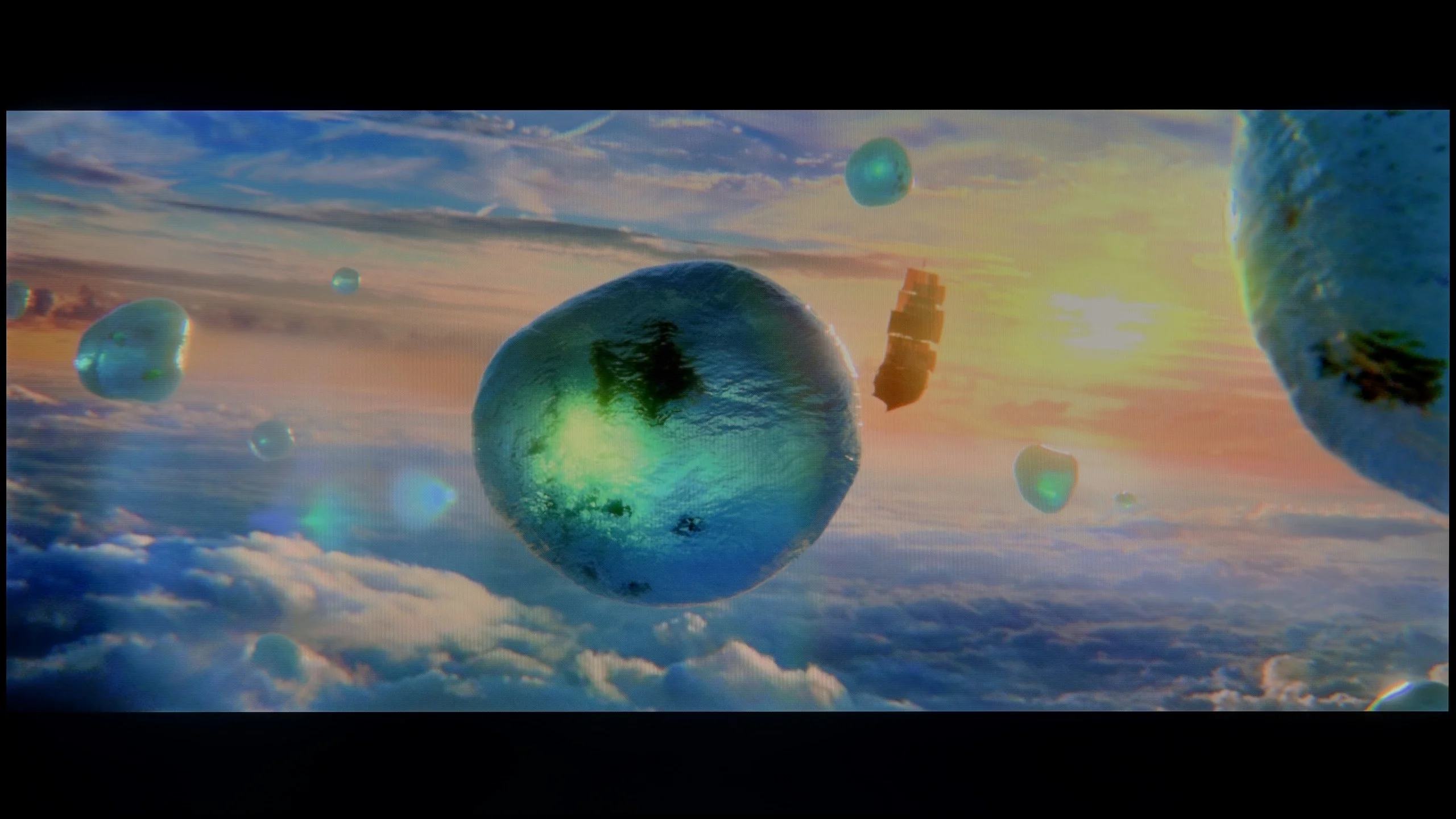
Scene from the movie “Billy Lynn” (about 1100 nits)
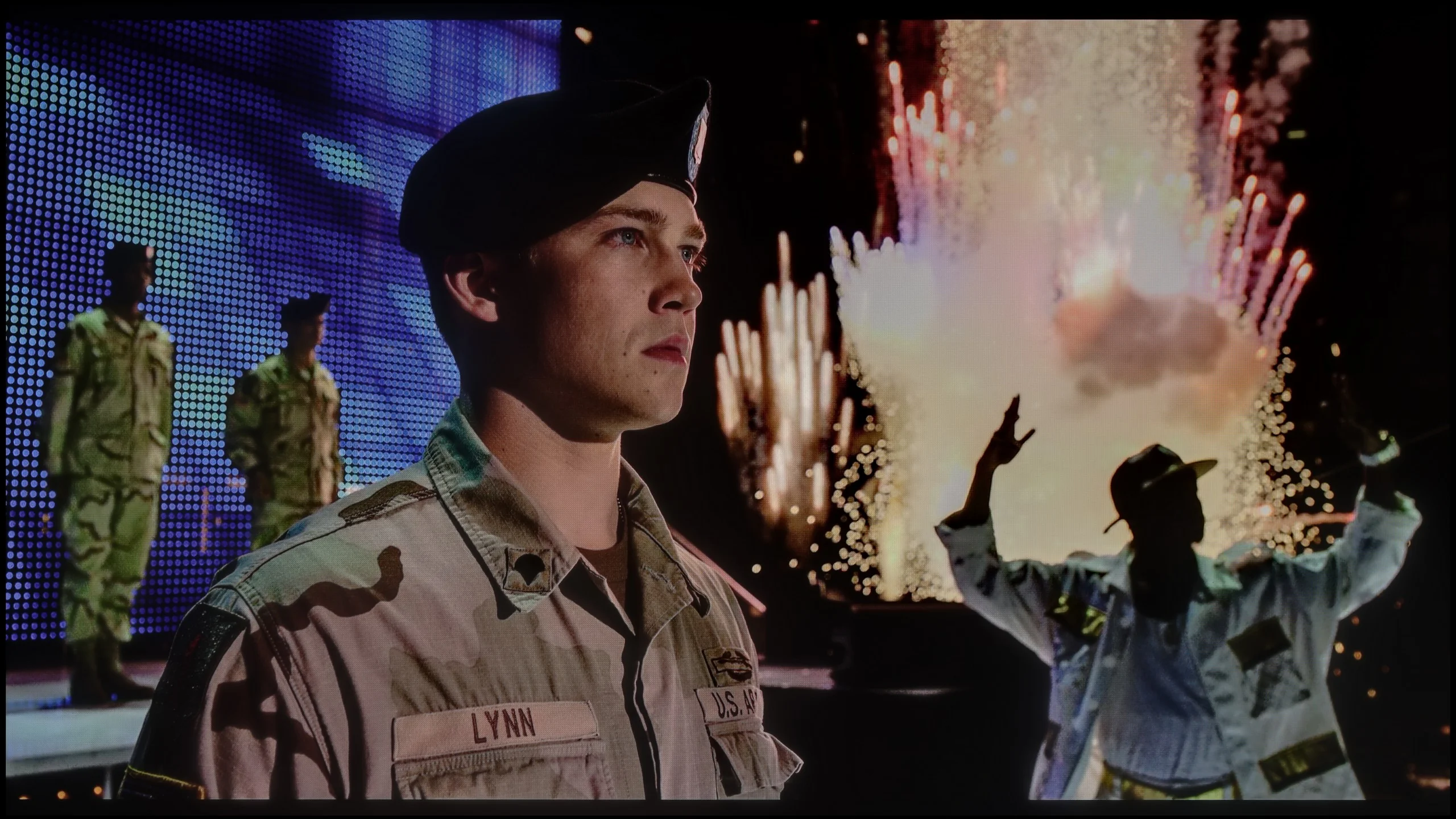
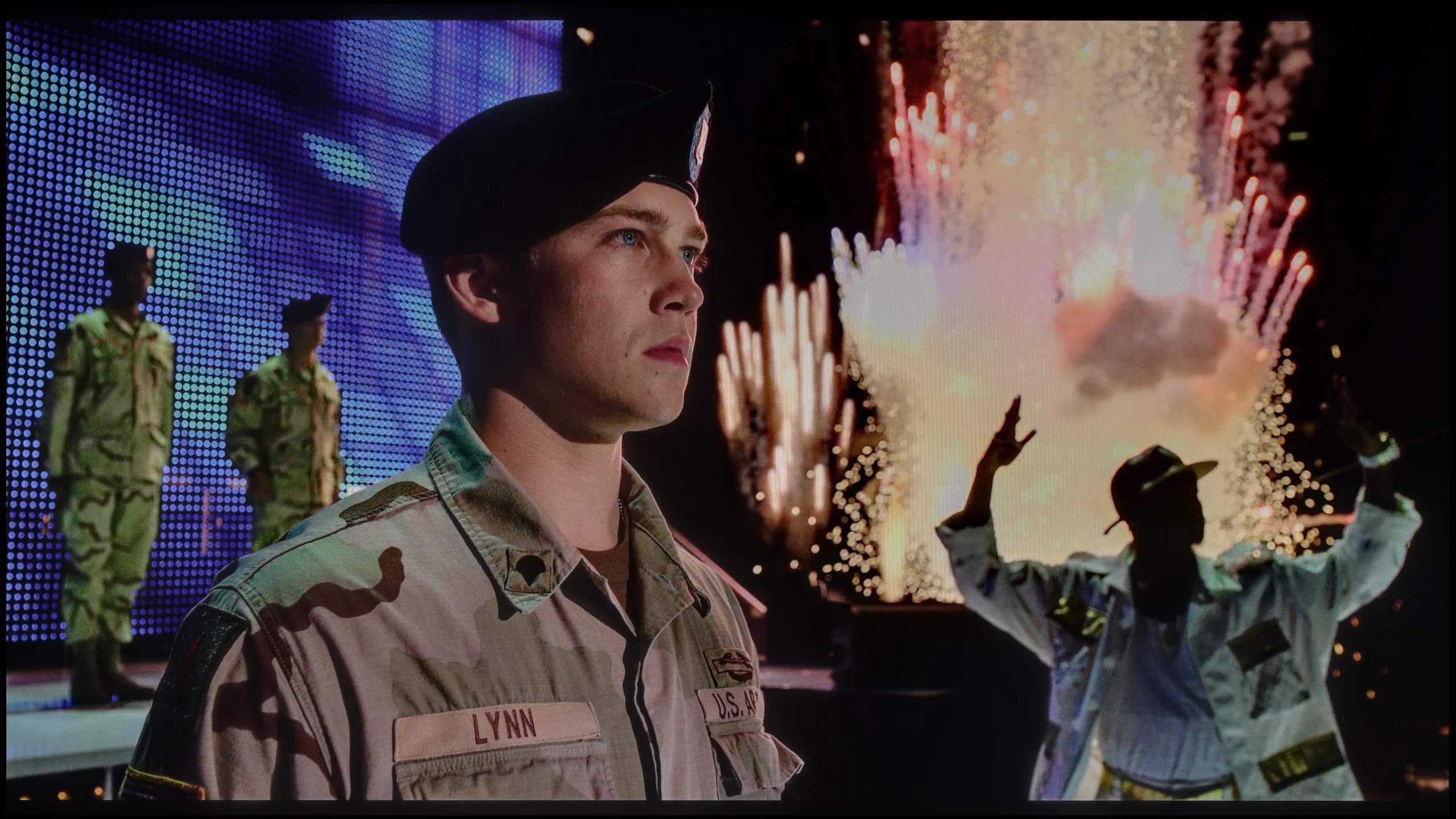
The photos show two HDR10 movies. 'Pan' is one of the brightest productions ever made, while 'Billy Lynn' (soldier) has brightness typical of streaming (Netflix, Prime, HBO MAX). Notice the intensity of effects and detail in whites.
Static HDR10


The photos present the visibility of white details in various HDR formats. They do not show brightness differences between TVs (these can be compared in the previous gallery).
Dynamic: Dolby Vision
Dynamic: Dolby Vision


The photos present the visibility of white details in various HDR formats. They do not show brightness differences between TVs (these can be compared in the previous gallery).
HDR luminance chart:
SONY BRAVIA 3 II (XR35M2)
Hisense U7Q PRO
U7Q PRO is truly a bright television. In synthetic tests, it achieved over 1500 nits, which is an outstanding result for this price bracket. Such brightness – at least in theory – allows it to display HDR content as intended by the creators, even in more demanding scenes with strong lighting. In practice, it performs very well, but not always perfectly. In bright scenes with large areas – like the test screen with intense sunlight from the film "Pan" – the U7Q PRO makes a huge impression. It can even dazzle with its light, which is definitely an advantage in the context of HDR content. Unfortunately, it doesn’t always manage to maintain this when there are many small bright details on a dark background. In such moments, the local dimming algorithms tend to dim some bright elements to maintain good blacks – and the side effect is that some details simply vanish from the frame. This is a classic compromise in mini-LED televisions – and the U7Q PRO is no exception. With such a large number of dimming zones, however, one could have hoped for a slightly more mature algorithm responsible for their control. Fortunately, the overall perception of HDR content is very positive. The U7Q PRO is not only bright but also colourful, thanks to the PFS LED (QLED) coating, the coverage of the DCI-P3 colour palette is at 95%, and BT.2020 around 73%.
The Bravia 3 II isn't exactly a TV that tries to impress with brightness. In our measurements it reached around 450 nits, so it's well short of the brightest models on the market. That doesn't mean HDR is just a paper feature here. Compared with standard SDR material, the brightest parts of the image can already punch through noticeably, and highlights, light sources and stronger exposures have a bit more energy and stand out better from the rest of the scene. You can see this best in simpler shots where the screen contains lots of bright elements. Then the Bravia 3 II can give a taste of a higher-dynamic-range picture. The problem only starts with more demanding content, where much greater brightness headroom is needed. There the TV quickly shows its limits and instead of bold, spectacular HDR we’re left with a merely competent picture.
Colours
The Bravia 3 II uses a QLED panel, although technically it doesn't employ a traditional quantum-dot layer. Instead Sony has used a PFS phosphor-based solution, which performs a very similar role: it allows for more saturated reds and greens, and thus reproduces a much wider colour gamut. In our measurements coverage of the DCI-P3 gamut was about 94%, and of the very wide BT.2020 around 74.4%. Those are good results for this class of hardware, which means the Bravia 3 II has no problem showing suitably saturated colours in HDR material. Colours don't look washed out, and the more intense hues can look really attractive.
Factory color reproduction
6.2/10
6.3/10
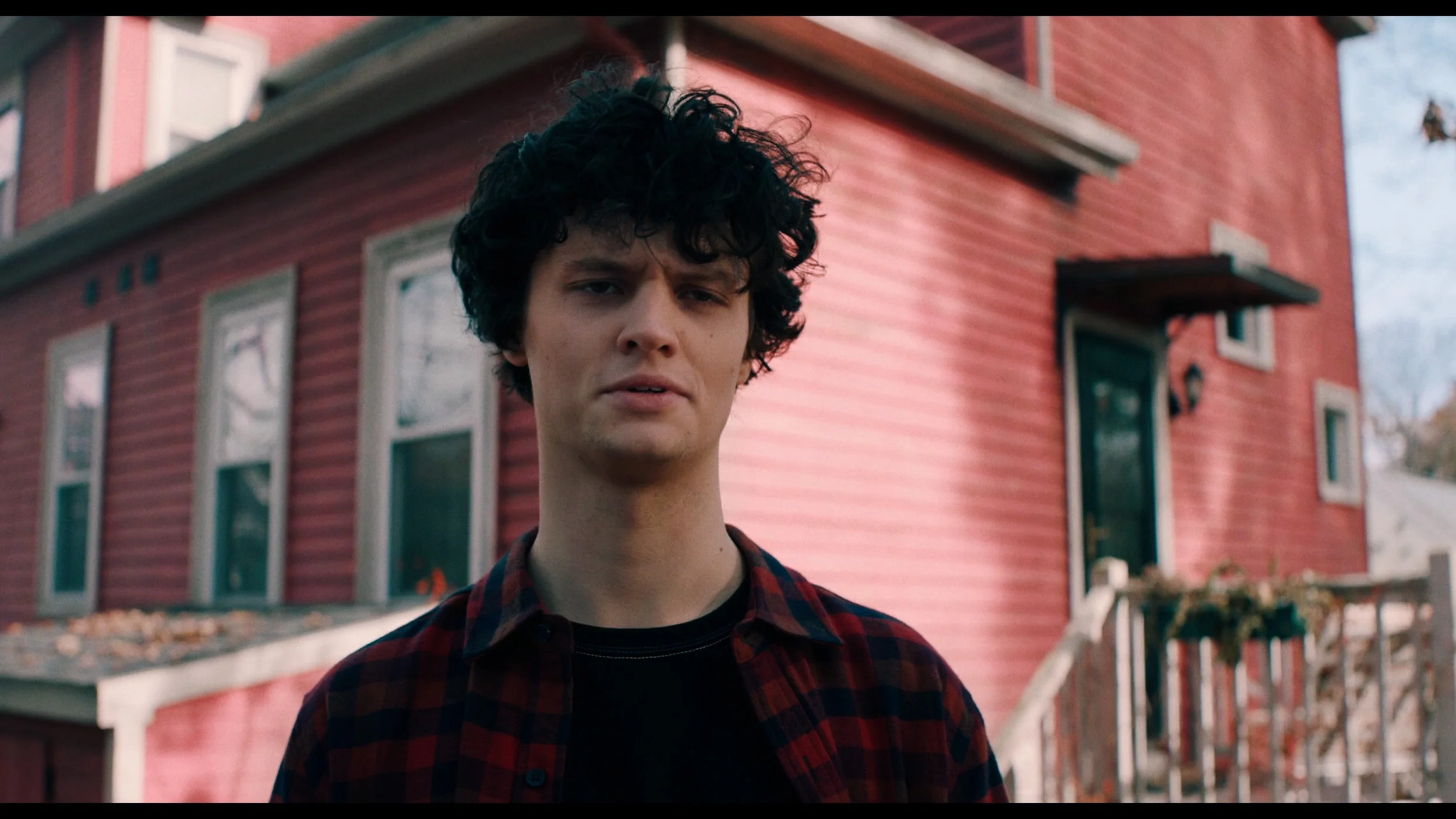
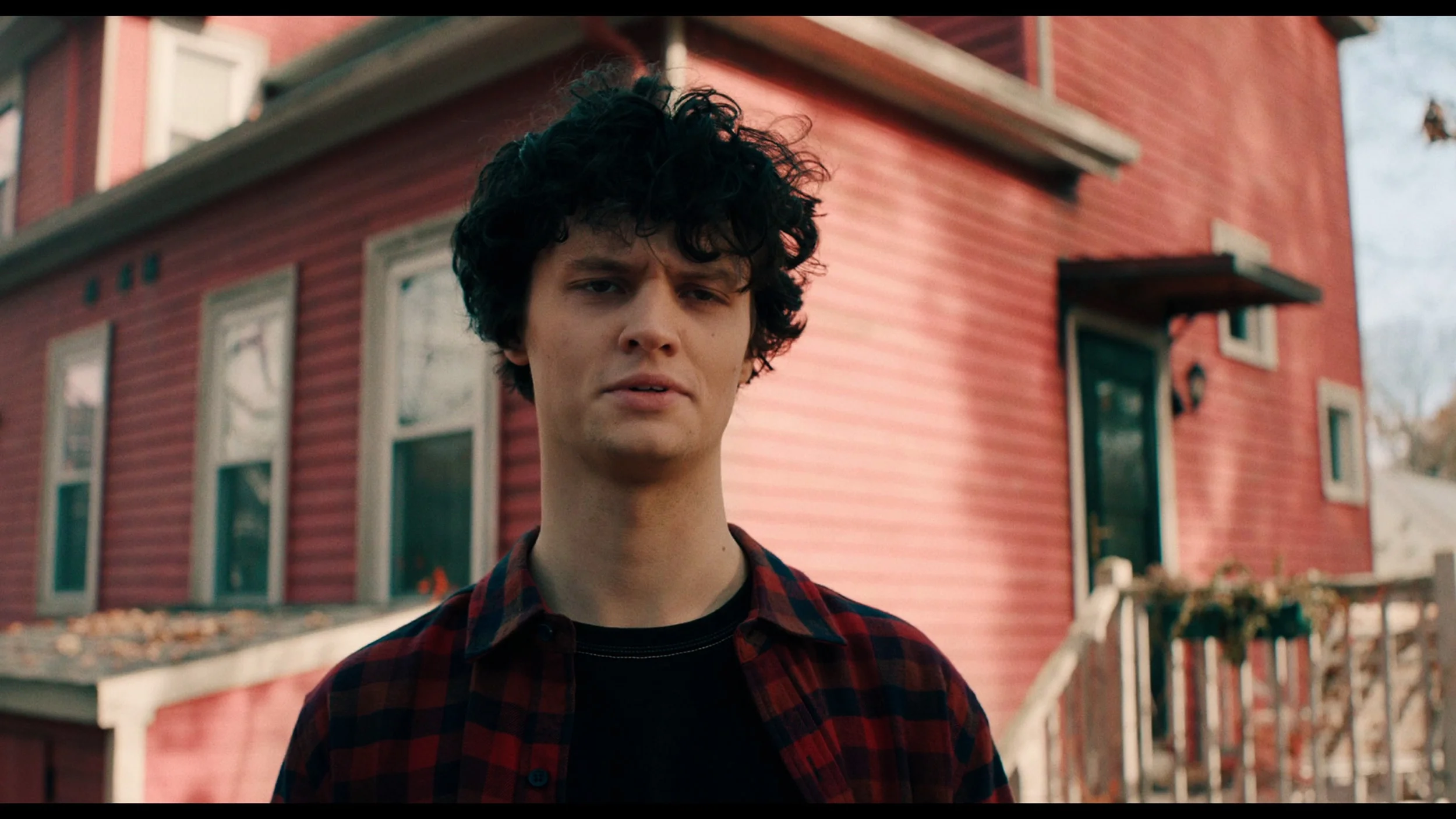
This gallery shows how colors change after professional TV calibration. If you notice the difference, we recommend ordering this service at SkalibrujTV.com.
Factory Mode
After calibration
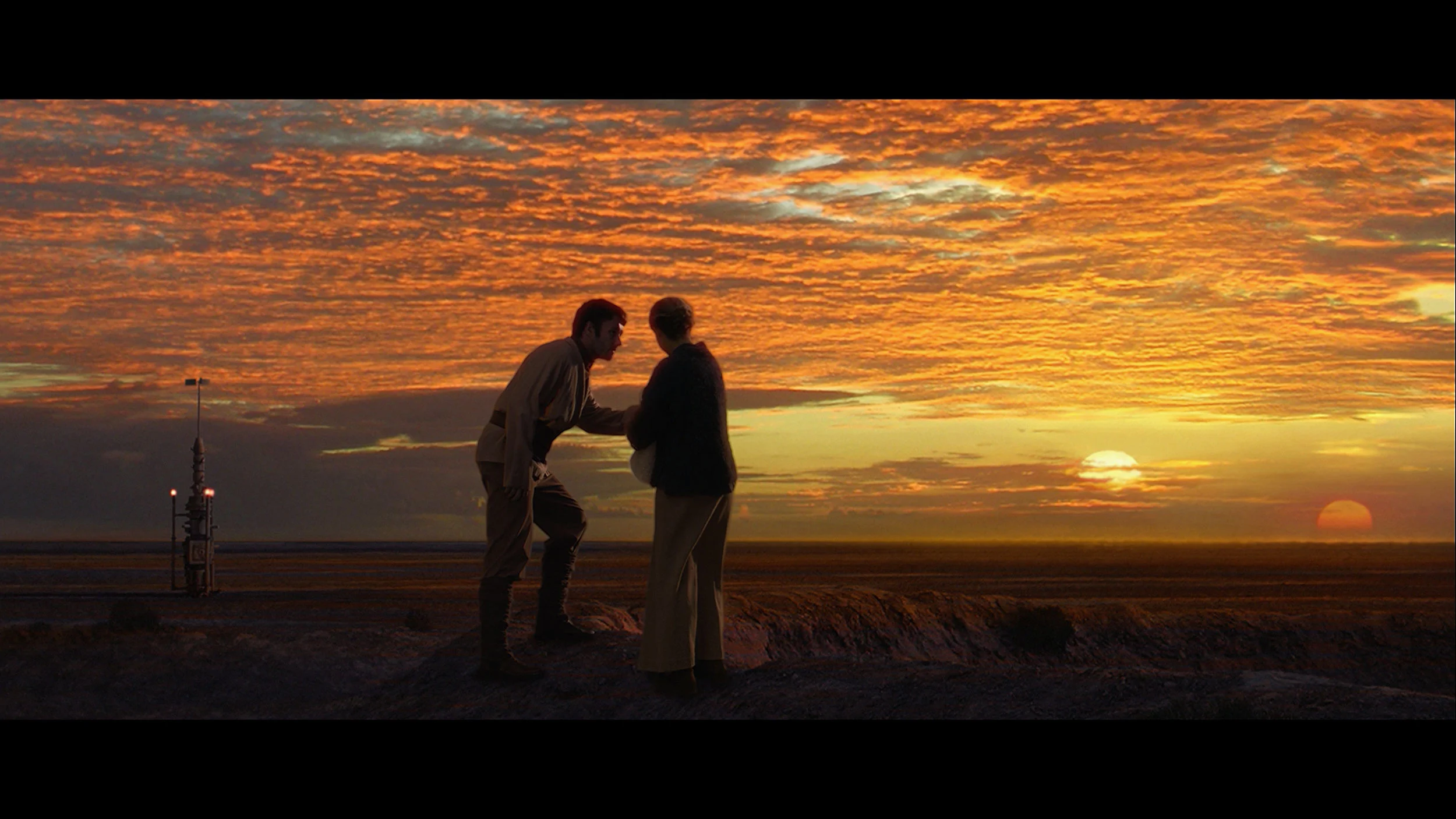
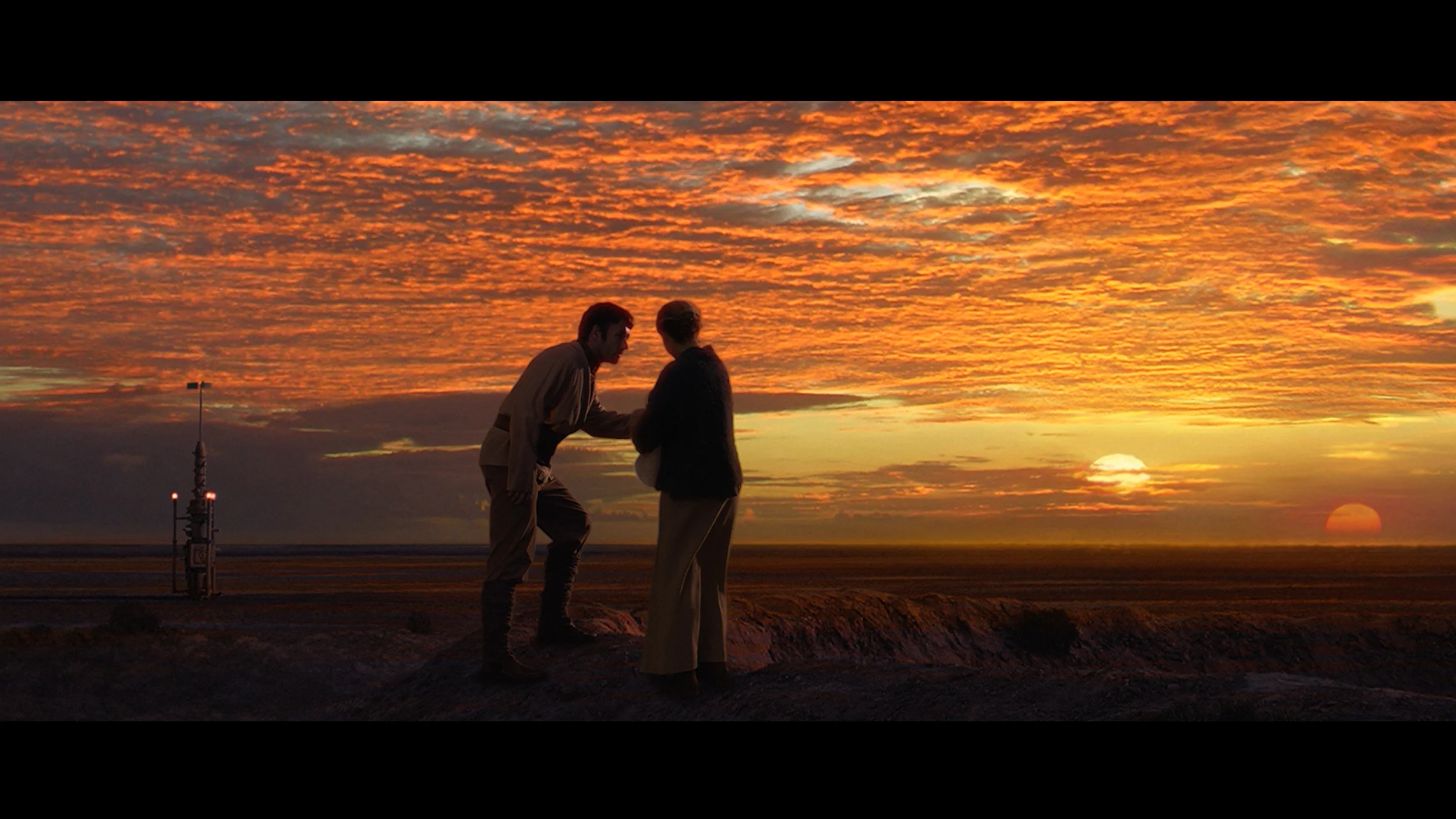
This gallery shows how colors change after professional TV calibration. If you notice the difference, we recommend ordering this service at SkalibrujTV.com.
Factory Mode
After calibration
We tested the U7Q PRO in the best possible picture mode that this model offers – Filmmaker Mode. And indeed, this mode performs the best in terms of colour reproduction. But that doesn’t mean it’s perfect. In our test unit, both in SDR and HDR content, the image had a slightly cooler tone. The white balance was shifted towards blue, which made the overall image feel a bit "cooler." It may not be glaring, but it is definitely noticeable – particularly on white backgrounds, which instead of being neutral, seemed slightly bluish. Additionally – as we mentioned earlier – the television has a tendency to slightly brighten and oversaturate the image, which is also confirmed by the gamma and EOTF charts. All of this together means that without calibration, the image may appear somewhat unnatural – too cool, with slightly exaggerated dynamics. That’s why we decided to perform our own calibration – and you can see its effects and charts below.
In Professional mode the Bravia 3 II delivers a fairly good level of colour reproduction straight out of the box. In SDR the most noticeable issue is a slightly low gamma, which makes the midtones a little brighter. The white balance isn't perfect either; as brightness increases a bit of blue and red drops away, so whites can sometimes appear a touch warmer with a faint greenish tint. These aren't mistakes that immediately jump out when watching a film. Average error values hover around 3, so the factory setup can be considered quite good. The situation in HDR is similar. Here too there's a slight lack of blue, so the picture is marginally warmer than the reference, but the difference isn't large enough to be distracting during normal viewing.
Color reproduction after calibration
7.5/10
8/10
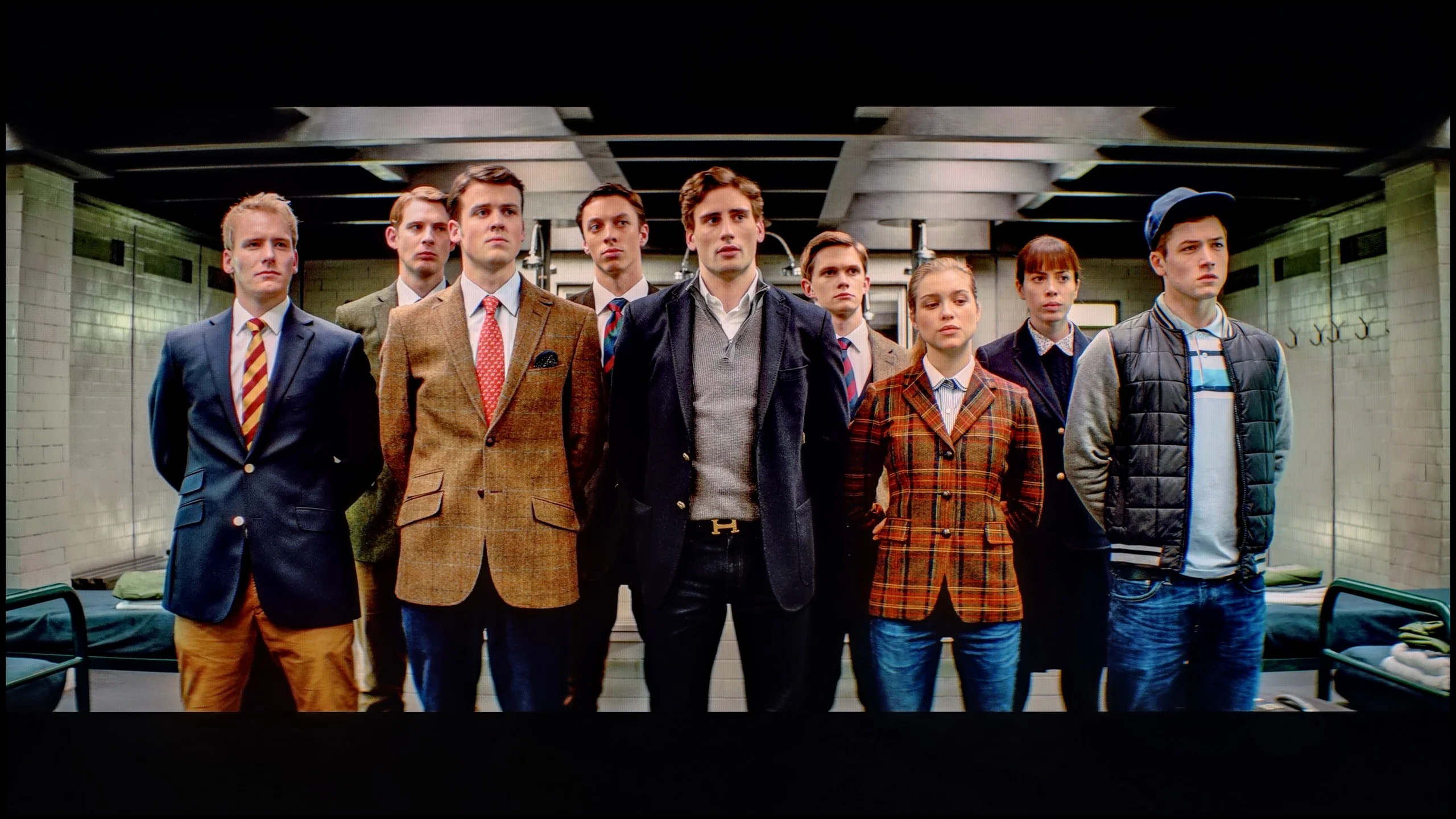
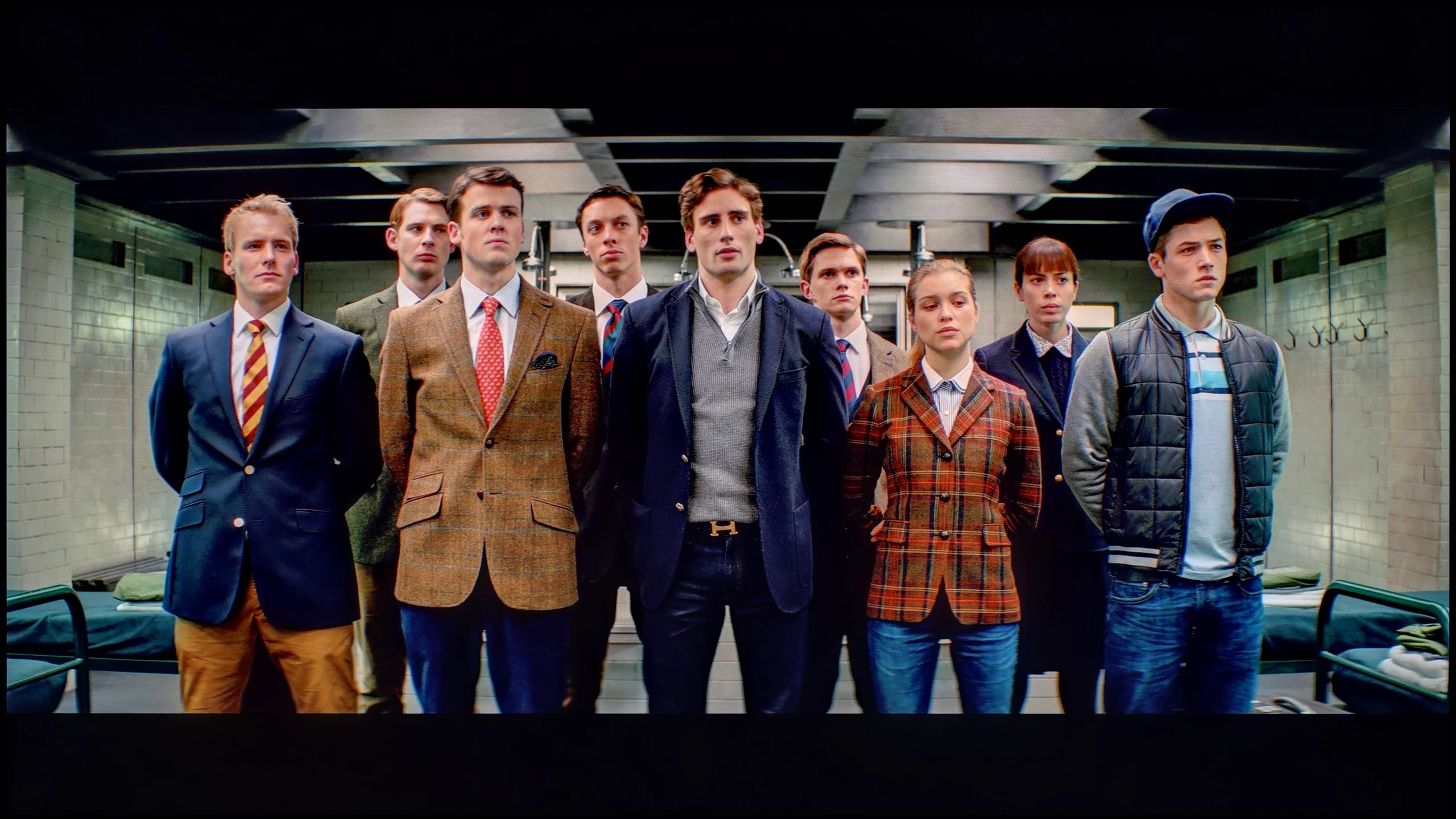
The photos show how movies look on the TV. Pay attention to black detail visibility, colors, and shadow tint.


The photos show how movies look on the TV. Pay attention to black detail visibility, colors, and shadow tint.
Thanks to calibration, we've managed to tame the white balance in SDR and HDR content. For SDR material, the effect is really quite good – the image becomes neutral, cohesive, and simply pleasant to watch. Everything looks the way it should.
HDR performs a bit worse. Although the white balance looks correct and overall the image gains naturalness, unfortunately, the delta E errors are still noticeable. Why? Because Hisense's U7Q PRO model does not give us full control over how the television manages brightness in HDR mode. And this is where the limitation arises. When we look at the EOTF curve for HDR content, it clearly shows what we mentioned earlier – at the beginning of the graph, there’s a noticeable drop, meaning the television darkens the smallest portions more than it should. On the other hand, those brightest elements can be overly bright. As a result, some details are lost, others are too aggressive, and overall control over brightness doesn't always align with what we’re trying to achieve during calibration.
Does the image look better after calibration? Definitely, yes, in terms of colour. But when it comes to brightness management in HDR, one must accept that the Hisense U7Q PRO will still do it in its own way.
After calibration you can get a lot out of SDR material. The white balance was set almost perfectly, gamma practically matches the reference value, and average colour errors fell from around 3 to about 1. That’s already the level at which differences from the reference image are very hard to spot in practice. The Bravia 3 II therefore shows that despite its place in Sony’s range it has quite a bit of potential for precise picture tuning. Improvement is also visible in HDR, although here you can’t avoid all the limitations of the TV itself. Once the colours are evened out it’s easier to notice that the EOTF curve in film material runs slightly below the reference value in places, meaning the Bravia 3 II gently darkens parts of the image. That isn’t ideal from a reference point of view, but in this particular TV it also has an advantage. With no local dimming and average black levels this behaviour slightly reduces the visibility of the backlight in darker scenes and helps preserve a stronger sense of contrast. You could say Sony is partly masking the limitations of the panel this way, rather than trying at all costs to stick to the reference brightness.
Smoothness of tonal transitions
9.5/10
9.5/10
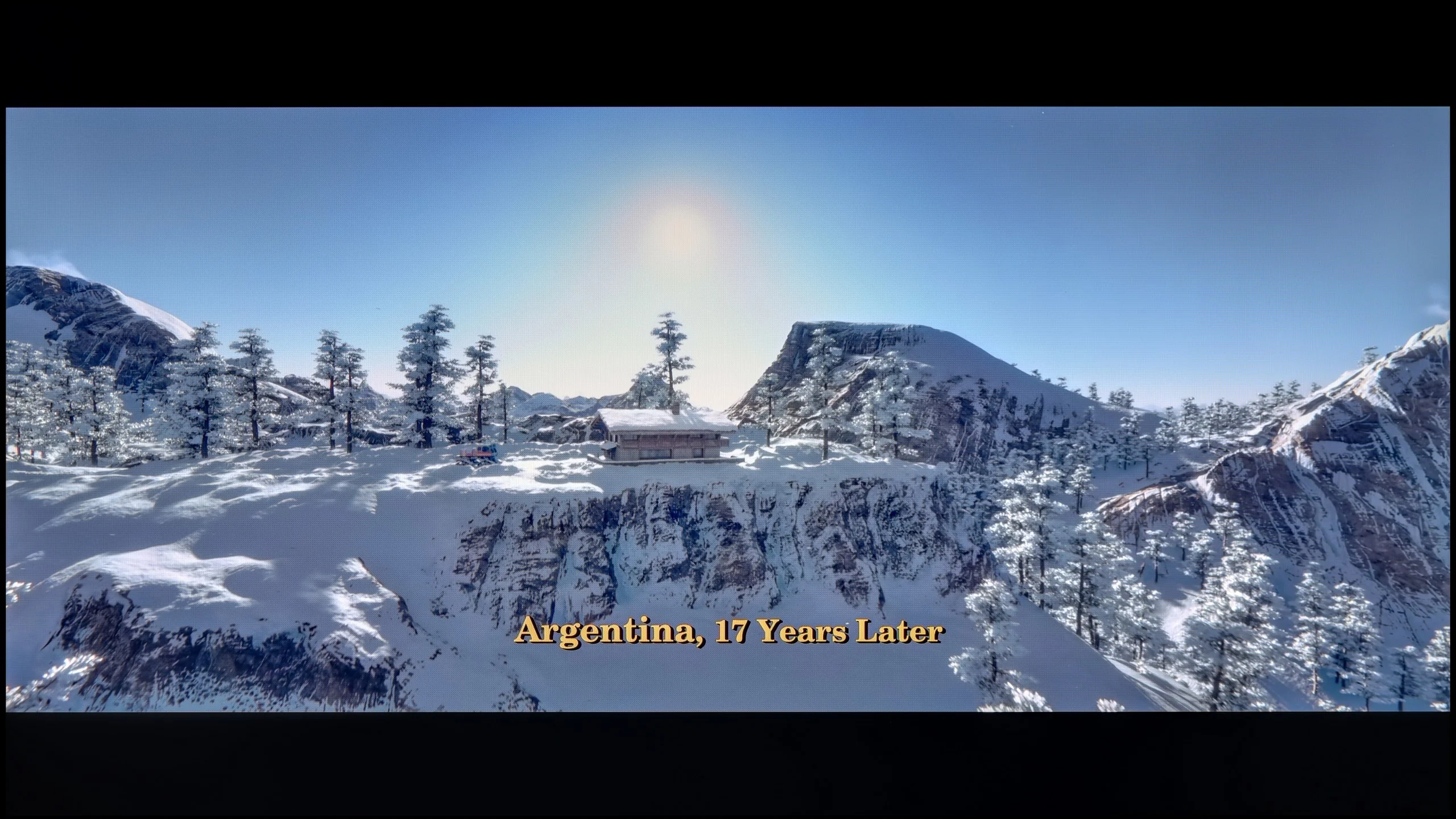
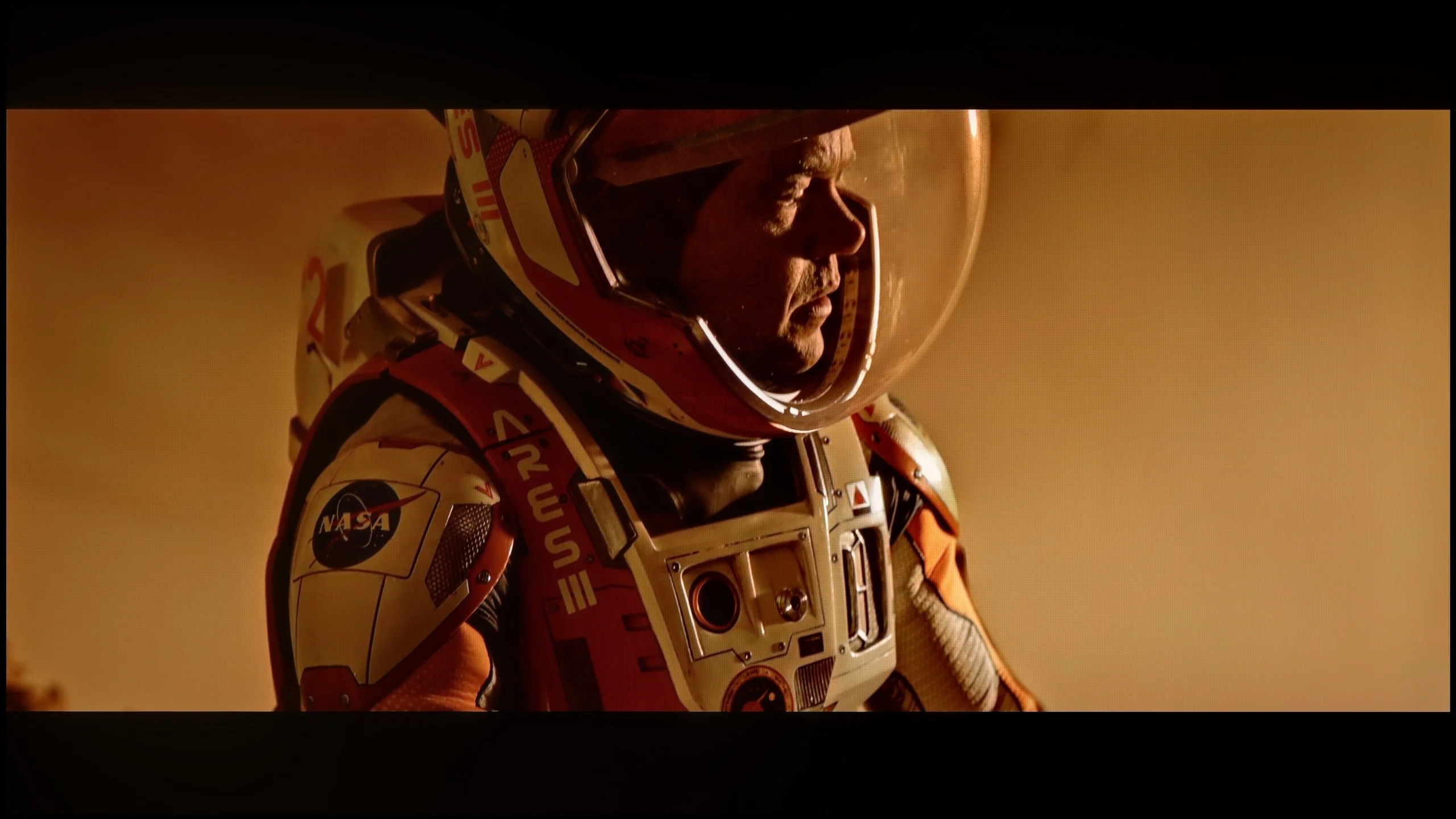
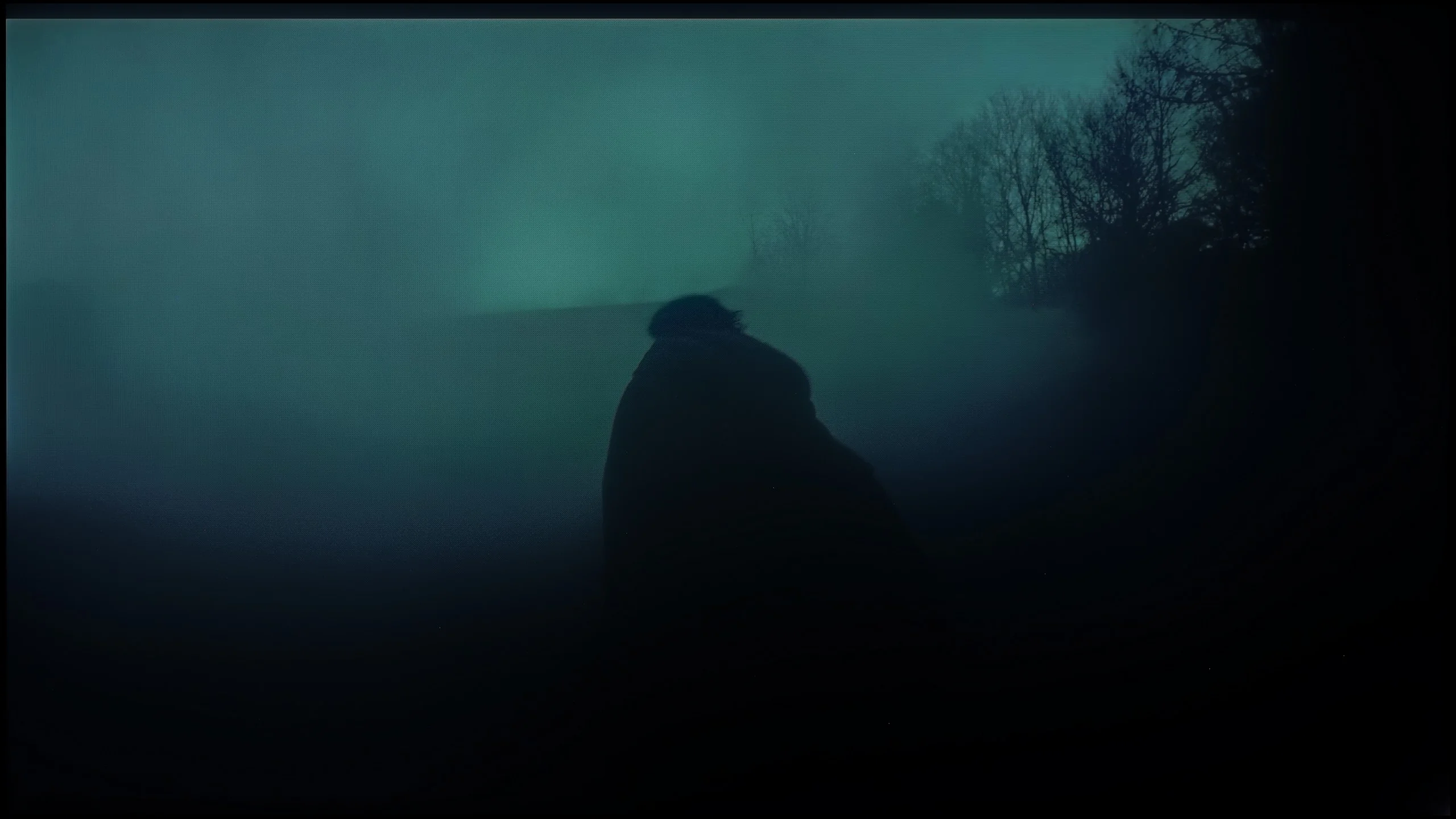
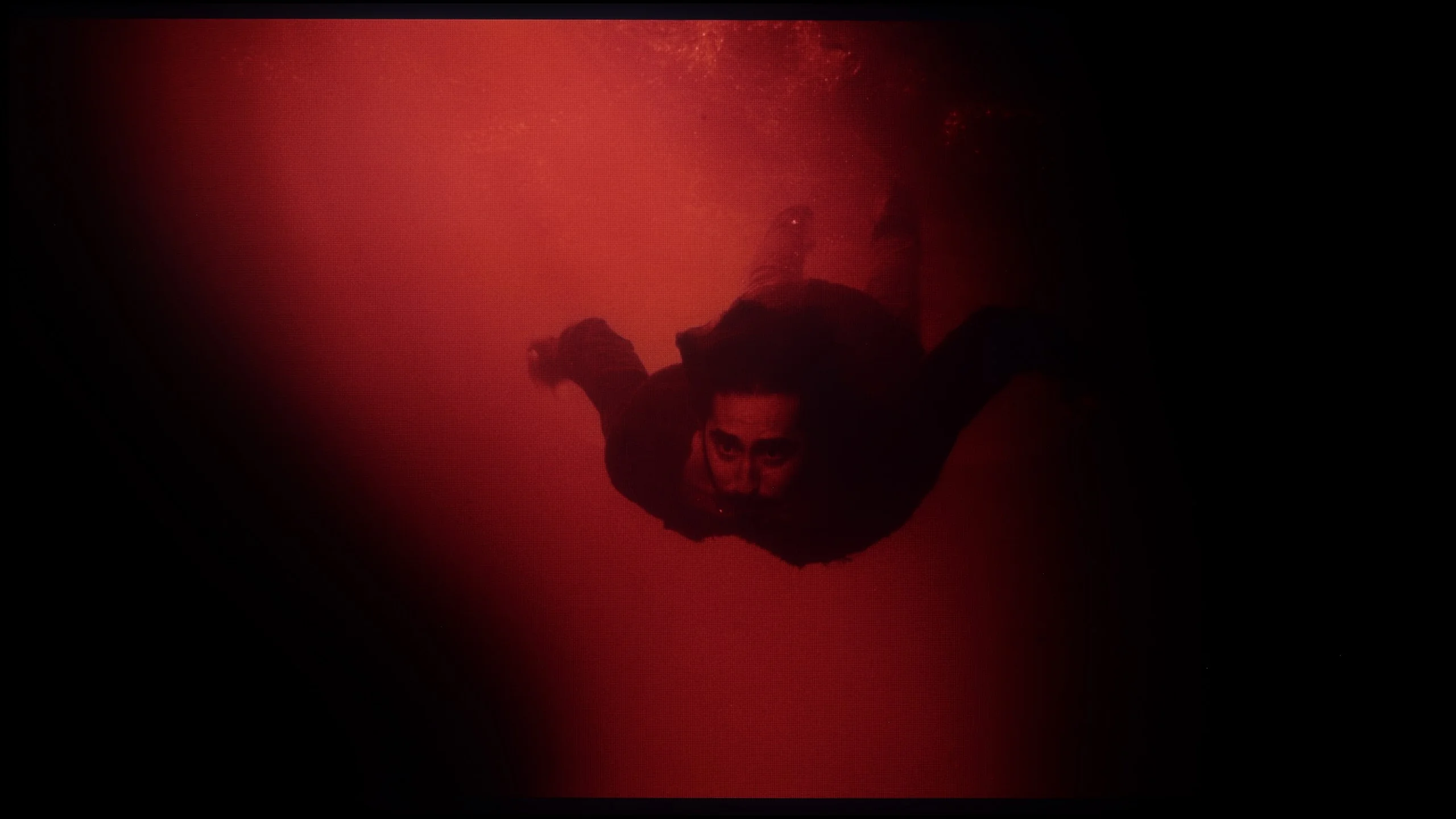
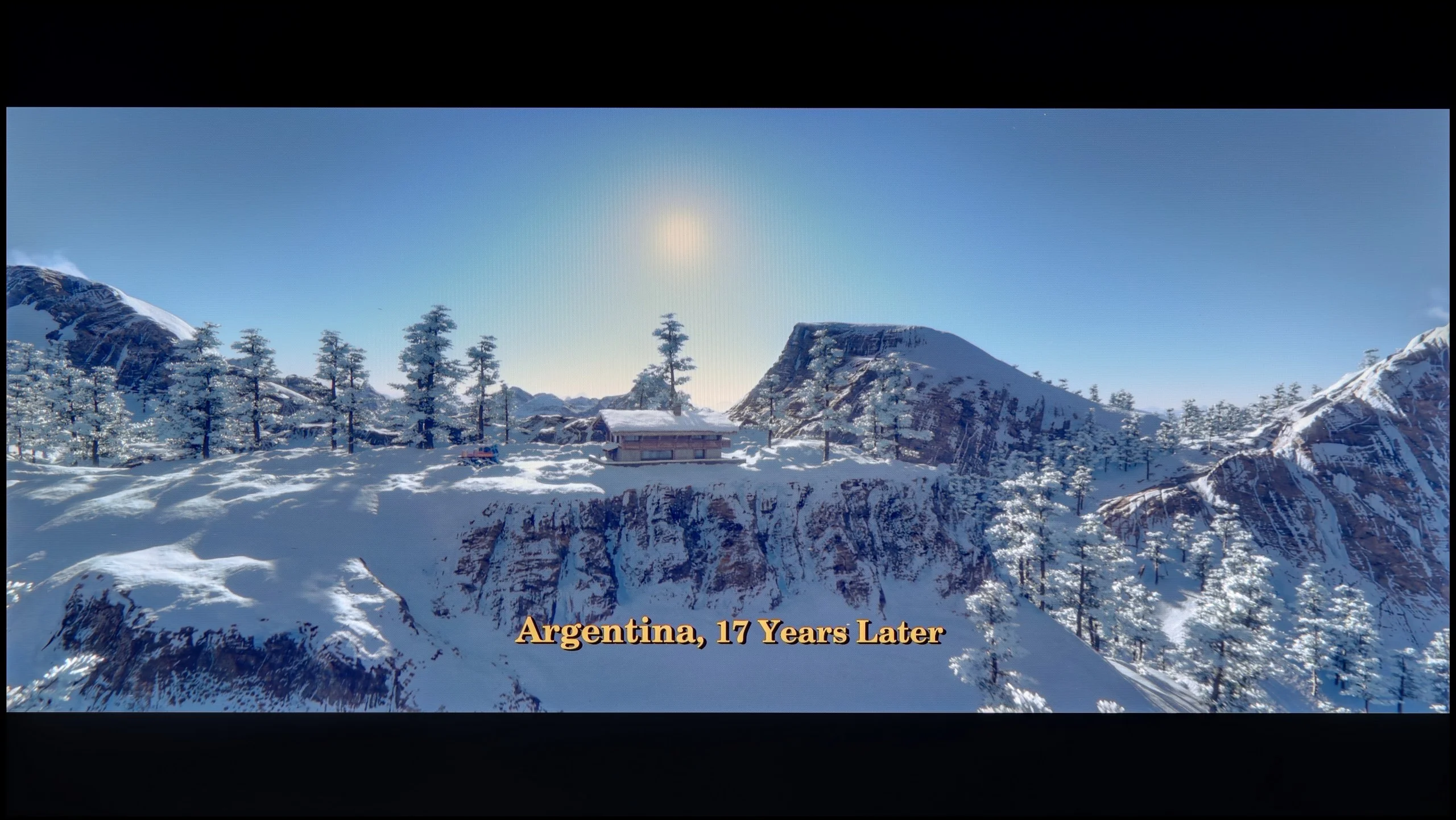
These are selected scenes that show smooth tonal transitions from one color to another. If you see distinct banding, it’s the TV panel’s fault.
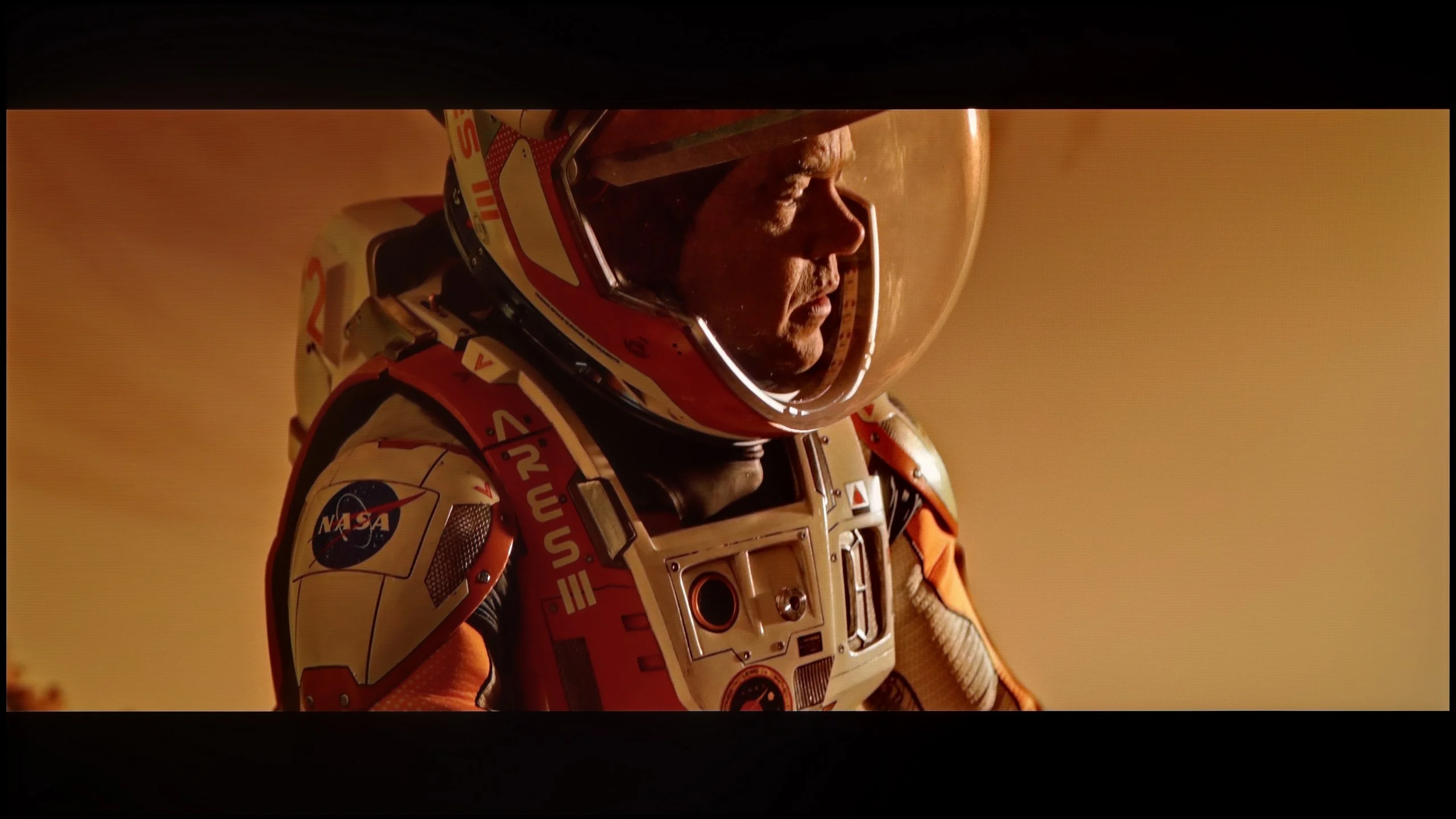
These are selected scenes that show smooth tonal transitions from one color to another. If you see distinct banding, it’s the TV panel’s fault.
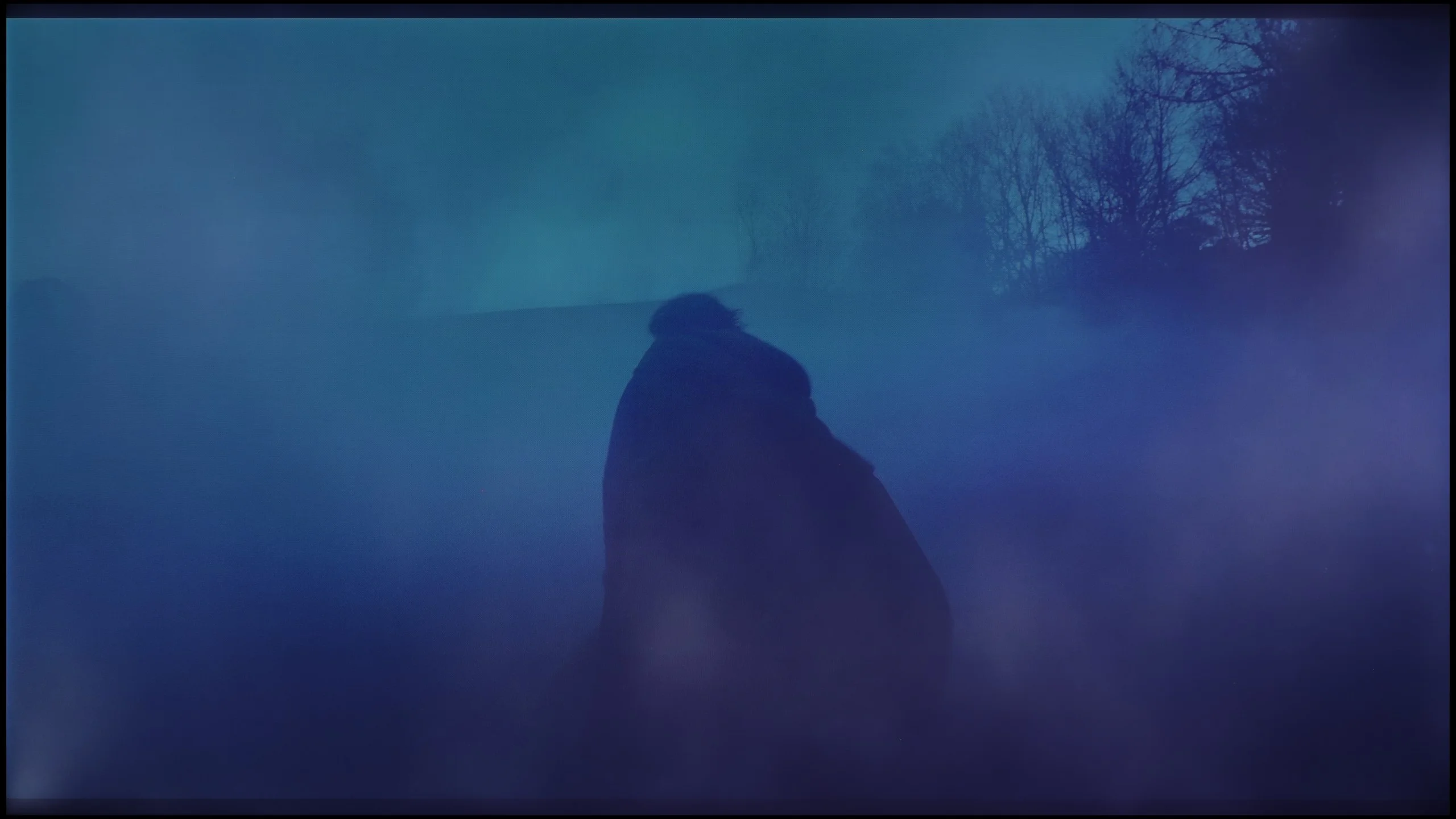
These are selected scenes that show smooth tonal transitions from one color to another. If you see distinct banding, it’s the TV panel’s fault.
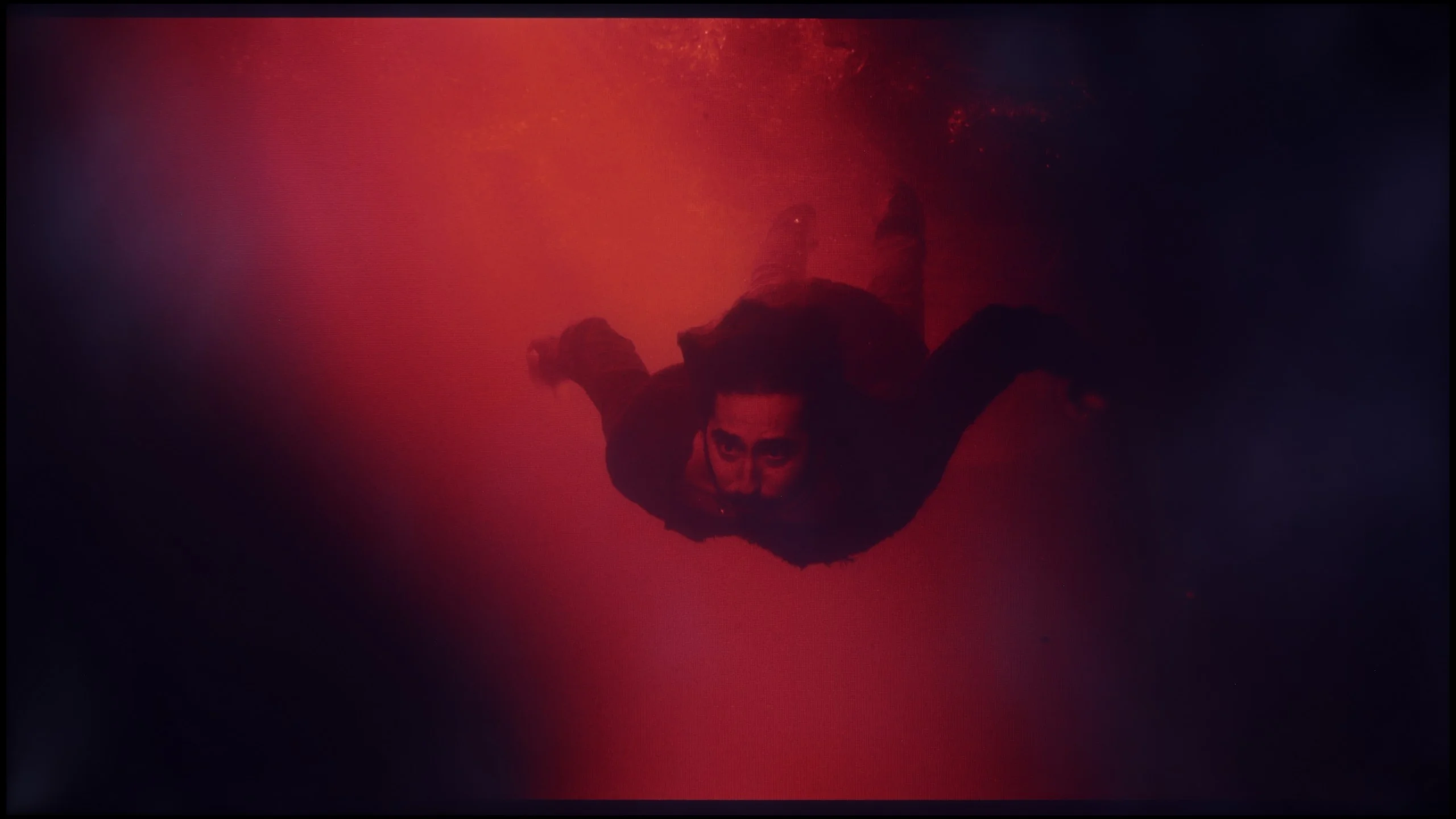
These are selected scenes that show smooth tonal transitions from one color to another. If you see distinct banding, it’s the TV panel’s fault.
The U7Q PRO handles tonal transitions really well. Colours blend smoothly, with no banding, stripes, or strange artefacts. Even in tougher scenes that typically expose any imperfections – there was nothing to criticise here. The picture simply looks clean. The gradients – both colour and grey – are fluid, nothing tears, nothing distracts. It's one of those elements you don't notice while watching… certainly not with the U7Q PRO.
In terms of the smoothness of tonal transitions, the Bravia 3 II performs very well. In most of the scenes we watched it was hard to notice any problems with the blending of individual shades. Gradients remain smooth both in the bright parts of the image, such as skies or sunsets, and in much more challenging dark shots. The only thing that may stand out in our photos, particularly in the very darkest scenes, is the unevenness of the backlight itself. However, this is not related to colour gradation; it is rather a consequence of using a backlight without local dimming.
Image scaling and smoothness of tonal transitions
7.8/10
6/10

Smooth transition function
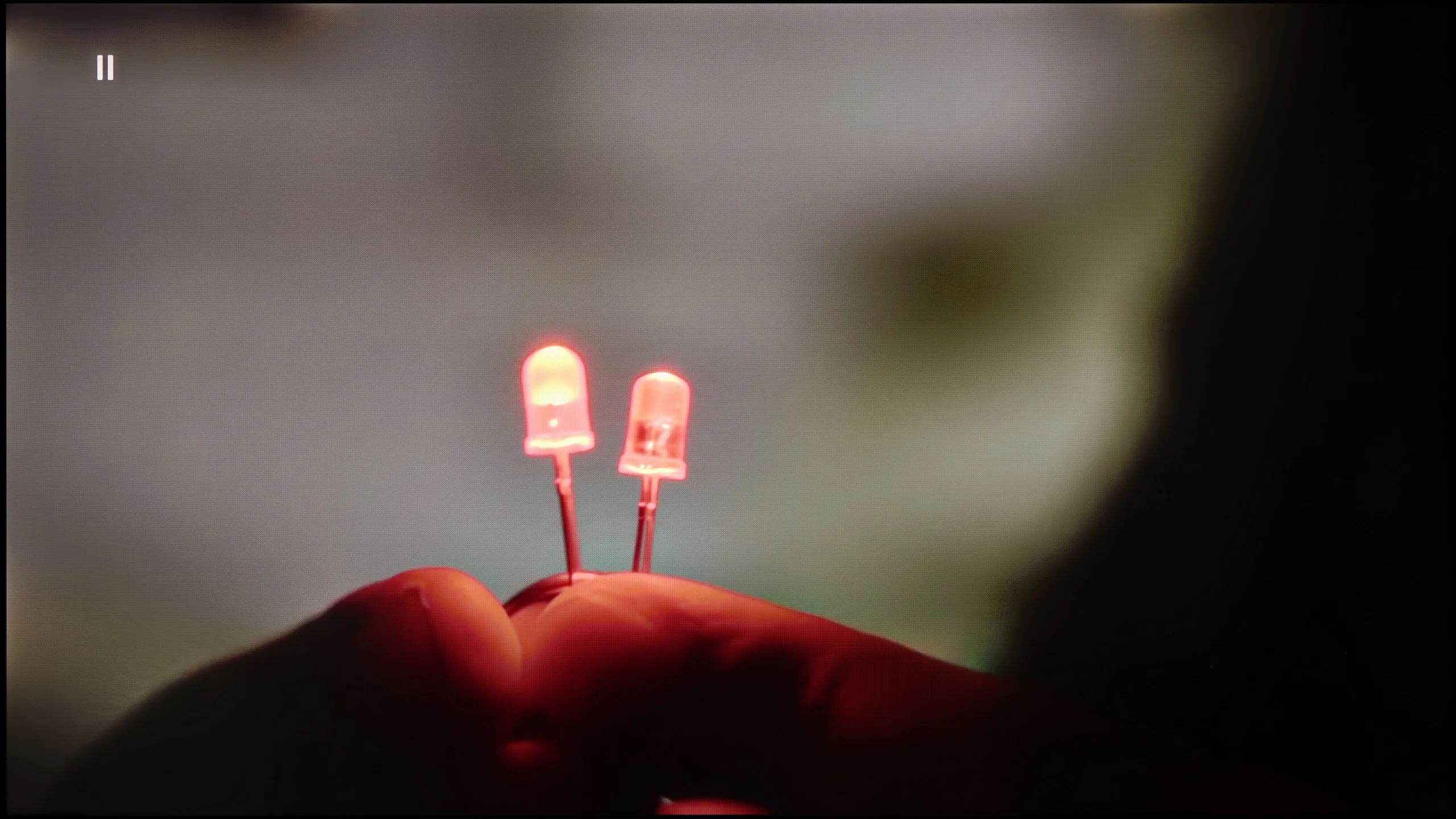
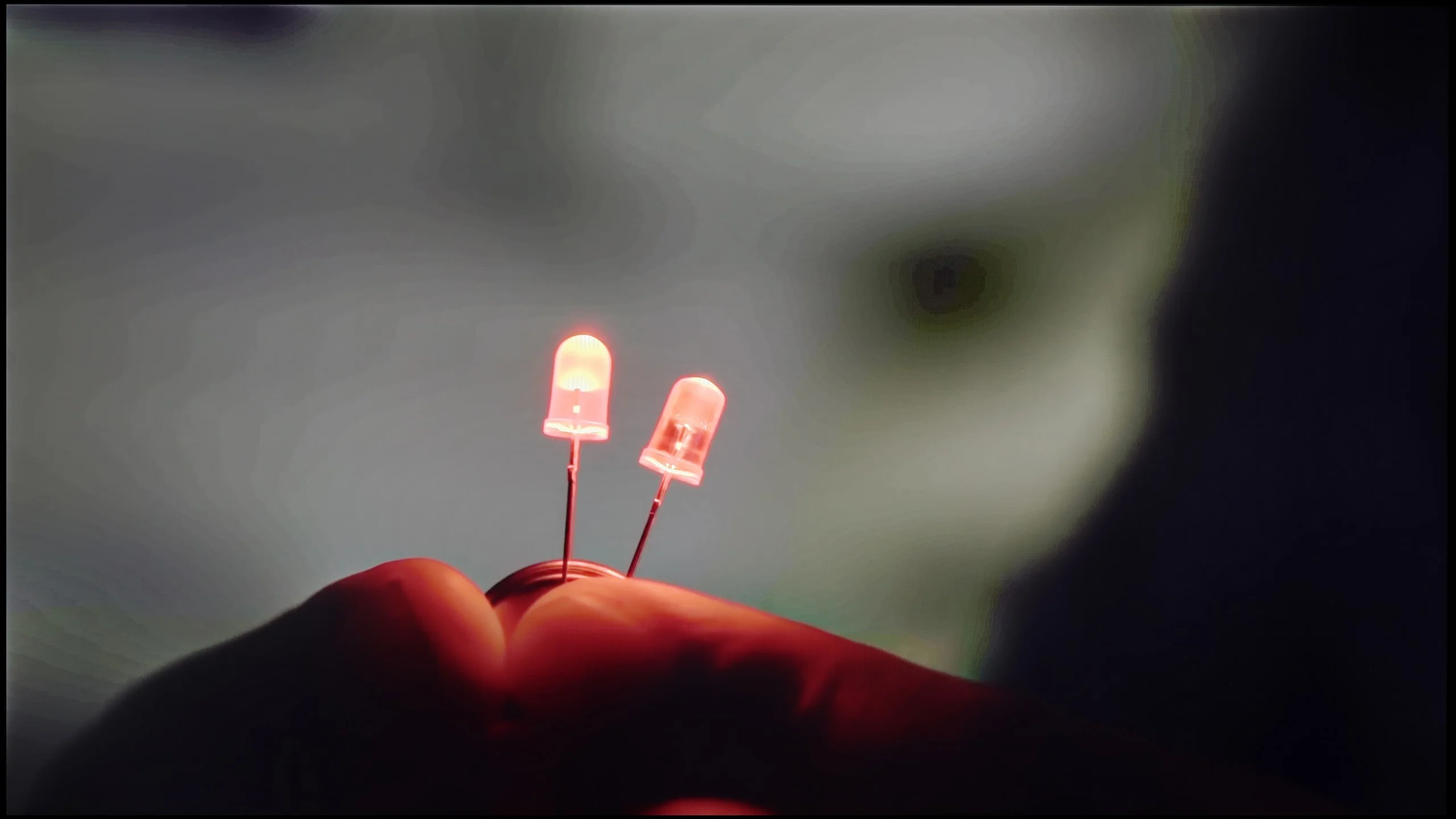
The match photo shows how the TV smooths weak tonal transitions in low-quality video.
Image scaling SD (576i)


The model photo shows how it handles upscaling of SD material.
If someone happens to come across older materials where the banding issue arises – Hisense has a solution for that. In the U7Q PRO, we find a feature called "Smooth and Gradient Picture". Set to the "Medium" level, it works really well – eliminating most gradient problems without smoothing the entire image like a blur in Photoshop. 😉 Film grain remains, details don't disappear – that's exactly how it should work. Well done on the implementation!
As for scaling weaker materials, it's simply good. It's not at the level of the most expensive TVs with advanced upscaling, but older content looks good. There is some minor banding at very low resolutions, but that's perfectly normal and hard to avoid. On the plus side – even with the oldest materials, there is no overscan effect, the image isn't cropped or artificially stretched.
Bravia 3 II is Sony's first TV to use the new MediaTek Pentonic 800 chip, and you can see a few changes in the image processing. Starting with the basics: the upscaling itself is decent. The TV can sensibly upscale lower-resolution material and doesn't have a strong tendency to over‑emphasise jagged edges or other source imperfections. With regular broadcast TV or lower-quality streaming material the picture therefore remains quite attractive.
We have more reservations about the digital image processing. In this model Sony has replaced the well-known "Smooth Gradation" function with a new setting called "Digital Noise Reduction". Its job is basically the same: to smooth out ugly tonal transitions and artifacts caused by heavy compression. Unfortunately, this function performs noticeably worse than before. At the "Large" setting (the only one that had any visible effect) the TV can smooth away too many image elements at once, which causes film grain to disappear and object textures or even skin to start looking unnatural. Worse still, the effect is not particularly stable. When there's more motion in a scene, the function's effect noticeably weakens and at times it looks as if the TV stops intervening in the image altogether. So for everyday viewing we wouldn't recommend using it at a high level. It can help on static shots, but the trade-off is often too much loss of detail.
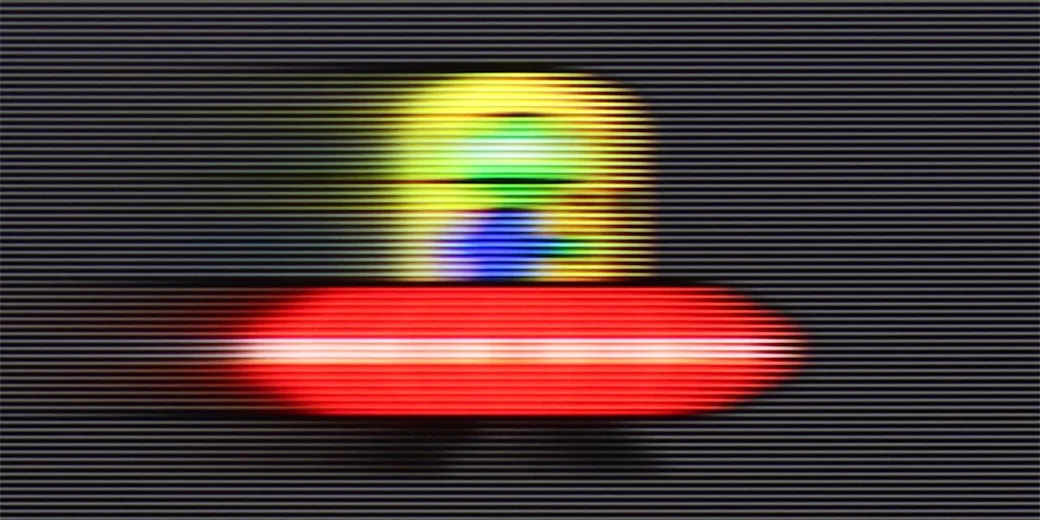
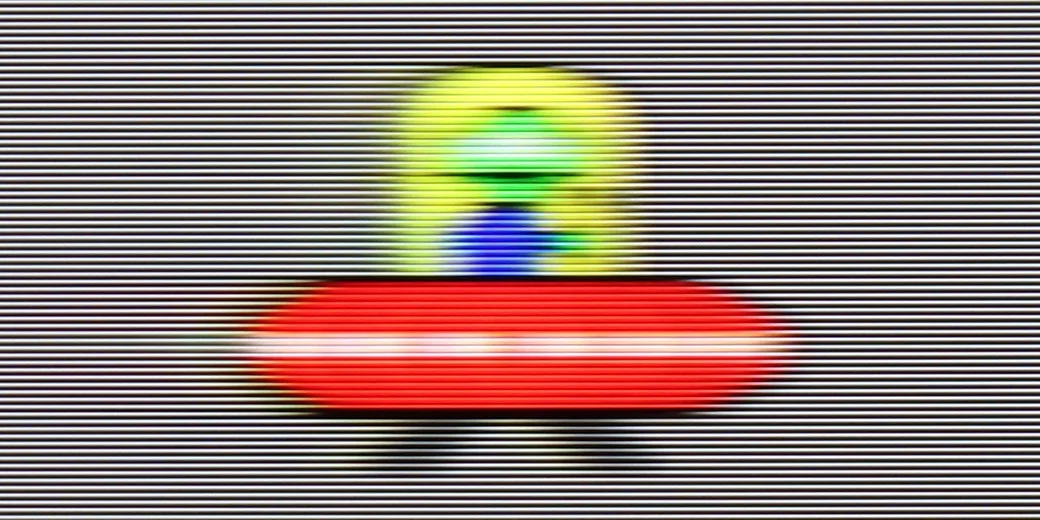
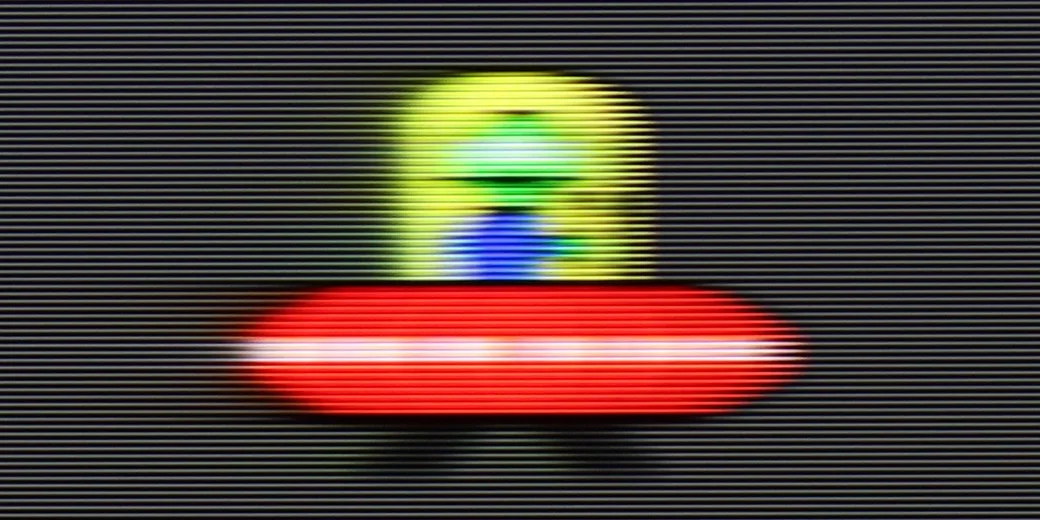
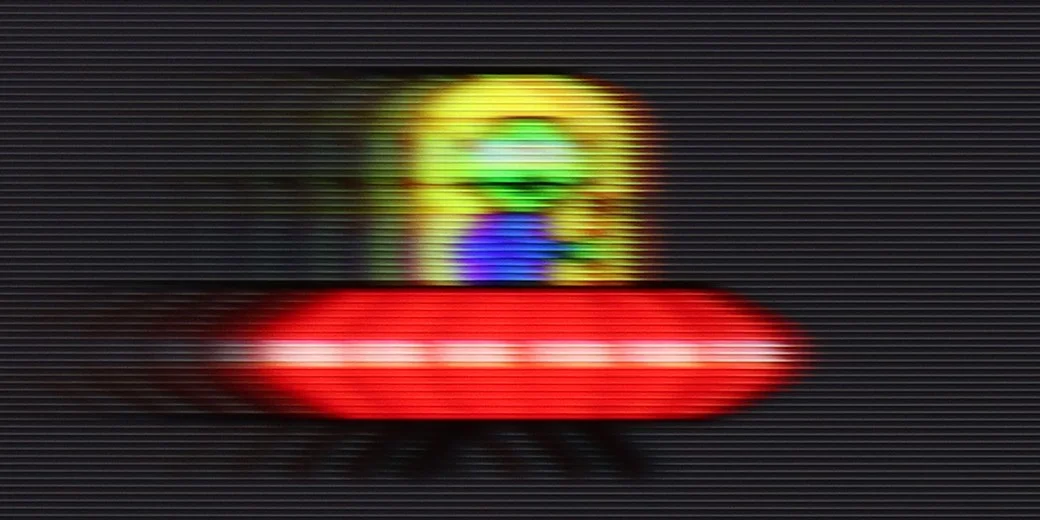
Blur and motion smoothness
7.1/10
8.2/10
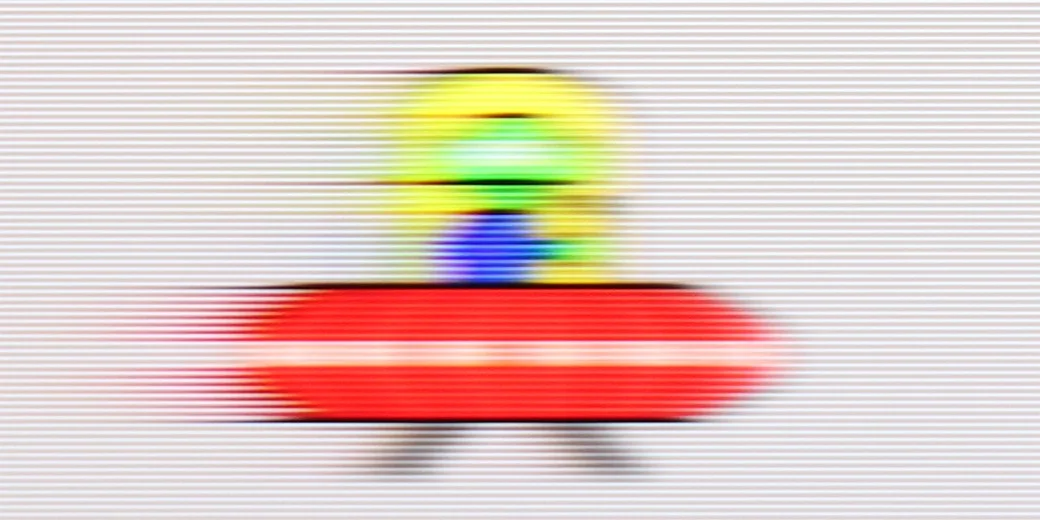
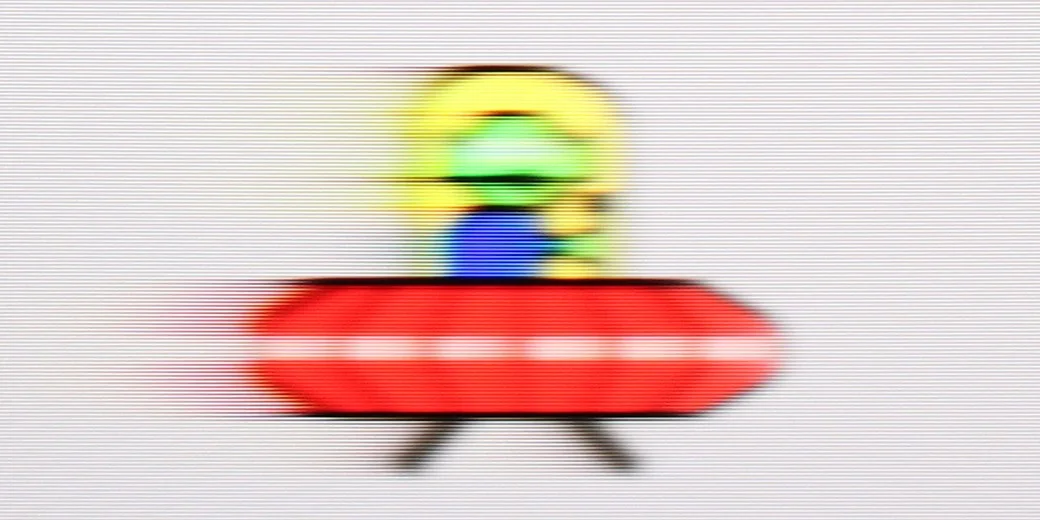
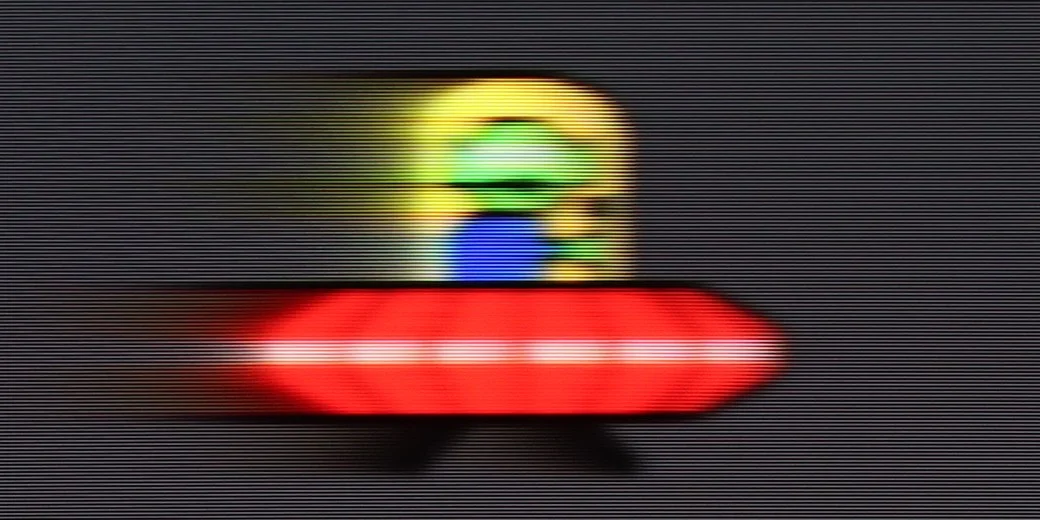
Blur (native resolution, maximum refresh rate):
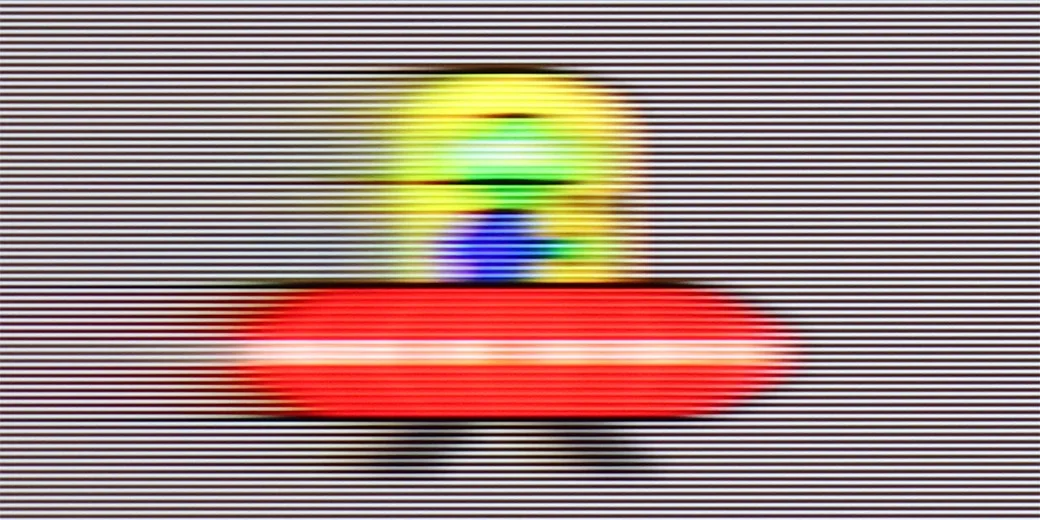

Blur (BFI function enabled):




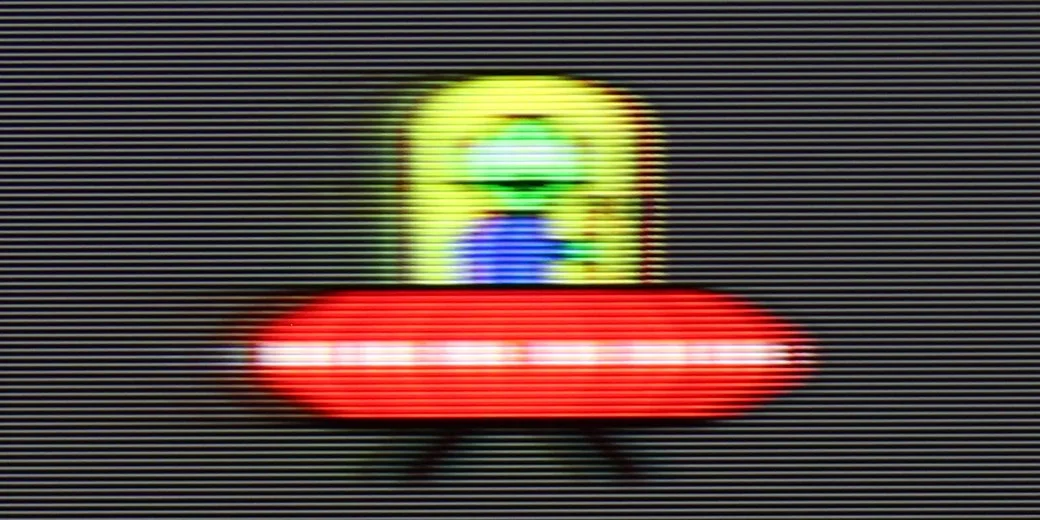
Blur (1080p 288Hz):

Blur ():
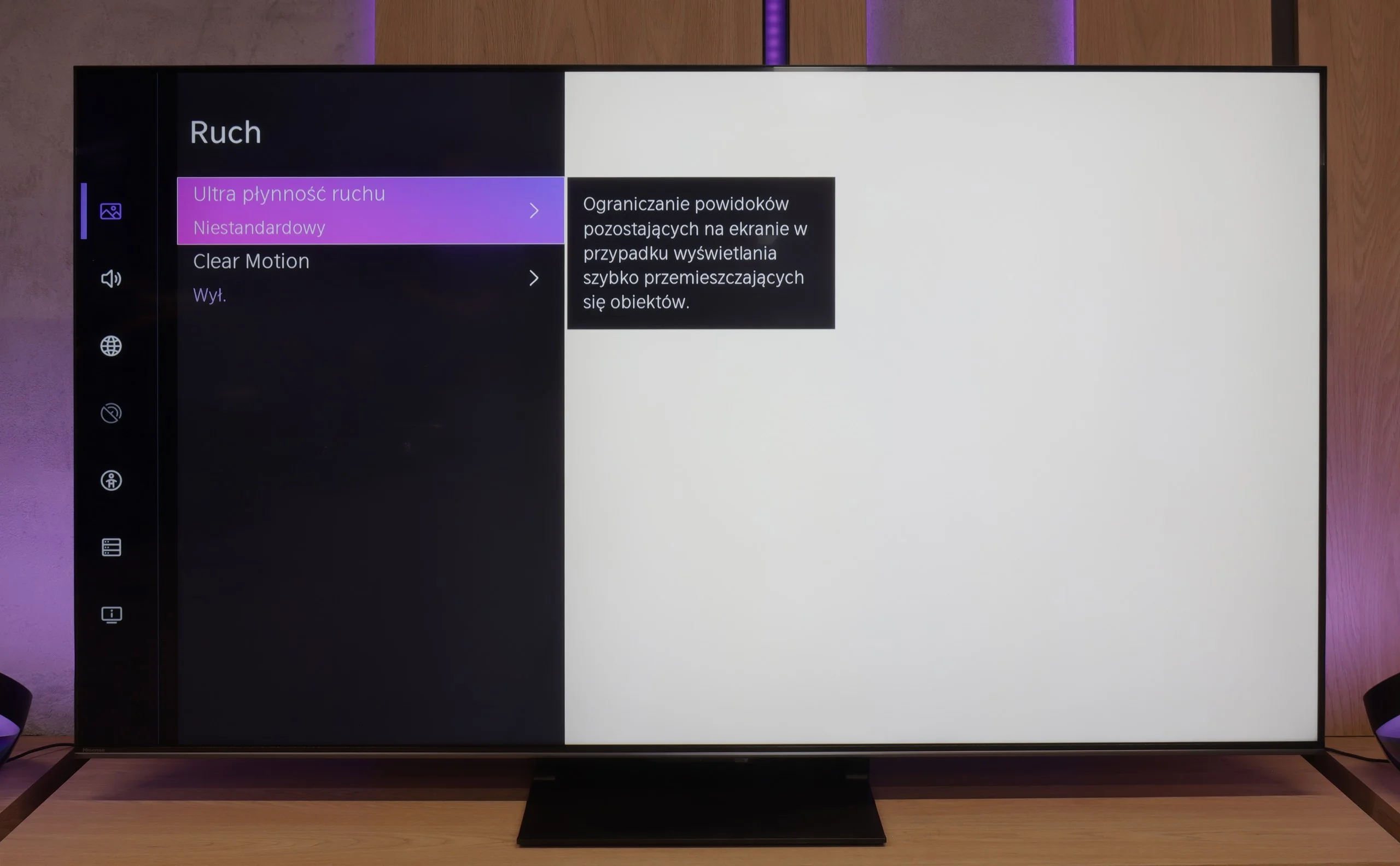
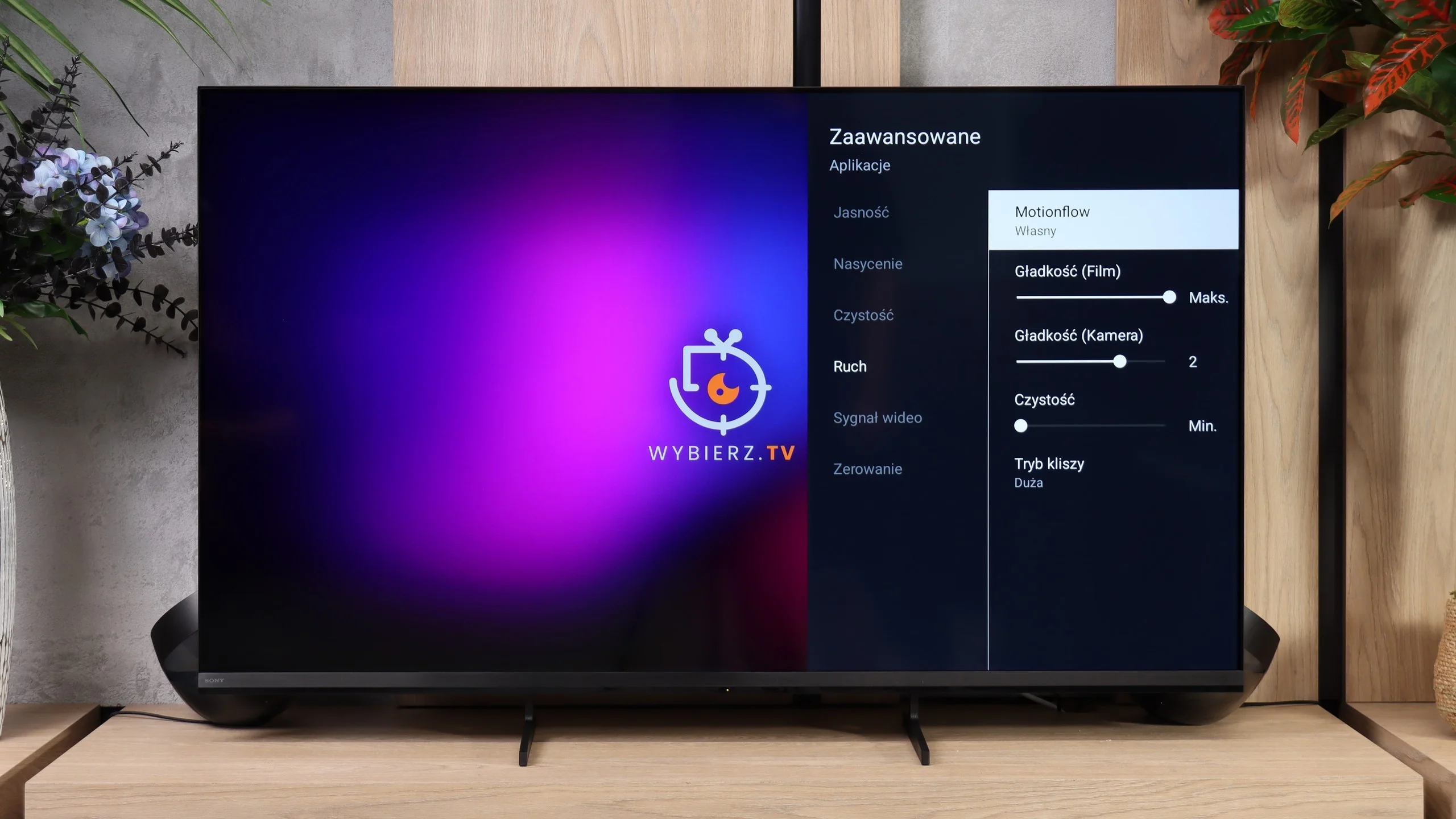
“Speed” – this word was most frequently mentioned during our tests of the U7Q PRO. The television is equipped with a 165 Hz panel, which in itself is impressive – especially considering we’re talking about a mid-range model. Of course, PC gamers will benefit the most from its full capabilities, but even during everyday viewing, it’s clear that this is a fast and efficient panel. Like most modern televisions, the U7Q PRO can also enhance the smoothness of films that were originally recorded at 24 frames. In the menu, we find a slider that allows us to adjust the effect to our own preferences – from a more cinematic feel, with subtle motion, to a stronger smoothing with the characteristic “soap opera effect.”
Motion handling is definitely one of the Bravia 3 II's strongest points. The TV uses a 120 Hz VA panel, a solution that by nature, despite the high refresh rate, doesn't always cope well with motion blur. Sony has, however, managed that issue very well here. Fast-moving objects remain sharp, and the characteristic motion trails and blur are reduced to a very low level, if not to zero. It's one of the least motion-blur-prone LCD TVs we've had the chance to test. Interestingly, in this respect the Bravia 3 II can even outperform the much more expensive flagship True RGB series, the Bravia 9 II.
Console compatibility and gaming features
8.5/10
8.1/10
- ALLM
- VRR
- VRR range48 - 288Hz48 - 120Hz
- Dolby Vision Game Mode
- Correct implementation of HGIG

- 1080p@120Hz
- 1440p@120Hz
- 4K@120Hz
- Game bar
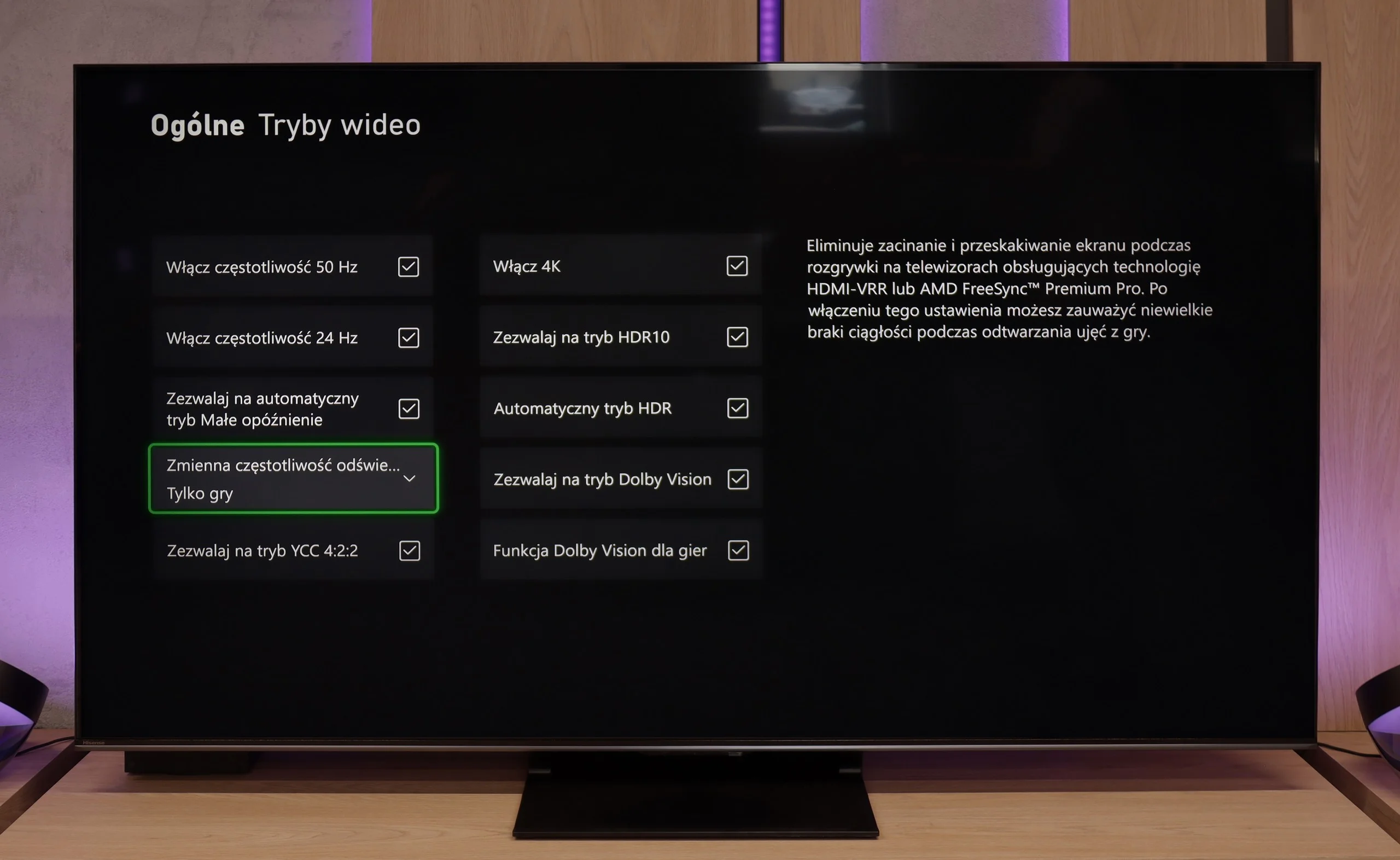
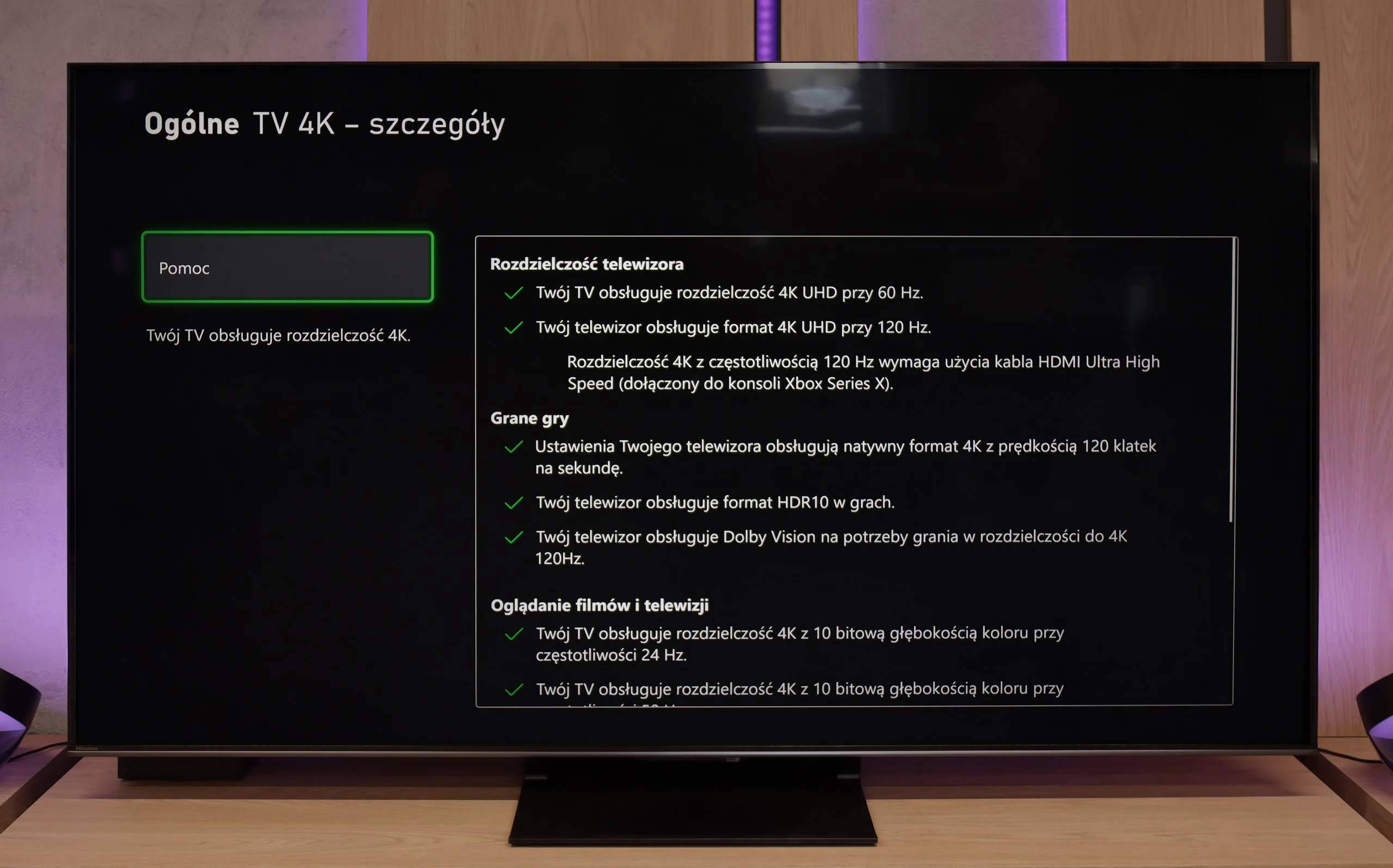
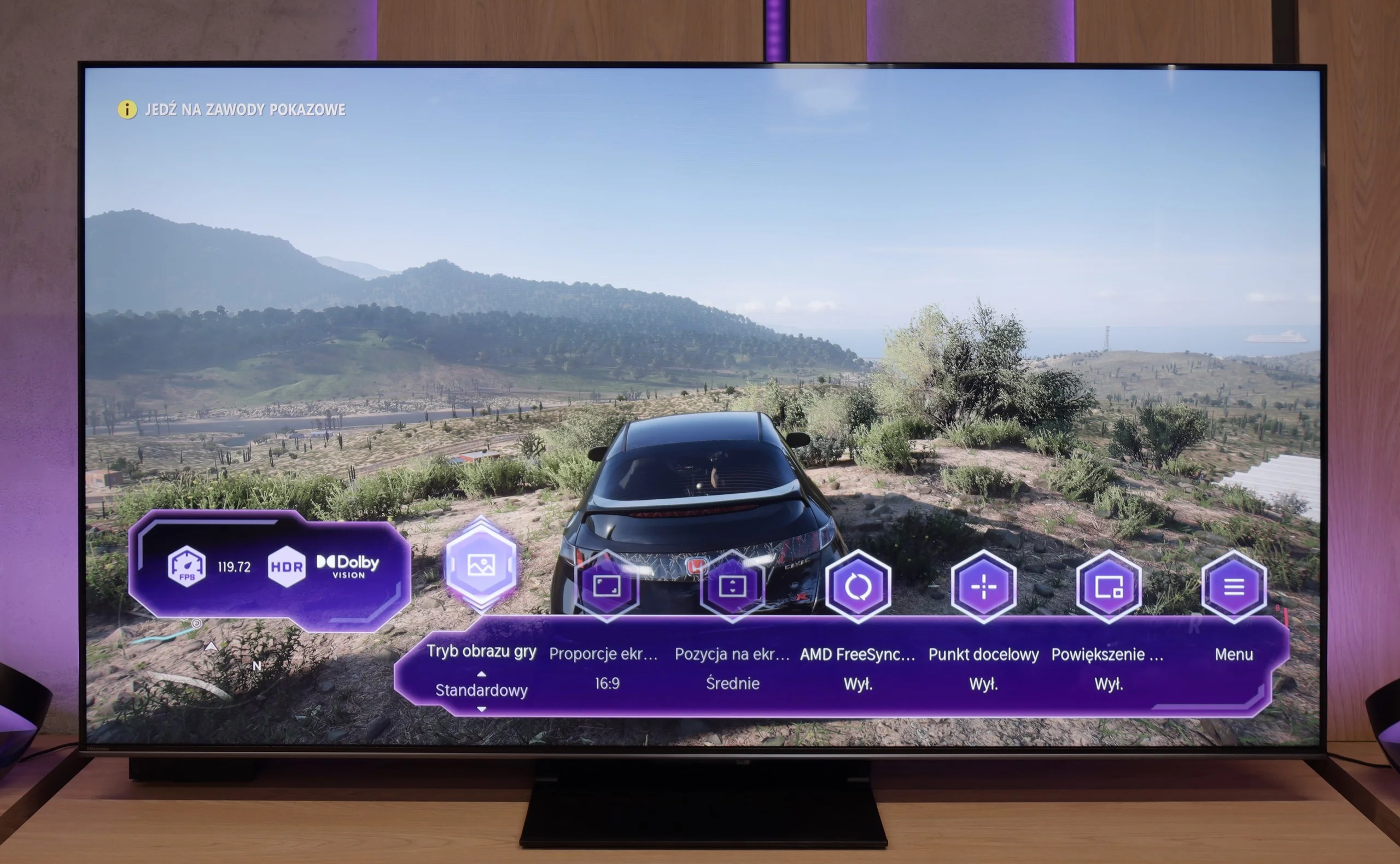
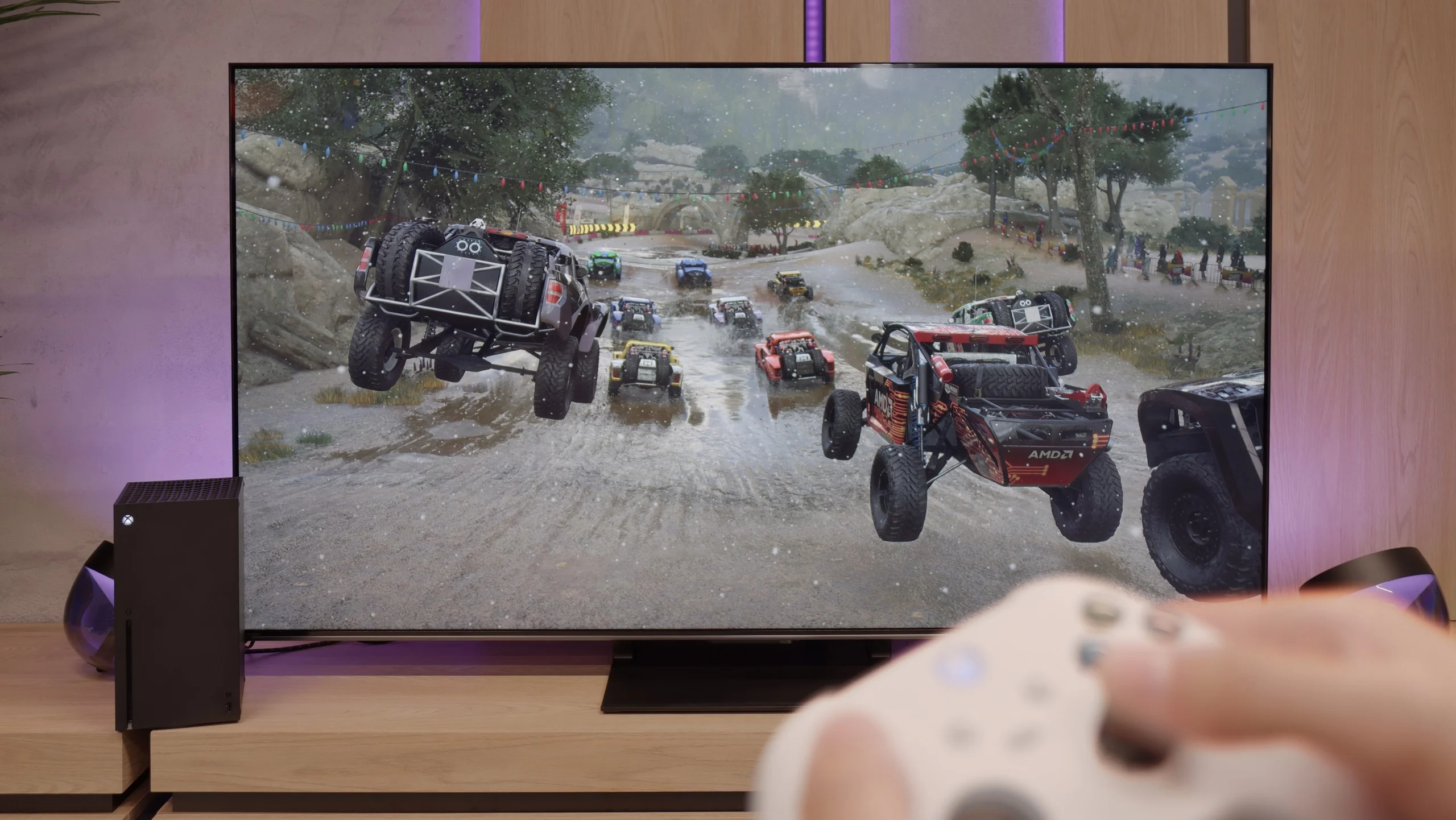
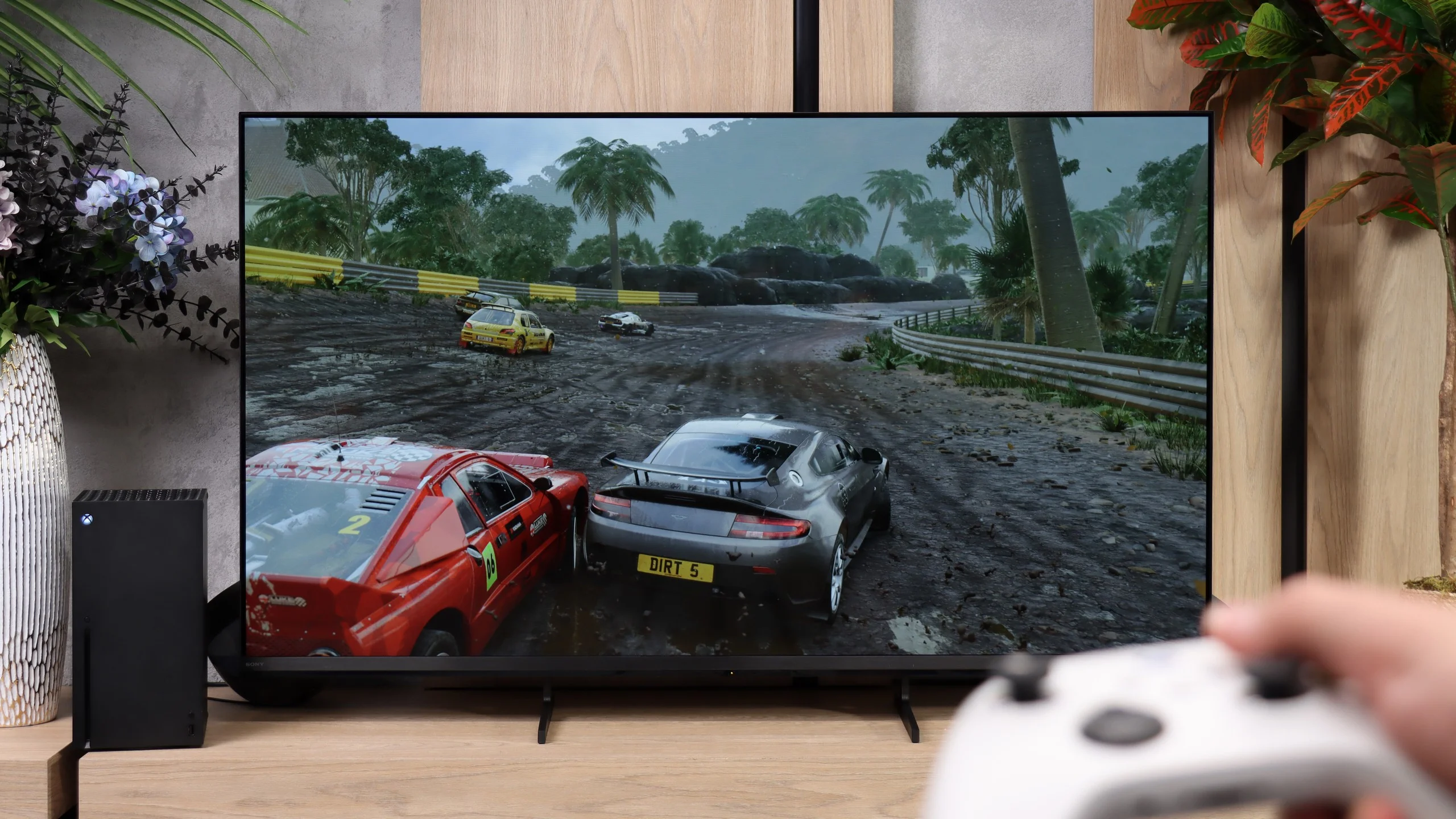
Hisense U7Q PRO is a TV that seems to have been designed with gamers in mind. We have practically everything that can be expected from a gaming screen: variable refresh rate (VRR), automatic mode (ALLM), and as many as four HDMI 2.1b ports with full bandwidth of 48 Gb/s. Additionally, there’s a clear and quite functional Game Bar, as well as a well-implemented Dolby Vision GAMING mode that works seamlessly with Xbox Series S and X consoles.
Sounds like the ideal? Well, almost. Unfortunately, Hisense has still not implemented the HGiG feature, which is the system's tone mapping limitation on the TV's end. This means that when configuring HDR brightness on the console, we do it “by eye” or look for settings in online guides, as the screen does not display its actual brightness range. It’s a shame – because HGiG makes it easier to match the console to the TV and helps avoid overexposed or too dark scenes in HDR games.
Fortunately, the other elements work very well. Input lag is low, responsiveness is excellent, and the handling of other features is faultless. And although not everything worked perfectly, the U7Q PRO can still be confidently recommended to gamers.
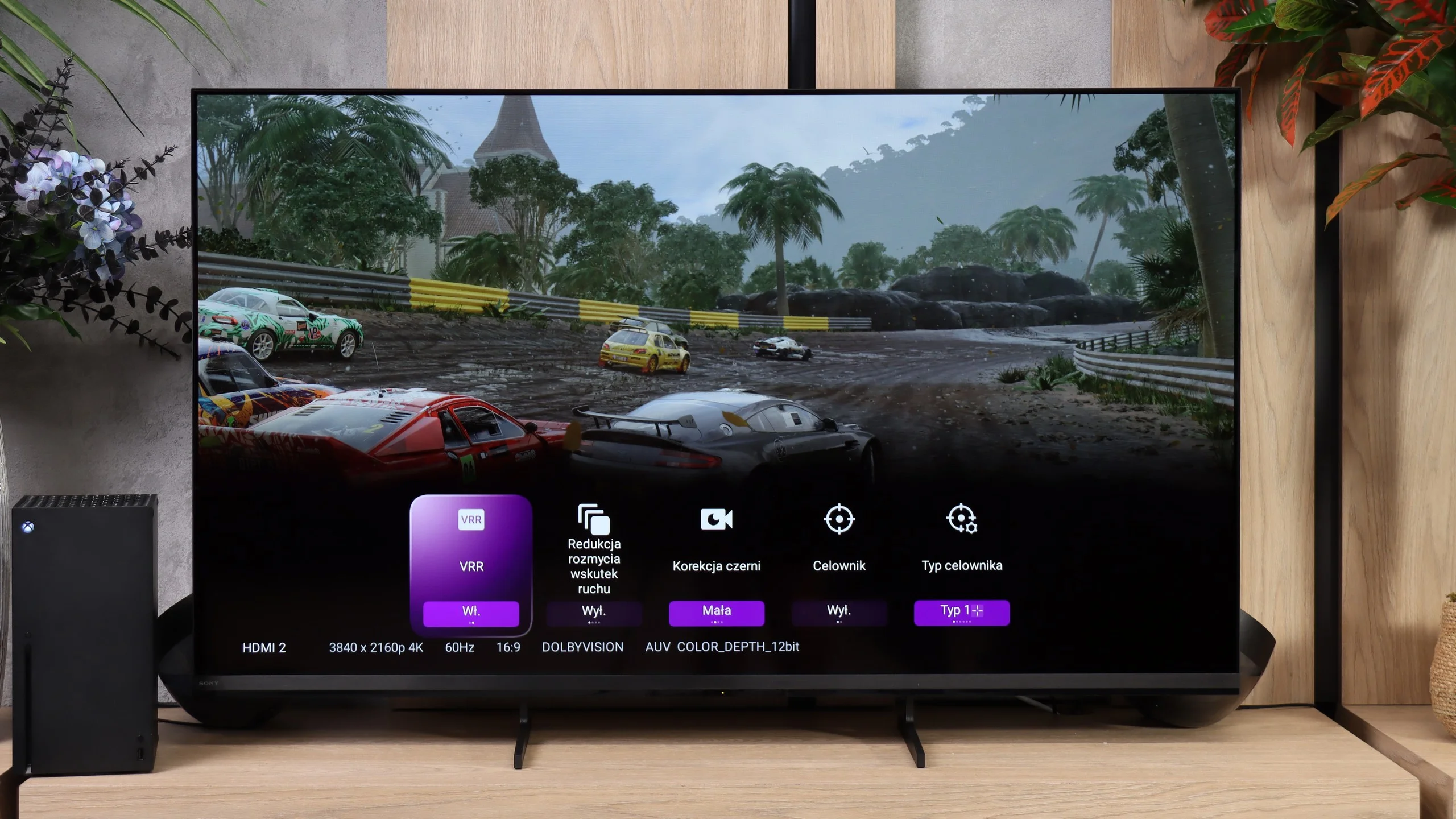
The Sony Bravia 3 II is a very good TV for gamers, although not everything has been solved the way we’d like. The biggest change concerns the connectors. For the first time in a Sony TV we get four full HDMI 2.1 ports with 48 Gb/s bandwidth, thanks to the new MediaTek Pentonic 800 chipset. That removes one of the problems that has hung over this manufacturer’s TVs for years. You can connect several devices at once and on each input use the device’s full capabilities, including VRR and ALLM. There’s also a simple Game Bar that lets you check the key signal parameters and change a few useful settings, such as black level, when you want to improve visibility in darker parts of a game.
There are, however, two limitations worth knowing. The first is the lack of support for 1440p at 120 Hz. That won’t be an issue for everyone, but people using that resolution on a console or PC—for example to get higher frame rates in certain games—will have to choose 1080p. We have more reservations about HGiG support. Sony doesn’t let you disable tone mapping on the Bravia 3 II, so the TV keeps processing HDR even when you’d prefer to leave that task to the console. It’s easiest to spot during HDR setup—the checkerboard test pattern doesn’t disappear at the point where it should based on the TV’s actual capabilities. That doesn’t mean HDR in games will look bad. You just need to set up a little differently and, rather than relying on the pattern, manually set the peak brightness to about 450 nits. So the issue can be worked around, but you should know about it before you start configuring your console.
Input lag
9.8/10
9.9/10
SDR
HDR
Dolby Vision
In terms of signal delay, the Hisense U7Q PRO performs exceptionally well. For 120 Hz content, the input lag stays below 10 ms, which translates to a lightning-fast response – the screen almost instantly reacts to our movements, something console and PC gamers will particularly appreciate. With 60 Hz content, the situation looks a bit worse, as the response time doubles – this is natural and applies to virtually all televisions. Nevertheless, it still remains below 20 ms, which can be confidently regarded as a very good result, almost close to perfection – and in practice, it’s hard to feel this during gaming.
In terms of input lag, the Bravia 3 II performs very well. With a 120 Hz signal latency is about 8 ms, while at 60 Hz it rises to around 14 ms, so in both cases the response to controls is very quick and during normal gameplay you’d be unlikely to notice any delay. It’s also worth noting the TV’s behaviour in Dolby Vision Gaming mode on Xbox. Input lag then remains practically just as low, and until recently Sony used to have a noticeable problem with this.
Compatibility with PC
8.2/10
7.2/10
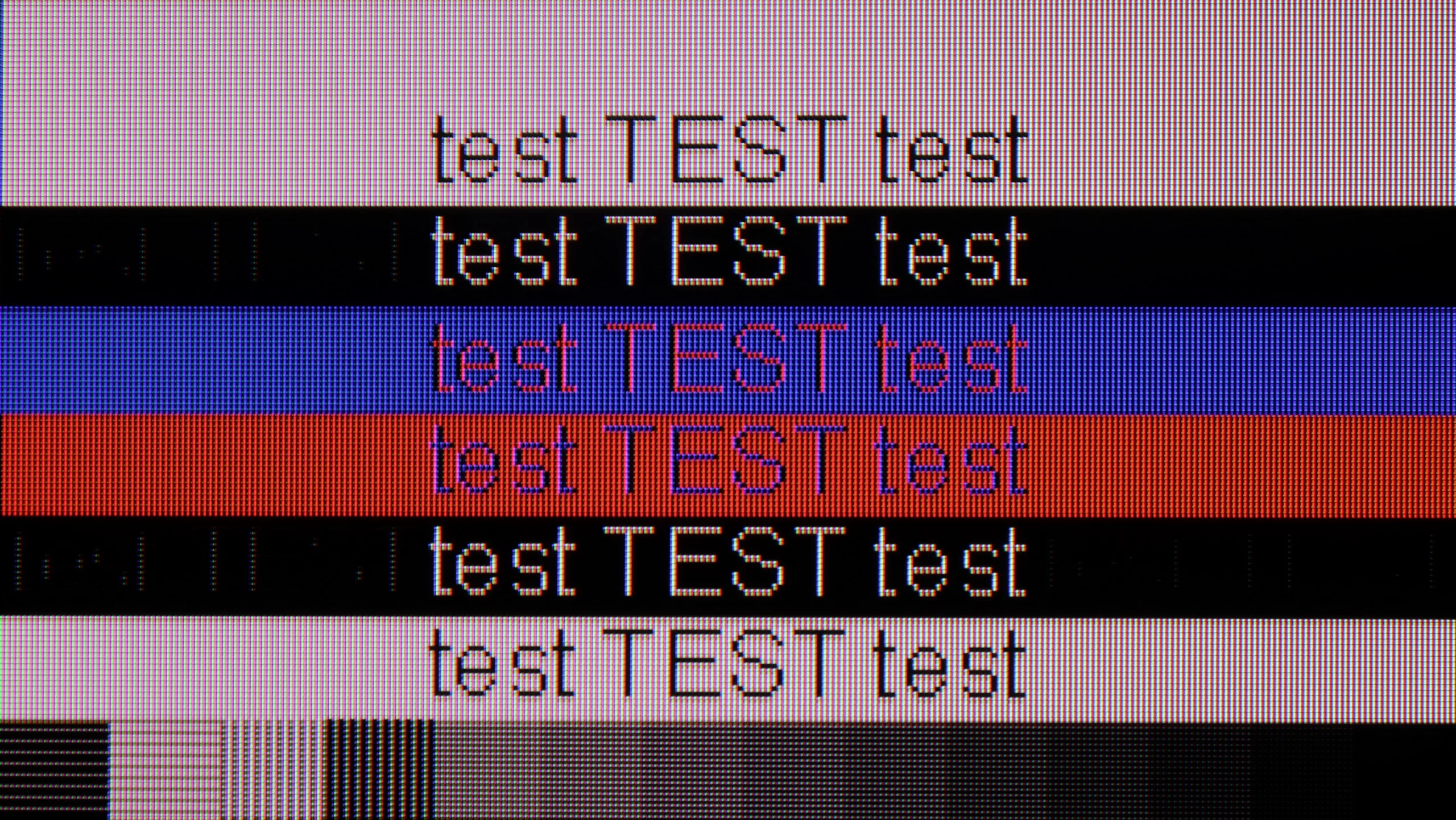
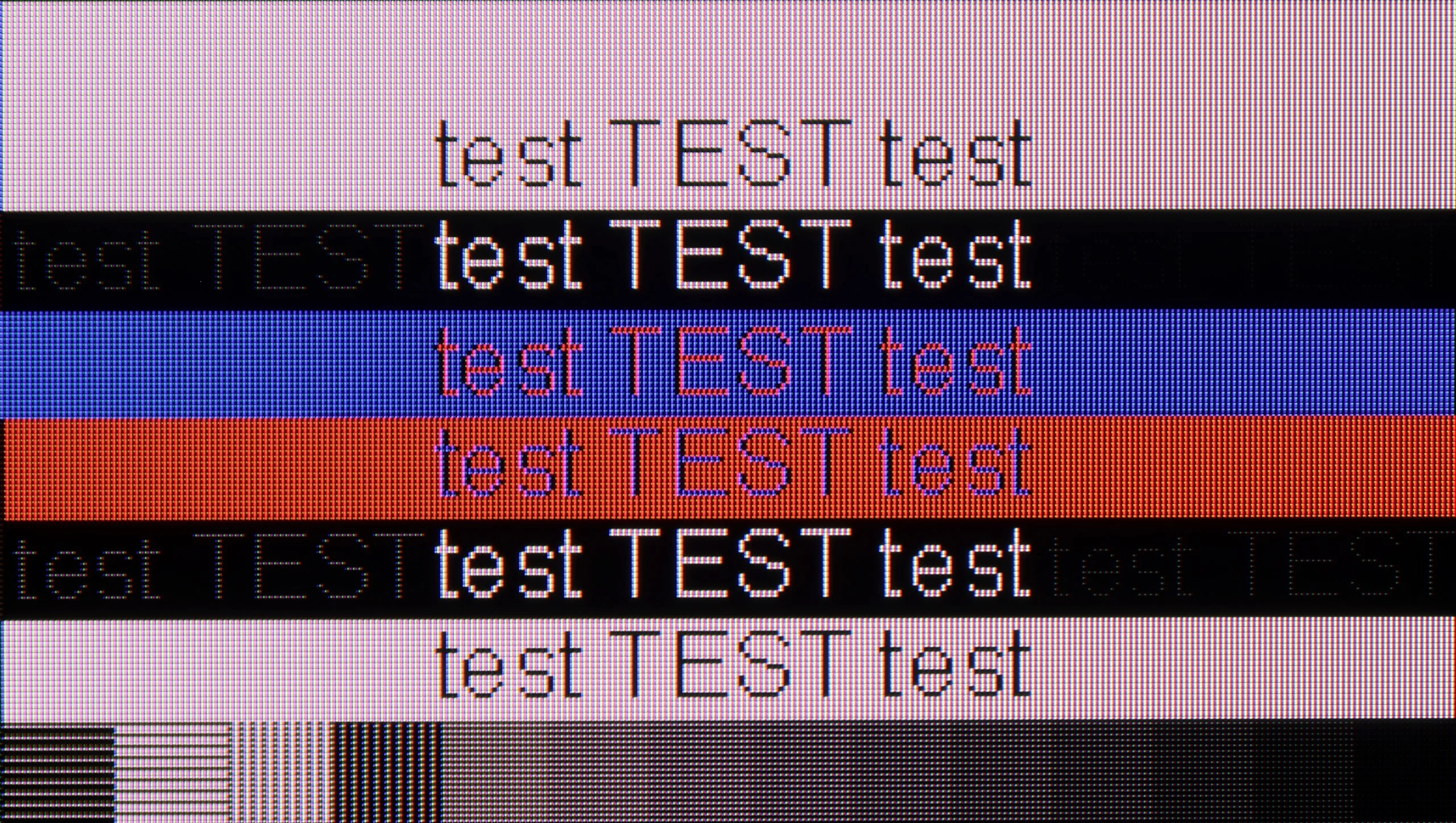
The photo shows the legibility of small fonts. Ideally, lines should be the same thickness on both light and dark text, with minimal pixel gaps.
Playing on a PC with the Hisense U7Q PRO is pure fun. Low input lag, a full 165 Hz in 4K and even 288 Hz in Full HD – these are numbers we wouldn't expect from a TV at this price. In this regard, it's really hard to nitpick. If someone is looking for a large screen for gaming from a PC – the U7Q PRO can confidently serve as a monitor. It performs a bit worse for everyday text work. Although chroma 4:4:4 is present, so theoretically, everything should look good. But in practice, grey text on a dark background looks strange – vertical lines are sharp, but horizontal ones can blur, disappear, or look slightly dimmed. However, it's fair to add that if you use the TV as usual – that is, from a few metres away – you're unlikely to notice this. The issue only becomes apparent when someone places the U7Q PRO on a desk, a metre from their face, and starts working with text or spreadsheets. If you plan to use it in this way – it’s worth keeping this in mind.
Working with a computer is generally good, although, again, not without a few caveats. The Bravia 3 II correctly handles chroma 4:4:4, so in typical use text and the system interface look sharp and legible. However, grey fonts can draw attention, since their vertical edges may be noticeably brighter than the horizontal ones. On the larger screen this isn't particularly bothersome, but if someone is considering the smaller Bravia 3 II as a monitor for text work, it's worth keeping in mind.
What bothers us more, though, is the lack of additional modes with increased refresh rates. It's not even about 144 or 165 Hz at 4K, but rather the option to get higher smoothness at Full HD. This solution is increasingly appearing in rival TVs (DLG 240Hz), while Sony still does not offer it, even in its pricier models. For most users, 4K at 120 Hz will of course be perfectly sufficient, especially for consoles. But those who also use the TV as a PC gaming monitor may feel somewhat disappointed.
Viewing angles
3/10
3.3/10
In this regard, the U7Q PRO performs averagely. The television is equipped with a VA panel, which is not known for its wide viewing angles. When you start looking at the screen at an angle, the image clearly loses brightness and the colours start to fade. This is a completely normal phenomenon in VA panels without additional coatings to widen the angles – so if you plan to watch from the side or with a larger group, it's worth keeping this in mind. On the other hand, head-on – the image looks great, with deep blacks and very good contrast, much better than on IPS/ADS panels.
Viewing angles are fairly typical for a VA panel, meaning simply average and, for some, probably poor. The Bravia 3 II looks best when you're sitting directly in front of the screen. As you move to the side, colours start to lose saturation and blacks become greyer. That's unfortunately the price we pay for this panel's high native contrast. Watching with two or three people shouldn't be much of an issue, but with a wide sofa those sitting at the ends will notice a clearly worse image.
Daytime performance
6.2/10
5.8/10
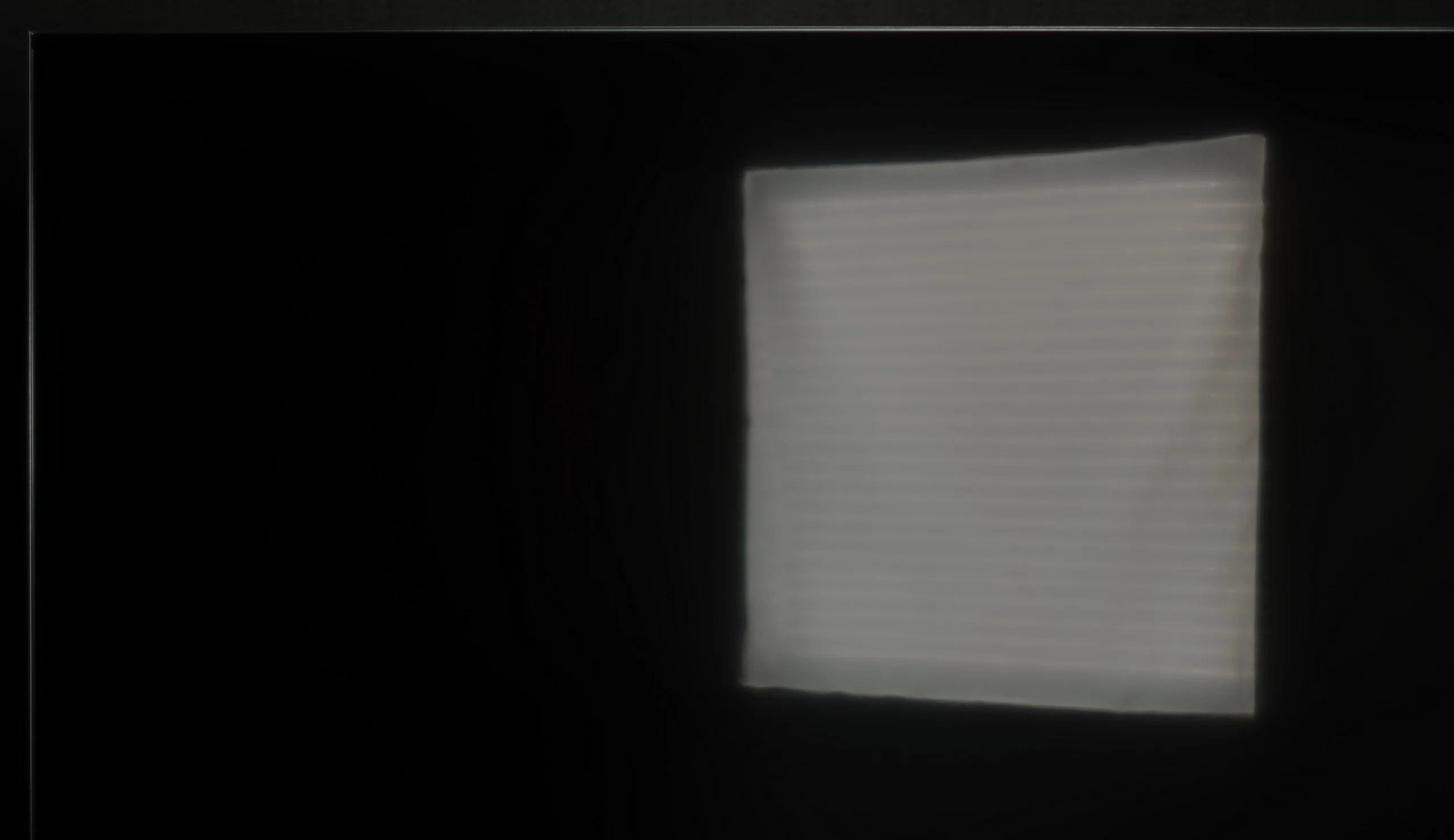
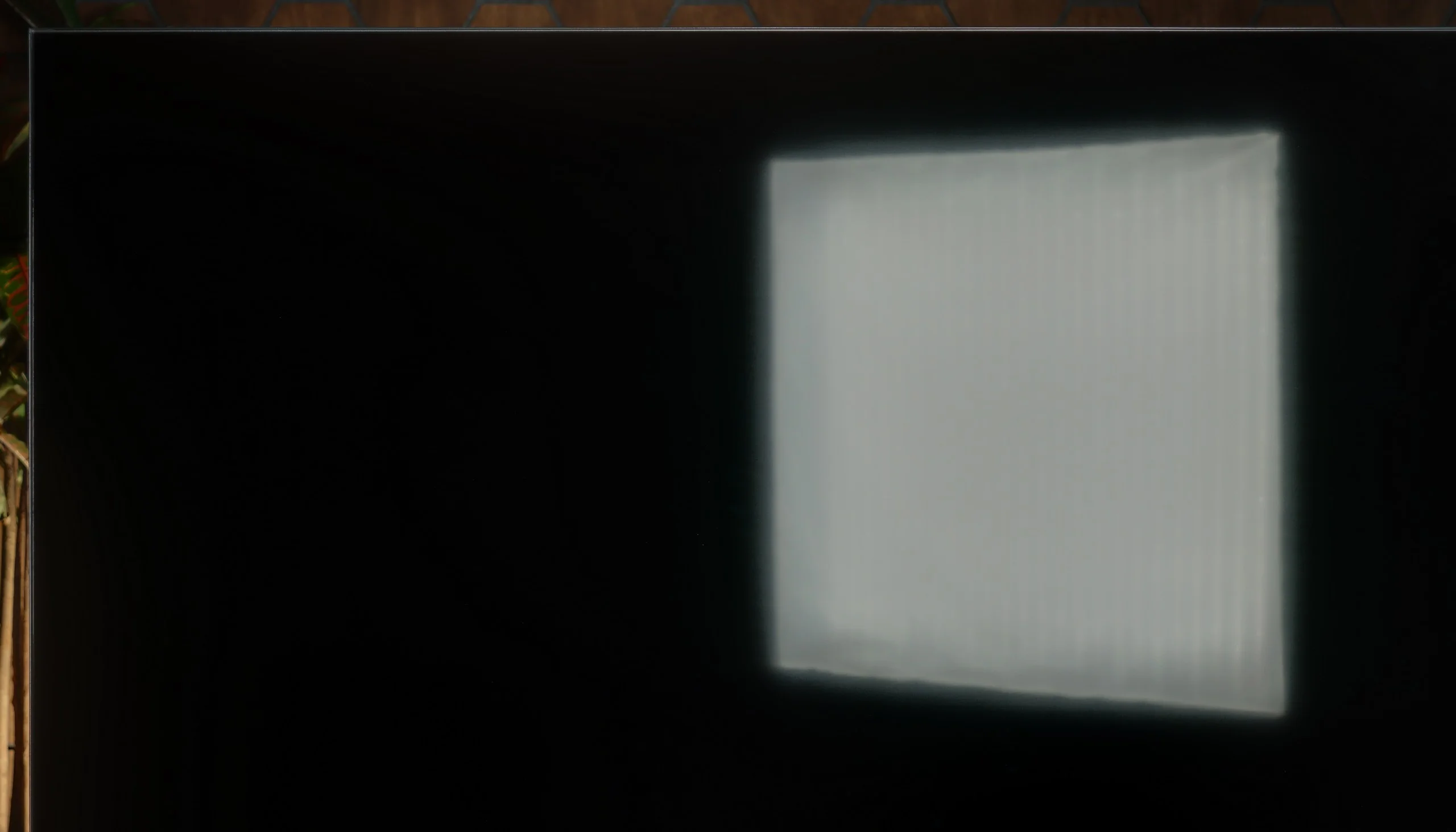
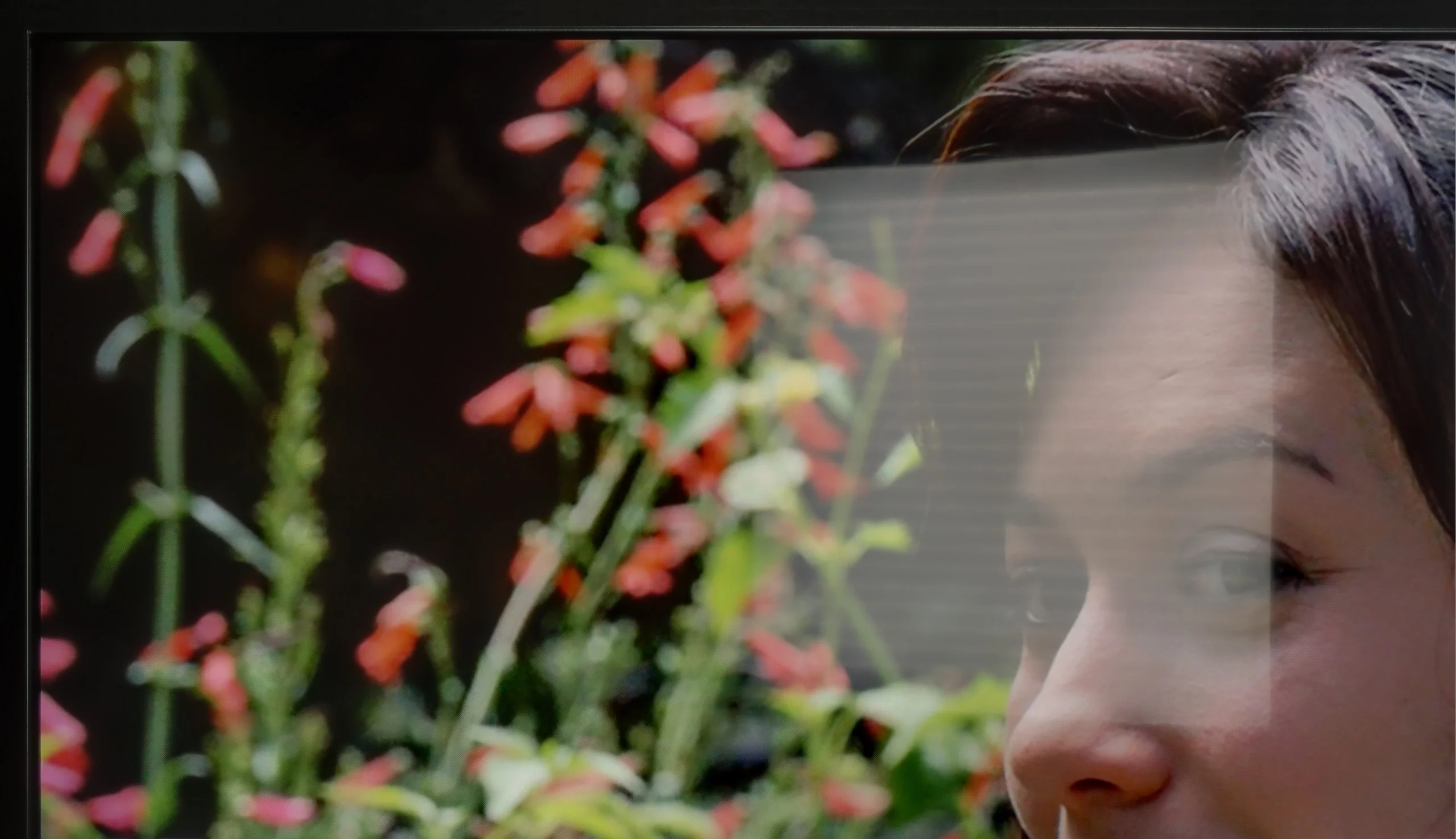
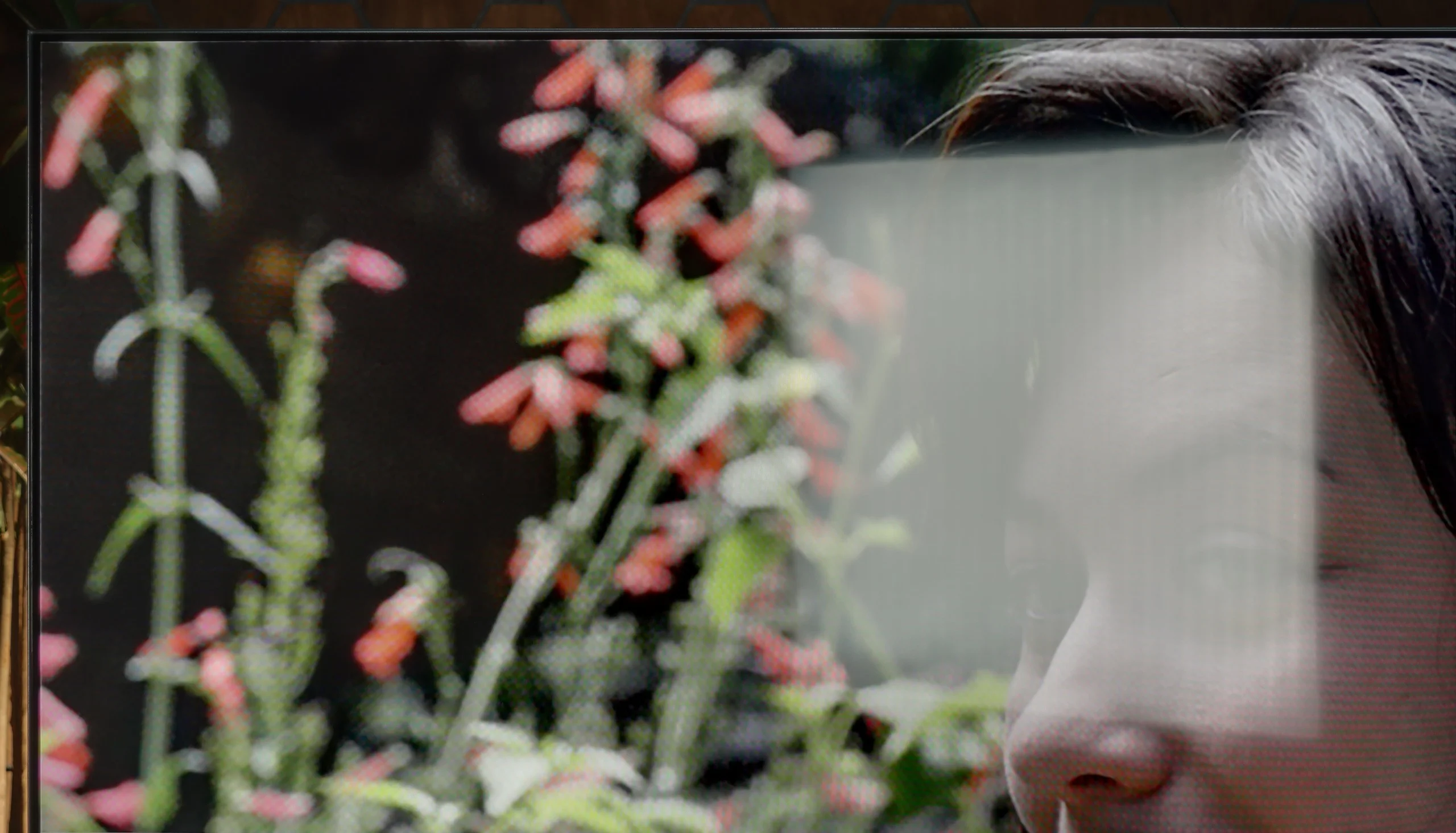
Panel brightness
SONY BRAVIA 3 II (XR35M2): 447 cd/m2
Hisense U7Q PRO: 472 cd/m2
As we mentioned earlier – the U7Q PRO is a really bright TV, especially when it comes to HDR content. For SDR materials, the TV dims a bit, but an average brightness level of around 500 nits is still a very solid result. This means you can easily watch TV or movies even in quite a bright room. Only under very extreme lighting – like direct strong sunlight on the screen – can visibility suffer a bit. Fortunately, Hisense has applied a satin anti-reflective coating that effectively reduces reflections, and the blacks maintain their depth even during the day. This makes a difference and allows for comfortable use of the TV in various lighting conditions.
During the day the Bravia 3 II performs quite well, although a lot depends on where you place the TV. The satin finish handles reflections reasonably — it doesn't act like a mirror, but strong light sources, particularly a window opposite the screen, can interfere with viewing. On the plus side, the VA panel keeps blacks fairly deep in daylight, so the image doesn't immediately look grey or washed out. The brightness of around 450 nits also helps, and the Bravia 3 II can sustain that regardless of how many bright elements are on-screen. That's more than enough for a typical living room and the picture remains readable during the day. However, if the TV will be placed in a very bright room with large windows and a lot of direct light, you can find models with noticeably more effective coatings and greater brightness headroom.
Panel details
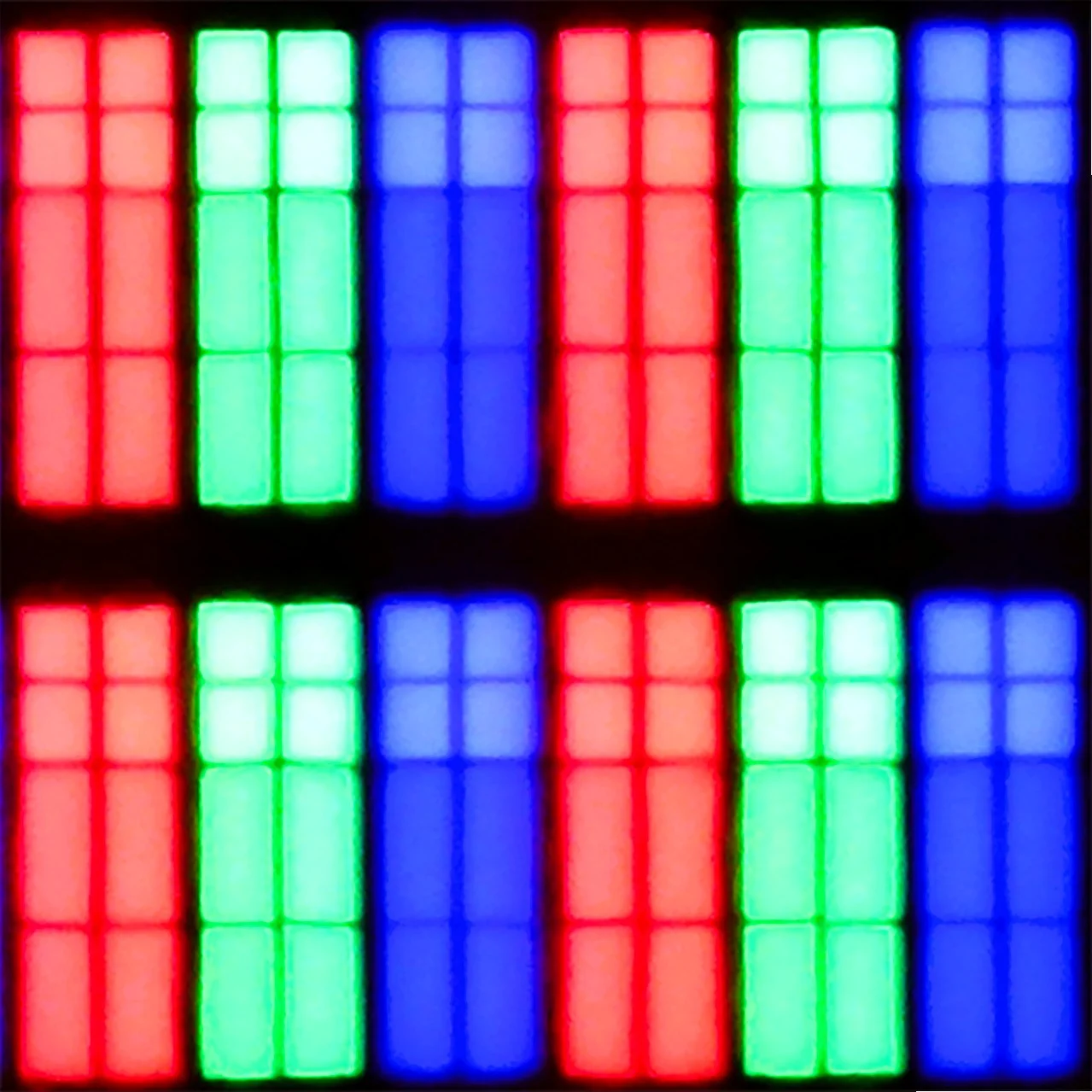
Subpixel Structure:
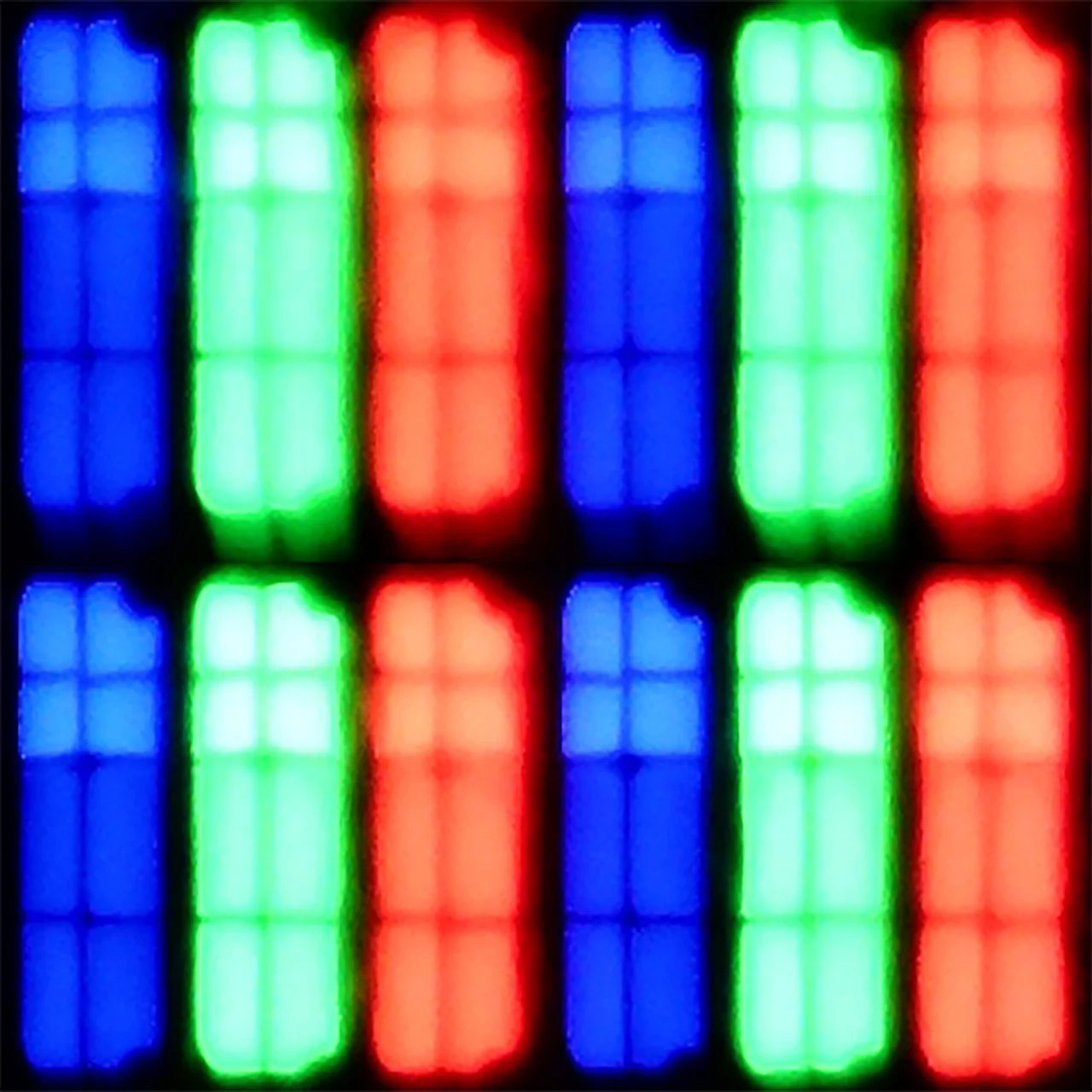
Panel uniformity and thermal imaging:

Hisense U7Q PRO
SONY BRAVIA 3 II (XR35M2)
TV features
9.4/10
7.9/10
- SystemVIDAAGoogle TV
- System performanceGoodGood
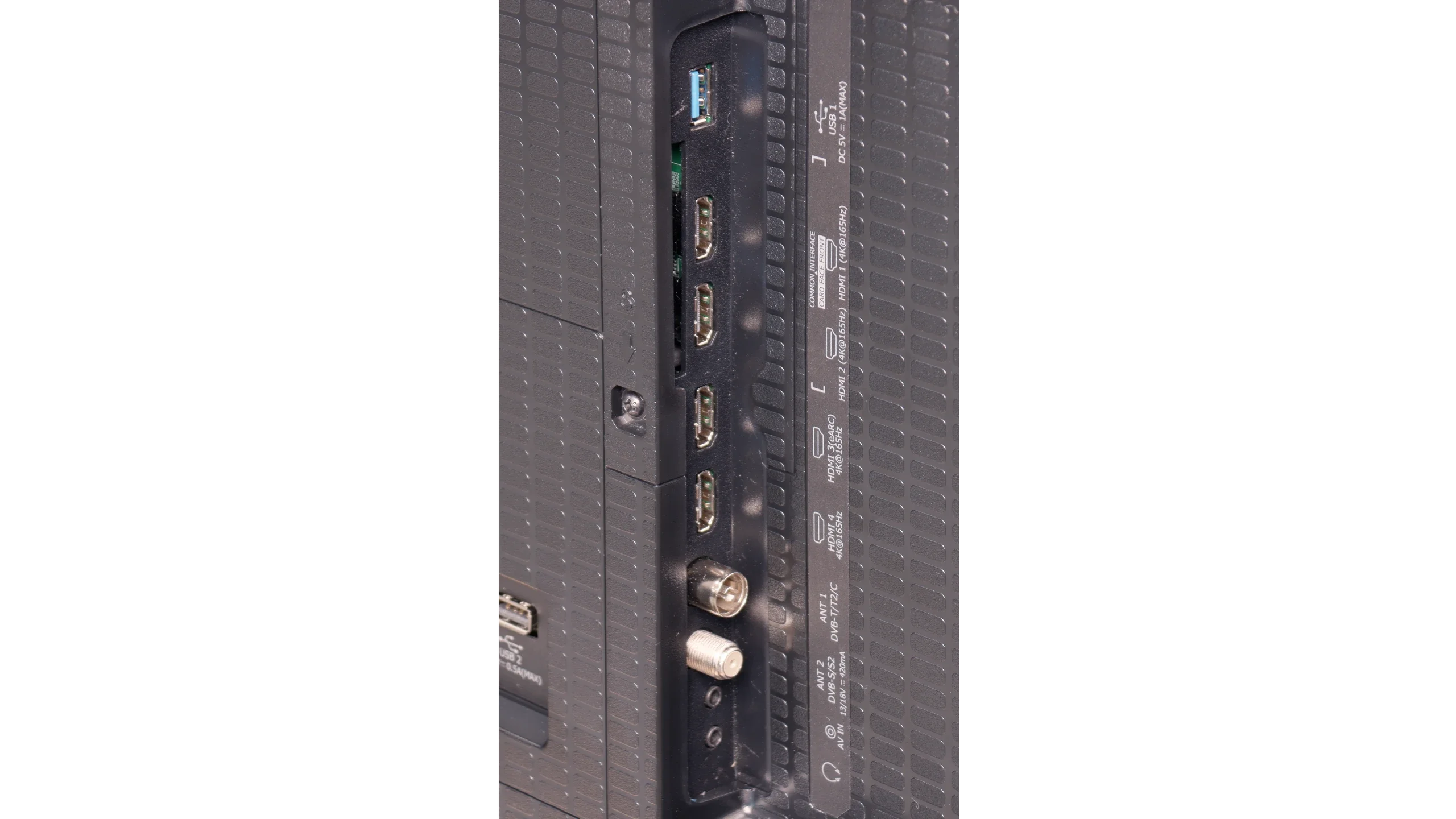
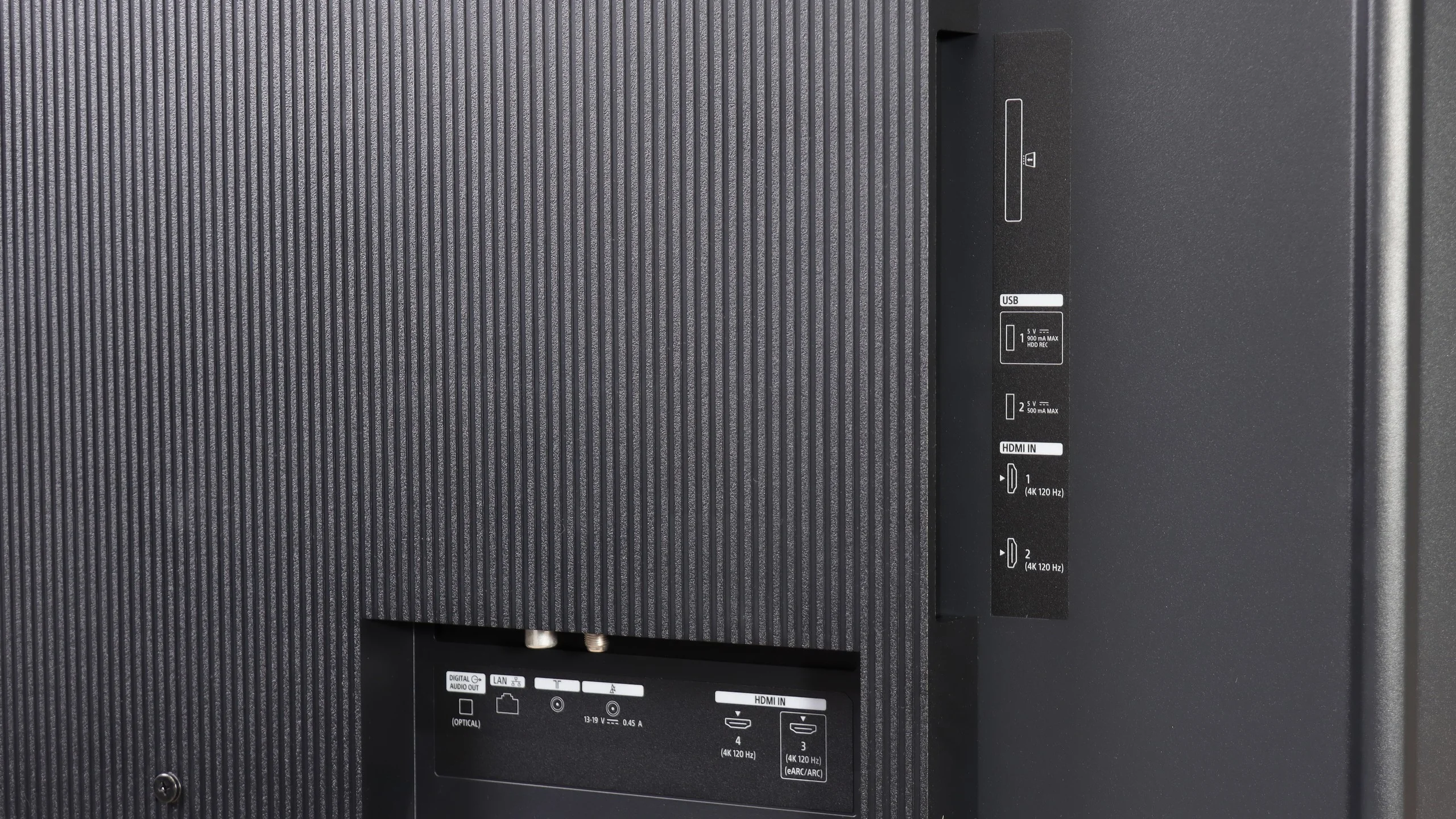
- HDMI inputs0 x HDMI 2.0, 4 x HDMI 2.1 48Gbps0 x HDMI 2.0, 4 x HDMI 2.1 48Gbps
- Other inputsRCA (Chinch)
- OutputsToslink (Optical audio), eARC (HDMI), ARC (HDMI), Mini-Jack (Headphones)Toslink (Optical audio), eARC (HDMI), ARC (HDMI)
- Network InterfacesWi-Fi 2.4GHz, Wi-Fi 5GHz, Ethernet (LAN) 100MbpsWi-Fi 2.4GHz, Wi-Fi 5GHz, Ethernet (LAN) 100Mbps
- TV receptionDVB-T, DVB-T2, DVB-S, DVB-S2, DVB-CDVB-T, DVB-T2, DVB-S, DVB-S2, DVB-C
Classic features:
- Recording to USB (terrestrial TV)
- Recording programming
- Picture in Picture (PiP)
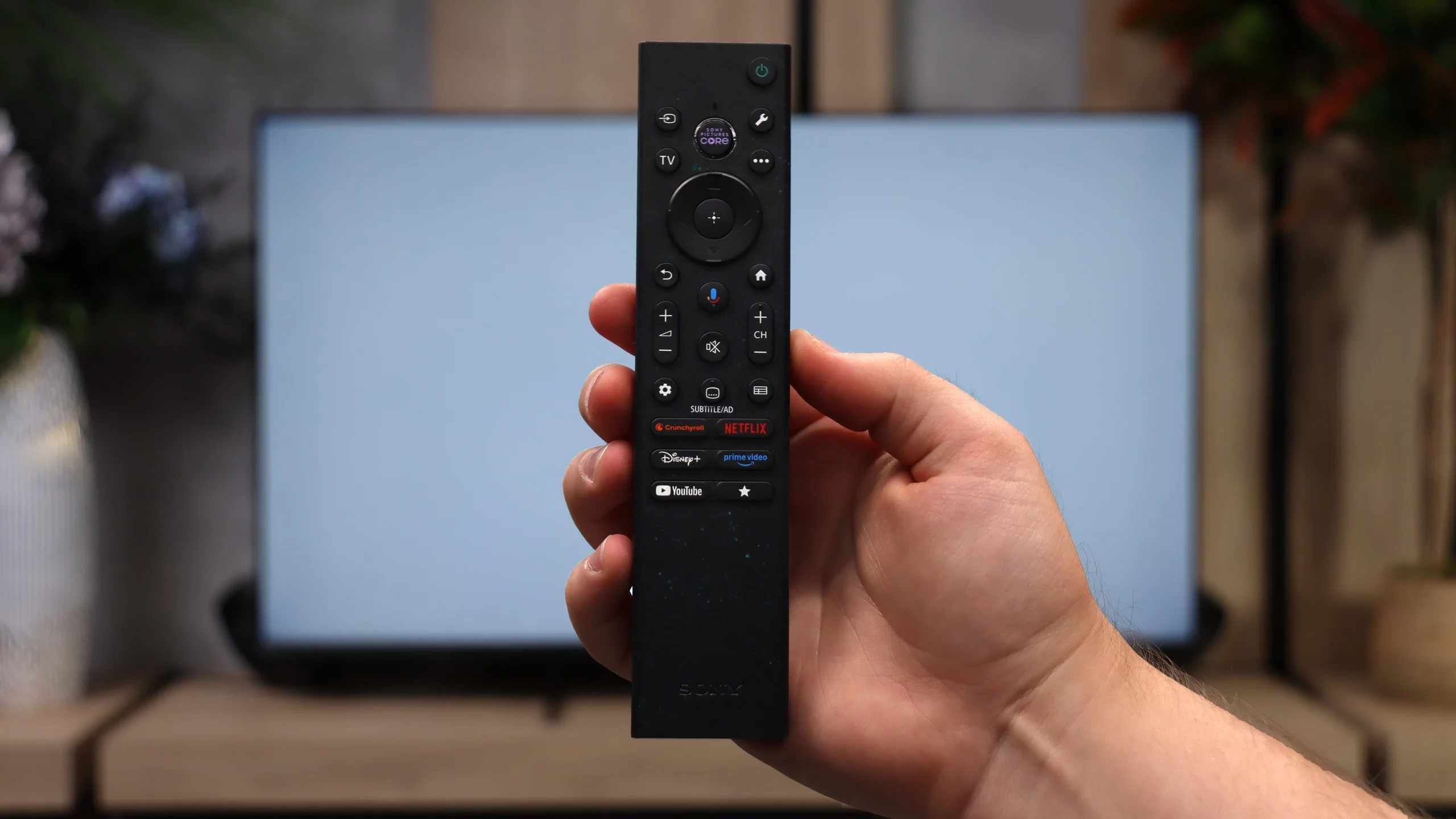
- RF remote control (no need to aim)
- Backlit remote control
- Teletext
- Audio only mode
- Bluetooth headphones support
- Simultaneous Bluetooth headphones & TV audio
Smart features:
- AirPlay
- Screen mirroring (Windows Miracast)
- Voice search
- Voice search in native language
- Ability to connect a keyboard and mouse
Sound connection options
- HDMI audioeARC (HDMI), ARC (HDMI)eARC (HDMI), ARC (HDMI)
- Other audio outputsToslink (Optical audio), Mini-Jack (Headphones)Toslink (Optical audio)
- Wireless audioBluetoothBluetooth
Supported audio formats (external HDMI eARC audio):
- Dolby Digital Plus 7.1
- Dolby True HD 7.1
- Dolby Atmos in Dolby Digital Plus (JOC)
- Dolby Atmos in Dolby True HD
- DTS:X in DTS-HD MA
- DTS-HD Master Audio
Senior accessibility
- Numeric keyboard on TV
- Font size adjustment
- Audio description
Classic features of U7Q PRO
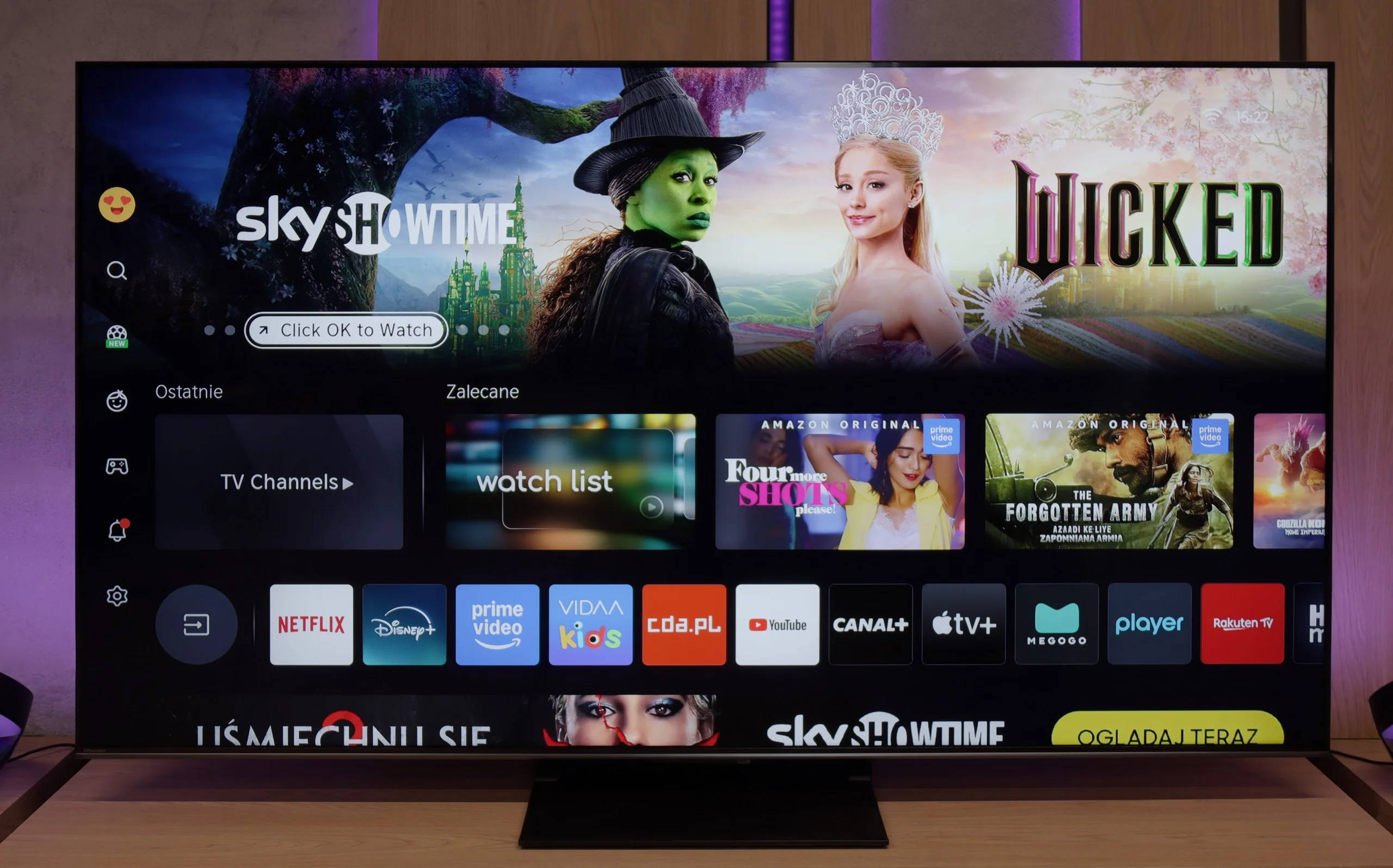
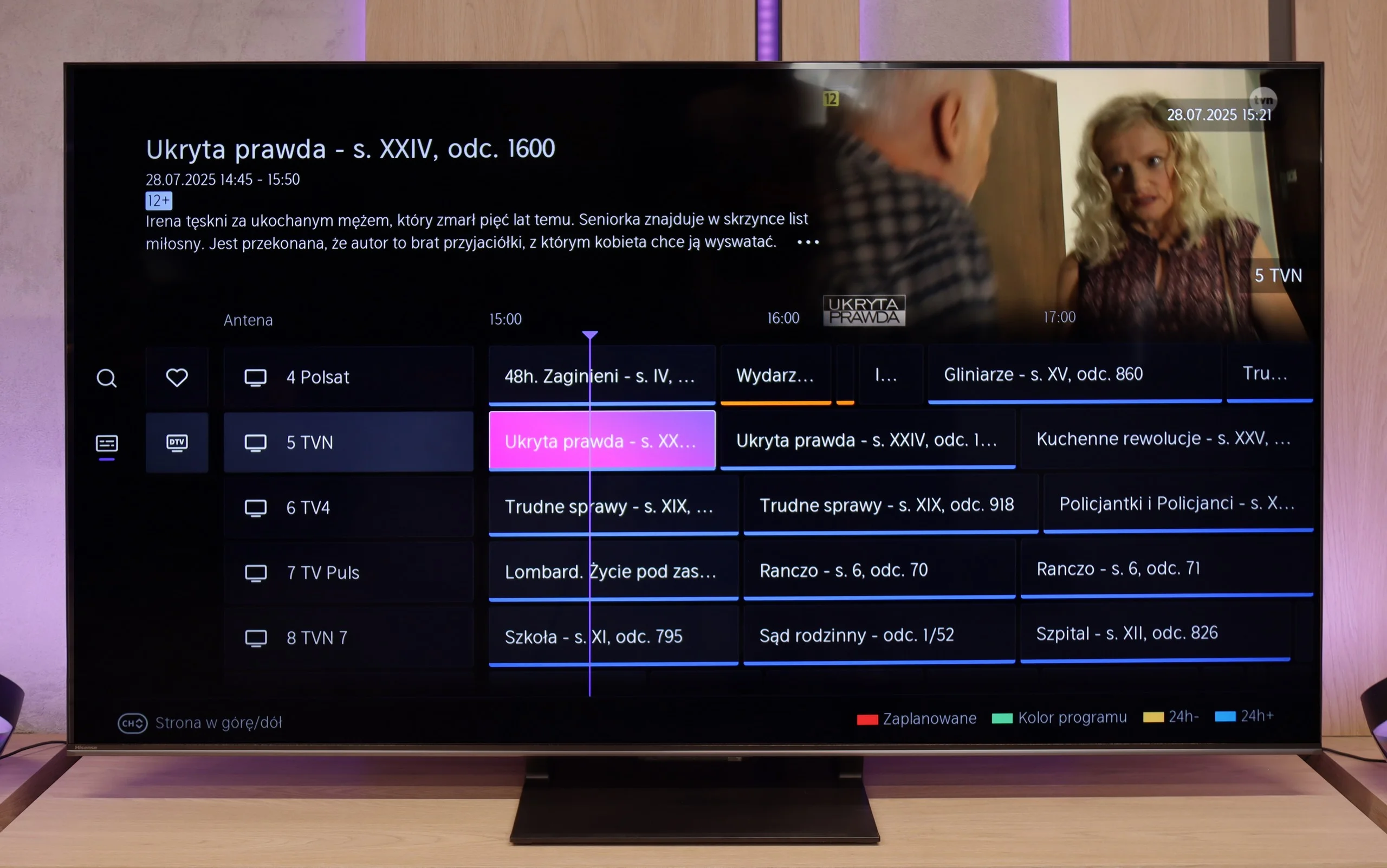
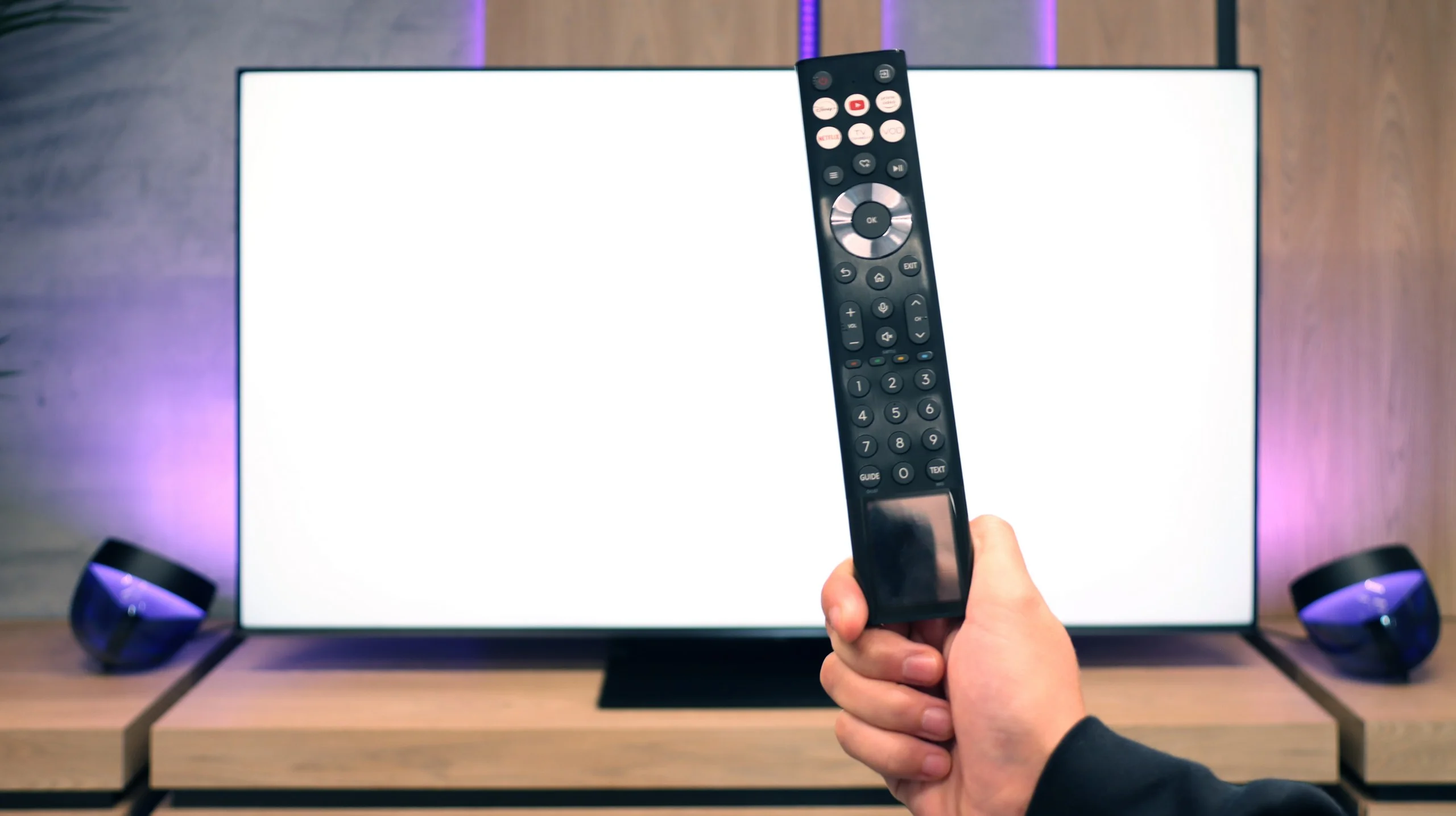
If you plan to use the television in a more "classic" way, that is, for watching daily programs or connecting headphones, the Hisense U7Q PRO has almost everything you could expect. The television easily supports recording to USB, you can connect headphones via Bluetooth, and the remote control is backlit, which is still not standard even in more expensive models. While many people today are foregoing these classic features in favour of streaming apps, it's good to know that the U7Q PRO still does this well and without compromises (aside from the lack of PiP functionality).
SmartTV System: Vidaa
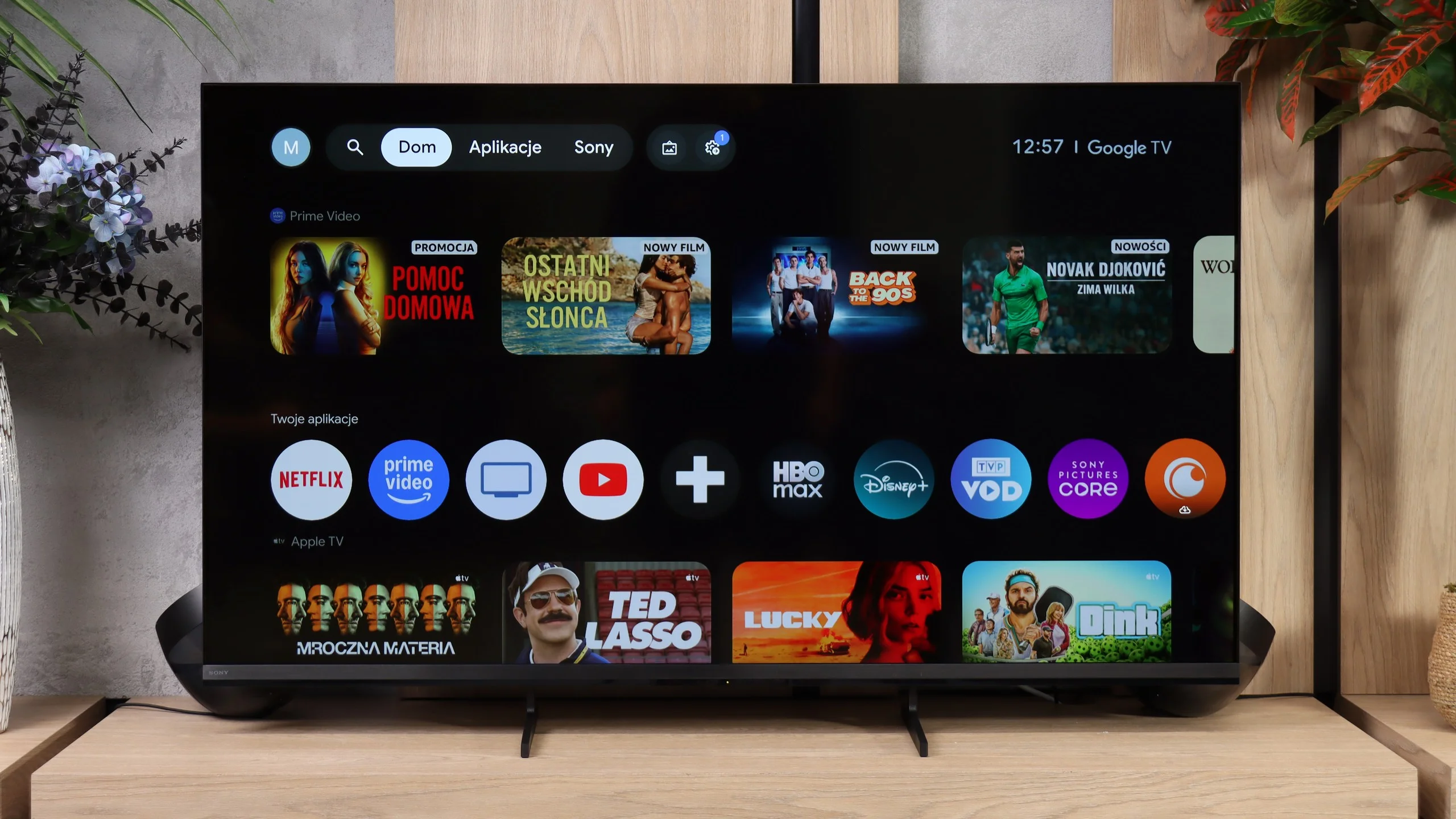
When it comes to smart features, in Europe this model runs on the VIDAA system. The system operates smoothly, has a built-in web browser, supports voice control (also in Polish), and includes AirPlay, which will please users of Apple devices. However, it should be noted that VIDAA is a closed system, so you won't find all the popular apps that we've become accustomed to with Android TV or Google TV. Before purchasing, it's worth checking whether the apps you actually use are available.
Smart TV features: Google TV
Bravia 3 II runs Google TV and, in terms of capabilities, it’s one of the more fully featured systems you’ll find in TVs today. First and foremost, you get access to a very large number of apps, so beyond the most popular streaming platforms you’ll also find plenty of less obvious services. Sony also supports AirPlay and Chromecast, making it very convenient to cast content from a smartphone. Voice search is good too, powered by Gemini, which handles commands in many languages and can genuinely make using the TV easier. During our tests we did encounter one issue: Bravia 3 II wouldn’t reliably receive a picture from a Windows 11 PC over Miracast. So if you want to use the TV as a secondary screen for a computer, the most reliable solution remains a connection via HDMI.
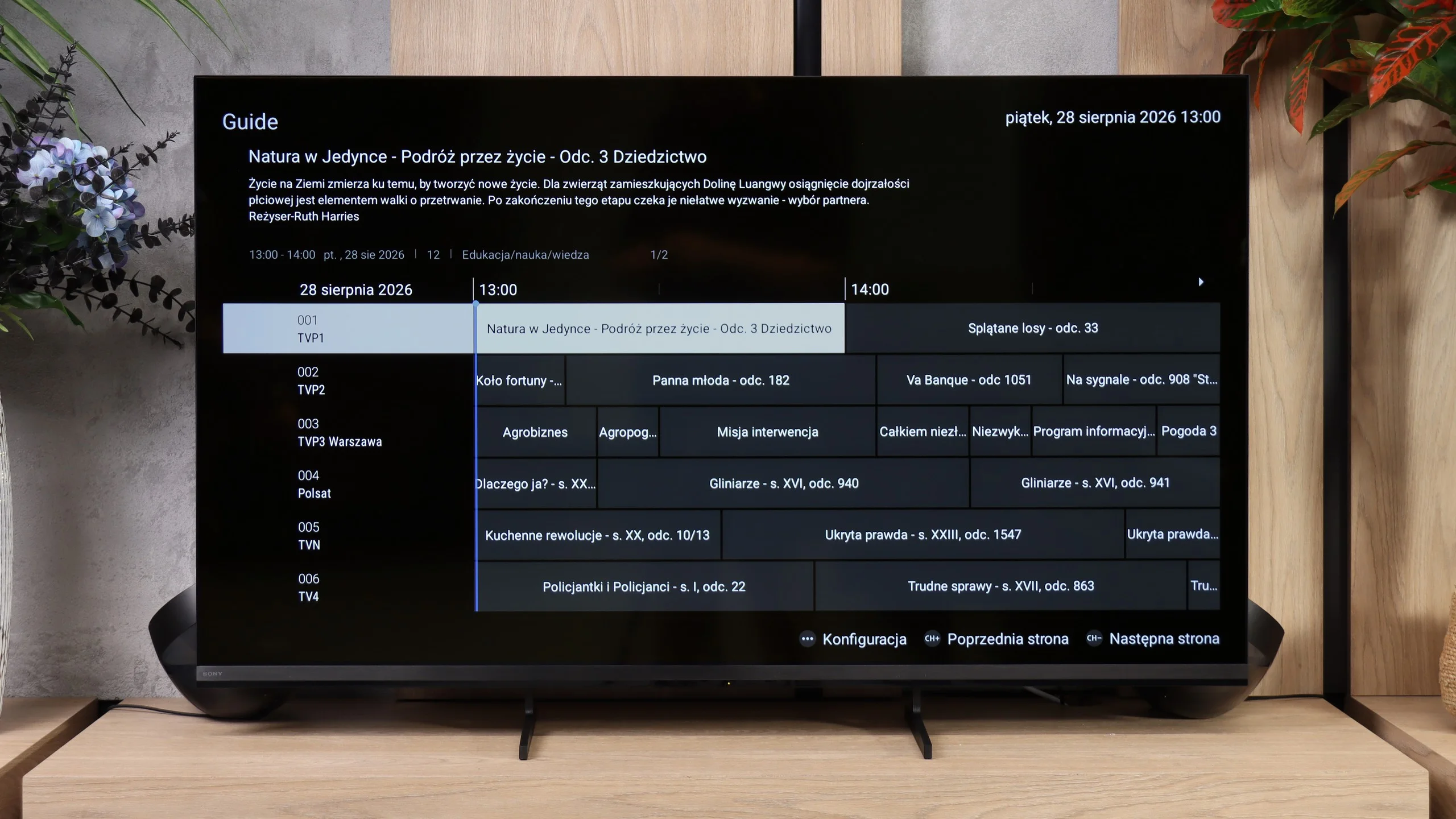
Traditional TV features
Sony hasn’t forgotten people who still mainly watch regular television. Bravia 3 II supports recording programmes to USB with the ability to schedule them in advance via PVR, which is rare nowadays, especially in cheaper models. There’s also teletext and a clear channel guide, so in terms of basic TV functions we weren’t really missing anything, maybe apart from picture-in-picture (PiP). A curiosity is the two remotes included in the set. The first is modern and pared-back (non-backlit), while the other is a classic design with a full numeric keypad. Although it may look a little old-fashioned, viewers who watch a lot of traditional TV might actually find it more convenient, for example when entering channel numbers.
Apps
7.7/10
9.6/10






















Playing files from USB
8.2/10
9.3/10
Supported photo formats:
Maximum photo resolution:
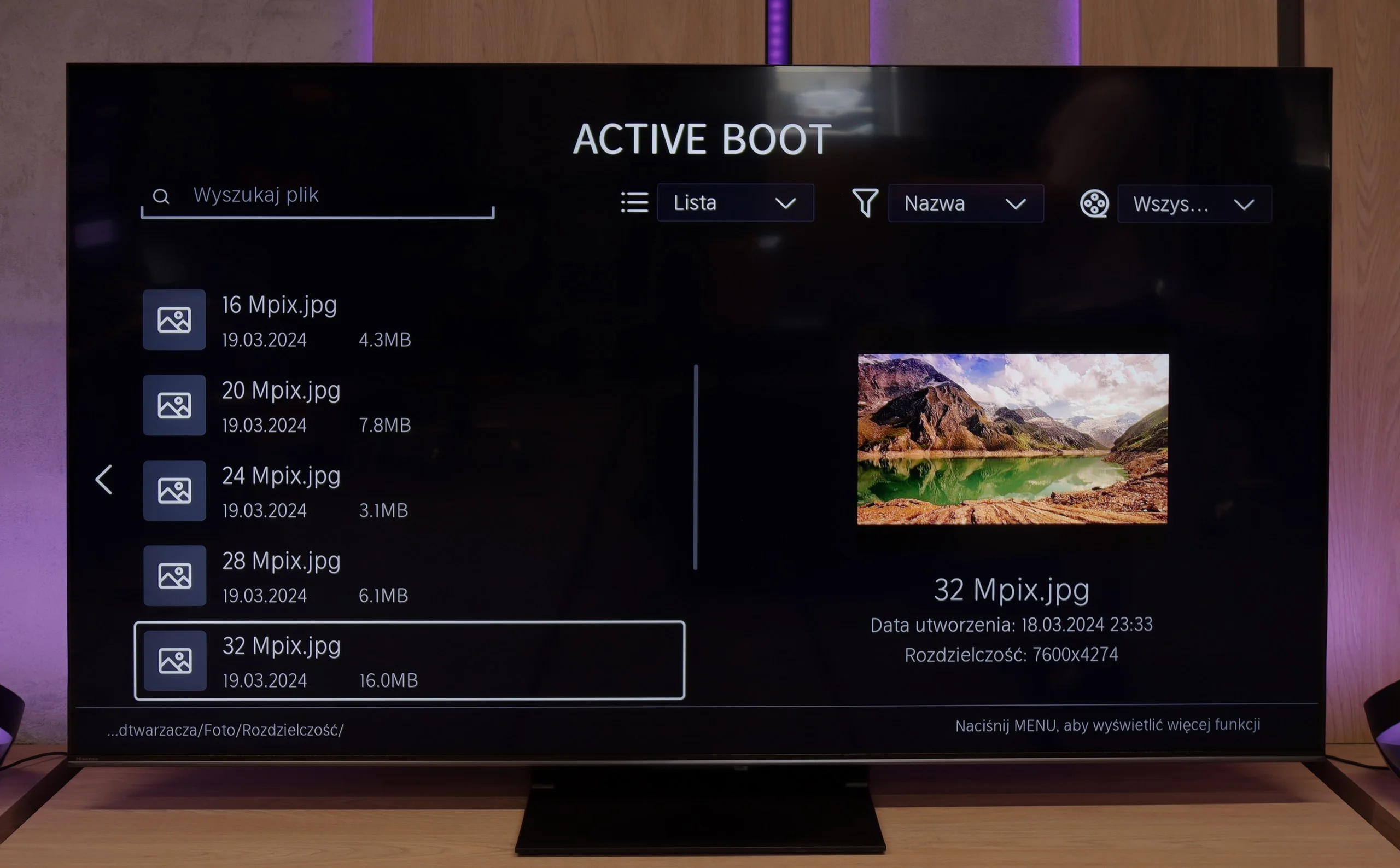
The built-in media player in the VIDAA system worked very efficiently and seamlessly on our U7Q PRO unit. The television had no trouble reading external video and audio files, as well as subtitles, making it convenient to watch movies from a USB drive or external hard drive. Most popular formats worked flawlessly, so there was no need to convert anything. The only complaint is a certain selectiveness in handling high-resolution images – not all of them opened. Therefore, you will find a detailed list of supported image resolutions (Mpix) in our comparison table.
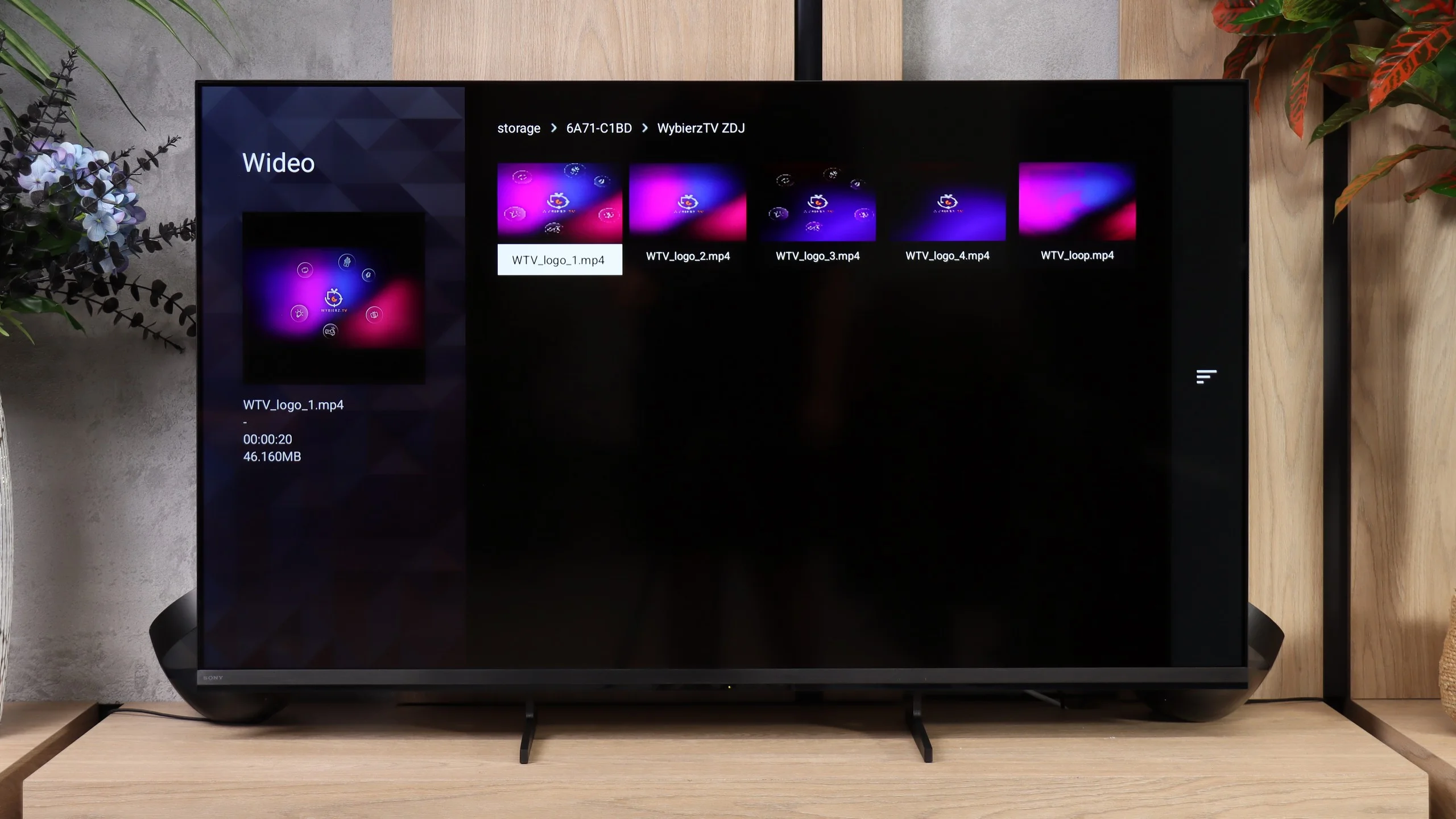
The Bravia 3 II's built-in player works really well and, during our tests, handled most popular video and audio formats with no trouble. Basically, there's little that would make us install an additional player or use an external device. The only exception might be videos with subtitles saved in .txt format, which the TV doesn't support, but let's be honest, at this point that would be nitpicking.
Sound
7.8/10
6.8/10
- Maximum volume85dB87dB
- Dolby Digital Plus 7.1
- Dolby True HD 7.1
- Dolby Atmos in Dolby Digital Plus (JOC)
- Dolby Atmos in Dolby True HD
- DTS:X in DTS-HD MA
- DTS-HD Master Audio
For built-in TV speakers, the U7Q PRO sounds surprisingly good. The audio is clear, with distinct mid and high tones, and while the bass is somewhat limited, it doesn’t completely disappear. One could say that for "TV speakers," the level is more than satisfactory. However, it’s worth noting that in our test unit, we couldn't play DTS:X audio from local files – the TV simply doesn’t support it. This means that if you’re counting on a cinematic surround effect solely from its built-in speakers, there might be a bit of a letdown. Thankfully, the TV seamlessly transmits DTS signals to an external amplifier, so if you have a home theatre – just connect it up and everything works as it should.
Pod względem dźwięku Bravia 3 II wypada poprawnie, ale trudno powiedzieć o niej coś znacznie więcej. Głośniki dobrze radzą sobie z dialogami i zwykłą telewizją, natomiast zdecydowanie brakuje im niższych częstotliwości. Bas zaczyna szybko tracić energię, przez co przy muzyce, filmach akcji czy grach dźwięk jest dość lekki i brakuje mu uderzenia. Nie jest to oczywiście nic niezwykłego w telewizorach tej klasy, ale jeśli zależy nam na bardziej efektownym brzmieniu, soundbar będzie tutaj bardzo wskazanym dodatkiem.
Znacznie lepiej wygląda kwestia obsługiwanych formatów audio. Bravia 3 II radzi sobie praktycznie ze wszystkim, czego możemy potrzebować, włącznie z Dolby TrueHD, DTS-HD Master Audio czy DTS:X, a więc formatami coraz częściej pomijanymi przez innych producentów. Telewizor może również przesłać je dalej do zewnętrznego zestawu audio. Wyjątkiem jest Dolby Atmos zapisany w Dolby TrueHD, którego wbudowane głośniki nie odtworzą bezpośrednio, ale przy korzystaniu z odpowiedniego soundbara lub amplitunera nie powinno stanowić to większego problemu.
Sound Quality Test
Acoustic Measurements
85dBC (Max)
75dBC
87dBC (Max)
75dBC
Reader comments
Comments are provided by the external service Disqus (Zeta Global). Once loaded, Disqus may set cookies and process data about your activity.
We will remember your choice on this device. Provider's privacy policy