 Direct comparison
Hisense E7Q / E79Q is a type of television that doesn’t promise miracles – and maybe that's why it can pleasantly surprise. It doesn’t try to pretend to be high-end equipment; it just gets the job done. If you’re looking for a cheap screen for everything that can handle Netflix, consoles, and morning YouTube while enjoying your coffee, this model makes a lot of sense. The VIDAA system has matured over the past few years, and it’s clear the manufacturer is learning. We have AirPlay, screen mirroring, and voice search in Polish – everything works, maybe not at lightning speed, but smoothly enough not to be annoying. You won’t find thousands of apps like in Google TV, but the most important ones are at hand. It’s a system that's meant to be simple and practical, not overloaded with unnecessary gimmicks – and in that sense, it really holds up. There’s something interesting for gamers too. The E7Q / E79Q offers low input lag, automatic low latency mode (ALLM), VRR support up to 60 Hz, and even a 120 Hz mode at 1080p resolution. It’s not a screen for hardcore e-sports enthusiasts, but if you just like to fire up your console in the evening and play a few rounds, this TV will do its job without complaining. And what about picture quality? We won’t deceive you – it’s not spectacular, but there’s also no reason to complain. A brightness of around 350 nits won’t impress, but the contrast thanks to the VA panel can really surprise positively. The blacks are quite deep, and the colours have a pleasant intensity, especially in SDR mode. It’s a bit of a shame that Dolby Vision doesn’t add much – because if it worked as it should, we’d have a TV that could confidently be recommended for HDR viewing as well. On the other hand, it’s hard to expect that in this price range. It’s simply a fair, well-priced screen that doesn’t make a fuss about itself but can deliver solid picture quality and surprisingly good features. And while it’s not perfect, after a few days of use, it’s hard not to think, “gee, this cheap Hisense really holds its own.”
- Matching (Score) |
- Our verdict |
- TV appearance |
- Where to buy |
- Contrast and black detail |
- HDR effect quality |
- Factory color reproduction |
- Color reproduction after calibration |
- Smoothness of tonal transitions |
- Image scaling and smoothness of tonal transitions |
- Blur and motion smoothness |
- Console compatibility and gaming features |
- Input lag |
- Compatibility with PC |
- Viewing angles |
- Daytime performance |
- Panel details |
- TV features |
- Apps |
- Playing files from USB |
- Sound
E7Q / E79Q

S95H / S99H
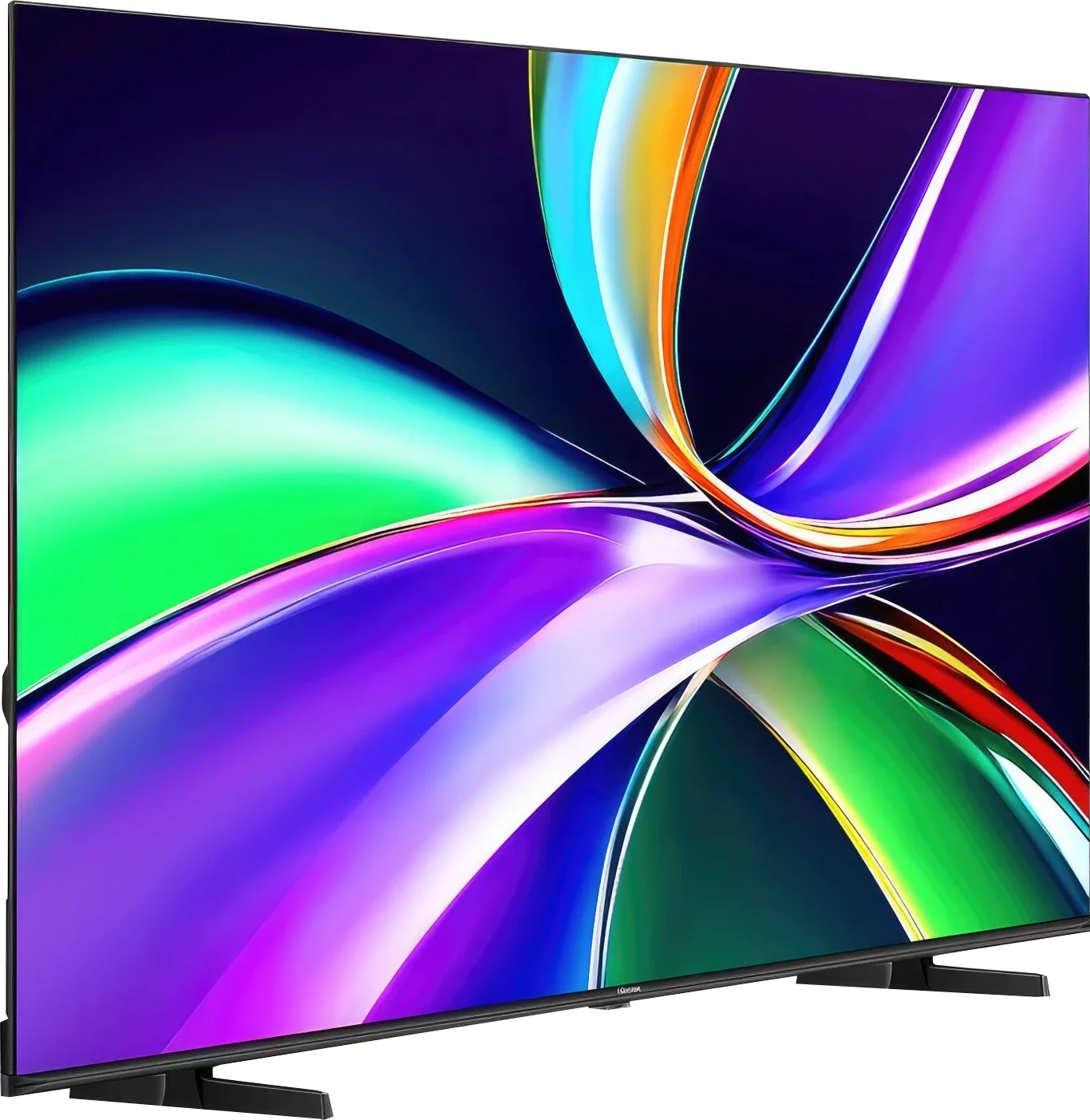
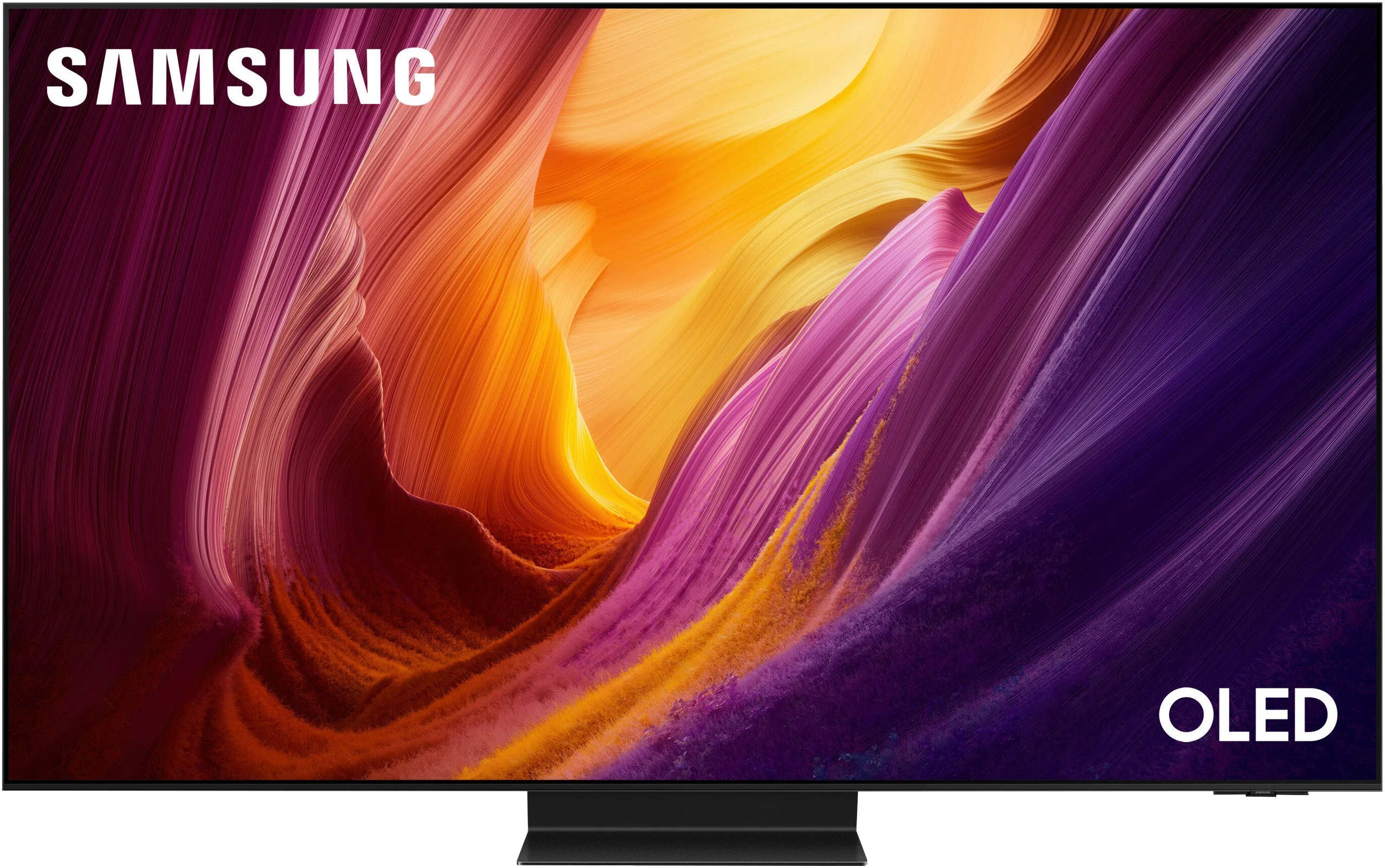
Panel type: LCD VA
Resolution: 3840x2160
System: VIDAA
Model year: 2025
Complete the survey to find out the result
Panel type: QD-OLED
Resolution: 3840x2160
System: Tizen
Model year: 2026
Complete the survey to find out the result
Overall rating
6.1
8.8
 Movies and series in UHD quality
6.2
9.3
 Classic TV, YouTube
5.9
9.4
 Sports broadcasts (TV and apps)
5.1
9.0
 Gaming on console
7.1
9.9
 TV as a computer monitor
3.0
8.8
 Watching in bright light
5.2
7.3
 Utility functions
8.7
7.9
 Apps
7.7
9.3
 Sound quality
6.3
8.0
Complete the survey to find out what fits your preferences
Advantages

Good black and contrast
QLED (PFS LED) – vivid and saturated colours, DCI-P3 coverage of approx. 92%
Many features for gamers: ALLM, VRR, low input lag, Game Bar
Supports 120Hz at 1080p!
VIDAA system – easy to use, with AirPlay, Screen Mirroring and voice search
USB recording from built-in tuners
3.5 mm jack output and component inputs for older devices
Supports multiple audio formats including Dolby Atmos and DTS:X
Attractive price
Perfect black levels and OLED contrast
Very high brightness
Rich, highly saturated QD-OLED colours
Natural image after calibration
Excellent tone mapping (lots of detail in bright scenes)
Matte coating effectively reducing reflections
Best viewing angles on the market (QD-OLED)
165 Hz refresh rate and lightning-fast panel response
Very low input lag and extensive gaming features
STUNNING LOOK
One Connect module included
Disadvantages

Dolby Vision adds little (which is a shame)
Poor digital image processing: lack of image enhancement features, average upscaling
Strong dithering when connected to PC (colourful fonts)
The build quality of our unit was very average
Noticeable degradation of black levels in bright ambient light (a characteristic of QD‑OLED panels)
Last year’s version of Tizen
No DTS support (mainly affects Blu‑ray fans)
Our verdict
The Samsung S95H is, in almost every respect, a continuation of the S95F. During testing we often felt like we were watching the same TV. But... is that a bad thing? Not necessarily, because the predecessor set the bar very high. We still get a phenomenal picture and one of the best TVs we've tested in 2026. HDR packs a huge punch, and the colour and black levels make a good film really keep you glued to the screen. With a console or PC the S95H is just as enjoyable because it delivers what we expect from a flagship product.
The strongest argument for this model may, however, be its looks. It's aimed at people who want the slimmest, most minimalist TV possible. On the wall the S95H looks particularly great, and One Connect helps organise the whole setup. If the distinctive bezel of the S99H isn't to your taste, you'll find a more discreet design here. Brightness is admittedly lower than in the higher-end series, but still high enough that it's hard to call it a serious compromise for viewing.
Not everything deserves praise. We were most disappointed by the inclusion of last year's version of Tizen. The system itself runs quickly, but that detail only underlines how little has changed compared with the S95F. Perhaps Samsung will release an appropriate update soon.
Ultimately the S95H is a great choice for someone seeking top-tier picture quality in an exceptionally slim chassis. The Samsung S95H isn't revolutionary, but it's still a TV that, despite giving us a slight déjà vu, left a strong impression.
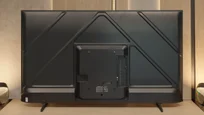
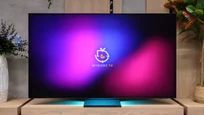
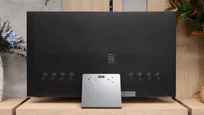
TV appearance




Contrast and black detail
5.7/10
10/10
Local dimming function: No
Contrast:


Result
5,400:1

Result
5,450:1

Result
3,800:1

Result
5,000:1

Result
4,350:1
Result
∞:1
Result
∞:1
Result
∞:1
Result
∞:1
Result
∞:1
Halo effect and black detail visibility:
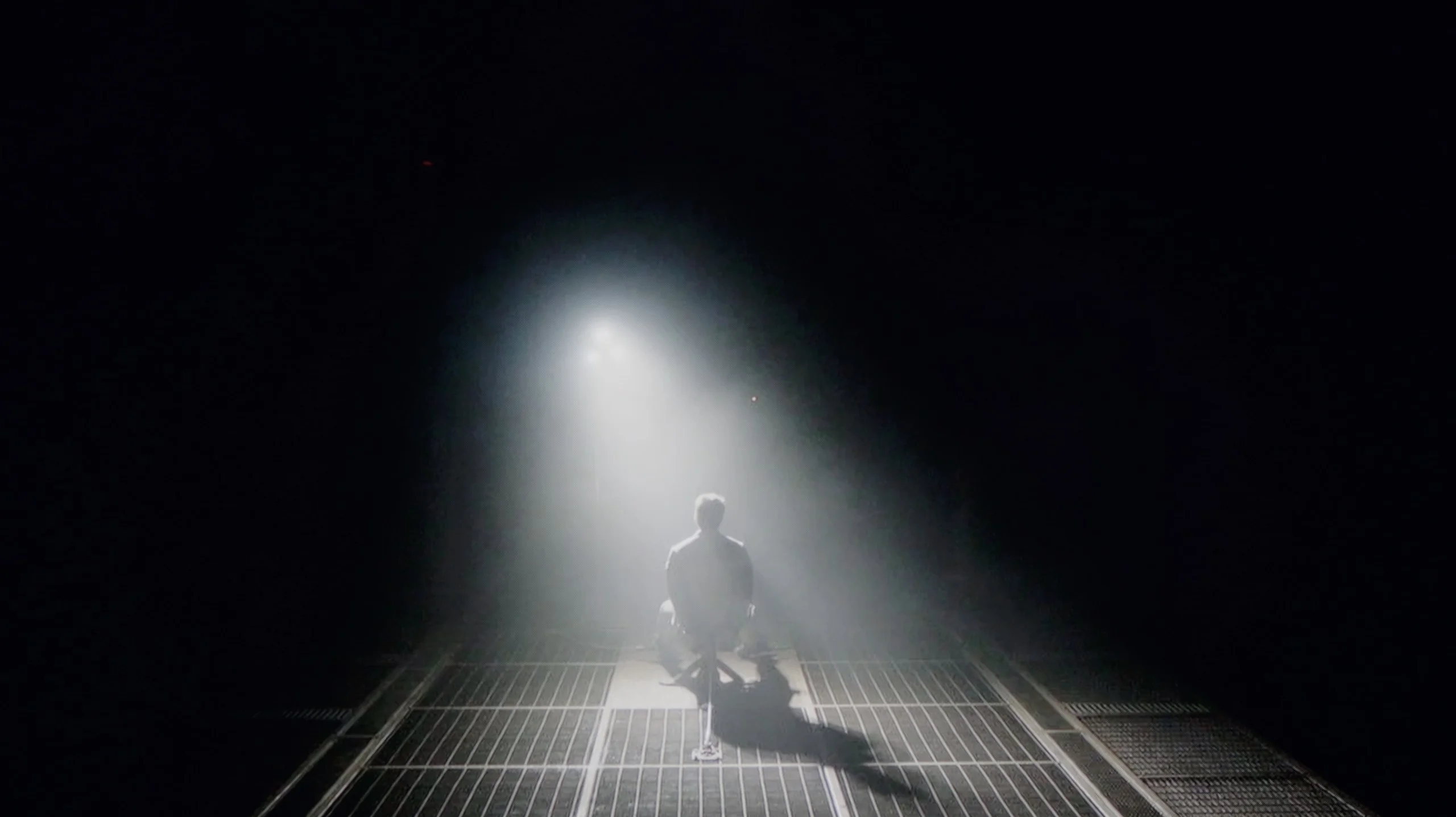
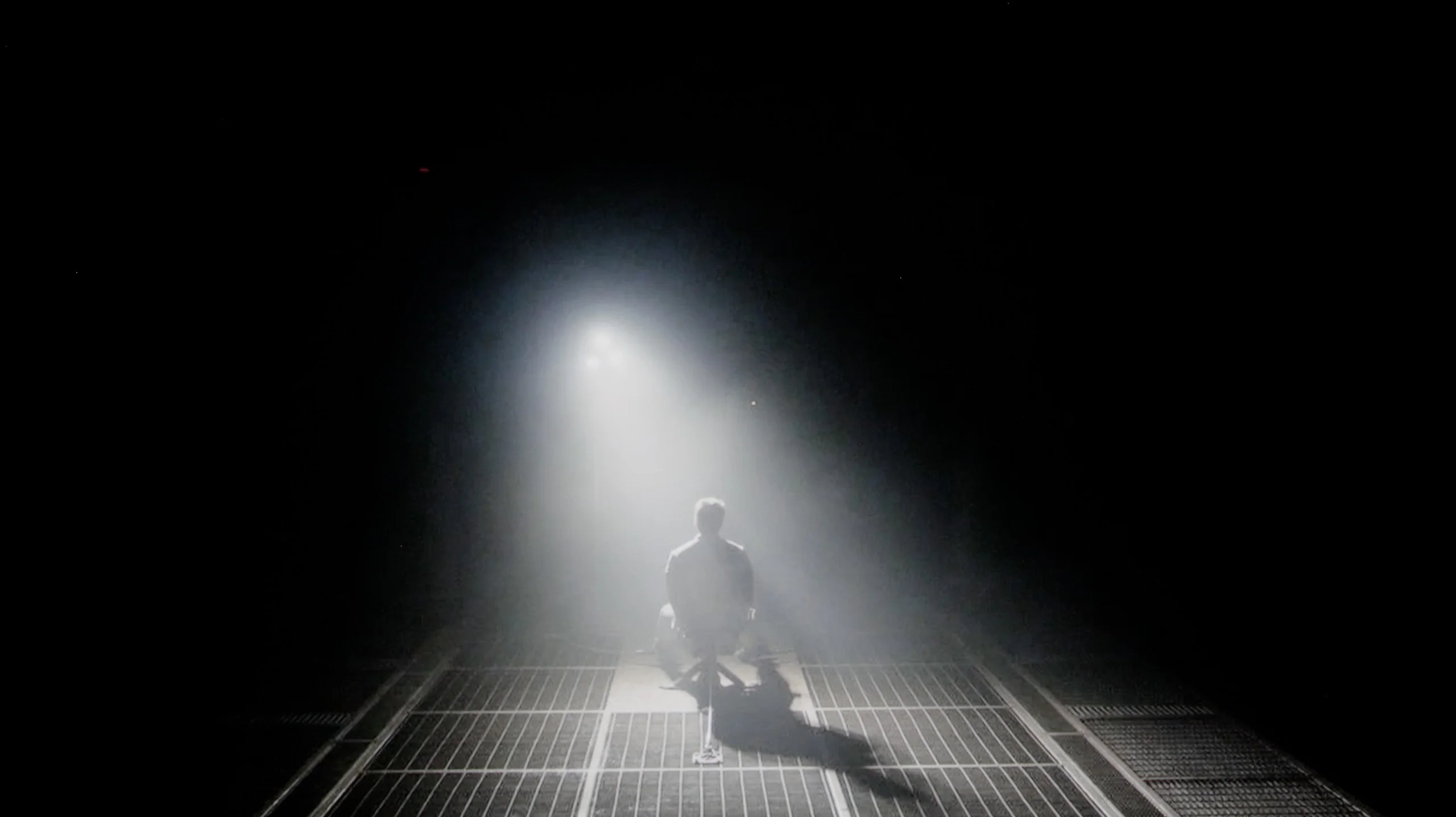
Check the visibility of bright lights on a dark background. Mini-LEDs often struggle with this. The photo does not compare black levels – that’s what the video below is for.
The video accurately shows differences in contrast and black levels between TVs, as well as potential issues: halo around bright objects or Mini-LED zone operation visible as brightness jumps.
Hisense E7Q / E79Q in our test variant of 58 inches is equipped with a VA panel, which has a huge impact on the reception of contrast and black levels in films or series. Thanks to such a panel, you can expect decent contrast and a stable visual effect, which works really well in most scenes. In measurements, we obtained values reaching around 6000:1, which in this price range is considered a solid result. However, it’s important to remember that this is not a design with local dimming, so don’t expect deep, “pitch-black” blacks known from more expensive models. In some shots, the black may have a slightly blue hue, which is completely natural for this technology and price. This is, however, a compromise that doesn’t bother during everyday viewing – especially if we watch in the evening with slightly dimmed light.
The Samsung S95H we tested, with a 65-inch screen, uses a QD-OLED panel. The same type of panel is also found in the 55- and 77-inch models. A new addition to the range is a 48-inch size, but note, it’s a completely different design. It has neither a QD-OLED panel nor a One Connect module, so our review should not be directly applied to that variant.
Back to the blacks, it’s exactly what you’d expect from any OLED. Each pixel illuminates independently and can switch off completely. That means blacks are truly inky, whether you’re watching a large shadow or a small dark patch right next to a bright light. There are no bright film-like bands or halos caused by local dimming zones. In our test scenes the S95H looked excellent in that regard. Bright objects stood out clearly against the dark background, and blacks retained their depth even in the most demanding shots. In the evening this produces a very pleasing effect, and it’s that kind of picture we love OLEDs for.
It’s worth noting, however, that our unit had a minor issue with so-called black crush. The darkest shades of grey sometimes merged into the black, causing some shadow detail to disappear. The image then appeared even deeper and more contrasty, but this was at the expense of details that should have been visible. The black itself remained perfect; the TV simply didn’t always show what lay just above it.
HDR effect quality
5.1/10
8.8/10
Luminance measurements in HDR:

Result
300 nit

Result
329 nit

Result
379 nit

Result
389 nit

Result
397 nit
Result
2246 nit
Result
2236 nit
Result
2113 nit
Result
2230 nit
Result
1571 nit
Scene from the movie “Pan” (about 2800 nits)


Scene from the movie “Billy Lynn” (about 1100 nits)


The photos show two HDR10 movies. 'Pan' is one of the brightest productions ever made, while 'Billy Lynn' (soldier) has brightness typical of streaming (Netflix, Prime, HBO MAX). Notice the intensity of effects and detail in whites.
Static HDR10


The photos present the visibility of white details in various HDR formats. They do not show brightness differences between TVs (these can be compared in the previous gallery).
Dynamic: Dolby Vision
Dynamic: HDR10+


The photos present the visibility of white details in various HDR formats. They do not show brightness differences between TVs (these can be compared in the previous gallery).
HDR luminance chart:
Samsung S95H
Hisense E7Q / E79Q
Hisense E7Q / E79Q is a mid-brightness TV, with a peak luminance level of around 350-380 nits. This is the absolute minimum that allows viewing HDR content in a way that's close to the creators' intentions, though without a distinct "wow" effect. The results of synthetic tests on white test patterns were confirmed in practice – in movie scenes, the bright parts of the image are stable and fairly even, but it's hard to talk about a true "burst of light" here. In everyday use, such as when watching Netflix or YouTube, the HDR effect is acceptable and is more than sufficient for most users. However, it must be said clearly – this is not the level of top-end screens, and one shouldn't expect that at this price. Fortunately, the Hisense E7Q / E79Q has an advantage that allows it to score quite a few points: it's a QLED panel of the PFS LED type, using an additional phosphor layer that improves colour reproduction. The measured range of the DCI-P3 colour gamut is around 92%, which means that the colours in most scenes are vibrant, well-saturated, and pleasing to the eye, especially for this price bracket.
The Samsung S95H is an extremely bright OLED TV. It doesn't quite reach the level of this year's S99H, the one with the bezel, but a peak of around 2300 nits is still a phenomenal result. You really notice it in films. Flares, sun reflections and lights on a dark background have the punch we expect from a premium TV. Importantly, the S95H performs well across different scenes. It doesn't need a single small highlight on a black screen to show its capabilities. In the first four test shots we measured over 2100 nits, even though each places slightly different demands on the TV. As a result, the HDR effect is strong both in night scenes and in more evenly lit frames.
Of course, the limits typical of OLEDs remain. When a very bright image covers a large part of the screen, ABL comes into play, the mechanism that limits panel brightness. With an almost white screen the drop can be much larger than with a short, point-like flare. That does not mean bright film scenes look poor. In a demanding shot from 'The Meg' we measured about 1600 nits. That's still an excellent result, and the bright sky and reflections on the water retain a lot of intensity.
QD-OLED colours
The colours on the Samsung S95H are simply superb. It's one of the most "colourful" OLEDs we've tested. Highly saturated reds, greens and neon hues look great and complement the screen's high brightness well. Coverage of the DCI-P3 gamut is as high as 99.9%, so the TV can reproduce virtually the entire colour range used in that space for HDR films.
Interestingly, our measurements also show progress compared with the S95F. Coverage of the wider BT.2020 gamut increased from about 87% to 89.6%. That's very similar to the result we achieved with this year's S99H, which suggests very similar capabilities between the two panels in terms of colour range. The difference versus its predecessor is small but worth noting. The S95H remains at the top of the OLED class in this regard and can easily compete with new displays using SQD quantum dots.
Factory color reproduction
5.2/10
7.6/10
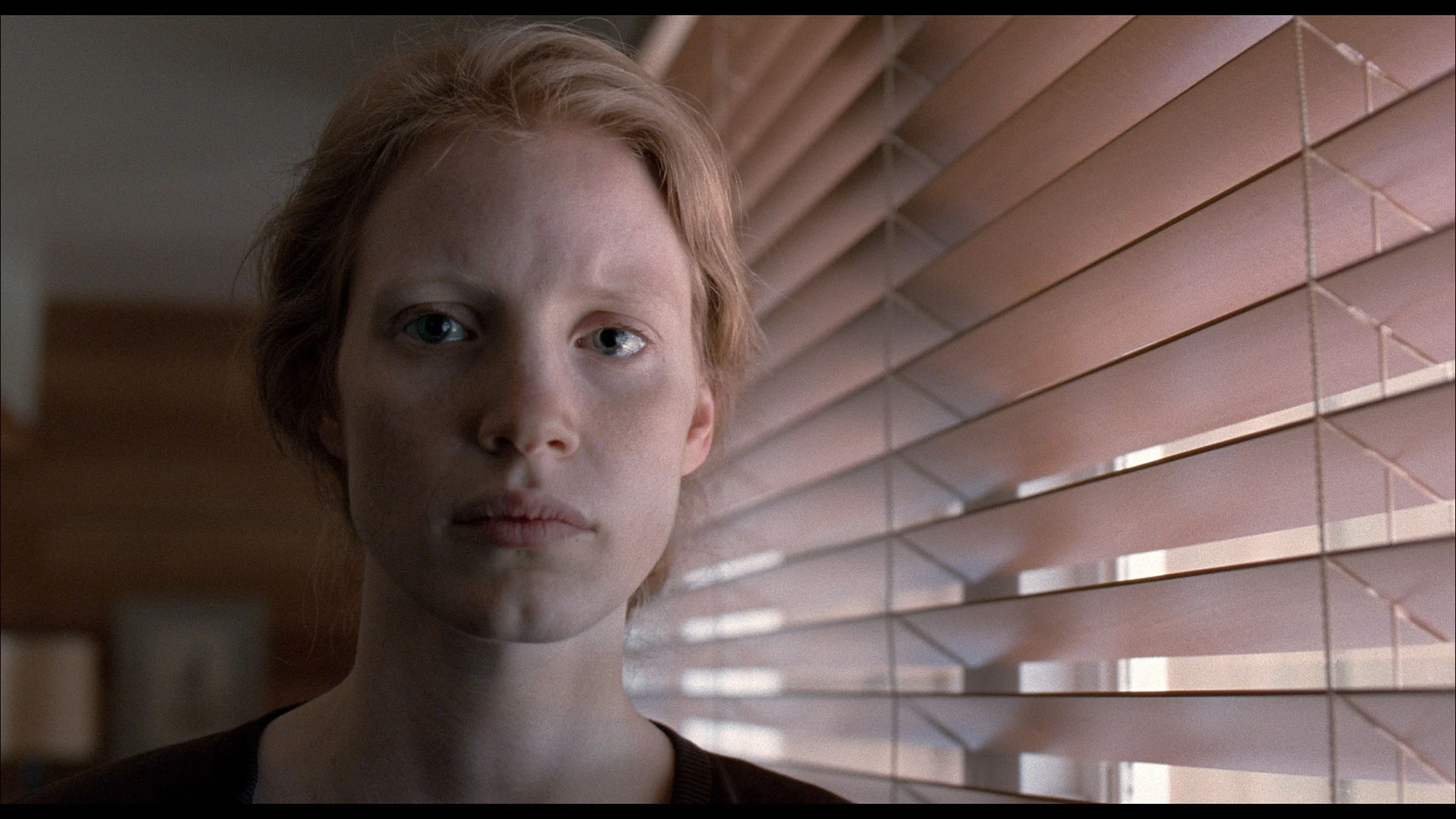

This gallery shows how colors change after professional TV calibration. If you notice the difference, we recommend ordering this service at SkalibrujTV.com.
Factory Mode
After calibration


This gallery shows how colors change after professional TV calibration. If you notice the difference, we recommend ordering this service at SkalibrujTV.com.
Factory Mode
After calibration
In Filmmaker mode, the Hisense E7Q / E79Q television really managed to impress. After the first measurements, it turned out that the white balance was quite well tuned, with the only minor deviation being a slight tendency towards a purple hue, which we mentioned earlier. However, this did not significantly impact the overall character of the image – it remained cohesive and pleasant to view. A much bigger issue was the brightness characteristics (gamma) in SDR content and the EOTF curve in HDR films. The television clearly brightened the image, flattening contrast and taking away depth. Gamma values could drop from the reference 2.4 down to around 1.9, making the image look as though it was covered with a thin, milky layer. Fortunately, this is a problem that can be relatively easily corrected through calibration.
Out of the box the Samsung S95H performs quite well, although our unit had a few things that needed improving. In SDR material there is a red bias in the white balance. The picture therefore looks slightly warm, and whites and faces can take on a faint pink tint. It’s not a major shift, but you can spot it when comparing with a reference image. More noticeable is how it handles dark scenes. Gamma sits above the target value of 2.4 across most of the range, and the deviation is particularly large in the deepest shades. The picture thus appears darker and more contrasty than it should, which confirms the previously mentioned issue with losing detail near black. Dark clothing or background elements can merge into a single blotch, even though the source still contains detail. In HDR brightness control is considerably better. The EOTF curve tracks close to the reference, so the TV preserves the brightness of different parts of the scene. There are still minor colour deviations, though. In the brighter areas a dominance of red and blue over green gives whites a slight pinkish–purple cast. Overall the starting point is good, particularly in HDR, but calibration could still make some improvements.
Color reproduction after calibration
7.4/10
9.4/10


The photos show how movies look on the TV. Pay attention to black detail visibility, colors, and shadow tint.


The photos show how movies look on the TV. Pay attention to black detail visibility, colors, and shadow tint.
The biggest beneficiary of calibration in the case of the Hisense E7Q / E79Q was undoubtedly the SDR mode. It managed to achieve almost perfect image quality – most of the errors in the Color Checker test dropped below a value of 3, and often even 2, which is a remarkable result for this class of equipment. The biggest improvement came from aligning the brightness characteristic (gamma), which made the image no longer look blown out and regained natural depth. In HDR content, it was also possible to improve the colours and eliminate the purple tint that we mentioned earlier, but errors in the Color Checker measurements were still noticeable. This is due to the fact that – as is often the case with Hisense televisions – the screen manipulates brightness quite strongly, overexposing some colours. This was also indicated by the EOTF curve, which was slightly above the reference values, suggesting these minor issues with excessive brightening. Despite this flaw and the construction limitations that arise with HDR content, the Hisense E7Q / E79Q gained quite a bit after calibration. In everyday use, the television presents a coherent, natural, and pleasant-to-the-eye image, and the difference compared to the factory settings is indeed huge.
After calibration the S95H looks really excellent. The excess red has been removed, so whites are neutral and faces have regained a natural tone. In SDR colour errors are now very small. The picture retains excellent saturation but no longer adds the tint that was visible on the factory settings. This is how a well-set TV in this class should look. There’s also an improvement in white balance in HDR. In addition, brightness in film scenes stays very close to the reference. Bright highlights have the right intensity, and the TV doesn’t unnecessarily brighten the whole frame. That level of control combined with the QD-OLED panel’s capabilities produces an image that’s simply very pleasant to watch. We really have only two reservations. The first is the loss of the darkest details. Our unit still tended to crush some tones near black, although that may be a characteristic of this particular test sample. The second concerns adjustments to the HDR colour palette. The available settings don’t allow perfect correction of all hues, so some minor inaccuracies remain. That doesn’t change the very good final result; after calibration the S95H delivers a very high-quality image.
Smoothness of tonal transitions
8.5/10
9/10


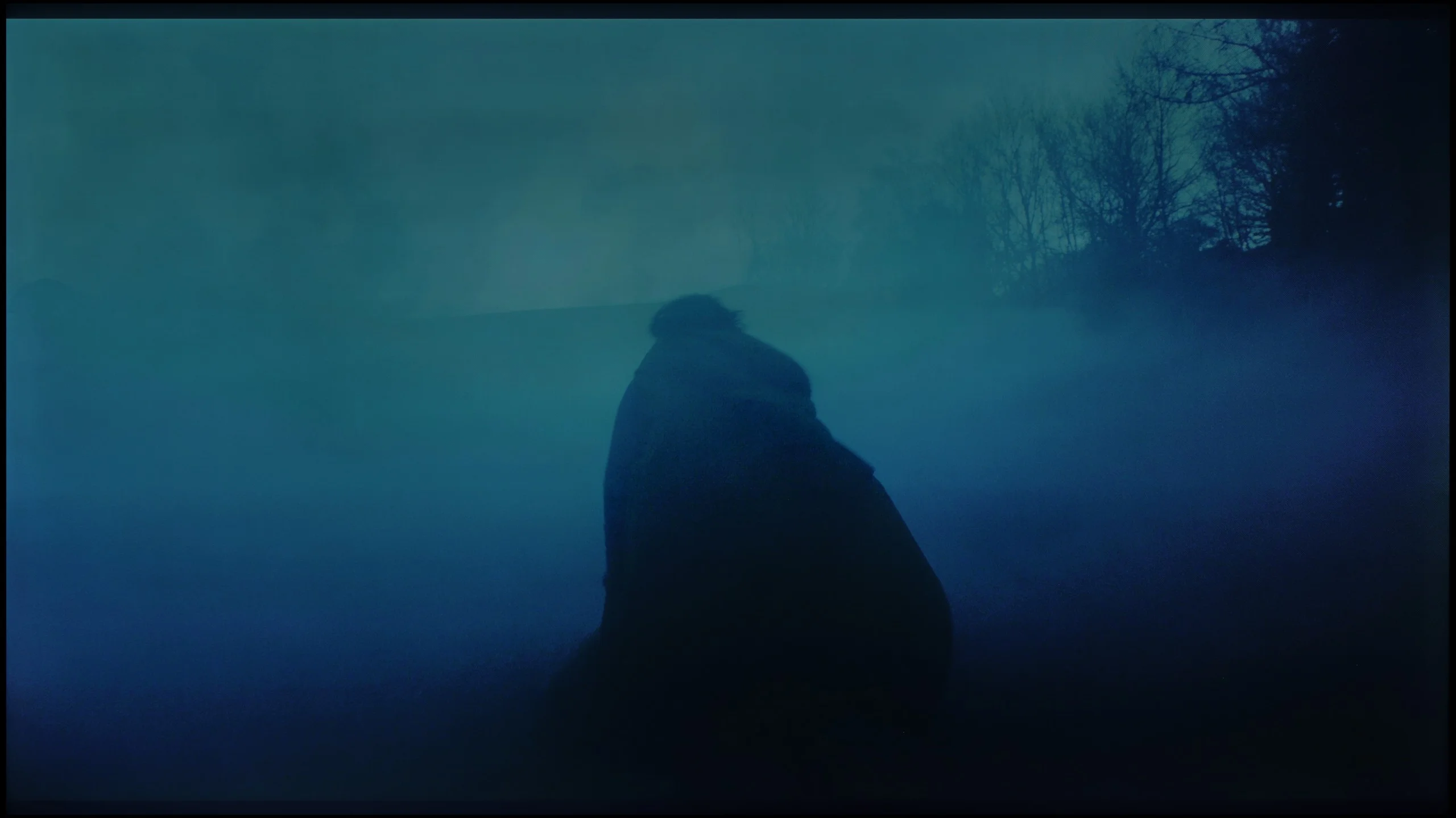

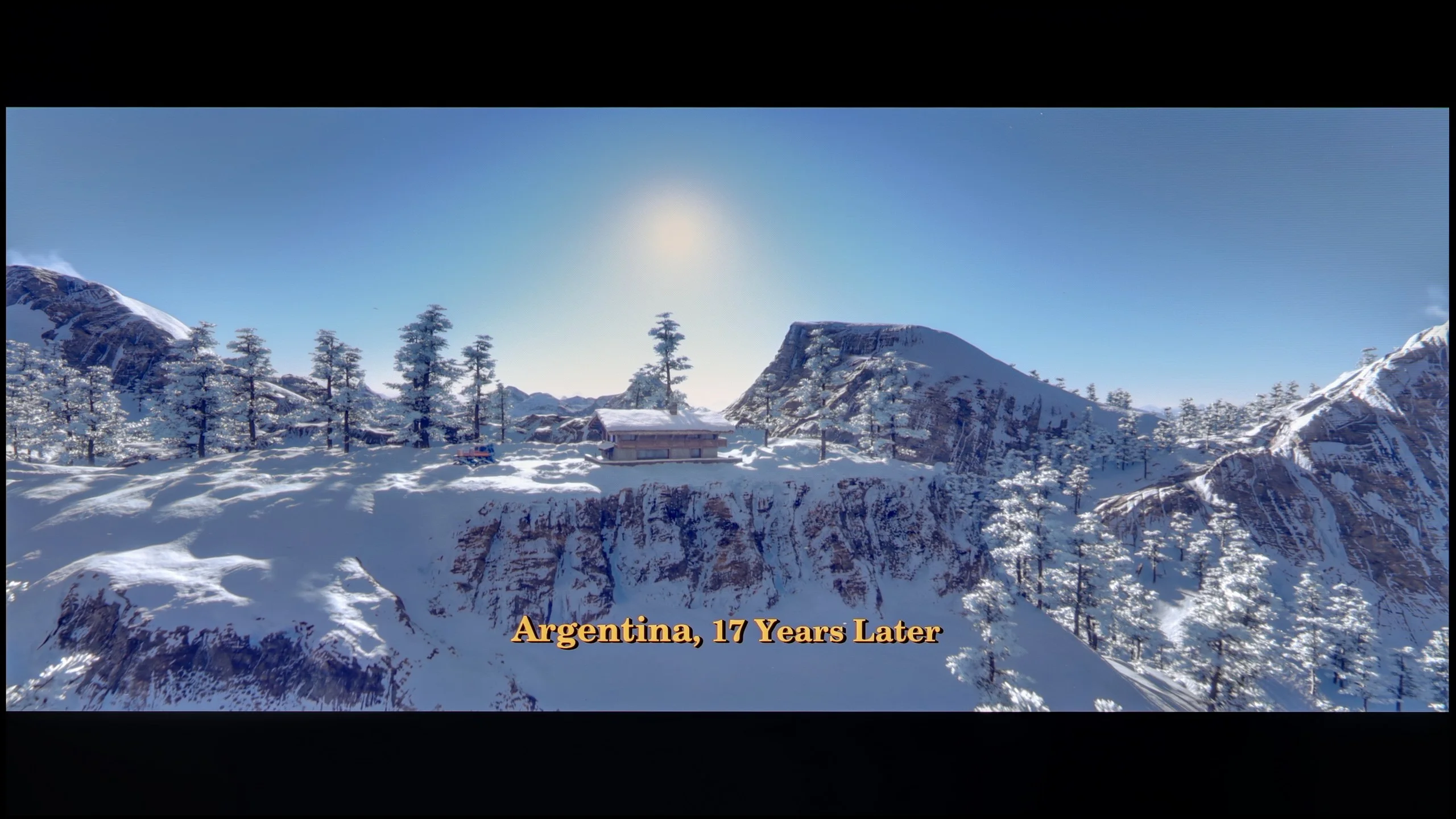
These are selected scenes that show smooth tonal transitions from one color to another. If you see distinct banding, it’s the TV panel’s fault.

These are selected scenes that show smooth tonal transitions from one color to another. If you see distinct banding, it’s the TV panel’s fault.
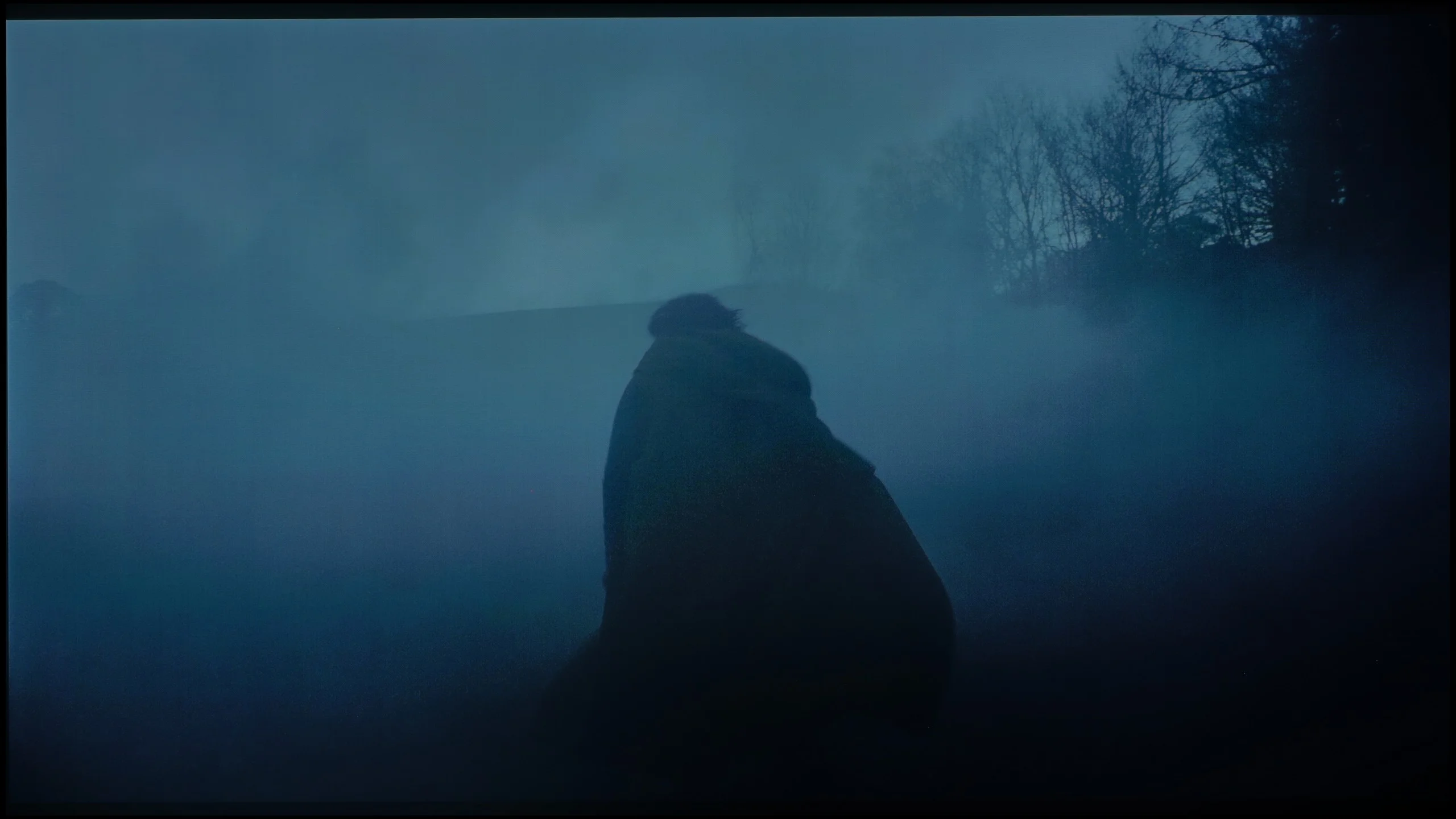
These are selected scenes that show smooth tonal transitions from one color to another. If you see distinct banding, it’s the TV panel’s fault.

These are selected scenes that show smooth tonal transitions from one color to another. If you see distinct banding, it’s the TV panel’s fault.
For a budget TV, the Hisense E7Q / E79Q performs really well with a challenging element like the smoothness of tonal transitions. In most scenes, the colours blend together naturally, without noticeable jumps or artificial edges. The brighter parts of the image stand out particularly well – the transitions are smooth and pleasant to the eye. Minor issues arise only with very dark shades of grey, where you can notice slight banding. However, this is a detail that doesn’t affect the overall perception of the image. For a TV in this price range, the result is more than decent.
The S95H handles tonal transitions very well. It's a strong point of QD-OLED panels, which in our tests tend to show distinct banding between shades less often than WOLED panels with a white subpixel. In most scenes, colours transition smoothly from one to another. This is especially noticeable in dark shots, where instead of the characteristic bands we see smooth transitions between shades of grey. It's not completely perfect, though. In some brighter scenes you can spot slight unevenness, although you have to look closely. During normal viewing they are unlikely to distract from the film. Overall the S95H performs very well in this category.
Image scaling and smoothness of tonal transitions
5/10
7.5/10


Smooth transition function
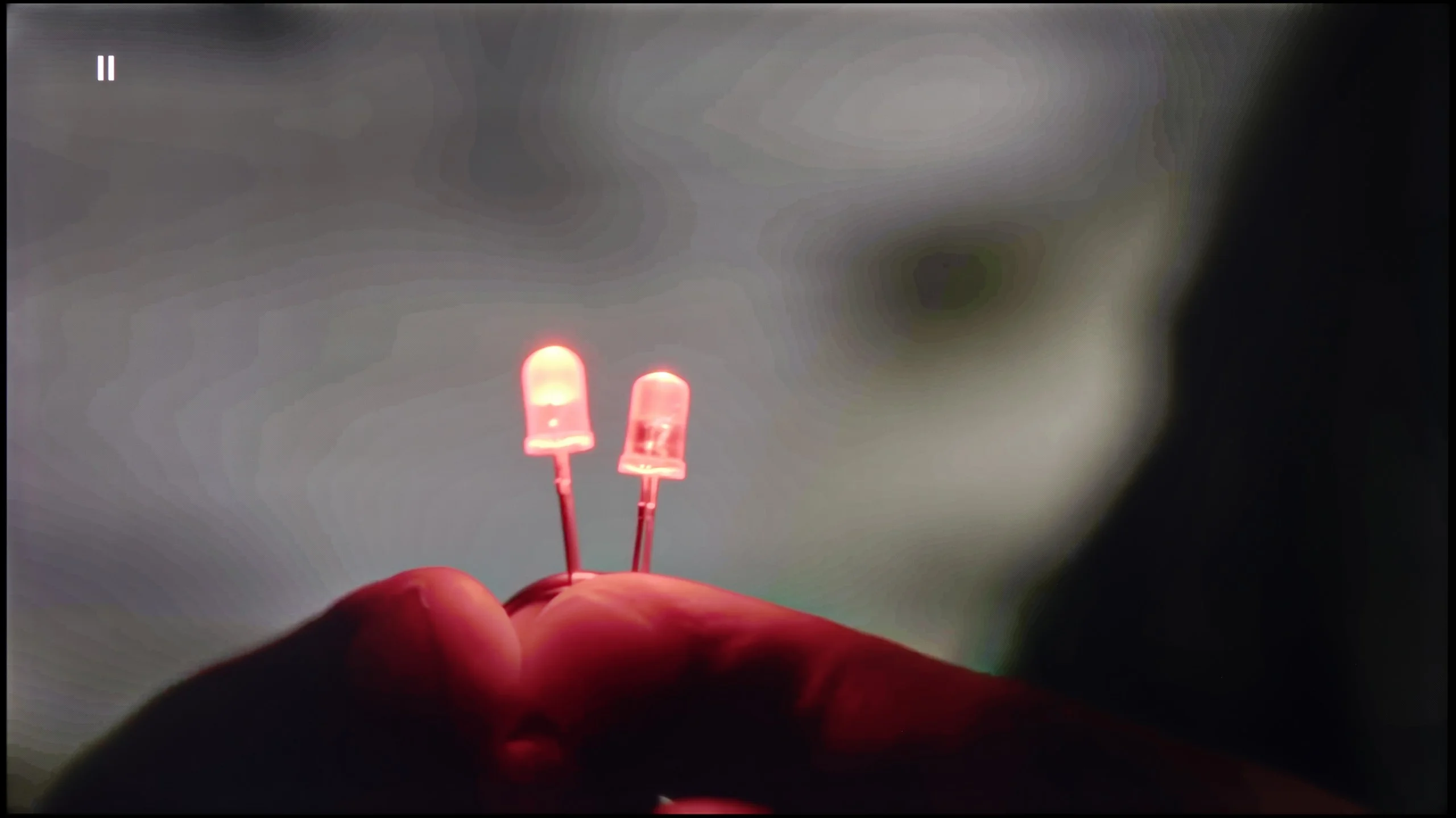
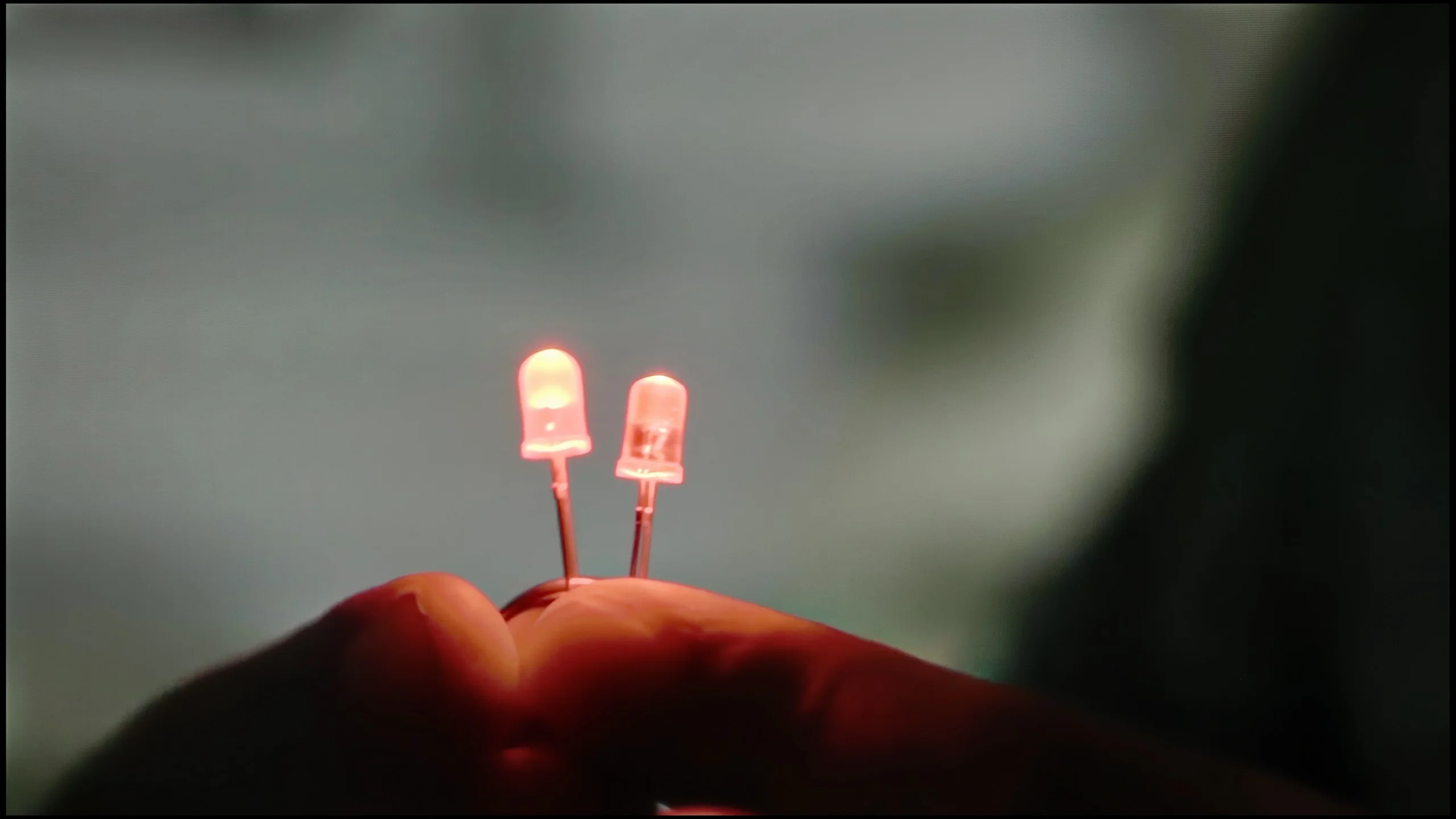
The match photo shows how the TV smooths weak tonal transitions in low-quality video.
Image scaling SD (576i)


The model photo shows how it handles upscaling of SD material.
In the case of Hisense E7Q / E79Q, upscaling and digital image processing are not the strongest points of this television. It is evident that the manufacturer has opted for simplicity rather than advanced image processing algorithms. The television does not offer any features that smooth tonal transitions or systems that enhance image clarity, which makes lower resolution materials look quite raw. Subtle compression edges can be seen on the screen, which better processors in other models can effectively hide.
During the testing of HD materials, we noticed that the E7Q tries to artificially boost detail, which sometimes works and other times has the opposite effect – the image becomes soft, slightly blurred, and at times even "watery." There is no aggressive sharpening that ruins naturalness, but there is also a lack of finesse in detail integration that better image processors provide.
The NQ4 Gen3 processor, the same one used in the S99H, handles upscaling and digital image processing. The conclusions from our tests are also very similar. Lower-resolution material looks really good when upscaled to 4K. The picture is clear, without artificial edge enhancement or over-sharpening. One small caveat concerns very old recordings at 480p or lower. With such a signal the TV can slightly crop the edges of the frame.
The noise reduction feature is used to improve heavily compressed material. It smooths visible banding between shades and reduces other imperfections, for example in poorer YouTube recordings. However, it works quite aggressively. Fine detail and natural film grain can disappear along with the noise. We left it turned off to preserve the original look of the material. If artefacts bother you more than the loss of some detail, it's worth checking how it performs.
Blur and motion smoothness
4.8/10
8.5/10
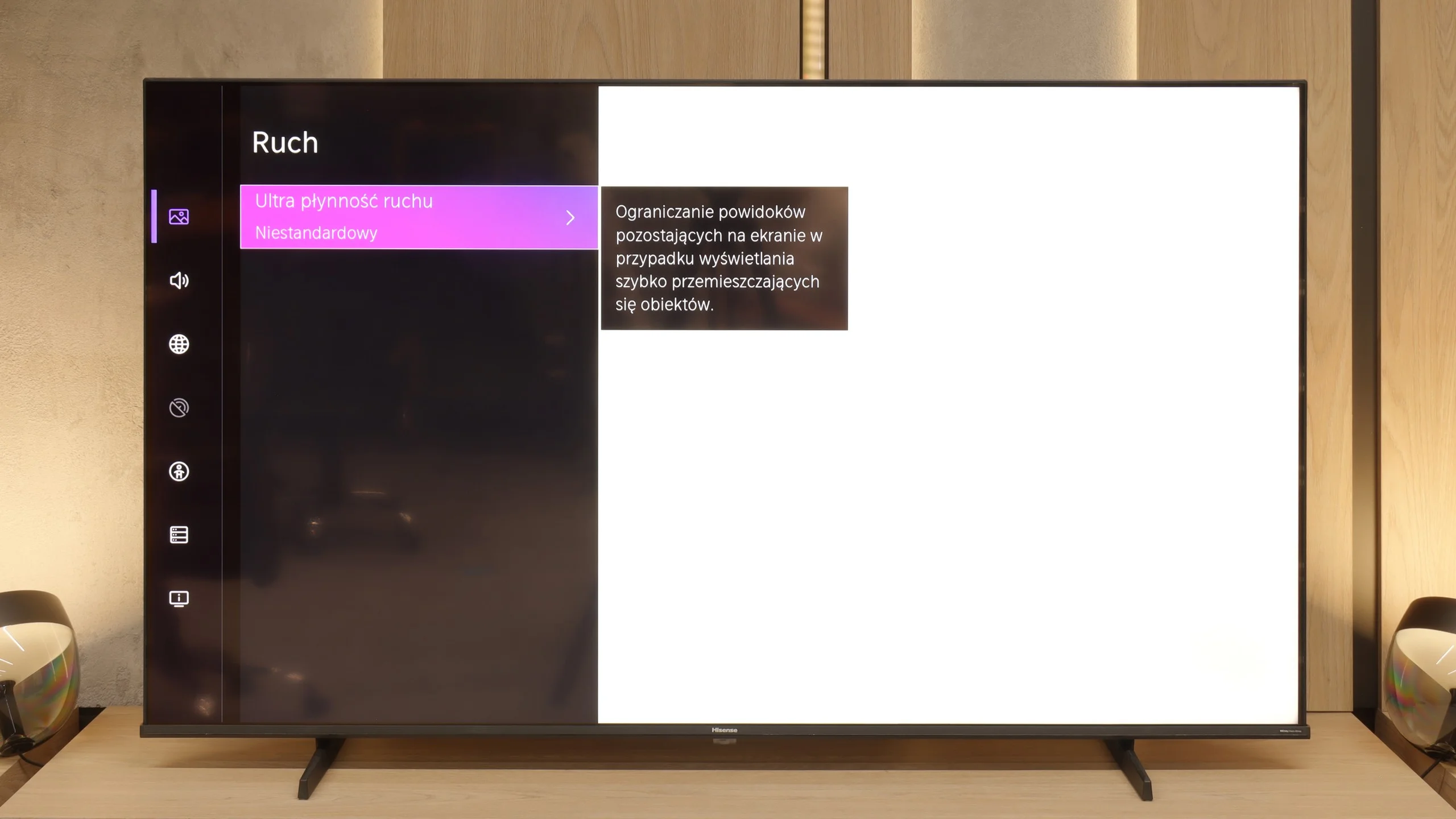
Blur (native resolution, maximum refresh rate):






Blur (BFI function enabled):
Image flickers in this mode



Blur (1080p@120Hz):



Blur (4K@165Hz):



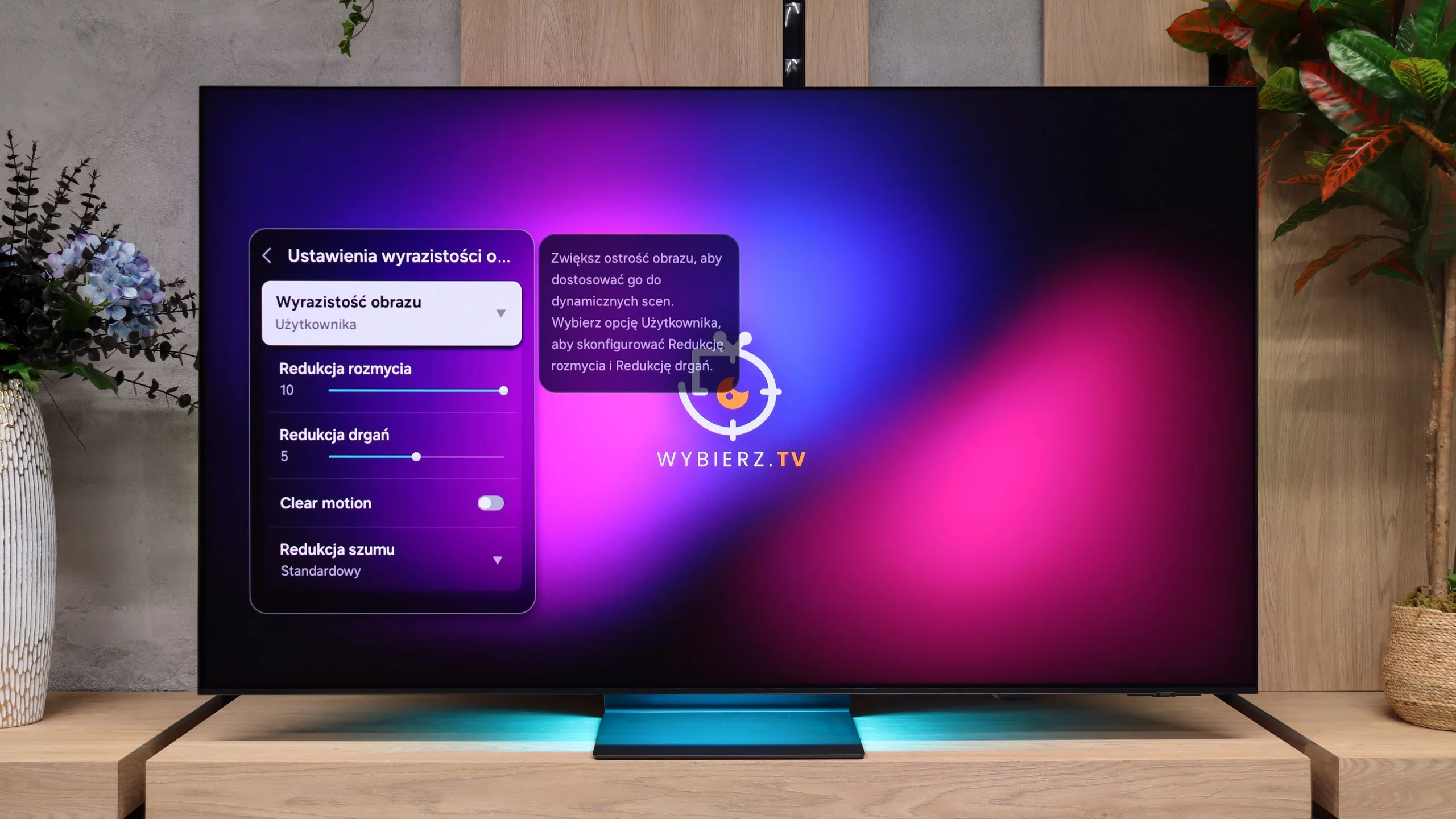
Hisense E7Q / E79Q is a television with a 60 Hz screen, so sports fans in 4K may feel a slight disappointment – you simply won’t see such smooth images here as in more expensive models with higher refresh rates. Fortunately, when it comes to movies, the situation is much better. Cinematic materials recorded at 24 frames per second can be displayed here using a motion smoothing feature, allowing the user to adjust the picture to their own preferences – more cinematic with visible frames or smoother, in a theatrical style.
The Samsung S95H handles motion very well, which is what you expect from an OLED. The panel supports refresh rates up to 165 Hz, though that’s mainly useful for PC gamers. When watching sport, a lightning-fast pixel response time matters more. A fast-moving ball or player doesn’t leave the characteristic trailing smear. Motion therefore remains clear, without the artefacts typical of slower LCD panels.
There’s also a motion smoothing feature that lets you adjust motion to your liking. In films you can gently reduce judder during camera pans or choose a stronger smoothing effect. A separate setting for faster content is handy when watching sport.
Console compatibility and gaming features
6.3/10
9.6/10
- ALLM
- VRR
- VRR range48 - 60Hz48 - 165Hz
- Dolby Vision Game Mode
- Correct implementation of HGIG
- 1080p@120Hz
- 1440p@120Hz
- 4K@120Hz
- Game bar
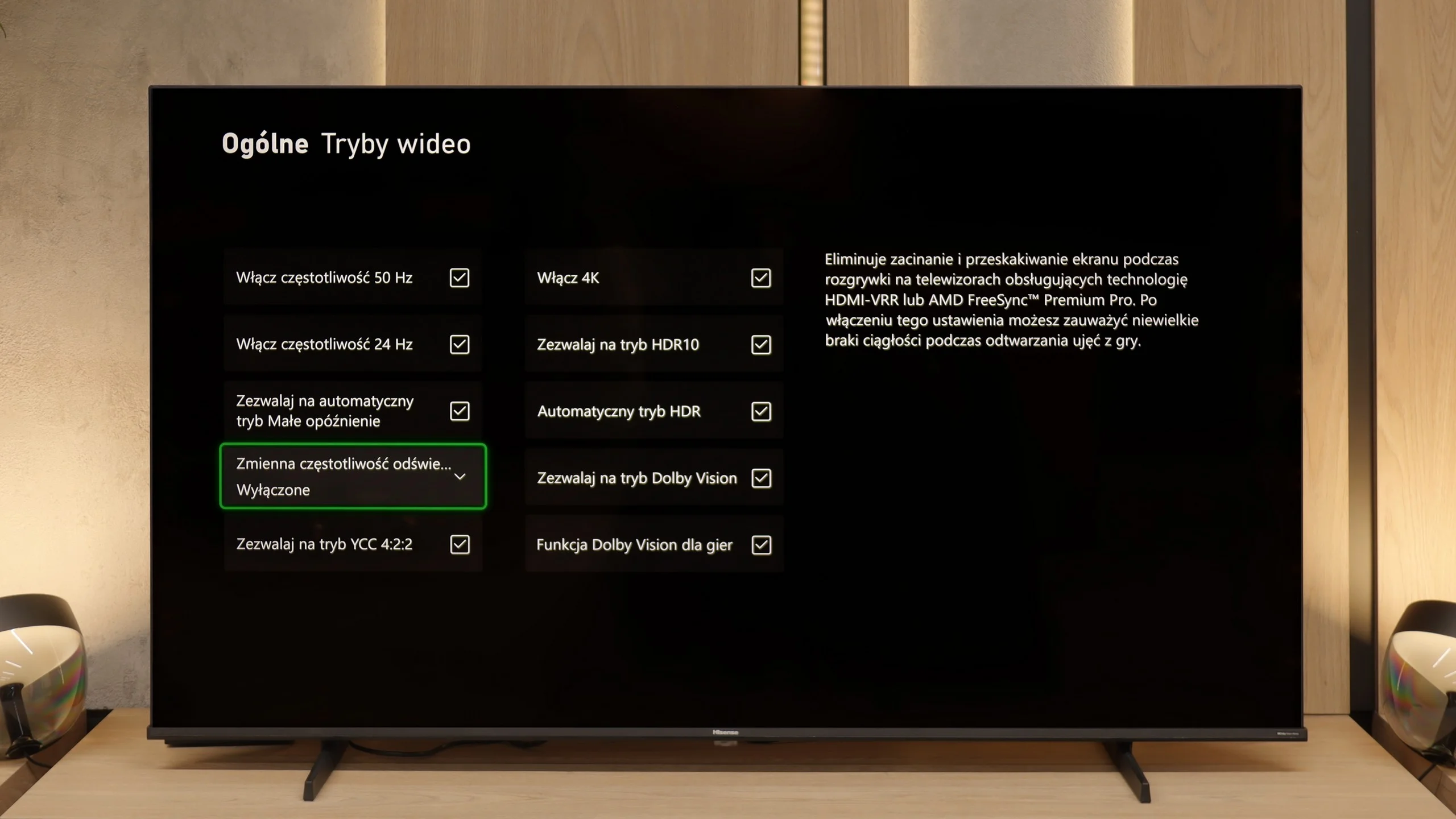
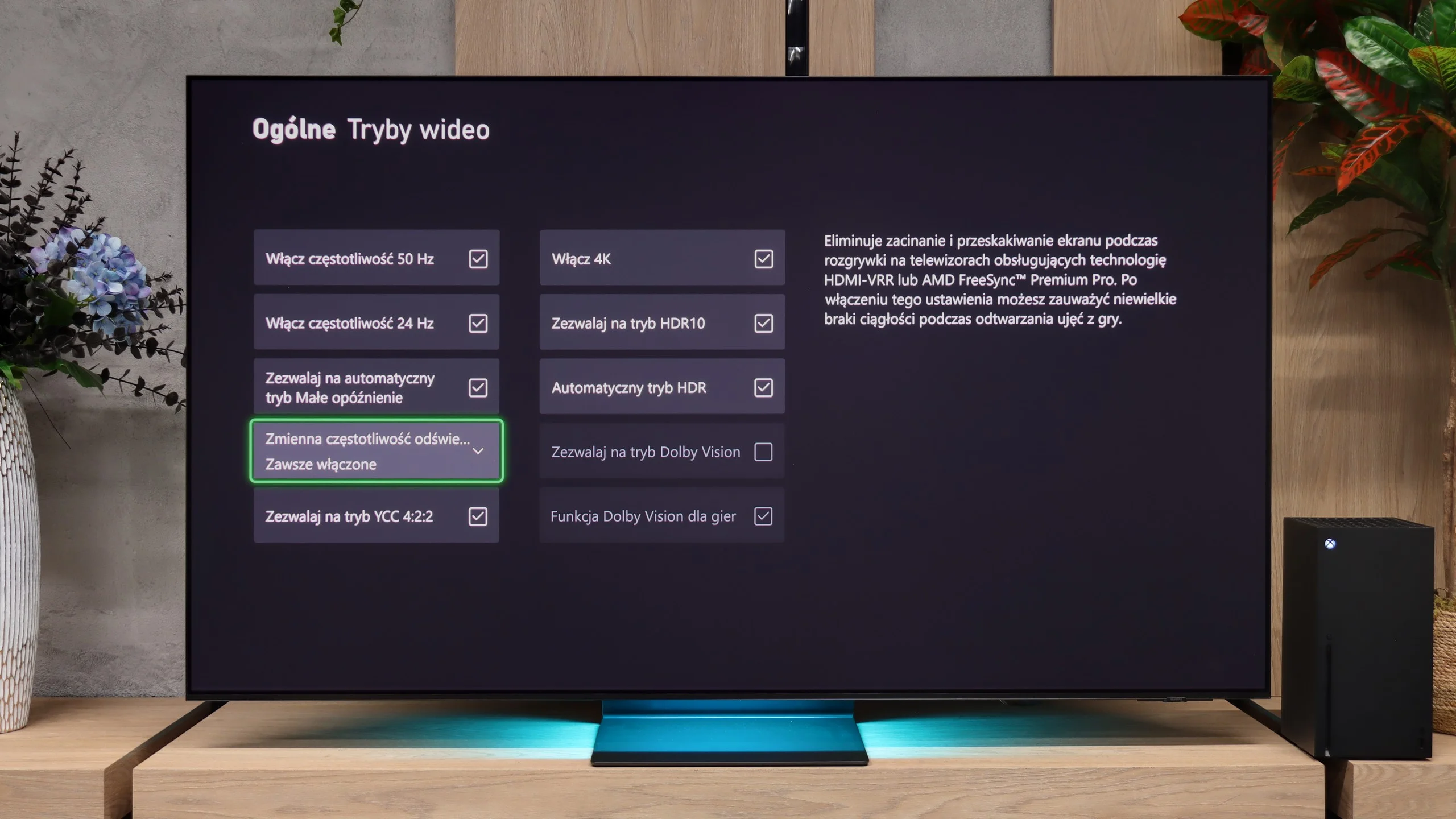
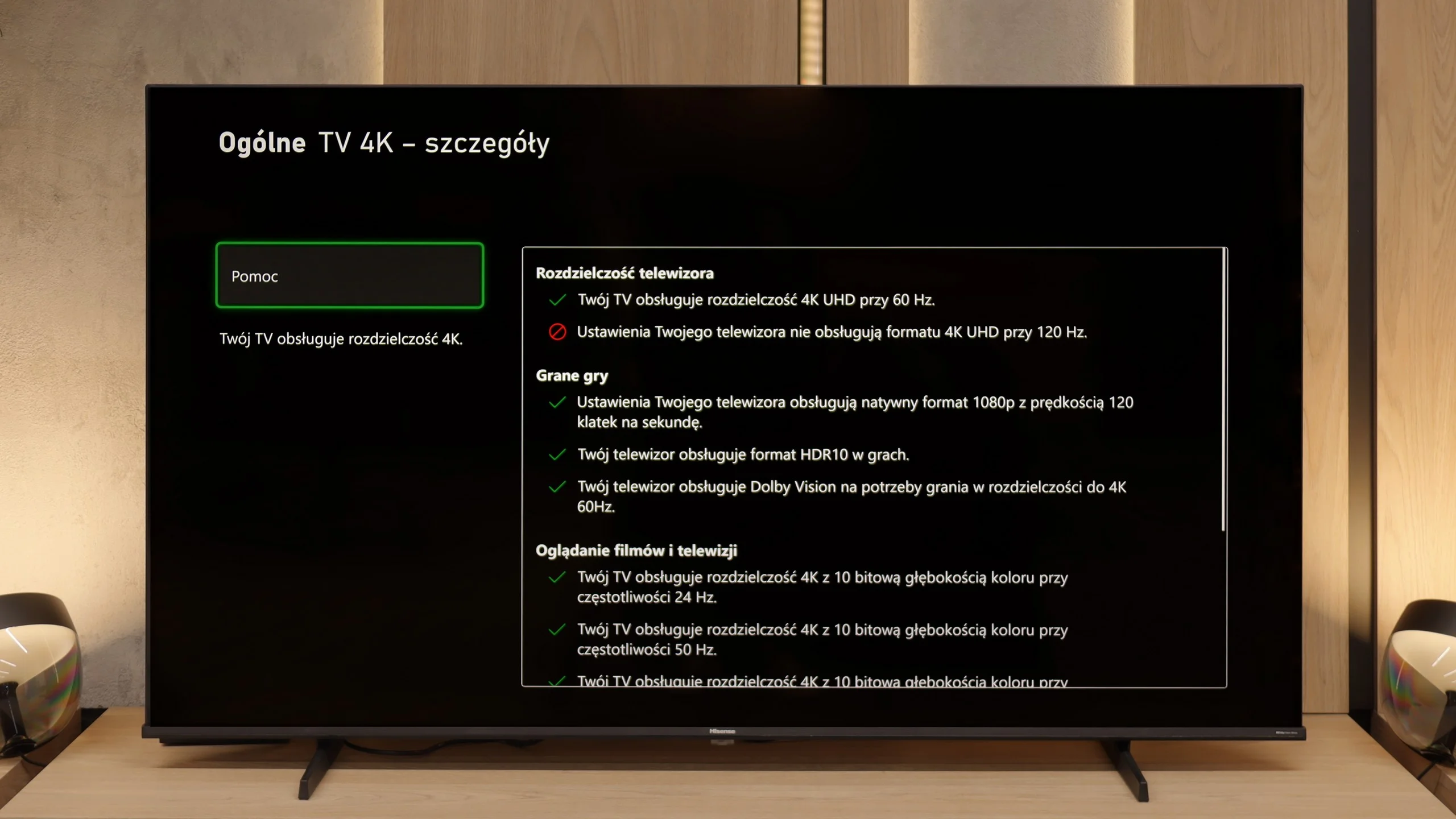
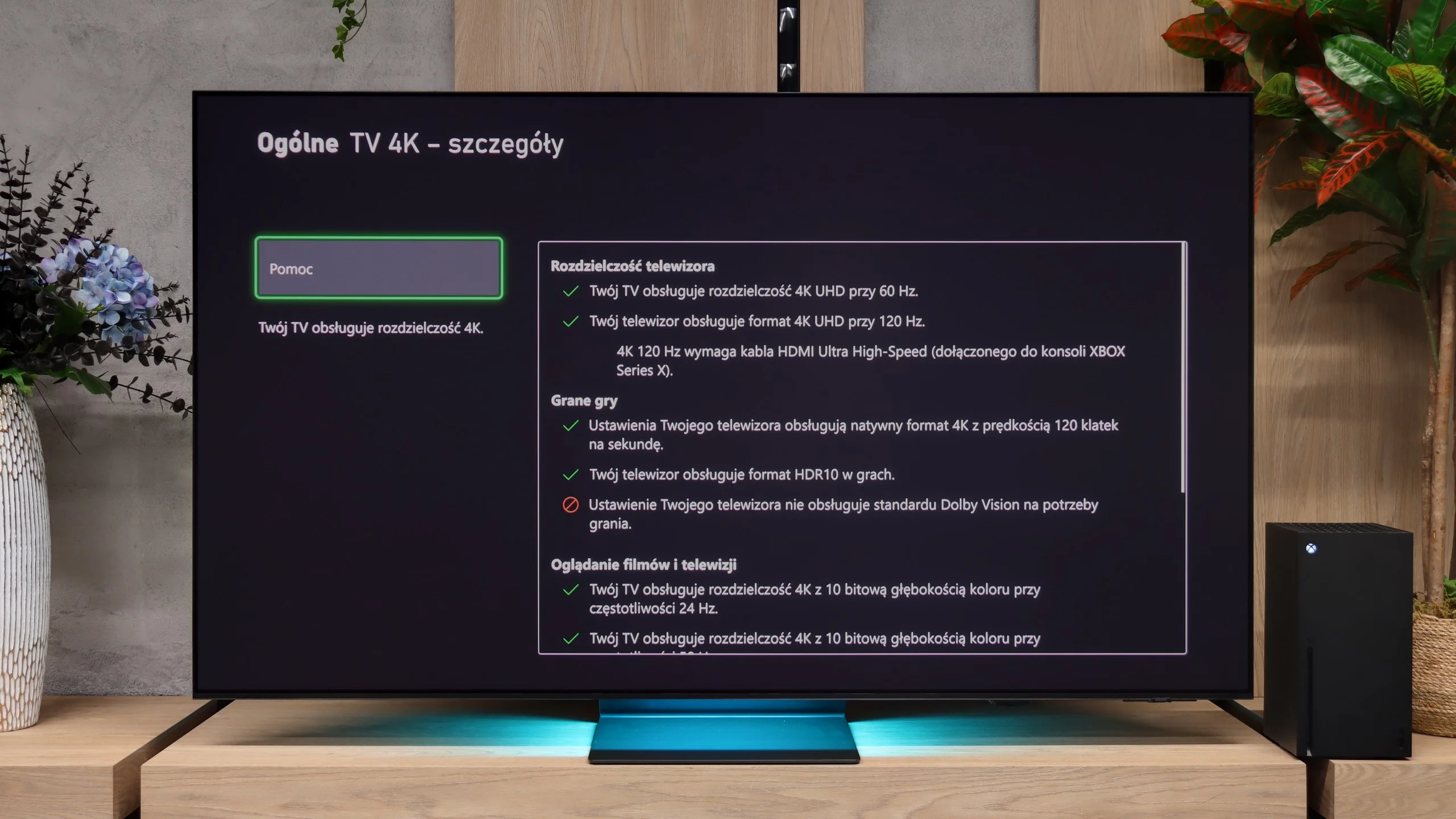
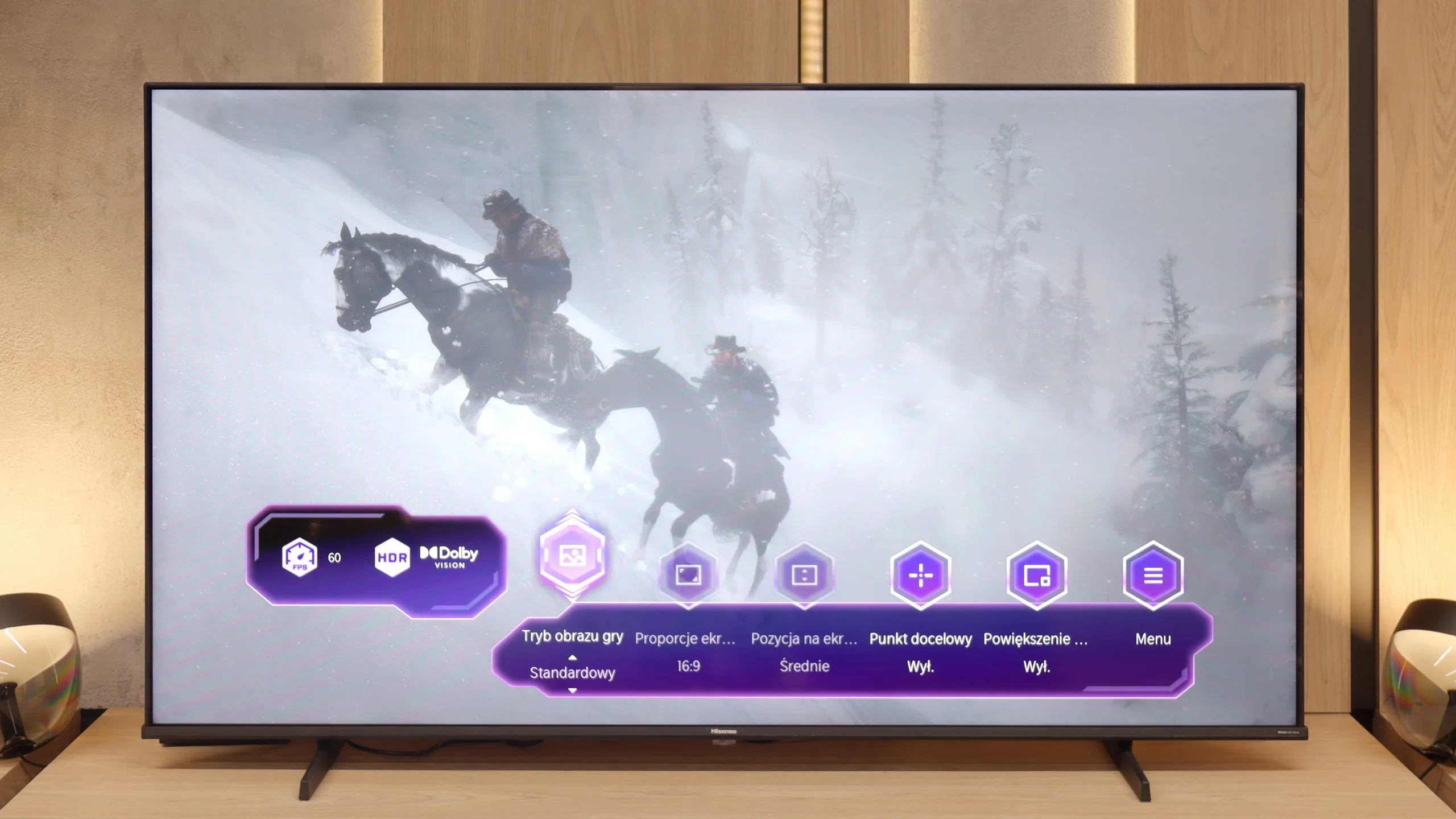
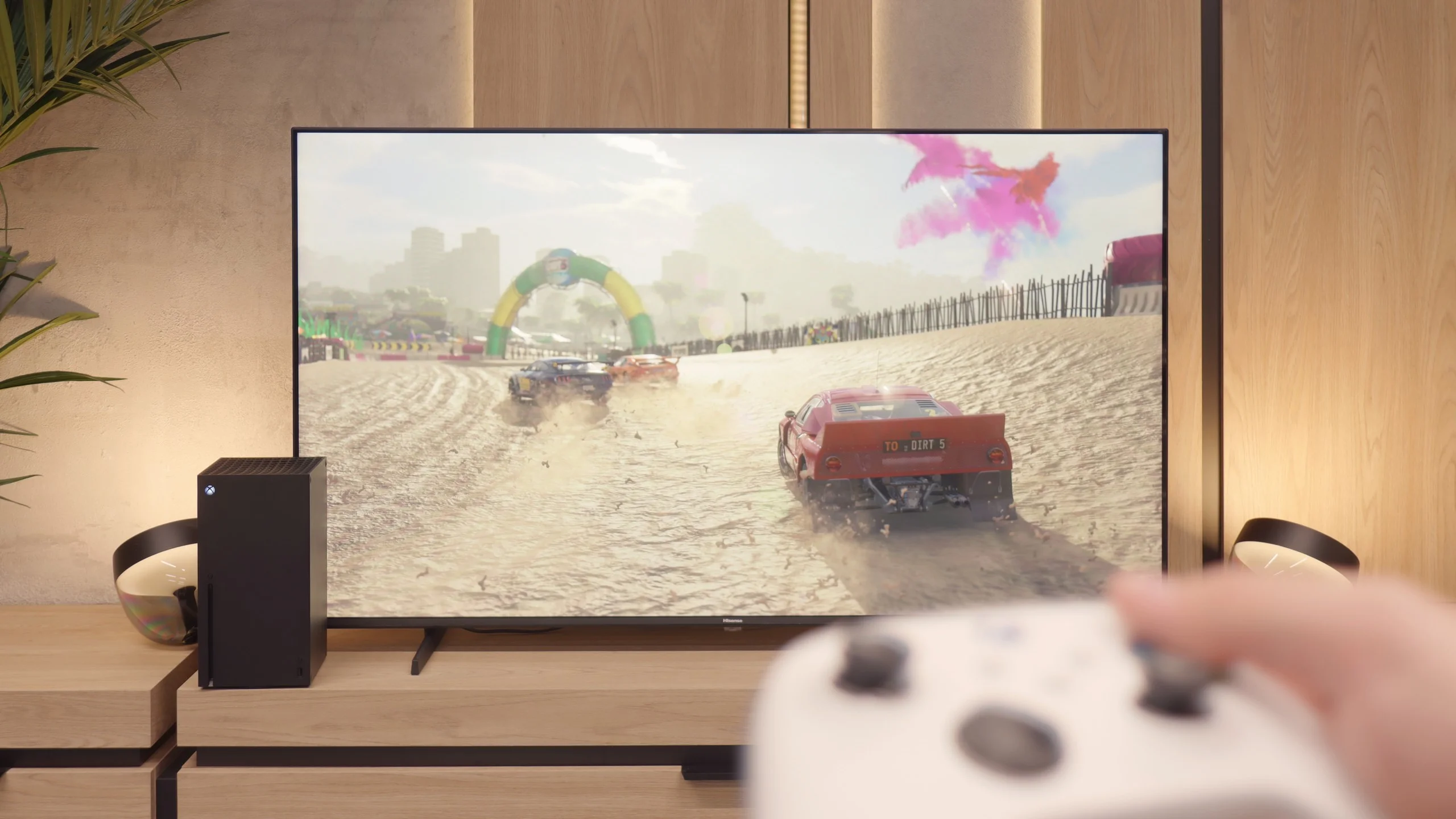
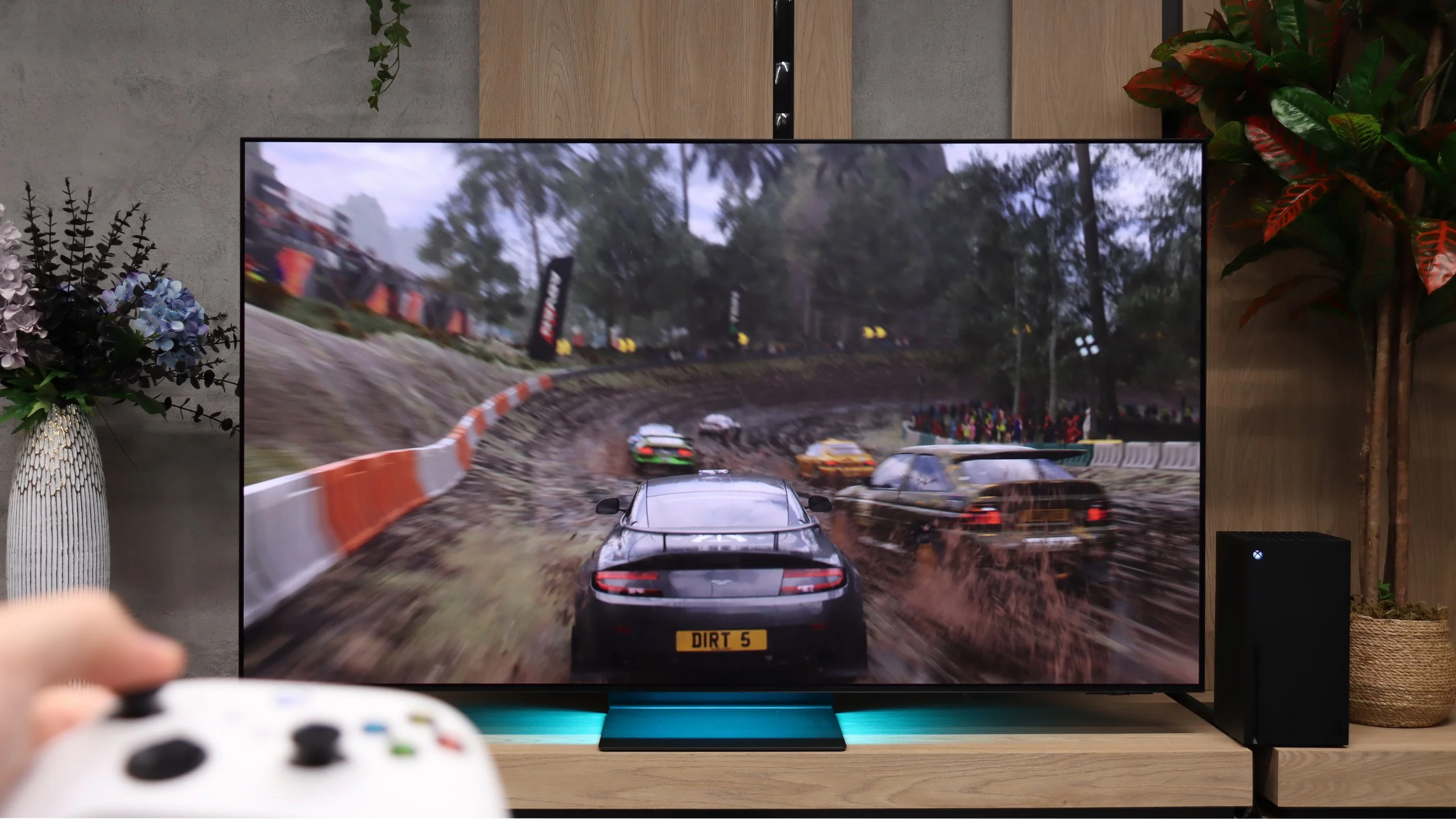
Hisense E7Q / E79Q is a really good TV for gamers, even though it doesn’t support 4K signal at 120 Hz. However, the manufacturer has included a set of features that until recently could only be found in more expensive models. There's ALLM, which is auto-switching to low latency mode, allowing the TV to activate game mode with very low input lag automatically. We also have VRR, working up to 60 Hz – while this may not look impressive on paper, in practice it is fully sufficient, as most console games don’t exceed this limit anyway. All these settings can be quickly found in the Game Bar panel, a convenient menu created specifically for gamers. From this level, you can change picture modes, turn on a frame counter, or even… an on-screen crosshair – in the Vidaa system amusingly called a “target point,” which is the result of a clumsy translation from the Chinese manufacturer.
Special praise should go to the ability to play in 1080p at 120 Hz, which significantly improves the fluidity and responsiveness of the image. This means that if someone wants to play a few titles at a higher refresh rate, they can simply lower the resolution and enjoy much smoother motion. Despite the lack of 4K@120Hz, the Hisense E7Q / E79Q really performs well as a gaming TV – especially for those who aren’t looking for perfection but a solid and fast screen for everyday gaming.
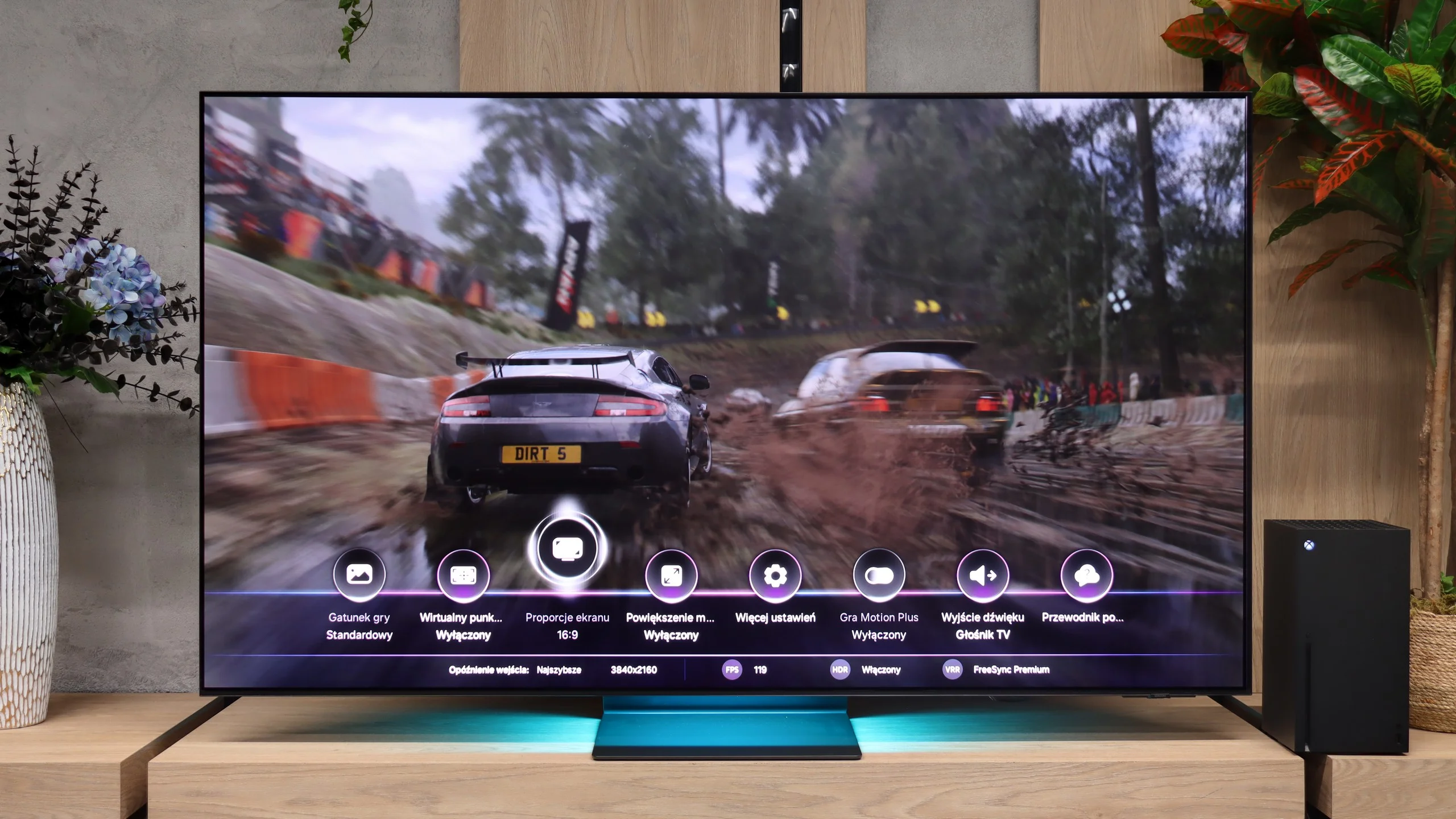
Samsung S95H is a phenomenal TV for gaming. Beyond an excellent picture, it also offers a whole set of useful gaming features. VRR works from 48 to 165 Hz and helps keep things smooth when frame rates fluctuate. ALLM automatically switches to low-latency mode, and properly functioning HGiG makes it easier to set up HDR on a console. It also handles console 120 Hz in Full HD, 1440p and 4K without issues. A handy addition is the Game Bar, which gathers signal information and key settings in one place.
Game Motion Plus deserves special praise. This motion smoother can improve the fluidity of lower-frame-rate games, and in our measurements latency with it was about 20 ms. For additional motion processing that's a very good result. In slower-paced games you can therefore get a smoother image without noticeably sluggish controls.
Among the limitations, it's worth noting the lack of Dolby Vision in games, which mainly affects Xbox users. The HDMI 2.1 ports also have 40 instead of 48 Gb/s bandwidth, likely due to the One Connect module. For typical console gaming at 4K, 120 Hz and 10-bit HDR this doesn't pose a problem or force a drop in picture quality. For most gamers it will therefore be a spec difference they simply won't notice while playing.
Input lag
10/10
10/10
SDR
HDR
Dolby Vision
In gaming, the easiest thing to notice is how fast (or slow) the TV is – and the Hisense E7Q / E79Q passes this test without a hitch. After just a few minutes of playing, you can feel that the response to the controller's movements is instantaneous, without that characteristic lag that can ruin even the best match in FIFA or a crucial exchange in a fighting game. In game mode, the E7Q / E79Q operates with a delay of under 15 ms, meaning there’s practically no gap between pressing a button and the reaction on the screen. This is a level that pricier models would be proud of. And it’s for this responsiveness – perhaps more than the picture or extras – that this TV truly deserves praise.
In terms of input lag, the S95H performs excellently. At 60 Hz we measured just 9 to 11 ms, and at 120 Hz the delay drops to 5 to 6 ms. Controls are very responsive, so even in fast-paced shooters or racing games it’s hard to find any complaints. Importantly, turning on HDR does not worsen the results. You can therefore use the full picture capabilities without sacrificing quick response to controller inputs.
Compatibility with PC
3/10
8.8/10
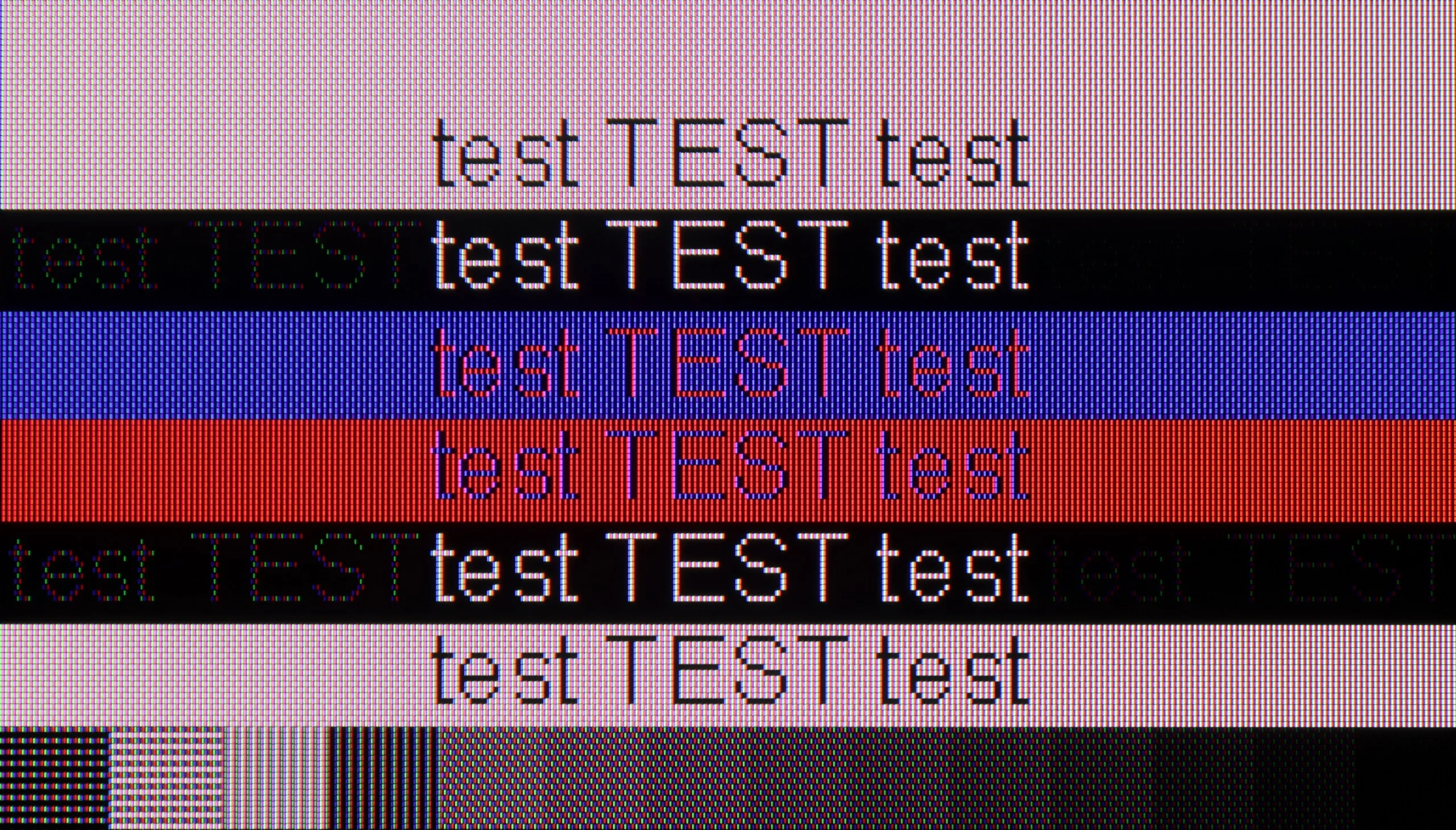
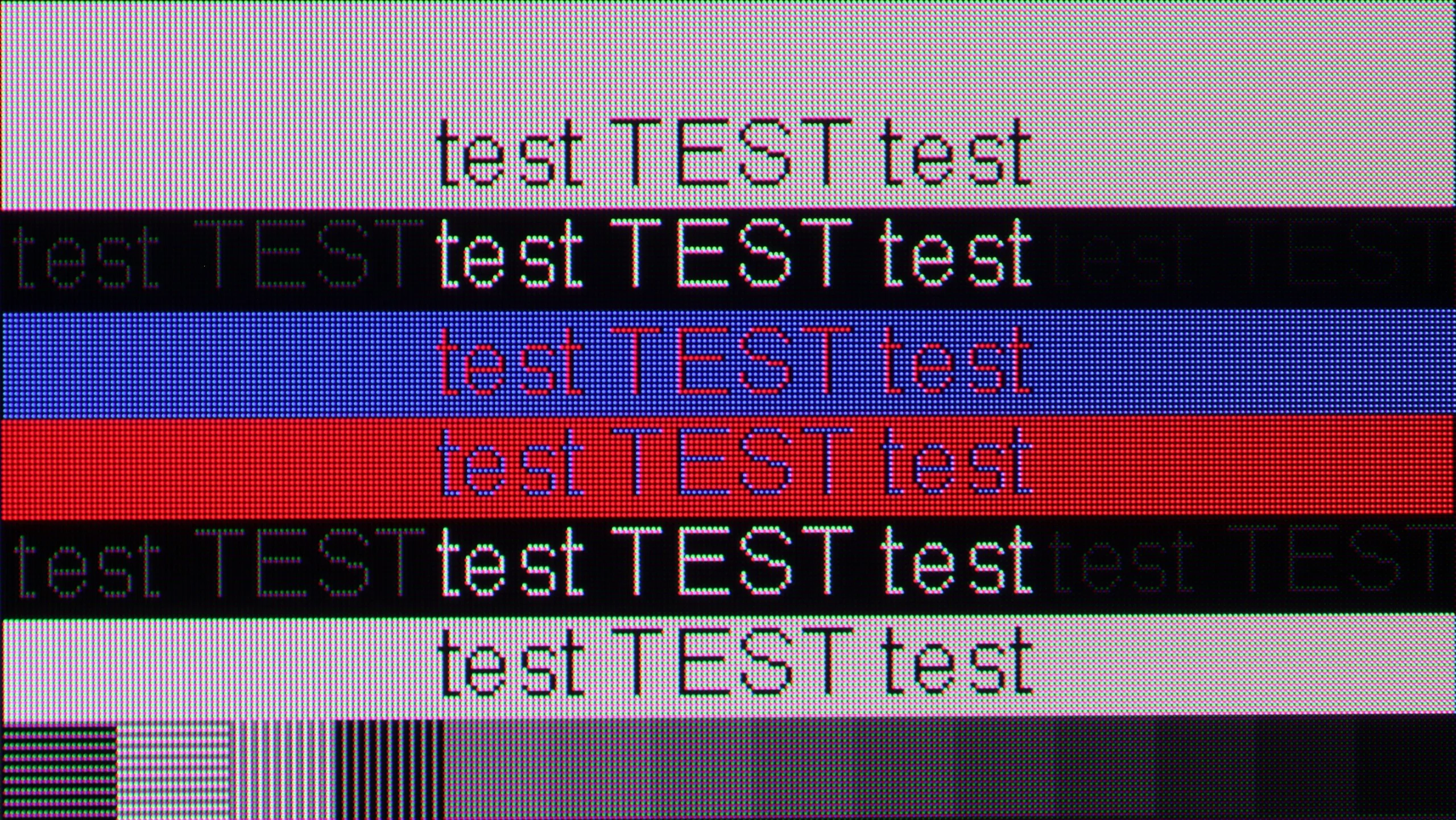
The photo shows the legibility of small fonts. Ideally, lines should be the same thickness on both light and dark text, with minimal pixel gaps.
In terms of collaboration with the PC, the Hisense E7Q / E79Q unfortunately does not impress. Yes, the television supports full 4:4:4 chroma sampling, so text and fonts are fairly readable, but that's where the list of advantages pretty much ends. The screen has a significant issue with dithering, which in practice looks very unpleasant – as if the surface of the image subtly shimmered with colours. This is best seen with dark letters on a grey background – instead of neutral shades of the font, there are delicate flashes of blue, green, and red, resembling a rainbow effect. After extended use with the computer, this can strain the eyes and diminish comfort. On the plus side, it’s worth noting the presence of frame syncing and the ability to operate at 120 Hz at a lower resolution, which may be a small consolation for gamers. However, as a typical PC monitor, the E7Q / E79Q performs rather mediocrely.
Samsung S95H works great with a PC, especially when connected for gaming. You get 4K at 165 Hz, G-Sync support and an input lag of just 6 ms. Combined with the panel's lightning-fast response, this delivers a very smooth and responsive picture. The TV also correctly supports 4:4:4 chroma at its maximum refresh rate, so small colour elements remain legible.
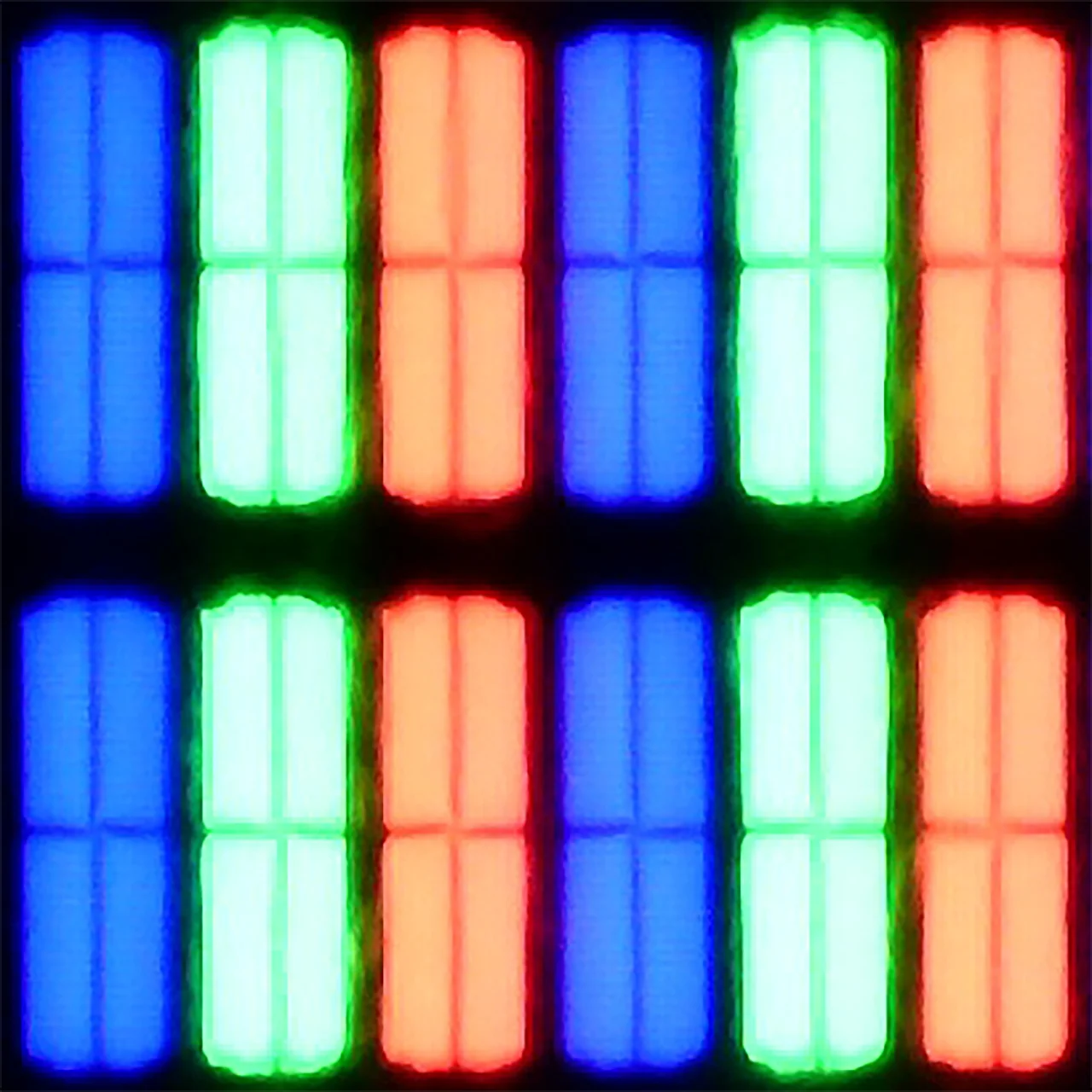
It also handles text well, though it wouldn't be our first choice for all-day document work. Firstly, the QD-OLED versions described here start at 55 inches, so you need a really big desk to use one 😉. Secondly, the triangular subpixel layout means you can see subtle coloured fringes on the tiniest letters. They're mostly visible up close. From a normal TV viewing distance they shouldn't be distracting, so occasional web browsing or working with text isn't an issue.
Viewing angles
3.2/10
9.9/10
Hisense E7Q / E79Q has typical VA panel weak viewing angles. Directly in front, the image looks very good – the blacks are deep, and the contrast is high. However, just sitting slightly off to the side, the situation quickly changes. At around a 45-degree angle, brightness drops by about 73%, and the colours noticeably lose their saturation. This is a typical compromise we have to pay for choosing a TV with this type of panel instead of an IPS panel. There, the viewing angles are much better, but the blacks are significantly worse.
Viewing angles on the S95H are excellent. It's one of the biggest advantages of a QD-OLED panel and in this respect Samsung ranks among the best TVs we've tested. Even when viewed well from the side, colours retain their saturation and the picture doesn't noticeably lose brightness. So when you're at a steep angle or watching a match with a larger group, you don't have to fight for a spot in the centre of the couch. The image still looks great from the sides. 🙂
Daytime performance
5.2/10
7.3/10
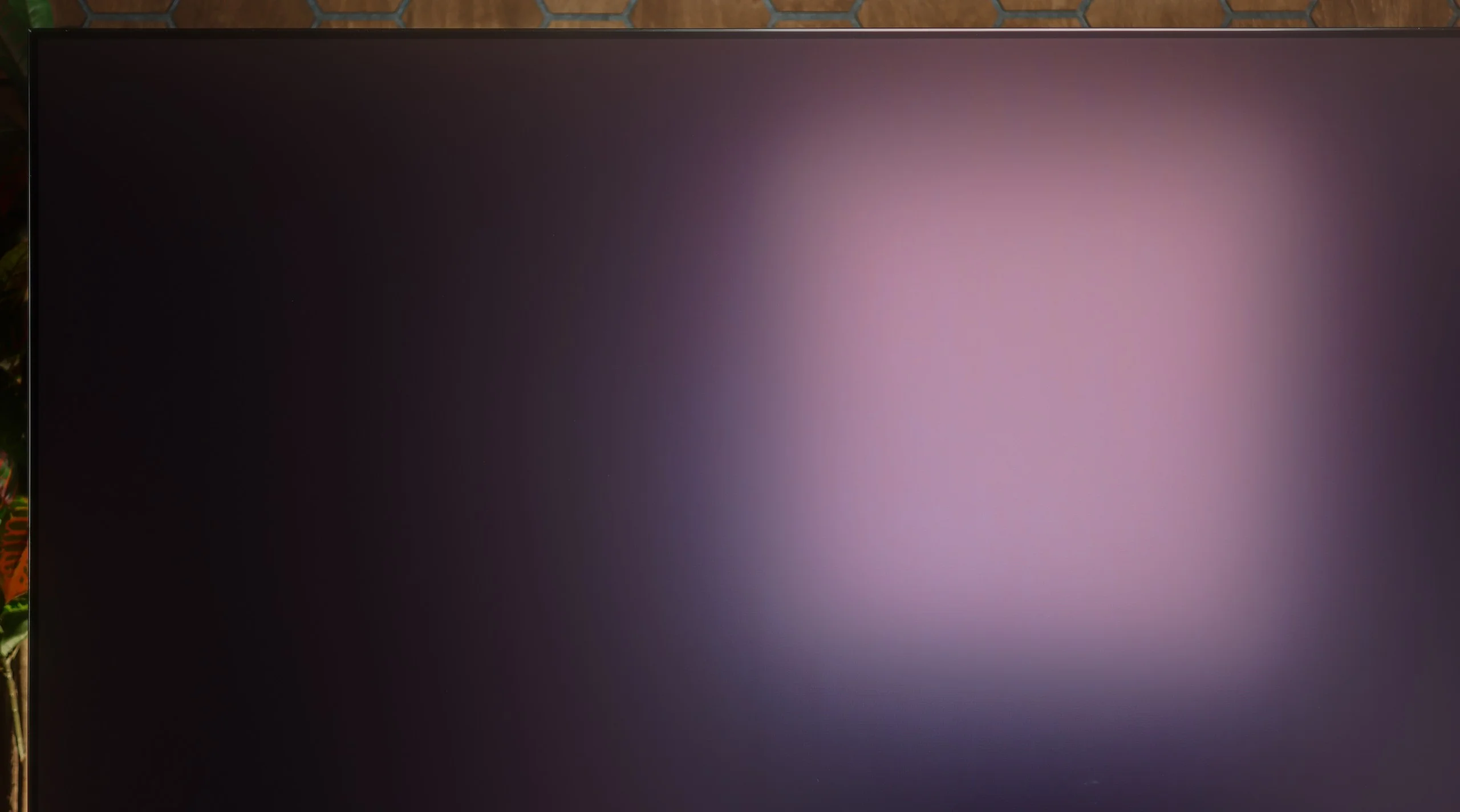
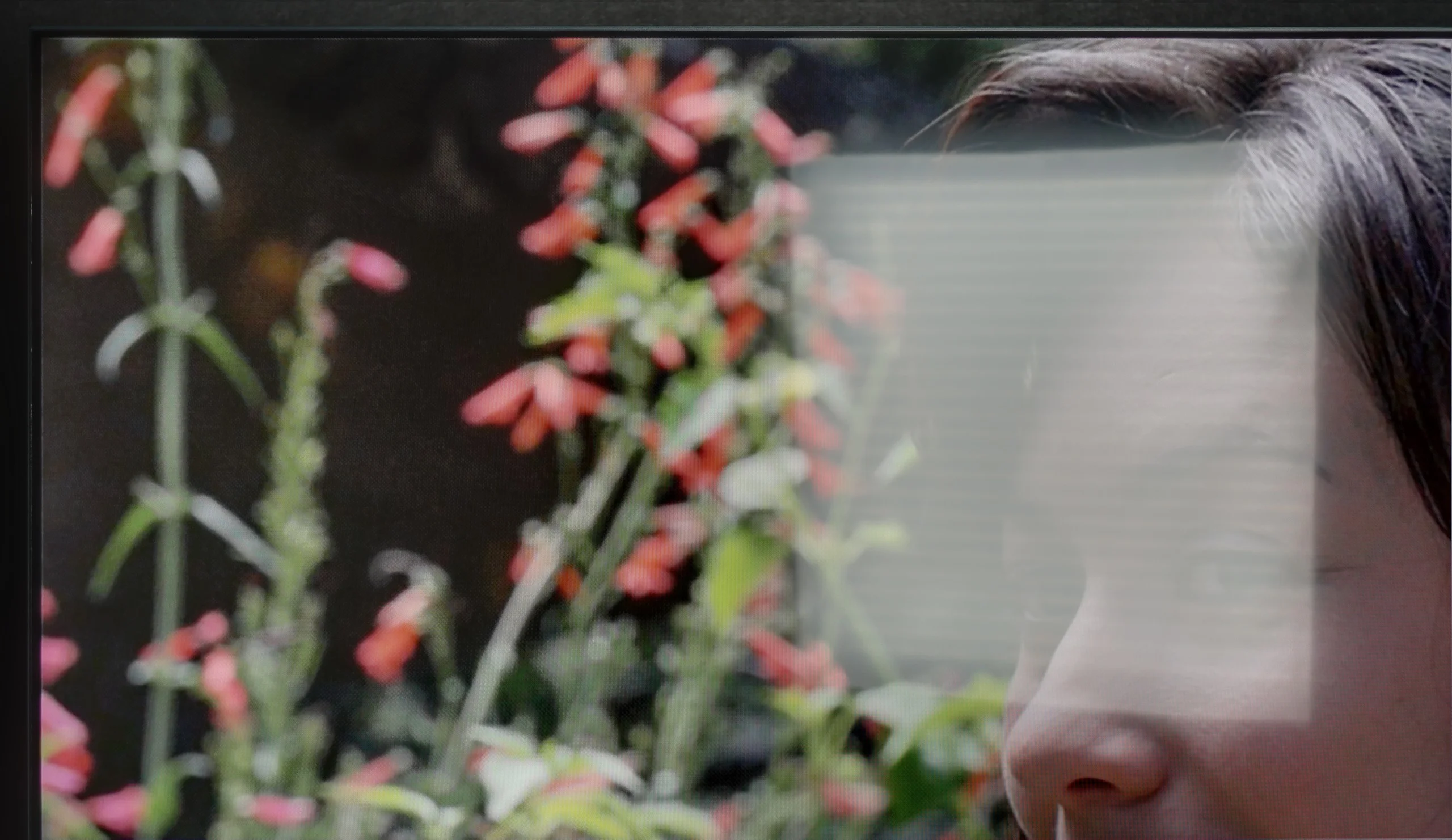

Panel brightness
Samsung S95H: 722 cd/m2
Hisense E7Q / E79Q: 371 cd/m2
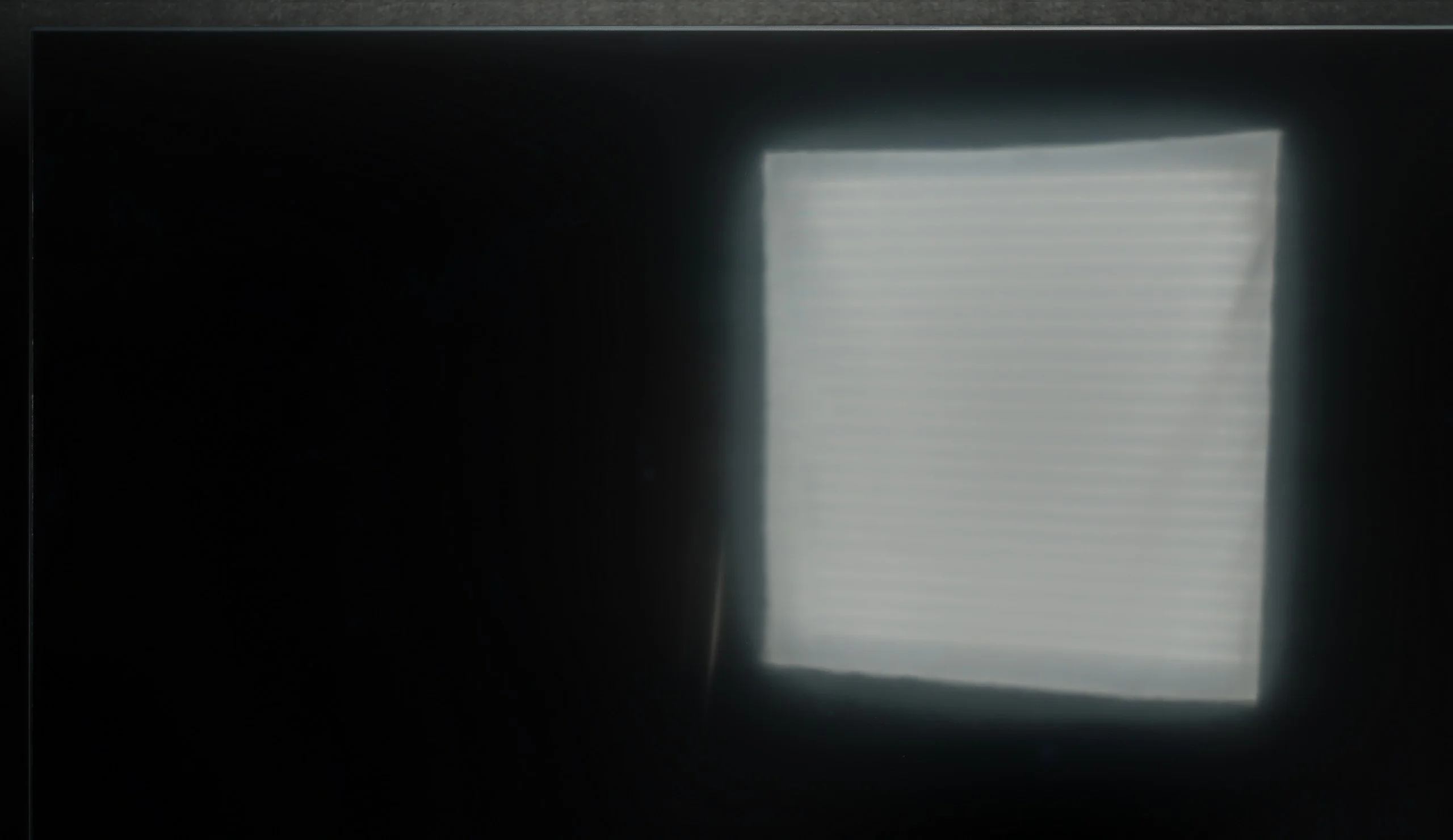
The Hisense E7Q / E79Q performs best in moderately bright living rooms. Its brightness ranges from 350–380 nits, so in typical home conditions, the picture looks good, but in very sunny rooms, it starts to lose clarity. It’s simply not a screen for interiors with large windows or strong daylight. On the plus side, it’s worth mentioning the satin finish of the panel, which effectively reduces reflections – both from lamps and windows. As a result, even when the room isn't dim, the picture remains quite readable.
Samsung S95H performs very well for daytime viewing. Much of that is down to the matte finish, which effectively diffuses reflections. Instead of clearly seeing a window or lamp in the screen, you see a softer glow. Add to that an average SDR brightness of around 750 nits. For an OLED that's an excellent result and allows you to comfortably watch TV in a bright living room. Bear in mind, though, that brightness depends on what’s on the screen. With smaller bright areas the S95H exceeds 1000 nits, but with a completely white screen it falls to about 400. So when watching winter sports or other very bright material, the image won’t have the same punch as in mixed scenes. The biggest limitation remains black levels in a brightly lit room. First, light hitting the QD-OLED panel visibly brightens it with a cherry tint, which makes it lose its nighttime depth and leaves the picture looking less contrasty. The matte finish handles reflections well, but it also scatters that light more. The S95H is still a very comfortable TV for daytime viewing. You simply see the full depth of its blacks only under dimmer lighting.
Panel details
Subpixel Structure:
Panel uniformity and thermal imaging:


Hisense E7Q / E79Q
Samsung S95H
TV features
8.7/10
7.9/10
- SystemVIDAATizen
- System performanceDecentVery good
- HDMI inputs3 x HDMI 2.0, 0 x HDMI 2.10 x HDMI 2.0, 4 x HDMI 2.1 40Gbps
- Other inputsComponent (YPbPr)USB-C
- OutputsToslink (Optical audio), eARC (HDMI), ARC (HDMI), Mini-Jack (Headphones)Toslink (Optical audio), eARC (HDMI), ARC (HDMI)
- Network InterfacesWi-Fi 2.4GHz, Wi-Fi 5GHz, Ethernet (LAN) 100MbpsWi-Fi 2.4GHz, Wi-Fi 5GHz, Ethernet (LAN) 100Mbps
- TV receptionDVB-T, DVB-T2, DVB-S, DVB-S2, DVB-CDVB-T, DVB-T2, DVB-S, DVB-S2, DVB-C
Classic features:
- Recording to USB (terrestrial TV)
- Recording programming
- Picture in Picture (PiP)
- RF remote control (no need to aim)
- Backlit remote control
- Teletext
- Audio only mode
- Bluetooth headphones support
- Simultaneous Bluetooth headphones & TV audio
Smart features:
- AirPlay
- Screen mirroring (Windows Miracast)
- Voice search
- Voice search in native language
- Ability to connect a keyboard and mouse
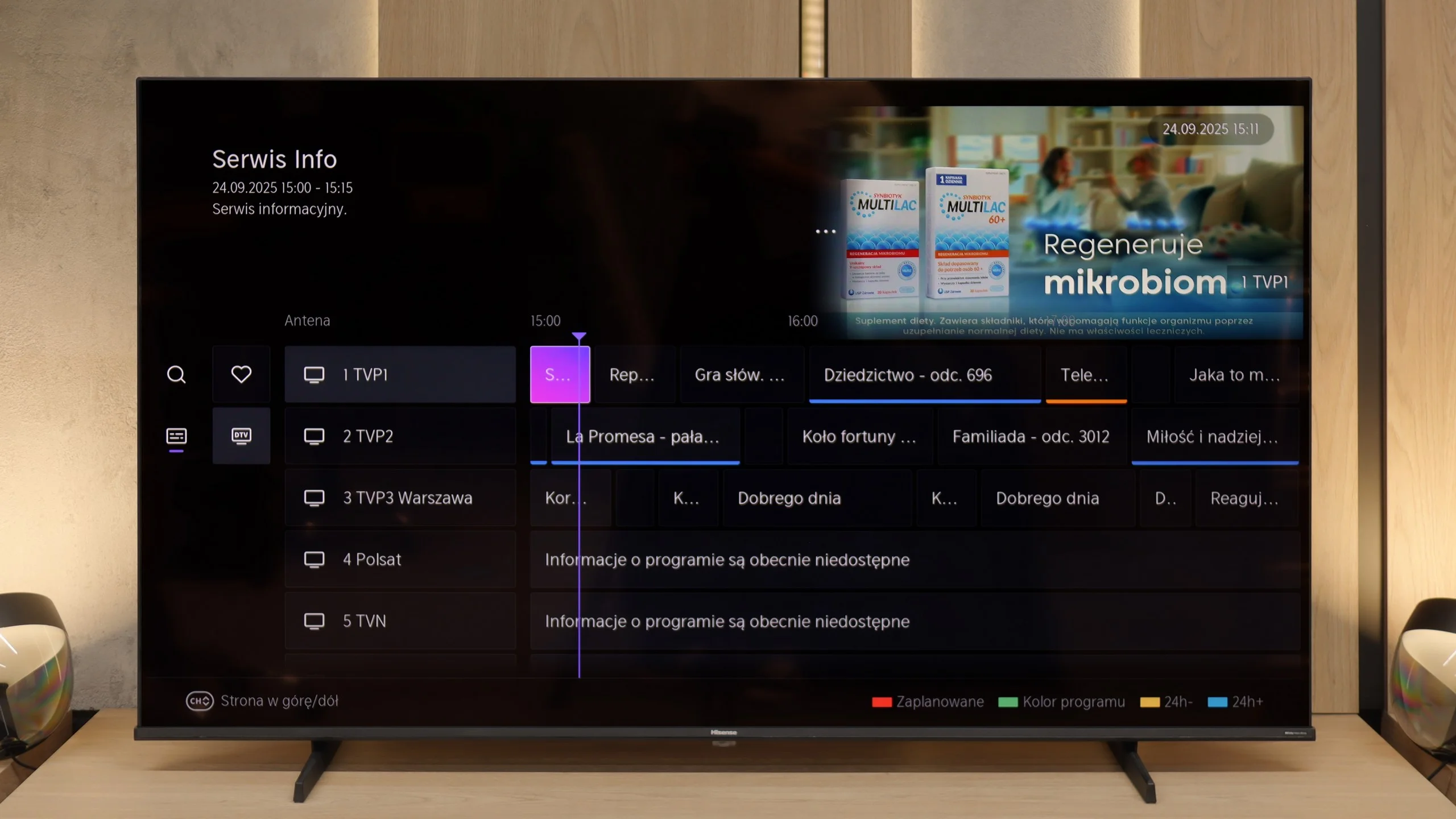
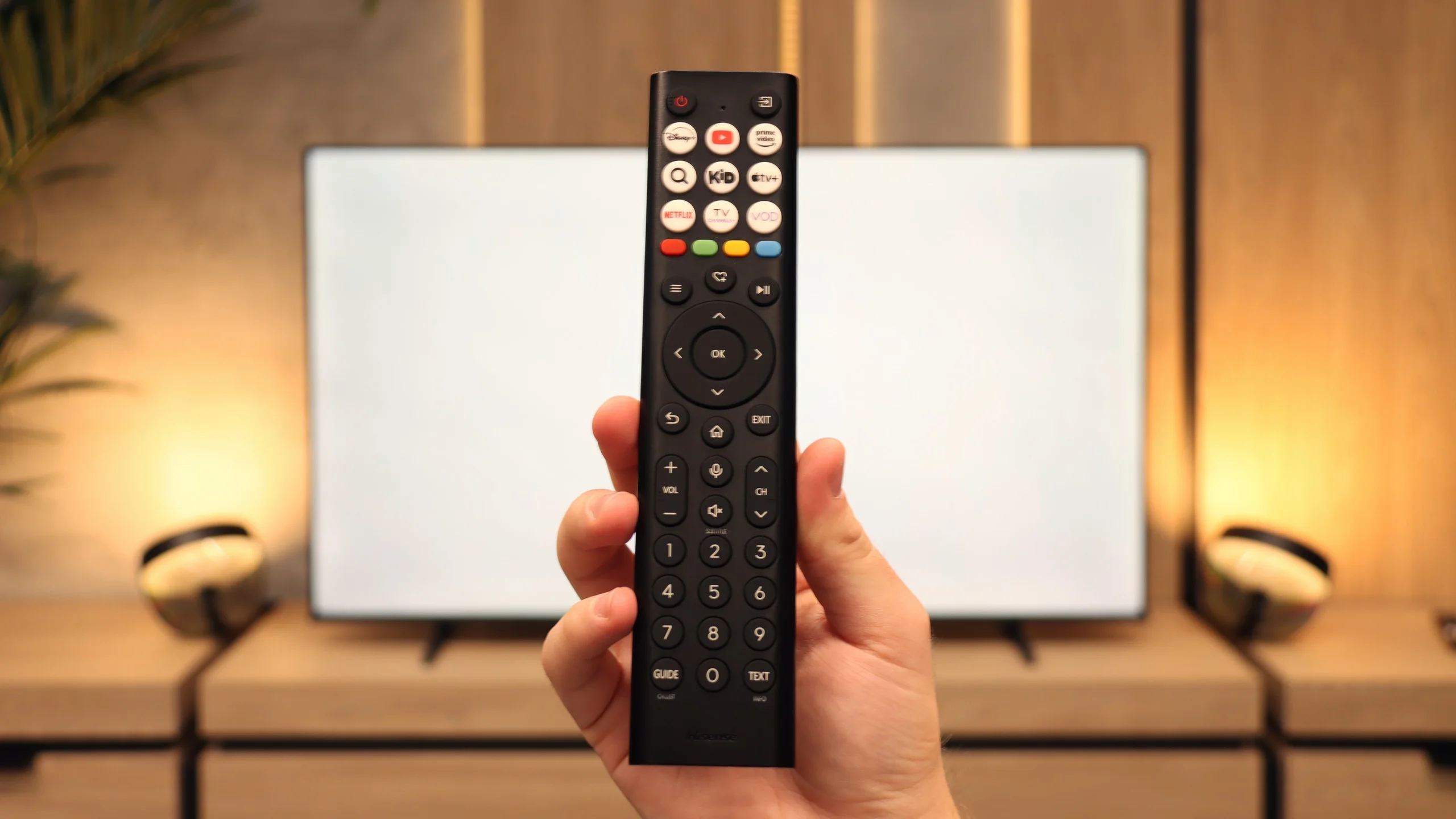
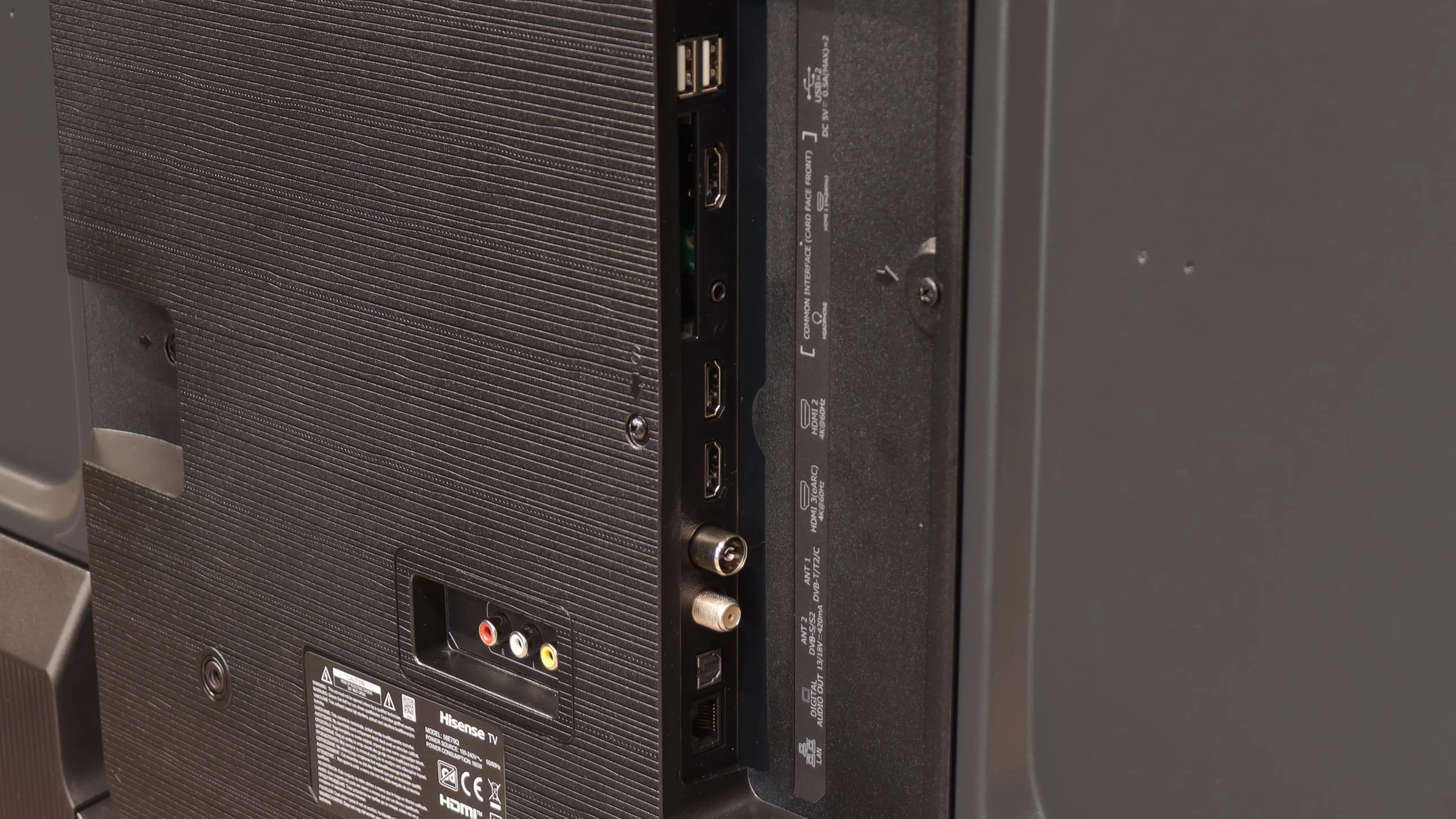
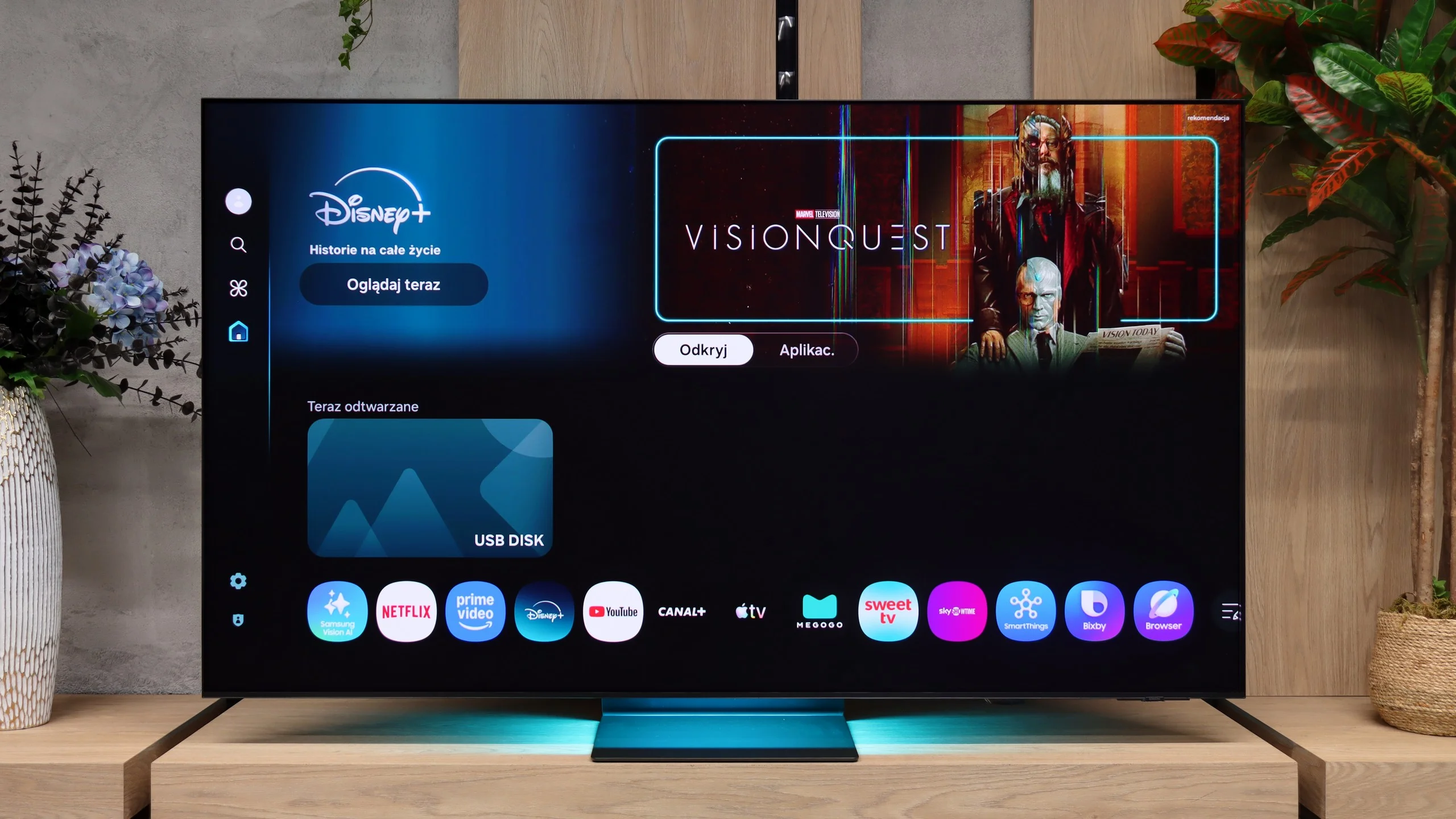
Sound connection options
- HDMI audioeARC (HDMI), ARC (HDMI)eARC (HDMI), ARC (HDMI)
- Other audio outputsToslink (Optical audio), Mini-Jack (Headphones)Toslink (Optical audio)
- Wireless audioBluetoothBluetooth
Supported audio formats (external HDMI eARC audio):
- Dolby Digital Plus 7.1
- Dolby True HD 7.1
- Dolby Atmos in Dolby Digital Plus (JOC)
- Dolby Atmos in Dolby True HD
- DTS:X in DTS-HD MA
- DTS-HD Master Audio
Senior accessibility
- Numeric keyboard on TV
- Font size adjustment
- Audio description
SmartTV Features: Vidaa
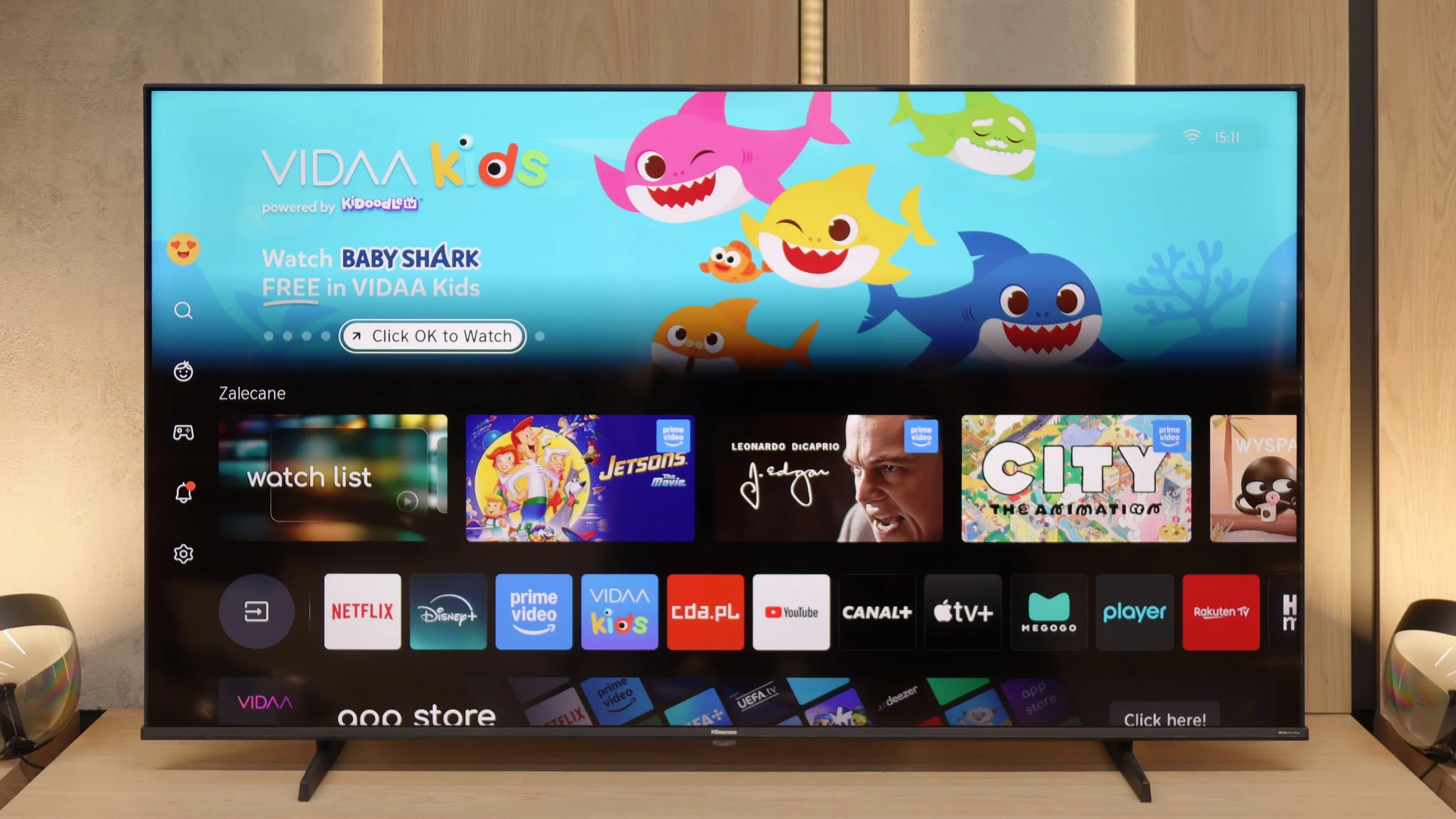
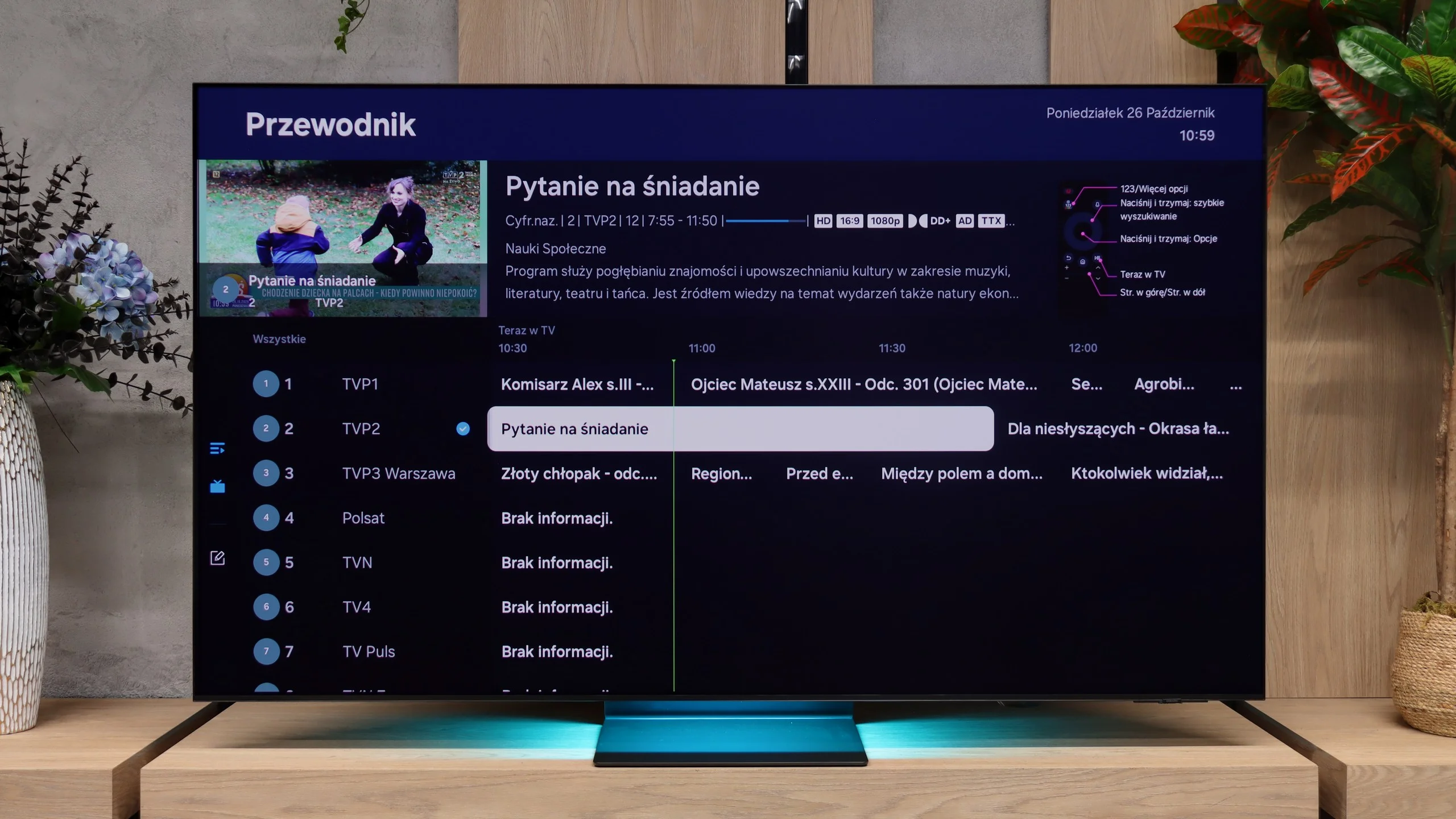
When it comes to Smart TV features, the Hisense E7Q / E79Q operates on the VIDAA system, which has been developed by the Chinese manufacturer for several years. It’s clear that the software is maturing – it includes AirPlay, Screen Mirroring, and voice search in multiple languages, including Polish. Unfortunately, in our unit, it worked quite slowly, which surprised us a bit, as in other Hisense models, this system responded much faster. The limited app library is also a downside. Of course, the most important ones are here – Netflix, Disney+ and YouTube – but it’s worth checking before purchase to see if you can find everything you use daily.
Traditional Features
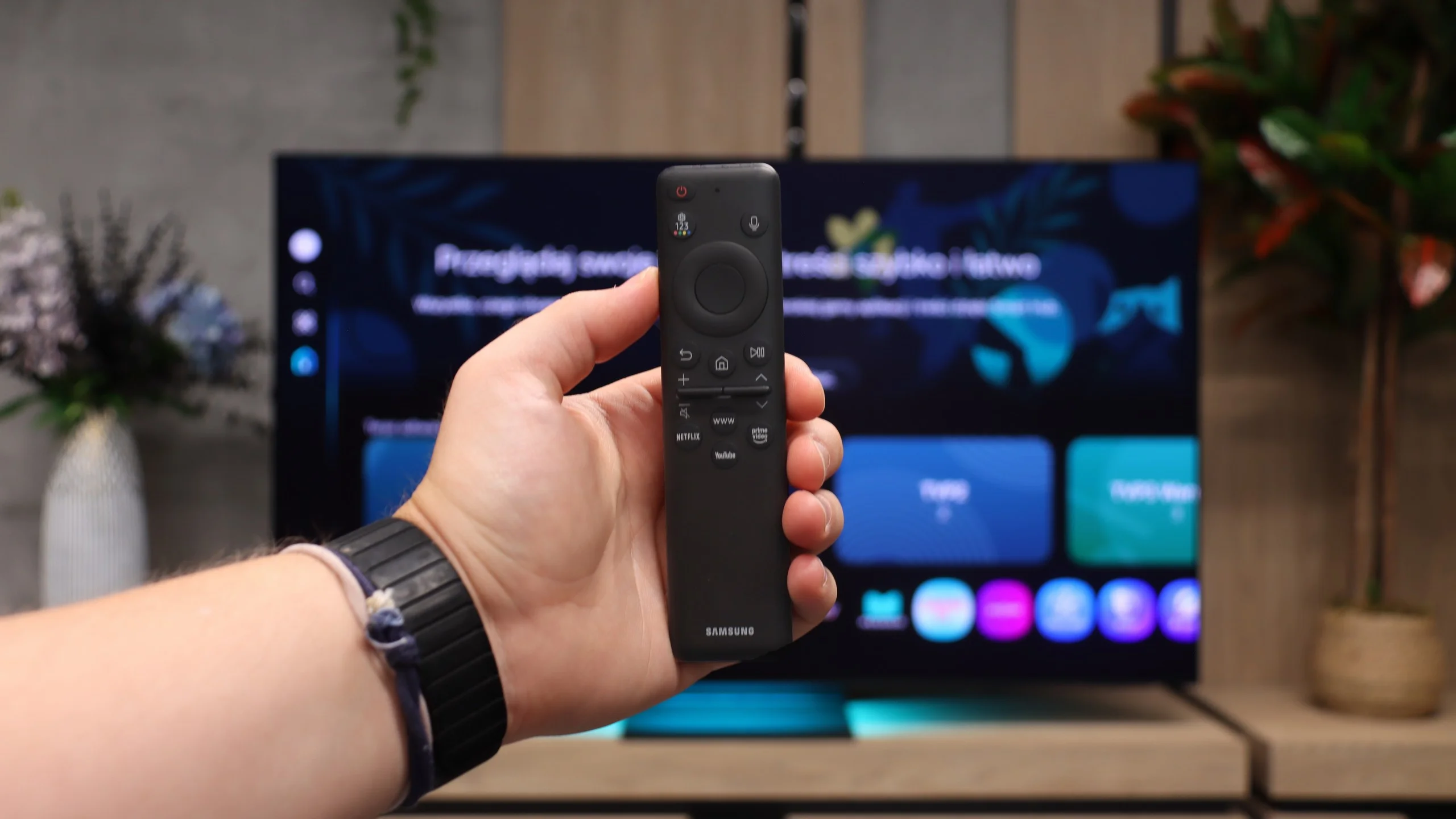
In terms of traditional television features, the E7Q performs significantly better. It offers practically everything you could expect from a classic television: recording from built-in tuners to USB, a headphone jack output, and even a component input for older audio equipment. Additionally, it fully supports audio via eARC, ensuring that, regardless of the situation, the soundbar will always “perform as required.” The remote is also quite classic, well-designed with a good number of buttons (including numerical ones), which may appeal to those who still watch regular television on the set. 😉
Tizen
The S95H uses Tizen, which runs very quickly here. Switching between apps and settings is smooth, so daily use doesn't test your patience. There’s a wide selection of streaming apps, voice search and AirPlay for streaming content from Apple devices. You can also wirelessly display a computer’s screen. It’s a well-equipped smart TV where it’s easy to find something to suit you.
However, we noticed something odd. Our unit had 2025 software even though the S95H is a 2026 model. At the time of testing we couldn't find an update to this year’s system on the manufacturer’s website either. That’s surprising, as other Samsung models have already received it. Tizen itself runs well, but for a new TV of this class we'd expect the system to be up to date too.
TV features and remote
Among the classic features there’s teletext and picture-in-picture, but there’s no option to record programmes to USB. It can also be useful to play audio simultaneously through the TV speakers and Bluetooth headphones. The remote control is very minimalist and works without needing to point it at the screen, though it’s a pity it doesn’t have backlit buttons. A definite plus is that it doesn’t require battery replacements and can be charged using solar power.
One Connect
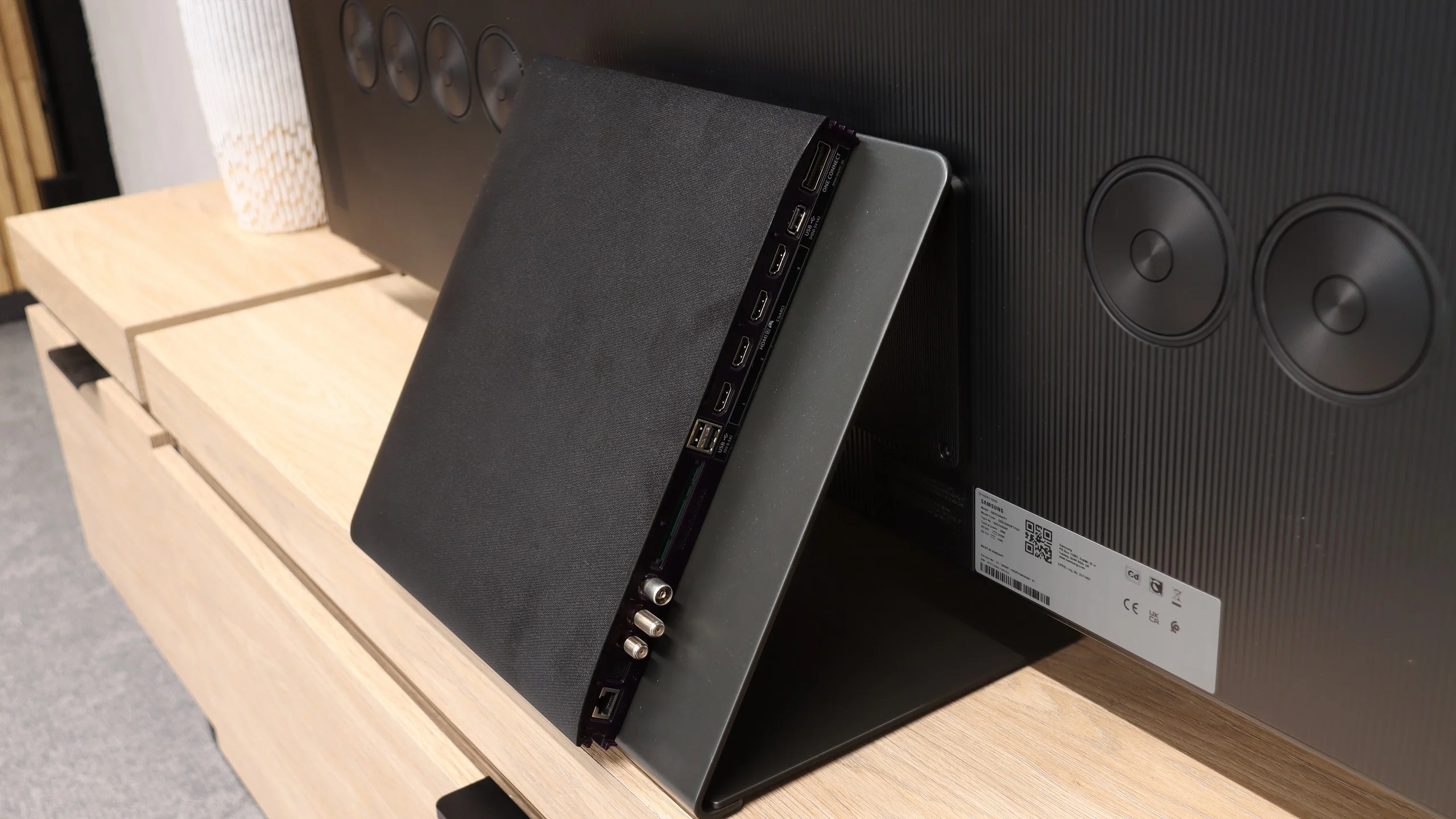
An important addition is the One Connect module, which earns Samsung TVs a small plus from us. It contains four HDMI 2.1 inputs with 40 Gb/s bandwidth, and you can connect a soundbar via eARC or the optical output. The biggest advantage of this solution is simple: only one cable runs to the screen. It’s easier to hide cables and connect another device without reaching behind the TV. People who plan to wall-mount the S95H will particularly appreciate this.
Apps
7.7/10
9.3/10






















Playing files from USB
8.2/10
9.1/10
Supported photo formats:
Maximum photo resolution:
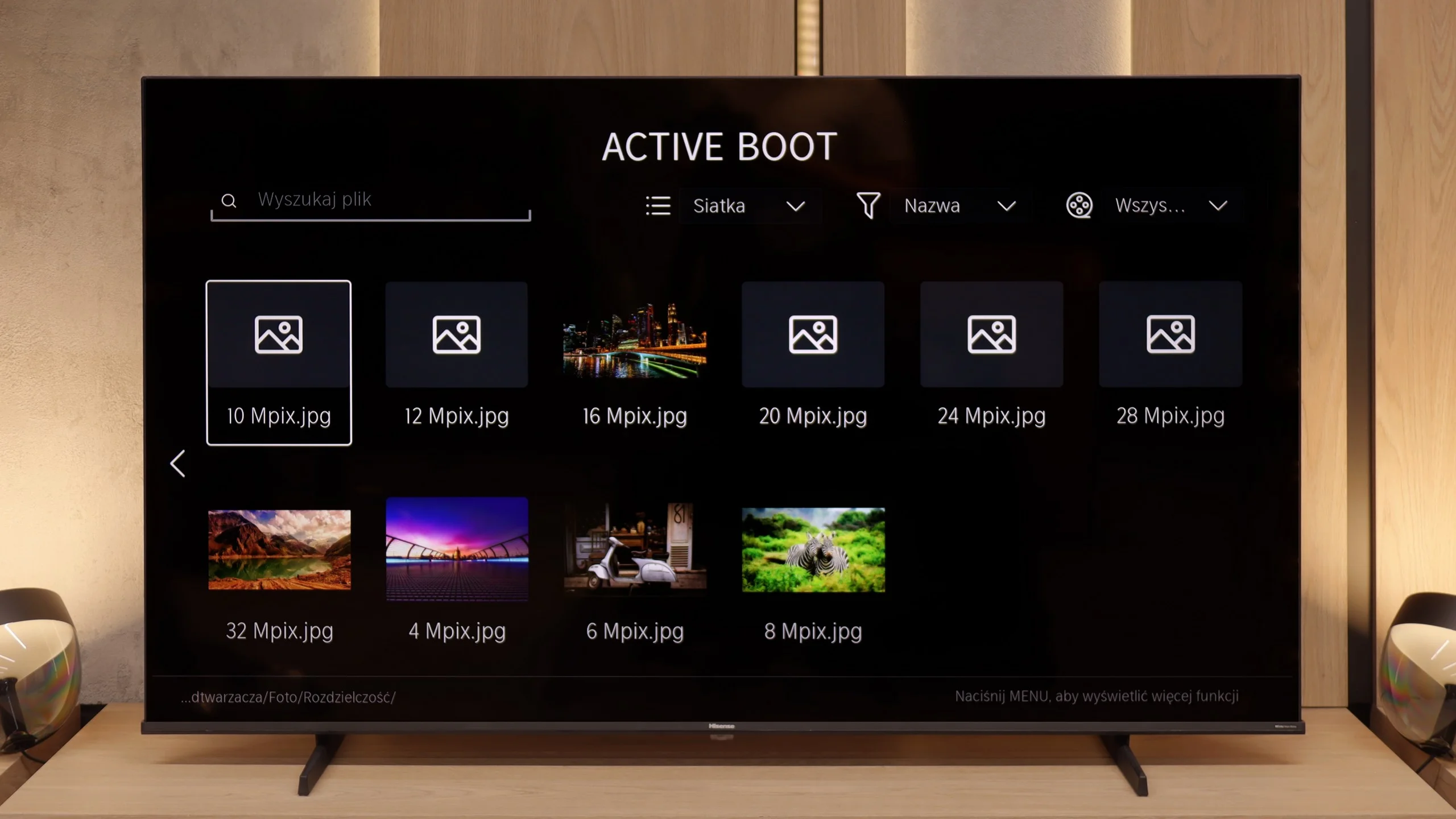
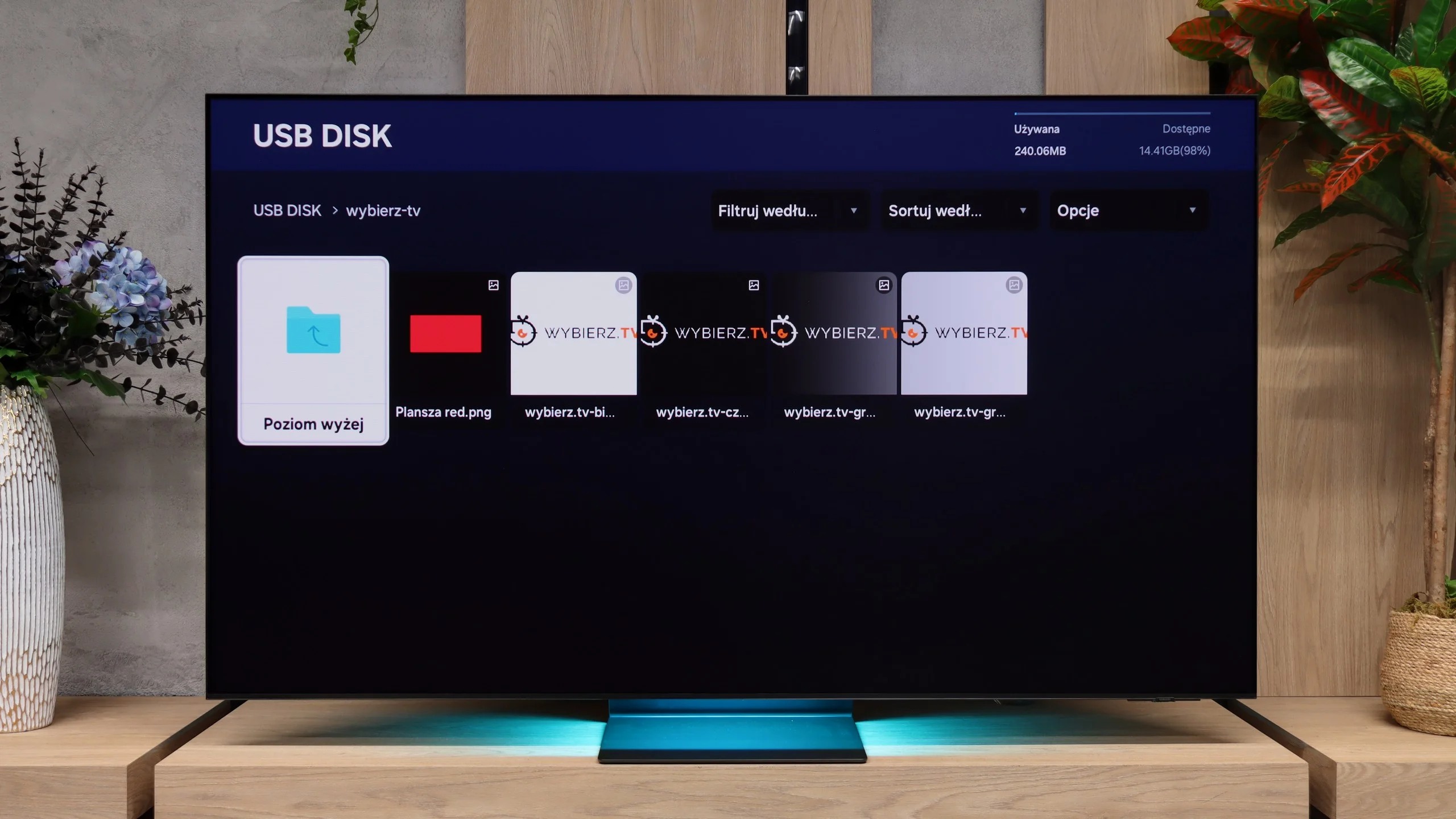
The media player in the Hisense E7Q / E79Q works properly, but it can be temperamental. The biggest issue concerns photo support – the TV only handles selected formats, and some files simply do not open. This is quite surprising because even cheaper models from other manufacturers usually do not have this problem. Videos and music play without major issues, however, one has to keep in mind that the E7Q is not a master of versatility when it comes to files from a USB stick. It is rather a basic player that works – provided we don't try to "surprise" it with something.
The built-in file player runs quickly and smoothly. The S95H opened almost all the audio and video files we prepared and expected it to support. You don't have to wait long for them to load, and browsing the storage device's contents is straightforward.
It's a shame it doesn't support HEIC photos, the default format used by many iPhones. So if you want to show photos from your phone directly from a USB stick, you'll need to convert them first, for example to JPEG.
Sound
6.3/10
8/10
- Maximum volume83dB86dB
- Dolby Digital Plus 7.1
- Dolby True HD 7.1
- Dolby Atmos in Dolby Digital Plus (JOC)
- Dolby Atmos in Dolby True HD
- DTS:X in DTS-HD MA
- DTS-HD Master Audio
The sound on the Hisense E7Q / E79Q is exactly what you’d expect from a TV in this price range – rather flat, but fairly loud. During measurements, the maximum volume reached around 83 dB, so it’s more than sufficient for daily viewing. Dialogues are easily heard, which somewhat compensates for the lack of distinct bass and depth. There are no revelations here: it's simply a solid minimum that is acceptable. On the plus side, the wide support for audio formats is a bonus. The TV handles Dolby TrueHD, Dolby Atmos, and even the increasingly rare DTS:X. This is a nice touch because at least we can be sure that everything will play as it should, regardless of the source – especially when we connect it to an external audio source like a soundbar.
In terms of sound the S95H is essentially a copy of last year’s model. Despite its very slim chassis it sounds clean and pleasant, but the presentation is fairly flat. It lacks depth and stronger bass, which feels like a drawback next to such an impressive picture. On the other hand, you can’t expect large drivers in a TV only about a centimetre thick. The beautiful looks come at a price.
It’s therefore worth pairing the S95H with a soundbar or a separate audio system so the sound can better keep pace with the picture. The TV supports Dolby Atmos, which lets you expand the setup with immersive sound. It does not, however, support DTS. That limitation may be an issue mainly for people watching films on discs with DTS soundtracks.
Sound Quality Test
Acoustic Measurements
83dBC (Max)
75dBC
86dBC (Max)
75dBC
Reader comments
Comments are provided by the external service Disqus (Zeta Global). Once loaded, Disqus may set cookies and process data about your activity.
We will remember your choice on this device. Provider's privacy policy