 Direct comparison
The Haier Q80FUX television is one of the most schizophrenic propositions we have had in our editorial office for a long time. On one hand, we have a solid piece of equipment: a VA panel guaranteeing deep blacks, as expected for this segment, and a QLED quantum filter that can indeed generate juicy, eye-catching colours. This is the foundation on which a truly competitive mid-range receiver could have been built. Unfortunately, all this potential of the matrix is systematically undermined by the software, which is a real anchor for this model. The biggest Achilles' heel of the Q80FUX is its total capitulation in dealing with HDR10 materials. The electronics seem to completely misunderstand how to interpret the signal, resulting in it consistently blowing out the brightest parts of the image, turning them into a flat, milky spot. Adding to this is the Google TV system, which – while functional – is unstable, full of bugs and annoying oversights, giving us an image of a raw product that clearly reveals the producer's lack of experience. Just when we were about to write this model off, we discovered its surprising niche. After connecting a console, the Q80FUX undergoes a transformation. It turns out that this television offers remarkably low input lag, fully supports VRR, and can handle a 120Hz signal in Full HD resolution. In the gaming world, where responsiveness is everything, these parameters put it in a very good light. So we are dealing with a device of very narrow specialization. It is not a universal living room television – it lacks stability and, above all, any correctness in handling films. It is rather a budget, large-format monitor for gamers, who can consciously forgive it all the software flaws in exchange for those few key attributes for console/PC at a relatively affordable price.
- Matching (Score) |
- Our verdict |
- TV appearance |
- Where to buy |
- Contrast and black detail |
- HDR effect quality |
- Factory color reproduction |
- Color reproduction after calibration |
- Smoothness of tonal transitions |
- Image scaling and smoothness of tonal transitions |
- Blur and motion smoothness |
- Console compatibility and gaming features |
- Input lag |
- Compatibility with PC |
- Viewing angles |
- Daytime performance |
- Panel details |
- TV features |
- Apps |
- Playing files from USB |
- Sound
S95H / S99H

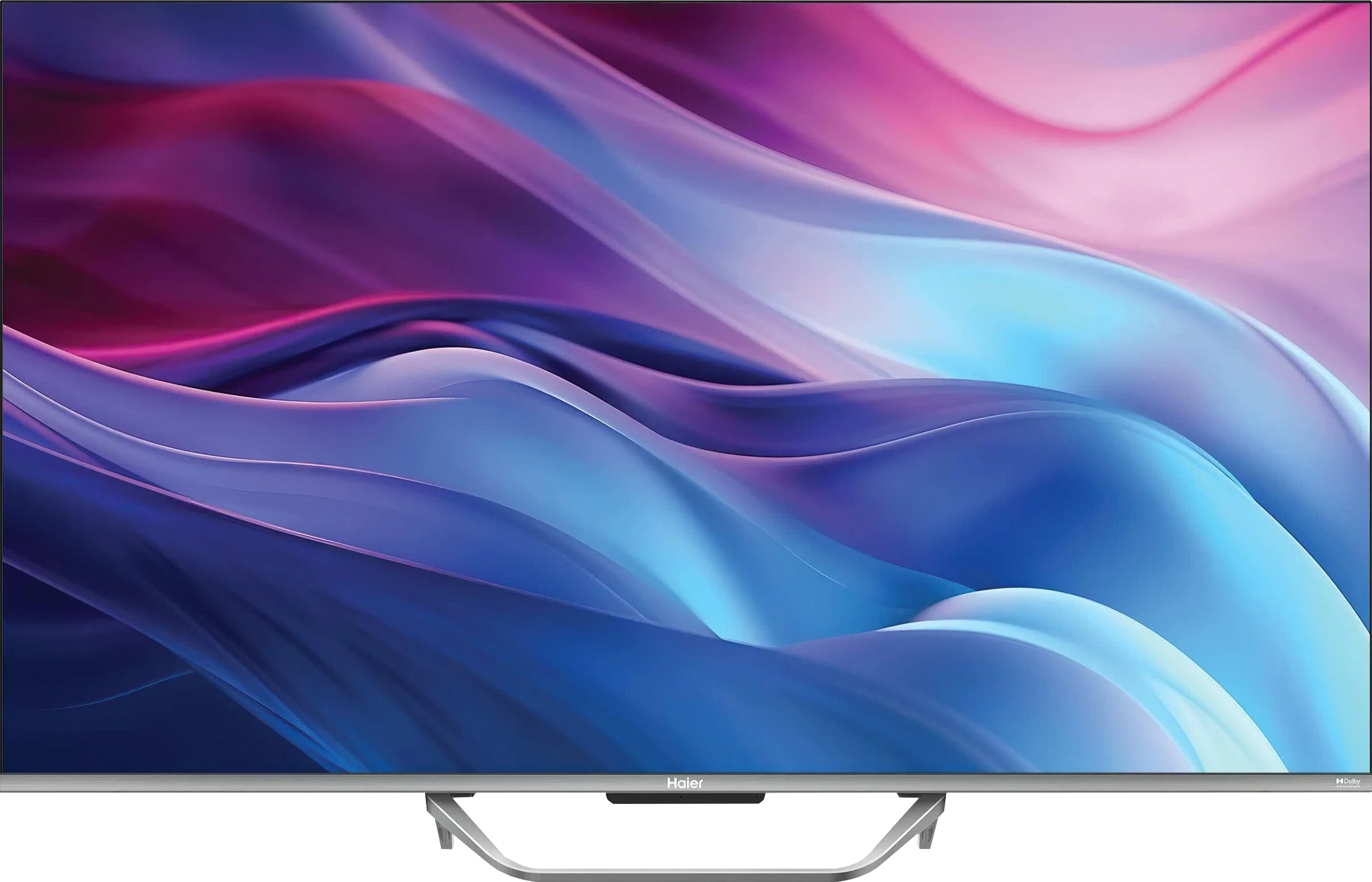
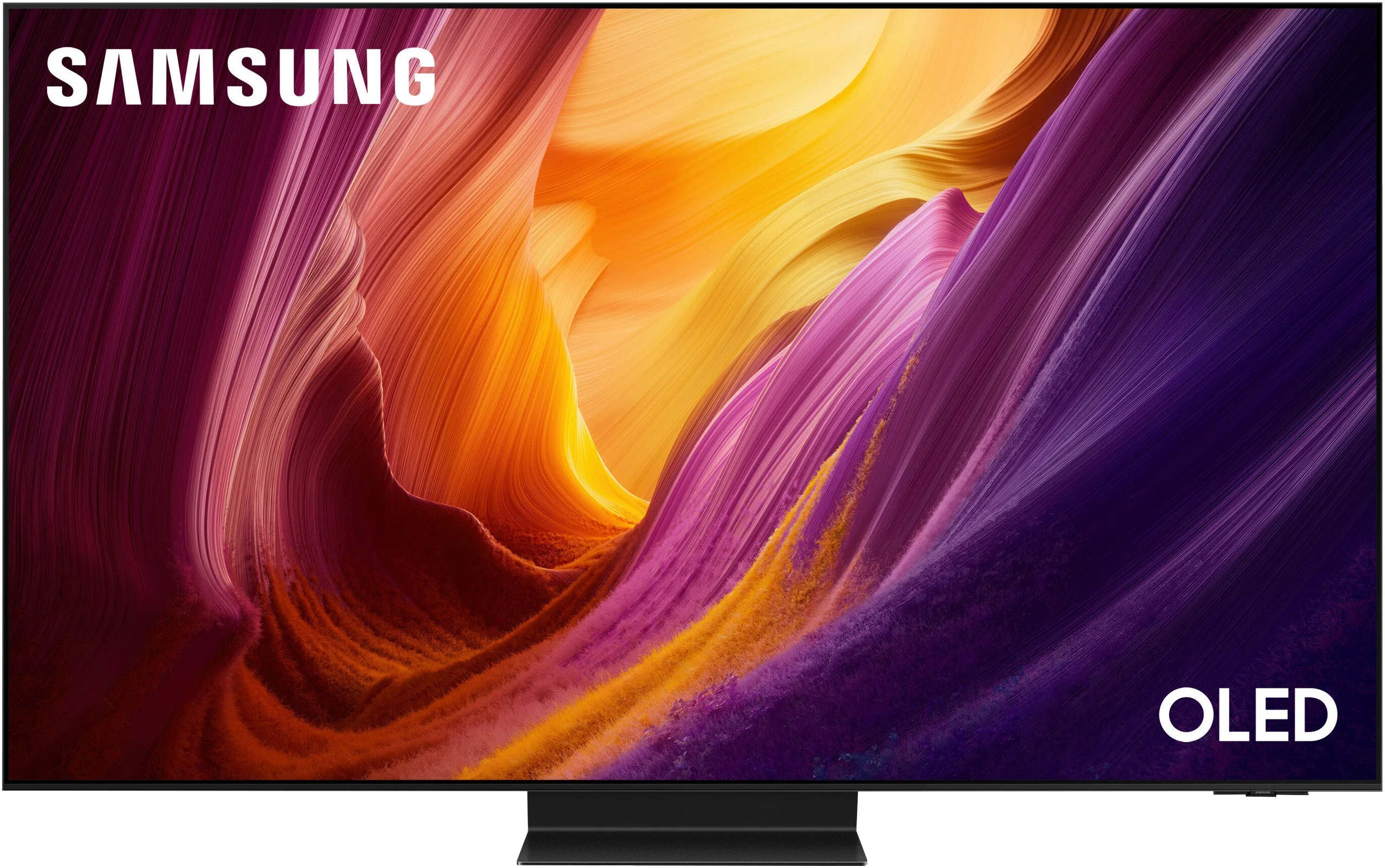
Panel type: LCD VA
Resolution: 3840x2160
System: Google TV
Model year: 2025
Panel type: QD-OLED
Resolution: 3840x2160
System: Tizen
Model year: 2026
Check how well they match your needs
Take the surveyOverall rating
5.8
8.8
 Movies and series in UHD quality
5.9
9.3
 Classic TV, YouTube
5.6
9.4
 Sports broadcasts (TV and apps)
4.7
9.0
 Gaming on console
6.7
9.9
 TV as a computer monitor
6.0
8.8
 Watching in bright light
4.8
7.3
 Utility functions
5.6
7.9
 Apps
9.6
9.3
 Sound quality
5.5
8.0
Complete the survey to find out what fits your preferences
Advantages

Very good native contrast and decent black (thanks to the VA panel)
PFS / QLED Filter - Wide colour gamut (about 95% DCI-P3)
Remarkably low input lag (below 10 ms at 120Hz and about 12 ms at 60Hz), making it a great choice for fast-paced games.
Support for 120Hz at lower resolution (Full HD) and the presence of VRR and ALLM
Support for Dolby Vision
Well-functioning file player via USB
Presence of analogue headphone output (jack)
Perfect black levels and OLED contrast
Very high brightness
Rich, highly saturated QD-OLED colours
Natural image after calibration
Excellent tone mapping (lots of detail in bright scenes)
Matte coating effectively reducing reflections
Best viewing angles on the market (QD-OLED)
165 Hz refresh rate and lightning-fast panel response
Very low input lag and extensive gaming features
STUNNING LOOK
One Connect module included
Disadvantages

The image is quite "blown out" in HDR
Google TV software is full of bugs, poor translations, and issues
Lacks any image enhancement features (noise reduction, gradient smoothing)
Average brightness
Flat, bass-less sound
High input lag in Dolby Vision mode for gaming
Weird and not very ergonomic remote
Noticeable degradation of black levels in bright ambient light (a characteristic of QD‑OLED panels)
Last year’s version of Tizen
No DTS support (mainly affects Blu‑ray fans)
Our verdict
The Samsung S95H is, in almost every respect, a continuation of the S95F. During testing we often felt like we were watching the same TV. But... is that a bad thing? Not necessarily, because the predecessor set the bar very high. We still get a phenomenal picture and one of the best TVs we've tested in 2026. HDR packs a huge punch, and the colour and black levels make a good film really keep you glued to the screen. With a console or PC the S95H is just as enjoyable because it delivers what we expect from a flagship product.
The strongest argument for this model may, however, be its looks. It's aimed at people who want the slimmest, most minimalist TV possible. On the wall the S95H looks particularly great, and One Connect helps organise the whole setup. If the distinctive bezel of the S99H isn't to your taste, you'll find a more discreet design here. Brightness is admittedly lower than in the higher-end series, but still high enough that it's hard to call it a serious compromise for viewing.
Not everything deserves praise. We were most disappointed by the inclusion of last year's version of Tizen. The system itself runs quickly, but that detail only underlines how little has changed compared with the S95F. Perhaps Samsung will release an appropriate update soon.
Ultimately the S95H is a great choice for someone seeking top-tier picture quality in an exceptionally slim chassis. The Samsung S95H isn't revolutionary, but it's still a TV that, despite giving us a slight déjà vu, left a strong impression.
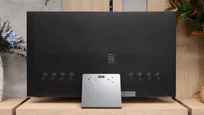
TV appearance






Contrast and black detail
6.3/10
10/10
Local dimming function: No
Contrast:


Result
5,200:1

Result
7,400:1

Result
7,550:1

Result
7,300:1

Result
6,450:1
Result
∞:1
Result
∞:1
Result
∞:1
Result
∞:1
Result
∞:1
Halo effect and black detail visibility:
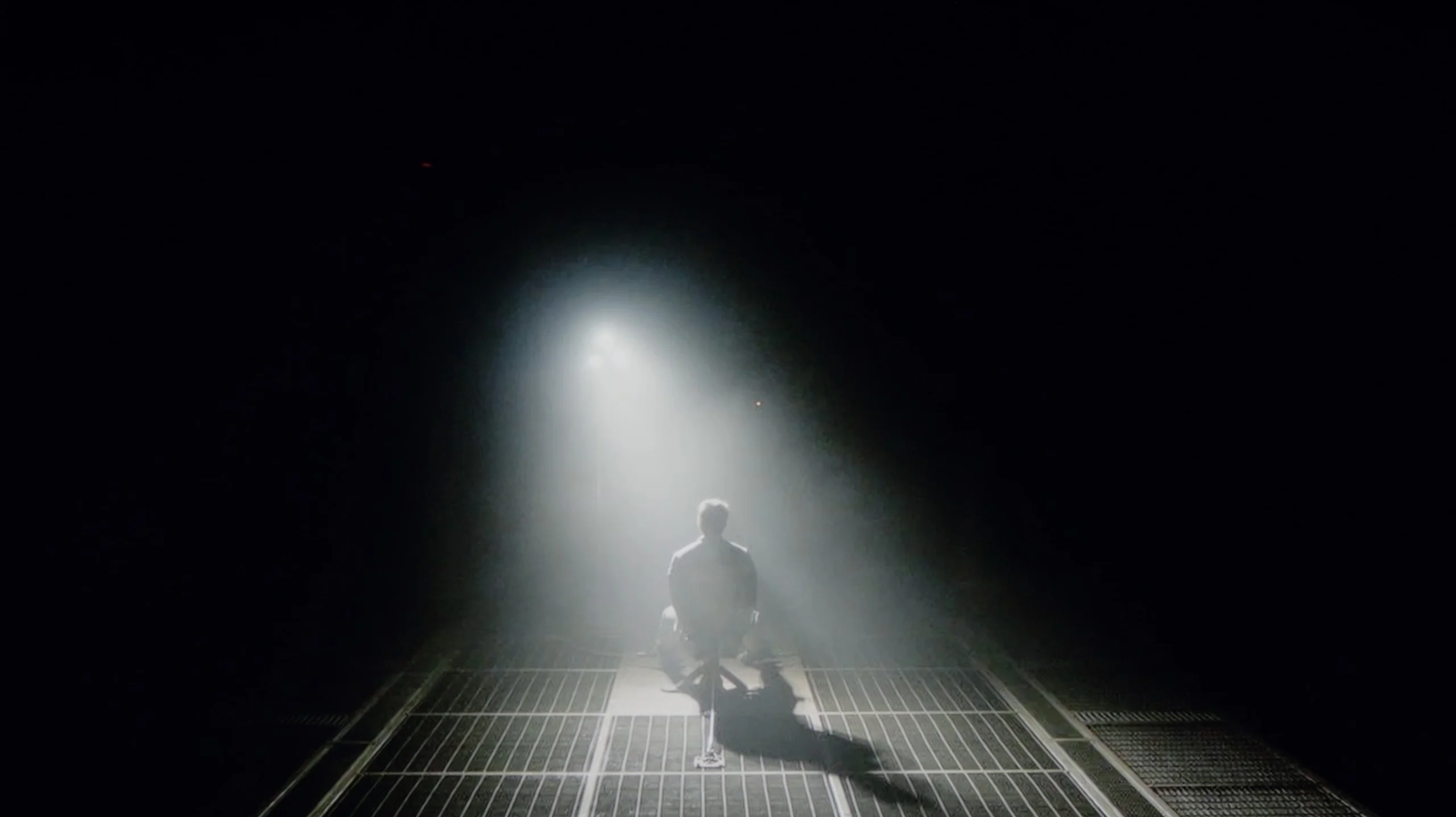
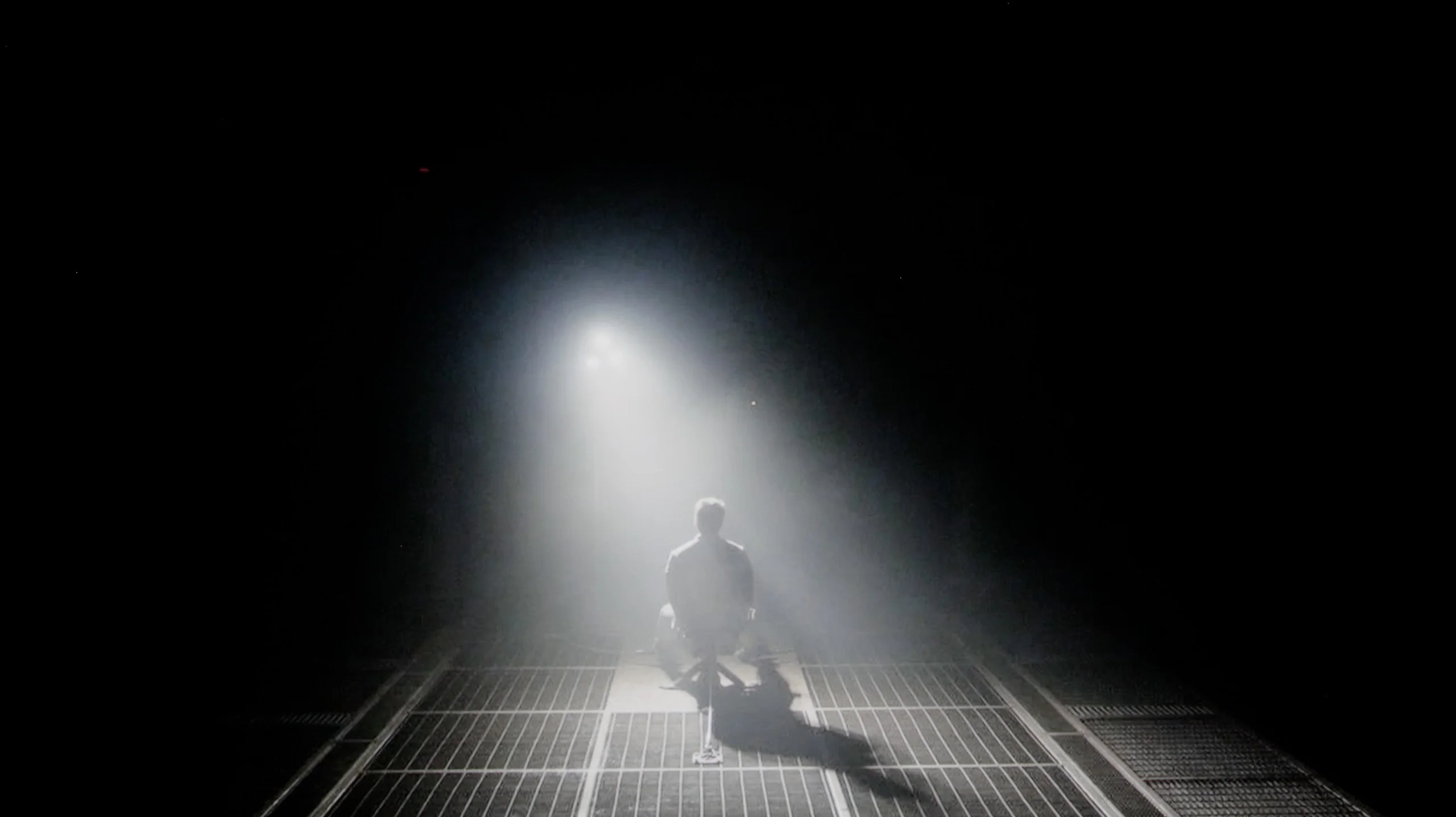
Check the visibility of bright lights on a dark background. Mini-LEDs often struggle with this. The photo does not compare black levels – that’s what the video below is for.
The video accurately shows differences in contrast and black levels between TVs, as well as potential issues: halo around bright objects or Mini-LED zone operation visible as brightness jumps.
I must admit that approaching a TV in this price range, one instinctively crosses their fingers, hoping that at least the black won't be a grey blotch. Meanwhile, the Haier Q80FUX, specifically the 55-inch unit we have in our office, can pleasantly surprise in this regard. Its secret lies in the use of a VA panel, which tends to generate high contrast by nature. And these are not empty promises. During screenings, in the majority of film scenes, the contrast reported itself at levels ranging from 5000:1 with commendable regularity, often reaching as high as 8000:1. These are really strong results, considering the fact that this TV has no, not even minimal, form of local dimming. Translating this into couch-side experiences: for its price point, the Q80FUX offers solid black levels. Of course, it isn’t that perfectly velvety depth that makes the screen disappear into darkness. When we conduct a viewing in total light isolation, we can see that in the darkest parts of the image, the black betrays its budget origins, subtly shifting towards a bluish glow. However, this is a defect that is easy to mask – just a bit of light from a lamp in the corner of the room is enough for this nuance to become invisible, and the image regains a satisfying depth.
The Samsung S95H we tested, with a 65-inch screen, uses a QD-OLED panel. The same type of panel is also found in the 55- and 77-inch models. A new addition to the range is a 48-inch size, but note, it’s a completely different design. It has neither a QD-OLED panel nor a One Connect module, so our review should not be directly applied to that variant.
Back to the blacks, it’s exactly what you’d expect from any OLED. Each pixel illuminates independently and can switch off completely. That means blacks are truly inky, whether you’re watching a large shadow or a small dark patch right next to a bright light. There are no bright film-like bands or halos caused by local dimming zones. In our test scenes the S95H looked excellent in that regard. Bright objects stood out clearly against the dark background, and blacks retained their depth even in the most demanding shots. In the evening this produces a very pleasing effect, and it’s that kind of picture we love OLEDs for.
It’s worth noting, however, that our unit had a minor issue with so-called black crush. The darkest shades of grey sometimes merged into the black, causing some shadow detail to disappear. The image then appeared even deeper and more contrasty, but this was at the expense of details that should have been visible. The black itself remained perfect; the TV simply didn’t always show what lay just above it.
HDR effect quality
4.9/10
8.8/10
Luminance measurements in HDR:

Result
308 nit

Result
327 nit

Result
352 nit

Result
330 nit

Result
344 nit
Result
2246 nit
Result
2236 nit
Result
2113 nit
Result
2230 nit
Result
1571 nit
Scene from the movie “Pan” (about 2800 nits)


Scene from the movie “Billy Lynn” (about 1100 nits)


The photos show two HDR10 movies. 'Pan' is one of the brightest productions ever made, while 'Billy Lynn' (soldier) has brightness typical of streaming (Netflix, Prime, HBO MAX). Notice the intensity of effects and detail in whites.
Static HDR10


The photos present the visibility of white details in various HDR formats. They do not show brightness differences between TVs (these can be compared in the previous gallery).
Dynamic: Dolby Vision
Dynamic: HDR10+


The photos present the visibility of white details in various HDR formats. They do not show brightness differences between TVs (these can be compared in the previous gallery).
HDR luminance chart:
Samsung S95H
Haier Q80FUX
Alright, let's move on to the topic that really sparks discussions, which is the capabilities of the TV in HDR mode. Let's be clear from the start: the Haier Q80FUX is certainly not a brightness demon. The panel of this set can generate about 350 nits at peak, which in today's reality is an absolute minimum to even talk about the presence of HDR expanded dynamic range. On the plus side, this brightness is at least stable – regardless of the test pattern or film scene we used, measurements consistently hovered around 300-350 nits. These are at best adequate results, definitely far from the dazzling display of capabilities that we know from more expensive models. Fortunately, there is one aspect where the Q80FUX makes up for these shortcomings and does so considerably. We are talking about a QLED TV (or more precisely PFS LED), which means that thanks to the quantum dot filter used on the panel, it can generate truly juicy, vibrant colours. These are not empty promises – covering nearly 95% of the DCI-P3 colour gamut is an impressive result and directly translates into very pleasant, saturated colours for the eye.
The Samsung S95H is an extremely bright OLED TV. It doesn't quite reach the level of this year's S99H, the one with the bezel, but a peak of around 2300 nits is still a phenomenal result. You really notice it in films. Flares, sun reflections and lights on a dark background have the punch we expect from a premium TV. Importantly, the S95H performs well across different scenes. It doesn't need a single small highlight on a black screen to show its capabilities. In the first four test shots we measured over 2100 nits, even though each places slightly different demands on the TV. As a result, the HDR effect is strong both in night scenes and in more evenly lit frames.
Of course, the limits typical of OLEDs remain. When a very bright image covers a large part of the screen, ABL comes into play, the mechanism that limits panel brightness. With an almost white screen the drop can be much larger than with a short, point-like flare. That does not mean bright film scenes look poor. In a demanding shot from 'The Meg' we measured about 1600 nits. That's still an excellent result, and the bright sky and reflections on the water retain a lot of intensity.
QD-OLED colours
The colours on the Samsung S95H are simply superb. It's one of the most "colourful" OLEDs we've tested. Highly saturated reds, greens and neon hues look great and complement the screen's high brightness well. Coverage of the DCI-P3 gamut is as high as 99.9%, so the TV can reproduce virtually the entire colour range used in that space for HDR films.
Interestingly, our measurements also show progress compared with the S95F. Coverage of the wider BT.2020 gamut increased from about 87% to 89.6%. That's very similar to the result we achieved with this year's S99H, which suggests very similar capabilities between the two panels in terms of colour range. The difference versus its predecessor is small but worth noting. The S95H remains at the top of the OLED class in this regard and can easily compete with new displays using SQD quantum dots.
Factory color reproduction
4/10
7.6/10


This illustrative image shows how colors change after professional calibration. If you can see the difference, you can order it from SkalibrujTV – it's our own service.
Factory mode
After calibration
Factory settings for movie mode are seldom perfect, but in the case of the Q80FUX, we encountered a noticeable imbalance. In SDR content, the image was definitely too warm, due to an excessive amount of red in the white balance, giving the overall picture a slight sepia tone. Conversely, in HDR materials, the television fell into the other extreme – an excess of blue caused an unnatural, cool effect in perception. However, it wasn't the fickle white balance that was the biggest issue with this TV. The real culprit, responsible for the previously described problems, was hiding deeper. It turned out that the Q80FUX has completely miscalibrated gamma values and, crucial for HDR, a poorly executed EOTF curve. It was these erroneous factory settings that caused the notorious clipping of the brightest parts of the image, imposing that characteristic milky filter over them. Thus, we found the source of the problem. This situation led to general, significant colour inaccuracies that were easy to catch even for an untrained eye. Like every television we tested, we decided to calibrate this model as well, and you can find the results of these adjustments in the next paragraph.
Out of the box the Samsung S95H performs quite well, although our unit had a few things that needed improving. In SDR material there is a red bias in the white balance. The picture therefore looks slightly warm, and whites and faces can take on a faint pink tint. It’s not a major shift, but you can spot it when comparing with a reference image. More noticeable is how it handles dark scenes. Gamma sits above the target value of 2.4 across most of the range, and the deviation is particularly large in the deepest shades. The picture thus appears darker and more contrasty than it should, which confirms the previously mentioned issue with losing detail near black. Dark clothing or background elements can merge into a single blotch, even though the source still contains detail. In HDR brightness control is considerably better. The EOTF curve tracks close to the reference, so the TV preserves the brightness of different parts of the scene. There are still minor colour deviations, though. In the brighter areas a dominance of red and blue over green gives whites a slight pinkish–purple cast. Overall the starting point is good, particularly in HDR, but calibration could still make some improvements.
Color reproduction after calibration
6.1/10
9.4/10


The photos show how movies look on the TV. Pay attention to black detail visibility, colors, and shadow tint.


The photos show how movies look on the TV. Pay attention to black detail visibility, colors, and shadow tint.
The results of our calibration procedures must, unfortunately, be regarded as twofold. Generally speaking, the picture is undeniably better than before the adjustments; however, the biggest winner of this process has been SDR content. It is precisely here, after correcting the gamma curves and white balance, that we achieved results that can safely be called very good. Once set up, the Q80FUX truly shines in standard dynamic range, displaying only slight errors in the most challenging skin tones. Unfortunately, the weakest link remains HDR content. And here's the paradox: even though we managed to calibrate the white balance to near perfection, the overall colour errors still remain at quite a high level. The reason is that the television still interprets the static HDR10 metadata "in its own way," stubbornly enforcing that unfortunate image clipping effect, which inevitably leads to significant distortions. Although we successfully eliminated the factory excess of blue, due to this electronic interference, the screen can still veer into somewhat too cool tones. That’s just how this television is.
After calibration the S95H looks really excellent. The excess red has been removed, so whites are neutral and faces have regained a natural tone. In SDR colour errors are now very small. The picture retains excellent saturation but no longer adds the tint that was visible on the factory settings. This is how a well-set TV in this class should look. There’s also an improvement in white balance in HDR. In addition, brightness in film scenes stays very close to the reference. Bright highlights have the right intensity, and the TV doesn’t unnecessarily brighten the whole frame. That level of control combined with the QD-OLED panel’s capabilities produces an image that’s simply very pleasant to watch. We really have only two reservations. The first is the loss of the darkest details. Our unit still tended to crush some tones near black, although that may be a characteristic of this particular test sample. The second concerns adjustments to the HDR colour palette. The available settings don’t allow perfect correction of all hues, so some minor inaccuracies remain. That doesn’t change the very good final result; after calibration the S95H delivers a very high-quality image.
Smoothness of tonal transitions
7.5/10
9/10





These are selected scenes that show smooth tonal transitions from one color to another. If you see distinct banding, it’s the TV panel’s fault.

These are selected scenes that show smooth tonal transitions from one color to another. If you see distinct banding, it’s the TV panel’s fault.

These are selected scenes that show smooth tonal transitions from one color to another. If you see distinct banding, it’s the TV panel’s fault.

These are selected scenes that show smooth tonal transitions from one color to another. If you see distinct banding, it’s the TV panel’s fault.
Analysing the ability of the television to handle subtle tonal transitions, or "banding", leads us to some interesting conclusions. The Haier Q80FUX seamlessly blends adjacent colours in most scenes, creating a smooth, cohesive image. However, this process is not without its flaws. During our tests, we noticed minor issues and imperfections in each of the test scenes we used. These may not be errors that aggressively jump out and ruin the viewing experience, yet their presence is worth noting. Interestingly, this receiver does not exhibit any particular weaknesses or strengths in this regard – it handles this challenge in exactly the same way, regardless of whether it is displaying delicate gradients of a bright sky or dark transitions in shadows.
The S95H handles tonal transitions very well. It's a strong point of QD-OLED panels, which in our tests tend to show distinct banding between shades less often than WOLED panels with a white subpixel. In most scenes, colours transition smoothly from one to another. This is especially noticeable in dark shots, where instead of the characteristic bands we see smooth transitions between shades of grey. It's not completely perfect, though. In some brighter scenes you can spot slight unevenness, although you have to look closely. During normal viewing they are unlikely to distract from the film. Overall the S95H performs very well in this category.
Image scaling and smoothness of tonal transitions
4/10
7.5/10


Smooth transition function
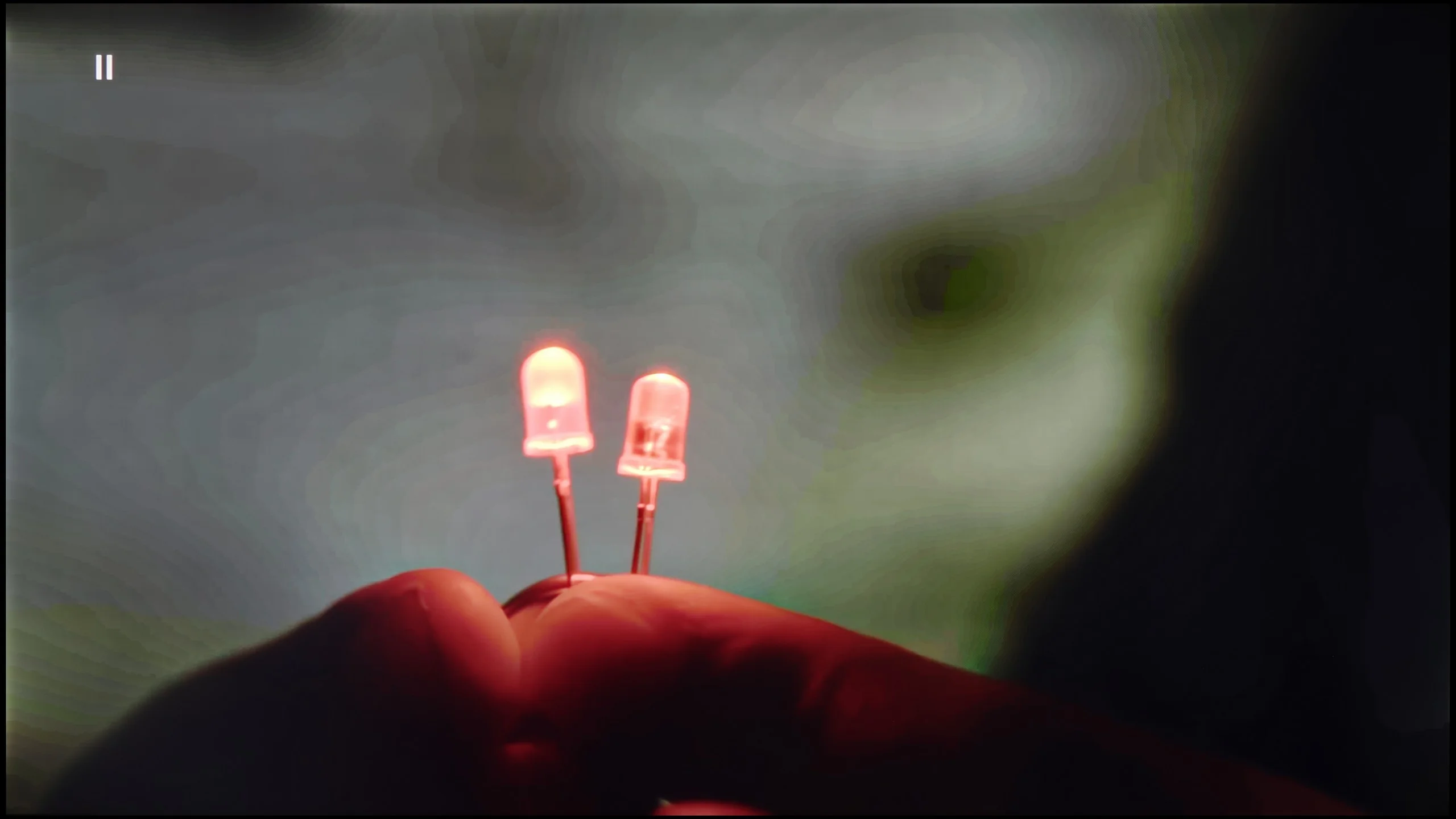

The match photo shows how the TV smooths weak tonal transitions in low-quality video.
Image scaling SD (576i)


The model photo shows how it handles upscaling of SD material.
If there's one area where Haier clearly shows it still has a lot to catch up on compared to the market leaders, it's digital image processing. The upscaling, well... it's just okay. And that's really all that can be said about it. It does what it's supposed to do: ensures that lower resolution signals don't scare you with harsh pixelation on the screen and don't look like a forcibly enlarged postage stamp. However, it's far from the finesse and "intelligent" sharpening that more experienced players in this market have developed over the years. The biggest issue with the Q80FUX software is the almost complete lack of additional "cleaning" and smoothing features for the image. The receiver offers no noise reduction mechanisms or gradient enhancement. This means that with older or highly compressed materials, we simply have to accept that all the imperfections in tonal transitions or colour blending, which we mentioned earlier, will constantly accompany us during viewing.
The NQ4 Gen3 processor, the same one used in the S99H, handles upscaling and digital image processing. The conclusions from our tests are also very similar. Lower-resolution material looks really good when upscaled to 4K. The picture is clear, without artificial edge enhancement or over-sharpening. One small caveat concerns very old recordings at 480p or lower. With such a signal the TV can slightly crop the edges of the frame.
The noise reduction feature is used to improve heavily compressed material. It smooths visible banding between shades and reduces other imperfections, for example in poorer YouTube recordings. However, it works quite aggressively. Fine detail and natural film grain can disappear along with the noise. We left it turned off to preserve the original look of the material. If artefacts bother you more than the loss of some detail, it's worth checking how it performs.
Blur and motion smoothness
4.5/10
8.5/10
Blur (native resolution, maximum refresh rate):






Blur (BFI function enabled):
Image flickers in this mode



Blur ():
Blur (4K@165Hz):



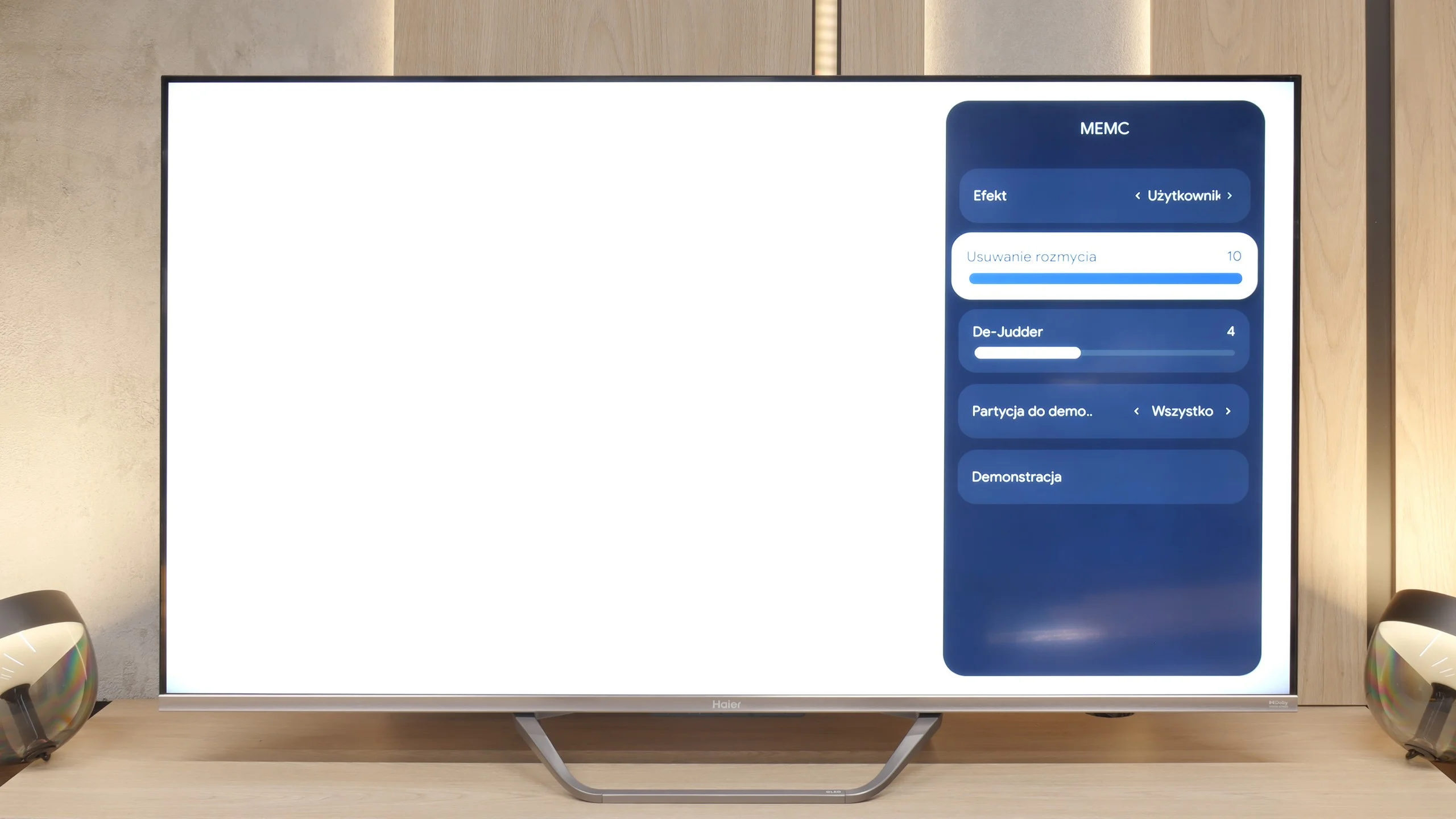
The issue of motion fluidity and blurring is largely predetermined by the use of a 60Hz panel, which naturally makes it difficult to recommend this receiver to enthusiasts of very dynamic content. Fortunately, in the Q80FUX, we find a few options (although, as will soon become clear, really just one) intended to enhance the experience with older film productions. There is a "De-Judder" slider available, which indeed affects motion fluidity and allows us to adjust it to our preferences: from raw, cinematic frame rates to a more theatrical, smoothed presentation. However, a true surprise awaits us right next to it in the menu. There is also a second slider, supposedly dedicated to removing blur – this is a feature we typically encounter in 120Hz panels, aimed at combating blurring in sports. As we expected, recalling memories from testing the K85F model, here too this slider is merely a façade. Its adjustment contributes absolutely nothing to the picture and simply seems to be an oversight by the product engineers who left a non-functional option in the software for this type of panel.
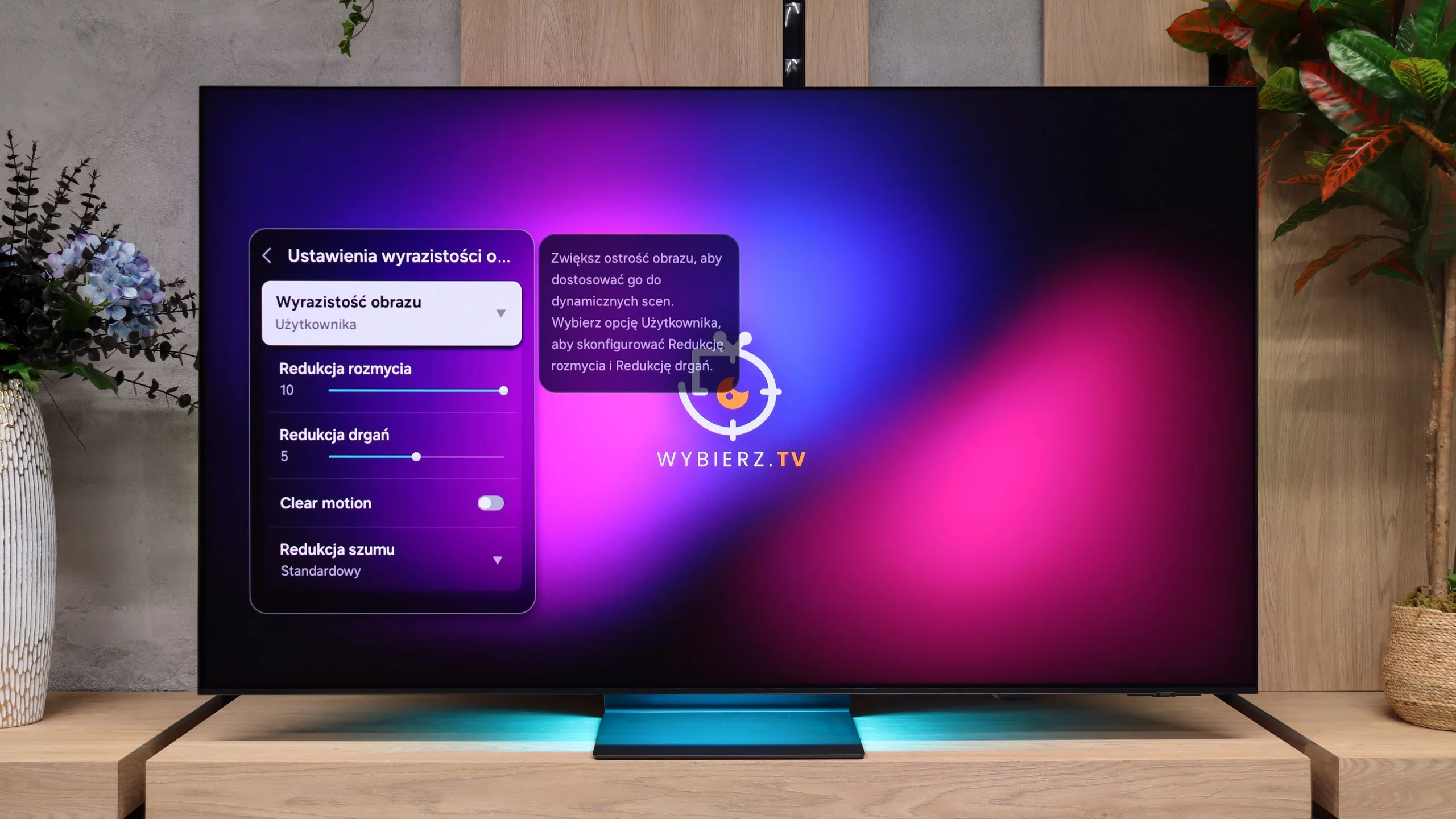
The Samsung S95H handles motion very well, which is what you expect from an OLED. The panel supports refresh rates up to 165 Hz, though that’s mainly useful for PC gamers. When watching sport, a lightning-fast pixel response time matters more. A fast-moving ball or player doesn’t leave the characteristic trailing smear. Motion therefore remains clear, without the artefacts typical of slower LCD panels.
There’s also a motion smoothing feature that lets you adjust motion to your liking. In films you can gently reduce judder during camera pans or choose a stronger smoothing effect. A separate setting for faster content is handy when watching sport.
Console compatibility and gaming features
5.6/10
9.6/10
- ALLM
- VRR
- VRR range48 - 120Hz48 - 165Hz
- Dolby Vision Game Mode
 Yes, high input lag
- Correct implementation of HGIG
- 1080p@120Hz
- 1440p@120Hz
- 4K@120Hz
- Game bar
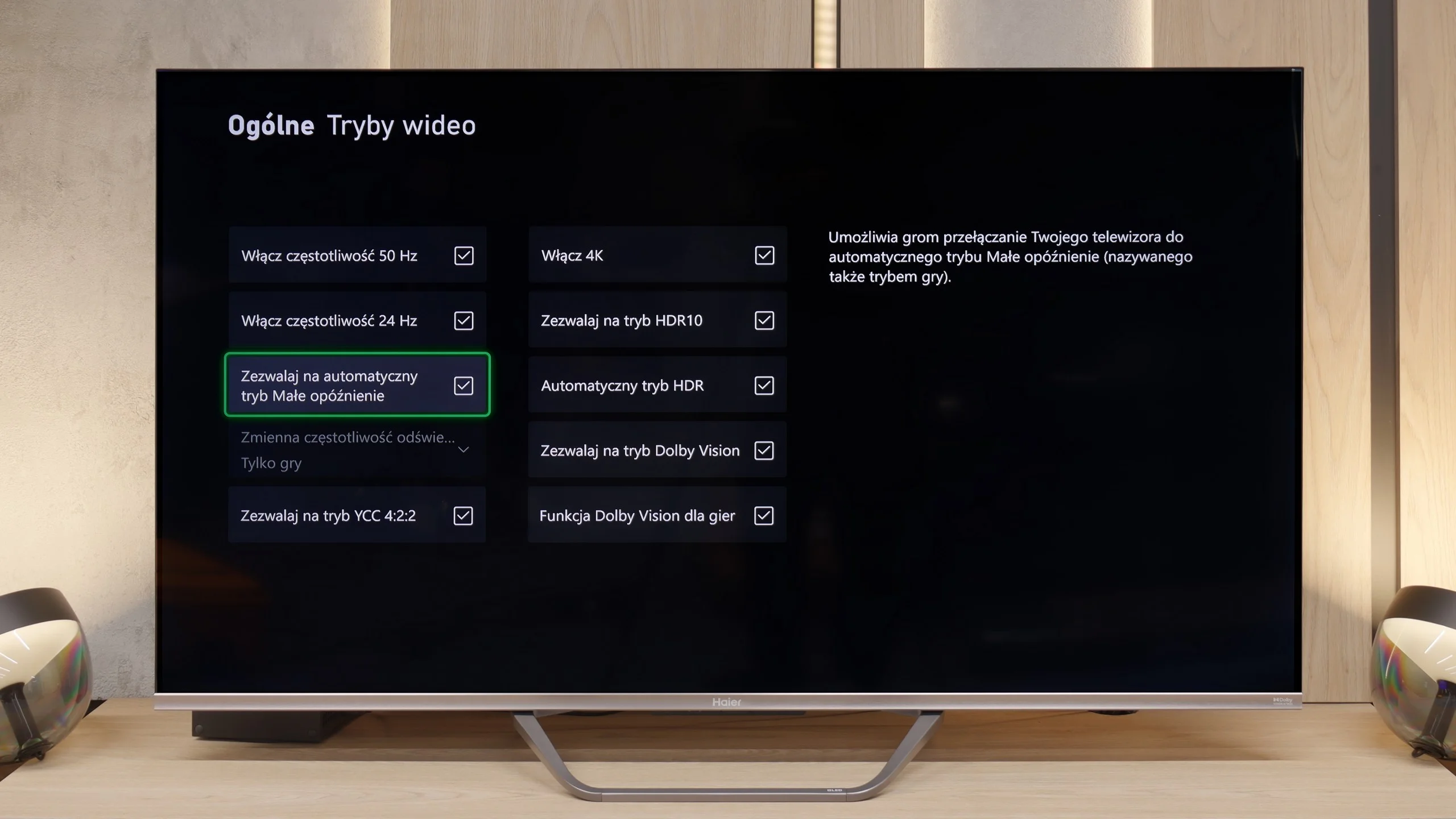
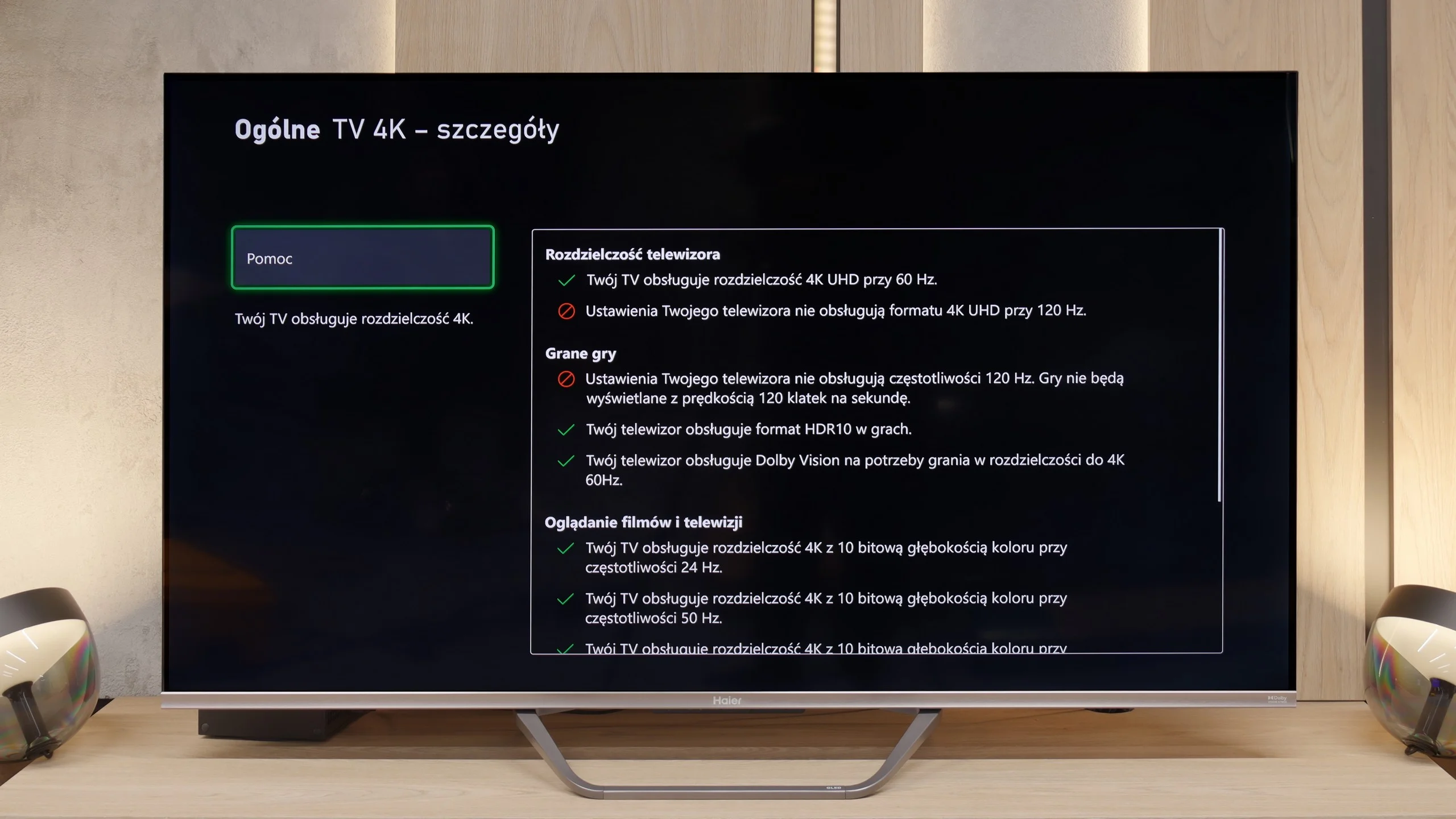
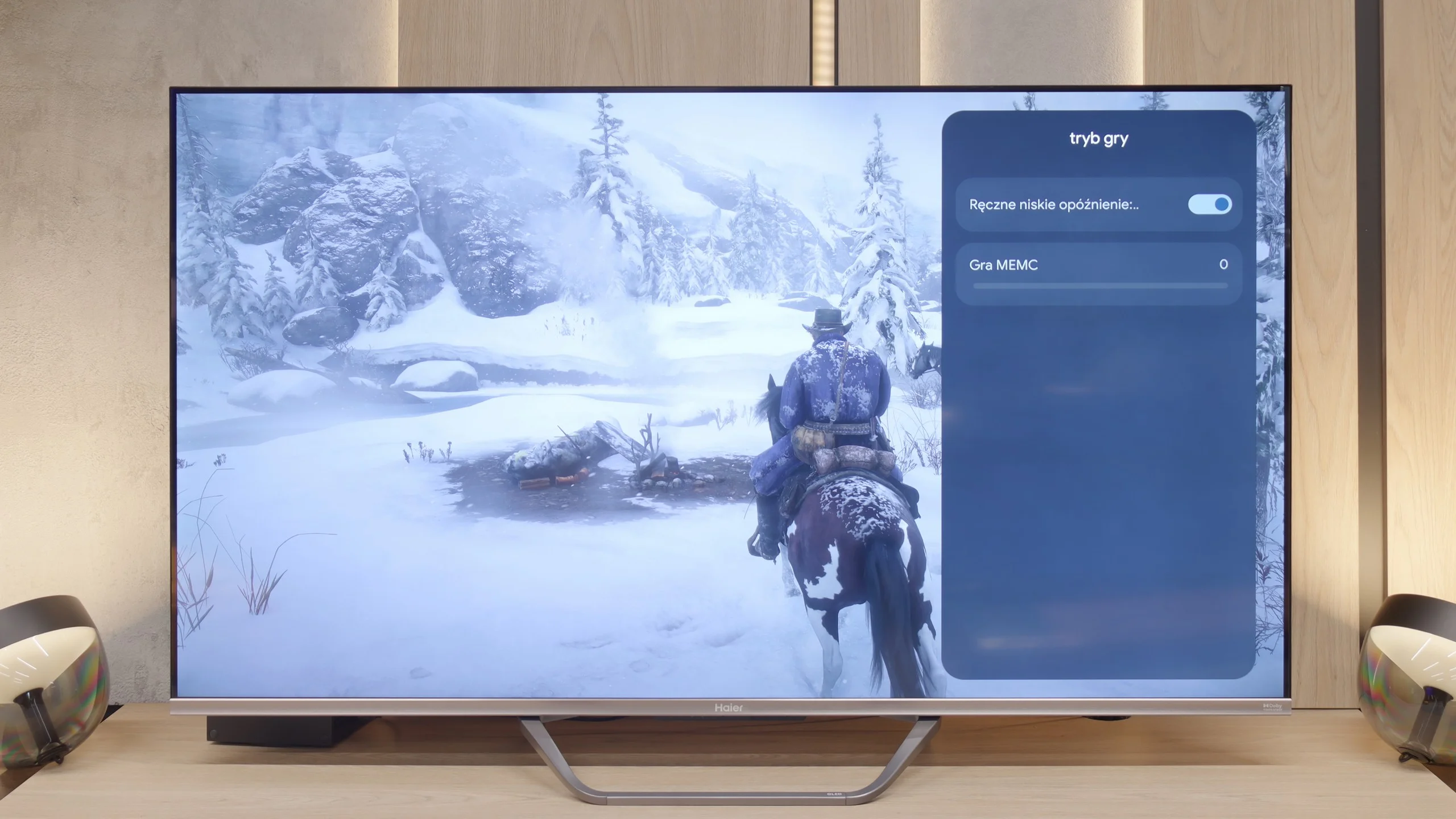
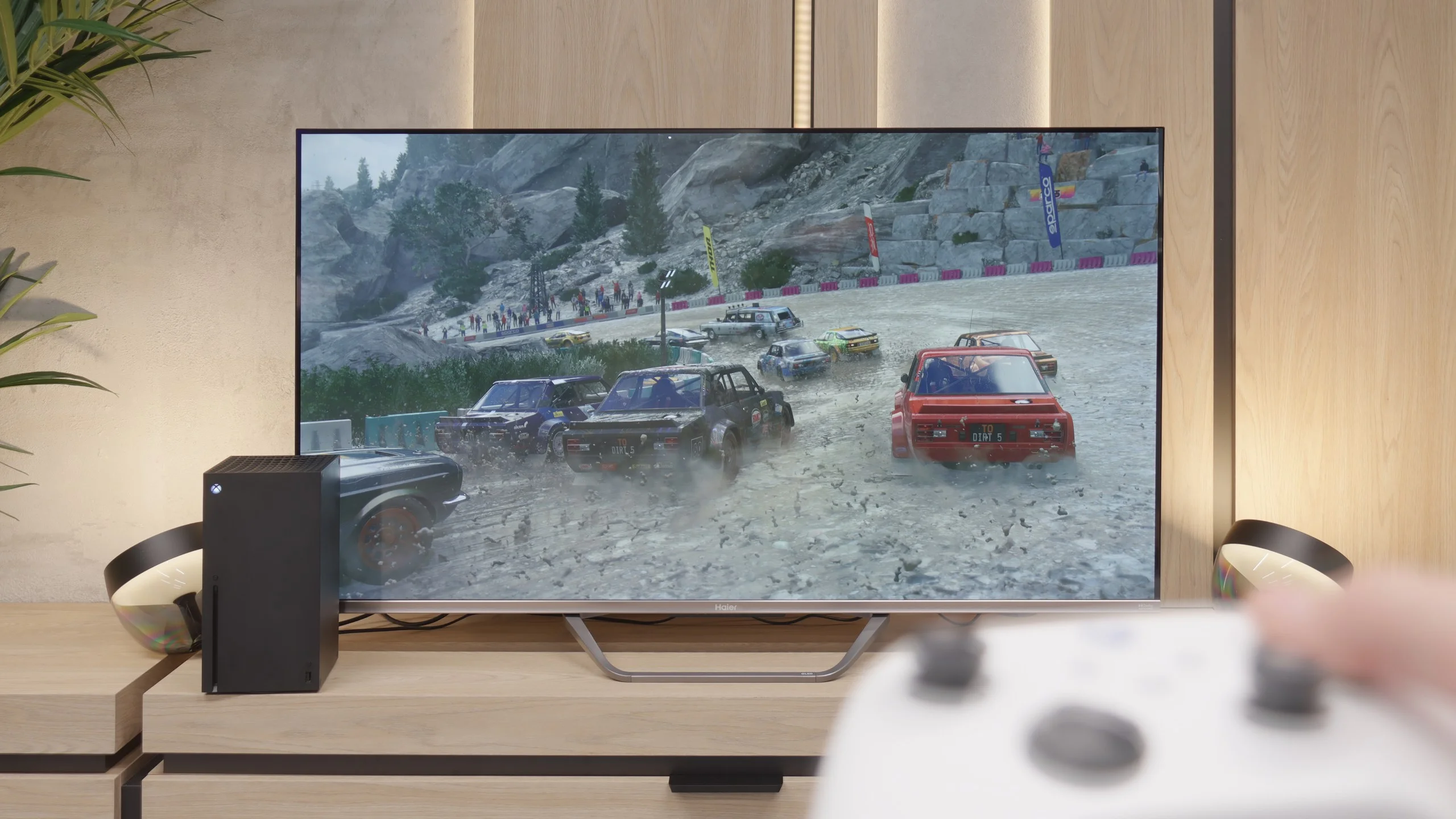
Entering the realm of gaming, the Haier Q80FUX proves to be quite a good companion for the "casual gamer." It is equipped with some highly sought-after features today such as VRR (variable refresh rate) and ALLM (automatic low latency mode). However, the biggest surprise is something else. Even though we don't have a 4K@120Hz panel here, the television can accept and display a 120Hz signal at a lower resolution (Full HD). This is a very useful feature, allowing you to consciously switch the console to a lower resolution mode in exchange for significantly higher fluidity, which is a perfectly acceptable compromise in the gaming world.
We won't particularly complain about the lack of additions like the "Game Bar," as it's just a nice extra. However, the most concerning issues arise when we enter the world of HDR in gaming. Due to the fact that the television continuously adapts the signal "in its own way," setting the brightness on the console according to the HGIG standard is almost impossible to accomplish according to the instructions. Worse still, in Dolby Vision mode for gaming, the input lag increases to around 50 ms, which is a high enough value that essentially makes this mode unusable. Generally speaking, we still wouldn't recommend gaming on this television in HDR mode, so these aren't that serious shortcomings. What’s most pleasing is the presence of 120Hz in Full HD, making the Q80FUX quite a cool television for the occasional gamer.
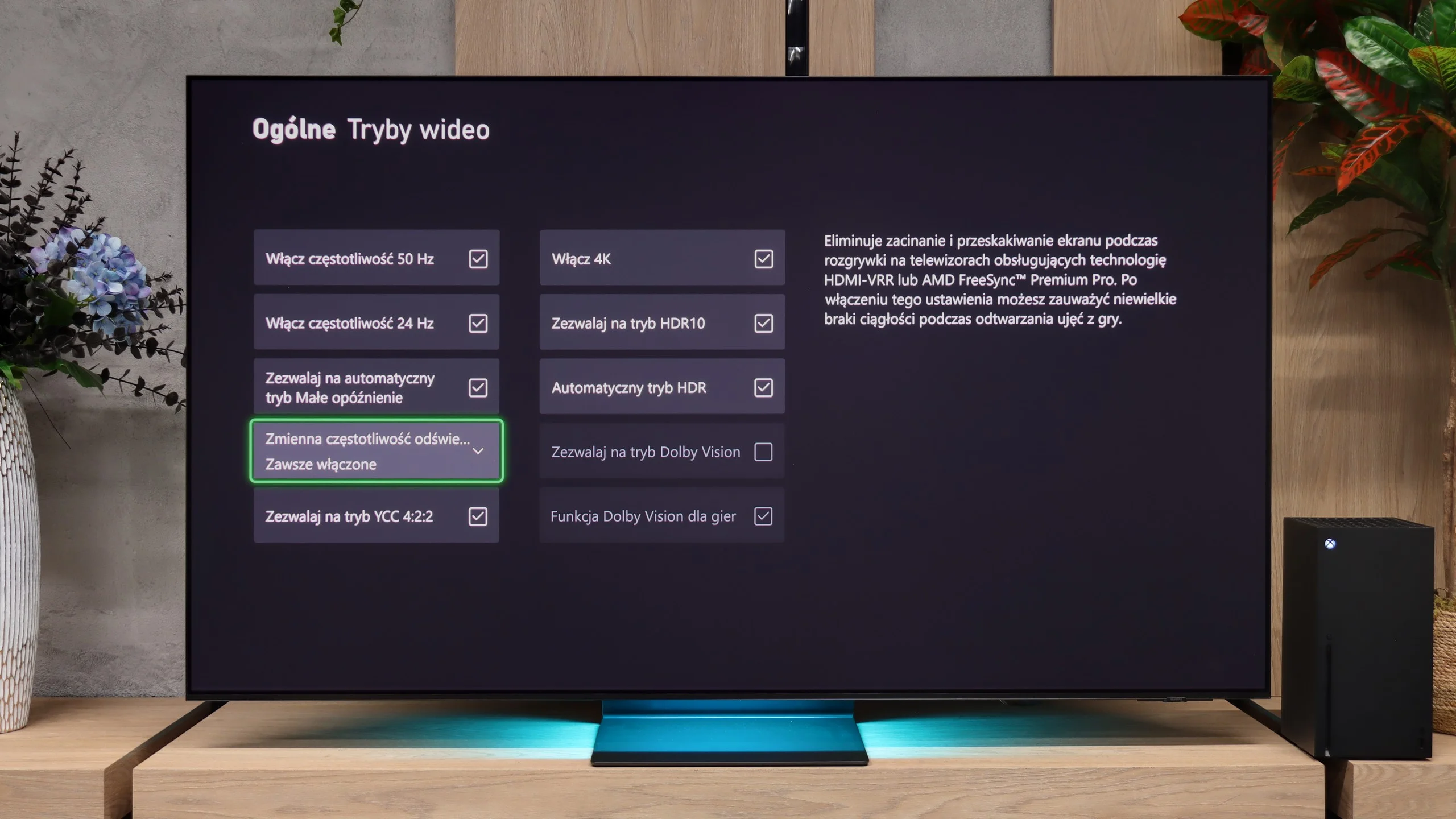
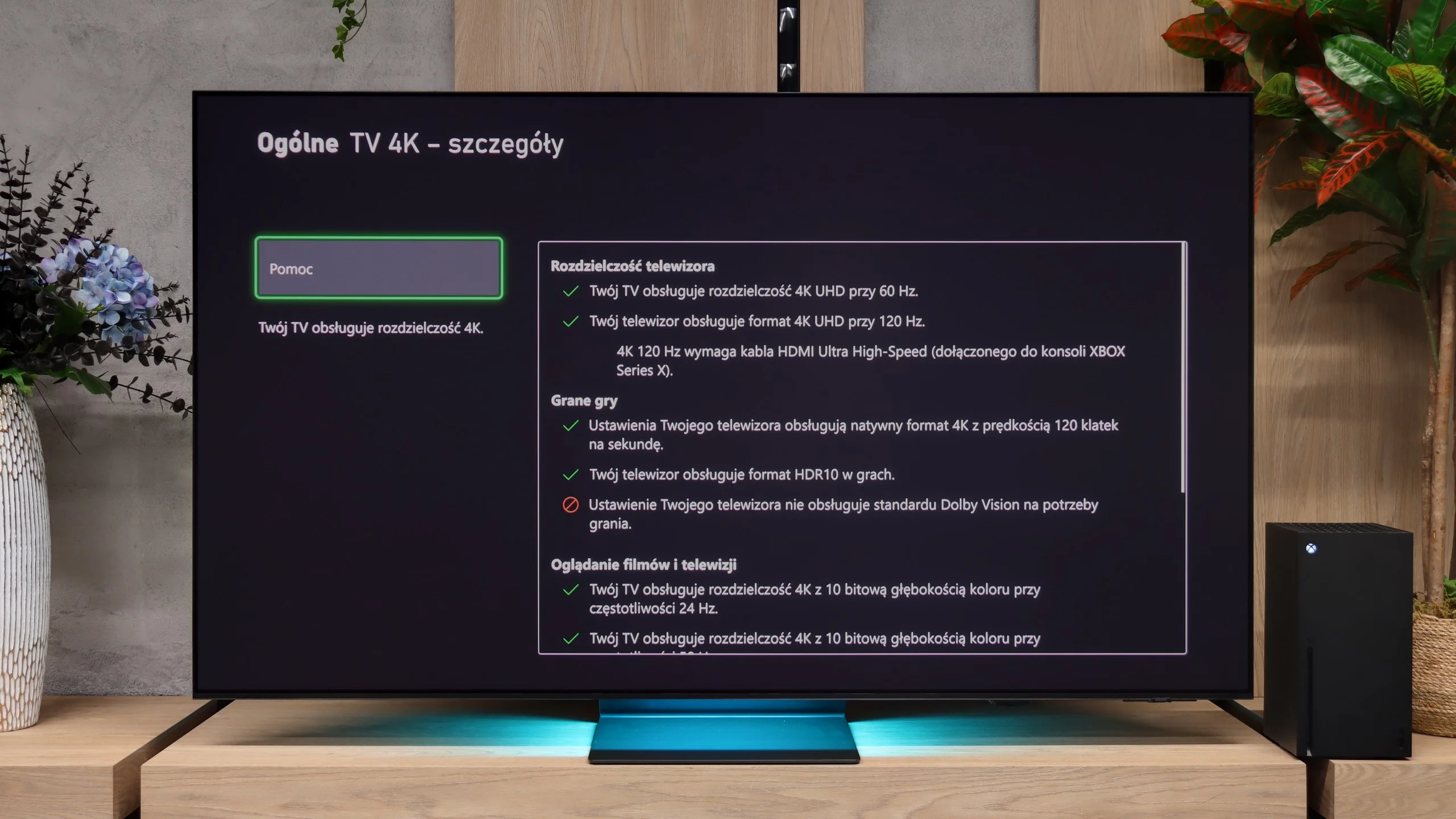
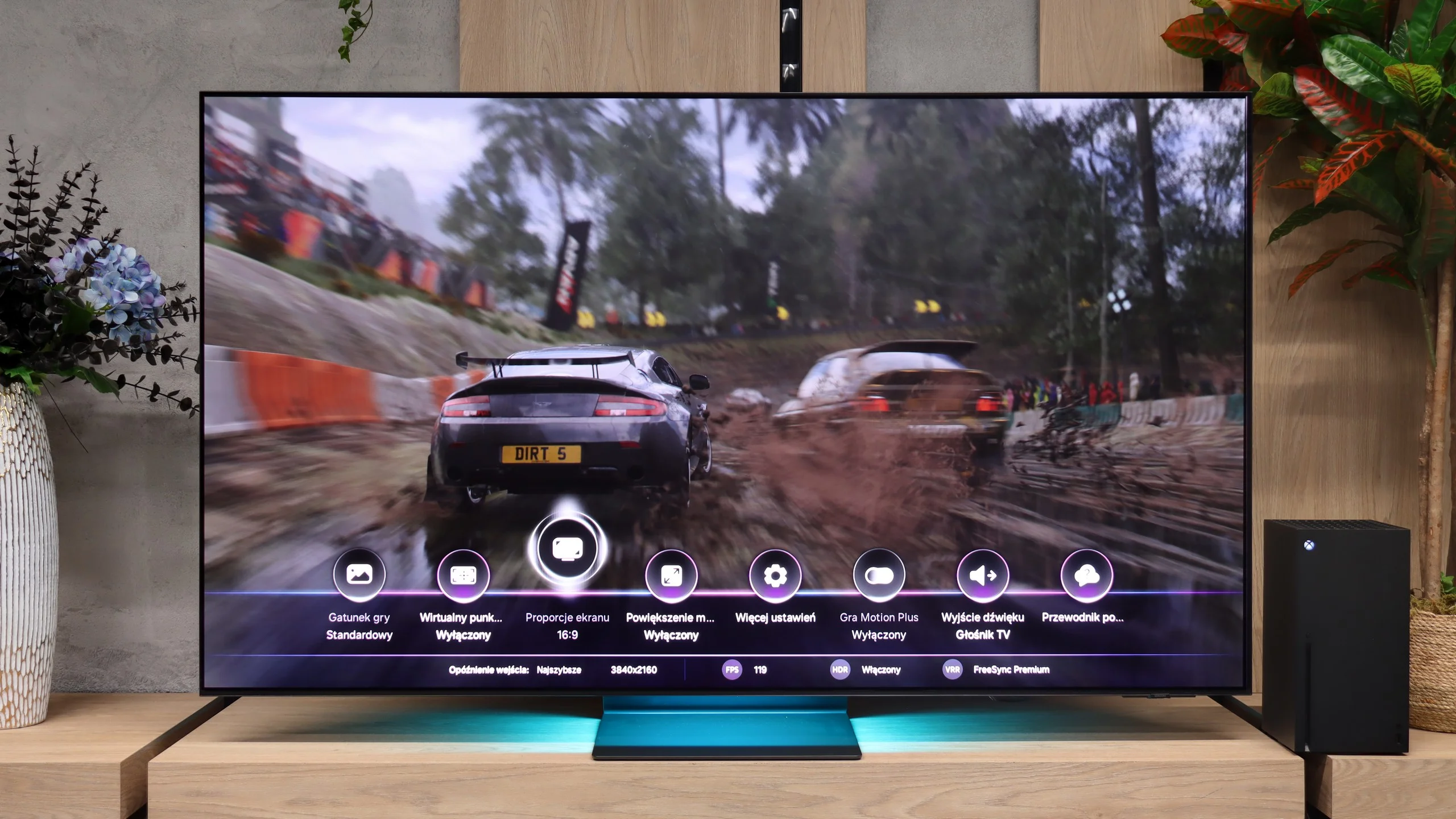
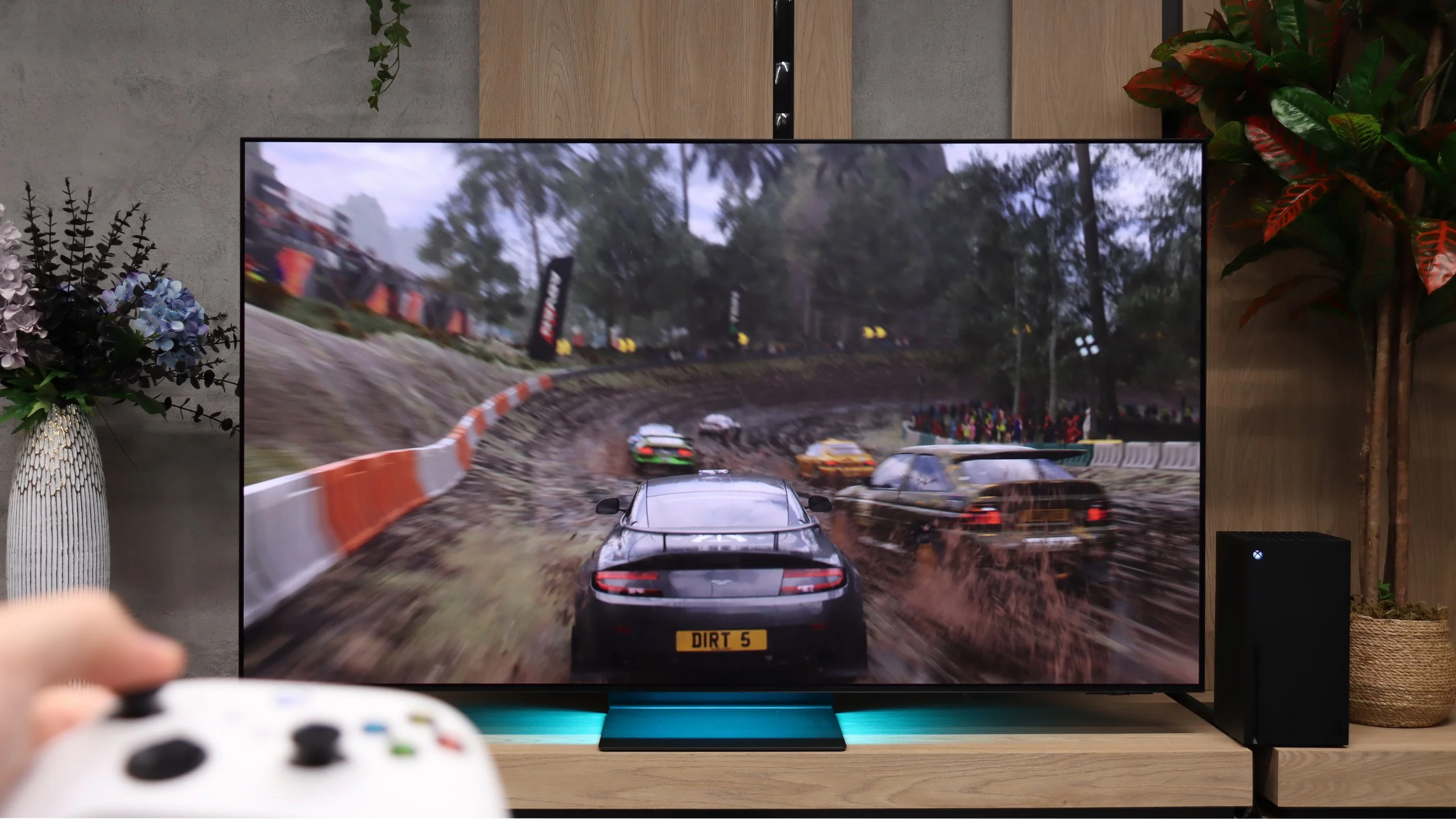
Samsung S95H is a phenomenal TV for gaming. Beyond an excellent picture, it also offers a whole set of useful gaming features. VRR works from 48 to 165 Hz and helps keep things smooth when frame rates fluctuate. ALLM automatically switches to low-latency mode, and properly functioning HGiG makes it easier to set up HDR on a console. It also handles console 120 Hz in Full HD, 1440p and 4K without issues. A handy addition is the Game Bar, which gathers signal information and key settings in one place.
Game Motion Plus deserves special praise. This motion smoother can improve the fluidity of lower-frame-rate games, and in our measurements latency with it was about 20 ms. For additional motion processing that's a very good result. In slower-paced games you can therefore get a smoother image without noticeably sluggish controls.
Among the limitations, it's worth noting the lack of Dolby Vision in games, which mainly affects Xbox users. The HDMI 2.1 ports also have 40 instead of 48 Gb/s bandwidth, likely due to the One Connect module. For typical console gaming at 4K, 120 Hz and 10-bit HDR this doesn't pose a problem or force a drop in picture quality. For most gamers it will therefore be a spec difference they simply won't notice while playing.
Input lag
9.4/10
10/10
SDR
HDR
Dolby Vision
If there is one category in which the Haier Q80FUX absolutely shines and shows its claws, it is input lag. In this respect, the TV presents downright outstanding results. In 120Hz mode (achieved, let's remember, at a lower resolution), input lag drops below 10 ms, which is an excellent value, worthy of top gaming monitors. Only slightly worse, but still at a very good level, is the classic 60Hz mode – here, measurements consistently indicated around 12-14 ms. These are results that much more expensive, dedicated gaming constructions would not be ashamed of. The only, but significant, stumbling block is the Dolby Vision mode. As we established earlier, its activation raises input lag to an unacceptable level, so we definitely advise against using it during any interactive gameplay.
In terms of input lag, the S95H performs excellently. At 60 Hz we measured just 9 to 11 ms, and at 120 Hz the delay drops to 5 to 6 ms. Controls are very responsive, so even in fast-paced shooters or racing games it’s hard to find any complaints. Importantly, turning on HDR does not worsen the results. You can therefore use the full picture capabilities without sacrificing quick response to controller inputs.
Compatibility with PC
6/10
8.8/10
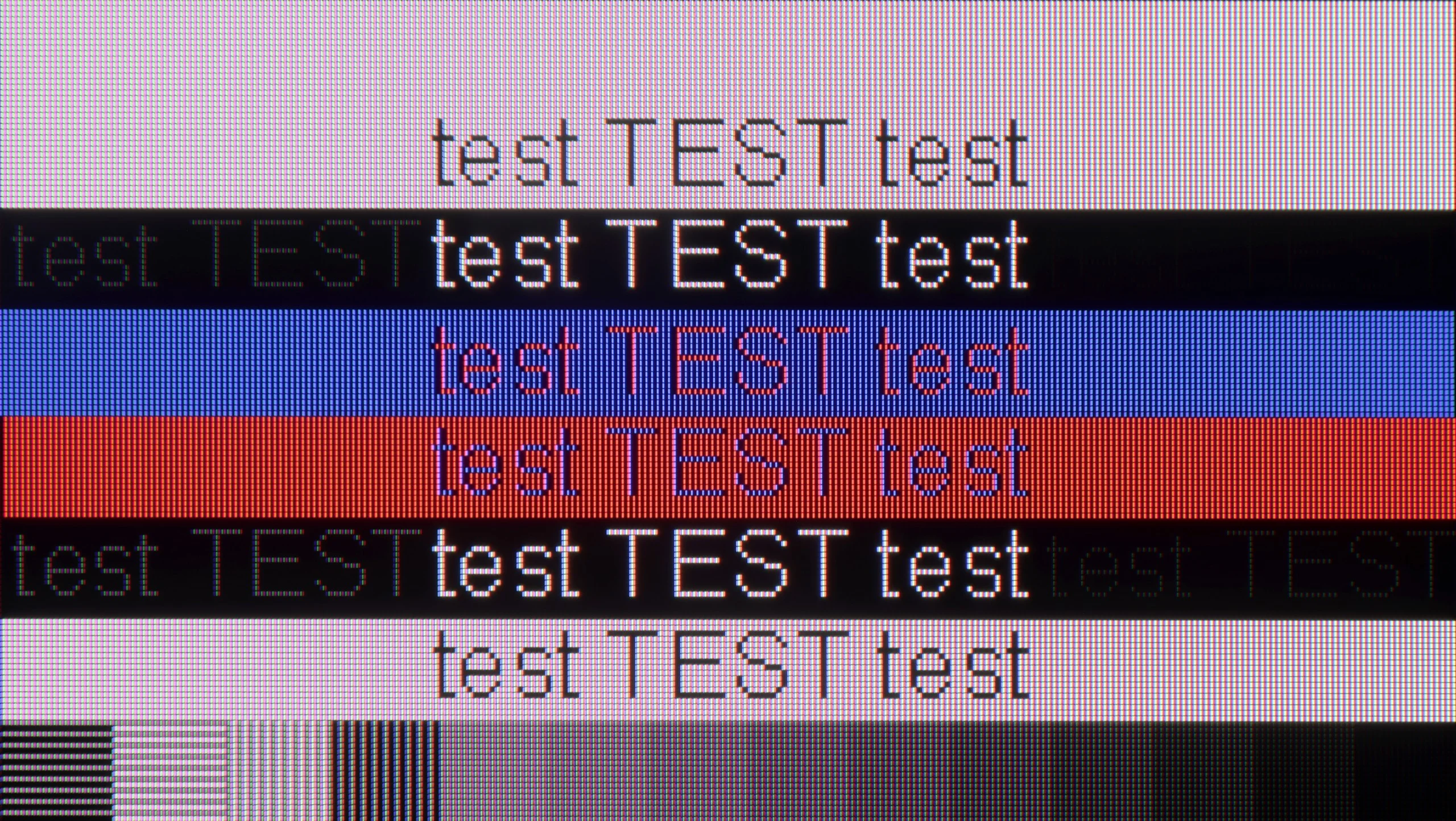
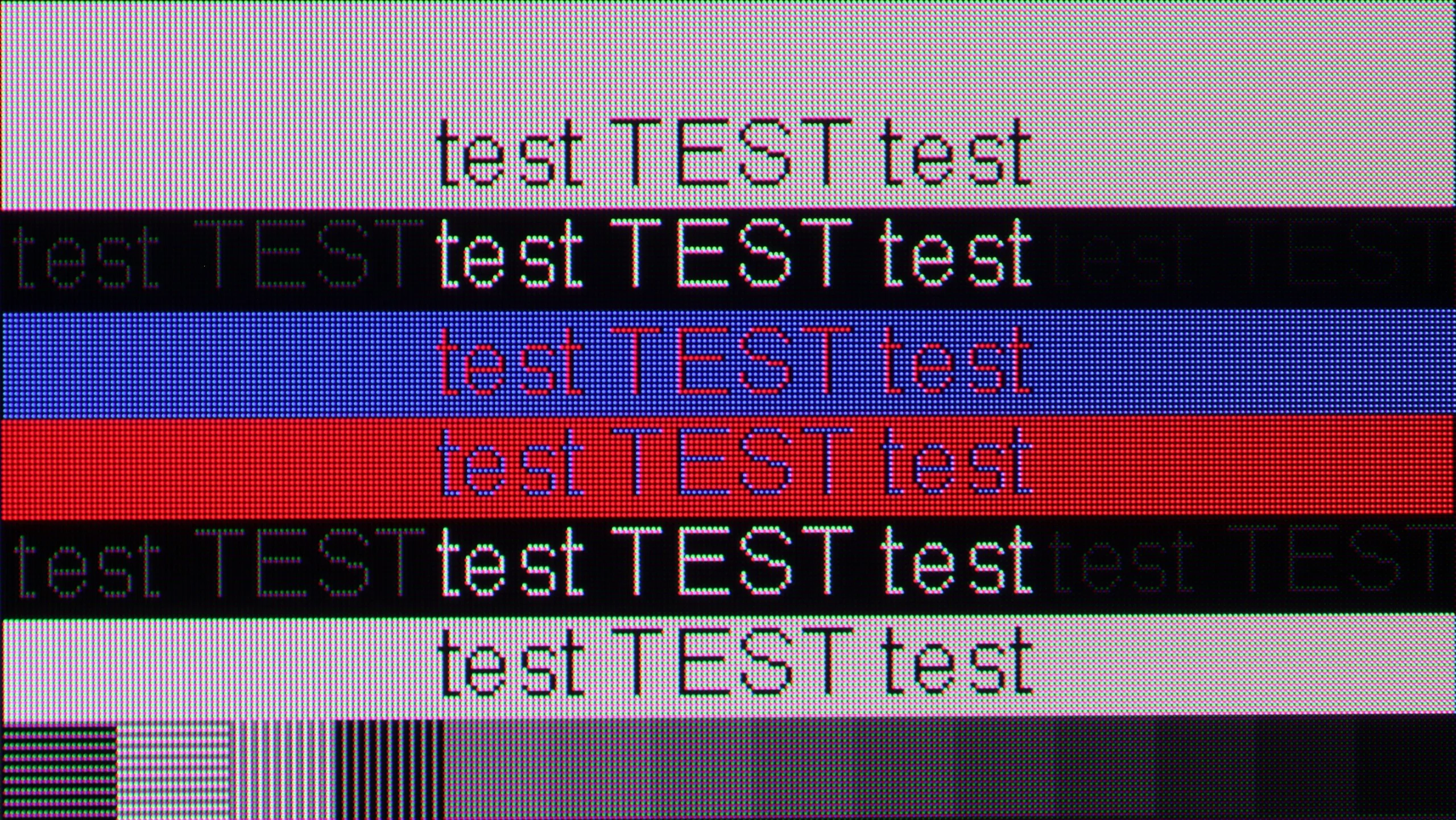
The photo shows the legibility of small fonts. Ideally, lines should be the same thickness on both light and dark text, with minimal pixel gaps.
We also checked how the Q80FUX performs when connected to a computer. Here again, we were pleasantly surprised – it handles this really well. The most important thing is that the fonts are very readable, so nothing blurs and you can work normally on it. Additionally, just like with consoles: we can set a lower resolution here to achieve a high refresh rate of 120Hz in return. What’s crucial is that in this mode, G-Sync started correctly and functioned well. This just confirms that this television is truly a successful and efficient piece of gear for gaming, also on a PC.
Samsung S95H works great with a PC, especially when connected for gaming. You get 4K at 165 Hz, G-Sync support and an input lag of just 6 ms. Combined with the panel's lightning-fast response, this delivers a very smooth and responsive picture. The TV also correctly supports 4:4:4 chroma at its maximum refresh rate, so small colour elements remain legible.
It also handles text well, though it wouldn't be our first choice for all-day document work. Firstly, the QD-OLED versions described here start at 55 inches, so you need a really big desk to use one 😉. Secondly, the triangular subpixel layout means you can see subtle coloured fringes on the tiniest letters. They're mostly visible up close. From a normal TV viewing distance they shouldn't be distracting, so occasional web browsing or working with text isn't an issue.
Viewing angles
3.3/10
9.9/10
Anyone planning screenings with a wide family group must be aware of the fundamental compromise that Haier has decided upon by implementing a VA panel in this model. This technology has indeed provided us with deep blacks and high contrast, but an inherent characteristic is also a noticeable narrowing of viewing angles. It’s enough to sit a bit further to the side of the couch to immediately notice how the colours start to lose saturation and the image fades. It’s simply a classic trade-off – we gain something (contrast) at the expense of something else (angles) – and the Q80FUX fits perfectly into this scheme.
Viewing angles on the S95H are excellent. It's one of the biggest advantages of a QD-OLED panel and in this respect Samsung ranks among the best TVs we've tested. Even when viewed well from the side, colours retain their saturation and the picture doesn't noticeably lose brightness. So when you're at a steep angle or watching a match with a larger group, you don't have to fight for a spot in the centre of the couch. The image still looks great from the sides. 🙂
Daytime performance
4.8/10
7.3/10
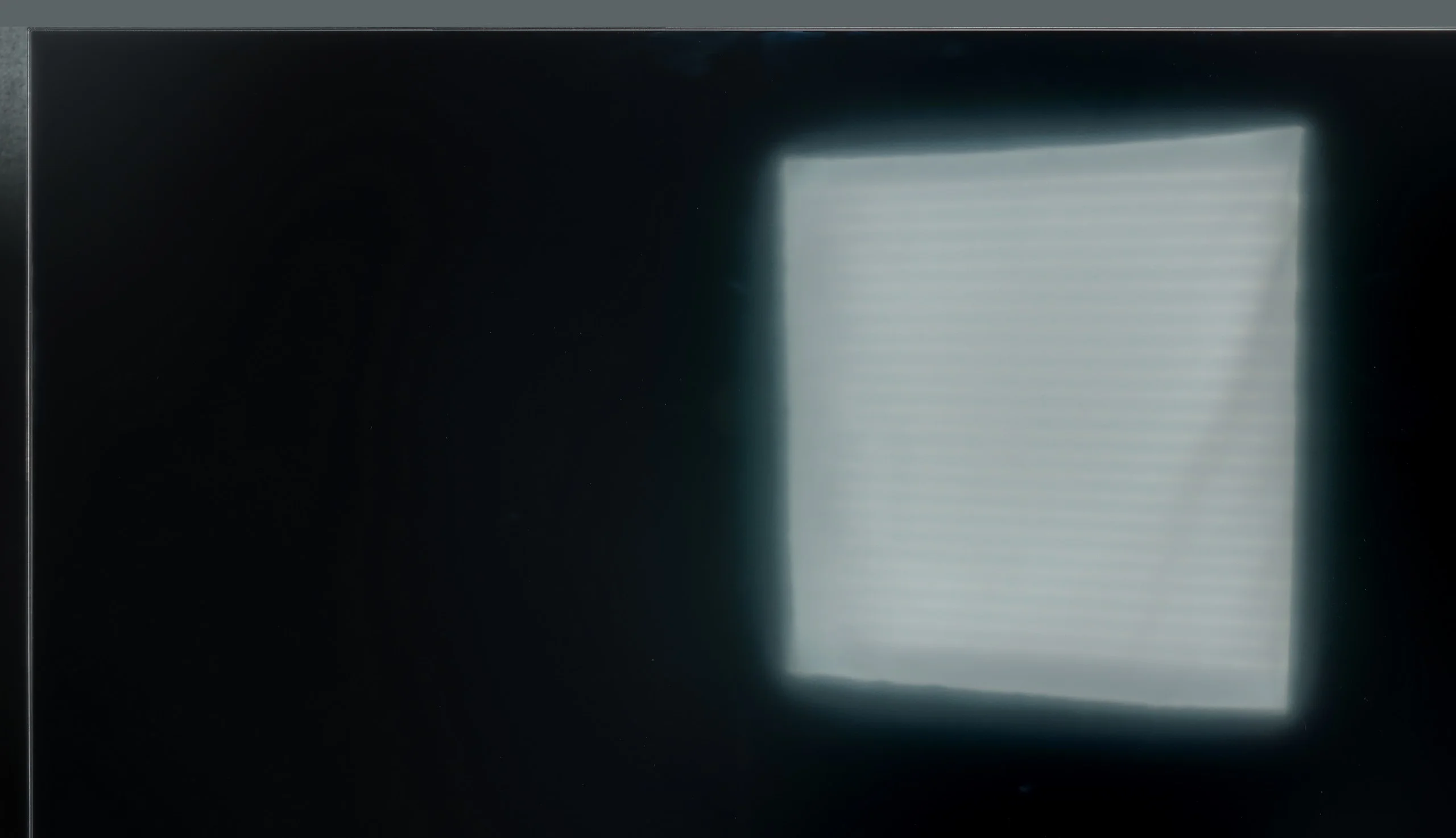
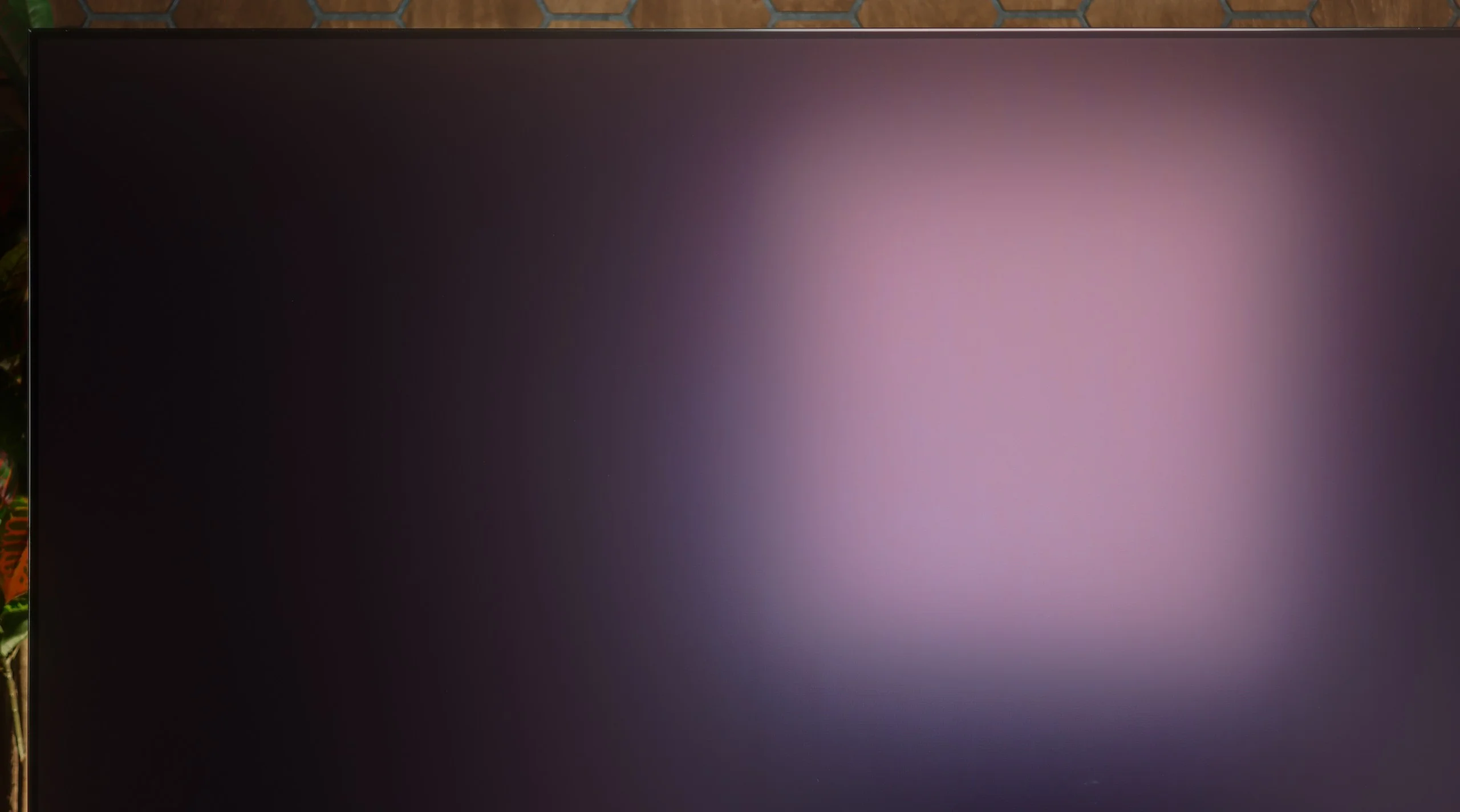
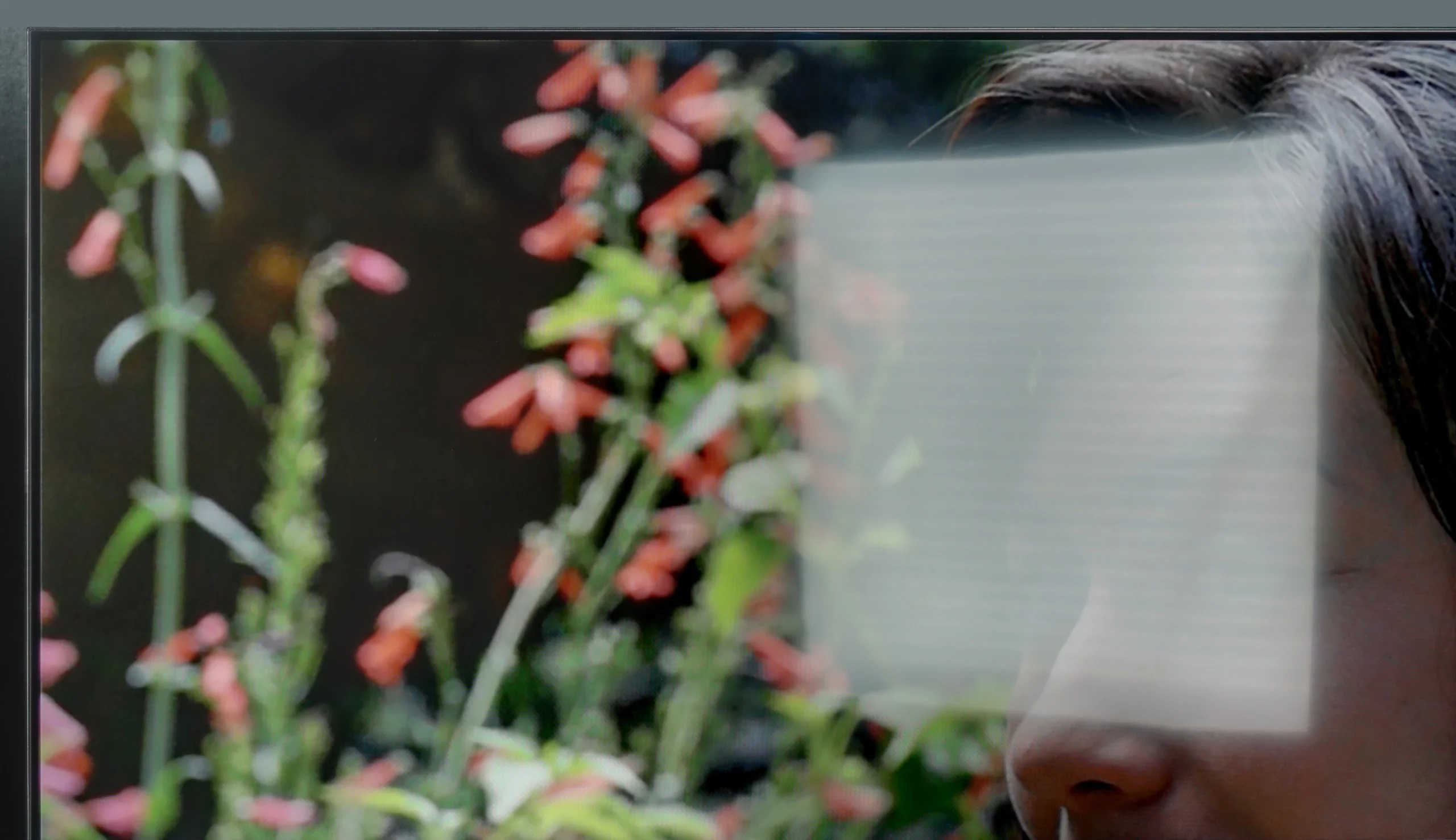
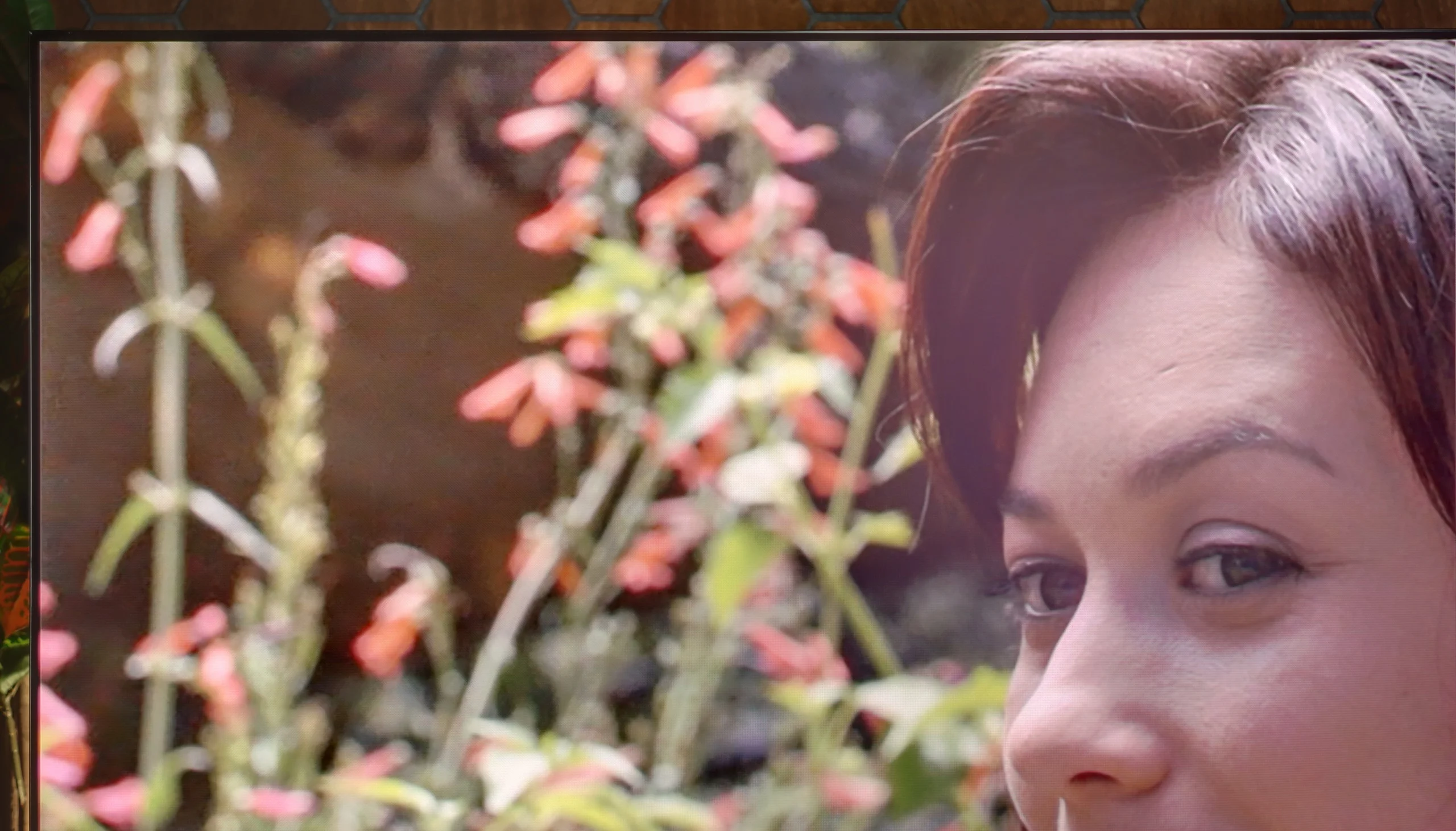
Panel brightness
Samsung S95H: 722 cd/m2
Haier Q80FUX: 317 cd/m2
The receiver's clash with the daily challenges posed by a bright lounge is quite decent with the Q80FUX, although it's certainly hard to talk about perfection here. The panel itself is equipped with a coating that effectively manages to suppress most reflections and glare from the surroundings. Equally important, even in more challenging lighting conditions, the screen can maintain pleasantly saturated colours. However, the weakness of this construction is revealed when backlight brightness comes into play. The previously mentioned, rather moderate maximum brightness (around 350 nits) means that in confrontation with intense natural light coming through the window, the screen often struggles to "break through." On a sunny day, the image might simply lack the necessary expressive strength.
Samsung S95H performs very well for daytime viewing. Much of that is down to the matte finish, which effectively diffuses reflections. Instead of clearly seeing a window or lamp in the screen, you see a softer glow. Add to that an average SDR brightness of around 750 nits. For an OLED that's an excellent result and allows you to comfortably watch TV in a bright living room. Bear in mind, though, that brightness depends on what’s on the screen. With smaller bright areas the S95H exceeds 1000 nits, but with a completely white screen it falls to about 400. So when watching winter sports or other very bright material, the image won’t have the same punch as in mixed scenes. The biggest limitation remains black levels in a brightly lit room. First, light hitting the QD-OLED panel visibly brightens it with a cherry tint, which makes it lose its nighttime depth and leaves the picture looking less contrasty. The matte finish handles reflections well, but it also scatters that light more. The S95H is still a very comfortable TV for daytime viewing. You simply see the full depth of its blacks only under dimmer lighting.
Panel details
Subpixel Structure:
Panel uniformity and thermal imaging:


Haier Q80FUX
Samsung S95H
TV features
5.6/10
7.9/10
- SystemGoogle TVTizen
- System performanceAverageVery good
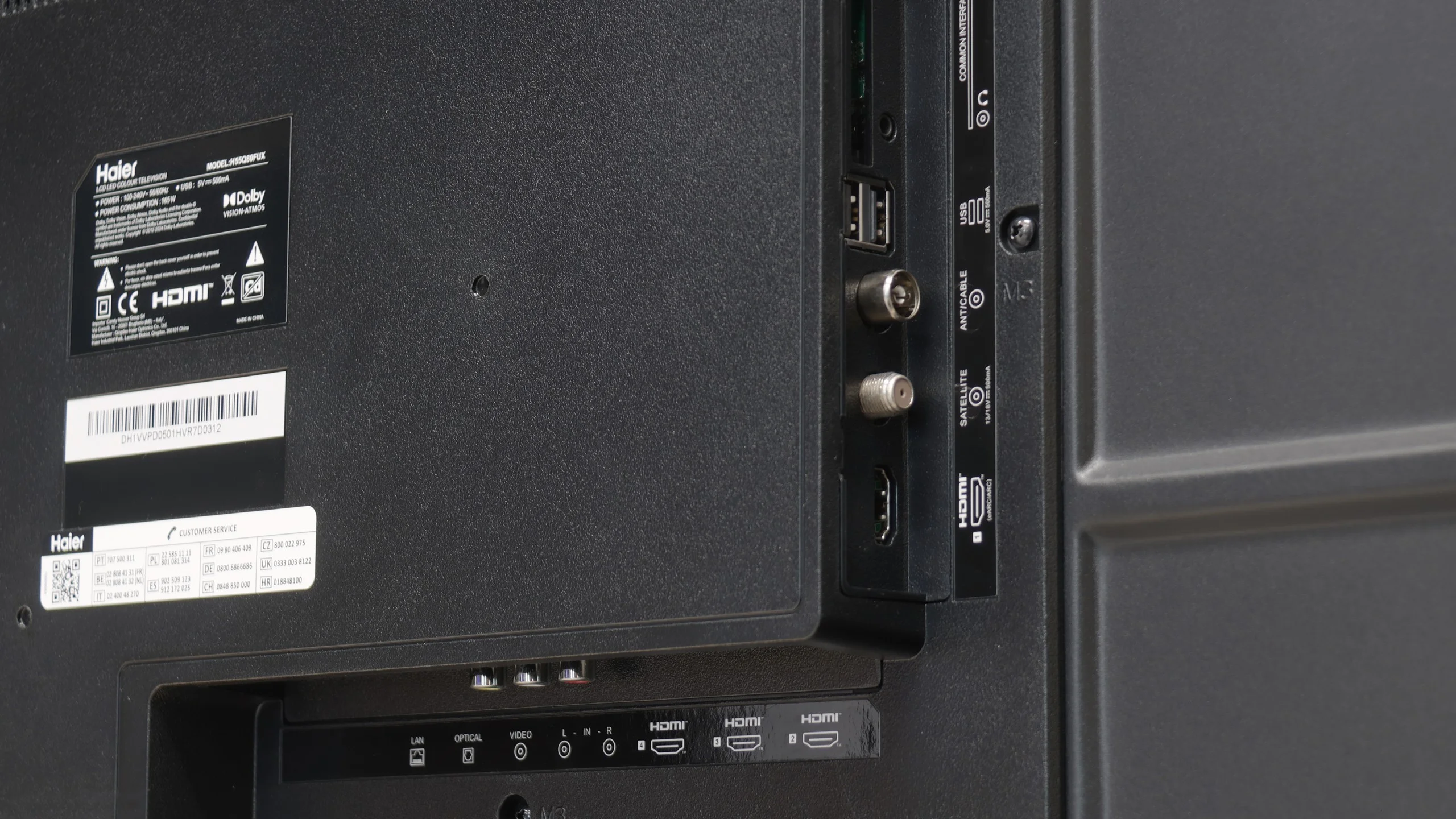
- HDMI inputs4 x HDMI 2.0, 0 x HDMI 2.10 x HDMI 2.0, 4 x HDMI 2.1 40Gbps
- Other inputsRCA (Chinch)USB-C
- OutputsToslink (Optical audio), eARC (HDMI), ARC (HDMI), Mini-Jack (Headphones)Toslink (Optical audio), eARC (HDMI), ARC (HDMI)
- Network InterfacesWi-Fi 2.4GHz, Wi-Fi 5GHz, Ethernet (LAN) 100MbpsWi-Fi 2.4GHz, Wi-Fi 5GHz, Ethernet (LAN) 100Mbps
- TV receptionDVB-T, DVB-T2, DVB-S, DVB-S2, DVB-CDVB-T, DVB-T2, DVB-S, DVB-S2, DVB-C
Classic features:
- Recording to USB (terrestrial TV)
- Recording programming
- Picture in Picture (PiP)
- RF remote control (no need to aim)
- Backlit remote control
- Teletext
- Audio only mode
- Bluetooth headphones support
- Simultaneous Bluetooth headphones & TV audio
Smart features:
- AirPlay
- Screen mirroring (Windows Miracast)
- Voice search
- Voice search in native language
- Ability to connect a keyboard and mouse
Sound connection options
- HDMI audioeARC (HDMI), ARC (HDMI)eARC (HDMI), ARC (HDMI)
- Other audio outputsToslink (Optical audio), Mini-Jack (Headphones)Toslink (Optical audio)
- Wireless audioBluetoothBluetooth
Supported audio formats (external HDMI eARC audio):
- Dolby Digital Plus 7.1
- Dolby True HD 7.1
- Dolby Atmos in Dolby Digital Plus (JOC)
- Dolby Atmos in Dolby True HD
- DTS:X in DTS-HD MA
- DTS-HD Master Audio
Senior accessibility
- Numeric keyboard on TV
- Font size adjustment
- Audio description
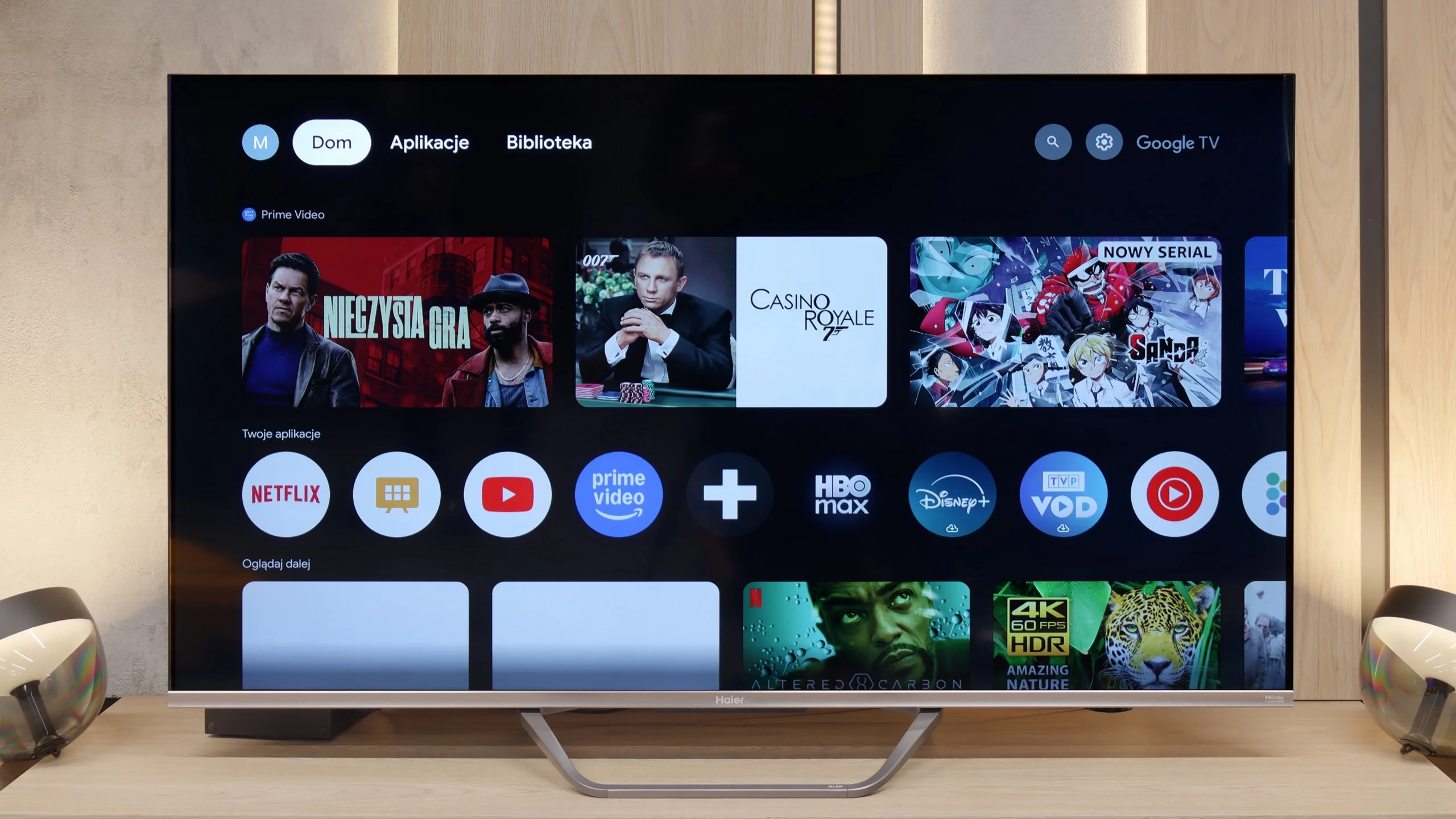
SmartTV on Haier Q80FUX: GoogleTV
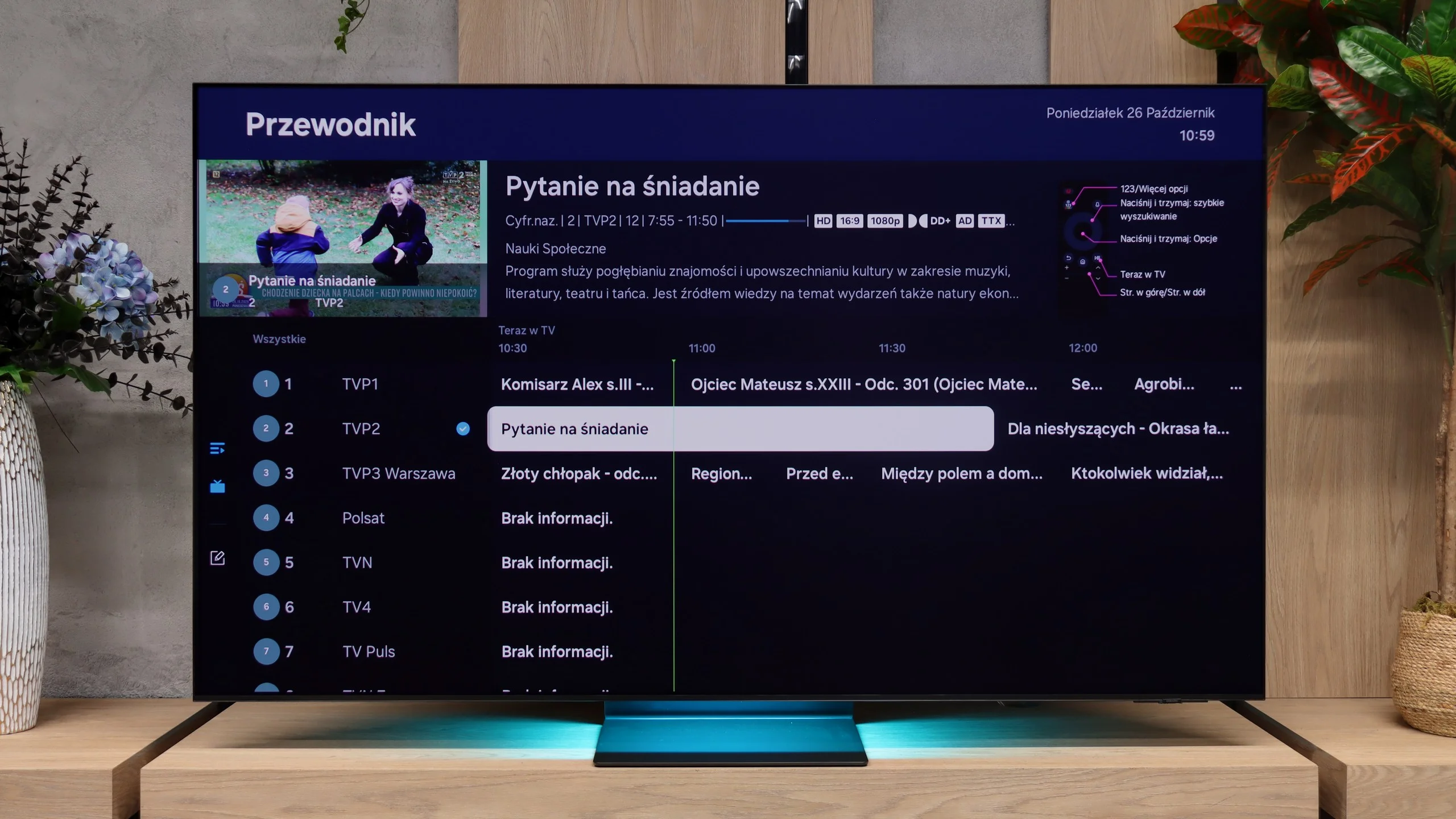
First up, let's take a look at the smart layer, which in the Q80FUX is managed by the Google TV system. This is theoretically a huge advantage, providing access to an incredible library of apps, making it easy to cast from mobile devices, and offering convenient voice search. Unfortunately, like in other models from this brand that we've tested, the implementation of this platform leaves much to be desired. It’s not even about drastic freezes or delays in navigation, but rather a festival of minor bugs, shortcomings, and terrible translations in the menu. Because of this, it's hard to consider "Google TV" in Haier's version on par with what we know from Sony or TCL receivers, even though the same, proudly sounding name is on the box.
Classic Features
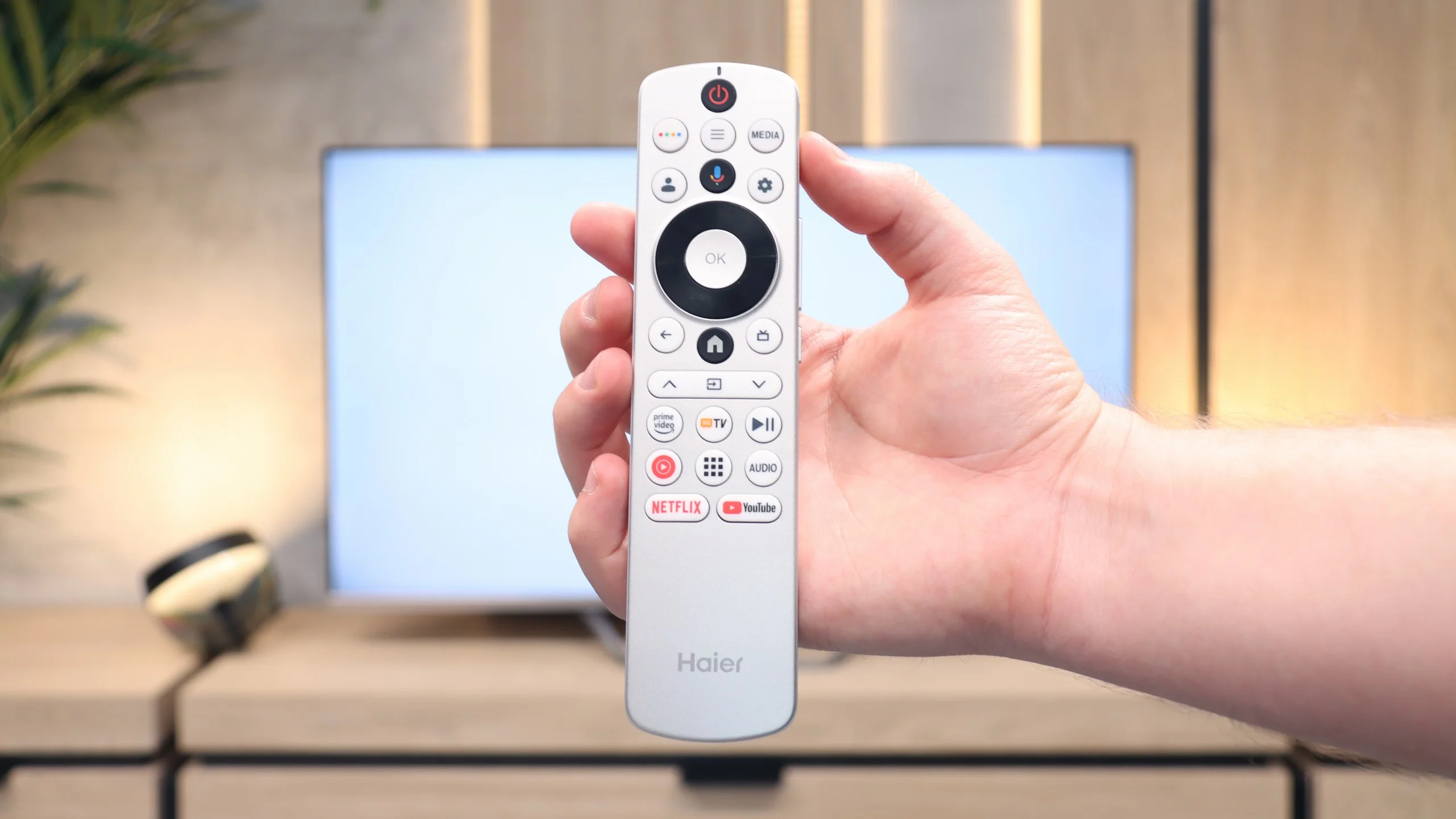
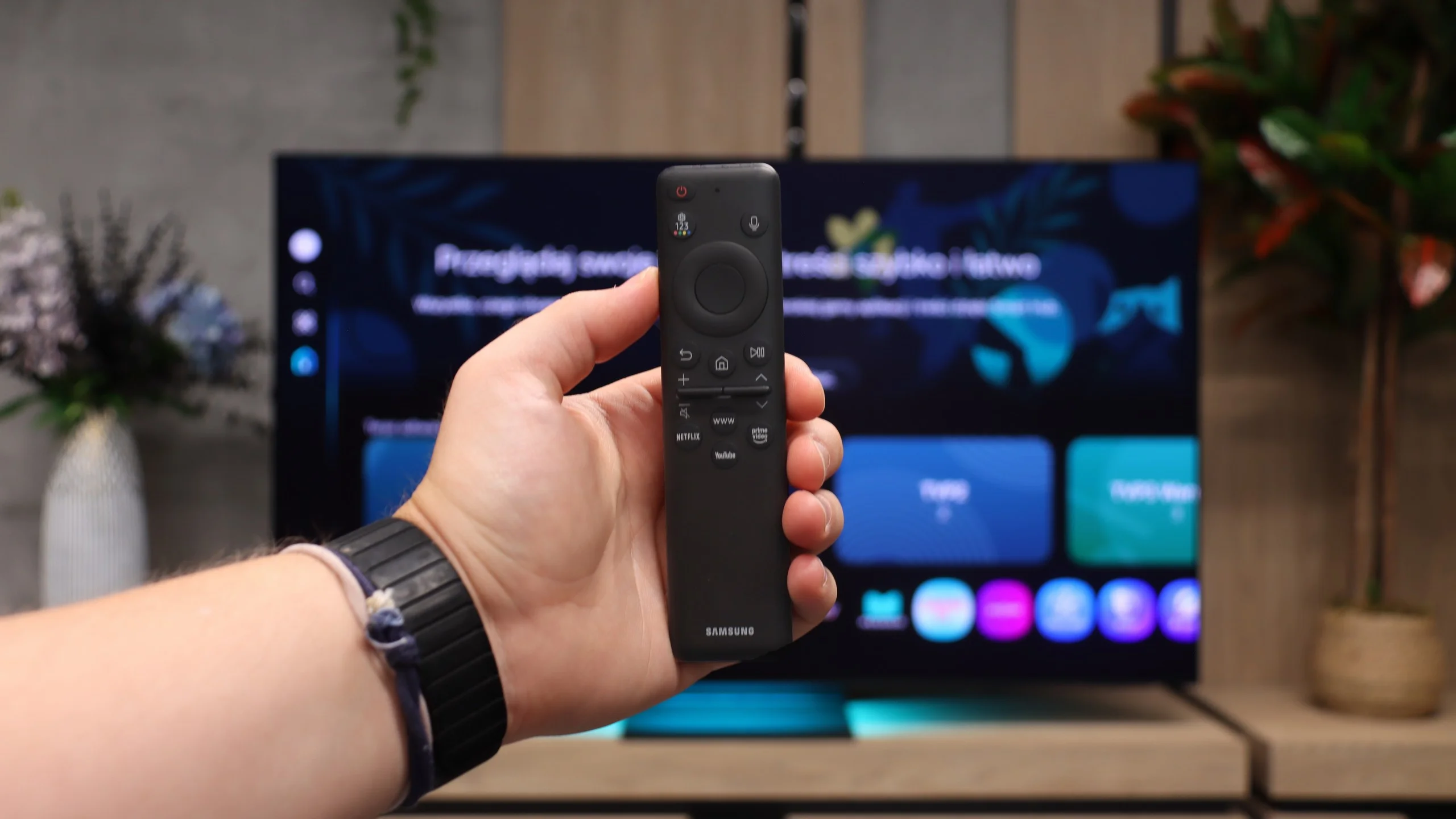
Moving on to the classic, functional features of the TV, the device's performance does not improve at all. The only thing worth praising is the presence of Bluetooth connectivity and an unusual but handy relic of the past in the form of an analogue headphone jack output. Apart from that, it's hard to find anything that would excite us. Due to the problematic software, the receiver (like its predecessors in our tests) was unable to find any terrestrial TV channels, even though other TVs connected to the same installation had no such issues. The remote control is also strange – its design may appeal to some, but due to the lack of a numeric keypad and the absurd placement of some buttons on the side edge, it definitely cannot be called senior-friendly.
Tizen
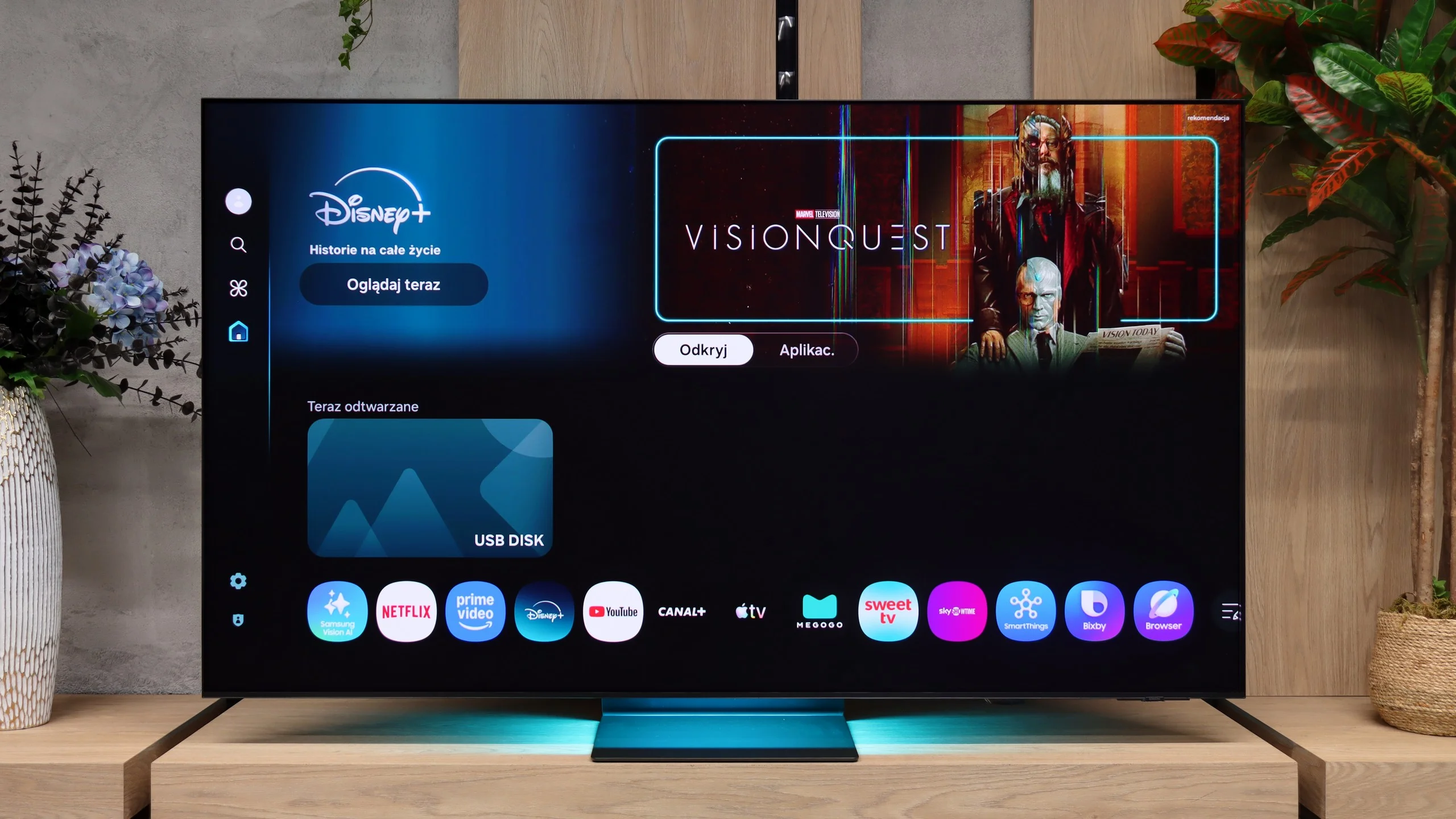
The S95H uses Tizen, which runs very quickly here. Switching between apps and settings is smooth, so daily use doesn't test your patience. There’s a wide selection of streaming apps, voice search and AirPlay for streaming content from Apple devices. You can also wirelessly display a computer’s screen. It’s a well-equipped smart TV where it’s easy to find something to suit you.
However, we noticed something odd. Our unit had 2025 software even though the S95H is a 2026 model. At the time of testing we couldn't find an update to this year’s system on the manufacturer’s website either. That’s surprising, as other Samsung models have already received it. Tizen itself runs well, but for a new TV of this class we'd expect the system to be up to date too.
TV features and remote
Among the classic features there’s teletext and picture-in-picture, but there’s no option to record programmes to USB. It can also be useful to play audio simultaneously through the TV speakers and Bluetooth headphones. The remote control is very minimalist and works without needing to point it at the screen, though it’s a pity it doesn’t have backlit buttons. A definite plus is that it doesn’t require battery replacements and can be charged using solar power.
One Connect
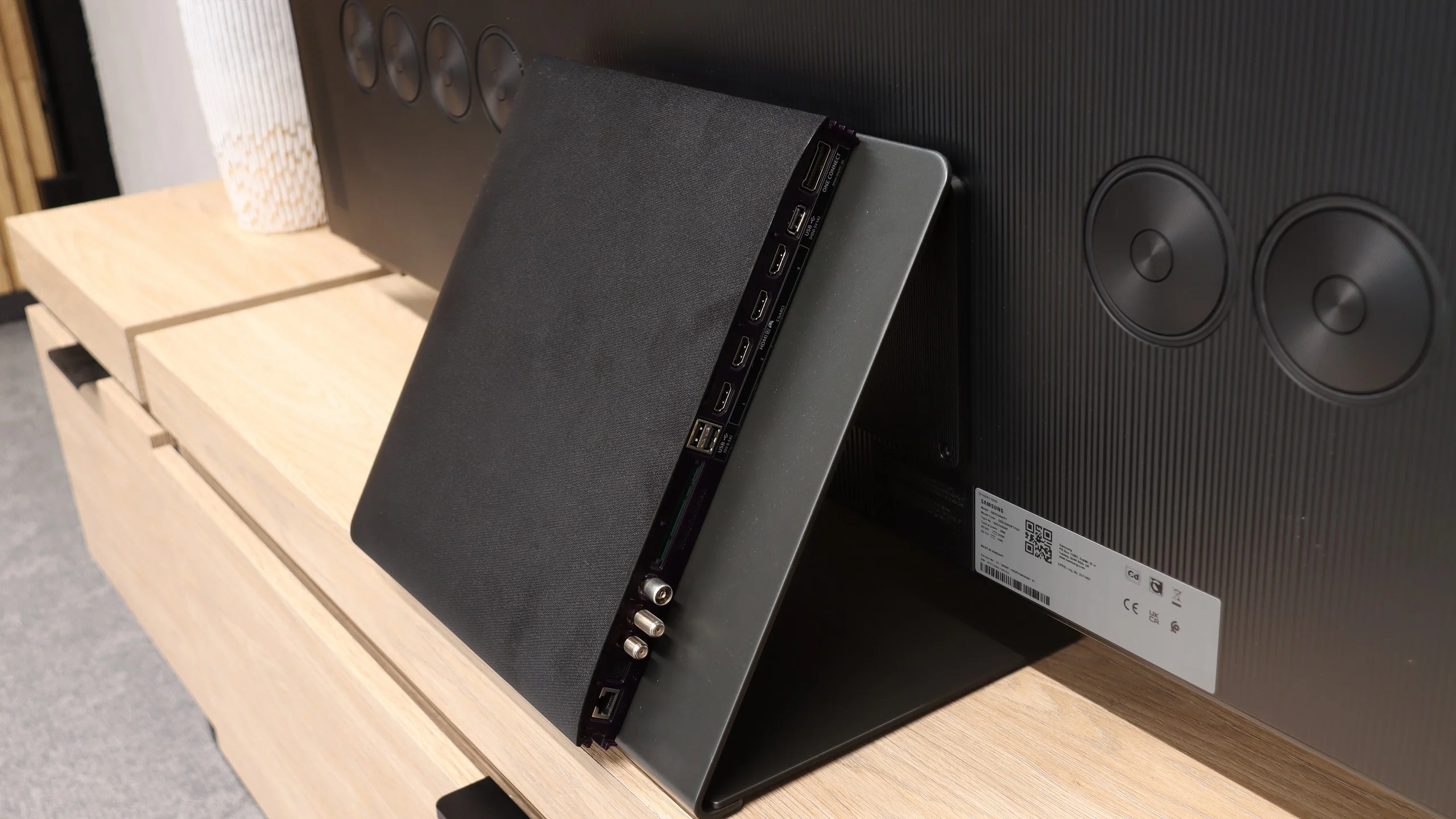
An important addition is the One Connect module, which earns Samsung TVs a small plus from us. It contains four HDMI 2.1 inputs with 40 Gb/s bandwidth, and you can connect a soundbar via eARC or the optical output. The biggest advantage of this solution is simple: only one cable runs to the screen. It’s easier to hide cables and connect another device without reaching behind the TV. People who plan to wall-mount the S95H will particularly appreciate this.
Apps
9.6/10
9.3/10






















Playing files from USB
9.6/10
9.1/10
Supported photo formats:
Maximum photo resolution:
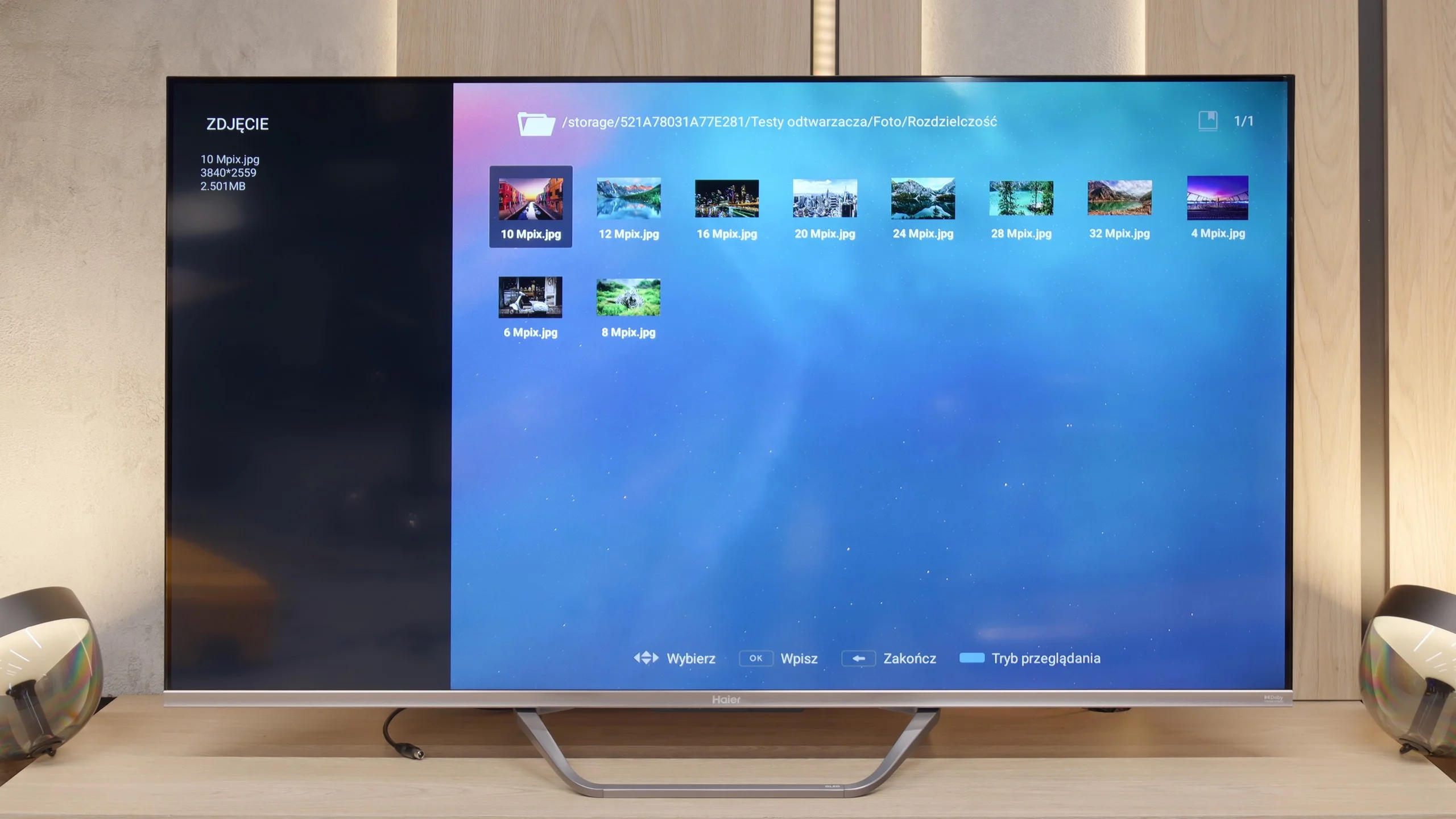
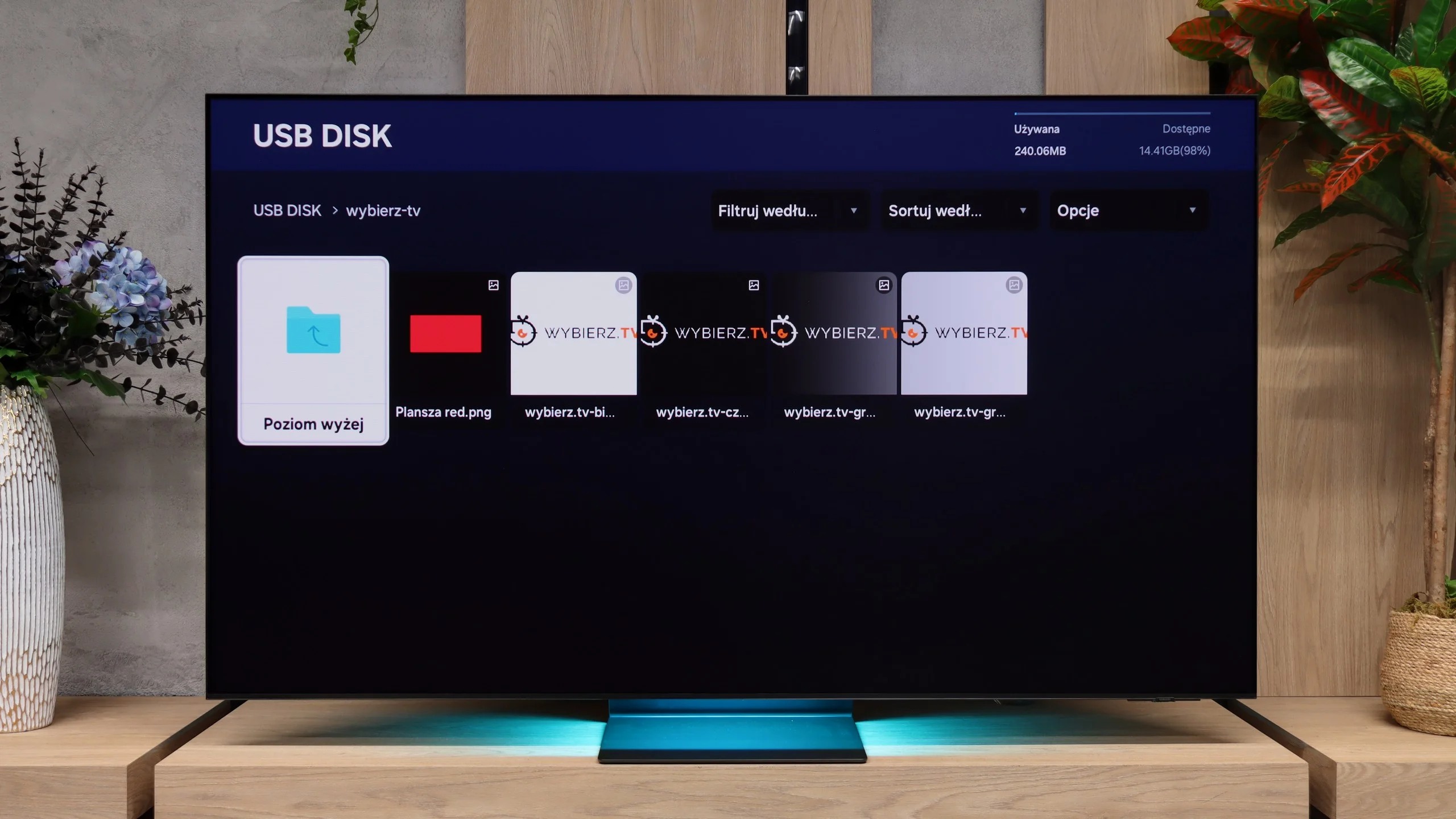
We must admit that after a series of setbacks we faced in assessing the overall implementation of the Google TV system, we approached the media player test with a fair bit of caution. Meanwhile, in this one specific aspect, the Q80FUX served us a real surprise. The built-in app for handling files from USB drives works simply brilliantly. This software component seems to be completely immune to the issues plaguing the rest of the system, opening practically all the most important and popular video file formats that we threw at it.
The built-in file player runs quickly and smoothly. The S95H opened almost all the audio and video files we prepared and expected it to support. You don't have to wait long for them to load, and browsing the storage device's contents is straightforward.
It's a shame it doesn't support HEIC photos, the default format used by many iPhones. So if you want to show photos from your phone directly from a USB stick, you'll need to convert them first, for example to JPEG.
Sound
5.5/10
8/10
- Maximum volume84dB86dB
- Dolby Digital Plus 7.1
- Dolby True HD 7.1
- Dolby Atmos in Dolby Digital Plus (JOC)
- Dolby Atmos in Dolby True HD
- DTS:X in DTS-HD MA
- DTS-HD Master Audio
When it comes to "acoustic experiences," the Haier Q80FUX seems to adhere to the principle that sound is simply meant to be. And it is – that's about all that can be said for it. The built-in speakers produce sound in an extremely flat manner, lacking character, and most importantly, they are missing any clear bass foundation. A slight consolation is the fact that the television supports the Dolby Atmos format. However, let's be honest: to realistically take advantage of the benefits of this codec and hear the promised space, passive decoding capability is simply not enough. Connecting an external home theatre system or at least a decent soundbar is not just a recommendation in this case; it's an absolute necessity.
In terms of sound the S95H is essentially a copy of last year’s model. Despite its very slim chassis it sounds clean and pleasant, but the presentation is fairly flat. It lacks depth and stronger bass, which feels like a drawback next to such an impressive picture. On the other hand, you can’t expect large drivers in a TV only about a centimetre thick. The beautiful looks come at a price.
It’s therefore worth pairing the S95H with a soundbar or a separate audio system so the sound can better keep pace with the picture. The TV supports Dolby Atmos, which lets you expand the setup with immersive sound. It does not, however, support DTS. That limitation may be an issue mainly for people watching films on discs with DTS soundtracks.
Sound Quality Test
Acoustic Measurements
84dBC (Max)
75dBC
86dBC (Max)
75dBC
Reader comments
Comments are provided by the external service Disqus (Zeta Global). Once loaded, Disqus may set cookies and process data about your activity.
We will remember your choice on this device. Provider's privacy policy