 Direct comparison
TCL C6KS (also known as C69KS and Q6CS) is a television that on paper promised to be a hit in the "value for money" category. And indeed, in many ways it's a successful piece of equipment: thanks to Mini-LED backlighting, we get good black levels and brightness that rivals more expensive models. In fact, it's identical to the slightly more expensive C6K model, which we've already tested for you. Additionally, it features the same excellent Google TV system and surprisingly rich gaming features, making it enjoyable to play even with a 60 Hz panel. Unfortunately, the positive impression is marred by the performance of the panel used. The television suffers from noticeable motion blur, and aggressive dithering (digital grain) makes the image often appear unnatural and artificial—as if it were being forced to be sharper. Ultimately, the biggest problem with the C6KS isn’t its flaws, but rather its sibling, the C6K. At its current price, this model finds itself in a strange "middle ground." It costs almost the same (or just slightly less) as the full-fledged TCL C6K, which offers a significantly better 120 Hz panel and is simply a complete design without those annoying flaws. The C6KS is a compromise model that will only become attractive under one condition—if its price drops drastically. For now, opting for the (often symbolic) additional cost to the C6K model remains a much safer and better choice. One could mischievously state that the letter "S" in the name actually stands for "Slim." It's just that it's not about an exceptionally slim case, but about how much this model has been "slimmed down" in terms of capabilities compared to the full-fledged C6K.
- Matching (Score) |
- Our verdict |
- TV appearance |
- Where to buy |
- Contrast and black detail |
- HDR effect quality |
- Factory color reproduction |
- Color reproduction after calibration |
- Smoothness of tonal transitions |
- Image scaling and smoothness of tonal transitions |
- Blur and motion smoothness |
- Console compatibility and gaming features |
- Input lag |
- Compatibility with PC |
- Viewing angles |
- Daytime performance |
- Panel details |
- TV features |
- Apps |
- Playing files from USB |
- Sound
C6KS / C69KS / Q6CS

W92C / W94C
Available screen sizes: 55”
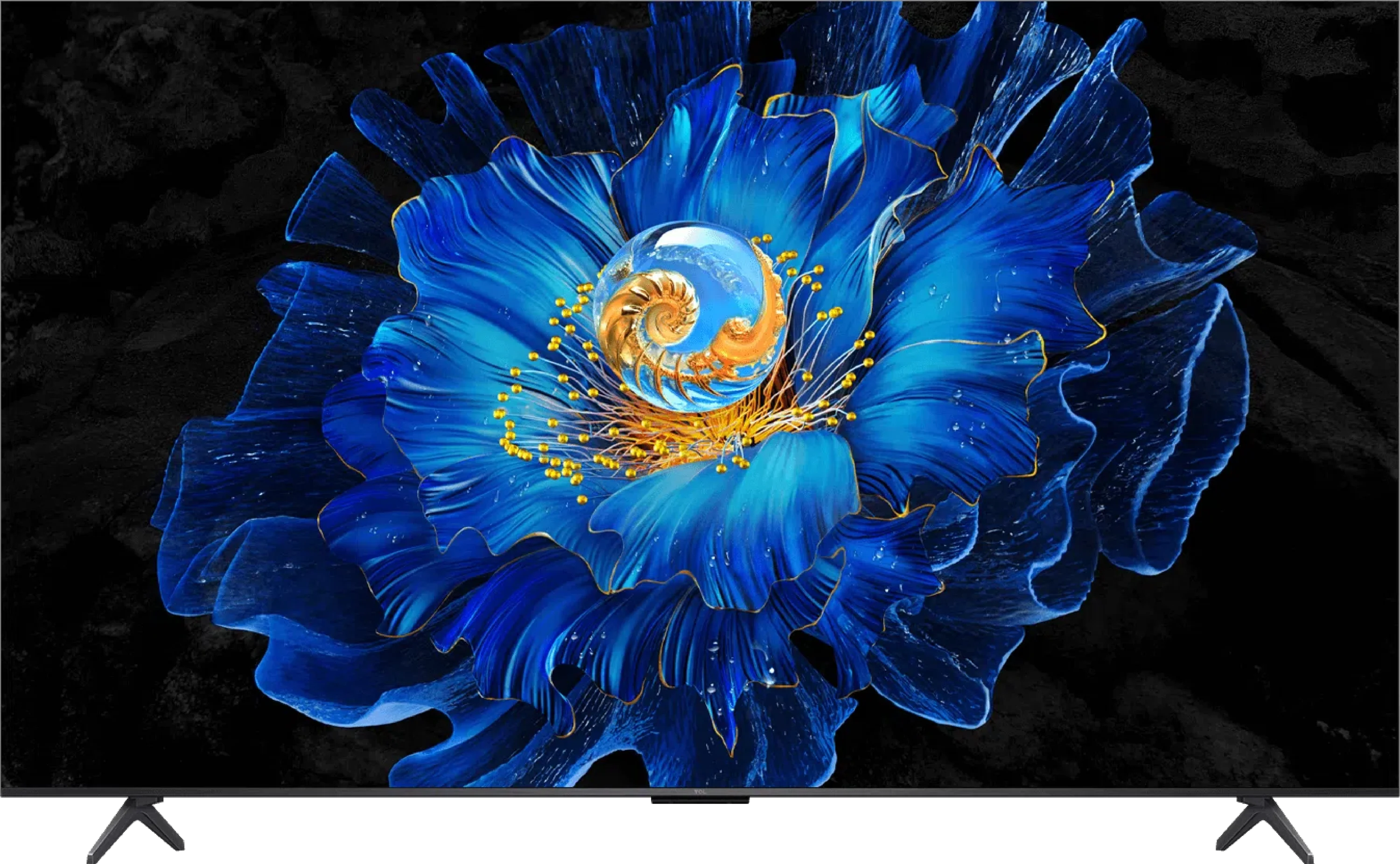
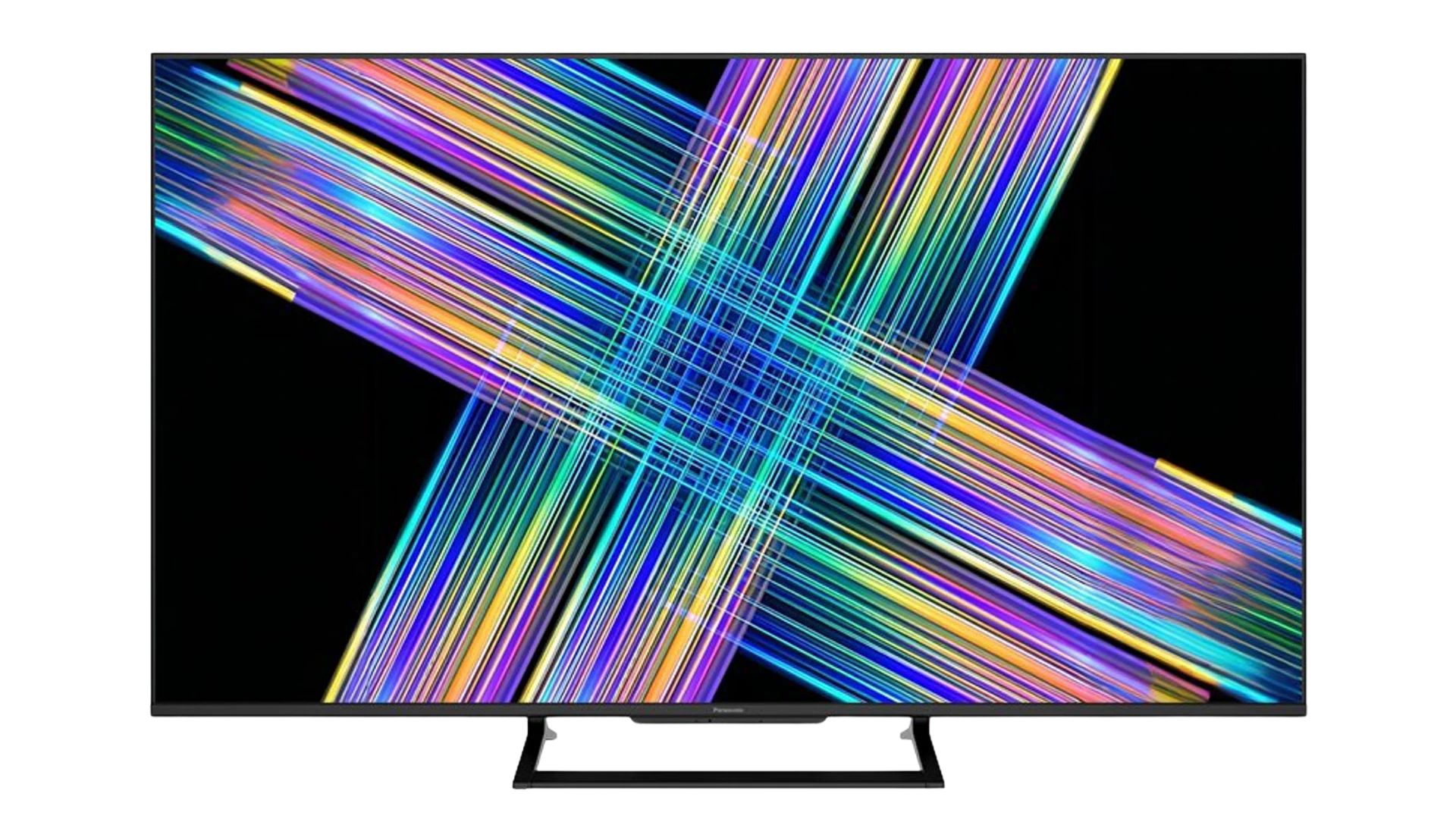
Panel type: LCD VA
Resolution: 3840x2160
System: Google TV
Model year: 2025
Complete the survey to find out the result
Panel type: LCD IPS
Resolution: 3840x2160
System: Google TV
Model year: 2026
Complete the survey to find out the result
Overall rating
6.4
7.1
 Movies and series in UHD quality
5.9
6.5
 Classic TV, YouTube
6.1
6.7
 Sports broadcasts (TV and apps)
5.3
6.9
 Gaming on console
7.7
7.8
 TV as a computer monitor
1.7
9.0
 Watching in bright light
6.6
6.8
 Utility functions
7.0
6.6
 Apps
9.6
9.6
 Sound quality
6.5
6.7
Complete the survey to find out what fits your preferences
Advantages

Very good contrast and black: VA panel and MINI-LED backlighting
Pretty high (around 600 nits)
Many features for gamers: VRR, ALLM, HGiG
Additional mode for gamers: 120Hz and 144Hz
Google TV system with a wide range of applications
Support for multiple HDR formats including Dolby Vision
Support for Dolby Atmos and DTS
Quite pleasant sound from the built-in speakers
Matte screen effectively reduces reflections
Fast Google TV system with a large selection of apps and features
Natural colors after calibration
Supports Dolby Vision and HDR10+
Very smooth tonal transitions
Effective enhancement of lower-quality material
A good choice for gamers: 144 Hz and low input lag, 3x HDMI 2.1 (48 Gbps)
Very good text readability from a computer
Disadvantages

The matrix is heavily smudged
Strong visible dithering (looks like artificial 4K)
Very poor compatibility with PC
Minor system errors
Significant chaos in naming (many derivative models that differ in no way)
Imprecise local dimming (limited number of zones)
Poor out-of-the-box color accuracy
Software bugs
Problems with motion smoothness: motion blur and lack of advanced motion interpolation controls
Mediocre sound despite the subwoofer
Our verdict
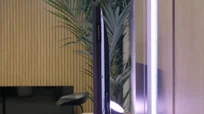
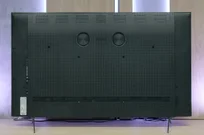
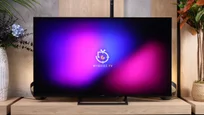
W92C is the first Panasonic made in collaboration with Skyworth that we've tested. And it's about the change we expected: a little less of the old Panasonic, but also some new things that work in its favor. The biggest plus is the move to Google TV. The system is fast, gives access to the apps you need, and on a daily basis convinces us more than the previous Fire TV. Combined with a matte screen that handles reflections well, this makes for a comfortable living-room TV where you don't always want to close the curtains before watching. The longer we used the W92C, the more we appreciated its versatility. It can noticeably improve weaker content, and after calibration the picture gains a naturalness it sadly lacks on the factory settings, as was the case with older Panasonic models. It also works well with consoles and PCs. It responds quickly to input, and the high refresh rate provides smooth motion. So Panasonic makes sense in a home where one screen is used for TV, movies, gaming, and sometimes even for... working with text. 🙂 The limitations become clearer during evening viewing. Blacks can look good, but a more challenging scene is enough for halos to appear around bright objects and for the bars above and below the image to glow. The small number of local dimming zones makes it hard to keep deep black levels and bright details at the same time. Dolby Vision helps pull more out of this panel, but it doesn't remove those limits. The default picture tuning is also disappointing, and the automatic brightness changes we encountered during testing further spoil the experience. This is where the refinement you'd expect from the Panasonic name is most lacking. So ultimately the W92C's appeal will come down to price. It's an entry-level Mini LED and should be priced similarly to competing models with basic local dimming. At that level it will be a sensible choice, especially for people moving up from a regular LCD. They'll get better black levels, a convenient OS, and a versatile screen that works for both TV and gaming. If, however, you have to pay a clear premium for the Panasonic badge, it will be hard to justify that extra cost. The W92C has enough positives to stand as an affordable, all-purpose TV, but too few advantages to sell itself on the brand alone.
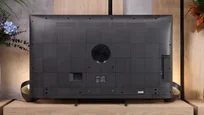
TV appearance


Contrast and black detail
7.5/10
5.2/10
Local dimming function: Yes, number of zones: 180 (10 x 18)
Local dimming function: Yes, number of zones: 91 (7 x 13)
Contrast:


Result
129,650:1

Result
26,650:1

Result
12,900:1

Result
12,600:1

Result
6,250:1
Result
24,900:1
Result
5,050:1
Result
9,150:1
Result
2,000:1
Result
900:1
Halo effect and black detail visibility:
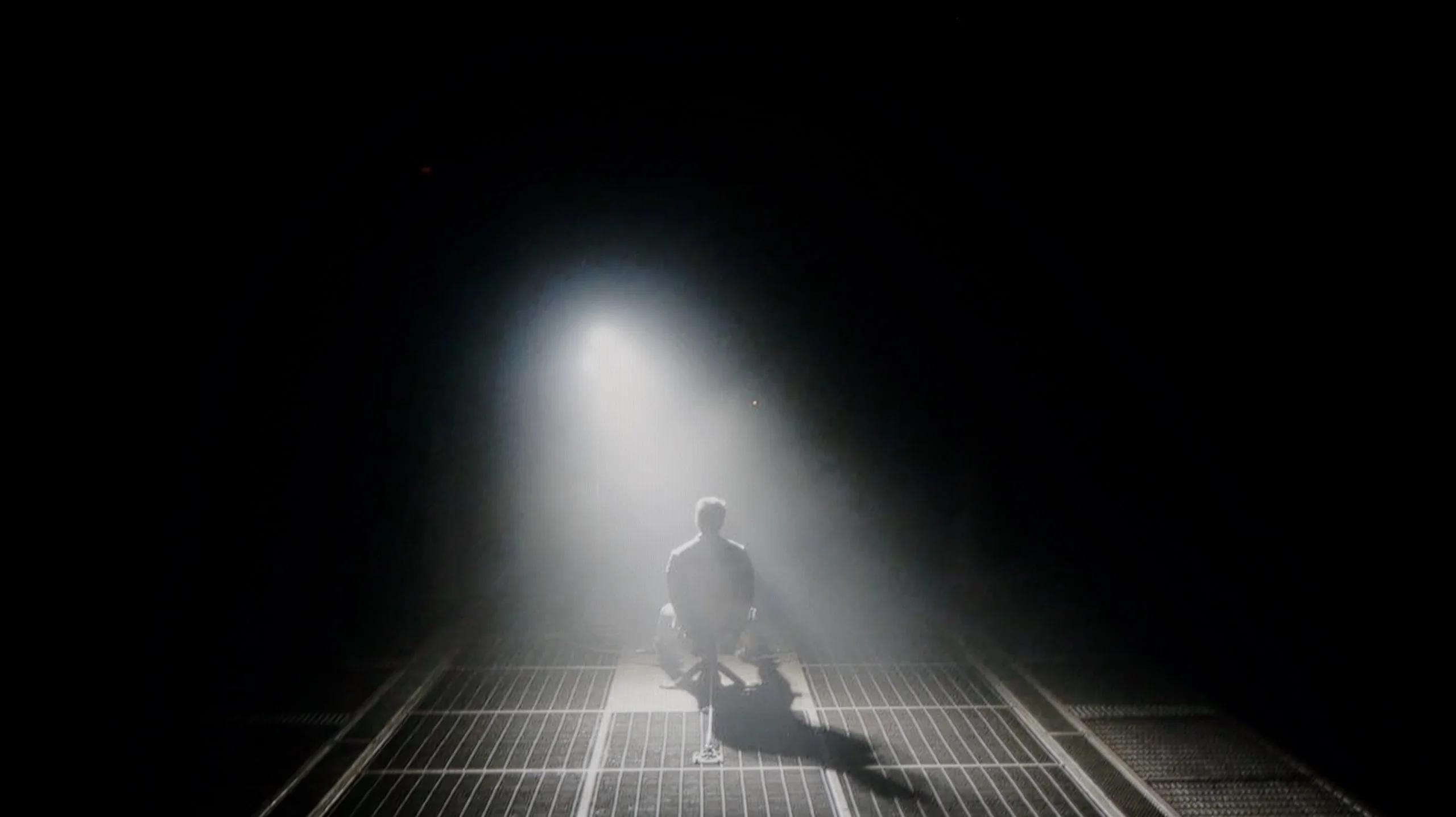
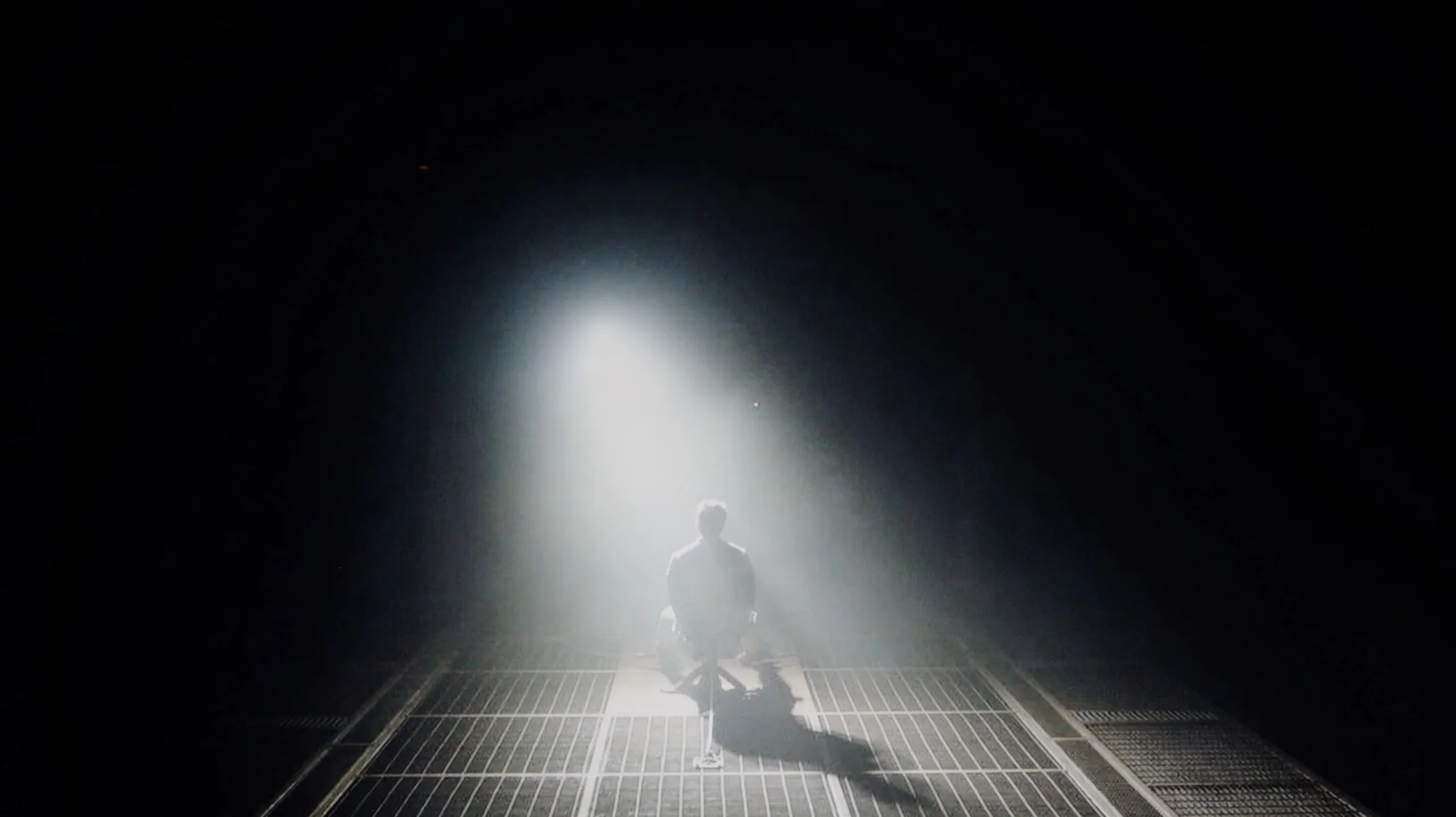
Check the visibility of bright lights on a dark background. Mini-LEDs often struggle with this. The photo does not compare black levels – that’s what the video below is for.
The video accurately shows differences in contrast and black levels between TVs, as well as potential issues: halo around bright objects or Mini-LED zone operation visible as brightness jumps.
Let's move on to what tigers like best, which is black and contrast. If you were worried that the lower price of the C6KS model (C69KS/Q6CS) was due to drastic cuts in image quality, I have great news for you regarding black levels and contrast. In direct comparison with the more expensive C6K, the tested model hardly falls short at all. Just like in the higher series, we find a VA panel supported by a local dimming system. What’s most interesting – and here’s a big surprise – during the tests, we counted exactly the same number of dimming zones in the C6KS (of the same size) as in the tested more expensive counterpart! The black levels are very good. The contrast measurement results speak for themselves – for such a relatively inexpensive television, the black is deep and free from major issues that often plague budget models without local dimming. Of course, we can't cheat physics. We must expect that in very demanding scenes (e.g., bright text on a black background), we will sometimes notice undesirable effects such as blooming (halo effect around bright objects). However, this is not something that disqualifies this television – overall, the black levels are at a very decent, satisfying level.
Black levels on the Panasonic W92C generally look pretty good. That's thanks to the local dimming, which in the 55-inch test unit uses 91 zones. In simpler scenes the TV can effectively darken the background, and in our easiest test it reached a contrast ratio of nearly 25,000:1. To get that level of black you need to set dimming to high. Lower settings leave the backlight too bright.
That comes at a cost in bright parts of the image. The separation of individual lights remains visible, though you have to look closely to spot it. A lower dimming level lets those details appear more clearly, but the degradation in black level is too great to call it a better compromise.
Even on the high setting you can see the limitations of the relatively small number of zones. What bothered us most were the bright bands above and below the picture, which in HDR material sometimes turned almost navy. Small, bright objects also show visible bright halos, the so-called halo effect. On the plus side, the backlight is stable: in the helicopter scene we didn't notice jittery brightening and dimming of individual zones. More zones would help, and the control algorithm needs refinement. Moving up from a basic LCD without local dimming can still offer a noticeable improvement, but for a Mini LED the result leaves a lot to be desired.
HDR effect quality
4.9/10
4.8/10
Luminance measurements in HDR:

Result
602 nit

Result
204 nit

Result
421 nit

Result
152 nit

Result
590 nit
Result
508 nit
Result
175 nit
Result
348 nit
Result
169 nit
Result
428 nit
Scene from the movie “Pan” (about 2800 nits)


Scene from the movie “Billy Lynn” (about 1100 nits)
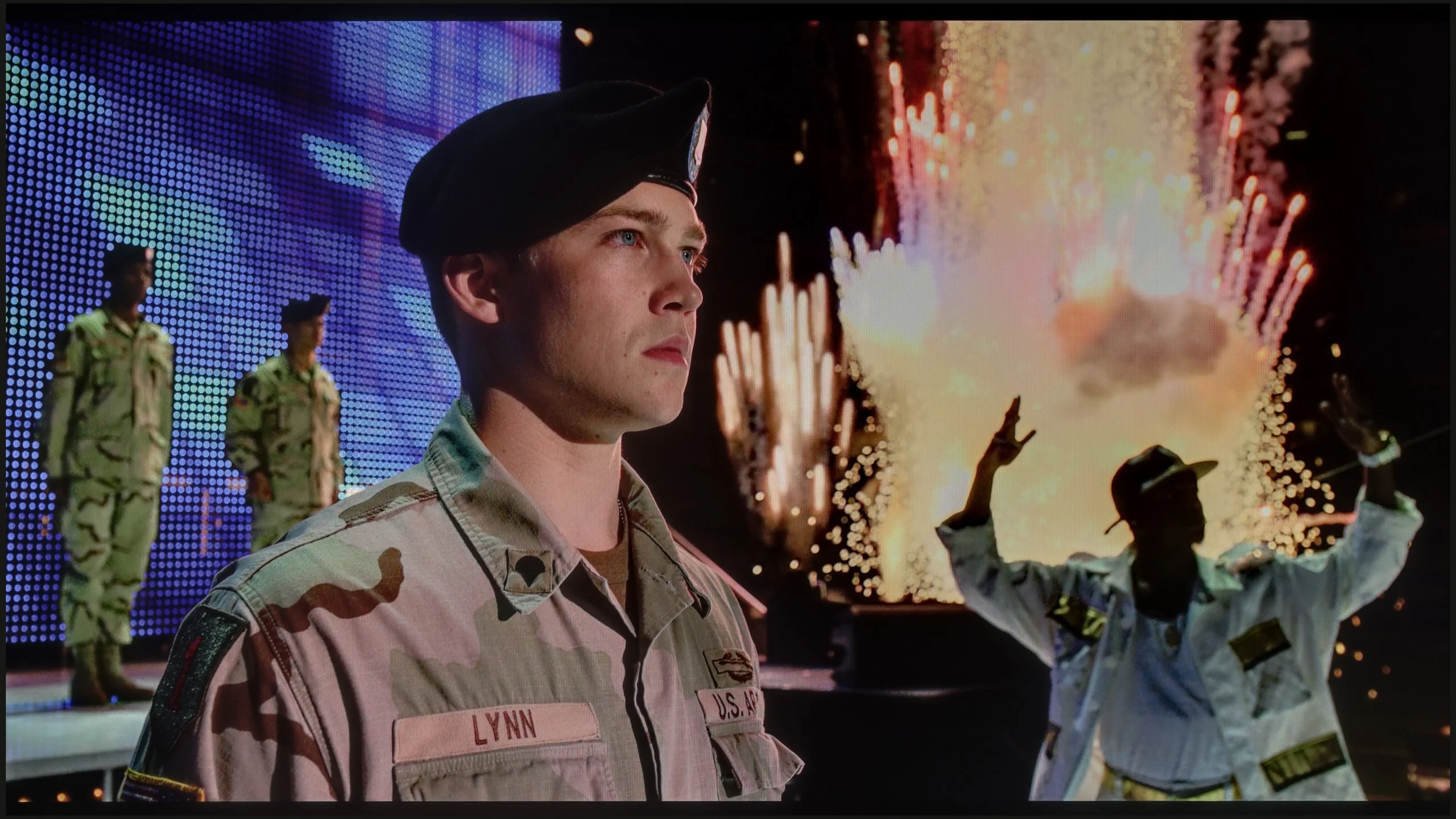
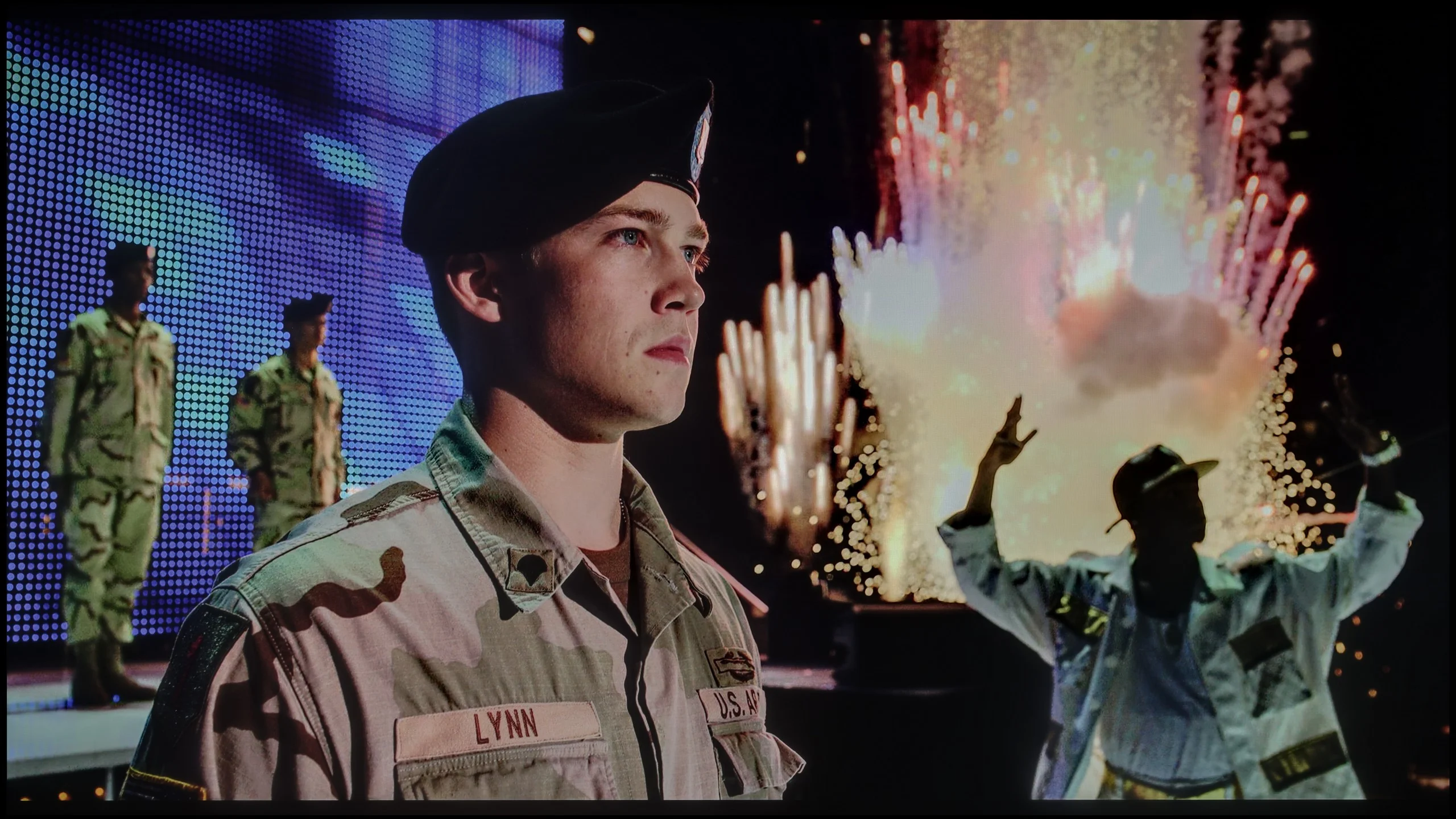
The photos show two HDR10 movies. 'Pan' is one of the brightest productions ever made, while 'Billy Lynn' (soldier) has brightness typical of streaming (Netflix, Prime, HBO MAX). Notice the intensity of effects and detail in whites.
Static HDR10


The photos present the visibility of white details in various HDR formats. They do not show brightness differences between TVs (these can be compared in the previous gallery).
Dynamic: Dolby Vision
Dynamic: Dolby Vision


The photos present the visibility of white details in various HDR formats. They do not show brightness differences between TVs (these can be compared in the previous gallery).
HDR luminance chart:
Panasonic W92C (Google TV)
TCL C6KS / C69KS / Q6CS
And how does the issue of HDR look? Here the C6KS performs quite well and – as is becoming a recurring theme in this review – identically to the C6K model. The maximum brightness generated by this television is around 600 nits. In bright scenes, this translates to a really solid, cinematic effect, and generally, the video materials look good here. However, one must remember the specifics of the dimming algorithm in this model. When very small, bright points (e.g., stars) appear against a dark background, the television can dim them quite significantly. The goal is simple: to eliminate blooming and maintain the best possible black levels. It’s a reasonable compromise. Most viewers will definitely appreciate deep, “true black” more than additional micro-details that could cause grayness on the screen. Such is the nature of local dimming technology in this price range, and one must be aware of it. It’s also worth noting that the TCL C69KS (C6KS) has an additional PFS coating, which is marketed under the tagline of QLED technology. Thanks to this, the colors are saturated and vibrant – our measurements showed that the coverage of a wide color gamut reaches 92% here.
Panasonic W92C reaches a peak of about 750 nits with local dimming set to high. That brightness is enough to show a noticeable HDR effect, but in movies the TV does not always manage to use it. In brighter scenes we get around 500 nits, while small highlights on a dark background can fall to just 160 to 250 nits. In practice this means the sun in a bright shot looks fairly convincing, but a flashlight or small flares in a night scene lose intensity. This is another cost of local dimming, which with a limited number of zones also dims bright elements to preserve the black around them.
During testing we also noticed a strange software bug. After switching to HDR the TV would automatically change the backlight level, setting it for example to 53 or 81 instead of the maximum. As a result the image was darker than the panel’s capabilities. All presented measurements were made after manually restoring the maximum backlight.
Colors
The wide color gamut in the Panasonic W92C comes from the PFS phosphor, which produces an effect similar to the quantum dots used in QLED screens. We measured DCI-P3 coverage at about 94% and 74% of the wider BT.2020 gamut. Importantly, results on film material were practically identical to those on test patterns. That’s a good outcome, allowing HDR movies to show richer, more saturated colors than a standard LCD panel.
The luminance of the colors themselves is somewhat weaker. In our measurements red reached about 58% of its target value, while green and blue were around 66 to 67%. The TV can therefore display a wide range of colors, but the brightest, highly saturated parts of the image do not have the same punch as on RGB screens.
Factory color reproduction
5/10
4.1/10


This gallery shows how colors change after professional TV calibration. If you notice the difference, we recommend ordering this service at SkalibrujTV.com.
Factory Mode
After calibration
Unlike the more expensive C6K model, the tested C6KS does not have an option labeled Filmmaker Mode in the menu. Is this a reason to cry? Absolutely not. Our tests have shown that in practice, in terms of color reproduction, the absence of this specific label makes virtually no difference. The best available Film/Cinema mode here offers nearly identical picture characteristics to the aforementioned Filmmaker mode in the more expensive model. So we get a very similar image, just under a different name. So if you were wondering whether paying extra for the C6K gives you better colors – the answer is: no, in both cases the base is the same and requires slight adjustments.
We measured the factory colors in Film mode. The W92C also has a "Filmmaker" mode, i.e., Filmmaker Mode, but it locked almost all picture settings, so for further testing and calibration we used the film mode closest to it. It's better than the other available presets, though unfortunately that doesn't mean it's well tuned. It's one of the weaker film modes we've tested this year. A shame, because Panasonic has accustomed us to much better out-of-the-box settings. In SDR content the image's cool tint is immediately noticeable. The white balance has too much blue, and an excess of red relative to green gives whites a slightly pink cast. You can also see this on faces, which don't look as natural as they should. An even bigger problem is the severely lowered gamma. Instead of the target 2.4, it stays around 1.9-2.0 across most of the range. In practice the picture is too bright, shadows lose depth, and almost every scene looks a bit flat. In HDR there's even more blue, especially in the bright areas. Here too the TV boosts the brightness of darker and midtones, which is shown by the EOTF curve going above the reference value. This makes it easier to see some shadow detail, but the scene loses its proper atmosphere. So we have a similar problem as in SDR: colors that are too cool and an image that is too bright. For a brand like Panasonic, the W92C's factory settings are simply... disappointing.
Color reproduction after calibration
7.5/10
7.7/10


The photos show how movies look on the TV. Pay attention to black detail visibility, colors, and shadow tint.


The photos show how movies look on the TV. Pay attention to black detail visibility, colors, and shadow tint.
Thanks to the white balance adjustment, the tendency of the C69KS to distort colors has been effectively reduced, leading to a very good final effect. After calibration, we won't see excessive warmth in SDR scenes or overly cool tones in HDR. However, it's worth noting the brightness characteristic. In SDR content, there are hardly any objections – the image looks very good, especially in older films, television programs, or materials from YouTube. It is much more difficult to evaluate the performance of the television in HDR. Analysis of the EOTF curve suggests correct behavior, but its practical variant shows certain limitations. The C69KS can overly brighten the smallest elements of the frame, while at other times it can dim the entire scene. Calibration has therefore brought clear benefits in terms of color reproduction, but certain limitations arising from the operation of local dimming and the way it is controlled by the C69KS cannot be avoided, as we also saw in the C6K test.
After calibration, the W92C looks decidedly better, especially with SDR content. We managed to even out the white balance and eliminate the cool tint that had previously spoiled the look of almost every scene. White is now neutral and faces have a much more natural tone. We also improved the gamma, which now stays much closer to the target of 2.4. As a result the picture has regained depth and no longer appears so overly bright. Color measurements confirm this improvement, with small errors and little cause for concern in SDR.
In HDR we also reduced the excess blue, though some imperfections remain in the brightest shades. A bigger problem is how the TV handles brightness. Shadows and midtones are boosted, while the brightest highlights appear darker than they should. That causes the image to lose some contrast between dark backgrounds and strong light, which is an important part of the HDR effect. Unfortunately, we don't have enough control over that behavior in the settings. Calibration improves the colors, but it won't fix the tone mapping and backlight control. That's a characteristic of the W92C that Panasonic needs to refine.
Smoothness of tonal transitions
4.8/10
9.7/10
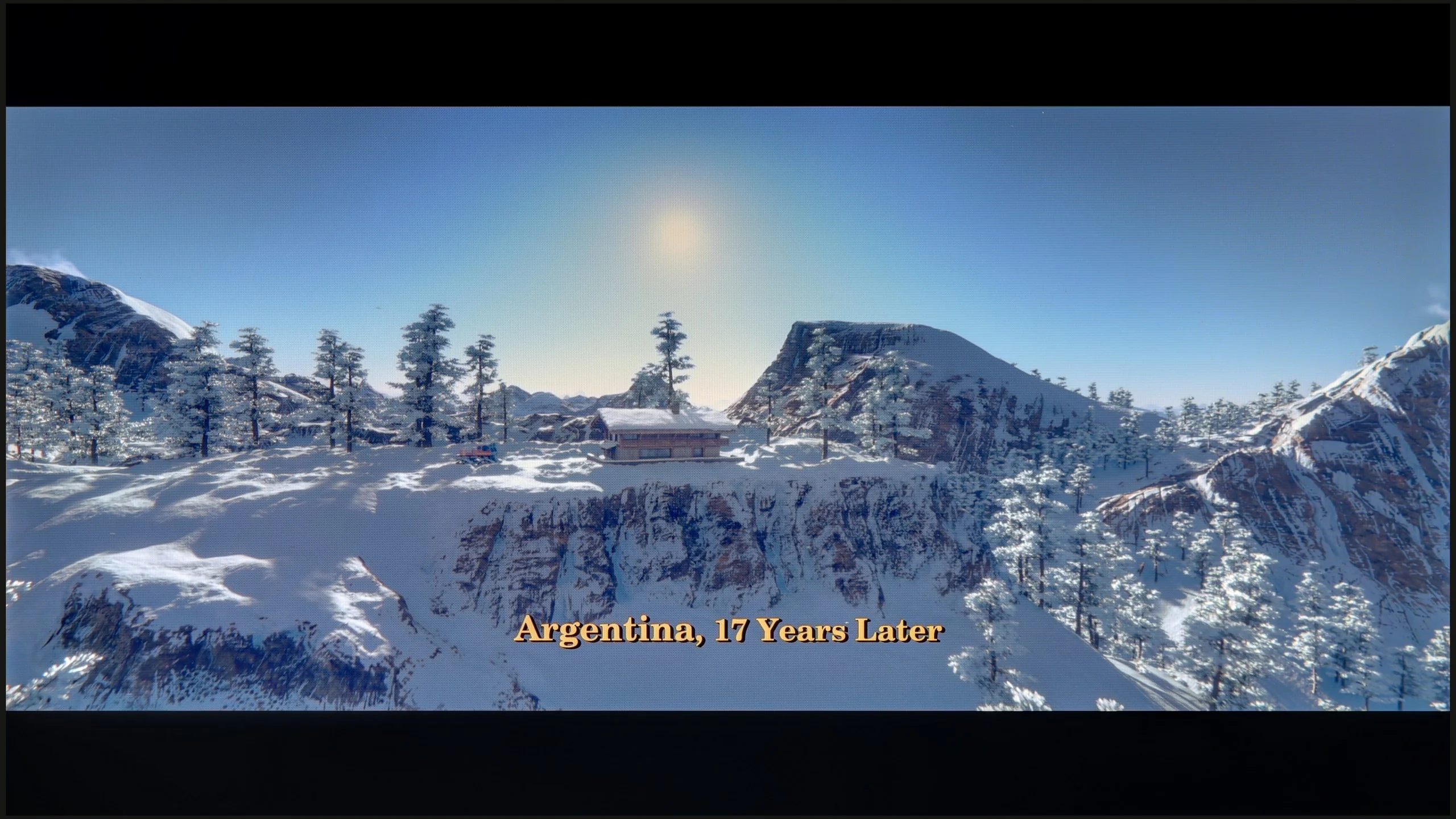

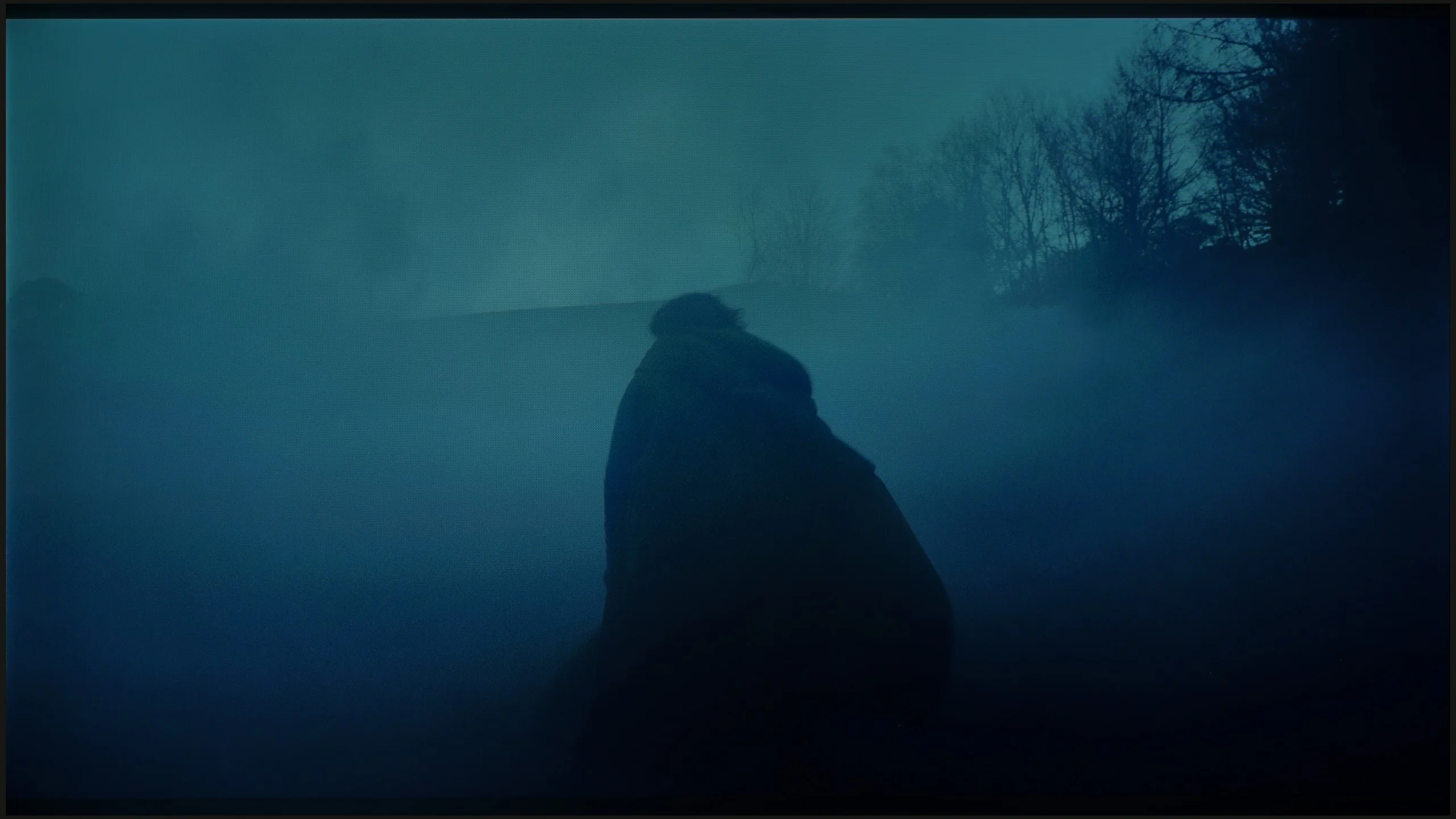

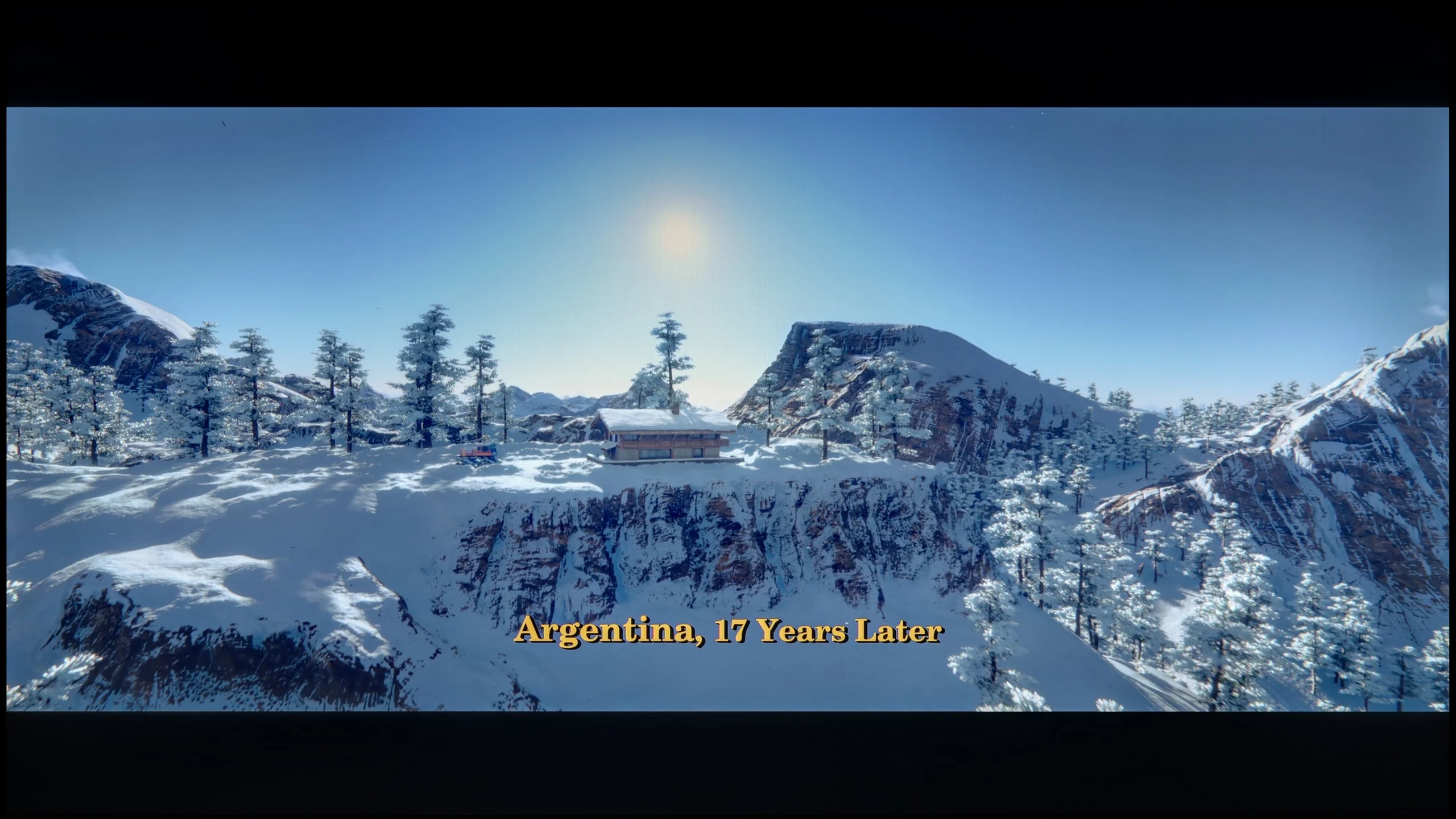
These are selected scenes that show smooth tonal transitions from one color to another. If you see distinct banding, it’s the TV panel’s fault.

These are selected scenes that show smooth tonal transitions from one color to another. If you see distinct banding, it’s the TV panel’s fault.
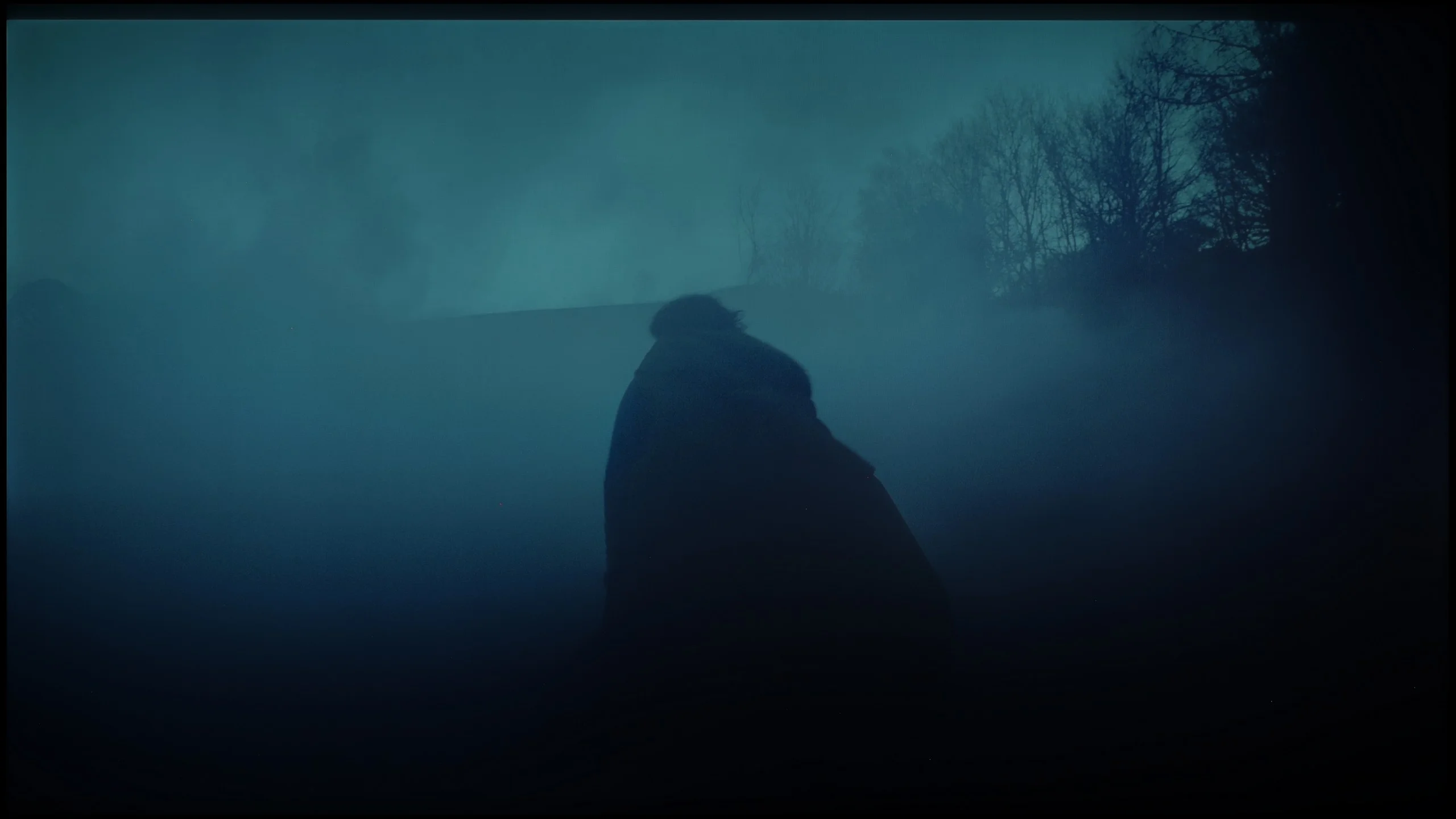
These are selected scenes that show smooth tonal transitions from one color to another. If you see distinct banding, it’s the TV panel’s fault.

These are selected scenes that show smooth tonal transitions from one color to another. If you see distinct banding, it’s the TV panel’s fault.
Looking solely at the smoothness of tonal transitions, the C69KS gives no real reason for complaints. The gradation of colors proceeds correctly, and more challenging sequences do not reveal significant problems. Therefore, you might be surprised by the low score in this category. This is due to very strong dithering and artificially boosted "resolution," leading to a grainy and unnatural character of the image. For this reason, the final score is significantly lower, despite the correct gradation of the tonal transitions themselves.
The smoothness of tonal transitions on the W92C is outstanding. It’s one of the best results we’ve seen this year. Regardless of the scene, colors flow smoothly from one to another and you can practically see no banding separating individual shades. Panasonic handles both bright skies and darker, more demanding parts of the image very well. There’s really nothing to fault here.
Image scaling and smoothness of tonal transitions
5/10
7.8/10


Smooth transition function
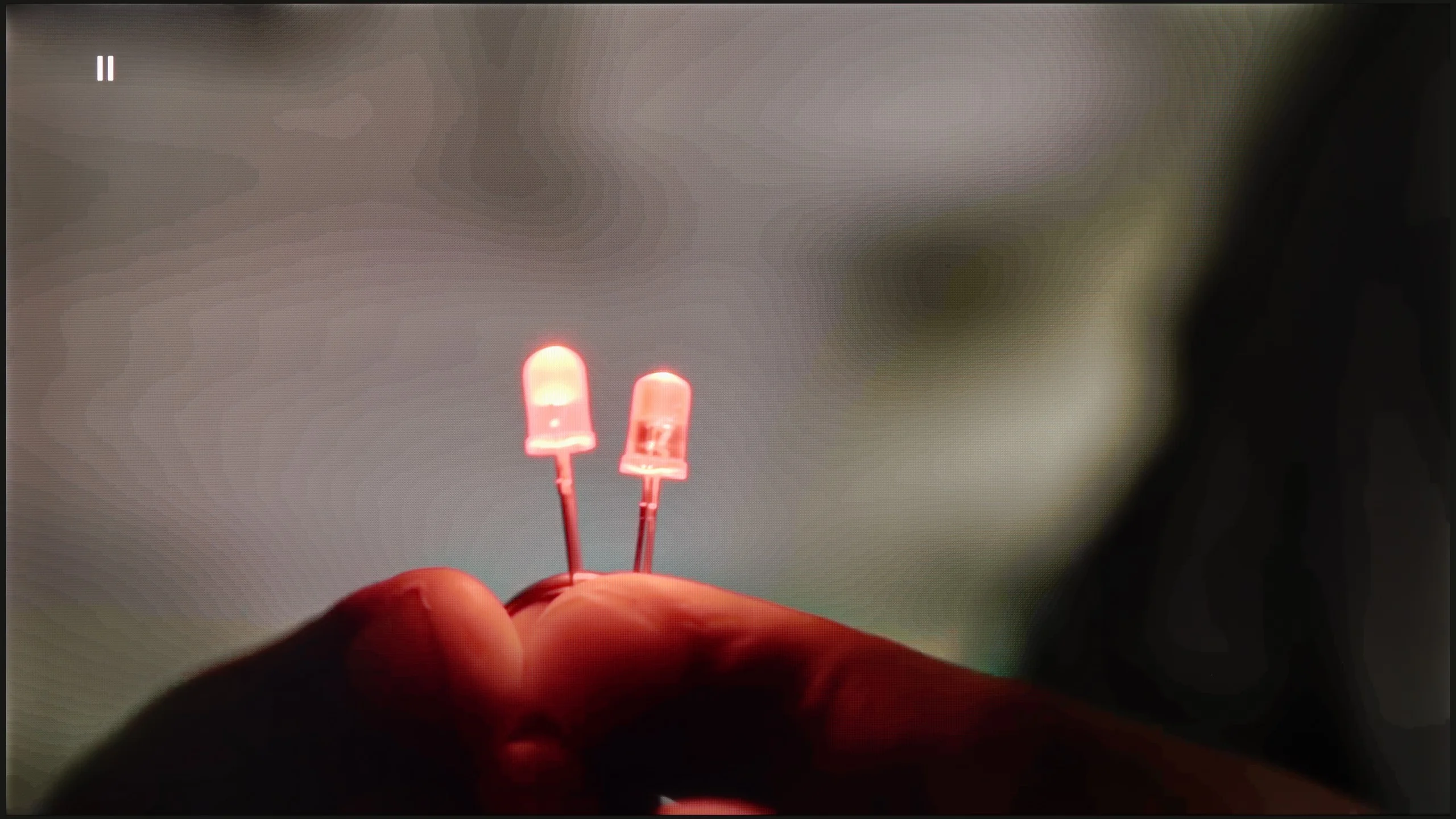
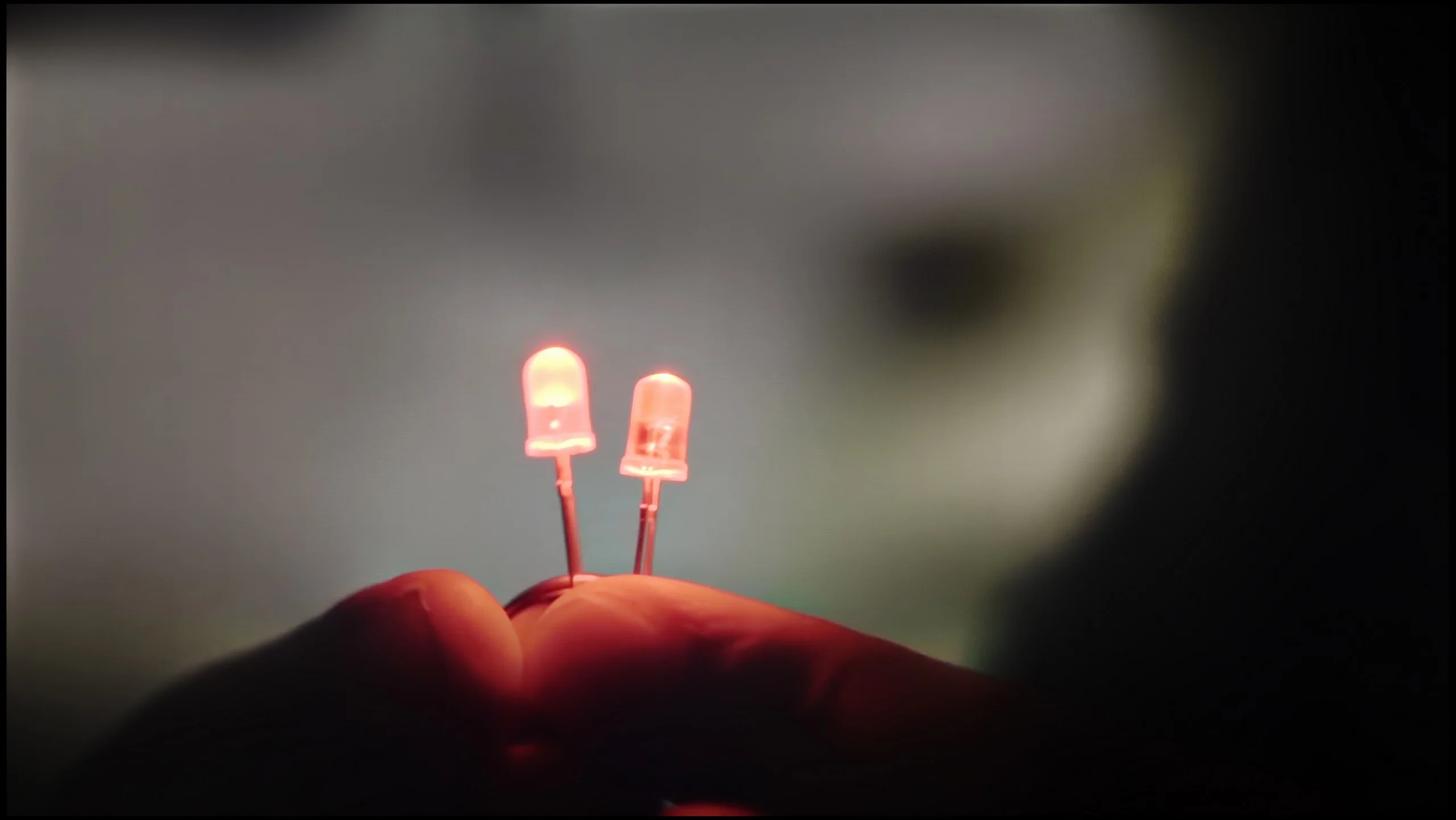
The match photo shows how the TV smooths weak tonal transitions in low-quality video.
Image scaling SD (576i)


The model photo shows how it handles upscaling of SD material.
C69KS handles upscaling quite well. The tested 576p material looks surprisingly decent – a significant amount of detail is preserved, and the algorithm adds a subtle "rounding" effect to sharp edges, making the image appear more cohesive. However, the smoothing of tonal transitions is lacking. The television practically cannot improve them, leaving the image in a somewhat raw state. With older materials, this can be simply exhausting, as the lack of additional processing highlights all imperfections.
The "Contour Smoothing" feature is used to reduce banding in lower-quality sources. On the medium setting it works very effectively and removes visible bands between shades. It can occasionally lose some fine detail, but those aren’t things that draw much attention. The low setting is more cautious and doesn’t affect the rest of the image, but the smoothing itself is much weaker. We would stick with the medium setting. Another plus is that the feature leaves noise and film grain alone. Scaling itself also performs quite well. In our shot with the model, clothing and tree details remain discernible, so lower-resolution content looks decent on a large screen. There is one drawback: with an SD signal the TV crops the edges of the image, meaning it applies so-called overscan. As a result we lose a small portion of the frame.
Blur and motion smoothness
4.9/10
7/10
Blur (native resolution, maximum refresh rate):




Blur (4K@144Hz):

Blur (4K@144Hz):


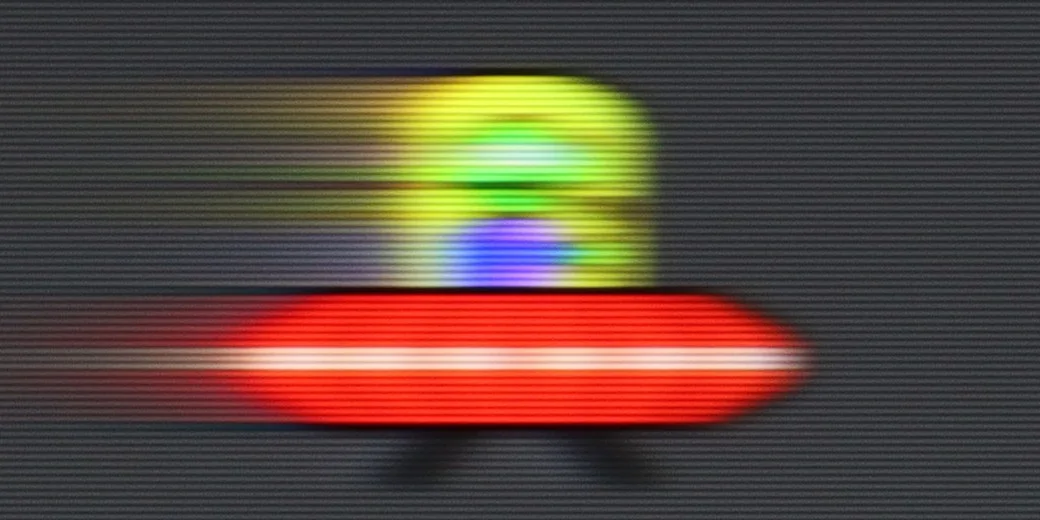
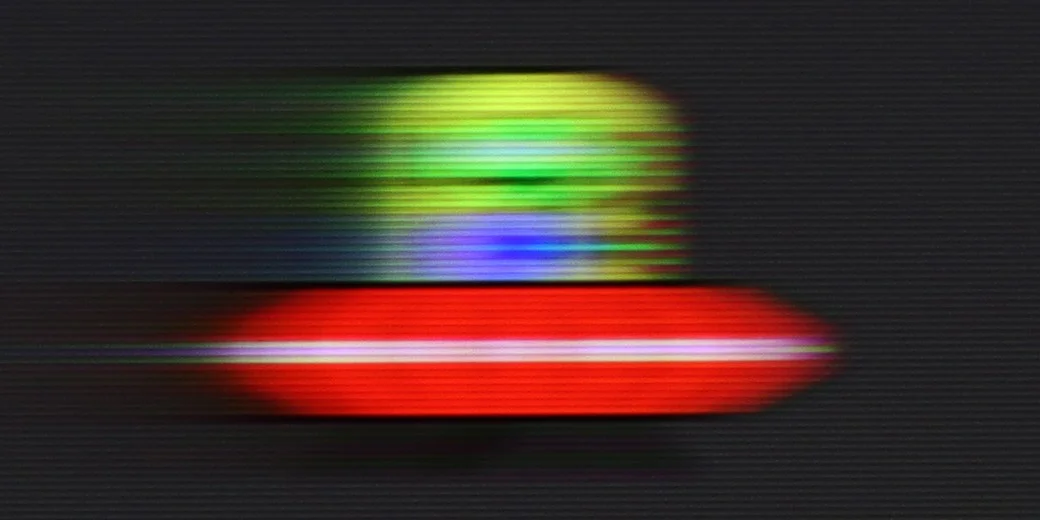
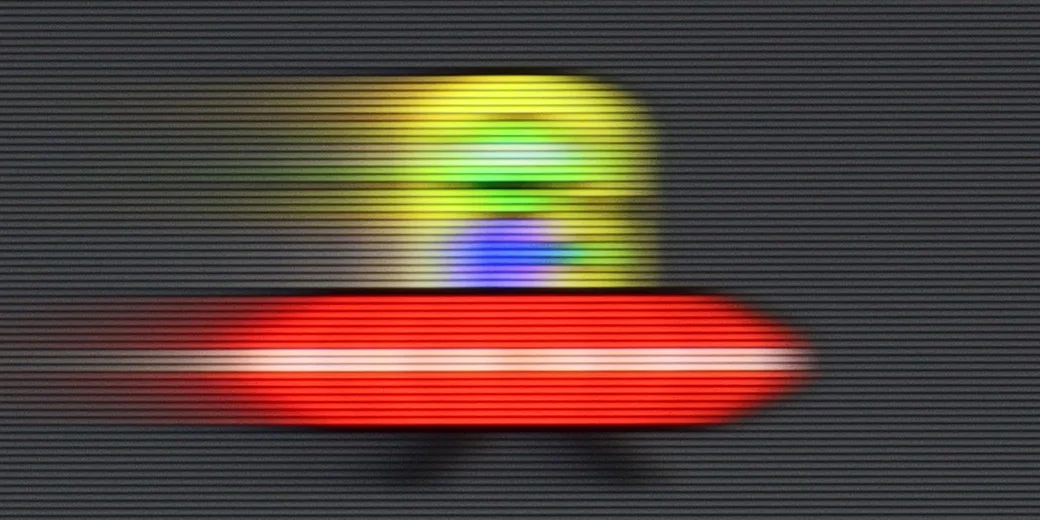
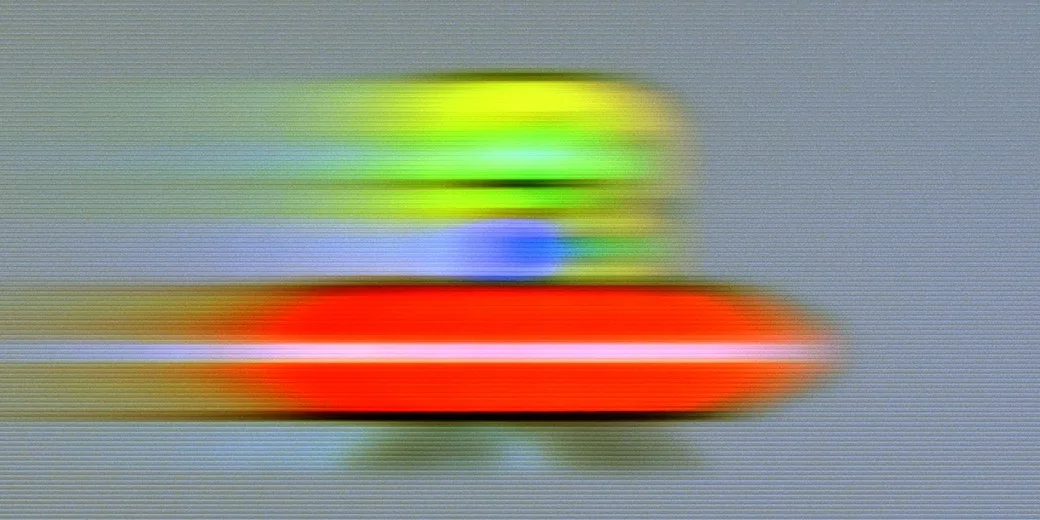
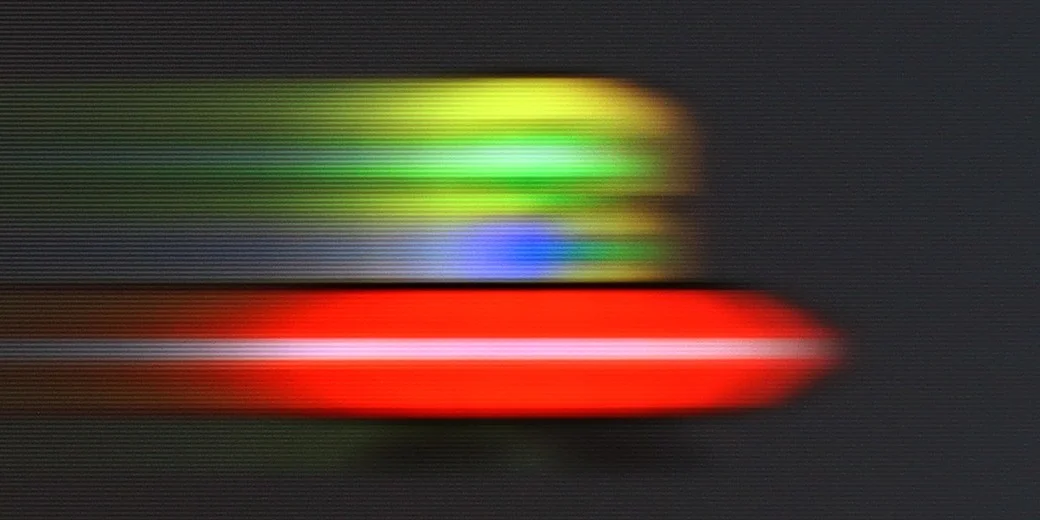
C69KS offers a simplified motion improvement panel in movies, allowing you to adjust the intensity of the effect using a slider. This makes it easy to match the smoothness to your own preferences. The possibility of using higher refresh rates is also a plus – even though the panel operates natively at 4K at 60 Hz, lowering the resolution to 1440p allows you to enable 120 and 144 Hz modes, both on consoles and PC. This sounds like great news, but in practice, the image at these settings suffers from significant motion blur. The effect is noticeable enough that the overall experience feels simply mediocre and loses its appeal in everyday use.
Panasonic W92C has a 144 Hz panel, which will be most useful for PC gaming. For consoles and sports, what matters more is how the screen handles 120 Hz. Motion is smooth, though moving objects aren't perfectly sharp. In our UFO test you can see a distinct trail behind it, especially on dark backgrounds. Despite that, the W92C is still a better option for dynamic content than a typical 60 Hz screen. The higher refresh rate provides a noticeable improvement in smoothness, though the panel itself could respond faster to color changes.
Console compatibility and gaming features
8/10
8.1/10
- ALLM
- VRR
- VRR range48 - 144Hz48 - 144Hz
- Dolby Vision Game Mode
- Correct implementation of HGIG
- 1080p@120Hz
- 1440p@120Hz
- 4K@120Hz
- Game bar
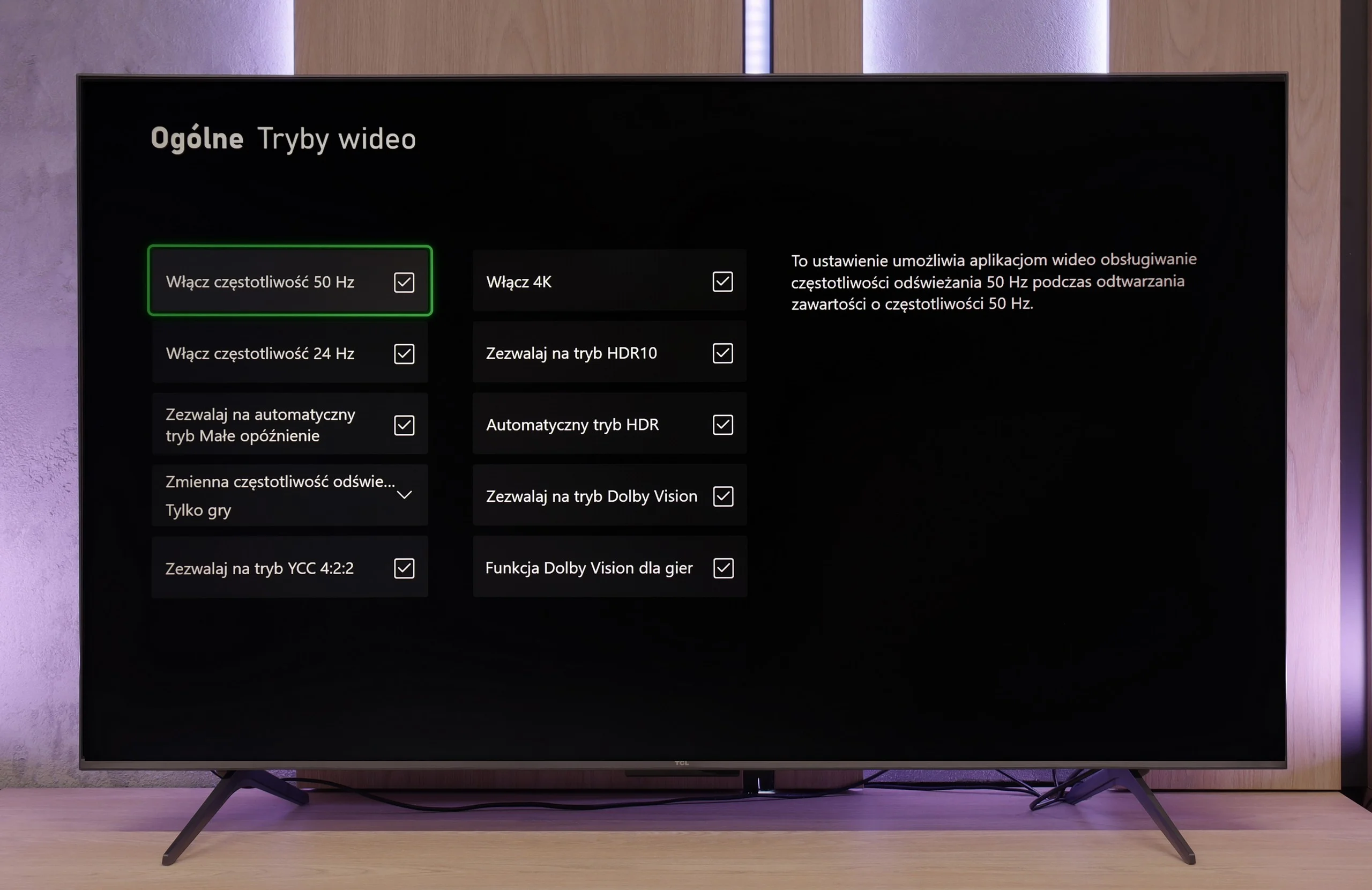
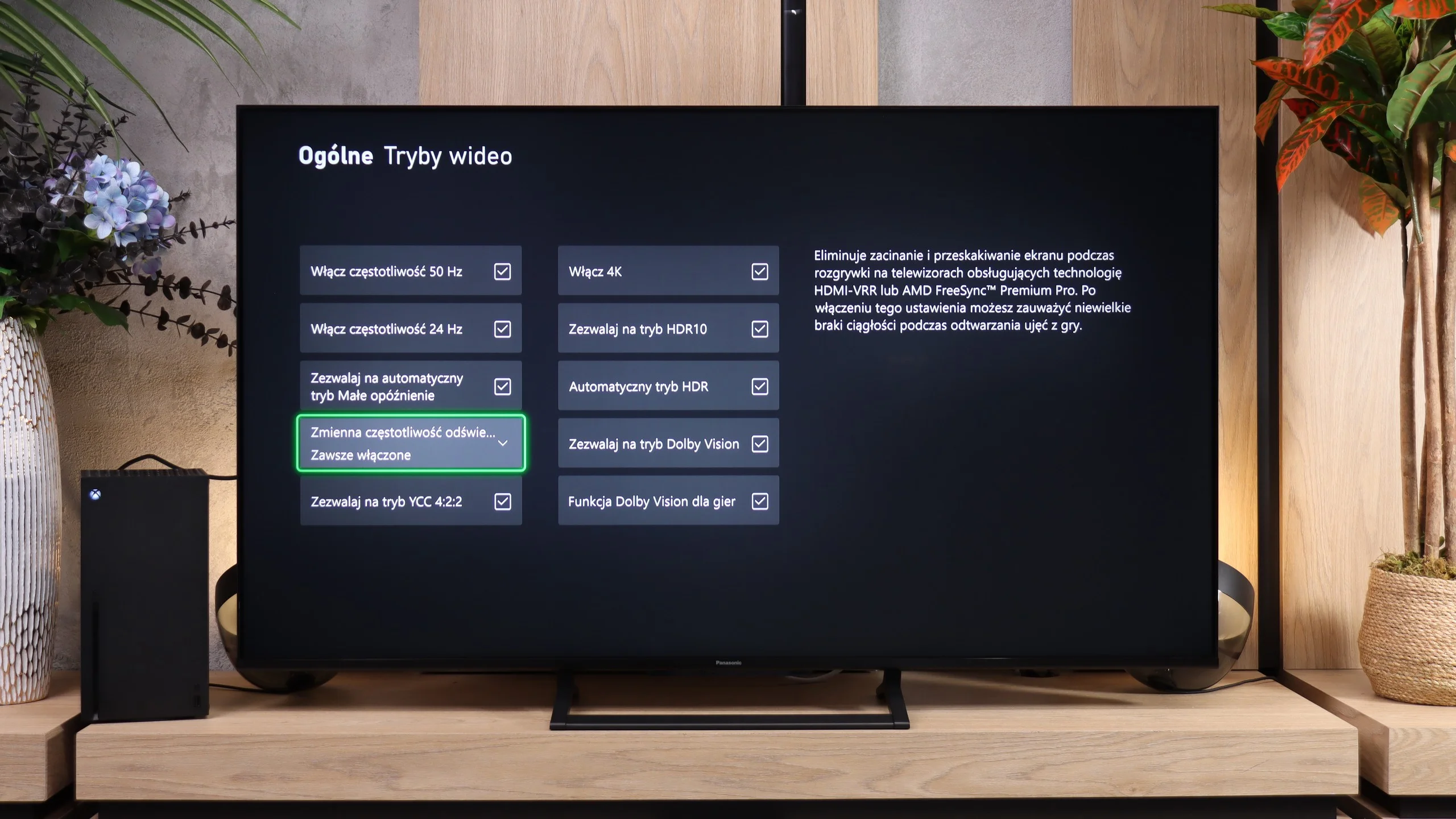
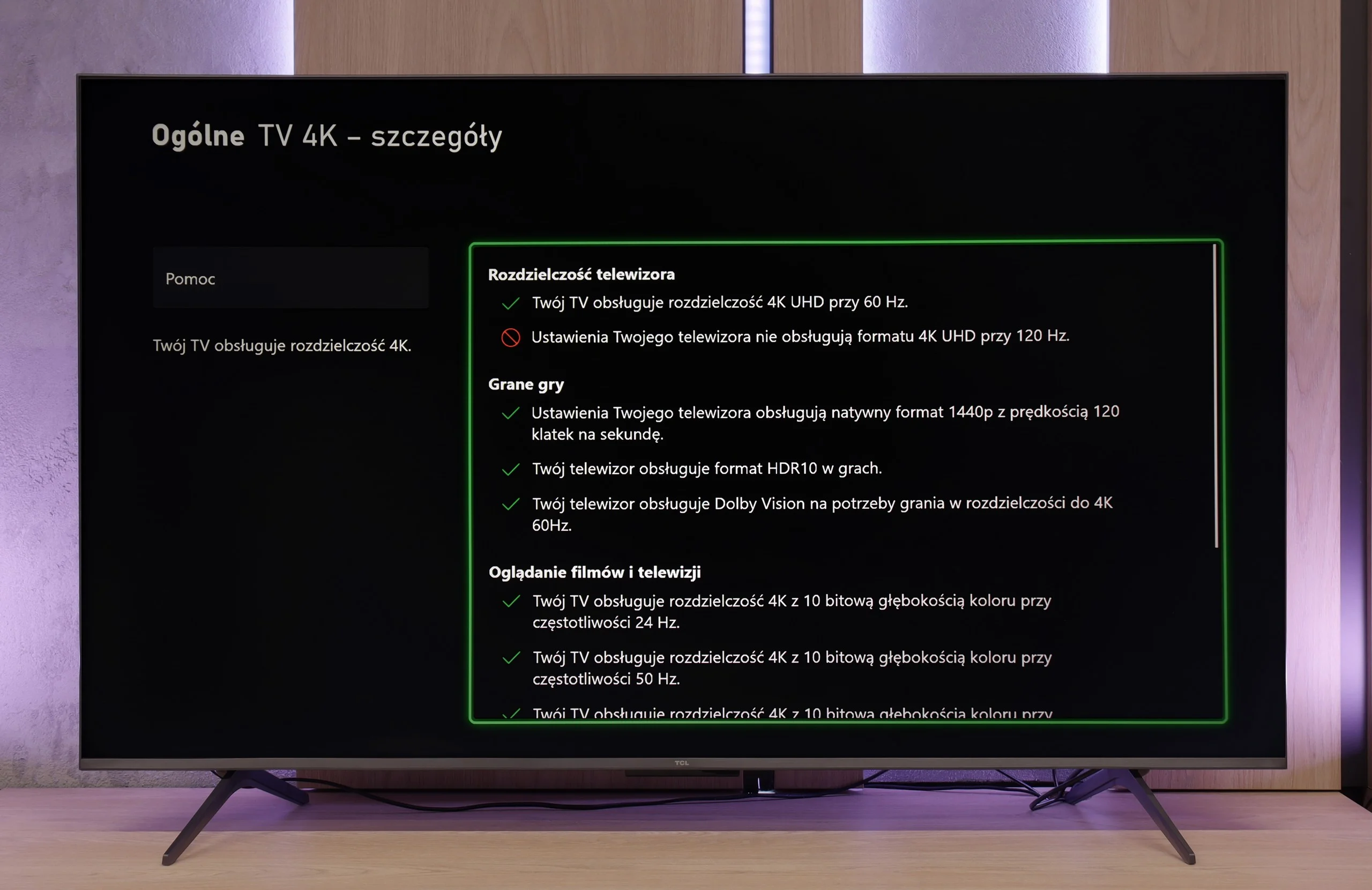
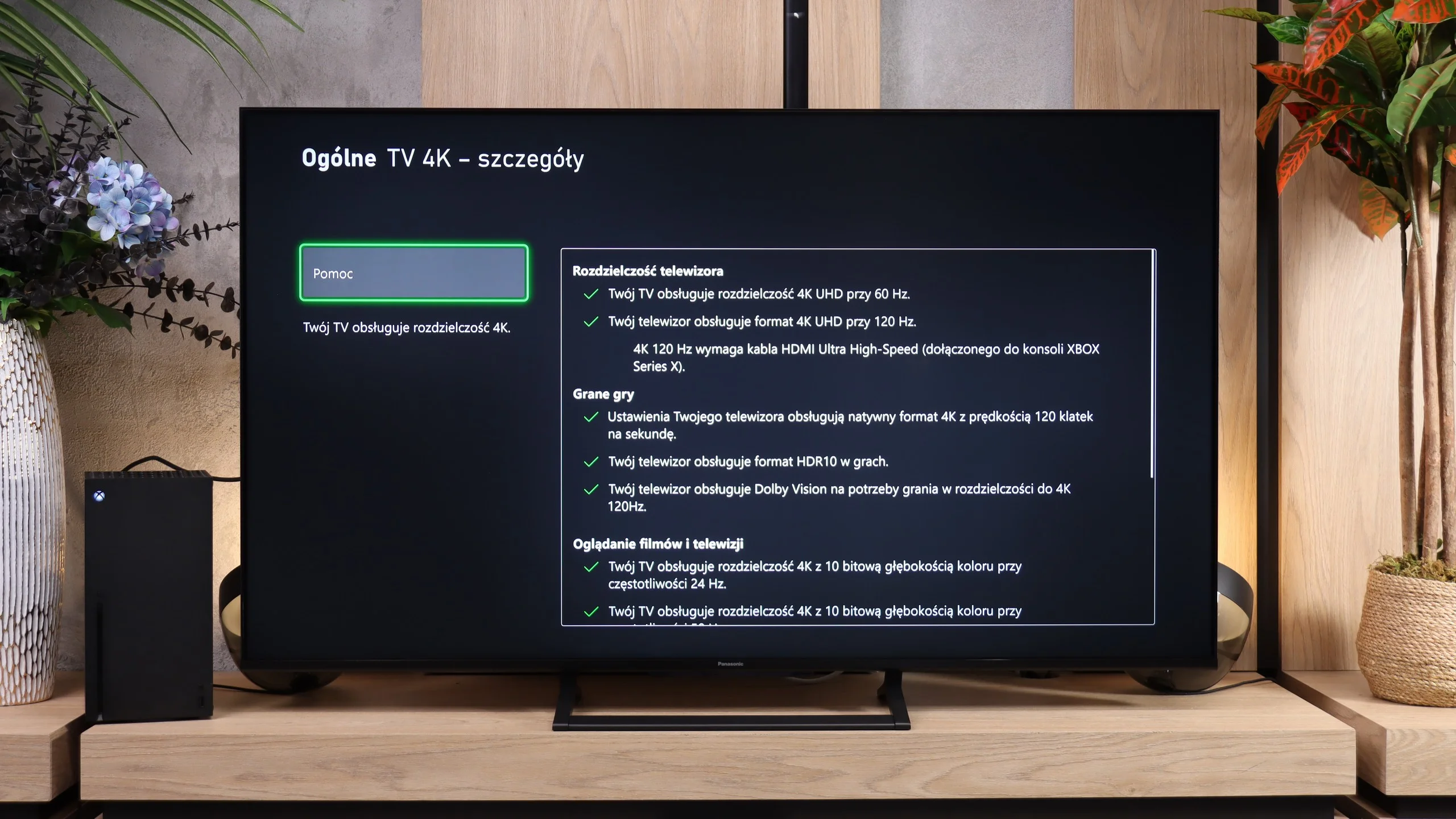
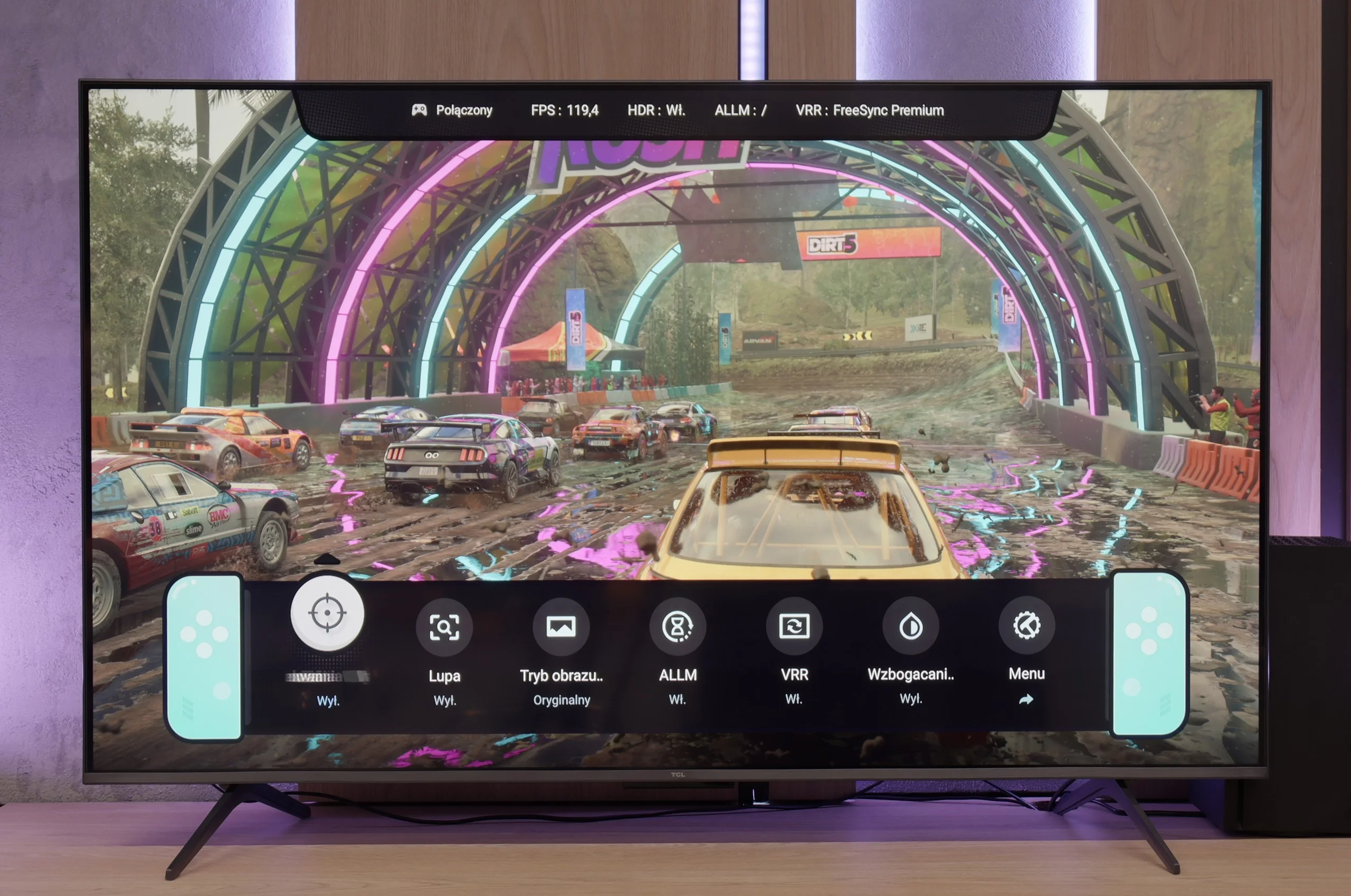
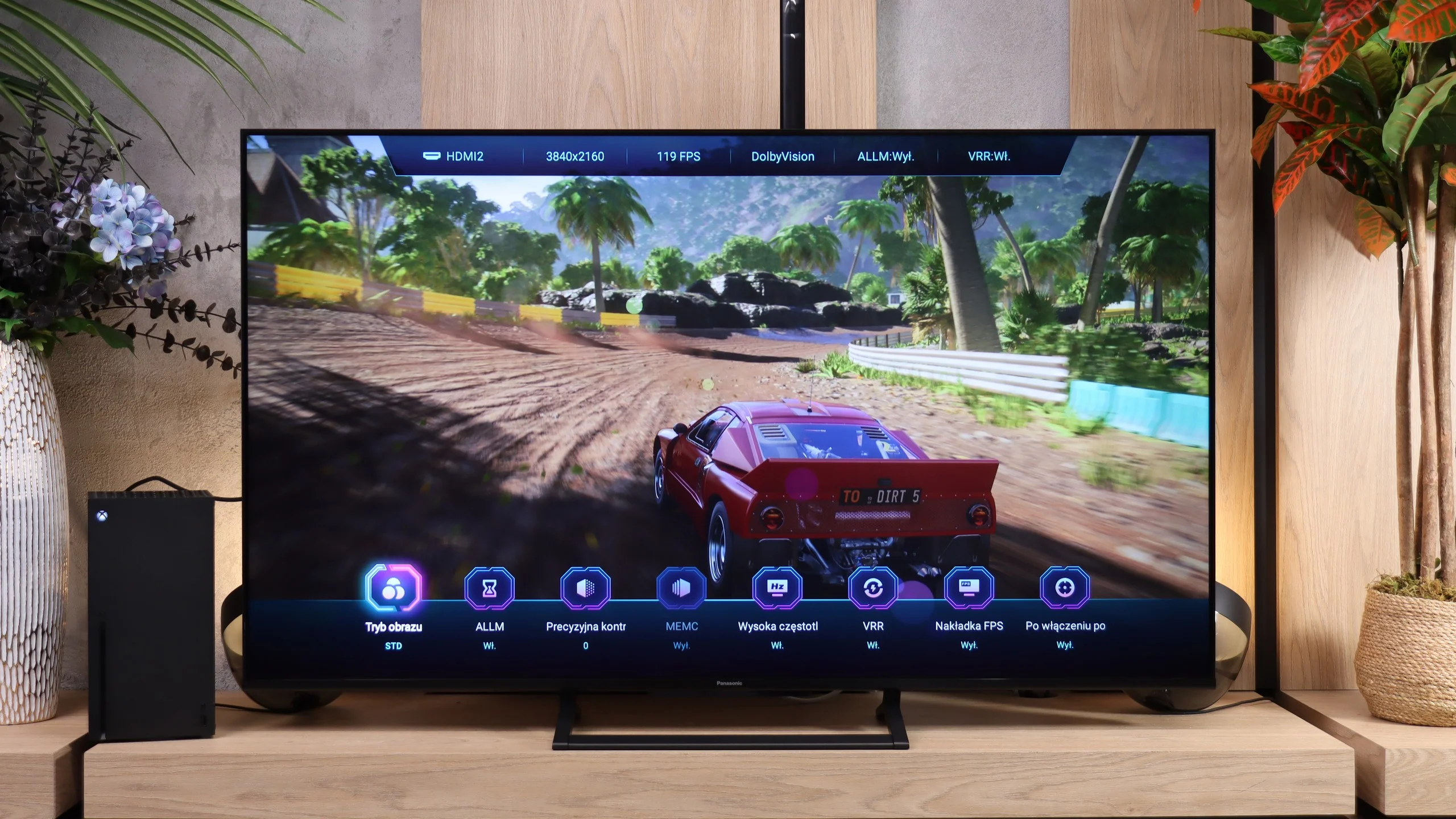
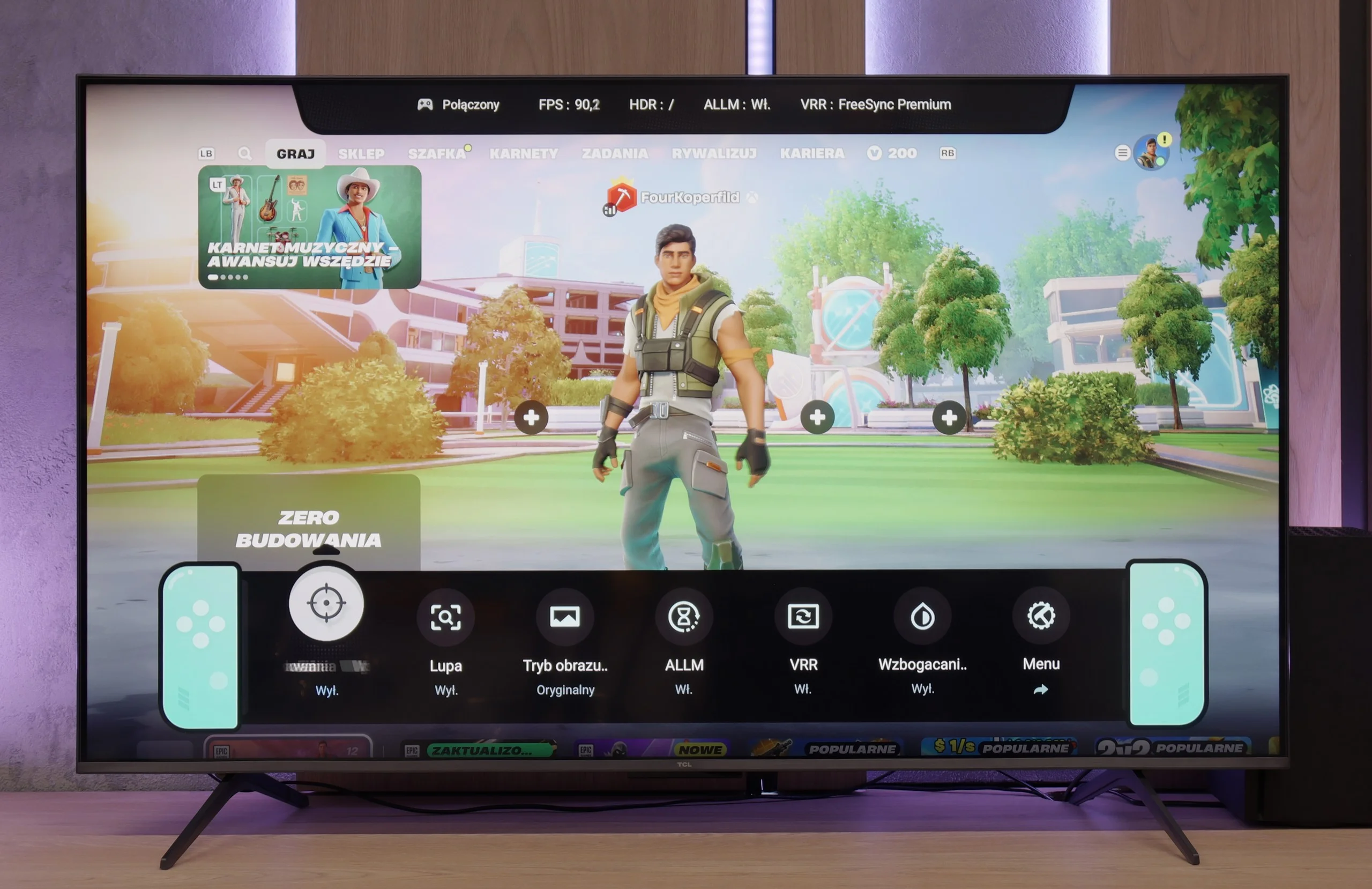
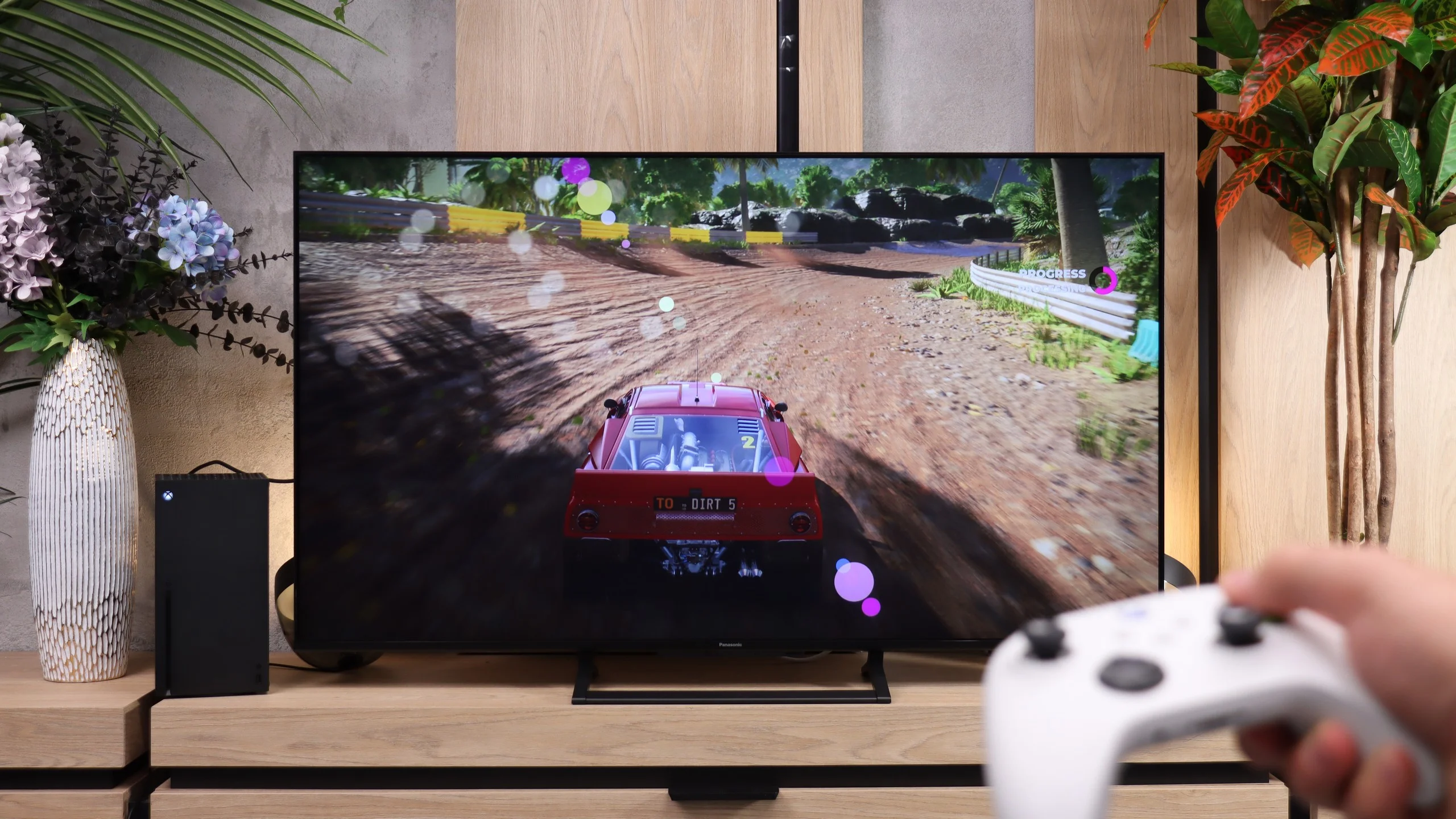
If we overlook the smearing and lack of native 4K at 120 Hz, the C69KS impresses with how well it performs during gaming. We get everything you can expect from a gaming television: variable refresh rate (VRR), automatic switching to game mode (ALLM), Dolby Vision Gaming mode, and a reasonably functioning HGiG. The TV can also operate at 120 and even 144 Hz at lower resolutions, allowing for smoother gameplay on console or PC. Additionally, there is a clear Game Bar that lets you quickly glance at key settings during gaming. As a result — despite a few limitations — the C69KS can be a truly successful screen for gamers.
The Panasonic W92C has quite a bit to offer gamers. It has three HDMI 2.1 ports with full 48 Gbps bandwidth, supports 4K gaming at 120 Hz, and when connected to a PC can even run at 144 Hz. It also offers VRR from 48 to 144 Hz, which helps keep the image smooth when frame rates fluctuate, and ALLM that automatically switches to low-latency mode. On top of that, it supports Dolby Vision for gaming. The new Game Bar deserves special praise. The large circles known from Panasonic sets with Fire TV have been replaced by a much more organized panel. At the top you see the most important signal information, and at the bottom shortcuts to gamer settings. It looks more modern and is much closer to what the biggest competitors offer. Definitely a change for the better. Not everything is perfect, though. It lacks a properly working HGiG, which helps match HDR in games to the screen's capabilities. The W92C also doesn't support 1440p at 120 Hz. That's a shame, since that mode is especially useful on a PC when you want more frames than in 4K but keep better detail than Full HD.
Input lag
10/10
9.9/10
SDR
HDR
Dolby Vision
TCL C6KS performs very well here — the latency drops below 10 ms, which makes reactions in games instantaneous. This is an excellent result in this class and definitely good news for those playing dynamic titles.
The input lag on the Panasonic W92C is very low. At 60 Hz we measured about 15–16 ms, and at 120 Hz only 7 ms. The controller response is therefore quick, and even in fast-paced games there’s little to complain about. Dolby Vision also performs well: 17 ms at 60 Hz and 9 ms at 120 Hz. You can safely use any format without worrying that controls will become noticeably slower.
Compatibility with PC
1.7/10
9/10
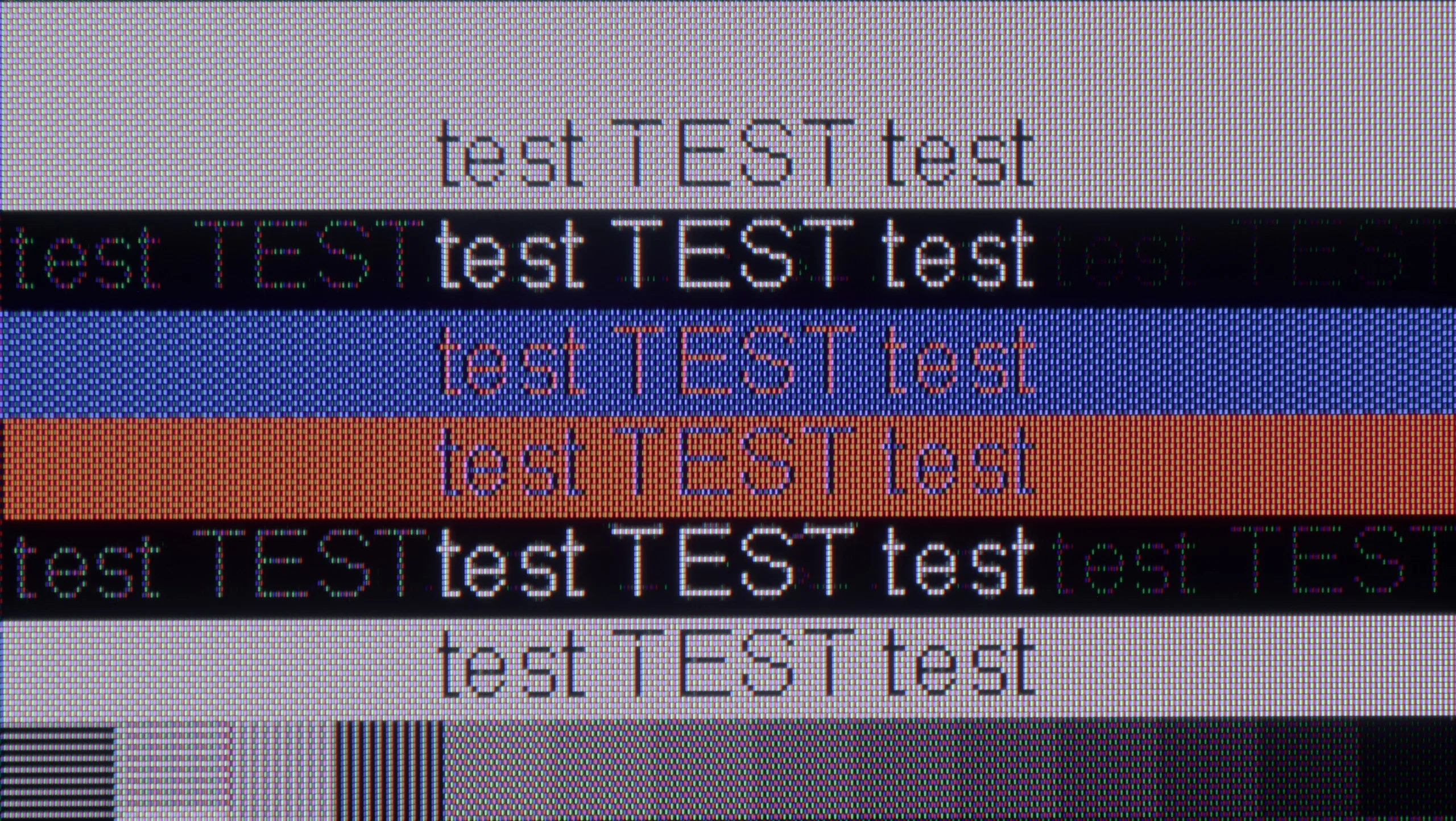
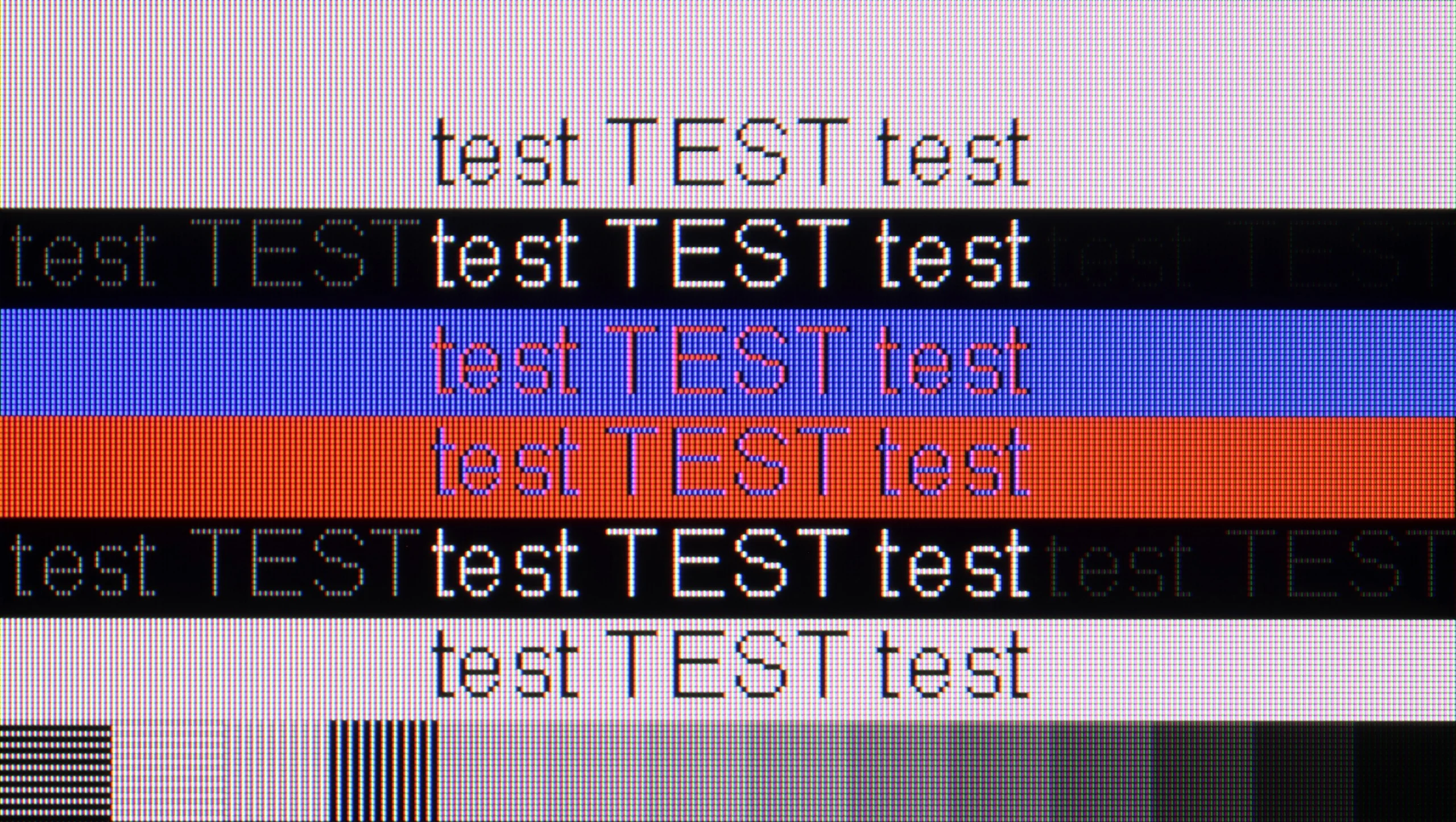
The photo shows the legibility of small fonts. Ideally, lines should be the same thickness on both light and dark text, with minimal pixel gaps.
Besides the previously mentioned option of operating at 144 Hz at lower resolutions, the C6KS offers nothing that would encourage its use as a monitor. The fonts look really poor—the darkest ones have a distinct rainbow glow, and standard text is surrounded by strange artifacts. The effect is noticeable enough that extended work at the computer can be simply exhausting.
Working with a computer is one of the W92C’s stronger suits. Fonts look really great. They’re sharp, easy to read, and don’t lose fine details. That also applies to dark text on dark backgrounds, which some TVs struggle with. It’s one of the few panels that handled our font test so well. The RGB subpixel layout and proper support for chroma 4:4:4 help here, including at maximum resolution and refresh rate. There’s also a lot on offer for gamers: 4K at 144 Hz, working G-Sync, and input lag of about 7 ms. So the Panasonic performs well for both text work and gaming. You just need to remember the smearing mentioned earlier and the lack of 1440p support at 120 Hz. The overall readability of the computer image, however, is excellent.
Viewing angles
2.7/10
6/10
The viewing angles in C6KS are very poor, typical of VA panels. This is a compromise we pay for by choosing high contrast — the image looks good head-on, but any significant deviation quickly results in drops in brightness and saturation.
The 55-inch Panasonic W92C offers good viewing angles, mainly thanks to its IPS panel. As a result, images viewed from the side retain color and contrast better than on many Mini LED-backlit LCD TVs that use VA panels.
Daytime performance
6.6/10
6.8/10
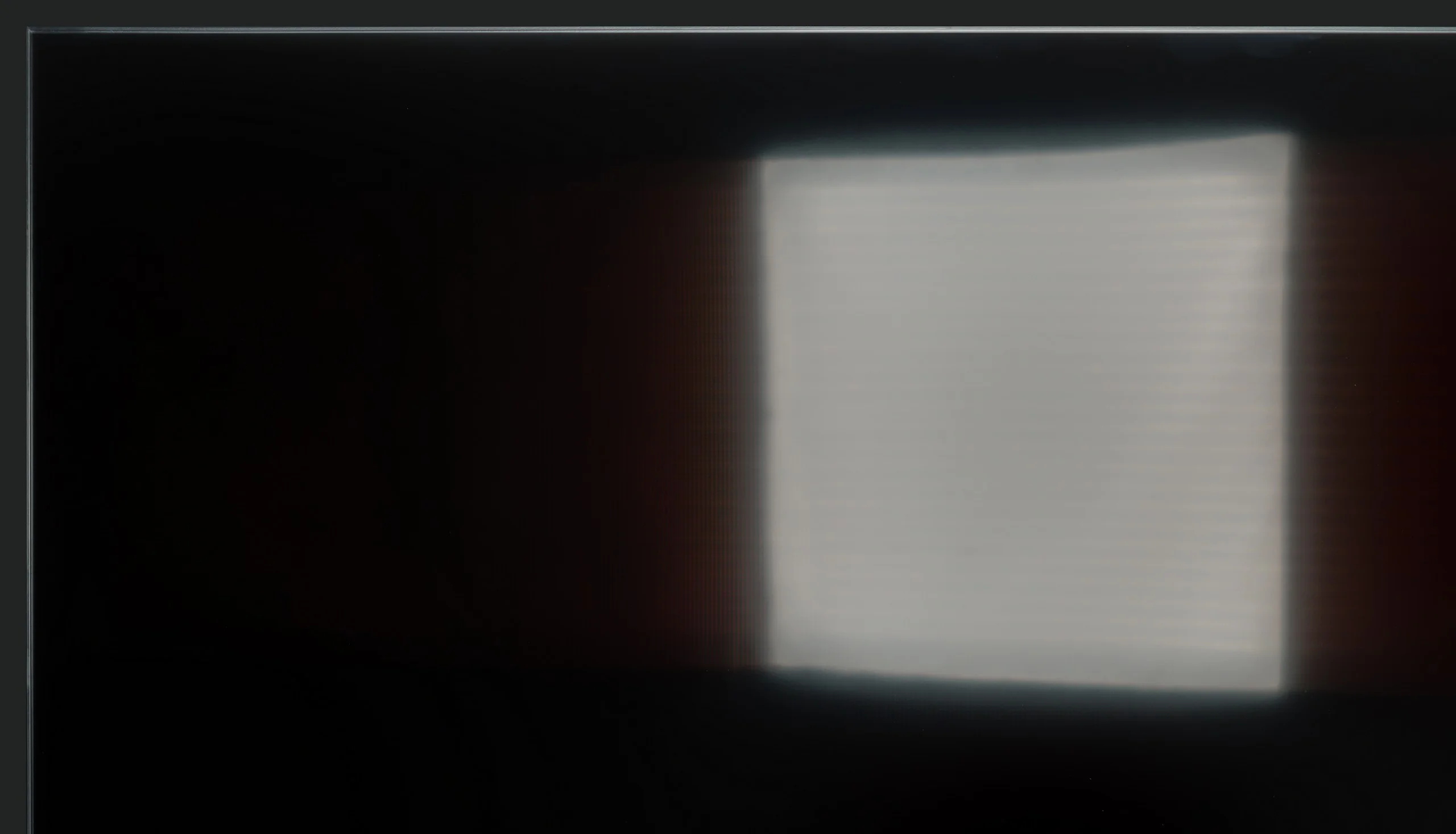
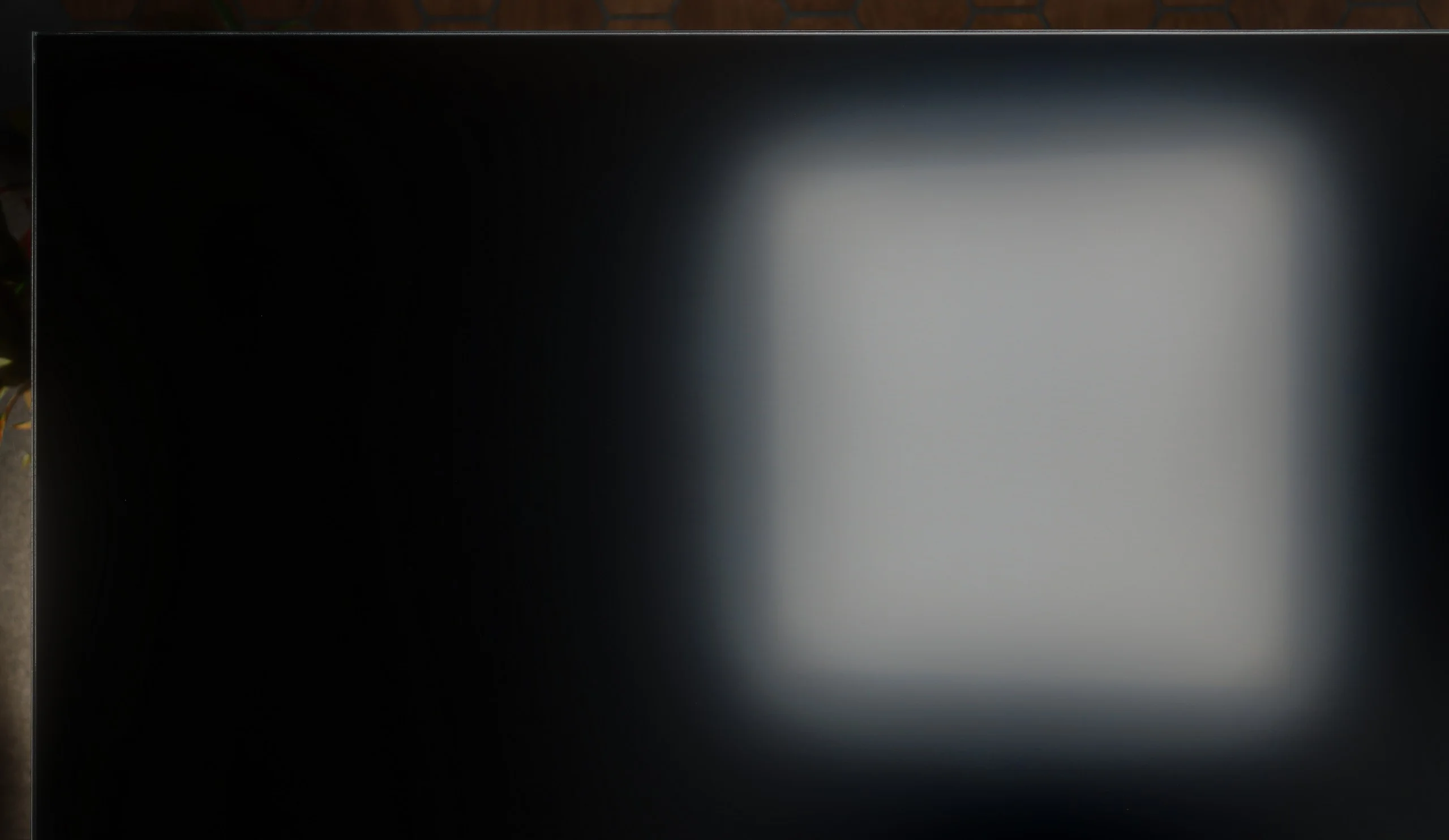
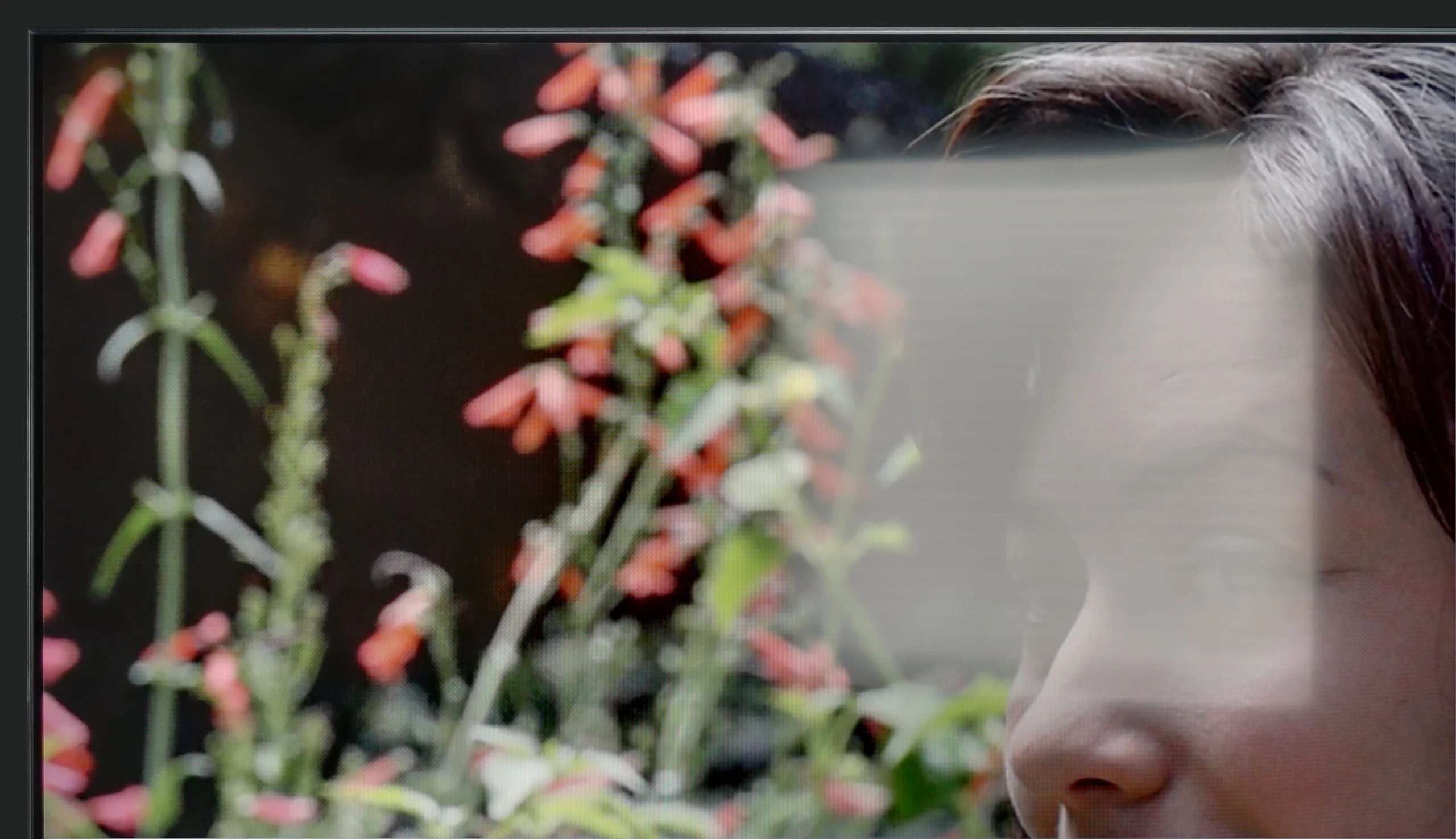
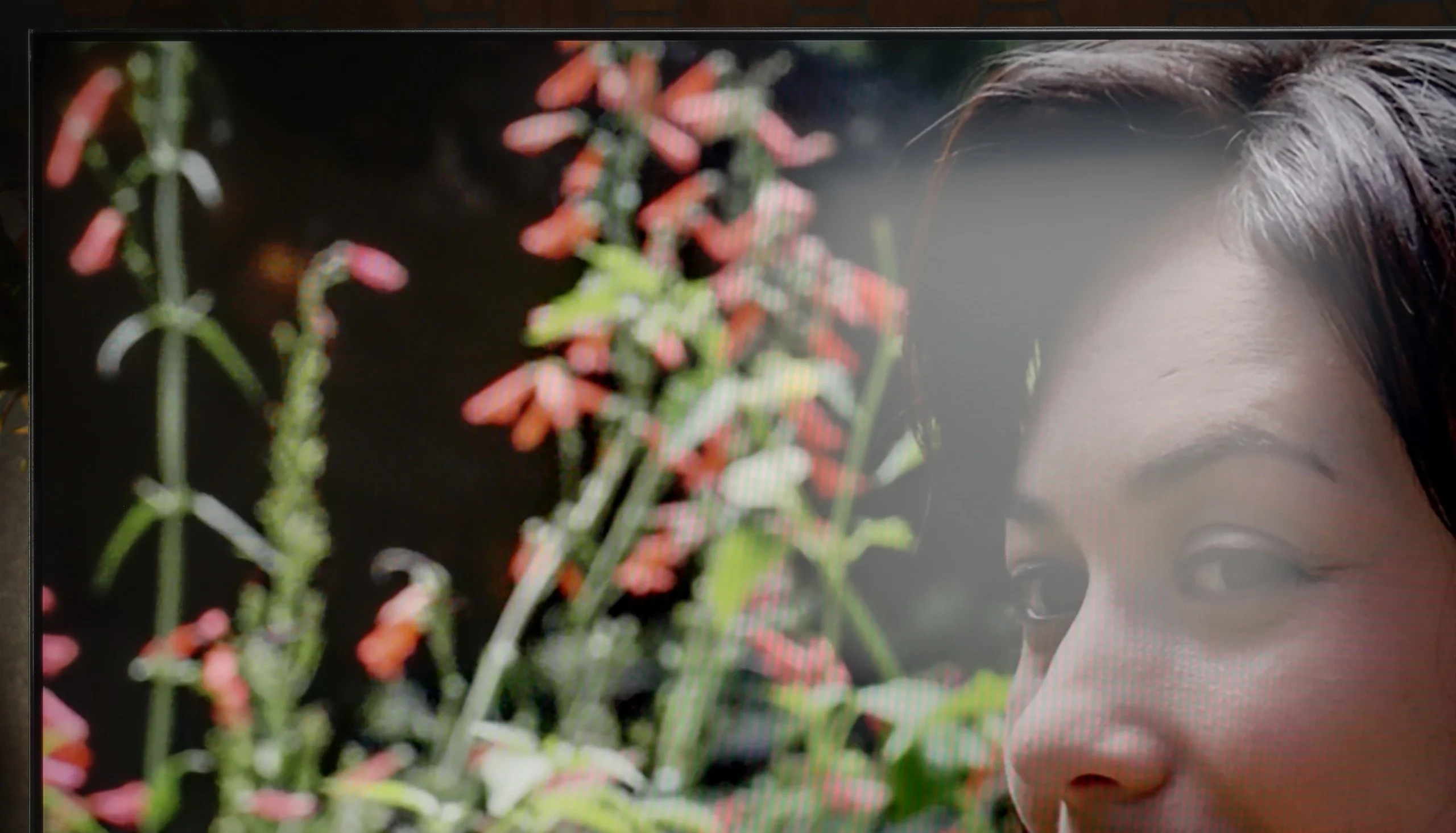
Panel brightness
Panasonic W92C (Google TV): 555 cd/m2
TCL C6KS / C69KS / Q6CS: 527 cd/m2
C6KS performs really well as a TV viewing screen during the day. Its brightness of around 500–600 nits easily cuts through challenging lighting conditions. In addition, there is a satin finish that effectively reduces reflections. As a result, the television surprisingly holds up well during daytime viewing, even in brighter rooms.
A matte panel is a big plus for the W92C when watching during the day. It disperses reflections very well, so instead of a clear image of a window or lamp you see a more blurred glow. Added to that is an average brightness of around 555 nits, which is easily enough for watching TV in a typical bright living room. That doesn’t mean light falling on the screen stops being an issue. The matte coating spreads it over a larger area, which makes blacks look grayish and the picture lose some contrast. You’ll notice this most easily in dark scenes. Even so, the combination of decent brightness and effective reflection suppression makes the Panasonic quite suitable for everyday viewing without having to cover the windows.
Panel details
Subpixel Structure:
Panel uniformity and thermal imaging:

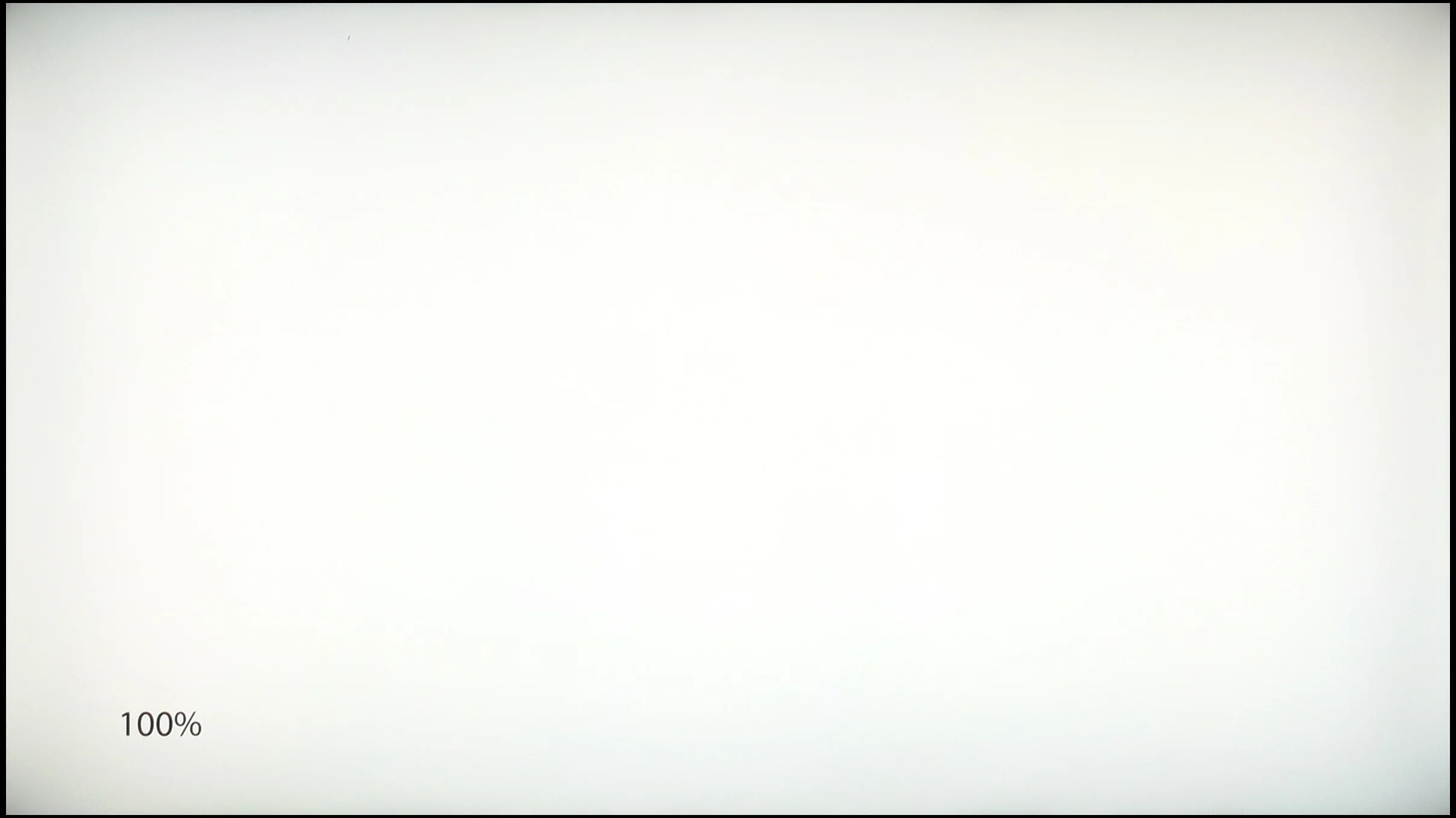
TCL C6KS / C69KS / Q6CS
Panasonic W92C (Google TV)
TV features
7/10
6.6/10
- SystemGoogle TVGoogle TV
- System performanceDecentGood
- HDMI inputs3 x HDMI 2.0, 0 x HDMI 2.10 x HDMI 2.0, 3 x HDMI 2.1 48Gbps
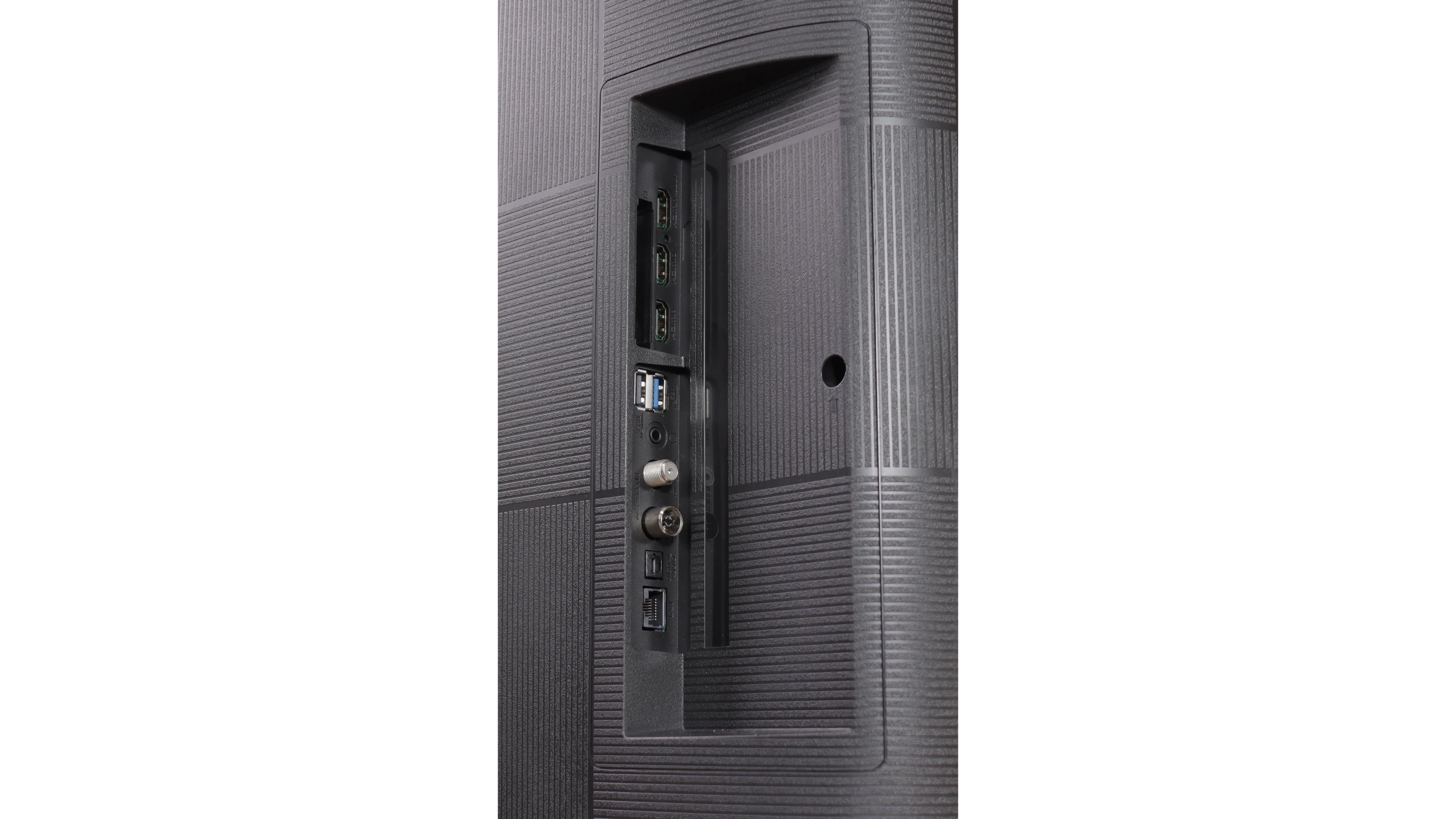
- OutputsToslink (Optical audio), eARC (HDMI), ARC (HDMI)Toslink (Optical audio), eARC (HDMI), ARC (HDMI), Mini-Jack (Headphones)
- Network InterfacesWi-Fi 2.4GHz, Wi-Fi 5GHz, Ethernet (LAN) 100MbpsWi-Fi 2.4GHz, Wi-Fi 5GHz, Ethernet (LAN) 100Mbps
- TV receptionDVB-T, DVB-T2, DVB-S, DVB-S2, DVB-CDVB-T, DVB-T2, DVB-S, DVB-S2, DVB-C
Classic features:
- Recording to USB (terrestrial TV)
- Recording programming
- Picture in Picture (PiP)
- RF remote control (no need to aim)
- Backlit remote control
- Teletext
- Audio only mode
- Bluetooth headphones support
- Simultaneous Bluetooth headphones & TV audio
Smart features:
- AirPlay
- Screen mirroring (Windows Miracast)
- Voice search
- Voice search in native language
- Ability to connect a keyboard and mouse
Sound connection options
- HDMI audioeARC (HDMI), ARC (HDMI)eARC (HDMI), ARC (HDMI)
- Other audio outputsToslink (Optical audio)Toslink (Optical audio), Mini-Jack (Headphones)
- Wireless audioBluetoothBluetooth
Supported audio formats (external HDMI eARC audio):
- Dolby Digital Plus 7.1
- Dolby True HD 7.1
- Dolby Atmos in Dolby Digital Plus (JOC)
- Dolby Atmos in Dolby True HD
- DTS:X in DTS-HD MA
- DTS-HD Master Audio
Senior accessibility
- Numeric keyboard on TV
- Font size adjustment
- Audio description
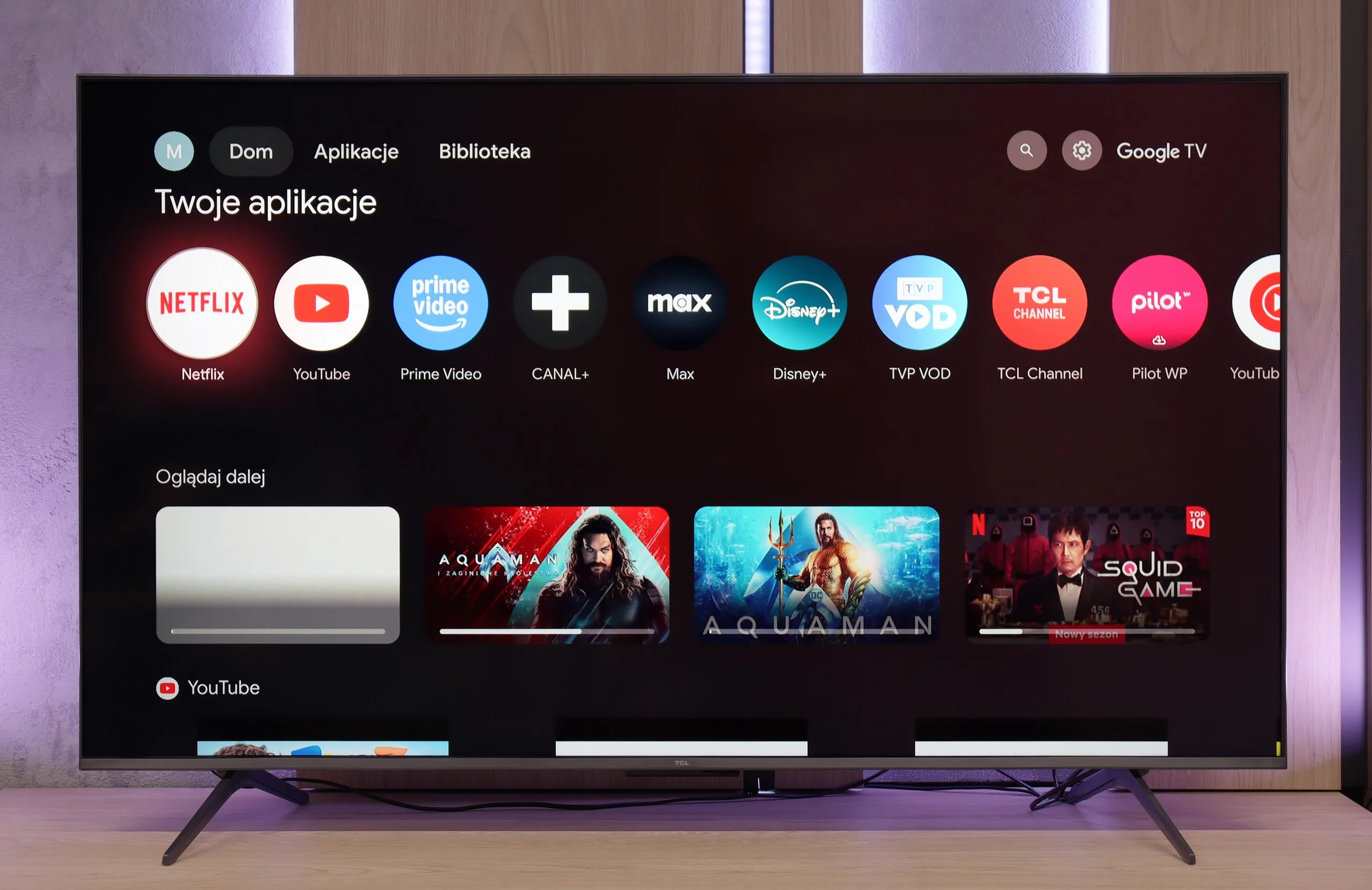
The biggest advantage of the C6KS is the Google TV system. It is an environment that offers a lot—ideal for those who prioritize a wide selection of applications and convenient use of streaming services. AirPlay, screen sharing, and voice assistant features work very well here, making everyday use of the television simply convenient.
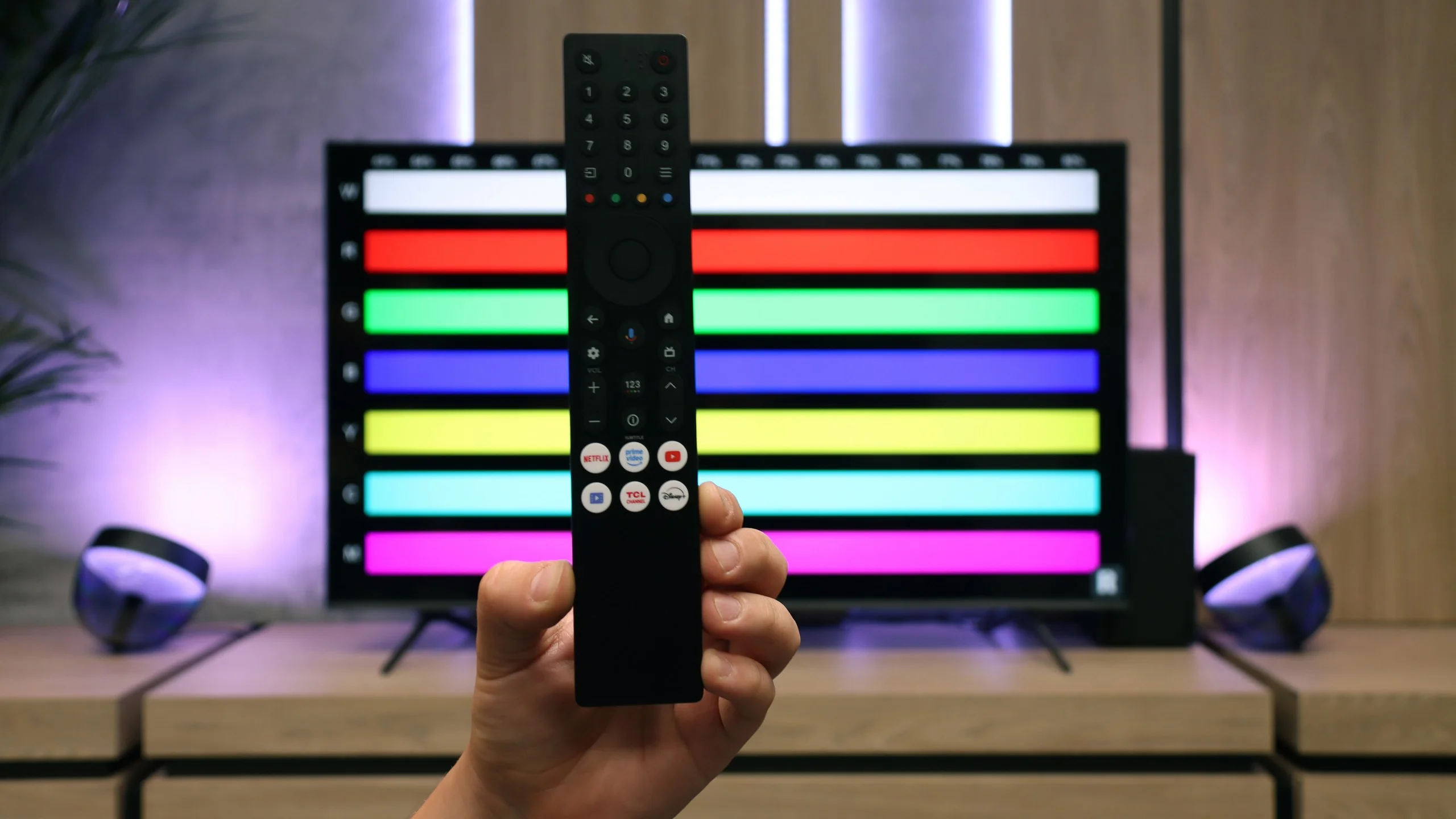
The support for traditional television is somewhat lacking. Users who expect extensive "TV" features may feel overlooked. Besides the efficiently working Bluetooth remote with a numeric keypad, we won't find conveniences like USB recording or PiP functionality here.
Google TV
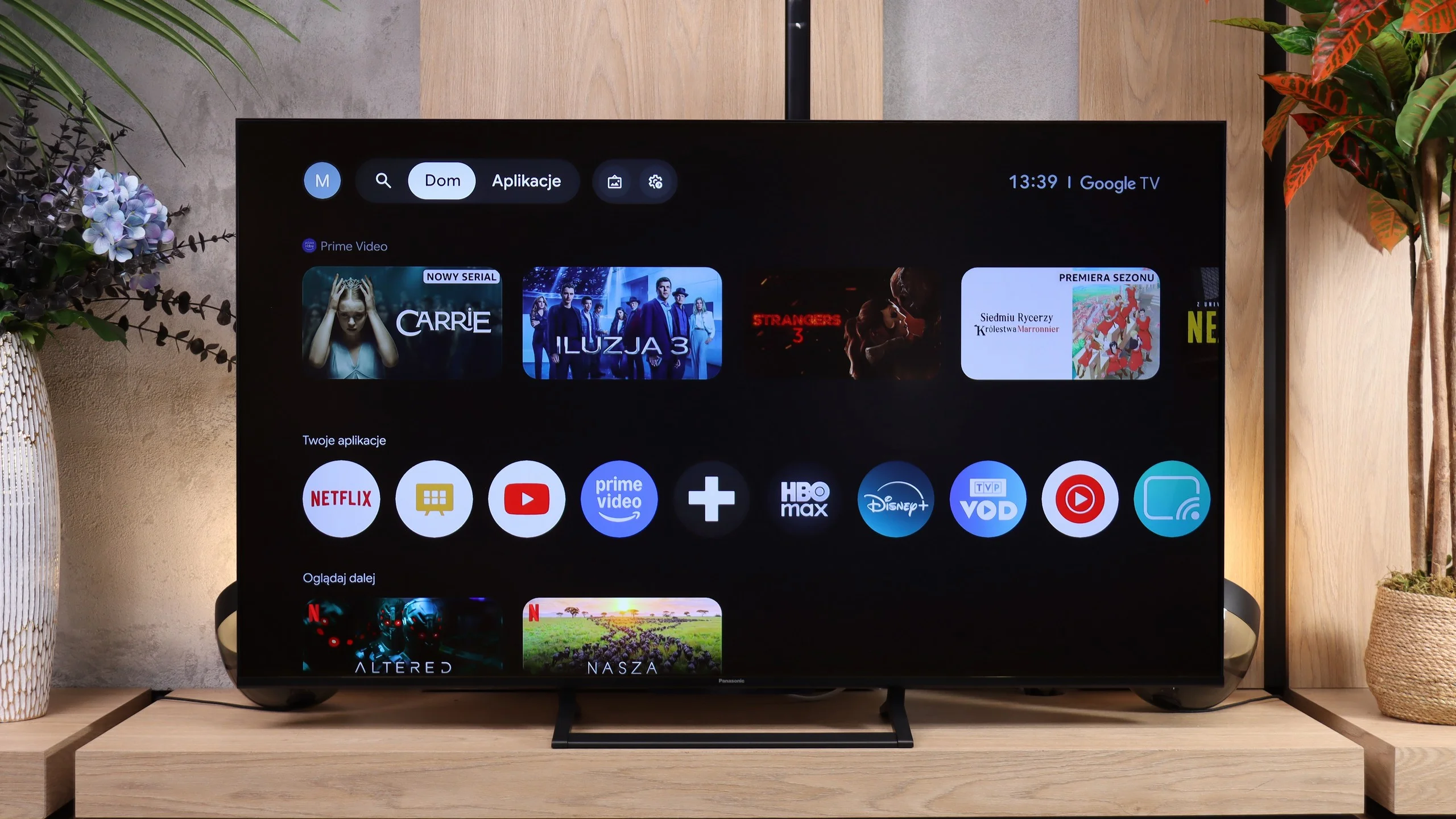
Google TV is a major improvement over Panasonic’s older systems and even over the newer Fire TV, which didn’t fully convince us. On the W92C everything runs very smoothly. We navigate the menu quickly, apps launch without long waits, and among the available services we found all the ones we were interested in. There is also Polish voice search and Chromecast, which makes it easy to cast content from your phone. It’s a pity AirPlay isn’t working; we couldn’t use it with our newer iPhone.
However, there were a few minor issues. Some Polish translations in the menu sound rather clumsy, and the previously described automatic backlight changes show the software still needs fixes. Despite this, daily operation is good, and the inclusion of Google TV is definitely one of this model’s strengths.
Classic features
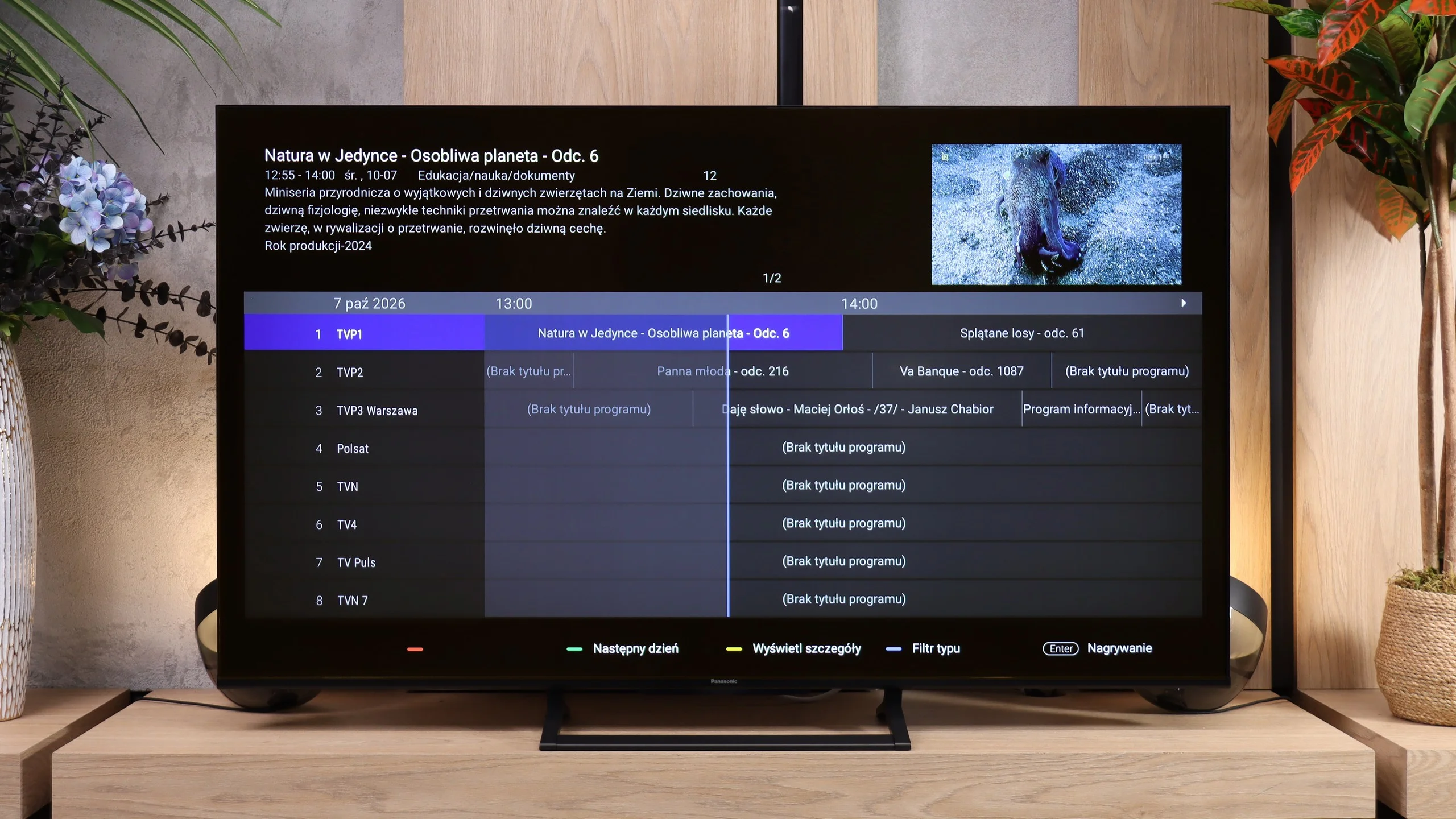
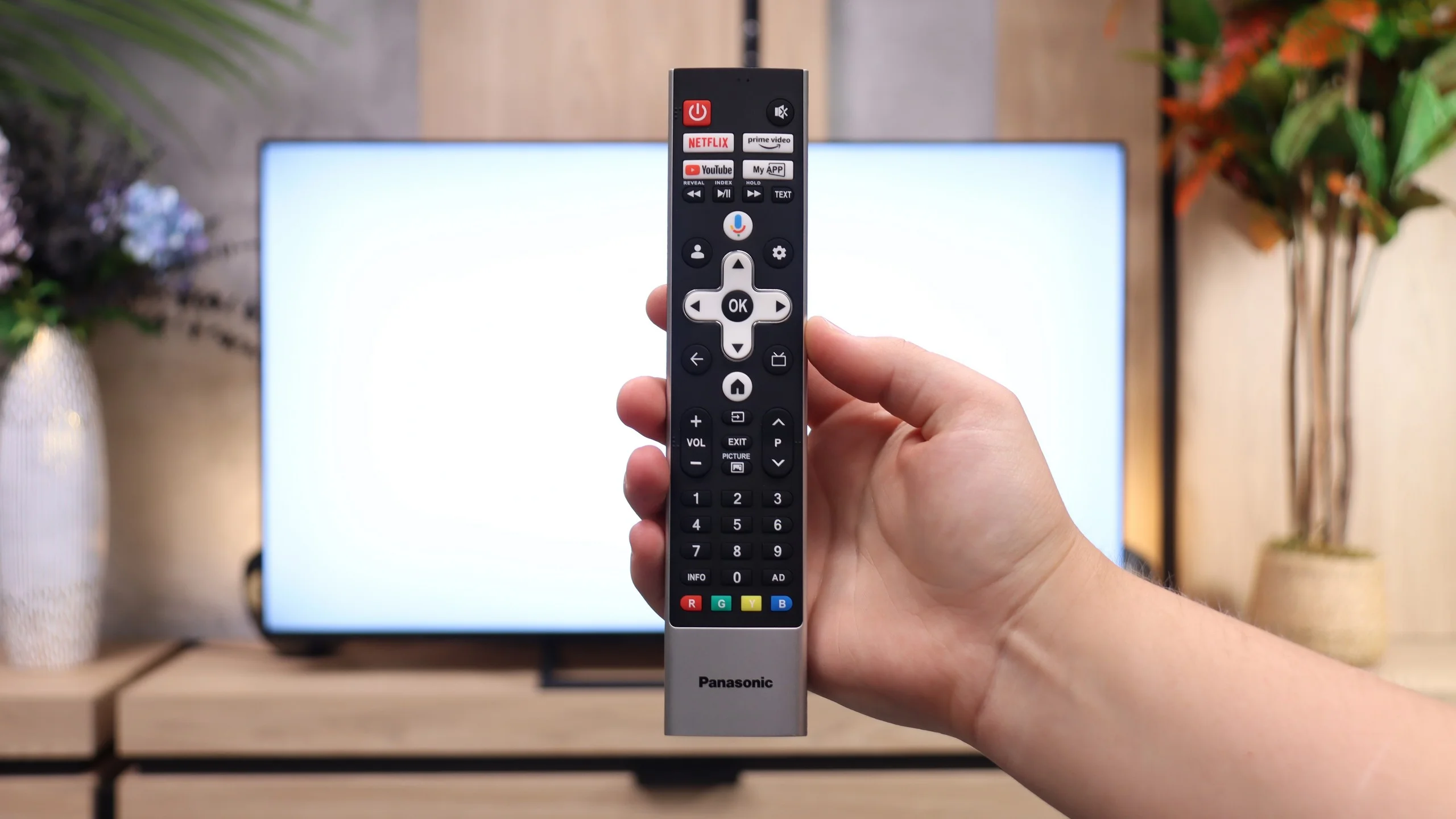
Among classic features we have EPG, teletext, and the ability to listen to audio simultaneously through Bluetooth headphones and the TV speakers. Missing, however, are USB recording and picture-in-picture. The remote is simple, has a numeric keypad, and does not need to be pointed at the screen. It’s a shame it’s not backlit, and the build quality could be a bit better. There are three HDMI 2.1 ports with 48 Gbps bandwidth for connecting devices. There is also an optical output and eARC, but note the standard 3.5 mm headphone jack. This is an increasingly rare addition, and it’s useful for wired headphones or an older audio system with an analog input.
Apps
9.6/10
9.6/10






















Playing files from USB
8.9/10
8.7/10
Supported photo formats:
Maximum photo resolution:
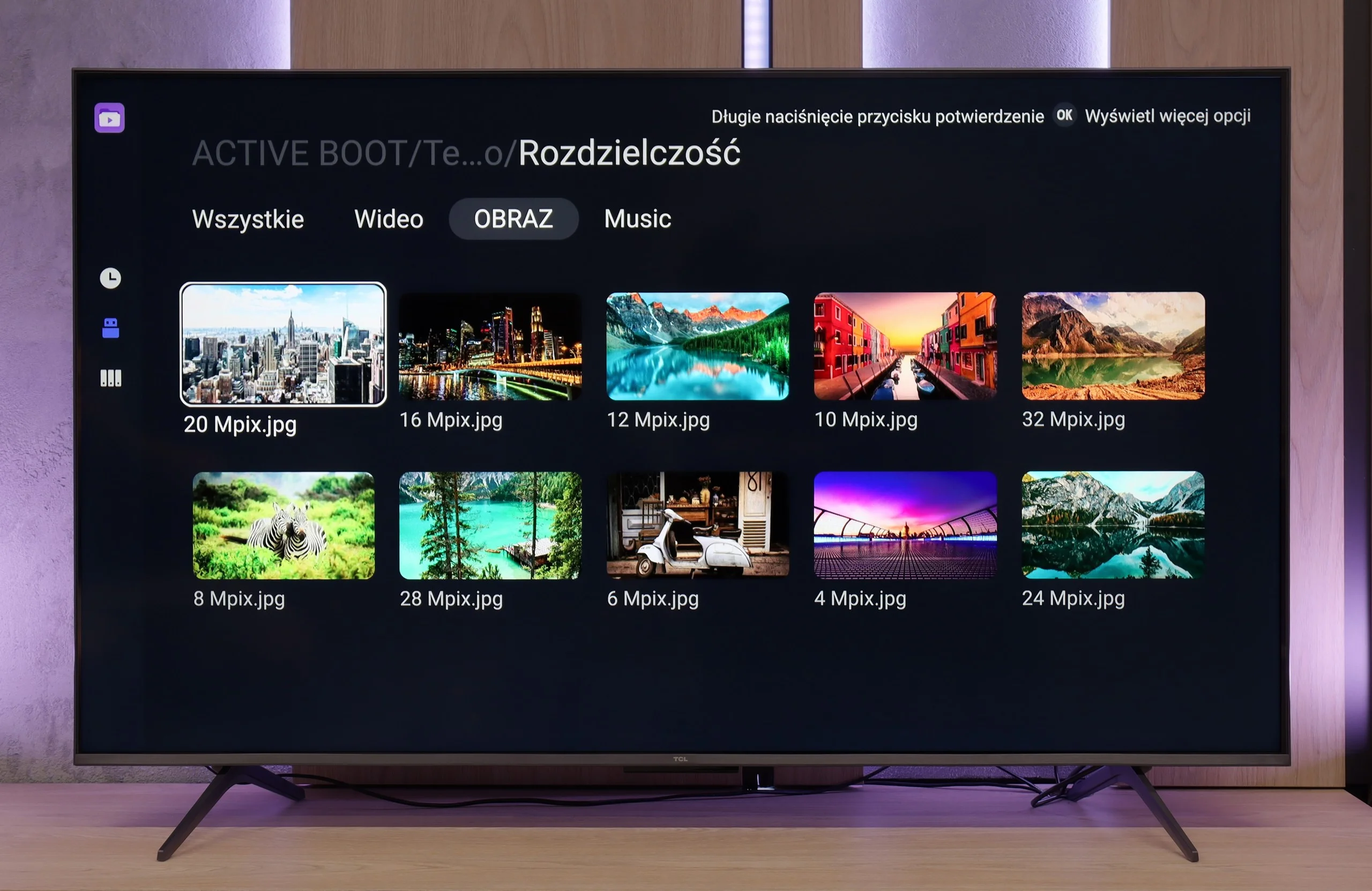
The system player really delivers and smoothly handles popular formats. The only hiccup occurs with files from the Apple ecosystem (e.g., HEIC) – here, TCL simply gives up. Fortunately, a huge plus of Google TV is that you can install your own application, such as VLC. This way, you can quickly address the shortcomings of the factory player, allowing you to play practically any material, customizing the TV to your preferences.
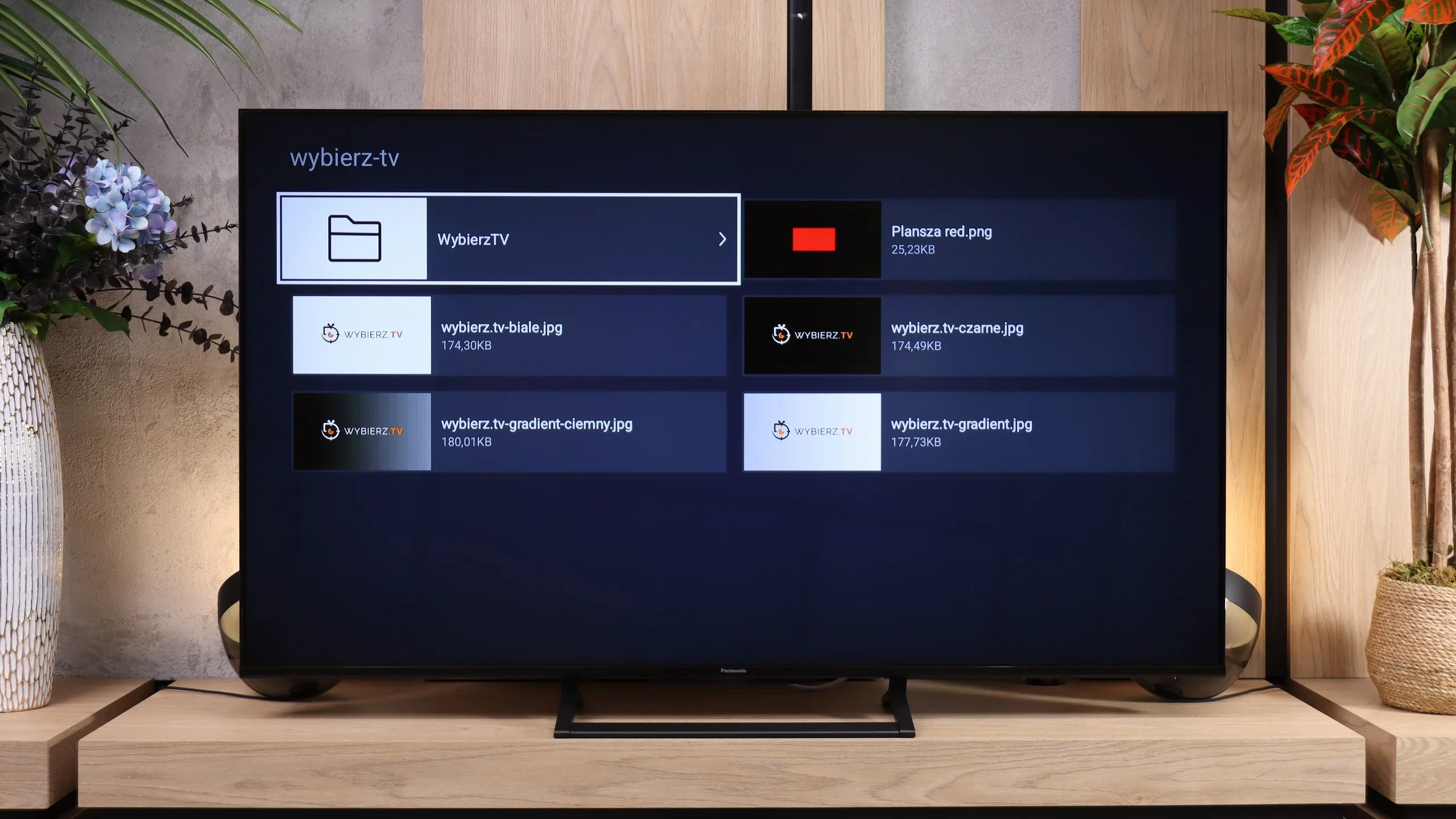
USB playback on the W92C works smoothly. Content loads quickly, the interface is simple, and the built-in player handles most popular video, photo, and music files. It’s more than enough for an occasional movie or for browsing photos from a flash drive. Just watch out for subtitles. In our tests the TV would not read .sub and .txt files. It’s best to convert them beforehand to .srt, which worked correctly, including Polish characters.
Sound
6.5/10
6.7/10
- Maximum volume-94dB
- Dolby Digital Plus 7.1
- Dolby True HD 7.1
- Dolby Atmos in Dolby Digital Plus (JOC)
- Dolby Atmos in Dolby True HD
- DTS:X in DTS-HD MA
- DTS-HD Master Audio
TCL C6KS performs almost identically to the C6K model, as it uses the same set of speakers branded by Onkyo. For a television of this class, the sound is quite good — you can even sense a slightly defined bass, which is not often found in budget segments. However, it is worth remembering the proper perspective. This bass performs decently against other televisions, but a home theater setup or even a basic soundbar will still offer a much fuller, more dynamic sound. Therefore, the C6KS is suitable for regular television watching, but if someone is keen on a stronger sound, additional audio equipment will be a natural choice.
The sound on the Panasonic W92C is fairly average. Considering the additional subwoofer on the back of the cabinet, we expected a somewhat fuller sound. However, there’s still a lack of bass, which is particularly noticeable in music and more intense movie scenes. The subwoofer itself doesn’t deliver as much as you might expect. On the plus side, the volume is good. In our measurements the W92C reached about 94 dB, so there’s plenty of headroom. For regular TV watching that setup is sufficient, but simply turning up the volume won’t replace the missing low end.
Sound Quality Test
No sound test video
Acoustic Measurements
No acoustic data
94dBC (Max)
75dBC
Reader comments
Comments are provided by the external service Disqus (Zeta Global). Once loaded, Disqus may set cookies and process data about your activity.
We will remember your choice on this device. Provider's privacy policy