 Direct comparison
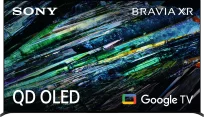
The Sony A95L is a television that made a huge impression on us. Although it has been a year since its release, it still deserves a place among the best models on the market. When it comes to picture quality, it is simply brilliant. Deep blacks, intense colors, and excellent brightness in HDR make everything look incredibly realistic. The QD-OLED panel does its job – movies and games look so good that sometimes you forget it's just a screen. Using the A95L on a daily basis is a pleasure. Google TV works smoothly, and there are plenty of apps available. The package includes two remotes: one traditional and one backlit – a really useful solution, especially in the evenings. Additionally, there is a voice assistant that makes life easier by allowing quick searches for movies or controlling the home from the couch. Gamers will also be delighted. A refresh rate of 120 Hz, low input lag (below 10 ms even in Dolby Vision), and VRR support create a set that will satisfy any gaming fan. And the sound? The Acoustic Surface Audio+ system makes sound come directly from the screen, providing excellent, spatial experiences. Of course, there are no perfect things. Two HDMI 2.1 ports (one of which is for eARC) may be a bit insufficient if someone wants to connect a console, soundbar, and other devices. In a bright room, the black may have a slightly cherry tone, which may be bothersome for more demanding users. Despite these minor comments, the Sony A95L is a piece of excellent equipment. The picture, sound, and functionality are at the highest level. It is a television that will satisfy both cinema lovers and gamers, offering true premium experiences in the comfort of home.
- Matching (Score) |
- Our verdict |
- TV appearance |
- Where to buy |
- Contrast and black detail |
- HDR effect quality |
- Factory color reproduction |
- Color reproduction after calibration |
- Smoothness of tonal transitions |
- Image scaling and smoothness of tonal transitions |
- Blur and motion smoothness |
- Console compatibility and gaming features |
- Input lag |
- Compatibility with PC |
- Viewing angles |
- Daytime performance |
- Panel details |
- TV features |
- Apps |
- Playing files from USB |
- Sound

Check the best price offer:
Sony A95L(paid link)A95L
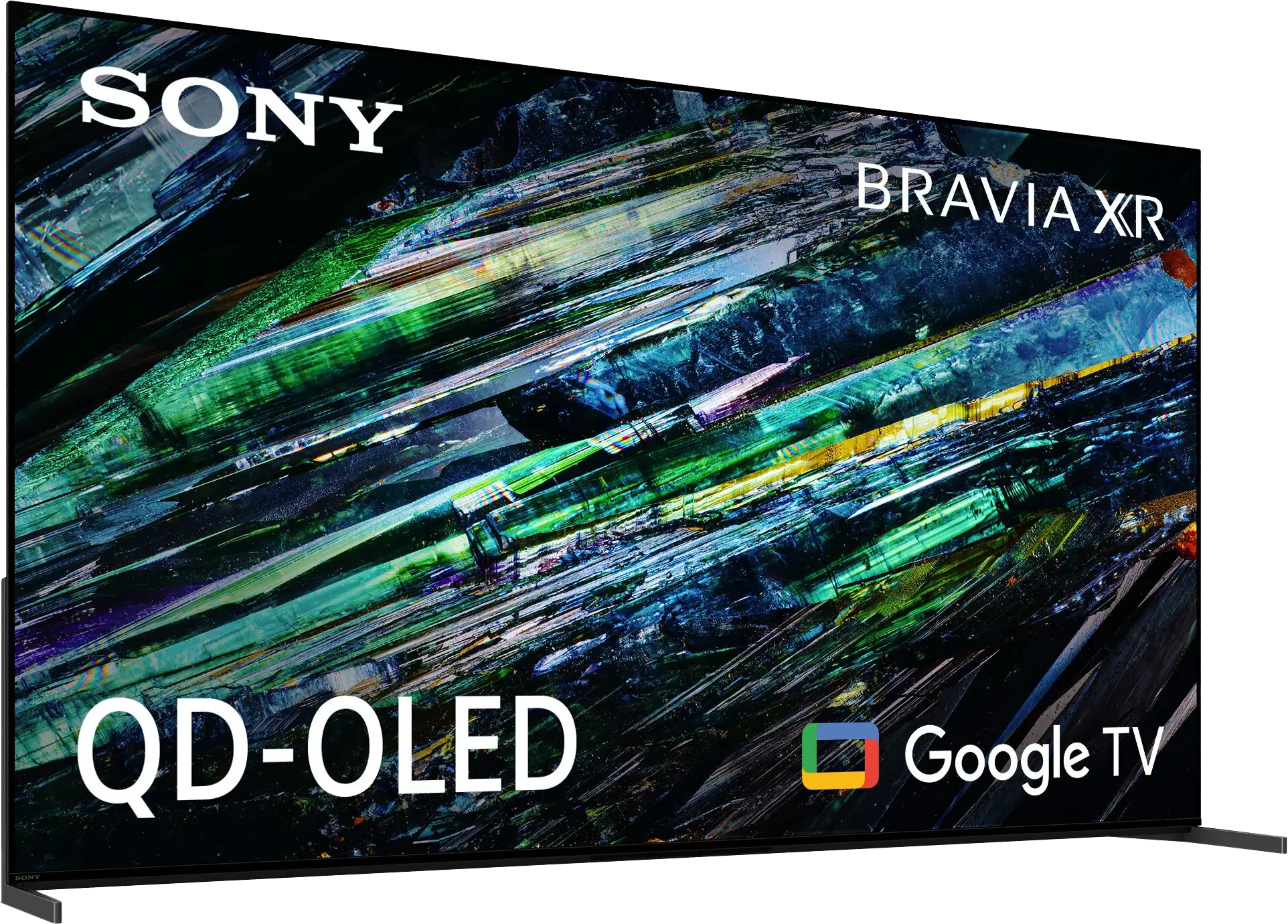
Panel type: QD-OLED
Resolution: 3840x2160
System: Google TV
Model year: 2023
Complete the survey to find out the result
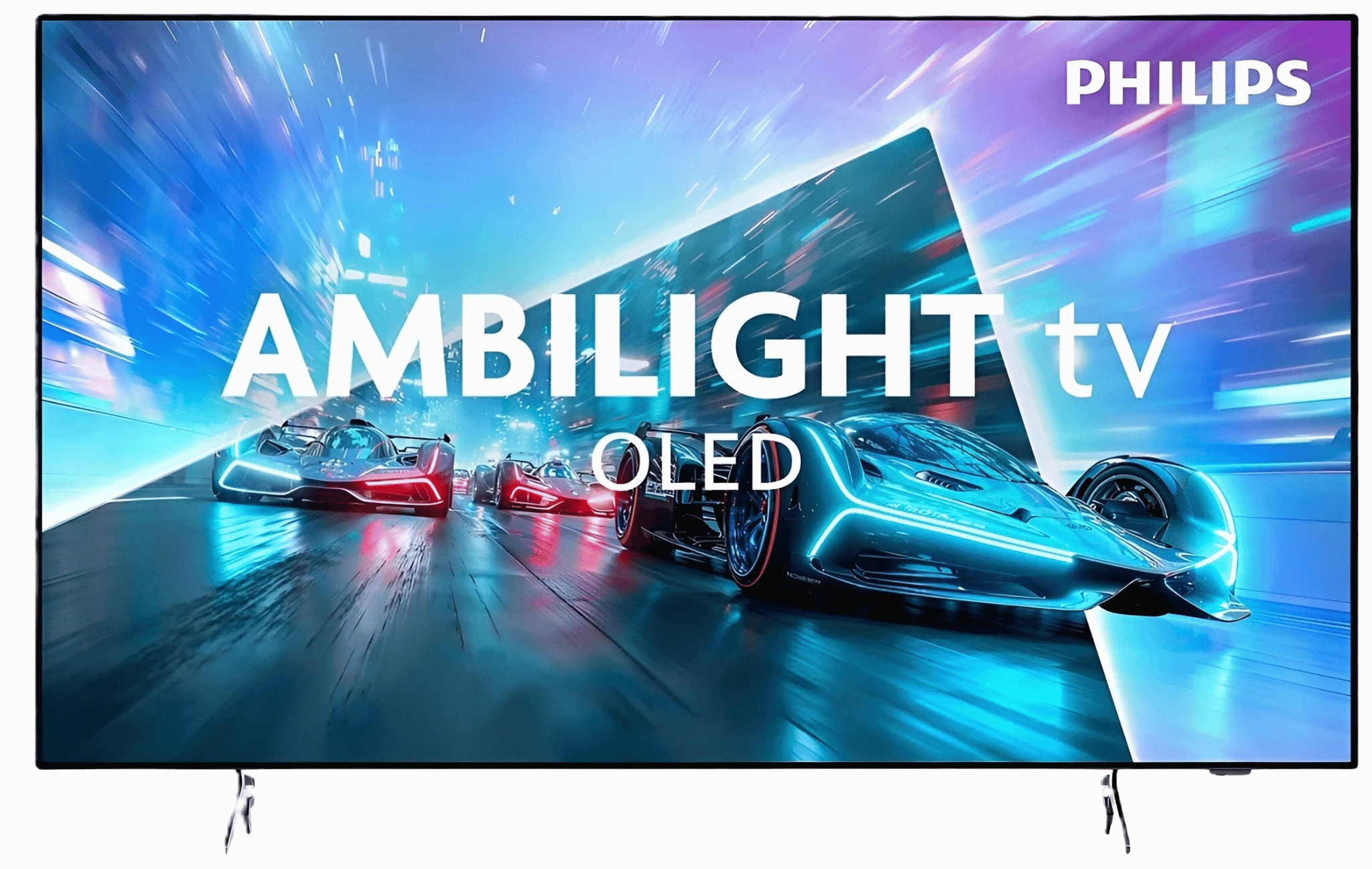
Panel type: WRGB OLED
Resolution: 3840x2160
System: Titan OS
Model year: 2026
Complete the survey to find out the result
Overall rating
8.2
7.7
 Movies and series in UHD quality
9.0
8.0
 Classic TV, YouTube
9.3
8.7
 Sports broadcasts (TV and apps)
9.0
8.5
 Gaming on console
9.3
9.0
 TV as a computer monitor
5.0
7.6
 Watching in bright light
5.0
4.5
 Utility functions
8.8
7.9
 Apps
9.6
7.7
 Sound quality
7.9
7.0
Complete the survey to find out what fits your preferences
Advantages

Amazing Contrast
Great for HDR movies
Advanced Google TV system
Great Viewing Angles
Gaming Features: ALLM support, VRR, 120 Hz refresh rate, low input lag
Great sound
Camera included
Perfect blacks and very high contrast
Impressive HDR for evening viewing
Very good color reproduction after calibration
Wide viewing angles
Ambilight enhances the viewing experience 🙂
120 Hz panel useful for gaming and sports
Four HDMI 2.1 inputs
Dolby Vision support (improves the picture in many HDR scenes)
Disadvantages

Only Two HDMI 2.1 Ports: One of the HDMI 2.1 ports is used for eARC, which may limit the number of devices that can be connected, especially for those using a soundbar and a console
Cherry black effect in bright light: The QD-OLED panel causes blacks to lose their depth in strong light
Not the sleekest design
Price compared to competitors
Limited app selection on Titan OS
Lower SDR brightness compared with competitors
Screen reflections are distracting in a bright living room
Infrared remote requires pointing at the TV (sometimes slow to respond)
Visible posterization
Our verdict
Philips OLED761 shows that an entry-level OLED in the brand’s lineup can be a successful choice for watching movies. It performs best in the evening, when perfect black levels and impressive HDR let you appreciate the strengths of this panel. After calibration the colors are very well reproduced, so it's hard to find major faults with the picture during regular viewing. It doesn't always handle the brightest highlights in demanding HDR10 films equally well, but Dolby Vision helps in those scenes. This is a TV that can leave a really good impression when you turn off the lights. A big part of that experience is Ambilight. If you like backlighting the wall behind the screen, the OLED761 gives a concrete reason to consider Philips. You don’t have to pay extra for higher-tier models to get this feature combined with a good OLED picture. This model also works for gaming: the 120 Hz panel and four HDMI 2.1 inputs let you use it for movies, consoles, or a PC. That matters, because even the cheapest OLED in a lineup should be a versatile purchase, not a TV that’s only good for evening sessions.
Before buying, though, it’s worth looking at two limitations. The first is watching in a bright room. The OLED761 is a bit dimmer than rivals using a similar panel, and the absence of a polarizer in the OLED SE panel further reduces its performance in bright rooms. The second is Titan OS. The system runs more smoothly than in earlier versions, but it still offers a smaller selection of apps than the competition. Improved smoothness is welcome, but it won't replace access to the services you use every day, so it's best to check app availability before buying. We also didn’t like the remote. Even though it's backlit and has a full set of useful buttons, it requires precise aiming at the screen.
Ultimately, the Philips OLED761 makes the most sense for people who mainly watch in the evenings and want Ambilight. In those conditions it can confidently compete with the Samsung S85H or LG B6, and the choice between them will depend more on price, the operating system, and personal habits. Philips doesn't have a clear advantage in every use case, but you shouldn't treat it as an inferior option just because it opens the brand’s OLED range. At the right price it's a good buy... but only if the available apps meet your needs.
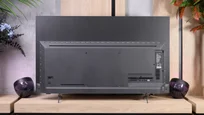
TV appearance


Contrast and black detail
10/10
10/10
Contrast:


Result
∞:1

Result
∞:1

Result
∞:1

Result
∞:1

Result
∞:1
Result
∞:1
Result
∞:1
Result
∞:1
Result
∞:1
Result
∞:1
Halo effect and black detail visibility:
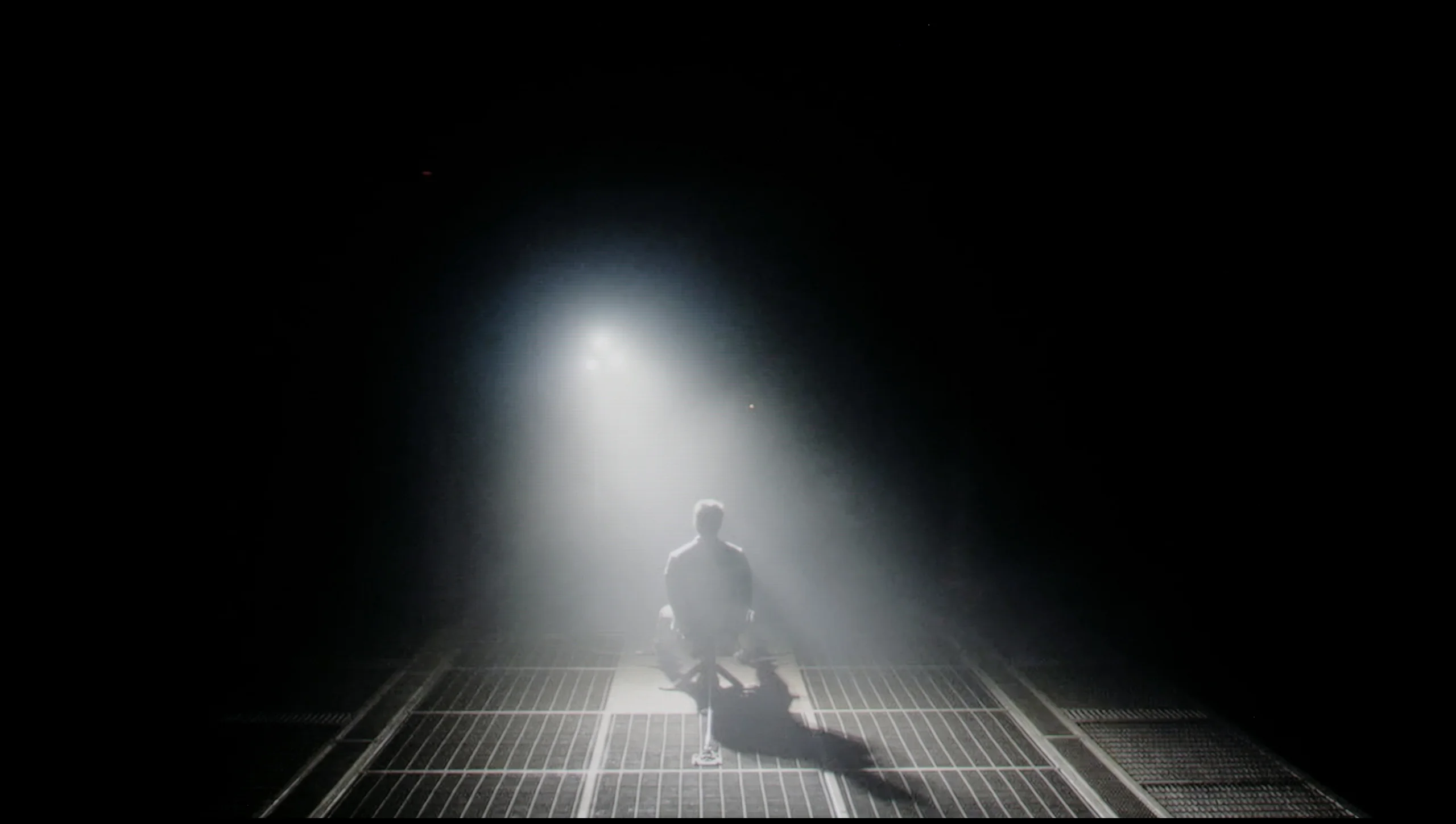
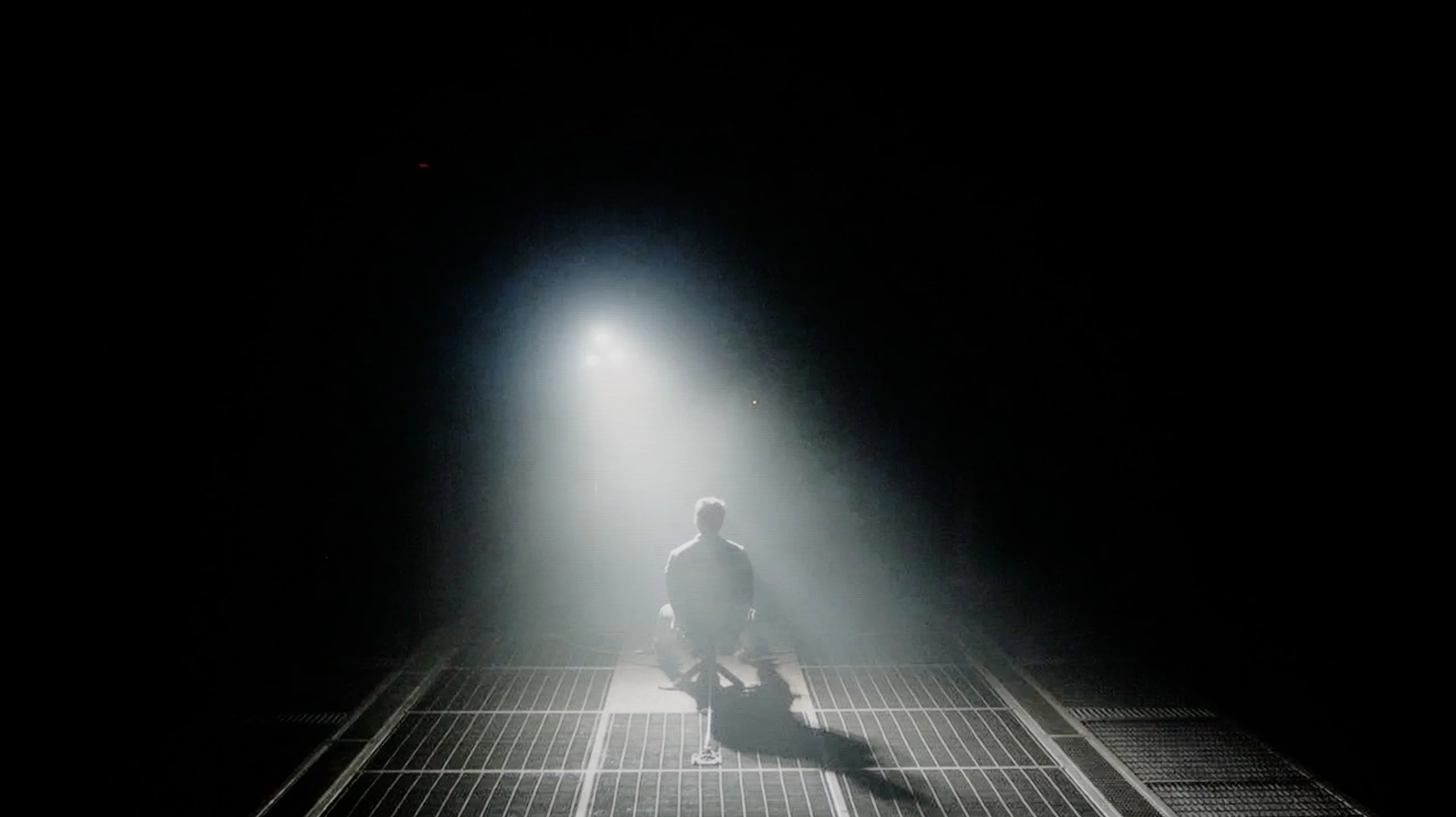
Check the visibility of bright lights on a dark background. Mini-LEDs often struggle with this. The photo does not compare black levels – that’s what the video below is for.
The video accurately shows differences in contrast and black levels between TVs, as well as potential issues: halo around bright objects or Mini-LED zone operation visible as brightness jumps.
Sony A95L is an OLED television that truly impresses when it comes to contrast. Thanks to OLED technology, this model offers perfectly deep blacks – in dark scenes, there are no discolorations or glow, which makes the images look incredibly realistic. Additionally, QD-OLED technology allows for achieving higher brightness, which further emphasizes the difference between light and dark elements. As a result, in scenes like those from the movies Oblivion or Sicario 2, A95L Sony effectively separates lights from shadows, enhancing the clarity and depth of the image – an ideal solution for those seeking cinematic experiences at home.
In this category the Philips OLED761 receives the highest score. The OLED panel allows each pixel to be controlled independently, and where the image should be completely black you can simply turn the pixel off. As a result we achieved infinite contrast in all measurement scenes. When watching this translates to deep blacks and very clear separation of bright elements from a dark background. Even a small lamp or a star does not cause the surrounding area to be illuminated by the screen, something Mini LEDs still struggle with in demanding scenes. This is an advantage of the technology itself, so even the cheapest Philips OLED can match much more expensive models in this respect. In a dark room it’s especially obvious how much that precision delivers. Black doesn’t go gray just because a bright object appears next to it, and the TV doesn’t have to choose between dimming the light and preserving a dark background.
Certain reservations apply to the way shades just above black are displayed. In cinematic scenes the OLED761 can slightly brighten those tones, so the very darkest parts of the image can be a bit brighter than they should be. The start of the luminance curve confirms this. That doesn’t mean the panel can’t show perfect black, since completely black elements remain turned off. The imperfection affects the rendering of the darkest grays and, while it doesn’t negate the excellent contrast, it can be noticeable in some night scenes.
HDR effect quality
7.8/10
6.1/10
Luminance measurements in HDR:

Result
1471 nit

Result
1498 nit

Result
1465 nit

Result
1527 nit

Result
626 nit
Result
538 nit
Result
702 nit
Result
784 nit
Result
740 nit
Result
289 nit
Scene from the movie “Pan” (about 2800 nits)


Scene from the movie “Billy Lynn” (about 1100 nits)


The photos show two HDR10 movies. 'Pan' is one of the brightest productions ever made, while 'Billy Lynn' (soldier) has brightness typical of streaming (Netflix, Prime, HBO MAX). Notice the intensity of effects and detail in whites.
Static HDR10


The photos present the visibility of white details in various HDR formats. They do not show brightness differences between TVs (these can be compared in the previous gallery).
Dynamic: Dolby Vision
Dynamic: Dolby Vision


The photos present the visibility of white details in various HDR formats. They do not show brightness differences between TVs (these can be compared in the previous gallery).
HDR luminance chart:
Philips OLED761
Sony A95L
Luminance of RGB colors
Sony A95L offers an incredible HDR effect, achieving an impressive brightness level of 1500 nits in scenes such as those from Life of Pi or Sicario 2. These results are truly remarkable – the bright elements in these films practically come to life on the screen, providing the viewer with immersive visual experiences. The only thing to note is minor issues with maintaining brightness in the scene from The Meg, where the entire scene is flooded with light. However, this is a natural effect related to OLED technology. The wide coverage of the BT.2020 color palette at 89% is also a significant advantage, placing A95L Sony among the top TVs in terms of color reproduction. All of this is made possible by the QD-OLED panel from Samsung Displays.
Philips OLED761 uses the new-generation WOLED SE panels from LG Display, and in terms of HDR brightness it achieves results similar to its closest rivals, the Samsung S85H and the LG B6. Peak brightness is around 800 nits, which for an entry-level OLED is a solid result. Importantly, similar values also appear in movies. In scenes with small bright elements on a dark background we measured about 700-780 nits, so a flashlight, a specular highlight, or a lamp can clearly stand out. Combined with perfect black, this delivers a convincing HDR effect, especially during evening viewing. The panel’s capabilities, however, decrease as the bright area of the image increases. When a vast, sunlit landscape replaces isolated highlights, the TV can no longer maintain such high brightness. In a scene with an offshore drilling platform we measured 289 nits, and with even greater bright-area fill the result can approach about 200 nits. In practice this means a sun-drenched shot will look less spectacular than small lights in a night scene. Despite this limitation, the OLED761’s HDR performance deserves a positive assessment. It’s not a TV that will light up an entire room with every bright scene, but it can clearly show the difference between regular footage and HDR material. It performs best where bright accents appear on a darker background, because then the high brightness of individual elements and deep black combine for the best effect.
Colors
The Philips OLED761 also handles color well, because its panel covers the vast majority of the DCI-P3 gamut, which contains most of the colors found in HDR movies and TV series. As a result, in everyday viewing colors have proper saturation and the picture doesn’t look washed out. Limitations only become apparent in more demanding content that uses shades beyond DCI-P3 and within the wider BT.2020 color space. In such shots the most intense reds and greens can look less impressive than on QD-OLED, SQD-Mini LED, or RGB Mini LED displays. Another issue is saturation retention at high brightness. The WOLED panel uses an extra white subpixel to help brighten the image, but it doesn’t increase the brightness of the colors in the same way. Therefore very bright colors may wash out slightly, which is most noticeable on vivid neon signs or colorful light effects. These are limitations mainly visible in specific, demanding scenes. For most movies and TV shows watched regularly, the OLED761 is capable of delivering well-saturated, attractive colors.
Factory color reproduction
7.9/10
6.5/10


This gallery shows how colors change after professional TV calibration. If you notice the difference, we recommend ordering this service at SkalibrujTV.com.
Factory Mode
After calibration
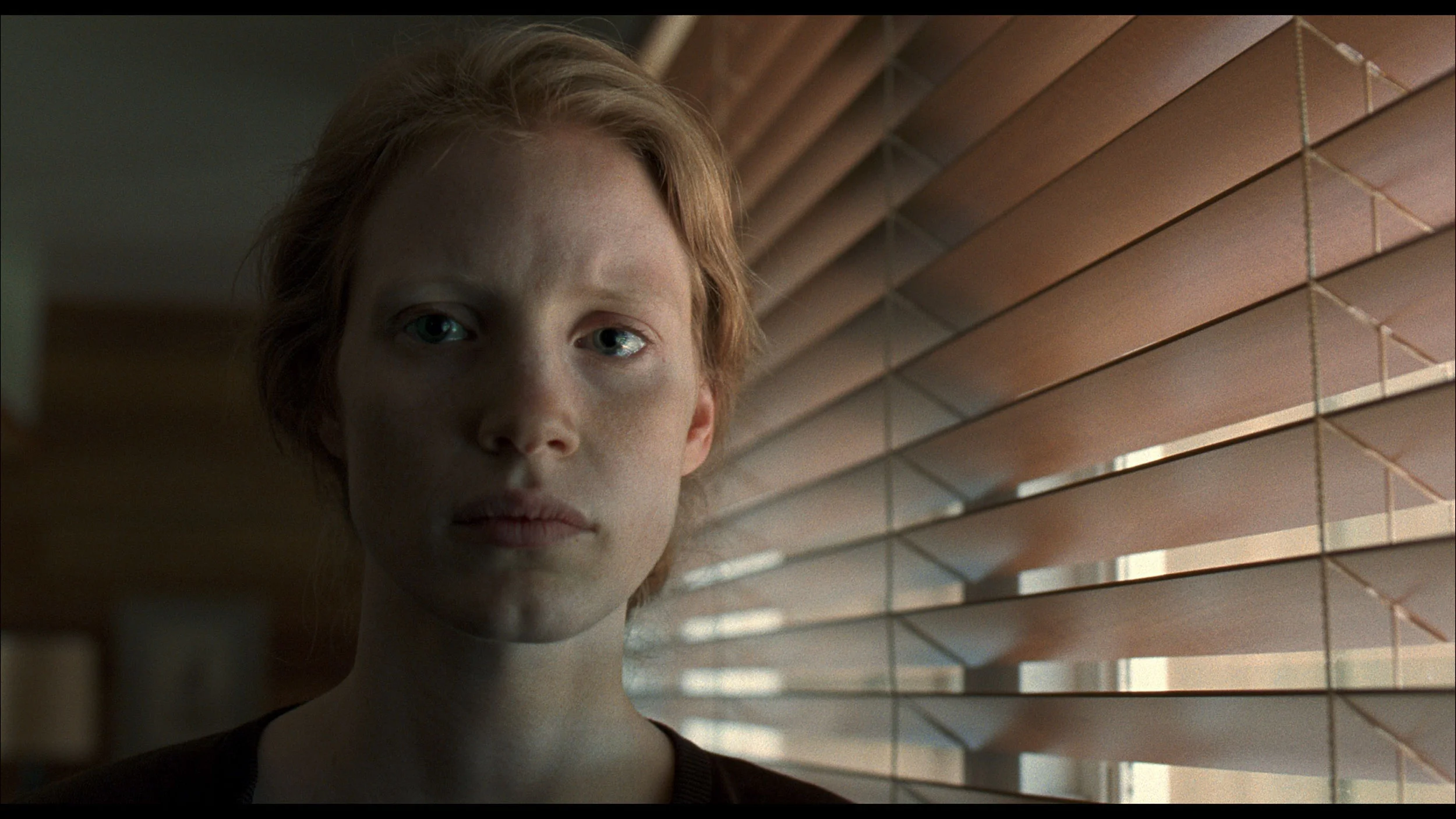
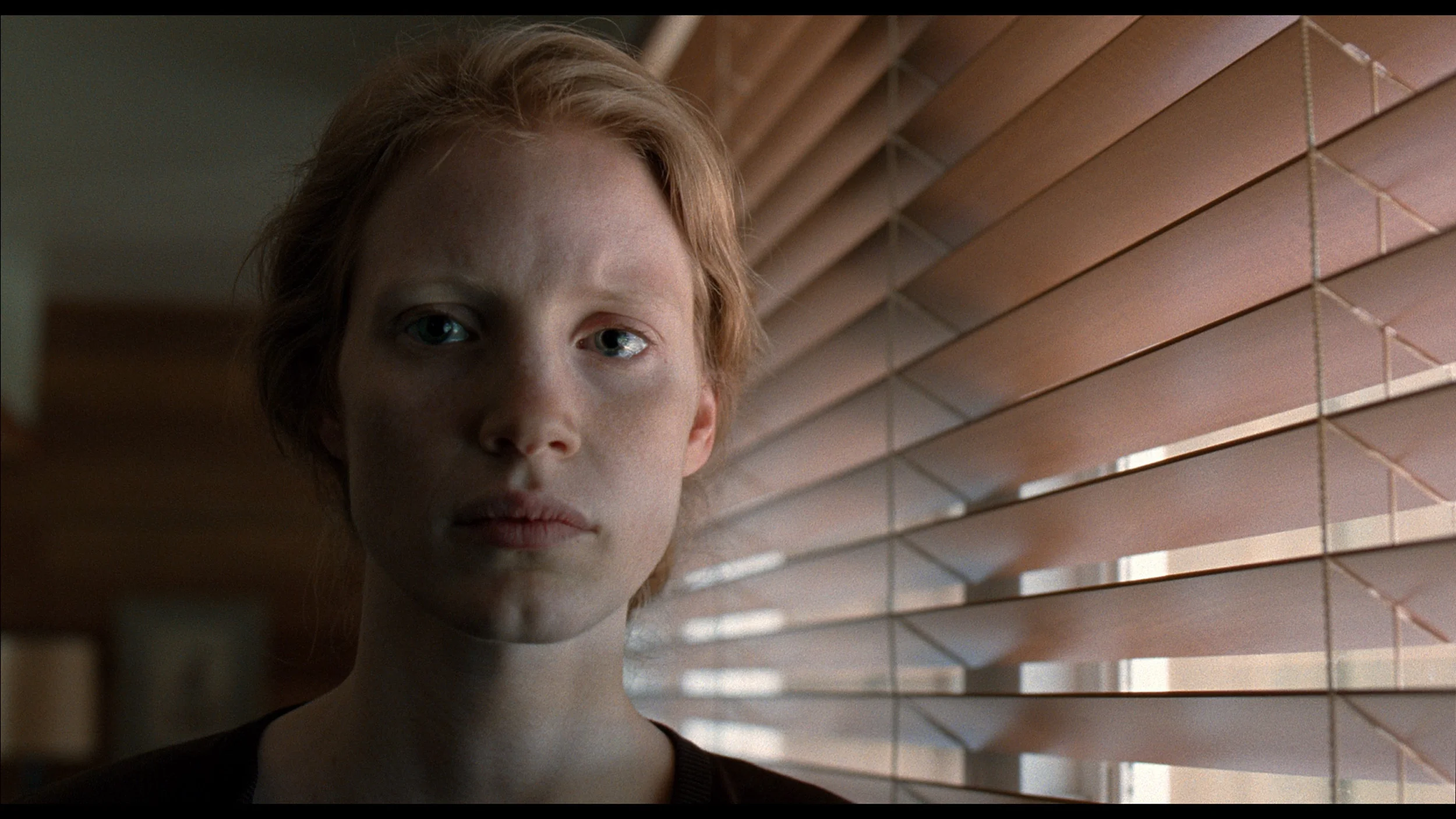
This gallery shows how colors change after professional TV calibration. If you notice the difference, we recommend ordering this service at SkalibrujTV.com.
Factory Mode
After calibration
The best factory mode in terms of color reproduction in Sony A95L is IMAX Enhanced. This is a mode that, at first glance, seems to be well calibrated; however, upon closer examination, several areas requiring improvement can be noticed. First and foremost, the white balance for both SDR and 4K HDR content is skewed with excessive blue and red color, leading to a subtle pink tint, particularly noticeable on neutral tones. As a result, skin tones are inaccurate, affecting the realism of the displayed image. This is clearly visible in the comparison photo below. Additionally, the Colour Checker test confirms the presence of these errors—color samples often deviate from their reference values, indicating some inaccuracies in the factory color reproduction of A95L Sony. The maximum deltaE error values reach up to 5.8, which is a clear indication that colors are not always reproduced as precisely as they should be.
Regarding brightness characteristics, the gamma for HD/SDR content is generally quite correct, maintaining an appropriate balance between brightness and contrast. Unfortunately, there is a significant jump at the end of the graph, leading to a strong brightening of the image when the screen is fully flooded with white. This can make scenes with very bright backgrounds, such as snowy landscapes or intense daylight, appear overly vivid and lose detail. In the case of HDR content, the EOTF curve, which is responsible for controlling luminance, is slightly boosted compared to the reference values. This, in turn, causes the image to be somewhat brighter than it should be, which may affect the perception of more subtle details in the darker areas of the frame.
The factory settings of the OLED761's Film mode deliver a fairly pleasant picture, although colors are not completely neutral. In SDR material there is primarily a lack of blue, and in parts of the range red is reduced as well, causing whites and grays to take on a slightly yellow-green tint. You'll notice this most easily on neutral surfaces, which look warmer than they should. The colors themselves perform reasonably well, and most tested samples do not show large errors. So it's not a case where the tint completely changes the look of the movie you're watching. More attention is needed for how brightness is handled in SDR. Across most of the range the TV slightly darkens the image, which can make faces and background elements appear heavier and render details in darker areas less readable. At the same time, shades just above black are lifted. These two characteristics can occur together: the very deepest shadows become too visible while the rest of the scene is a bit too dark. In HDR a lack of blue is also visible, especially in the brighter parts of the image. Whites therefore take on a warm, yellowish tint that can be noticeable on clouds or snow. Darker tones have much better white balance, so the degree of this tint changes with scene brightness. Out of the box the OLED761 performs decently, but measurements show that white neutrality and how brightness is reproduced still require refinement through calibration.
Color reproduction after calibration
9.3/10
9/10


The photos show how movies look on the TV. Pay attention to black detail visibility, colors, and shadow tint.


The photos show how movies look on the TV. Pay attention to black detail visibility, colors, and shadow tint.
Sony A95L offers excellent tools for professional screen calibration, allowing you to maximize the capabilities of the IMAX Enhanced mode. We used them to bring the image to a level that will satisfy even the most demanding viewers. After calibration, the white balance for both 4K HDR and SDR content looks simply great – almost perfect. The Colour Checker test confirmed that deltaE errors do not exceed a value of "2", which means that color reproduction is extremely accurate, and any deviations are practically imperceptible to the human eye.
Calibration also brought a significant improvement in terms of brightness – gamma is now perfectly balanced, eliminating the previous issue of excessively brightening scenes with very bright backgrounds. As a result, even the most vibrant moments, such as snowy landscapes or intense daytime scenes, appear natural, without the effect of clipping. The EOTF curve, which is responsible for controlling luminance in HDR content, has also been improved – it now reaches a reference level, both in synthetic tests and in practical movie watching.
As a result of the calibration, A95L Sony offers excellent experiences, whether you're watching material from regular television or your favorite movies. Every detail is reproduced exactly as the creators intended – without unnecessary brightening, with perfectly rendered colors and appropriate depth. This shows that this television, after professional tuning, is capable of competing with the best screens on the market, offering an image that truly impresses.
After calibration the Philips OLED761 performs very well. The white balance was set almost perfectly, removing the previous color cast, so faces, whites and grays look more natural. The improved gamma means the image is no longer unnecessarily dark and it's easier to see detail in darker areas. Colors are reproduced with high accuracy, which, combined with deep blacks, produces a very pleasing picture for evening movie watching. It's clear that even Philips' entry-level OLED has considerable potential that is worth exploiting by fine-tuning the settings. In HDR the luminance response tracks the reference closely over most of the range, so most scenes retain their proper appearance. There is a slight lift in tones just above black and a tendency to render the brightest highlights a bit too strongly. These are, however, observations about specific parts of the image. In the most demanding shots some bright detail may still be missing, but the overall result after calibration is decidedly successful. The OLED761 can deliver a natural, well-balanced picture that lets you focus on the movie.
Smoothness of tonal transitions
9/10
7.4/10


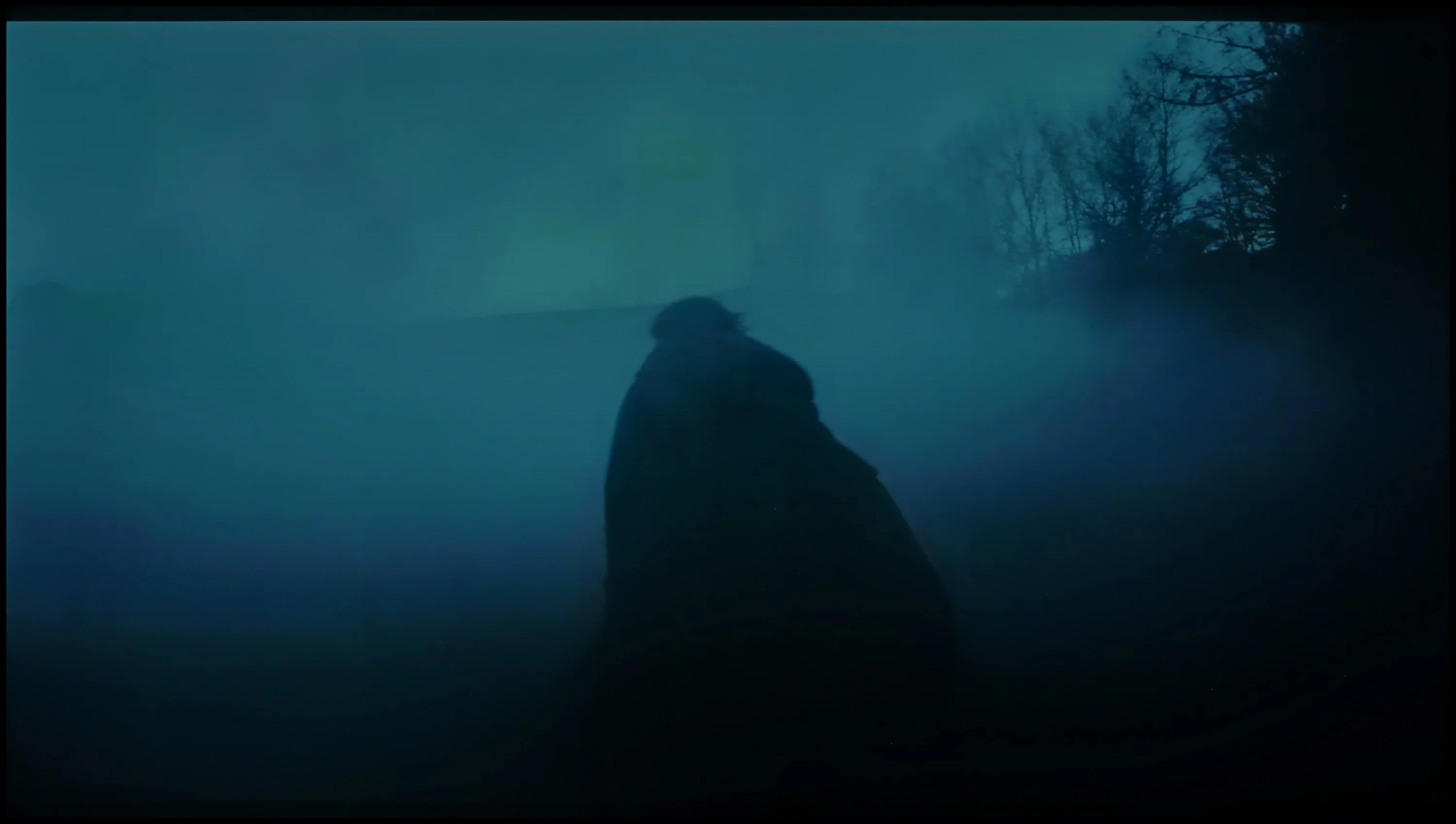


These are selected scenes that show smooth tonal transitions from one color to another. If you see distinct banding, it’s the TV panel’s fault.

These are selected scenes that show smooth tonal transitions from one color to another. If you see distinct banding, it’s the TV panel’s fault.
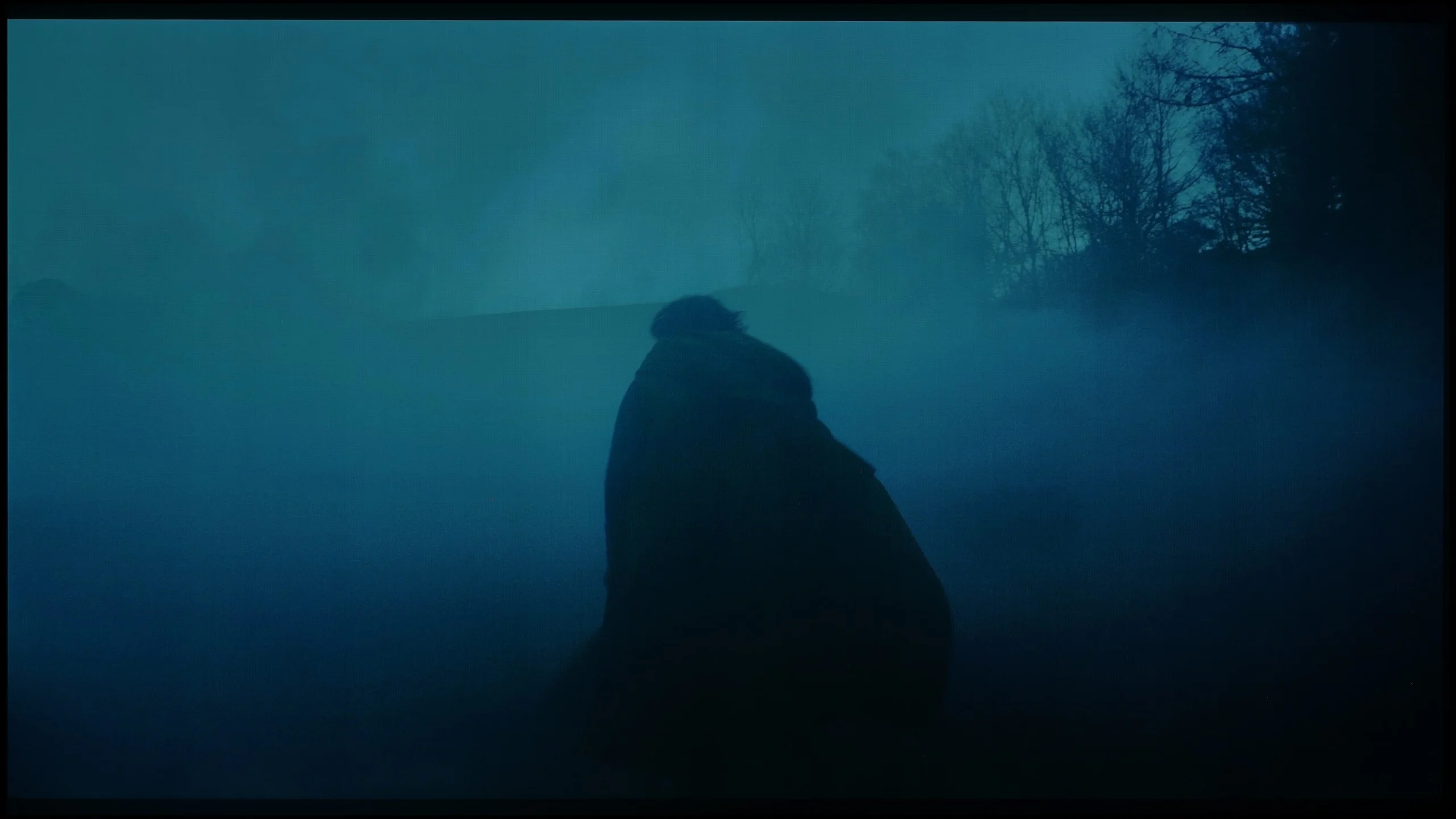
These are selected scenes that show smooth tonal transitions from one color to another. If you see distinct banding, it’s the TV panel’s fault.
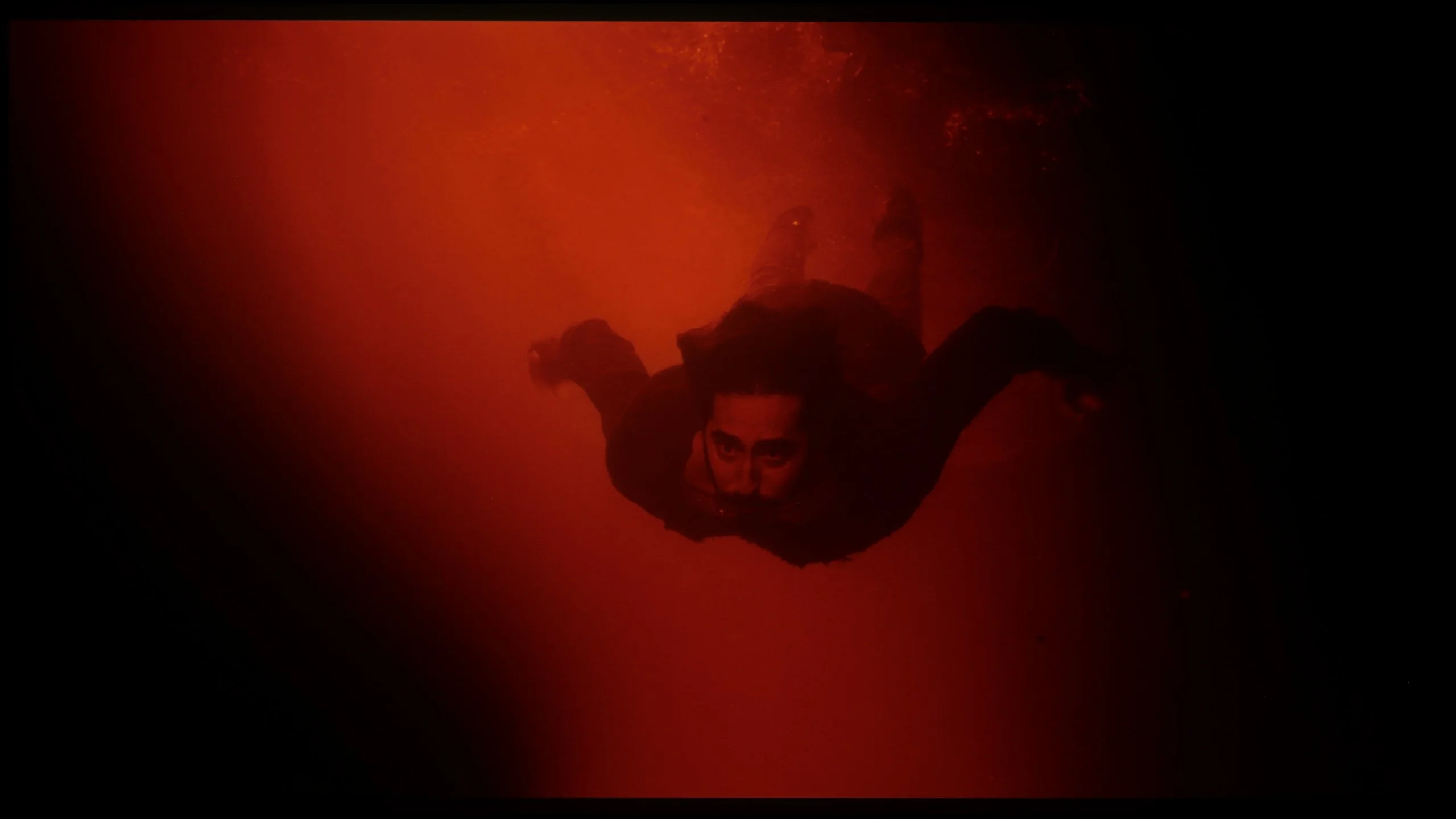
These are selected scenes that show smooth tonal transitions from one color to another. If you see distinct banding, it’s the TV panel’s fault.
The fluidity of tonal transitions in A95L is truly remarkable – it is one of the greatest advantages of QD-OLED panels. The image appears extremely smooth, and all transitions between different shades are perfectly rendered, without noticeable jumps or distortions. As of today, it is hard to find a panel that better handles such precision in reproducing tonal transitions. Of course, if someone really looks closely, small errors can be seen in the areas of black, but they are subtle enough that hardly anyone will notice them during normal use of the Sony A95L. For most users, these minor imperfections will be completely unnoticeable, and the fluidity and detail of the tonal transitions will satisfy even the most demanding enthusiasts of excellent image quality.
Philips OLED761 handles tonal transitions quite well, although on bright gradients you can notice slight boundaries between shades. They appear in most of the bright shots we checked, but are subtle enough that during normal viewing they shouldn't draw too much attention away from the movie. In darker scenes the imperfections are most visible during gradual fades to black and in the shot with red water, where the color transitions could be smoother. More than the gradation itself, panel nonuniformity can be more distracting. In dark scenes it shows up as fairly distinct bands, which make a uniform background look less even than it should. That's a different issue than the visible boundaries between shades, although the two can overlap during a viewing. We've seen similar banding so far in every OLED we've tested with the new WOLED SE panel, so this isn't a problem unique to the OLED761. The severity can vary between units.
Image scaling and smoothness of tonal transitions
8/10
7.5/10

Smooth transition function
The match photo shows how the TV smooths weak tonal transitions in low-quality video.
Image scaling SD (576i)


The model photo shows how it handles upscaling of SD material.
The tonal transition smoothing function in Sony A95L works really well and is worth noting. We recommend setting it to the "Medium" level because at this value, you achieve an ideal compromise – there are no artifacts, and the image looks extremely natural and pleasant to the eye. This allows for smooth transitions between different shades while maintaining scene detail, which further enhances viewing comfort.
As for upscaling, you can see the full power of the XR processor here. Sony A95L handled our test material featuring a model excellently – the image is exceptionally clear, there are no excessive jagged edges, and the details in the background are perfectly preserved. The XR processor effectively improves low resolution, providing very good results that allow you to enjoy content in almost high quality, even if its source is not ideal.
Philips OLED761 does a pretty good job of improving lower-quality material. Its Pentonic 800 processor effectively smooths visible transitions between shades, which often appear in heavily compressed footage. This is handled by the "Artifact Reduction" setting. When enabled, banding on a uniform background becomes less noticeable, and importantly this doesn't come at the cost of noticeably blurring fine detail. It's a feature worth using when the source quality leaves something to be desired. The upscaling itself has the characteristic Philips softness: lower-resolution material looks fairly gentle, and fine elements and edges lack a bit of sharpness. In the shot with the model you can see this in the hair and thin branches, which could be more clearly defined. A plus is the lack of overscan, meaning the edges of the image aren't cropped. Even with a low-resolution signal the TV shows the full frame.
Blur and motion smoothness
8.5/10
8.5/10
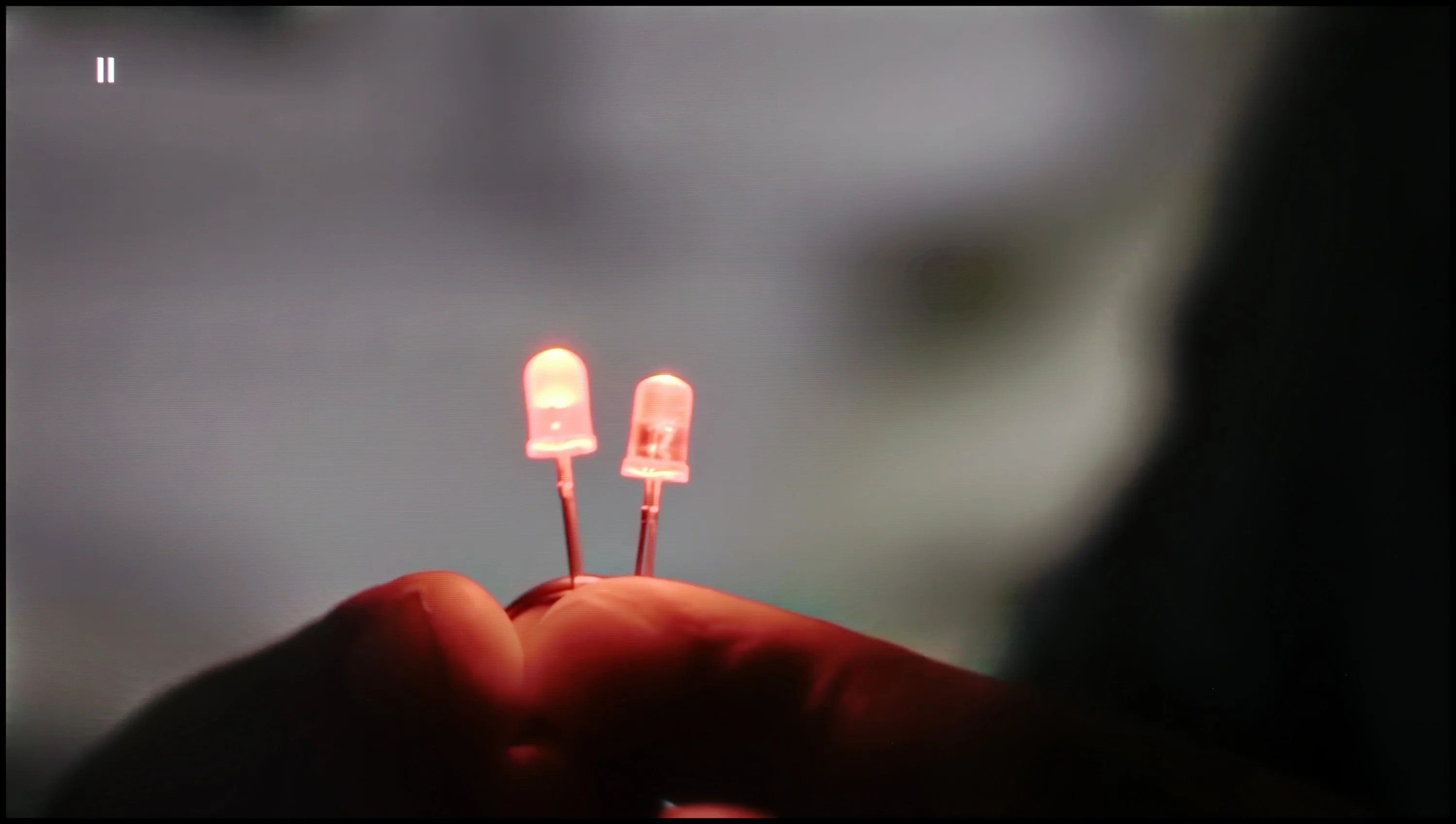
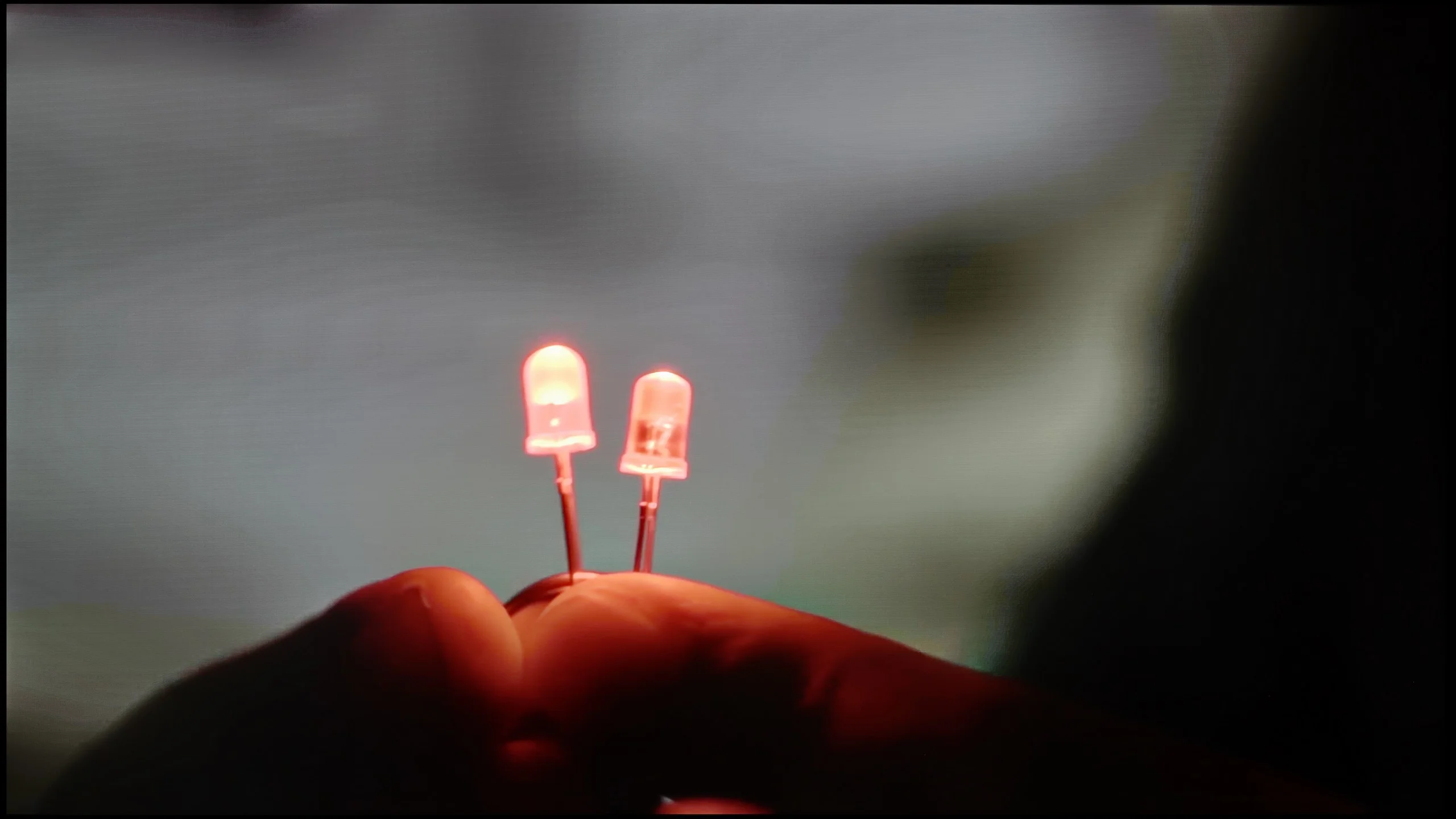
Blur (native resolution, maximum refresh rate):






Blur (BFI function enabled):



Blur ():
Blur (4K@60Hz):

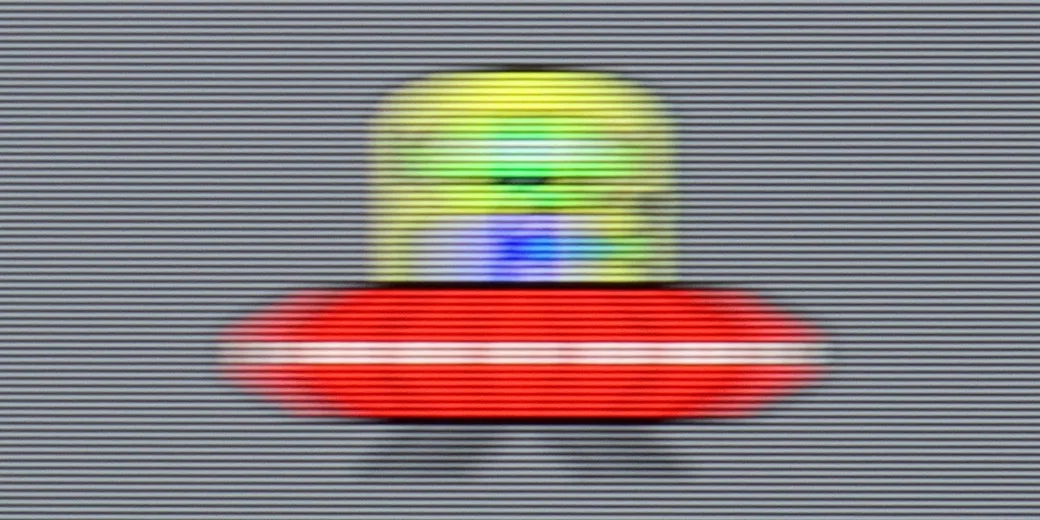

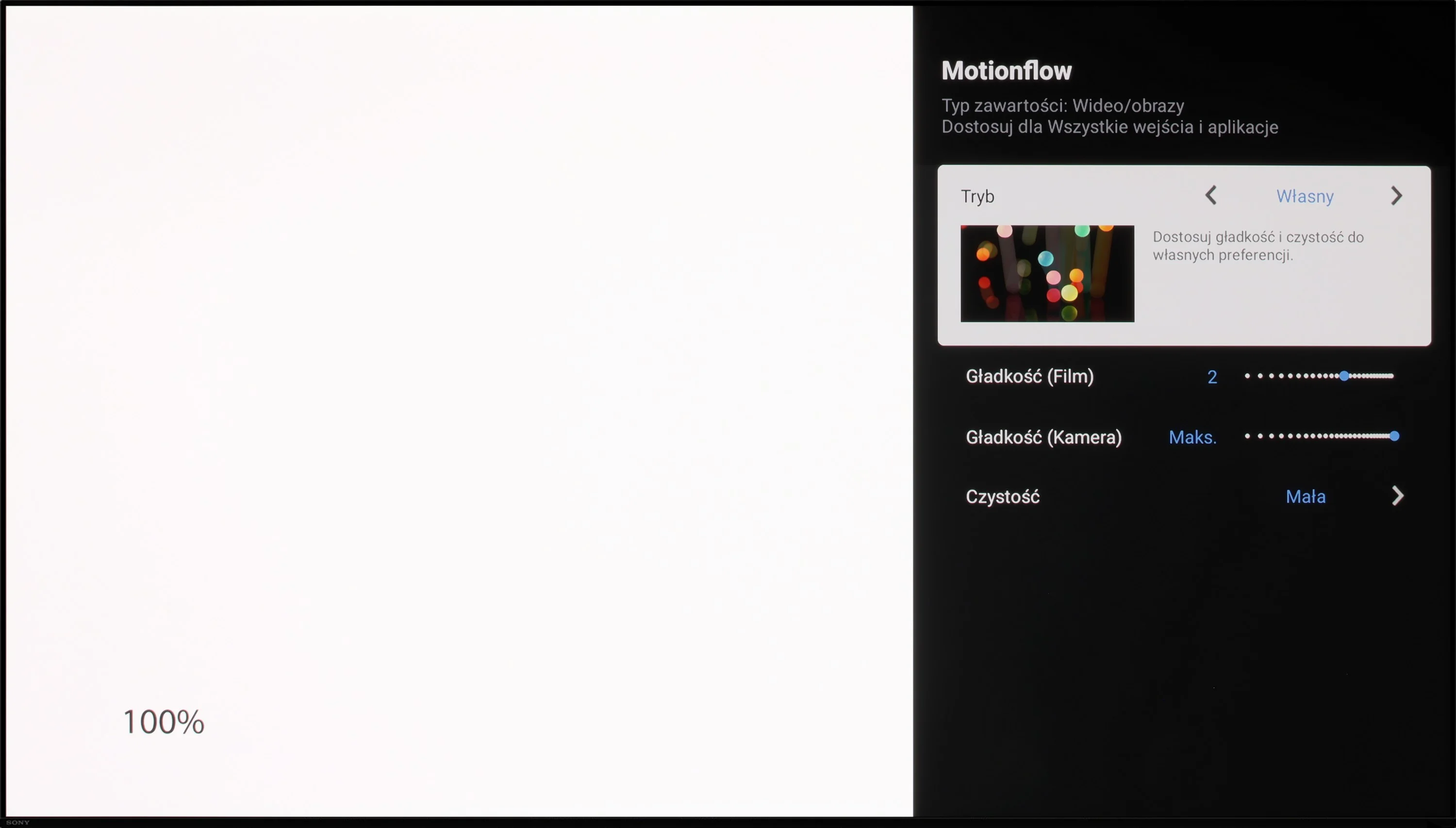
Sony A95L is a TV that should satisfy both gamers and movie lovers. When it comes to watching movies, this model is equipped with Motionflow technology, which allows precise adjustment of whether we want the image to be more "framey," like in traditional cinema, or exceptionally smooth, like in cinema TVs. The "Smoothness" slider allows you to regulate the level of smoothness – from subtle changes to a more noticeable effect, while the "Clearness" slider is responsible for reducing flicker and artifacts, helping to achieve more natural and clearer motion. Regarding gaming and watching sports, the A95L Sony television offers a refresh rate of 120 Hz, making every dynamic action look incredibly smooth. Gamers will appreciate the lack of blur, while sports fans will see every movement in full sharpness. Overall, the TV performs great – both with fast-paced gaming and emotionally charged movie sequences.
Philips OLED761 performs very well in fast-moving scenes. Thanks to the pixels' instantaneous response, moving objects leave virtually no trailing, which both sports viewers and gamers will appreciate. The 120 Hz panel also preserves good motion clarity, as seen in the UFO test: edges remain clear whether an object moves across a bright or dark background. With a 60 Hz signal there is more blur, but that is mainly due to how motion is displayed at the lower refresh rate, not because of a slow panel response.
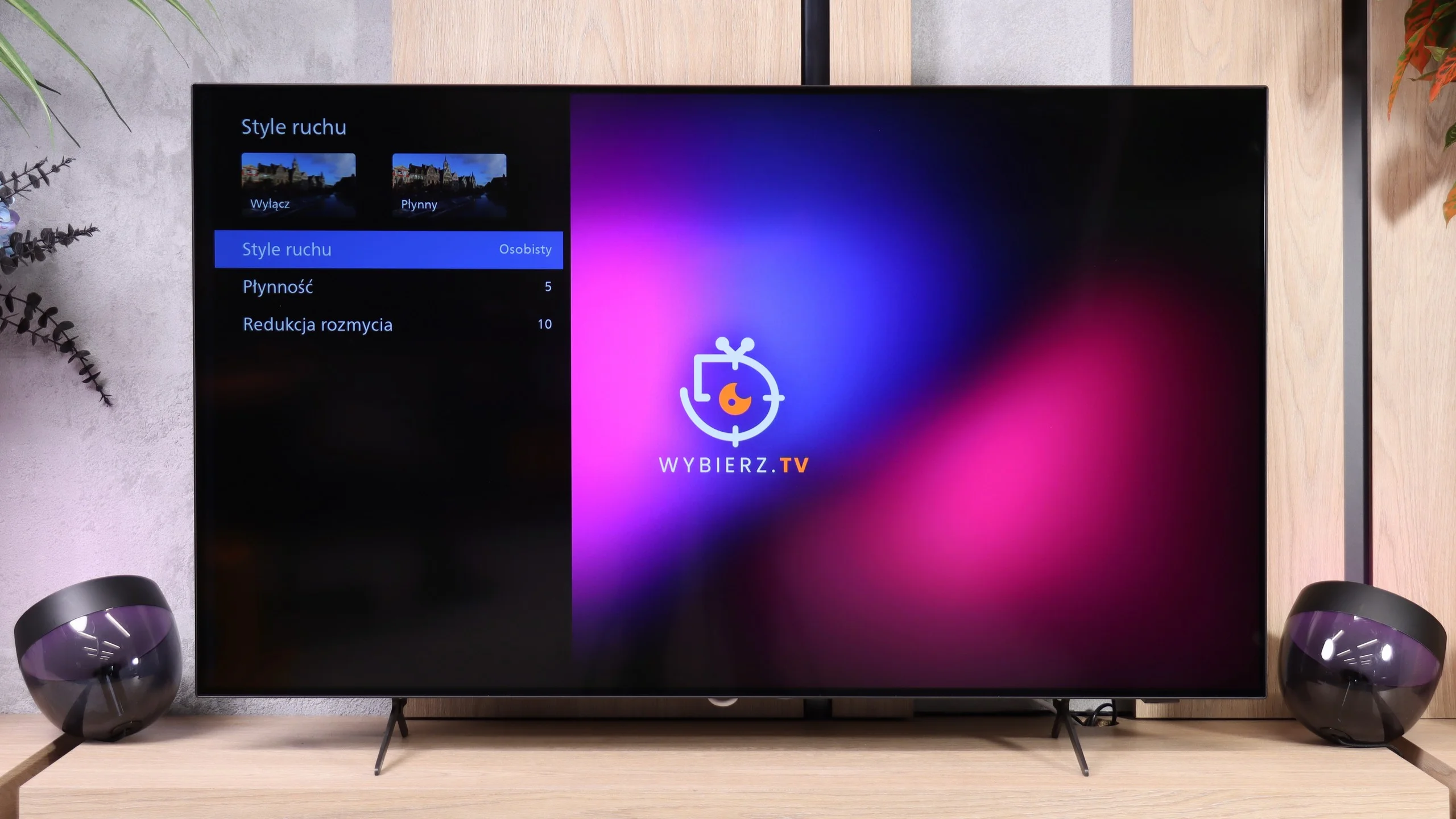
When watching films you can use the "Motion Styles" settings, which include the "Smoothness" and "Blur Reduction" sliders. They let you tailor the image to your preferences, from preserving characteristic cinematic motion to heavily smoothing it. A slight increase in smoothness is especially helpful for slow camera moves, which can look jumpy on a fast OLED. There is no BFI function, that is, black frame insertion to improve motion clarity, but even without it the OLED761 performs very well in this area.
Console compatibility and gaming features
9.4/10
10/10
- ALLM
- VRR
- VRR range48 - 120Hz40 - 120Hz
- Dolby Vision Game Mode
- Correct implementation of HGIG
- 1080p@120Hz
- 1440p@120Hz

- 4K@120Hz
- Game bar
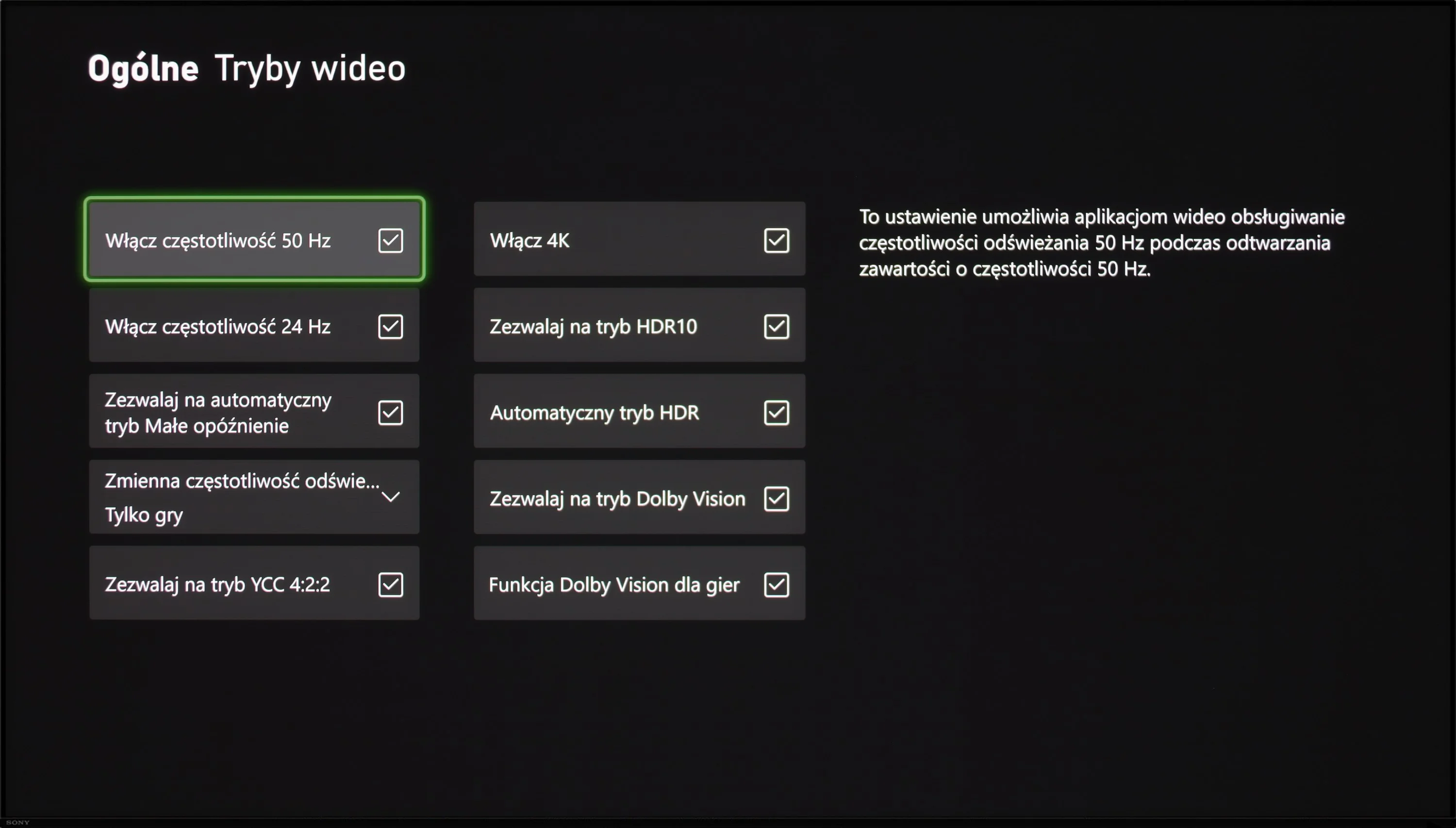
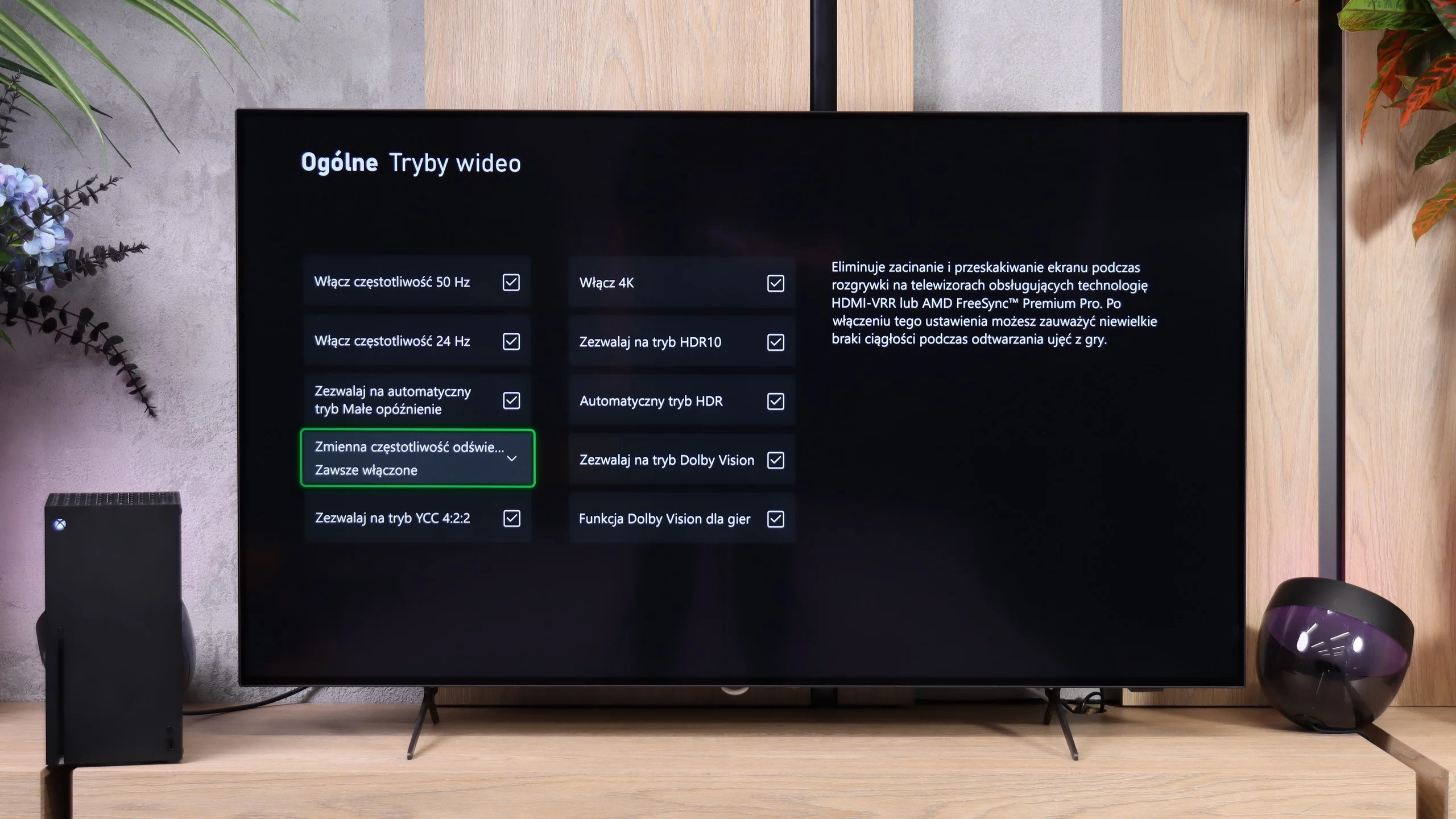
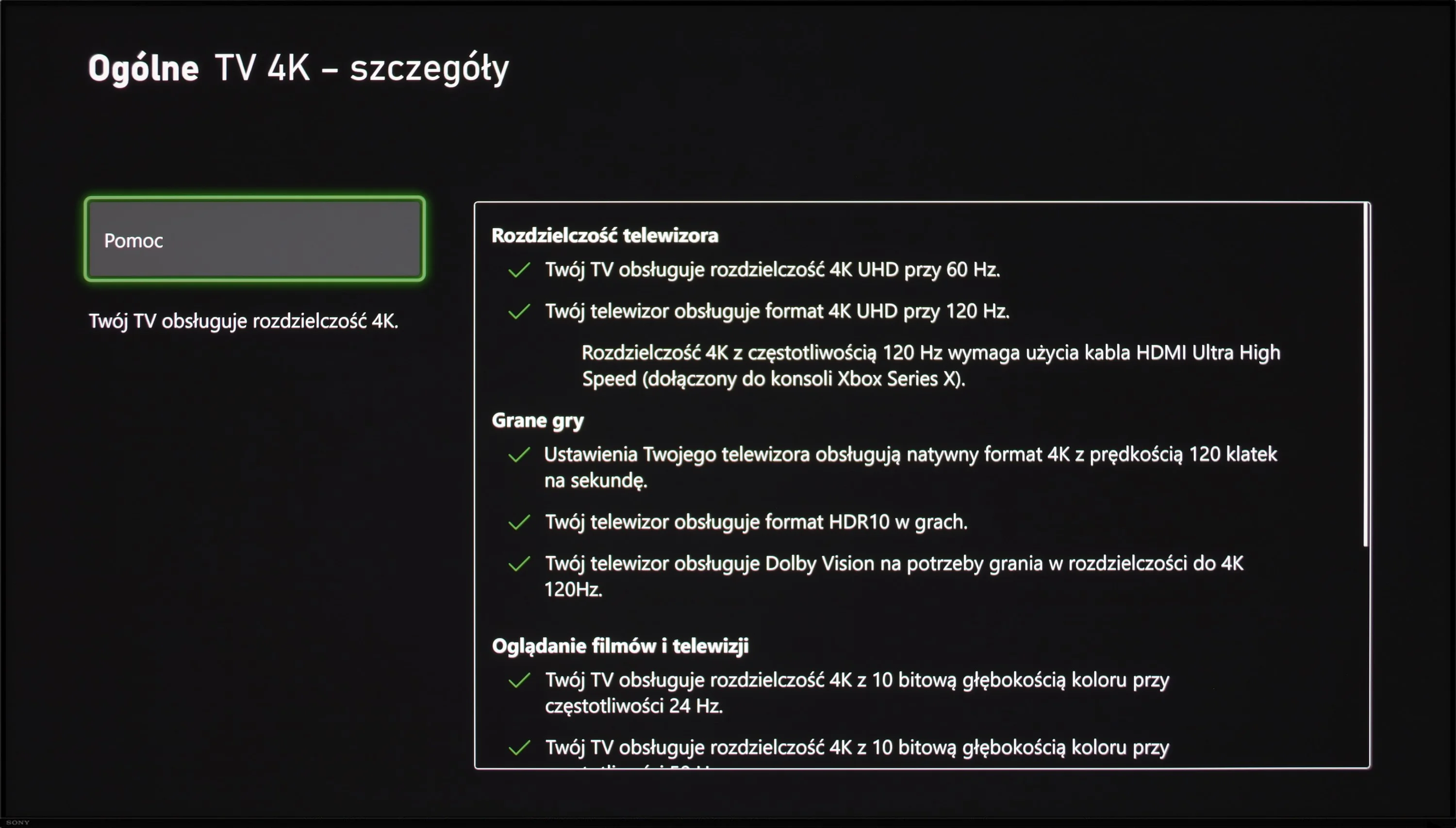
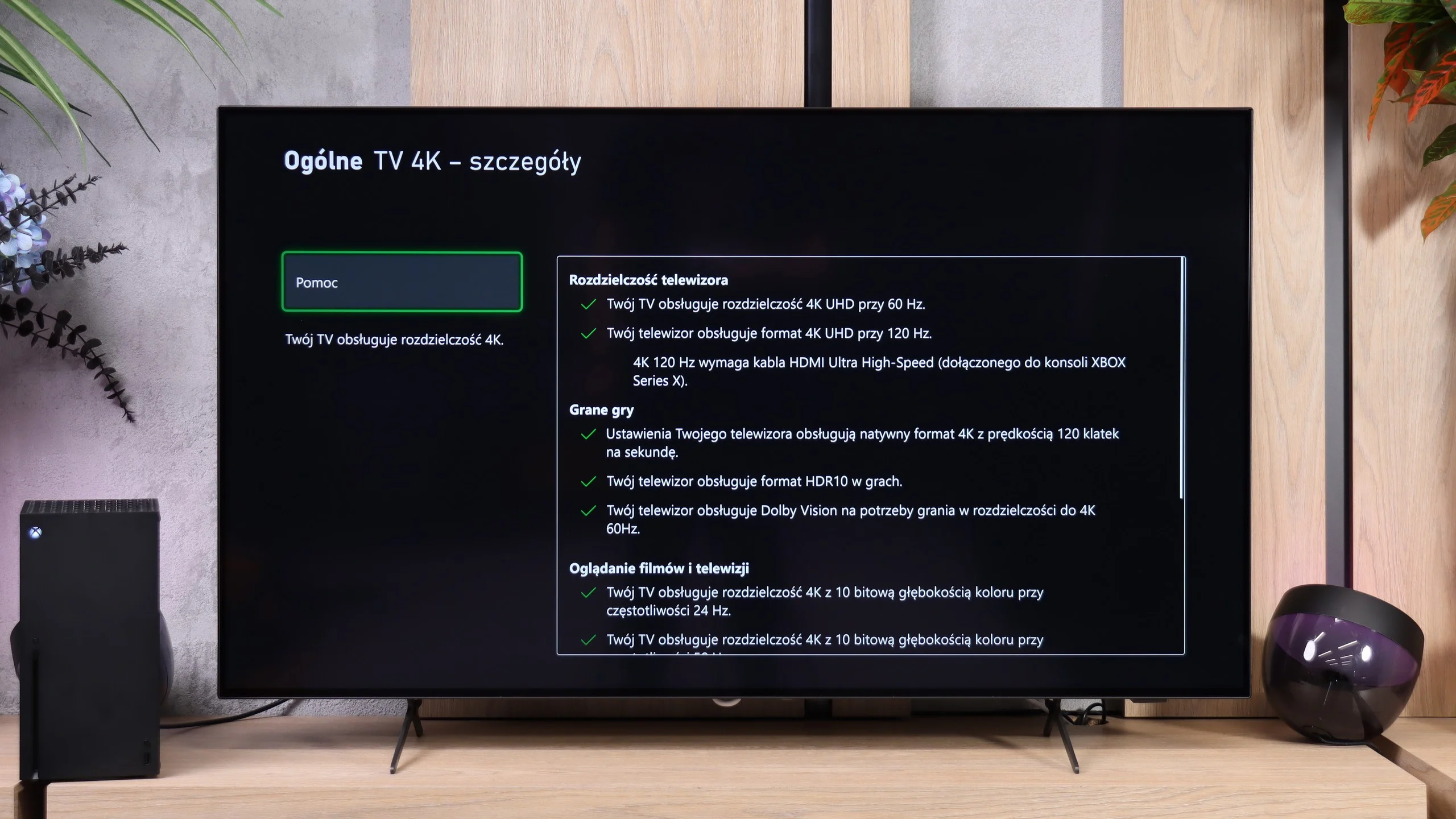
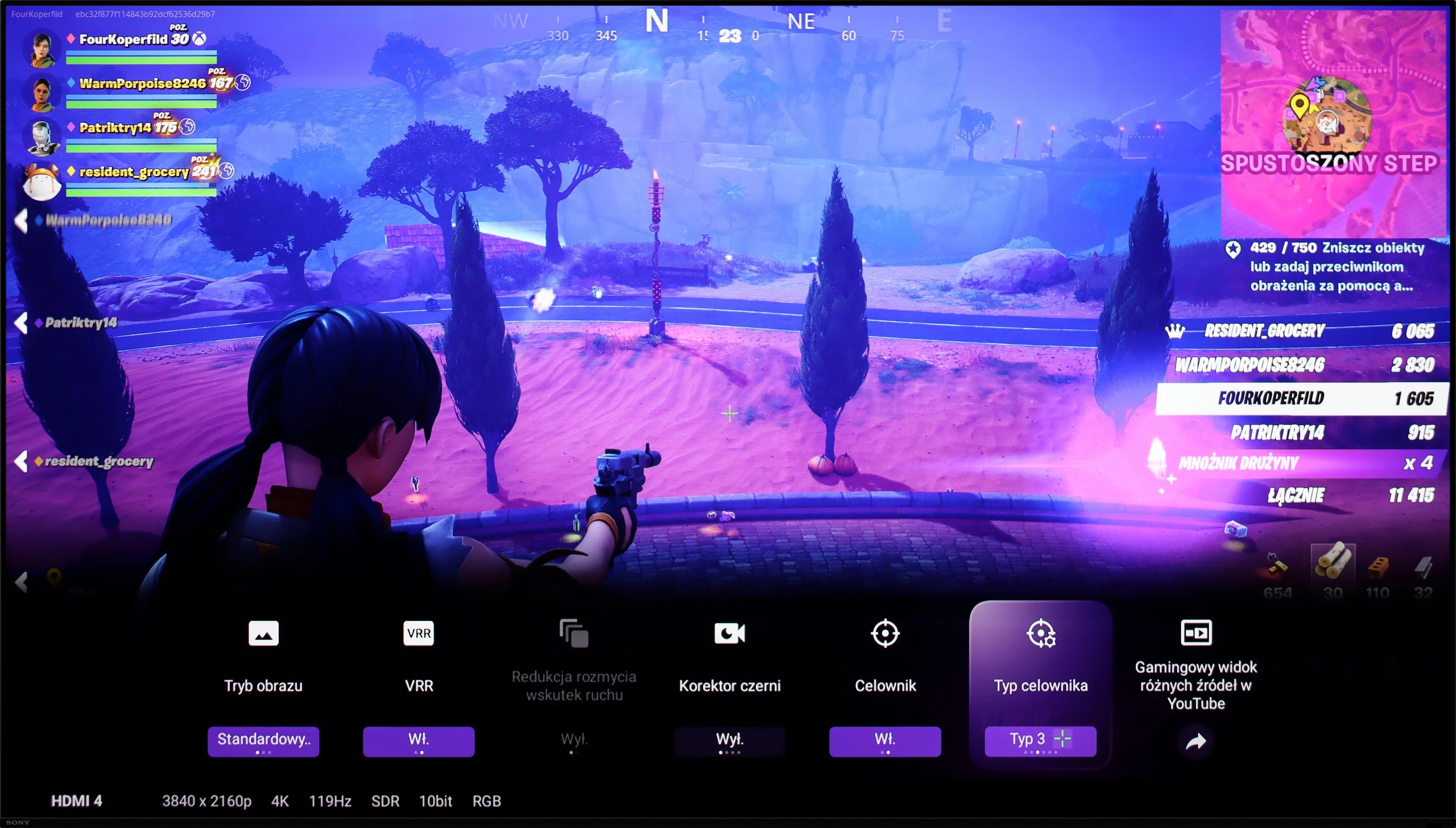
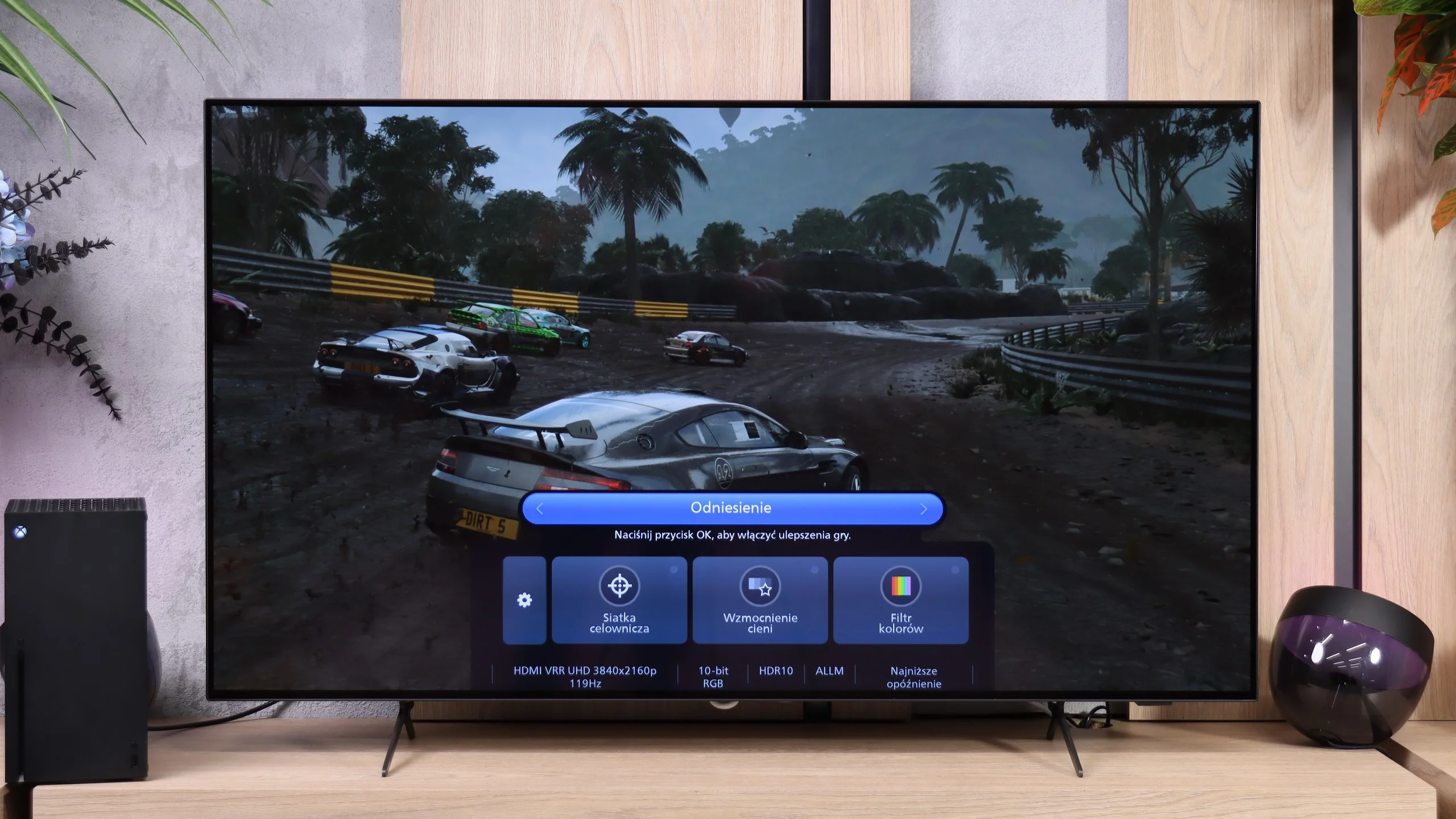
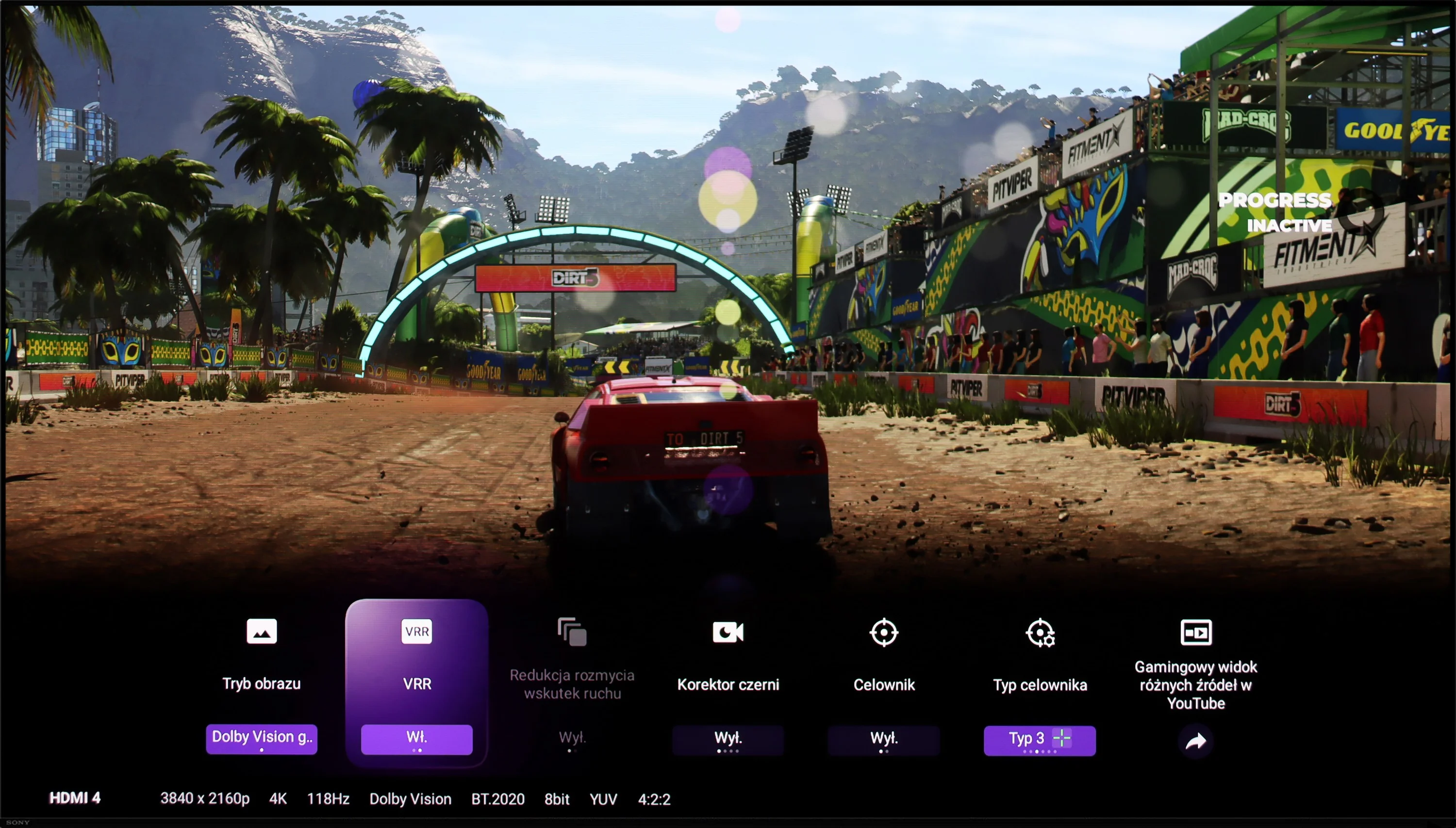
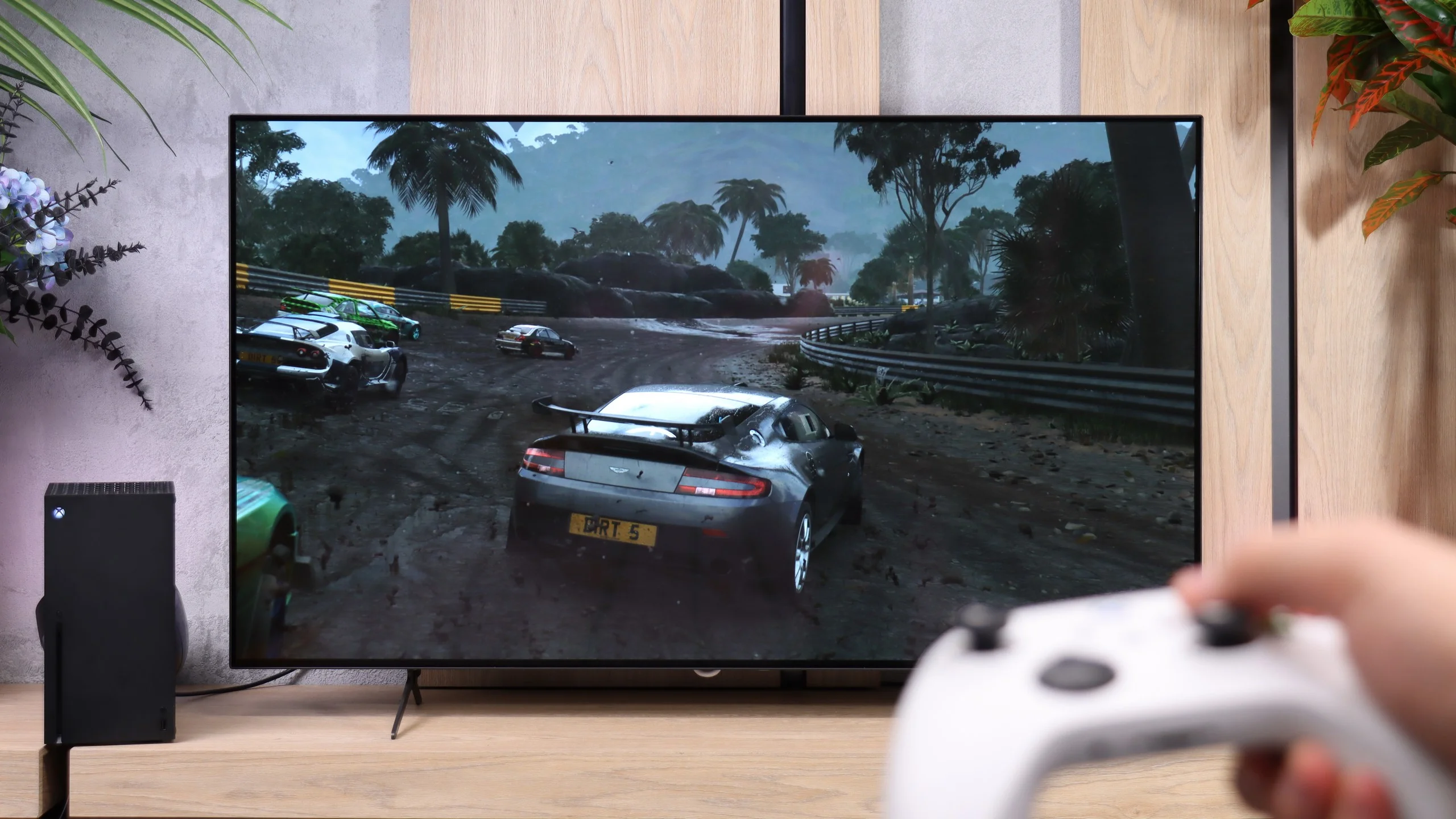
Sony A95L is a television that will truly satisfy gamers, thanks to several key features that set it apart from the competition. First of all, a 120 Hz refresh rate – this is something that anyone who loves fast action games, racing, or dynamic shooters will appreciate. This ensures exceptionally smooth visuals, making gameplay more satisfying without annoying stutters. The A95L Sony also has an ALLM (Auto Low Latency Mode) feature that automatically activates low latency mode when we start up a console. What does this mean? Above all, faster on-screen responses, which is invaluable in games where every second counts. Additionally, there’s VRR (Variable Refresh Rate), which adjusts the refresh rate to match the frame rate generated by the console. The result? No tearing, and everything looks smooth and consistent – even with fluctuating FPS.
It’s worth mentioning the support for Dolby Vision with low input lag in games – something we don’t often encounter in televisions, yet it’s included here. This makes the visuals in HDR-enabled games incredibly vibrant, with rich colors and excellent contrast. Both the brightest and the darkest details are visible, making everything look just as the game developers intended. And let’s not forget the "Game Bar" – a small but very practical feature. It gives us quick access to all the important gaming settings, such as VRR and latency information. There’s no need to interrupt gameplay to adjust settings – everything is at hand.
However, it is important to remember that the A95L offers only two HDMI 2.1 ports with full bandwidth, one of which is designated for eARC. This may pose a limitation if we plan to connect multiple devices – for example, a next-gen console and a soundbar simultaneously. In such cases, the eARC occupying one of those ports may be somewhat troublesome, blocking the ability to connect a second console.
Although the OLED761 is Philips' cheapest OLED this year, there are few compromises in its gaming features. The TV supports 120 Hz gaming in Full HD, 1440p, and 4K, so it can take advantage of high frame-rate modes on consoles. The fast OLED panel complements this well, so even during fast-paced gameplay you don't see smearing or trailing behind objects. When the console doesn't hold a steady frame rate, VRR operating from 40–120 Hz helps. The image doesn't tear during quick camera turns, and frame-rate fluctuations are less noticeable.
Philips also took care of convenience. When you start a game, the TV can automatically switch to a low-latency mode, and the most important settings are found in the handy Game Bar. You can check image parameters there, enable an on-screen crosshair, or brighten shadows if it's hard to spot an enemy in a dark area. The Game Bar itself may not be the flashiest on the market, but it does the job. There's also support for Dolby Vision for games and a properly implemented HGiG, which helps match the console's HDR settings to the screen's capabilities. So in terms of features, the OLED761 offers a lot.
Input lag
9.8/10
9.4/10
SDR
HDR
Dolby Vision
When it comes to input lag, Sony A95L really delivers. Even in Dolby Vision mode, the lag is surprisingly low – results below 10 ms with 120 Hz content are something that makes a huge impression. With such low input lag, gaming is incredibly responsive, and every action in the game is immediately reflected on the screen. For those playing at 60 frames per second, an input lag of 17 ms is also very good. It's a value that practically does not affect the gaming experience – it falls within the so-called "placebo effect." Sony deserves praise for the update to the Dolby Vision Game mode, which resolved the high input lag issue present at the TV's launch in 2023.
Input lag on the OLED761 depends not only on the refresh rate but also on whether you're playing in SDR or HDR. SDR performs best: we measured 14 ms at 60 Hz and just 5 ms at 120 Hz, both in Full HD and 4K. Those are excellent results that let you enjoy quick controller response even in fast-paced games.
With HDR enabled the lag rises to 31 ms at 60 Hz and 13 ms at 120 Hz. Dolby Vision at 60 Hz gives a similar result of 30 ms. You can still play comfortably, especially in more relaxed titles, but it's a shame that turning on HDR comes with this drawback.
Compatibility with PC
5/10
7.6/10
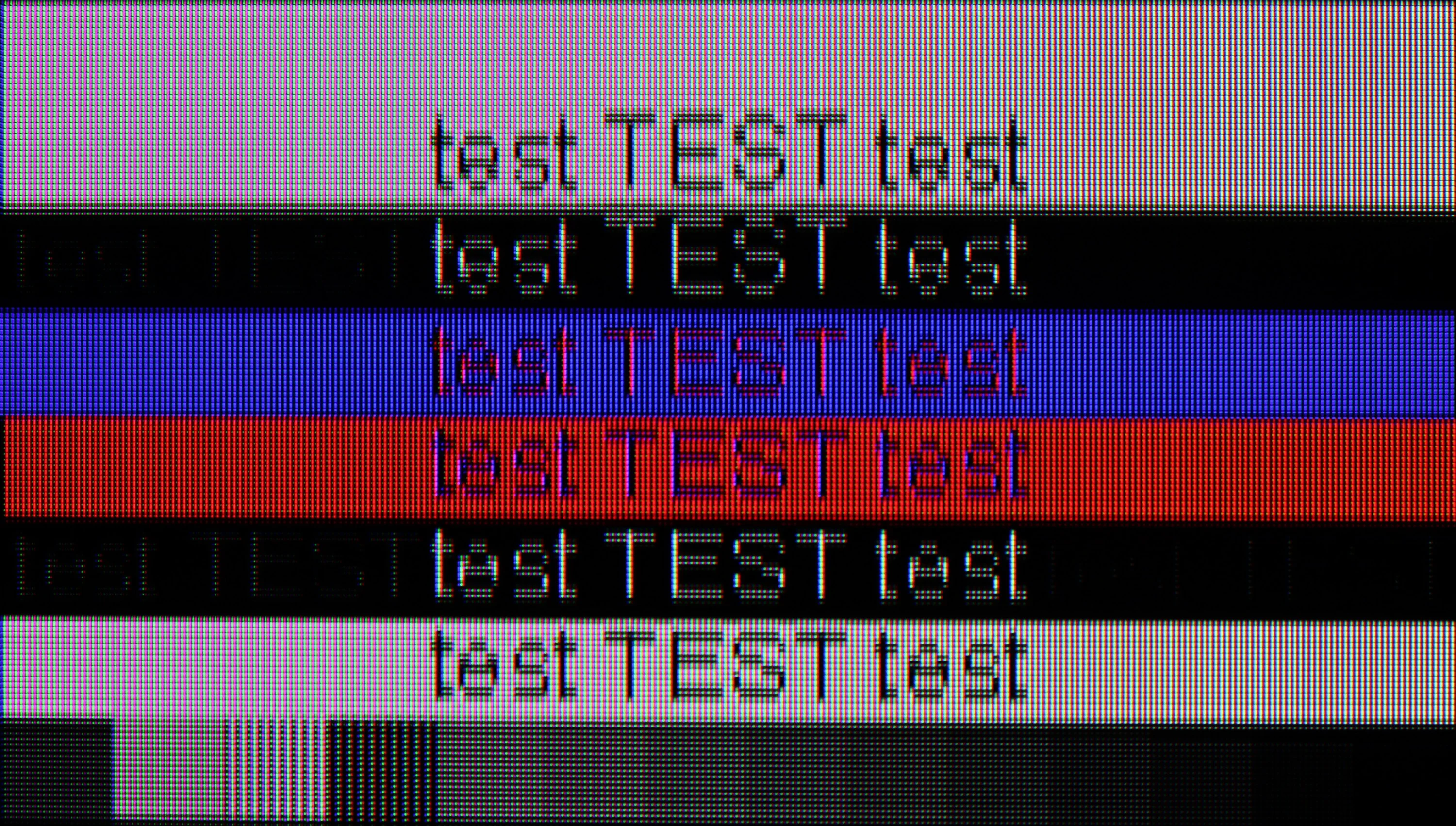
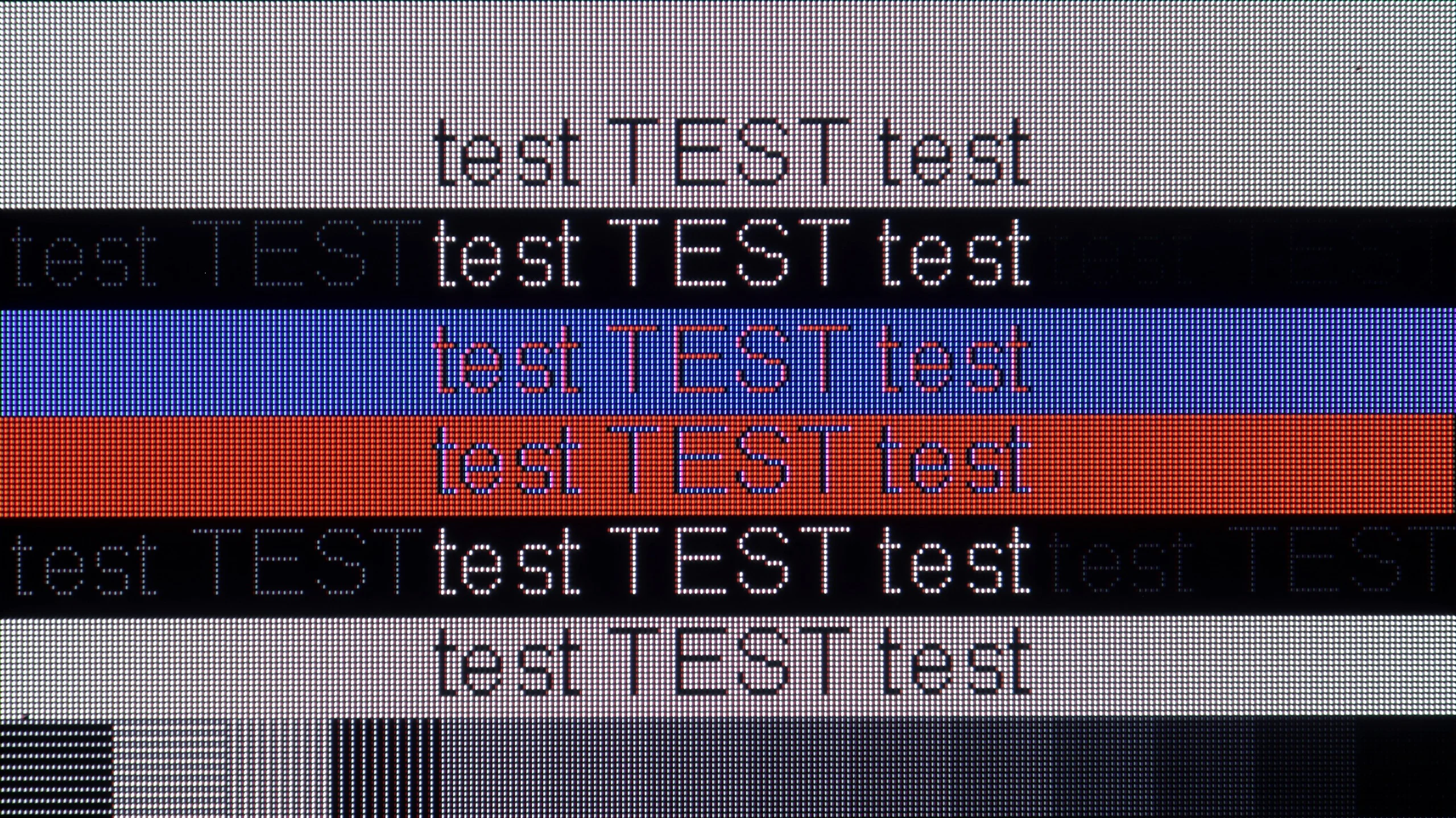
The photo shows the legibility of small fonts. Ideally, lines should be the same thickness on both light and dark text, with minimal pixel gaps.
Sony A95L TV offers compatibility with a computer at 4K resolution both at 60 Hz and 120 Hz. In 4K mode at 60 Hz, the readability of fonts is at a good level, making it comfortable to use the TV as a monitor for office work or browsing content.
Unfortunately, when switched to 4K with a refresh rate of 120 Hz, the quality of the displayed text deteriorates – the resolution is reduced by 2 times, negatively affecting the clarity of the fonts. In 4K, fonts lose sharpness, which can make using the TV as a computer monitor at higher refresh rates more challenging over long periods. Of course, the problem disappears when we switch back to 60 Hz, but this can be quite cumbersome when the TV forces us to "juggle" the settings.
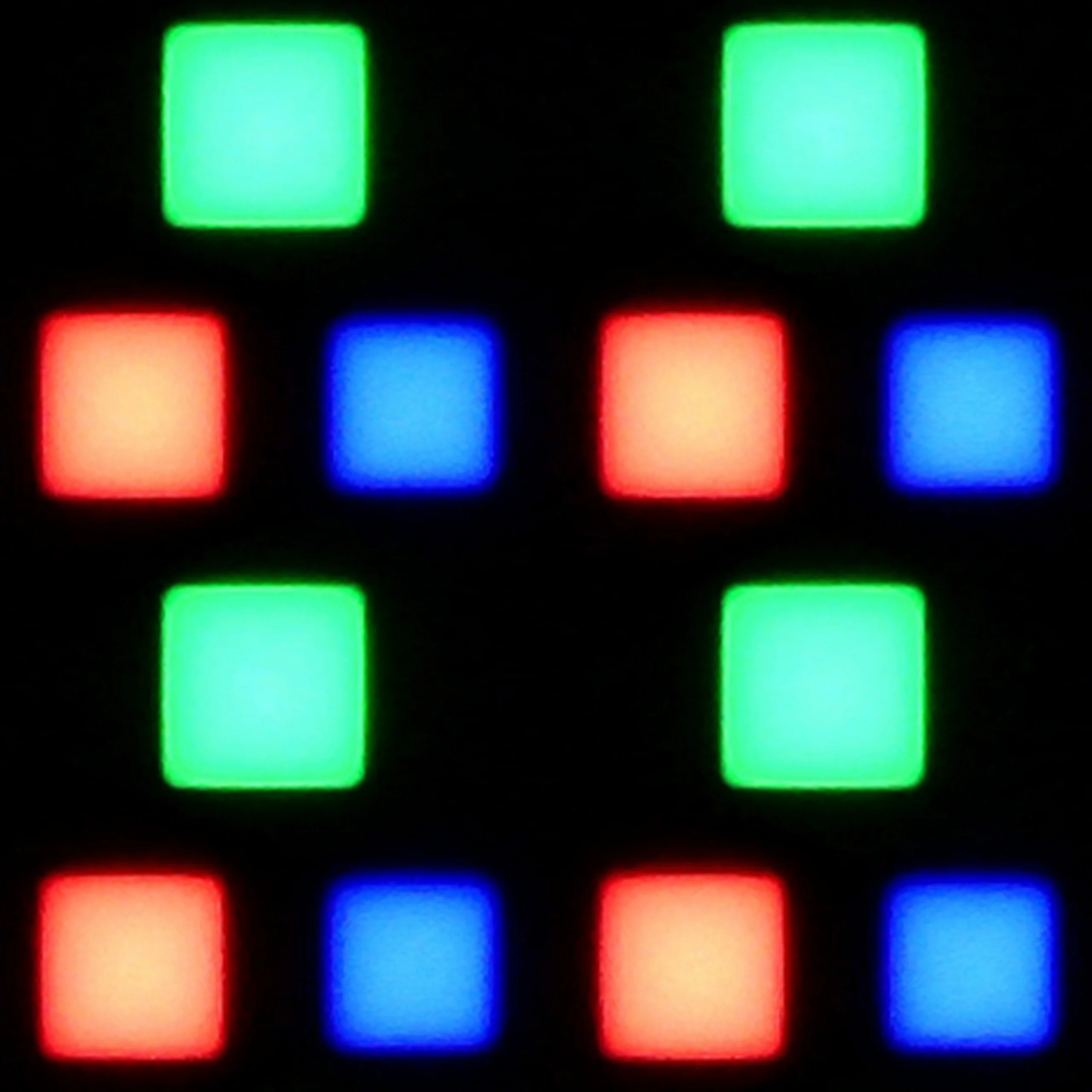
The Philips OLED761 performs well when connected to a PC. It properly supports 4:4:4 chroma, so small text is readable and colored letters retain their sharpness. When viewed up close, however, you can notice slight red fringes on the edges of characters. These stem from the RGWB subpixel layout used in the WOLED panel, which typical font-smoothing methods are not optimized for. This may not bother you while browsing the web, but if the TV will be used mainly for working with text, it’s worth taking into account.
In games the OLED761 performs noticeably better. The panel’s fast response and support for G-Sync and FreeSync let you enjoy smooth motion without annoying smearing or tearing. At 4K and 120 Hz in SDR we measured just 5 ms of input lag, so controls feel very responsive. Keep in mind that enabling HDR increases input lag, as noted earlier. The main drawback is the refresh rate capped at 120 Hz. The OLED761, like other tested models with the WOLED SE panel, does not offer an extra 144 Hz mode or higher refresh rates at reduced resolution. For most people this won’t be a serious issue, since 120 Hz already delivers very good smoothness. Only gamers with powerful PCs aiming to squeeze out the highest possible frame rates may feel a bit shortchanged.
Viewing angles
9.7/10
7.5/10
The viewing angles on the Sony A95L are among the best on the market, thanks to the QD-OLED matrix. With this technology, colors remain vibrant, and the contrast hardly changes regardless of the viewing angle. This is a result that even regular OLED panels do not achieve, which makes the A95L perfect for rooms where viewers change positions or where there is a larger group of spectators.
The OLED761 looks very good in this respect. You can sit off to the side and still see deep blacks and rich colors, without the noticeable degradation associated with VA panels. That's one of OLED's advantages, and it's easy to appreciate when watching with others. You don't have to sit in the middle of the couch for the movie to look the way it should. In that regard, only QD-OLED panels are better.
Daytime performance
5/10
4.5/10
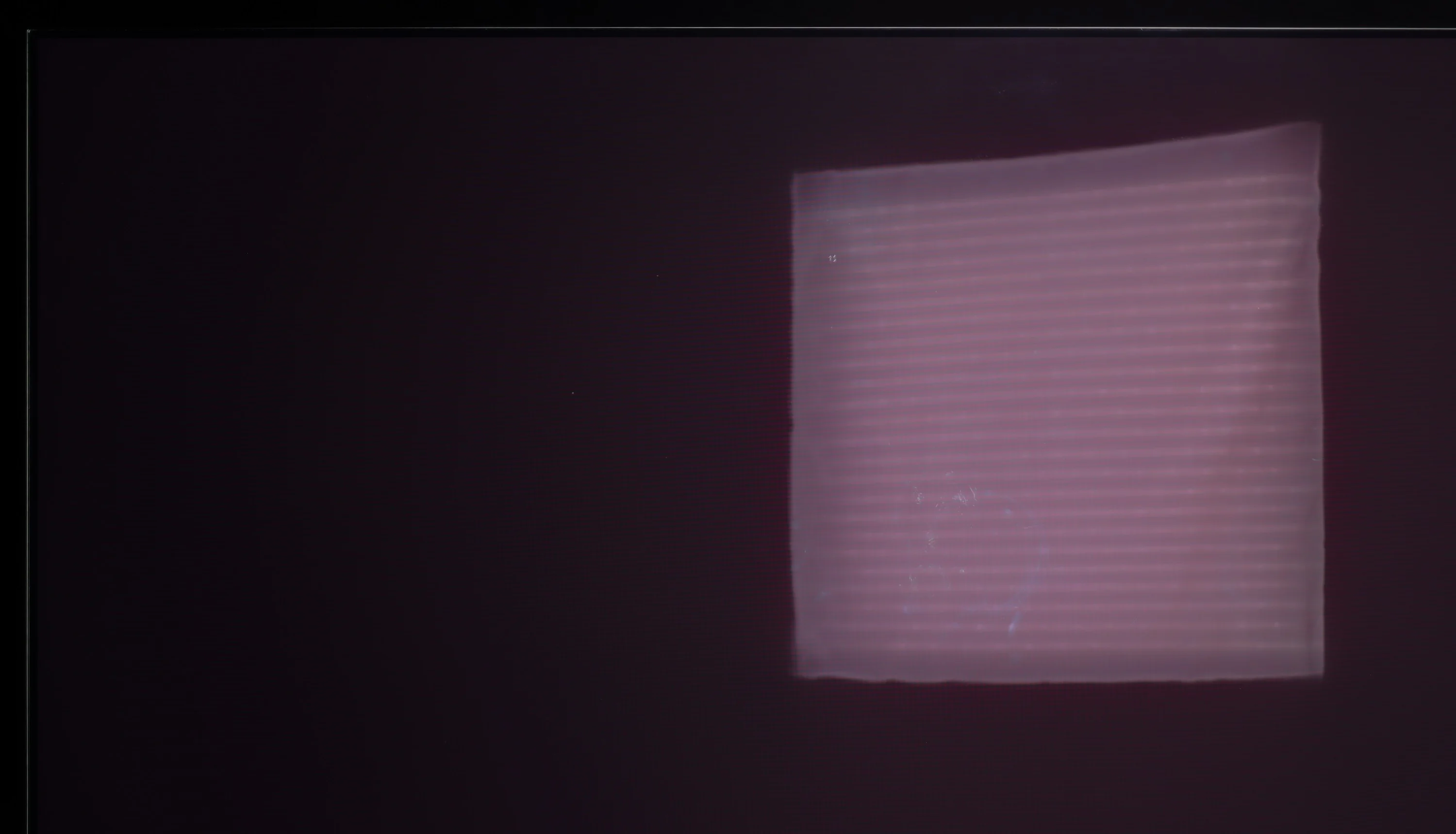
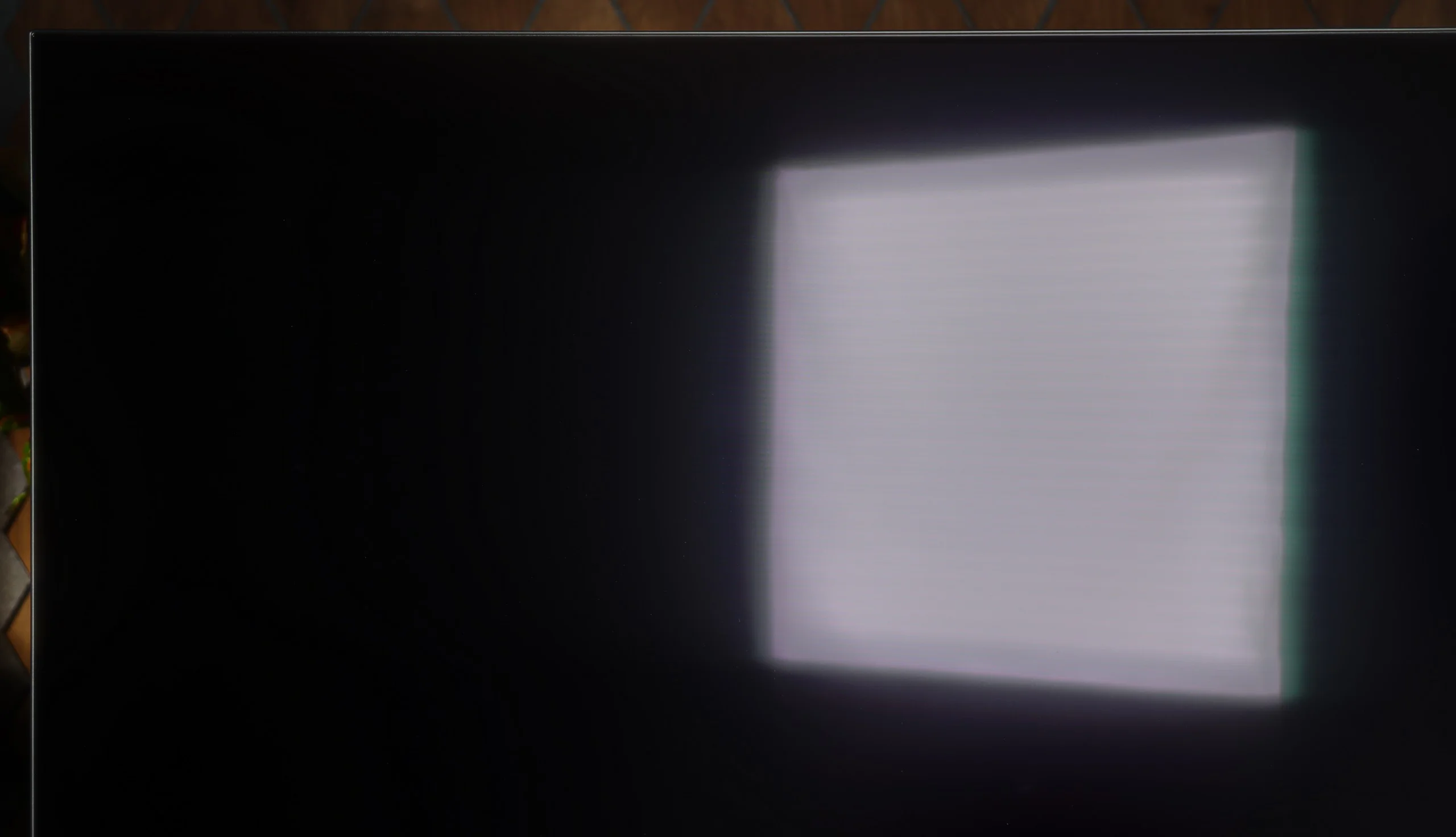
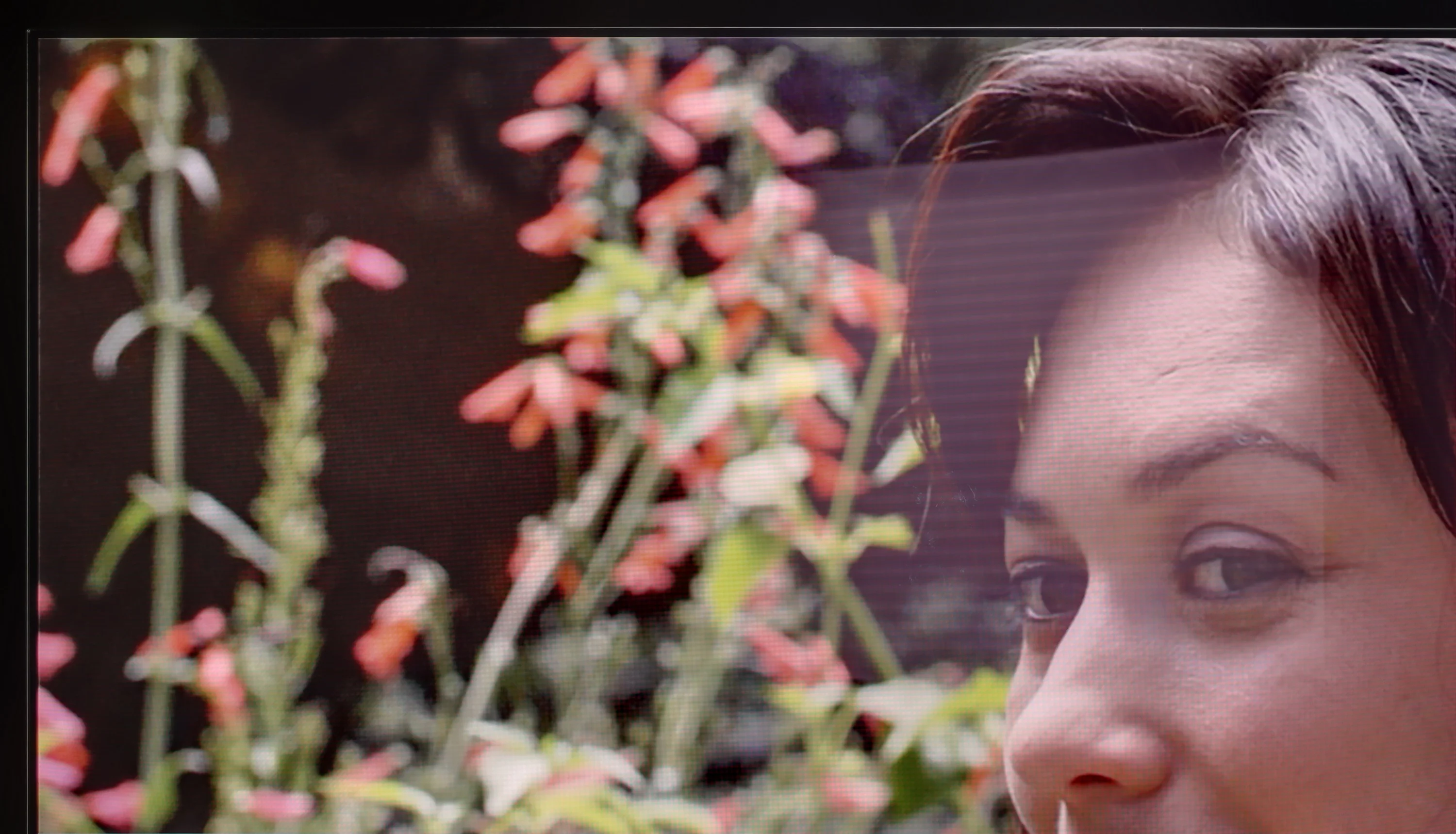
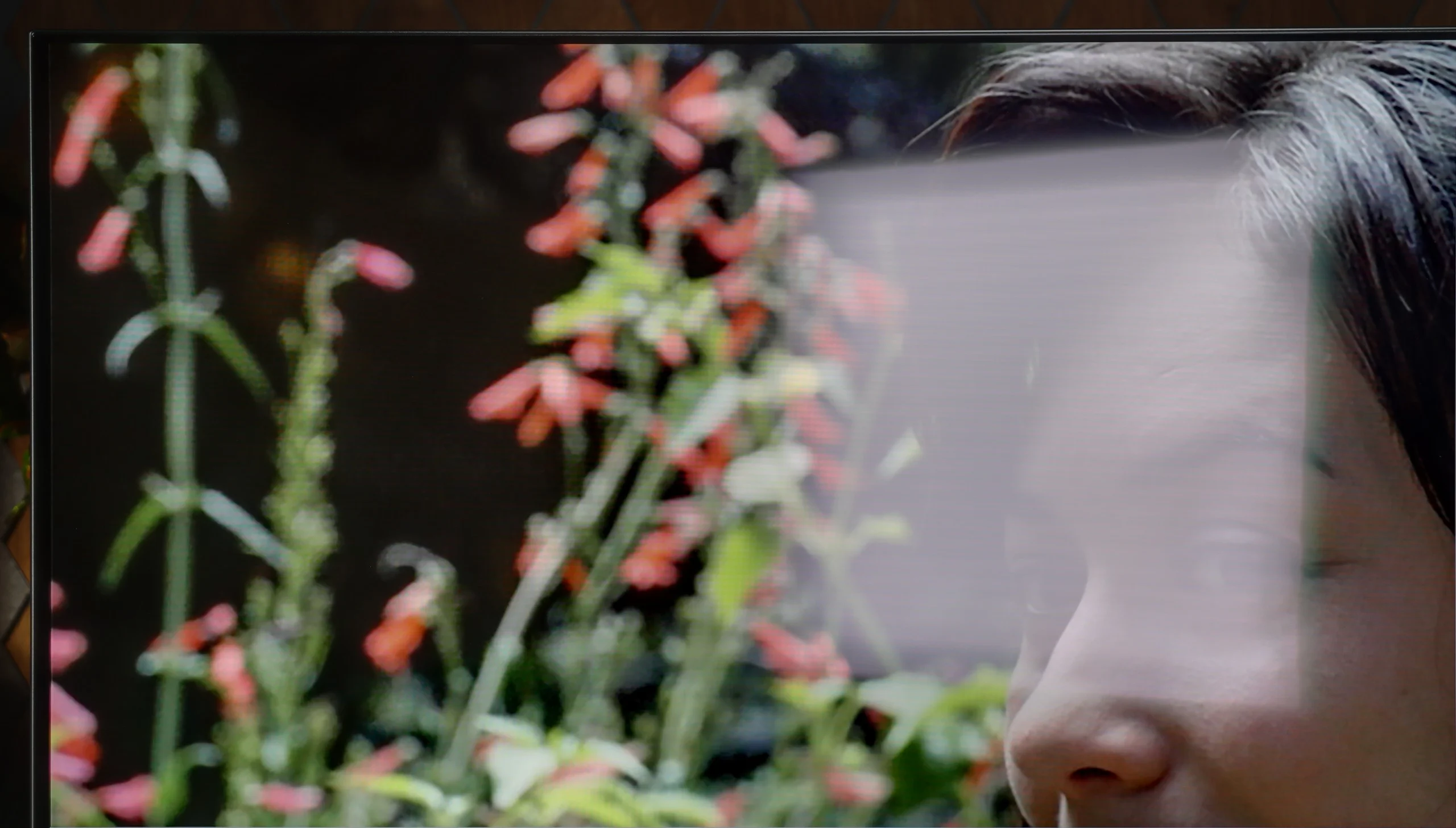
Panel brightness
Philips OLED761: 284 cd/m2
Sony A95L: 387 cd/m2
Sony A95L performs quite well in daylight conditions. The QD-OLED panel effectively suppresses reflections and glare, making viewing comfortable even in bright sunlight. An average brightness of 380 cd/m² is a really good result, especially for an OLED TV – it holds its own, although it still cannot compete with Mini LEDs, which are unbeatable in this regard. One of the issues that may bother some viewers is the characteristic QD-OLED effect, where black loses its depth and takes on a slight cherry tint in strong light.
Philips OLED761 is not the best choice for a very bright living room. Average SDR brightness is around 280 nits, so it performs slightly worse even than rivals using the same panel. In a brightly sunlit room the image simply lacks the punch to remain clearly visible, especially when watching darker scenes. In such conditions, covering the windows may be necessary. It doesn't help that the satin coating on the WOLED SE panel handles direct reflections poorly. A window or lamp opposite the screen is fairly clearly visible, and you get characteristic doubling and colored halos around their reflections. On the plus side, blacks still look good in a lit room, but at low TV brightness the reflections themselves can be distracting. The OLED761 is therefore best used where you can block the windows and make sure strong light doesn't reflect directly on the screen.
Panel details
Subpixel Structure:
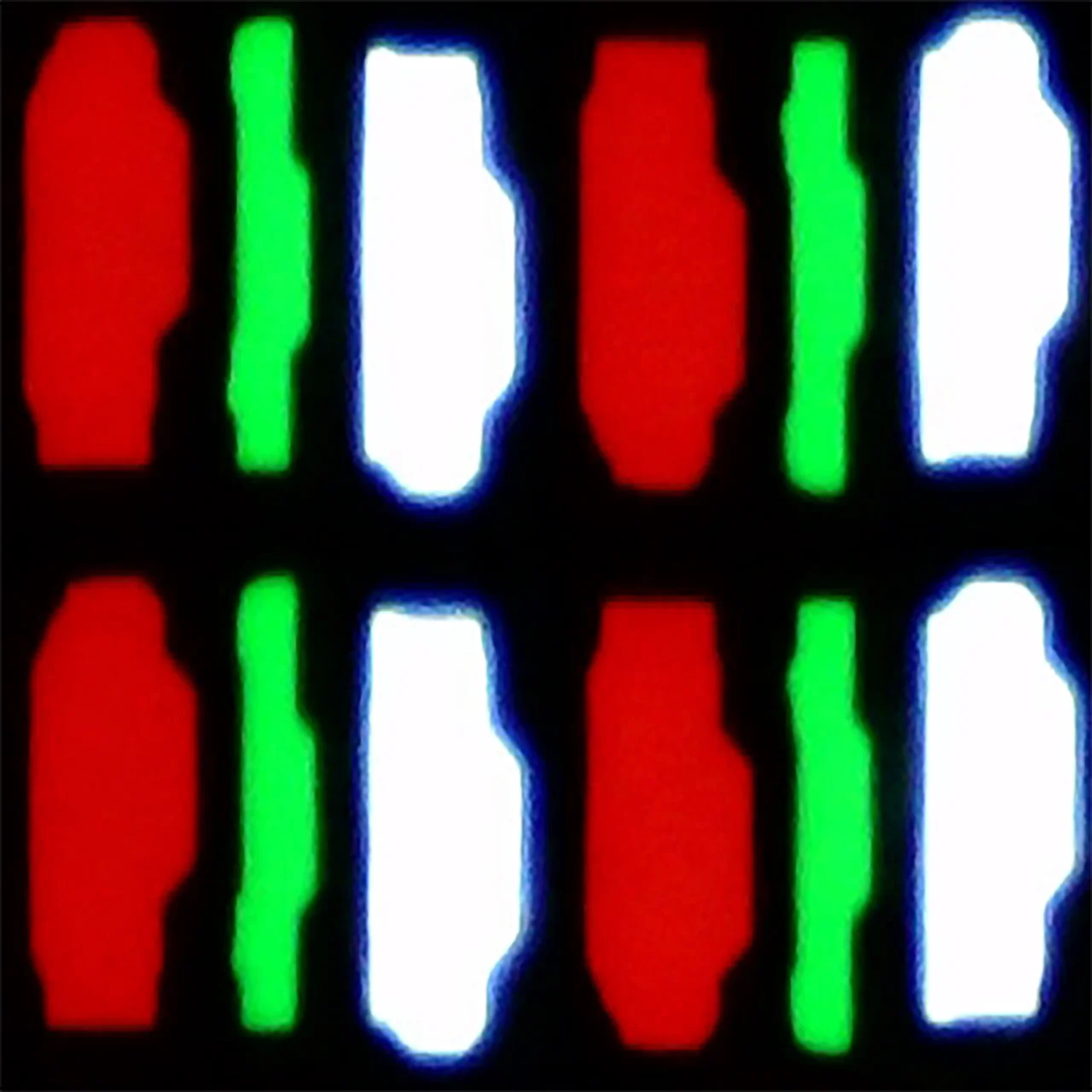
Panel uniformity and thermal imaging:

Sony A95L
Philips OLED761
TV features
8.8/10
7.9/10
- SystemGoogle TVTitan OS
- System performanceVery goodGood
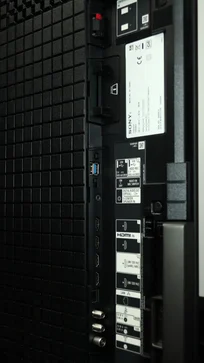
- HDMI inputs2 x HDMI 2.0, 2 x HDMI 2.1 48Gbps0 x HDMI 2.0, 4 x HDMI 2.1 48Gbps
- OutputsToslink (Optical audio), eARC (HDMI), ARC (HDMI)Toslink (Optical audio), eARC (HDMI), ARC (HDMI), Mini-Jack (Headphones)
- Network InterfacesWi-Fi 2.4GHz, Wi-Fi 5GHz, Ethernet (LAN) 100MbpsWi-Fi 2.4GHz, Wi-Fi 5GHz, Ethernet (LAN) 100Mbps
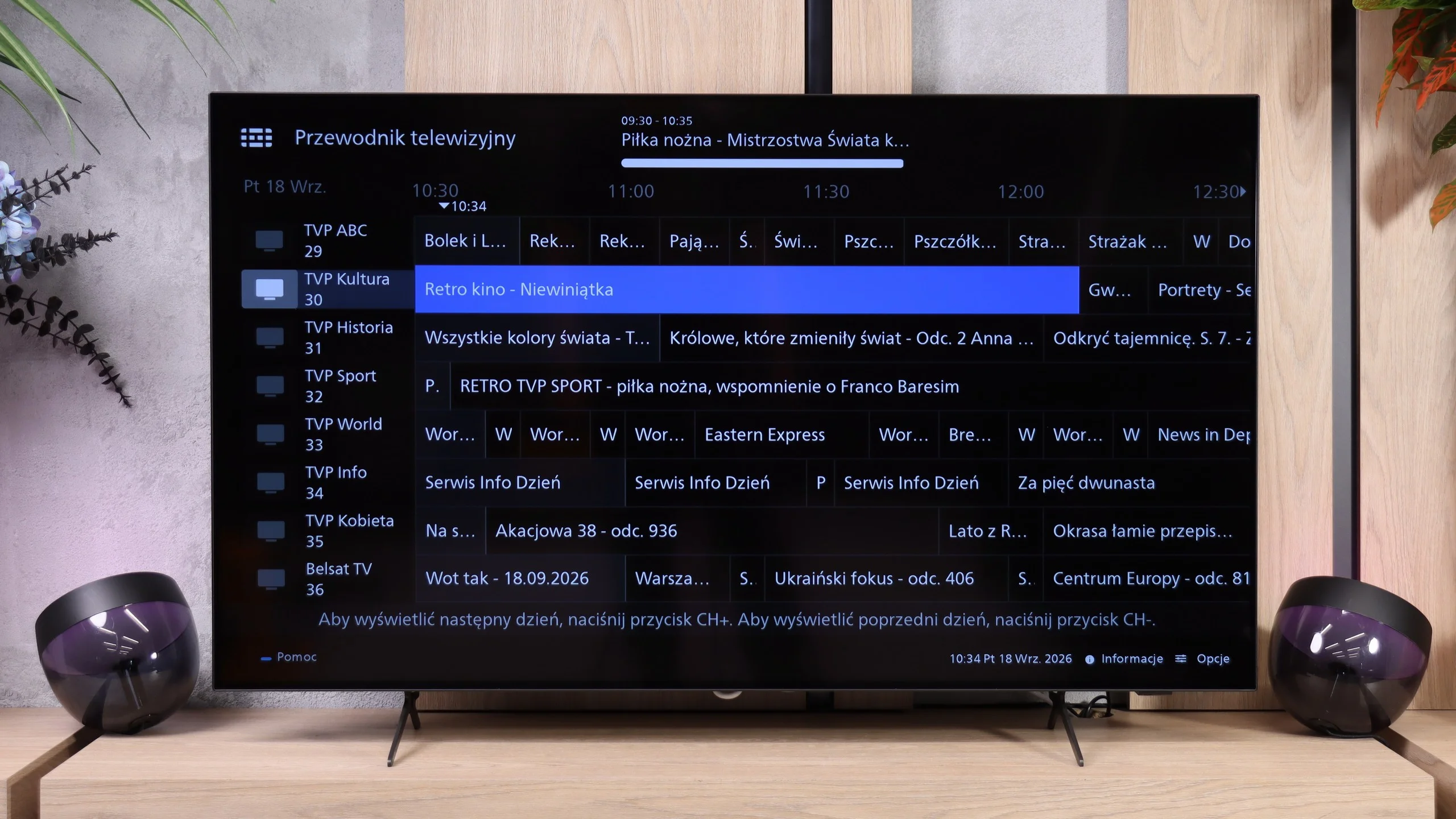
- TV receptionDVB-T, DVB-T2, DVB-S, DVB-S2, DVB-CDVB-T, DVB-T2, DVB-S, DVB-S2, DVB-C
Classic features:
- Recording to USB (terrestrial TV)
- Recording programming
- Picture in Picture (PiP)
- RF remote control (no need to aim)
- Backlit remote control
- Teletext
- Audio only mode
- Bluetooth headphones support
- Simultaneous Bluetooth headphones & TV audio
Smart features:
- AirPlay
- Screen mirroring (Windows Miracast)
- Voice search
- Voice search in native language
- Ability to connect a keyboard and mouse
Sound connection options
- HDMI audioeARC (HDMI), ARC (HDMI)eARC (HDMI), ARC (HDMI)
- Other audio outputsToslink (Optical audio)Toslink (Optical audio), Mini-Jack (Headphones)
- Wireless audioBluetoothBluetooth
Supported audio formats (external HDMI eARC audio):
- Dolby Digital Plus 7.1
- Dolby True HD 7.1
- Dolby Atmos in Dolby Digital Plus (JOC)
- Dolby Atmos in Dolby True HD
- DTS:X in DTS-HD MA
- DTS-HD Master Audio
Senior accessibility
- Numeric keyboard on TV
- Font size adjustment
- Audio description
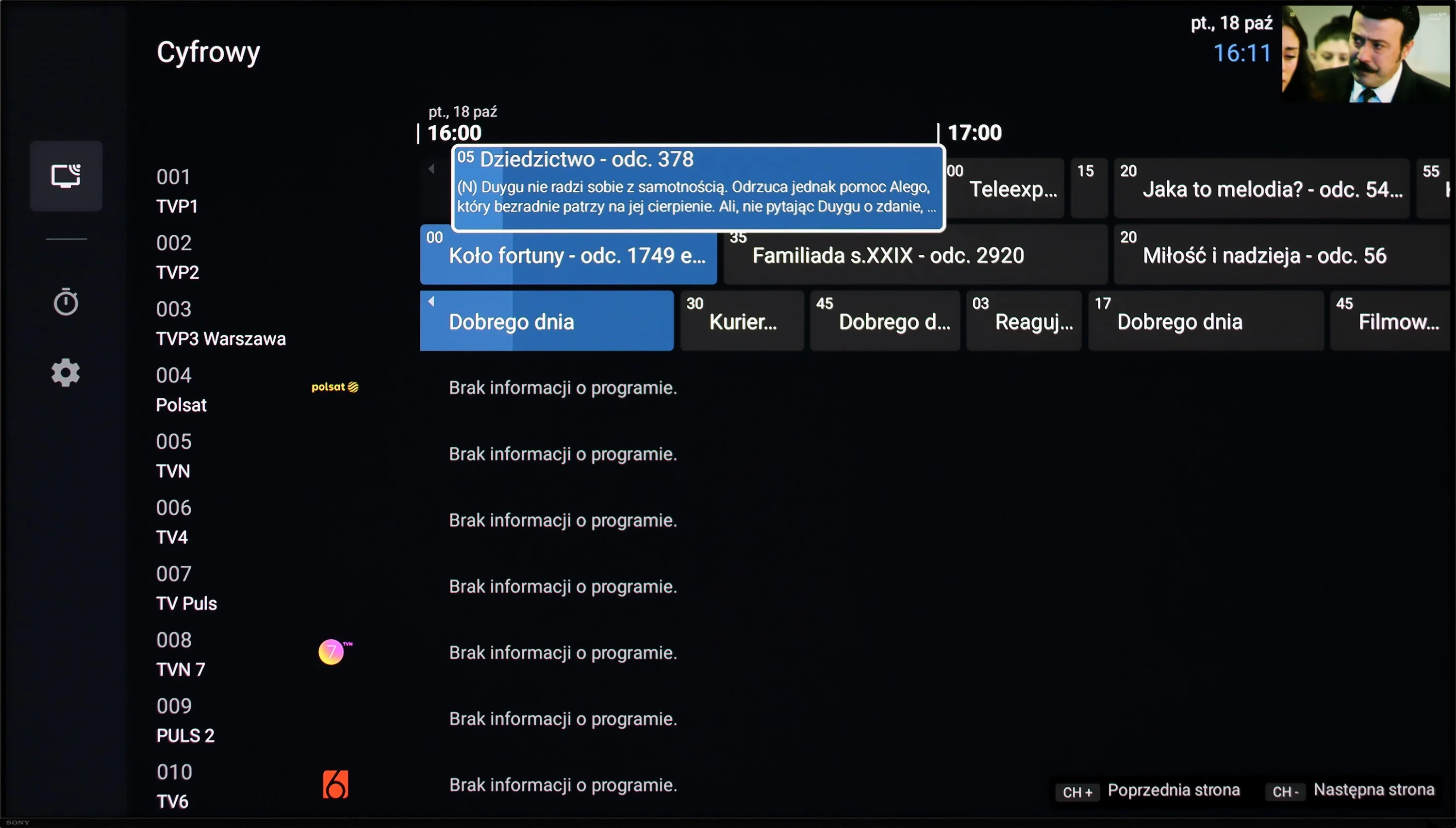
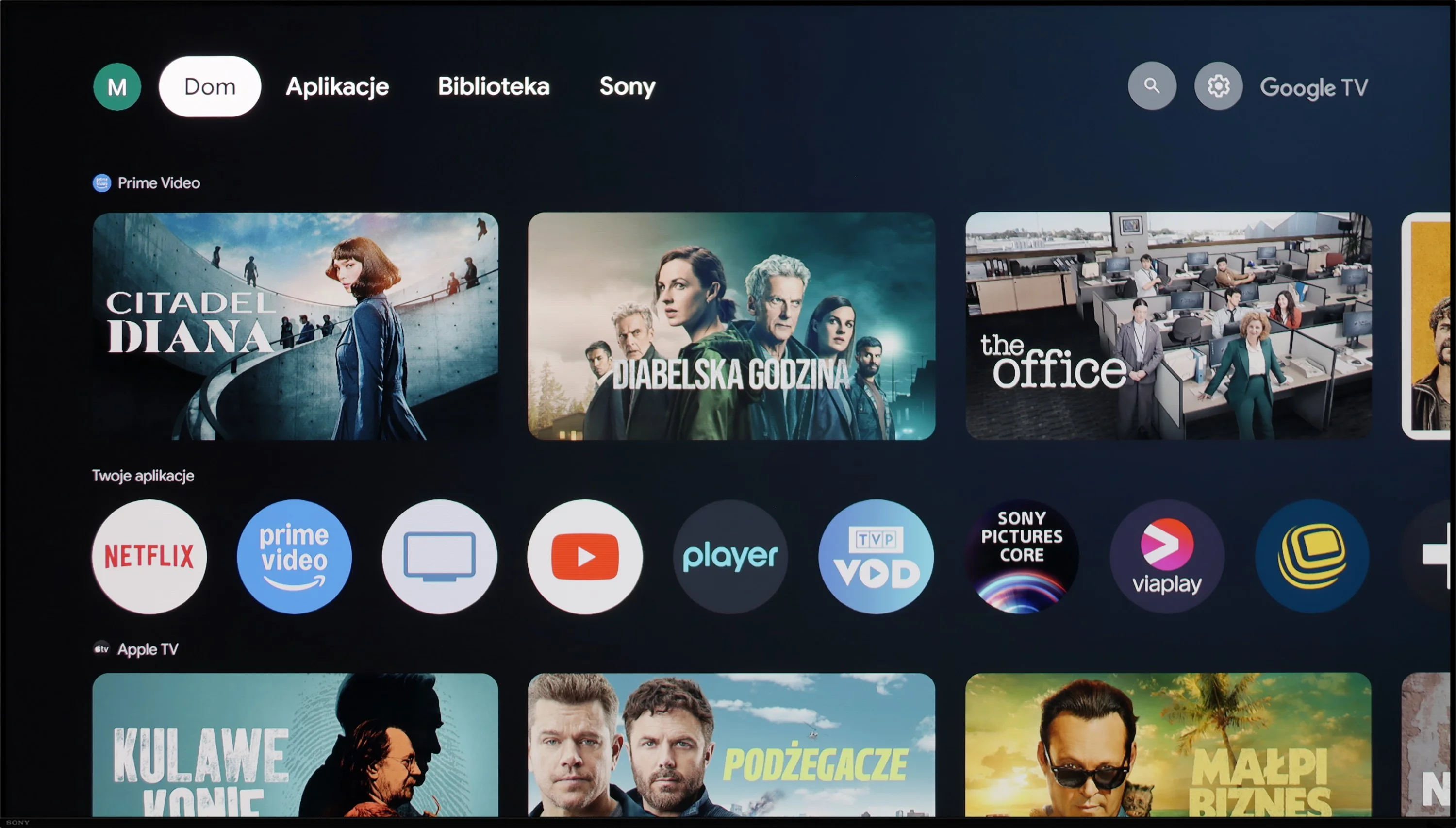
Sony A95L operates on the Google TV operating system, which means easy access to a wide range of applications, streaming services, and various personalization features. The interface is clear and easy to navigate, and the wealth of available applications ensures that everyone will find something for themselves – from popular streaming services like Netflix, Disney+, and HBO Max, to various music and sports apps. Google TV also supports a voice assistant, allowing you to easily search for content, control TV settings, and even manage other smart devices in the home – all with simple voice commands.
Sony A95L also offers a range of practical features that make it even more versatile. The TV has the ability to record programs directly to USB memory, providing a convenient solution if you can't watch something live. It also supports AirPlay, making it easy to stream content from Apple devices, and additionally, various peripherals such as headphones or game controllers can be connected via Bluetooth. The package includes two remotes – one traditional and a modern, backlit one, which is particularly useful during evening viewing when the room is dark. It is worth mentioning the lack of the PIP feature, which allows watching multiple TV signals simultaneously.
As for the appearance, A95L Sony may not be the thinnest OLED TV on the market, but it has its advantages. The package includes a practical stand that can be adjusted in various ways, allowing you to tailor the TV to your needs and space arrangement. Additionally, the manufacturer included the Bravia Cam, which opens up additional possibilities – from video calls to intelligent features, such as optimizing picture and sound based on the viewer's position. Although it is not the slimmest, its solid construction and useful accessories make the A95L look really good in any living room.
Titan OS
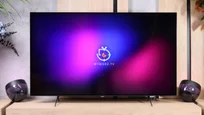
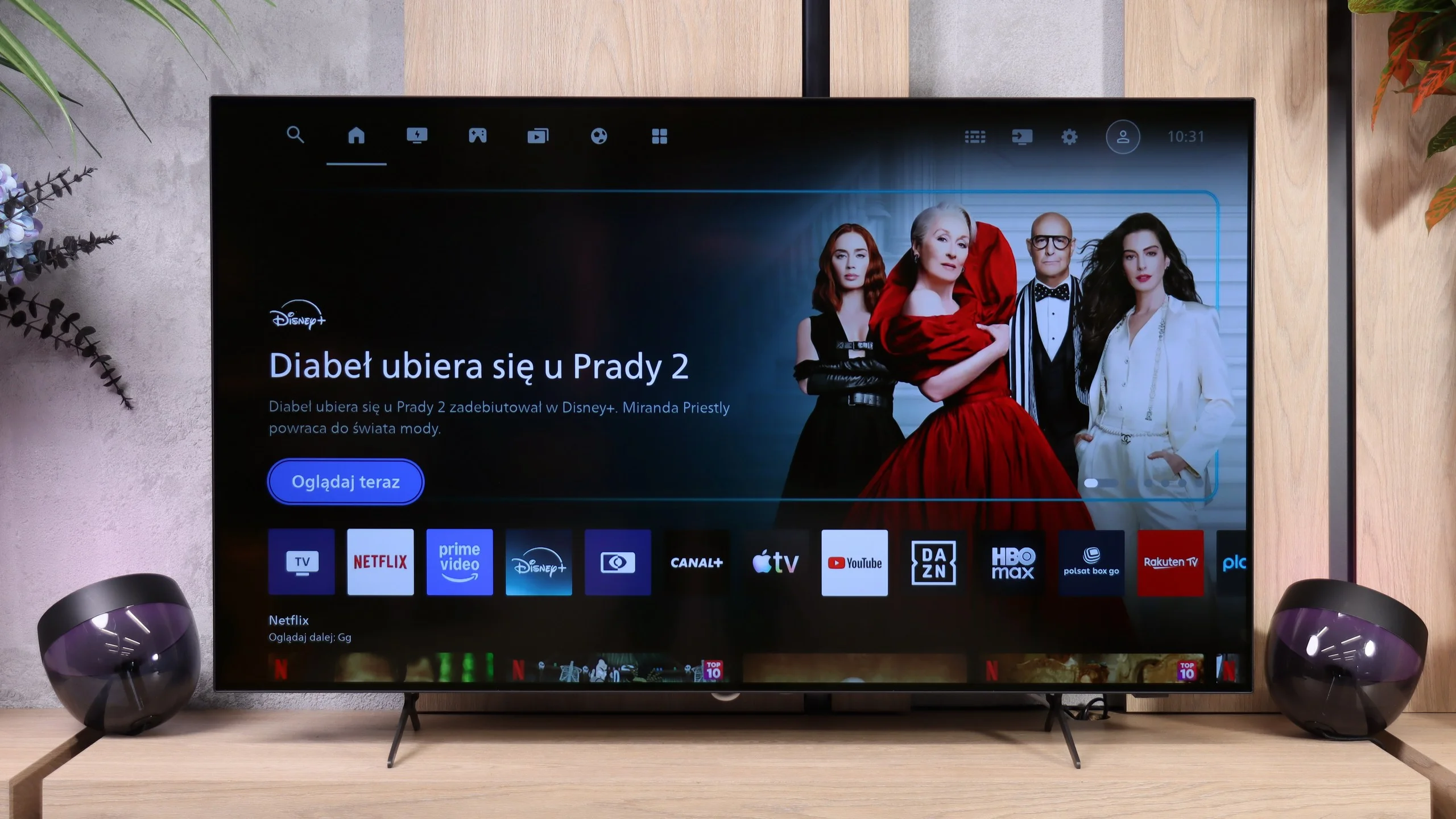
The OLED761 uses Titan OS instead of Google TV, a system that has been appearing more often in Philips TVs for several years. In that time the system has clearly matured. It responds to commands faster, navigates menus more smoothly, and features that previously caused problems are finally starting to work as they should. You can see real progress in everyday use, and that deserves praise. It still doesn't match the refinement and capabilities of webOS or Tizen, and it's a long way from the freedom and app selection offered by Google TV, but Titan OS is definitely moving in the right direction.
User features and ports
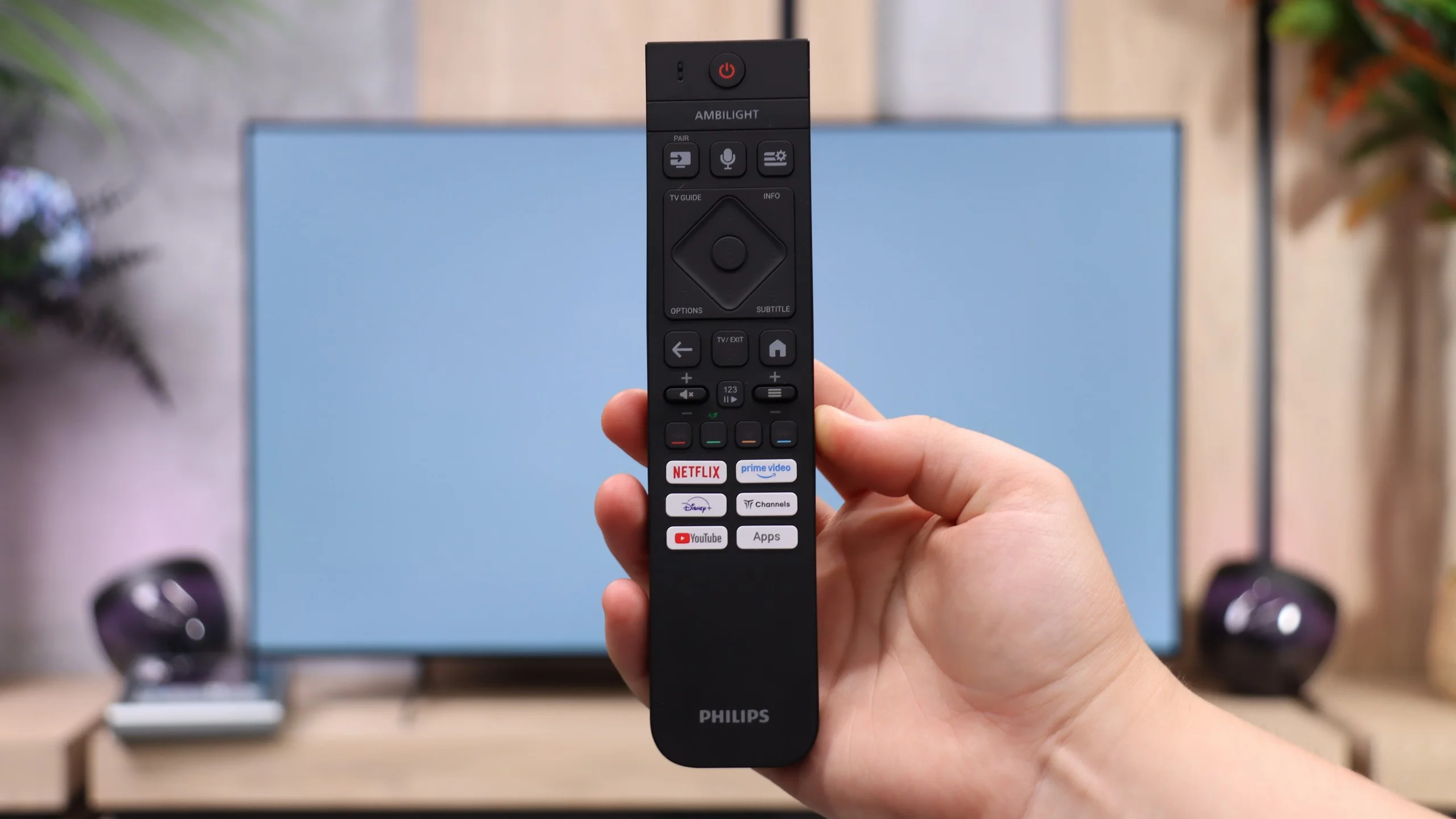
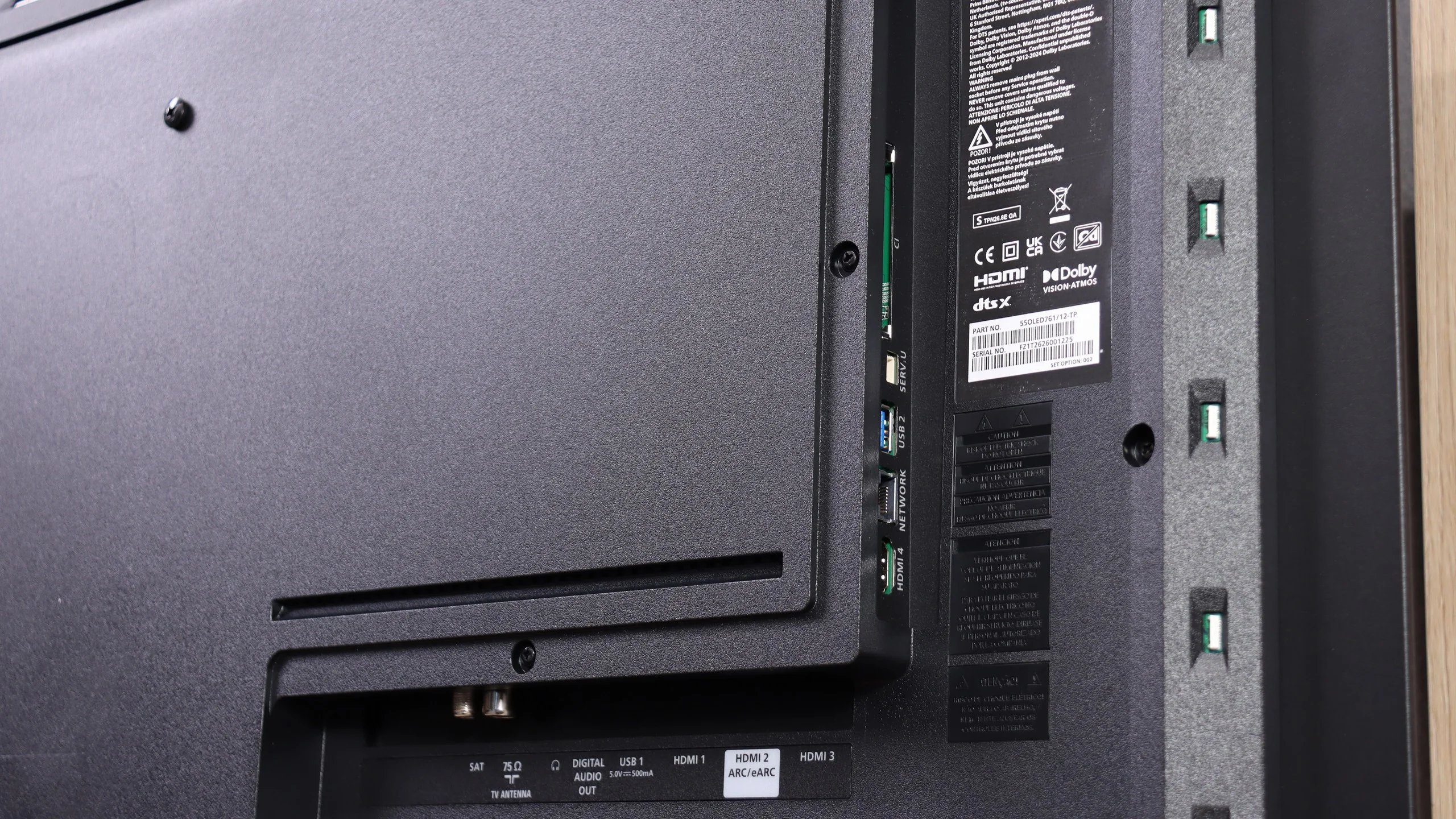
When watching regular TV you get basic conveniences, including teletext and a remote with a numeric keypad. The buttons are backlit, which is very handy in the evening, but it's hard to understand why Philips stubbornly sticks with infrared control for the remote. Having to point the remote at the TV can simply be inconvenient (the only feature that works via radio is voice control). There is also no USB recording or picture-in-picture. On the other hand, the port selection deserves praise: all four HDMI inputs support HDMI 2.1 at 48 Gbps, so after connecting a soundbar via eARC there are still three ports left that let you take full advantage of consoles and a PC. You don't have to worry about which device to connect at the cost of high refresh rates. There's even an analog mini-jack output, increasingly rare in new TVs but still useful for wired headphones or older audio equipment.
Ambilight
The most distinctive extra is, of course, Ambilight, for which Philips earns extra points from us. Lighting the wall with the colors from the screen can add a lot of atmosphere to movies and games, and it's also useful for relaxed evening viewing. The gentle glow means the bright screen isn't the only light source in a completely dark room, which can improve viewing comfort. It's worth tuning its intensity to the room rather than immediately setting it to maximum. For people who enjoy that style of watching, Ambilight can be one of the stronger reasons to choose the OLED761.
Apps
9.6/10
7.7/10






















Playing files from USB
8.7/10
8.6/10
Supported photo formats:
Maximum photo resolution:
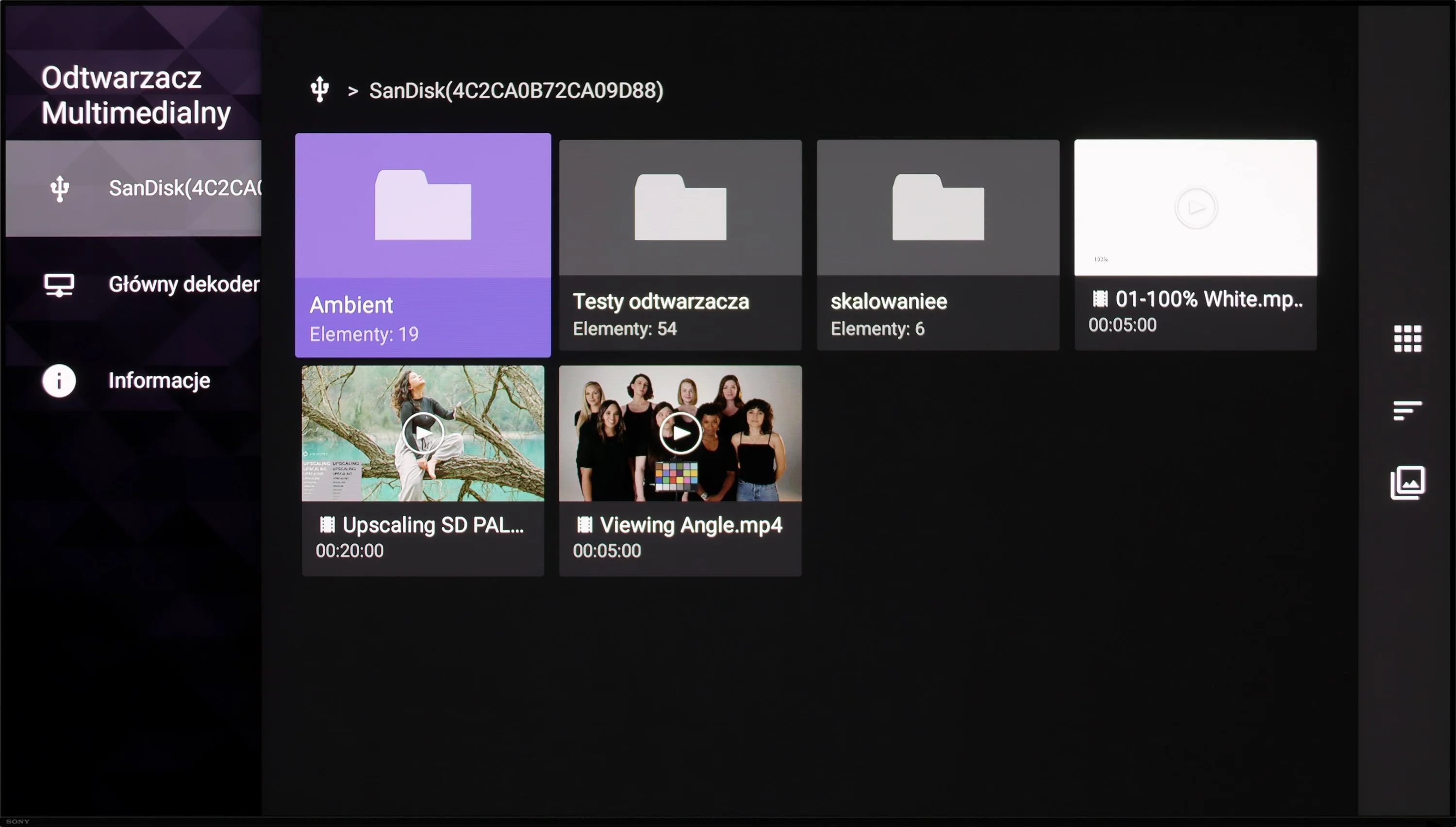
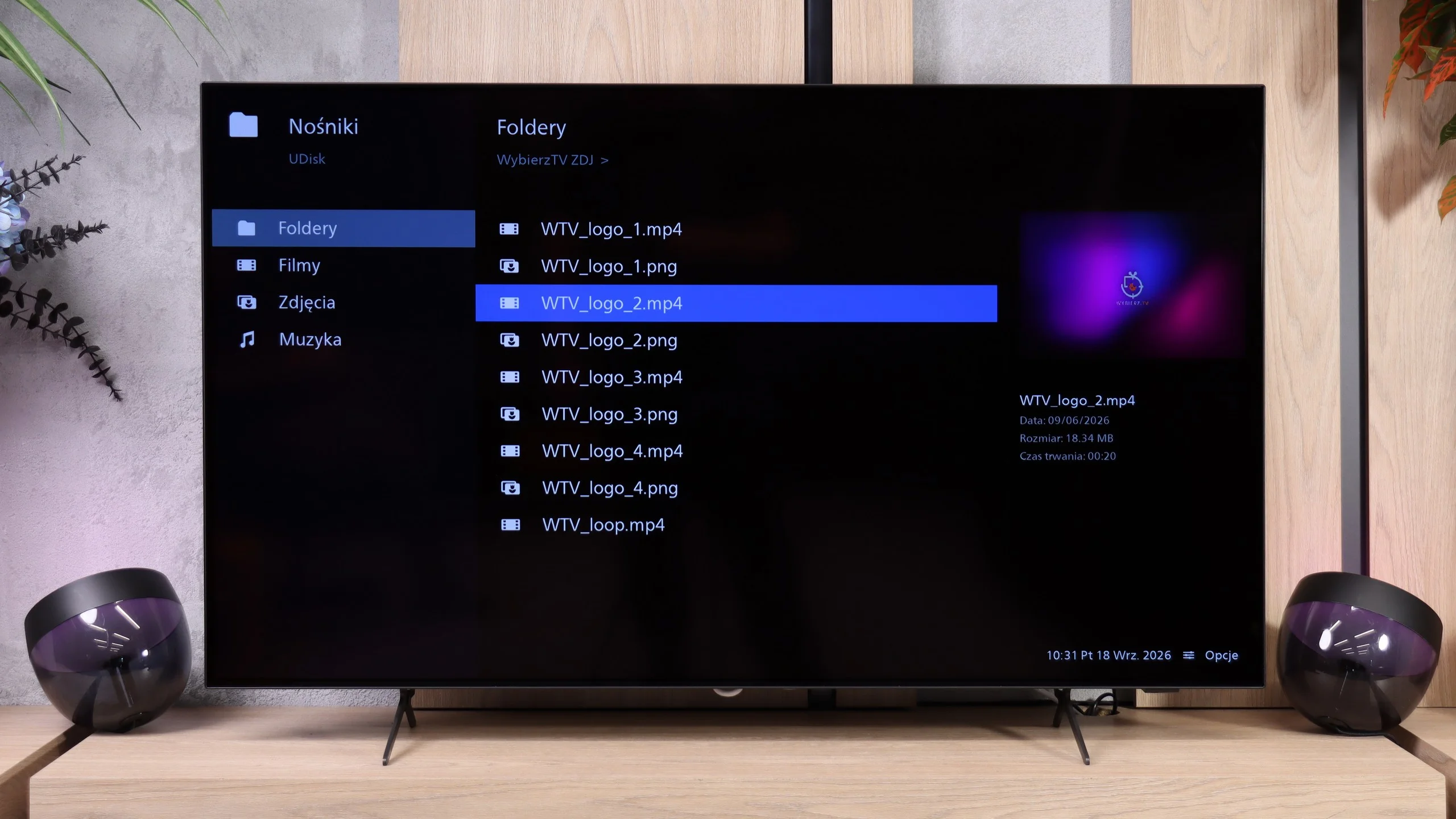
Sony A95L performs quite well when it comes to playing files from USB. The built-in media player will satisfy most users – it is easy to use and supports popular formats, allowing for easy playback of videos, photos, or music directly from the connected flash drive. The only thing missing is the ability to change the font color in subtitles, which can be problematic in some situations. Fortunately, the Google TV system allows for the installation of other media players that offer more advanced customization options, so you can easily adjust everything to your needs.
The USB player on the Philips OLED761 behaves rather oddly, and this is where you can see that Titan OS still needs refinement. Test videos and music files opened correctly, but photos caused the most problems. Interestingly, it wasn’t just a lack of support for certain formats, but also the photos’ resolution. The TV opened photos at 16 and 32 MP, yet it failed to handle some smaller ones, including 10 and 12 MP. So it’s hard to point to a simple rule for preparing photos that will guarantee they all display. If you plan to show vacation photos on the big screen, it’s worth checking the files beforehand or using screen mirroring.
Sound
7.9/10
7/10
- Maximum volume-90dB
- Dolby Digital Plus 7.1
- Dolby True HD 7.1
- Dolby Atmos in Dolby Digital Plus (JOC)
- Dolby Atmos in Dolby True HD
- DTS:X in DTS-HD MA
- DTS-HD Master Audio
Sony A95L offers sound that definitely stands out among most televisions. Considering the built-in speakers, the audio is truly impressive – full, with well-balanced low and mid tones. The dialogues are clear, and the sound effects are well distributed, making the television great for both watching movies and gaming. The Acoustic Surface Audio+ system, which converts the screen's vibrations into sound, creates a more spatial impression, adding additional depth to the viewed material.
The Philips OLED761 sounds quite good for a slim TV. The midrange is the strongest, so dialogue is clear and it's easy to understand what the characters are saying. For watching TV shows, the news, or regular programs, the built-in speakers are more than adequate. However, it lacks deep bass, which is most noticeable in music and action movies. Explosions have less impact, and music lacks a fuller sound. So if you want a more cinematic audio experience, a soundbar with a separate subwoofer will be a noticeable complement to this setup. Especially since the OLED761 handles immersive audio formats like Dolby Atmos and DTS:X with ease.
Sound Quality Test
No sound test video
Acoustic Measurements
No acoustic data
90dBC (Max)
75dBC
Reader comments
Comments are provided by the external service Disqus (Zeta Global). Once loaded, Disqus may set cookies and process data about your activity.
We will remember your choice on this device. Provider's privacy policy