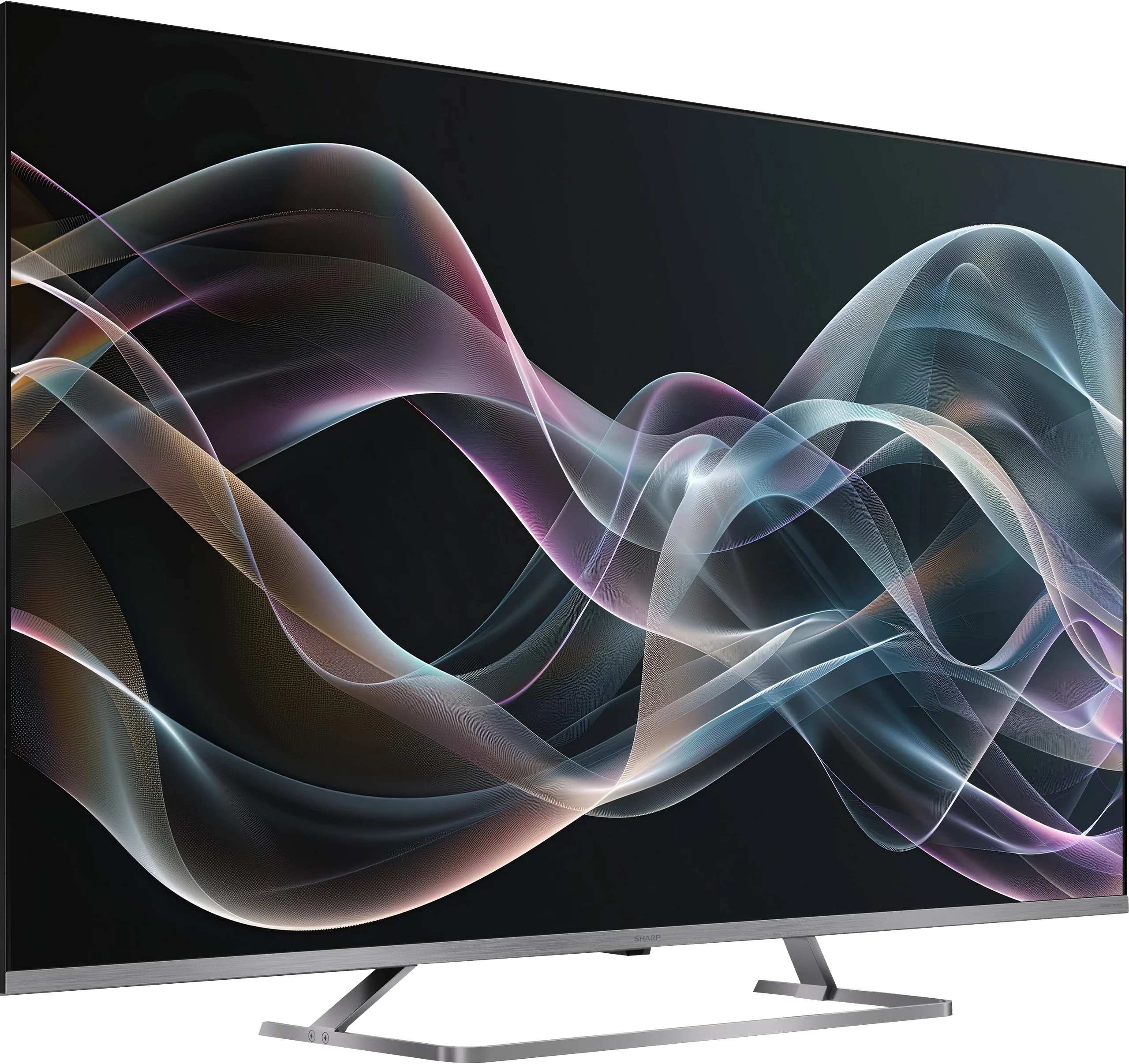
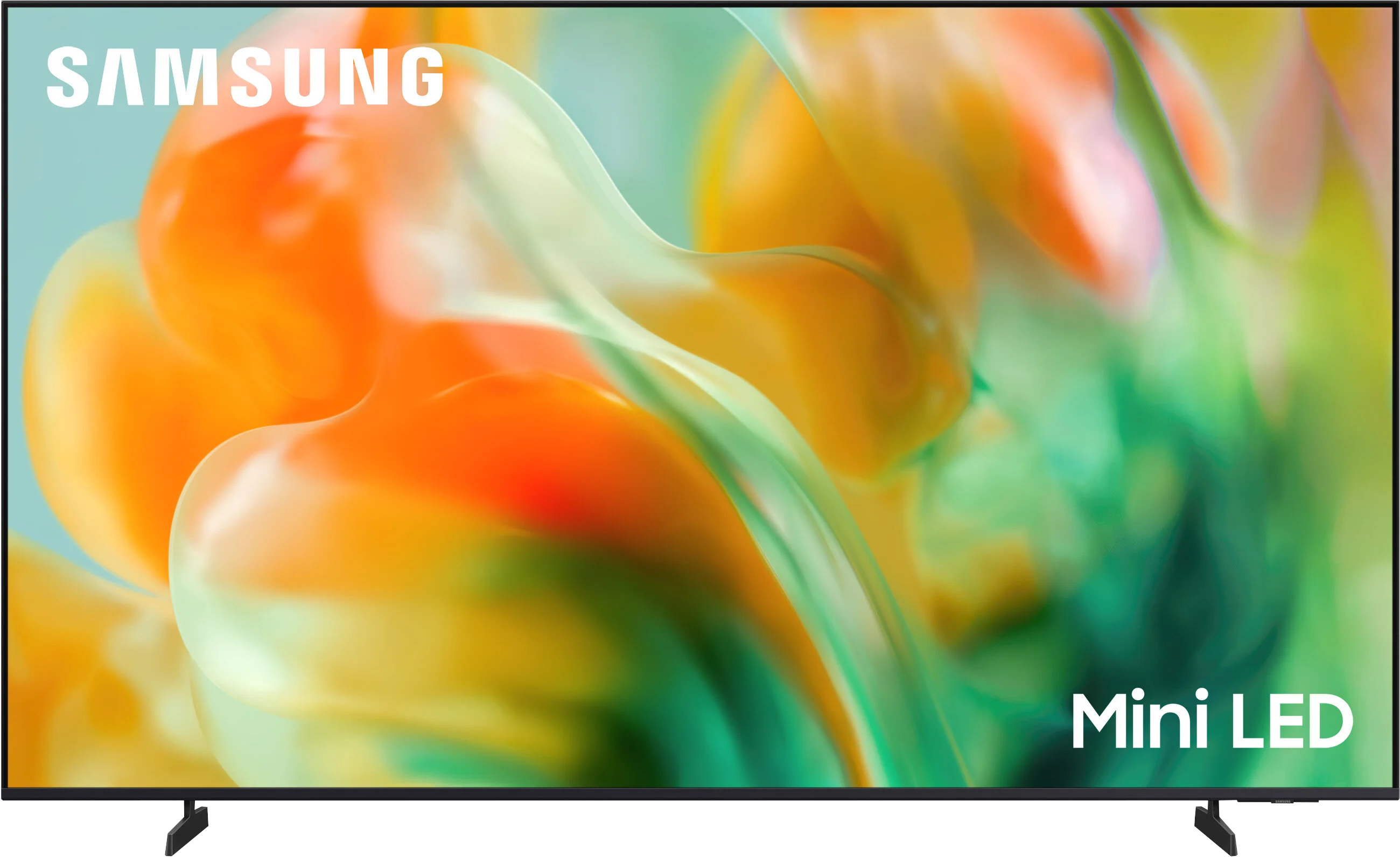
SHARP JP7765E vs Samsung M80H

Direct comparison

Check prices in stores:

Samsung M80H(paid link)
Check price

JP7

M80H / M86H

Info

Available screen sizes: 50”55”65”75”

Available screen sizes: 55”65”75”85”

Review SHARP JP7765E Main photo
Review Samsung M80H Main photo

Panel type: LCD VA

Resolution: 3840x2160

System: Google TV

Model year: 2026

Panel type: LCD VA

Resolution: 3840x2160

System: Tizen

Model year: 2026

Check how well they match your needs

Take the survey

Overall rating

6.2

6.9

  • Movies and series in UHD quality

    6.4

    6.5

  • Classic TV, YouTube

    6.0

    6.6

  • Sports broadcasts (TV and apps)

    3.9

    6.7

  • Gaming on console

    6.1

    8.8

  • TV as a computer monitor

    5.0

    8.9

  • Watching in bright light

    7.3

    5.0

  • Utility functions

    6.4

    7.3

  • Apps

    9.6

    9.3

  • Sound quality

    6.0

    6.0

Advantages

  • Good black and contrast - mini-LED backlight with VA matrix

  • High brightness - handles bright living rooms

  • Google TV system - unlimited base of apps and smart features

  • Very good file player - plays almost everything

  • Mini-jack output - rare and useful headphone jack

  • Extremely loud - up to 90 dB (perfect for seniors)

  • Very attractive price

  • Three HDMI 2.1 ports with support for VRR and ALLM

  • Dedicated motion smoothing for gamers: Game Motion Plus

  • Low input lag

  • High refresh rates: 4K 144 Hz and Full HD 240 Hz

  • Decent contrast thanks to a VA panel

  • Minimal smearing for a VA panel

  • Rich colors thanks to the PFS filter (a different kind of QLED 😉)

  • Good digital image processing for this segment

  • Fast Tizen OS with a wide selection of apps

Disadvantages

  • Massive smearing and only 60Hz panel

  • Poor mini-LED local dimming algorithms

  • Narrow viewing angles (a natural feature of VA panels)

  • No VRR and HGiG – features for gamers

  • Weird sound – the audio has a "gap" in dialogues

  • No local dimming despite being labeled Mini-LED!

  • Low brightness: 350 nits

  • No support for Dolby Vision and DTS:X

  • No Toslink optical audio output

Our verdict

Sharp JP7765 is another offering in the market that tries to prove that Mini-LED technology doesn’t have to cost a fortune. The low price is matched with an exceptionally high brightness — a peak of 1000 nits in HDR is a result that simply impresses in this price range. Although the proprietary processor doesn’t always manage backlighting perfectly in demanding scenes, support for Dolby Vision effectively saves the situation. Thanks to dynamic metadata, the image becomes plastic, deep, and simply appealing to the eye. Adding to this the Google TV system, extreme volume, and a rarely-seen headphone jack, we get a device that is a brilliant option for seniors or less demanding viewers transitioning from basic, cheap LCDs. In such a scenario, the Sharp JP7 appears to be a really decent and cost-effective choice. However, it must be made clear: contrary to marketing slogans, this is not equipment for everyone. Gamers or sports fans will definitely not find themselves here. The biggest drawback of the JP7765 model is the slow, 60Hz panel and significant motion blur, which essentially disqualifies this television when watching dynamic matches or playing fast-paced titles. The image loses sharpness so markedly during rapid movements that for a football or racing fan, it may be an unacceptable barrier.

So who is the Sharp JP7765 for? It is a sensible option for budget-conscious individuals who do not have high demands for motion fluidity but appreciate a “kick” of brightness. By choosing the Sharp JP7, you will definitely make a better deal than purchasing basic (non-dimming) televisions from the competition. Rivals usually offer standard LCD panels at a similar price that cannot compare to the capabilities of even such a basic Mini-LED model as the JP7. Ultimately, it’s a matter of a simple arrangement: you accept weaker motion fluidity in exchange for the powerful brightness that is hard to find with other manufacturers at this price point.

The M80H shows its strengths where motion matters most. A fast panel, a refresh rate of up to 144 Hz, and relatively low motion blur make sports and fast-paced games look really good. In this respect the TV can even beat some significantly more expensive Samsung LCD models. Gamers also get low input lag, three full-bandwidth HDMI 2.1 ports, and Game Motion Plus, which can improve the smoothness of games running at 30 or 60 frames. When connected to a PC you can also use a 240 Hz refresh rate, although only at Full HD resolution. A big plus for the M80H is the NQ4 AI Gen2 processor, which was until recently used in higher-tier Samsung series. It handles lower-resolution content well and can enhance the look of weaker sports broadcasts or heavily compressed footage. The extra image-enhancing features do produce a visible effect, although at higher settings they become too strong and start to interfere with the picture's natural look. Still, they are worth listing as an advantage, since in the cheapest TVs similar solutions often matter much less.

What raises the most concerns is the M80H being called a Mini-LED TV. It does not have local dimming, the feature that usually accounts for the biggest benefit of this technology. Brightness of around 350 nits also does not allow for particularly striking HDR. In terms of picture quality the M80H is therefore much closer to basic LCD TVs than to more advanced Neo QLED models like the QN80H. That does not mean movies look bad on it. The VA panel provides decent contrast, and the PFS filter delivers attractive, saturated colors. You should be aware, however, that the lack of local dimming clearly limits the TV's picture-quality capabilities. The M80H is therefore not a model that demonstrates the full potential of Mini-LED backlighting.

It will perform much better in the hands of a gamer or sports fan for whom panel speed, low input lag, and extensive gaming features are most important. If its price remains significantly lower than models equipped with local dimming, that compromise may be a sensible choice for that group of users.

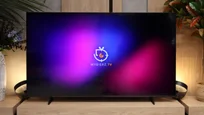
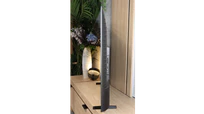
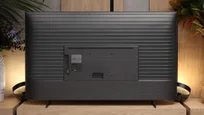
TV appearance

HDMI inputs
4 x HDMI 2.0, 0 x HDMI 2.1
0 x HDMI 2.0, 3 x HDMI 2.1 (48Gbps)
Other inputs
RCA (Chinch)
Outputs
Toslink (Optical audio), eARC (HDMI), ARC (HDMI), Mini-Jack (Headphones)
eARC (HDMI), ARC (HDMI)
Network Interfaces
Wi-Fi 2.4GHz, Wi-Fi 5GHz, Ethernet (LAN) 100Mbps
Build quality
Average
Average
Stand type
Central
Legs
Bezel color
Silver
Graphite
Stand
Fixed
Fixed
Accessories
Stand
Stand

Contrast and black detail

7.3/10

6.3/10

Local dimming function: Yes, number of zones: 160 (10 x 16)

Local dimming function: No

Contrast:

Review SHARP JP7765E Contrast and black detail

Result

64,100:1

Review SHARP JP7765E Contrast and black detail

Result

18,250:1

Review SHARP JP7765E Contrast and black detail

Result

46,350:1

Review SHARP JP7765E Contrast and black detail

Result

7,000:1

Review SHARP JP7765E Contrast and black detail

Result

4,500:1

Review Samsung M80H Contrast and black detail

Result

5,950:1

Review Samsung M80H Contrast and black detail

Result

7,150:1

Review Samsung M80H Contrast and black detail

Result

8,150:1

Review Samsung M80H Contrast and black detail

Result

7,850:1

Review Samsung M80H Contrast and black detail

Result

5,550:1

Halo effect and black detail visibility:

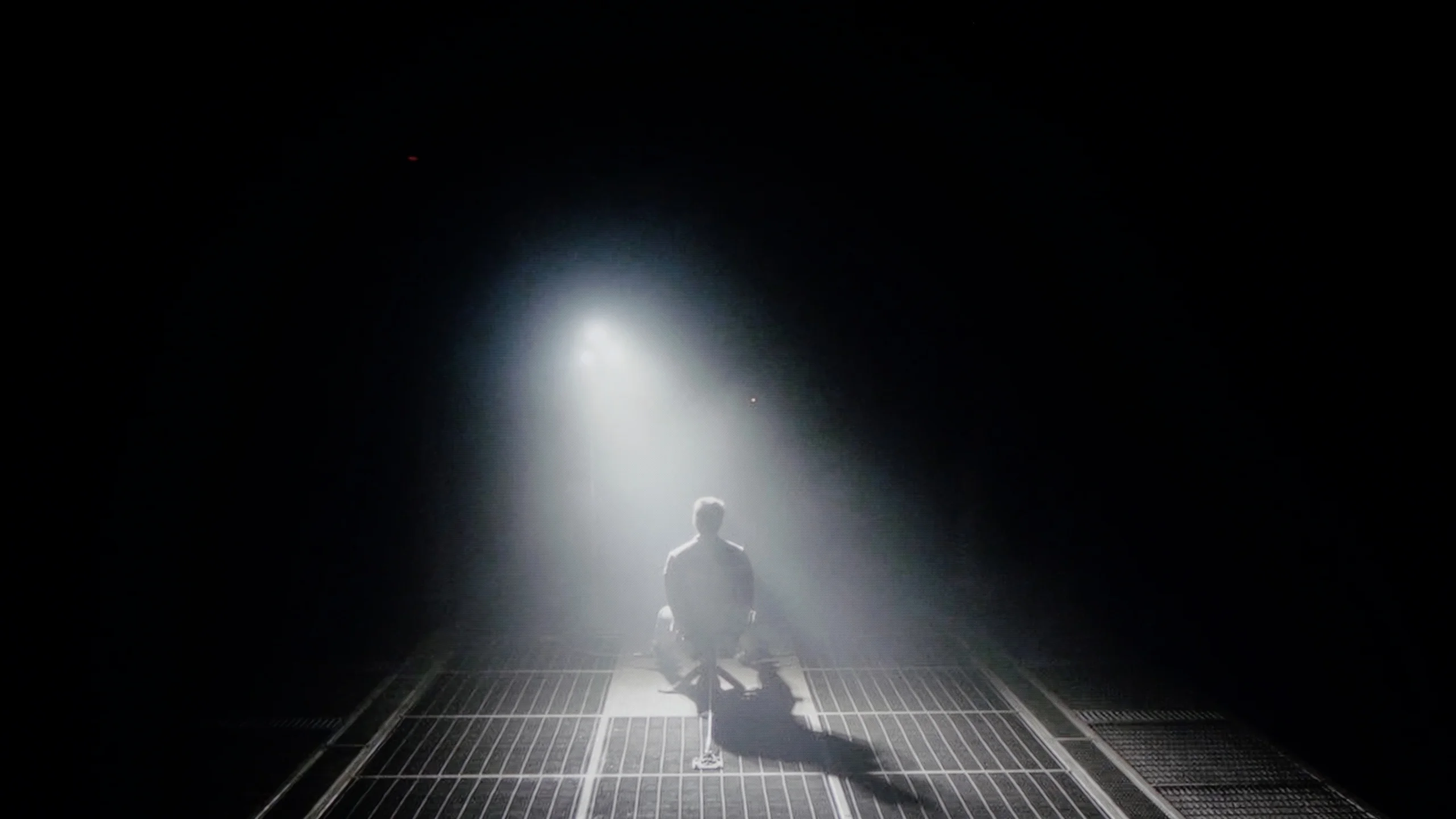
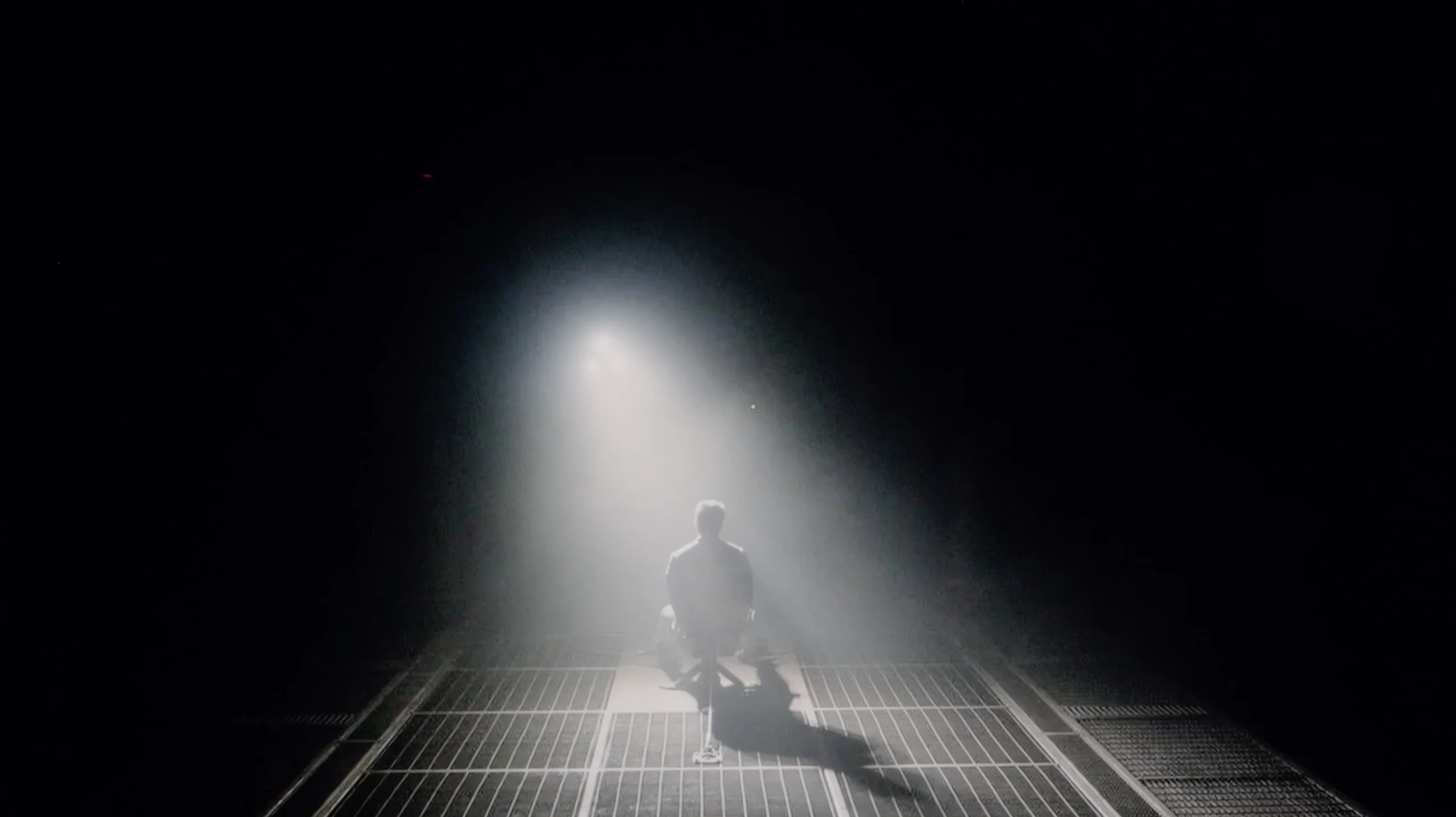
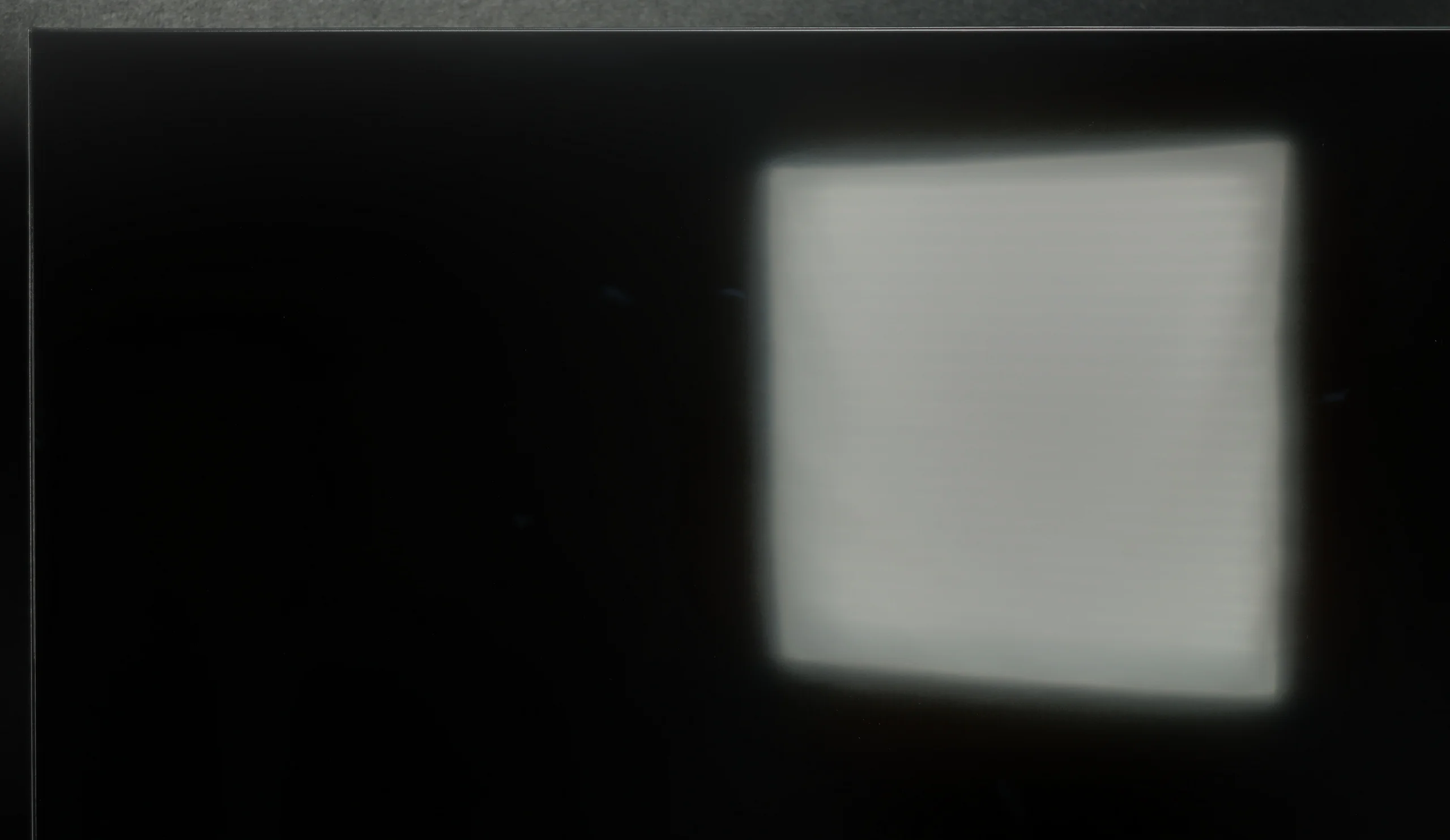
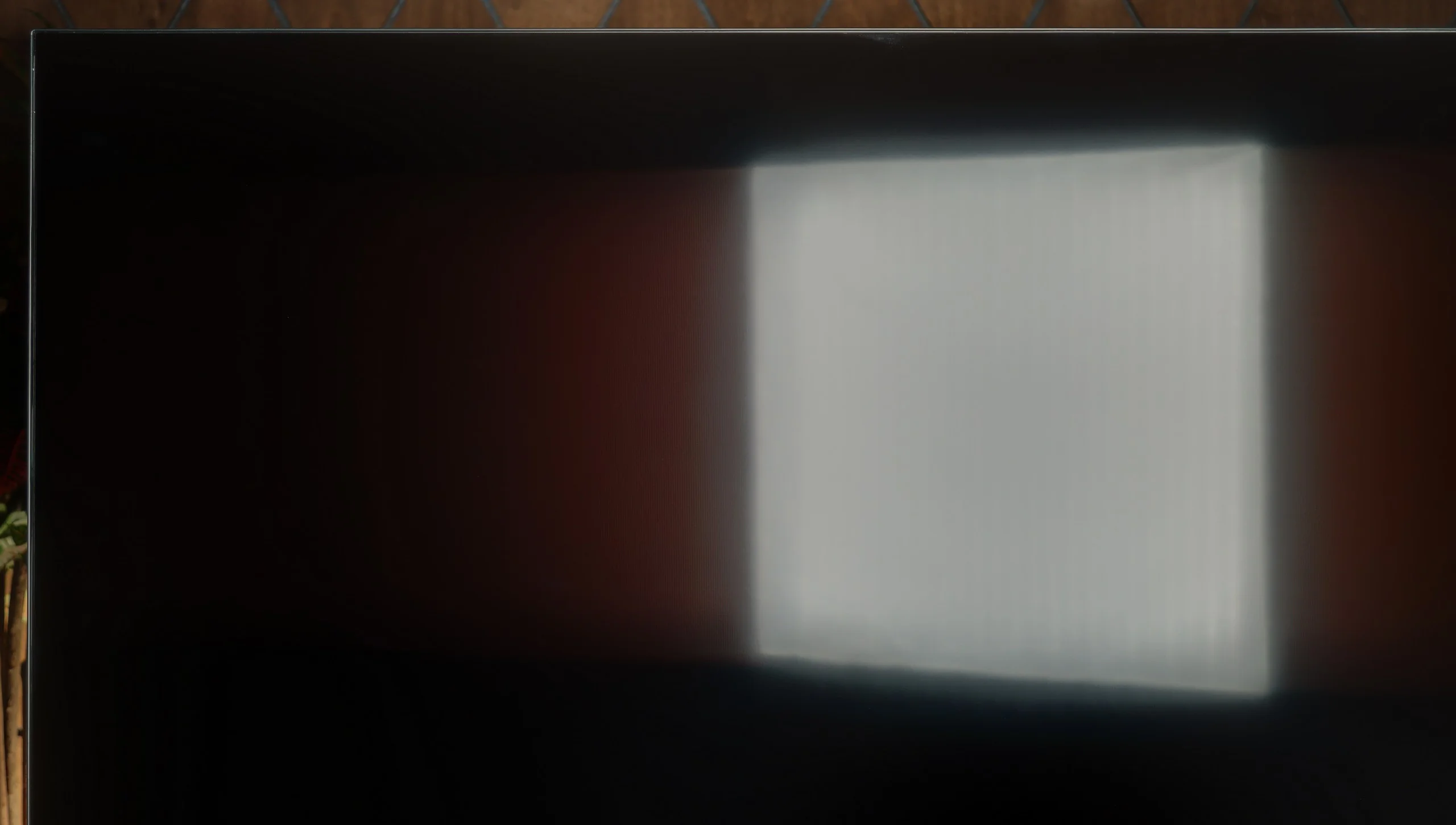
Check the visibility of bright lights on a dark background. Mini-LEDs often struggle with this. The photo does not compare black levels – that’s what the video below is for.

The video accurately shows differences in contrast and black levels between TVs, as well as potential issues: halo around bright objects or Mini-LED zone operation visible as brightness jumps.

Moving on to what is most important in Mini-LEDs, namely contrast and black levels, the Sharp JP7 in the 55-inch size we tested utilizes a VA panel. Combined with backlighting split into 160 zones (in a 10x16 configuration), this promises truly solid performance. Measurements on static film test images can be downright shocking, with measured contrast reaching five-digit values, even hitting levels of 50,000:1. On paper, this is a result that much more expensive models would not be ashamed of, and black levels under these conditions look very attractive.

Unfortunately, a television is purchased for watching films, not for admiring static images, and this is where the charm wears off a bit. When something more starts happening on the screen—especially in complicated, dark scenes with a lot of small bright elements—the backlighting system in the JP7 begins to literally go haywire. The zones can "dance" before the viewer's eyes, turning on and off in a way that can be simply annoying and detracts from the action. It is clear that Sharp has a huge room for improvement regarding local dimming management. The hardware potential in the form of Mini-LEDs is significant, but the controlling algorithms clearly struggle to tame them.

Samsung M80H is an LCD TV that, according to the manufacturer, uses Mini-LED backlighting. And maybe smaller LEDs placed directly behind the screen are indeed used here, but it's not the same type of Mini-LED we know from more expensive TVs. The M80H lacks local dimming, so the backlight cannot independently control the brightness of individual parts of the image. Black levels are quite decent, mainly thanks to the VA-type panel used. Depending on the scene, our measured contrast was about 5500:1 to over 8000:1. For a TV without local dimming, those are good results, and it's exactly in such designs that VA panels have a considerable advantage over IPS/ADS panels. It's worth noting that part of the results exceed the native contrast of the panel itself, which is about 5000:1. Samsung has implemented a global dimming feature. When there's a lot of black on the screen, the TV dims the entire backlight, making dark areas look deeper. However, this comes at the cost of the brightness of the rest of the image. The M80H therefore won't strongly brighten a small bright spot while maintaining deep black around it; it dims or brightens the whole screen.

HDR effect quality

5.3/10

4.7/10

Supported formats
HDR10, Dolby Vision, HLG
HDR10, HDR10+, HLG
Color gamut coverage
DCI P3: 94.0%, BT.2020: 70.1%
DCI P3: 96.0%, BT.2020: 71.9%

Luminance measurements in HDR:

Review SHARP JP7765E Brightness measurement

Result

1014 nit

Review SHARP JP7765E Brightness measurement

Result

247 nit

Review SHARP JP7765E Brightness measurement

Result

606 nit

Review SHARP JP7765E Brightness measurement

Result

180 nit

Review SHARP JP7765E Brightness measurement

Result

605 nit

Review Samsung M80H Brightness measurement

Result

288 nit

Review Samsung M80H Brightness measurement

Result

340 nit

Review Samsung M80H Brightness measurement

Result

349 nit

Review Samsung M80H Brightness measurement

Result

345 nit

Review Samsung M80H Brightness measurement

Result

364 nit

Scene from the movie “Pan” (about 2800 nits)

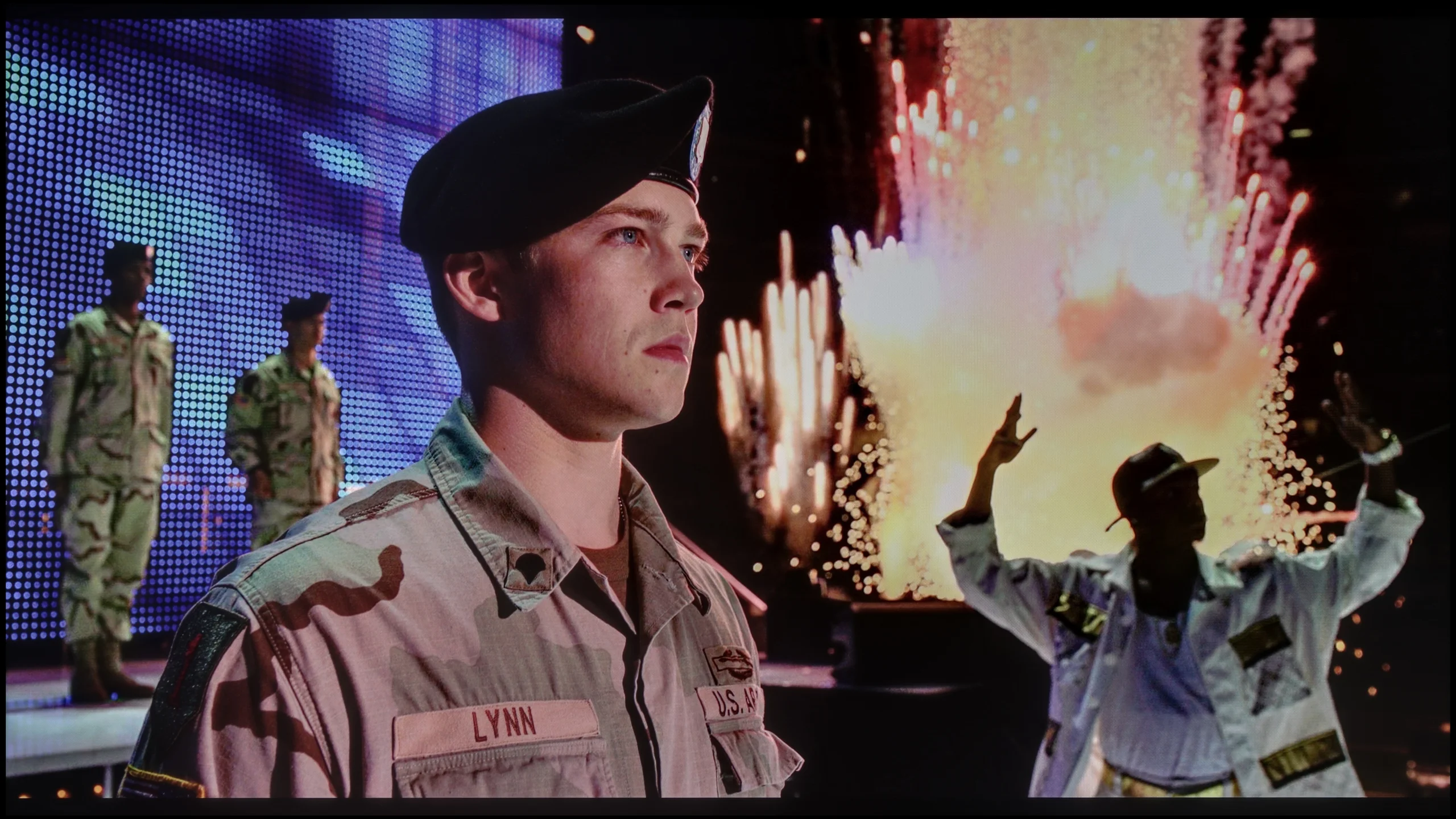
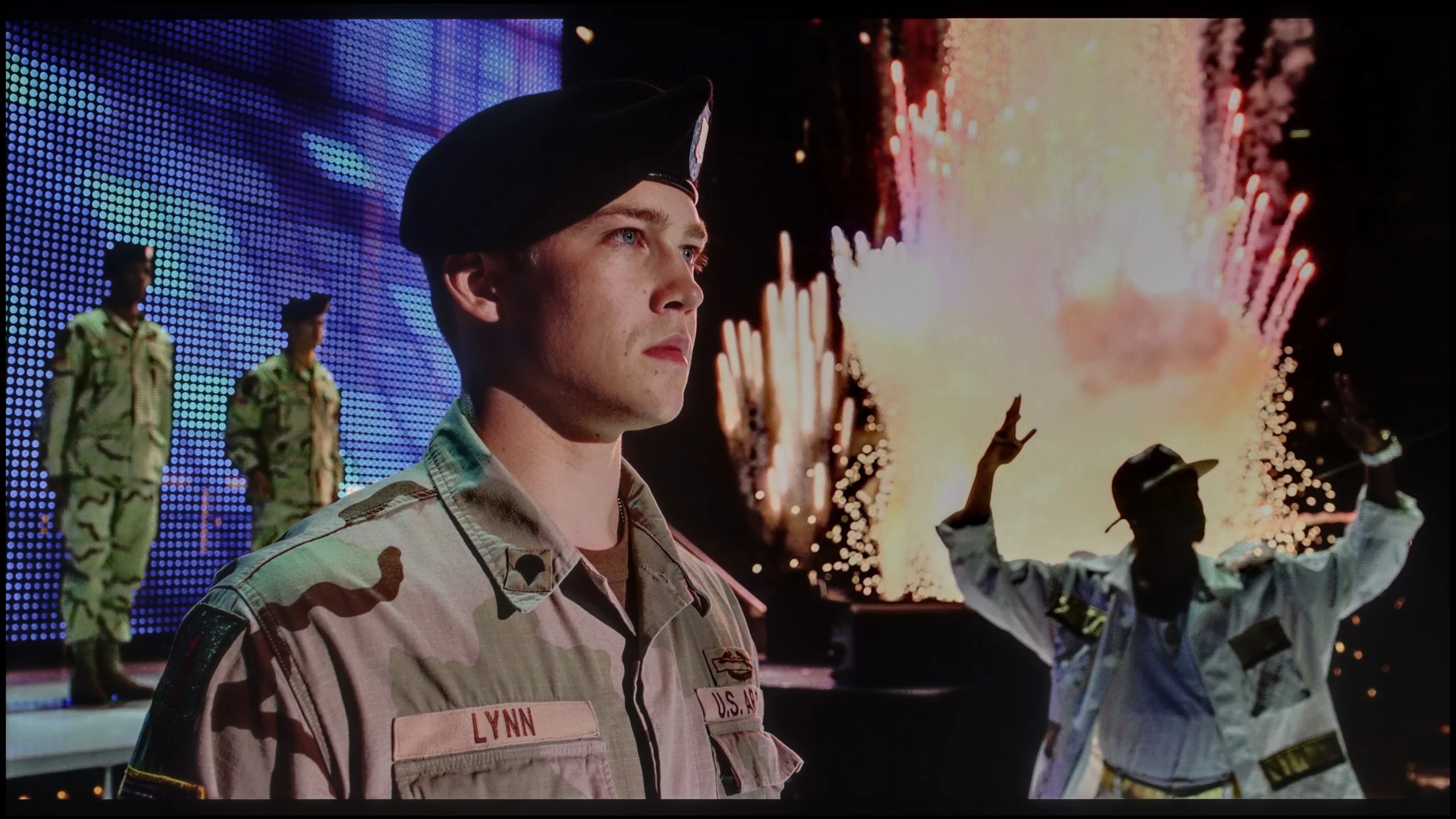
Scene from the movie “Billy Lynn” (about 1100 nits)

The photos show two HDR10 movies. 'Pan' is one of the brightest productions ever made, while 'Billy Lynn' (soldier) has brightness typical of streaming (Netflix, Prime, HBO MAX). Notice the intensity of effects and detail in whites.

Static HDR10

The photos present the visibility of white details in various HDR formats. They do not show brightness differences between TVs (these can be compared in the previous gallery).

Dynamic: Dolby Vision

Dynamic: HDR10+

The photos present the visibility of white details in various HDR formats. They do not show brightness differences between TVs (these can be compared in the previous gallery).

HDR luminance chart:

Samsung M80H

SHARP JP7765E

So how does the brightness of the Sharp JP7 perform in the most demanding titles? Honestly: at first, we were quite surprised. The television is capable of achieving over 1000 nits of brightness, which is an outstanding and rarely seen result for a device costing just under 2000 zł (for 55 inches). Watching bright, full-screen scenes, one can get the impression that we are dealing with truly good equipment. However, unfortunately, we must return to the problem we mentioned earlier regarding local dimming management. When small, bright elements appear on a dark background on the screen (like in the test scenes from Life of Pi or Sicario 2), it is noticeable how poorly the JP7 handles the zones. The television dims them almost to the maximum, stifling the whole HDR effect, which at such moments resembles a flat SDR image (less than 200 nits). This instability makes the image on the JP7 unfortunately lose its appeal in demanding, contrast-heavy films.

As a consolation, it is worth noting that the panel has the potential for good color display. A PFS (phosphor) filter has been implemented here, allowing the coverage of the DCI-P3 palette to reach a solid 94%. The manufacturer calls its product a “QLED,” even though it is mainly based technologically on the aforementioned PFS filter. Considering the recent market battles among manufacturers about what can and cannot be called QLED, we leave the issue of the correctness of this naming to your judgment. However, it remains a fact that the potential for reproducing saturated colors in this panel is simply good.

The M80H is not one of the brightest TVs. Its peak brightness is around 350 nits and we saw similar results in most of our test scenes. That's not enough to produce genuinely impressive HDR — bright highlights lack punch and the overall image is a bit too dark. In practice, HDR on the M80H resembles a well-presented SDR image more than clearly more dynamic wide-range content. The picture can still look fine, but it's hard to point to strong specular highlights, clearly bright light sources, or an effect that immediately separates HDR from ordinary content.

Colors

One of the M80H's strengths is its color. The TV uses a PFS-based backlight filter, which allows it to display a significantly wider color gamut than a standard LCD screen without filters. Our measurements confirm this — the M80H covers about 96% of the DCI-P3 gamut and 72% of BT.2020. Those are very good results, which let the colors appear strongly saturated. Samsung's policy here is interesting. The M80H is not part of the QLED family, even though in terms of color it is practically on par with models carrying that label. From an image-quality standpoint, that doesn't matter much; the colors are simply good.

Factory color reproduction

4/10

6.1/10

This illustrative image shows how colors change after professional calibration. If you can see the difference, you can order it from SkalibrujTV – it's our own service.

Factory mode

After calibration

This illustrative image shows how colors change after professional calibration. If you can see the difference, you can order it from SkalibrujTV – it's our own service.

Factory mode

After calibration

When it comes to out-of-the-box colors, the Sharp JP7 was tested in Film mode, which traditionally offers the most consistent image compared to the yellowed “Eco” mode or the glaring blue of the “Dynamic” mode. Although this is the best choice among the available settings, the results are still far from ideal. The white balance clearly lacked red and blue components, causing many scenes to take on an unnatural, greenish tint. Another issue was the gamma – during fullscreen scenes, the television provides too much brightness, completely stripping away its cinematic character. All of this translated into color reproduction errors, particularly with shades of gray, which exceeded Delta E 10. Just to remind: errors above 2-3 are already noticeable to the human eye, so here we are dealing with a significant distortion of reality.

In HDR mode, the situation is reversed but not any better. Here, the blue color dominates the white balance, giving the image an unnatural, almost “store-like” sharpness reminiscent of aggressive demo modes. Furthermore, the measurements of the EOTF curve emphasize the store-like nature of the image. The graph clearly shows that the television generates an image significantly brighter than the standards predict, resulting in an artificially boosted and unrealistic final effect. The Sharp JP7 is evidently trying to appear stronger than it actually is, but it does so at the expense of fidelity to the content.

Filmmaker mode is reasonably well set up out of the box, though it falls short of perfect. In SDR material the most noticeable issue is an excess of red in the white balance, which makes the image look a bit warmer than it should. HDR content shows a similar character. As for the brightness response, in SDR the gamma stays close to the target for most of the range. Small deviations are mainly visible in darker areas, which in places are a little too dim. In HDR the very darkest details are slightly lifted, while from around 65% brightness the image begins to be gently darkened. This is largely due to the way the TV controls its brightness. Overall, Filmmaker mode looks good straight out of the box, but the image can still be improved.

Color reproduction after calibration

6.7/10

7.8/10

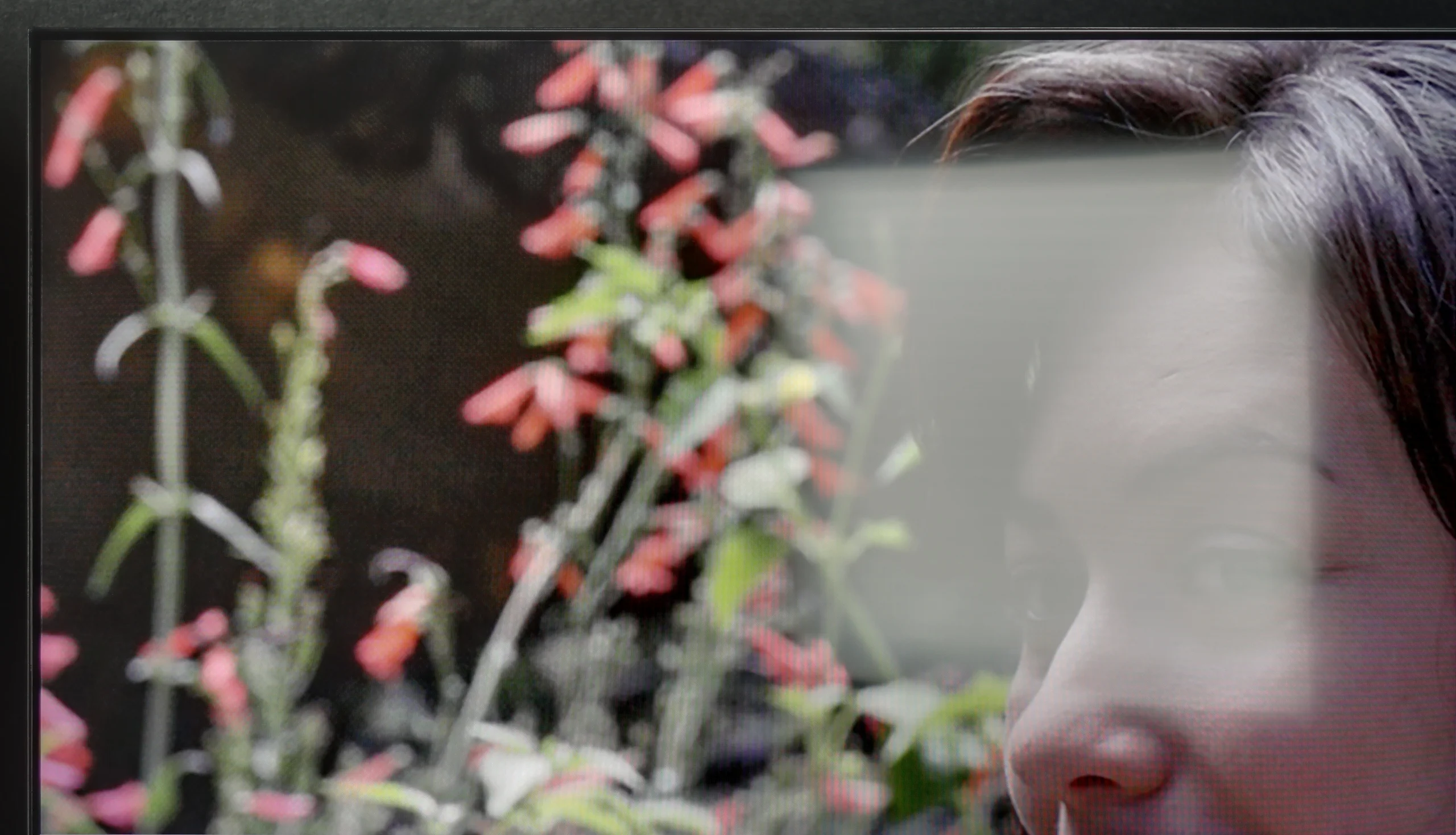
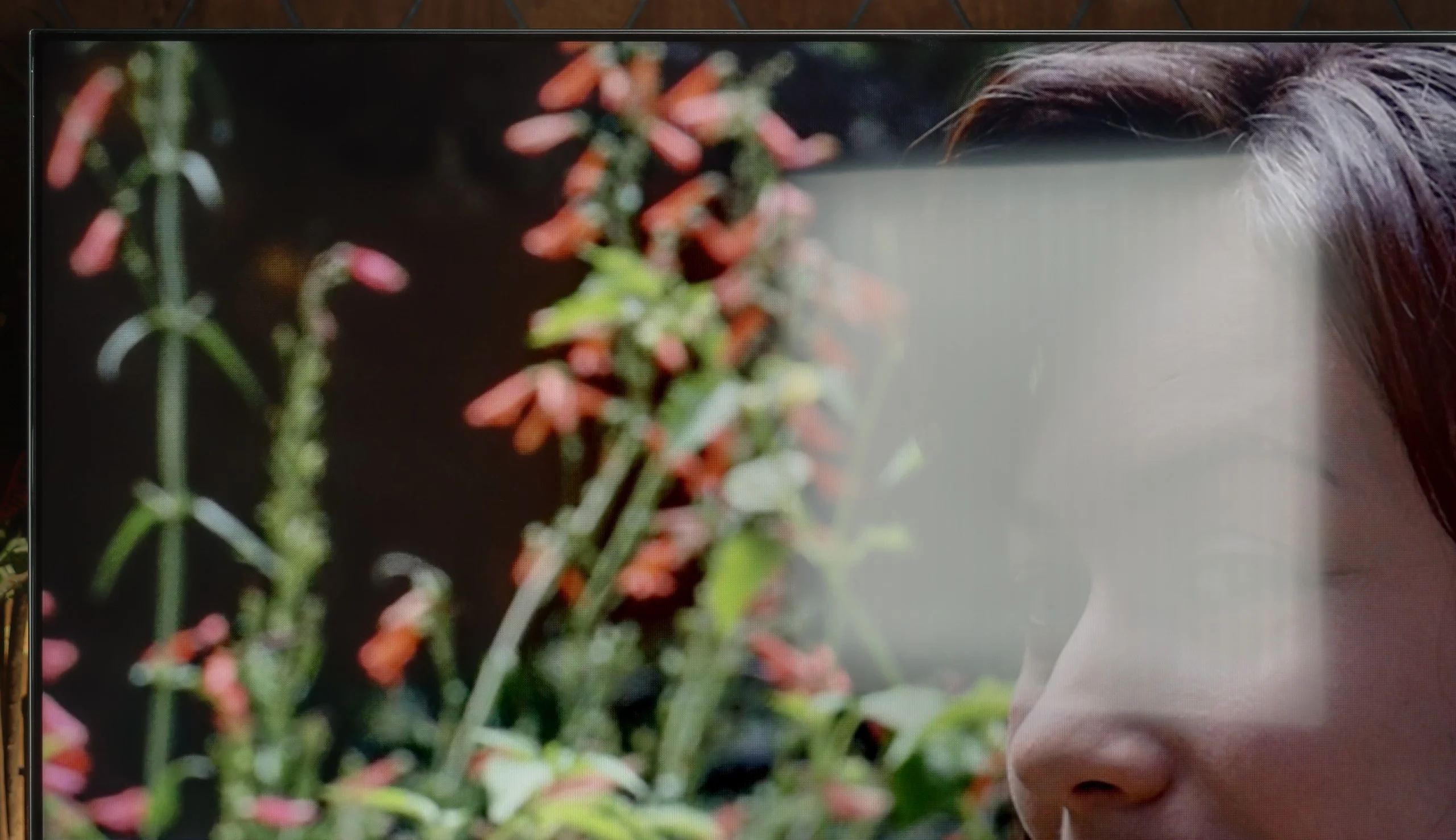
The photos show how movies look on the TV. Pay attention to black detail visibility, colors, and shadow tint.

The photos show how movies look on the TV. Pay attention to black detail visibility, colors, and shadow tint.

We subjected the JP7 to our standard calibration procedure and truly... the television gained a new life thanks to it, especially in SDR content (YouTube, classic television, series, or older movies). Because we managed to accurately set the white balance and stabilize the gamma, color errors dropped to a value of below 3. This is a level at which the human eye has trouble detecting discrepancies. In this scenario, the Sharp JP7 delivers an image with really great color accuracy, which is a significant advantage in this price range. However, the content in HDR turned out to be much more problematic. Here, despite our efforts and adjustments to the settings, the television simply did not want to cooperate. In the JP7 menu, we cannot find any option that would allow for real control over brightness management (EOTF). Although a significant portion of color errors was reduced, the image still remained unnaturally oversaturated. It's a pity because the potential of the mini-LED backlit panel is large, but the software presents a clear barrier.

The conclusion is simple: when watching less demanding content (SDR) on the JP7, you can expect an image that is more than satisfactory, but in HDR, you have to come to terms with a certain degree of "artificiality" that cannot be overcome even with professional equipment.

After calibration, the M80H performs really well, especially with basic SDR content. Regular broadcast TV, YouTube, or movies viewed without HDR can look very accurate on it. After correcting the white balance, errors are minor, though you can still sometimes see that the TV tends to oversaturate the most saturated reds. In HDR you can also improve the picture and correct its main faults, but it doesn't reach the level of pricier models. Samsung quite heavily restricts color adjustment options in HDR, so in many areas we have to accept what the TV offers out of the box. Calibration lets us improve some parameters, but we are no longer able to change the overall image character of the M80H.

Smoothness of tonal transitions

7.5/10

9.8/10

These are selected scenes that show smooth tonal transitions from one color to another. If you see distinct banding, it’s the TV panel’s fault.

These are selected scenes that show smooth tonal transitions from one color to another. If you see distinct banding, it’s the TV panel’s fault.

These are selected scenes that show smooth tonal transitions from one color to another. If you see distinct banding, it’s the TV panel’s fault.

These are selected scenes that show smooth tonal transitions from one color to another. If you see distinct banding, it’s the TV panel’s fault.

When it comes to image purity, posterization on the Sharp JP7 fortunately doesn't distract too much from the content being viewed. In most scenes, it's hard to spot irritating stripes or the so-called "color stair stepping," which often ruin the experience in scenes with flat colors. Of course, you can't expect miracles here because in some extremely demanding scenes, a trained eye may notice errors in tonal transitions. However, this is not a level that could realistically distract during a film. Well, unless you have good eyesight and are looking for artifacts on the screen – then you'll probably find something.

The smoothness of tonal transitions on the M80H is nearly perfect. Posterization is practically non-existent, and successive shades blend very smoothly in both bright and dark scenes. We didn't notice any obvious color banding, even in the sky or in smoke scenes. If the image looks worse in dark shots, that's not due to gradation issues. What becomes more apparent are the backlight limitations and the lack of local dimming, which keep blacks from having proper depth.

Image scaling and smoothness of tonal transitions

3.5/10

7/10

Image without overscan on the SD signal
OK
No
Smooth transition function
No
OK

Smooth transition function

The match photo shows how the TV smooths weak tonal transitions in low-quality video.

Image scaling SD (576i)

The model photo shows how it handles upscaling of SD material.

When it comes to lower quality materials and how the Sharp JP7 handles them, the situation is ambiguous. Let's start with the upscaling – here we have no major objections. The process of scaling the image to a higher resolution is correct; the image remains readable and clear, without the overscan effect or cropped edges. Of course, this is not at the level of top models and at times one can notice slight jaggedness on the contours, but in this price range, the effect is fully acceptable.

However, the digital image processing itself is significantly worse, as aside from the scaling, it virtually does not exist. In the JP7 menu, we won't find any option that would effectively smooth out unwanted tonal transitions or reduce noise in the image. As a result, the signal reaches the matrix in a very raw form, which, with heavily compressed materials (e.g., from YouTube), leads to visible posterization. Either this is a flaw in the software or a very strange design decision, as in earlier Sharp models, this feature was available and, more importantly, worked with noticeable effect. Here we are left at the mercy of what the source provides, without any digital support from the image processor.

Although the M80H is positioned fairly low in Samsung's lineup, the manufacturer equipped it with one of its stronger processors, NQ4 AI Gen2. The same chip can be found in Neo QLED TVs and the lower-tier OLED S85H. That's good news, because the processor does a very good job improving weaker source material. Upscaling performs best. Low-resolution content is displayed properly, and edges don't look overly jagged. Of course the TV won't create details that aren't in the source, but regular broadcast TV and older recordings look decent on it. One drawback is overscan, that is, edge cropping, which cannot be fully disabled. The tonal transition smoothing feature, the so-called noise reduction, also works well. The processor can effectively reduce visible signs of heavy compression, but it does so not without side effects. At higher settings it can overly smooth the image, remove some fine detail, and even eliminate film grain. Therefore we recommend using this feature primarily for content that actually has problems with heavy compression and posterization.

Blur and motion smoothness

2/10

7.9/10

Maximum refresh rate of the panel
60Hz
144Hz
Film motion smoothing option
OK
OK
Blur reduction option
No
OK
BFI function 60Hz
-
Yes, 60Hz (image flickers)
BFI function 120Hz
-
No
Brightness drop with BFI
-%
48%

Blur (native resolution, maximum refresh rate):

Blur (BFI function enabled):

Image flickers in this mode

Blur ():

Blur (4K@240Hz):

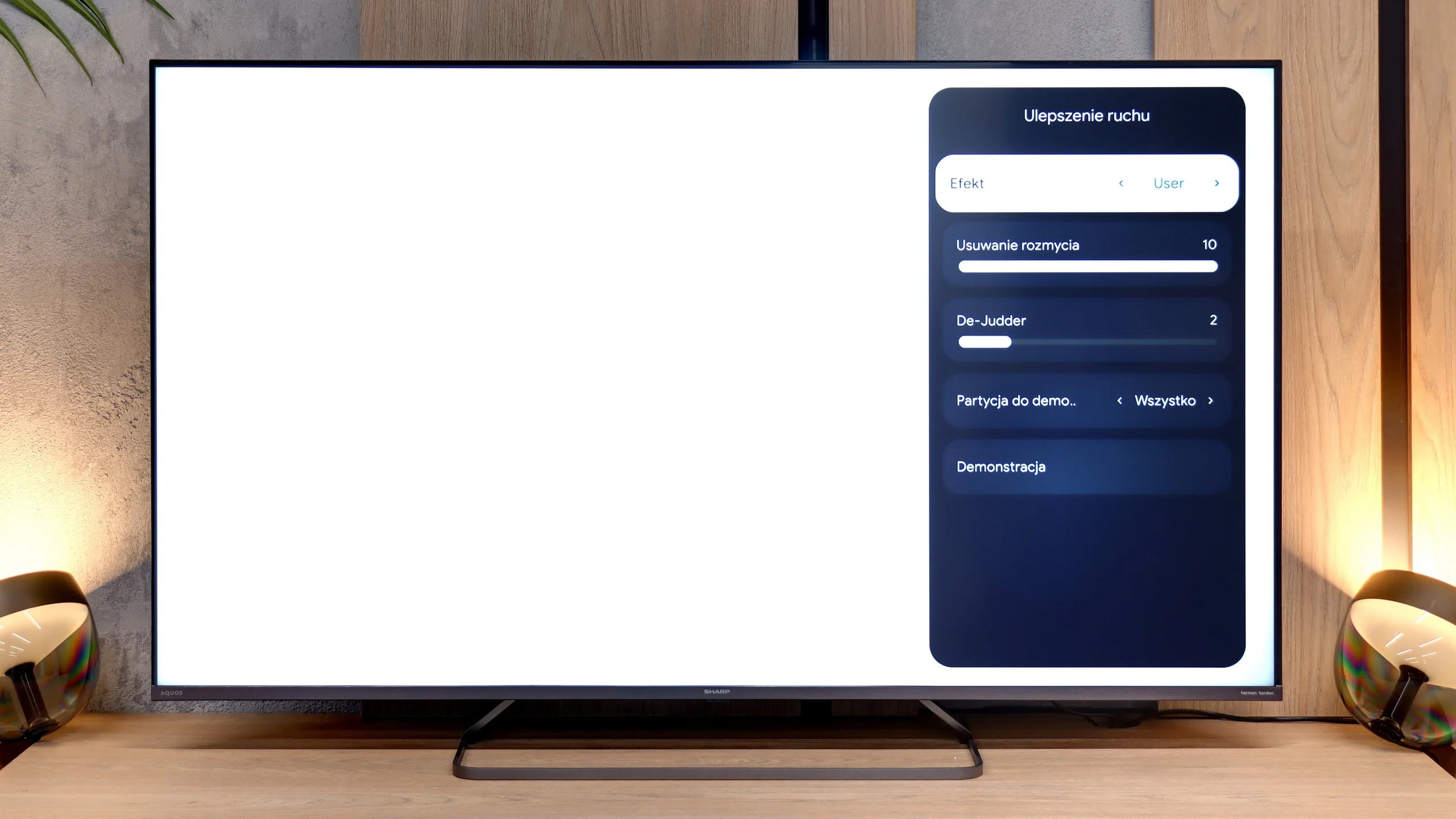
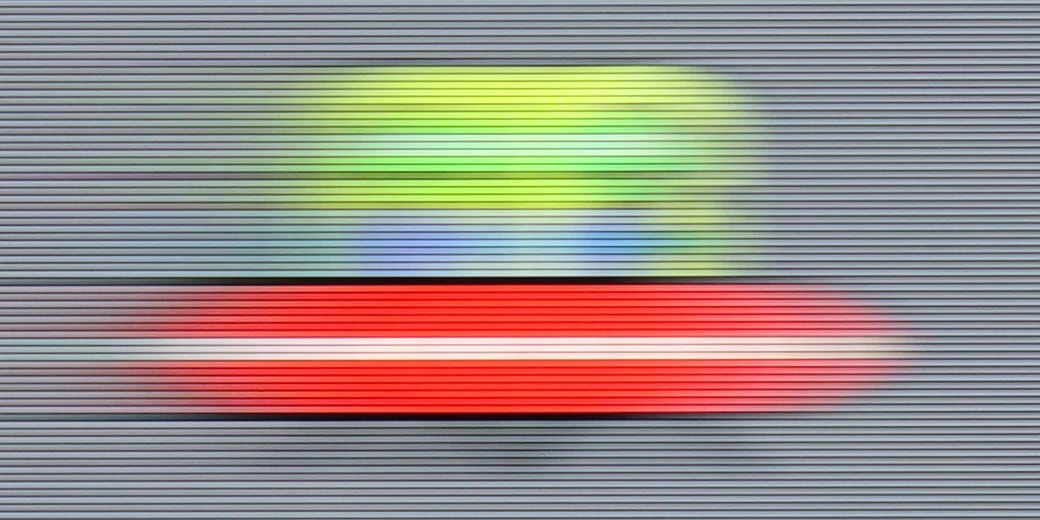
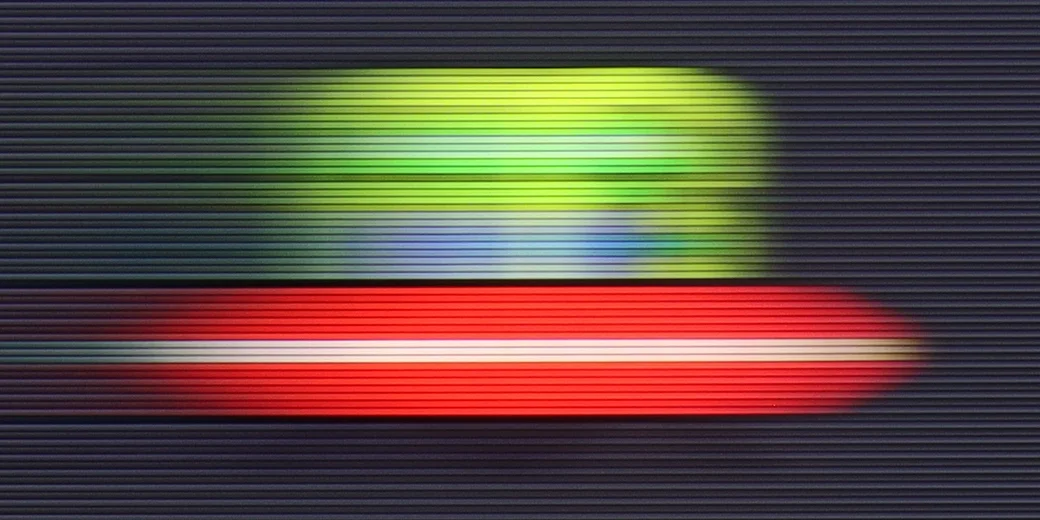
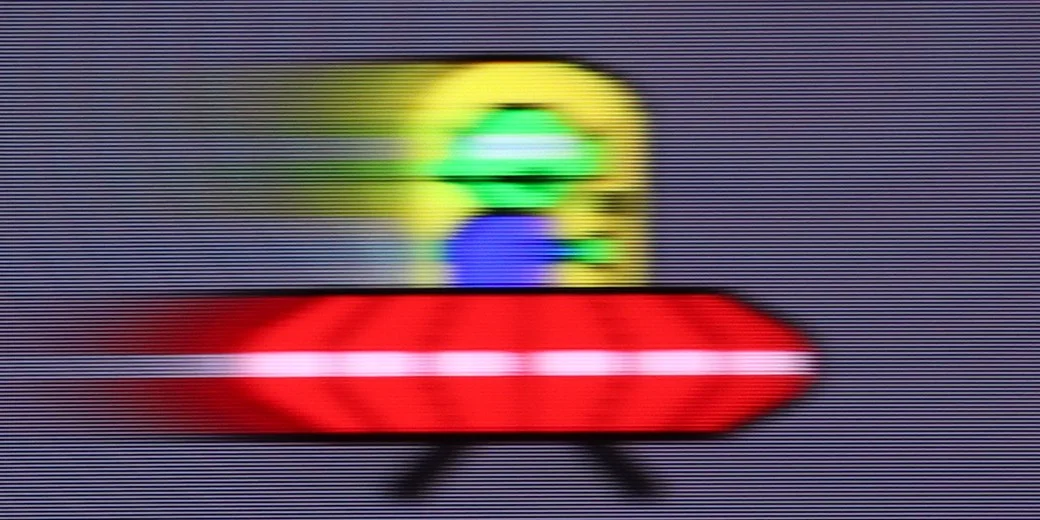
The motion fluidity on the Sharp JP7 is very mediocre, and the reason is simple: the television uses a 60Hz panel. This immediately makes it difficult to recommend for watching sports or serious gaming, where higher refresh rates are already the standard. The only real plus is the presence of a motion smoother, which we can control in movies using a slider called De-judder. Lower settings produce a more raw, "cinematic" (frame-based) image, while higher settings add artificial fluidity. We suggest setting it somewhere in the middle of the scale, that is, in the 3-5 range – this is the best compromise to avoid the soap opera effect while getting rid of the tiring image stutter. Interestingly, in the menu, we also find a slider for "motion blur reduction," which usually suggests the presence of a 120Hz panel. However, in the case of the JP7, it does not contribute anything to the image and serves more as a placeholder – it is meant to look good in the settings, but technically it should not function on this panel.





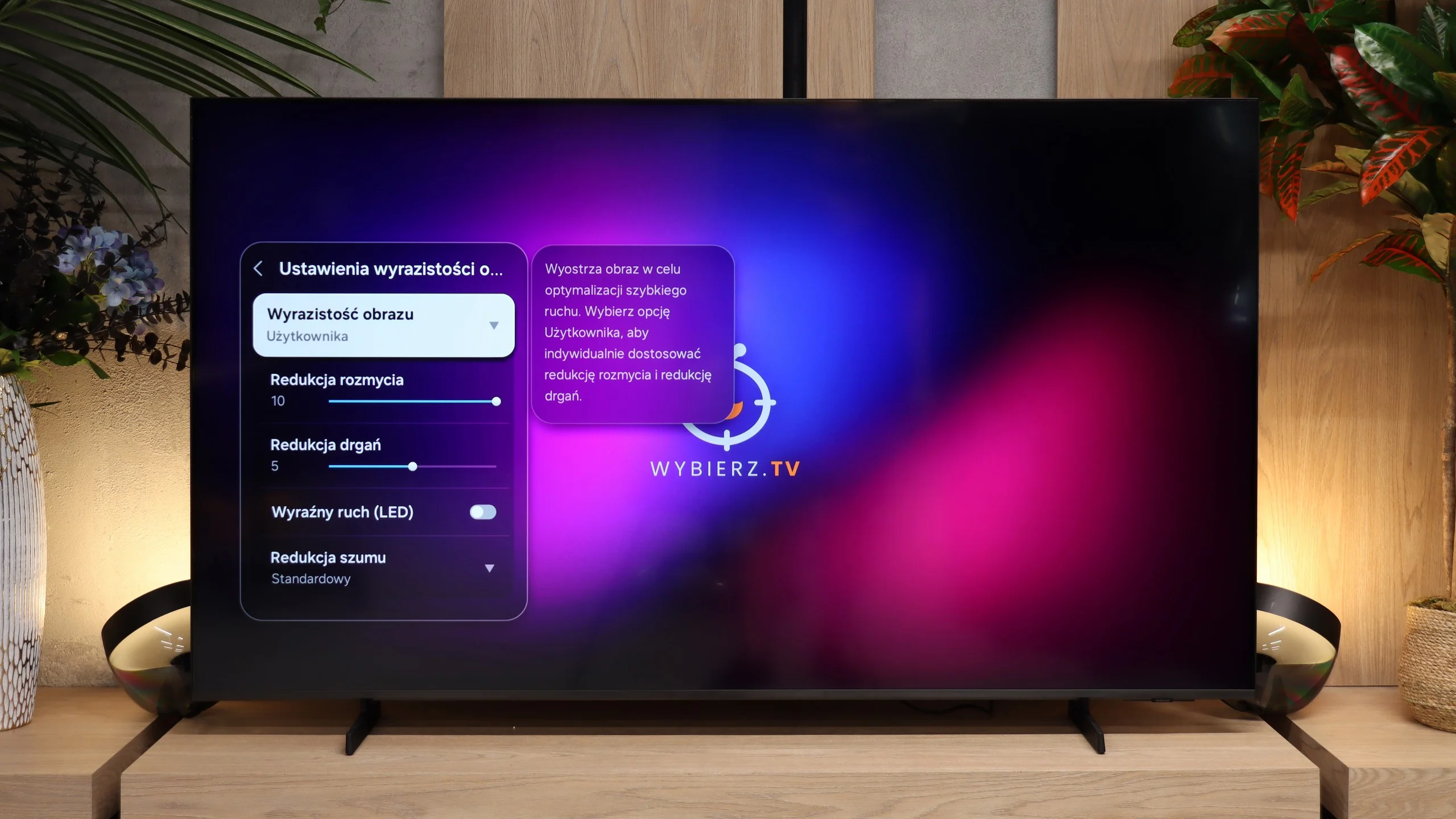
The M80H performs very well for watching sports and gaming. The TV is equipped with a panel with a refresh rate of up to 144 Hz at 4K, and when the resolution is lowered to Full HD it can handle up to 240 Hz. PC gamers will benefit most from the latter option.

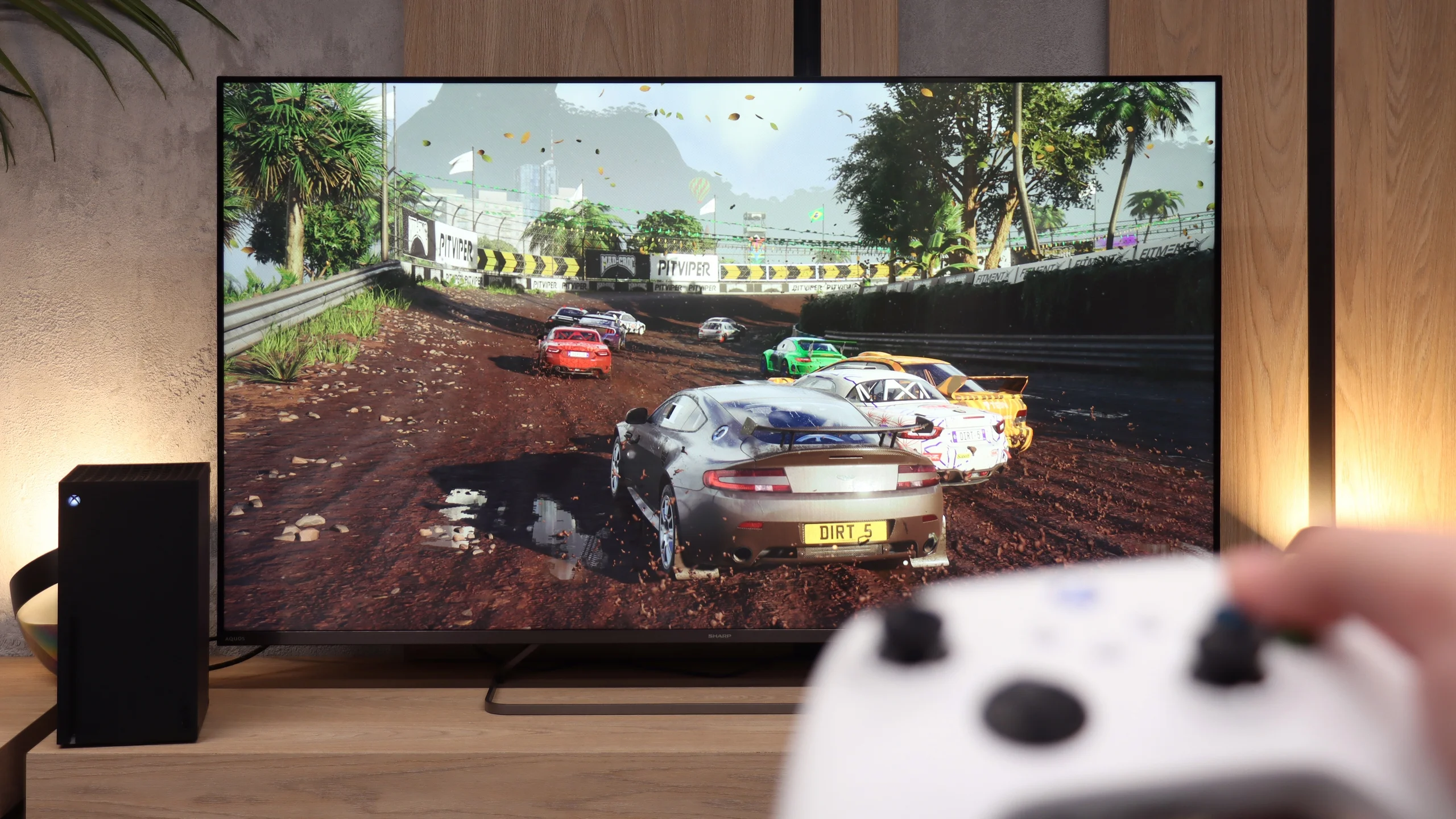
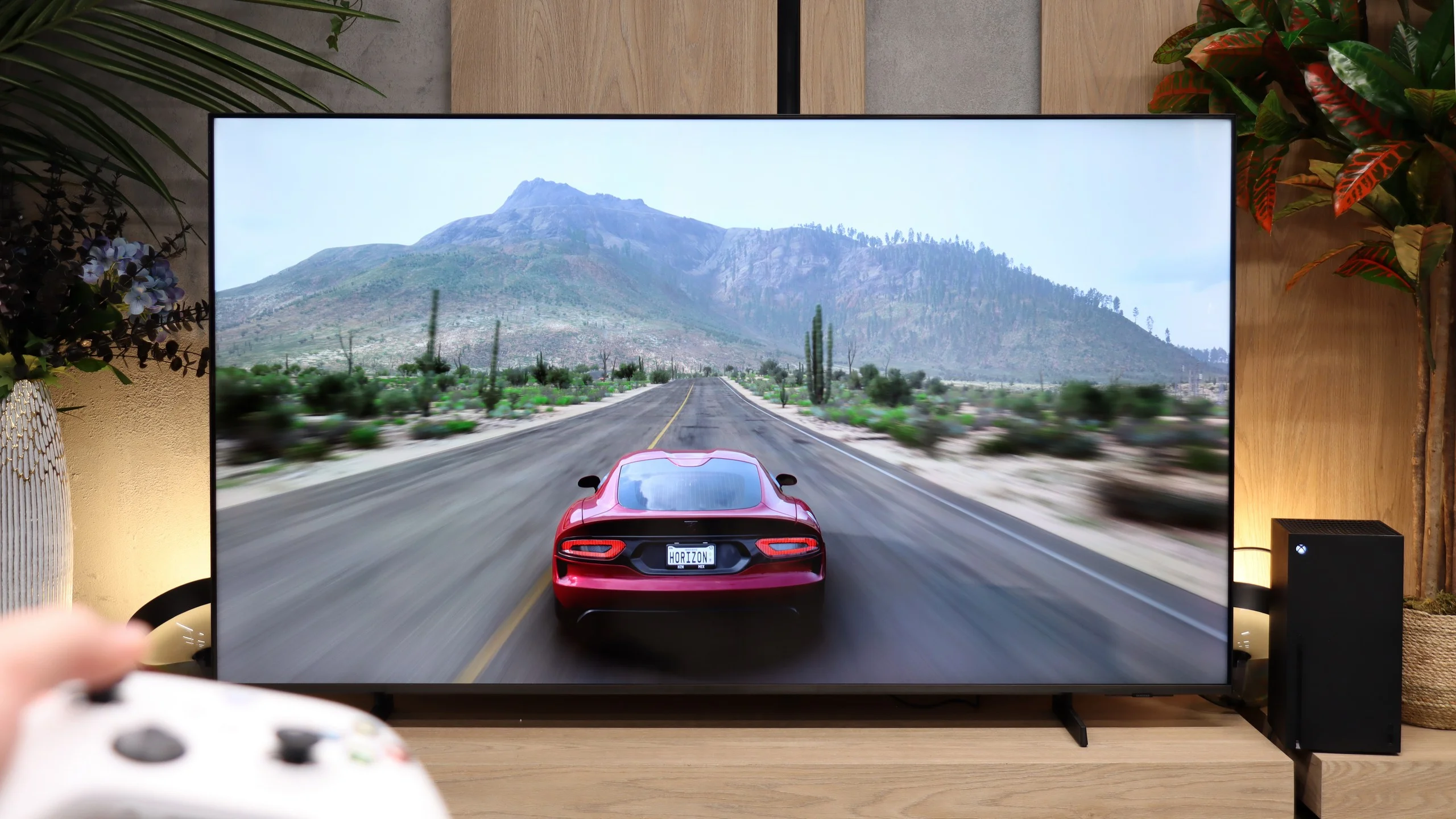
The panel also handles 120 Hz content well, which matters especially for console gaming. The high refresh rate is useful for watching sports too, and motion blur is relatively low. That’s important because VA panels are not known for the best results in this respect. With the M80H, fast-moving objects do not produce a very noticeable trail.

Console compatibility and gaming features

4/10

9.6/10

  • ALLM
    Yes
    Yes
  • VRR
    No
    Yes
  • VRR range
    No
    48 - 240Hz
  • Dolby Vision Game Mode
    Yes
    No
  • Correct implementation of HGIG
    No
    Yes
  • 1080p@120Hz
    No
    Yes
  • 1440p@120Hz
    No
    Yes
  • 4K@120Hz
    No
    Yes
  • Game bar
    Yes
    Yes

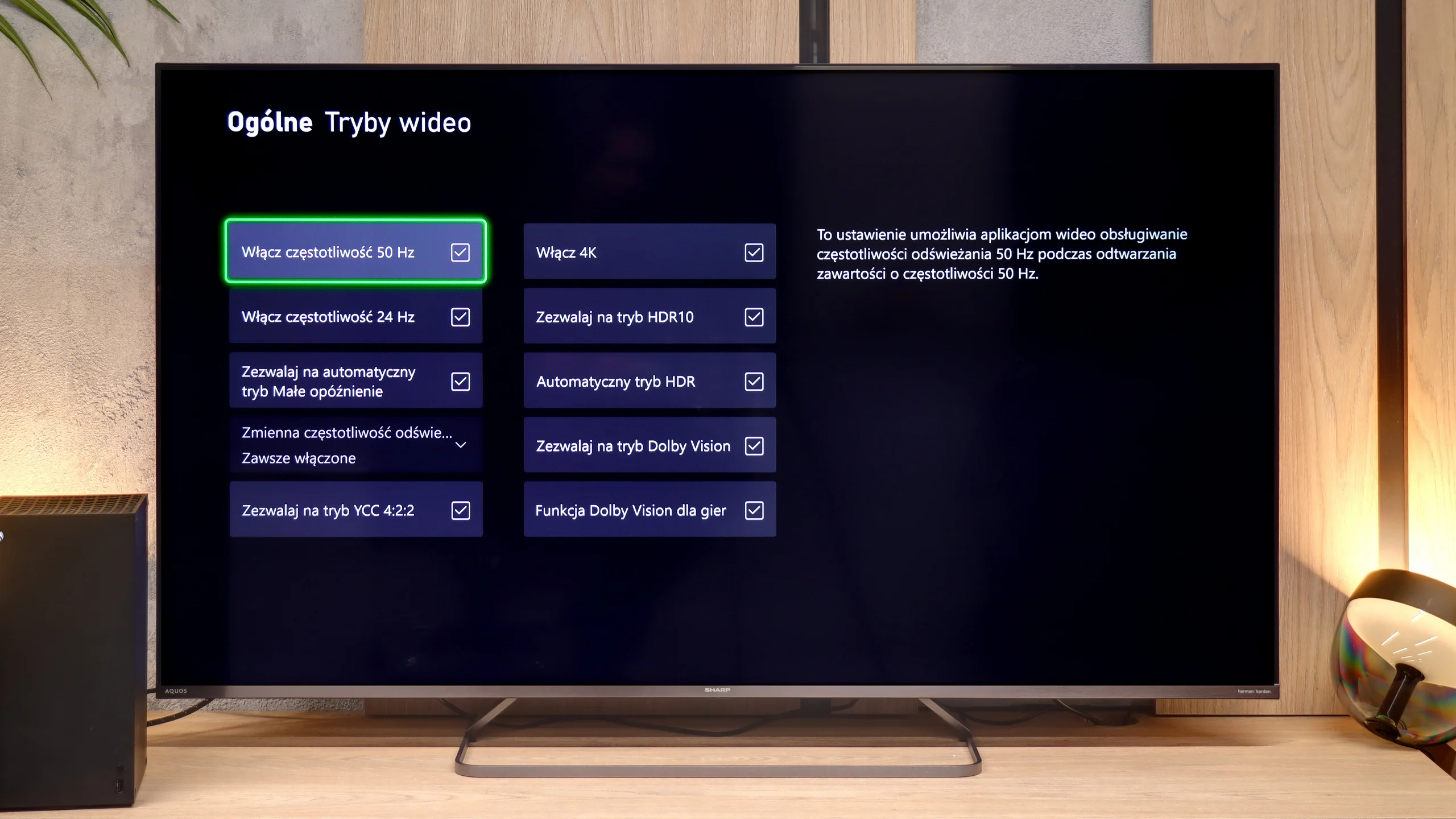
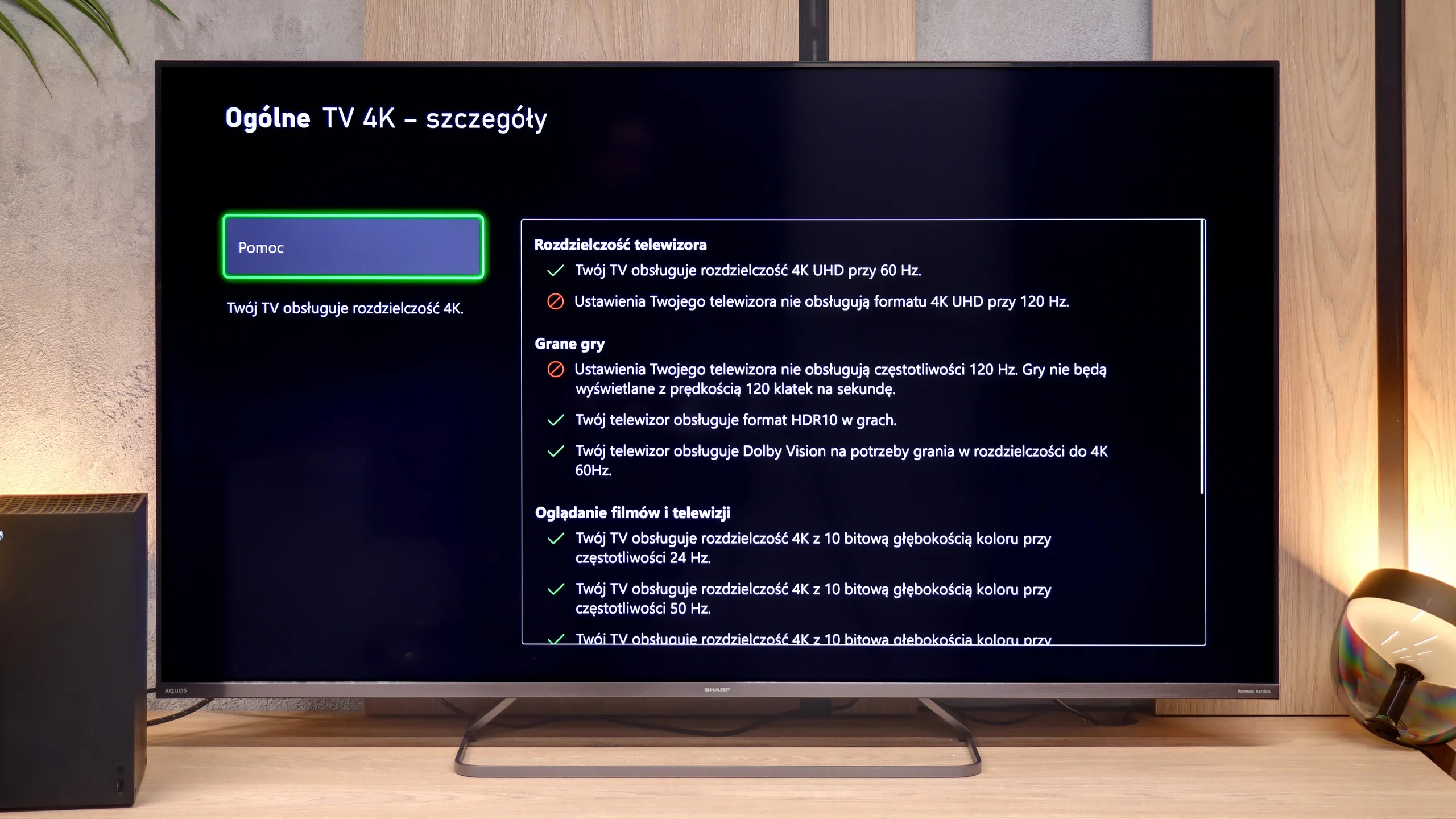
As we mentioned earlier, the 60Hz panel is not a feature that will attract gamers to the Sharp JP7. Perhaps for the casual gamer, whose console generates most titles at 60 frames per second, there might be something interesting? When it comes to specific additions, we find:

  • ALLM Mode: Automatically switches the TV to low latency game mode (input lag).

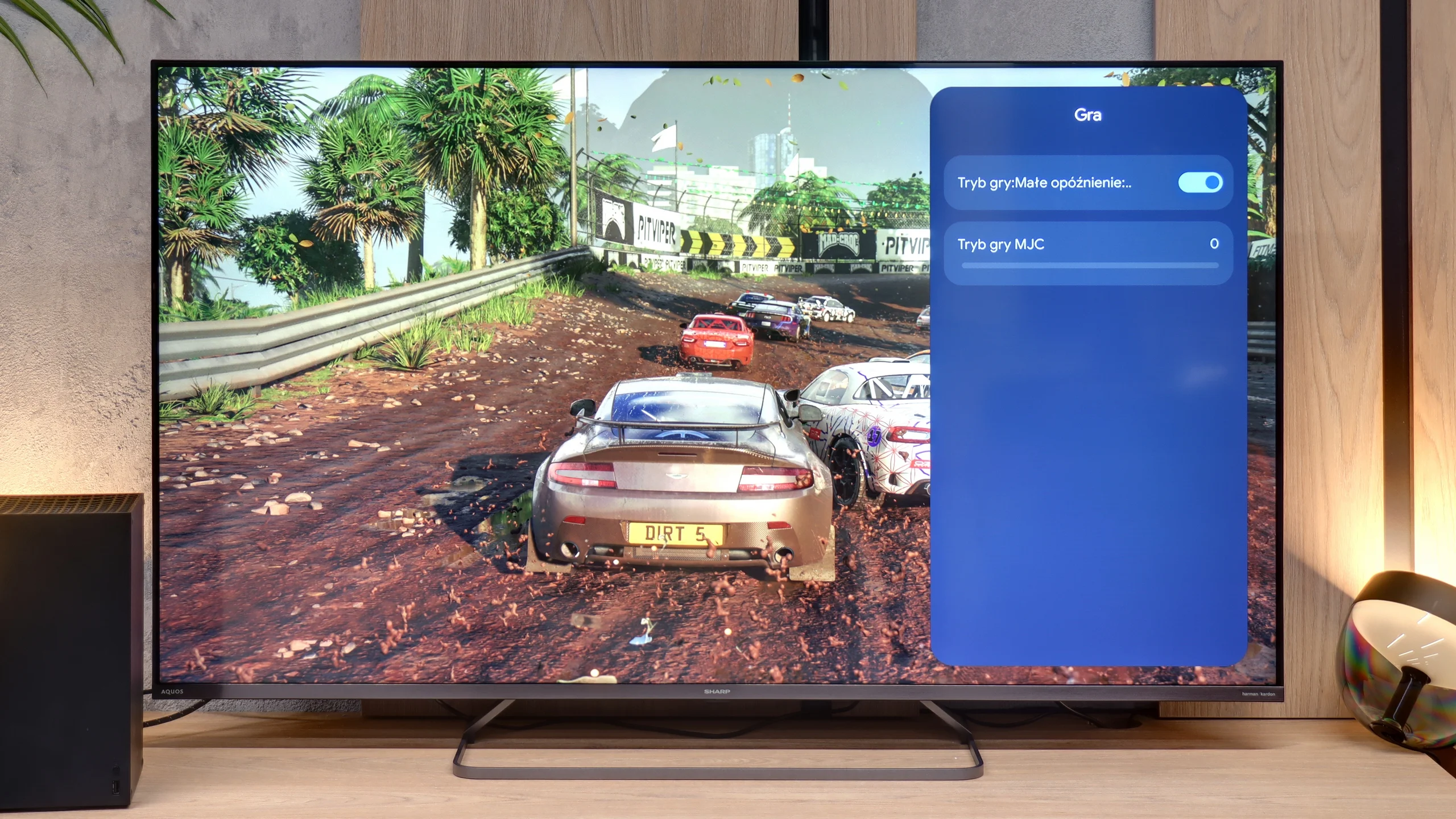
  • Game Menu: Which is hard to call a full-fledged “Game Bar,” as its functionality is minimal. Besides enabling ALLM, there is only a smoothness enhancer dedicated to games, which we recommend against because it introduces very noticeable artifacts and spoils the responsiveness.

  • Dolby Vision Gaming: For Microsoft's consoles.

Unfortunately, the list of shortcomings is much longer and more painful than the positives. The biggest disappointment is the lack of support for 120Hz, even when lowering the resolution to Full HD. The presence of 120Hz would allow for performance modes to be activated in many games on PS5 or Xbox Series X. Another absence is VRR, which means that during frame drops, we are susceptible to image tearing. The lack of proper implementation of the HGiG standard is also very problematic. This results in the fact that during HDR calibration in the console menu, it is very easy to “overshoot” the brightness settings. As a result, instead of clear details in highlights, we end up with an unnaturally over-brightened image with cut-off details. The Sharp JP7 is a proposal only for very casual gamers.

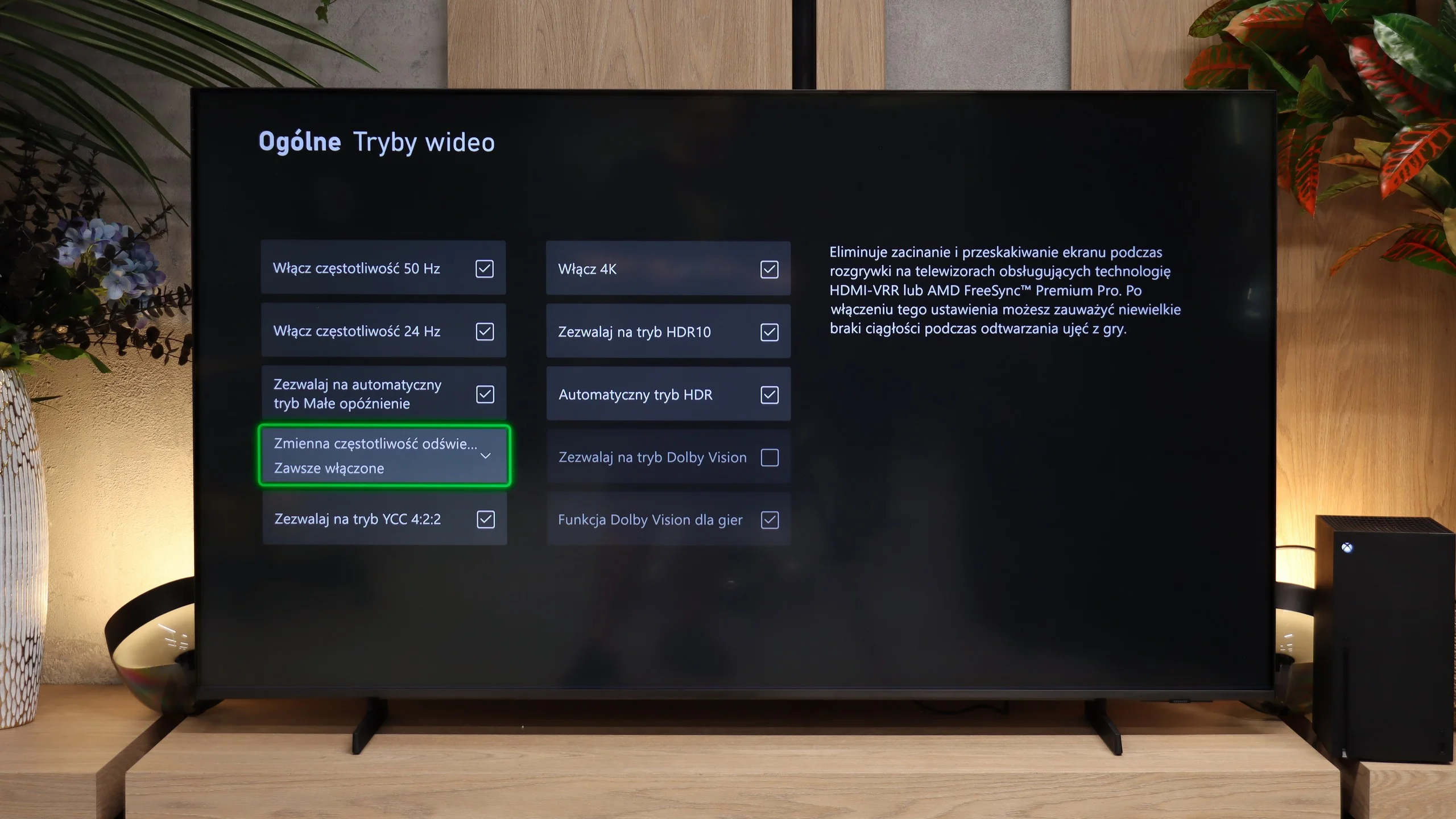
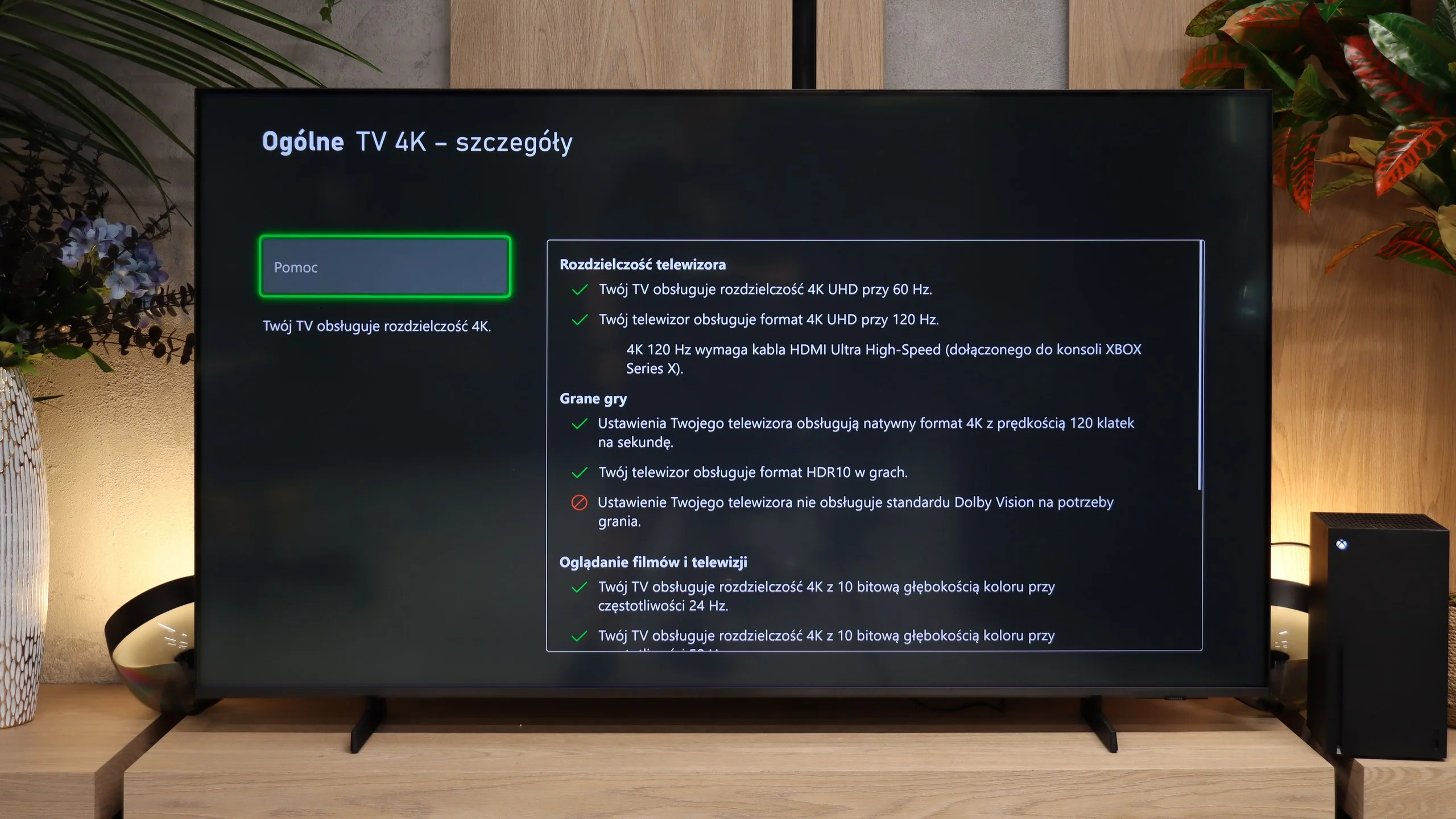
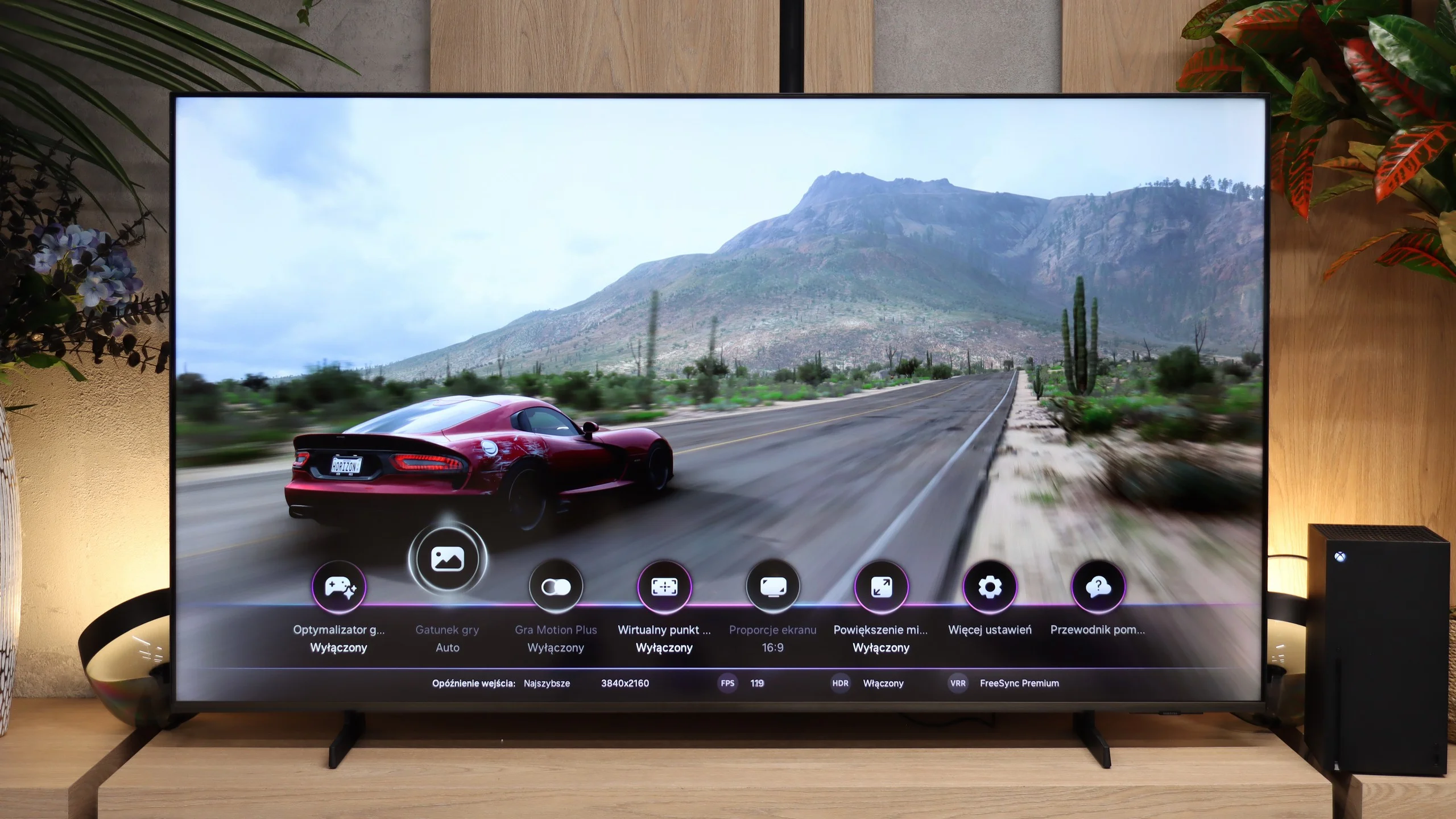
The M80H can be a very good choice for gamers on a slightly smaller budget. Feature-wise it offers essentially the same as Samsung's much more expensive TVs. All three HDMI inputs support HDMI 2.1, so even if one is taken by a soundbar connected via eARC there’s still room for a PC and consoles. There’s also VRR up to 144 Hz at 4K and up to 240 Hz in Full HD. Samsung has properly implemented HGiG as well, so after performing HDR calibration on the console, games are appropriately matched to the screen’s capabilities. That won’t make the M80H any brighter, but at least it won’t unnecessarily wash out the brightest parts of the image. There’s also a Game Bar for quick access to the most important settings and a Gaming Hub that lets you play in the cloud without a console. The M80H also includes Game Motion Plus, which creates extra frames and improves the smoothness of games running at 30 or 60 fps. Input lag then rises to about 59 ms, but it’s still roughly three times lower than with the typical motion smoothing on other manufacturers’ TVs. We don’t really recommend it for online multiplayer, but in more relaxed titles it can work very well.

Input lag

9.3/10

9.9/10

SDR

1080p60
13 ms
14 ms
1080p120
29 ms
10 ms
2160p60
13 ms
14 ms
2160p120
10 ms

HDR

2160p60
13 ms
14 ms
2160p120
9 ms
4320p60

Dolby Vision

2160p60 DV
13 ms
2160p120 DV

The issue of input lag in the Sharp JP7 is quite intriguing. In all 60Hz modes, the television boasts a result of just 13 ms. This is truly an excellent result, making the lag practically unnoticeable during gameplay. In this respect, Sharp has risen to the occasion, and even in dynamic titles, the controls remain responsive.

However, during our tests, we encountered a certain technical puzzle. Using our professional Murideo generator, we were able to force and measure the input lag at 120Hz refresh rate in Full HD resolution. This sounds promising, but in reality, it is merely a "paper" curiosity, as standard external devices such as consoles or computers were unable to force the Sharp to operate in such a mode. Although professional diagnostic tools see some hidden potential here, for the end user, the JP7 remains just a 60 Hz screen.

Input lag on the M80H is very low. With a 60 Hz signal it's about 14 ms, and at 120 Hz it drops to 9-10 ms. The lag is therefore practically imperceptible, whether you're playing in SDR or HDR.

Compatibility with PC

5/10

8.9/10

Chroma 444 (max. resolution and refresh rate)
Yes
Yes
Font clarity
Good
Very Good
Readability of dark text and shapes
Average
Very Good
Input lag in PC mode (4K, max. refresh rate)
13ms
10ms
Matrix subpixel arrangement
BGR
RGB
Max refresh rate
60Hz
144Hz
G-Sync
No
Yes

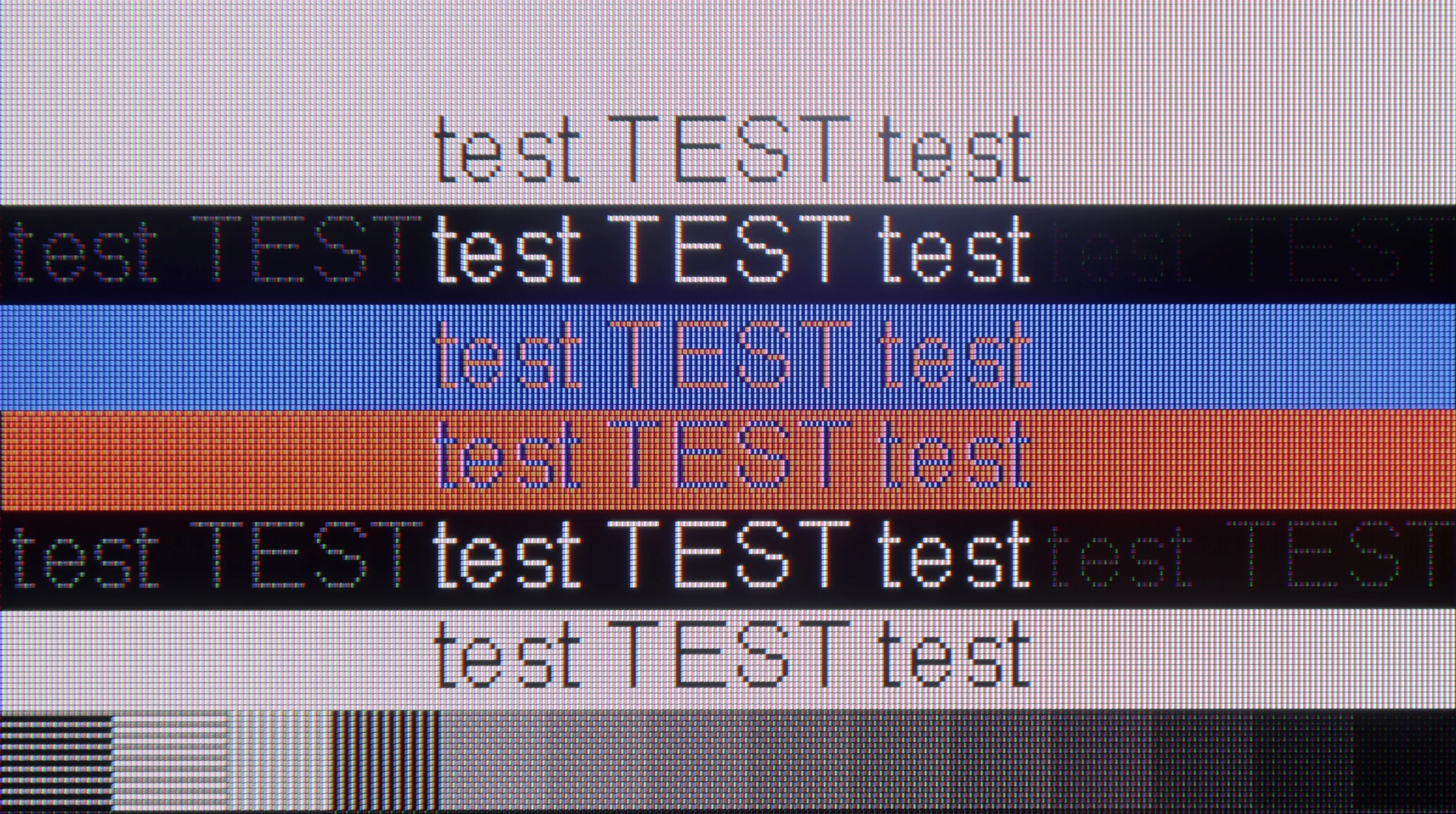
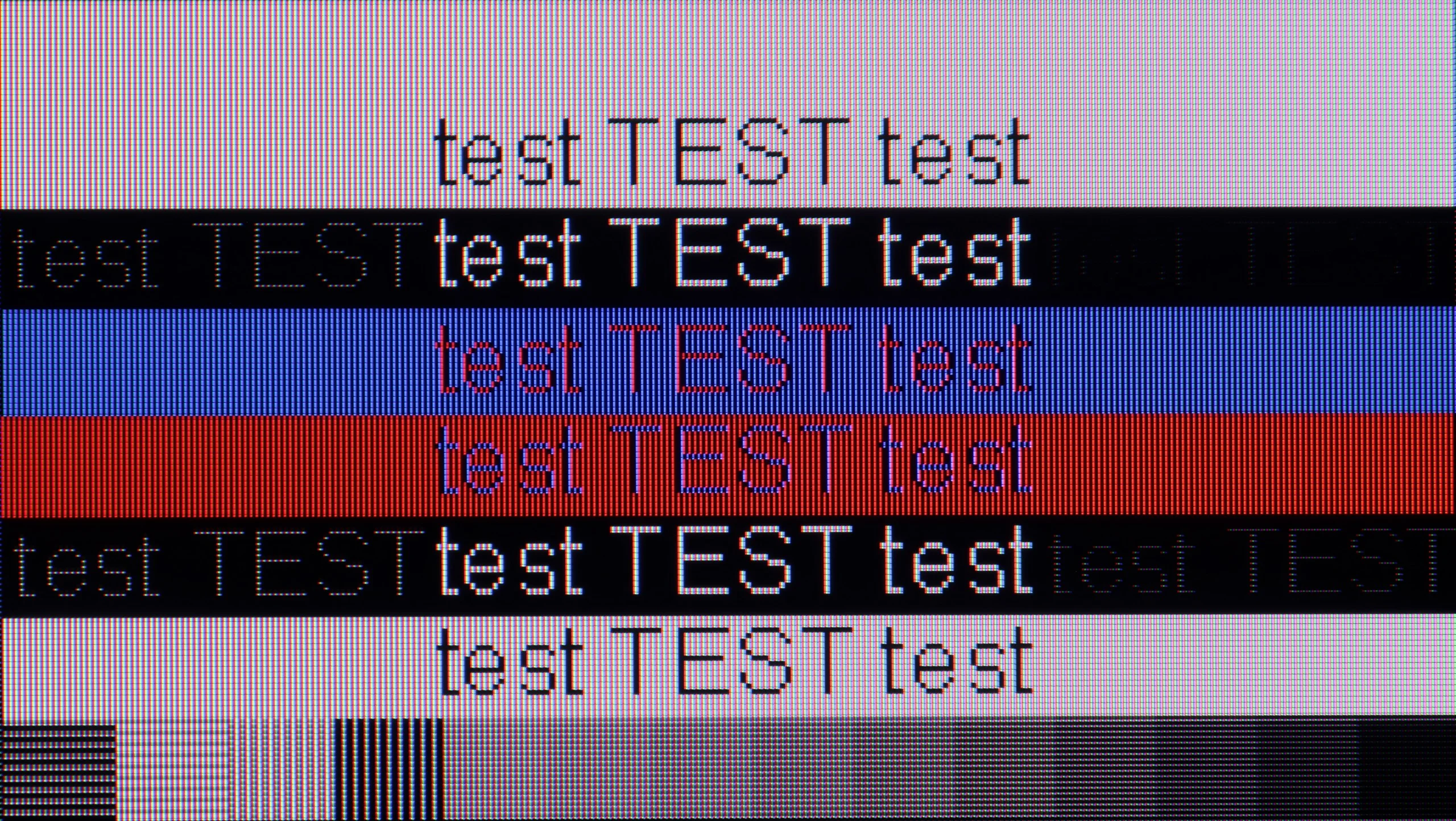
The photo shows the legibility of small fonts. Ideally, lines should be the same thickness on both light and dark text, with minimal pixel gaps.

The Sharp JP7 performs adequately as a monitor. Although the readability of standard fonts on a white or black background is acceptable, the sharpness clearly drops with darker and thinner text, which makes long work with text difficult. For occasional news browsing in a browser, this panel is sufficient; however, we strongly discourage using it as a permanent screen for PC gaming. Besides the rigid limitation to 60Hz, the TV does not support any form of frame synchronization (lack of G-Sync and FreeSync), which, combined with the enormous blurring of the panel, makes the user experience in dynamic scenarios simply poor.

The M80H also works very well as a computer monitor. Gamers can use 4K resolution at 144 Hz with VRR and G-Sync, and input lag in PC mode is about 10 ms. A Full HD mode at 240 Hz is also available. The TV correctly displays chroma 4:4:4 at the maximum resolution and refresh rate. Combined with a classic RGB subpixel layout, this provides very good font legibility for both light and dark text. The M80H is therefore suitable not only for gaming but also for everyday desk work.

Viewing angles

3.1/10

3.1/10

Brightness drop at an angle of 45 degrees
77%
84%

The Sharp JP7 uses a VA panel, which automatically means narrow viewing angles. It's a classic compromise: we get quite decent black levels and contrast, but at the expense of image degradation when viewed from the side. At an angle, the colors clearly fade and lose their saturation, so the JP7 is definitely a device meant for watching "straight on," rather than from the corner of the couch.

Viewing angles are one of the weaker points of the M80H. The TV uses a VA panel, which delivers better blacks and higher contrast than an IPS panel, but it looks worse when viewed from the side. Sit at a wider angle and colors start to lose saturation, blacks become noticeably lighter, and the whole image looks more washed out. That's a typical trade-off with this type of panel. The M80H is therefore best used when watched straight on or from only a slight angle.

Daytime performance

7.3/10

5/10

Panel finish
Satin
Satin
Reflection suppression
Decent
Decent
Black levels during daytime
Good
Good

Panel brightness

Samsung M80H: 345 cd/m2

SHARP JP7765E: 708 cd/m2

The satin coating used in the Sharp JP7 matrix effectively reduces reflections, although it is still far from fully matte. However, the true "game changer" in bright rooms is the brightness of the device itself with SDR content. An average score of 700 nits and peaks around 1000 nits is an outstanding result in the segment under 2000 PLN. Thanks to such high luminance, the television can easily handle even well-lit living rooms. One just needs to be cautious of direct reflections, e.g., from a window across, because the satin material used here will not eliminate them completely, but at this brightness, the image remains readable.

In a bright room the M80H performs adequately but without much fanfare. Its satin coating reasonably reduces reflections, though with large windows or lamps placed opposite the screen they will still be visible. The blacks are a plus; they don’t become excessively gray when the lights are turned on. SDR brightness is about 345 nits and remains stable regardless of the scene being shown. In a typical living room that should be enough for comfortable daytime viewing. In a room with very strong sunlight, however, the picture may not be vivid enough.

Panel details

Backlight Type
Mini-LED PFS LED
PFS LED
Software version during testing
UKN4.250714.091
1204
Image processor
MT5896 2GB RAM

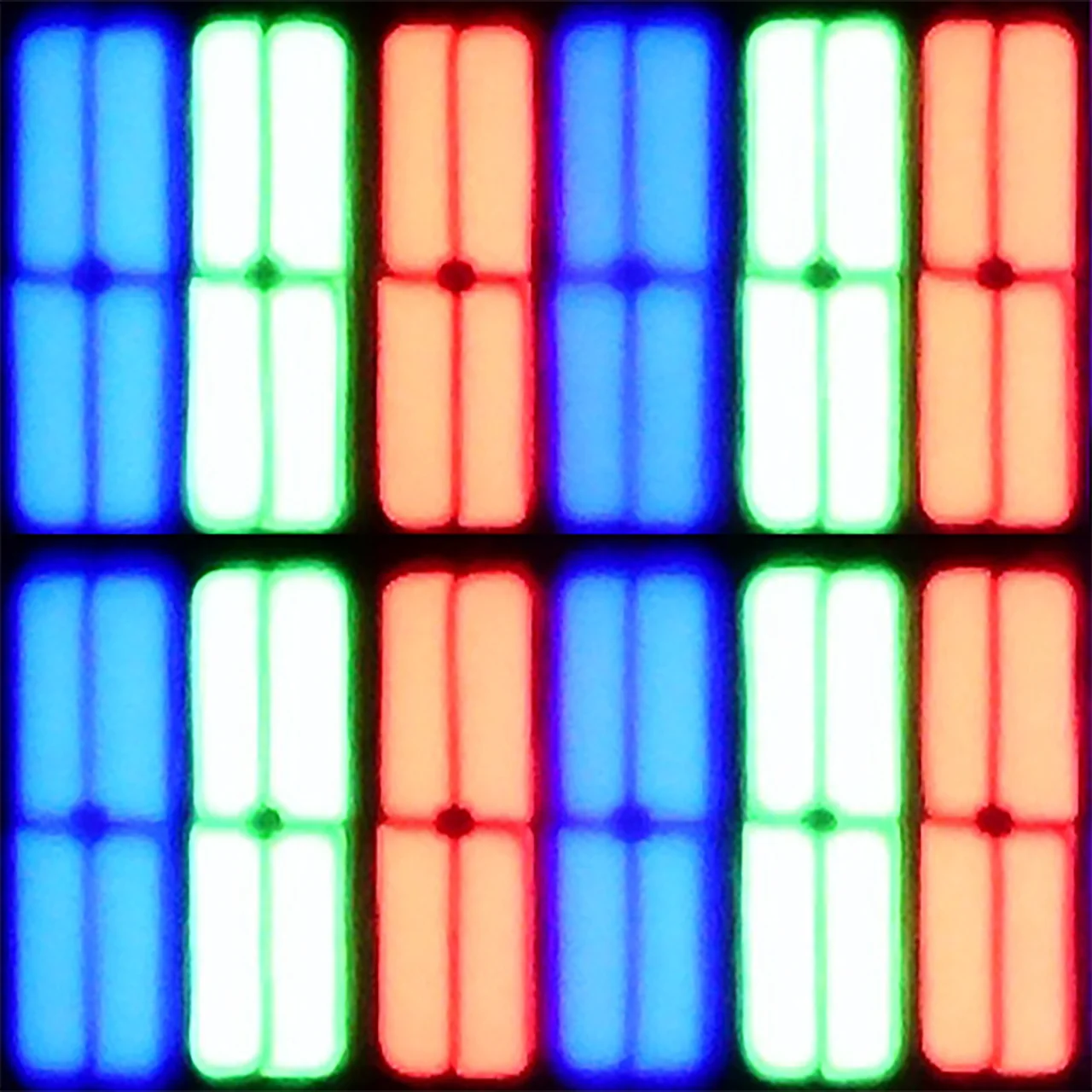
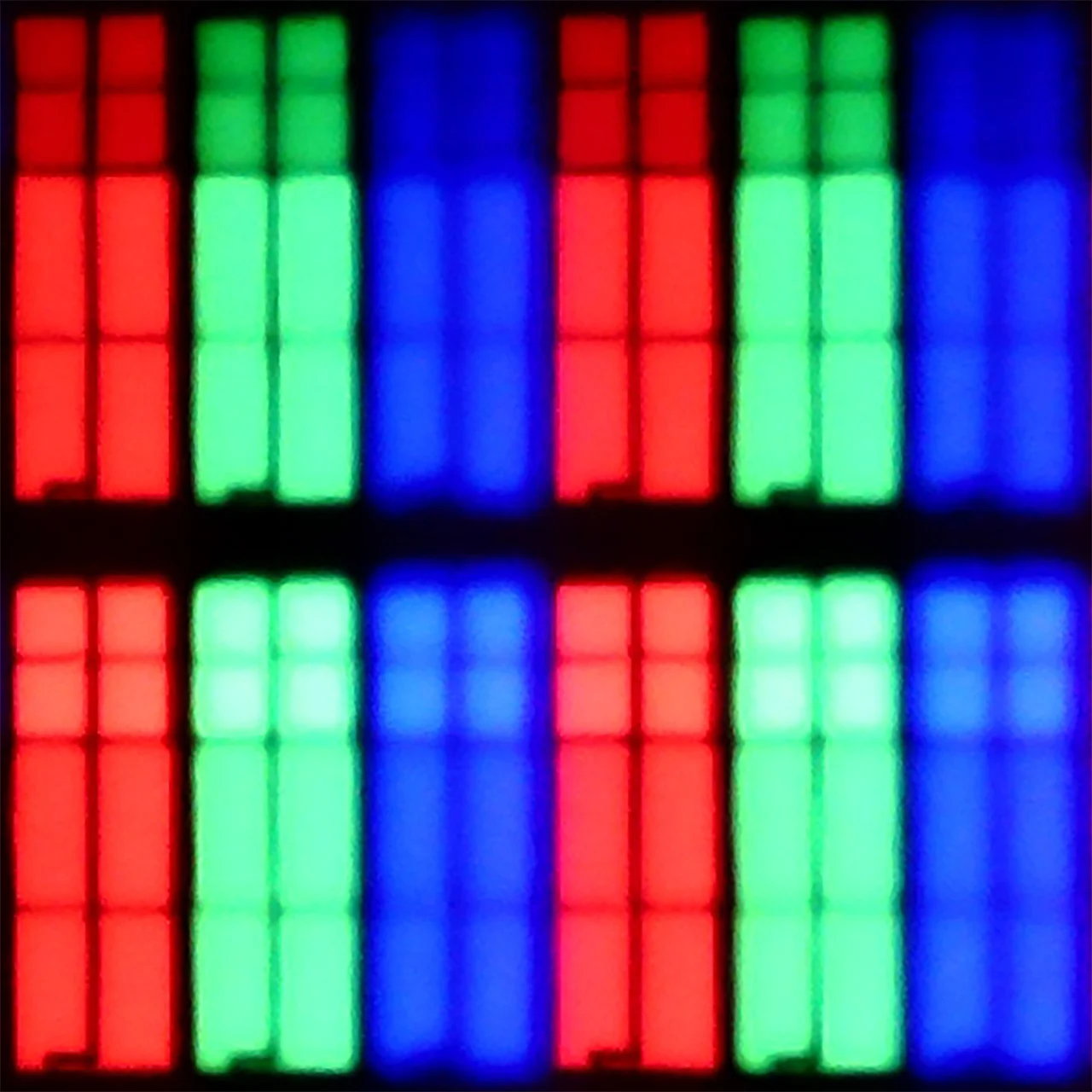
Subpixel Structure:

Panel uniformity and thermal imaging:

Review SHARP JP7765E TV Panel details
Review Samsung M80H TV Panel details

SHARP JP7765E

Samsung M80H

TV features

6.4/10

7.3/10

  • System
    Google TV
    Tizen
  • System performance
    Decent
    Very good
  • HDMI inputs
    4 x HDMI 2.0, 0 x HDMI 2.1
    0 x HDMI 2.0, 3 x HDMI 2.1 48Gbps
  • Other inputs
    RCA (Chinch)
  • Outputs
    Toslink (Optical audio), eARC (HDMI), ARC (HDMI), Mini-Jack (Headphones)
    eARC (HDMI), ARC (HDMI)
  • Network Interfaces
    Wi-Fi 2.4GHz, Wi-Fi 5GHz, Ethernet (LAN) 100Mbps
    Wi-Fi 2.4GHz, Wi-Fi 5GHz, Ethernet (LAN) 100Mbps
  • TV reception
    DVB-T, DVB-T2, DVB-S, DVB-S2, DVB-C
    DVB-T, DVB-T2, DVB-S, DVB-S2, DVB-C

Classic features:

  • Recording to USB (terrestrial TV)
    No
    No
  • Recording programming
    No
    No
  • Picture in Picture (PiP)
    No
    No
  • RF remote control (no need to aim)
    Yes
    Yes
  • Backlit remote control
    No
    No
  • Teletext
    Yes
    Yes
  • Audio only mode
    Yes
    Yes
  • Bluetooth headphones support
    Yes
    Yes
  • Simultaneous Bluetooth headphones & TV audio
    Yes
    Yes

Smart features:

  • AirPlay
    No
    Yes
  • Screen mirroring (Windows Miracast)
    Yes
    Yes
  • Voice search
    Yes
    Yes
  • Voice search in native language
    Yes
    Yes
  • Ability to connect a keyboard and mouse
    Yes
    Yes
Review SHARP JP7765E TV features
Review Samsung M80H TV features

Sound connection options

  • HDMI audio
    eARC (HDMI), ARC (HDMI)
    eARC (HDMI), ARC (HDMI)
  • Other audio outputs
    Toslink (Optical audio), Mini-Jack (Headphones)
  • Wireless audio
    Bluetooth
    Bluetooth

Supported audio formats (external HDMI eARC audio):

  • Dolby Digital Plus 7.1
    Yes
    Yes
  • Dolby True HD 7.1
    Yes
    Yes
  • Dolby Atmos in Dolby Digital Plus (JOC)
    Yes
    Yes
  • Dolby Atmos in Dolby True HD
    No
    Yes
  • DTS:X in DTS-HD MA
    No
    No
  • DTS-HD Master Audio
    No
    No

Senior accessibility

  • Numeric keyboard on TV
    Yes
    No
  • Font size adjustment
    Yes
    Yes
  • Audio description
    Yes
    Yes

Smart TV Features - Google TV

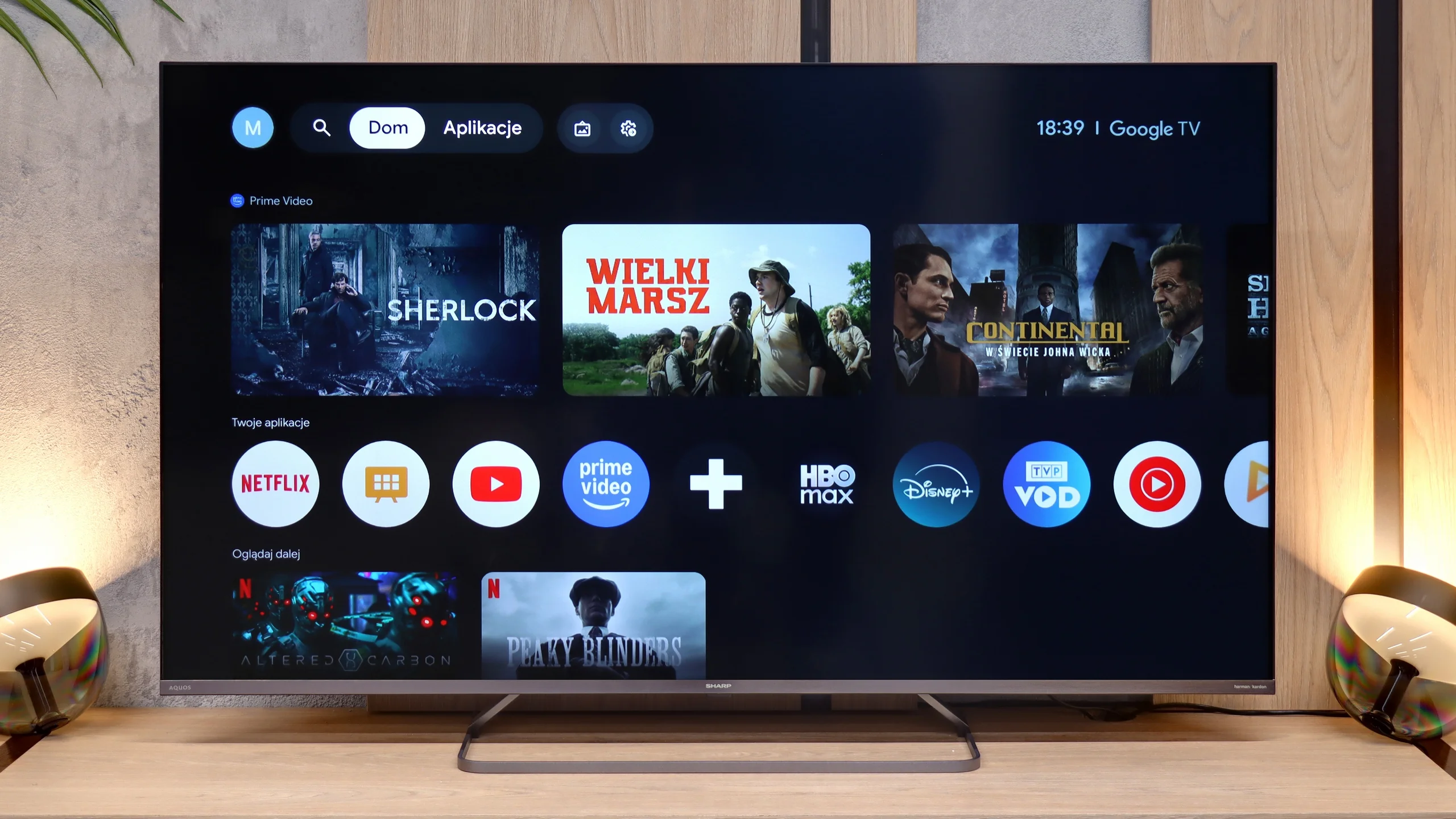
The main advantage of the Sharp JP7 is the Google TV system, which at this moment offers the widest access to applications on the market. The library is almost unlimited – from all popular streaming services to niche VOD solutions or media players. The system provides great freedom of personalization and access to the latest versions of popular platforms. In the package, we get a Bluetooth remote that allows using the built-in voice assistant without having to point at the TV. The only significant lack in the multimedia sphere that we encountered is the absence of AirPlay support. Users of Apple devices, such as the iPhone or iPad, will not be able to directly and wirelessly stream content to the screen of this Sharp.

Classic Features and Connections

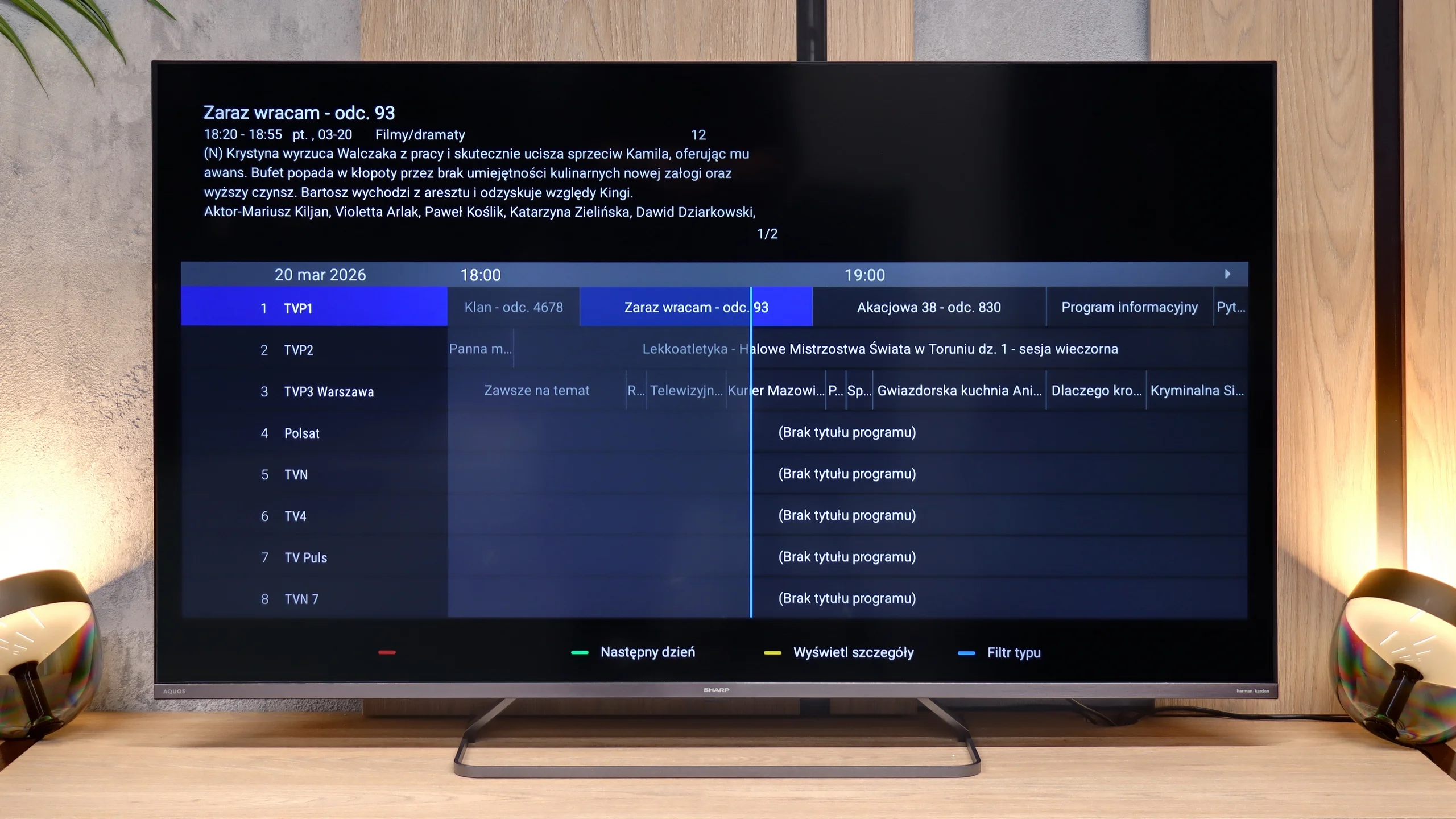
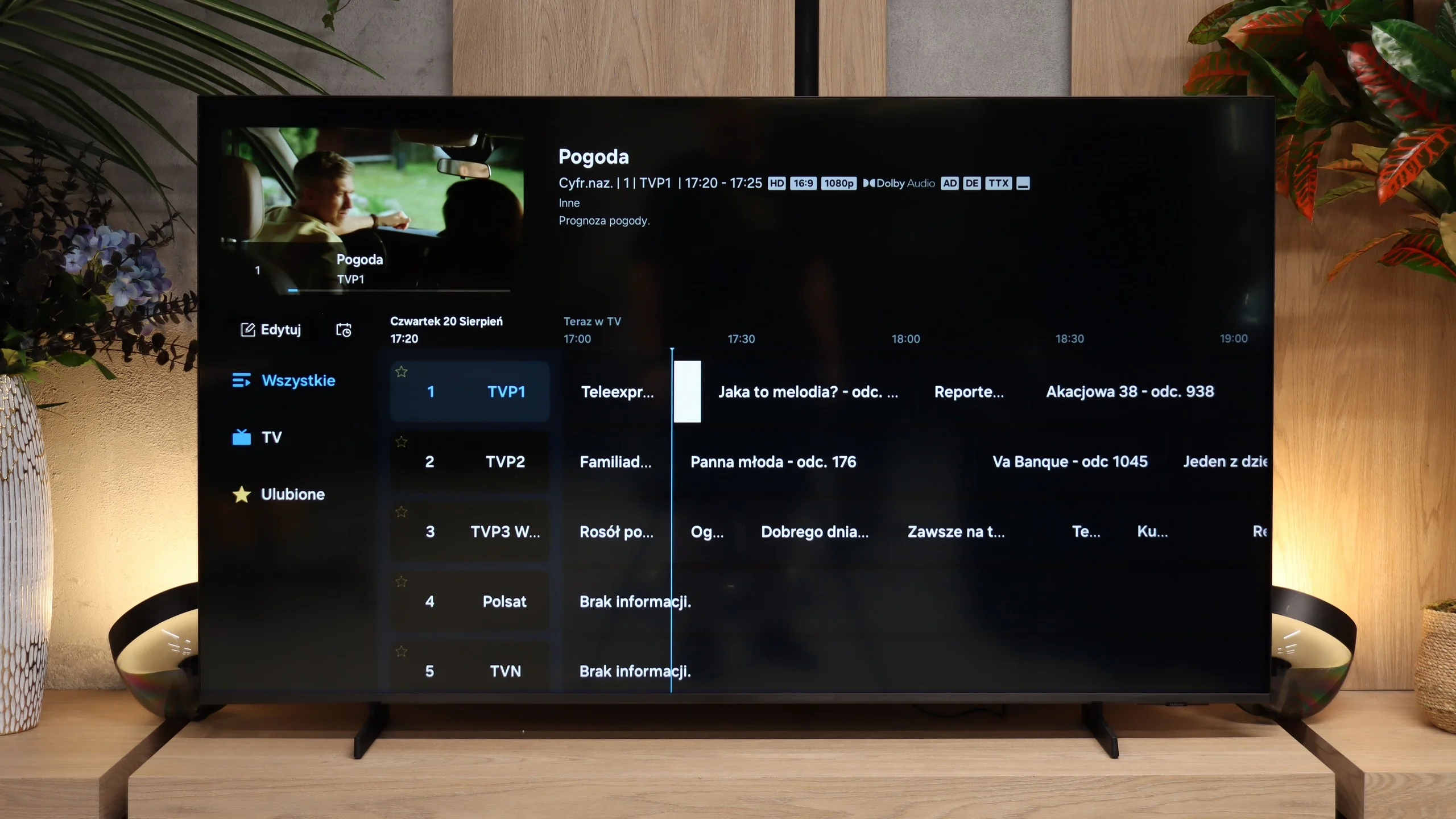
Regarding traditional television features, the Sharp JP7 offers nothing beyond the market standard. It lacks the ability to record programs to external storage (PVR) and a dual tuner, which excludes the use of the picture-in-picture (PiP) function. The TV only provides basic solutions, such as teletext and the ability to wirelessly connect accessories via Bluetooth.

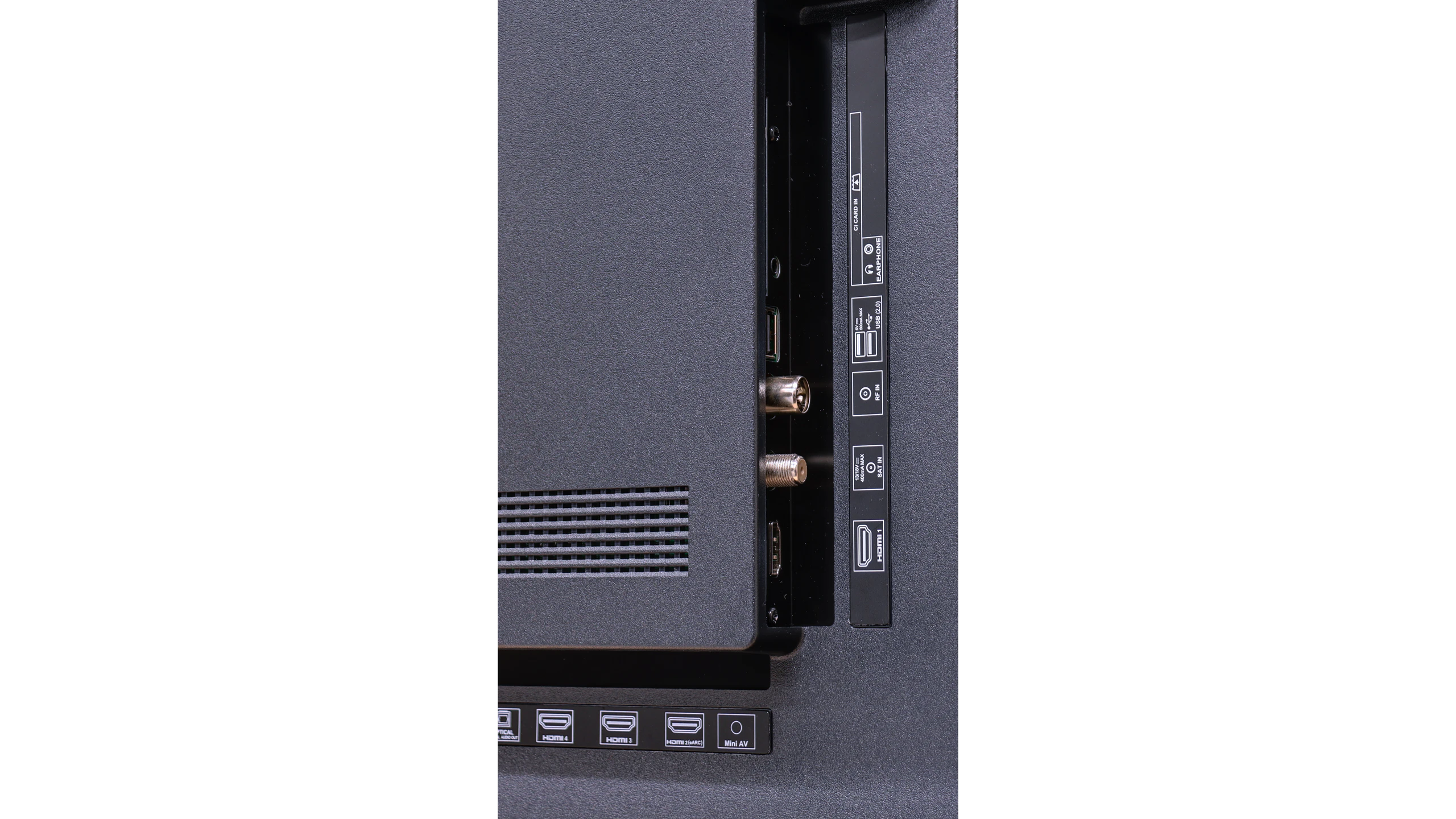
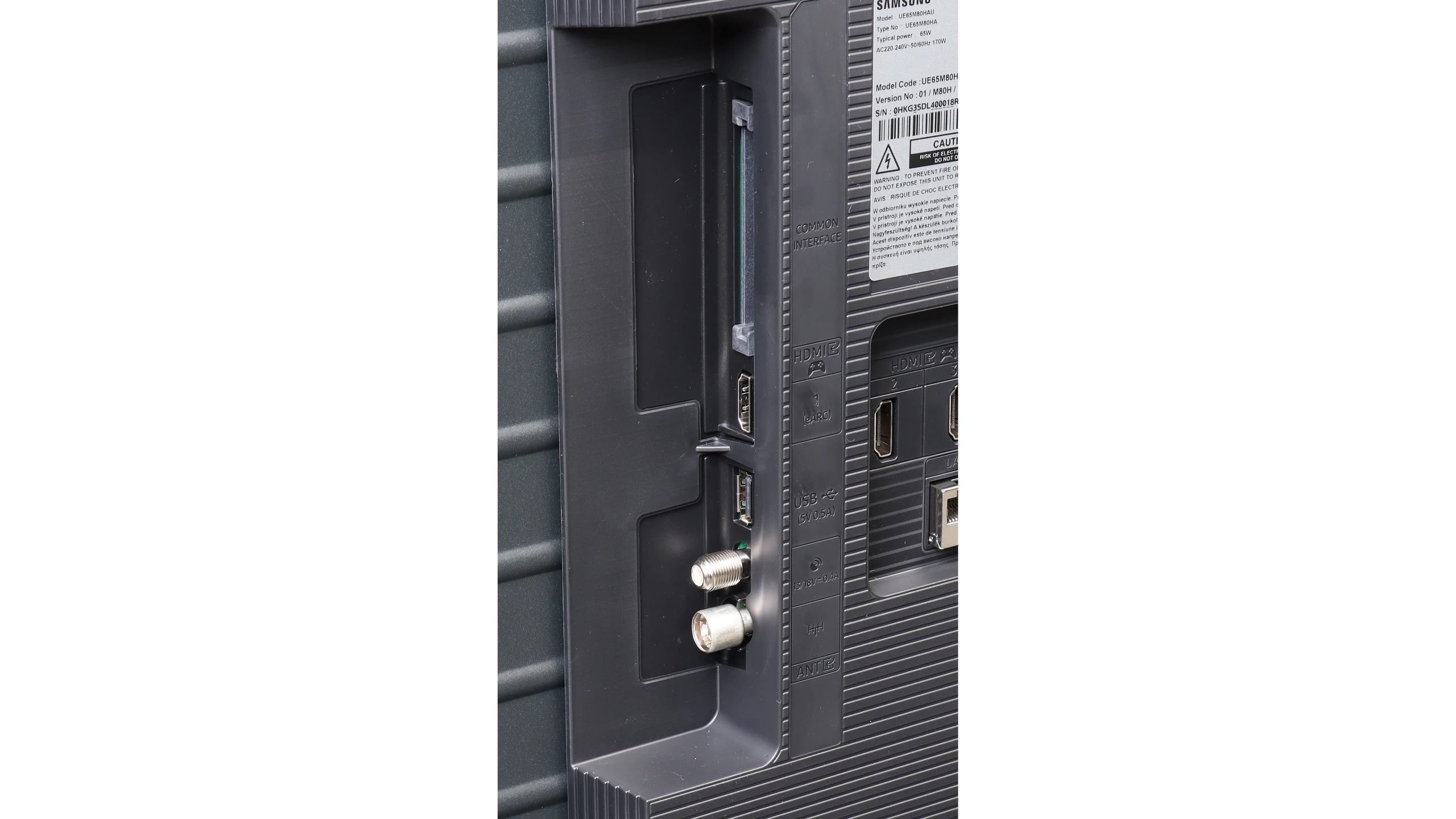
As for the connections, the Sharp JP7 offers 4 HDMI ports, which the manufacturer proudly describes as standard 2.1. However, it must be made clear: this is a purely marketing move because in practice these ports only offer full functionality of standard 2.0 due to the limitations of the television. However, it is a plus that there is a classic mini-jack headphone output, which allows connecting older audio sets or speakers without the need for adapters or the HDMI eARC standard. This is quite a rare and very practical addition lately.

Smart TV system

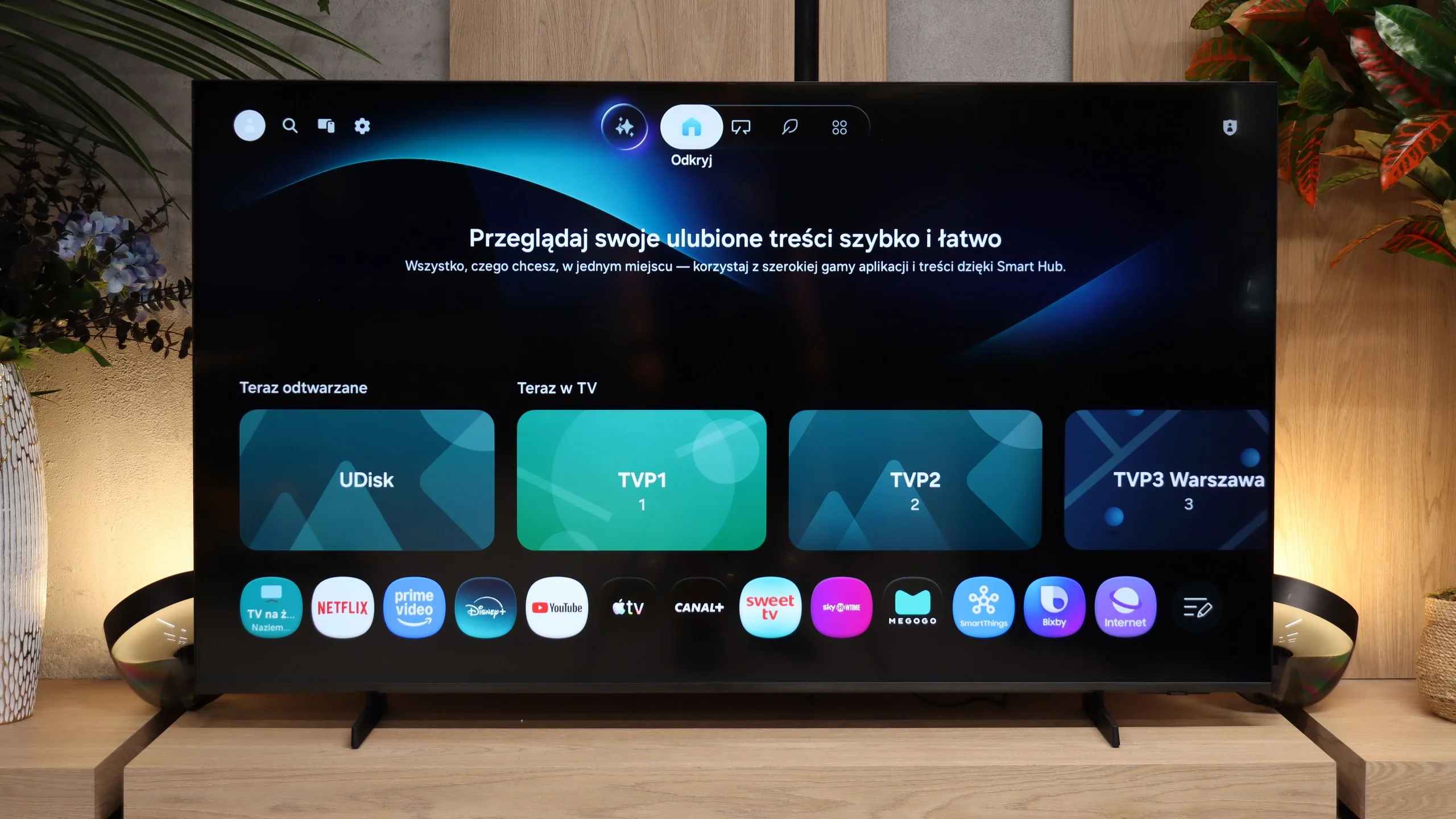
The M80H runs Tizen, the same system used across Samsung TVs. It's fast, stable, and offers all the most popular streaming apps, so you don't have to worry that a lower-tier model would be missing any major services. It also supports AirPlay, Miracast, and voice search. The TV works with SmartThings, so you can use it to control smart home devices.

TV features

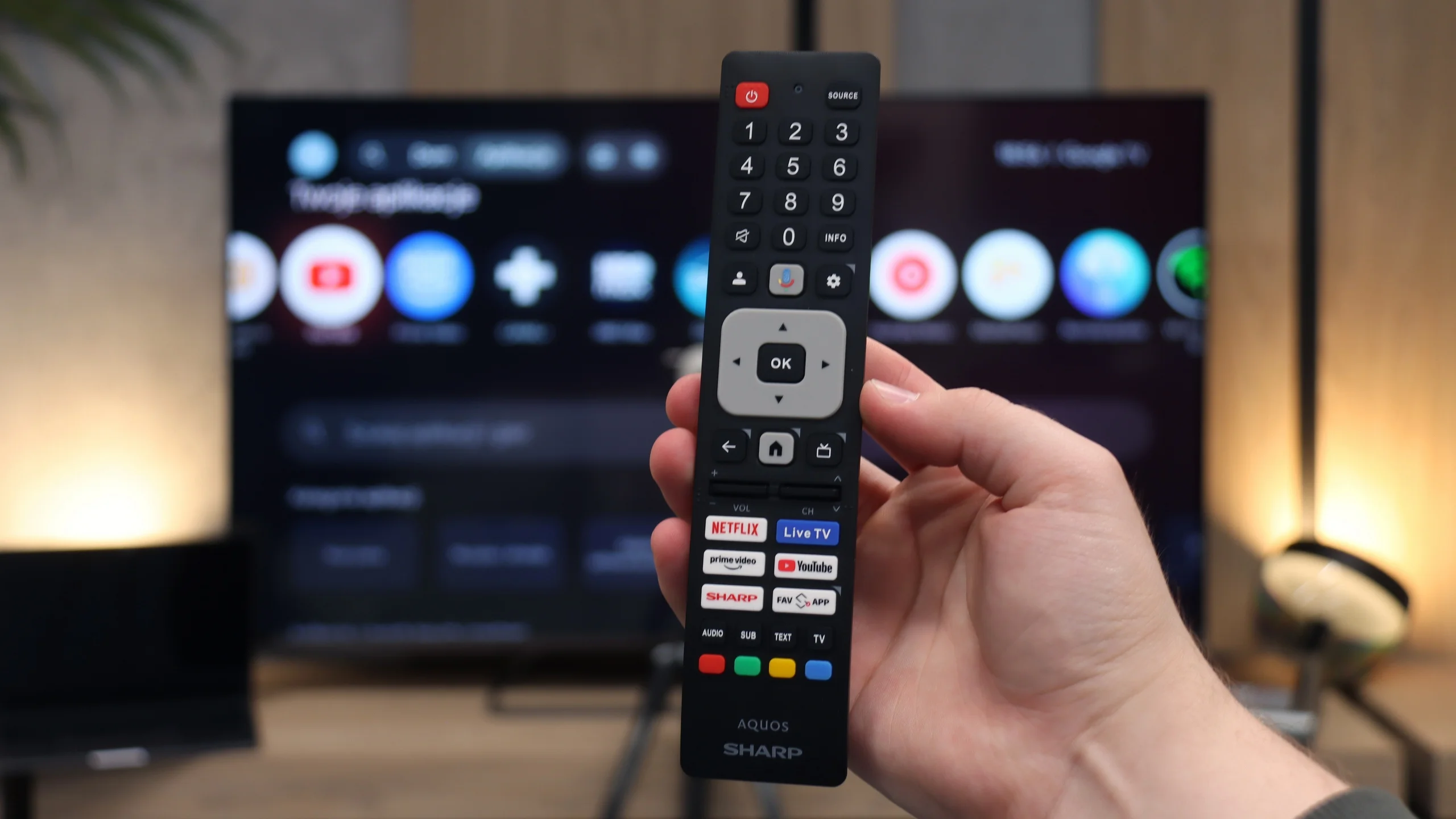
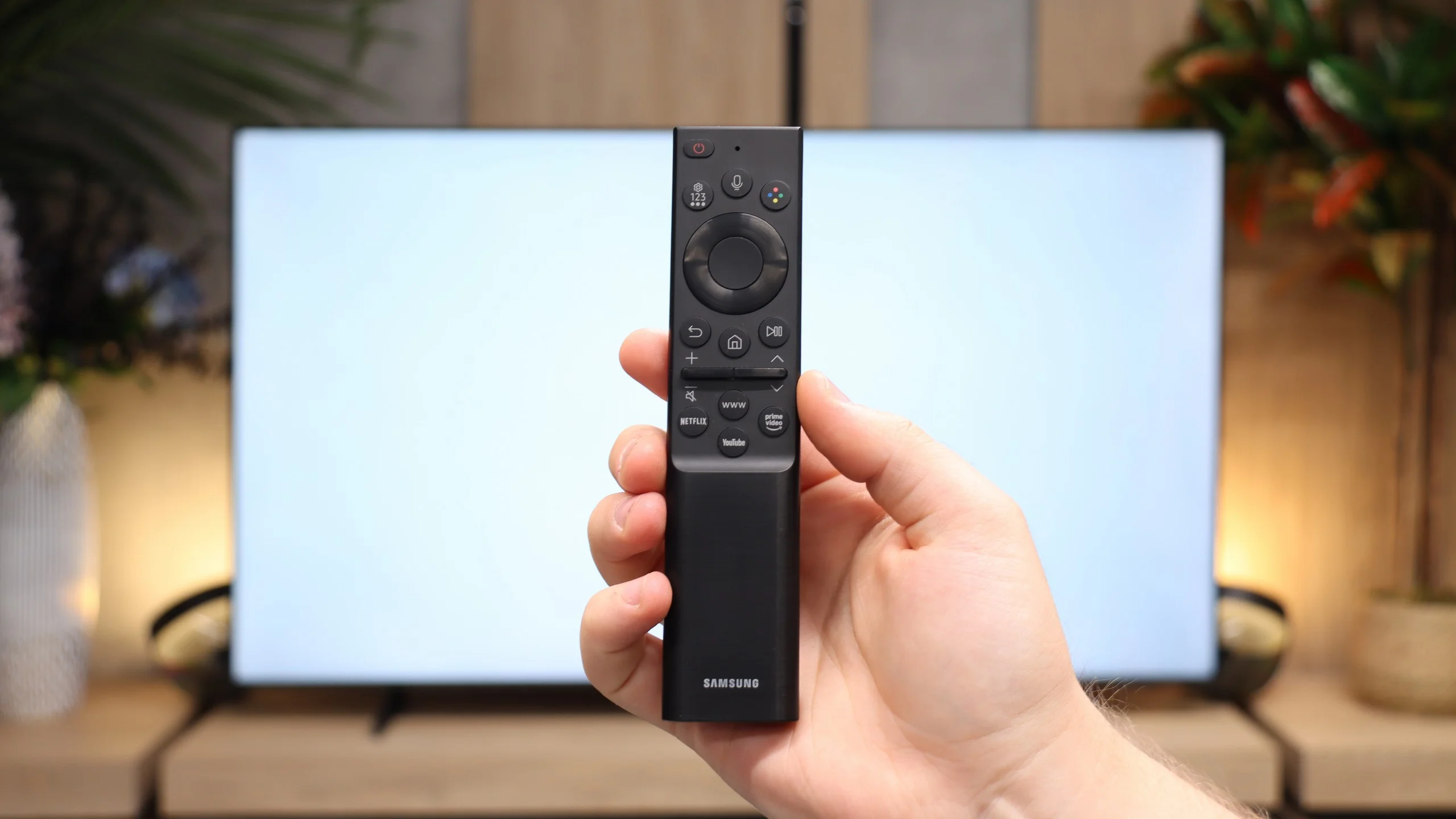
Conventional TV features are weaker. The M80H doesn't allow recording programs to a USB drive or scheduling recordings. It also lacks picture-in-picture. On the plus side, it keeps the basics, like teletext and the ability to turn off the screen while leaving the audio playing. You can connect Bluetooth headphones to the TV, and audio can play simultaneously through them and the built-in speakers. That's useful if one viewer needs higher volume, for example seniors. The TV comes with a simple Smart remote with a limited number of buttons. Unfortunately it's not the solar-powered version found on some other Samsung models, and the remote uses regular batteries. Fortunately it connects to the TV via radio, so you don't need to point it directly at the screen.

Apps

9.6/10

9.3/10

OK
Disney_Plus
OK
Amazon_Prime_Video
OK
Player_TVN
OK
Polsat_Box_Go
OK
Canal_Plus_Online
OK
TVP_VOD
OK
Apple_TV_Plus
OK
SkyShowtime
OK
Rakuten
OK
CDA_Premium_Browser
OK
Spotify
OK
Tidal
OK
Netflix
OK
YouTube
OK
HBO_MAX
OK
Kodi
No
Apple_music
OK
Eleven_sports
No
Xbox Game Pass
OK
GeForce NOW
No
Amazon Luna
OK
Boosteroid
OK
Steam Link
OK
Disney_Plus
OK
Amazon_Prime_Video
OK
Player_TVN
OK
Polsat_Box_Go
OK
Canal_Plus_Online
OK
TVP_VOD
OK
Apple_TV_Plus
OK
SkyShowtime
OK
Rakuten
OK
CDA_Premium_Browser
OK
Spotify
No
Tidal
OK
Netflix
OK
YouTube
OK
HBO_MAX
No
Kodi
OK
Apple_music
OK
Eleven_sports
OK
Xbox Game Pass
OK
GeForce NOW
OK
Amazon Luna
OK
Boosteroid
No
Steam Link

Playing files from USB

9.4/10

9.1/10

Supported photo formats:

JPEG
Yes
Yes
HEIC
Yes
No
PNG
Yes
Yes
GIF
Yes
No
WebP
Yes
No
TIFF
No
No
BMP
Yes
Yes
SVG
No
No

Maximum photo resolution:

4 Mpix
Yes
Yes
6 Mpix
Yes
Yes
8 Mpix
Yes
Yes
10 Mpix
Yes
Yes
12 Mpix
Yes
Yes
16 Mpix
Yes
Yes
20 Mpix
Yes
Yes
24 Mpix
Yes
Yes
28 Mpix
Yes
Yes
32 Mpix
Yes
Yes

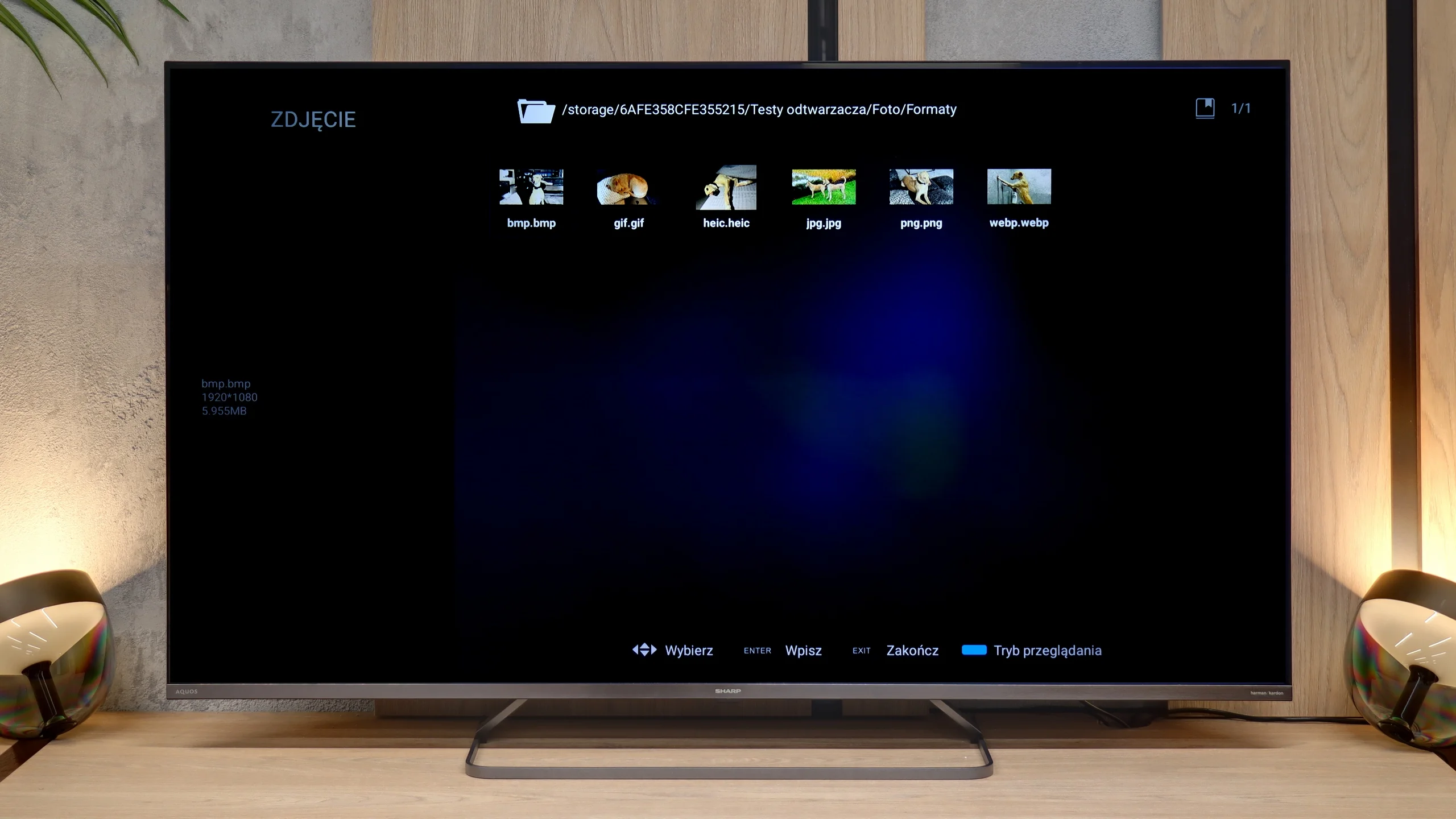
When it comes to media playback from external sources, the Sharp JP7 performs simply exceptionally. The built-in player is a true surprise, as it handled virtually every file format we provided. It even managed to support the HEIC format (primarily used in Apple devices), which most televisions struggle with. Here, Sharp displayed photos without the slightest hiccup. Of course, a significant advantage is the presence of the Google TV system, which allows for the installation of external applications like VLC or Kodi in case of any issues. In our opinion, however, this will be an unnecessary measure because the factory player is refined and versatile enough to satisfy even the most demanding users.

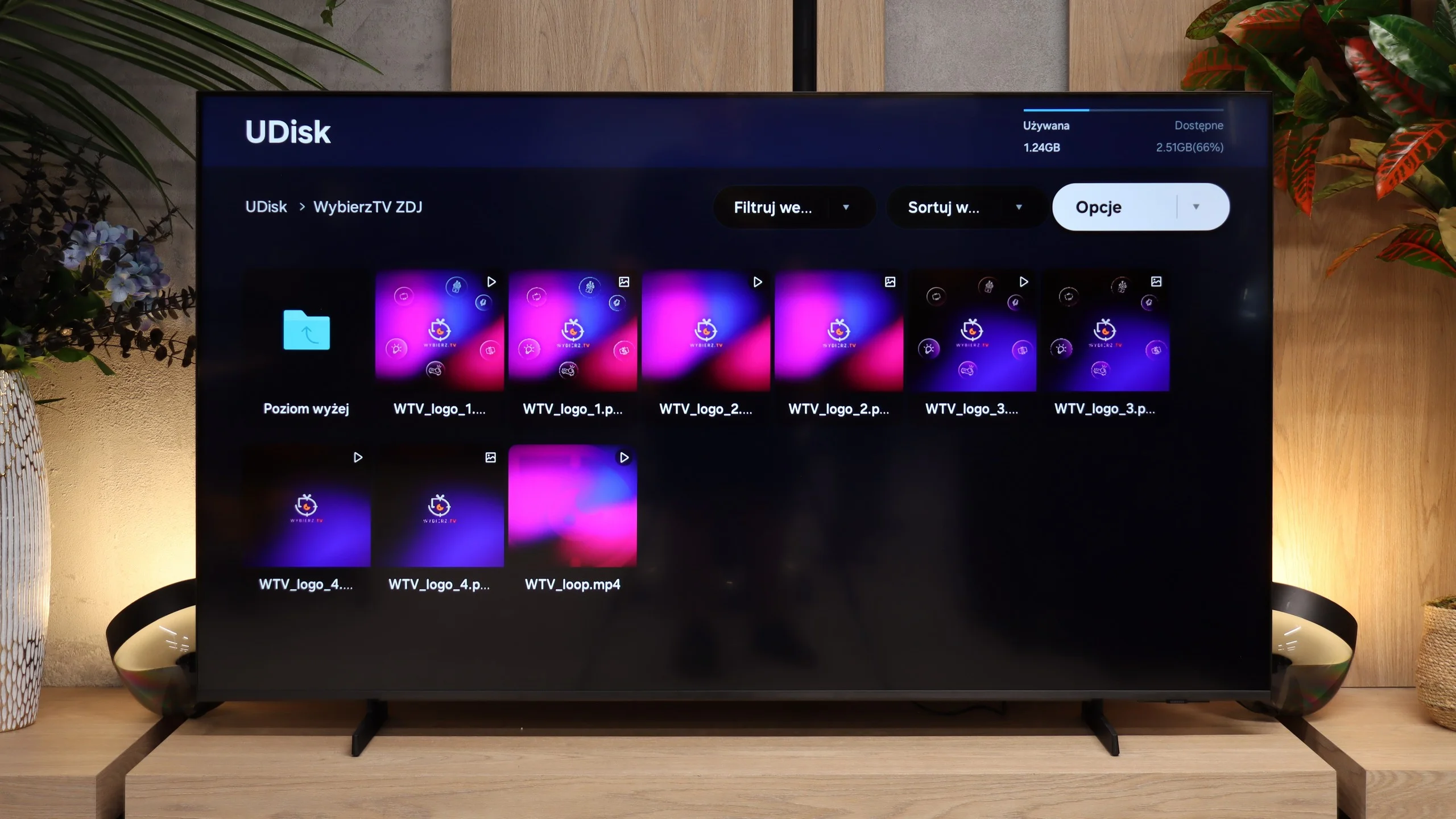
The built-in USB player handles most popular video and photo formats. It easily displays JPEG, PNG, and BMP files, even in high resolution. However, it lacks support for HEIC, the format used, among others, by iPhones. In practice this probably won’t be a big issue, because the M80H supports AirPlay and most people will likely use that to show vacation photos on the TV. 😉

Sound

6/10

6/10

  • Maximum volume
    89dB
    88dB
  • Dolby Digital Plus 7.1
    Yes
    Yes
  • Dolby True HD 7.1
    Yes
    No
  • Dolby Atmos in Dolby Digital Plus (JOC)
    Yes
    Yes
  • Dolby Atmos in Dolby True HD
    No
    No
  • DTS:X in DTS-HD MA
    No
    No
  • DTS-HD Master Audio
    No
    No

The sound produced by the JP7765E model can be described as atypical, and even – looking at our measurements – rather peculiar. What stands out first is the enormous volume scale. The TV can reach a level of almost 90 decibels (89 dBC on the chart), which is almost a record result in this class. Such strong "loudness" will certainly appeal to seniors or people who need a device with a very high volume.

However, a glance at the frequency chart explains why the sound seems so "strange." The characteristic is extremely uneven: we have a solid boost in the lower registers (around 200 Hz) and in the high tones, but the mid-range – where most of the information about the human voice is located (between 500 Hz and 1.5 kHz) – experiences a huge drop. This makes the sound unnatural and can seem "recessed" at key moments in dialogues.

On the plus side, we have support for the Dolby Atmos format. However, it must be honestly admitted that to truly feel the potential of this system, it will be necessary to connect at least a decent soundbar. The JP7's own speakers, although very loud, cannot deliver the cinematic depth and precision that this standard requires.

The M80H is equipped with a 2.0 speaker setup with 20 W of power. It performs adequately but doesn't stand out compared with TVs with similar audio systems. Dialogue is clearly audible and the speakers themselves don't add noticeable distortion. However, it definitely lacks bass, so music in particular can sound flat. If you want a somewhat fuller sound, consider a simple soundbar and connect it via HDMI eARC. The TV can also pass through Dolby Atmos audio that way. However, note that the M80H has no optical output, so you can't connect older audio equipment using that method.

Sound Quality Test

Acoustic Measurements

89dBC (Max)

75dBC

88dBC (Max)

75dBC

Reader comments

Comments are provided by the external service Disqus (Zeta Global). Once loaded, Disqus may set cookies and process data about your activity.

We will remember your choice on this device. Provider's privacy policy