 Direct comparison
The Sharp GR8 is a television created primarily for those who expect a maximally smooth image. It is somewhat of a successor to the FQ8 model, and it's clear that the manufacturer has strongly focused on the dynamics of motion. 144 Hz makes a difference – and not just in games. Sports broadcasts can also look stunning, without those annoying blurring or "stutters" that can detract from the enjoyment of watching. In terms of image quality, Sharp has opted for a VA panel. While there is no local dimming, one can still count on pleasant contrast. Additionally, there's Dolby Vision, which gives evening movie screenings depth – even if the television does not reach the brightness promised by the manufacturer. It must be said that when the lights in the room are dimmed, the overall presentation is truly pleasing to the eye. One of the biggest advantages of the GR8 is Google TV. We have access to a full range of applications, voice search in Polish, and a simple, intuitive interface. This means we are not limited to the standard functions of the television, as there is always the possibility to install additional programs and customize the system to our own needs. Of course, a few things could have been refined. The declared HDR brightness is higher on paper than in reality, which may leave the most demanding cinema enthusiasts wanting more. Additionally, a few useful features known from other models are missing: there is no USB recording or PiP function, and Apple device owners will be disappointed by the lack of AirPlay. Nevertheless, this is a television primarily aimed at those who value smooth images and high refresh rates. If we primarily care about dynamic gameplay and good support for games, and in the evenings we want to quietly watch a movie with pleasant image quality, the Sharp GR8 should meet those expectations.
- Matching (Score) |
- Our verdict |
- TV appearance |
- Where to buy |
- Contrast and black detail |
- HDR effect quality |
- Factory color reproduction |
- Color reproduction after calibration |
- Smoothness of tonal transitions |
- Image scaling and smoothness of tonal transitions |
- Blur and motion smoothness |
- Console compatibility and gaming features |
- Input lag |
- Compatibility with PC |
- Viewing angles |
- Daytime performance |
- Panel details |
- TV features |
- Apps |
- Playing files from USB |
- Sound
GR8765E / GR8465E / GR8265E

S Mini 2026
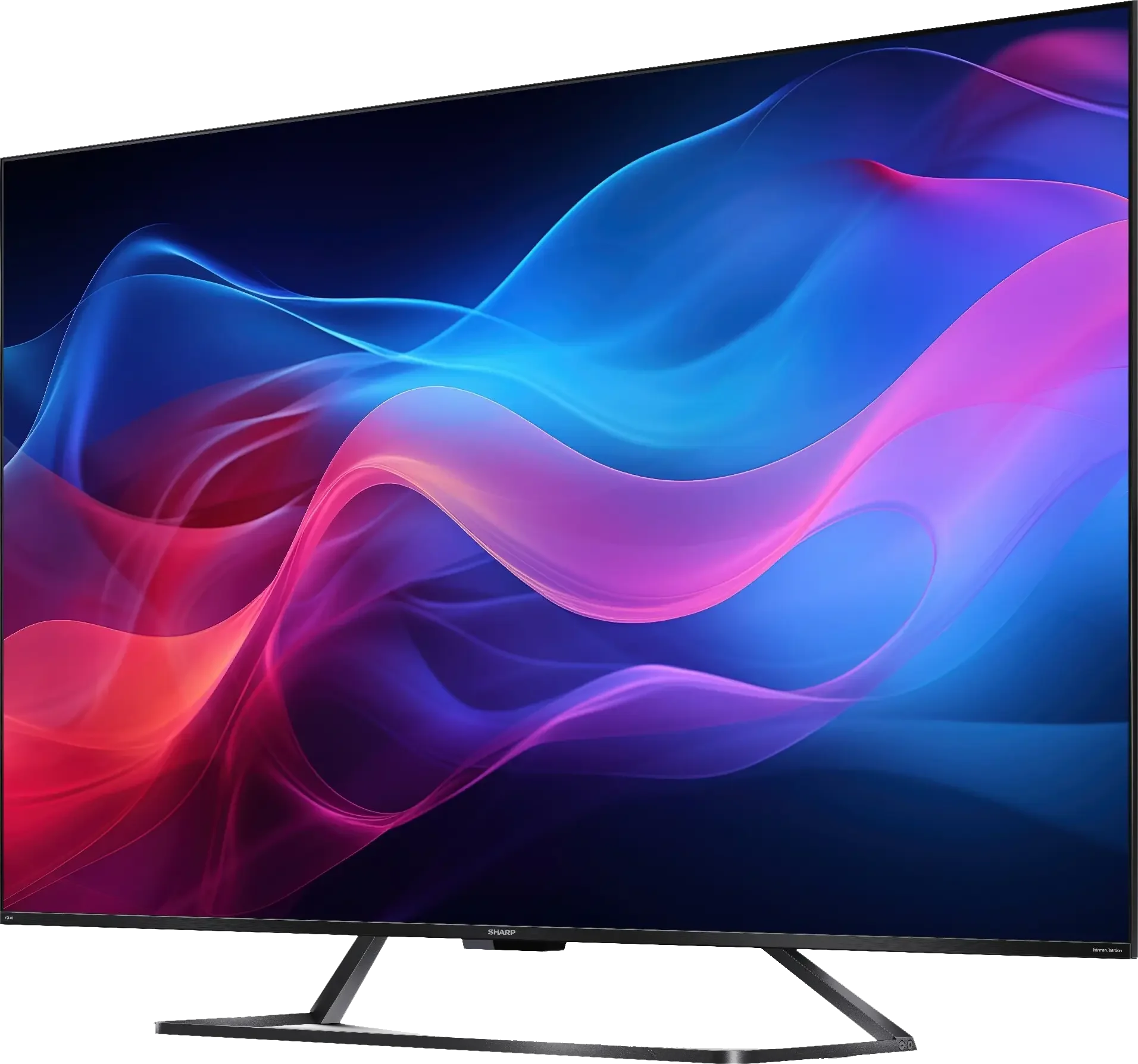
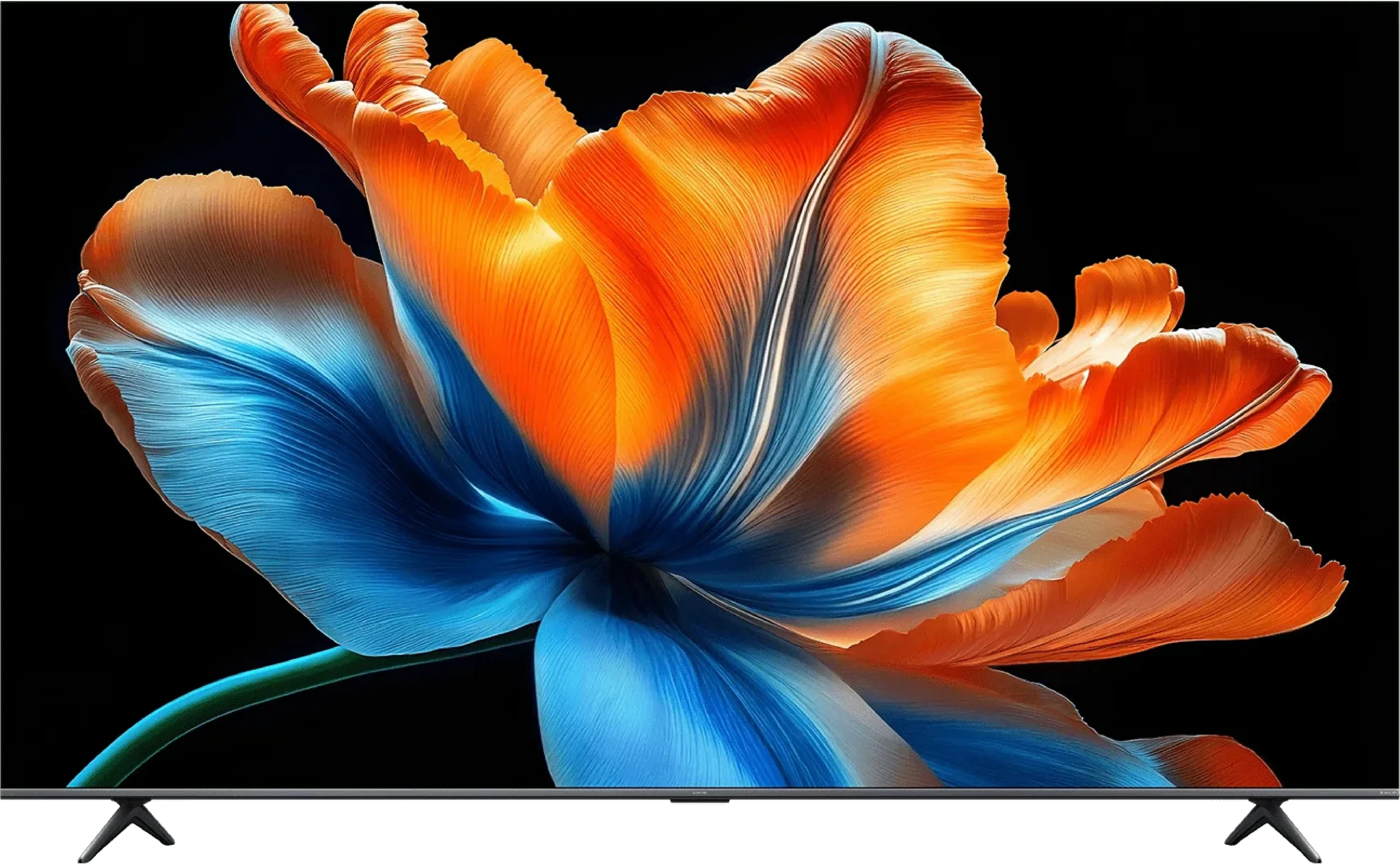
Panel type: LCD VA
Resolution: 3840x2160
System: Google TV
Model year: 2024
Panel type: LCD VA
Resolution: 3840x2160
System: Google TV
Model year: 2026
Check how well they match your needs
Take the surveyOverall rating
6.4
6.2
 Movies and series in UHD quality
6.2
6.2
 Classic TV, YouTube
6.1
6.0
 Sports broadcasts (TV and apps)
6.4
5.0
 Gaming on console
7.8
6.9
 TV as a computer monitor
4.0
5.6
 Watching in bright light
4.5
6.3
 Utility functions
6.0
6.7
 Apps
9.6
9.6
 Sound quality
7.0
5.0
Complete the survey to find out what fits your preferences
Advantages

VA matrix with decent contrast
144 Hz refresh rate and two HDMI 2.1 ports – a great option for gamers
Support for VRR and ALLM, low input lag
Supports Dolby Vision
Google TV with a rich selection of apps, voice search in Polish, and an intuitive interface
Decent sound
Very good contrast: MiniLED + VA
High brightness
Wide color gamut
Low input lag
120 Hz mode at 1080p/1440p
Google TV with a wide selection of apps
Good image quality after calibration
Disadvantages

Brightness in HDR lower than claimed by the manufacturer (about 360 nits instead of 500)
In PC mode, it does not support chroma 4:4:4 - text and fonts are less readable because of this
No USB recording and PiP function
Lack of support for AirPlay - Apple device owners may feel unsatisfied
Only a 60 Hz panel
Poor viewing angles
Poor image processing
Visible posterization
Flat sound, little bass
Our verdict
In the smaller sizes (55 to 75 inches) the Xiaomi S Mini 2026 leaves a really good impression, provided you judge it from the start based on what it costs. Mini LED technology here does exactly what we expect: it builds strong contrast and produces HDR brightness high enough that movie sessions gain a completely different dynamic than on conventional TVs in this price range. Add Google TV to that and you simply get an easy-to-use device for everyday entertainment. The catch is that the evaluation of this model depends heavily on how you plan to use it. The 55-, 65- and 75-inch versions use a 60 Hz panel, which automatically puts them in a completely different position than the larger variants. If you’re looking for a screen specifically for sports or want to squeeze the most out of a new console at 4K and 120 frames per second, this TV will simply fall short of expectations.
A separate issue is Xiaomi’s own policy, because the naming confusion can be seriously misleading. The 85- and 98-inch variants are actually completely different TVs in terms of construction and capabilities. Buyers are perfectly entitled to assume that by choosing a smaller size they’re only giving up inches and maybe the number of dimming zones, while in practice they get a device from a completely different technological tier. That said, looking at the 55 to 75-inch model itself: if your reference point is finding the best possible picture quality on a very tight budget, the S Mini 2026 can easily hold its own.
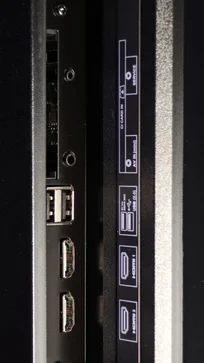
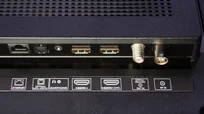
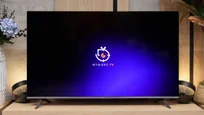
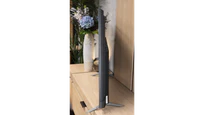
TV appearance
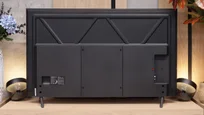

Contrast and black detail
5.9/10
7.8/10
Local dimming function: No
Local dimming function: Yes, number of zones: 308 (22 x 14)
Contrast:


Result
5,300:1

Result
5,800:1

Result
6,600:1

Result
5,650:1

Result
4,700:1
Result
458,550:1
Result
27,450:1
Result
25,200:1
Result
10,950:1
Result
6,650:1
Halo effect and black detail visibility:
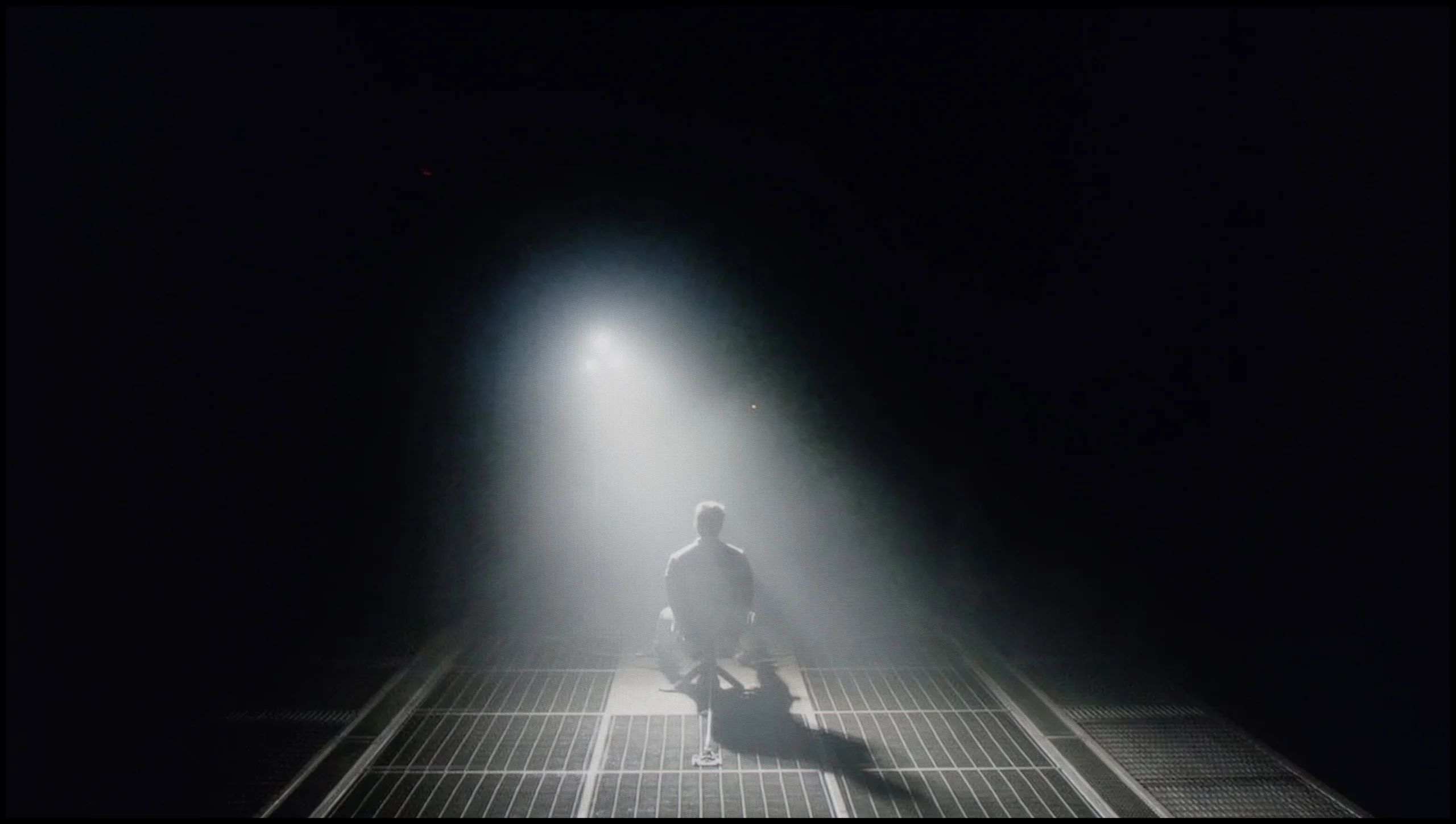
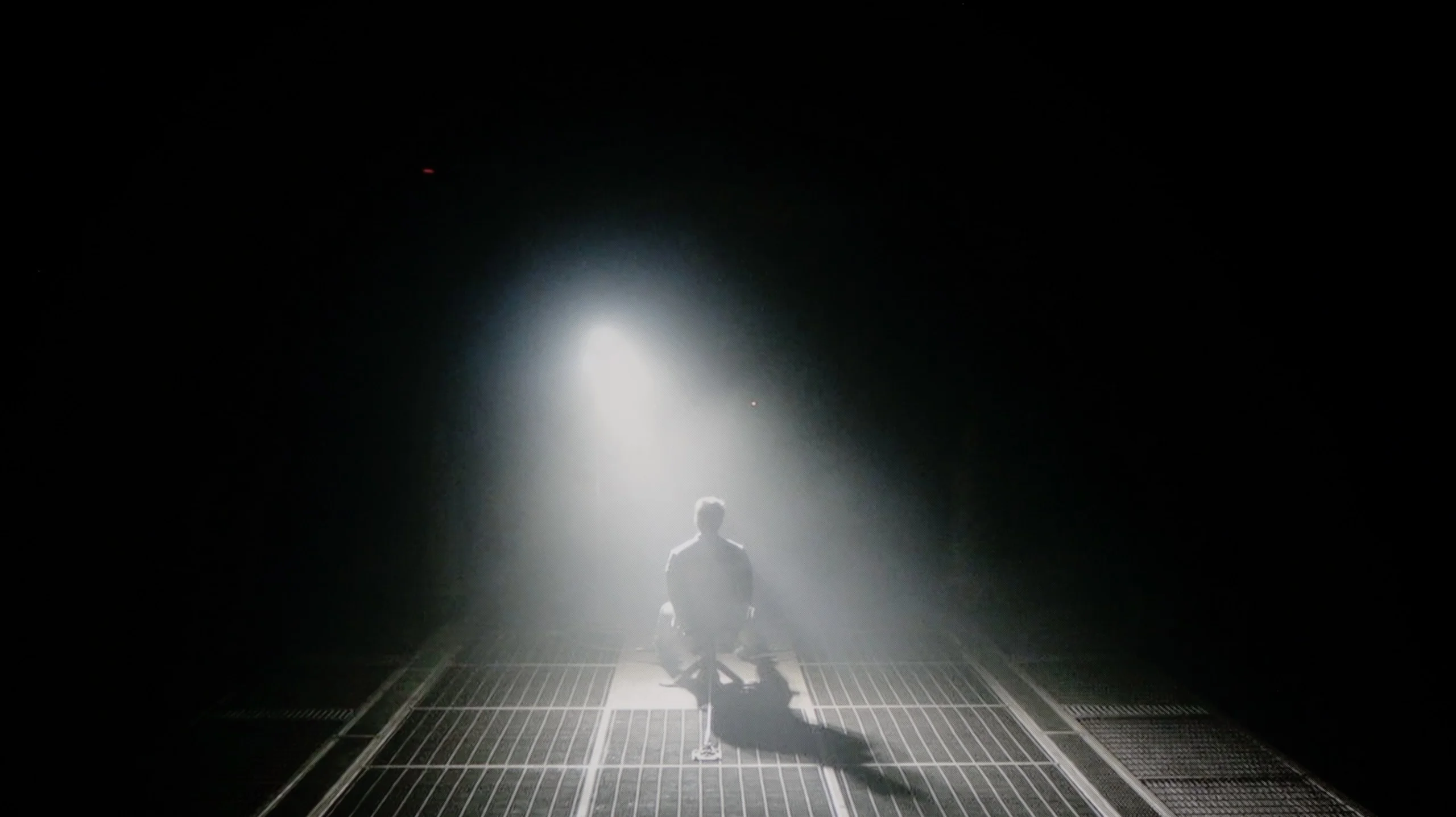
Check the visibility of bright lights on a dark background. Mini-LEDs often struggle with this. The photo does not compare black levels – that’s what the video below is for.
The video accurately shows differences in contrast and black levels between TVs, as well as potential issues: halo around bright objects or Mini-LED zone operation visible as brightness jumps.
The Sharp GR8 utilizes a VA panel that can provide quite decent contrast. In the tested film scenes, for example in “Arrival”, the television demonstrated that it can achieve really good results. A contrast ratio of 6600:1 is a result that can be considered solid in this price segment. However, it should be mentioned that the television is not equipped with local dimming technology. This is quite obvious, considering the class of the equipment. Nonetheless, the Sharp GR8 handles the separation of bright and dark elements well, which definitely deserves recognition. It is worth noting that televisions without local dimming have their limitations. In very dark conditions, such as during a screening in a completely dark room, blacks can take on shades of navy blue instead of appearing deep and pitch black. In general, the Sharp GR8 offers quite solid contrast that should satisfy most users.
In terms of contrast, the Xiaomi S Mini 2026 performs really well. The TV uses a VA panel and a Mini LED backlight with 308 local dimming zones in the 55-inch model. Although on paper the number of zones doesn't make as strong an impression as in pricier models, in practice the TV handles dark scenes very well. In shots where small bright objects appear on a black background, it can effectively dim the rest of the image. As a result, blacks are deep and contrast in many movies can resemble what we’re used to from OLED TVs. Of course, not every scene is equally easy for a local dimming system. When there are more bright elements or they’re located close to each other, you can notice a slight halo around them. That's a typical limitation of Mini LED TVs, and Xiaomi is no different from the competition here. What deserves praise, however, is the backlight control algorithm itself. Compared with the previous generation it works much more stably, so you won't see annoying flicker or sudden changes in brightness between consecutive shots.
HDR effect quality
4.8/10
5/10
Luminance measurements in HDR:

Result
305 nit

Result
332 nit

Result
369 nit

Result
365 nit

Result
367 nit
Result
993 nit
Result
166 nit
Result
641 nit
Result
157 nit
Result
898 nit
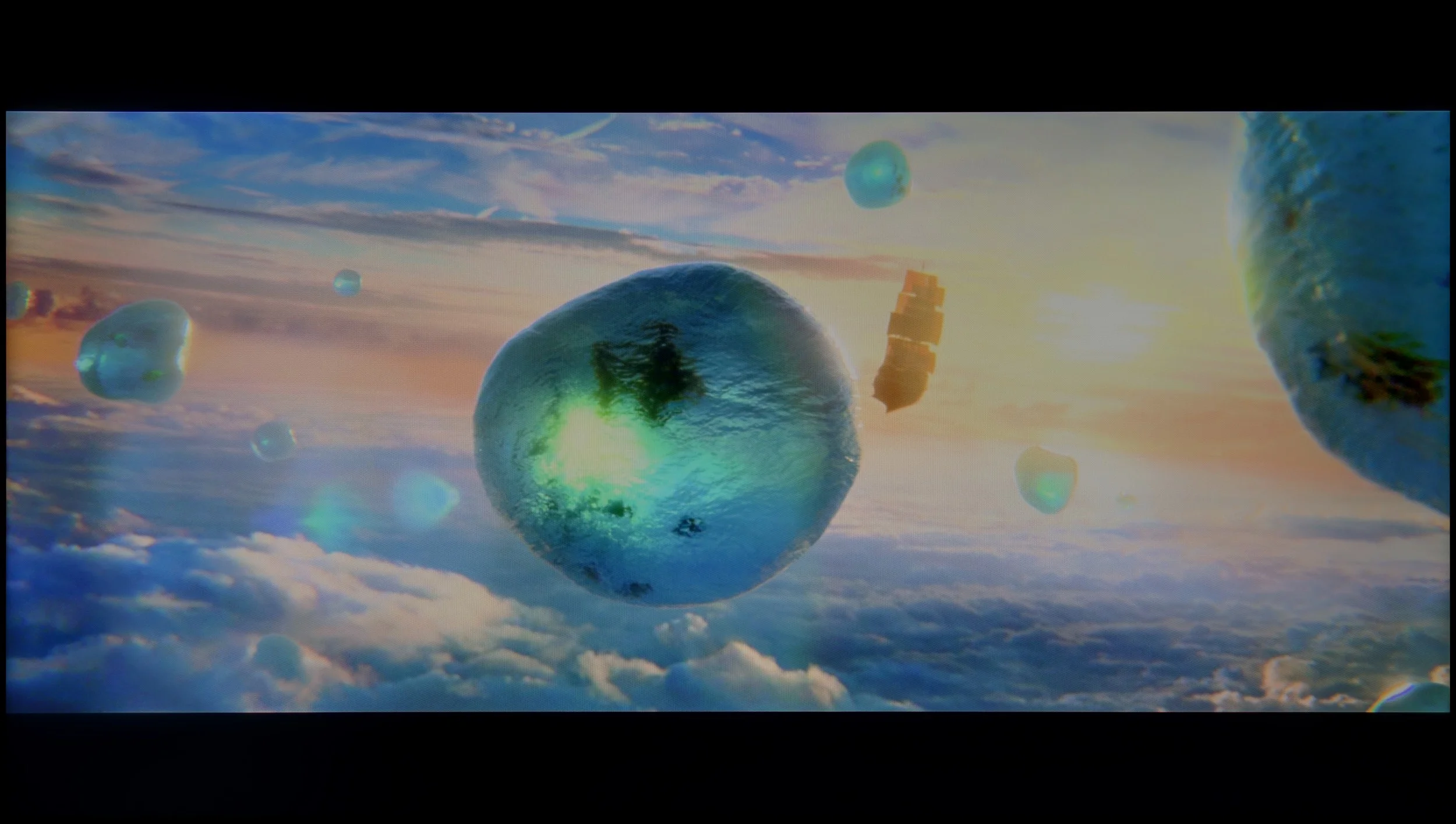
Scene from the movie “Pan” (about 2800 nits)

Scene from the movie “Billy Lynn” (about 1100 nits)

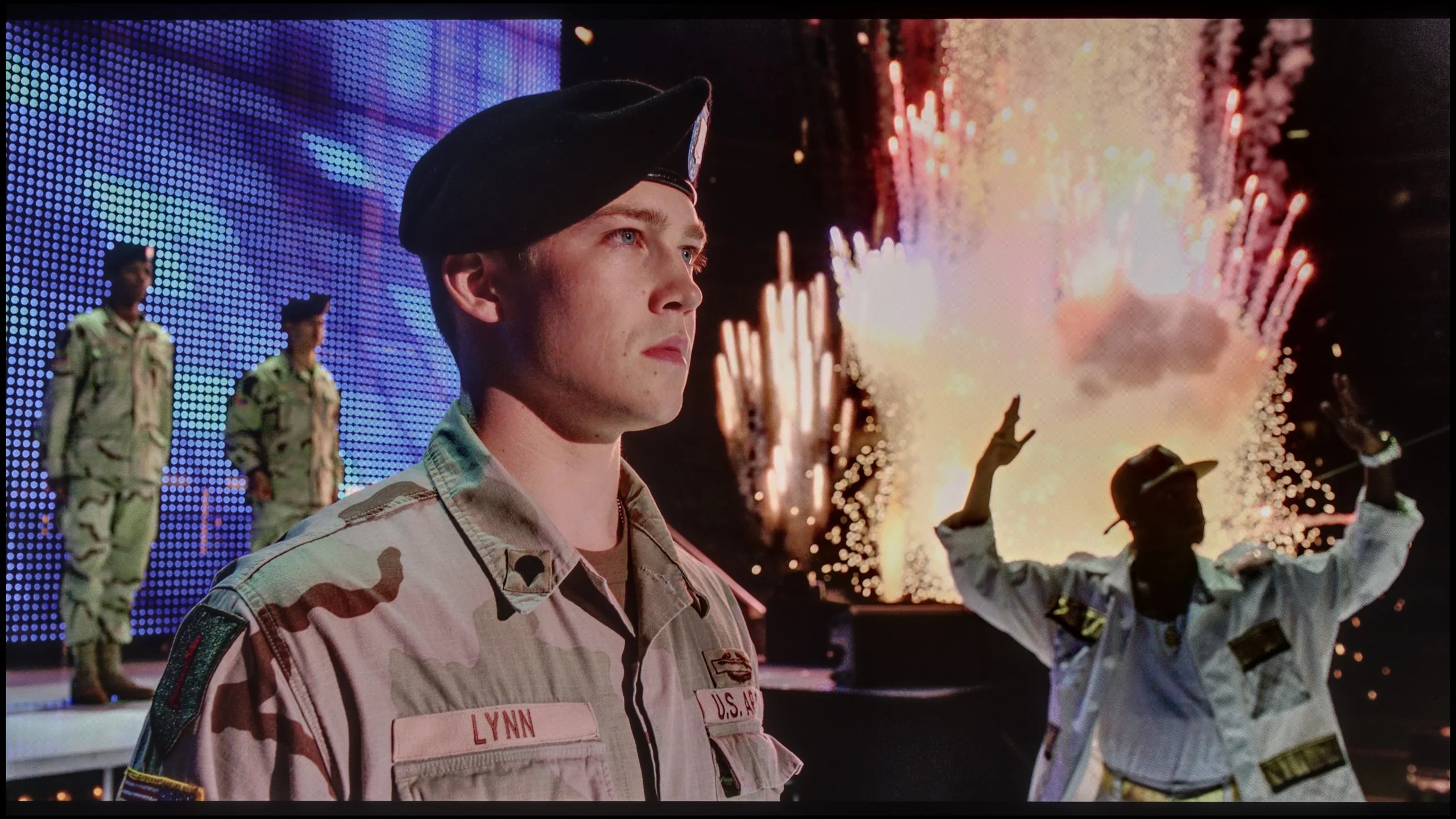
The photos show two HDR10 movies. 'Pan' is one of the brightest productions ever made, while 'Billy Lynn' (soldier) has brightness typical of streaming (Netflix, Prime, HBO MAX). Notice the intensity of effects and detail in whites.
Static HDR10


The photos present the visibility of white details in various HDR formats. They do not show brightness differences between TVs (these can be compared in the previous gallery).
Dynamic: Dolby Vision
Dynamic: HDR10+


The photos present the visibility of white details in various HDR formats. They do not show brightness differences between TVs (these can be compared in the previous gallery).
HDR luminance chart:
XIAOMI S Mini 2026 (55"-75") 60Hz
Sharp GR8
Sharp GR8 boasts "very high brightness" at a level of 500 nits in its promotional materials. Unfortunately, our tests showed that the reality is somewhat different – the average luminance value we managed to achieve was around 360 nits. This is rather an average result, especially in the context of the manufacturer's claims. Such brightness does not allow for a full enjoyment of HDR effects. The image is somewhat sharper than in standard SDR, but it is difficult to speak of true juiciness and depth in bright elements. However, the coverage of the DCI-P3 color palette at 95% deserves praise. This is the result of applying an additional PFS coating, known from QLED technology. As a result, colors are vivid and have a pleasant, natural tint, which partially compensates for the deficiencies in brightness.
When it comes to HDR, the capabilities of the Xiaomi S Mini 2026 are really good, especially given the segment this model belongs to. The set reaches roughly 1,000 nits of brightness without much trouble, allowing it to deliver a very pronounced HDR effect in bright scenes. Sun highlights, reflections, and brightly lit parts of the image can be very intense and at times almost blindingly bright. It’s a little different in dark scenes, though. Very small light sources surrounded by black are shown at significantly lower brightness, so they lack the point-like intensity seen in the best TVs. This is not unusual for a Mini LED. The local dimming algorithm limits the backlight to keep blacks as deep as possible, which in those scenes matters more than a few extra nits.
HDR Colors
Color reproduction also performs well. Xiaomi markets the S Mini 2026 as a QLED TV, although the solution used here is practically based on a PFS phosphor. What matters most is the result, and it’s quite good. Our measurements showed about 94% coverage of the DCI-P3 gamut, while in the much wider BT.2020 space it was around 74%. That means the TV can reproduce most of the colors used in HDR films with suitably high saturation. Its limitations are most visible only with very saturated shades of green, where the color range starts to fall short.
Factory color reproduction
5.4/10
5/10
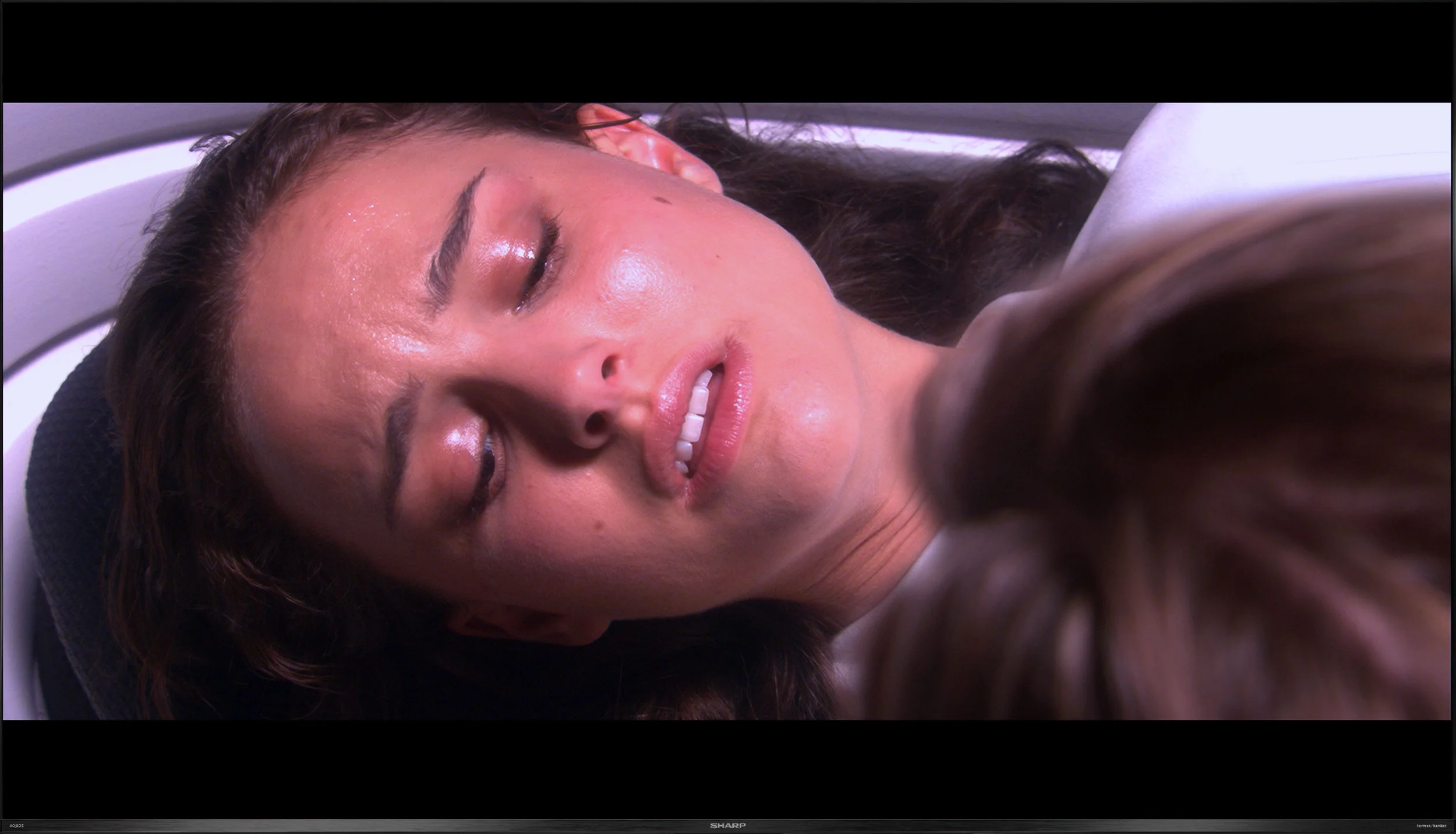
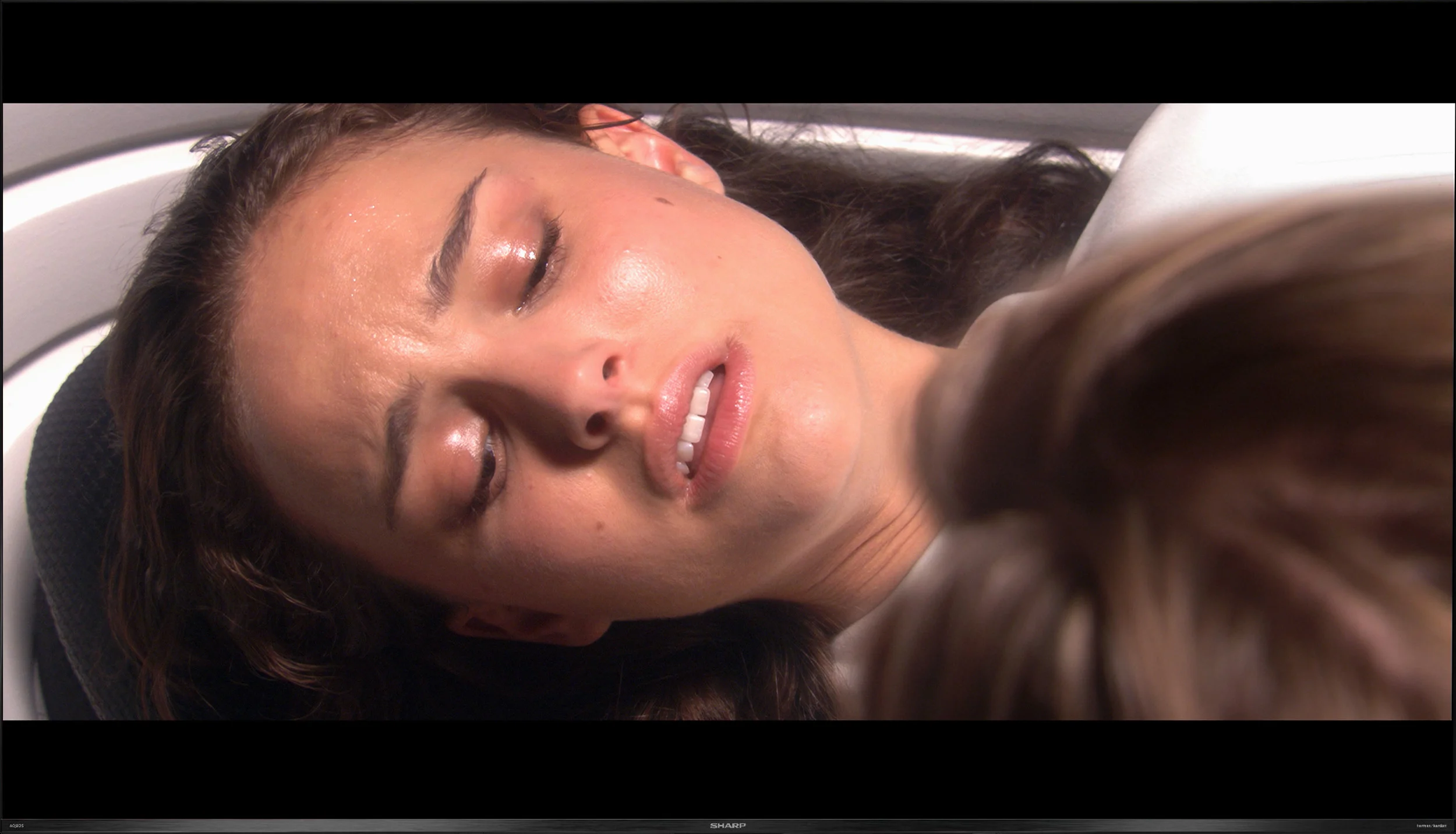
This illustrative image shows how colors change after professional calibration. If you can see the difference, you can order it from SkalibrujTV – it's our own service.
Factory mode
After calibration


This illustrative image shows how colors change after professional calibration. If you can see the difference, you can order it from SkalibrujTV – it's our own service.
Factory mode
After calibration
At the outset, it is worth noting that color reproduction tests are always conducted in the best factory picture mode. In the case of the Sharp GR8, this is the "Film" mode. As for the white balance, which is a characteristic that affects how we perceive colors on the screen, in SDR mode, the strong dominance of blue immediately stands out. This results in an unnatural cooling of the image—blue elements take on a purple hue, and skin tones acquire a pink glow, which we can see in the comparative photo from the movie STAR WARS. During the Color Checker test, it was clearly visible how the color samples deviated from the reference values, confirming significant errors in color reproduction. Gamma was not perfect either—it caused excessive brightening of the entire image, causing the scene to lose depth and proper tonal transitions.
In 4K HDR mode, the situation looks much better. The dominance of blue is much less noticeable, although there are minor issues with the combination of red and blue. This makes some shades look somewhat unnatural. The EOTF curve, responsible for the brightness of the image in 4K HDR content, showed another problem—the television tends to excessively darken the image across the entire screen.
In summary, the "Film" mode on the Sharp GR8 would require some adjustments to fully utilize the potential of this television. Fortunately, we addressed this and proceeded to calibration.
We tested the Xiaomi S Mini 2026 in 55–75-inch sizes in Film mode, which offered the most accurate colors compared with the other presets. That said, the picture wasn't perfectly set up out of the box. In our unit the white balance was clearly shifted toward warmer tones. There was too little blue and too much red, so whites and grays had a slightly warm tint. The TV also tended to brighten darker parts of the image too much. This came from the gamma, which instead of staying around 2.4 sometimes dropped to about 2.0. That made more shadow detail visible, but the picture lost some depth. The factory settings weren't bad, but they still needed tweaking to reproduce the image correctly.
Color reproduction after calibration
8/10
7.5/10
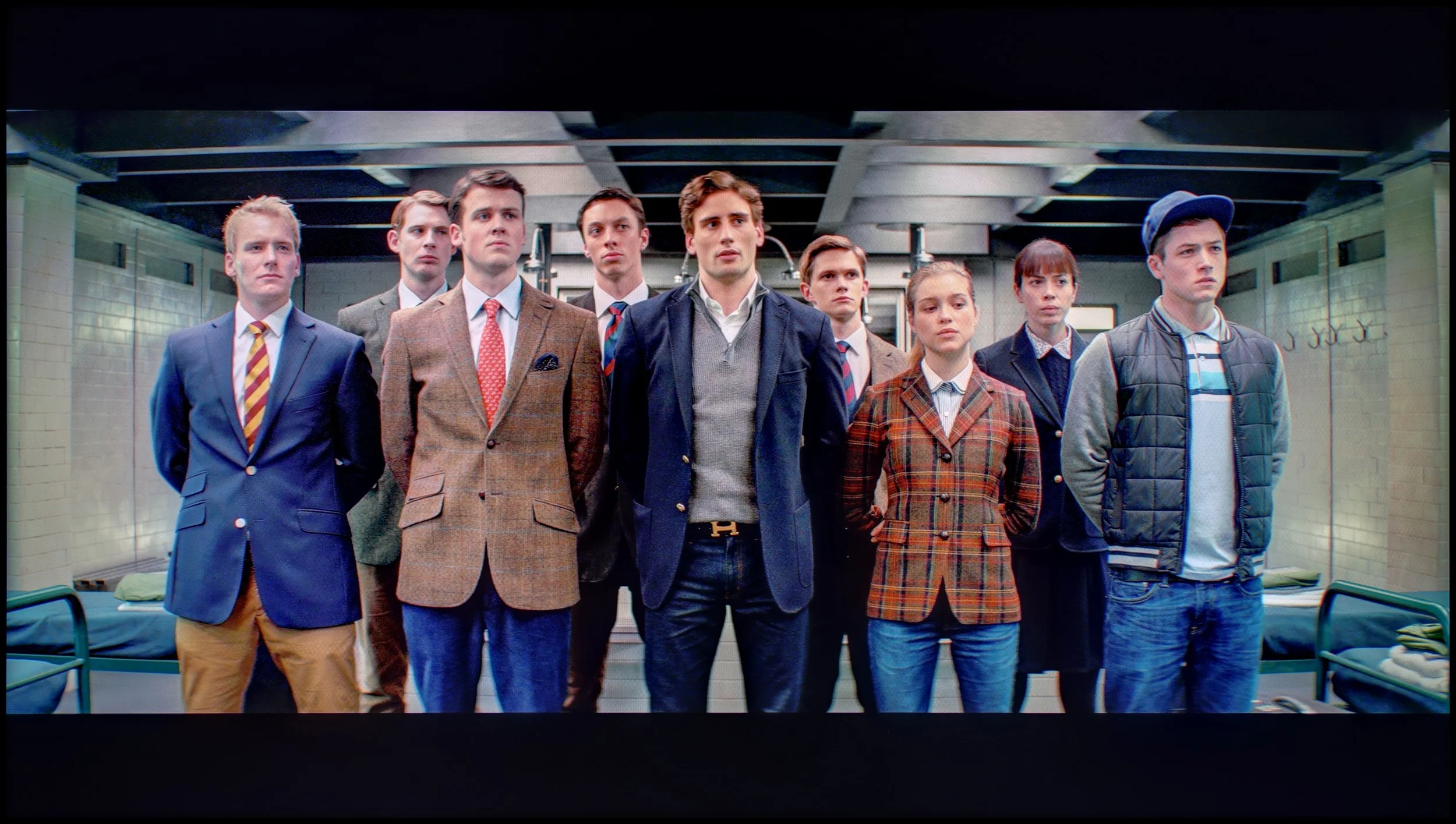
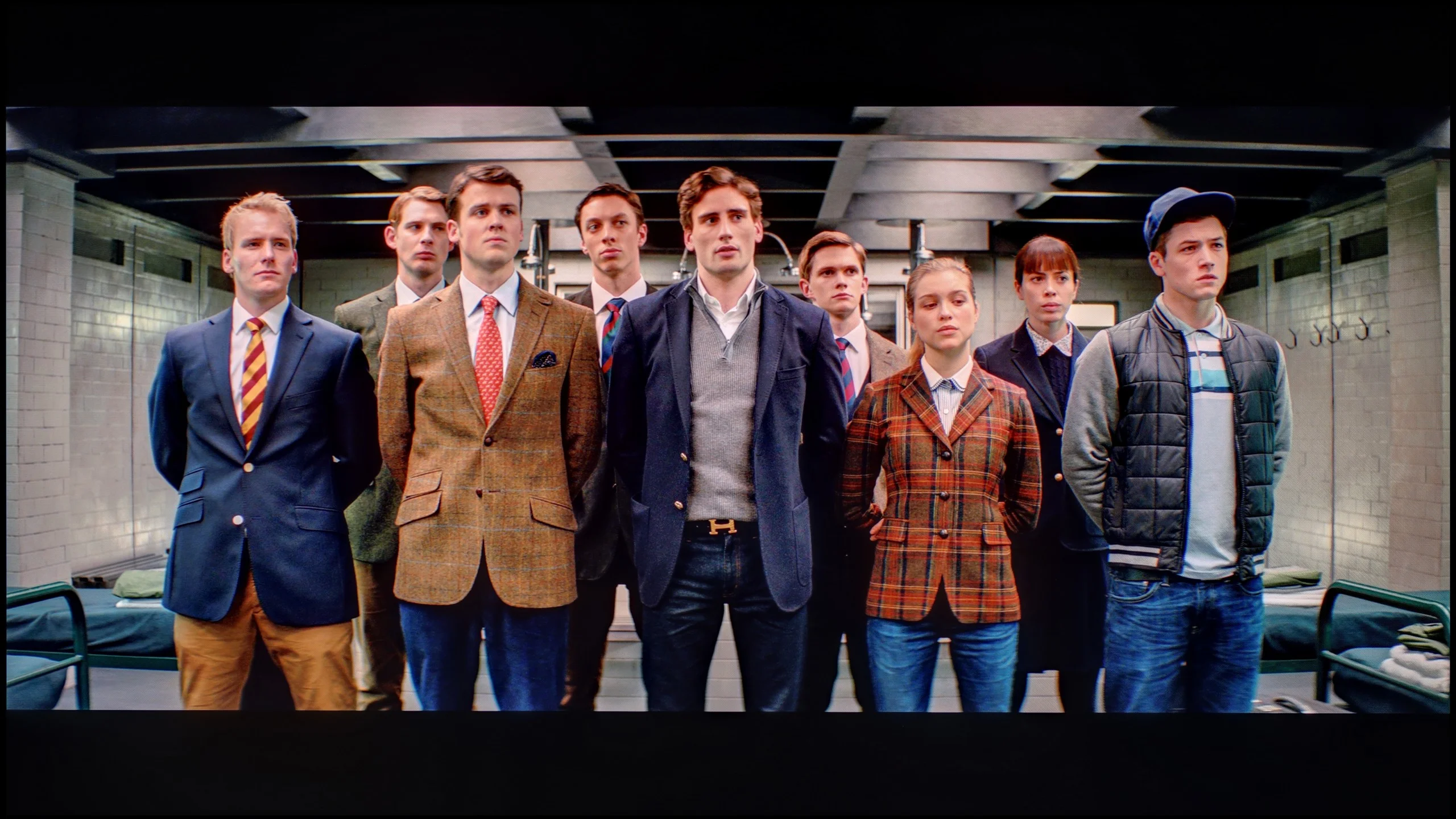
The photos show how movies look on the TV. Pay attention to black detail visibility, colors, and shadow tint.
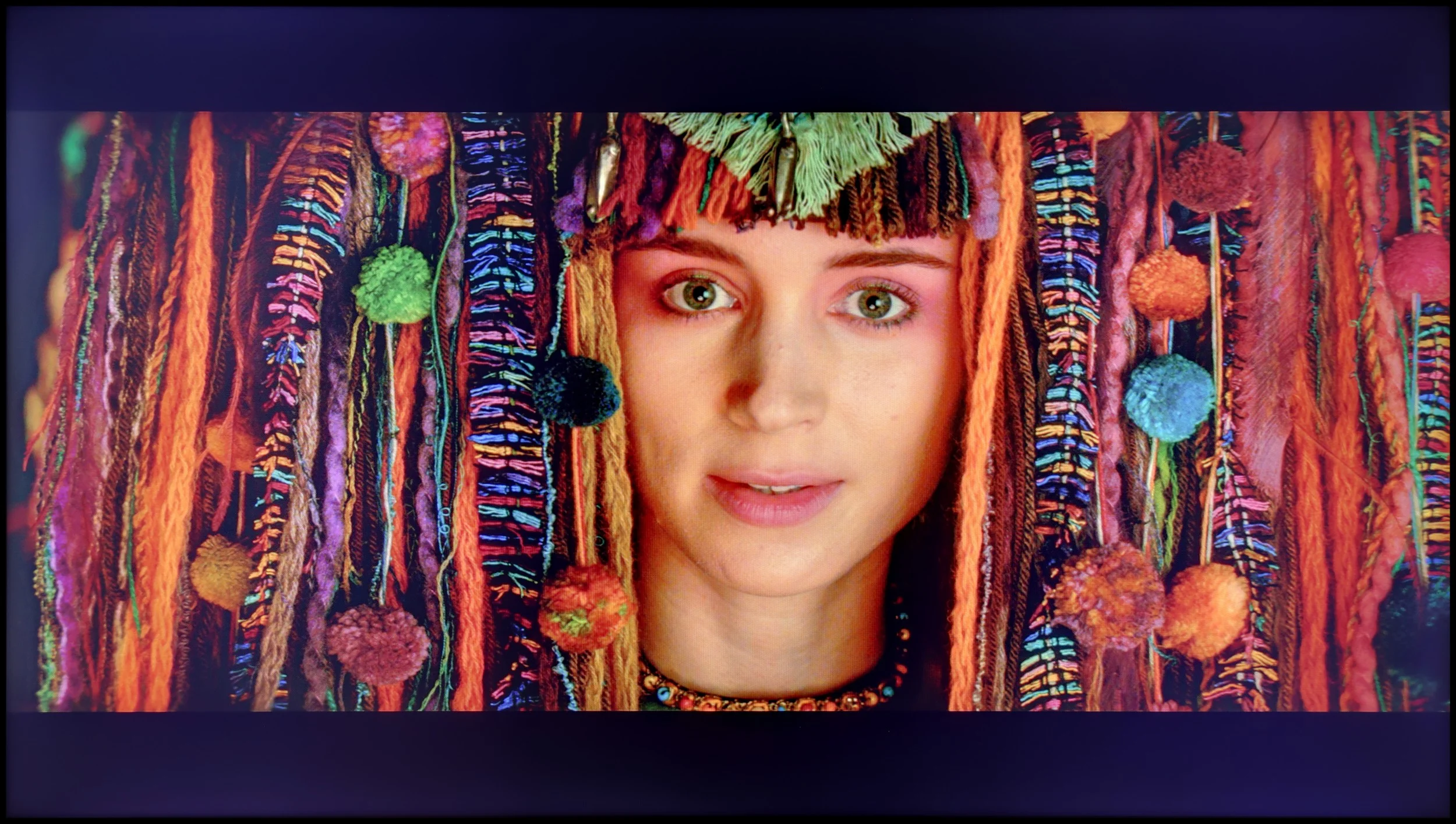
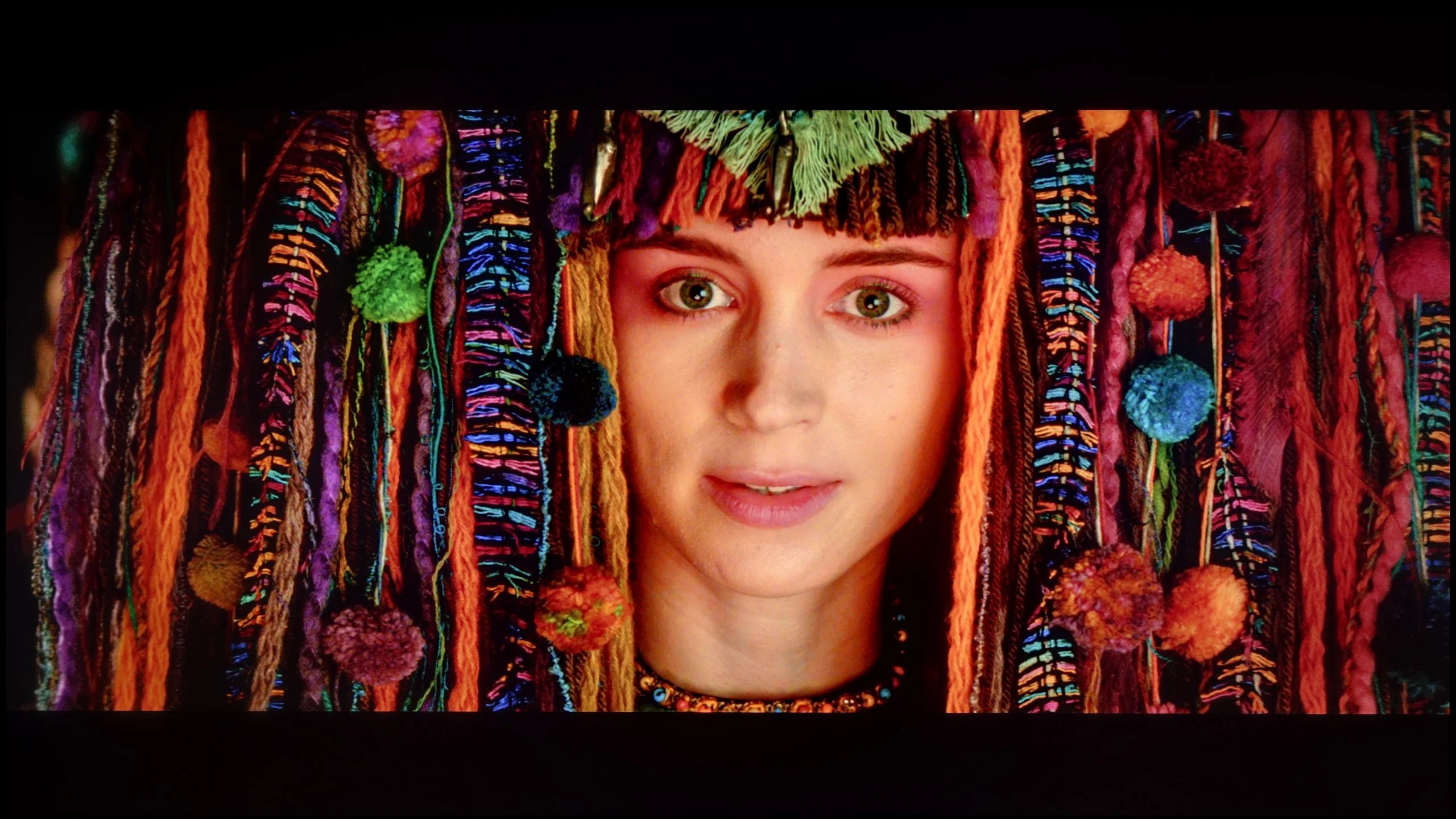
The photos show how movies look on the TV. Pay attention to black detail visibility, colors, and shadow tint.
Sharp GR8 is one of those televisions that really gains a second life after proper calibration. Both in HD and 4K content, the white balance performs very well, especially considering the price segment of this model. The image becomes much closer to what the director wanted to show – colors look natural, and skin tones acquire the appropriate depth and warmth. The brightness characteristics also leave a very positive impression. Both gamma and the EOTF curve show really solid values. Although minor imperfections can be noticed, they are subtle enough that it's hard to see them during everyday viewing. In summary, calibration makes the Sharp GR8 show its best side, offering an image that is not only pleasant to the eye but also faithfully conveys the creators' intentions.
Contrary to appearances, the Xiaomi S Mini 2026 responds quite well to calibration. After our adjustments we were able to noticeably improve the white balance, and the picture stopped leaning too warm. With SDR content the result is really good, the TV can display such images very accurately, and it's hard to find major faults in its color reproduction. We applied similar corrections in HDR as well, though not everything could be fixed. Colors look better than at factory settings, but the TV still tends to render the image slightly brighter than it should. You can see this in the EOTF curve, which sits above the reference value. In practice this means some HDR scenes are brighter than the creators intended. This is a quirk of this TV and we can't do anything about it.
Smoothness of tonal transitions
8/10
5.5/10
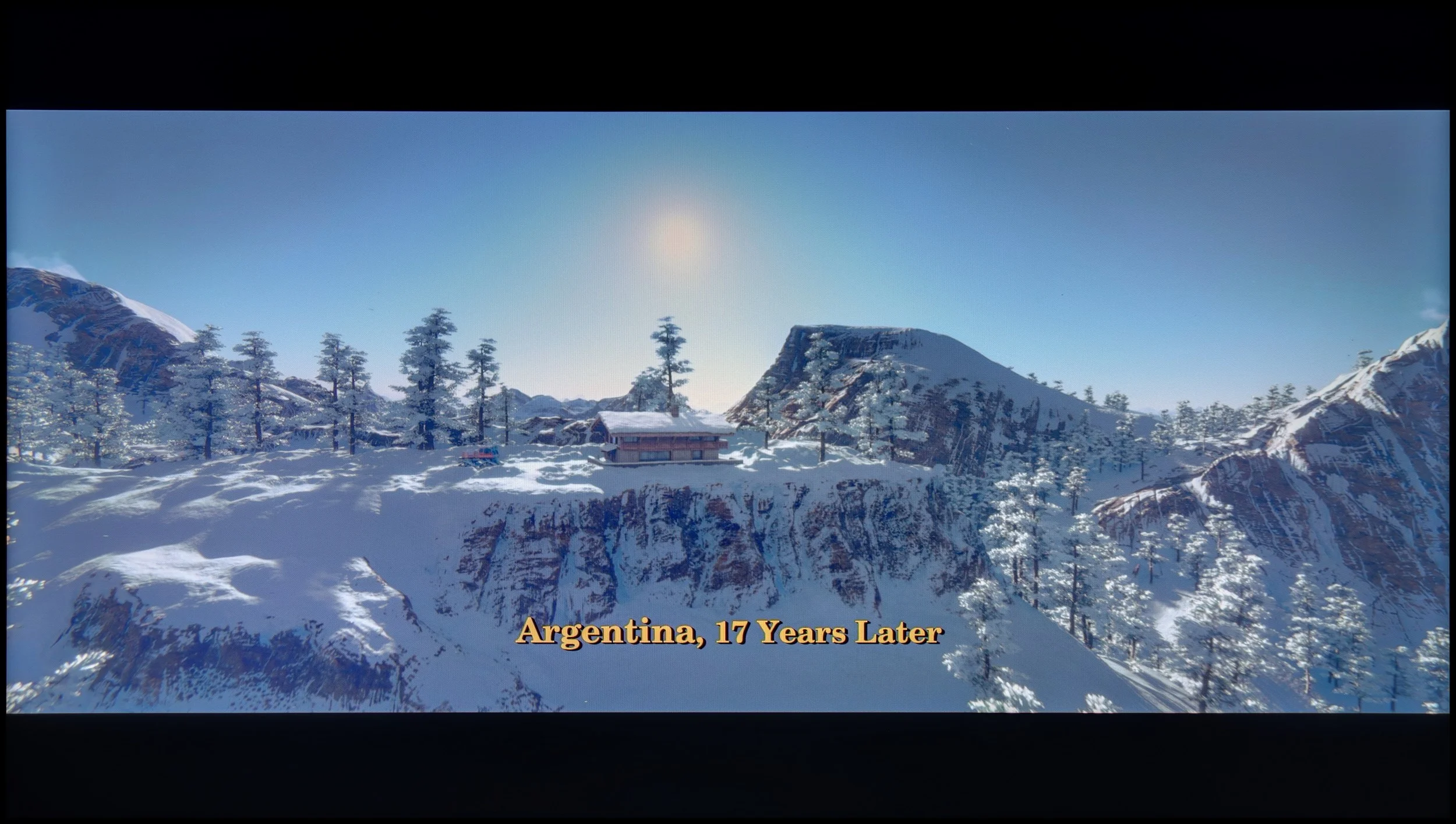

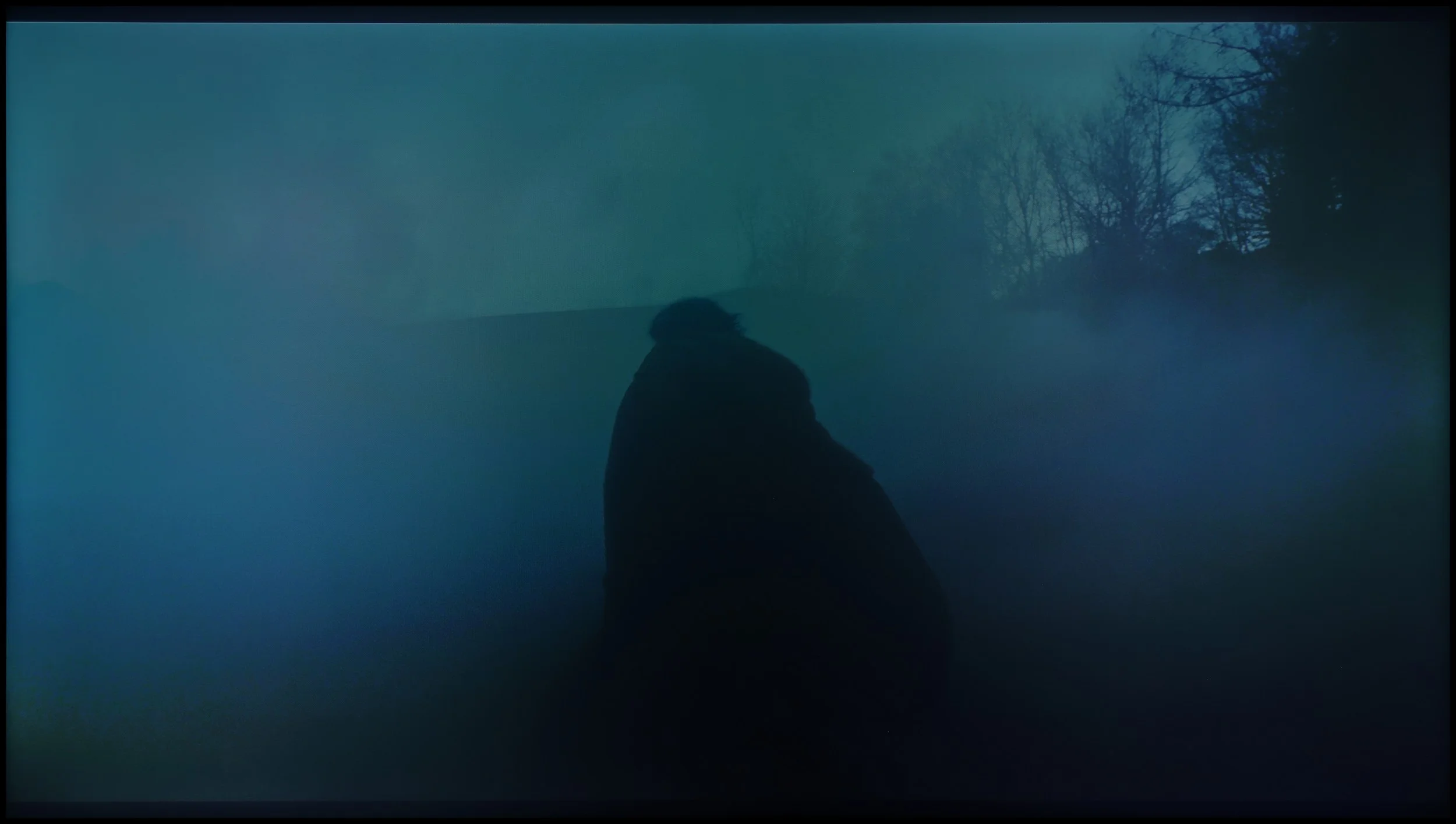
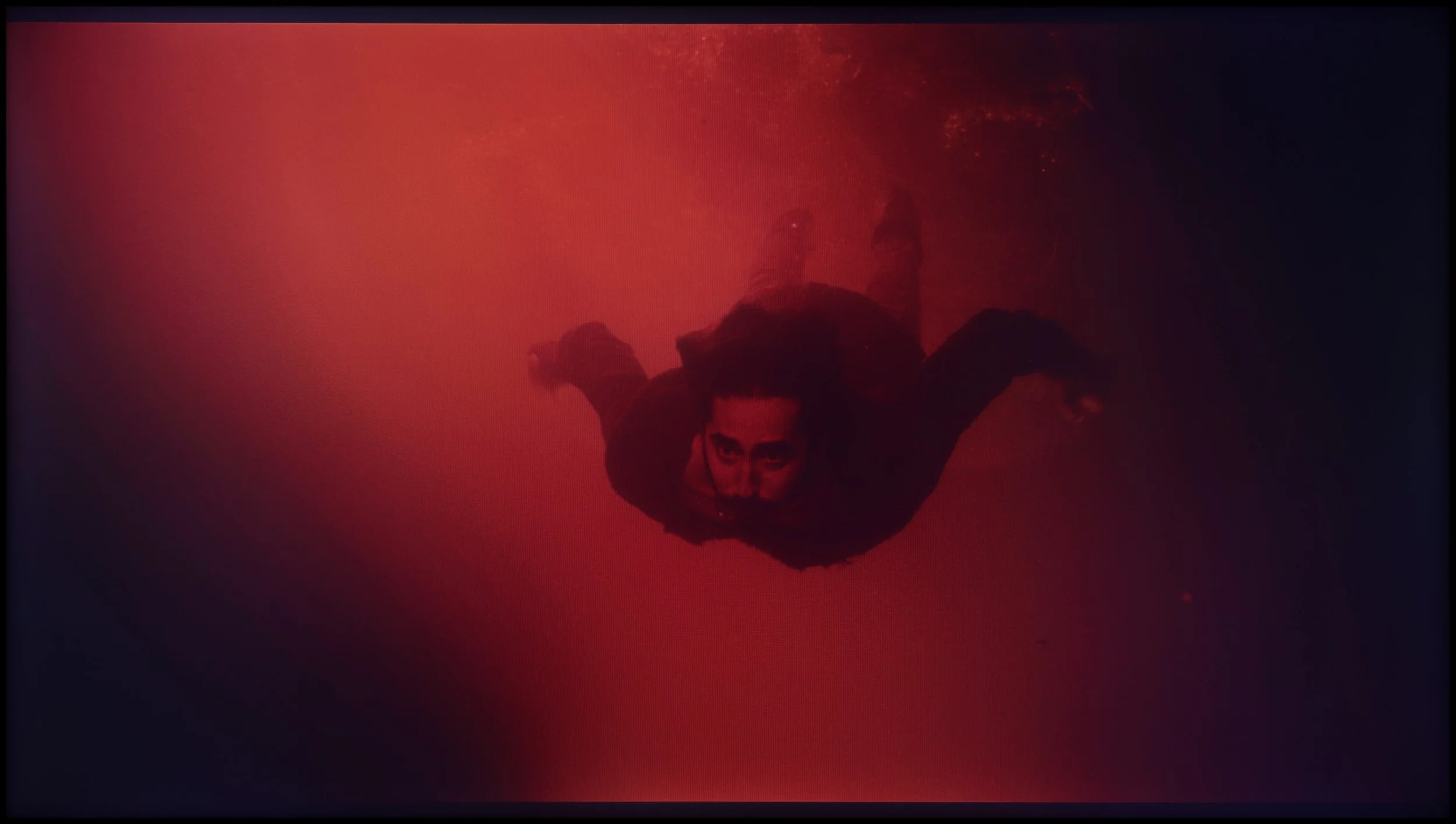
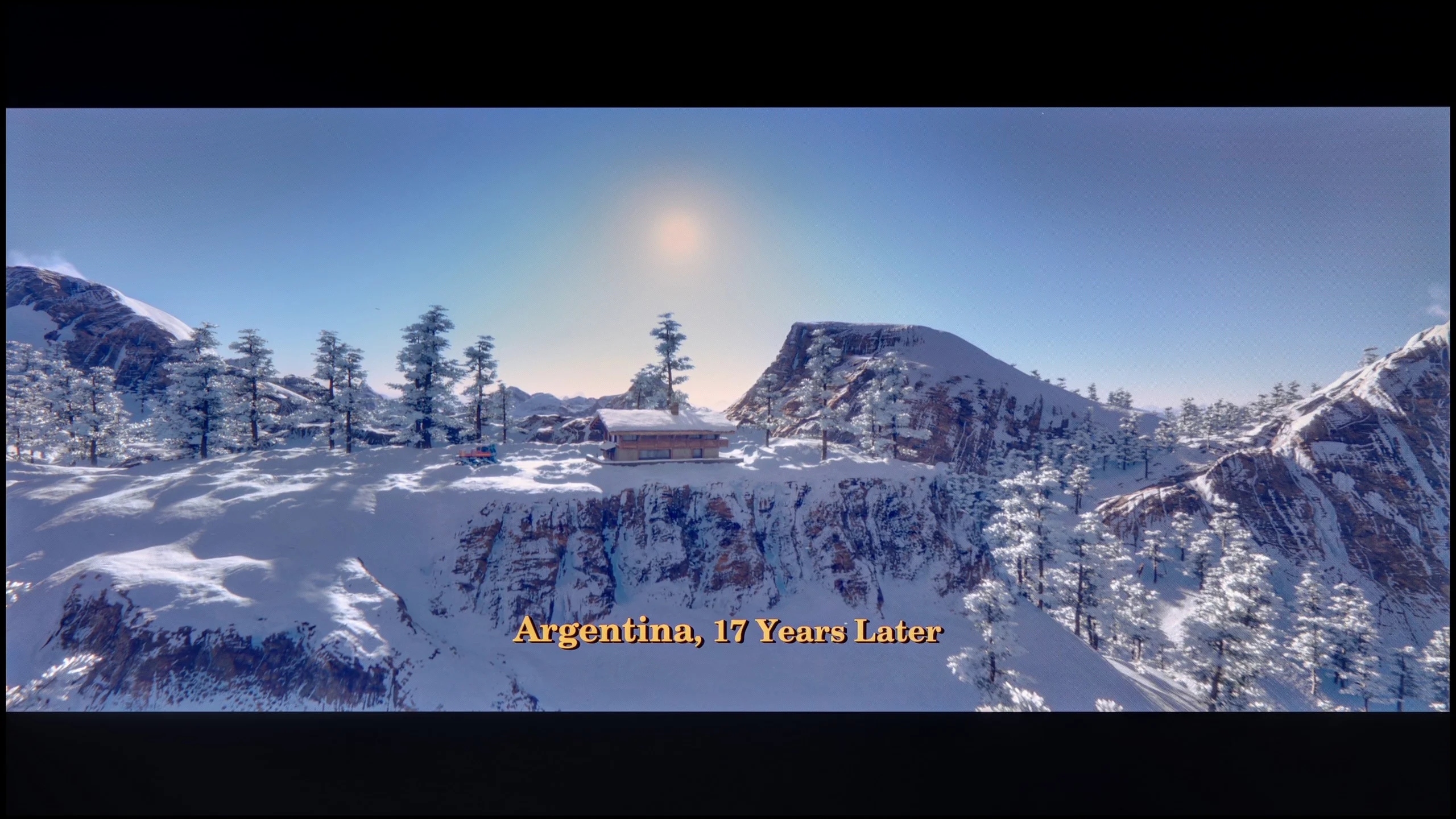
These are selected scenes that show smooth tonal transitions from one color to another. If you see distinct banding, it’s the TV panel’s fault.

These are selected scenes that show smooth tonal transitions from one color to another. If you see distinct banding, it’s the TV panel’s fault.
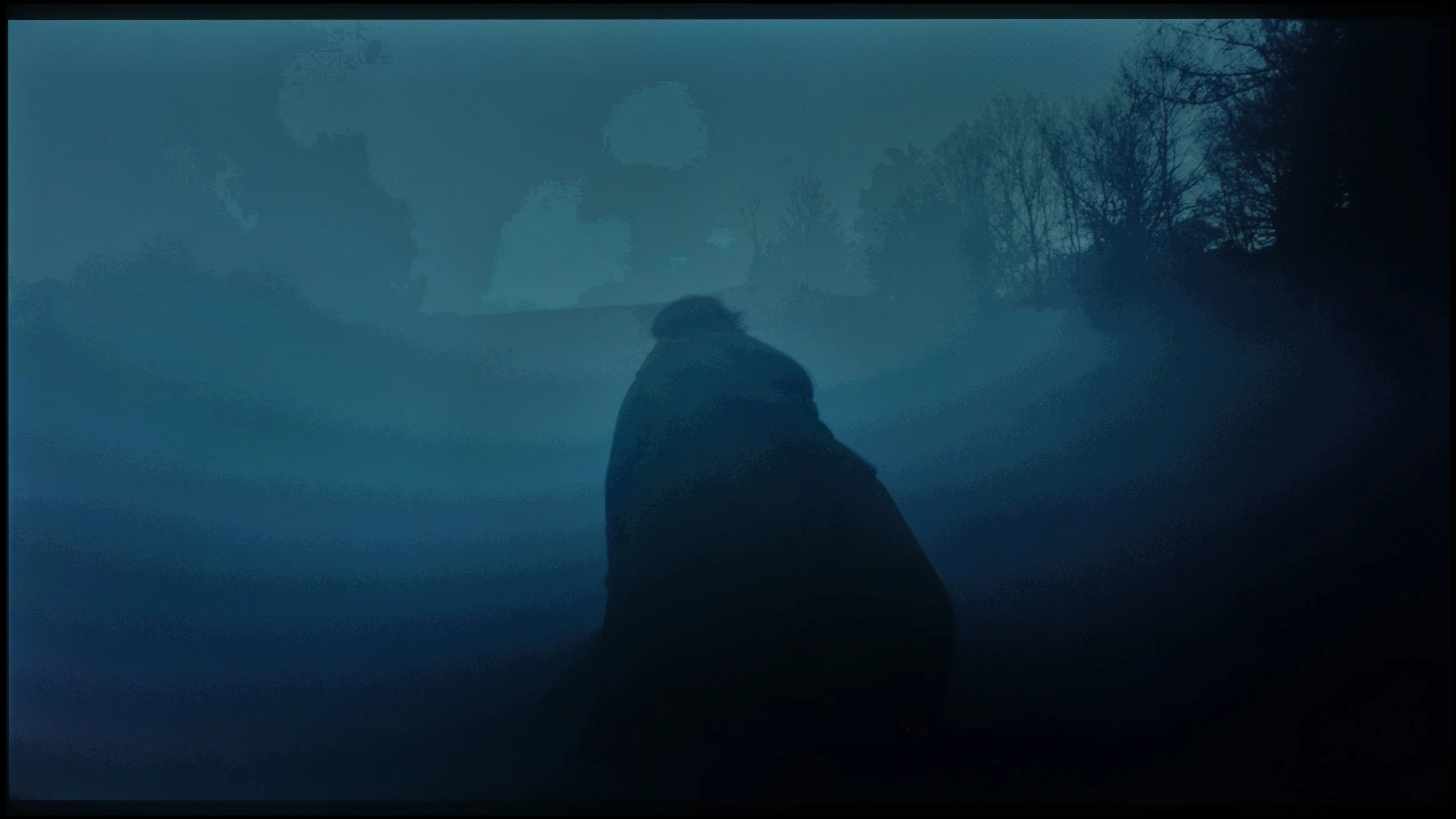
These are selected scenes that show smooth tonal transitions from one color to another. If you see distinct banding, it’s the TV panel’s fault.
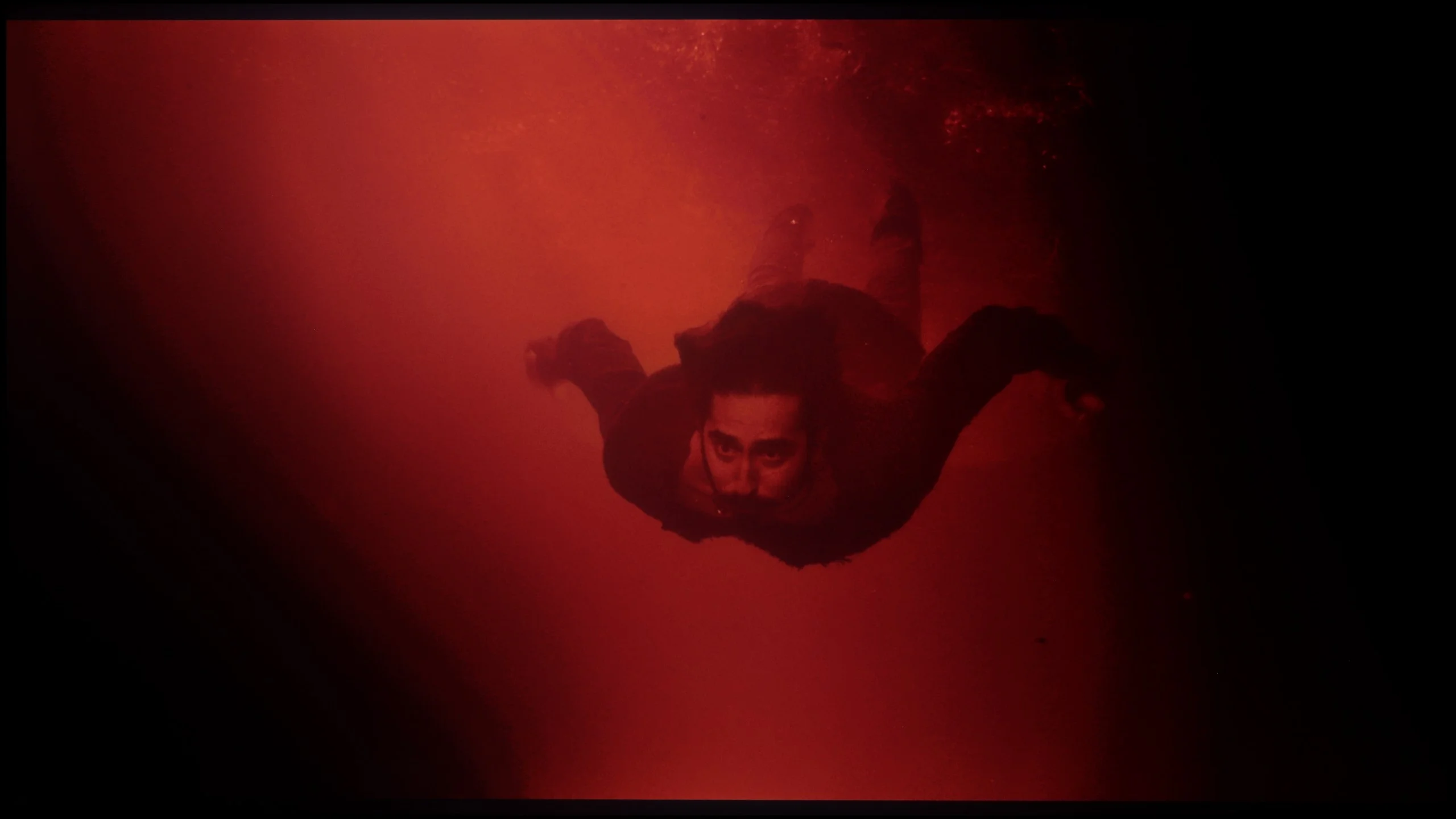
These are selected scenes that show smooth tonal transitions from one color to another. If you see distinct banding, it’s the TV panel’s fault.
When it comes to the fluidity of tonal transitions in high-quality materials such as 4K, the Sharp GR8 performs really well. Color gradients are smooth, and the transitions between shades are natural and free of visible artifacts. The TV has no problems reproducing subtle differences in colors, even in demanding scenes. Only the most discerning users, who examine the image closely, may notice minor imperfections in the darkest shades. For most viewers, the quality of tonal transitions in the Sharp GR8 will be more than satisfactory and will not negatively affect the perception of the image.
The smoothness of tonal transitions in the smaller variants of the Xiaomi S Mini 2026 is noticeably worse than in the larger versions. This is most apparent in dark scenes, where posterization often occurs, which is visible banding between similar shades. In some shots it can be quite distracting. Fortunately the problem mainly affects the darker parts of the image. In bright scenes color transitions are usually smooth and there is little to complain about here.
Image scaling and smoothness of tonal transitions
5.5/10
3/10


Smooth transition function
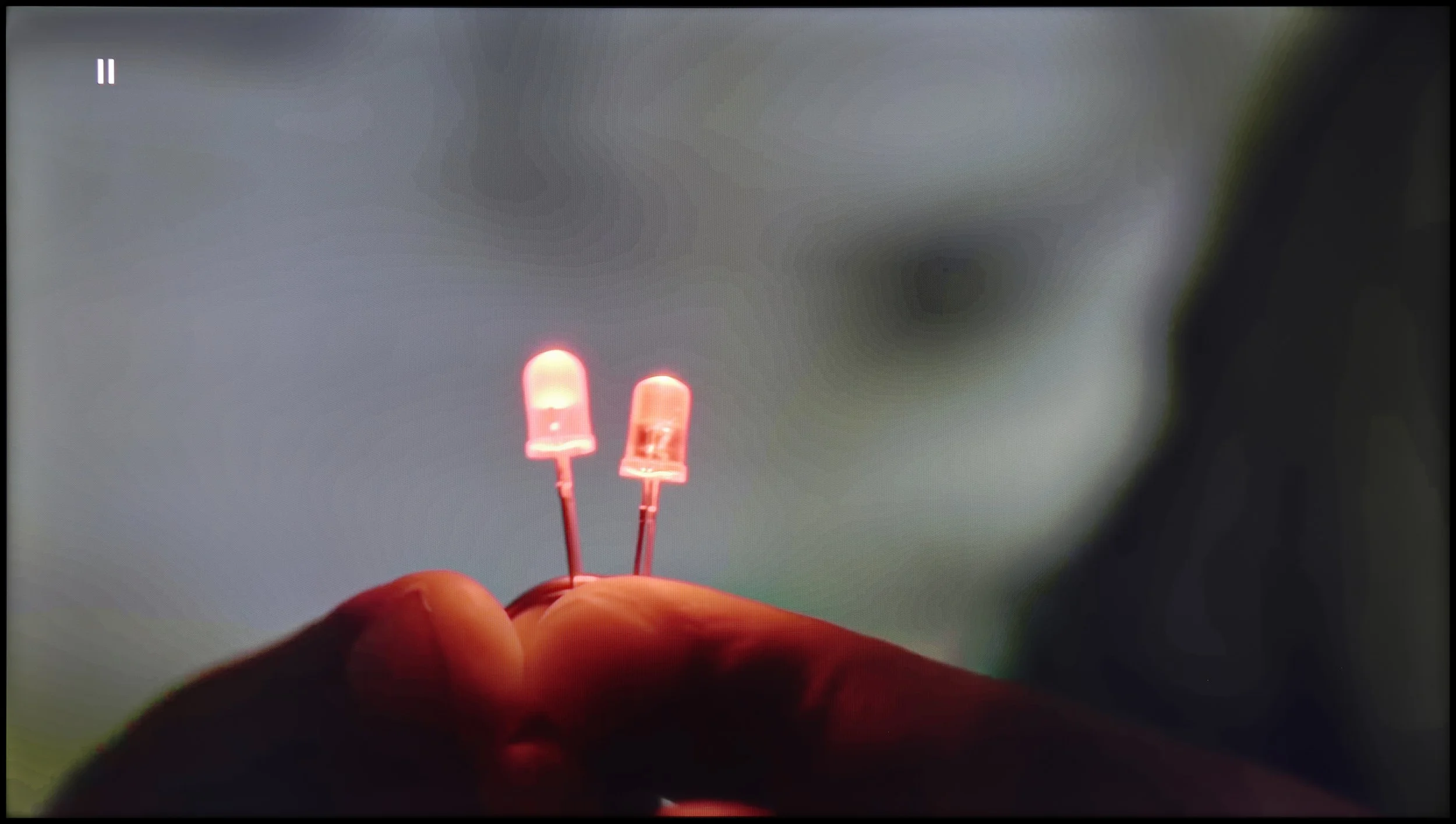
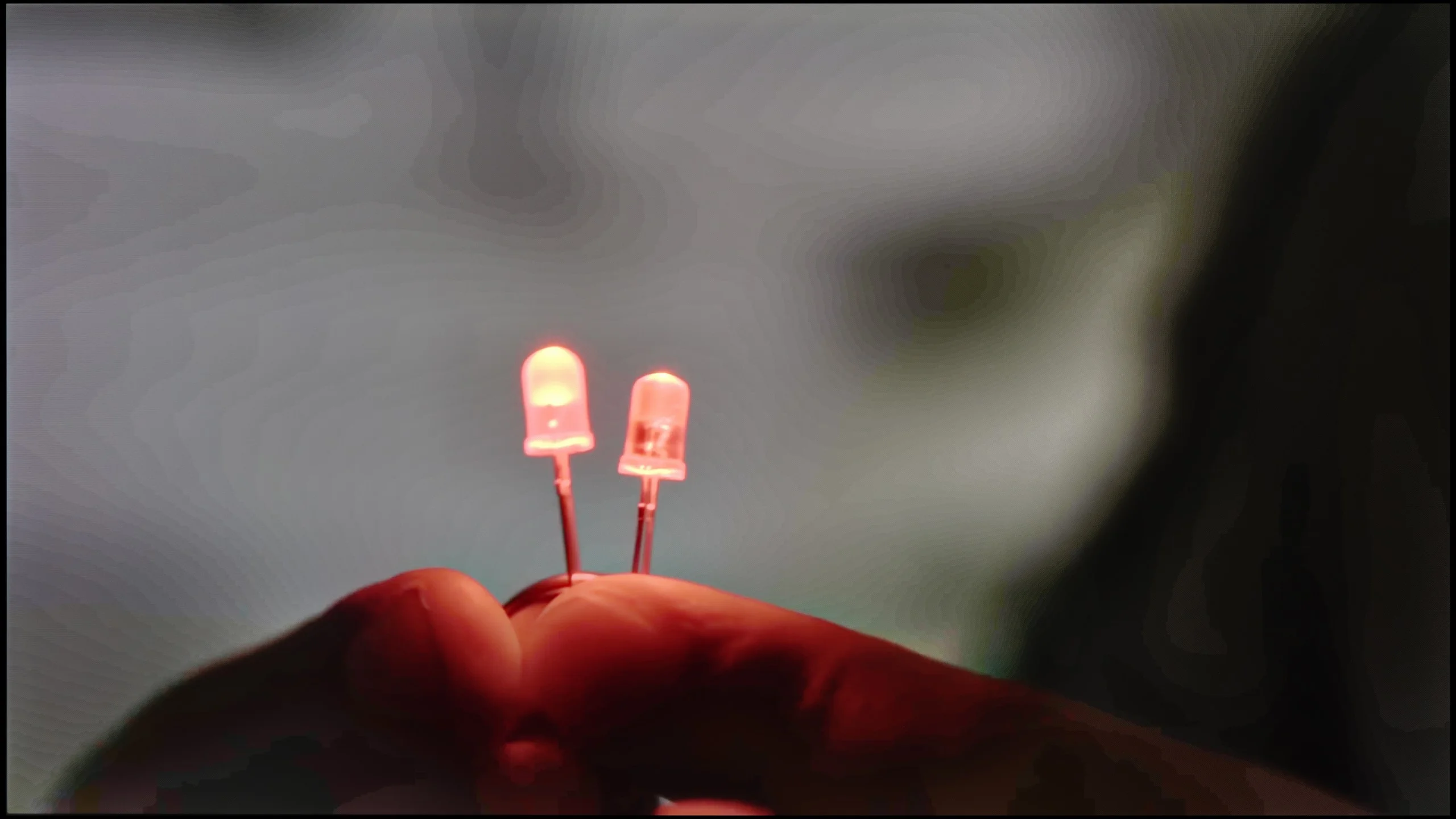
The match photo shows how the TV smooths weak tonal transitions in low-quality video.
Image scaling SD (576i)


The model photo shows how it handles upscaling of SD material.
The Sharp GR8 is equipped with the "10-bit color reproduction" feature, which theoretically should improve the smoothness of tonal transitions. In practice... well, the effect is surprising, but not in a very positive way. Even at the highest settings, it's hard to notice any impact on the actual tonal transitions. Instead, the function surprisingly smooths out things it shouldn't – walls, shirts, or other flat surfaces look almost like they have been steam-pressed. In the test, we had to note that there is simply no actual impact on tonal transitions.
When it comes to image scaling, the Sharp GR8 performs significantly better here. The television is capable of giving the image a plastic, smooth characteristic, making even lower resolution content look quite good. Of course, with more demanding details, such as thin tree branches in the background, you can see slight jaggedness, but this is not something that would significantly affect viewing comfort.
Digital image processing in the Xiaomi S Mini 2026 is handled by the MT5896 processor. Unfortunately, in this respect the TV performs rather average. Low-resolution content is not upscaled very well, and its limitations become quickly apparent on a large screen. The image looks quite digital, and the TV can't extract many additional details from it. Additionally, you cannot disable overscan for low-resolution material. Things are even worse when it comes to smoothing posterization. On the smaller models there isn't even a dedicated feature to reduce the visible banding between similar shades. So if such imperfections are already present in the source material, Xiaomi effectively does not mask them.
Blur and motion smoothness
7.4/10
4.6/10
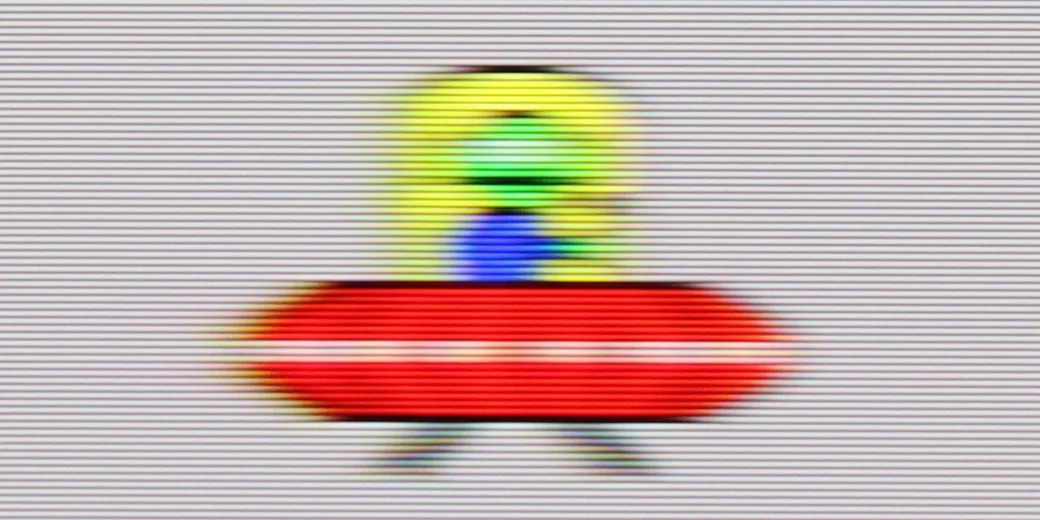
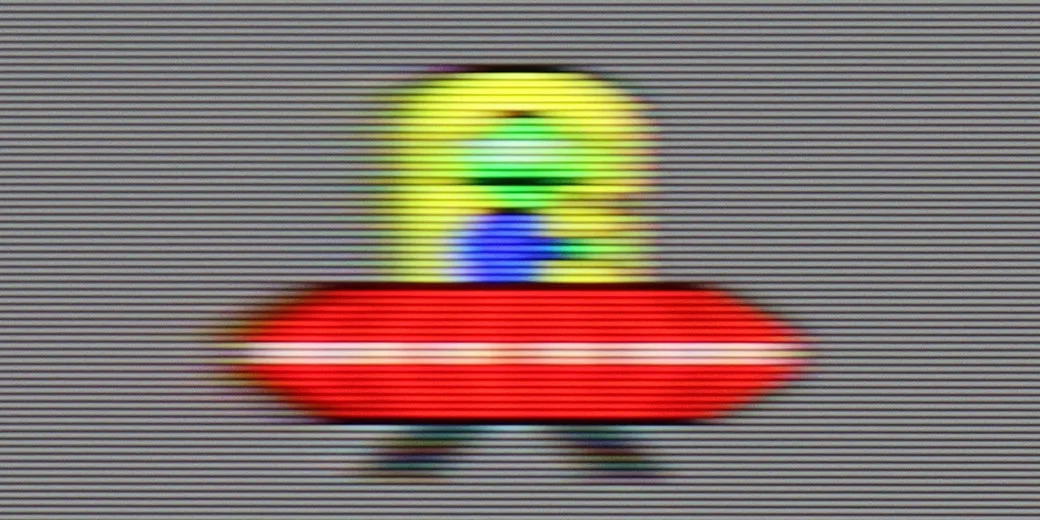
Blur (native resolution, maximum refresh rate):
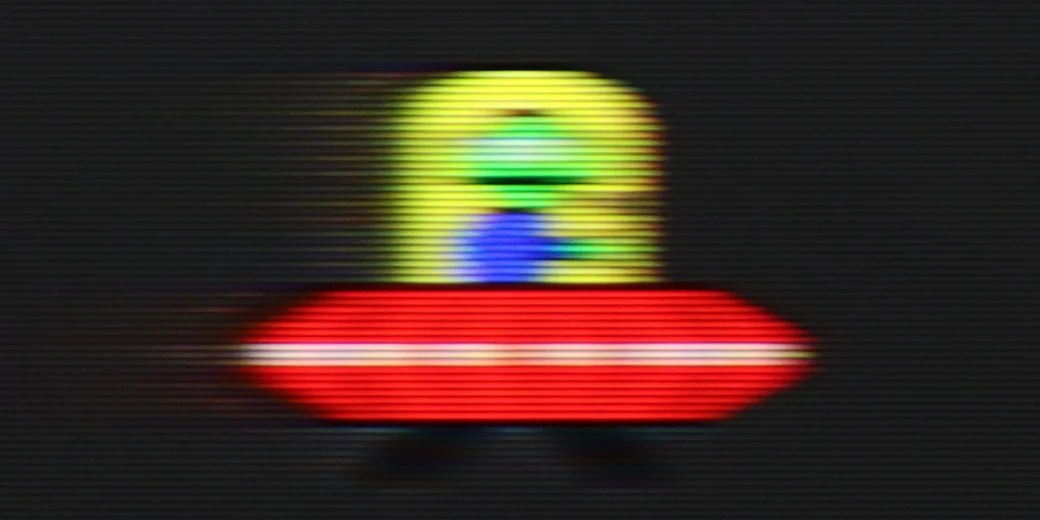
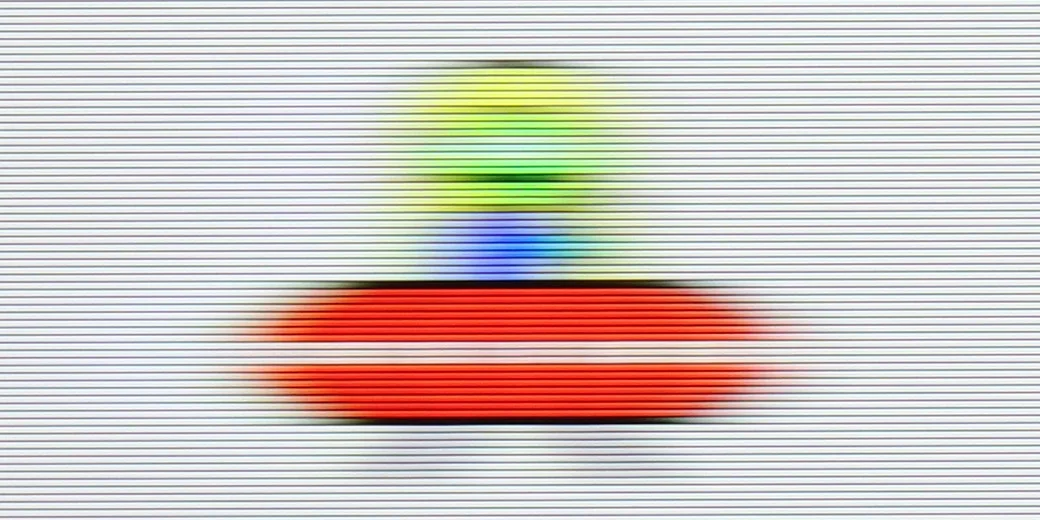
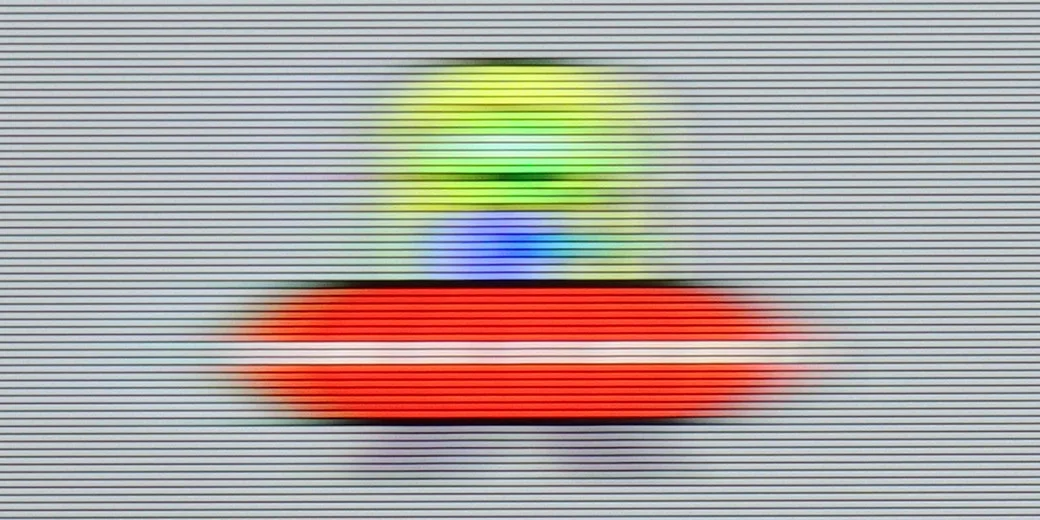
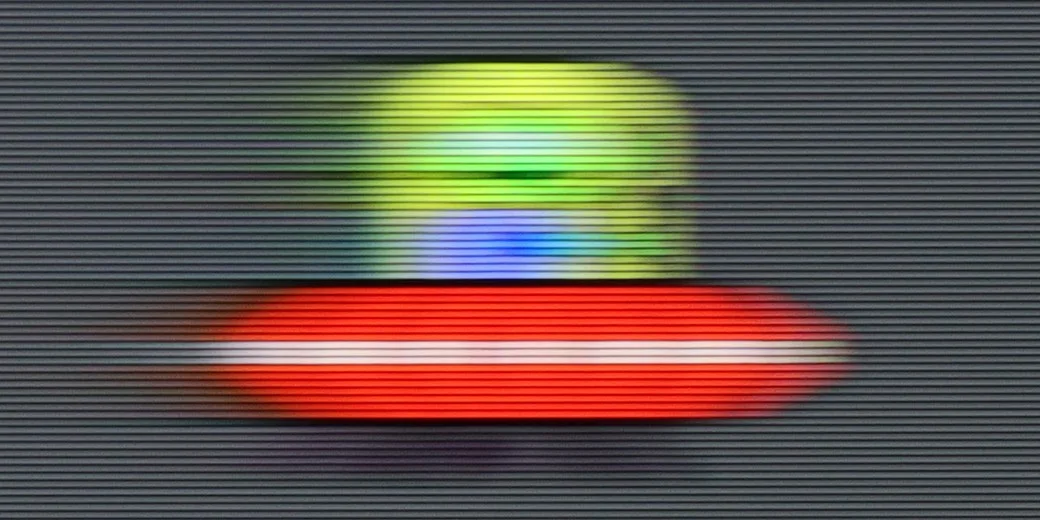
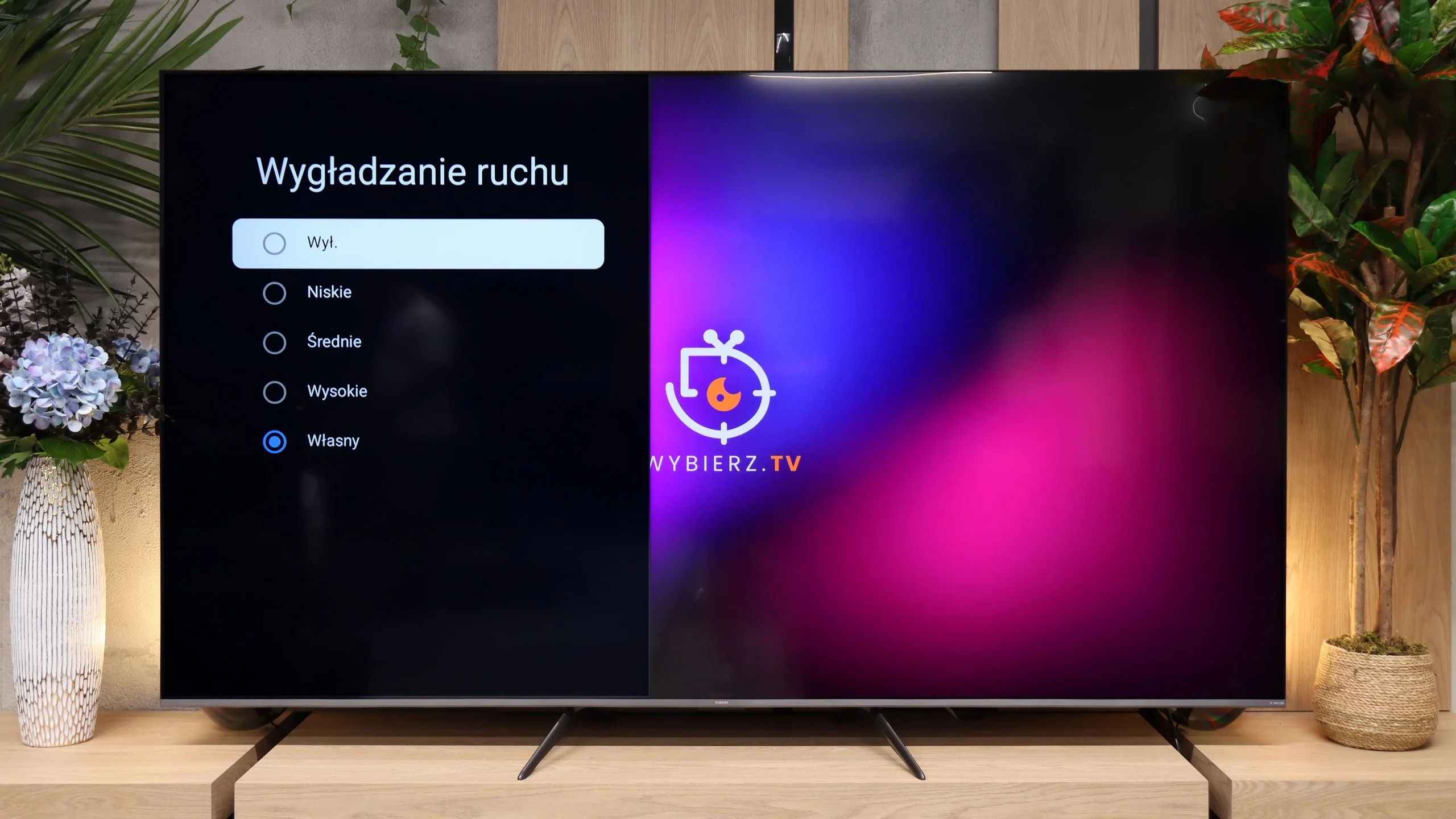
This is where the Sharp GR8 has the chance to stand out against the competition in its price segment. The TV is equipped with a 144 Hz refresh rate panel, which is an impressive result, especially if we plan to use it for dynamic content such as action movies, sports broadcasts, or video games. Additionally, the manufacturer has included a motion smoothing feature, commonly referred to as a "smoothener." The user has three levels of adjustment available, allowing them to tailor the effect to their own preferences – from subtle smoothing to more aggressive intervention in motion fluidity. This is a nice addition, especially for those who mainly watch movies and value smooth, cinematic sequences without annoying stuttering or frame drops.
The smaller variants of the Xiaomi S Mini 2026 use a 60 Hz panel, and that's their biggest limitation when it comes to motion. For movies and TV series this isn't yet a major issue, because the TV has a classic motion smoothing for 24/30 fps content. So we can reduce the characteristic judder and adjust motion to our own preferences. Sports and other 50/60 Hz content fare worse, because there is no additional feature to improve smoothness. With that kind of material we are therefore limited by the panel itself.
In terms of motion blur the TV performs quite typically for a VA panel. Most trailing is visible behind objects moving on a dark background, while in brighter scenes the effect is noticeably smaller. It's not at a level that completely ruins motion perception, but in dynamic scenes you can tell the panel isn't among the fastest.
Console compatibility and gaming features
7.8/10
4.6/10
- ALLM
- VRR
- VRR range48 - 144Hz
- Dolby Vision Game Mode
- Correct implementation of HGIG
- 1080p@120Hz
- 1440p@120Hz
- 4K@120Hz
- Game bar
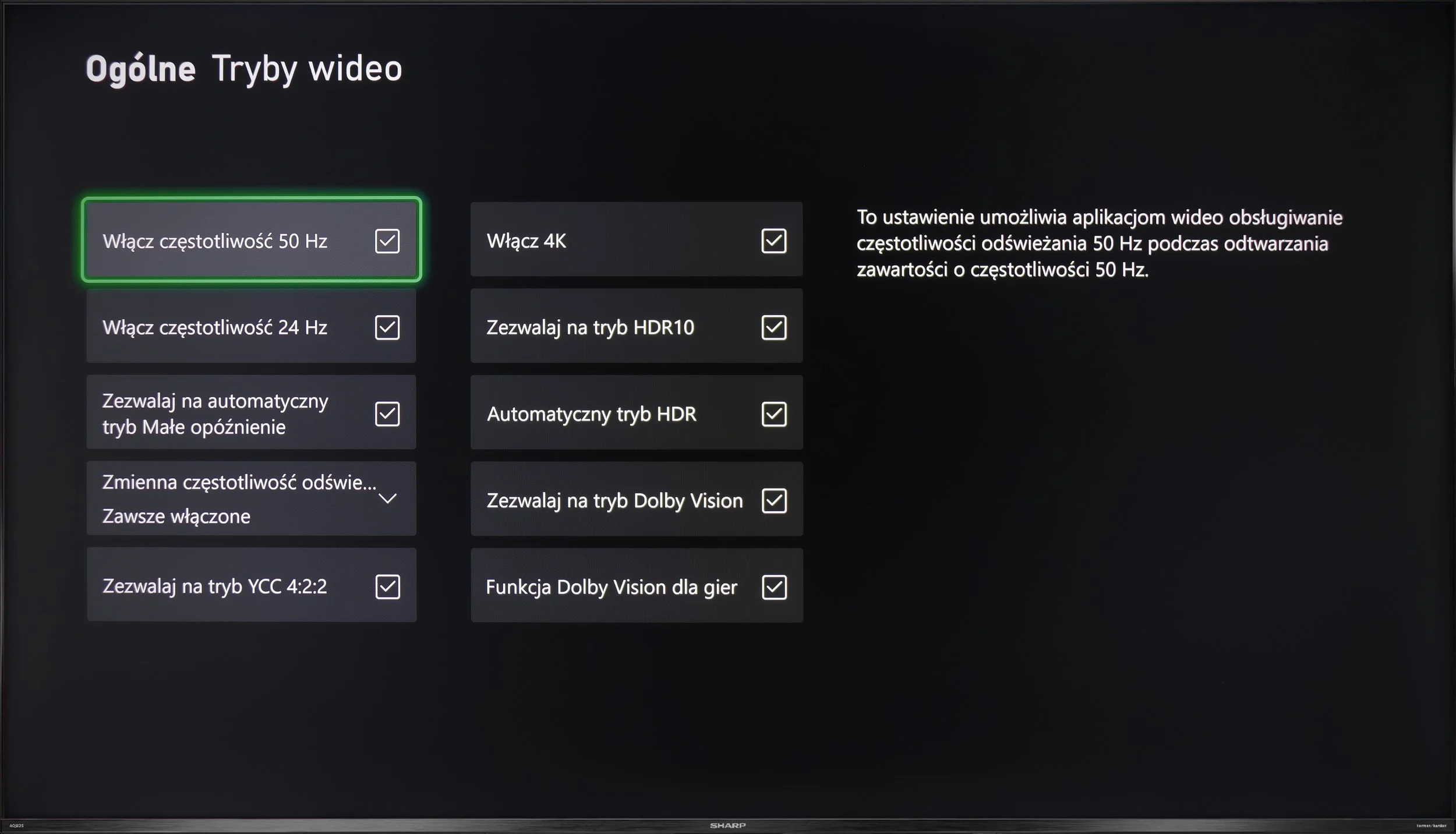
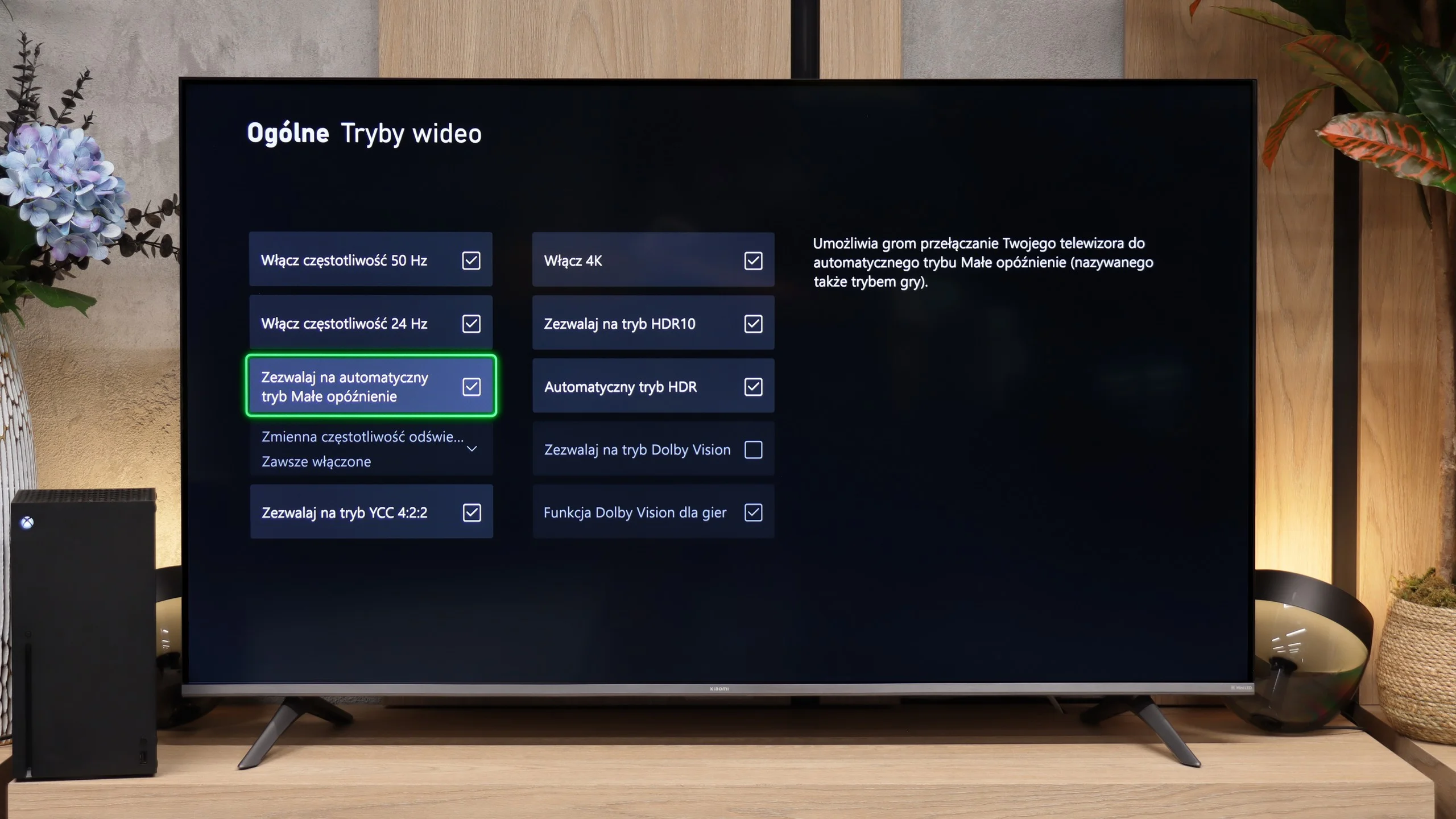
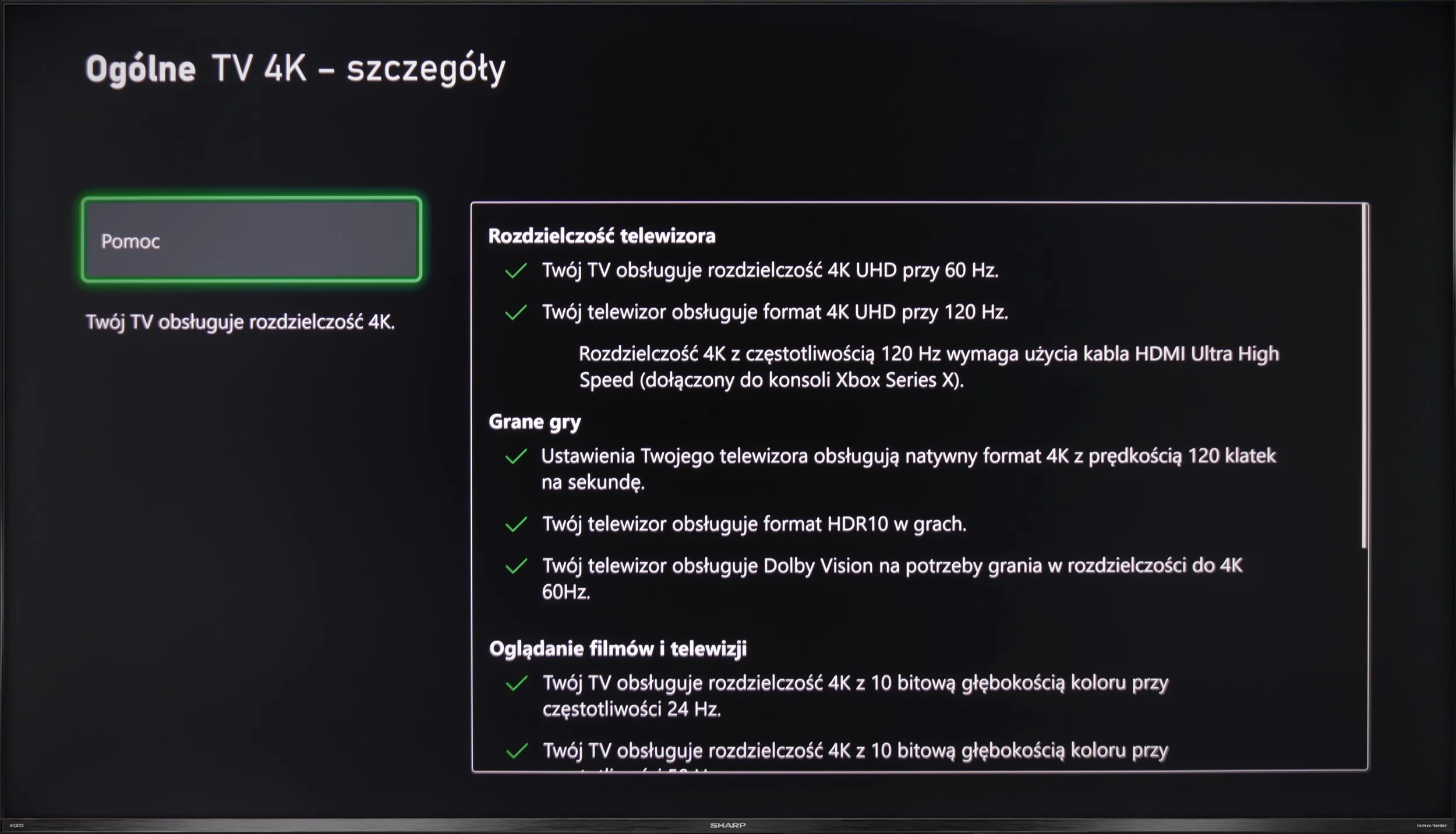
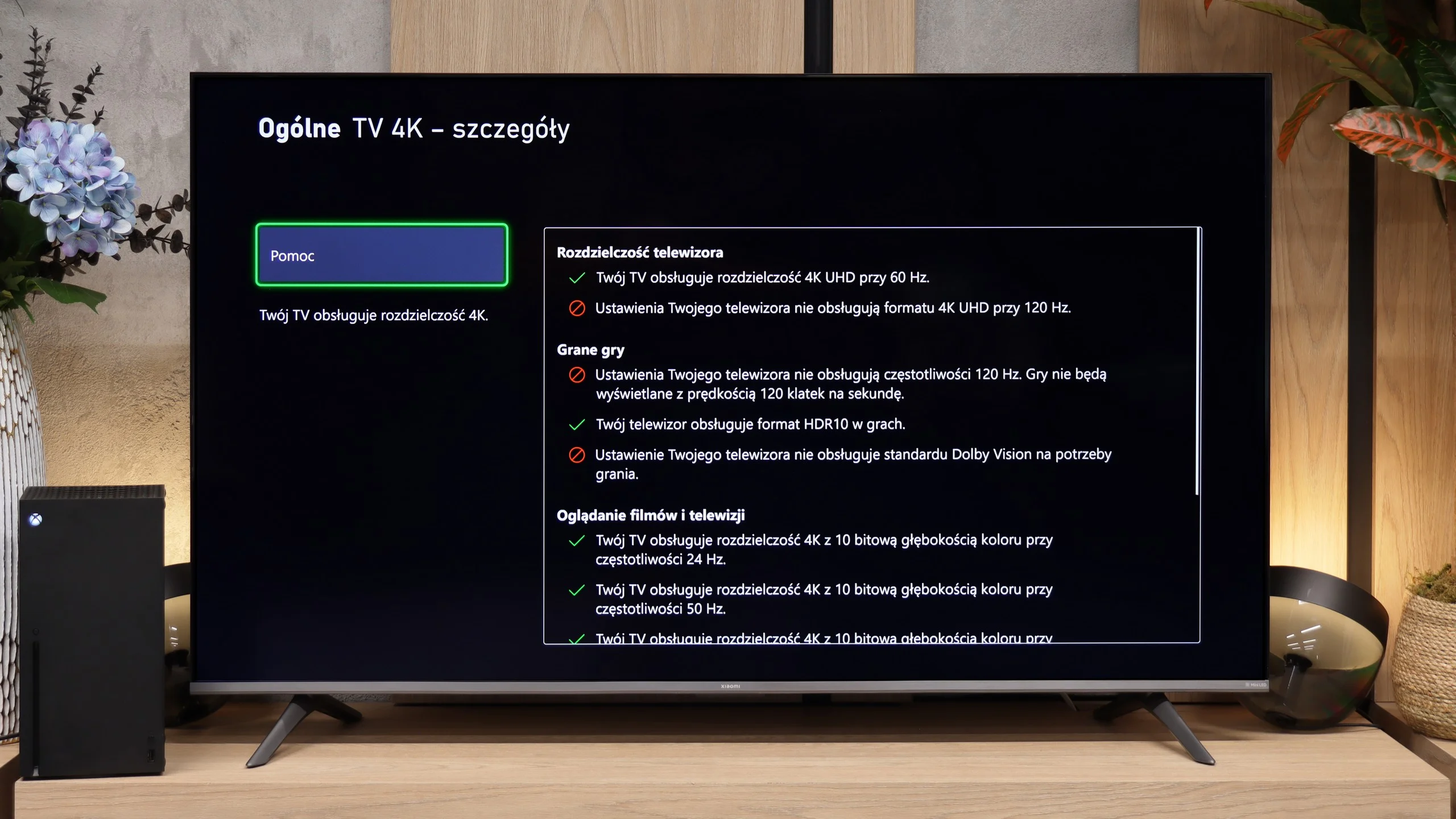
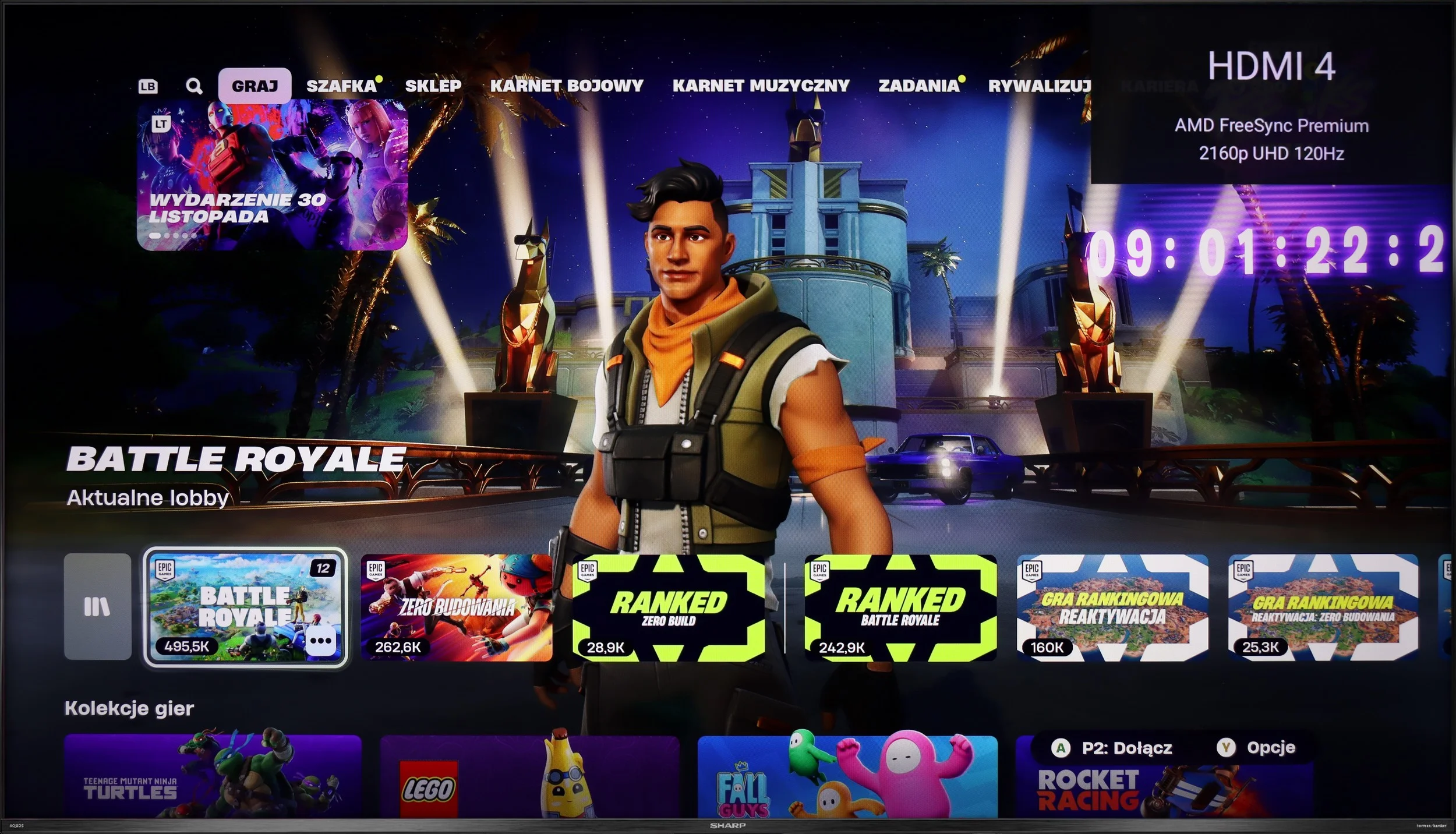
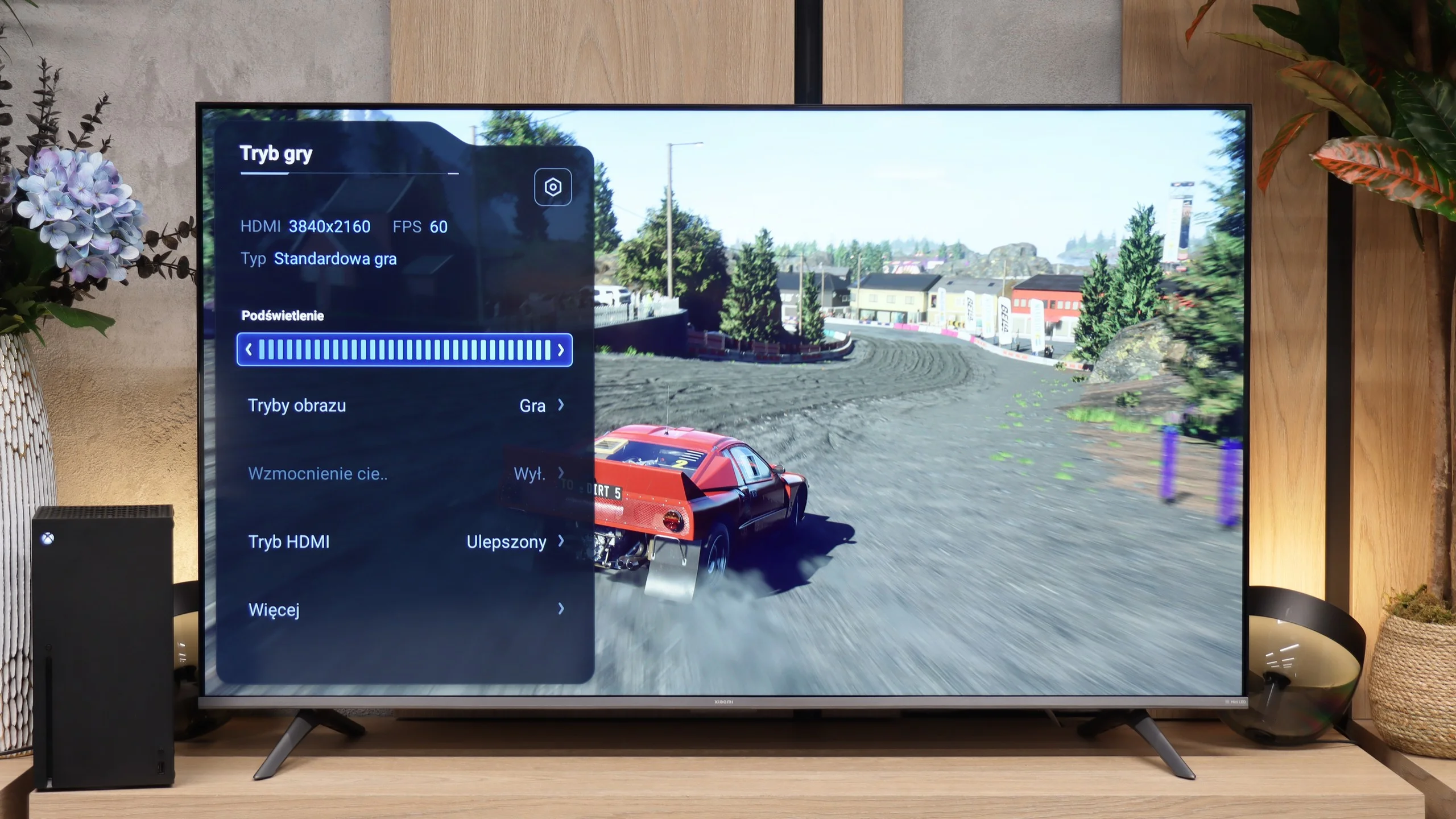
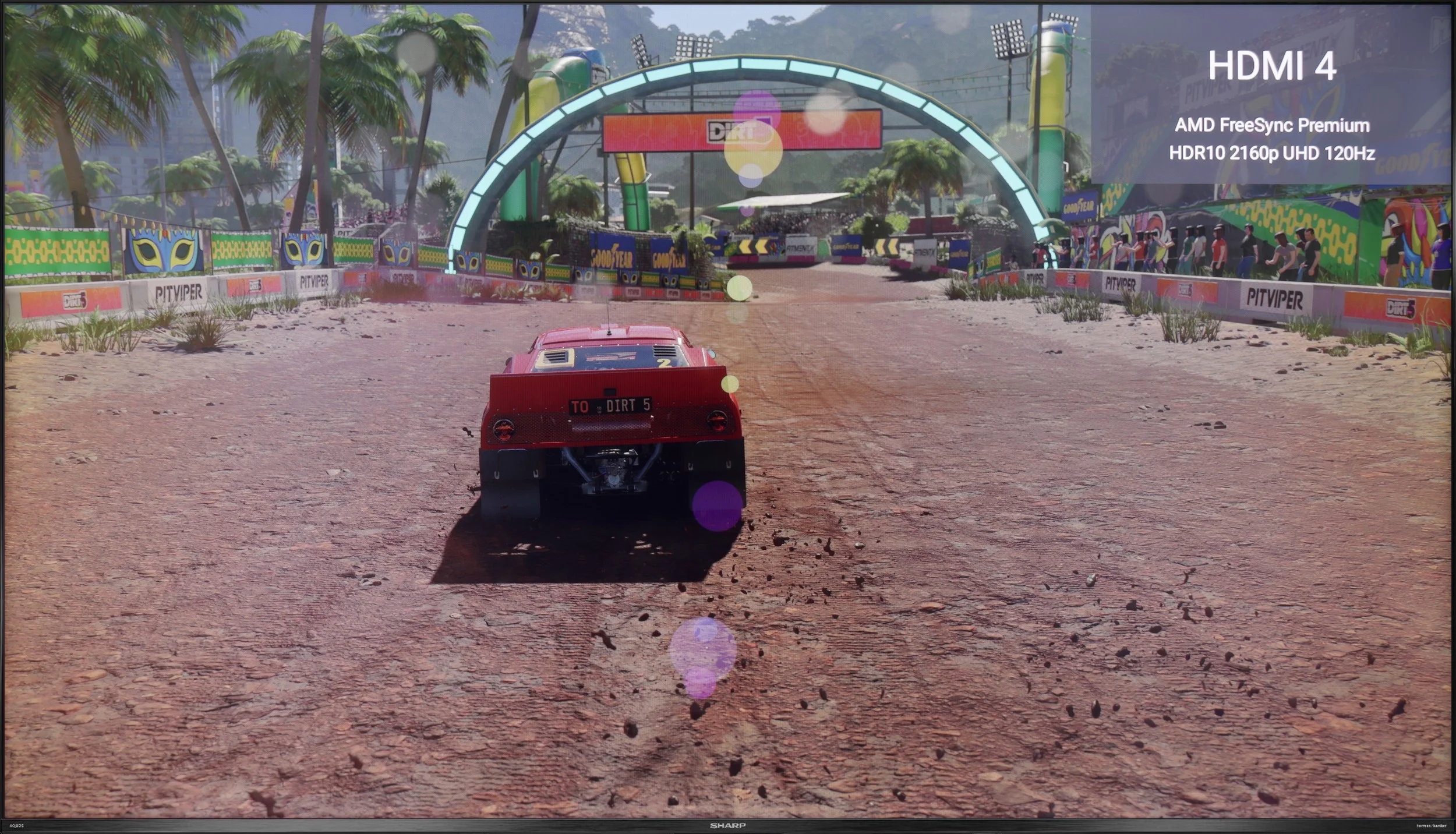
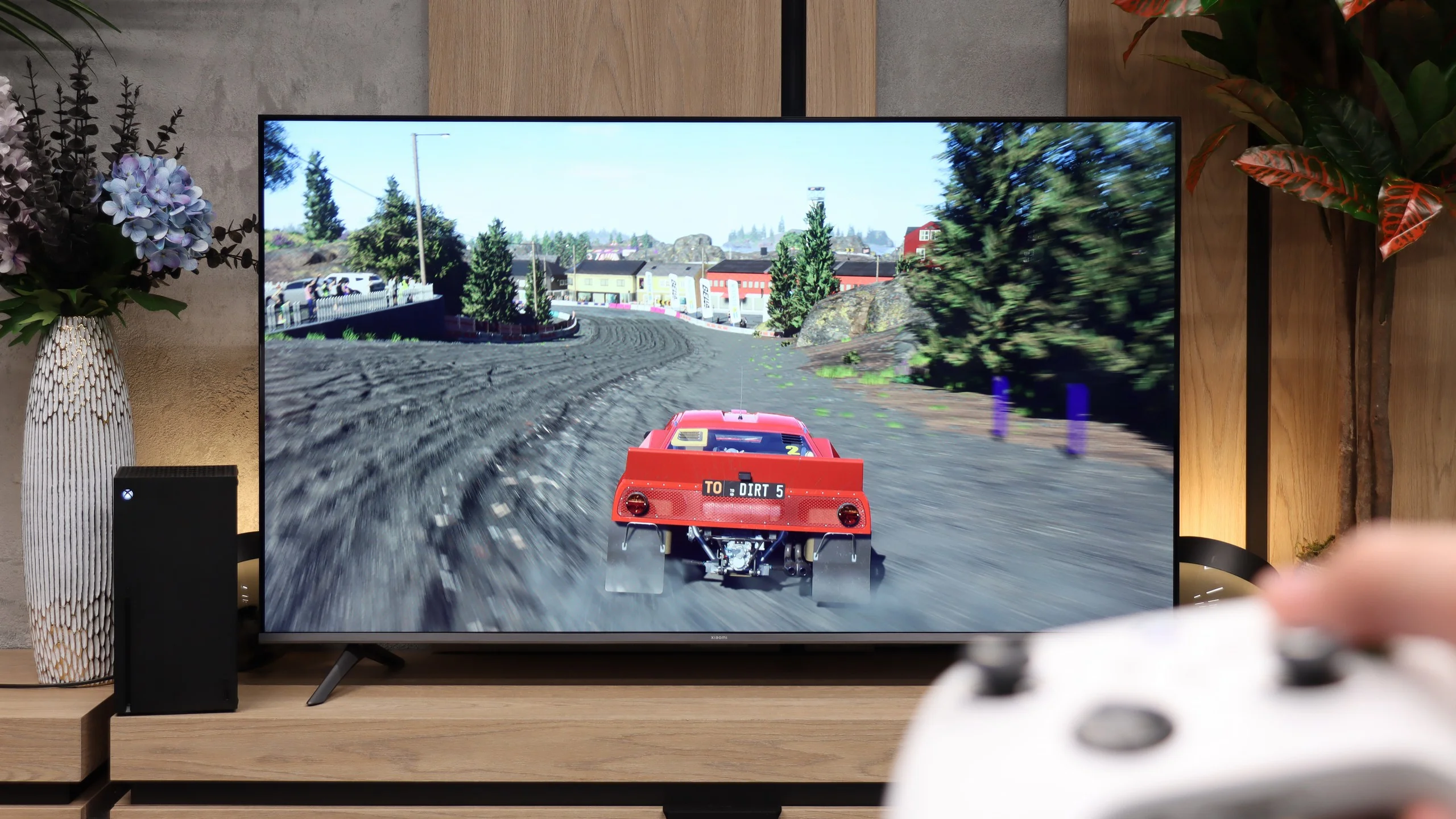
If a television has a 144 Hz display and two full HDMI 2.1 ports, it is clear that it has been designed with gamers in mind. The Sharp GR8 offers exactly that – high refresh rates and the right connections to maximize the performance of modern consoles and PCs. It also features ALLM, which automatically switches the television to low-latency mode, and VRR, which prevents screen tearing even in more demanding moments. In practice, everything works as it should, and it is hard to find any faults. However, there are some shortcomings. It lacks support for HGiG, which is a feature that better adjusts HDR for games, as well as a Game Bar that makes it easier to quickly adjust settings without leaving the game. Despite these downsides, the Sharp GR8 is a really solid option for gamers.
In larger sizes the Xiaomi S Mini 2026 becomes a far more interesting option for gamers. The panel natively runs at up to 144 Hz, so when connected to a PC we can take advantage of the high refresh rate even in 4K. At lower resolutions the TV can go even further and reach up to 288 Hz. There’s also ALLM, automatic switching to game mode, and a Game Bar with the key settings at hand. Of course, the TV is equipped with two full-bandwidth HDMI 2.1 ports. In terms of smoothness, the difference compared to the 55 to 75 inch versions is therefore substantial and especially noticeable when using a PC or console. Not everything works perfectly, though. As with the smaller variants, we have reservations about the HGiG implementation. The HDR setup screens on the PS5 and Xbox don’t exactly match the TV’s real capabilities, so if you configure the consoles according to those prompts the brightest parts of the image can be blown out and lose some detail.
Input lag
9.7/10
9.9/10
SDR
HDR
Dolby Vision
The Sharp GR8 performs really well in terms of latency. At a refresh rate of 120 Hz, the input lag is only 9 ms, and at 60 Hz - about 18 ms. These are practically imperceptible values even for the most demanding gamers, where every millisecond counts. Importantly, the Dolby Vision mode also works responsively, which is not at all standard in TVs in this price range. This is definitely a big plus for those who want to enjoy not only smoothness but also better HDR effects while gaming.
There's no major problem with latency here. About 10 ms at 120 Hz and 15 ms at 60 Hz are more than enough for console or PC gaming.
Compatibility with PC
4/10
5.6/10
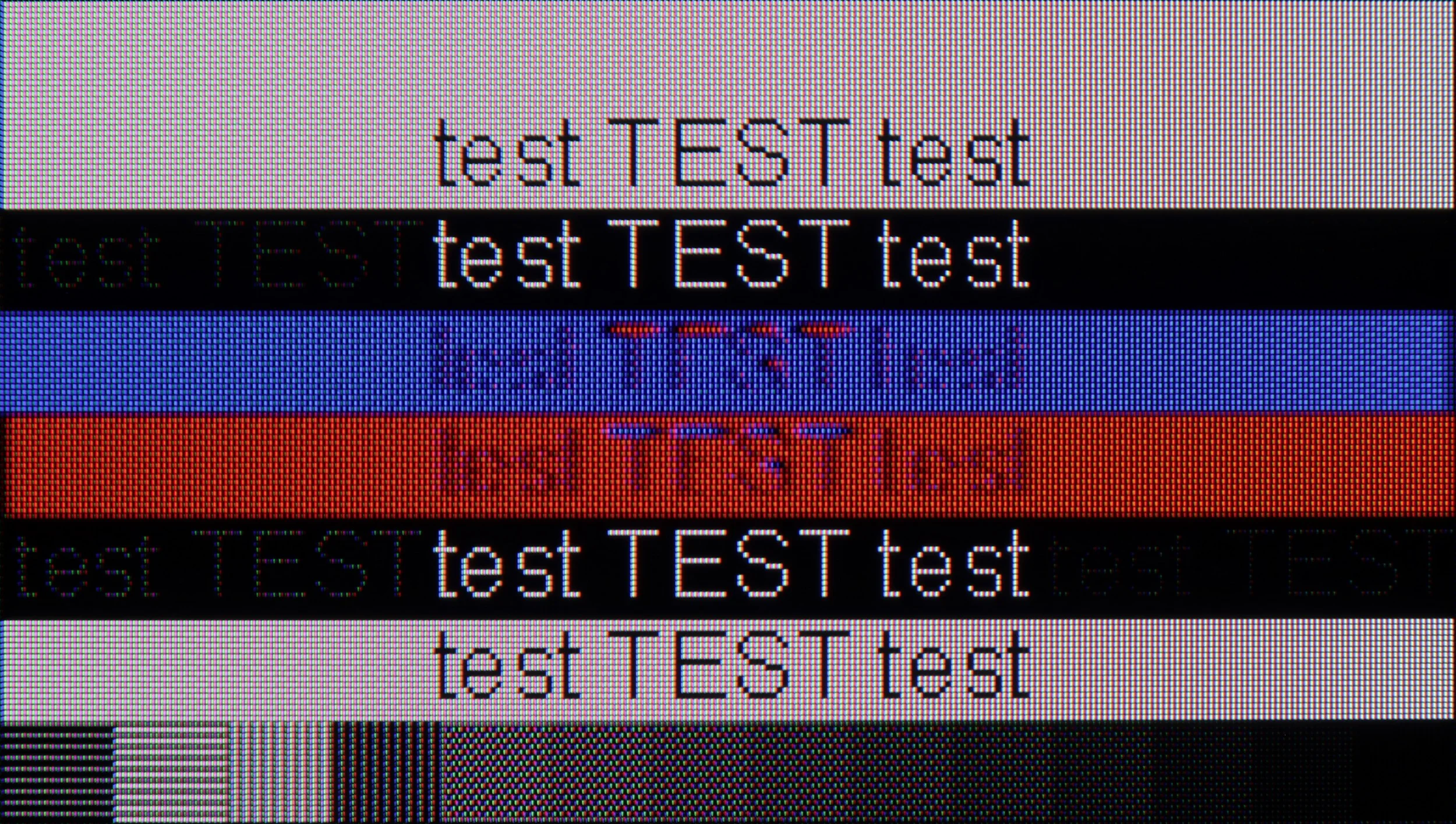
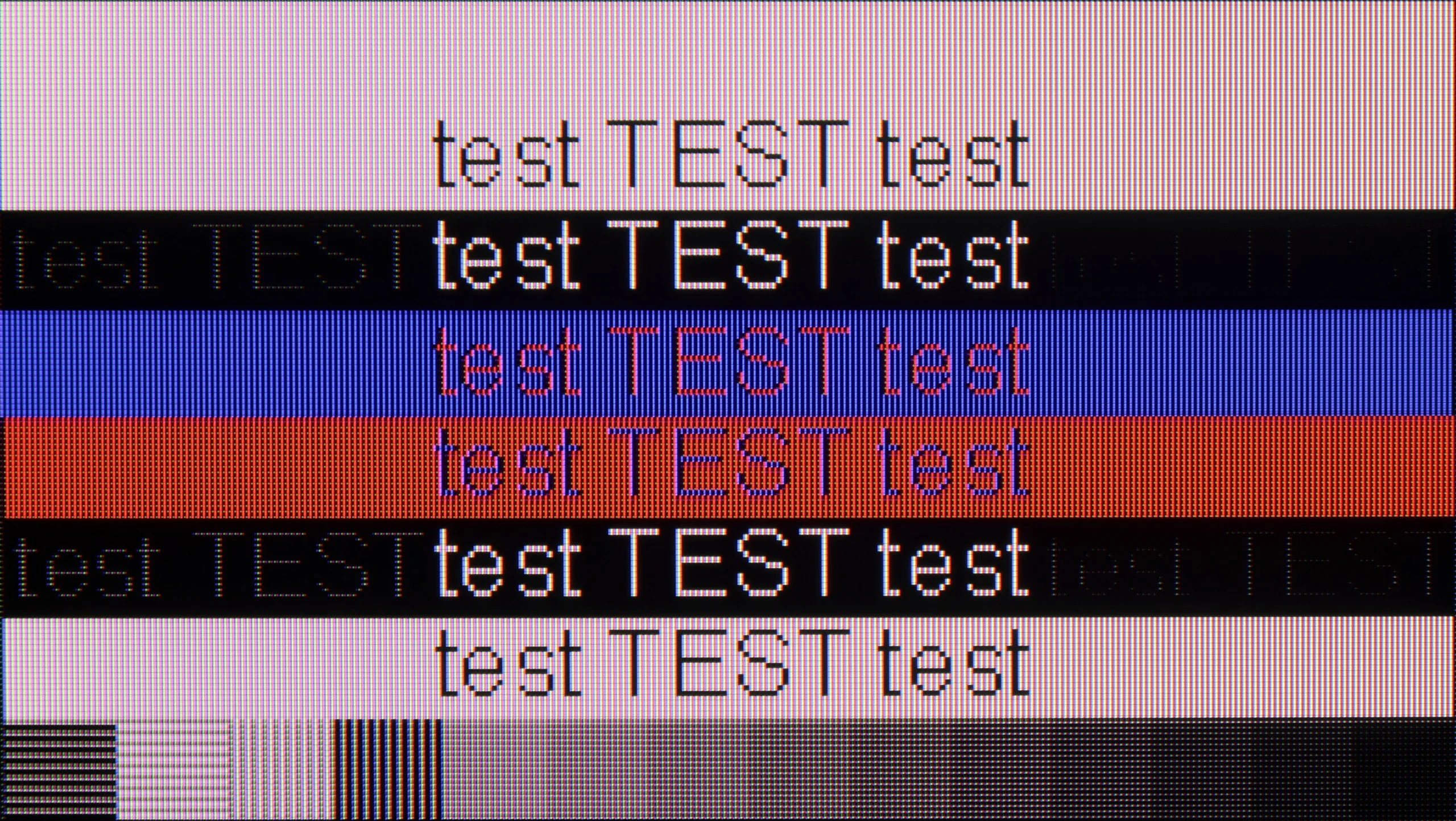
The photo shows the legibility of small fonts. Ideally, lines should be the same thickness on both light and dark text, with minimal pixel gaps.
The Sharp GR8 performs quite well as a screen for PC gaming. The 144 Hz refresh rate, low input lag, and support for G-Sync and FreeSync technology provide a setup that guarantees smooth and responsive gameplay. Games look dynamic, and the image remains stable even in the most demanding moments. However, a problem arises when it comes time to work with text. The TV does not support chroma 4:4:4, which means that fonts are blurred and poorly readable. Longer work with documents or browsing websites can simply become tiring for the eyes.
The Sharp GR8 is a great choice for PC gamers, but rather poor for office work. If we plan to use this TV mainly for gaming, we should be satisfied. However, if we think of it as a monitor for daily work, it’s better to look for another solution.
Computer use isn't the strong suit of the smaller variants of the Xiaomi S Mini 2026. The TV doesn't display chroma 4:4:4 correctly, so some small UI elements, icons, and colored text may look worse than they should. Plain black text on a light background is still fairly readable, but it's hard to consider this model a particularly good monitor for typical computer work. A plus is the ability to get a higher refresh rate by lowering the resolution. Instead of 4K at 60 Hz, you can switch to 1080p or 1440p and use 120 Hz, which for PC gaming can be far more useful than full resolution.
Viewing angles
3.2/10
3/10
In terms of viewing angles, the Sharp GR8 does not surprise – and it is hard to blame it, considering the use of a VA panel. When watching from a wider angle, the image loses quality, colors become faded, and contrast clearly decreases. Additional coatings that widen viewing angles could improve this aspect, but that is a solution we typically encounter in more expensive LCD TV models. If we plan to watch television mainly straight on, there won't be a major problem. However, in the case of a larger number of viewers sitting at different angles, it is worth being aware of this limitation.
The viewing angles on the smaller variants of the Xiaomi S Mini 2026 are unfortunately poor. This is a typical trait of VA panels, but here the effect is fairly pronounced. You only need to move slightly off-center for the picture to start noticeably fading and losing color saturation. Brightness itself doesn't drop as much, but colors very quickly look washed out. If multiple people will be watching the TV from wide angles, keep that in mind.
Daytime performance
4.5/10
6.3/10
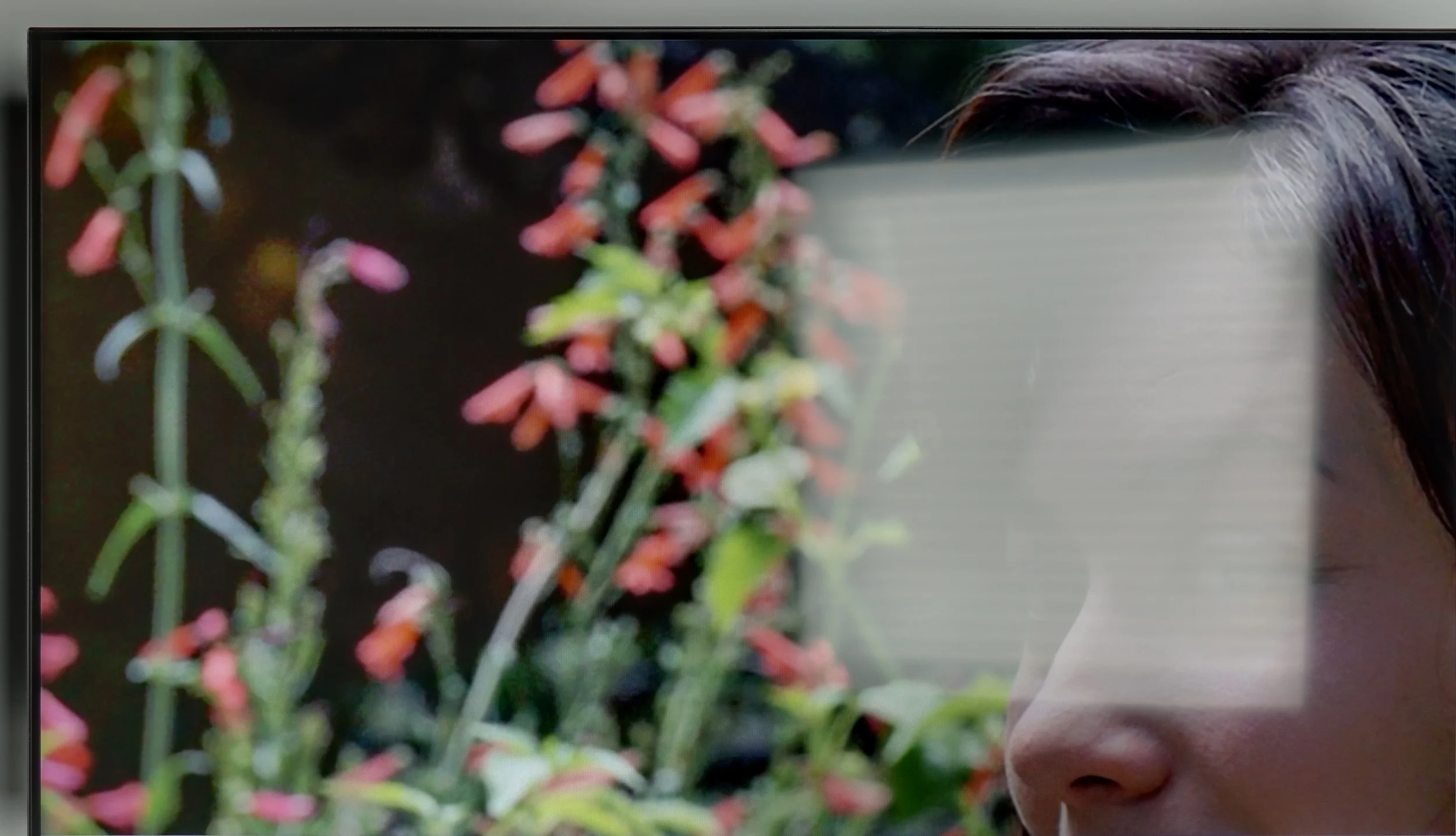
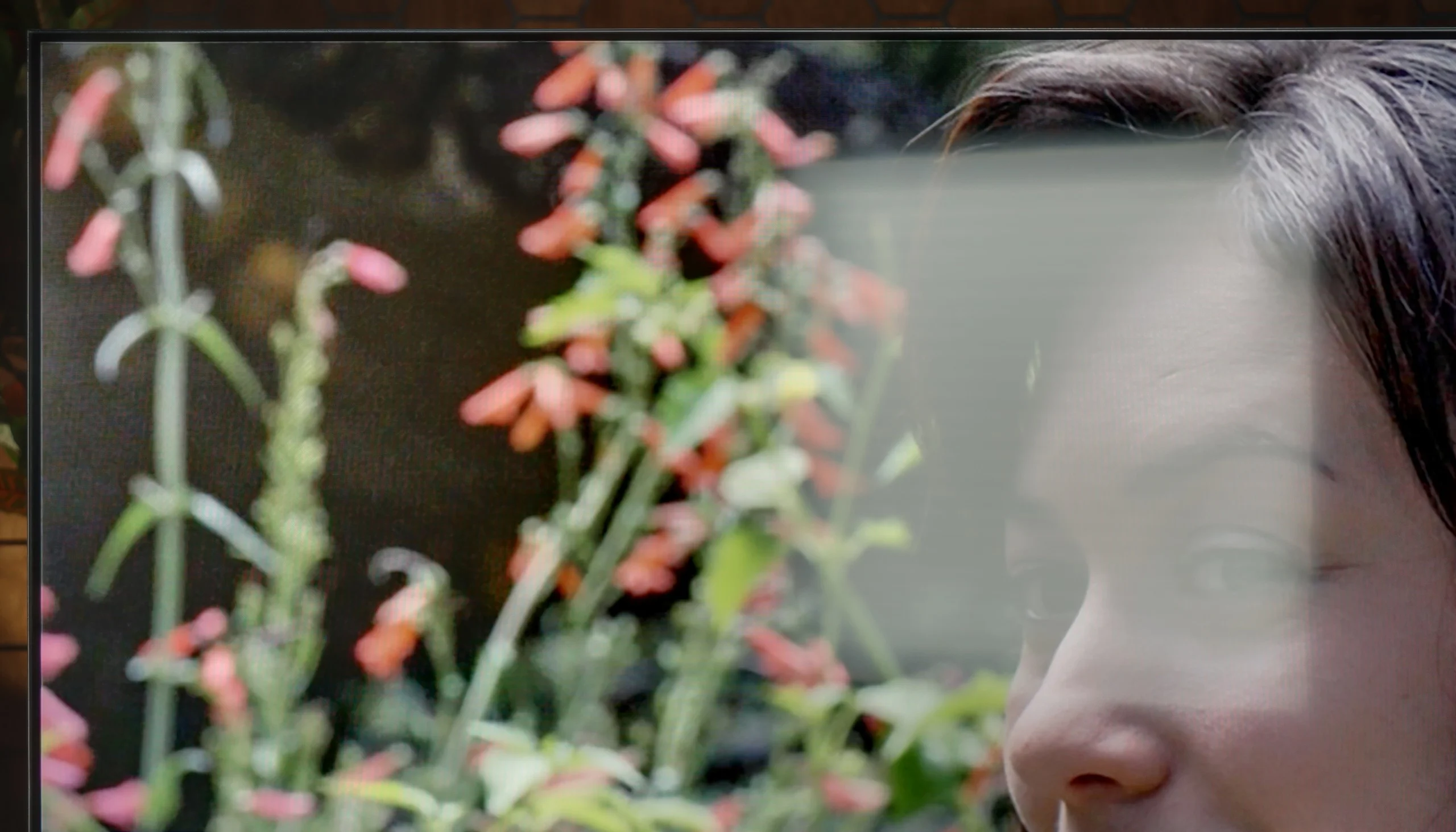
Panel brightness
XIAOMI S Mini 2026 (55"-75") 60Hz : 569 cd/m2
Sharp GR8: 329 cd/m2
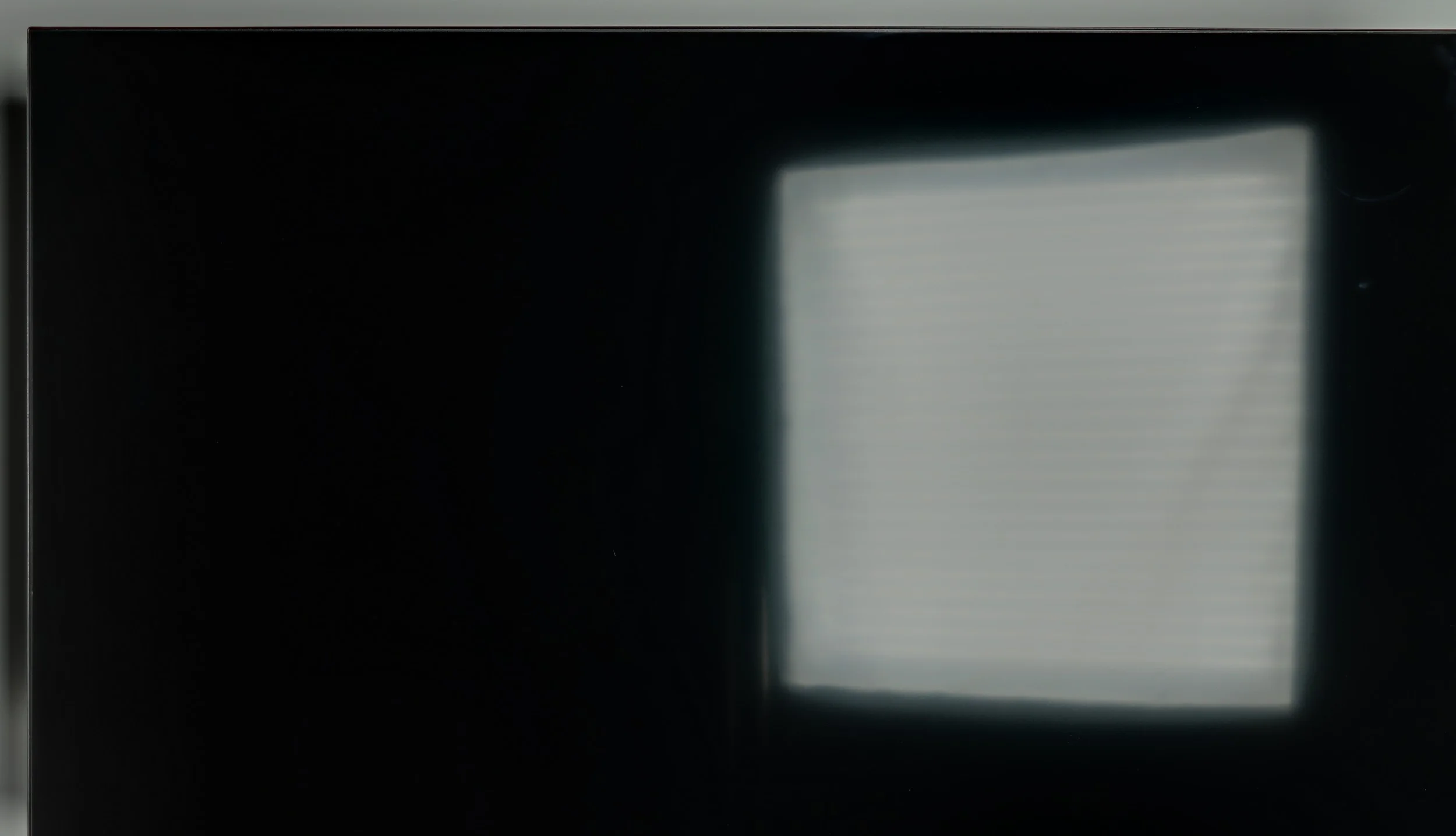
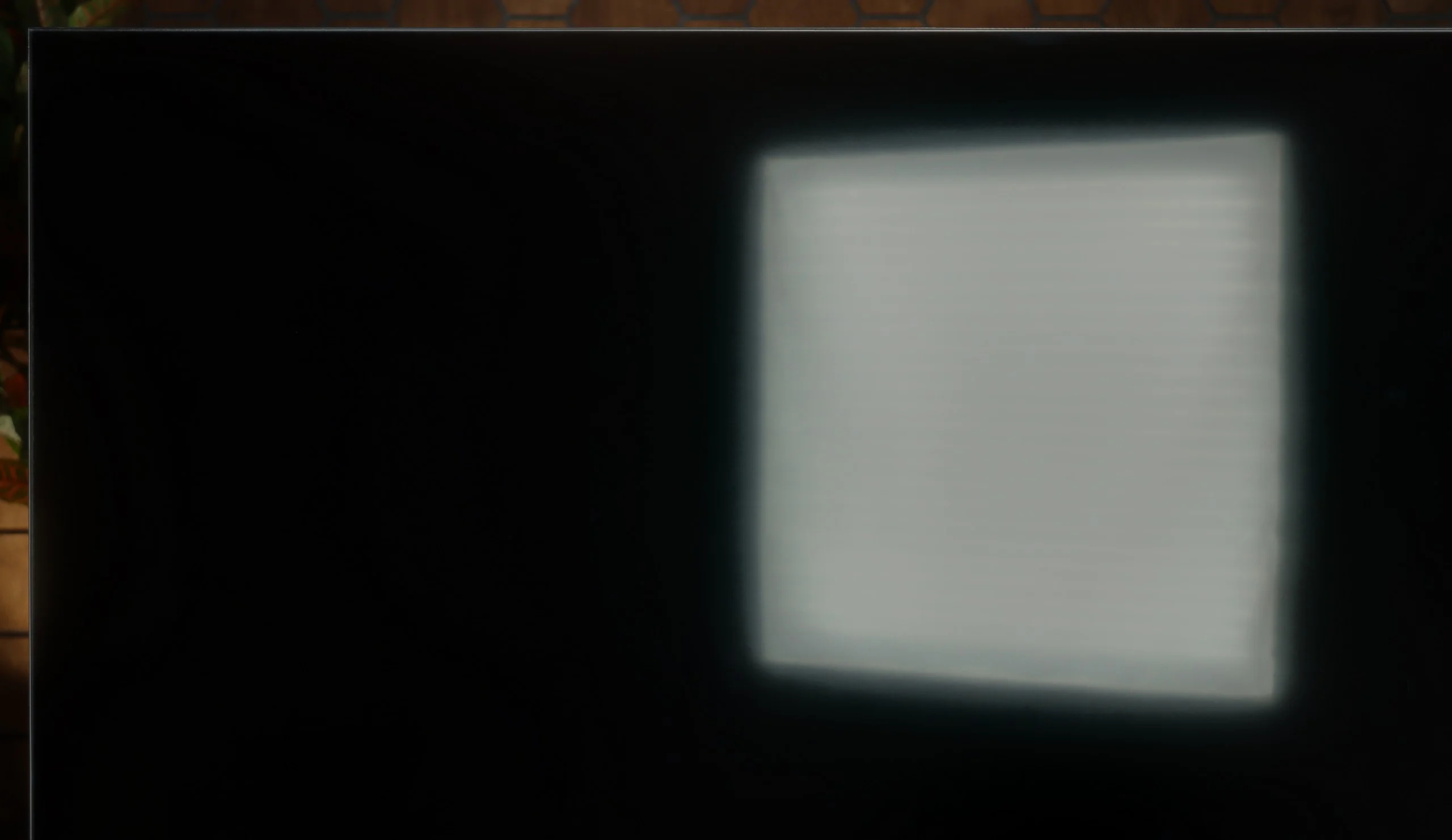
The Sharp GR8 has a satin finish display that handles reflections moderately. Bright surrounding elements, such as windows or lamps, are quite noticeable on the screen and can be distracting while watching. The brightness level of 330 cd/m² in SDR content is also unimpressive. As a result, the television performs best in rooms with not too much natural light. One could say that the GR8 manages during the day, but it is definitely not equipment designed for heavily sunlit living rooms. If we watch mainly in the evenings or in controlled lighting, this will not be a major issue.
The smaller variants of the Xiaomi S Mini 2026 perform well for daytime viewing. In SDR the TV averages around 570 nits, so it has enough brightness that the picture doesn't look washed out even in a fairly brightly lit living room.
The screen coating is a weaker point. It's satin, but it doesn't suppress direct reflections particularly effectively. If there's a large window or a strong lamp opposite the TV, reflections will be clearly visible. Brightness helps mitigate this partly, but in terms of reflection suppression this isn't one of the model's strong suits.
Panel details
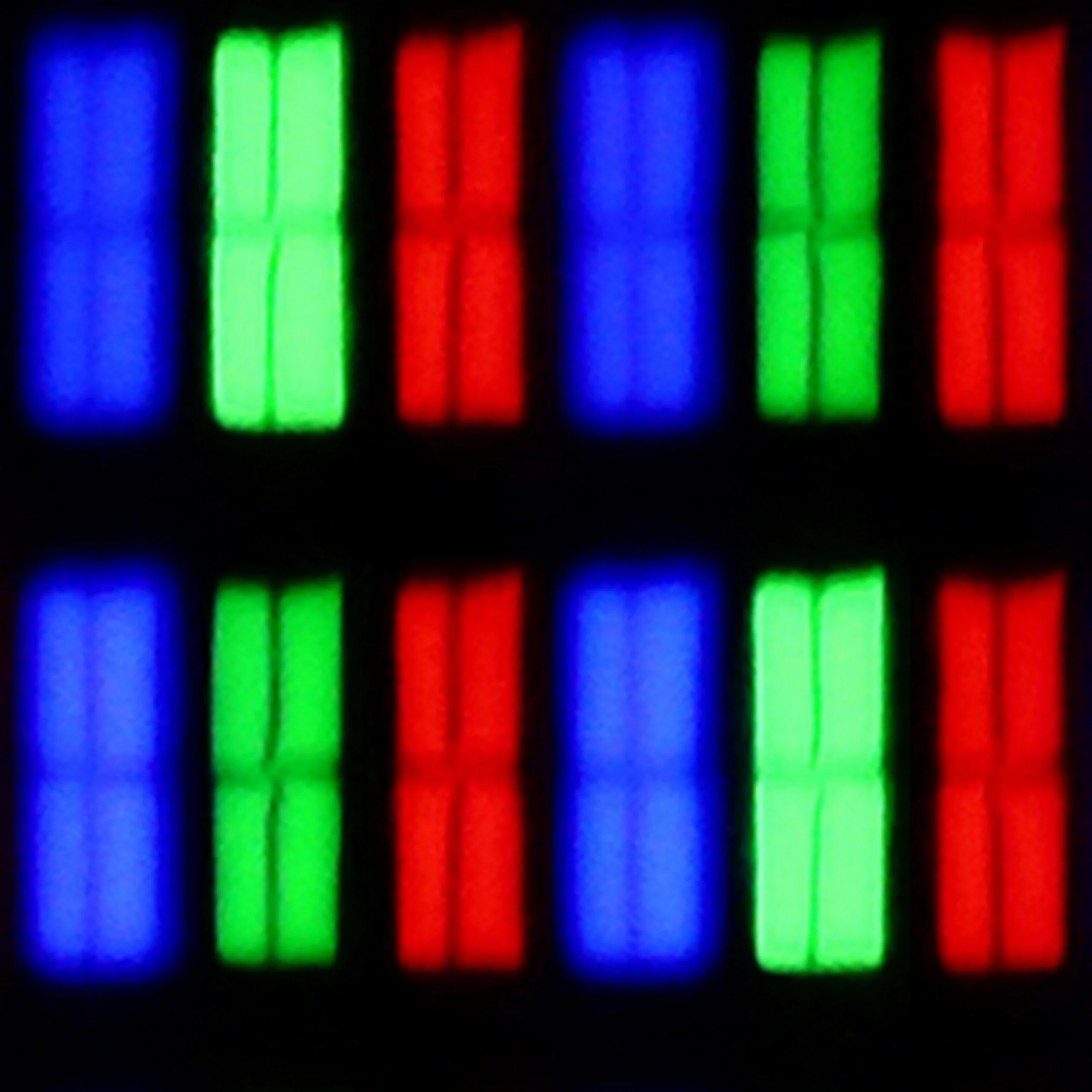
Subpixel Structure:
Panel uniformity and thermal imaging:
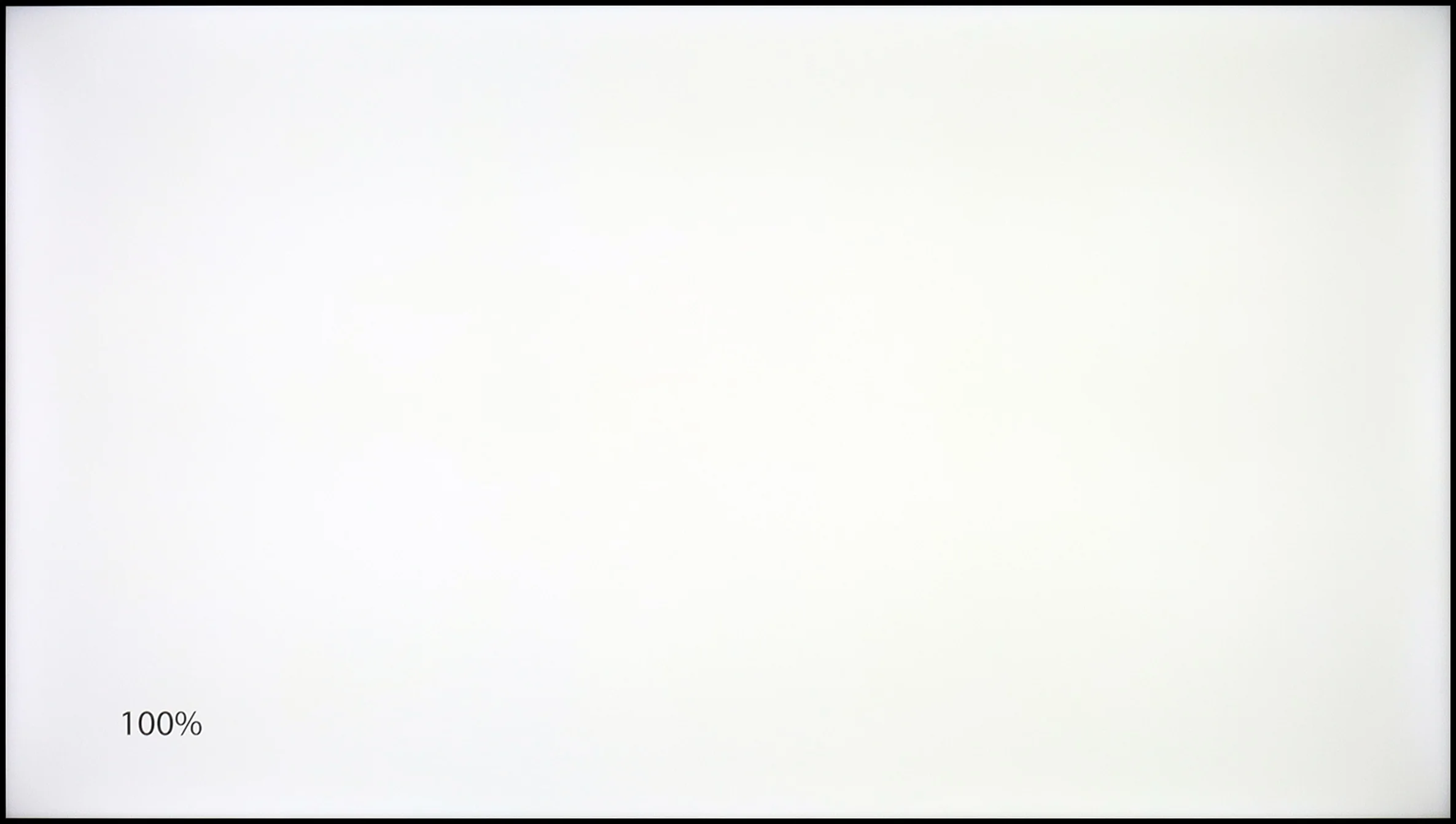
Sharp GR8
XIAOMI S Mini 2026 (55"-75") 60Hz
TV features
6/10
6.7/10
- SystemGoogle TVGoogle TV
- System performanceDecentPoor
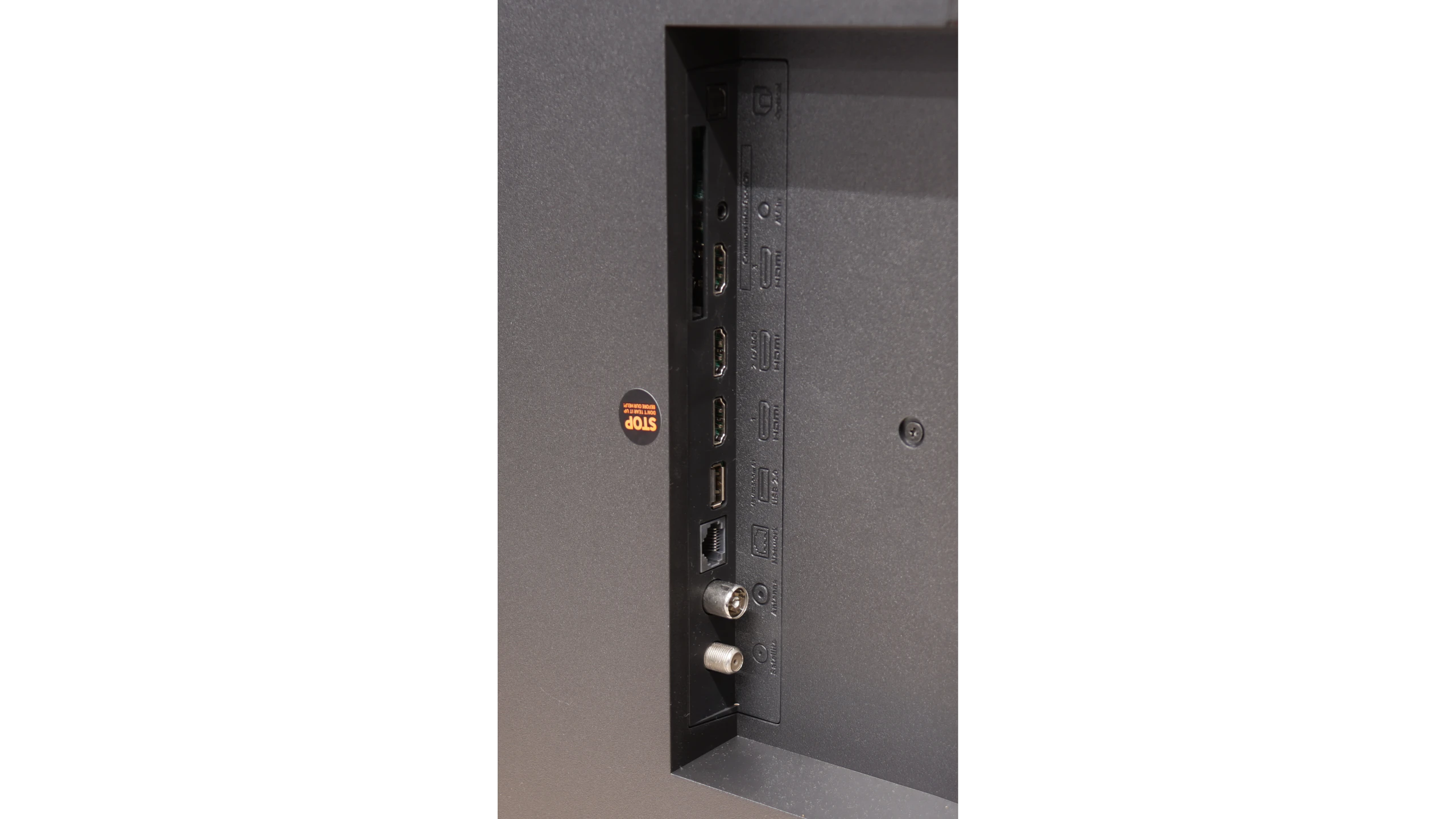
- HDMI inputs2 x HDMI 2.0, 2 x HDMI 2.1 48Gbps3 x HDMI 2.0, 0 x HDMI 2.1
- Other inputsRCA (Chinch)
- OutputsToslink (Optical audio), eARC (HDMI), ARC (HDMI), Mini-Jack (Headphones)Toslink (Optical audio), eARC (HDMI), ARC (HDMI), Mini-Jack (Headphones)
- Network InterfacesWi-Fi 2.4GHz, Wi-Fi 5GHz, Ethernet (LAN) 100MbpsWi-Fi 2.4GHz, Wi-Fi 5GHz, Ethernet (LAN) 100Mbps
- TV receptionDVB-T, DVB-T2, DVB-S, DVB-S2, DVB-CDVB-T, DVB-T2, DVB-S, DVB-S2, DVB-C
Classic features:
- Recording to USB (terrestrial TV)
- Recording programming
- Picture in Picture (PiP)
- RF remote control (no need to aim)
- Backlit remote control
- Teletext
- Audio only mode
- Bluetooth headphones support
- Simultaneous Bluetooth headphones & TV audio
Smart features:
- AirPlay
- Screen mirroring (Windows Miracast)
- Voice search
- Voice search in native language
- Ability to connect a keyboard and mouse
Sound connection options
- HDMI audioeARC (HDMI), ARC (HDMI)eARC (HDMI), ARC (HDMI)
- Other audio outputsToslink (Optical audio), Mini-Jack (Headphones)Toslink (Optical audio), Mini-Jack (Headphones)
- Wireless audioBluetoothBluetooth
Supported audio formats (external HDMI eARC audio):
- Dolby Digital Plus 7.1
- Dolby True HD 7.1
- Dolby Atmos in Dolby Digital Plus (JOC)
- Dolby Atmos in Dolby True HD
- DTS:X in DTS-HD MA
- DTS-HD Master Audio
Senior accessibility
- Numeric keyboard on TV
- Font size adjustment
- Audio description
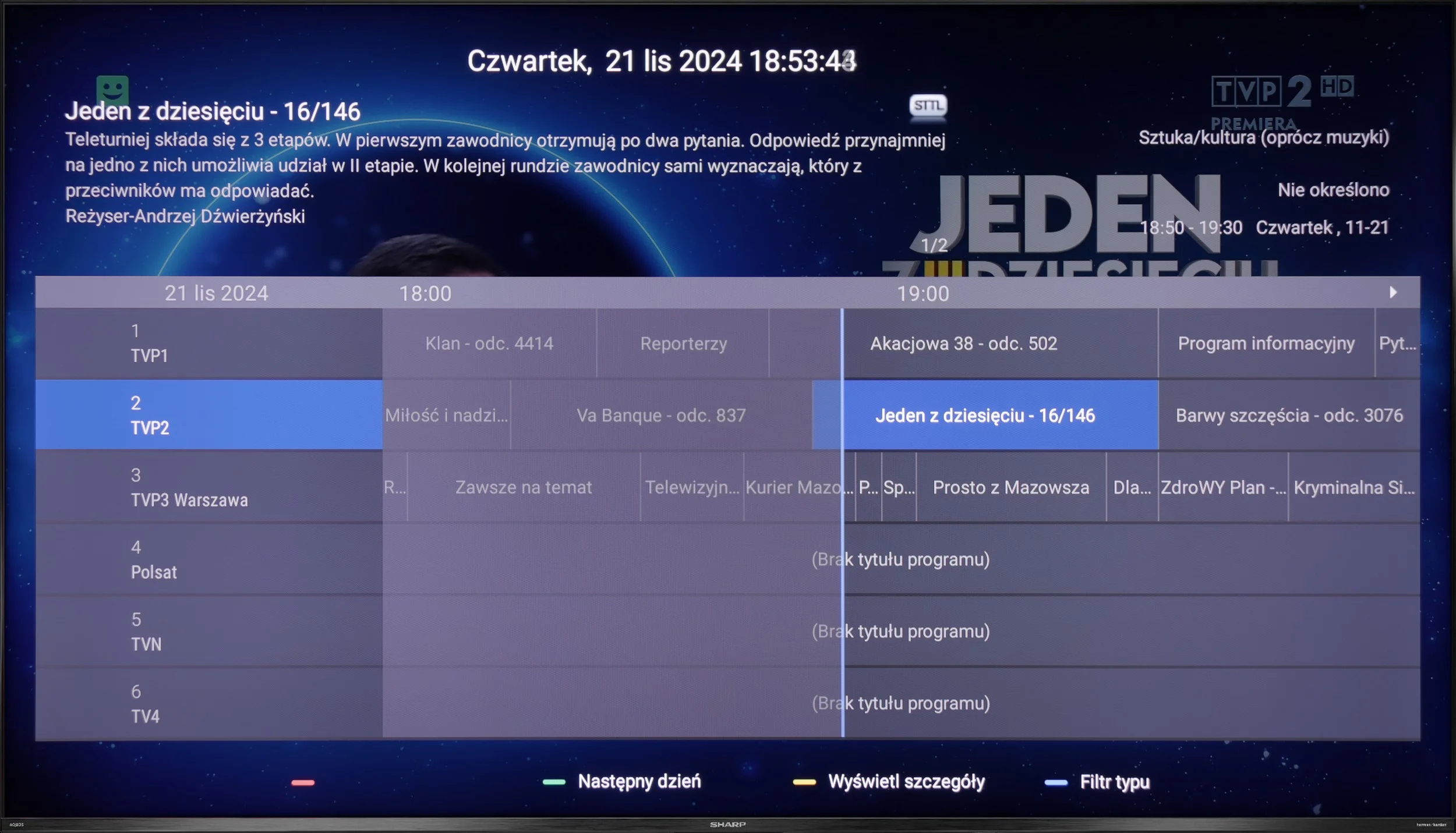
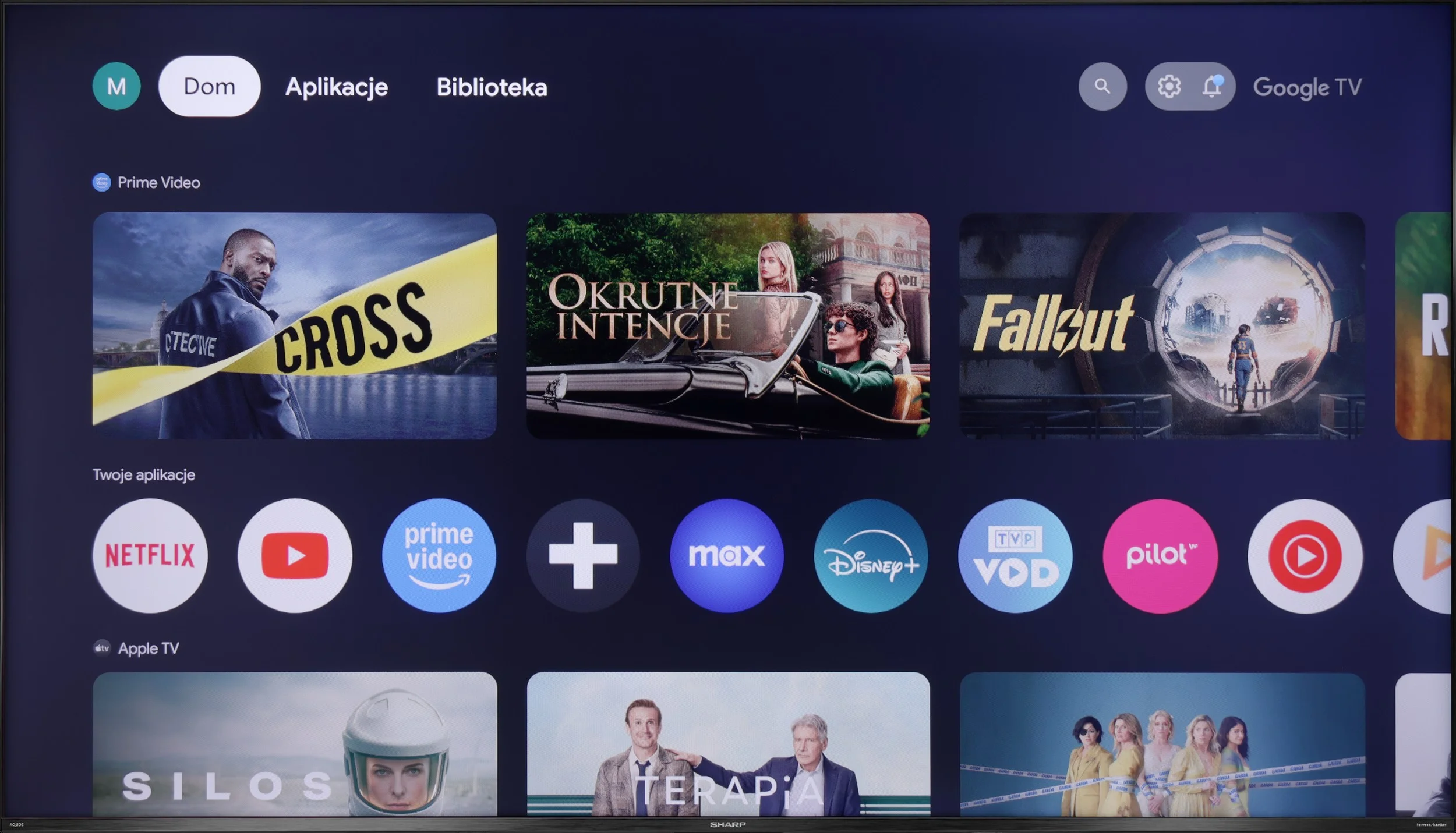
Google TV is definitely the biggest advantage of the Sharp GR8. This system is a true multimedia machine - it features almost all popular streaming applications, such as Netflix, HBO Max, and Disney+. Voice search works in Polish and, importantly, is really responsive. We can tell the TV what we want to watch, and it quickly finds the appropriate content. Moreover, the interface is clear and intuitive, so even those who are not fond of technological novelties can handle it without any problems. In short, Google TV gets the job done.
Unfortunately, when it comes to more classic features, the GR8 is fairly average. There are no options for USB recording or PiP (picture-in-picture) functionality. Moreover, although the TV supports Bluetooth connectivity, iPhone users may feel disappointed as there is no support for AirPlay.
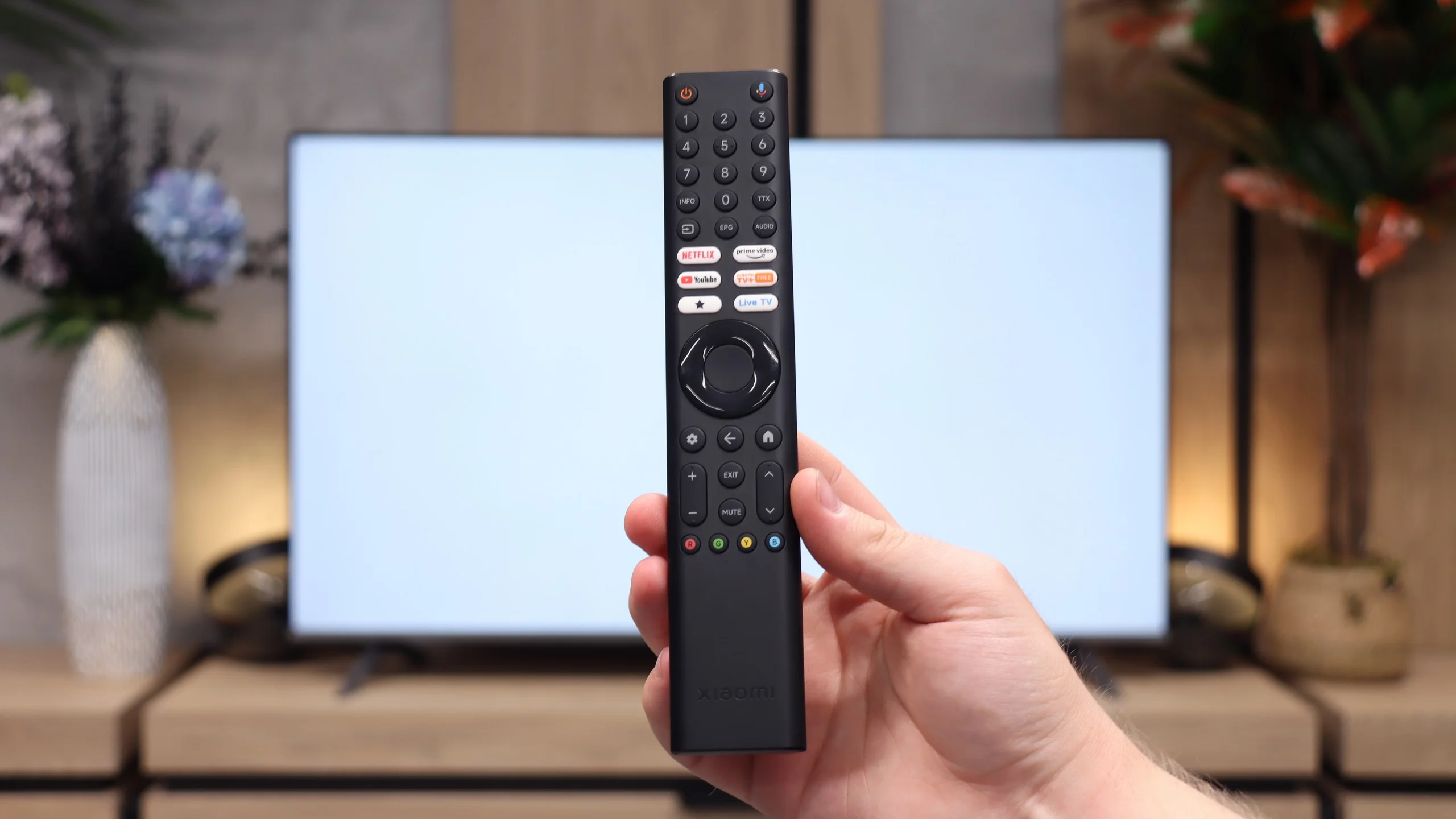
The remote included in the package is simple yet well thought out. It has a solar panel on the front, which allows it to be charged by light, and the additional charging port means we don't have to worry about changing batteries. It is also a plus that the remote does not require pointing at the screen - it works regardless of the direction it is facing.
Google TV
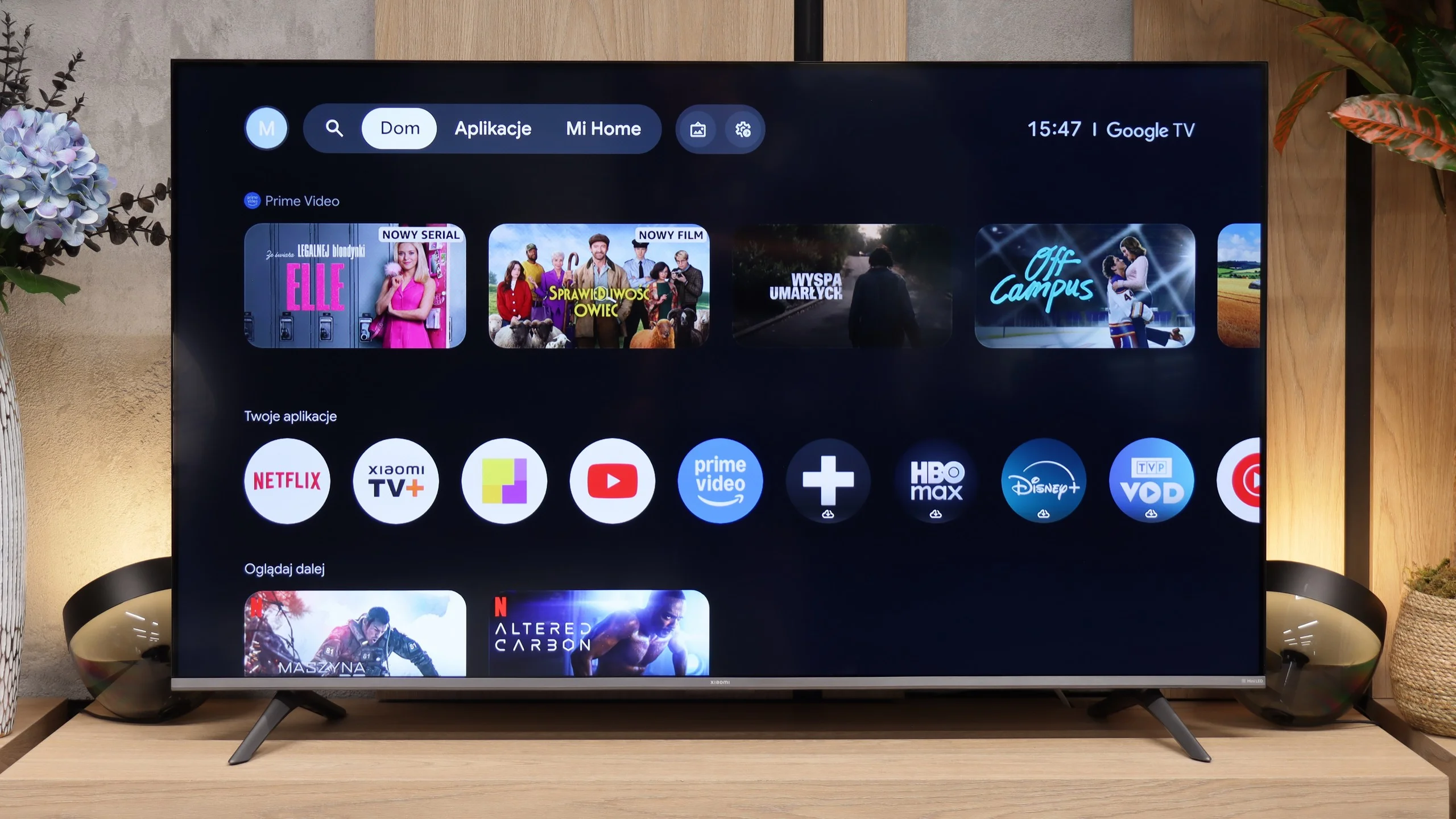
The Xiaomi S Mini 2026 runs on Google TV, which remains one of the most feature-rich Smart TV platforms. You’ll find practically all the most popular apps here, such as Netflix, YouTube, Prime Video, Disney+, HBO Max and Canal+, and thanks to the Google Play Store you can install many other apps as well. It also supports Google Assistant, Chromecast and the ability to control the TV from your smartphone.
Unfortunately, on the smaller models the system doesn’t run as smoothly as we’d expect. Switching between apps or navigating the menu can take a moment, and the interface sometimes responds with a slight delay. It’s not at a level that makes the TV unusable, but compared with the competition it’s clear this isn’t the fastest version of Google TV on the market.
Classic features
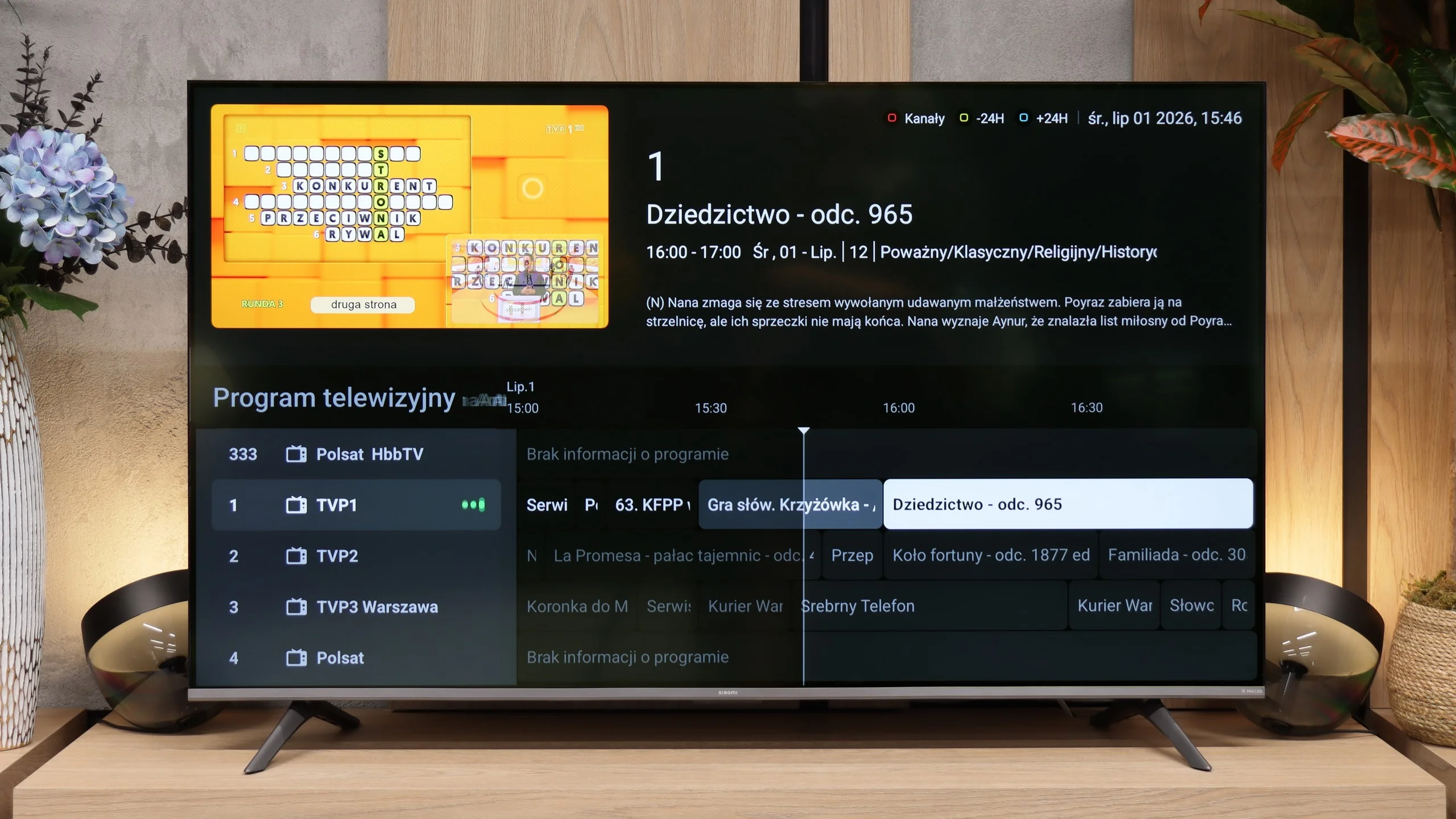
If you mainly use linear TV, Xiaomi doesn’t offer anything beyond what you’d expect from a modern TV. You get an electronic program guide (EPG) and teletext. The manufacturer also includes a remote with a traditional numeric keypad, which is becoming rarer these days but will still be a convenient solution for many people when changing channels.
Noteworthy is the presence of an analog 3.5 mm headphone jack. This is a feature that is disappearing from TVs year by year in favor of only digital audio outputs. Because of it, you can easily connect older wired headphones or speakers without needing additional adapters.
Apps
9.6/10
9.6/10






















Playing files from USB
9.1/10
6.5/10
Supported photo formats:
Maximum photo resolution:
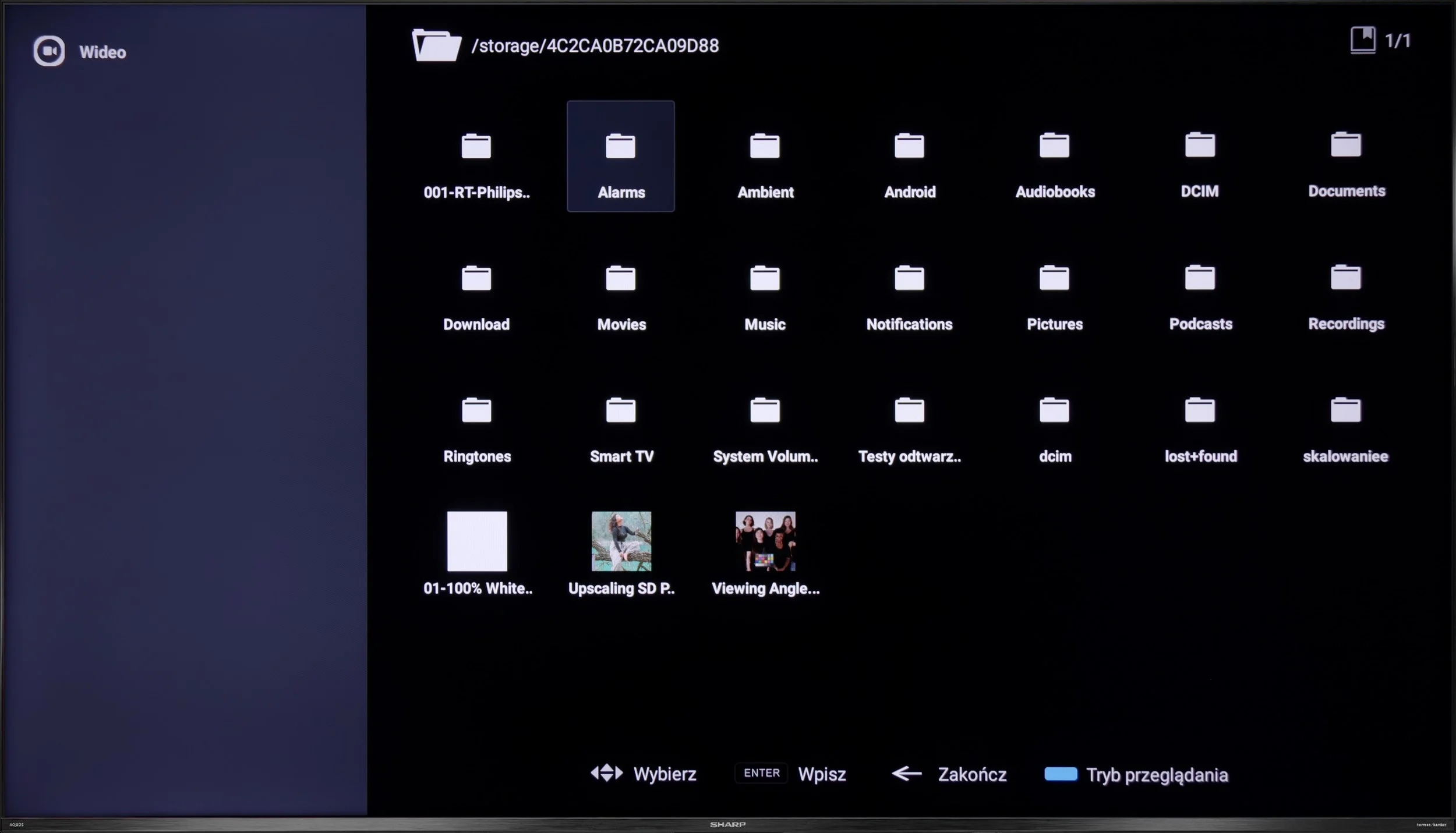
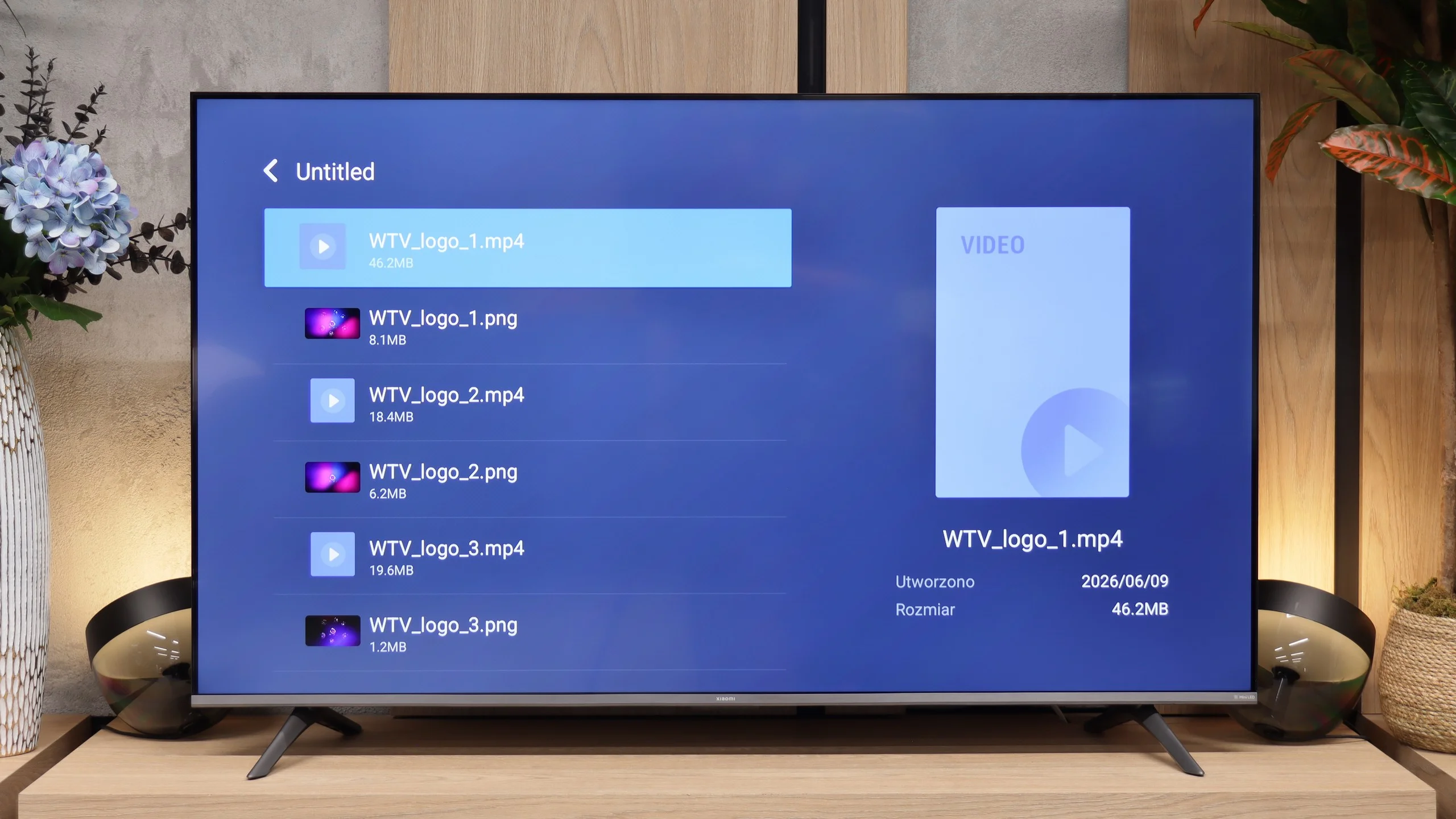
The Sharp GR8 performs really well when playing multimedia files from USB. It supports almost all popular audio and video formats, so we don't have to worry about any file not launching.
However, the built-in player has its limitations – for example, we won't find the option to change the font color in subtitles here. Fortunately, the Google TV system allows us to bypass this problem. You just need to download an alternative multimedia playback app from the Google Play Store, which offers more advanced configuration options.
The built-in USB media player performs quite well and plays most popular formats without any issues. However, if you come across a file it doesn't support, Google TV makes it easy to install another player, such as VLC. Our biggest reservation is the subtitles. The built-in app doesn't handle some characters outside the basic alphabet correctly, so you can run into problems with, for example, Polish letters. If you frequently watch movies from USB, it's better to use a third-party app.
Sound
7/10
5/10
- Maximum volume-89dB
- Dolby Digital Plus 7.1
- Dolby True HD 7.1
- Dolby Atmos in Dolby Digital Plus (JOC)
- Dolby Atmos in Dolby True HD
- DTS:X in DTS-HD MA
- DTS-HD Master Audio
Sharp GR8 positively surprises with its sound quality. Although it is equipped with a standard set of speakers, the influence of collaboration with Harman/Kardon is evident. The sound is clear, dialogues are well emphasized, and the overall sound characteristic is pleasant to the ear. It is not on the level of flagship models with advanced audio systems, but for this price segment – it is really good.
Unfortunately, Sharp decided to remove the built-in soundbar that we could see in the previously reviewed model Sharp FQ8. It’s a pity, because this solution significantly improved sound quality and gave the television an advantage over the competition.
In terms of sound, the Xiaomi S Mini 2026 doesn't stand out. The speakers are fine for regular TV viewing, but with movies or concerts their limitations quickly become apparent. The biggest issue is the lack of bass, which makes the overall sound fairly flat. If you want better audio, it's worth considering getting a soundbar.
Sound Quality Test
No sound test video
Acoustic Measurements
No acoustic data
89dBC (Max)
75dBC
Reader comments
Comments are provided by the external service Disqus (Zeta Global). Once loaded, Disqus may set cookies and process data about your activity.
We will remember your choice on this device. Provider's privacy policy