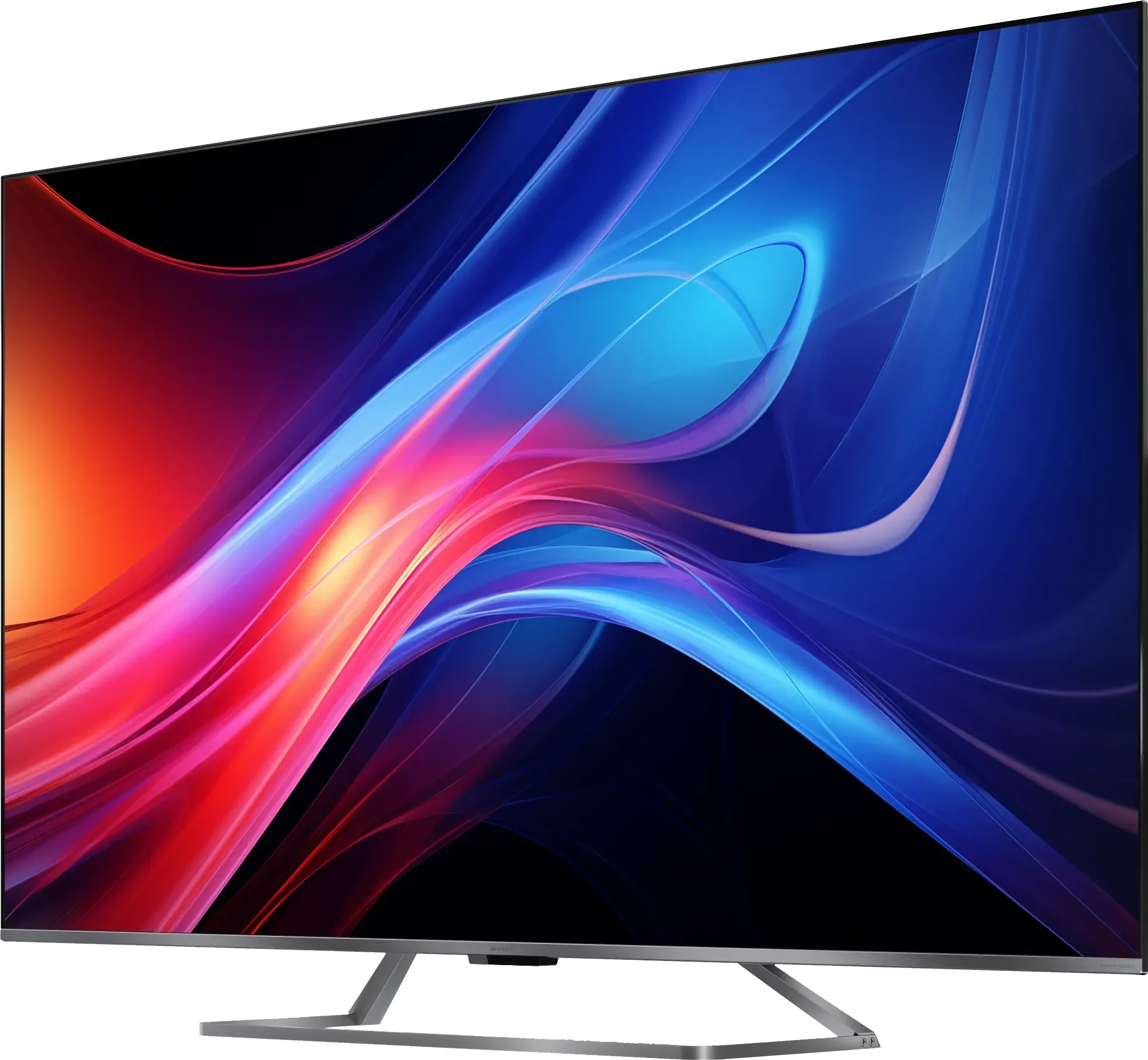
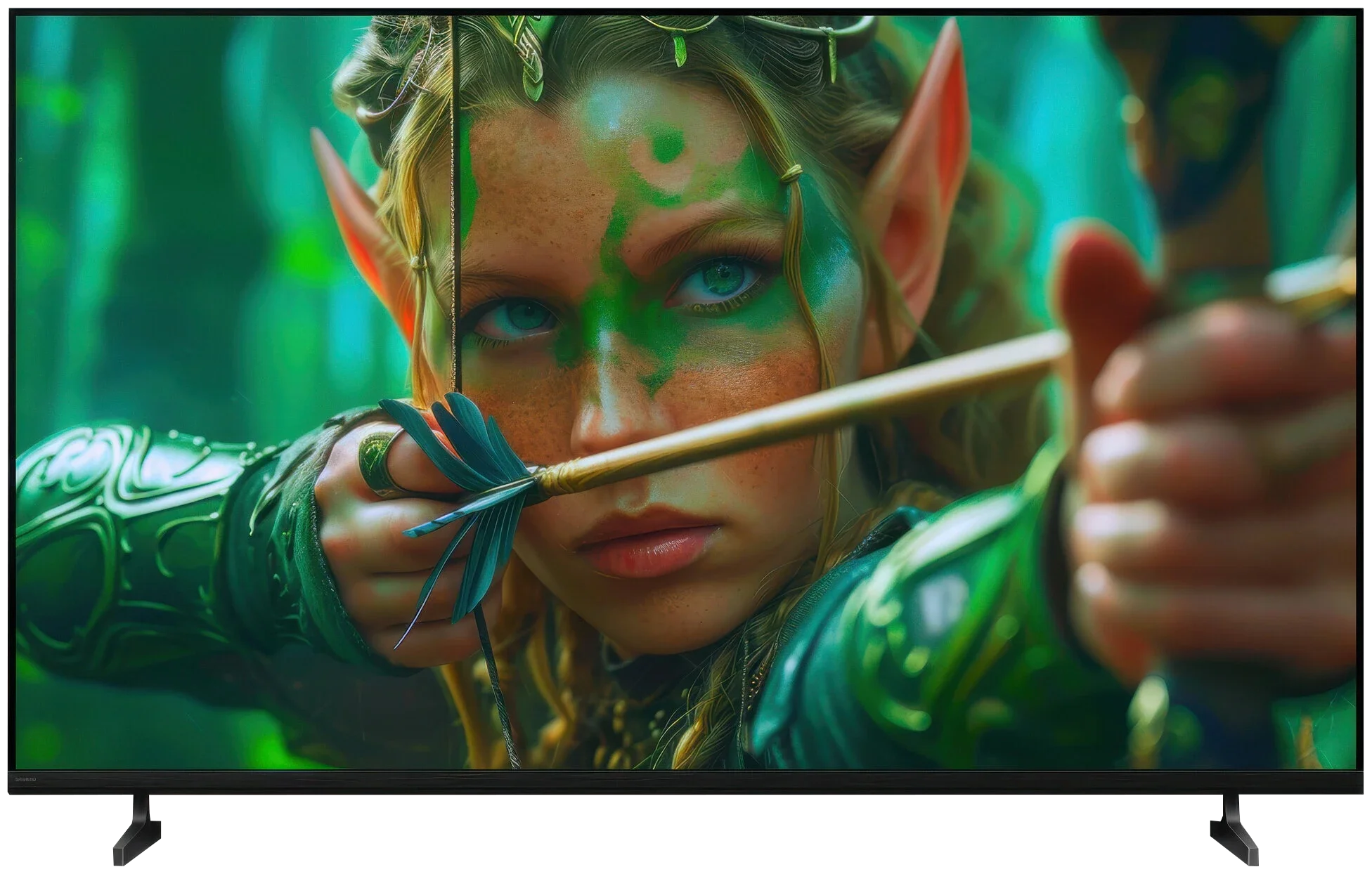
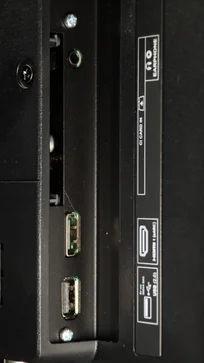
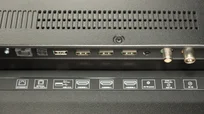
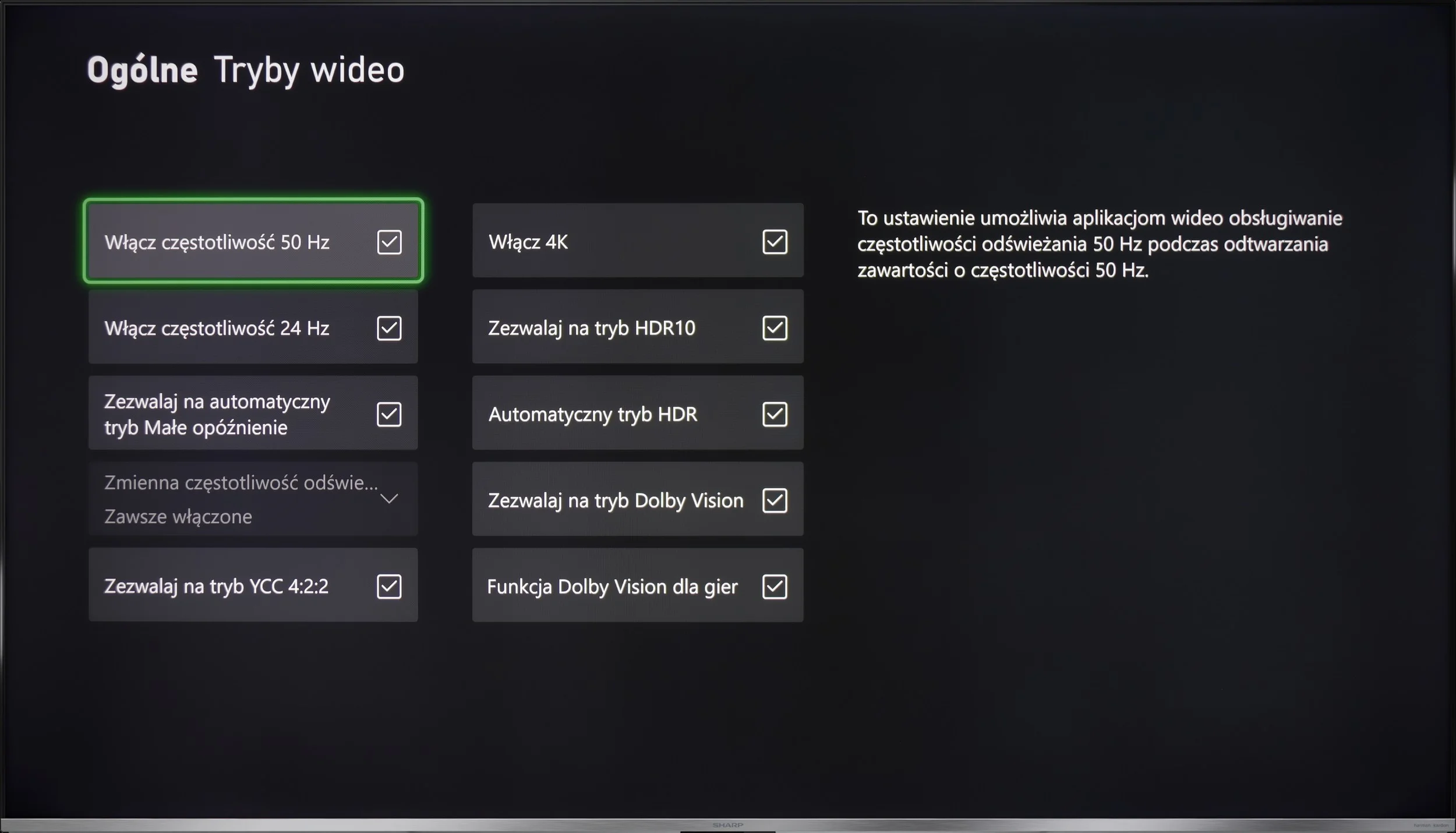
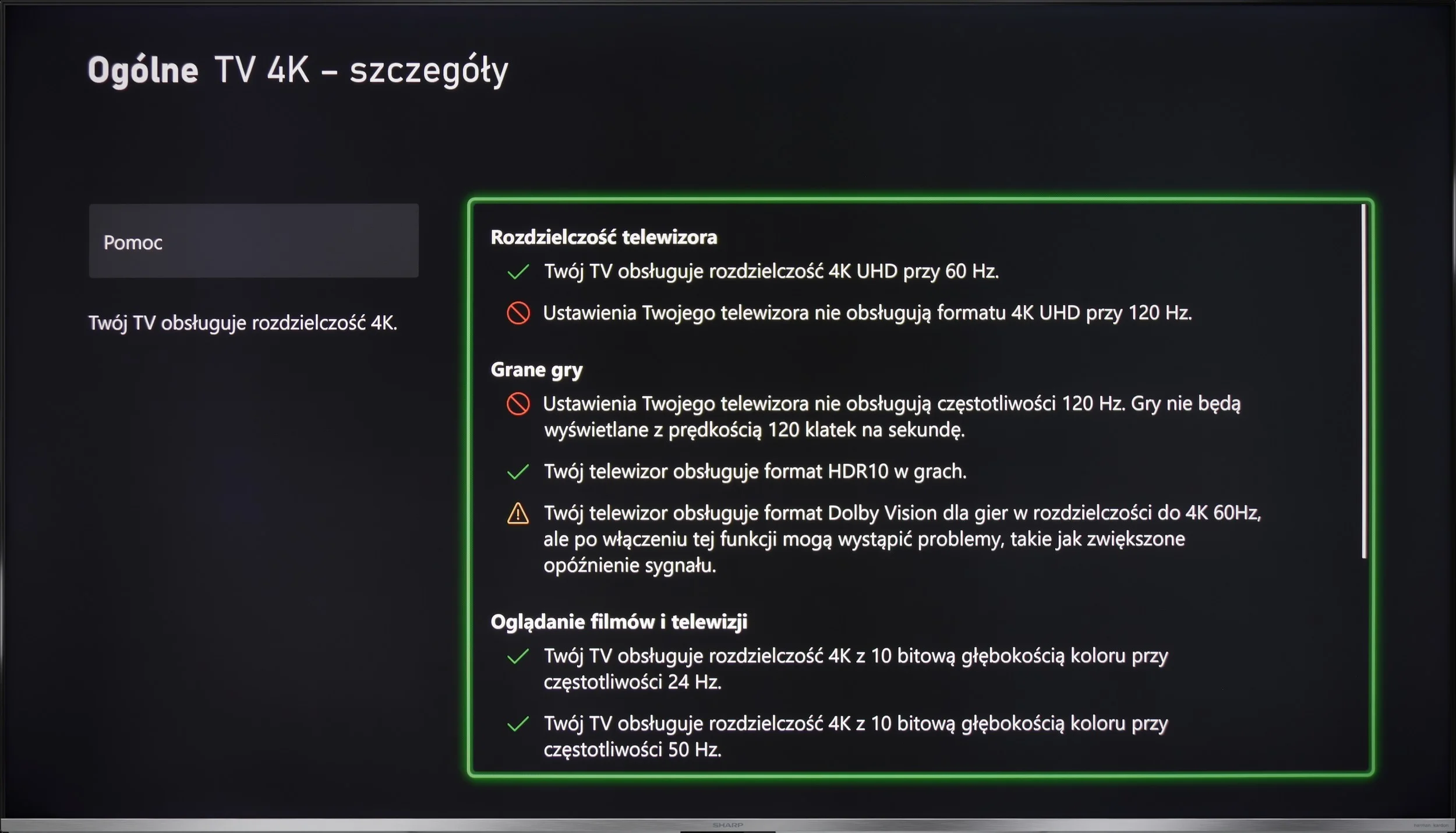
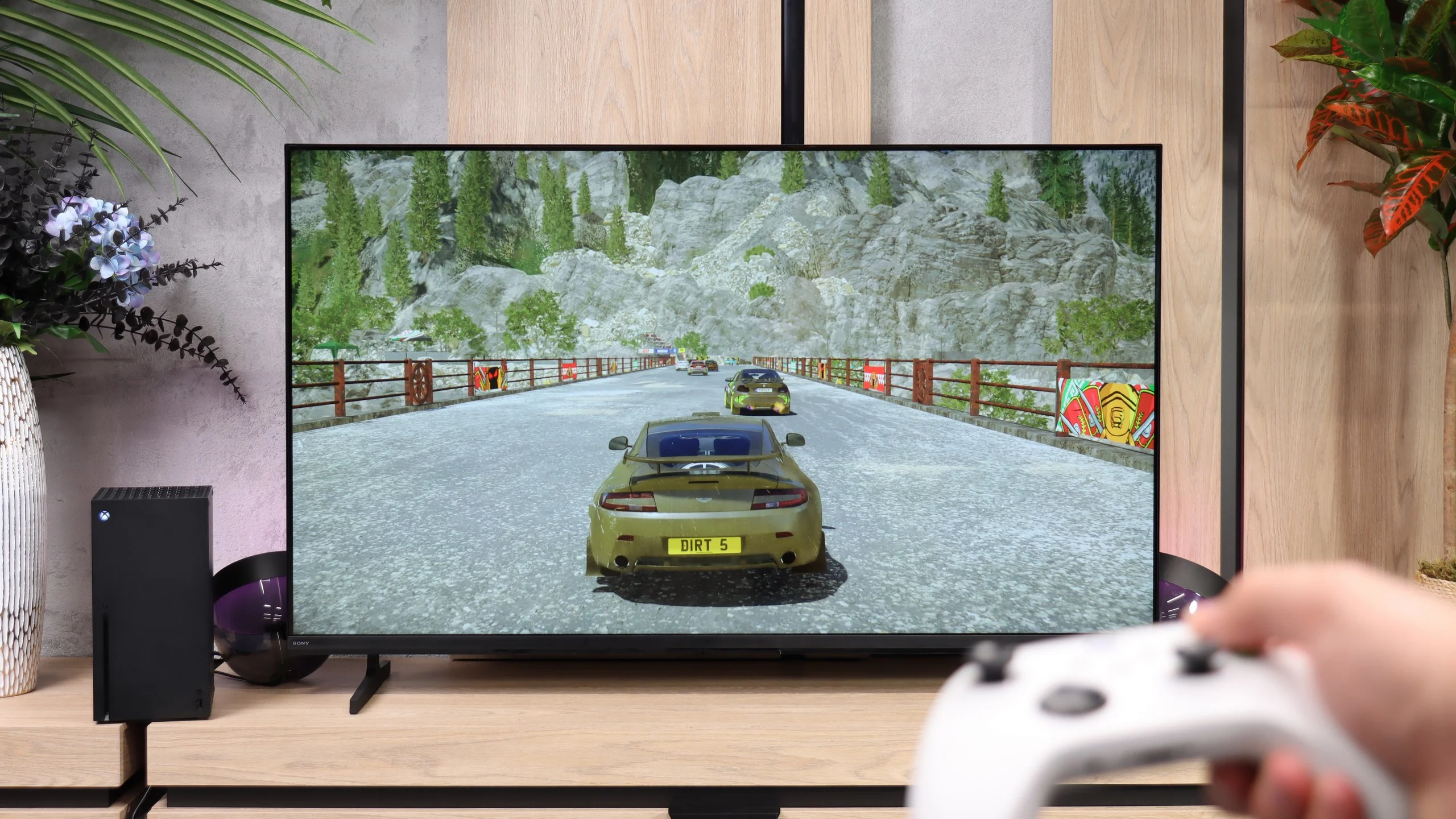
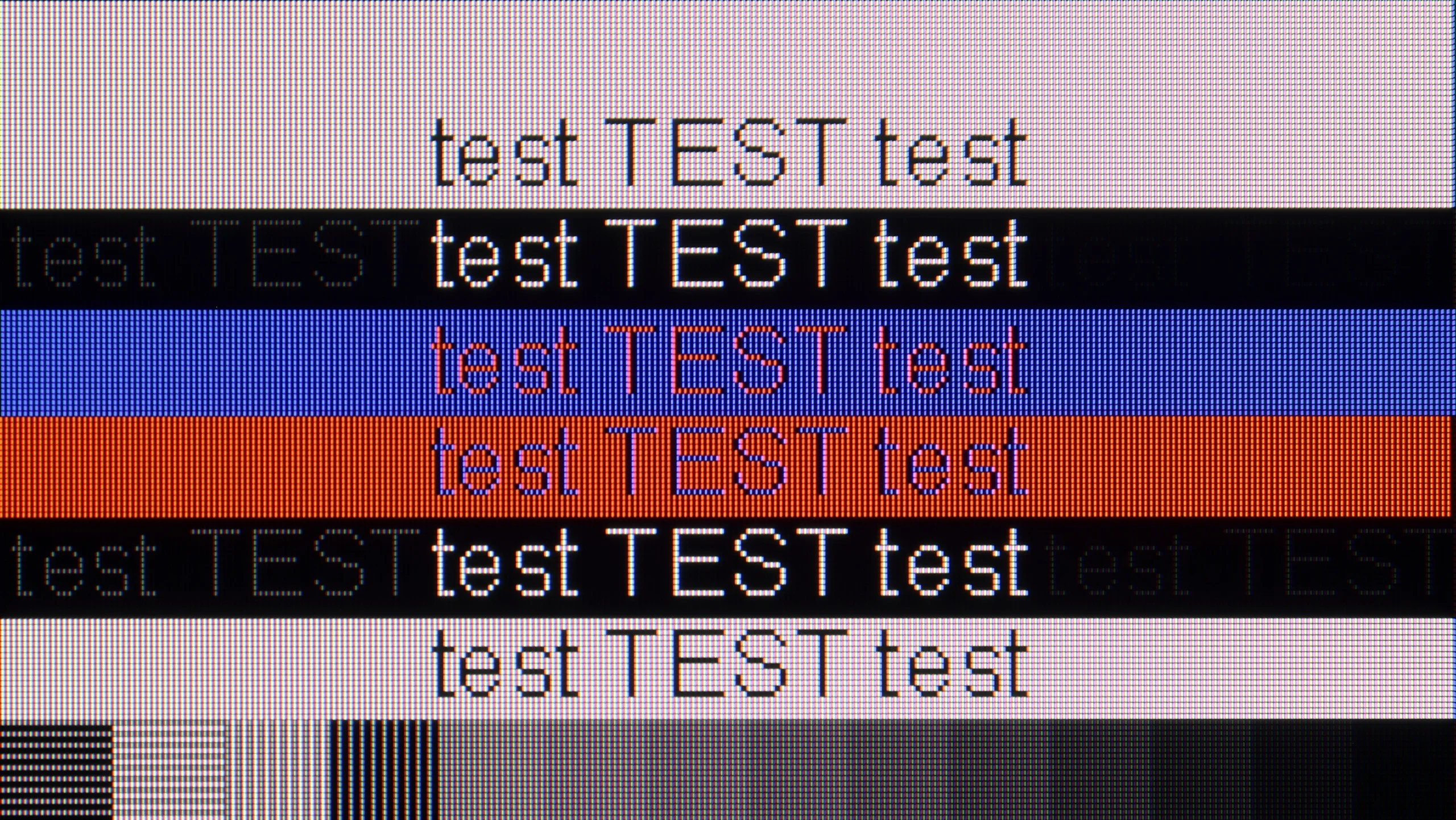
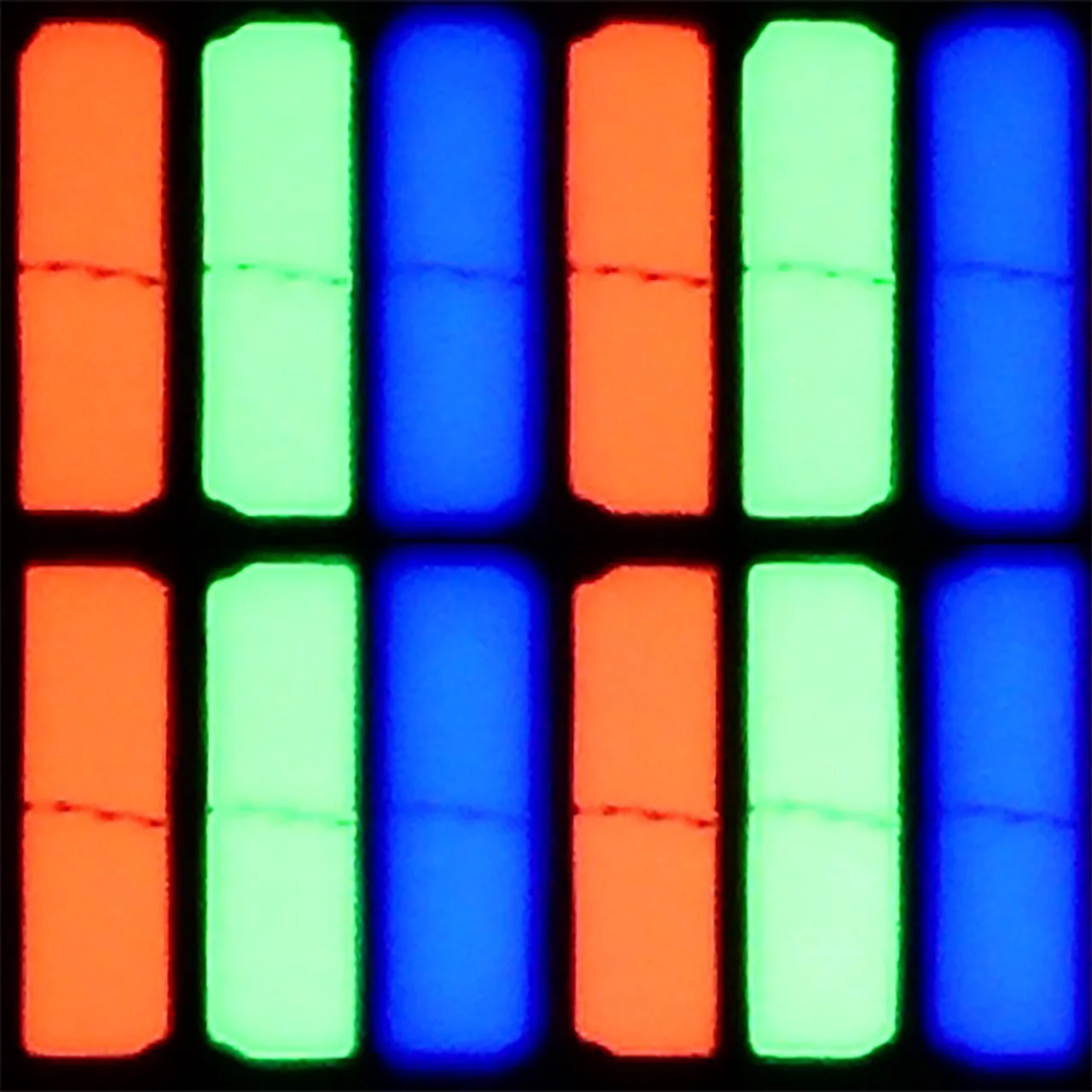
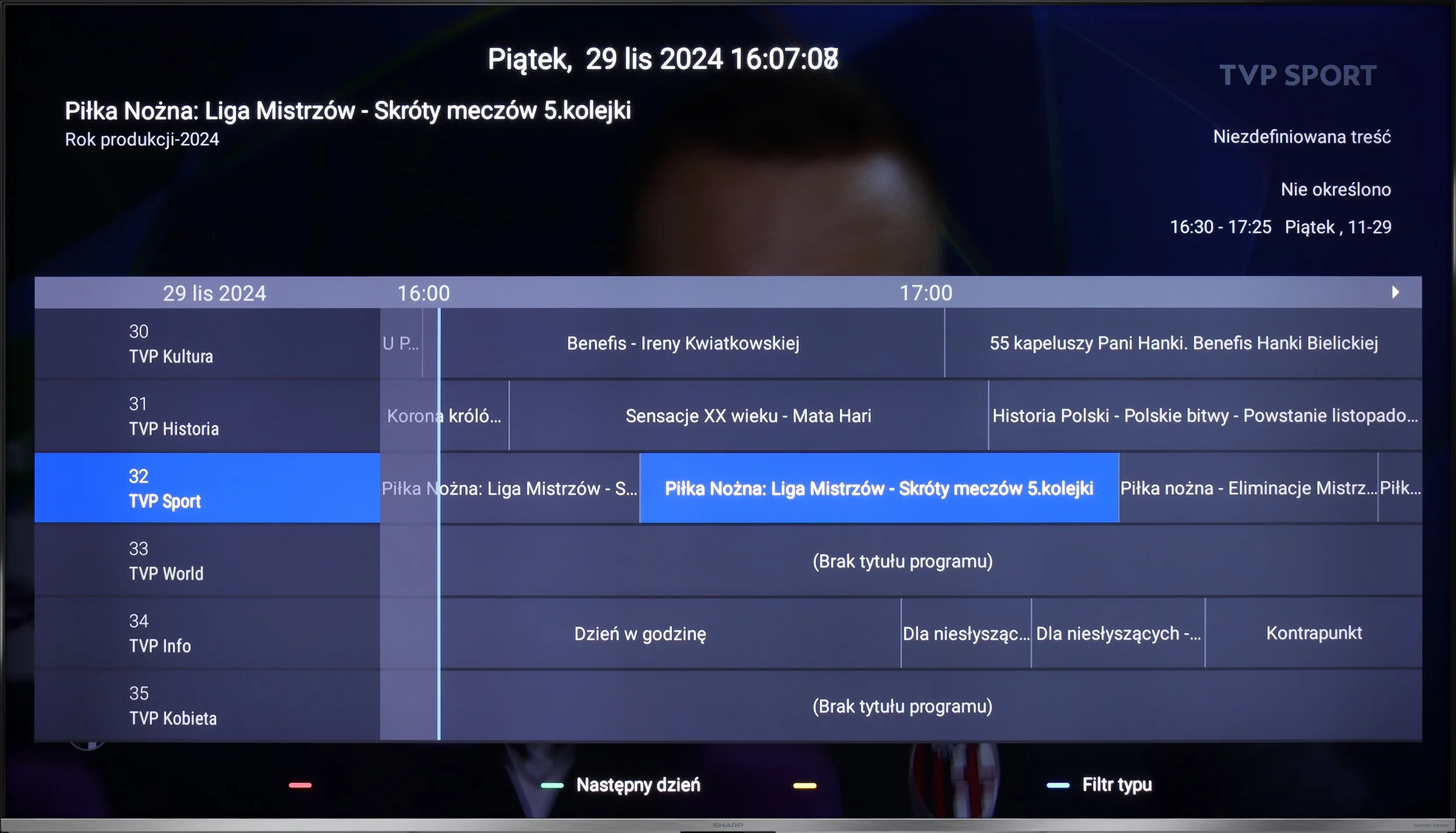
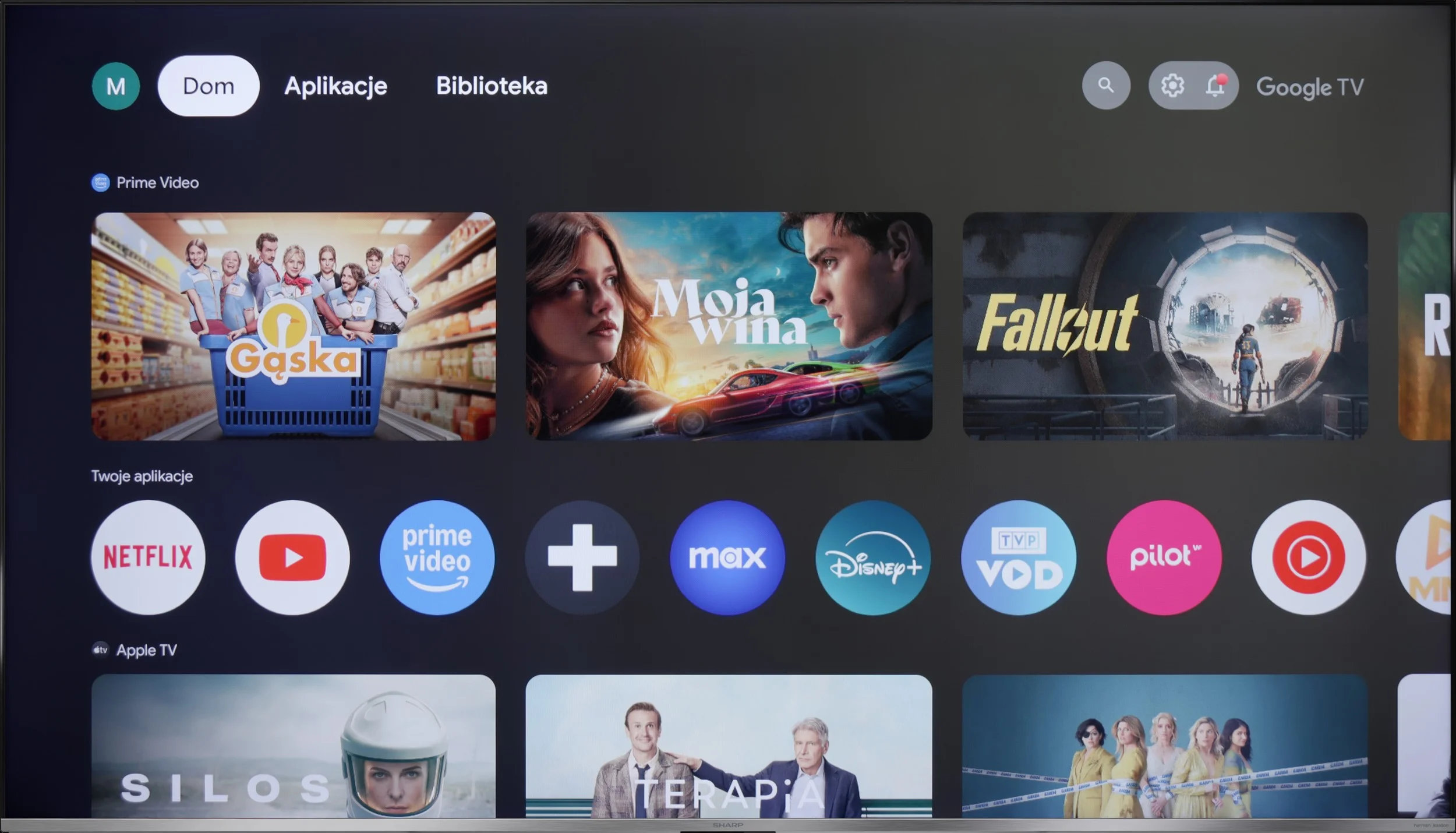
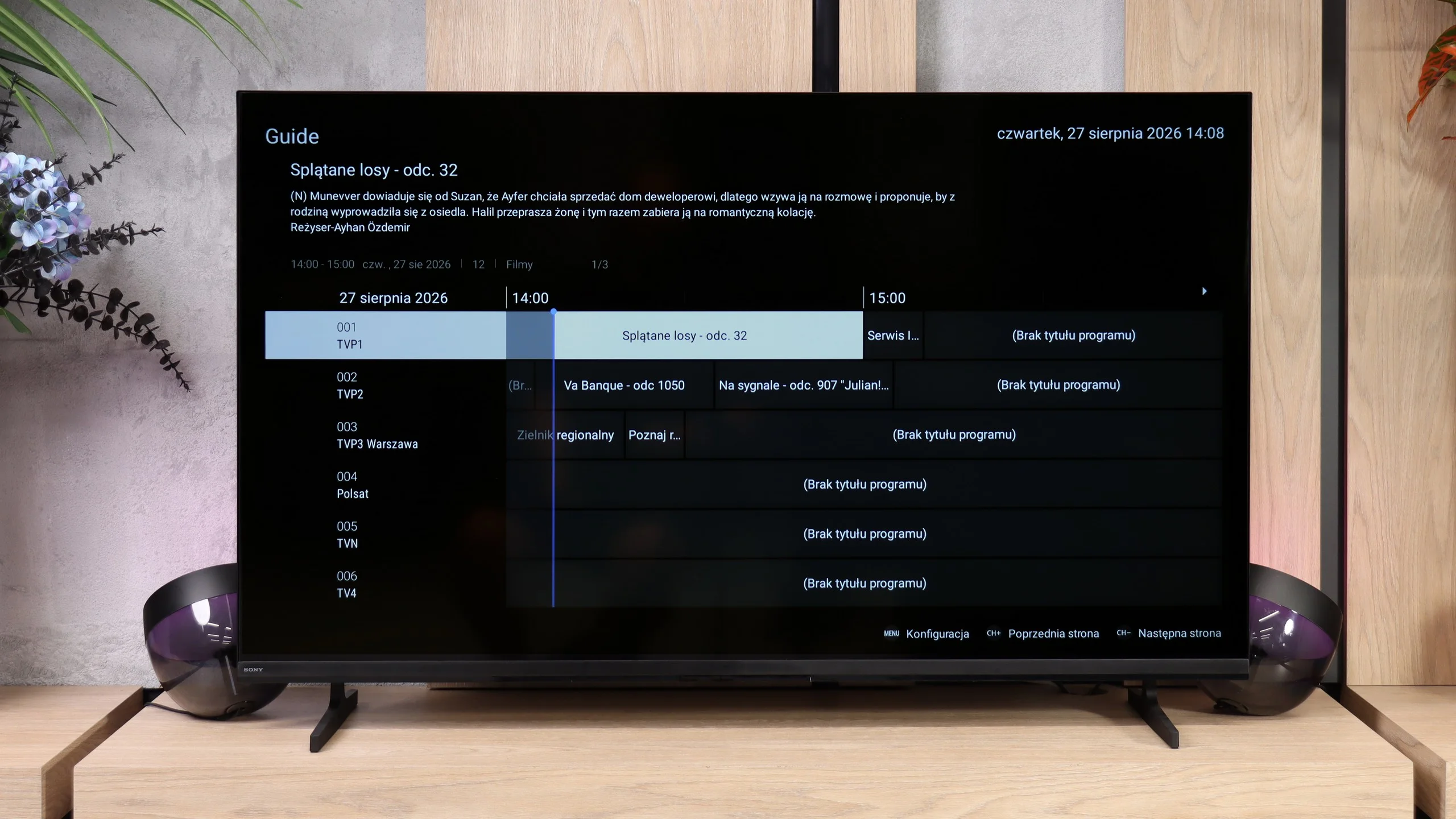
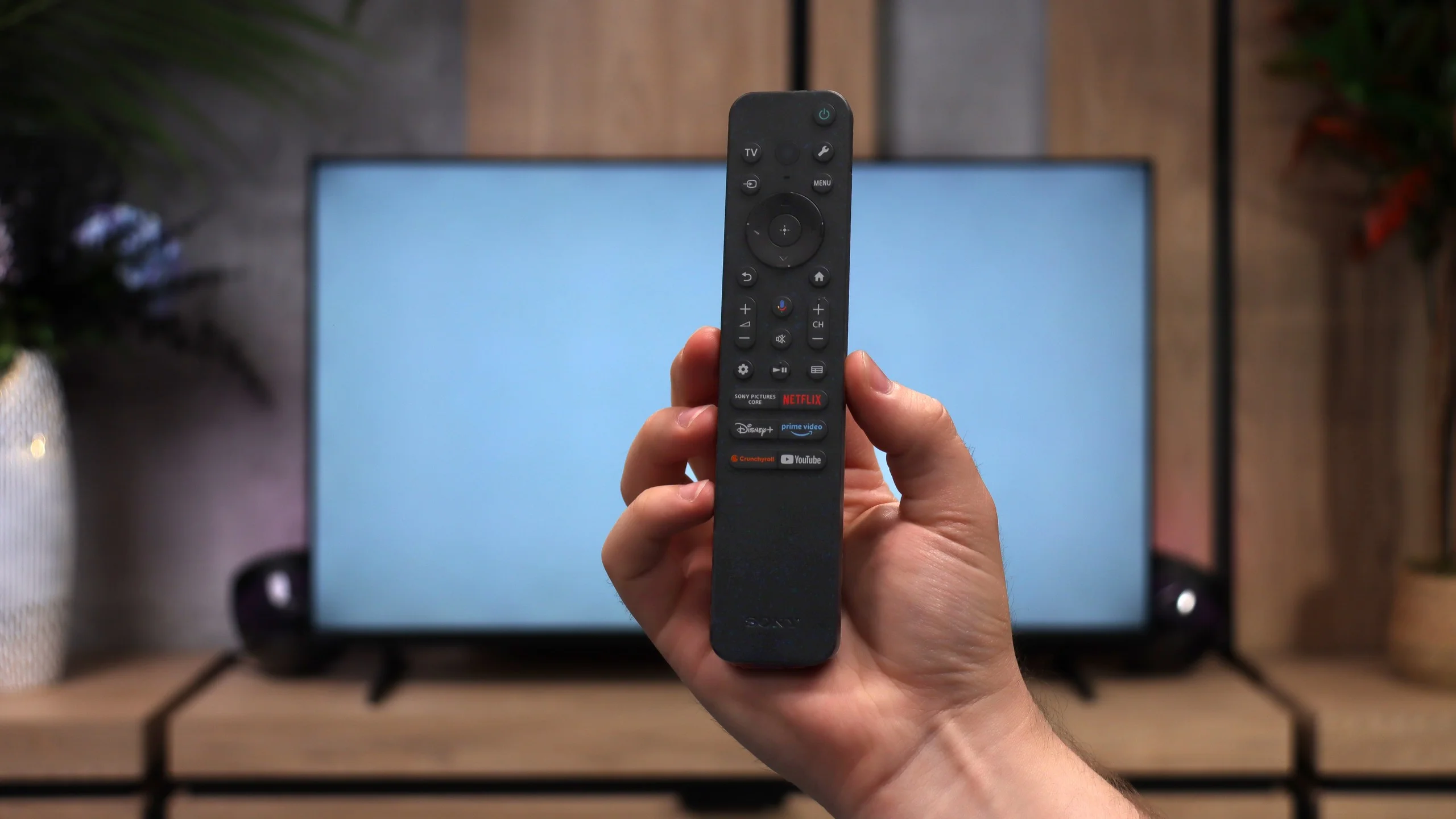
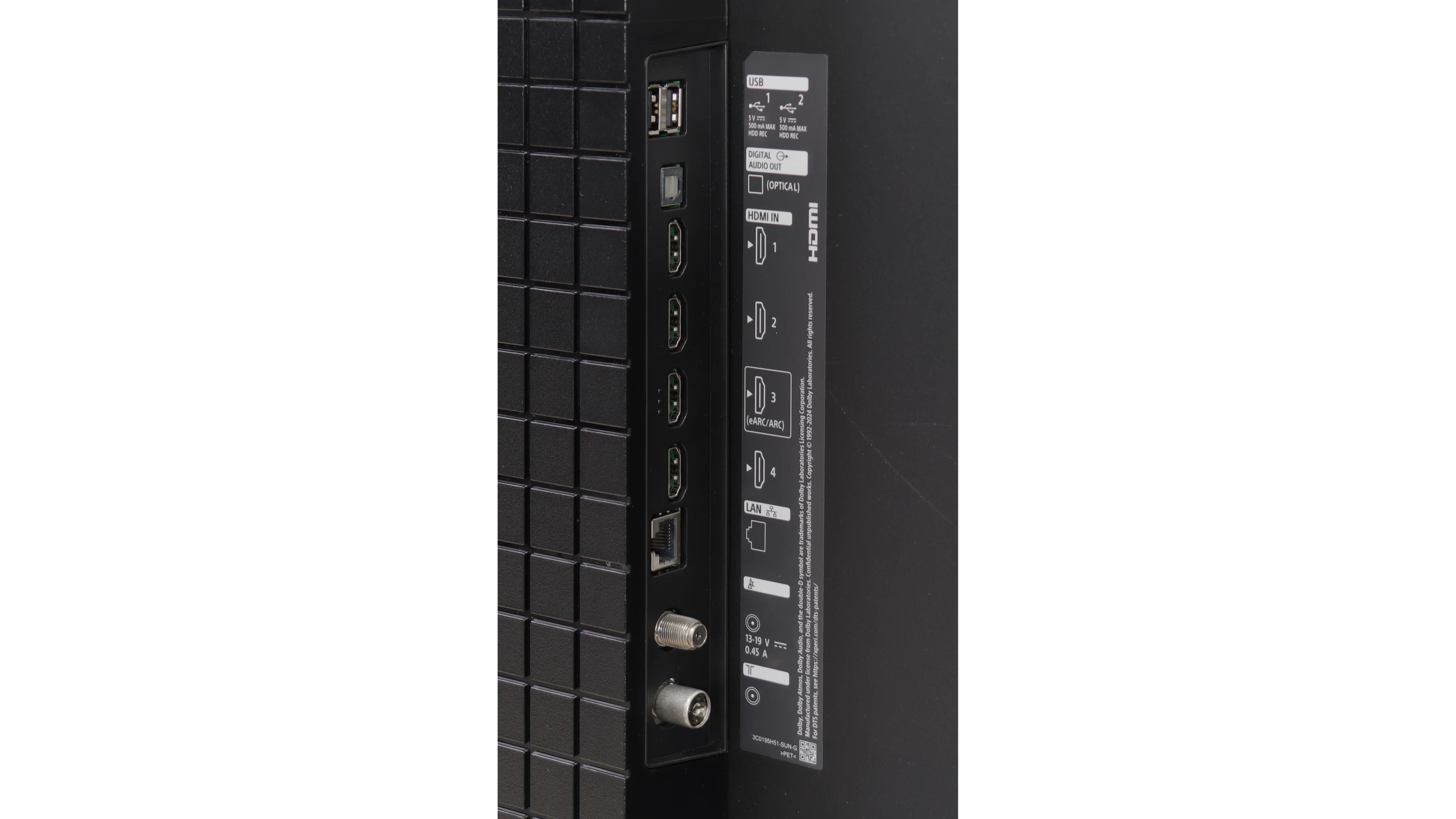
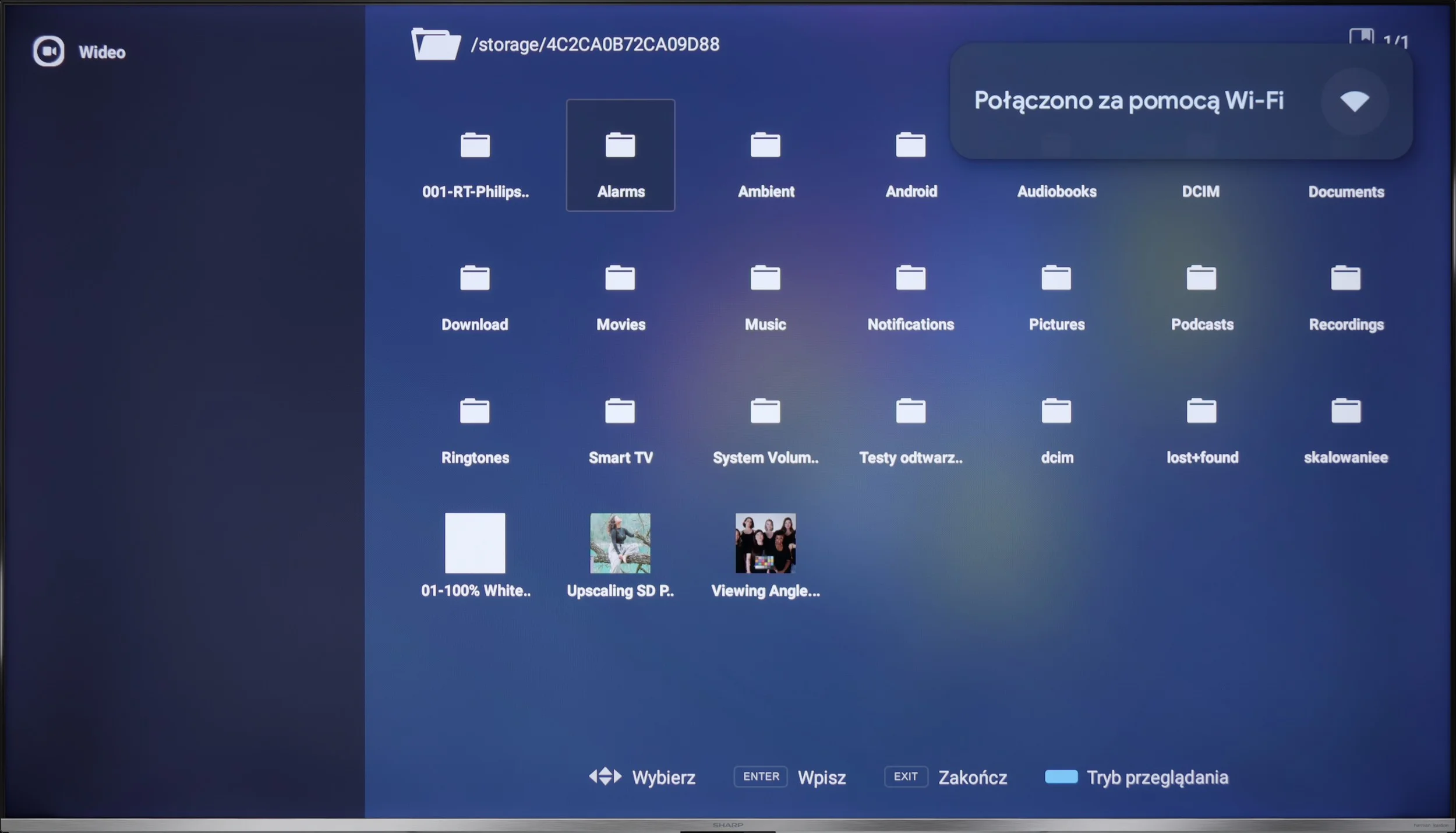
Sharp GP7 is a TV that certainly has its strengths, but it also doesn't escape a few shortcomings. Is it perfect? No, but for its price, it does a really decent job and will work quite well as a nice choice in many homes. The biggest plus? Google TV. Here, Sharp GP7 shows its class – we have an enormous selection of applications, probably the largest on the market. It doesn't matter if we want to watch Netflix, YouTube, or something less known – we will find everything in one place. Additionally, the interface is simple and intuitive, and if we don't feel like clicking, we just need to say to the remote what we are looking for, as it supports voice commands in Polish. Google TV definitely elevates the value of this TV, as we don't feel like we are missing anything. It just works. As for picture quality, it's also quite good. Brightness at 500 nits combined with Dolby Vision does the job – movies look really solid for this price range. Colors, thanks to the PFS (QLED) coating, are vibrant, the contrast from the VA panel gives dark scenes depth, and the overall picture just "plays." It's not premium level, but for this price, you can't really complain. It's a good picture that will satisfy most users. Of course, there are also weaker points. The TV struggles with dynamic scenes – sports or video games won't look perfect here. The 60 Hz panel and response time of the panel are not able to ensure the highest fluidity. Additionally, the manufacturer mentions HDMI 2.1, but all we find here is the ALLM feature. There is a lack of VRR, G-Sync, or other additions that could attract gamers.
In summary – Sharp GP7 is a solid TV for everyday watching of movies and series. It is not for gamers or fans of sports broadcasts, but for universal use – absolutely. If we value access to a rich ecosystem of applications and good picture quality at a reasonable price, this model might be just for us.
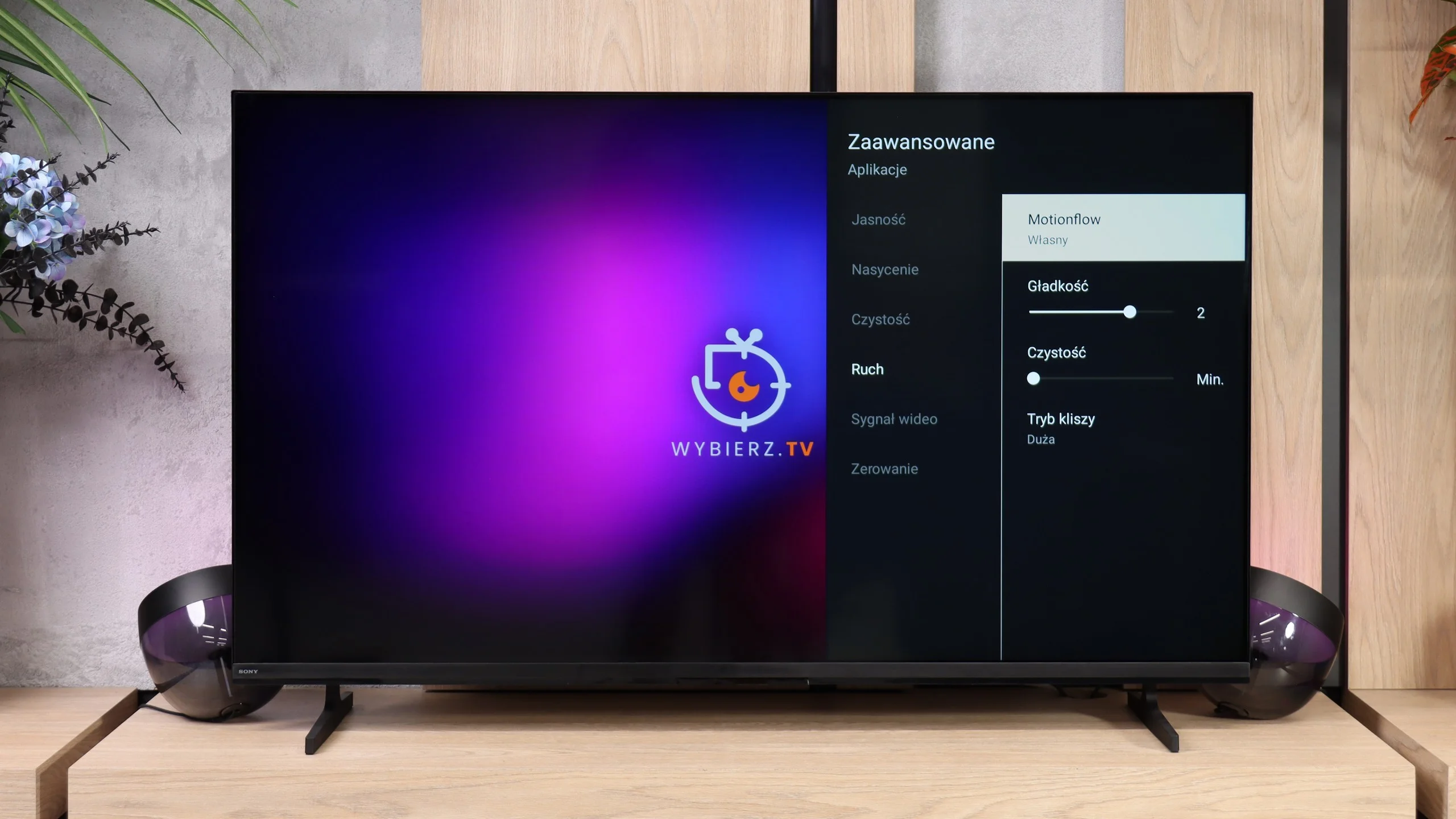
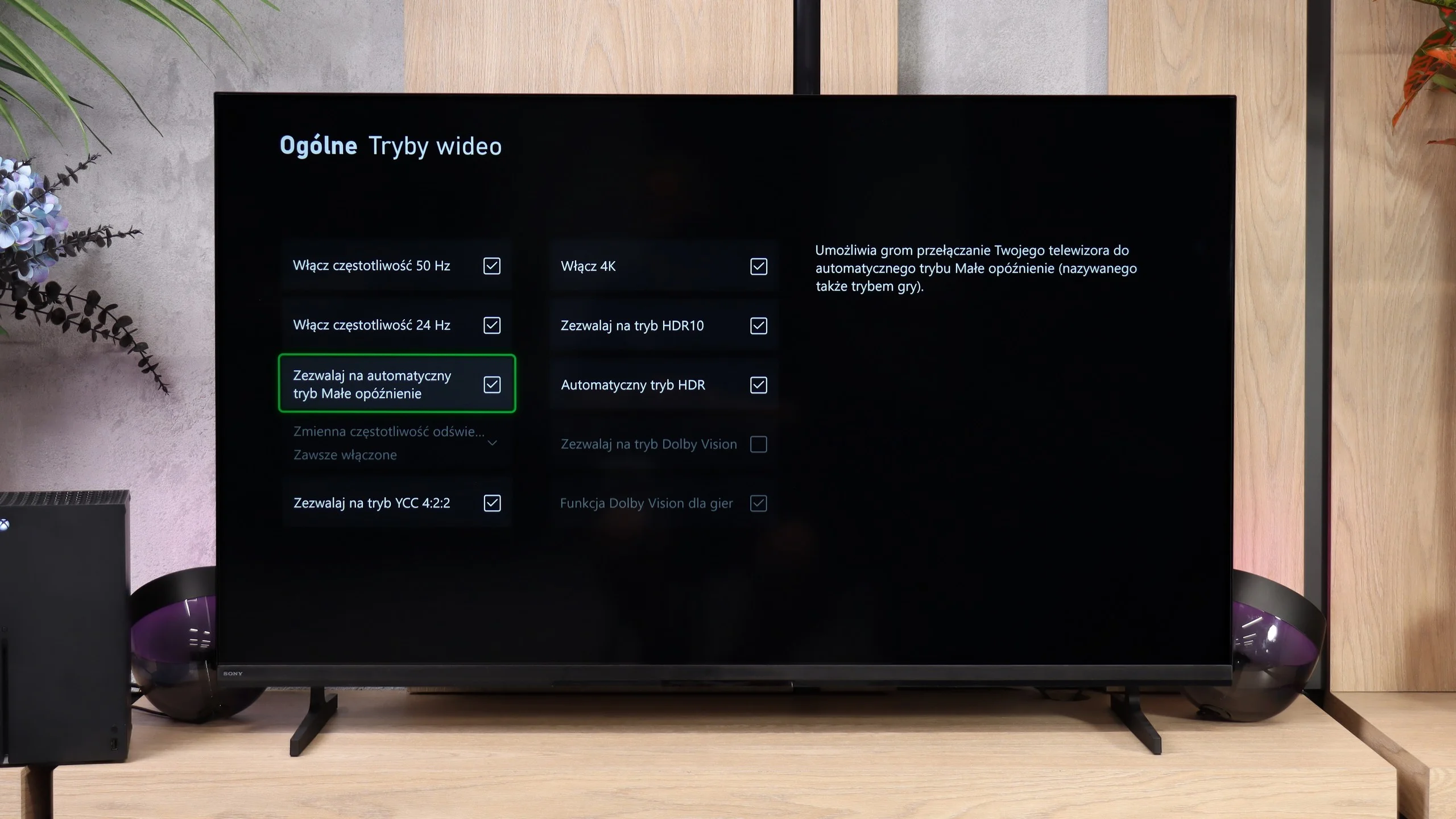
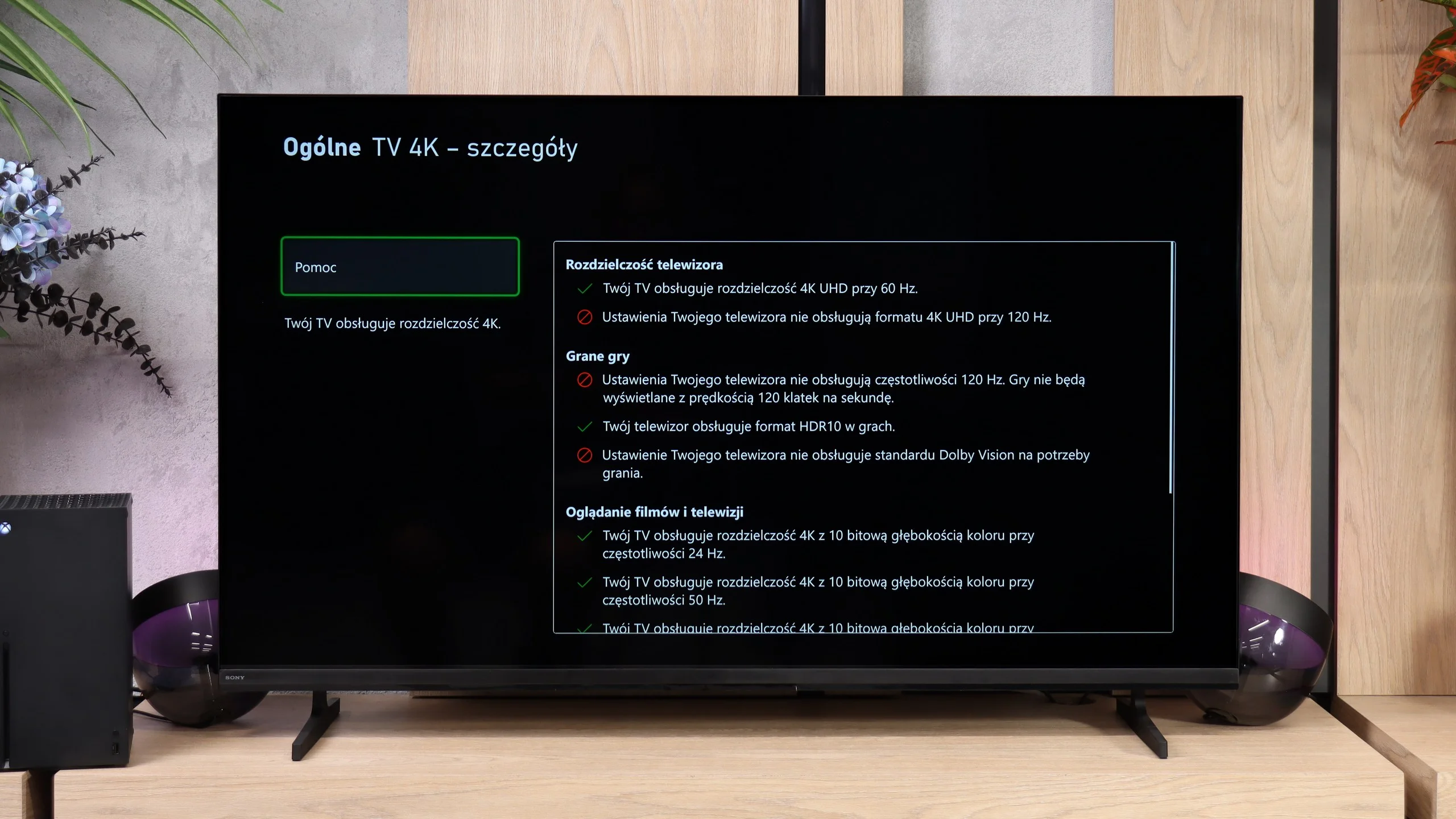
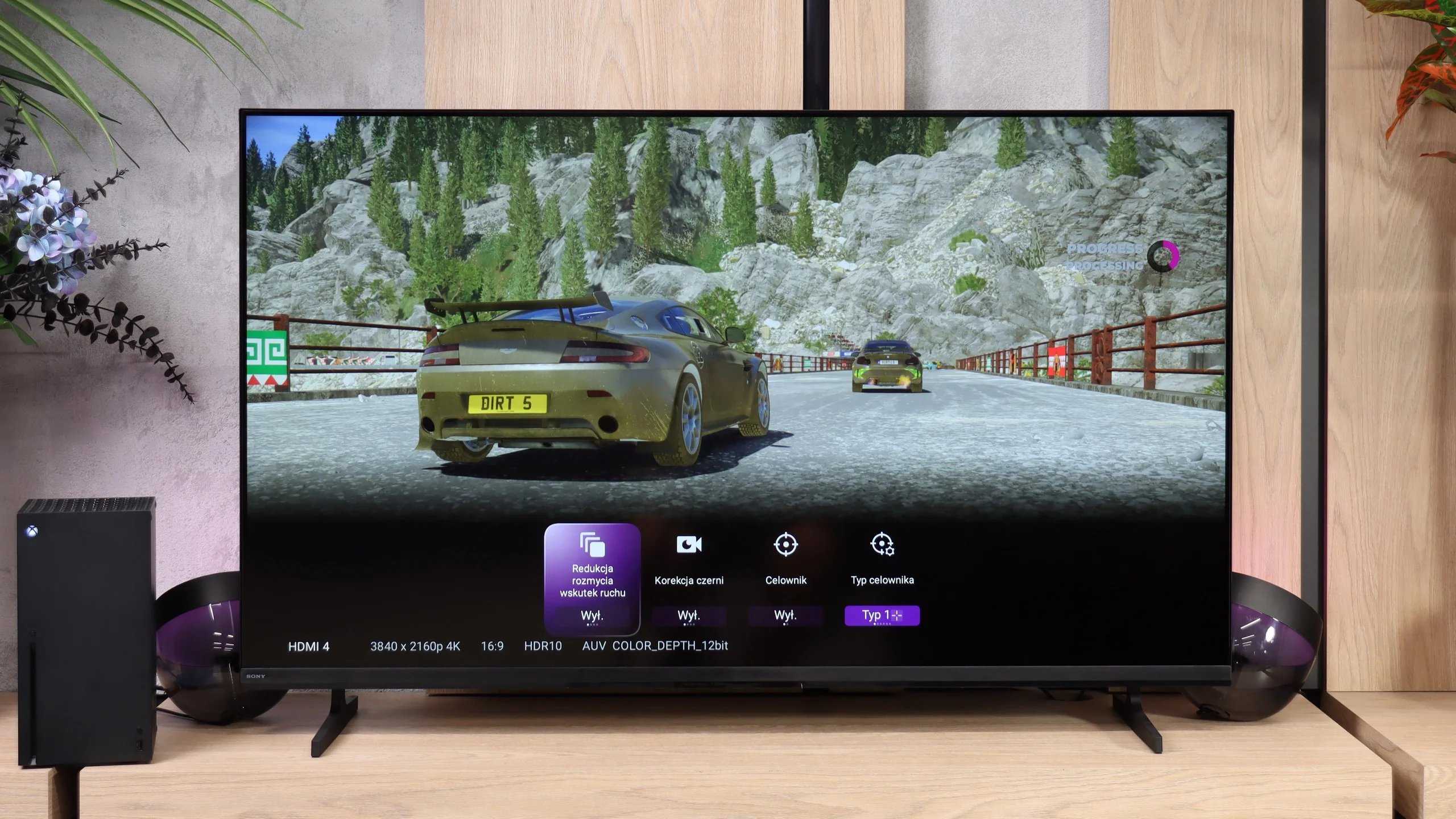
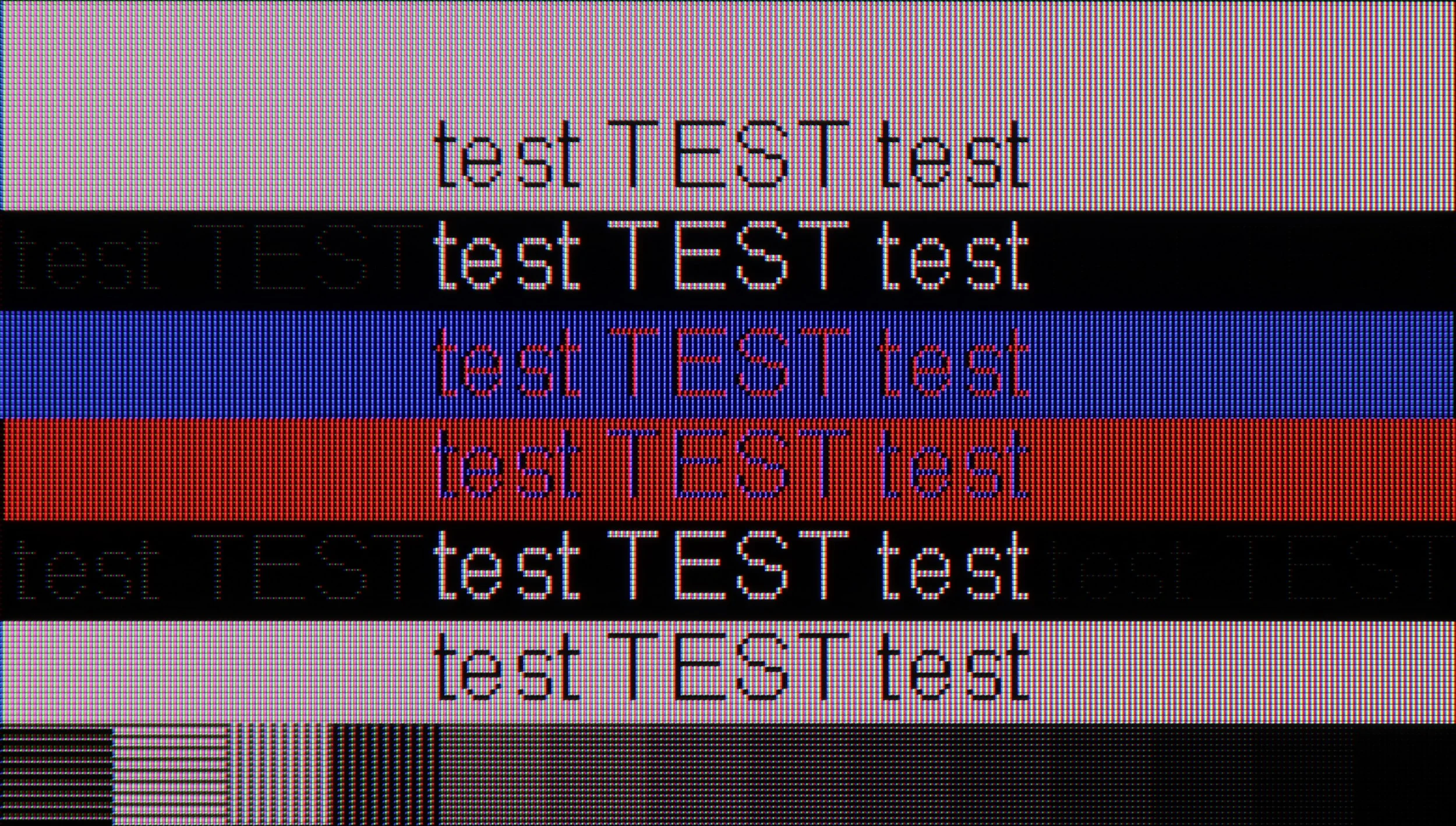
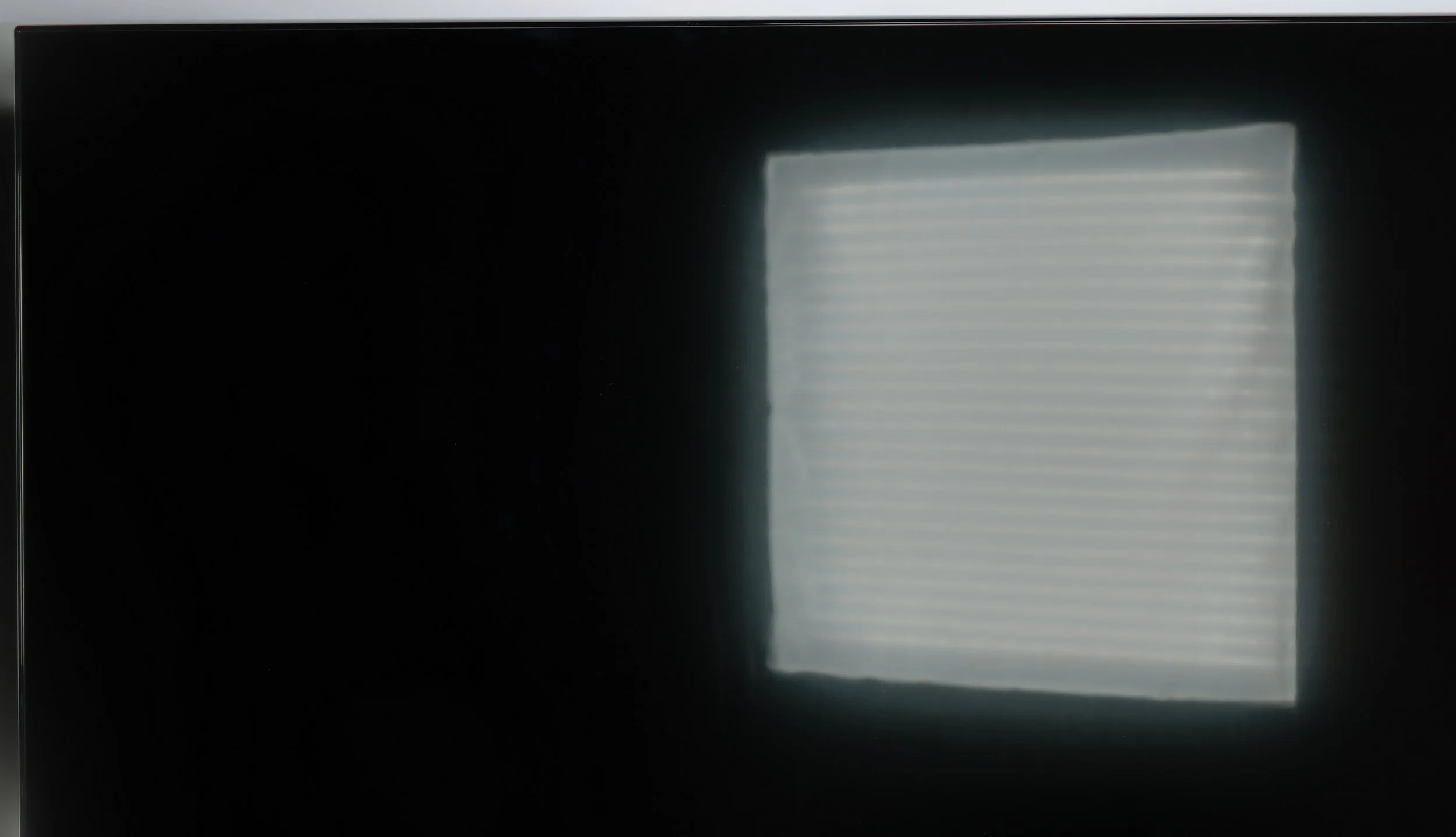
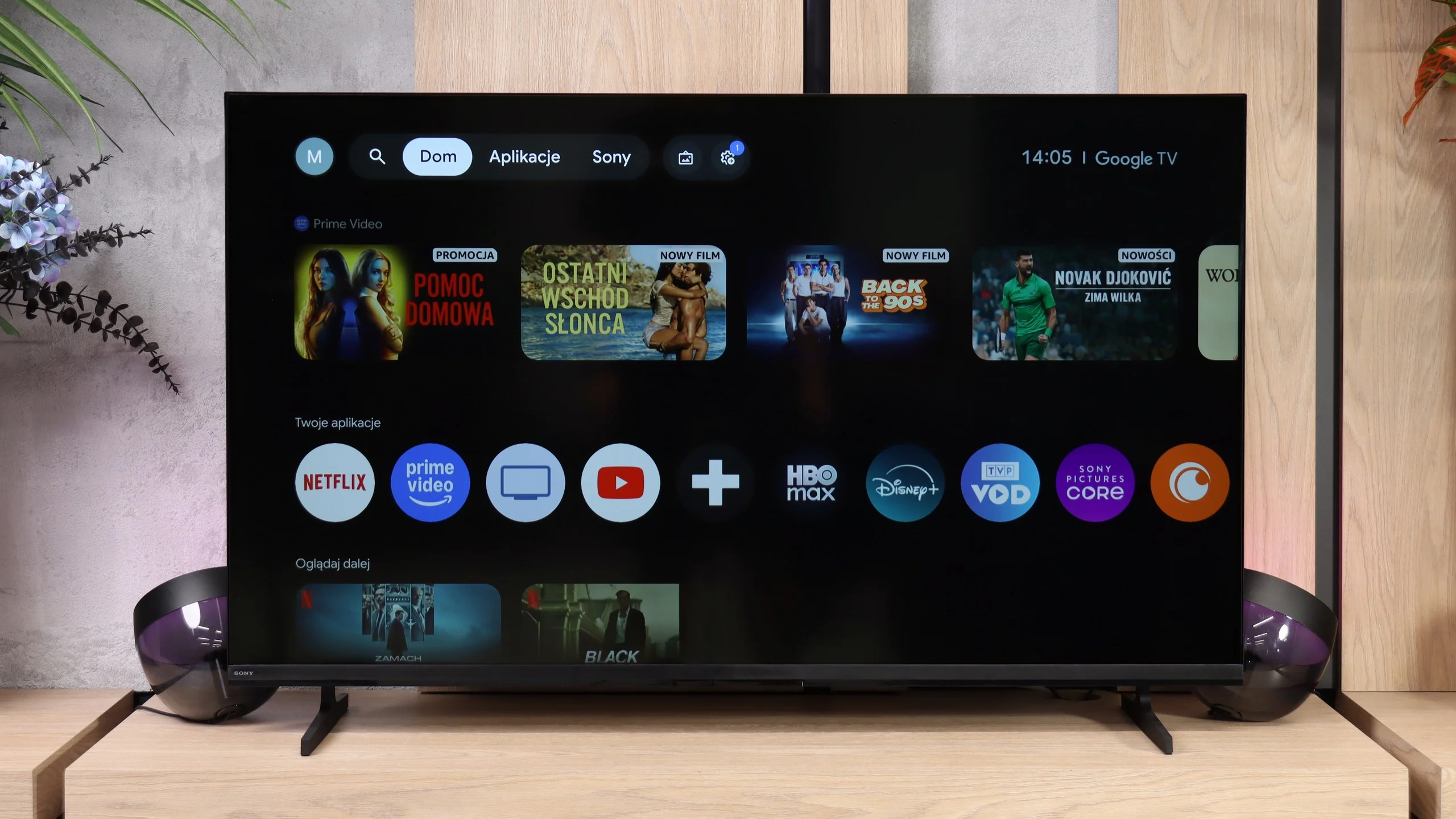
Sony Bravia 2 II is a TV that performs best in simple, everyday use. And we suspect many people will choose it mainly because of Google TV. The system provides access to a huge number of apps and streaming services, and you also get Chromecast, AirPlay and convenient voice search. The TV itself may not run as fast as pricier Sony models, but in terms of capabilities there’s little to complain about. Importantly, for regular viewing the picture quality is quite decent. The Bravia 2 II handles SDR material particularly well — regular broadcast TV, YouTube and much of older movies and series. The out-of-the-box Cinema mode is already fairly well set, colors look natural, and without much fiddling with the settings you can just start watching. And in our view this is where the Bravia 2 II shines: as a simple Smart TV for everyday use, not a TV meant to wow with the panel’s capabilities. You do need to remember, though, that the Bravia badge on the housing doesn’t automatically mean great picture quality. The Bravia 2 II uses an IPS panel with very low contrast, and that is its biggest problem. During the day this isn’t such a big issue, but turn off the lights in the evening and blacks start to look more like dark gray. Of course, in return you get good viewing angles, so if the TV sits in a large living room and several people watch from different spots, IPS is an advantage. But it comes at the cost of weak black levels. This isn’t a TV built for HDR impact or for more demanding gamers either. Around 300 nits of brightness and a narrow color gamut mean HDR material doesn’t show much more here than SDR. The 60 Hz panel and the lack of broader gaming features also make it clear that gaming isn’t a priority for this model. And actually that wouldn’t be a big problem, because it’s exactly what we expected from Sony’s entry-level model. The biggest issue with the Bravia 2 II, however, is the price. For a similar amount you can easily find competitor TVs, especially from Korean and Chinese brands, that already offer much more, from 120 Hz panels to Mini-LED backlighting with local dimming. So the Bravia 2 II itself is not a bad TV. It’s simply too expensive for what it offers. If its price were clearly lower, it would make much more sense as a simple TV for everyday viewing.
 Direct comparison