 Direct comparison
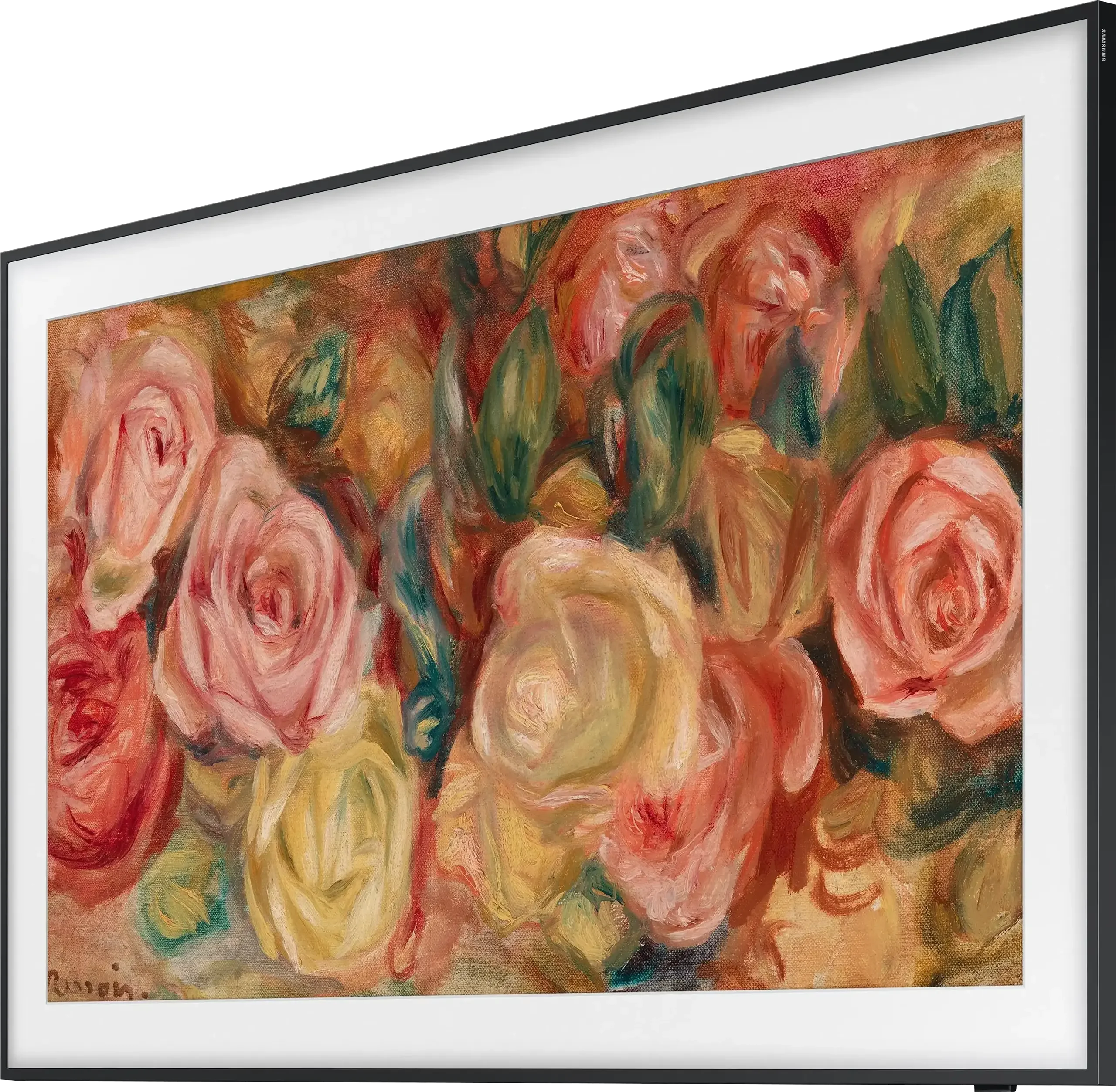
Samsung The Frame (2024) is not just an ordinary television that you could put in the corner and forget about after two days. Here, it's immediately evident that the manufacturer focused on something beyond just displaying movies. First, the "Art" mode catches the eye – with just a few clicks, we can turn The Frame into a digital gallery, showcasing artworks that, combined with the matte panel, truly resemble a real painting in a frame. And speaking of the frame, we have the option to customize its color to perfectly match our interior. Additionally, the package includes a wall mount, allowing the TV to be hung practically "flat," which further enhances the impression of engaging with a picture rather than a typical screen. The matte panel provides excellent protection against light reflections, which, paired with high brightness (650 cd/m²), works well in full sunlight. Moreover, we have a VA panel with quite decent contrast and a refresh rate of 120 Hz, so when watching sports or playing dynamic titles, everything appears really smooth and pleasant to the eye. If we add a gaming features package – VRR, ALLM, and HGiG – it becomes clear that Samsung also thought of console and PC fans. As a result, The Frame can be both a picturesque decoration for the living room and a quite sensible gaming monitor. The aforementioned One Connect is another handy gadget – thanks to it, we can hide all cables in one place, pulling only a thin wire connecting the TV to this magical box. If we like order, this is a solution made for us. Another advantage is the Tizen system – user-friendly, fast, and full of applications. We might not find absolutely everything in it (e.g., the Tidal app), but it still offers a wide range of options for searching new streaming platforms. Of course, there’s no rose without thorns. The lack of local dimming is noticeable in dark scenes, where black becomes less defined. We also have to remember that there is only one HDMI 2.1 port, so if we want to connect more devices in 4K and 120 Hz, we might feel limited. Additionally, viewing angles are rather average, so it's better for the most important viewer (i.e., us) to sit directly in front of the TV. For Dolby Vision fans, this also won’t be the perfect choice, as The Frame only supports HDR10 and HDR10+. Moreover, the sound – like in most slim TVs – is mediocre, so it's worth considering a soundbar if we care about clearer bass and a bit deeper sound. Despite these weaker points, The Frame still leaves a great impression. It is striking, stylish, and versatile – suitable for watching the latest hits as well as displaying reproductions of paintings on the wall. If we care about a unique appearance, high brightness, and at the same time want to play something with low input lag, this model will be a home run. And although it may not be the leader in terms of cost-effectiveness or a technological "monster" in terms of picture quality, it has something that is simply likable. It’s a piece of equipment that stands out with its unique character and can fit into any interior, attracting attention both in TV mode and as a digital art gallery.
- Matching (Score) |
- Our verdict |
- TV appearance |
- Where to buy |
- Contrast and black detail |
- HDR effect quality |
- Factory color reproduction |
- Color reproduction after calibration |
- Smoothness of tonal transitions |
- Image scaling and smoothness of tonal transitions |
- Blur and motion smoothness |
- Console compatibility and gaming features |
- Input lag |
- Compatibility with PC |
- Viewing angles |
- Daytime performance |
- Panel details |
- TV features |
- Apps |
- Playing files from USB |
- Sound

Check the best price offer:
Samsung The Frame LS03D (paid link)The Frame / LS03D
PQS9011 / PQS9001 / the one 2026

Panel type: LCD VA
Resolution: 3840x2160
System: Tizen
Model year: 2024
Complete the survey to find out the result
Panel type: LCD VA
Resolution: 3840x2160
System: Titan OS
Model year: 2026
Complete the survey to find out the result
Overall rating
6.9
6.8
 Movies and series in UHD quality
6.9
6.4
 Classic TV, YouTube
6.5
6.3
 Sports broadcasts (TV and apps)
6.2
6.8
 Gaming on console
8.2
7.4
 TV as a computer monitor
7.6
8.6
 Watching in bright light
6.5
6.1
 Utility functions
7.2
7.6
 Apps
9.3
7.2
 Sound quality
5.8
6.9
Complete the survey to find out what fits your preferences
Advantages

Unique design and "Art" mode - the television fits perfectly into interiors and serves as a digital frame for images
Matte screen - effectively reduces glare
Possibility of personalizing the TV frames - adapting the appearance to the interior
Dedicated wall mounts included (Value approx. 400 PLN) - the TV can be mounted almost flush to the wall
High brightness (650 cd/m²) - excellent visibility even in well-lit rooms
VA matrix - decent contrast
Good motion fluency - 120Hz*
Support for VRR, ALLM, and HGiG - a full set of gaming features
Smooth tonal transitions - one of the best results in this category among tested TVs
One Connect module - minimizes cable clutter, ensuring tidiness
Tizen system - responsive, intuitive
*Does not apply to the 43 and 50 inch variants (60Hz)
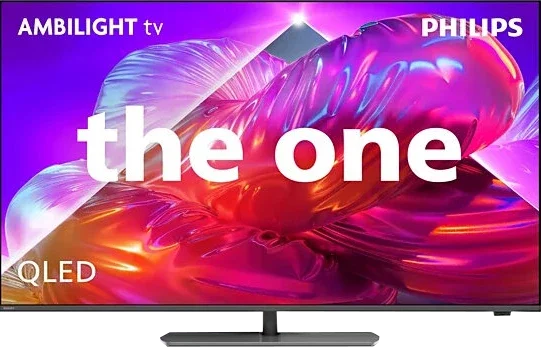
Ambilight, which gives evening viewing sessions a unique atmosphere and improves the perceived native contrast of the VA panel
Excellent panel response time: minimal motion blur of moving objects
Many gaming features: four HDMI 2.1 ports, VRR, ALLM, HGiG
144 Hz refresh rate at 4K and 240 Hz at Full HD from a PC
Good coverage of a wide color gamut (PFS LED)
Dolby Vision, which actually helps the TV with HDR content
Decent brightness of around 500 nits, useful for daytime viewing
Rotating stand
Disadvantages

Lack of local dimming – affects the quality of black, especially in dark scenes
Average viewing angles – the image loses quality when viewed at a greater angle
Average sound quality – flat sound without depth
Limited number of HDMI 2.1 ports – only one port supports full 4K@120 Hz
No Dolby Vision – the TV only supports HDR10 and HDR10+
No local dimming: average black levels at night and limited HDR performance
Smaller app library than the competition
Poor viewing angles (can be helped with a swivel stand)
Very high input lag in games with Dolby Vision
Significant errors in HDR color reproduction (no CMS adjustment available)
Infrared remote that requires aiming
Our verdict
The idea behind The One series has remained practically unchanged for years, and with the Philips PQS9001 this is both an advantage and its biggest weakness. Once again, we get a versatile mid-range TV whose main distinguishing feature is Ambilight. The lighting that follows what is happening on the screen can completely change the atmosphere of an evening movie session, and for many people it will be the main reason to choose this TV. That is hardly surprising, because once you get used to the effect, it can be difficult to go back to watching without it. The picture quality itself is good, but we have already seen a very similar level from this series in previous years. The VA panel provides decent blacks, colours are nicely saturated, and the brightness is sufficient for comfortable viewing in a typical living room. It is a shame, however, that Philips did not take another step forward and introduce at least basic local dimming. In a dark room, blacks can look noticeably bluish, and HDR, while clearly visible, does not make as strong an impression as it could. After so many years of The One being on the market, we would have expected a little more progress here.
There has, however, been a noticeable improvement in Titan OS. Compared with last year, and especially with the version from two years ago, the system has become much more pleasant to use. There are more apps, many smaller functions have been improved, and a number of irritating bugs we previously complained about have been fixed. Overall, it works reasonably well, although we are once again frustrated by the remote control, which still requires you to point it directly at the TV. Philips continues to rely on infrared for regular navigation, even though voice control uses a wireless connection. That makes it even harder to understand why the same connection was not used for navigating the menus. The One also has quite a lot to offer gamers. Four HDMI 2.1 ports and a broad set of gaming features are one thing, but what impressed us most was the panel’s response time. Our unit showed practically no visible smearing, even on dark backgrounds, which is quite rare for an LCD TV with a VA panel. Philips deserves a lot of credit for that. The ability to play at 4K 144 Hz or Full HD 240 Hz also makes the TV an interesting option for PC users. Unfortunately, there is still one unfinished element: using Dolby Vision in games on Xbox results in very high input lag.
The PQS9000 therefore leaves us with mixed feelings. It can surprise with excellent motion handling and shows that Philips has clearly worked on its operating system, but we do not see a similar step forward in picture quality. This is a TV we can recommend primarily to fans of Ambilight. If that lighting system is the main reason you are considering a Philips, then buying The One makes a lot of sense. It is still worth checking, however, whether you can find a Mini LED model with good local dimming at a similar price. Such a TV may offer deeper blacks and more impressive HDR performance. In the end, the choice comes down to what matters more to you: the atmosphere created by Ambilight or better picture quality itself.
TV appearance

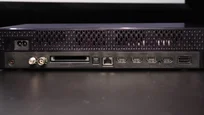
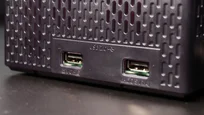
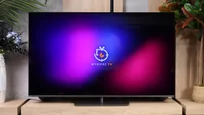
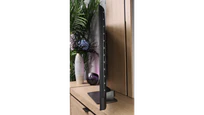



Contrast and black detail
5.6/10
5.8/10
Local dimming function: No
Local dimming function: No
Contrast:


Result
4,200:1

Result
4,800:1

Result
5,100:1

Result
5,300:1

Result
3,850:1
Result
5,500:1
Result
3,950:1
Result
5,600:1
Result
5,750:1
Result
4,500:1
Halo effect and black detail visibility:
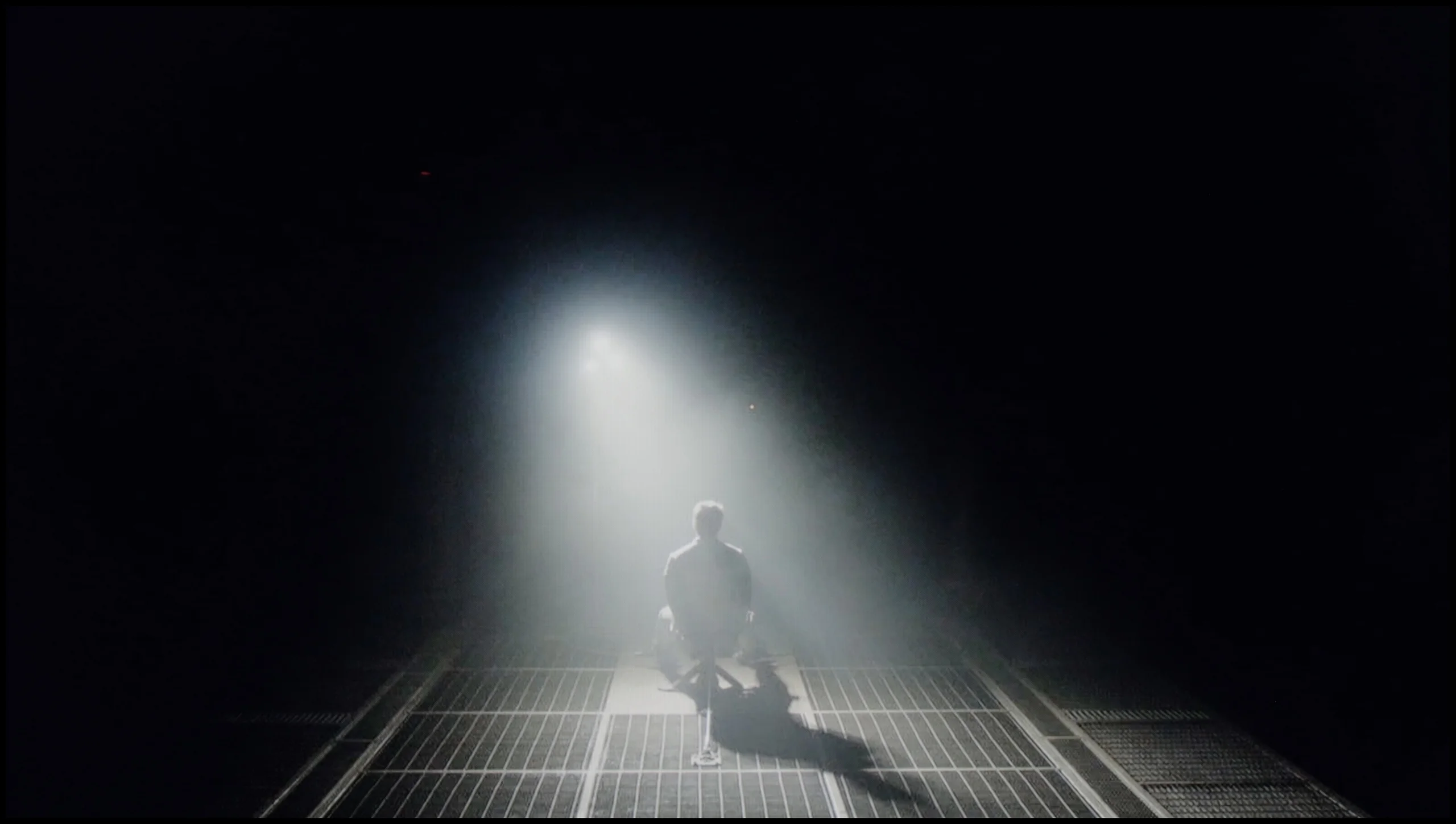
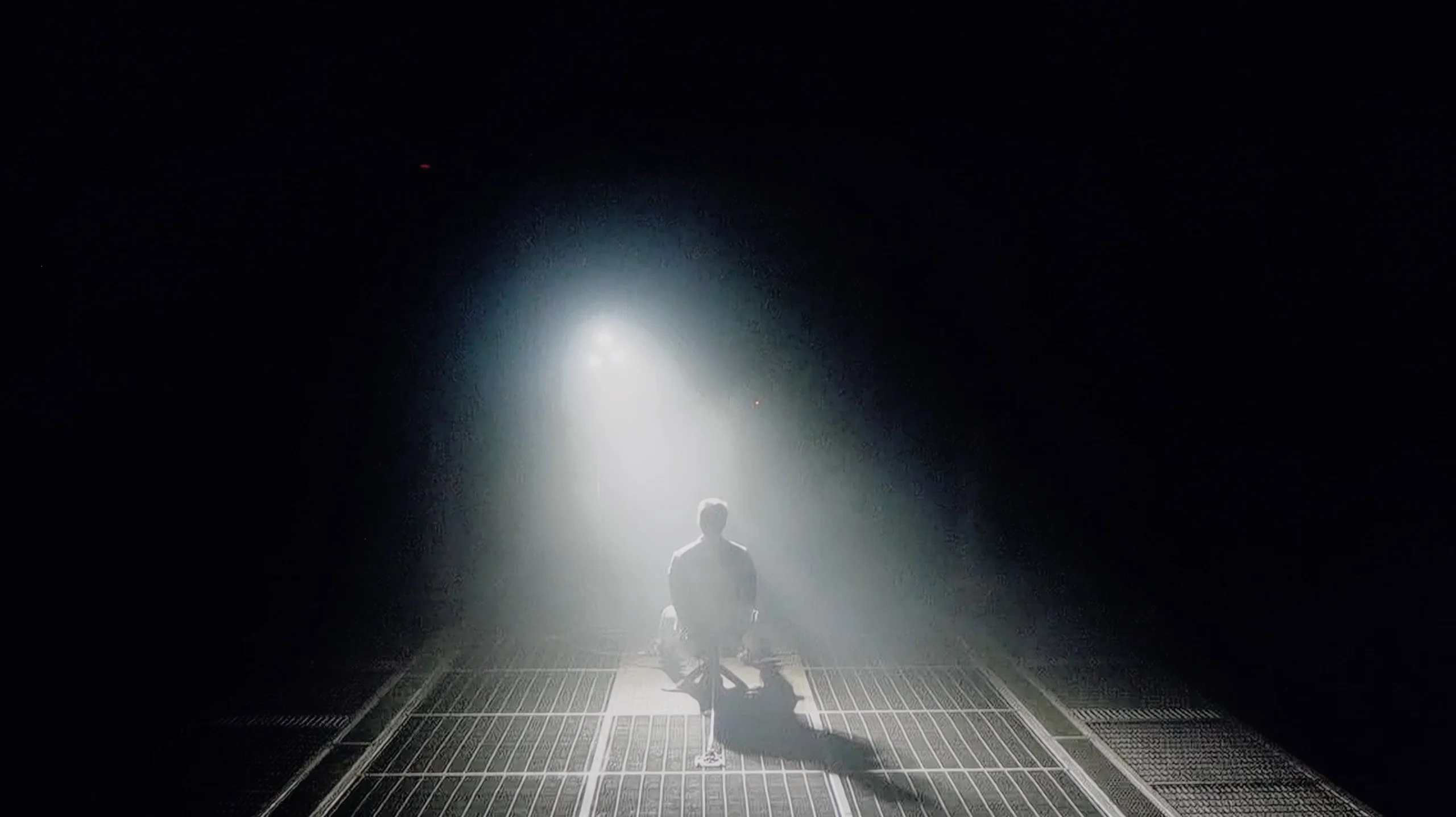
Check the visibility of bright lights on a dark background. Mini-LEDs often struggle with this. The photo does not compare black levels – that’s what the video below is for.
The video accurately shows differences in contrast and black levels between TVs, as well as potential issues: halo around bright objects or Mini-LED zone operation visible as brightness jumps.
The Frame uses a VA panel, which in itself provides quite high contrast. In our tests, the results ranged from 4000 to 5000:1, which will be quite sufficient for most users. However, the lack of local dimming becomes noticeable, especially on more demanding test screens. In dark scenes, one can notice that the black has a slight navy hue. During the day or in a well-lit room, this won't be an issue, but during an evening viewing, more discerning viewers may feel a slight disappointment.
The black levels and contrast on the Philips PQS9000 are decent for an LCD TV without local dimming. That's mainly down to the VA panel; in our movie scenes contrast often exceeded 5000:1, and in weaker results dropped to around 4000:1. That delivers an image with quite good depth and a clear advantage over typical IPS panels, where black more easily looks gray. Unfortunately, that's about where the panel's strengths end. The TV lacks local dimming, so it can't dim a dark background separately while keeping bright highlights elsewhere on the screen. It only has global dimming, meaning it brightens or dims the entire backlight at once. In a completely dark room you can see these limits: blacks take on a dark navy tint, and shadowy scenes don't have the same depth as on a good locally dimmed screen. Luckily Ambilight helps here. The light on the wall makes the blacks on screen appear deeper and slightly masks the panel's glow. It doesn't change the TV's actual contrast, but it affects how our eyes perceive it. In this case Ambilight is therefore not just decoration, because it can also make evening viewing more pleasant.
HDR effect quality
6.4/10
5.5/10
Luminance measurements in HDR:

Result
679 nit

Result
663 nit

Result
712 nit

Result
698 nit

Result
726 nit
Result
449 nit
Result
467 nit
Result
487 nit
Result
486 nit
Result
507 nit
Scene from the movie “Pan” (about 2800 nits)


Scene from the movie “Billy Lynn” (about 1100 nits)


The photos show two HDR10 movies. 'Pan' is one of the brightest productions ever made, while 'Billy Lynn' (soldier) has brightness typical of streaming (Netflix, Prime, HBO MAX). Notice the intensity of effects and detail in whites.
Static HDR10


The photos present the visibility of white details in various HDR formats. They do not show brightness differences between TVs (these can be compared in the previous gallery).
Dynamic: HDR10+
Dynamic: Dolby Vision


The photos present the visibility of white details in various HDR formats. They do not show brightness differences between TVs (these can be compared in the previous gallery).
HDR luminance chart:
Philips PQS9011 / PQS9001 (The One 2026)
Samsung The Frame LS03D
The Frame really handles brightness well. With results at the level of 700 nits, bright elements on the screen look impressive and detailed, whether they illuminate the entire screen or appear as small bright spots against a dark background. In more demanding scenes, like the fourth sequence from the movie Sicario 2, the blacks perform averagely, but we already discussed that in the section regarding contrast. However, when it comes to brightness – here the TV definitely performs well. An additional advantage is the quantum dot coating, i.e., QLED technology. Thanks to it, the color palette coverage has been improved, although The Frame does not stand out in this regard compared to the competition.
Philips PQS9000 is a moderately bright TV; in our HDR scenes it reached roughly 450 to just over 500 nits. That's enough to notice a difference versus SDR. Sun reflections, lamps, and highlights have a bit more sparkle than on basic TVs, whose brightness often tops out around 300 nits. However, it’s not at a level where bright elements make a particularly strong impression. The biggest limitation remains contrast. Without local dimming, the TV raises the black level around a bright object when it brightens that object. That means there’s no clear separation between strong highlights and a dark background, and that contrast is what really shows off HDR. The PQS9000 offers more than the cheapest models, but despite decent brightness the effect stays fairly basic.
Colors
Philips deserves praise for the colors. Although the manufacturer labels this model QLED, a PFS phosphor is used here instead of quantum dots. That solution does not prevent good results, however. On test patterns and in measurements of film scenes we recorded about 94% DCI-P3 coverage and 75% BT.2020. For this class of TV that’s really good. In practice, it means the vast majority of colors used in HDR movies and series will have proper saturation. Lush greens and intense reds are not a major problem and add appeal to the picture. Limitations are easier to spot in some games and rarer content that uses the most saturated shades of the wide BT.2020 gamut. In those situations, displays with wider color coverage, such as SQD or RGB LED, can show more. In its price segment the PQS9000 has nothing to be ashamed of.
Factory color reproduction
7/10
5.1/10


This gallery shows how colors change after professional TV calibration. If you notice the difference, we recommend ordering this service at SkalibrujTV.com.
Factory Mode
After calibration


This gallery shows how colors change after professional TV calibration. If you notice the difference, we recommend ordering this service at SkalibrujTV.com.
Factory Mode
After calibration
Samsung offers several picture modes in its TVs, but without a doubt, the Filmmaker Mode is the one that should provide the most natural representation of content. Unfortunately, as is often the case with mass production, the differences between units can be significant, and our tested model did not escape a few problems.
In the case of SDR content, the white balance heavily leaned towards red, with a slight boost in blue. This effect was particularly visible in comparison photos – in the example of a photograph with a boy, whose face was almost unnaturally flushed. The gamma, or brightness characteristic, also did not perform perfectly – the image was slightly brightened, which took away its depth.
In 4K HDR content, the white balance was again dominated by red, this time combined with green. Meanwhile, blue clearly lost intensity, which could be easily noticed on the Color Checker palette, where the colors began to "run away" in the wrong direction. The EOTF curve, responsible for brightness in HDR content, showed that the TV tends to excessively brighten the image, especially in the darkest elements of scenes.
Overall, although it did not look tragic, it definitely needed correction. Fortunately, Samsung offers extensive calibration options, which provide an opportunity for significant image improvement. Therefore, we proceeded with professional calibration to extract the full potential of this TV.
Unfortunately, the PQS9000’s factory picture settings for Film mode need some fine-tuning. In SDR the biggest issue is an excess of red in the white balance, which makes whites, grays, and skin tones too warm, sometimes even slightly pink. On top of that, the gamma runs below the target across most of its range. The TV therefore brightens midtones and highlights, making the overall image look flatter than it should.
In HDR the white balance itself is much better. Aside from minor deviations, the components stay close to each other, so there isn’t the pronounced tint seen in SDR. However, the EOTF curve shows a slight brightening of parts of the image, and the biggest issue appears in measurements of the wide color gamut. Many hues deviate significantly from the reference, with errors reaching 8–9. So the good gamut coverage we praised earlier doesn’t mean the TV hits specific colors accurately. It can display a wide color range, but out of the box it doesn’t use it very precisely.
Color reproduction after calibration
8.1/10
7.7/10


The photos show how movies look on the TV. Pay attention to black detail visibility, colors, and shadow tint.


The photos show how movies look on the TV. Pay attention to black detail visibility, colors, and shadow tint.
After professional calibration, the Filmmaker Mode shows its full potential. The white balance in HD content is exemplary – an error level of 0.5 indicates almost perfect color reproduction precision. The image now looks natural, and the colors are exactly as they should be. In 4K HDR content, the effect is not as perfect, but it still maintains a really high level. The colors are vibrant, well-saturated, and the overall image quality is impressive.
So where does the problem arise, if we praise the color reproduction so much? Unfortunately, the overall experience is disrupted by the brightness characteristic. The gamma in HD content looks decent, but in 4K HDR it's not as good. The EOTF curve shows that the TV excessively brightens certain parts of the image, which is a result of design limitations. The lack of local dimming means that the TV cannot precisely control the differences between the brightest and darkest areas of the screen. This is a barrier that simply cannot be overcome in this model.
Nevertheless, after calibration, The Frame offers excellent color reproduction, especially in HD content, and the overall appearance is much better than before the settings correction.
Calibration brought a big improvement, especially in SDR material. We managed to even out the white balance and remove the previous color cast, and the Color Checker measurements now look really very good. Colors are much closer to what should be on the screen, so with regular TV or SDR movies we can be satisfied with the result. Unfortunately HDR somewhat spoils that outcome. On one hand it's limited by the panel's capabilities, since calibration won't improve contrast or replace local dimming. On the other hand there are color errors we couldn't correct because the CMS settings, that is color management, were grayed out and inactive. For that Philips loses points with us. White balance can be fine-tuned, but without access to wide color gamut controls you can't correct colors in HDR as effectively. It's a shame, because the SDR results show the potential is there, it's just not allowed to be fully used everywhere.
Smoothness of tonal transitions
9.7/10
8.6/10
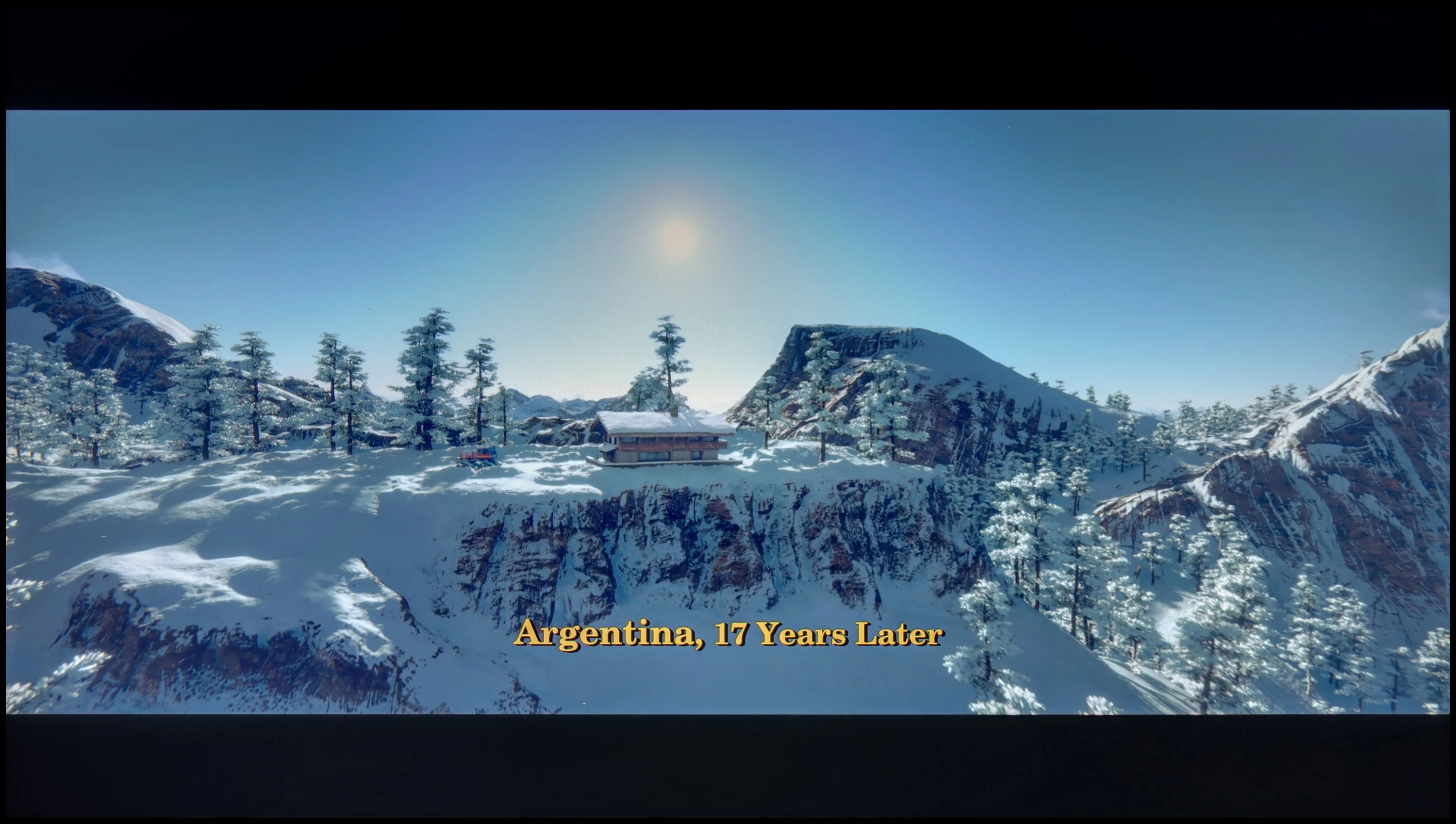




These are selected scenes that show smooth tonal transitions from one color to another. If you see distinct banding, it’s the TV panel’s fault.

These are selected scenes that show smooth tonal transitions from one color to another. If you see distinct banding, it’s the TV panel’s fault.

These are selected scenes that show smooth tonal transitions from one color to another. If you see distinct banding, it’s the TV panel’s fault.

These are selected scenes that show smooth tonal transitions from one color to another. If you see distinct banding, it’s the TV panel’s fault.
This is one of the best TVs we have had the opportunity to test in terms of the smoothness of tonal transitions. Any potential imperfections are so minor that you really have to strain your eyes to notice them. They are subtle enough that we only deducted a symbolic fraction of points in this category. Undoubtedly, this is one of the greatest advantages of this model. It's possible that such a good effect is partly due to the matte coating of the screen, which gently masks any irregularities in color gradation. The smoothness of tonal transitions in The Frame is at a level that will satisfy even exceptionally demanding users. Kudos to the LS03D!
Philips PQS9000 handles tonal transitions very well. It’s especially noticeable in dark scenes, where shades blend smoothly into one another without visible banding or distinct borders between colors. As a result, even large uniform areas look smooth. Minor imperfections only appear in brighter tones, but you have to look closely to notice them. During normal viewing they are unlikely to distract from the movie. In this category Philips performs really well.
Image scaling and smoothness of tonal transitions
7.1/10
7/10

Smooth transition function
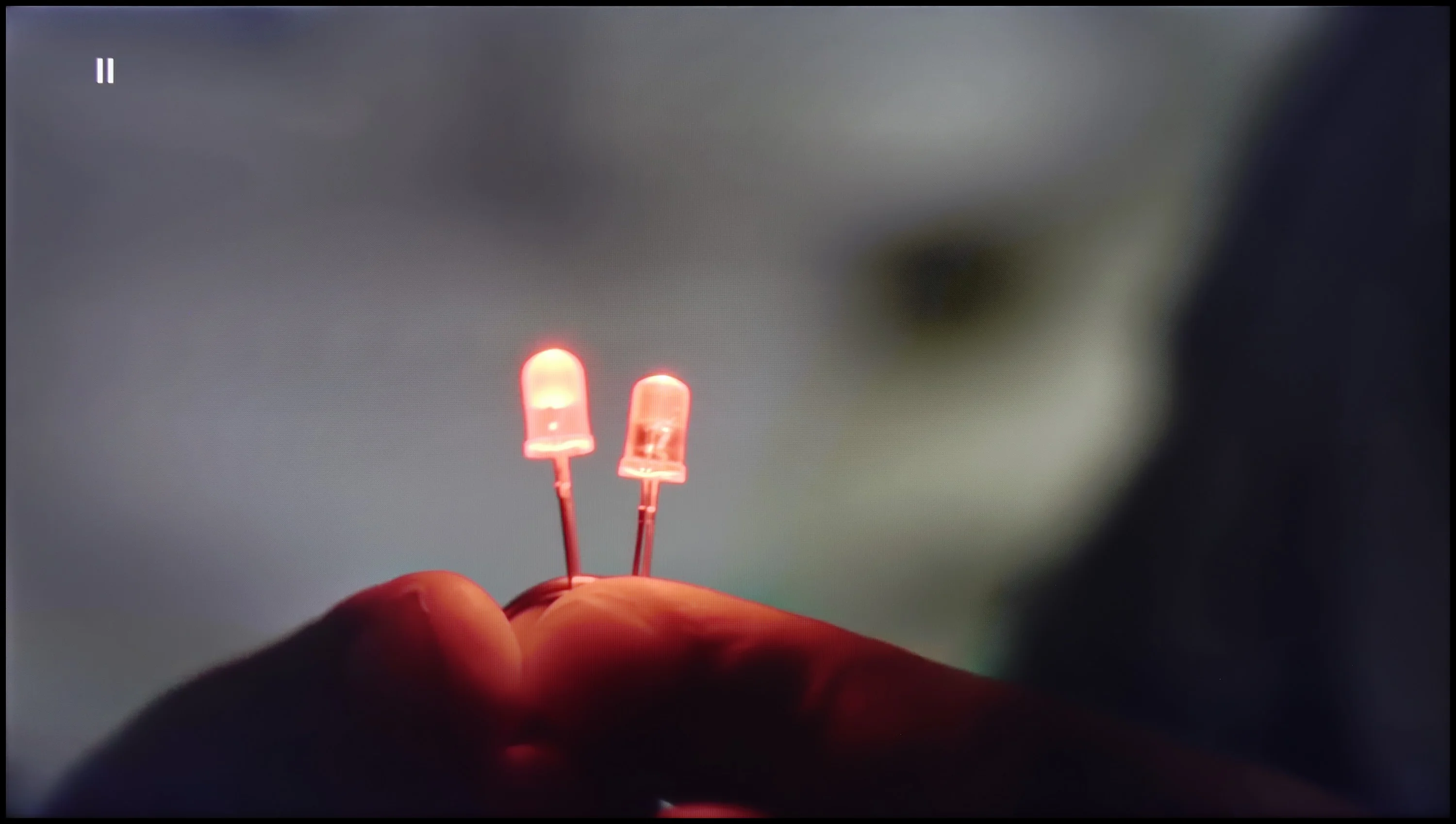
The match photo shows how the TV smooths weak tonal transitions in low-quality video.
Image scaling SD (576i)


The model photo shows how it handles upscaling of SD material.
It was time to check how The Frame handles older, lower-quality materials. We already know that the smoothness of tonal transitions is very high here, so we were curious to see how the TV would manage their smoothing.
The noise reduction feature in the "Standard" setting performs well – tonal transitions are noticeably smoothed out, and the image does not lose too much detail. However, it's worth noting that this effect also smooths out film grain, so its use will be a matter of individual preference.
When it comes to image scaling, the TV also performed really well. The tested frame was solid – the model was rendered correctly, with clear details. The branches in the background, although slightly jagged in places, generally look natural and do not stand out as a flaw.
The digital image processing in the Philips PQS9000 performs well, though we have a few reservations. The "Distortion Reduction" function helps smooth tonal transitions in lower-quality material, but it works quite unevenly. It can improve a section of the picture, only to, moments later and still within the same scene, seem to lose effectiveness and reintroduce banding between shades. A plus is that it doesn't remove film grain or fine noise, so the image retains its texture. We found the "Medium" setting worked best, and that's the one we recommend. The 4K upscaling itself is acceptable, though the picture is very soft. Edges are heavily smoothed, which may make the image feel less crisp to some viewers. In that case, it's worth slightly increasing the sharpness in the TV's menu, as this will make edges stand out more. Don't overdo the sharpness slider, however, or you may introduce artificial halos instead of improving the picture.
Blur and motion smoothness
6.4/10
8.1/10
Blur (native resolution, maximum refresh rate):






Blur ():
Blur (1080p@240Hz):



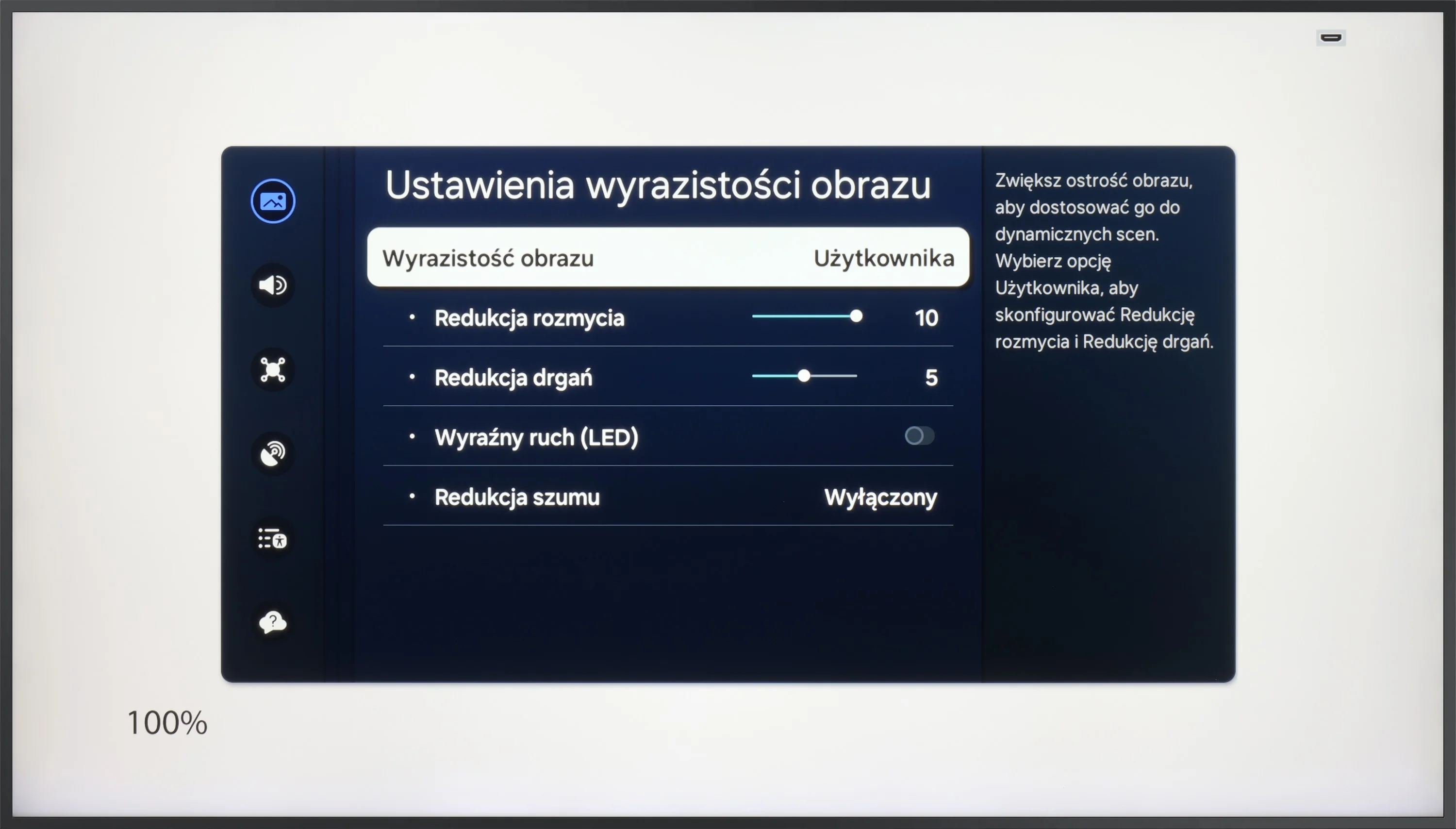
First of all, it is worth noting that the model we tested in 55 inches, just like the 65, 75, and 85-inch versions, is equipped with a 120 Hz panel. Unfortunately, the 43 and 50-inch variants of this series offer only 60 Hz panels, which is worth considering when making a purchase. As for improving motion fluidity, the TV offers a feature called "Picture Clarity." This is a classic motion smoother that gives users the ability to adjust it using two sliders:
Motion Blurring Reduction – this is responsible for sharpening the image during dynamic scenes. The higher the value, the less blur during rapid camera movement or moving objects. However, overly aggressive settings can make the image look unnatural and start to resemble a “soap opera”.
Judder Reduction – this slider affects the smoothness of frame playback, particularly in materials with a lower frame rate, such as films (24 fps). Higher settings can smooth out motion but can also lead to an excessive "plasticky" effect on the image.
Both sliders operate on a scale from 0 to 10, allowing for precise adjustment of the effect to one’s own preferences. It is worth experimenting with the settings to find the perfect balance between fluidity and the natural appearance of the image. We recommend setting them as shown in the picture.
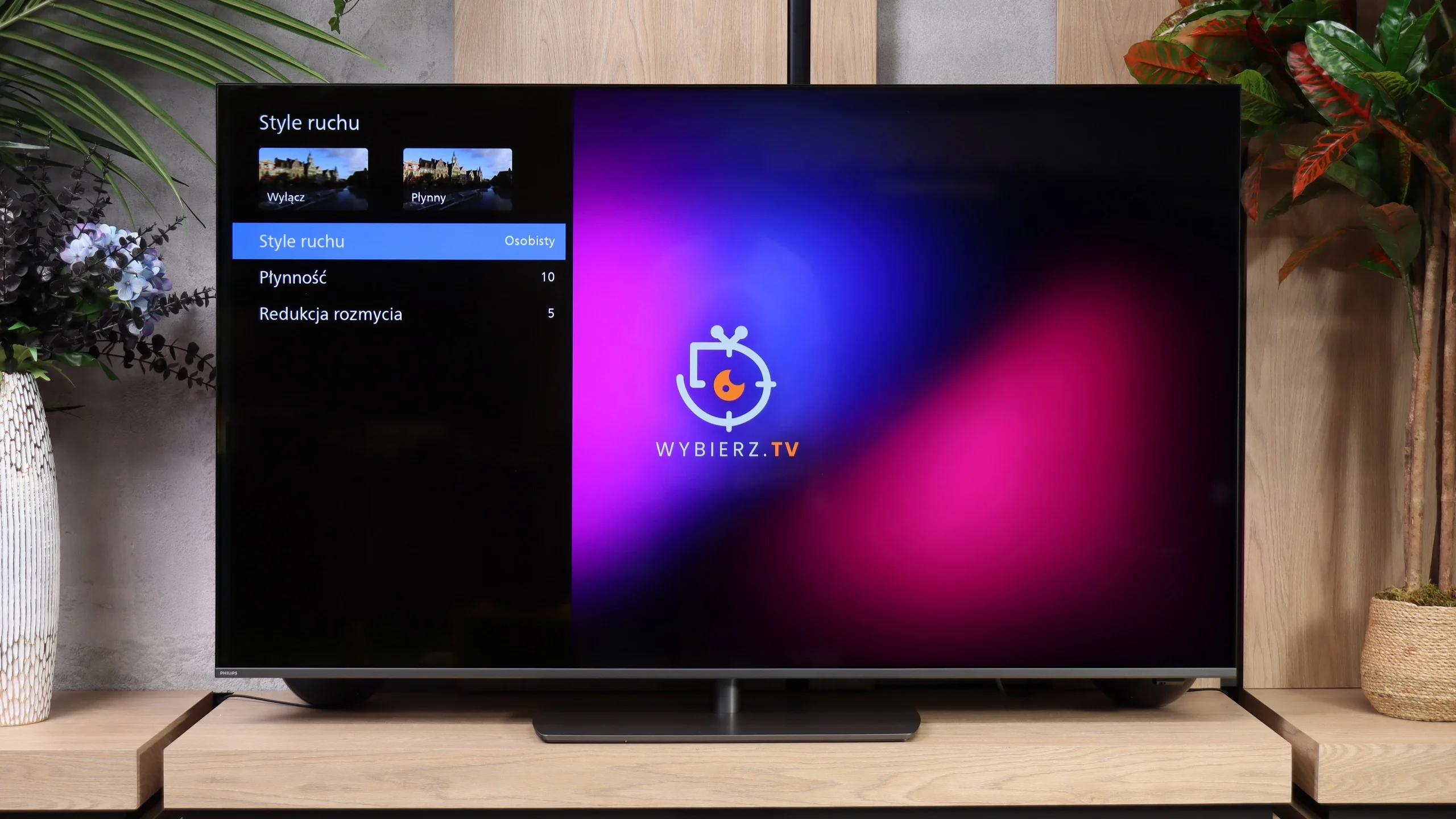
In terms of motion handling, the Philips PQS9000 performs outstandingly for an LCD TV. It's not just the 144 Hz refresh rate, but above all how quickly the panel itself responds. At 120 Hz you can hardly see the typical trailing smears behind moving objects. What's especially pleasing is that this also applies to darker backgrounds, where many VA panels clearly struggle. Here motion remains clear, and Philips pleasantly surprised us in that regard. To adjust how motion is displayed there is the "Motion Style" function. It includes two sliders: "Smoothness" and "Blur Reduction," which let you tailor the effect to the content you're watching and your personal preferences. Our suggested settings are shown in the photo. Treat them as a starting point and try different levels of smoothing to see which you prefer.
Console compatibility and gaming features
8.8/10
9.5/10
- ALLM
- VRR
- VRR range48 - 120Hz48 - 240Hz
- Dolby Vision Game Mode

 Yes, high input lag
- Correct implementation of HGIG
- 1080p@120Hz
- 1440p@120Hz
- 4K@120Hz
- Game bar
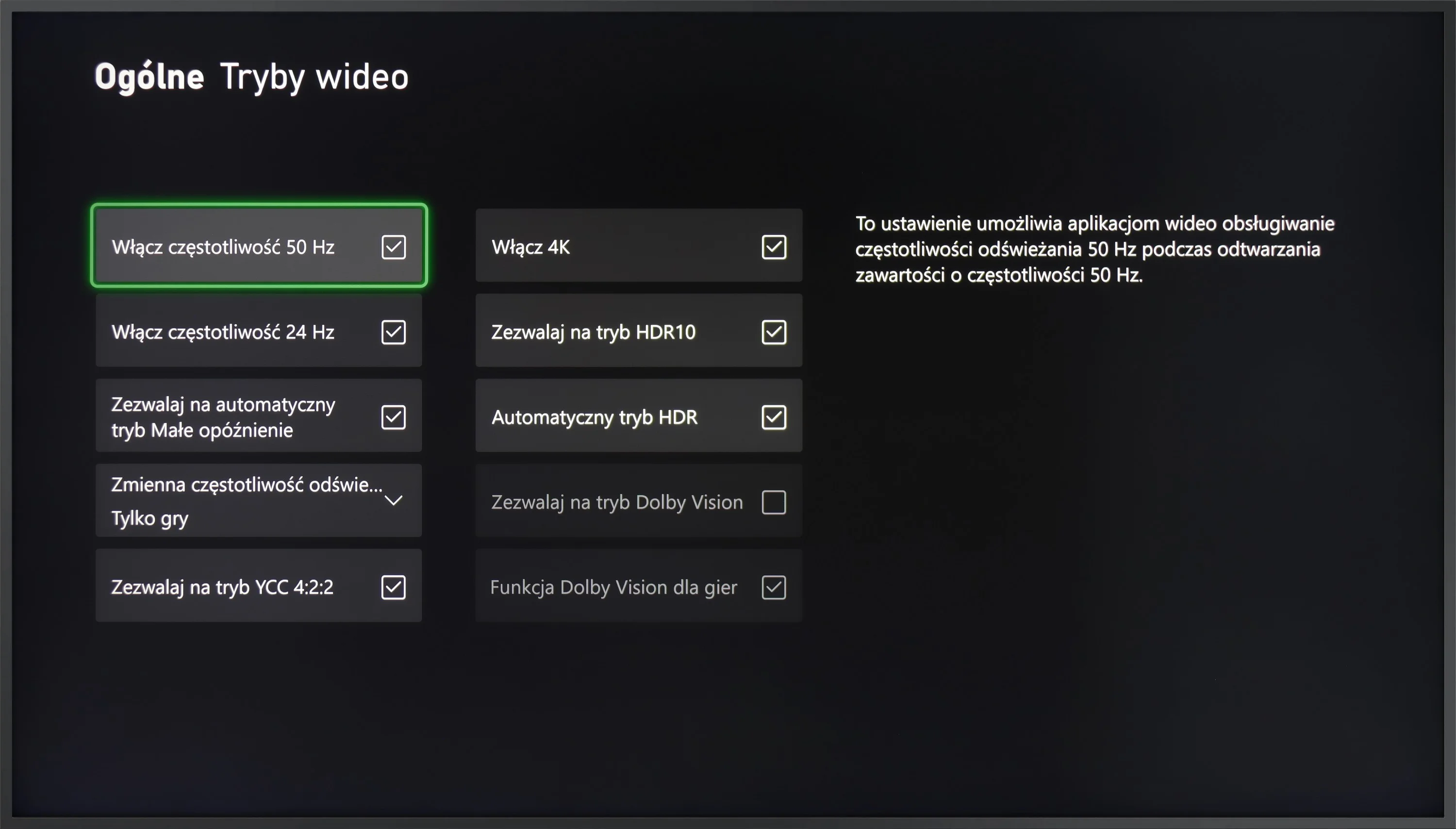
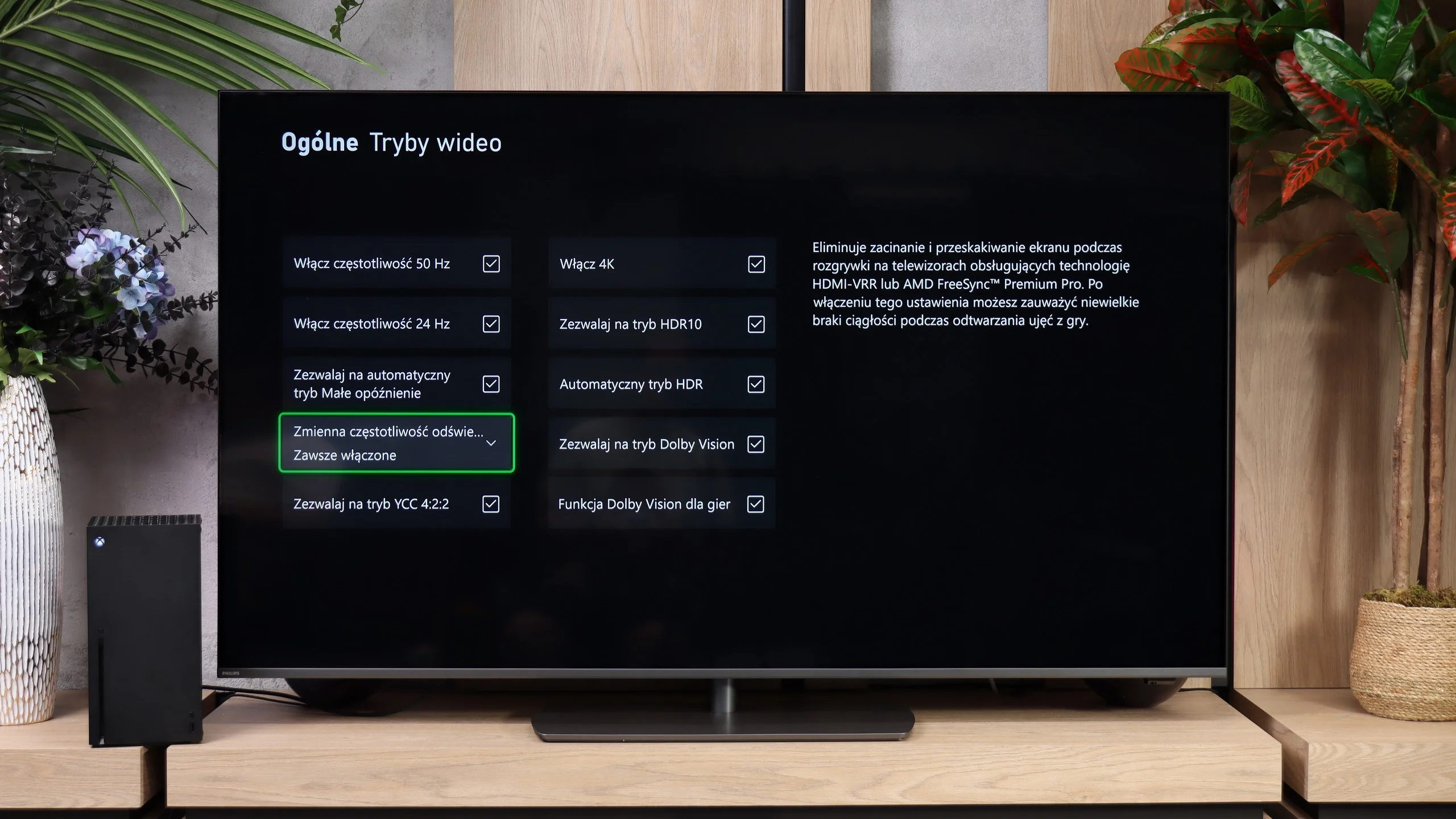
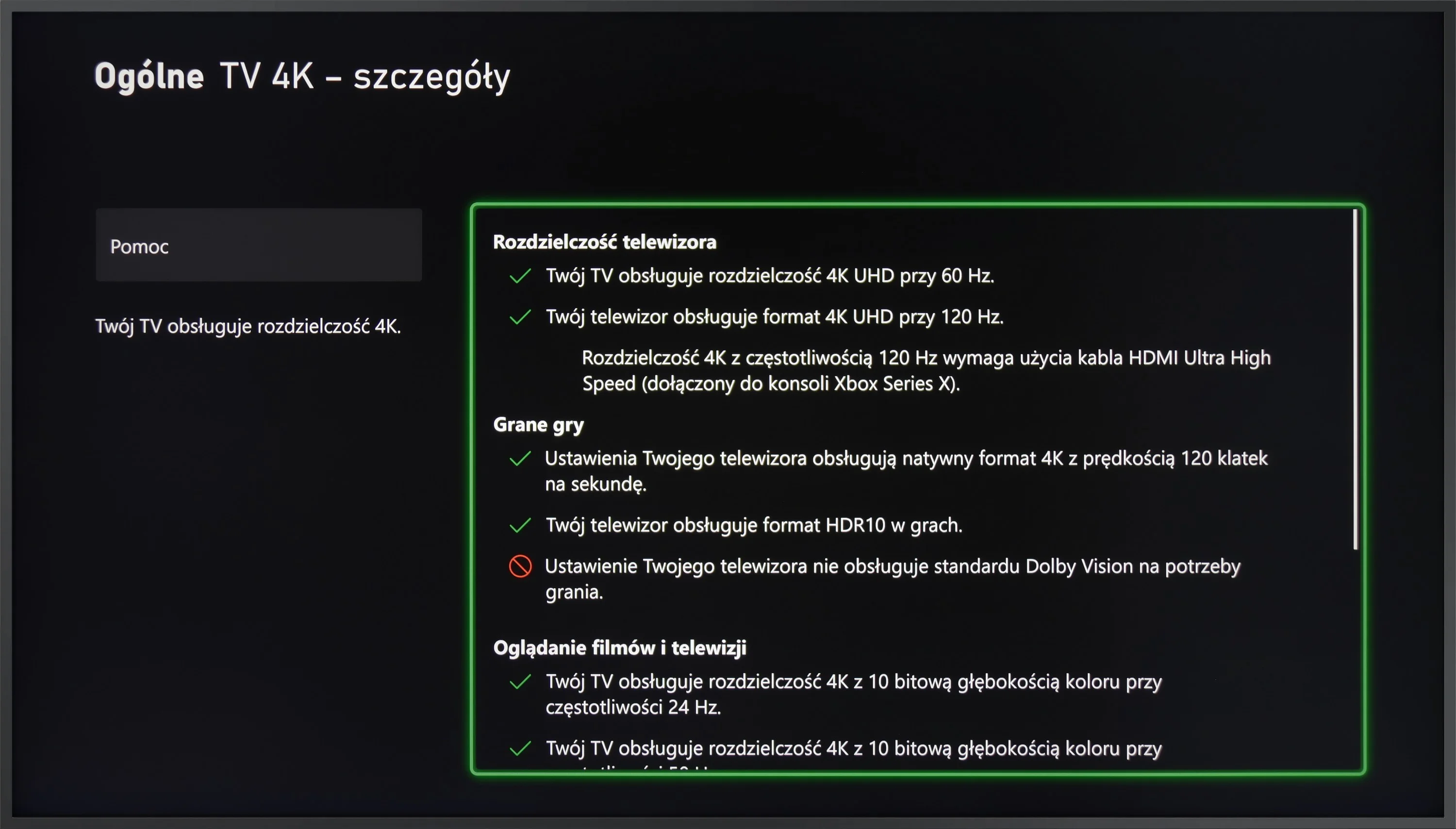
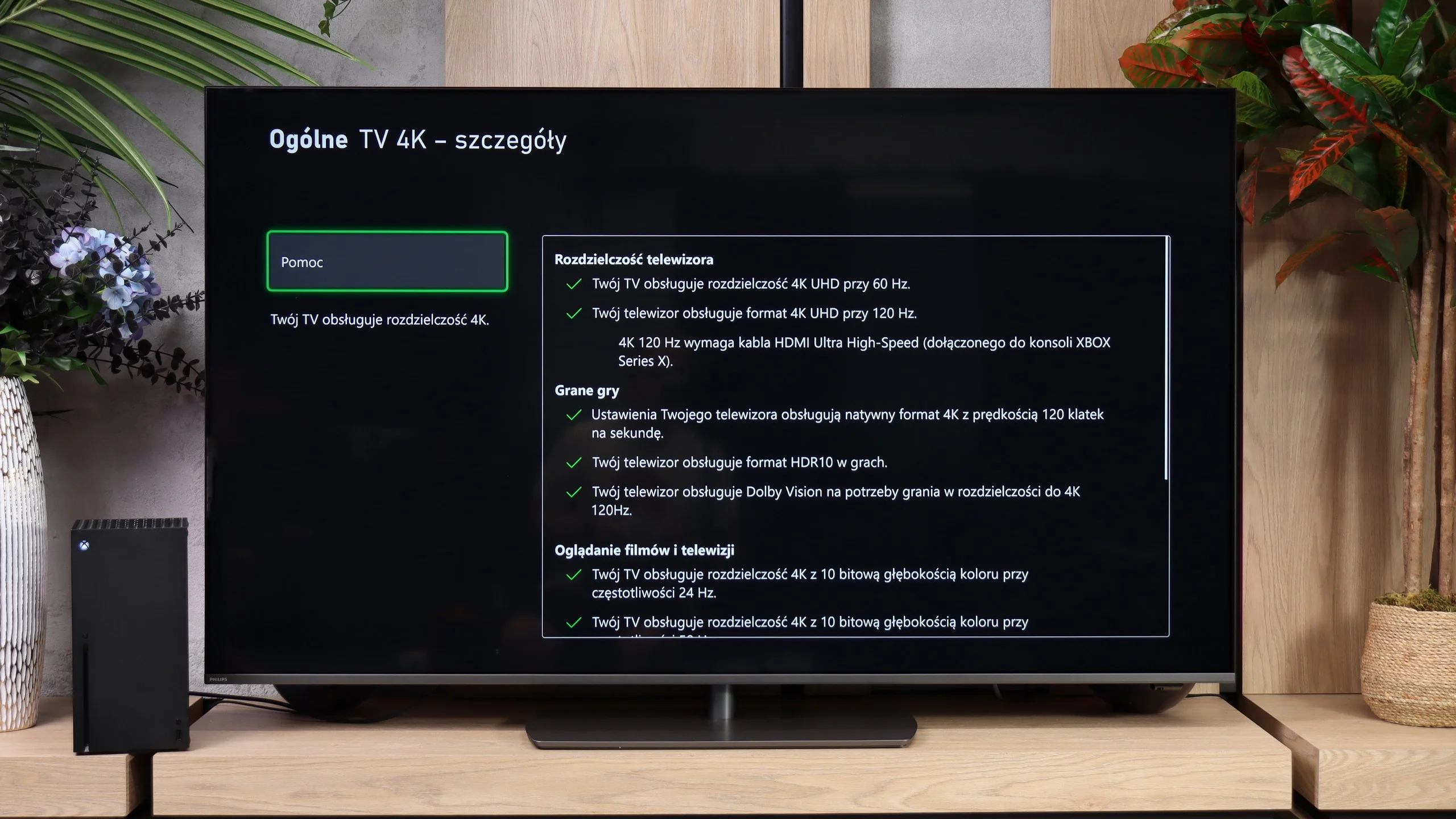
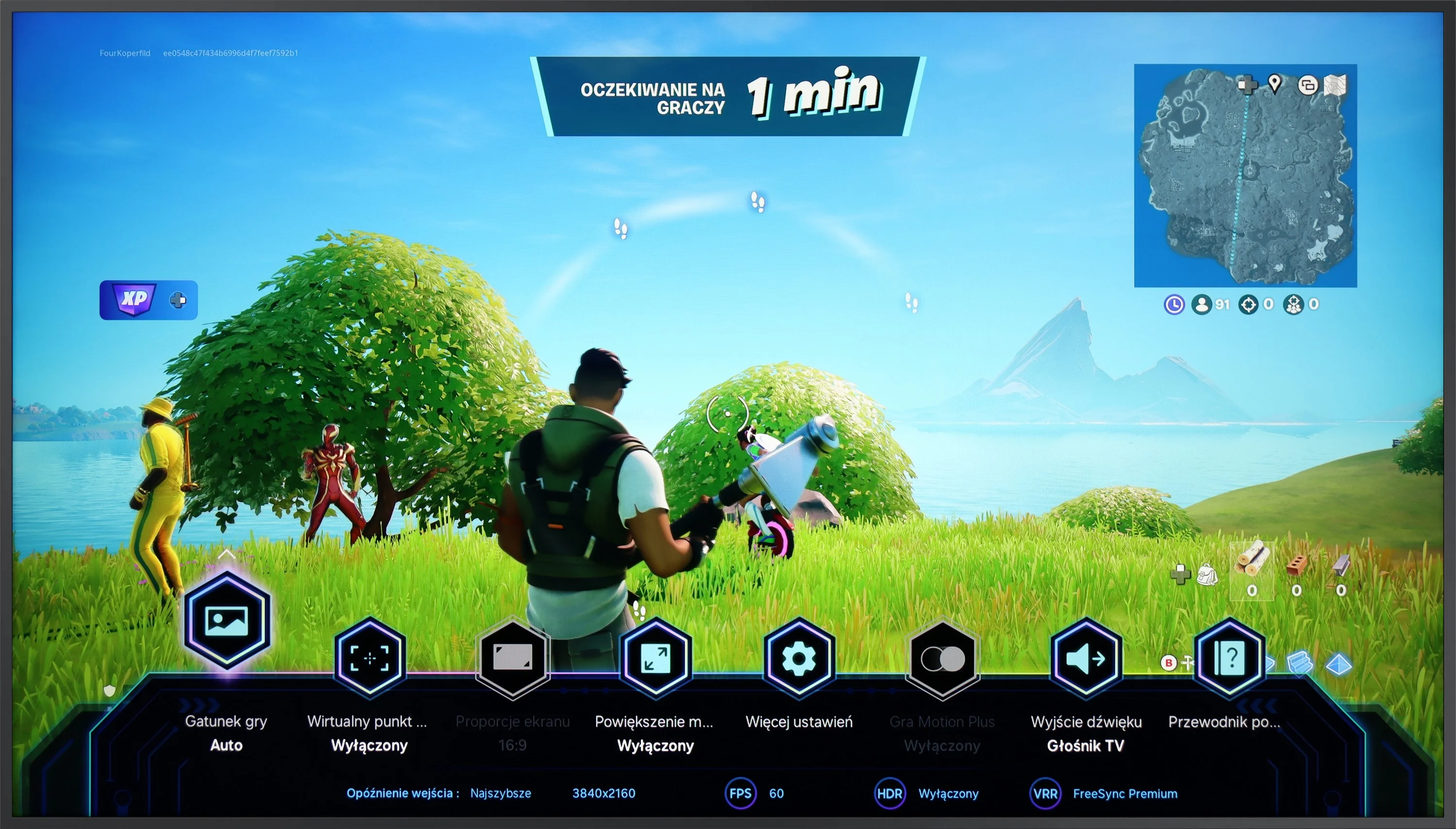
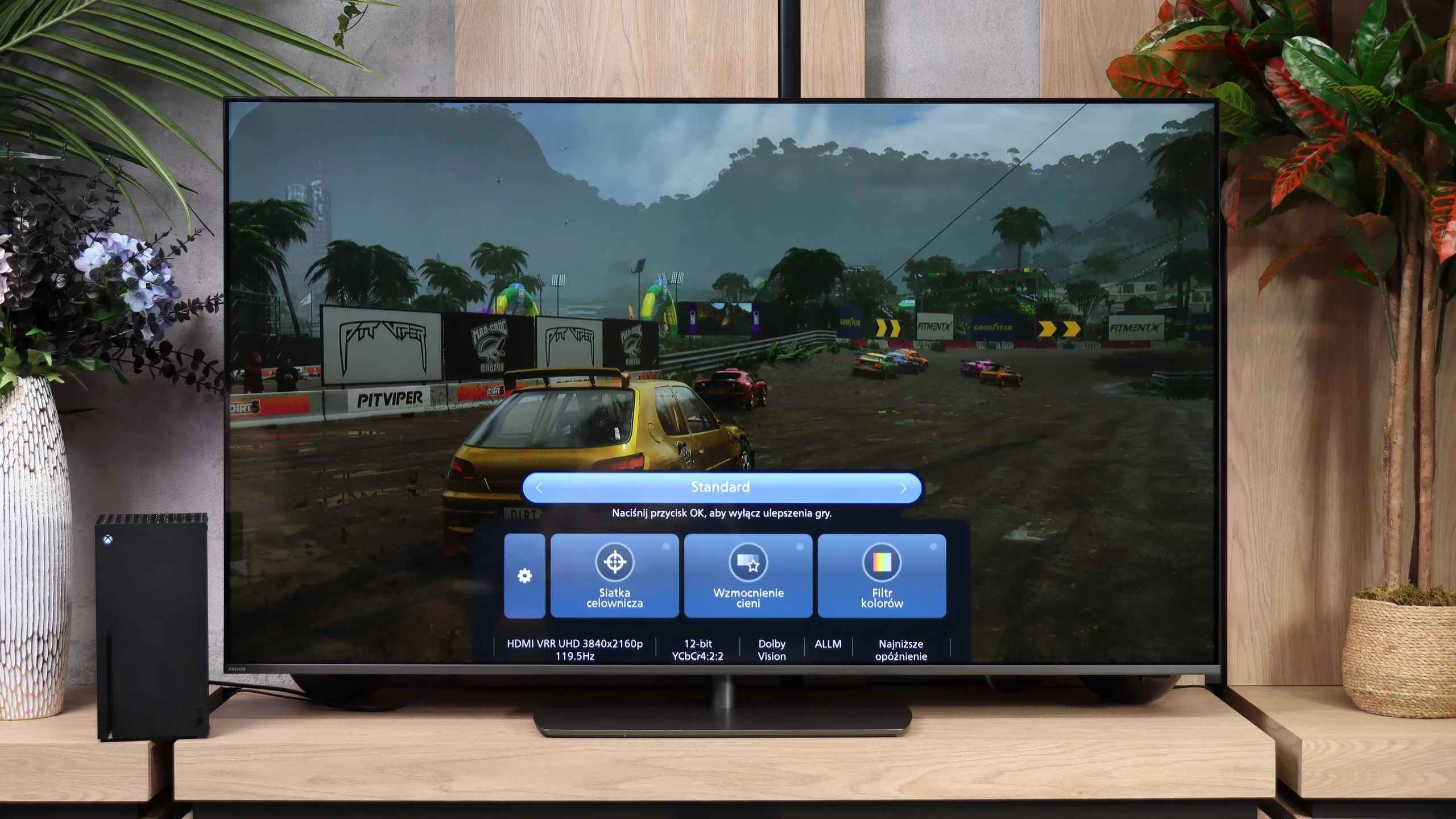
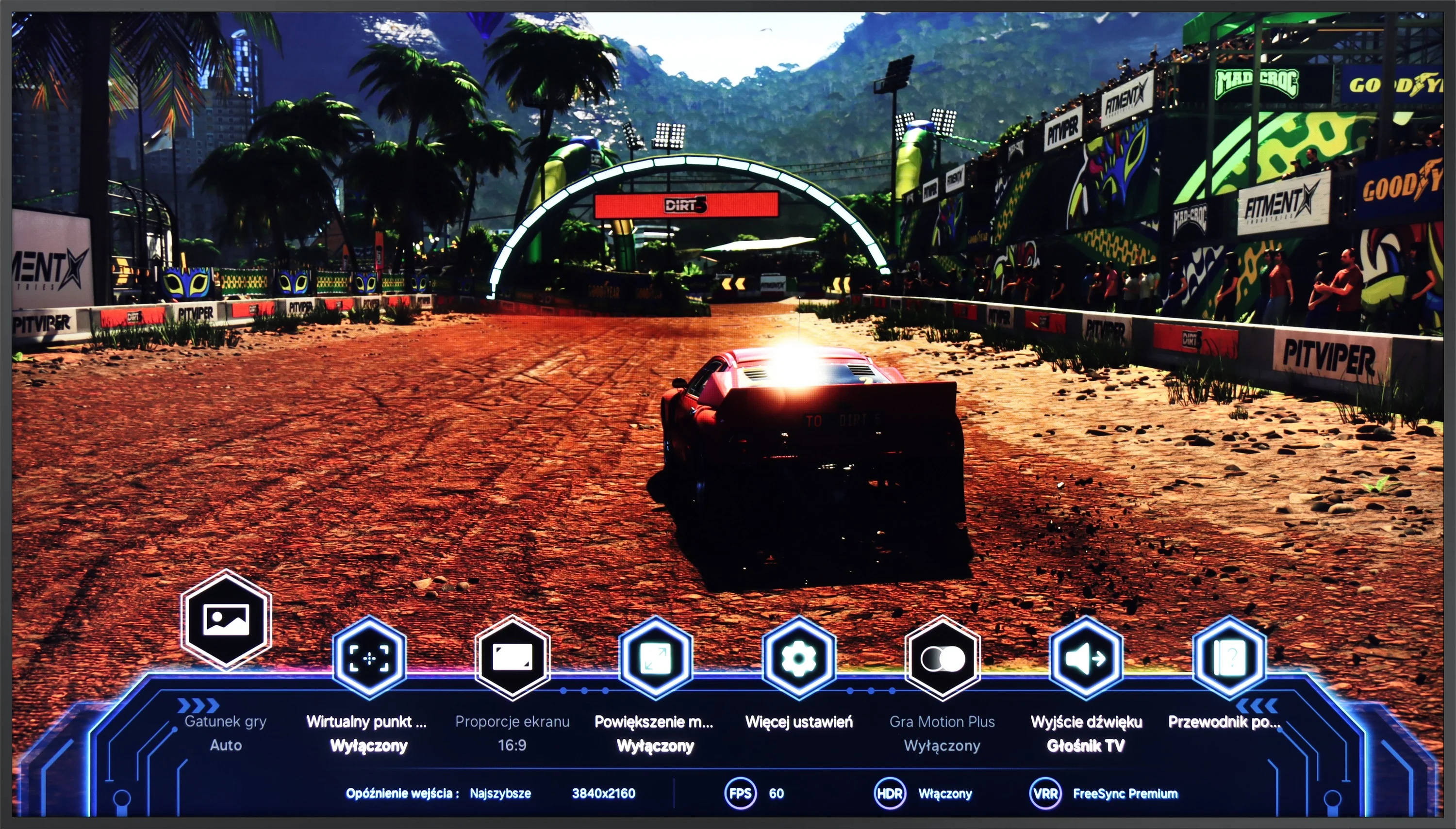
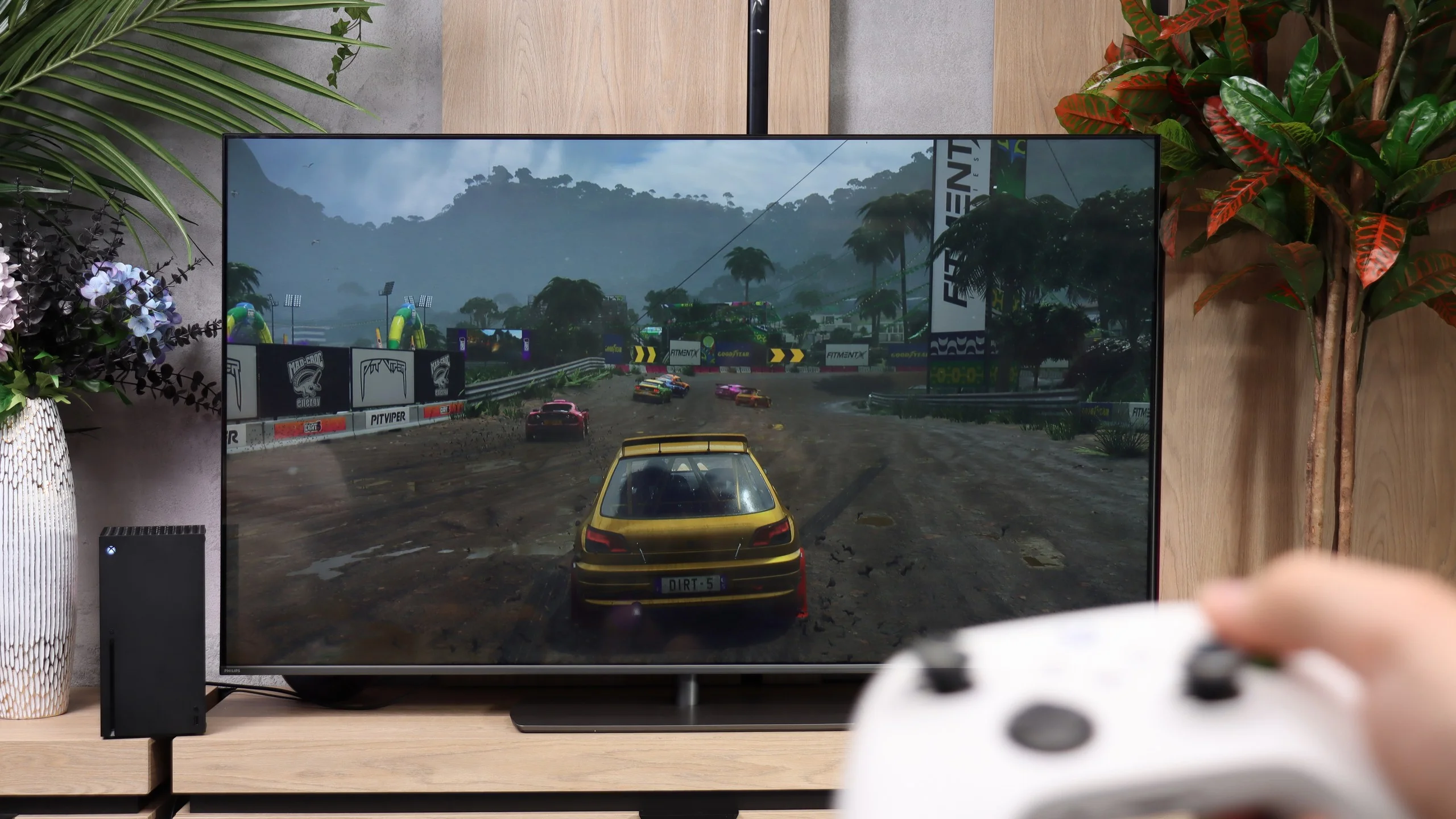
The Frame in version 2024 is equipped with four HDMI ports, but only one of them supports the 2.1 standard with a bandwidth of 40 Gb/s. This is an important piece of information if we plan to connect more than one device that requires a 4K@120 Hz signal – for example, two consoles or a console and a gaming PC. In terms of gaming features, The Frame truly has a lot to offer. We find ALLM (Auto Low Latency Mode), VRR (Variable Refresh Rate), and HGiG. It is worth emphasizing that HGiG has been very well implemented here, which is particularly important since the TV does not support Dolby Vision in games (which is only available on Xbox consoles). In this case, HGiG proves to be a better standard for gaming. Samsung has not forgotten about features that enhance the gaming experience. Game Bar is an advanced panel for gamers that allows for quick adjustment of screen settings without the need to sift through the TV menu. We can even change the aspect ratio from 16:9 to cinematic 21:9, which for some gamers can be a significant advantage. However, Samsung's biggest ace up its sleeve is the Game Motion Plus feature. This is a special smoother dedicated to games, which adds extra frames of animation without significantly impacting input lag. The effect is really noticeable – the image appears much smoother, which fans of dynamic titles will particularly appreciate. In summary – Samsung The Frame is a television that offers a solid set of features for gamers. Although the limitation to one HDMI 2.1 port may be a downside, the rest of the solutions make gaming on this TV a truly enjoyable experience.
Gaming features
When it comes to gaming features, the Philips PQS9000 really has a lot to offer. Four HDMI 2.1 ports let you connect multiple devices without having to decide which one gets the full-capability port. Consoles can use 120 Hz in Full HD, 1440p and 4K, and a PC can also take advantage of 144 Hz at 4K or 240 Hz if you drop down to Full HD. There's also VRR, which matches the refresh rate to the frame rate and prevents screen tearing. Its range goes from 48–240 Hz, with the upper limit applying to Full HD mode.
ALLM is included, so the TV automatically switches into game mode, and HGiG works correctly, which is useful when setting up HDR on a console. There's also a Game Bar for quick access to settings and signal information. The list even includes Dolby Vision gaming, but that option is hard to enjoy because of very high latency. Apart from that caveat, the feature set is really solid.
Input lag
10/10
7.2/10
SDR
HDR
Dolby Vision
In terms of latency, The Frame really impresses. 13 ms with 60 Hz content and 8 ms with 120 Hz are results that will satisfy even the most demanding gamers. Such low values make the reactions to controller movements almost instantaneous. In dynamic games like shooters or racing, every fraction of a second matters – here The Frame performs excellently.
Input lag is already less impressive than the rest of the "gaming" gear. At 60 Hz we measured 32 ms, both in SDR and HDR. That's enough for more relaxed games, but in fast shooters you can feel a slight delay. At 120 Hz the lag drops to 16 ms and gameplay is noticeably more enjoyable, though the competition can respond even faster.
The biggest problem appears when Dolby Vision is enabled. At 60 Hz the delay is as much as 213 ms, and at 120 Hz it reaches 106 ms. The response to controller input is then clearly delayed, which significantly interferes with gameplay. That's why on the PQS9000 it's definitely better to stick with HDR10. Dolby Vision is supported for games, but its practical usefulness remains limited.
Compatibility with PC
7.6/10
8.6/10
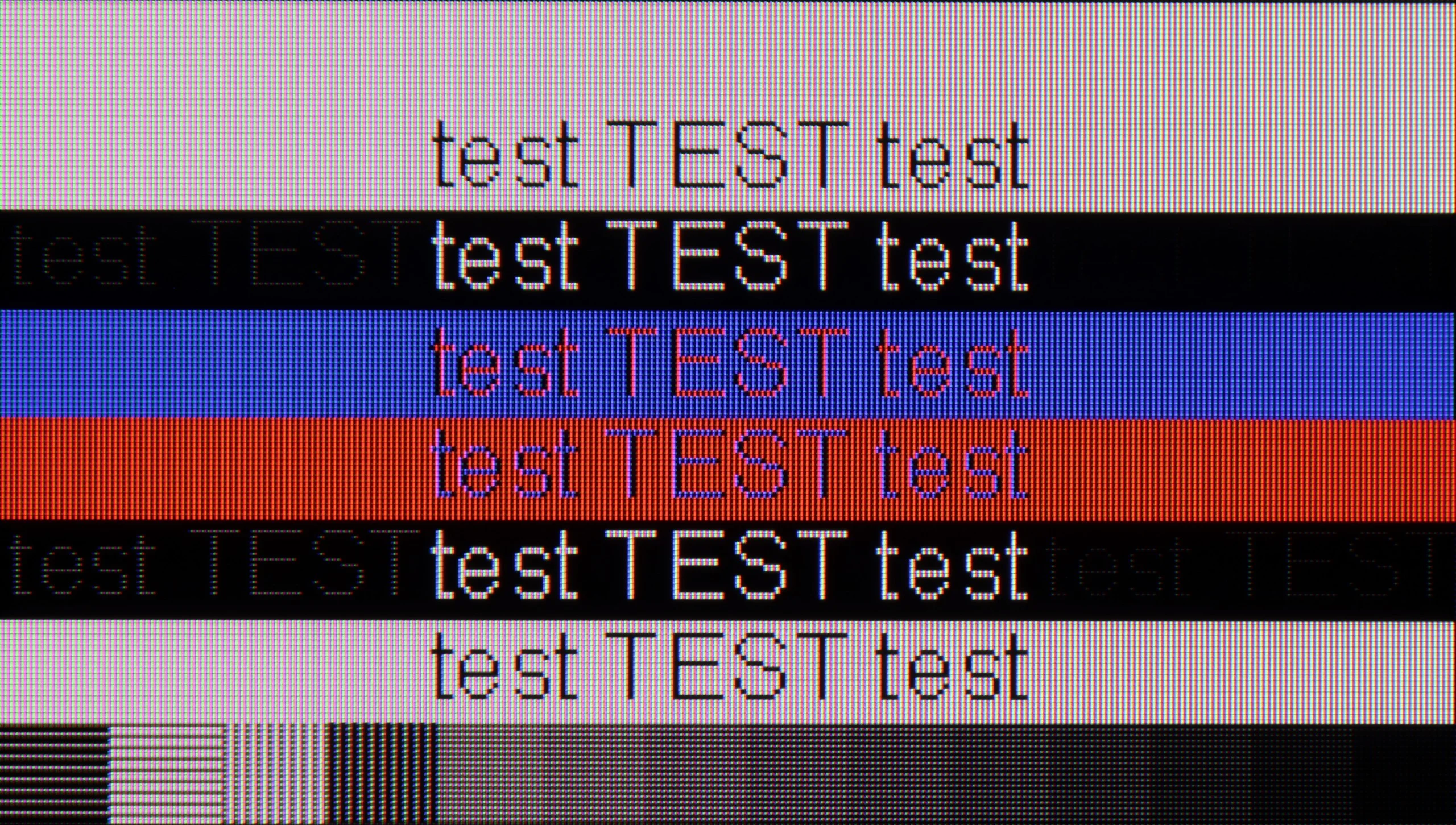
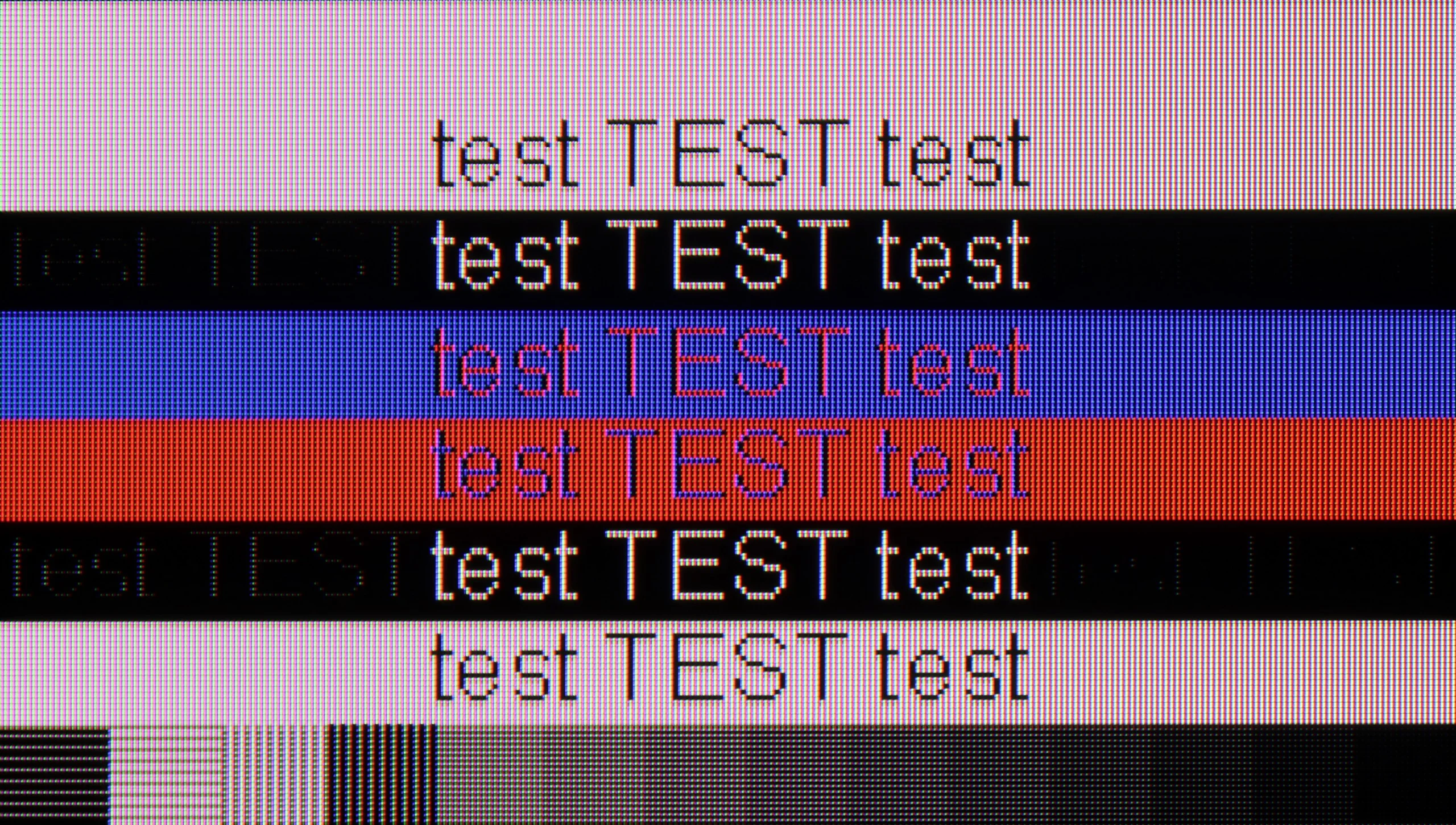
The photo shows the legibility of small fonts. Ideally, lines should be the same thickness on both light and dark text, with minimal pixel gaps.
Using a computer on The Frame is truly a pleasant experience. The fonts are clear and well-rendered thanks to the 4:4:4 chroma support. There is no blurring or fuzziness that often appears in cheaper televisions. Of course, if someone scrutinizes small texts, they may notice minimal imperfections, but it's really a minor issue that doesn't interfere with everyday work. It's also suitable for PC gaming. The 120 Hz panel, support for G-Sync, and truly low input lag make games run smoothly and without delays.
PQS9000 owes its high score for computer use mainly to its gaming capabilities. A 144 Hz refresh rate at 4K and support for G-Sync Compatible and AMD FreeSync Premium Pro let you use frame synchronization on compatible NVIDIA and AMD cards. Working with text also fares well. Standard fonts are sharp and legible, and thanks to correct 4:4:4 chroma support, colored letters, icons, and small desktop elements do not lose clarity. The biggest drawback concerns very small, dark text, where the horizontal strokes of letters are noticeably darker than the vertical ones, making some characters look uneven. You probably won't notice this from the couch, but if someone plans to put The One on a desk and work up close, this flaw may become bothersome.
Viewing angles
3.3/10
3.2/10
The viewing angles on The Frame are average, which is typical for a VA panel. And here comes a bit of a snag – this television is supposed to serve as a display for images and works of art, which are not always viewed head-on. When viewed at an angle, colors start to lose their intensity, and black turns into shades of gray. This is not at a level that completely ruins the experience, but if the TV is placed in a position where it will often be viewed from the side, the effect may be noticeable. It's a pity because better viewing angles would be a significant advantage in a TV intended for such purposes.
Viewing angles are one of the weakest points of the Philips PQS9001. Move to the side and the colors noticeably lose saturation, and the image becomes washed out and lower in contrast. When watching with several people, seats directly in front of the screen are clearly the best. This is unfortunately a typical limitation of VA panels, where strong contrast head-on comes at the expense of poorer off-axis performance. Most TVs with this type of panel have the same problem, and The One is no exception. The swivel stand helps a bit by allowing you to angle the screen toward the viewer, but it won't solve the issue with widely spaced seats.
Daytime performance
6.5/10
6.1/10
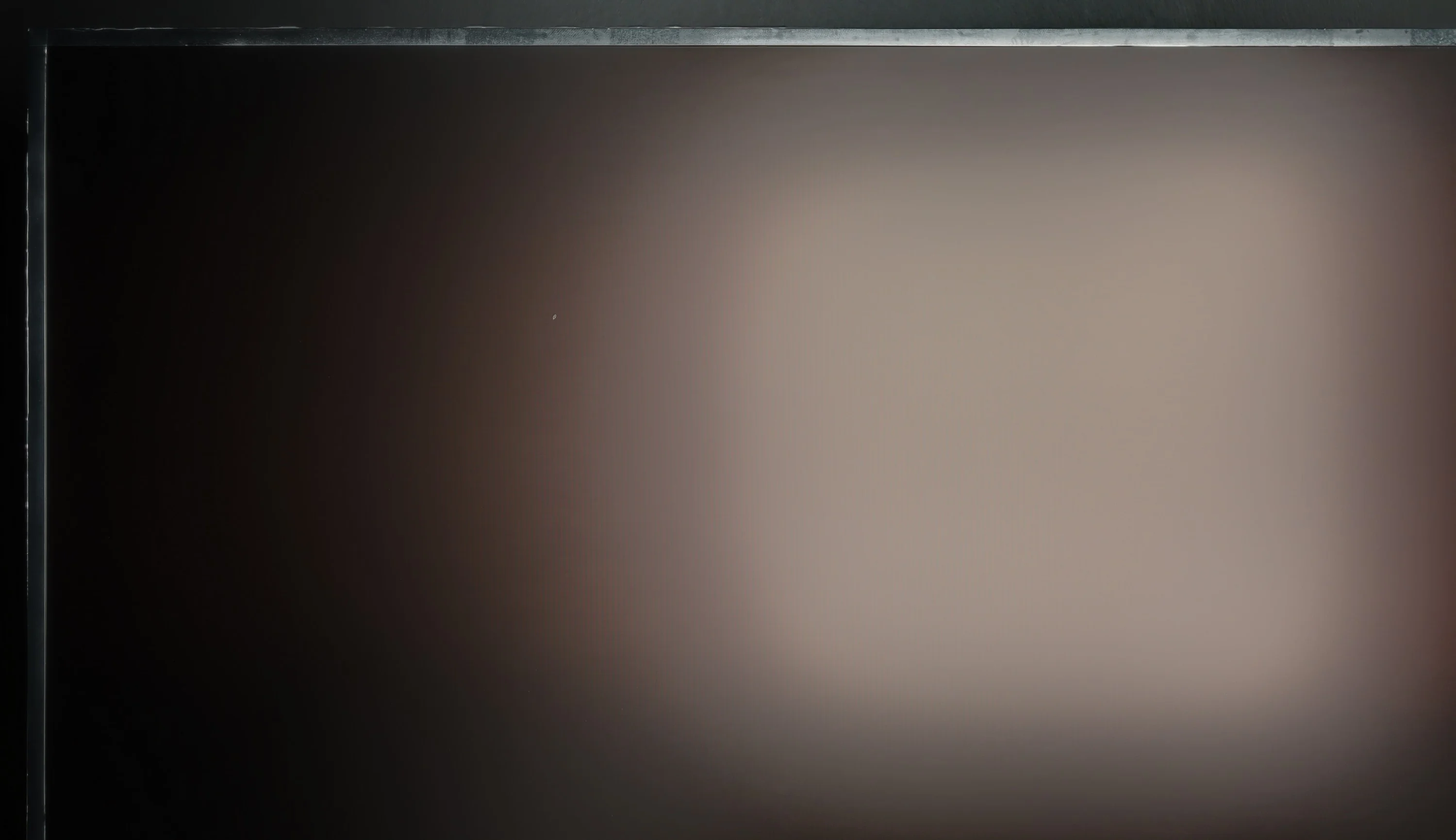
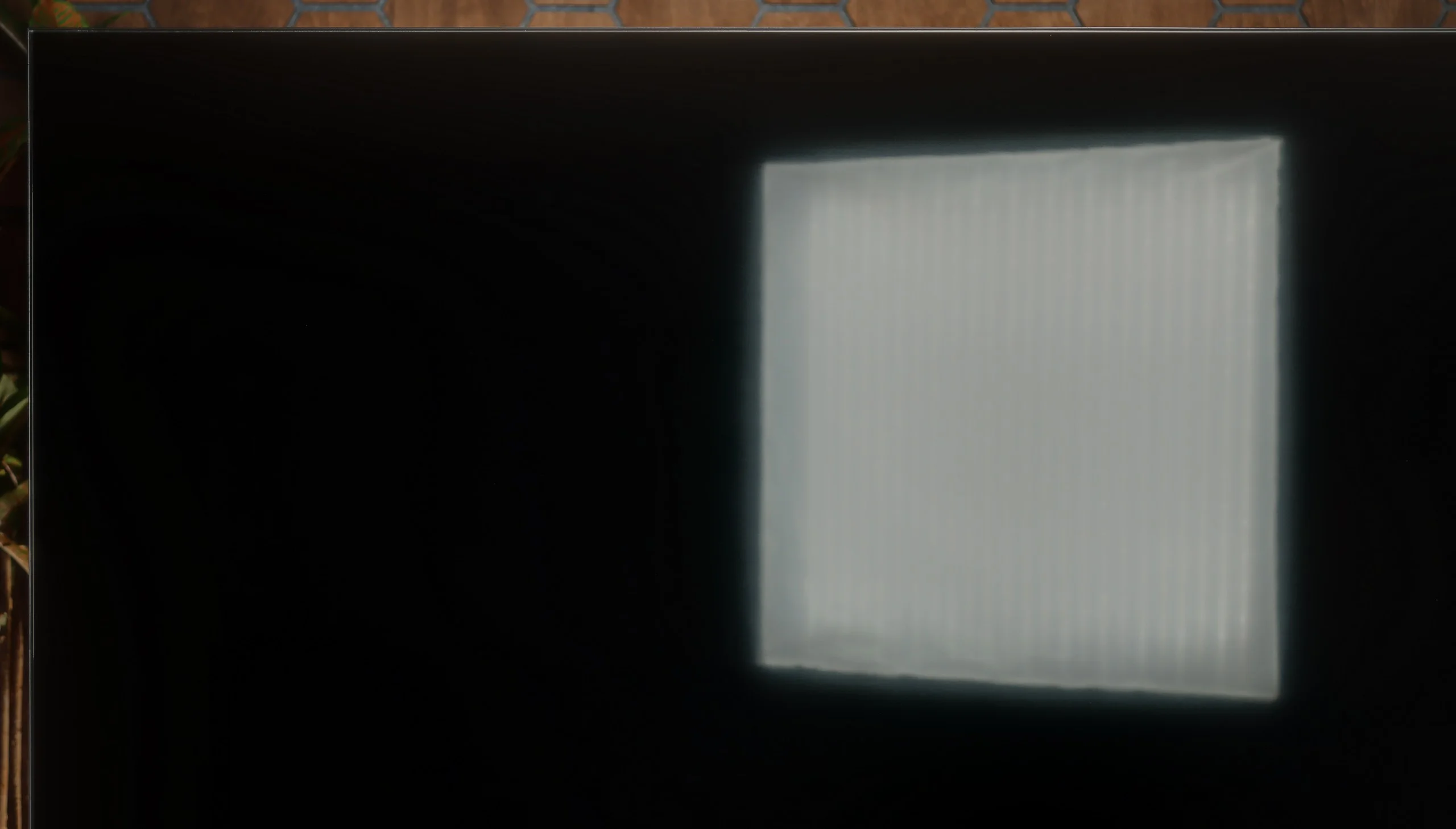
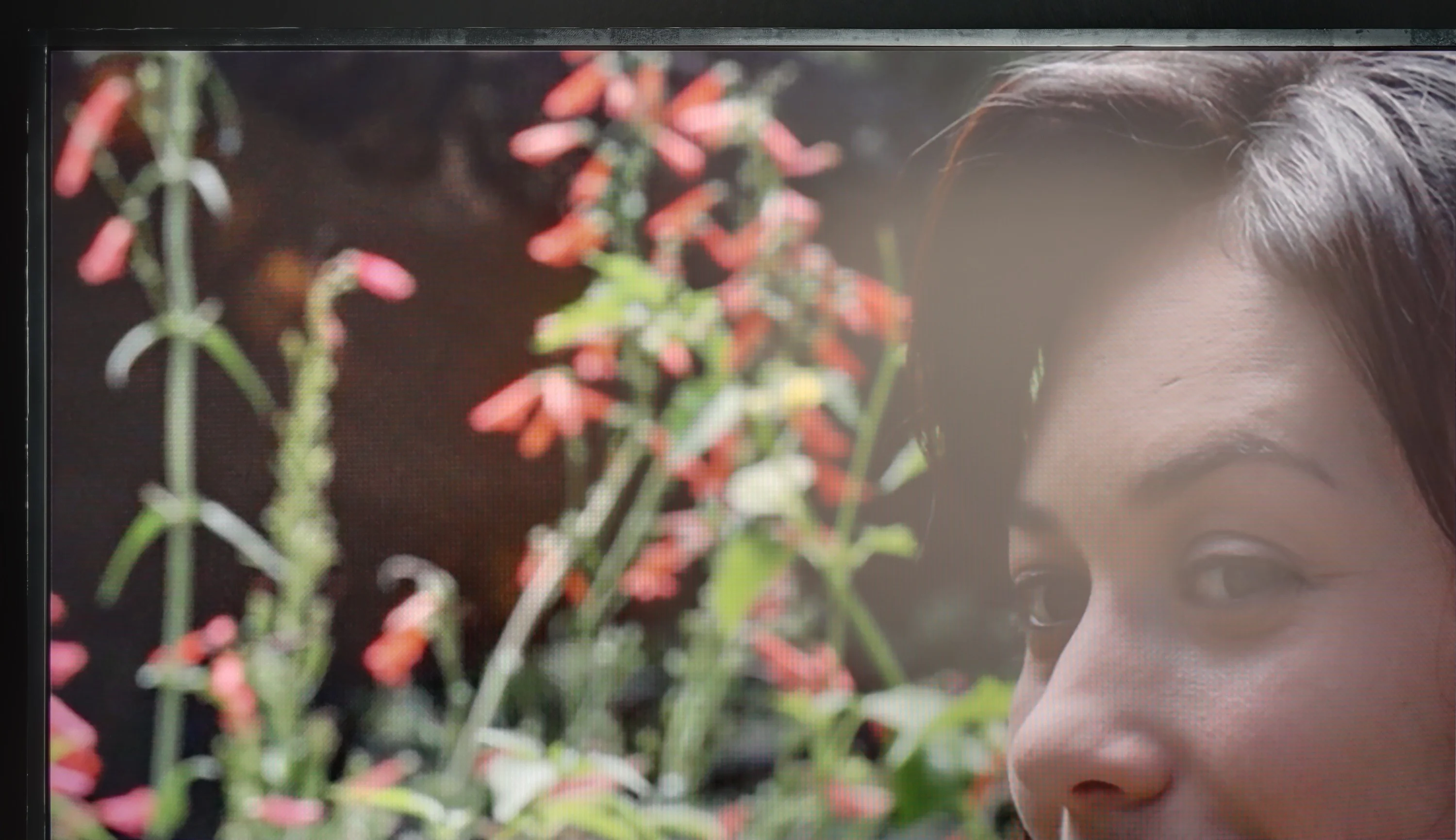
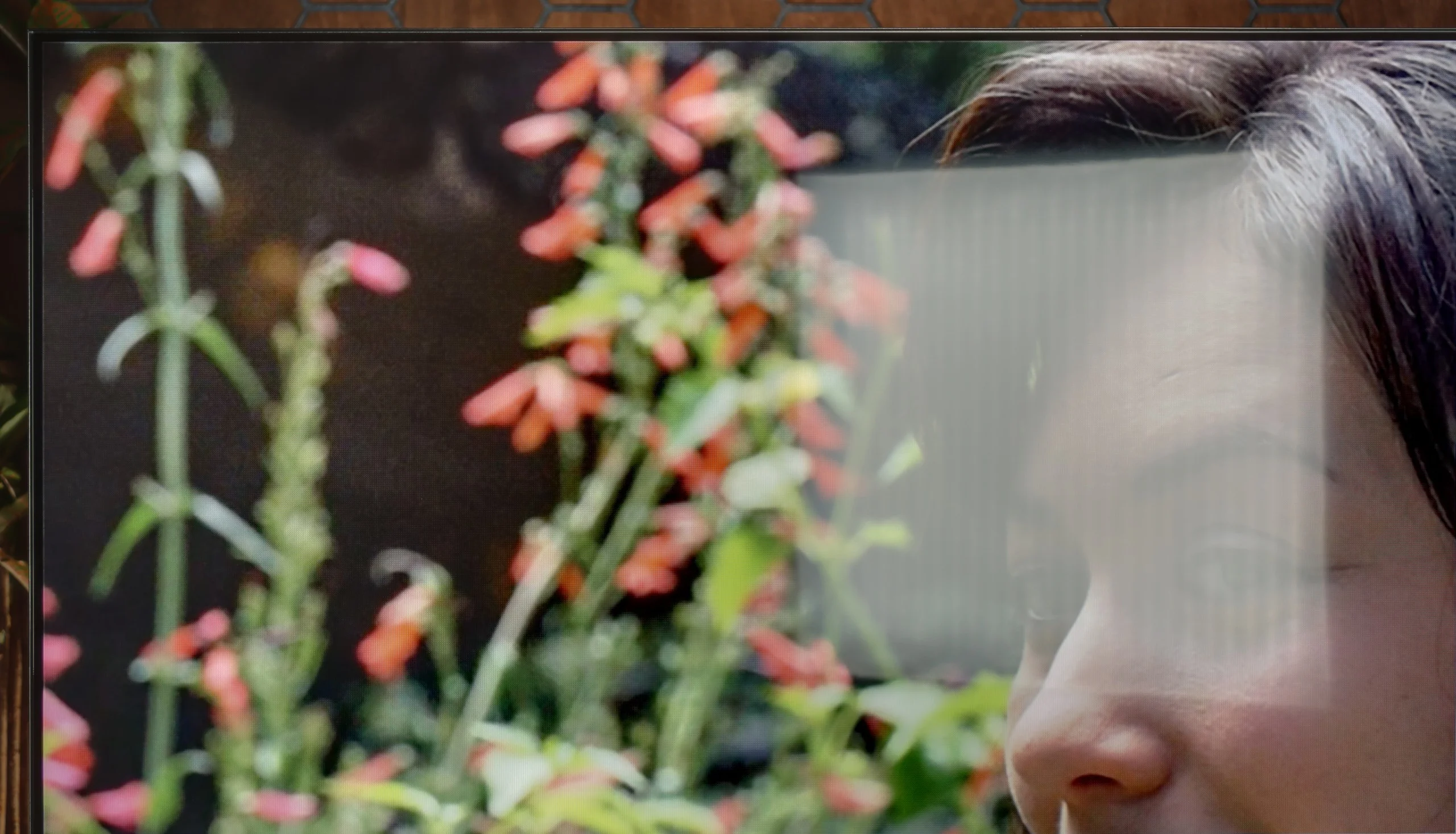
Panel brightness
Philips PQS9011 / PQS9001 (The One 2026): 502 cd/m2
Samsung The Frame LS03D : 645 cd/m2
The Frame is equipped with a matte display that manages to effectively suppress direct light reflections. As a result, even in a brightly lit room, the image remains readable, and reflections do not interfere with viewing. Of course, as is usually the case with matte coatings, there is a trade-off – colors lose some intensity, and black seems more faded during the day. Fortunately, the television compensates for this with a brightness level of 650 cd/m². This ensures that the image is bright, clear, and well visible even in a heavily lit room.
The Philips PQS9001 performs quite well for daytime viewing. Its biggest advantage is a stable brightness of around 500 nits, regardless of how many bright elements appear on the screen. Even when watching winter sports or a scene full of white, the picture doesn't dim. In a typical living room that level is more than enough to comfortably watch TV without having to cover the windows.
The satin finish does a decent job of suppressing reflections, though it doesn't eliminate them completely. a window opposite the screen will be visible and may be distracting, especially in darker scenes. Black levels hold up well in daylight, so the overall image doesn't become overly washed out. So it's pretty good for everyday viewing, provided the sun isn't shining directly on the screen.
Panel details
Subpixel Structure:
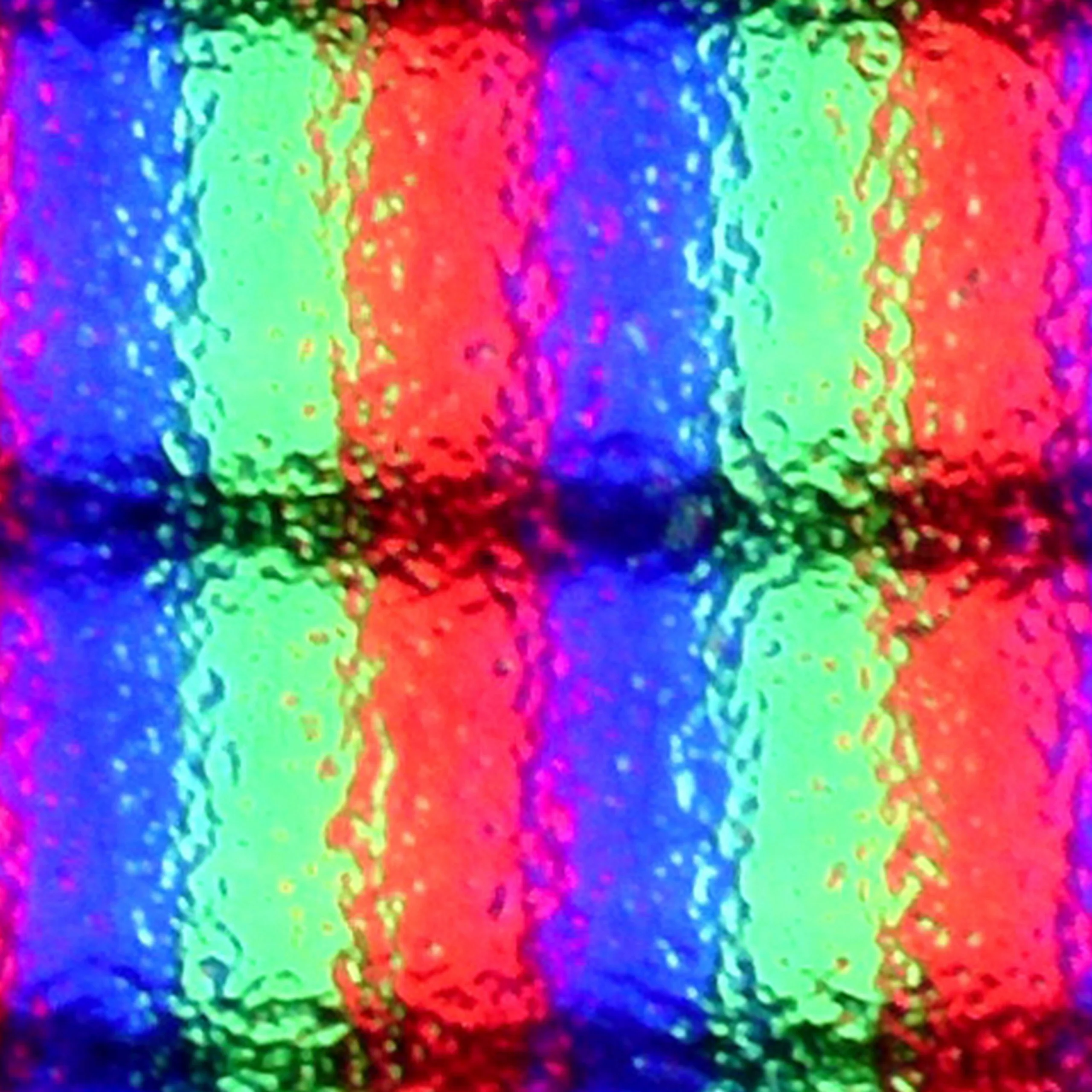
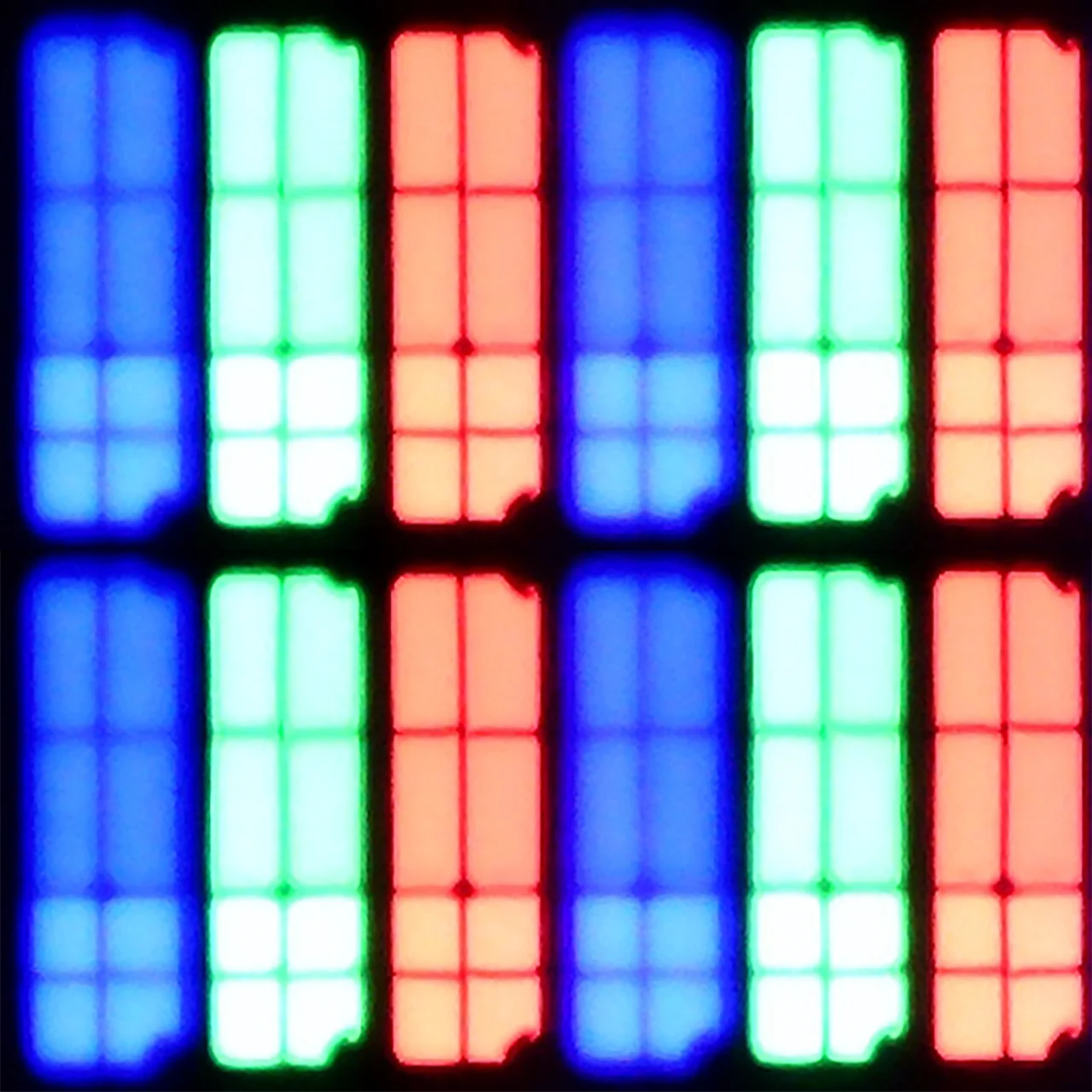
Panel uniformity and thermal imaging:


Samsung The Frame LS03D
Philips PQS9011 / PQS9001 (The One 2026)
TV features
7.2/10
7.6/10
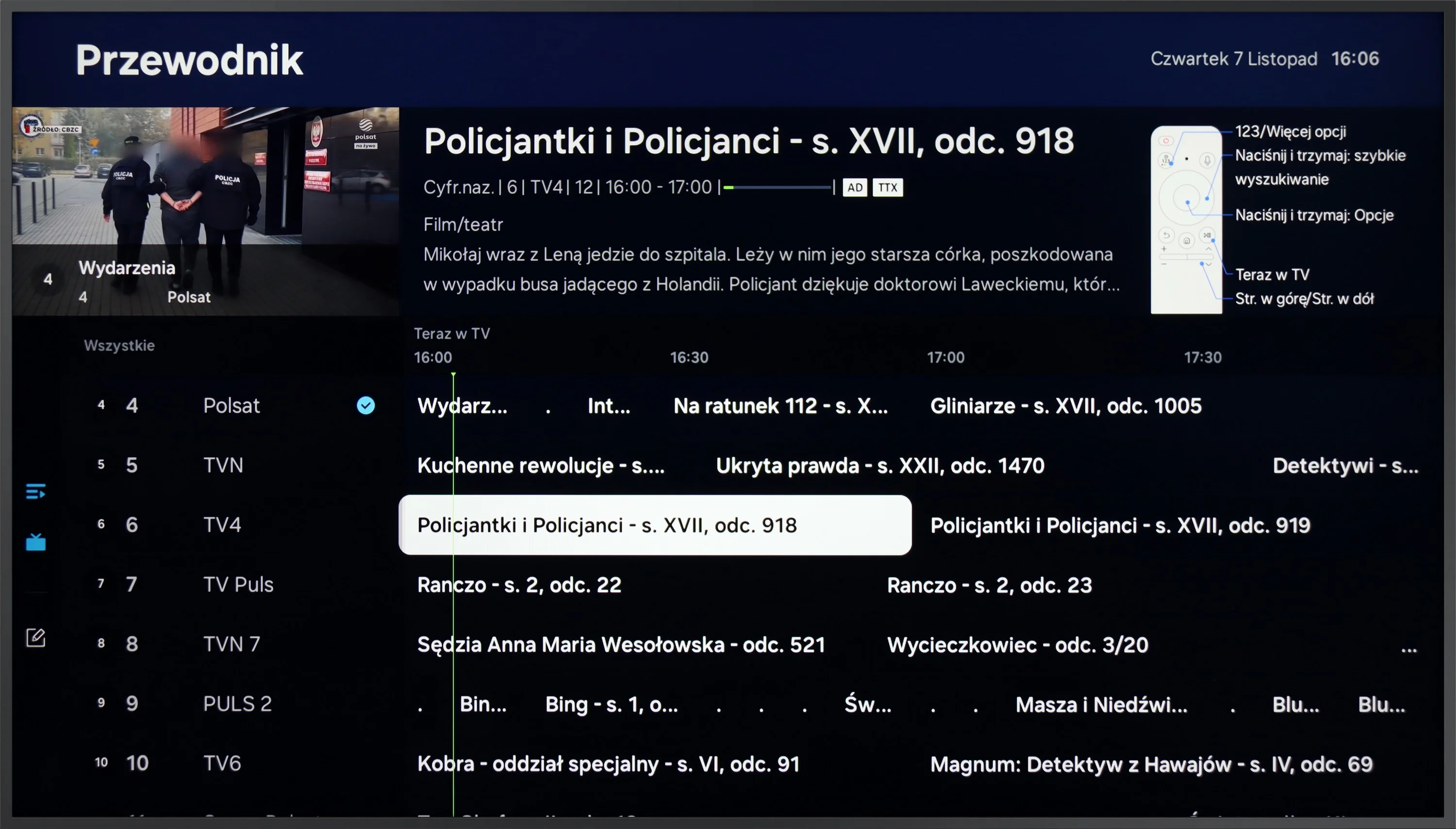
- SystemTizenTitan OS
- System performanceVery goodDecent
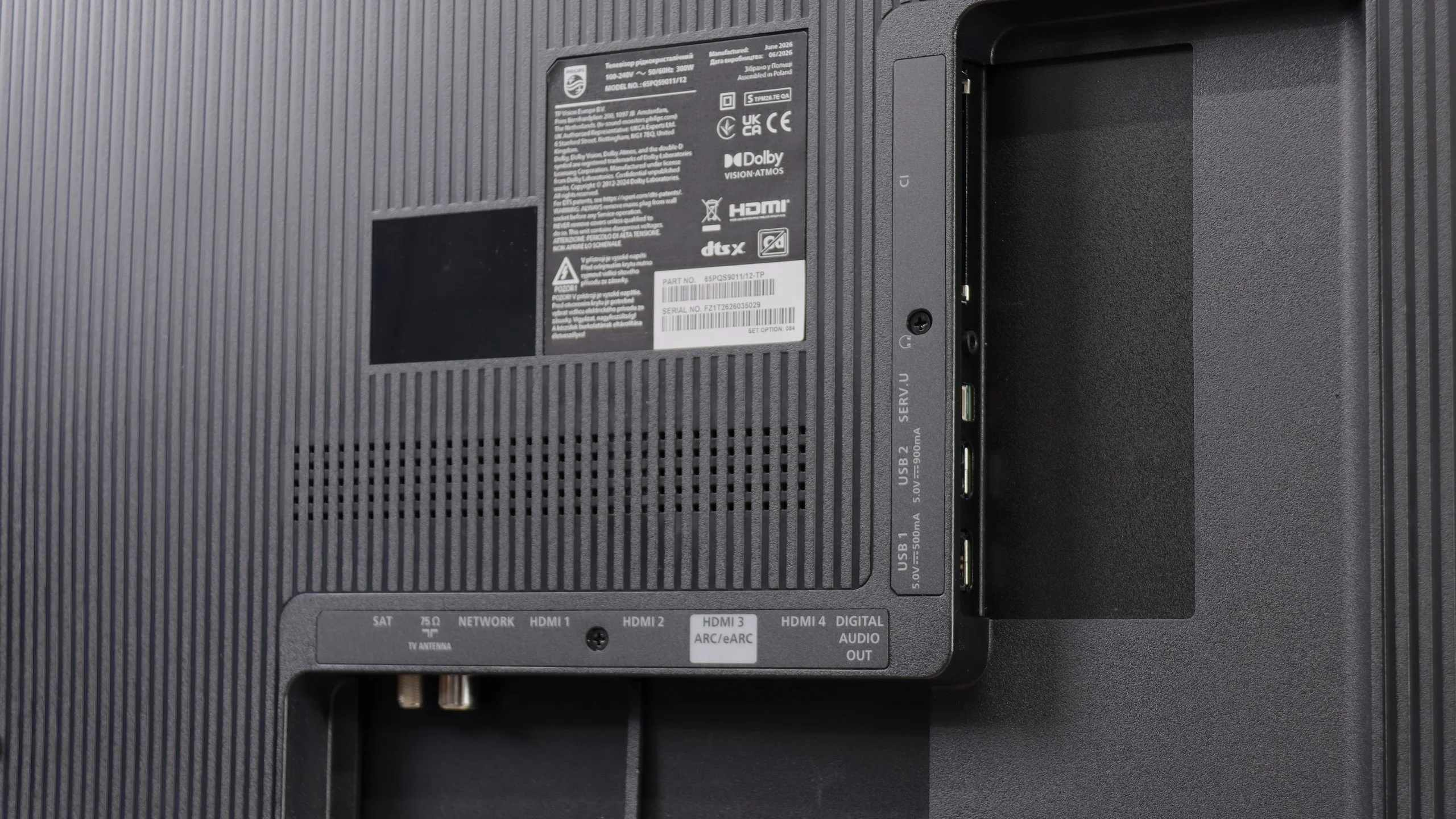
- HDMI inputs3 x HDMI 2.0, 1 x HDMI 2.1 40Gbps0 x HDMI 2.0, 4 x HDMI 2.1 48Gbps
- OutputsToslink (Optical audio), eARC (HDMI), ARC (HDMI)Toslink (Optical audio), eARC (HDMI), ARC (HDMI), Mini-Jack (Headphones)
- Network InterfacesWi-Fi 2.4GHz, Wi-Fi 5GHz, Ethernet (LAN) 100MbpsWi-Fi 2.4GHz, Wi-Fi 5GHz, Ethernet (LAN) 100Mbps
- TV receptionDVB-T, DVB-T2, DVB-S, DVB-S2, DVB-CDVB-T, DVB-T2, DVB-S, DVB-S2, DVB-C
Classic features:
- Recording to USB (terrestrial TV)
- Recording programming
- Picture in Picture (PiP)
- RF remote control (no need to aim)
- Backlit remote control
- Teletext
- Audio only mode
- Bluetooth headphones support
- Simultaneous Bluetooth headphones & TV audio
Smart features:
- AirPlay
- Screen mirroring (Windows Miracast)
- Voice search
- Voice search in native language
- Ability to connect a keyboard and mouse
Sound connection options
- HDMI audioeARC (HDMI), ARC (HDMI)eARC (HDMI), ARC (HDMI)
- Other audio outputsToslink (Optical audio)Toslink (Optical audio), Mini-Jack (Headphones)
- Wireless audioBluetoothBluetooth
Supported audio formats (external HDMI eARC audio):
- Dolby Digital Plus 7.1
- Dolby True HD 7.1
- Dolby Atmos in Dolby Digital Plus (JOC)
- Dolby Atmos in Dolby True HD
- DTS:X in DTS-HD MA
- DTS-HD Master Audio
Senior accessibility
- Numeric keyboard on TV
- Font size adjustment
- Audio description
The Frame is a television that stands out from other models and is difficult to describe in a traditional way. Of course, we will find all the standard Smart TV features thanks to the Tizen system. The system works responsively, is extensive, and offers a wide selection of applications. The remote control supports voice commands in Polish, and we can connect additional devices via Bluetooth – just like in many other televisions. But this is not the essence of this model.
The greatest strength of The Frame is its design. The "Art" mode allows you to display thousands of high-resolution images, which, combined with the matte display, look truly exceptional. The effect is surprisingly realistic and hard to compare to any other television.
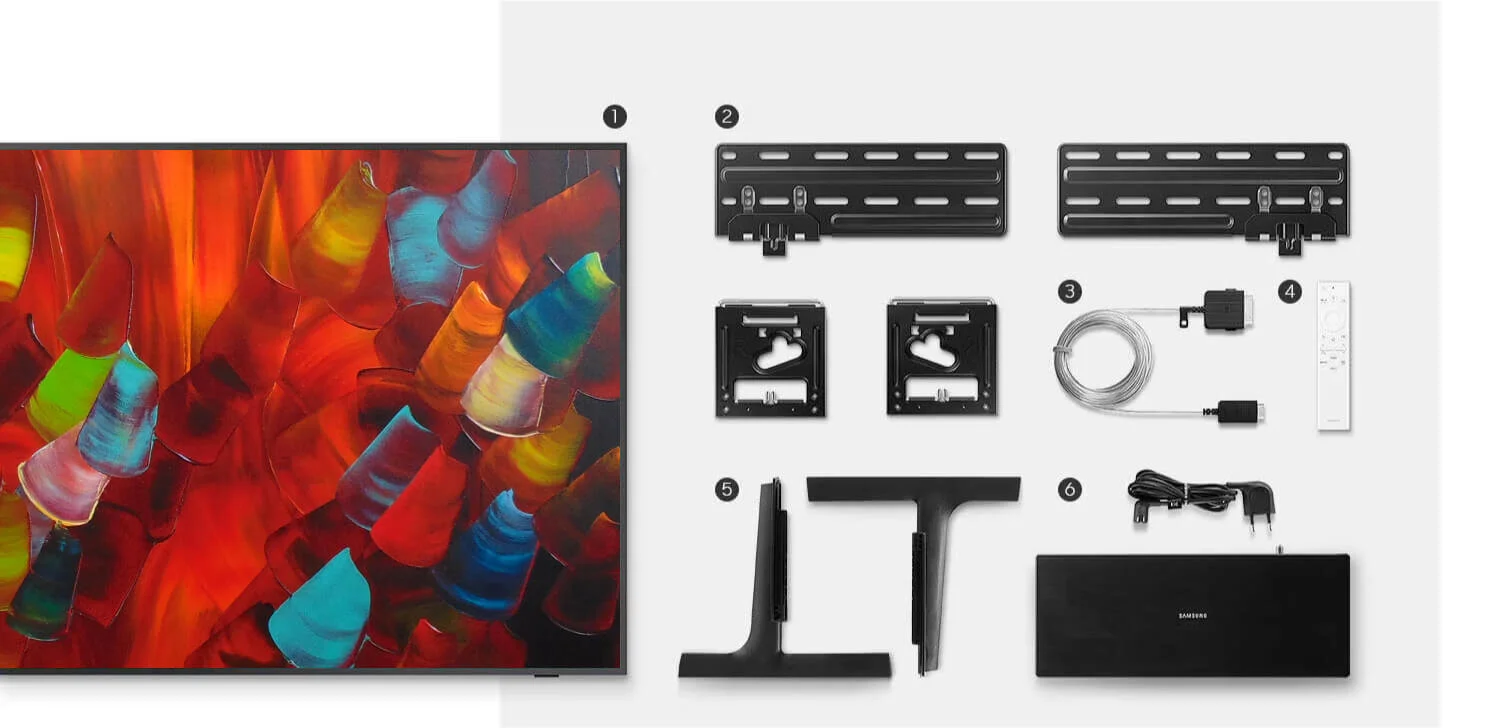
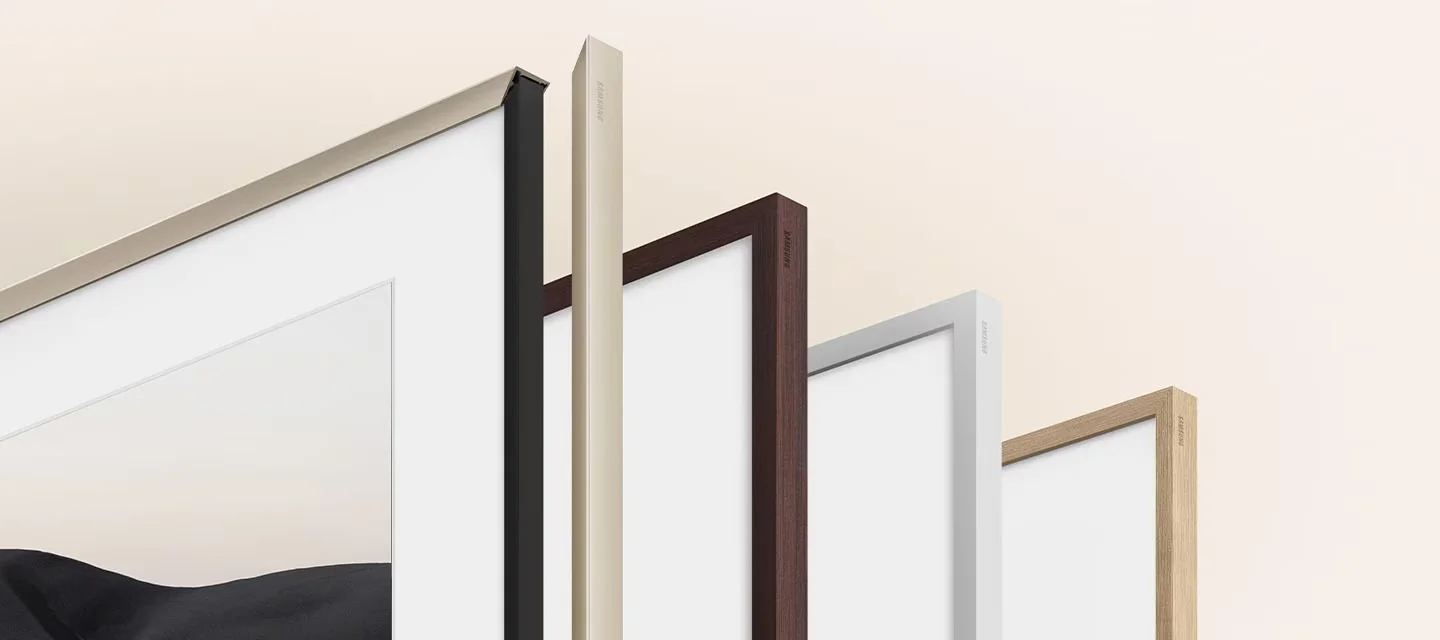
The frames may not be the thinnest on the market, but they can be customized in terms of color and style to perfectly match the interior. (Sold separately) And although the frames themselves are not ultra-thin, the entire construction is sleek and elegant. The wall mount is also noteworthy, as it is included (its value is around 400 PLN). With it, the television can be mounted almost flush, with no gap from the wall, which further emphasizes the "picture" effect.
And what about the cables? Samsung thought of that too. The Frame is equipped with the One Connect module – an external box to which we connect all devices. Only one nearly invisible cable leads to the television, which transmits both signal and power. The box can be easily hidden in a cabinet or behind furniture, ensuring that nothing disrupts the aesthetics of the interior.
The Frame is more than just an ordinary television – it is a thoughtfully designed decorative element that combines modern Smart TV functionality with exceptional design and practical solutions. Although it lacks typical features like USB recording or PiP, it is not a model created with a classic approach to television in mind. The LS03D is a television that is easy to like for its innovation, originality, and how well it fits into any interior.
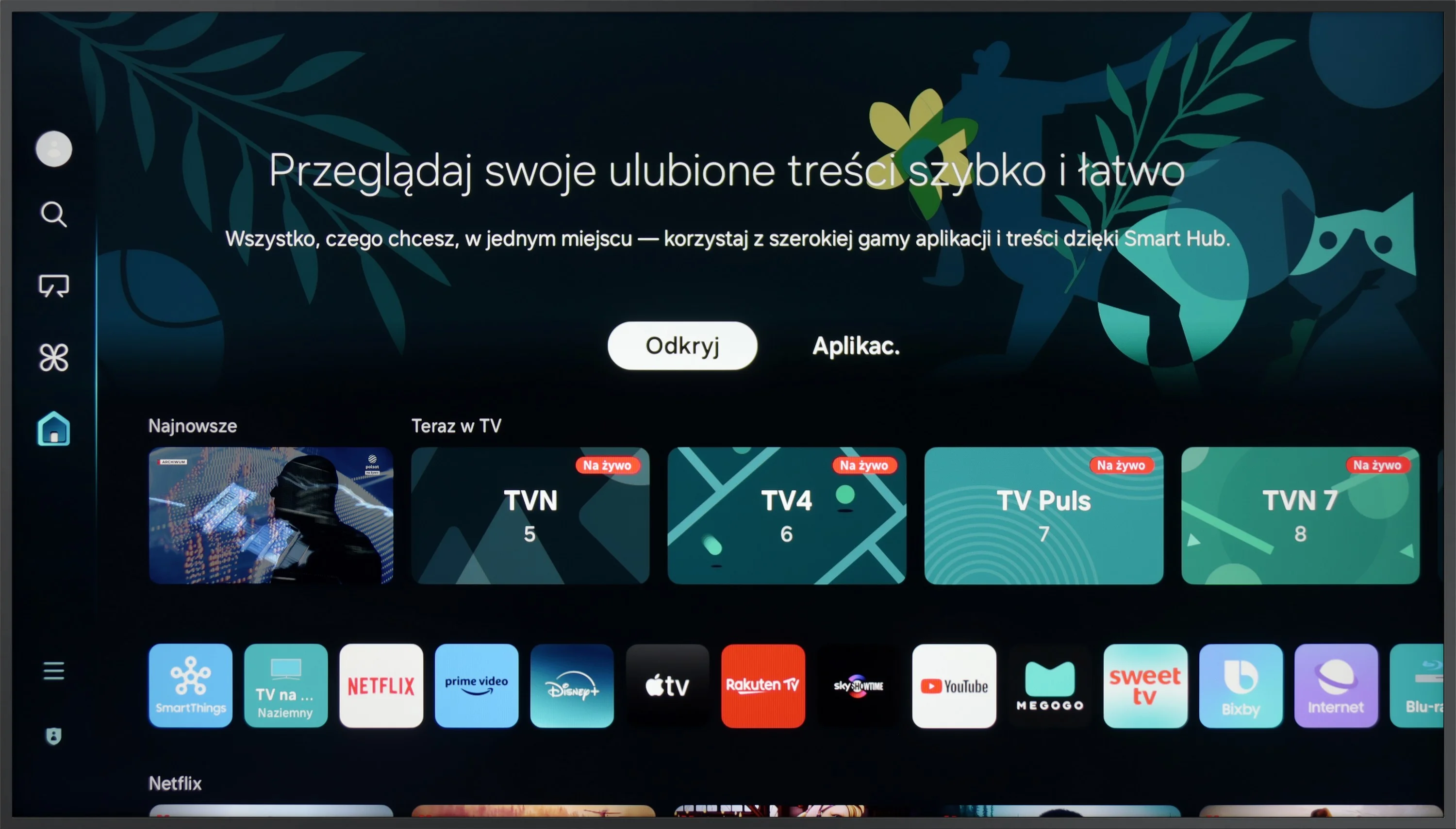
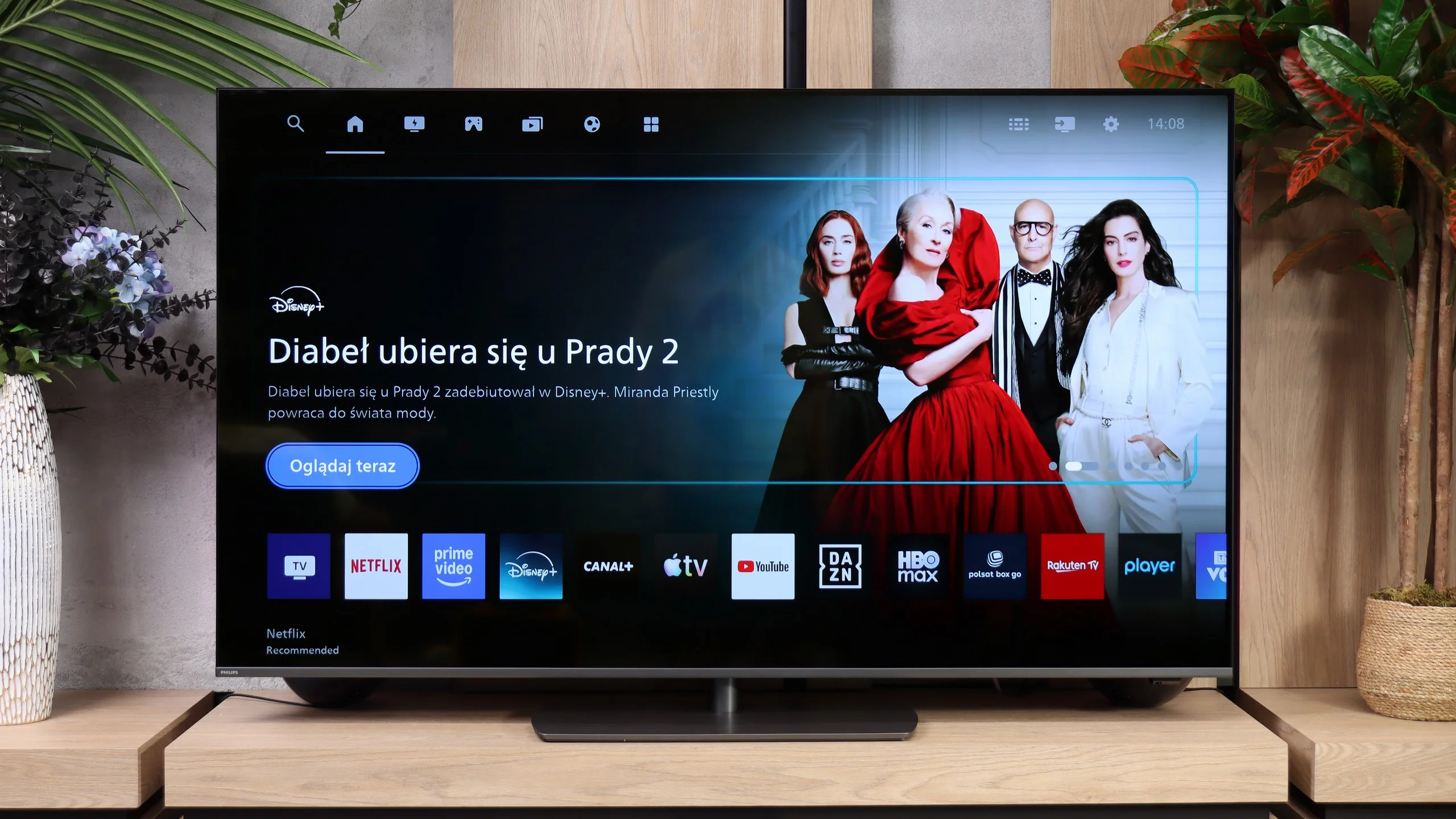
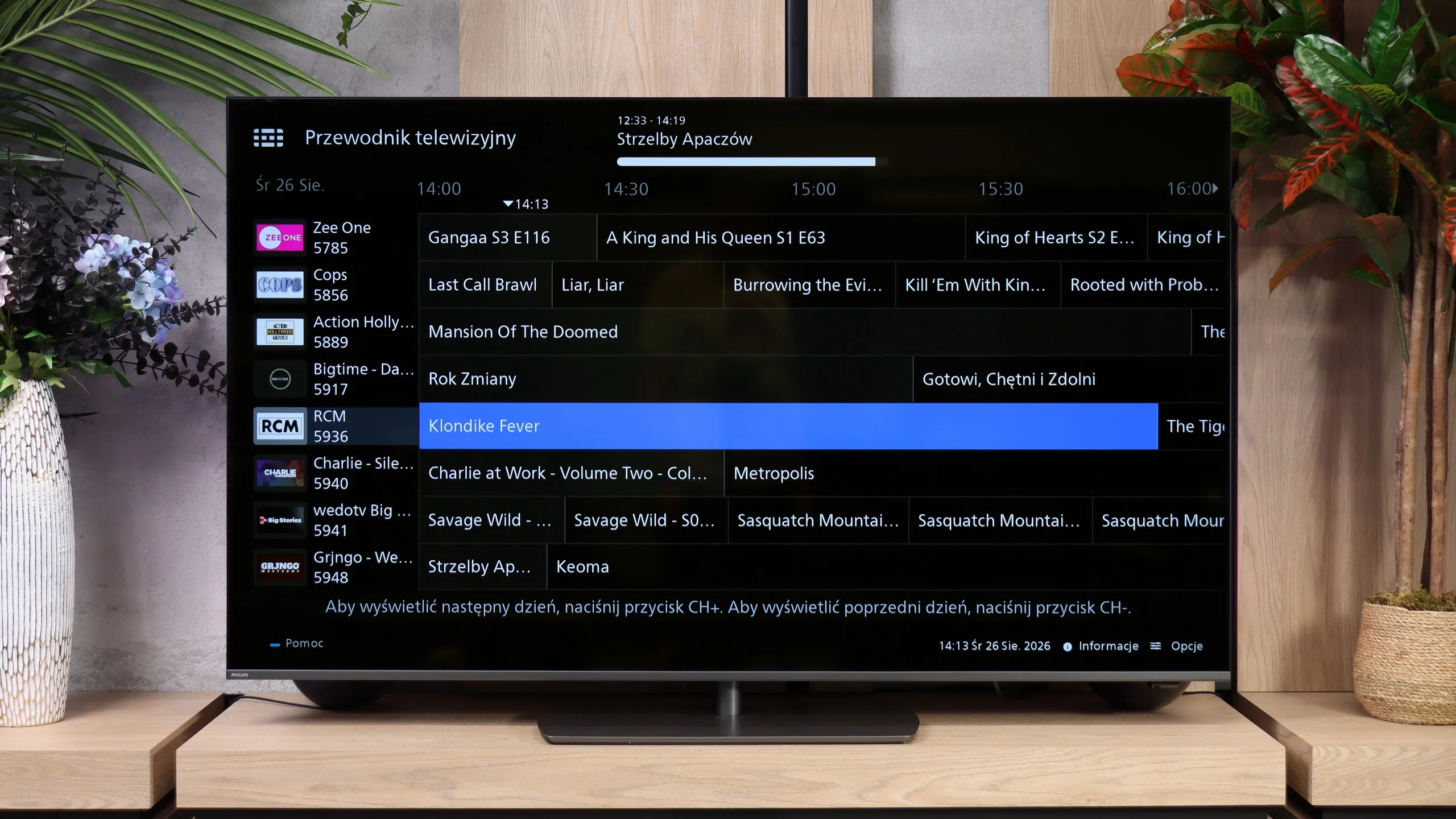
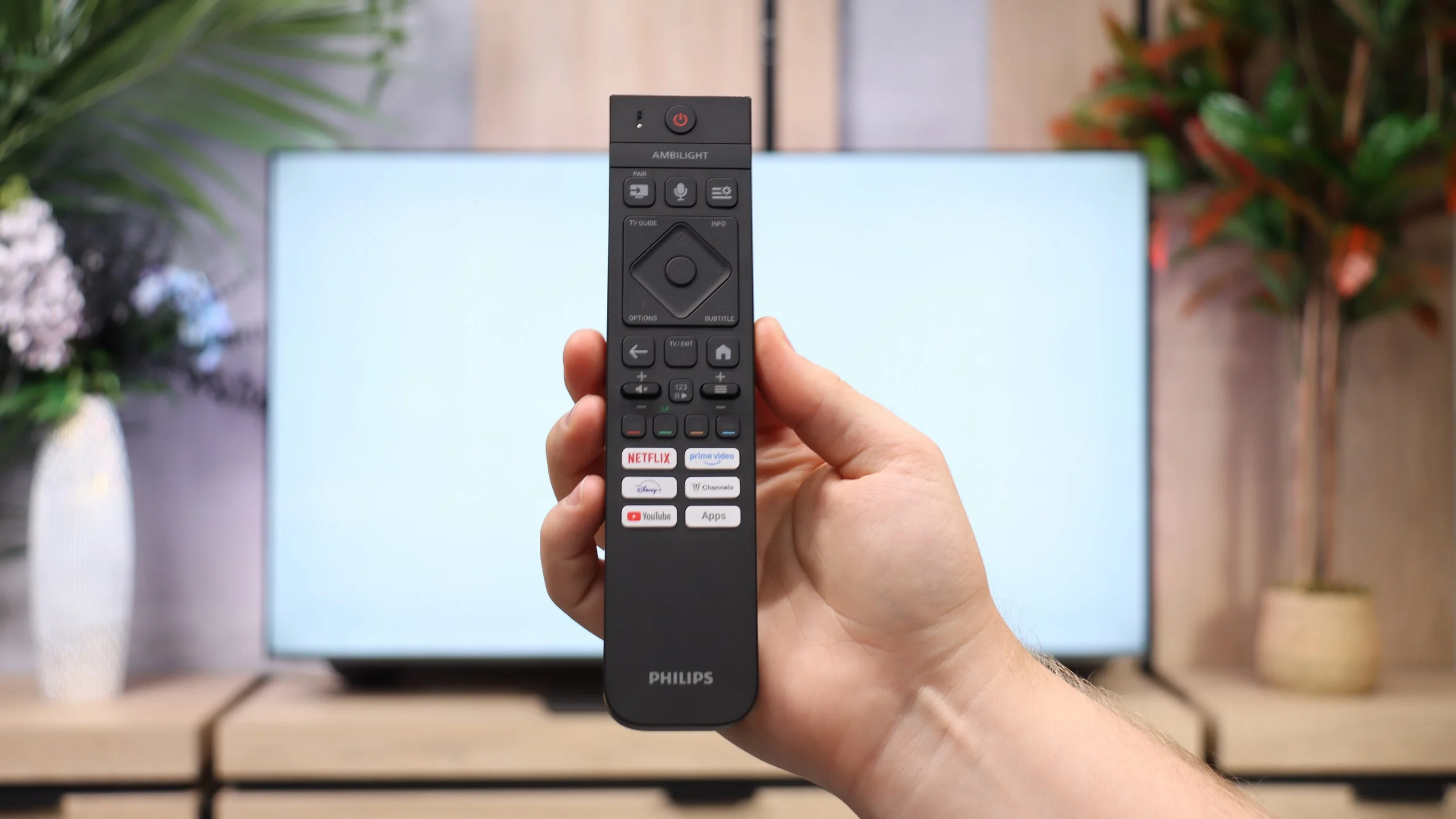
Titan OS in this year's The One shows that Philips has worked on its system. Compared with last year's version, many small issues and functions that previously didn't work as they should have been fixed. Now we can use AirPlay without problems, cast a computer screen via Miracast, or search by voice in Polish. The system itself runs decently, though it's definitely not among the fastest. The app library has also grown: Netflix, Prime Video, Disney+, CANAL+, Apple TV, and YouTube are available. The selection is still smaller than on Google TV, but for popular services Titan gives fewer reasons to complain. Everyday usability has improved in the standard features as well. You can connect Bluetooth headphones and listen to audio through them at the same time as the TV speakers, and there's a mode that lets you turn off the screen and leave only the sound. USB recording and picture-in-picture (PiP) are missing. What's most disappointing is the remote: despite backlit buttons it still controls the TV via infrared, so you have to point it at the screen. The system has gained many useful tweaks, but that control element remains unchanged and can be irritating in daily use.
Apps
9.3/10
7.2/10






















Playing files from USB
9.1/10
8.6/10
Supported photo formats:
Maximum photo resolution:
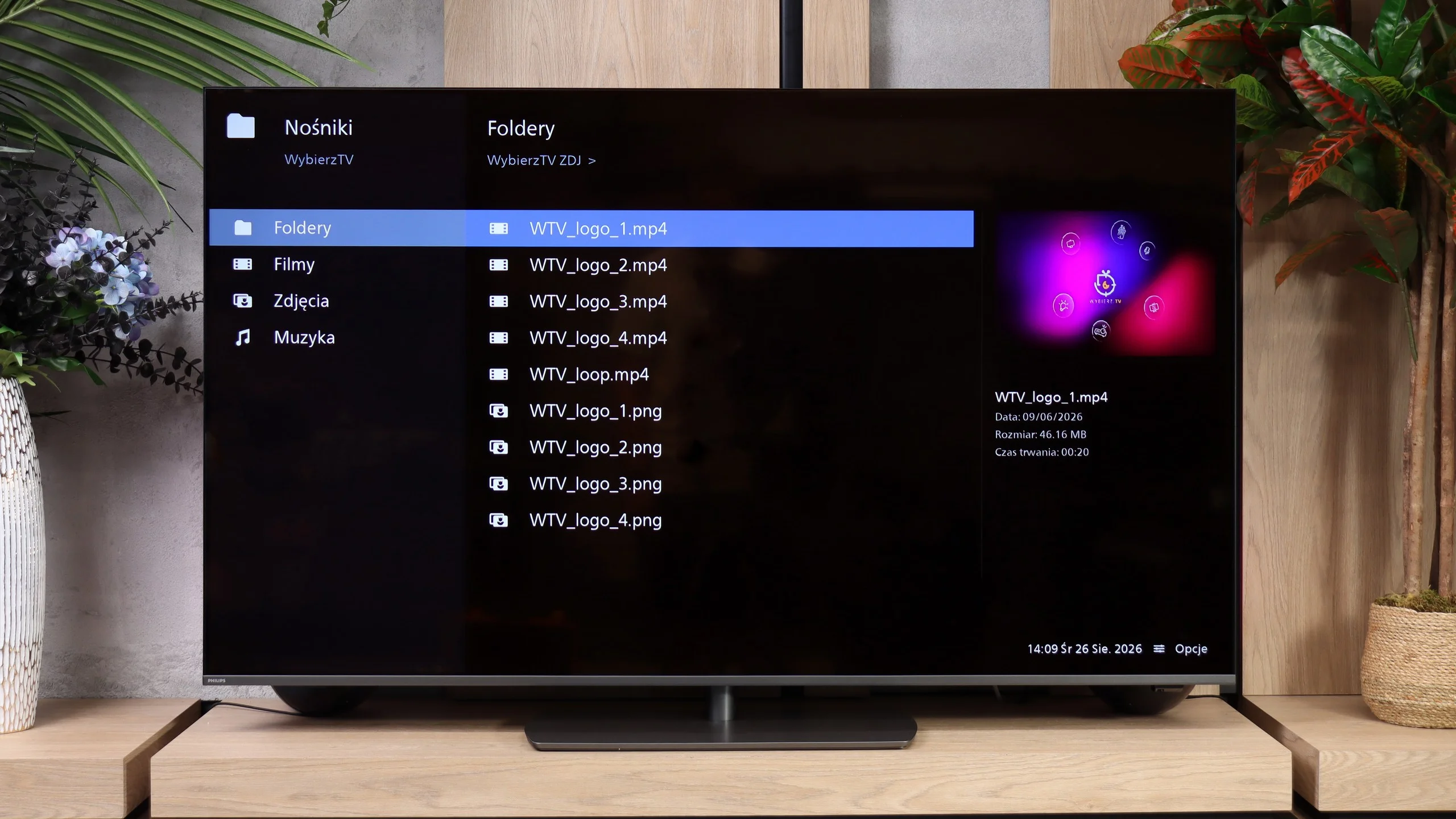
The built-in media player in The Frame handles most popular video and audio formats without major issues. Video files, even those with our added subtitles, play smoothly and without interruptions. The same goes for audio files – there are no major surprises here either. The situation is somewhat worse when it comes to photo format support. The built-in player has some limitations and does not support all possible types of graphic files. However, nowadays most people use wireless photo transfer, so this will not be a major problem for many users.
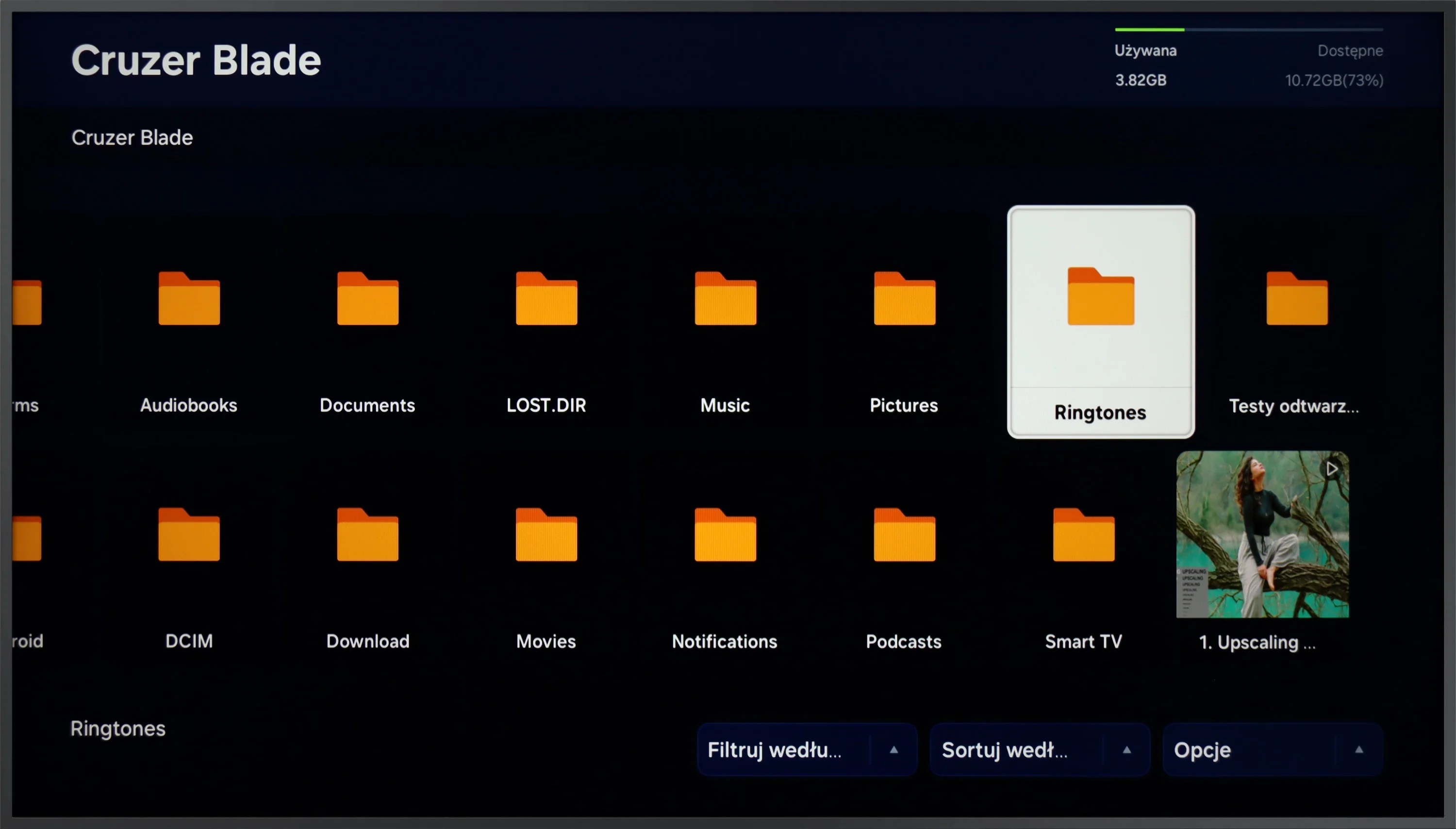
The built-in USB player works quickly and smoothly and handles most tested files without problems. It performs well with music, from common MP3s to FLAC files, including 96 kHz/24-bit. It's perfectly adequate for everyday media playback from a USB flash drive. However, once again our biggest reservations are about photo handling. The player treats resolutions rather selectively: it opened our 8 MP, 16 MP and 32 MP files, but failed with, among others, 4 MP, 12 MP and 24 MP. It's hard to find any logic in that, since a larger photo works while a smaller one does not. That can be annoying when browsing vacation photos.
Sound
5.8/10
6.9/10
- Maximum volume-96dB
- Dolby Digital Plus 7.1
- Dolby True HD 7.1
- Dolby Atmos in Dolby Digital Plus (JOC)
- Dolby Atmos in Dolby True HD
- DTS:X in DTS-HD MA
- DTS-HD Master Audio
The sound in The Frame is... well, quite average. The slim design of the television, while impressive, does not provide much space for decent speakers. As a result, the sound is flat and lacking in dynamics – just like most televisions in this category. Samsung is clearly aware of this, as it has a special series S of soundbars in its offer, created specifically for the "lifestyle" line of televisions to which The Frame belongs.
The Philips PQS9001 has a 2.0 audio system with a total power of 40 W, that is, two 10 W speakers per side. It sounds quite good and definitely better than most budget TVs. There's plenty of volume, but the sound lacks depth. The biggest issue is a lack of deep bass, so explosions in movies and heavier parts of music don't have the proper weight. Higher frequencies are not reproduced evenly either. Measurements show a clear dip around 2 kHz, then a boost at 6–7 kHz and a drop-off above about 8 kHz. That can emphasize sibilance and add a bit of harshness to the sound, despite the recessed treble. It's adequate for everyday viewing, but for movies and music it's worth considering external audio. Especially since the TV supports surround sound formats, including Dolby Atmos and DTS. A compatible soundbar or AV receiver will make better use of those formats than the built-in speakers.
Sound Quality Test
No sound test video
Acoustic Measurements
No acoustic data
96dBC (Max)
75dBC
Reader comments
Comments are provided by the external service Disqus (Zeta Global). Once loaded, Disqus may set cookies and process data about your activity.
We will remember your choice on this device. Provider's privacy policy