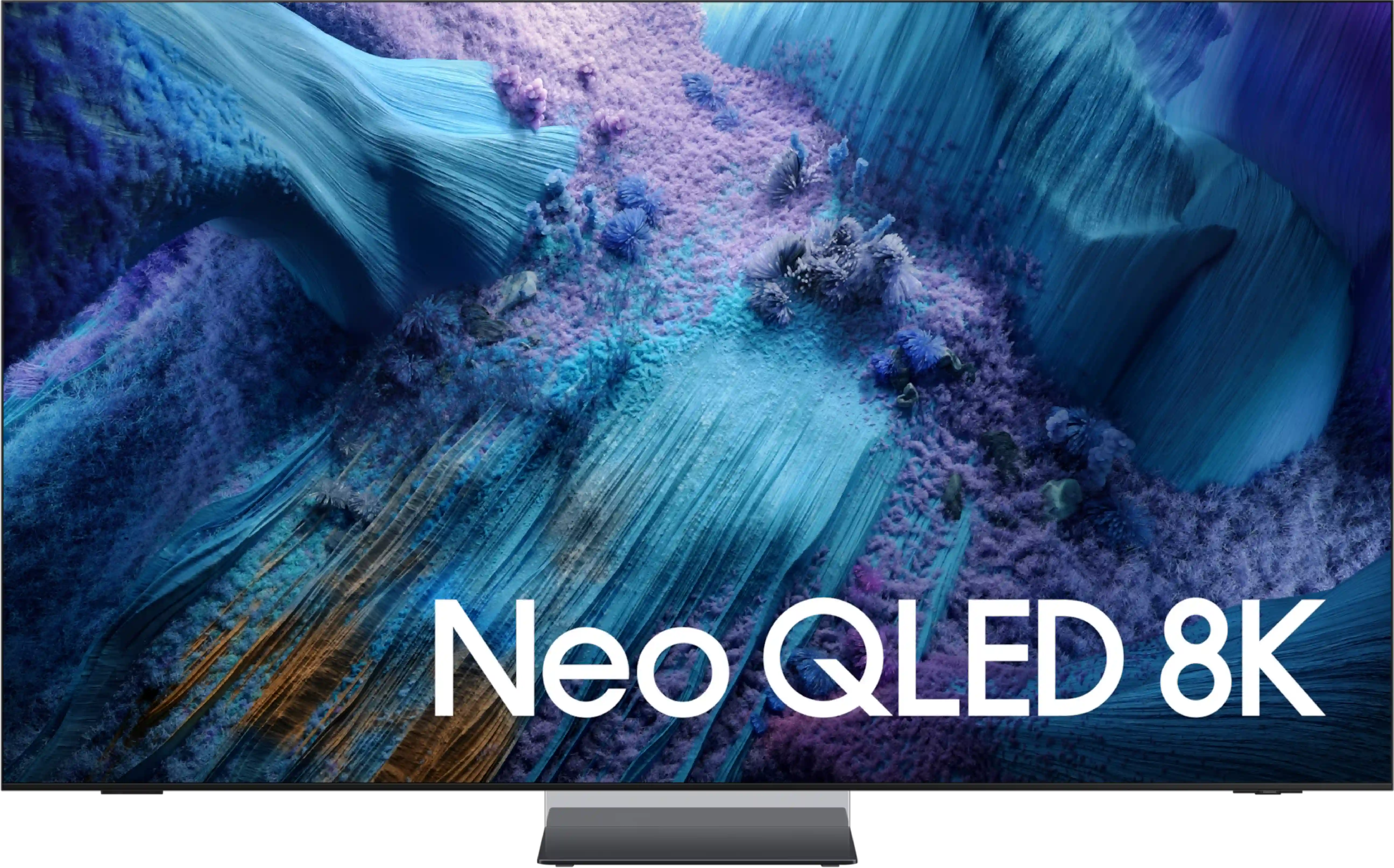
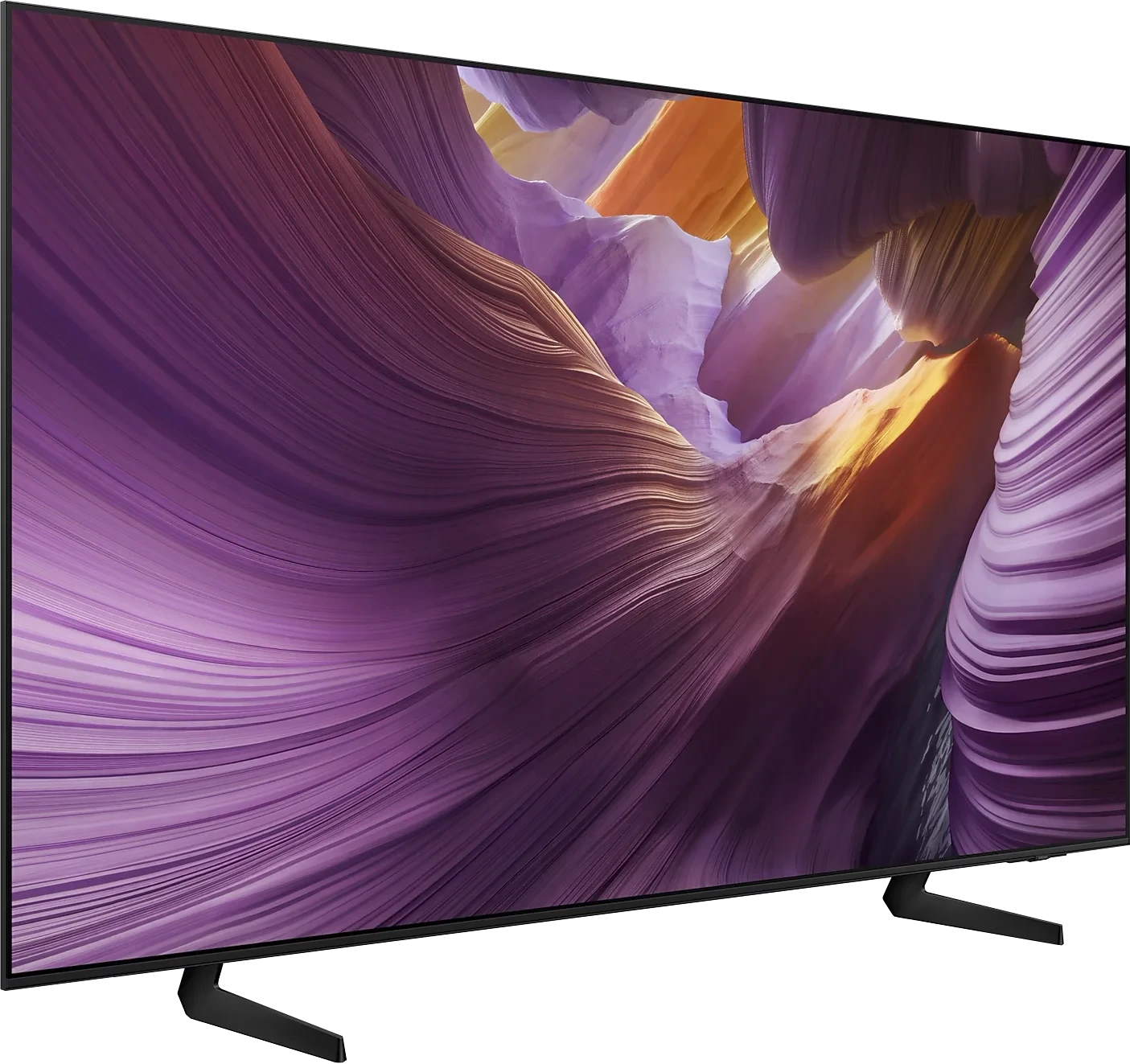
Samsung QN990F vs Samsung S85F (WOLED)

Direct comparison

Check the best price offer:

Samsung QN990F
$5 999

Check the best price offer:

Samsung S85F (WOLED)
$1 799

S85F / FAU / FAE

Info

Available screen sizes: 65”75”85”98”

Available screen sizes: 65”77”83”

Panel type: LCD VA (wide viewing angle)

Resolution: 7680x4320

System: Tizen

Model year: 2025

Complete the survey to find out the result

Panel type: WRGB OLED

Resolution: 3840x2160

System: Tizen

Model year: 2025

Complete the survey to find out the result

Overall rating

7.6

7.8

  • Movies and series in UHD quality

    7.7

    7.9

  • Classic TV, YouTube

    7.7

    8.6

  • Sports broadcasts (TV and apps)

    7.6

    8.5

  • Gaming on console

    9.2

    9.0

  • TV as a computer monitor

    7.9

    7.6

  • Watching in bright light

    5.2

    5.3

  • Utility functions

    7.5

    7.3

  • Apps

    9.3

    9.3

  • Sound quality

    7.9

    7.2

Advantages

  • Amazing Design

  • Wireless module Wiraless One Connect

  • Very good black

  • High brightness

  • Matte panel very well suppresses reflections

  • Good viewing angles

  • The fastest television in the world - 4K@240Hz and 8K@120Hz refresh rates great for sports

  • Many features for gamers: HDMI 2.1, VRR, ALLM, HGiG, Gamebar

  • Very fast and intuitive Tizen OS operating system

  • Remarkable black and contrast

  • Great picture in SDR and HDR content after calibration

  • Very good motion smoothness – 120 Hz OLED panel

  • Rich set of features for gamers: VRR, Game Bar, low input lag

  • 4 HDMI 2.1 ports with full 48 Gbps bandwidth

  • Advanced and smoothly operating Tizen system

  • Solar Remote with multiple features

Disadvantages

No like
  • Very high price

  • Local dimming algorithms could be better refined

  • Missing Dolby Vision and DTS:X

  • High input lag delays with wireless connection to Wireless One Connect

Our verdict

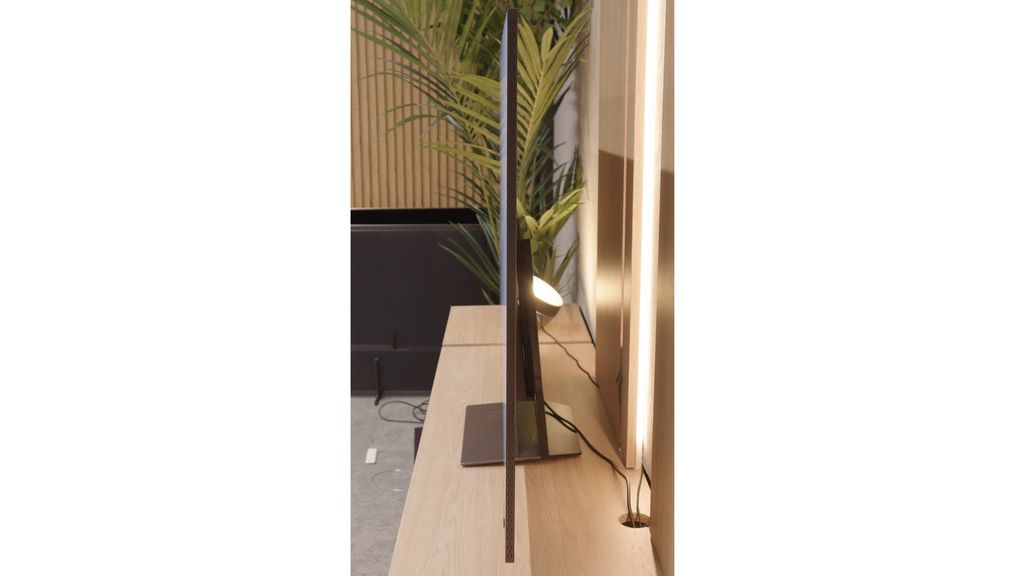
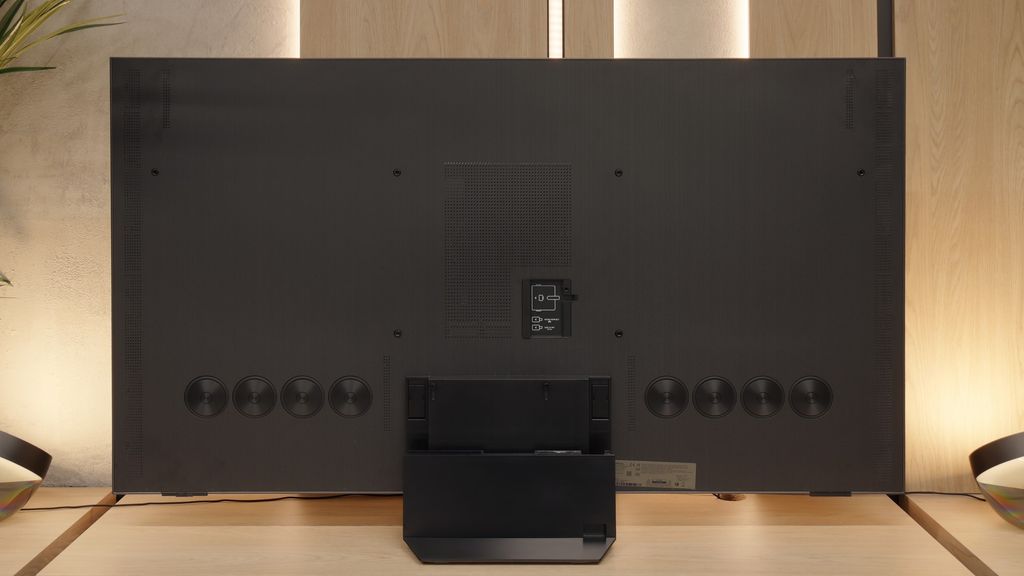
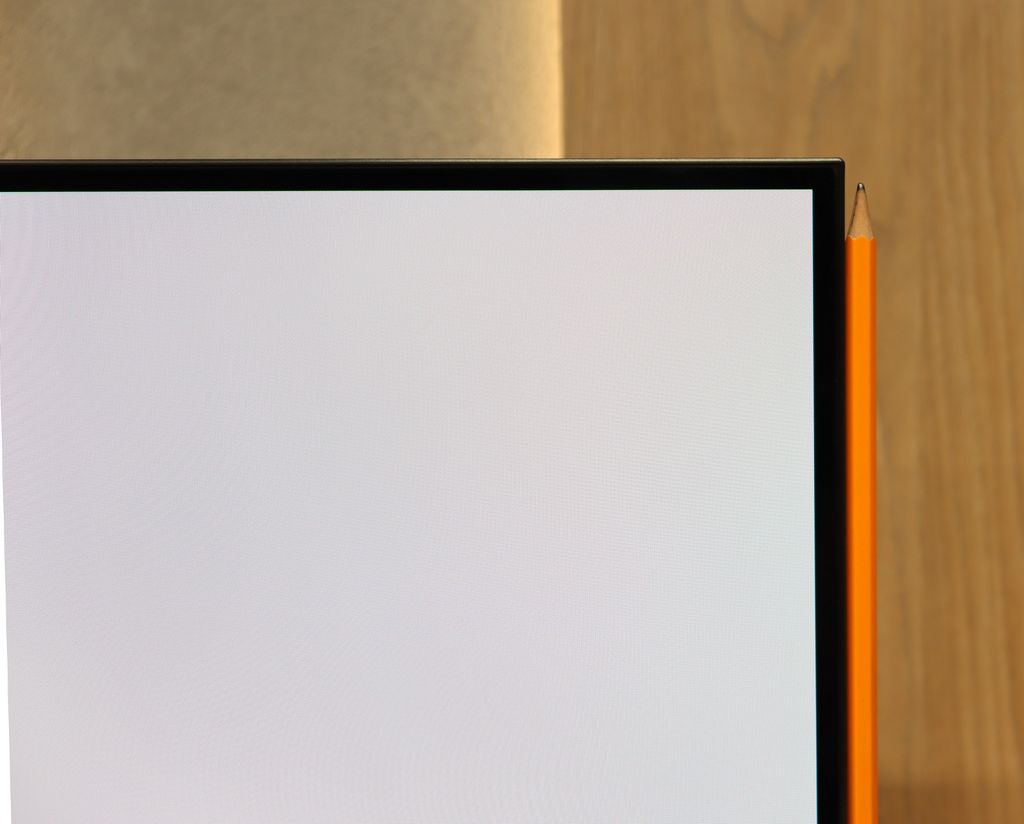
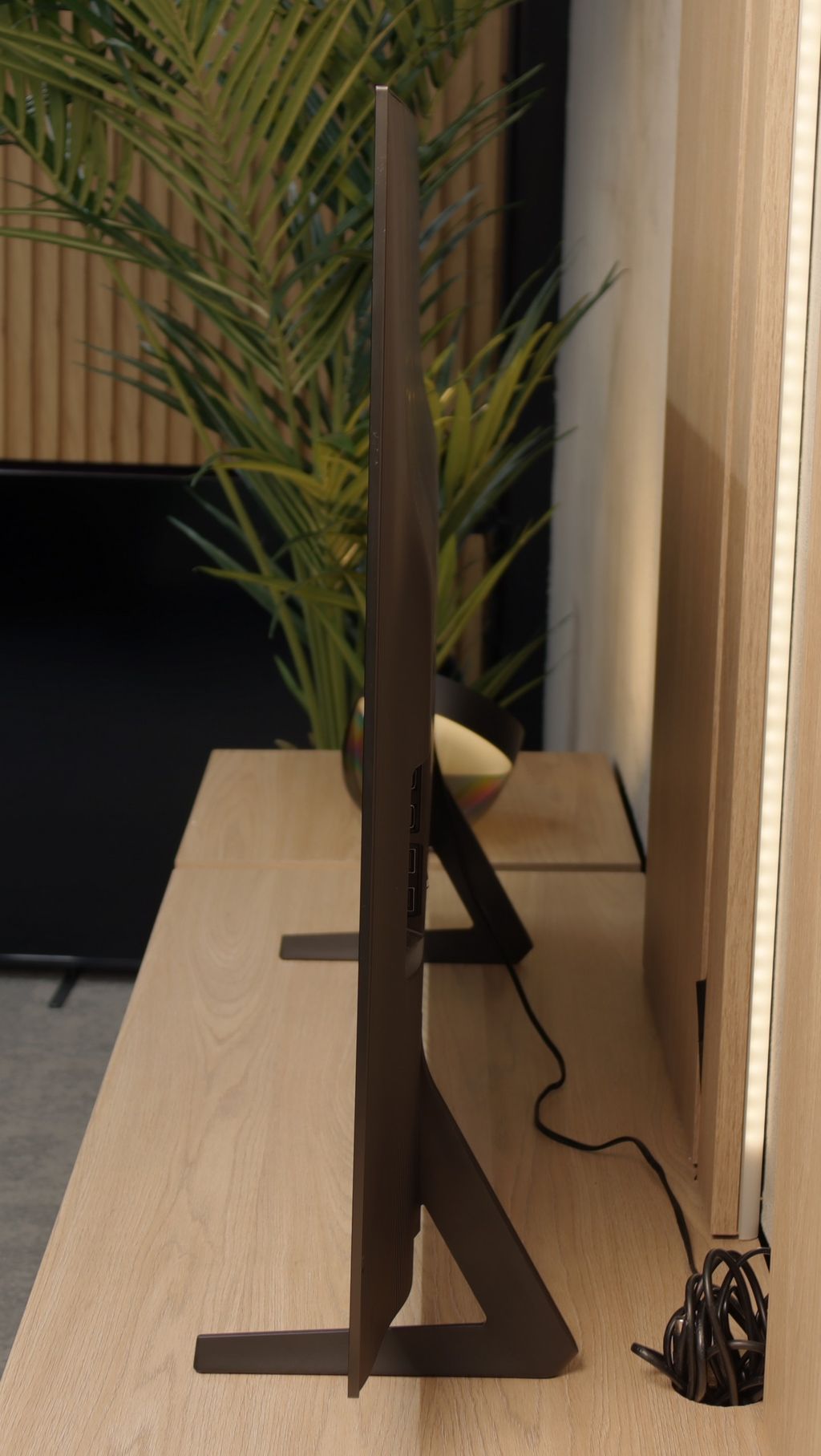
The Samsung QN990F is a television that makes an enormous impression from the very first moment. It is probably one of the most beautiful models on the market – ultra-thin, with an almost invisible frame and a base that gives the impression that the screen is hovering above the table. Additionally, there is the futuristic Wiraless One Connect module, this time in a wireless version, which helps to reduce the number of cables in the living room and gives the whole setup a modern character. But it doesn’t end with design. The QN990F also boasts powerful specifications. The Mini-LED with over a thousand dimming zones can generate contrast that at times approaches OLED levels. Moreover, it features very high HDR brightness and a new matte panel that effectively eliminates reflections. And when we add great motion fluidity with a refresh rate reaching up to 240 Hz in 4K, we have a set of features that truly impress. Samsung hasn’t forgotten about gamers either – we have Game Bar, VRR, ALLM, five HDMI 2.1 ports, and phenomenal input lag at the level of 10–15 ms (when connected via micro HDMI).

And this is where we get to the heart of the matter. While the QN990F impresses on paper and in many tests, in practice some solutions still require refinement. The wireless One Connect module raises the input lag to unacceptable levels for gamers, the Mini-LED can struggle in difficult scenes with a lot of details, and the lack of Dolby Vision or DTS:X serves as a reminder that Samsung is stubbornly pursuing its own path, sometimes at the user's expense. Despite this, the QN990F is a television that demonstrates the direction of industry development. It is not a model for everyone – but for those who love gadgets, technological innovations, and want a screen in their living room that looks like it’s from the future. However, if someone is solely looking for the best picture quality, even within Samsung's portfolio, they will find models that perform significantly better – perhaps without 8K, but with more refined contrast or colors. Because 8K still remains a technology that looks firmly towards the future and the QN990F shows what televisions of tomorrow can look like. But are we – the viewers – already ready to pay such a high price for this vision and accept the compromises that come with it?

The Samsung S85F in the tested version with a WOLED panel is a television that should primarily be evaluated through the lens of its price. As expected from organic technology, it offers perfect, almost ideal black and infinite contrast in cinematic conditions. This feature alone will impress most buyers, especially those transitioning from any LCD television. However, it cannot be denied that in a direct comparison with the 55-inch QD-OLED variant, the WOLED version shows some weaknesses. It is slightly darker, especially in bright full-screen scenes, and offers noticeably worse viewing angles. Nevertheless, the rest of its advantages remain intact. Motion fluidity is at a high level – the 120 Hz panel handles both sports and action movies excellently. And if someone plans to connect a console to the S85F, they will receive a complete set of advantages: low input lag, variable refresh rate, Game Bar, and full HDMI 2.1 support. In everyday use, we were assisted by the Tizen system – closed but extremely refined. It reacts quickly, offers a rich selection of applications, and add-ons like AirPlay and voice control make it hard to find something more complete in this category. Indeed, the S85F in the WOLED version is not a perfect television and yields to its sibling with a QD-OLED panel. However, its greatest weapon is its absurdly low price. The cost of purchase is almost laughable in relation to the capabilities offered. It is still a great and, most importantly, affordable OLED that will be one of the best and most cost-effective televisions on the market for a vast number of users.

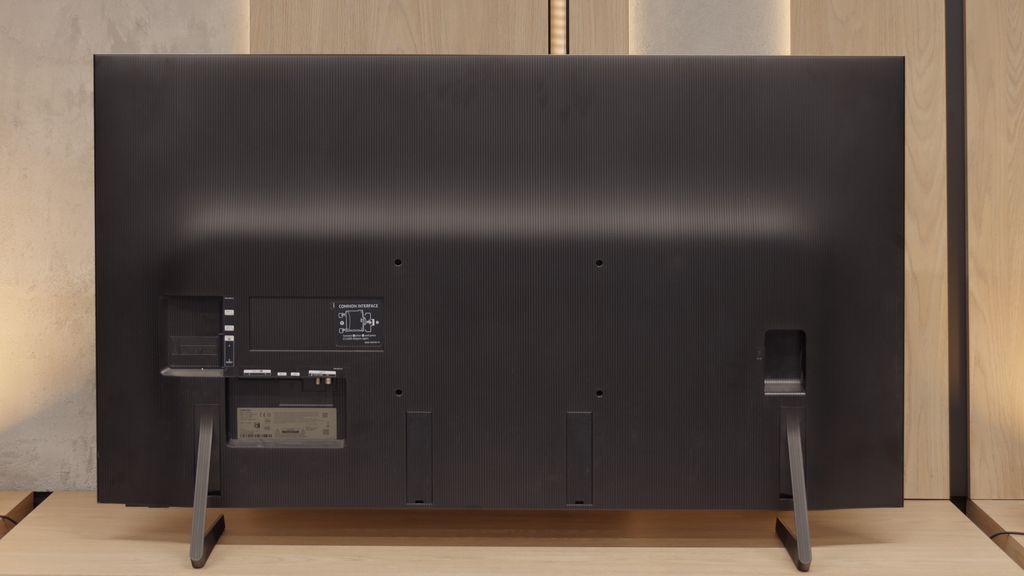
TV appearance

HDMI inputs
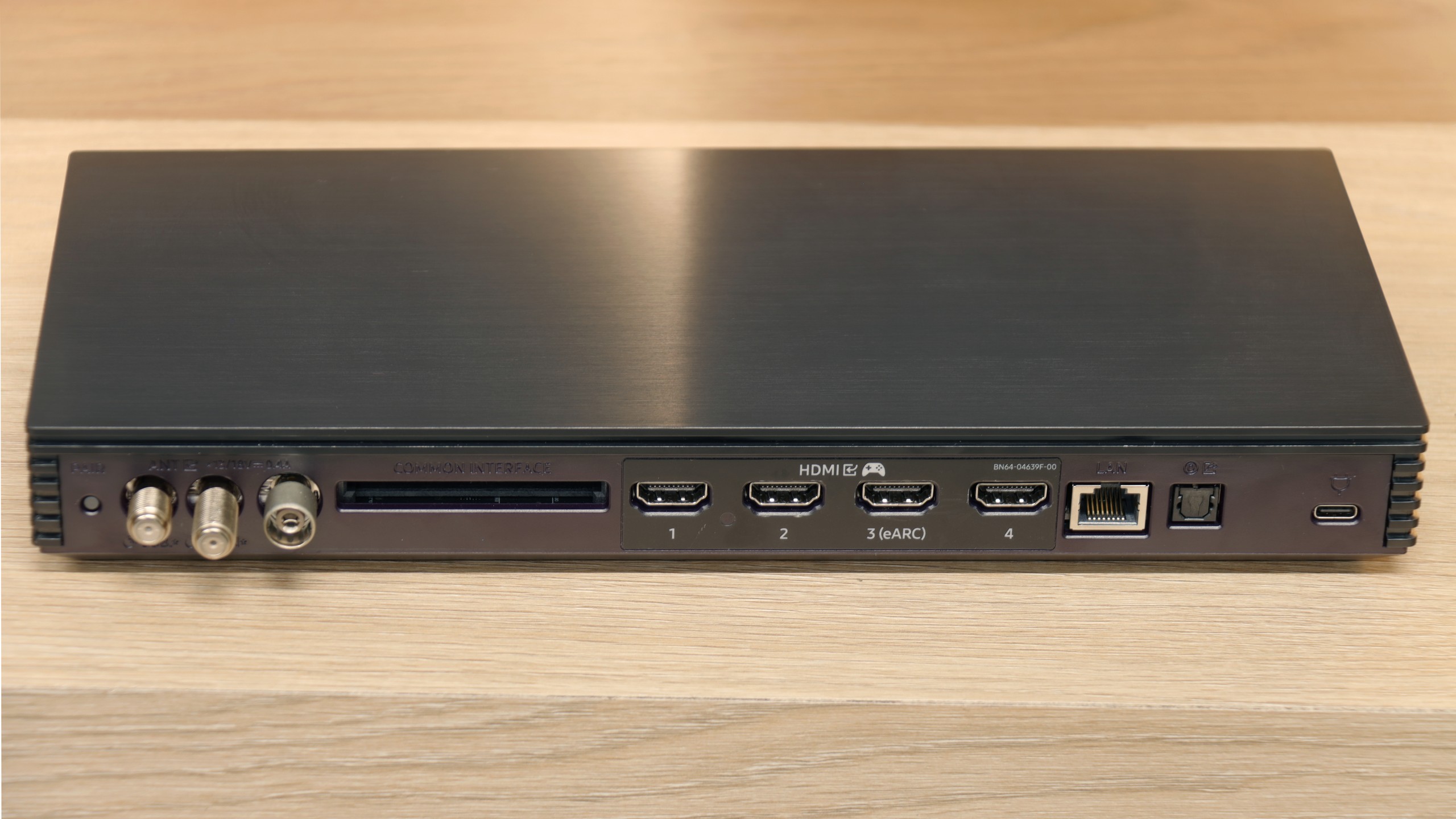
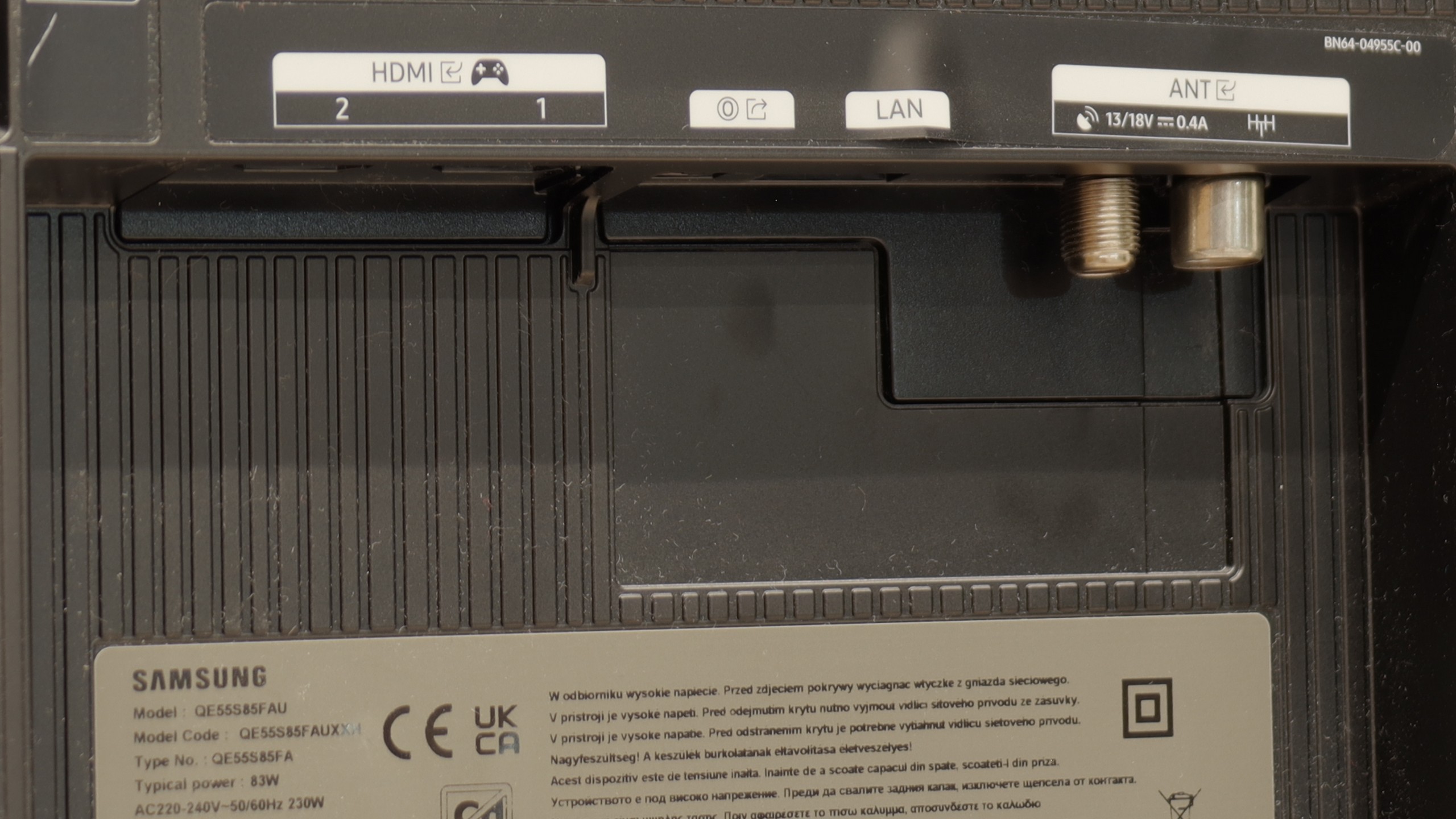
0 x HDMI 2.0, 5 x HDMI 2.1 (48Gbps)
0 x HDMI 2.0, 4 x HDMI 2.1 (48Gbps)
Other inputs
Toslink (Optical audio)
Outputs
Toslink (Optical audio), eARC (HDMI), ARC (HDMI)
Network Interfaces
Wi-Fi 2.4GHz, Wi-Fi 5GHz, Ethernet (LAN) 100Mbps
Build quality
Super Premium
Good
Stand type
Central
Legs
Bezel color
Silver
Graphite
Stand
Fixed
Base adjustment
Flat design
Yes
No
Accessories
Stand, One Connect Box
Stand

Contrast and black detail

7.6/10

10/10

Local dimming function: Yes, number of zones: 1344 (28 x 48)

Contrast:

Review Samsung QN990F Contrast and black detail

Result

:1

Review Samsung QN990F Contrast and black detail

Result

89,250:1

Review Samsung QN990F Contrast and black detail

Result

28,200:1

Review Samsung QN990F Contrast and black detail

Result

12,100:1

Review Samsung QN990F Contrast and black detail

Result

2,050:1

Review Samsung S85F (WOLED) Contrast and black detail

Result

:1

Review Samsung S85F (WOLED) Contrast and black detail

Result

:1

Review Samsung S85F (WOLED) Contrast and black detail

Result

:1

Review Samsung S85F (WOLED) Contrast and black detail

Result

:1

Review Samsung S85F (WOLED) Contrast and black detail

Result

:1

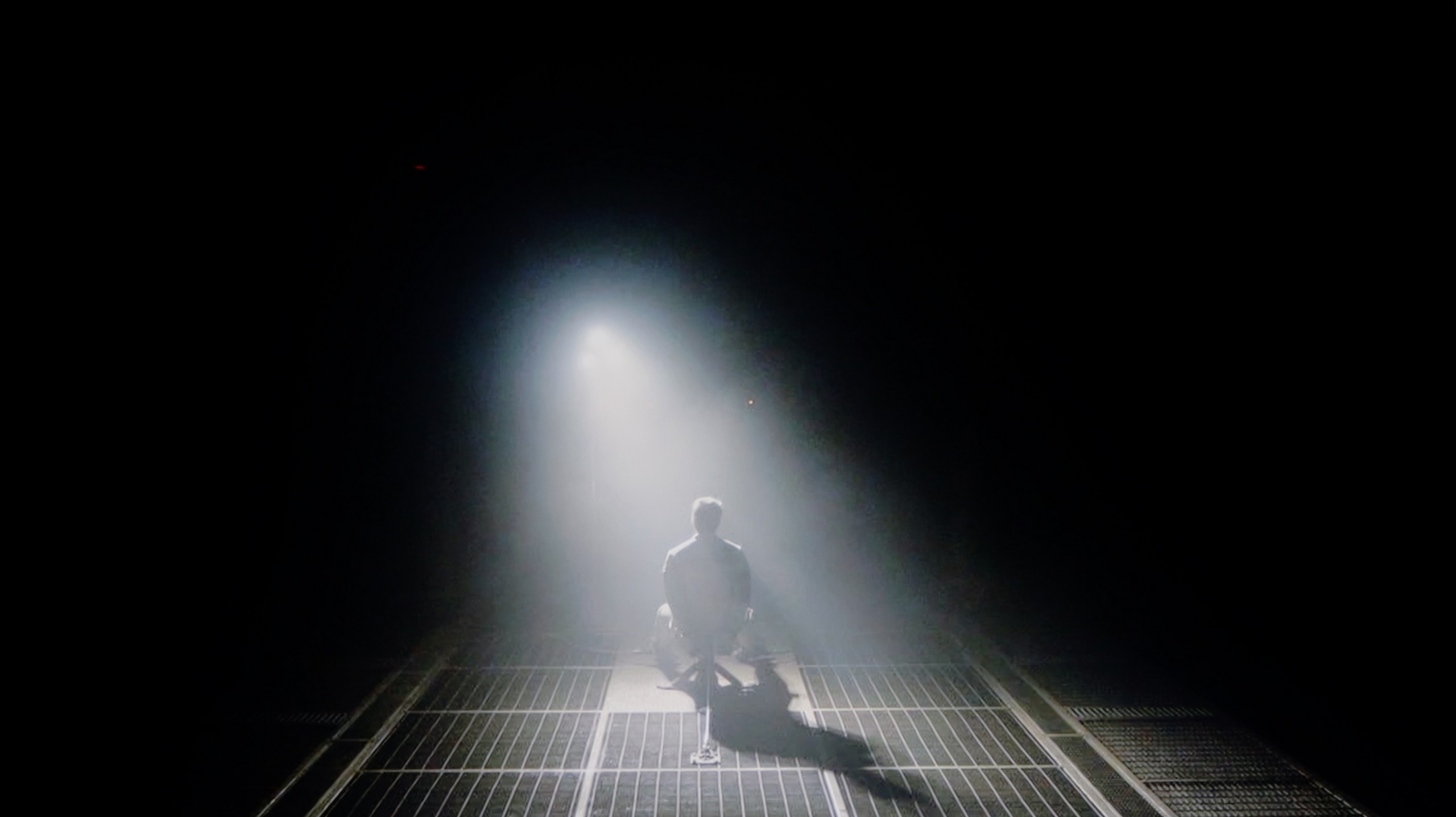
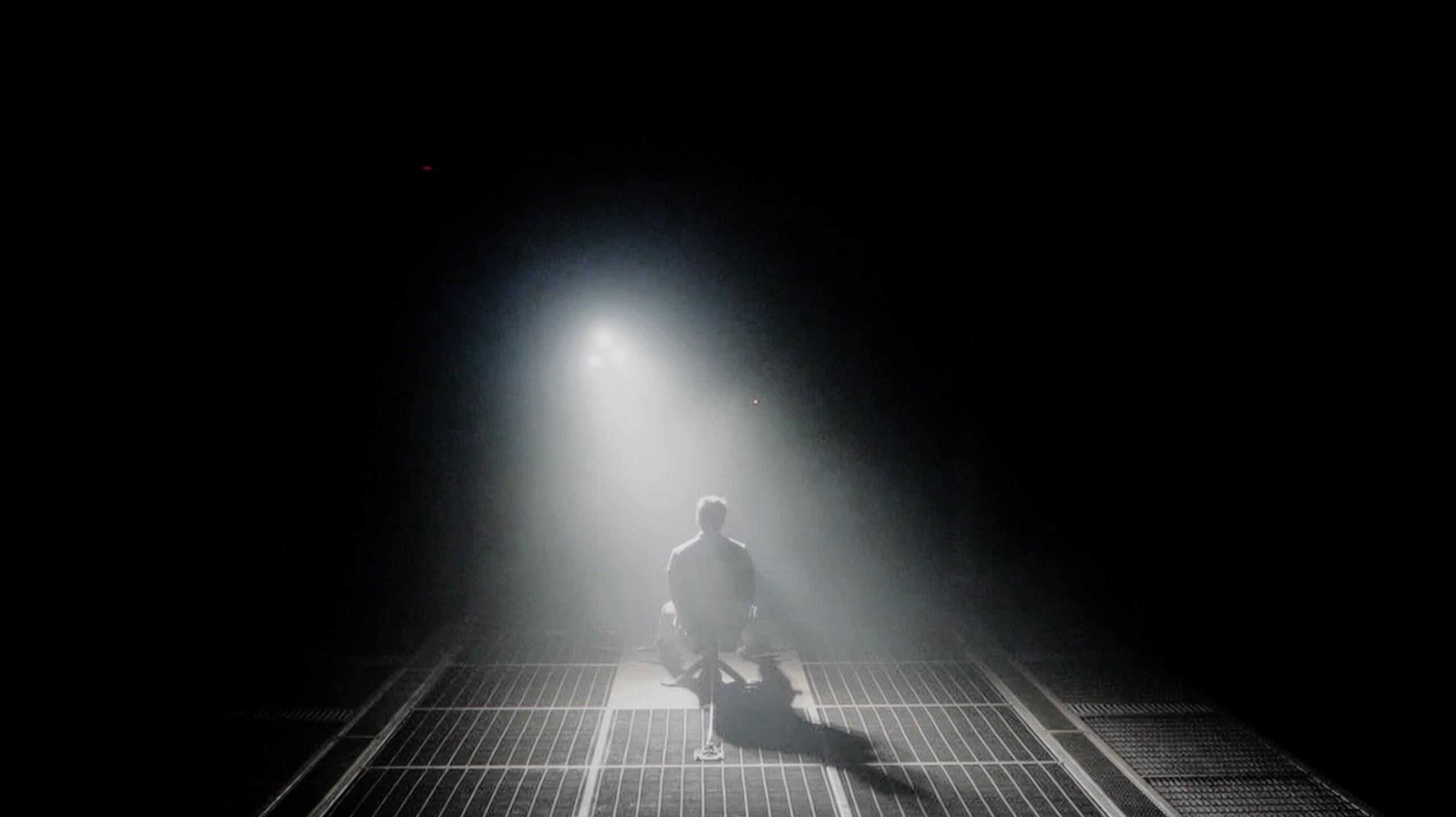
Halo effect and black detail visibility:

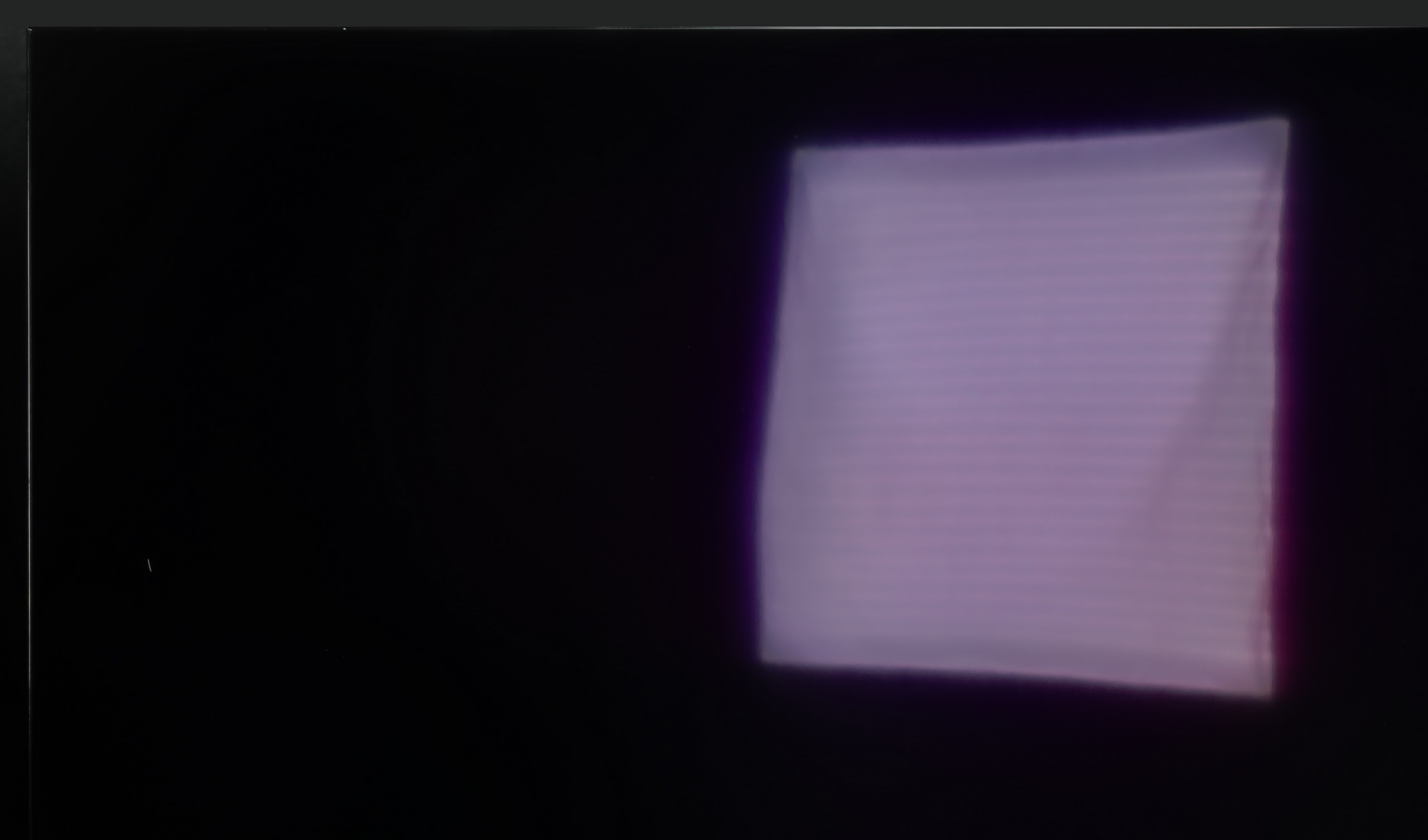
Check the visibility of bright lights on a dark background. Mini-LEDs often struggle with this. The photo does not compare black levels – that’s what the video below is for.

The video accurately shows differences in contrast and black levels between TVs, as well as potential issues: halo around bright objects or Mini-LED zone operation visible as brightness jumps.

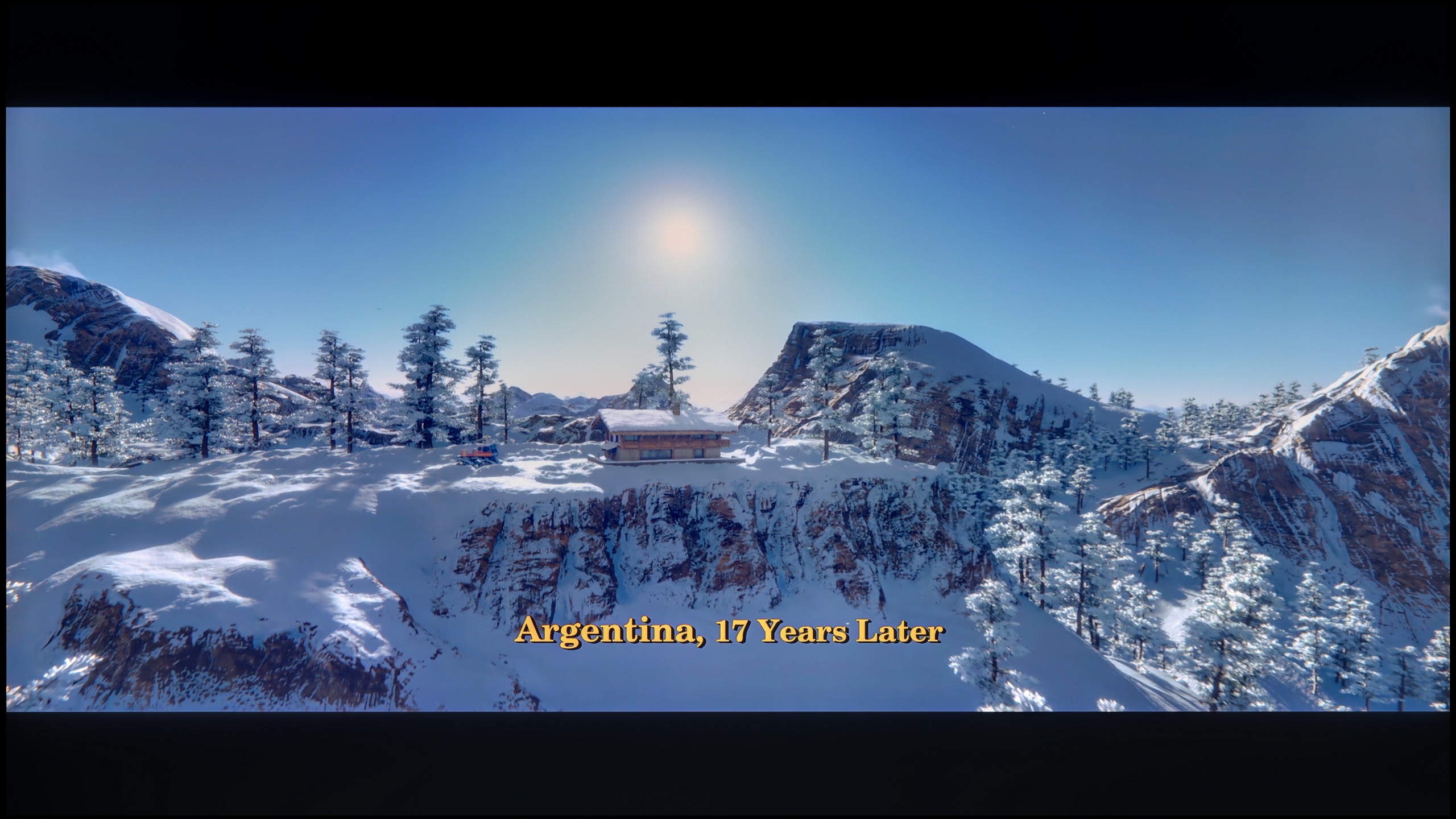
QN990F is the highest representative of the Neo QLED series, so it couldn't lack Mini-LED technology. The 65-inch specimen we tested features a VA panel and as many as 1344 local dimming zones, which already looks really impressive on paper. In practice, it can provide a contrast effect close to ideal. In less demanding scenes, such as in the film Oblivion, the QN990F did not fall behind OLED TVs – the blacks were virtually infinite, and the picture looked fantastic. However, it wasn't always so rosy. Or maybe black and white? Like every Mini-LED, the QN990F has its limitations, and in more challenging sequences, it can leave mixed impressions. Where there is a huge amount of fine details on the screen, the algorithms controlling the zones simply got lost. The contrast dropped, and a clear halo effect appeared around bright elements. Additionally, in films recorded in the 21:9 (2.35:1) format, we noticed that the QN990F is unable to perfectly dim the pitch-black letterbox, leaving a silver/navy blue glow on them. One could say that Samsung in this model focused more on the visibility of details than on the perfect depth of black. On the one hand, this gives very good results in several scenes; on the other hand, in a TV of this class, we expected that the local dimming would be refined even further. The final effect is simply "okay," and at this price level, we would expect something more than just a satisfactory result.

When it comes to black levels and contrast, we must be honest – this is the area where the differences between QD-OLED and WOLED panels are virtually nonexistent under typical cinematic conditions. We can confirm with full responsibility: the Samsung S85F equipped with a WOLED panel achieves incredible and unmatched results in this regard. Regardless of the scene being watched – whether it's a dynamic action movie or a dark thriller – we get infinite contrast and perfect black levels that we expect from any OLED television. These are results that can impress even the most demanding cinema lovers. It is worth emphasizing that such deep, absolute black can only be offered by televisions with organic panels. In film conditions, as we see in our measurements, the luminance level of black is zero. So, if you dream of a screen that can "turn off" the light in a scene just as effectively as an art-house cinema in a dark room, we are pleased to state that the S85F, also in the WOLED variant, is one of those televisions.

HDR effect quality

6.6/10

5.9/10

Supported formats
HDR10, HDR10+, HLG
HDR10, HDR10+, HLG
Color gamut coverage
DCI P3: 91.1%, Bt.2020: 67.0%
DCI P3: 97.0%, Bt.2020: 70.7%

Luminance measurements in HDR:

Review Samsung QN990F Brightness measurement

Result

802 nit

Review Samsung QN990F Brightness measurement

Result

689 nit

Review Samsung QN990F Brightness measurement

Result

1076 nit

Review Samsung QN990F Brightness measurement

Result

577 nit

Review Samsung QN990F Brightness measurement

Result

735 nit

Review Samsung S85F (WOLED) Brightness measurement

Result

672 nit

Review Samsung S85F (WOLED) Brightness measurement

Result

673 nit

Review Samsung S85F (WOLED) Brightness measurement

Result

718 nit

Review Samsung S85F (WOLED) Brightness measurement

Result

670 nit

Review Samsung S85F (WOLED) Brightness measurement

Result

276 nit

Scene from the movie “Pan” (about 2800 nits)

Scene from the movie “Billy Lynn” (about 1100 nits)

The photos show two HDR10 movies. 'Pan' is one of the brightest productions ever made, while 'Billy Lynn' (soldier) has brightness typical of streaming (Netflix, Prime, HBO MAX). Notice the intensity of effects and detail in whites.

Static HDR10

The photos present the visibility of white details in various HDR formats. They do not show brightness differences between TVs (these can be compared in the previous gallery).

Dynamic: HDR10+

Dynamic: HDR10+

The photos present the visibility of white details in various HDR formats. They do not show brightness differences between TVs (these can be compared in the previous gallery).

HDR luminance chart:

Samsung S85F (WOLED)

Samsung QN990F

Luminance of RGB colors

The Samsung QN990F belongs to the bright televisions and this is immediately evident in the tests. In measurements, it achieved around 1300 nits, which in practice allows you to enjoy movies as their creators intended. Bright scenes have the right impact, lights shine, and the feeling is truly cinematic. In standard test patterns, sequences number 1, 3, and 5 performed the best – there the brightness remained around 800-1000 nits, and the image looked very natural. In more challenging segments, it could drop to about 600 nits, but still the level remained sufficient for details to be well visible. However, it should be added that with such highly contrasted shots, the halo effect returns – the same one we mentioned regarding the blacks. Bright elements can leave a glow on dark backgrounds, and this is immediately noticeable. Since we are dealing with a QLED, the color palette is expanded and the colors look impressive. The problem is that with such a flagship model, we expected better numbers. 91% coverage of DCI-P3 and about 67% BT.2020 are results that can be considered solid, but not outstanding. This results in a vibrant and attractive picture; however, competition in this and lower price segments can show even more.

For most of the time, let's say in 90% of film scenes, viewers won't see practically any difference between the S85F versions. When small but very strong light points appear on the screen – a lantern in a dark alley, a gunshot, the sun breaking through the clouds – this WOLED panel (like the smaller S85F) performs wonderfully. Our measurements showed peak brightness at around 750 nits. We can confidently state: this is an excellent result that guarantees fantastic HDR effects. The problem arises in a very specific, uncomfortable situation for any OLED. We're talking about the moment when the entire screen has to shine at full power brightly. Examples include a slide with a white background, a ski jump scene, or our test sequences (5) from the movie The Meg. And here, unfortunately, the results diverge quite significantly to the detriment of the WOLED panel variant. Our measurement equipment was able to measure a maximum of about 250 to 300 nits of brightness in such conditions. Just to be clear: the same model on a QD-OLED panel in the same test is almost twice as bright. The second issue: colors. And here we also have to be honest – QD-OLED has a design advantage. Why? It’s simple. QD-OLED creates colors from three components (red, green, and blue) and does not need an additional white subpixel. The WOLED panel we are testing uses this white subpixel mainly to boost overall brightness. The effect is that QD-OLED is able to show a slightly wider color palette, and the colors are a bit "cleaner." But let’s be clear: it’s not that the colors on this WOLED panel are bad! On the contrary, they are actually very good. Coverage of the DCI-P3 film palette at 97% and 71% for the wider BT.2020 palette is still a high standard. We just have to honestly admit that this few percent advantage in color coverage is on the side of QD-OLED technology and may be noticeable in very specific moments.

Factory color reproduction

7/10

5.5/10

This gallery shows how colors change after professional TV calibration. If you notice the difference, we recommend ordering this service at SkalibrujTV.com.

Factory Mode

After calibration

We tested the QN990F in Filmmaker mode, which is the best available right out of the box. Right from the start, we noticed several significant errors. The biggest issue was with white balance. Due to too little blue and also incorrect proportions between red and blue, the image – especially in scenes with a lot of white – appeared too yellow and at times even orange. On the Color Checker palette, these errors didn't look dramatic as they hovered around a value of 4, but in everyday viewing, especially with strong whites, they were most noticeable. We also noticed issues with brightness management – the television had difficulty maintaining details in the smallest parts of the image, mainly due to the way it controls the backlight zones. Fortunately, Samsung offers a lot of room for adjustment when it comes to setting corrections. We know that with proper calibration, you can definitely get a lot more out of this screen.

When it comes to factory color reproduction, our test sample in SDR mode suffered from a slight deficiency in red and yellow color. This resulted in a subtle yellowish tint visible in the shades of white. However, this is not the biggest problem with the S85F. Similar to the QD-OLED panel variant, the biggest issue with this model is the way it presents HDR content. When we look at the EOTF curve graph, it is easy to see that the television has quite significant problems with overly brightening the image. This causes the final picture in many scenes to become very unnatural.

Color reproduction after calibration

8.5/10

9/10

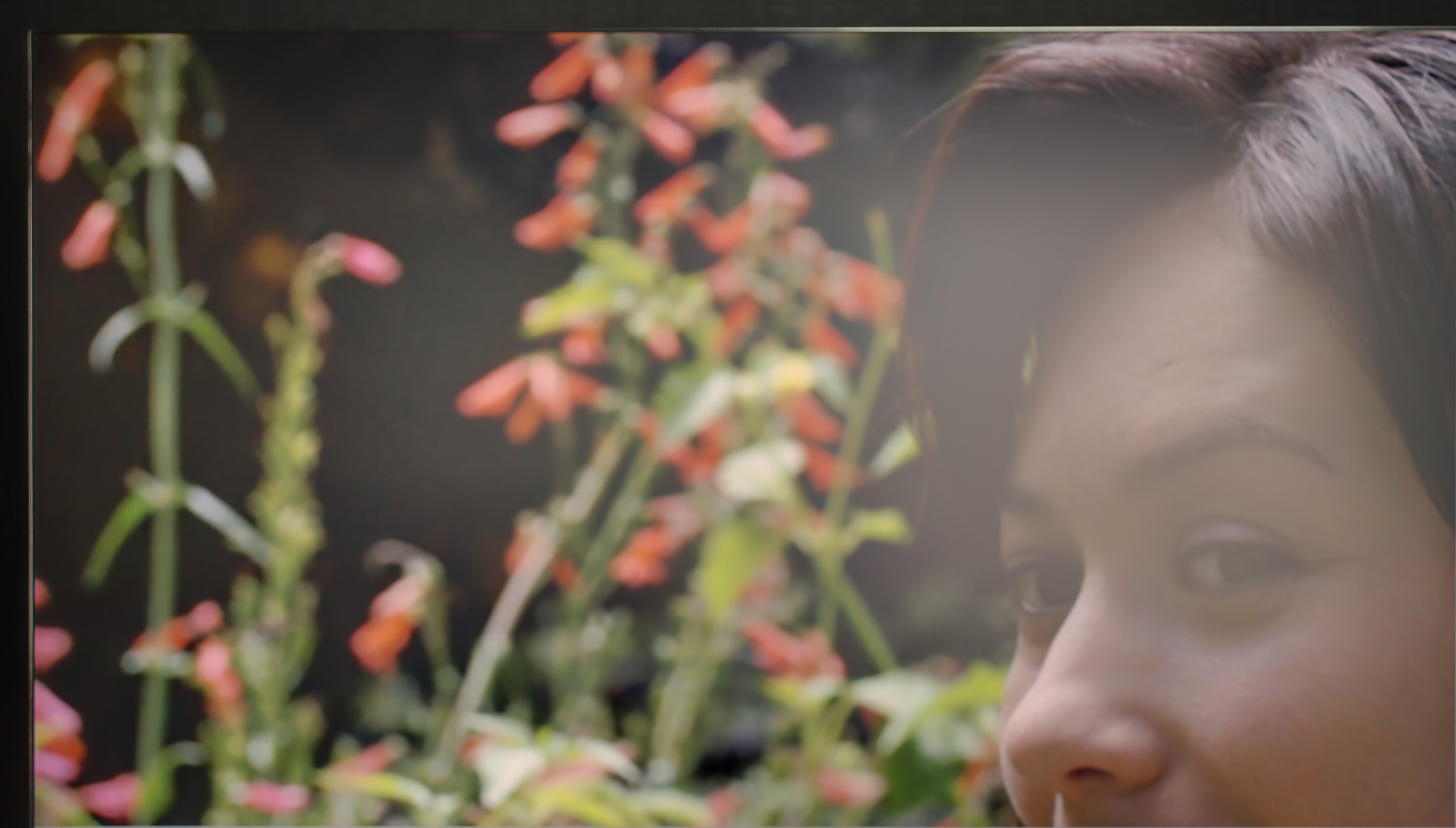
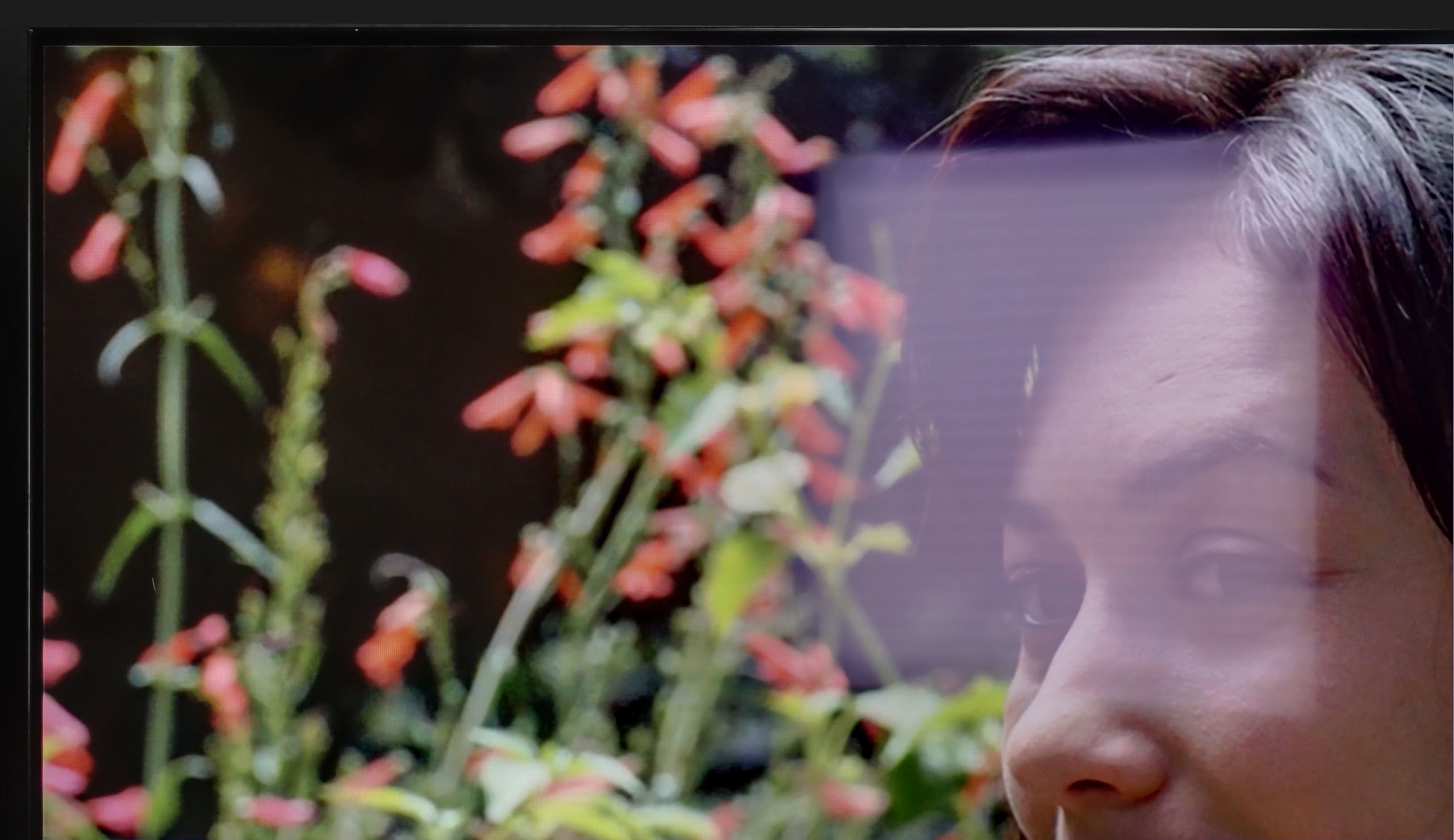
The photos show how movies look on the TV. Pay attention to black detail visibility, colors, and shadow tint.

The photos show how movies look on the TV. Pay attention to black detail visibility, colors, and shadow tint.

After performing calibration, we managed to bring the white balance into order and eliminate the previous deficiencies in blue tones. As a result, the image no longer appeared as if it had a slightly yellowish filter – whites are cleaner, and the overall presentation looks much more natural. We also managed to some extent to tame the brightness characteristic in HDR content. The television now handles maintaining details in blacks significantly better and does not lose them as much as before. However, when we look at the EOTF curve and how the QN990F reproduces brightness in films, it is evident that it still tends to emphasize details in dark scenes more strongly. This is a characteristic feature of Mini-LED technology, and more specifically, how it is managed by the QN990F, which is practically impossible to completely eliminate. Nevertheless, after calibration, the image looks much more natural, primarily due to the correct exposure of white light. The final effect is definitely more pleasant to receive and closer to what we expect from a flagship television.

After calibrating in Filmmaker mode, we managed to eliminate most of the unwanted effects. In SDR content, the television performs exemplary, and its color reproduction errors do not exceed a value of 2, which is an excellent result. A bit worse, although still very good, are the HDR quality contents. While we were able to eliminate a significant unnaturalness in the image caused by too high a positioning of the EOTF curve, the most discerning observers may notice that it is not perfectly aligned. It runs slightly below the reference curve, which would suggest that the S85F has slight issues showing all the details in the image. We must point out right away that it is highly unlikely that an average viewer would notice any shortcomings in the image. The final effect after calibration is rated as exemplary.

Smoothness of tonal transitions

9.2/10

7.3/10

These are selected scenes that show smooth tonal transitions from one color to another. If you see distinct banding, it’s the TV panel’s fault.

These are selected scenes that show smooth tonal transitions from one color to another. If you see distinct banding, it’s the TV panel’s fault.

These are selected scenes that show smooth tonal transitions from one color to another. If you see distinct banding, it’s the TV panel’s fault.

These are selected scenes that show smooth tonal transitions from one color to another. If you see distinct banding, it’s the TV panel’s fault.

In terms of fluidity in tonal transitions, the QN990F shows class. It's one of the best results we've seen so far. In most scenes, there are no visible color banding or typical stepping – the transitions are smooth and natural, and the image feels incredibly cohesive. Of course, as with practically every television, in very dark shots, some gradation issues can be noticed. Stepping can be noticeable there, but this is a typical phenomenon and should not affect the assessment of the QN990F itself. Against the competition, it looks really very good, and the impression from viewing is simply excellent, ensuring that nothing will distract our sight.

Another issue with the S85F version featuring a WOLED panel, noticeable compared to the QD-OLED variant, is the quality of smoothness in tonal transitions. In very bright moments, it is evident that the blending of colors is not perfect and can sometimes be spotted with the naked eye. Although the overall quality of gradients is still good, certain issues with the panel produced by LG Displays are visible here, which are not as apparent in competing panels (QD-OLED).

Image scaling and smoothness of tonal transitions

6.9/10

7.5/10

Image without overscan on the SD signal
No
No
Smooth transition function
OK
OK

Smooth transition function

The match photo shows how the TV smooths weak tonal transitions in low-quality video.

Image scaling SD (576i)

The model photo shows how it handles upscaling of SD material.

The QN990F deserves the highest praise for its upscaling. The processor responsible for "pulling up" classic TV to 8K resolution performs quite well. While watching content in a 576p signal, we had no illusions that we would suddenly see a marketing-style miracle where the image magically transforms into crystal-clear 8K. Nevertheless, the final effect was surprisingly good; the image looked clean and clear. It's just unfortunate that the TV, like most Samsung models, has an overscan issue, which slightly cuts off the edges of the screen on the left side.

Regarding image processing, Samsung provides a feature called "noise reduction," which in theory should improve tonal transitions in older materials, where they are usually more noticeable. Unfortunately, we felt quite disappointed here. The feature works poorly – it struggles with unwanted bands and can even introduce its own artifacts. On the plus side, the TV does not eliminate film grain when using this feature, but in practice, that's little consolation since the noise reduction itself proves to be practically useless.

The processing of tonal transitions (gradients) in the S85F is at a high level. The television effectively handles posterization (the "stepping" effect of colors), even with heavily compressed materials, such as from streaming services. However, using this feature requires making a certain compromise. We noticed that the noise reduction algorithm is quite aggressive – even at the lowest setting, it can eliminate natural film grain, which for many viewers is part of the film's aesthetics. The "Standard" setting seems to be the golden mean, not causing visible loss of important details, so we can recommend it. However, we advise against using the "High" level, which removes not only noise but also desired details, such as texture or structure of objects on the screen.

The scaling (upscaling) process of lower resolution content works very well in the S85F. The image is sharp and clear. The only minor imperfection we observed is occasional, slight aliasing on the edges. The television also still exhibits characteristics typical of this manufacturer, such as active "overscan" (slight magnification of the image). This should be kept in mind, especially when watching older materials, as it may result in a minimal cropping of the original frame.

Blur and motion smoothness

7.9/10

8.5/10

Maximum refresh rate of the panel
240Hz
120Hz
Film motion smoothing option
OK
OK
Blur reduction option
OK
OK
BFI function 60Hz
Yes, 60Hz (image flickers)
BFI function 120Hz
Yes, 240Hz (double contours)
No
Brightness drop with BFI
76%
50%

Blur (native resolution, maximum refresh rate):

Blur (BFI function enabled):

Image flickers in this mode

Blur (4K@240Hz):

Blur ():

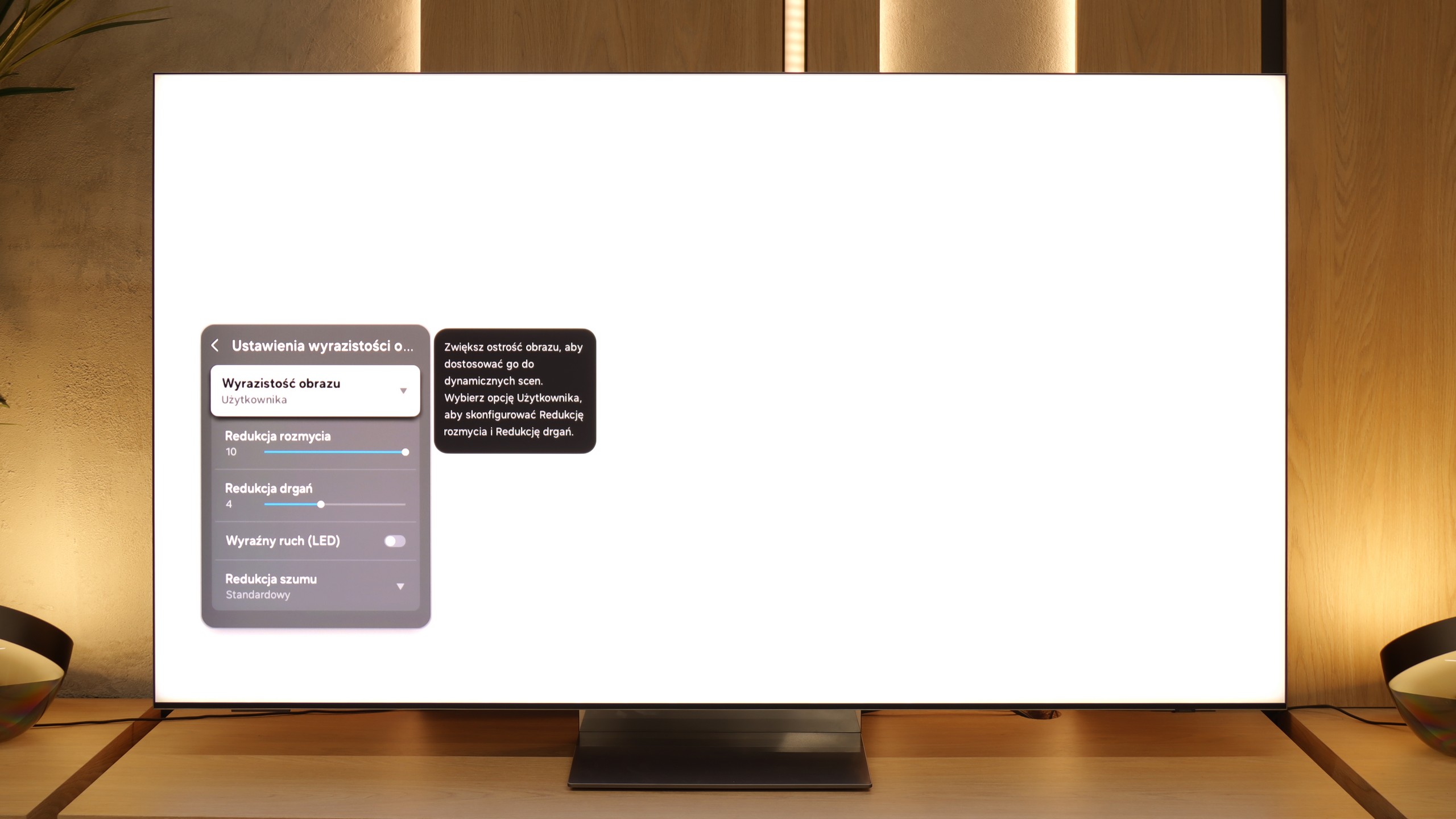
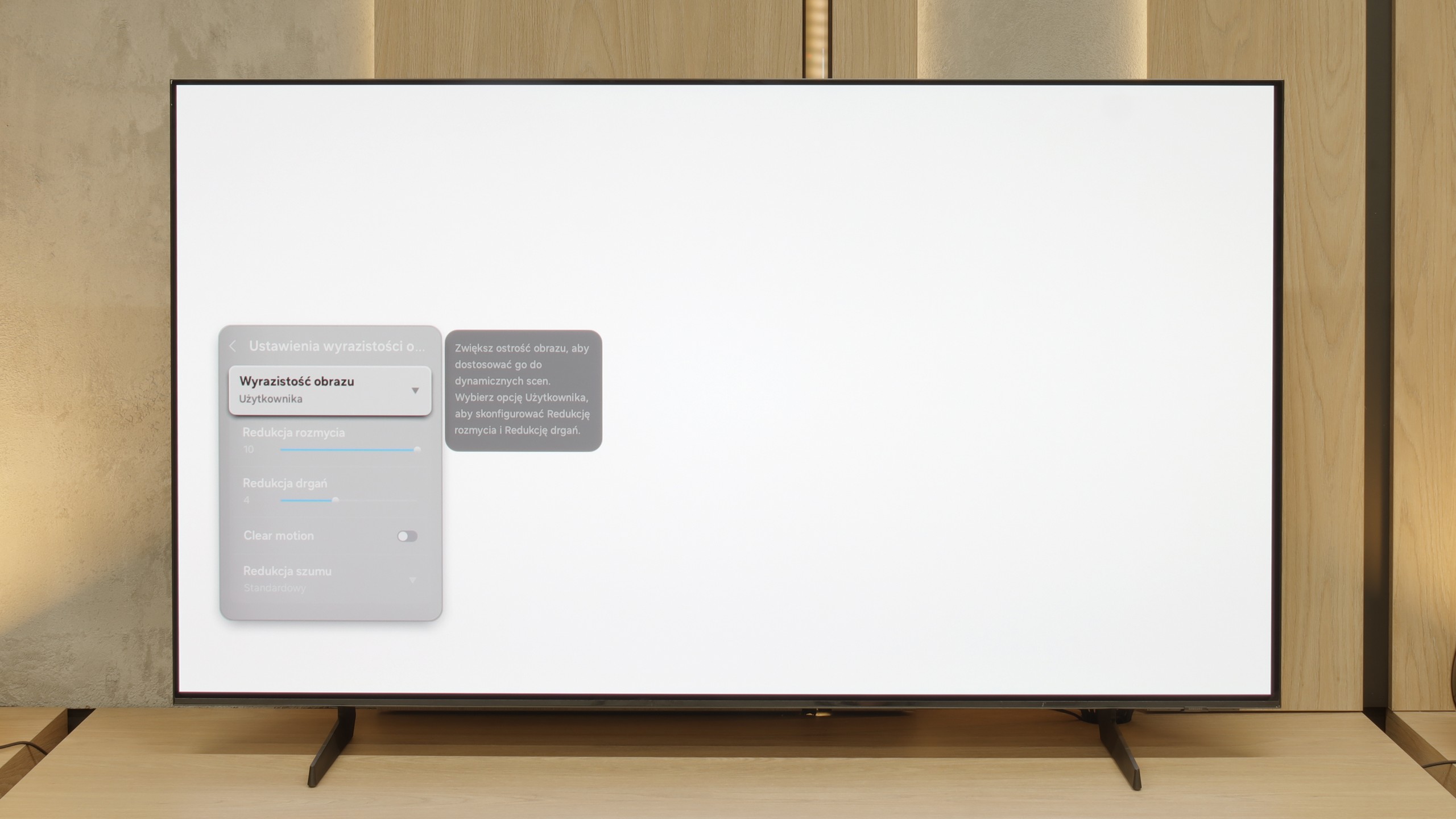
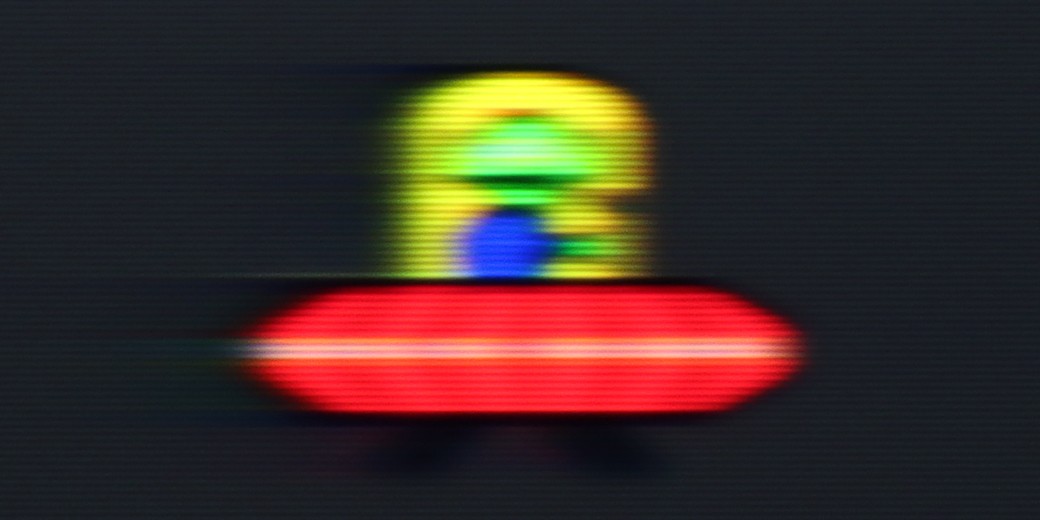
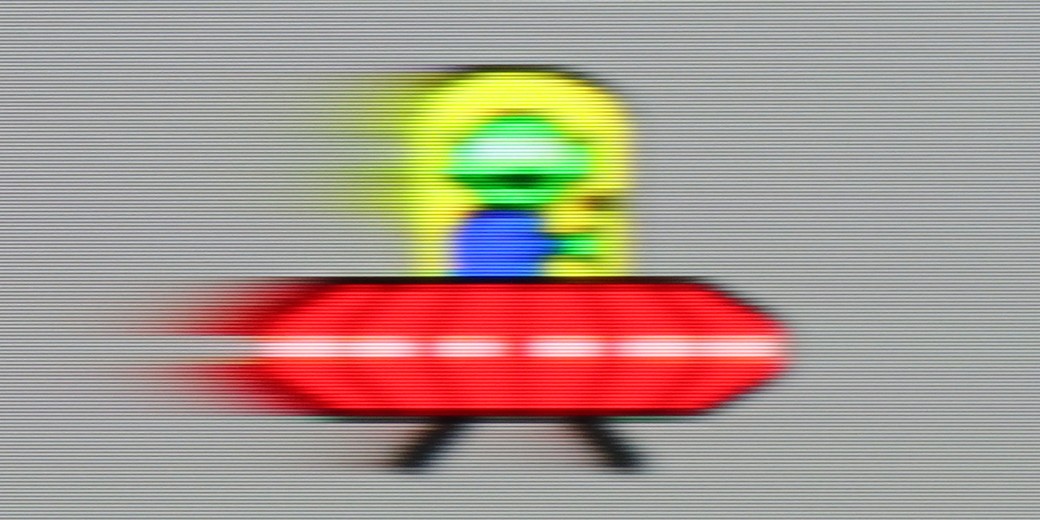
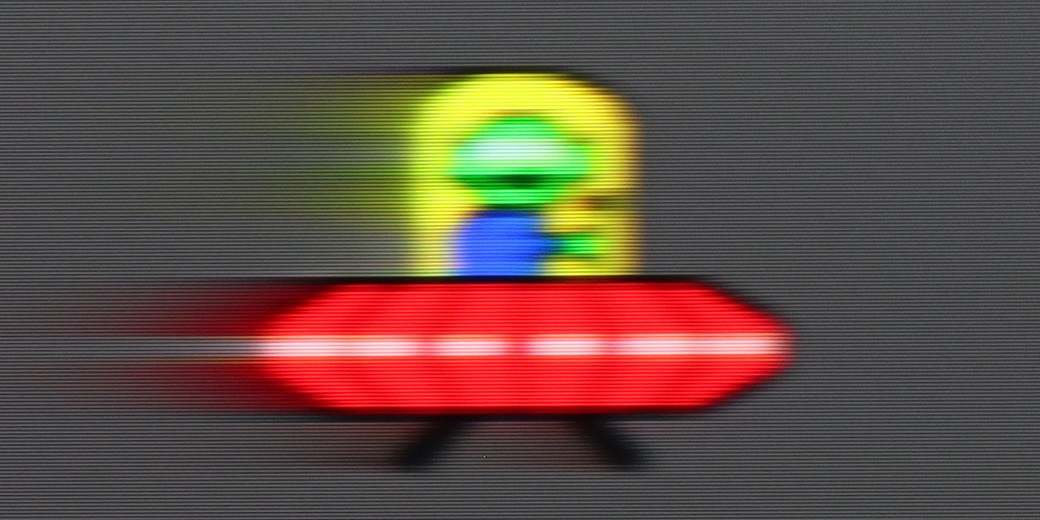
The QN990F can easily be called one of the fastest televisions in the world. In 4K mode, it can display images at a frequency of up to 240 Hz, which until now has been more associated with gaming monitors than with televisions in the living room. However, in everyday viewing, what matters more is how it handles 8K signals at 120 Hz – and it performs very well here too. Motion remains smooth, and the television manages without a hitch even with the most demanding content. Additionally, there is a motion smoother, called "Picture Clarity." With it, you can adjust the image to your own preferences – leave a slight cinematic stutter or switch to maximum smoothness, which works great, for instance, in sports broadcasts.

The S85F is a model with impressive speed. The use of a 120 Hz OLED panel ensures that dynamic scenes, both in games and during sports broadcasts, meet expectations: smoothly, sharply, and without loss of clarity. A key role here is played by the instantaneous pixel response time, which is a natural advantage of OLED technology. Transitions between frames are instantaneous, and the image remains clear even during the fastest camera movements. Moving objects, like a ball on the field or a car in a chase scene, are clear and devoid of the characteristic motion blur typical of LCD panels (the so-called "tail").

Console compatibility and gaming features

9.6/10

9.2/10

  • ALLM
    Yes
    Yes
  • VRR
    Yes
    Yes
  • VRR range
    48 - 240Hz
    48 - 120Hz
  • Dolby Vision Game Mode
    No
    No
  • Correct implementation of HGIG
    Yes
    Yes
  • 1080p@120Hz
    Yes
    Yes
  • 1440p@120Hz
    Yes
    Yes
  • 4K@120Hz
    Yes
    Yes
  • Game bar
    Yes
    Yes

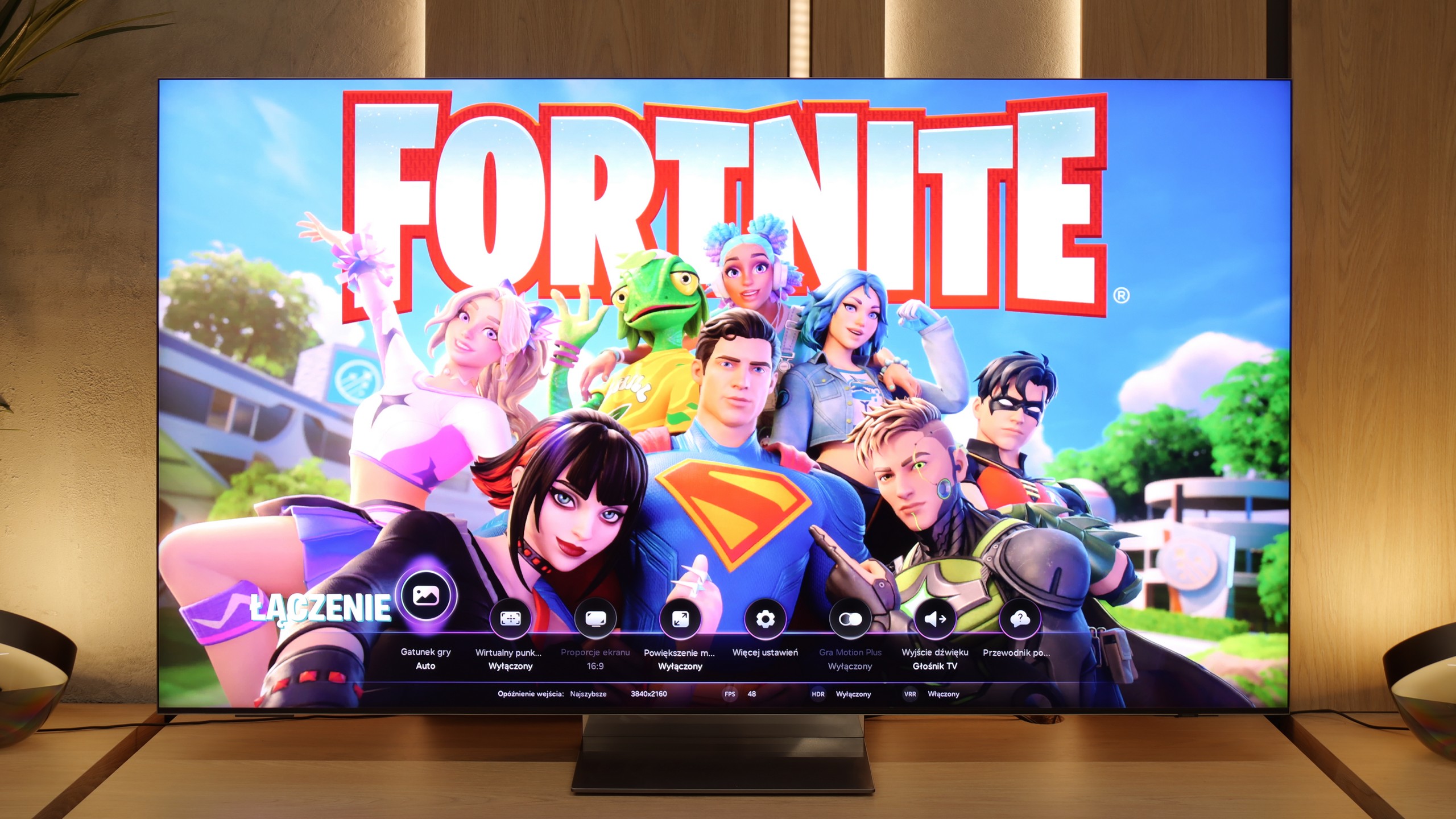
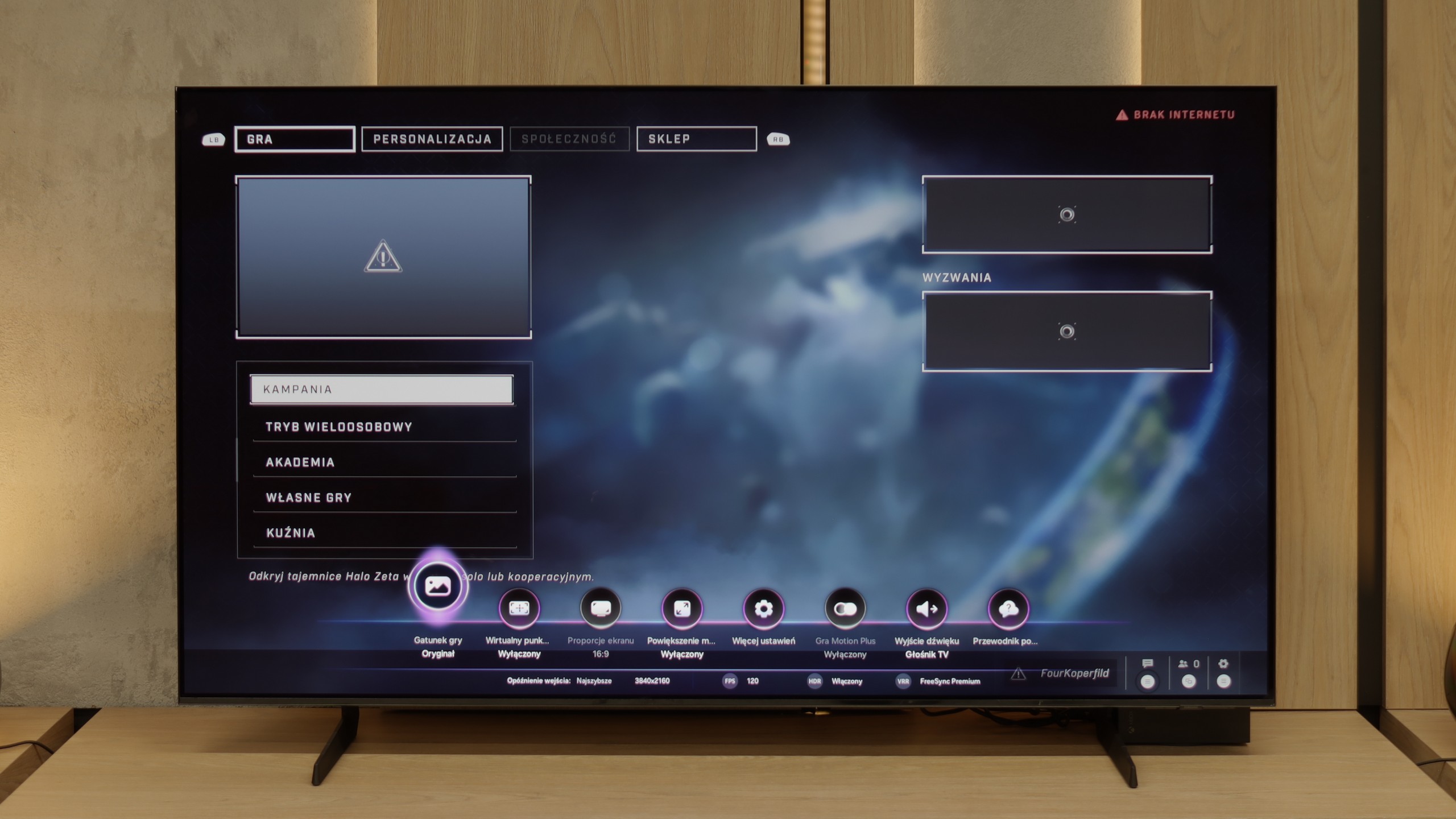
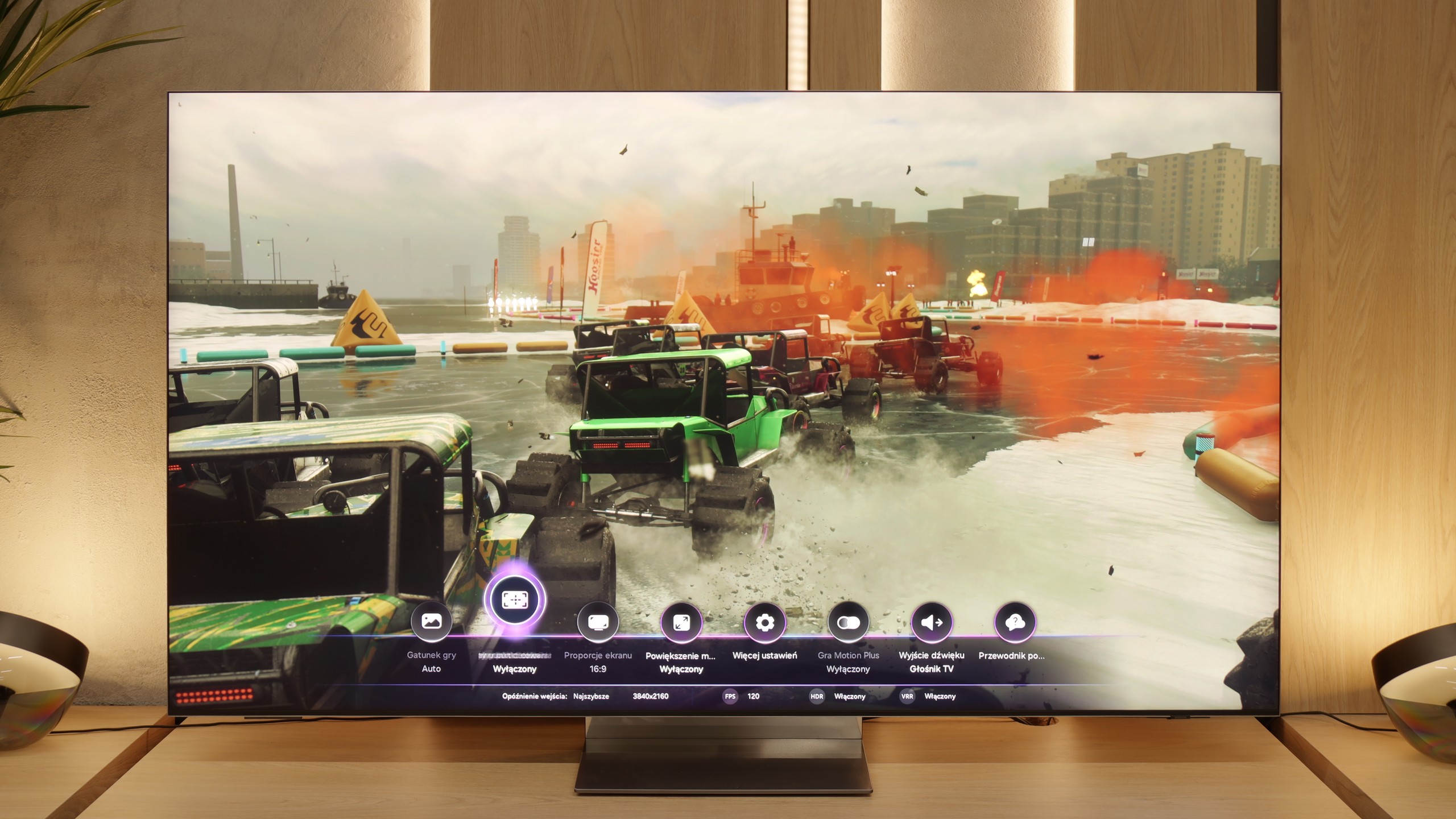
It must be said directly – the QN990F is one of those TVs that screams it was designed with gamers in mind. Samsung has been developing its gaming solutions for years, but here we have a true package. Sure, the lack of Dolby Vision support in games is a downside that will always come up in discussions. However, apart from that, the list of features is truly impressive. To start, we have Game Bar – a handy menu that allows you to quickly check and change game-related settings. You can see, for example, VRR is turned on, the frame rate, or the aspect ratio settings. It's like a small "dashboard," allowing you not to dig deep into the menu to make adjustments. Speaking of VRR: yes, variable refresh rate is present here and works flawlessly. Additionally, there's ALLM, which automatically switches the TV to game mode as soon as the console is turned on. These may seem like small details, but together they make using the QN990F simply convenient and hassle-free.

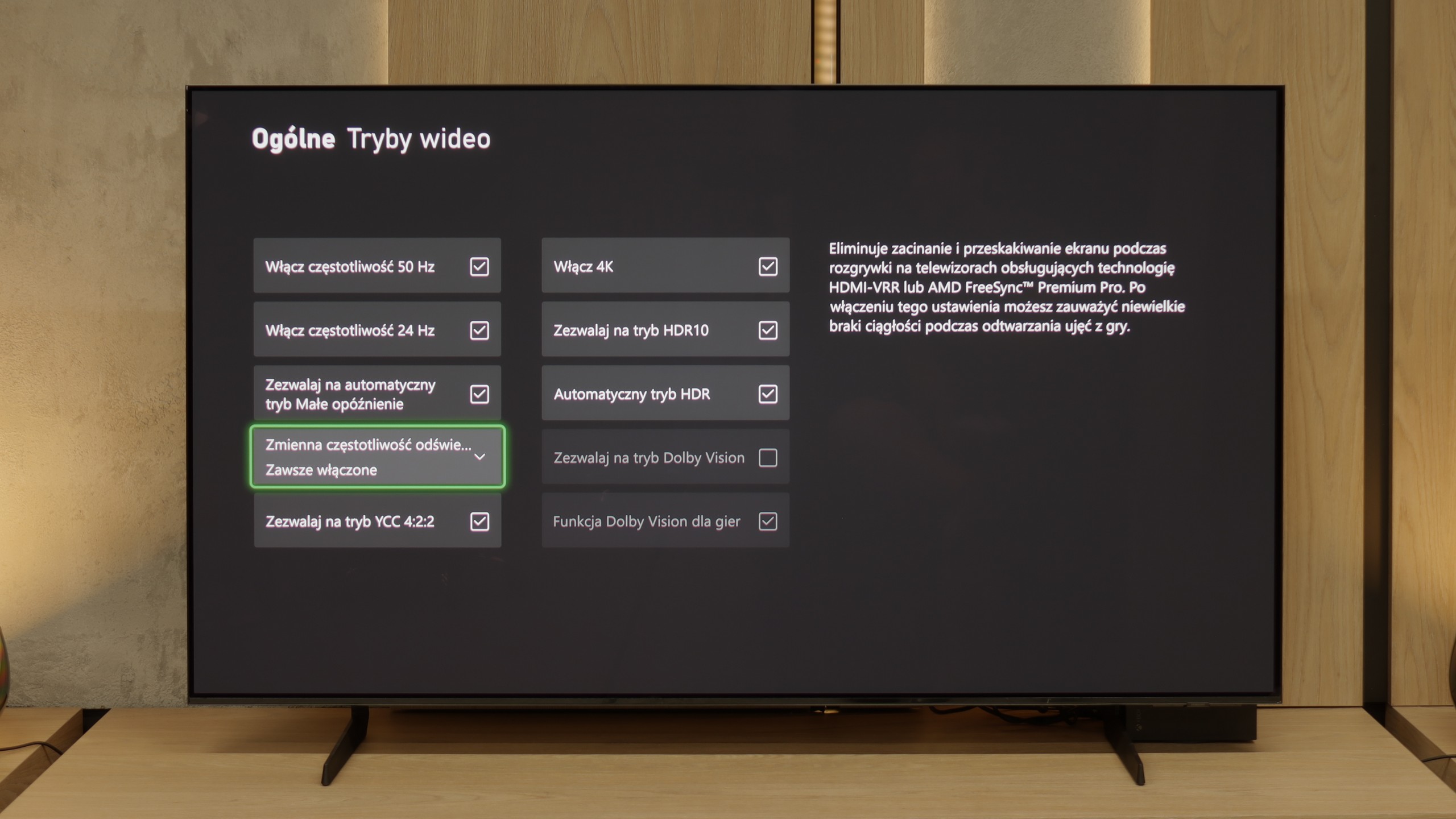
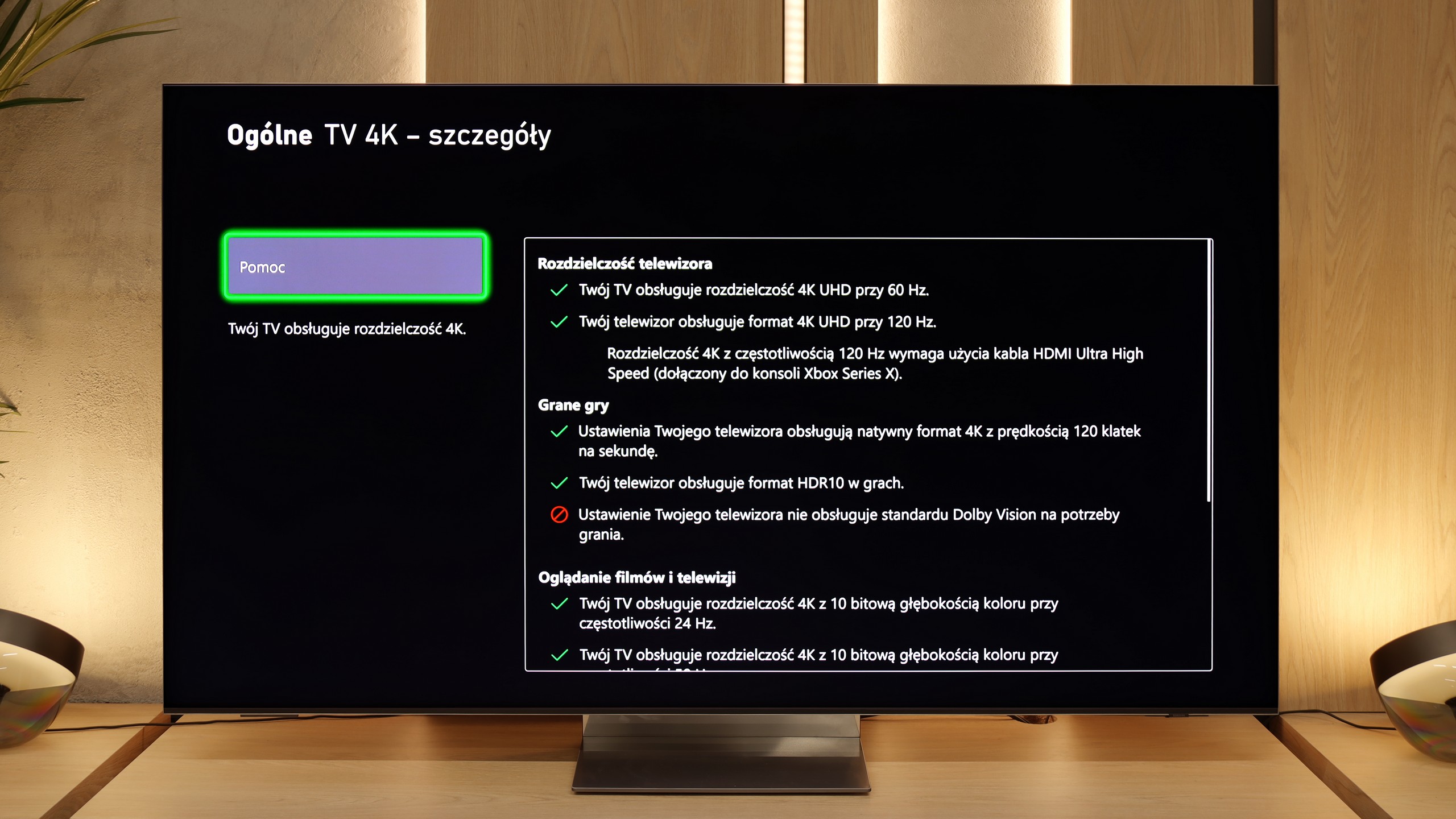
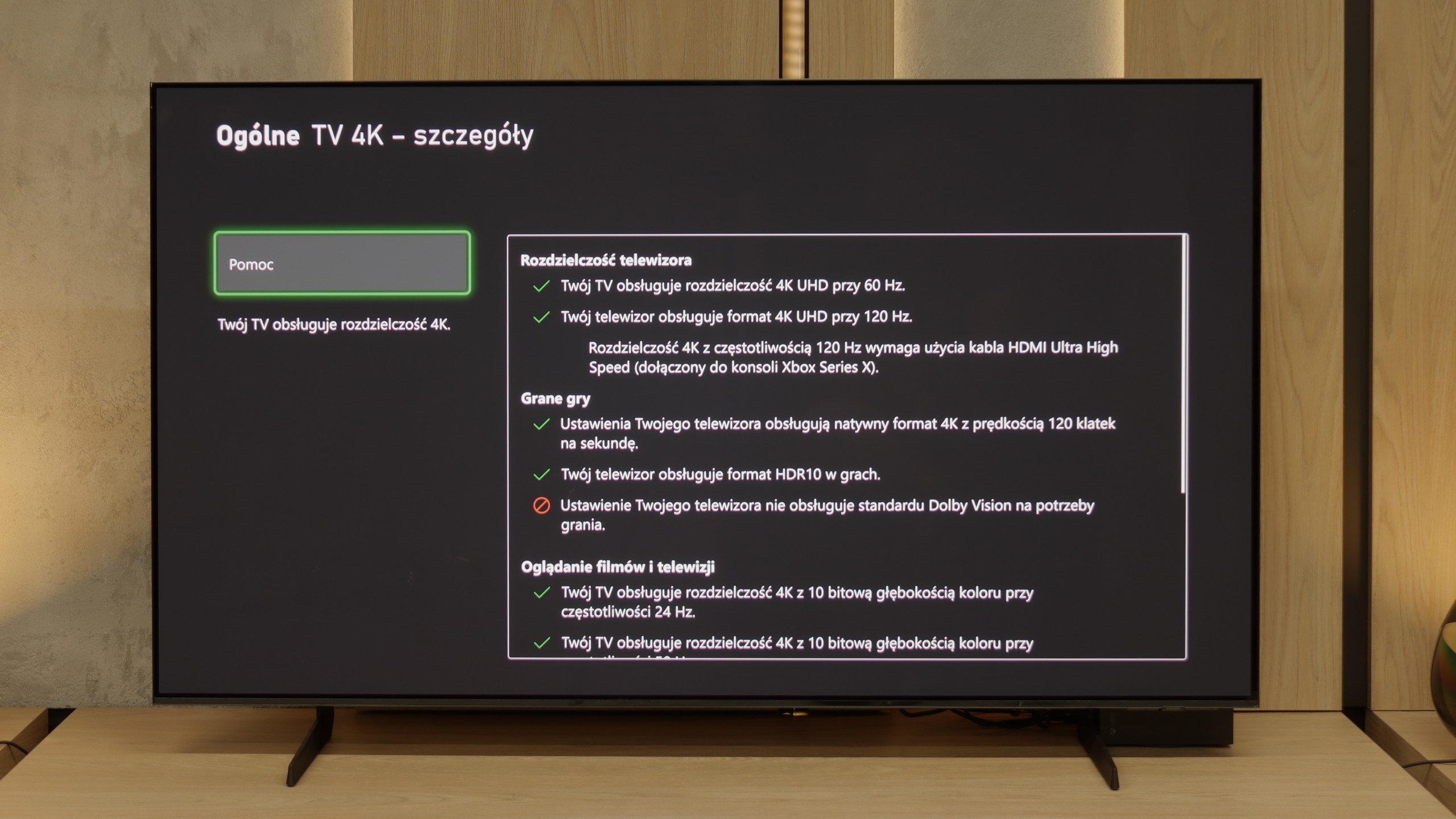
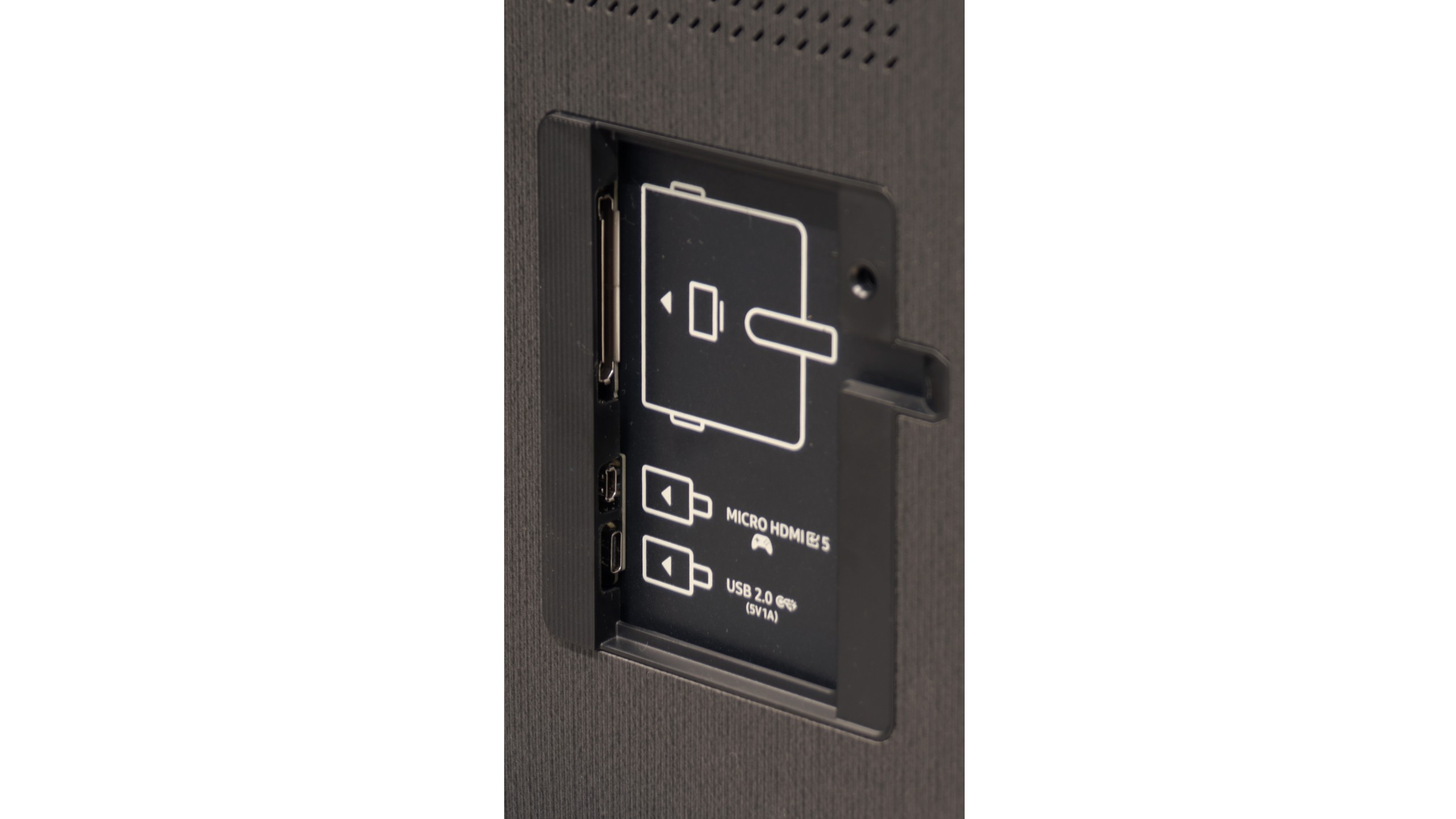
However, the number of ports makes the biggest impression. Four wireless HDMI 2.1 ports are already great news because you don't have to choose whether to connect the console, the receiver, or maybe even the PC. There's plenty of room here for everything. And if we add an additional micro HDMI (which we recommend connecting directly to consoles), hidden in the housing, we practically have five inputs in full 2.1 standard. Add to that support for high refresh rates – 120 Hz in 8K or even 240 Hz in 4K – and we get a TV that not only keeps up with the new consoles but also feels ready for consoles that are yet to come.

Input lag

9.9/10

10/10

SDR

1080p60
15 ms
10 ms
1080p120
9 ms
5 ms
2160p60
13 ms
10 ms
2160p120
10 ms
5 ms

HDR

2160p60
13 ms
10 ms
2160p120
10 ms
5 ms
4320p60
17 ms

Dolby Vision

2160p60 DV
2160p120 DV

If we look at the table with input lag results, the QN990F performs phenomenally – within 10–15 ms, which is practically on par with gaming monitors. But there are a few caveats. First and foremost, the measurements taken on an additional micro HDMI, which Samsung cleverly hid in the television housing, show the full potential. At that point, the image responds instantaneously, and gaming is pure pleasure. The problem starts when we connect the console to the wireless One Connect module. Here, input lag jumps – the measuring device showed values higher by as much as 20 ms for the first 1-2 seconds before the delay stabilized around 40 ms. That’s already a level that is noticeable in faster games. Interestingly, the module was placed nearby, at a distance of 2–3 meters, so the signal didn’t have any challenging conditions. It’s not hard to imagine that if we hide it, for instance, behind a couch at a distance of 6–10 meters, input lag could exceed 100-150 ms. And those values are completely unacceptable for gaming.

Input lag measurements for Wireless One Connect from a distance of 2-3m look as follows:

SDR

Input lag

HDR

Input lag

1080p60

39 ms

1080p120

25 ms

2160p60

39 ms

2160p60

39 ms

2160p120

26 ms

2160p120

26 ms

4320p60

43 ms

4320p60

43 ms

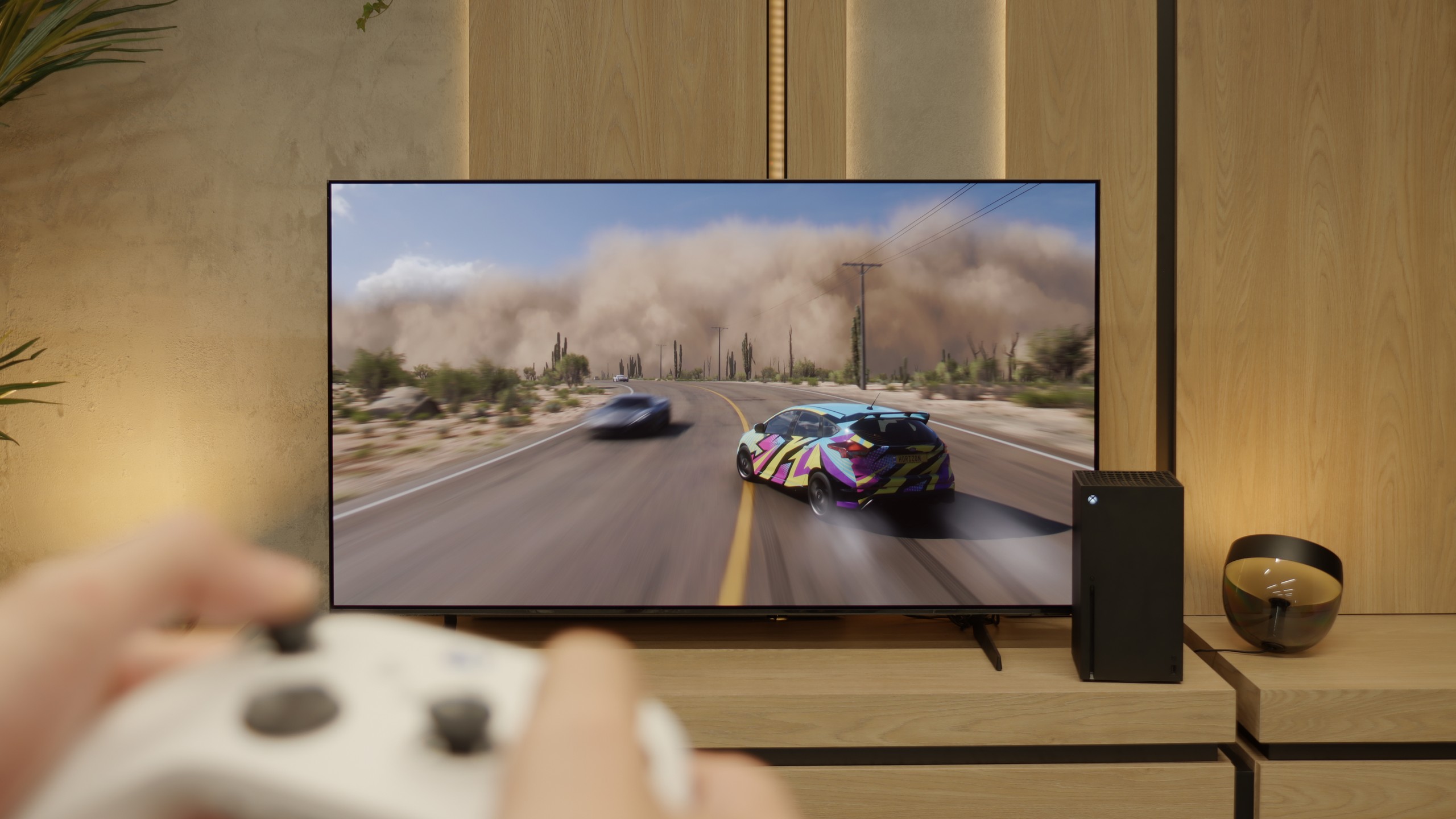
In this category, the S85F shows its true claws. The values measured by us – 5 ms at 120 Hz content and around 10 ms at 60 Hz – are results that can be described in one word in the world of televisions: phenomenal. This means that the response to a player's movements is practically instantaneous. Pressing a button on the controller results in action on the screen without any noticeable delay. In dynamic games, where a fraction of a second determines victory or loss, such values make a huge difference. There is no question of a nervous "waiting" for the picture to catch up with our commands. The S85F gives a sense of full control – and that is how it should be in equipment aspiring to be the ideal screen for gamers.

Compatibility with PC

7.9/10

7.6/10

Chroma 444 (max. resolution and refresh rate)
Yes
Yes
Font clarity
Average
Good
Readability of dark text and shapes
Average
Very Good
Input lag in PC mode (4K, max. refresh rate)
10ms
5ms
Matrix subpixel arrangement
BGR
RWGB
Max refresh rate
240Hz
120Hz
G-Sync
Yes
Yes

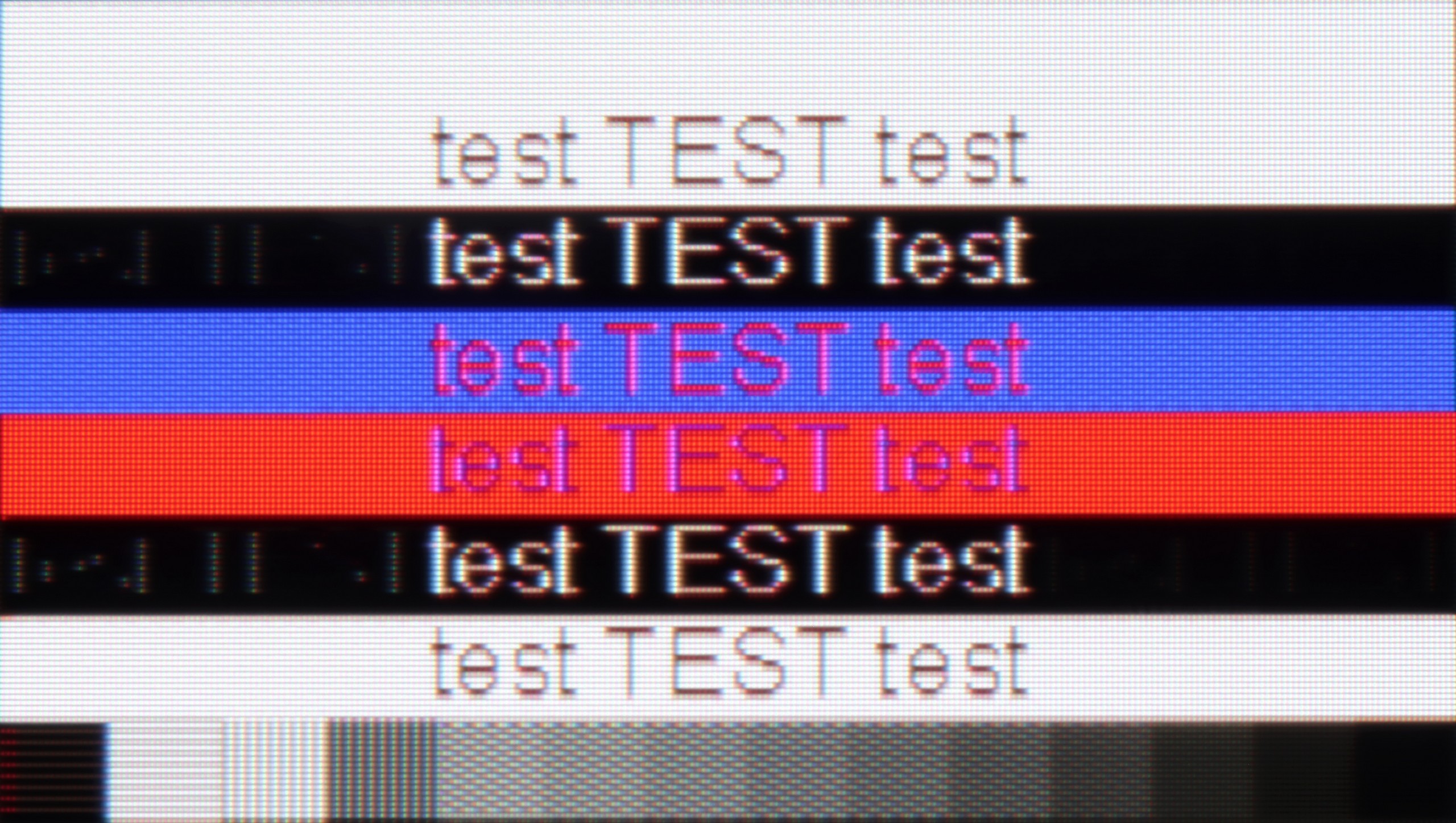
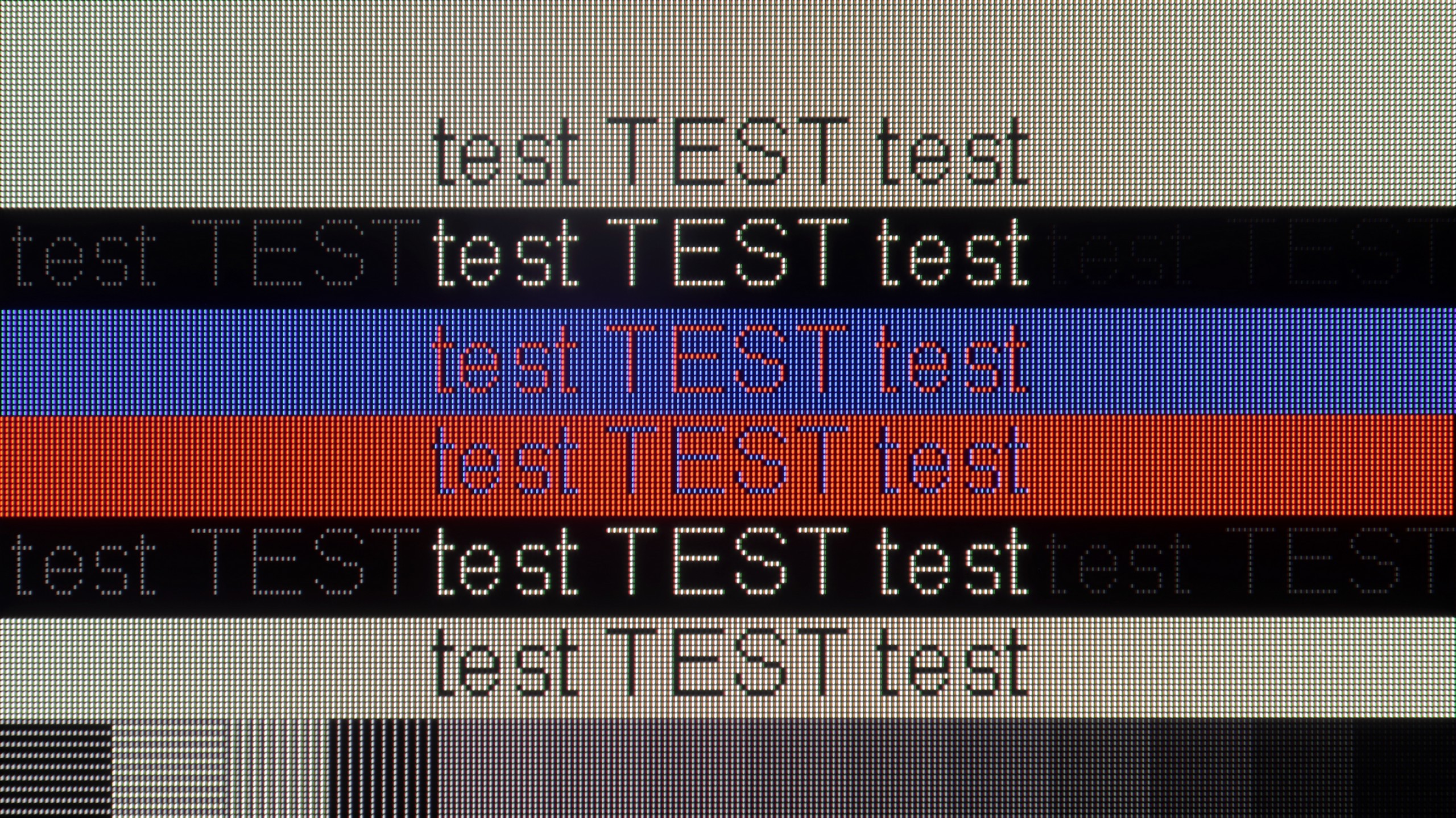
The photo shows the legibility of small fonts. Ideally, lines should be the same thickness on both light and dark text, with minimal pixel gaps.

QN990F can be impressive when we connect a computer for gaming. The panel with a refresh rate of up to 240 Hz, support for G-Sync, and a really decent input lag make the TV act like a gigantic gaming monitor. For gaming, it's a dream setup, and the responsiveness here is at a level that is practically unheard of in regular TVs.

Unfortunately, the situation looks much worse for regular PC work. That's a pity, because the 8K resolution theoretically has enormous potential – you can place even a 65-inch screen on your desk and sit close to it, taking advantage of the massive pixel density. However, in practice, the magic fades. Despite the correct implementation of chroma 4:4:4, which should guarantee sharp fonts, the readability on the QN990F is not ideal. The letters have slight edge issues, and longer work with text is simply not comfortable. It's a shame because gamers really have significant potential here, and the capabilities in games are great. However, this TV is not really suitable for everyday office work.

And what about connecting to a computer? We are quick to answer: the S85F performs excellently in this role. The combination of instant input lag and a 120 Hz panel is a recipe for successful gaming on a PC. Both fast-paced shooters and more tranquil RPG titles benefit from the instant response and fluidity of the animations, which can draw you in for long hours. Of course, it’s not perfect. We must mention the specific construction of the WOLED panel. It consists of four subpixels (WRGB), which is a different structure than the classic RGB known from monitors. As a result, if we sit very close to the screen, we may notice that the fonts are not as perfectly sharp as we would wish. However, this is not a big issue and should not hinder everyday use, especially since the television correctly supports a chroma 4:4:4 signal.

Viewing angles

6.5/10

7.5/10

Brightness drop at an angle of 45 degrees
57%
29%

Samsung has implemented a viewing angle enhancement coating in the QN990F and it actually does its job. We feel that this year it works a bit weaker than in last year's models, but nonetheless the effect is still impressive. For a VA panel, the viewing angles are really very good – good enough to compare them with what televisions with IPS panels offer. This means that even when watching from the side, we do not noticeably lose either contrast or colors.

As is typical for OLED technology, the viewing angles on the S85F are very good. The picture retains its properties even when viewed from the side, which is a clear advantage over most LCD TVs. However, we must point out that it does not reach the level known from QD-OLED panels. In the case of the tested WOLED panel, with a significant deviation from the screen's axis, a slight drop in brightness and a slight change in white tones can be observed. QD-OLED remains unparalleled in this regard, offering an almost perfect picture regardless of where you are viewing it from.

Daytime performance

5.2/10

5.3/10

Panel finish
Matte
Satin
Reflection suppression
Very Good
Decent
Black levels during daytime
Average
Very Good

Panel brightness

Samsung S85F (WOLED): 305 cd/m2

Samsung QN990F: 363 cd/m2

One of the biggest innovations in this year's Neo QLED 8K TVs are the matte screens. Yes, you read that right – Samsung has used a matte coating in its flagship model, and we must admit that the effect is truly impressive. Reflections practically disappear, the screen doesn't turn into a mirror, and watching in a bright living room suddenly becomes much more enjoyable. Of course, there’s no rose without thorns. The matte coating makes blacks appear a bit washed out during the day, and colors lose some of their vibrancy. It’s a compromise – either we fight reflections, or we keep the maximum color depth.

When it comes to brightness, the QN990F is not a record-breaker. In TV mode, it achieves around 370-400 nits, which is fine for everyday TV watching, but in very bright, sunlit rooms, it may prove inadequate to completely "break through" the light coming into the room.

We must state clearly that working in a brightly lit room is not the strong suit of the S85F. We are dealing with a somewhat moderately bright OLED panel here. Our measurements have shown that the average brightness of the screen in "TV" mode hovers around 300 nits. For some users, this may be too low, especially in rooms with a lot of daylight. Of course, this TV is perfect for moderately bright living rooms. However, it is not a model we would recommend for exceptionally bright, sun-drenched interiors. This issue is compounded by the anti-reflective coating applied. We noticed that it does not suppress reflections from the surroundings as well as the variant with a QD-OLED panel does, especially when direct sunlight hits the screen.

Panel details

Backlight Type
Mini-LED QLED
Software version during testing
T-RSPFDEUC-0090-1050.6 E2500007, BT-S
T-PTMFDEUC-0090-1110.7
Image processor

Subpixel Structure:

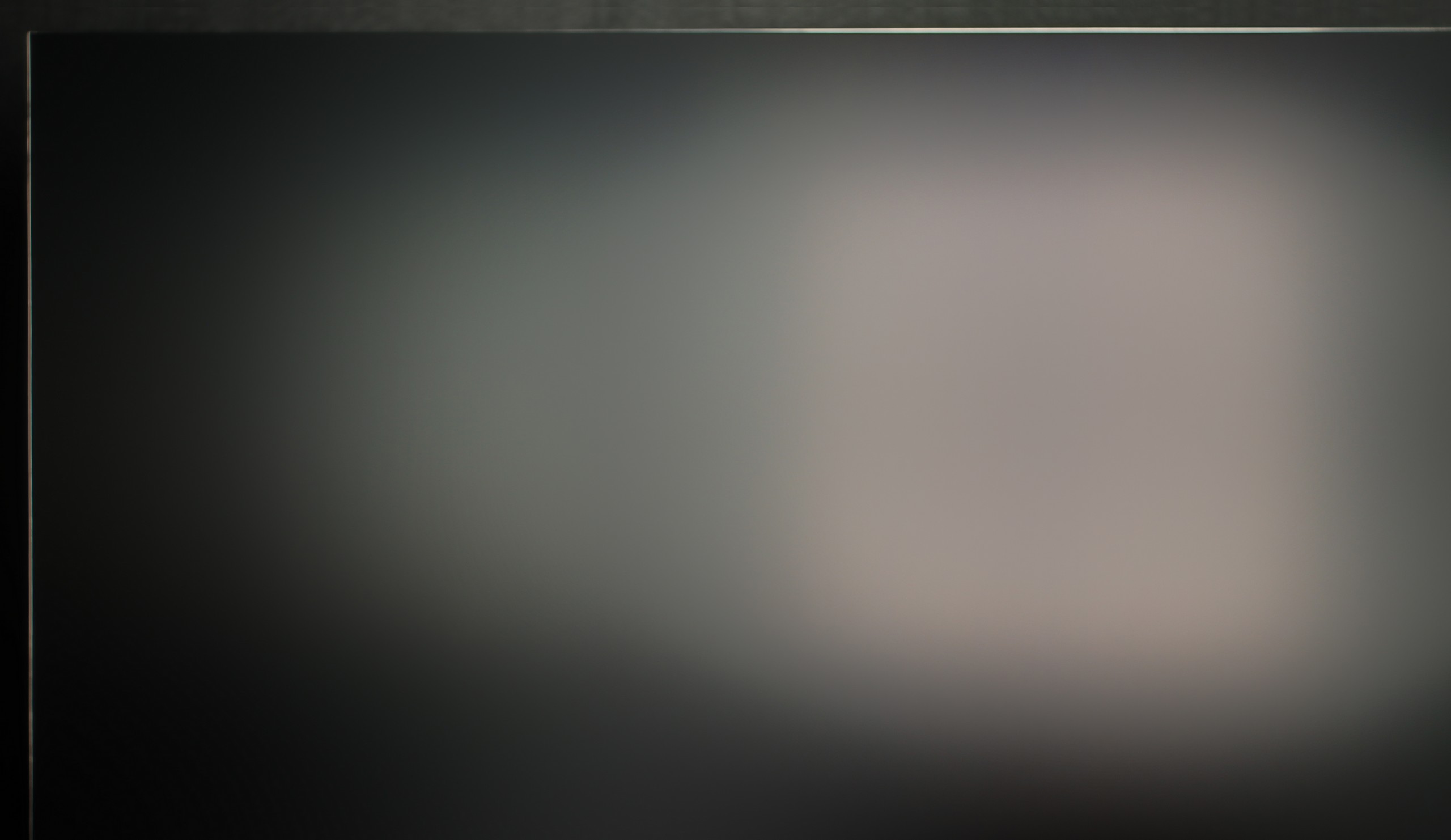
Panel uniformity and thermal imaging:

Review Samsung QN990F TV Panel details
Review Samsung S85F (WOLED) TV Panel details

Samsung QN990F

Samsung S85F (WOLED)

TV features

7.5/10

7.3/10

  • HDMI inputs
    0 x HDMI 2.0, 5 x HDMI 2.1 48Gbps
    0 x HDMI 2.0, 4 x HDMI 2.1 48Gbps
  • Other inputs
    Toslink (Optical audio)
  • Outputs
    Toslink (Optical audio), eARC (HDMI), ARC (HDMI)
    Toslink (Optical audio), eARC (HDMI), ARC (HDMI)
  • Network Interfaces
    Wi-Fi 2.4GHz, Wi-Fi 5GHz, Ethernet (LAN) 100Mbps
    Wi-Fi 2.4GHz, Wi-Fi 5GHz, Ethernet (LAN) 100Mbps
  • TV reception
    DVB-T, DVB-T2, DVB-S, DVB-S2, DVB-C
    DVB-T, DVB-T2, DVB-S, DVB-S2, DVB-C

Classic features:

  • Recording to USB (terrestrial TV)
    No
    No
  • Recording programming
    No
    No
  • Picture in Picture (PiP)
    Yes
    No
  • RF remote control (no need to aim)
    Yes
    Yes
  • Backlit remote control
    No
    No
  • Teletext
    Yes
    Yes
  • Audio only mode
    Yes
    Yes
  • Bluetooth headphones support
    Yes
    Yes
  • Simultaneous Bluetooth headphones & TV audio
    Yes
    Yes

Smart features:

  • AirPlay
    Yes
    Yes
  • Screen mirroring (Windows Miracast)
    Yes
    Yes
  • Voice search
    Yes
    Yes
  • Voice search in native language
    Yes
    Yes
  • Ability to connect a keyboard and mouse
    Yes
    Yes
Review Samsung QN990F TV features
Review Samsung S85F (WOLED) TV features

Classic Features and Connections

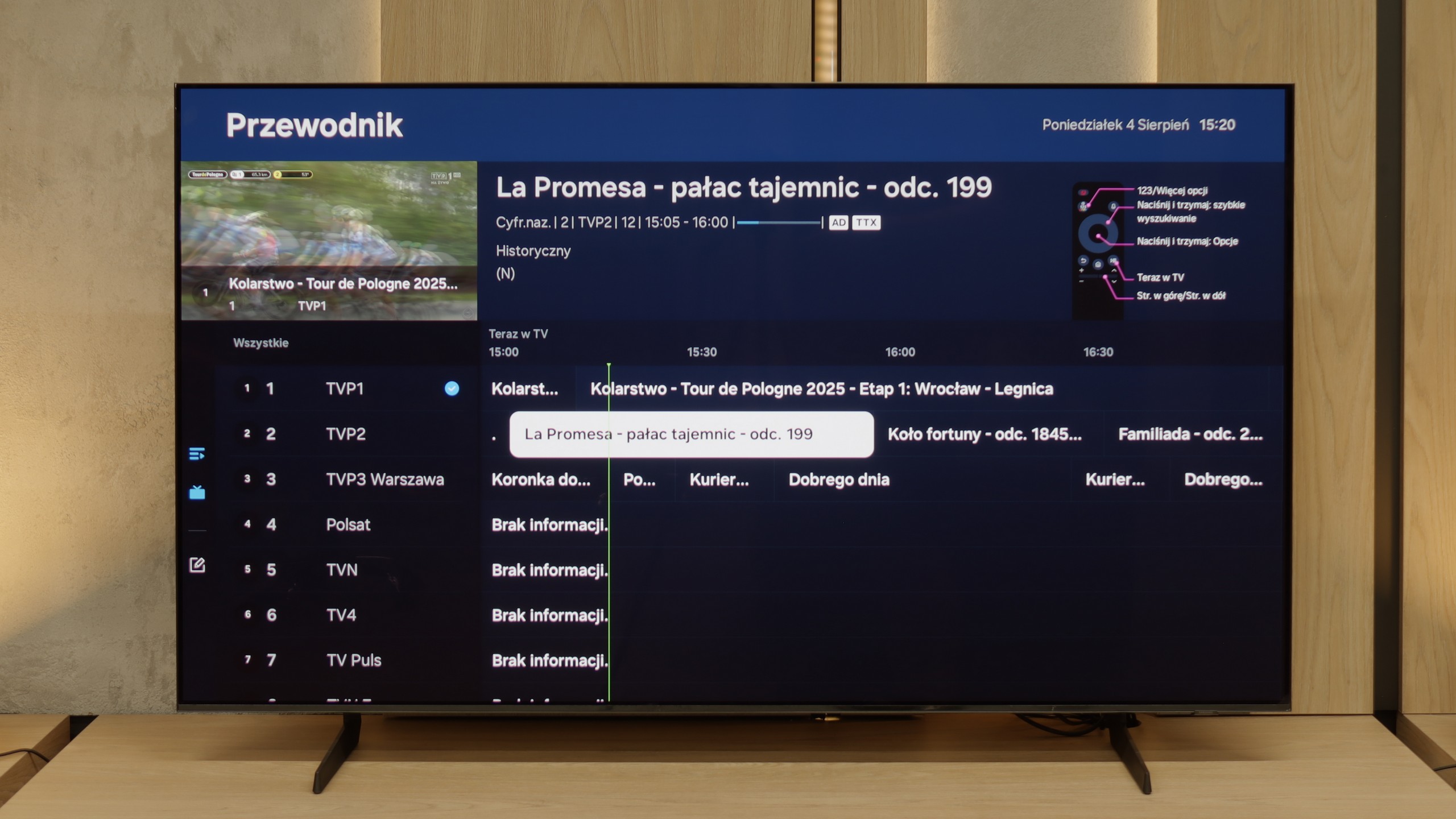
Even though the QN990F looks like a television from the future, if someone simply wants to watch regular TV - it can be done quite comfortably. On board, we have several practical additions, such as PiP, which allows for watching two sources simultaneously. There's no need to even mention Bluetooth, as that's already a standard. However, the entire idea of wireless operation is particularly noteworthy. The One Connect module can be placed in a different location than the TV itself, which is a significant convenience for people who frequently switch devices. Of course, it still needs to be plugged into a power source, so it's not a completely cable-free solution, but it's hard not to see this as a showcase of Samsung's strength – a glimpse of what future televisions could look like.

Smart TV System: Tizen

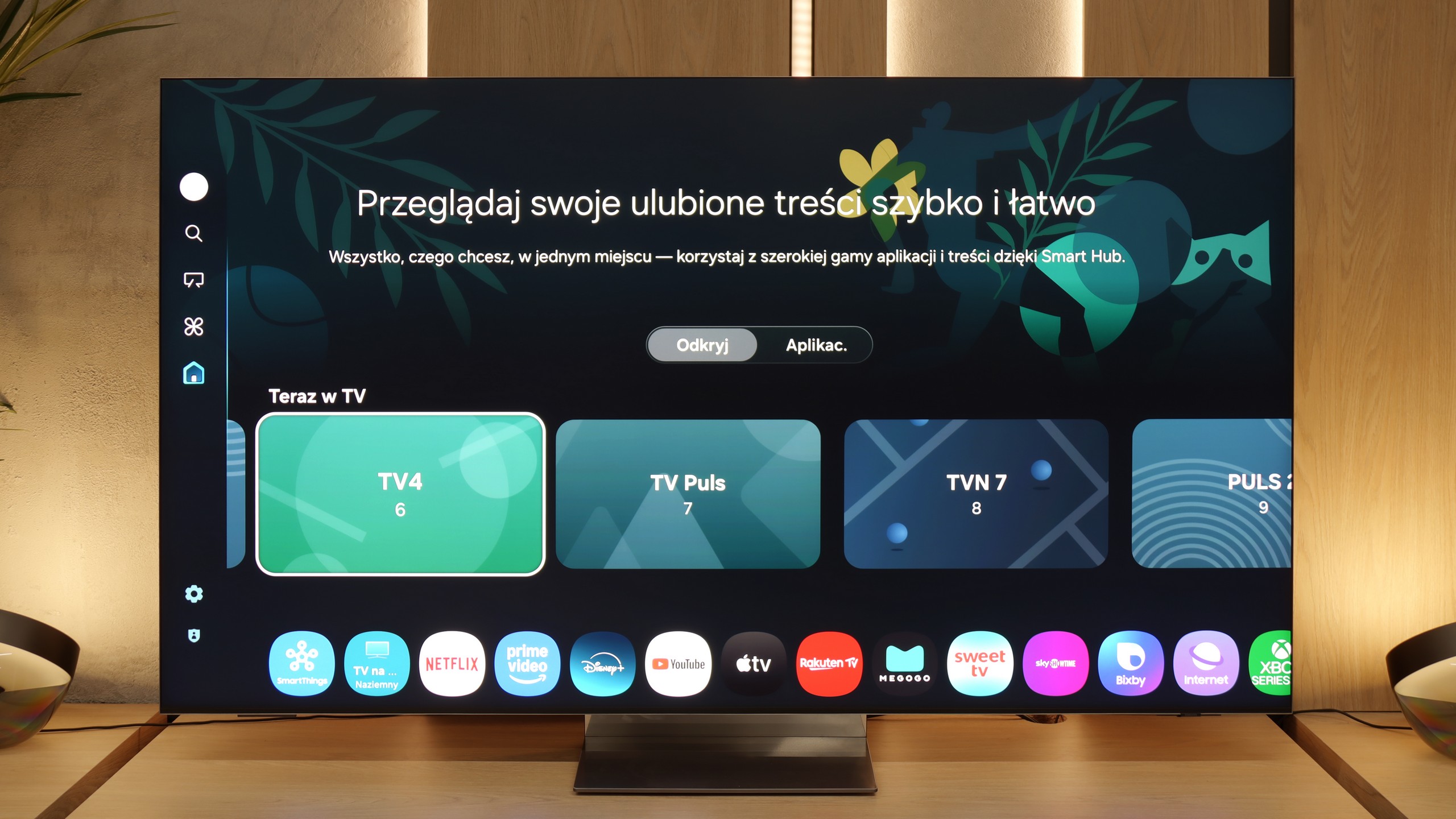
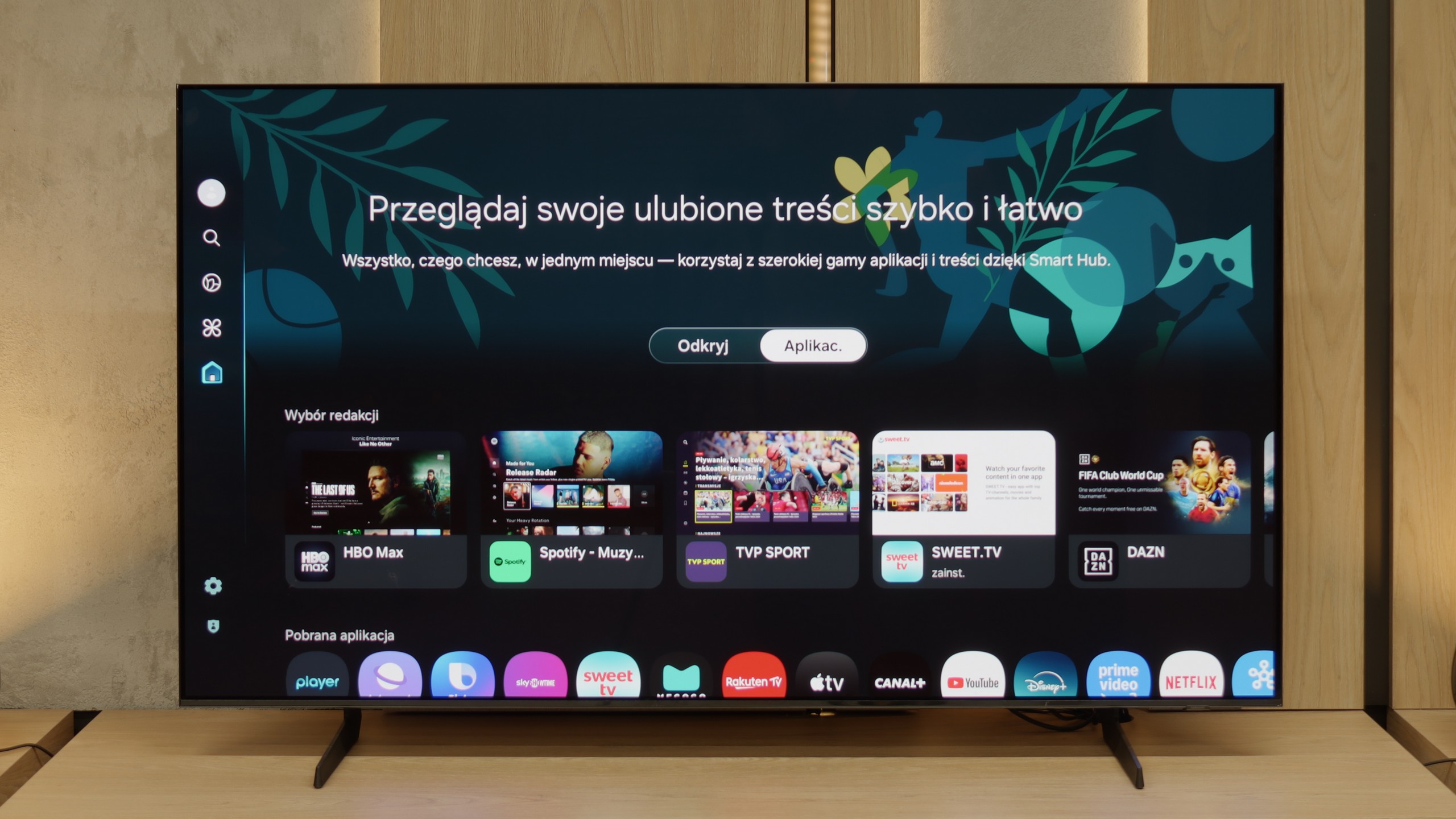
When it comes to the system, Samsung opted for its proprietary Tizen, which, despite being a closed ecosystem – operates extremely smoothly. It's one of the fastest, if not the fastest operating systems in televisions, and it's also very intuitive. All the classic smart features are present: AirPlay, screen mirroring, voice search in multiple languages, or quick access to the most important streaming applications. There may be a few niche programs missing, but the vast majority of users will find everything they need here.

Classic TV Features S85F

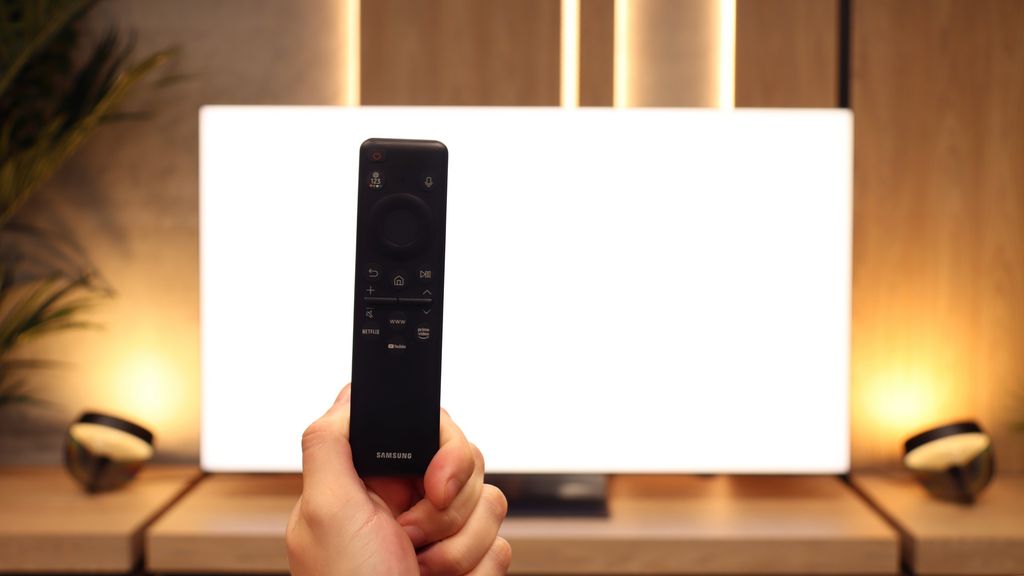
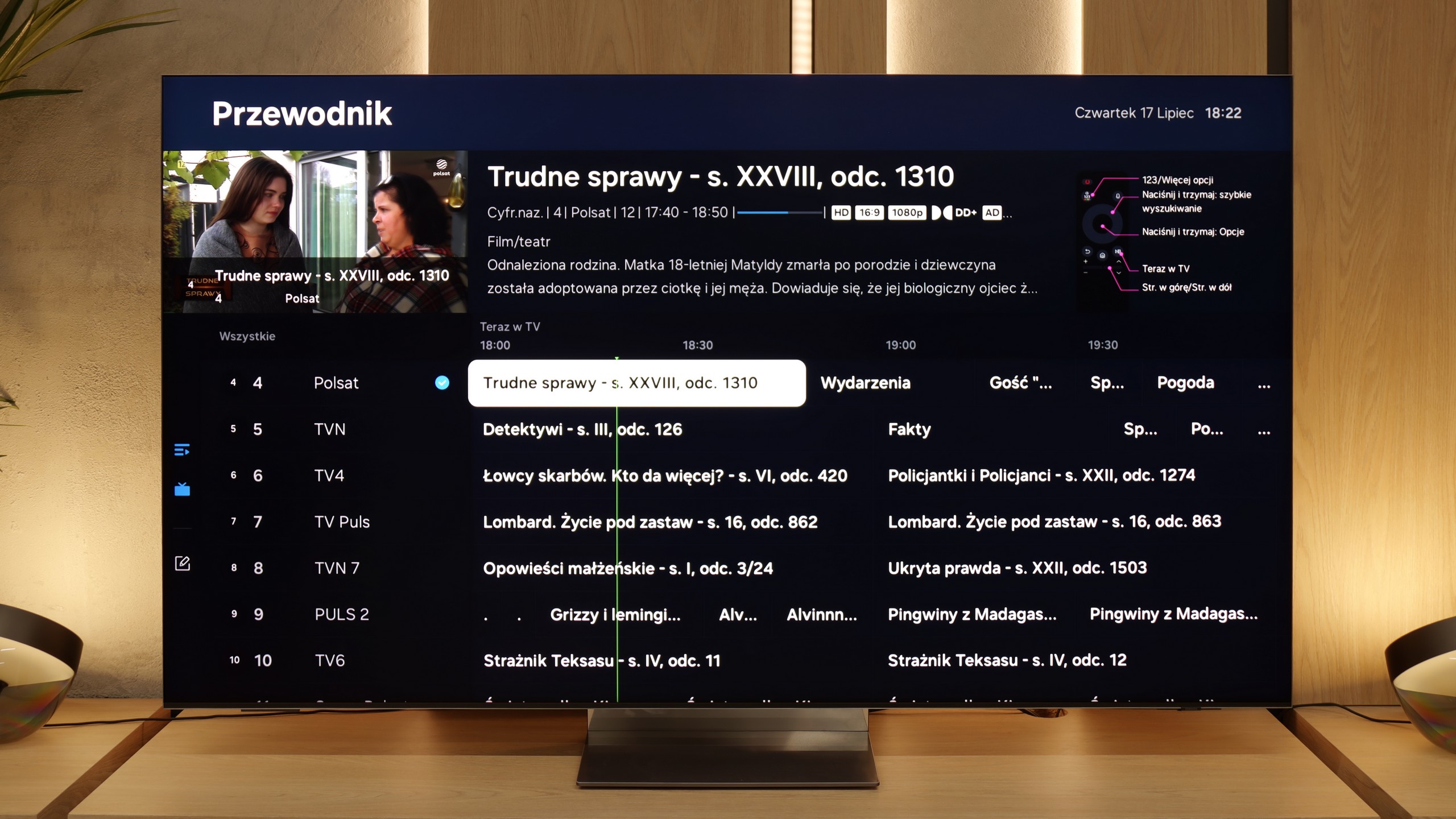
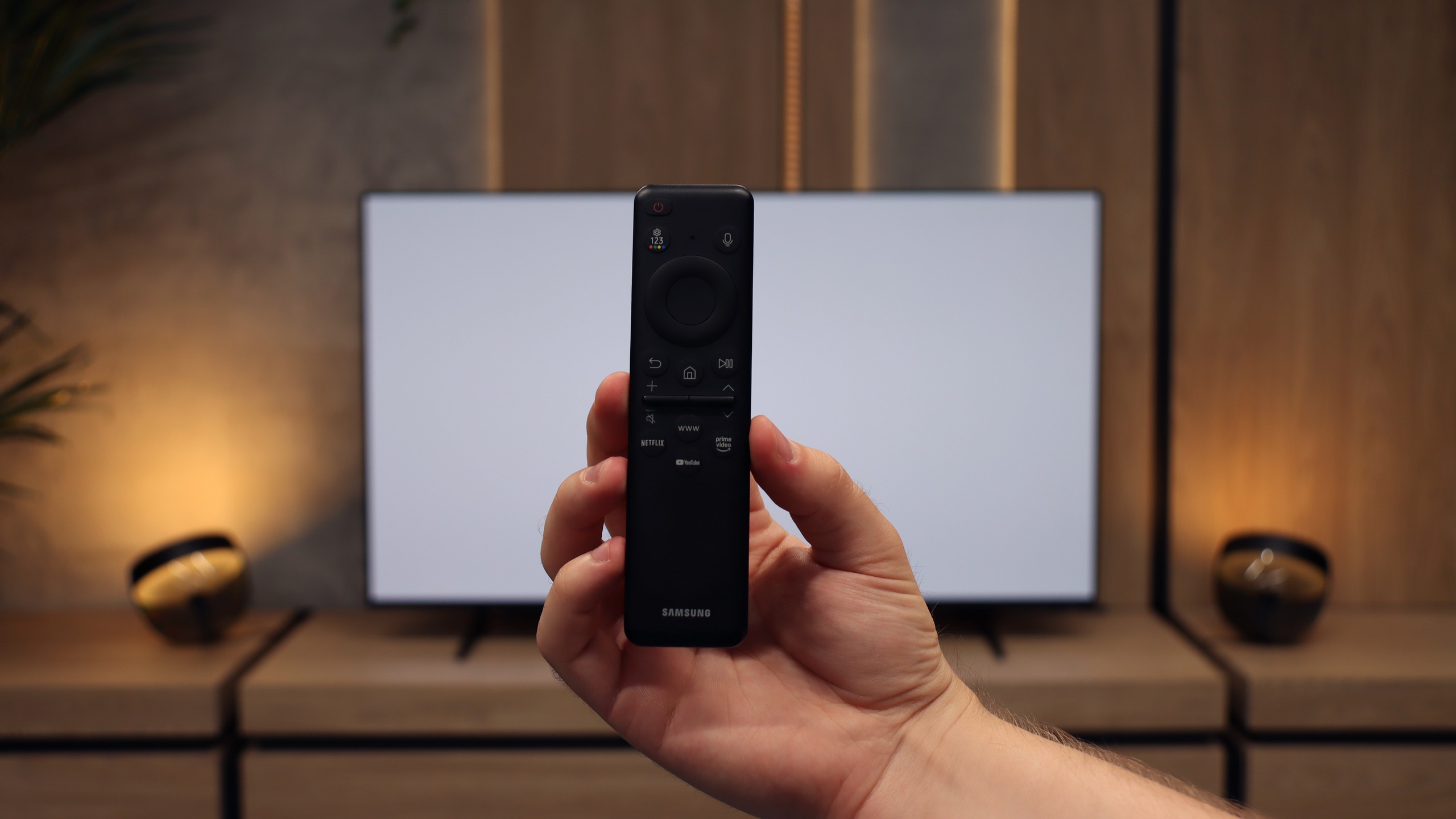
The S85F was not really designed with fans of classic television in mind. We won’t find the PiP (Picture-in-Picture) feature here (which is a bit surprising since Samsung usually offers it) or the ability to record programs to USB from built-in tuners. Fortunately, the basics are there – teletext and a clear channel guide – so it's perfectly adequate for ordinary, everyday viewing. The included remote, although simple and lacking a numeric keypad at first glance, allows for control of multiple devices. This means that when connecting, for example, a Canal+ decoder, you don’t need to have two remotes on the table – just the one from the TV is entirely sufficient.

SmartTV S85F: Tizen

The smart part is a completely different story. Tizen is one of the most advanced operating systems in televisions. It runs smoothly, supports all popular internet features – from screen mirroring, through AirPlay, to voice search. The strongest aspect of Tizen is its integration with the SmartThings app, which can serve as a control center for the entire home. Of course, like any closed system, Tizen has its limitations – such as a smaller app library compared to GoogleTV. However, looking at the current list of available applications, it’s hard to point out anything that might actually be missing.

Apps

9.3/10

9.3/10

OK
Disney_Plus
OK
Amazon_Prime_Video
OK
Player_TVN
OK
Polsat_Box_Go
OK
Canal_Plus_Online
OK
TVP_VOD
OK
Apple_TV_Plus
OK
SkyShowtime
OK
Rakuten
OK
CDA_Premium_Browser
OK
Spotify
No
Tidal
OK
Netflix
OK
YouTube
OK
HBO_MAX
No
Kodi
OK
Apple_music
OK
Eleven_sports
OK
Xbox Game Pass
OK
GeForce Now!
OK
Amazon Luna
OK
Boosteroid
No
Steam Link
OK
Disney_Plus
OK
Amazon_Prime_Video
OK
Player_TVN
OK
Polsat_Box_Go
OK
Canal_Plus_Online
OK
TVP_VOD
OK
Apple_TV_Plus
OK
SkyShowtime
OK
Rakuten
OK
CDA_Premium_Browser
OK
Spotify
No
Tidal
OK
Netflix
OK
YouTube
OK
HBO_MAX
No
Kodi
OK
Apple_music
OK
Eleven_sports
OK
Xbox Game Pass
OK
GeForce Now!
OK
Amazon Luna
OK
Boosteroid
No
Steam Link

Playing files from USB

9.1/10

9.1/10

Supported photo formats:

JPEG
Yes
Yes
HEIC
No
No
PNG
No
Yes
GIF
No
No
WebP
No
No
TIFF
No
No
BMP
Yes
Yes
SVG
No
No

Maximum photo resolution:

4 Mpix
Yes
Yes
6 Mpix
Yes
Yes
8 Mpix
Yes
Yes
10 Mpix
Yes
Yes
12 Mpix
Yes
Yes
16 Mpix
Yes
Yes
20 Mpix
Yes
Yes
24 Mpix
Yes
Yes
28 Mpix
Yes
Yes
32 Mpix
Yes
Yes

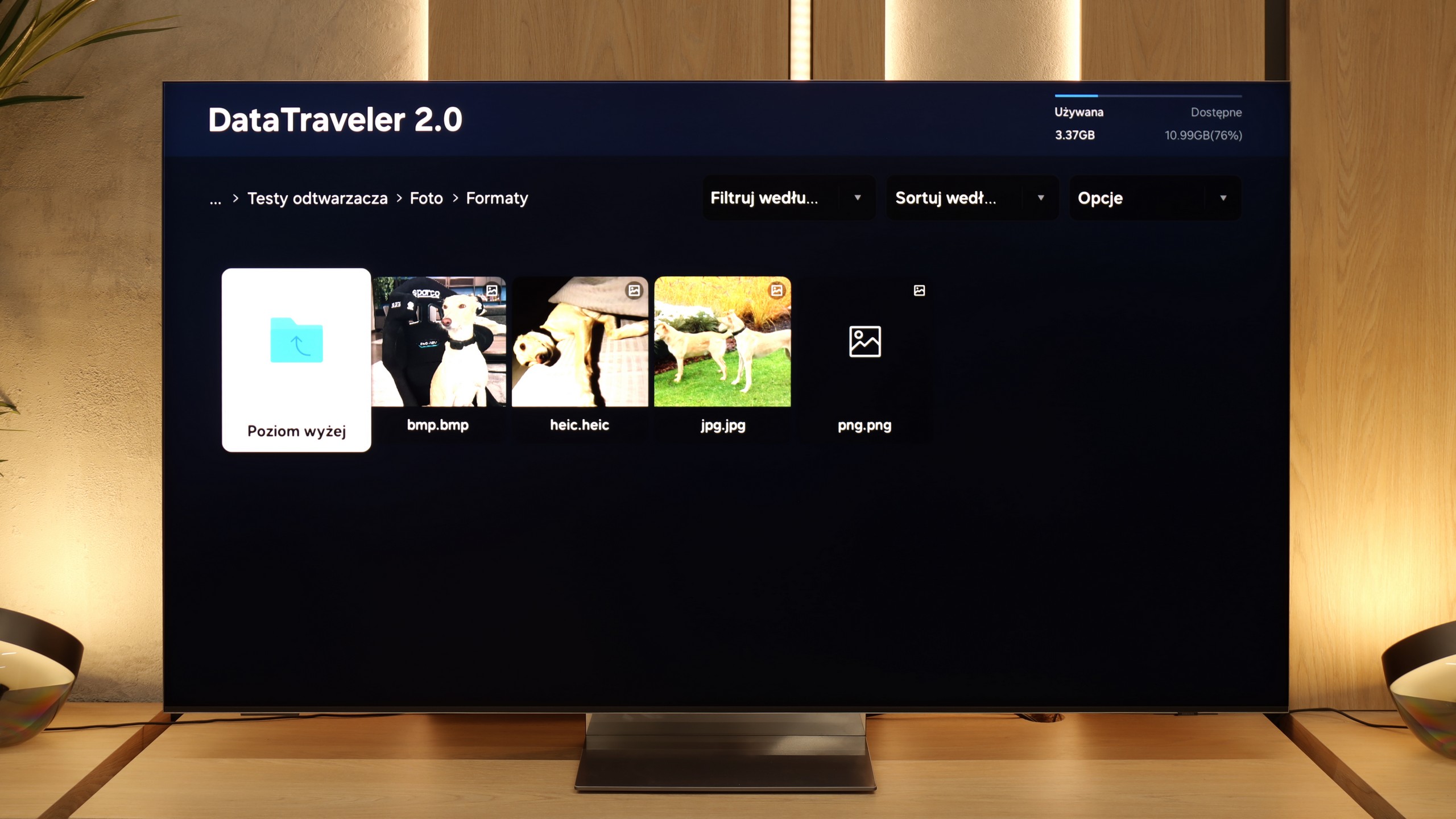
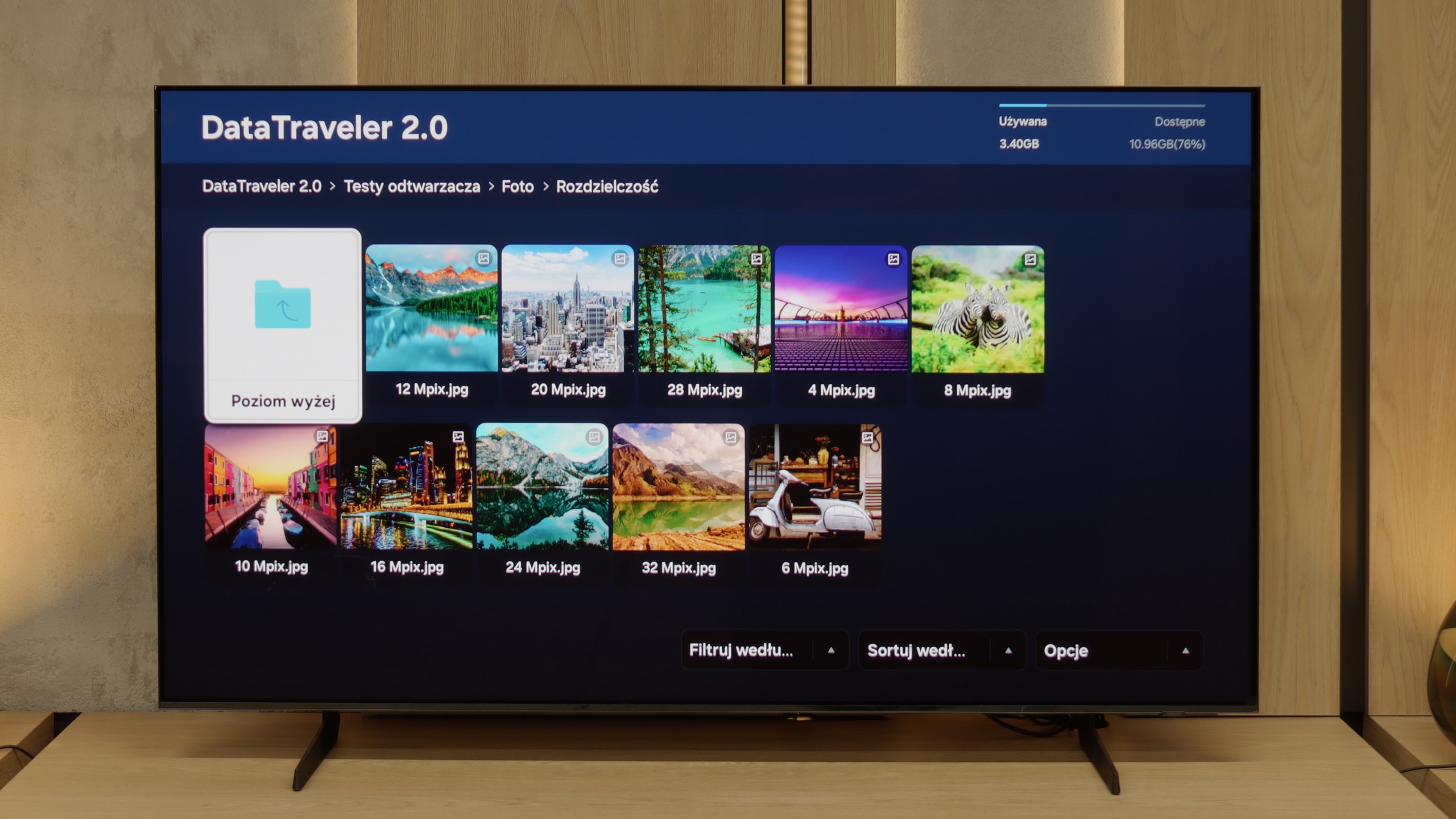
The QN990F handles playback of files from USB practically flawlessly. Movies, music, photos – most popular formats work without the slightest problems, and there’s no need to fiddle with additional players or devices. Only with less common picture formats can limitations arise. It's a pity that despite the manufacturer's claims, real support for HEIC files is lacking. The television recognizes them in the media browser, but in practice, it cannot open them.

The built-in media player in the S85F performs excellently – practically everything you put on a USB drive or disk will be played without the slightest issue. Small gaps only appear in the support for some less popular photo formats, but for the vast majority of you, this will be more than sufficient. So it can be confidently said that the built-in player is more than solid for home use.

Sound

7.9/10

7.2/10

  • Maximum volume
    -
    80dB
  • Dolby Digital Plus 7.1
    Yes
    Yes
  • Dolby True HD 7.1
    No
    No
  • Dolby Atmos in Dolby Digital Plus (JOC)
    Yes
    Yes
  • Dolby Atmos in Dolby True HD
    No
    No
  • DTS:X in DTS-HD MA
    No
    No
  • DTS-HD Master Audio
    No
    No

The QN990F can play really nicely. Considering such a slim design, the sound is surprisingly clear and detailed, so one can be satisfied for daily movie watching or gaming. Unfortunately, as is often the case with Samsung's ultra-thin TVs, it lacks bass - and you can feel it right away. Action scenes or stronger effects do not have the depth that a decent soundbar or home theater system would provide. However, it is worth noting the support for Dolby Atmos. This is currently the most popular surround sound codec in films and provides a much greater sense of immersion in the action. Unfortunately, as always with Samsung, support for DTS:X is missing. This format is indeed appearing less frequently in new productions, but it is still valued by fans of physical Blu-ray media.

Built-in speakers with a power of 20 W on paper may not impress much, but in practice, the S85F can surprise. It sounds really pleasant, and at times you can even catch a subtle bass, which is not at all obvious in this class of speakers. The TV does not support the DTS format, which unfortunately has become a standard for most manufacturers by 2025. A nice surprise, however, is the support for Dolby Atmos. Of course, talking about "spatial" sound with two speakers placed at the bottom of the enclosure would be a bit of an exaggeration, but it's good that Samsung offers such a feature in this model at all.

Sound Quality Test

No sound test video