Samsung QD-OLED S90D / S94D vs Samsung S85F (WOLED)

Direct comparison

Check the best price offer:

Samsung QD-OLED S90D / S94D
$1 397

Check the best price offer:

Samsung S85F (WOLED)
$3 999

S90DAT / S94DAT

Info

S85F / FAU / FAE

Info

Available screen sizes: 65”

Available screen sizes: 65”77”83”

Panel type: QD-OLED

Resolution: 3840x2160

System: Tizen

Model year: 2024

Complete the survey to find out the result

Panel type: WRGB OLED

Resolution: 3840x2160

System: Tizen

Model year: 2025

Complete the survey to find out the result

Overall rating

8.2

7.8

  • Movies and series in UHD quality

    8.5

    7.9

  • Classic TV, YouTube

    9.2

    8.6

  • Sports broadcasts (TV and apps)

    8.9

    8.5

  • Gaming on console

    9.6

    9.0

  • TV as a computer monitor

    8.6

    7.6

  • Watching in bright light

    5.3

    5.3

  • Utility functions

    7.4

    7.3

  • Apps

    9.3

    9.3

  • Sound quality

    7.4

    7.2

Advantages

  • Perfect black (OLED)

  • Great for 4K and HD content

  • Excellent for gamers - 144hz, HDMI 2.1, low input lag.

  • One of the best viewing angles on the market

  • High coverage of a wide color gamut

  • Above-average sound quality

  • Remarkable black and contrast

  • Great picture in SDR and HDR content after calibration

  • Very good motion smoothness – 120 Hz OLED panel

  • Rich set of features for gamers: VRR, Game Bar, low input lag

  • 4 HDMI 2.1 ports with full 48 Gbps bandwidth

  • Advanced and smoothly operating Tizen system

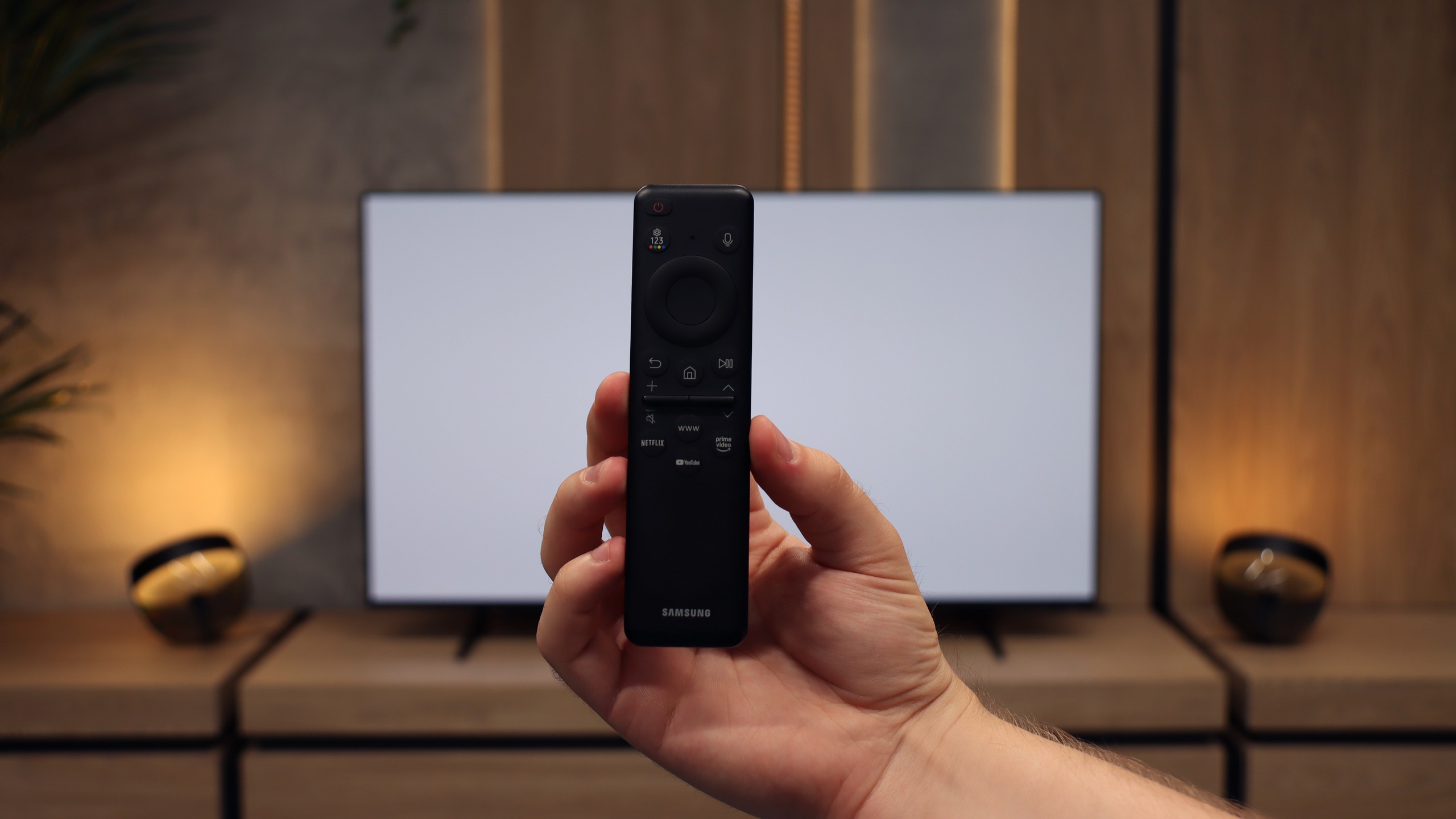
  • Solar Remote with multiple features

Disadvantages

No like
  • No support for DTS soundtracks (may be an issue with external player)

  • Black level issues during the day

Our verdict

The Samsung S90D TV is a model full of pleasant surprises, offering excellent picture quality and modern technologies. It is worth noting that depending on the size, the TV may differ in the type of OLED panel used. The tested model, equipped with a QD-OLED panel, delivers flawless black levels and intense, vivid colours. Thanks to its exceptional brightness, HDR effects make a huge impression, and watching dynamic scenes full of detail can completely capture the viewer's attention. This is the ideal TV for those who want to enjoy cinema at the highest level in their own home. Although the factory colour settings may require adjustments, after proper calibration the Samsung S90D reveals its full potential, competing with the best in its price category. This version stands out with the best viewing angles, allowing for a vibrant and colourful picture from any spot in the room. As a result, even when watching from the side, we do not lose quality, and every detail remains equally impressive. As for the operating system, Tizen makes everyday use of the TV, including handling applications and streaming services, enjoyable and hassle-free. Additionally, the support for AirPlay and access to the rich SmartThings ecosystem elevate the multimedia capabilities of the TV to a very high level.

The Samsung S90D also excels in motion fluidity, thanks to the 120Hz panel, which handles fast scenes flawlessly, eliminating blurring. Watching sports or dynamic films on this TV is pure pleasure. For gamers, the TV offers full support for HDMI 2.1 and low input lag, making it a great choice for console gaming, providing smooth and responsive experiences. Although the Samsung S90D has many advantages, it is worth mentioning a few drawbacks. In bright rooms, the black levels on the QD-OLED panel do not look as perfect as in dark conditions – they lose depth, which may be noticeable when watching during the day. Additionally, the readability of fonts could be better – some text displayed on the screen is less sharp compared to competing models. Nonetheless, the 65" Samsung S90D is a TV that combines excellent picture quality, motion fluidity, and innovation. It is one of the best options in the premium segment, meeting the expectations of both cinema lovers and gamers.

The Samsung S85F in the tested version with a WOLED panel is a television that should primarily be evaluated through the lens of its price. As expected from organic technology, it offers perfect, almost ideal black and infinite contrast in cinematic conditions. This feature alone will impress most buyers, especially those transitioning from any LCD television. However, it cannot be denied that in a direct comparison with the 55-inch QD-OLED variant, the WOLED version shows some weaknesses. It is slightly darker, especially in bright full-screen scenes, and offers noticeably worse viewing angles. Nevertheless, the rest of its advantages remain intact. Motion fluidity is at a high level – the 120 Hz panel handles both sports and action movies excellently. And if someone plans to connect a console to the S85F, they will receive a complete set of advantages: low input lag, variable refresh rate, Game Bar, and full HDMI 2.1 support. In everyday use, we were assisted by the Tizen system – closed but extremely refined. It reacts quickly, offers a rich selection of applications, and add-ons like AirPlay and voice control make it hard to find something more complete in this category. Indeed, the S85F in the WOLED version is not a perfect television and yields to its sibling with a QD-OLED panel. However, its greatest weapon is its absurdly low price. The cost of purchase is almost laughable in relation to the capabilities offered. It is still a great and, most importantly, affordable OLED that will be one of the best and most cost-effective televisions on the market for a vast number of users.

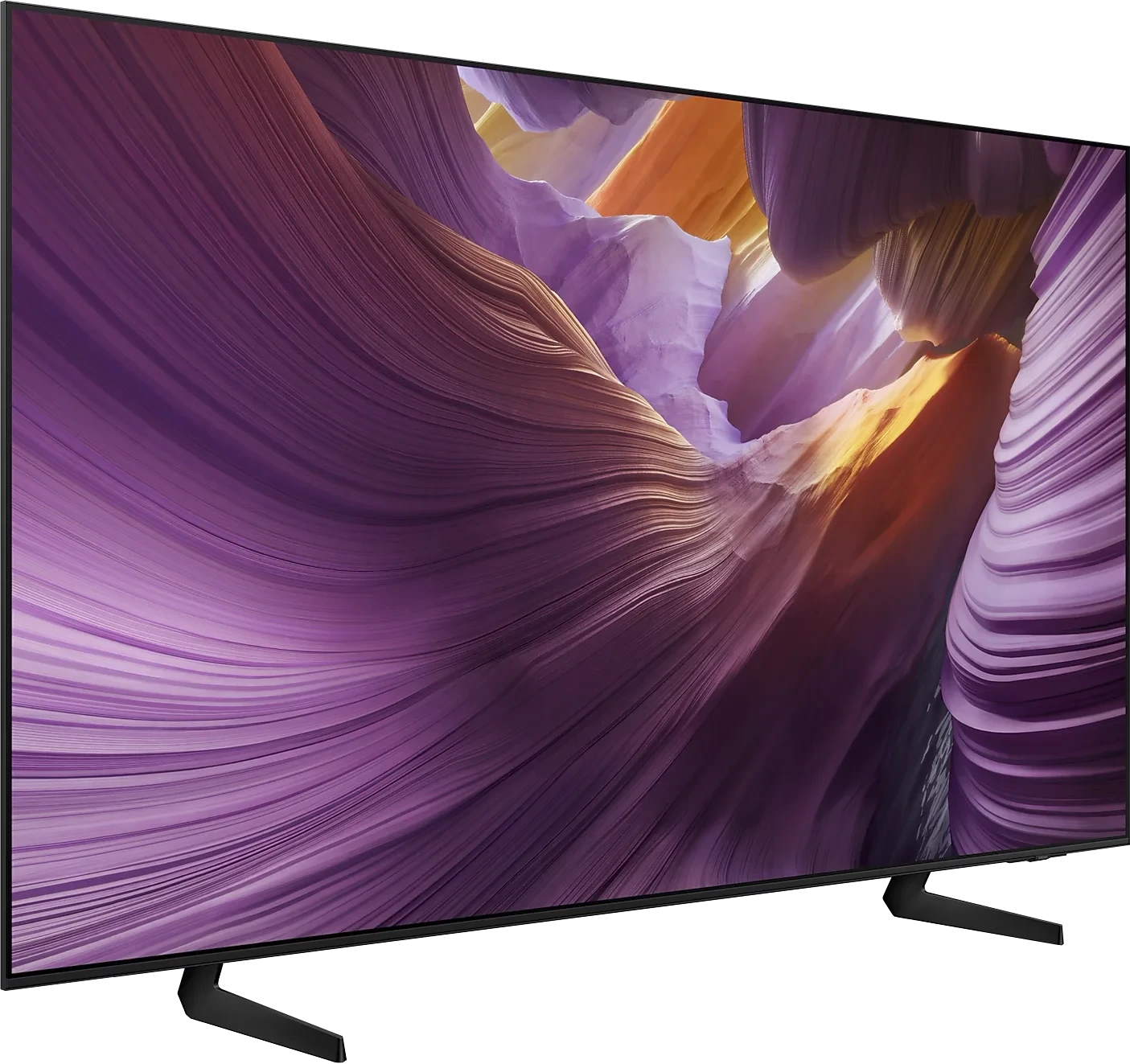
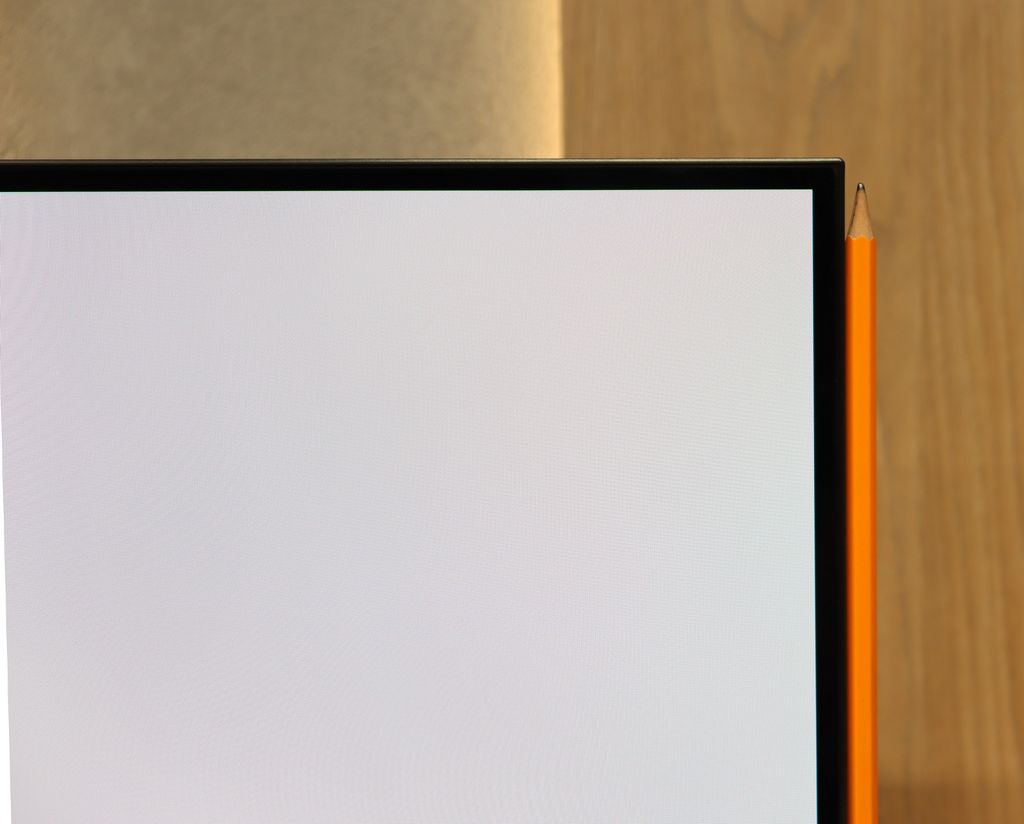
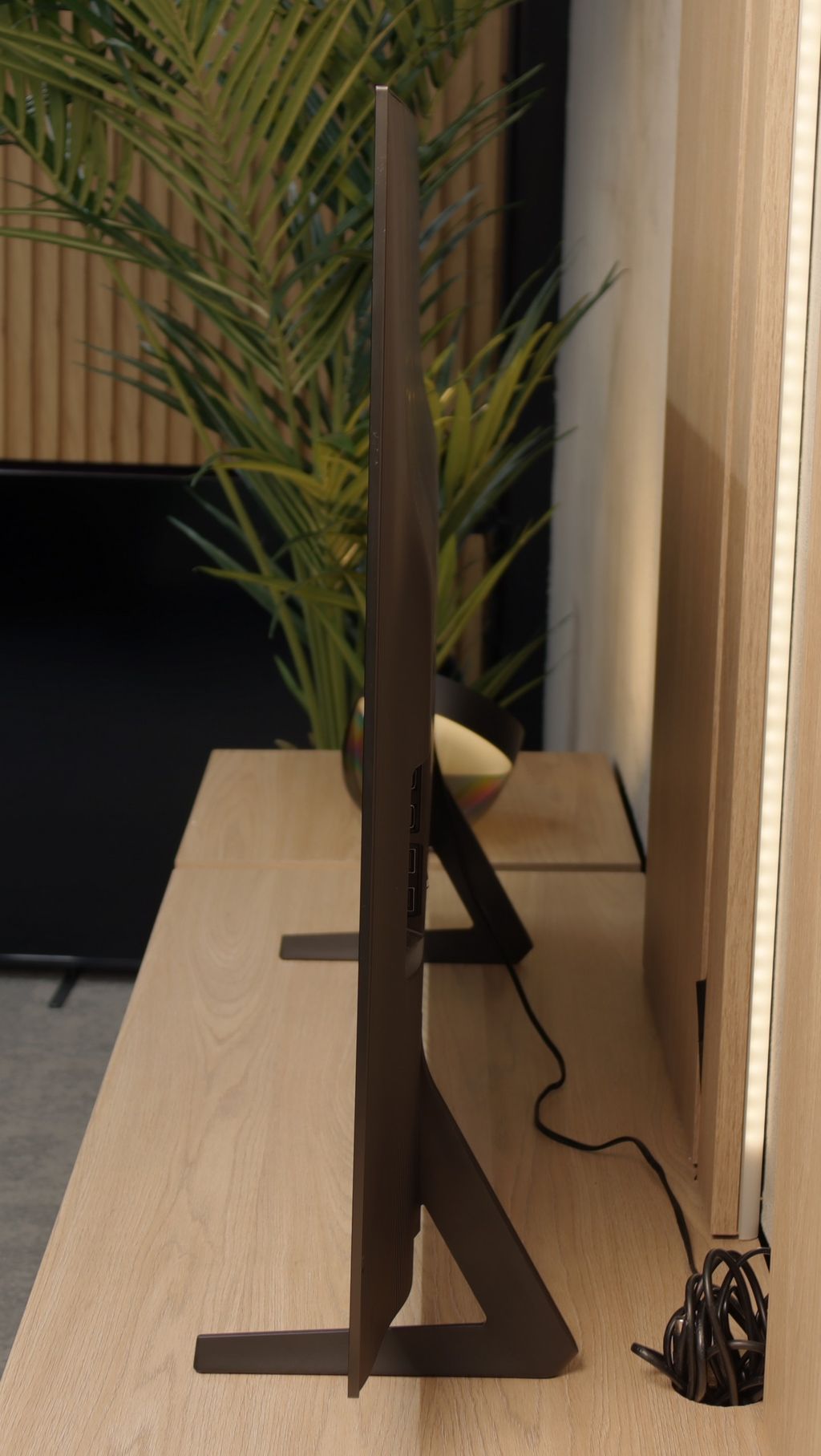
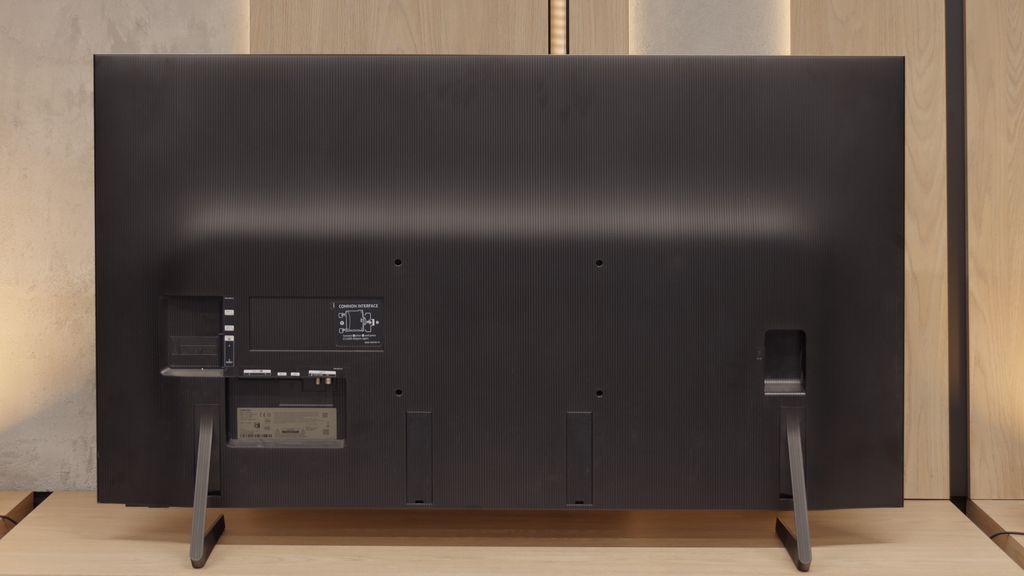
TV appearance

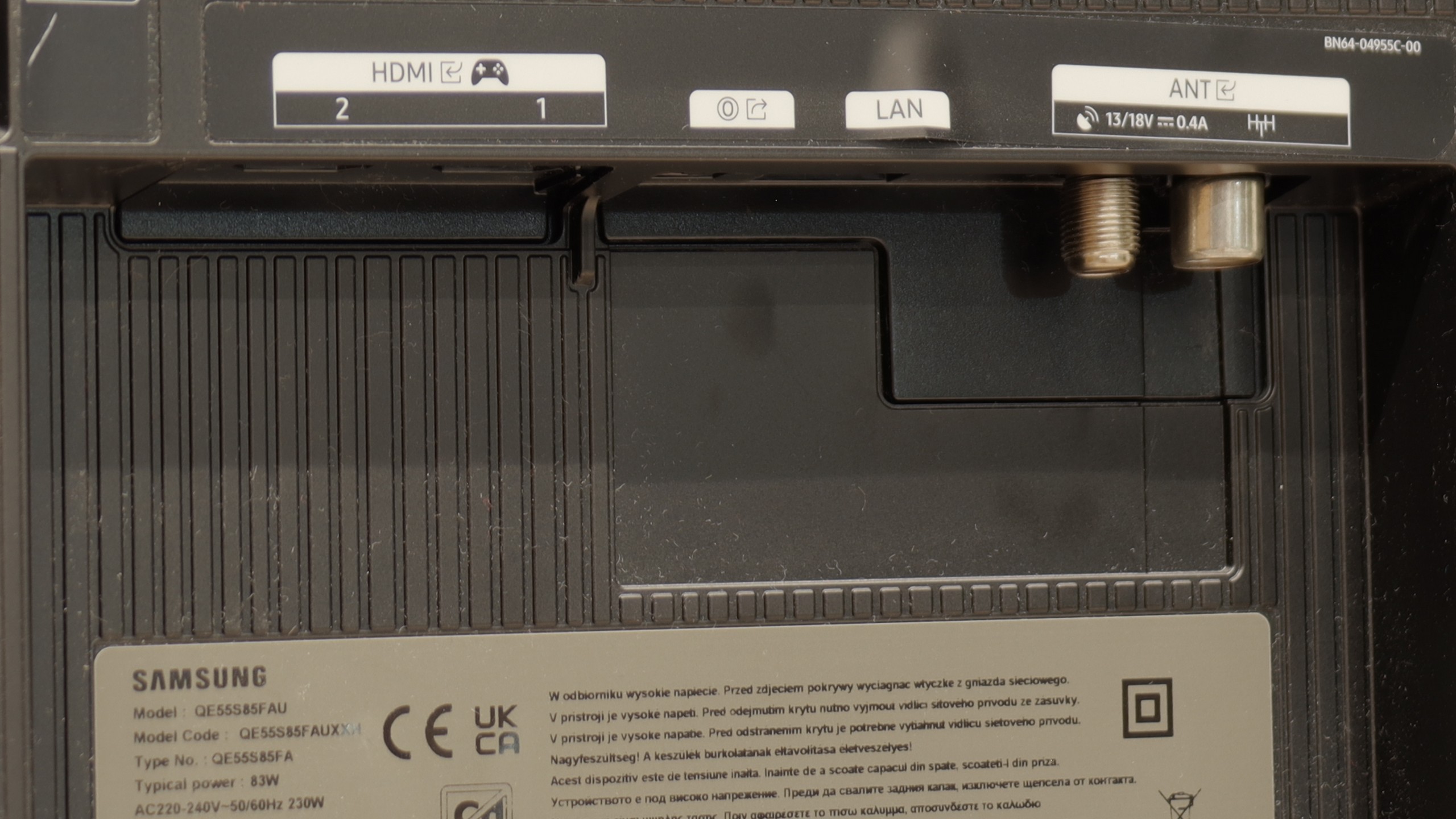
HDMI inputs
0 x HDMI 2.0, 4 x HDMI 2.1 (48Gbps)
Other inputs
Toslink (Optical audio)
Outputs
Toslink (Optical audio), eARC (HDMI), ARC (HDMI)
Network Interfaces
Wi-Fi 2.4GHz, Wi-Fi 5GHz, Ethernet (LAN) 100Mbps
Build quality
Premium
Good
Stand type
Central
Legs
Bezel color
Graphite
Graphite
Stand
Fixed
Base adjustment
Accessories
Stand
Stand

Contrast and black detail

10/10

10/10

Contrast:

Review Samsung QD-OLED S90D / S94D Contrast and black detail

Result

:1

Review Samsung QD-OLED S90D / S94D Contrast and black detail

Result

:1

Review Samsung QD-OLED S90D / S94D Contrast and black detail

Result

:1

Review Samsung QD-OLED S90D / S94D Contrast and black detail

Result

:1

Review Samsung QD-OLED S90D / S94D Contrast and black detail

Result

:1

Review Samsung S85F (WOLED) Contrast and black detail

Result

:1

Review Samsung S85F (WOLED) Contrast and black detail

Result

:1

Review Samsung S85F (WOLED) Contrast and black detail

Result

:1

Review Samsung S85F (WOLED) Contrast and black detail

Result

:1

Review Samsung S85F (WOLED) Contrast and black detail

Result

:1

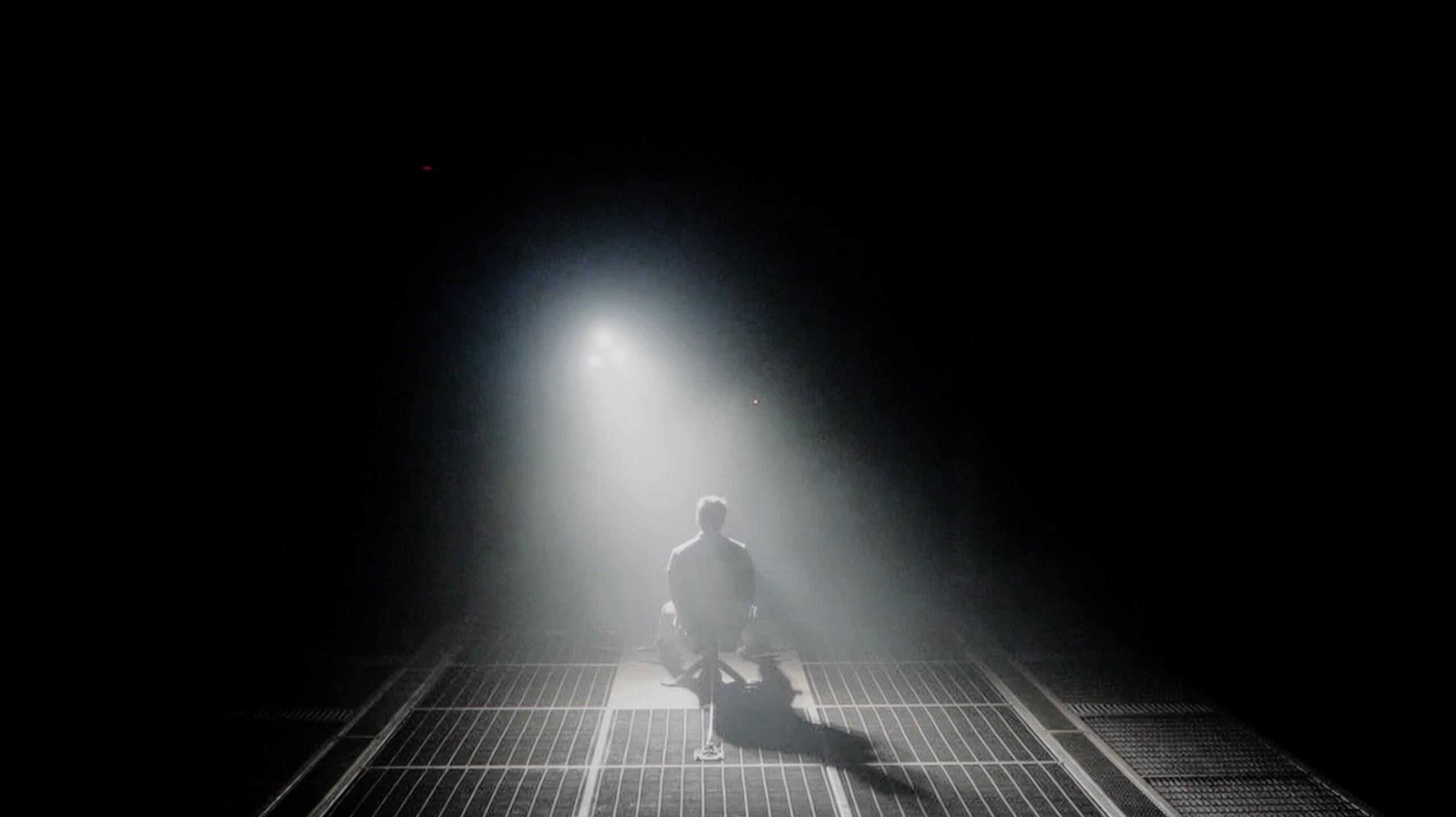
Halo effect and black detail visibility:

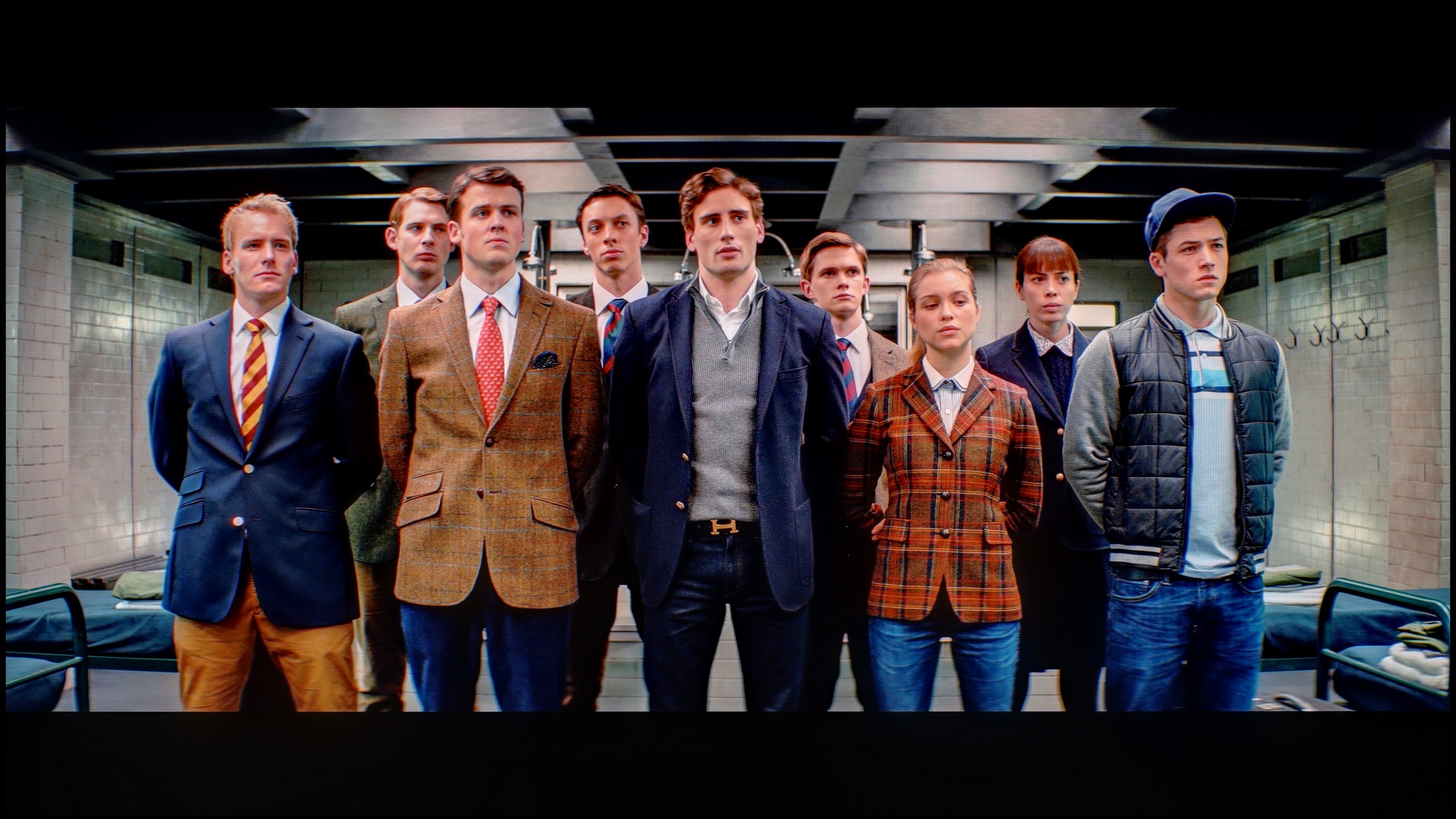
Check the visibility of bright lights on a dark background. Mini-LEDs often struggle with this. The photo does not compare black levels – that’s what the video below is for.

The video accurately shows differences in contrast and black levels between TVs, as well as potential issues: halo around bright objects or Mini-LED zone operation visible as brightness jumps.

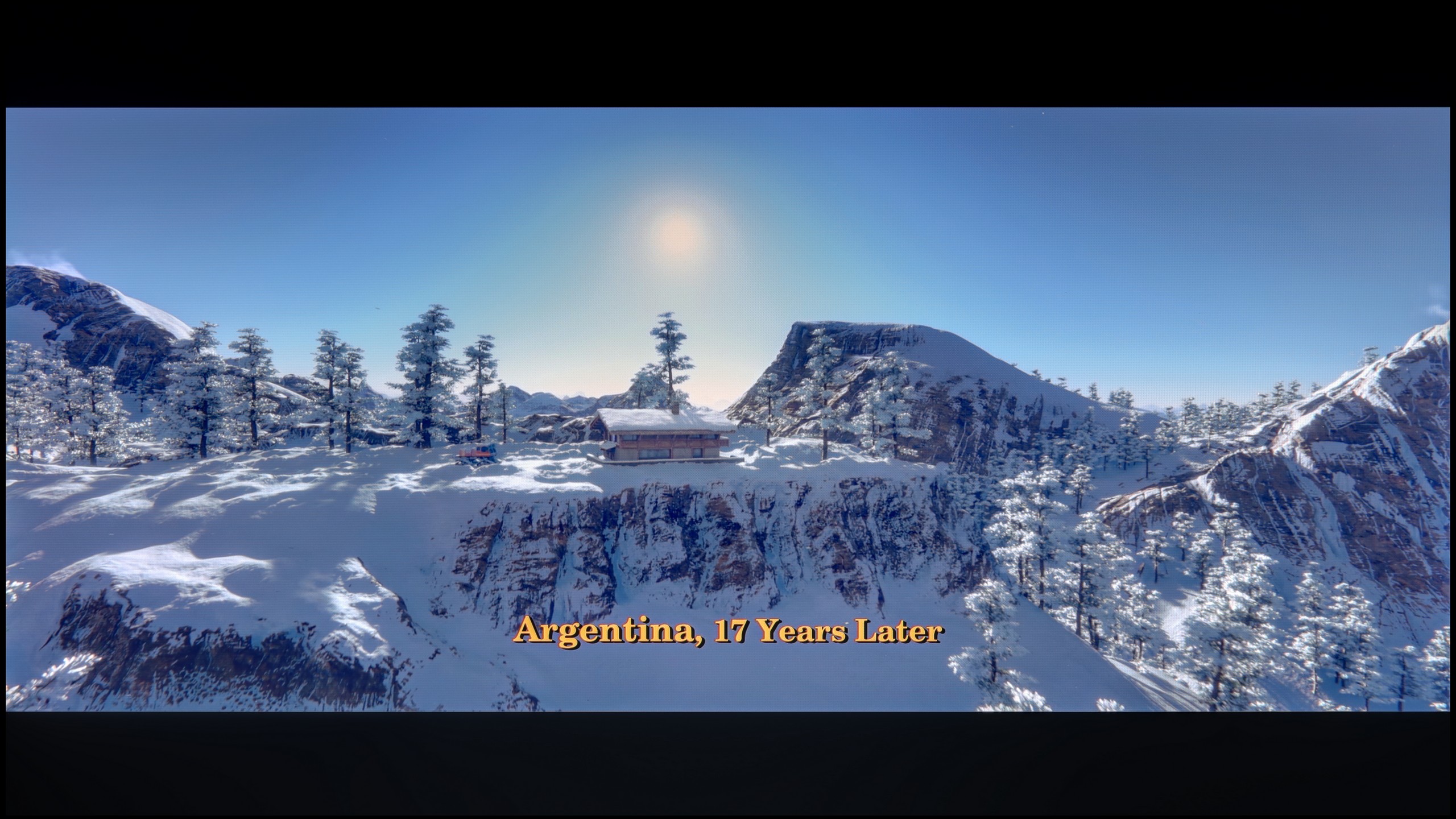
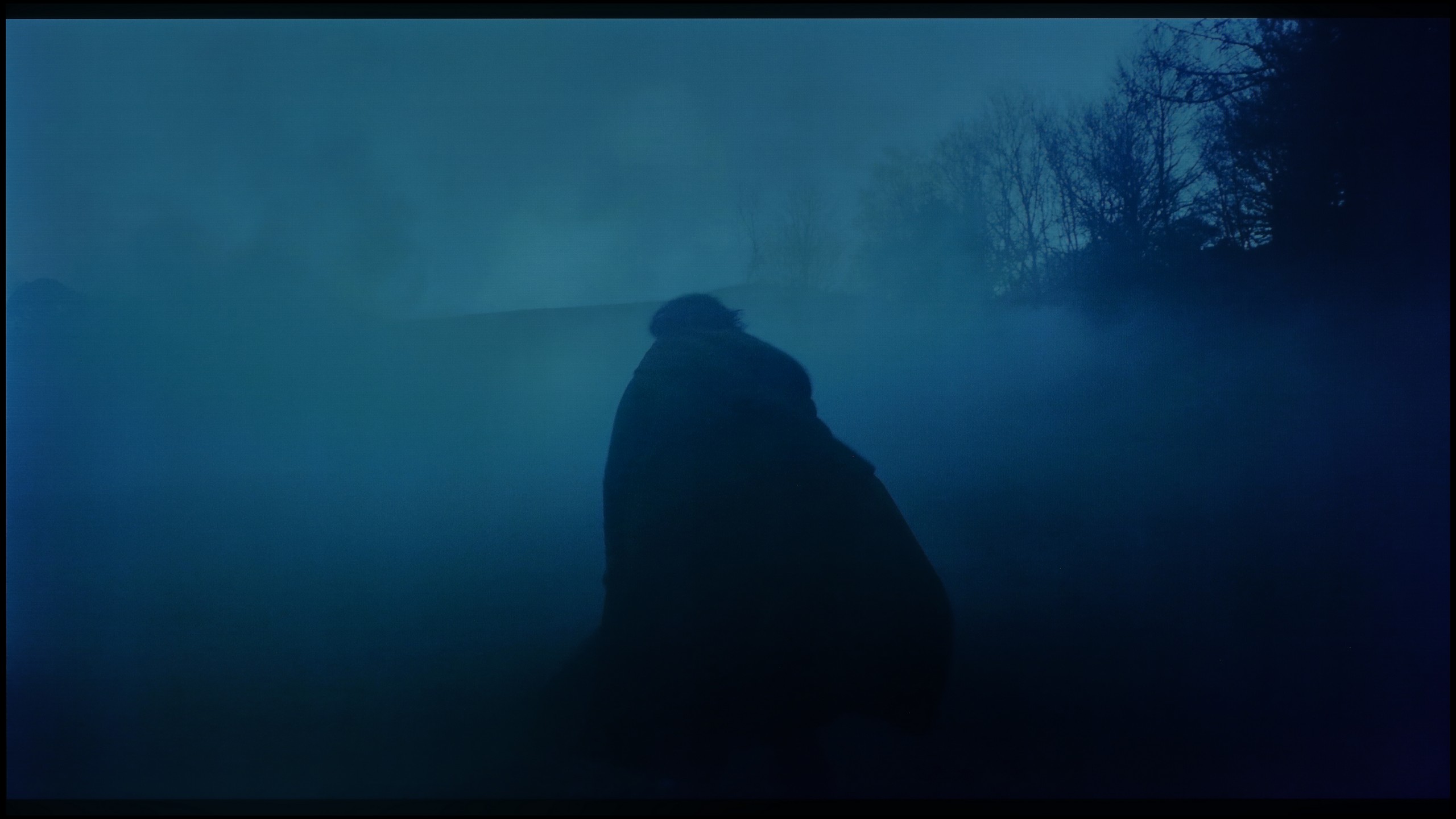
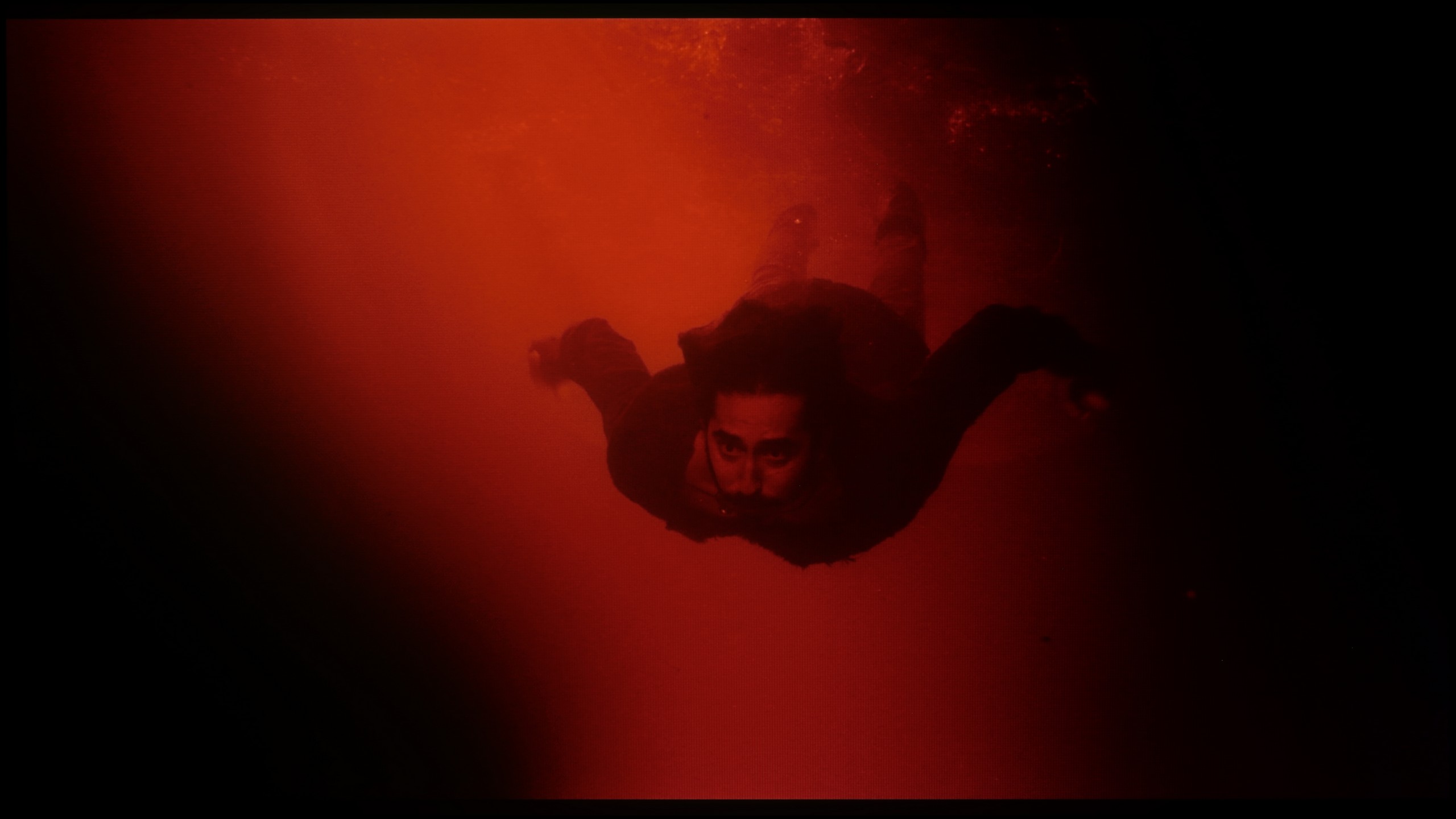
The Samsung S90D, thanks to the use of a QD-OLED panel, offers excellent contrast, which is one of its greatest advantages. In QD-OLED technology, each pixel emits its own light, allowing for perfect blacks and precise detail reproduction in dark scenes. Unlike traditional LCD panels with backlighting, where blacks often appear grayish, the turned-off pixels in QD-OLED remain completely black. This allows the television to offer a dynamic, realistic image with exceptionally deep contrast. For example, in scenes from "Oblivion," the Samsung S90D beautifully captures the intensity of the lantern lights, highlighting details in the bright parts of the image, and in "The Revenant," it perfectly portrays the figure against a deep black forest scene, which underscores the impressive contrast reproduction. It is worth noting that in the Samsung S90D model, only this specific size is equipped with a QD-OLED panel produced by Samsung Display, distinguishing it from other versions. Nevertheless, regardless of the type of panel used, the black in this television will always be perfectly black thanks to OLED technology, which turns off pixels to achieve absolute black. This means that in categories such as black and contrast, the S90D offers excellent picture quality regardless of the type of panel.

When it comes to black levels and contrast, we must be honest – this is the area where the differences between QD-OLED and WOLED panels are virtually nonexistent under typical cinematic conditions. We can confirm with full responsibility: the Samsung S85F equipped with a WOLED panel achieves incredible and unmatched results in this regard. Regardless of the scene being watched – whether it's a dynamic action movie or a dark thriller – we get infinite contrast and perfect black levels that we expect from any OLED television. These are results that can impress even the most demanding cinema lovers. It is worth emphasizing that such deep, absolute black can only be offered by televisions with organic panels. In film conditions, as we see in our measurements, the luminance level of black is zero. So, if you dream of a screen that can "turn off" the light in a scene just as effectively as an art-house cinema in a dark room, we are pleased to state that the S85F, also in the WOLED variant, is one of those televisions.

HDR effect quality

6.6/10

5.9/10

Supported formats
HDR10, HDR10+, HLG
HDR10, HDR10+, HLG
Color gamut coverage
DCI P3: 99.0%, Bt.2020: 76.0%
DCI P3: 97.0%, Bt.2020: 70.7%

Luminance measurements in HDR:

Review Samsung QD-OLED S90D / S94D Brightness measurement

Result

833 nit

Review Samsung QD-OLED S90D / S94D Brightness measurement

Result

904 nit

Review Samsung QD-OLED S90D / S94D Brightness measurement

Result

913 nit

Review Samsung QD-OLED S90D / S94D Brightness measurement

Result

927 nit

Review Samsung QD-OLED S90D / S94D Brightness measurement

Result

478 nit

Review Samsung S85F (WOLED) Brightness measurement

Result

672 nit

Review Samsung S85F (WOLED) Brightness measurement

Result

673 nit

Review Samsung S85F (WOLED) Brightness measurement

Result

718 nit

Review Samsung S85F (WOLED) Brightness measurement

Result

670 nit

Review Samsung S85F (WOLED) Brightness measurement

Result

276 nit

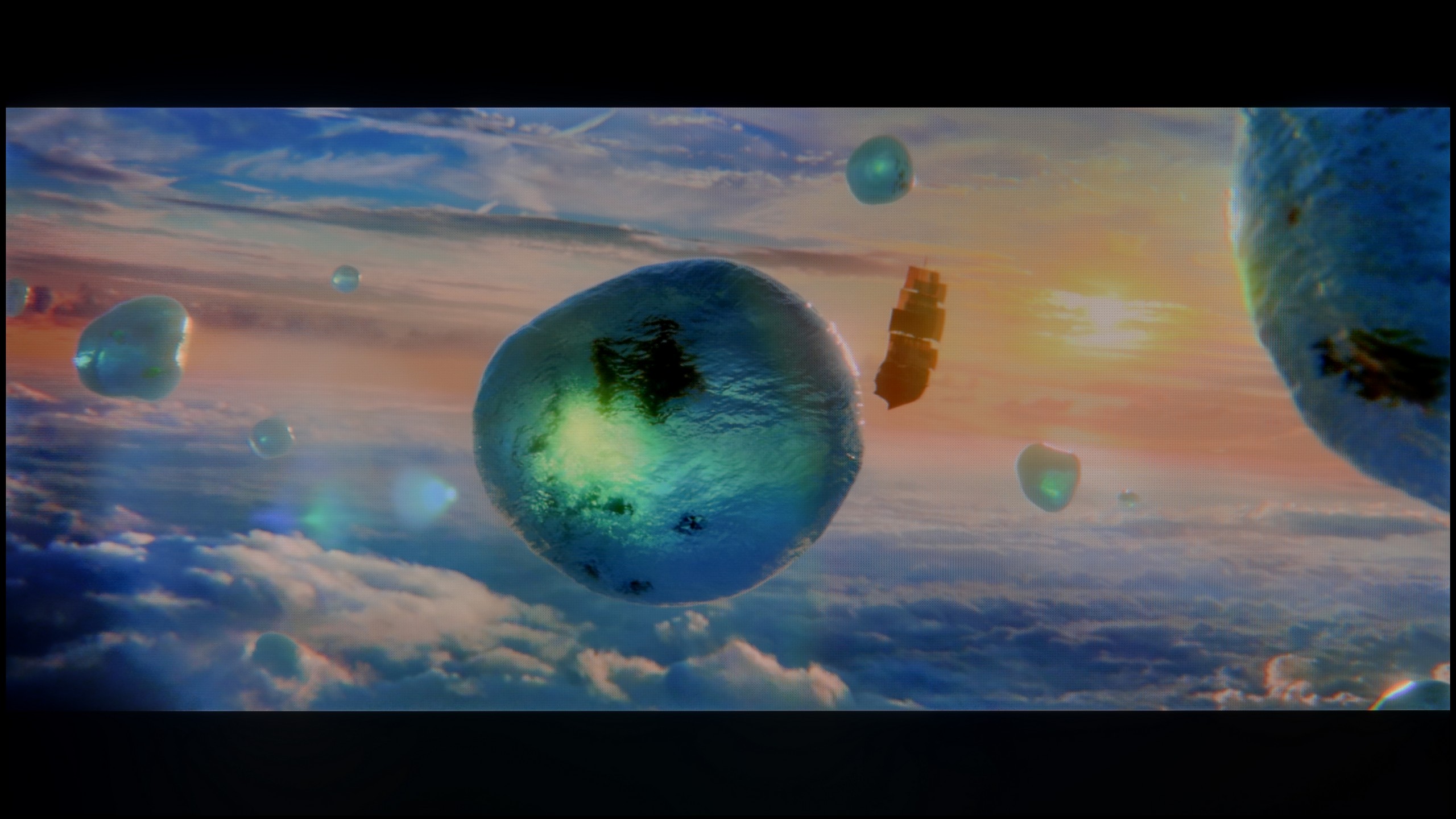
Scene from the movie “Pan” (about 2800 nits)

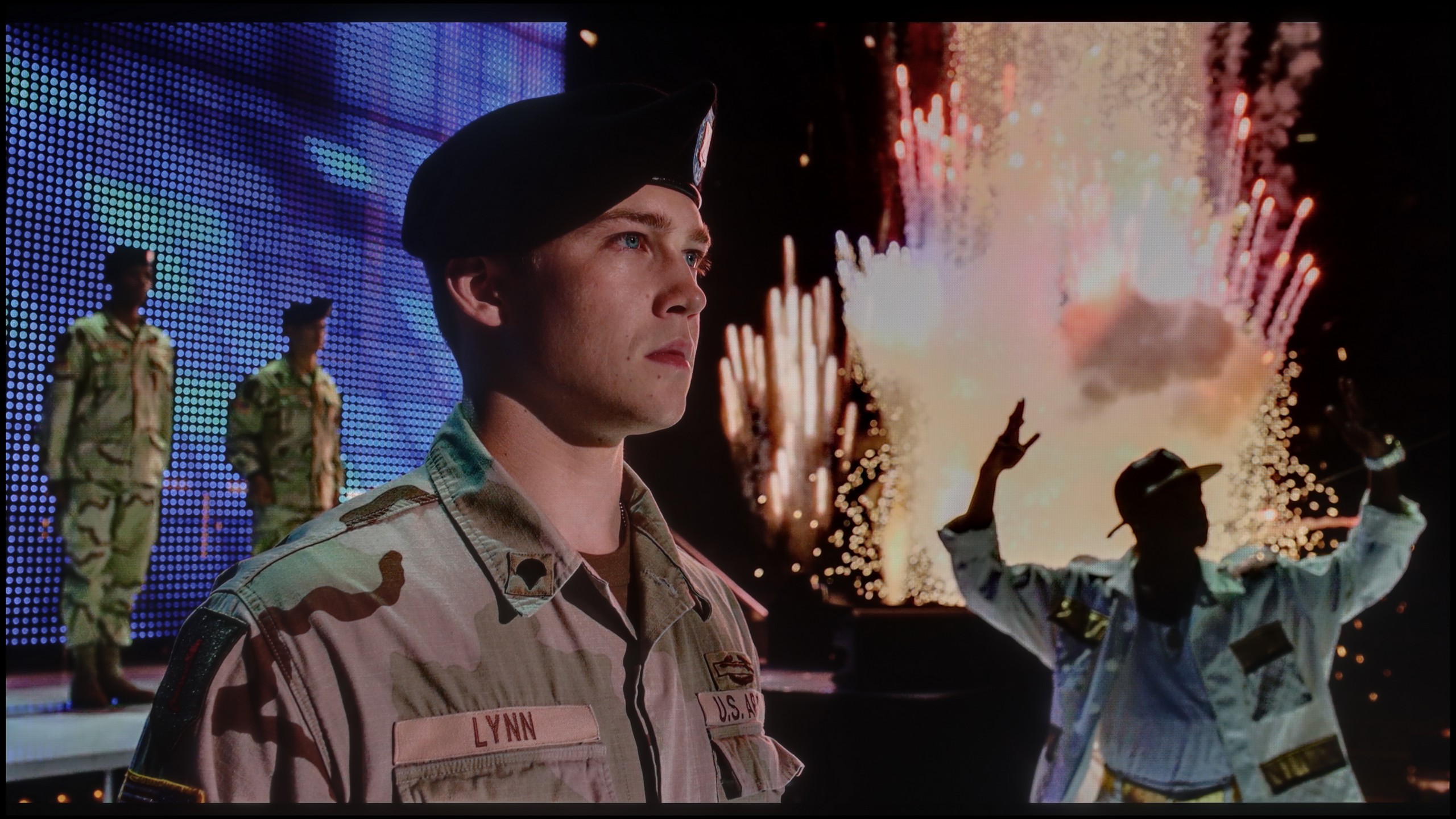
Scene from the movie “Billy Lynn” (about 1100 nits)

The photos show two HDR10 movies. 'Pan' is one of the brightest productions ever made, while 'Billy Lynn' (soldier) has brightness typical of streaming (Netflix, Prime, HBO MAX). Notice the intensity of effects and detail in whites.

Static HDR10

The photos present the visibility of white details in various HDR formats. They do not show brightness differences between TVs (these can be compared in the previous gallery).

Dynamic: HDR10+

Dynamic: HDR10+

The photos present the visibility of white details in various HDR formats. They do not show brightness differences between TVs (these can be compared in the previous gallery).

HDR luminance chart:

Samsung S85F (WOLED)

Samsung QD-OLED S90D / S94D

Luminance of RGB colors

In the HDR effect category, the Samsung S90D delivers remarkable performance. On the luminance graph for up to 10% of the window, the television surpasses the 1000 nits mark, which is a notable achievement. However, in the film scenes we tested, these values were slightly lower. In scenes with fullscreen sun glare the brightness drops to about 500 nits, but this is still considered a very good result. It is also worth noting that this model stands out due to its very high colour gamut coverage, thanks to the QD-OLED panel, giving it an edge over televisions with WOLED panels, which cannot achieve such a wide spectrum of colours.

For most of the time, let's say in 90% of film scenes, viewers won't see practically any difference between the S85F versions. When small but very strong light points appear on the screen – a lantern in a dark alley, a gunshot, the sun breaking through the clouds – this WOLED panel (like the smaller S85F) performs wonderfully. Our measurements showed peak brightness at around 750 nits. We can confidently state: this is an excellent result that guarantees fantastic HDR effects. The problem arises in a very specific, uncomfortable situation for any OLED. We're talking about the moment when the entire screen has to shine at full power brightly. Examples include a slide with a white background, a ski jump scene, or our test sequences (5) from the movie The Meg. And here, unfortunately, the results diverge quite significantly to the detriment of the WOLED panel variant. Our measurement equipment was able to measure a maximum of about 250 to 300 nits of brightness in such conditions. Just to be clear: the same model on a QD-OLED panel in the same test is almost twice as bright. The second issue: colors. And here we also have to be honest – QD-OLED has a design advantage. Why? It’s simple. QD-OLED creates colors from three components (red, green, and blue) and does not need an additional white subpixel. The WOLED panel we are testing uses this white subpixel mainly to boost overall brightness. The effect is that QD-OLED is able to show a slightly wider color palette, and the colors are a bit "cleaner." But let’s be clear: it’s not that the colors on this WOLED panel are bad! On the contrary, they are actually very good. Coverage of the DCI-P3 film palette at 97% and 71% for the wider BT.2020 palette is still a high standard. We just have to honestly admit that this few percent advantage in color coverage is on the side of QD-OLED technology and may be noticeable in very specific moments.

Factory color reproduction

7.1/10

5.5/10

This gallery shows how colors change after professional TV calibration. If you notice the difference, we recommend ordering this service at SkalibrujTV.com.

Factory Mode

After calibration

The Samsung 65" S90D with a QD-OLED panel has been tested in Filmmaker Mode, which the manufacturer has used for years to deliver optimal picture settings. In this mode, the TV offers a very good image, but there are some shortcomings worth noting.

In terms of white balance, viewers may notice a red dominance in HD content, which can make skin tones appear unnatural and create a warm overall scene, potentially affecting immersion. This issue becomes more apparent in scenes where subtle colour differences are important. The same effect can be observed in 4K HDR content, though the red shift is less pronounced. This shift can prevent certain details and colours from being fully realised, diminishing the naturalness of the image.

As for contrast, the gamma performance is decent but still has some issues. The gamma values fall short of the reference level of 2.4, resulting in bright areas of the image appearing washed out and dark areas lacking detail. This limitation can make certain scenes feel less dynamic and impact the depth and richness of the picture. However, the EOTF curve for contrast in 4K HDR content performs well, showing the TV's ability to handle differences in brightness. That said, these values still fall slightly below the ideal range, indicating room for further optimisation.

Overall, the Samsung S90D in Filmmaker Mode offers solid colour reproduction, but some adjustments are needed to fully unlock its potential, particularly with different types of content.

When it comes to factory color reproduction, our test sample in SDR mode suffered from a slight deficiency in red and yellow color. This resulted in a subtle yellowish tint visible in the shades of white. However, this is not the biggest problem with the S85F. Similar to the QD-OLED panel variant, the biggest issue with this model is the way it presents HDR content. When we look at the EOTF curve graph, it is easy to see that the television has quite significant problems with overly brightening the image. This causes the final picture in many scenes to become very unnatural.

Color reproduction after calibration

8.9/10

9/10

The photos show how movies look on the TV. Pay attention to black detail visibility, colors, and shadow tint.

The photos show how movies look on the TV. Pay attention to black detail visibility, colors, and shadow tint.

The quality improves more than anticipated after calibrating the S90D television in movie mode. The white balance for HD and 4K HDR content has been fine-tuned to near perfection. While minor imperfections are still noticeable, they are subtle enough not to significantly impact the overall picture quality. Colours have become more cohesive, promoting a natural reproduction of details, particularly in scenes where precise colour representation is essential. It’s important to note that this particular model, in this size, uses a QD-OLED panel, which offers a broader colour gamut compared to other versions of this model equipped with a WOLED panel.

The contrast has also seen a marked improvement. After calibration, the gamma chart is much closer to the expected curve, resulting in a better balance between the bright and dark areas of the image. The EOTF curve, which previously indicated issues with overexposed scenes, now shows significantly better results. This improvement allows for greater preservation of details in the brighter parts of the image, particularly in HDR content.

After calibrating in Filmmaker mode, we managed to eliminate most of the unwanted effects. In SDR content, the television performs exemplary, and its color reproduction errors do not exceed a value of 2, which is an excellent result. A bit worse, although still very good, are the HDR quality contents. While we were able to eliminate a significant unnaturalness in the image caused by too high a positioning of the EOTF curve, the most discerning observers may notice that it is not perfectly aligned. It runs slightly below the reference curve, which would suggest that the S85F has slight issues showing all the details in the image. We must point out right away that it is highly unlikely that an average viewer would notice any shortcomings in the image. The final effect after calibration is rated as exemplary.

Smoothness of tonal transitions

8.6/10

7.3/10

These are selected scenes that show smooth tonal transitions from one color to another. If you see distinct banding, it’s the TV panel’s fault.

These are selected scenes that show smooth tonal transitions from one color to another. If you see distinct banding, it’s the TV panel’s fault.

These are selected scenes that show smooth tonal transitions from one color to another. If you see distinct banding, it’s the TV panel’s fault.

These are selected scenes that show smooth tonal transitions from one color to another. If you see distinct banding, it’s the TV panel’s fault.

In the category of tonal transition fluidity, the S90D delivers significantly better results than its WOLED counterpart. Thanks to the QD-OLED panel, this model offers more consistent and natural transitions between colours. While some minor imperfections were observed during testing, they are subtle enough not to disrupt the viewing experience. When watching various video materials, the tonal transitions are smooth and harmonious, allowing viewers to enjoy the depth and details of the image without distracting interruptions. In scenes where colour changes are especially important, such as in landscapes or dynamic sequences, the S90D excels, accurately capturing subtle shade variations with impressive precision.

Another issue with the S85F version featuring a WOLED panel, noticeable compared to the QD-OLED variant, is the quality of smoothness in tonal transitions. In very bright moments, it is evident that the blending of colors is not perfect and can sometimes be spotted with the naked eye. Although the overall quality of gradients is still good, certain issues with the panel produced by LG Displays are visible here, which are not as apparent in competing panels (QD-OLED).

Image scaling and smoothness of tonal transitions

8/10

7.5/10

Image without overscan on the SD signal
No
No
Smooth transition function
OK
OK

Smooth transition function

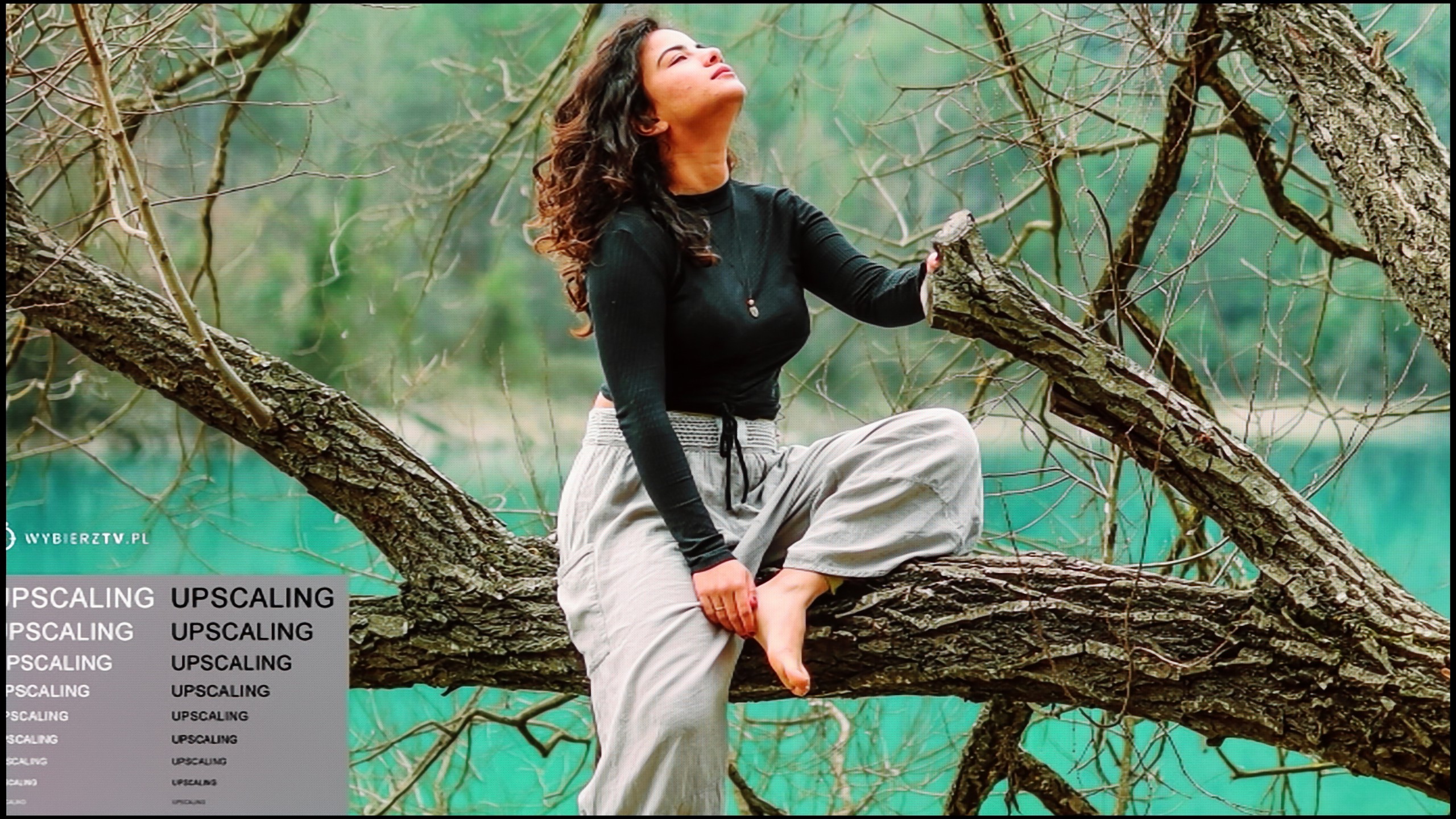
The match photo shows how the TV smooths weak tonal transitions in low-quality video.

Image scaling SD (576i)

The model photo shows how it handles upscaling of SD material.

The television excels at smoothing tonal transitions, allowing colours to blend seamlessly, resulting in a natural and fluid image. The built-in noise reduction feature can further enhance these transitions, useful in certain situations. However, it is important to note that activating this option may overly smooth out the desired film grain structure, potentially compromising the authenticity and atmosphere of the image. Therefore, caution is advised when using this feature, to maintain the character and depth of the content.

The S90D model handles lower-resolution materials effectively, as demonstrated in the displayed image. The model's silhouette remains sharp and naturally reproduced, with fine details preserved. Additionally, the branches of the trees are well-defined, free from any visible jagged edges that might otherwise degrade the image quality. Thanks to efficient scaling, even lower-resolution content appears attractive on the screen, which is sure to please users who rely on a variety of content sources, such as standard cable or antenna television.

The processing of tonal transitions (gradients) in the S85F is at a high level. The television effectively handles posterization (the "stepping" effect of colors), even with heavily compressed materials, such as from streaming services. However, using this feature requires making a certain compromise. We noticed that the noise reduction algorithm is quite aggressive – even at the lowest setting, it can eliminate natural film grain, which for many viewers is part of the film's aesthetics. The "Standard" setting seems to be the golden mean, not causing visible loss of important details, so we can recommend it. However, we advise against using the "High" level, which removes not only noise but also desired details, such as texture or structure of objects on the screen.

The scaling (upscaling) process of lower resolution content works very well in the S85F. The image is sharp and clear. The only minor imperfection we observed is occasional, slight aliasing on the edges. The television also still exhibits characteristics typical of this manufacturer, such as active "overscan" (slight magnification of the image). This should be kept in mind, especially when watching older materials, as it may result in a minimal cropping of the original frame.

Blur and motion smoothness

8.5/10

8.5/10

Maximum refresh rate of the panel
144Hz
120Hz
Film motion smoothing option
OK
OK
Blur reduction option
OK
OK
BFI function 60Hz
Yes, 60Hz (image flickers)
BFI function 120Hz
No
No
Brightness drop with BFI
50%
50%

Blur (native resolution, maximum refresh rate):

Blur (BFI function enabled):

Image flickers in this mode

Image flickers in this mode

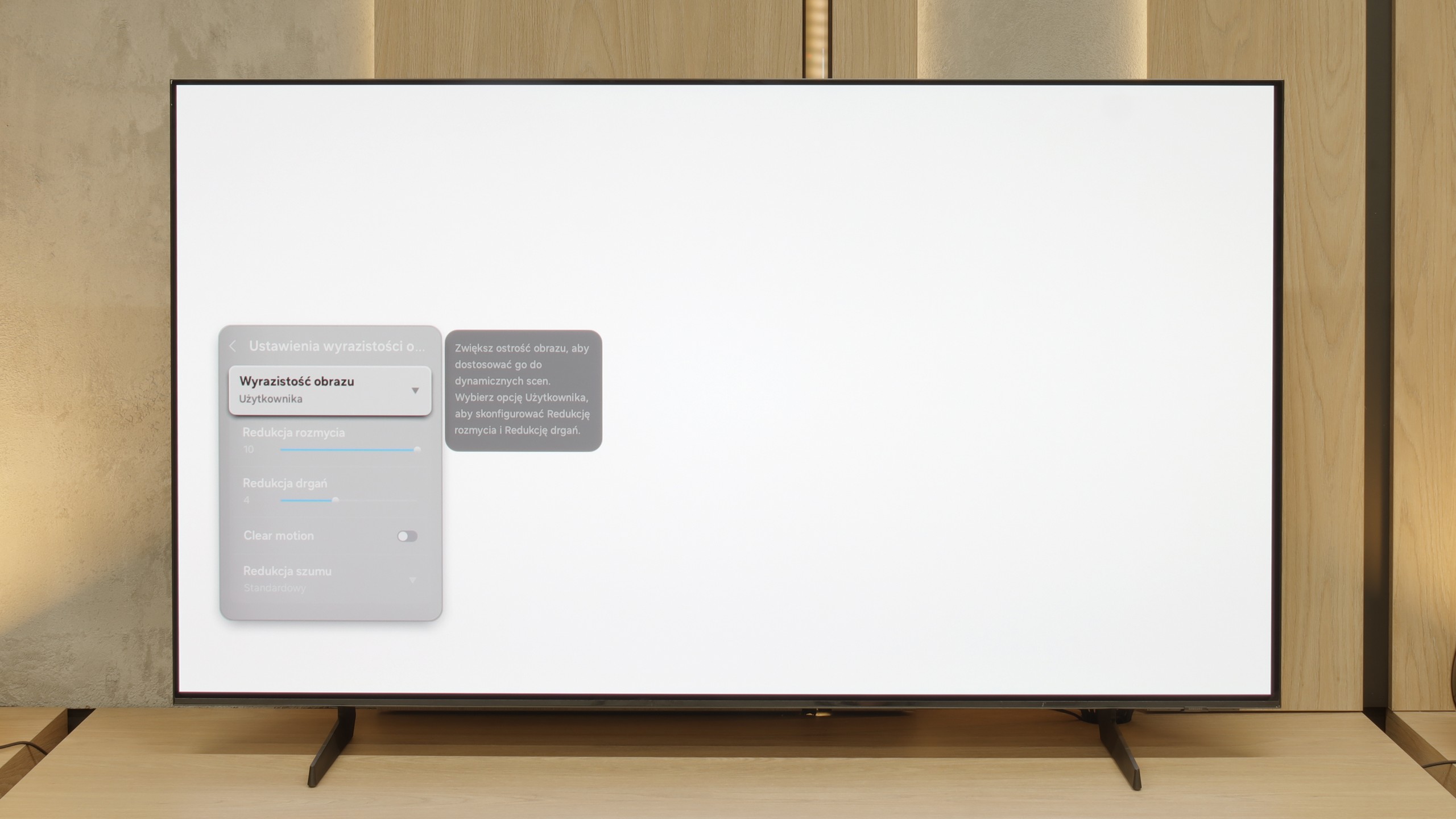
The S90D TV, featuring a 120 Hz refresh rate matrix and up to 144 Hz in the appropriate PC configuration, delivers excellent motion fluidity. Samsung highlights a range of sharpness settings on a ten-point scale, allowing users to fine-tune the display to their preferences. In UFO tests, the OLED matrix showcases its strengths by eliminating any blurring. The ultra-fast pixel response ensures dynamic movements are faithfully reproduced.

Similar results can be seen in other sizes of this model with a WOLED matrix, which also offer outstanding image fluidity. Organic technology, in this case, is considered among the best on the market. The S90D image, regardless of the matrix type, is exceptionally sharp and detailed, making this television perfect for dynamic scenes, whether for gaming or sports broadcasts. Additionally, its refresh rate and sharpness capabilities guarantee that every movement is smooth and natural, satisfying even the most discerning users.

The S85F is a model with impressive speed. The use of a 120 Hz OLED panel ensures that dynamic scenes, both in games and during sports broadcasts, meet expectations: smoothly, sharply, and without loss of clarity. A key role here is played by the instantaneous pixel response time, which is a natural advantage of OLED technology. Transitions between frames are instantaneous, and the image remains clear even during the fastest camera movements. Moving objects, like a ball on the field or a car in a chase scene, are clear and devoid of the characteristic motion blur typical of LCD panels (the so-called "tail").

Console compatibility and gaming features

9.5/10

9.2/10

  • ALLM
    Yes
    Yes
  • VRR
    Yes
    Yes
  • VRR range
    48 - 144Hz
    48 - 120Hz
  • Dolby Vision Game Mode
    No
    No
  • Correct implementation of HGIG
    Yes
    Yes
  • 1080p@120Hz
    Yes
    Yes
  • 1440p@120Hz
    Yes
    Yes
  • 4K@120Hz
    Yes
    Yes
  • Game bar
    Yes
    Yes

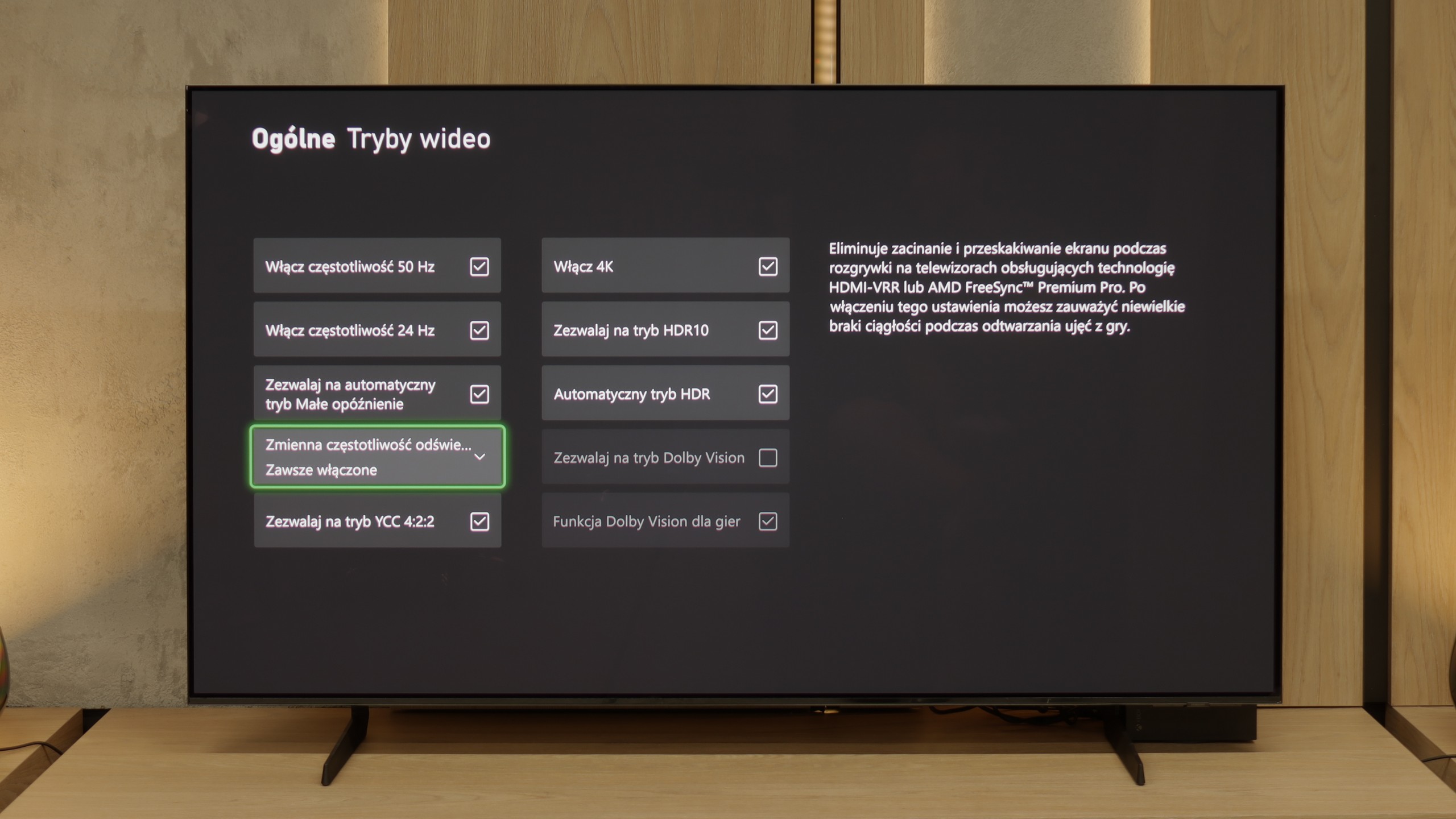
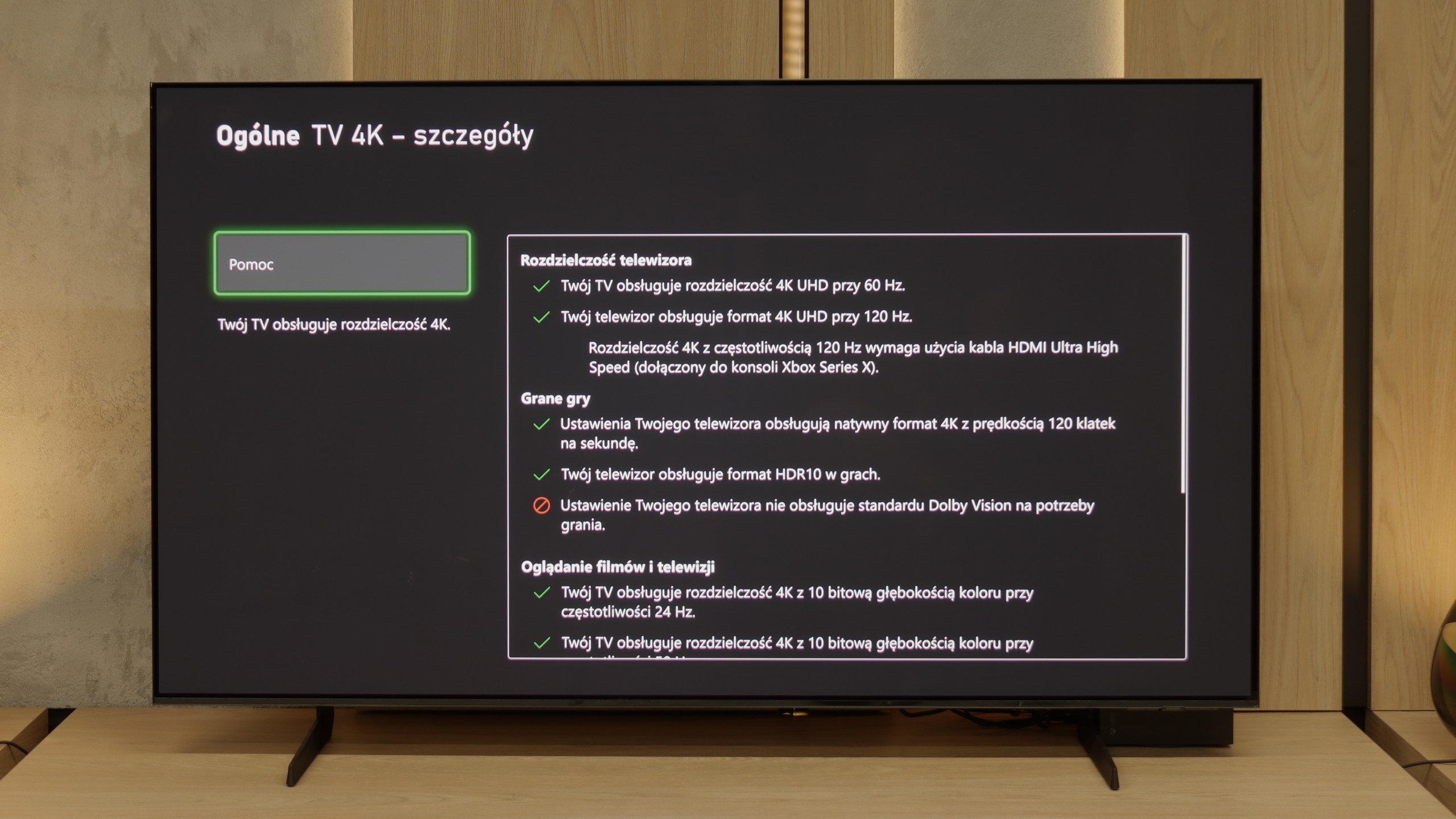
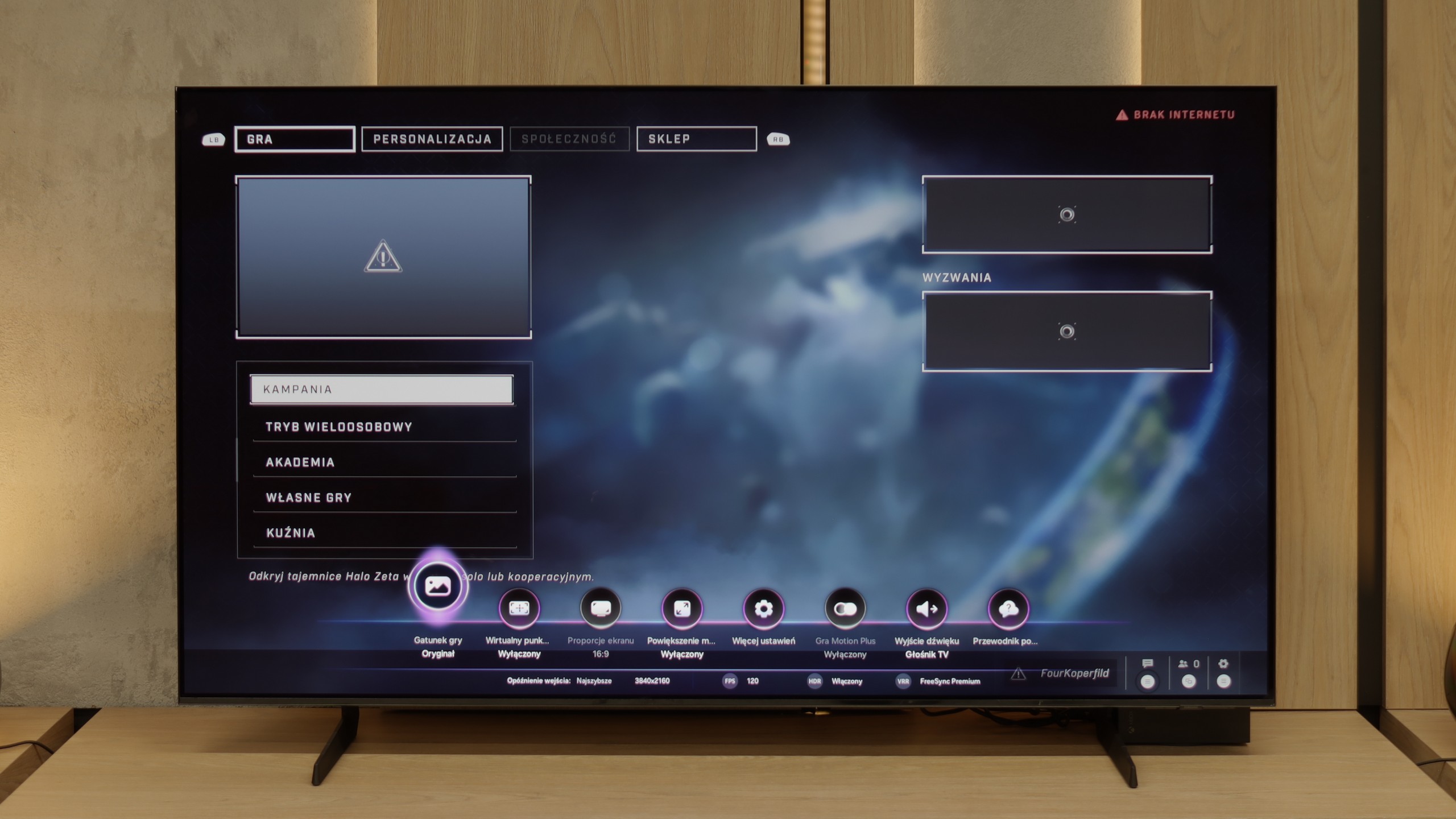
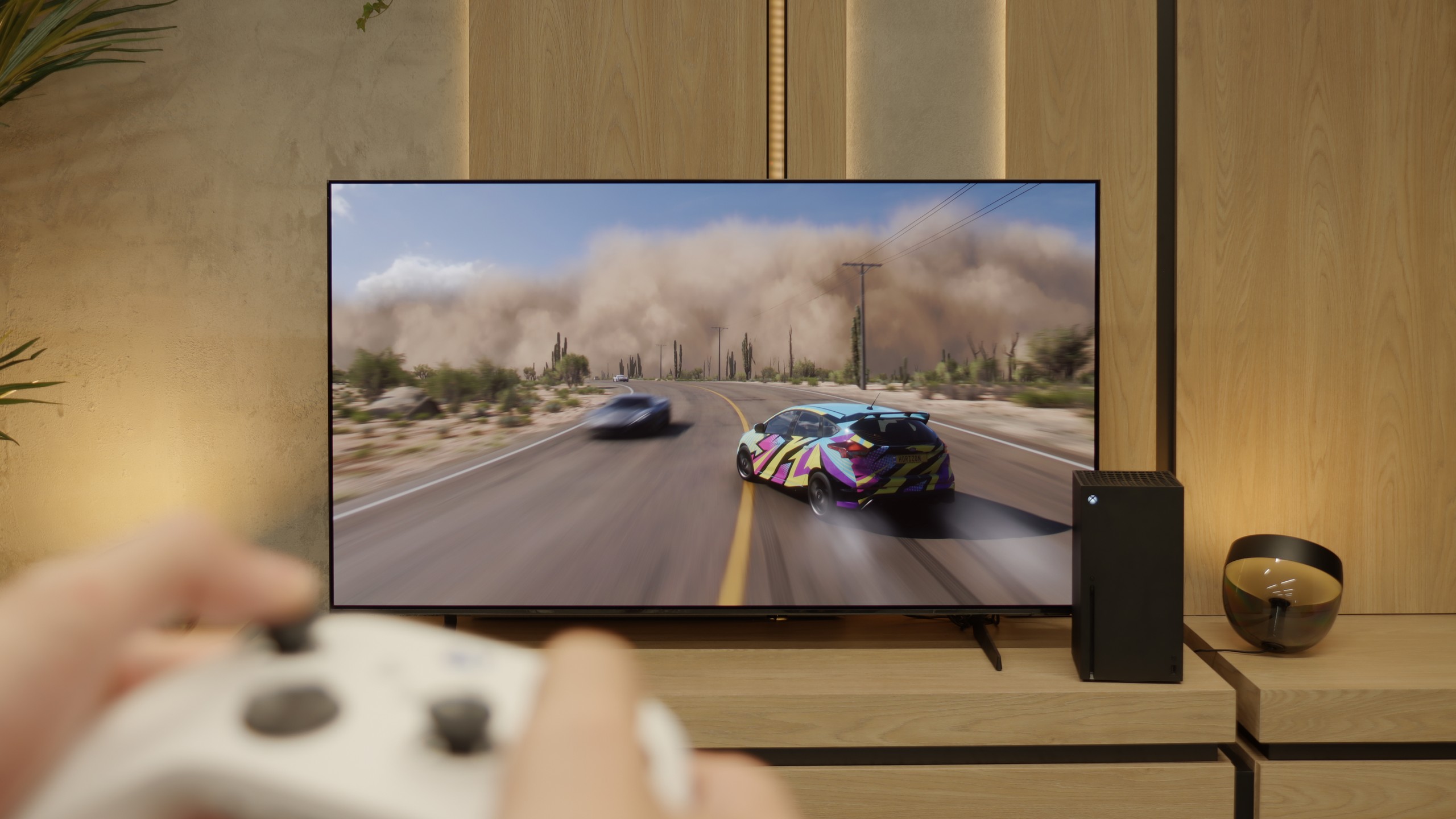
The S90D television is an excellent solution for gamers, offering a range of advanced features that elevate gaming quality to a new level. Equipped with HDMI 2.1 standard, the model supports modern technologies such as VRR (Variable Refresh Rate) and ALLM (Auto Low Latency Mode). Thanks to these solutions, the image is incredibly smooth, and the response to commands is instantaneous, which is crucial in dynamic titles. Additionally, the S90D supports HLG (Hybrid Log-Gamma) as well as G-Sync and FreeSync image synchronisation. This enables a perfect connection with Xbox, PlayStation, or PC, eliminating issues with tearing and stuttering. The built-in operating system offers the Xbox Game Pass app, providing access to a vast library of games directly from the television. This solution makes gaming even more convenient and accessible. The Game Bar feature provides quick access to essential information, such as current settings, performance statistics, and the ability to adjust image options. This allows for on-the-fly display parameter modification, which is extremely useful during intense gameplay. Despite lacking support for Dolby Vision, the S90D still offers excellent HDR image quality, allowing for full utilization of the potential of games and movies. As a result, the S90D represents a unique combination of modern technologies, outstanding image quality, and intuitive features, perfect for any gaming enthusiast.

Input lag

10/10

10/10

SDR

1080p60
10 ms
10 ms
1080p120
5 ms
5 ms
2160p60
10 ms
10 ms
2160p120
5 ms
5 ms

HDR

2160p60
10 ms
10 ms
2160p120
5 ms
5 ms
4320p60

Dolby Vision

2160p60 DV
2160p120 DV

QD-OLED from Samsung stands out with an incredibly low input lag, making it an excellent choice for gamers. Regardless of resolution or refresh rate, both in SDR and HDR modes, results around 10 ms are truly impressive. Such a low input lag ensures immediate response to actions on the screen, which is crucial in fast-paced games where every millisecond counts. Users can enjoy smoothness and precision, making the S90D TV with QD OLED panel a great choice for those prioritizing gaming performance.

In this category, the S85F shows its true claws. The values measured by us – 5 ms at 120 Hz content and around 10 ms at 60 Hz – are results that can be described in one word in the world of televisions: phenomenal. This means that the response to a player's movements is practically instantaneous. Pressing a button on the controller results in action on the screen without any noticeable delay. In dynamic games, where a fraction of a second determines victory or loss, such values make a huge difference. There is no question of a nervous "waiting" for the picture to catch up with our commands. The S85F gives a sense of full control – and that is how it should be in equipment aspiring to be the ideal screen for gamers.

Compatibility with PC

8.6/10

7.6/10

Chroma 444 (max. resolution and refresh rate)
Yes
Yes
Font clarity
Good
Good
Readability of dark text and shapes
Very Good
Very Good
Input lag in PC mode (4K, max. refresh rate)
5ms
5ms
Matrix subpixel arrangement
RGB
RWGB
Max refresh rate
144Hz
120Hz
G-Sync
Yes
Yes

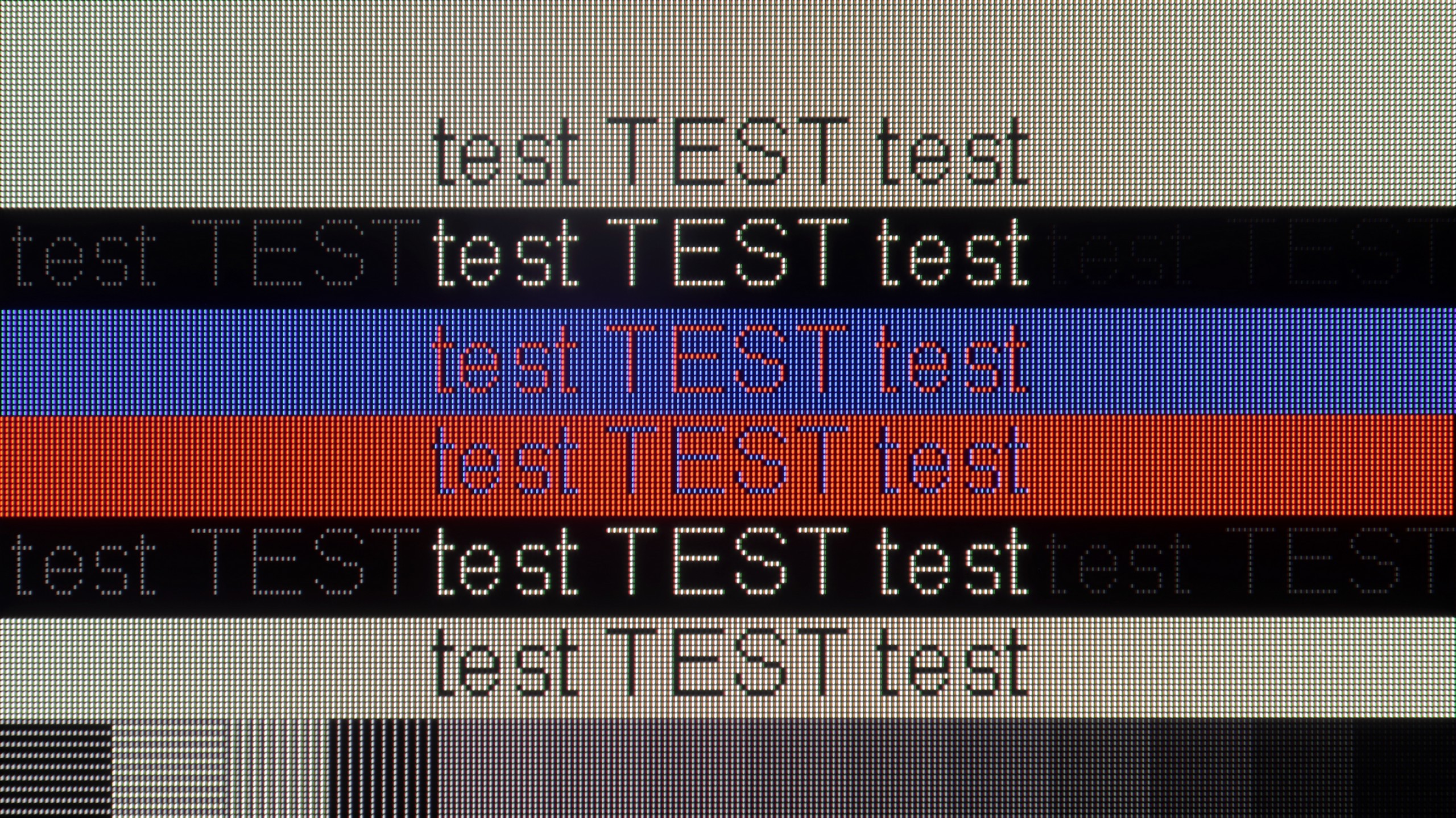
The photo shows the legibility of small fonts. Ideally, lines should be the same thickness on both light and dark text, with minimal pixel gaps.

The S90D television works great as a monitor for PC computers. Fonts appear clearly, making it easier to read and use various applications. Support for chroma 4:4:4 at a resolution of 4K and a refresh rate of 144 Hz ensures full color reproduction and excellent image sharpness. Moreover, the impressive input lag of just 5 ms is a significant advantage, especially for gamers and professionals engaged in graphics. However, it should be noted that points were deducted in this category compared to the version with a WOLED panel due to a different, diamond-shaped sub-pixel arrangement, which can lead to the visibility of individual sub-pixels when displaying fonts on a dark background. This issue only affects the 65-inch version, so users who plan to use the television on a desk will not encounter these difficulties in the smaller variants.

And what about connecting to a computer? We are quick to answer: the S85F performs excellently in this role. The combination of instant input lag and a 120 Hz panel is a recipe for successful gaming on a PC. Both fast-paced shooters and more tranquil RPG titles benefit from the instant response and fluidity of the animations, which can draw you in for long hours. Of course, it’s not perfect. We must mention the specific construction of the WOLED panel. It consists of four subpixels (WRGB), which is a different structure than the classic RGB known from monitors. As a result, if we sit very close to the screen, we may notice that the fonts are not as perfectly sharp as we would wish. However, this is not a big issue and should not hinder everyday use, especially since the television correctly supports a chroma 4:4:4 signal.

Viewing angles

9.8/10

7.5/10

Brightness drop at an angle of 45 degrees
10%
29%

In the category of viewing angles, the S90D television stands out as one of the best models on the market. While traditional OLED televisions already offer strong performance, a QD-OLED panel in the S90D takes image quality to an even higher level. With Quantum Dot technology and self-emissive pixels, users can enjoy exceptional colour reproduction and detail, even when viewing the television from a wide angle. This ensures that the picture remains vivid and accurate, making it ideal for group viewing or any situation where the seating isn't directly in front of the screen.

As is typical for OLED technology, the viewing angles on the S85F are very good. The picture retains its properties even when viewed from the side, which is a clear advantage over most LCD TVs. However, we must point out that it does not reach the level known from QD-OLED panels. In the case of the tested WOLED panel, with a significant deviation from the screen's axis, a slight drop in brightness and a slight change in white tones can be observed. QD-OLED remains unparalleled in this regard, offering an almost perfect picture regardless of where you are viewing it from.

Daytime performance

5.3/10

5.3/10

Panel finish
Glare
Satin
Reflection suppression
Very Good
Decent
Black levels during daytime
Average
Very Good

Panel brightness

Samsung S85F (WOLED): 305 cd/m2

Samsung QD-OLED S90D / S94D: 339 cd/m2

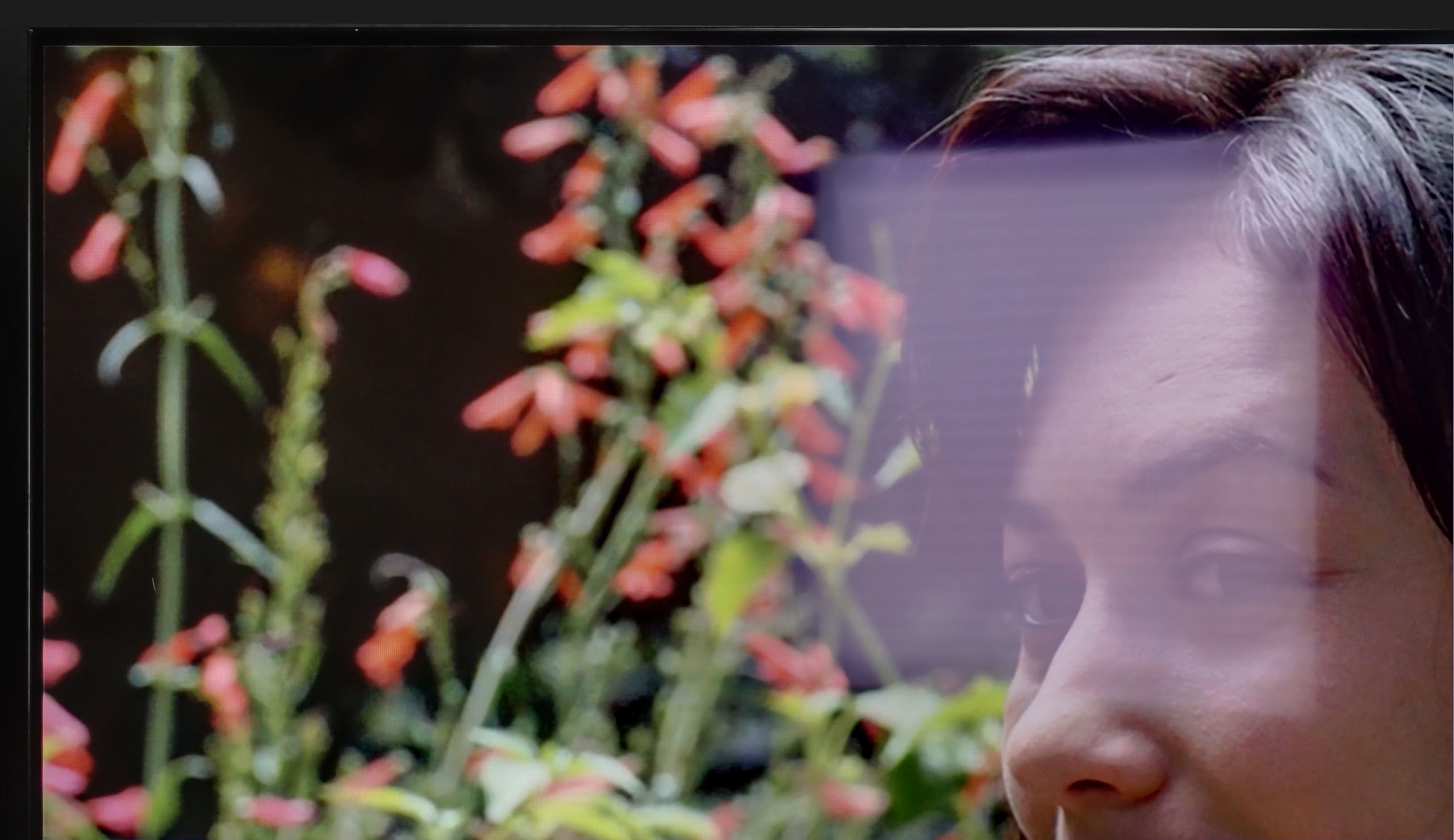
For TV performance during the day, the S90D model ranks the lowest among the tested variants. While the glossy screen and good reflection handling suggest some efficiency in bright conditions, the quality of black levels during sunny days is the biggest issue. This is due to the close placement of quantum dots to the outer layer of the screen. Under external light, these dots can become activated, leading to a more cherry-like black on the screen. This effect causes the image to lose depth and intensity, particularly in darker scenes. As a result, users who plan to use the TV in bright rooms or areas with high sunlight may encounter challenges in achieving satisfactory image quality. However, when watching films with a lot of black content in the evenings, when sunlight is less intense, the S90D performs significantly better, offering a more enjoyable visual experience. During the day, for regular television viewing, the TV still performs reasonably well, meaning it is not a complete dealbreaker for this model.

We must state clearly that working in a brightly lit room is not the strong suit of the S85F. We are dealing with a somewhat moderately bright OLED panel here. Our measurements have shown that the average brightness of the screen in "TV" mode hovers around 300 nits. For some users, this may be too low, especially in rooms with a lot of daylight. Of course, this TV is perfect for moderately bright living rooms. However, it is not a model we would recommend for exceptionally bright, sun-drenched interiors. This issue is compounded by the anti-reflective coating applied. We noticed that it does not suppress reflections from the surroundings as well as the variant with a QD-OLED panel does, especially when direct sunlight hits the screen.

Panel details

Backlight Type
Software version during testing
1120
T-PTMFDEUC-0090-1110.7
Image processor

Subpixel Structure:

Panel uniformity and thermal imaging:

Review Samsung QD-OLED S90D / S94D TV Panel details
Review Samsung S85F (WOLED) TV Panel details

Samsung QD-OLED S90D / S94D

Samsung S85F (WOLED)

TV features

7.4/10

7.3/10

  • HDMI inputs
    0 x HDMI 2.0, 4 x HDMI 2.1 48Gbps
    0 x HDMI 2.0, 4 x HDMI 2.1 48Gbps
  • Other inputs
    Toslink (Optical audio)
  • Outputs
    Toslink (Optical audio), eARC (HDMI), ARC (HDMI)
    Toslink (Optical audio), eARC (HDMI), ARC (HDMI)
  • Network Interfaces
    Wi-Fi 2.4GHz, Wi-Fi 5GHz, Ethernet (LAN) 100Mbps
    Wi-Fi 2.4GHz, Wi-Fi 5GHz, Ethernet (LAN) 100Mbps
  • TV reception
    DVB-T, DVB-T2, DVB-S, DVB-S2, DVB-C
    DVB-T, DVB-T2, DVB-S, DVB-S2, DVB-C

Classic features:

  • Recording to USB (terrestrial TV)
    No
    No
  • Recording programming
    No
    No
  • Picture in Picture (PiP)
    Yes
    No
  • RF remote control (no need to aim)
    Yes
    Yes
  • Backlit remote control
    No
    No
  • Teletext
    Yes
    Yes
  • Audio only mode
    Yes
    Yes
  • Bluetooth headphones support
    Yes
    Yes
  • Simultaneous Bluetooth headphones & TV audio
    Yes
    Yes

Smart features:

  • AirPlay
    Yes
    Yes
  • Screen mirroring (Windows Miracast)
    Yes
    Yes
  • Voice search
    Yes
    Yes
  • Voice search in native language
    Yes
    Yes
  • Ability to connect a keyboard and mouse
    Yes
    Yes
Review Samsung QD-OLED S90D / S94D TV features
Review Samsung S85F (WOLED) TV features

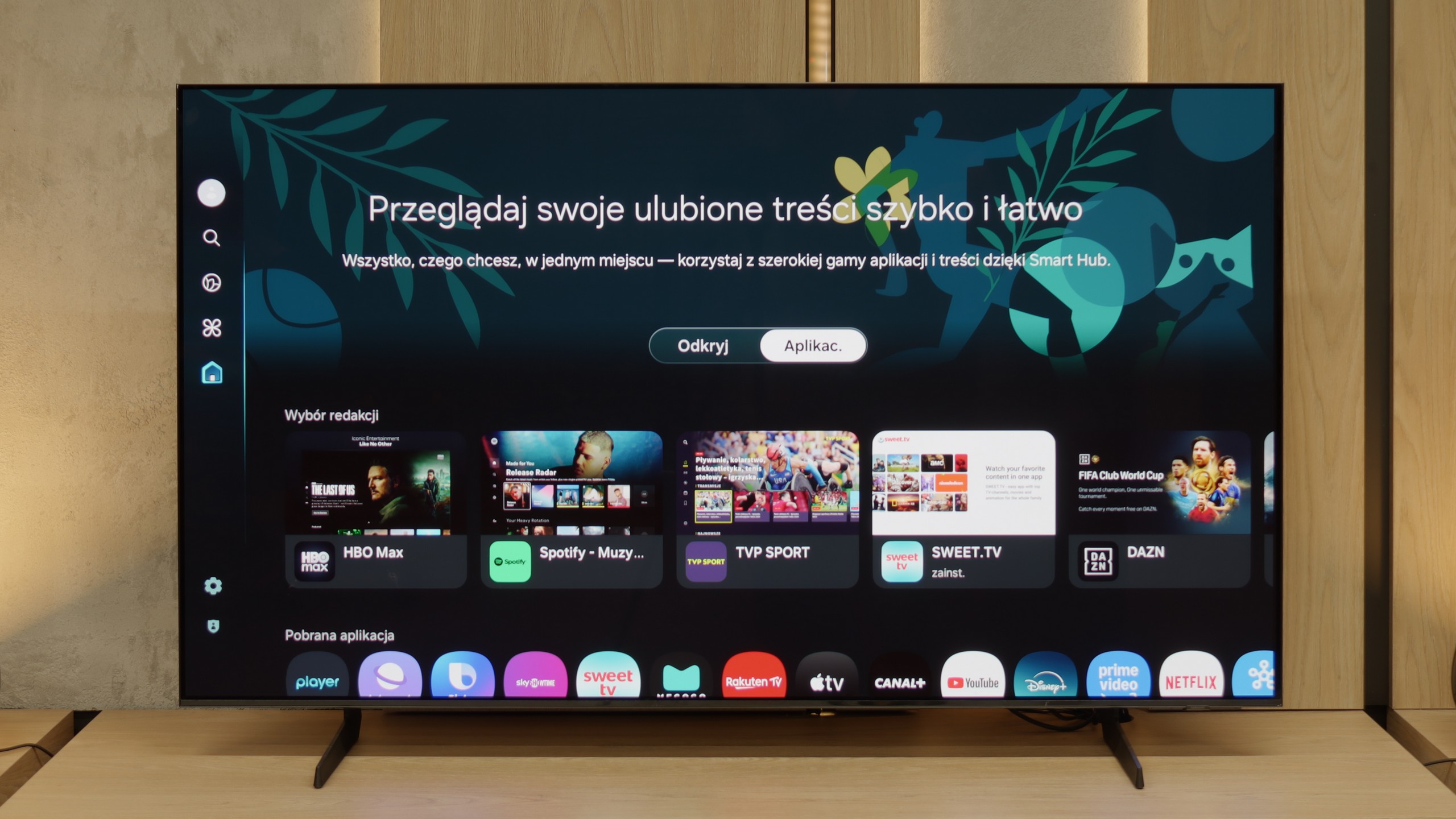
The Samsung S90D television offers a range of features that significantly enhance user comfort, making it an ideal device for home entertainment. The Tizen operating system provides a modern and intuitive platform, ensuring users enjoy a smooth and efficient experience. The user-friendly interface makes navigation through apps and settings quick and easy, even for those less familiar with technology. Tizen supports a wide range of applications, including all major streaming services such as Netflix, YouTube, and Amazon Prime Video. A notable addition for 2024 is the availability of voice search in Polish, enhancing accessibility.

Additionally, the S90D features an eco-friendly solar remote that reduces environmental impact and serves as a practical tool for everyday use. It can control multiple devices connected to the TV, eliminating the need for separate remotes. The TV also supports AirPlay, allowing seamless streaming from Apple devices like iPhones and iPads. Bluetooth connectivity is another strength, with support for various devices such as mice, keyboards, and headphones, enhancing the TV's versatility and personalising the user experience.

The SmartThings app further enhances the TV’s functionality by enabling integration with other smart home devices. This allows users to control aspects like lighting and security remotely. Additionally, the Philips Hue app enables lighting synchronization with the TV's visuals, providing a more immersive viewing experience.

The only drawback is the lack of USB recording support, which may be a limitation for some users. Despite this, the Samsung S90D offers many advanced features, making it an excellent choice for anyone seeking high-quality entertainment and wishing to integrate their home devices into a convenient, unified system.

Classic TV Features S85F

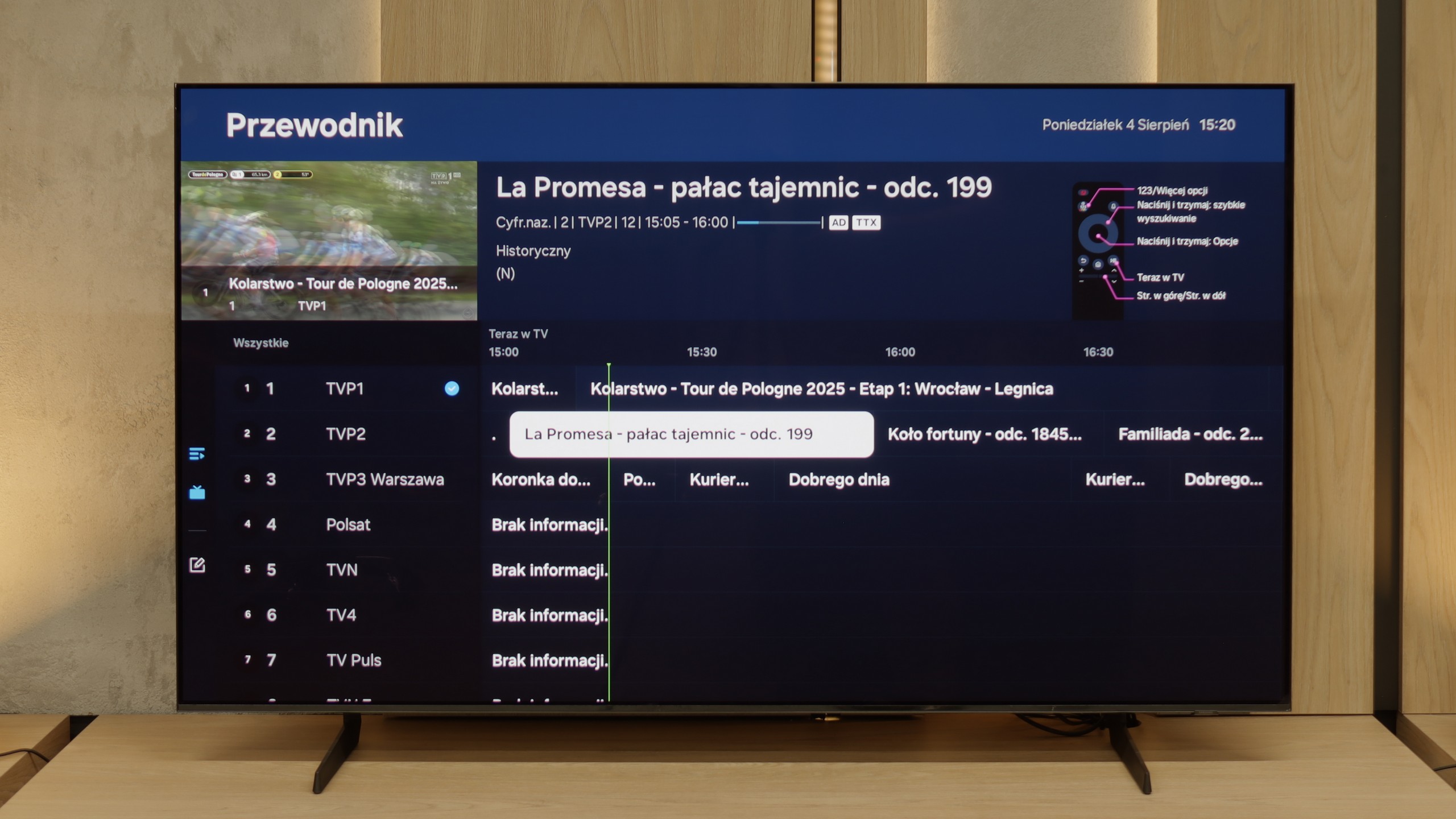
The S85F was not really designed with fans of classic television in mind. We won’t find the PiP (Picture-in-Picture) feature here (which is a bit surprising since Samsung usually offers it) or the ability to record programs to USB from built-in tuners. Fortunately, the basics are there – teletext and a clear channel guide – so it's perfectly adequate for ordinary, everyday viewing. The included remote, although simple and lacking a numeric keypad at first glance, allows for control of multiple devices. This means that when connecting, for example, a Canal+ decoder, you don’t need to have two remotes on the table – just the one from the TV is entirely sufficient.


SmartTV S85F: Tizen

The smart part is a completely different story. Tizen is one of the most advanced operating systems in televisions. It runs smoothly, supports all popular internet features – from screen mirroring, through AirPlay, to voice search. The strongest aspect of Tizen is its integration with the SmartThings app, which can serve as a control center for the entire home. Of course, like any closed system, Tizen has its limitations – such as a smaller app library compared to GoogleTV. However, looking at the current list of available applications, it’s hard to point out anything that might actually be missing.

Apps

9.3/10

9.3/10

OK
Disney_Plus
OK
Amazon_Prime_Video
OK
Player_TVN
OK
Polsat_Box_Go
OK
Canal_Plus_Online
OK
TVP_VOD
OK
Apple_TV_Plus
OK
SkyShowtime
OK
Rakuten
OK
CDA_Premium_Browser
OK
Spotify
No
Tidal
OK
Netflix
OK
YouTube
OK
HBO_MAX
No
Kodi
OK
Apple_music
OK
Eleven_sports
OK
Xbox Game Pass
OK
GeForce Now!
OK
Amazon Luna
OK
Boosteroid
No
Steam Link
OK
Disney_Plus
OK
Amazon_Prime_Video
OK
Player_TVN
OK
Polsat_Box_Go
OK
Canal_Plus_Online
OK
TVP_VOD
OK
Apple_TV_Plus
OK
SkyShowtime
OK
Rakuten
OK
CDA_Premium_Browser
OK
Spotify
No
Tidal
OK
Netflix
OK
YouTube
OK
HBO_MAX
No
Kodi
OK
Apple_music
OK
Eleven_sports
OK
Xbox Game Pass
OK
GeForce Now!
OK
Amazon Luna
OK
Boosteroid
No
Steam Link

Playing files from USB

9.1/10

9.1/10

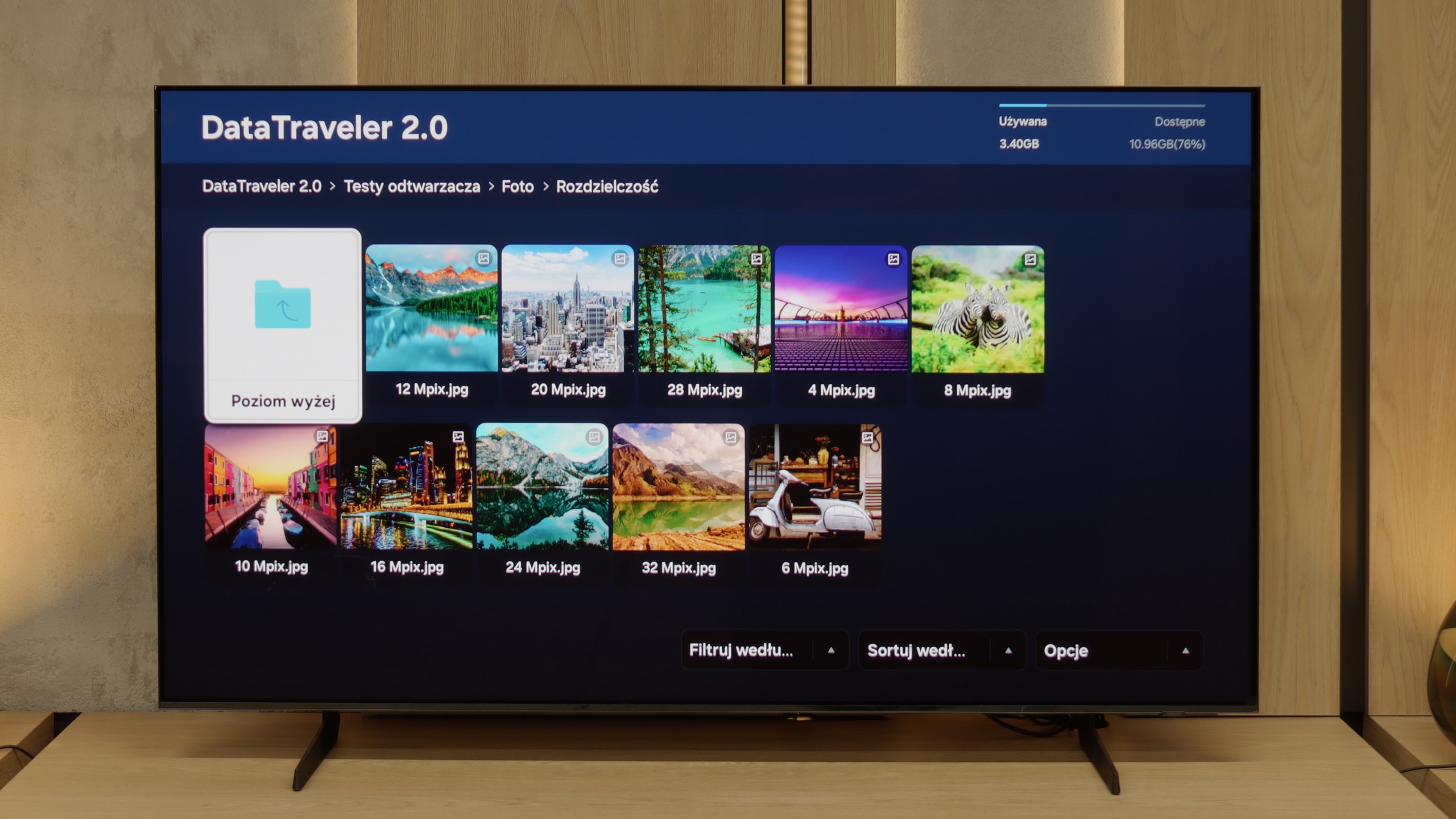
Supported photo formats:

JPEG
Yes
Yes
HEIC
No
No
PNG
No
Yes
GIF
No
No
WebP
No
No
TIFF
No
No
BMP
Yes
Yes
SVG
No
No

Maximum photo resolution:

4 Mpix
Yes
Yes
6 Mpix
Yes
Yes
8 Mpix
Yes
Yes
10 Mpix
Yes
Yes
12 Mpix
Yes
Yes
16 Mpix
Yes
Yes
20 Mpix
Yes
Yes
24 Mpix
Yes
Yes
28 Mpix
Yes
Yes
32 Mpix
Yes
Yes

The Samsung S90D offers a solid set of features for media playback, including a built-in player that supports a wide range of popular video formats. This makes it convenient for users to enjoy movies from various sources without external devices. The TV also provides customisation options for the subtitle font colour, enhancing readability and viewer comfort.

In terms of photo formats, the S90D handles most common formats well. However, it does have a limitation in that it cannot play the popular PNG format, which might be disappointing for users who work with images in that format. Despite this minor drawback, the overall media playback capabilities of the S90D remain excellent, ensuring a high-quality experience for most users.

The built-in media player in the S85F performs excellently – practically everything you put on a USB drive or disk will be played without the slightest issue. Small gaps only appear in the support for some less popular photo formats, but for the vast majority of you, this will be more than sufficient. So it can be confidently said that the built-in player is more than solid for home use.

Sound

7.4/10

7.2/10

  • Maximum volume
    -
    80dB
  • Dolby Digital Plus 7.1
    Yes
    Yes
  • Dolby True HD 7.1
    No
    No
  • Dolby Atmos in Dolby Digital Plus (JOC)
    Yes
    Yes
  • Dolby Atmos in Dolby True HD
    No
    No
  • DTS:X in DTS-HD MA
    No
    No
  • DTS-HD Master Audio
    No
    No

The Samsung S90D is equipped with an advanced 2.1 audio system, delivering a total power output of 40W, ensuring clear and dynamic sound. The built-in subwoofer, positioned at the bottom of the cabinet, enhances the bass, providing deep and powerful low-end frequencies that enrich the audio experience. This makes the sound more immersive when watching movies, listening to music, or playing games. The mid and high tones are well-balanced, ensuring that all aspects of the audio spectrum are well-represented.

Although the TV lacks DTS support, it compensates with other advanced audio technologies such as Dolby Atmos and Dolby Digital Plus, offering a spatial and immersive sound experience. Additionally, Samsung's Q-Symphony feature enables seamless synchronisation between the TV's speakers and a Samsung soundbar, creating an even more enhanced and cohesive audio environment.

Built-in speakers with a power of 20 W on paper may not impress much, but in practice, the S85F can surprise. It sounds really pleasant, and at times you can even catch a subtle bass, which is not at all obvious in this class of speakers. The TV does not support the DTS format, which unfortunately has become a standard for most manufacturers by 2025. A nice surprise, however, is the support for Dolby Atmos. Of course, talking about "spatial" sound with two speakers placed at the bottom of the enclosure would be a bit of an exaggeration, but it's good that Samsung offers such a feature in this model at all.

Sound Quality Test

No sound test video