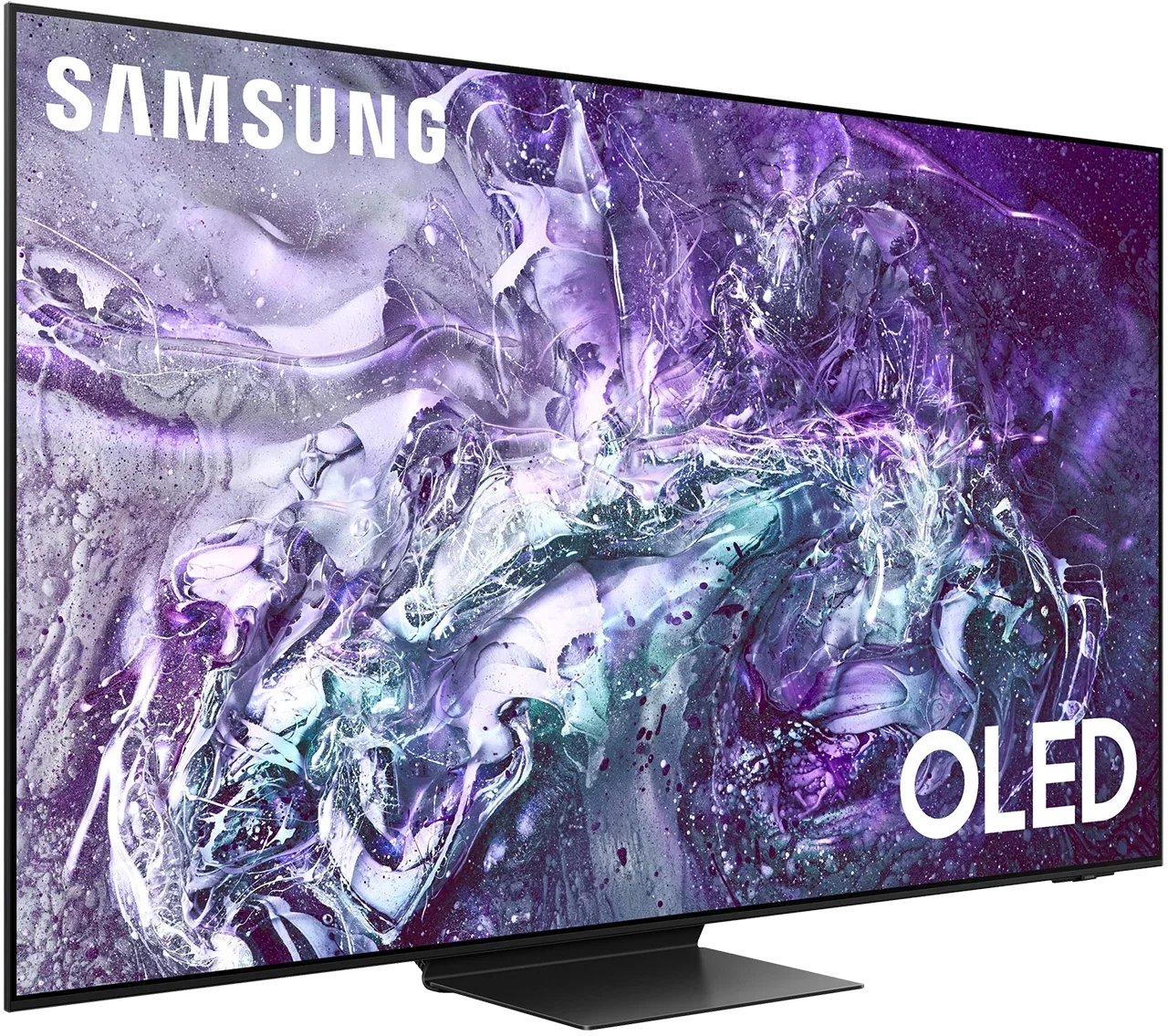
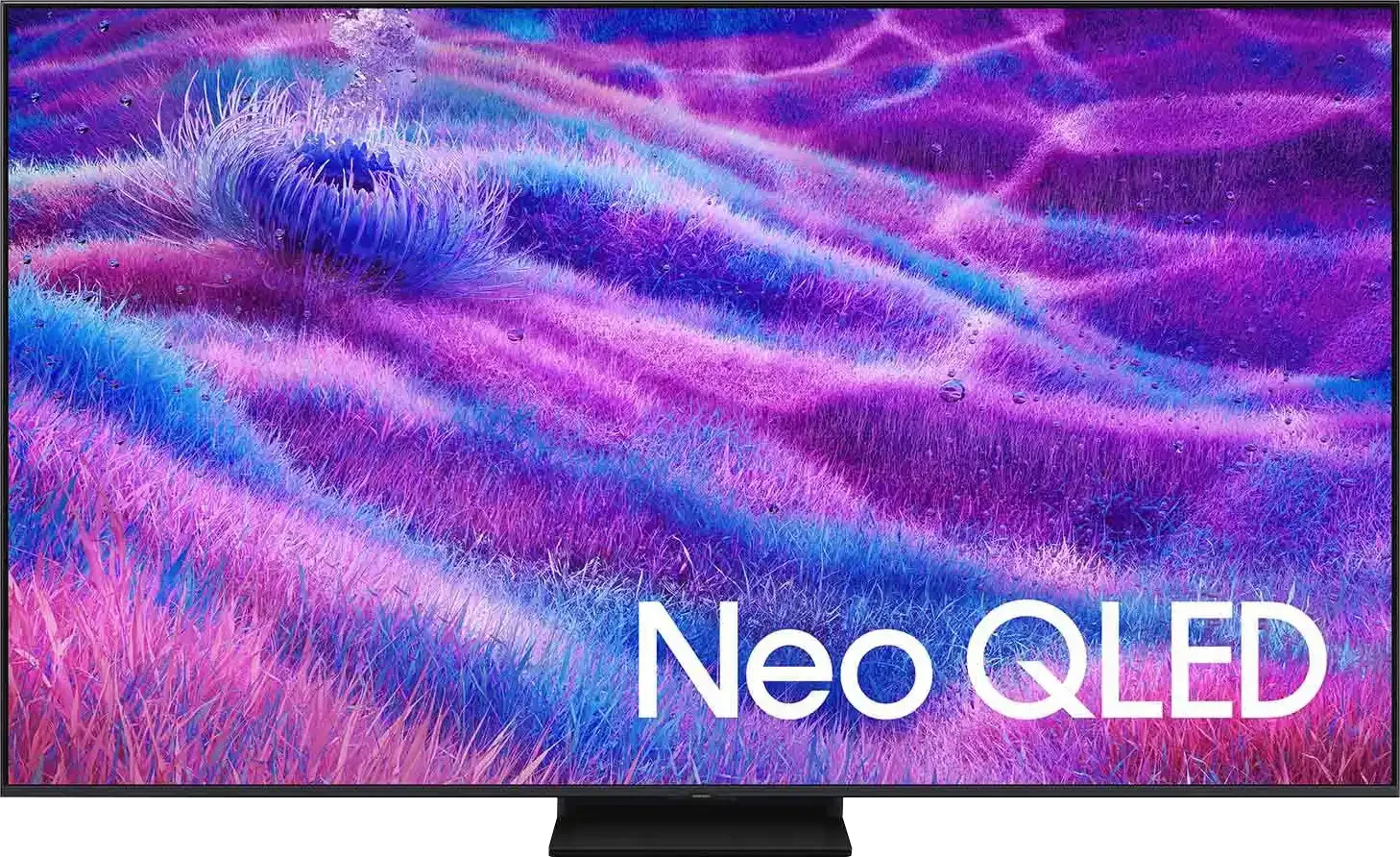
Samsung OLED S95D vs SAMSUNG QN80F

Direct comparison

Check the best price offer:

Samsung OLED S95D
$2 997

Check the best price offer:

SAMSUNG QN80F
$3 499

S95D

QN80F

Available screen sizes: 55”65”77”

Available screen sizes: 55”65”75”85”

Panel type: QD-OLED

Resolution: 3840x2160

System: Tizen

Model year: 2024

Complete the survey to find out the result

Panel type: LCD VA

Resolution: 3840x2160

System: Tizen

Model year: 2025

Complete the survey to find out the result

Overall rating

8.5

7.4

  • Movies and series in UHD quality

    8.9

    6.9

  • Classic TV, YouTube

    9.2

    6.8

  • Sports broadcasts (TV and apps)

    8.9

    6.7

  • Gaming on console

    9.8

    8.9

  • TV as a computer monitor

    8.6

    8.8

  • Watching in bright light

    6.2

    6.6

  • Utility functions

    7.9

    7.7

  • Apps

    9.3

    9.3

  • Sound quality

    7.9

    6.7

Advantages

  • Revolutionary image depth and blackness (OLED)

  • Superb HDR effect

  • Excellent brightness

  • Saturated colours - high coverage of the wide colour gamut Bt.2022

  • Best viewing angles on the market

  • Matte matrix

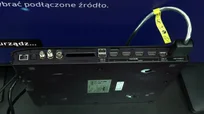
  • Super slim design (Innovative One Connect solution)

  • Nice black and contrast - VA matrix combined with MINI-LED backlighting.

  • Great brightness - up to 1000 nits in HDR

  • Fast and responsive matrix - 144 Hz

  • Rich support for gamers - 4xHDMI 2.1, VRR, ALLM, GameBar, Game Motion Plus

  • Very good usability in daylight

  • Advanced Tizen operating system

  • Simple operation

  • PiP function

Disadvantages

No like
  • Colours during the day may be less intense due to the matte display

  • No support for DTS audio tracks (may be an issue with an external player)

  • No support for DTS format – limitation when connecting home theater

  • No USB recording function

  • Relatively small number of dimming zones

Our verdict

The Samsung S95D stands out as a top choice in Samsung’s 2024 lineup, featuring an innovative matte display that minimises reflections and performs impressively in both low-light and daylight conditions. This model is among the brightest in the OLED segment, offering exceptional visibility in any room. With excellent motion fluidity, it handles fast-paced content like sports or gaming with precision, making it ideal for enthusiasts of dynamic visuals. Gamers will also appreciate the S95D's four HDMI 2.1 ports, fully compatible with the latest console features, as well as built-in access to the Xbox app for cloud gaming, allowing for gameplay without a console.

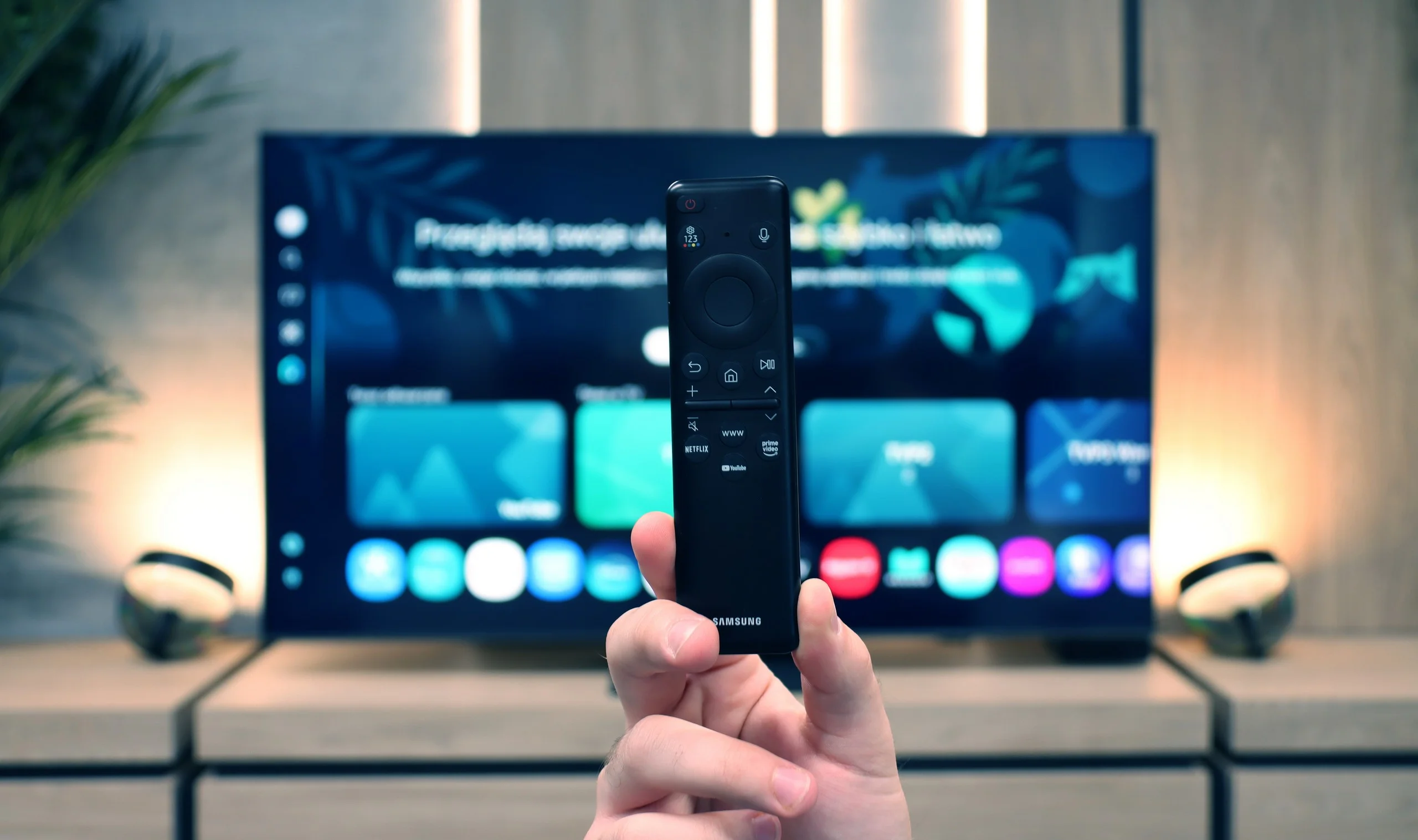
In daily use, the S95D proves user-friendly. Samsung’s Tizen system offers an intuitive interface with access to popular streaming platforms and is compatible with a range of smart devices via the SmartThings app, enabling control of home features like lighting and security directly from the TV. The S95D also supports MultiView, allowing two programs to be viewed simultaneously, and has a responsive interface for smooth switching between apps. An eco-friendly solar remote further enhances convenience, capable of controlling multiple devices from one place, including decoders, home cinema systems, and consoles.

Connectivity options, such as AirPlay and Bluetooth, enable easy streaming and pairing with accessories. Design-wise, the S95D impresses with its slim profile and One Connect solution, making it a sleek addition to any space. Although the matte display may slightly reduce colour intensity in bright daylight, this TV is packed with advanced features and high-quality performance. It’s a premium choice for anyone seeking top-tier home entertainment, deserving its reputation as one of the standout televisions of 2024.
QN80F is the first in the history of Samsung's "eighty" series to feature Mini LED backlighting. And it does this really well. Although the number of dimming zones is not overwhelming, the black level is solid, and combined with high brightness, it allows for a very decent picture in HDR content. Additionally, there's a 144 Hz panel that provides excellent motion smoothness, and the set of features for gamers – VRR, ALLM, Game Motion Plus – makes the QN80F a model practically designed for those playing on console or PC. The television operates quickly and responsively, and the Tizen system runs like lightning – whether you're searching for apps or switching sources. Is there anything to criticize? Of course, as always – there are shortcomings in the system (like recording to USB), there’s no DTS support, and Mini LED is not without its limitations. But the QN80F is a great everyday television – versatile, well-thought-out, and... with significant price potential. Looking at the history of this series, we can expect this "eighty" to shake things up once it hits the first reasonable promotions. And it could be virtually unbeatable at its price – especially if Samsung improves the minor teething issues.

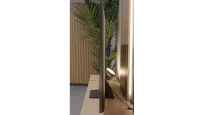
TV appearance

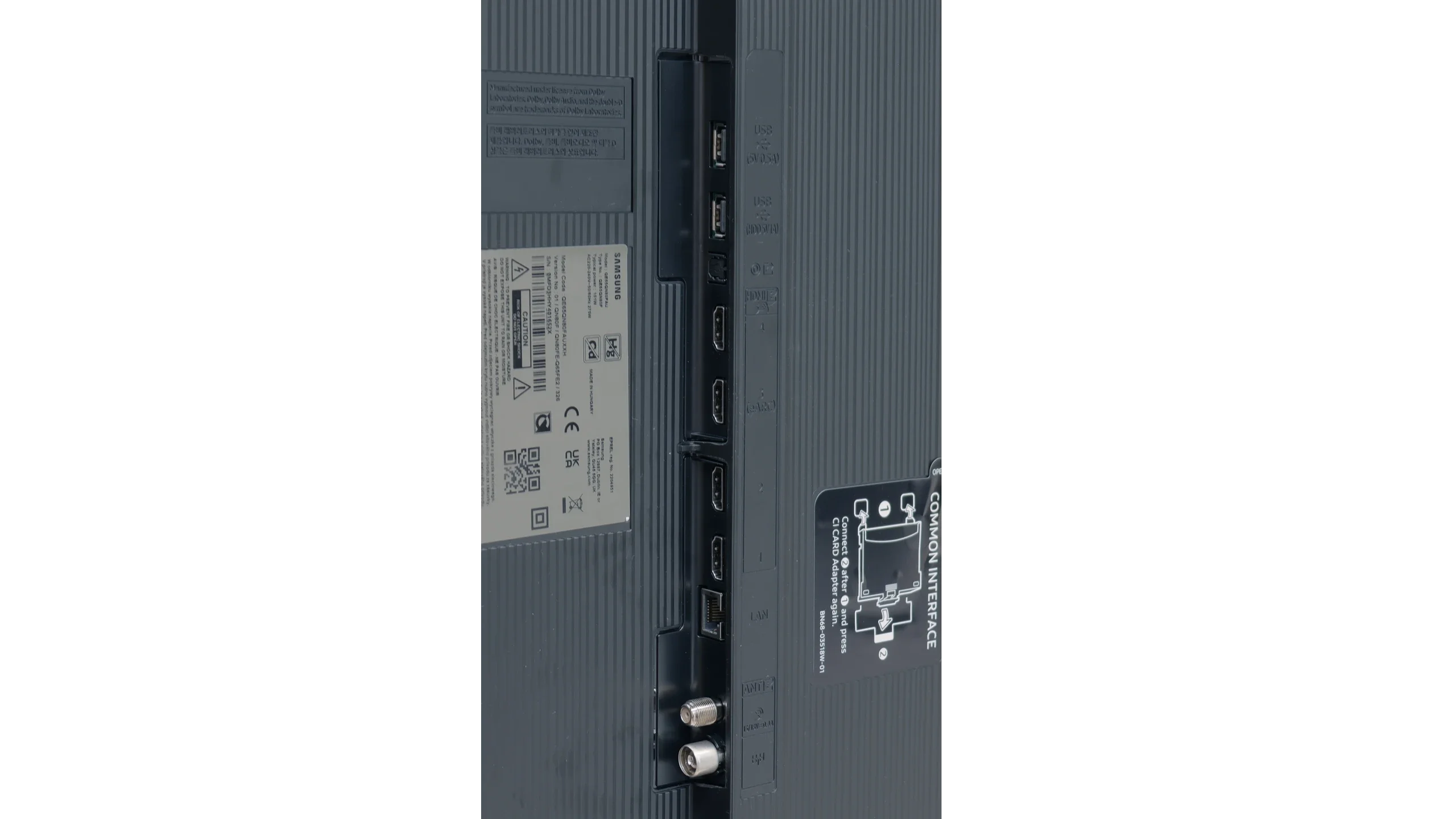
HDMI inputs
0 x HDMI 2.0, 4 x HDMI 2.1 (40Gbps)
0 x HDMI 2.0, 4 x HDMI 2.1 (48Gbps)
Other inputs
Toslink (Optical audio)
Outputs
eARC (HDMI), ARC (HDMI)
Toslink (Optical audio), eARC (HDMI), ARC (HDMI)
Network Interfaces
Wi-Fi 2.4GHz, Wi-Fi 5GHz, Ethernet (LAN) 100Mbps
Build quality
Super Premium
Good
Stand type
Central
Central
Bezel color
Graphite
Graphite
Stand
Fixed
Fixed
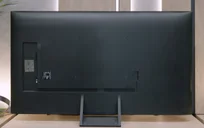
Flat design
Yes
Yes
Accessories
Stand, One Connect Box
Stand

Contrast and black detail

10/10

6.8/10

Local dimming function: Yes, number of zones: 88 (8 x 11)

Contrast:

Review Samsung OLED S95D Contrast and black detail

Result

∞:1

Review Samsung OLED S95D Contrast and black detail

Result

∞:1

Review Samsung OLED S95D Contrast and black detail

Result

∞:1

Review Samsung OLED S95D Contrast and black detail

Result

∞:1

Review Samsung OLED S95D Contrast and black detail

Result

∞:1

Review SAMSUNG QN80F Contrast and black detail

Result

34,100:1

Review SAMSUNG QN80F Contrast and black detail

Result

8,200:1

Review SAMSUNG QN80F Contrast and black detail

Result

32,500:1

Review SAMSUNG QN80F Contrast and black detail

Result

4,550:1

Review SAMSUNG QN80F Contrast and black detail

Result

3,800:1

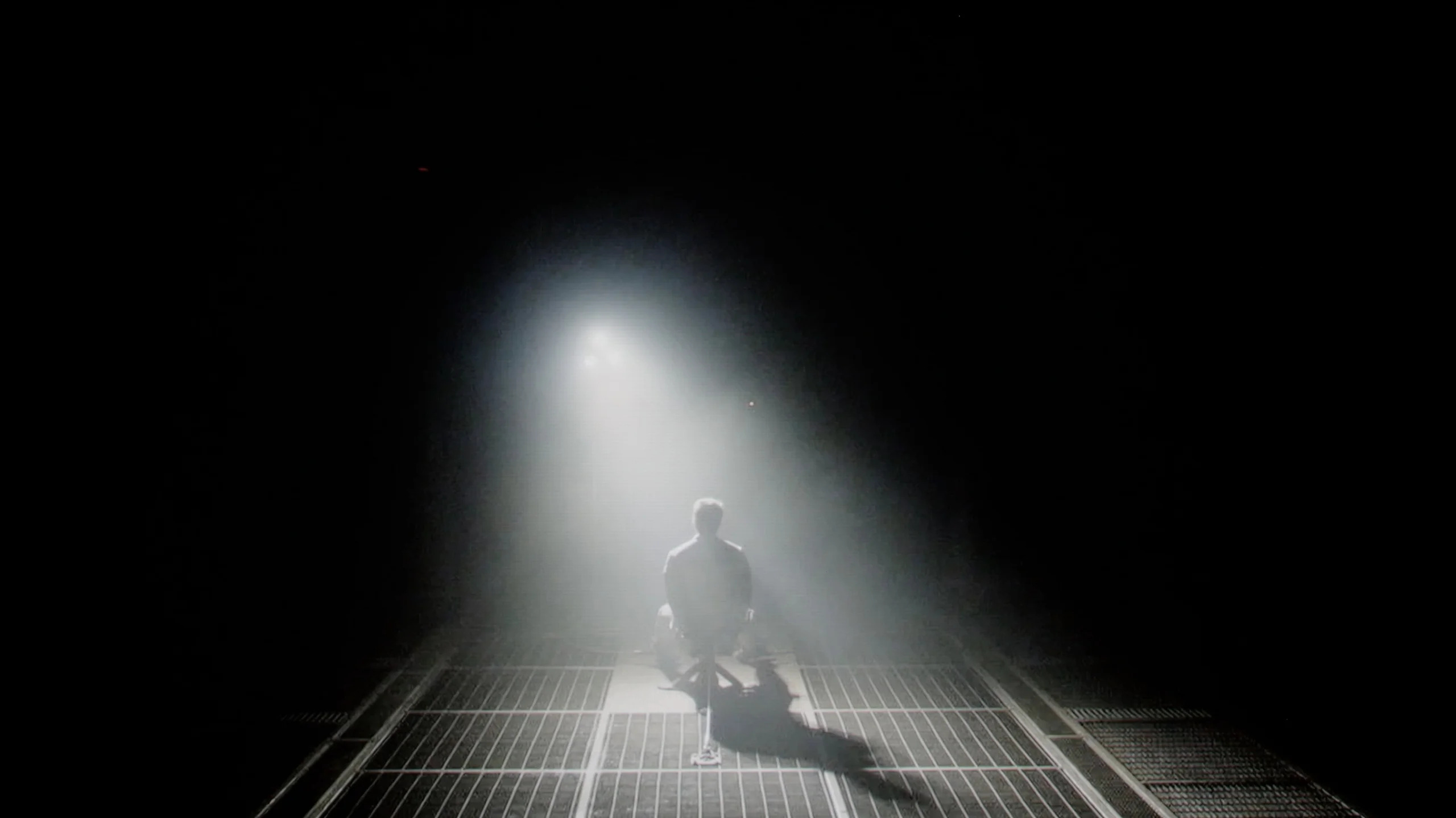
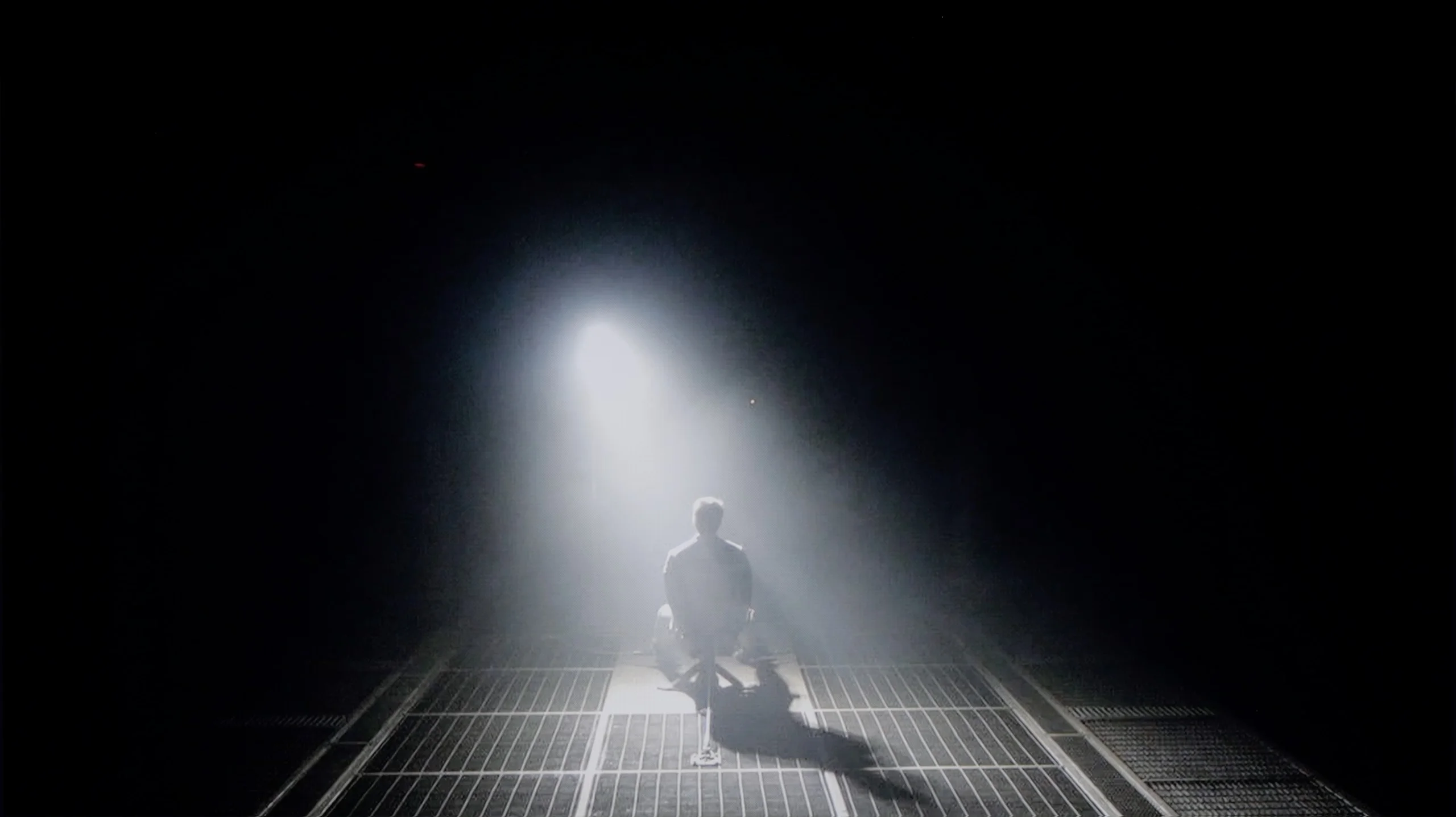
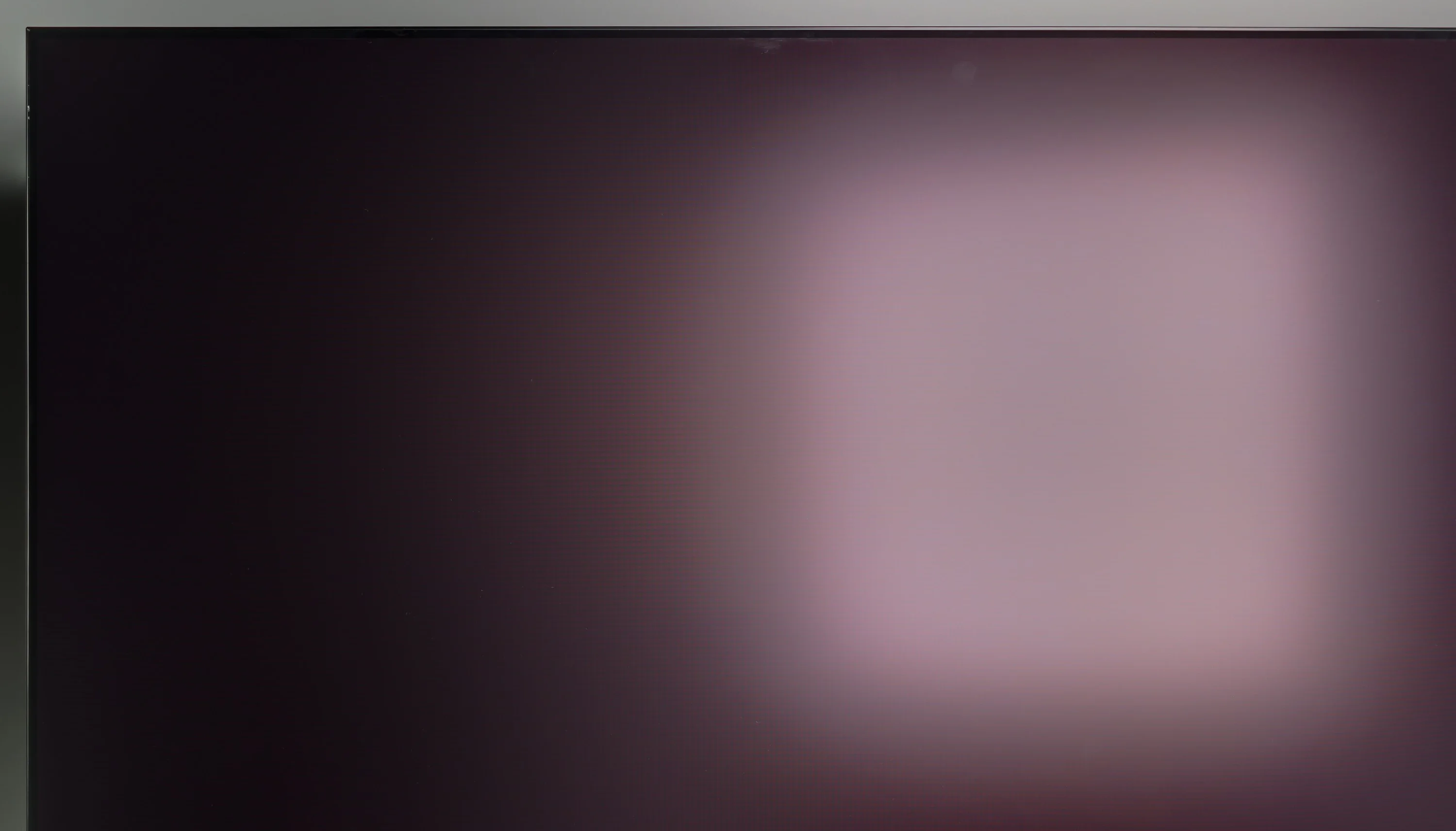
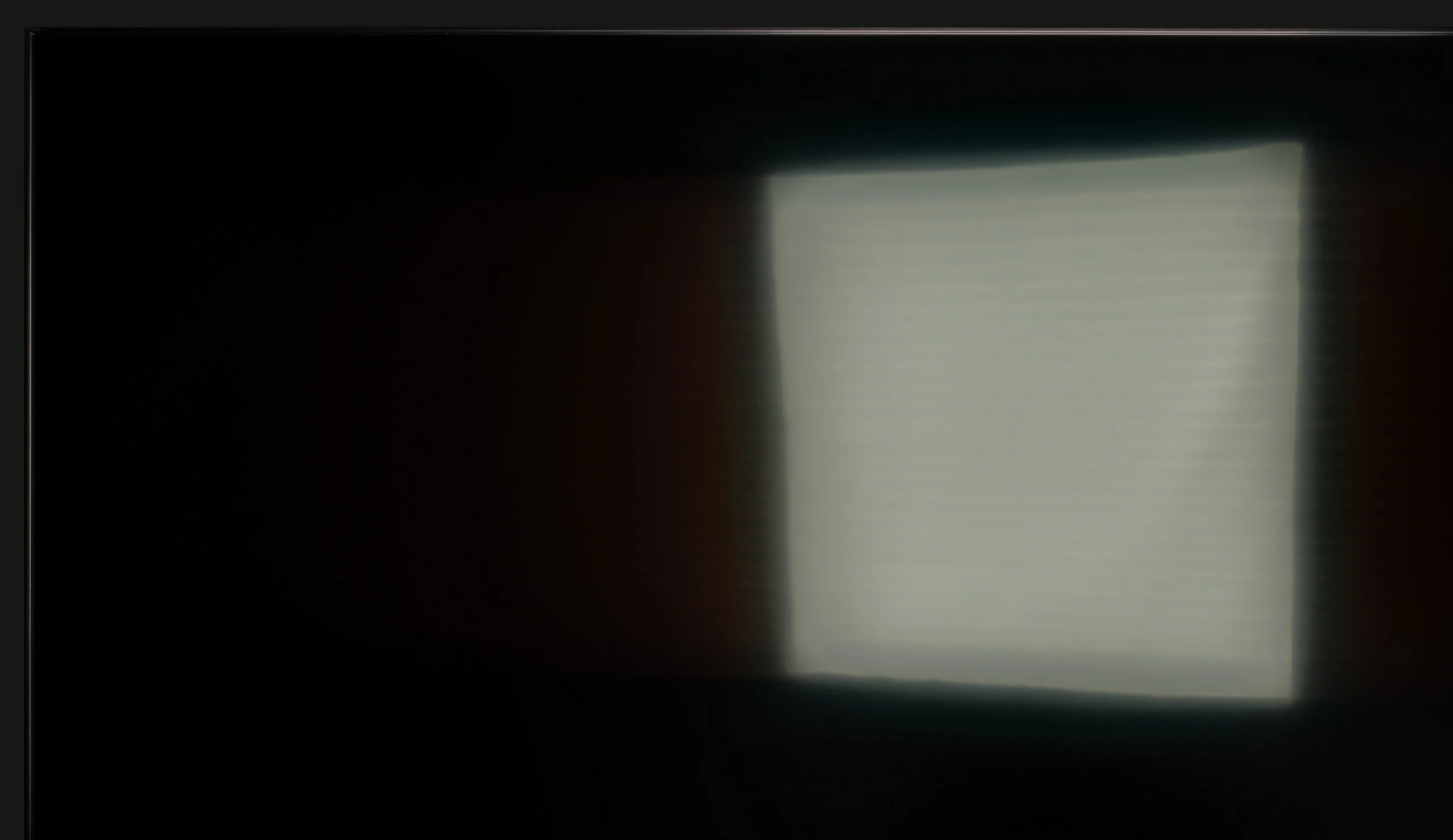
Halo effect and black detail visibility:

Check the visibility of bright lights on a dark background. Mini-LEDs often struggle with this. The photo does not compare black levels – that’s what the video below is for.

The video accurately shows differences in contrast and black levels between TVs, as well as potential issues: halo around bright objects or Mini-LED zone operation visible as brightness jumps.

Samsung S95D with QD-OLED technology stands out with incredible black levels, achievable due to self-emissive OLED pixels combined with a quantum dot layer. With this technology, each pixel on the screen can be individually turned off, resulting in absolute black with no light leakage. The result is an image with infinite contrast, where bright objects on a dark background are sharply visible, and details in the shadows are rendered with extraordinary precision. Compared to traditional LCD TVs and other OLEDs, S95D offers exceptional uniformity and depth of black, making it an ideal choice for the most demanding viewers. This provides extraordinary depth and "three-dimensionality" of the image when viewed in the dark.

QN80F is a representative of the Neo QLED series, which means it's a television with Mini LED backlighting. Unlike its cheaper cousin, the QN70F model, here the diodes are placed directly behind the panel (rather than at the edges), which gives a solid advantage in contrast control right from the start. In the 65-inch variant we tested, we counted 88 local dimming zones – a result that may not be particularly impressive, but as it turned out, sufficient to achieve quite decent results.

In tests based on scenes from movies like Oblivion and The Meg, the QN80F performed well – blacks were deep, and the overall image consistency was eye-catching. However, in more demanding moments (e.g., scenes with a lot of bright details on a dark background), a halo effect appeared. This is where the limitation of the number of zones shows – bright elements could bleed into each other, and some details in dark areas lost sharpness and contrast. In one of the helicopter scenes (The Meg), we even noticed a slight flicker in brightness, as if the television was trying its best to maintain visibility of details at the expense of black depth.

However, these are not problems exclusive to this model – the halo effect or contrast drops in very complex scenes are something most Mini LED televisions struggle with, even the more expensive ones. In its class, the QN80F still performs positively and offers clearly better contrast than the QN70F model with edge lighting. For most users, this will be a level more than sufficient – though not ideal.

HDR effect quality

7.8/10

5.8/10

Supported formats
HDR10, HDR10+, HLG
HDR10, HDR10+, HLG
Color gamut coverage
DCI P3: 99.6%, Bt.2020: 87.7%
DCI P3: 93.1%, Bt.2020: 72.3%

Luminance measurements in HDR:

Review Samsung OLED S95D Brightness measurement

Result

1400 nit

Review Samsung OLED S95D Brightness measurement

Result

1521 nit

Review Samsung OLED S95D Brightness measurement

Result

1560 nit

Review Samsung OLED S95D Brightness measurement

Result

1385 nit

Review Samsung OLED S95D Brightness measurement

Result

804 nit

Review SAMSUNG QN80F Brightness measurement

Result

799 nit

Review SAMSUNG QN80F Brightness measurement

Result

533 nit

Review SAMSUNG QN80F Brightness measurement

Result

717 nit

Review SAMSUNG QN80F Brightness measurement

Result

245 nit

Review SAMSUNG QN80F Brightness measurement

Result

656 nit

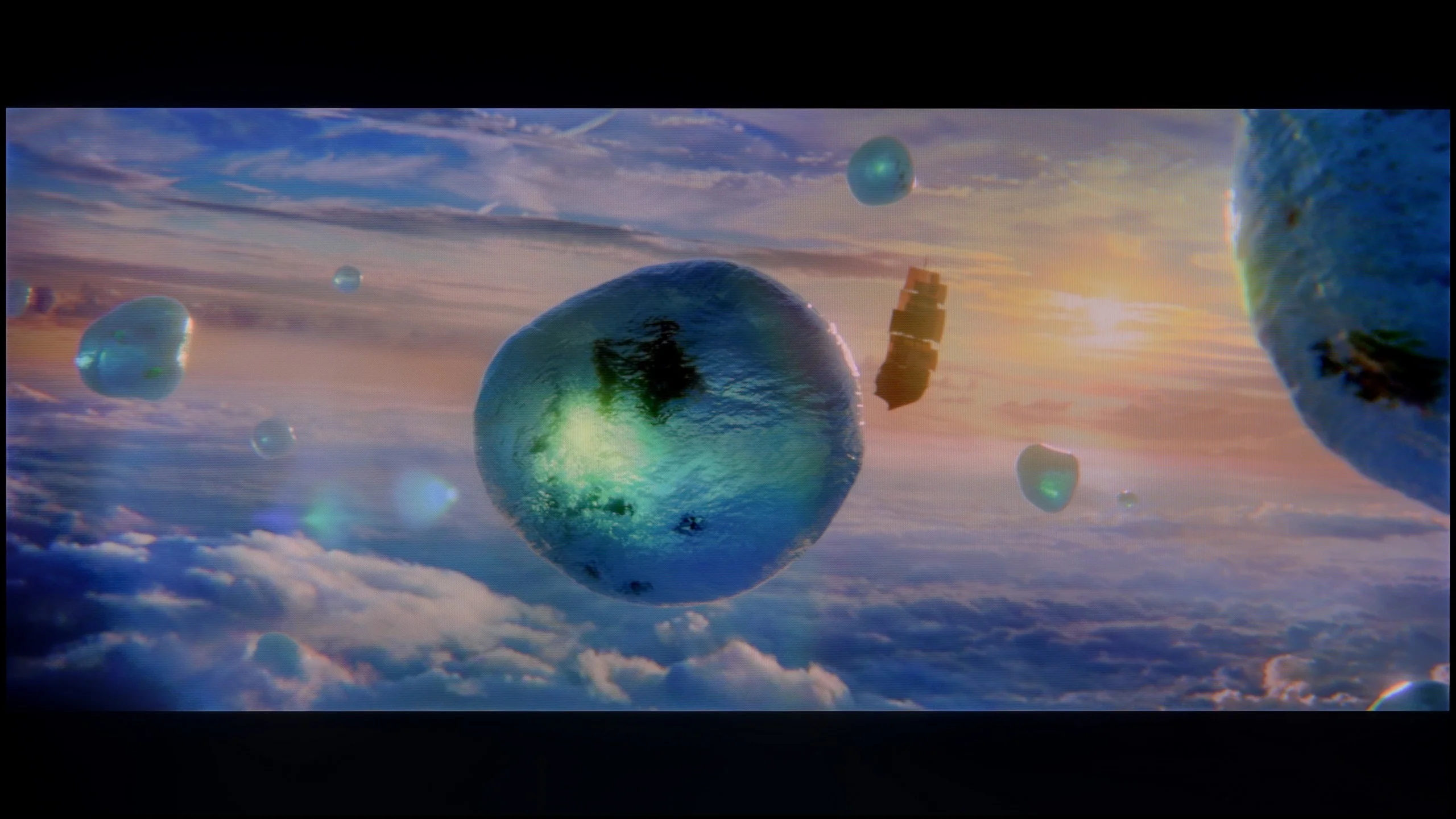
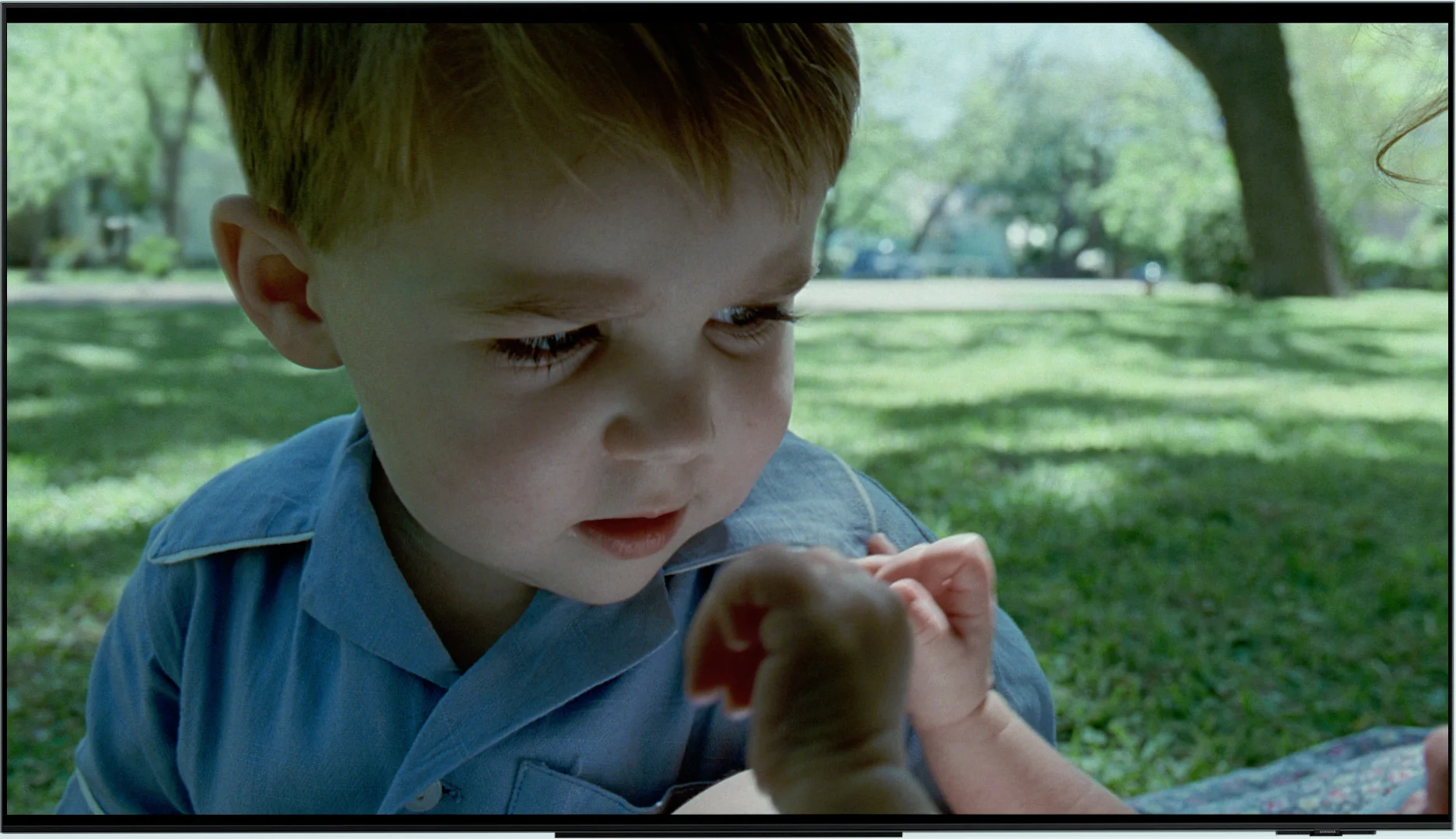
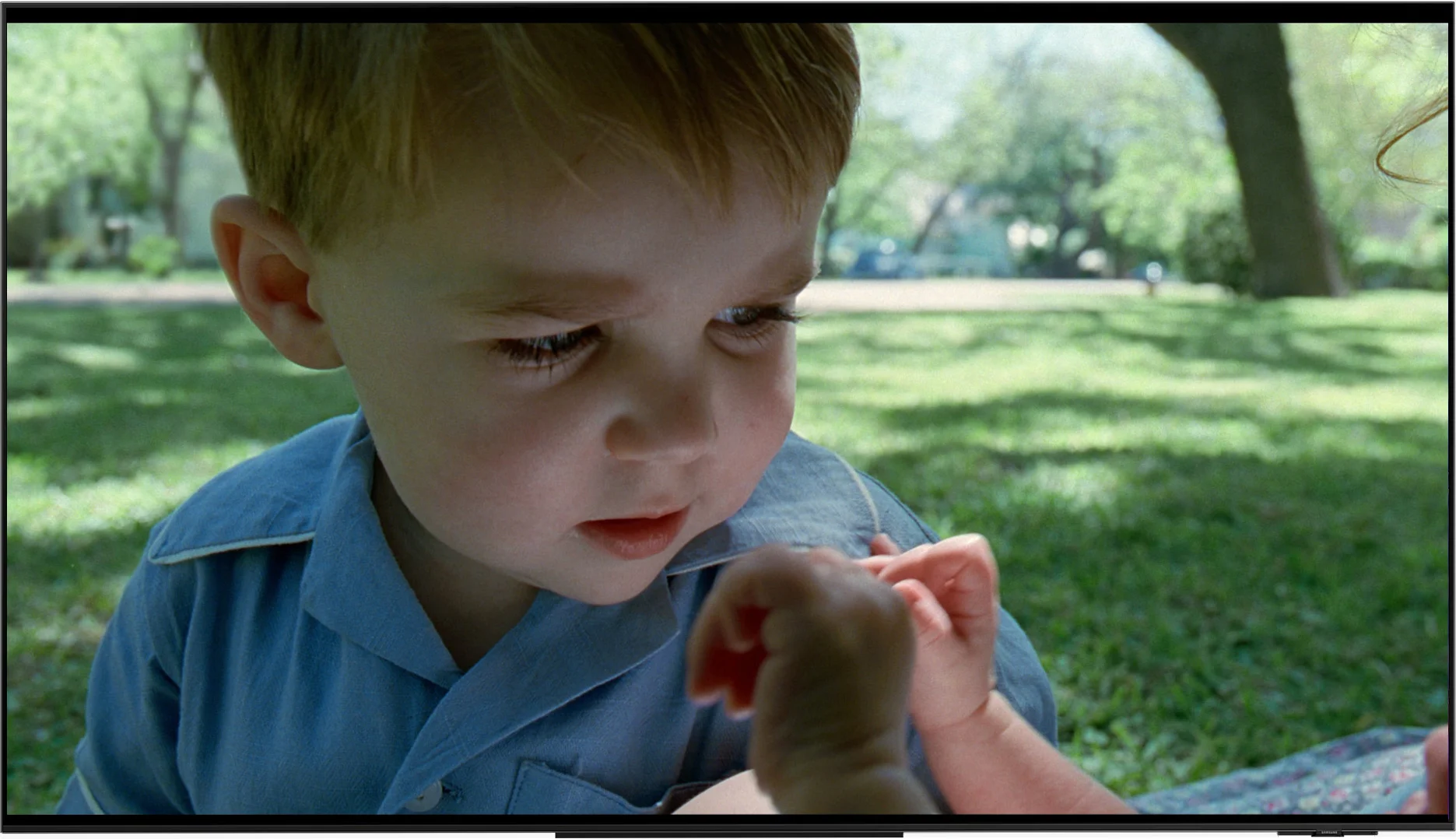
Scene from the movie “Pan” (about 2800 nits)

Scene from the movie “Billy Lynn” (about 1100 nits)

The photos show two HDR10 movies. 'Pan' is one of the brightest productions ever made, while 'Billy Lynn' (soldier) has brightness typical of streaming (Netflix, Prime, HBO MAX). Notice the intensity of effects and detail in whites.

Static HDR10

The photos present the visibility of white details in various HDR formats. They do not show brightness differences between TVs (these can be compared in the previous gallery).

Dynamic: HDR10+

Dynamic: HDR10+

The photos present the visibility of white details in various HDR formats. They do not show brightness differences between TVs (these can be compared in the previous gallery).

HDR luminance chart:

SAMSUNG QN80F

Samsung OLED S95D

Samsung S95D offers excellent HDR performance, providing uniform effects across all scenes exceeding 1500 nits, except for the fifth scene, where brightness drops to 800 nits. Despite this, the television maintains a high level of image quality. A significant advantage of QD-OLED technology is its ability to retain high brightness even in the smallest elements on a black background, which is uncommon in LCD and mini LED televisions. This ensures that every scene captivates with strong light effects, regardless of the size of the illuminated surface. Only in the brightest scenes with large light areas does brightness slightly decrease, which is typical even for standard LG-produced OLEDs. Additionally, the quantum dot coating has allowed for unprecedented high coverage of the BT.2020 colour gamut at 88%.

QN80F is quite a bright screen – in synthetic tests, it achieved nearly 1000 nits, which allows for reasonable expectations with HDR content. And indeed, in many scenes, the television truly shines. Sequences with a lot of light – such as shots from the movie Life of Pi or wide, bright surfaces in The Meg – look spectacular. Brightness maintains around 700 nits, which provides a solid effect, sufficient to feel the true "HDR magic." Unfortunately, not every scene looks that good. In materials with small, bright details on a dark background, like in Sicario 2, the television has problems – it can dim certain elements significantly, sometimes to the point where they disappear from the image. This is the result of a limited number of dimming zones, which forces the device to make compromises: either stick to inky blacks or sacrifice some details. QN80F usually chooses the former. As a consolation, it has quite decent coverage of a wide color gamut – DCI-P3 at 93%. This is not the highest score on the market, but it is more than enough for most content on streaming platforms.

Factory color reproduction

7.5/10

6/10

This gallery shows how colors change after professional TV calibration. If you notice the difference, we recommend ordering this service at SkalibrujTV.com.

Factory Mode

After calibration

This gallery shows how colors change after professional TV calibration. If you notice the difference, we recommend ordering this service at SkalibrujTV.com.

Factory Mode

After calibration

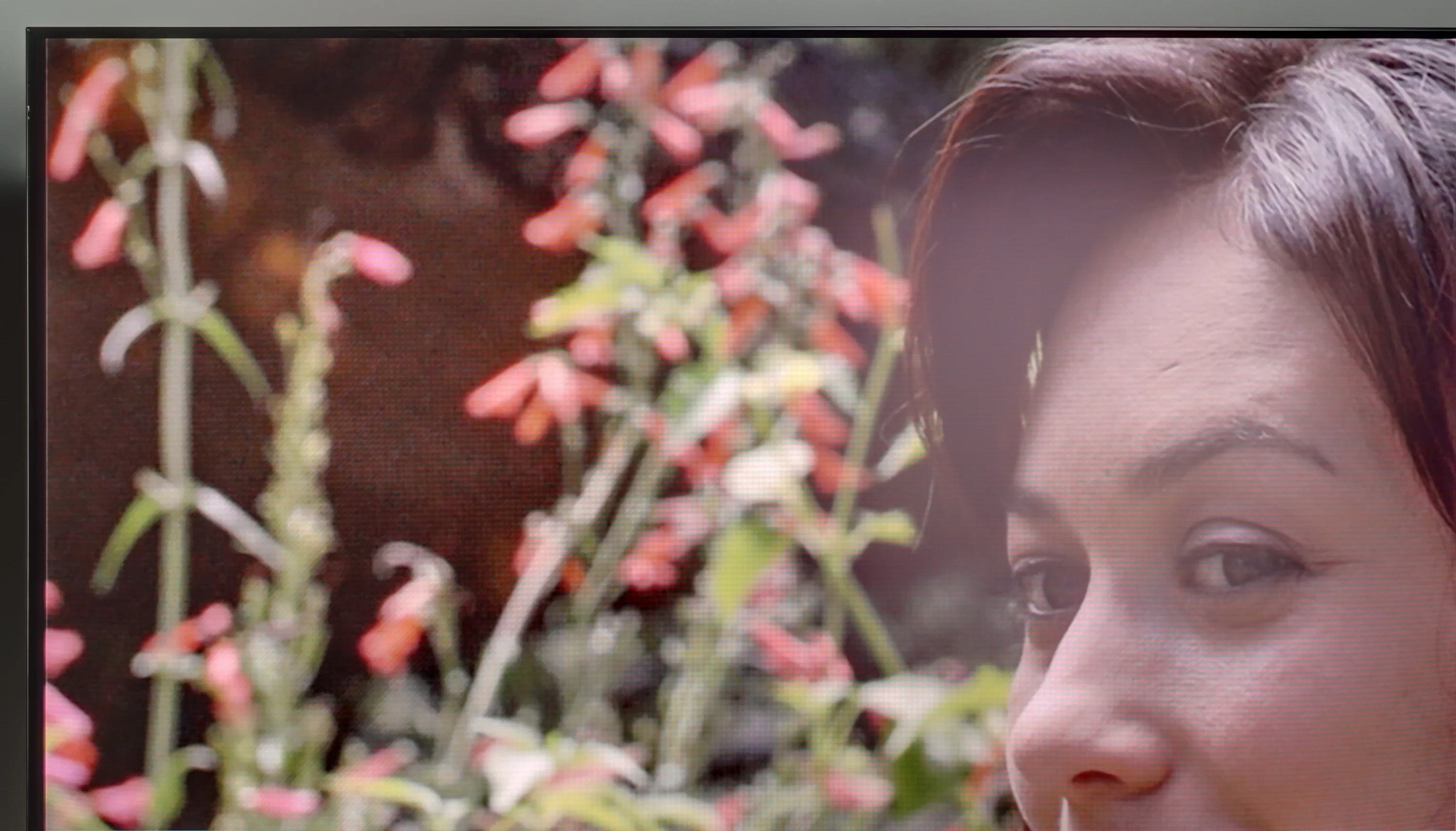
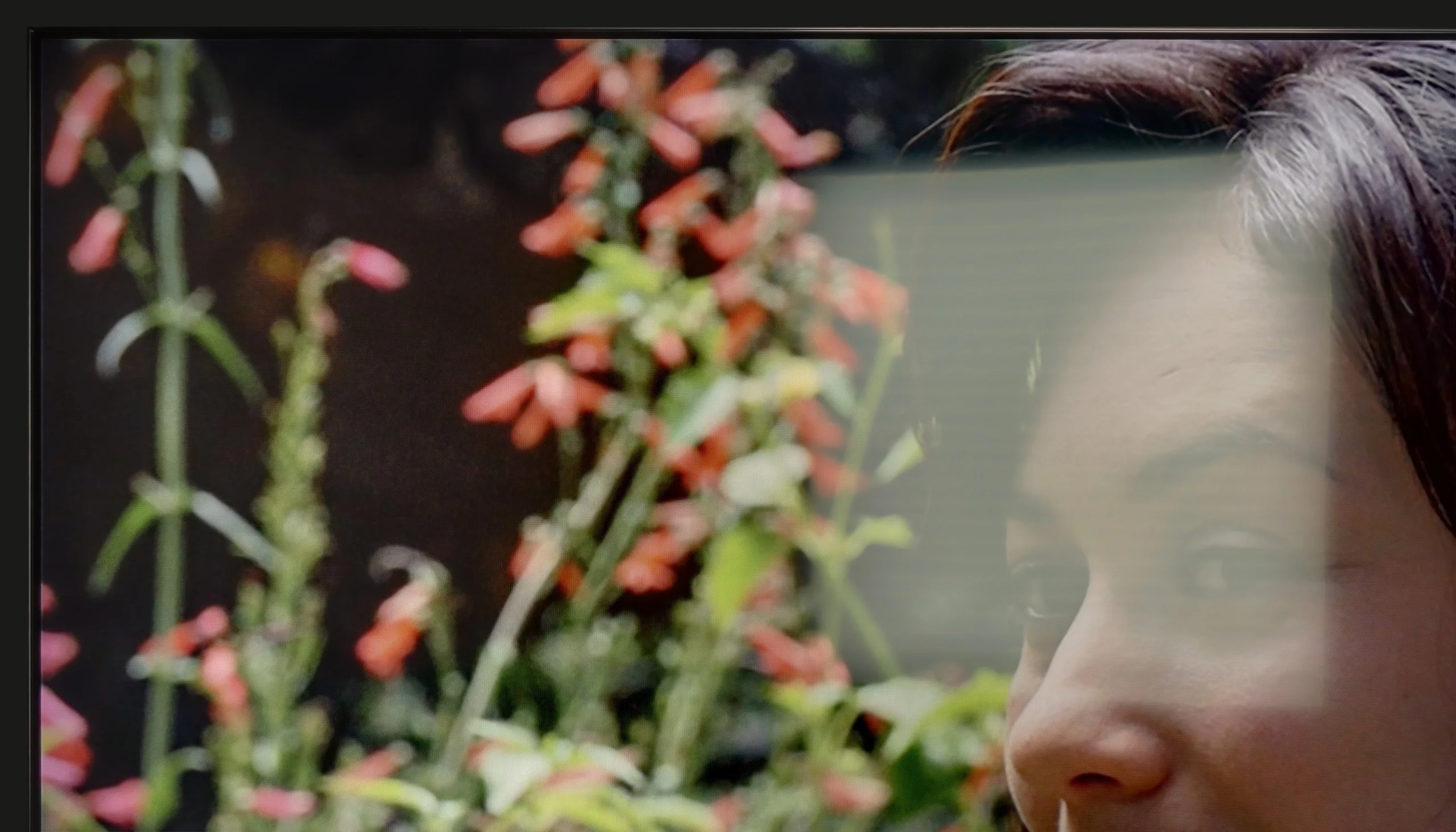
The Samsung S95D’s Filmmaker mode excels in colour accuracy, making it ideal for true-to-life viewing and closely reflecting the intent of content creators. We rely on this mode for all testing, as it presents significantly more detail than the often oversaturated standard or dynamic modes. Initially, viewers may find the image slightly warmer in Filmmaker mode, but it brings out a more authentic, balanced display. Despite being in the premium segment, the factory settings aren’t perfect. For example, there is a dip in red tones in the white balance for both HD and HDR content, with Colour Checker tests showing a cooler colour bias that shifts the image towards blue, impacting the natural appearance of scenes. In the sample photo, the boy appears in cooler tones, which diminishes realism.

Brightness performance for HD content is generally on point, though minor inconsistencies appear. However, the more noticeable issue arises with 4K HDR content. While the EOTF curve seems accurate in test patterns, real scenes sometimes reveal fluctuations, where some areas are overly brightened or darkened. Although the S95D offers reasonably good out-of-the-box colour reproduction, calibration is recommended to achieve a more precise, natural, and immersive picture, maximising the television’s potential.

We always test televisions in the best available factory mode – for the Samsung QN80F, this is the Filmmaker mode, and indeed, it offers the settings closest to the creators' intentions. However, this doesn't mean that everything looks perfect. In SDR content, the biggest issue turned out to be an unbalanced white balance – slight deficiencies in green and a noticeable excess of red led to noticeable color errors, and one could almost say there was a pinkish tint to the screen. This was clearly visible in the color checker test, where colors would "escape" their target fields – to the extent that a sensitive viewer's eye could catch it even without the help of a meter.

In HDR content, the white balance was much better, but another problem emerged – brightness management. The EOTF curve caused an overly bright image most of the time, which could affect the perception of contrast and made the screen slightly "flicker" during dynamic light changes. We have already discussed this in the paragraphs about black and HDR. Fortunately, Samsung leaves the user with plenty of options. The QN80F offers a rich set of calibration options, including a 20-point white balance – that's why we decided to check what this television is really capable of after proper calibration.

Color reproduction after calibration

9/10

8.3/10

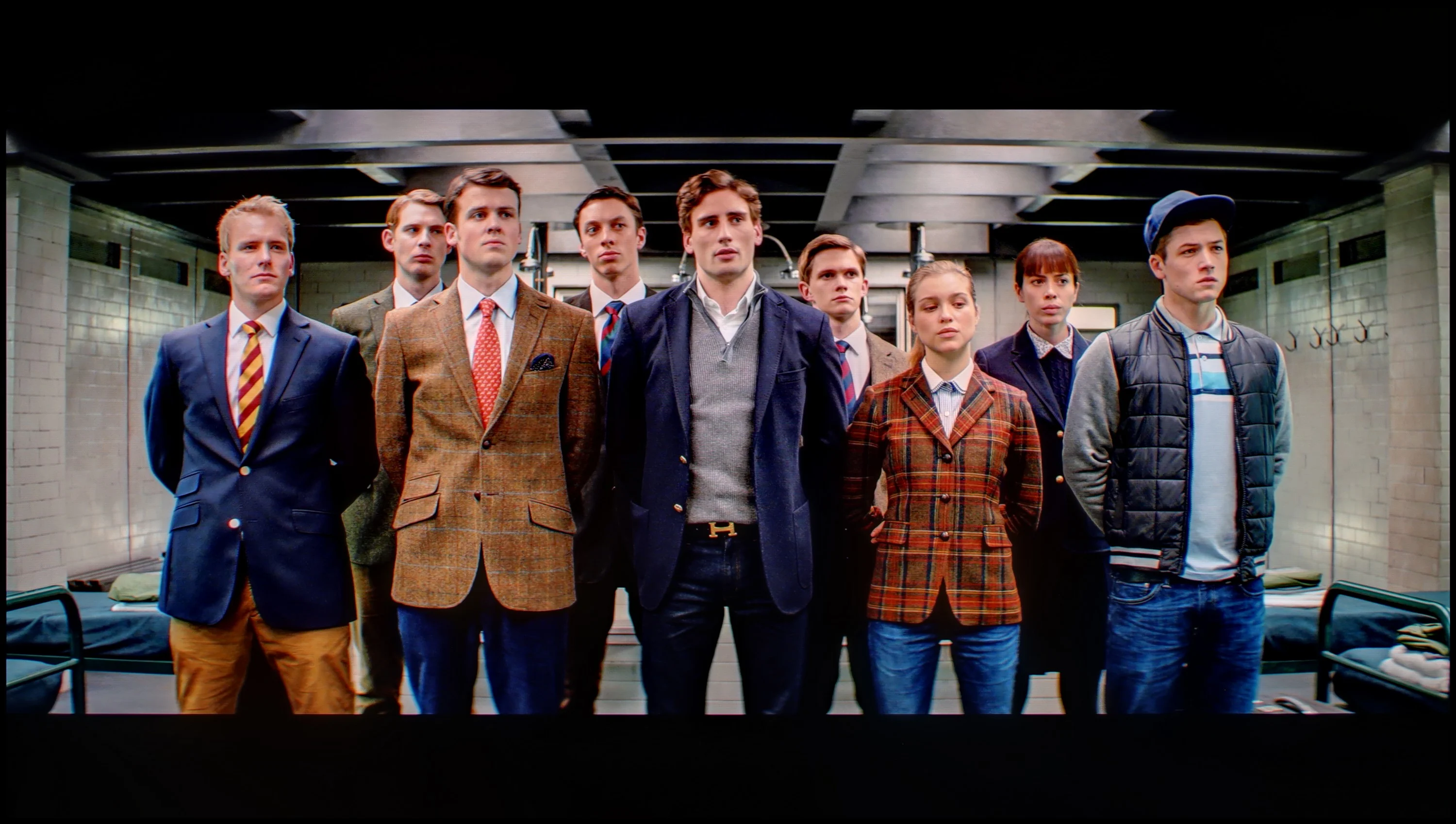
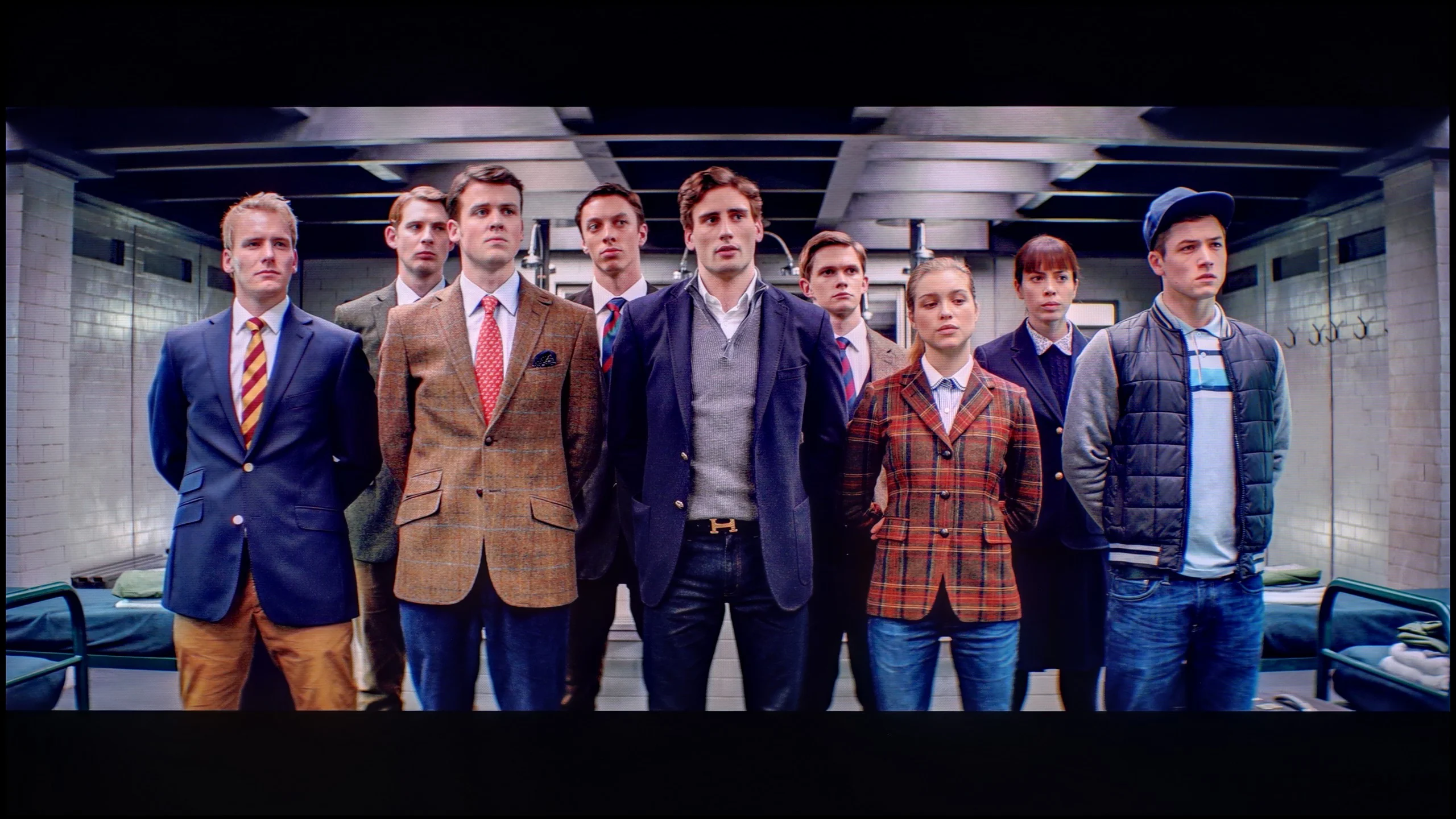
The photos show how movies look on the TV. Pay attention to black detail visibility, colors, and shadow tint.

The photos show how movies look on the TV. Pay attention to black detail visibility, colors, and shadow tint.

Calibration can significantly elevate a television's image quality, enhancing both accuracy and overall viewing experience. For the Samsung S95D, calibration has notably refined the white balance, removing major colour inaccuracies to produce more natural and balanced tones, which allows for a closer representation of the filmmakers’ vision. The adjustments bring subtle improvements to contrast and gamma, with more pronounced distinctions between light and dark areas, adding depth and revealing finer details in both shadows and highlights. This creates a richer, more lifelike image with enhanced detail, particularly in darker scenes where shadows now hold greater clarity, while bright areas appear well-balanced rather than overly intense.

Despite these improvements, the EOTF curve remains slightly below ideal, which might influence the handling of dynamic scenes. However, the enhanced tonal transitions and boosted contrast post-calibration make the S95D an excellent choice for film and high-definition content, bringing it closer to reference-level quality. This calibration enables the television to deliver a more immersive, accurate visual experience in line with industry standards, ultimately offering a more rewarding viewing experience.

After conducting a thorough calibration, it was possible to bring most image parameters to a really good level. The white balance in both SDR and HDR appears nearly perfect – the image is natural, neutral, and free of the previously noticeable reddening. The colors have gained depth, and the overall visual reception has become more pleasant and cohesive. It was also possible to partially master brightness management, which in the factory version could be problematic. The EOTF chart shows that the television performs significantly better with brightness after calibration – there's no longer excessive dimming of certain elements. In films, it can still be observed that the QN80F has a tendency to slightly brighten the smallest, bright details – this is already a result of the device's construction and the limited number of dimming zones. In short: not everything can be overcome, but what could be improved has been addressed. After calibration, the QN80F makes a really good impression; it simply looks more mature and professional.

Smoothness of tonal transitions

8.5/10

9/10

These are selected scenes that show smooth tonal transitions from one color to another. If you see distinct banding, it’s the TV panel’s fault.

These are selected scenes that show smooth tonal transitions from one color to another. If you see distinct banding, it’s the TV panel’s fault.

These are selected scenes that show smooth tonal transitions from one color to another. If you see distinct banding, it’s the TV panel’s fault.

These are selected scenes that show smooth tonal transitions from one color to another. If you see distinct banding, it’s the TV panel’s fault.

The tonal gradation in the Samsung S95D television is exceptional. Even in the most demanding scenes from tested films, the TV performs remarkably well, with minimal and nearly imperceptible issues related to smoothing tonal transitions. These minor imperfections are unlikely to be noticed by the average viewer, enhancing the overall positive visual experience during everyday use.

Furthermore, the incorporation of a QD-OLED panel enables the S95D to achieve superior results compared to the best WOLED panels produced by LG. This advanced technology contributes to a more vibrant and nuanced colour reproduction, allowing viewers to enjoy a richer and more immersive viewing experience. Overall, the Samsung S95D sets a high standard for tonal performance in televisions.

In this regard, the QN80F really delivers. The transitions between colors are smooth, nothing is choppy, and there are no annoying bands in the sky or strange blotches in the shadows. Movie scenes in darker tones performed particularly well – and that's where most televisions start to struggle. If one really looks for it, slight banding can be seen in the brightest areas, but that's really just nitpicking. In everyday viewing, no one should have a problem with this. To put it simply: the tonal transitions are so good that you can forget about them – and just enjoy the movie.

Image scaling and smoothness of tonal transitions

7.5/10

7/10

Image without overscan on the SD signal
No
No
Smooth transition function
OK
OK

Smooth transition function

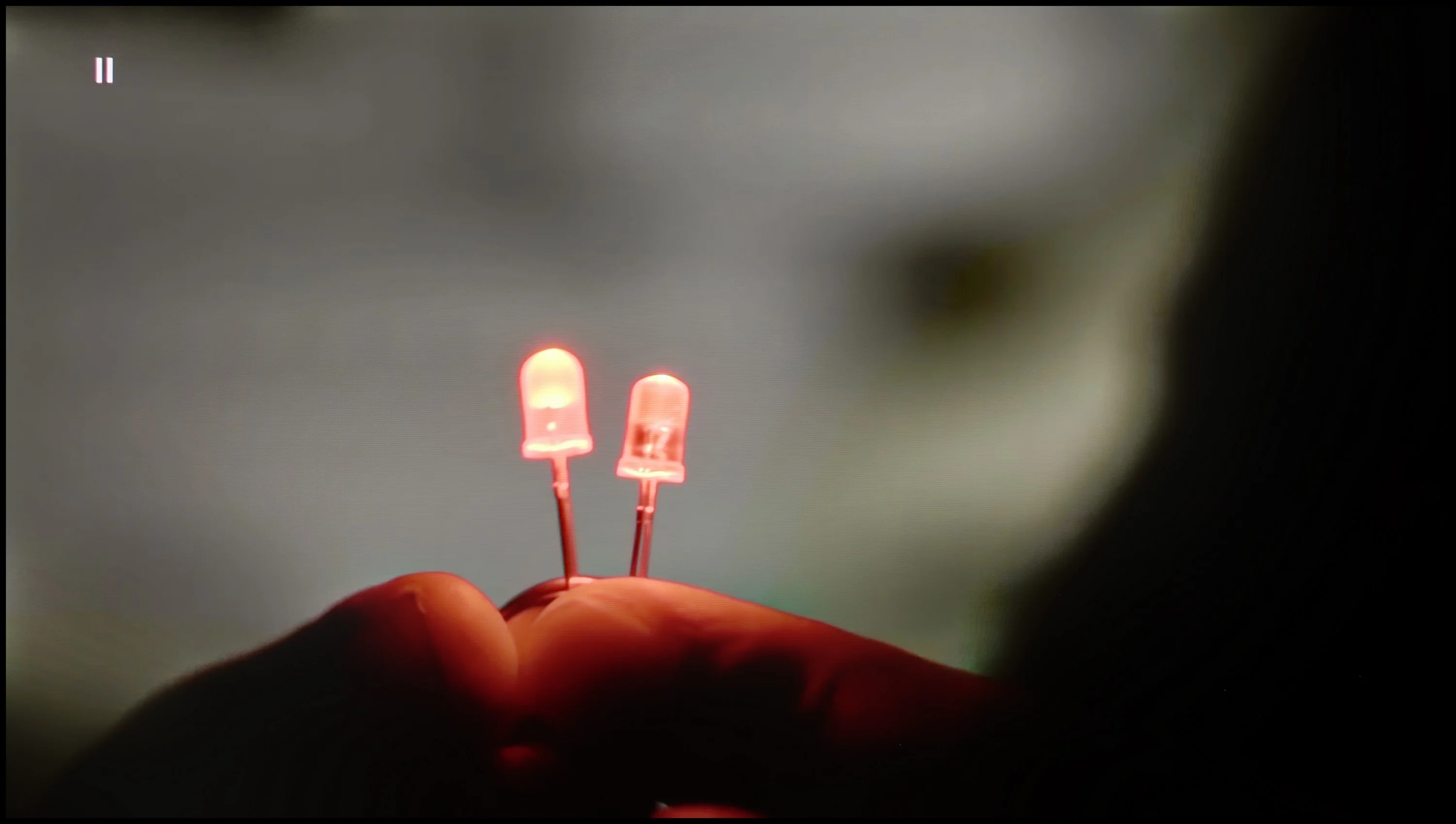
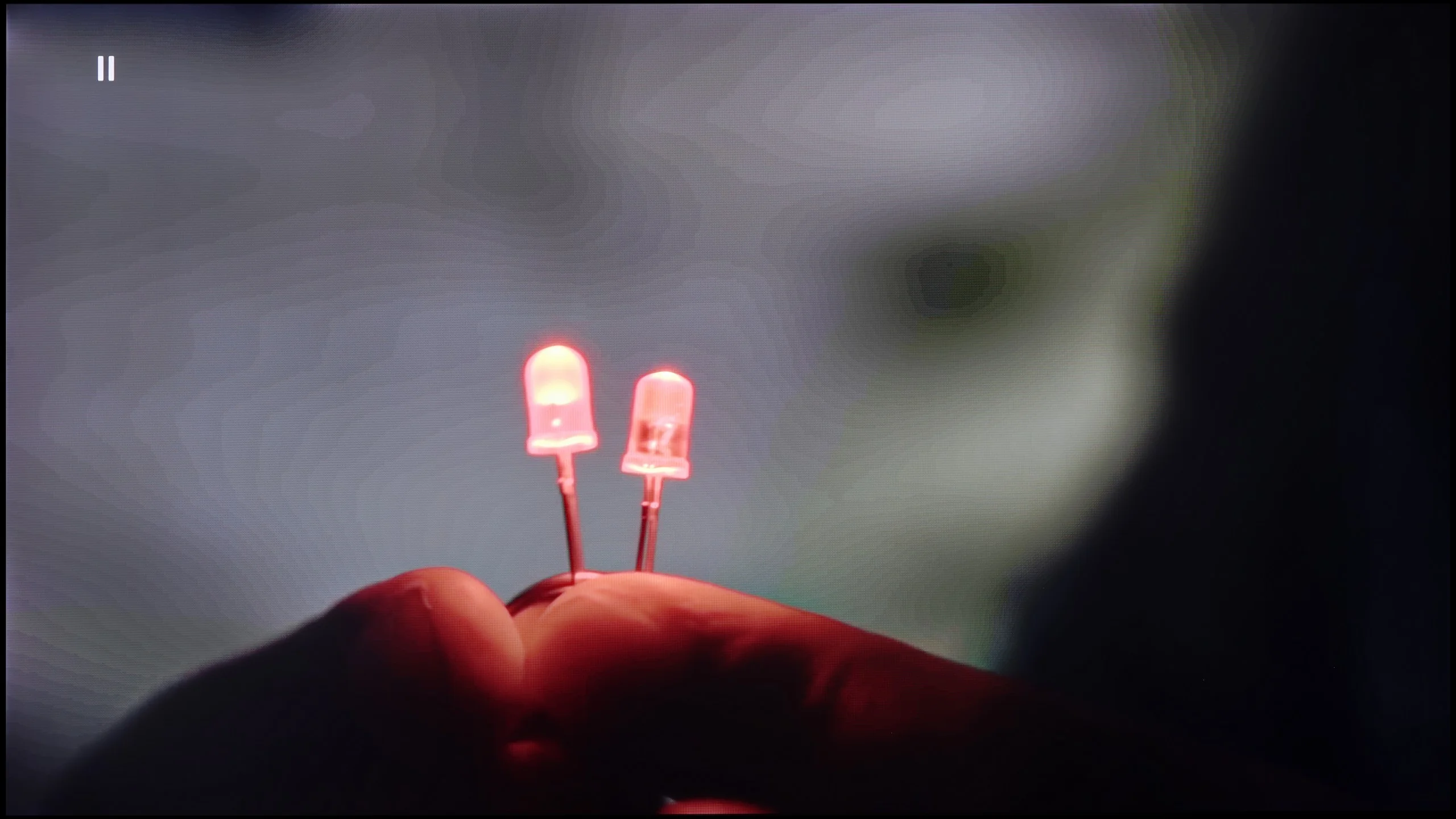
The match photo shows how the TV smooths weak tonal transitions in low-quality video.

Image scaling SD (576i)

The model photo shows how it handles upscaling of SD material.

The Samsung S95D handles tonal transitions in lower-quality materials exceptionally well. In tests featuring a screen with a light bulb, there are virtually unnoticeable transitions between shades of grey, positioning it among the best televisions we have evaluated in this aspect.

Regarding digital processing, the S95D excels in rendering the entire image—whether it's branches or figures—without any jagged edges or overly pronounced contours. However, one point to note is that the image appears slightly trimmed. Despite this minor issue, the television still performs admirably, ensuring that details in lower-quality materials remain noticeable and well-defined. This ability to maintain clarity and depth in various content types further solidifies the S95D's reputation for delivering a high-quality viewing experience.

If, while watching lower-quality materials – for example from YouTube – we notice strange color transitions or unwanted artifacts, it’s worth checking the settings and enabling the noise reduction function. In our opinion, the best setting is at the "medium" level – it effectively smooths out problematic color transitions while not excessively blurring the entire image. However, one must know this: this option tends to remove film grain. If someone cares about preserving this effect (e.g., in older films), it’s better to just turn it off – regardless of the level, the grain always disappears.

When it comes to scaling resolution (i.e., the so-called upscaling), Samsung – as always – performs very well in this area. The QN80F may not compare to the top models worth several thousand, but for its price class, it really performs impressively. Very low-quality materials (e.g., from SD television or older video files) are noticeably improved and look surprisingly decent. The only noticeable drawback is the typical Samsung issue with overscan – that is, slightly cropping the edges of the image at very low resolutions, e.g., 576p.

Blur and motion smoothness

8.5/10

7.5/10

Maximum refresh rate of the panel
144Hz
144Hz
Film motion smoothing option
OK
OK
Blur reduction option
OK
OK
BFI function 60Hz
Yes, 60Hz (image flickers)
BFI function 120Hz
No
No
Brightness drop with BFI
50%
69%

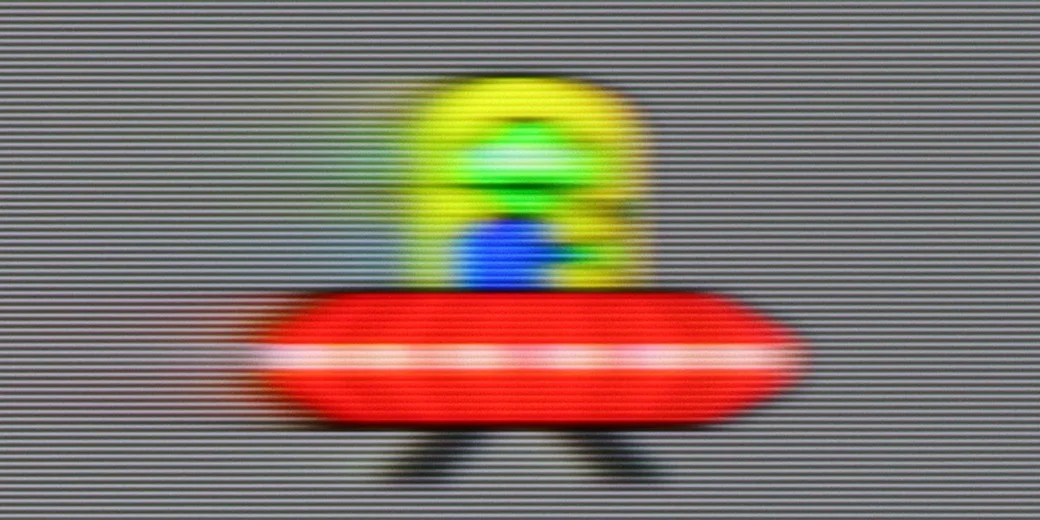
Blur (native resolution, maximum refresh rate):

Blur (BFI function enabled):

Image flickers in this mode

Image flickers in this mode

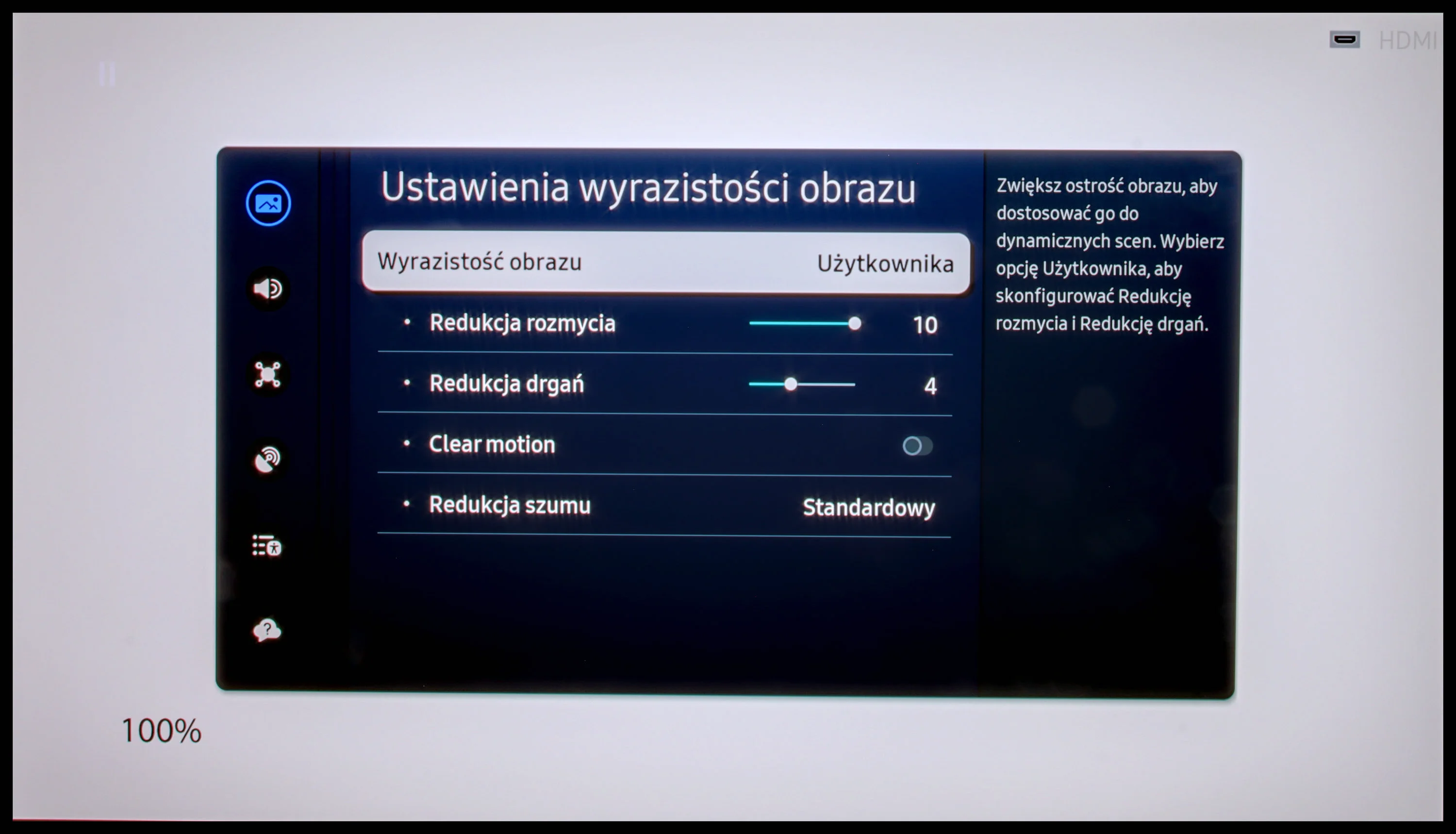
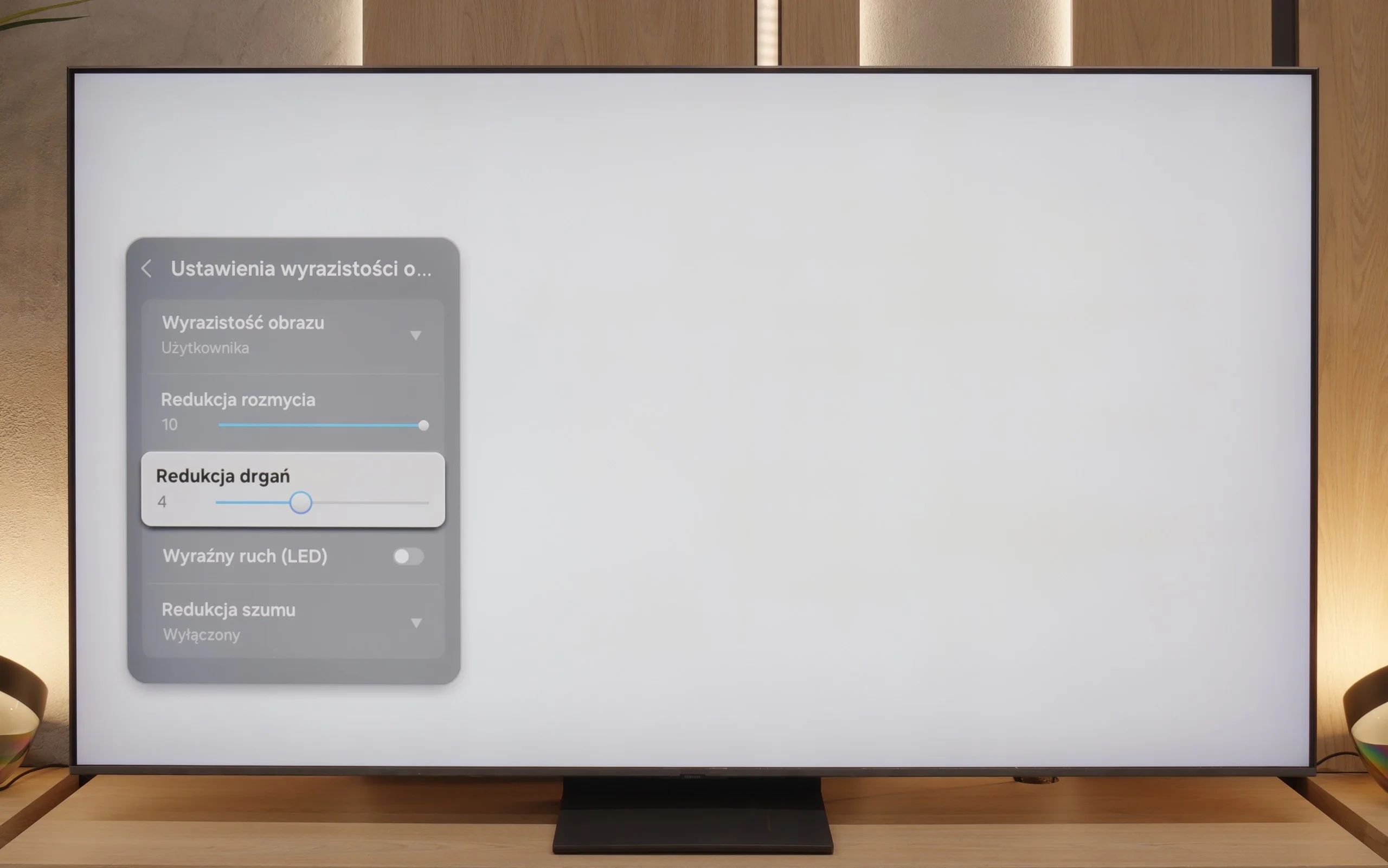
The Samsung S95D TV, featuring a refresh rate of 120 Hz (and even 144 Hz when configured correctly for PC use), guarantees exceptional motion smoothness. Samsung provides a range of image sharpness settings on a ten-point scale, enabling users to customise the display according to their preferences— favouring a more cinematic look or a smoother, theatrical feel.

In UFO tests, the OLED panel demonstrates its strengths by effectively eliminating any blurring. The rapid pixel response ensures that dynamic movements are replicated with remarkable precision, resulting in a fluid viewing experience that enhances fast-paced content, such as action films or competitive gaming. This combination of high refresh rates and superior pixel response makes the S95D an outstanding choice for those seeking crisp, clear motion in their visual media.

QN80F is truly a "fast" television. The applied panel offers a refresh rate of up to 144 Hz, which in practice means that the screen keeps up with the action – whether we're watching a movie, playing games, or browsing dynamic content on the internet. The image doesn't tear, it doesn't excessively blur, and everything simply looks smooth and pleasant to the eye. Of course, the manufacturer hasn't forgotten about movie fans – in the settings, we find an option for motion smoothness adjustment, allowing us to tailor the effect to our personal preferences. You can leave a more "cinematic" look (for those who enjoy a classic film vibe) or crank up the smoothness to a higher level for a theatrical smoothing effect. Importantly, the choice is ours. Watching movies and playing on the QN80F is simply a joy.

Console compatibility and gaming features

9.6/10

9.6/10

  • ALLM
    Yes
    Yes
  • VRR
    Yes
    Yes
  • VRR range
    48 - 144Hz
    48 - 144Hz
  • Dolby Vision Game Mode
    No
    No
  • Correct implementation of HGIG
    Yes
    Yes
  • 1080p@120Hz
    Yes
    Yes
  • 1440p@120Hz
    Yes
    Yes
  • 4K@120Hz
    Yes
    Yes
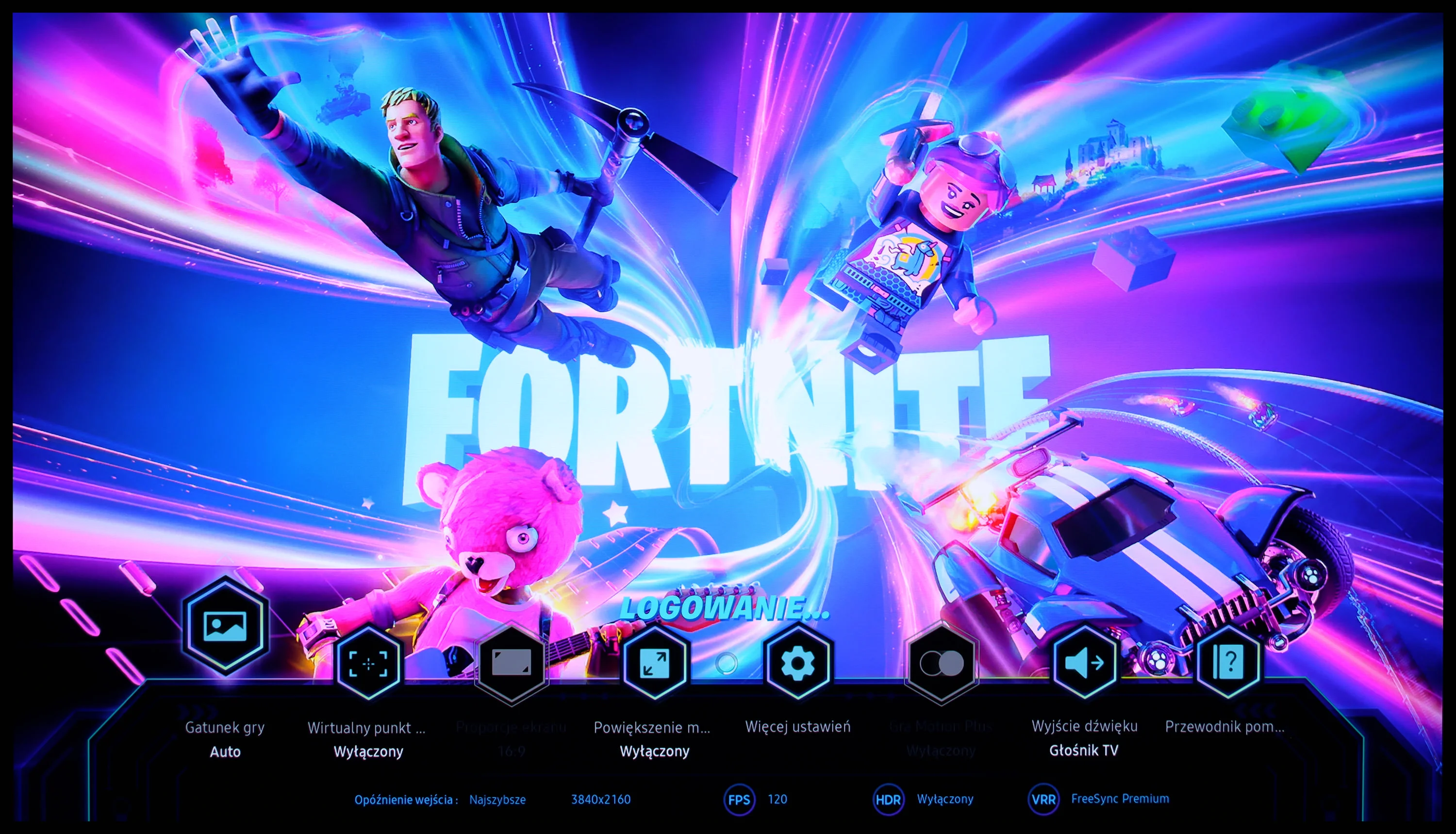
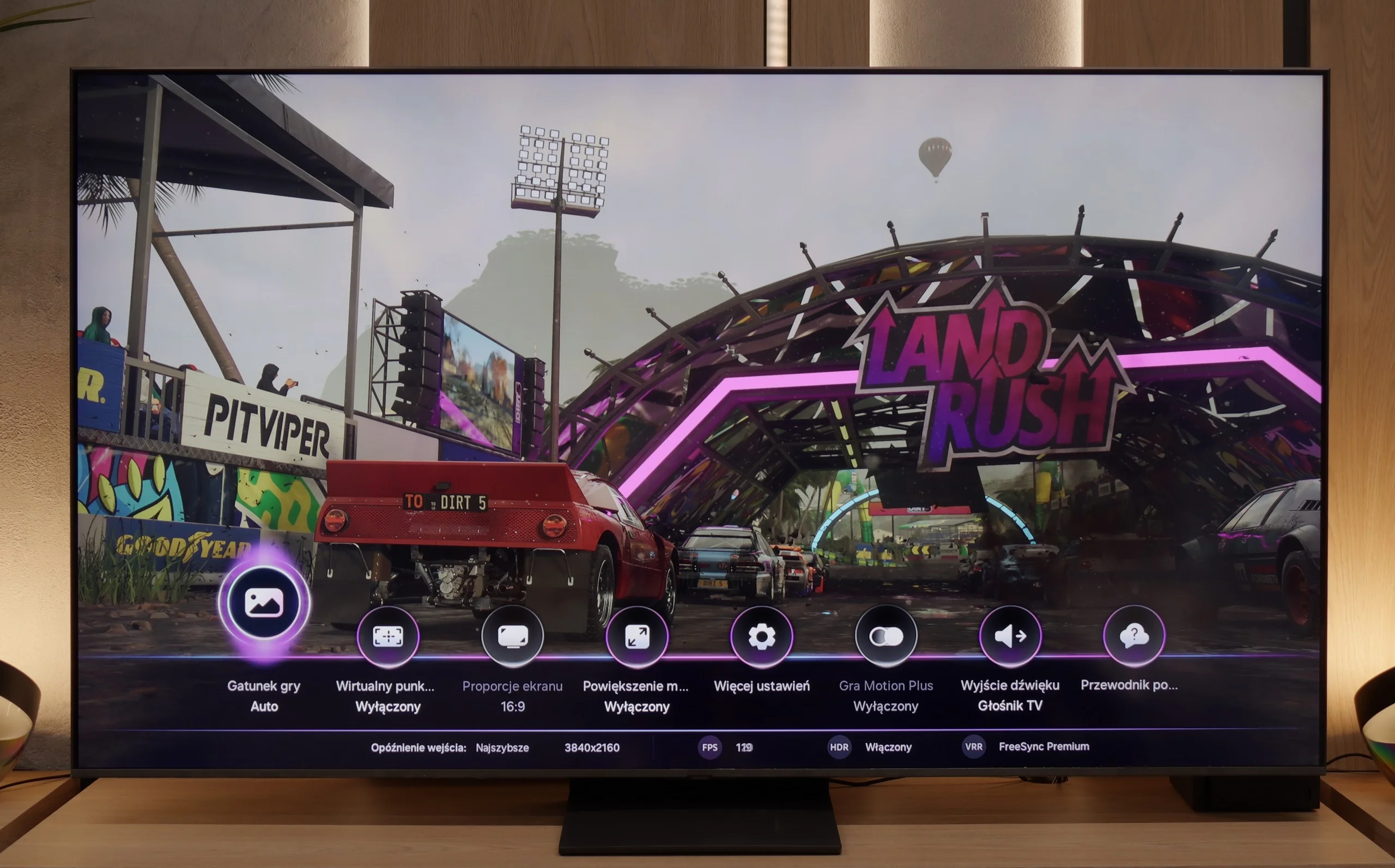
  • Game bar
    Yes
    Yes

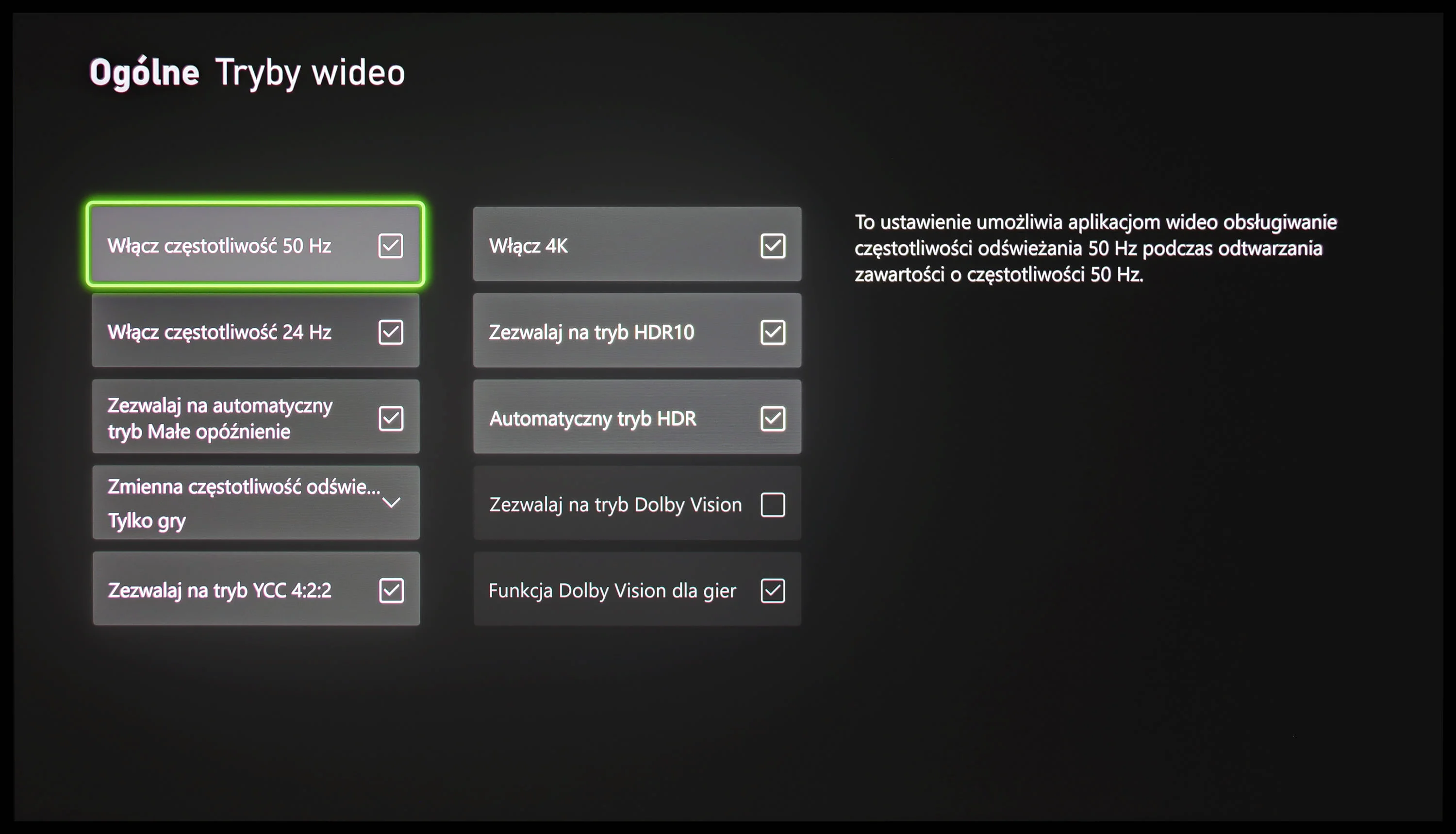
The Samsung S95D TV is expertly designed to meet the needs of gamers, featuring four HDMI 2.1 ports that support essential functionalities like Auto Low Latency Mode (ALLM), Variable Refresh Rate (VRR), and HDR Gaming Interest Group (HGIG). While the HDMI 2.1 ports do not offer the full 48Gb bandwidth, they are still adequate for achieving the desired resolution and smooth performance.

These technologies enable players to experience smoother and more responsive gameplay, significantly enhancing comfort and performance during intense gaming sessions. A standout feature is the Xbox app, which facilitates cloud gaming without requiring a console. This allows gamers to access an extensive range of titles directly on the TV, enjoying high image quality and fluid gameplay.

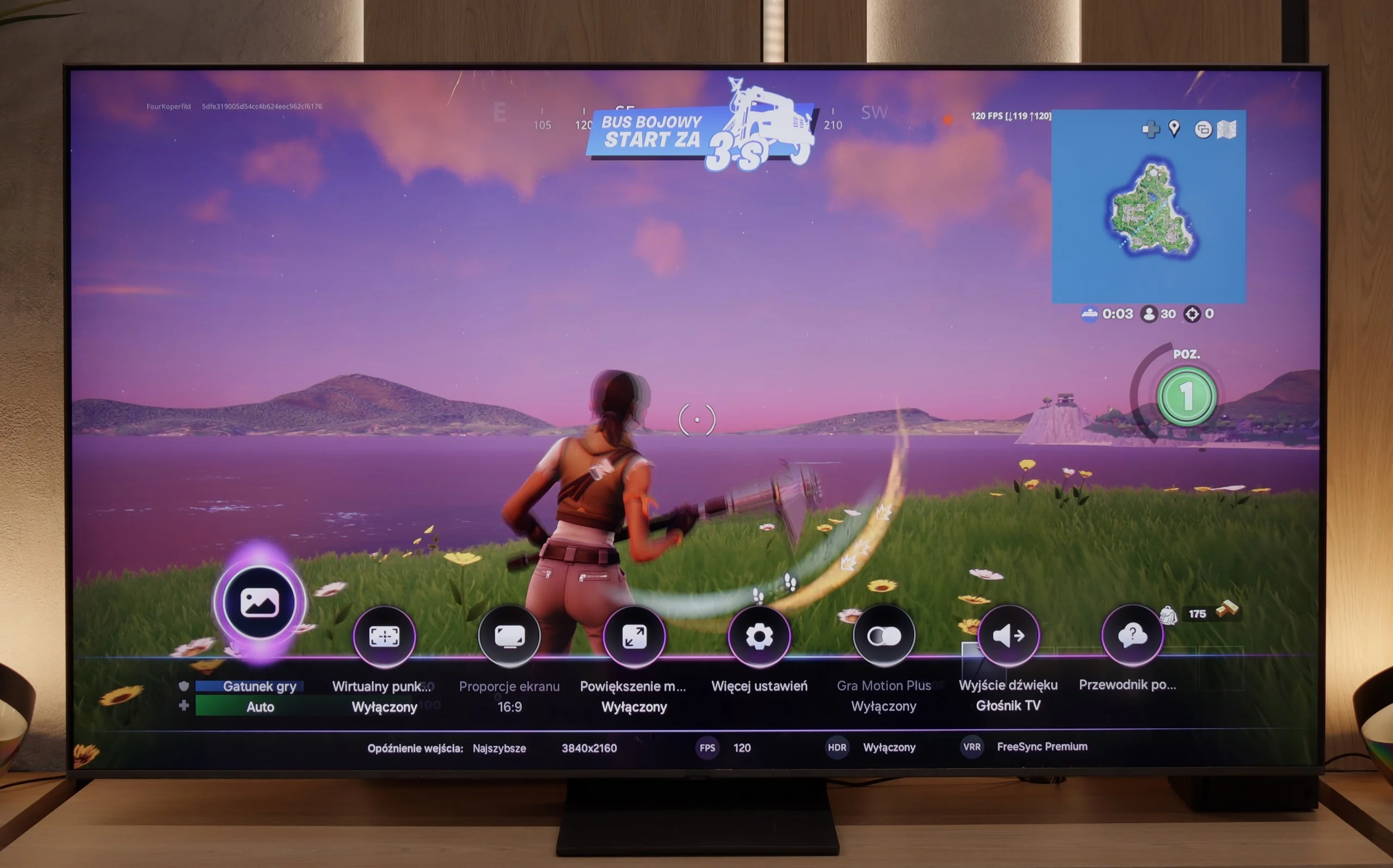
Additionally, the S95D includes a Game Bar feature, making it easy to manage game settings with quick adjustments, such as changing the screen ratio—an extremely useful function for various games and gameplay modes. The support for G-Sync and FreeSync is another advantage, particularly for Nvidia and AMD graphics card users.

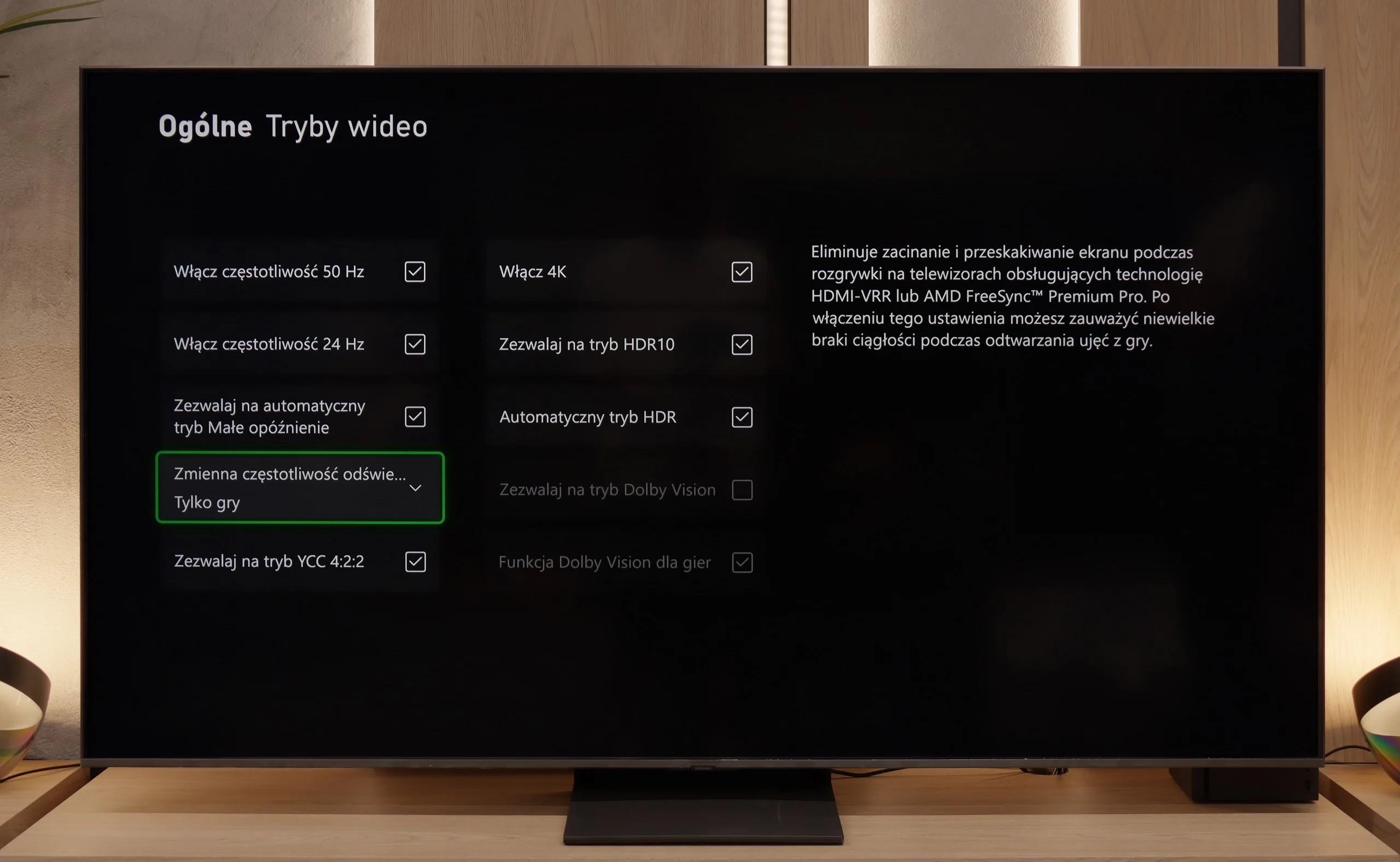
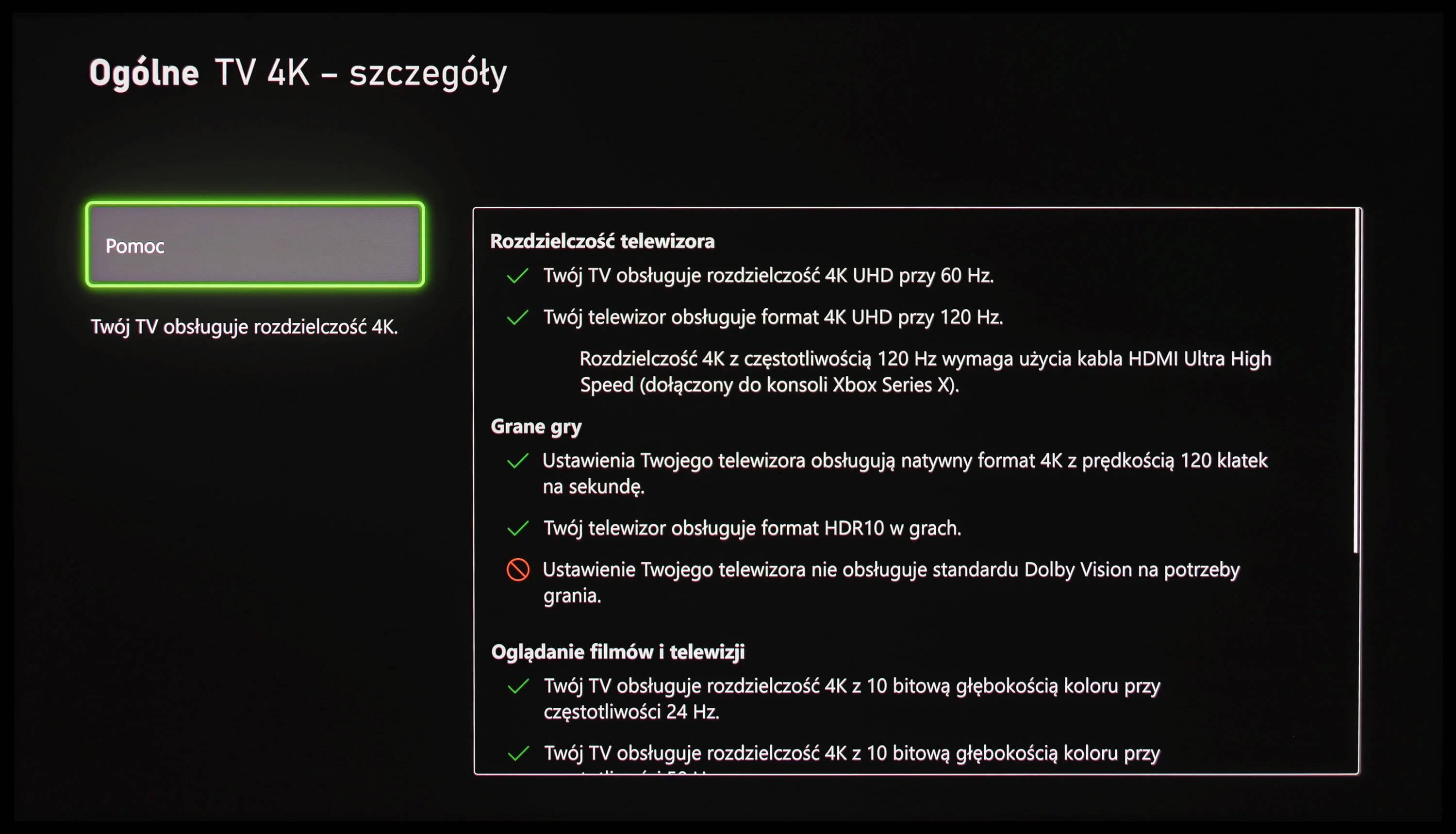
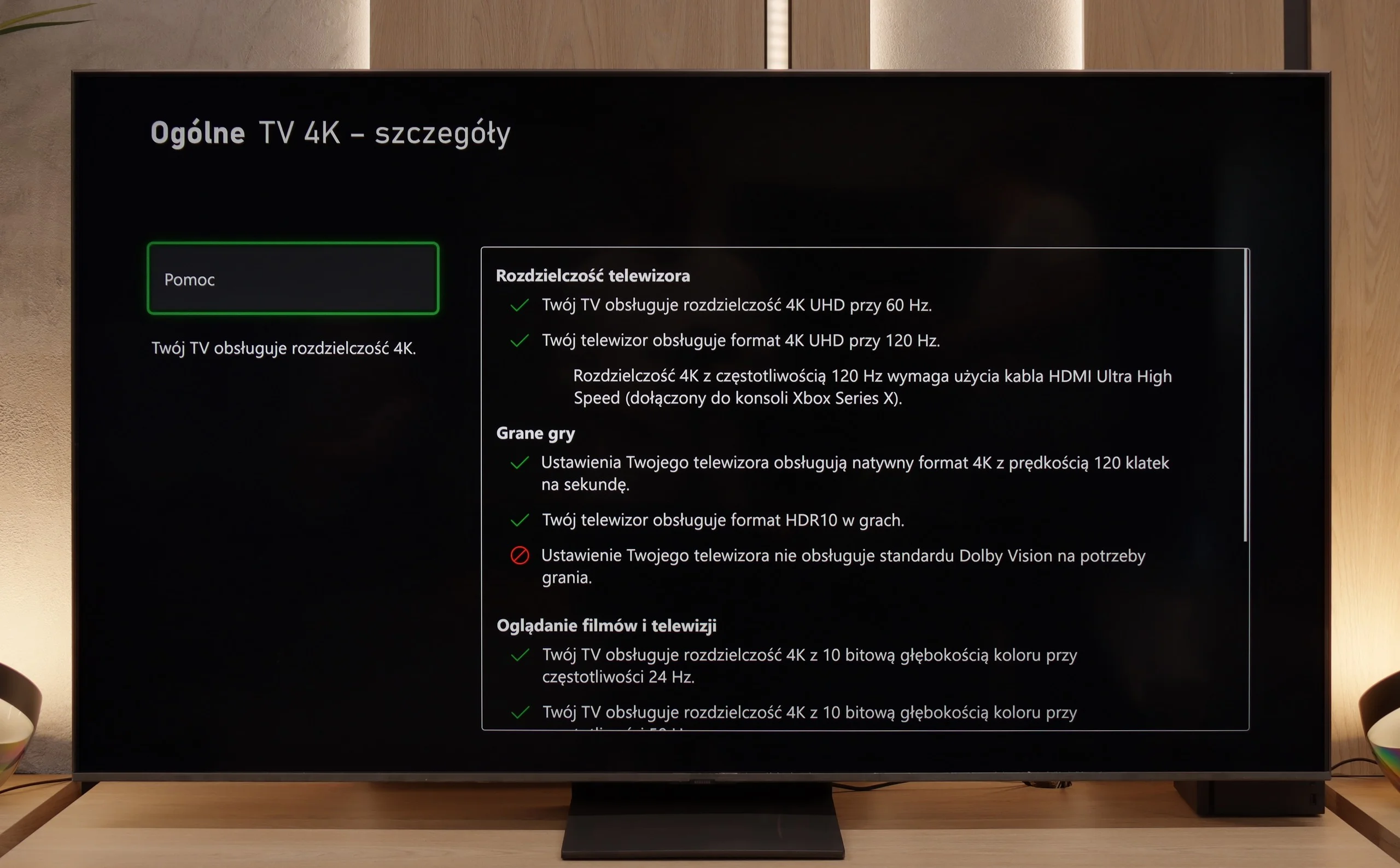
Although the S95D lacks support for Dolby Vision, it still provides an impressive array of features, making it an ideal choice for console gaming enthusiasts. Overall, the S95D combines cutting-edge technology with exceptional picture quality, creating a comprehensive package for any gamer seeking an immersive experience.

The Samsung QN80F is a television that delivers on almost every front when it comes to gaming. It features a 144 Hz panel, four full-fledged HDMI 2.1 ports, support for gamers in the form of variable refresh rate (VRR), automatic low latency mode (ALLM), and even one of the best-designed game bars on the market. The cherry on top is the motion smoother, which – uniquely in the world – works in games without significantly increasing input lag. Sounds like an almost perfect TV for gamers? And indeed, it is almost that way.

[UPDATE] We have updated our reviews of Samsung TVs from 2025 due to the release of software version 1131, which restored the crucial gaming feature HGiG.

As usual, Samsung does not support Dolby Vision in games, but that no longer surprises anyone. However, what is much more surprising is that... the HGIG feature has disappeared – that is, the system that allows a console (e.g., PlayStation 5 or Xbox Series X) to precisely match HDR tone mapping to the capabilities of the TV. In the latest firmware update for the 2025 models, this option simply vanished. It seems more like a bug than a deliberate move, but it must be honestly noted that as of the day of writing the review, the HGIG feature is simply not present.

And it is precisely because of this one absence that the QN80F turns from an almost perfect gaming TV into a "nearly" perfect device. It's a shame – because everything else indicated that Samsung could set the bar very high again in this generation.

Input lag

10/10

9.8/10

SDR

1080p60
9 ms
19 ms
1080p120
5 ms
9 ms
2160p60
9 ms
19 ms
2160p120
5 ms
9 ms

HDR

2160p60
9 ms
17 ms
2160p120
5 ms
9 ms
4320p60

Dolby Vision

2160p60 DV
2160p120 DV

The Samsung S95D TV excels with an exceptionally low input lag of just 5 ms for 120 Hz content and 9 ms for 60 Hz content. These impressive figures contribute to an incredibly smooth gaming experience, ensuring players can react quickly and accurately during intense gaming sessions. If our scale extended beyond 10 points, the S95D would undoubtedly warrant an even higher rating for its outstanding performance!

QN80F does not disappoint when it comes to response time. The input lag for 120 Hz content drops below 10 ms, which can be considered an almost ideal result – it’s hard to expect more in this class of TVs. Gaming is smooth, responsive, and free from delays that could irritate even the most sensitive players. For 60 Hz materials, the lag is higher, around 19 ms, but this is a completely natural phenomenon and still falls within comfortable limits.

Compatibility with PC

8.6/10

8.8/10

Chroma 444 (max. resolution and refresh rate)
Yes
Yes
Font clarity
Good
Very Good
Readability of dark text and shapes
Good
Good
Input lag in PC mode (4K, max. refresh rate)
5ms
9ms
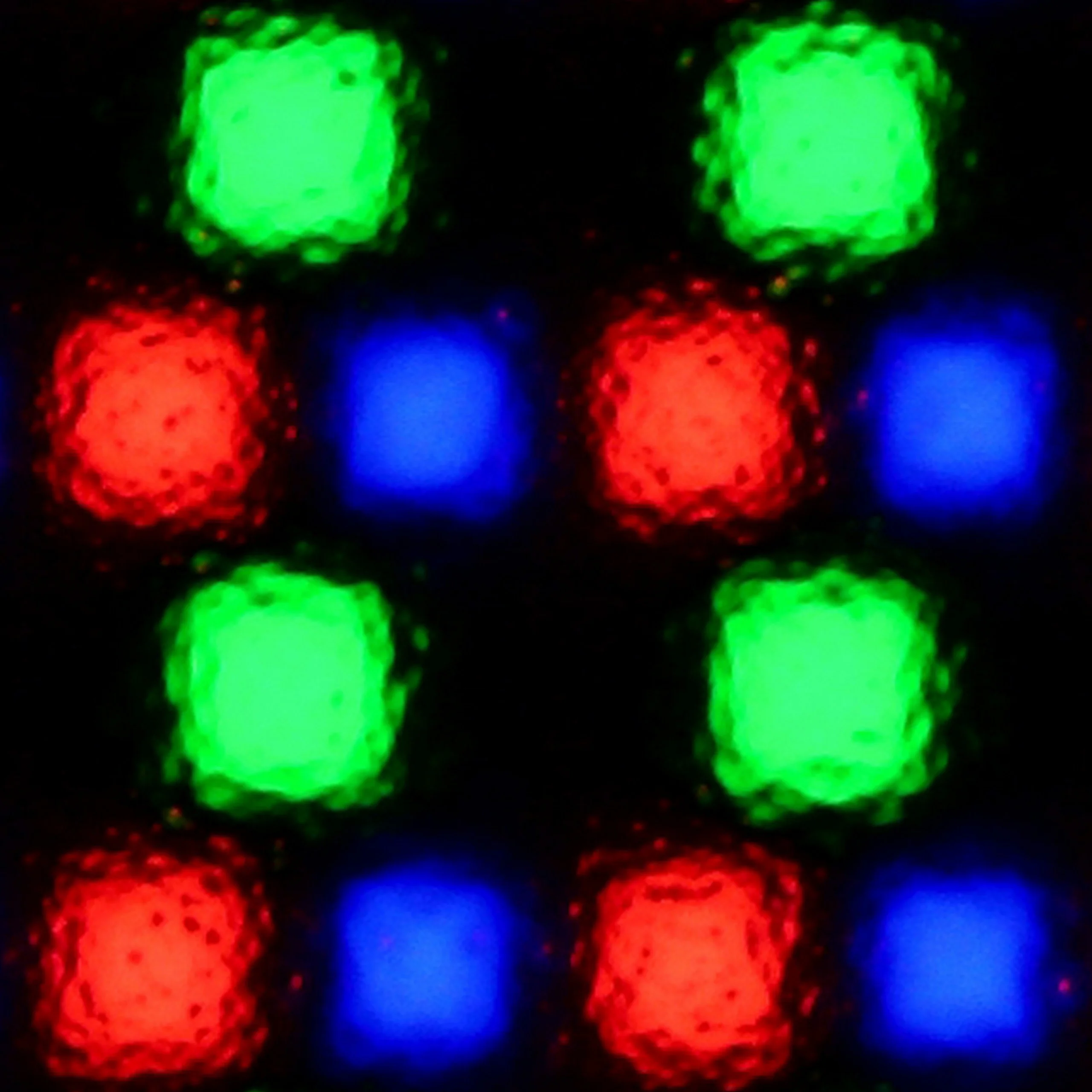
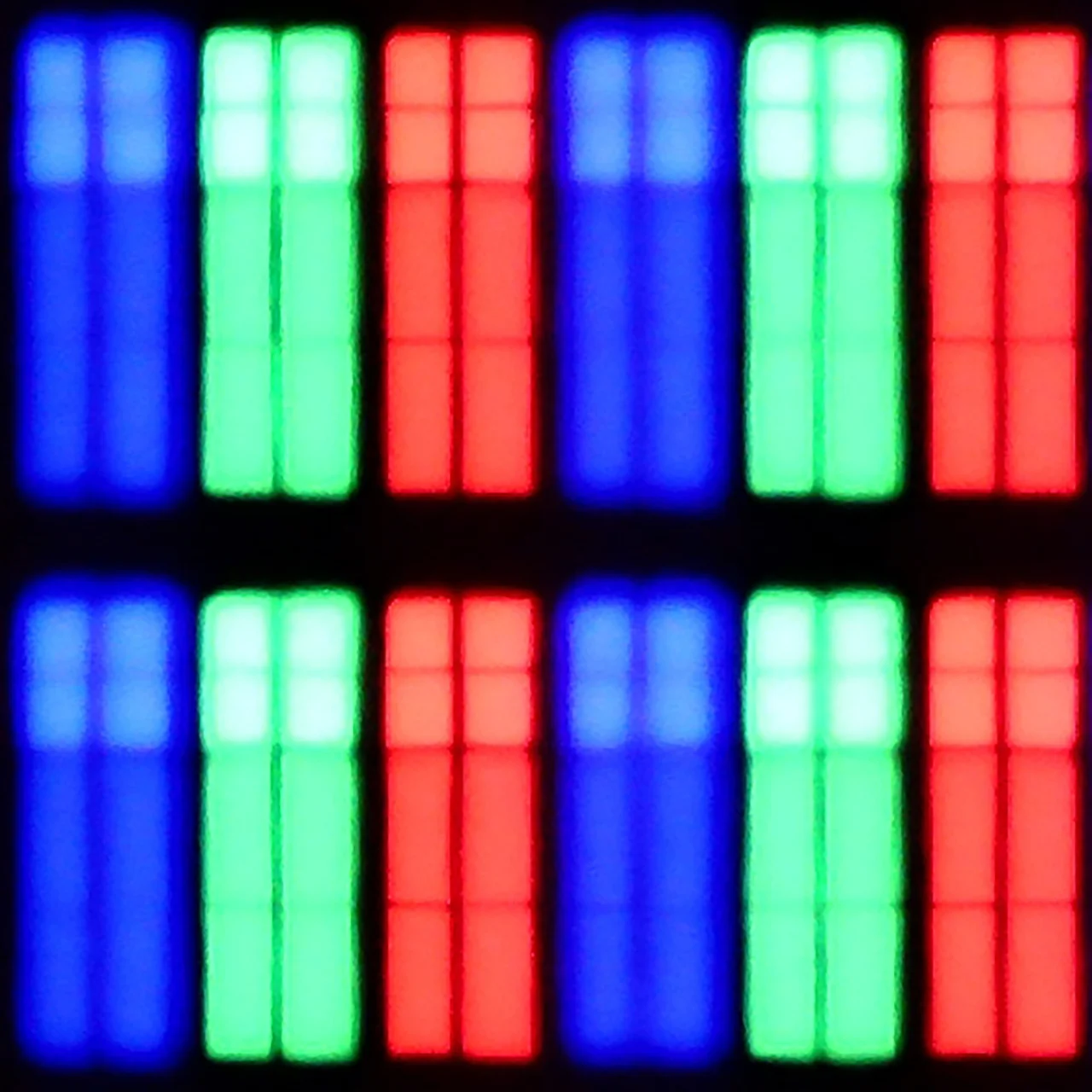
Matrix subpixel arrangement
BGR
Max refresh rate
144Hz
144Hz
G-Sync
Yes
Yes

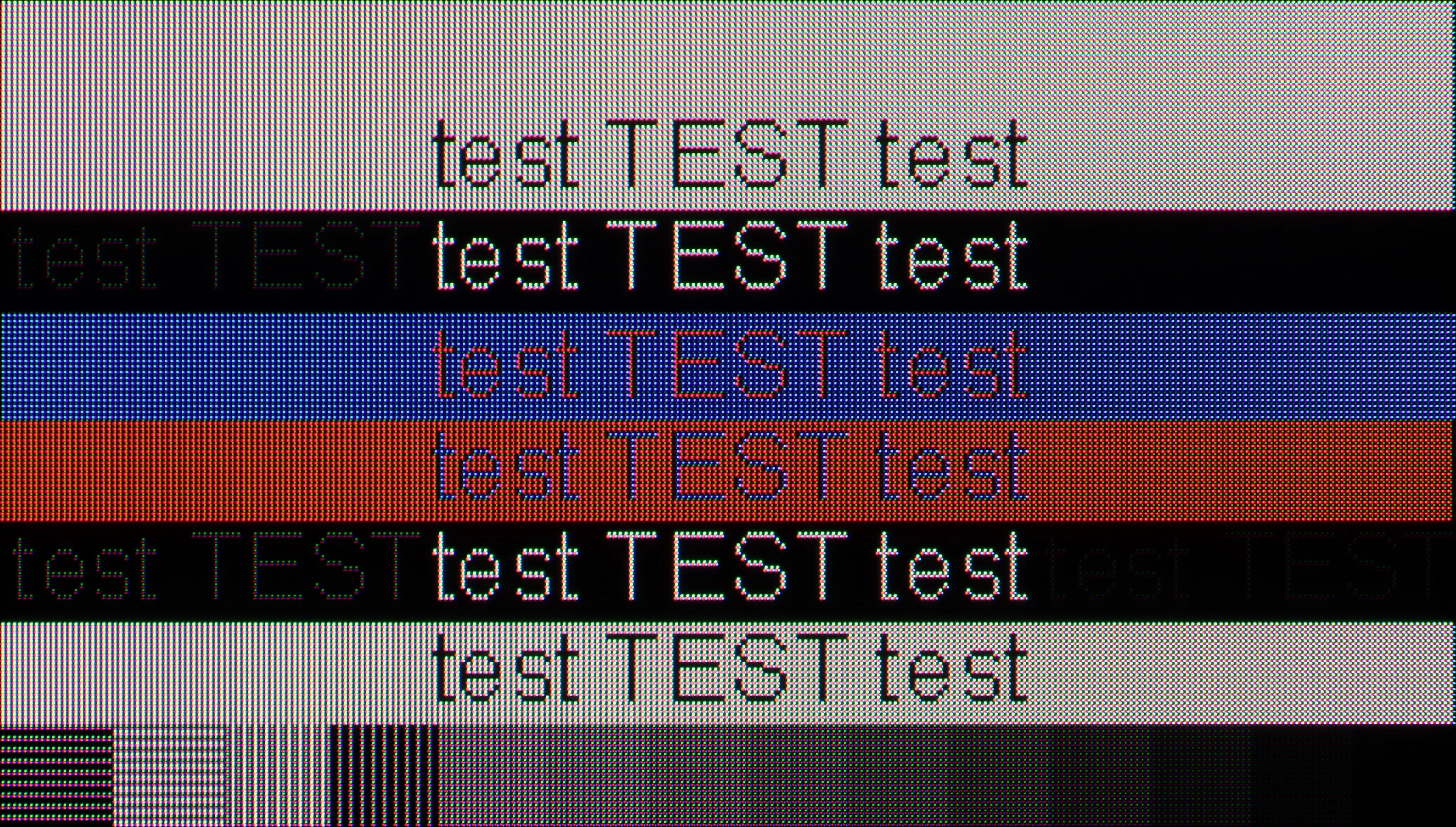
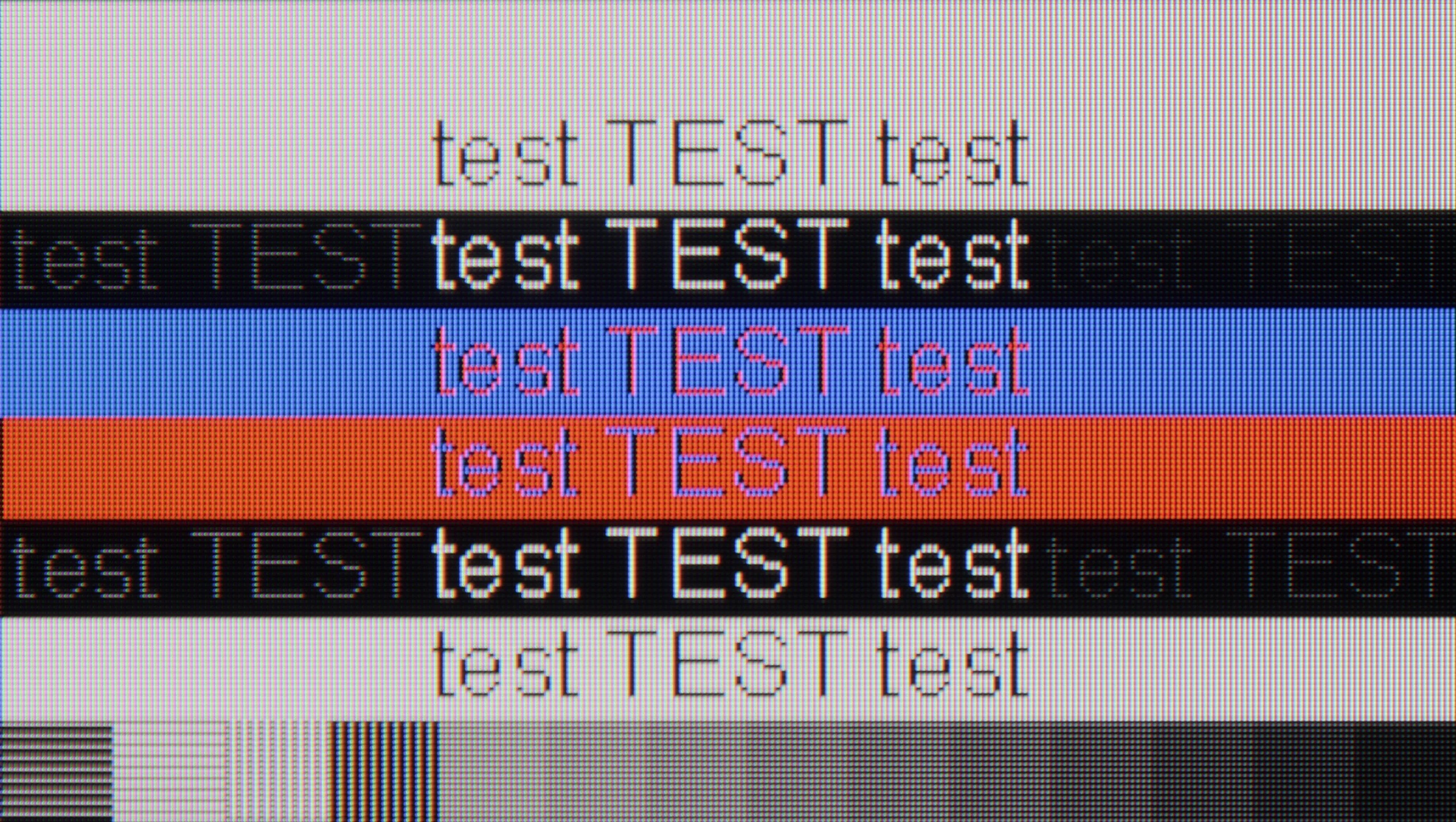
The photo shows the legibility of small fonts. Ideally, lines should be the same thickness on both light and dark text, with minimal pixel gaps.

The Samsung S95D is truly an excellent choice for computer use. With support for chroma 4:4:4, text on the screen is sharp and clear, making it ideal for both work and gaming. When connected to a computer, the input lag of just 5 ms ensures a smooth and responsive experience.

However, we did deduct some points due to the visibility issues with small fonts on a black background, which stem from the specific sub-pixel layout of QD-OLED panels. Despite this, the overall user experience is impressive, and the TV performs exceptionally well in both everyday tasks and more demanding scenarios.

Playing on the QN80F with a connected computer is pure pleasure. The TV works seamlessly with NVIDIA graphics cards (thanks to G-Sync support) and AMD (thanks to FreeSync Premium), and the 144 Hz refresh rate only enhances comfort during dynamic gameplay. Everything works right away, without unnecessary fiddling with settings – exactly as it should.

When it comes to work, it is also very good. The readability of fonts is high, and the texts appear sharp and clear. With very thin horizontal lines, one can notice slight imperfections, but really – you have to look closely. Unless, like us, you sometimes enjoy examining the screen with a magnifying glass… then you might spot something 😉.

Viewing angles

9.8/10

3.1/10

Brightness drop at an angle of 45 degrees
9%
81%

The viewing angles on the Samsung S95D are truly outstanding—the best we've encountered in our tests. QD-OLED matrices excel in this area, setting a new standard. While standard WOLEDs offer impressive viewing angles, the S95D surpasses them easily. No matter the angle you're watching, the image remains bright, clear, and rich in detail. This remarkable performance solidifies the Samsung S95D as the absolute leader in viewing angle quality among televisions.

QN80F, like most TVs with VA panels, does not impress in terms of viewing angles. It is enough to lean slightly to the side to notice a significant drop in brightness and lost color saturation. The image loses its "depth" and "vividness," and darker scenes may appear slightly washed out. However, this is a typical characteristic of VA panels, which in return offer significantly better native contrast than IPS panels. In short: something for something. If you are sitting directly in front of the screen – there will be no problem. But when watching together in a larger group, it is worth keeping this in mind.

Daytime performance

6.2/10

6.6/10

Panel finish
Matte
Satin
Reflection suppression
Very Good
Good
Black levels during daytime
Poor
Very Good

Panel brightness

SAMSUNG QN80F: 543 cd/m2

Samsung OLED S95D: 508 cd/m2

The Samsung S95D television stands out with exceptional performance during the day, being the only OLED on the market with a matte screen. Thanks to this feature, light reflections are reduced, allowing for comfortable viewing in bright rooms. However, it is worth noting that the matte coating may slightly diminish colour intensity. Despite this minor drawback, the television remains very bright, offering up to 500 nits of brightness. This makes the picture clear and vivid even in well-lit spaces, making the S95D a great choice for everyday use.

QN80F is really a bright TV. The average brightness in SDR materials is around 550 nits, regardless of the scene, which practically means that you can comfortably watch content even in a well-lit room – and you don’t have to close the curtains every time we turn on a movie. The new satin coating of the panel is also a plus, as it handles reflections much better compared to last year's QN80D. Glare is less bothersome, and the screen maintains readability in various lighting conditions. It's hard to find fault with anything here – the QN80F simply performs great during the day.

Panel details

Backlight Type
Mini-LED QLED
Software version during testing
.1066
T-PTMFDEUC-0090-1110.8, E2500007, BT-S
Image processor

Subpixel Structure:

Panel uniformity and thermal imaging:

Review Samsung OLED S95D TV Panel details
Review SAMSUNG QN80F TV Panel details

Samsung OLED S95D

SAMSUNG QN80F

TV features

7.9/10

7.7/10

  • System
    Tizen
    Tizen
  • System performance
    Very good
    Very good
  • HDMI inputs
    0 x HDMI 2.0, 4 x HDMI 2.1 40Gbps
    0 x HDMI 2.0, 4 x HDMI 2.1 48Gbps
  • Other inputs
    Toslink (Optical audio)
  • Outputs
    eARC (HDMI), ARC (HDMI)
    Toslink (Optical audio), eARC (HDMI), ARC (HDMI)
  • Network Interfaces
    Wi-Fi 2.4GHz, Wi-Fi 5GHz, Ethernet (LAN) 100Mbps
    Wi-Fi 2.4GHz, Wi-Fi 5GHz, Ethernet (LAN) 100Mbps
  • TV reception
    DVB-T, DVB-T2, DVB-S, DVB-S2, DVB-C
    DVB-T, DVB-T2, DVB-S, DVB-S2, DVB-C

Classic features:

  • Recording to USB (terrestrial TV)
    No
    No
  • Recording programming
    No
    No
  • Picture in Picture (PiP)
    Yes
    Yes
  • RF remote control (no need to aim)
    Yes
    Yes
  • Backlit remote control
    No
    No
  • Teletext
    Yes
    Yes
  • Audio only mode
    Yes
    Yes
  • Bluetooth headphones support
    Yes
    Yes
  • Simultaneous Bluetooth headphones & TV audio
    Yes
    Yes

Smart features:

  • AirPlay
    Yes
    Yes
  • Screen mirroring (Windows Miracast)
    Yes
    Yes
  • Voice search
    Yes
    Yes
  • Voice search in native language
    Yes
    Yes
  • Ability to connect a keyboard and mouse
    Yes
    Yes
Review Samsung OLED S95D TV features
Review SAMSUNG QN80F TV features

Sound connection options

  • HDMI audio
    eARC (HDMI), ARC (HDMI)
    eARC (HDMI), ARC (HDMI)
  • Other audio outputs
    Toslink (Optical audio)
  • Wireless audio
    Bluetooth
    Bluetooth

Supported audio formats (external HDMI eARC audio):

  • Dolby Digital Plus 7.1
    Yes
    Yes
  • Dolby True HD 7.1
    Yes
    Yes
  • Dolby Atmos in Dolby Digital Plus (JOC)
    Yes
    Yes
  • Dolby Atmos in Dolby True HD
    Yes
    Yes
  • DTS:X in DTS-HD MA
    No
    No
  • DTS-HD Master Audio
    No
    No

Senior accessibility

  • Numeric keyboard on TV
    No
    No
  • Font size adjustment
    Yes
    Yes
  • Audio description
    Yes
    Yes

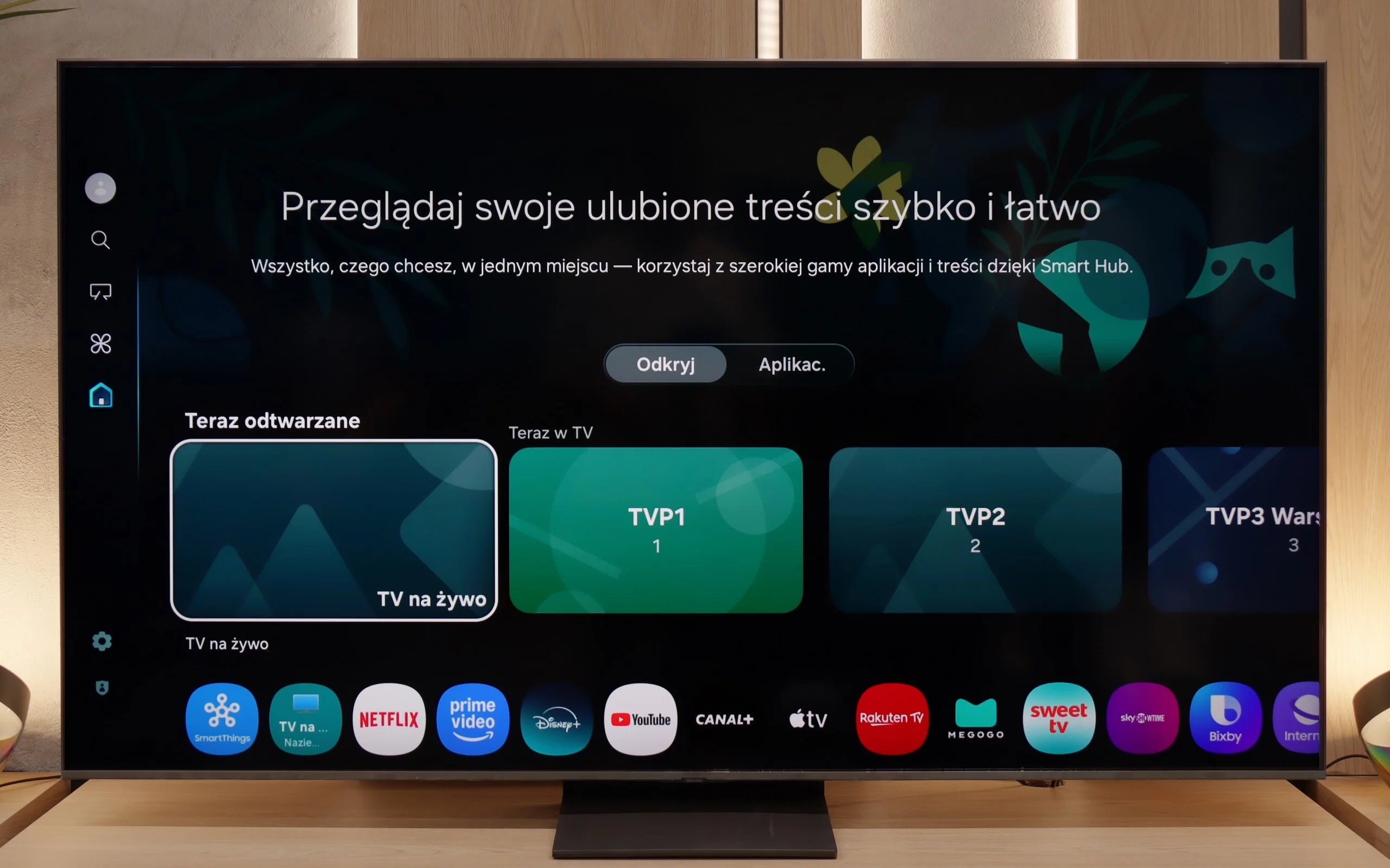
The Samsung S95D television offers a range of features that significantly enhance user comfort, making it an ideal device for home entertainment. The Tizen system, on which this model is based, is a modern and advanced platform that provides an intuitive and smooth experience. Thanks to the user-friendly interface, navigation through applications and settings is quick and simple, making it easy to use the television even for those less familiar with technology. Tizen supports a rich set of applications, including all popular streaming services such as Netflix, YouTube, and Amazon Prime Video. Alongside this, the support of AirPlay allows for easy content sharing from Apple devices such as the iPhone or iPad.

It is also worth noting that the S95D television works with the SmartThings app, enabling integration with other smart devices in the home. This app allows for the creation of automations and monitoring of home equipment, making the television an entertainment device and a smart home management centre all in one.

Another highlight is the included accessories, such as the environmentally friendly solar remote, which is also practical for everyday use. This remote can control multiple devices connected to the television, eliminating the need for several different remotes; it easily integrates with other decoders such as Canal+ and NC+. Additionally, the One Connect module in the Samsung S95D is a fantastic solution that makes the television incredibly sleek. With this device, you can hide all cables and connections. It is one of the slimmest devices that can be mounted on the wall, providing an aesthetic and modern look to your interior. If you wish to place the device on a sturdy metal base, you need not worry; this module can be mounted at the back of the base, creating a harmonious whole.

The only downside that can be pointed out is the lack of USB recording support. For some users, this may be a limitation. Despite this, the Samsung S95D television offers many advanced features and technologies making it an excellent choice for anyone seeking high-quality entertainment in their home.

SmartTV QN80F: Tizen

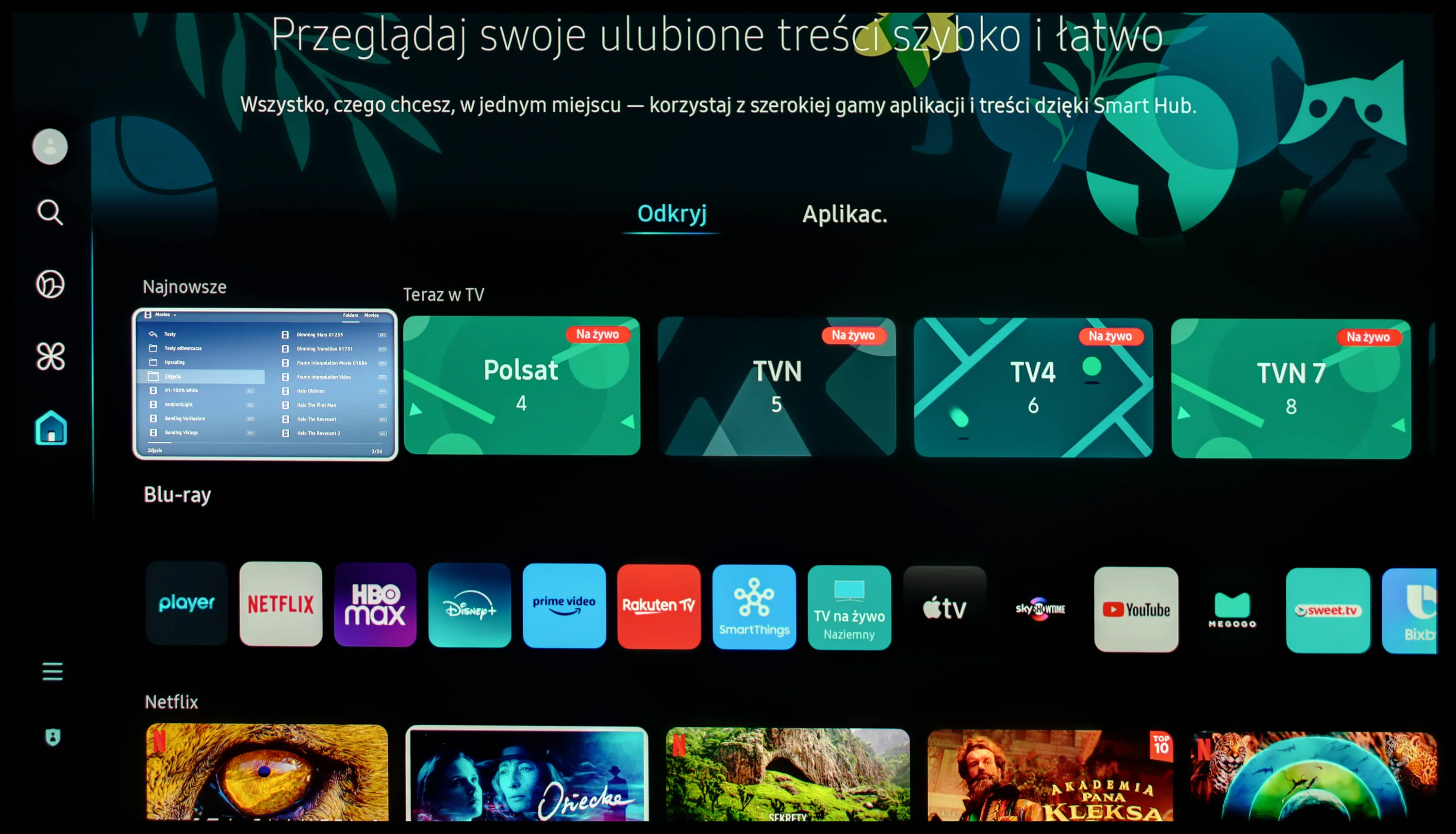
When it comes to smart features, the QN80F has nothing to be ashamed of. On the contrary – Tizen is one of the richest operating systems in terms of functionality. We have voice search, support for AirPlay, Miracast, and all the major streaming platforms at our fingertips. But Samsung's true advantage reveals itself in the smart home – SmartThings. Here, you can not only synchronize light bulbs and vacuum robots but also integrate devices from other manufacturers, thanks to support for the Matter standard. Suddenly, it turns out that the QN80F can serve as a home command center. There is just one "but" – Tizen is a closed system, so we might not find a few lesser-known apps. However, in practice, it still has everything that 99% of users need.

Classic TV features:

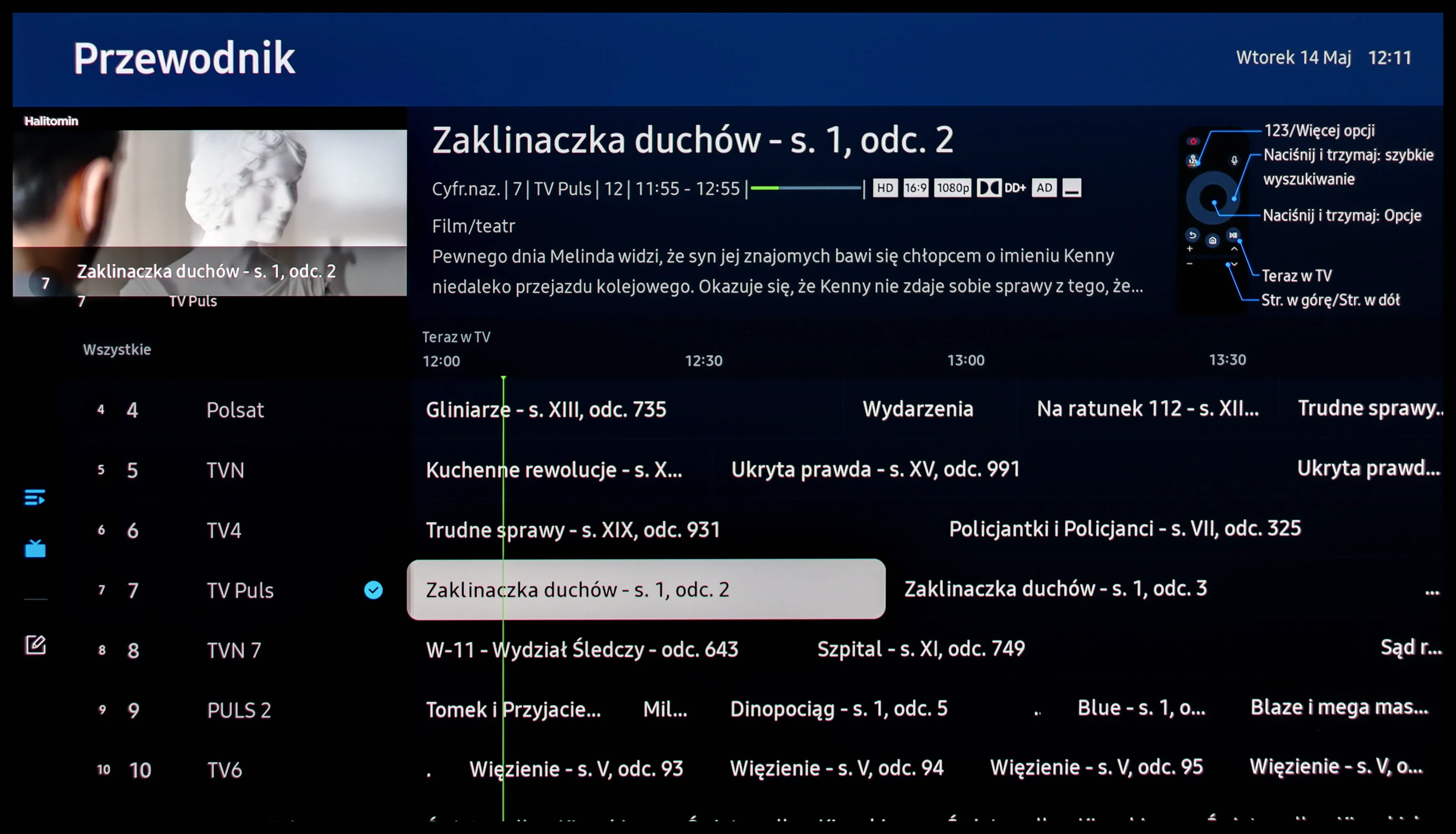
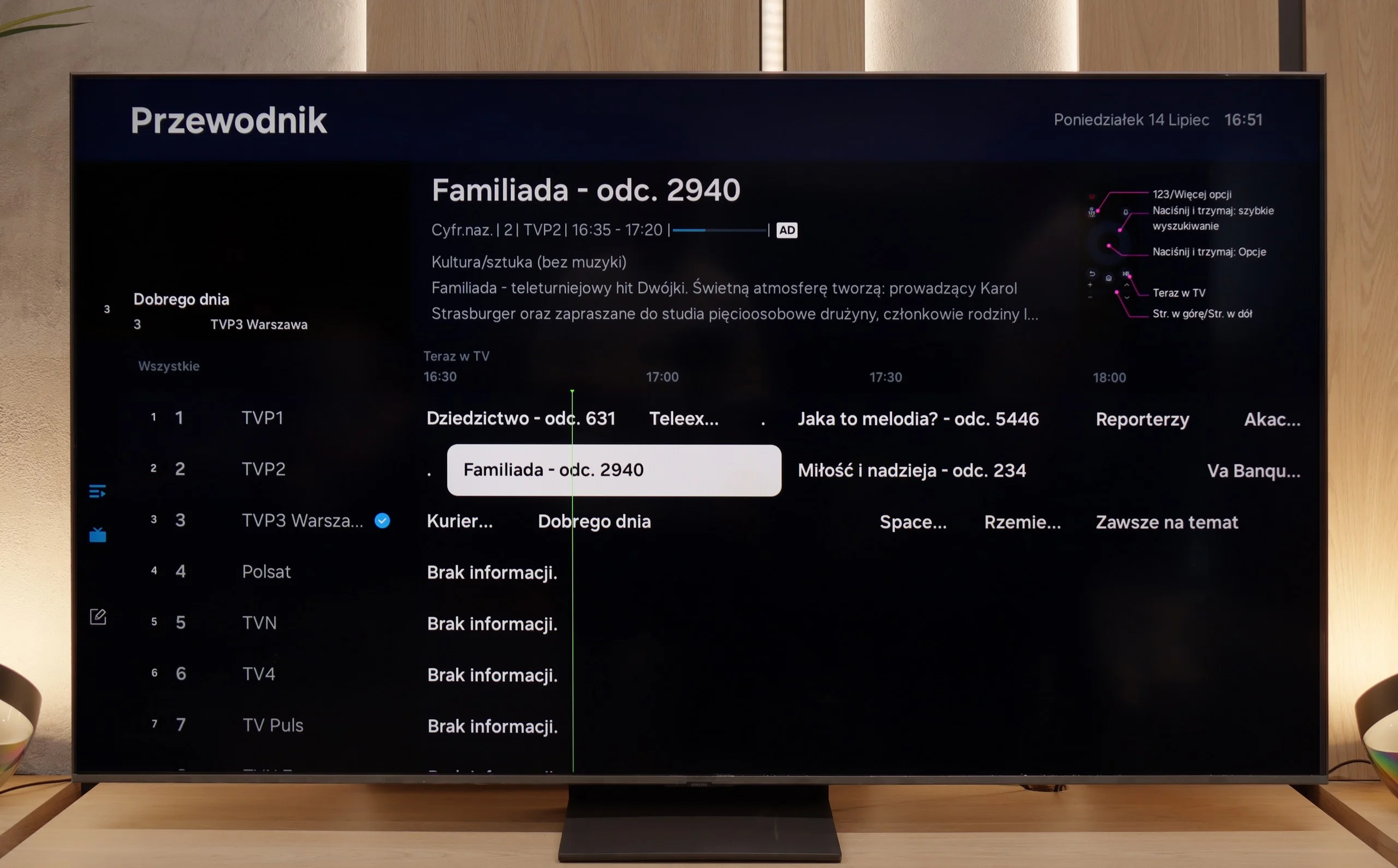
When it comes to classic features, it's just as good – well, almost. The QN80F supports picture-in-picture, a rarely seen but still useful PiP feature. We can easily find EPG, the old good teletext (yes, it works!), and the ability to connect external devices via Bluetooth – whether it's headphones or a soundbar. Unfortunately, there is no option to record to USB from the built-in tuners. That's a minor drawback, especially since the competition at a similar price point is increasingly offering this feature. It may not be a must-have function, but since everything else works so well, it's a pity that it missed that final touch.

Apps

9.3/10

9.3/10

OK
Disney_Plus
OK
Amazon_Prime_Video
OK
Player_TVN
OK
Polsat_Box_Go
OK
Canal_Plus_Online
OK
TVP_VOD
OK
Apple_TV_Plus
OK
SkyShowtime
OK
Rakuten
OK
CDA_Premium_Browser
OK
Spotify
No
Tidal
OK
Netflix
OK
YouTube
OK
HBO_MAX
No
Kodi
OK
Apple_music
OK
Eleven_sports
OK
Xbox Game Pass
OK
GeForce NOW
OK
Amazon Luna
OK
Boosteroid
No
Steam Link
OK
Disney_Plus
OK
Amazon_Prime_Video
OK
Player_TVN
OK
Polsat_Box_Go
OK
Canal_Plus_Online
OK
TVP_VOD
OK
Apple_TV_Plus
OK
SkyShowtime
OK
Rakuten
OK
CDA_Premium_Browser
OK
Spotify
No
Tidal
OK
Netflix
OK
YouTube
OK
HBO_MAX
No
Kodi
OK
Apple_music
OK
Eleven_sports
OK
Xbox Game Pass
OK
GeForce NOW
OK
Amazon Luna
OK
Boosteroid
No
Steam Link

Playing files from USB

8.8/10

9/10

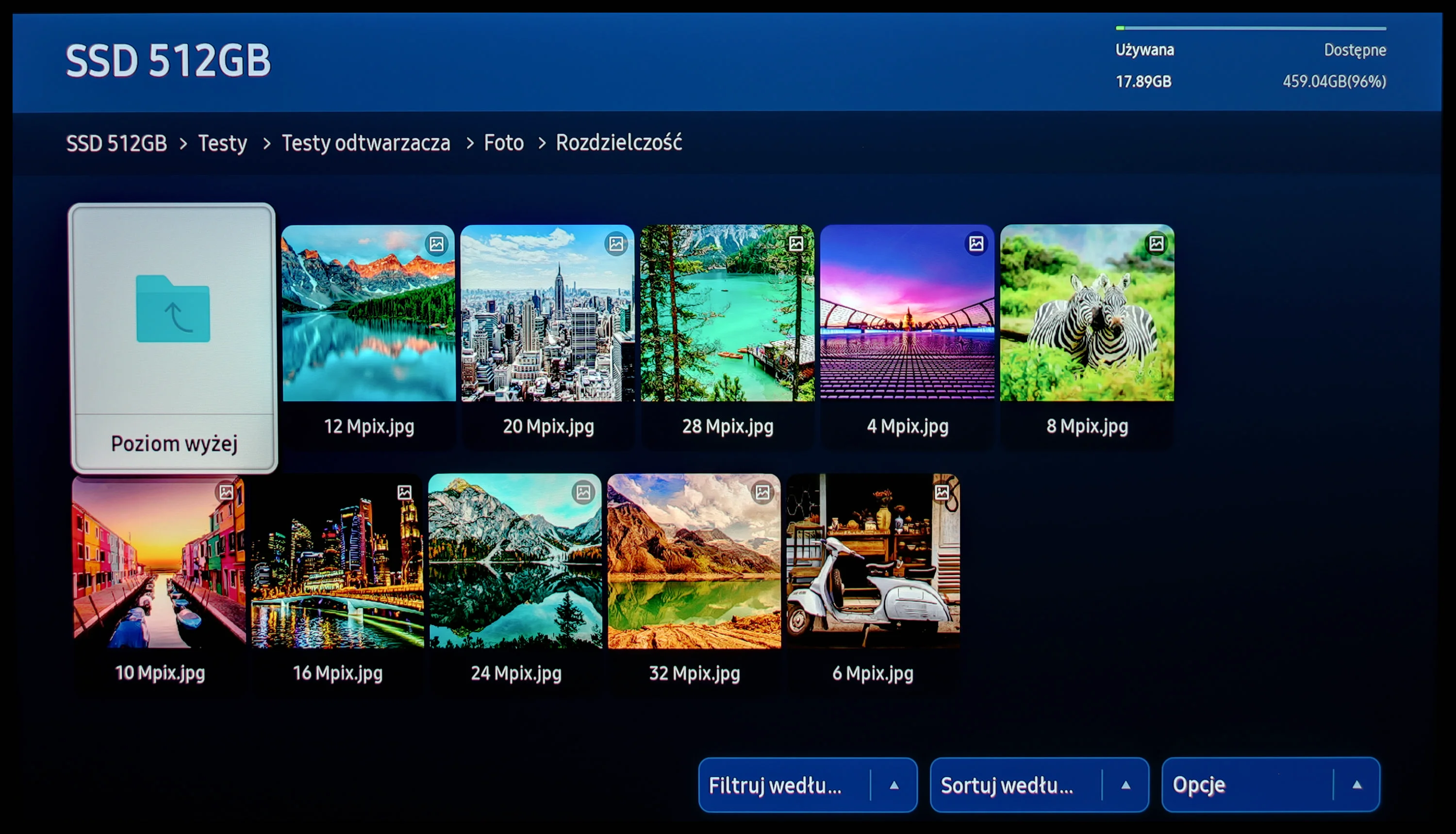
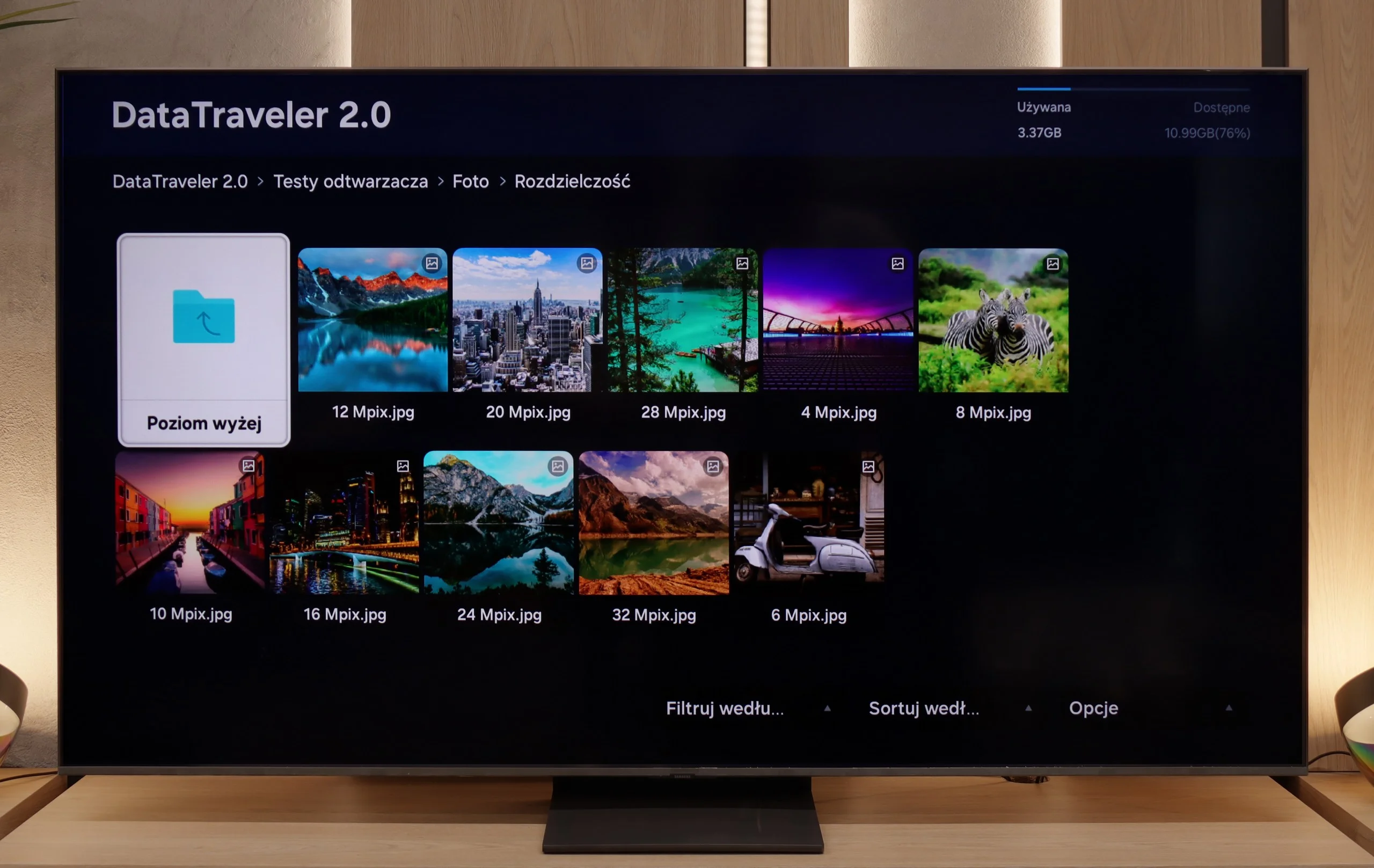
Supported photo formats:

JPEG
Yes
Yes
HEIC
No
No
PNG
No
No
GIF
No
No
WebP
No
No
TIFF
No
No
BMP
Yes
Yes
SVG
No
No

Maximum photo resolution:

4 Mpix
Yes
Yes
6 Mpix
Yes
Yes
8 Mpix
Yes
Yes
10 Mpix
Yes
Yes
12 Mpix
Yes
Yes
16 Mpix
Yes
Yes
20 Mpix
Yes
Yes
24 Mpix
Yes
Yes
28 Mpix
Yes
Yes
32 Mpix
Yes
Yes

Samsung S95D stands out with its excellent built-in player, which handles most of the video and audio files we tested without any issues. The exceptions are files in Dolby Vision format and some less common codecs.

The built-in media player in the QN80F handles most popular video formats – from classic MP4 to somewhat more demanding containers. It's not a powerhouse like VLC, but it's sufficient for home use. The situation is worse when it comes to photos – here, unfortunately, it's rather modest. The support is mainly limited to the JPG format, but hey, at least that's the most important one 👌. During our tests, there was also a minor issue with subtitles. The QN80F could only handle the simple text format .txt – other, more advanced formats (like .srt or .sub) were unfortunately not recognized.

Sound

7.9/10

6.7/10

  • Maximum volume
    84dB
    87dB
  • Dolby Digital Plus 7.1
    Yes
    Yes
  • Dolby True HD 7.1
    Yes
    No
  • Dolby Atmos in Dolby Digital Plus (JOC)
    Yes
    Yes
  • Dolby Atmos in Dolby True HD
    Yes
    No
  • DTS:X in DTS-HD MA
    No
    No
  • DTS-HD Master Audio
    No
    No

Despite being one of the slimmest televisions on the market, the Samsung S95D offers surprisingly pleasant sound quality. The television supports Dolby codecs, allowing for high audio fidelity. However, a notable downside is the lack of DTS support, which may be a limitation for some users who rely on external players. Nonetheless, the overall sound quality remains satisfactory, especially for such a slim device.

With advanced Dolby Atmos technology, users can enjoy immersive, three-dimensional sound that perfectly complements the high picture quality. In tests, the sound quality of the Samsung S95D QE65S95D model was characterised by exceptional clarity and detail, making it stand out among other models in this category. The integrated acoustic correction system further fine-tunes the sound to the size and acoustics of the room, ensuring optimal audio experiences. Overall, the Samsung S95D performs excellently whether watching movies or listening to music, providing an impressive audio-visual experience.

For a TV of this class, the QN80F sounds surprisingly good. It supports Dolby Atmos format, which is worth noting, as this is still not a given in many models in this range. Unlike the thinner QN70F, you can even feel a slight bass here – all thanks to the thicker casing, which simply gives more room for the sound to "breathe." For everyday viewing and series, it's more than enough, and with the right settings, you can even consider listening to music without the need to connect external equipment. However – as is often the case with Samsung, there is unfortunately a lack of support for DTS:X format, so if we are using audio devices that support this format, we will first have to connect them to the receiver and only then to the TV.

Sound Quality Test

No sound test video

Acoustic Measurements

No acoustic data

87dBC (Max)

75dBC

Reader comments

Comments are provided by the external service Disqus (Zeta Global). Once loaded, Disqus may set cookies and process data about your activity.

We will remember your choice on this device. Provider's privacy policy