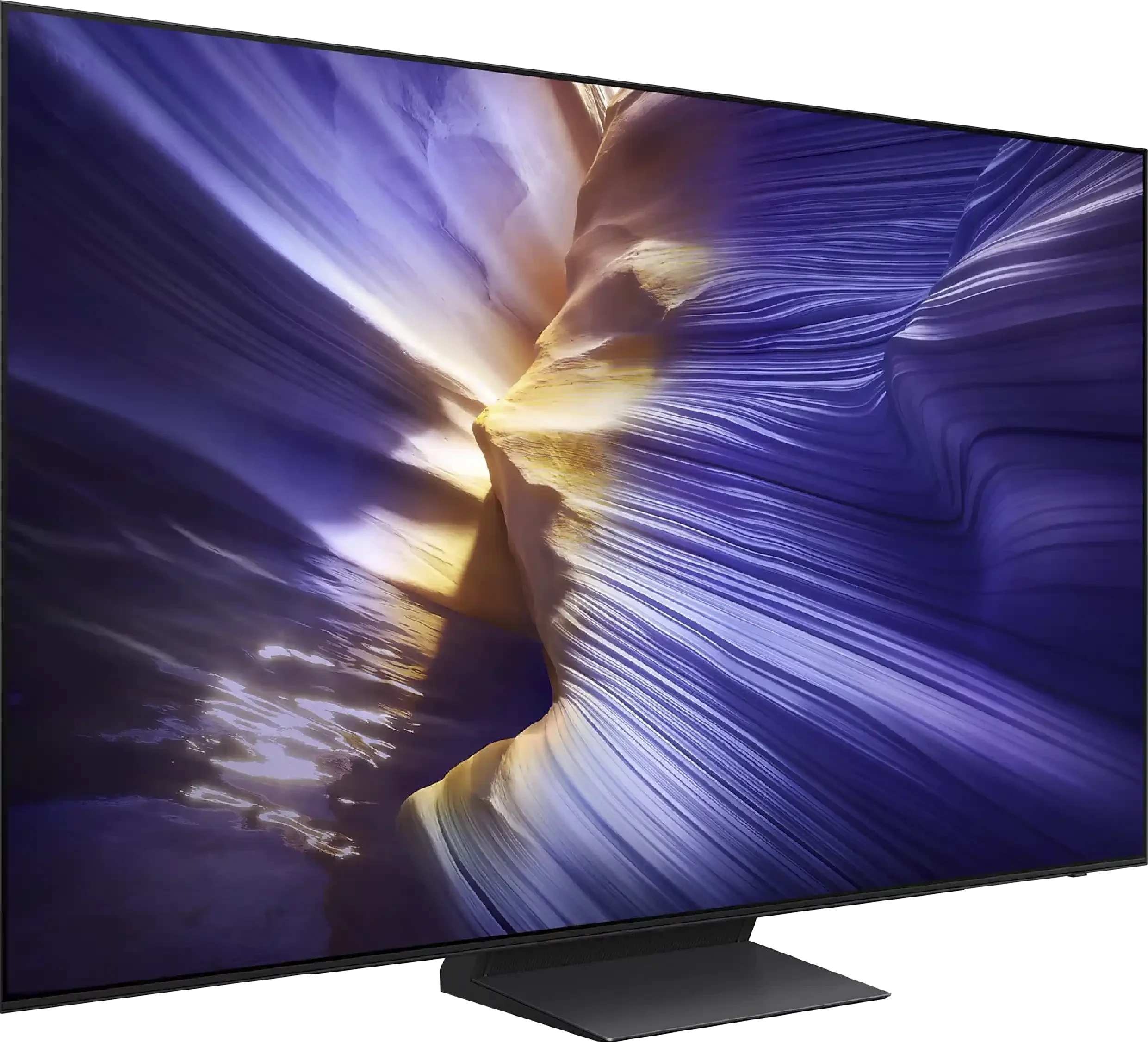
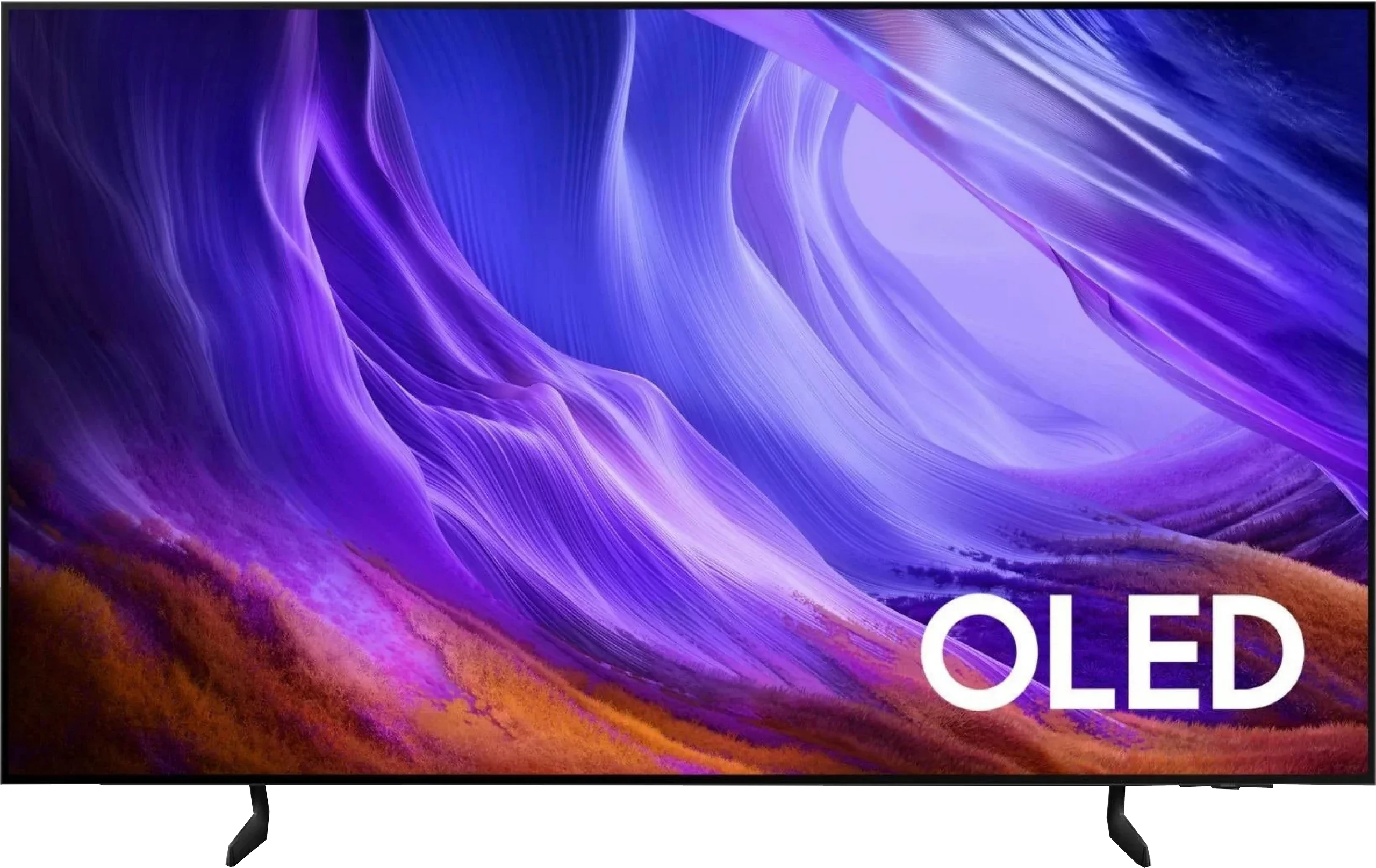
The 65-inch Samsung S90F is a television that demonstrates how significant a quality leap can come from the use of QD-OLED technology in a mid-range model. Among other variants, the S90F stands out as the best – it offers not only perfect black and infinite contrast like other models with WOLED panels but also noticeably higher brightness and a wider color gamut. This translates into more impressive HDR, deeper colors, and smoother tonal transitions, which are impressive both in cinematic productions and in gaming or sports. In everyday use, this television is incredibly versatile: it easily fits the role of an entertainment center in the living room, a large monitor for PC gamers, or simply a screen for evening movie sessions. The Tizen system operates swiftly, offers a wide selection of apps, and integrates with SmartThings, which will please those who like to have their smart home under control. Gamers have access to a full range of modern features: four full-fledged HDMI 2.1 ports, VRR, ALLM, Game Bar with additional enhancements, and, most importantly, remarkably low input lag. Additionally, the characteristic pixel response speed of OLEDs makes sports and games look simply stunning. The S90F also holds its own in terms of design: slim bezels, aesthetic finishes, and a panel that resembles a sheet of glass do their part. The only notable limitation to keep in mind is the preservation of black levels in the QD-OLED panel under very difficult, heavily sunlit conditions. In such situations, it can slightly "heat up," resembling the color of dark cherry rather than perfect black. But in the evening, when most of us sit down to watch movies or series – the problem disappears completely. And then the S90F shows its full potential, delivering an image that can easily be compared to televisions twice its price. That’s why the 65-inch Samsung S90F can be called the most cost-effective OLED of 2025. It’s a model that combines remarkable picture quality, versatility, and an affordable price in the mid-premium segment. If you’re looking for a television that excels in movies, games, sports, and everyday viewing, while not wanting to spend a fortune on absolute flagship models – it’s hard to find a better choice today.
- Matching (Score) |
- Our verdict |
- TV appearance |
- Where to buy |
- Contrast and black detail |
- HDR effect quality |
- Factory color reproduction |
- Color reproduction after calibration |
- Smoothness of tonal transitions |
- Image scaling and smoothness of tonal transitions |
- Blur and motion smoothness |
- Console compatibility and gaming features |
- Input lag |
- Compatibility with PC |
- Viewing angles |
- Daytime performance |
- Panel details |
- TV features |
- Apps |
- Playing files from USB |
- Sound
Samsung OLED S90F (QD-OLED) vs Samsung S85H
 Direct comparison

Check the best price offer:
Samsung OLED S90F (QD-OLED)S90F / FAT / FAE

S85H
Available screen sizes: 65”
Panel type: QD-OLED
Resolution: 3840x2160
System: Tizen
Model year: 2025
Complete the survey to find out the result
Panel type: WRGB OLED
Resolution: 3840x2160
System: Tizen
Model year: 2026
Complete the survey to find out the result
Overall rating
8.4
7.9
 Movies and series in UHD quality
 9.0
8.0
 Classic TV, YouTube
 9.3
8.6
 Sports broadcasts (TV and apps)
 8.9
8.5
 Gaming on console
 9.8
9.6
 TV as a computer monitor
 8.6
7.6
 Watching in bright light
 5.7
5.1
 Utility functions
 7.7
7.3
 Apps
Apps 9.3
9.3
 Sound quality
 7.4
7.2
Complete the survey to find out what fits your preferences
Advantages

QD-OLED panel with exceptional blacks and contrast
Very high brightness for an OLED in this segment (around 1700 nits)
Great HDR effect and wide color gamut coverage thanks to quantum dot technology
Perfect viewing angles – the picture looks great even from the side
Effectively minimizes reflections in bright living rooms
Exceptional motion smoothness – 144Hz OLED panel
Complete gaming package: HDMI 2.1, ALLM, VRR, Game Bar, low input lag
Intuitive and fast Tizen system with a large app base
Good sound quality for a TV + support for Dolby Atmos
High build quality and slim design
Perfect blacks and infinite contrast with OLED
Good HDR brightness up to around 800 nits
High image fidelity after calibration
Very smooth motion thanks to a 120 Hz OLED panel
Rich set of features for gamers: VRR, Game Bar, low input lag
4 HDMI 2.1 ports with full 48 Gbps bandwidth
Feature-rich, smooth-running Tizen system
Solar-powered remote with many features
Support for Dolby Atmos surround sound
Disadvantages

In very bright daylight, black can take on a navy hue (a feature of QD-OLED panels)
No support for DTS:X (a problem for Blu-ray disc fans)
No recording function to USB from built-in tuners
Why can't we find such a panel in all sizes?!
Worse reflection suppression than its predecessor, a characteristic of the new OLED SE panel
Average SDR brightness, best suited for a room with controlled lighting
No DTS:X support, mainly a drawback for Blu-ray collectors
No Dolby Vision, not necessary but would be nice 🙂
Our verdict
Samsung S85H is a very successful continuation of the S85 series and a TV that still performs its main role well: to be an affordable entry into the world of OLEDs. The biggest change from its predecessor is the use of LG Display's new OLED SE panel, but the overall character of this model remains practically unchanged. Its greatest strengths are still perfect blacks, very high contrast and a picture that can look truly excellent in the evening. Add to that good colors and the ability to achieve a high degree of fidelity to the director's vision. The S85H also works very well as a versatile TV. Gamers get four HDMI 2.1 ports, 120 Hz, VRR, very low input lag and Game Motion Plus, so there is little to complain about here. Tizen runs fast and is user-friendly, and the whole system clearly targets users who today mainly use Netflix, YouTube and other streaming services, while traditional broadcast TV is treated as an extra.
However, the new OLED SE panel is not without flaws. This is most noticeable when watching during the day, because its glare handling is worse than previous OLED panels. Its peak brightness is also not high enough for the S85H to perform particularly well in a very sunlit living room. It is still a TV that shows its strengths best in the evening or in a room with at least partial control over ambient light. And that is probably the best way to look at the S85H. It is not an OLED meant to break brightness records or compete with the most expensive panels. It simply aims to offer what people like most about the technology, but at a lower price. Perfect blacks, very good movie picture quality, excellent gaming features and a convenient smart system make the S85H one of the easiest ways to get into OLED without spending a fortune.
TV appearance


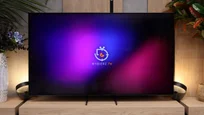
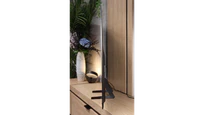

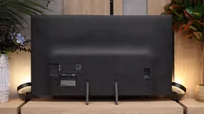

Contrast and black detail
10/10
10/10
Contrast:


Result
∞:1

Result
∞:1

Result
∞:1

Result
∞:1

Result
∞:1
Result
∞:1
Result
∞:1
Result
∞:1
Result
∞:1
Result
∞:1
Halo effect and black detail visibility:
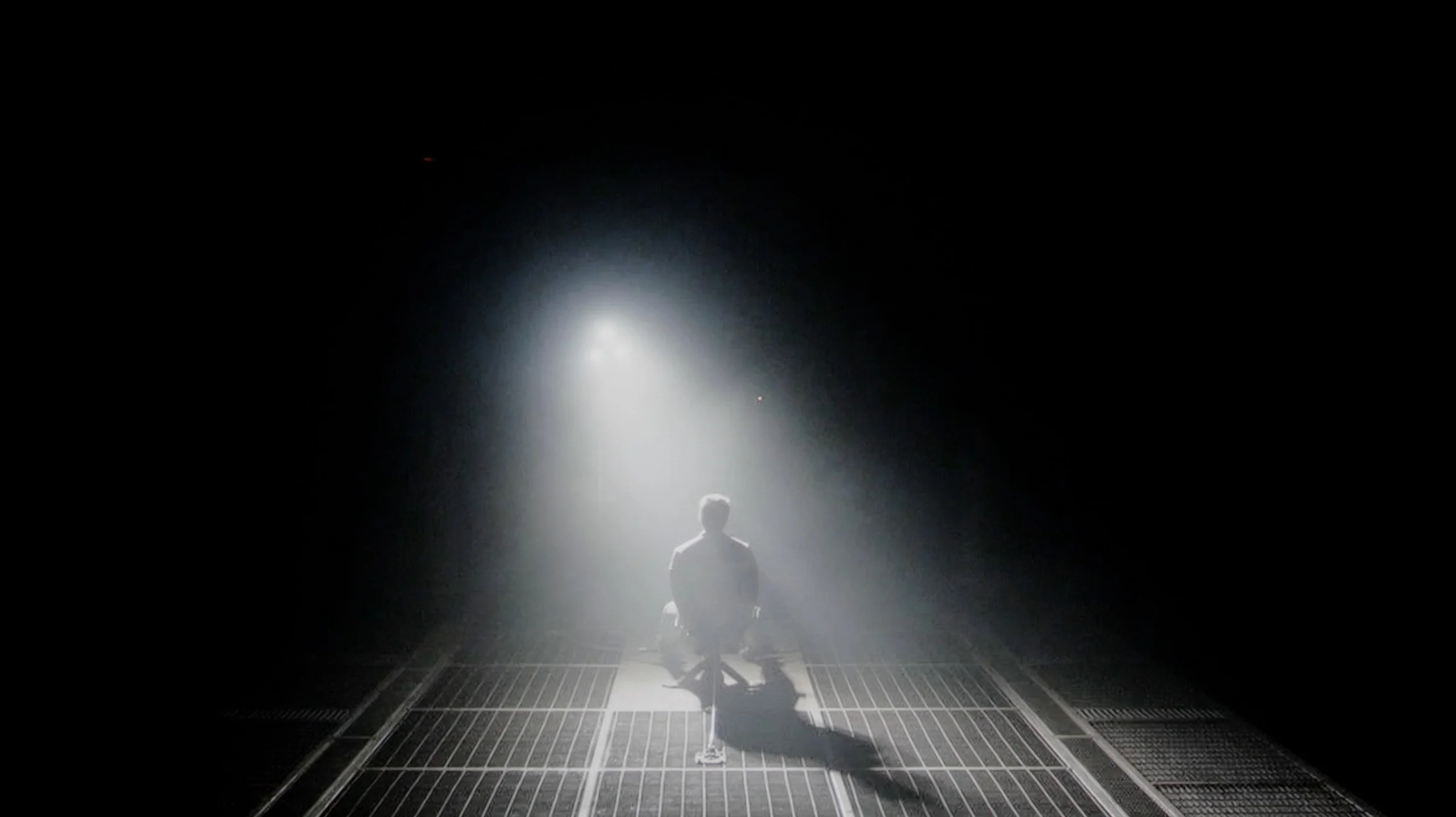
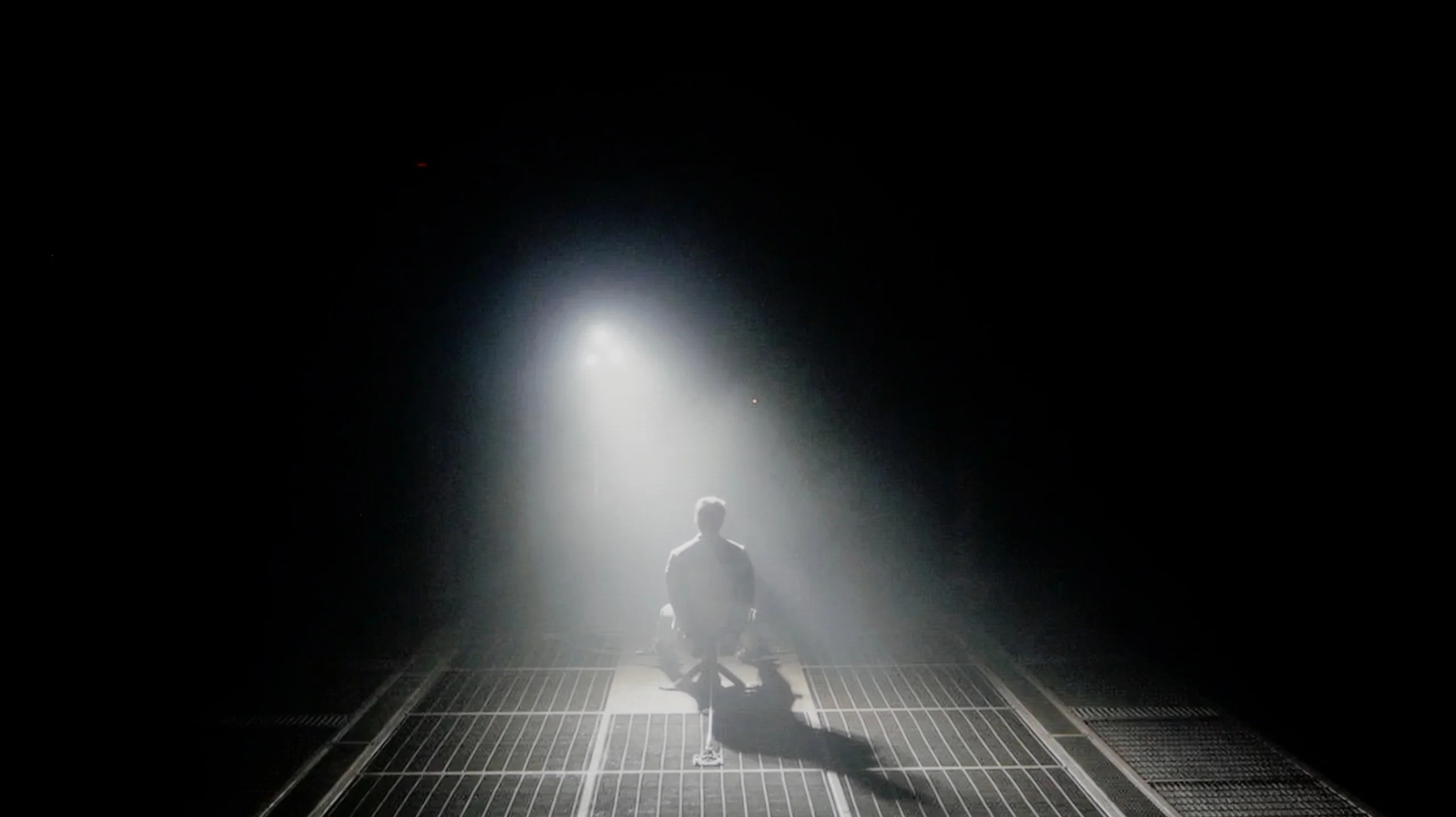
Check the visibility of bright lights on a dark background. Mini-LEDs often struggle with this. The photo does not compare black levels – that’s what the video below is for.
The video accurately shows differences in contrast and black levels between TVs, as well as potential issues: halo around bright objects or Mini-LED zone operation visible as brightness jumps.
In terms of black and contrast, it doesn't matter whether we choose the version with WOLED panel or QD-OLED for the S90F. In both cases, the effect in typical cinematic conditions remains the same, and we can always count on perfect black. This is impressive not only when watching movies but also regular shows. If someone has never had contact with an organic matrix, the first encounter with such a television can be truly stunning. There is no difference here whether we are looking at less demanding scenes, like those from the movie Oblivion, or at segments where only a few details remain on the screen, such as stars in the sky in Star Wars – in every case, the image remains clean, and the details are perfectly separated from the background. This is one of the greatest advantages of OLED, as each pixel is controlled independently and acts like a separate zone. This means there is no need to worry about compromises in the visibility of details in lights that can disappear even in the best LCD TVs. It is in cinematic conditions that the S90F shows its full potential and can impress the most. Here, OLED technology – including the QD-OLED panel – performs flawlessly and delivers an effect that is hard to find any faults with.
The switch to LG Display’s new WOLED SE panel practically changed nothing when it comes to black levels and contrast. And you couldn’t really expect any major improvement, because we’re still talking about OLED, a technology that can completely turn off each pixel individually. In practice this means perfect black and enormous image depth, especially in darker scenes. Black bars are truly black, there is no halo around bright elements, and contrast remains virtually infinite. Even very expensive Mini-LEDs with thousands of local dimming zones still can’t offer the same precision as the S85H. And that is its biggest advantage. The S85H may be Samsung’s cheapest OLED, but in terms of black levels it can deliver exactly the same as much more expensive models using organic panels.
HDR effect quality
7.8/10
6.3/10
Luminance measurements in HDR:

Result
1416 nit

Result
1585 nit

Result
1449 nit

Result
1379 nit

Result
808 nit
Result
733 nit
Result
744 nit
Result
837 nit
Result
755 nit
Result
404 nit
Scene from the movie “Pan” (about 2800 nits)


Scene from the movie “Billy Lynn” (about 1100 nits)


The photos show two HDR10 movies. 'Pan' is one of the brightest productions ever made, while 'Billy Lynn' (soldier) has brightness typical of streaming (Netflix, Prime, HBO MAX). Notice the intensity of effects and detail in whites.
Static HDR10


The photos present the visibility of white details in various HDR formats. They do not show brightness differences between TVs (these can be compared in the previous gallery).
Dynamic: HDR10+
Dynamic: HDR10+


The photos present the visibility of white details in various HDR formats. They do not show brightness differences between TVs (these can be compared in the previous gallery).
HDR luminance chart:
Samsung S85H
Samsung OLED S90F (QD-OLED)
Luminance of RGB colors
The biggest difference between the 65-inch S90F and the other versions is brightness. The QD-OLED panel can achieve up to 1700 nits in laboratory tests, which is over 500 nits more than the variant with the WOLED panel. This translates to a significantly stronger and more engaging HDR effect. In most scenes, bright parts of the image look fantastic, and we have to admit we were pleasantly surprised because we expected results closer to the WOLED version, but we got an effect that makes a big impression even in movies. As with any OLED, there are moments when the panel has to limit brightness somewhat. This mainly concerns full-screen, very demanding scenes – for example, in the last test frame from the movie "The Meg," brightness drops to around 800 nits. However, it's hard to consider this a flaw since it’s still an excellent result, unprecedented in OLED TVs in this price range. All signs indicate that the 65-inch S90F could be one of the best choices this year for those looking for a strong OLED at a reasonable price. Another advantage of the QD-OLED panel in HDR content is its color gamut coverage. Thanks to quantum dots, the television achieves almost full 100% of the DCI-P3 color gamut and nearly 90% of the BT.2020 gamut. These values place it alongside much more expensive models and make it exceptional in its class.
Interestingly, the new WOLED SE panel has brought a slight improvement in brightness to the S85 series. In the same movie scenes the previous year's model stayed closer to about 700 nits, while the S85H can reach around 800 nits. Of course this isn't a change that completely transforms the HDR experience, but that extra headroom is noticeable especially with small highlights, reflections, and stronger special effects. Around 800 nits is already a very good result for an entry-level OLED and in most films it's enough for HDR to have the right impact. Bright elements can clearly stand out from perfect black, and that contrast still does most of the heavy lifting here. You should remember the typical limitation of organic technology, though. When a very bright scene covers a large part of the screen, brightness can drop by almost half. This is the result of the panel's protection mechanisms, which limit its power with large bright areas.
Colors
The S85H can produce very pleasant, saturated colors and in most HDR films it looks really good in that respect. We measured roughly 95% DCI-P3 coverage, so the palette most often used in movies is reproduced to a very large degree. Skin tones, greens, and stronger reds still have appropriate intensity, and during normal viewing it's hard to fault them. Only when you look more broadly at BT.2020 do the limitations of the new WOLED SE panel become apparent. Coverage was around 70%, a bit less than in previous-generation WOLEDs and noticeably less than in QD-OLED panels. In films this isn't a major loss, because most productions rarely use such highly saturated colors. You notice it more often in games, where developers are much more likely to employ more intense colors.
Factory color reproduction
7/10
7/10


This gallery shows how colors change after professional TV calibration. If you notice the difference, we recommend ordering this service at SkalibrujTV.com.
Factory Mode
After calibration


This gallery shows how colors change after professional TV calibration. If you notice the difference, we recommend ordering this service at SkalibrujTV.com.
Factory Mode
After calibration
Samsung S90F, like most modern televisions, offers several picture modes, but in keeping with our tradition, we checked it in the most important one, which is Filmmaker. This setting makes the picture look much more natural than in the default, often oversaturated modes. It is neither overly saturated nor artificially subdued – just closer to what you should actually see. However, that doesn't mean it's perfect. The S90F had noticeable shortcomings in white balance, primarily in the blue range, which created a slightly yellowish filter effect on most scenes. One might argue that it looks more "cinematic" because it's warmer, but let's not kid ourselves – George Lucas didn't shoot Star Wars in sepia 😉 (you'll find a comparison with a scene below as always). In HDR materials, there was also a problem with brightness management. The EOTF curve clearly showed that the television brightens the picture more than it should, which led to some effects looking too intense and deviating from the reference. Fortunately, many of these shortcomings can be eliminated through professional calibration – we will discuss the effects of this procedure further in the test.
To evaluate color we, of course, selected Filmmaker mode, and in SDR our S85H unit was very well calibrated out of the box. The biggest deviation appears in the white balance, where a bit of blue drops out as brightness increases. In practice this means whites and grays have a slightly warmer tint than they should. It's not a major error and during normal viewing it generally isn't very noticeable. Gamma also stays close to the reference value, so the image is neither overly bright nor unnecessarily dim. The S85H's SDR picture quality is therefore very good straight out of the box. A few more imperfections show up in HDR. Here the white balance shifts more as brightness increases, with blue becoming dominant and the red component noticeably lacking. That also leads to larger errors in some colors. These aren't yet distortions that completely change the character of the image, but compared directly with the reference the difference is easier to spot. Overall, Filmmaker mode is a very good starting point before professional calibration.
Color reproduction after calibration
9.3/10
9.1/10


The photos show how movies look on the TV. Pay attention to black detail visibility, colors, and shadow tint.


The photos show how movies look on the TV. Pay attention to black detail visibility, colors, and shadow tint.
Calibration quickly showed that the S90F has a substantial reserve of capabilities. The image in SDR immediately gained a natural quality – classic films stopped looking as if someone had applied a yellowish filter to them, and the colors regained their true character. It’s a return to the atmosphere of the original, without the impression that someone tried to "age" it artificially. In HDR content, the difference was even more pronounced. The EOTF curve was managed almost to a reference level, and any deviations are so subtle that most viewers won't even notice them. In practice, the S90F after calibration displays an image very close to perfection. Compared to the WOLED version, it performs even better – mainly due to the wider color gamut coverage, which makes the colors look fuller and more vibrant.
Calibration yields very good results on the S85H. First, the white balance can be set almost perfectly, which removes the slightly too-warm image cast that was visible earlier in SDR. Color reproduction itself also improves significantly; most errors drop to a very low level, and in everyday viewing it's hard to notice any visible inaccuracies. You can also improve a lot in HDR, although some issues remain due to the TV's inherent characteristics. The S85H doesn't always perfectly follow the brightness curve. The darkest areas are slightly boosted, and as you approach the panel's limits you can see small deviations in the brightest highlights. On top of that there's limited coverage of the wider BT.2020 gamut, which no calibration can of course overcome. Despite this, the end result is very good, and after calibration the S85H can deliver a well-tuned, natural image.
Smoothness of tonal transitions
8.8/10
7/10
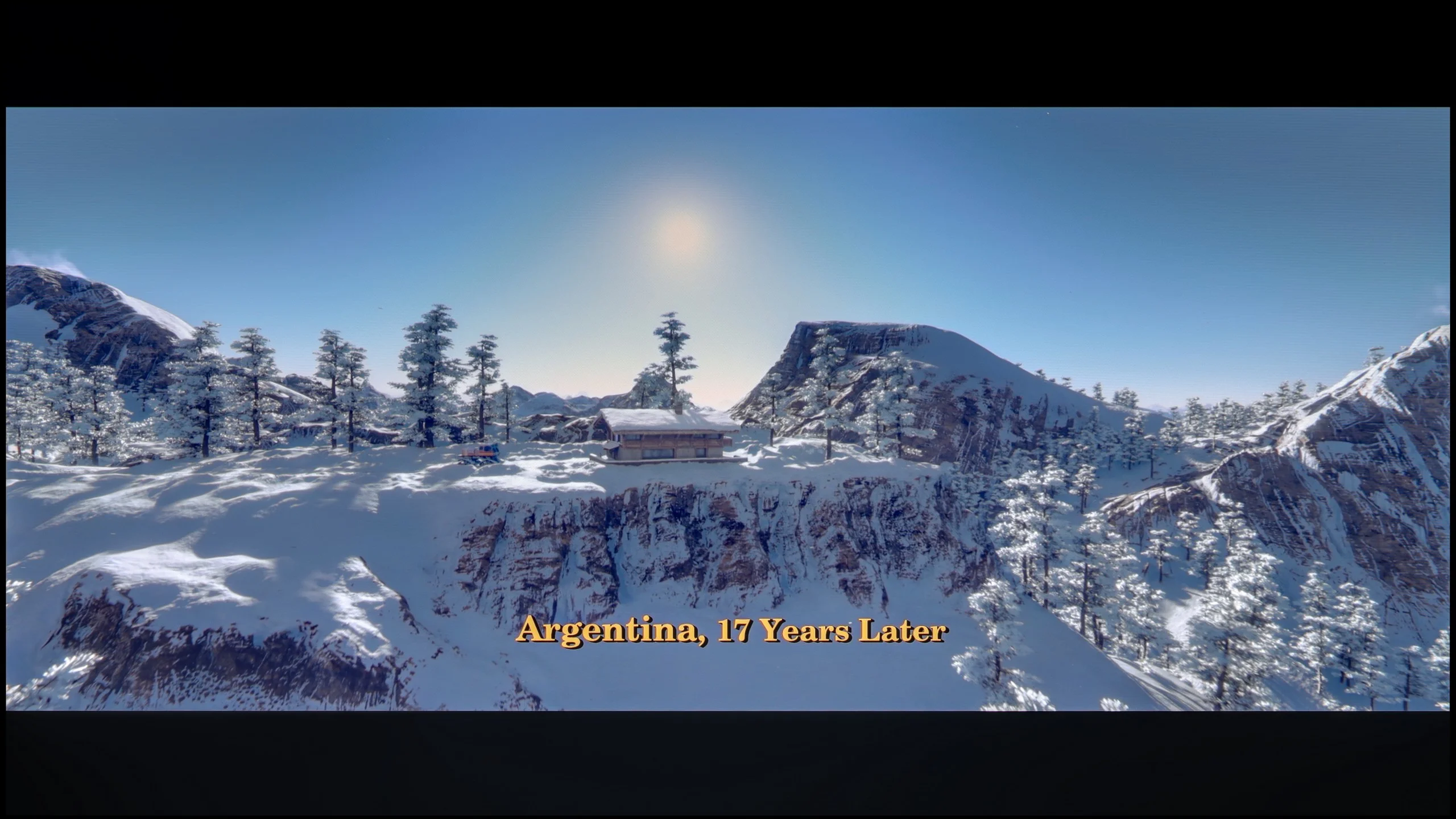

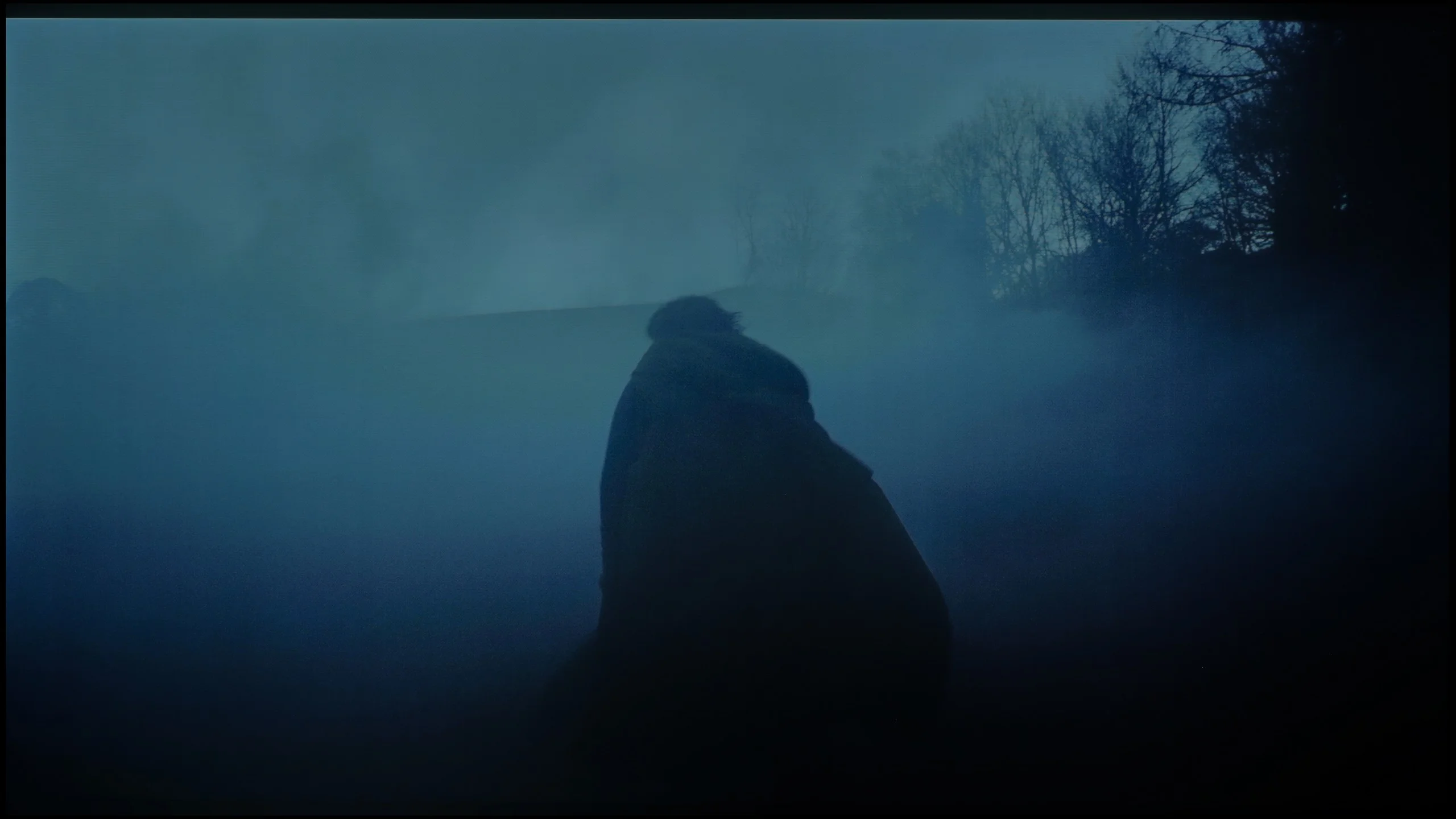

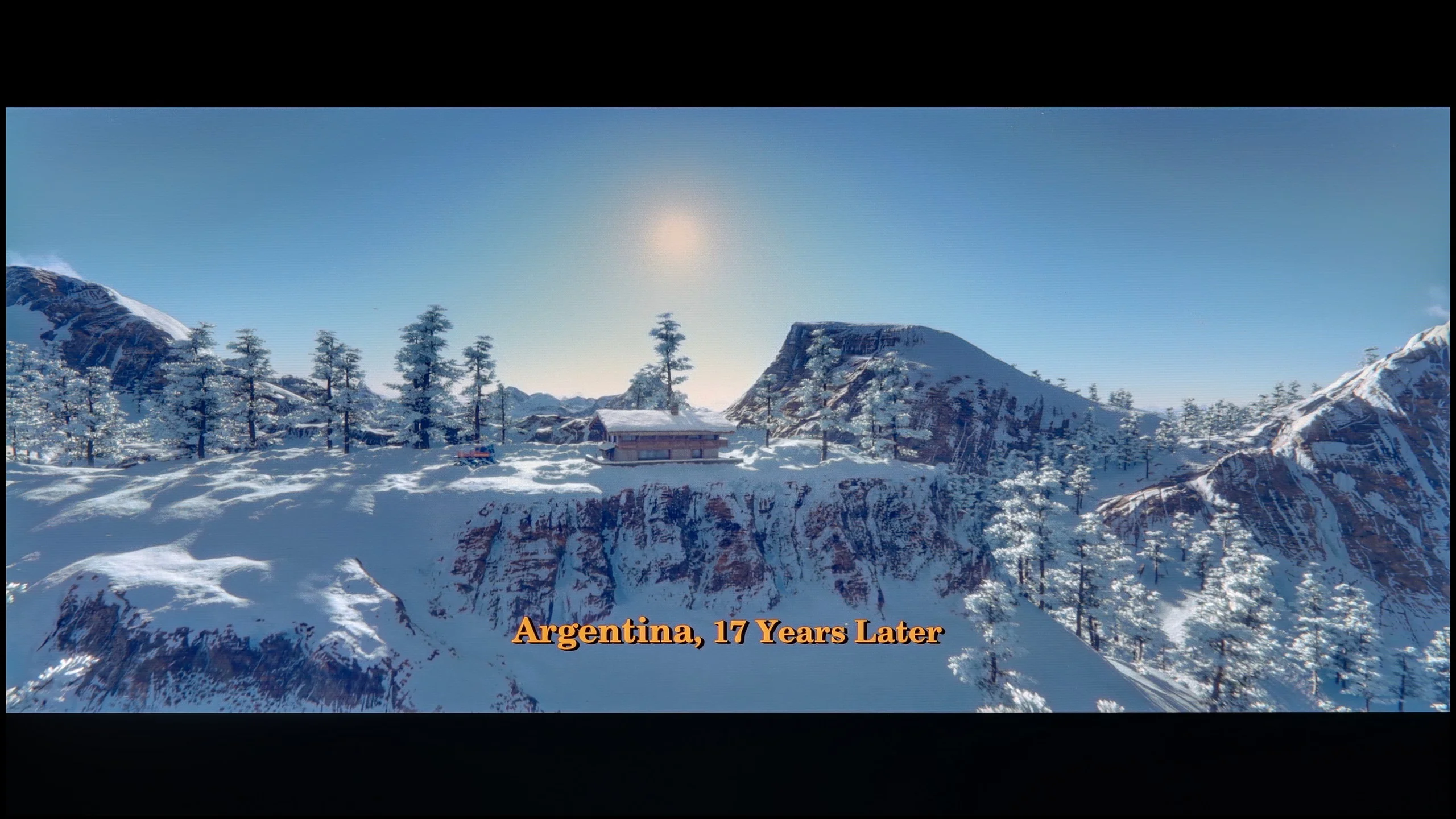
These are selected scenes that show smooth tonal transitions from one color to another. If you see distinct banding, it’s the TV panel’s fault.

These are selected scenes that show smooth tonal transitions from one color to another. If you see distinct banding, it’s the TV panel’s fault.
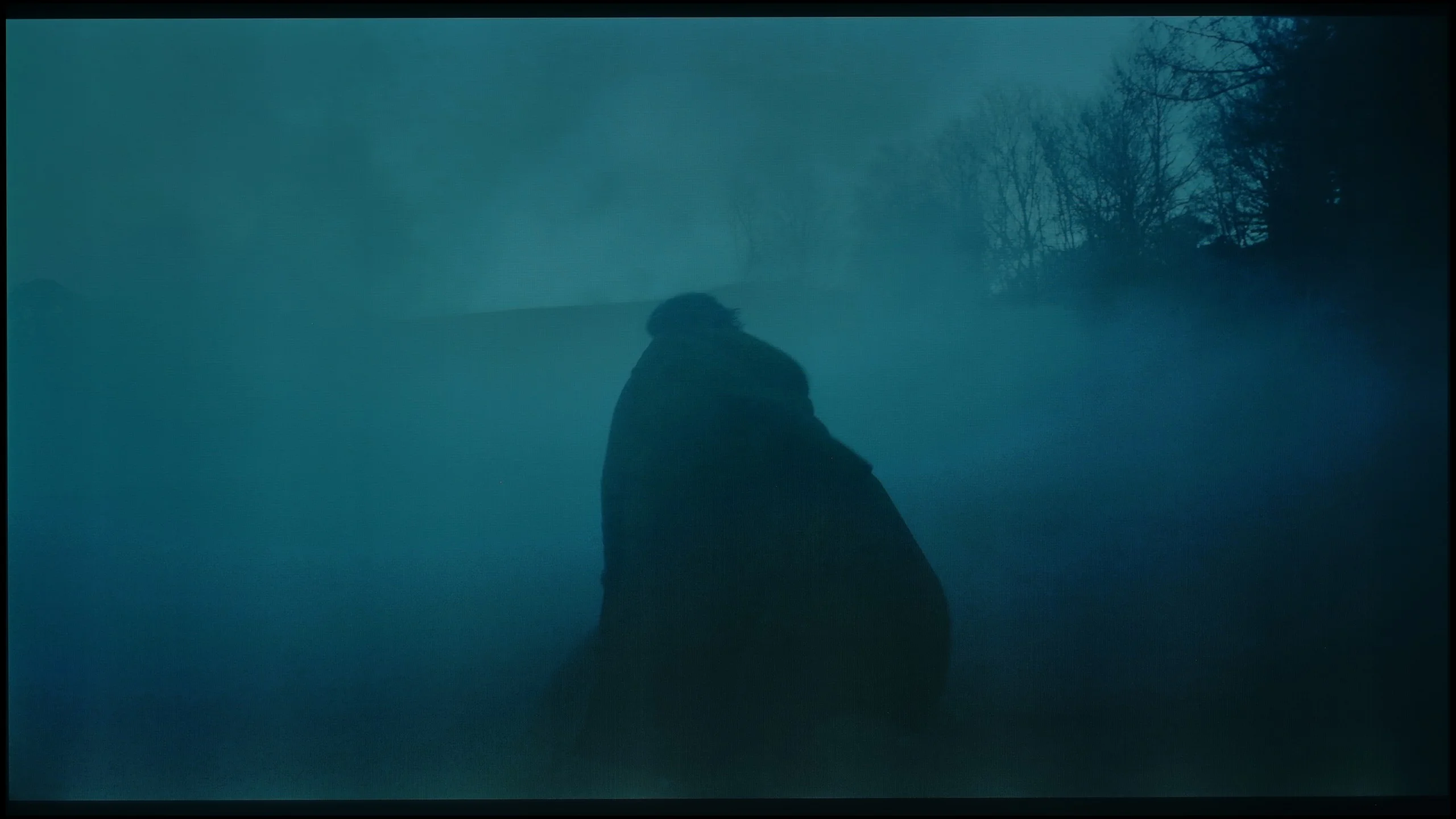
These are selected scenes that show smooth tonal transitions from one color to another. If you see distinct banding, it’s the TV panel’s fault.

These are selected scenes that show smooth tonal transitions from one color to another. If you see distinct banding, it’s the TV panel’s fault.
QD-OLED matrices, thanks to their very wide color palette, simply have a greater number of colors, which makes it easier to blend one shade into another smoothly. In the case of the S90F, this was clearly visible – compared to the classic version with a WOLED panel, we noticed a significant improvement. Most transitions were smooth and practically invisible, and the image in most scenes appeared exceptionally coherent. In very bright areas, slight imperfections can still be noticed, but they are cosmetic enough that they shouldn't distract the viewer's attention.
The smoothness of tonal transitions is definitely not a strong suit of the S85H compared with other OLEDs. It's most noticeable on bright gradients, where fairly distinct banding appears between successive shades. Instead of an ideally smooth transition you can see separate color bands, and you don't have to look hard to spot them. Gradients in motion look even worse. When gradients move the imperfections become more visible and the image looks simply average in that regard. Dark gradients are not perfect either. You can see unevenness there as well, so the problem isn't limited to the brightest parts of the image. Of course you won't notice this all the time in a typical movie, but scenes with large areas of similar color such as the sky, fog, a sunset or a dark background can reveal the panel's limitations. Compared with older WOLEDs there is still some improvement, but looking at the TVs we've tested this year the S85H performs averagely in this respect, much like its competitor the LG B6, which uses the same panel. This is also one of those characteristics where the difference versus last year's QD-OLED panel becomes very clear. QD-OLEDs handle smooth blending of successive shades much better and clearly beat the WOLED SE panel used here when it comes to gradation.
Image scaling and smoothness of tonal transitions
7.5/10
7.5/10


Smooth transition function
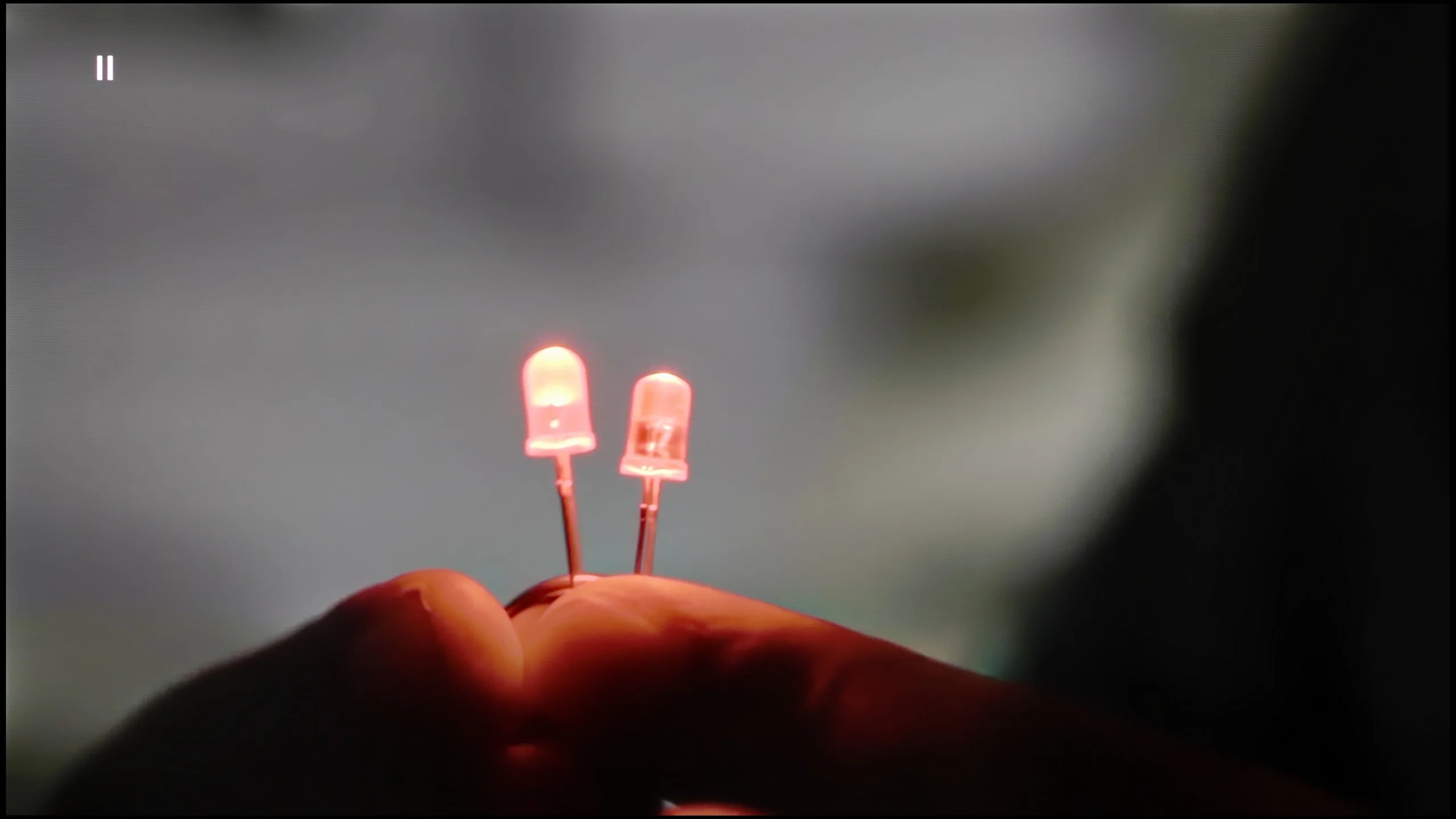
The match photo shows how the TV smooths weak tonal transitions in low-quality video.
Image scaling SD (576i)


The model photo shows how it handles upscaling of SD material.
The S90F performs really well here, although there are some comments that are repeated in the case of most Samsung TVs. The noise reduction feature can effectively smooth out unwanted color transitions in lower-quality materials, such as television or YouTube, making them simply look better. However, it should be noted that it operates quite aggressively and can also soften elements that we wouldn't want to touch, like facial details. Therefore, if we want to use it, it’s best to use it in the "medium" setting and be aware of the compromise it brings. The upscaling itself is at a high level – low-quality materials are enhanced towards a 4K-like image. The only caveat is that the S90F can still have problems with so-called overscan, which is slight trimming of the edges in very poor materials like 576p and lower.
For the S85H, Samsung used the same proprietary NQ4 Gen2 AI processor as in last year’s S85F, and in terms of digital image processing it performs quite well. Upscaling is one of this model’s strengths. Lower-resolution content is well sharpened, edges look natural, and the image doesn’t feel overly artificial. Just bear in mind a common Samsung quirk: at very low resolutions you can’t completely disable overscan, so the TV may slightly crop the left edge of the image. The "noise reduction" function, which smooths weaker tonal transitions, also works very well. The processor can effectively remove posterization and other imperfections visible in lower-quality material. However, you need to be careful with the strength of this feature, because Samsung can be fairly aggressive here. When it’s enabled, along with unwanted artifacts, fine image details such as the texture of skin or clothing can start to disappear.
Blur and motion smoothness
8.5/10
8.5/10
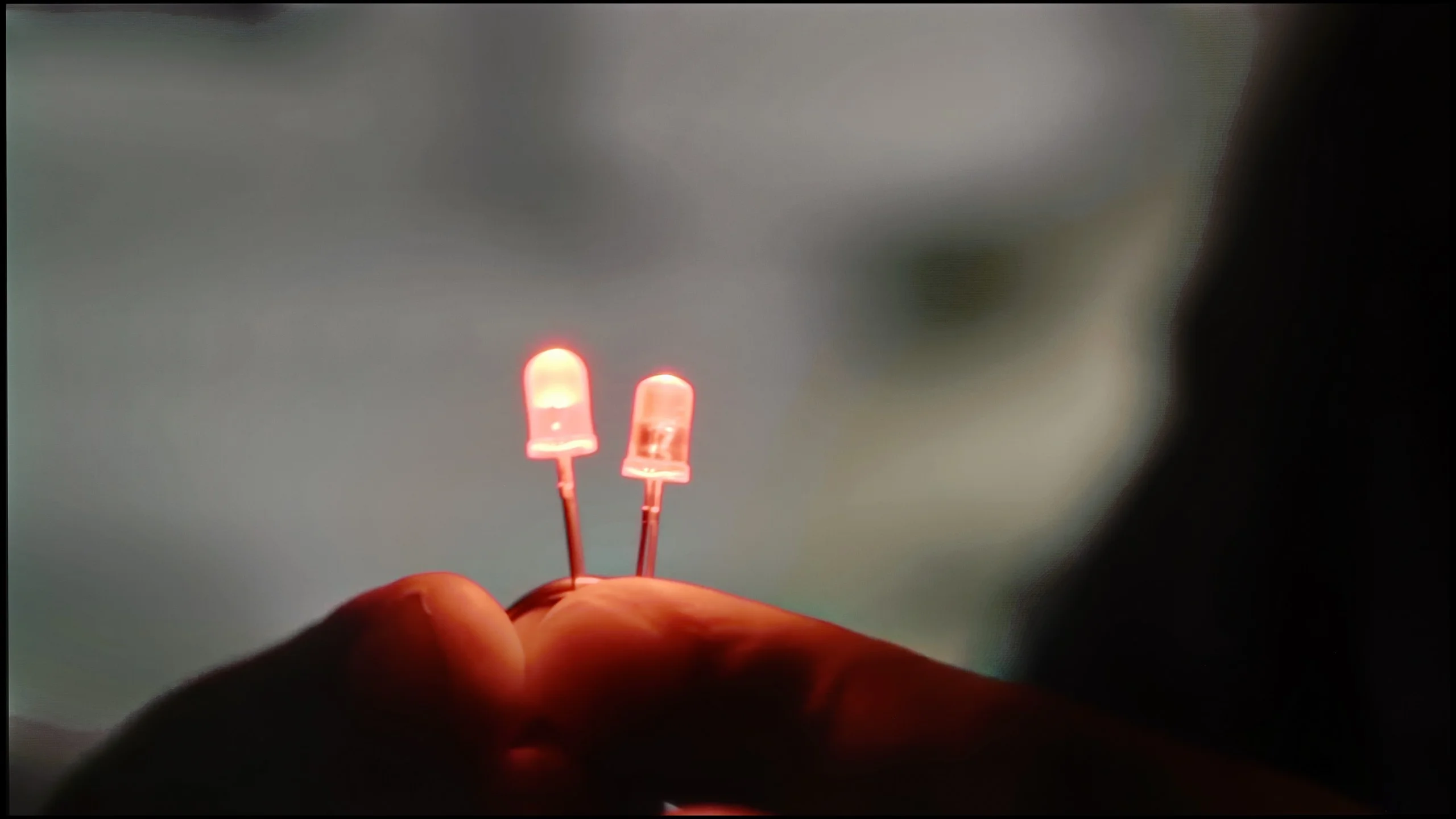
Blur (native resolution, maximum refresh rate):






Blur (BFI function enabled):
Image flickers in this mode



Image flickers in this mode



Blur (4K@144Hz):



Blur (4K@60Hz):
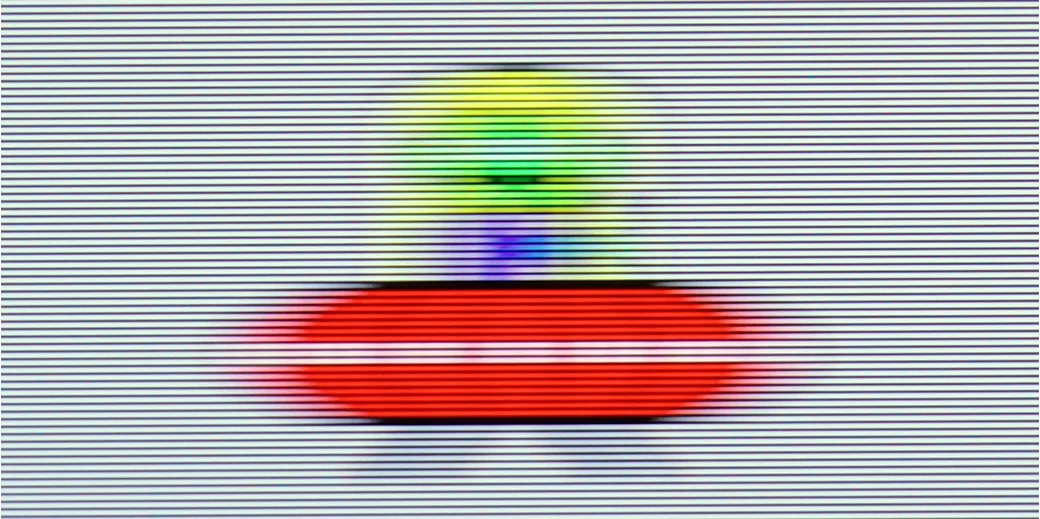
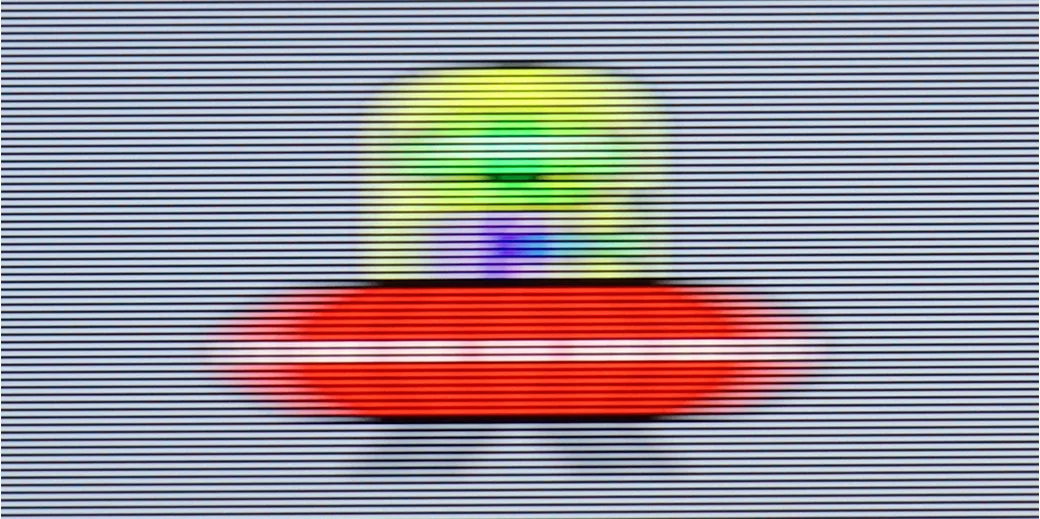
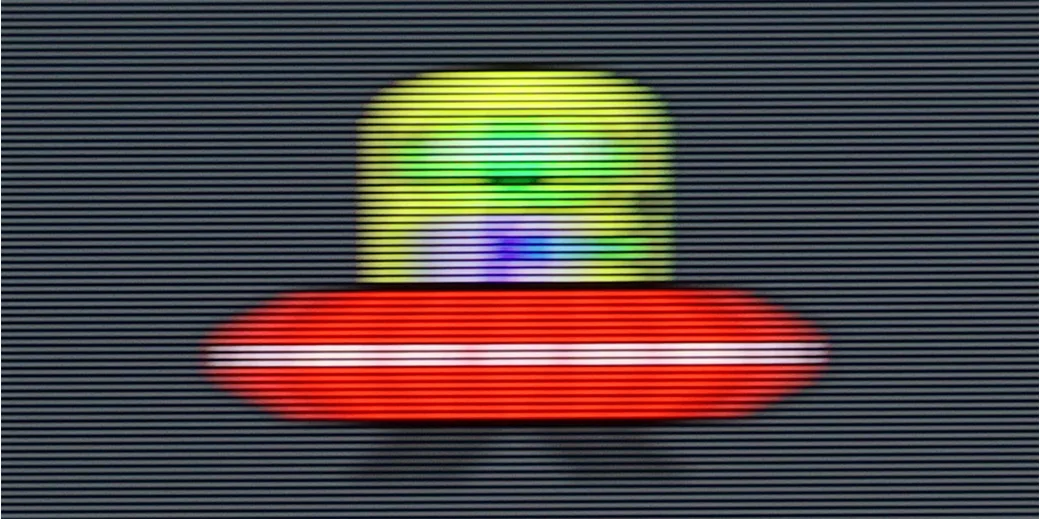
S90F is an OLED with a refresh rate of 144 Hz, but in practice, what matters most is how it performs at 120 Hz, as this frequency is the most significant when watching sports. The QD-OLED panel is no different in this regard from WOLED panels—the pixel response is almost instantaneous, allowing motion to be rendered with surgical precision. The effect is easy to predict. The image is practically free of ghosting, making gaming on consoles, matches, or other sports broadcasts a great pleasure on the S90F.
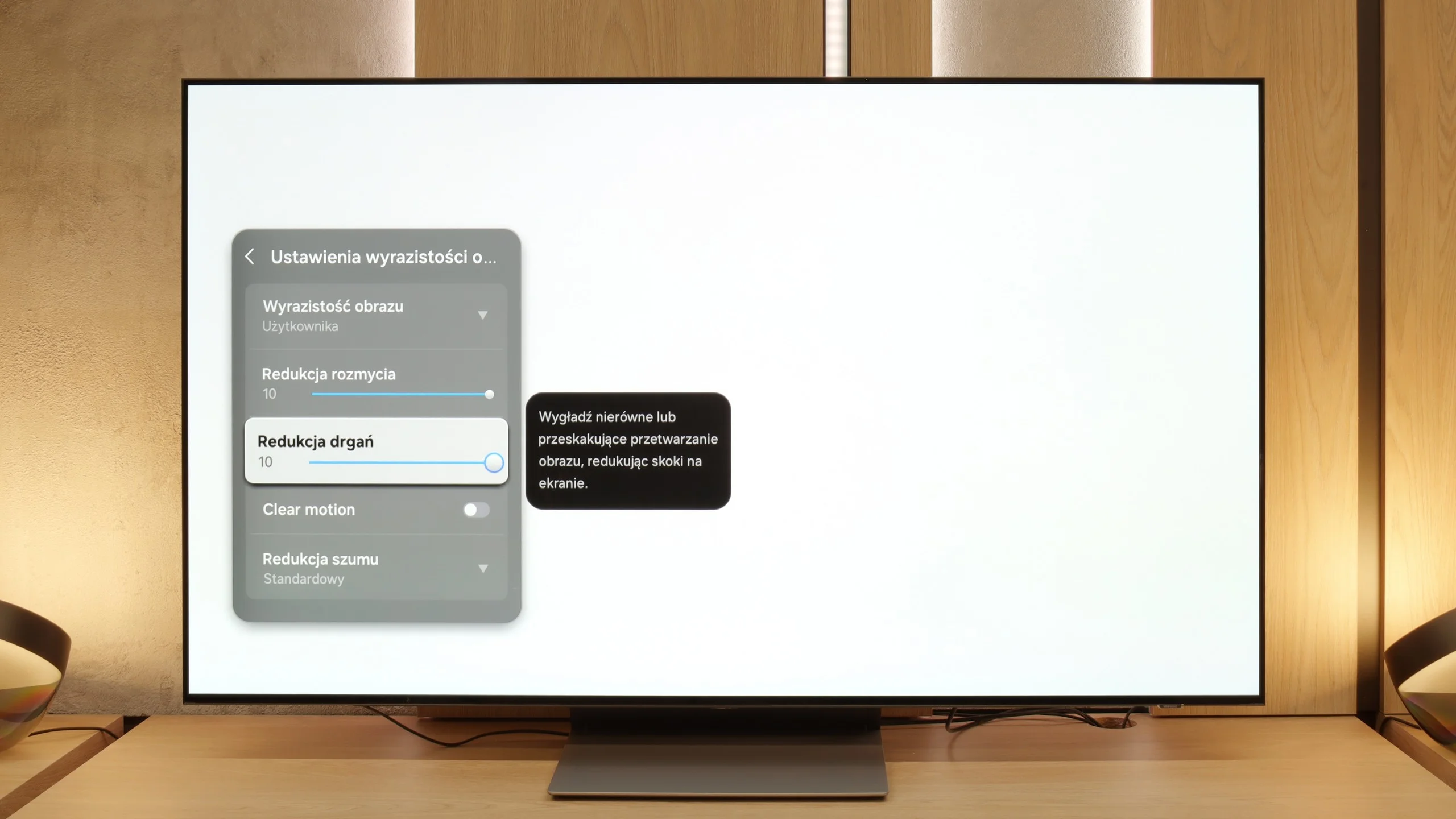
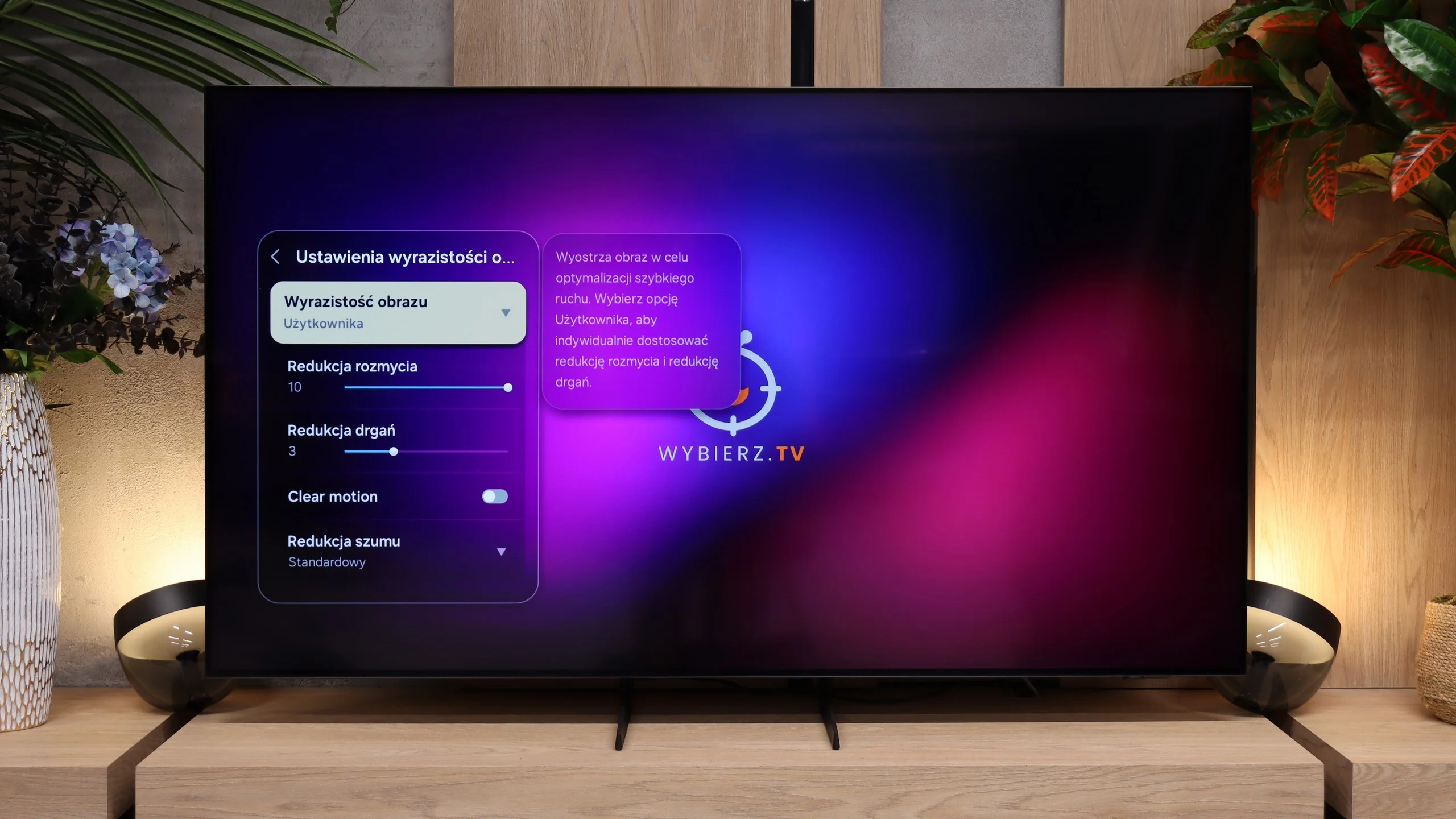
Fans of movies and series are not forgotten either. Like every Samsung TV with a refresh rate of 120 Hz and above, the S90F is equipped with a proprietary motion smoother called "Image Clarity." Here, we find two sliders—motion blur reduction and judder reduction—that allow you to improve the fluidity of materials recorded at 24 frames and adjust the effect to your personal preferences.
The S85H uses an OLED panel, so it performs excellently when it comes to motion blur. Pixels respond virtually instantly, so moving objects don’t leave the characteristic ghosting seen on some LCD TVs. This is especially noticeable with sports or fast-paced games, where the image stays very clean even during rapid motion. The panel runs at 120 Hz. That’s more than enough for movies, TV series, sports, or console gaming. It’s a bit of a shame Samsung didn’t include a higher refresh rate aimed at PC gamers, since more and more TVs now offer 144 or even 165 Hz at 4K. However, that doesn’t affect motion perception in films or sports. There’s also the classic motion smoothing feature with two settings, blur reduction and judder reduction. So you can choose whether films should keep their cinematic 24 frames per second or if you prefer to smooth them a bit. The S85H gives you plenty of flexibility here, and the interpolation works well and, with reasonable settings, doesn’t produce too many artifacts.
Console compatibility and gaming features
9.6/10
9.6/10
- ALLM
- VRR
- VRR range48 - 144Hz48 - 120Hz
- Dolby Vision Game Mode
- Correct implementation of HGIG
- 1080p@120Hz
- 1440p@120Hz
- 4K@120Hz
- Game bar
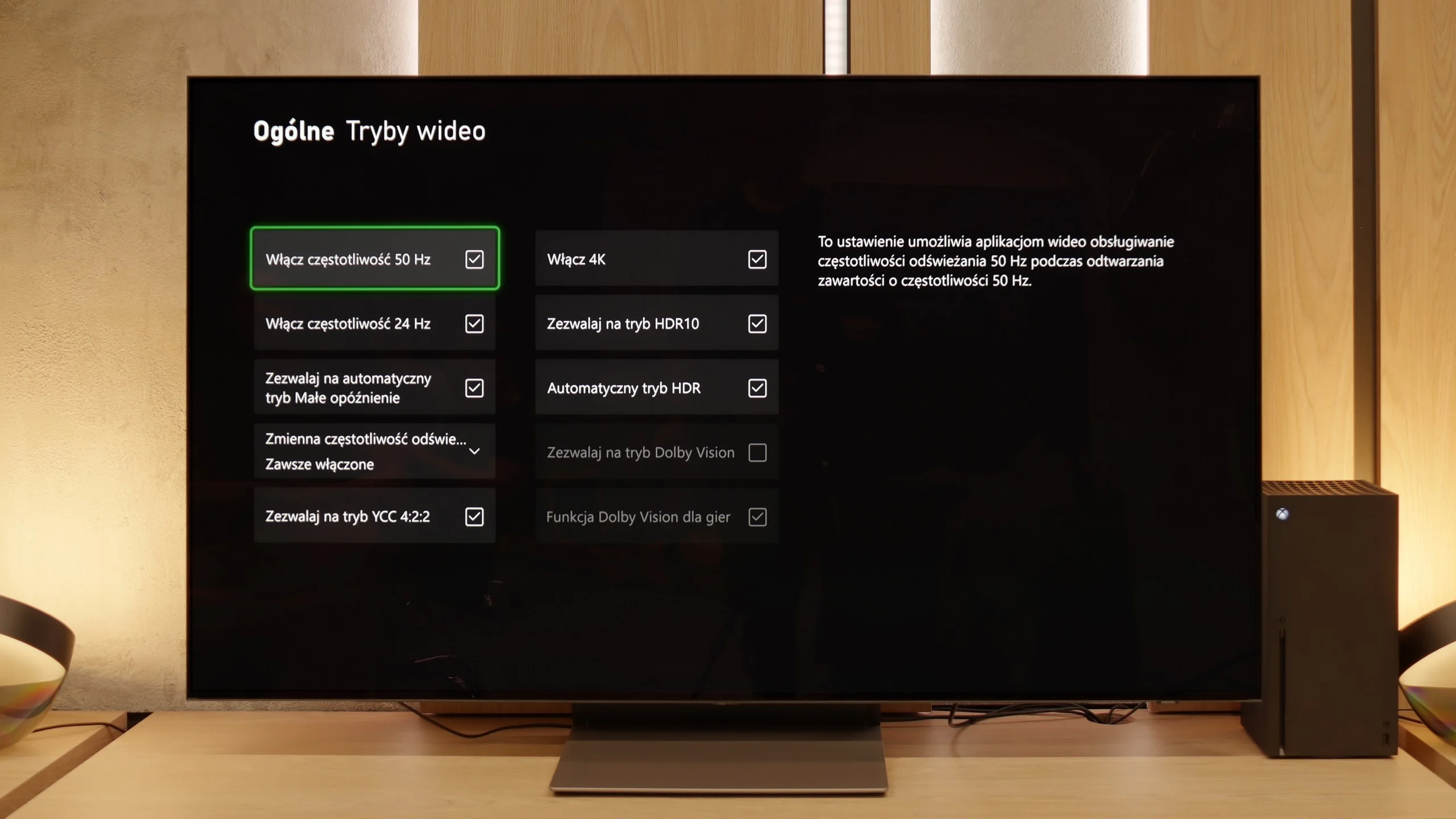
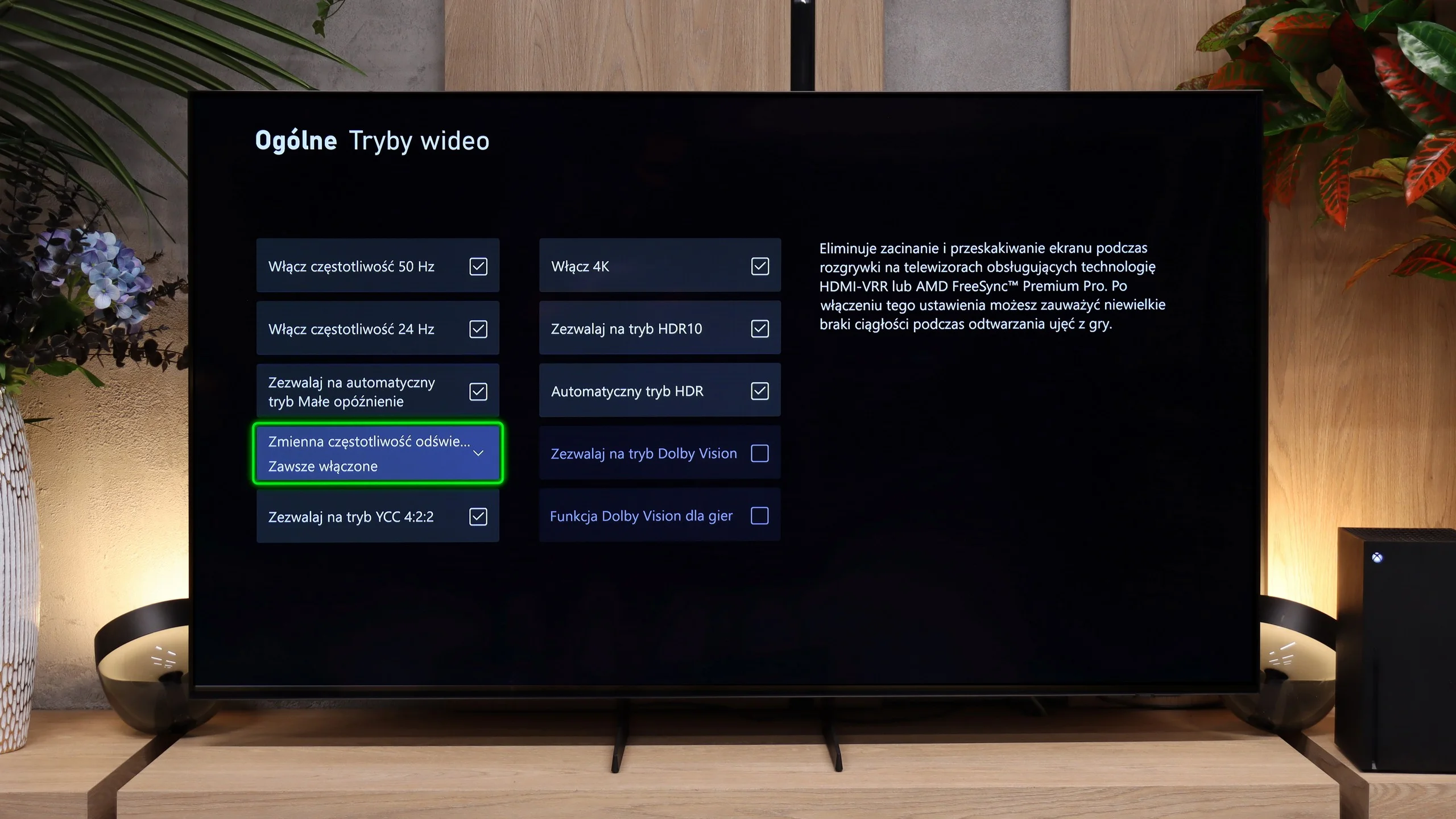
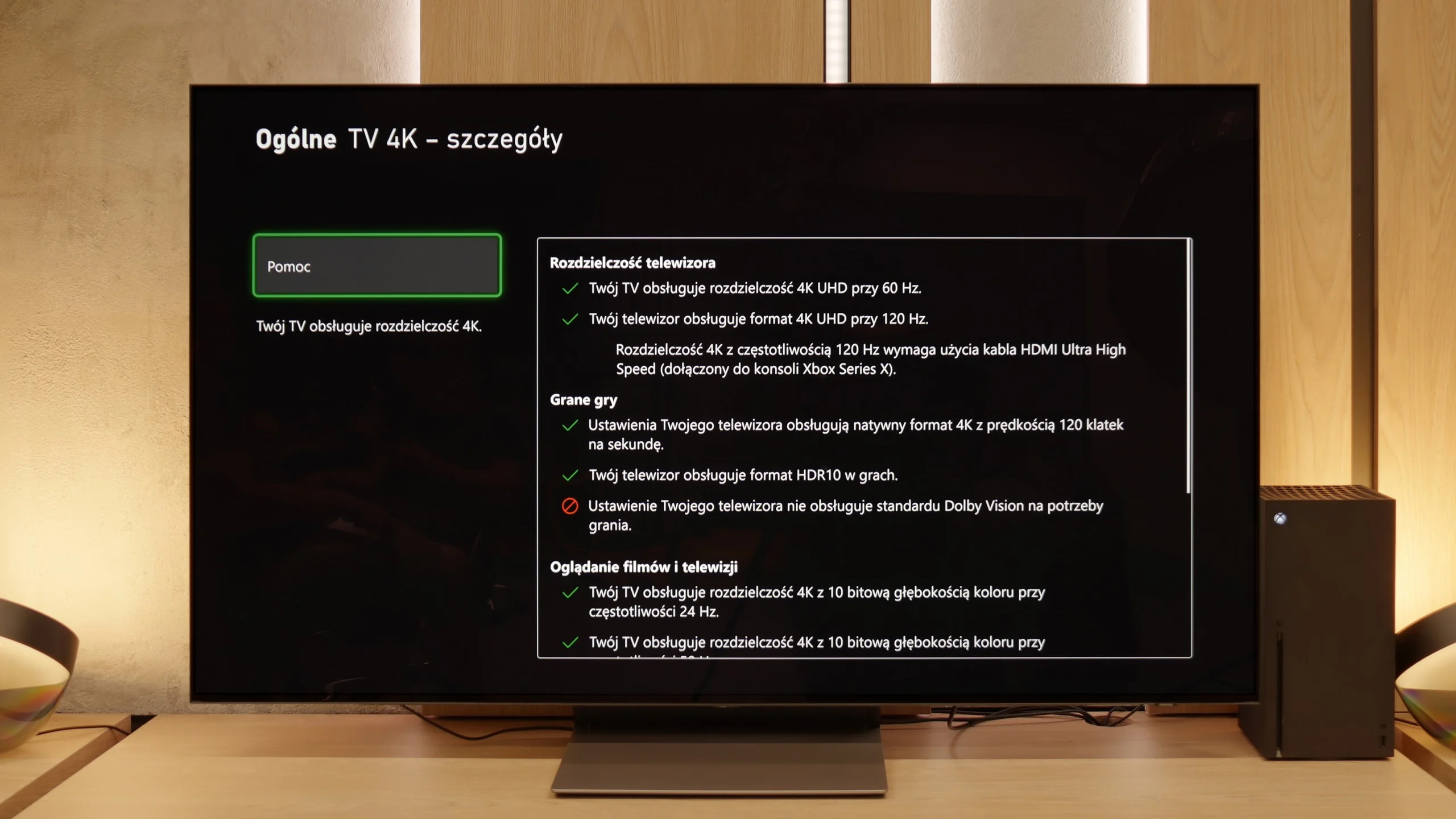
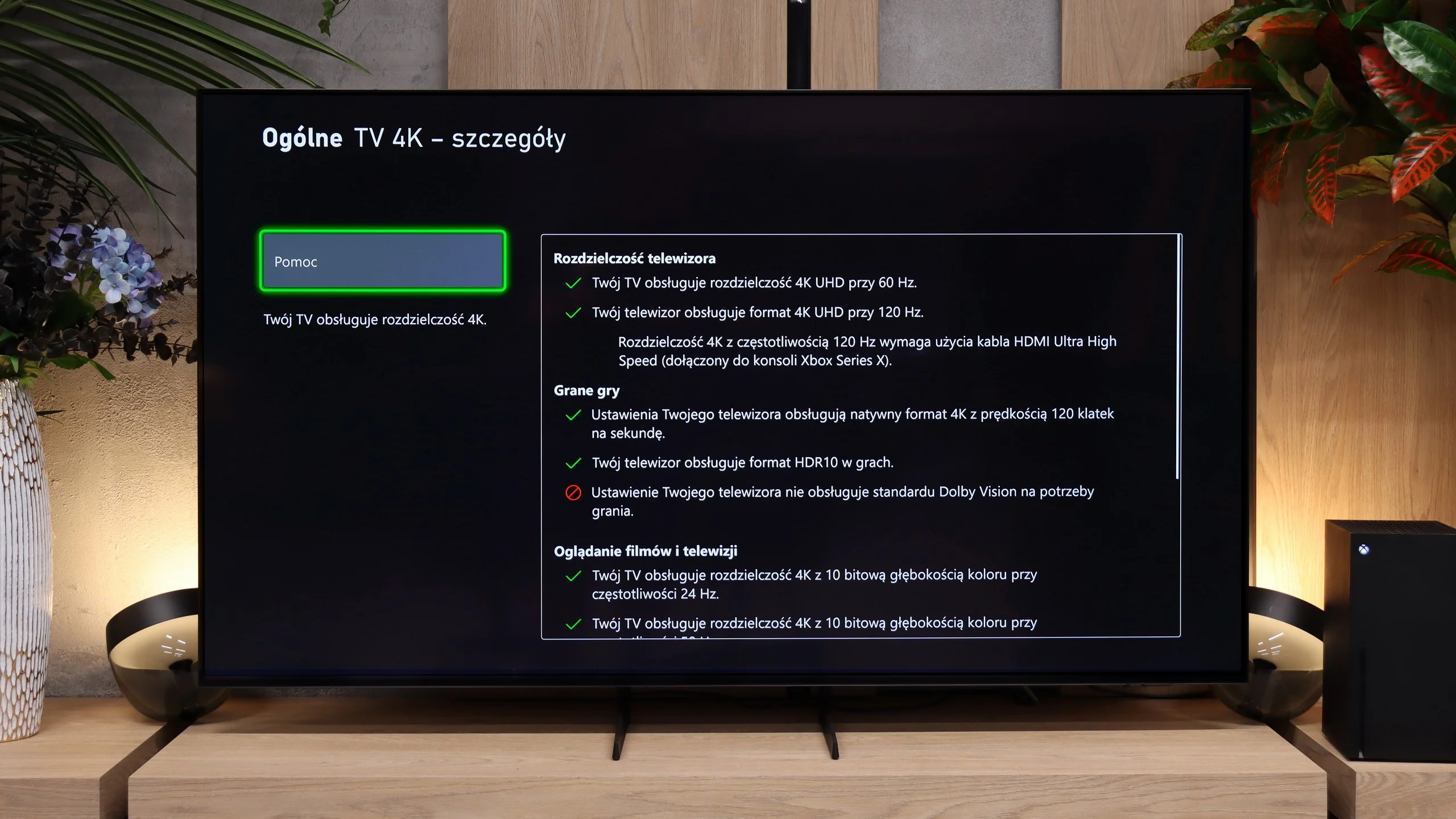
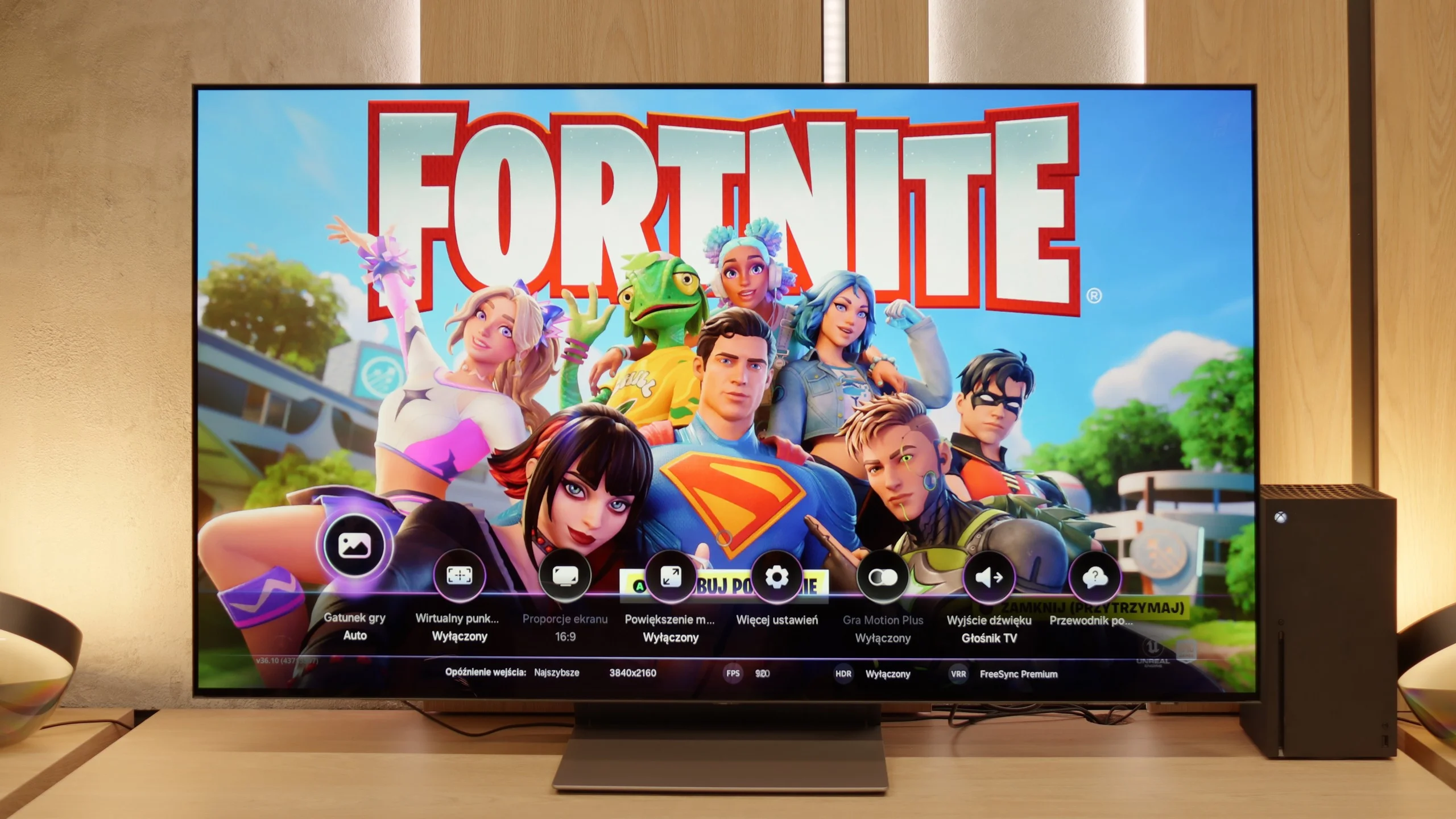
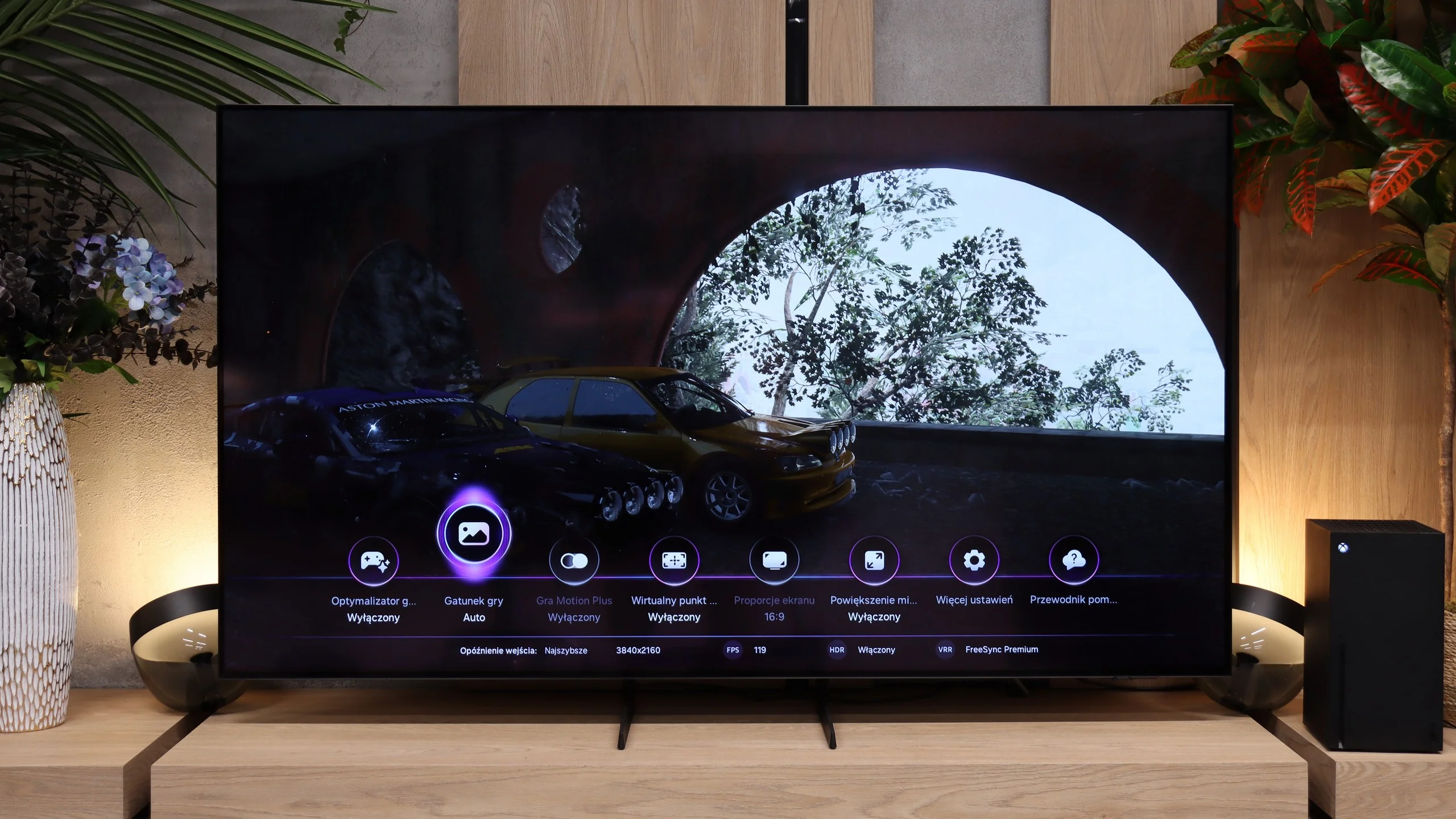
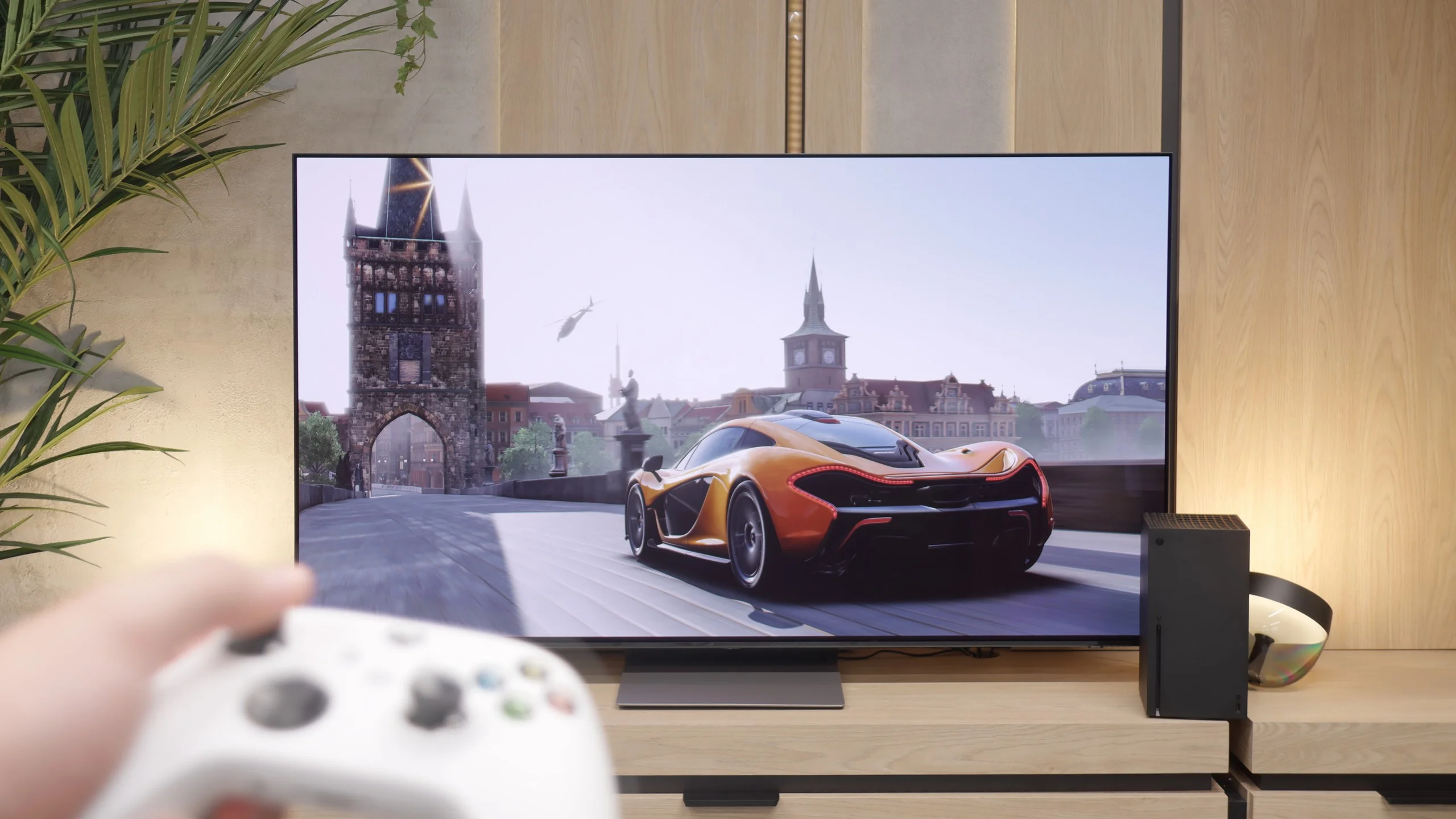
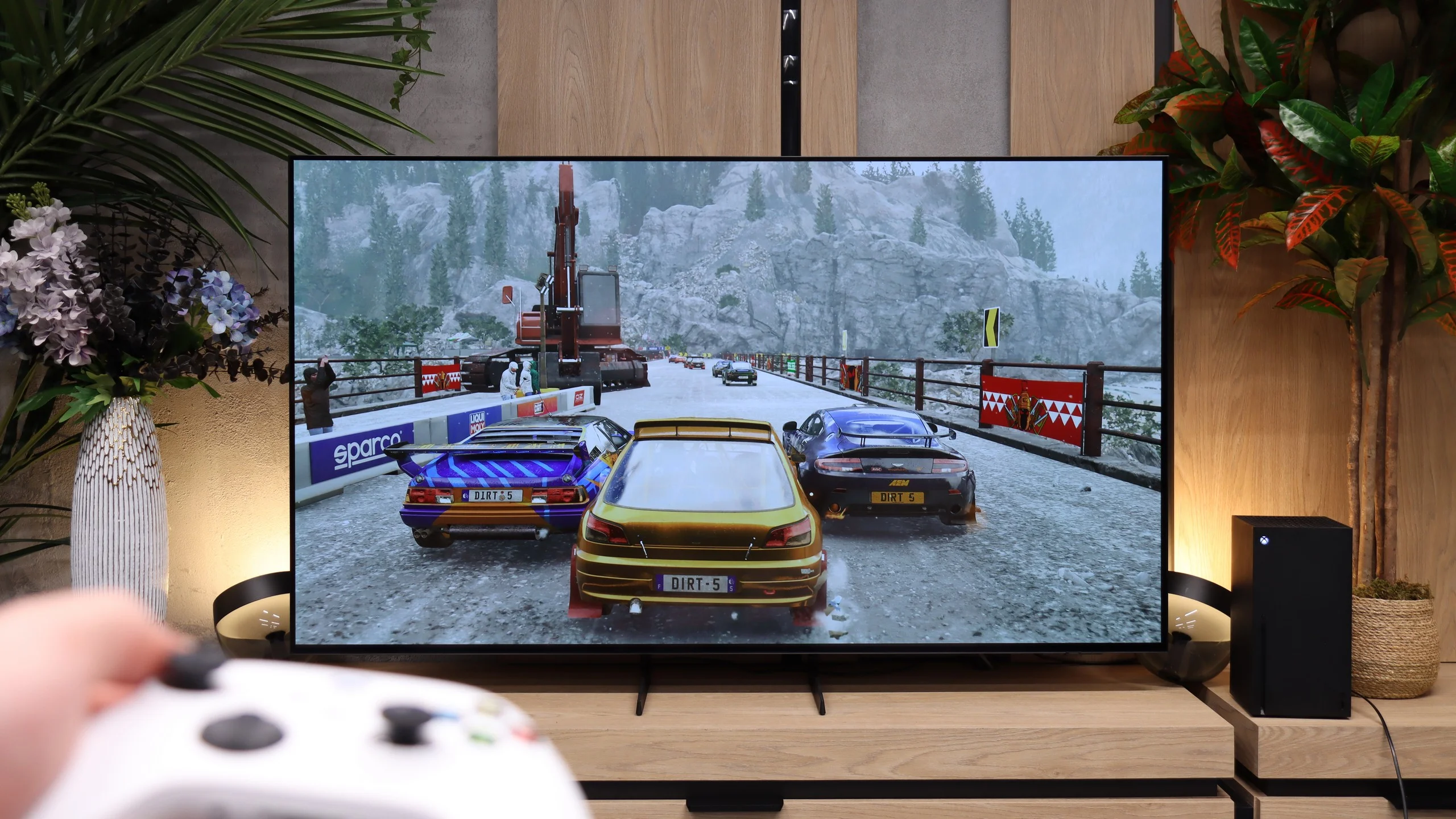
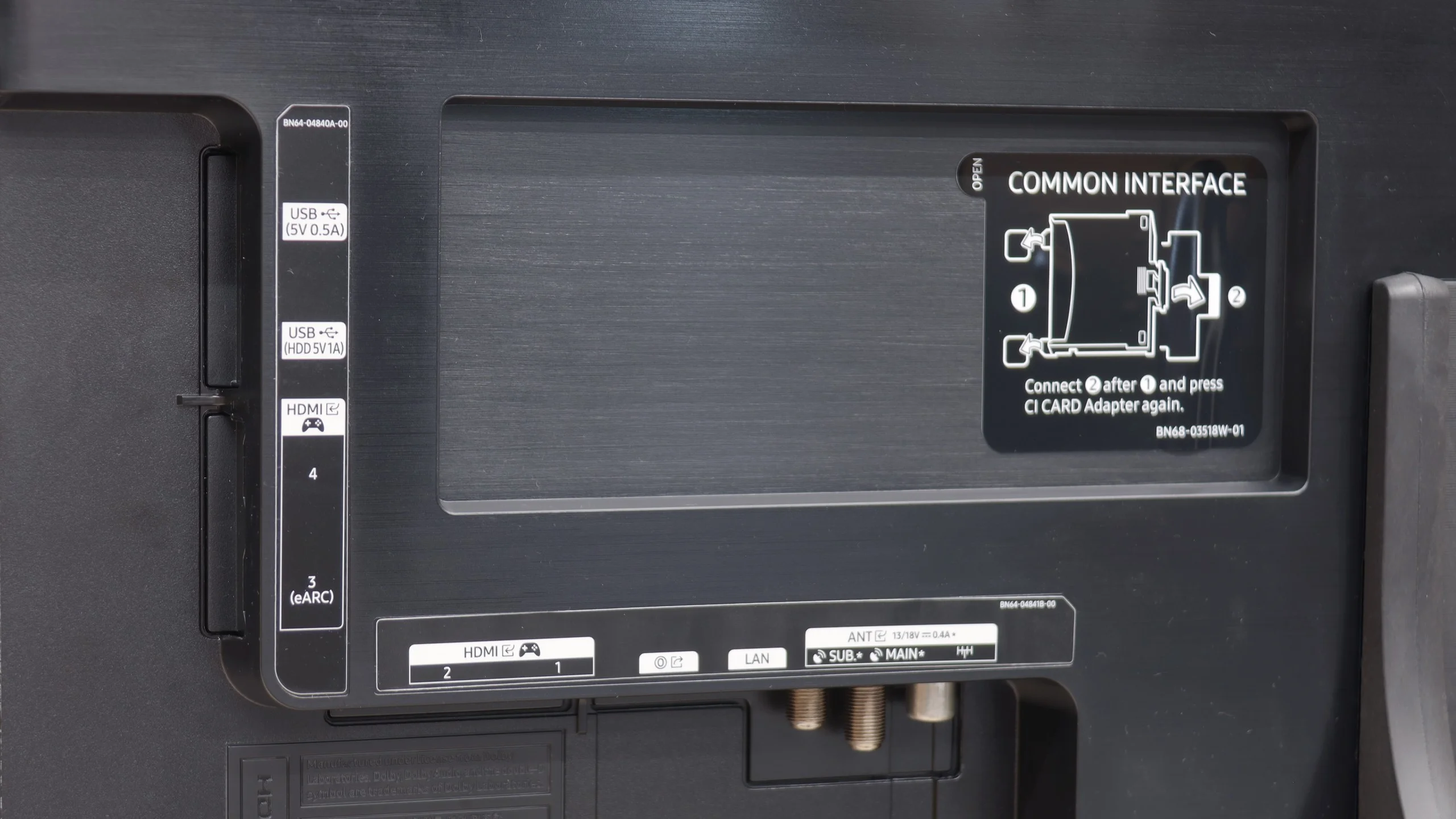
S90F is a television that truly brings a lot of joy when gaming. Right off the bat, we get four full-fledged HDMI 2.1 ports, which means you can connect all consoles and PCs without having to figure out which device takes priority. This is a convenient and practical solution that is not a given with other manufacturers. Additionally, there are key features such as the automatic game mode (ALLM), which switches the screen to low-latency settings, and VRR frame synchronization working over a wide range from 48 to 144 Hz. This ensures that the picture remains smooth regardless of whether we are playing fast-paced online shooters or calmer story-driven titles. Another noteworthy feature is the Game Bar – a panel that allows quick access to several useful additions. For example, you can turn on an additional crosshair in the center of the screen, enlarge the minimap, or, in the case of a PC, change the aspect ratio. Finally, there is also the unique Game Motion Plus mode exclusive to Samsung. Its purpose is to smooth out older or less optimized titles, and it actually works quite well. Thanks to this mode, even less polished games can look better and provide more enjoyment than on other televisions that theoretically offer the same technical specifications.
The Samsung S85H is very well set up for gaming, whether you connect a console or a PC. The manufacturer didn’t skimp on ports and all four HDMI inputs support full HDMI 2.1. That means you can use 4K at 120 Hz, VRR, and ALLM without worrying which input to plug your console into. With several devices that matters, because you don’t have to choose between a console, a PC, or a soundbar connected via eARC. The feature set itself is very comprehensive. The S85H supports VRR, FreeSync, and automatic switching to game mode, and Samsung offers its comprehensive Game Bar, which lets you quickly view key signal parameters and change settings without leaving the game. The only real omission is Dolby Vision, which will matter mainly to Xbox owners. That’s a typical trait of Samsung TVs. Game Motion Plus performs very well and is one of the features that have set Samsung TVs apart for years. It smooths motion in games running at 30 or 60 fps, but does so without as large an increase in input lag as traditional motion smoothing. In practice, with more relaxed games, racing titles, or action games this can really improve perceived motion, especially if you’re sensitive to low framerates.
Input lag
10/10
10/10
SDR
HDR
Dolby Vision
In terms of lag, the S90F performs exceptionally well. With 120 Hz content, it’s about 5 ms, and with 60 Hz, it’s about 10 ms. In practice, this means an immediate response to the controller, mouse, or keyboard – without the feeling that something is slowing down the gameplay!
Samsung S85H also performs very well in terms of input lag. At 120 Hz we measured input lag below 5 ms, which is a level at which the TV's response to controls is practically instantaneous. At 60 Hz the delay is naturally higher, but still remains very low, about 10 ms, so in this respect the S85H gives little reason to complain.
Compatibility with PC
8.6/10
7.6/10
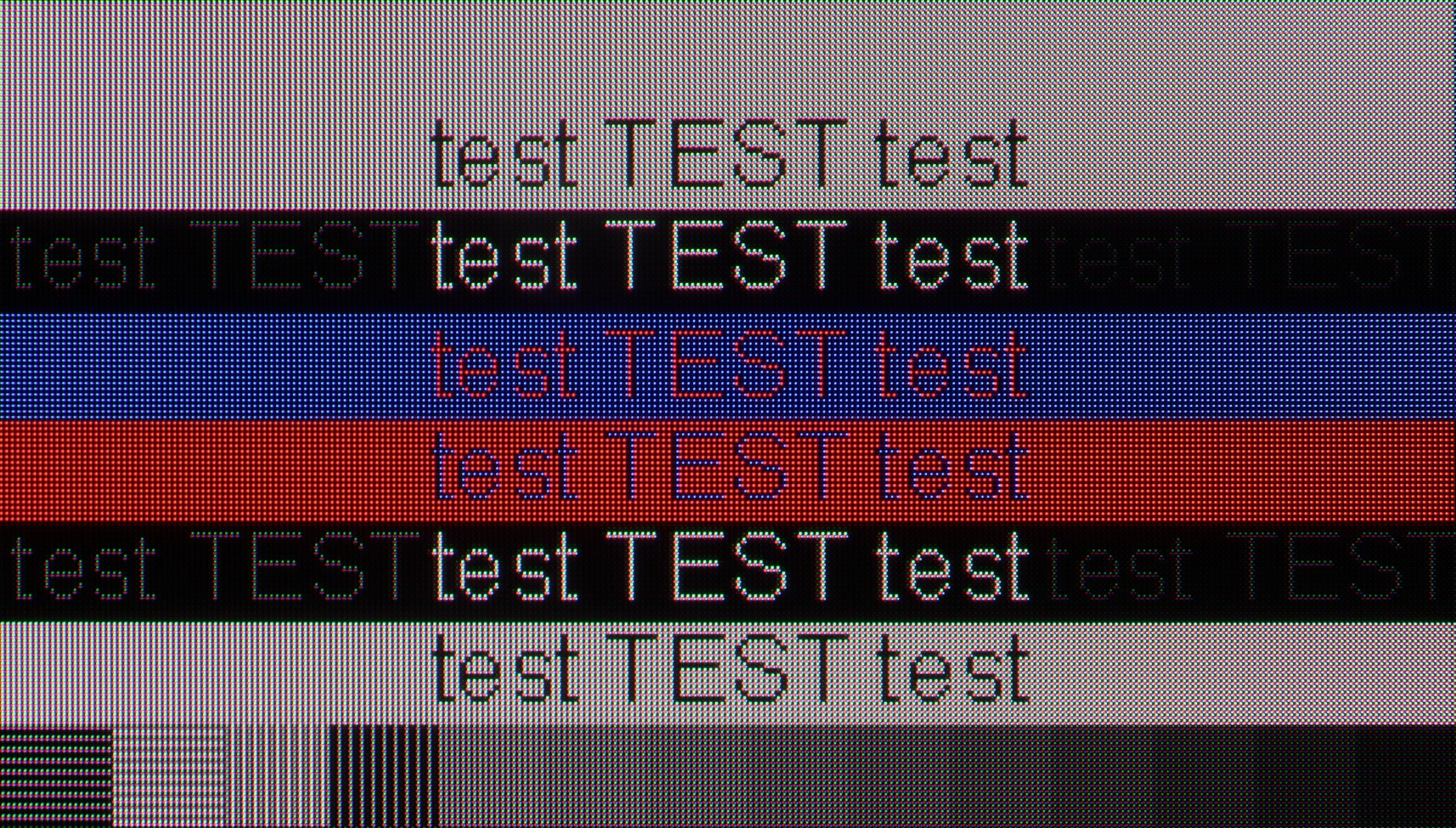
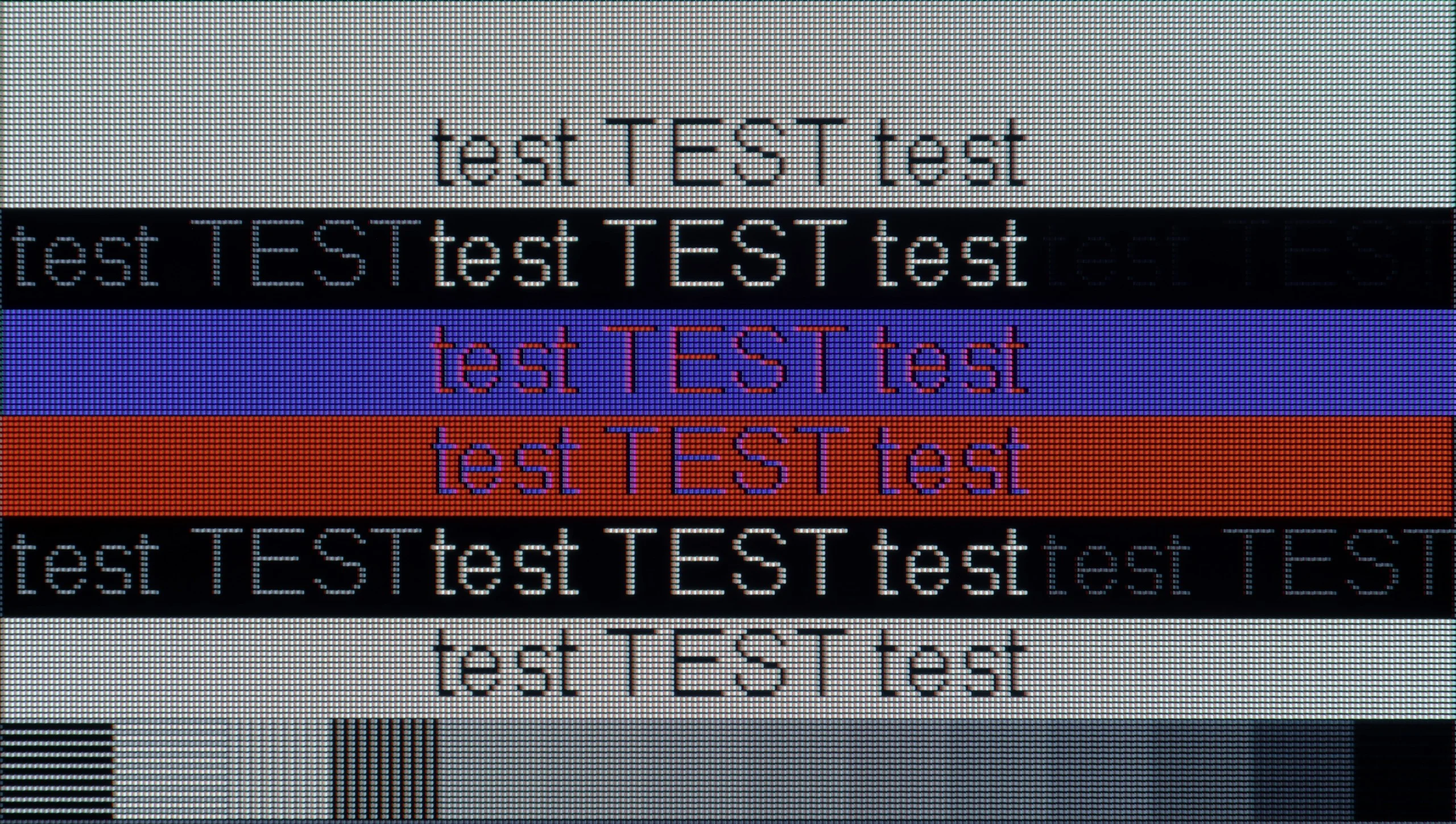
The photo shows the legibility of small fonts. Ideally, lines should be the same thickness on both light and dark text, with minimal pixel gaps.
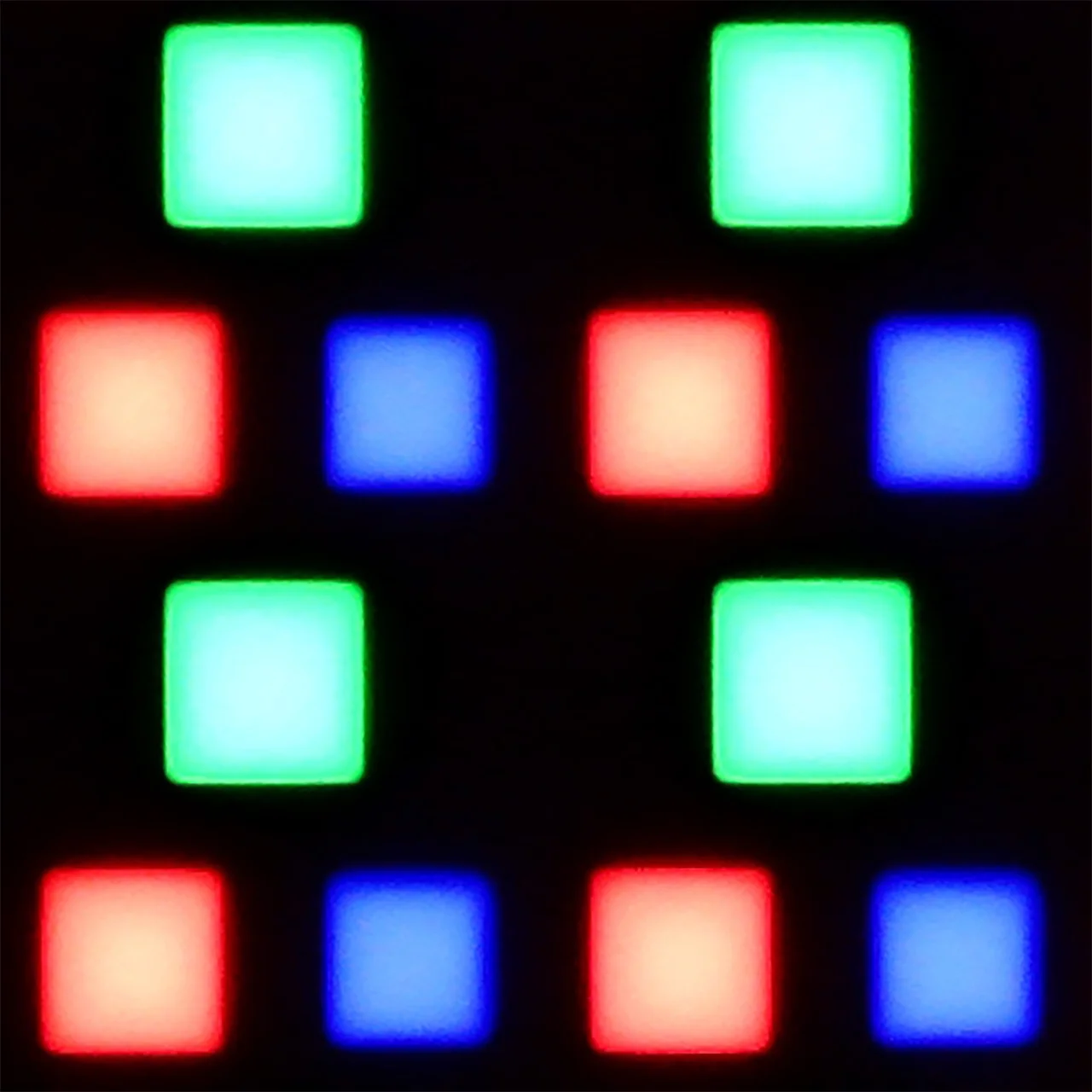
The S90F, even in the 65-inch variant, works great as a large monitor for PC. The most benefits, of course, go to gamers – the television supports refresh rates up to 144 Hz, as well as frame synchronization with Nvidia graphics cards (G-SYNC) and AMD (FreeSync). The difference compared to WOLED panels lies in the distinctive "diamond" pixel arrangement in QD-OLED. In practice, this can affect the display of fine text – some letters at the edges may have slightly jagged shapes. On the other hand, in WOLED matrices with a layout of four subpixels, text can be less precise, so each variant has its minor specifics. In both cases, however, the television is very well suited for both gaming and occasional computer work.
The Samsung S85H also works very well as a large PC monitor. Font readability is good, and from the typical distance you sit from a screen this size, text looks really good. You just need to remember the four-subpixel layout of the WOLED panel, which means that from very close up the edges of letters aren't quite as perfectly sharp as on a traditional RGB monitor. However, this is a characteristic of OLED technology itself and shouldn't be an issue in normal TV use.
The S85H also has a lot to offer PC gamers. It delivers 120 Hz, G-Sync support, very low input lag, and of course the lightning-fast response time of the OLED panel. The only thing that was really missing was the ability to run the panel at a higher refresh rate. More and more TVs already support 144 or 165 Hz at 4K, so an additional mode like that would be welcome here.
Viewing angles
9.8/10
7.5/10
One of the things that immediately impresses in the S90F is its viewing angles. This is a huge advantage of QD-OLED panels – even if we are not sitting directly in front of the television, the image hardly changes. Colors remain vibrant, contrast is strong, and details are just as readable as when viewing from a central spot. So you can comfortably watch a movie with a group of people, spreading out across the entire living room, without worrying that someone will see a washed-out version of the image. OLEDs have always performed well in this category, and it’s one of their main advantages over traditional LCDs. However, in QD-OLED, the difference is even more noticeable – the image holds its quality even at a wide angle, where on WOLED panels, one can already see a slight loss of color intensity. Here, there is practically none of that.
Viewing angles are one of the big advantages of the S85H and OLED panels in general. Even when you view the screen from well off to the side, the image still retains good contrast, brightness and color saturation. In this respect the S85H performs significantly better than practically any LCD or Mini-LED TV available today. Only QD-OLED panels actually do better, keeping colors even more stable at wide angles. However, you’ll only find those in higher-end models.
Daytime performance
5.7/10
5.1/10
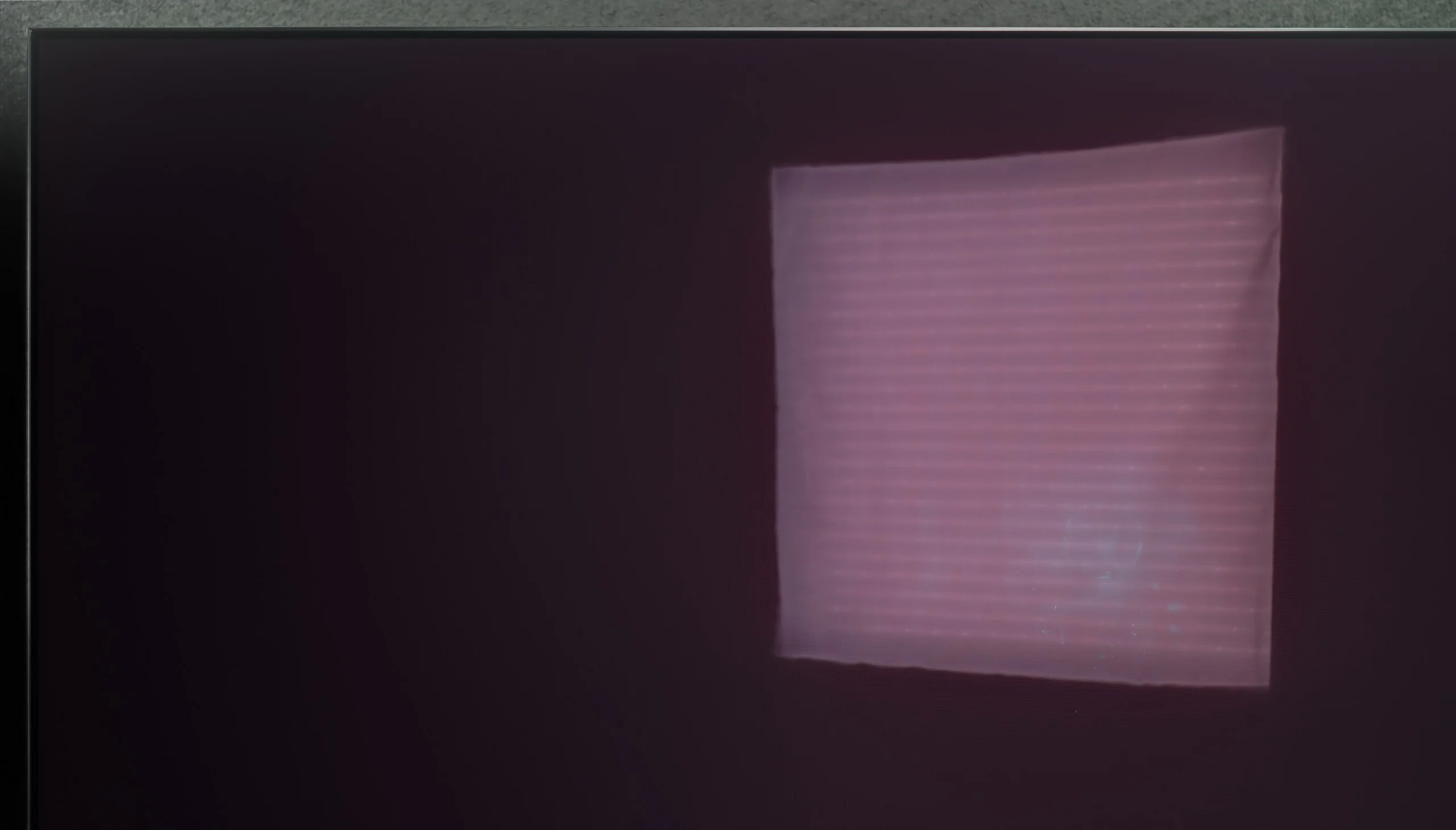
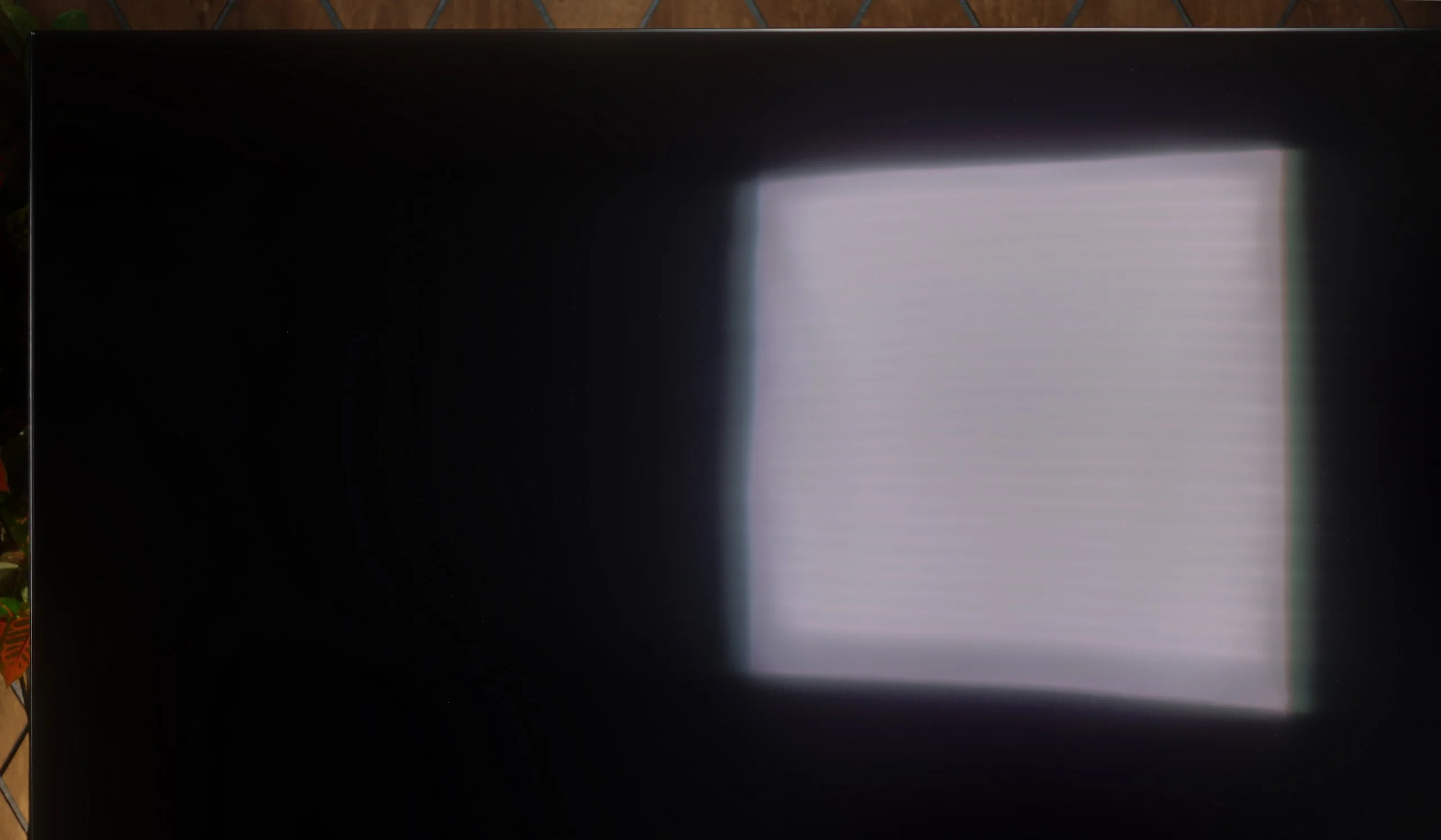
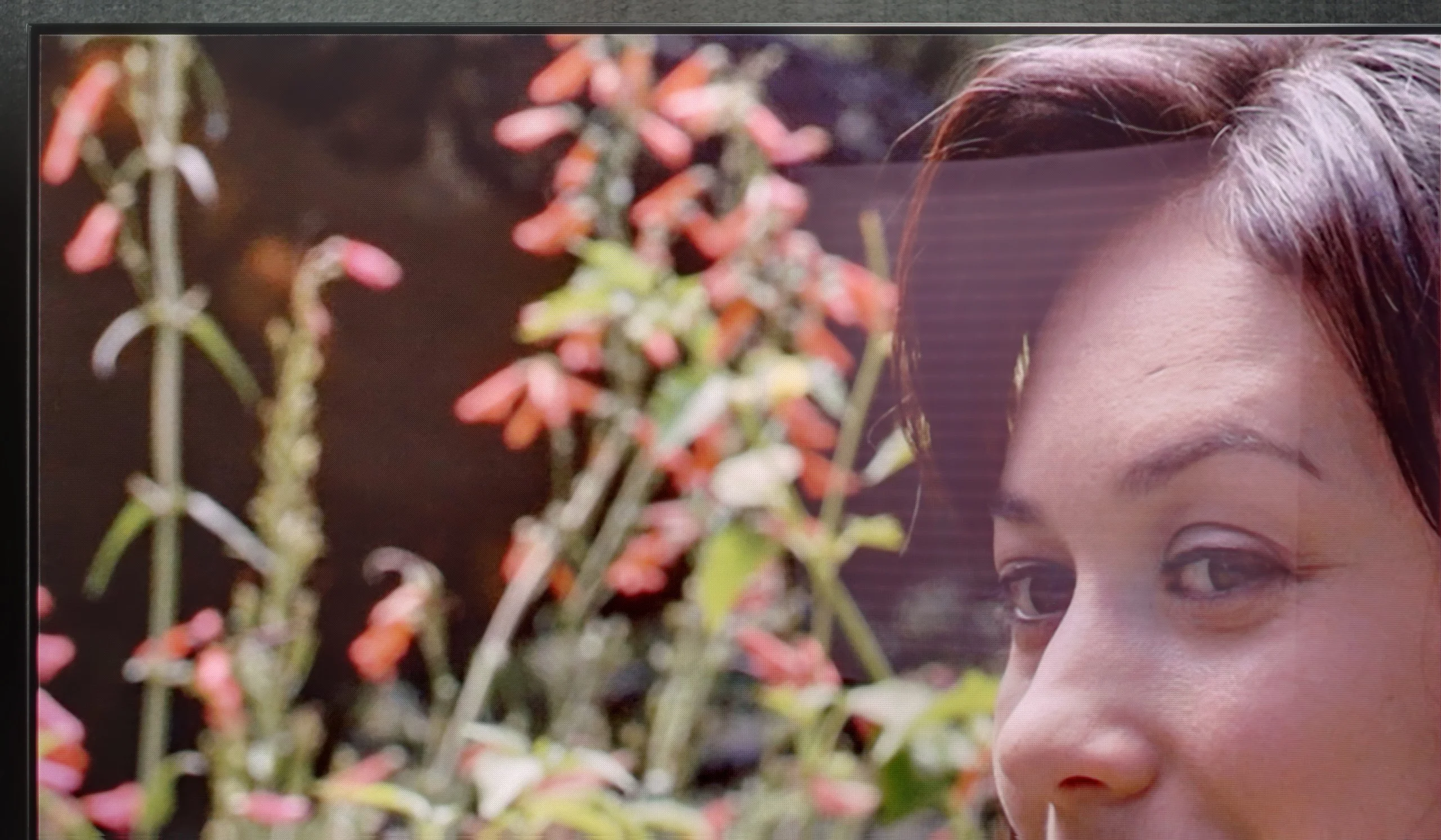
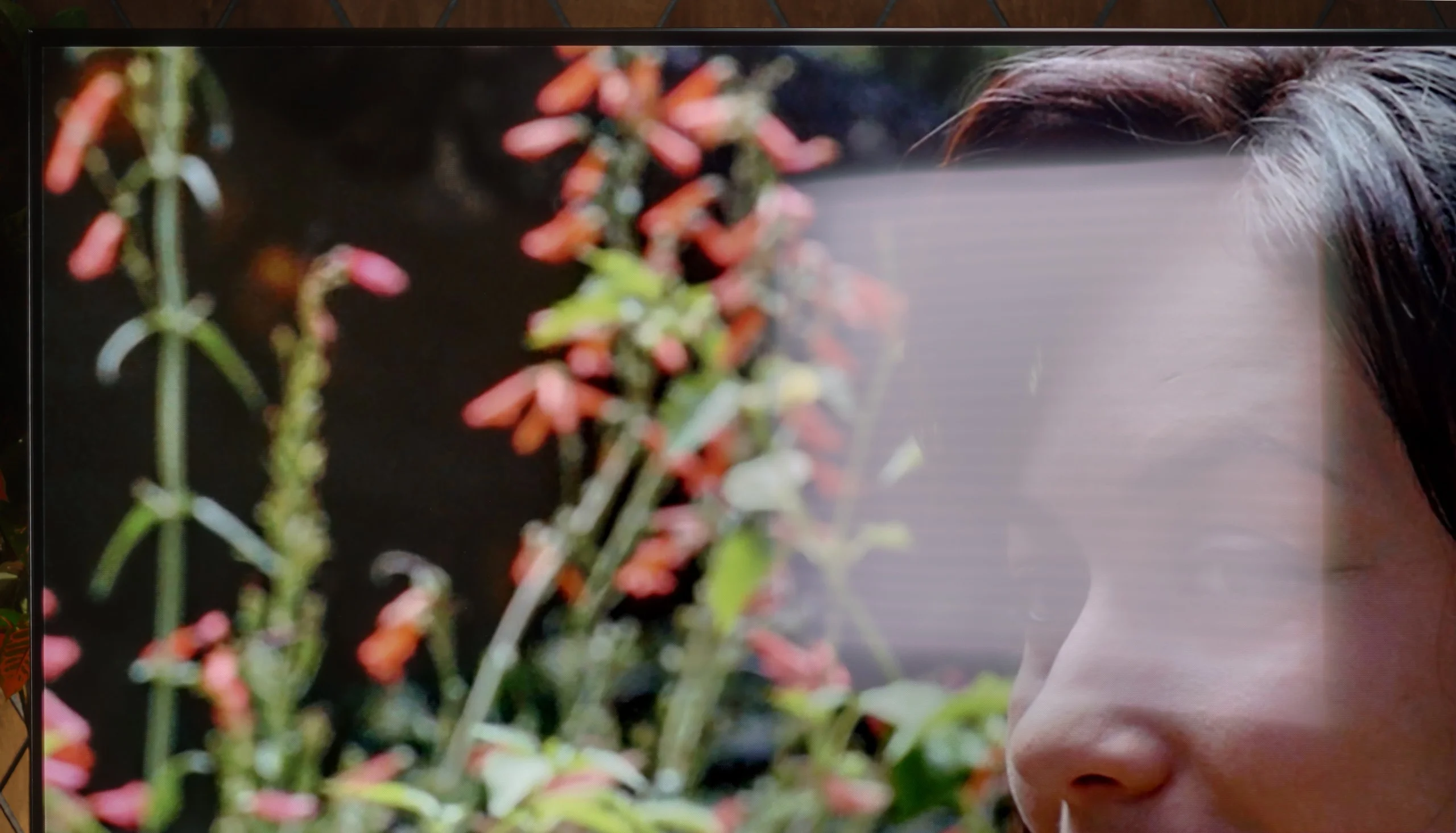
Panel brightness
Samsung S85H: 350 cd/m2
Samsung OLED S90F (QD-OLED): 431 cd/m2
QD-OLED matrices have their Achilles' heel – it is the reproduction of black in brightly lit rooms. The glossy coating used here handles reflections really well, definitely better than in WOLED panels that we had the opportunity to test. The problem is that in very intense daylight, black can take on a dark navy hue and loses its depth. Fortunately, in the evenings this phenomenon disappears completely, and the television displays an image that we expect from OLED – with perfect contrast and true black. As for brightness, the S90F performs quite well for a mid-range OLED. It will handle typical conditions without any issues, and the screen will look attractive even in a well-lit living room. Only in really extreme conditions, when the sun shines directly on the screen, might it be more difficult, but this is a common issue for all OLEDs in this price segment. On the other hand, better suppression of reflections means that for many people, QD-OLED will prove to be more comfortable for everyday viewing than classic WOLEDs, despite the fact that blacks don’t always look perfect on it.
Samsung S85H is a moderately bright TV. In our measurements the average brightness in SDR was about 350 nits, so that should be enough for ordinary daytime viewing as long as the TV isn't placed in a very sunlit living room. In a moderately lit room the picture remains readable, but with large windows and light hitting the screen directly the S85H's capabilities start to run out. We have a few more remarks about the WOLED SE panel itself. The change in panel construction compared with the previous generation affected how the screen handles reflections, and unfortunately it's not a change for the better. Reflections are more noticeable than on earlier WOLED panels. LG Display tried to partly mask this effect with a more satin screen finish that scatters light, but that doesn't completely solve the issue. With a strong light source the reflection becomes quite large and a characteristic grayish halo appears around it. In photos it's clear that such a reflection can take up a large part of the image and strongly affect how it's perceived. The S85H therefore doesn't really differ from cheaper OLEDs when it comes to daytime viewing. It performs best in the evening or in a room where you have at least partial control over the light. During the day it's still comfortable to use, but it's definitely not a TV designed for a very bright living room.
Panel details
Subpixel Structure:
Panel uniformity and thermal imaging:


Samsung OLED S90F (QD-OLED)
Samsung S85H
TV features
7.7/10
7.3/10
- SystemTizenTizen
- System performanceVery goodVery good
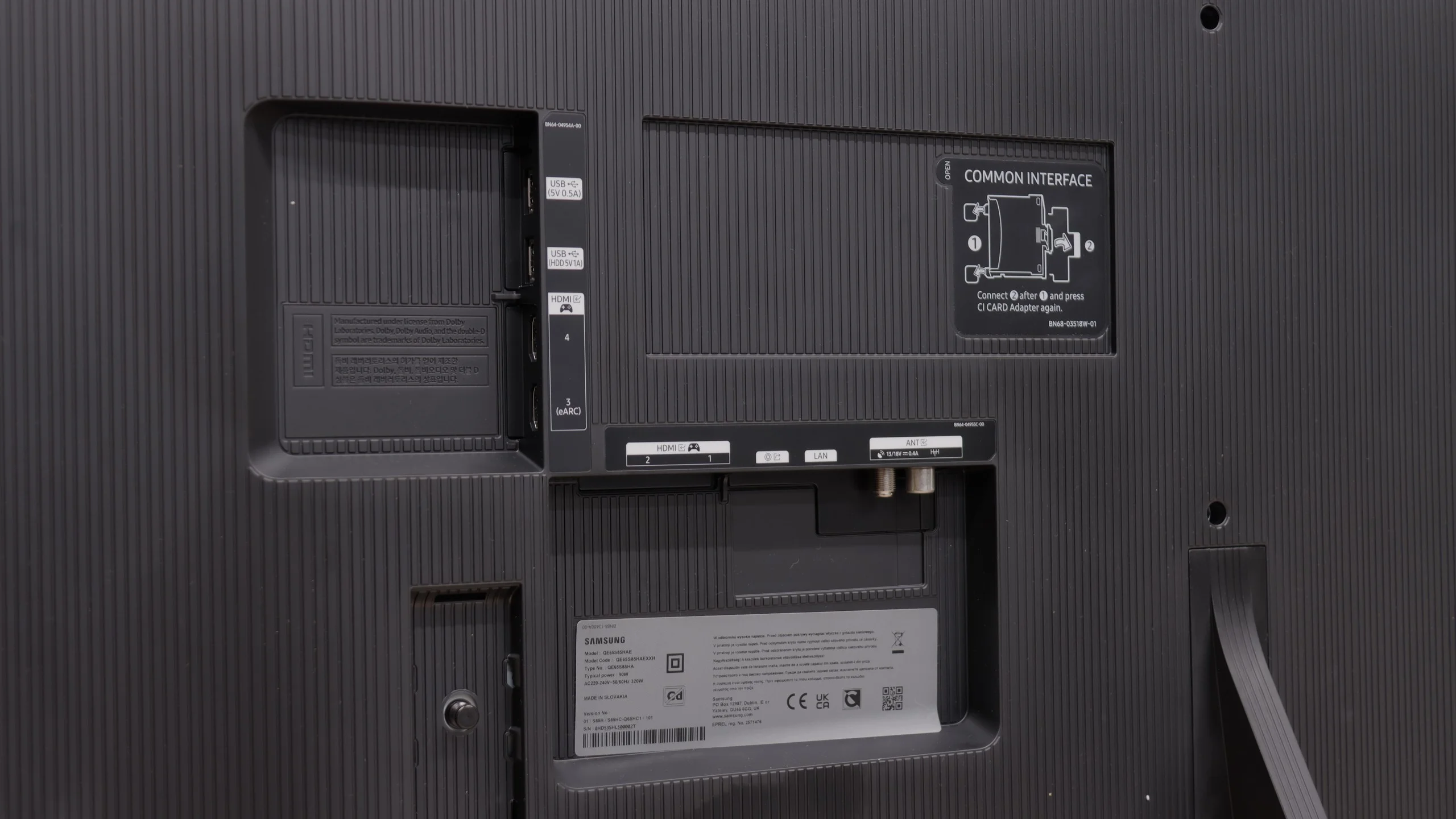
- HDMI inputs0 x HDMI 2.0, 4 x HDMI 2.1 48Gbps0 x HDMI 2.0, 4 x HDMI 2.1 48Gbps
- Other inputsToslink (Optical audio), IR (remote)
- OutputsToslink (Optical audio), eARC (HDMI), ARC (HDMI)Toslink (Optical audio), eARC (HDMI), ARC (HDMI)
- Network InterfacesWi-Fi 2.4GHz, Wi-Fi 5GHz, Ethernet (LAN) 100MbpsWi-Fi 2.4GHz, Wi-Fi 5GHz, Ethernet (LAN) 100Mbps
- TV receptionDVB-T, DVB-T2, DVB-S, DVB-S2, DVB-CDVB-T, DVB-T2, DVB-S, DVB-S2, DVB-C
Classic features:
- Recording to USB (terrestrial TV)
- Recording programming
- Picture in Picture (PiP)
- RF remote control (no need to aim)
- Backlit remote control
- Teletext
- Audio only mode
- Bluetooth headphones support
- Simultaneous Bluetooth headphones & TV audio
Smart features:
- AirPlay
- Screen mirroring (Windows Miracast)
- Voice search
- Voice search in native language
- Ability to connect a keyboard and mouse
Sound connection options
- HDMI audioeARC (HDMI), ARC (HDMI)eARC (HDMI), ARC (HDMI)
- Other audio outputsToslink (Optical audio)Toslink (Optical audio)
- Wireless audioBluetoothBluetooth
Supported audio formats (external HDMI eARC audio):
- Dolby Digital Plus 7.1
- Dolby True HD 7.1
- Dolby Atmos in Dolby Digital Plus (JOC)
- Dolby Atmos in Dolby True HD
- DTS:X in DTS-HD MA
- DTS-HD Master Audio
Senior accessibility
- Numeric keyboard on TV
- Font size adjustment
- Audio description
SmartTV Features: Tizen.
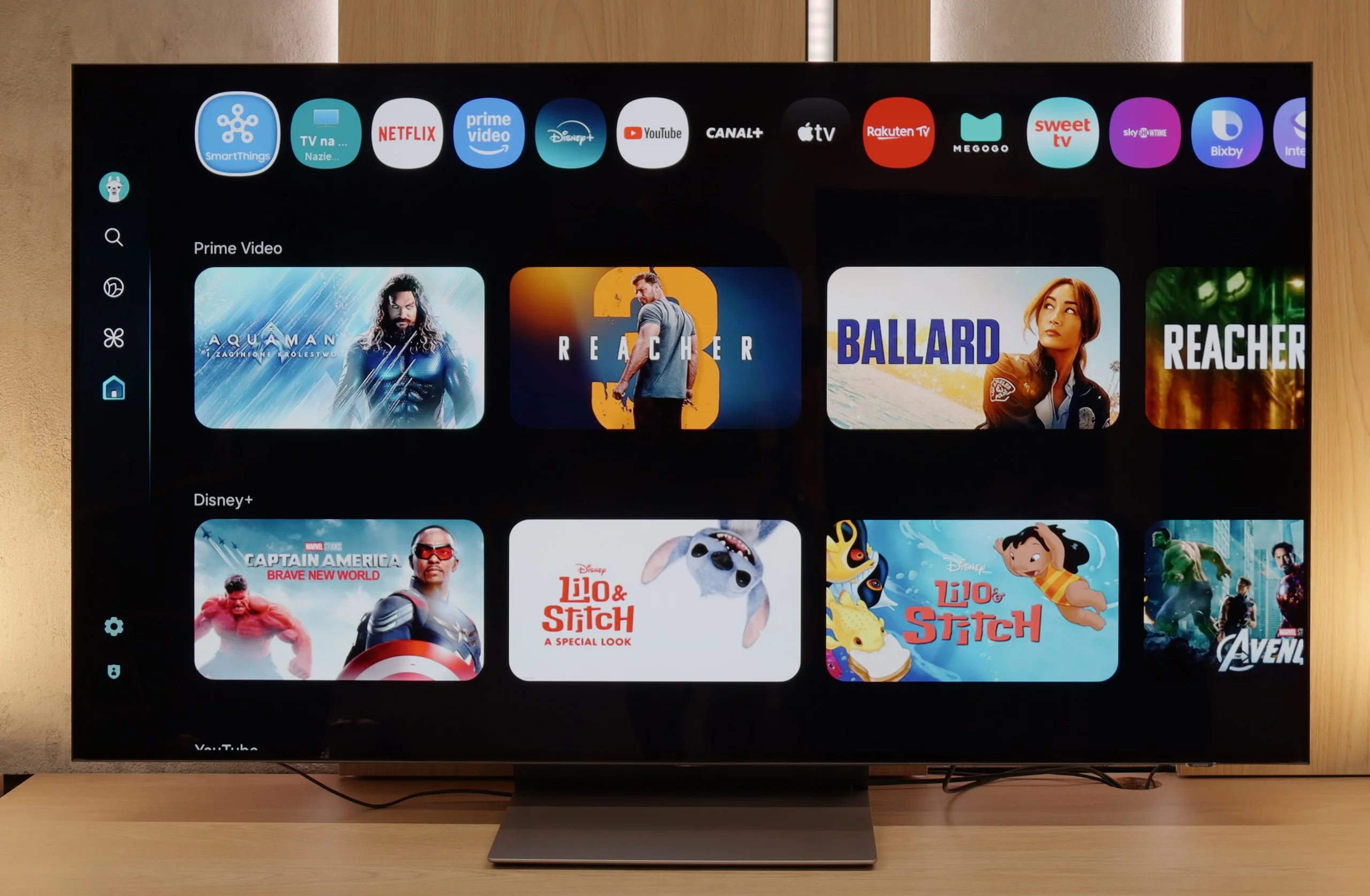
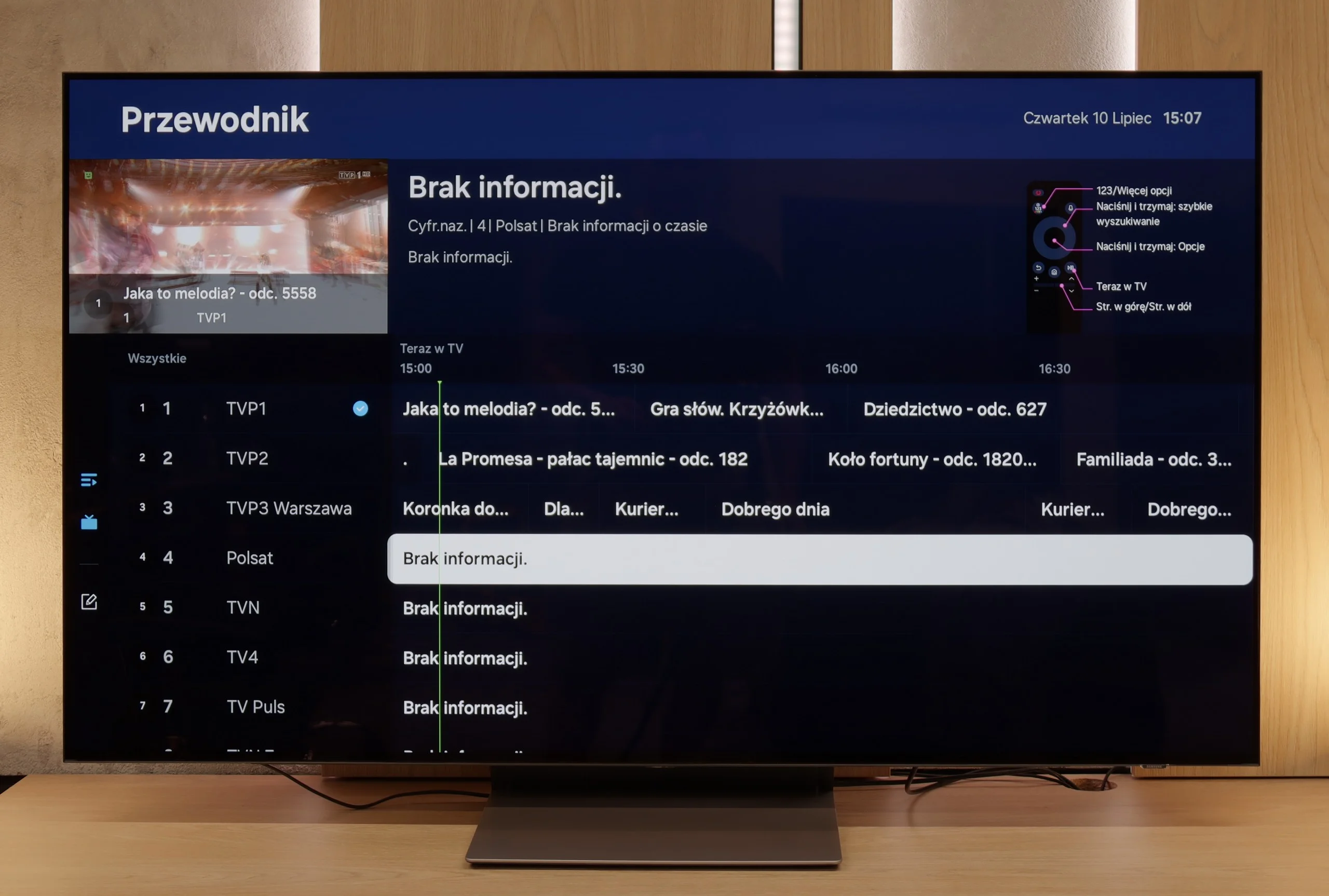
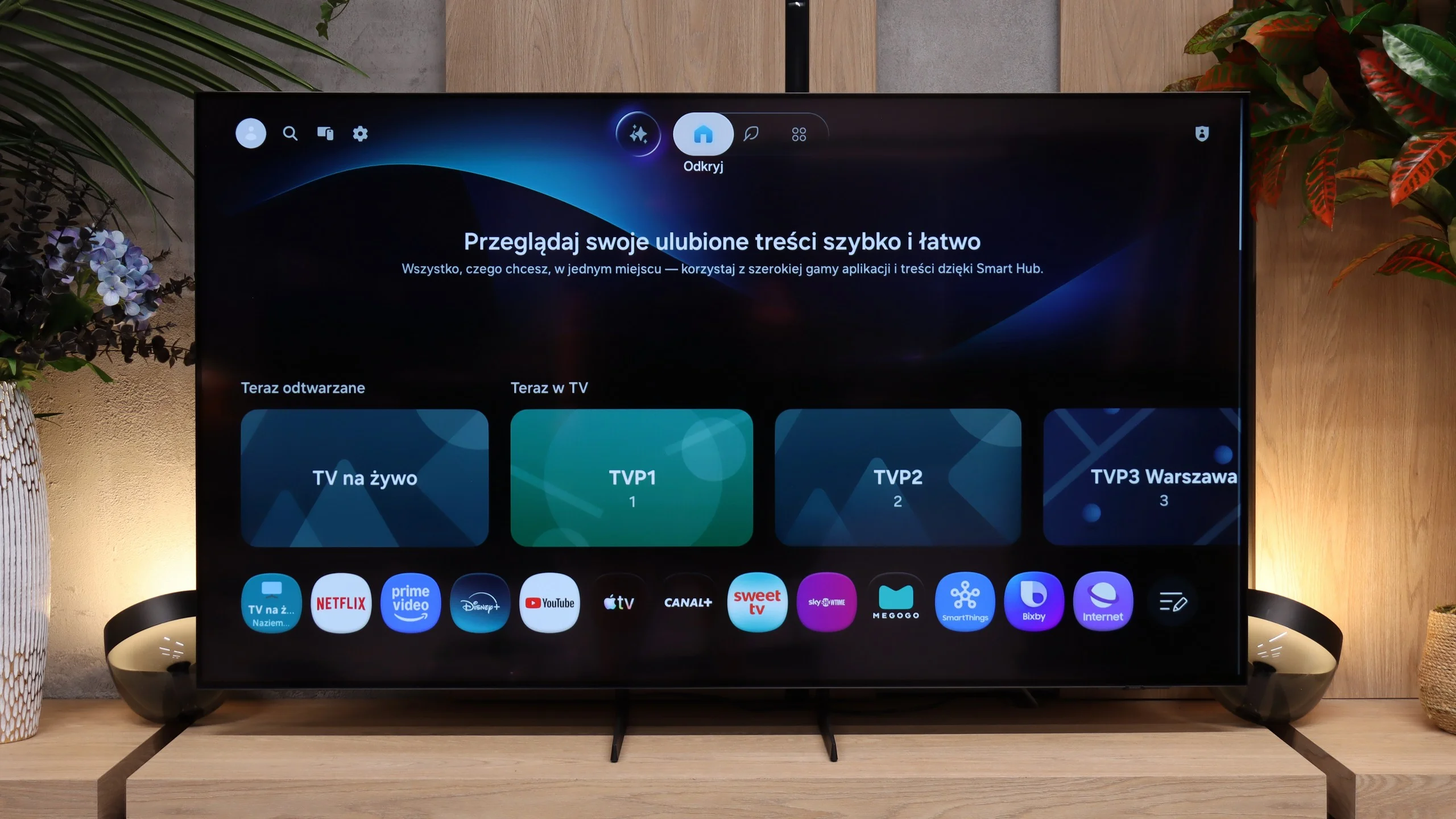
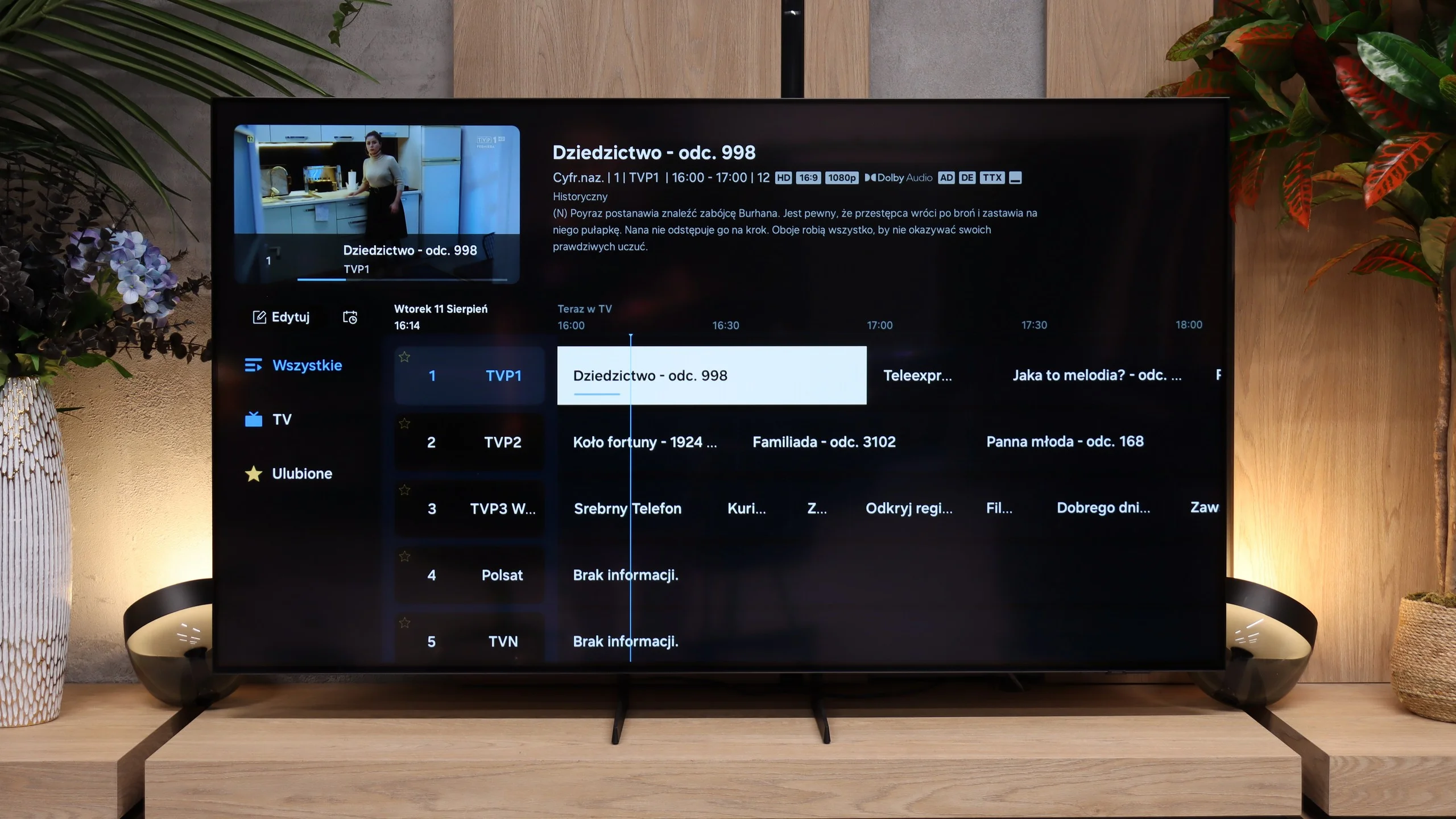
A huge advantage of the S90F in everyday use is the Tizen operating system. It is one of the fastest systems on the market and has been working exceptionally well on Samsung televisions for years, and on those from the higher-end – like this one – it's virtually lightning-fast. The menu responds without delays, switching between applications is smooth, and the whole setup is intuitive enough that even someone encountering a Smart TV for the first time will find their way around it. In the app store, we can find practically everything we need – from Netflix to HBO Max, and even less obvious services. While there may not be GoogleTV here, there is really no sense that we are missing anything. A big plus has to be given for the integration with SmartThings. This solution is for those who like to have their entire home under control in one application. The television can be part of the IoT device ecosystem and will easily communicate with the washing machine, air conditioning, or lighting, as long as everything is on the same network.
Classic Functional Features
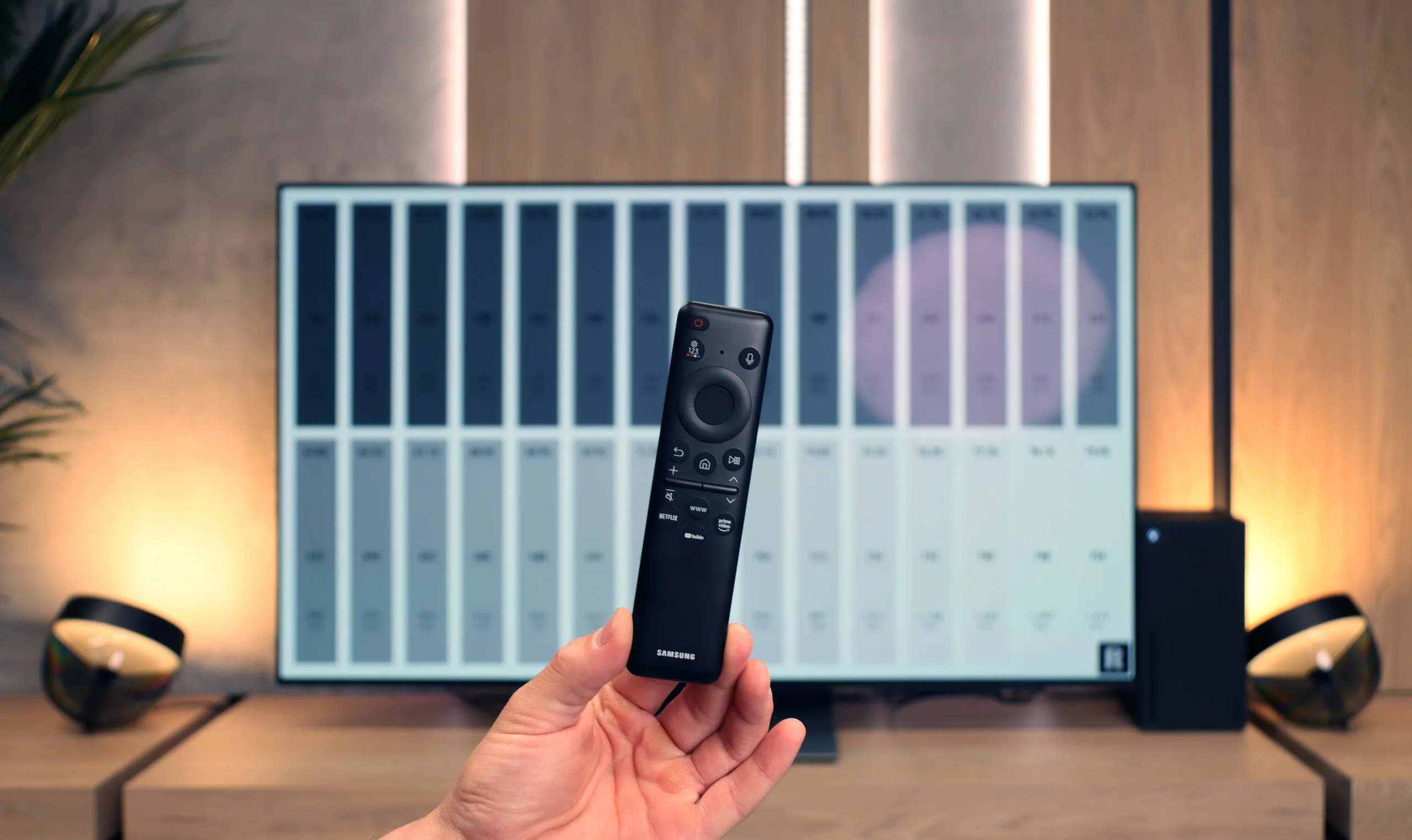
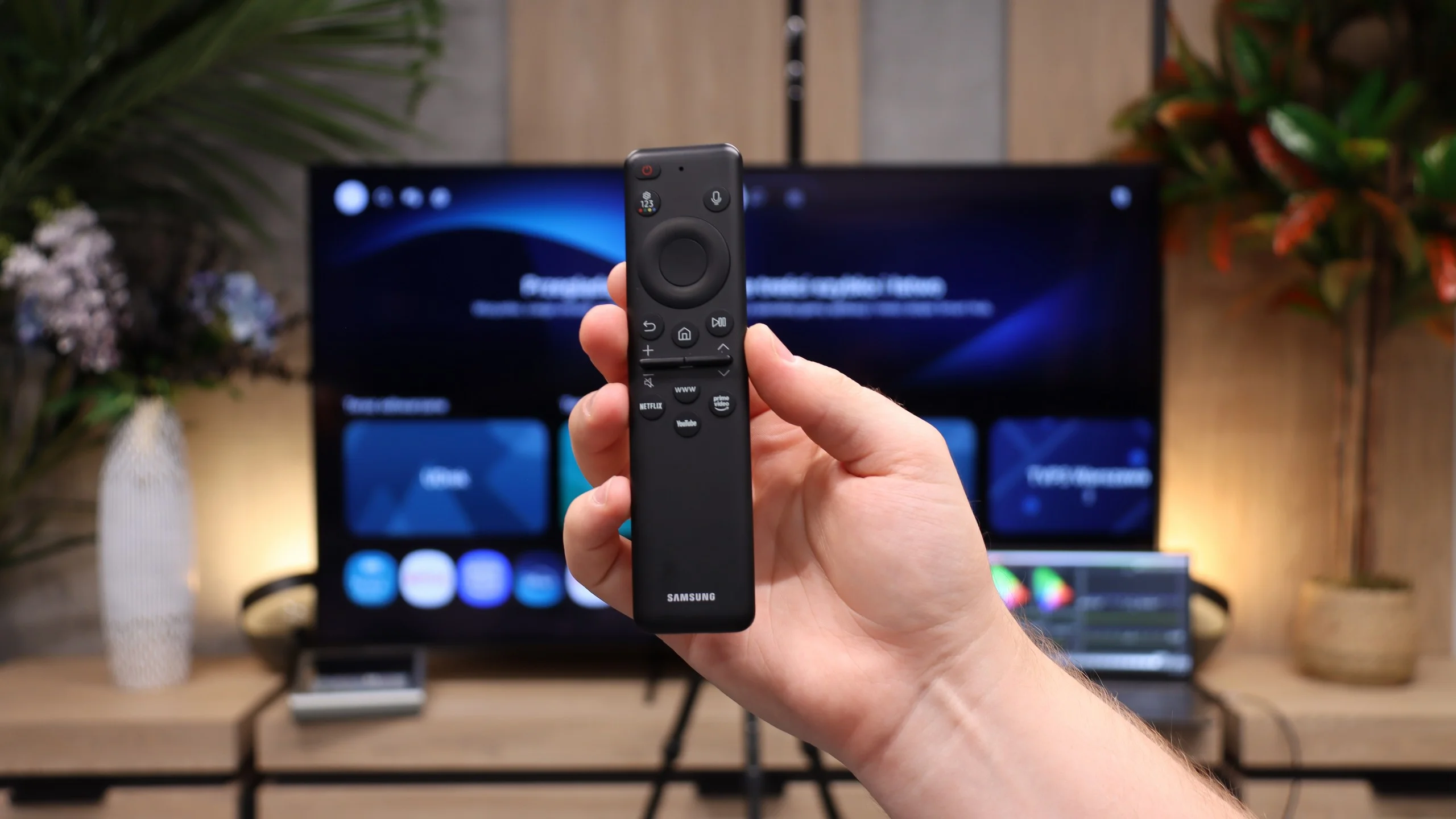
When it comes to classic features, we have everything one might expect: support for HDMI 2.1, USB ports, optical output, connectivity via Wi-Fi and Bluetooth. The only thing that might be missing for more conservative movie fans is support for DTS:X audio formats – especially if someone watches movies on physical media. The remote control may initially seem a bit odd, as it lacks traditional numeric buttons. But this is now standard in today's world of televisions, and most users quickly adapt to it. A plus is that it works completely wirelessly. The point is that you don’t need to aim at the screen; just press a button on the remote from anywhere (even from another room) and the television responds to our actions.
Tizen
Samsung S85H runs on Tizen, and it's hard to fault its online features. The system is fast, responsive, and the app selection is among the largest on the market. Besides the main streaming platforms, there are also plenty of less popular services, so it's unlikely you'll find yourself missing something essential. Samsung is also expanding SmartThings features, integration with other devices, and more AI-driven solutions. There are a lot of capabilities here, and some users will probably never explore even half of them. A big plus is the promised seven years of system updates. For a TV, which we usually keep much longer than a phone or computer, that matters. Tizen should therefore receive new features and fixes for a long time instead of being abandoned after two or three years. The S85H also doesn't feel like a budget model. We essentially get the same extensive ecosystem that Samsung offers in its higher-end TVs.
Traditional features
Samsung's approach to a TV's traditional features looks completely different. It's clear the manufacturer has been increasingly prioritizing "modern" services over traditional ones for several years. The S85H therefore isn't a TV that will particularly appeal to people who are used to full-featured regular TV operation. The included remote illustrates this well. It's small, minimalist, and has only the most necessary buttons, but no classic numeric keypad. For streaming this solution is convenient, but for frequent watching of traditional TV without a set-top box, not everyone will like it. It's simply a consequence of the direction Samsung is taking its TVs.
Apps
9.3/10
9.3/10






















Playing files from USB
9.1/10
9.1/10
Supported photo formats:
Maximum photo resolution:
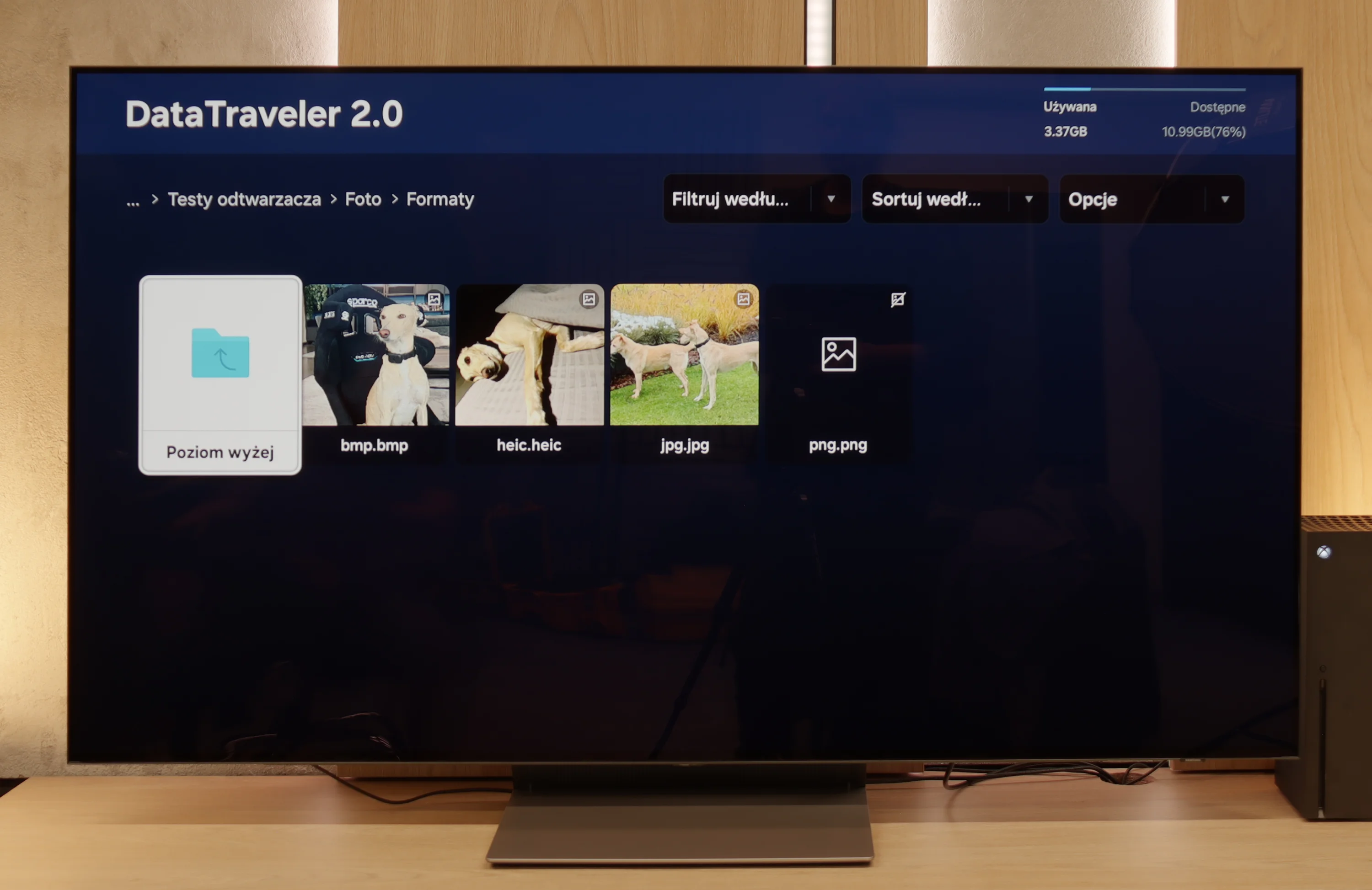
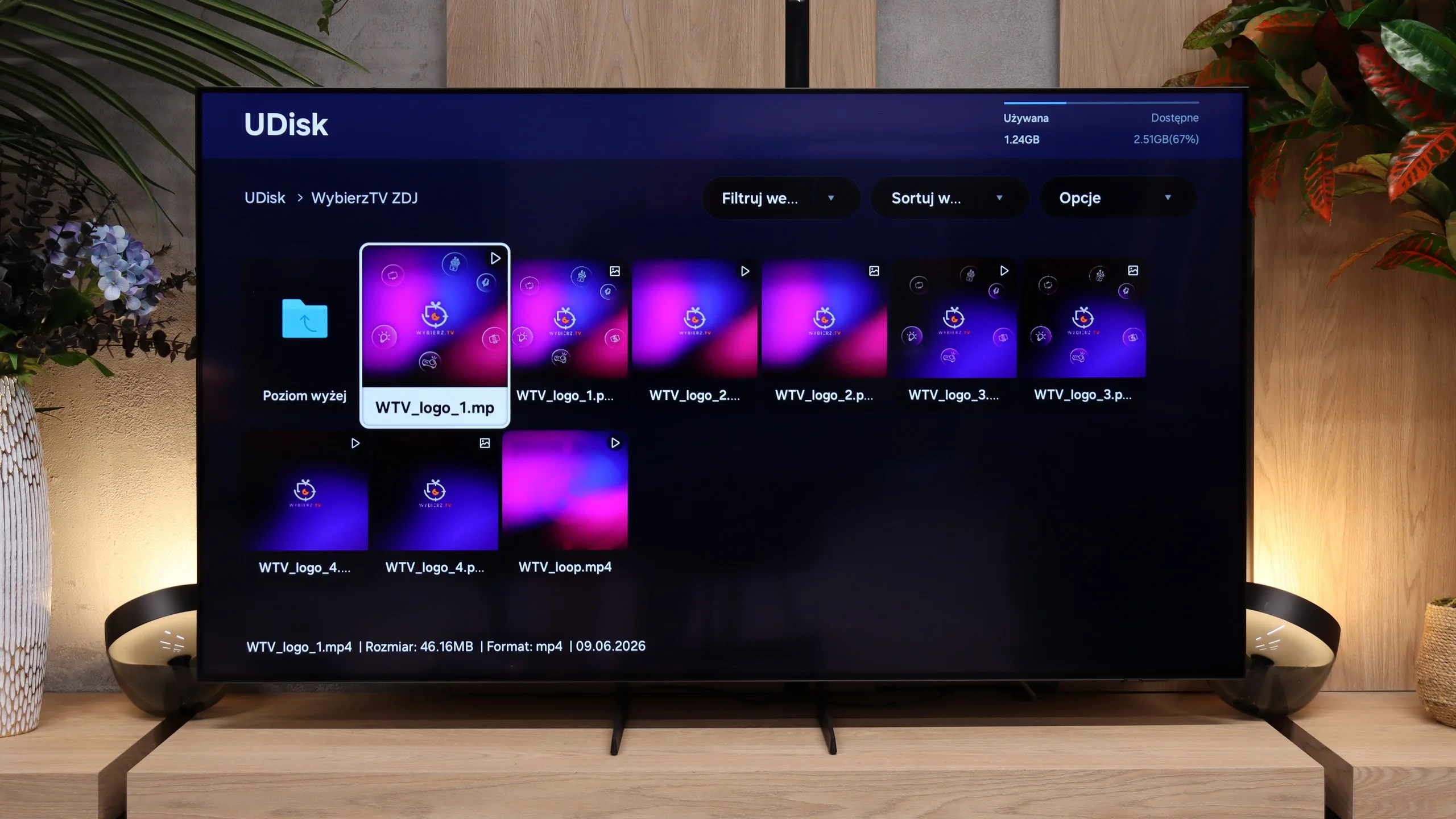
The player built into the S90F works really well and is more than adequate for most users. It easily opens movies or music stored on a flash drive or external hard drive and handles most popular formats. The only "serious" issue we encountered is the lack of support for HEIC photos – that is, those that can be saved by an iPhone. (Though we suspect that 90% of people still use the JPEG format anyway).
The USB file player on the Samsung S85H works quickly and without major issues. The TV handles both videos and photos well, and for the latter we had no problems with unusual resolutions or a high number of megapixels. Subtitle support is also a plus; Polish characters display correctly and you don't need to change any settings. The only real shortcoming was the lack of support for HEIC, the image format commonly used by Apple devices. Aside from that, the built-in player performs very well and will be more than sufficient for most people for everyday use with a USB flash drive or external USB drive.
Sound
7.4/10
7.2/10
- Maximum volume84dB86dB
- Dolby Digital Plus 7.1
- Dolby True HD 7.1
- Dolby Atmos in Dolby Digital Plus (JOC)
- Dolby Atmos in Dolby True HD
- DTS:X in DTS-HD MA
- DTS-HD Master Audio
The S90F sounds really pleasant for a television – the bass is noticeable, the dialogues are clear, and overall, it has quite a decent dynamic range. Dolby Atmos also does its part, as it can give the sound a bit of space, making the movie experience better than in most basic built-in setups in other televisions. However, it must be said bluntly: no television, even one of this class, can replace a separate sound system. If someone really wants to feel like they’re in a cinema, the best solution would be to purchase a soundbar or a full audio system. Especially since, as is typical with Samsung, there is no support for DTS:X – so fans of Blu-ray discs and high-quality soundtracks will still have to reach for external equipment connected directly to the source.
In terms of sound, the S85H hasn’t really changed compared with its predecessor. It still uses a fairly basic 2.0 system with a total output of 20 W, which sounds adequate and, for such a slim TV, can even add a bit of bass. That’s perfectly fine for everyday TV watching, but it’s not at the level of pricier models that can sound fuller and more "spatial." With that picture, adding at least a soundbar is a no-brainer. All the more so since the S85H supports Dolby Atmos and Samsung’s Q-Symphony, which lets a compatible Samsung soundbar work together with the TV speakers instead of replacing them entirely. If you want to get more from this setup when watching movies, external audio is the most sensible addition.
Sound Quality Test
Acoustic Measurements
84dBC (Max)
75dBC
86dBC (Max)
75dBC
Reader comments
Comments are provided by the external service Disqus (Zeta Global). Once loaded, Disqus may set cookies and process data about your activity.
We will remember your choice on this device. Provider's privacy policy