DU8002 is one of the models from the Crystal UHD series by Samsung, which will perform well as a television for everyday and occasional use. The Smart TV system based on Tizen works really well – it is fast, has a rich selection of apps, and a user-friendly interface, making daily use easier. In home use, the television stands out with excellent viewing angles, ensuring that even people sitting to the side will have a good picture. It is worth mentioning the small, handy remote that can easily control external devices like Canal+ set-top boxes. This somewhat compensates for the lack of recording functionality and adds versatility to the television. When it comes to gaming, DU8002 will be sufficient for those who spend casual time in front of the TV. Low input lag and the ALLM feature make gameplay smooth and comfortable. Due to the segment of the television, there are also certain compromises – the IPS panel provides good viewing angles, but this reflects on the contrasts, which are rather average. Additionally, low brightness may be a downside in well-lit rooms. In summary, DU8002 is a solid choice considering its price. However, if we think about a Samsung television and care about a better experience when watching high-quality content, it’s worth considering an upgrade to the Q60D model from the QLED series. For just a little more, you can get better picture quality and a wider set of features, which may be a more satisfying investment.
- Matching (Score) |
- Our verdict |
- TV appearance |
- Where to buy |
- Contrast and black detail |
- HDR effect quality |
- Factory color reproduction |
- Color reproduction after calibration |
- Smoothness of tonal transitions |
- Image scaling and smoothness of tonal transitions |
- Blur and motion smoothness |
- Console compatibility and gaming features |
- Input lag |
- Compatibility with PC |
- Viewing angles |
- Daytime performance |
- Panel details |
- TV features |
- Apps |
- Playing files from USB |
- Sound
Samsung DU8002 (IPS) vs Haier Q80FUX
 Direct comparison

Check the best price offer:
Samsung DU8002 (IPS)DU8002 / DU8072

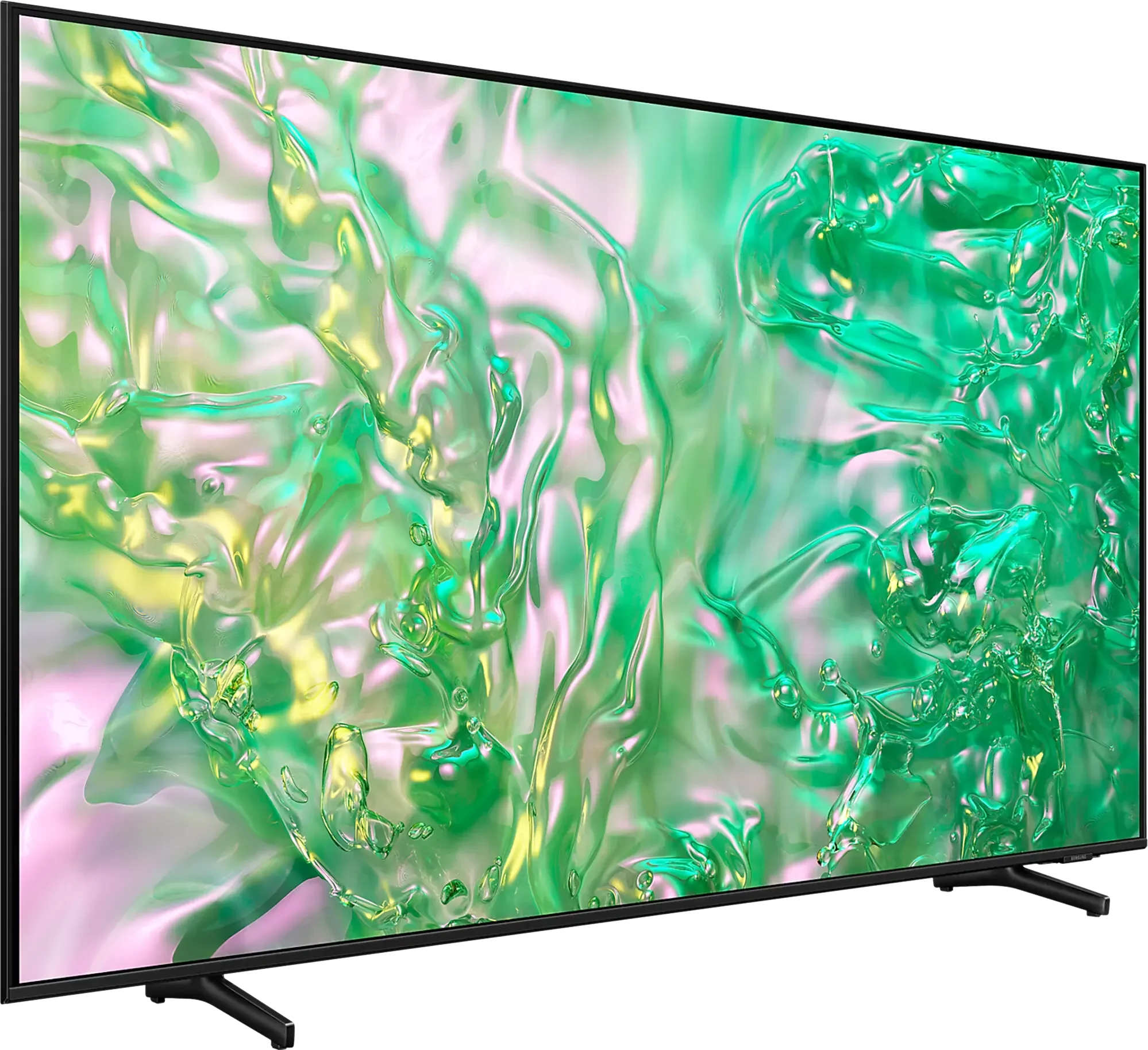
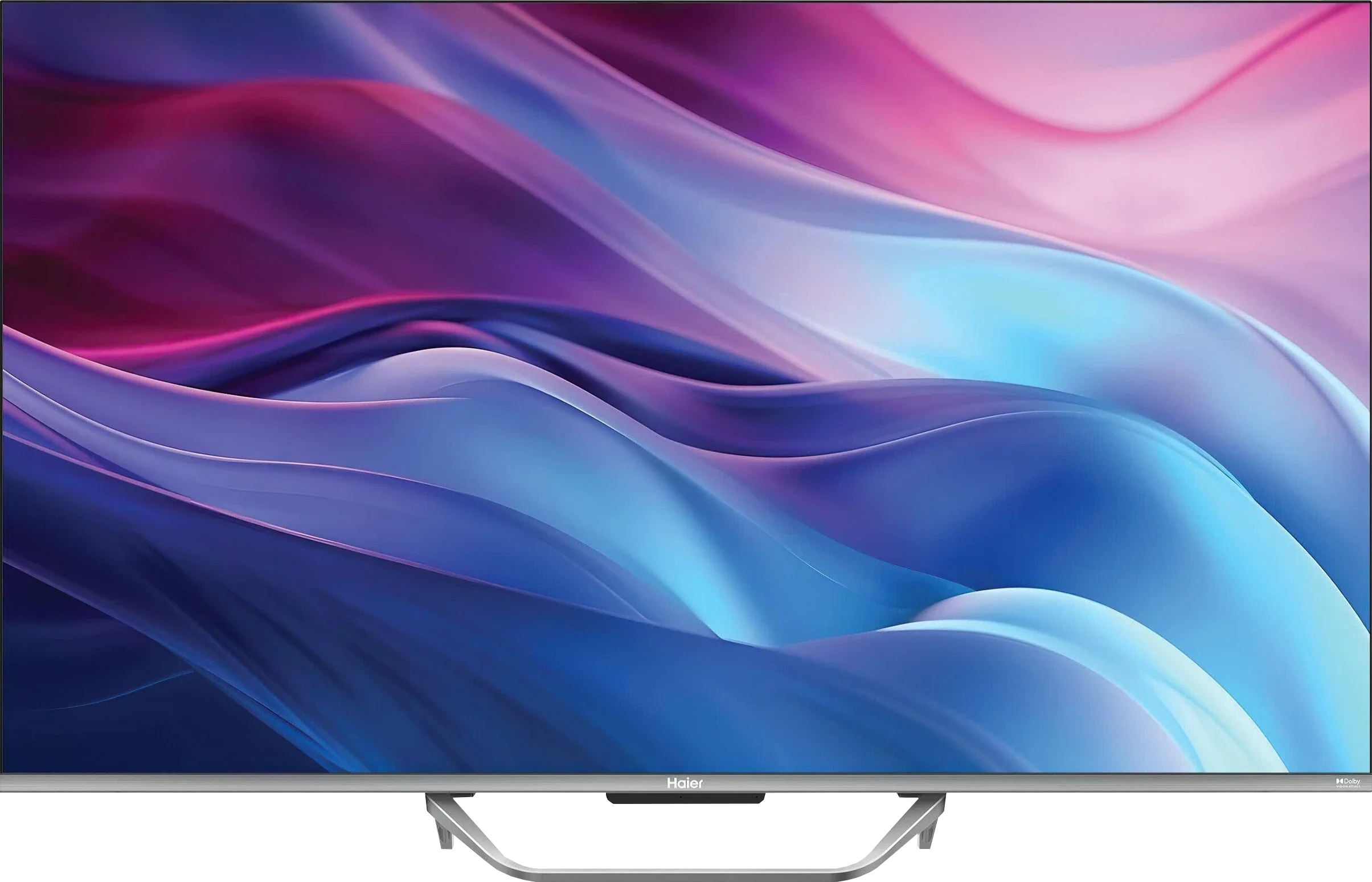
Panel type: LCD IPS
Resolution: 3840x2160
System: Tizen
Model year: 2024
Complete the survey to find out the result
Panel type: LCD VA
Resolution: 3840x2160
System: Google TV
Model year: 2025
Complete the survey to find out the result
Overall rating
5.6
5.8
 Movies and series in UHD quality
 5.0
5.9
 Classic TV, YouTube
 4.8
5.6
 Sports broadcasts (TV and apps)
 5.5
4.7
 Gaming on console
 6.5
6.7
 TV as a computer monitor
 6.0
6.0
 Watching in bright light
 4.2
4.8
 Utility functions
 6.3
5.6
 Apps
Apps 9.3
9.6
 Sound quality
 5.9
5.5
Complete the survey to find out what fits your preferences
Advantages

Advanced and smooth operating system - Tizen
Excellent viewing angles
Perfect for PC work
Sleek, modern design - ideal for wall mounting
For occasional gamers - low input lag and ALLM mode
*120Hz in the 85' variant
Very good native contrast and decent black (thanks to the VA panel)
PFS / QLED Filter - Wide color gamut (about 95% DCI-P3)
Remarkably low input lag (below 10 ms at 120Hz and about 12 ms at 60Hz), making it a great choice for fast-paced games.
Support for 120Hz at lower resolution (Full HD) and the presence of VRR and ALLM
Support for Dolby Vision
Well-functioning file player from USB
Presence of analog headphone output (jack)
Disadvantages

Very weak contrast
Average brightness
No recording function
The image is quite "blown out" in HDR
Google TV software full of bugs, poor translations, and issues
Missing any image enhancement features (noise reduction, gradient smoothing)
Average brightness
Flat, bassless sound
High input lag in Dolby Vision mode for gaming
Weird and poorly ergonomic remote
Our verdict
The Haier Q80FUX TV is one of the most schizophrenic proposals we've had in our editorial office for a long time. On one hand, we have a solid piece of equipment: a VA panel that guarantees deep blacks, as expected in this segment, and a QLED quantum filter that can indeed generate juicy, eye-catching colors. This is the foundation on which a truly competitive mid-range receiver could have been built. Unfortunately, all this potential of the panel is systematically torpedoed by the software, which is a real ball and chain for this model. The biggest Achilles' heel of the Q80FUX is its total capitulation in the face of HDR10 content. The electronics seem to completely misunderstand how to interpret the signal, resulting in consistently blowing out the brightest parts of the image, turning them into a flat, milky blob. If we add the Google TV system, which – although functional – is unstable, full of errors, and irritating shortcomings, we get a picture of a raw product that clearly reveals the manufacturer's lack of experience. And just when we were ready to write this model off, we discovered its surprising niche. Once connected to a console, the Q80FUX undergoes a transformation. It turns out that this TV offers wonderfully low input lag, fully supports VRR, and can accept a 120Hz signal at Full HD resolution. In the gaming world, where responsiveness is everything, these parameters put it in a very good light. So we are dealing with a device of very narrow specialization. This is not a universal living room TV – it lacks stability and, above all, any correctness in handling films. It is more of a budget, large-format monitor for gamers who are able to consciously overlook all its software flaws in exchange for those few key attributes essential for console/PC at a relatively affordable price.
TV appearance



Contrast and black detail
1.1/10
6.3/10
Local dimming function: No
Local dimming function: No
Contrast:


Result
750:1

Result
850:1

Result
750:1

Result
700:1

Result
650:1
Result
5,200:1
Result
7,400:1
Result
7,550:1
Result
7,300:1
Result
6,450:1
Halo effect and black detail visibility:
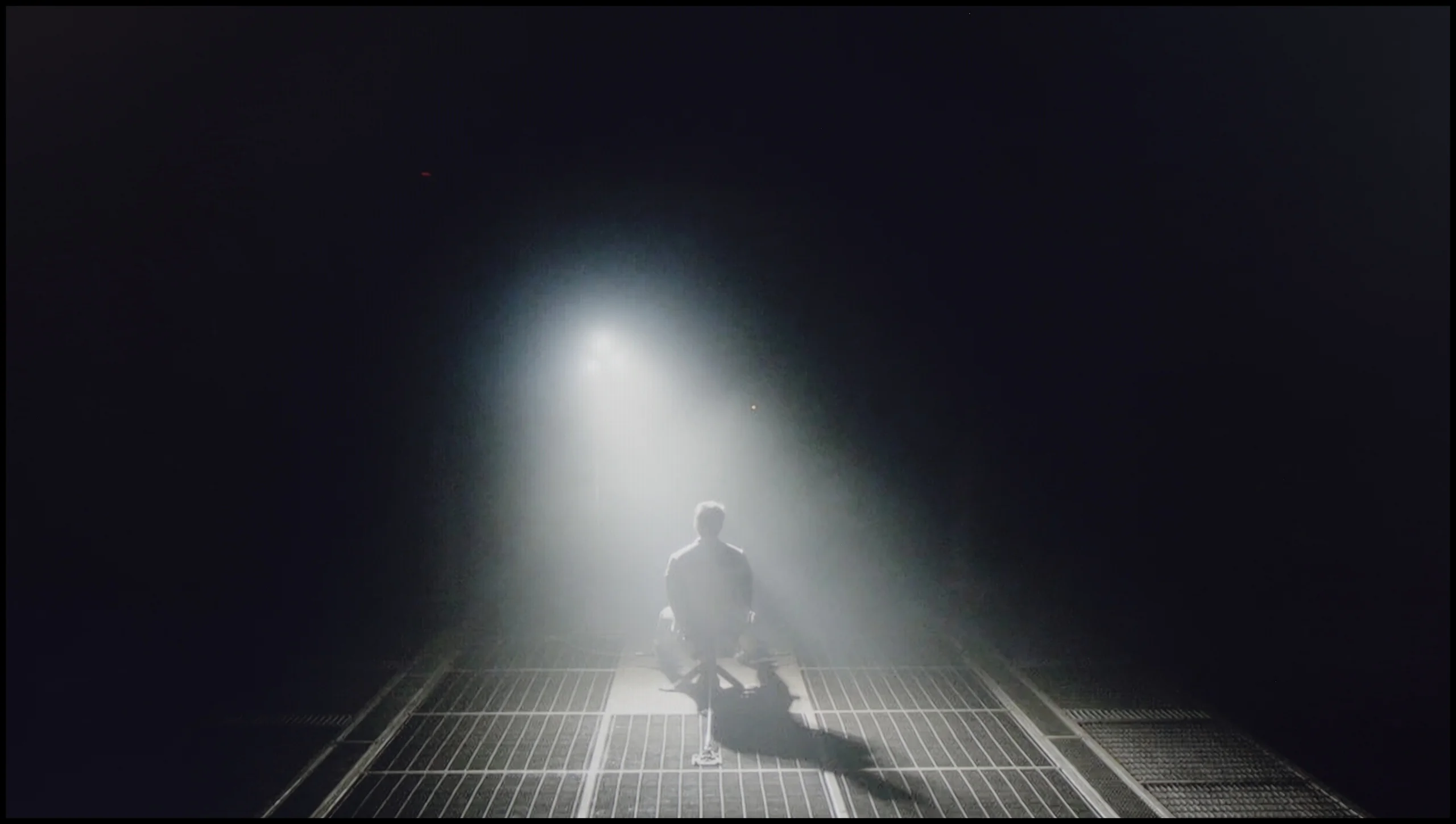
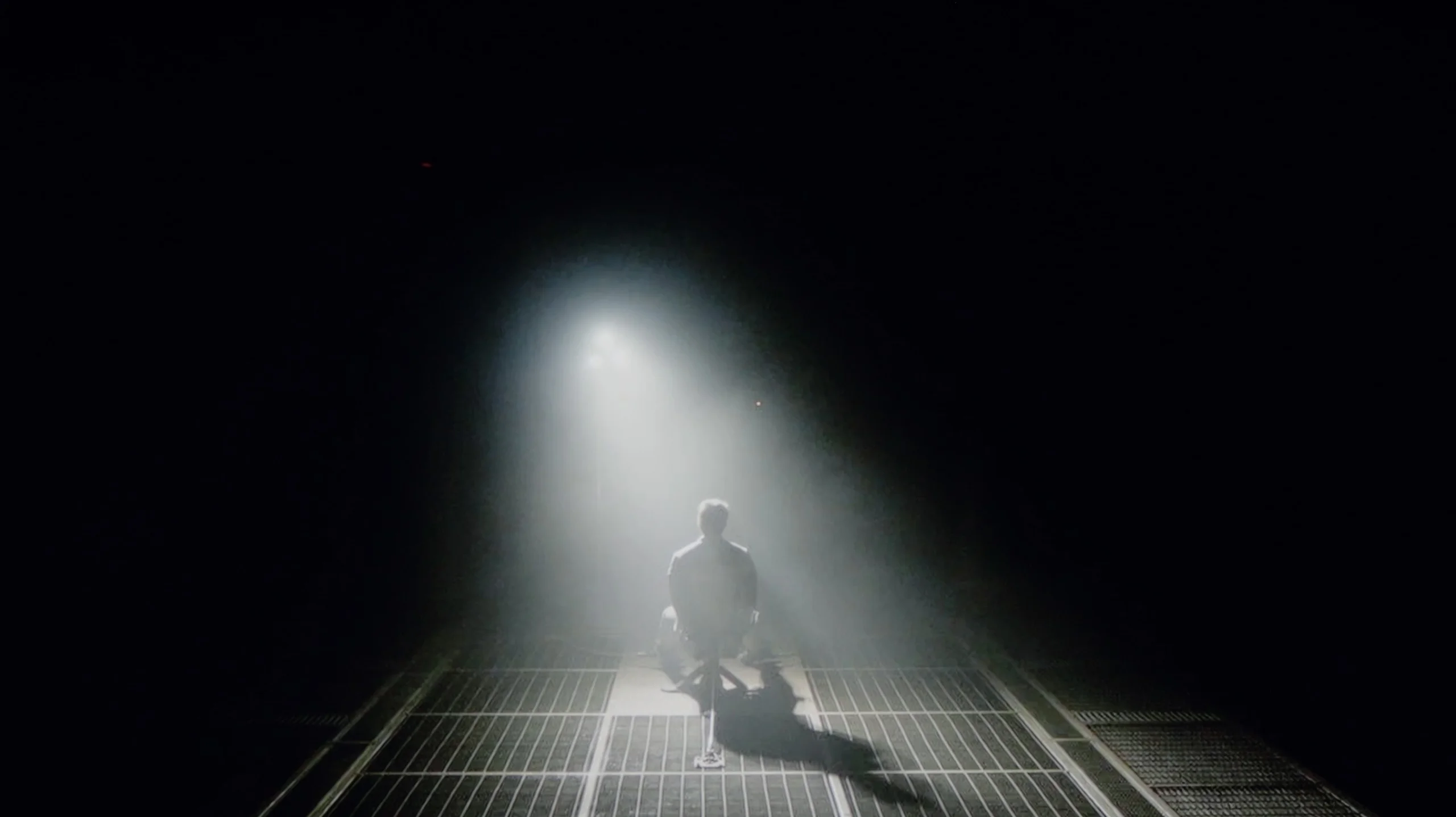
Check the visibility of bright lights on a dark background. Mini-LEDs often struggle with this. The photo does not compare black levels – that’s what the video below is for.
The video accurately shows differences in contrast and black levels between TVs, as well as potential issues: halo around bright objects or Mini-LED zone operation visible as brightness jumps.
The DU8002 model in the 55-inch version is equipped with an IPS panel, which unfortunately does not support high contrast. The result? Instead of deep blacks, we see shades of gray, making night scenes and darker parts of the film appear washed out and lack clarity. The black in this model resembles a silvery glow rather than a deep cinematic effect, which is a clear downside for lovers of intense contrasts and dynamic images. In daily use, such properties can significantly reduce the satisfaction of viewing.
I must admit, when approaching a receiver in this price range, one instinctively crosses their fingers, hoping that at least the black won't be a gray blot. Meanwhile, the Haier Q80FUX, specifically the 55-inch model present in our editorial office, can very positively surprise in this regard. Its secret lies in using a VA panel, which by nature has an inclination for generating high contrast. And these are not empty promises. During screenings, in most film shots, the contrast consistently reported levels from 5000:1, often reaching as high as 8000:1. These are really strong results, considering the fact that this television does not possess any, even minimal, form of local dimming. Translating this into couch experiences: given its price realities, the Q80FUX offers simply solid blacks. Of course, it's not that perfectly velvety depth that makes the screen disappear into darkness. When we conduct a screening in conditions of complete isolation from light, we will notice that in the darkest parts of the image, the black reveals its budget origins, slightly shifting towards a bluish tint. However, this is a defect easy to mask – just a little light from a lamp in the corner of the room is enough for this nuance to become invisible, and the image to regain a satisfying depth.
HDR effect quality
4.2/10
4.9/10
Luminance measurements in HDR:

Result
278 nit

Result
272 nit

Result
297 nit

Result
277 nit

Result
272 nit
Result
308 nit
Result
327 nit
Result
352 nit
Result
330 nit
Result
344 nit
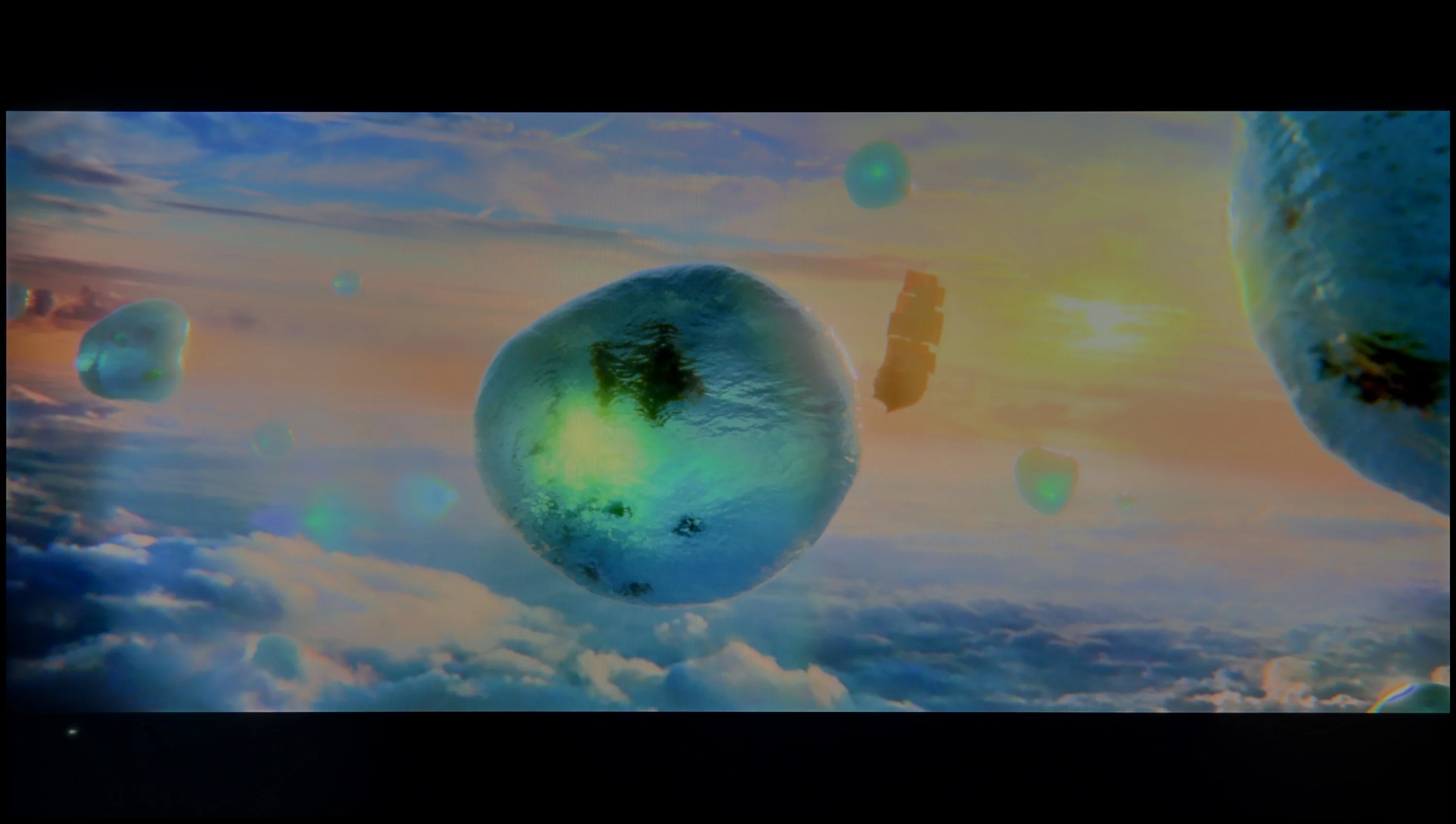
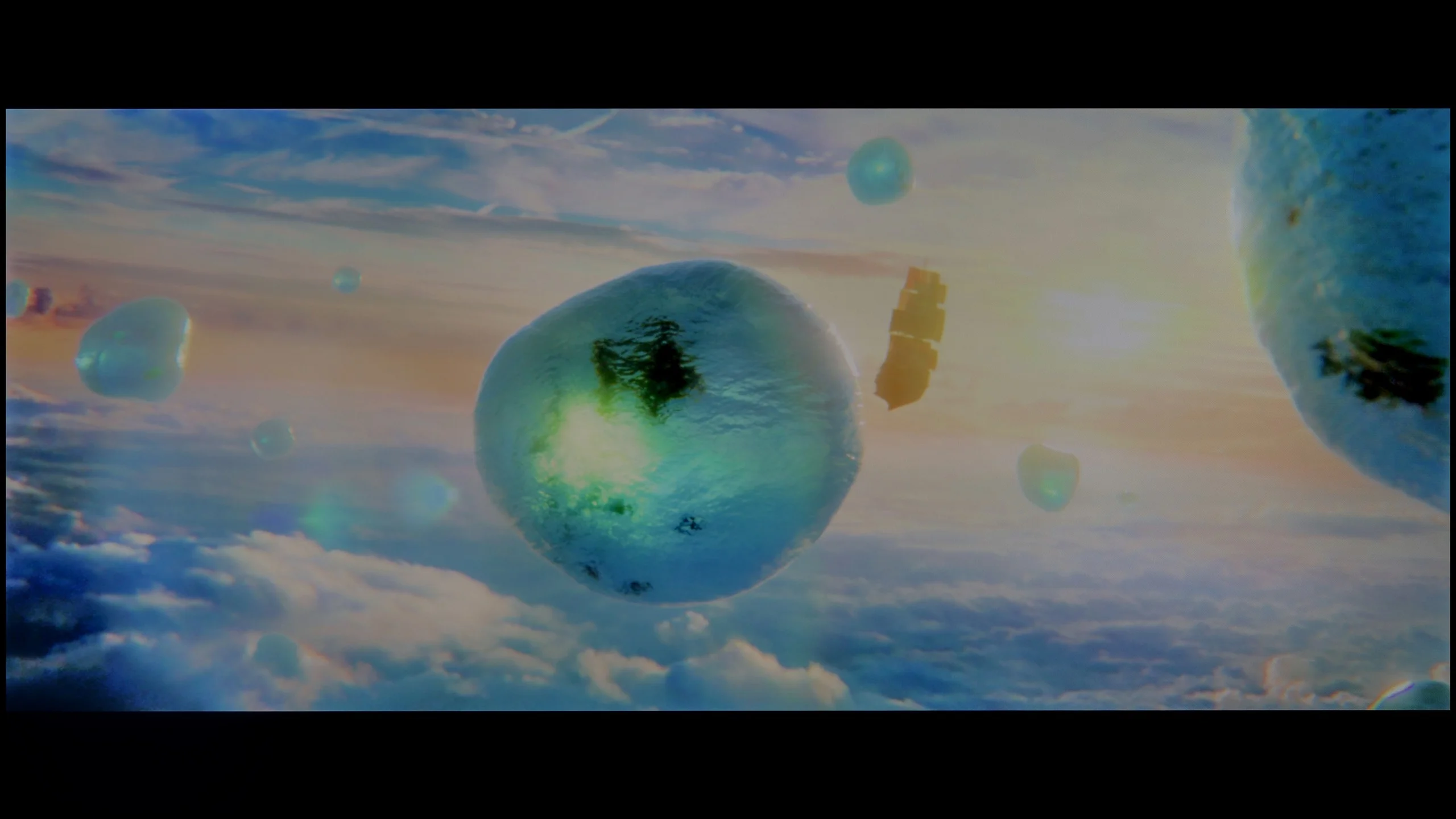
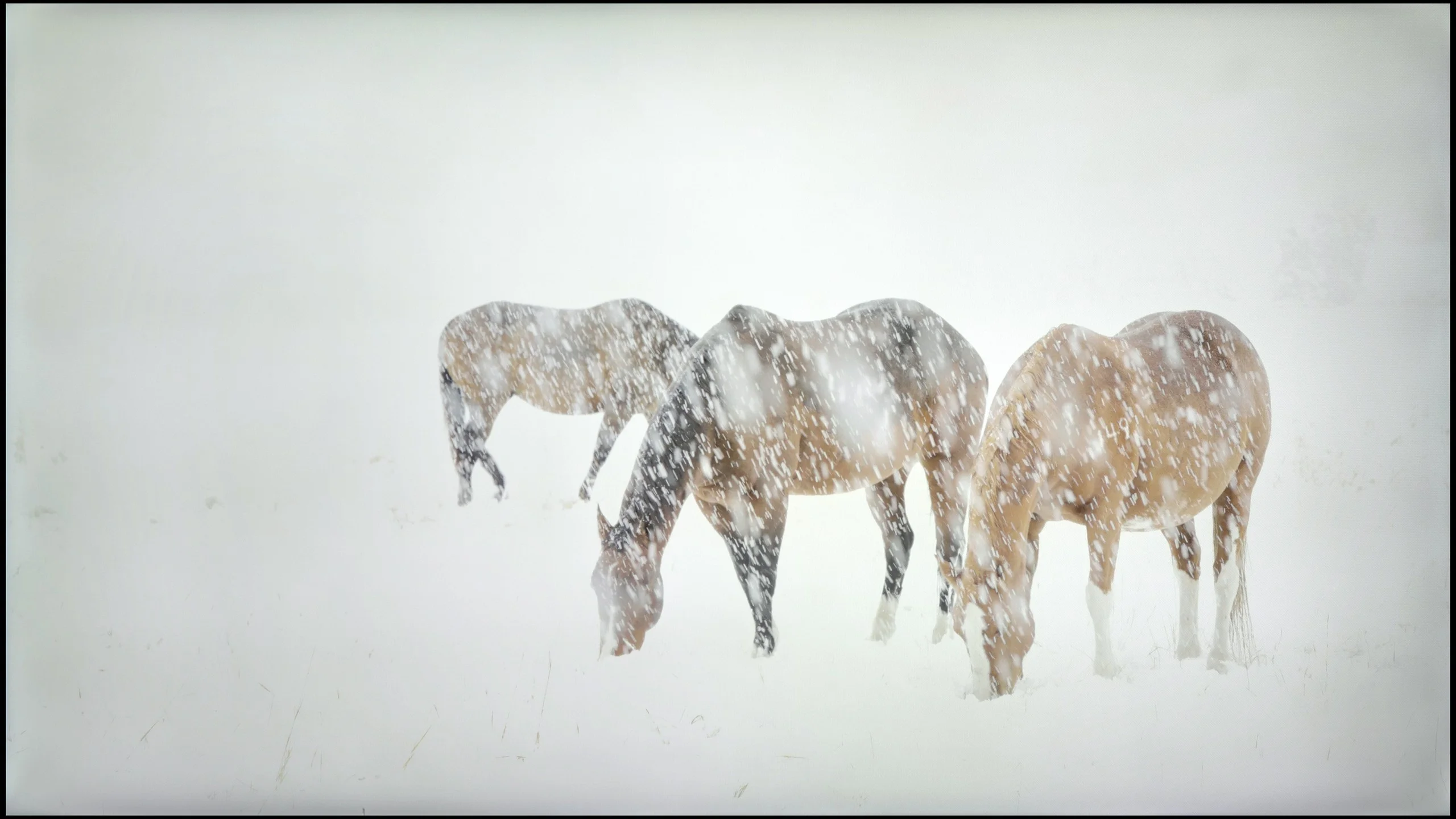
Scene from the movie “Pan” (about 2800 nits)
Scene from the movie “Billy Lynn” (about 1100 nits)
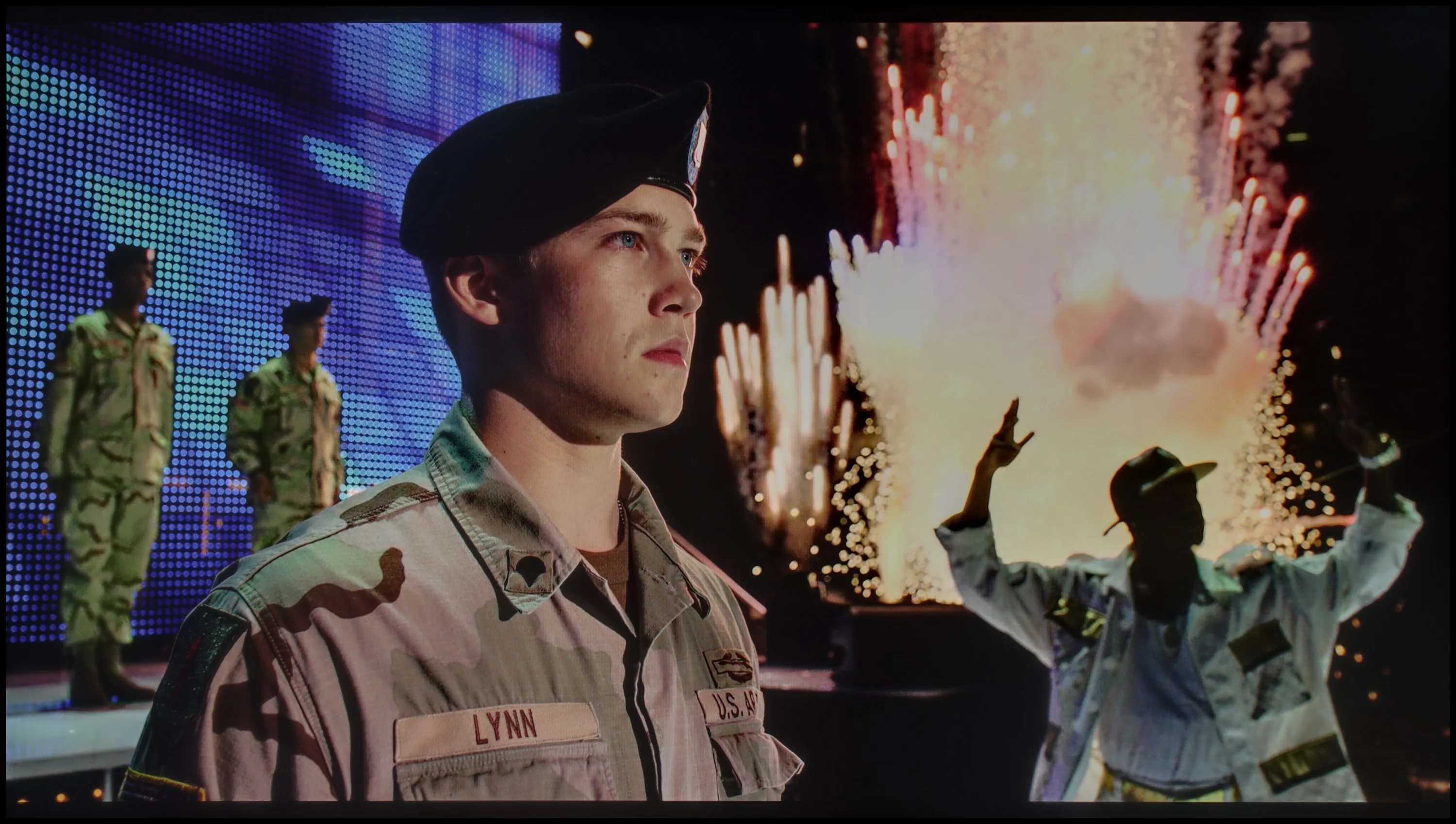
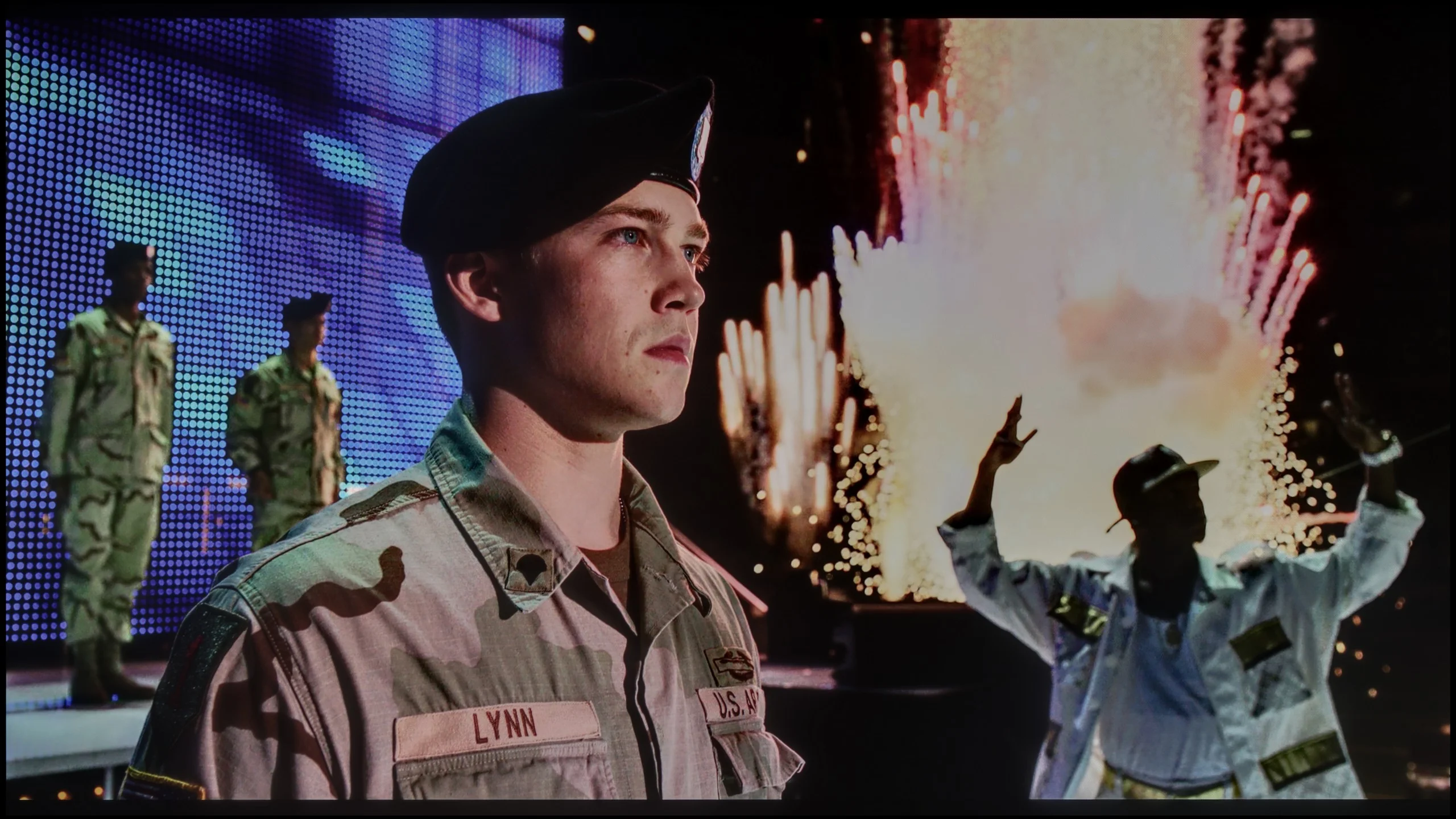
The photos show two HDR10 movies. 'Pan' is one of the brightest productions ever made, while 'Billy Lynn' (soldier) has brightness typical of streaming (Netflix, Prime, HBO MAX). Notice the intensity of effects and detail in whites.
Static HDR10

The photos present the visibility of white details in various HDR formats. They do not show brightness differences between TVs (these can be compared in the previous gallery).
Dynamic: HDR10+
Dynamic: Dolby Vision


The photos present the visibility of white details in various HDR formats. They do not show brightness differences between TVs (these can be compared in the previous gallery).
HDR luminance chart:
Haier Q80FUX
Samsung DU8002 (IPS)
The HDR effect in the DU8002 television leaves much to be desired. A brightness level of 300 nits is not able to provide a true high dynamic range experience, making the content viewed resemble more of a standard SDR than impressive HDR. Scenes that should dazzle with brightness and detail appear muted and lacking in depth. Nevertheless, the television deserves praise for its high coverage of the DCI-P3 color palette at 92%. As a result, the colors are vivid and saturated, which may satisfy viewers who prefer rich hues, even if the HDR effect does not fully meet expectations.
Alright, let's move on to the topic that generates so much discussion, namely the capabilities of the TV in HDR mode. Let's make it clear right away: the Haier Q80FUX is certainly not a brightness demon. The panel of this receiver can generate about 350 nits at peak, which in today’s reality is an absolute minimum to even talk about the presence of extended HDR tonal dynamic range. On the plus side, this power is at least stable – regardless of the test pattern or movie scene we used, the measurements invariably oscillated around 300-350 nits. These are therefore at best adequate results, definitely far from the stunning showcase of capabilities that we know from more expensive models. Fortunately, there is one aspect in which the Q80FUX makes up for these shortcomings and does so abundantly. After all, we are talking about a QLED TV (or more precisely, PFS LED), which means that thanks to the quantum dot filter applied to the matrix, it can generate really juicy, vibrant colors. These are not empty promises – a DCI-P3 color gamut coverage reaching nearly 95% is an impressive result that directly translates into very pleasant, saturated colors for the eye.
Factory color reproduction
4/10
4/10
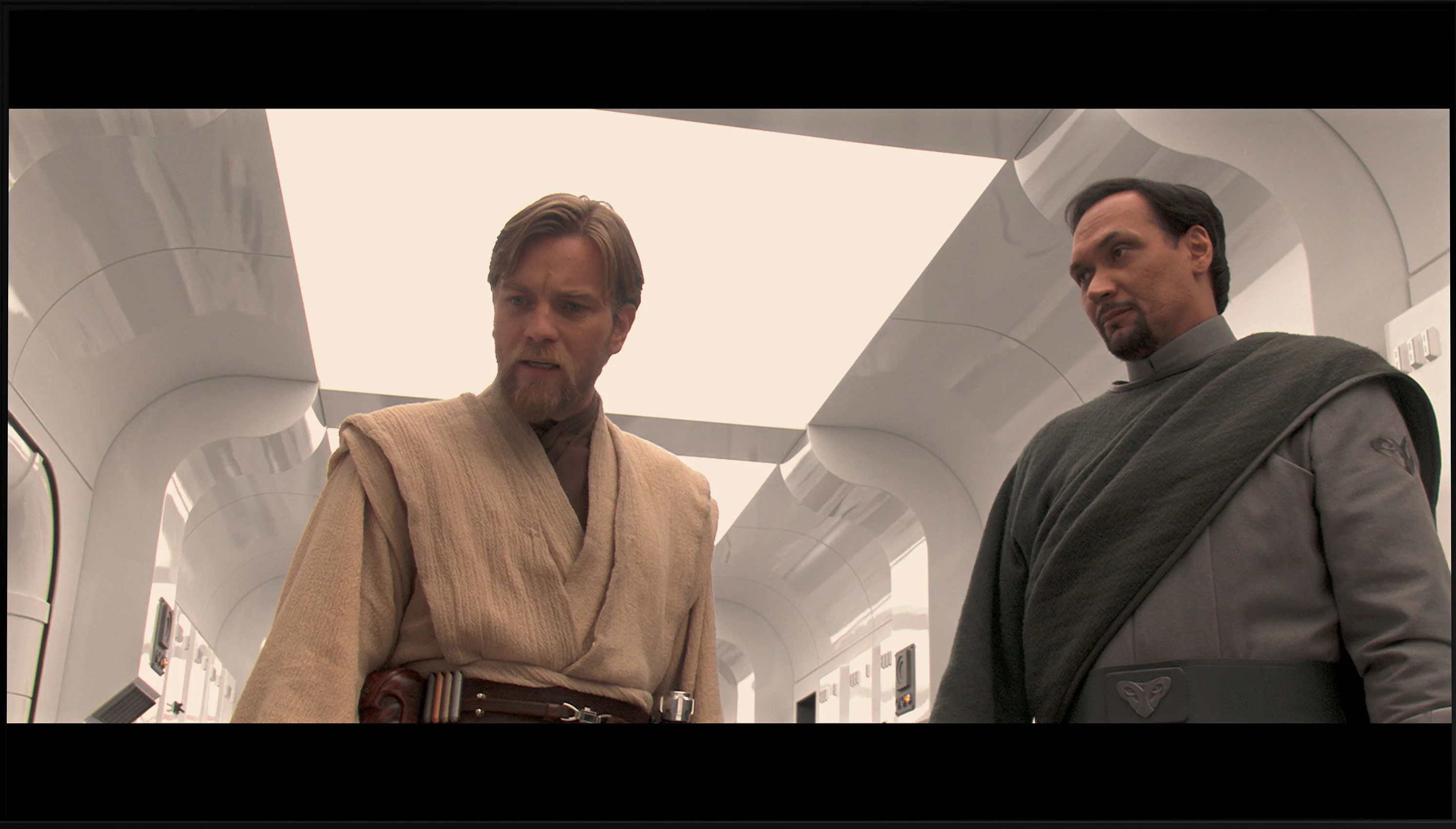
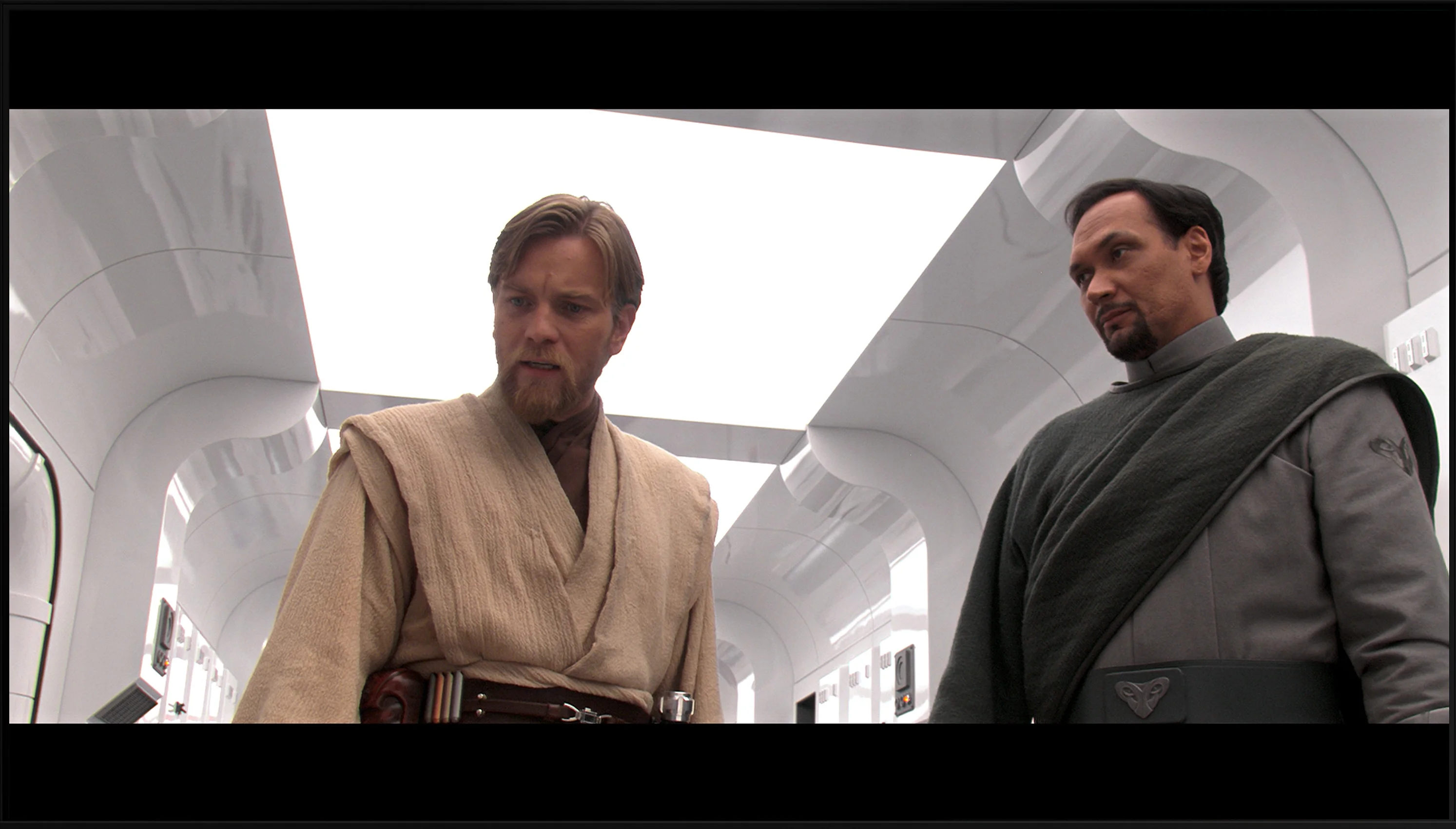
This gallery shows how colors change after professional TV calibration. If you notice the difference, we recommend ordering this service at SkalibrujTV.com.
Factory Mode
After calibration
DU8002 offers a Filmmaker mode, which is supposed to provide authentic image reproduction in line with the creators' intentions. Unfortunately, despite the promising name, the results are far from ideal. The white balance in this mode shows significant drops in blue color, leading to a noticeable yellowing of the image, which can be seen, for example, in our comparison photo. Colour Checker tests confirm these errors. As for brightness, the gamma characteristic is too low compared to the reference line of 2.4, resulting in excessive screen brightness. A similar problem occurs with 4K content – the EOTF responsible for brightness in 4K material shows significant increases above the reference line, leading to excessively bright small light elements. As a result, the Filmmaker mode in DU8002 does not meet expectations and instead of offering high quality, presents an image full of tonal and color inaccuracies.
Factory settings for film mode are rarely perfect, but in the case of the Q80FUX, we encountered a noticeable imbalance. In SDR content, the image was definitely too warm, which resulted from an excessive amount of red in the white balance, giving it a slightly sepia tone. Contrarily, in HDR materials, the television fell into the other extreme—the excess of blue created an unnatural, cold effect. However, it wasn’t the whimsical white balance that was the biggest problem with this TV. The real culprit, responsible for the previously described issues, was hidden deeper. It turned out that the Q80FUX had completely misaligned gamma values and, crucially for HDR, a poorly managed EOTF curve. It was these erroneous factory settings that caused notorious clipping of the brightest parts of the image, applying that characteristic milky filter over them. Thus, we found the source of the problem. This state of affairs led to overall, significant color errors that were easy to catch even for an untrained eye. Like every television we tested, we decided to calibrate this model as well, and you can find the results of those adjustments in the next paragraph.
Color reproduction after calibration
7.8/10
6.1/10
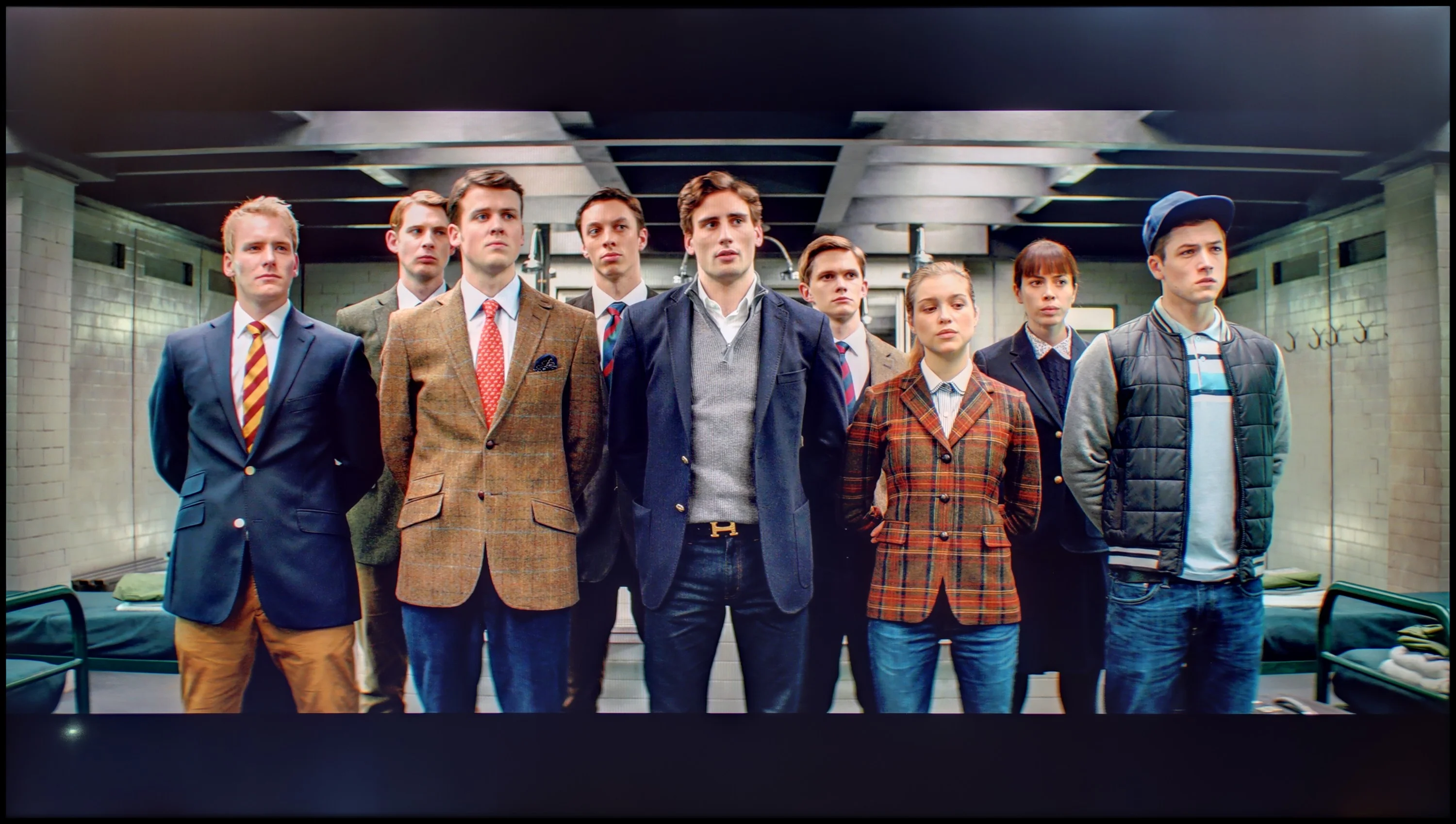
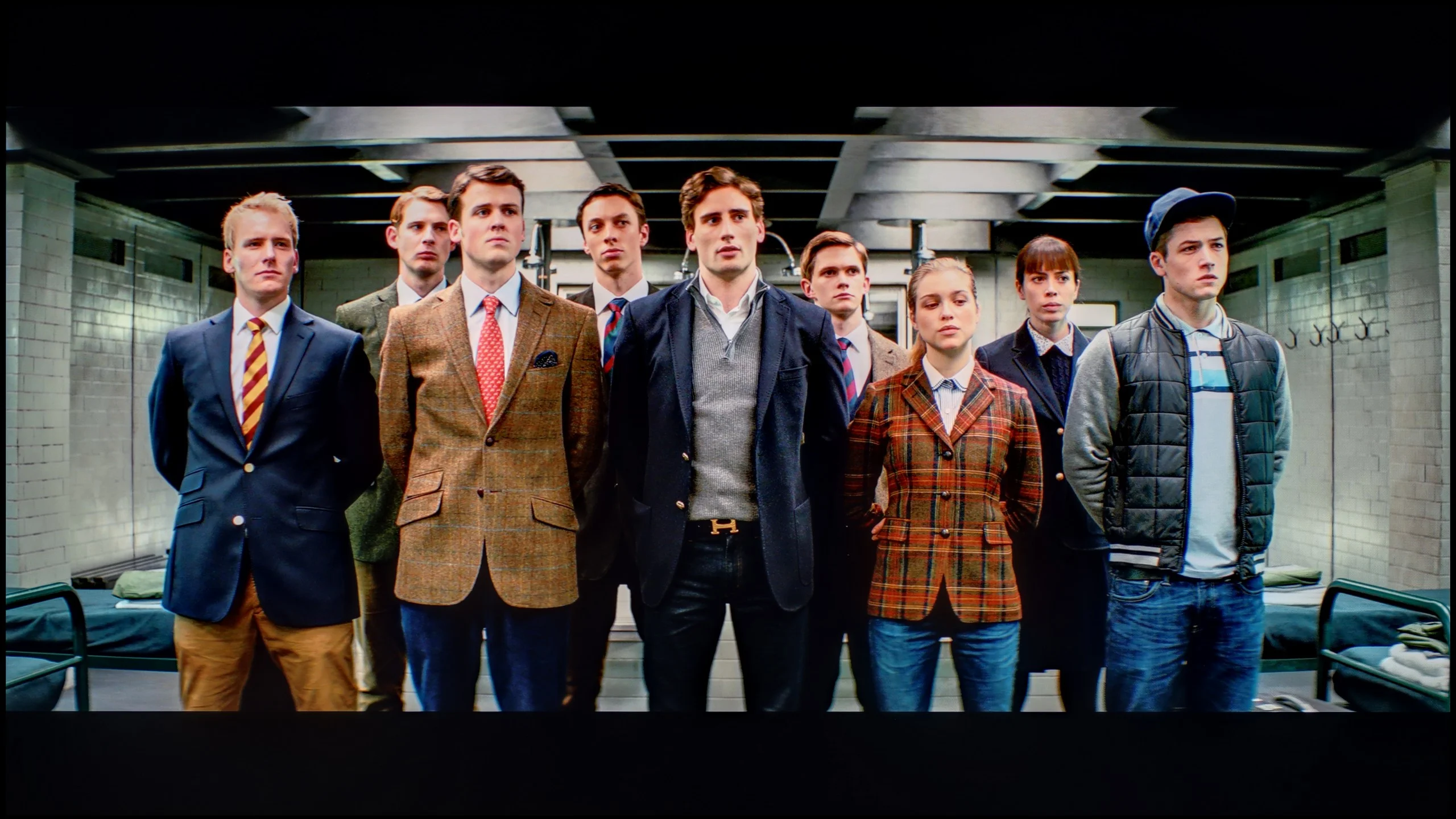
The photos show how movies look on the TV. Pay attention to black detail visibility, colors, and shadow tint.
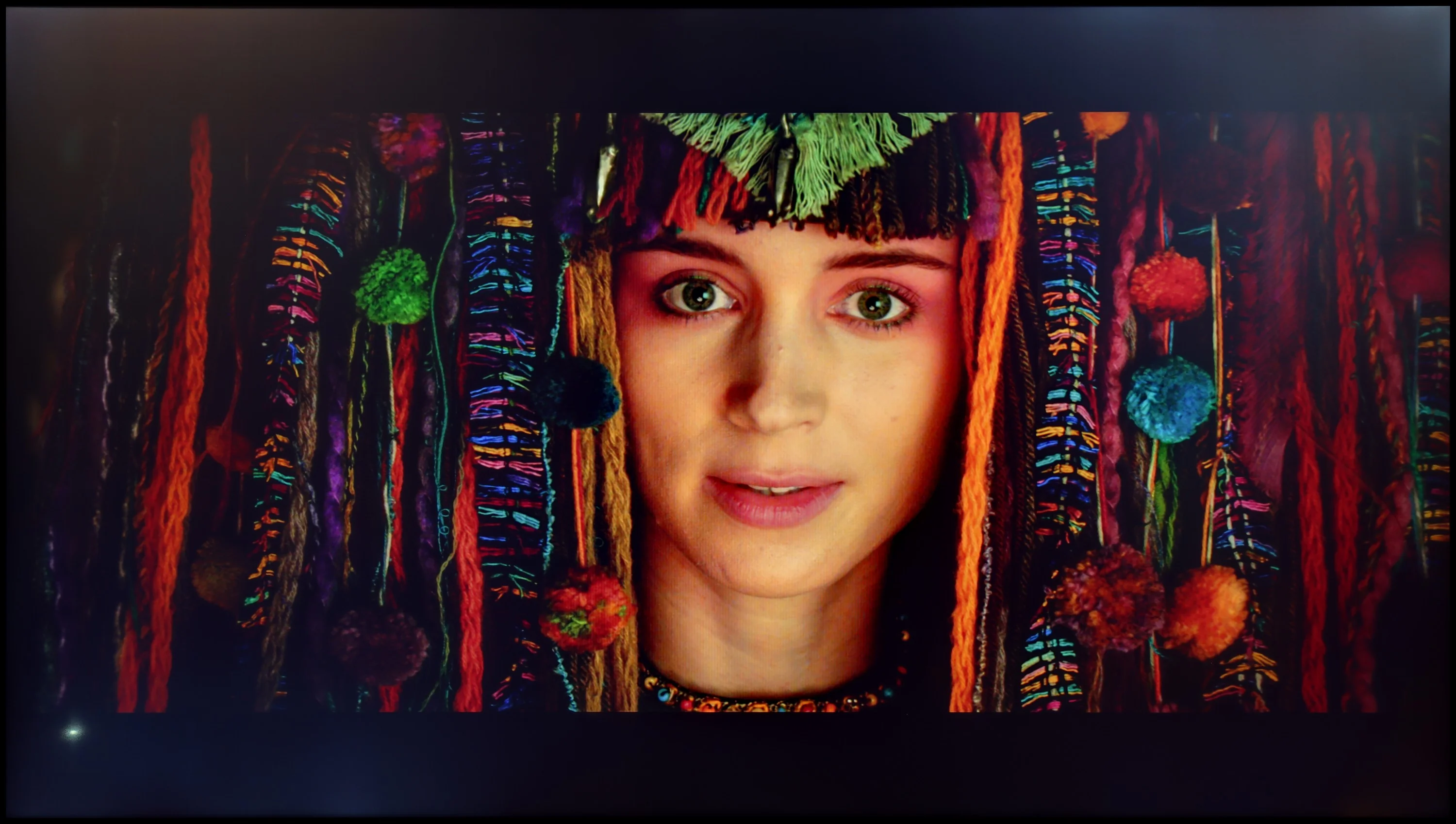

The photos show how movies look on the TV. Pay attention to black detail visibility, colors, and shadow tint.
Samsung is one of those companies that offers advanced tools for improving image quality in its televisions, including a 20-point white balance adjustment. Even with the budget model DU8002, with the right adjustments, surprisingly good results can be achieved. The white balance, especially for HD content, performs really well - tests on the Colour Checker palette confirm accuracy at the level of 2–1.5, which demonstrates the significant capabilities of this television in color reproduction. In 4K content, although not as perfect as in lower quality material, the overall picture looks much better.
The gamma brightness has also been heavily adjusted, ensuring that the image is not overly brightened and looks more natural. What about the EOTF curve? At first glance, it seems fine, but upon closer inspection, especially in film tests, it becomes apparent that the television struggles due to its low contrast panel. The EOTF drops below the reference line. Nevertheless, the DU8002 is an example of a budget model where investing in calibration is worthwhile. Although structural flaws, such as the type of backlighting, cannot be completely eliminated, color accuracy is surprisingly good, especially considering its price.
The results of our calibration efforts must, unfortunately, be considered twofold. Overall, the image is indisputably better than before the corrections, but the biggest winner of this process turned out to be SDR content. It is here, after clarifying the gamma and white balance graphs, that we obtained results that can confidently be called very good. After the setup, the Q80FUX truly shines in standard dynamics, showing only slight errors in the most challenging skin tone reproductions. Unfortunately, the weakest link still remains HDR content. And here lies the paradox: even though we managed to calibrate the white balance almost to perfection, the overall color errors still remain at a fairly high level. The reason is that the television still interprets the static HDR10 metadata "in its own way," stubbornly enforcing that unfortunate washed-out image effect, which inevitably leads to significant distortions. Although we successfully eliminated the factory excess of blue color, due to this electronic interference, the screen can still tend to fall into somewhat too cold tones. This television just has it this way.
Smoothness of tonal transitions
7.3/10
7.5/10
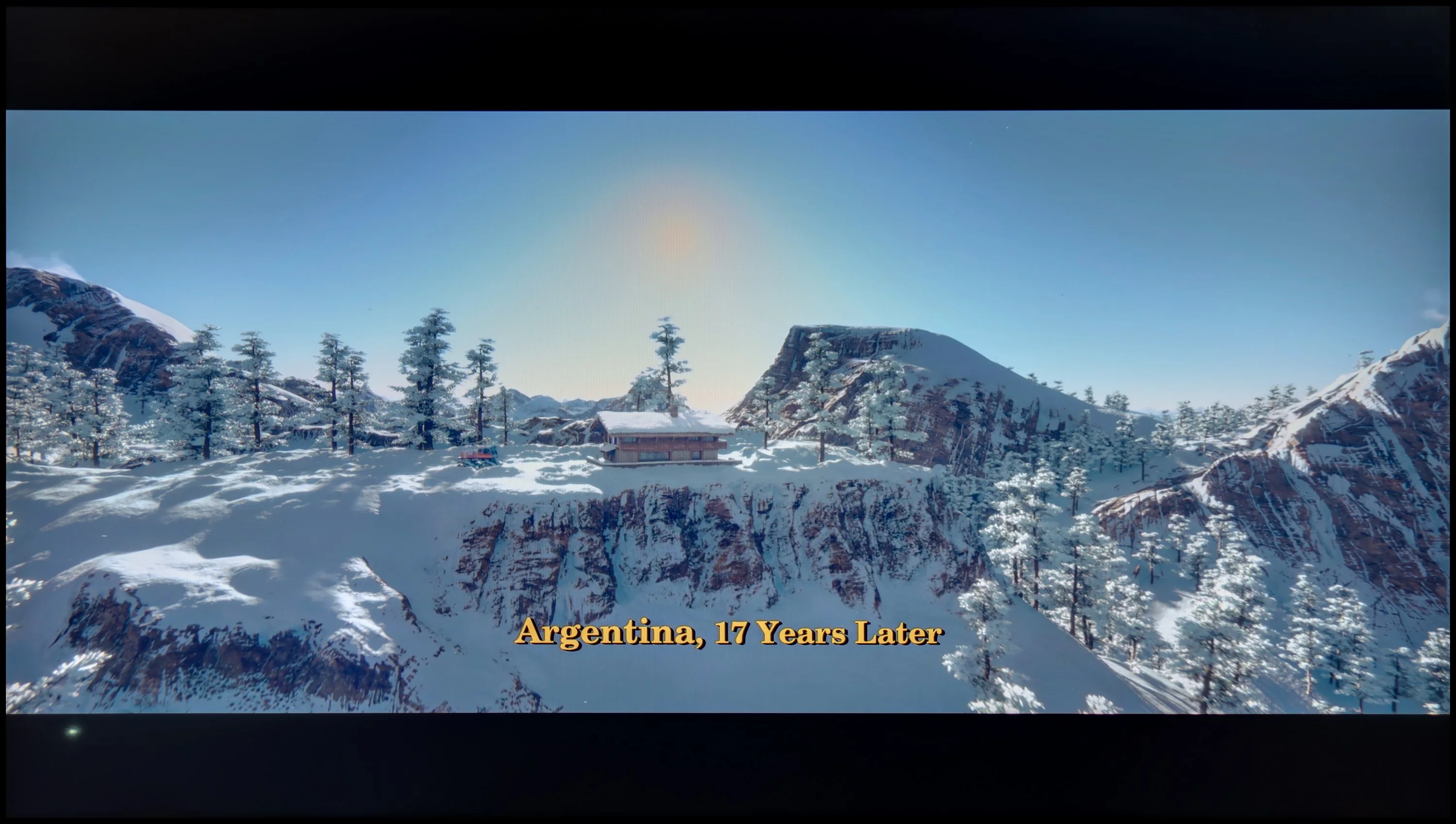
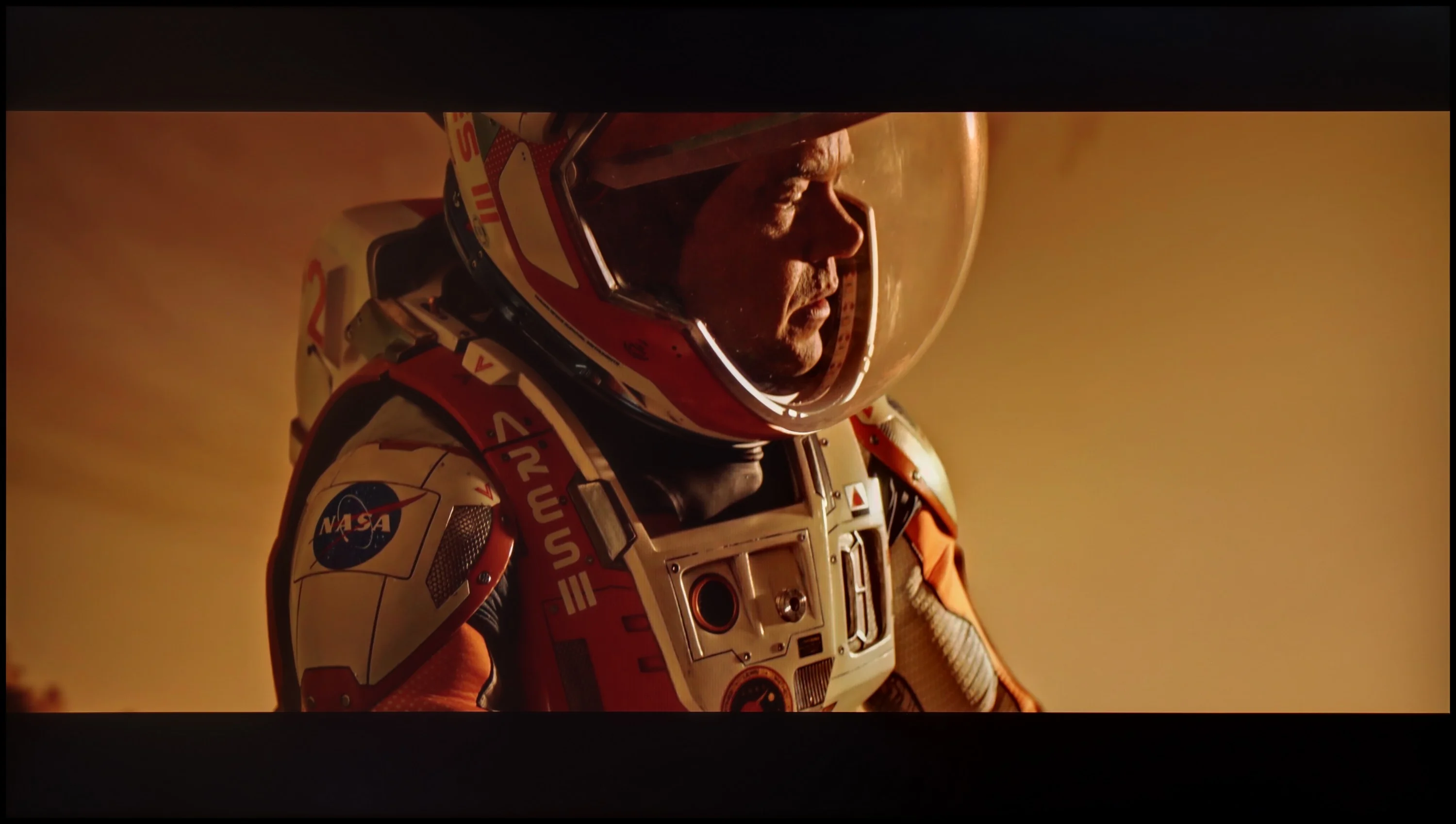
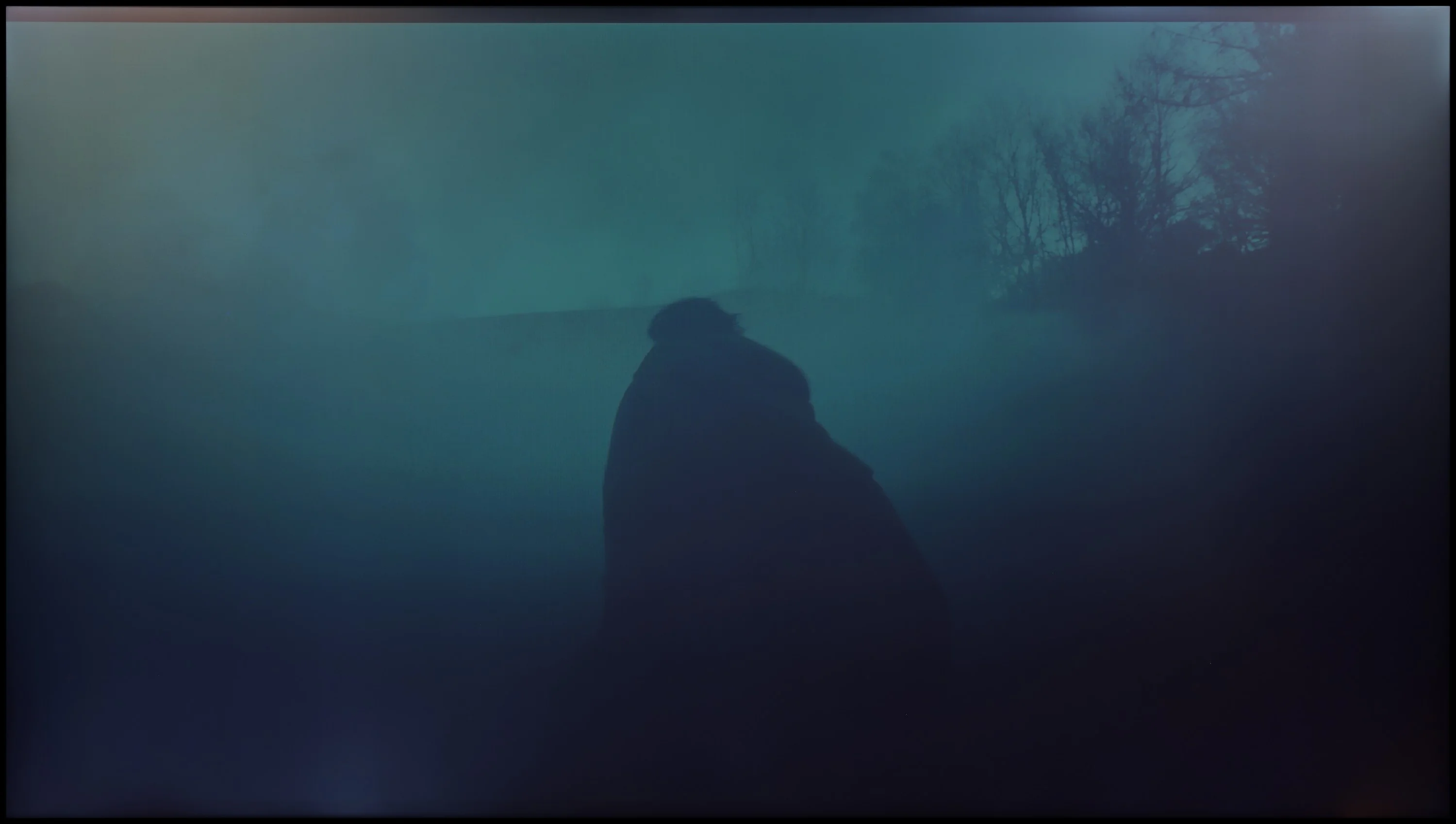
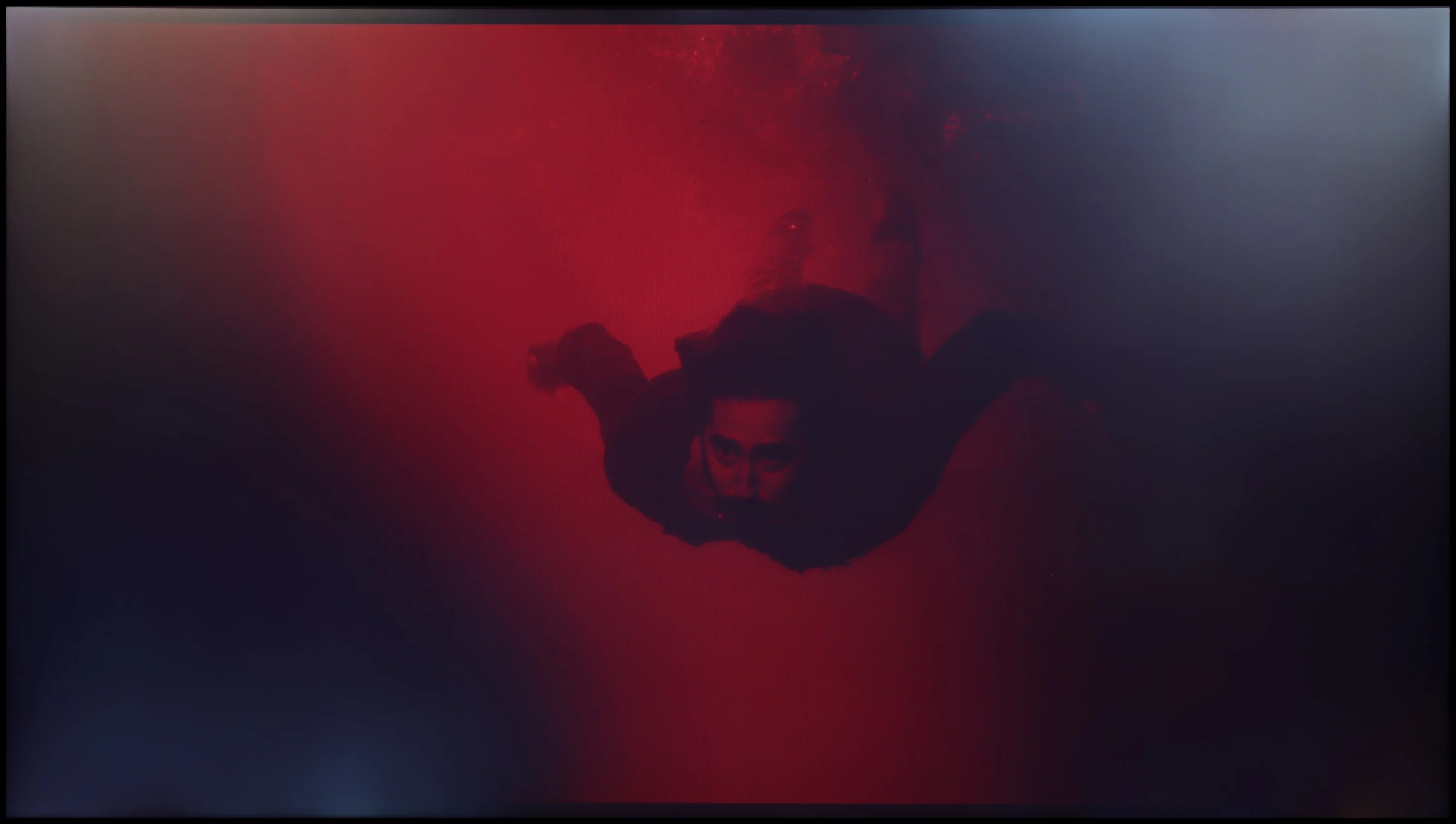
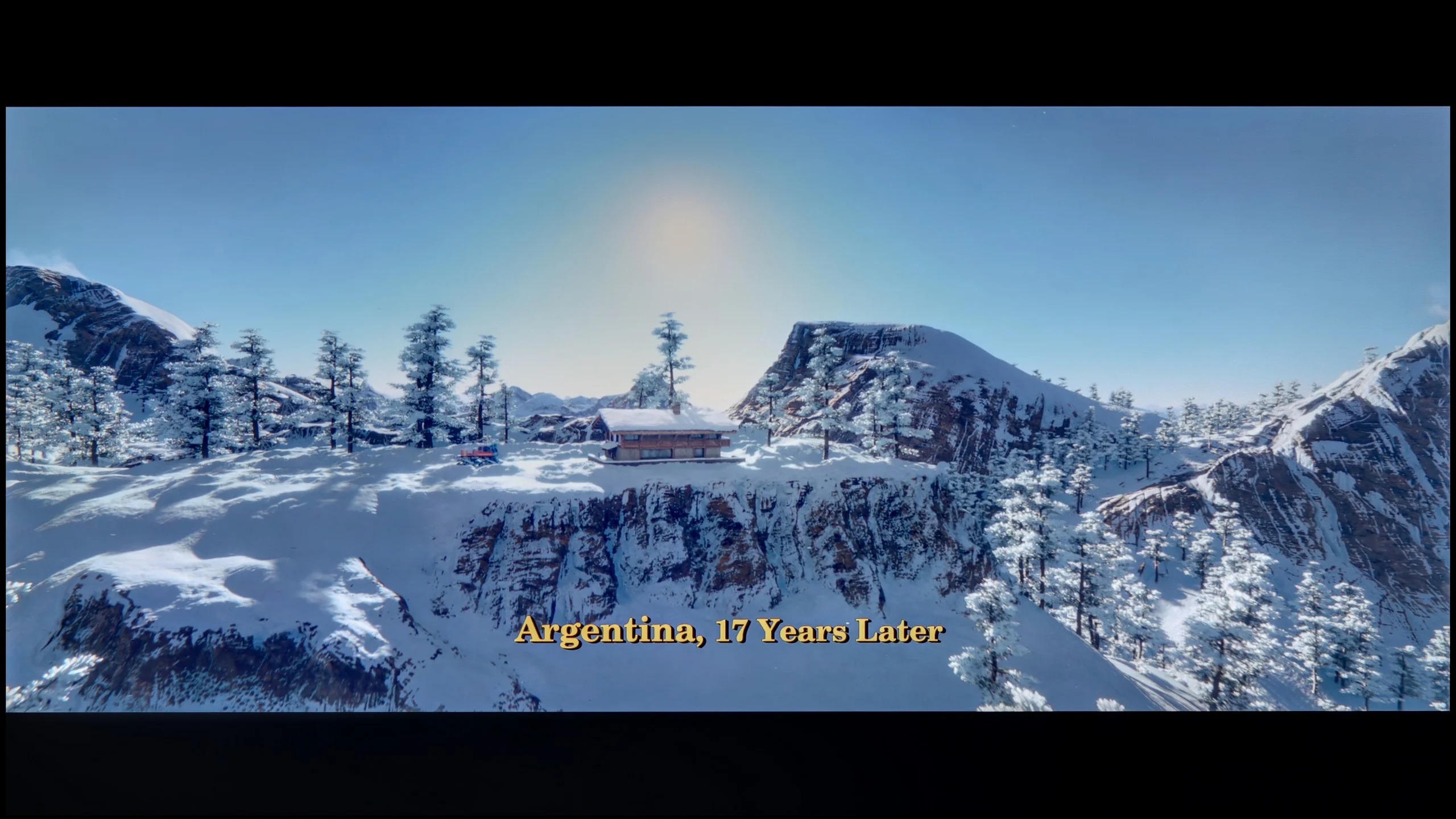
These are selected scenes that show smooth tonal transitions from one color to another. If you see distinct banding, it’s the TV panel’s fault.
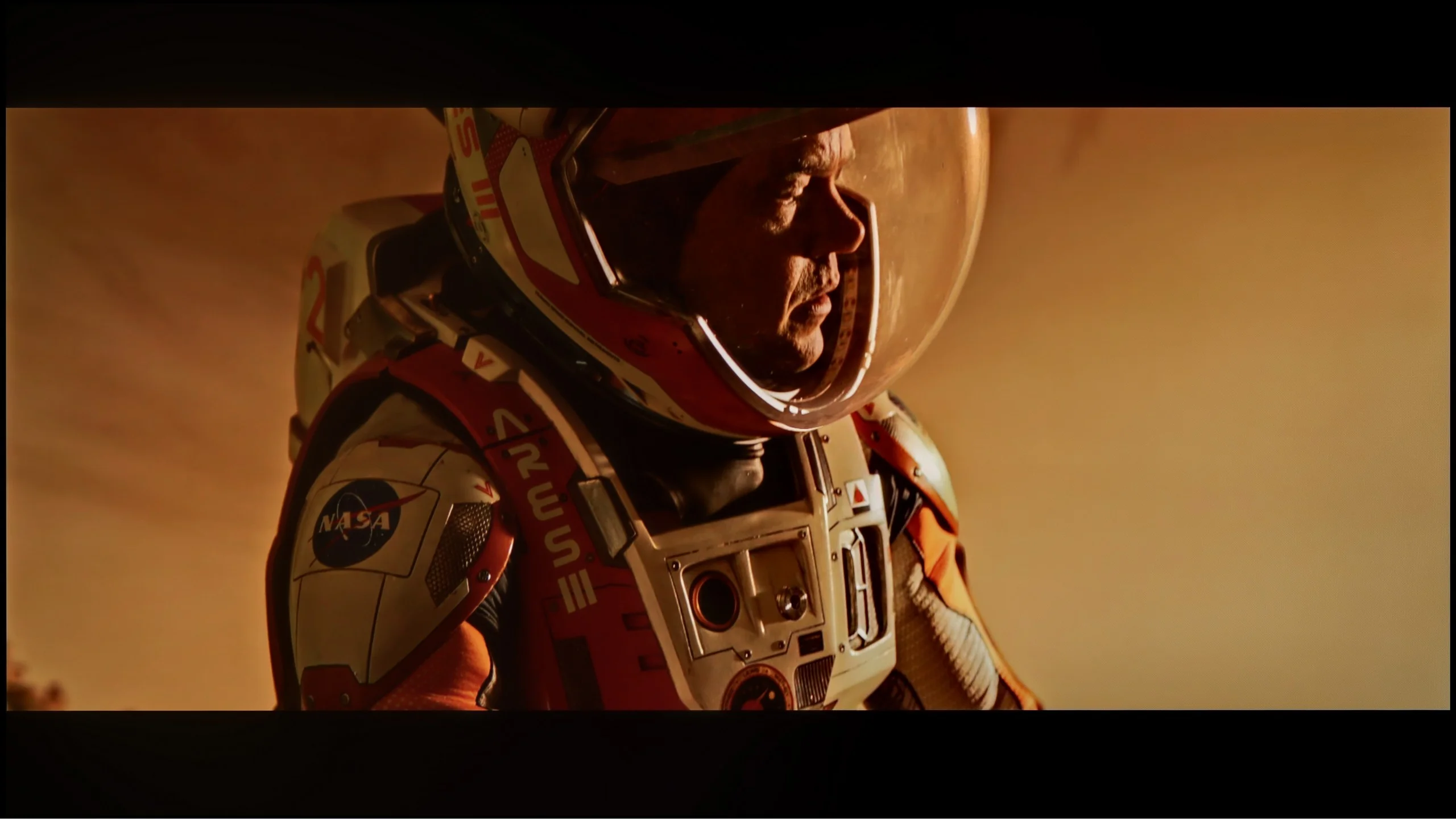
These are selected scenes that show smooth tonal transitions from one color to another. If you see distinct banding, it’s the TV panel’s fault.
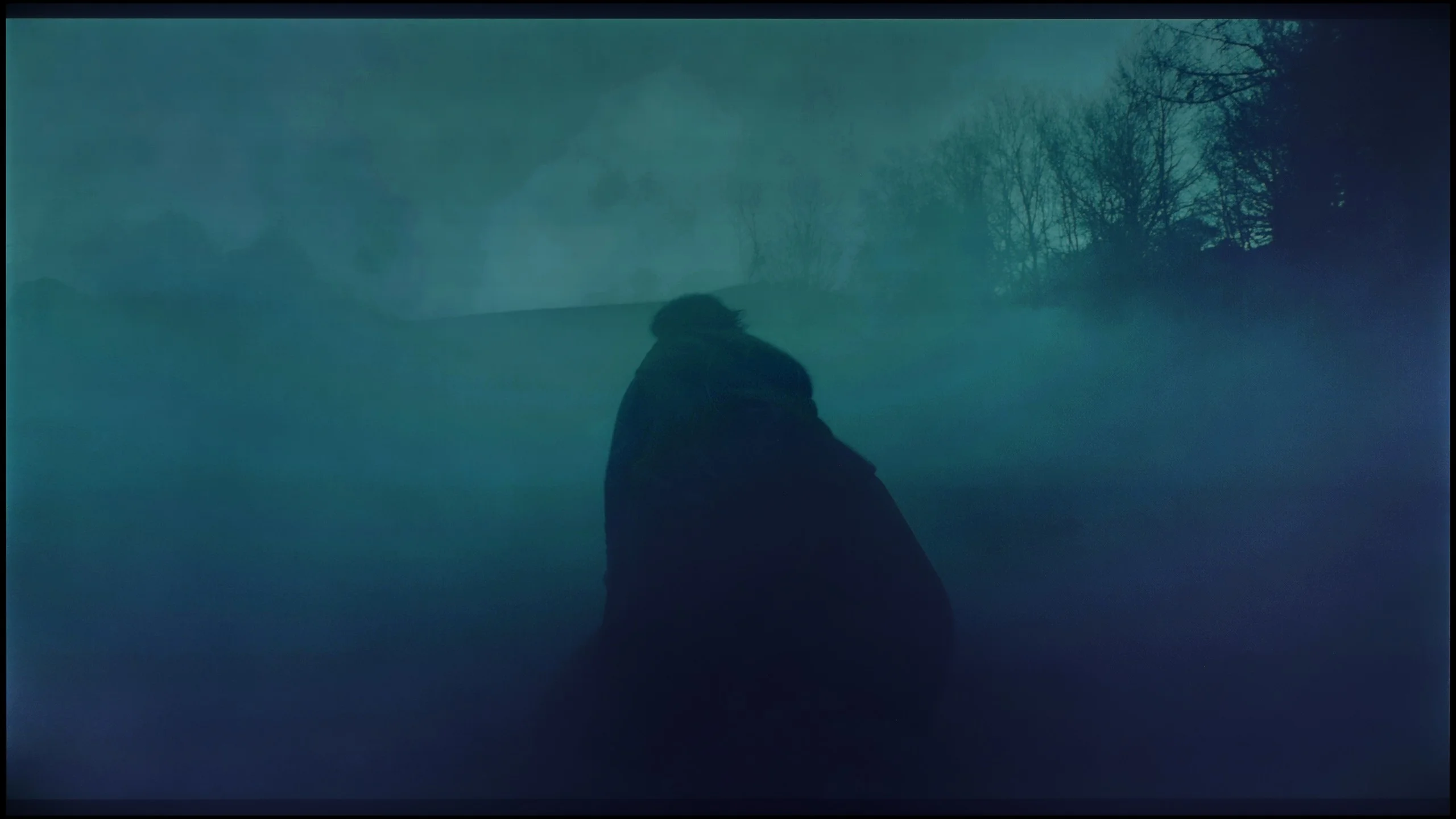
These are selected scenes that show smooth tonal transitions from one color to another. If you see distinct banding, it’s the TV panel’s fault.
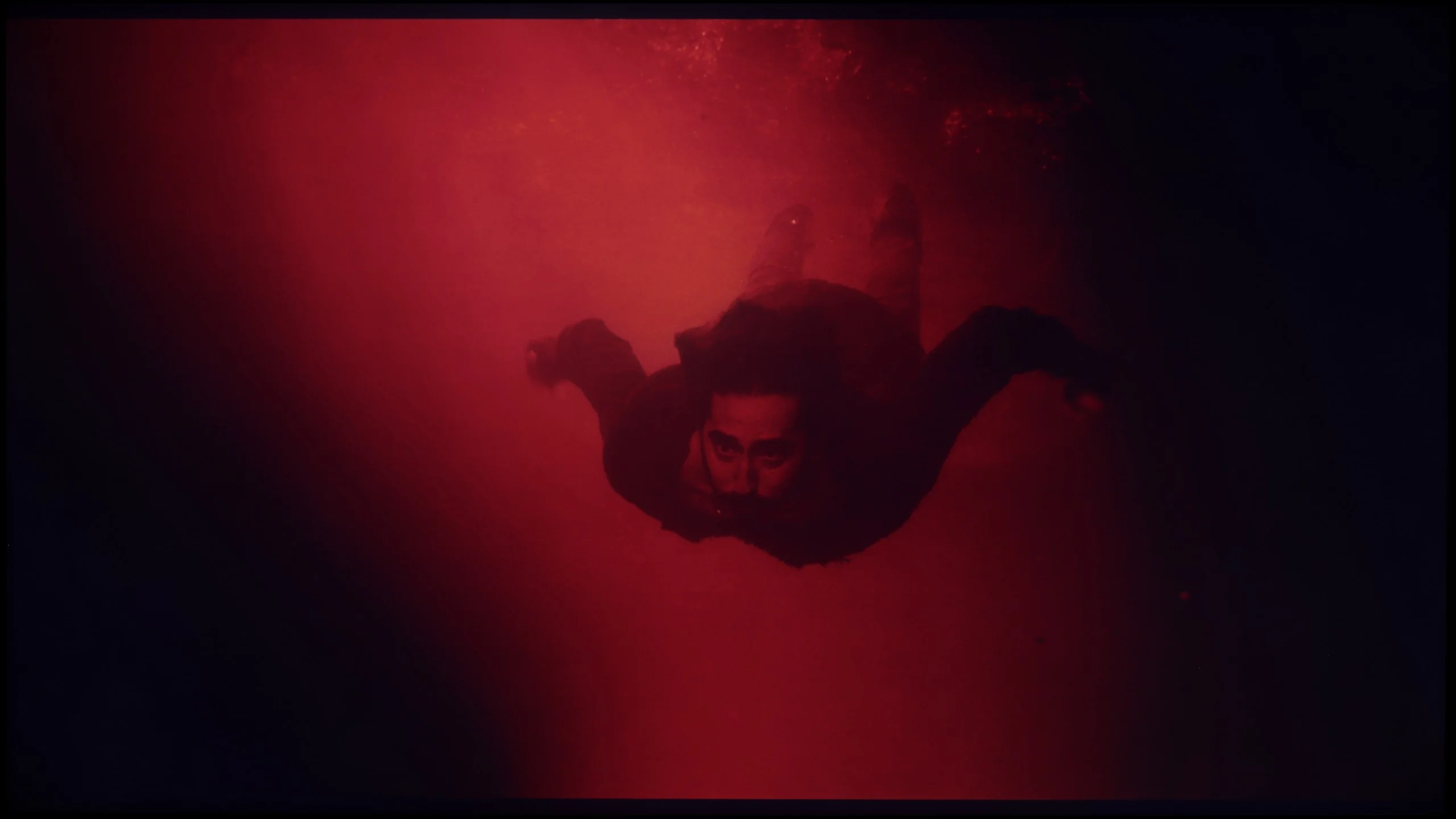
These are selected scenes that show smooth tonal transitions from one color to another. If you see distinct banding, it’s the TV panel’s fault.
During gradation tests on the DU8002, some imperfections were noticed in most scenes, although they were not intense enough to immediately draw attention. The biggest challenge was bright colors, which did not always maintain smooth transitions. Nevertheless, more complex scenes at the end of the test surprised positively, where the television performed better than expected, which had a favorable impact on the final assessment.
Analyzing the television's ability to handle subtle tonal transitions, known as "banding," leads us to interesting conclusions. The Haier Q80FUX skillfully blends neighboring colors in most scenes, creating a smooth, cohesive image. However, this is not an ideal process. During the tests, we noticed minor issues and imperfections in every test scene we used. These are perhaps not errors that aggressively catch the eye and spoil the movie experience, yet their presence is worth noting. Interestingly, this receiver shows no particular weaknesses or strengths in this regard – it handles this challenge exactly the same, whether displaying delicate gradients of a bright sky or dark transitions in shadows.
Image scaling and smoothness of tonal transitions
5.4/10
4/10


Smooth transition function
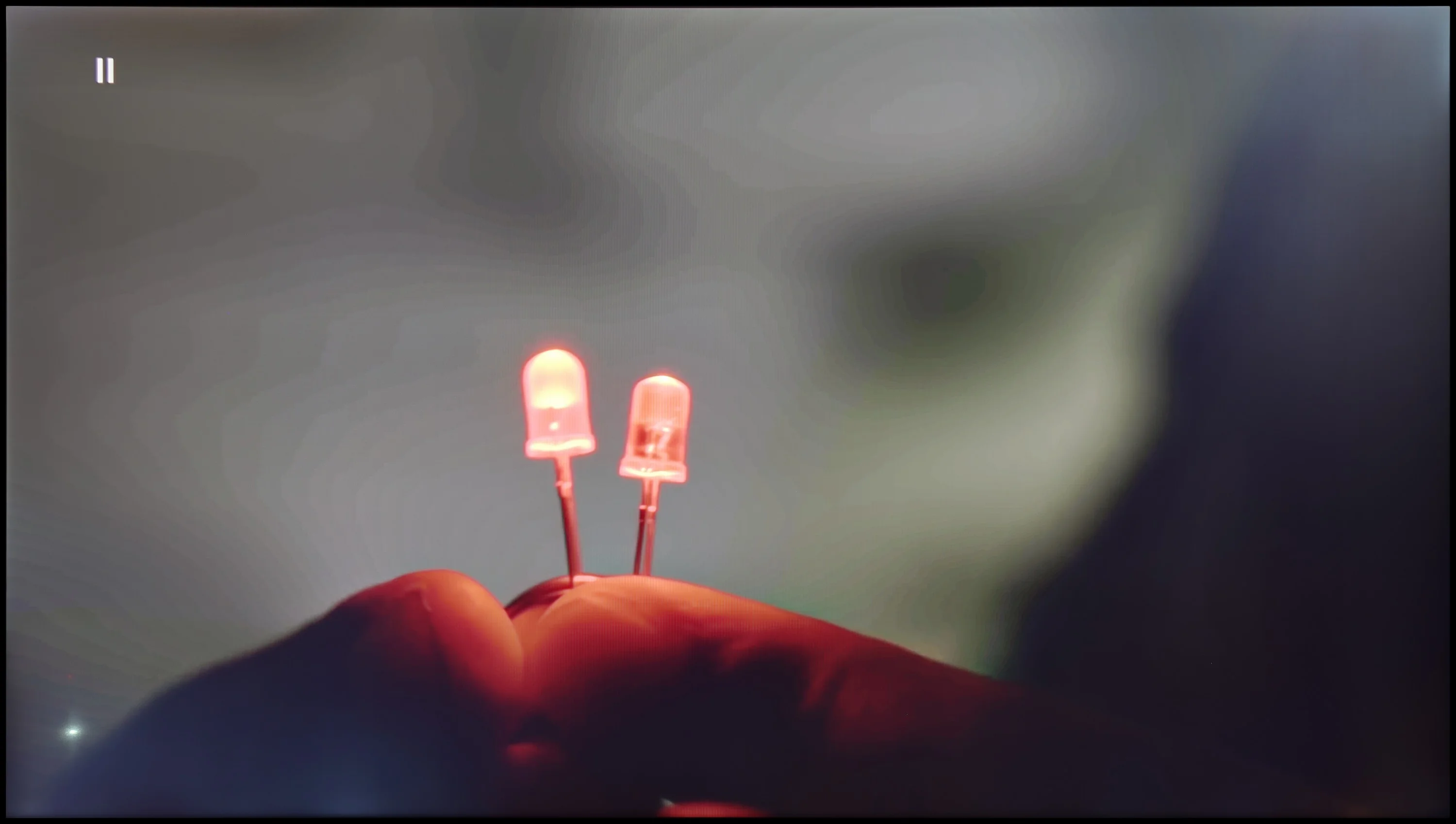
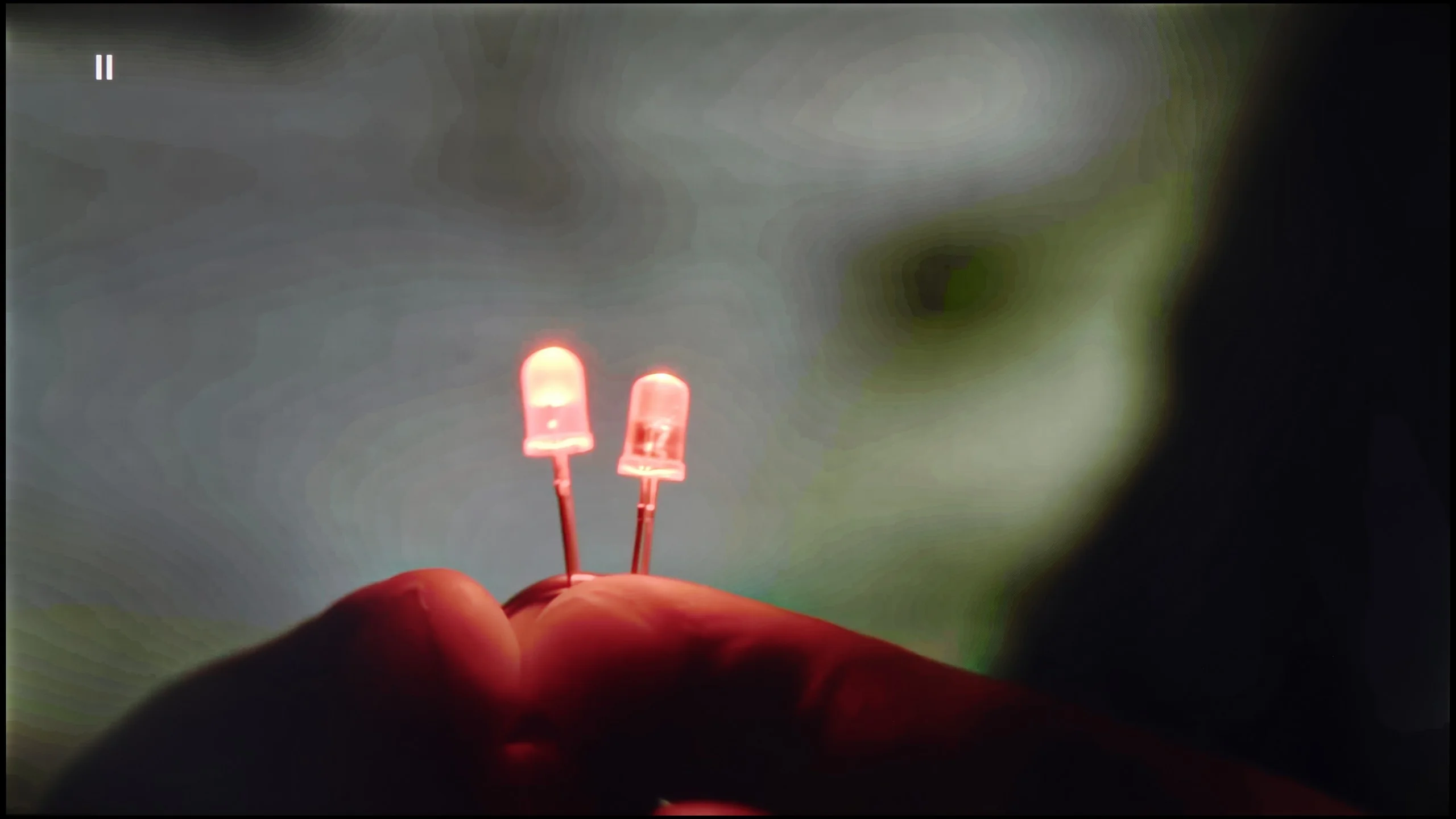
The match photo shows how the TV smooths weak tonal transitions in low-quality video.
Image scaling SD (576i)


The model photo shows how it handles upscaling of SD material.
Smoothing tonal transitions on the DU8002 television leaves mixed feelings. Although the menu offers an option for smoothing tonal transitions, in practice it yields no results and can even generate unwanted side effects.
Nevertheless, the television handles upscaling, or digital image processing, excellently. The test chart featuring a model looked really good – the image is not overly jagged, and the overall presentation is decent and pleasing to the eye. This is definitely good news for those planning to watch traditional television on this model.
If there is one area where Haier clearly shows that it has quite a bit to catch up on compared to the market leaders, it is digital image processing. The upscaling, well... is just okay. And that's about all that can be said about it. It does what it is supposed to do: it ensures that lower resolution signals don't scare you with harsh pixelation on the screen and don't look like an overly enlarged postage stamp. However, it is far from the finesse and "intelligent" sharpening that more experienced players in this market have developed over the years. The biggest drawback of the Q80FUX software, however, is the almost complete lack of additional "cleaning" and smoothing functions for the image. The receiver does not offer any noise reduction or gradient enhancement mechanisms. This means that with older or more heavily compressed materials, we simply have to accept that any imperfections in tonal transitions or color blending, which we mentioned earlier, will constantly accompany us during the viewing.
Blur and motion smoothness
5/10
4.5/10
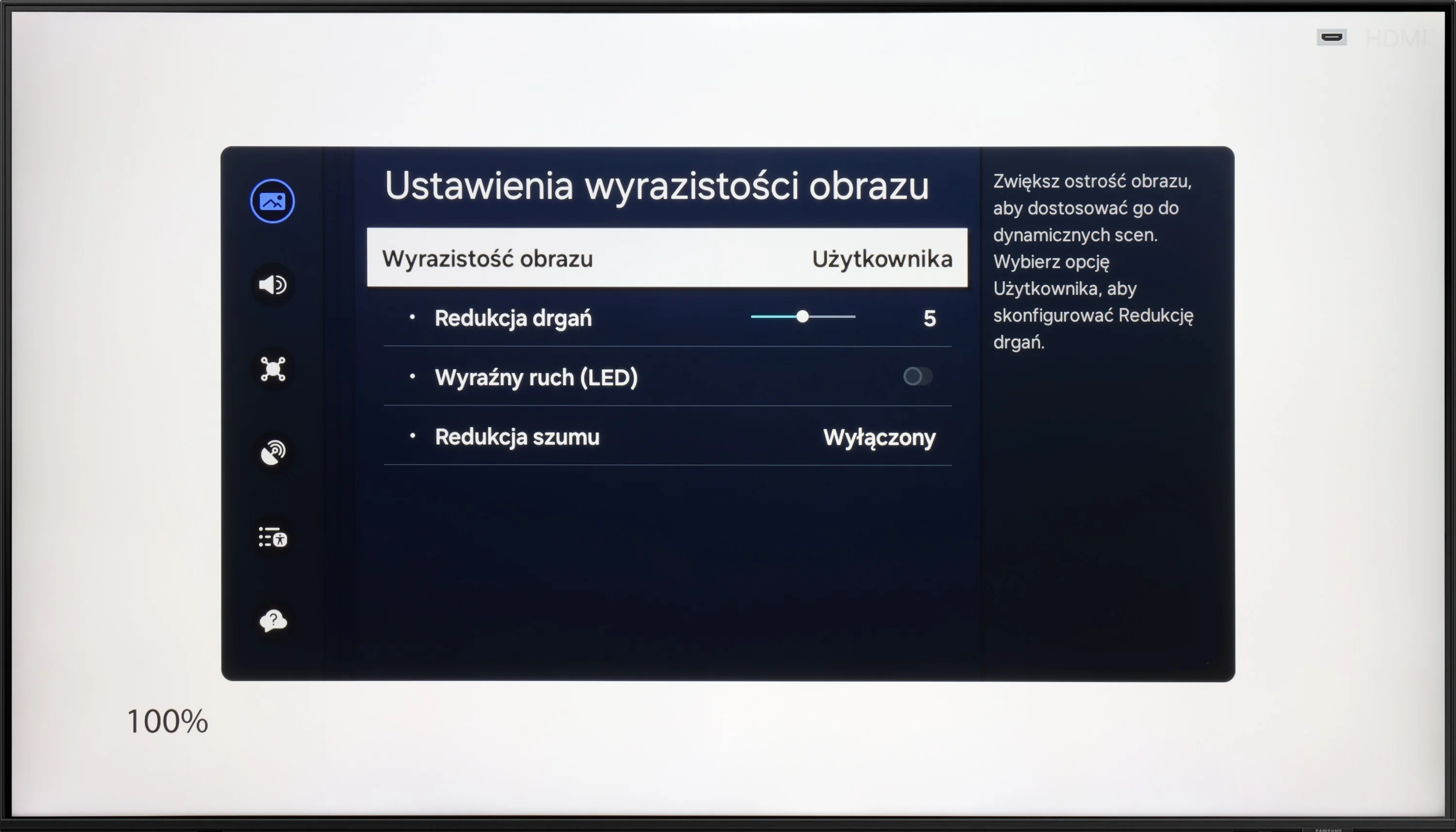
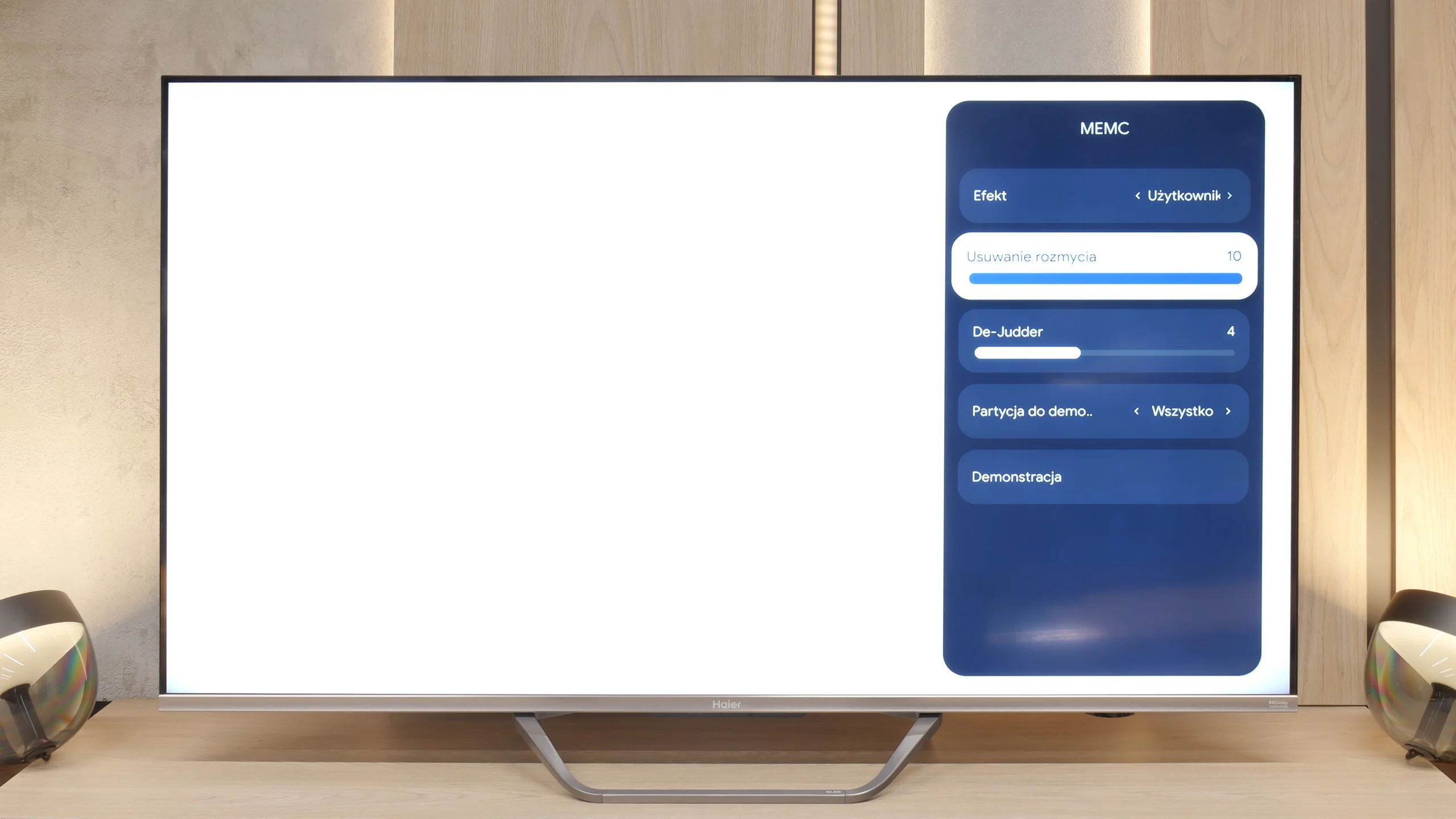
Blur (native resolution, maximum refresh rate):

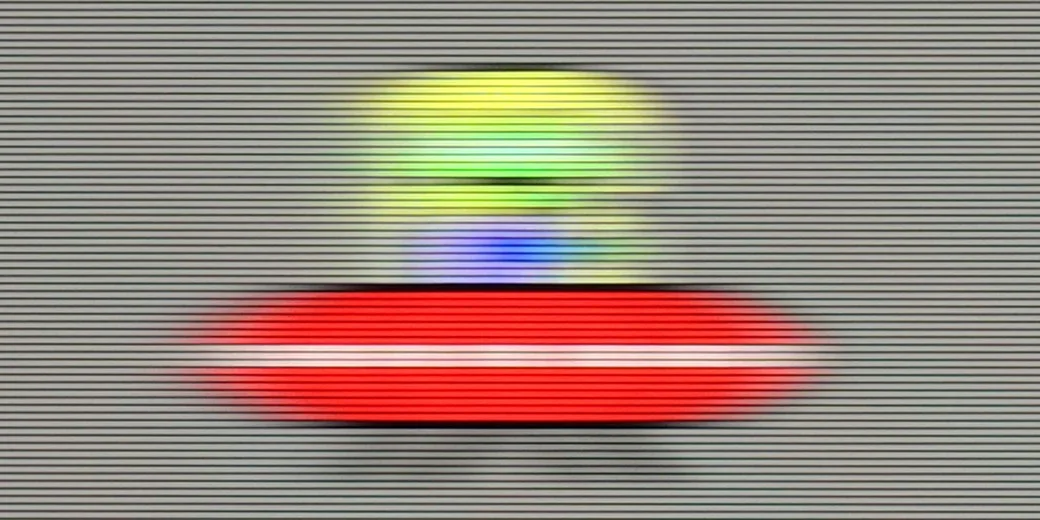
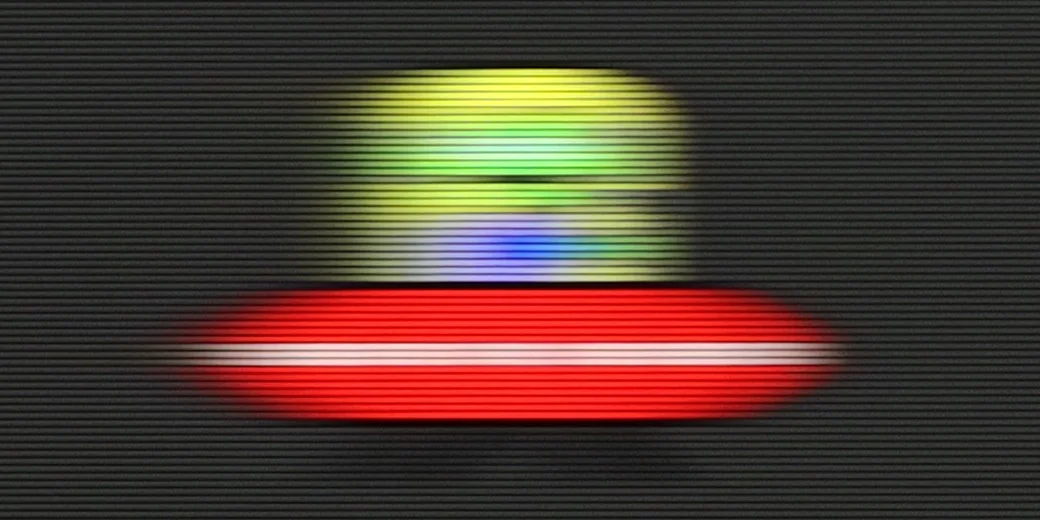
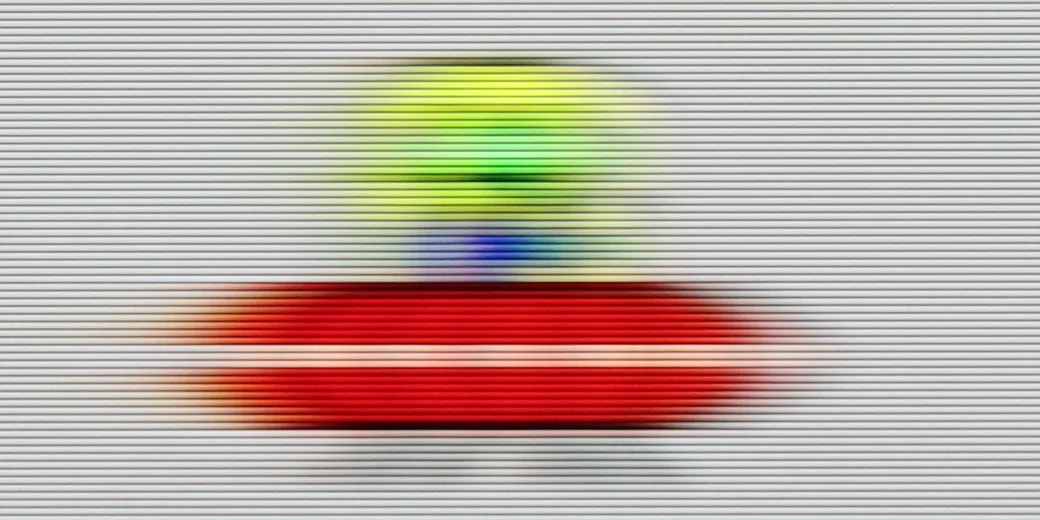
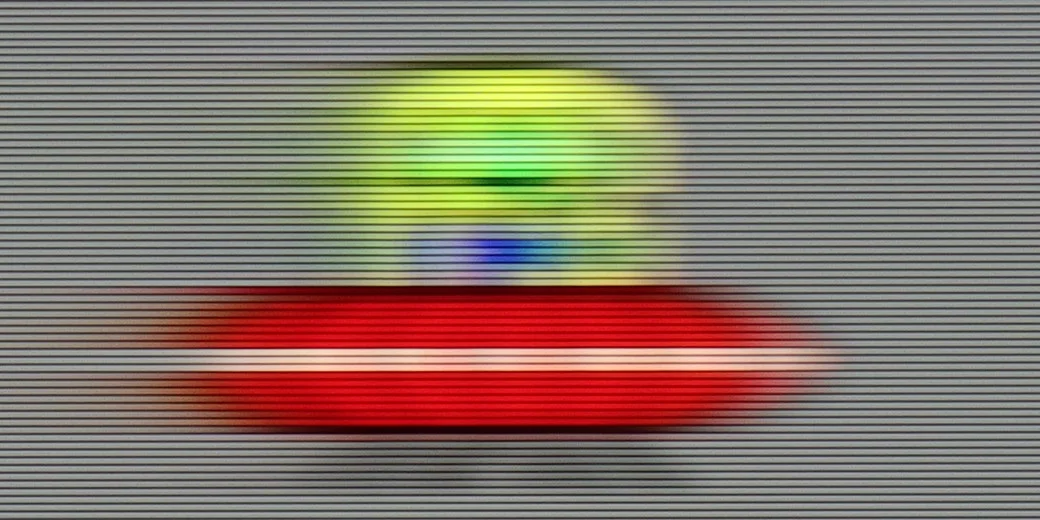
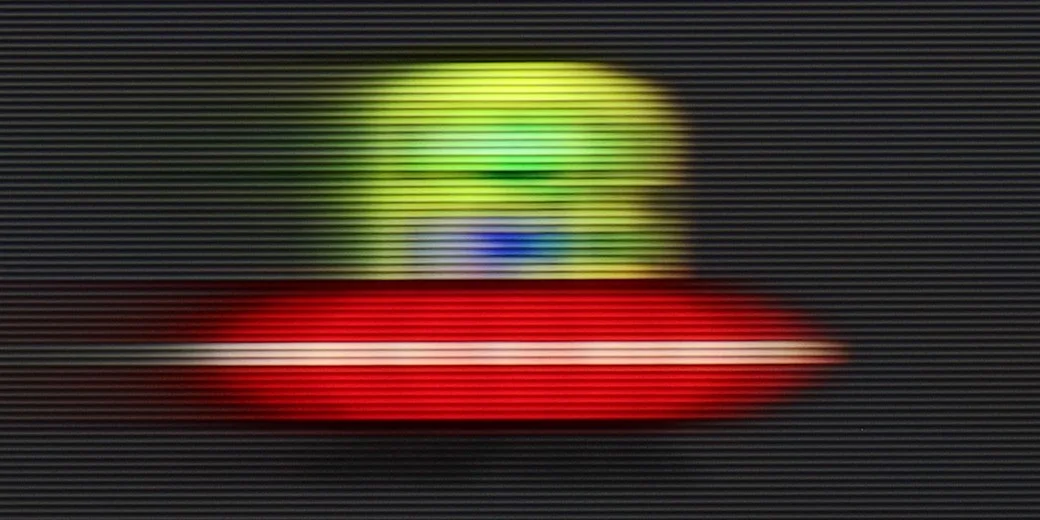
Blur (BFI function enabled):


DU8002 with a 60 Hz panel is a television that performs better for watching movies than for intense gaming. The motion smoothing feature acts as a fluidizer, smoothing out motion and giving scenes a more fluid appearance, which is useful for movie screenings. In the context of gaming, this model will rather be suitable only for occasional entertainment.
The issue of motion fluidity and blurring is largely predetermined by the use of a 60Hz panel, which naturally makes it difficult to recommend this receiver to enthusiasts of very dynamic content. Fortunately, in the Q80FUX, we find a few options (though, as we will see shortly, actually only one) designed to improve the experience with older film productions. There is a "De-Judder" slider available, which indeed affects the smoothness of the image and allows us to adjust it to our preferences: from raw, cinematic frame rates to a more theatrical, smoothed presentation. However, a genuine surprise awaits us right next to it in the menu. There is also a second slider, supposedly dedicated to eliminating blur – this is a feature we usually encounter in 120Hz panels, aimed at combating motion blur in sports. However, as expected, recalling memories from testing the K85F model, here too this slider is merely a facade. Moving it does absolutely nothing to the image and it simply looks like an oversight by the product engineers who left a non-functional option in the software for this type of panel.
Console compatibility and gaming features
4.2/10
5.6/10
- ALLM
- VRR
- VRR range 48 - 120Hz
- Dolby Vision Game Mode
 Yes, high input lag
 - Correct implementation of HGIG
- 1080p@120Hz
- 1440p@120Hz
- 4K@120Hz
- Game bar
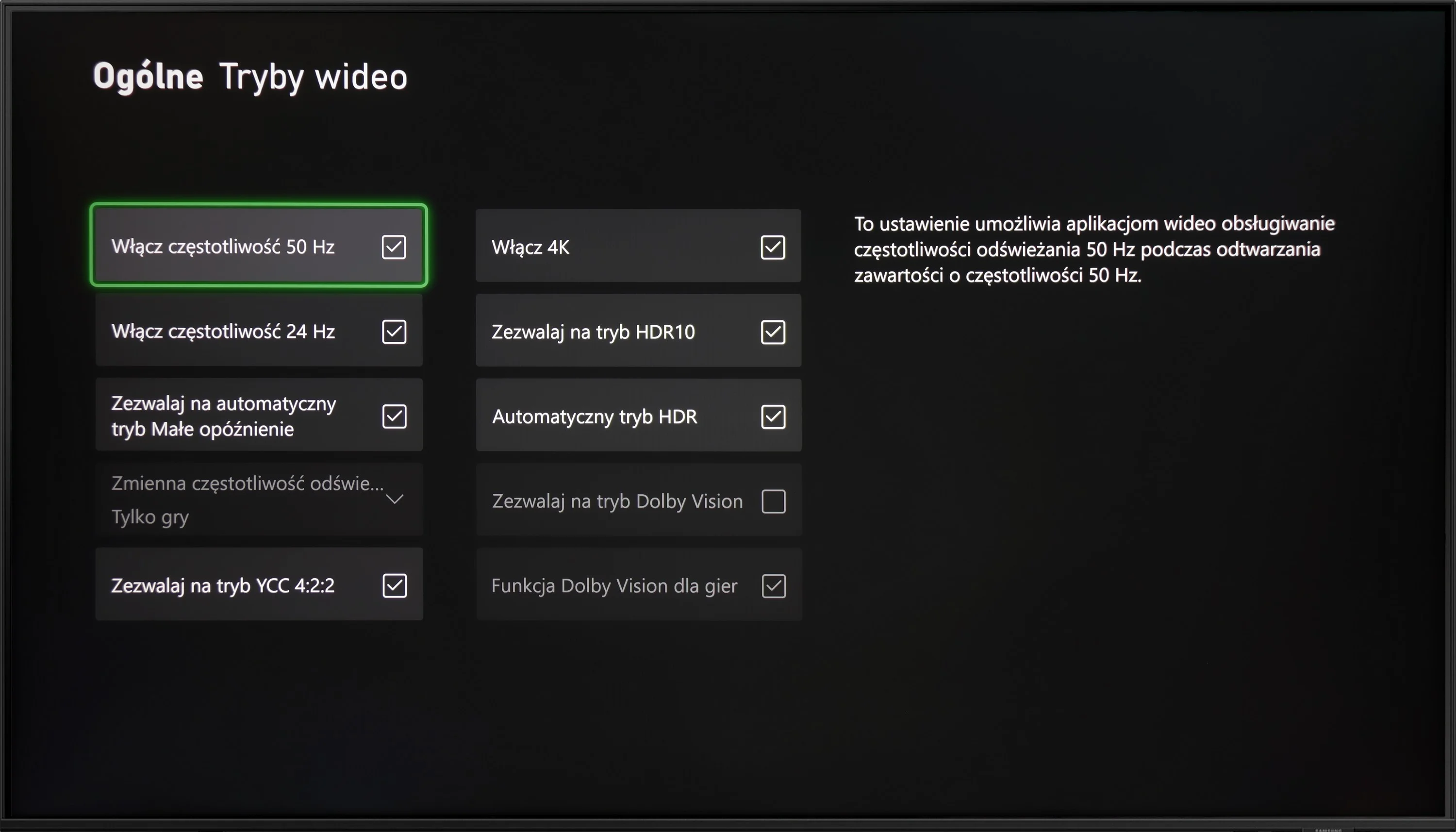
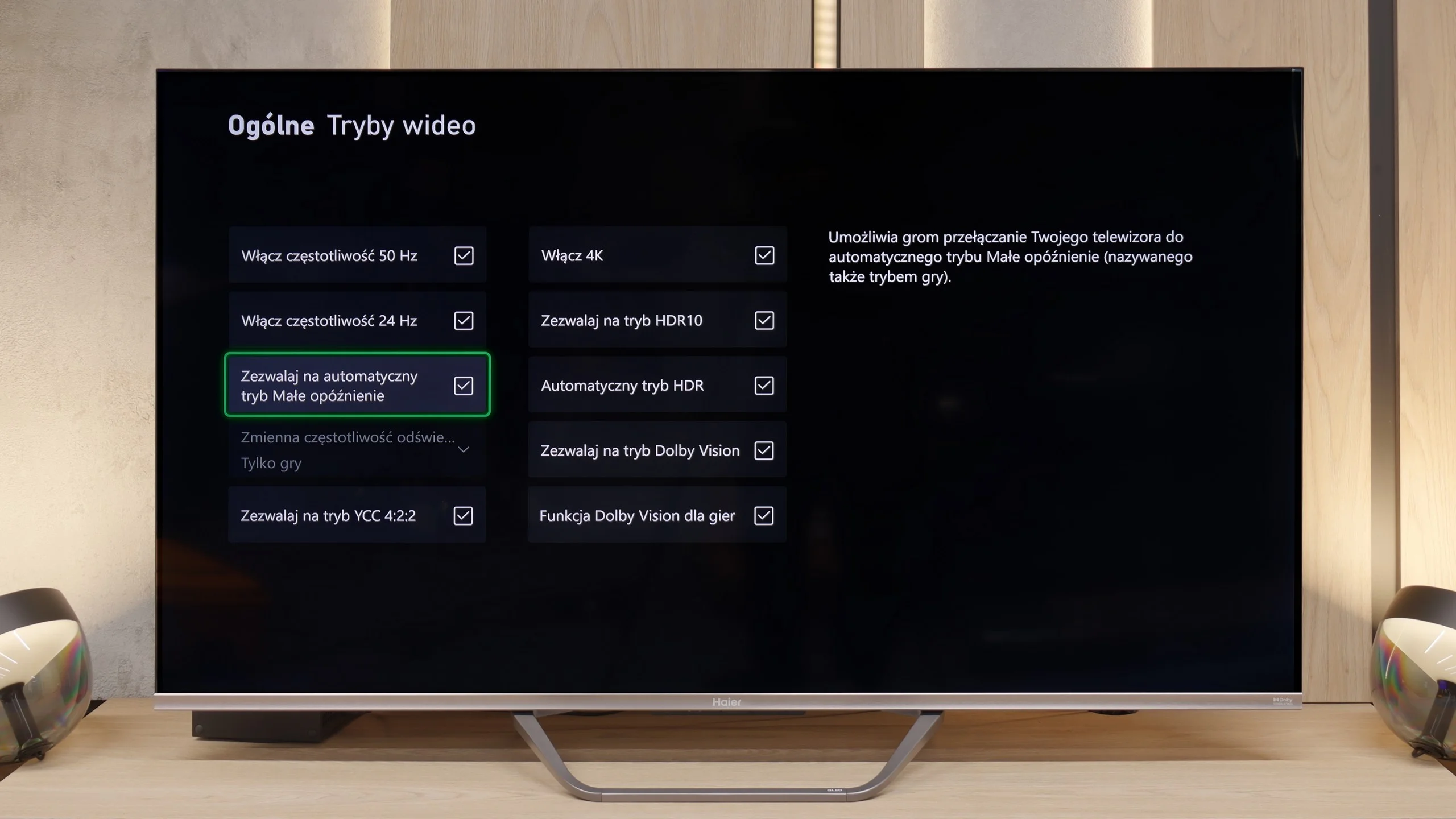
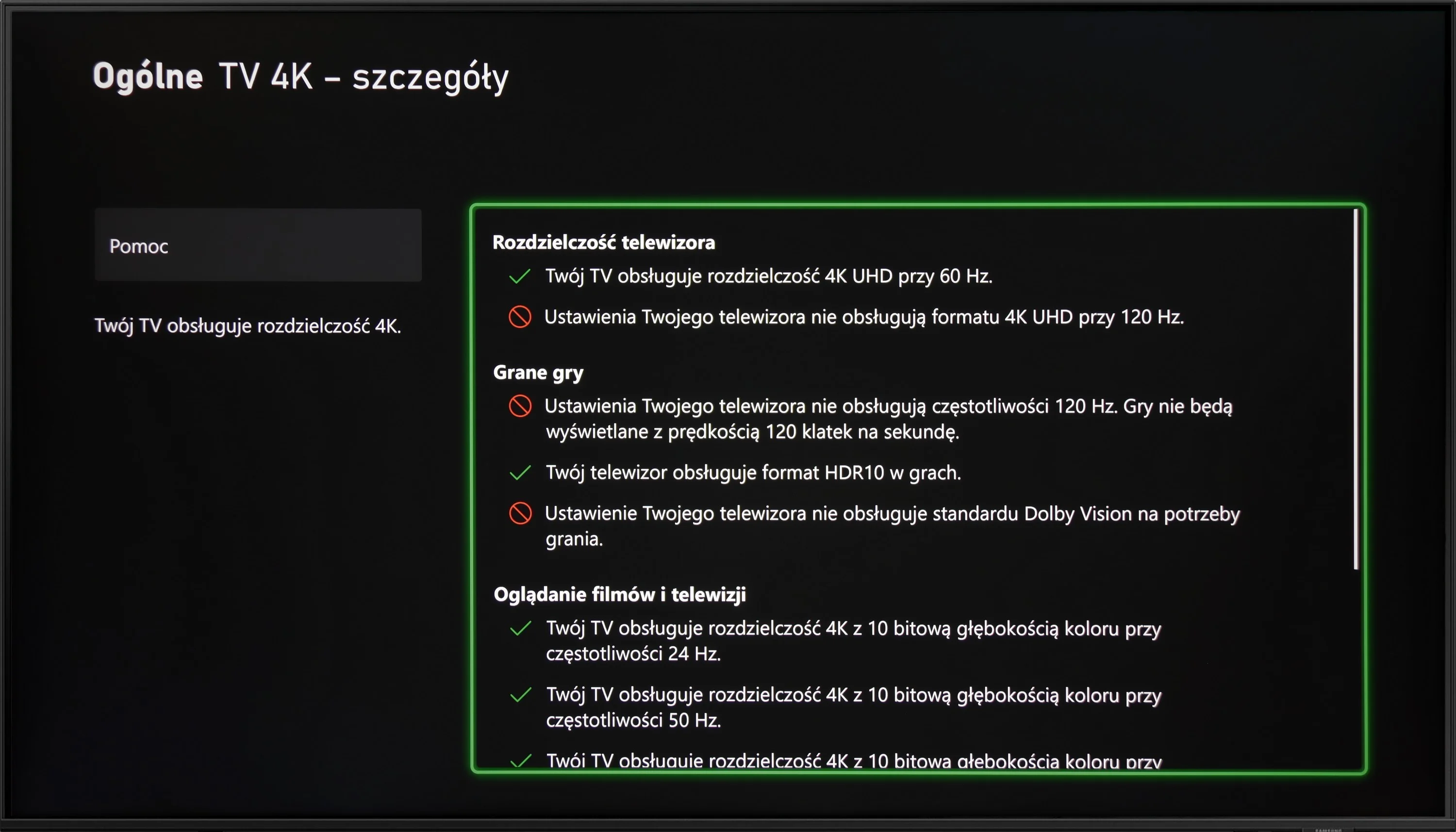
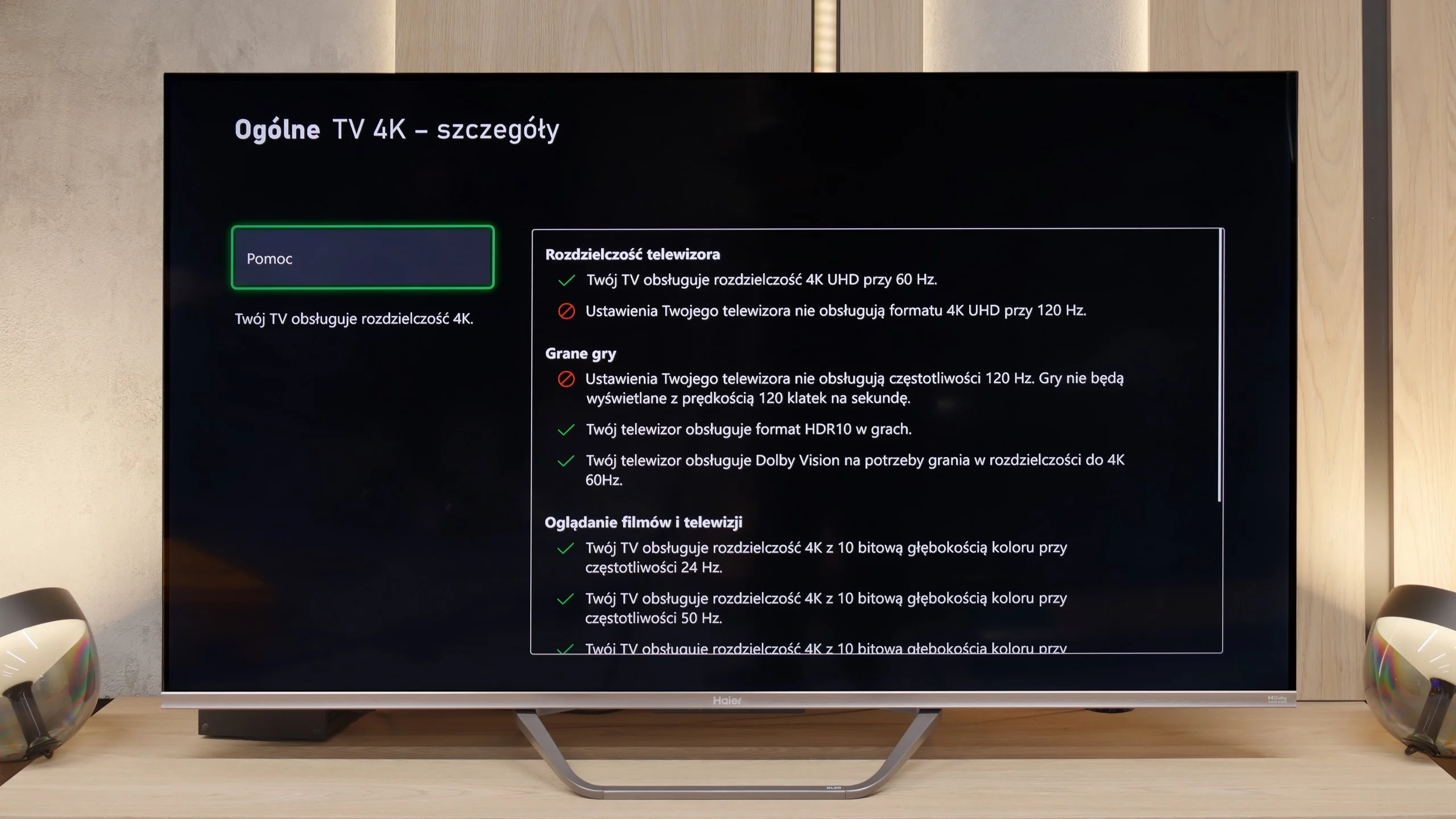
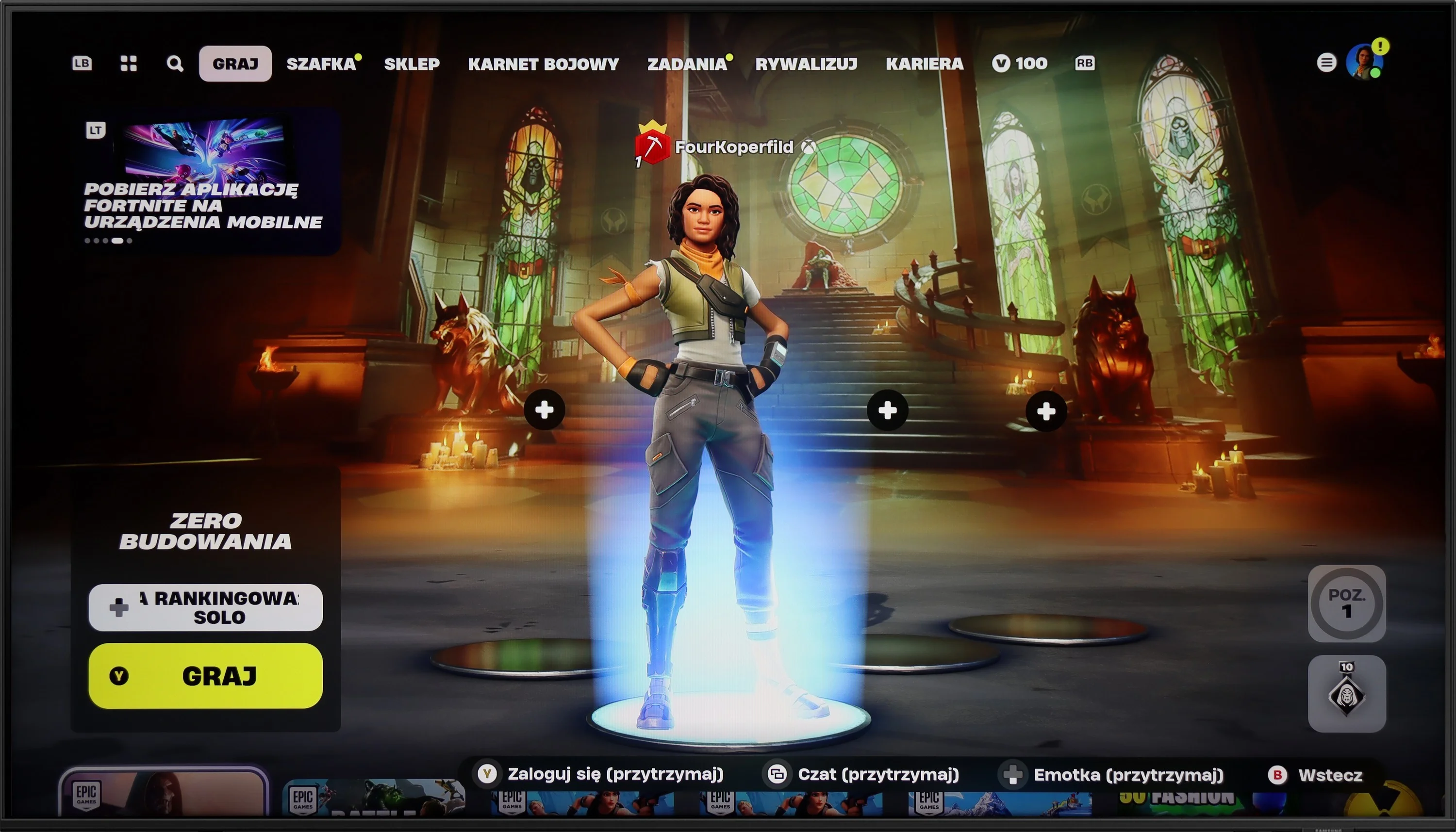
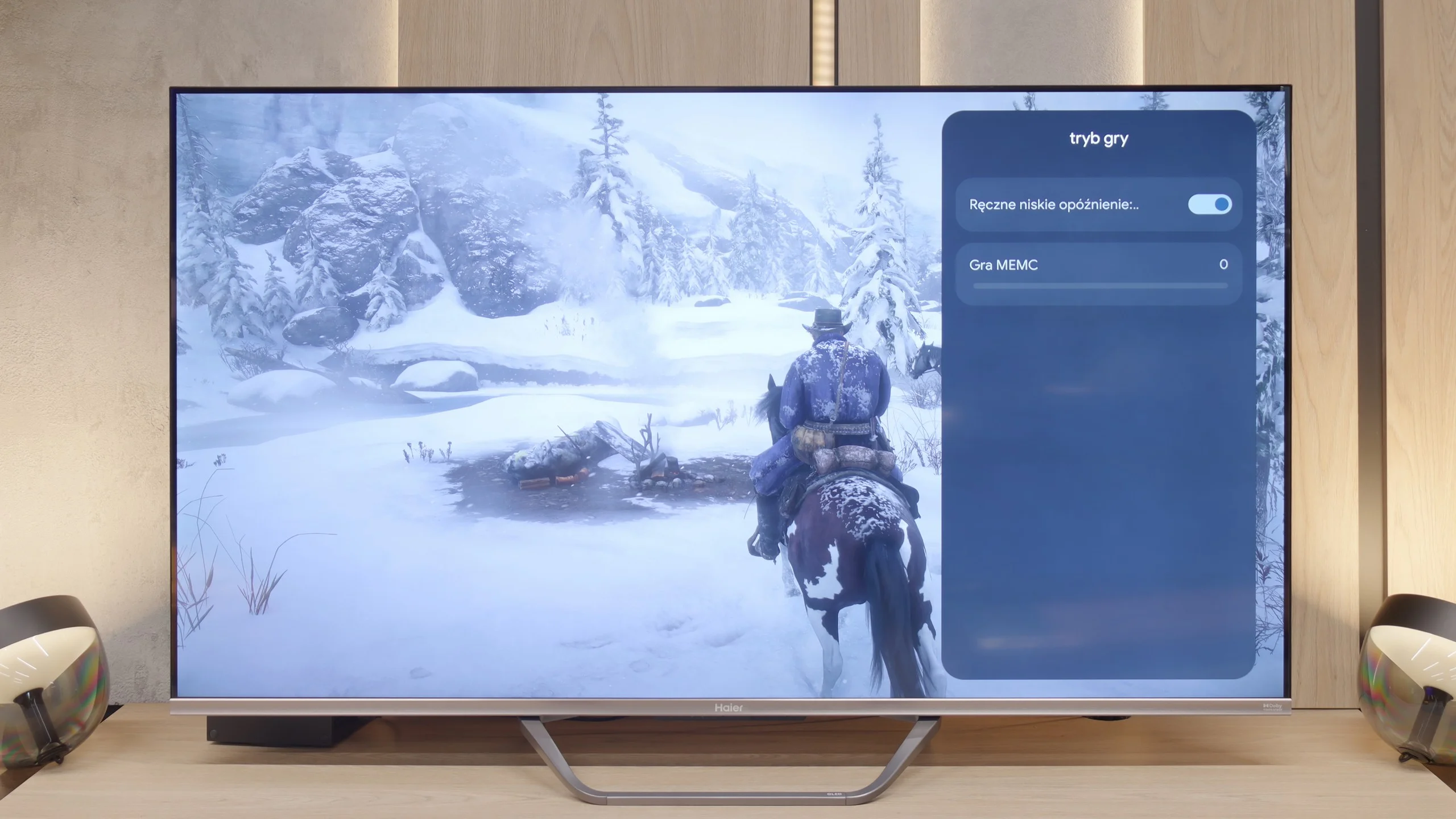
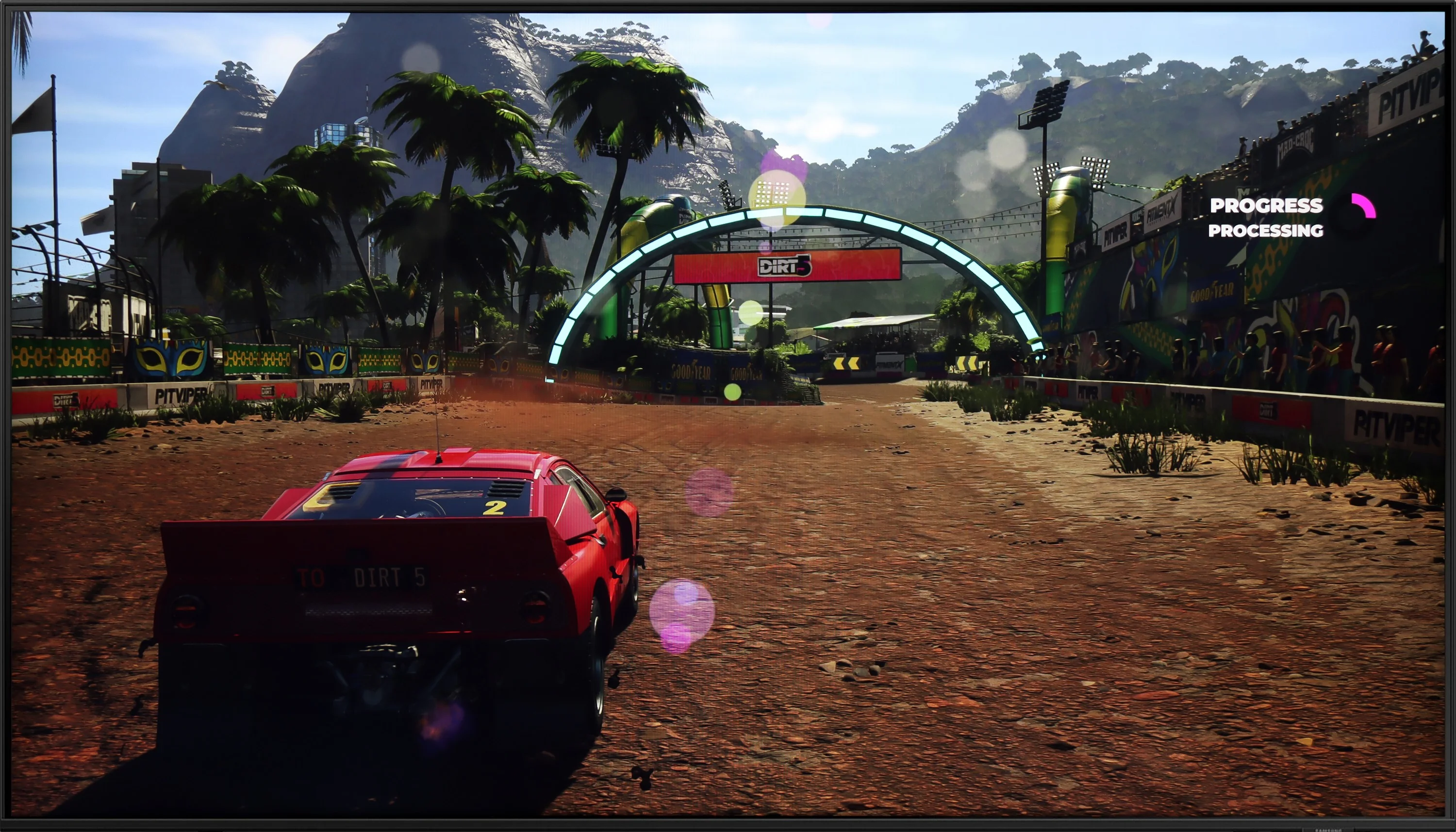
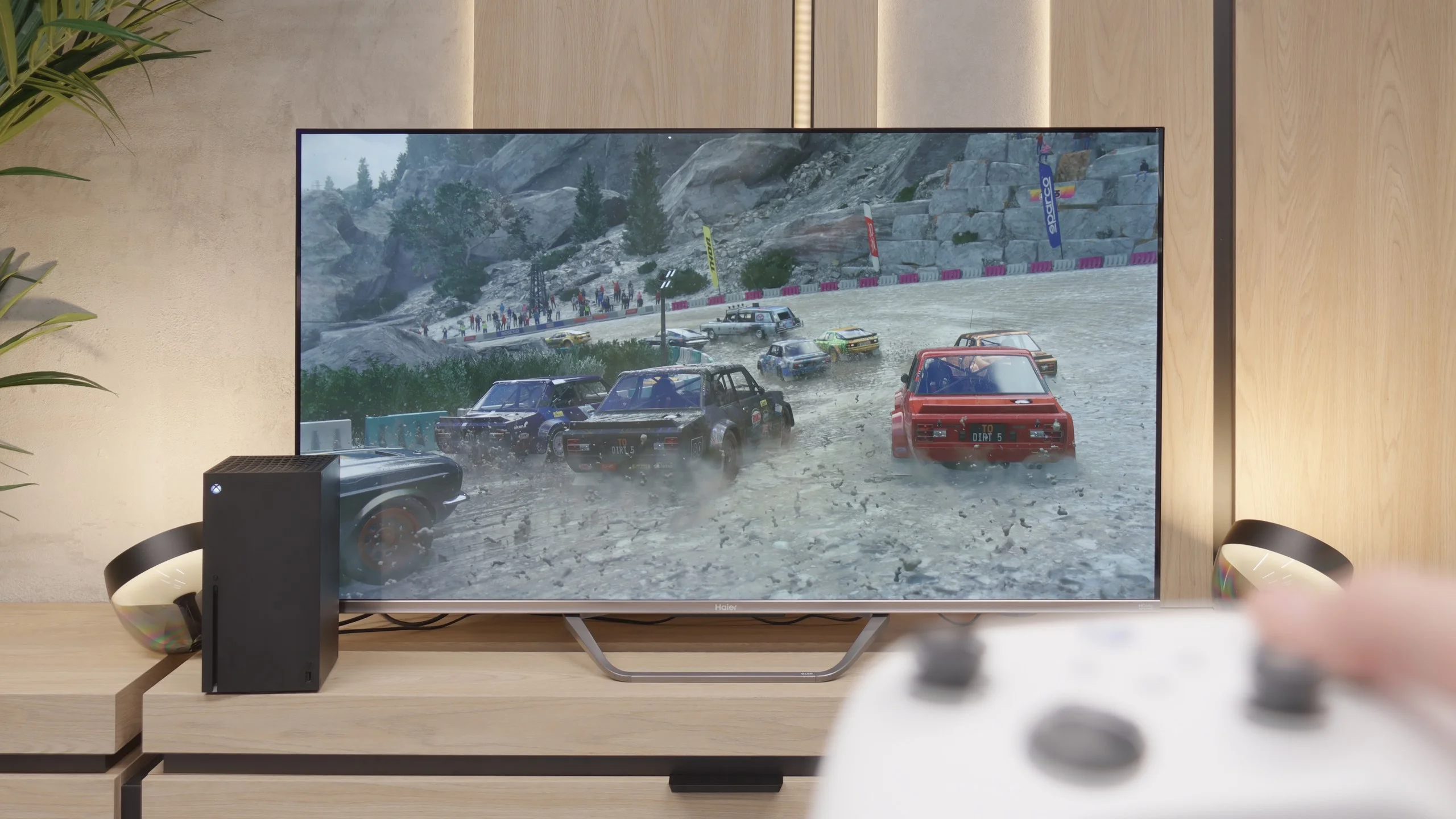
DU8002 is a television that will mainly serve as equipment for casual gamers. The 60 Hz panel does not provide the highest motion fluidity, so in dynamic games there may be a lack of that extra smoothness of the image. On the positive side, it features ALLM and HGiG functions, which automatically adjust image settings for HDR games, enhancing the gaming experience. Unfortunately, the television is equipped only with HDMI 2.0 ports, so we have to forget about more advanced features like VRR or support for 4K at 120 Hz. When choosing this equipment, we will have to make do if we expect a full set of gaming features.
Stepping into the gaming territory, the Haier Q80FUX proves to be quite a decent companion for the "casual gamer." On board, we find today’s highly desired features like VRR (variable refresh rate) and ALLM (automatic low latency mode). However, the biggest surprise is something else. Although we are not dealing with a 4K@120Hz panel, the TV can accept and display a 120Hz signal at a lower resolution (Full HD). This is a very useful feature, allowing the conscious switch of the console to a lower resolution mode in exchange for significantly higher fluidity, which is a perfectly acceptable compromise in the gaming world.
We won’t particularly complain about the lack of extras like the "Game Bar," as it’s just a nice addition. The most concerning issues arise when we enter the world of HDR in games. Due to the fact that the TV constantly adapts the signal "in its own way," setting the brightness on the console according to the HGIG standard is nearly impossible to accomplish as per the instructions. Worse still, in the Dolby Vision mode for games, the input lag rises to about 50 ms, which is a high enough value that essentially makes this mode unusable. However, generally, we wouldn’t recommend gaming on this TV in HDR mode, so these aren’t such serious shortcomings. The most pleasing aspect is the presence of 120Hz in Full HD, which makes the Q80FUX quite a nice TV for the occasional gamer.
Input lag
10/10
9.4/10
SDR
HDR
Dolby Vision
Input lag in the DU8002 is definitely its strong point. The delay is low enough that every reaction on the screen is instantaneous, making gaming smooth and enjoyable. For gamers who enjoy dynamic titles and value quick responses, this television is a pleasant surprise. Although it lacks advanced gaming features or a higher refresh rate, the low input lag is a real advantage that makes a difference.
If there is one category in which the Haier Q80FUX absolutely shines and shows its claws, it is input lag. In this area, the television presents results that are truly remarkable. In 120Hz mode (achieved, let’s remind ourselves, at a lower resolution), the input lag drops below 10 ms, which is an excellent value, worthy of high-end gaming monitors. Not much worse, and still at a very good level, is the classic 60Hz mode – here measurements steadily indicated around 12-14 ms. These are results that even significantly more expensive, gaming-specific designs would not be ashamed of. The only, but serious, drawback here is the Dolby Vision mode. As we established earlier, activating it raises the lag to an unacceptable level, so we definitely advise against using it during any interactive gameplay.
Compatibility with PC
6/10
6/10
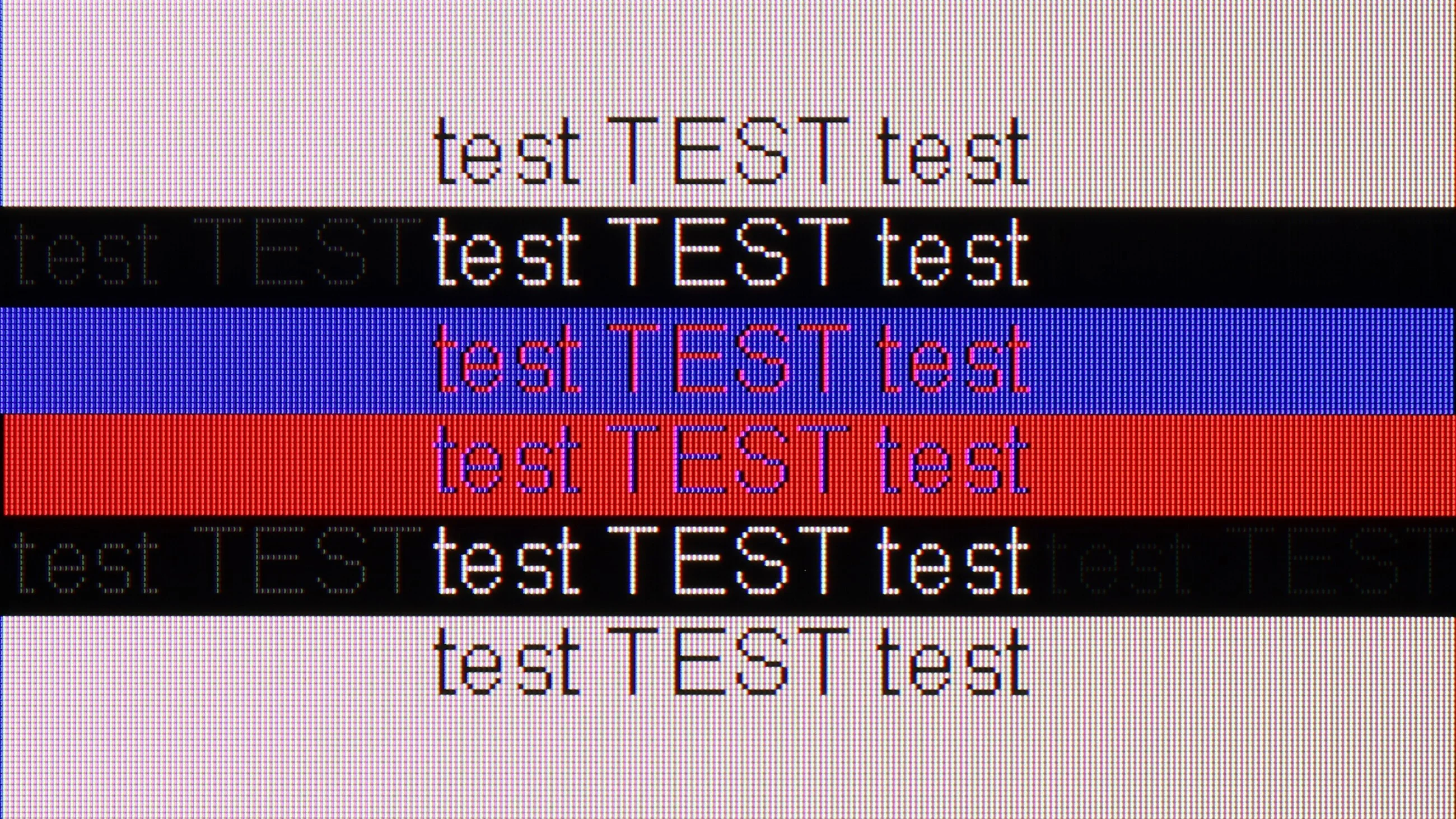
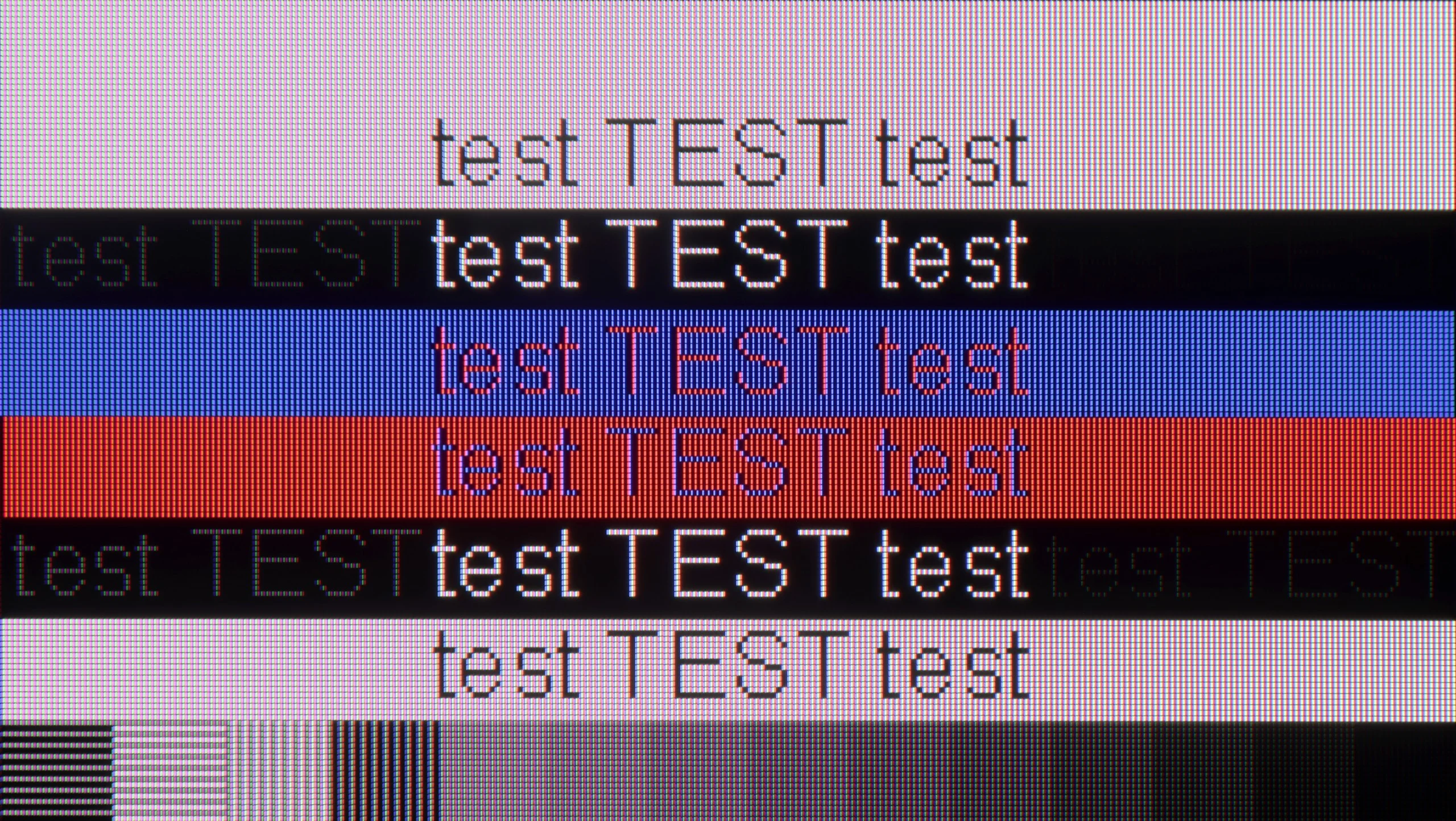
The photo shows the legibility of small fonts. Ideally, lines should be the same thickness on both light and dark text, with minimal pixel gaps.
DU8002 performs excellently as a monitor for computer work. The 4:4:4 chroma support ensures great font readability, making texts look sharp and clear, which is a significant advantage for extended work and content browsing. For office tasks and everyday use, it works really well. When it comes to gaming, the situation is more complex – the 60 Hz panel somewhat limits smoothness, which may not appeal to more demanding gamers. However, the low input lag is a definite plus that makes games responsive and enjoyable. In short: great for work, less so for gaming.
We also checked how the Q80FUX works when connected to a computer. And here’s another pleasant surprise – it handles this really very well. The most important thing is that the fonts are very readable, so nothing blurs and you can work on it normally. Additionally, just like with consoles: we can set a lower resolution here to achieve a high refresh rate of 120Hz in return. What’s super important is that in this mode, G-Sync started up and worked correctly. This just confirms that this television is really a successful and efficient piece of equipment for gaming, including on a PC.
Viewing angles
6.9/10
3.3/10
DU8002 really has great viewing angles, thanks to the IPS matrix. Even when looking at the screen from the side, the image remains clear and the colors vibrant. This is a significant plus, especially if we often watch movies with a larger group or work on a wide desk. There’s no need to worry that someone sitting at the side will see a faded image – everything looks good here, regardless of the angle.
Anyone planning screenings with a wide, family group must be aware of the fundamental compromise that Haier has opted for by implementing a VA panel in this model. This technology has indeed provided us with deep blacks and high contrast, but its inherent feature is also a noticeable narrowing of viewing angles. Just sitting a bit further to the side on the couch is enough to immediately notice how colors begin to lose saturation and the picture fades. It’s simply a classic trade-off – we gain something (contrast) at the expense of something else (angles) – and the Q80FUX fits perfectly into this scheme.
Daytime performance
4.2/10
4.8/10
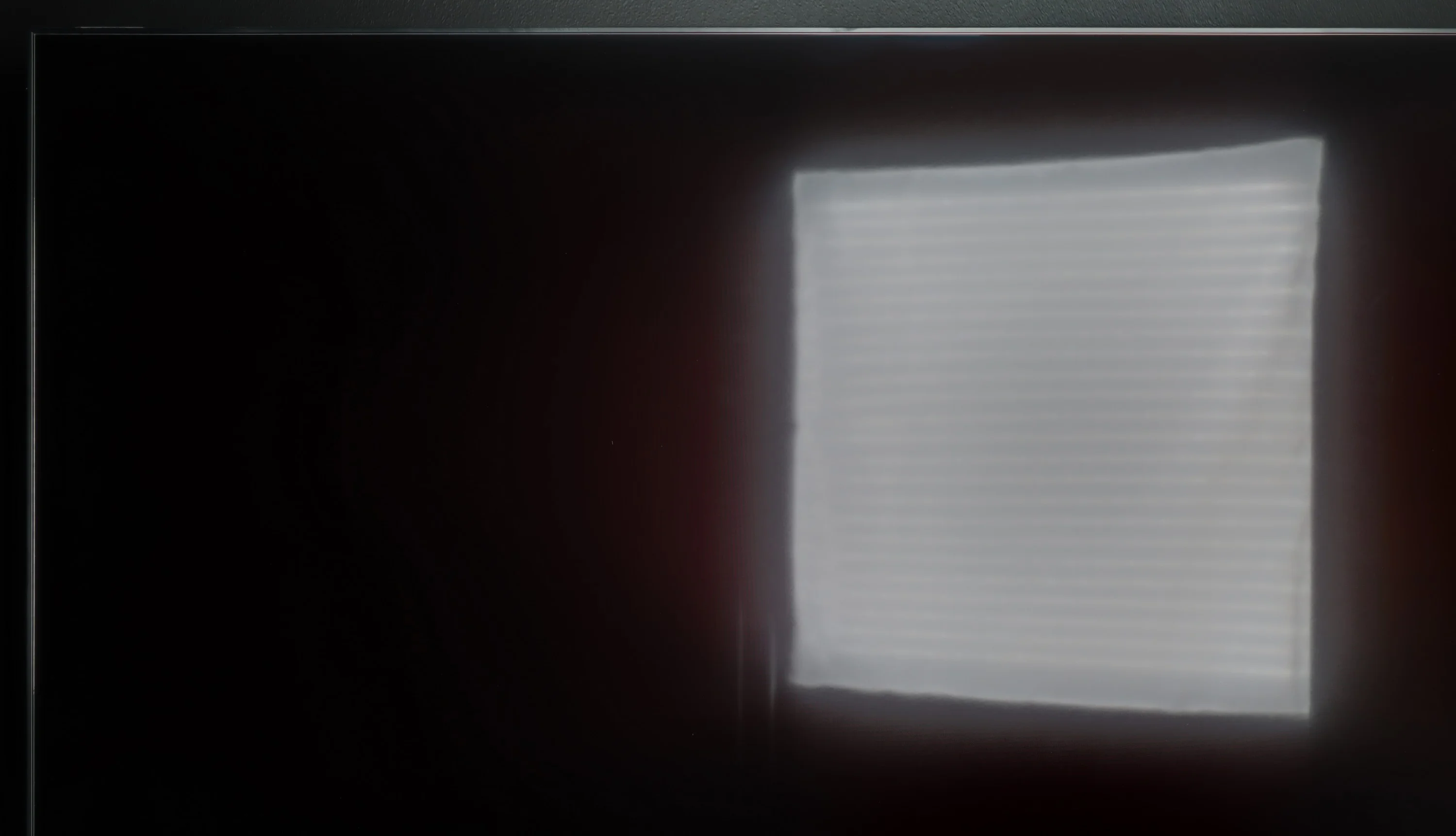
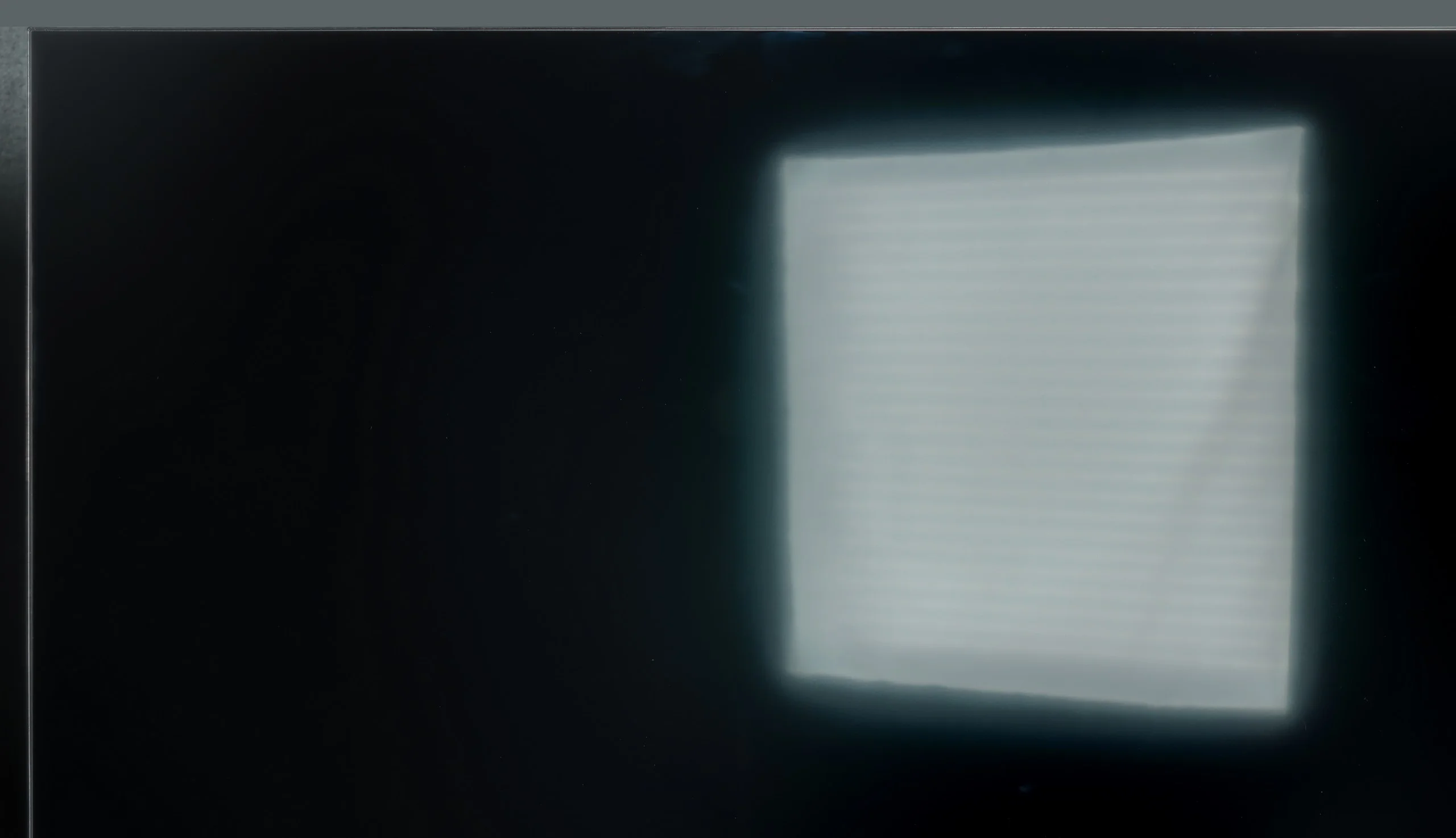
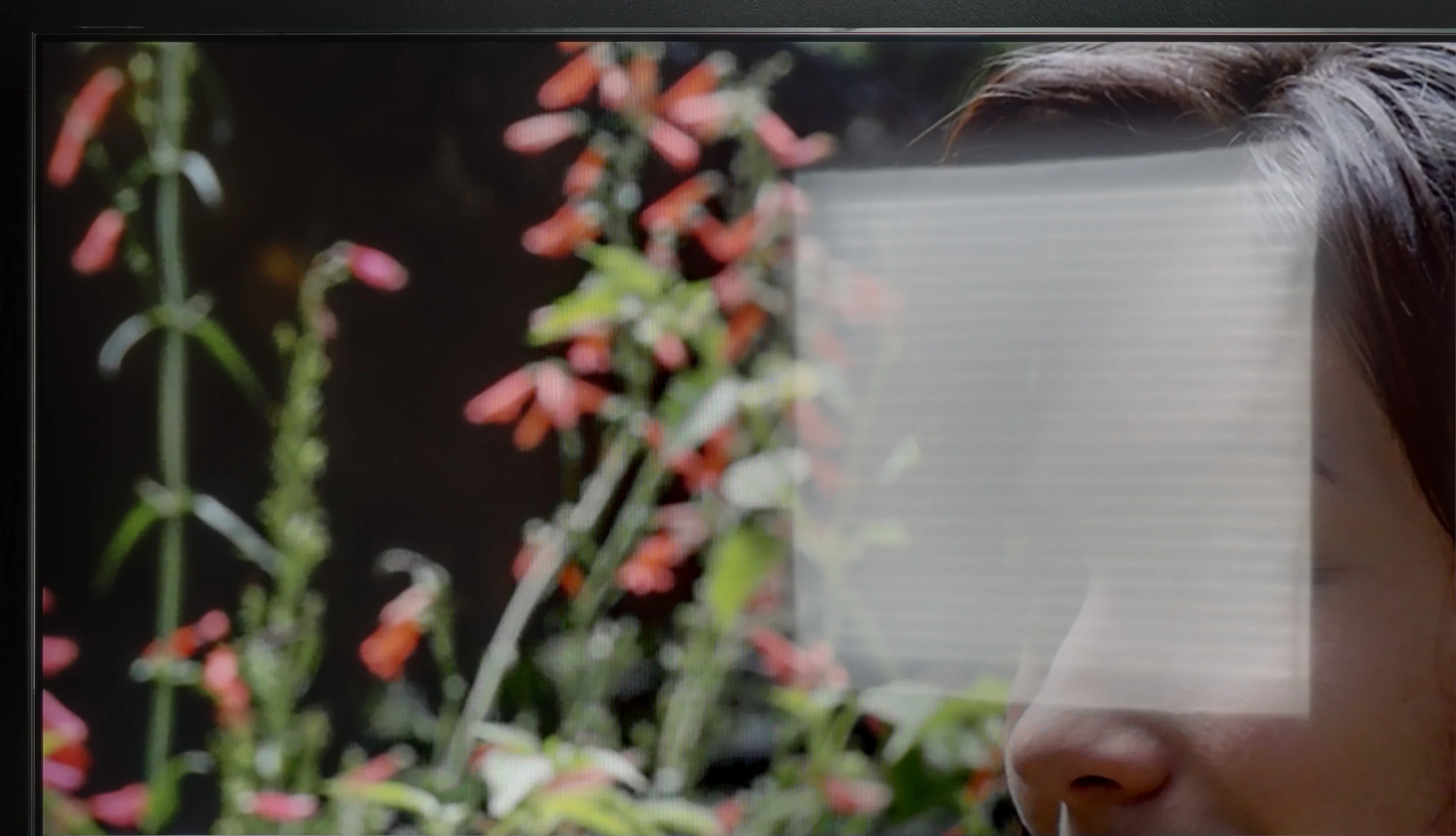
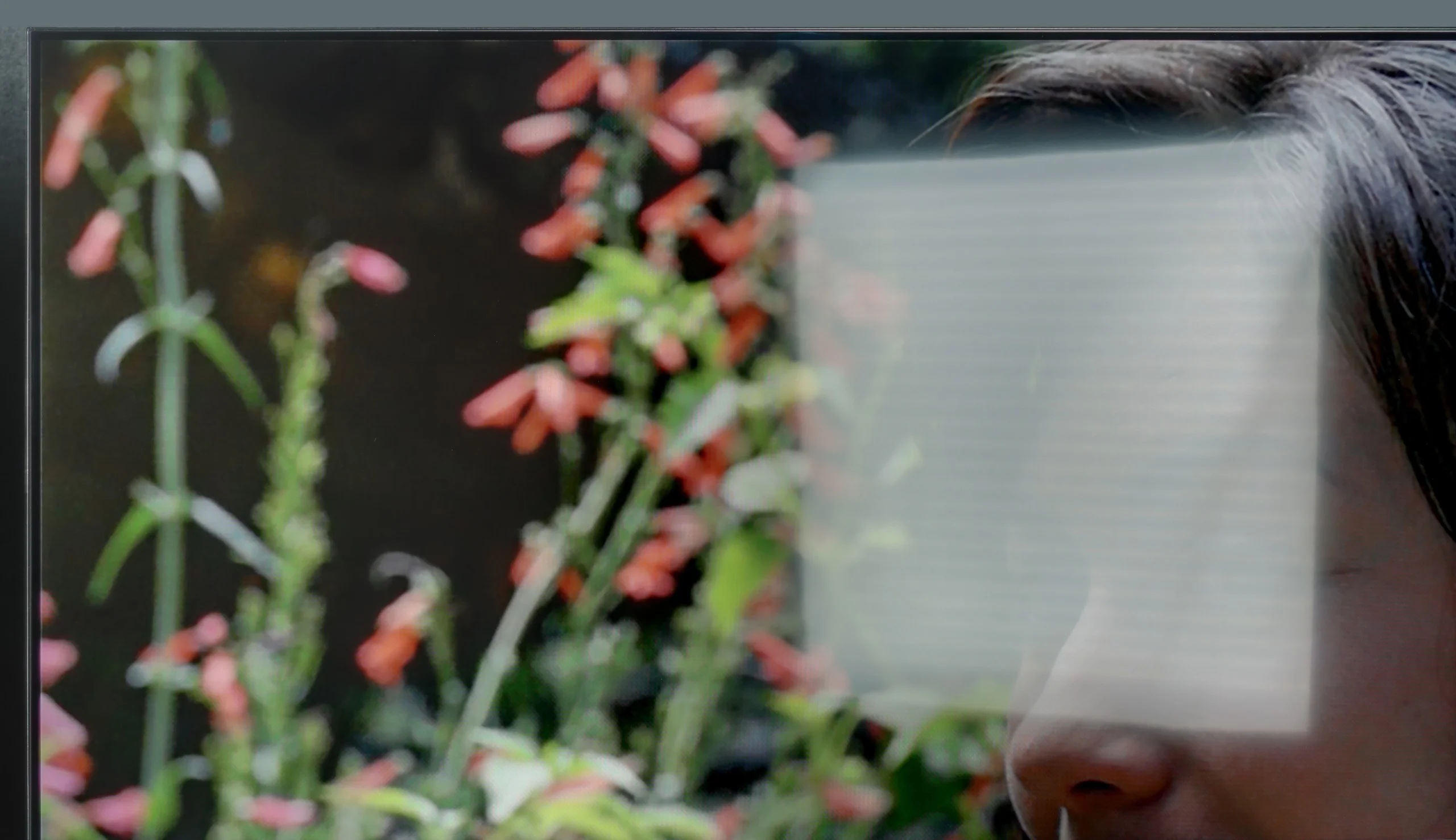
Panel brightness
Haier Q80FUX: 317 cd/m2
Samsung DU8002 (IPS): 291 cd/m2
The performance of the DU8002 television during the day is decent, although it does not stand out particularly. The satin matrix handles reflection suppression moderately, so in strong sunlight, reflections may be noticeable. On the other hand, the stable brightness at 300 nits performs quite well in a slightly lit room, providing a clear image. This is a solid result that will satisfy everyday use, although in heavily sunlit interiors, it may lack additional power.
The clash of the receiver with the everyday challenges posed by a bright living room turns out to be quite decent in the case of the Q80FUX, although it is certainly hard to call it ideal. The matrix itself is equipped with a coating that handles the suppression of most ambient reflections fairly well. Equally importantly, even in more challenging lighting conditions, the screen is capable of maintaining pleasantly saturated colors. However, the weakness of this construction reveals itself where the power of the backlight comes into play. The previously mentioned, rather moderate maximum brightness (around 350 nits) means that when confronted with intense natural light coming through the window, the screen often struggles to "break through." On a sunny day, the image may simply lack the necessary expressive power.
Panel details
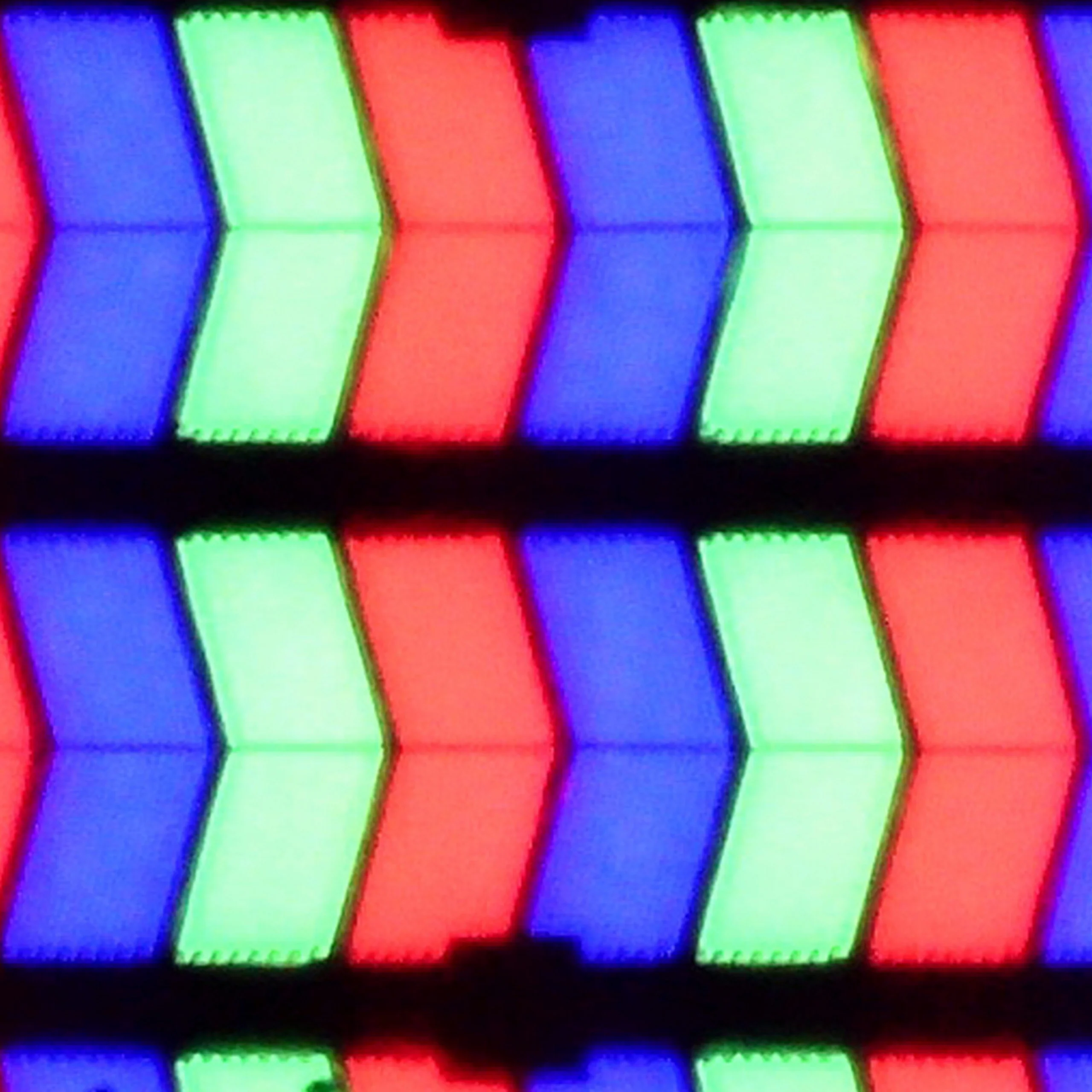
Subpixel Structure:
Panel uniformity and thermal imaging:
Samsung DU8002 (IPS)
Haier Q80FUX
TV features
6.3/10
5.6/10
- SystemTizenGoogle TV
- System performanceGoodAverage
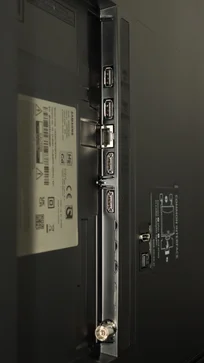
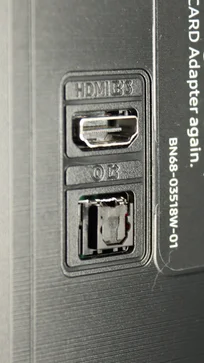
- HDMI inputs3 x HDMI 2.0, 0 x HDMI 2.14 x HDMI 2.0, 0 x HDMI 2.1
- Other inputsRCA (Chinch)
- OutputsToslink (Optical audio), eARC (HDMI), ARC (HDMI)Toslink (Optical audio), eARC (HDMI), ARC (HDMI), Mini-Jack (Headphones)
- Network InterfacesWi-Fi 2.4GHz, Wi-Fi 5GHz, Ethernet (LAN) 100MbpsWi-Fi 2.4GHz, Wi-Fi 5GHz, Ethernet (LAN) 100Mbps
- TV receptionDVB-T, DVB-T2, DVB-CDVB-T, DVB-T2, DVB-S, DVB-S2, DVB-C
Classic features:
- Recording to USB (terrestrial TV)
- Recording programming
- Picture in Picture (PiP)
- RF remote control (no need to aim)
- Backlit remote control
- Teletext
- Audio only mode
- Bluetooth headphones support
- Simultaneous Bluetooth headphones & TV audio
Smart features:
- AirPlay
- Screen mirroring (Windows Miracast)
- Voice search
- Voice search in native language
- Ability to connect a keyboard and mouse
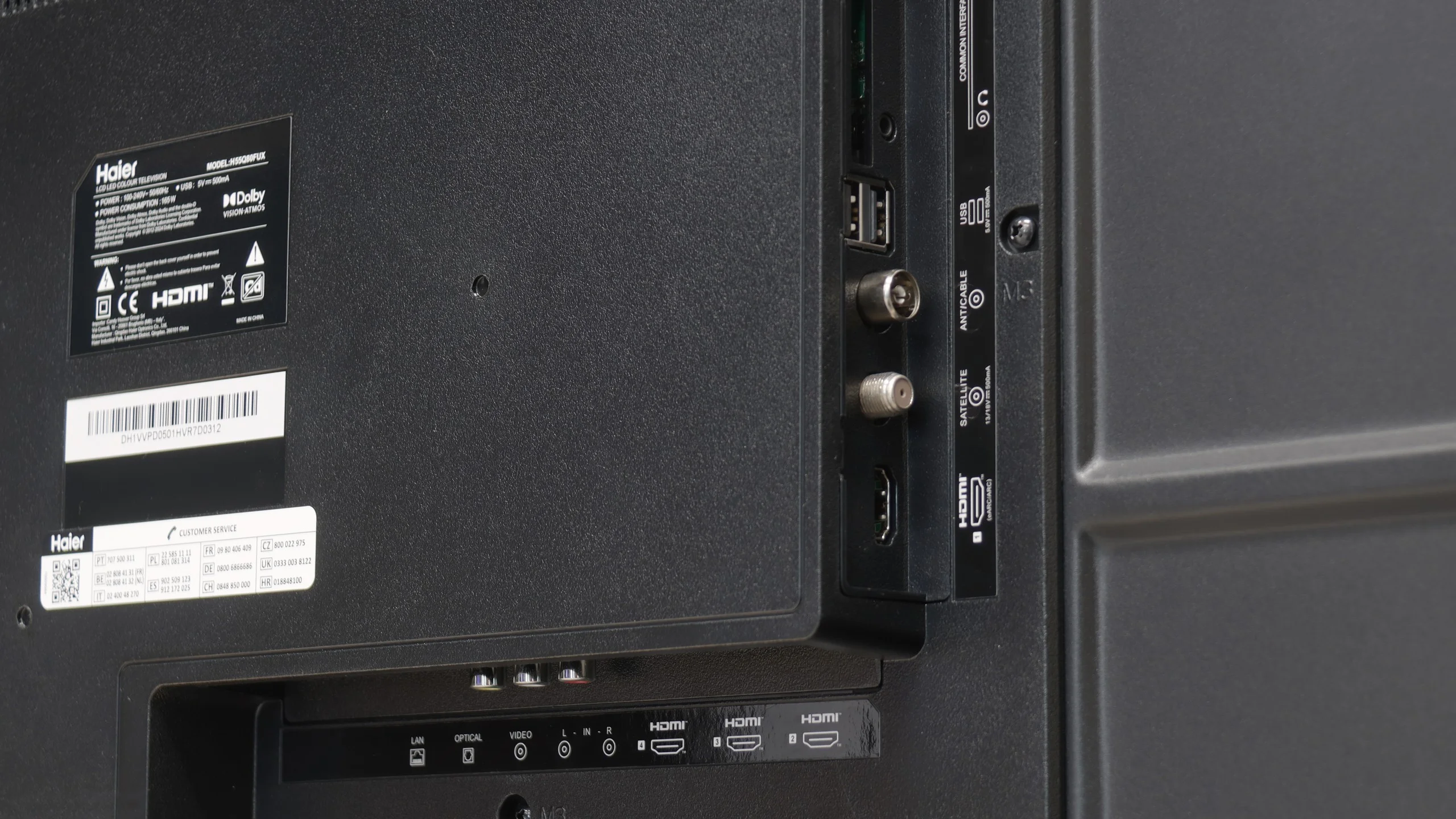
Sound connection options
- HDMI audioeARC (HDMI), ARC (HDMI)eARC (HDMI), ARC (HDMI)
- Other audio outputsToslink (Optical audio)Toslink (Optical audio), Mini-Jack (Headphones)
- Wireless audioBluetoothBluetooth
Supported audio formats (external HDMI eARC audio):
- Dolby Digital Plus 7.1
- Dolby True HD 7.1
- Dolby Atmos in Dolby Digital Plus (JOC)
- Dolby Atmos in Dolby True HD
- DTS:X in DTS-HD MA
- DTS-HD Master Audio
Senior accessibility
- Numeric keyboard on TV
- Font size adjustment
- Audio description
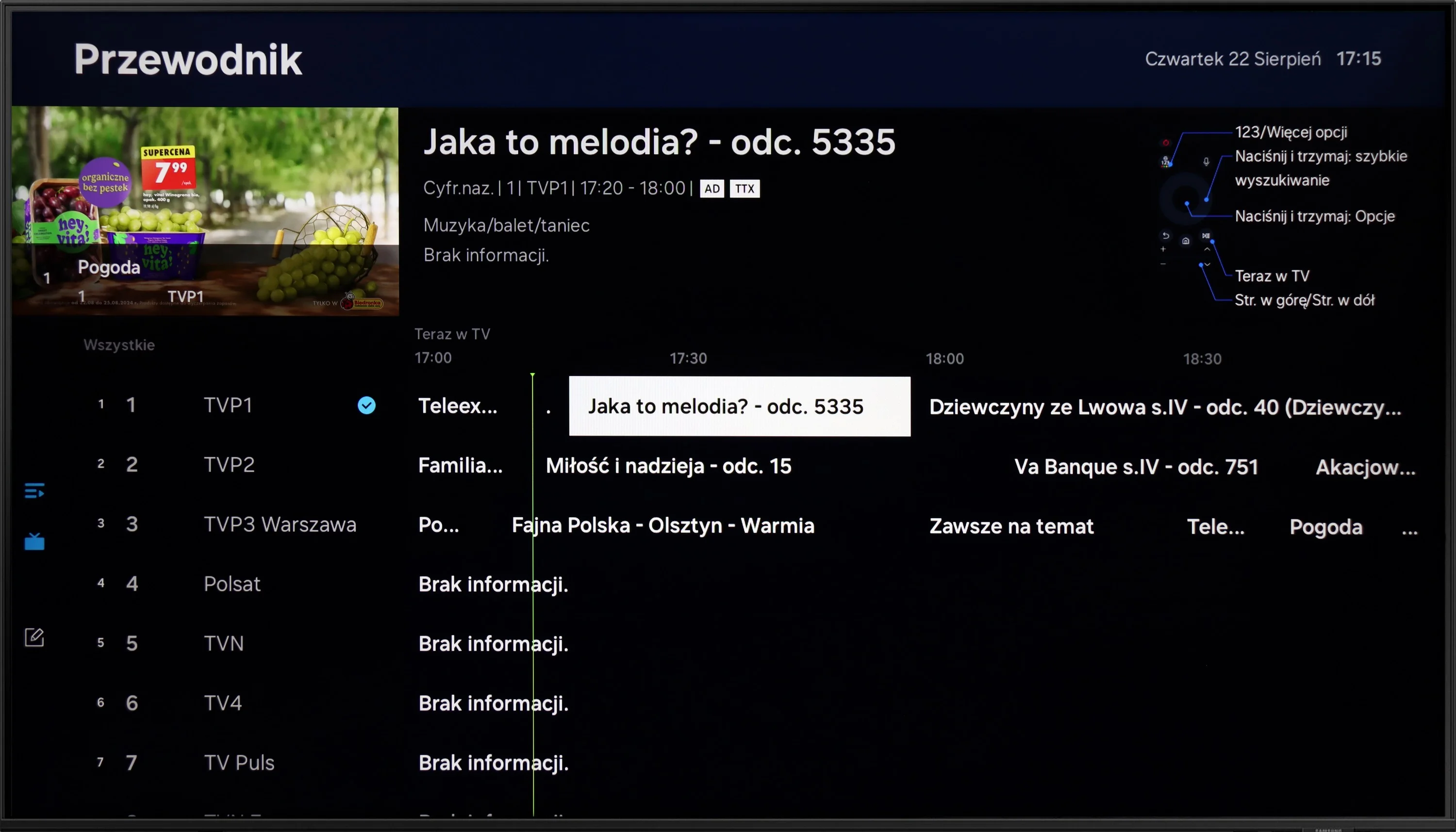
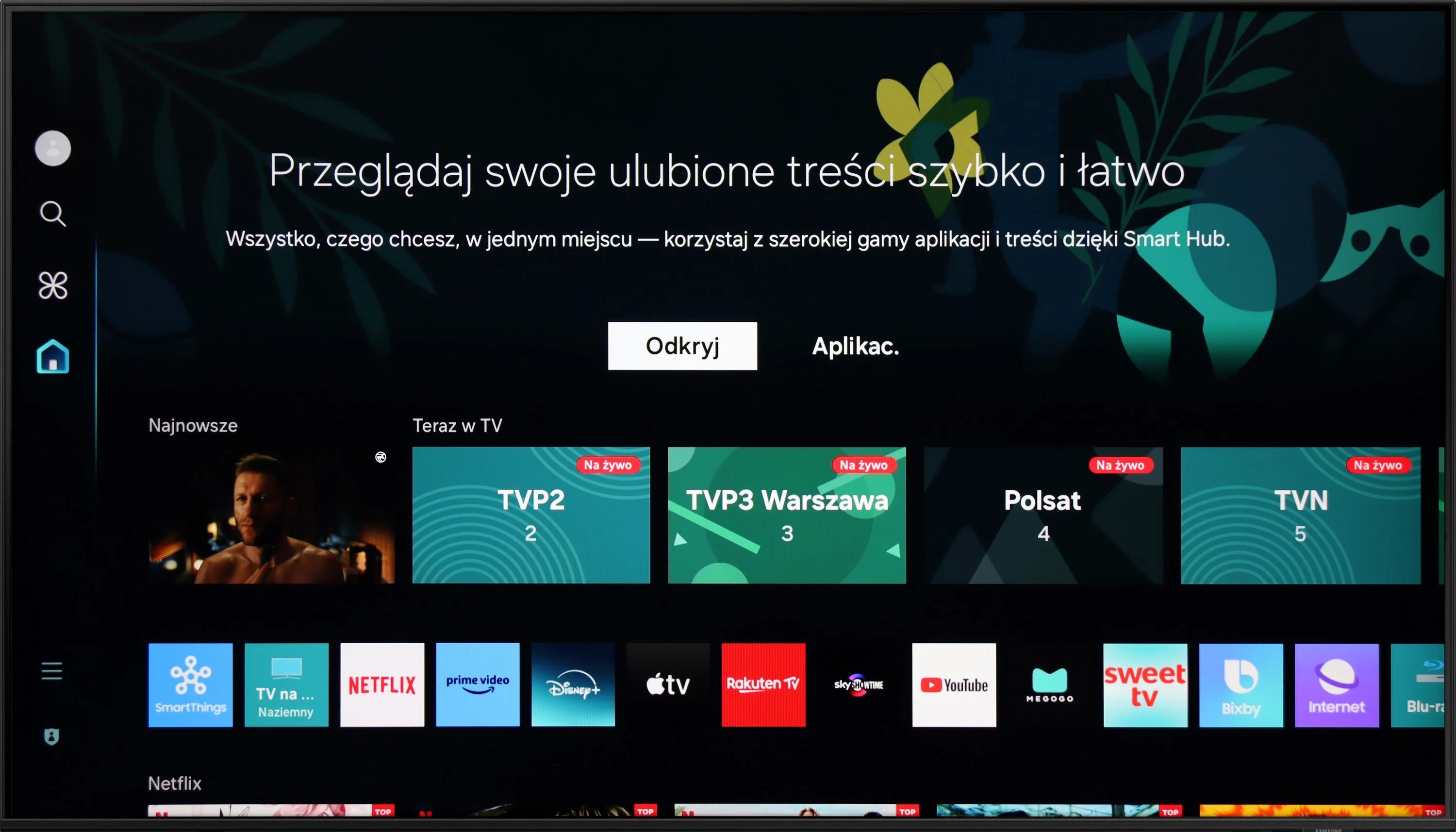
The Tizen system in the DU8002 television is a big plus. It runs smoothly, offering a lot of apps to choose from, although there are some limitations, such as the lack of Tidal. The Voice control deserves a bonus, as it simplifies daily navigation. Tizen is also a solid foundation for building a smart home thanks to integration with SmartThings – a great option for those who want to manage devices in the home from one place.
Among the user features, we find AirPlay and Miracast, which facilitate transferring content from phones or laptops to the television screen. The ability to connect devices via Bluetooth is another advantage. As for the drawbacks – the lack of PiP (picture in picture) and program recording options may be disappointing. Fortunately, the Samsung remote, although small and sleek, has its advantages. It can control external devices, such as decoders, which often offer a recording function, which can mitigate this shortcoming.
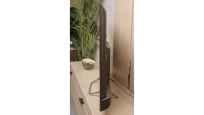
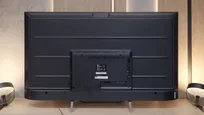
As for the design, the DU8002 is a real gem. It is one of the slimmest devices available on the market. With the proper mount, it can be installed on the wall, resembling a suspended picture frame – the effect is impressive and fits perfectly into modern interiors. Additionally, the adjustable width of the stand allows it to be matched to different furniture, although unfortunately this option is not available in all sizes.
SmartTV on Haier Q80FUX: GoogleTV
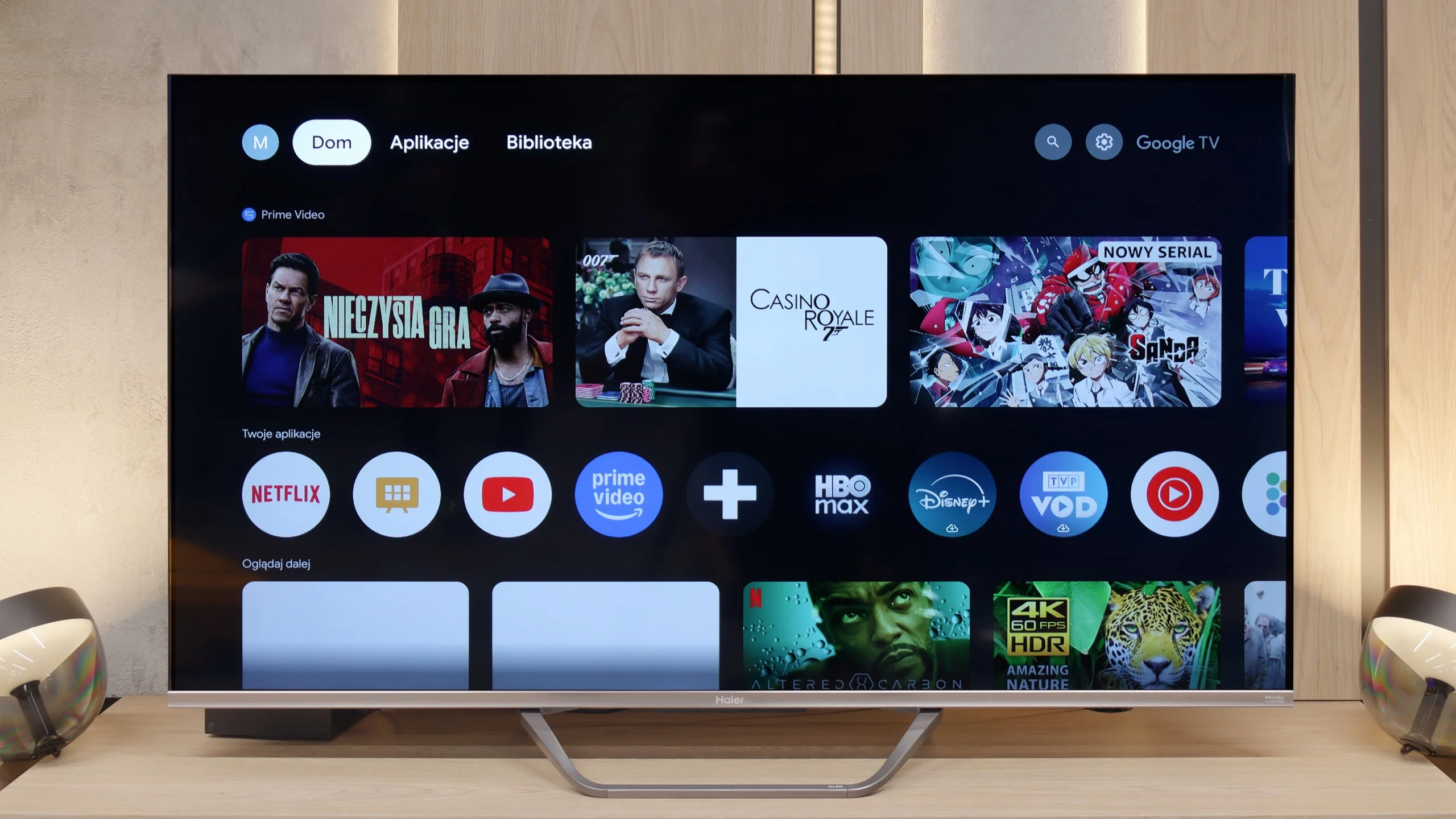
First, let's tackle the smart layer, which is managed by the Google TV system on the Q80FUX. This is theoretically a huge advantage, opening access to an endless library of applications, facilitating screen mirroring from mobile devices, and offering convenient voice search. Unfortunately, just like in other models from this brand that we've tested, the implementation of this platform leaves much to be desired. It’s not even about drastic freezes or delays in navigation, but rather a festival of minor errors, oversights, and terrible translations in the menu. It’s hard to regard "Google TV" in Haier’s version as comparable to what we know, for instance, from Sony or TCL receivers, even though the same proudly sounding name appears on the box.
Classic Features
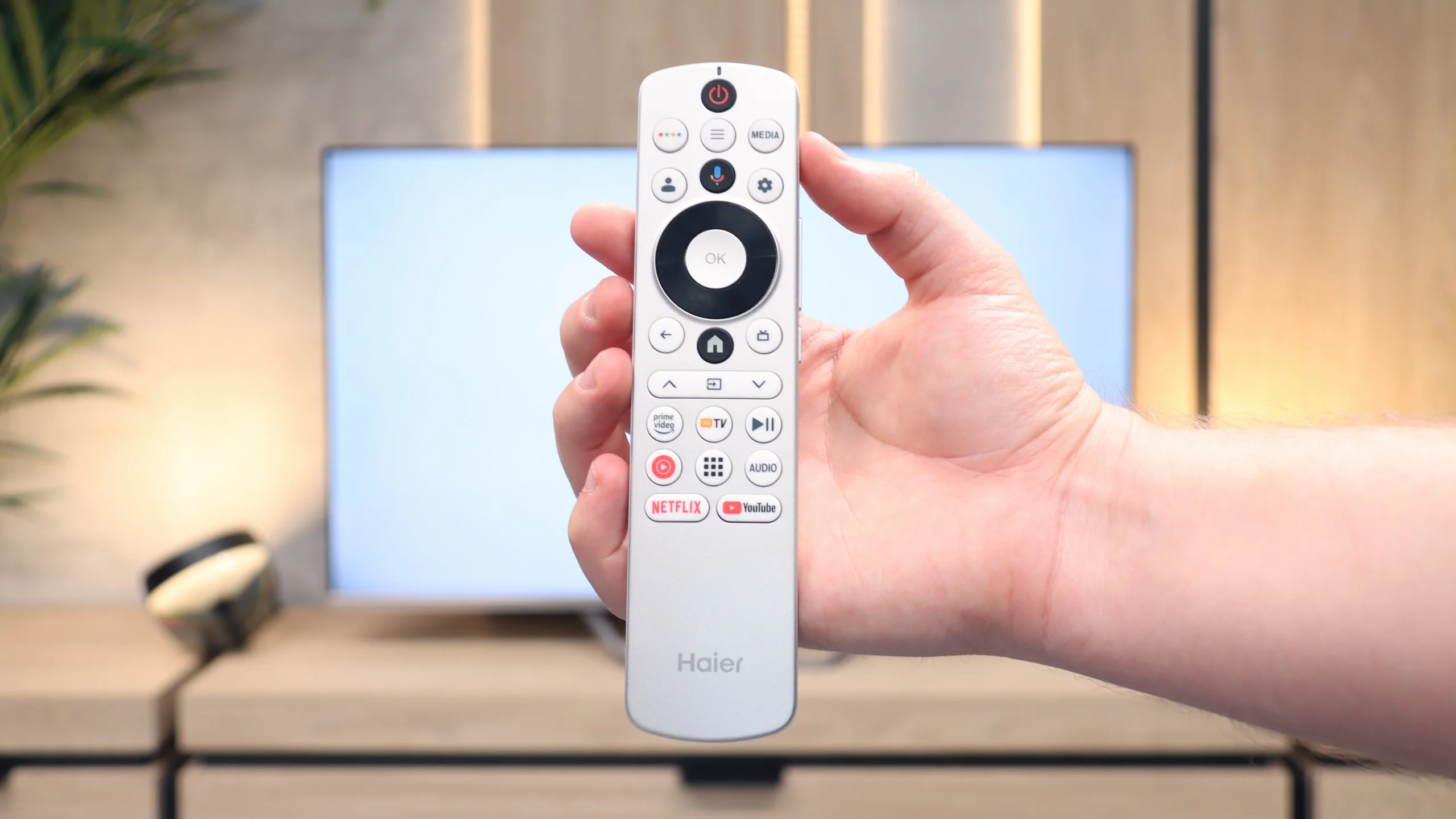
Moving on to the classic, practical functions of the television, the picture does not improve at all. The only commendable aspect is the presence of Bluetooth connectivity and an unusual yet useful relic from the past in the form of an analog headphone output jack. Other than that, it’s hard to find anything that would excite us. Due to problematic software, the receiver (just like its predecessors in our tests) was unable to find any terrestrial TV channels, while other TVs connected to the same installation had no issues whatsoever. The remote control itself is also strange – its design might appeal to some, but due to the lack of a numeric keypad and the absurd placement of some buttons on the side edge, it definitely cannot be called senior-friendly.
Apps
9.3/10
9.6/10






















Playing files from USB
9.1/10
9.6/10
Supported photo formats:
Maximum photo resolution:
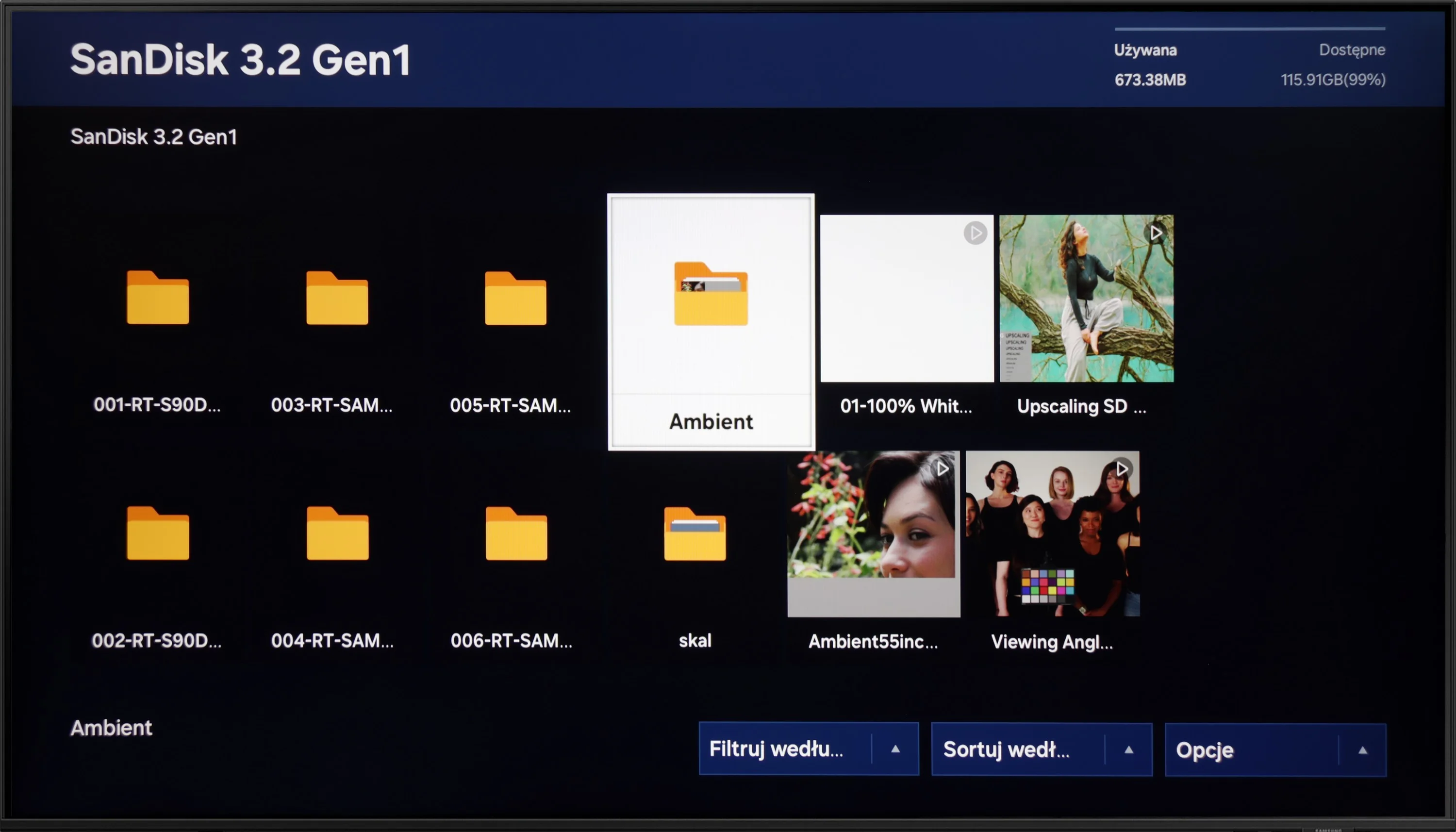
Playback of files from USB on the DU8002 television is at a very good level, similar to most Samsung models. The TV handles most popular audio, video, and image formats, making multimedia playback convenient and hassle-free. Support for Polish characters in subtitles and the ability to change font color is a big plus that users who like to customize their experience will appreciate. Among minor shortcomings, one can mention the lack of support for the HEIC image format, popular among Apple users. Nevertheless, playback of files from USB is at a very satisfying level and should meet the expectations of most users.
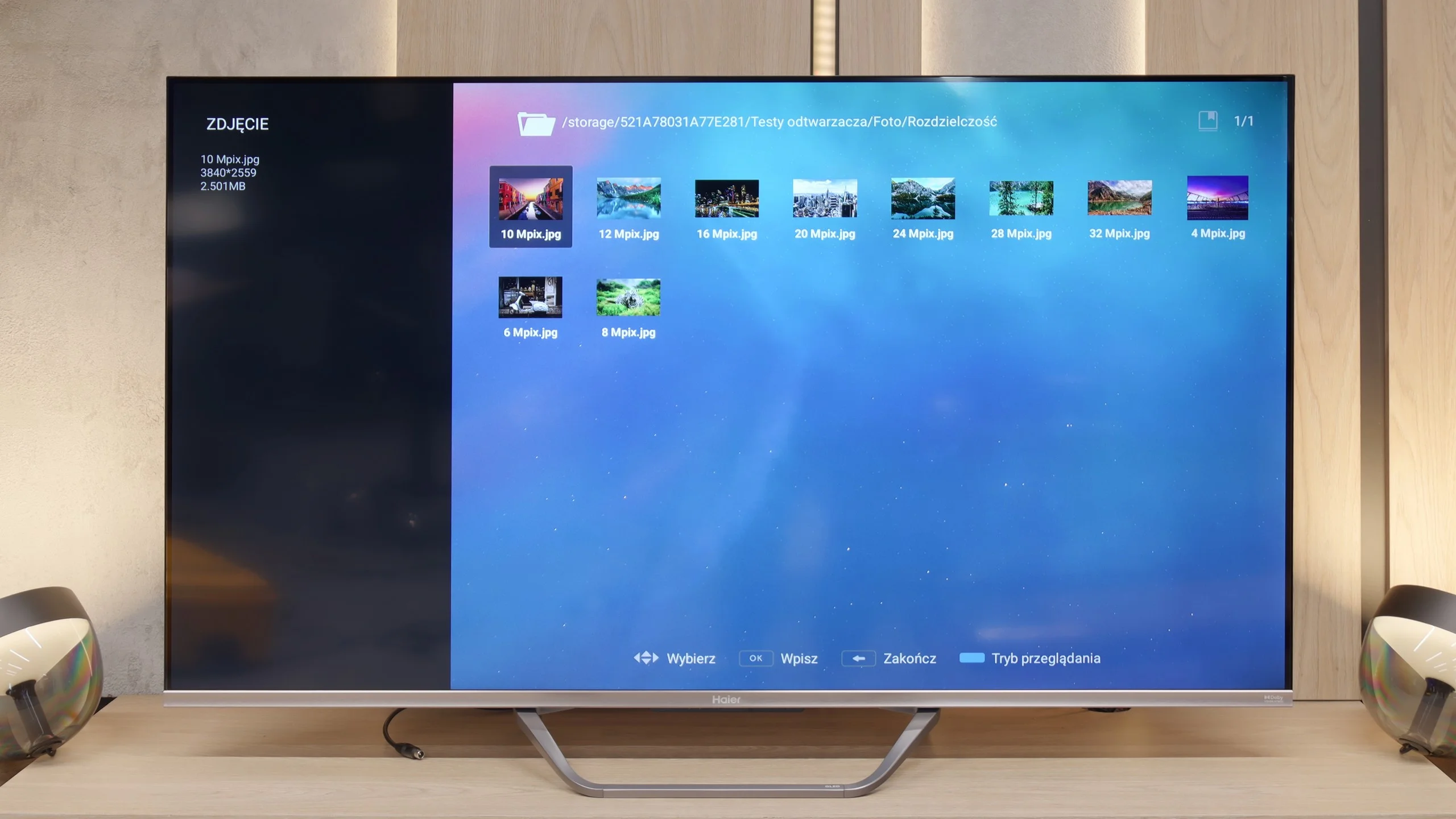
We must admit that after a series of setbacks we encountered when assessing the overall implementation of the Google TV system, we approached the multimedia player test with considerable caution. Meanwhile, in this one specific aspect, the Q80FUX served us a real surprise. The built-in application for handling files from USB drives works just great. This software component seems to be completely immune to the issues afflicting the rest of the system, opening virtually all the most important and popular video file formats we presented to it.
Sound
5.9/10
5.5/10
- Maximum volume-84dB
- Dolby Digital Plus 7.1
- Dolby True HD 7.1
- Dolby Atmos in Dolby Digital Plus (JOC)
- Dolby Atmos in Dolby True HD
- DTS:X in DTS-HD MA
- DTS-HD Master Audio
The sound in the DU8002 is clear and crisp, but unfortunately, it lacks bass – this is the effect of its slim design, which sacrifices sound depth for an elegant appearance. When it comes to audio file playback, there is no support for DTS, which may be a downside for more demanding users. Fortunately, the TV supports the Dolby Digital Plus codec, which allows for the transmission of Dolby Atmos sound to other devices, such as soundbars. This enables us to enjoy spatial sound that adds a new dimension to films and music.
Turning to the issue of acoustic "experiences," the Haier Q80FUX seems to adhere to the principle that sound should simply be. And it is – that’s about all that can be said about it. The built-in speakers produce sound that is exceedingly flat, lacking character, and most importantly, they lack any clear bass foundation. One comfort is the fact that the TV supports Dolby Atmos format. But let’s be honest: to truly take advantage of the benefits of this codec and hear the promised space, passive decoding capability is not enough. Connecting an external home theater system or at least a decent soundbar is, in this case, not just a recommendation but an absolute necessity.
Sound Quality Test
No sound test video
Acoustic Measurements
No acoustic data
84dBC (Max)
75dBC
Reader comments
Comments are provided by the external service Disqus (Zeta Global). Once loaded, Disqus may set cookies and process data about your activity.
We will remember your choice on this device. Provider's privacy policy