 Direct comparison
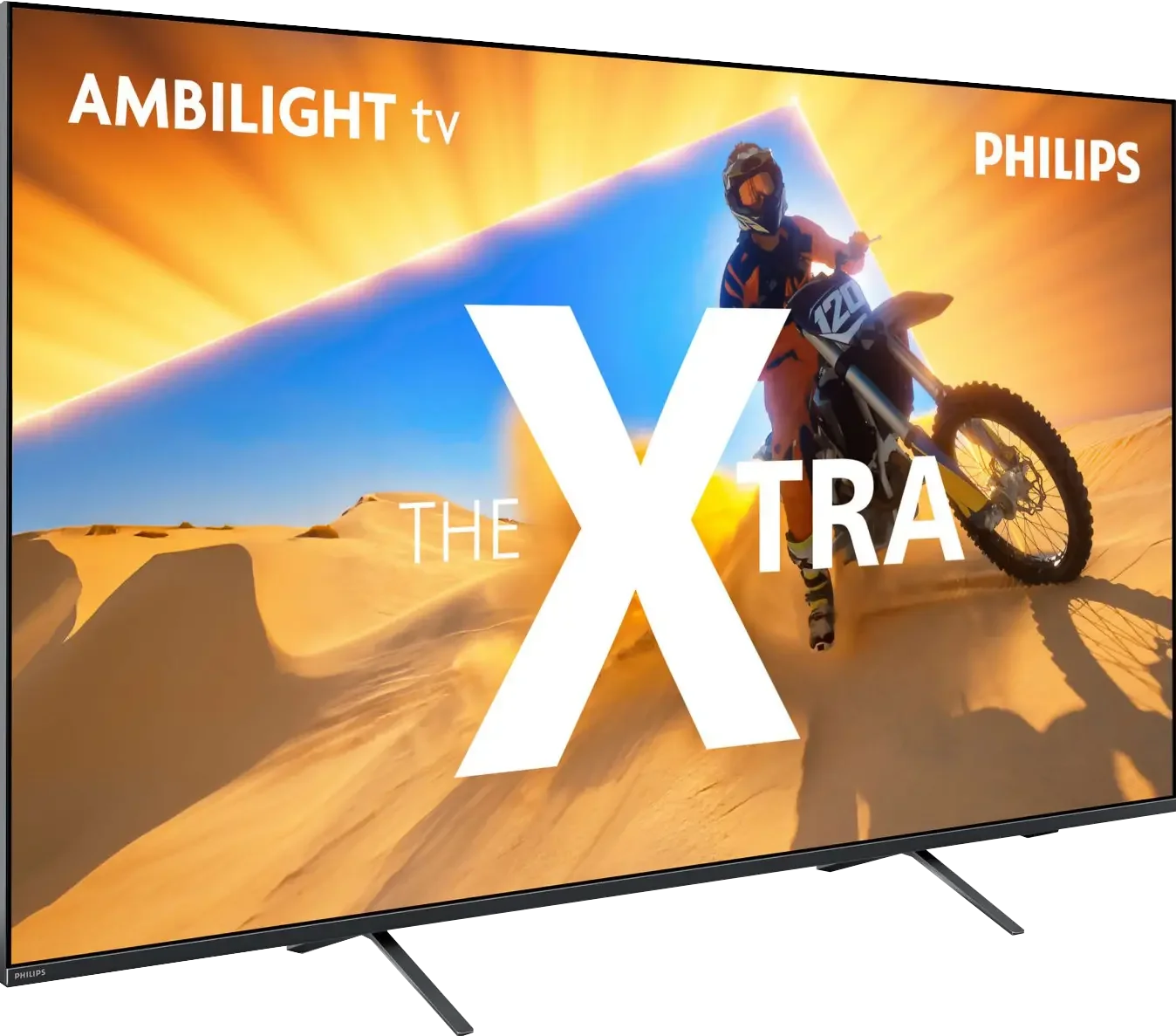
The Philips PML 9009 is the brand's flagship LCD television with Mini LED backlighting. It boasts impressive build quality, a stylish remote, and Philips' unique multicoloured Ambilight feature. In terms of picture quality, black levels and contrast could be improved—they don’t quite match the depth and vibrancy offered by similarly priced competitors. However, thanks to effective image algorithms, tonal quality remains satisfying. The screen’s relatively low brightness is well managed, and the inclusion of Dolby Vision provides a gateway to HDR content. The TV’s smooth colour transitions are noteworthy, surpassing some higher-end models. The PML 9009 truly excels in gaming performance, offering an experience that will please any gamer. Its motion-smoothing system also deserves praise, with two adjustable sliders allowing users to select their preferred smoothing level, making it a solid choice for sports viewing. Although the TitanOS operating system is still evolving and lacks a wide range of apps, the manufacturer is expected to address this over time.
- Matching (Score) |
- Our verdict |
- TV appearance |
- Where to buy |
- Contrast and black detail |
- HDR effect quality |
- Factory color reproduction |
- Color reproduction after calibration |
- Smoothness of tonal transitions |
- Image scaling and smoothness of tonal transitions |
- Blur and motion smoothness |
- Console compatibility and gaming features |
- Input lag |
- Compatibility with PC |
- Viewing angles |
- Daytime performance |
- Panel details |
- TV features |
- Apps |
- Playing files from USB |
- Sound

Check the best price offer:
Samsung S85H / S83H(paid link)The Xtra / PML9019 / PML9059 / PML9009 / PML9049 / AMBILIGHT TV

S85H / S83H
Panel type: LCD VA
Resolution: 3840x2160
System: Titan OS
Model year: 2024
Complete the survey to find out the result
Panel type: WRGB OLED
Resolution: 3840x2160
System: Tizen
Model year: 2026
Complete the survey to find out the result
Overall rating
6.8
7.9
 Movies and series in UHD quality
6.5
8.0
 Classic TV, YouTube
6.3
8.6
 Sports broadcasts (TV and apps)
6.6
8.5
 Gaming on console
8.5
9.6
 TV as a computer monitor
8.6
7.6
 Watching in bright light
6.1
5.1
 Utility functions
6.1
7.3
 Apps
6.7
9.3
 Sound quality
6.7
7.2
Complete the survey to find out what fits your preferences
Advantages

Superb tonal quality of scenes exceeding the capabilities of the television
Well-functioning dynamic tone mapping feature
Colour reproduction after calibration
Performance when connected to a console/PC
Perfect blacks and infinite contrast with OLED
Good HDR brightness up to around 800 nits
High image fidelity after calibration
Very smooth motion thanks to a 120 Hz OLED panel
Rich set of features for gamers: VRR, Game Bar, low input lag
4 HDMI 2.1 ports with full 48 Gbps bandwidth
Feature-rich, smooth-running Tizen system
Solar-powered remote with many features
Support for Dolby Atmos surround sound
Disadvantages

Significant halo/bloom effect
Poor viewing angles
TitanOs system is not as advanced as the competition
Average contrast and black levels
Worse reflection suppression than its predecessor, a characteristic of the new OLED SE panel
Average SDR brightness, best suited for a room with controlled lighting
No DTS:X support, mainly a drawback for Blu-ray collectors
No Dolby Vision, not necessary but would be nice 🙂
Our verdict
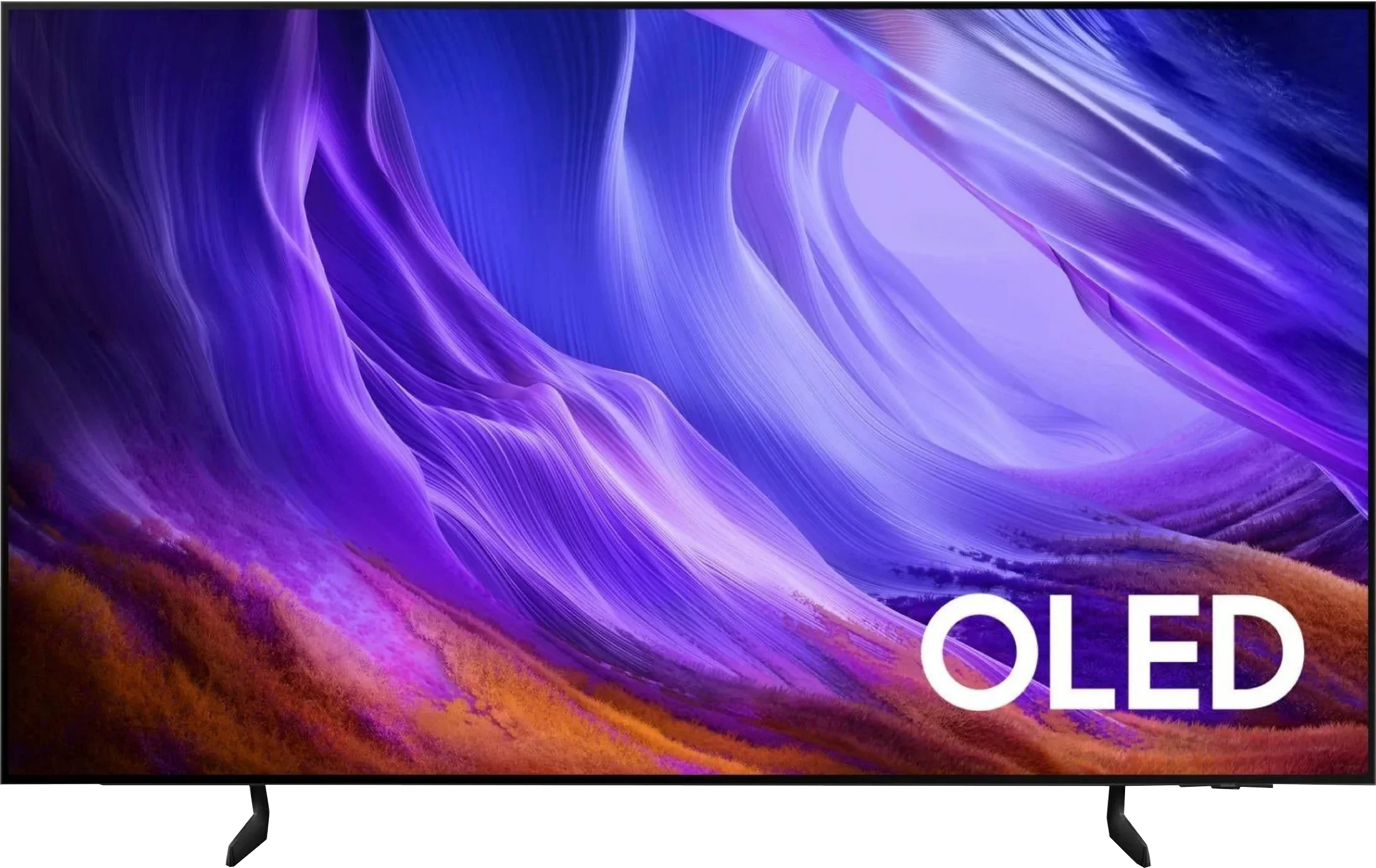
Samsung S85H is a very successful continuation of the S85 series and a TV that still performs its main role well: to be an affordable entry into the world of OLEDs. The biggest change from its predecessor is the use of LG Display's new OLED SE panel, but the overall character of this model remains practically unchanged. Its greatest strengths are still perfect blacks, very high contrast and a picture that can look truly excellent in the evening. Add to that good colors and the ability to achieve a high degree of fidelity to the director's vision. The S85H also works very well as a versatile TV. Gamers get four HDMI 2.1 ports, 120 Hz, VRR, very low input lag and Game Motion Plus, so there is little to complain about here. Tizen runs fast and is user-friendly, and the whole system clearly targets users who today mainly use Netflix, YouTube and other streaming services, while traditional broadcast TV is treated as an extra.
However, the new OLED SE panel is not without flaws. This is most noticeable when watching during the day, because its glare handling is worse than previous OLED panels. Its peak brightness is also not high enough for the S85H to perform particularly well in a very sunlit living room. It is still a TV that shows its strengths best in the evening or in a room with at least partial control over ambient light. And that is probably the best way to look at the S85H. It is not an OLED meant to break brightness records or compete with the most expensive panels. It simply aims to offer what people like most about the technology, but at a lower price. Perfect blacks, very good movie picture quality, excellent gaming features and a convenient smart system make the S85H one of the easiest ways to get into OLED without spending a fortune.
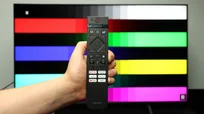
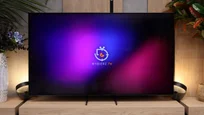
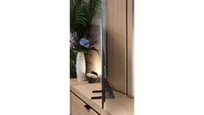
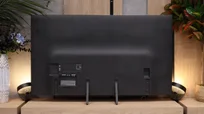
TV appearance


Contrast and black detail
6.6/10
10/10
Local dimming function: Yes, number of zones: 75 (15 x 5)
Contrast:


Result
132,000:1

Result
16,550:1

Result
14,450:1

Result
7,850:1

Result
6,650:1
Result
∞:1
Result
∞:1
Result
∞:1
Result
∞:1
Result
∞:1
Halo effect and black detail visibility:
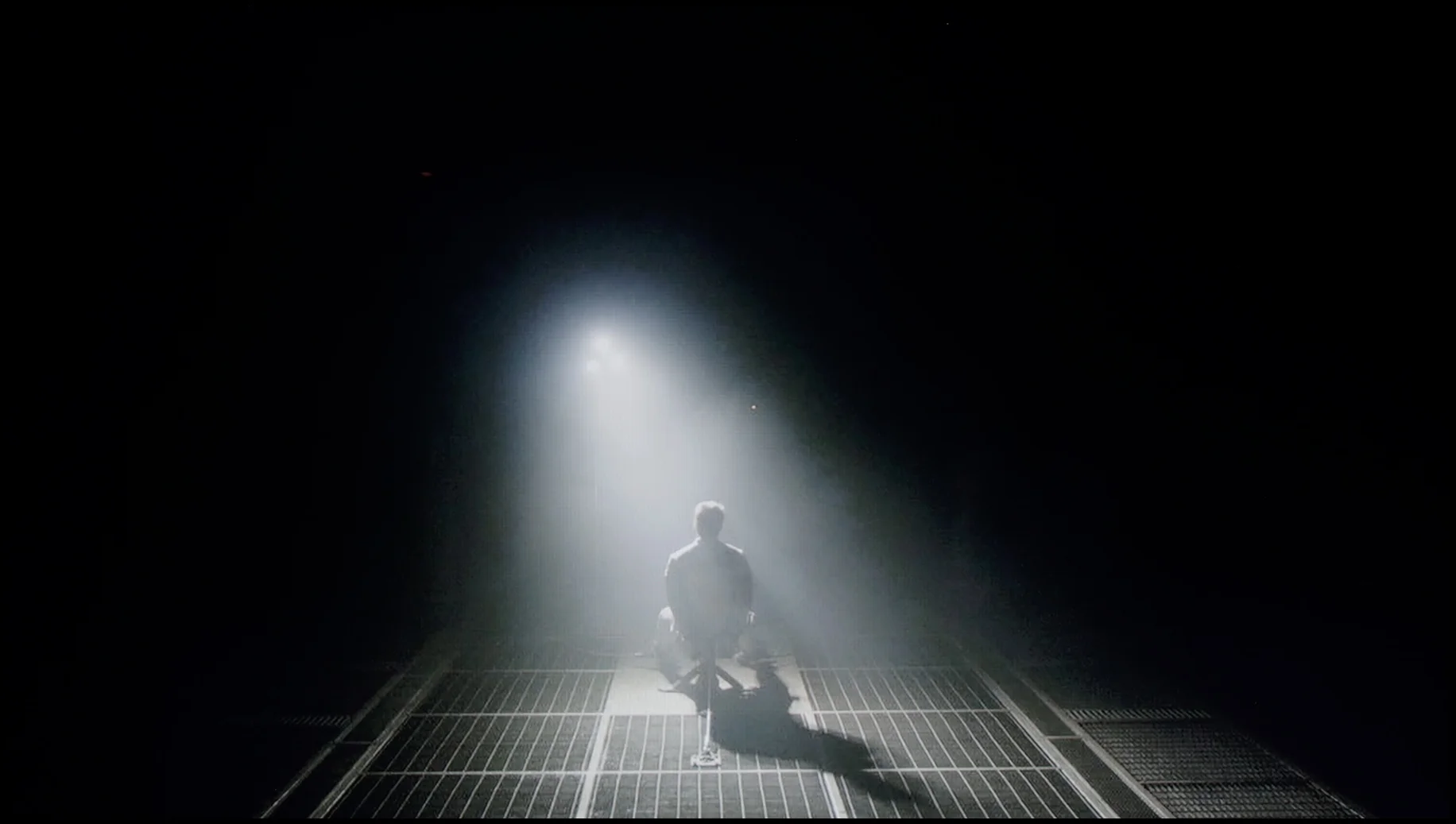
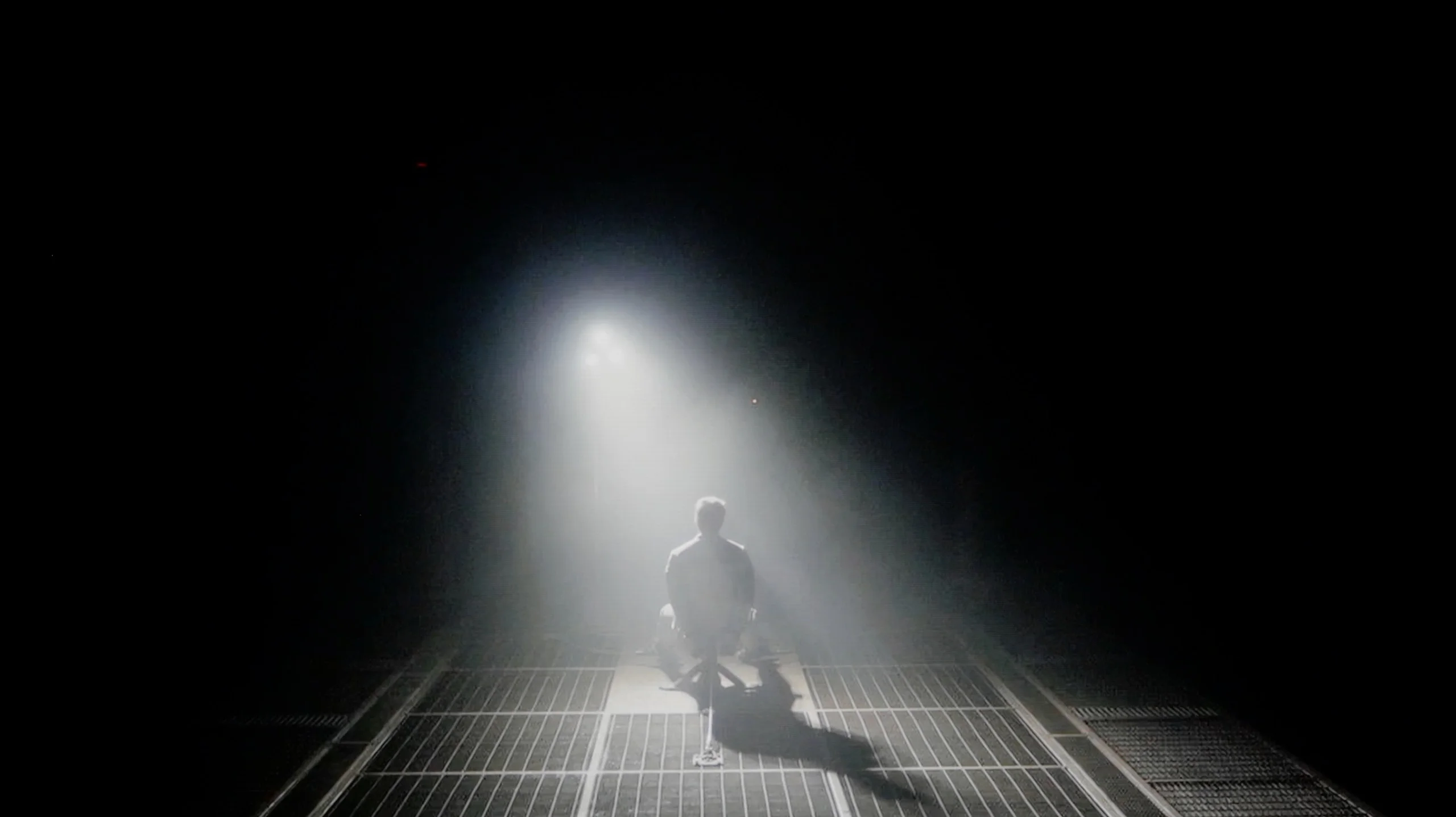
Check the visibility of bright lights on a dark background. Mini-LEDs often struggle with this. The photo does not compare black levels – that’s what the video below is for.
The video accurately shows differences in contrast and black levels between TVs, as well as potential issues: halo around bright objects or Mini-LED zone operation visible as brightness jumps.
The Philips PML9009 features a high-contrast VA panel. While it doesn’t produce the same depth and dimensionality as OLED displays, it remains a solid choice for home cinema, outperforming IPS/ADS panels in this regard. The measured static contrast ratio, at 6000:1 without local dimming, is commendable and showcases the Mini LED backlighting capabilities of this model. Though the contrast and black level measurements aren’t among the highest, the television performed well in certain scenes, such as Oblivion, where it effectively separated light – an achievement not always seen in much pricier units. Testing was conducted at medium power dimming; the lowest dimming level didn’t achieve satisfactory black levels, while the highest setting led to detail loss. Unfortunately, our test with The Revenant highlighted some issues. While background details were clear, the dimming zones disrupted the overall tonal balance, resulting in a noticeable halo effect around the subtitles.
The switch to LG Display’s new WOLED SE panel practically changed nothing when it comes to black levels and contrast. And you couldn’t really expect any major improvement, because we’re still talking about OLED, a technology that can completely turn off each pixel individually. In practice this means perfect black and enormous image depth, especially in darker scenes. Black bars are truly black, there is no halo around bright elements, and contrast remains virtually infinite. Even very expensive Mini-LEDs with thousands of local dimming zones still can’t offer the same precision as the S85H. And that is its biggest advantage. The S85H may be Samsung’s cheapest OLED, but in terms of black levels it can deliver exactly the same as much more expensive models using organic panels.
HDR effect quality
6.1/10
6.3/10
Luminance measurements in HDR:

Result
548 nit

Result
550 nit

Result
824 nit

Result
491 nit

Result
582 nit
Result
733 nit
Result
744 nit
Result
837 nit
Result
755 nit
Result
404 nit
Scene from the movie “Pan” (about 2800 nits)


Scene from the movie “Billy Lynn” (about 1100 nits)


The photos show two HDR10 movies. 'Pan' is one of the brightest productions ever made, while 'Billy Lynn' (soldier) has brightness typical of streaming (Netflix, Prime, HBO MAX). Notice the intensity of effects and detail in whites.
Static HDR10


The photos present the visibility of white details in various HDR formats. They do not show brightness differences between TVs (these can be compared in the previous gallery).
Dynamic: Dolby Vision
Dynamic: HDR10+


The photos present the visibility of white details in various HDR formats. They do not show brightness differences between TVs (these can be compared in the previous gallery).
HDR luminance chart:
Samsung S85H / S83H
Philips PML9009 / 9019 / 9059
Luminance of RGB colors
The Philips PML9009 struggles to deliver the highest HDR performance. Scenes with effects around 550 nits don’t provide particularly impressive lighting, though the effects remain stable, an improvement over SDR materials. A notable exception is in Gemini Man, where a flashlight as the sole light source stands out. This is likely due to the absence of large dark areas and the relatively small size of the light source compared to scenes with larger, brighter elements like the sun. While the brightness results in HDR content aren’t quite strong enough to recommend this TV for productions utilising a wide colour gamut, it’s worth mentioning that the model does achieve decent coverage, reaching 93% of the DCI-P3 spectrum.
Interestingly, the new WOLED SE panel has brought a slight improvement in brightness to the S85 series. In the same movie scenes the previous year's model stayed closer to about 700 nits, while the S85H can reach around 800 nits. Of course this isn't a change that completely transforms the HDR experience, but that extra headroom is noticeable especially with small highlights, reflections, and stronger special effects. Around 800 nits is already a very good result for an entry-level OLED and in most films it's enough for HDR to have the right impact. Bright elements can clearly stand out from perfect black, and that contrast still does most of the heavy lifting here. You should remember the typical limitation of organic technology, though. When a very bright scene covers a large part of the screen, brightness can drop by almost half. This is the result of the panel's protection mechanisms, which limit its power with large bright areas.
Colors
The S85H can produce very pleasant, saturated colors and in most HDR films it looks really good in that respect. We measured roughly 95% DCI-P3 coverage, so the palette most often used in movies is reproduced to a very large degree. Skin tones, greens, and stronger reds still have appropriate intensity, and during normal viewing it's hard to fault them. Only when you look more broadly at BT.2020 do the limitations of the new WOLED SE panel become apparent. Coverage was around 70%, a bit less than in previous-generation WOLEDs and noticeably less than in QD-OLED panels. In films this isn't a major loss, because most productions rarely use such highly saturated colors. You notice it more often in games, where developers are much more likely to employ more intense colors.
Factory color reproduction
5.3/10
7/10


This gallery shows how colors change after professional TV calibration. If you notice the difference, we recommend ordering this service at SkalibrujTV.com.
Factory Mode
After calibration


This gallery shows how colors change after professional TV calibration. If you notice the difference, we recommend ordering this service at SkalibrujTV.com.
Factory Mode
After calibration
During testing, the Philips PML9009 performed best in the factory "Filmmaker" mode, which we evaluated across both SDR and HDR content. A key characteristic observed in this mode is the EOTF curve’s behaviour in HDR content and gamma settings in SDR, designed to enhance image accuracy. However, the PML9009 presented noticeable issues, particularly with white balance, as a pronounced red dominance created a yellow tint across the entire image. This affected skin tones and white areas, with faces and whites appearing unnaturally warm. The colour shift was confirmed through the "ColourChecker" palette, where colours leaned towards warmer shades.
In the gamma analysis, responsible for image contrast, we noticed considerable inaccuracies early on. Our measured values spiked above the reference, causing dark scenes to lose detail and merge visually up to about 10% screen brightness. Following this, the values dropped below the target line, further degrading contrast—an area already challenging for this model.
In HDR content, the white balance remained similarly flawed, and the EOTF curve also restricted brightness levels, resulting in a dim, muted image. Colour inaccuracies were even more pronounced here, with lower luminance levels causing large deviations from accurate colours, which were clearly visible on the error graph, often exceeding acceptable limits. While aiming for cinematic quality, this mode ultimately fell short in delivering balanced colour and contrast fidelity.
To evaluate color we, of course, selected Filmmaker mode, and in SDR our S85H unit was very well calibrated out of the box. The biggest deviation appears in the white balance, where a bit of blue drops out as brightness increases. In practice this means whites and grays have a slightly warmer tint than they should. It's not a major error and during normal viewing it generally isn't very noticeable. Gamma also stays close to the reference value, so the image is neither overly bright nor unnecessarily dim. The S85H's SDR picture quality is therefore very good straight out of the box. A few more imperfections show up in HDR. Here the white balance shifts more as brightness increases, with blue becoming dominant and the red component noticeably lacking. That also leads to larger errors in some colors. These aren't yet distortions that completely change the character of the image, but compared directly with the reference the difference is easier to spot. Overall, Filmmaker mode is a very good starting point before professional calibration.
Color reproduction after calibration
7.5/10
9.1/10


The photos show how movies look on the TV. Pay attention to black detail visibility, colors, and shadow tint.


The photos show how movies look on the TV. Pay attention to black detail visibility, colors, and shadow tint.
Philips has long provided sophisticated calibration tools, including 2-point and 20-point grayscale adjustments as well as an advanced CMS (Colour Management System). These allow users to make significant improvements, and even those less attentive to image quality will likely notice a positive difference post-calibration. Both SDR and HDR content benefit from this process, notably eliminating the prominent yellow tint caused by an overemphasis on red in the white balance.
For SDR content, although gamma adjustments don’t entirely resolve the loss of detail in dark areas, the overall improvements bring most content to an impressive standard, with minimal, hardly perceptible errors. Colour accuracy is notably enhanced, achieving nearly reference quality with low deltaE errors.
HDR content, however, remains somewhat limited due to the display’s lower brightness capability. While the white balance has largely been corrected, a slight blue tint can occasionally appear. The EOTF curve aligns very well, providing accurate geometry, though colour errors persist due to the limited luminance. This calibration offers a substantial improvement but may still fall short for viewers who expect high brightness levels in HDR.
Calibration yields very good results on the S85H. First, the white balance can be set almost perfectly, which removes the slightly too-warm image cast that was visible earlier in SDR. Color reproduction itself also improves significantly; most errors drop to a very low level, and in everyday viewing it's hard to notice any visible inaccuracies. You can also improve a lot in HDR, although some issues remain due to the TV's inherent characteristics. The S85H doesn't always perfectly follow the brightness curve. The darkest areas are slightly boosted, and as you approach the panel's limits you can see small deviations in the brightest highlights. On top of that there's limited coverage of the wider BT.2020 gamut, which no calibration can of course overcome. Despite this, the end result is very good, and after calibration the S85H can deliver a well-tuned, natural image.
Smoothness of tonal transitions
7/10
7/10
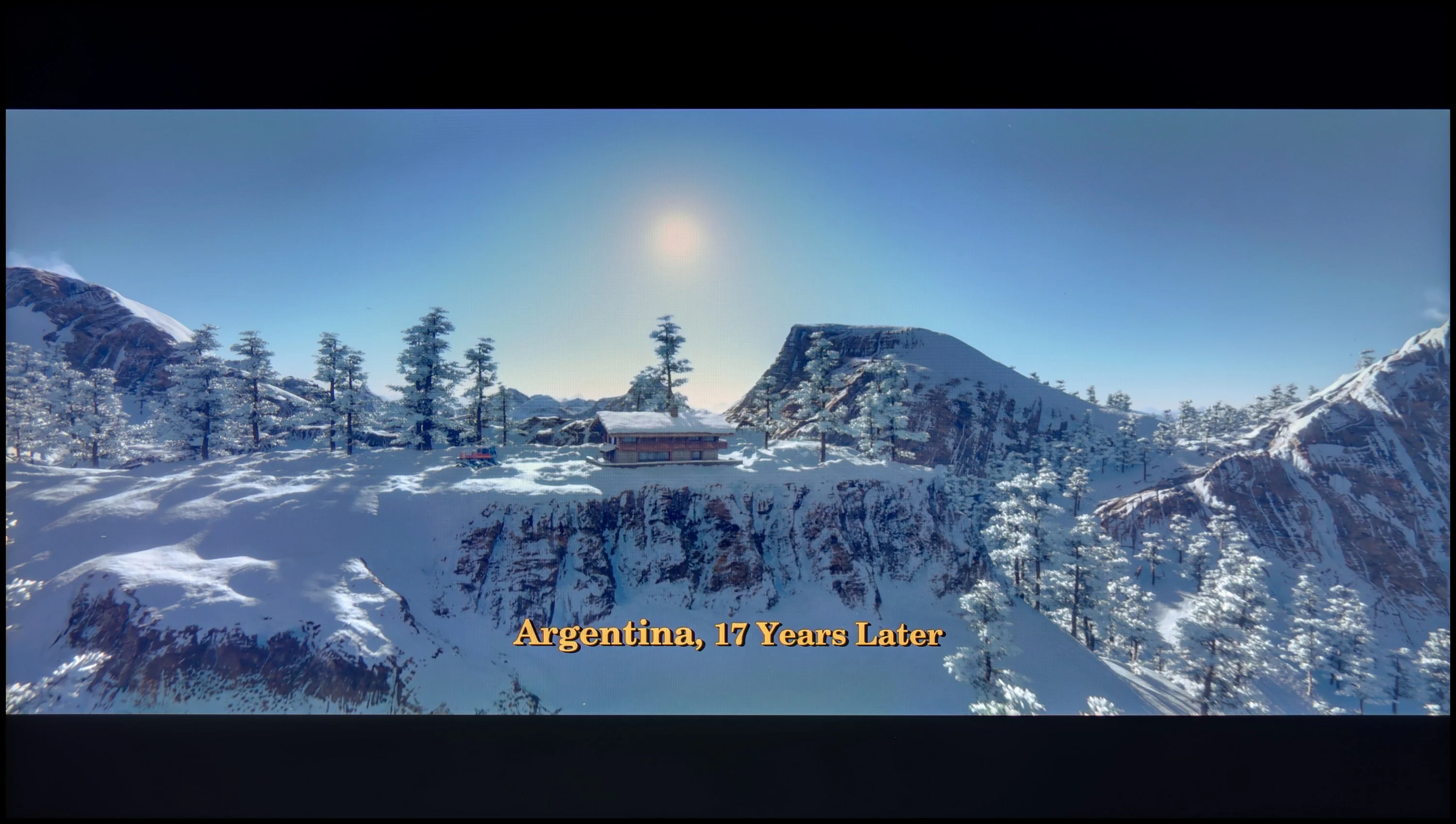



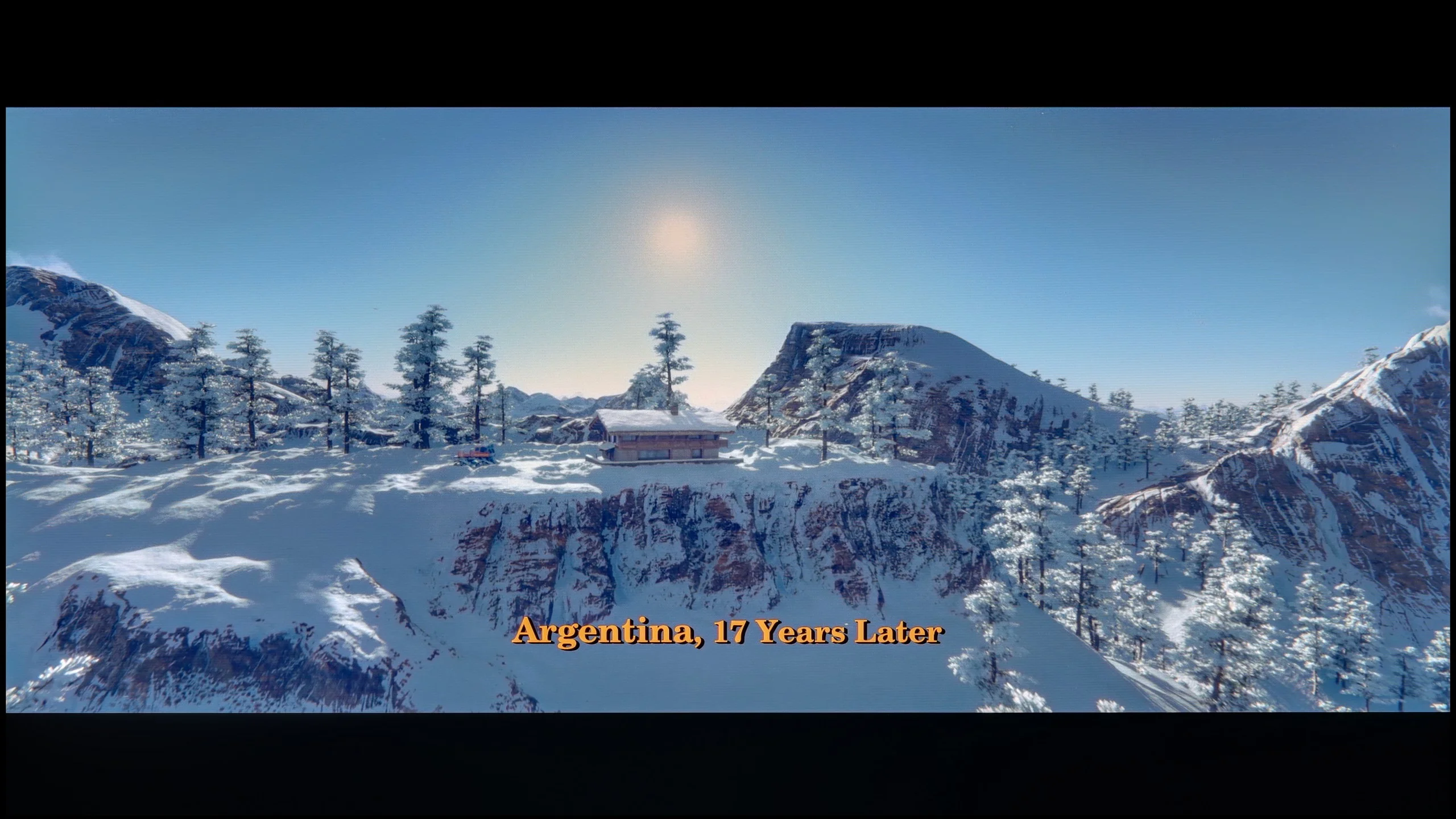
These are selected scenes that show smooth tonal transitions from one color to another. If you see distinct banding, it’s the TV panel’s fault.

These are selected scenes that show smooth tonal transitions from one color to another. If you see distinct banding, it’s the TV panel’s fault.
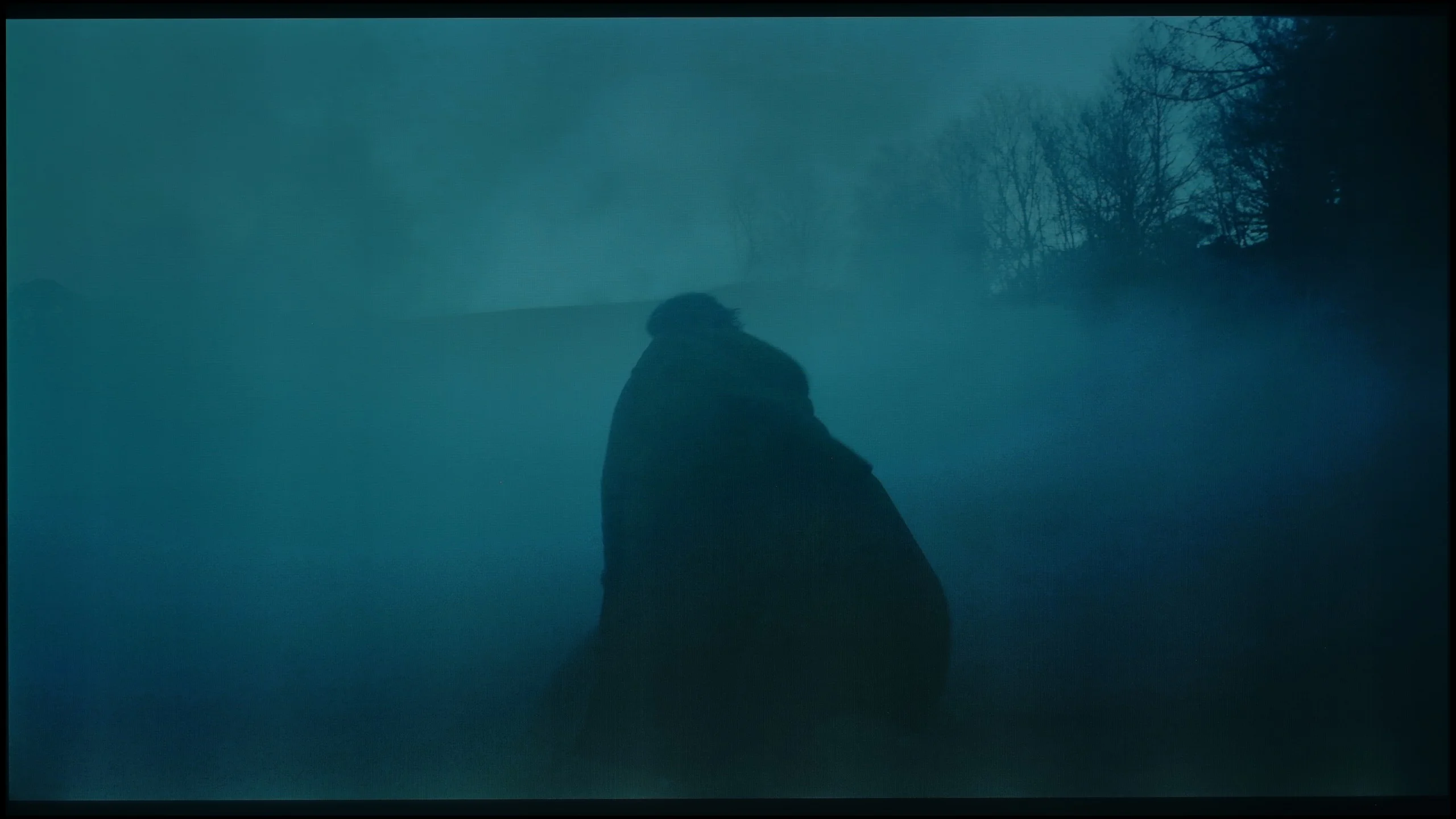
These are selected scenes that show smooth tonal transitions from one color to another. If you see distinct banding, it’s the TV panel’s fault.

These are selected scenes that show smooth tonal transitions from one color to another. If you see distinct banding, it’s the TV panel’s fault.
In many films or series, you may have noticed instances where colour bands appear in areas that should exhibit smooth transitions. This is why we evaluate tonal transitions as part of our testing. The Philips PML9009 performed admirably in this area across all test scenes. While a few elements could benefit from finer processing, the overall result was impressive. Notably, it handled the challenging scene from The Green Knight exceptionally well, with no significant stuttering or unwanted artefacts visible, proving the TV’s capability to maintain smooth gradients even in demanding scenes.
The smoothness of tonal transitions is definitely not a strong suit of the S85H compared with other OLEDs. It's most noticeable on bright gradients, where fairly distinct banding appears between successive shades. Instead of an ideally smooth transition you can see separate color bands, and you don't have to look hard to spot them. Gradients in motion look even worse. When gradients move the imperfections become more visible and the image looks simply average in that regard. Dark gradients are not perfect either. You can see unevenness there as well, so the problem isn't limited to the brightest parts of the image. Of course you won't notice this all the time in a typical movie, but scenes with large areas of similar color such as the sky, fog, a sunset or a dark background can reveal the panel's limitations. Compared with older WOLEDs there is still some improvement, but looking at the TVs we've tested this year the S85H performs averagely in this respect, much like its competitor the LG B6, which uses the same panel. This is also one of those characteristics where the difference versus last year's QD-OLED panel becomes very clear. QD-OLEDs handle smooth blending of successive shades much better and clearly beat the WOLED SE panel used here when it comes to gradation.
Image scaling and smoothness of tonal transitions
7.2/10
7.5/10


Smooth transition function
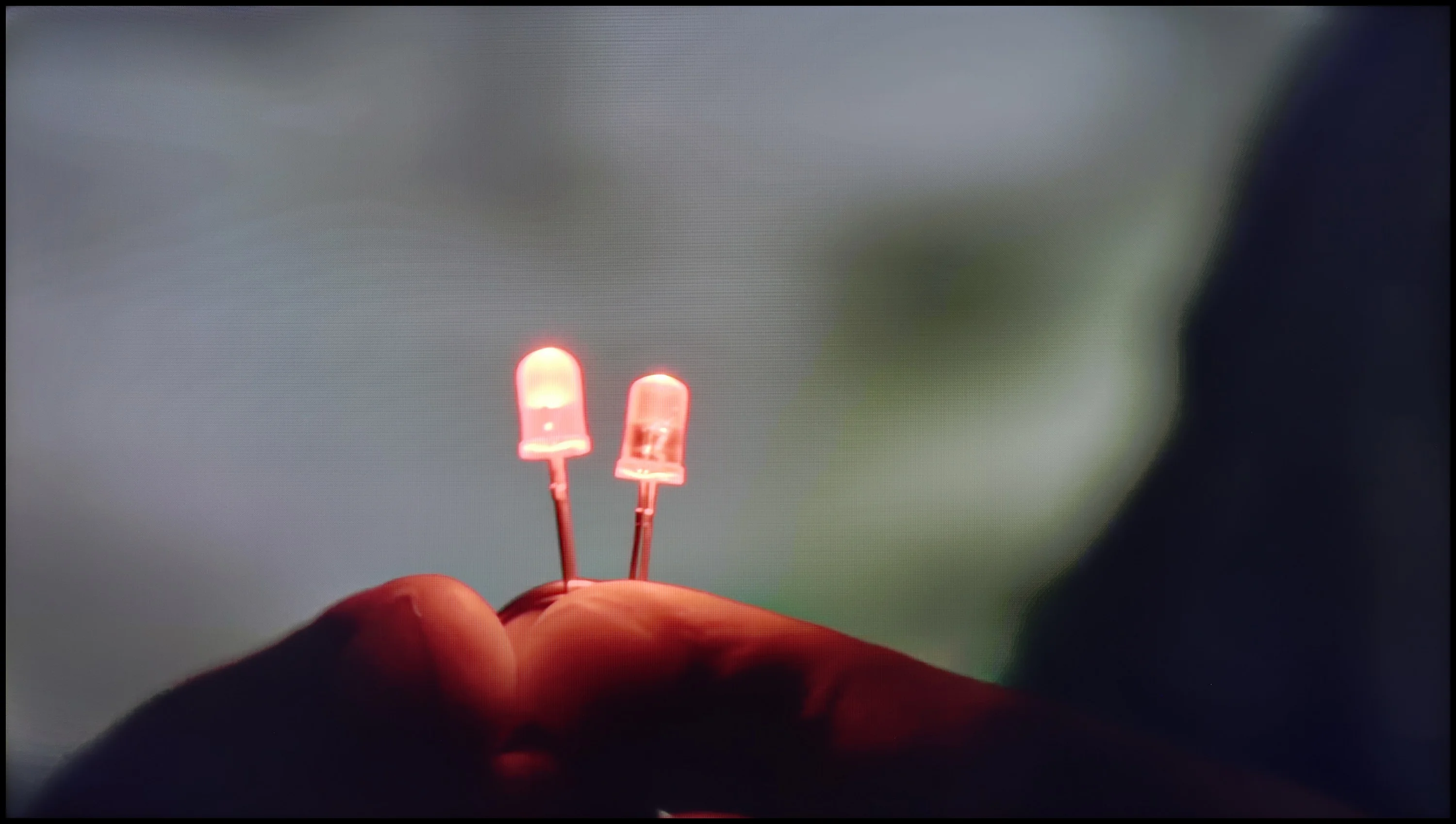
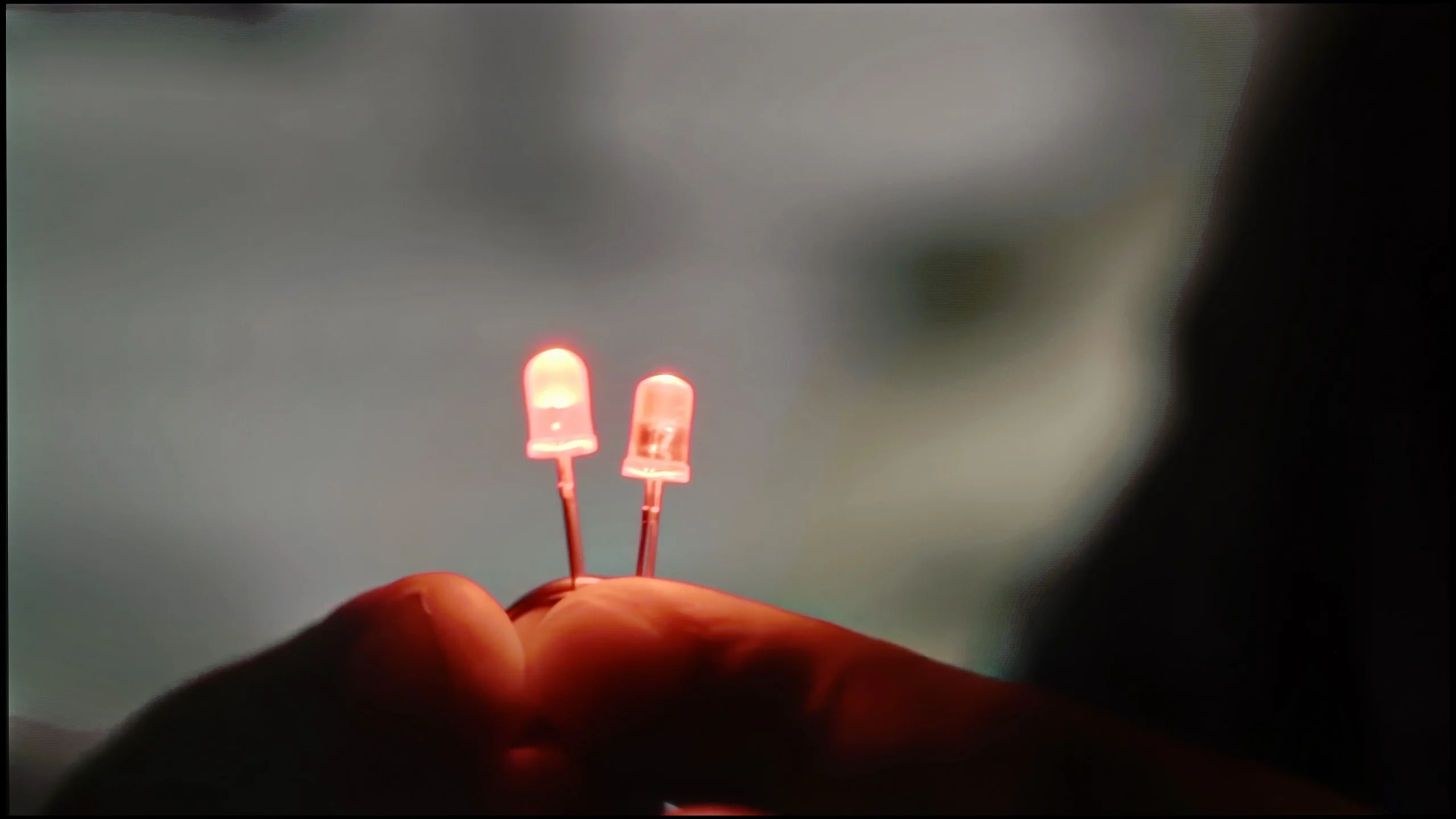
The match photo shows how the TV smooths weak tonal transitions in low-quality video.
Image scaling SD (576i)


The model photo shows how it handles upscaling of SD material.
Given the impressive handling of tonal transitions by the Philips PML9009, one might expect similar success in the image scaling test. However, the results were less than stellar. When upscaling lower-quality images, like those from certain TV programmes or older films, the Philips algorithm tended to blur fine details noticeably, especially in intricate elements like fine branches or a model's hair.
On the other hand, the tonal transition performance remains noteworthy, with the TV offering several levels of smoothing. Even at the lowest setting, it effectively addresses non-smooth transitions in most materials, and crucially, it preserves the film grain effect, maintaining fidelity to the director's vision. However, it’s worth noting that some fine details may still appear slightly softened.
For the S85H, Samsung used the same proprietary NQ4 Gen2 AI processor as in last year’s S85F, and in terms of digital image processing it performs quite well. Upscaling is one of this model’s strengths. Lower-resolution content is well sharpened, edges look natural, and the image doesn’t feel overly artificial. Just bear in mind a common Samsung quirk: at very low resolutions you can’t completely disable overscan, so the TV may slightly crop the left edge of the image. The "noise reduction" function, which smooths weaker tonal transitions, also works very well. The processor can effectively remove posterization and other imperfections visible in lower-quality material. However, you need to be careful with the strength of this feature, because Samsung can be fairly aggressive here. When it’s enabled, along with unwanted artifacts, fine image details such as the texture of skin or clothing can start to disappear.
Blur and motion smoothness
7.7/10
8.5/10
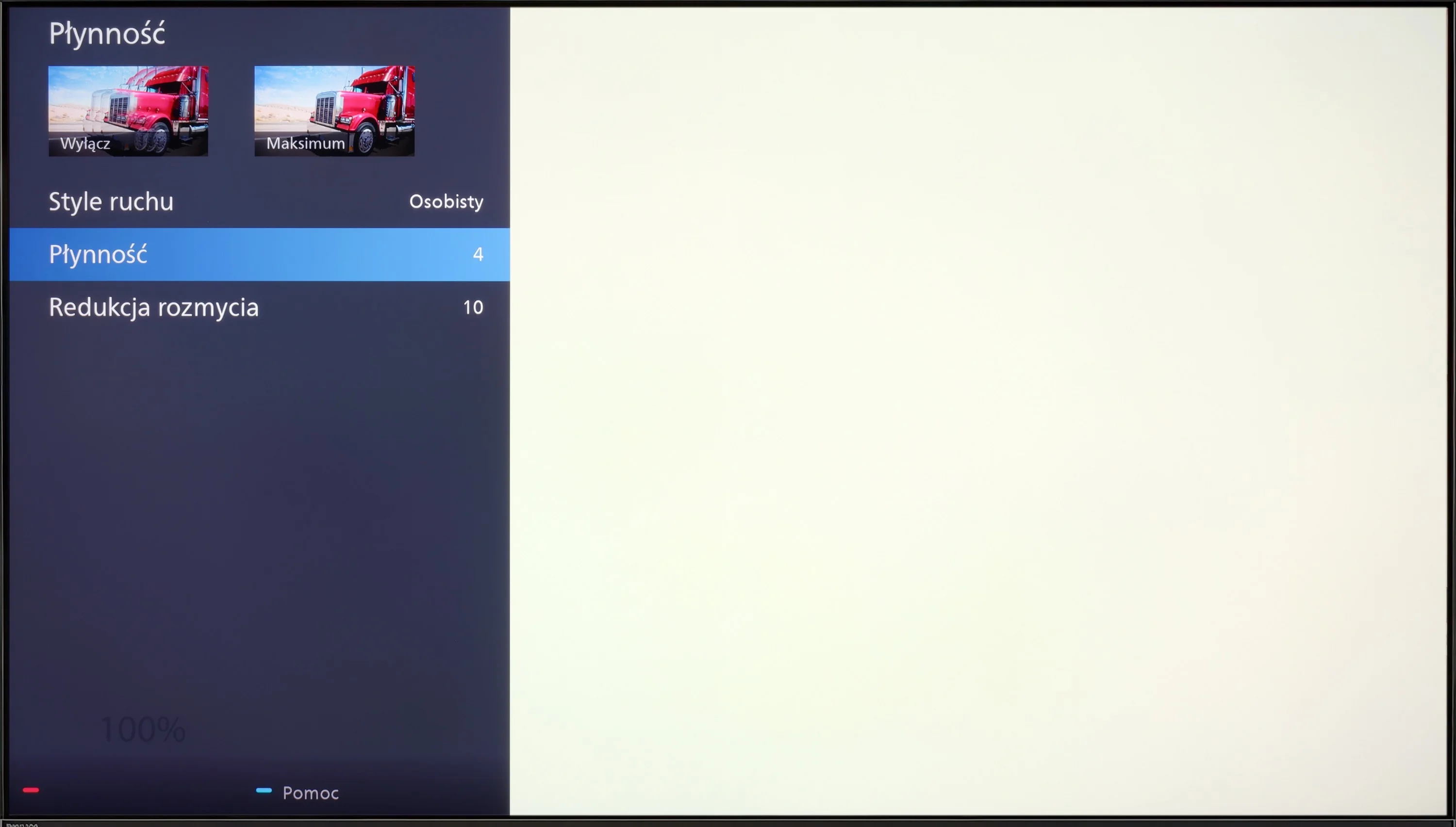
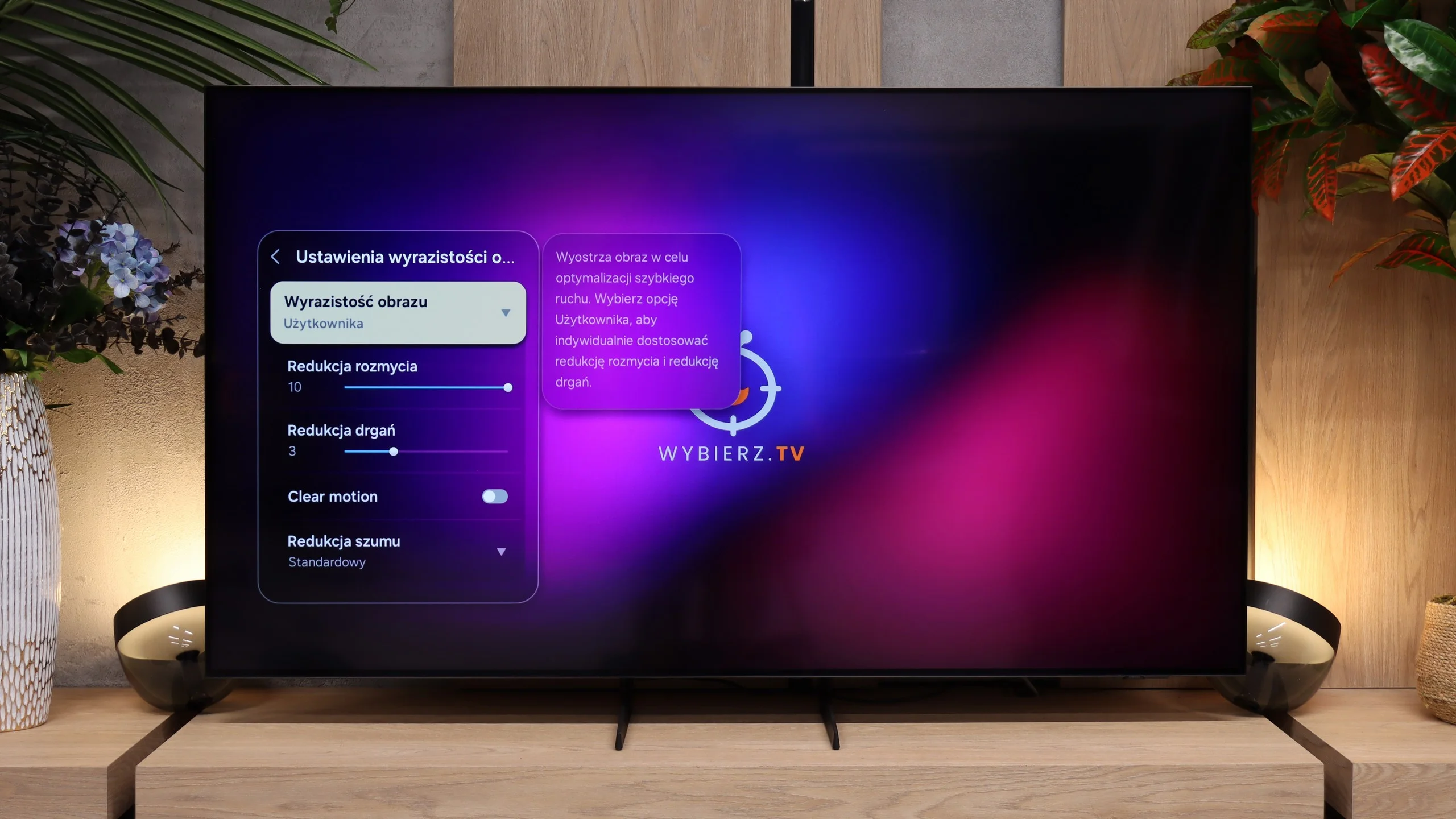
Blur (native resolution, maximum refresh rate):






Blur (BFI function enabled):
Image flickers in this mode



Blur ():
Blur (4K@60Hz):



The Philips PML9009 has a 120 Hz native refresh rate, a baseline standard for watching sports and an ideal setting for gaming on consoles or PCs. Philips includes an effective motion-enhancement system for users who want to reduce the stutter of 24 fps content or need fluid motion for fast-paced scenes, like in football matches. The dedicated "Smoothness" slider effectively mitigates stuttering, while "Motion Blur Reduction" enhances the sharpness of dynamic content. Each setting produces a noticeable difference, so users can tailor the motion effects to their preferences. Our recommended setup achieves a moderate smoothing effect, avoiding the exaggerated “soap opera” appearance.
Regarding pixel response time, VA panels like this generally fall short compared to OLED or even IPS panels, which can lead to a slight "black halo" trailing behind fast-moving objects. Although not a frequent issue with this TV, the effect can be seen in certain scenes.
The S85H uses an OLED panel, so it performs excellently when it comes to motion blur. Pixels respond virtually instantly, so moving objects don’t leave the characteristic ghosting seen on some LCD TVs. This is especially noticeable with sports or fast-paced games, where the image stays very clean even during rapid motion. The panel runs at 120 Hz. That’s more than enough for movies, TV series, sports, or console gaming. It’s a bit of a shame Samsung didn’t include a higher refresh rate aimed at PC gamers, since more and more TVs now offer 144 or even 165 Hz at 4K. However, that doesn’t affect motion perception in films or sports. There’s also the classic motion smoothing feature with two settings, blur reduction and judder reduction. So you can choose whether films should keep their cinematic 24 frames per second or if you prefer to smooth them a bit. The S85H gives you plenty of flexibility here, and the interpolation works well and, with reasonable settings, doesn’t produce too many artifacts.
Console compatibility and gaming features
9.8/10
9.6/10
- ALLM
- VRR
- VRR range48 - 144Hz48 - 120Hz
- Dolby Vision Game Mode
- Correct implementation of HGIG
- 1080p@120Hz
- 1440p@120Hz
- 4K@120Hz
- Game bar
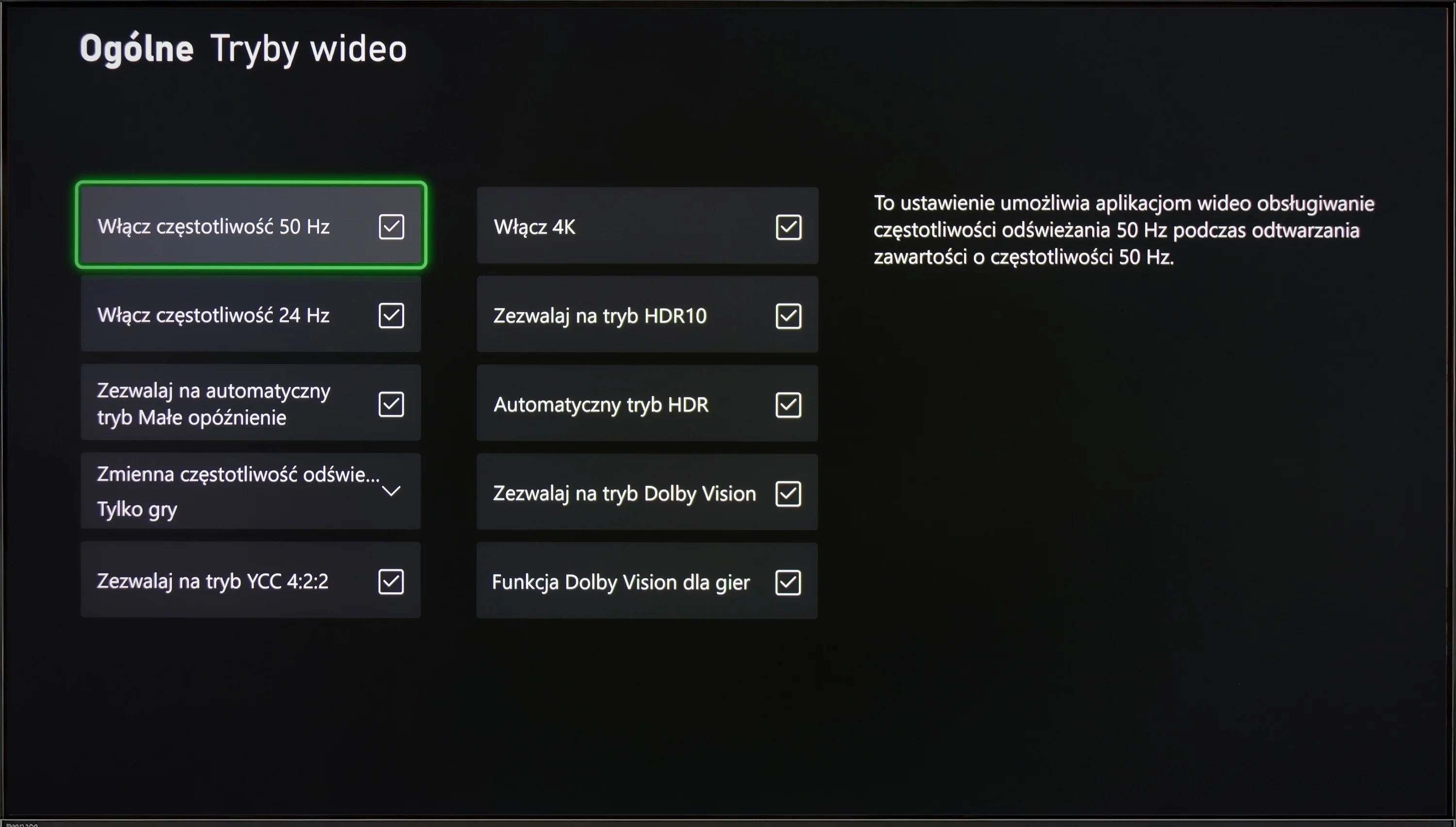
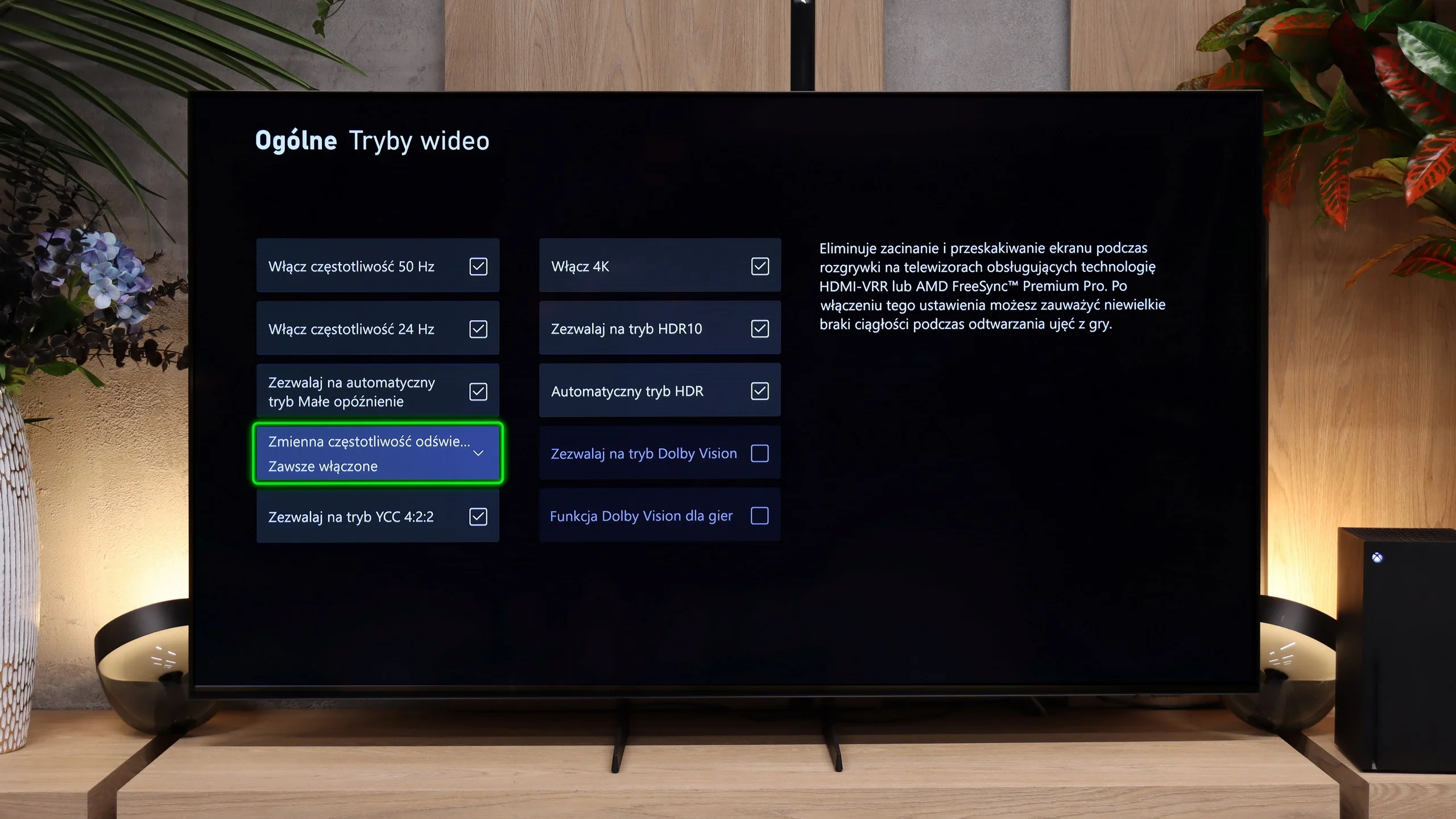
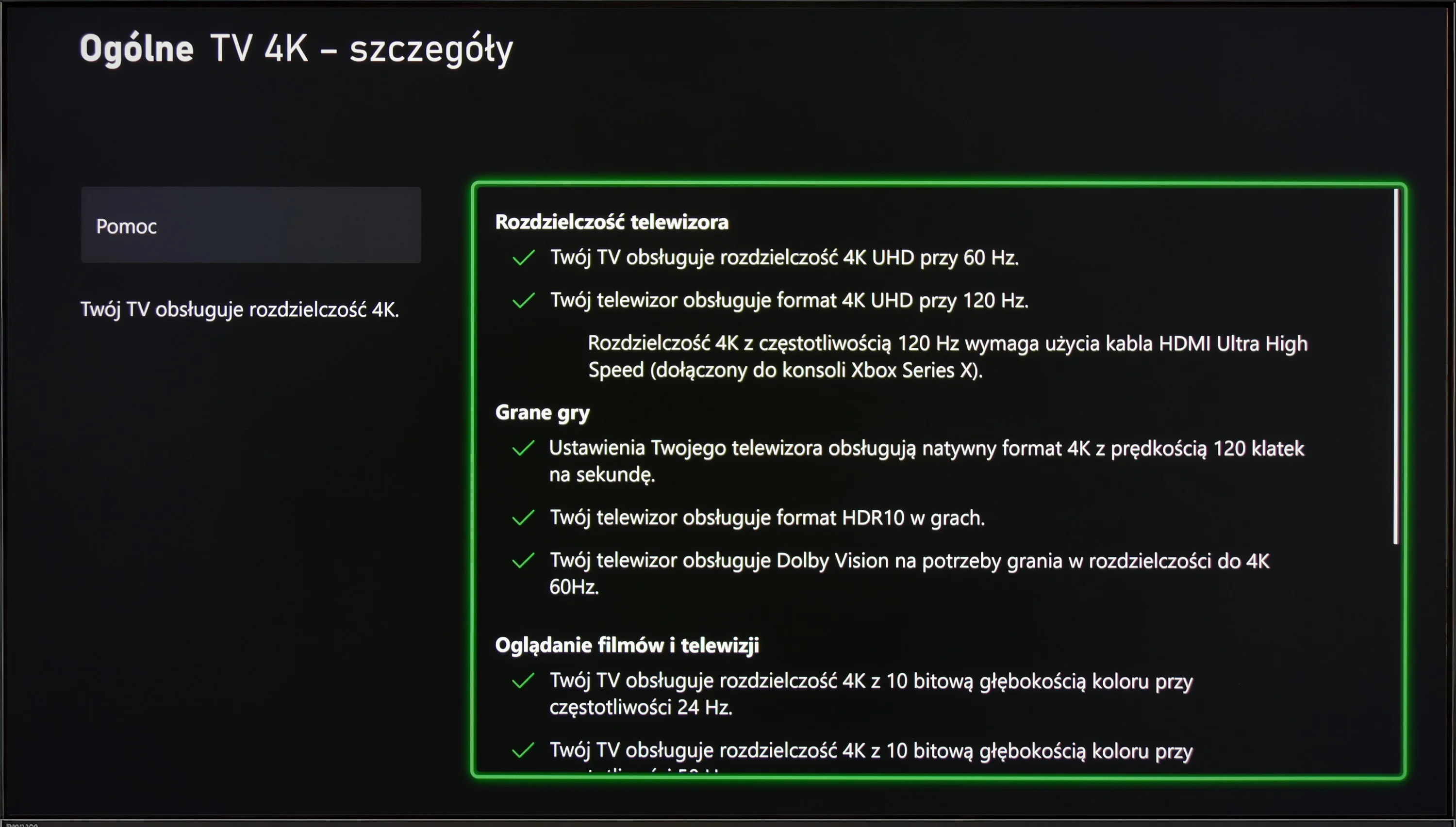
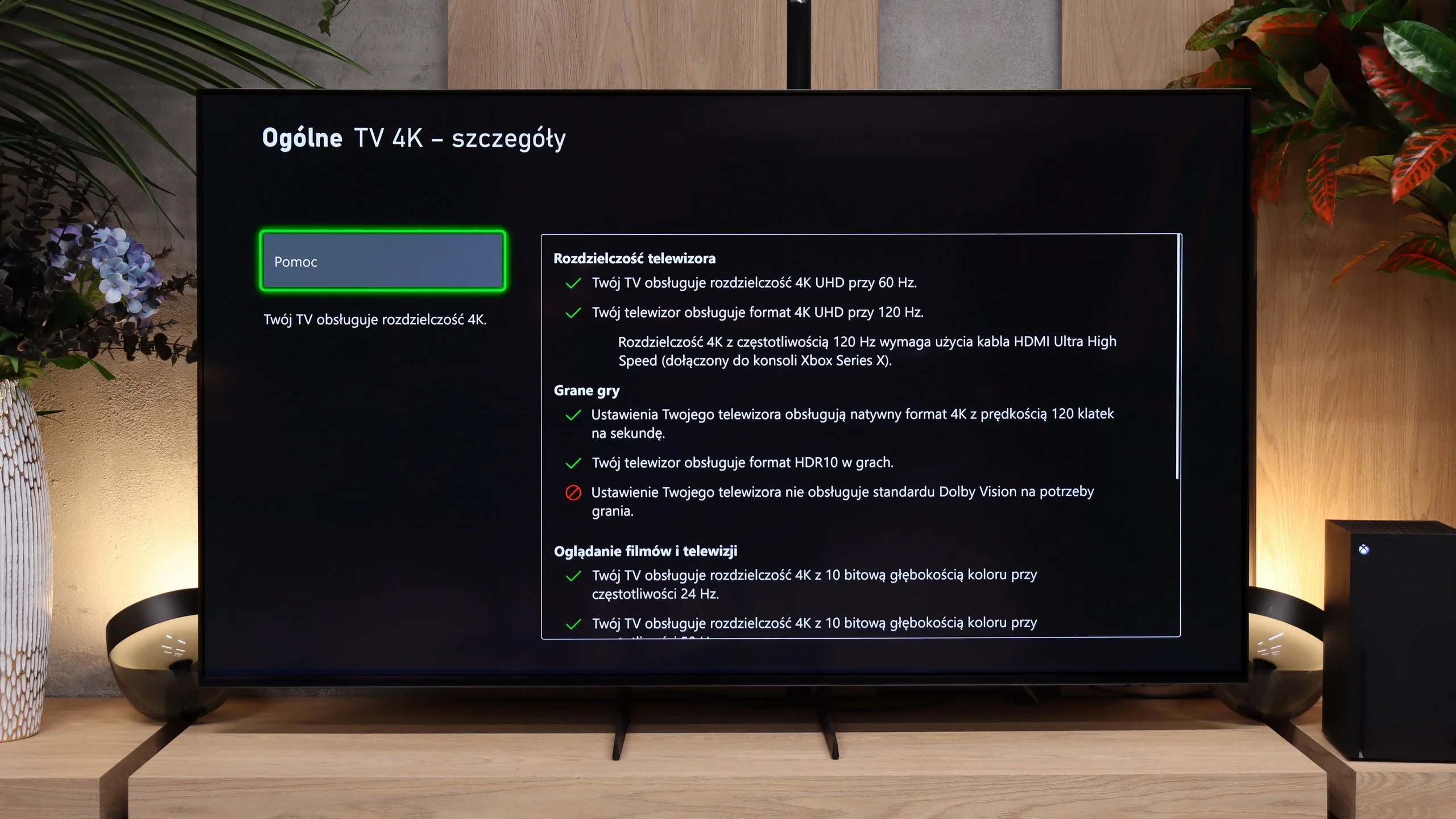
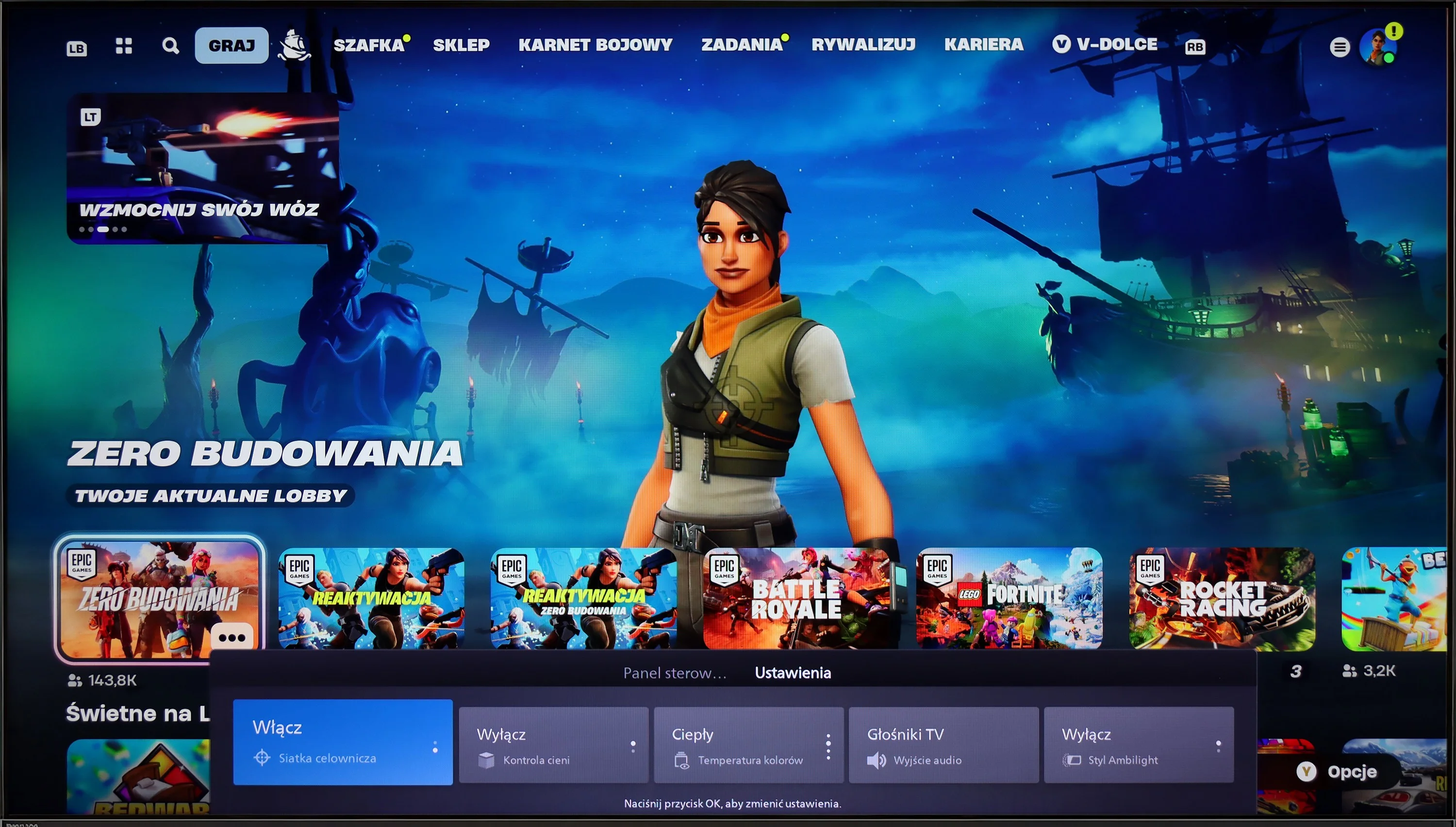
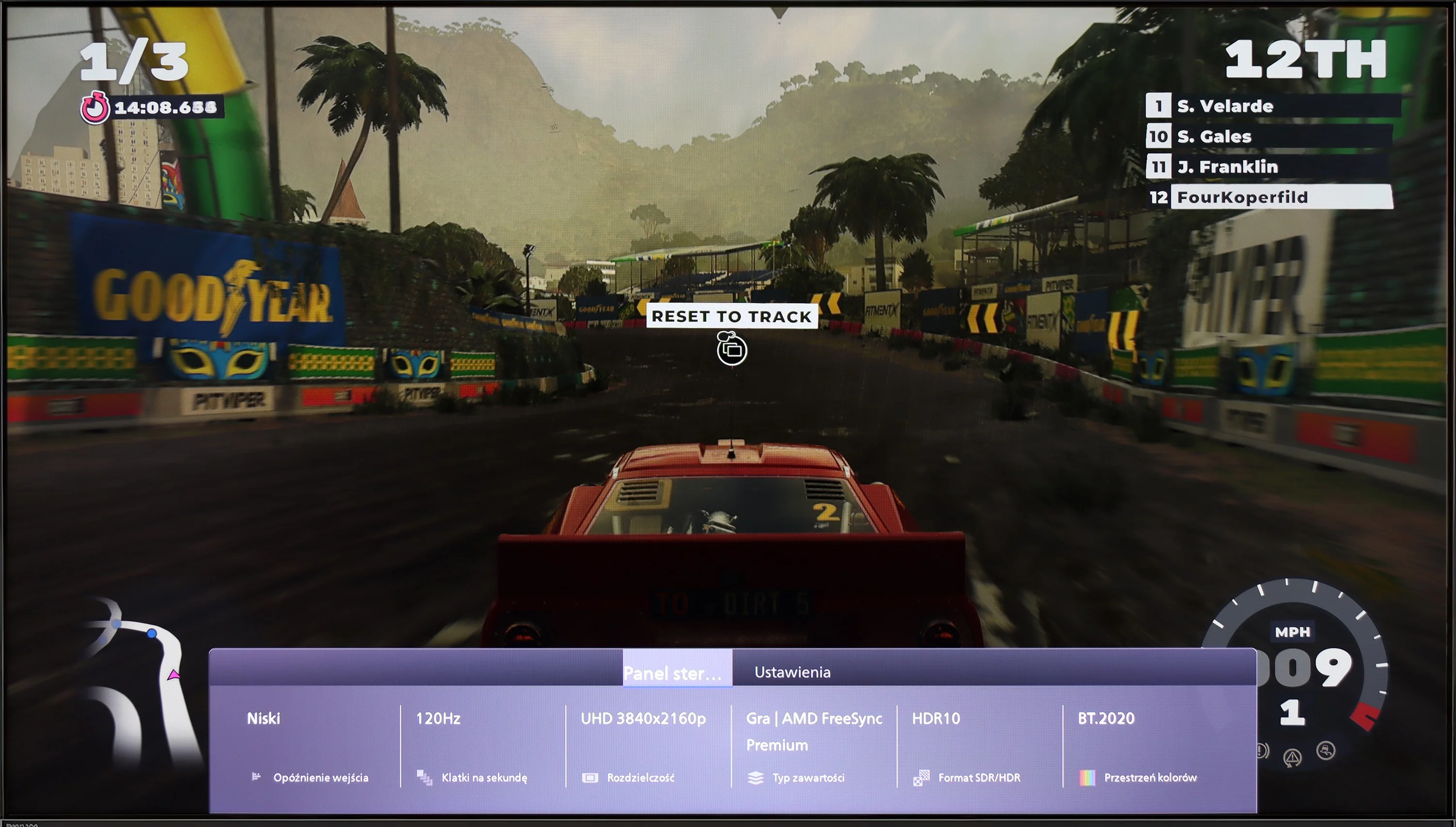
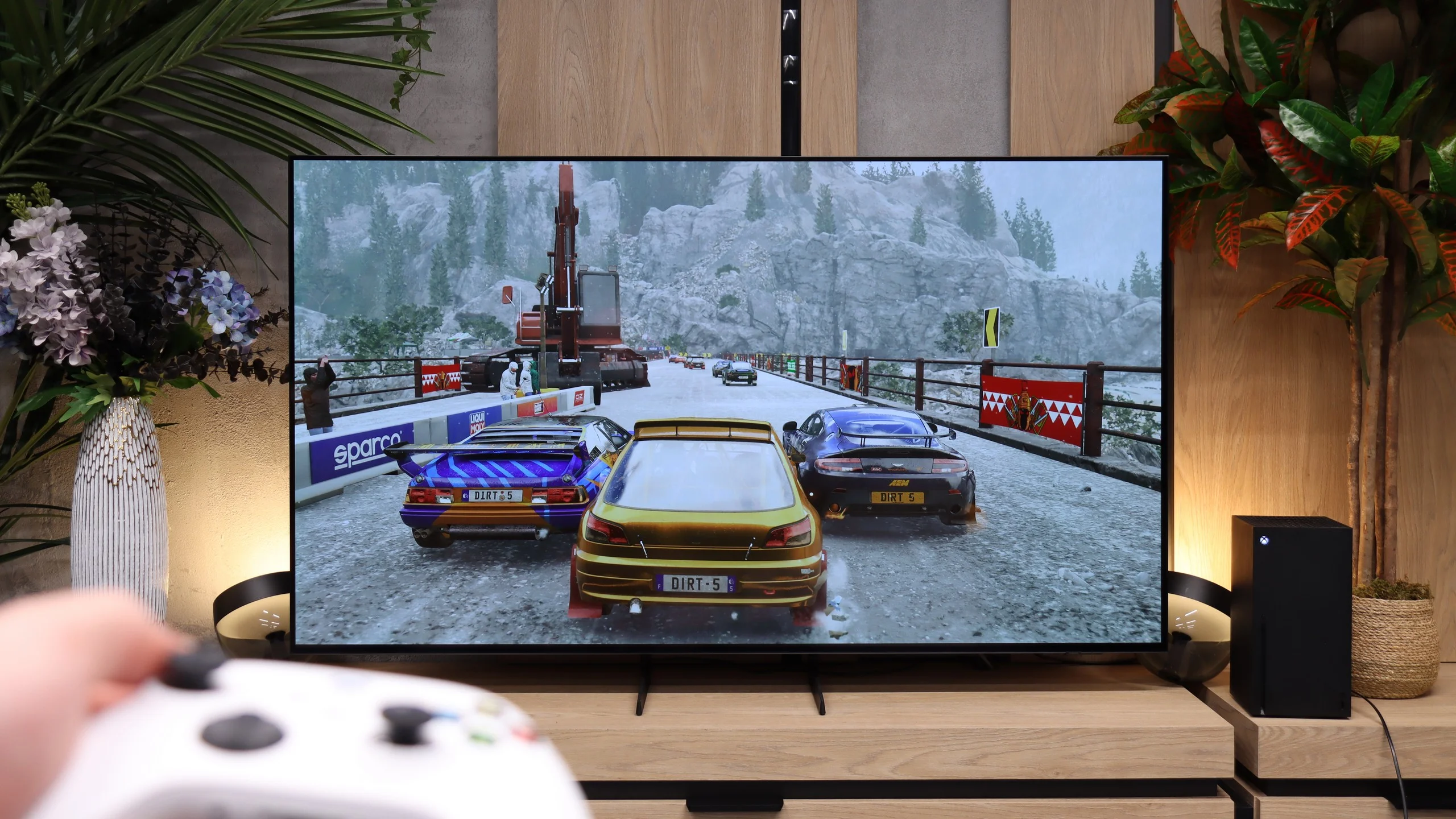
The Philips PML9009, with HDMI 2.1 ports supporting full bandwidth, is thoroughly equipped with gamer-focused features. Core functions like Variable Refresh Rate (VRR) and Auto Low Latency Mode (ALLM) are included, as well as the additional perks of G-Sync and FreeSync compatibility and low-lag HDR Dolby Vision support. All these gaming features activate seamlessly, proving this model’s suitability for gaming. The TV’s HGIG mode, particularly beneficial for gaming, adjusts HDR effects to the television’s capabilities to avoid image dimming and blooming, an advantage given the still limited number of games supporting Dolby Vision.
For added convenience, the PML9009 has a GameBar menu, allowing in-game setting adjustments without needing to exit. This menu includes features like a crosshair option and black level correction, which can enhance the visibility of shadowed areas—ideal for competitive play.
Overall, the Philips PML9009 offers a comprehensive setup for gamers, supporting VRR, ALLM, G-Sync, FreeSync, and HDR Dolby Vision to deliver immersive, high-quality gaming experiences across a wide range of titles.
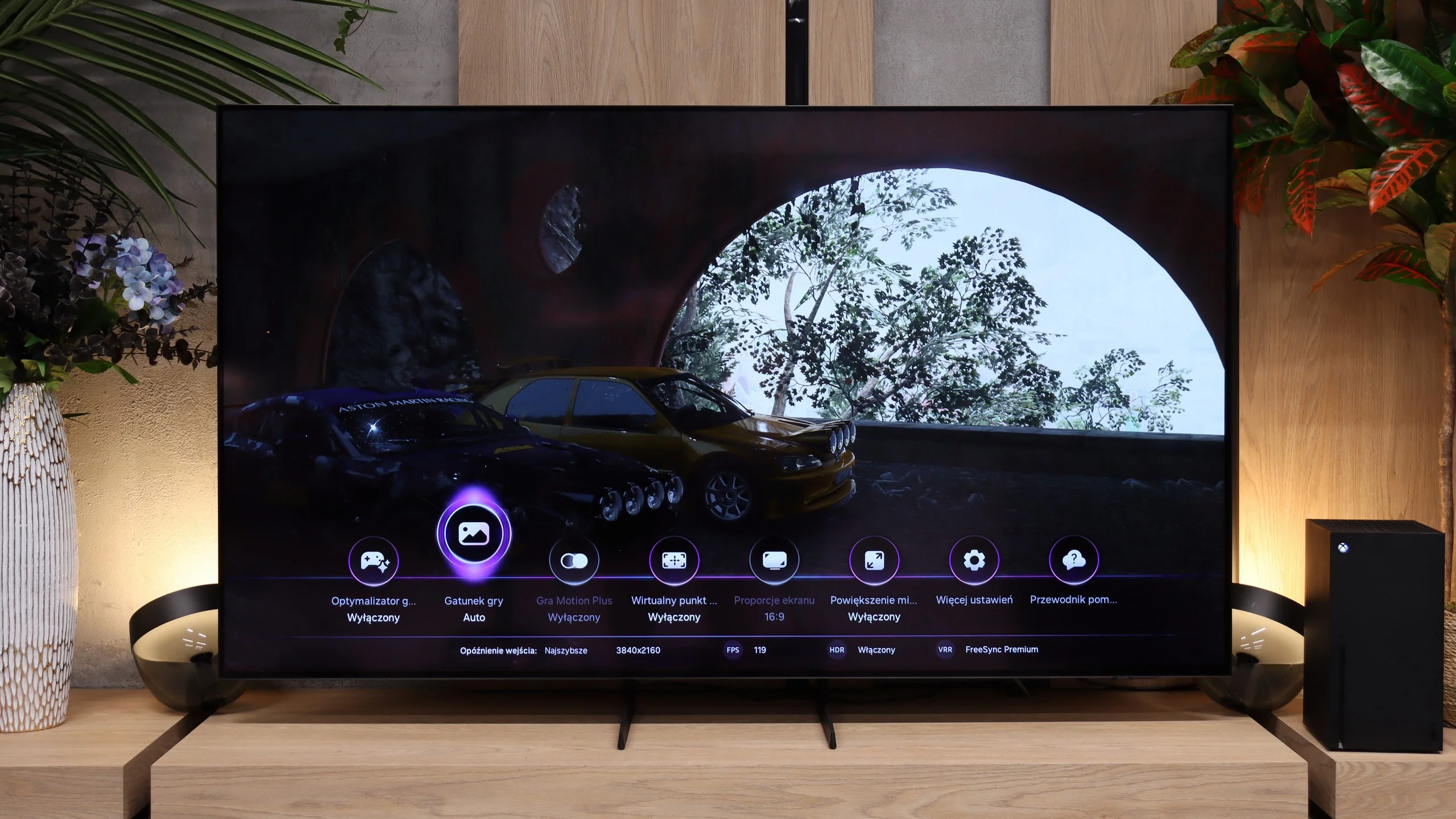
The Samsung S85H is very well set up for gaming, whether you connect a console or a PC. The manufacturer didn’t skimp on ports and all four HDMI inputs support full HDMI 2.1. That means you can use 4K at 120 Hz, VRR, and ALLM without worrying which input to plug your console into. With several devices that matters, because you don’t have to choose between a console, a PC, or a soundbar connected via eARC. The feature set itself is very comprehensive. The S85H supports VRR, FreeSync, and automatic switching to game mode, and Samsung offers its comprehensive Game Bar, which lets you quickly view key signal parameters and change settings without leaving the game. The only real omission is Dolby Vision, which will matter mainly to Xbox owners. That’s a typical trait of Samsung TVs. Game Motion Plus performs very well and is one of the features that have set Samsung TVs apart for years. It smooths motion in games running at 30 or 60 fps, but does so without as large an increase in input lag as traditional motion smoothing. In practice, with more relaxed games, racing titles, or action games this can really improve perceived motion, especially if you’re sensitive to low framerates.
Input lag
9.6/10
10/10
SDR
HDR
Dolby Vision
The Philips PML9009 excels in input lag measurements, showcasing impressive performance across various signals and resolutions. Gamers will appreciate the manufacturer’s optimisation, with an exceptionally low input lag of 8 ms when playing at 4K120Hz with HDR—virtually imperceptible even in fast-paced online games. Furthermore, the game mode with Dolby Vision also maintains a commendable response time of 16 ms, ensuring that players experience minimal delay during gameplay. This combination of low input lag and effective game mode implementation solidifies the PML9009 as an excellent choice for competitive gamers seeking a responsive, immersive experience.
Samsung S85H also performs very well in terms of input lag. At 120 Hz we measured input lag below 5 ms, which is a level at which the TV's response to controls is practically instantaneous. At 60 Hz the delay is naturally higher, but still remains very low, about 10 ms, so in this respect the S85H gives little reason to complain.
Compatibility with PC
8.6/10
7.6/10
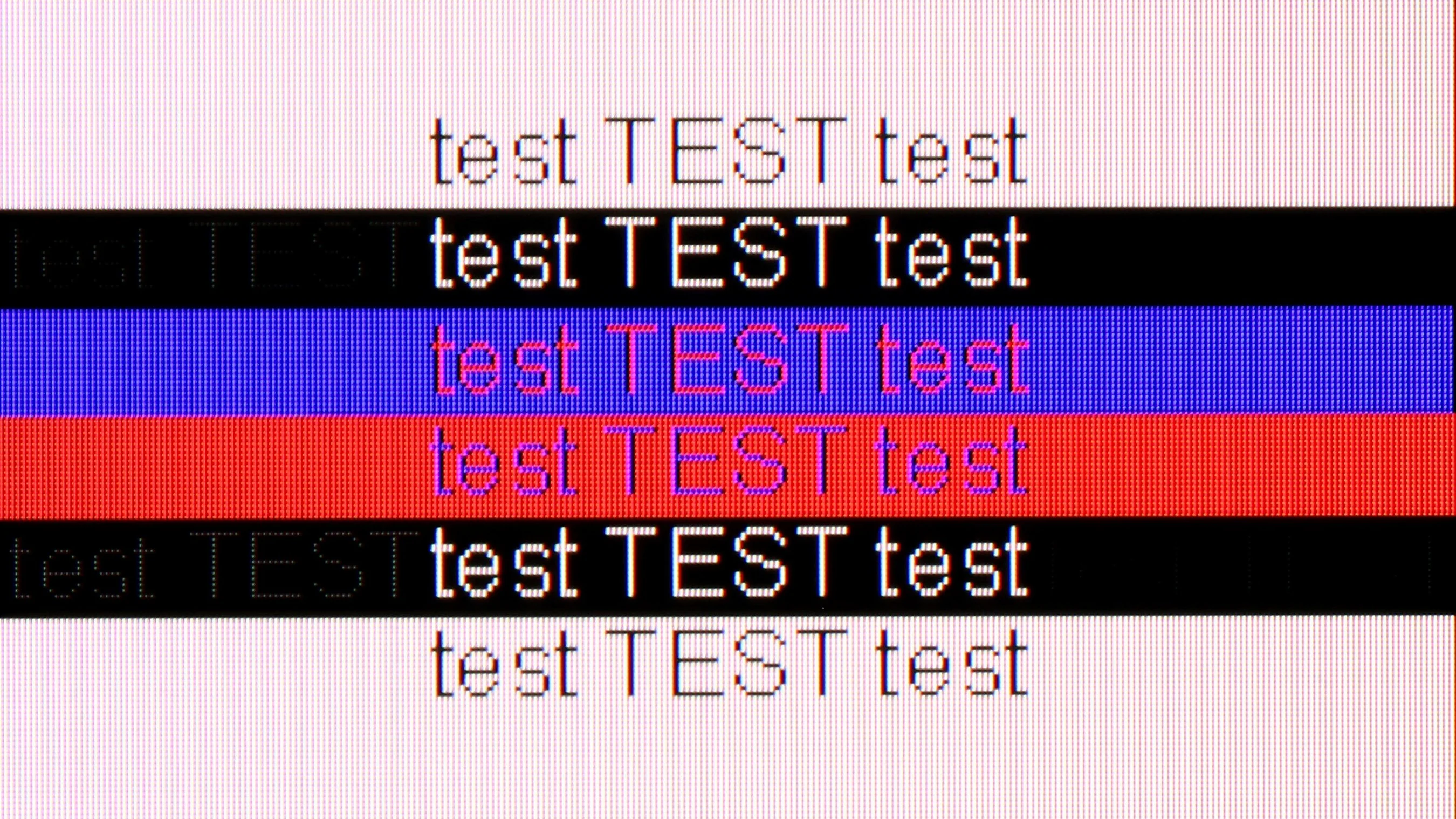
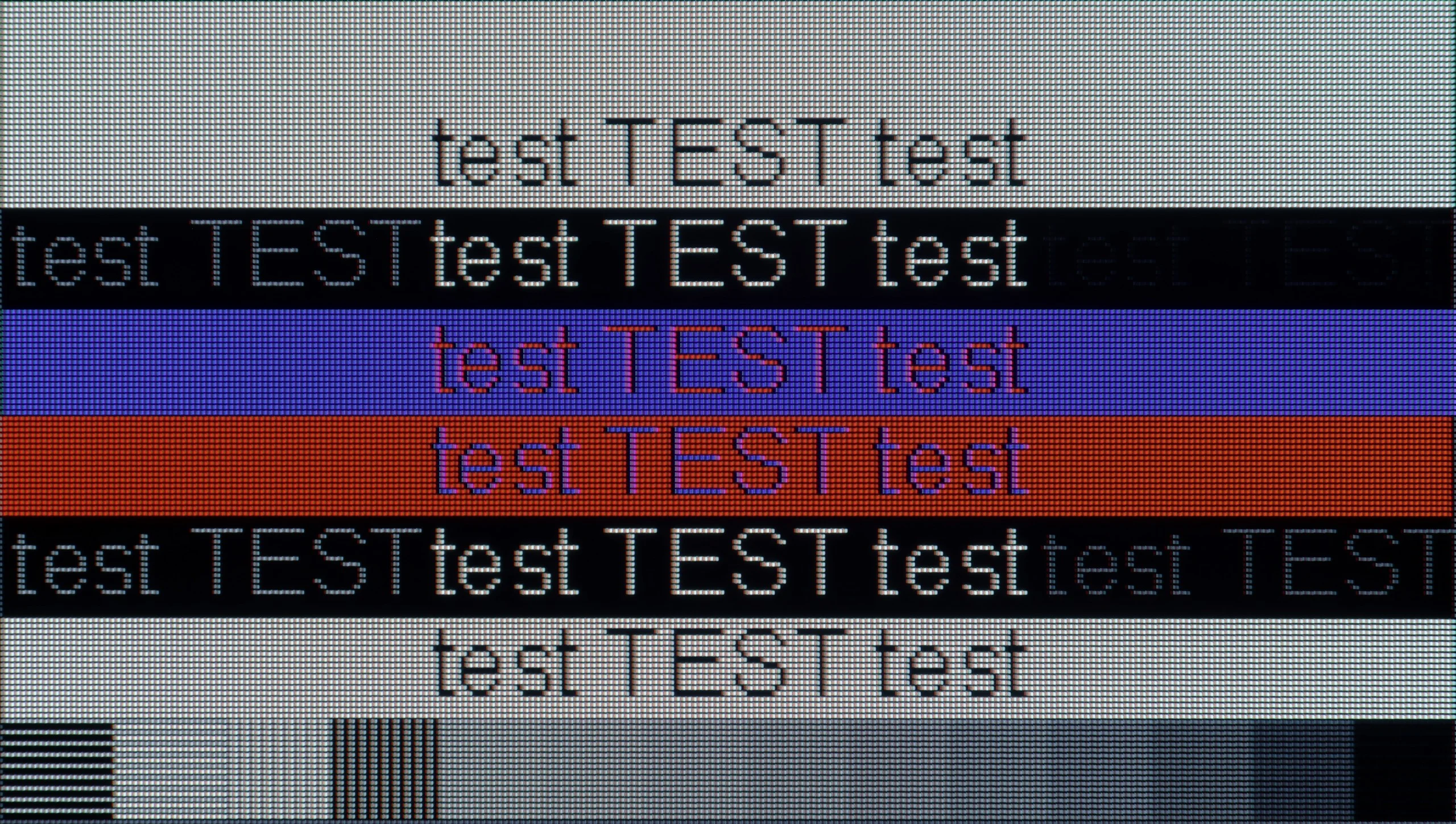
The photo shows the legibility of small fonts. Ideally, lines should be the same thickness on both light and dark text, with minimal pixel gaps.
The Philips PML9009 also excels in everyday tasks, with measured delays of just 8 ms providing nearly instantaneous reactions in the mouse-screen-eye connection. Its proper implementation of chroma 4:4:4 ensures crisp, sharp fonts, making it ideal for text work. While the subpixel layout of the matrix is BGR, this doesn't create any issues when using the Windows operating system. However, users on other systems may encounter challenges with text rendering, as those platforms may struggle to convert text accurately. Overall, the PML9009 is a versatile display suitable for gaming and daily productivity tasks.
The Samsung S85H also works very well as a large PC monitor. Font readability is good, and from the typical distance you sit from a screen this size, text looks really good. You just need to remember the four-subpixel layout of the WOLED panel, which means that from very close up the edges of letters aren't quite as perfectly sharp as on a traditional RGB monitor. However, this is a characteristic of OLED technology itself and shouldn't be an issue in normal TV use.
The S85H also has a lot to offer PC gamers. It delivers 120 Hz, G-Sync support, very low input lag, and of course the lightning-fast response time of the OLED panel. The only thing that was really missing was the ability to run the panel at a higher refresh rate. More and more TVs already support 144 or 165 Hz at 4K, so an additional mode like that would be welcome here.
Viewing angles
2.6/10
7.5/10
A commonly known drawback of VA panels that do not have an angle coating is their poor viewing angles. This is no different this time. Even after a slight shift off-axis, the image becomes washed out, and the colours undergo significant degradation.
Viewing angles are one of the big advantages of the S85H and OLED panels in general. Even when you view the screen from well off to the side, the image still retains good contrast, brightness and color saturation. In this respect the S85H performs significantly better than practically any LCD or Mini-LED TV available today. Only QD-OLED panels actually do better, keeping colors even more stable at wide angles. However, you’ll only find those in higher-end models.
Daytime performance
6.1/10
5.1/10
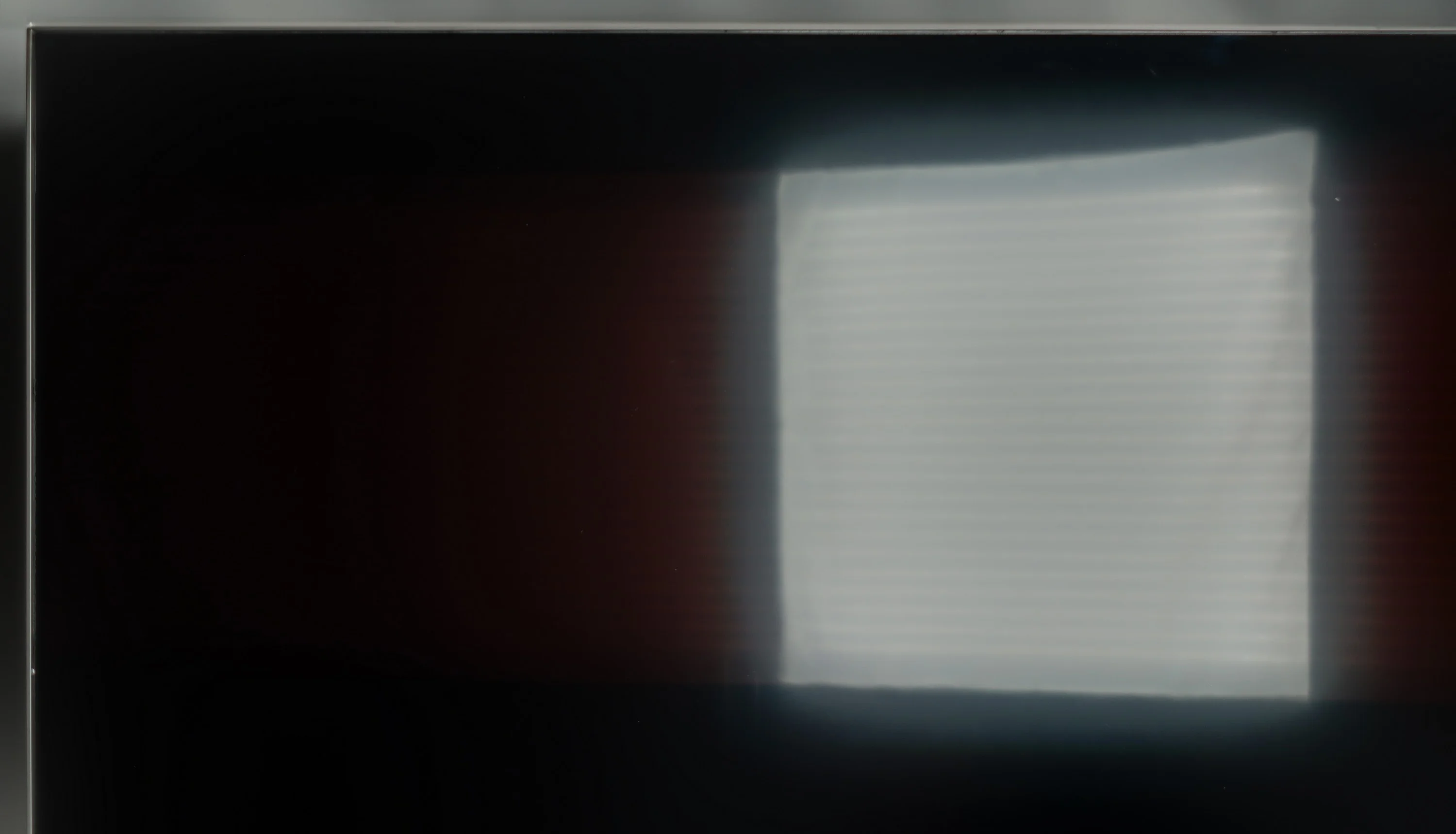
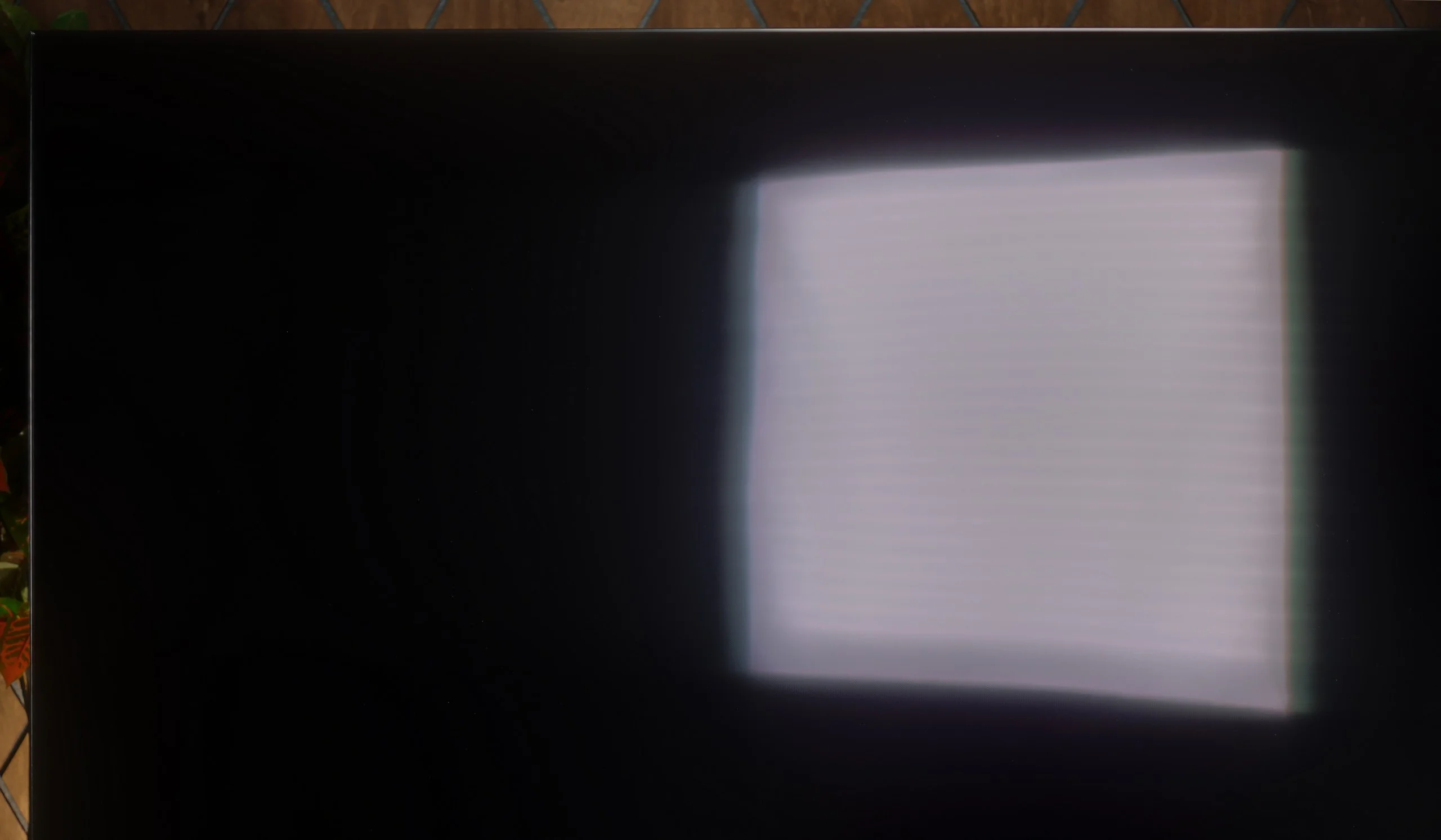
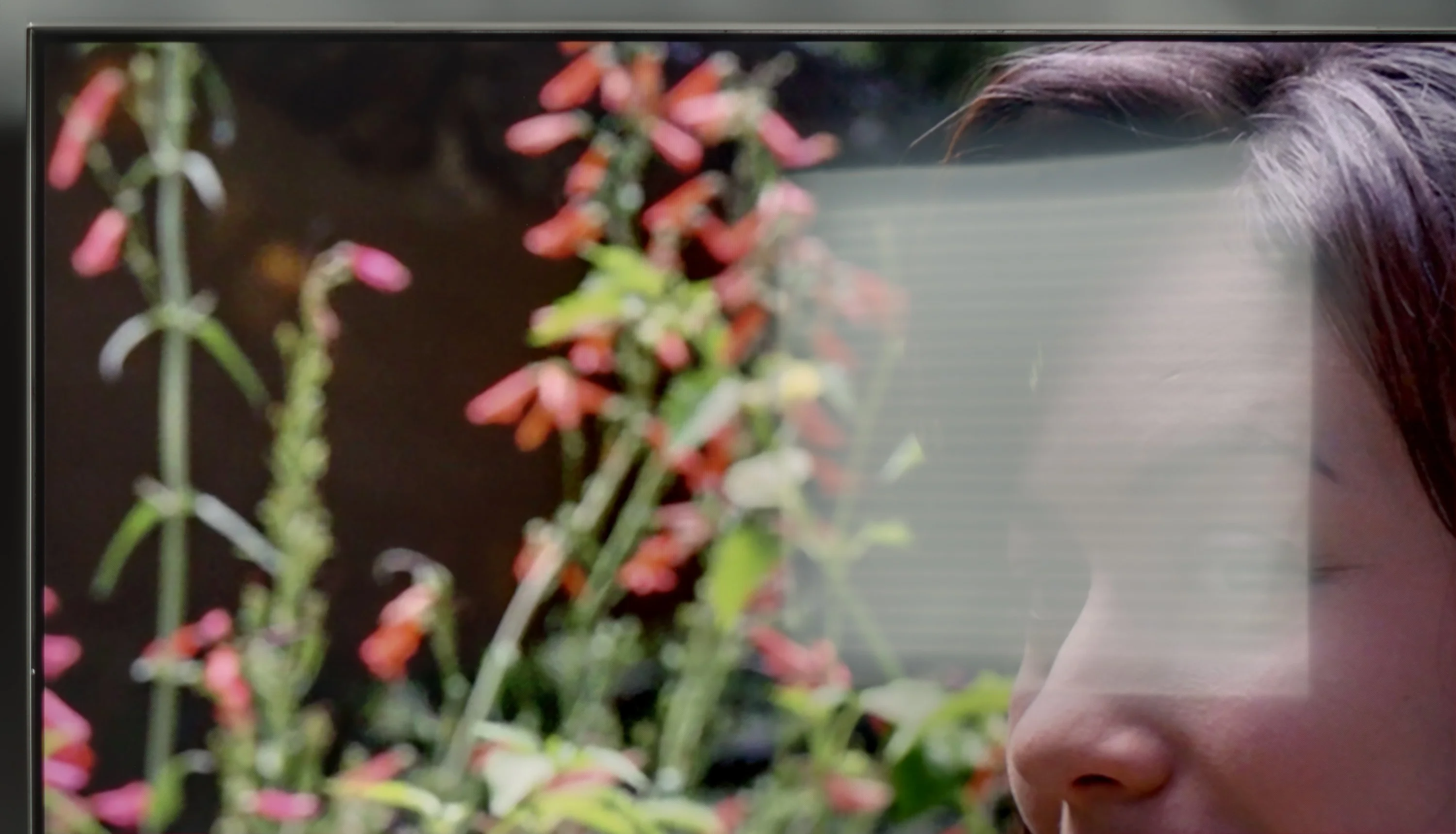
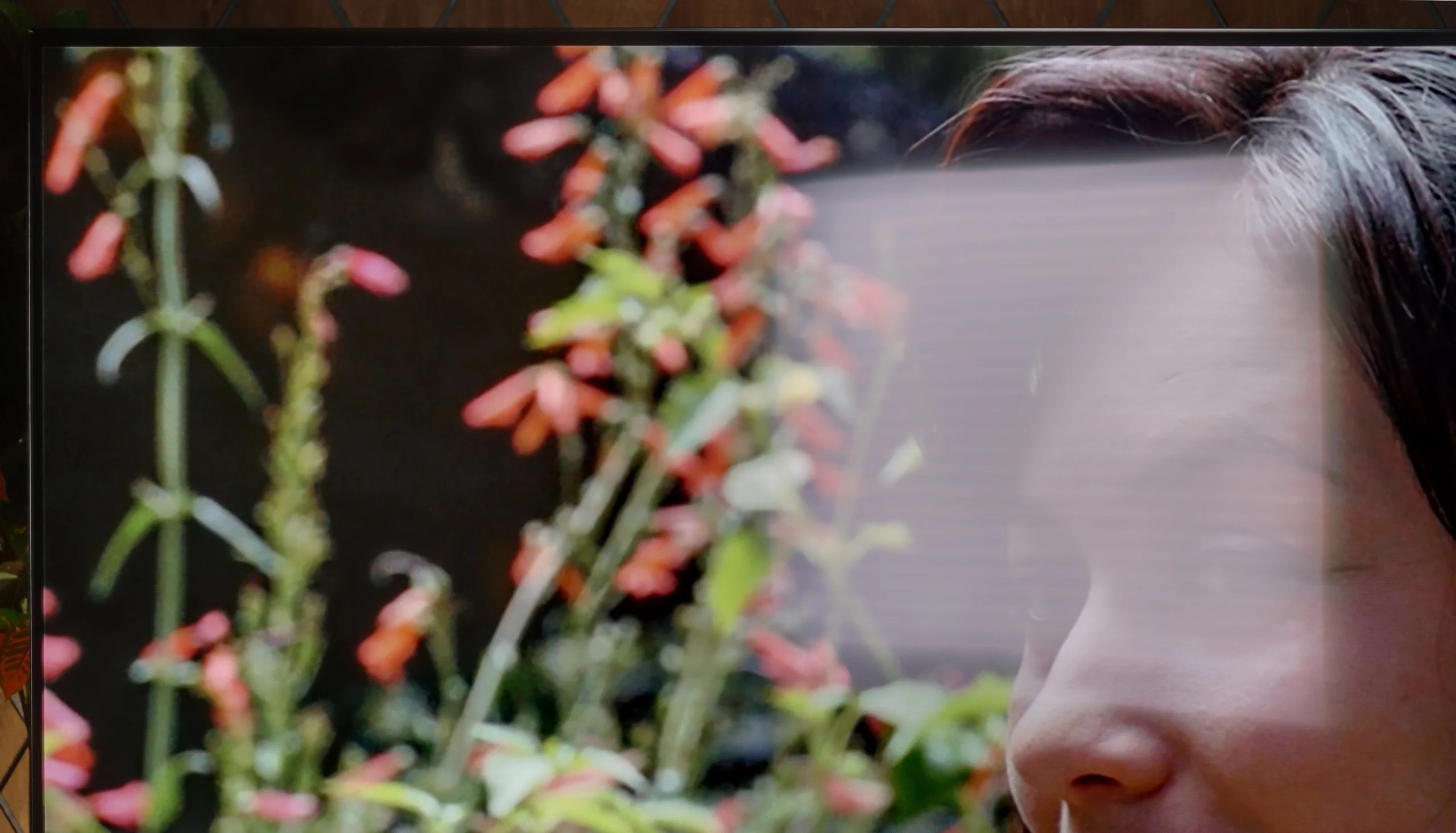
Panel brightness
Samsung S85H / S83H: 350 cd/m2
Philips PML9009 / 9019 / 9059: 564 cd/m2
While the Philips PML9009 offers good brightness levels for SDR materials—making it suitable for evening or dark-room viewing—the reflection suppression is only average. This can be attributed to the satin finish of the panel, which is prone to reflections from various light sources, as it neither absorbs nor diffuses them effectively. However, the relatively high brightness in SDR mode enables the television to perform adequately in brighter rooms, often outperforming many OLED models in this regard. This makes it a viable option for users who might watch content in well-lit environments.
Samsung S85H is a moderately bright TV. In our measurements the average brightness in SDR was about 350 nits, so that should be enough for ordinary daytime viewing as long as the TV isn't placed in a very sunlit living room. In a moderately lit room the picture remains readable, but with large windows and light hitting the screen directly the S85H's capabilities start to run out. We have a few more remarks about the WOLED SE panel itself. The change in panel construction compared with the previous generation affected how the screen handles reflections, and unfortunately it's not a change for the better. Reflections are more noticeable than on earlier WOLED panels. LG Display tried to partly mask this effect with a more satin screen finish that scatters light, but that doesn't completely solve the issue. With a strong light source the reflection becomes quite large and a characteristic grayish halo appears around it. In photos it's clear that such a reflection can take up a large part of the image and strongly affect how it's perceived. The S85H therefore doesn't really differ from cheaper OLEDs when it comes to daytime viewing. It performs best in the evening or in a room where you have at least partial control over the light. During the day it's still comfortable to use, but it's definitely not a TV designed for a very bright living room.
Panel details
Subpixel Structure:
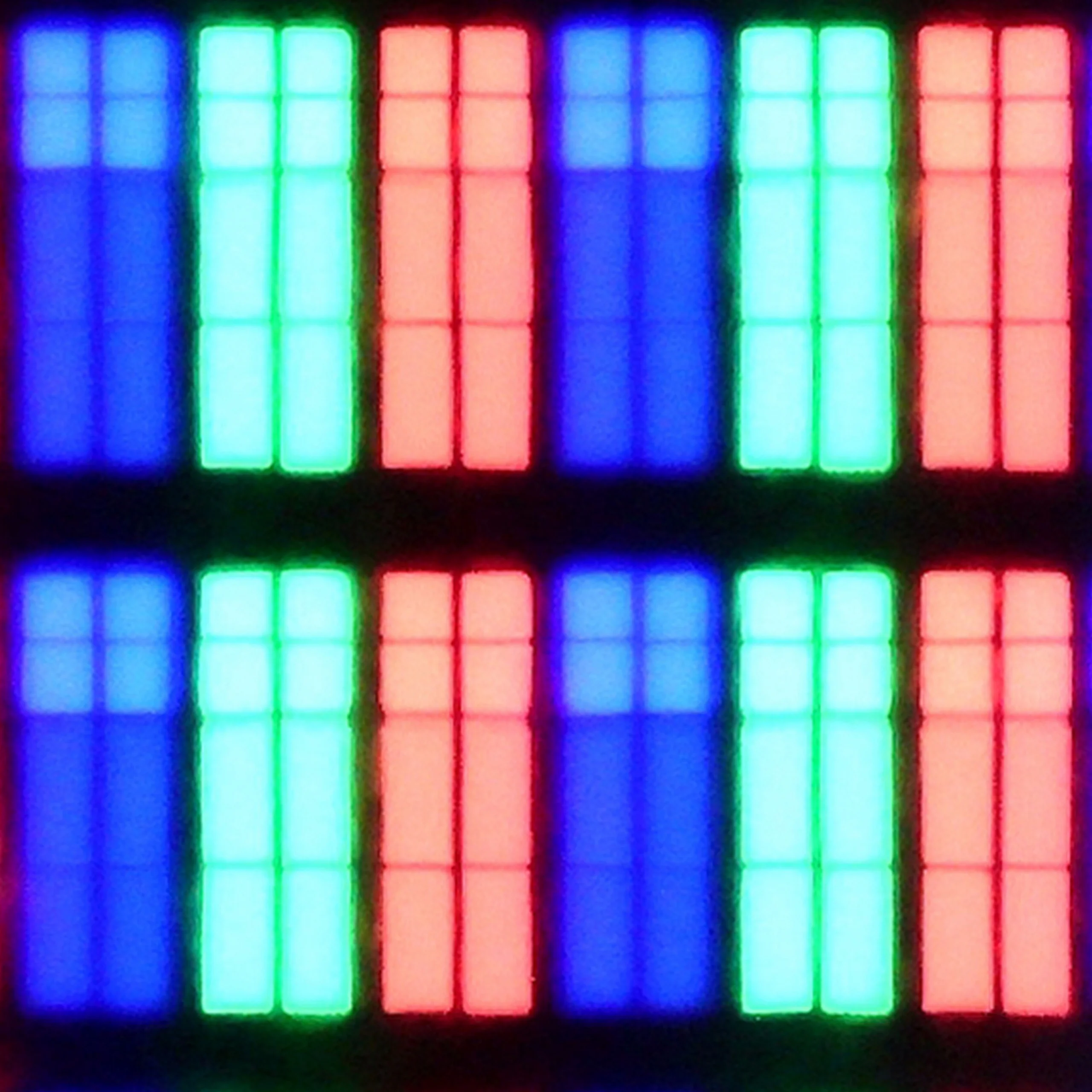
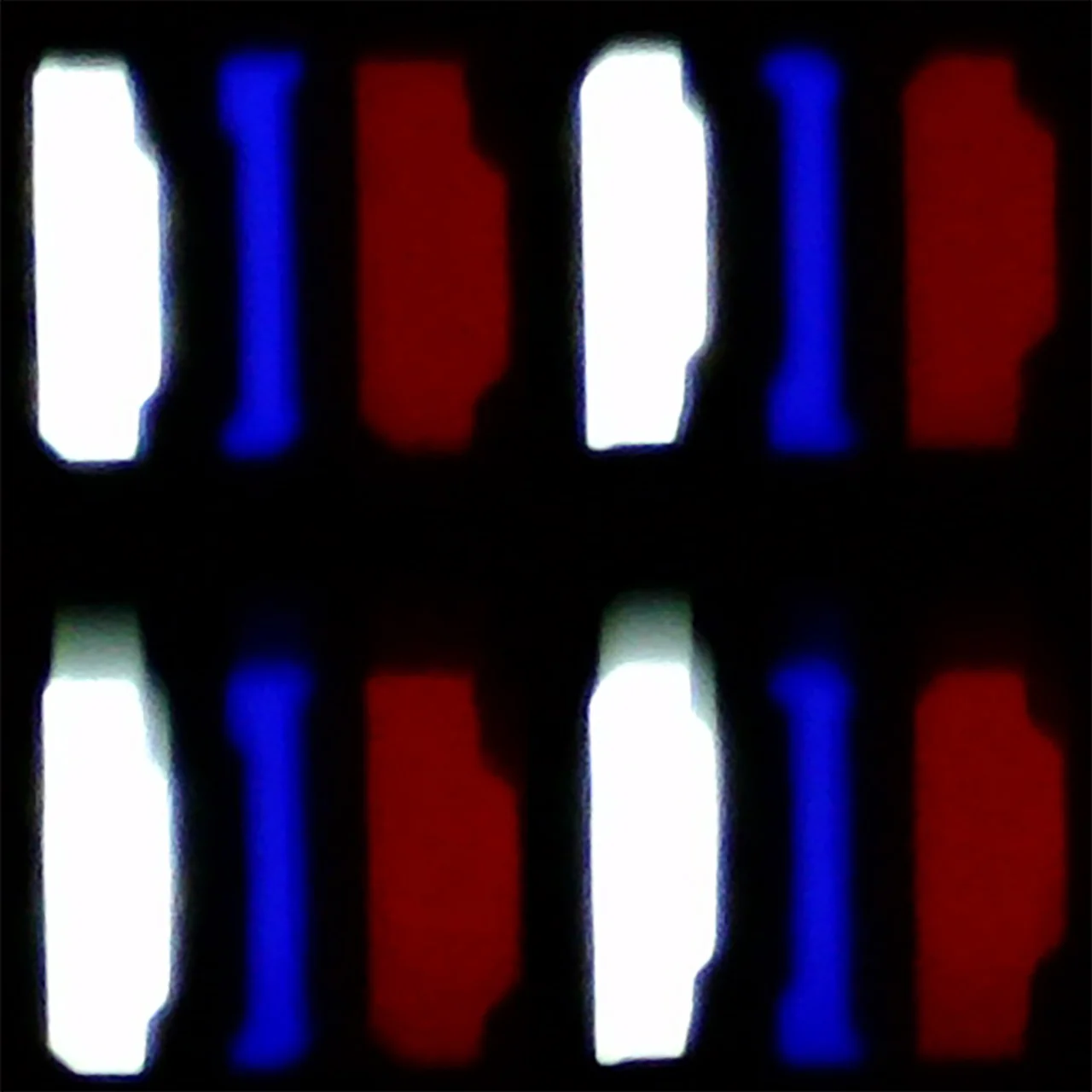
Panel uniformity and thermal imaging:


Philips PML9009 / 9019 / 9059
Samsung S85H / S83H
TV features
6.1/10
7.3/10
- SystemTitan OSTizen
- System performanceDecentVery good
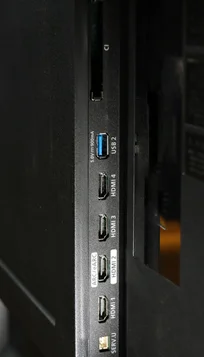
- HDMI inputs0 x HDMI 2.0, 4 x HDMI 2.1 48Gbps0 x HDMI 2.0, 4 x HDMI 2.1 48Gbps
- OutputsToslink (Optical audio), eARC (HDMI), ARC (HDMI), Mini-Jack (Headphones)Toslink (Optical audio), eARC (HDMI), ARC (HDMI)
- Network InterfacesWi-Fi 2.4GHz, Wi-Fi 5GHz, Ethernet (LAN) 100MbpsWi-Fi 2.4GHz, Wi-Fi 5GHz, Ethernet (LAN) 100Mbps
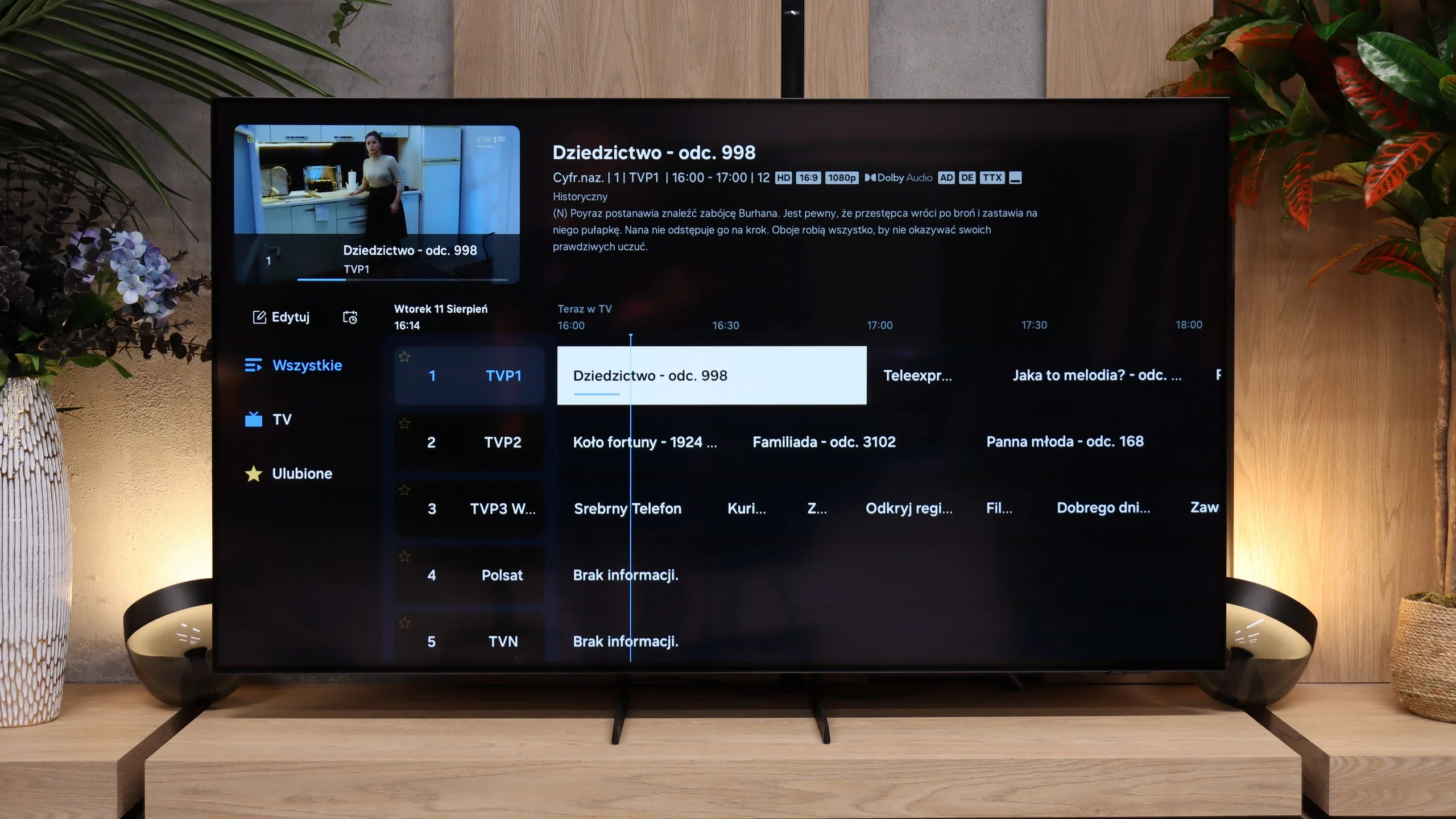
- TV receptionDVB-T, DVB-T2, DVB-S, DVB-S2, DVB-CDVB-T, DVB-T2, DVB-S, DVB-S2, DVB-C
Classic features:
- Recording to USB (terrestrial TV)
- Recording programming
- Picture in Picture (PiP)
- RF remote control (no need to aim)
- Backlit remote control
- Teletext
- Audio only mode
- Bluetooth headphones support
- Simultaneous Bluetooth headphones & TV audio
Smart features:
- AirPlay
- Screen mirroring (Windows Miracast)
- Voice search
- Voice search in native language
- Ability to connect a keyboard and mouse
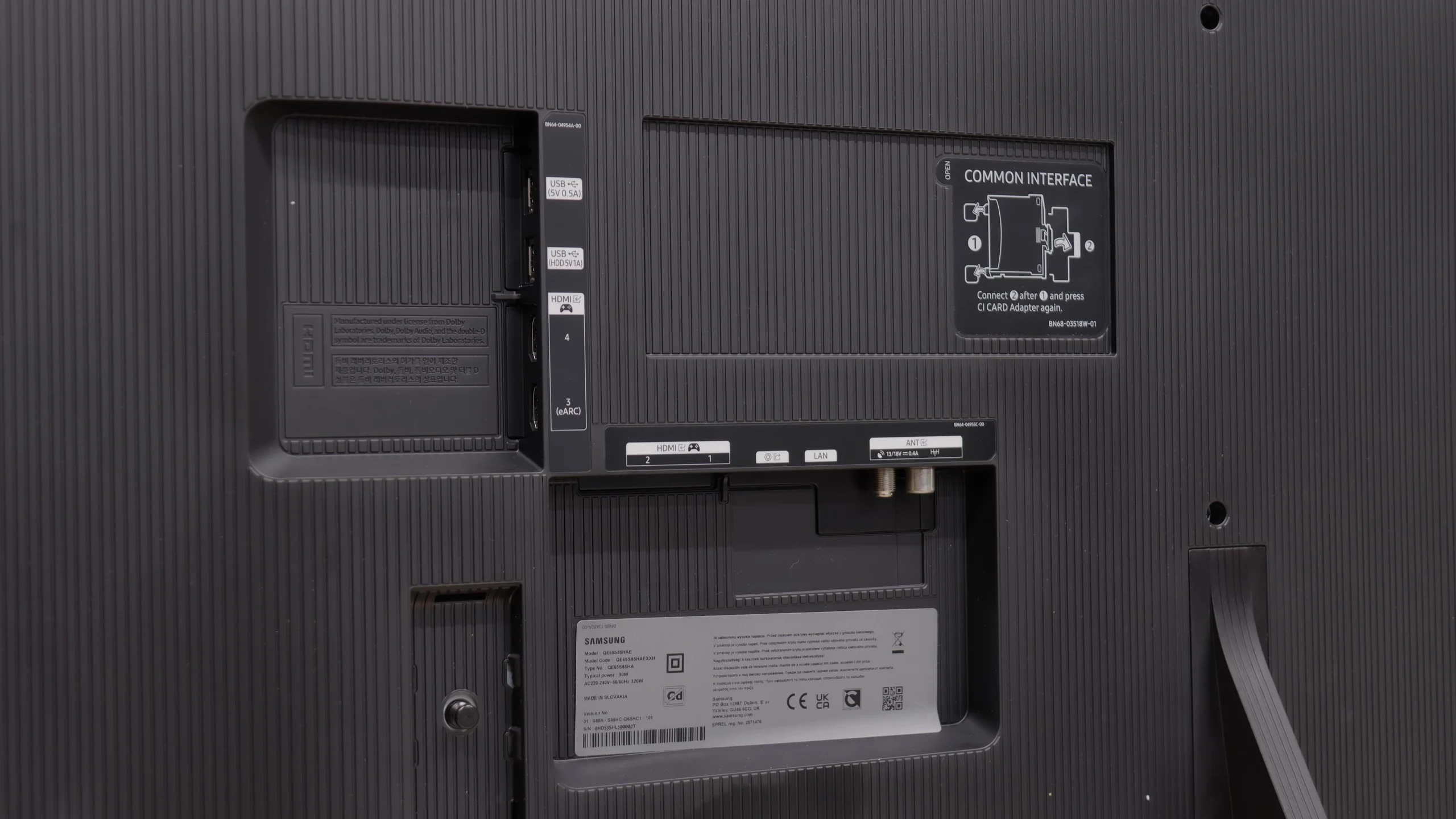
Sound connection options
- HDMI audioeARC (HDMI), ARC (HDMI)eARC (HDMI), ARC (HDMI)
- Other audio outputsToslink (Optical audio), Mini-Jack (Headphones)Toslink (Optical audio)
- Wireless audioBluetoothBluetooth
Supported audio formats (external HDMI eARC audio):
- Dolby Digital Plus 7.1
- Dolby True HD 7.1
- Dolby Atmos in Dolby Digital Plus (JOC)
- Dolby Atmos in Dolby True HD
- DTS:X in DTS-HD MA
- DTS-HD Master Audio
Senior accessibility
- Numeric keyboard on TV
- Font size adjustment
- Audio description
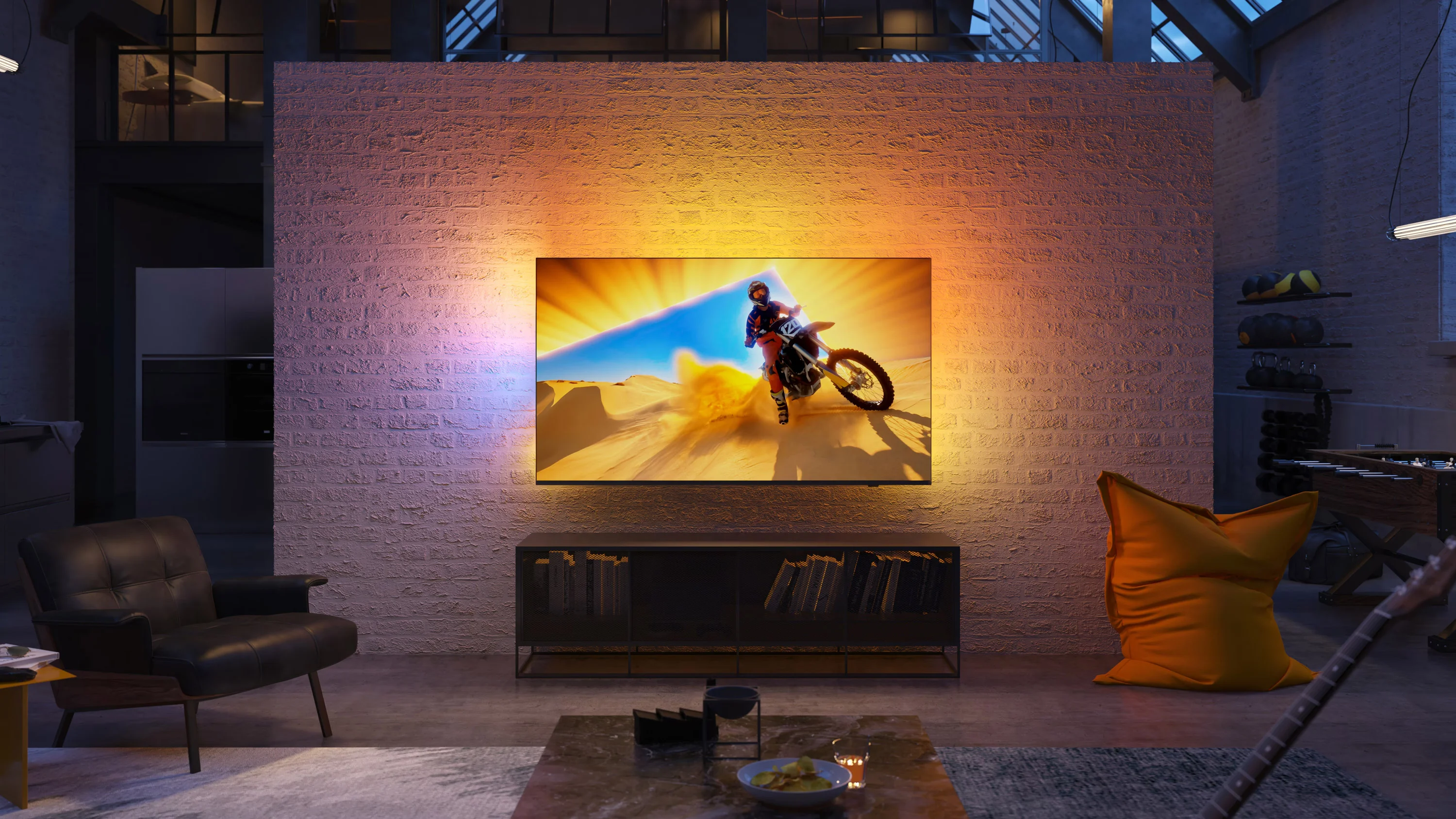
Before delving into the software that powers the Philips PML9009, it’s essential to highlight one of the standout features of the manufacturer’s TVs: the multicoloured Ambilight backlighting. This unique feature enhances the viewing experience by projecting colours from the back of the TV that correspond to the on-screen action, creating a more immersive atmosphere.
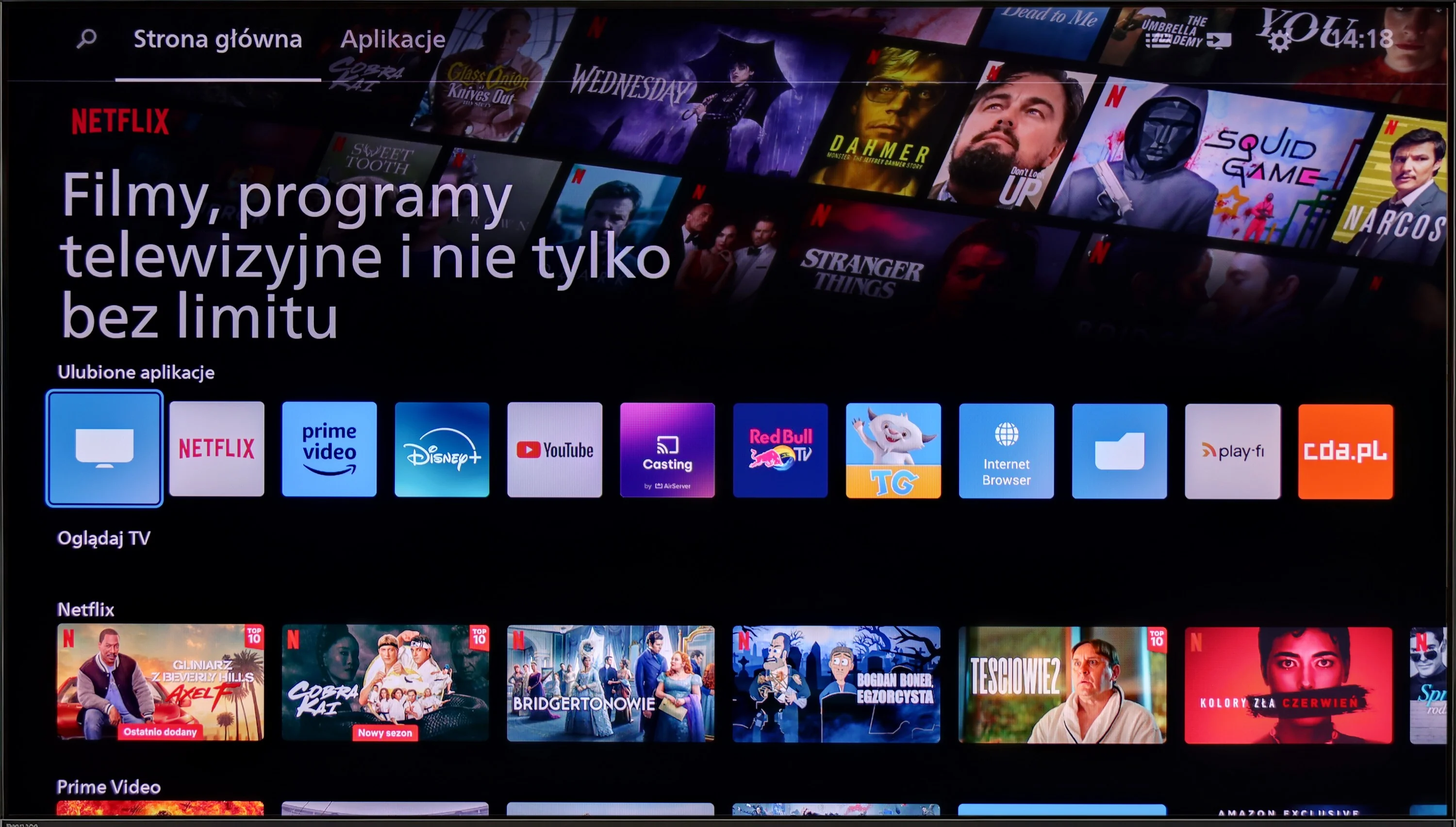
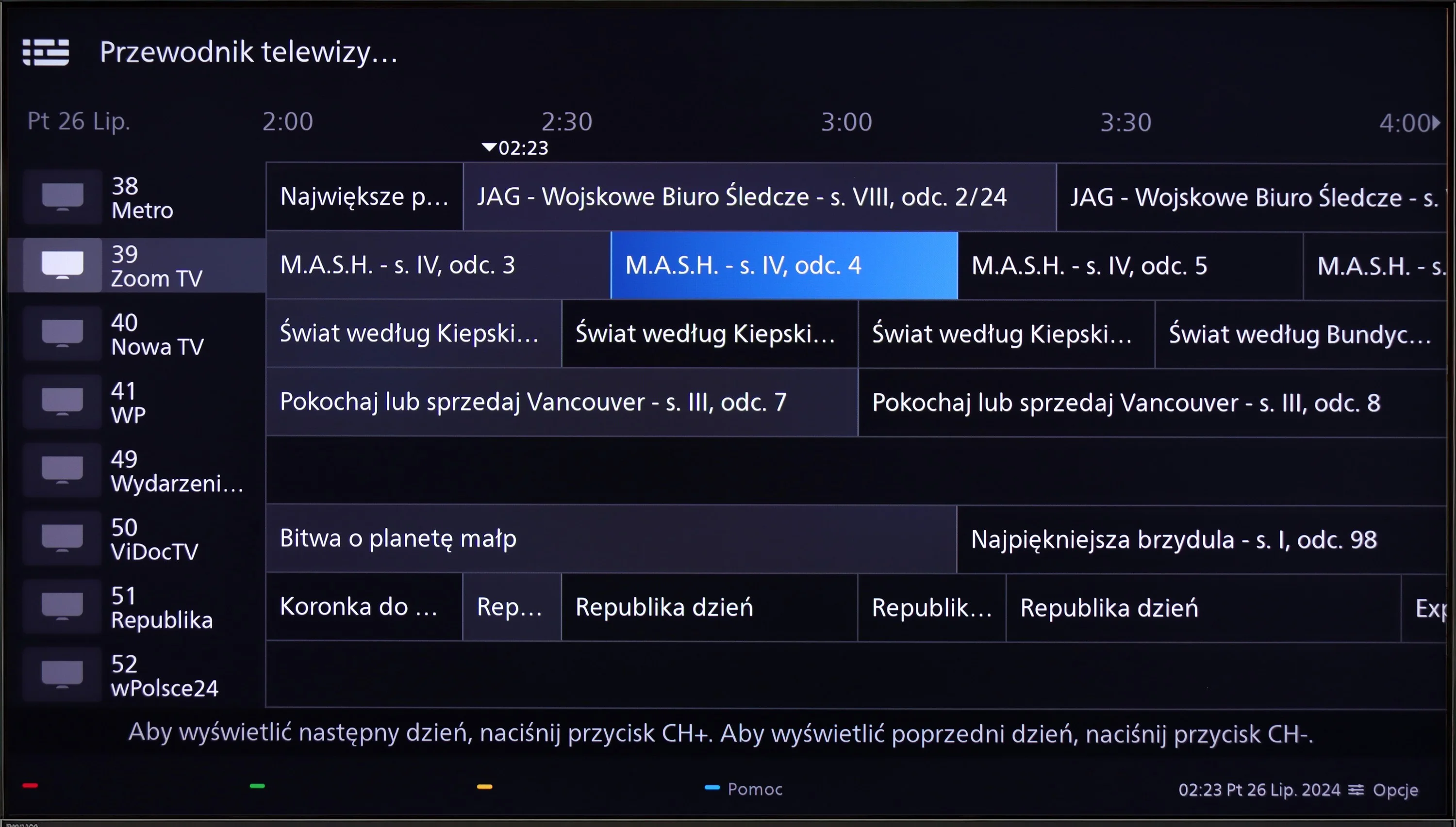
The operating system used in the PML9009 is Philips' proprietary TitanOs. While it offers some benefits, it is notably more closed and limited when compared to other models that use the Google TV system. One significant drawback is the absence of essential applications such as Apple TV, MAX, Canal+, and Player. Additionally, TitanOs restricts users from performing basic tasks like scheduling recordings or recording to USB. Apple device users may also be disappointed by the lack of AirPlay functionality, which allows for easy screen sharing.
On a positive note, the TV supports connecting a keyboard and mouse, which can simplify navigation through the menu. However, it's worth noting that while the remote pairs via Bluetooth for voice selection in English, all other functions rely on infrared (IR) connectivity.
In summary, TitanOs has its limitations, especially for users who frequently utilize a variety of streaming platforms. It seems better suited for those who primarily engage with a few key services—what one might refer to as the "holy trinity" of streaming: Netflix, YouTube, and CDA.
Tizen
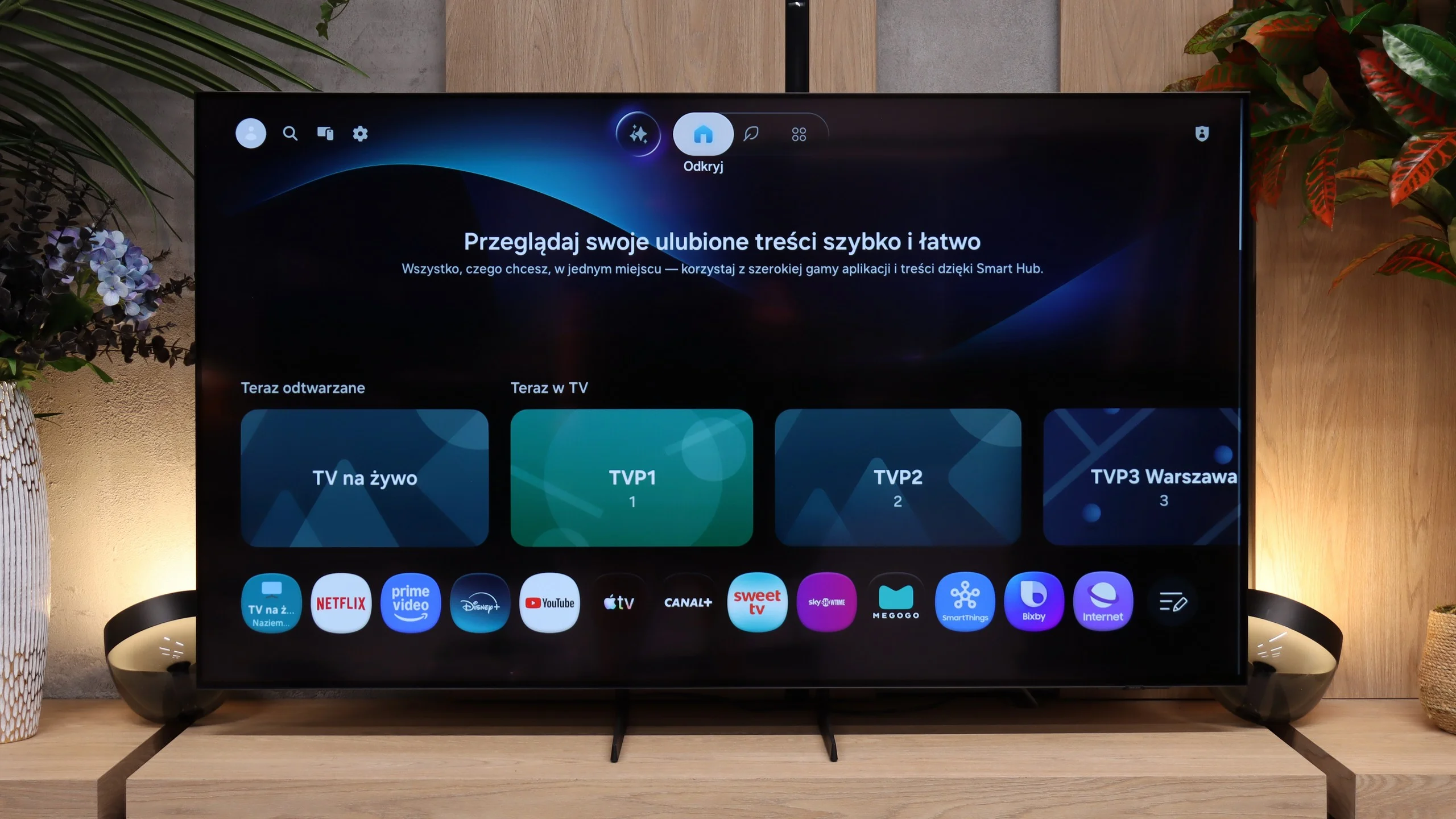
Samsung S85H runs on Tizen, and it's hard to fault its online features. The system is fast, responsive, and the app selection is among the largest on the market. Besides the main streaming platforms, there are also plenty of less popular services, so it's unlikely you'll find yourself missing something essential. Samsung is also expanding SmartThings features, integration with other devices, and more AI-driven solutions. There are a lot of capabilities here, and some users will probably never explore even half of them. A big plus is the promised seven years of system updates. For a TV, which we usually keep much longer than a phone or computer, that matters. Tizen should therefore receive new features and fixes for a long time instead of being abandoned after two or three years. The S85H also doesn't feel like a budget model. We essentially get the same extensive ecosystem that Samsung offers in its higher-end TVs.
Traditional features
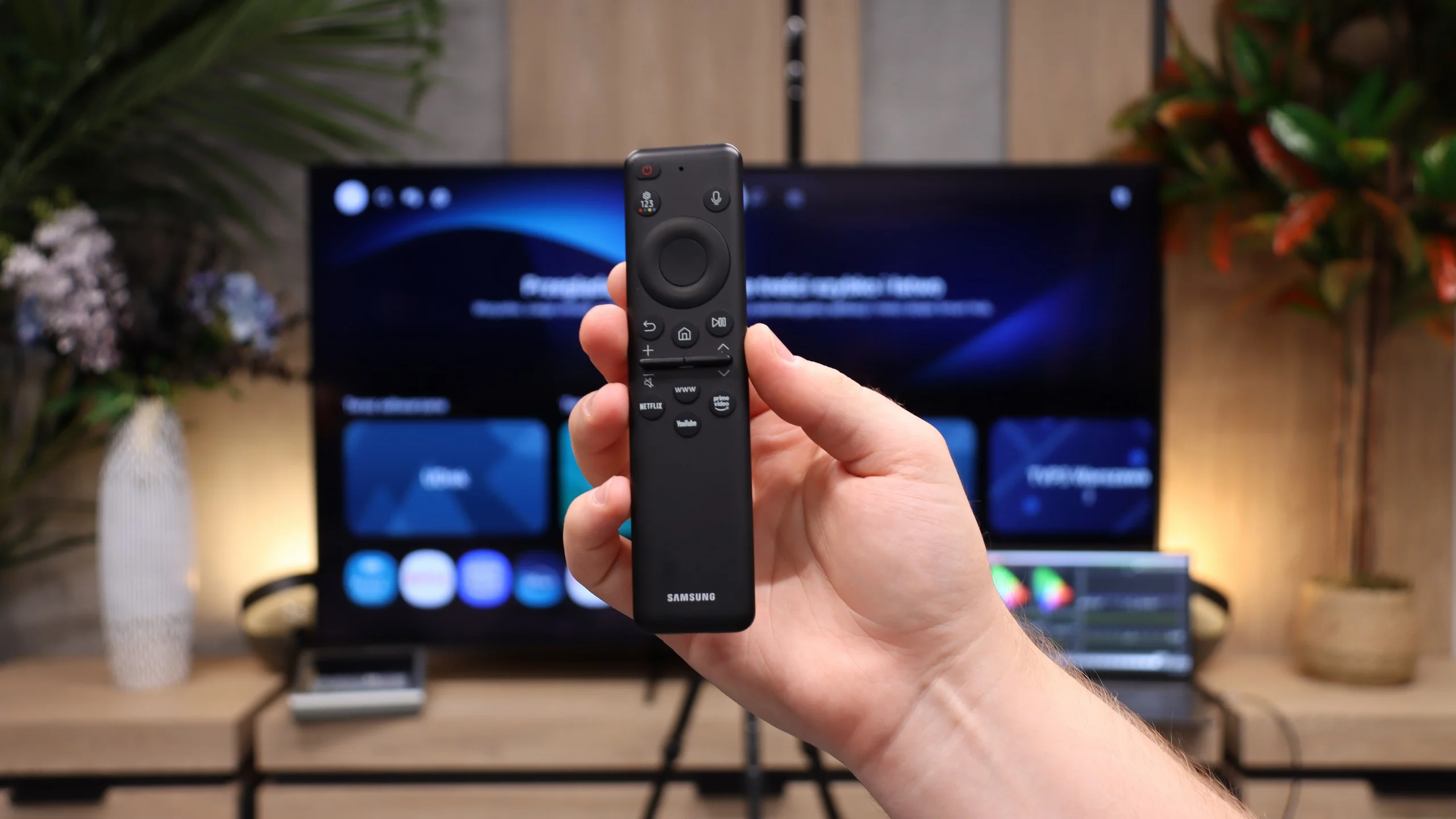
Samsung's approach to a TV's traditional features looks completely different. It's clear the manufacturer has been increasingly prioritizing "modern" services over traditional ones for several years. The S85H therefore isn't a TV that will particularly appeal to people who are used to full-featured regular TV operation. The included remote illustrates this well. It's small, minimalist, and has only the most necessary buttons, but no classic numeric keypad. For streaming this solution is convenient, but for frequent watching of traditional TV without a set-top box, not everyone will like it. It's simply a consequence of the direction Samsung is taking its TVs.
Apps
6.7/10
9.3/10






















Playing files from USB
8.2/10
9.1/10
Supported photo formats:
Maximum photo resolution:
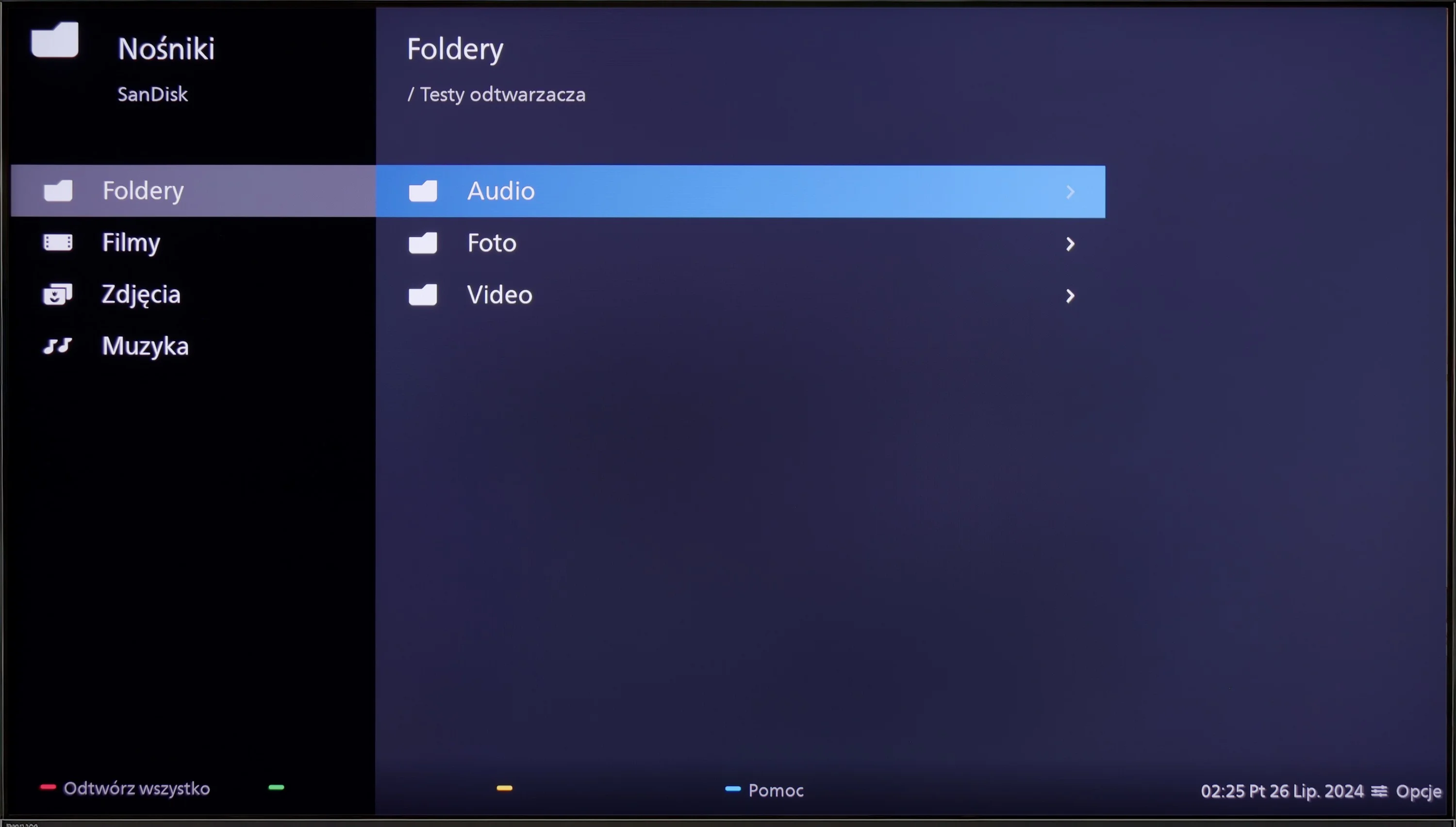
The default media player integrated into the Philips PML9009 provides a fairly comprehensive set of features but does have certain limitations. It supports nearly all common video formats except for the relatively rare .asf format. However, users may encounter issues due to the absence of the H.265 HEVC codec for high-bitrate content and a lack of support for .sub subtitle files, which are popular among many users.
With photo playback, the media player performs adequately, though it does not support some widely used resolutions and formats, such as HEIC, commonly found on Apple devices. The player excels in audio playback and leaves little room for criticism.
Unfortunately, the system's limitations prevent users from extending the player’s functionalities, meaning users are confined to the capabilities the manufacturer has included. This can be a drawback for those who rely on specific formats or additional features not provided by the built-in player.
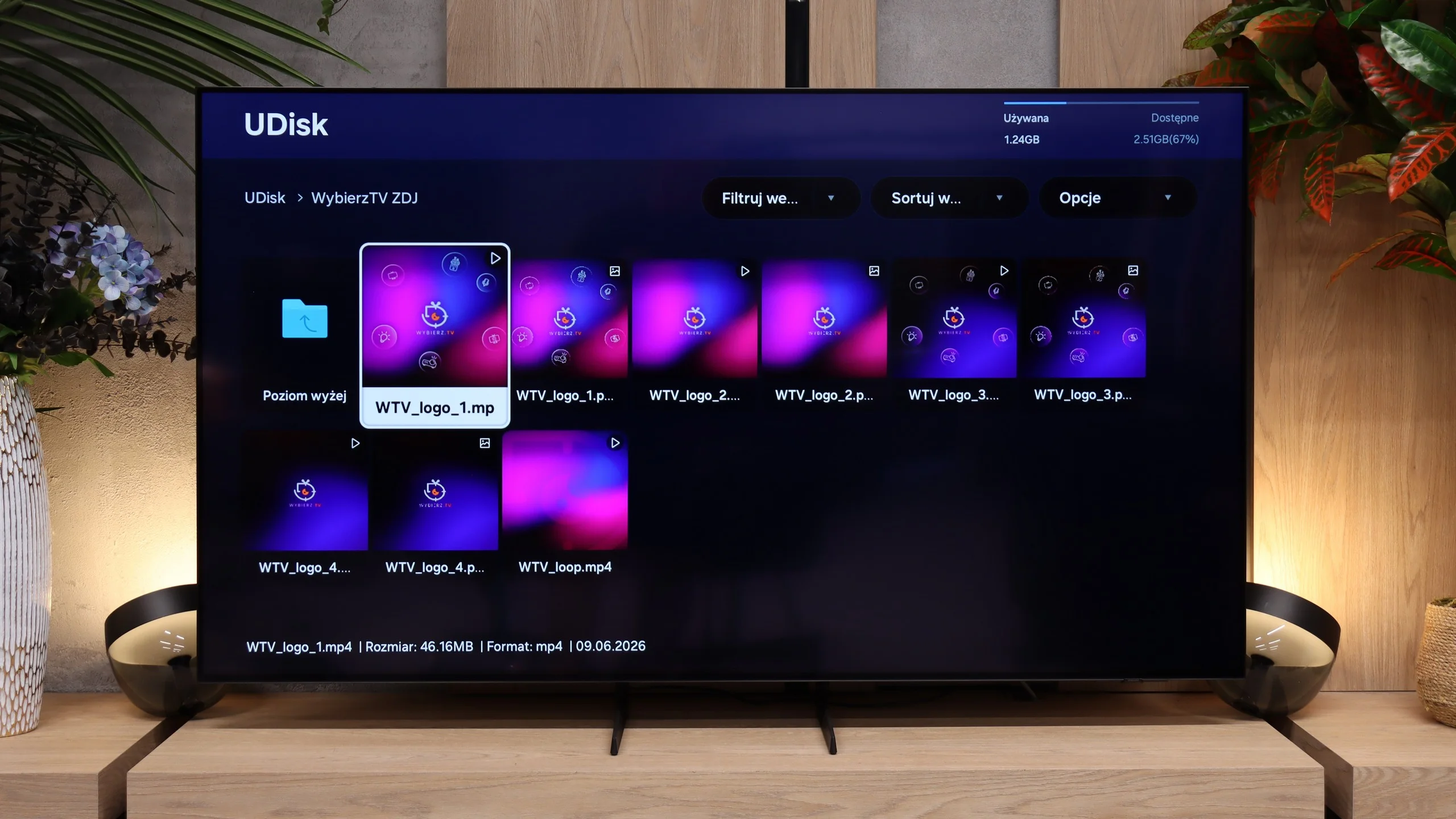
The USB file player on the Samsung S85H works quickly and without major issues. The TV handles both videos and photos well, and for the latter we had no problems with unusual resolutions or a high number of megapixels. Subtitle support is also a plus; Polish characters display correctly and you don't need to change any settings. The only real shortcoming was the lack of support for HEIC, the image format commonly used by Apple devices. Aside from that, the built-in player performs very well and will be more than sufficient for most people for everyday use with a USB flash drive or external USB drive.
Sound
6.7/10
7.2/10
- Maximum volume-86dB
- Dolby Digital Plus 7.1
- Dolby True HD 7.1
- Dolby Atmos in Dolby Digital Plus (JOC)
- Dolby Atmos in Dolby True HD
- DTS:X in DTS-HD MA
- DTS-HD Master Audio
At the outset, it is worth noting that sound quality is a subjective matter. The built-in audio system in the Philips PML9009 is characterised by clear high tones, but the bass is quite flat and significantly worse than in competing models in the same price range.
In terms of sound, the S85H hasn’t really changed compared with its predecessor. It still uses a fairly basic 2.0 system with a total output of 20 W, which sounds adequate and, for such a slim TV, can even add a bit of bass. That’s perfectly fine for everyday TV watching, but it’s not at the level of pricier models that can sound fuller and more "spatial." With that picture, adding at least a soundbar is a no-brainer. All the more so since the S85H supports Dolby Atmos and Samsung’s Q-Symphony, which lets a compatible Samsung soundbar work together with the TV speakers instead of replacing them entirely. If you want to get more from this setup when watching movies, external audio is the most sensible addition.
Sound Quality Test
No sound test video
Acoustic Measurements
No acoustic data
86dBC (Max)
75dBC
Reader comments
Comments are provided by the external service Disqus (Zeta Global). Once loaded, Disqus may set cookies and process data about your activity.
We will remember your choice on this device. Provider's privacy policy