Philips OLED909 is undoubtedly a showcase of engineering by the Dutch manufacturer for 2024. When it comes to picture quality, the TV presents what one can expect from OLED technology – deep blacks and infinite contrast. Additionally, it is equipped with META technology (MLA micro-lenses), which significantly enhances its brightness and further improves the already excellent viewing angles of organic matrix TVs. As a result, HDR effects look phenomenal, and the TV will satisfy most users looking for great image quality in this class of devices. In terms of motion fluidity, the OLED909 does not disappoint either. The 144 Hz panel, combined with a full set of gaming features, such as HDMI 2.1, ALLM, and VRR, makes it an ideal choice for gaming enthusiasts. Both dynamic shooters and spectacular racing games will look smooth and responsive. Regarding usability, the TV is equipped with the Google TV operating system, just like the model OLED809. This solution is significantly better than TitanOS, which can be found in the lower series OLED769 from the Dutch manufacturer. It provides access to a vast number of applications, easy operation, and support for voice assistant functionality. In addition, there is a four-sided Ambilight system that adds magic to every movie night, creating a unique atmosphere. However, it is not a device without flaws. The biggest problem regarding the picture is the average smoothness of tonal transitions – color banding is noticeable in subtle gradients, which may be bothersome for more discerning viewers. In the context of PC collaboration, although it is phenomenal equipment for gamers, it may not be the best choice for text or graphic work due to the lack of chroma 4:4:4 support. In terms of usability, it's worth mentioning a few disappointments. The remote control in this model really impressed us – it is well-designed, and the backlit numeric keypad is a great addition, especially when using the TV in the evening. Unfortunately, it mainly operates on infrared, so we found ourselves irritated several times when we had to aim precisely at the screen. This is a bit strange, considering that in this price range we expected more modern solutions. The lack of recording features or picture-in-picture (PiP) also surprised us – these are features that are often standard in this segment. Despite these drawbacks, the Philips OLED909 is a TV that impresses with its picture quality, gaming features, and unique additions like Ambilight. The biggest question to ask oneself is: is it worth it? It is great equipment, but its high price raises the question of whether it is the best choice in terms of price to quality ratio.
- Matching (Score) |
- Our verdict |
- TV appearance |
- Where to buy |
- Contrast and black detail |
- HDR effect quality |
- Factory color reproduction |
- Color reproduction after calibration |
- Smoothness of tonal transitions |
- Image scaling and smoothness of tonal transitions |
- Blur and motion smoothness |
- Console compatibility and gaming features |
- Input lag |
- Compatibility with PC |
- Viewing angles |
- Daytime performance |
- Panel details |
- TV features |
- Apps |
- Playing files from USB |
- Sound
Philips OLED909 vs Samsung QN80H
 Direct comparison

Check the best price offer:
Samsung QN80HOLED909
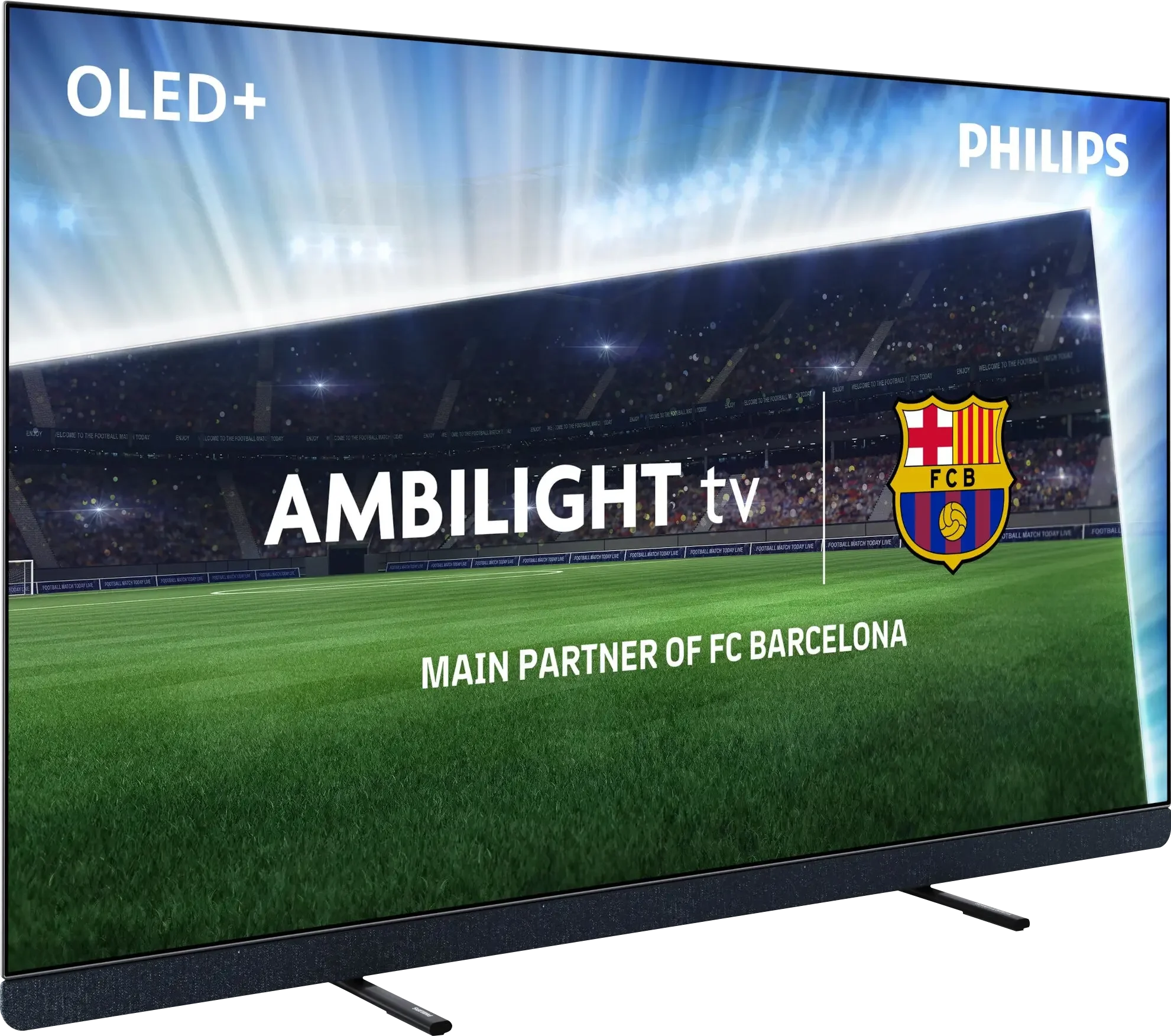
Panel type: WRGB OLED
Resolution: 3840x2160
System: Google TV
Model year: 2024
Complete the survey to find out the result
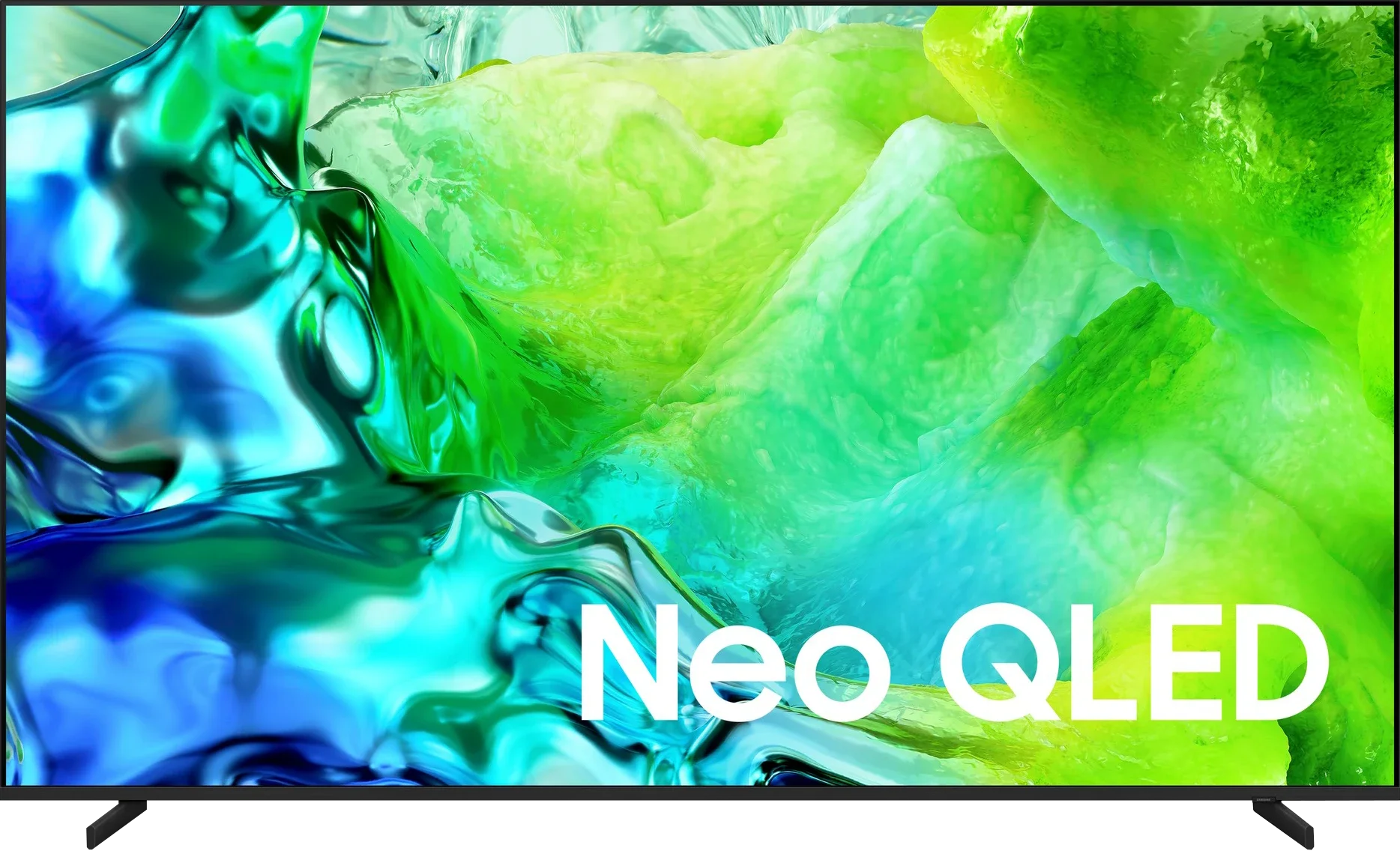
Panel type: LCD VA
Resolution: 3840x2160
System: Tizen
Model year: 2026
Complete the survey to find out the result
Overall rating
8.1
7.3
 Movies and series in UHD quality
 8.2
7.0
 Classic TV, YouTube
 8.6
6.8
 Sports broadcasts (TV and apps)
 8.8
6.8
 Gaming on console
 9.5
9.0
 TV as a computer monitor
 6.4
8.9
 Watching in bright light
 5.7
5.8
 Utility functions
 6.7
7.3
 Apps
Apps 9.6
9.3
 Sound quality
 8.1
7.1
Complete the survey to find out what fits your preferences
Advantages

Perfect blacks - OLED
High HDR brightness
Support for advanced HDR formats – HDR10, HDR10+, Dolby Vision, HGiG
Good motion fluidity - 144Hz
Great gaming compatibility – ALLM, VRR, low input lag
One of the best viewing angles on the market
Excellent color reproduction after calibration
Four-sided Ambilight system
GoogleTV operating system – rich selection of applications, voice control, easy operation
Good sound quality – built-in soundbar
Deep blacks thanks to Mini LED backlighting
High peak brightness over 1000 nits in HDR
Vivid colors from QLED quantum dots
High panel refresh rate of 144 Hz
4 HDMI 2.1 ports
Very low input lag
Extensive gaming features
Fast Tizen OS
Seven years of system support
Excellent PC compatibility (240 Hz mode, great font readability)
Adjustable stand width and height
Disadvantages

Visible tonal transitions
Infrared remote
Font display issues (PC)
No recording function from built-in tuners and PIP
Price compared to competitors
Limited number of local dimming zones: 110 in the 65-inch model
Average reflection suppression
No USB recording or PIP function
Cheap-looking plastic feet
No solar-powered remote 😓
Our verdict
The Samsung QN80H is a very successful mid-range TV, and in our view that's exactly how it should be seen. Not as a new Neo QLED flagship, but as the first model in Samsung's lineup that gives a clear taste of better picture quality. Full Mini LED backlighting, high brightness, and well-saturated colors mean that for someone moving up from a regular LCD TV the difference can be significant. A huge plus for this model is that Samsung didn't shortchange it on functionality. The QN80H received almost the same rich package of features as the flagships. So we get a complete kit for gamers, led by four HDMI 2.1 ports, and an extremely fast Tizen system that also comes with guaranteed support and updates for the next seven years.
Of course we must remember this is not a top-tier model. The number of Mini-LED dimming zones isn't record-breaking, so in demanding scenes you can see some compromises in picture quality. There are also small choices we'll simply dislike, like dropping the solar remote in favor of a less elegant battery-powered version. Even so, it's hard to fault the QN80H for performing poorly in any important area. This is a TV that manages to do at least well across practically every field. Those are the expectations you should have for it. It doesn't try to fake being a flagship, but it also doesn't disappoint in any aspect. That's exactly the result we expected from the "80" series, and those expectations have been met. Is it worth buying? Yes, but much will depend on the price. At a suitably attractive price, the QN80H could once again become one of Samsung's most sensible models for people who want to step up to higher picture quality without paying extra for the brand's most expensive TVs.
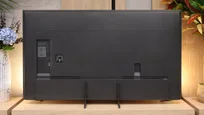
TV appearance
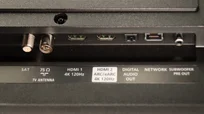
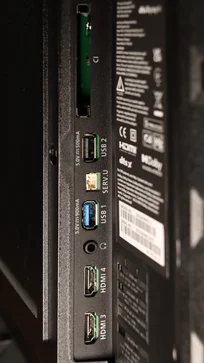

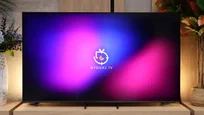
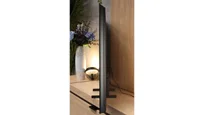


Contrast and black detail
10/10
6.7/10
Local dimming function: Yes, number of zones: 110 (10 x 11)
Contrast:


Result
∞:1

Result
∞:1

Result
∞:1

Result
∞:1

Result
∞:1
Result
18,900:1
Result
7,100:1
Result
23,200:1
Result
7,750:1
Result
3,800:1
Halo effect and black detail visibility:
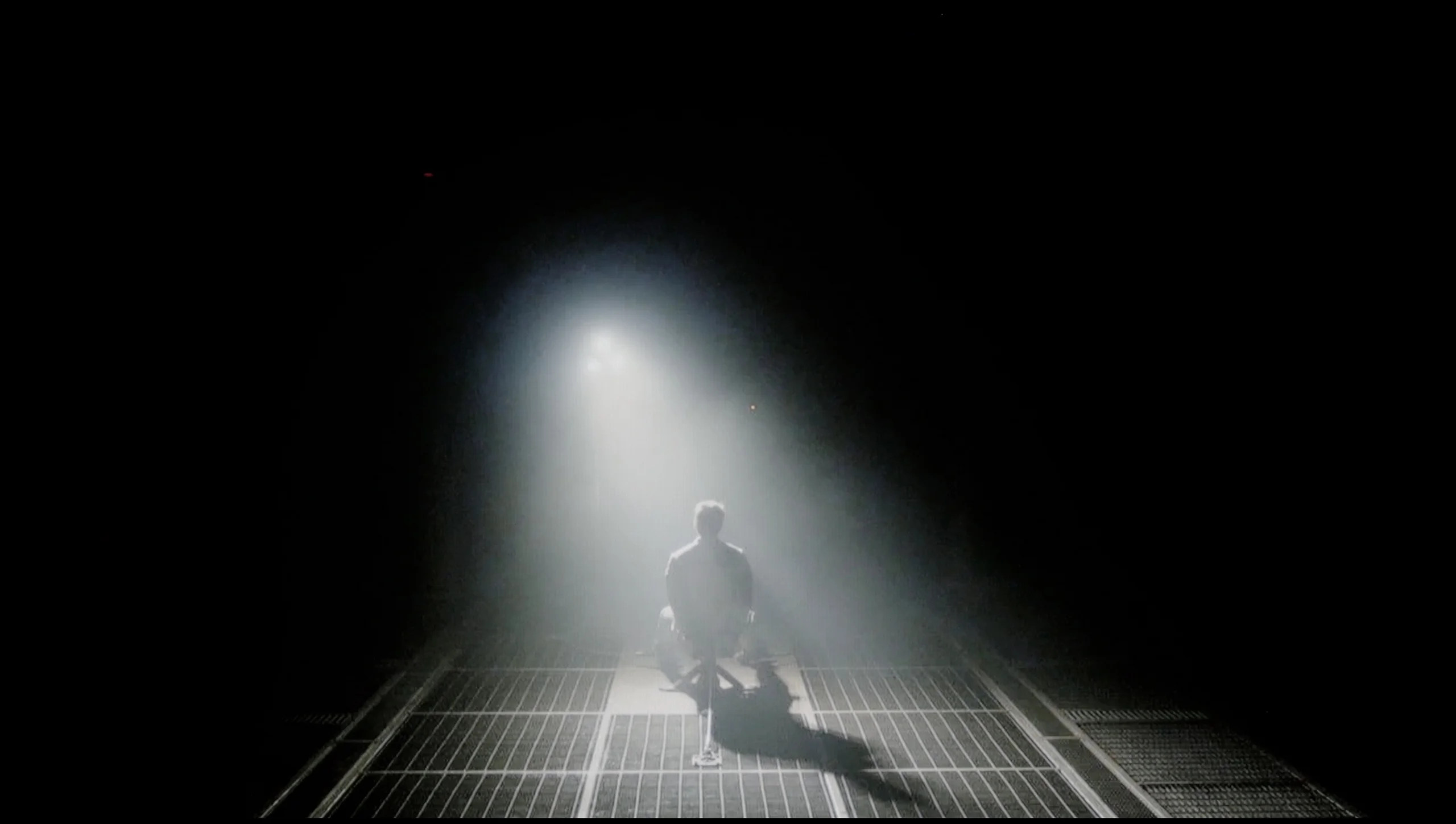

Check the visibility of bright lights on a dark background. Mini-LEDs often struggle with this. The photo does not compare black levels – that’s what the video below is for.
The video accurately shows differences in contrast and black levels between TVs, as well as potential issues: halo around bright objects or Mini-LED zone operation visible as brightness jumps.
Philips OLED909 in the category of contrast and black presents exemplary achievements characteristic of OLED technology. Tests on five screens confirmed infinite contrast, making the television an ideal choice for movie lovers in darkened rooms. A scene from the film Oblivion impresses with the excellent separation of light from the lamp, allowing for full appreciation of the precise reproduction of even the smallest details. The scene from the film Sicario 2 also performs well, where the bright lights of the helicopter were perfectly separated from the dark background. However, in the same scene, the phenomenon of desaturation, or loss of color saturation, is noticeable. Although this is not directly related to the assessment of contrast and black, it is worth mentioning, especially if perfect color reproduction in every situation is crucial. Despite this minor blemish, the black generated by the Philips OLED909 remains incredibly deep and deserves the highest marks.
QN80H represents the Neo QLED lineup, which means it has direct, zoned Mini-LED backlighting on board. In the 65-inch unit we tested we counted exactly 110 local dimming zones. Compared with aggressively priced Chinese competition that number might not seem spectacular, but it’s still far better than having no dimming at all or the edge-lit dimming used in lower-tier models. Especially since Samsung paired the QN80H with a high-contrast VA panel. Thanks to that, even with a relatively modest number of zones the TV can deliver very good results. In our tests on movie scenes the QN80H performed solidly, particularly where deep blacks dominated the screen. In films like Oblivion the blacks we measured could be three to four times deeper than the panel’s native capability. That shows the TV can effectively and precisely dim the right areas to produce an image with satisfying contrast. The problems begin in more demanding moments. In scenes with lots of small details on a dark background (the shot with the helicopter at the bottom) the QN80H’s biggest weakness becomes apparent. When small but very bright points appear on screen the dimming algorithm clearly gets confused. Instead of illuminating only those details it brightens almost the entire screen, causing the blacks around them to turn very gray. That is a direct consequence of the limited number of dimming zones. One can only hope Samsung will optimize the algorithm in future firmware updates. Despite this, we judge the overall contrast positively, especially when comparing the QN80H to displays that have no zoned backlight at all.
HDR effect quality
7.8/10
5.8/10
Luminance measurements in HDR:

Result
1394 nit

Result
1471 nit

Result
1594 nit

Result
1552 nit

Result
708 nit
Result
694 nit
Result
385 nit
Result
703 nit
Result
307 nit
Result
660 nit
Scene from the movie “Pan” (about 2800 nits)


Scene from the movie “Billy Lynn” (about 1100 nits)


The photos show two HDR10 movies. 'Pan' is one of the brightest productions ever made, while 'Billy Lynn' (soldier) has brightness typical of streaming (Netflix, Prime, HBO MAX). Notice the intensity of effects and detail in whites.
Static HDR10


The photos present the visibility of white details in various HDR formats. They do not show brightness differences between TVs (these can be compared in the previous gallery).
Dynamic: Dolby Vision
Dynamic: HDR10+


The photos present the visibility of white details in various HDR formats. They do not show brightness differences between TVs (these can be compared in the previous gallery).
HDR luminance chart:
Samsung QN80H
Philips OLED909
Luminance of RGB colors
The Philips OLED909 impresses with the quality of its HDR effect, achieving up to 1500 nits of peak brightness in tested scenes. This is an excellent result, placing this television among the best OLED models on the market. The MLA matrix, also used in models like the Panasonic Z95A and LG G4, plays a key role here, allowing for exceptionally bright and detailed reproduction of dynamic scenes. However, it's worth noting that in the most demanding scene from the movie The Meg, the brightness drops to around 700 nits. This is a typical phenomenon in OLED technology, where intensely bright full-screen images cause a limitation of luminance. Nevertheless, the HDR effect still looks very good, and the television performs better than most competitors under similar conditions. The wide color gamut coverage also deserves praise. The OLED909 offers 95% coverage of DCI-P3, ensuring the television can display vivid and realistic colors.
Samsung QN80H is without a doubt a bright TV. In synthetic tests it breaks the 1000-nit barrier, which on paper already promises a solid HDR effect. In practice the screen really shows its claws, though it can't fully spread its wings (or its backlight 🤔) in every situation. The best impression comes from bright, expansive shots. Sunlit exteriors or heavily lit scenes look really good on it. Brightness then stays around 700 nits, which gives a noticeable step up in quality over standard SDR. Problems start in dark scenes with small, pinpoint highlights. The QN80H tends to heavily dim them, doing everything it can to protect black levels. On one hand we gain better contrast, on the other... we lose some of the dynamics and the sparkle of fine HDR details. The TV therefore has considerable potential, but the dimming algorithm can be too restrictive.
Color gamut coverage
Colors are good too. The QN80H uses quantum dot technology, and in our measurements it covered 93% of the DCI-P3 space and about 70% of BT.2020. Today those results won't exactly blow anyone away, but in real-world use they're more than enough to deliver vivid, natural-looking images in most movies and TV series. Colors are properly saturated and, after proper tuning, don't look artificial or overly aggressive.
Factory color reproduction
7.6/10
6.1/10
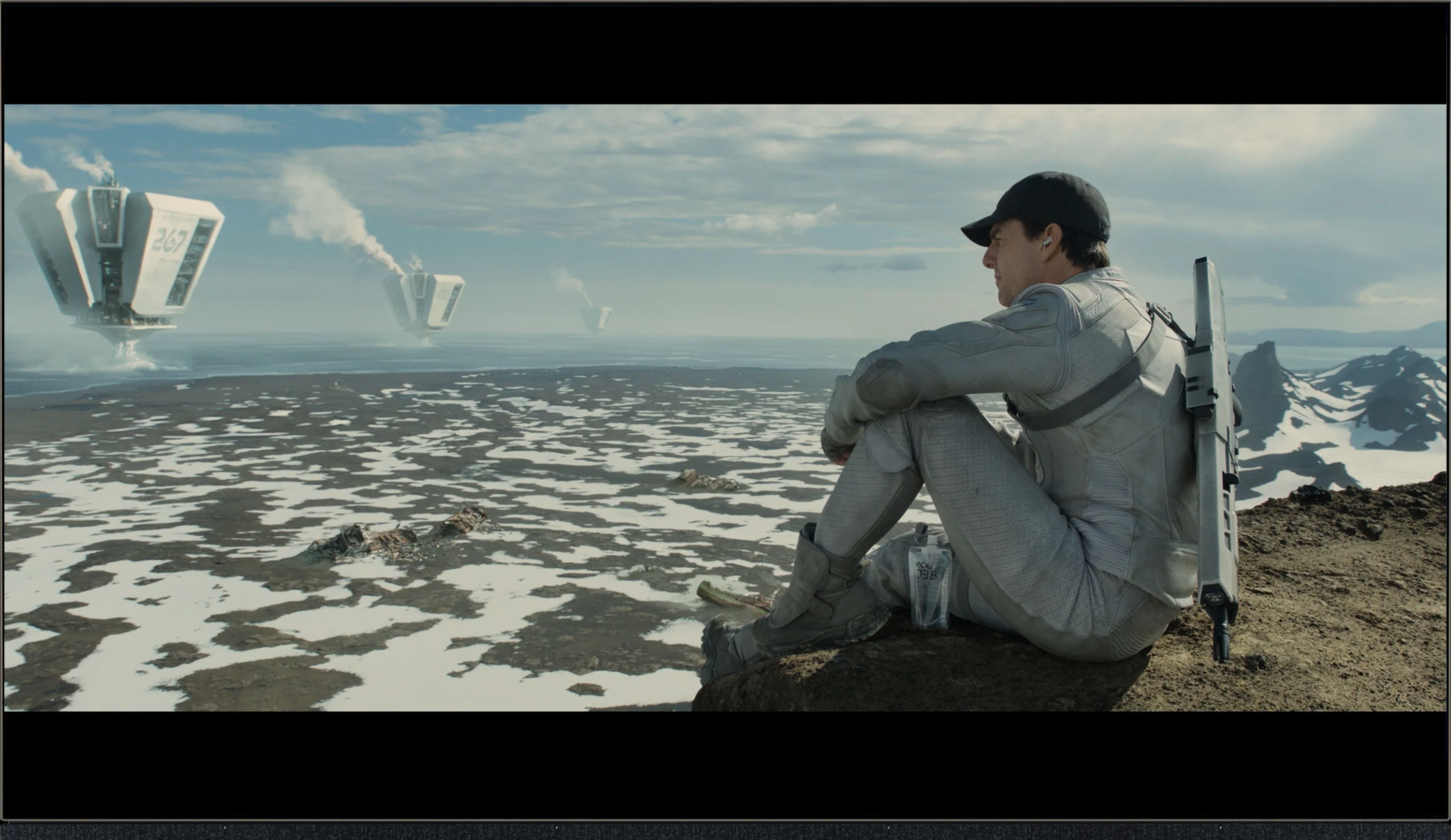
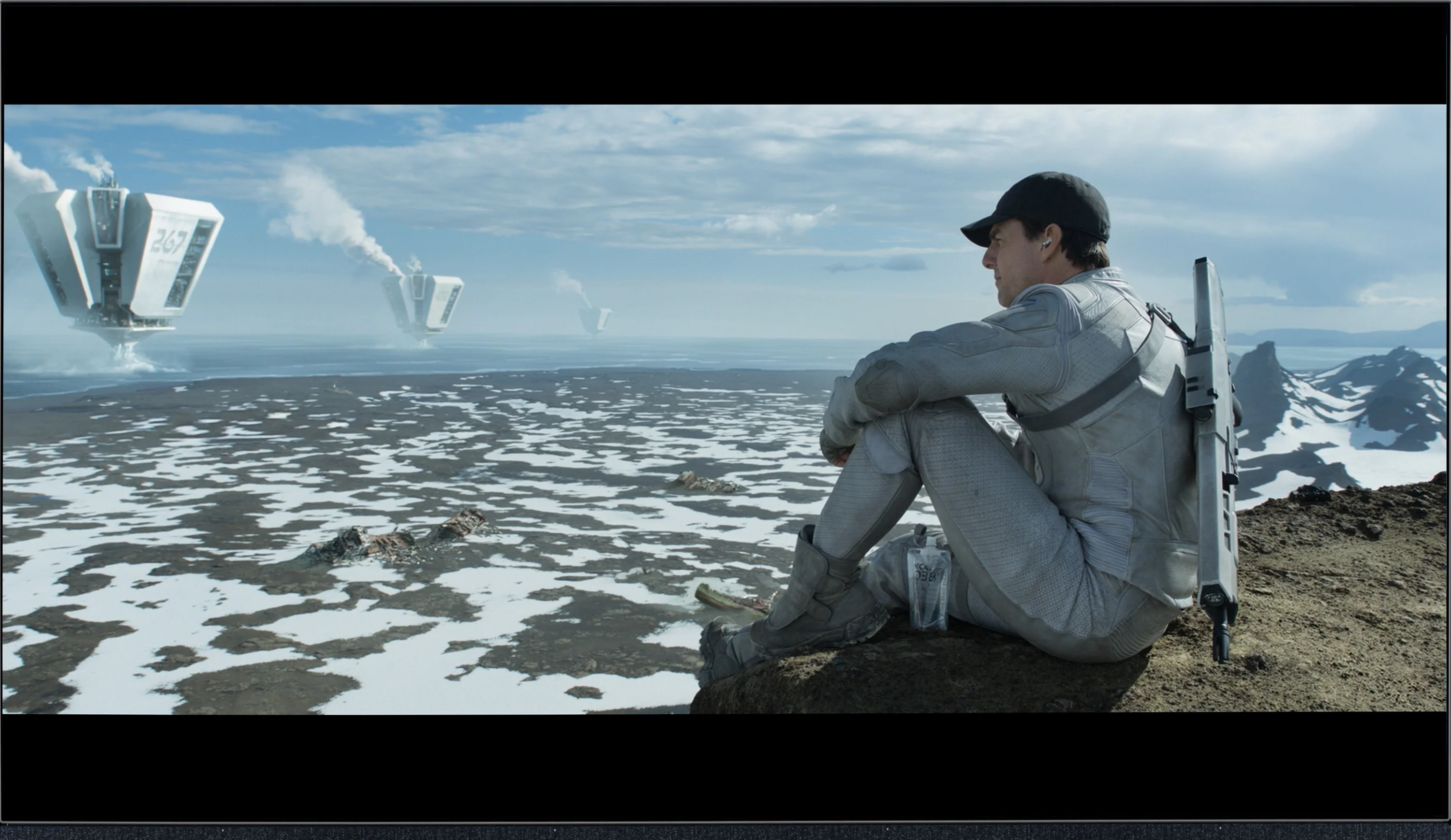
This gallery shows how colors change after professional TV calibration. If you notice the difference, we recommend ordering this service at SkalibrujTV.com.
Factory Mode
After calibration


This gallery shows how colors change after professional TV calibration. If you notice the difference, we recommend ordering this service at SkalibrujTV.com.
Factory Mode
After calibration
Like other televisions, the Philips OLED909 has been tested for color reproduction in factory modes. The best mode turned out to be Filmmaker Mode, but despite its name, it is not free of flaws.
The biggest problem is the white balance. Both in HD and 4K HDR content, there is a noticeable dominance of green and red shades, which causes a distinct yellowing of the screen. This effect is particularly visible in test materials, for example in the scene with Tom Cruise in the foreground, where the difference compared to the calibrated image is very clear.
Regarding brightness characteristics, the gamma in HD materials was boosted too much - it was below the reference value of 2.4, which gave the image a "milky" filter and affected the overall clarity. In the case of 4K HDR content, we noticed the opposite phenomenon – there is a clear drop at the beginning of the EOTF curve, indicating problems with reproducing the smallest details in dark scenes. Although the Filmmaker mode offers acceptable quality, noticeable errors in white balance and brightness characteristics show that the television requires additional calibration to fully reveal its potential in color reproduction.
The QN80H's factory settings were really good, especially compared with most TVs that come into our tests. Of course, we performed measurements in Filmmaker Mode, and that's the mode we recommend turning on right after the initial setup. In SDR material our unit was set up surprisingly well. The white balance was very even, colors looked natural, and the errors were so small they were hard to spot without measurement equipment. The only weak point was the gamma. In brighter parts of the image the TV brightened them a bit too much, so the picture sometimes lost a little depth. Even so, we'd like most TVs to look this good straight out of the box.
It was a bit worse in HDR. The white balance itself was still set correctly, so the problem wasn't with the colors but with how the QN80H managed image brightness. You could see that immediately on the EOTF chart. The TV brightened large parts of scenes too much, causing the brightest elements to blow out. Interestingly, at the same time very small points were often dimmed too much. As a result some fine detail simply disappeared. So the factory Filmmaker Mode in HDR isn't bad, but it's definitely not as well calibrated as in SDR.
Color reproduction after calibration
9/10
8.2/10


The photos show how movies look on the TV. Pay attention to black detail visibility, colors, and shadow tint.


The photos show how movies look on the TV. Pay attention to black detail visibility, colors, and shadow tint.
Philips OLED909 offers tools for image calibration, which significantly improves its quality. After calibrating the Filmmaker Mode, the television presents a much more natural color reproduction. The white balance after calibration looks very good. Although we noticed slight deviations in the blue hue in HD content, the errors fall within acceptable limits, and the image looks much better than in factory settings. The brightness characteristics, including gamma and EOTF, have also been distinctly improved. The television no longer has issues with excessive brightening or darkening of the image. Both dark and light details are now rendered correctly, making the image look very good in every scene. After calibration, the Filmmaker mode in the Philips OLED909 offers excellent image quality that will meet the expectations of even the more demanding users. The calibration fully utilizes the potential of this model.
The biggest difference after calibration was in HDR Filmmaker mode. SDR was already very good out of the box, so we didn't have much work to do there. In HDR, however, we managed to tame the way the QN80H handled brightness, as it had been over-brightening most scenes. After calibration the picture is calmer, more natural, and much closer to how a faithful picture should look.
Smoothness of tonal transitions
4.6/10
9.5/10
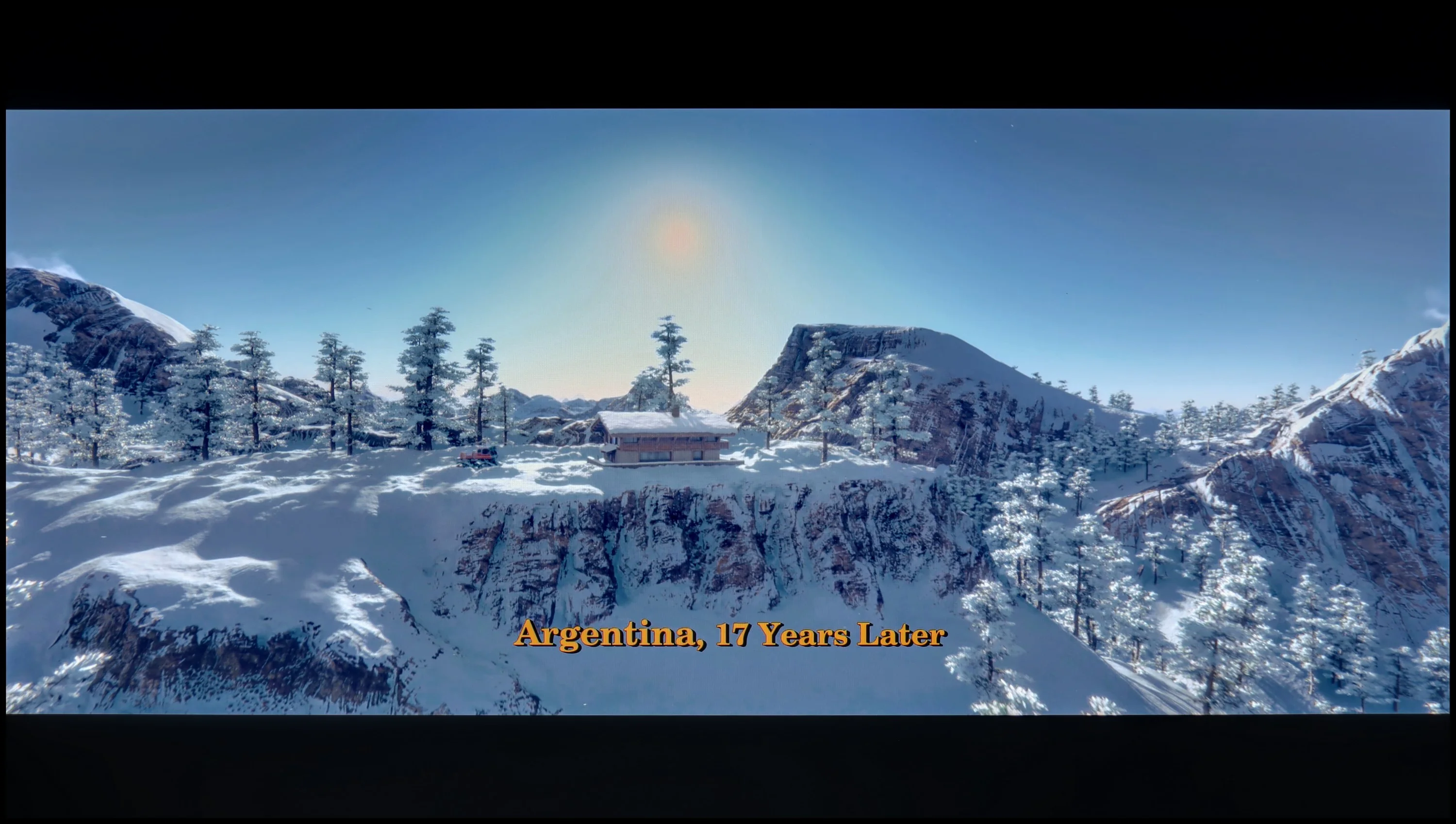




These are selected scenes that show smooth tonal transitions from one color to another. If you see distinct banding, it’s the TV panel’s fault.

These are selected scenes that show smooth tonal transitions from one color to another. If you see distinct banding, it’s the TV panel’s fault.

These are selected scenes that show smooth tonal transitions from one color to another. If you see distinct banding, it’s the TV panel’s fault.

These are selected scenes that show smooth tonal transitions from one color to another. If you see distinct banding, it’s the TV panel’s fault.
The Philips OLED909 performs averagely in the category of fluid tonal transitions. The WOLED panel used in this model is not known for handling tonal transitions perfectly, and in the case of the OLED909, it appears to be slightly worse than competing models with similar panels. Subtle transitions and color connections are noticeable in bright and dark parts of the image, which may be particularly visible on more demanding scenes with subtle gradients. This effect can impact the perception of content, especially for users who pay attention to such details.
Tonal transitions on the Samsung QN80H are very good. Colors with similar hues blend smoothly, without noticeable banding, blotches or abrupt jumps between successive gradation steps. Dark gradients look especially good, for example shades of gray and transitions just above black. It's in these kinds of scenes that many TVs begin to show their weaknesses, yet the QN80H handles them surprisingly well. Minor imperfections are noticeable only in very bright shots, where slight contouring sometimes appears. However, it is subtle enough that during normal viewing it is unlikely to bother anyone.
Image scaling and smoothness of tonal transitions
6.9/10
7/10


Smooth transition function
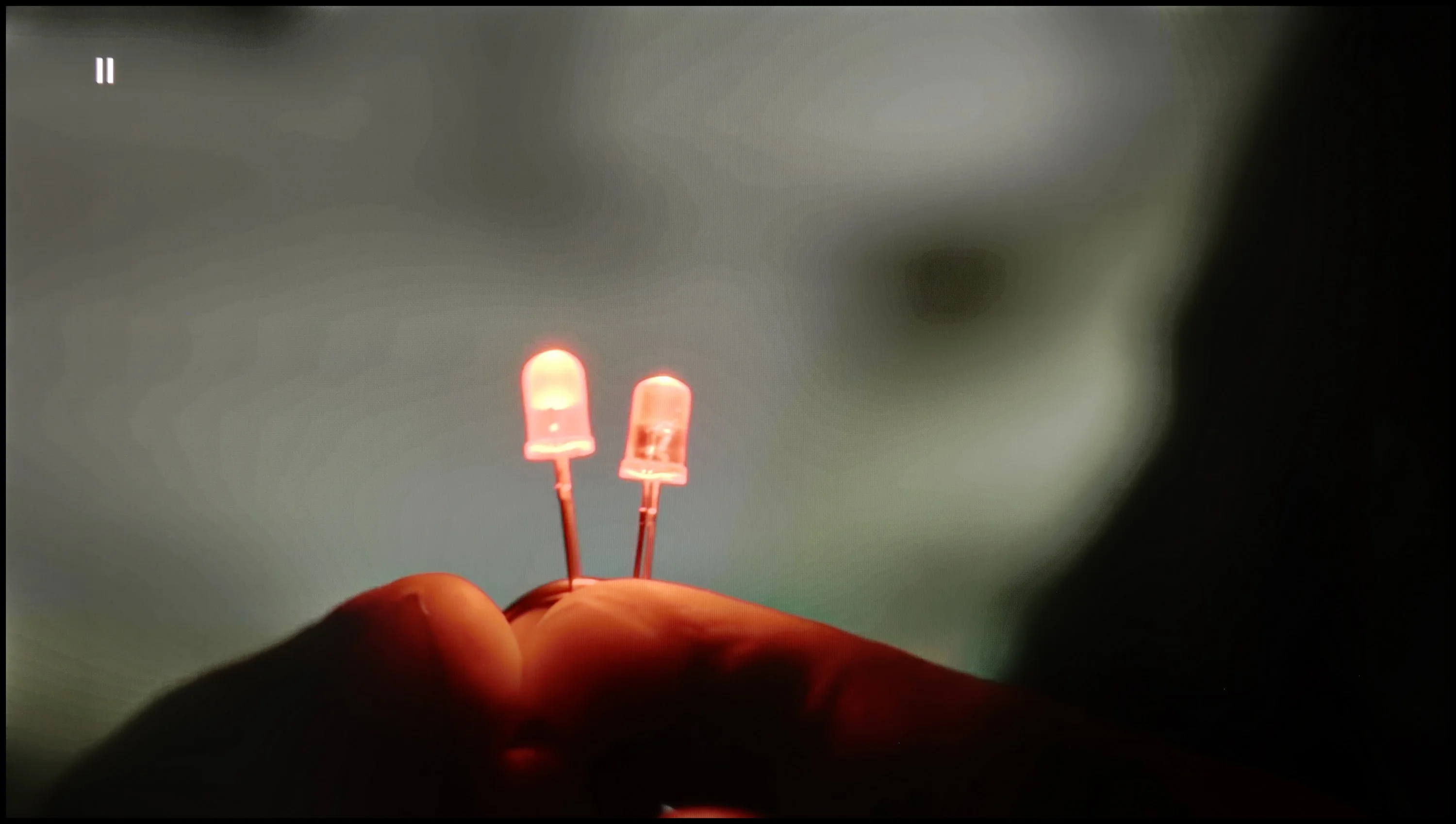
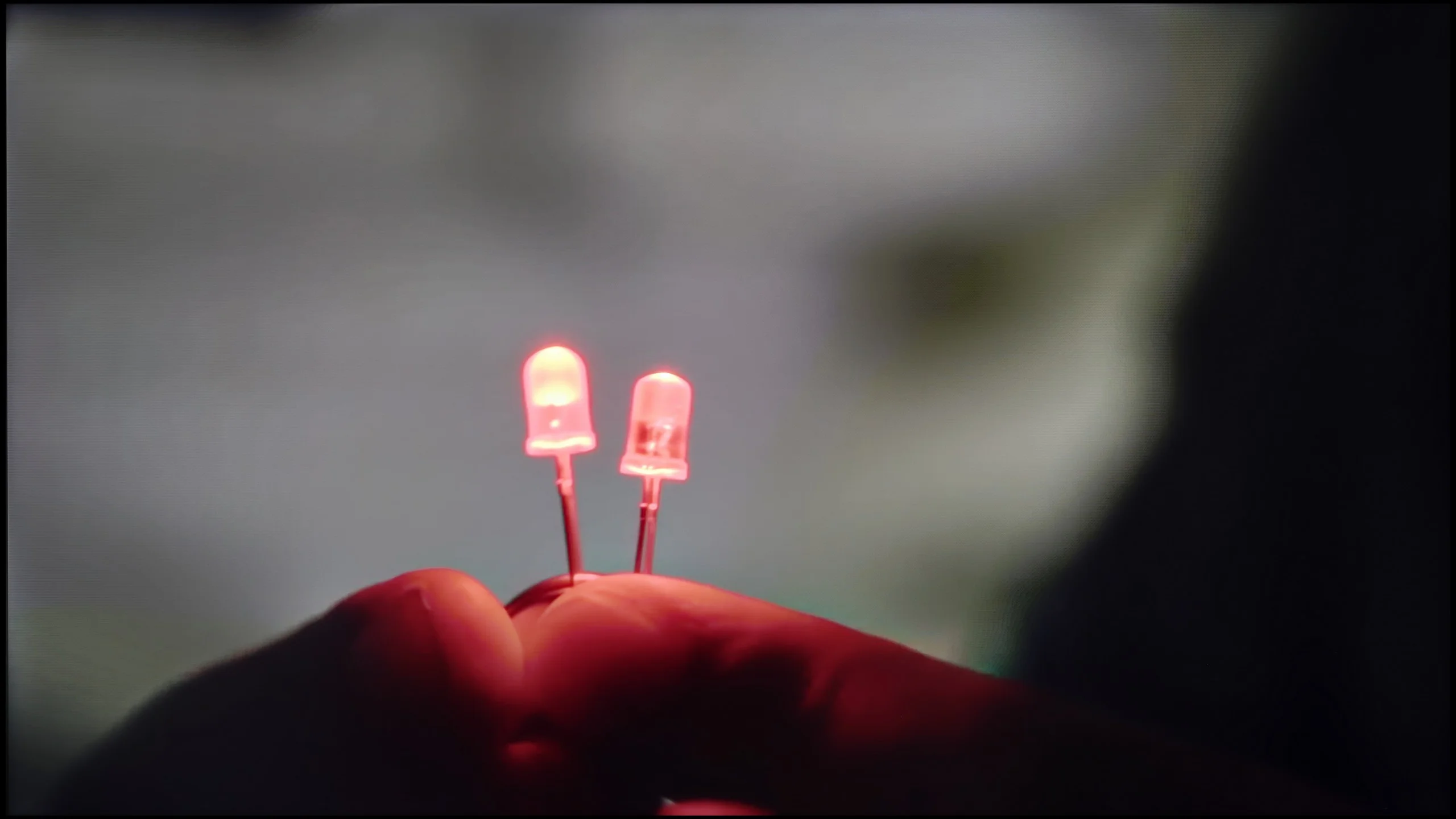
The match photo shows how the TV smooths weak tonal transitions in low-quality video.
Image scaling SD (576i)


The model photo shows how it handles upscaling of SD material.
Philips OLED909 offers a distortion reduction feature aimed at smoothing tonal transitions. Unfortunately, the effectiveness of this feature leaves much to be desired. Setting it to "Medium" yields some results, but it comes with the risk of blurring essential details in the image. For this reason, we do not recommend using this option unless you are focused on mitigating visible artifacts at the expense of detail.
When it comes to image scaling, the television presents a very pliable image, which may appeal to viewers who prefer a softer image. Those expecting sharper clarity will also find a solution, as image scaling can be adjusted according to individual preferences in the settings.
Digital image processing in the Samsung QN80H is handled by the second-generation NQ4 AI processor. It's a chip we already know from earlier models and it still performs very well, especially with lower-resolution material. The image is effectively upscaled to 4K, but without excessive sharpening and without the feeling that the TV is forcing improvements on the source material.
The "Noise Reduction" feature also proves useful. It can noticeably reduce posterization and visible banding in poorer-quality material, particularly in low-bitrate streaming. However, it's important to remember that it doesn't work without side effects. It can remove some film grain and slightly smooth the image. So with a good-quality source we'd leave this feature off. If, however, banding and uneven tonal transitions bother you more than losing some grain, "Noise Reduction" can be a really useful addition.
Blur and motion smoothness
8.5/10
7.8/10
Blur (native resolution, maximum refresh rate):






Blur (BFI function enabled):
Image flickers in this mode



Blur ():
Blur (4K@144Hz):



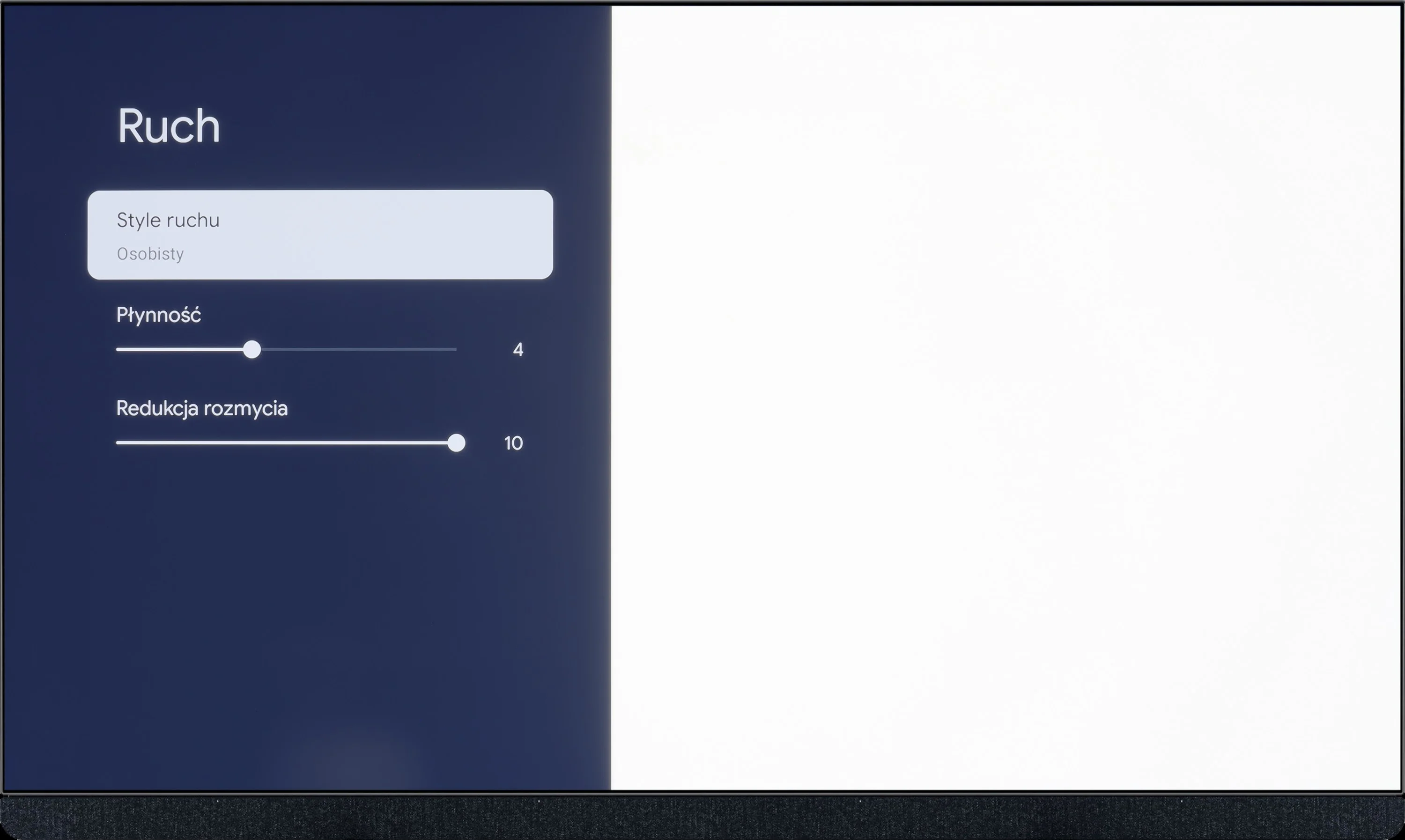
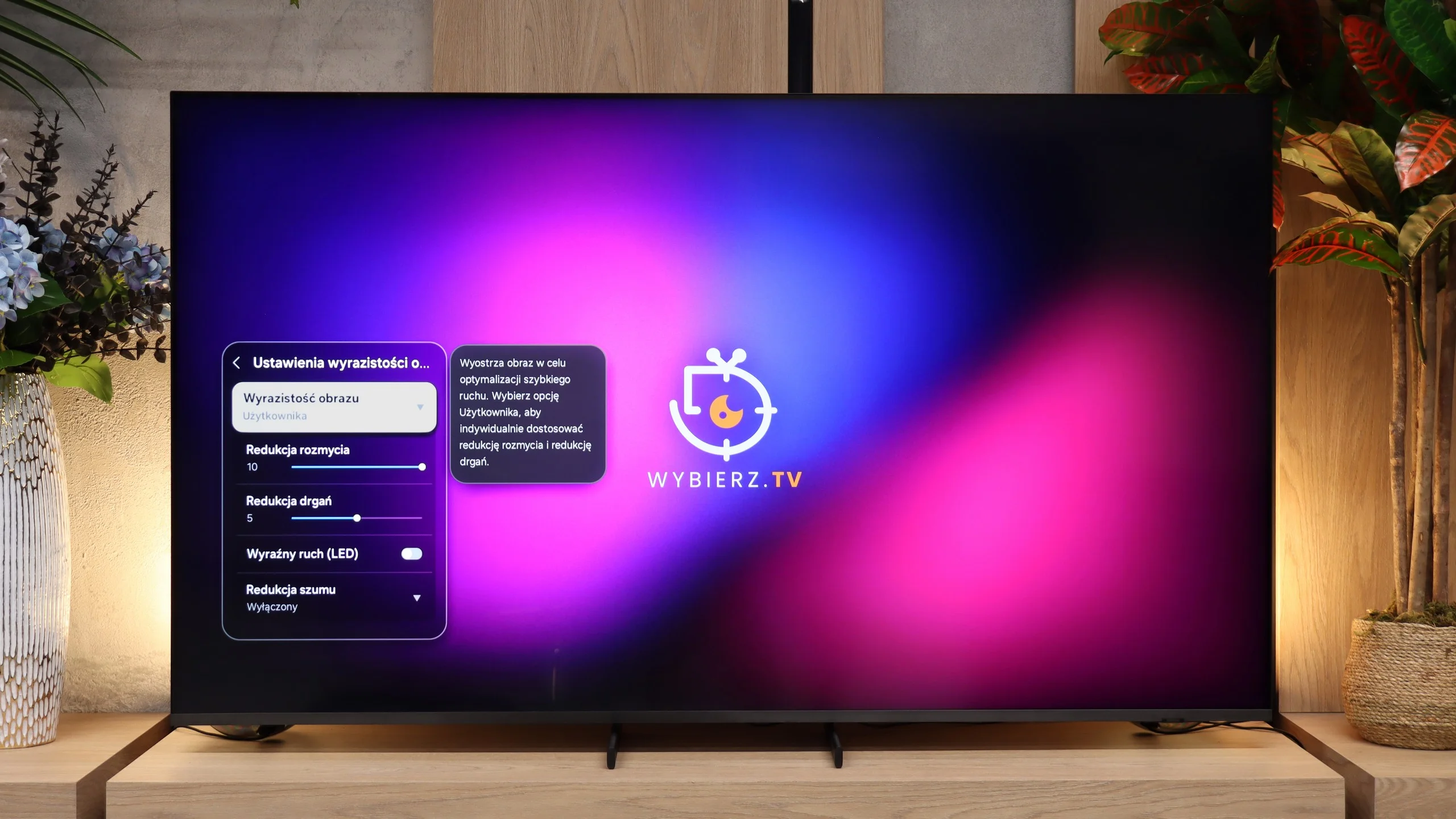
The Philips OLED909 with a 144 Hz panel offers excellent image fluidity, which should satisfy both movie lovers and gamers. Additionally, the television is equipped with a smoothing feature called "Motion Style," which allows precise adjustment of image fluidity to personal preferences. In the settings, we find two sliders: "Fluidity," which regulates the fluidity of motion in movies, and "Motion Blur Reduction," which helps eliminate minor artifacts and distortions in dynamic scenes. This feature works well, making even fast movements on the screen clear and readable.
Motion blur and motion handling on the QN80H are really good, mainly thanks to the fast panel. In 4K the screen refreshes at up to 144 Hz, and when switched to Full HD and connected to a PC it can reach as high as 240 Hz. That's new for Samsung TVs and a nice bonus for people who want to use the TV for PC gaming as well. We were more interested, however, in how the QN80H performs at 120 Hz, since consoles use that refresh rate. Here it's really good. The panel doesn't have a big problem with the smearing typical of VA panels, and slight trails behind moving objects are mostly visible on dark backgrounds. This is nothing that would interfere with normal sports viewing or gaming. The TV also includes a motion smoothing system that Samsung calls "Image Clarity." You can adjust judder reduction and blur reduction separately, so it's easy to tailor its operation to movies, sports, or your own preferences.
Console compatibility and gaming features
10/10
9.6/10
- ALLM
- VRR
- VRR range40 - 144Hz48 - 240Hz
- Dolby Vision Game Mode
- Correct implementation of HGIG
- 1080p@120Hz
- 1440p@120Hz
- 4K@120Hz
- Game bar
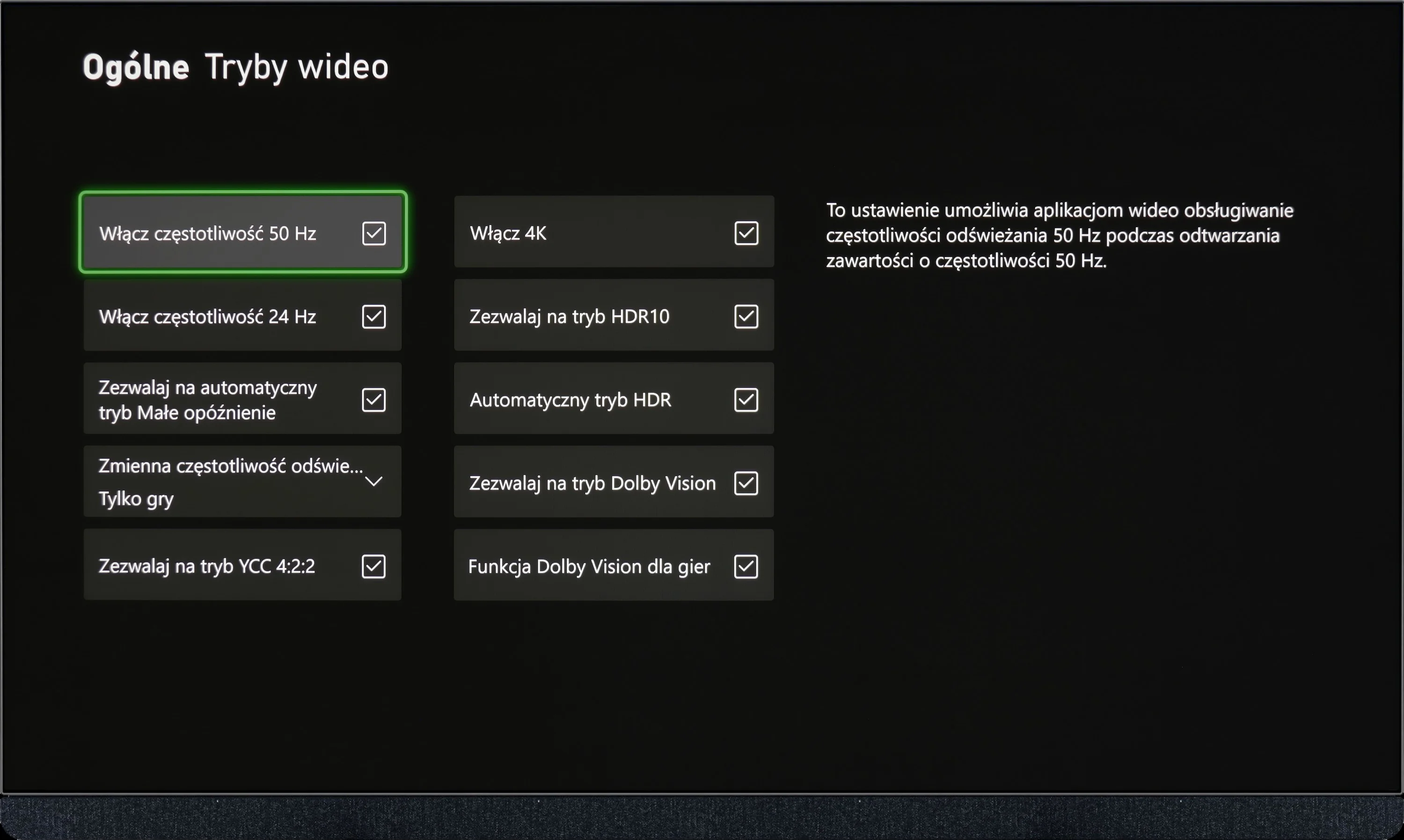
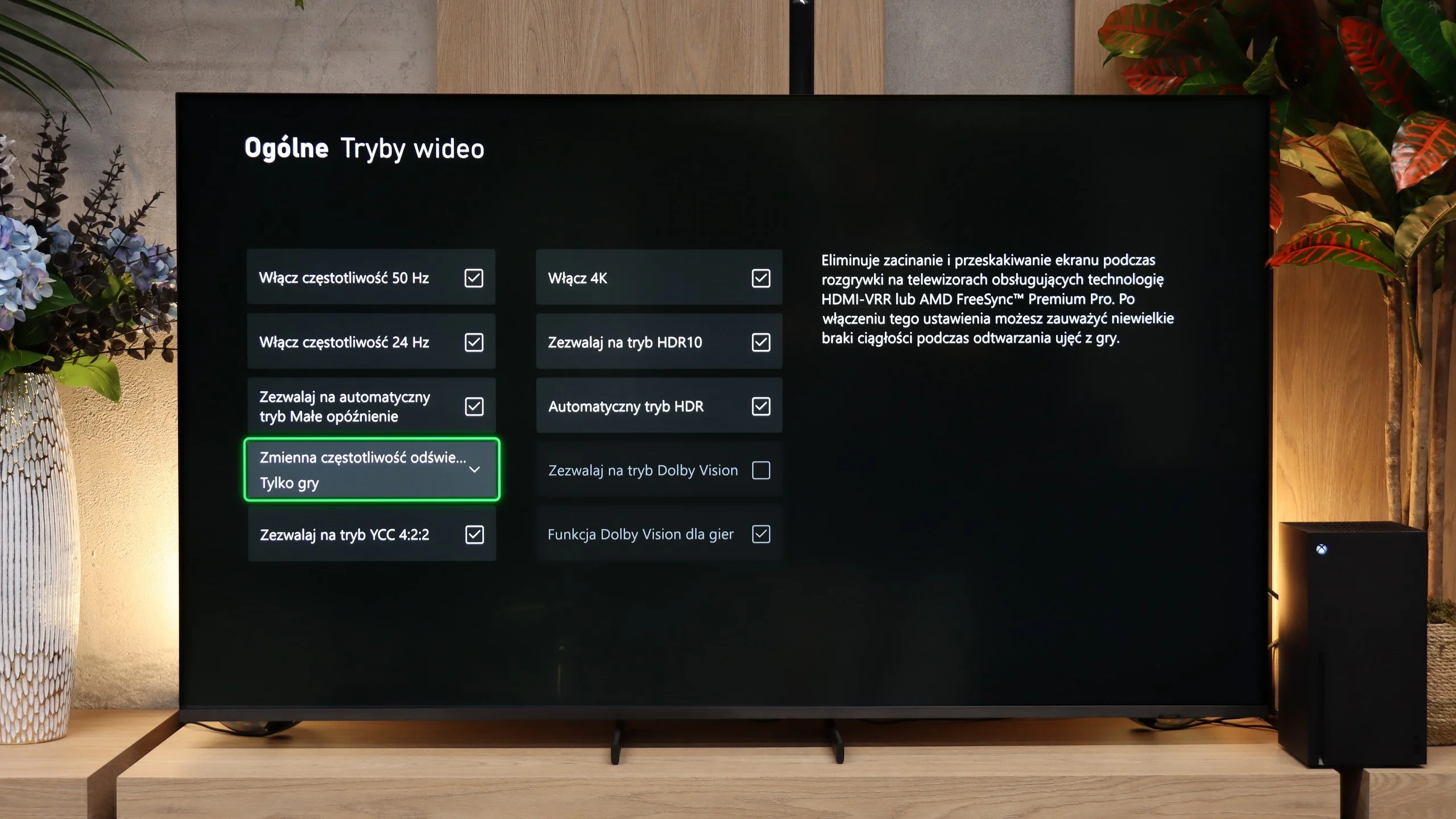
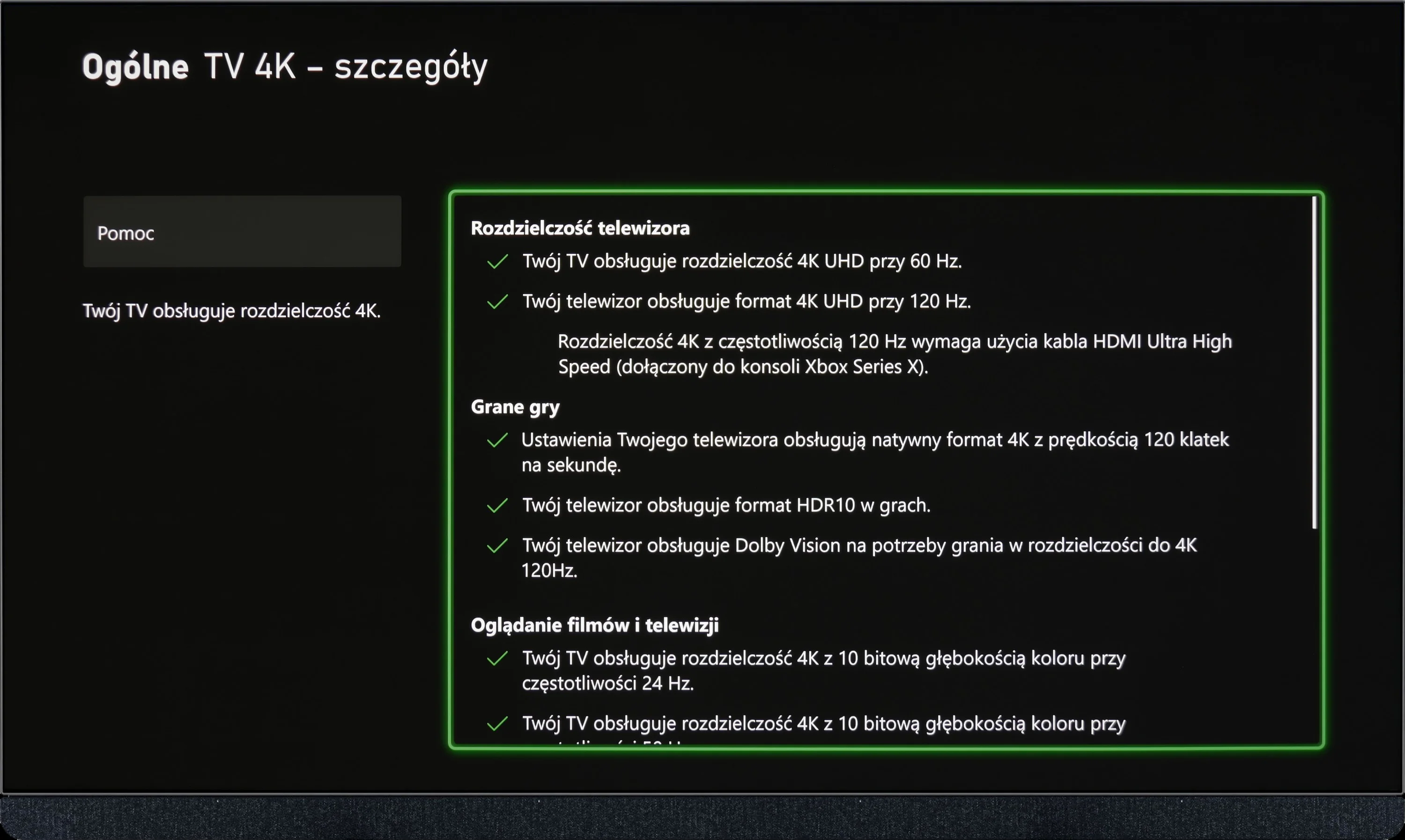
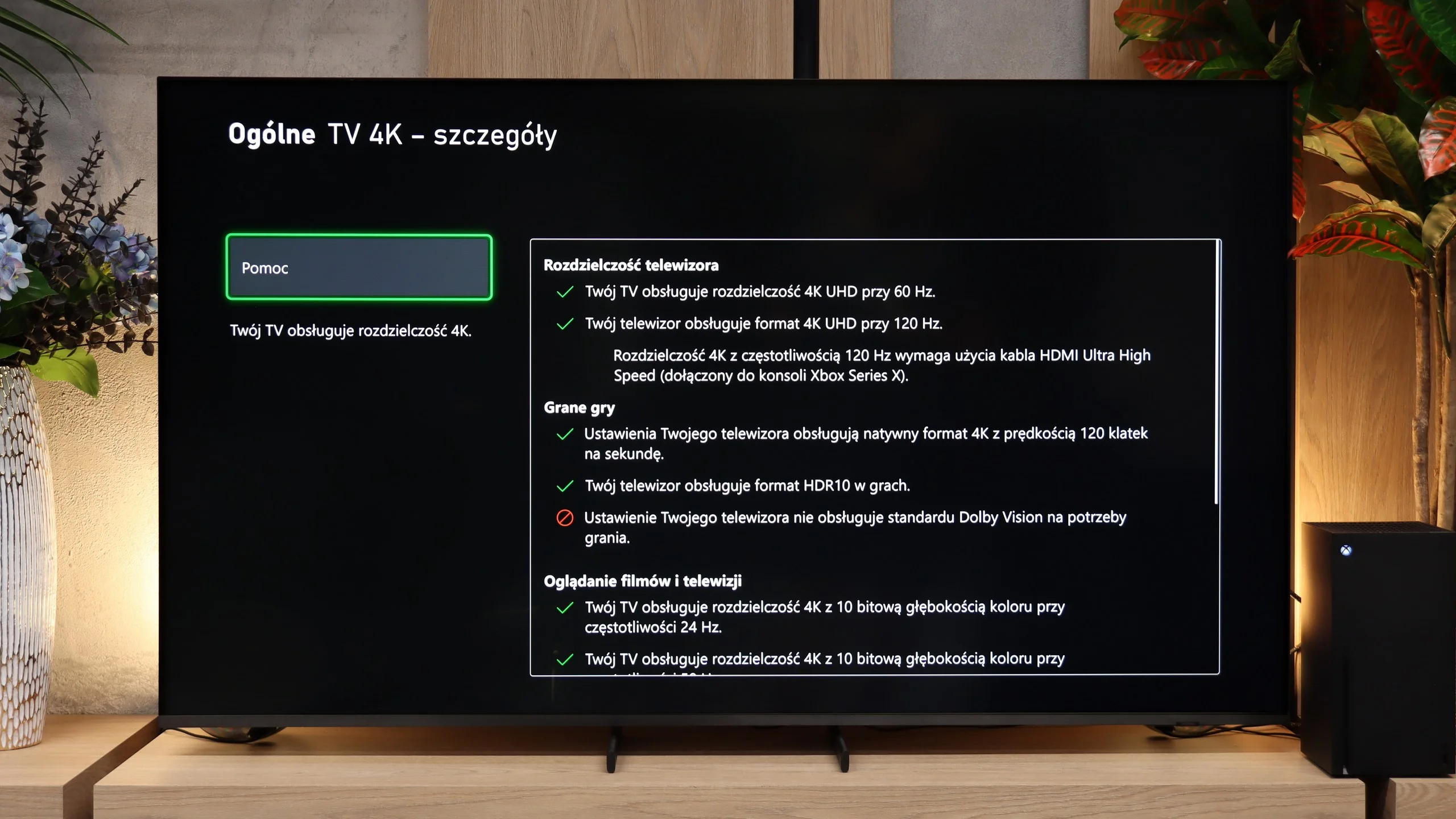
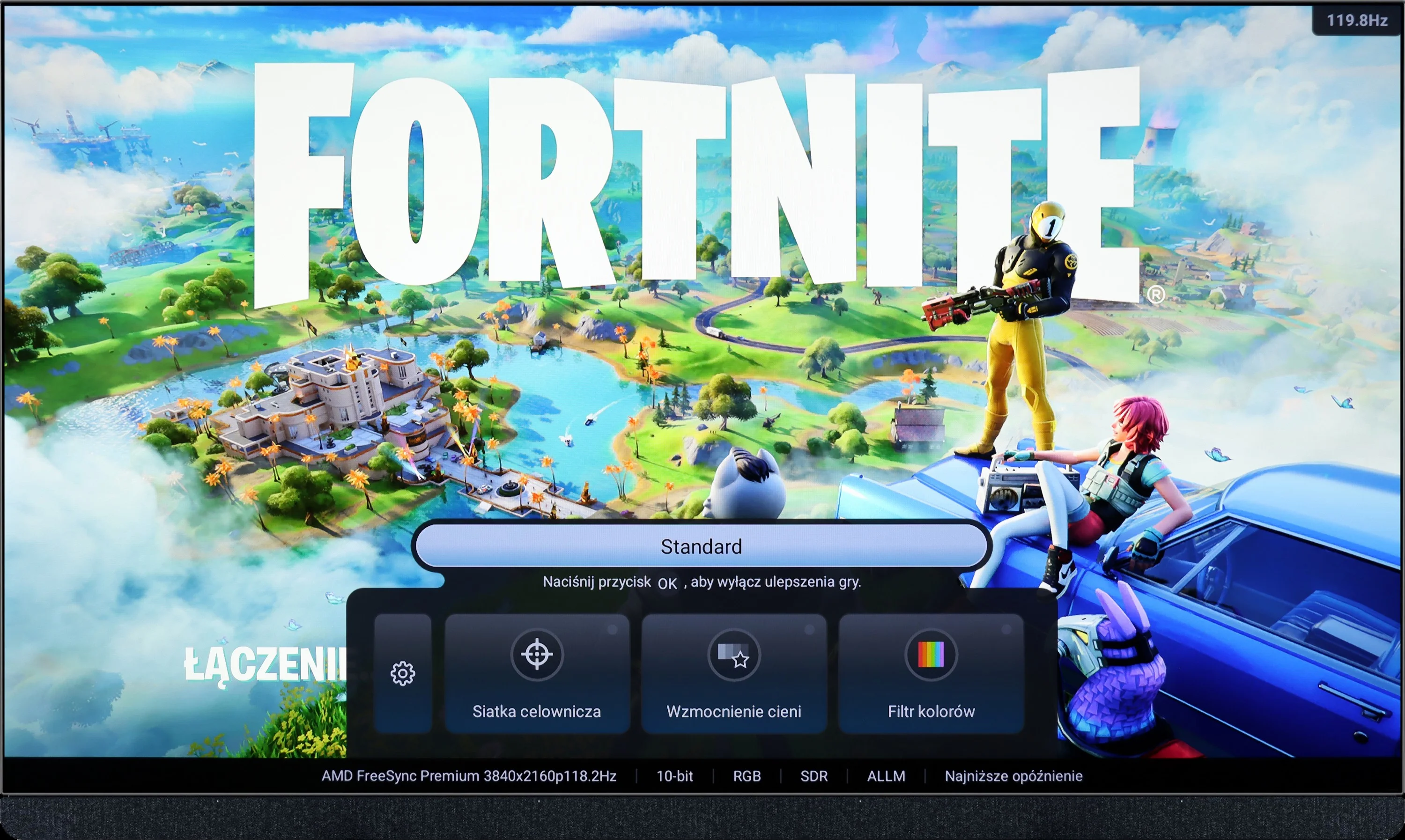
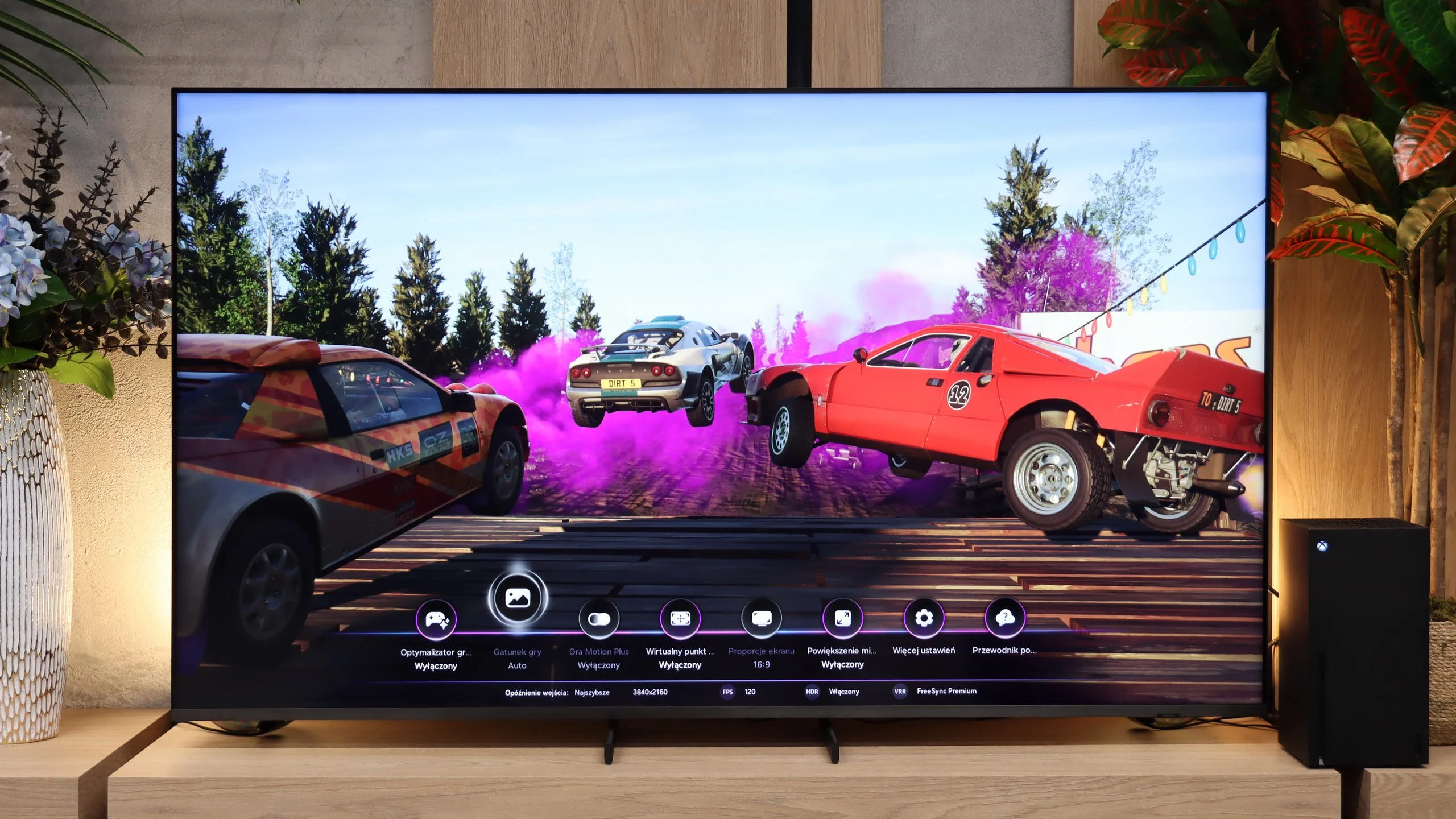
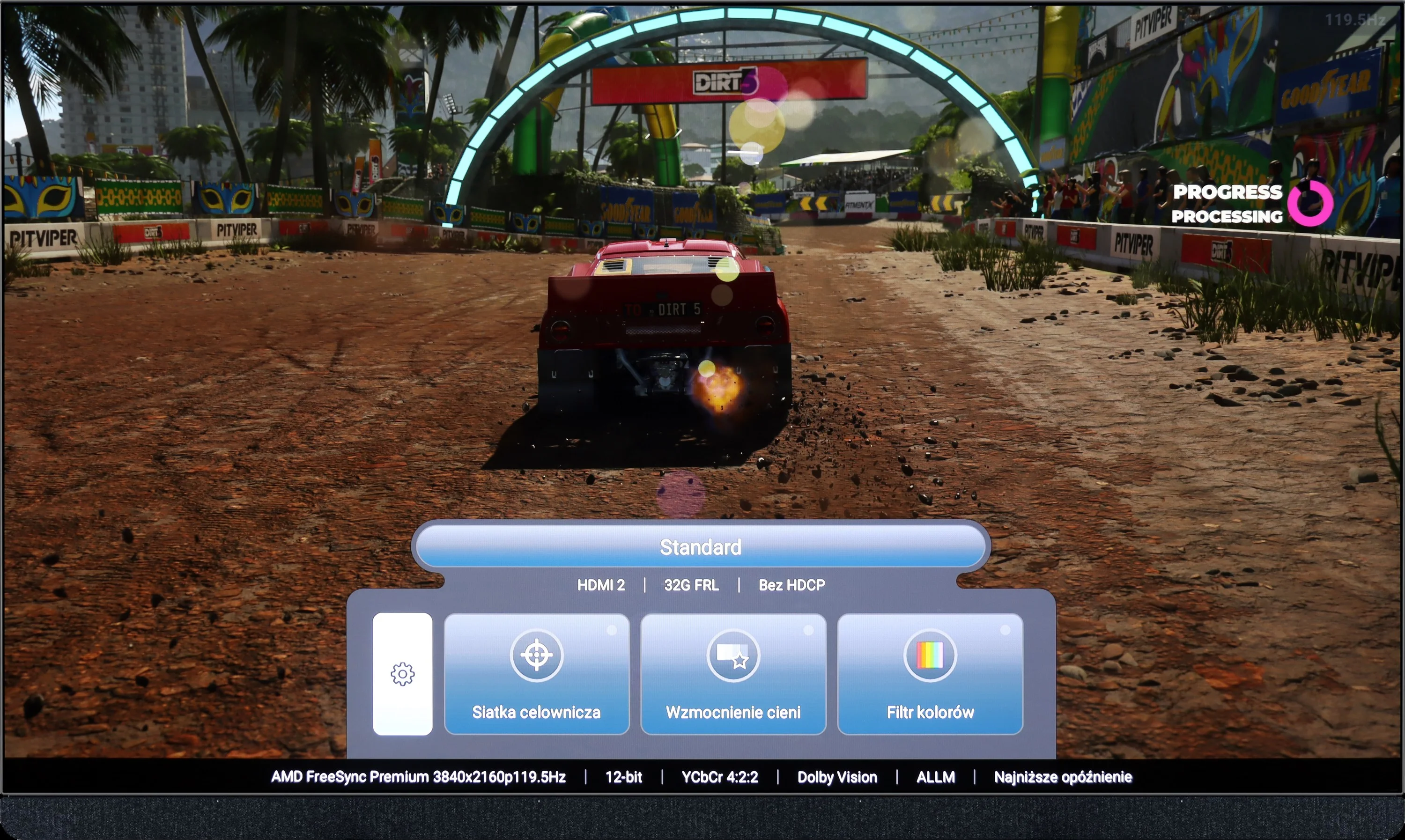
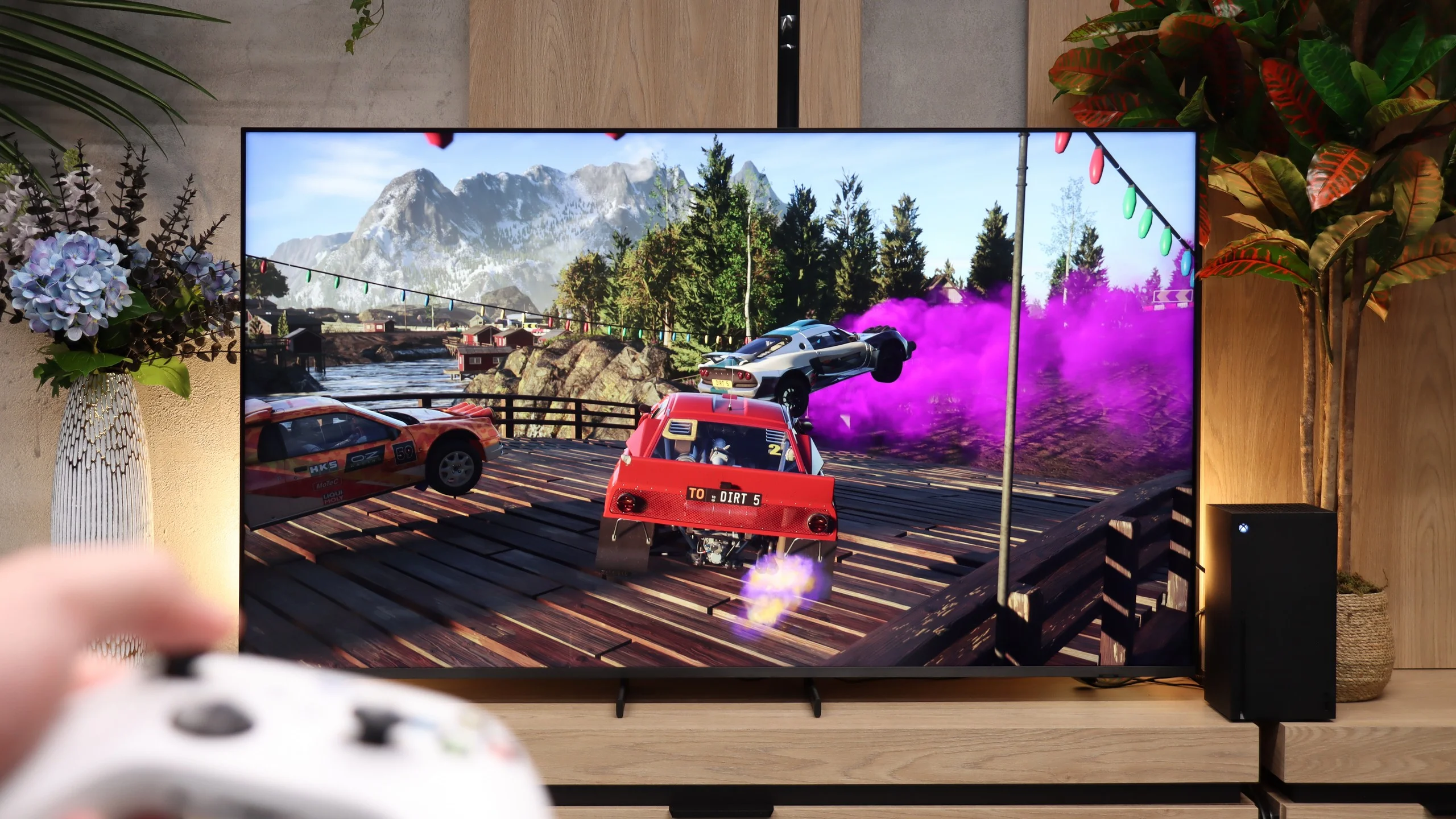
The Philips OLED909 is a television that meets practically all the requirements of gamers. Equipped with ALLM (Auto Low Latency Mode), VRR (Variable Refresh Rate), and support for Dolby Vision, it guarantees excellent gaming experiences. Additionally, the television offers very low input lag, ensuring that the response to player movements is instantaneous, which will be especially appreciated by fans of dynamic games.
The television easily supports any resolution at 120 Hz, and even higher refresh rates. The HGiG feature, responsible for the correct display of HDR content in games, works as it should, making the image in game mode balanced and tailored to the guidelines of console manufacturers.
The OLED909 also includes a Game Bar feature that allows for quick previewing and changing of game-related settings. Although the interface of this solution may seem less visually appealing than that of competitors, it serves its purpose well by offering all the most important options in one place.
Samsung QN80H is a TV that scores very well on gamer-oriented features. The biggest new addition for 2026 is DLG mode, which allows refresh rates up to 240 Hz when the image is switched to Full HD resolution. This option is aimed mainly at PC users, but it also shows that Samsung is still heavily developing the gaming side of its TVs. That’s not the end of the list of advantages. The QN80H has four full-featured HDMI 2.1 ports, which in this price range still isn’t standard. You can therefore connect multiple consoles, a PC, or a soundbar at the same time without worrying which input supports the full picture capabilities. The TV also supports VRR, ALLM, and HGiG, so it’s hard to fault its basic feature set. One downside remains the lack of Dolby Vision, which may matter especially to Xbox Series X owners. That said, it’s not a flaw that rules out the QN80H as a gaming TV. Samsung includes a feature still missing from most manufacturers: its proprietary motion interpolator, Game Motion Plus. It’s a motion interpolator that also works in game mode, allowing you to improve the smoothness of titles running at 30 or 60 frames per second without a drastic increase in input lag. In practice, Game Motion Plus can make a much bigger difference than Dolby’s processing, especially in more demanding games that don’t offer a 60 FPS mode. The image becomes noticeably smoother while controls remain responsive enough. So despite the lack of Dolby Vision, the QN80H is still one of the best-equipped TVs for gamers in its class.
Input lag
10/10
10/10
SDR
HDR
Dolby Vision
Philips OLED909 achieves excellent results in the input lag category. Values of 13 ms at 60 Hz and 5 ms at 120 Hz are among the best results available on the market. Such low input lag ensures immediate response, which is crucial for gamers expecting maximum precision in dynamic games. The performance in Dolby Vision mode deserves special praise, where low input lag is also maintained. This allows gamers to enjoy not only smooth gameplay but also the full potential of HDR game visuals without any compromises. Philips OLED909 is, in this respect, one of the best choices for gaming enthusiasts.
Input lag on the QN80H is very good. In game mode the delay is about 10 ms, exactly what we expect today from the best gaming TVs. In that respect it's hard to fault Samsung. Controls are responsive, controller movement is registered instantly, and even more demanding players shouldn't feel any discomfort. With the aforementioned Game Motion Plus enabled, input lag rises to about 45 ms. That's obviously higher, but still low enough that in slower-paced role-playing or adventure games the feature remains fully usable. Especially since in return we get a much smoother picture.
Compatibility with PC
6.4/10
8.9/10
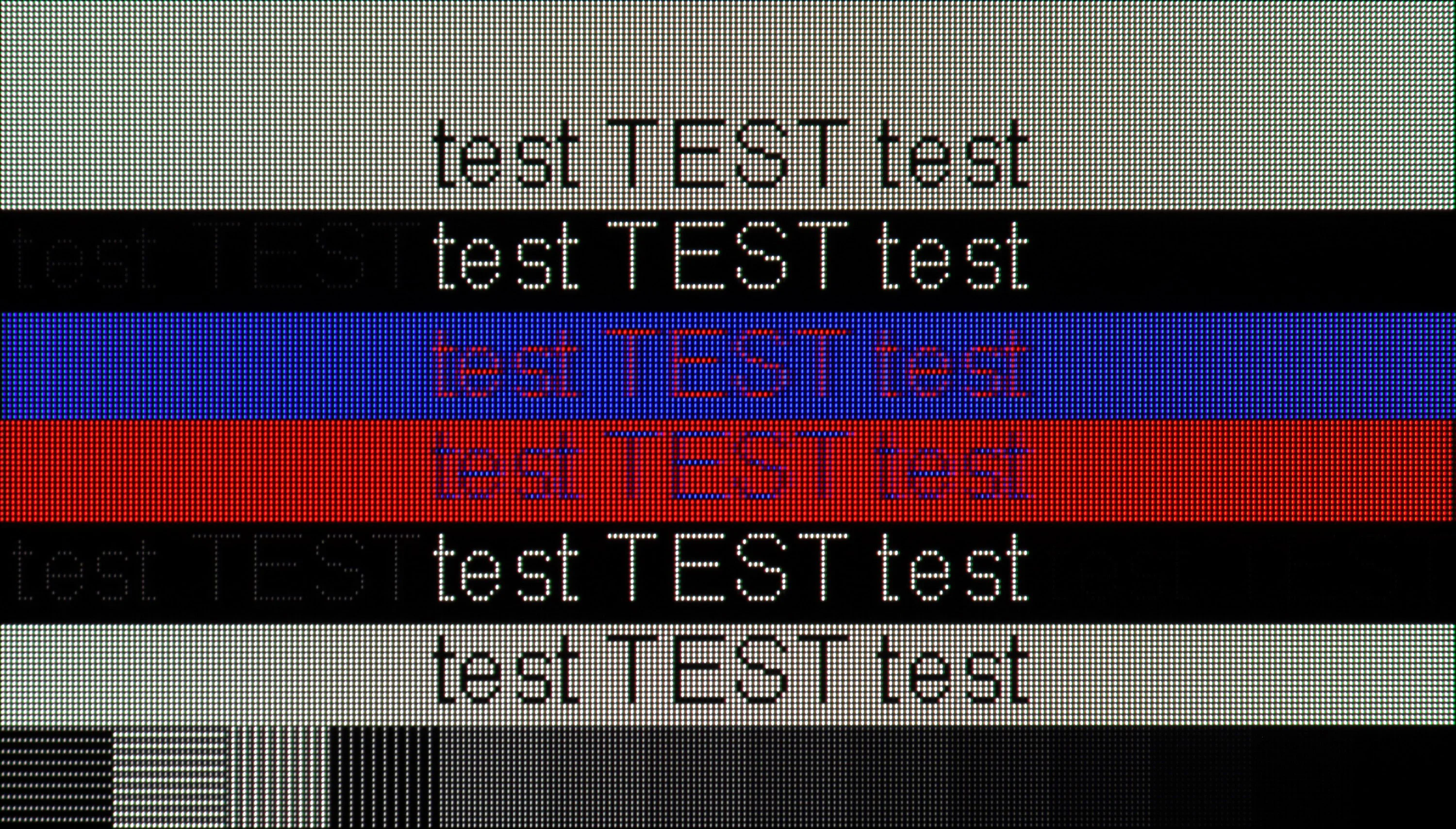
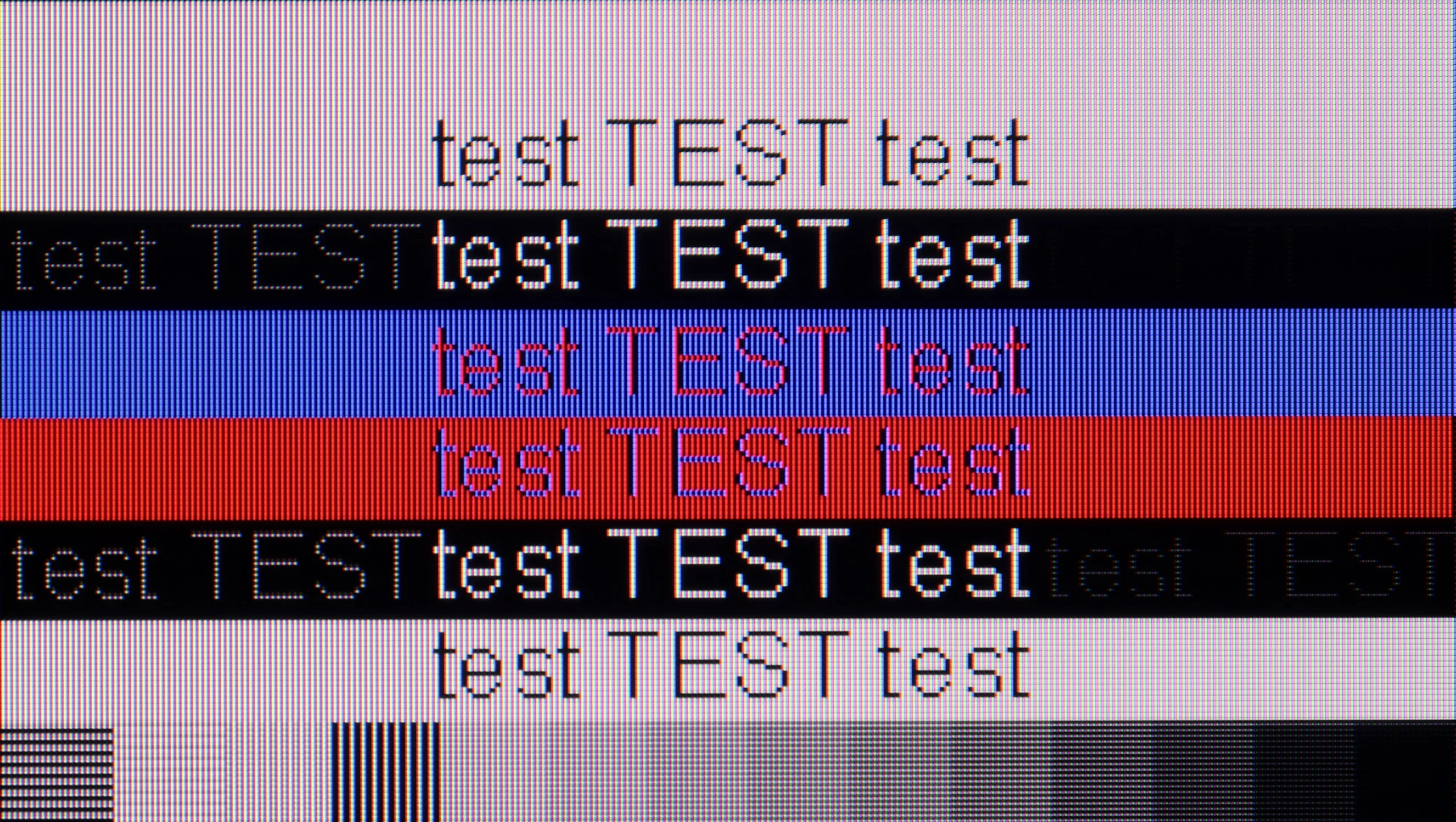
The photo shows the legibility of small fonts. Ideally, lines should be the same thickness on both light and dark text, with minimal pixel gaps.
Philips OLED909 is a good choice for gaming on a computer. The television supports G-SYNC, provides very low input lag, and offers a refresh rate of 144 Hz in PC mode, making it an ideal solution for gamers who value smooth and responsive gameplay. However, for everyday work with text or graphics, the situation is a bit worse. While the readability of fonts is at an acceptable level, up close, it can be noticed that they appear slightly blurry. This is due to the lack of full implementation of chroma 4:4:4, which is responsible for perfect sharpness and clarity of fonts.
OLED909 will perform excellently in gaming applications, but for those planning to use the television mainly for text work, it may be less suitable. In such cases, it is worth considering a device with full support for chroma 4:4:4.
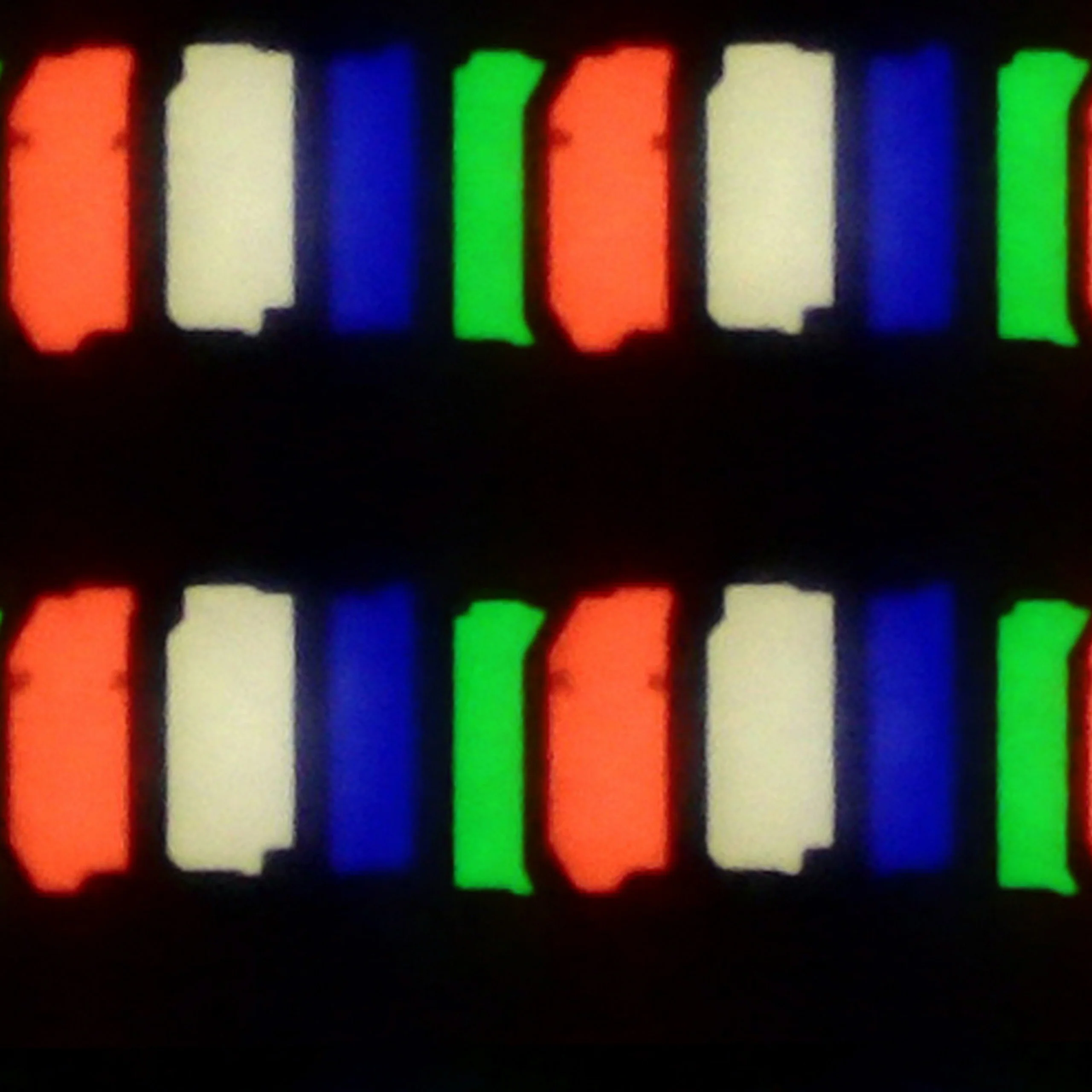
Samsung QN80H will also have no problem serving as a large monitor. Besides the already mentioned 144 Hz refresh rate at 4K (and as much as 240 Hz in Full HD!), the TV offers a full suite of gaming features, which, when connected to a PC, opens up a lot of possibilities. When working with text, the QN80H also performs excellently. The panel used here has a classic, standard RGB pixel layout. Fonts are sharp, clean, and very legible. There's no sign of jagged letter edges or odd colored outlines around the text. Of course, few people are likely to buy such a large TV solely for office work. It's worth knowing, though, that the QN80H will handle those tasks without the slightest hiccup.
Viewing angles
9.7/10
3.2/10
Philips OLED909 offers one of the best viewing angles available on the market. OLEDs are renowned for their excellent picture quality from various angles, but the use of micro-lens technology further enhances this ability. As a result, the television maintains excellent colors, contrast, and brightness even when viewing the picture from a significant angle. In practice, the OLED909 performs so well that it can compete even with televisions equipped with QD-OLED technology, which also provides wide viewing angles. This makes the television ideal for large rooms and watching together from different positions, without fear of losing picture quality.
Viewing angles are unfortunately the Achilles' heel of the VA panel used here. On one hand this panel gives the QN80H higher contrast and better black levels, but on the other it results in a noticeably worse image when viewed at an angle than in TVs with IPS or ADS panels. Just sitting a bit off to the side is enough for colors to start losing saturation and for blacks to look lighter. The picture remains readable, but it no longer looks as good as when viewed head-on. Therefore, the QN80H performs best when most viewers sit as close to the center of the screen as possible.
Daytime performance
5.7/10
5.8/10
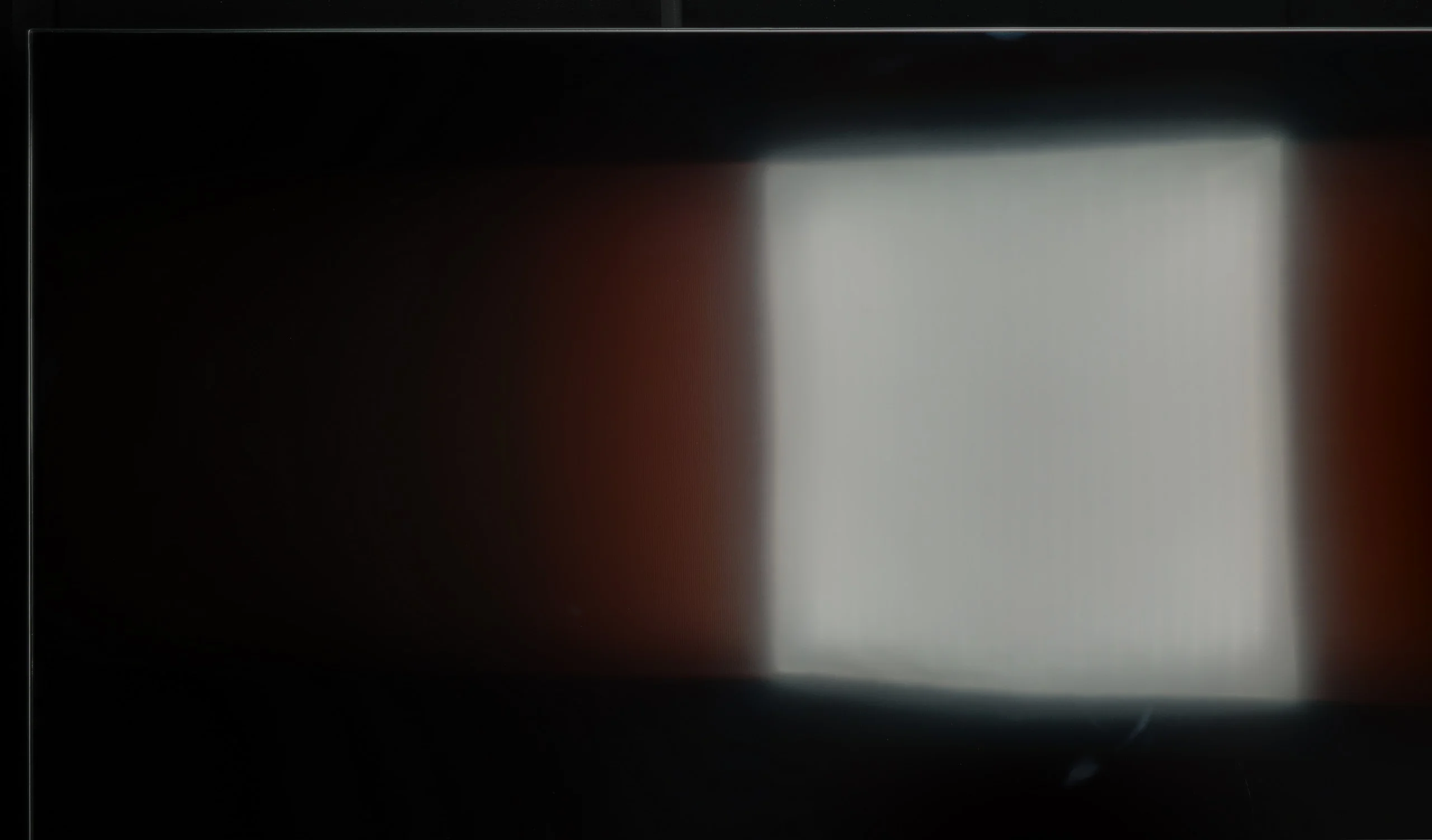
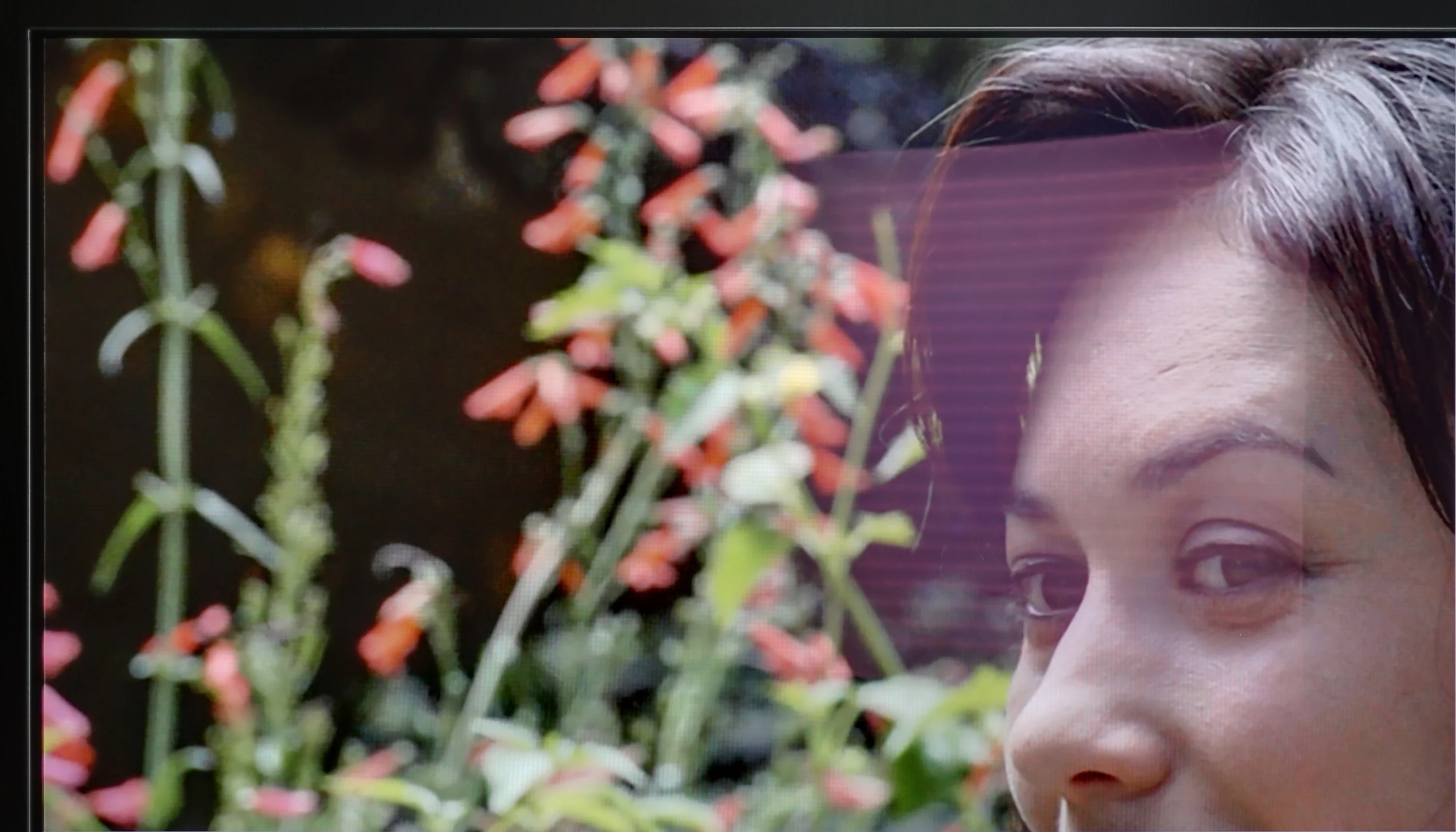
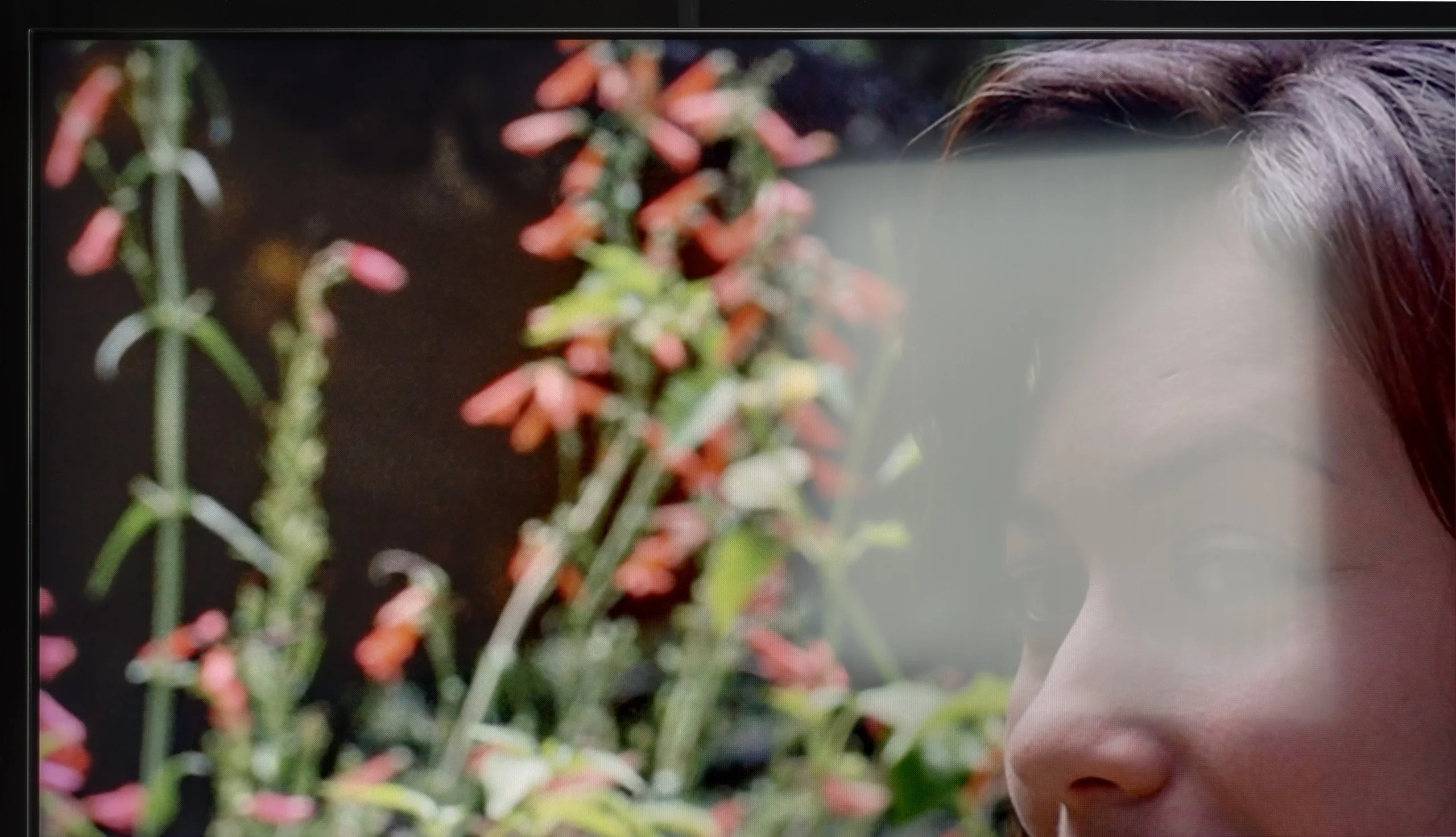
Panel brightness
Samsung QN80H: 459 cd/m2
Philips OLED909: 427 cd/m2
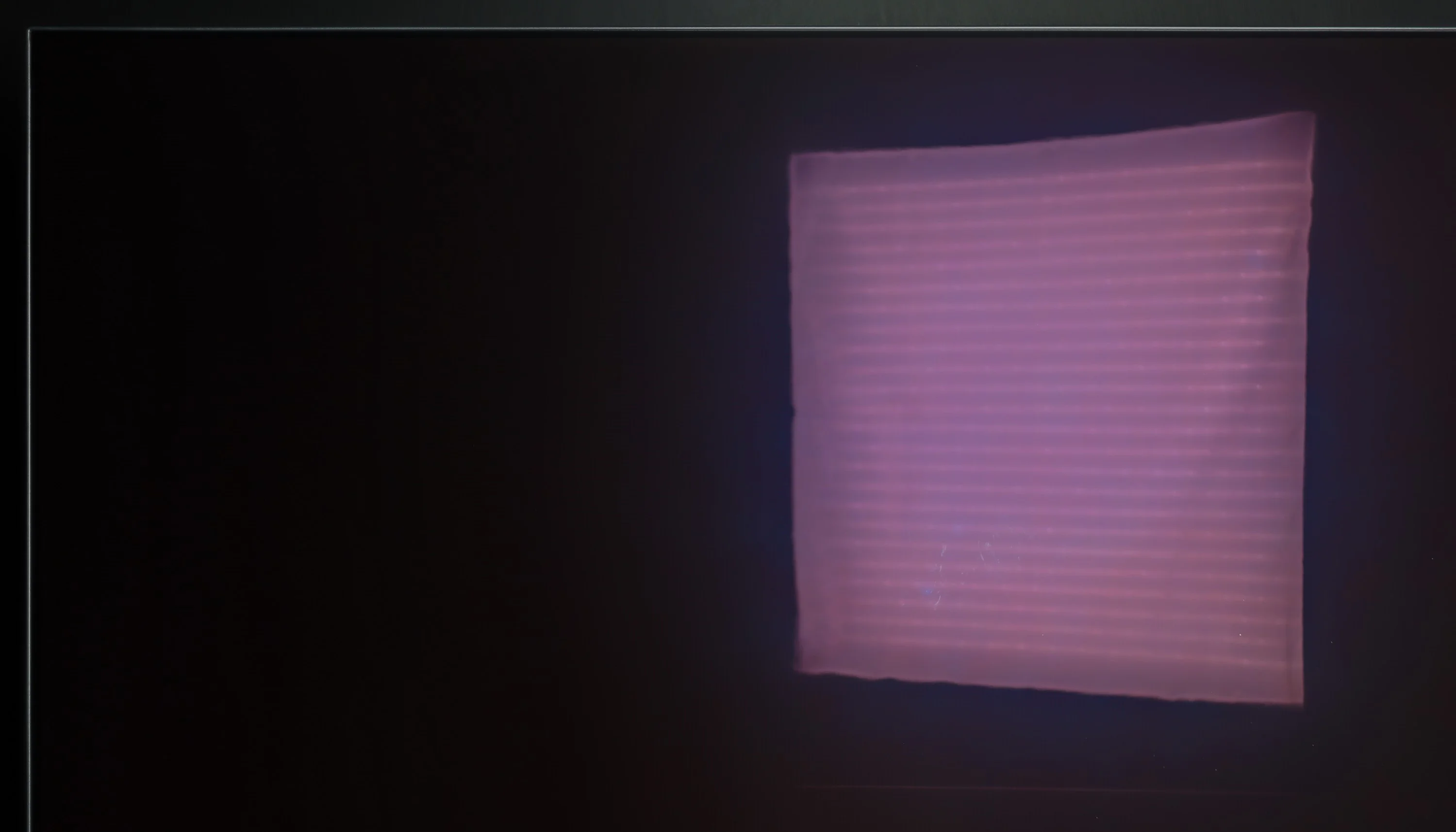
Philips OLED909, despite the glossy surface of the panel, handles glare from direct light hitting the screen quite well. This is especially useful in brighter rooms where reflections can interfere with viewing. However, the use of micro-lens technology has its limitations – black levels during the day take on a slightly pinkish hue. A similar, albeit more pronounced phenomenon can be observed in QD-OLED panels.
When it comes to brightness, the OLED909 achieves an average brightness in SDR of 430 cd/m². This is enough to comfortably use the TV even in moderately challenging lighting conditions. Nevertheless, it is worth remembering that the brightness levels of OLEDs still fall behind TVs with mini-LED technology, which can be several times brighter.
In terms of brightness for everyday content (SDR), the Samsung QN80H is a fairly moderate TV. In typical material it reaches around 460 nits. That’s not a record result, but it’s more than enough for watching in a normally lit living room. The screen coating is a weaker point, though. It has a satin finish, so it handles reflections better than a typical glossy panel, but it can still show them clearly. What’s more, in this area the QN80H fares slightly worse than last year’s QN80F. While you shouldn’t have any issues in a moderately bright room, a large window (or lamp) placed directly opposite the TV can be very distracting during viewing.
Panel details
Subpixel Structure:
Panel uniformity and thermal imaging:

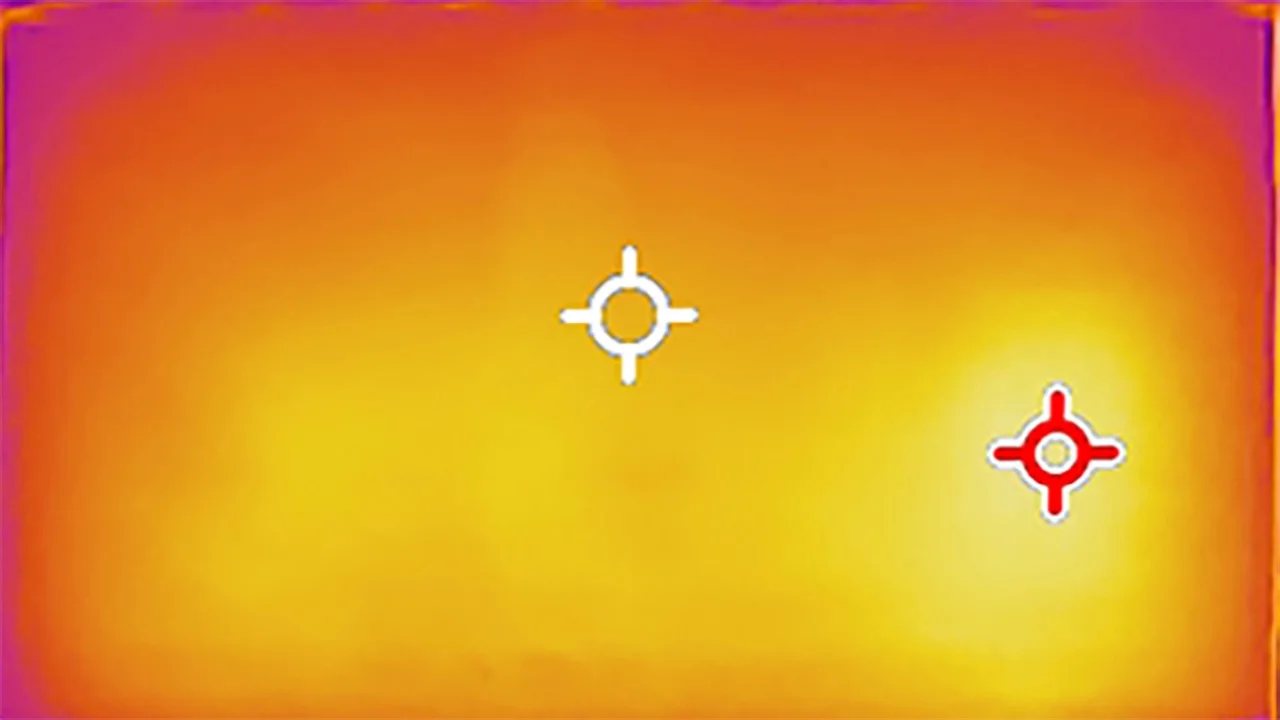
Philips OLED909
Samsung QN80H
TV features
6.7/10
7.3/10
- SystemGoogle TVTizen
- System performanceVery goodVery good
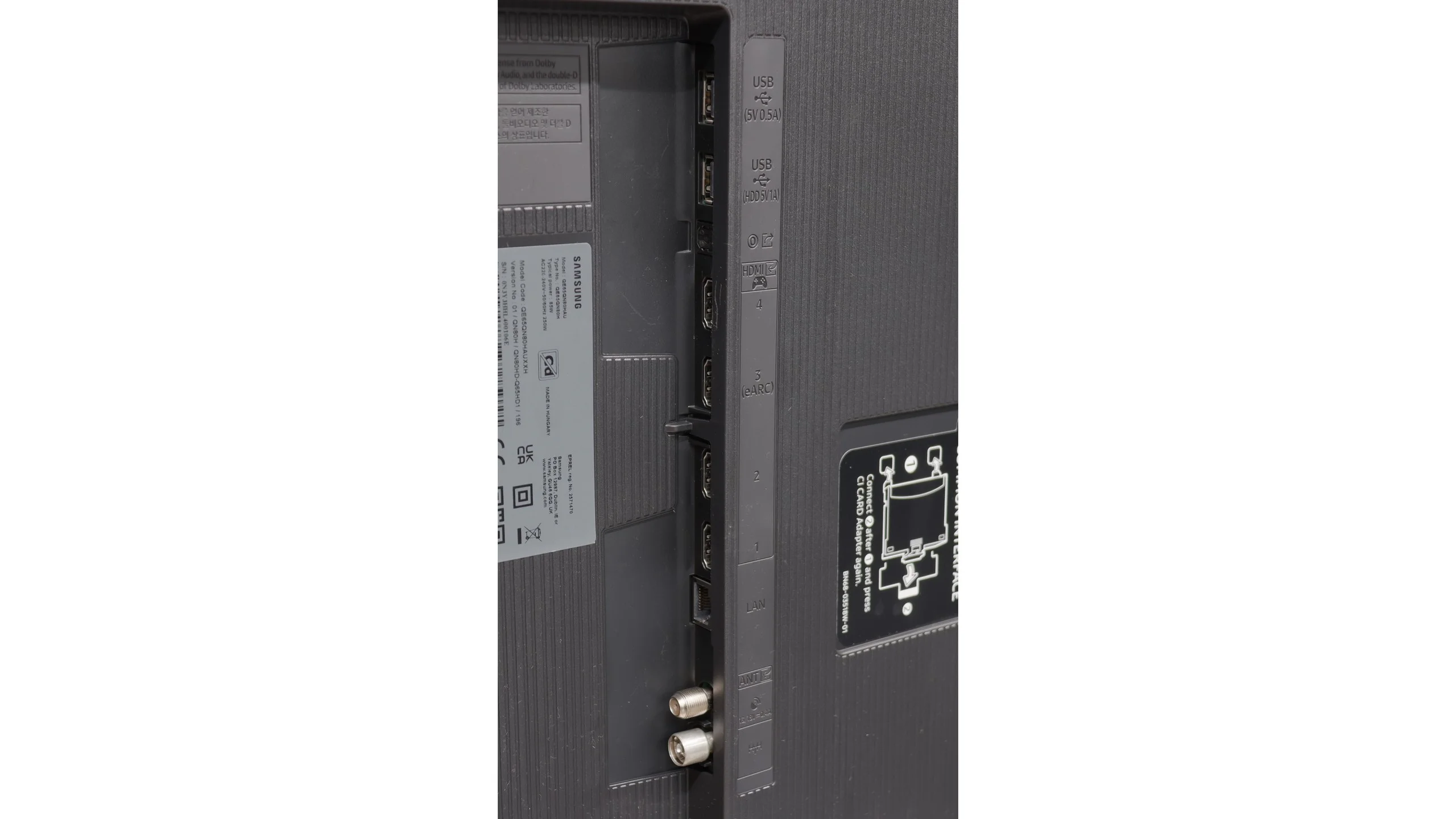
- HDMI inputs2 x HDMI 2.0, 2 x HDMI 2.1 48Gbps0 x HDMI 2.0, 4 x HDMI 2.1 48Gbps
- OutputsToslink (Optical audio), eARC (HDMI), ARC (HDMI), Mini-Jack (Headphones)Toslink (Optical audio), eARC (HDMI), ARC (HDMI)
- Network InterfacesWi-Fi 2.4GHz, Wi-Fi 5GHz, Ethernet (LAN) 100MbpsWi-Fi 2.4GHz, Wi-Fi 5GHz, Ethernet (LAN) 100Mbps
- TV receptionDVB-T, DVB-T2, DVB-S, DVB-S2, DVB-CDVB-T, DVB-T2, DVB-S, DVB-S2
Classic features:
- Recording to USB (terrestrial TV)
- Recording programming
- Picture in Picture (PiP)
- RF remote control (no need to aim)
- Backlit remote control
- Teletext
- Audio only mode
- Bluetooth headphones support
- Simultaneous Bluetooth headphones & TV audio
Smart features:
- AirPlay
- Screen mirroring (Windows Miracast)
- Voice search
- Voice search in native language
- Ability to connect a keyboard and mouse
Sound connection options
- HDMI audioeARC (HDMI), ARC (HDMI)eARC (HDMI), ARC (HDMI)
- Other audio outputsToslink (Optical audio), Mini-Jack (Headphones)Toslink (Optical audio)
- Wireless audioBluetoothBluetooth
Supported audio formats (external HDMI eARC audio):
- Dolby Digital Plus 7.1
- Dolby True HD 7.1
- Dolby Atmos in Dolby Digital Plus (JOC)
- Dolby Atmos in Dolby True HD
- DTS:X in DTS-HD MA
- DTS-HD Master Audio
Senior accessibility
- Numeric keyboard on TV
- Font size adjustment
- Audio description
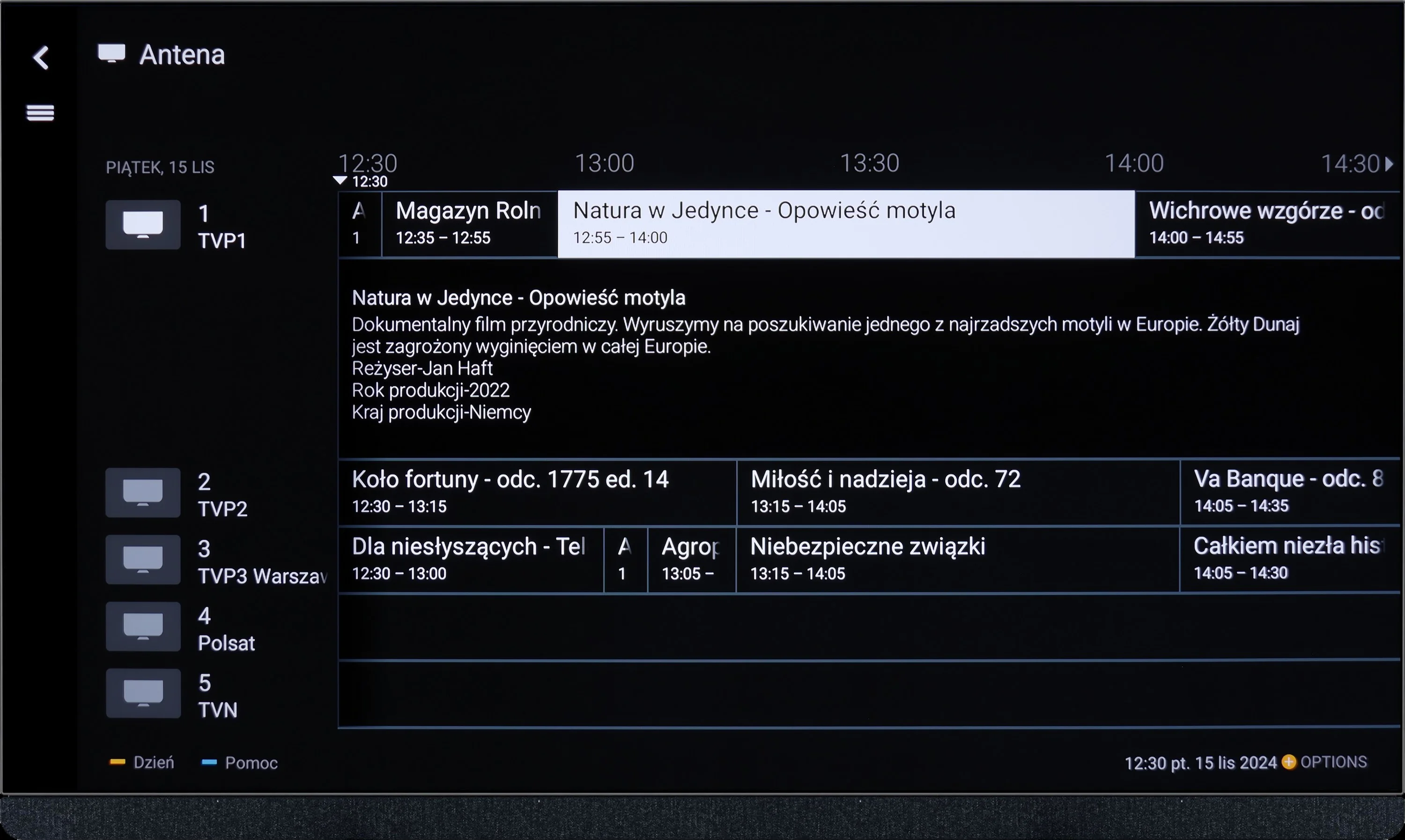
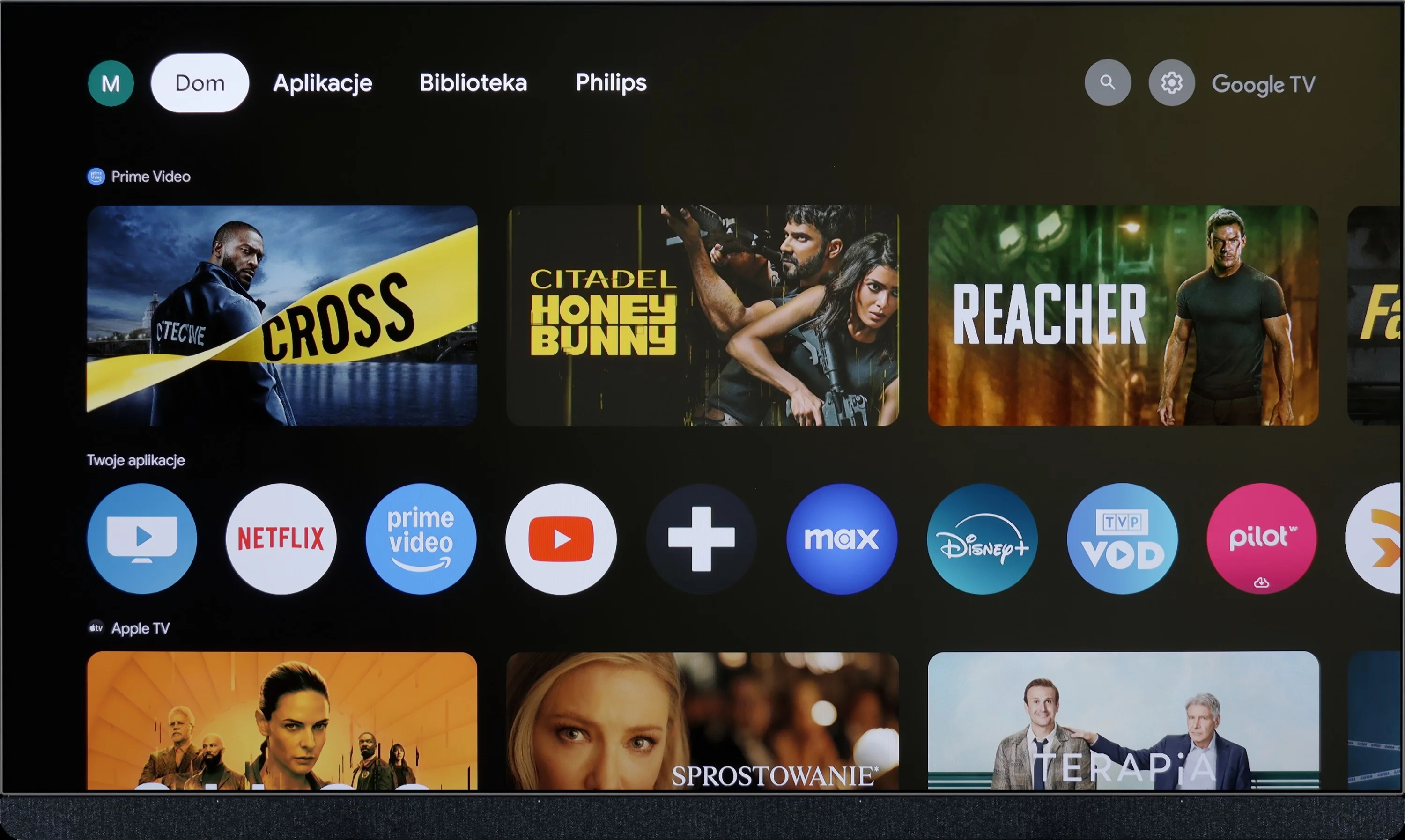
In the OLED909 model, Philips has abandoned its proprietary Titan OS system in favor of Google TV. This solution provides users with significantly greater possibilities, especially in terms of app availability. Google TV offers a vast library of programs to download, from popular streaming services to tools and games. The system also supports voice commands, making it easier to search for content and manage the device, enhancing the comfort of daily use.
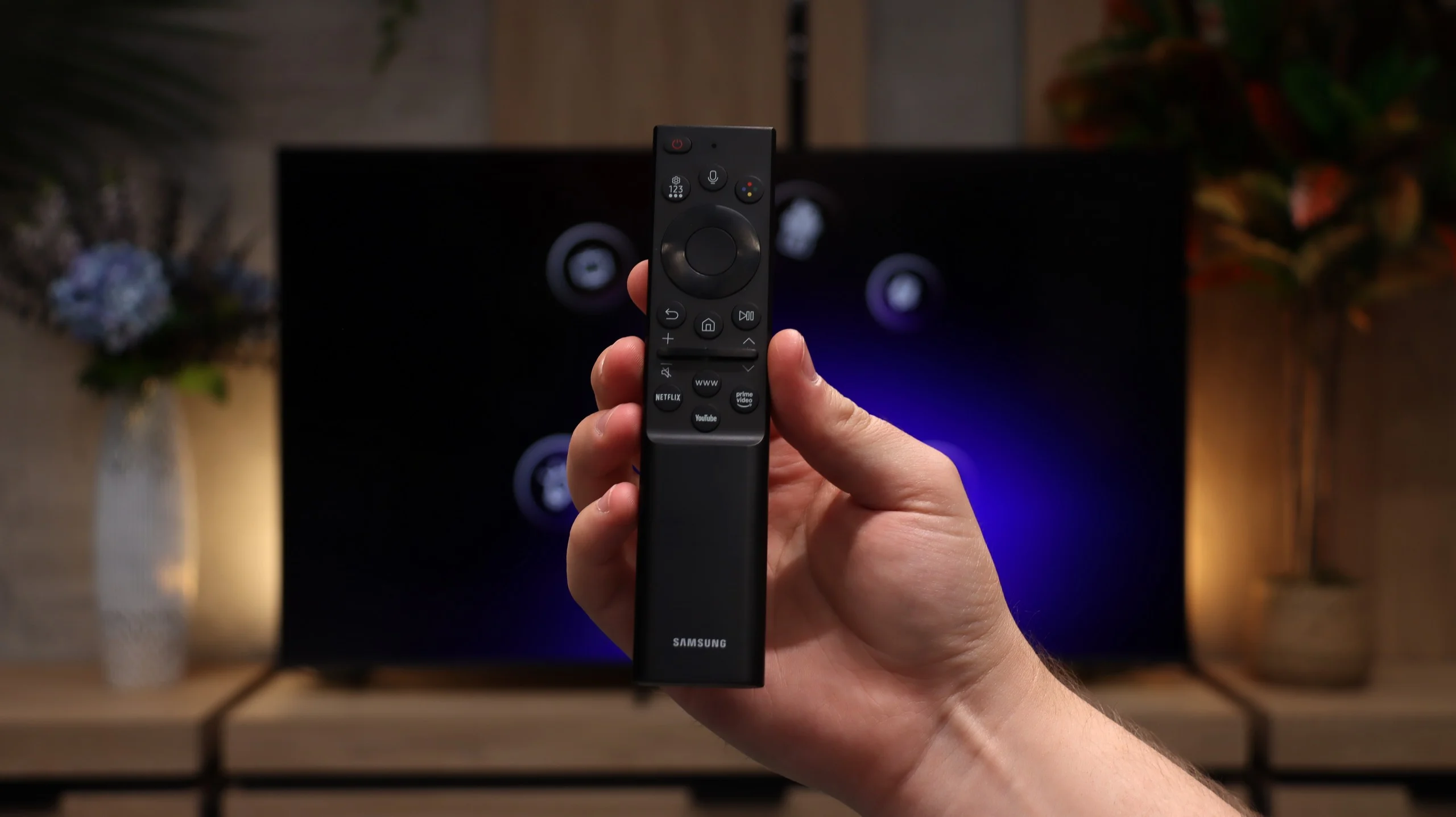
In terms of usability features, the television also performs well. It includes support for AirPlay and Miracast technologies, which allow for easy streaming of audio and video from other devices. Additionally, the TV seamlessly supports external accessories, such as mice or keyboards, enabling it to act as a more versatile entertainment center. However, it is worth noting that the OLED909 does not include the PiP (picture-in-picture) feature or the ability to record programs from built-in tuners. A novelty in this model is the backlit remote, which looks attractive and operates in hybrid mode – it can function as a smart remote, and upon pressing the appropriate button, the numeric keypad is also illuminated. Unfortunately, its operation can be irritating, as it relies on standard infrared control, and the only function that supports RF (radio) technology is voice command functionality.
The Philips OLED909 also stands out from other models with its four-sided Ambilight system. This allows the TV to create dynamic lighting around the screen that adapts to the displayed content. This solution not only enhances the feeling of immersion but also improves viewing comfort in darker rooms. Ambilight remains one of the most distinctive features of Philips televisions, which is hard to find with competitors.
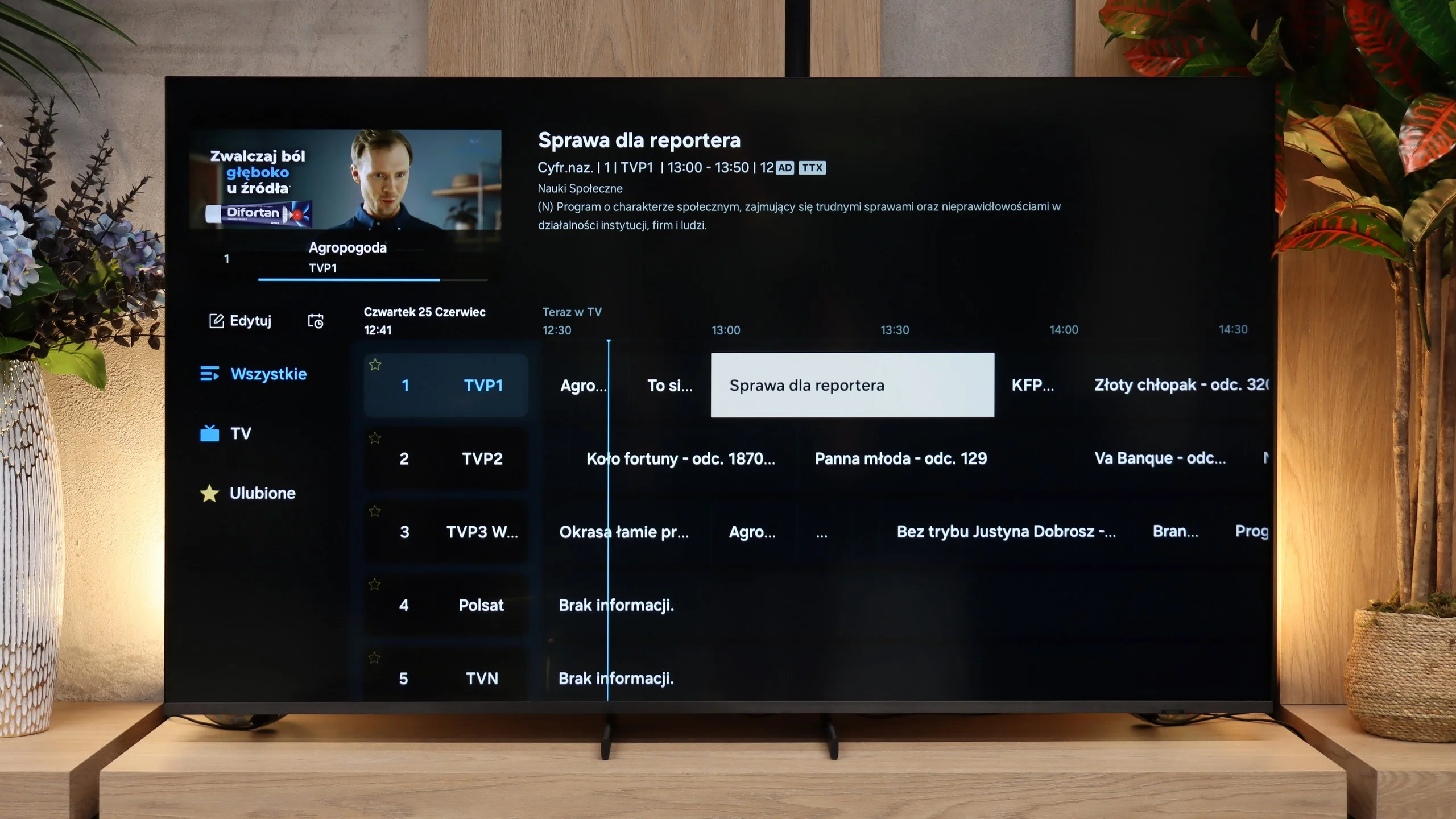
Smart TV: Tizen
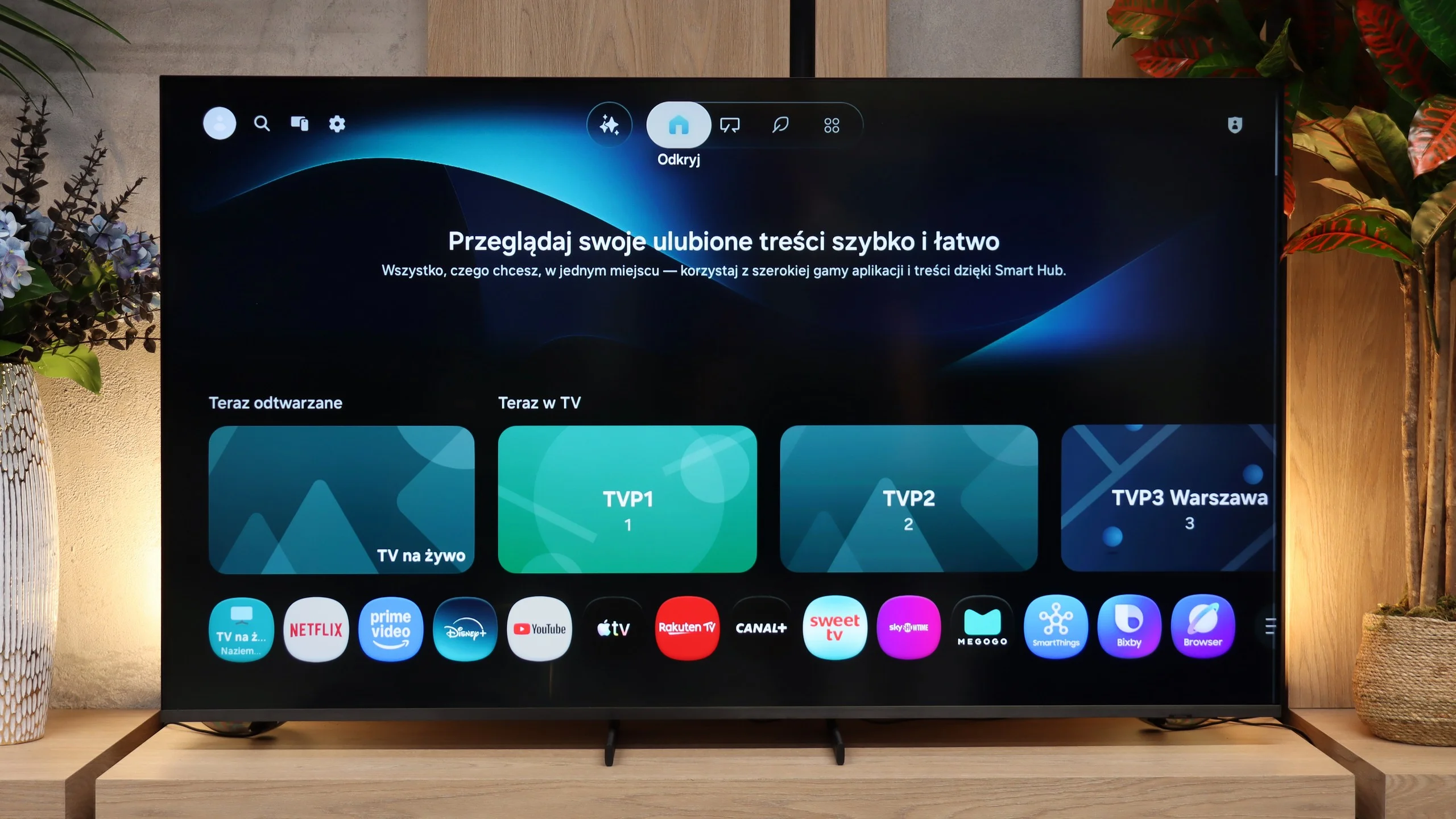
Samsung QN80H traditionally runs on Samsung's proprietary Tizen platform. This software is strongly focused on AI-based solutions and a whole range of other modern features. So things like AirPlay and phone screen mirroring (Screen Mirroring) work here without any problem. The system itself is fast, menu animations are smooth, and that's a clear plus. Tizen also includes many of Samsung's own solutions, led by the SmartThings app, which lets you conveniently manage smart devices throughout the home. Everything is controlled with a small, intuitive remote. Another major advantage is that Tizen is currently one of the longest-supported Smart TV platforms on the market. Samsung states it will support the device for up to 7 years from its launch.
Classic features
The situation is worse when it comes to more traditional TV features. What's missing? The QN80H doesn't allow recording TV programs to USB storage, so it lacks PVR functionality. There is also no classic remote with a numeric keypad, which may bother people who still like to change channels directly using numbers (without a set-top box). In this year's "80" series PIP is also missing, which was present in earlier models. So there's no way to display two images at once. It's clear that Samsung today is focusing more on online features than on solutions aimed at traditional TV users.
Apps
9.6/10
9.3/10






















Playing files from USB
7.9/10
9.1/10
Supported photo formats:
Maximum photo resolution:
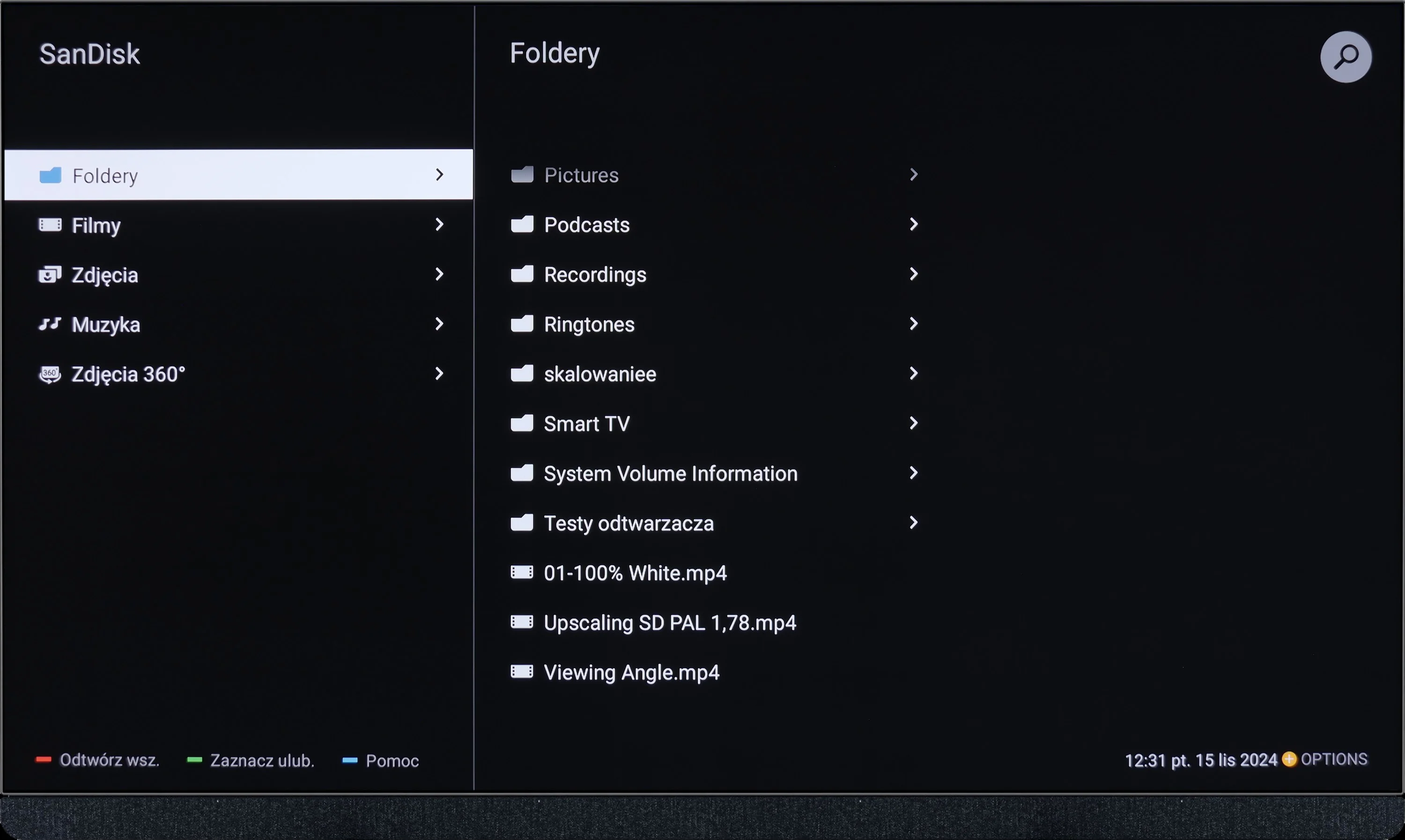
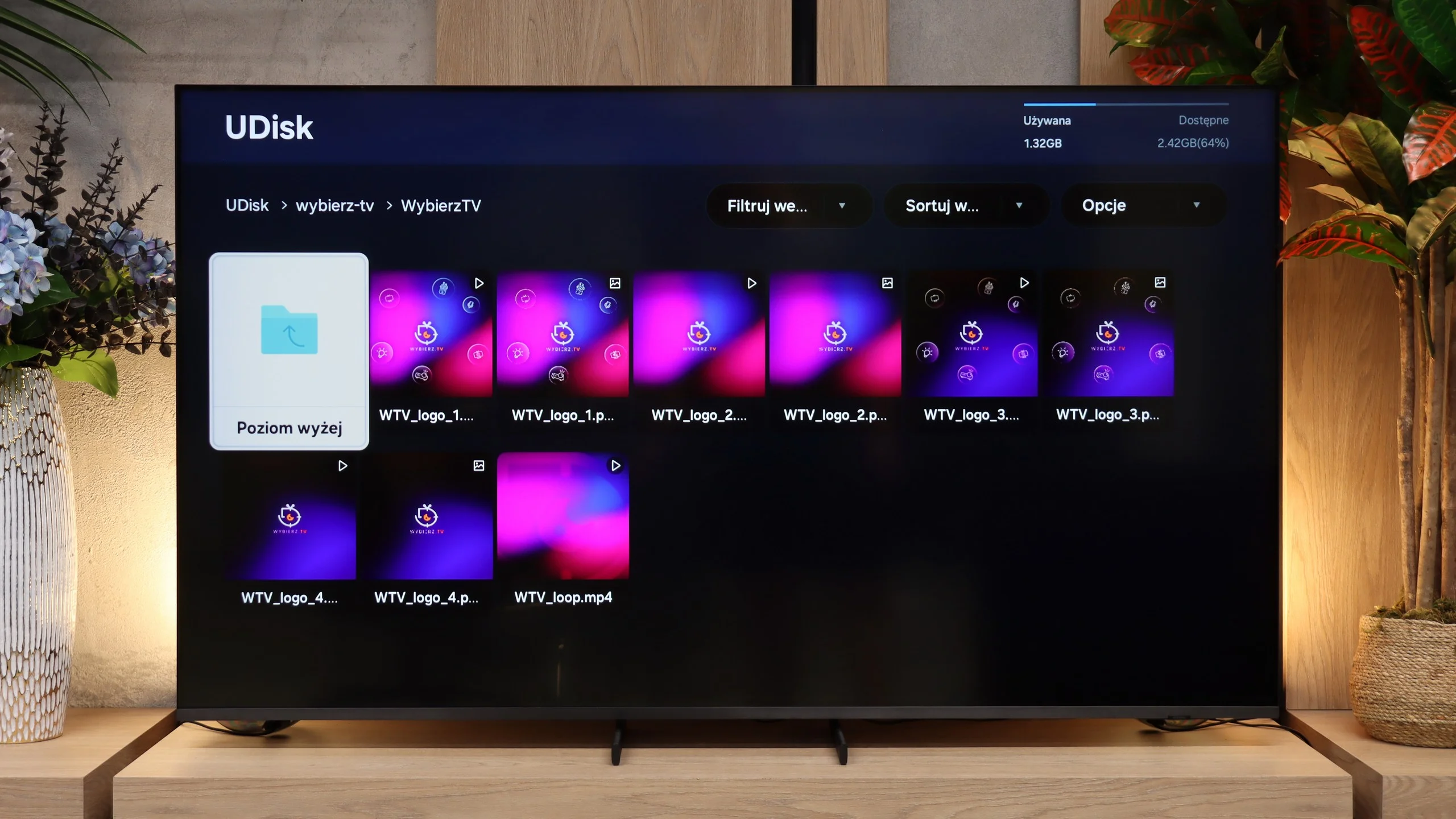
The Philips OLED909 has a built-in multimedia player that easily handles most popular video, audio, and subtitle file formats. However, it is worth noting that the pre-installed player does not support Polish characters in subtitles, which can be inconvenient when watching content from USB. Fortunately, thanks to the Google TV system, this flaw can be easily circumvented. You just need to download an alternative player from a wide range of available applications that will provide full support for Polish characters and additional features, such as more advanced subtitle settings or support for less common formats. This means that even minor shortcomings of the factory software do not pose a significant problem for users.
The built-in file player on the QN80H works very well. If you plug in a flash drive or USB drive, you shouldn't have much trouble playing your own content. The TV supports most common video, audio and photo formats. What it really lacks for perfection is broader support for less common photo formats. A good example is HEIC, which Apple devices often use. The QN80H may not be able to open those files.
Sound
8.1/10
7.1/10
- Maximum volume-86dB
- Dolby Digital Plus 7.1
- Dolby True HD 7.1
- Dolby Atmos in Dolby Digital Plus (JOC)
- Dolby Atmos in Dolby True HD
- DTS:X in DTS-HD MA
- DTS-HD Master Audio
The Philips OLED909 stands out with its built-in soundbar featuring a navy blue fabric finish, branded with the renowned Bowers & Wilkins. At the bottom of the screen, we find a solid speaker system, additionally supported by a built-in subwoofer at the back of the casing. The sound quality is truly impressive for the class of this device. The soundbar delivers clear and detailed sound, effectively handling both dialogues and sound effects in movies and games.
In terms of audio, the Samsung QN80H performs fairly well. The 2.0 speaker setup with 30 W total output may not be spectacular compared to flagship models, but it's more than enough for everyday TV viewing, news, or basic series. If you're after a cinematic experience, the TV offers full support for Dolby Atmos. By connecting a compatible soundbar or speakers, you can expect more immersive, spatial sound. Additionally, Samsung supports Q-Symphony, which allows simultaneous playback from the TV speakers and a compatible soundbar.
An interesting new feature is one based on artificial intelligence: a special sports viewing mode called "Soccer AI." It's designed so you can, using sliders, boost the commentator's voice above the crowd noise or... do the exact opposite: mute the commentator and leave only the stadium cheering. Although the algorithm can sometimes work a little clumsily, this feature can be a lifesaver. Especially if you happen to catch a match with a commentator you particularly can't stand... 😉
Sound Quality Test
No sound test video
Acoustic Measurements
No acoustic data
86dBC (Max)
75dBC
Reader comments
Comments are provided by the external service Disqus (Zeta Global). Once loaded, Disqus may set cookies and process data about your activity.
We will remember your choice on this device. Provider's privacy policy