 Direct comparison
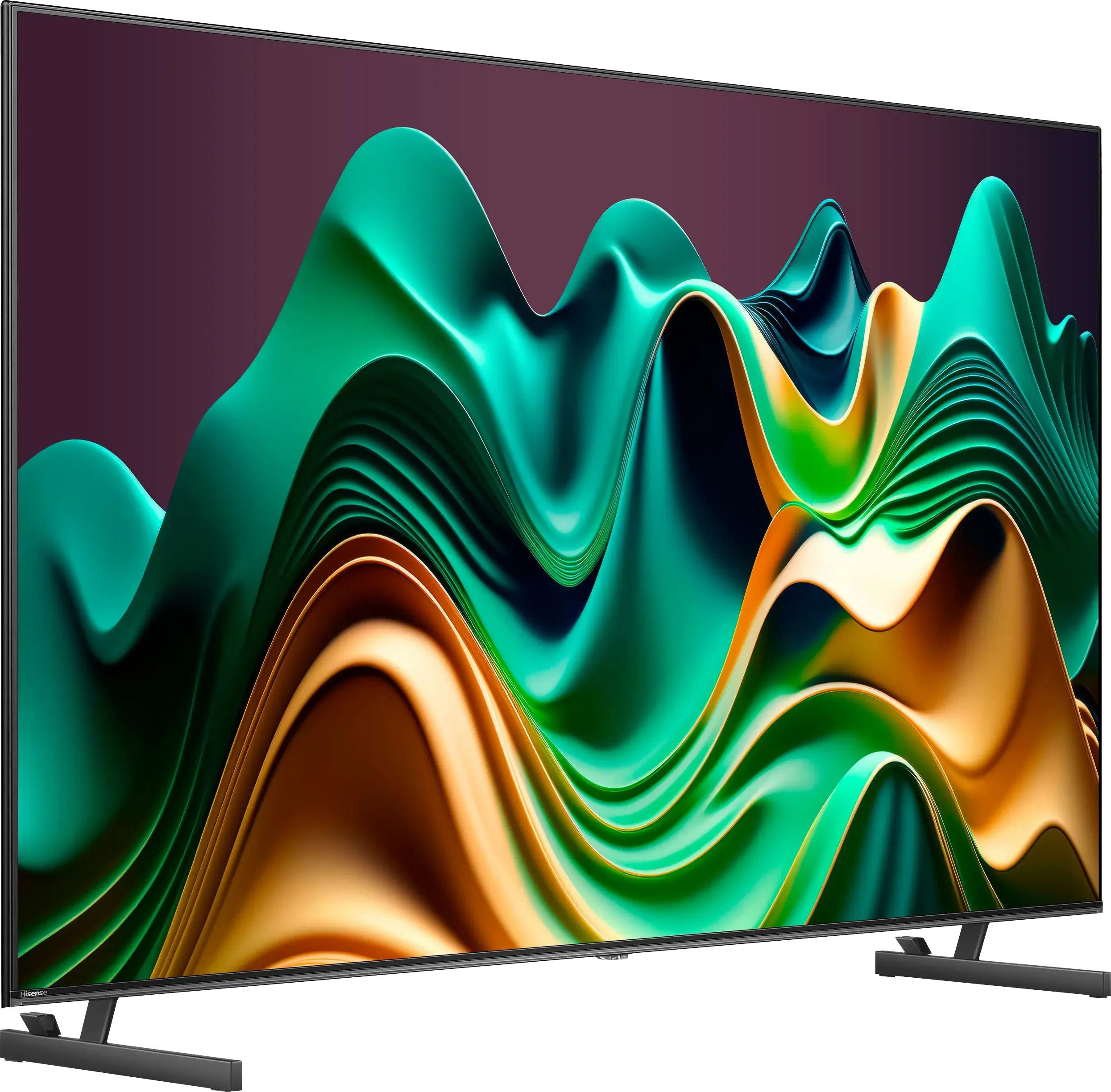
The Hisense U6NQ is a really interesting model from the Chinese manufacturer. It is the first MiniLED from the 2024 series and the only one with a refresh rate of 60 Hz. Starting with the picture quality, the MiniLED backlight combined with the VA matrix does its job – the contrast is good, and watching movies in the evening is a pleasure. Stable HDR performance, support for Dolby Vision and HDR10+, and solid colours make the TV handle most everyday tasks well. The Vidaa system works efficiently – it is fast and intuitive, without annoying stutters. A few popular apps, such as Spotify and Tidal, are missing, but most users will find what they need here, including the ability to record programs to a flash drive or external hard drive. And what about motion smoothness? It's quite decent. The option to choose between 4K at 60 Hz and Full HD at 120 Hz is a nice addition, especially if we play on consoles that often do not offer perfect 4K at 120 frames. Features such as VRR and ALLM further enhance the comfort of occasional gaming. However, it is not without its drawbacks. There are visible smearing issues in dynamic scenes, and the lack of any function to reduce this effect does not help. In terms of picture quality, this TV heavily prioritizes brightness, which sometimes leads to situations where black takes on a slight bluish hue in difficult conditions. In short: the Hisense U6NQ is a good choice for those looking for a TV that offers good picture quality and a comfortable operating system. It is not a device without compromises, but in its price range, it performs really well.
- Matching (Score) |
- Our verdict |
- TV appearance |
- Where to buy |
- Contrast and black detail |
- HDR effect quality |
- Factory color reproduction |
- Color reproduction after calibration |
- Smoothness of tonal transitions |
- Image scaling and smoothness of tonal transitions |
- Blur and motion smoothness |
- Console compatibility and gaming features |
- Input lag |
- Compatibility with PC |
- Viewing angles |
- Daytime performance |
- Panel details |
- TV features |
- Apps |
- Playing files from USB |
- Sound

Check the best price offer:
Hisense U6NQ(paid link) Check the best price offer:
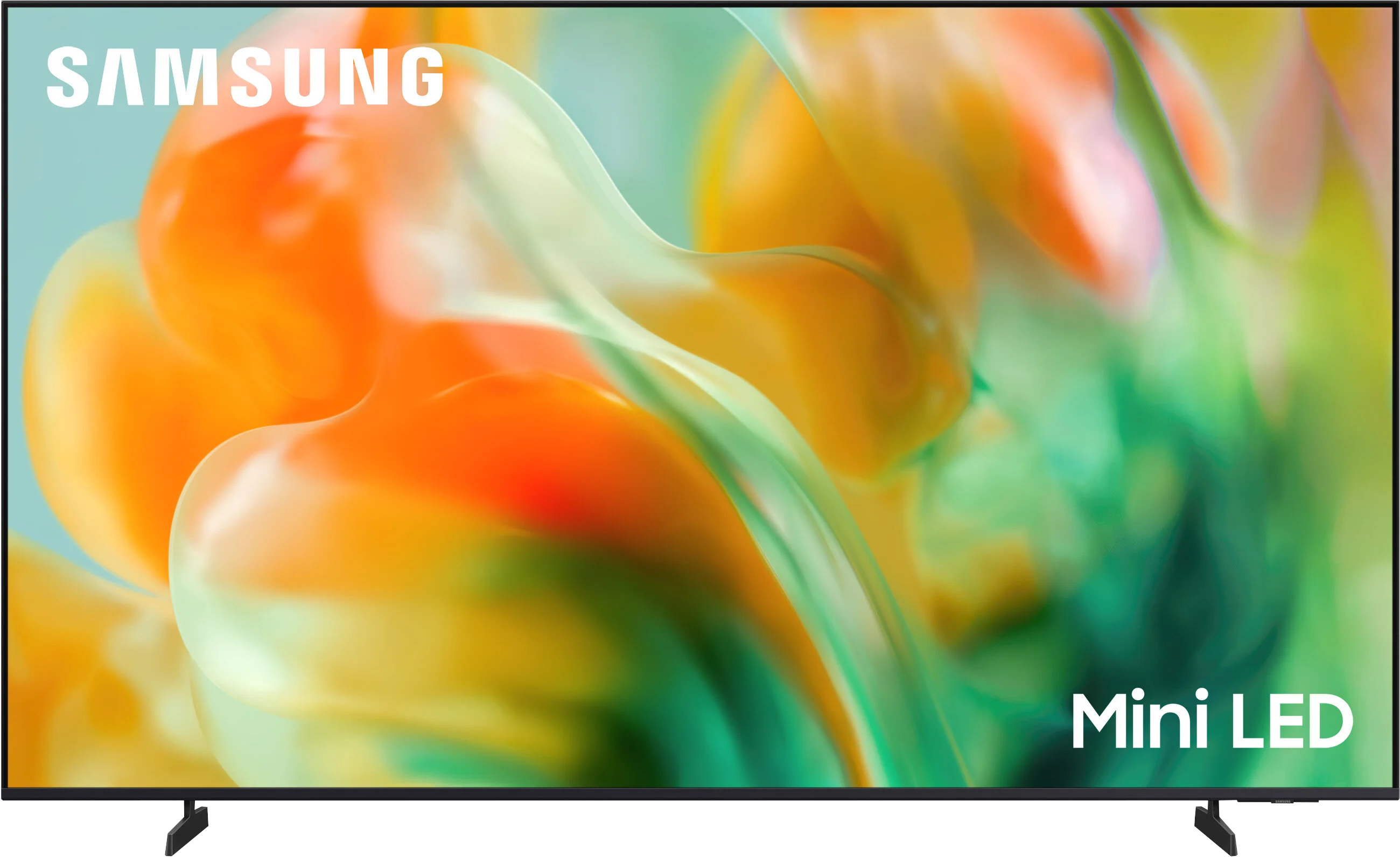
Samsung M80H(paid link)M80H / M86H

Panel type: LCD VA
Resolution: 3840x2160
System: VIDAA
Model year: 2024
Complete the survey to find out the result
Panel type: LCD VA
Resolution: 3840x2160
System: Tizen
Model year: 2026
Complete the survey to find out the result
Overall rating
6.5
6.9
 Movies and series in UHD quality
6.7
6.5
 Classic TV, YouTube
6.5
6.6
 Sports broadcasts (TV and apps)
5.0
6.7
 Gaming on console
7.1
8.8
 TV as a computer monitor
6.0
8.9
 Watching in bright light
6.1
5.0
 Utility functions
8.9
7.3
 Apps
7.7
9.3
 Sound quality
6.3
6.0
Complete the survey to find out what fits your preferences
Advantages

Good contrast and black in its price class
Support for multiple HDR formats - Dolby Vision, HDR 10+
Correct color reproduction out of the box
Flexible refresh rate - 4K@60Hz or FullHD@120Hz
Decent for occasional gaming - low input lag, ALLM, VRR
Recording to USB from built-in tuners
Three HDMI 2.1 ports with support for VRR and ALLM
Dedicated motion smoothing for gamers: Game Motion Plus
Low input lag
High refresh rates: 4K 144 Hz and Full HD 240 Hz
Decent contrast thanks to a VA panel
Minimal smearing for a VA panel
Rich colors thanks to the PFS filter (a different kind of QLED 😉)
Good digital image processing for this segment
Fast Tizen OS with a wide selection of apps
Disadvantages

Missing several applications in the VIDAA system - Spotify or Tidal
Issues with motion blur
Dimmer algorithms work average
No local dimming despite being labeled Mini-LED!
Low brightness: 350 nits
No support for Dolby Vision and DTS:X
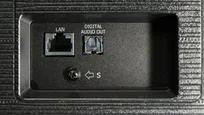
No Toslink optical audio output
Our verdict
The M80H shows its strengths where motion matters most. A fast panel, a refresh rate of up to 144 Hz, and relatively low motion blur make sports and fast-paced games look really good. In this respect the TV can even beat some significantly more expensive Samsung LCD models. Gamers also get low input lag, three full-bandwidth HDMI 2.1 ports, and Game Motion Plus, which can improve the smoothness of games running at 30 or 60 frames. When connected to a PC you can also use a 240 Hz refresh rate, although only at Full HD resolution. A big plus for the M80H is the NQ4 AI Gen2 processor, which was until recently used in higher-tier Samsung series. It handles lower-resolution content well and can enhance the look of weaker sports broadcasts or heavily compressed footage. The extra image-enhancing features do produce a visible effect, although at higher settings they become too strong and start to interfere with the picture's natural look. Still, they are worth listing as an advantage, since in the cheapest TVs similar solutions often matter much less.
What raises the most concerns is the M80H being called a Mini-LED TV. It does not have local dimming, the feature that usually accounts for the biggest benefit of this technology. Brightness of around 350 nits also does not allow for particularly striking HDR. In terms of picture quality the M80H is therefore much closer to basic LCD TVs than to more advanced Neo QLED models like the QN80H. That does not mean movies look bad on it. The VA panel provides decent contrast, and the PFS filter delivers attractive, saturated colors. You should be aware, however, that the lack of local dimming clearly limits the TV's picture-quality capabilities. The M80H is therefore not a model that demonstrates the full potential of Mini-LED backlighting.
It will perform much better in the hands of a gamer or sports fan for whom panel speed, low input lag, and extensive gaming features are most important. If its price remains significantly lower than models equipped with local dimming, that compromise may be a sensible choice for that group of users.
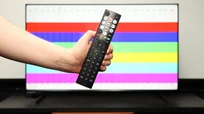
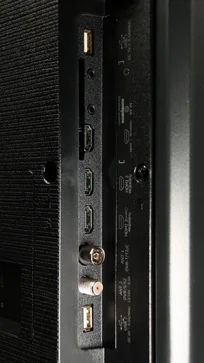
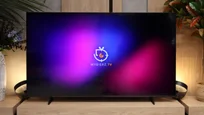
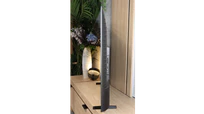
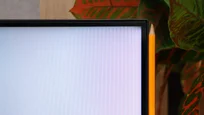
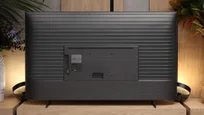
TV appearance

Contrast and black detail
7/10
6.3/10
Local dimming function: Yes, number of zones: 160 (20 x 8)
Local dimming function: No
Contrast:


Result
61,250:1

Result
13,650:1

Result
14,700:1

Result
11,150:1

Result
5,800:1
Result
5,950:1
Result
7,150:1
Result
8,150:1
Result
7,850:1
Result
5,550:1
Halo effect and black detail visibility:
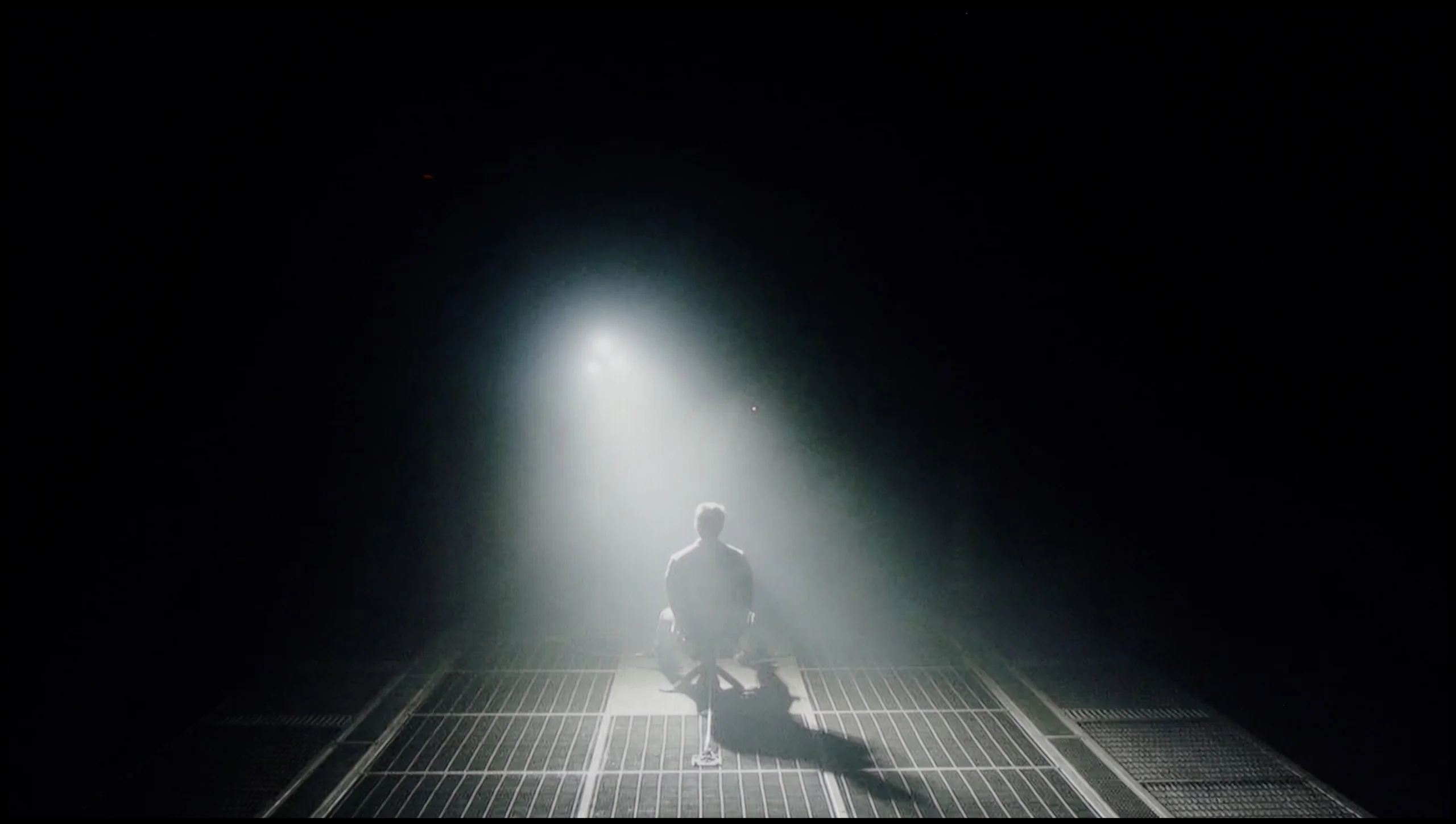
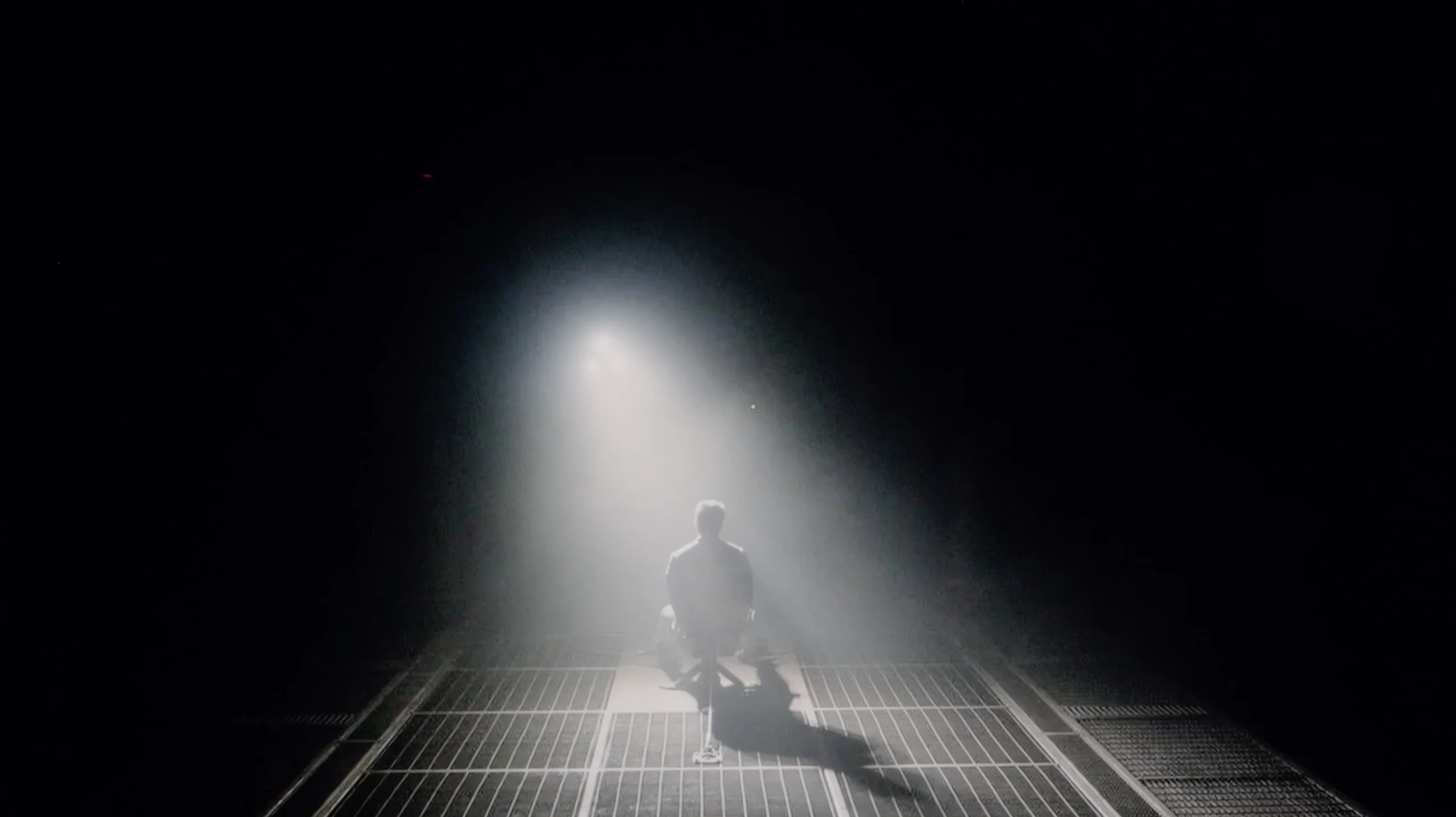
Check the visibility of bright lights on a dark background. Mini-LEDs often struggle with this. The photo does not compare black levels – that’s what the video below is for.
The video accurately shows differences in contrast and black levels between TVs, as well as potential issues: halo around bright objects or Mini-LED zone operation visible as brightness jumps.
The tested 55-inch model has a VA panel, providing deeper blacks compared to IPS/ADS panels. This technology alone ensures that contrast reaches quite a decent level. It is also worth noting that the Hisense U6NQ, as a MiniLED technology television in this version, has 160 local dimming zones, which significantly improves image quality in many scenes. During tests, for example in the movie Oblivion, the television demonstrated good separation of the hologram lights, while the contrast remained satisfactory. Unfortunately, in more demanding materials, such as the Pioneer Kuro test pattern, a noticeable drop in quality was observed. In such scenes, the dimming zones did not work correctly, leading to a significant reduction in contrast. Similar issues occurred in scenes from the movie Sicario 2, where the blooming effect was clearly visible, indicating the television's difficulties with precise management of the backlight zones. Despite these shortcomings, the overall level of contrast in the U6NQ can be considered solid, especially in this price category. The television performs well in most standard scenes, and its capabilities in displaying blacks are better than those of models with other types of panels.
Samsung M80H is an LCD TV that, according to the manufacturer, uses Mini-LED backlighting. And maybe smaller LEDs placed directly behind the screen are indeed used here, but it's not the same type of Mini-LED we know from more expensive TVs. The M80H lacks local dimming, so the backlight cannot independently control the brightness of individual parts of the image. Black levels are quite decent, mainly thanks to the VA-type panel used. Depending on the scene, our measured contrast was about 5500:1 to over 8000:1. For a TV without local dimming, those are good results, and it's exactly in such designs that VA panels have a considerable advantage over IPS/ADS panels. It's worth noting that part of the results exceed the native contrast of the panel itself, which is about 5000:1. Samsung has implemented a global dimming feature. When there's a lot of black on the screen, the TV dims the entire backlight, making dark areas look deeper. However, this comes at the cost of the brightness of the rest of the image. The M80H therefore won't strongly brighten a small bright spot while maintaining deep black around it; it dims or brightens the whole screen.
HDR effect quality
5.6/10
4.7/10
Luminance measurements in HDR:

Result
443 nit

Result
426 nit

Result
505 nit

Result
442 nit

Result
448 nit
Result
288 nit
Result
340 nit
Result
349 nit
Result
345 nit
Result
364 nit
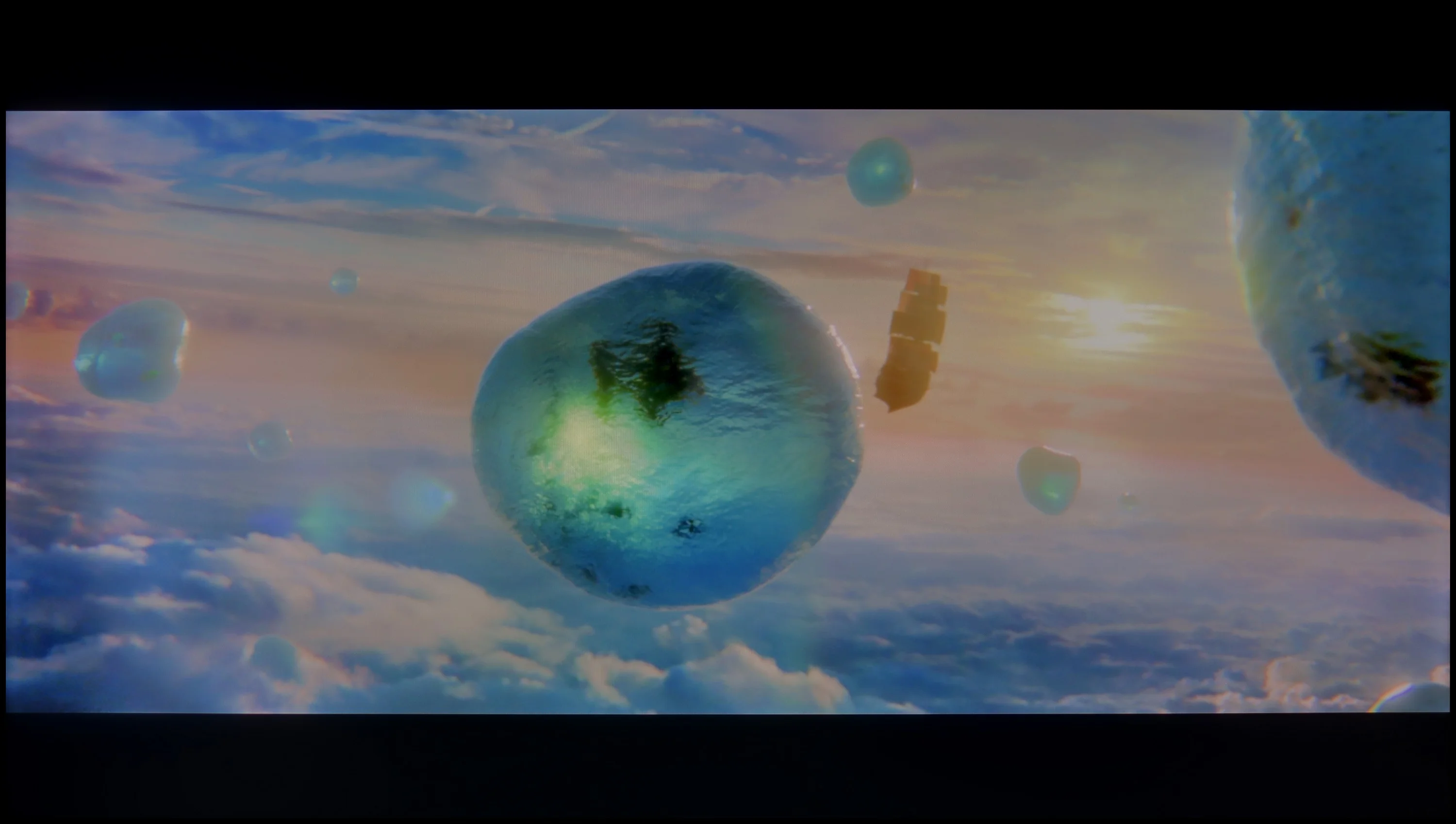
Scene from the movie “Pan” (about 2800 nits)

Scene from the movie “Billy Lynn” (about 1100 nits)
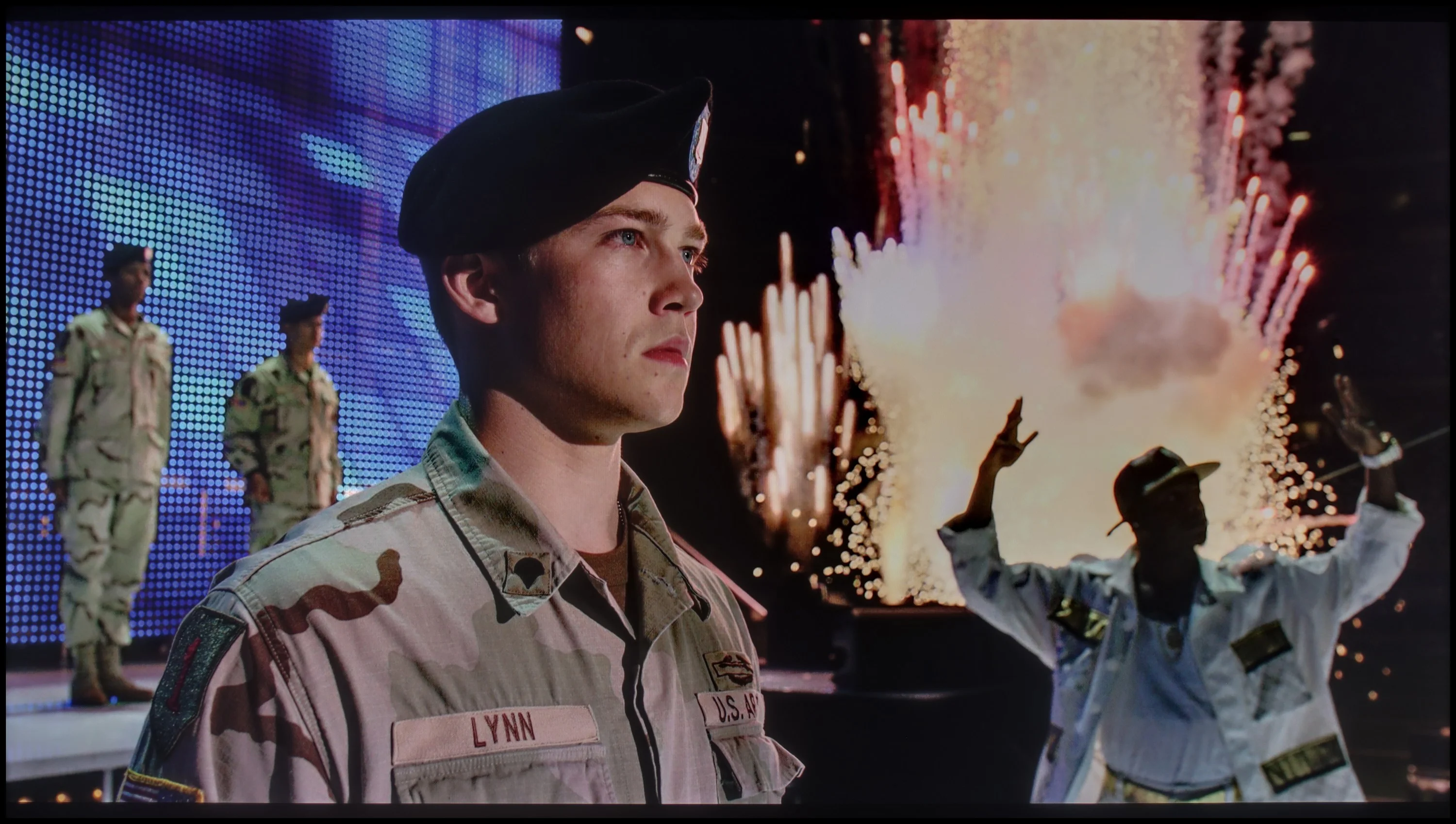
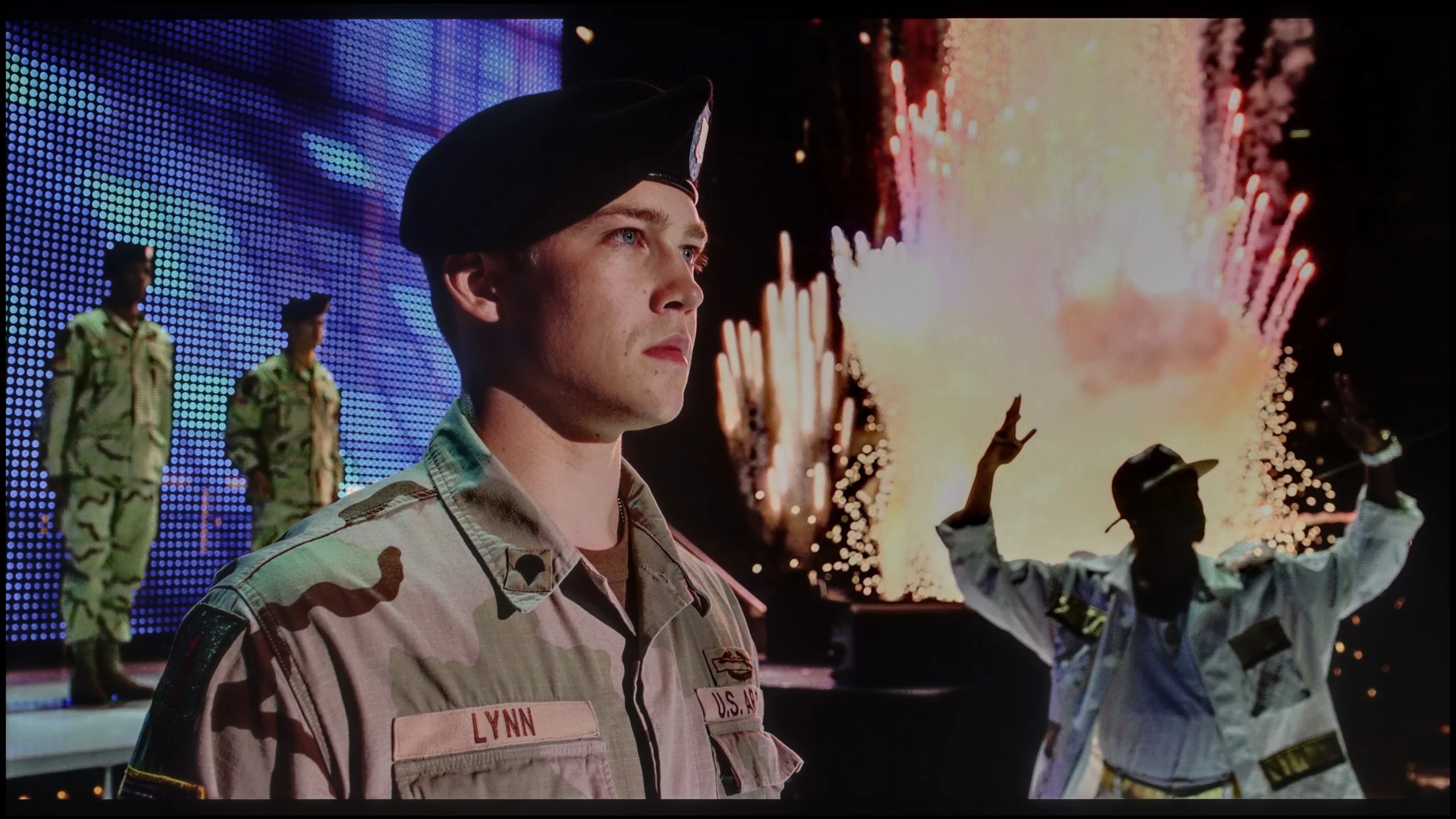
The photos show two HDR10 movies. 'Pan' is one of the brightest productions ever made, while 'Billy Lynn' (soldier) has brightness typical of streaming (Netflix, Prime, HBO MAX). Notice the intensity of effects and detail in whites.
Static HDR10


The photos present the visibility of white details in various HDR formats. They do not show brightness differences between TVs (these can be compared in the previous gallery).
Dynamic: Dolby Vision
Dynamic: HDR10+


The photos present the visibility of white details in various HDR formats. They do not show brightness differences between TVs (these can be compared in the previous gallery).
HDR luminance chart:
Samsung M80H
Hisense U6NQ
Hisense U6NQ offers a stable HDR effect, which is rare in TVs with local dimming. On most streaming platforms, in movies and series recorded in 4K, the TV presents consistent performance – in every tested scene, regardless of difficulty level, brightness is around 450 nits. This is a pleasant surprise, as many models in this class show significant differences – some scenes are well-lit, while others are heavily dimmed by dimming algorithms. However, Hisense U6NQ prioritizes maintaining higher brightness, which comes at the expense of black levels, as mentioned in the paragraph about contrast testing.
The HDR effect on the U6NQ is satisfying, offering a noticeable "hit" of light in bright moments, although it is worth remembering the previously mentioned blooming, which can be visible in more challenging scenes. In terms of colours, the TV also performs decently – the coverage of the DCI-P3 palette is 89%, and BT.2020 is 71%. Although these are not results that would impress more demanding users, for beginners in the world of high-quality content, the U6NQ serves as a solid choice. Thus, it presents an interesting option as an "entry-level" TV for home cinema.
The M80H is not one of the brightest TVs. Its peak brightness is around 350 nits and we saw similar results in most of our test scenes. That's not enough to produce genuinely impressive HDR — bright highlights lack punch and the overall image is a bit too dark. In practice, HDR on the M80H resembles a well-presented SDR image more than clearly more dynamic wide-range content. The picture can still look fine, but it's hard to point to strong specular highlights, clearly bright light sources, or an effect that immediately separates HDR from ordinary content.
Colors
One of the M80H's strengths is its color. The TV uses a PFS-based backlight filter, which allows it to display a significantly wider color gamut than a standard LCD screen without filters. Our measurements confirm this — the M80H covers about 96% of the DCI-P3 gamut and 72% of BT.2020. Those are very good results, which let the colors appear strongly saturated. Samsung's policy here is interesting. The M80H is not part of the QLED family, even though in terms of color it is practically on par with models carrying that label. From an image-quality standpoint, that doesn't matter much; the colors are simply good.
Factory color reproduction
8/10
6.1/10


This gallery shows how colors change after professional TV calibration. If you notice the difference, we recommend ordering this service at SkalibrujTV.com.
Factory Mode
After calibration


This gallery shows how colors change after professional TV calibration. If you notice the difference, we recommend ordering this service at SkalibrujTV.com.
Factory Mode
After calibration
The Hisense U6NQ in Filmmaker mode offers truly decent colour reproduction, although it is worth noting that differences between individual units can be noticeable. The model we tested surprised us positively, especially with HD content in SDR quality. The white balance was correct, and errors around 3–4 ΔE should be acceptable for the average viewer. The TV performed slightly worse in colour reproduction with 4K HDR materials. The dominance of blue hues led to unnatural cool tones on the Colour Checker chart, giving the picture a "store-bought" character. Combined with issues in brightness characteristics – gamma and EOTF curve caused some parts of the image to be too dark – the Filmmaker mode loses some of its credibility in this case. Although the factory settings of the tested unit deserve praise, especially in SDR, there were still minor shortcomings that would require adjustment to fully leverage the capabilities of the TV.
Filmmaker mode is reasonably well set up out of the box, though it falls short of perfect. In SDR material the most noticeable issue is an excess of red in the white balance, which makes the image look a bit warmer than it should. HDR content shows a similar character. As for the brightness response, in SDR the gamma stays close to the target for most of the range. Small deviations are mainly visible in darker areas, which in places are a little too dim. In HDR the very darkest details are slightly lifted, while from around 65% brightness the image begins to be gently darkened. This is largely due to the way the TV controls its brightness. Overall, Filmmaker mode looks good straight out of the box, but the image can still be improved.
Color reproduction after calibration
8.3/10
7.8/10
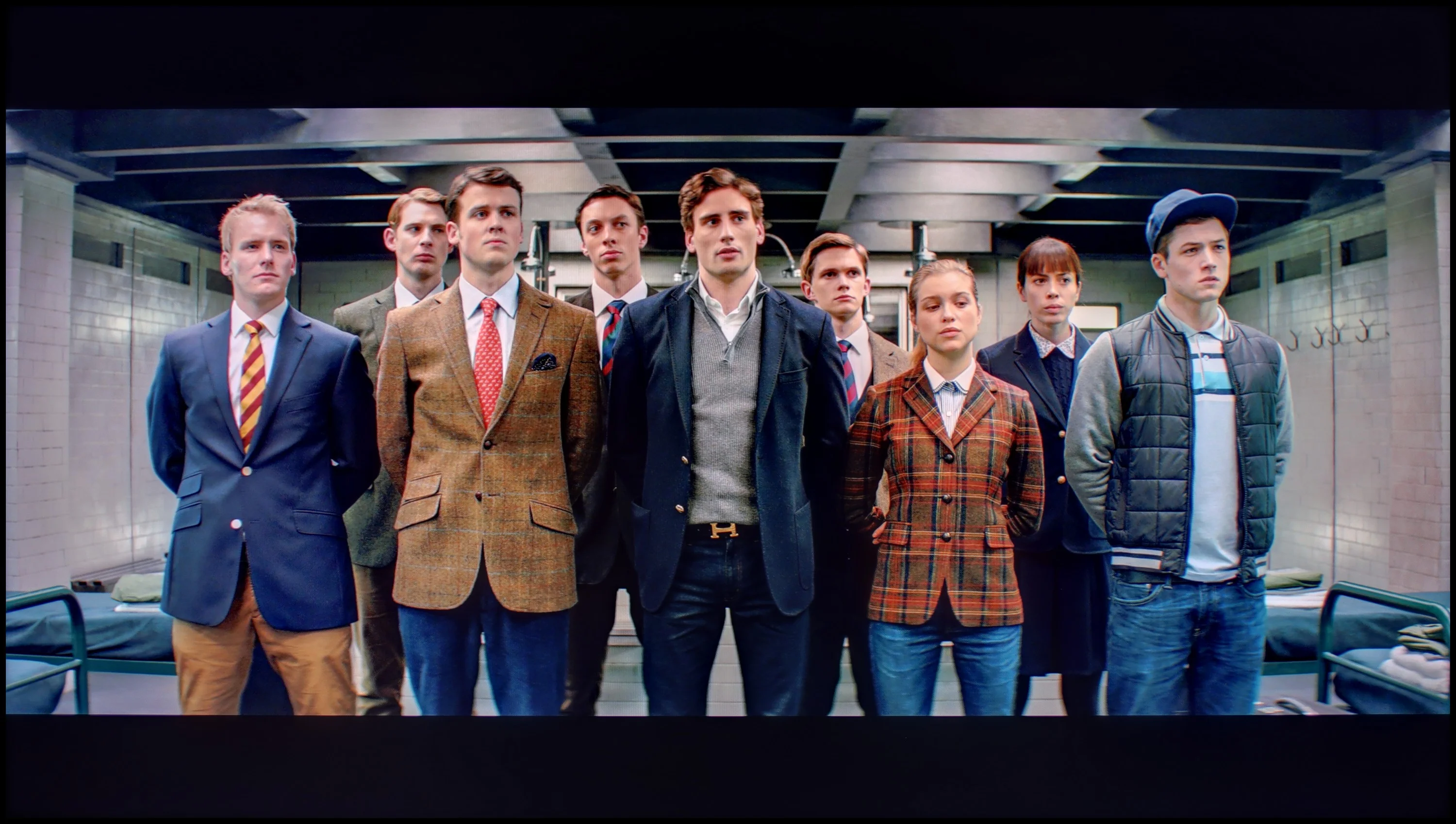
The photos show how movies look on the TV. Pay attention to black detail visibility, colors, and shadow tint.


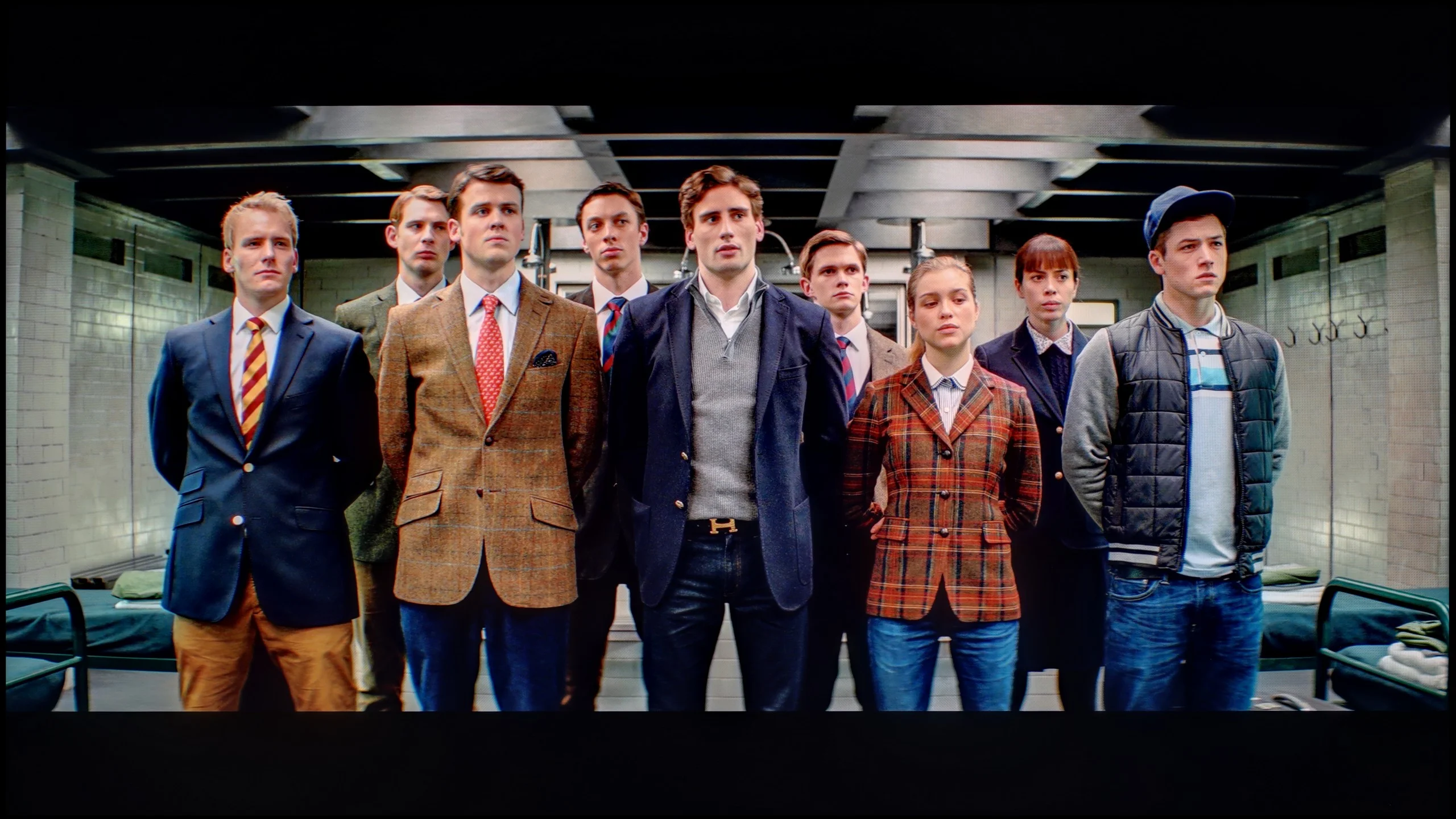
The photos show how movies look on the TV. Pay attention to black detail visibility, colors, and shadow tint.
Although the factory settings of the Filmmaker mode on the Hisense U6NQ were quite good, we decided to carry out calibration to fully assess the capabilities of this model. Only after such an adjustment can you see how the TV performs in ideal conditions. In the case of SDR content, which was already at a high level, we managed to further improve the white balance. However, the biggest change came from the brightness characteristic correction - gamma was optimized and no longer causes excessive dimming of the image, which improves its naturalness.
For 4K HDR content, calibration also yielded positive results. We eliminated the problem of blue dominance, which translated into a more balanced and natural image. However, managing brightness in HDR materials remains a more complicated issue. The EOTF curve, although it had problems with dimming the image in the range of 10-30% brightness under laboratory conditions, reveals other shortcomings in real scenes. The TV tends to excessively brighten the smallest elements on the screen. As a result, this leads to noticeable halo effects around bright objects. This phenomenon, which we mentioned earlier in the context of contrast and HDR, stems from the technological limitations of the model and is often difficult to eliminate.
In short: although the Filmmaker mode with factory settings looked decent, calibration allowed for an even better effect - minor adjustments resulted in a more balanced image, especially in HDR content. Calibration will be a beneficial step for users seeking the highest quality image.
After calibration, the M80H performs really well, especially with basic SDR content. Regular broadcast TV, YouTube, or movies viewed without HDR can look very accurate on it. After correcting the white balance, errors are minor, though you can still sometimes see that the TV tends to oversaturate the most saturated reds. In HDR you can also improve the picture and correct its main faults, but it doesn't reach the level of pricier models. Samsung quite heavily restricts color adjustment options in HDR, so in many areas we have to accept what the TV offers out of the box. Calibration lets us improve some parameters, but we are no longer able to change the overall image character of the M80H.
Smoothness of tonal transitions
7.8/10
9.8/10
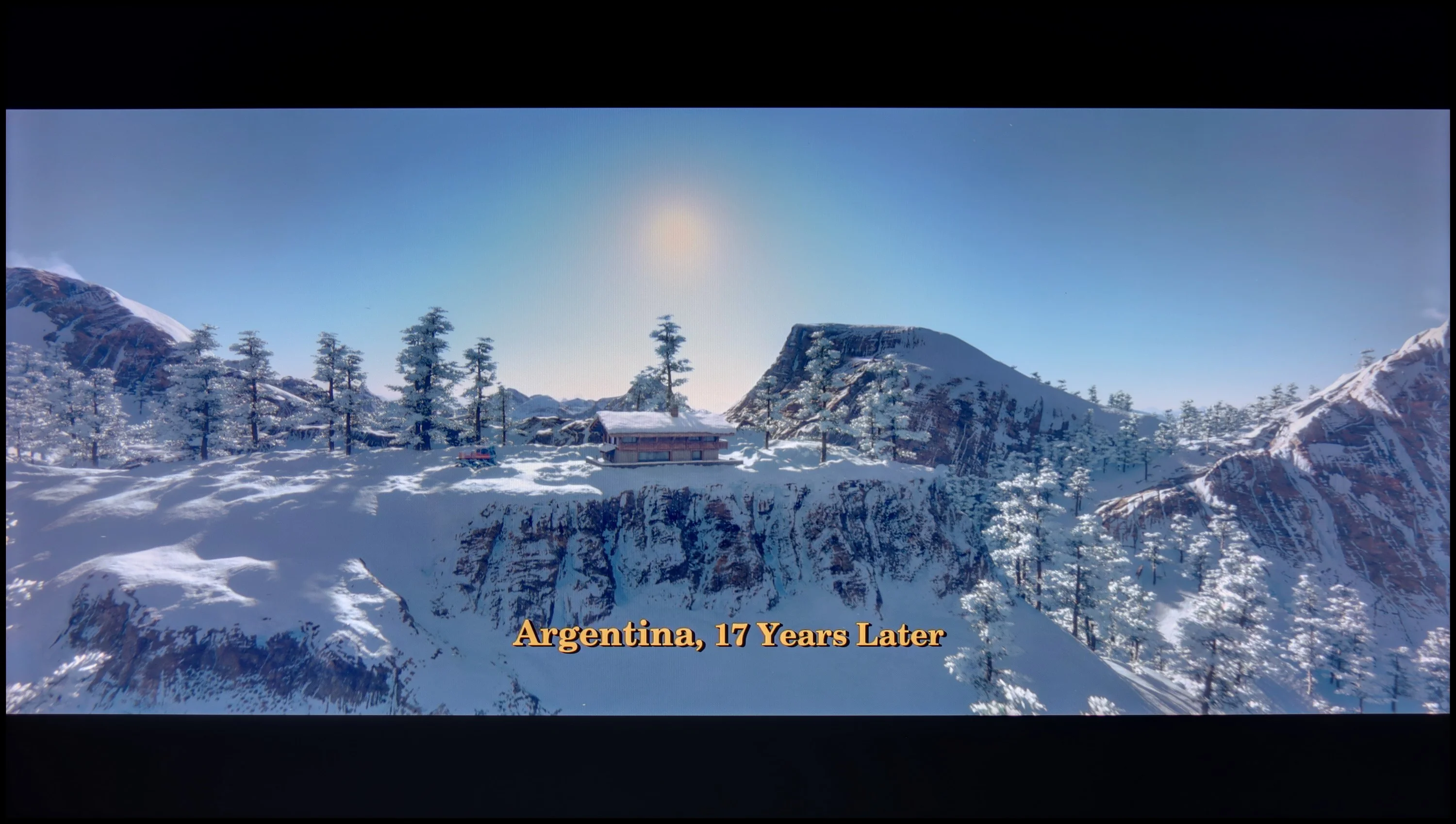

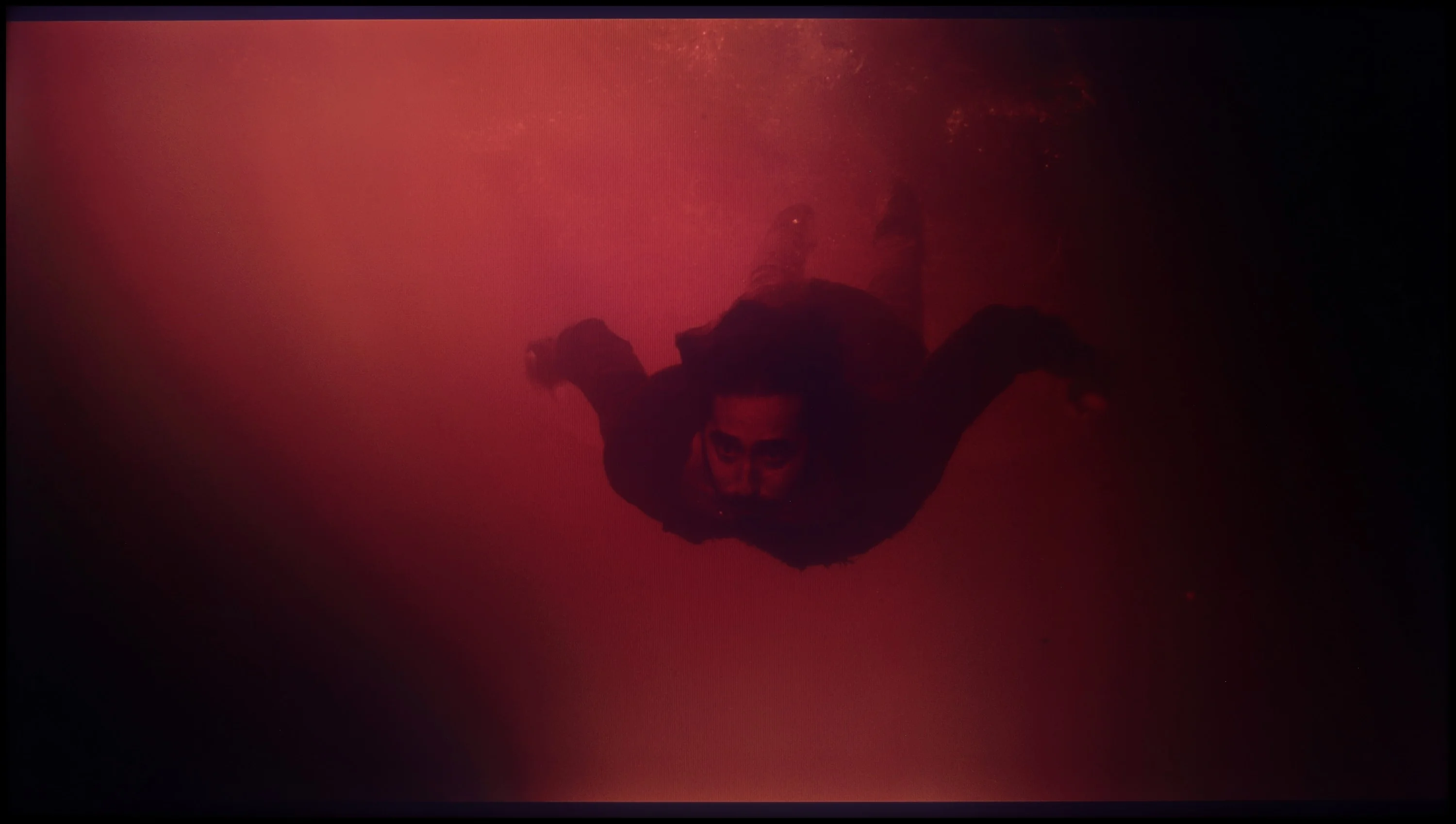
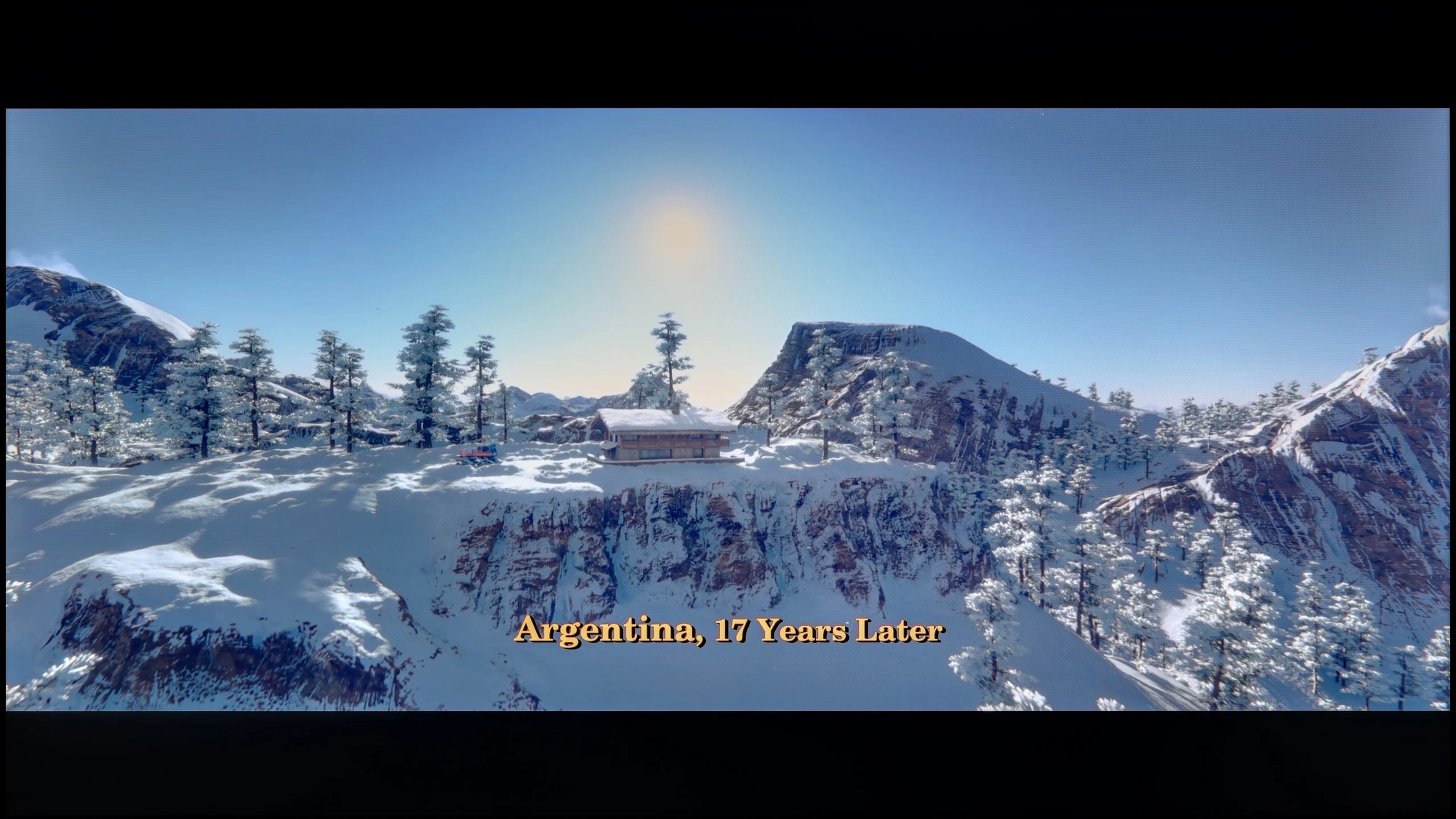
These are selected scenes that show smooth tonal transitions from one color to another. If you see distinct banding, it’s the TV panel’s fault.

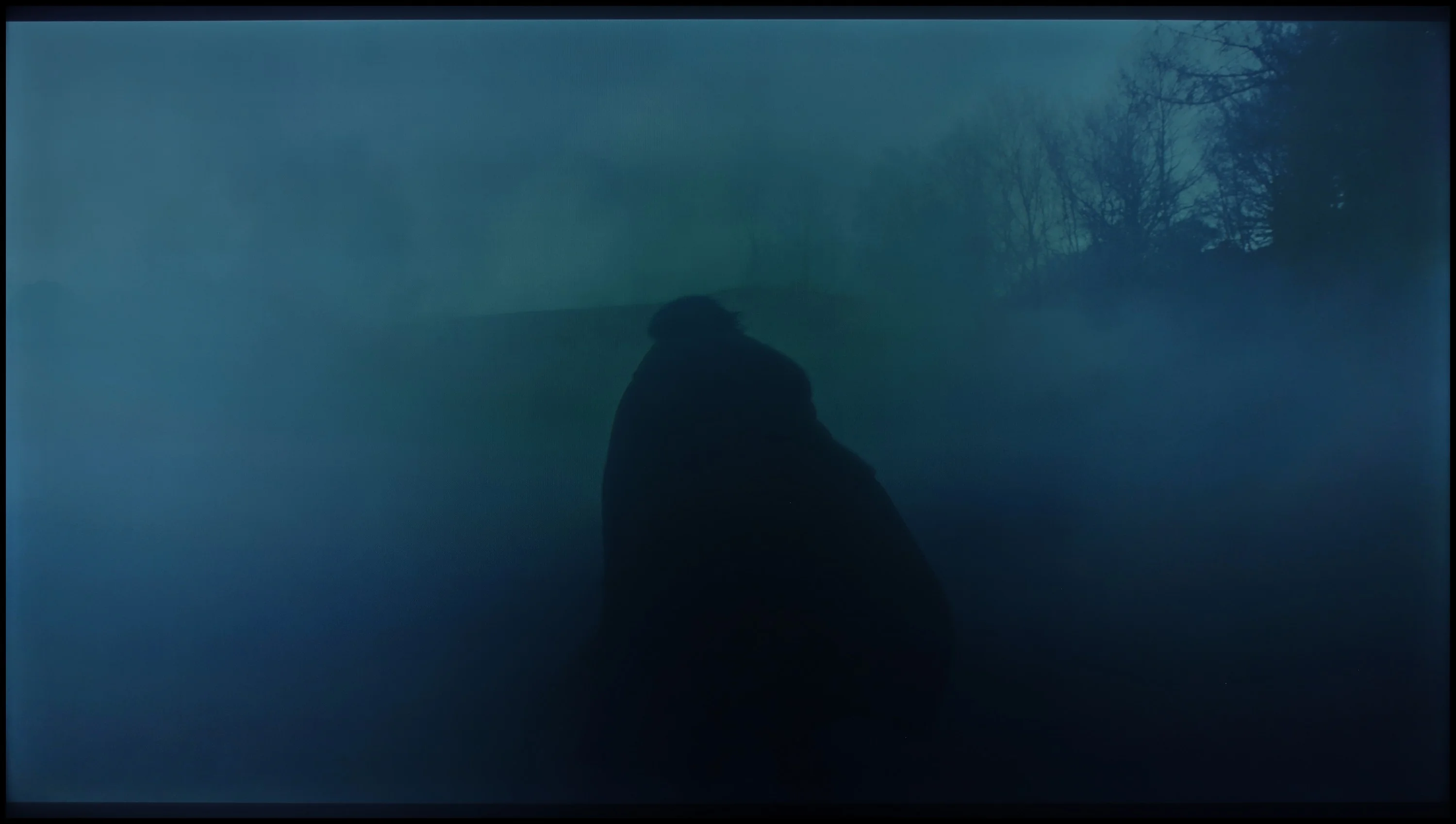
These are selected scenes that show smooth tonal transitions from one color to another. If you see distinct banding, it’s the TV panel’s fault.
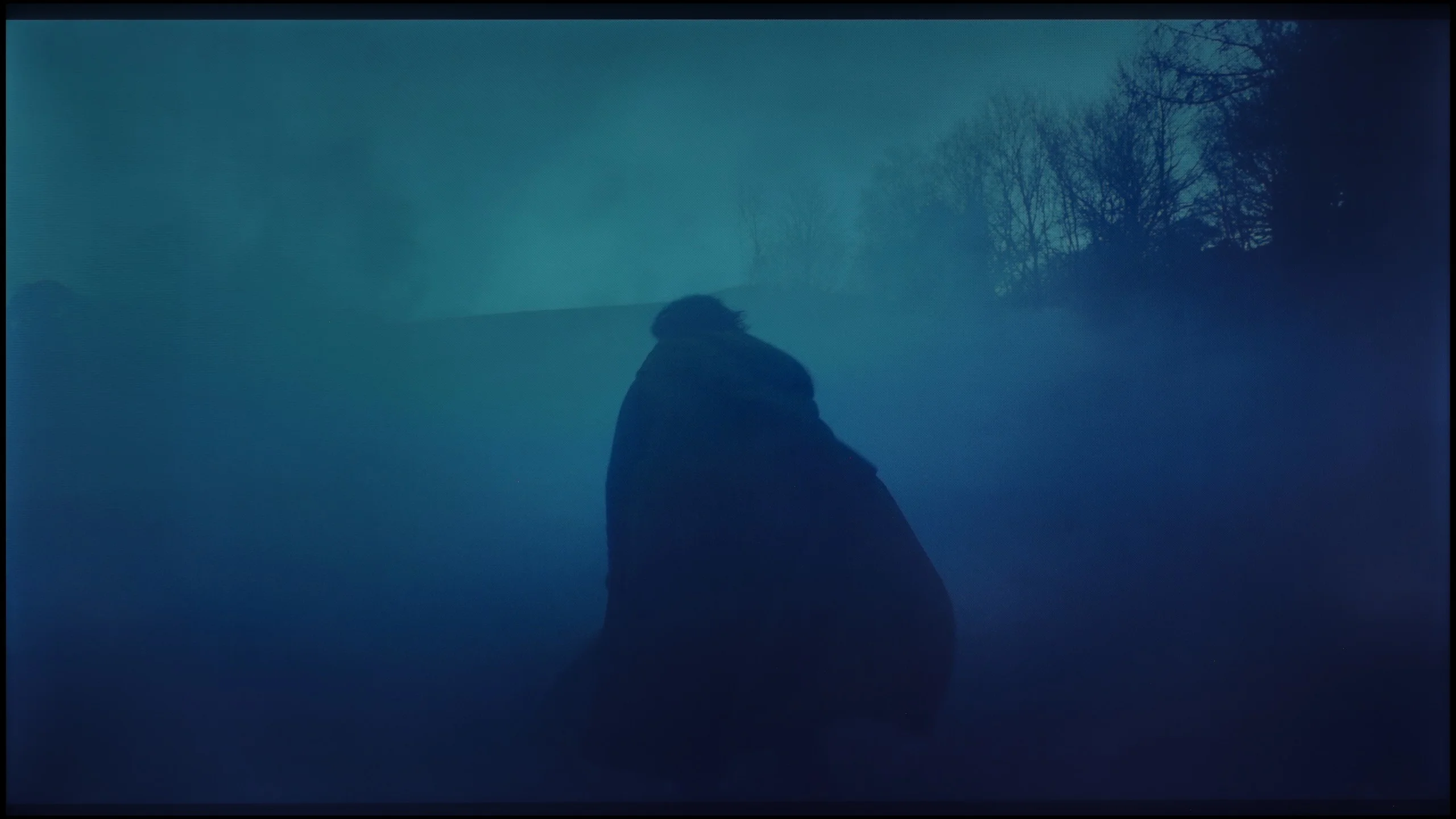
These are selected scenes that show smooth tonal transitions from one color to another. If you see distinct banding, it’s the TV panel’s fault.

These are selected scenes that show smooth tonal transitions from one color to another. If you see distinct banding, it’s the TV panel’s fault.
The fluidity of tonal transitions in the Hisense U6NQ is at a high level. In most scenes, there are no noticeable issues with colour blending, which provides a pleasant and cohesive visual experience. However, a more discerning eye may spot minor imperfections in specific cases, such as the scene with the blue sky in Kingsman or the final scene with the red background. These subtle shortcomings are, however, small enough not to affect the perception of the image for most users. Overall, the television performs very well in this category.
The smoothness of tonal transitions on the M80H is nearly perfect. Posterization is practically non-existent, and successive shades blend very smoothly in both bright and dark scenes. We didn't notice any obvious color banding, even in the sky or in smoke scenes. If the image looks worse in dark shots, that's not due to gradation issues. What becomes more apparent are the backlight limitations and the lack of local dimming, which keep blacks from having proper depth.
Image scaling and smoothness of tonal transitions
5.6/10
7/10


Smooth transition function
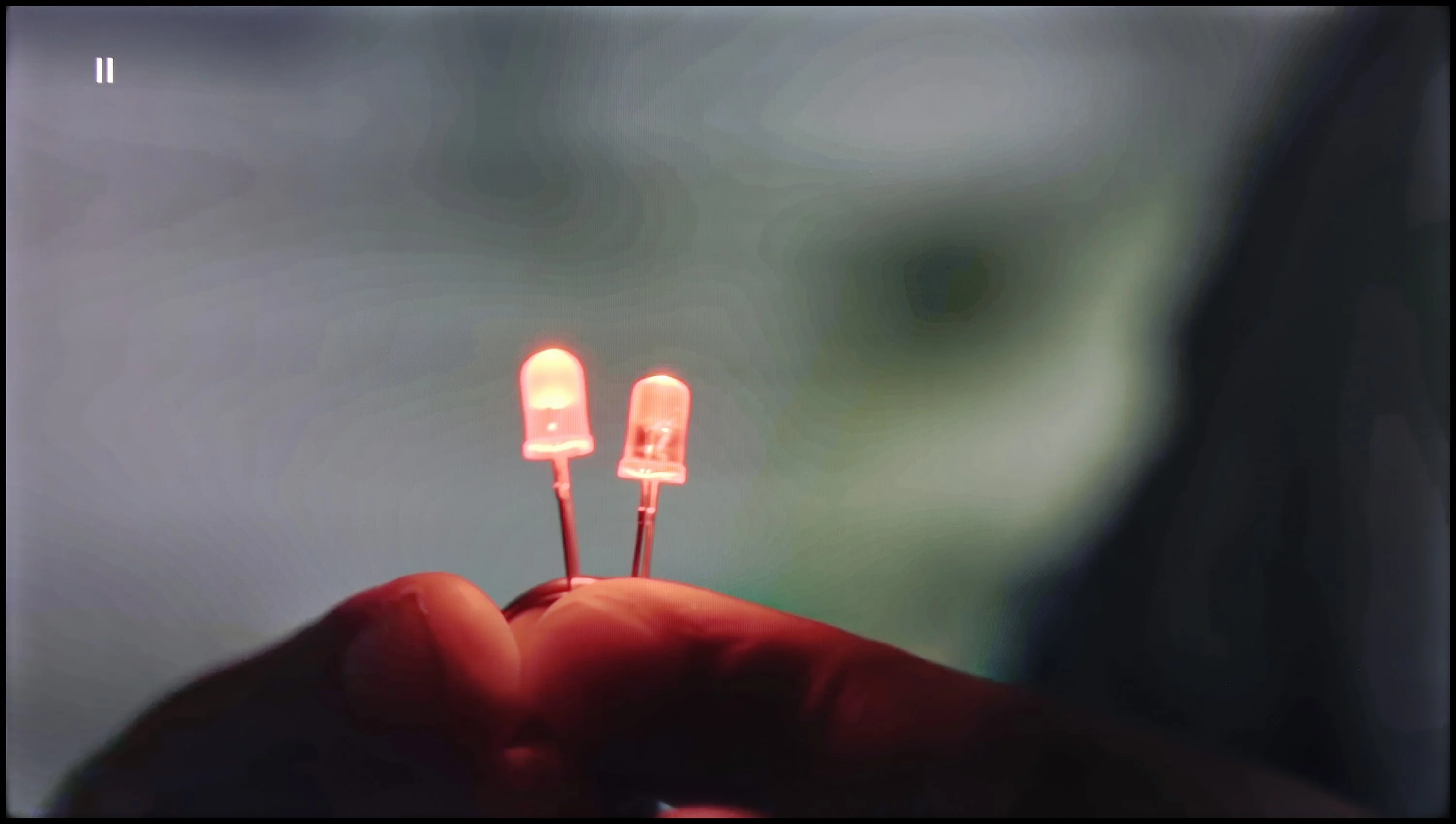
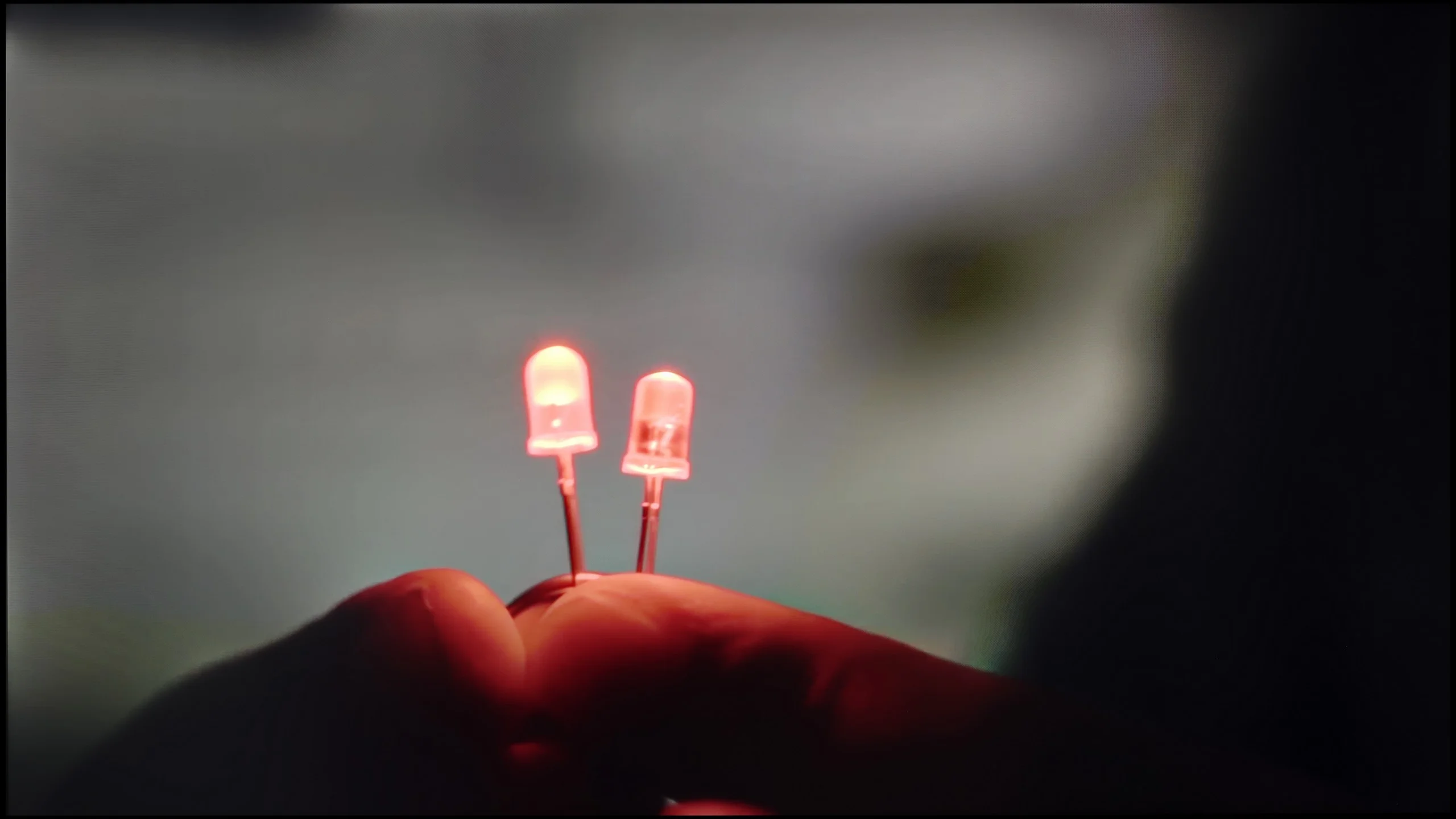
The match photo shows how the TV smooths weak tonal transitions in low-quality video.
Image scaling SD (576i)


The model photo shows how it handles upscaling of SD material.
With high-quality materials, such as 4K, tonal transitions on the U6NQ look really good – the colours blend nicely and the image is cohesive. Unfortunately, when we switch to content in a lower resolution, the television does not offer any additional features that could improve this aspect. An example is the test with the light bulb, where it is clear that the television has trouble rendering subtle tonal transitions.
On the other hand, digital processing performs quite well. The image looks plastic, pleasantly soft, and free of excessive aliasing. Moreover, thanks to the sharpness settings, it can be adjusted according to personal preferences – whether towards a softer or sharper image. Overall, although scaling lower-quality materials could be better, the television does well with image processing.
Although the M80H is positioned fairly low in Samsung's lineup, the manufacturer equipped it with one of its stronger processors, NQ4 AI Gen2. The same chip can be found in Neo QLED TVs and the lower-tier OLED S85H. That's good news, because the processor does a very good job improving weaker source material. Upscaling performs best. Low-resolution content is displayed properly, and edges don't look overly jagged. Of course the TV won't create details that aren't in the source, but regular broadcast TV and older recordings look decent on it. One drawback is overscan, that is, edge cropping, which cannot be fully disabled. The tonal transition smoothing feature, the so-called noise reduction, also works well. The processor can effectively reduce visible signs of heavy compression, but it does so not without side effects. At higher settings it can overly smooth the image, remove some fine detail, and even eliminate film grain. Therefore we recommend using this feature primarily for content that actually has problems with heavy compression and posterization.
Blur and motion smoothness
3.4/10
7.9/10
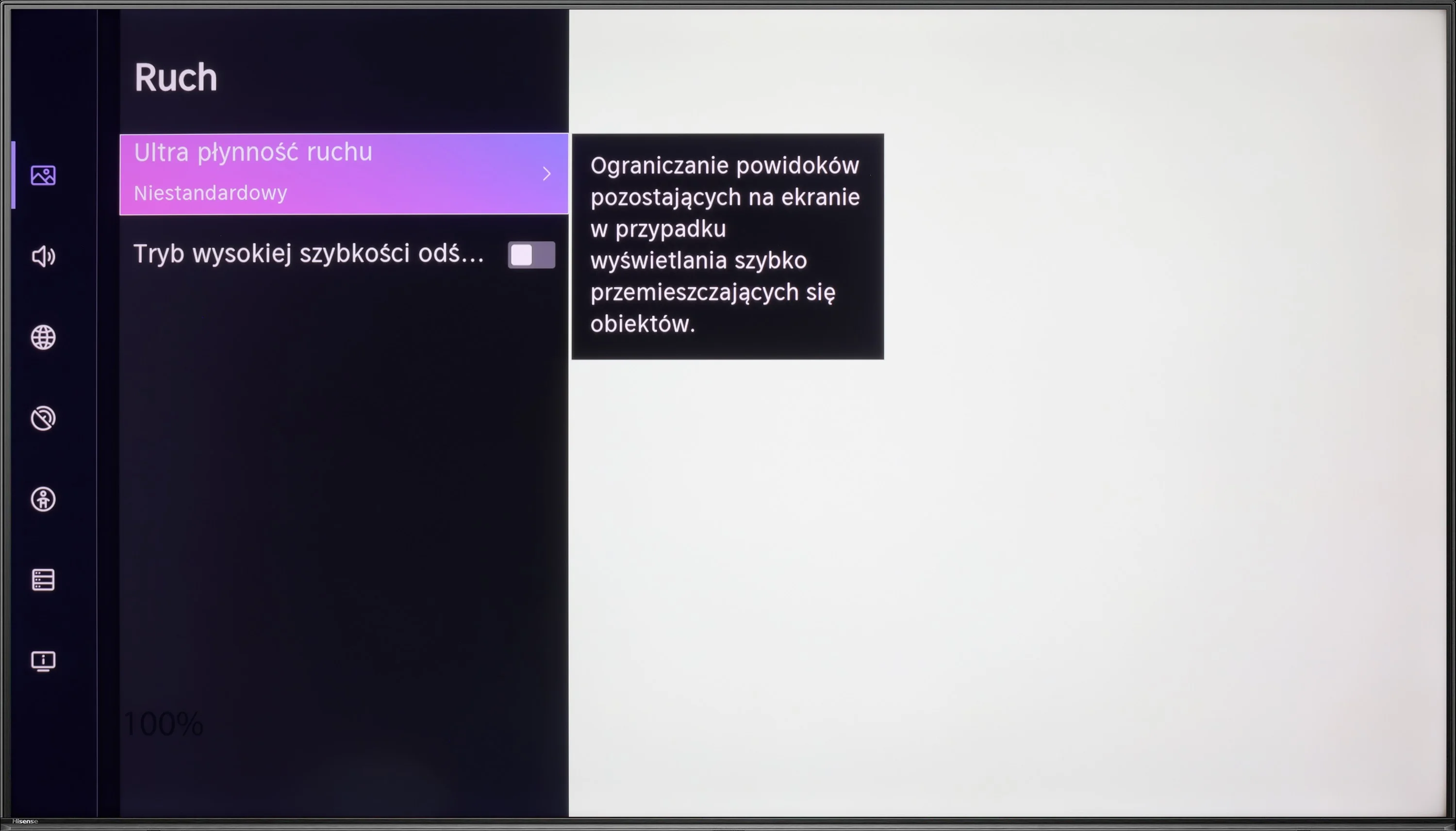
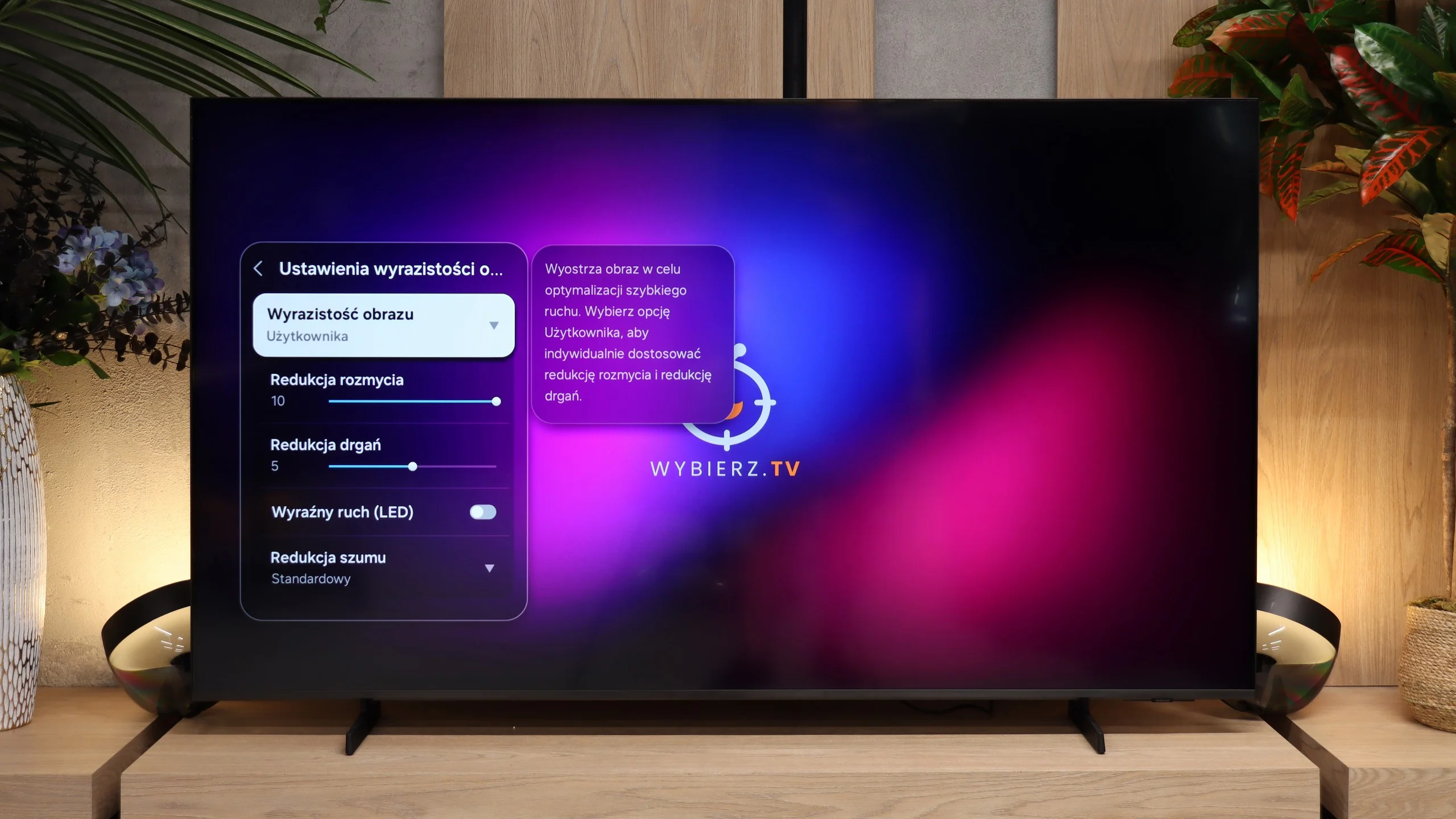
Blur (native resolution, maximum refresh rate):






Blur (BFI function enabled):
Image flickers in this mode



Blur ():
Blur (4K@240Hz):



The Hisense U6NQ offers a native refresh rate of 60 Hz at a 4K resolution, but the manufacturer has added a feature that allows increasing the refresh rate to 120 Hz at the cost of reducing the resolution to Full HD. This is a solution we have seen before in TVs from TCL, such as the C655 and the C655 PRO. This gives the user the option to choose – higher motion fluidity or full resolution. This is a sensible approach, especially considering that many games on new-generation consoles do not achieve full performance in 4K at 120 Hz.
As for movies, the TV is equipped with a motion smoothing feature that allows adjusting motion characteristics to personal preferences. This can create a more cinematic effect or increase fluidity in dynamic scenes. Overall, the Hisense U6NQ offers reasonable solutions for motion fluidity that should satisfy both gamers and movie lovers.
The M80H performs very well for watching sports and gaming. The TV is equipped with a panel with a refresh rate of up to 144 Hz at 4K, and when the resolution is lowered to Full HD it can handle up to 240 Hz. PC gamers will benefit most from the latter option.
The panel also handles 120 Hz content well, which matters especially for console gaming. The high refresh rate is useful for watching sports too, and motion blur is relatively low. That’s important because VA panels are not known for the best results in this respect. With the M80H, fast-moving objects do not produce a very noticeable trail.
Console compatibility and gaming features
6.3/10
9.6/10
- ALLM
- VRR
- VRR range48 - 60Hz48 - 240Hz
- Dolby Vision Game Mode
- Correct implementation of HGIG
- 1080p@120Hz
- 1440p@120Hz
- 4K@120Hz
- Game bar
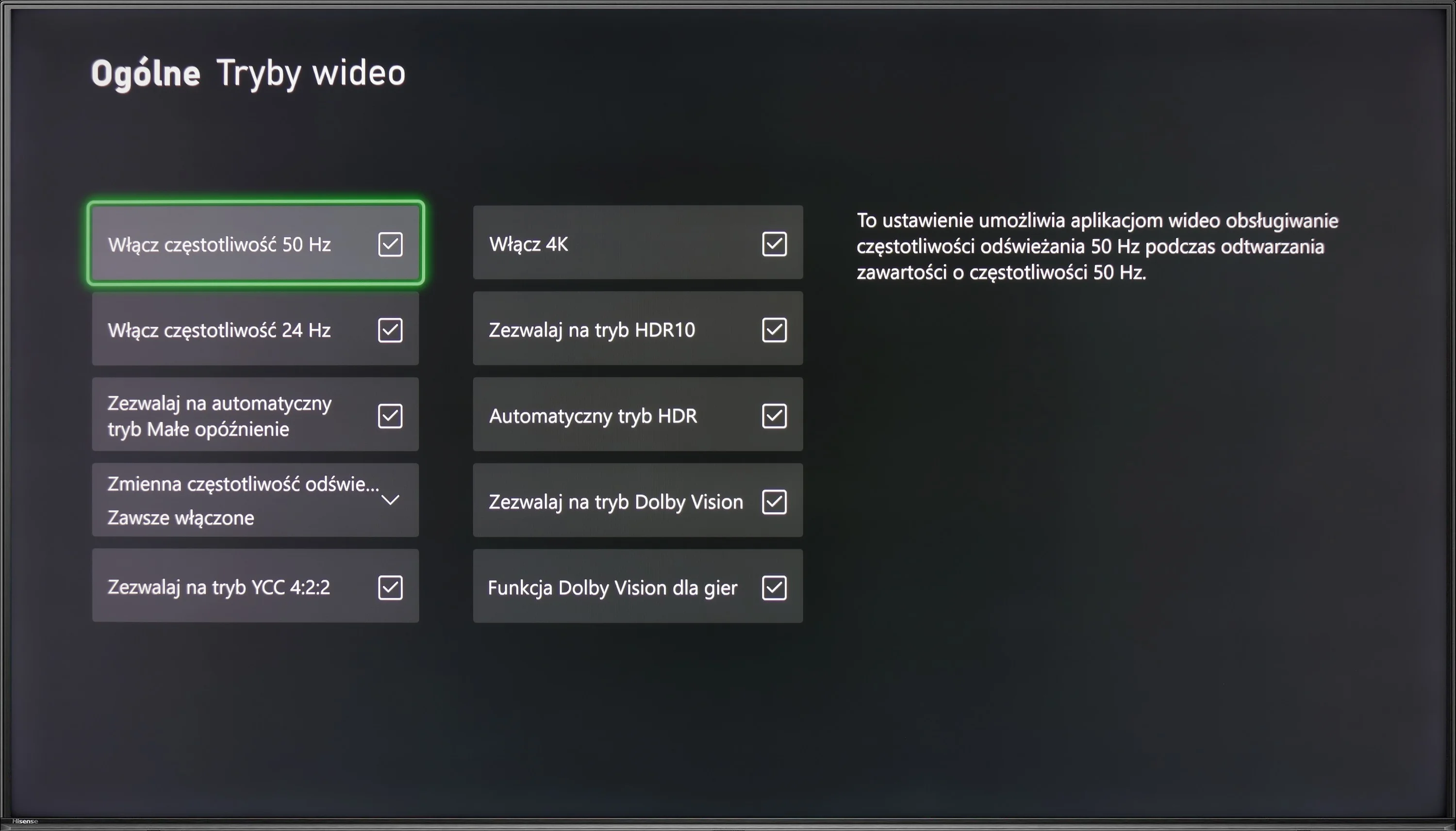
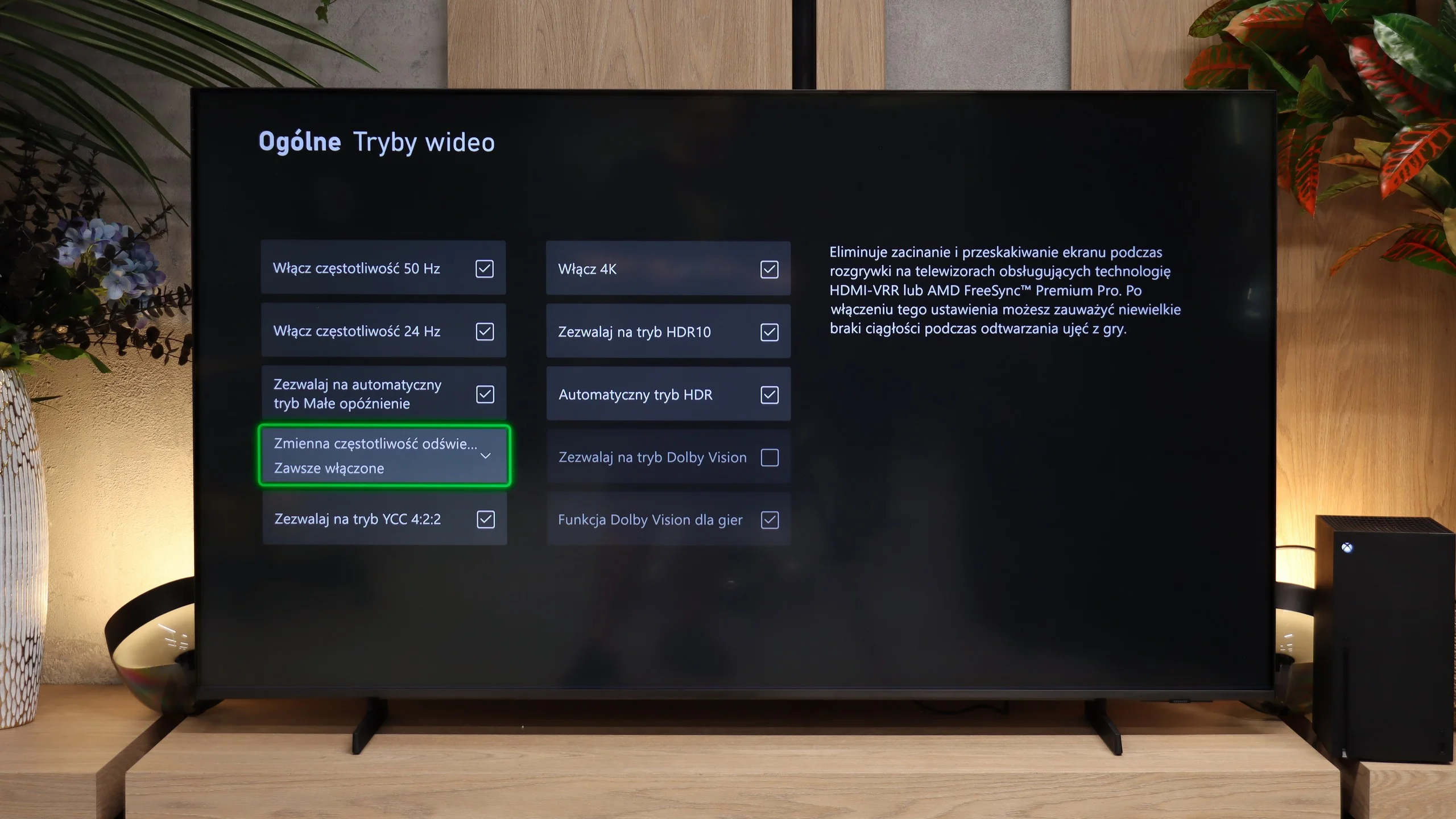
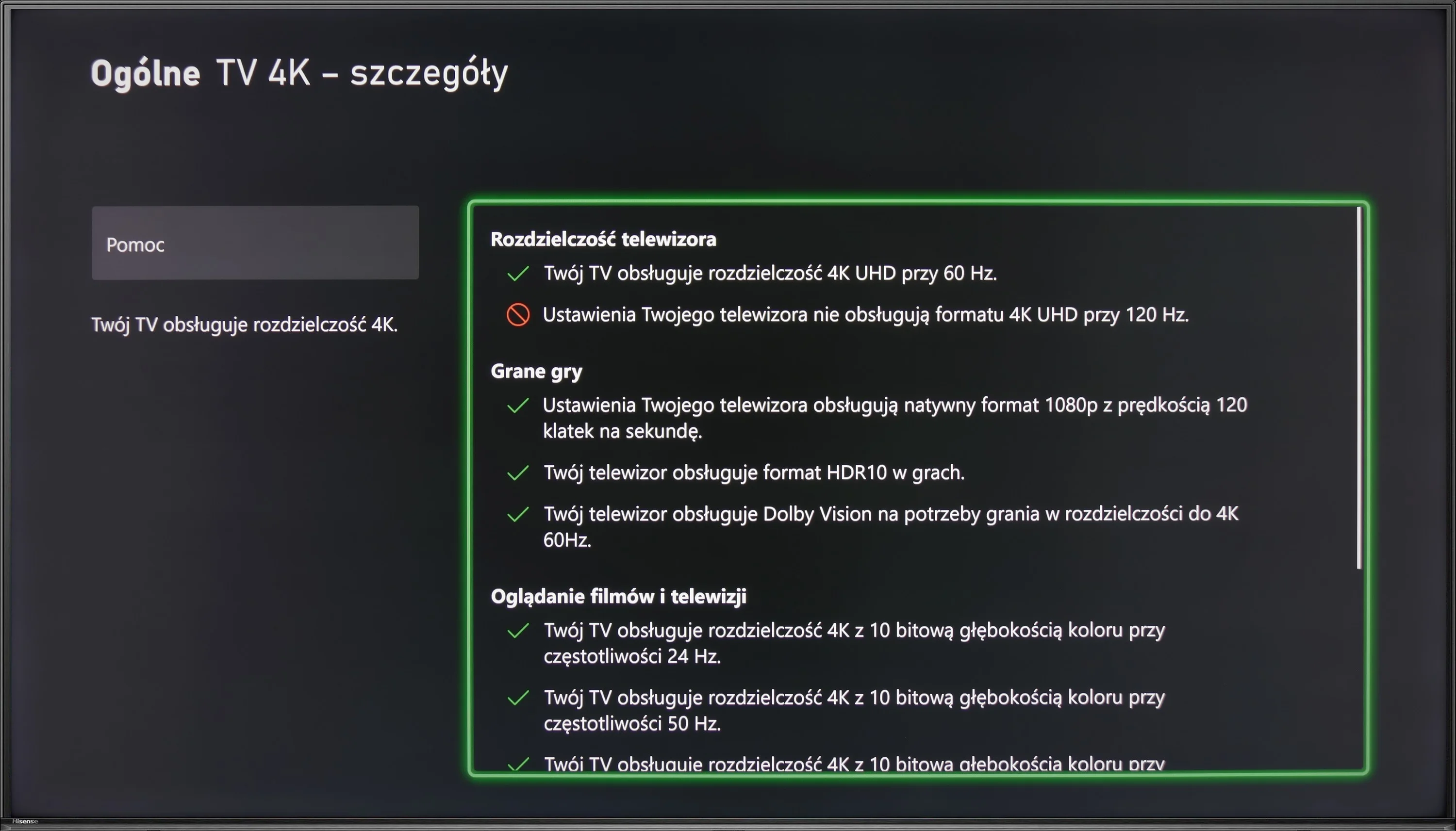
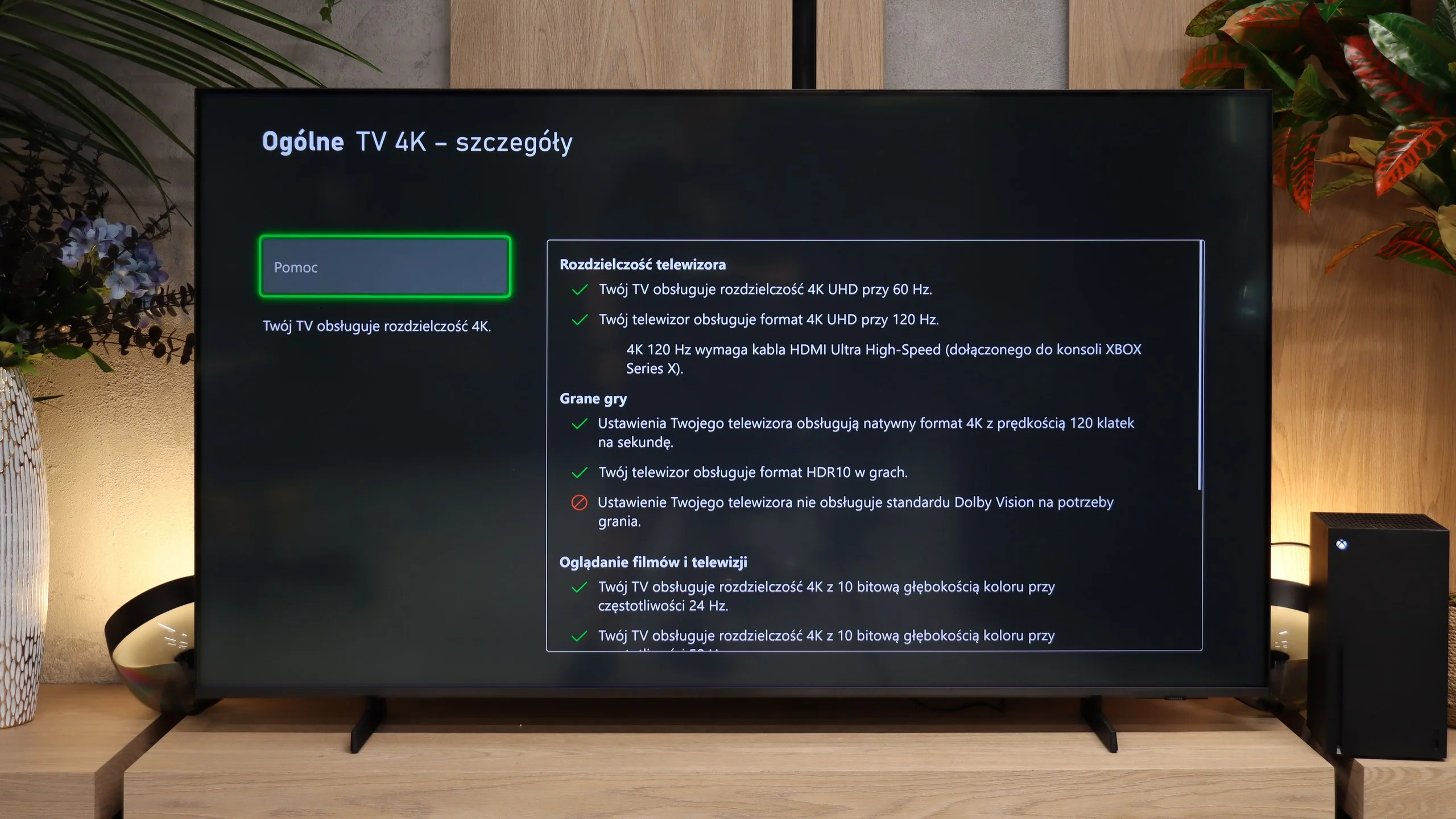
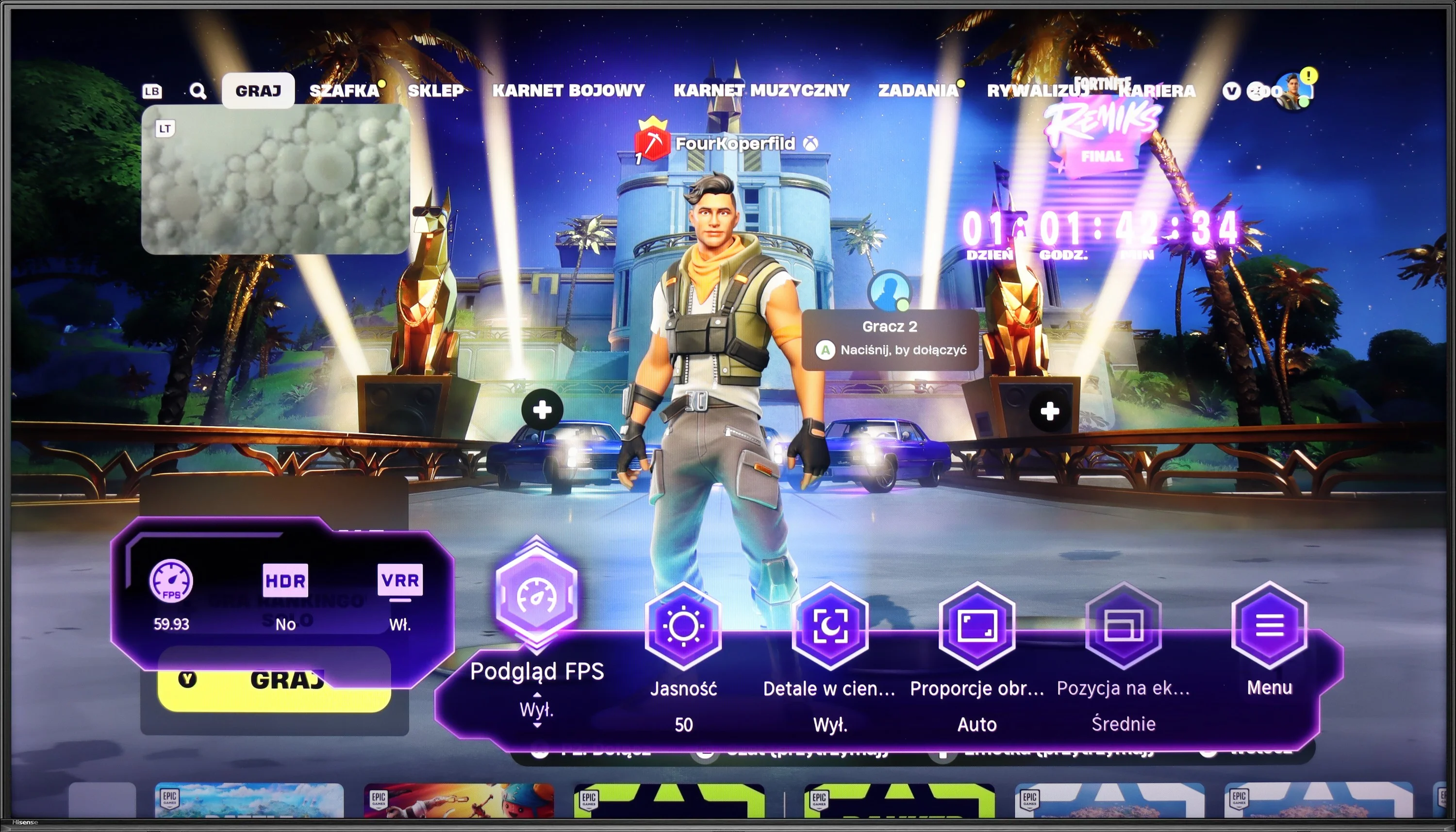
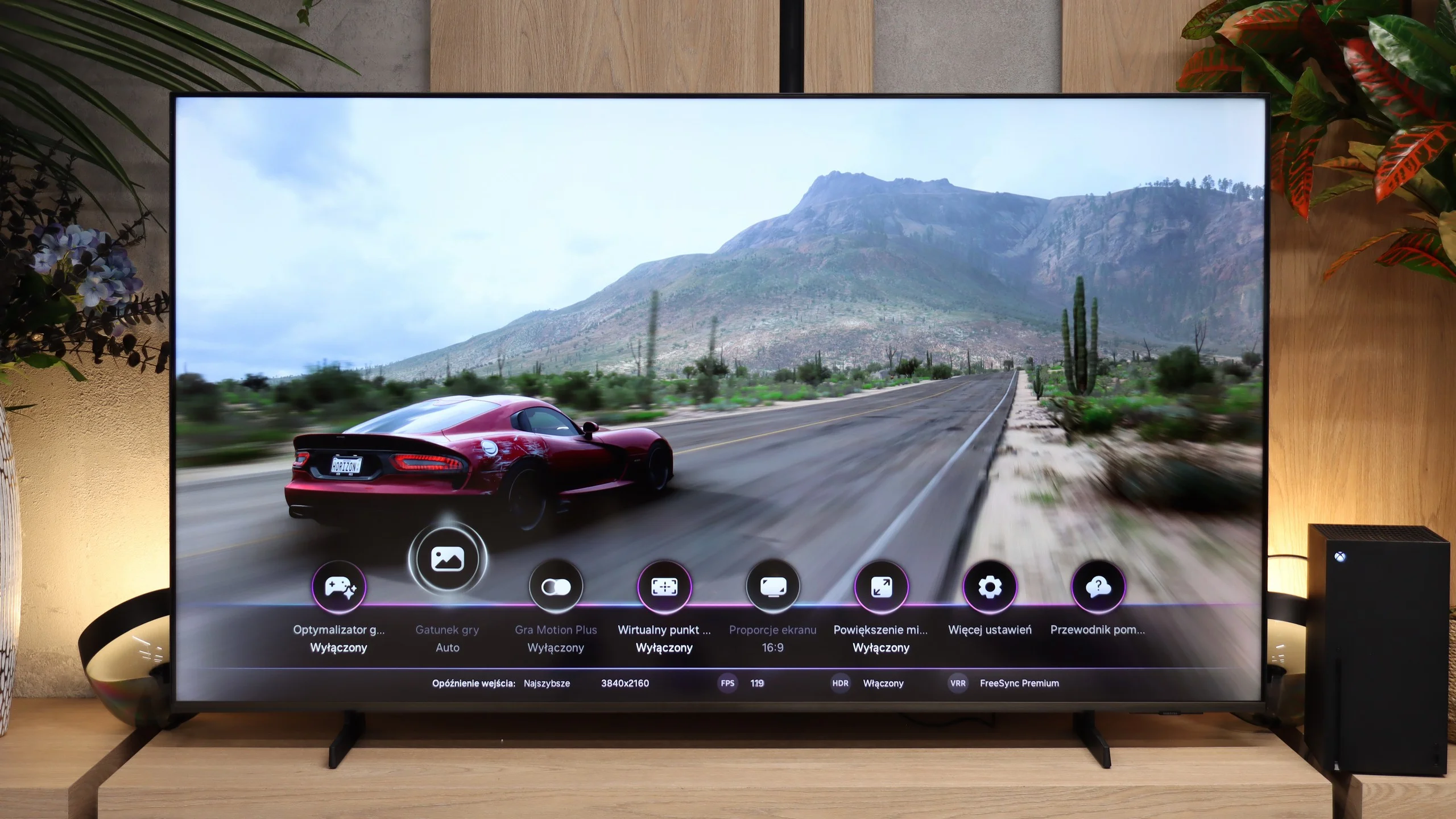
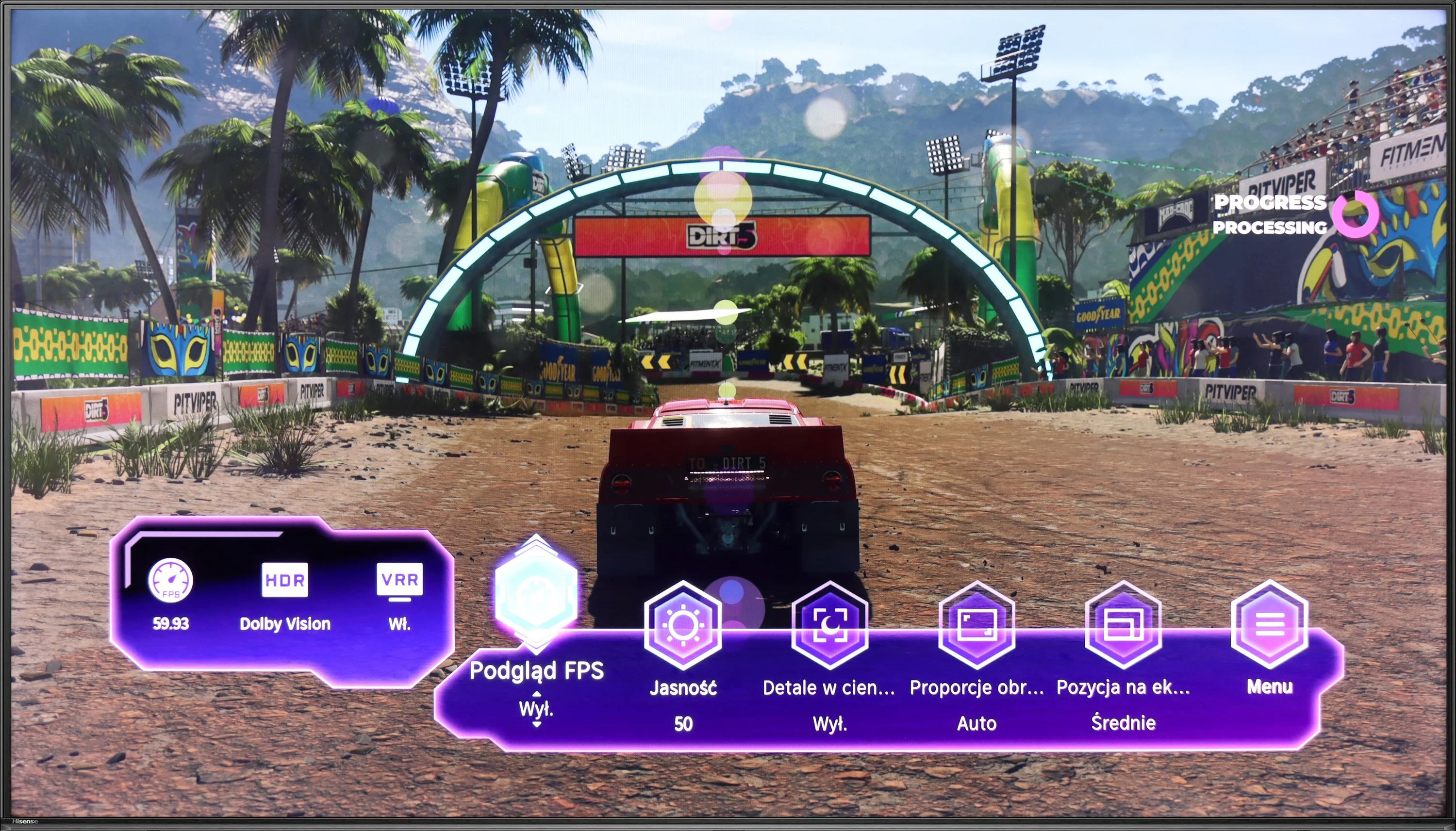
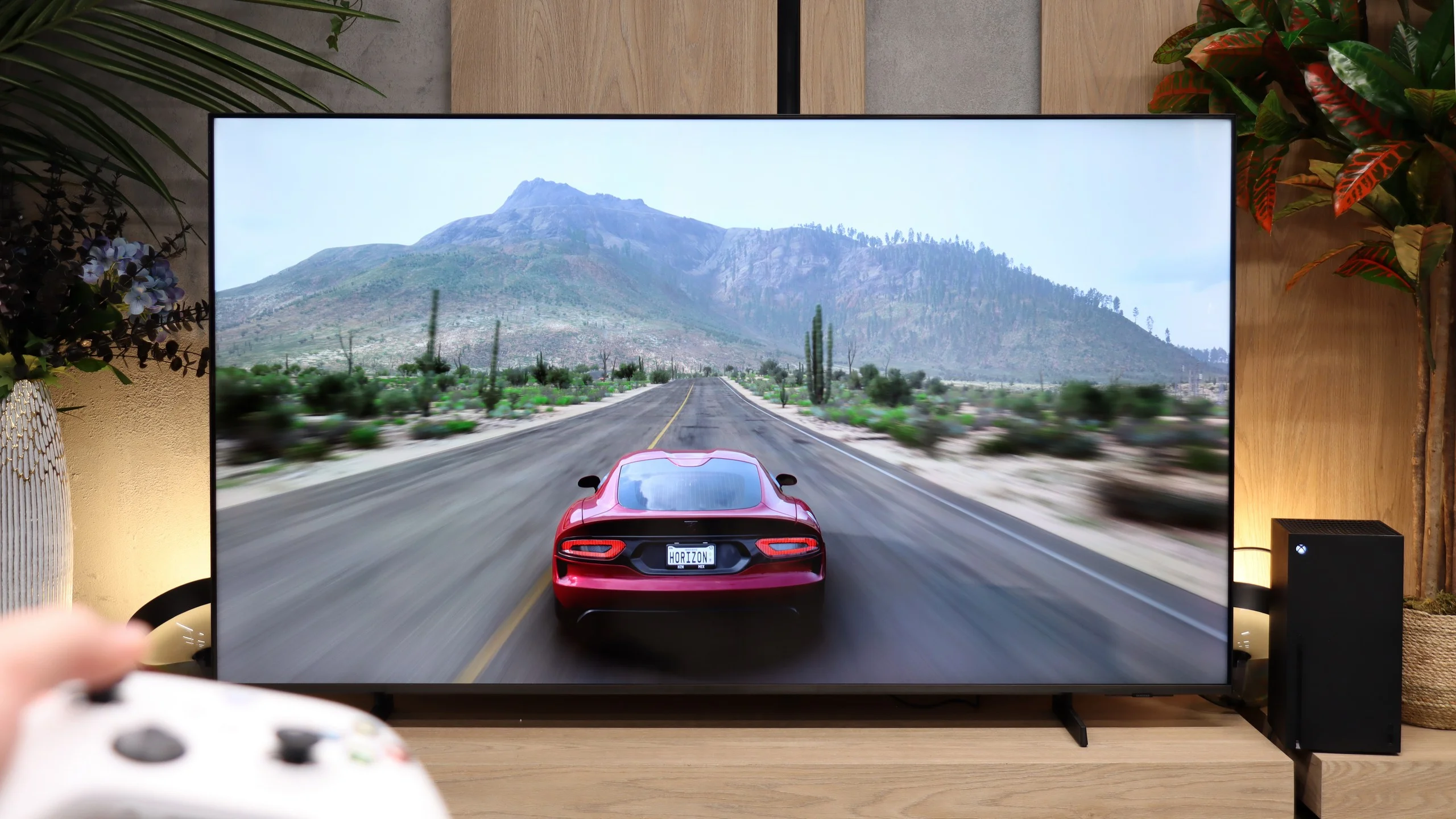
The Hisense U6NQ offers the option to choose between 4K at 60 Hz and Full HD with a refresh rate of 120 Hz. This solution may appeal to gamers who want to decide what is more important to them – higher resolution or smoothness. The television supports features such as ALLM and VRR, which help in achieving smoother gameplay. A nice addition is the GameBar – an easy-to-use panel that allows for quick changes to picture settings and checking statistics. It also includes a Dolby Vision Gaming mode, which works with low input lag, a big plus for console enthusiasts. Unfortunately, it lacks HGiG, which could further enhance HDR quality in games. Nevertheless, the Hisense U6NQ performs quite well as a gaming television, especially for those who play occasionally and do not require the highest refresh rates in 4K. It is a solid choice for less demanding users.
The M80H can be a very good choice for gamers on a slightly smaller budget. Feature-wise it offers essentially the same as Samsung's much more expensive TVs. All three HDMI inputs support HDMI 2.1, so even if one is taken by a soundbar connected via eARC there’s still room for a PC and consoles. There’s also VRR up to 144 Hz at 4K and up to 240 Hz in Full HD. Samsung has properly implemented HGiG as well, so after performing HDR calibration on the console, games are appropriately matched to the screen’s capabilities. That won’t make the M80H any brighter, but at least it won’t unnecessarily wash out the brightest parts of the image. There’s also a Game Bar for quick access to the most important settings and a Gaming Hub that lets you play in the cloud without a console. The M80H also includes Game Motion Plus, which creates extra frames and improves the smoothness of games running at 30 or 60 fps. Input lag then rises to about 59 ms, but it’s still roughly three times lower than with the typical motion smoothing on other manufacturers’ TVs. We don’t really recommend it for online multiplayer, but in more relaxed titles it can work very well.
Input lag
9.9/10
9.9/10
SDR
HDR
Dolby Vision
The Hisense U6NQ TV offers a very low input lag of 14 ms, making it a good choice for gamers, especially those who prefer dynamic titles. It's also worth noting that the Dolby Vision mode in games works really well here. This is a pleasant surprise, as on many other televisions this HDR mode performs only averagely.
Input lag on the M80H is very low. With a 60 Hz signal it's about 14 ms, and at 120 Hz it drops to 9-10 ms. The lag is therefore practically imperceptible, whether you're playing in SDR or HDR.
Compatibility with PC
6/10
8.9/10
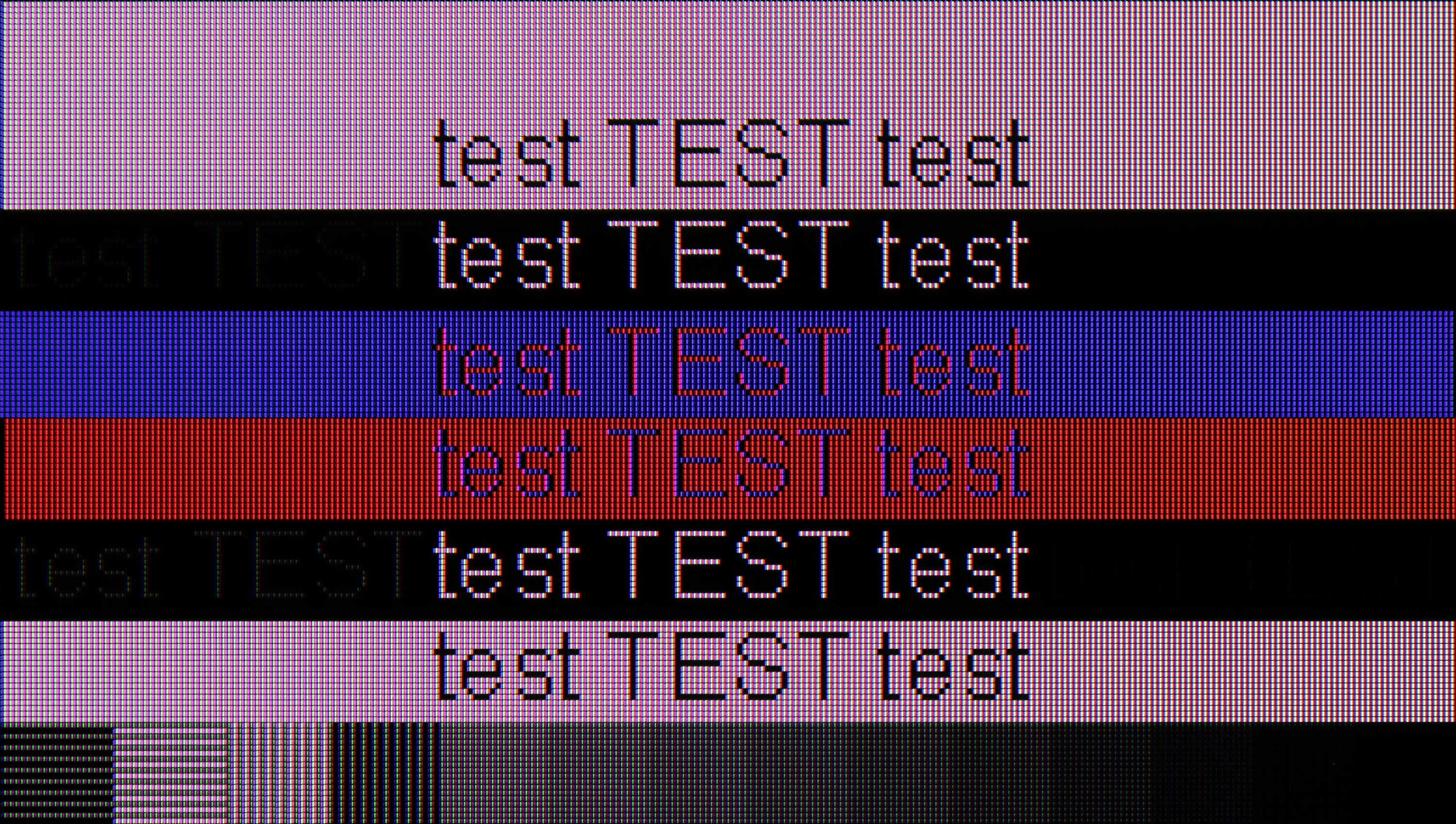
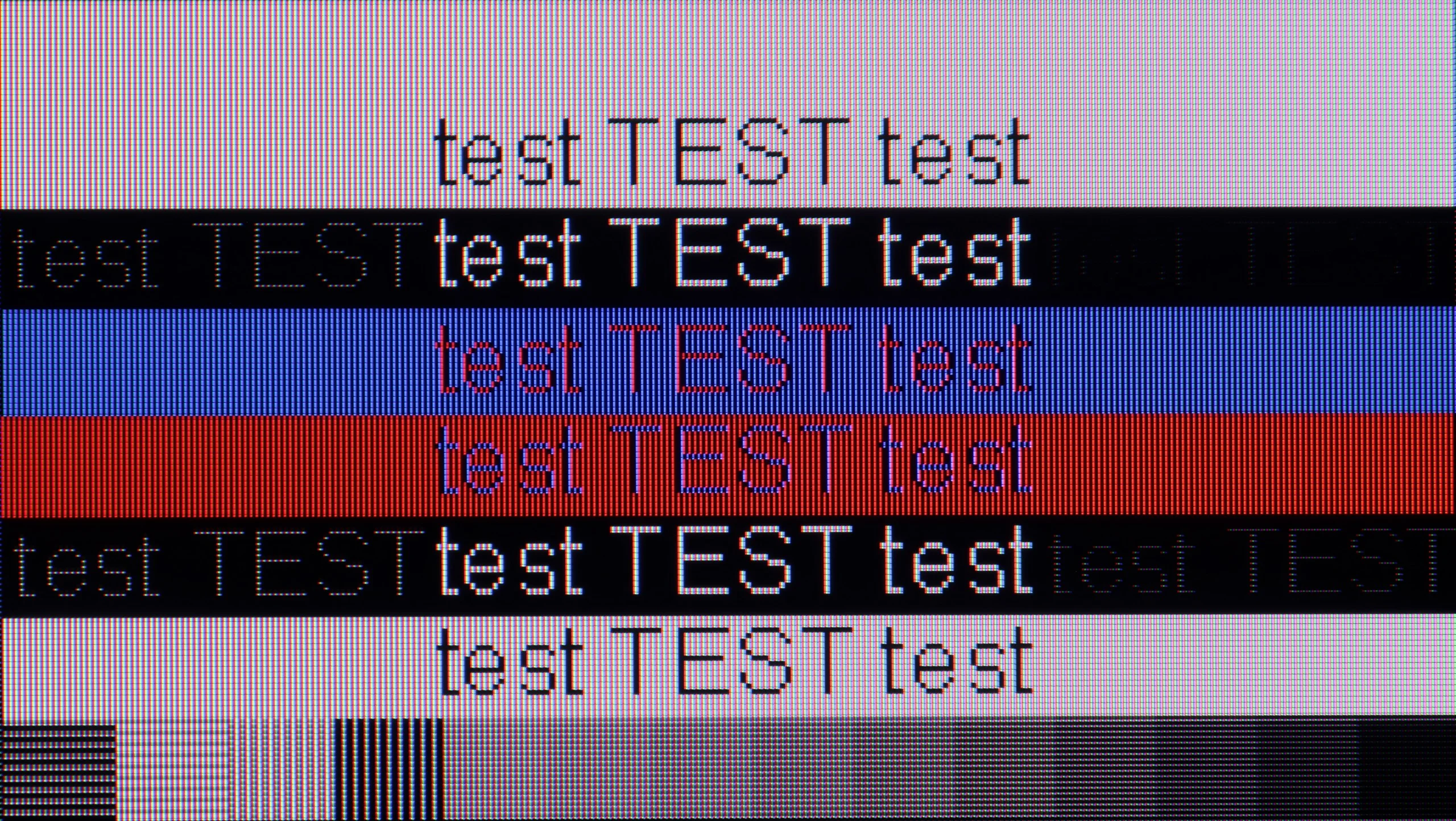
The photo shows the legibility of small fonts. Ideally, lines should be the same thickness on both light and dark text, with minimal pixel gaps.
As a screen for working with a computer, the Hisense U6NQ performs quite decently. The fonts are readable enough, so it's sufficient for everyday writing or browsing the internet.
When it comes to gaming, the television supports G-Sync, but only at 4K resolution at 60 Hz. Unfortunately, if someone was counting on 120 Hz smoothness in 1080p with G-Sync enabled, they might be disappointed – the television does not offer this. It's a bit of a shame, as it could have been a good solution for gamers who prefer smoothness over resolution.
The M80H also works very well as a computer monitor. Gamers can use 4K resolution at 144 Hz with VRR and G-Sync, and input lag in PC mode is about 10 ms. A Full HD mode at 240 Hz is also available. The TV correctly displays chroma 4:4:4 at the maximum resolution and refresh rate. Combined with a classic RGB subpixel layout, this provides very good font legibility for both light and dark text. The M80H is therefore suitable not only for gaming but also for everyday desk work.
Viewing angles
3/10
3.1/10
The viewing angles on the Hisense U6NQ are average, which is typical for VA panels. This technology offers better contrast and deeper blacks but at the expense of image visibility at wider angles. It's a classic compromise – in TVs with IPS panels, the situation is reversed, where the viewing angles are wider, but the contrast and blacks suffer in quality.
Viewing angles are one of the weaker points of the M80H. The TV uses a VA panel, which delivers better blacks and higher contrast than an IPS panel, but it looks worse when viewed from the side. Sit at a wider angle and colors start to lose saturation, blacks become noticeably lighter, and the whole image looks more washed out. That's a typical trade-off with this type of panel. The M80H is therefore best used when watched straight on or from only a slight angle.
Daytime performance
6.1/10
5/10
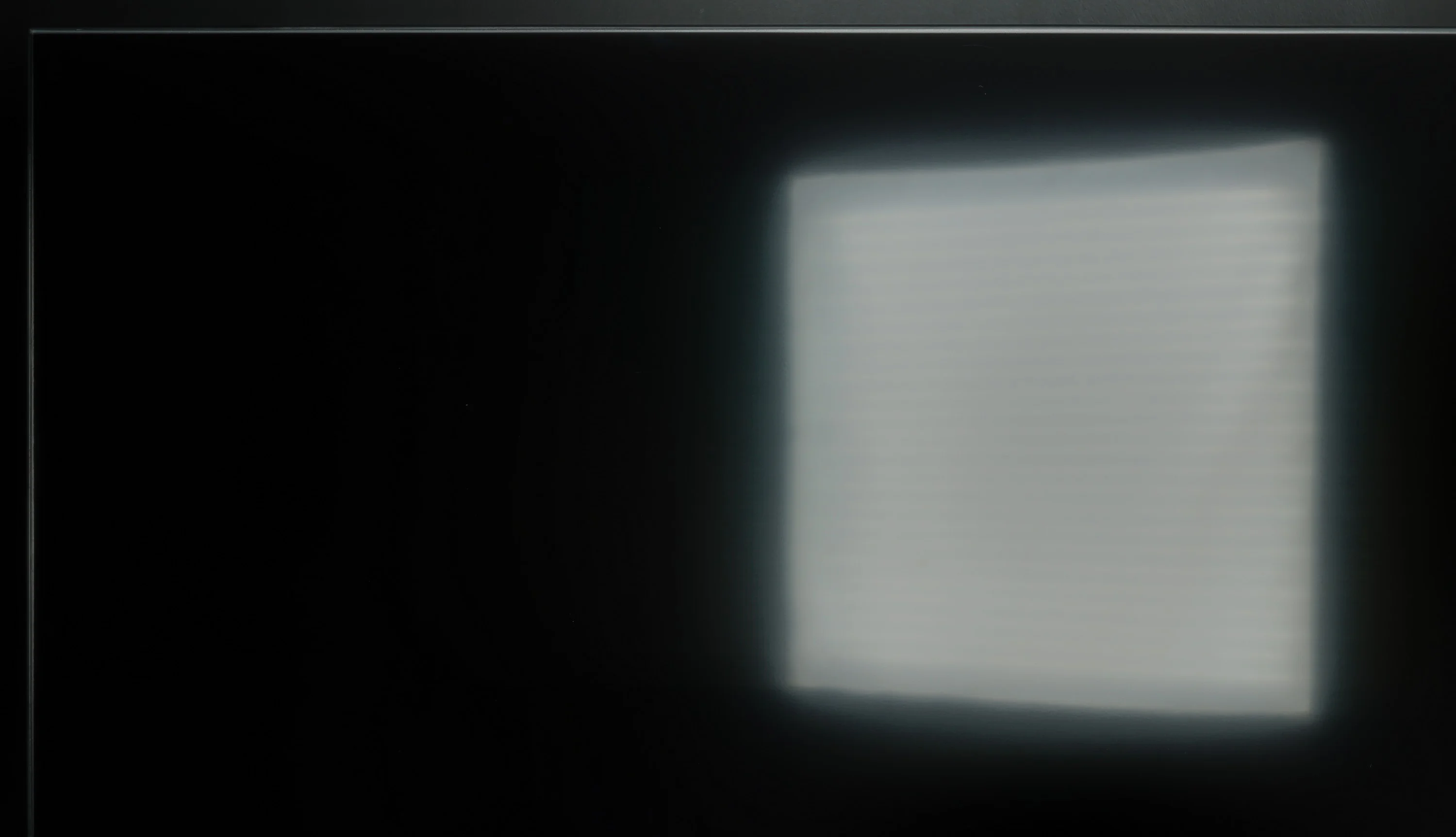
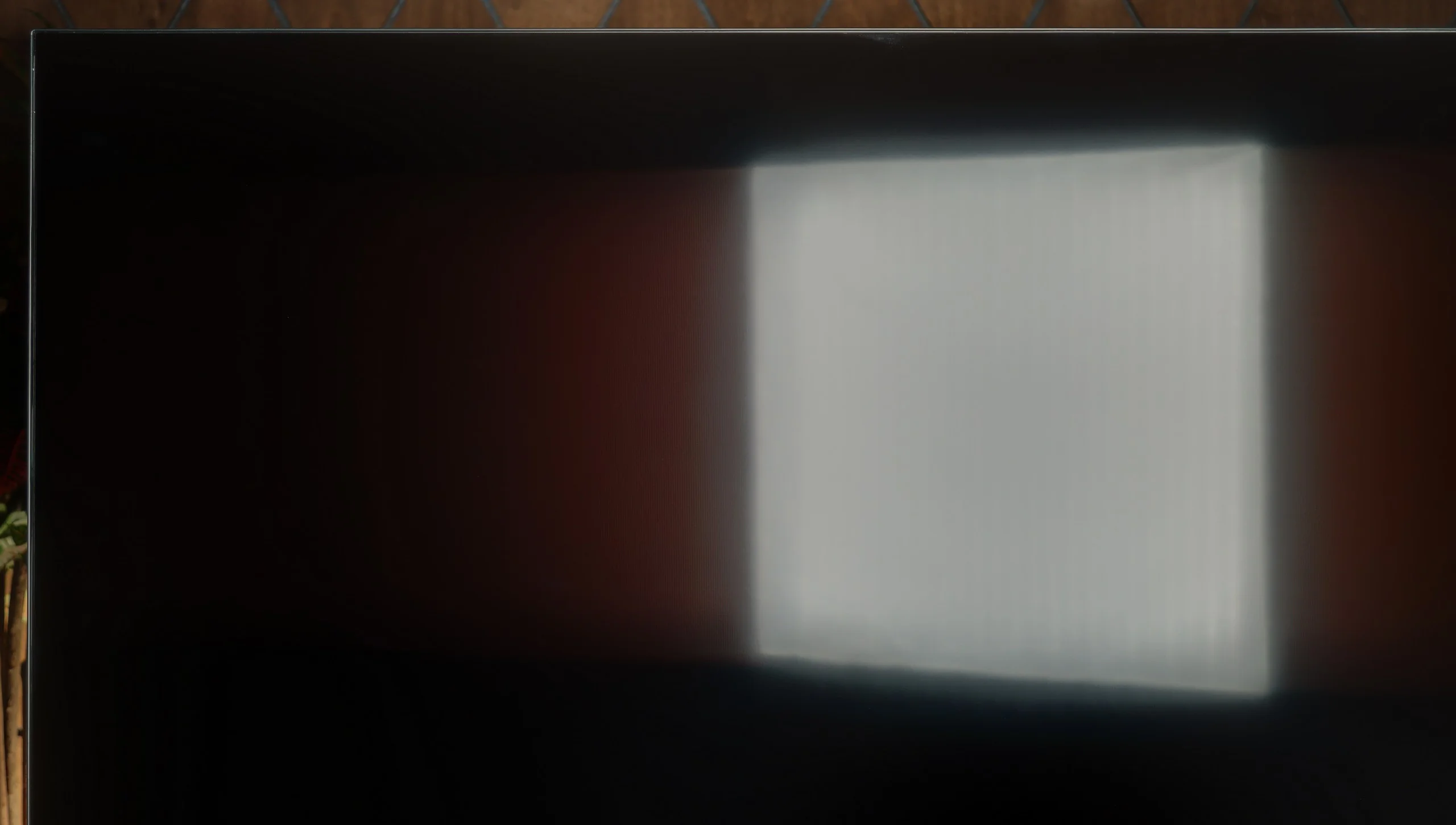
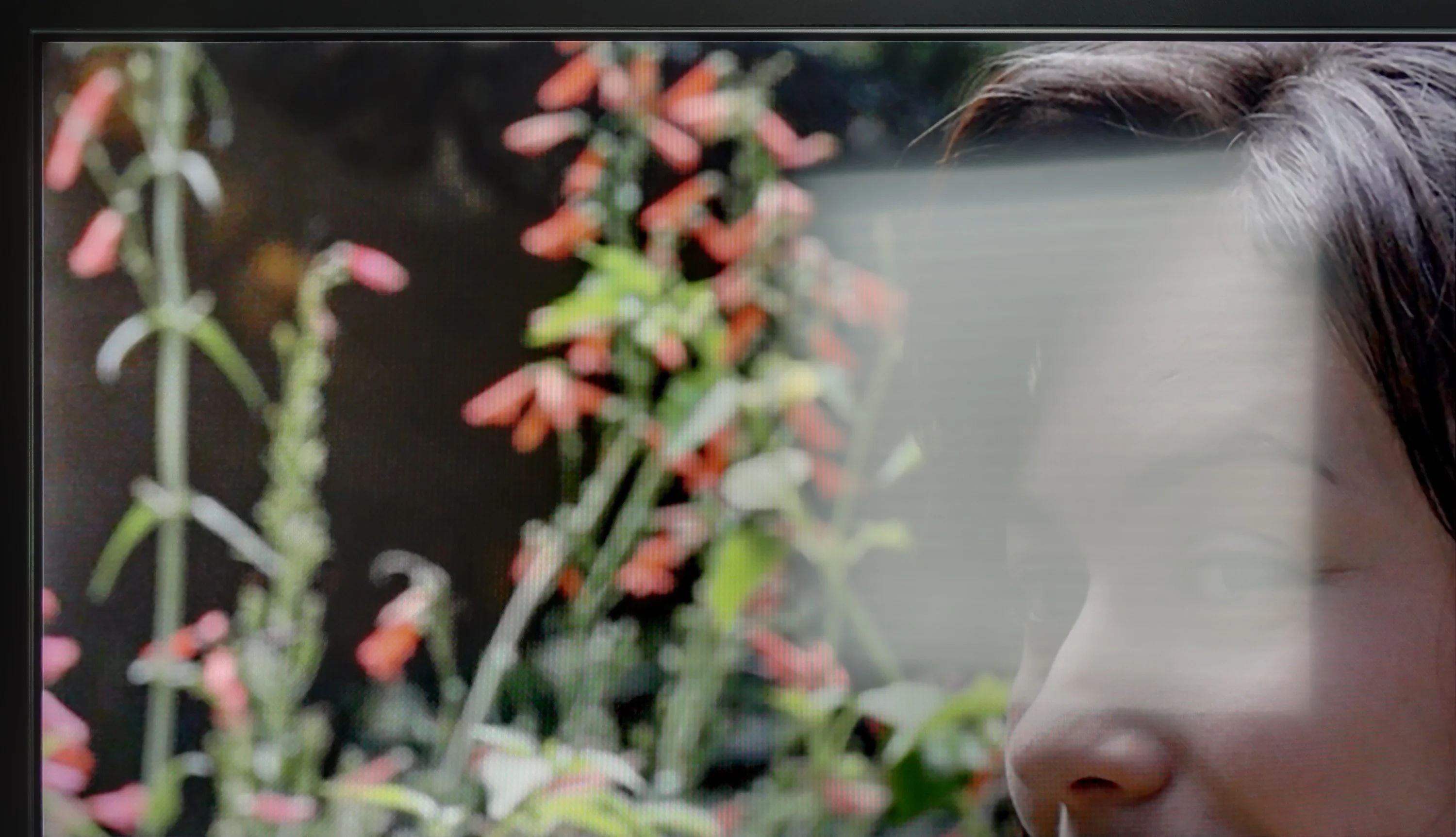
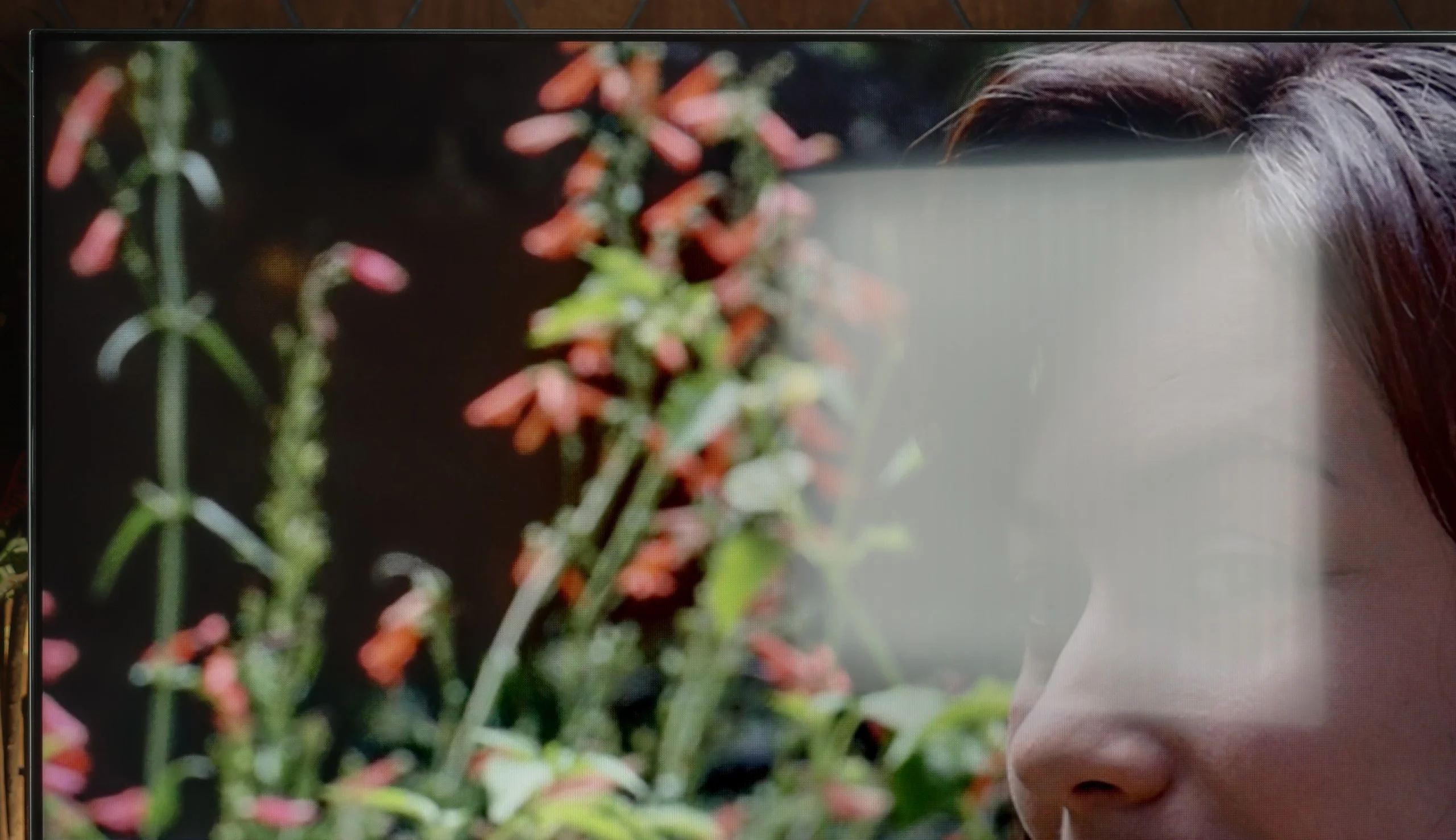
Panel brightness
Samsung M80H: 345 cd/m2
Hisense U6NQ: 488 cd/m2
The Hisense U6NQ performs well in bright rooms thanks to the satin finish on the panel, which effectively suppresses reflections. The average brightness on SDR materials, such as standard television, is 488 cd/m², which is more than sufficient for comfortable viewing even in somewhat challenging lighting conditions.
In a bright room the M80H performs adequately but without much fanfare. Its satin coating reasonably reduces reflections, though with large windows or lamps placed opposite the screen they will still be visible. The blacks are a plus; they don’t become excessively gray when the lights are turned on. SDR brightness is about 345 nits and remains stable regardless of the scene being shown. In a typical living room that should be enough for comfortable daytime viewing. In a room with very strong sunlight, however, the picture may not be vivid enough.
Panel details
Subpixel Structure:
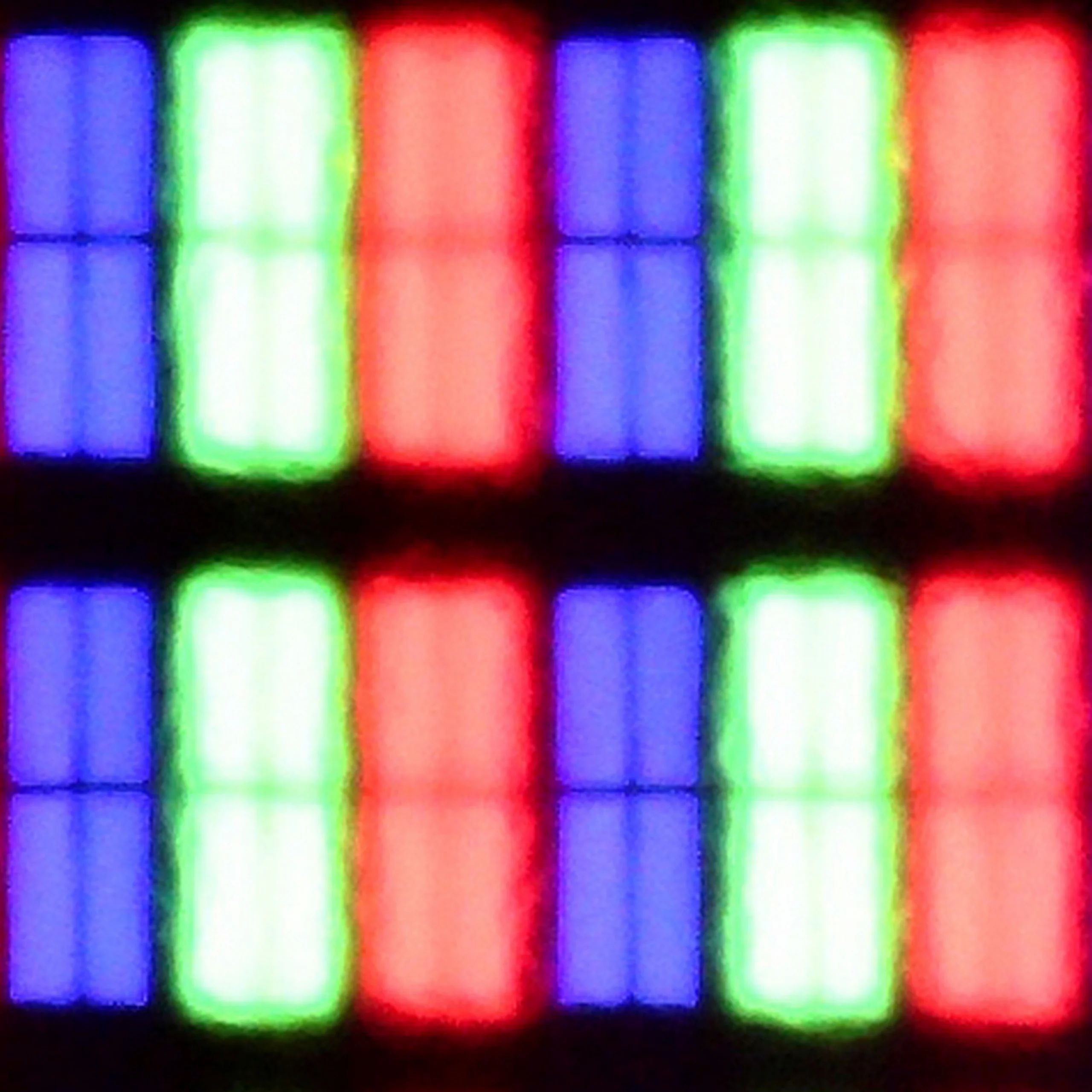
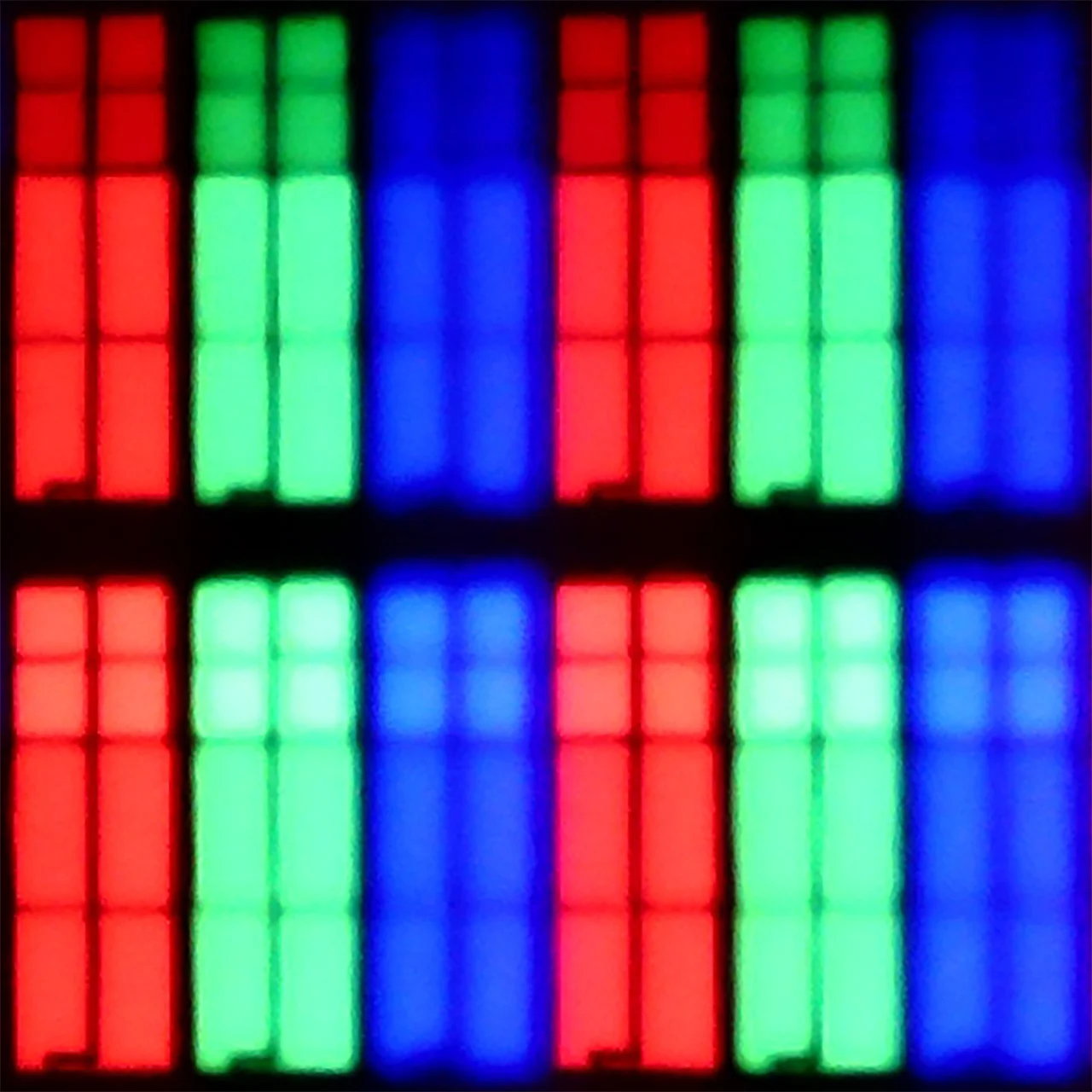
Panel uniformity and thermal imaging:


TV features
8.9/10
7.3/10
- SystemVIDAATizen
- System performanceGoodVery good
- HDMI inputs3 x HDMI 2.0, 0 x HDMI 2.10 x HDMI 2.0, 3 x HDMI 2.1 48Gbps
- Other inputsRCA (Chinch)
- OutputsToslink (Optical audio), eARC (HDMI), ARC (HDMI), Mini-Jack (Headphones)eARC (HDMI), ARC (HDMI)
- Network InterfacesWi-Fi 2.4GHz, Wi-Fi 5GHz, Ethernet (LAN) 100MbpsWi-Fi 2.4GHz, Wi-Fi 5GHz, Ethernet (LAN) 100Mbps
- TV receptionDVB-T, DVB-T2, DVB-S, DVB-S2, DVB-CDVB-T, DVB-T2, DVB-S, DVB-S2, DVB-C
Classic features:
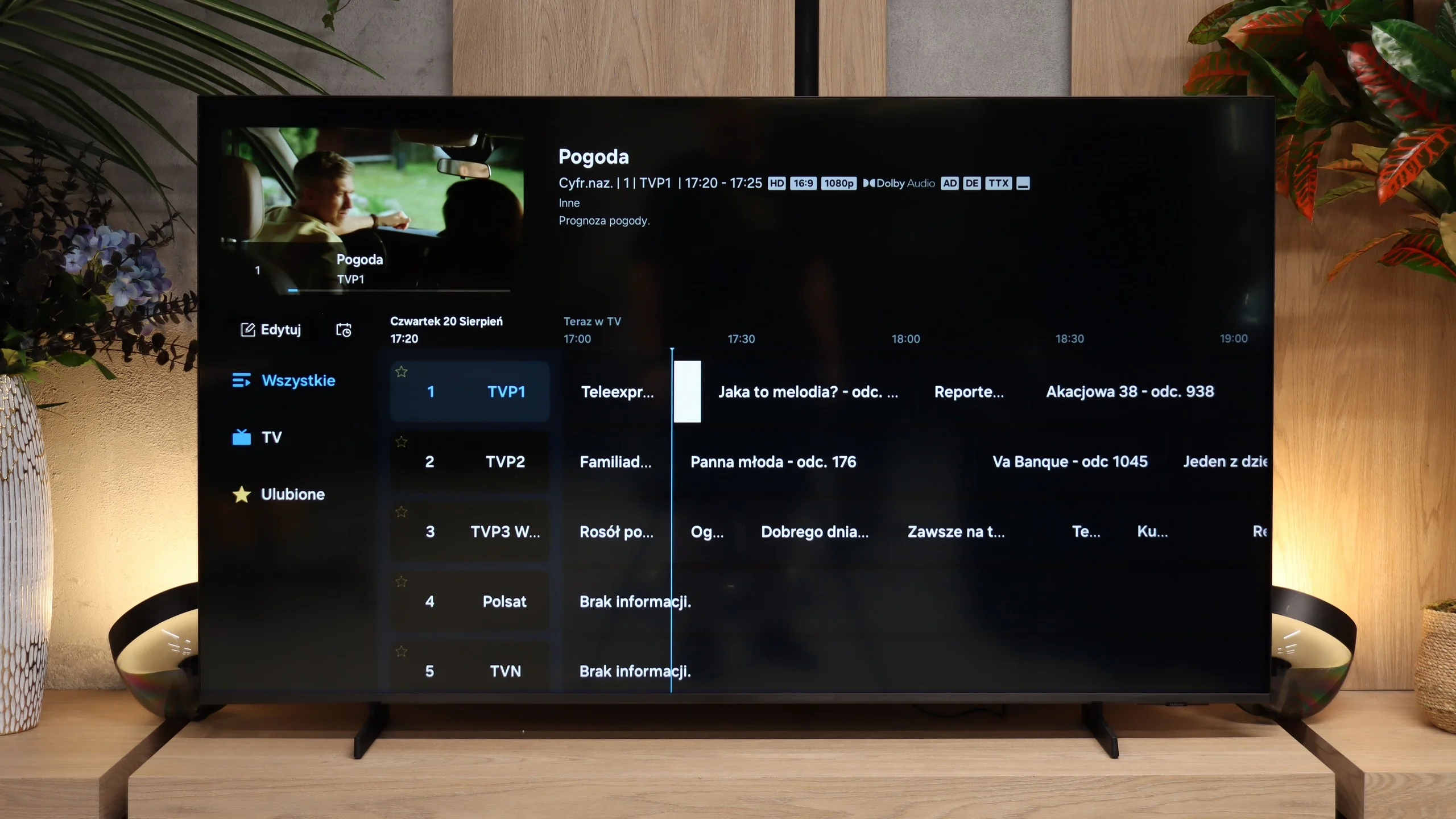
- Recording to USB (terrestrial TV)
- Recording programming
- Picture in Picture (PiP)
- RF remote control (no need to aim)
- Backlit remote control
- Teletext
- Audio only mode
- Bluetooth headphones support
- Simultaneous Bluetooth headphones & TV audio
Smart features:
- AirPlay
- Screen mirroring (Windows Miracast)
- Voice search
- Voice search in native language
- Ability to connect a keyboard and mouse
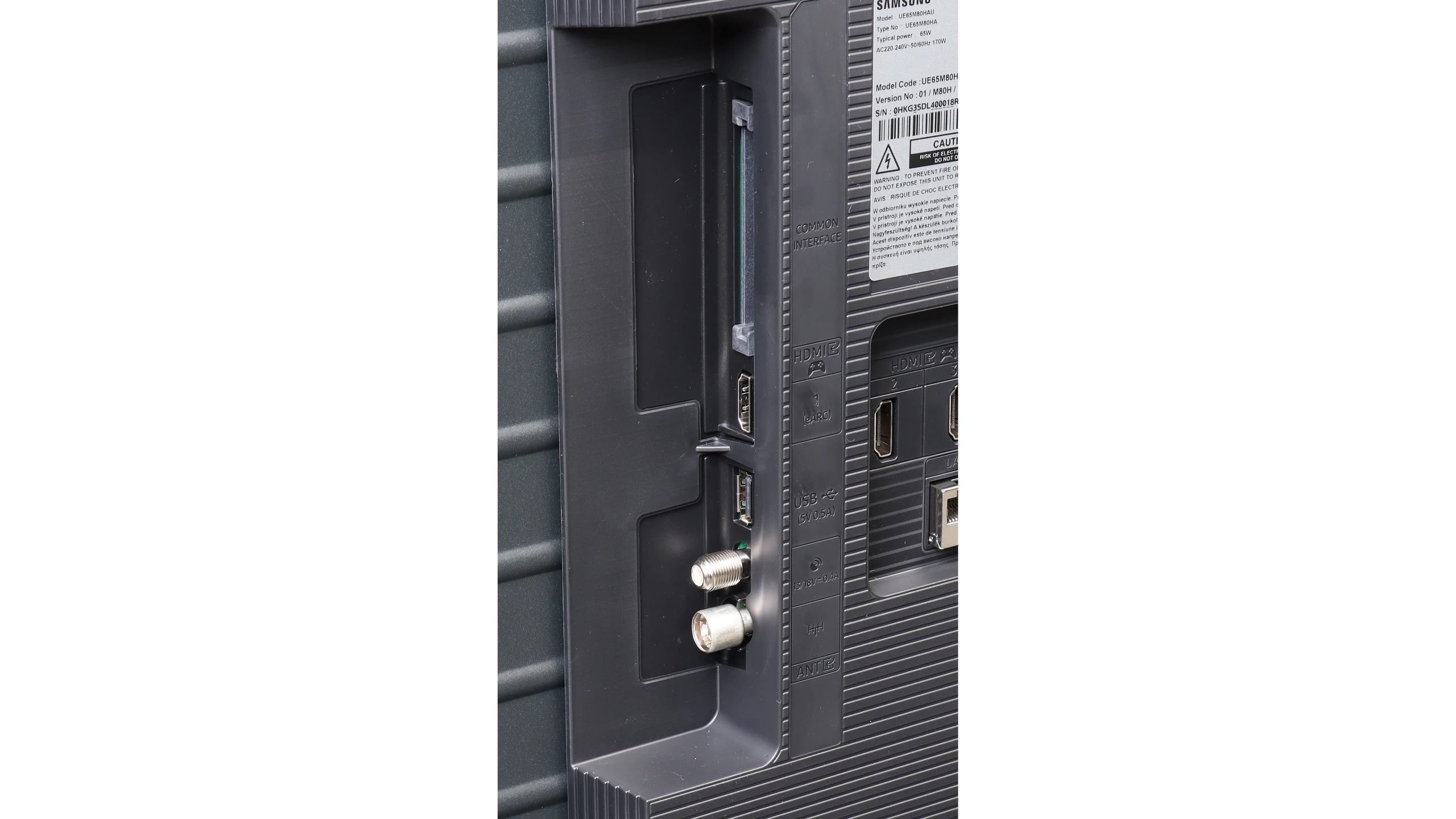
Sound connection options
- HDMI audioeARC (HDMI), ARC (HDMI)eARC (HDMI), ARC (HDMI)
- Other audio outputsToslink (Optical audio), Mini-Jack (Headphones)
- Wireless audioBluetoothBluetooth
Supported audio formats (external HDMI eARC audio):
- Dolby Digital Plus 7.1
- Dolby True HD 7.1
- Dolby Atmos in Dolby Digital Plus (JOC)
- Dolby Atmos in Dolby True HD
- DTS:X in DTS-HD MA
- DTS-HD Master Audio
Senior accessibility
- Numeric keyboard on TV
- Font size adjustment
- Audio description
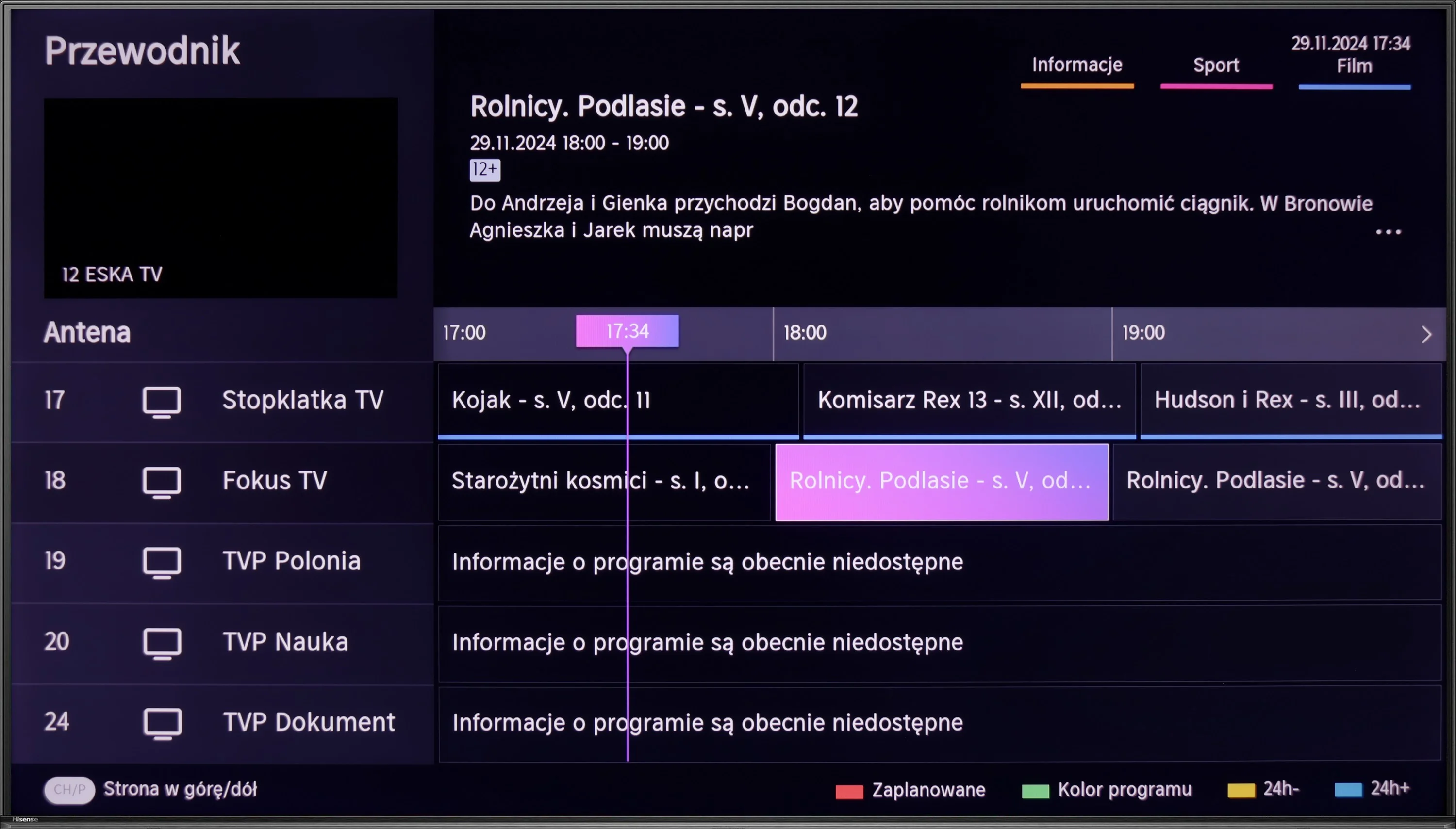
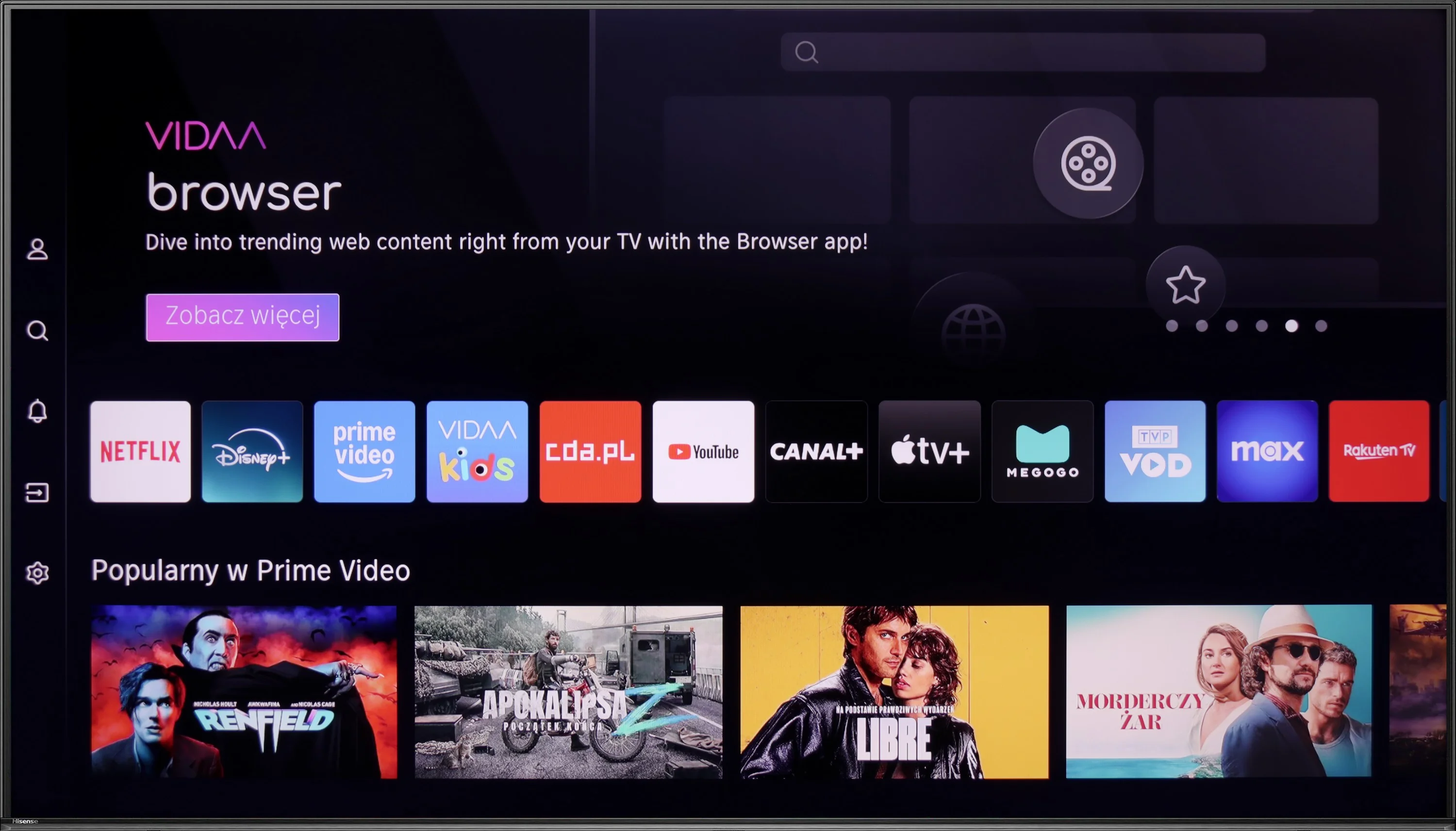
The Vidaa system that powers the Hisense U6NQ is probably one of its stronger points. It is fast, runs smoothly, and most importantly – doesn't suffer from any stuttering that can be frustrating on other televisions. It's nice that you can use voice search, which significantly simplifies operation. There are quite a few apps available, but unfortunately, there are no music apps like Spotify or Tidal. It’s a pity because a TV is not just for movies and shows – some would probably also like to use it for listening to music.
Among the additional features, we have the ability to record TV programs on a USB drive or external hard drive. There is also AirPlay and Miracast, so it's easy to stream content from a smartphone. The built-in Bluetooth is also useful, allowing you to connect headphones, a mouse, or a keyboard. The only thing that is really missing here is the PiP (picture-in-picture) function. If it were added, the TV would be complete for features. Nevertheless, the Hisense U6NQ offers plenty and should be sufficient for most users.
Smart TV system
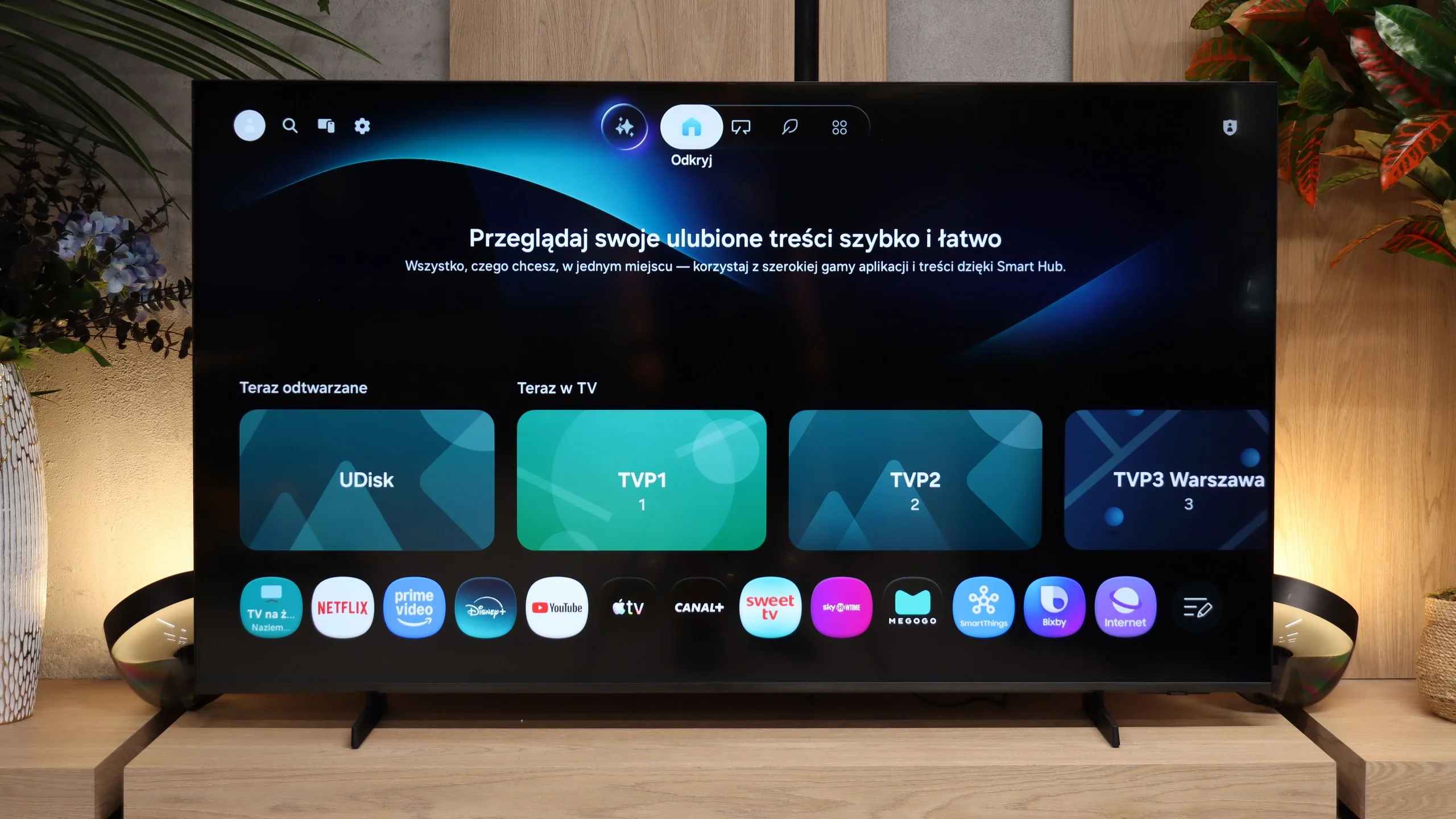
The M80H runs Tizen, the same system used across Samsung TVs. It's fast, stable, and offers all the most popular streaming apps, so you don't have to worry that a lower-tier model would be missing any major services. It also supports AirPlay, Miracast, and voice search. The TV works with SmartThings, so you can use it to control smart home devices.
TV features
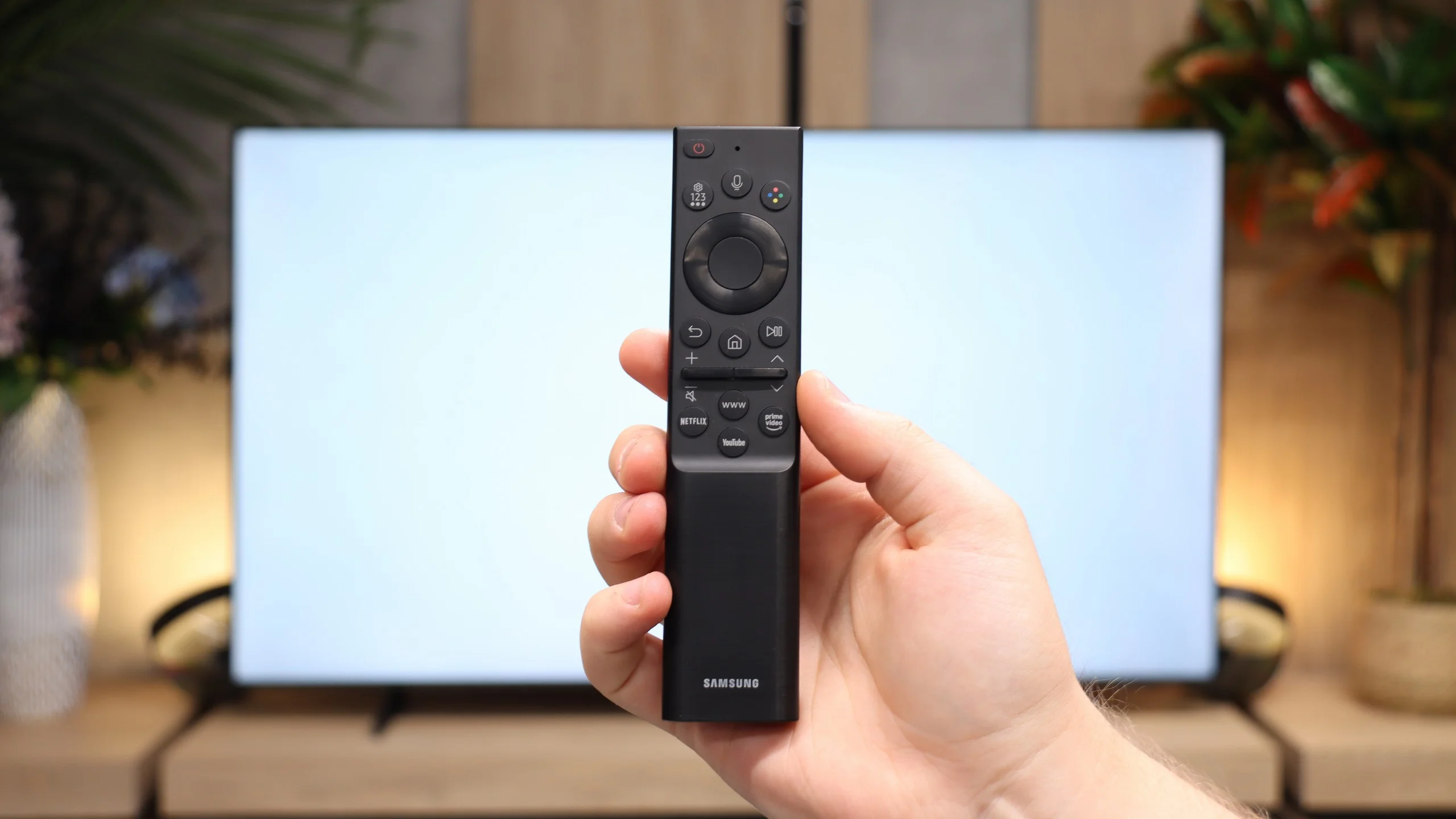
Conventional TV features are weaker. The M80H doesn't allow recording programs to a USB drive or scheduling recordings. It also lacks picture-in-picture. On the plus side, it keeps the basics, like teletext and the ability to turn off the screen while leaving the audio playing. You can connect Bluetooth headphones to the TV, and audio can play simultaneously through them and the built-in speakers. That's useful if one viewer needs higher volume, for example seniors. The TV comes with a simple Smart remote with a limited number of buttons. Unfortunately it's not the solar-powered version found on some other Samsung models, and the remote uses regular batteries. Fortunately it connects to the TV via radio, so you don't need to point it directly at the screen.
Apps
7.7/10
9.3/10






















Playing files from USB
8.5/10
9.1/10
Supported photo formats:
Maximum photo resolution:
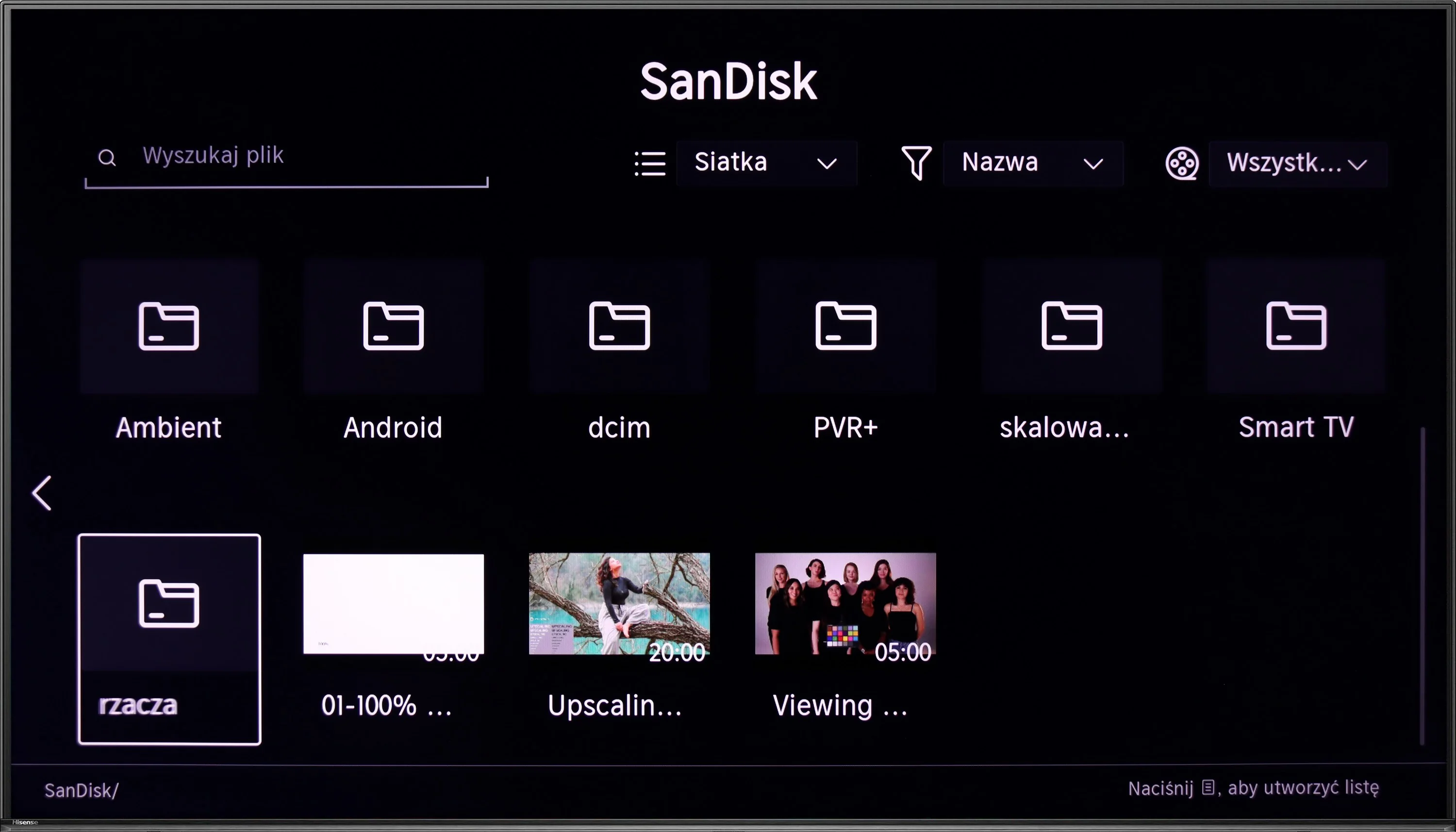
The built-in file player in the Hisense U6NQ should satisfy most users. It supports Polish characters and allows easy editing of displayed subtitles, which is a big plus. Unfortunately, it lacks support for the AV1 codec, which may be an issue for those looking to play newer video formats. However, for less demanding users, the player’s features will be fully adequate.
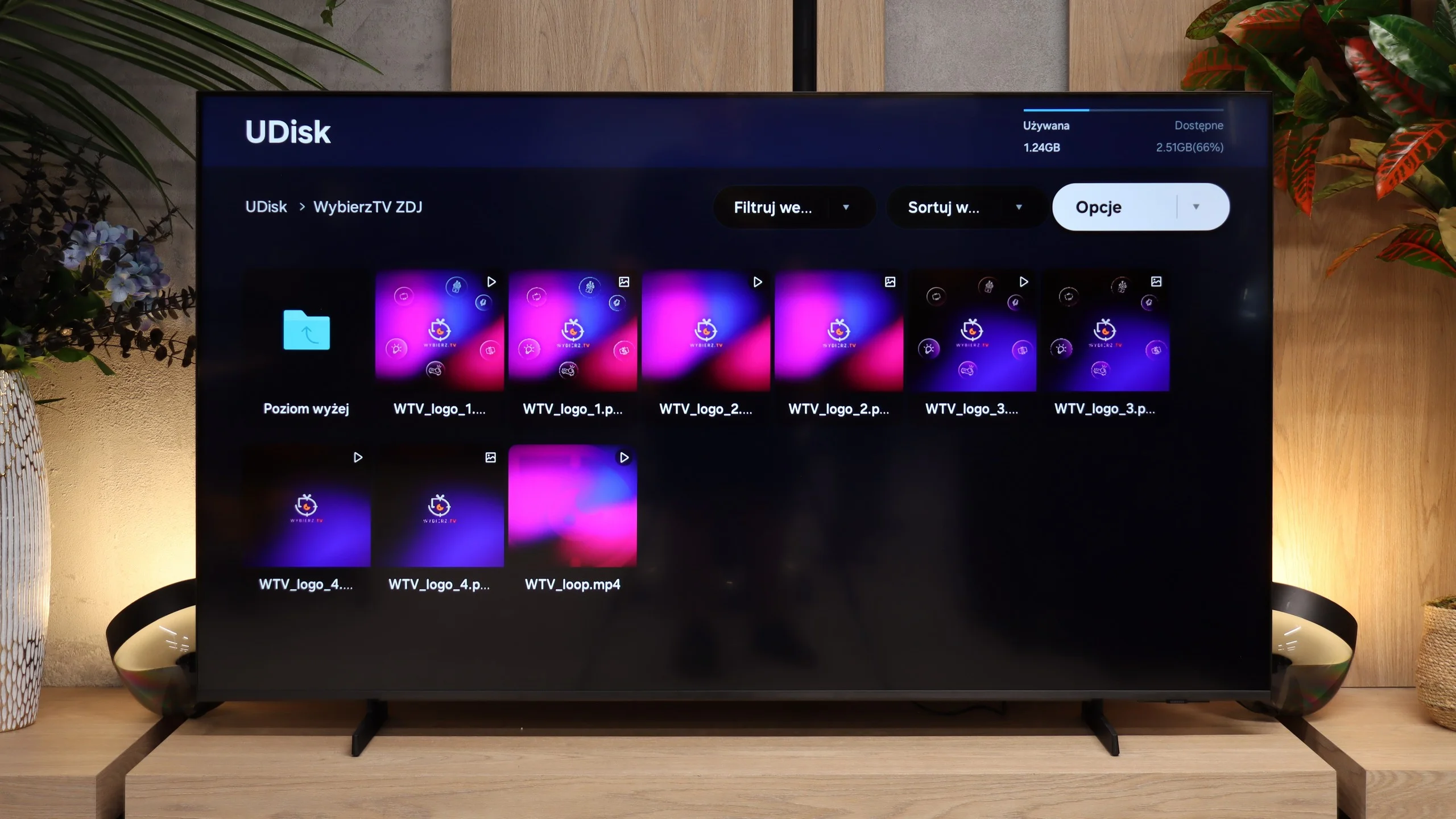
The built-in USB player handles most popular video and photo formats. It easily displays JPEG, PNG, and BMP files, even in high resolution. However, it lacks support for HEIC, the format used, among others, by iPhones. In practice this probably won’t be a big issue, because the M80H supports AirPlay and most people will likely use that to show vacation photos on the TV. 😉
Sound
6.3/10
6/10
- Maximum volume-88dB
- Dolby Digital Plus 7.1
- Dolby True HD 7.1
- Dolby Atmos in Dolby Digital Plus (JOC)
- Dolby Atmos in Dolby True HD
- DTS:X in DTS-HD MA
- DTS-HD Master Audio
The Hisense U6NQ is equipped with a standard set of speakers with a power of 20 W, which is a typical solution in this class of TVs. The sound is decent but nothing particularly special. However, it is worth noting the support for all popular audio codecs, including DTS and Dolby Atmos. This allows for easy connection to a home theatre system or soundbar, resulting in significantly better audio experiences than the built-in speakers.
The M80H is equipped with a 2.0 speaker setup with 20 W of power. It performs adequately but doesn't stand out compared with TVs with similar audio systems. Dialogue is clearly audible and the speakers themselves don't add noticeable distortion. However, it definitely lacks bass, so music in particular can sound flat. If you want a somewhat fuller sound, consider a simple soundbar and connect it via HDMI eARC. The TV can also pass through Dolby Atmos audio that way. However, note that the M80H has no optical output, so you can't connect older audio equipment using that method.
Sound Quality Test
No sound test video
Acoustic Measurements
No acoustic data
88dBC (Max)
75dBC
Reader comments
Comments are provided by the external service Disqus (Zeta Global). Once loaded, Disqus may set cookies and process data about your activity.
We will remember your choice on this device. Provider's privacy policy