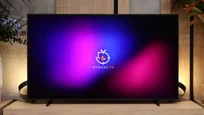
Xiaomi, well known as a giant in the smartphone market, has decided to fight for the attention of high-end technology enthusiasts by presenting a television with MiniLED backlighting. The S MiniLED 2025 model looks truly impressive on paper. The vast number of dimming zones provides excellent contrast, and the brightness, reaching impressive levels, can impress both in high-quality HDR materials and in older SDR. The television performs excellently where smooth motion is key. The high refresh rate panel and low input lag make it a good choice not only for sports fans but also for gamers. Support for features such as ALLM and GameBar further enhances the gaming experience. Google TV on this television works as it should – quickly, smoothly, without unnecessary stutters, which we could not say about the model A Pro 2025. Additionally, with such an extensive application library, it will satisfy even the most demanding user. However, not everything looks so good in practice. Despite solid hardware specifications, the television has its drawbacks. The biggest problem is the algorithms managing the dimming zones, which can be quite irritating when watching films in the evening. The operation of individual zones is overly noticeable in dynamic scenes, which can effectively distract our attention from the image. Issues also arise in more demanding HDR scenes despite the truly impressive brightness. Small, bright elements often lose brightness, ruining the effect that a top-quality image should provide. The system is also not free from shortcomings – image enhancement features for lower-quality materials work unevenly, and some options in Google TV are poorly translated or even untranslated. The Xiaomi S MiniLED 2025 has huge potential, but in its current form, it seems underutilised. It is clear that Xiaomi wanted to create something truly good, but several significant shortcomings result in a mixed final effect. A device with high aspirations that needs better software to truly shine. It is an ideal television for brighter rooms, where high screen brightness plays a key role, and local dimming issues become less noticeable. It will also perform excellently as a screen for gamers and for those who value the versatility and functionality of the Google TV system.
- Matching (Score) |
- Our verdict |
- TV appearance |
- Where to buy |
- Contrast and black detail |
- HDR effect quality |
- Factory color reproduction |
- Color reproduction after calibration |
- Smoothness of tonal transitions |
- Image scaling and smoothness of tonal transitions |
- Blur and motion smoothness |
- Console compatibility and gaming features |
- Input lag |
- Compatibility with PC |
- Viewing angles |
- Daytime performance |
- Panel details |
- TV features |
- Apps |
- Playing files from USB |
- Sound
Xiaomi S Mini 2025 vs Samsung The Frame 2026 (LS03H)
 Direct comparison
The Frame / LS03HAU

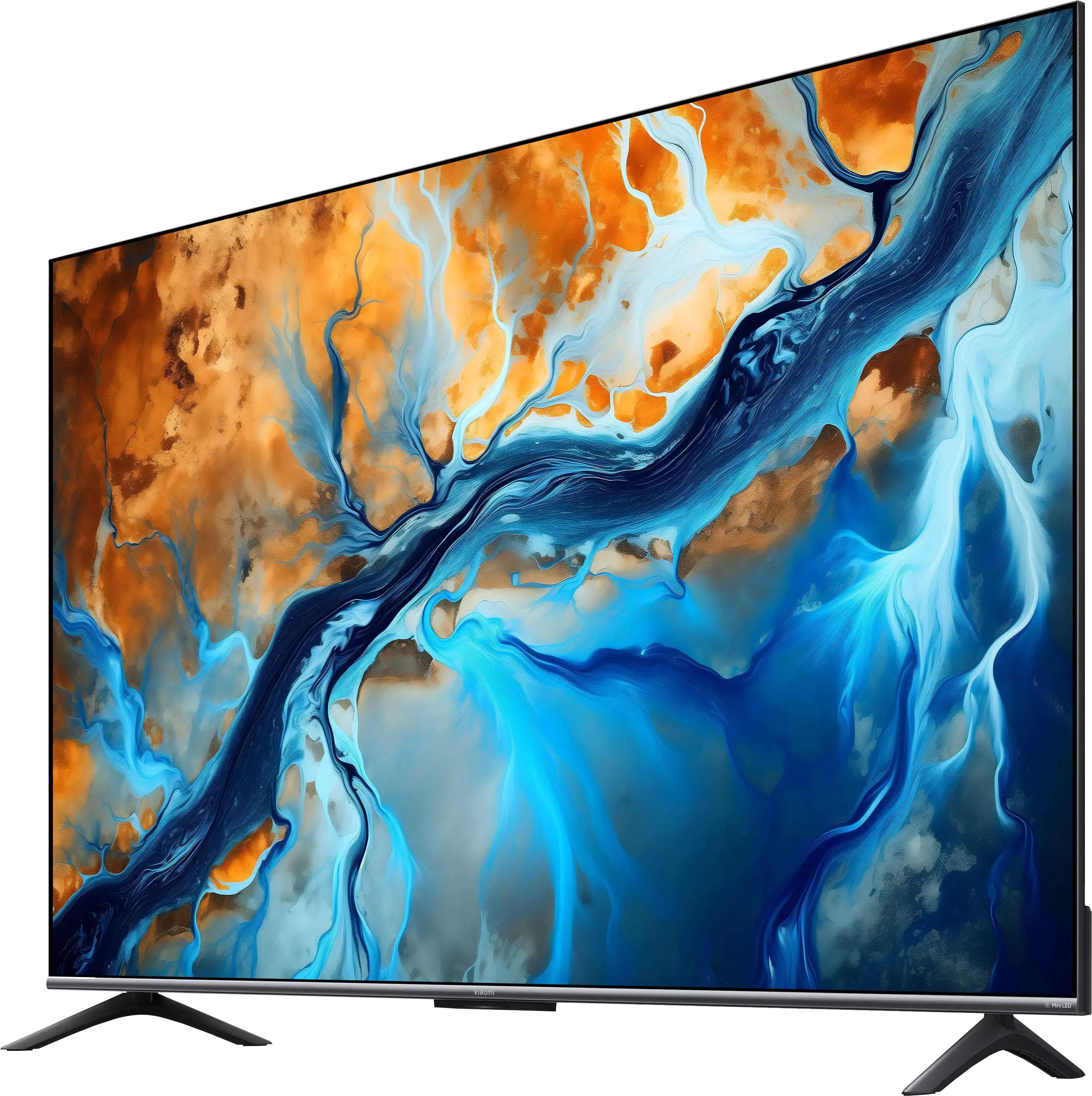
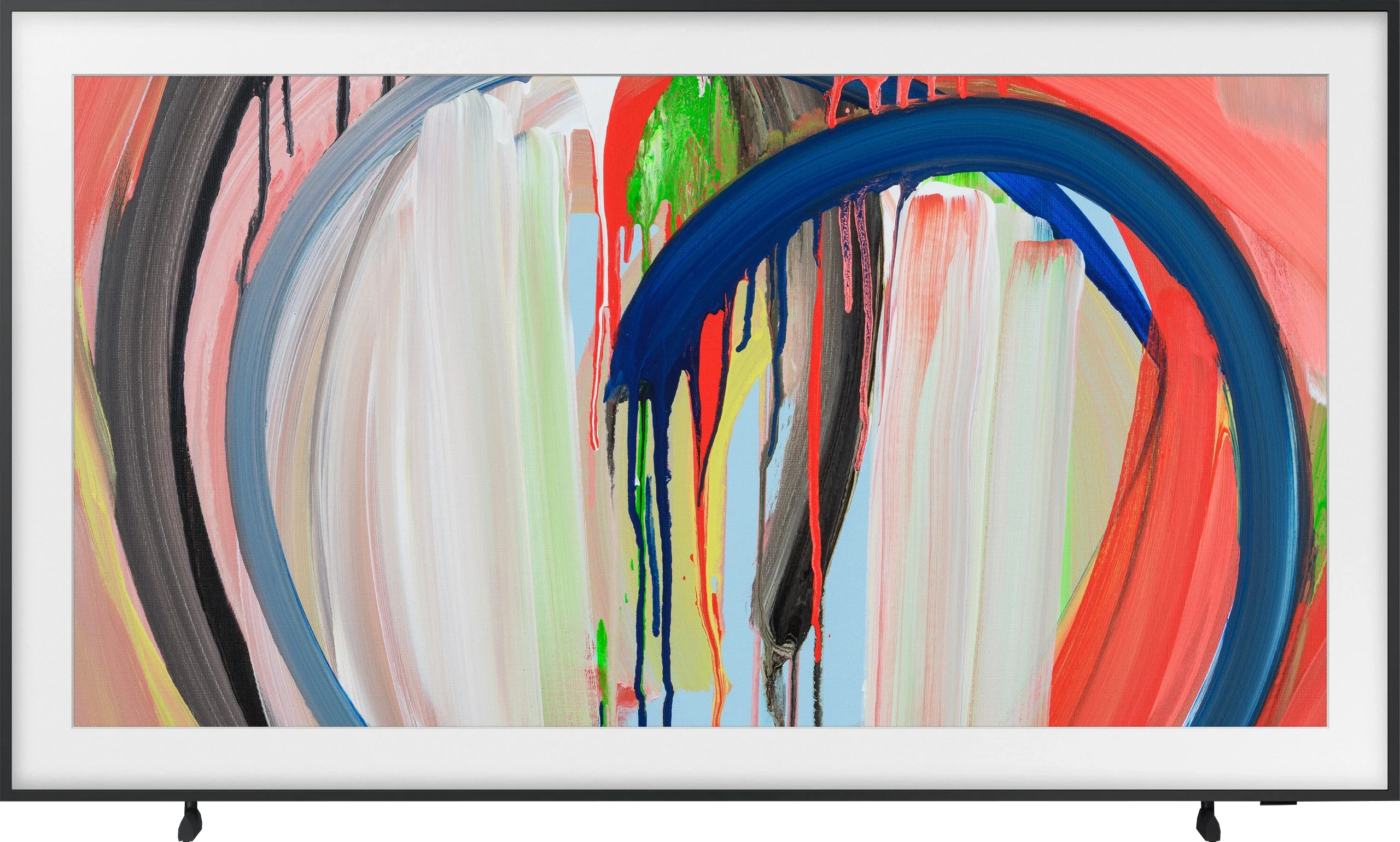
Panel type: LCD VA
Resolution: 3840x2160
System: Google TV
Model year: 2024
Complete the survey to find out the result
Panel type: LCD VA
Resolution: 3840x2160
System: Tizen
Model year: 2026
Complete the survey to find out the result
Overall rating
7.0
7.1
 Movies and series in UHD quality
6.3
6.7
 Classic TV, YouTube
6.5
6.4
 Sports broadcasts (TV and apps)
6.4
6.3
 Gaming on console
8.4
8.8
 TV as a computer monitor
8.2
8.0
 Watching in bright light
7.3
6.7
 Utility functions
4.7
7.7
 Apps
9.6
9.3
 Sound quality
6.8
6.0
Complete the survey to find out what fits your preferences
Advantages

VA matrix with MiniLED backlighting – good contrast and deep blacks
High brightness (841 cd/m²) – excellent visibility even in bright rooms
Supports multiple HDR formats: Dolby Vision, HDR10+
High refresh rate: 240Hz, 144Hz, and 120Hz
Low input lag – perfect for gaming
Google TV system – versatile and comprehensive with broad access to apps
The remote does not require pointing at the screen
Pleasant sound with mild bass
Supports audio formats: Dolby Atmos and DTS:X
Matte screen coating, ideal for a bright living room
Unique on-wall picture design
One Connect module simplifies device connections
Wall mount included
Art Mode with motion sensor
Customisable bezel colours
High brightness, around 650 nits
Vibrant colours, QLED
High refresh rates: 144 Hz in 4K and 240 Hz in Full HD
Extensive gaming features: VRR, ALLM, HGiG, FreeSync, G-Sync and low input lag
Tizen with a wide selection of apps, AirPlay and SmartThings
Disadvantages

Errors in the translation of the TV Menu
Problems with aggressive dimming algorithms – visible in dynamic scenes
Image scaling and tonal transition enhancement features are unstable
No local dimming, average black levels and contrast
VA panel smearing (especially on dark backgrounds)
Only one HDMI 2.1 port
Full access to Art Store requires an additional subscription
Average, rather flat sound
Our verdict
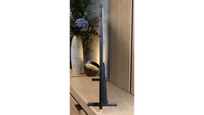
Samsung The Frame 2026 is still a TV aimed at a fairly specific type of buyer. If your main priority is having a screen that looks good in your interior, hangs almost flush against the wall, and doesn’t simply turn into a large black rectangle when switched off, there are very few TVs on the market that execute this idea quite as well. The matte screen, interchangeable bezels, external One Connect box, and extensive Art Mode allow The Frame to genuinely become part of the room rather than just another TV sitting in the living room. And that’s exactly where we see its biggest appeal.
Importantly, though, that doesn’t mean design is all you’re getting. The Frame performs really well in bright rooms. Its matte coating is very effective at reducing reflections, brightness reaching around 650 nits is enough for comfortable daytime viewing, and the wide colour gamut means colourful content, animation, and brighter HDR scenes can look very impressive. On top of that, there’s 144Hz support at 4K and, for the first time, up to 240Hz at Full HD. VRR, ALLM, FreeSync, G-Sync, HGiG, low input lag, and an extensive Game Bar make The Frame a much more capable gaming TV than its “artistic” character might suggest.
The biggest compromises become apparent when you look at it as a TV primarily intended for home cinema. The Frame has no local dimming, so blacks become noticeably raised in dark scenes, and this is where the difference compared with good Mini LED and OLED TVs is most obvious. HDR therefore looks best with bright and colourful content, while evening movie sessions in a dark room are definitely not its strongest suit. There is also noticeable motion blur and only one full-bandwidth HDMI 2.1 port on the One Connect box, which may be frustrating for some users, especially gamers.
The Frame 2026, then, isn’t a TV for someone looking for the absolute best picture quality in its price range. There are models that offer deeper blacks or a more impactful HDR experience. But if the TV is meant to become part of a well-designed living room, is often used during the day, displays artwork, and at the same time needs to perform well with a wide variety of content, The Frame still makes a lot of sense. Samsung has barely changed its formula here, but it’s easy to see why — the “picture on the wall” concept is still executed extremely well. Owners of the previous model have little reason to upgrade, but for new buyers looking for this particular combination of design and TV functionality, it remains one of the most interesting options on the market.
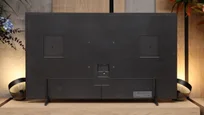
TV appearance

Contrast and black detail
6.8/10
6/10
Local dimming function: Yes, number of zones: 308 (22 x 14)
Local dimming function: No
Contrast:


Result
182,000:1

Result
38,050:1

Result
18,300:1

Result
10,150:1

Result
5,450:1
Result
6,300:1
Result
6,800:1
Result
5,500:1
Result
5,950:1
Result
4,050:1
Halo effect and black detail visibility:
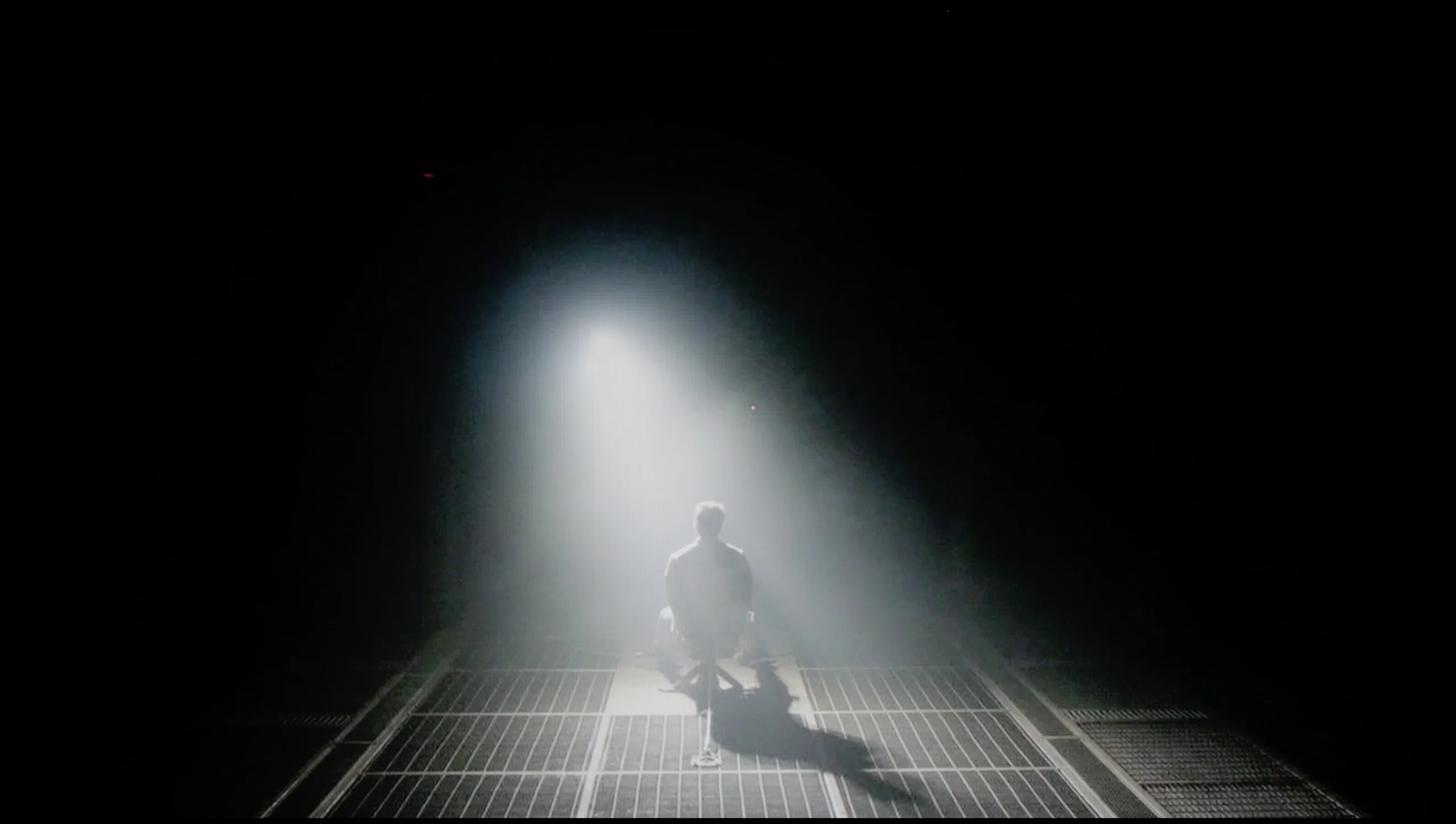
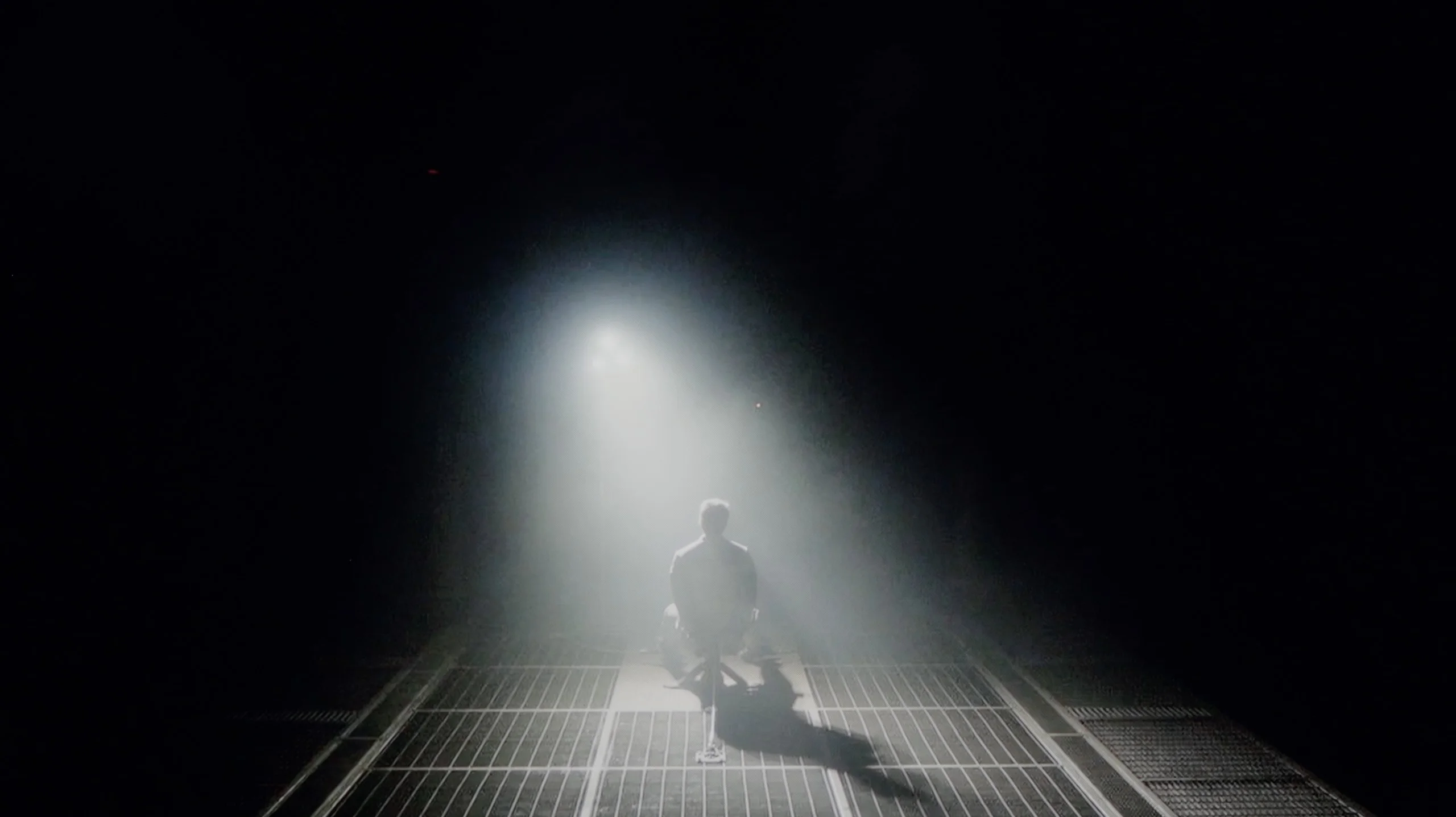
Check the visibility of bright lights on a dark background. Mini-LEDs often struggle with this. The photo does not compare black levels – that’s what the video below is for.
The video accurately shows differences in contrast and black levels between TVs, as well as potential issues: halo around bright objects or Mini-LED zone operation visible as brightness jumps.
Xiaomi S MiniLED is one of the most affordable MiniLED technology televisions available on the market. The model we tested, with a size of 55 inches, features as many as 308 local dimming zones, which is impressive for this price. Additionally, it uses a VA panel, which naturally offers significantly better contrast than IPS panels. On static test images, the television performed excellently, achieving an impressive contrast ratio of 182,000:1 in the film Oblivion. The blacks were deep, and the details in the light and dark areas of the image were clearly separated. However, in more demanding scenes where the image is dynamic, the situation becomes complicated.
Where lies the problem? The main cause is the local dimming algorithms. Although their work shows promising results on static images, during film playback – that is, in the natural working conditions of the television – they operate too aggressively. In dynamic scenes, such as those from the tested film, you can see how the individual dimming zones "work and flicker," which detracts from the viewer's sense of image coherence. This effect is particularly noticeable in motion, when bright objects move against a dark screen. As a result, although Xiaomi S MiniLED offers excellent contrast on paper, in practice the effect is less satisfying. The aggressive operation of the algorithms spoils the perception of dynamic scenes, making the television average in this category. It's a good example of how MiniLED technology requires not only good specifications but also proper optimisation.
Samsung The Frame 2026 uses a VA panel but has no local dimming. That means the TV cannot dim selected parts of the screen. The backlight therefore works quite evenly across the whole panel. The VA panel itself gives an advantage over IPS or ADS screens. Blacks are noticeably better, and the picture doesn't look quite as washed out when watching in the evening. That said, in terms of contrast The Frame performs fairly averagely. This is most evident in dark scenes. If a bright object appears on a black background, the TV cannot dim the area around it. Blacks then take on a more navy cast and the image loses depth. The same applies to films with black bars. In a darkened room it's fairly easy to see that the bars are not truly black. In simpler, brighter scenes the issue is much less noticeable. So during regular TV, sport or daytime viewing, contrast is unlikely to be a major problem. It looks worse during evening viewing sessions, especially if you've previously used an OLED or a good Mini-LED. The difference in black levels to The Frame's disadvantage then becomes very obvious.
HDR effect quality
4.8/10
6.1/10
Luminance measurements in HDR:

Result
852 nit

Result
140 nit

Result
385 nit

Result
97 nit

Result
1126 nit
Result
587 nit
Result
609 nit
Result
599 nit
Result
648 nit
Result
663 nit
Scene from the movie “Pan” (about 2800 nits)


Scene from the movie “Billy Lynn” (about 1100 nits)


The photos show two HDR10 movies. 'Pan' is one of the brightest productions ever made, while 'Billy Lynn' (soldier) has brightness typical of streaming (Netflix, Prime, HBO MAX). Notice the intensity of effects and detail in whites.
Static HDR10


The photos present the visibility of white details in various HDR formats. They do not show brightness differences between TVs (these can be compared in the previous gallery).
Dynamic: Dolby Vision
Dynamic: HDR10+


The photos present the visibility of white details in various HDR formats. They do not show brightness differences between TVs (these can be compared in the previous gallery).
HDR luminance chart:
Samsung The Frame 2026 (LS03H)
Xiaomi S Mini 2025
Since the Xiaomi S MiniLED boasts an impressive number of 308 dimming zones, it is time to test how it performs in HDR tests. Starting with luminance, or the ability to display bright scenes, the television achieved nearly 1000 nits of brightness – a result that can be considered outstanding in this class. Do these figures, however, translate to real experiences in film scenes? In the case of less demanding shots, such as those from the film The Meg, the television indeed showed excellent results, reaching up to 900 nits. Such values are impressive and can truly convey the power of HDR effects.
Unfortunately, much like with contrast, it wasn't without issues. When smaller, brighter elements appear on the screen – as in the challenging scenes from Sicario 2 – the aggressive operation of the dimming zones spoils the entire effect. Brightness in these moments drops to just 100 nits. This is definitely too little to capture the full magic of HDR. Instead of a dynamic and detailed image, the viewer receives a muted, almost flat impression, which takes away all the enjoyment from the viewing experience.
In summary, if we are looking for a television with high brightness for watching films during the day, the Xiaomi S MiniLED will easily fulfill that task. However, its inability to precisely manage the dimming zones means that watching films in the evening, especially in demanding HDR scenes, can be more frustrating than satisfying.
The Frame 2026 is a genuinely bright TV. Its peak brightness reaches around 650 nits and, importantly, it maintains similar levels regardless of the type of scene being displayed. It doesn’t really matter whether we’re watching a very bright full-screen image or just a small highlight occupying part of the screen. The backlight remains powerful, allowing bright parts of the image to stand out clearly.
This gives The Frame a solid foundation for HDR. Bright highlights can look impactful, and the picture doesn’t appear flat or overly dim. Unfortunately, there is a compromise. Without local dimming, the TV cannot darken the black areas surrounding very bright objects.
This is clearly visible in scenes 2 and 4 of our test procedure. Bright elements look impressive, but at the same time, the blacks around them become noticeably raised. As a result, the image loses some of its depth, especially when watching in a dark room. This is why The Frame performs best with HDR in bright and moderately bright scenes, where its high brightness works to its advantage. In darker scenes, the situation is quite the opposite.
Colours
The Frame also performs well when it comes to colour reproduction. As a QLED TV, it can display a wide colour gamut and produce rich, saturated colours. DCI-P3 coverage reaches around 94%, while BT.2020 comes in at around 72%. These are good results, and you can see the difference in actual content.
Colours look vivid without appearing washed out, particularly in bright and colourful scenes. Animations and other content with plenty of saturated colours can look really good on The Frame. With this type of material, the TV shows one of its stronger sides.
Factory color reproduction
3.9/10
7.1/10
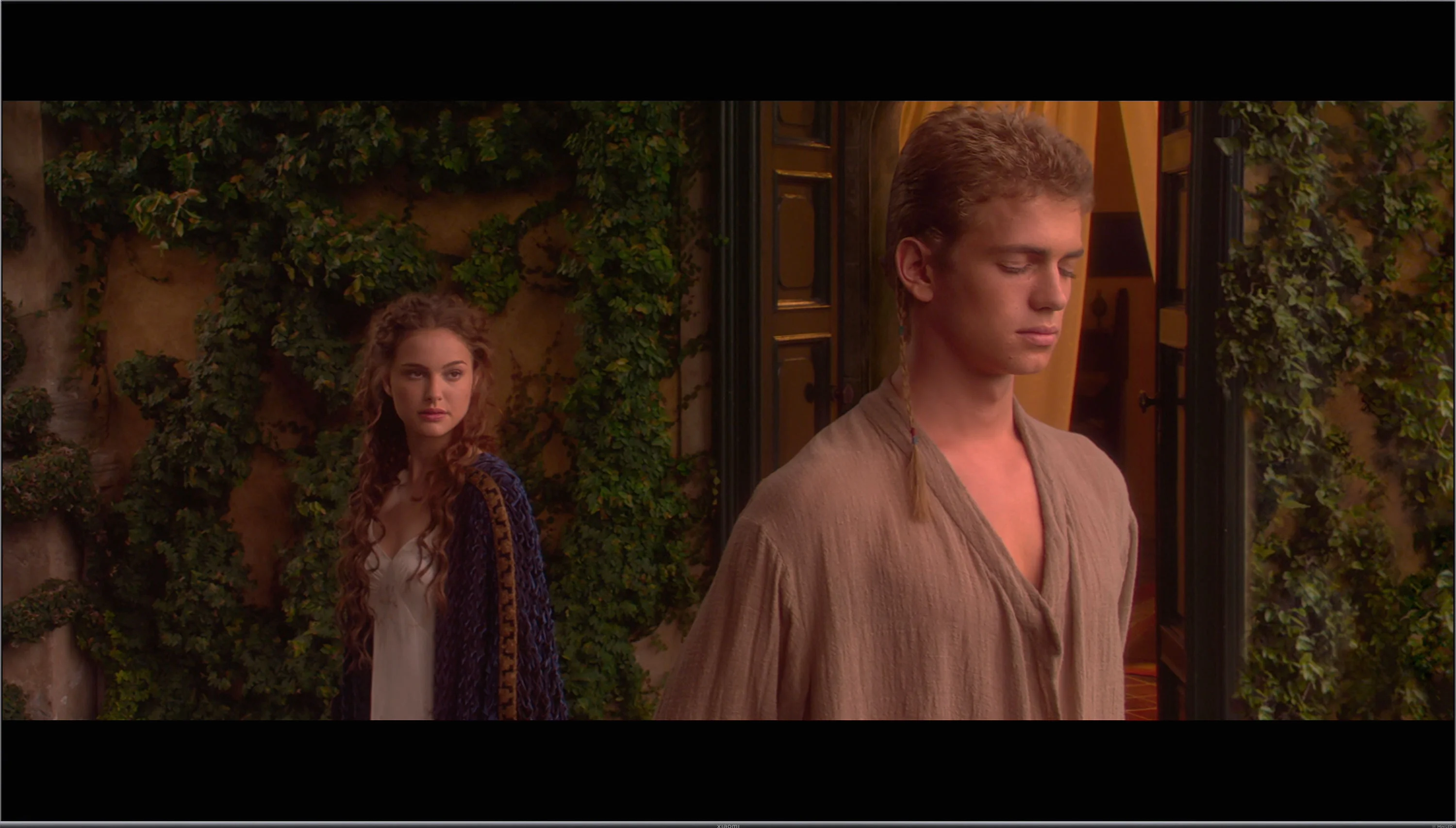
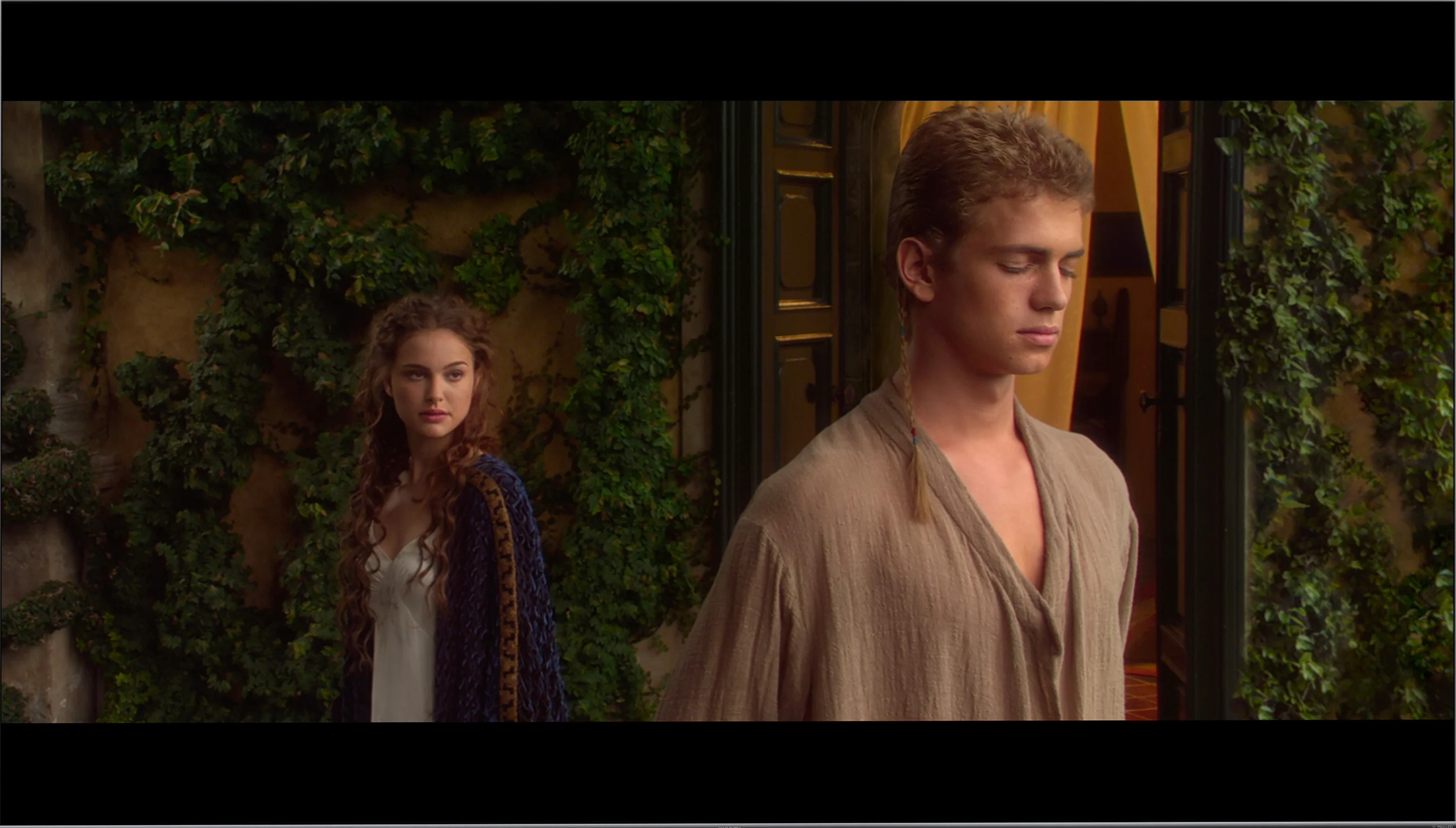
This gallery shows how colors change after professional TV calibration. If you notice the difference, we recommend ordering this service at SkalibrujTV.com.
Factory Mode
After calibration


This gallery shows how colors change after professional TV calibration. If you notice the difference, we recommend ordering this service at SkalibrujTV.com.
Factory Mode
After calibration
Xiaomi, like many manufacturers, offers a wide range of picture modes. On the S MiniLED, we can find both IMAX Enhanced and Filmmaker. Our tests were conducted in Filmmaker mode, which theoretically aims to reflect a reference image, but the reality turned out to be somewhat different.
Let's start with the test of SDR content. Here, the television had quite a few issues, especially with white balance. The clearly visible dominance of red made the image look too warm, with all colours taking on a reddish hue. This was particularly noticeable in a comparative scene from the film Star Wars. The brightness characteristics (gamma) also left much to be desired – instead of a smooth transition, we had a real "rollercoaster," with a visible excessive brightening of the screen.
In 4K content, the situation improved significantly. The white balance, although still not perfect, was much more balanced, with a slight dominance of red and blue, but without excessive impact on the overall perception. The EOTF curve (responsible for brightness in HDR) showed some brightening in the brightest parts of the image, which was noticeable, for example, in the test scene from the film Pan that we described earlier. These brightening effects may disturb the precision of the image, but in 4K, the overall effect was much more acceptable than in SDR.
Although Xiaomi S MiniLED can pleasantly surprise with 4K content, its factory settings in SDR require solid adjustments, especially regarding white balance and brightness. This is definitely a television that would benefit from calibration.
For assessing the factory colour output we chose the Filmmaker Mode. If you’re encountering it for the first time, it’s a mode designed to reproduce a film or series as faithfully as possible. The TV then switches off most of the extra picture enhancement features, and the colours and luminance characteristics are intended to be as close as possible to what the creators of the material intended. And it must be admitted that The Frame 2026 performs really well in this respect straight out of the box. The biggest deviation is visible in the white balance. As brightness increases the blue starts to drop out and green increases slightly. As a result the picture shifts toward warmer tones. White is therefore not perfectly neutral, and in some scenes you can notice a slightly warmer cast.
The luminance response for both the gamma and EOTF curves looks good. Across most of the range they stay fairly close to the target, although in the darkest parts of the picture there is a larger deviation. In practice some details emerging from black may therefore be rendered a little more strongly. However, this is not an error that stands out during normal viewing. Overall Filmmaker Mode is a good starting point here. However the picture is a little too warm by default and not all hues land exactly where they should.
Color reproduction after calibration
7.7/10
8/10
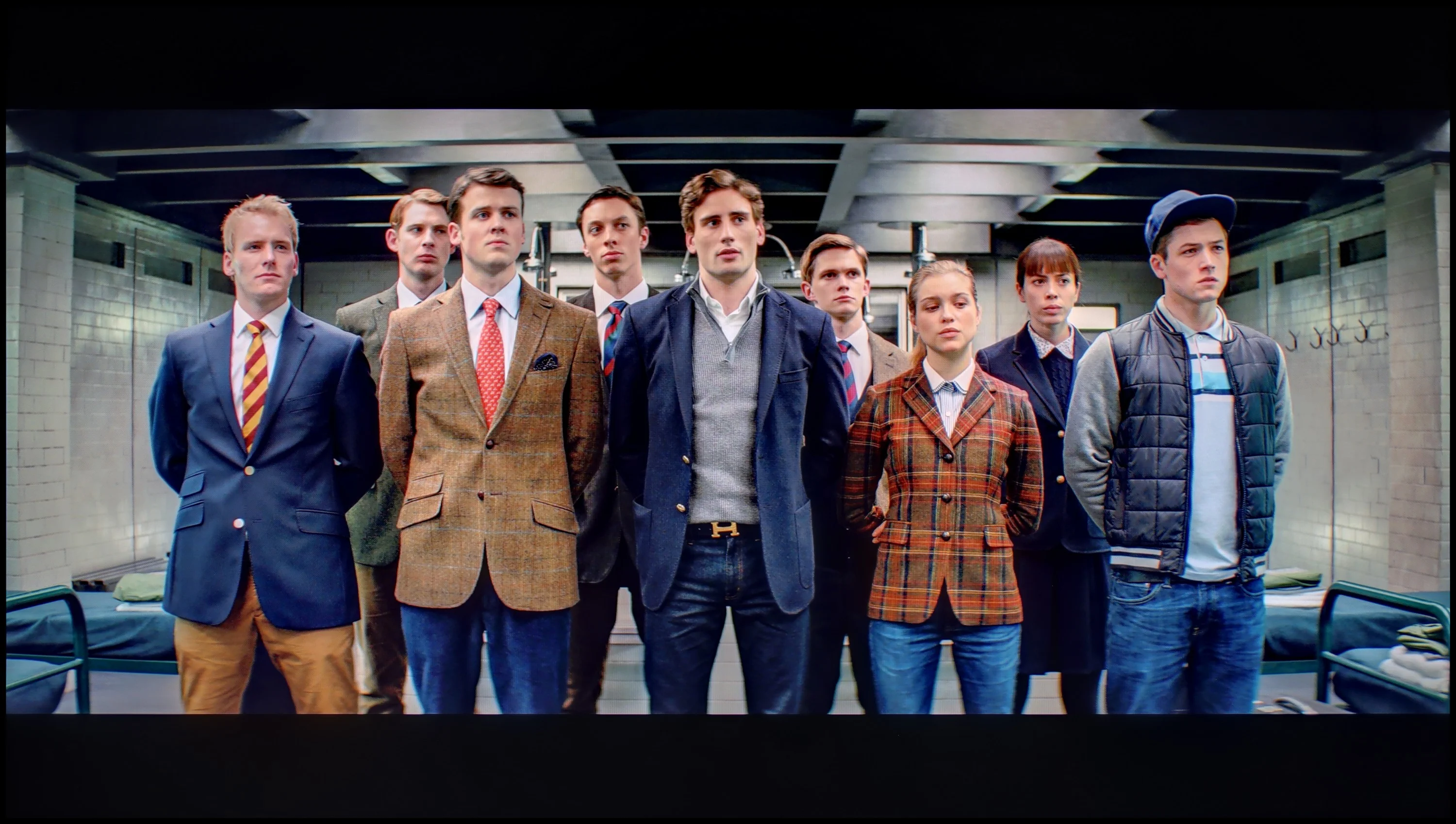
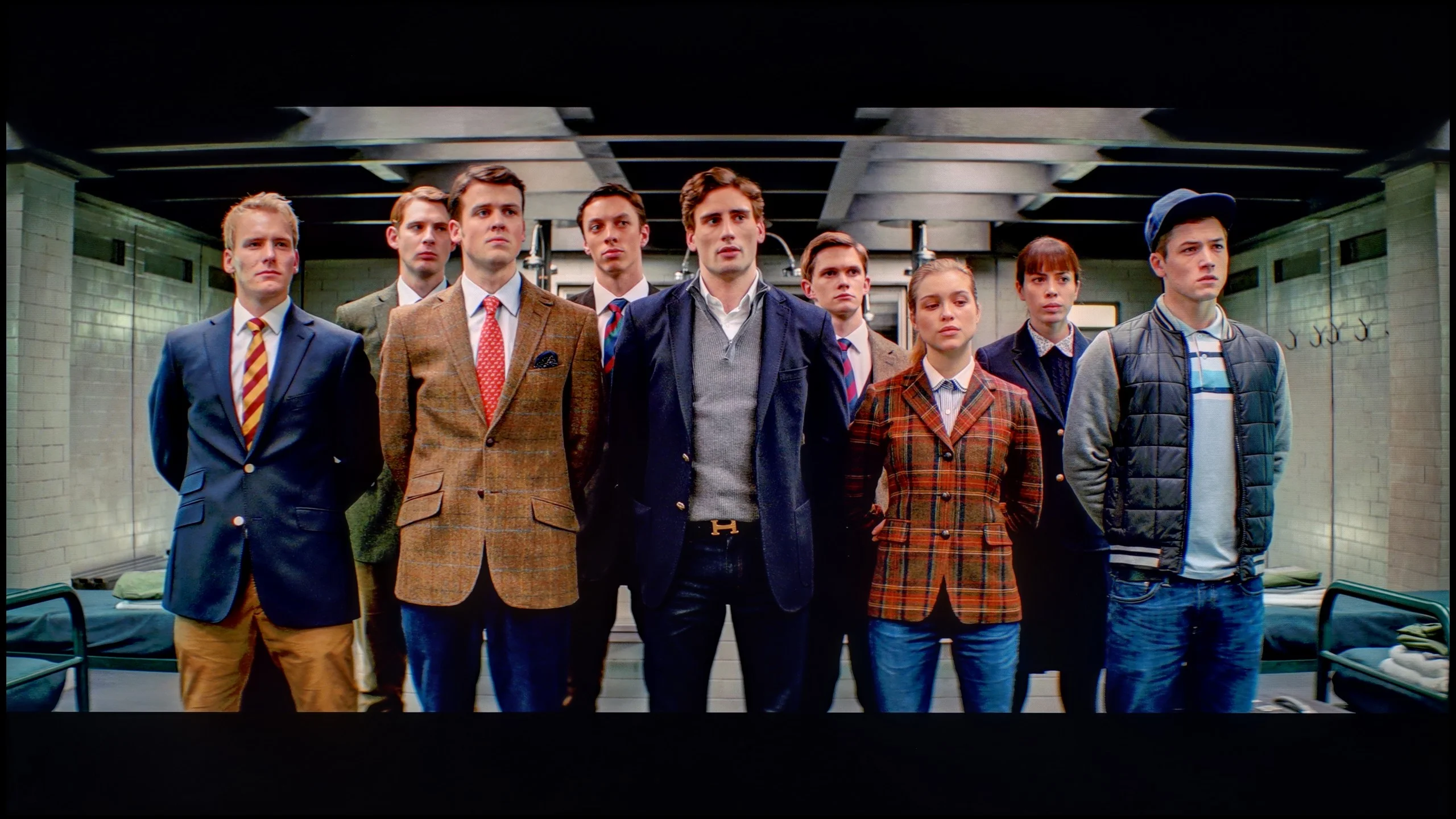
The photos show how movies look on the TV. Pay attention to black detail visibility, colors, and shadow tint.


The photos show how movies look on the TV. Pay attention to black detail visibility, colors, and shadow tint.
Xiaomi S MiniLED 2025 is a television that gains a completely new life after calibration. The results are truly outstanding and show how much potential is in this model.
In SDR mode, the white balance is nearly perfectly aligned. The errors are so minimal that in many cases they can be considered negligible. This is confirmed by the results of the Colour Checker palette, where the errors did not exceed a value of 2 ΔE – this is really a rare result. Gamma also performs very well, although at the beginning of the graph there are slight brightenings in the darkest elements. However, this is a minor exception that does not significantly affect the perception of the image.
In 4K HDR materials, the calibration also brought visible improvements, particularly in the white balance. The image looks natural and cohesive. However, the characteristic of brightness remains a problem. EOTF analysis in film materials shows that the television tends to over-brighten or under-darken the smallest elements on the screen. This is a result of limitations in the dimming algorithms we discussed earlier with HDR and contrast testing. Unfortunately, this is a technical characteristic of this model that cannot be completely eliminated.
Despite this minor flaw, the calibration allowed for maximising the capabilities of this television. The image now looks phenomenal, and its quality impresses in every type of material. Xiaomi S MiniLED 2025 shows that with the right settings, it can compete with more expensive models.
After calibration we mainly managed to remove that warmer tint and better even out the white balance. We also smoothed the brightness response a little, which made the picture more neutral and predictable. There are, however, things calibration won't fix here. It's mainly the black behaviour, which stems from the backlight design and the lack of local dimming. In some scenes blacks will therefore still be slightly lifted and you simply have to accept that. It's more a characteristic of this model than something that can be fixed with the settings. HDR is also a limitation. Samsung doesn't allow full freedom when working with the widest colour gamut, so not all colours can be reproduced perfectly. In normal viewing it's probably hard to notice, but it's worth being aware of.
Smoothness of tonal transitions
8/10
8.5/10
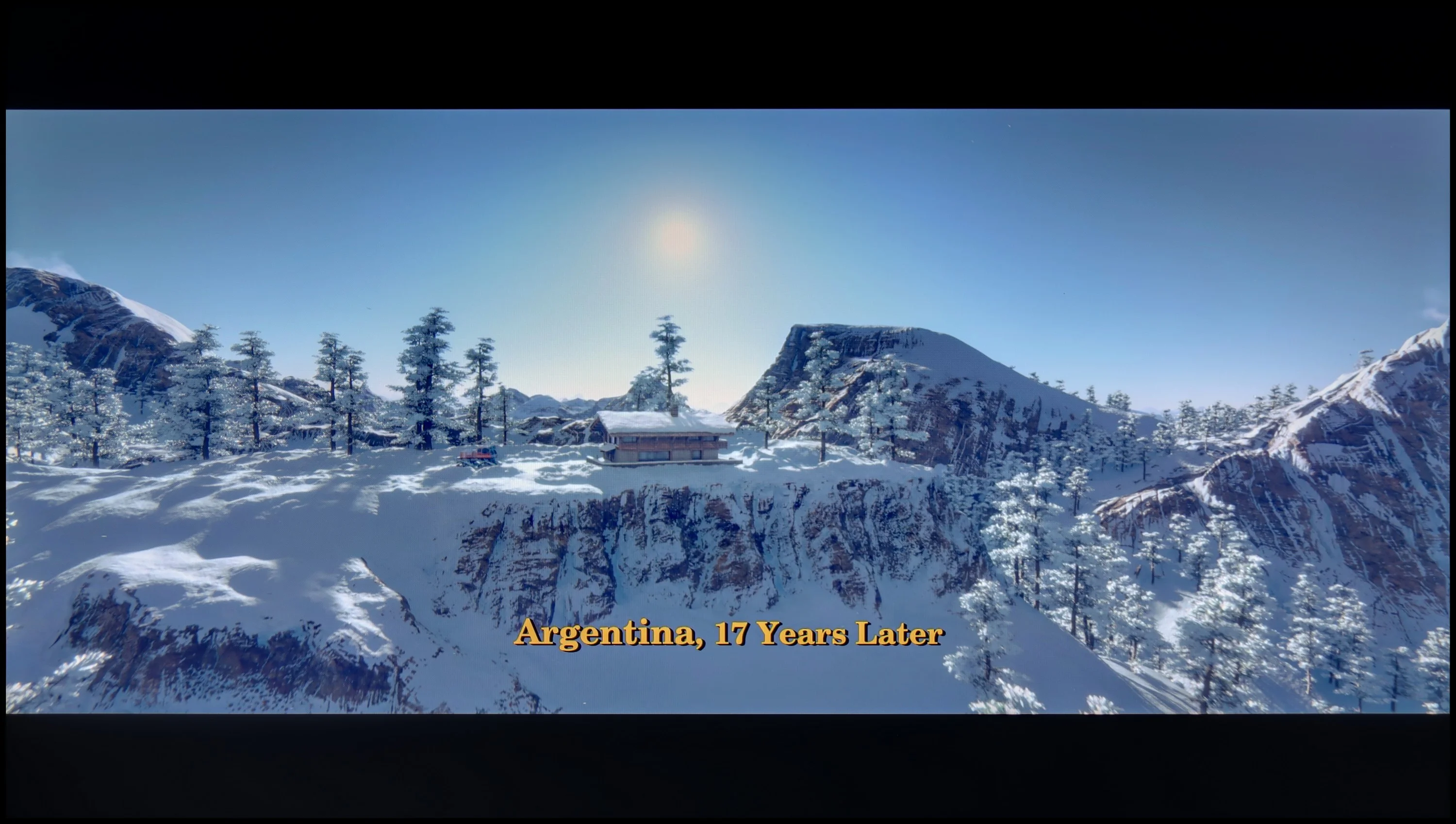

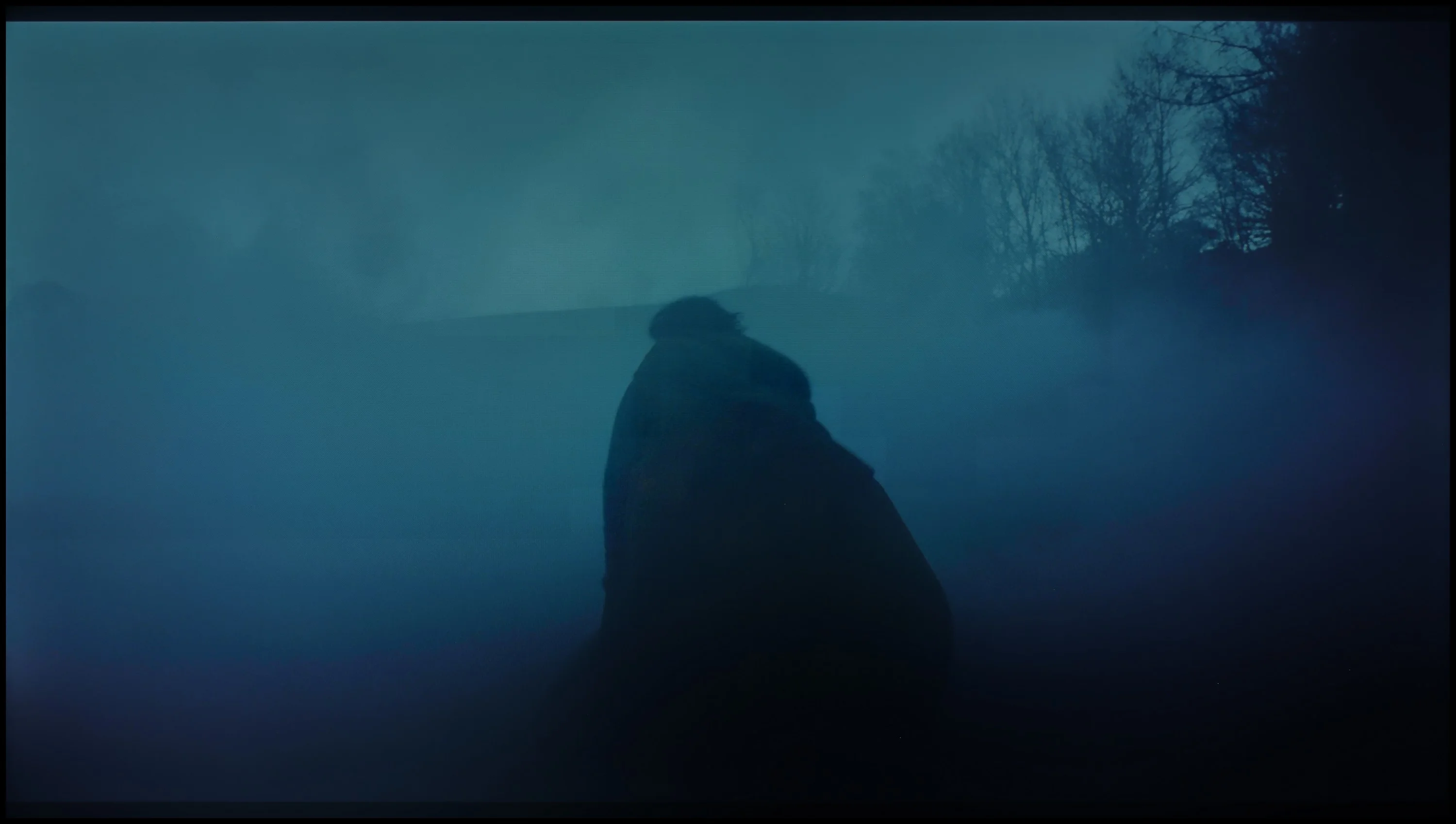


These are selected scenes that show smooth tonal transitions from one color to another. If you see distinct banding, it’s the TV panel’s fault.

These are selected scenes that show smooth tonal transitions from one color to another. If you see distinct banding, it’s the TV panel’s fault.
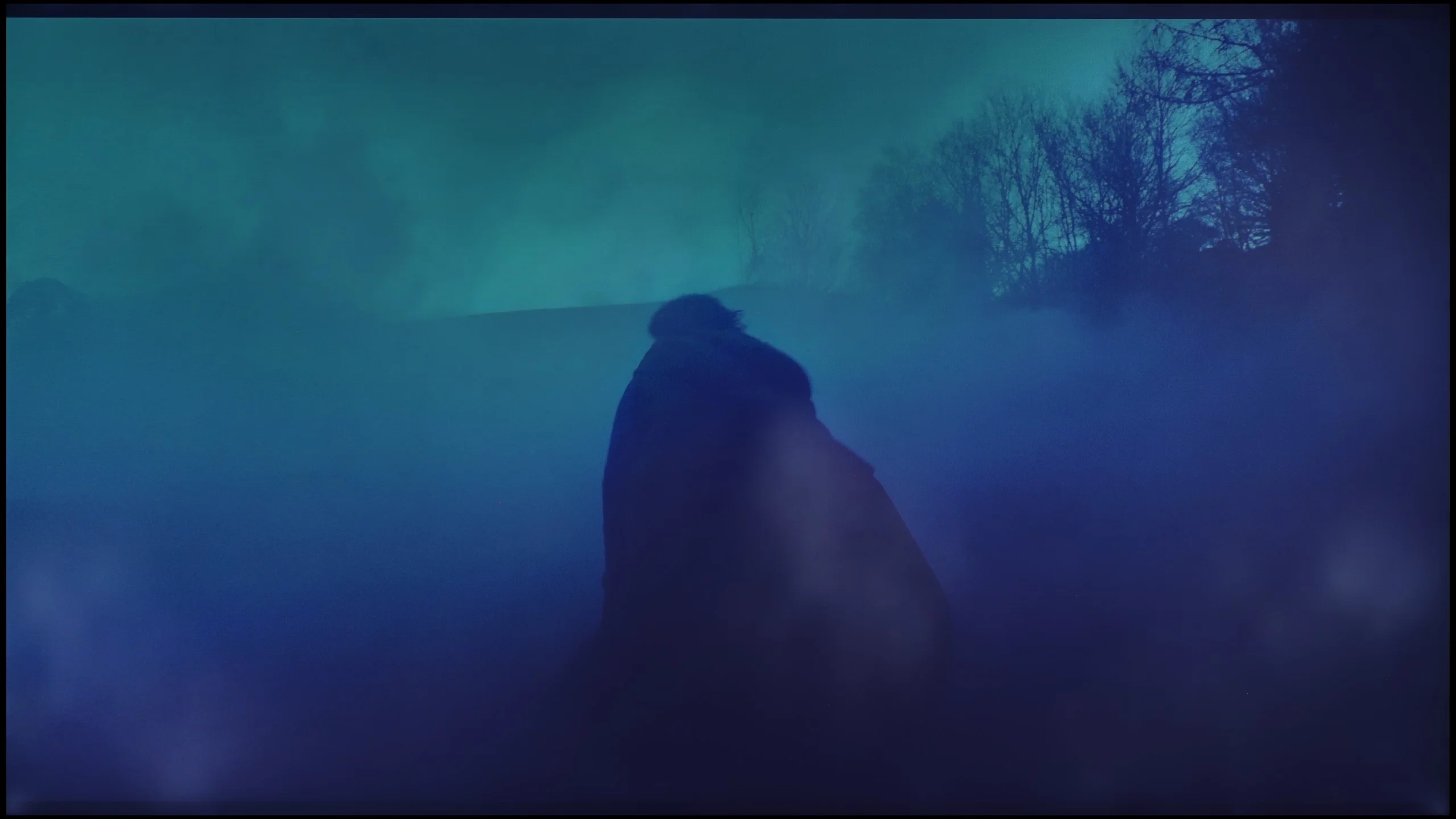
These are selected scenes that show smooth tonal transitions from one color to another. If you see distinct banding, it’s the TV panel’s fault.

These are selected scenes that show smooth tonal transitions from one color to another. If you see distinct banding, it’s the TV panel’s fault.
The fluidity of tonal transitions in Xiaomi S MiniLED 2025 is impressive. Even in the theoretically most difficult scene with red water, the television performs excellently – we did not notice any major issues. Minor imperfections occur in scenes like The Kingsman or The Martian, where subtle colour blending can be observed. Nevertheless, Xiaomi stands out in this category, offering one of the best qualities of tonal transitions in its price range. This is definitely a strong point of this television.
Gradation in The Frame 2026 comes across well, though not perfectly. In bright tonal transitions you can notice slight issues and occasional mild banding. These are not faults that seriously disturb normal viewing, but they can be picked up on our test images and in more demanding scenes. We would rate the bright tonal gradation at roughly 7.5 to 8 out of 10.
Interestingly, gradation in the darker parts of the image looks noticeably better. Here the transitions are very smooth and it's hard to find clear signs of posterization. This is the opposite of many LCD TVs, where the near-black region often causes bigger problems. In photos of dark scenes you can, however, see some unevenness in the image. These do not stem from the gradation itself but from panel uniformity and the operation of the backlight. Unfortunately, in that respect our sample of The Frame was not perfect, so in very dark shots you could spot brighter and darker patches of backlight.
Image scaling and smoothness of tonal transitions
6.7/10
7/10


Smooth transition function
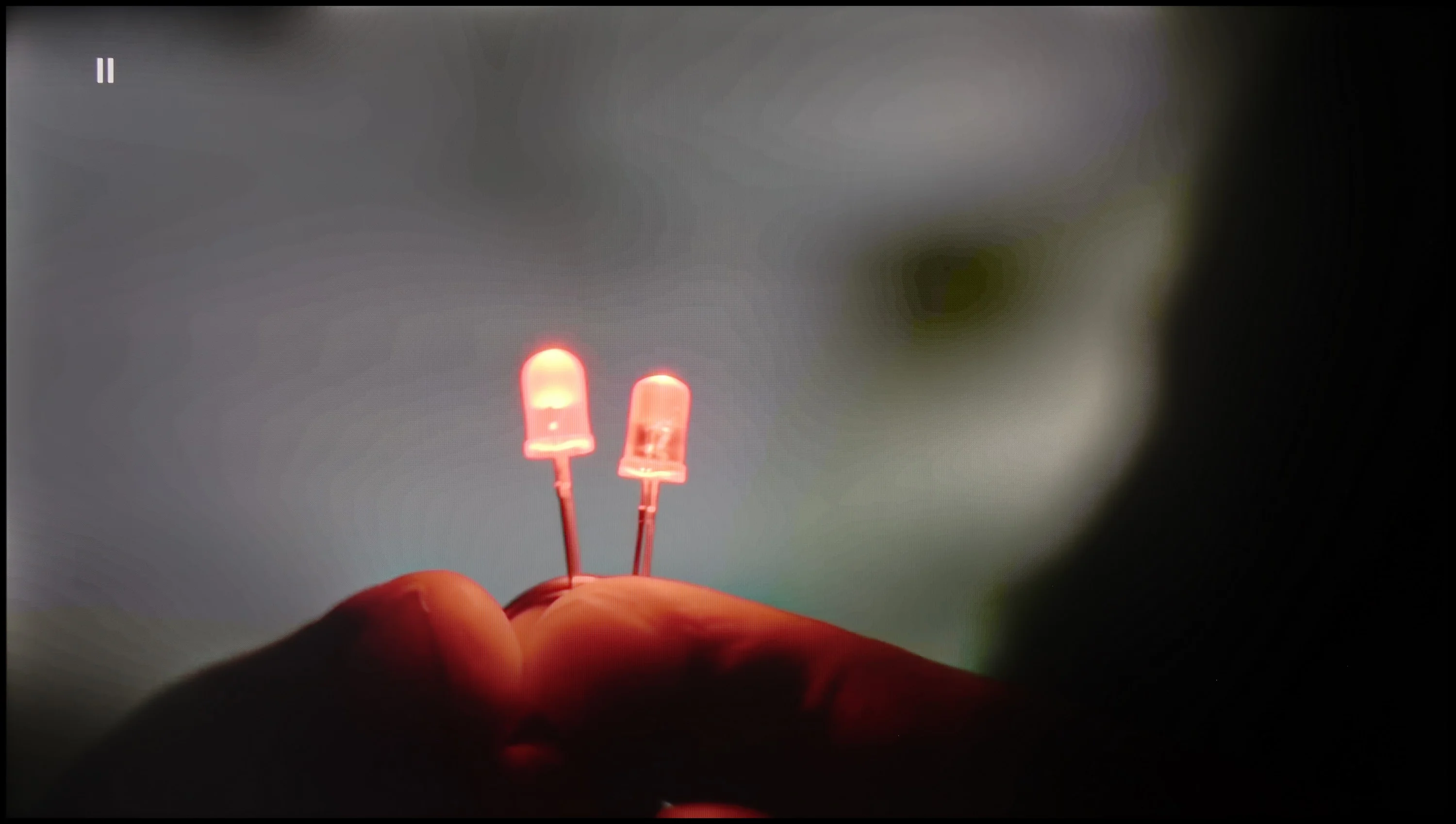
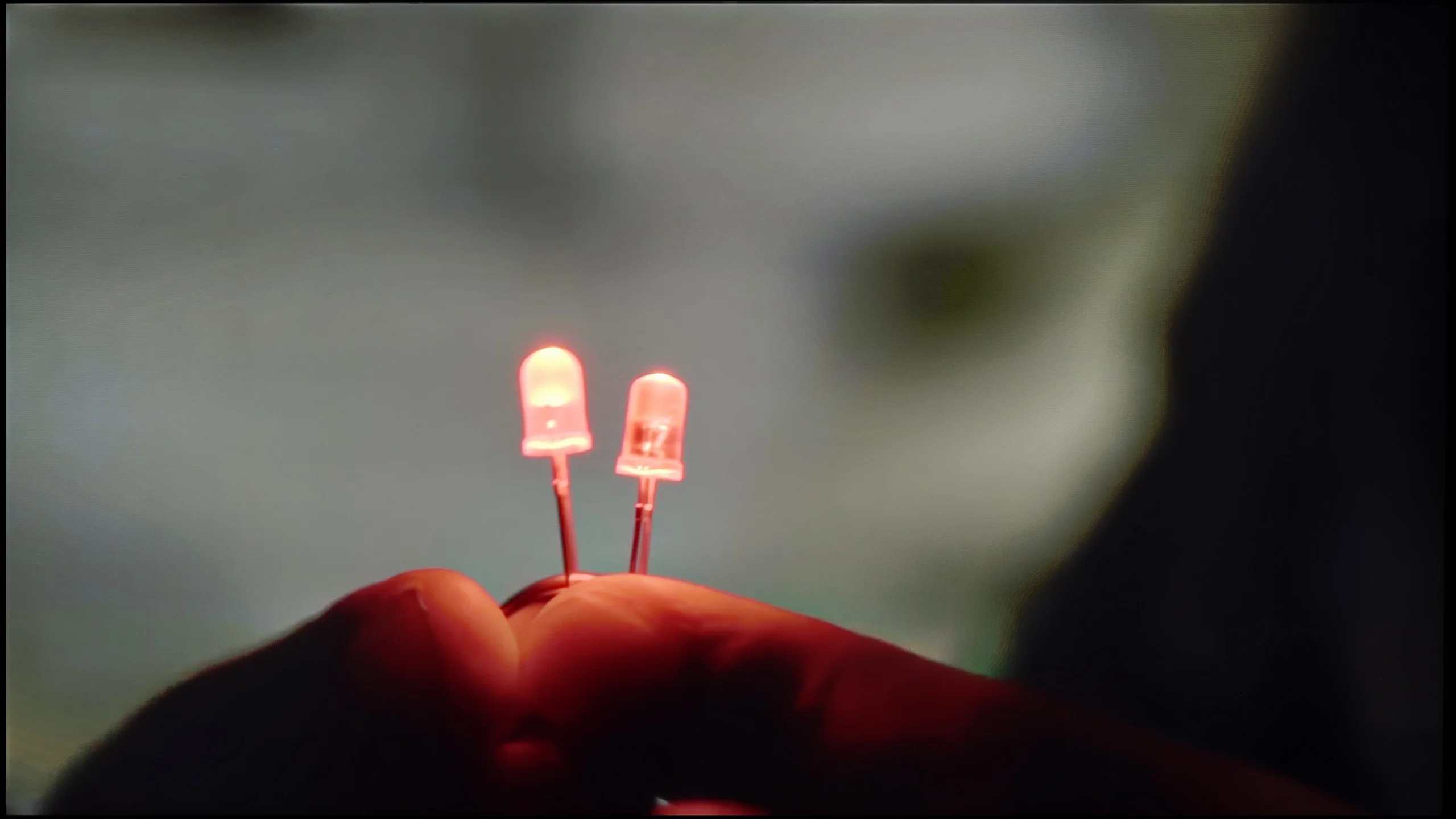
The match photo shows how the TV smooths weak tonal transitions in low-quality video.
Image scaling SD (576i)


The model photo shows how it handles upscaling of SD material.
When it comes to tonal transitions in lower quality materials, such as YouTube or television, the Xiaomi S MiniLED is equipped with a feature called "Colour Contour Removal." At the "low" setting, it performs quite well, although its effectiveness can be inconsistent. Sometimes it seems as though the television is struggling to smoothen, which creates a certain dissonance. On the positive side, we did not notice any visible side effects, although due to the instability of this feature, one could suspect that unexpected issues may arise in certain situations.
Image scaling also performs moderately. There is some slight jaggedness, particularly on thin elements like branches, and subtitles can appear slightly jagged. While this may not be very bothersome, a more discerning eye will certainly pick up on these shortcomings. Overall, most users should be satisfied with the quality of scaling and smoothing, but the television will not satisfy those who expect perfection in every frame of the image.
As with many of Samsung’s newer TVs, this one also uses the NQ4 AI processor, only the older, second-generation version. And you have to admit it handles digital image processing quite well. Lower-resolution material is sharpened effectively, and after upscaling to 4K it still looks natural. The TV can also somewhat "tidy up" weaker sources, like older recordings or lower-quality broadcasts. That doesn't, of course, mean it will suddenly turn poor footage into 4K, but at closer viewing distances the difference compared with simpler models with weaker processors is easy to spot. Edges are clearer, and fine details don't get lost as much to signal compression.
Samsung also offers a few additional image-enhancing features, but as usual it's best to use them sparingly. At stronger settings, noise reduction can very effectively reduce posterization, but it also noticeably interferes with the image. The picture then simply starts to look very artificial, for example by heavily smoothing characters' faces. So it makes the most sense with really poor sources when various types of noise are seriously distracting.
Blur and motion smoothness
7/10
6.8/10
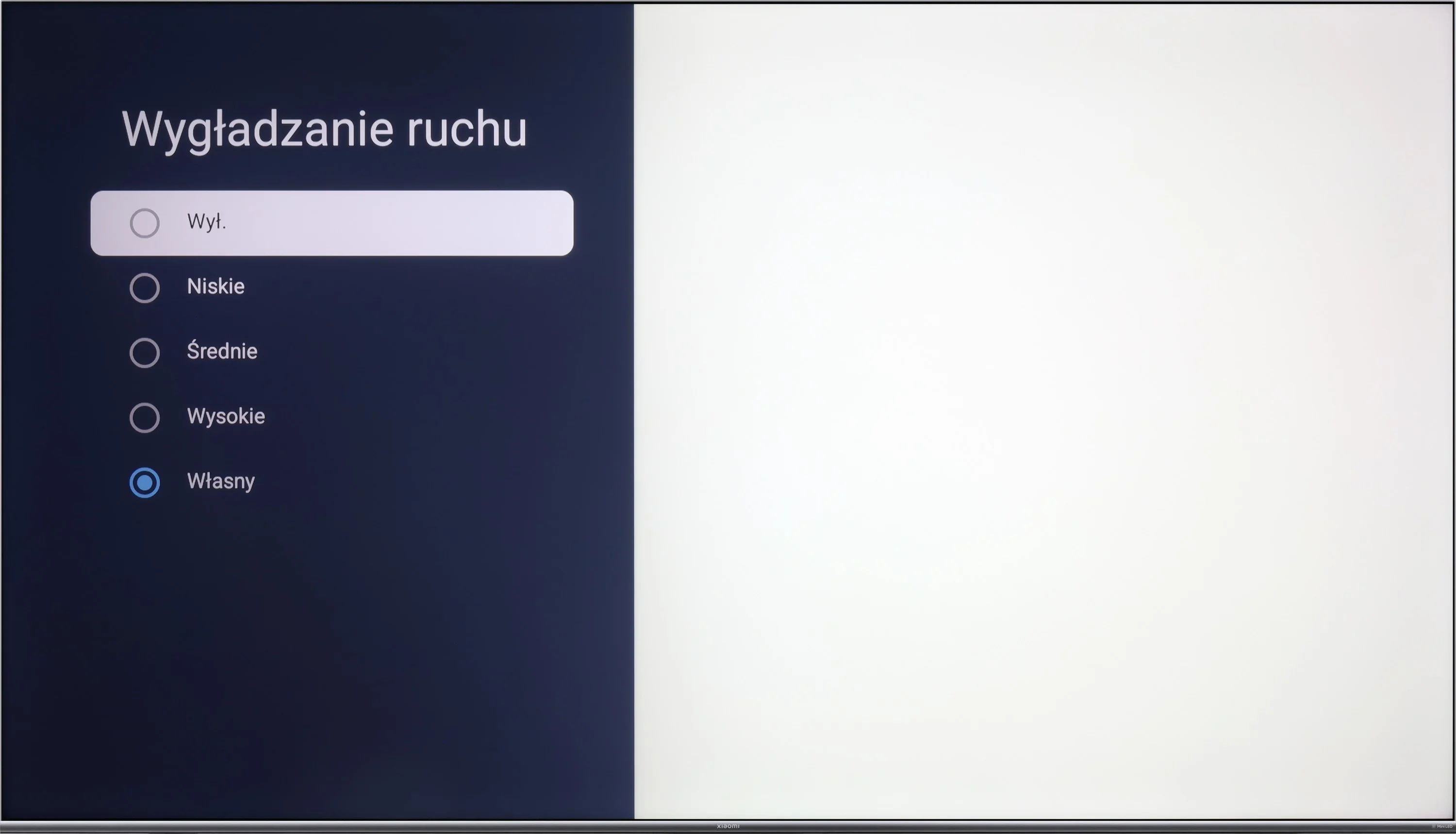
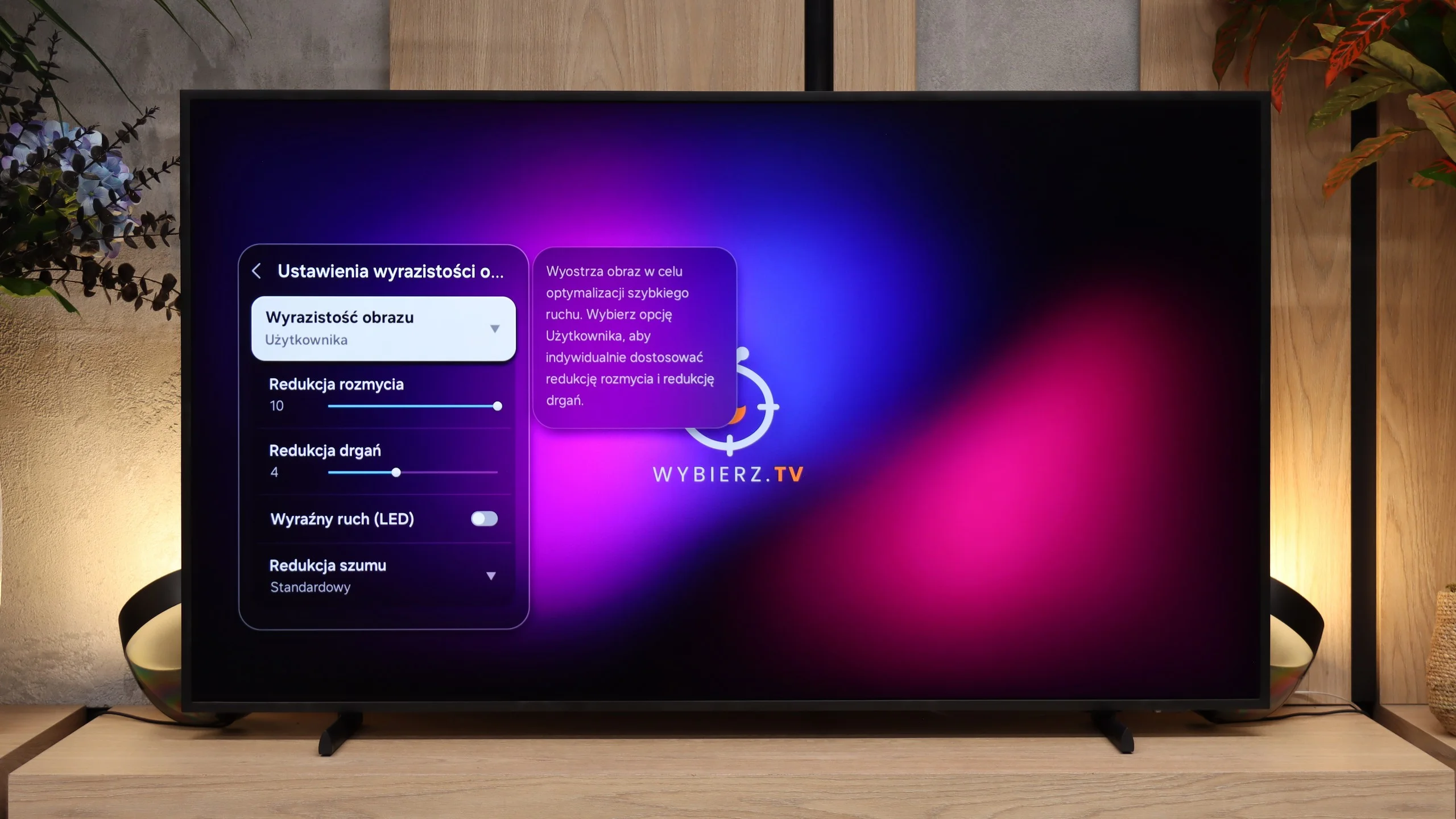
Blur (native resolution, maximum refresh rate):






Blur (BFI function enabled):
Image flickers in this mode



Blur ():
Blur (1080p@240Hz):



Xiaomi S MiniLED 2025 is equipped with a panel featuring a refresh rate of 4K@120Hz (1080p@240Hz), which provides sufficient smoothness for both watching dynamic sports broadcasts and playing the latest games. This level of refresh rate makes the image appear fluid, even in the most intense scenes. Additionally, the television offers a “Motion Smoothing” feature that allows you to adjust the way the image is displayed in films. You can choose a more frame-like effect, typical of the cinematic experience, or a smoother one, reminiscent of the so-called “theatrical effect.” This way, every user can tailor the settings to their preferences and enjoy smooth images in their favourite content.
Samsung again used a panel with a maximum refresh rate of 144 Hz. Refresh rates up to 120 Hz primarily offer greater possibilities with material that contains a lot of motion. The TV can use additional motion-smoothing systems that can improve fluidity in sports and other fast-moving content. However, a high refresh rate alone does not solve everything. The Frame still uses a VA panel, which has a fairly slow response time, and consequently fairly pronounced motion blur. With rapidly moving objects, especially on a dark background, trails are easy to notice. There is also a slight doubling of edges, which can be visible even when additional motion-enhancement systems are switched off. We saw similar behaviour in last year's The Frame 2025, and it's a shame Samsung hasn't addressed this issue. The 144 Hz itself provides a good foundation, but the panel's response time still limits this TV.
Console compatibility and gaming features
9.8/10
9.6/10
- ALLM
- VRR
- VRR range48 - 144Hz48 - 240Hz
- Dolby Vision Game Mode
- Correct implementation of HGIG
- 1080p@120Hz
- 1440p@120Hz
- 4K@120Hz
- Game bar
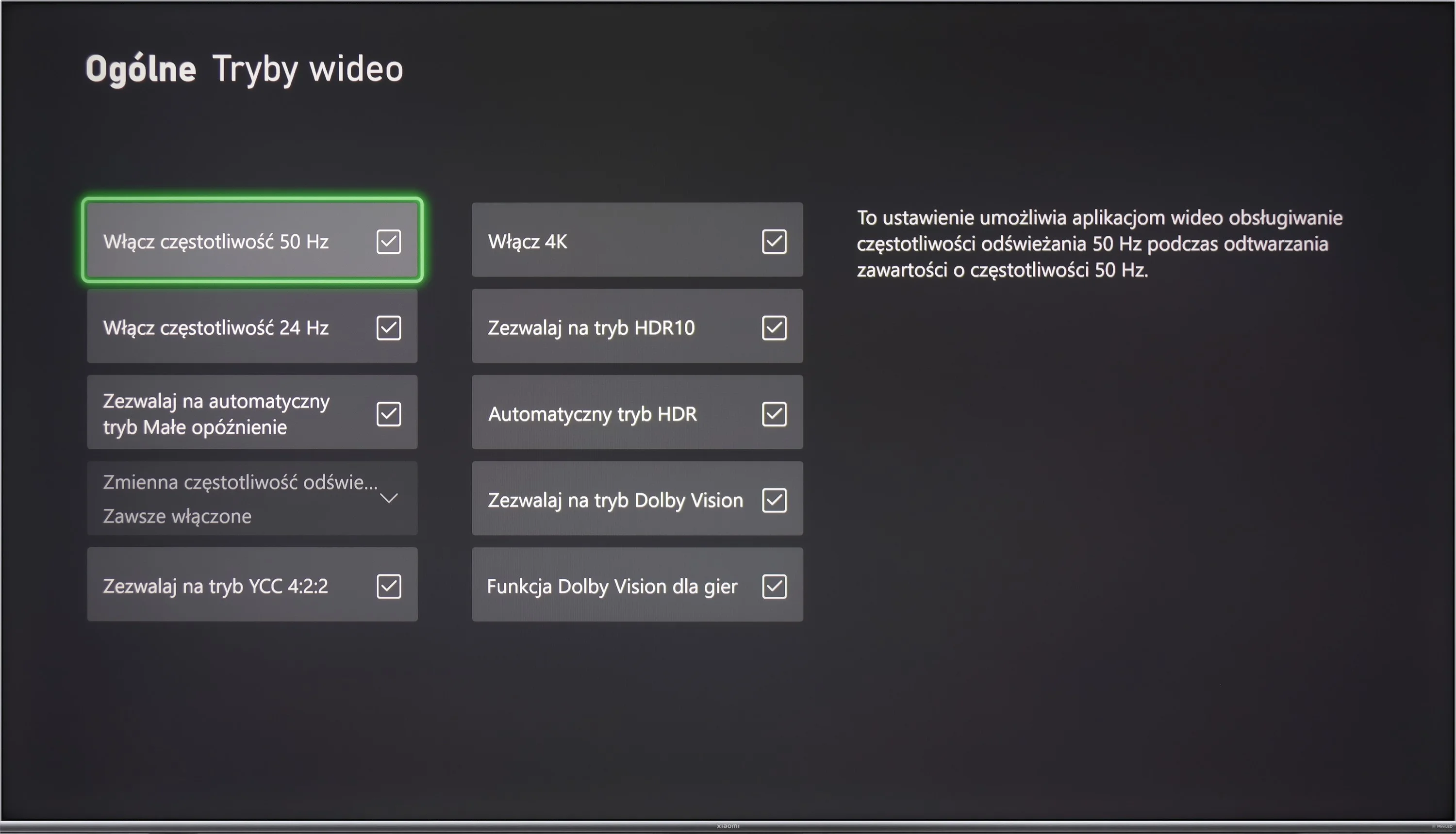
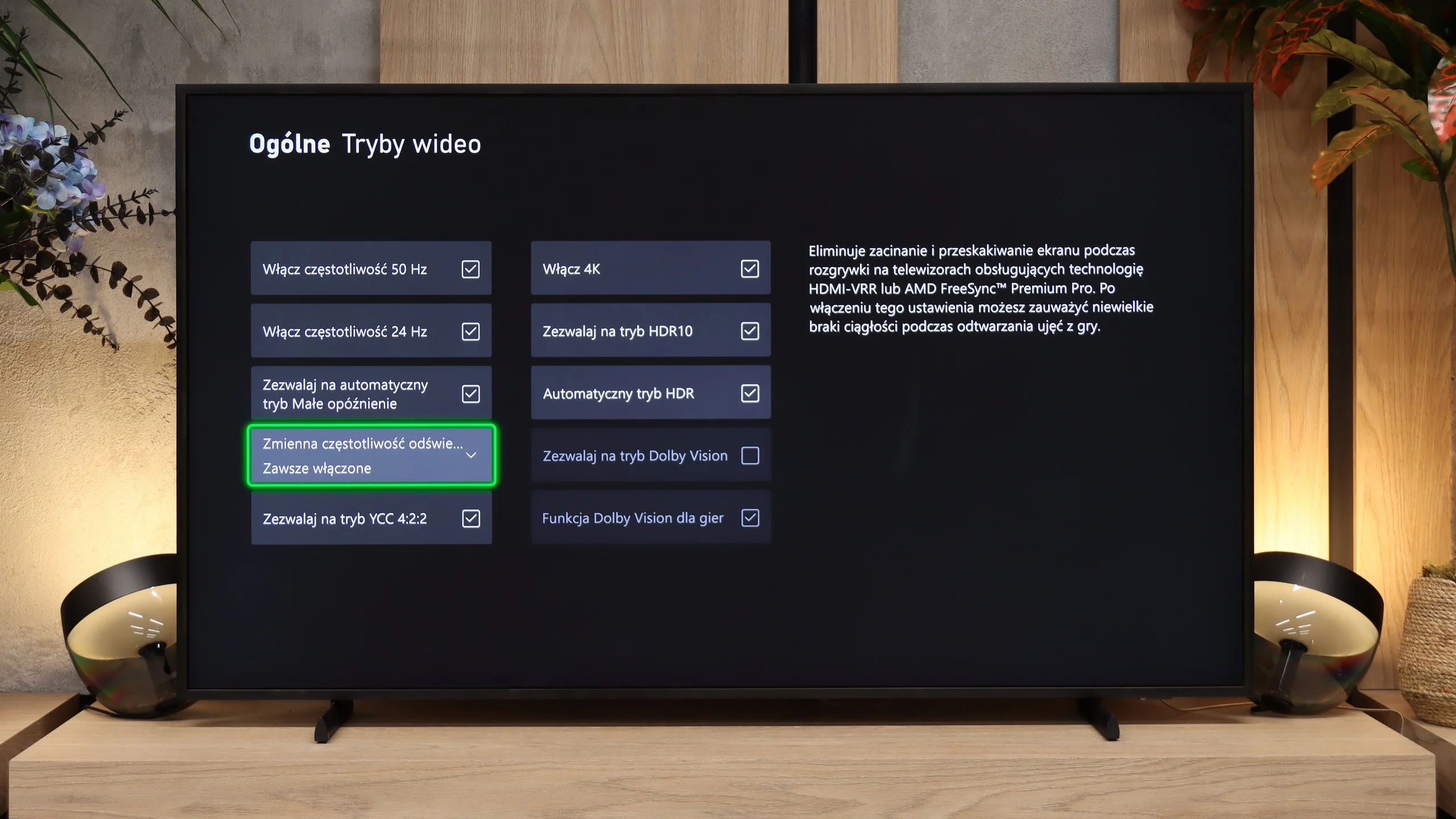
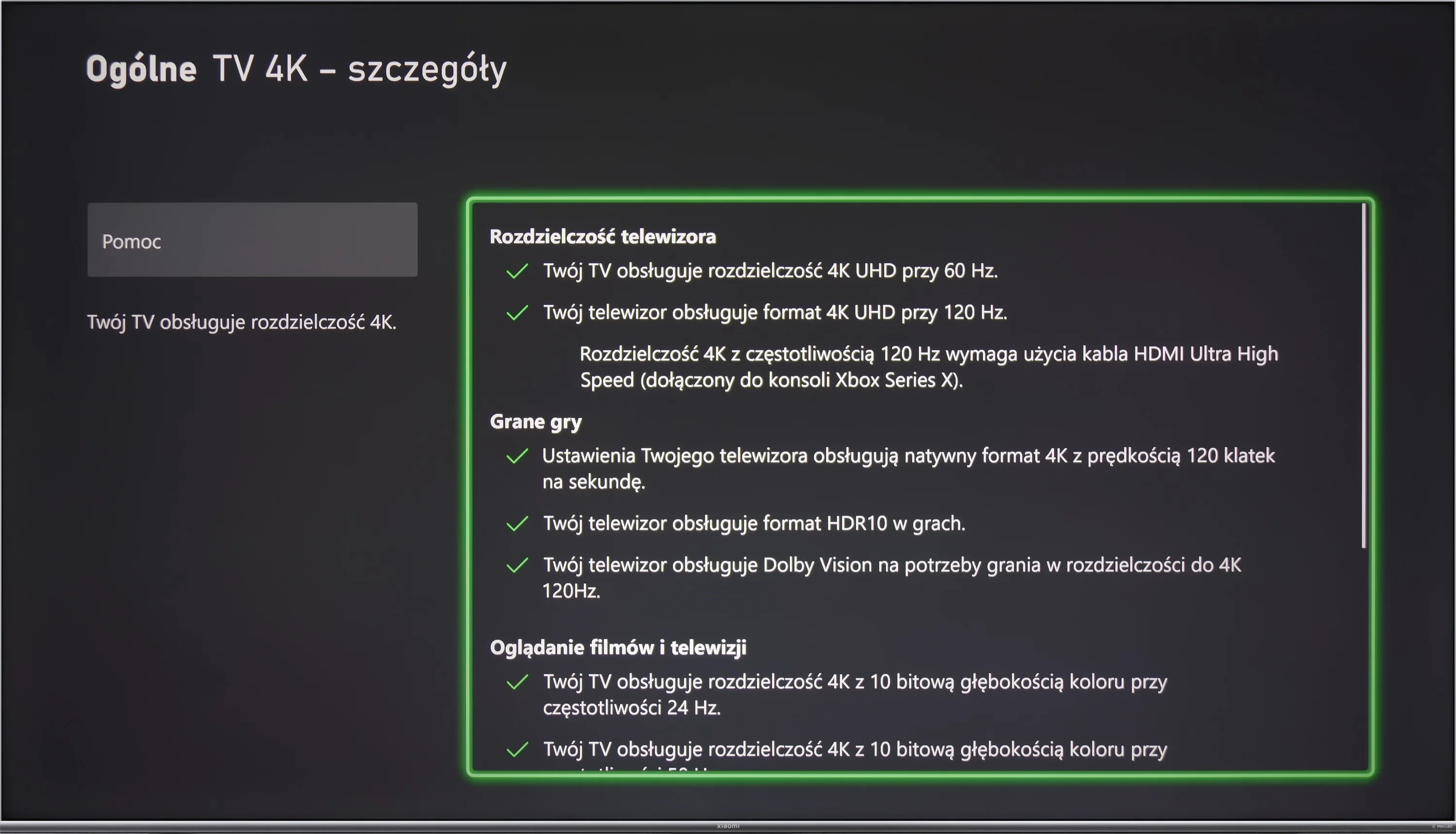
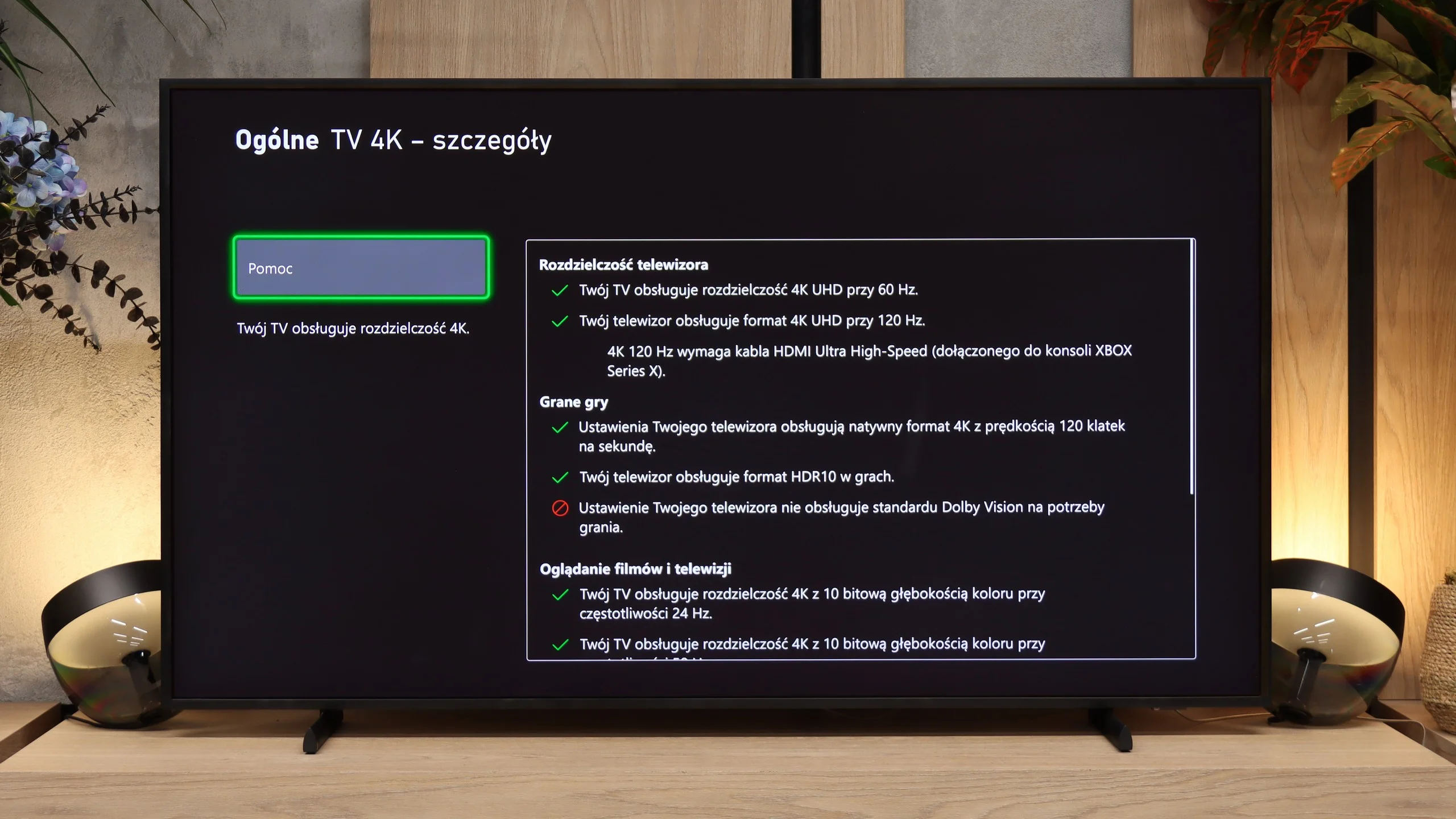
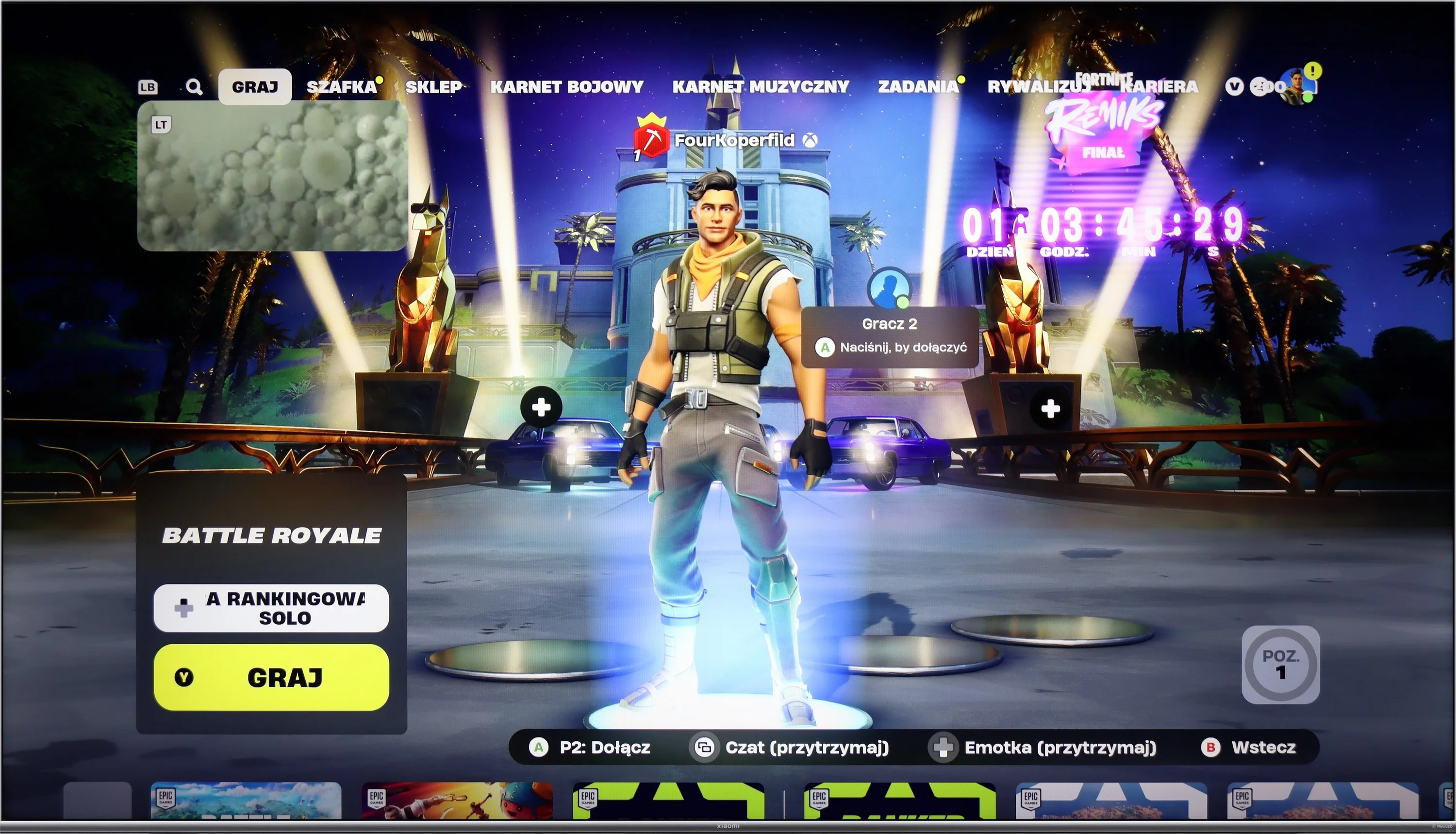
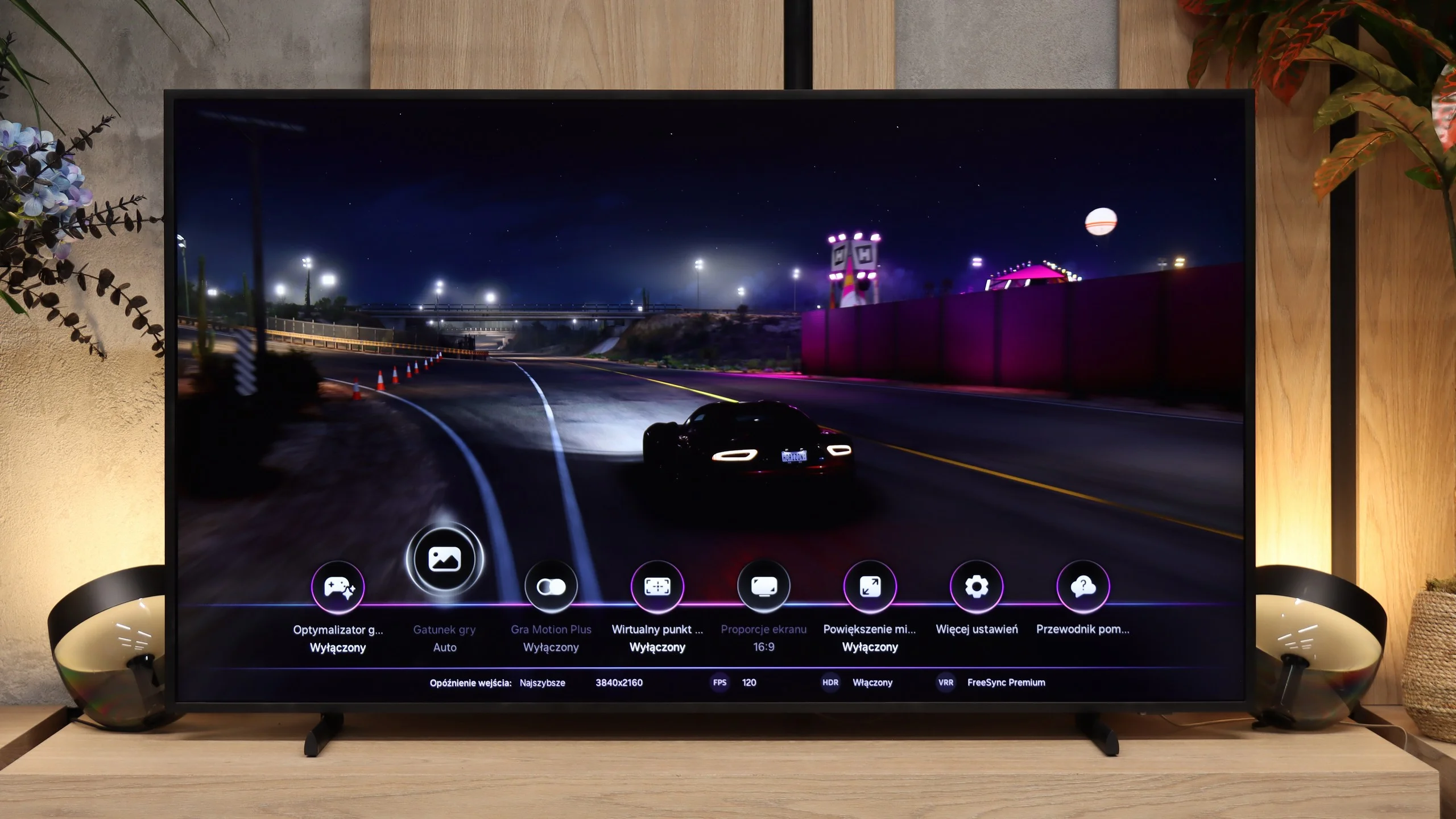
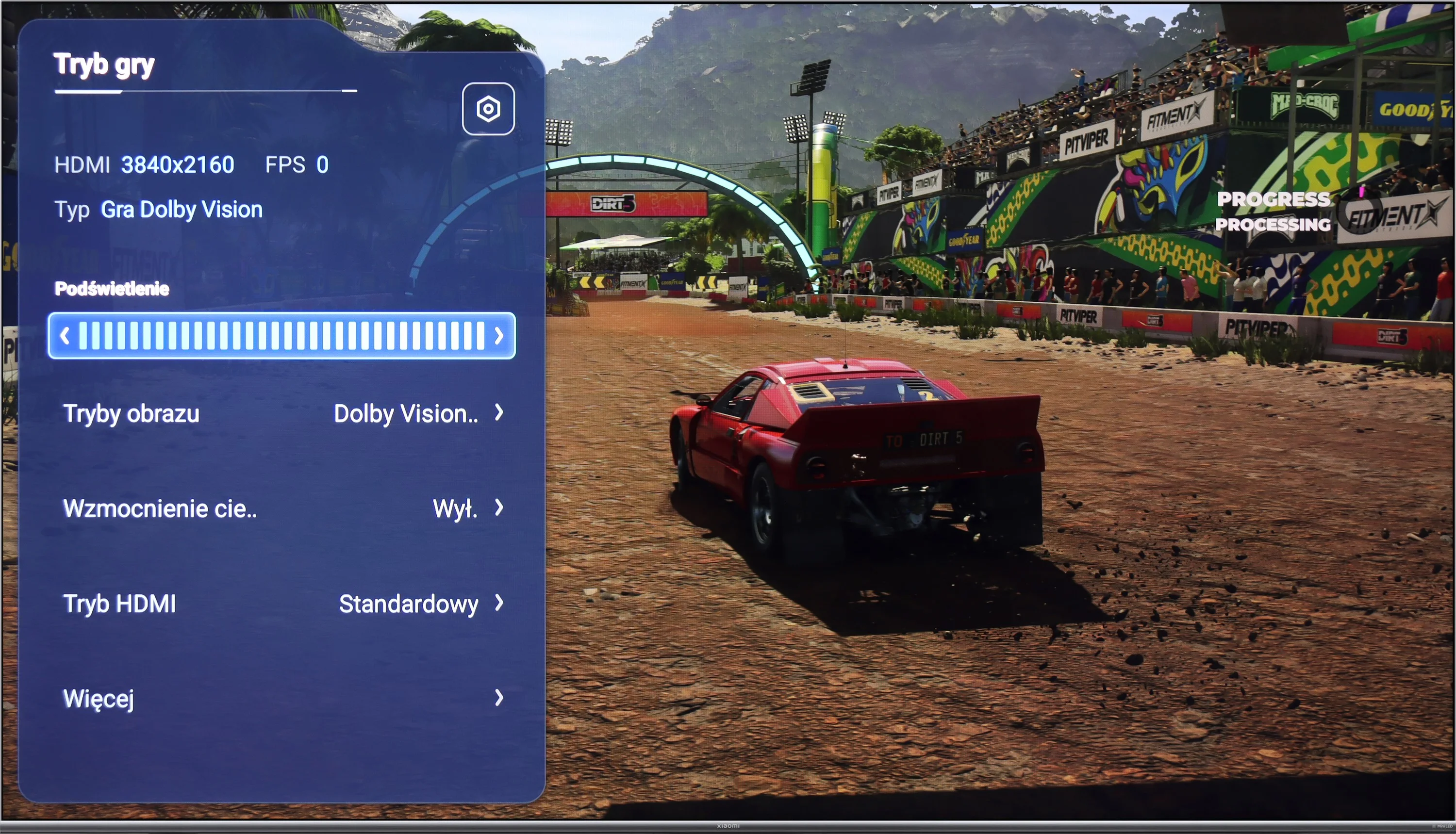
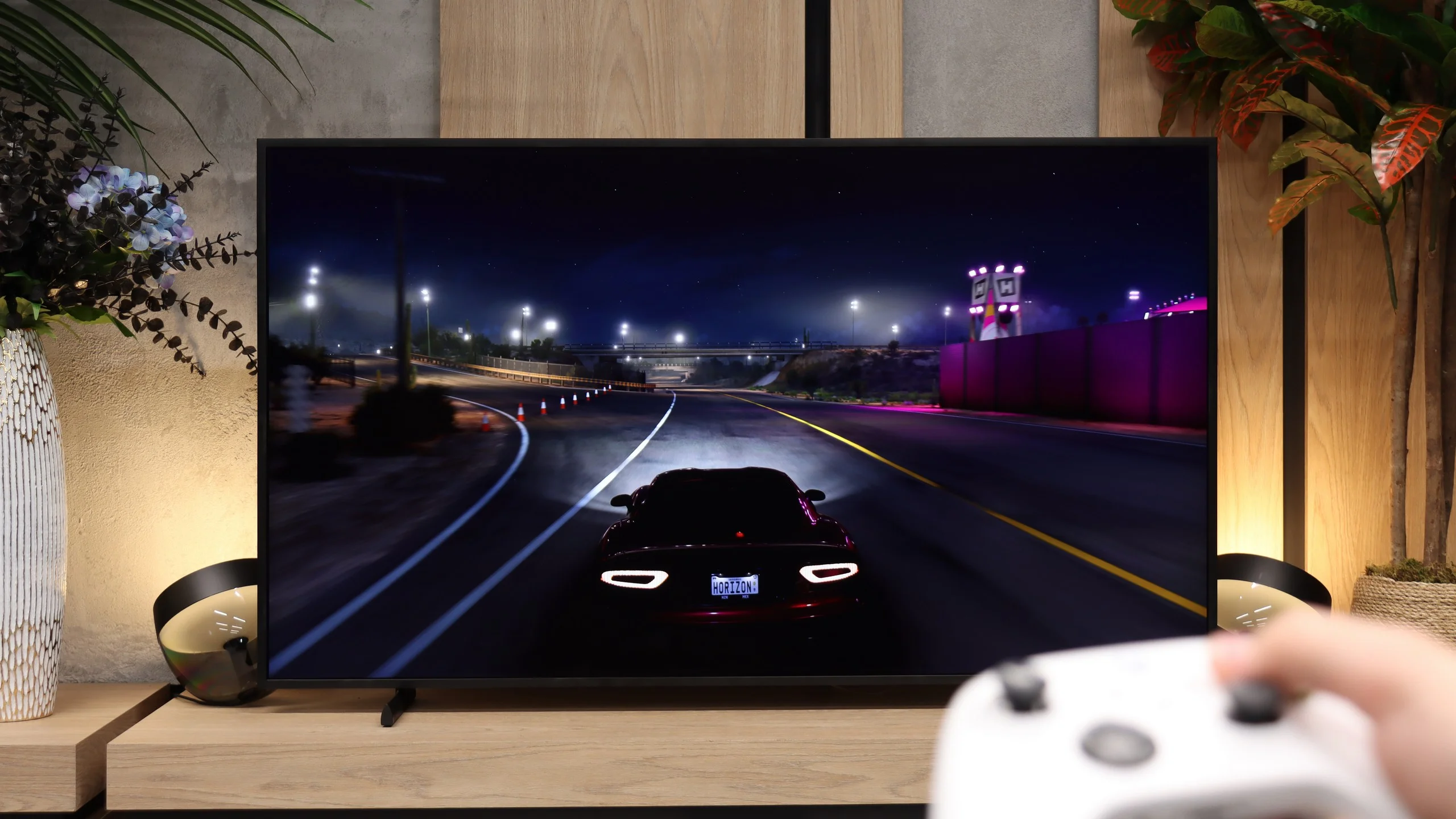
Xiaomi S MiniLED 2025 is a television that has a lot to offer gamers. With two HDMI ports boasting 48 Gbps bandwidth, we can easily connect modern consoles or PCs, utilising their full potential. Additionally, the ALLM feature automatically switches the TV to low-latency mode – something we will appreciate during dynamic games without annoying lags. Regardless of what we connect, it functions smoothly, and the television handles various resolutions exceptionally well. There is also the GameBar, which may not look as impressive as the "bars" from the competition, but makes up for it with practicality. It is a simple settings panel that allows us to quickly change the most important options or check statistics – an ideal solution when time is of the essence.
However, we must admit that operating the television itself – or rather finding the gaming features within it – posed a significant challenge for us. We approached the testing of the Xiaomi S MiniLED 2025 several times to locate all the necessary options. The hidden menu allowed us to discover the "GameBoost" feature, which enables switching the television to 240 Hz mode, activating VRR, and allows for enabling picture in HGIG mode.
In summary, the Xiaomi S MiniLED 2025 is a television that definitely deserves praise in the gaming hardware category. Its rich set of features – 240 Hz mode, VRR, HGIG, and "GameBoost" – provides an exceptional gaming experience. Unfortunately, the intuitiveness of the menu itself leaves much to be desired and may pose a challenge for the average user.
In terms of gaming features, The Frame is practically on a par with Samsung’s top televisions. When a console is connected the TV automatically switches to Game Mode thanks to ALLM, so we do not have to change settings manually each time. There is also VRR, which matches the screen refresh rate to the number of frames produced by the console or PC. This helps avoid the characteristic screen tearing when frame rates drop. The Frame of course supports 4K at 120 Hz, so you can take advantage of the capabilities of the PlayStation 5 or Xbox Series X in games that offer higher frame rates. HGiG also works correctly. With HDR properly configured on the console, the TV does not try to brighten the picture further on its own, so bright effects in games are displayed as they should be. Samsung also includes a Game Bar. It is a handy menu you can bring up without leaving the game. There you can check VRR operation and the current frame rate, and quickly change the most important gaming-related settings. With a PC the possibilities are even greater, because the aforementioned Full HD mode lets you increase the refresh rate up to 240 Hz. There is essentially one feature missing that Samsung has already got us used to, namely Dolby Vision Gaming. Xbox owners will notice this most, as that console can use Dolby Vision in games. There is one more thing worth mentioning specific to this model. Its One Connect module has only one HDMI 2.1 port, so you must plug the console or PC into that port if you want to use 4K at 120 Hz. Fortunately Samsung did not combine this port with eARC. The soundbar can therefore be connected separately (3) and you still have a full HDMI 2.1 available for the console.
Input lag
9.8/10
9.9/10
SDR
HDR
Dolby Vision
The input lag of the Xiaomi S MiniLED 2025 is one of its biggest advantages. 8 ms for 120 Hz content and 17 ms for 60 Hz is an absolutely remarkable performance that will satisfy even the most demanding gamers. Furthermore, the Dolby Vision mode in games deserves praise. Unlike many competing models, Xiaomi maintains a low input lag even in this mode, making it an excellent choice for fans of high-quality HDR gaming experiences.
People who feared that the additional One Connect module might cause greater delay between our action on the gamepad and what happens on the screen can sleep soundly. The input lag we measured is just as low as in other Samsung TVs.
At 60 Hz it is around 15 ms, and after switching to 120 Hz it falls to around 8 ms. These are very good results, so the delay is hard to notice in practice even in fast-paced games. The One Connect module itself does not introduce any noticeable issue.
Compatibility with PC
8.2/10
8/10
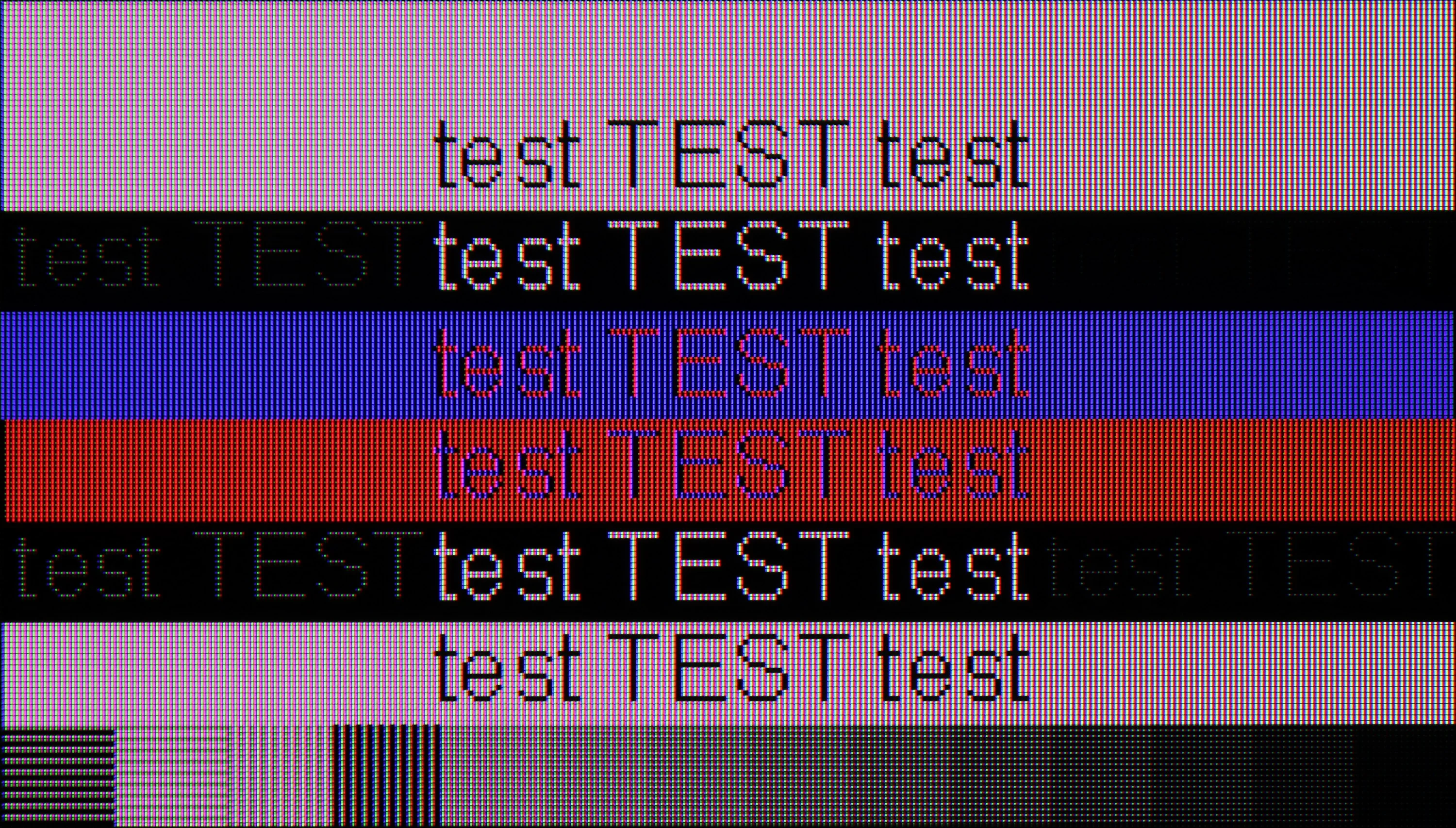
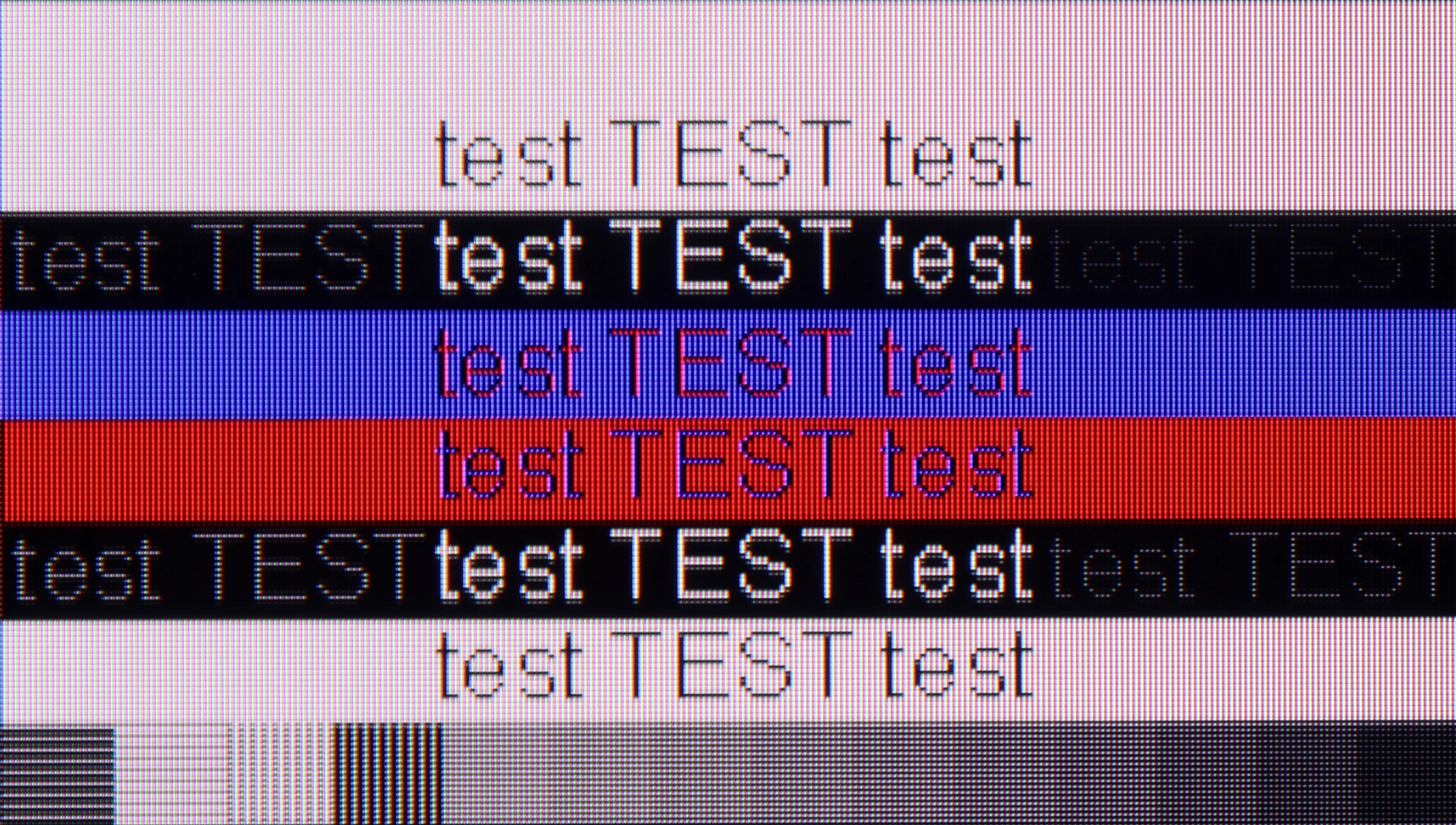
The photo shows the legibility of small fonts. Ideally, lines should be the same thickness on both light and dark text, with minimal pixel gaps.
Xiaomi S MiniLED 2025 is a good choice if we need a television for working with a computer. The fonts are very clear thanks to the support for chroma 4:4:4, making it perfect for office work or browsing documents. It also performs excellently in gaming – high refresh rates, G-SYNC, and low input lag ensure smooth gameplay, which will satisfy most gamers.
In this category you could jokingly say that the new The Frame gives with one hand and takes away with the other. If you look solely at PC gaming, it performs really well. You have 144 Hz at 4K or even 240 Hz in Full HD, plus support for G-Sync and FreeSync and very low input lag. The Frame can easily serve as a large gaming monitor and it's hard to find major complaints.
On the other hand, we had the impression that font readability in the new model has worsened slightly. When you look at text from very close up, you can notice additional halos at the lower edges of characters caused by the action of individual sub-pixels. This gives a slight impression of blurred text. Of course this is mainly an issue for people who would actually want to use The Frame as a monitor on a desk, for example for working with text. At a typical viewing distance the problem is practically impossible to notice. And let's be honest, it's hard to imagine anyone putting a 55- or 65-inch The Frame on their desk.
Viewing angles
3/10
3.1/10
In terms of viewing angles, Xiaomi S MiniLED 2025 does not impress. This is a typical problem with VA panels, which do not perform well without additional coatings that widen viewing angles. The image begins to lose quality when watching the television from the side – colours fade and contrast significantly drops. However, the advantage of VA panels is their considerably better contrast compared to IPS panels, which in turn win in terms of wider viewing angles. This is a classic compromise where one has to choose between better blacks and a more universal image seen from various places in the room.
Viewing angles are not a strong point of this model. Compared with LCD TVs with IPS panels, and even more so with OLEDs, the picture loses quality fairly quickly when viewed at an angle.
Daytime performance
7.3/10
6.7/10
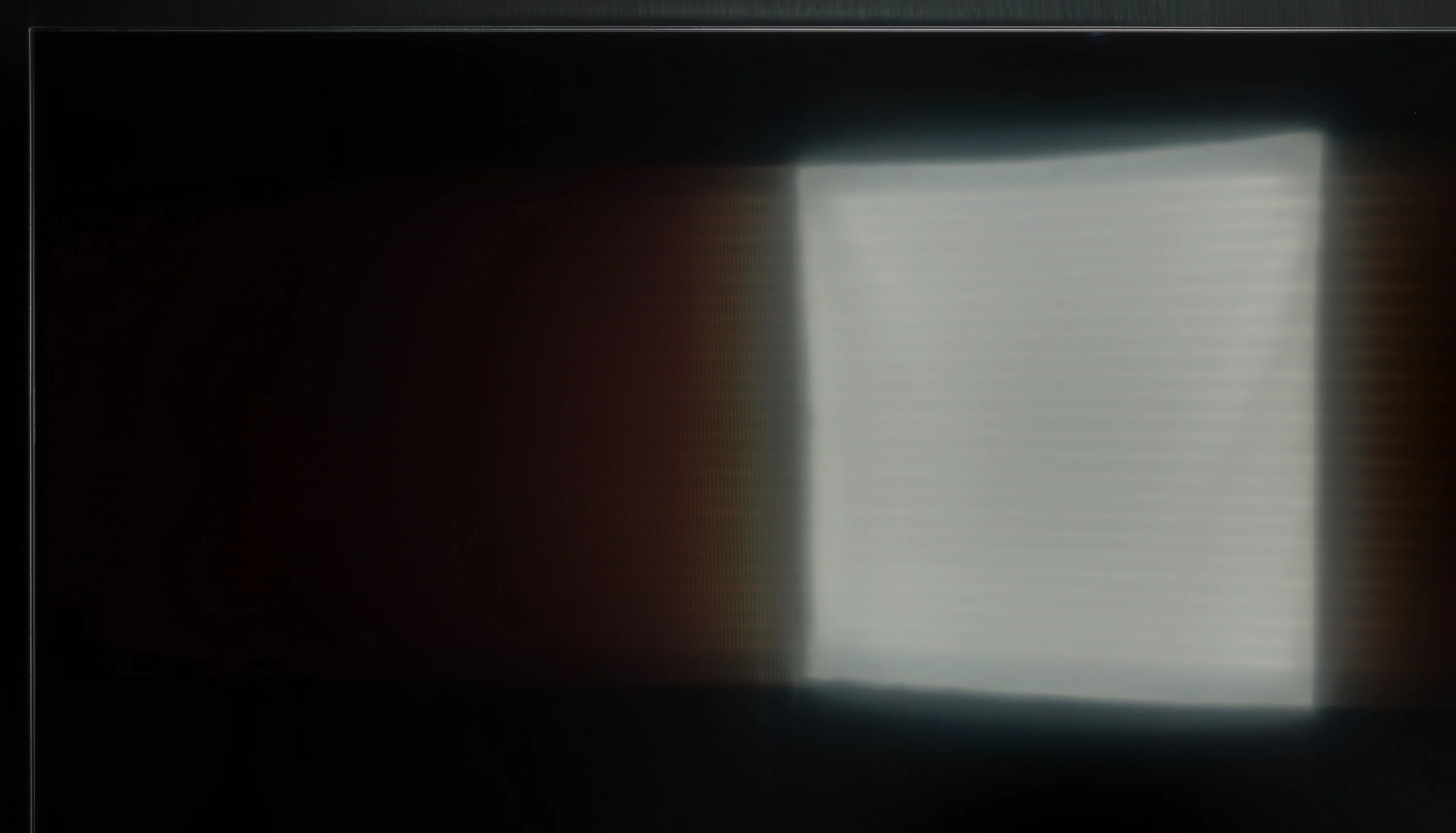
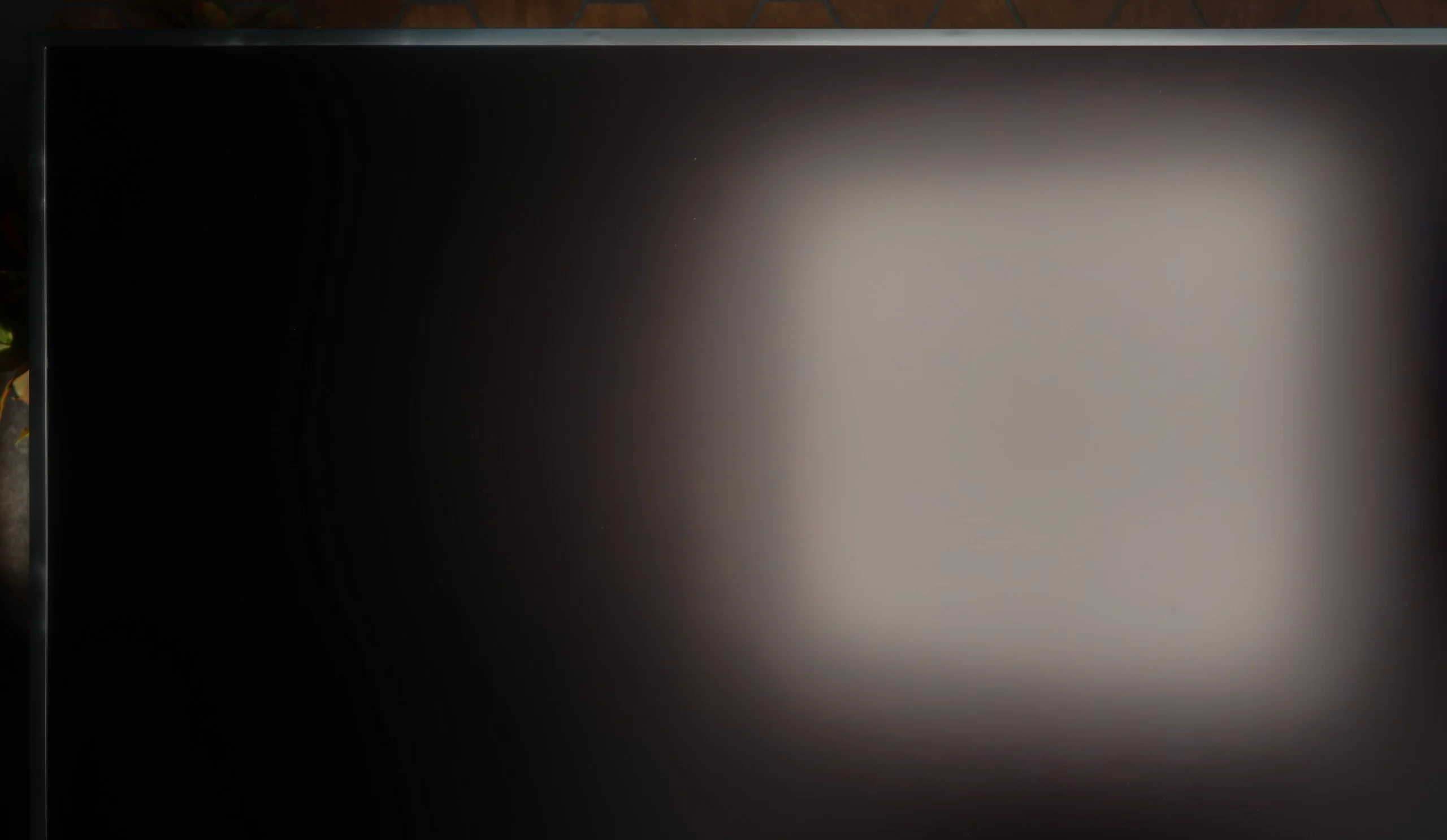
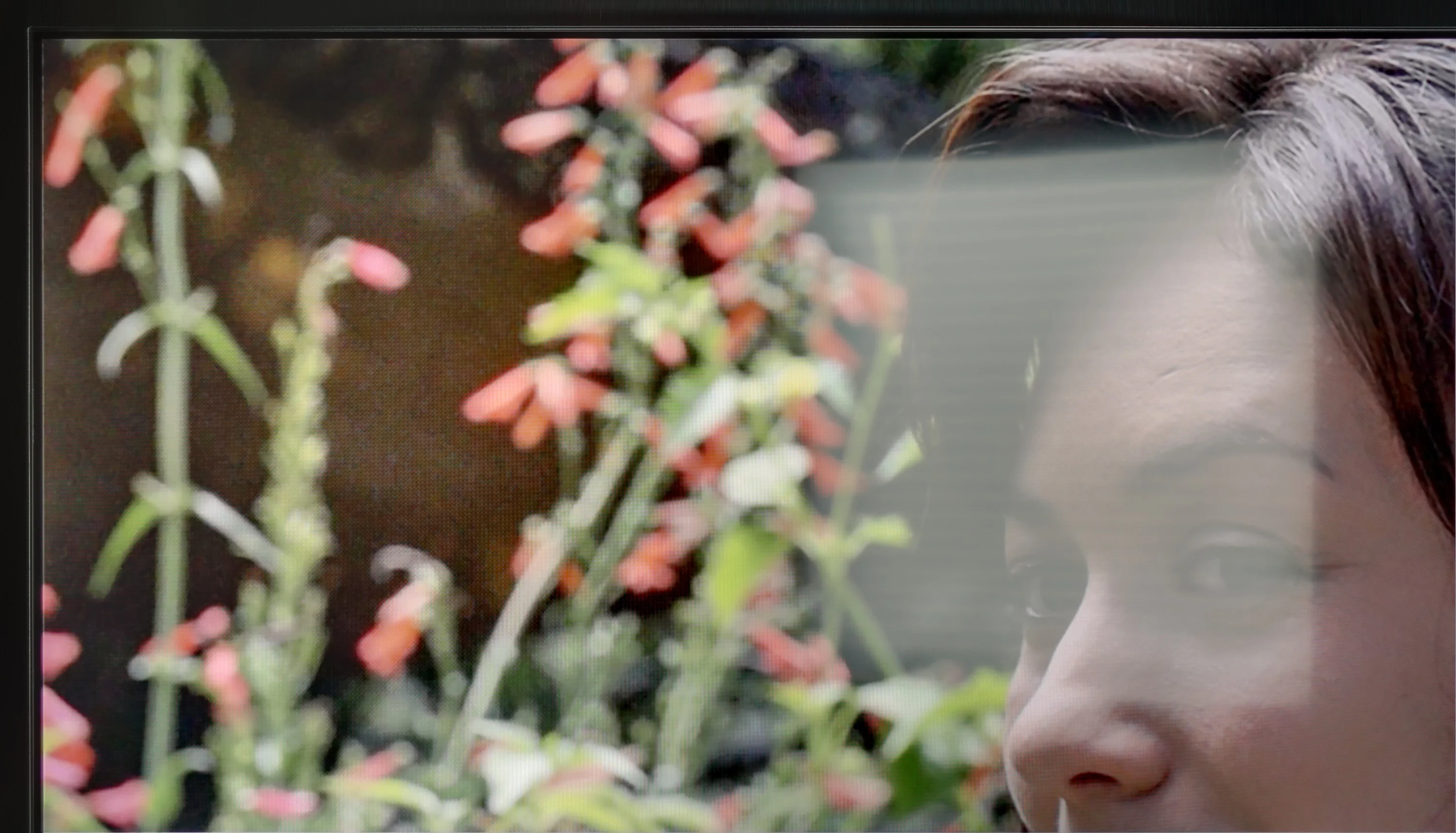
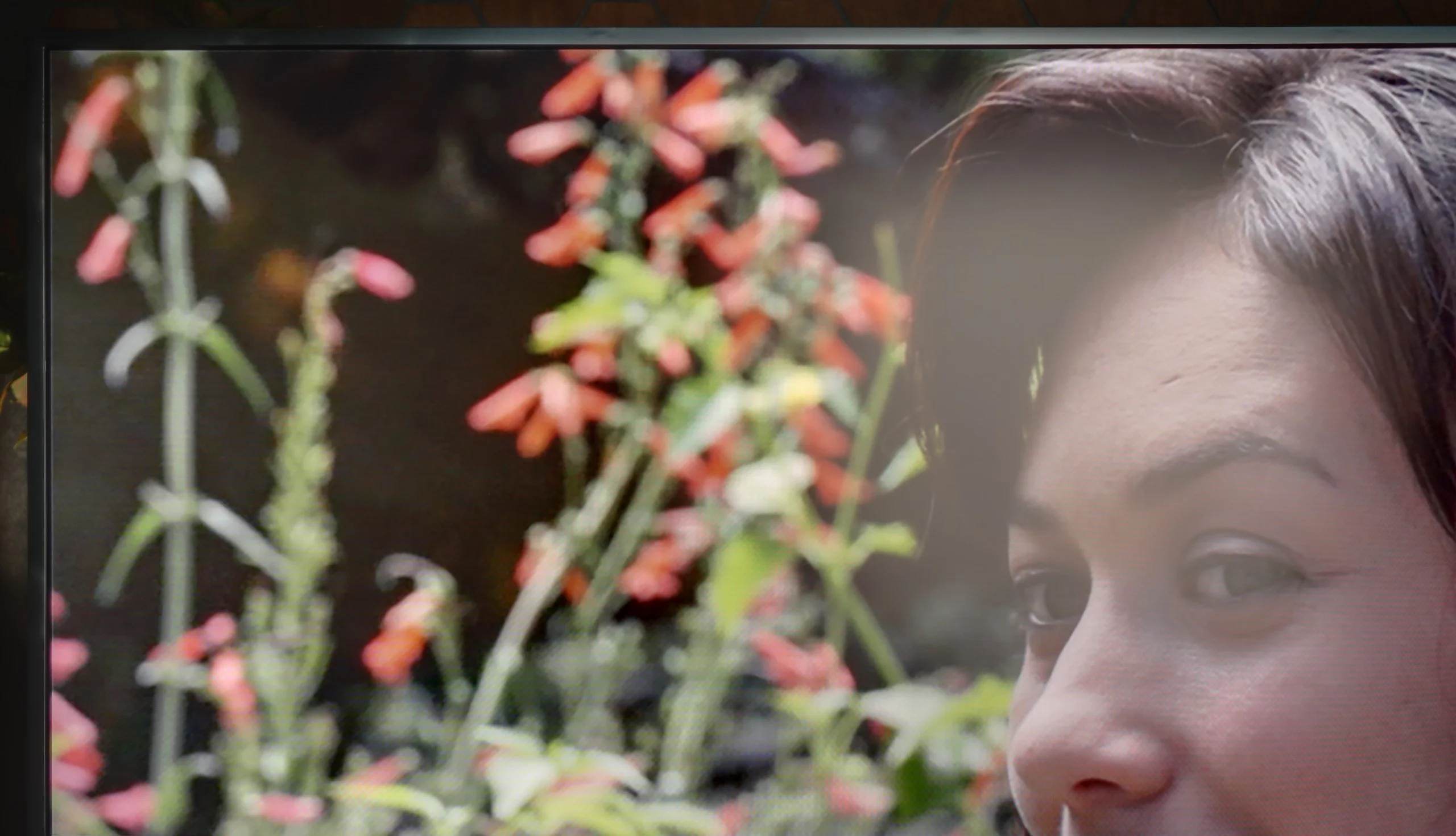
Panel brightness
Samsung The Frame 2026 (LS03H): 617 cd/m2
Xiaomi S Mini 2025: 841 cd/m2
Xiaomi S MiniLED 2025 is equipped with a satin finish on the panel, which performs fairly well in reducing reflections. On the screen surface, one can notice light reflections, which can be somewhat distracting in bright rooms. However, the key feature that saves this television in daytime use is its brightness. With a value of 841 cd/m², the screen performs effortlessly even in very sunny interiors. This is more than enough to comfortably watch television, films, or sporting events. Importantly, the television also handles more demanding content, such as winter sports, where the dominant white can pose a significant challenge for other televisions. Here, Xiaomi definitely delivers.
The Frame is, by design, a television that will often be used in a bright living room, and its matt finish suits that very well. The screen effectively diffuses reflections, so a window or a lit lamp don't turn into a clear mirror. In that respect it's really good and it's one of this model's stronger points. The matt coating does, however, have its downside. Strong light falling directly on the screen scatters over a larger area and slightly raises the black level. So during the day blacks don't look as "deep" as at night, especially when the room is very bright. But we think that's a fair compromise. On the plus side, The Frame's high brightness helps. The TV has enough power that the picture doesn't wash out and remains clearly visible during the day. Overall, then, it's a good TV for a bright living room, particularly if reflections bother you more.
Panel details
Subpixel Structure:
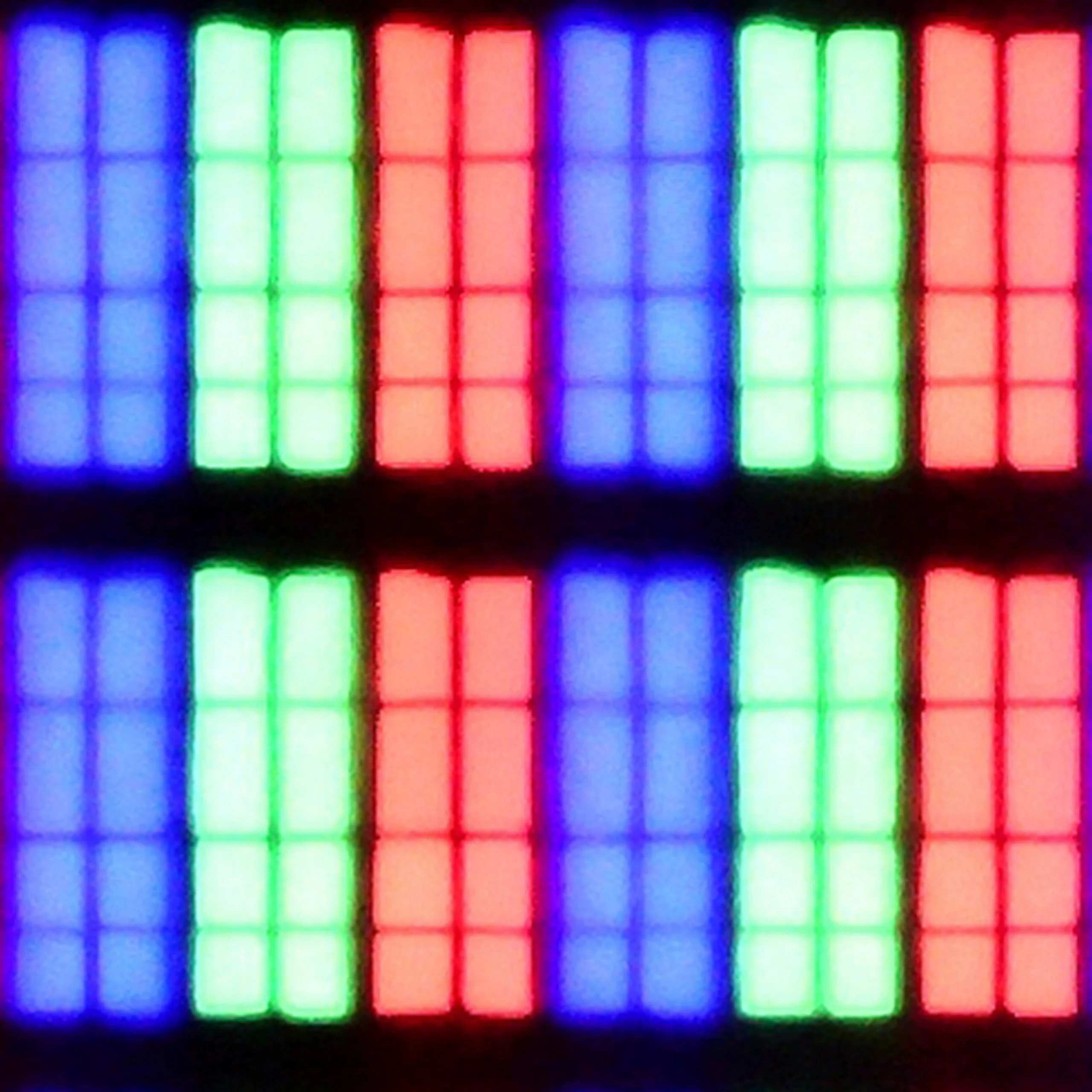
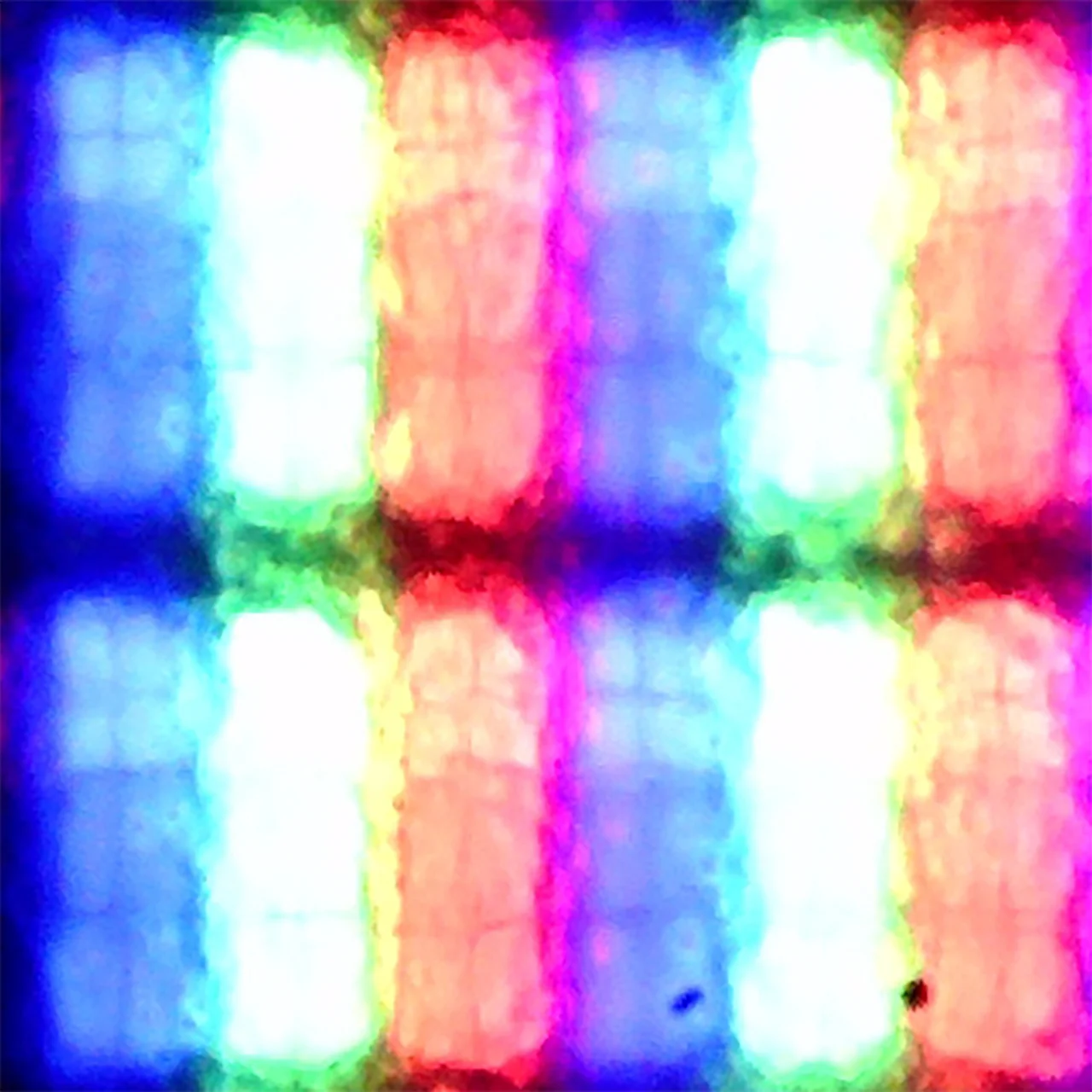
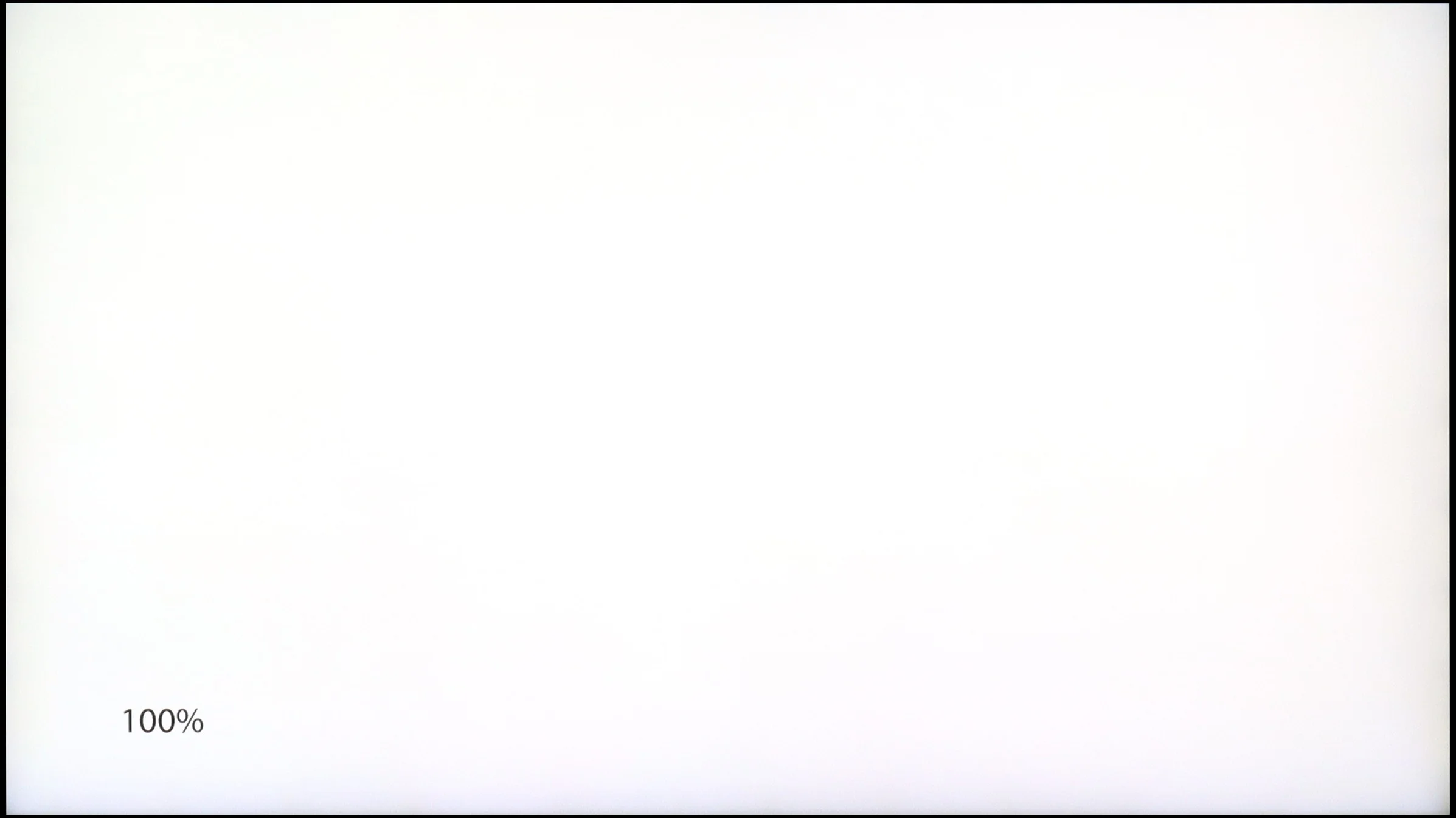
Panel uniformity and thermal imaging:

TV features
4.7/10
7.7/10
- SystemGoogle TVTizen
- System performanceAverageGood
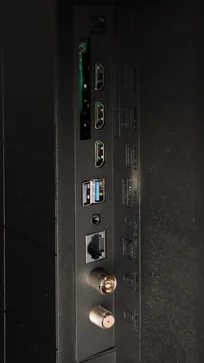
- HDMI inputs1 x HDMI 2.0, 2 x HDMI 2.1 48Gbps3 x HDMI 2.0, 1 x HDMI 2.1 40Gbps
- Other inputsUSB-C
- OutputsToslink (Optical audio), eARC (HDMI), ARC (HDMI), Mini-Jack (Headphones)Toslink (Optical audio), eARC (HDMI), ARC (HDMI)
- Network InterfacesWi-Fi 2.4GHz, Wi-Fi 5GHz, Ethernet (LAN) 100MbpsWi-Fi 2.4GHz, Wi-Fi 5GHz, Ethernet (LAN) 100Mbps
- TV receptionDVB-T, DVB-T2, DVB-S, DVB-S2, DVB-CDVB-T, DVB-T2, DVB-S, DVB-S2, DVB-C
Classic features:
- Recording to USB (terrestrial TV)
- Recording programming
- Picture in Picture (PiP)
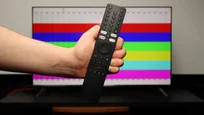
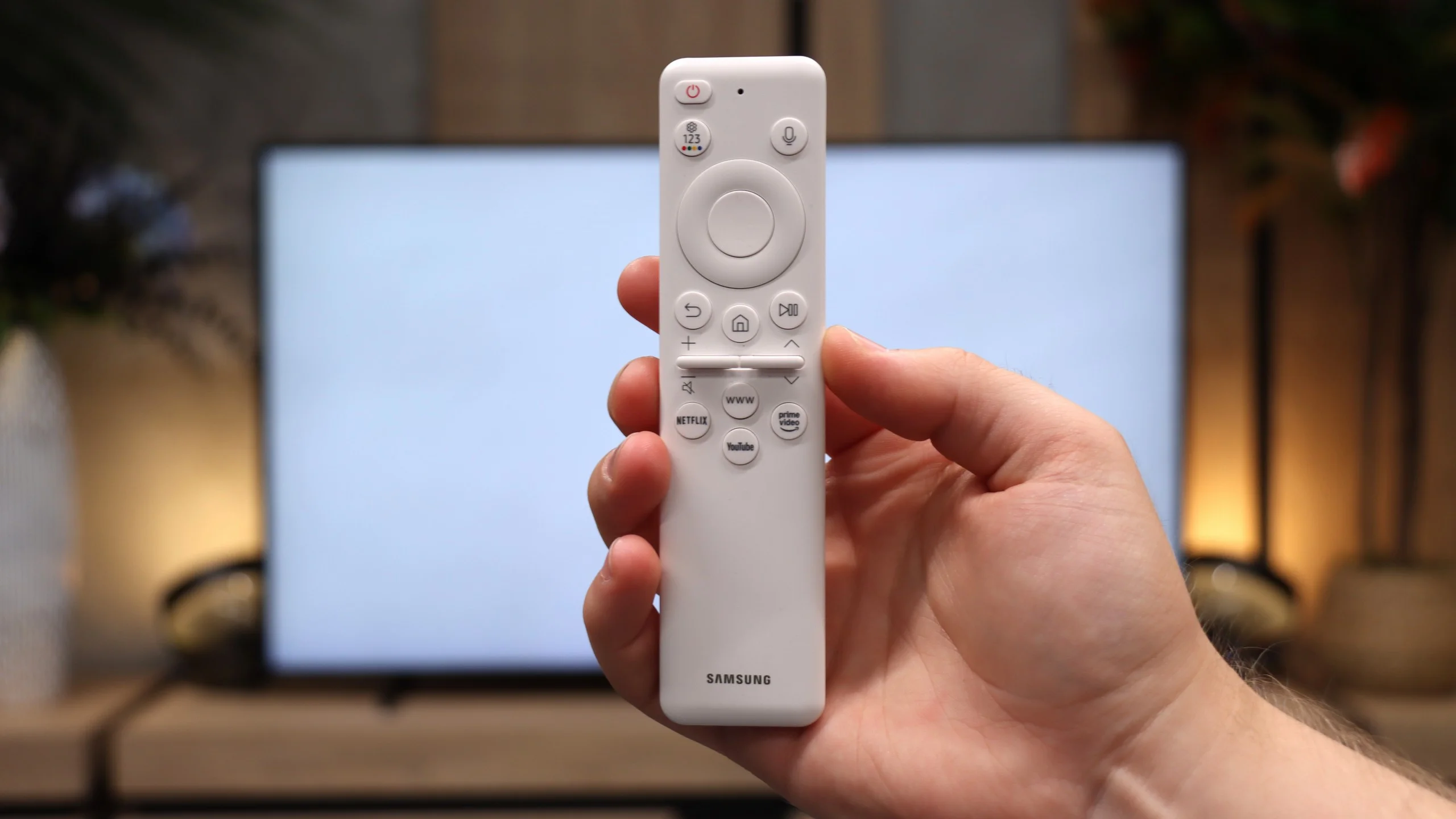
- RF remote control (no need to aim)
- Backlit remote control
- Teletext
- Audio only mode
- Bluetooth headphones support
- Simultaneous Bluetooth headphones & TV audio
Smart features:
- AirPlay
- Screen mirroring (Windows Miracast)
- Voice search
- Voice search in native language
- Ability to connect a keyboard and mouse
Sound connection options
- HDMI audioeARC (HDMI), ARC (HDMI)eARC (HDMI), ARC (HDMI)
- Other audio outputsToslink (Optical audio), Mini-Jack (Headphones)Toslink (Optical audio)
- Wireless audioBluetoothBluetooth
Supported audio formats (external HDMI eARC audio):
- Dolby Digital Plus 7.1
- Dolby True HD 7.1
- Dolby Atmos in Dolby Digital Plus (JOC)
- Dolby Atmos in Dolby True HD
- DTS:X in DTS-HD MA
- DTS-HD Master Audio
Senior accessibility
- Numeric keyboard on TV
- Font size adjustment
- Audio description
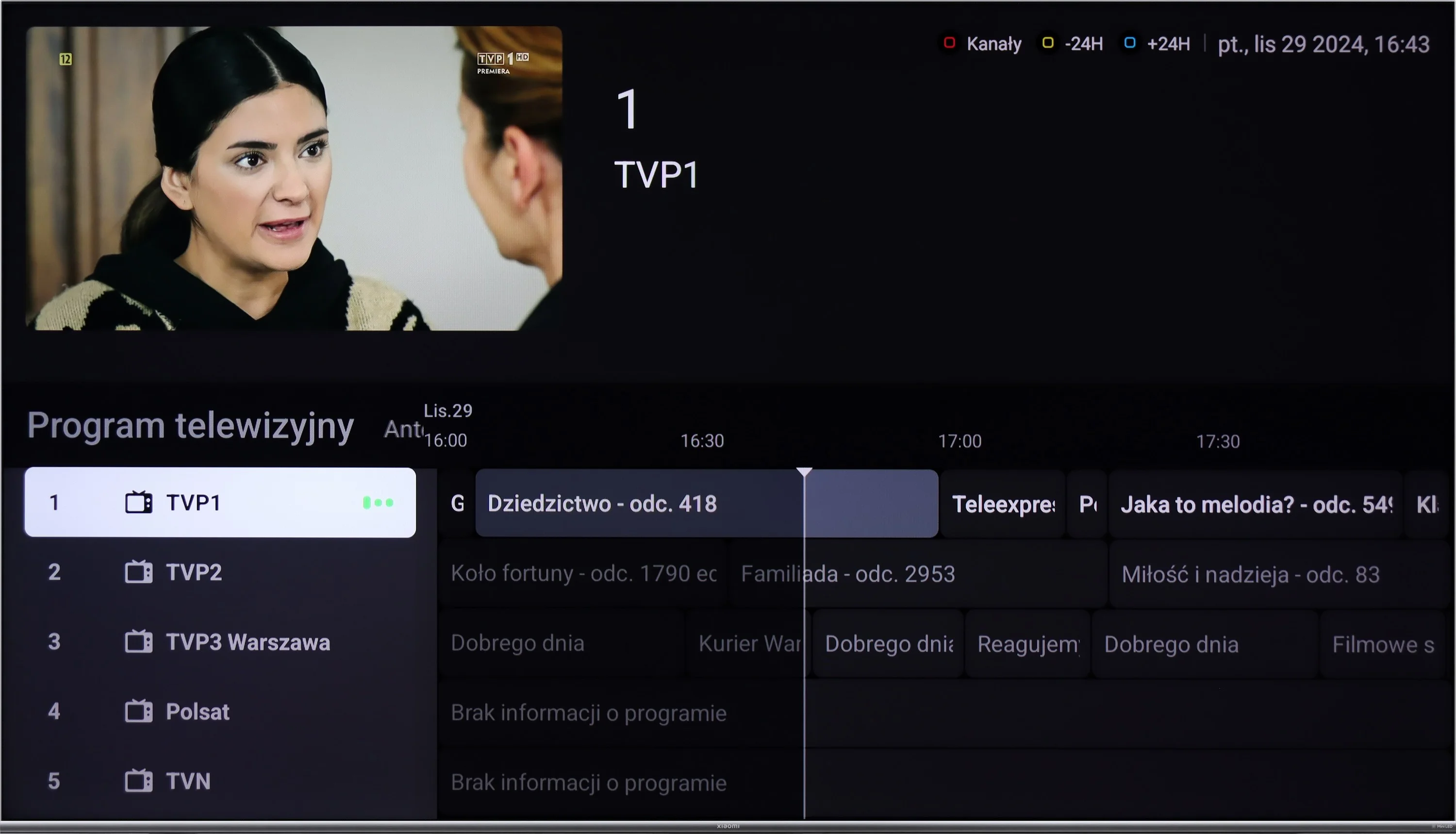
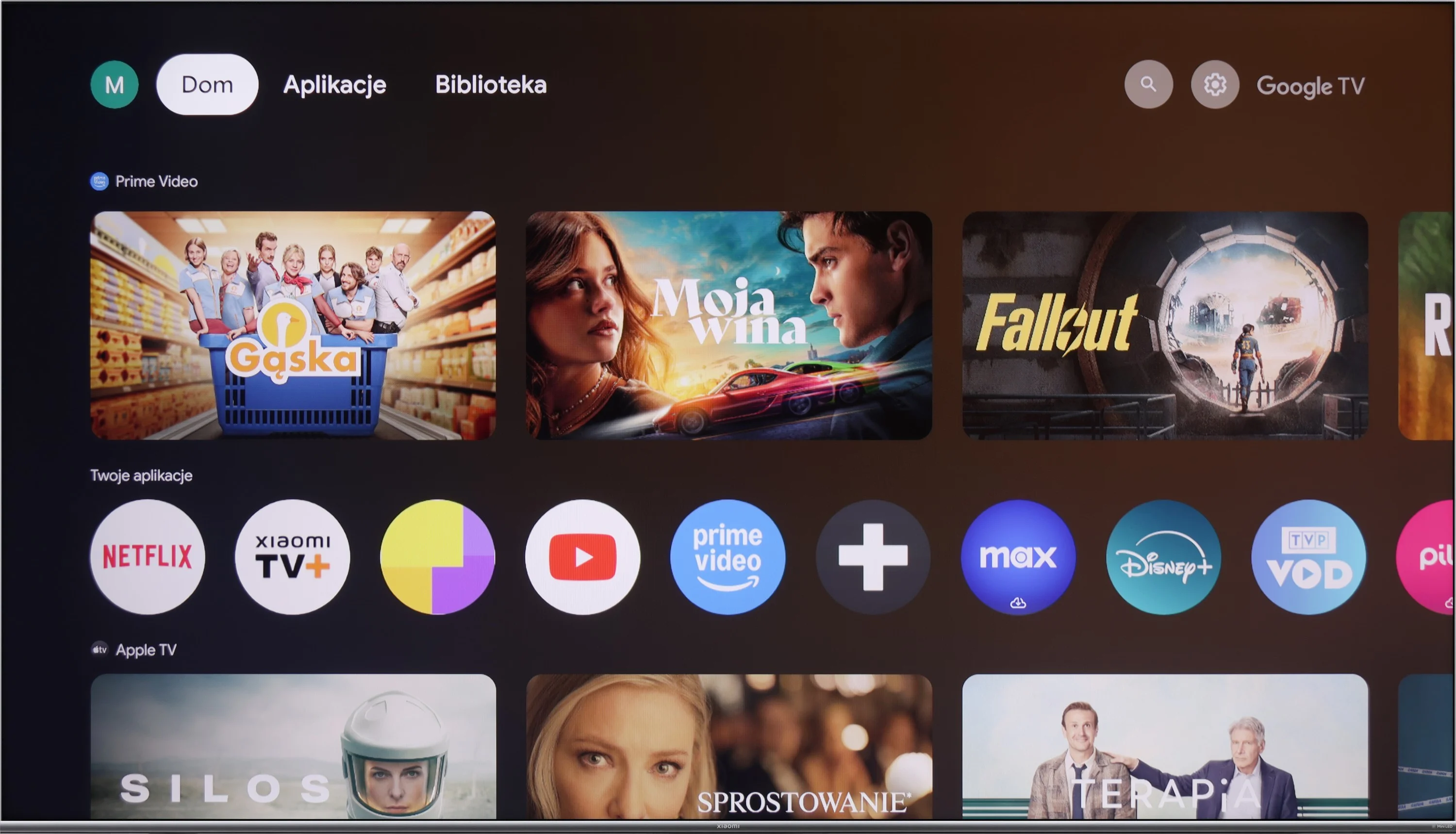
Xiaomi S MiniLED 2025 is a television that stands out thanks to the Google TV system. It offers access to the most popular streaming services, music apps, and various useful features that significantly enhance the everyday experience of using the television. For those who enjoy personalisation, the system also provides plenty of configuration options.
The built-in voice assistant operates smoothly – we can not only control the television but also ask about the weather forecast or set a reminder for the next day. Unfortunately, we noticed during testing that some features have difficulty translating into Polish, which can be frustrating, especially for those less adept at navigating the settings. Despite this, the overall impression is very good, and minor shortcomings can be corrected in future updates.
The device manages connectivity well. Wireless connections to Windows computers or Apple devices proceed smoothly, and thanks to Bluetooth, we can easily connect headphones, keyboards, or other accessories. The remote control is simple and convenient – it works from any position, so aiming at the screen is not necessary. However, there are some shortcomings. If someone frequently uses traditional television, they may feel the lack of recording features from tuners or the PiP (picture in picture) option. This somewhat limits capabilities, but for those focusing on streaming and modern functionalities, it shouldn't be a significant issue.
Xiaomi makes up for these shortcomings with an excellent operating system. Google TV is one of the most advanced and user-friendly systems available on the market, which makes the television perform really well in everyday use.
Operating System: Tizen
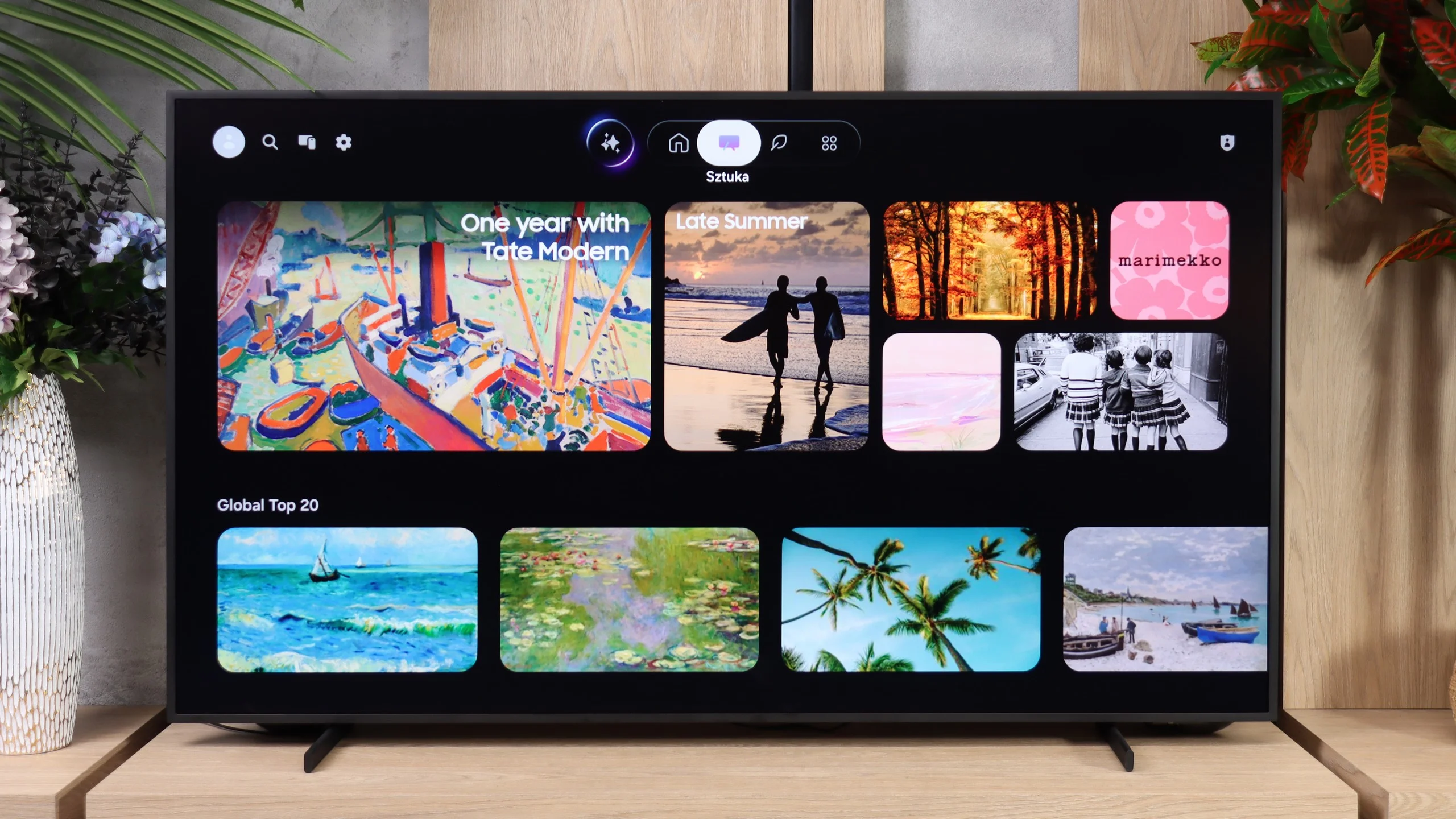
Samsung The Frame 2026 runs on the familiar Tizen operating system, so when it comes to Smart TV features, you get pretty much everything you would expect from a modern TV. There is a wide selection of streaming apps, AirPlay, SmartThings, and the ability to cast content from a smartphone. The system itself is fast and responsive, while the menu layout is very similar to what you’ll find on other Samsung TVs.
When it comes to traditional TV features, things are a little more basic. The Frame doesn’t really stand out in this area, focusing primarily on its online features and lifestyle-oriented functionality.
Art Mode
The key feature, of course, remains Art Mode. It allows The Frame to display artwork or your own photos when you’re not watching TV, effectively turning the screen into part of your interior. The matte screen coating plays an important role here, as it helps the displayed artwork look less like an image shown on a glowing TV screen.
Another interesting addition is the motion sensor, something you won’t normally find on other TVs. It’s worth pointing out that this is not the same thing as the ambient light sensor. The latter adjusts the screen brightness to match the conditions in the room, while the motion sensor detects whether someone is nearby. If the room is empty, the TV can automatically turn Art Mode off and then switch it back on when you return. This means the screen doesn’t have to stay on all the time.
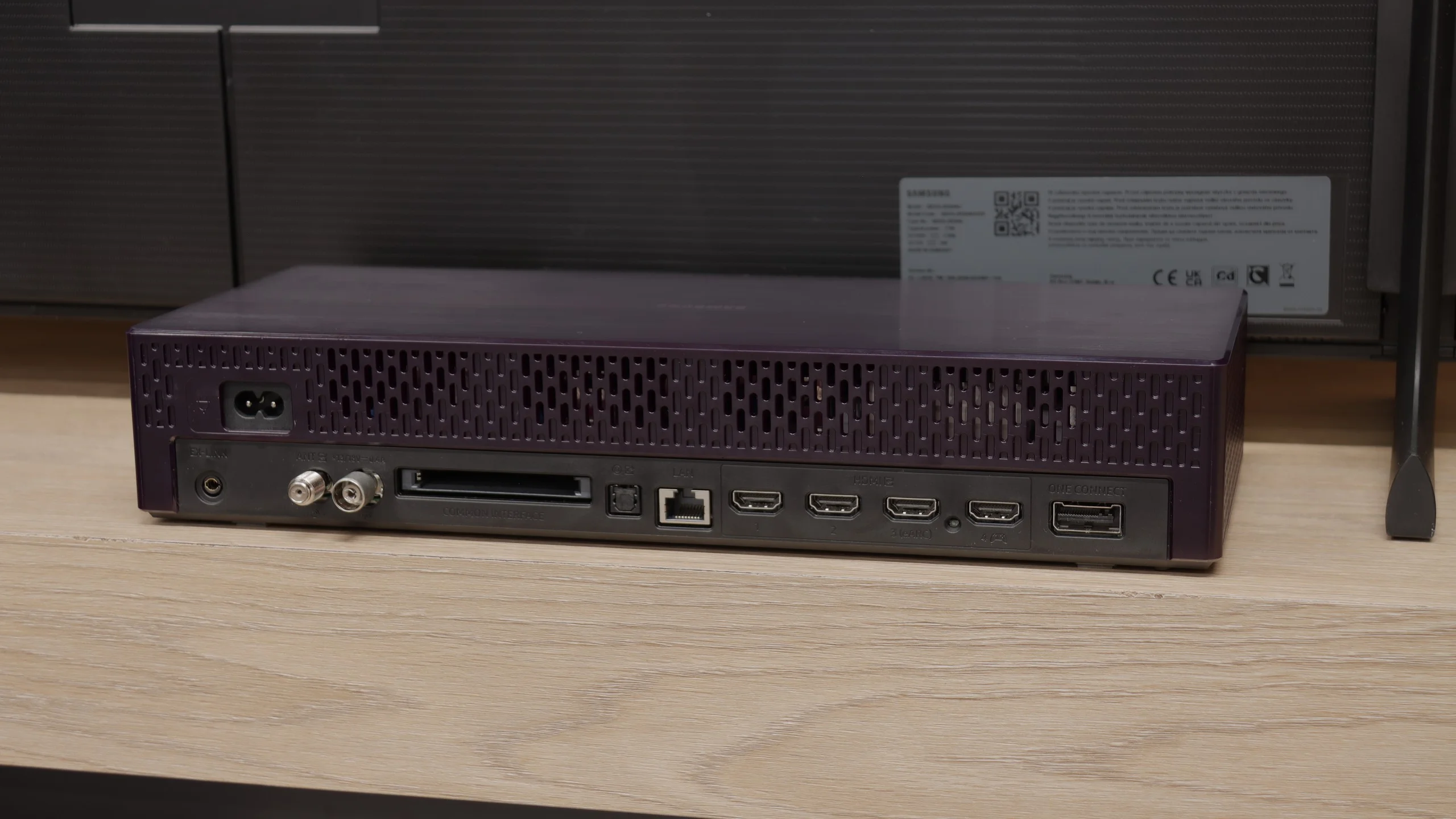
Another feature that works particularly well with this model is One Connect. In our opinion, it makes a lot of sense on a TV like The Frame, which is designed to sit as close to the wall as possible. All the main cables are connected to a separate box, while only a single cable runs to the screen itself. It’s simply a very convenient solution.
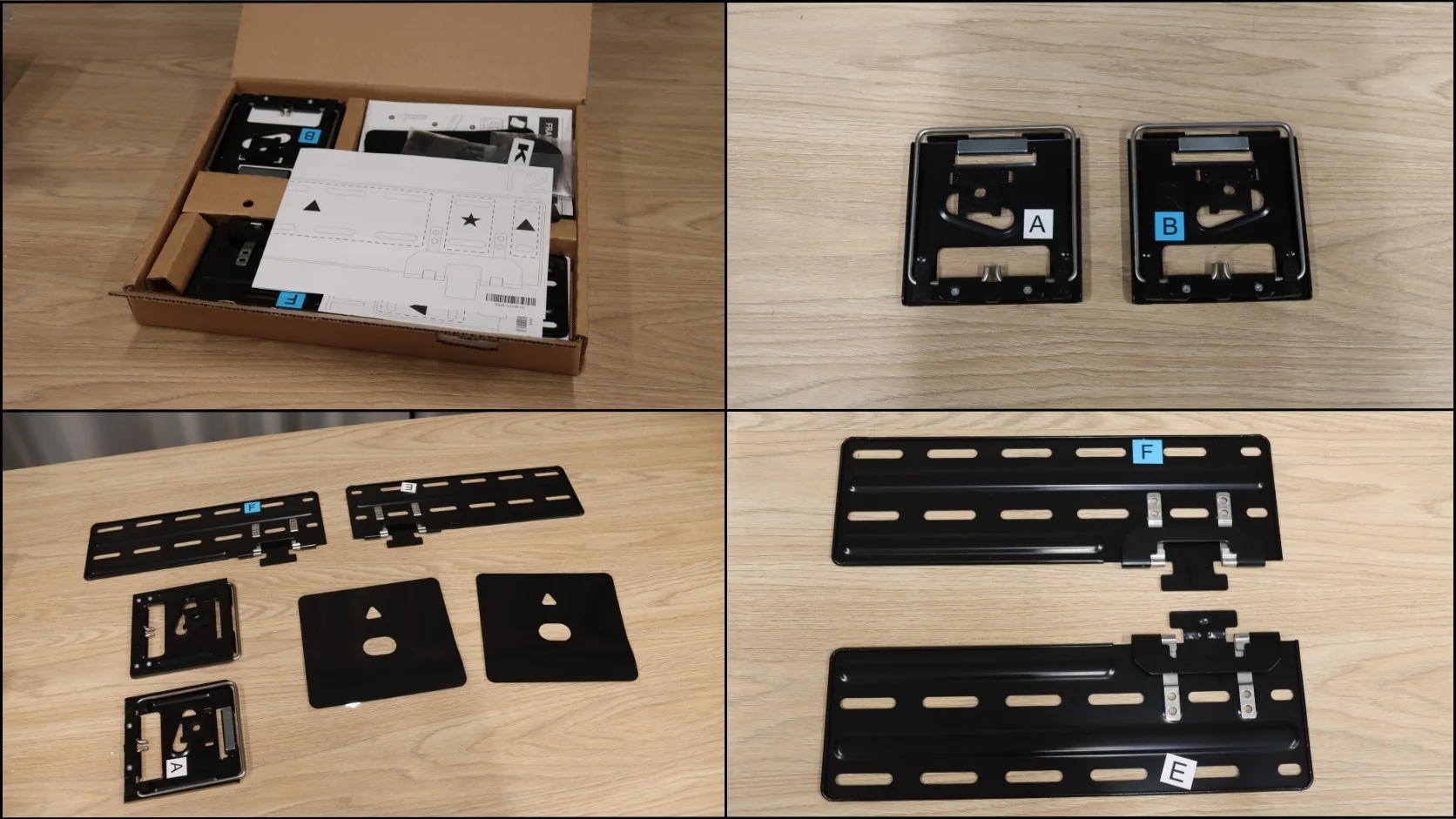
It’s also worth mentioning that Samsung includes a dedicated wall mount in the box. That might sound obvious, but it really isn’t. With the flagship S99H, for example, which also puts a strong emphasis on flush wall mounting and blending into the interior, the appropriate wall mount has to be purchased separately. With The Frame, it’s included, so you can save yourself a bit of extra money right from the start.
*The Art Mode photo was taken on The Frame Pro 2026. It looks identical on the standard The Frame — we have to admit that we simply forgot to take a photo of it during testing. 😉
Apps
9.6/10
9.3/10






















Playing files from USB
7.3/10
9.1/10
Supported photo formats:
Maximum photo resolution:
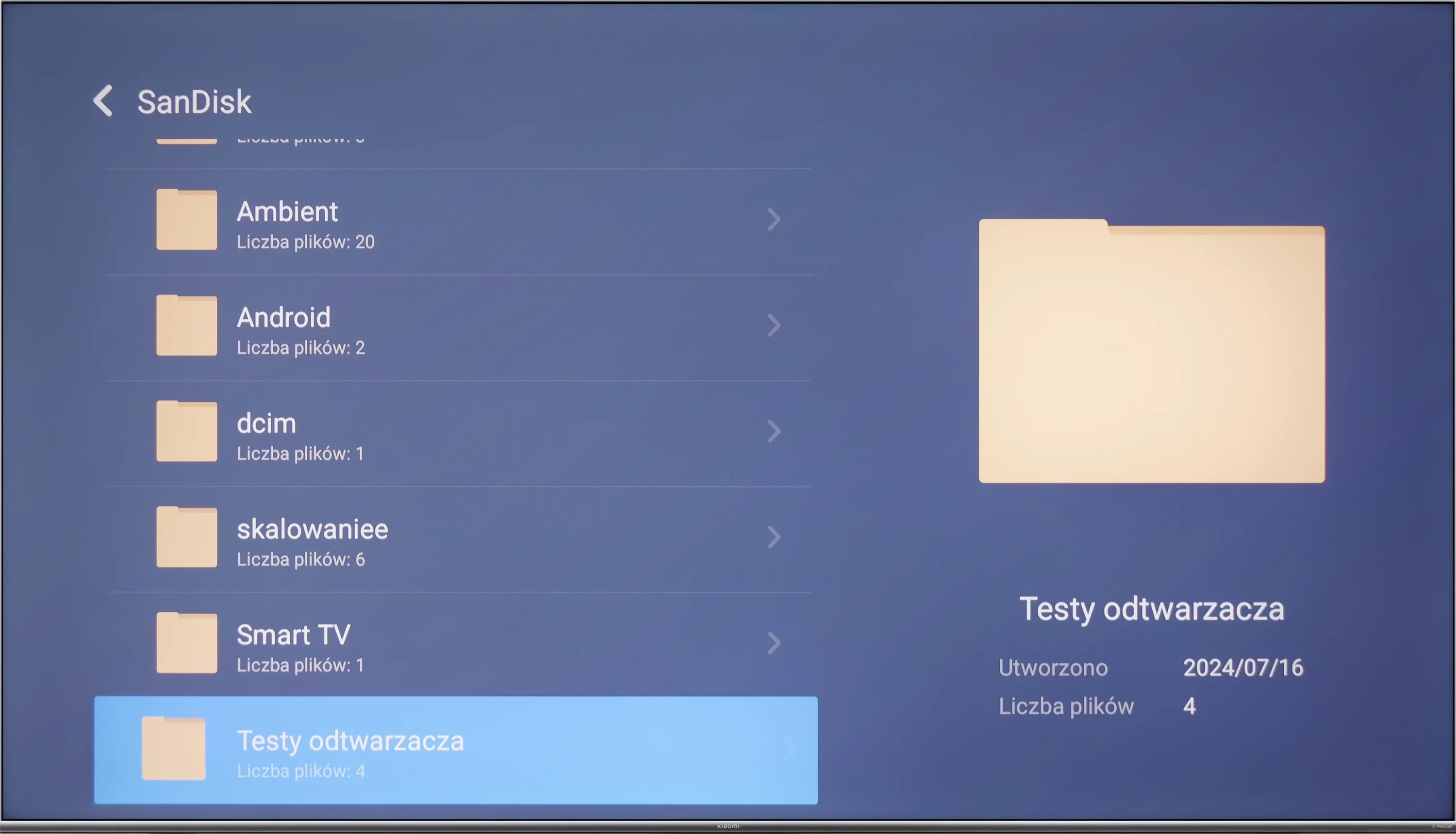
The basic file player in Xiaomi S MiniLED 2025 does its job for simple video materials. However, a noticeable drawback is the lack of support for Polish characters, which can be problematic for those using subtitles.
Fortunately, the presence of the Google TV system allows for an easy workaround of this limitation. Thanks to it, alternative file playback applications can be installed, which handle Polish characters and offer much more extensive options. As a result, the limitations of the built-in player are not as burdensome as one might think.
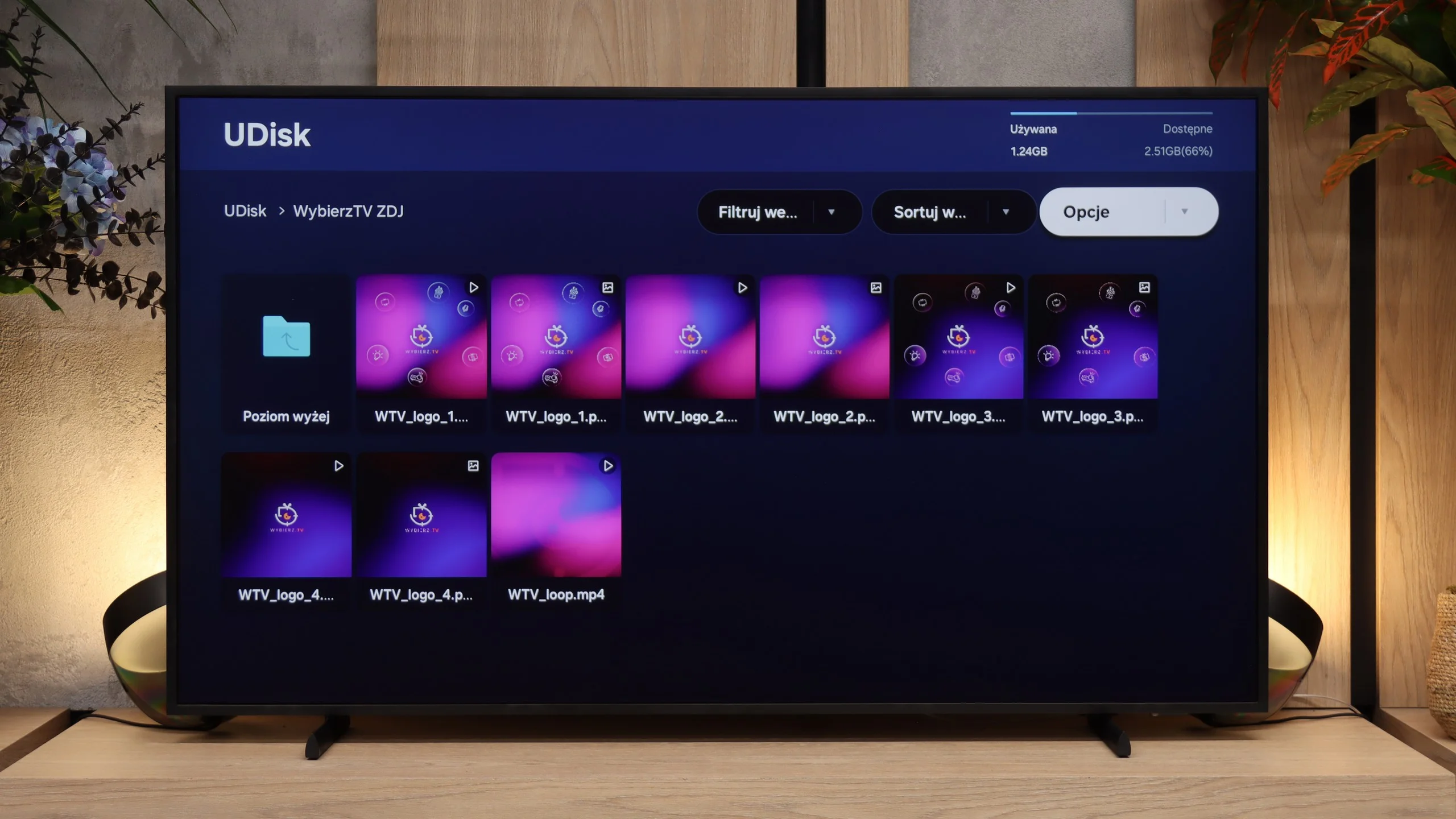
In terms of USB file playback, The Frame performs adequately. The TV easily handles the main video, photo and audio formats, so in everyday use you should not encounter many surprises. However, we again ran into problems with the HEIC format, which is common on Apple devices. Images saved in this format could not be opened correctly, which can be irritating if you often transfer photos directly from an iPhone. Apart from that, the player worked without major issues.
Sound
6.8/10
6/10
- Maximum volume-90dB
- Dolby Digital Plus 7.1
- Dolby True HD 7.1
- Dolby Atmos in Dolby Digital Plus (JOC)
- Dolby Atmos in Dolby True HD
- DTS:X in DTS-HD MA
- DTS-HD Master Audio
Xiaomi S MiniLED 2025 plays really nicely and even offers a light bass, reminiscent of the sound known from the lower model, namely A Pro 2025. The sound is well balanced, making watching films or listening to music comfortable, even without additional audio equipment. Interestingly, the television effortlessly supports audio formats such as Dolby Atmos and the less common DTS:X. This means you can connect a home cinema system or soundbar and enjoy spatial sound without any difficulties. A nice addition is also the presence of a standard speaker jack.
Despite using a 40 W speaker system in a 2.0.2 configuration — on paper somewhat better than in many conventional TVs — the sound is fairly average. What bothers us most is that it’s simply flat. As with most very slim TVs, there is a lack of bass and greater depth. Fortunately the midrange and treble are reproduced correctly. Dialogue is clear, and at normal listening levels there are no major distortions. For news or regular TV that setup is perfectly adequate. For films, music or games, however, you’ll quickly find it lacking.
That’s why we would definitely recommend adding a soundbar or external speakers to The Frame. Samsung, moreover, has an increasing number of models designed specifically for lifestyle TVs, such as the slim S800 series or speakers from the Studio or Music Frame lines, which in design match the TV itself.
Sound Quality Test
No sound test video
Acoustic Measurements
No acoustic data
90dBC (Max)
75dBC
Reader comments
Comments are provided by the external service Disqus (Zeta Global). Once loaded, Disqus may set cookies and process data about your activity.
We will remember your choice on this device. Provider's privacy policy