Xiaomi, well known as a giant in the smartphone market, has decided to fight for the attention of high-end technology enthusiasts by presenting a television with MiniLED backlighting. The S MiniLED 2025 model looks truly impressive on paper. The vast number of dimming zones provides excellent contrast, and the brightness, reaching impressive levels, can impress both in high-quality HDR materials and in older SDR. The television performs excellently where smooth motion is key. The high refresh rate panel and low input lag make it a good choice not only for sports fans but also for gamers. Support for features such as ALLM and GameBar further enhances the gaming experience. Google TV on this television works as it should – quickly, smoothly, without unnecessary stutters, which we could not say about the model A Pro 2025. Additionally, with such an extensive application library, it will satisfy even the most demanding user. However, not everything looks so good in practice. Despite solid hardware specifications, the television has its drawbacks. The biggest problem is the algorithms managing the dimming zones, which can be quite irritating when watching films in the evening. The operation of individual zones is overly noticeable in dynamic scenes, which can effectively distract our attention from the image. Issues also arise in more demanding HDR scenes despite the truly impressive brightness. Small, bright elements often lose brightness, ruining the effect that a top-quality image should provide. The system is also not free from shortcomings – image enhancement features for lower-quality materials work unevenly, and some options in Google TV are poorly translated or even untranslated. The Xiaomi S MiniLED 2025 has huge potential, but in its current form, it seems underutilised. It is clear that Xiaomi wanted to create something truly good, but several significant shortcomings result in a mixed final effect. A device with high aspirations that needs better software to truly shine. It is an ideal television for brighter rooms, where high screen brightness plays a key role, and local dimming issues become less noticeable. It will also perform excellently as a screen for gamers and for those who value the versatility and functionality of the Google TV system.
- Matching (Score) |
- Our verdict |
- TV appearance |
- Where to buy |
- Contrast and black detail |
- HDR effect quality |
- Factory color reproduction |
- Color reproduction after calibration |
- Smoothness of tonal transitions |
- Image scaling and smoothness of tonal transitions |
- Blur and motion smoothness |
- Console compatibility and gaming features |
- Input lag |
- Compatibility with PC |
- Viewing angles |
- Daytime performance |
- Panel details |
- TV features |
- Apps |
- Playing files from USB |
- Sound
Xiaomi S Mini 2025 vs Philips PUS8500
 Direct comparison
PUS8500 / PUS8560 / PUS8510 / PUS8600

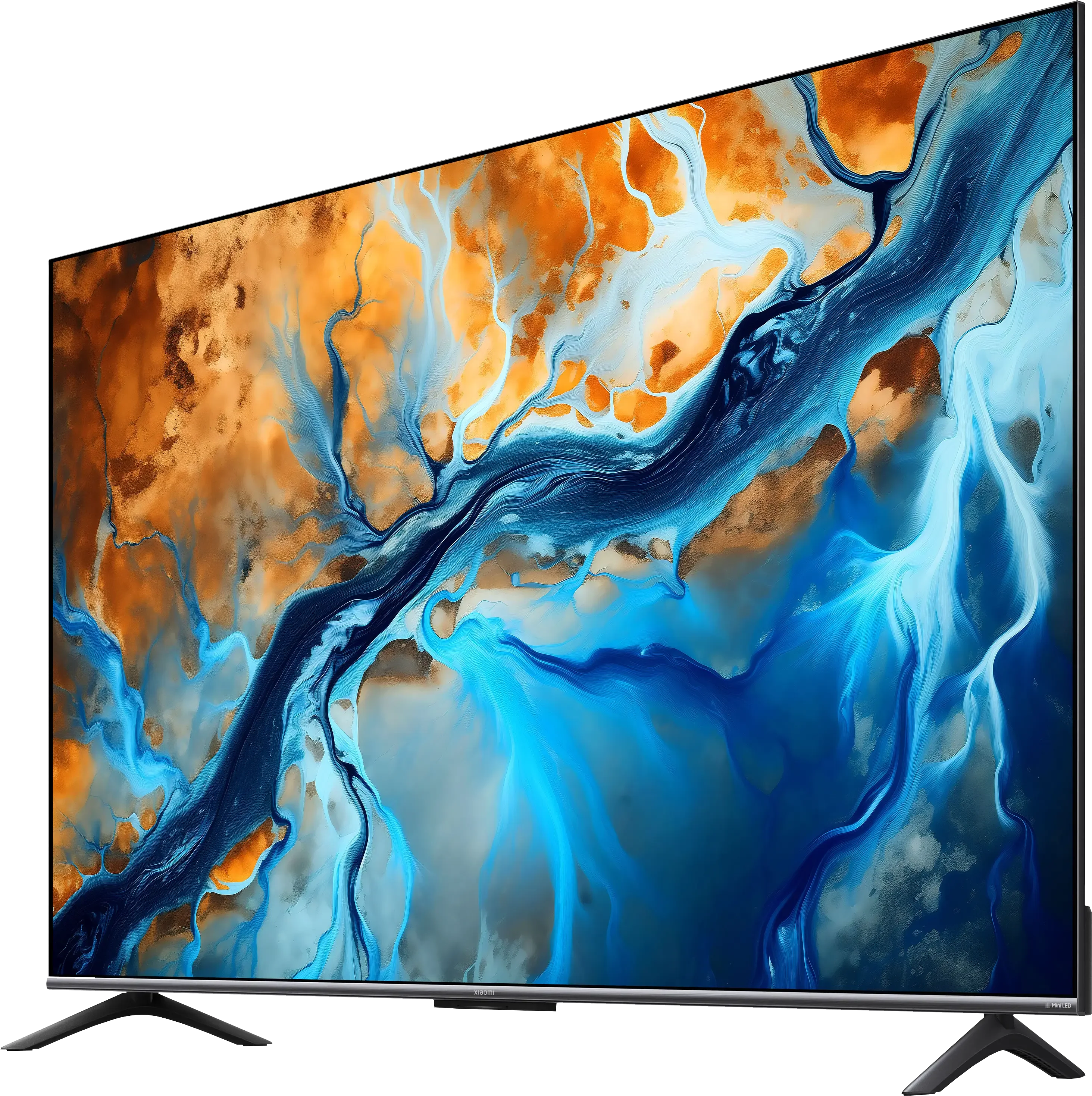
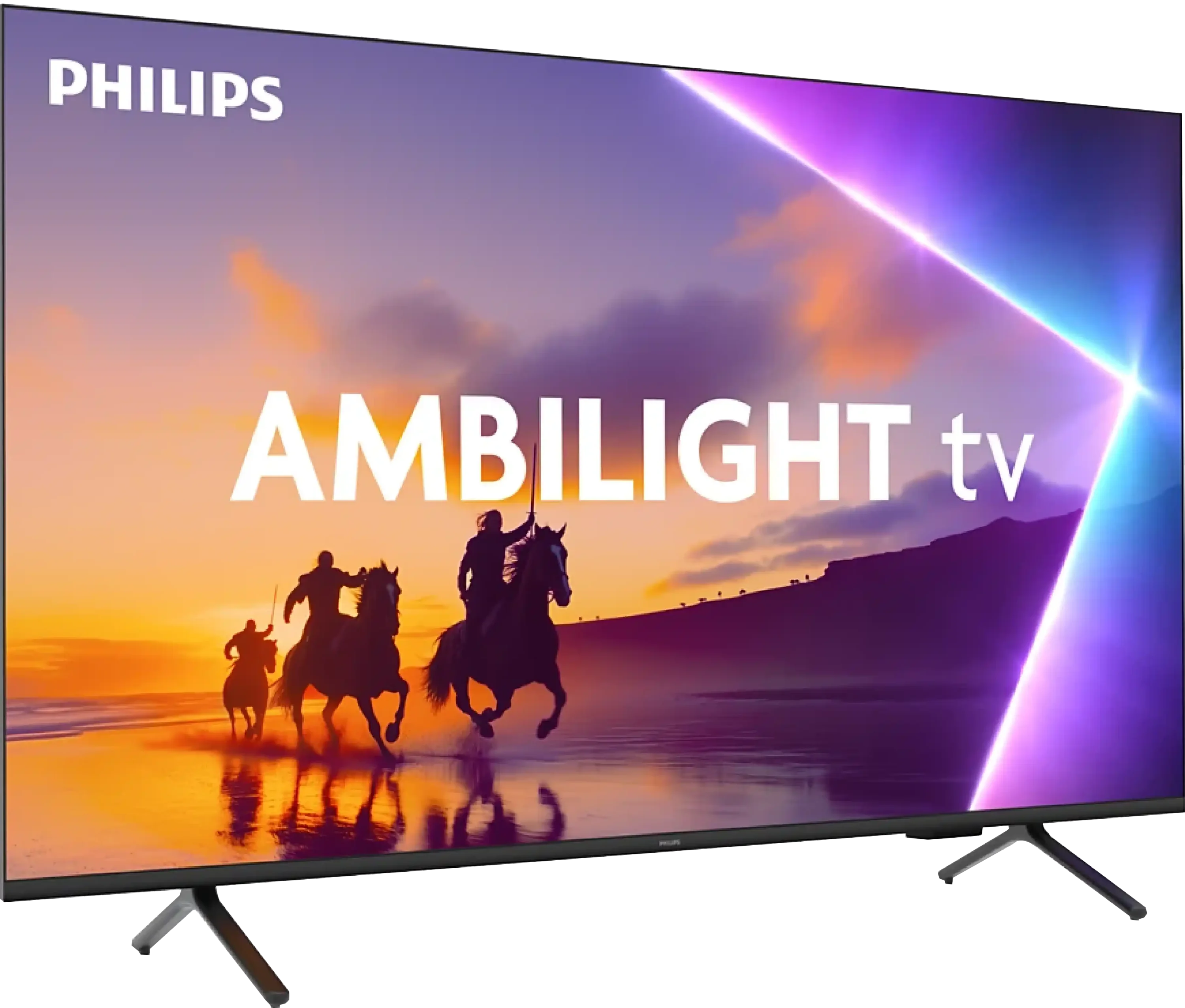
Panel type: LCD VA
Resolution: 3840x2160
System: Google TV
Model year: 2024
Complete the survey to find out the result
Panel type: LCD VA
Resolution: 3840x2160
System: Titan OS
Model year: 2025
Complete the survey to find out the result
Overall rating
7.0
5.8
 Movies and series in UHD quality
 6.3
5.6
 Classic TV, YouTube
 6.5
6.2
 Sports broadcasts (TV and apps)
 6.4
5.3
 Gaming on console
 8.4
6.7
 TV as a computer monitor
 8.2
5.6
 Watching in bright light
 7.3
4.9
 Utility functions
 4.7
4.8
 Apps
Apps 9.6
6.7
 Sound quality
 6.8
6.2
Complete the survey to find out what fits your preferences
Advantages

VA matrix with MiniLED backlighting – good contrast and deep blacks
High brightness (841 cd/m²) – excellent visibility even in bright rooms
Supports multiple HDR formats: Dolby Vision, HDR10+
High refresh rate: 240Hz, 144Hz, and 120Hz
Low input lag – perfect for gaming
Google TV system – versatile and comprehensive with broad access to apps
The remote does not require pointing at the screen
Pleasant sound with mild bass
Supports audio formats: Dolby Atmos and DTS:X
Ambilight System
High native contrast - VA panel
Low input lag
Basic gaming features: ALLM and VRR
Full support for audio formats: Dolby Atmos and DTS
Backlit remote control with numeric keypad
Disadvantages

Errors in the translation of the TV Menu
Problems with aggressive dimming algorithms – visible in dynamic scenes
Image scaling and tonal transition enhancement features are unstable
Average panel brightness
The TitanOS system seems unfinished (some features do not work, missing applications)
Infrared remote control
Issues with font readability (PC)
Our verdict
Ambilight, as this is what we need to start with, is the biggest reason why it's worth buying the PUS8500. The three-sided backlighting of the television looks fantastic, especially in the evening. It creates an atmosphere, masks contrast shortcomings, and makes watching a film simply more enjoyable. Even if the black levels aren't perfect, the native VA panel offers decent performance at high contrast. Additionally, there’s quite a good input lag and several features for gamers such as ALLM and VRR. Although HDMI 2.1 and a 120Hz panel are absent, playing casually should be a pleasure. Especially since it feels responsive and without delays. Let’s also mention the full support for audio formats – both Dolby Atmos and DTS are included, so soundbar owners can also rejoice.
However, we won't sugarcoat it – this is still a budget television, and at times it’s clearly evident. The brightness is average – not weak enough to prevent viewing, but on an exceptionally sunny day, watching without curtains can be problematic. Nevertheless, in our opinion, the biggest disappointment of the PUS8560 is the Titan OS operating system. Despite the fact that the system debuted some time ago, certain functions simply refused to work – for instance, screen mirroring from a phone despite the manufacturer claiming that such a feature is present. There are fewer apps than in the competition, and the system itself operates rather clumsily. Generally, while it does have some features, it evidently lacks refinement.
Of course, this isn’t a television meant to compete with top models. But if someone is looking for something simple, with a great atmosphere provided by the Ambilight system, it is quite a fair proposition. You just have to know what to expect and accept the numerous compromises present here.
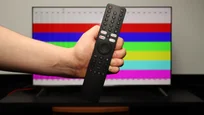
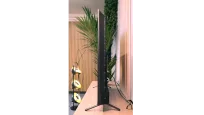
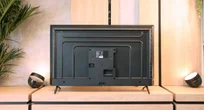
TV appearance


Contrast and black detail
6.8/10
6.1/10
Local dimming function: Yes, number of zones: 308 (22 x 14)
Local dimming function: No
Contrast:


Result
182,000:1

Result
38,050:1

Result
18,300:1

Result
10,150:1

Result
5,450:1
Result
6,000:1
Result
5,950:1
Result
6,250:1
Result
5,950:1
Result
5,750:1
Halo effect and black detail visibility:
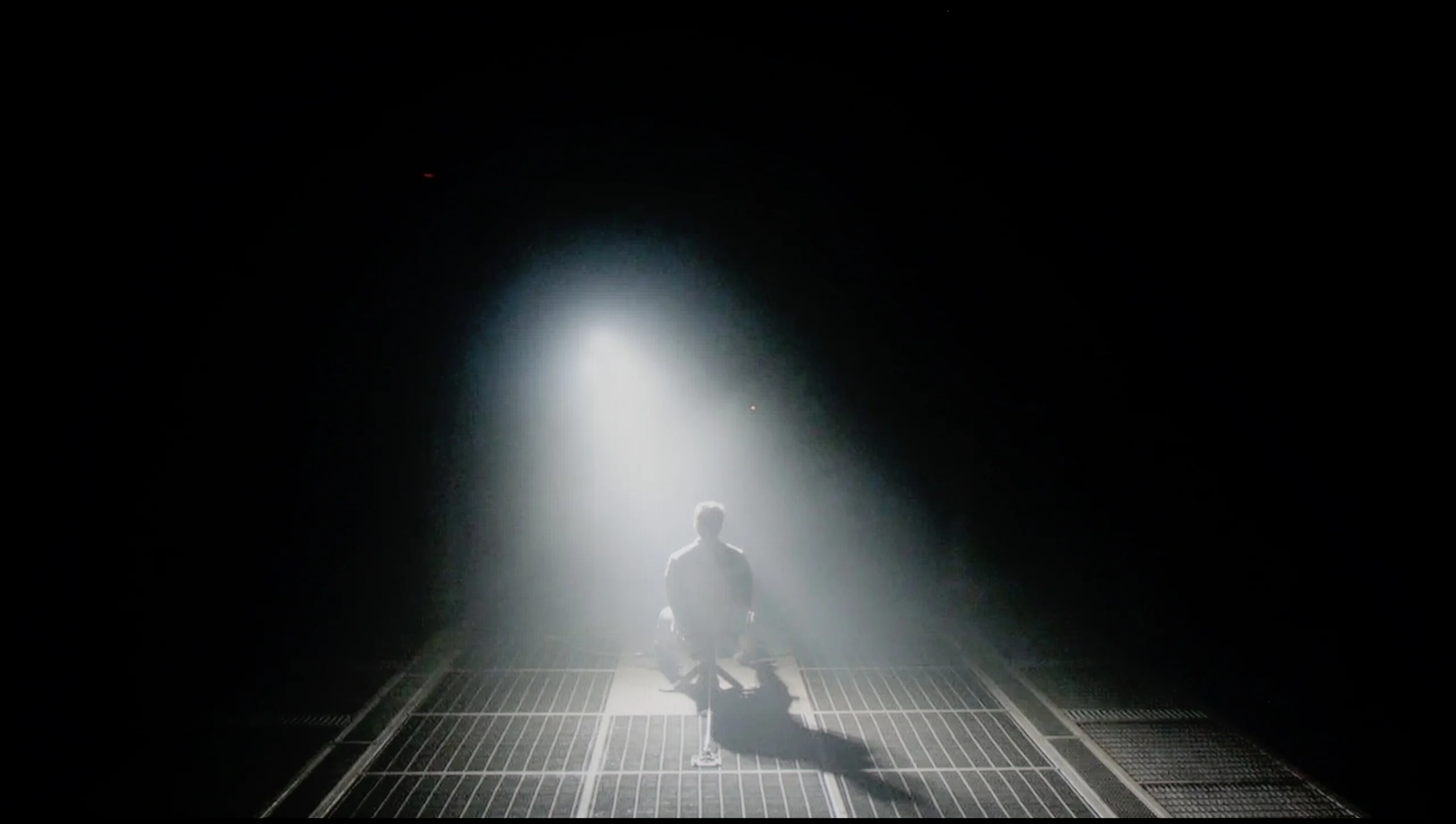
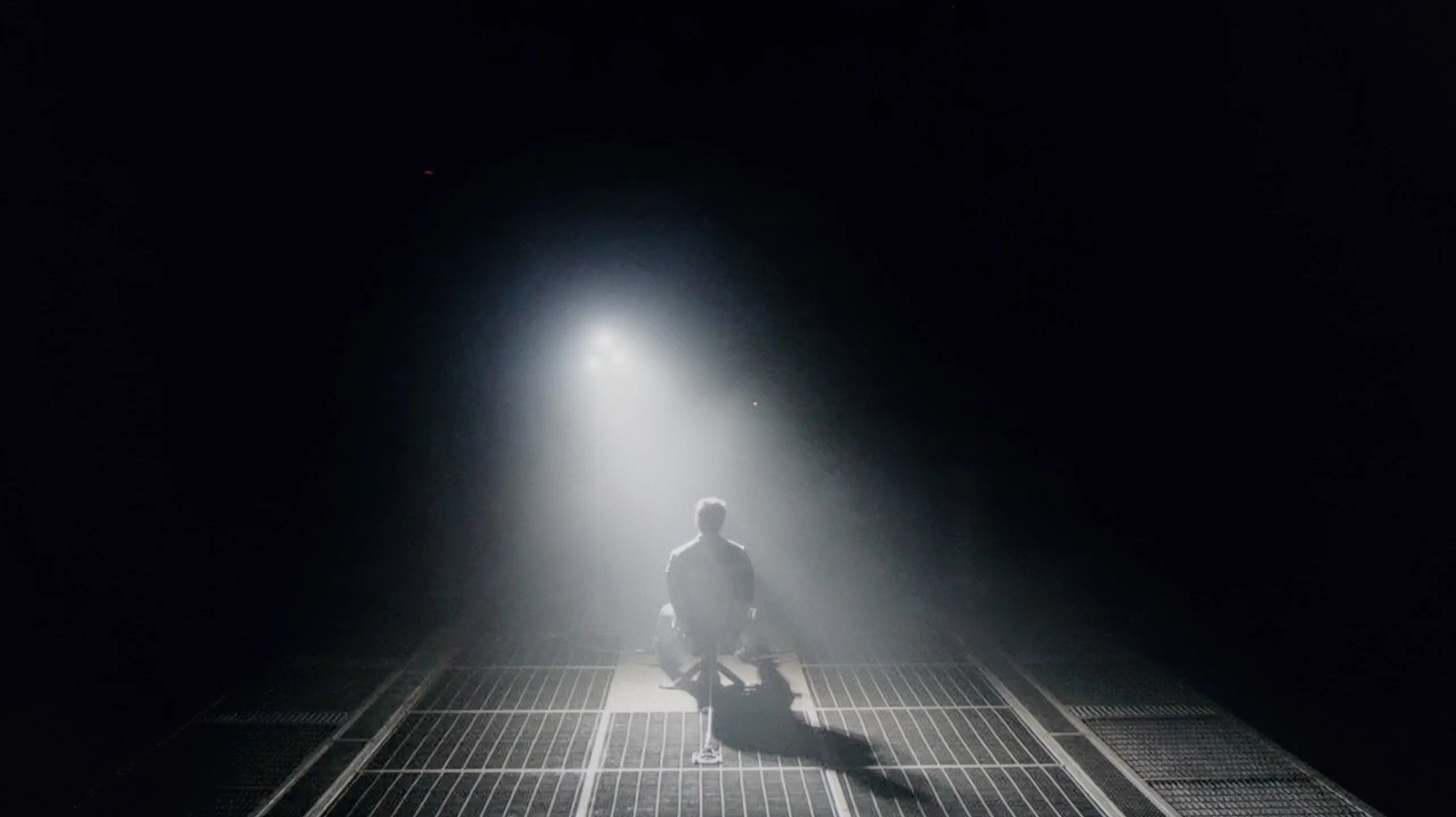
Check the visibility of bright lights on a dark background. Mini-LEDs often struggle with this. The photo does not compare black levels – that’s what the video below is for.
The video accurately shows differences in contrast and black levels between TVs, as well as potential issues: halo around bright objects or Mini-LED zone operation visible as brightness jumps.
Xiaomi S MiniLED is one of the most affordable MiniLED technology televisions available on the market. The model we tested, with a size of 55 inches, features as many as 308 local dimming zones, which is impressive for this price. Additionally, it uses a VA panel, which naturally offers significantly better contrast than IPS panels. On static test images, the television performed excellently, achieving an impressive contrast ratio of 182,000:1 in the film Oblivion. The blacks were deep, and the details in the light and dark areas of the image were clearly separated. However, in more demanding scenes where the image is dynamic, the situation becomes complicated.
Where lies the problem? The main cause is the local dimming algorithms. Although their work shows promising results on static images, during film playback – that is, in the natural working conditions of the television – they operate too aggressively. In dynamic scenes, such as those from the tested film, you can see how the individual dimming zones "work and flicker," which detracts from the viewer's sense of image coherence. This effect is particularly noticeable in motion, when bright objects move against a dark screen. As a result, although Xiaomi S MiniLED offers excellent contrast on paper, in practice the effect is less satisfying. The aggressive operation of the algorithms spoils the perception of dynamic scenes, making the television average in this category. It's a good example of how MiniLED technology requires not only good specifications but also proper optimisation.
The Philips PUS8560 in the size we tested is equipped with a VA panel. As a result, black levels – as far as LCD televisions go – can be deemed decent. And that is exactly the case with this model. Both black levels and the overall impression of contrast in the film scenes we tested were really quite good – the image does not bleed, and details are visible even in challenging sections.
But the panel alone is not everything. Unfortunately, the PUS8500 does not come with local dimming (which is a given considering the television segment), so one must be aware that in completely dark conditions, the black can resemble shades of navy more than true black. On the other hand – and here’s a plus for Philips – the Ambilight system does an excellent job. The backlighting genuinely affects the perception of contrast. Therefore, even if technically the black is not perfect, subjectively the viewing experience becomes much more pleasurable. For many people, this is enough to make an evening screening truly impressive.
HDR effect quality
4.8/10
4.8/10
Luminance measurements in HDR:

Result
852 nit

Result
140 nit

Result
385 nit

Result
97 nit

Result
1126 nit
Result
273 nit
Result
300 nit
Result
324 nit
Result
343 nit
Result
334 nit
Scene from the movie “Pan” (about 2800 nits)


Scene from the movie “Billy Lynn” (about 1100 nits)
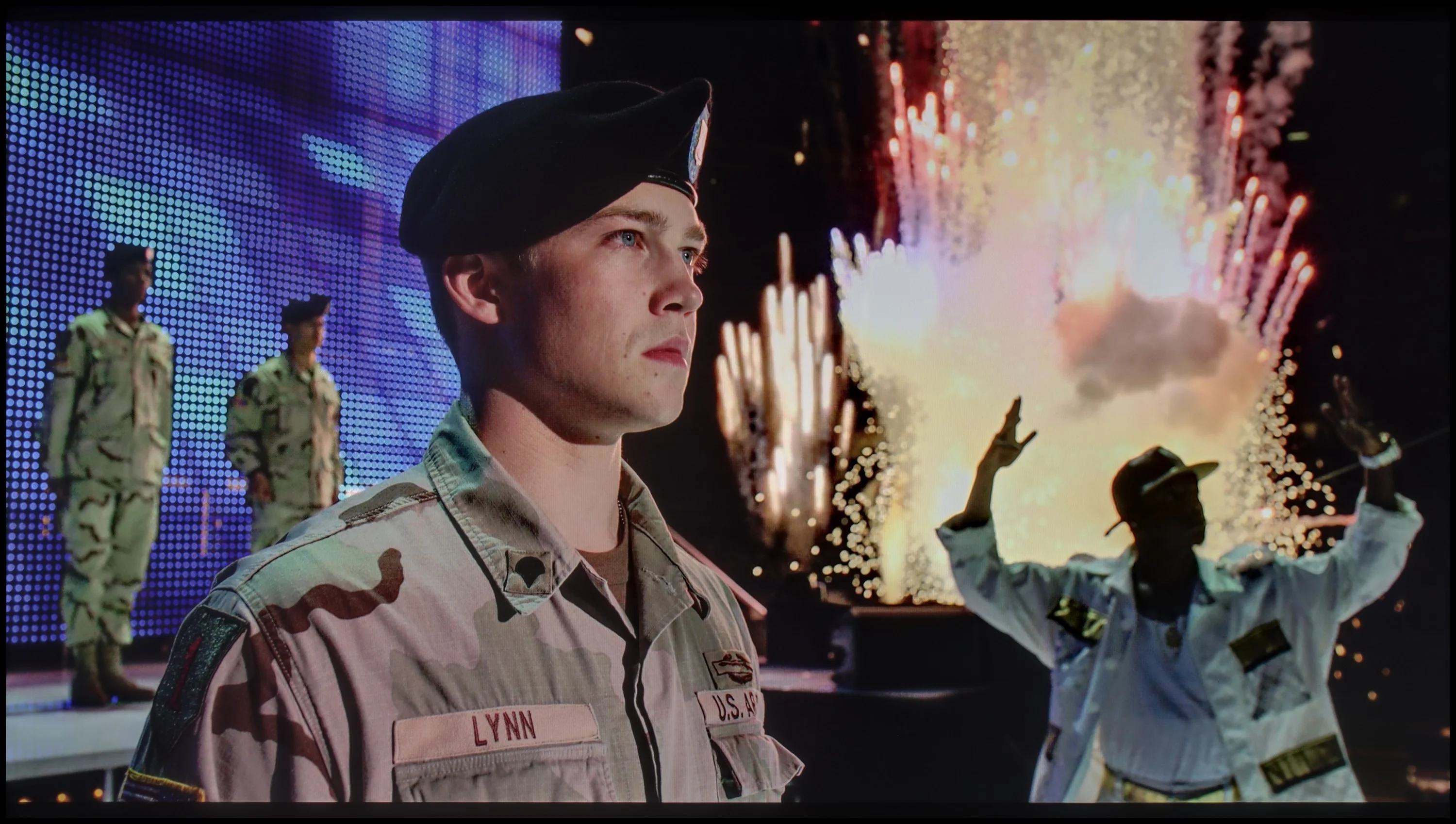
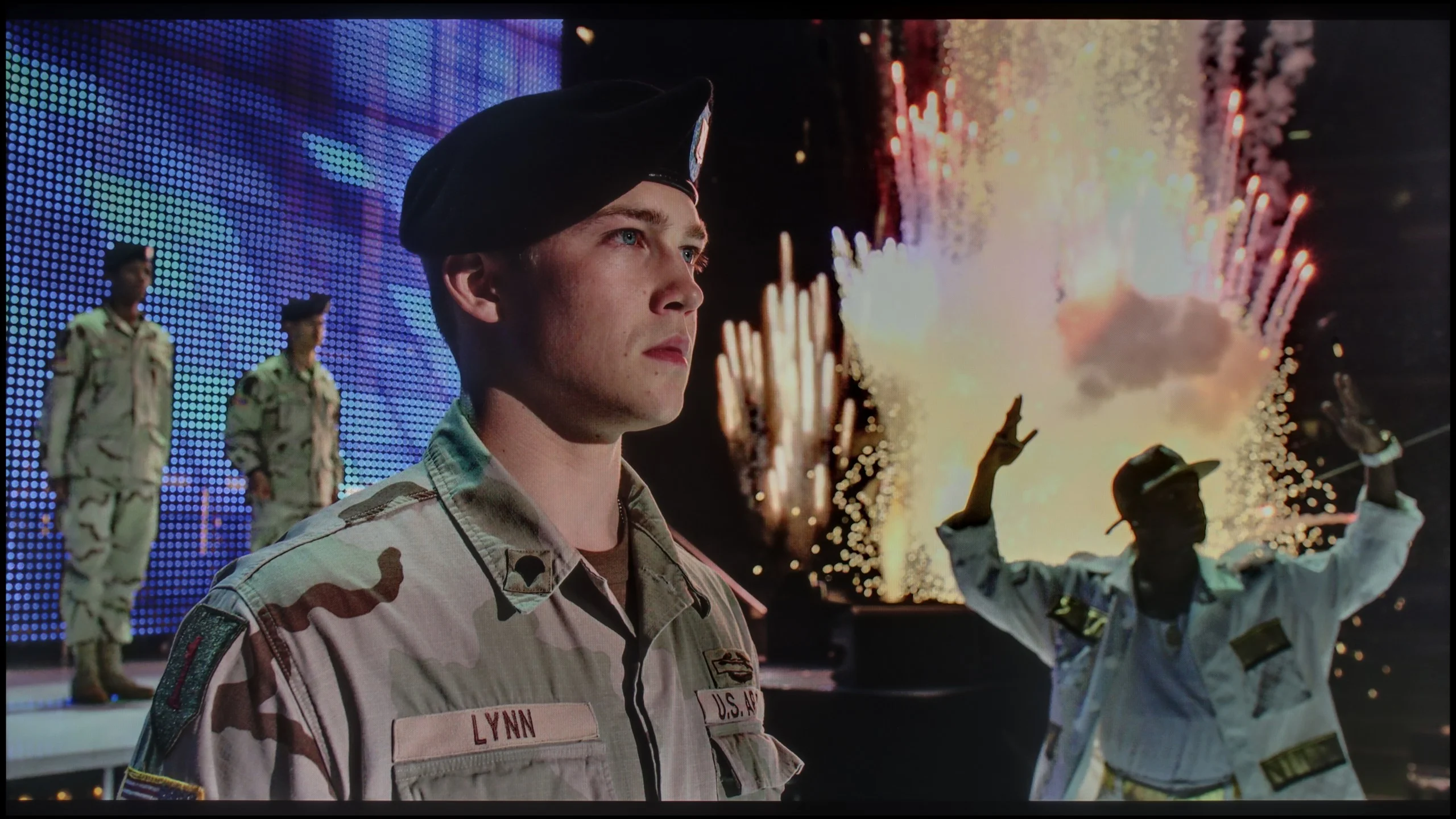
The photos show two HDR10 movies. 'Pan' is one of the brightest productions ever made, while 'Billy Lynn' (soldier) has brightness typical of streaming (Netflix, Prime, HBO MAX). Notice the intensity of effects and detail in whites.
Static HDR10


The photos present the visibility of white details in various HDR formats. They do not show brightness differences between TVs (these can be compared in the previous gallery).
Dynamic: Dolby Vision
Dynamic: HDR10+


The photos present the visibility of white details in various HDR formats. They do not show brightness differences between TVs (these can be compared in the previous gallery).
HDR luminance chart:
Philips PUS8500
Xiaomi S Mini 2025
Since the Xiaomi S MiniLED boasts an impressive number of 308 dimming zones, it is time to test how it performs in HDR tests. Starting with luminance, or the ability to display bright scenes, the television achieved nearly 1000 nits of brightness – a result that can be considered outstanding in this class. Do these figures, however, translate to real experiences in film scenes? In the case of less demanding shots, such as those from the film The Meg, the television indeed showed excellent results, reaching up to 900 nits. Such values are impressive and can truly convey the power of HDR effects.
Unfortunately, much like with contrast, it wasn't without issues. When smaller, brighter elements appear on the screen – as in the challenging scenes from Sicario 2 – the aggressive operation of the dimming zones spoils the entire effect. Brightness in these moments drops to just 100 nits. This is definitely too little to capture the full magic of HDR. Instead of a dynamic and detailed image, the viewer receives a muted, almost flat impression, which takes away all the enjoyment from the viewing experience.
In summary, if we are looking for a television with high brightness for watching films during the day, the Xiaomi S MiniLED will easily fulfill that task. However, its inability to precisely manage the dimming zones means that watching films in the evening, especially in demanding HDR scenes, can be more frustrating than satisfying.
When it comes to the HDR effect on the PUS8560, it can fairly confidently be stated that it is very average. The panel brightness is around 350 nits, which we consider to be the absolute minimum for watching content in this format. However, this is not a result that will astonish a viewer searching for the best possible picture.
On the plus side, it is worth noting that the PUS8500 series – including the PUS8560/12 we tested – is advertised as a QLED television. And indeed, we can expect a wider colour spectrum here. This model is equipped with an additional filter (PFS), and a DCI-P3 colour coverage of around 90% should suffice for the majority of users. This filter works very similarly to quantum dots. As a result, the colours are quite well saturated. It is not an outstanding result, but it is entirely sufficient for watching films and series from streaming platforms.
Factory color reproduction
3.9/10
6.2/10
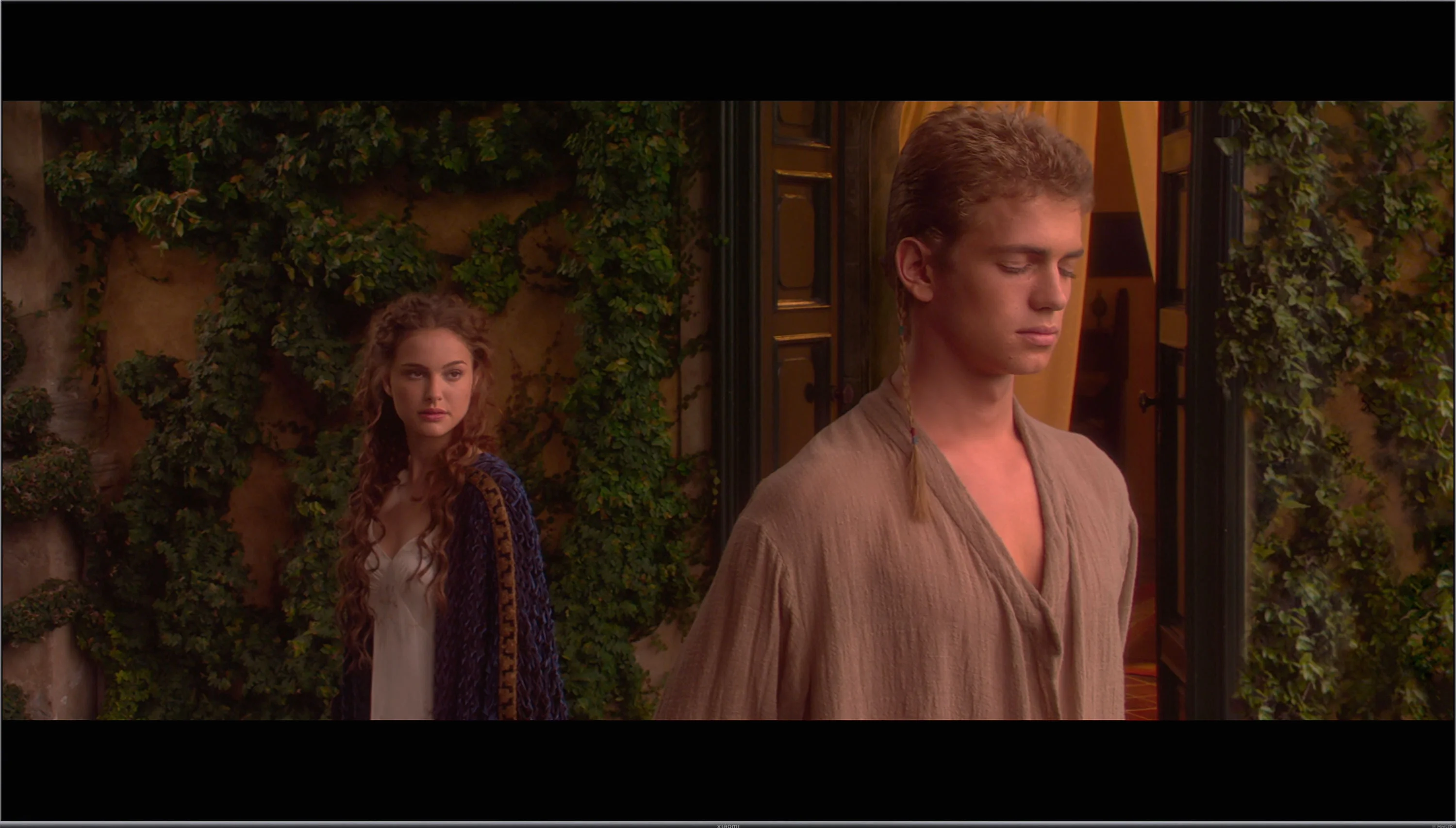
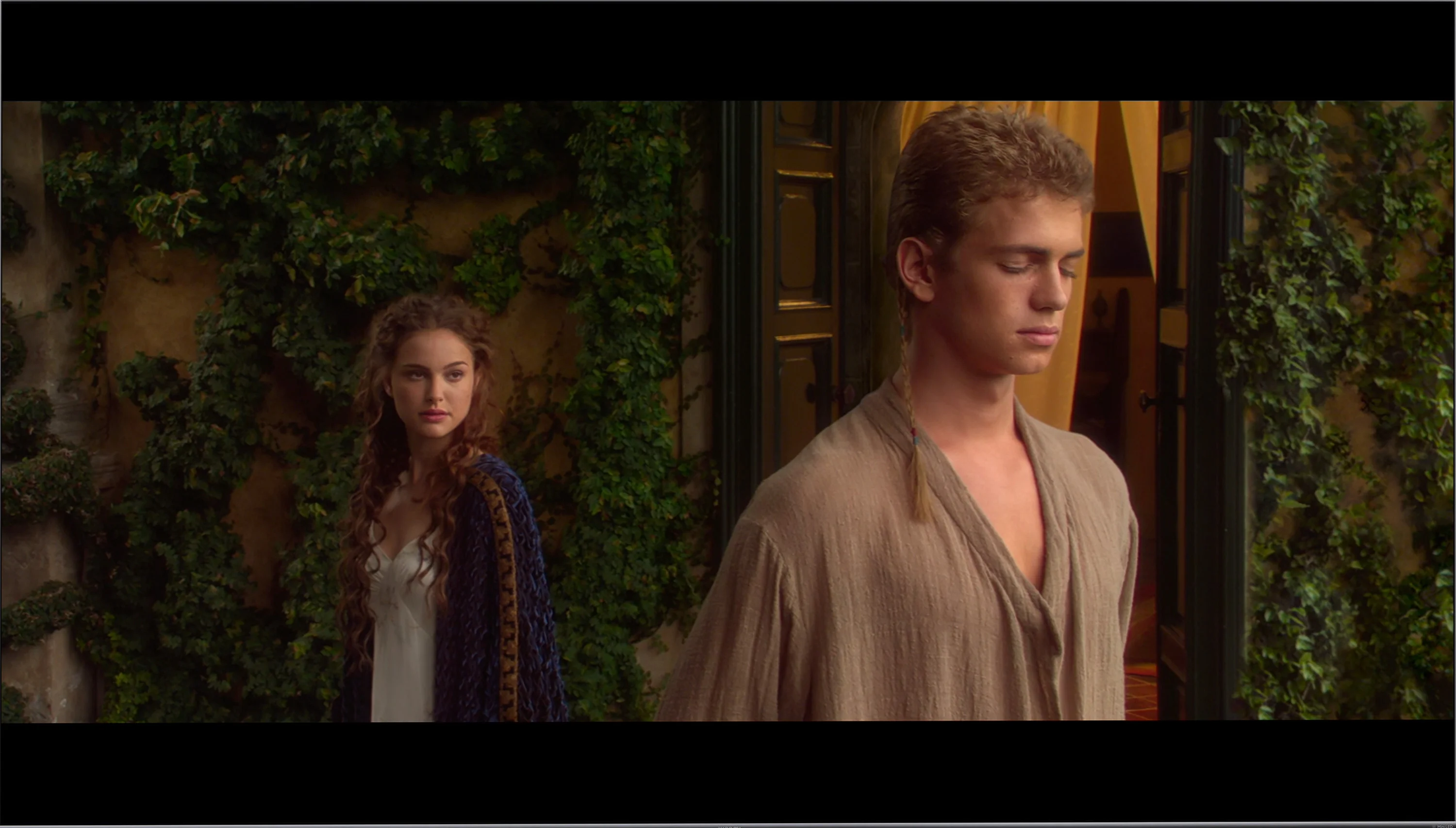
This gallery shows how colors change after professional TV calibration. If you notice the difference, we recommend ordering this service at SkalibrujTV.com.
Factory Mode
After calibration


This gallery shows how colors change after professional TV calibration. If you notice the difference, we recommend ordering this service at SkalibrujTV.com.
Factory Mode
After calibration
Xiaomi, like many manufacturers, offers a wide range of picture modes. On the S MiniLED, we can find both IMAX Enhanced and Filmmaker. Our tests were conducted in Filmmaker mode, which theoretically aims to reflect a reference image, but the reality turned out to be somewhat different.
Let's start with the test of SDR content. Here, the television had quite a few issues, especially with white balance. The clearly visible dominance of red made the image look too warm, with all colours taking on a reddish hue. This was particularly noticeable in a comparative scene from the film Star Wars. The brightness characteristics (gamma) also left much to be desired – instead of a smooth transition, we had a real "rollercoaster," with a visible excessive brightening of the screen.
In 4K content, the situation improved significantly. The white balance, although still not perfect, was much more balanced, with a slight dominance of red and blue, but without excessive impact on the overall perception. The EOTF curve (responsible for brightness in HDR) showed some brightening in the brightest parts of the image, which was noticeable, for example, in the test scene from the film Pan that we described earlier. These brightening effects may disturb the precision of the image, but in 4K, the overall effect was much more acceptable than in SDR.
Although Xiaomi S MiniLED can pleasantly surprise with 4K content, its factory settings in SDR require solid adjustments, especially regarding white balance and brightness. This is definitely a television that would benefit from calibration.
We tested the television with the best available factory settings, namely in Film/Filmmaker mode – this is the mode we recommend for everyday viewing. Unfortunately, it is not without its flaws. Both in HD and HDR content, the image had a noticeable tendency to a pink tint, caused by an excessive amount of red and blue in the white balance. Another issue turned out to be excessive brightness in the image, which was confirmed by both the gamma chart and the EOTF curve. This feature was responsible for loss of detail and washed-out colours in more challenging HDR scenes that we mentioned earlier. The overall result led to significant colour reproduction errors – in extreme cases, the delta E value exceeded 7, while the threshold for visible errors for the human eye is around 3. This situation can be improved with calibration, and you can read about its effects below.
Color reproduction after calibration
7.7/10
8.4/10
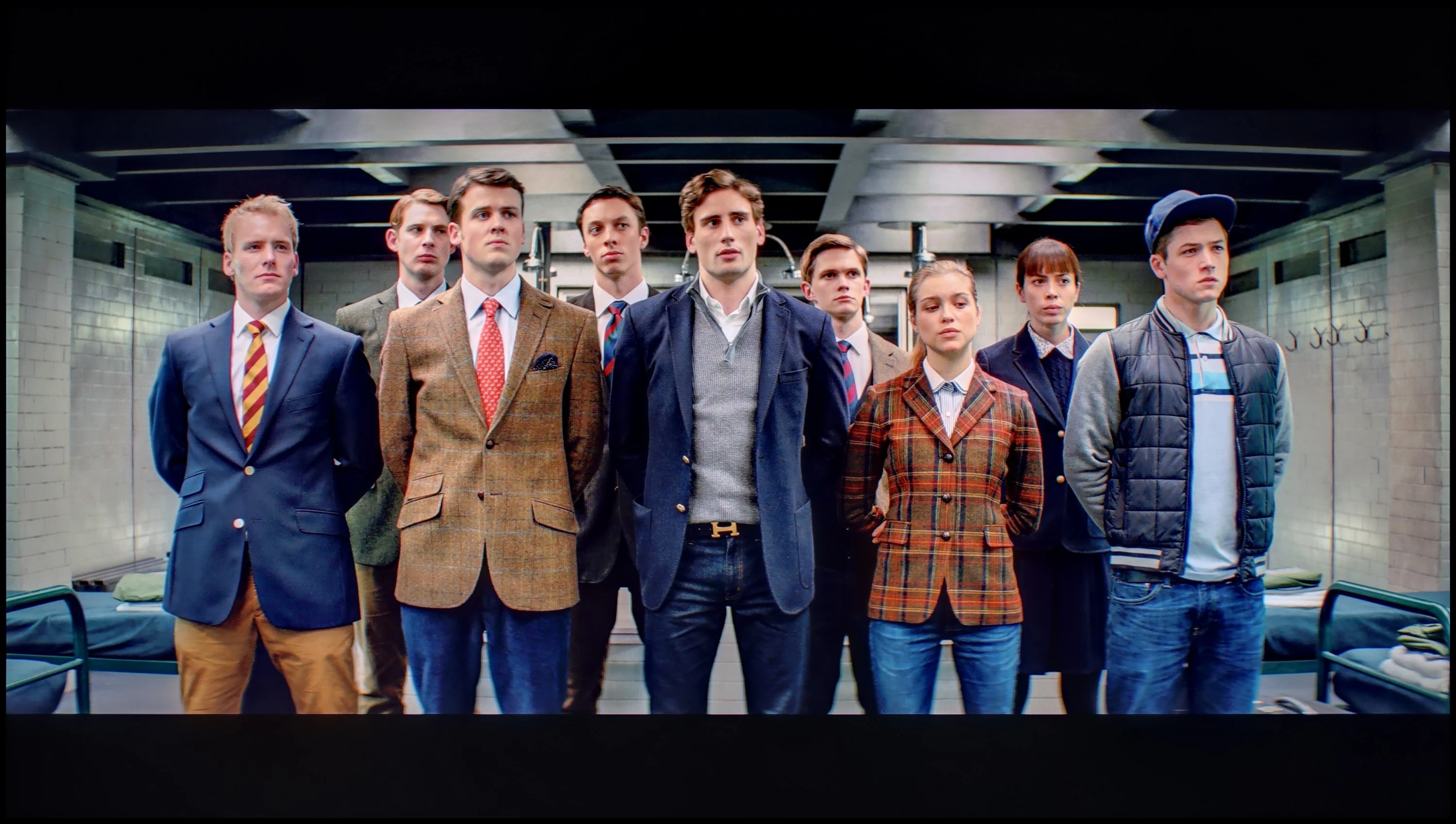

The photos show how movies look on the TV. Pay attention to black detail visibility, colors, and shadow tint.


The photos show how movies look on the TV. Pay attention to black detail visibility, colors, and shadow tint.
Xiaomi S MiniLED 2025 is a television that gains a completely new life after calibration. The results are truly outstanding and show how much potential is in this model.
In SDR mode, the white balance is nearly perfectly aligned. The errors are so minimal that in many cases they can be considered negligible. This is confirmed by the results of the Colour Checker palette, where the errors did not exceed a value of 2 ΔE – this is really a rare result. Gamma also performs very well, although at the beginning of the graph there are slight brightenings in the darkest elements. However, this is a minor exception that does not significantly affect the perception of the image.
In 4K HDR materials, the calibration also brought visible improvements, particularly in the white balance. The image looks natural and cohesive. However, the characteristic of brightness remains a problem. EOTF analysis in film materials shows that the television tends to over-brighten or under-darken the smallest elements on the screen. This is a result of limitations in the dimming algorithms we discussed earlier with HDR and contrast testing. Unfortunately, this is a technical characteristic of this model that cannot be completely eliminated.
Despite this minor flaw, the calibration allowed for maximising the capabilities of this television. The image now looks phenomenal, and its quality impresses in every type of material. Xiaomi S MiniLED 2025 shows that with the right settings, it can compete with more expensive models.
The Dutch manufacturer offers quite a sizable amount of settings in its products, so as usual, we decided to tinker with them a bit. The effects are immediately noticeable – we managed to correct the white balance, which made the image stop appearing excessively pink. The brightness characteristic has also been partially evened out, of course, within the limits set by the television itself. The image is no longer overly exaggerated, and the overall reception after calibration is definitely better than in the factory settings of the Filmmaker mode.
One could only critique the EOTF curve characteristic, which still indicates that the image has a tendency to brighten HDR materials. Despite our efforts, the darkest parts of scenes are still sometimes too bright, and the brightest ones do not always achieve their full contrast potential. However, it must be clearly stated that we are dealing with a typically budget construction – one cannot expect reference-level reproduction of HDR content from it.
Calibration has definitely helped this model – it improved the balance, toned down the aggressive colour palette, and brought the image closer to what one might expect from a well-configured movie mode. However, there are certain limitations that cannot be overcome.
Smoothness of tonal transitions
8/10
6.3/10
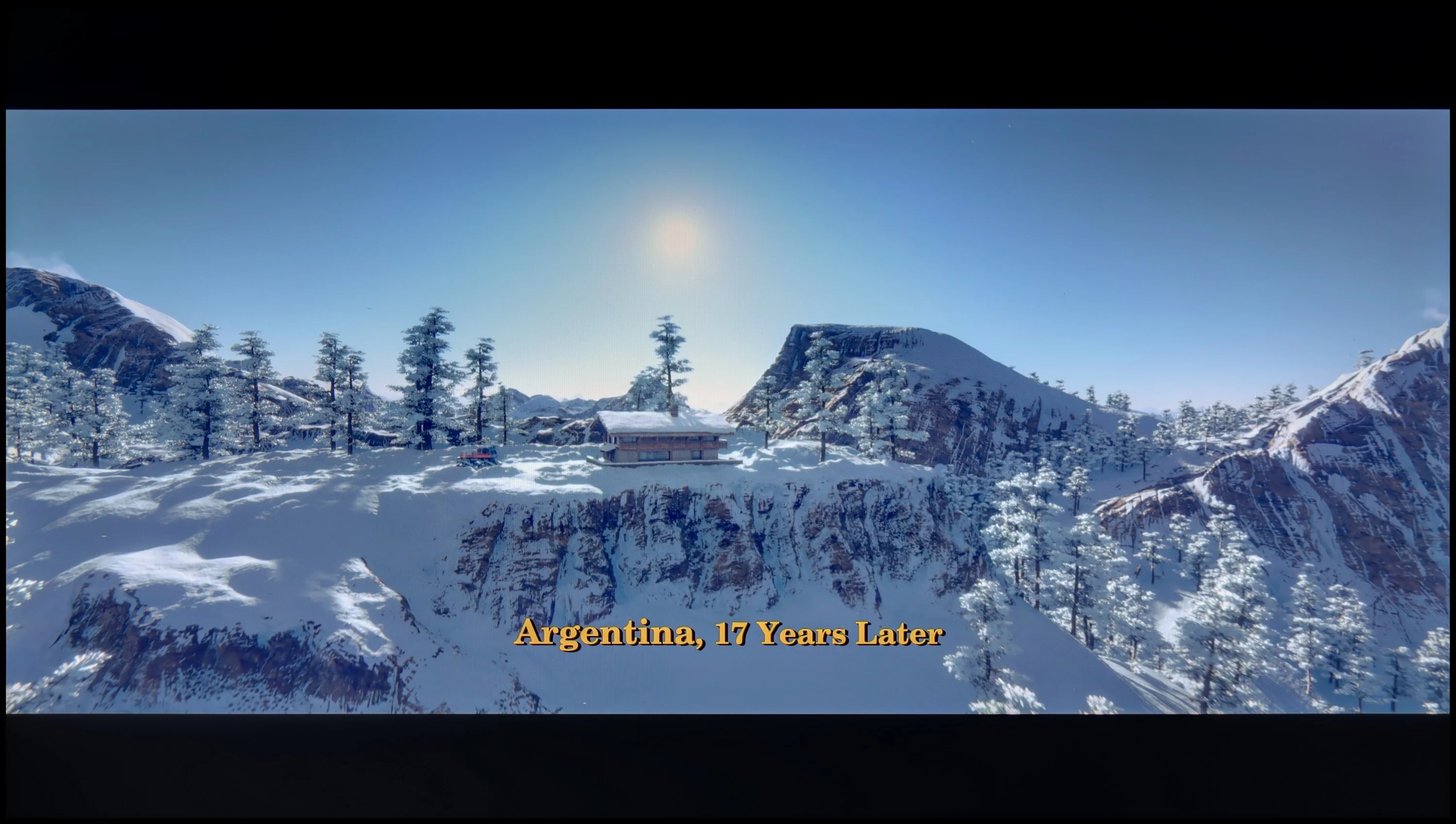

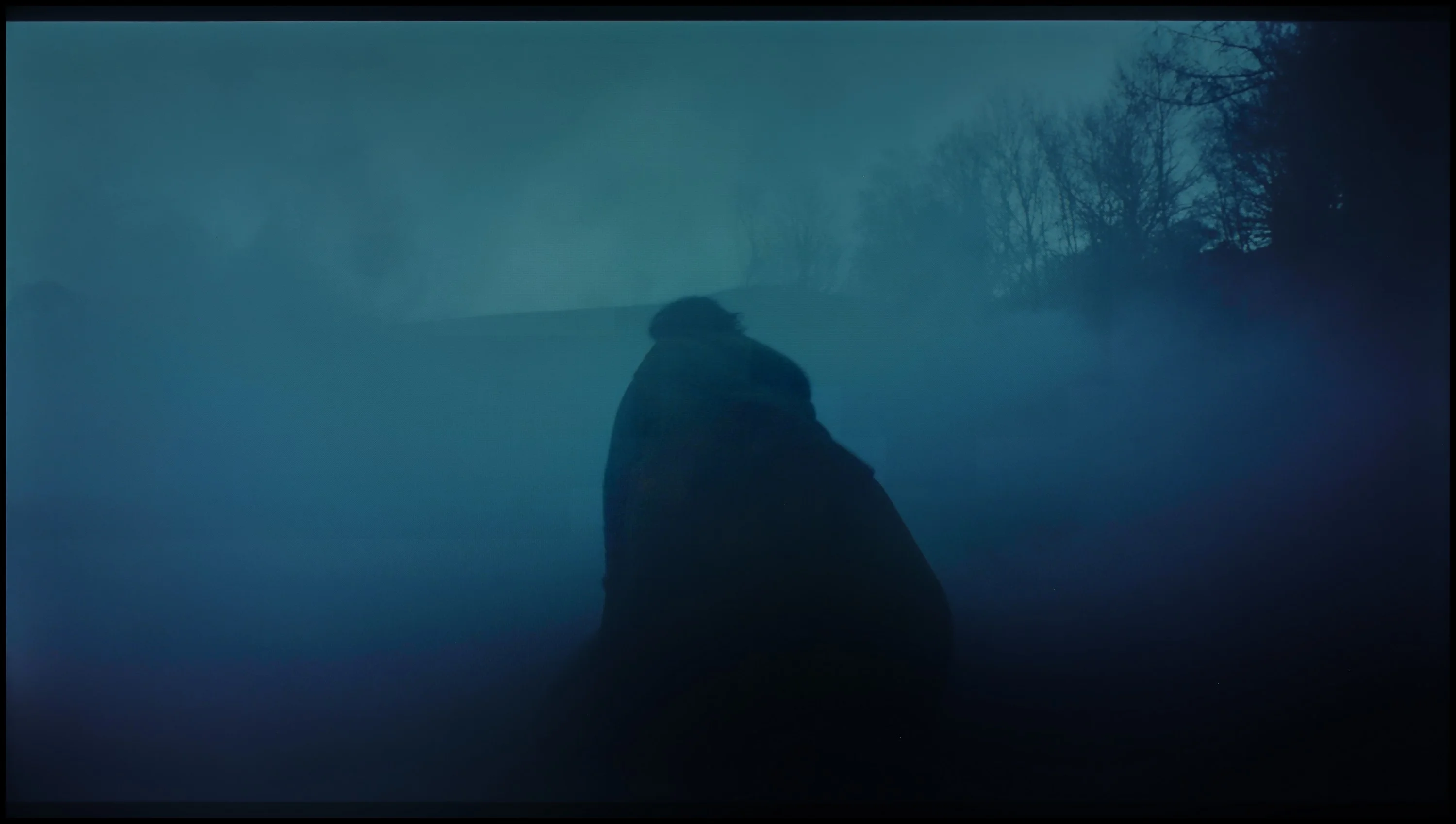
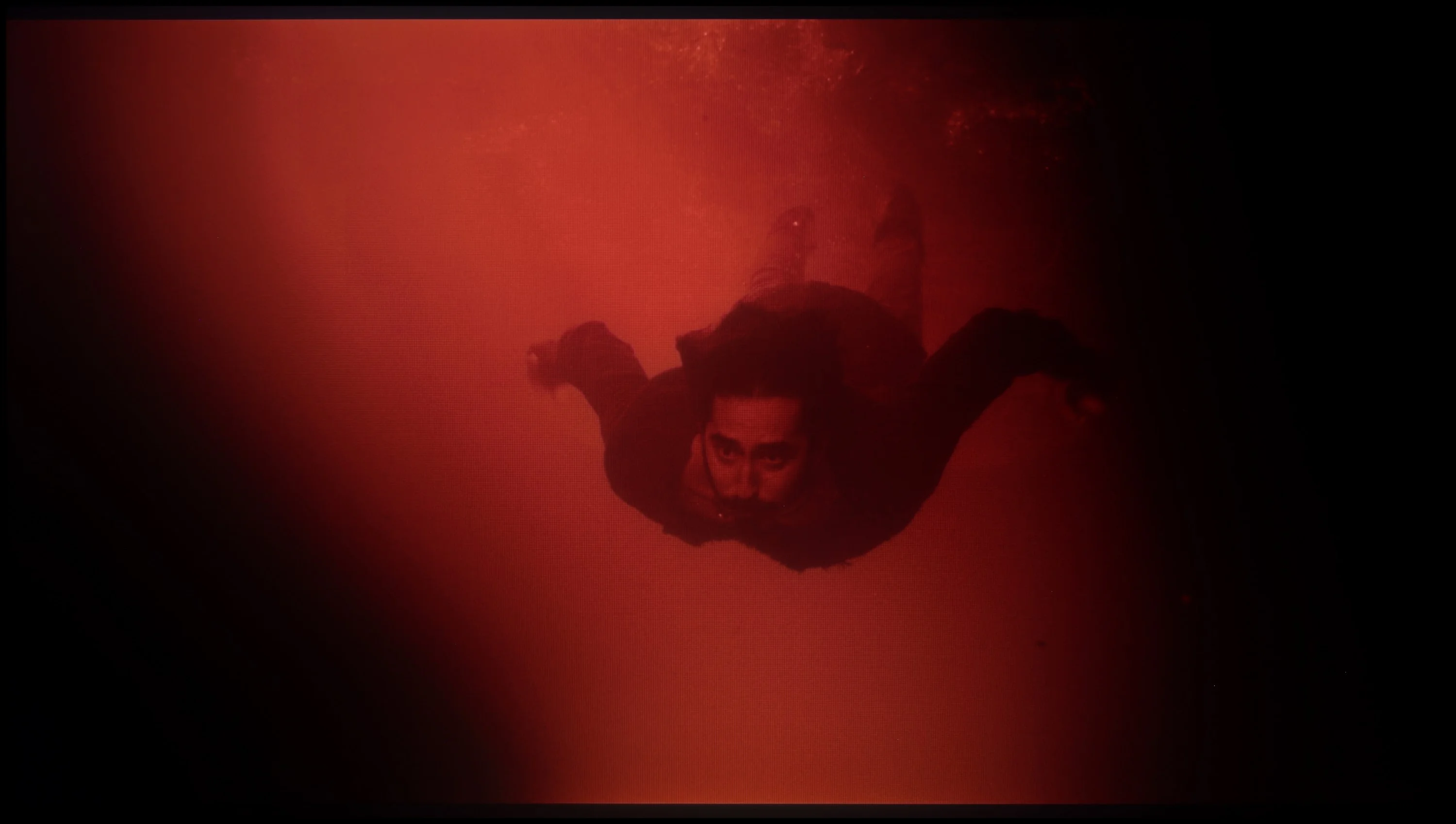
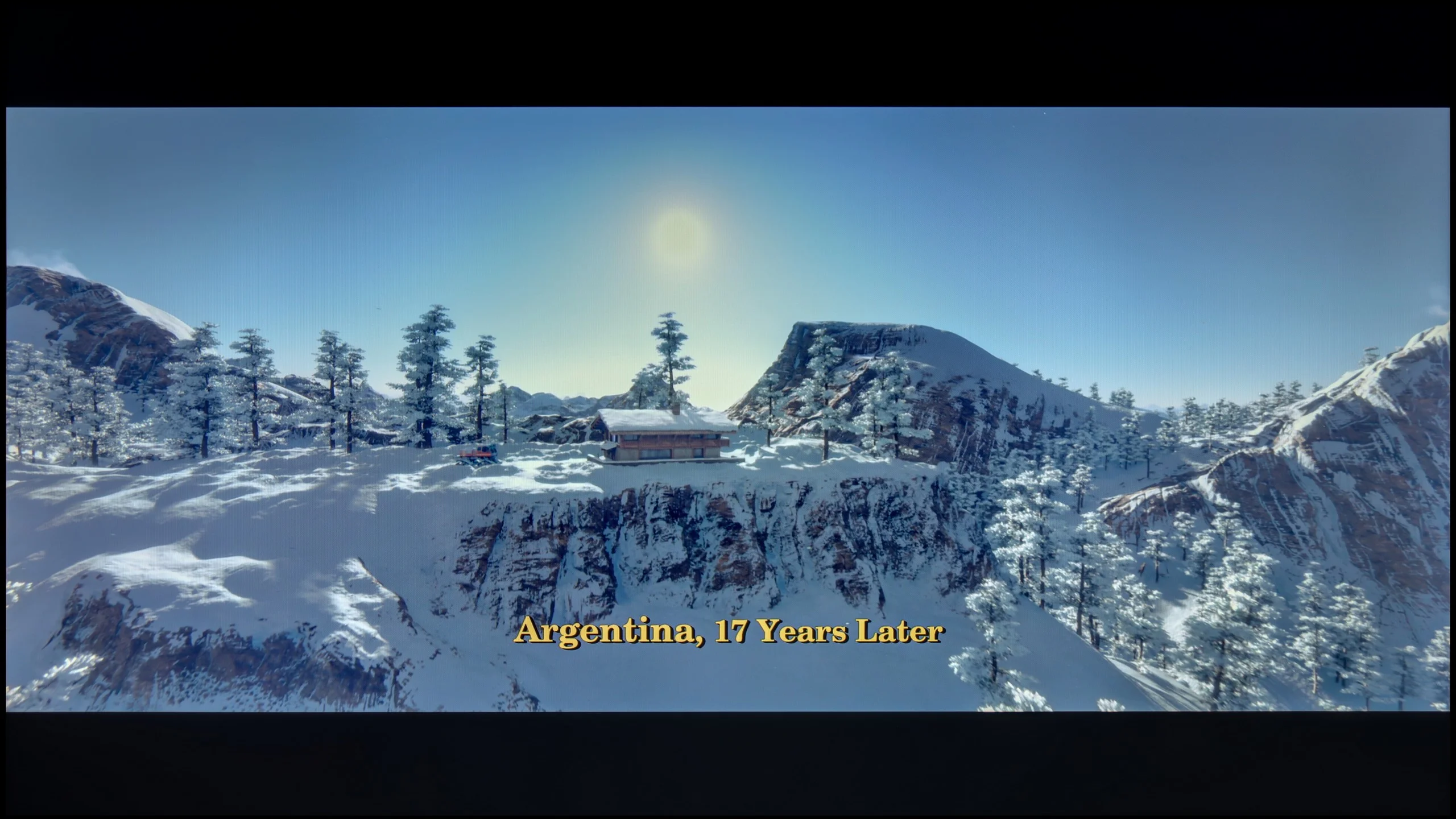
These are selected scenes that show smooth tonal transitions from one color to another. If you see distinct banding, it’s the TV panel’s fault.

These are selected scenes that show smooth tonal transitions from one color to another. If you see distinct banding, it’s the TV panel’s fault.
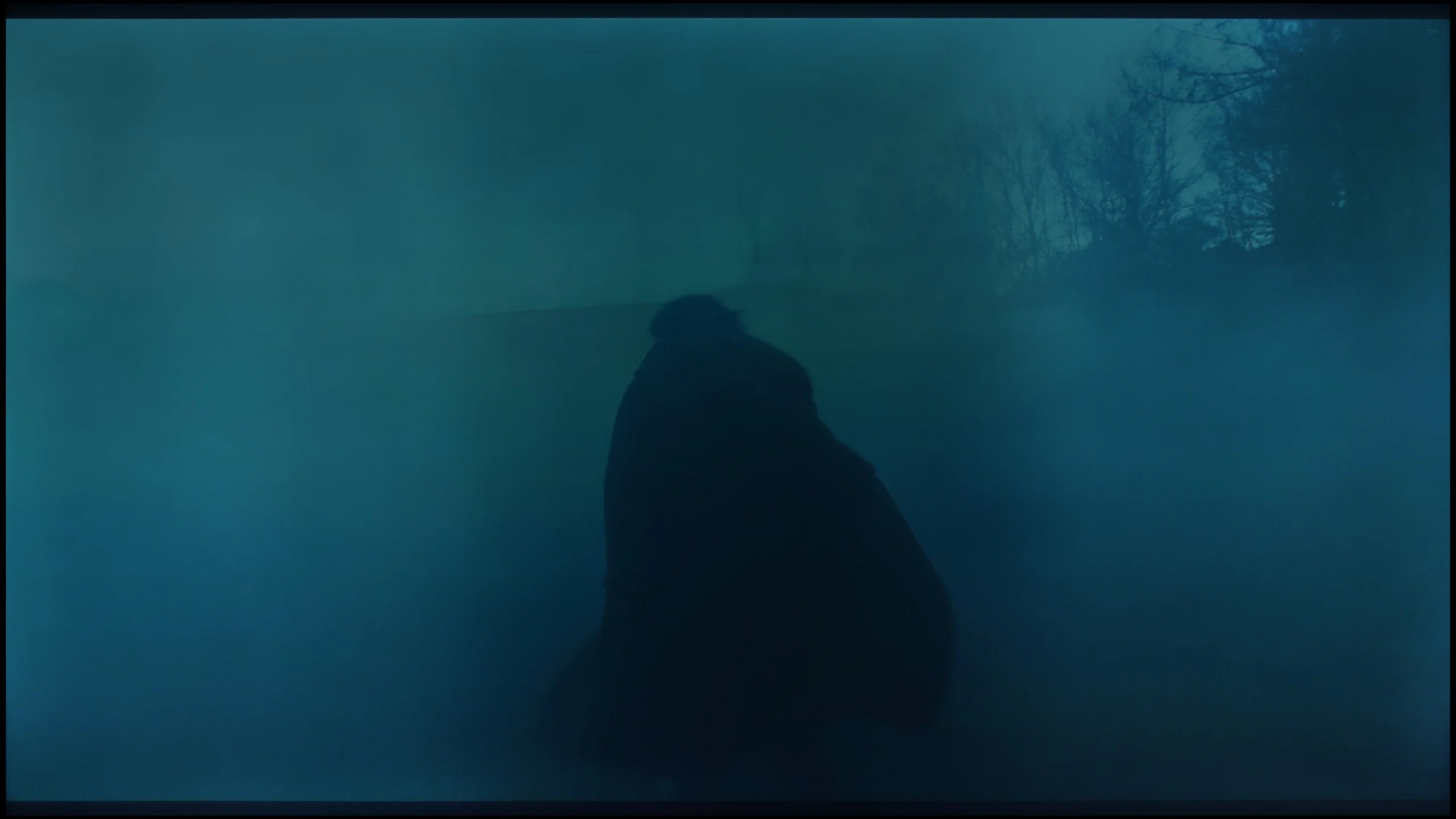
These are selected scenes that show smooth tonal transitions from one color to another. If you see distinct banding, it’s the TV panel’s fault.
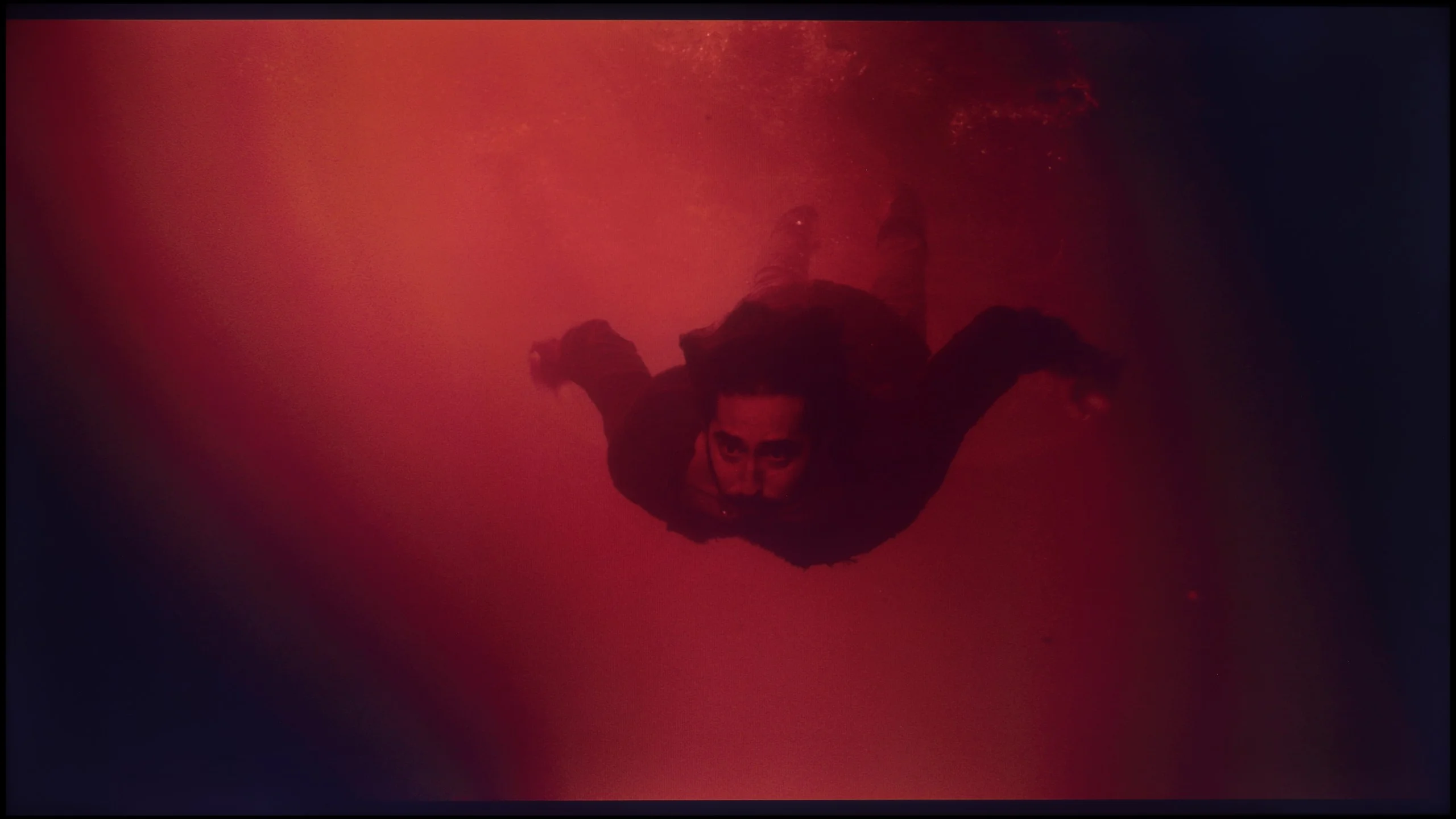
These are selected scenes that show smooth tonal transitions from one color to another. If you see distinct banding, it’s the TV panel’s fault.
The fluidity of tonal transitions in Xiaomi S MiniLED 2025 is impressive. Even in the theoretically most difficult scene with red water, the television performs excellently – we did not notice any major issues. Minor imperfections occur in scenes like The Kingsman or The Martian, where subtle colour blending can be observed. Nevertheless, Xiaomi stands out in this category, offering one of the best qualities of tonal transitions in its price range. This is definitely a strong point of this television.
The PUS8560 handles colour transitions into smooth gradients very well. During tests, the image appeared coherent and natural, and serious issues with tonal transitions occurred only in very dark scenes – for example, in a shot with red water, where subtle cuts between colours could be noticed. However, these are rather exceptions that do not spoil the reception of most content. It is worth mentioning another phenomenon that more significantly affects the quality of the image – the so-called dithering, which refers to a slight "tingling" visible on uniform backgrounds. This effect can be particularly noticeable in high-quality materials and can somewhat spoil the impression of image clarity. It is for this flaw that we deducted some points in our evaluation.
Image scaling and smoothness of tonal transitions
6.7/10
6.5/10

Smooth transition function
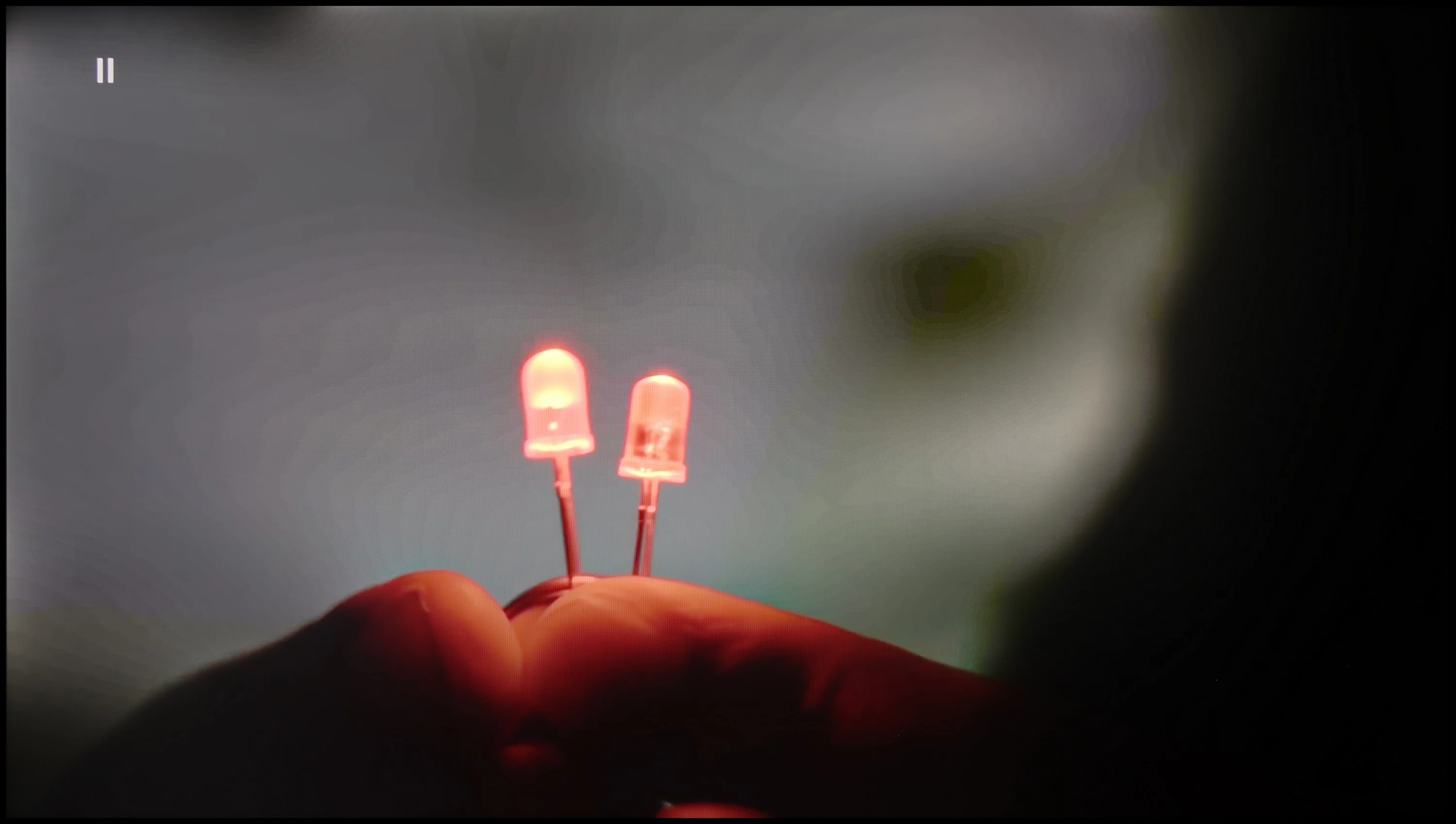
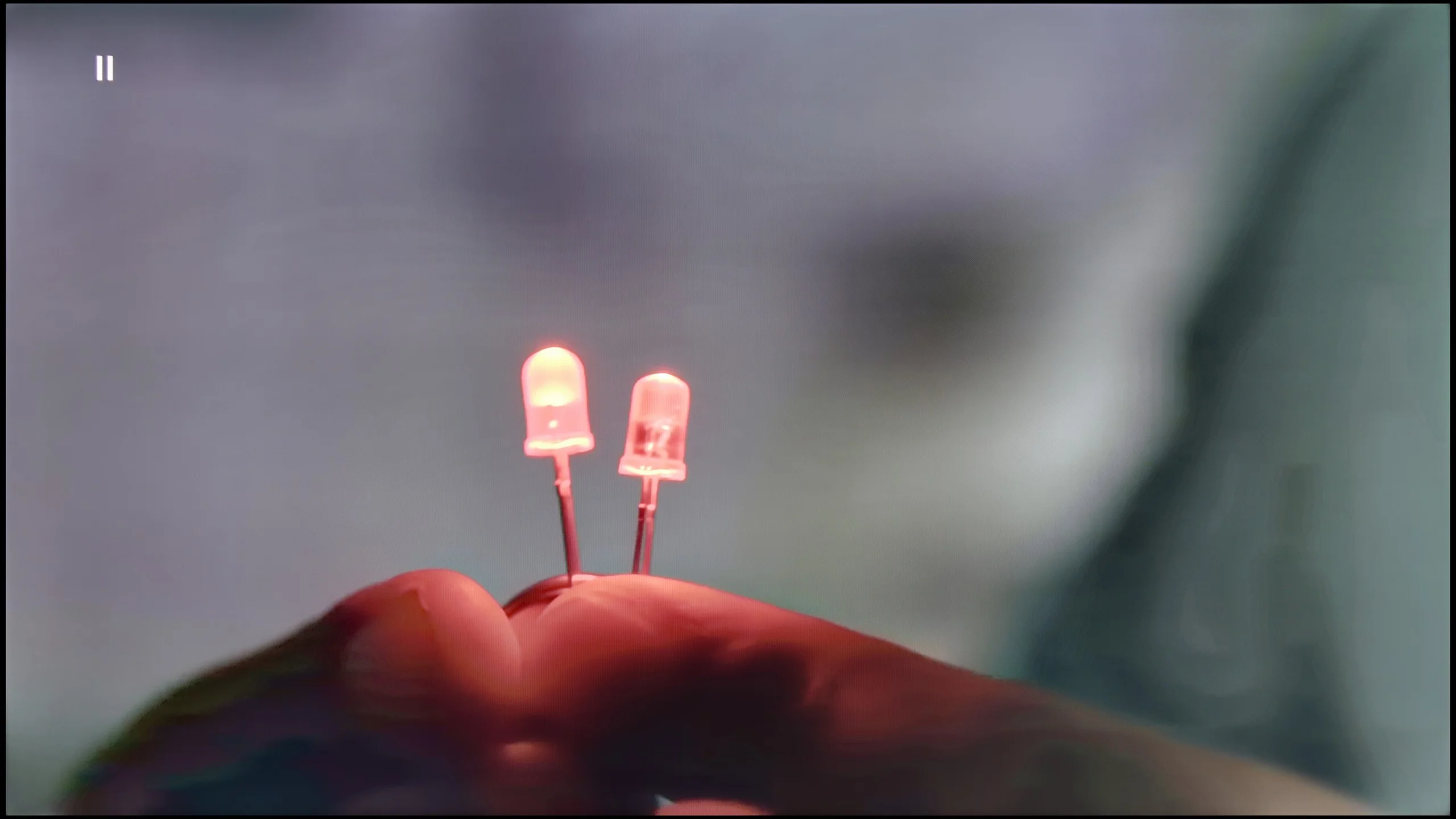
The match photo shows how the TV smooths weak tonal transitions in low-quality video.
Image scaling SD (576i)


The model photo shows how it handles upscaling of SD material.
When it comes to tonal transitions in lower quality materials, such as YouTube or television, the Xiaomi S MiniLED is equipped with a feature called "Colour Contour Removal." At the "low" setting, it performs quite well, although its effectiveness can be inconsistent. Sometimes it seems as though the television is struggling to smoothen, which creates a certain dissonance. On the positive side, we did not notice any visible side effects, although due to the instability of this feature, one could suspect that unexpected issues may arise in certain situations.
Image scaling also performs moderately. There is some slight jaggedness, particularly on thin elements like branches, and subtitles can appear slightly jagged. While this may not be very bothersome, a more discerning eye will certainly pick up on these shortcomings. Overall, most users should be satisfied with the quality of scaling and smoothing, but the television will not satisfy those who expect perfection in every frame of the image.
Philips PUS8560 offers a function for reducing posterization, hidden under the name "distortion reduction". And although it indeed fulfills its role by smoothing out problematic tonal transitions, it works a bit too broadly. In practice, it affects not only colourful gradients but also softens faces, the textures of clothing, and the surfaces of furniture. This compromises the authenticity of the image – especially in films where natural texture is very important. However, if someone is looking for smoothing at all costs, it's best to set this option to "Low". For cinema image enthusiasts – we definitely do not recommend it.
On the positive side, the quality of upscaling older materials is noteworthy – the PUS8560 model handles them surprisingly well. The image retains its natural softness, without artificially boosted sharpness. It is also worth mentioning that the television correctly displays content with very low resolution, avoiding issues with image edge cutting (so-called overscan).
Blur and motion smoothness
7/10
4/10


Blur (native resolution, maximum refresh rate):





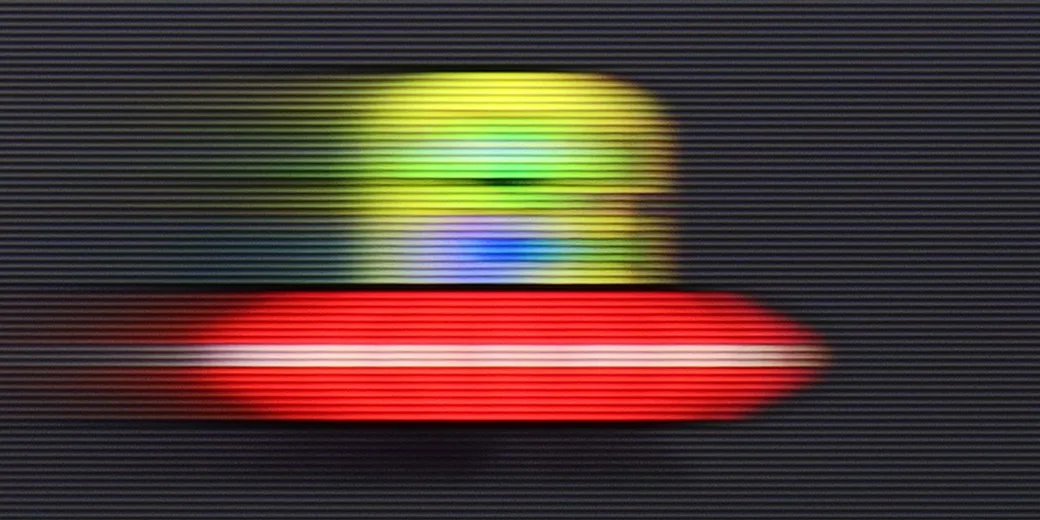
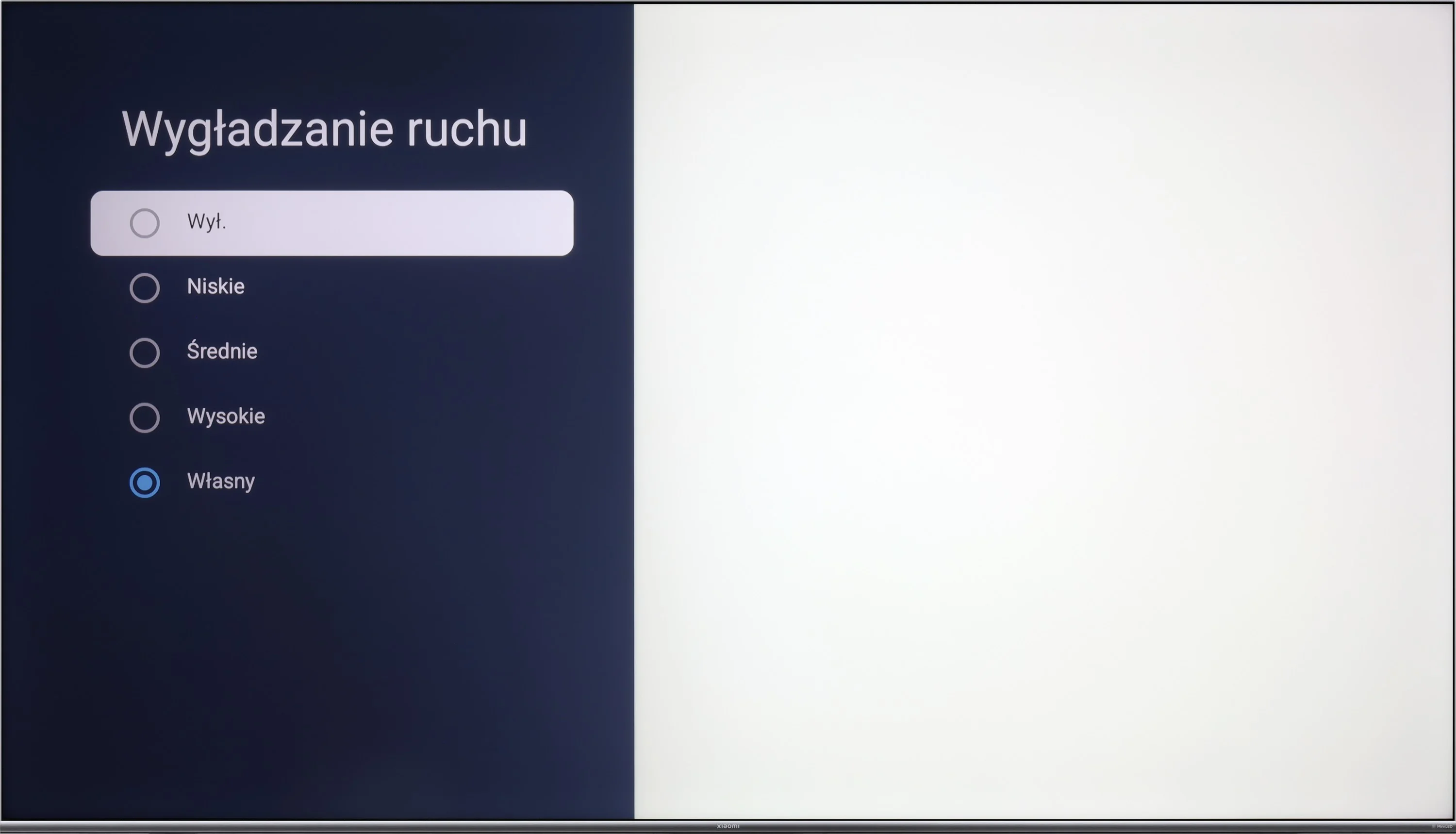
Xiaomi S MiniLED 2025 is equipped with a panel featuring a refresh rate of 4K@120Hz (1080p@240Hz), which provides sufficient smoothness for both watching dynamic sports broadcasts and playing the latest games. This level of refresh rate makes the image appear fluid, even in the most intense scenes. Additionally, the television offers a “Motion Smoothing” feature that allows you to adjust the way the image is displayed in films. You can choose a more frame-like effect, typical of the cinematic experience, or a smoother one, reminiscent of the so-called “theatrical effect.” This way, every user can tailor the settings to their preferences and enjoy smooth images in their favourite content.
The Philips PUS8560 is a television equipped with a panel featuring a refresh rate of 60 Hz, which immediately limits its capabilities in terms of displaying dynamic content. Watching sports or playing on a console is not particularly enjoyable. The situation is further worsened by the lack of any option to improve the smoothness of films. In the menu, we won't find settings that would allow us to enable a motion smoother or even a slight motion smoothing for films recorded at 24 frames per second. You can imagine the effect. The image can appear jerky, especially in shots with panoramic camera movements.
Console compatibility and gaming features
9.8/10
4.7/10
- ALLM
- VRR
- VRR range48 - 144Hz48 - 60Hz
- Dolby Vision Game Mode
- Correct implementation of HGIG
- 1080p@120Hz
- 1440p@120Hz
- 4K@120Hz
- Game bar
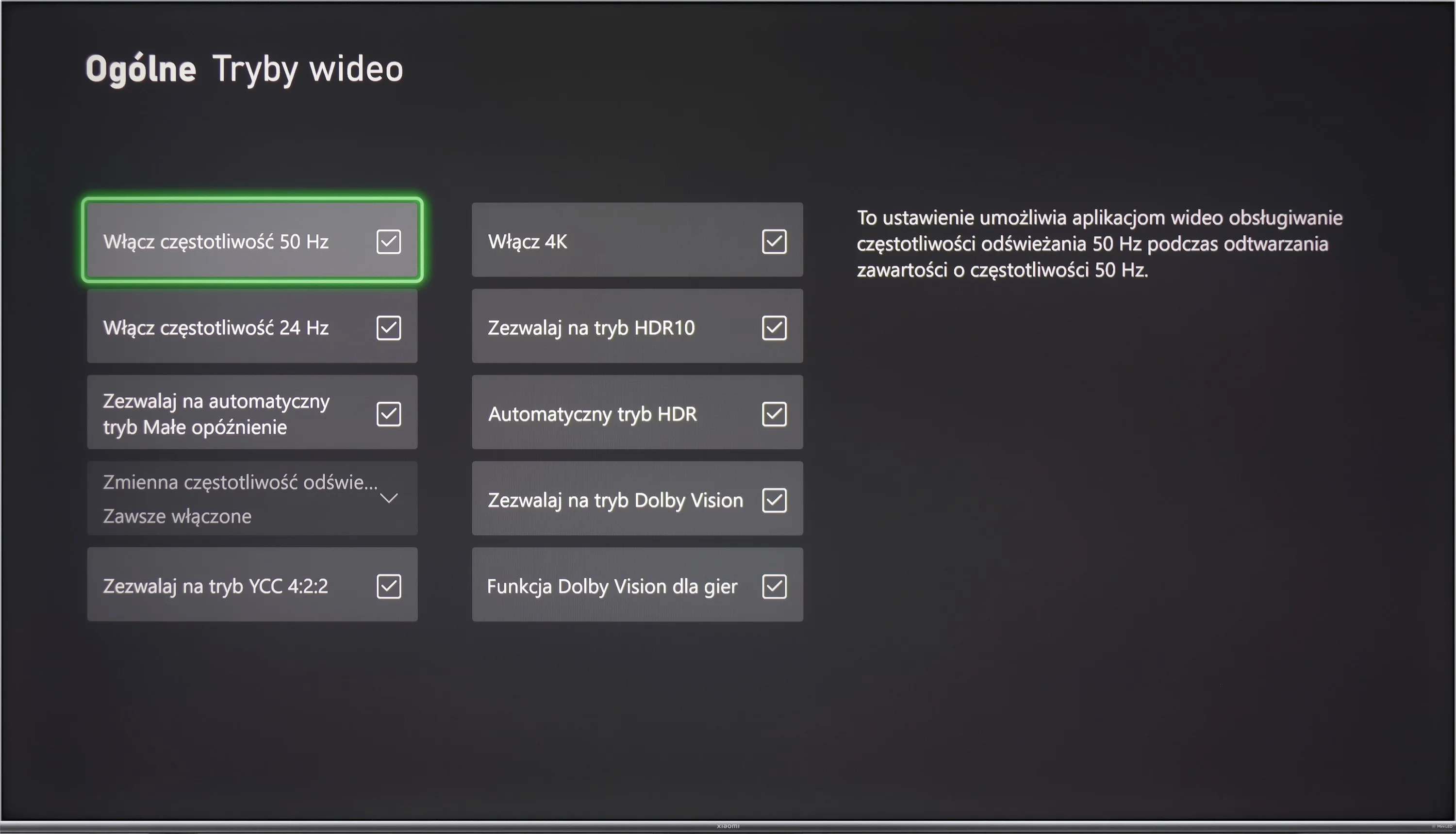
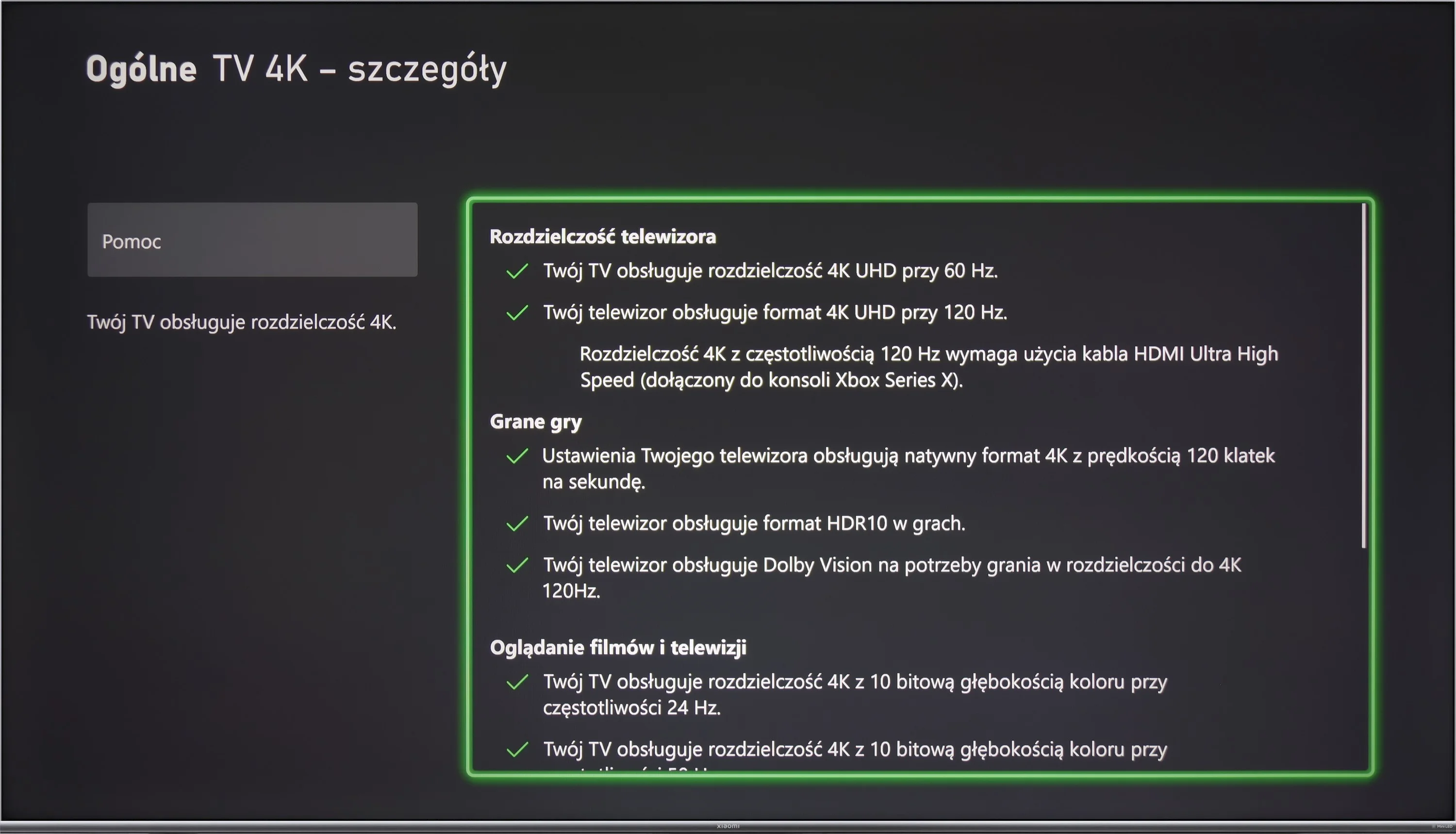
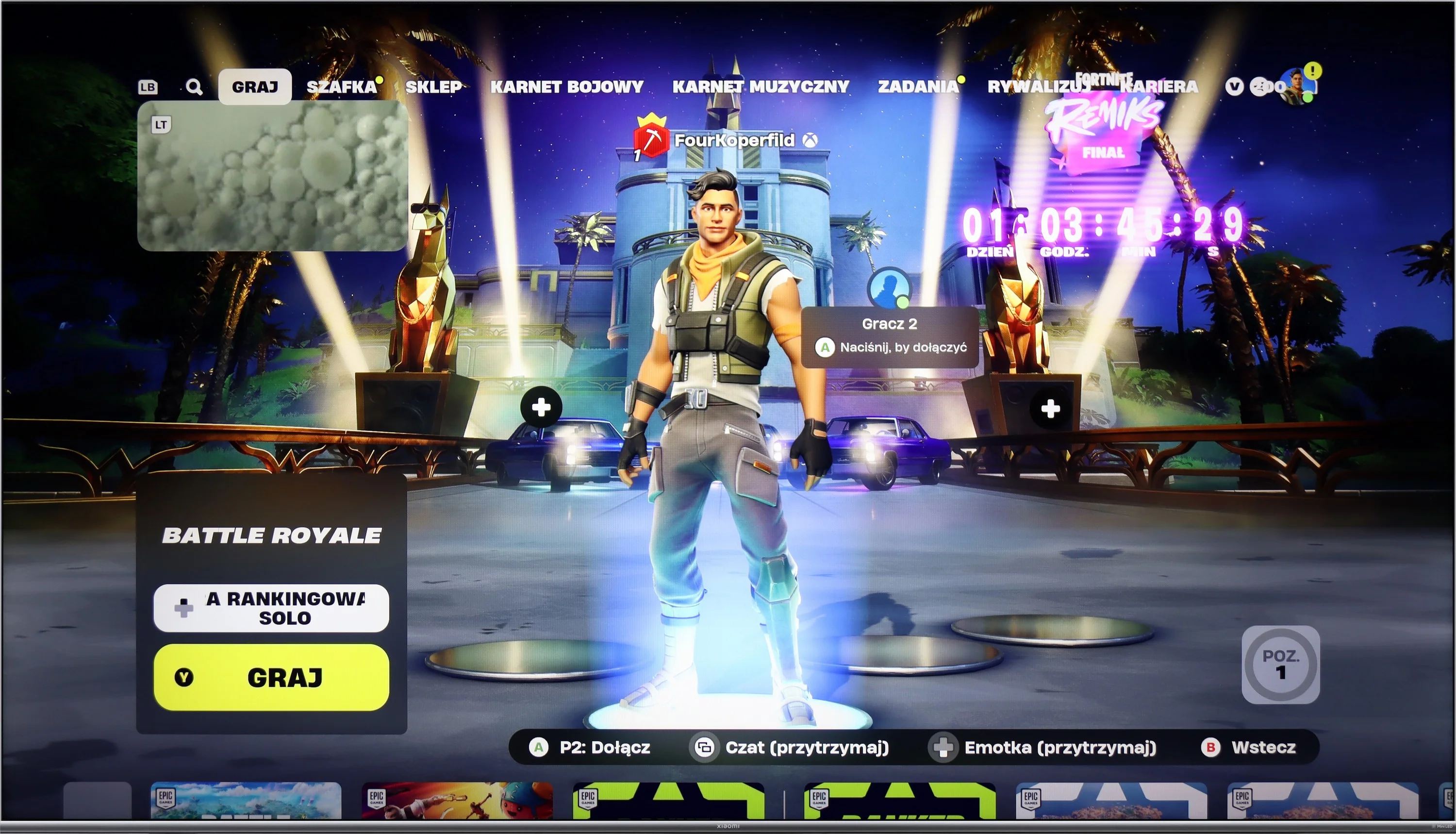
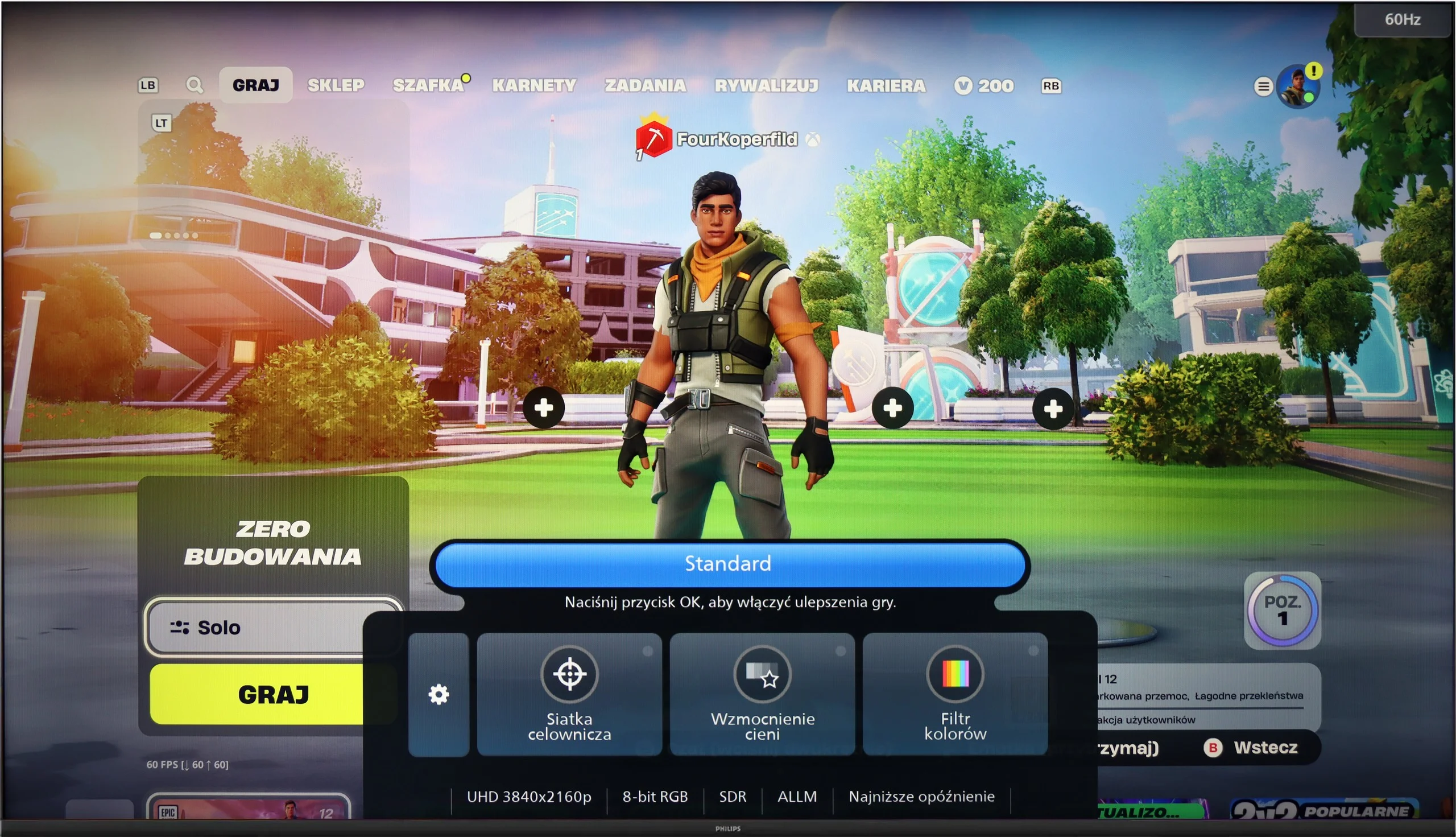
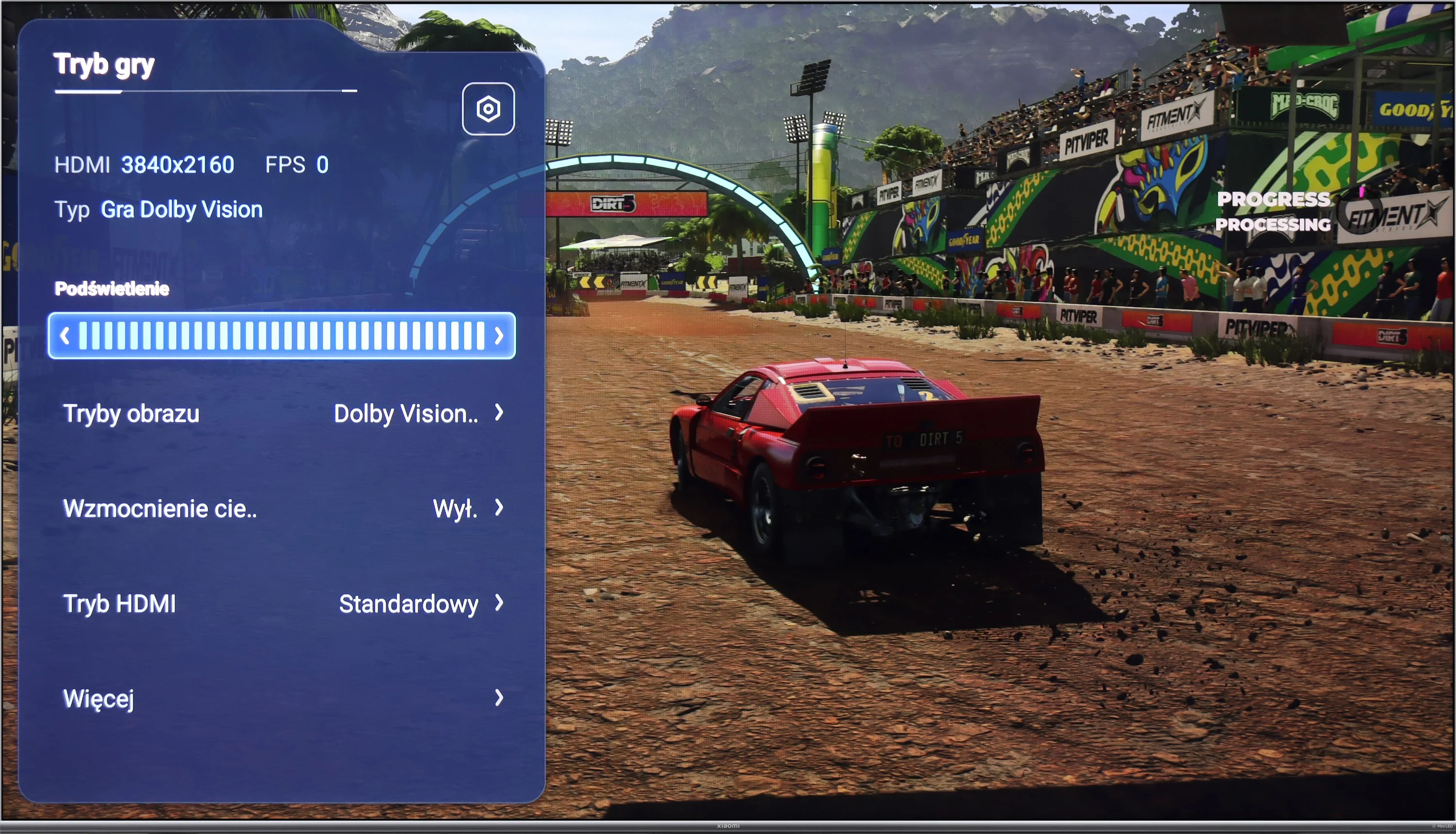
Xiaomi S MiniLED 2025 is a television that has a lot to offer gamers. With two HDMI ports boasting 48 Gbps bandwidth, we can easily connect modern consoles or PCs, utilising their full potential. Additionally, the ALLM feature automatically switches the TV to low-latency mode – something we will appreciate during dynamic games without annoying lags. Regardless of what we connect, it functions smoothly, and the television handles various resolutions exceptionally well. There is also the GameBar, which may not look as impressive as the "bars" from the competition, but makes up for it with practicality. It is a simple settings panel that allows us to quickly change the most important options or check statistics – an ideal solution when time is of the essence.
However, we must admit that operating the television itself – or rather finding the gaming features within it – posed a significant challenge for us. We approached the testing of the Xiaomi S MiniLED 2025 several times to locate all the necessary options. The hidden menu allowed us to discover the "GameBoost" feature, which enables switching the television to 240 Hz mode, activating VRR, and allows for enabling picture in HGIG mode.
In summary, the Xiaomi S MiniLED 2025 is a television that definitely deserves praise in the gaming hardware category. Its rich set of features – 240 Hz mode, VRR, HGIG, and "GameBoost" – provides an exceptional gaming experience. Unfortunately, the intuitiveness of the menu itself leaves much to be desired and may pose a challenge for the average user.
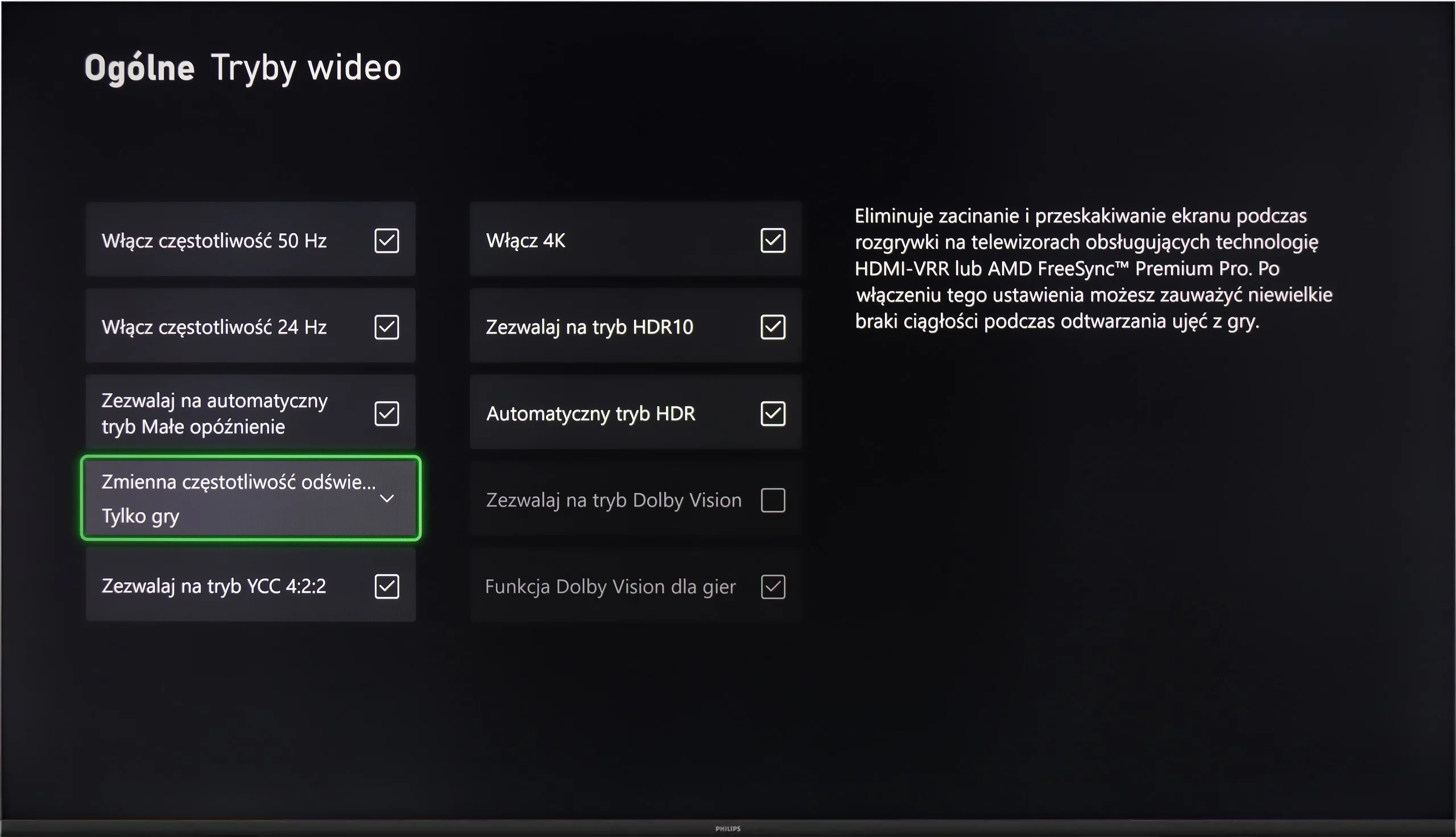
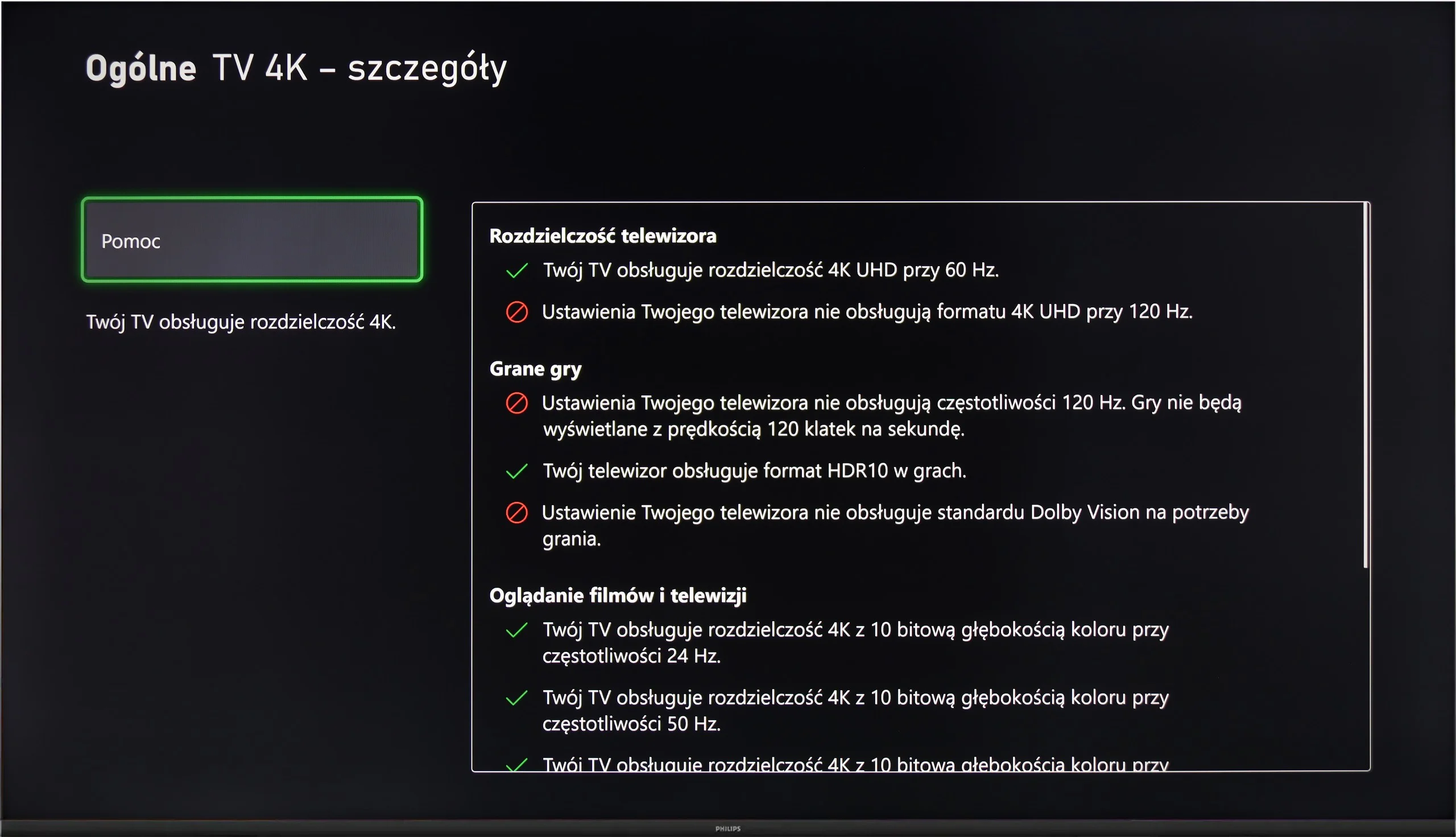
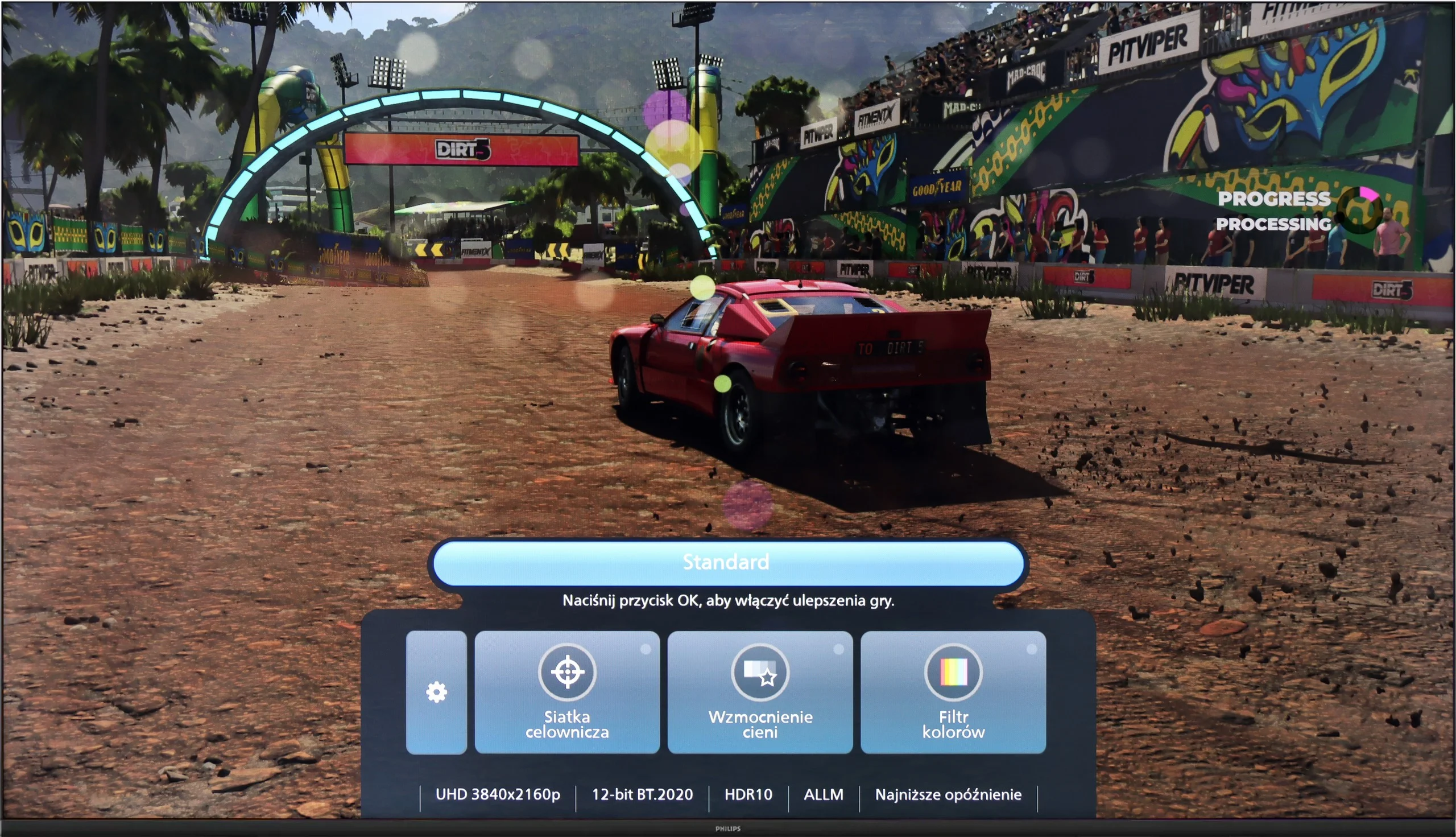
Although the Philips PUS8560 is not designed with gamers in mind, the manufacturer has decided to equip it with a few features that may prove useful when connecting a console. On board, we find automatic switching to game mode (ALLM), as well as a simple connection status information bar – the so-called Game Bar. It does not make a particularly strong visual impression, but it serves its purpose. The presence of variable refresh rate (VRR), operating in the range of 48 to 60 Hz, may come as a surprise. While this is not a wide range, in the case of less demanding games or titles with unstable frame rates, VRR can help reduce screen tearing. However, this is the only element that could be considered beyond the minimum.
It must be made clear that the PUS8560 is not equipment for gamers looking for a responsive screen and full support for modern console features. It lacks HDMI 2.1 ports, the refresh rate is limited to 60 Hz, and the response time of the panel is not among the fastest. This model may be suitable at most for casual gamers who want to enjoy the Ambilight system.
Input lag
9.8/10
10/10
SDR
HDR
Dolby Vision
The input lag of the Xiaomi S MiniLED 2025 is one of its biggest advantages. 8 ms for 120 Hz content and 17 ms for 60 Hz is an absolutely remarkable performance that will satisfy even the most demanding gamers. Furthermore, the Dolby Vision mode in games deserves praise. Unlike many competing models, Xiaomi maintains a low input lag even in this mode, making it an excellent choice for fans of high-quality HDR gaming experiences.
The input lag on the PUS8560 is very good. When we previously mentioned that this screen is rather for the "casual gamer," there is nothing to be ashamed of in this regard – even when compared to screens aimed at gamers. Results around 12 ms are truly outstanding, allowing for an enjoyable responsive gameplay experience. It doesn't matter whether we are playing in Full HD or 4K – the lag remains equally low, so if you value a quick response time, the PUS8560 will definitely not disappoint in this aspect.
Compatibility with PC
8.2/10
5.6/10
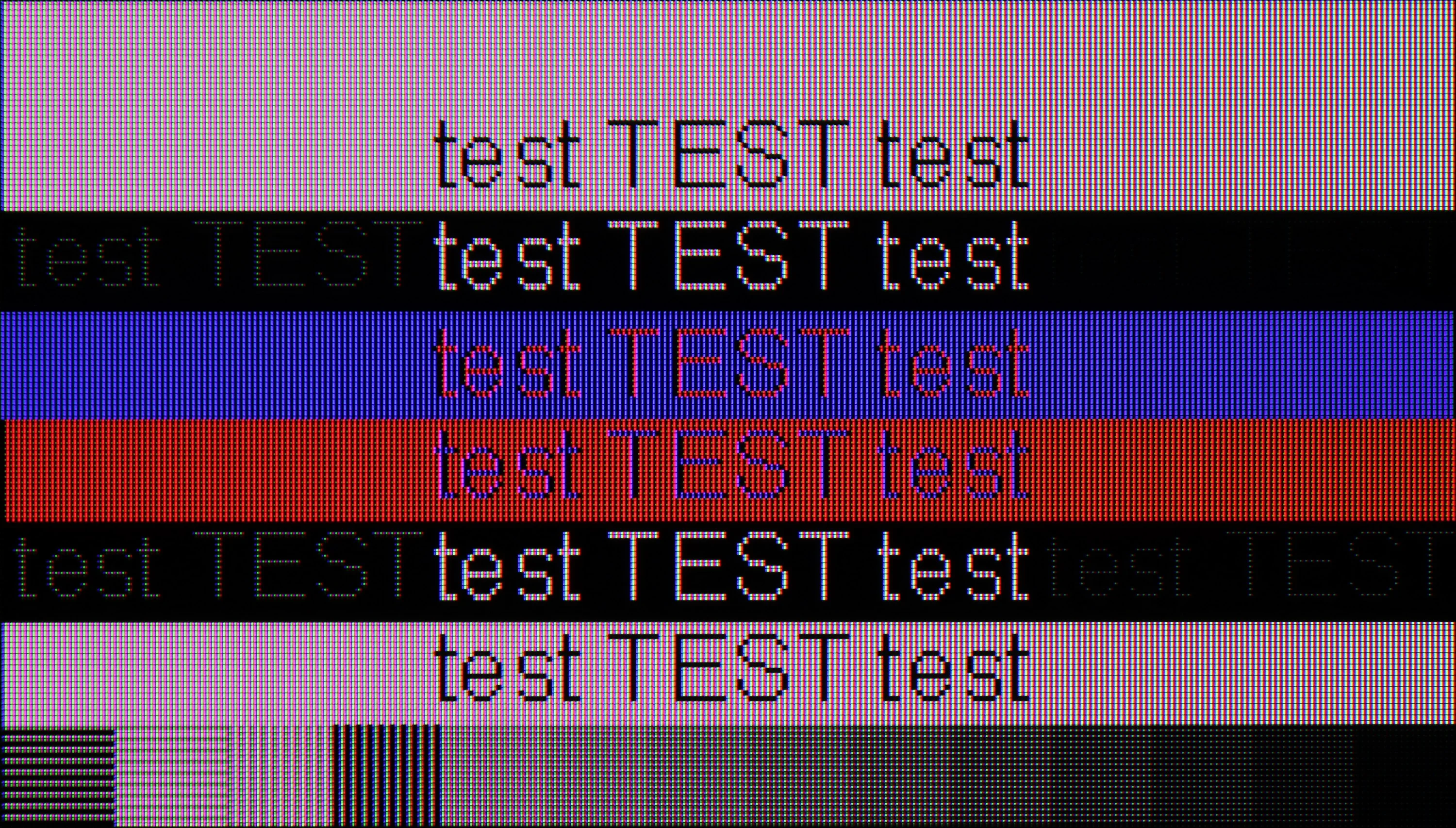
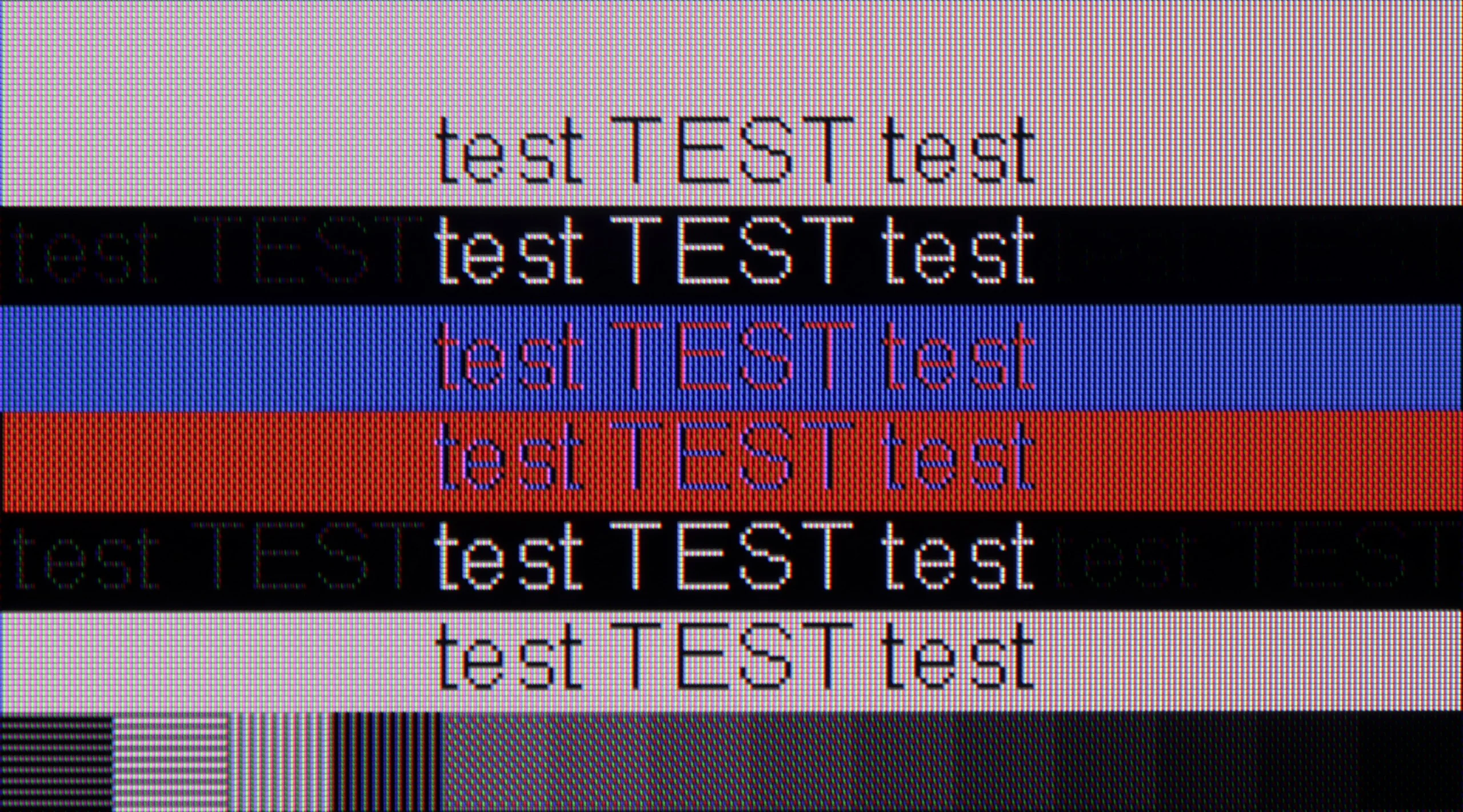
The photo shows the legibility of small fonts. Ideally, lines should be the same thickness on both light and dark text, with minimal pixel gaps.
Xiaomi S MiniLED 2025 is a good choice if we need a television for working with a computer. The fonts are very clear thanks to the support for chroma 4:4:4, making it perfect for office work or browsing documents. It also performs excellently in gaming – high refresh rates, G-SYNC, and low input lag ensure smooth gameplay, which will satisfy most gamers.
When it comes to working with a PC on the PUS8560, it looks... quite strange. Chroma 4:4:4 is present in "Monitor" mode, but there is a problem with grey fonts – not all subpixels are lit, which results in the text appearing jagged. On the other hand, in "Game" mode – chroma 4:4:4 disappears, but the grey fonts look correct. In practice, we are therefore forced to juggle settings if we want to have perfectly readable text at all times. And what about gaming on the computer? Our opinion remains the same as for consoles – it is doable, but without fireworks. There is no variable refresh rate for G-SYNC graphics cards, and the refresh rate itself remains relatively low. However, we can once again highlight the very low input lag, which saves the situation in dynamic games.
Viewing angles
3/10
3.3/10
In terms of viewing angles, Xiaomi S MiniLED 2025 does not impress. This is a typical problem with VA panels, which do not perform well without additional coatings that widen viewing angles. The image begins to lose quality when watching the television from the side – colours fade and contrast significantly drops. However, the advantage of VA panels is their considerably better contrast compared to IPS panels, which in turn win in terms of wider viewing angles. This is a classic compromise where one has to choose between better blacks and a more universal image seen from various places in the room.
The viewing angles on the PUS8560 are precisely what one would expect from a VA panel - it's not the best. The image loses quality even with a slight shift off-axis – colours become washed out and black begins to resemble a dark navy. This is, of course, the price paid for the better contrast that VA offers when viewed directly. In the case of our 55-inch model, this is still acceptable, especially if the television is positioned perfectly opposite the sofa. However, with larger screen sizes or a less central placement in the living room – it could become a problem for comfortable viewing.
Daytime performance
7.3/10
4.9/10
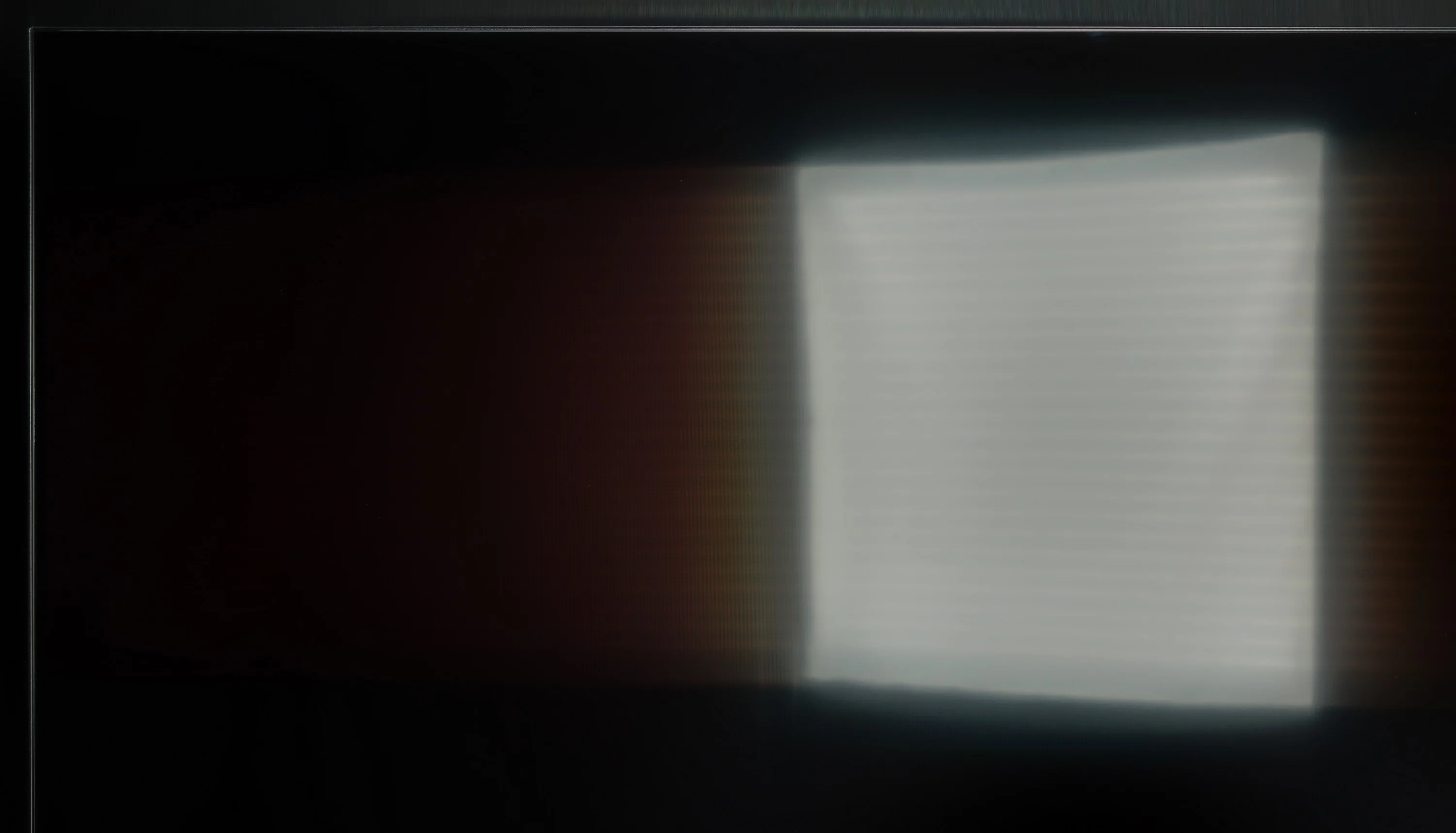
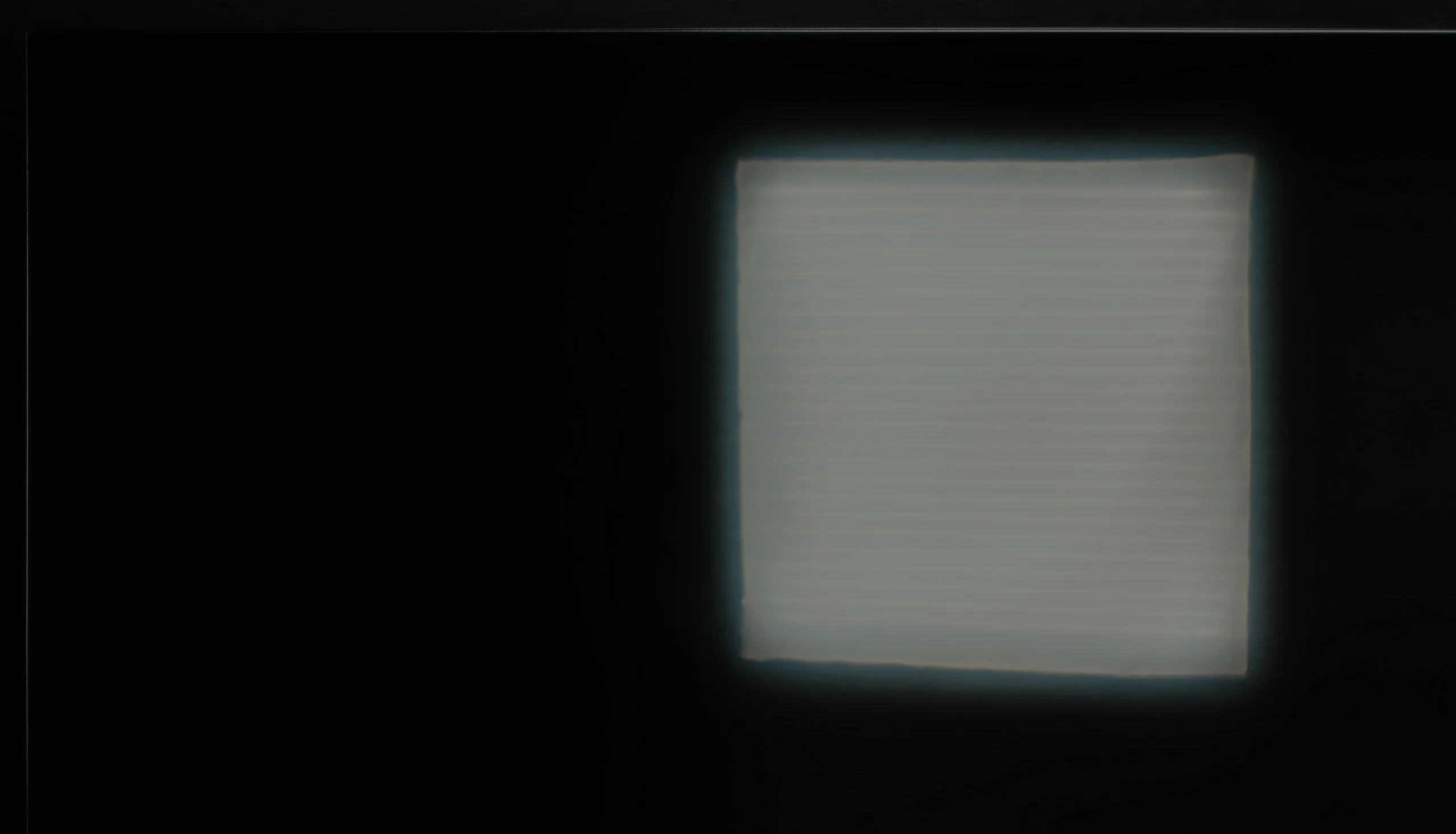
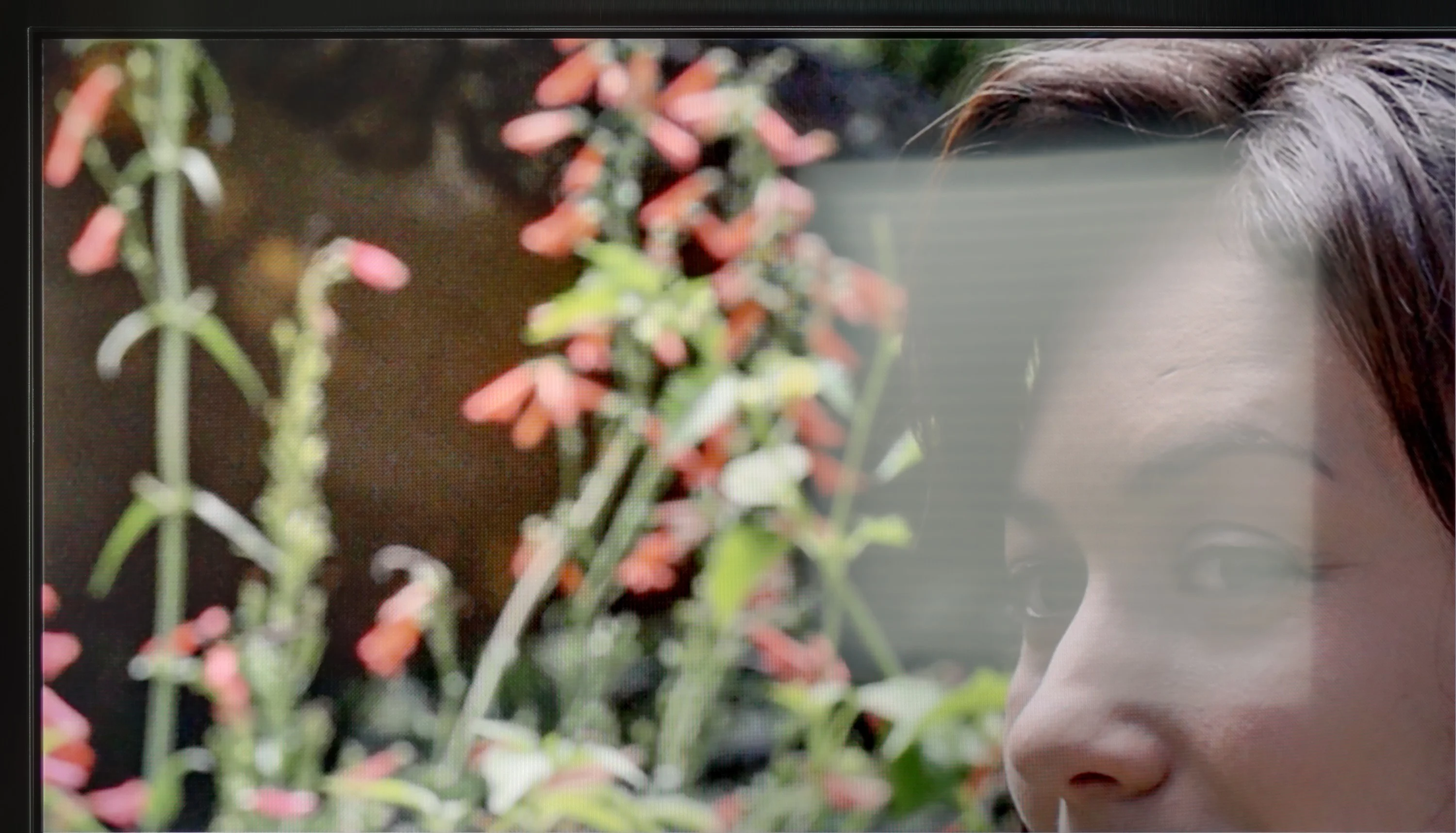
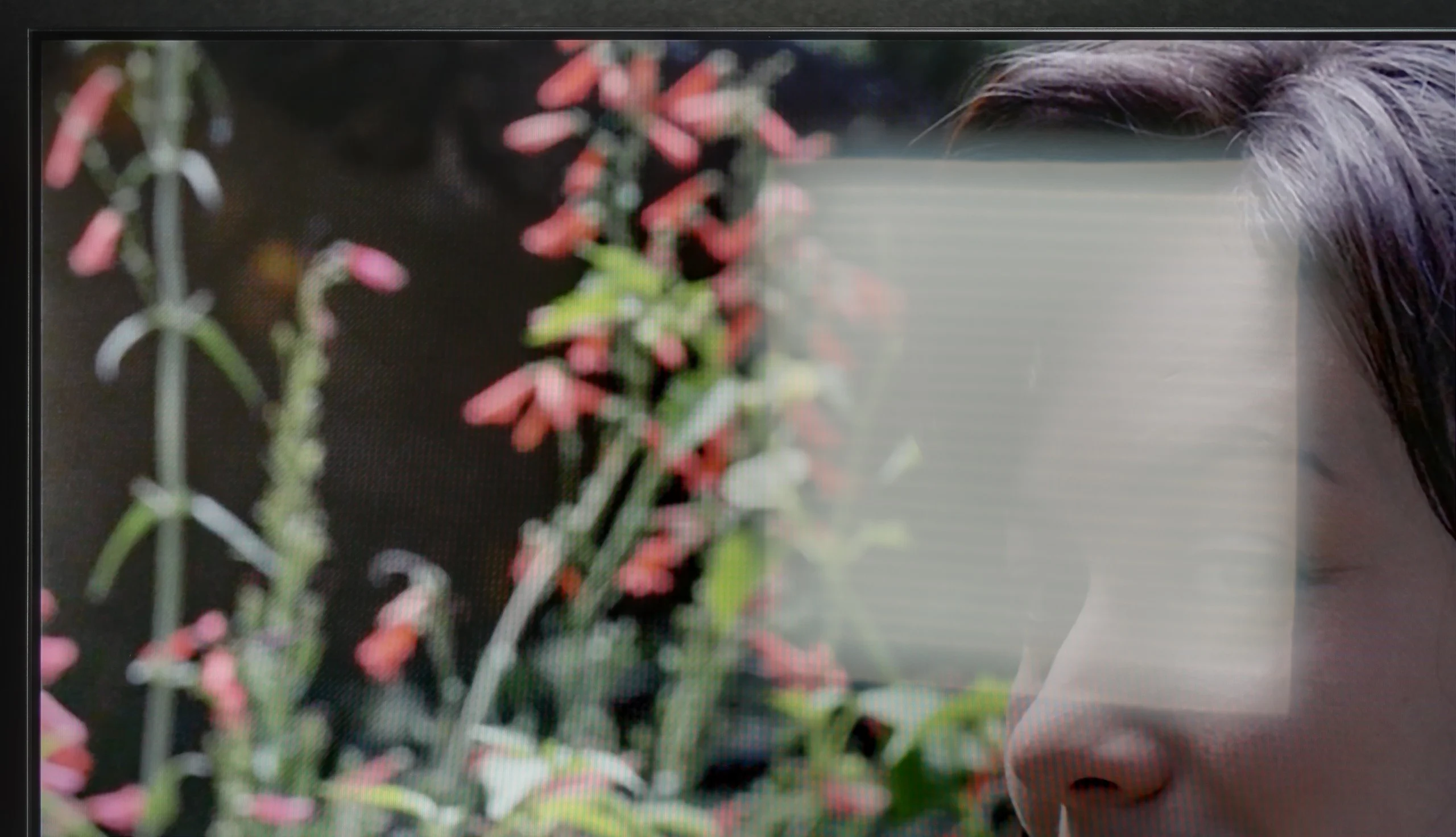
Panel brightness
Philips PUS8500 : 331 cd/m2
Xiaomi S Mini 2025: 841 cd/m2
Xiaomi S MiniLED 2025 is equipped with a satin finish on the panel, which performs fairly well in reducing reflections. On the screen surface, one can notice light reflections, which can be somewhat distracting in bright rooms. However, the key feature that saves this television in daytime use is its brightness. With a value of 841 cd/m², the screen performs effortlessly even in very sunny interiors. This is more than enough to comfortably watch television, films, or sporting events. Importantly, the television also handles more demanding content, such as winter sports, where the dominant white can pose a significant challenge for other televisions. Here, Xiaomi definitely delivers.
The PUS8560 performs moderately during the day. The satin matrix coating quite effectively dampens reflections, which means that light from windows or lamps does not interfere too much. The blacks also look decent for a VA panel – even in daylight, there are no significant losses in contrast. However, all the charm fades when it gets really bright. The panel's brightness is around 300 nits, which is definitely too little to speak of full comfort in a heavily lit room. In such conditions, the PUS8560 simply needs to be aided by blinds – otherwise, the image begins to look rather pale.
Panel details
Subpixel Structure:
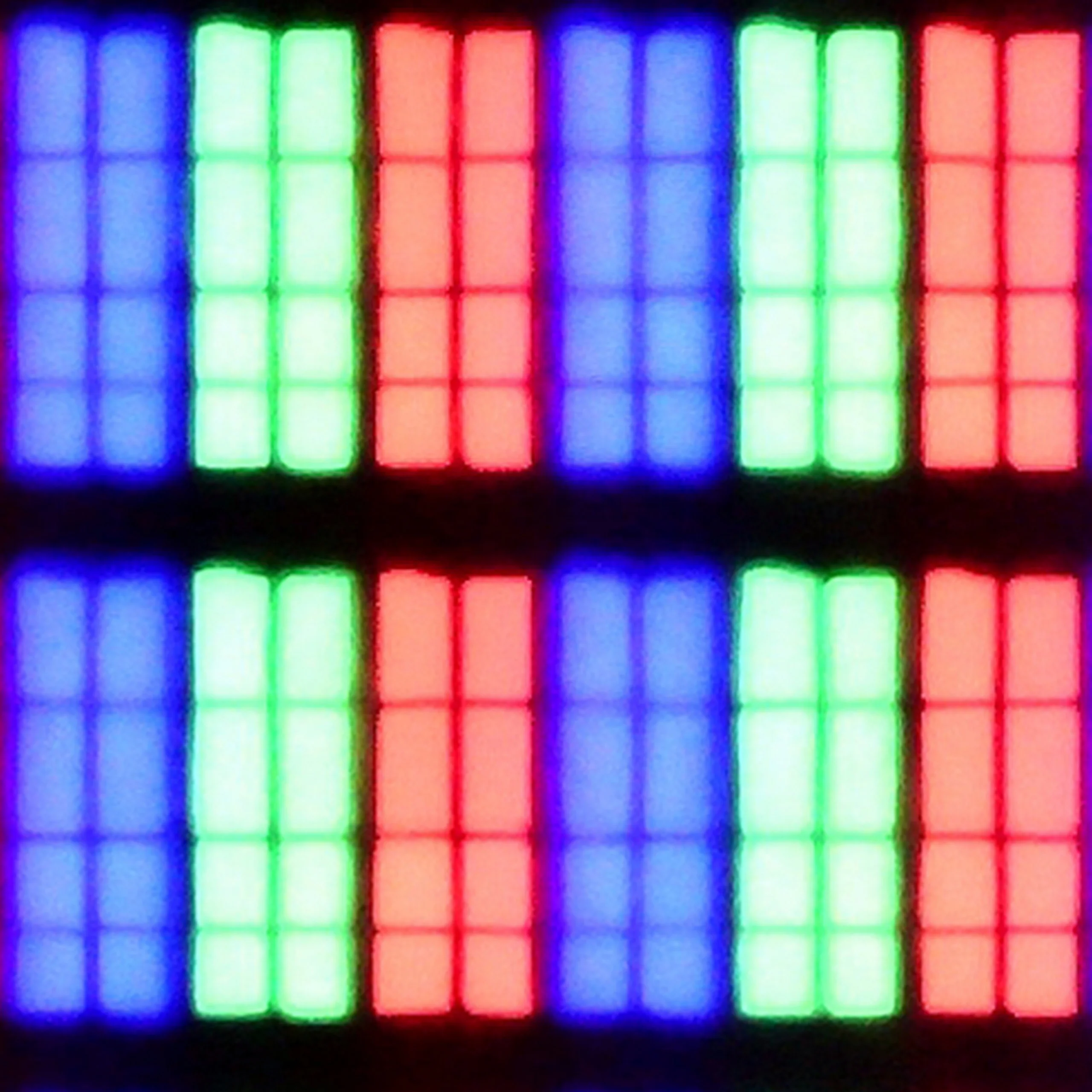
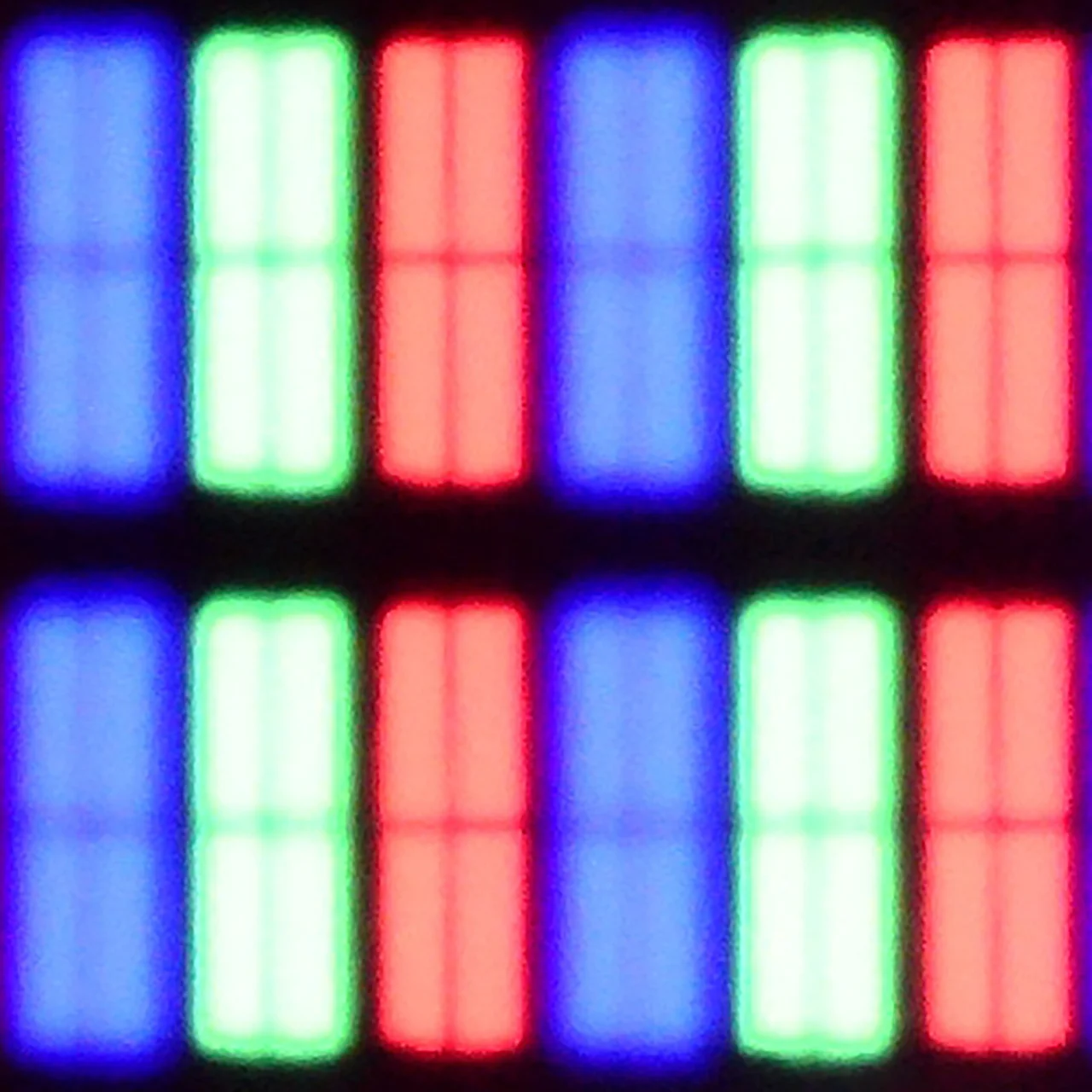
Panel uniformity and thermal imaging:


TV features
4.7/10
4.8/10
- SystemGoogle TVTitan OS
- System performanceAverageAverage
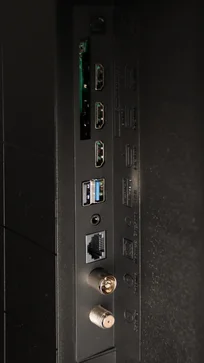
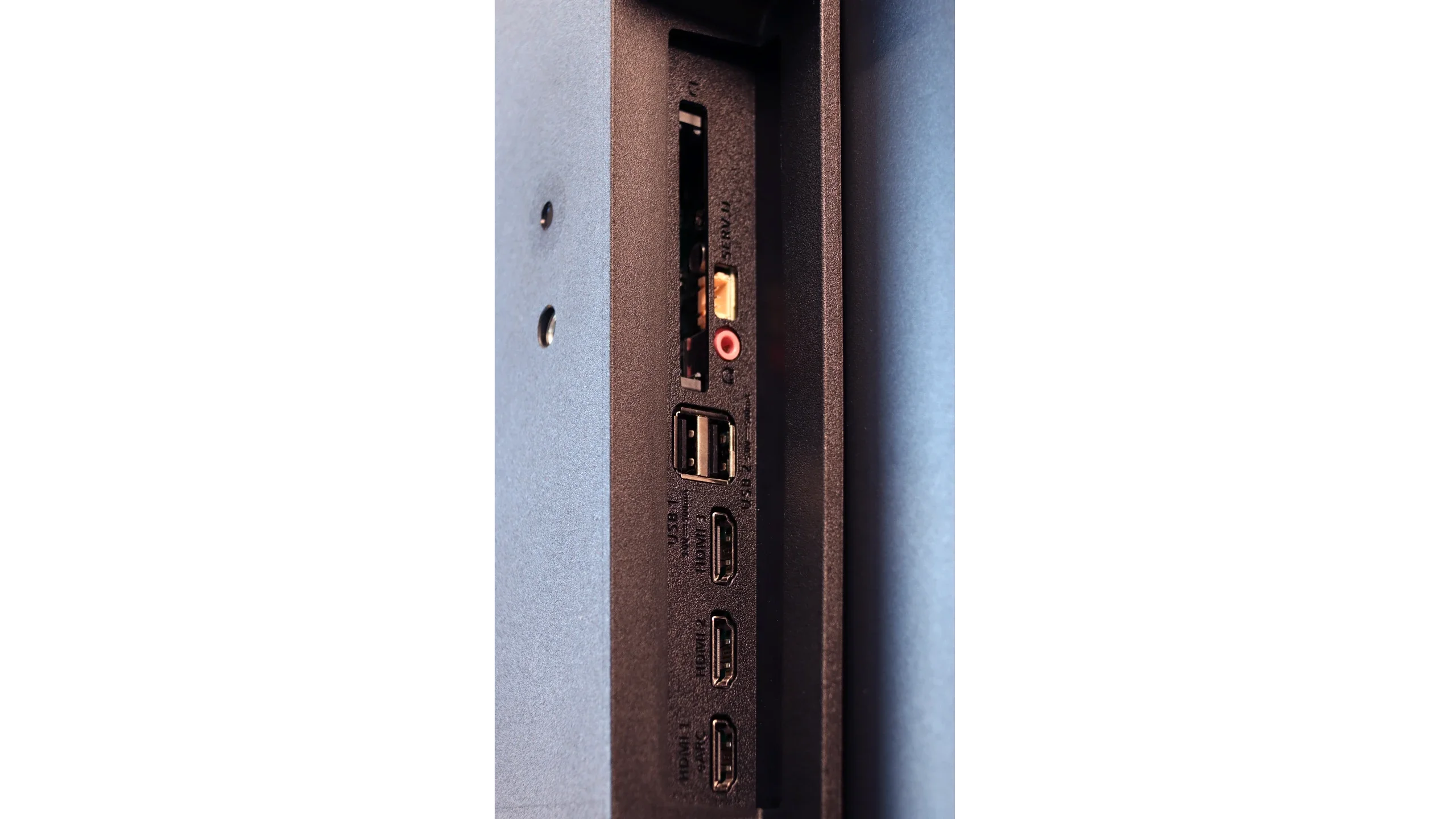
- HDMI inputs1 x HDMI 2.0, 2 x HDMI 2.1 48Gbps3 x HDMI 2.0, 0 x HDMI 2.1
- OutputsToslink (Optical audio), eARC (HDMI), ARC (HDMI), Mini-Jack (Headphones)Toslink (Optical audio), eARC (HDMI), ARC (HDMI), Mini-Jack (Headphones)
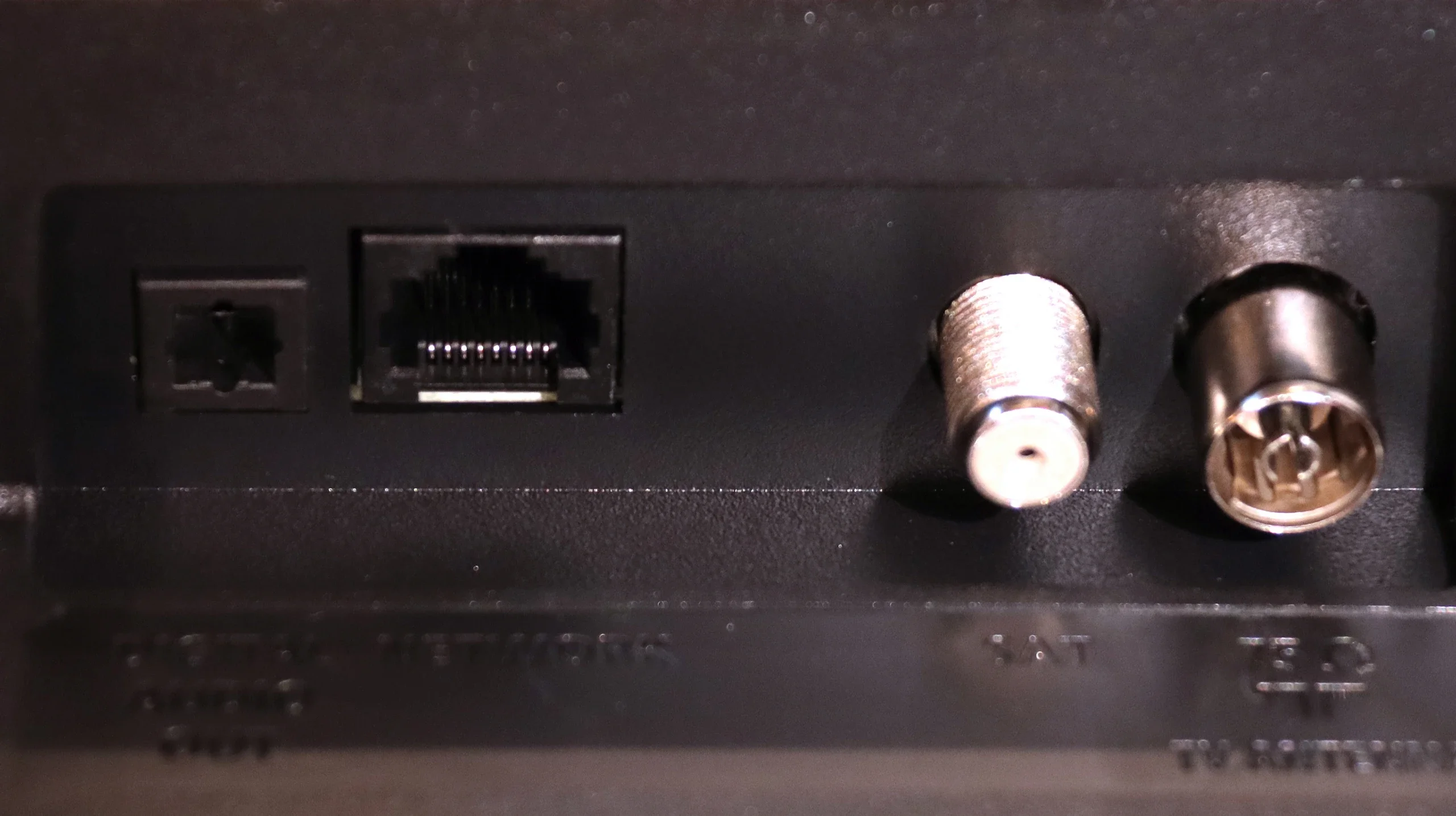
- Network InterfacesWi-Fi 2.4GHz, Wi-Fi 5GHz, Ethernet (LAN) 100MbpsWi-Fi 2.4GHz, Wi-Fi 5GHz, Ethernet (LAN) 100Mbps
- TV receptionDVB-T, DVB-T2, DVB-S, DVB-S2, DVB-CDVB-T, DVB-T2, DVB-S, DVB-S2, DVB-C
Classic features:
- Recording to USB (terrestrial TV)
- Recording programming
- Picture in Picture (PiP)
- RF remote control (no need to aim)
- Backlit remote control
- Teletext
- Audio only mode
- Bluetooth headphones support
- Simultaneous Bluetooth headphones & TV audio
Smart features:
- AirPlay
- Screen mirroring (Windows Miracast)
- Voice search
- Voice search in native language
- Ability to connect a keyboard and mouse
Sound connection options
- HDMI audioeARC (HDMI), ARC (HDMI)eARC (HDMI), ARC (HDMI)
- Other audio outputsToslink (Optical audio), Mini-Jack (Headphones)Toslink (Optical audio), Mini-Jack (Headphones)
- Wireless audioBluetoothBluetooth
Supported audio formats (external HDMI eARC audio):
- Dolby Digital Plus 7.1
- Dolby True HD 7.1
- Dolby Atmos in Dolby Digital Plus (JOC)
- Dolby Atmos in Dolby True HD
- DTS:X in DTS-HD MA
- DTS-HD Master Audio
Senior accessibility
- Numeric keyboard on TV
- Font size adjustment
- Audio description
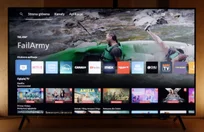
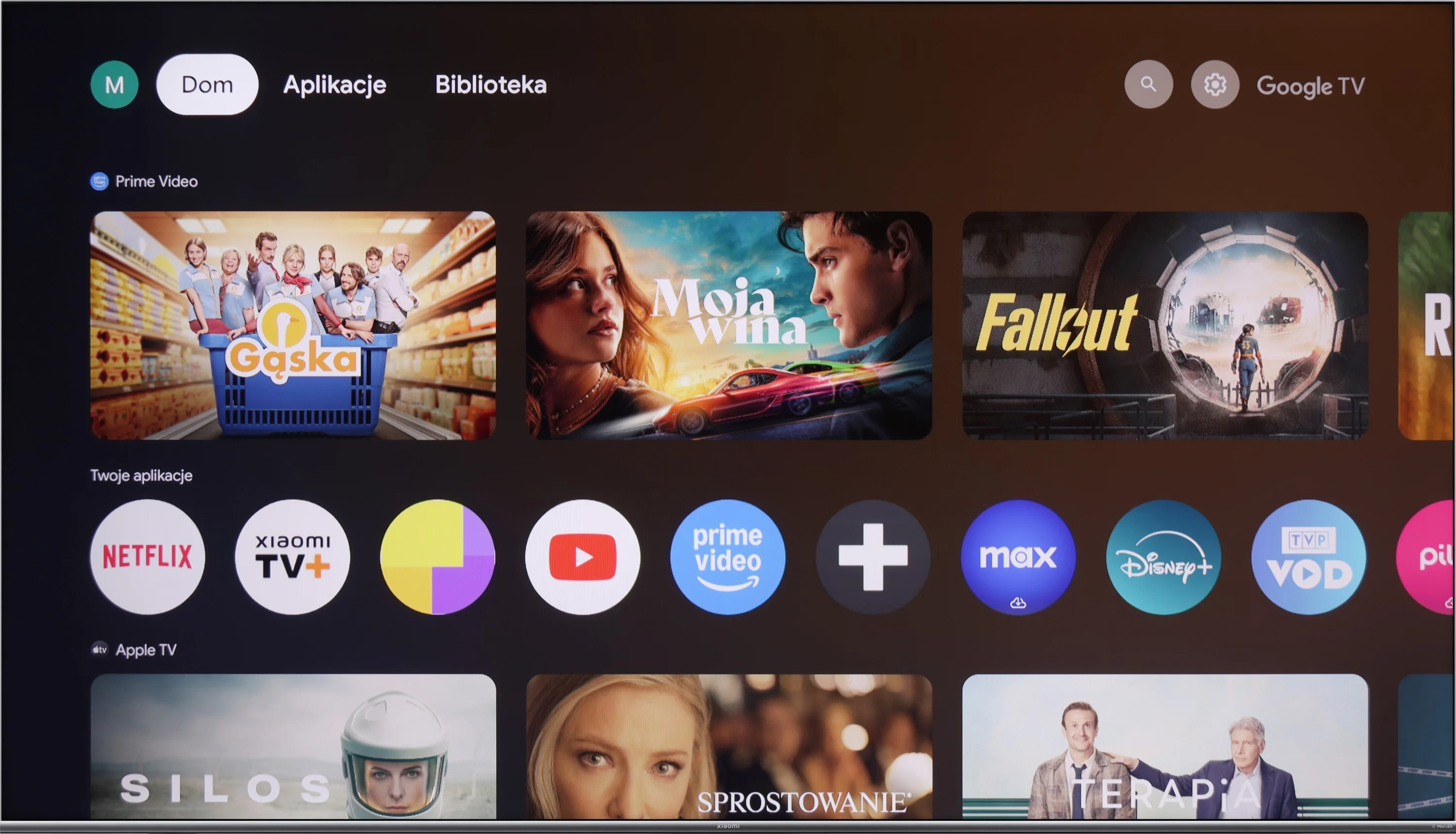
Xiaomi S MiniLED 2025 is a television that stands out thanks to the Google TV system. It offers access to the most popular streaming services, music apps, and various useful features that significantly enhance the everyday experience of using the television. For those who enjoy personalisation, the system also provides plenty of configuration options.
The built-in voice assistant operates smoothly – we can not only control the television but also ask about the weather forecast or set a reminder for the next day. Unfortunately, we noticed during testing that some features have difficulty translating into Polish, which can be frustrating, especially for those less adept at navigating the settings. Despite this, the overall impression is very good, and minor shortcomings can be corrected in future updates.
The device manages connectivity well. Wireless connections to Windows computers or Apple devices proceed smoothly, and thanks to Bluetooth, we can easily connect headphones, keyboards, or other accessories. The remote control is simple and convenient – it works from any position, so aiming at the screen is not necessary. However, there are some shortcomings. If someone frequently uses traditional television, they may feel the lack of recording features from tuners or the PiP (picture in picture) option. This somewhat limits capabilities, but for those focusing on streaming and modern functionalities, it shouldn't be a significant issue.
Xiaomi makes up for these shortcomings with an excellent operating system. Google TV is one of the most advanced and user-friendly systems available on the market, which makes the television perform really well in everyday use.
Classic TV Features:
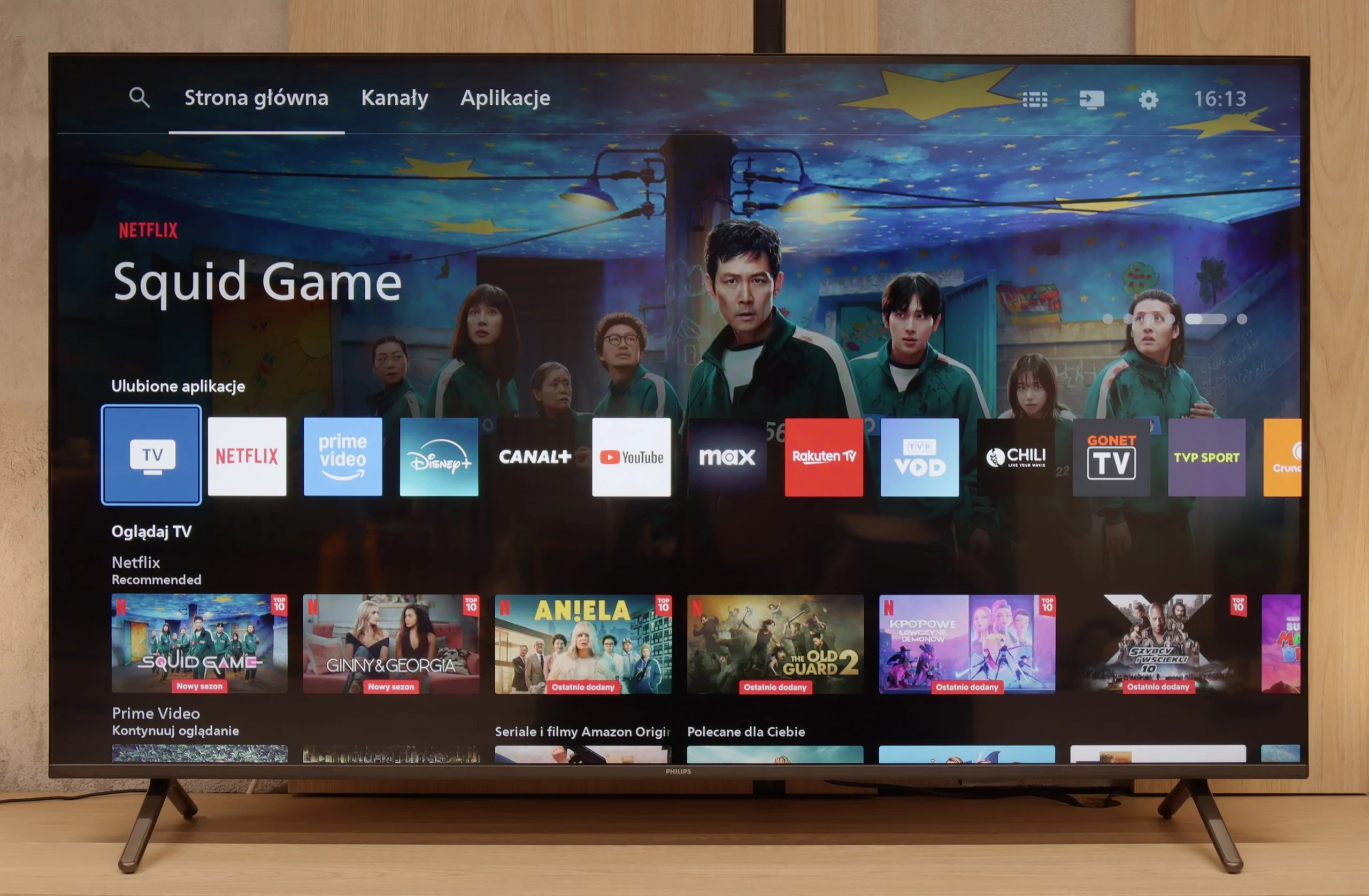
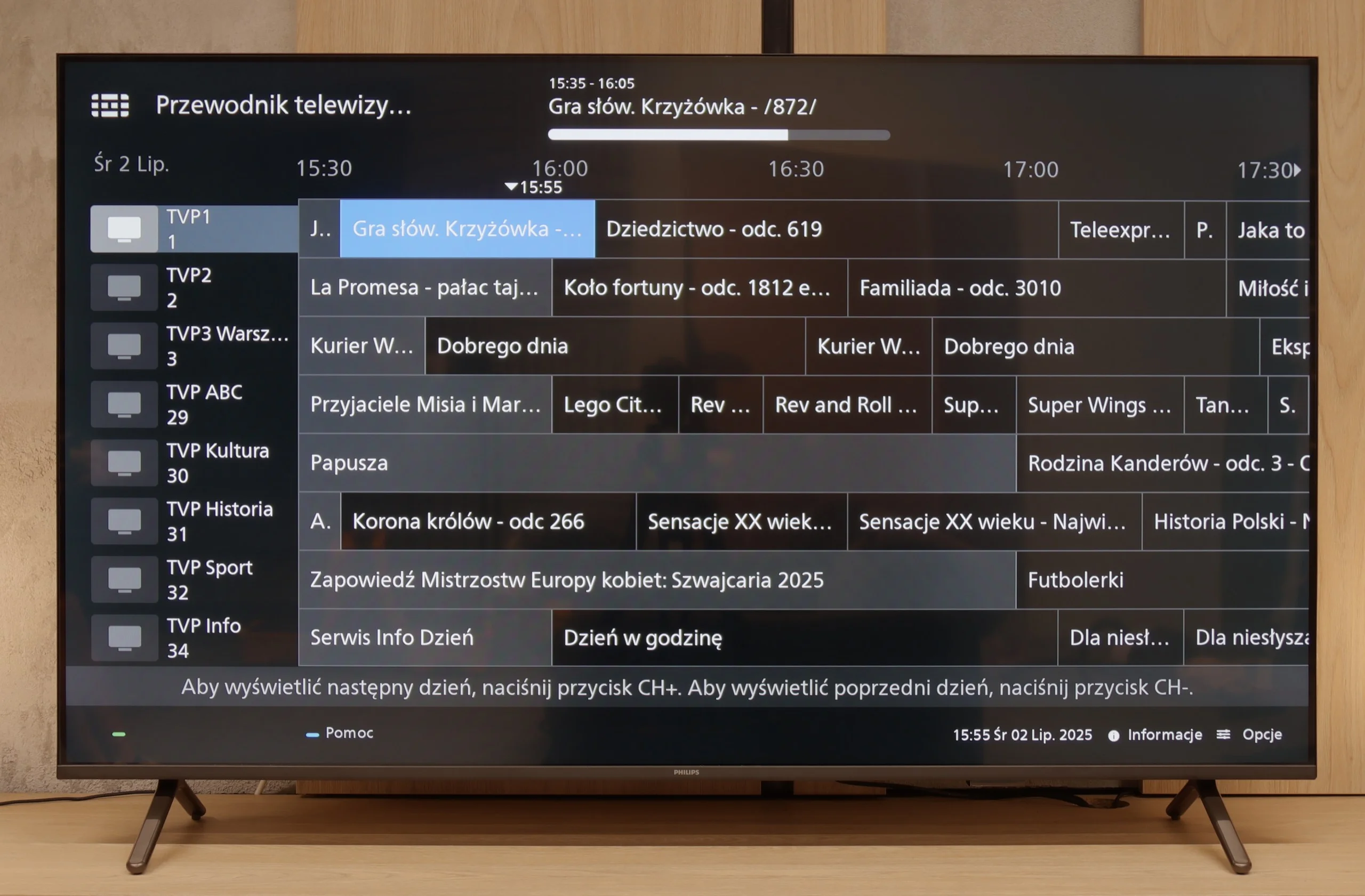
If you are looking for a television that "works" in the most basic sense – the PUS8560 will fulfil that role. In terms of classic features, we have a rather minimalist set. On the plus side, there is an electronic programme guide (EPG), teletext, a backlit remote control with a classic numeric keypad, and a headphone jack input. It sounds a bit like a dream set for seniors – and there is some truth to that. However, it must be stated clearly: this is a television with very limited capabilities. We will not find recording functions from DVB tuners to USB here, nor is there a PiP mode or other conveniences known from more expensive models.
Smart TV:
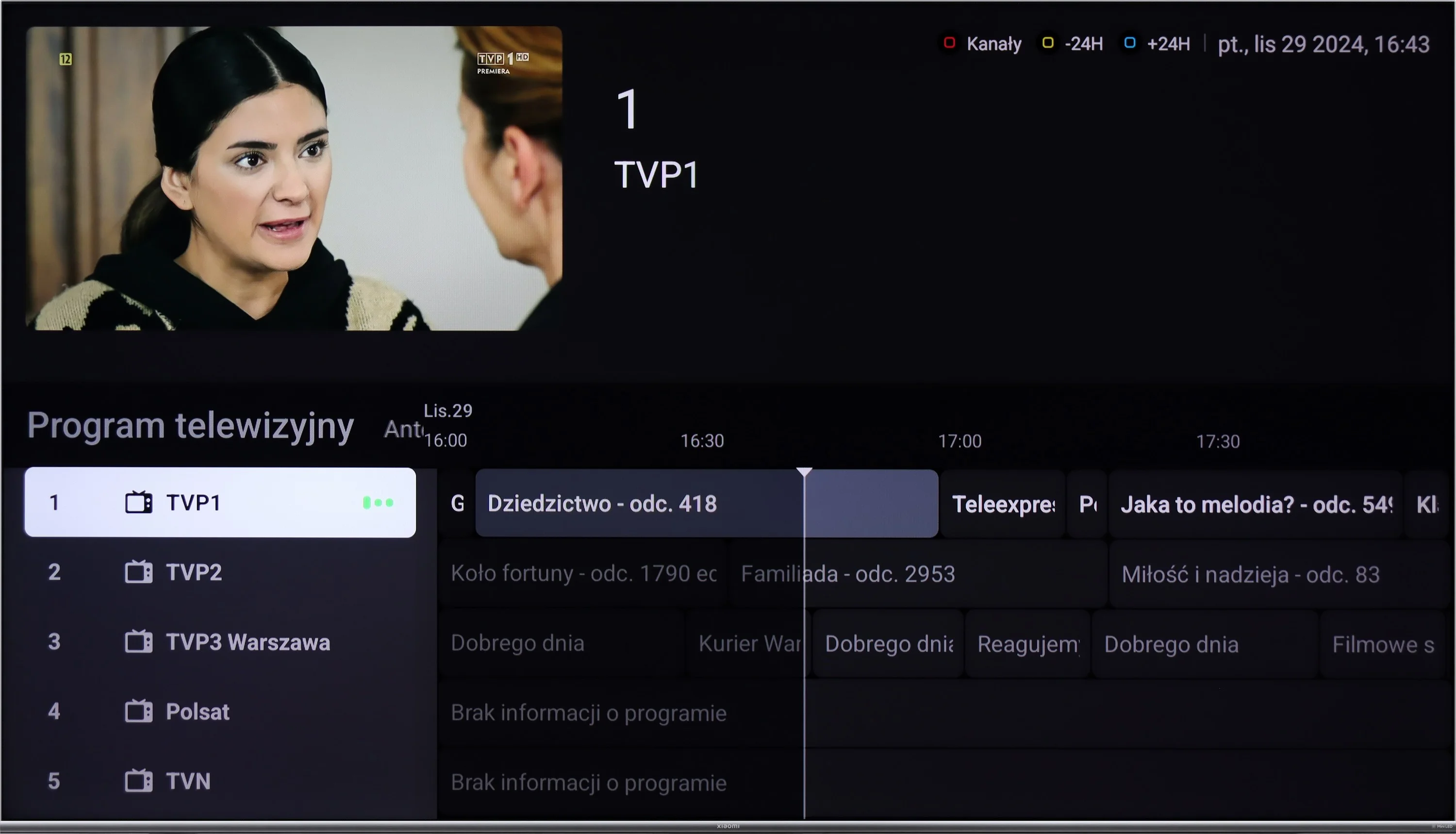
How does the SmartTV perform on the PUS8560? Well, this is where it gets a bit more complicated. The PUS8560 runs on the Titan OS, which in this particular implementation posed significant problems. Some features, although present "on paper," simply did not work. For example: Wireless screen mirroring functions, such as Chromecast or Miracast – we tried to activate them from several different phones and laptops… without success. Perhaps this will be fixed in the future, but at the time of testing – it did not work. Additionally, the system's speed left much to be desired – switching between applications or home screens was simply slow. A considerable portion of the menu functions seems to be well hidden in the depths of a poorly organised system. To make matters worse, the library of available applications is quite limited. Even though the situation with applications is better than last year, it is still far from ideal. The situation tries to be salvaged by a modern remote – slim, elegant, backlit, and really well made. Unfortunately, it operates on classic infrared, so you have to aim it at the screen. The only exception is voice control, which works via Bluetooth… it’s just a pity that it doesn’t support Polish.
Apps
9.6/10
6.7/10






















Playing files from USB
7.3/10
8/10
Supported photo formats:
Maximum photo resolution:
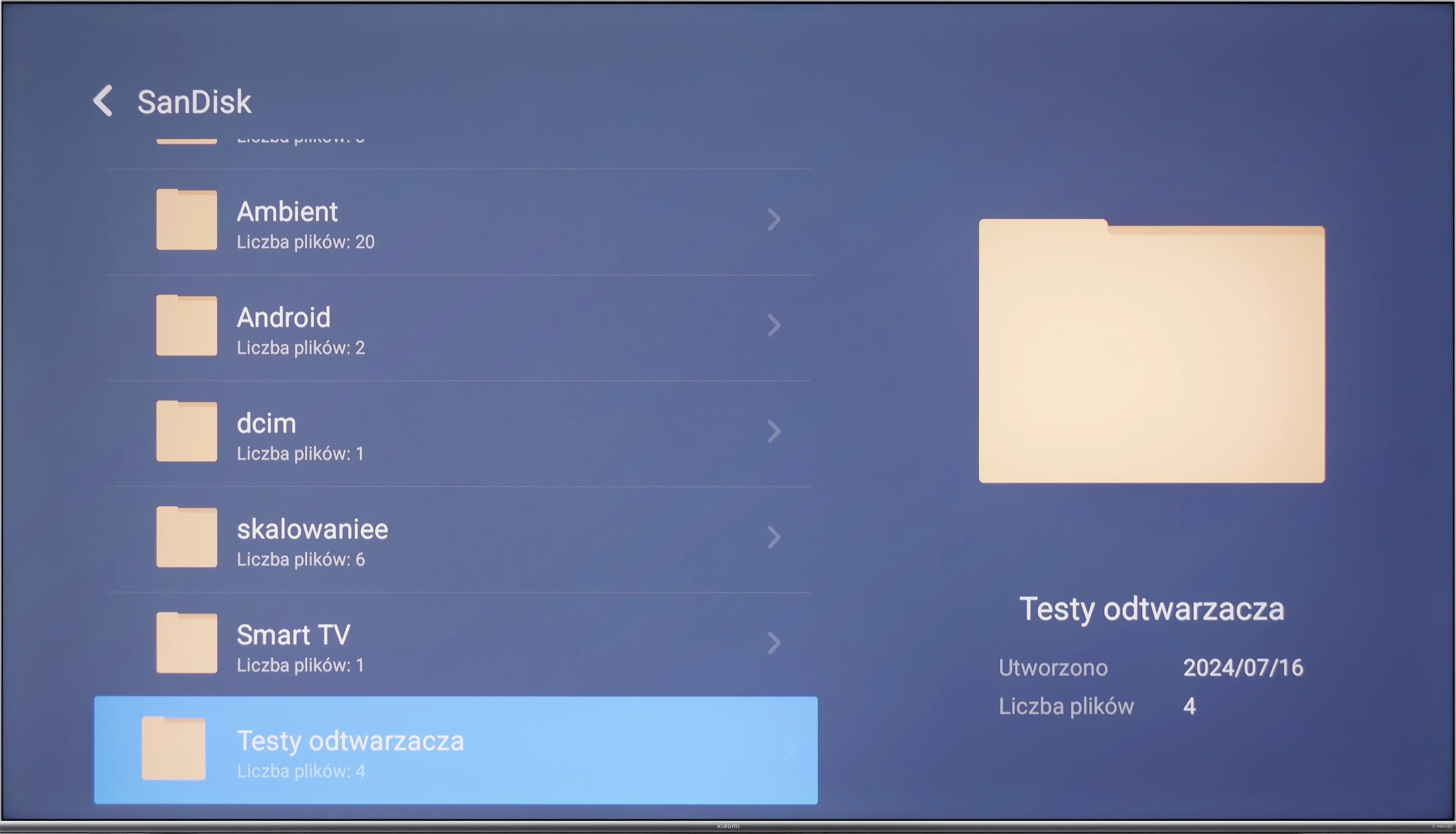
The basic file player in Xiaomi S MiniLED 2025 does its job for simple video materials. However, a noticeable drawback is the lack of support for Polish characters, which can be problematic for those using subtitles.
Fortunately, the presence of the Google TV system allows for an easy workaround of this limitation. Thanks to it, alternative file playback applications can be installed, which handle Polish characters and offer much more extensive options. As a result, the limitations of the built-in player are not as burdensome as one might think.
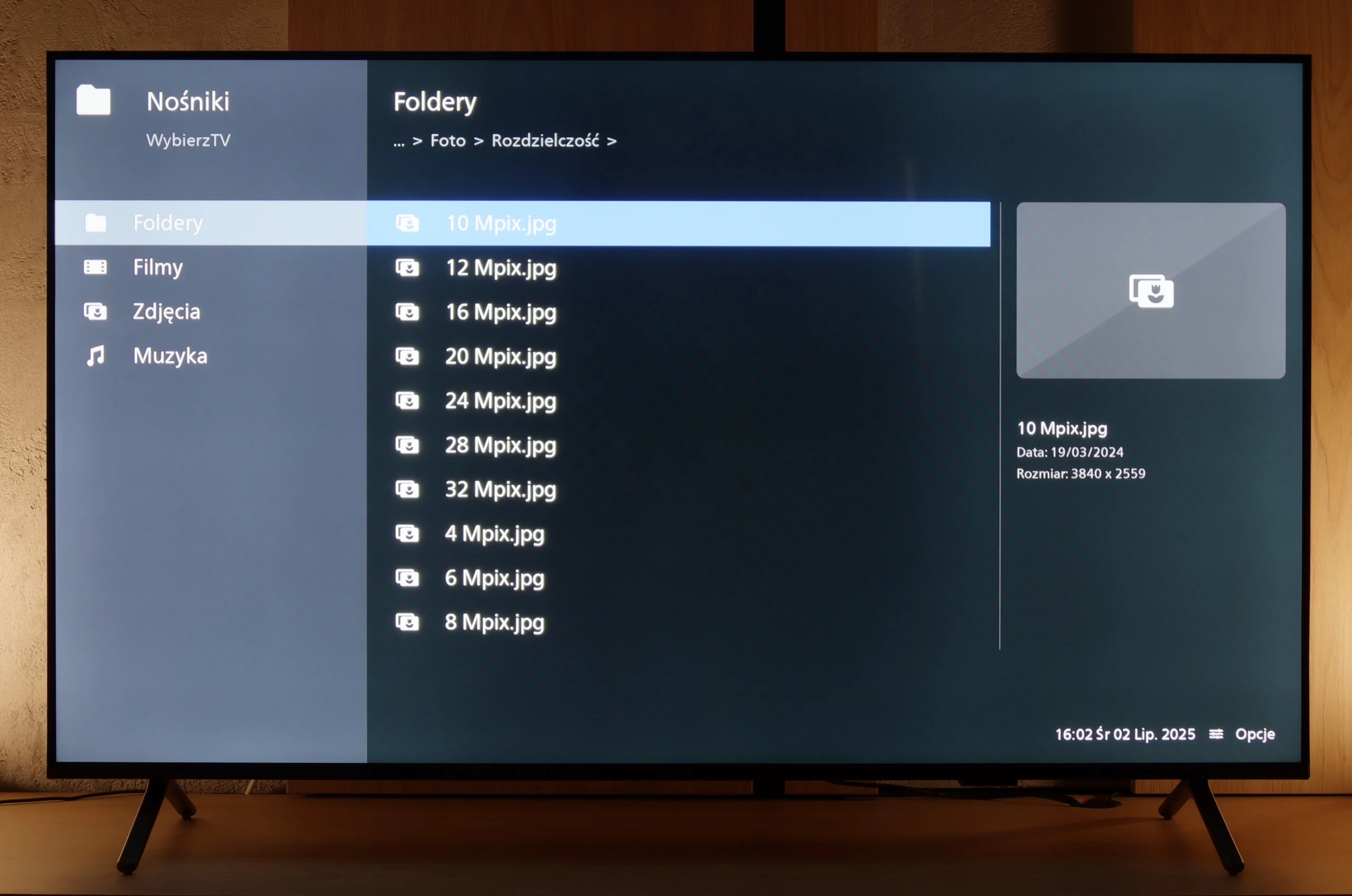
The PUS8560 handles the playback of most popular video and audio formats from a USB memory stick without any major issues, so there’s no point in detailing the compatibilities one by one. In everyday use, it should simply work – and it does. The only thing worth noting is the handling of images. Although the television easily recognises popular file extensions, there are instances when some images simply do not display when the graphic files have very high resolutions. This may not be a huge problem, but it’s good to keep it in mind, especially if we want to view photographs straight from the camera. Apart from that, the PUS8560 shouldn’t pose any significant issues with playing files from USB.
Sound
6.8/10
6.2/10
- Maximum volume--
- Dolby Digital Plus 7.1
- Dolby True HD 7.1
- Dolby Atmos in Dolby Digital Plus (JOC)
- Dolby Atmos in Dolby True HD
- DTS:X in DTS-HD MA
- DTS-HD Master Audio
Xiaomi S MiniLED 2025 plays really nicely and even offers a light bass, reminiscent of the sound known from the lower model, namely A Pro 2025. The sound is well balanced, making watching films or listening to music comfortable, even without additional audio equipment. Interestingly, the television effortlessly supports audio formats such as Dolby Atmos and the less common DTS:X. This means you can connect a home cinema system or soundbar and enjoy spatial sound without any difficulties. A nice addition is also the presence of a standard speaker jack.
The television sounds quite pleasant and can confidently be regarded as having sufficient sound levels for most users – both for watching everyday programmes and for an evening viewing of a series. Moreover, a pleasant surprise is that even in this budget-friendly series, Philips has chosen to acquire licenses for full audio formats such as Dolby Atmos and DTS. This is great news for owners of home cinemas and soundbars, as it means full compatibility and no need to "fiddle around" with connecting external devices.
Reader comments
Comments are provided by the external service Disqus (Zeta Global). Once loaded, Disqus may set cookies and process data about your activity.
We will remember your choice on this device. Provider's privacy policy