The Sony X75WL model is a television from 2023, which will continue into 2024 by the Japanese company Sony. It can offer many positive features. For example, thanks to the Google TV system, users can enjoy wide access to applications such as Netflix, YouTube, Amazon Prime Video and more! The applications are easily accessible, and full integration with the Play Store allows for downloading many additional applications, including games and media players, etc. The built-in Google Assistant adds even more functionality, enabling users to control the television using voice commands. Daily usage is supported by features such as the ability to record to USB or connect peripherals (e.g., mouse and keyboard, headphones). All of this makes it a very functional device, tailored for various users. Solid cooperation with PC, thanks to support for chroma 4:4:4 and low input lag, makes the Sony X75WL a great choice for office use or working from home. The sound quality is also a plus – gentle bass and sound clarity will satisfy most users, particularly those who appreciate audio quality without the need to invest in additional speakers. Nevertheless, this model also has some drawbacks. Very poor contrast and average HDR performance make it not the best choice for nighttime cinematic viewing, where black depth and detail quality are crucial. Thicker bezels may not appeal to everyone. Despite its flaws, the Sony X75WL is a solid choice, especially for those looking for a versatile and functional television at an affordable price. However, if we are not strongly attached to the brand, we recommend considering competitive models (comparison visible below) - which may offer a better price-to-quality ratio.
- Matching (Score) |
- Our verdict |
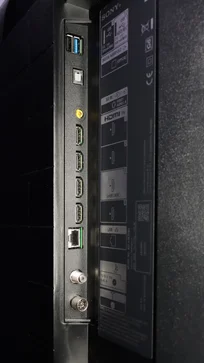
- TV appearance |
- Where to buy |
- Contrast and black detail |
- HDR effect quality |
- Factory color reproduction |
- Color reproduction after calibration |
- Smoothness of tonal transitions |
- Image scaling and smoothness of tonal transitions |
- Blur and motion smoothness |
- Console compatibility and gaming features |
- Input lag |
- Compatibility with PC |
- Viewing angles |
- Daytime performance |
- Panel details |
- TV features |
- Apps |
- Playing files from USB |
- Sound
Sony X75WL vs Panasonic W85
 Direct comparison
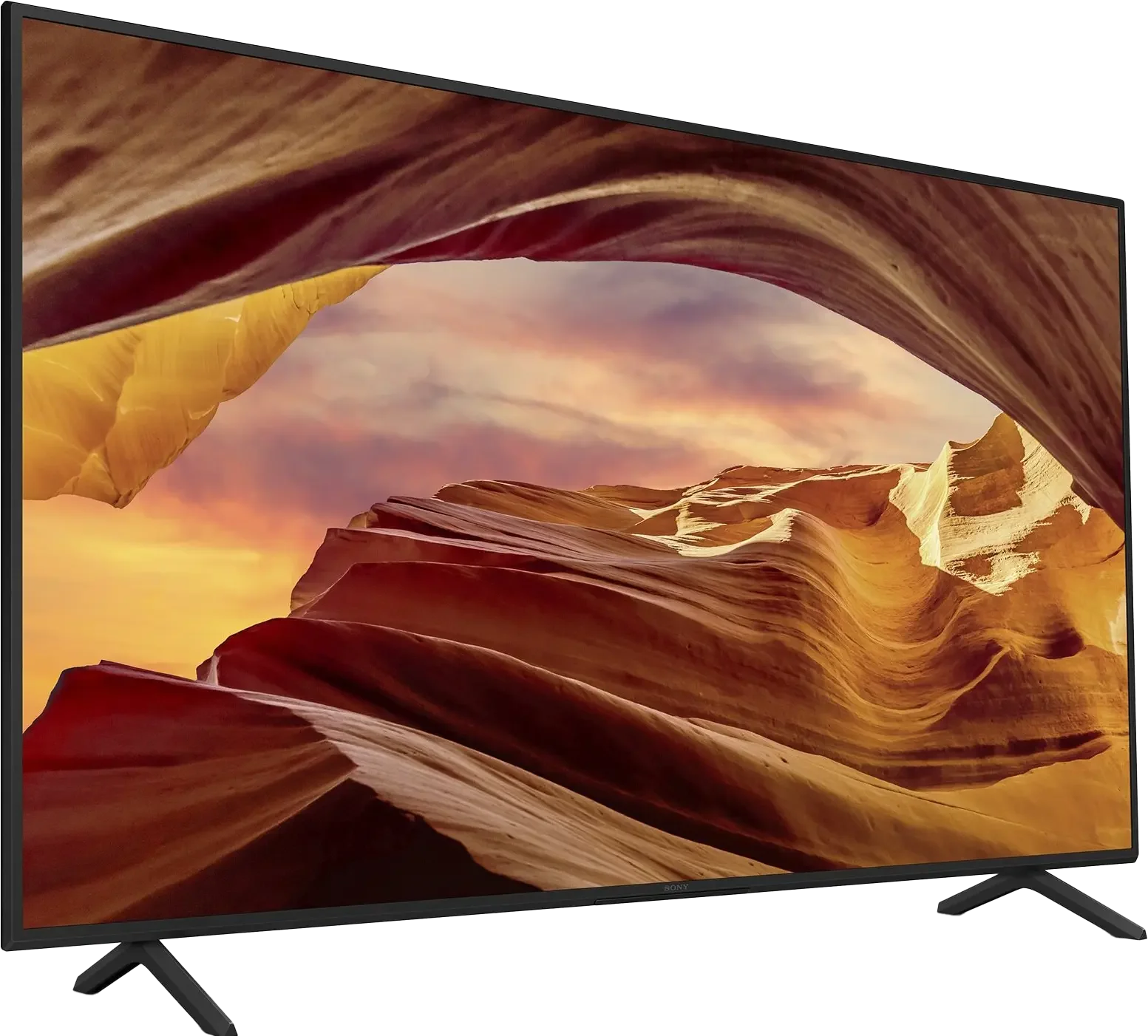
Panel type: LCD IPS
Resolution: 3840x2160
System: Google TV
Model year: 2023
Complete the survey to find out the result
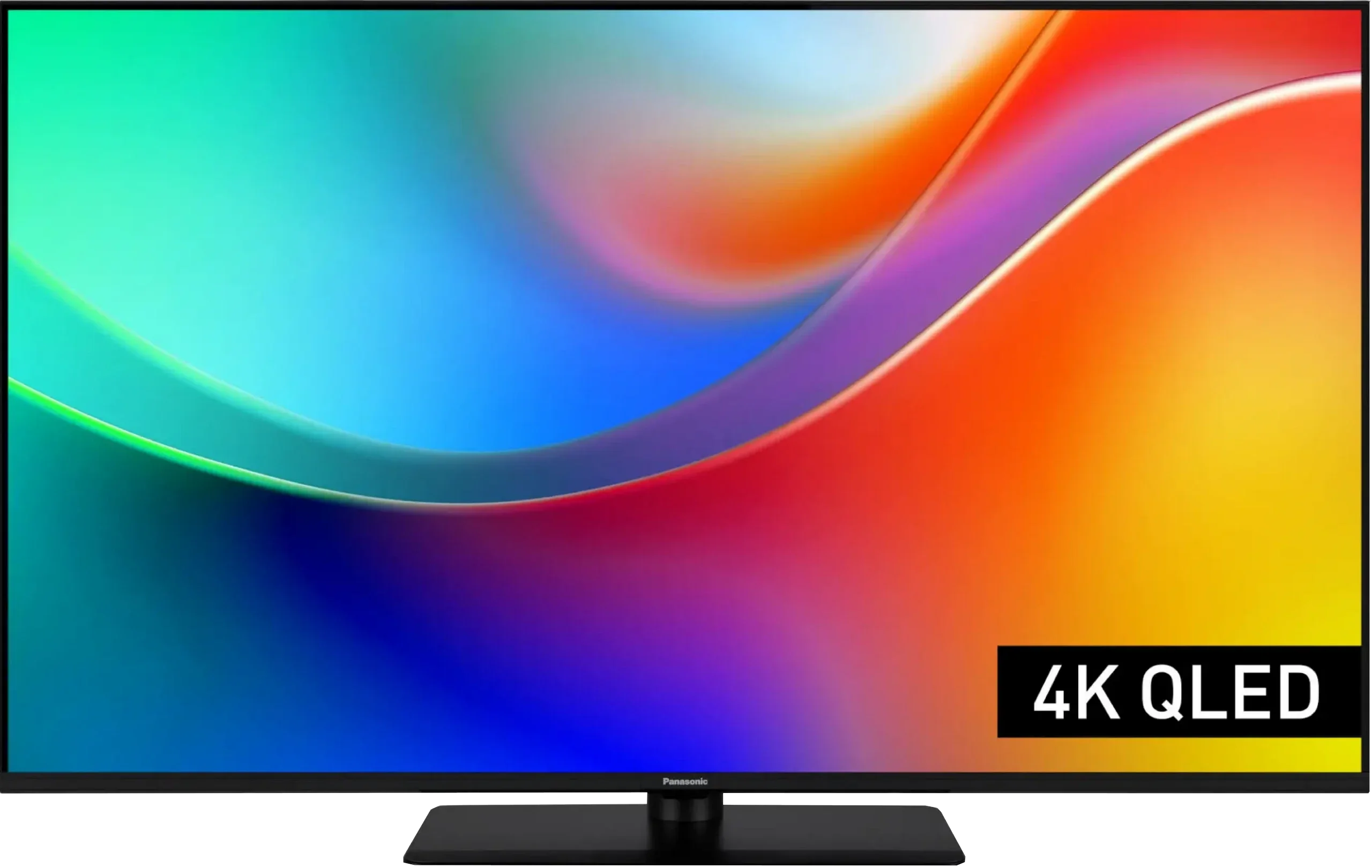
Panel type: LCD VA
Resolution: 3840x2160
System: Amazon FireTV
Model year: 2025
Complete the survey to find out the result
Overall rating
5.9
6.1
 Movies and series in UHD quality
 5.6
5.5
 Classic TV, YouTube
 5.3
5.8
 Sports broadcasts (TV and apps)
 5.5
5.8
 Gaming on console
 5.7
7.7
 TV as a computer monitor
 6.0
8.6
 Watching in bright light
 4.6
4.2
 Utility functions
 7.7
6.8
 Apps
Apps 9.6
7.6
 Sound quality
 6.9
5.8
Complete the survey to find out what fits your preferences
Advantages

Google TV system with convenient voice control and access to applications
Ability to record to an external USB drive and connect peripherals
Good viewing angles thanks to the IPS panel
Very good compatibility with PC (chroma 4:4:4, low input lag)
Pleasant, clear sound with a gentle bass
Adjustable leg spacing
VA matrix with high native contrast
High refresh rate of 120/144 Hz
Two HDMI 2.1 ports with support for ALLM, VRR, and Dolby Vision in games
Very low input lag
Fairly good colour gamut coverage thanks to the QLED filter
Support for multiple HDR formats including Dolby Vision and HDR10+
Sturdy central stand
Great compatibility with PC – full chroma 4:4:4, clear fonts
Disadvantages

Very weak contrast
Average colour palette coverage
Poor for gamers - lacking many features
Design - thick bezels will not appeal to most
Low brightness (below 270 nits) – no real HDR
HDR mode in games is poorly developed, with incorrect HGiG implementation
Poor media file player
The FireTV system in Europe is poorly developed: there are micro stutters and awkward translations, and many applications are missing
Average sound quality, lacking depth
The motion smoother does not want to work
Our verdict
The Panasonic W85B is a television that aims to prove that the Japanese brand can make not only high-end equipment but also something more "for the people." And indeed — on paper, it looks quite decent: a VA panel with solid contrast, high refresh rates of 120/144 Hz, two full HDMI 2.1 ports, and low input lag. It sounds like a great set for a gamer or someone who just wants an affordable TV with good fundamentals. However, the reality is a bit more complicated. The W85B performs well mainly with the SDR format, especially after calibration, and is suitable for typical daily use. But when we start demanding more from it — for example, expecting strong HDR effects or greater immersion in games with that mode turned on — the TV quickly reveals its limitations. Its brightness is low and the lack of local dimming really stands out during evening viewing. Therefore, we see the W85B more as a "daily" television — ideal for someone who watches terrestrial television, YouTube, or streaming in SDR, and wants to connect a console or PC at 120/144 Hz (but without HDR). In this role, it performs very well. Is it a television for everyone? Definitely not. But if we accept its limitations and approach it without high expectations, the W85B can provide a lot of enjoyment for relatively reasonable money.
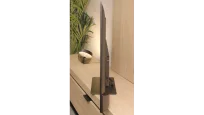
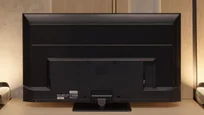
TV appearance




Contrast and black detail
2.4/10
5.3/10
Local dimming function: No
Local dimming function: No
Contrast:


Result
1,100:1

Result
1,200:1

Result
1,300:1

Result
1,400:1

Result
900:1
Result
4,300:1
Result
4,250:1
Result
4,200:1
Result
4,400:1
Result
3,150:1
Halo effect and black detail visibility:
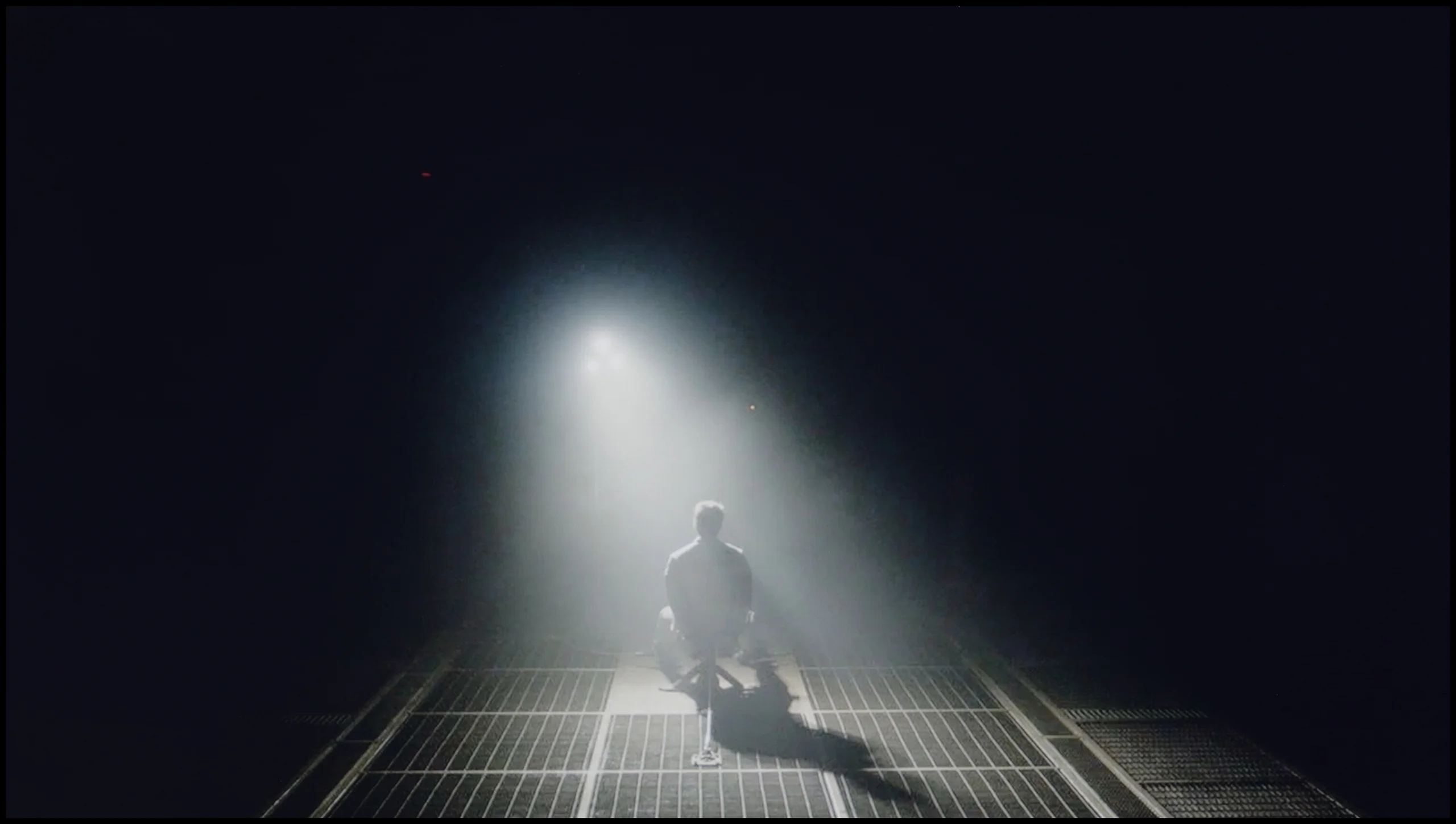
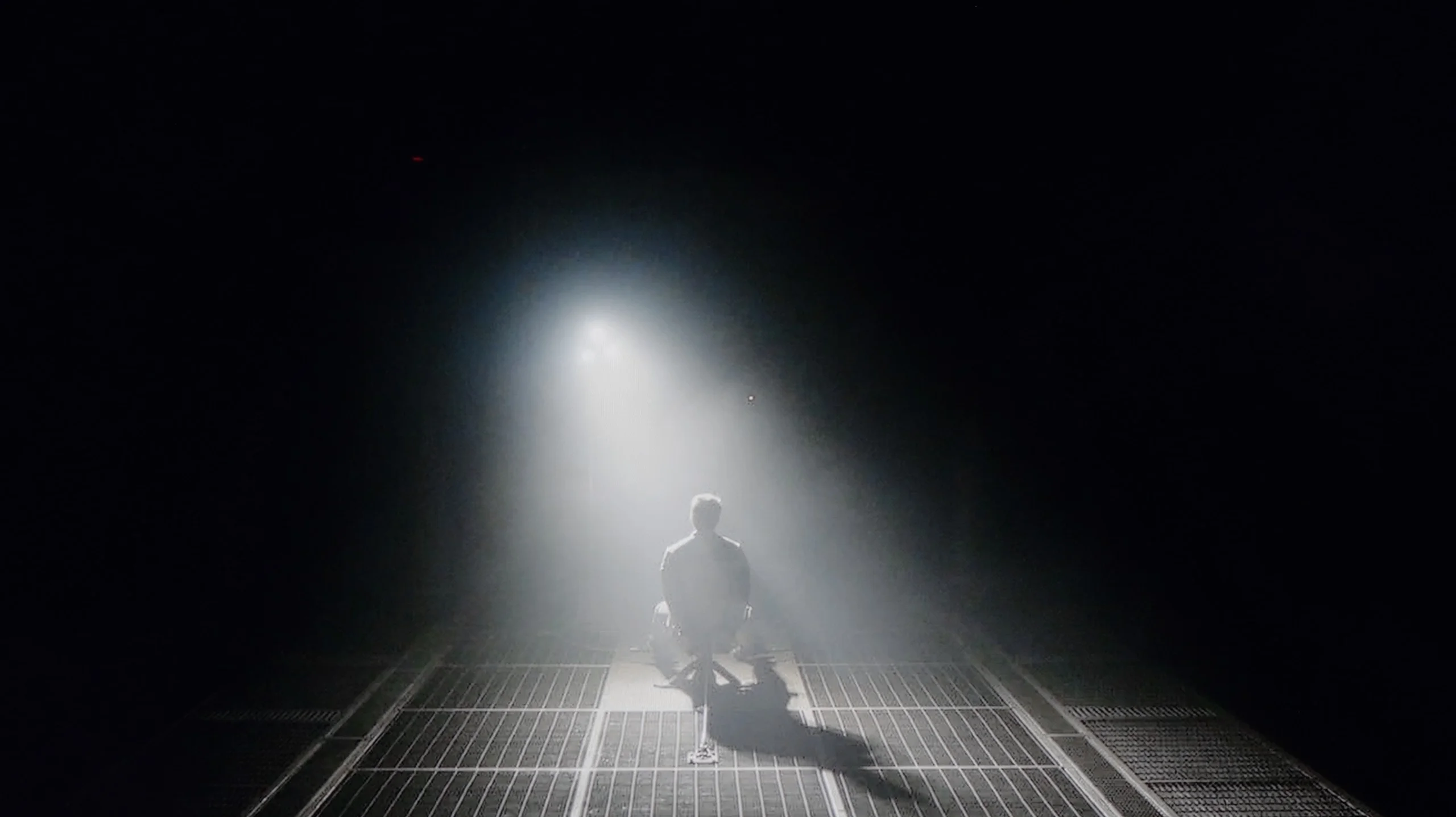
Check the visibility of bright lights on a dark background. Mini-LEDs often struggle with this. The photo does not compare black levels – that’s what the video below is for.
The video accurately shows differences in contrast and black levels between TVs, as well as potential issues: halo around bright objects or Mini-LED zone operation visible as brightness jumps.
The tested model Sony X75WL is equipped with an IPS panel, which unfortunately negatively affects the quality of black levels and contrast. The black is shallow, and details in dark scenes are virtually invisible. In the film "Sicario 2", no details can be seen in the shadows. All of this makes the picture look poor and lacking in depth. The IPS panel used does not provide the level of contrast that more demanding users would expect, and the lack of detail in dark scenes significantly lowers the quality of the viewing experience when watching films. The X75WL television does not have local dimming functionality, which further complicates achieving the proper quality of black levels and contrast in this category.
The W85B is Panasonic's basic LCD, so one shouldn't expect miracles in this category, but… the VA panel does a really good job here. Its biggest advantage is simply better contrast than in popular IPS panels – there, blacks often look like grey, whereas here you can actually see deeper tones. In the scenes we tested, the contrast held around 4000:1, which translates to roughly four times better performance than in IPS. Of course, there's no local dimming, so in challenging conditions, when it gets really dark in the room, black can resemble navy more than absolute pitch black. This is exactly the difference you notice when comparing it to OLEDs or Mini-LEDs. But for everyday viewing – series, matches, films in the evening in the living room – this contrast is more than sufficient. The picture has the appropriate depth, and the W85B does not give the impression of a "faded" television.
HDR effect quality
5/10
4.2/10
Luminance measurements in HDR:

Result
285 nit

Result
308 nit

Result
343 nit

Result
345 nit

Result
358 nit
Result
228 nit
Result
249 nit
Result
283 nit
Result
282 nit
Result
297 nit
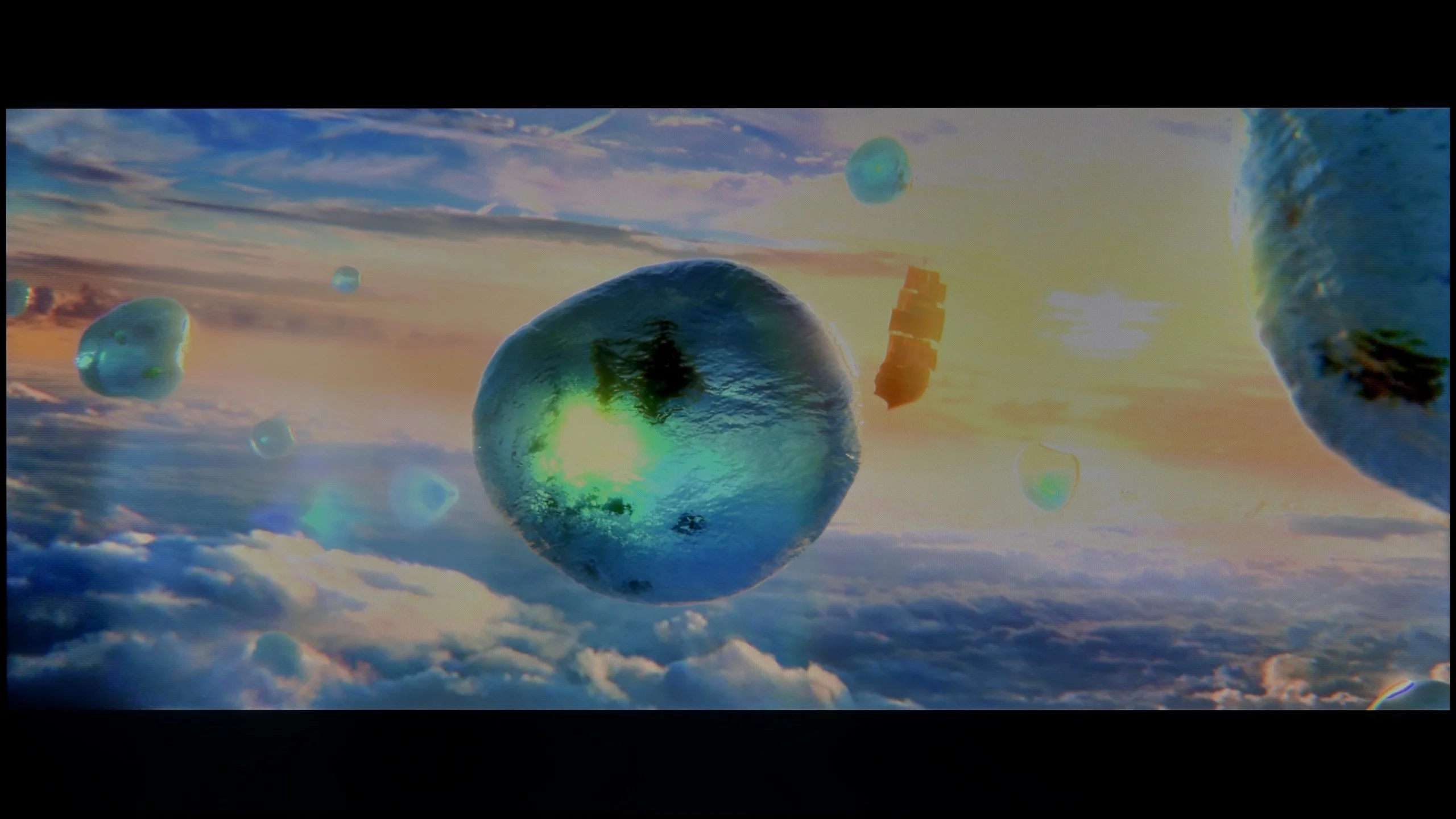
Scene from the movie “Pan” (about 2800 nits)

Scene from the movie “Billy Lynn” (about 1100 nits)
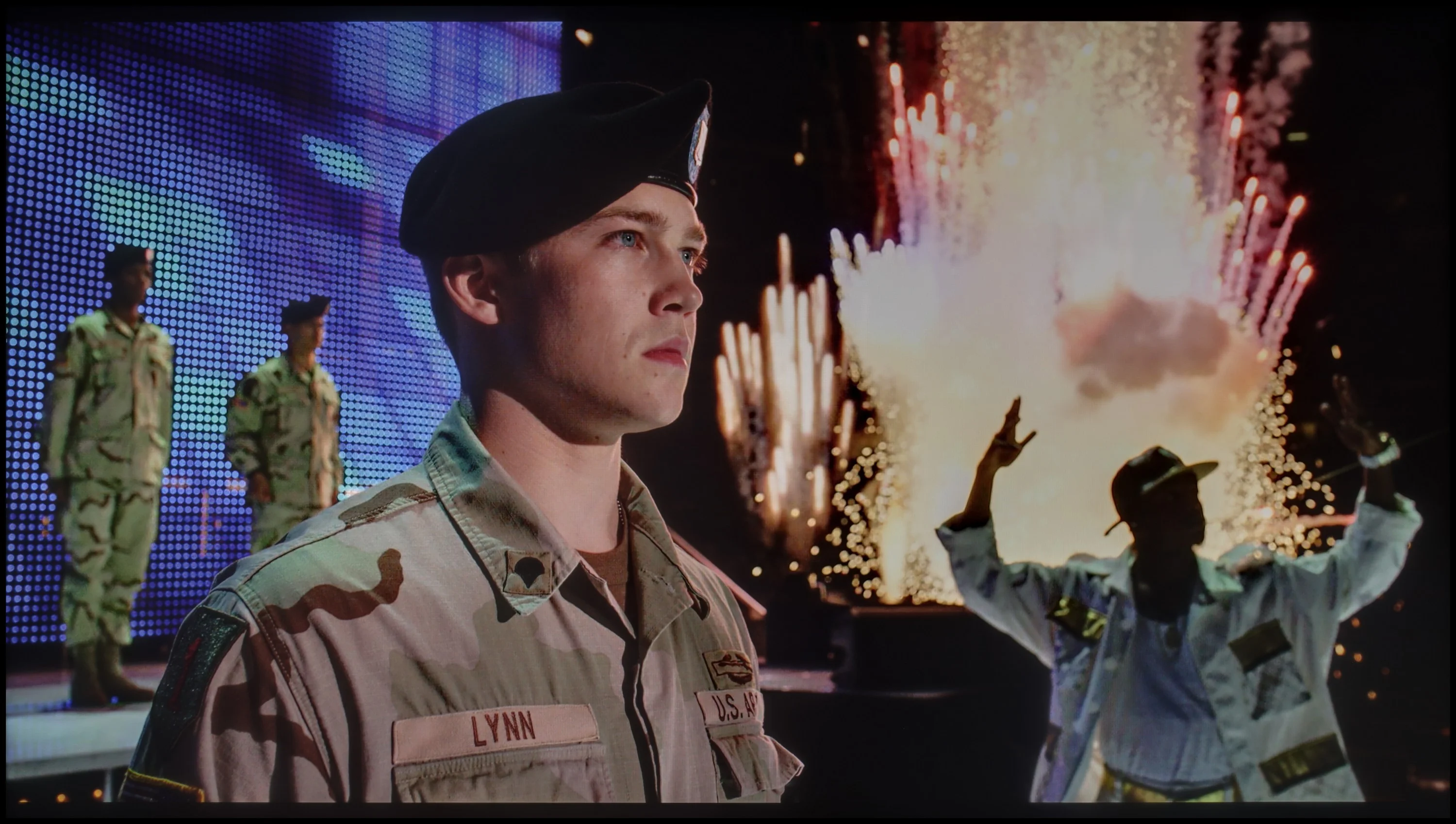
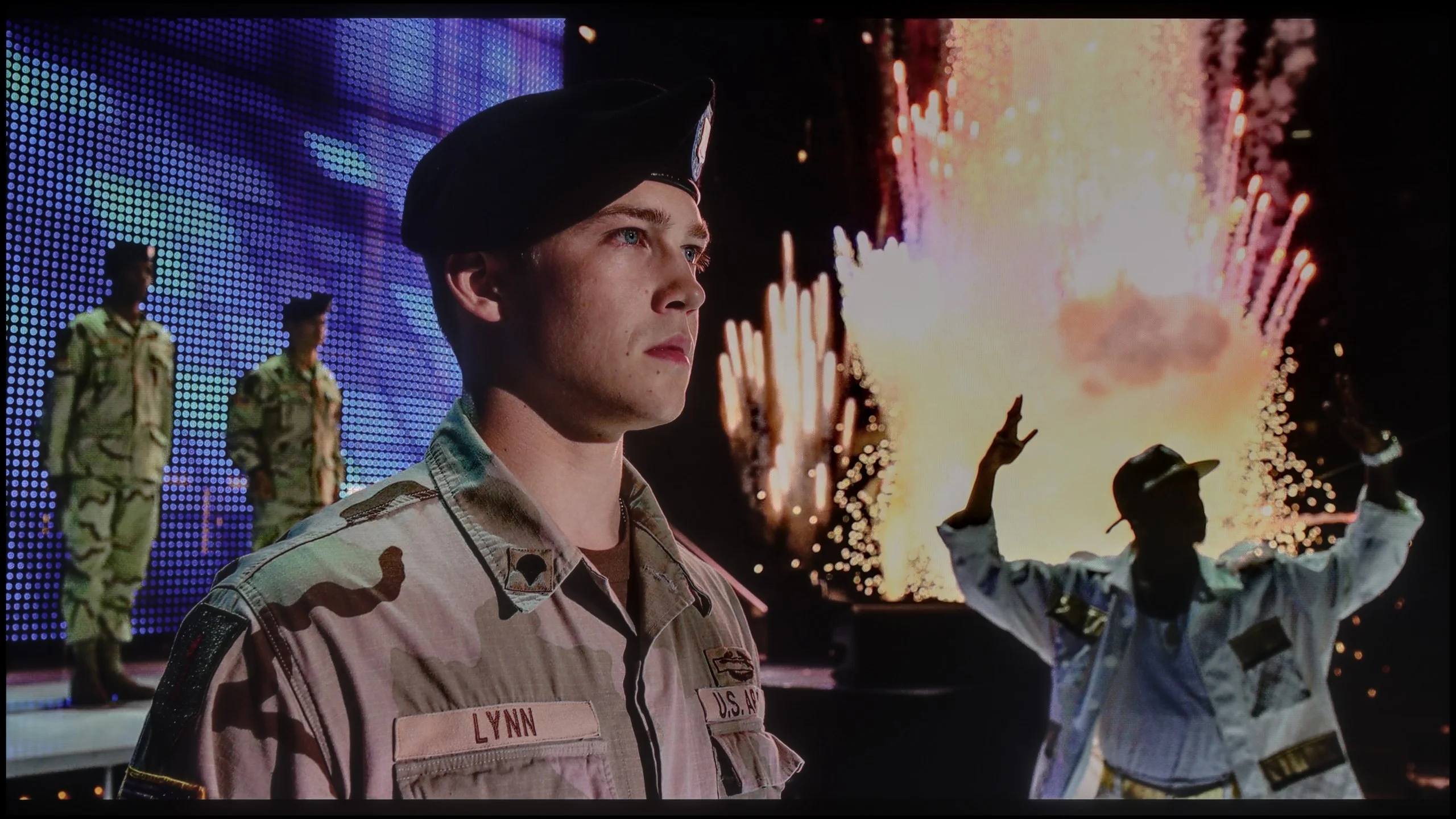
The photos show two HDR10 movies. 'Pan' is one of the brightest productions ever made, while 'Billy Lynn' (soldier) has brightness typical of streaming (Netflix, Prime, HBO MAX). Notice the intensity of effects and detail in whites.
Static HDR10


The photos present the visibility of white details in various HDR formats. They do not show brightness differences between TVs (these can be compared in the previous gallery).
Dynamic: Dolby Vision
Dynamic: Dolby Vision


The photos present the visibility of white details in various HDR formats. They do not show brightness differences between TVs (these can be compared in the previous gallery).
HDR luminance chart:
Panasonic W85
Sony X75WL
The luminosity chart for the X75WL Sony television showed a maximum value of 350 nits, which is unfortunately not an impressive result. The television does not surprise with its brightness, and all the HDR scenes we tested lacked depth and the appropriate light effect that should accompany HDR content. Additionally, the poor coverage of the DCI-P3 colour gamut makes it difficult for the television to reproduce rich colours, which significantly affects the overall viewing experience of HDR content. The lack of adequate brightness and weak colour coverage mean that HDR effects are very limited in this model.
Unfortunately, we do not have good news here. The Panasonic W85B is rather dim – its peak brightness does not exceed 300 nits, so it’s hard to talk about any true HDR effect. In practice, this means that scenes which can “shine” and make an impression on other screens simply look like ordinary SDR with a slight boost in colours here. Our measurements and film tests confirmed this – regardless of the content, the W85B will not extract anything more from HDR. Therefore, if someone is looking for a television specifically for HDR, it is better to look towards other models. As consolation, the fact remains that in terms of colours, the W85B performs quite well. It is a QLED television, so its colour gamut coverage is wide, and most films and series look natural, without a distinct “washed-out” effect. The colours are saturated, so in everyday viewing, there is no sense that something is strongly amiss.
Factory color reproduction
6.9/10
4.2/10


This gallery shows how colors change after professional TV calibration. If you notice the difference, we recommend ordering this service at SkalibrujTV.com.
Factory Mode
After calibration


This gallery shows how colors change after professional TV calibration. If you notice the difference, we recommend ordering this service at SkalibrujTV.com.
Factory Mode
After calibration
Colour reproduction tests for the model Sony X75WL are carried out in movie mode, which offers the best image settings, but it also has its flaws. The biggest problem with the X75WL Sony is the white balance – for both HD and 4K HDR content – which is characterised by a dominance of blue. As a result, the entire image feels too cold. The colour checker confirms these errors, showing that the colours lean towards cooler tones. In terms of brightness characteristics, the contrast gamma is at a fairly decent level, however, the same cannot be said for the EOTF curve. There are significant issues with maintaining appropriate brightness – the image is either overly bright or too dim, which impacts the visual perception of content.
When testing the Panasonic W85B, we obviously started with Filmmaker mode, as this is today’s gold standard when it comes to watching content “as the director intended.” The problem is that this television is quite far from those intentions. The biggest issue turned out to be an excess of red – both in SDR and HDR. The image often appeared too warm because of this, and in some scenes, it was almost “blazing.” Additionally, there is the issue of brightness management. When we looked at the gamma or EOTF charts, it was clear as day that in most scenes, the television brightens the image more than it should. The effect was simply predictable. Details can get lost, there is flattening, and highlights are blown out across the entire screen. We know, of course, how to correct this, but it must be said honestly that it requires a lot of work during calibration. Out of the box, the W85B does not provide a picture close to reference – it is rather a television that will always interpret colours and brightness a little “in its own way” without professional adjustments. Unfortunately, this is to the viewer’s detriment.
Color reproduction after calibration
7.1/10
6.9/10


The photos show how movies look on the TV. Pay attention to black detail visibility, colors, and shadow tint.


The photos show how movies look on the TV. Pay attention to black detail visibility, colors, and shadow tint.
X75WL Sony is one of those cases where image calibration may not be highly spectacular, but it offers a very good improvement in the perception of colours. The white balance, for both HD and 4K materials, has been significantly improved – there is no longer a strong dominance of cooler shades. The gamma curve also appears more stable, which translates into better image quality. However, the biggest issue remains the EOTF curve, which is responsible for brightness in 4K materials. Due to the technological limitations of the television (IPS panel and lack of local dimming technology), it is hard to speak of a significant improvement, as we cannot extract more from this model. Despite these limitations, the tonal quality of the image has been significantly enhanced.
Fortunately, calibration made a significant difference for the Panasonic W85B, particularly in SDR content. Here, the improvement was really noticeable – we managed to balance the whites and somewhat tame the tendency of the television to excessively brighten the entire image. The picture became more coherent, and the colours gained a naturalness that was lacking in the factory settings. Admittedly, the results from the Color Checker are not perfect, as the W85B has visible issues with green saturation, but overall, we evaluate the post-calibration effect in SDR very positively. The situation is a bit different with HDR. Here too, we managed to reduce the tendency to warm up the entire scene, so the image performed significantly better than in the factory settings. However, the same issue we mentioned earlier is still evident – the television interprets the image too much "on its own" and brightens the entire screen. The lack of local dimming only exacerbates this effect. In summary, briefly in SDR content, the W85B performs really well after calibration and is more than suitable for daily viewing. However, in HDR, even after adjustments, it remains difficult to unequivocally recommend it for serious viewing sessions.
Smoothness of tonal transitions
8.1/10
9.1/10
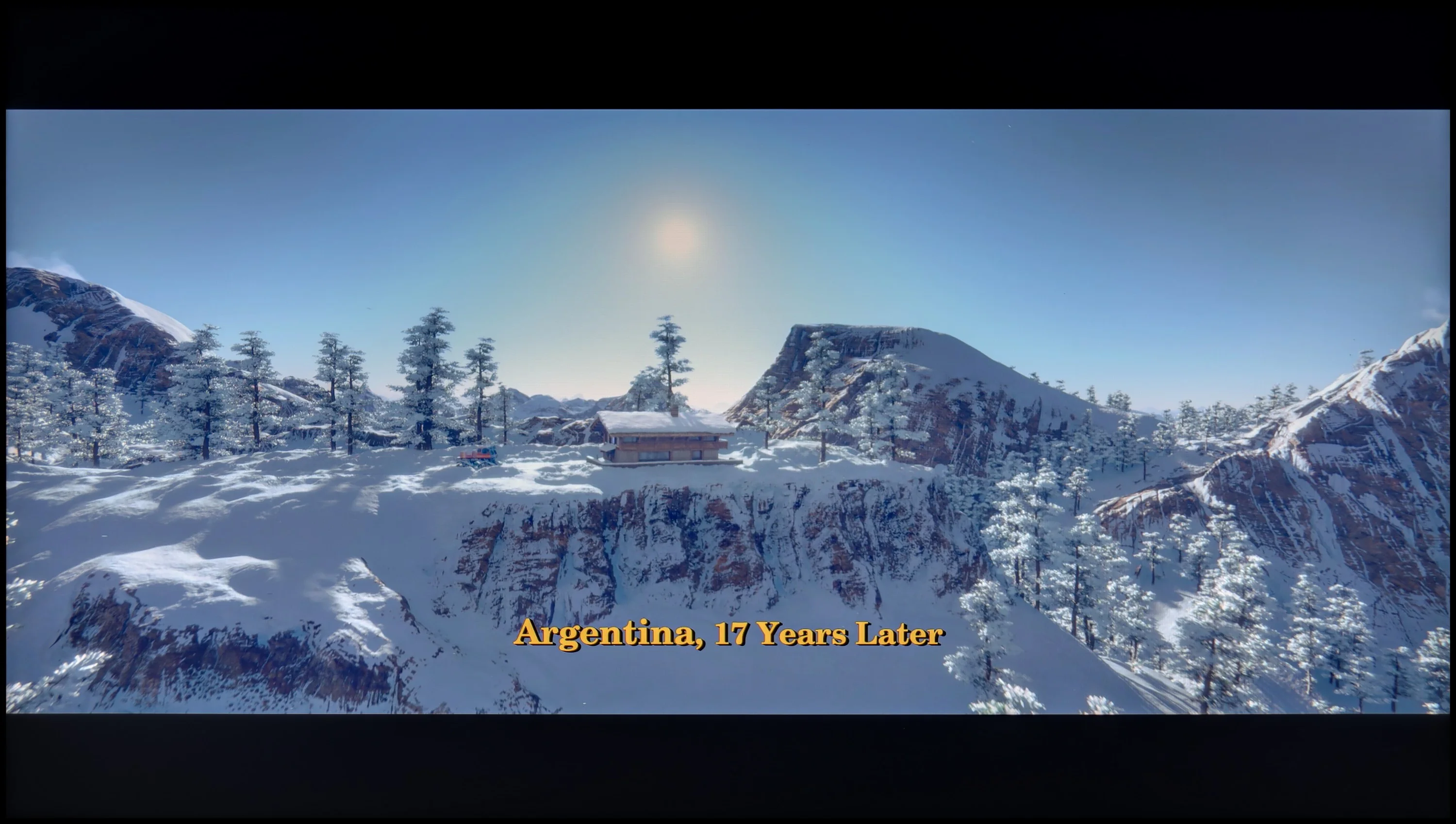

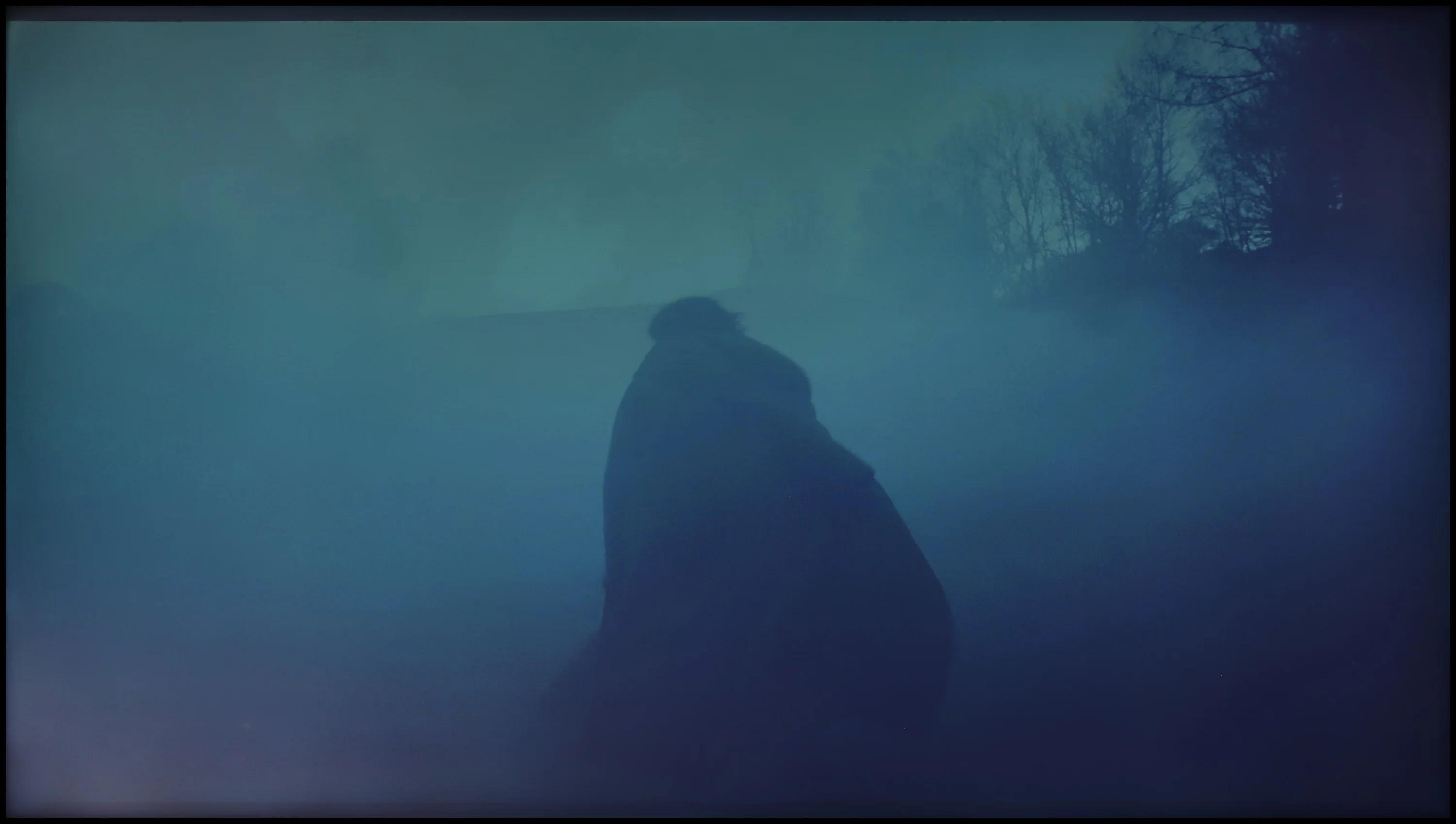

These are selected scenes that show smooth tonal transitions from one color to another. If you see distinct banding, it’s the TV panel’s fault.

These are selected scenes that show smooth tonal transitions from one color to another. If you see distinct banding, it’s the TV panel’s fault.
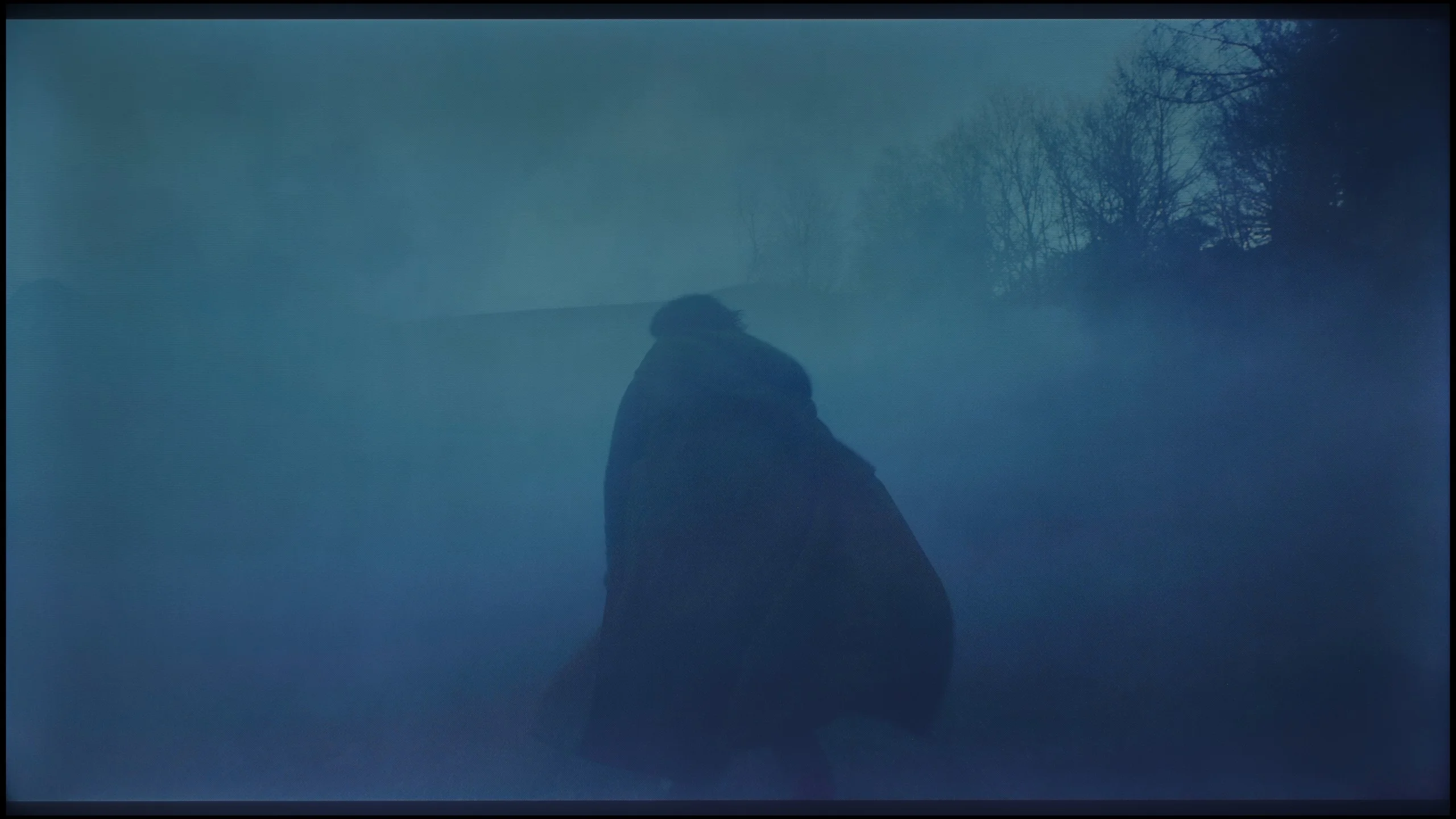
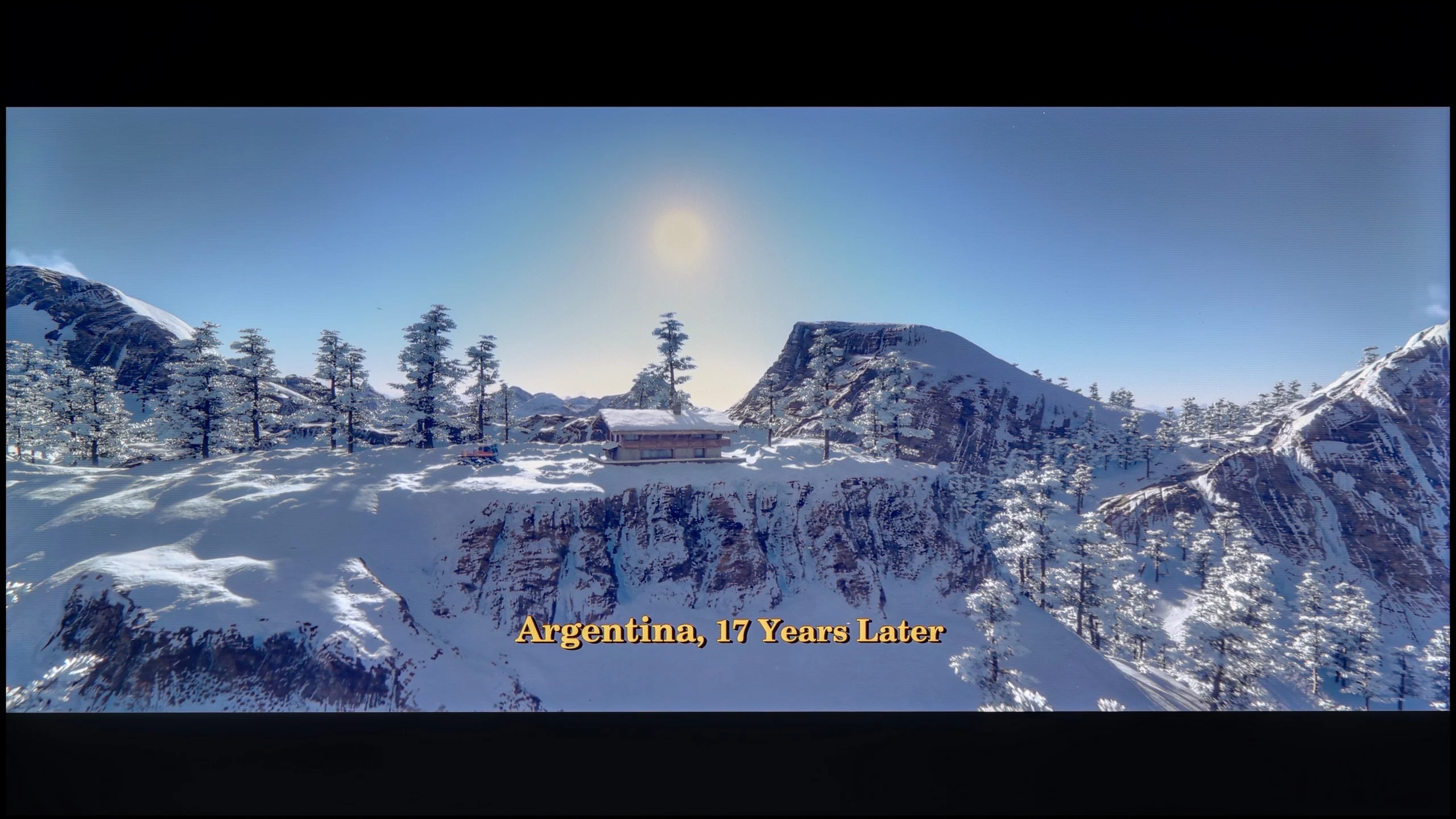
These are selected scenes that show smooth tonal transitions from one color to another. If you see distinct banding, it’s the TV panel’s fault.
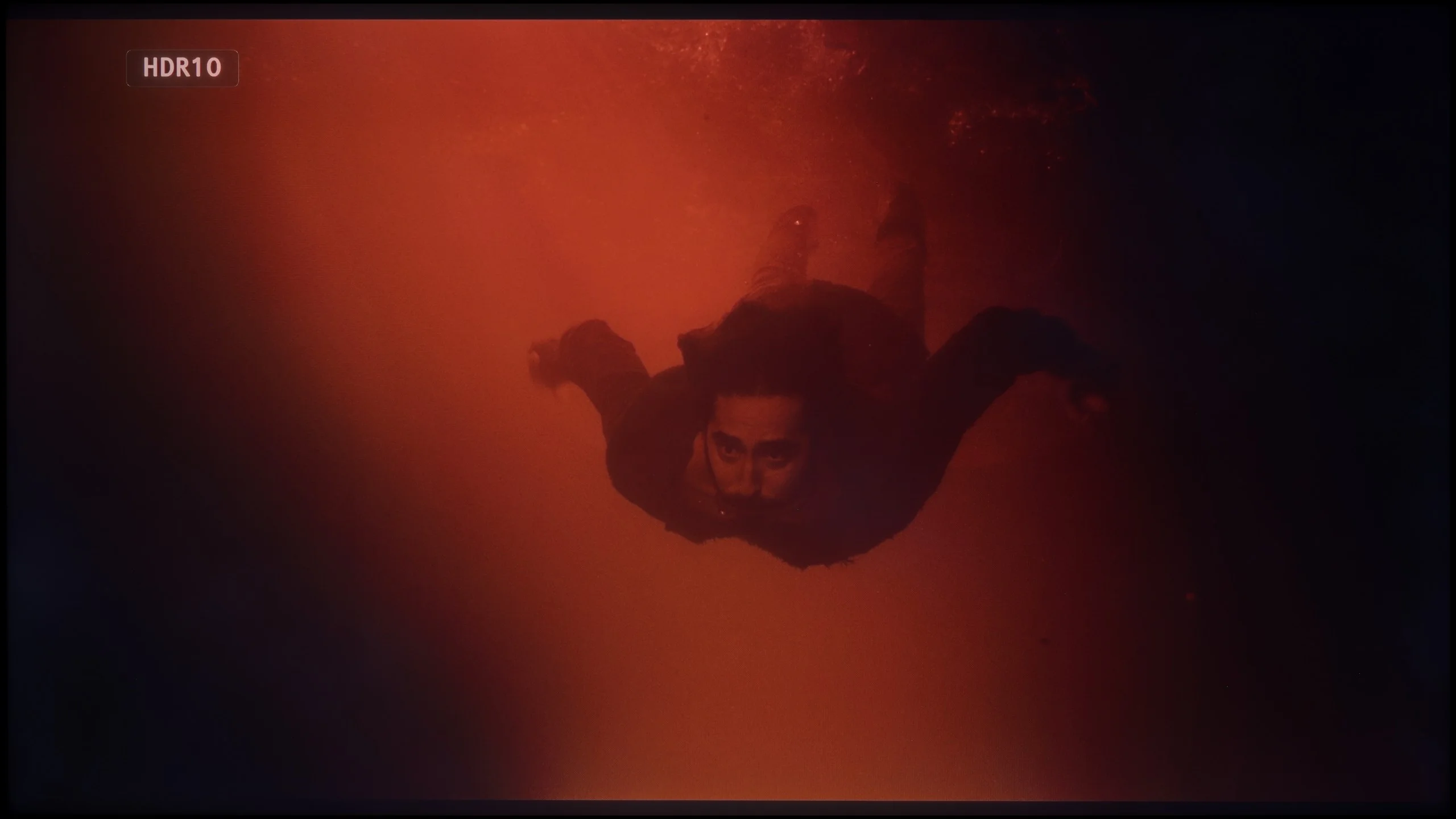
These are selected scenes that show smooth tonal transitions from one color to another. If you see distinct banding, it’s the TV panel’s fault.
In the model X75WL , the smoothness of tonal transitions performs very well. The gradation in the shadows is good, with no visible issues, positively affecting the quality of the image in darker areas. In brighter scenes, slight issues with smoothness can be noticed, but they are not clearly discernible and shouldn't affect viewing comfort. In a scene with vibrant red colour, slight clipping is noticeable, but it does not detract from the overall enjoyment of watching.
Here we can comfortably praise the Panasonic W85B. The television handles colour matching and tonal transitions remarkably well. Gradients appear smooth, without visible bands or artificial contours. As a result, the image gains a natural quality, and sequences with a large number of subtle shades – such as the sky or blurred backgrounds – look exceptionally good for this class of equipment.
Image scaling and smoothness of tonal transitions
6.1/10
6/10


Smooth transition function
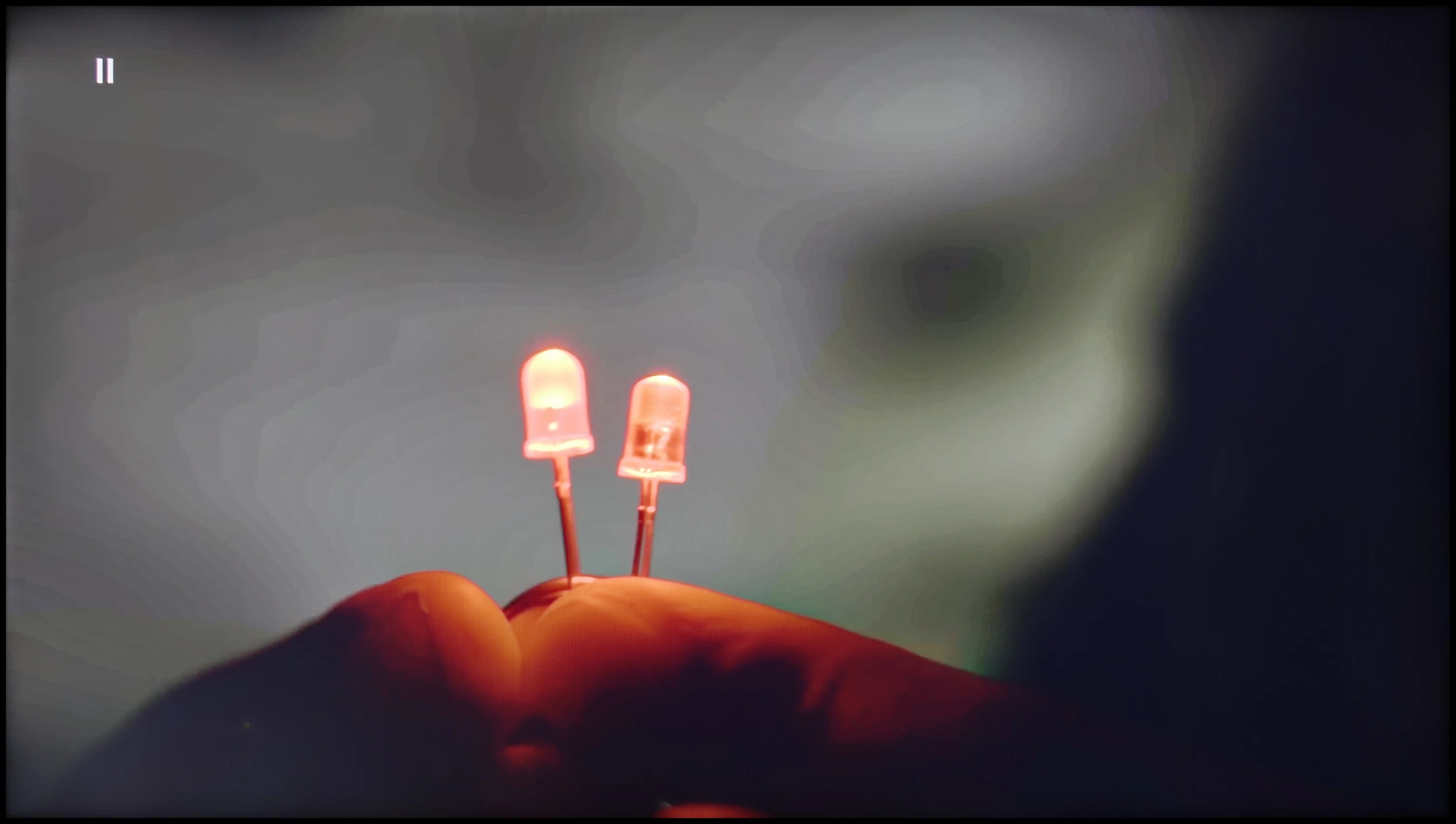
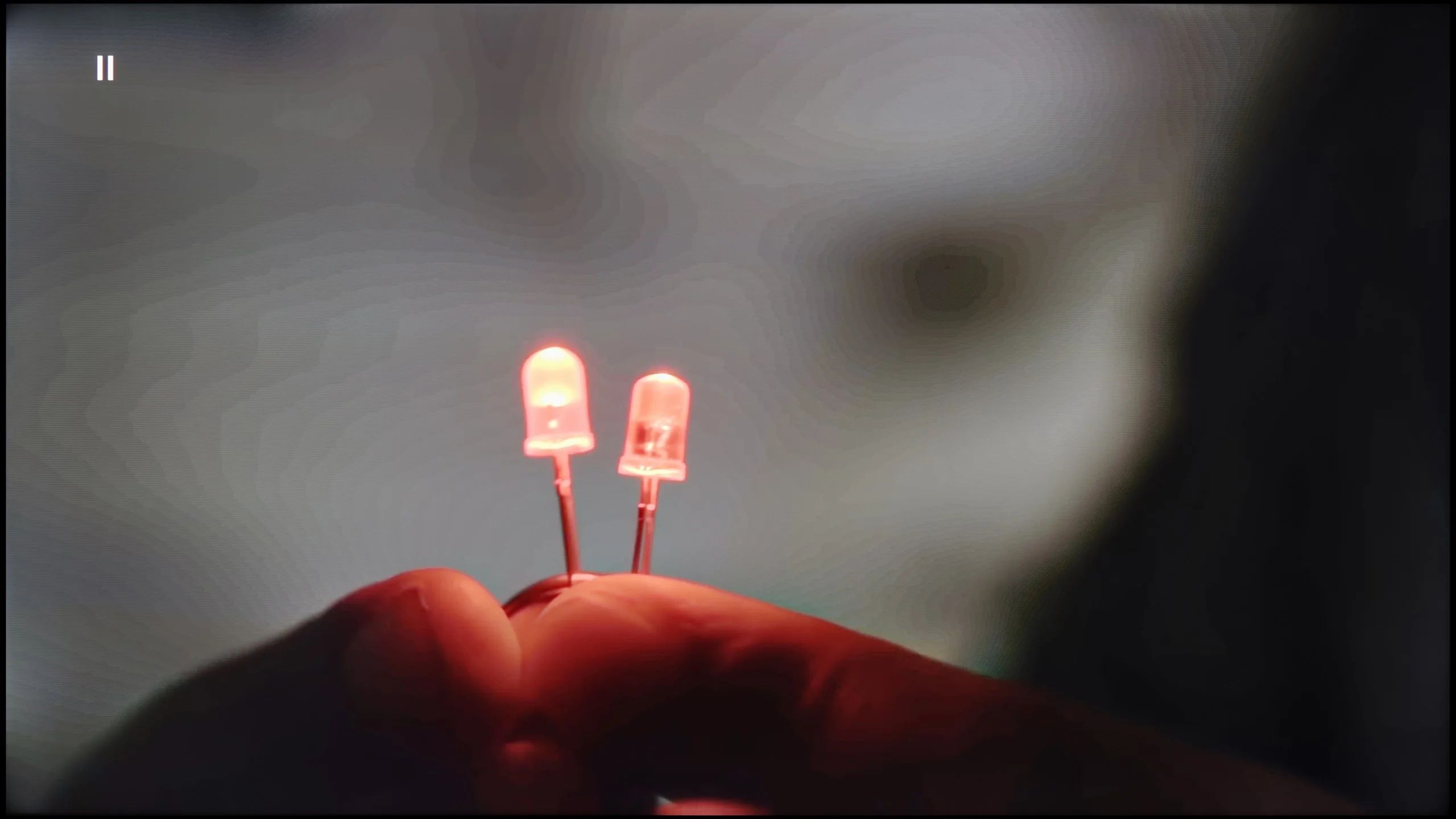
The match photo shows how the TV smooths weak tonal transitions in low-quality video.
Image scaling SD (576i)


The model photo shows how it handles upscaling of SD material.
In the case of low-quality tonal transitions, the television Sony X75WL performs poorly. The lack of any feature to improve tonal transitions results in noticeable imperfections in colour gradation. However, one can credit the quite good digital processing – the image is displayed without overscan, and overall it looks relatively good thanks to the added slight sharpness, which some users may appreciate.
With native SDR content, the Panasonic W85B performs very well – tonal transitions are smooth and natural, without artificial bands or prominent contours. However, the situation is worse when it comes to lower resolution materials. It is precisely there that the television has the most difficulty with "enhancing" the image. The lack of any option in the menu that would allow for improving gradation means that with older films or materials from YouTube, one can sometimes notice slight issues with colour blending.
Fortunately, upscaling, or raising the quality of lower resolution content, performs much better. This is definitely a strong point of this model – the image is scaled cleanly and in detail, and the television handles this better than one might expect from such an inexpensive piece of equipment. This is thanks to the HCX processor, which Panasonic has been developing for years, and it is noticeable that even in the lower series it can do a good job.
Blur and motion smoothness
4.9/10
6.5/10
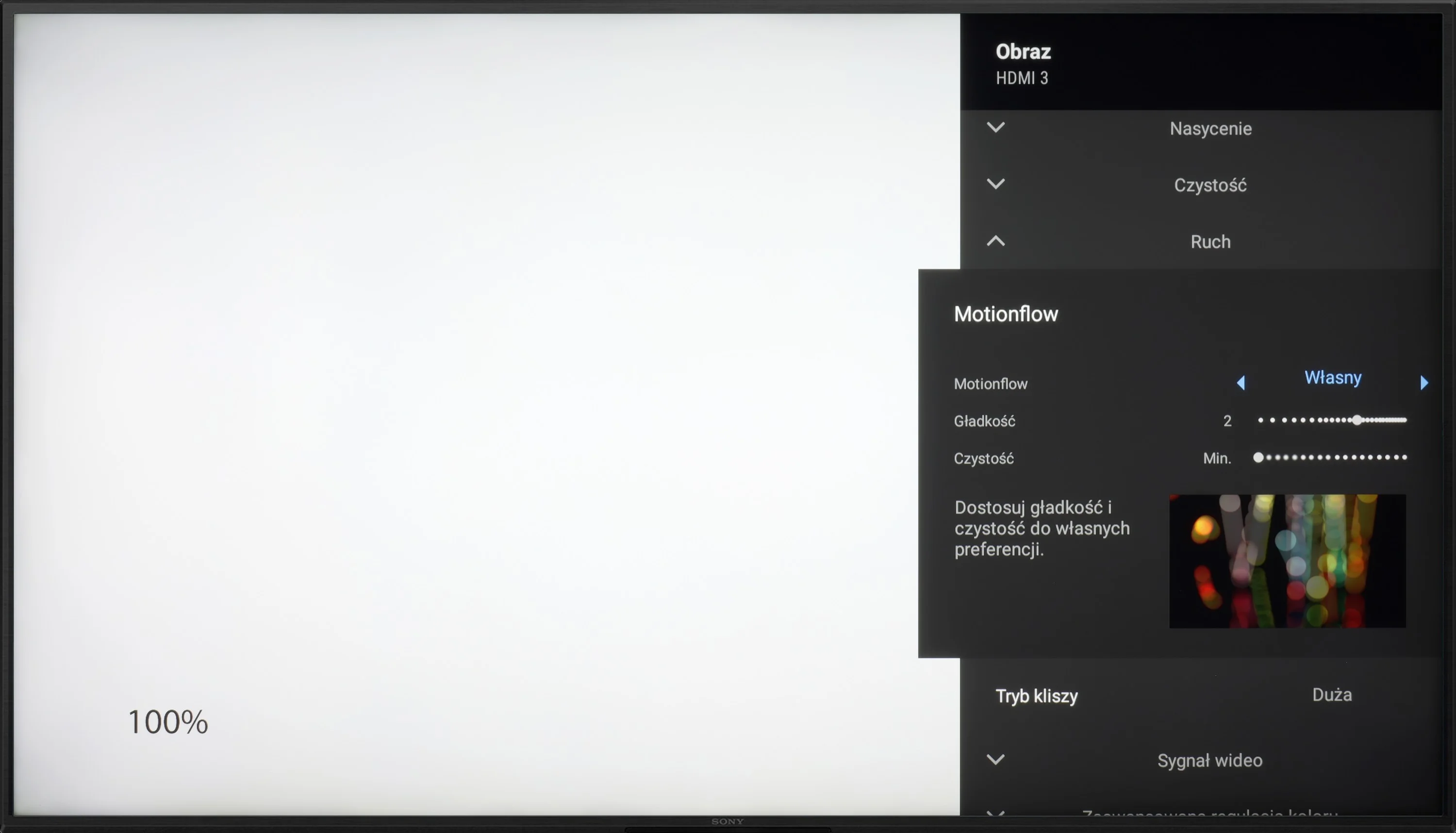
Blur (native resolution, maximum refresh rate):
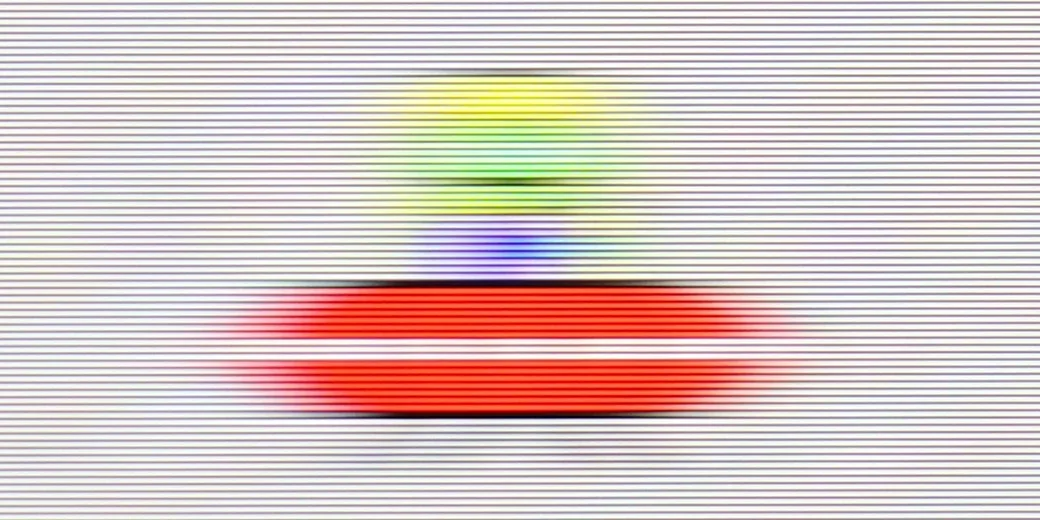
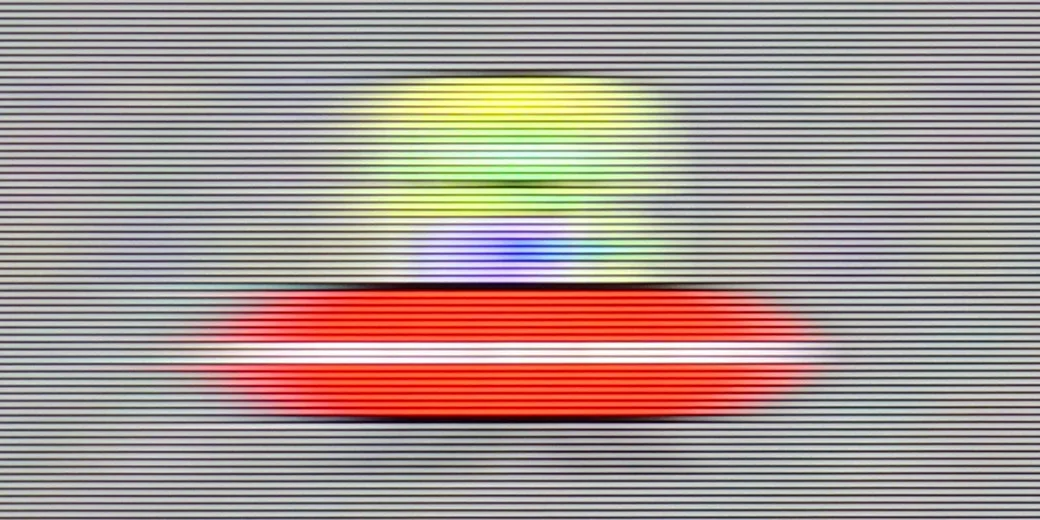
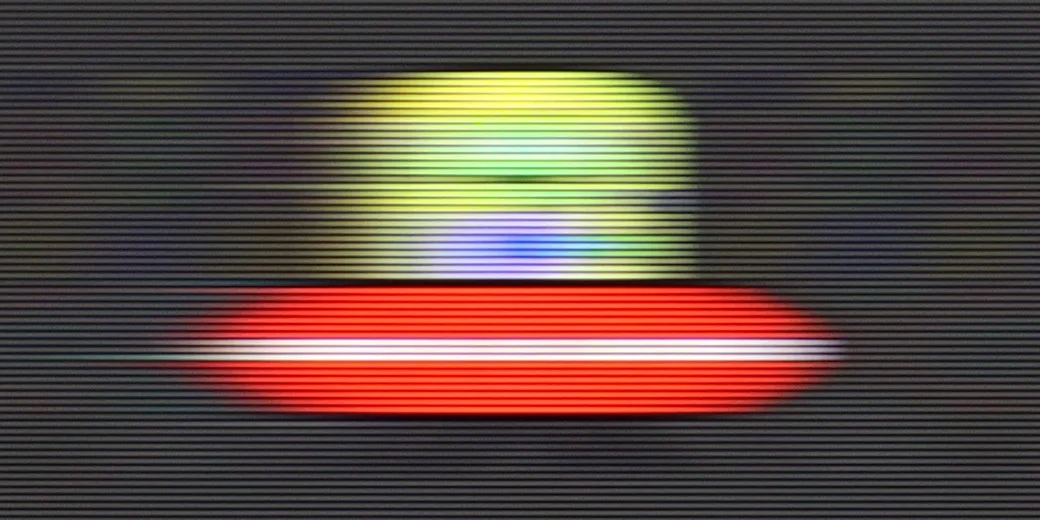


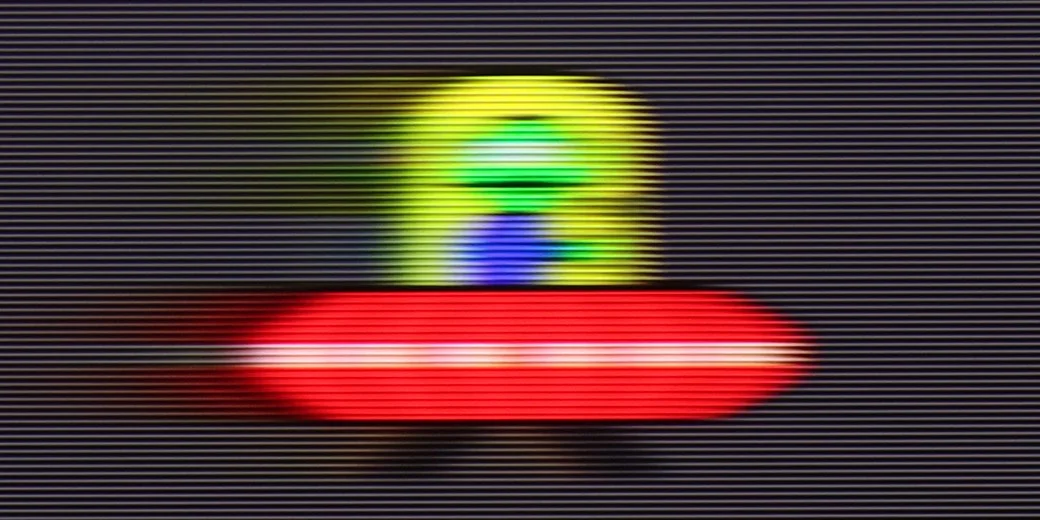
Blur (BFI function enabled):



Blur ():
Blur (4K@144Hz):

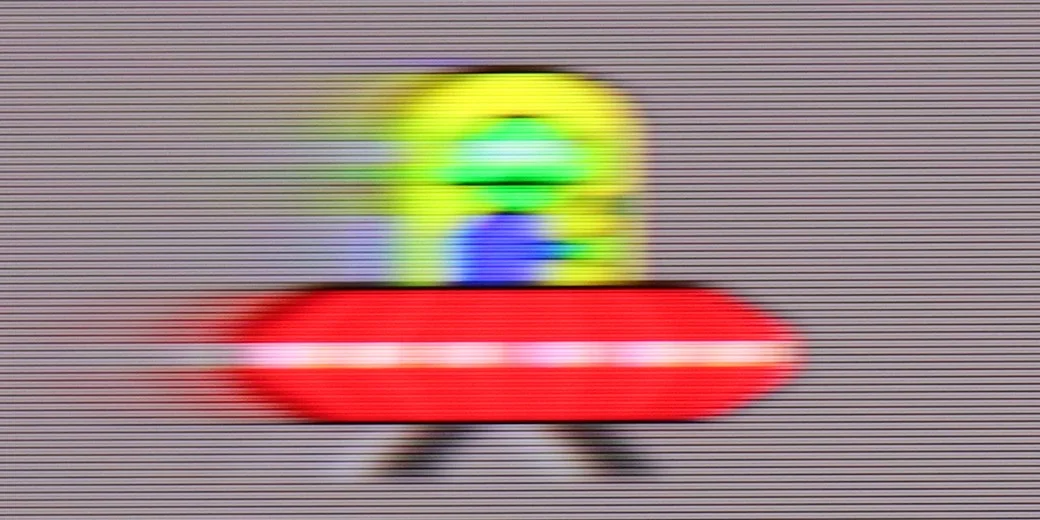
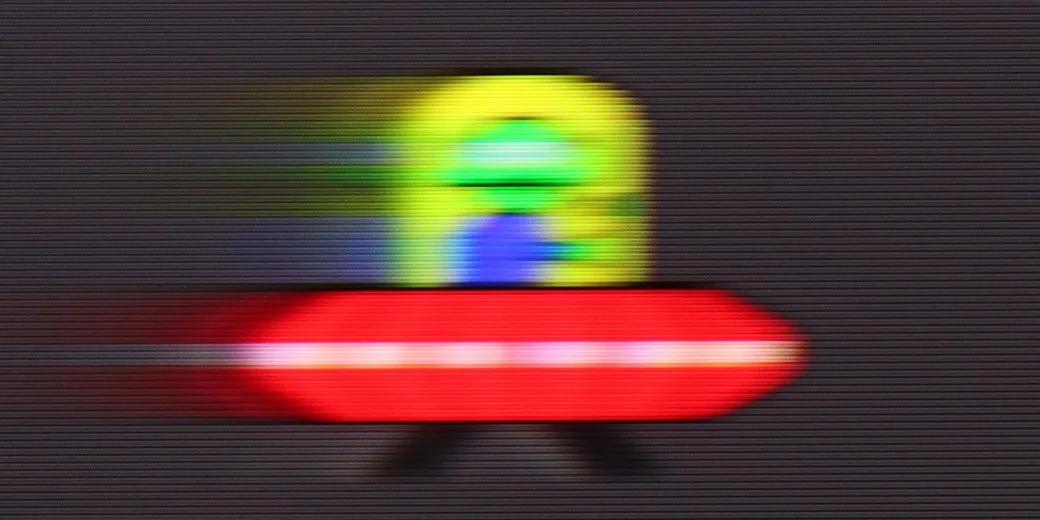
The X75WL Sony television is equipped with a 60 Hz panel, making it more suitable for watching films than for dynamic gaming. This model features a motion smoothing function called Motionflow, which allows the user to adjust the picture on a 10-point scale. Smoothness is responsible for adding intermediate frames, thereby increasing the fluidity of motion, while the image becomes more theatrical, minimising the cutting effect. Clarity reduces motion blur, which is particularly useful in fast scenes such as sports or dynamic actions in films. With this feature, users can adjust the fluidity and sharpness of motion to their own preferences.
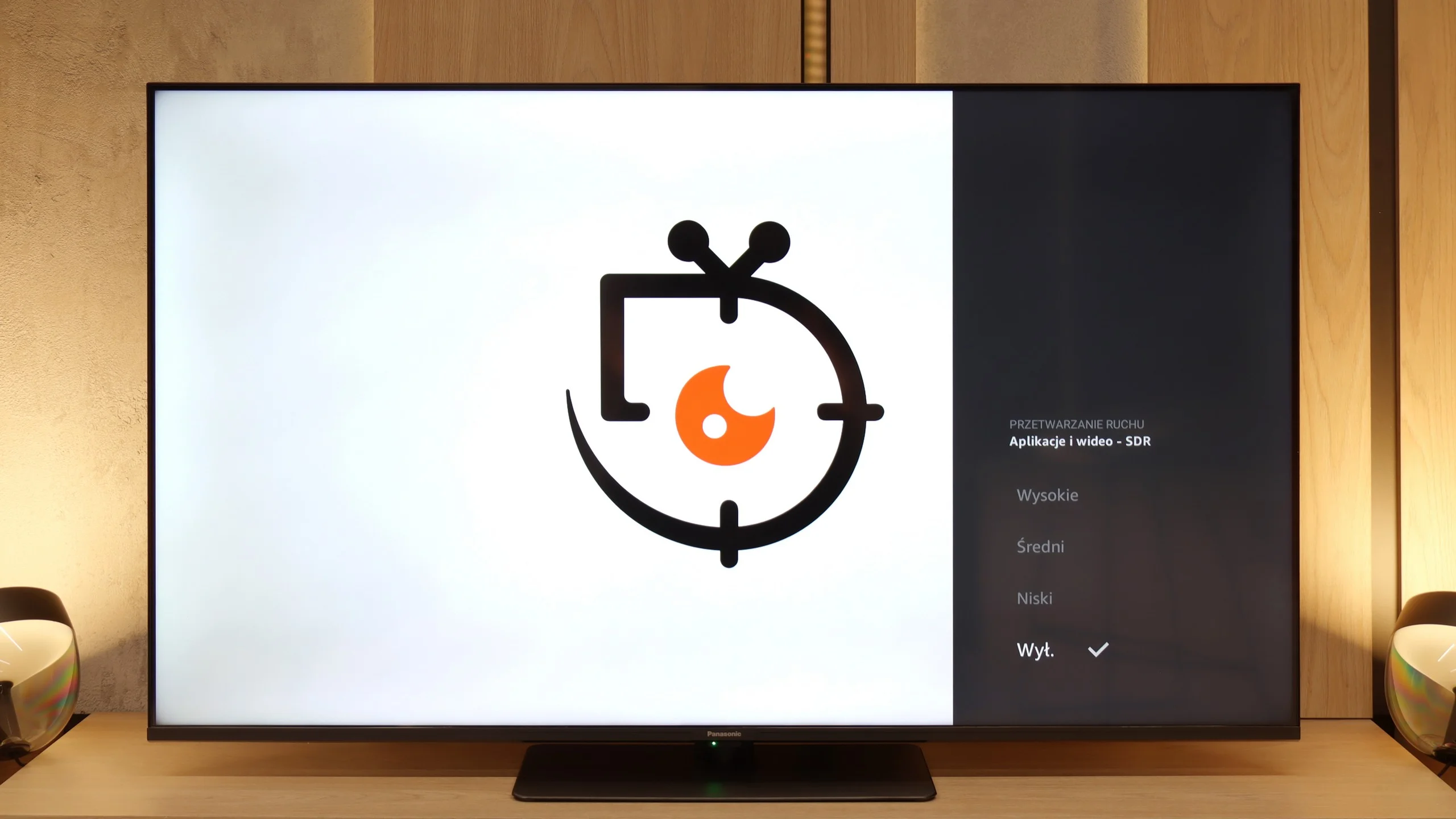
At first glance, everything looks good – the Panasonic W85B has a 120 Hz panel and even a 144 Hz mode, so it seems that it should cope well with smooth motion. The problem arises when we look into the settings. The options for improving fluidity are supposedly present in the menu, but in practice… they don't change anything. No matter what we choose, the image looks the same. On top of that, there is a lack of BFI, or the black frame insertion mode, which on many televisions helps sharpen motion. And suddenly it turns out that despite the strong panel, the W85B offers us no real tools to adjust motion according to our needs. It’s only good when the source itself operates at a higher frequency – for example, games at 120 Hz. But when it comes to films or sports, we simply have to accept what the television shows us, because nothing more can be done about it.
Console compatibility and gaming features
3.6/10
8.5/10
- ALLM
- VRR
- VRR range 48 - 144Hz
- Dolby Vision Game Mode
 Yes, high input lag
 - Correct implementation of HGIG
- 1080p@120Hz
- 1440p@120Hz
- 4K@120Hz
- Game bar
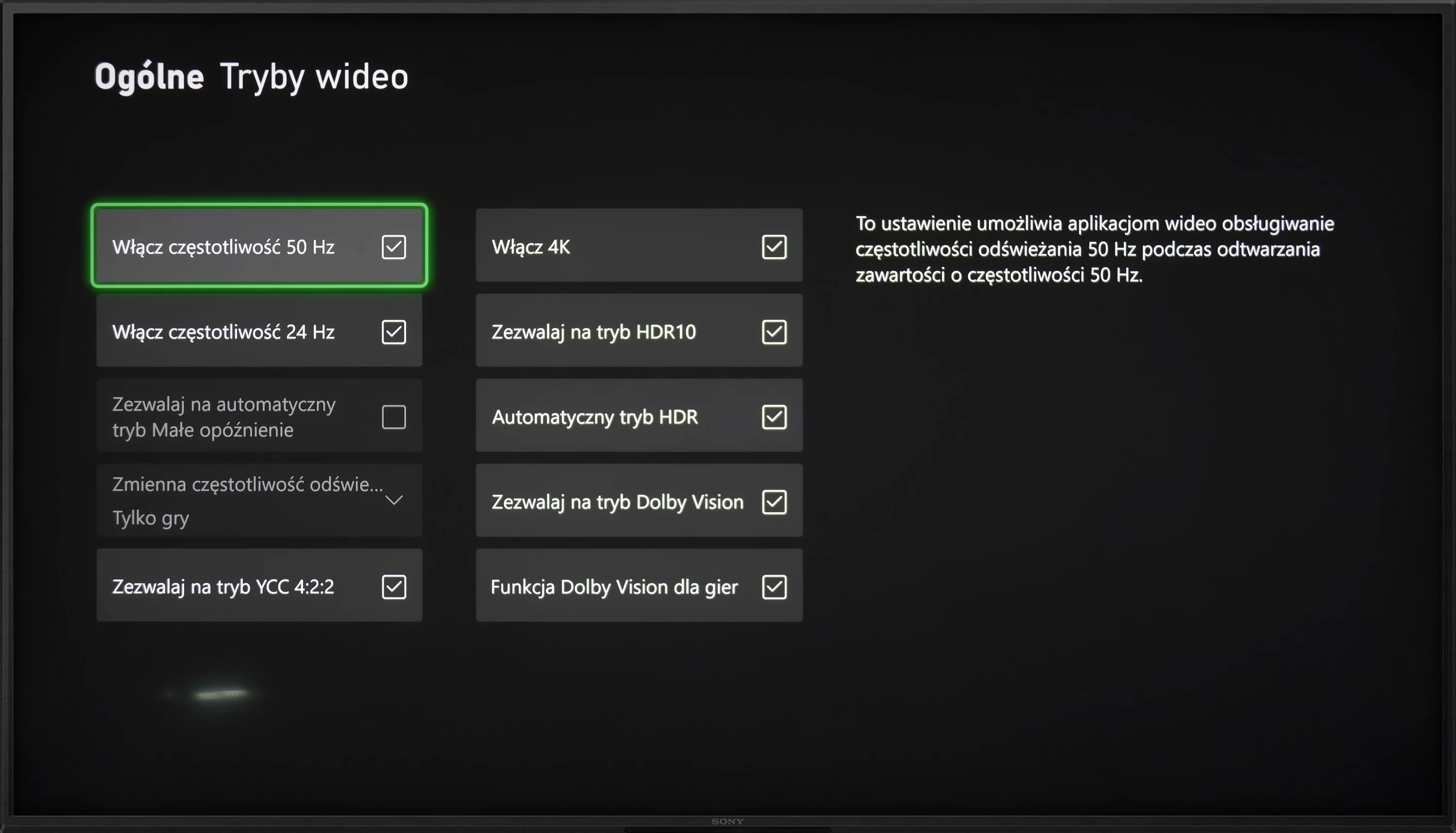
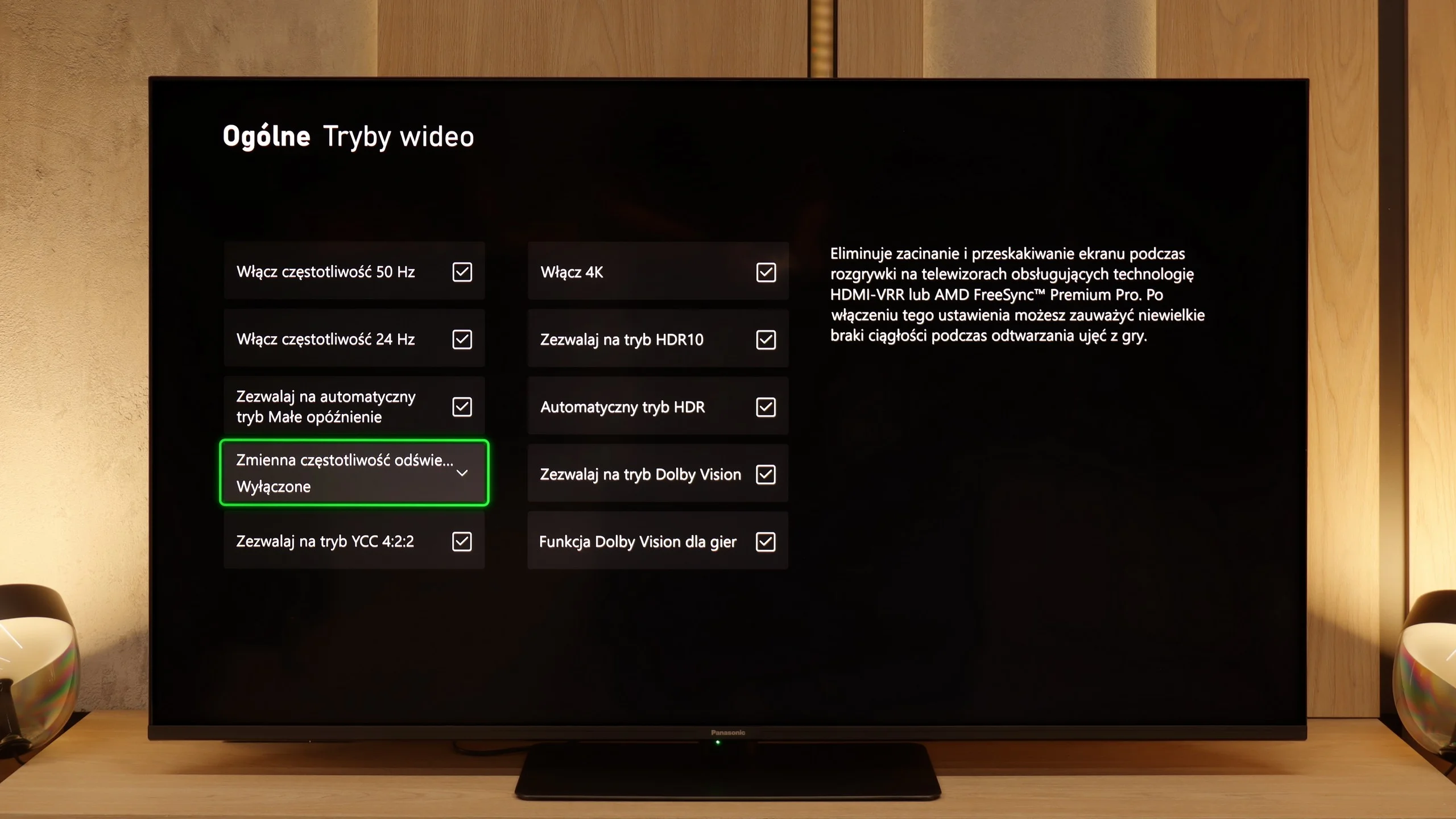
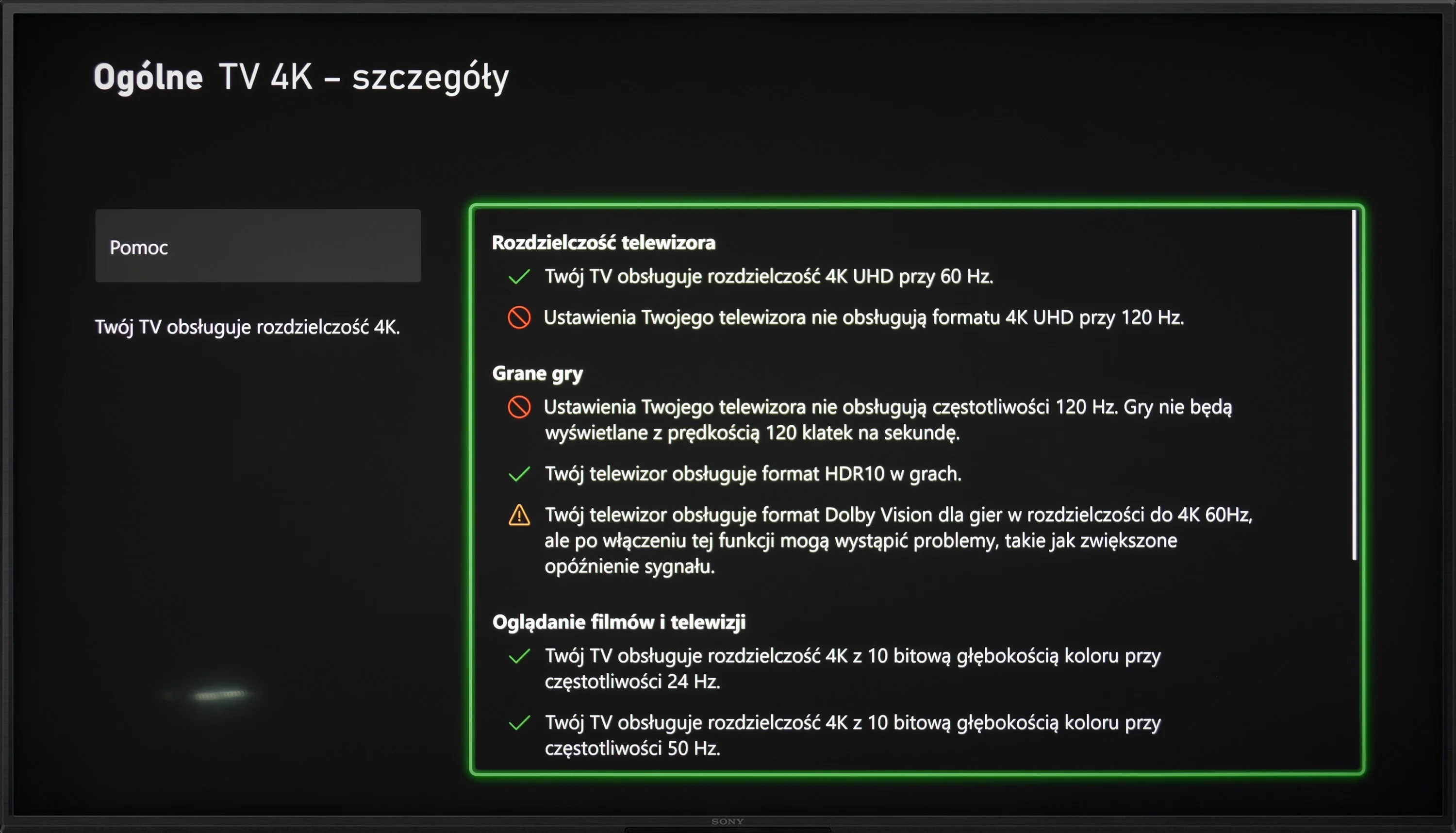
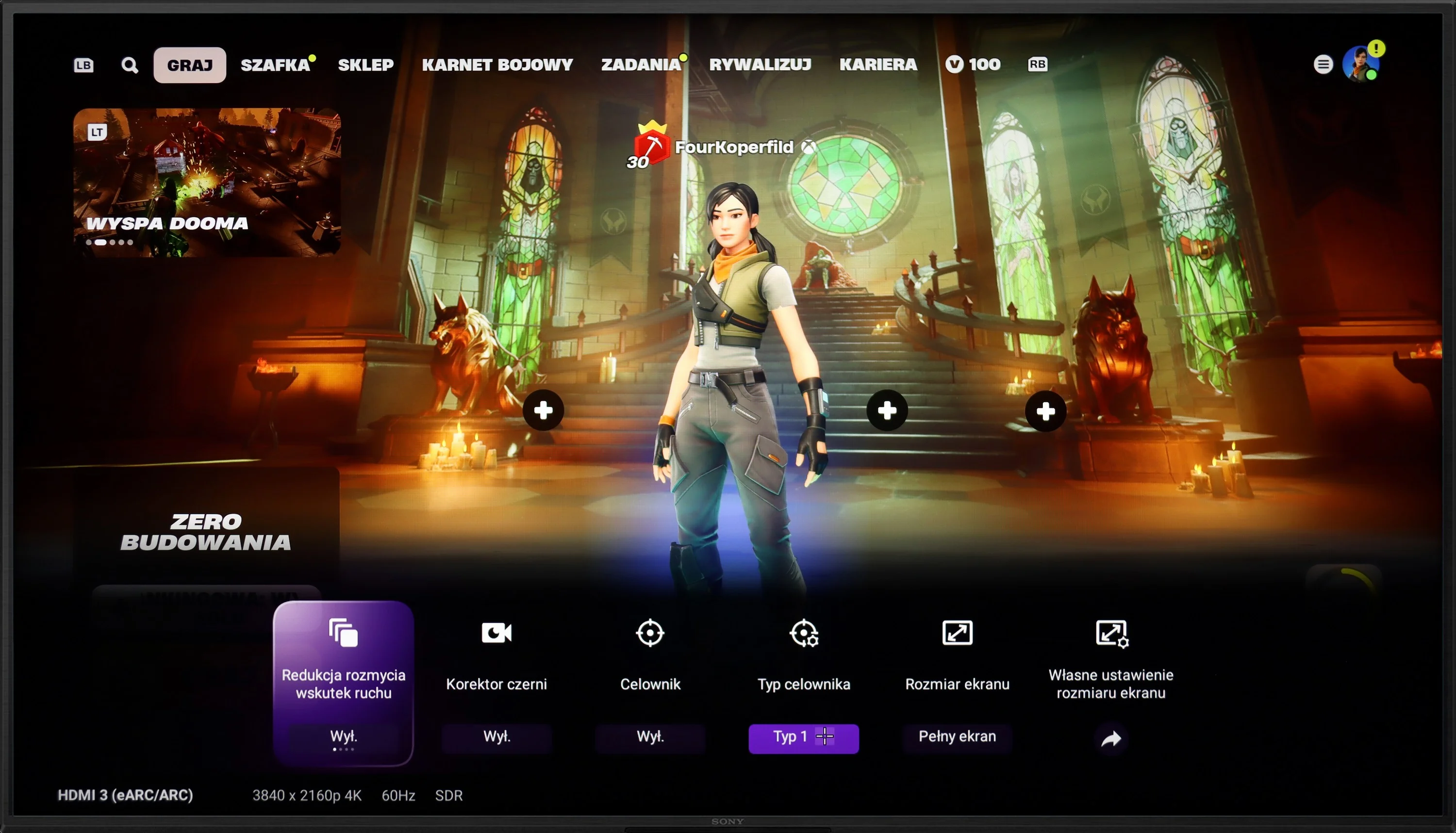
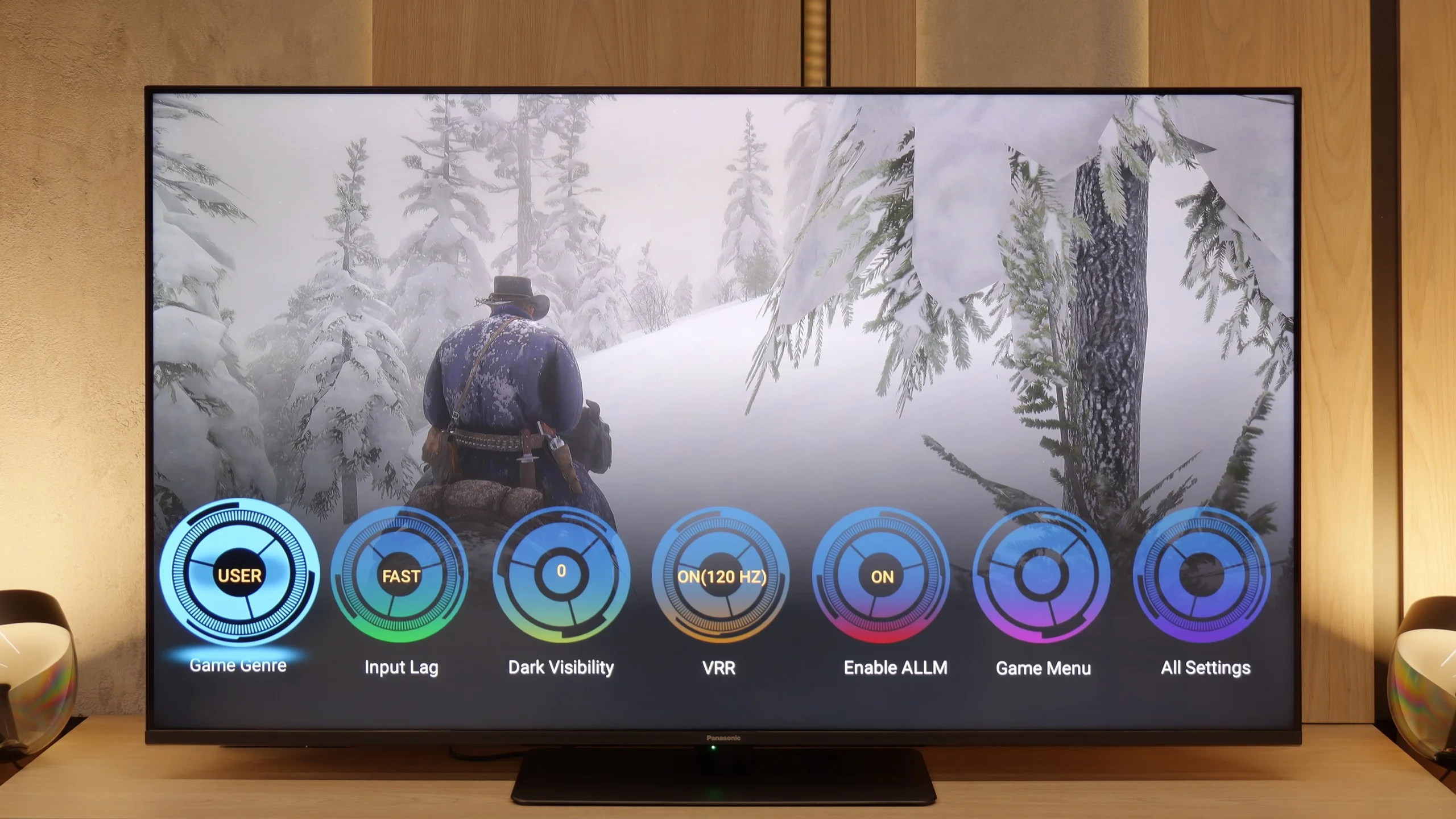
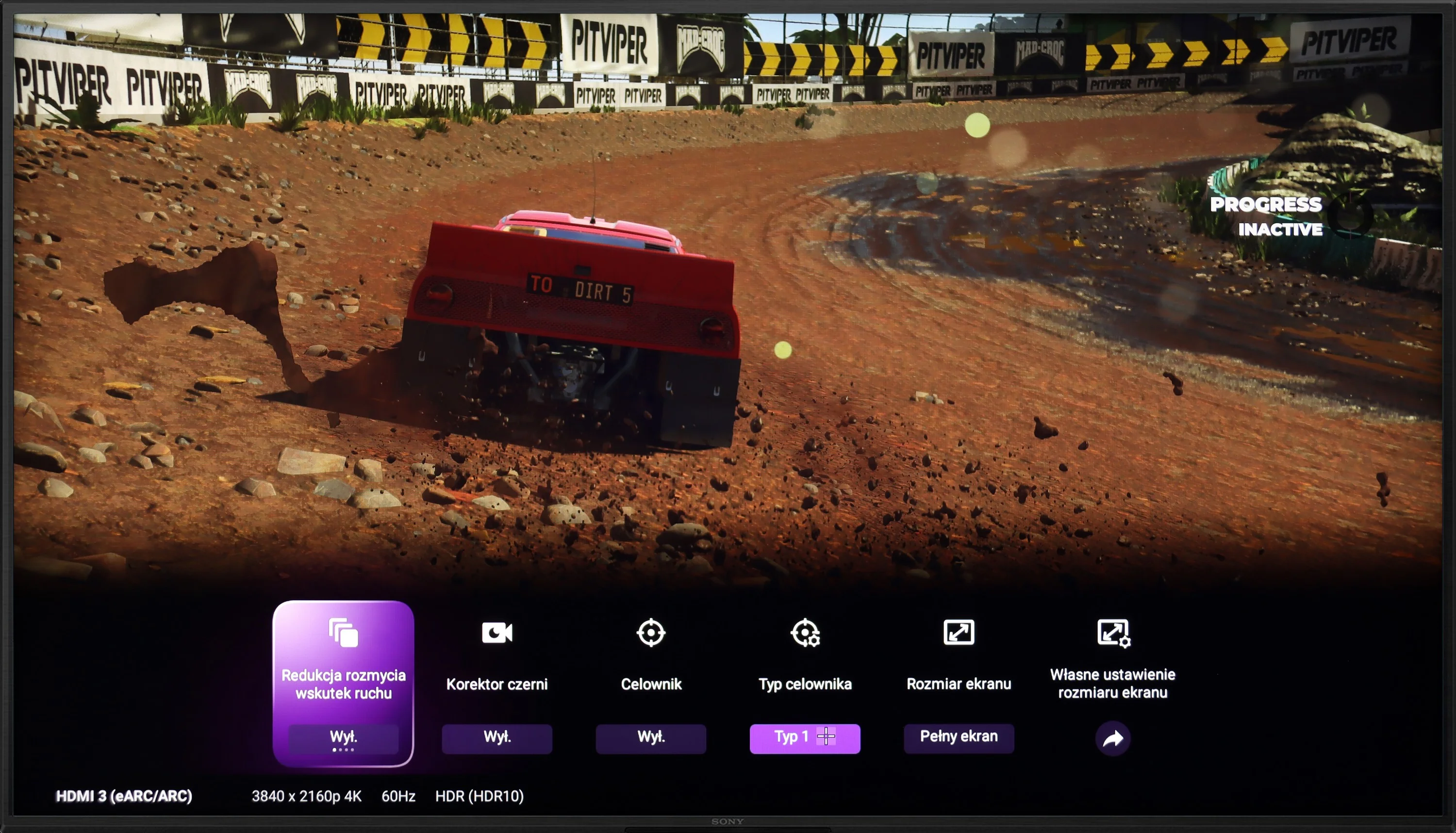
X75WL is not the best television for gamers. It only has the ALLM (Auto Low Latency Mode) feature and a basic Game Bar, which are not enough to satisfy more demanding users. In this price range, one could expect support for features like VRR or 120 Hz refresh rates - although in FULLHD, which are already standard - unfortunately, they are lacking here. This is a major downside for Sony, as the competition offers much more for gamers in a similar budget.
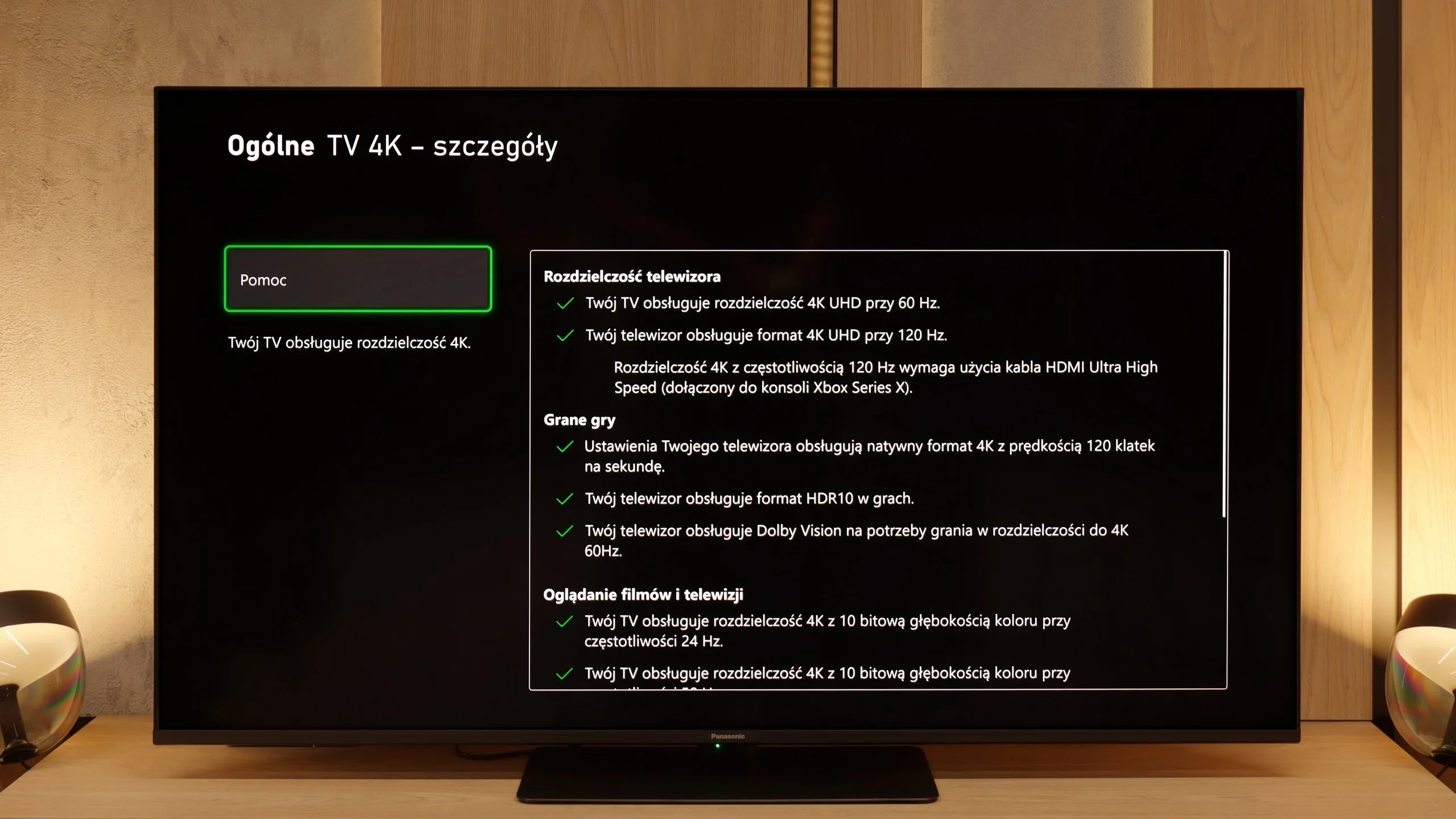
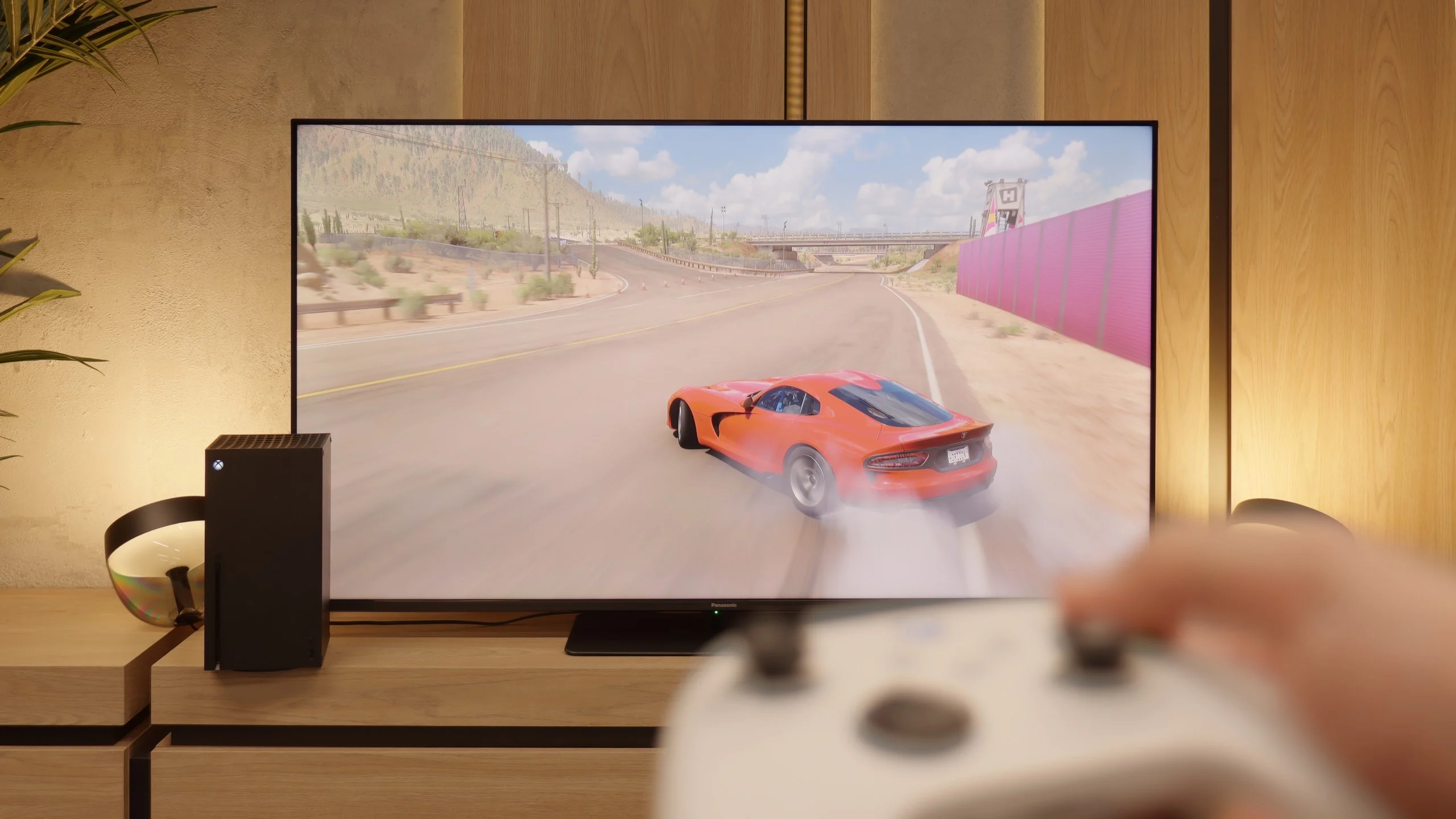
On paper, the Panasonic W85B looks really solid. It has two full HDMI 2.1 ports, support for ALLM, variable refresh rates, Dolby Vision in games, and of course, a high refresh rate of the panel itself. Additionally, it features Panasonic's characteristic game tools bar – a "game bar" that allows you to preview key parameters and quickly change them if needed with a single click. This sounds great, but the problem arises when we turn on HDR. Here, the W85B suffers significantly, as there is practically no HGiG implementation – the television poorly manages brightness, and instead of an accurate picture, we get scenes that are too bright, sometimes even blown out. The solution? The simplest one – turn off HDR in the console settings and leave everything in SDR. And this is where it gets really interesting, as in this scenario, the W85B shows its better side. Low input lag, high fluidity thanks to 120 Hz – all of this makes gaming look phenomenal. Indeed, HDR can be forgone, but if the priority is responsiveness and smooth gameplay, the W85B offers a lot of fun.
Input lag
8.5/10
9.8/10
SDR
HDR
Dolby Vision
Sony KD-43X75WL offers a very low input lag of 14 ms, which is a significant advantage for gamers expecting a quick response from the television to commands from the controller. However, an input lag of 130 ms in Dolby Vision mode completely disqualifies this mode from being used while gaming. This means that users using Dolby Vision must contend with significant latency, which greatly affects comfort and precision during gameplay.
There is really nothing to worry about here. The Panasonic W85B responds instantly to our movements, and the values measured in tests can comfortably compete with monitors for gamers. At a 120 Hz signal, the input lag is around 8–10 ms, while at 60 Hz it hovers around 17–20 ms. In practice, this means one thing – no delays, no frustration! You press the button, and the action happens on the screen straight away.
Compatibility with PC
6/10
8.6/10
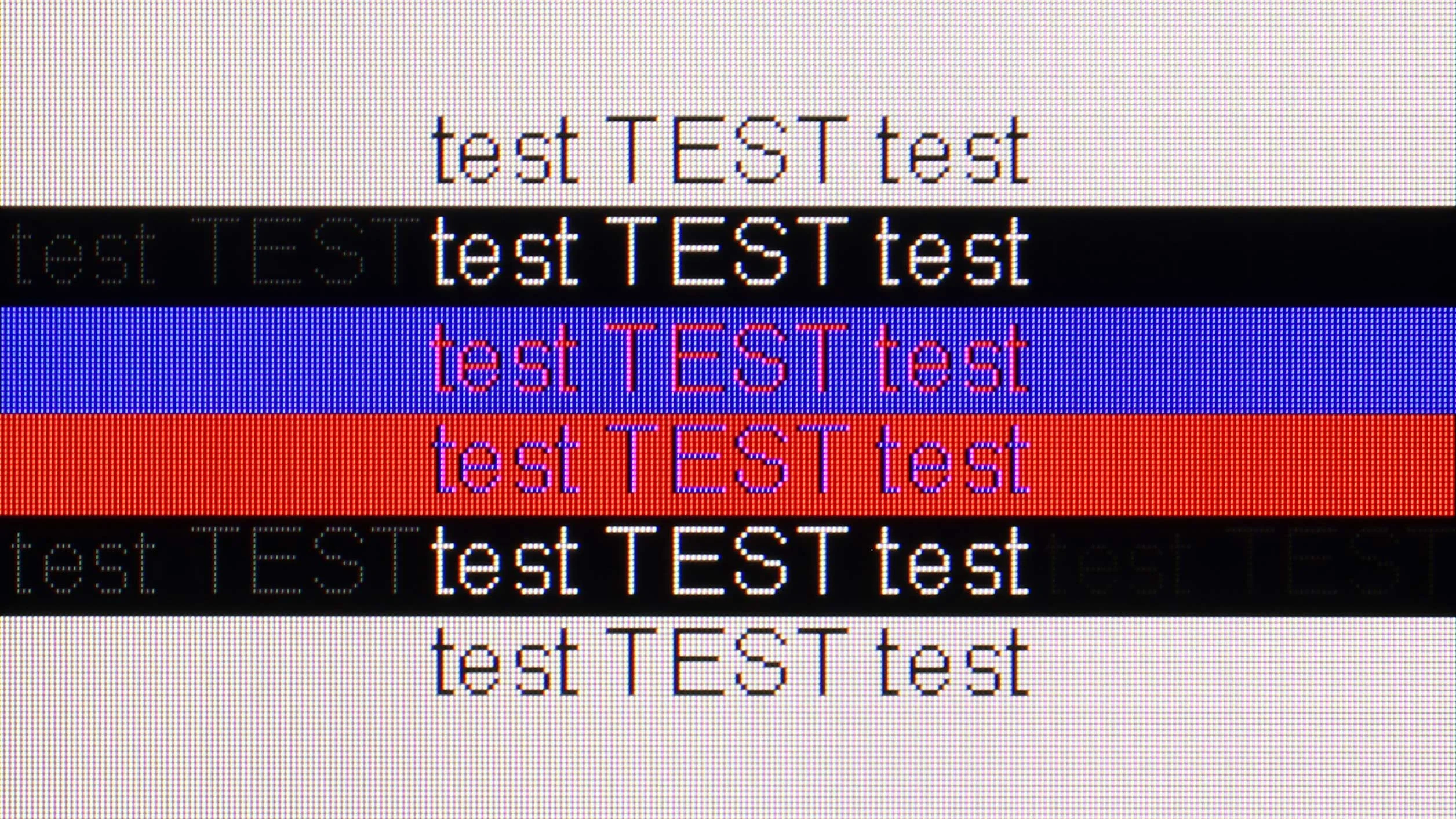
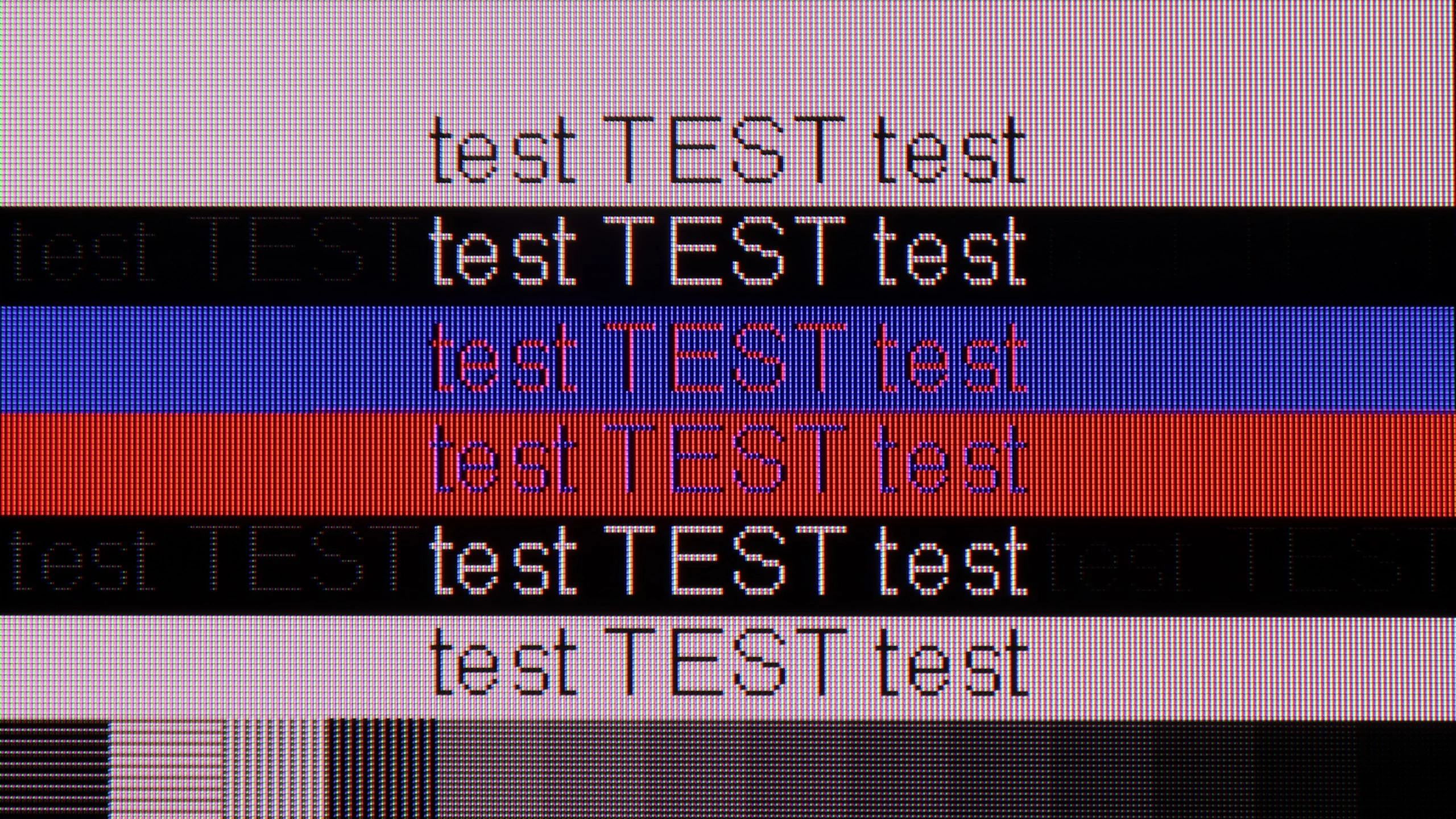
The photo shows the legibility of small fonts. Ideally, lines should be the same thickness on both light and dark text, with minimal pixel gaps.
The Sony X75WL model performs well as a computer monitor. With support for 4:4:4 chroma, text readability is very good, making text work on this television comfortable. Additionally, its low input lag ensures smooth and responsive functionality, making it enjoyable and convenient to use this model with a computer. The television is equipped with a 60 Hz panel and does not support G-Sync, which may be a downside for PC gamers. As a result, its rating in this category is lower – it works well for everyday computer tasks, but in games, especially fast-paced ones, there is a lack of fluidity that is crucial for smooth gameplay.
The Panasonic W85B performs surprisingly well as a computer monitor. It is perfectly suited for office work – the fonts are sharp and very readable thanks to full chroma 4:4:4 support, so you can easily write, browse pages, or work on spreadsheets. But the real fun begins when gaming. The television handles refresh rates of up to 144 Hz for PC without any issues, and it also supports popular image synchronisation technologies such as NVIDIA G-Sync and AMD FreeSync. This means we don't have to worry about screen tearing or stuttering – gameplay is smooth and looks simply fantastic.
Viewing angles
6.8/10
3.2/10
The viewing angles in the model KD-43X75WL are quite decent, thanks to the IPS panel used. The image remains relatively true even when viewed at an angle, which can be beneficial in situations where the television is watched from different spots in the room. However, we have seen better models with this type of panel that offer more consistent colour and contrast quality at wider angles.
Here you can see the biggest price we pay for the high quality of the VA matrix contrast. The W85B, like most televisions with this type of panel, does not perform very well when viewed from a wider angle. Colours lose intensity and the image begins to fade as soon as we move away from the screen's axis. This is not a flaw of Panasonic itself, but rather a characteristic of VA technology – excellent contrast in exchange for poorer viewing angles. So if you plan to watch films with a larger group and often sit "off to the side," you need to keep this in mind.
Daytime performance
4.6/10
4.2/10
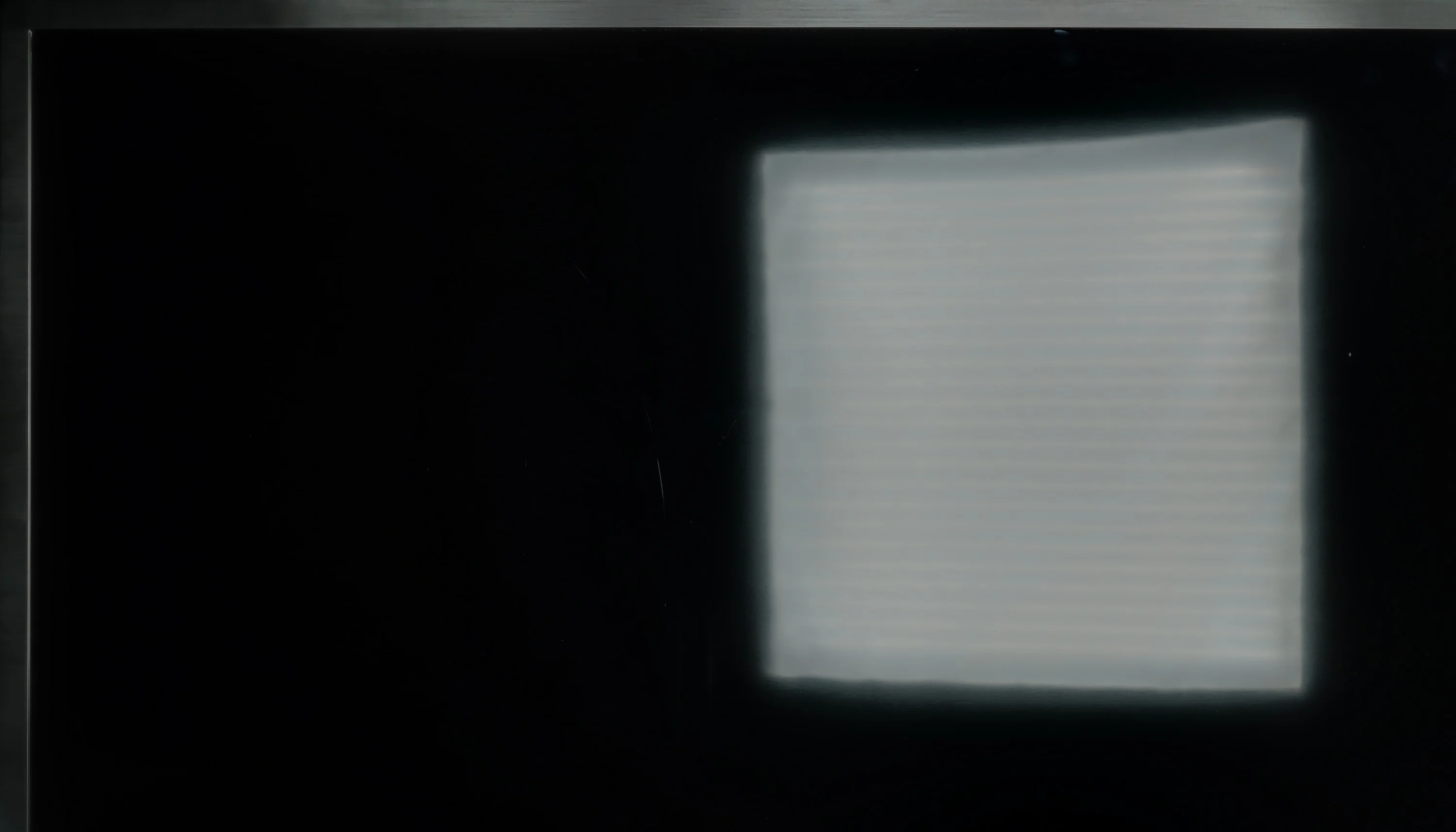
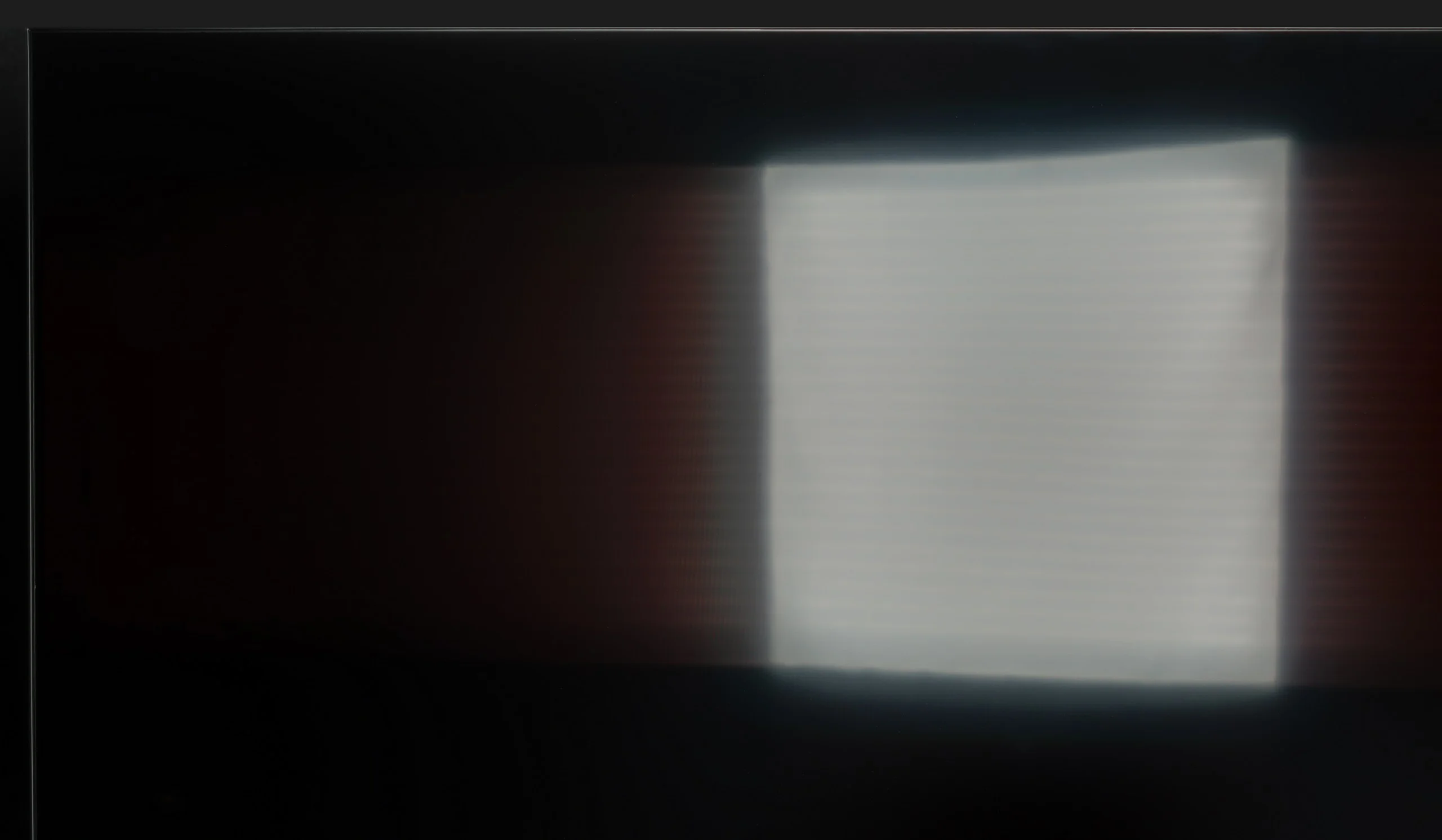
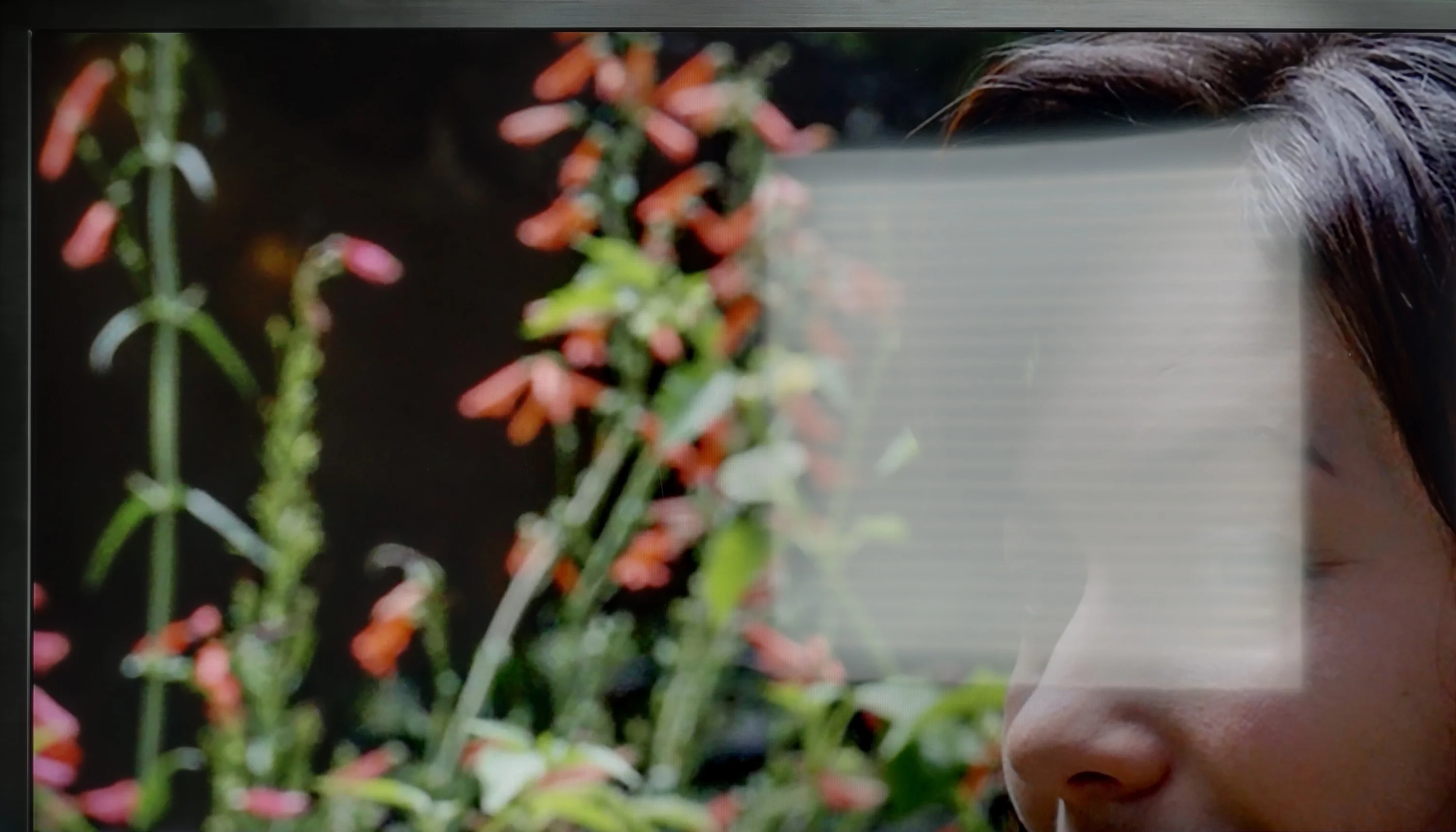
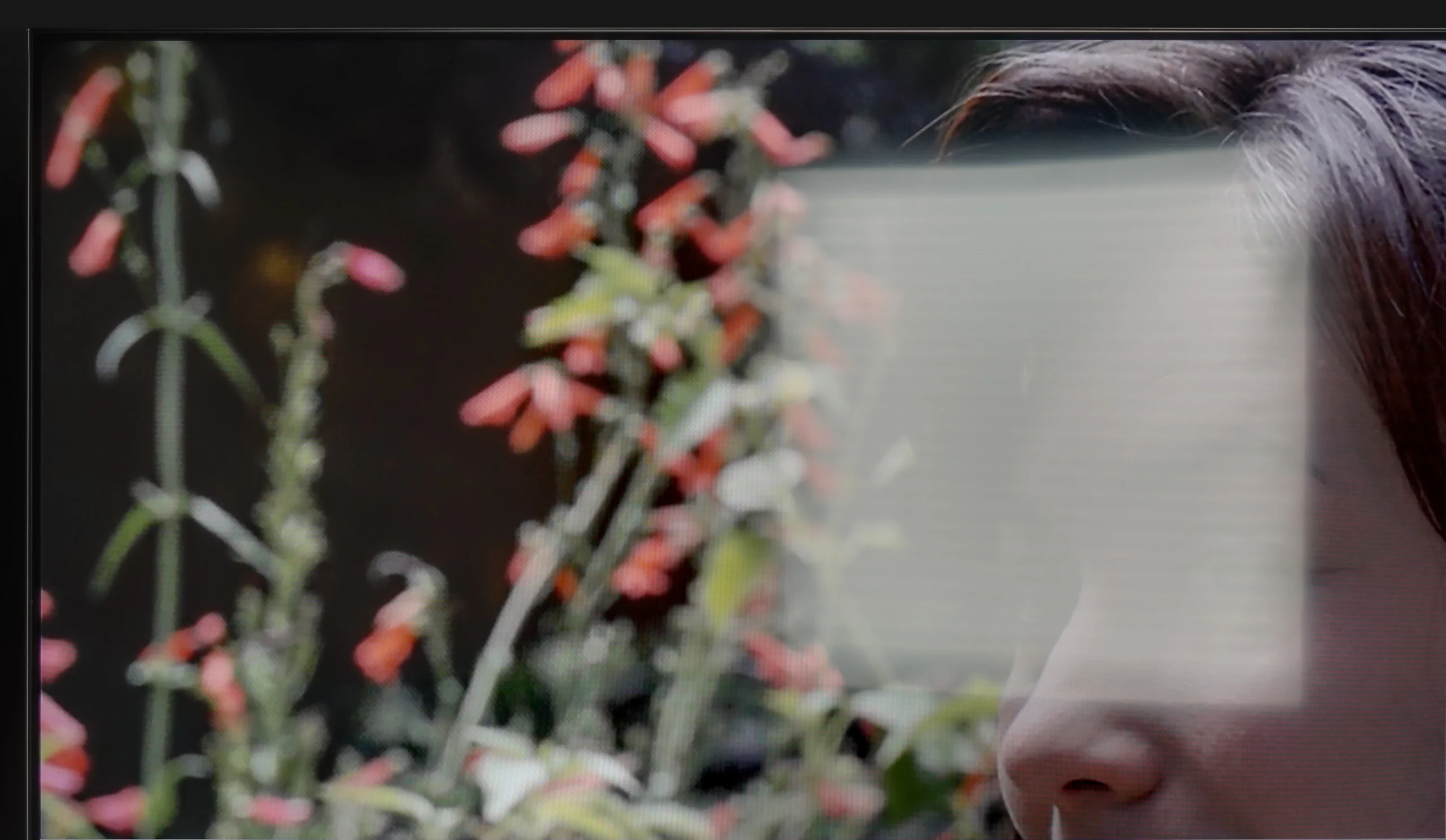
Panel brightness
Panasonic W85: 263 cd/m2
Sony X75WL: 334 cd/m2
The rating of the television Sony X75WL during the day is average. The satin coating of the panel moderately dampens reflections, which means that in a bright room, glares can be visible and interfere with the viewing experience. Additionally, a brightness level of 330 cd/m² is not sufficient to provide a clear image in very sunny conditions, which limits its use in well-lit rooms.
The Panasonic W85B features a satin-finish panel that performs quite well in reducing reflections and maintaining colours even under strong light from windows or lamps. There is no "mirror" effect here, so watching television in a typical living room during the day is comfortable. However, the problem arises in really bright rooms – the television does not have high brightness, so it cannot compete with very strong sunlight. It is simply a screen that performs best in controlled conditions.
Panel details
Subpixel Structure:
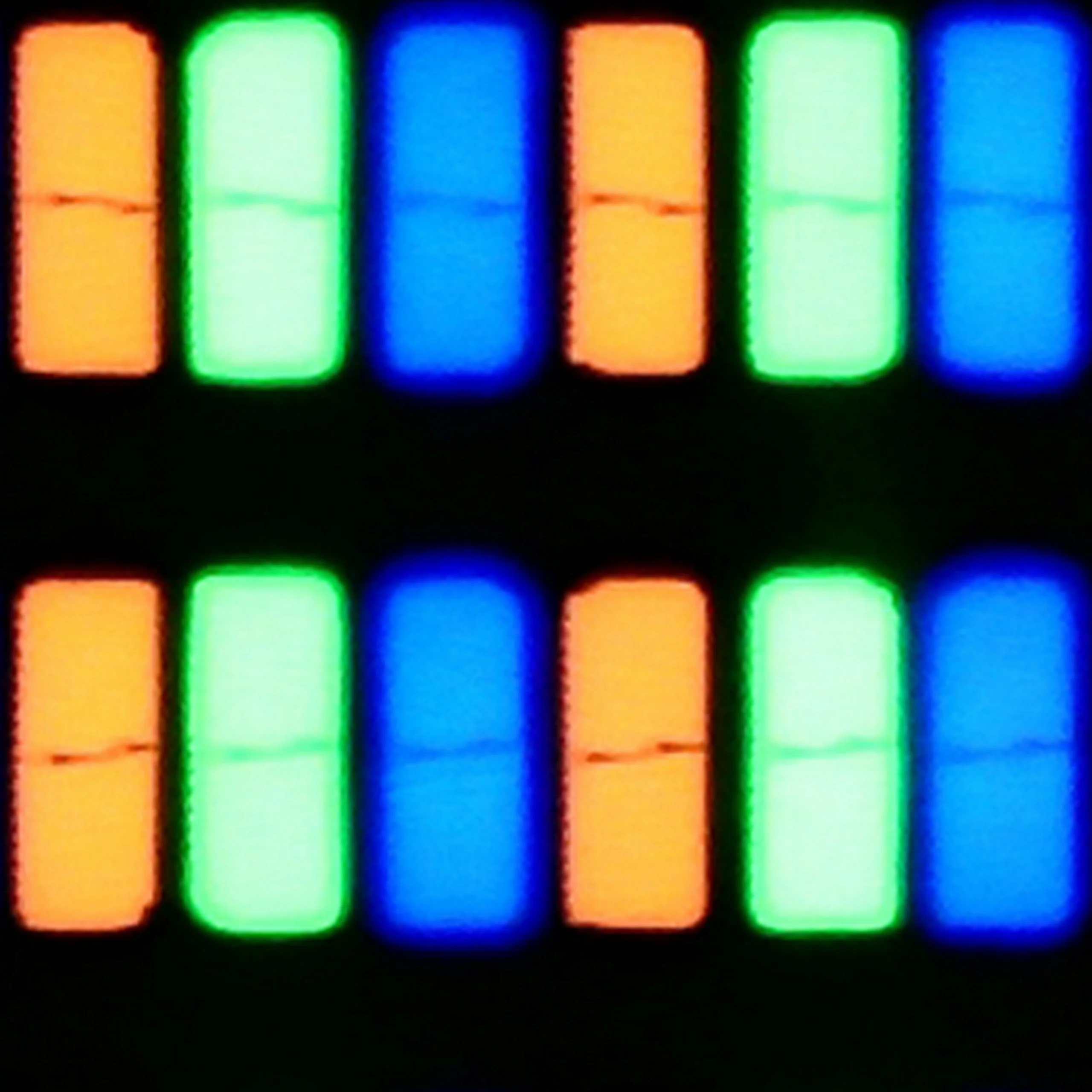
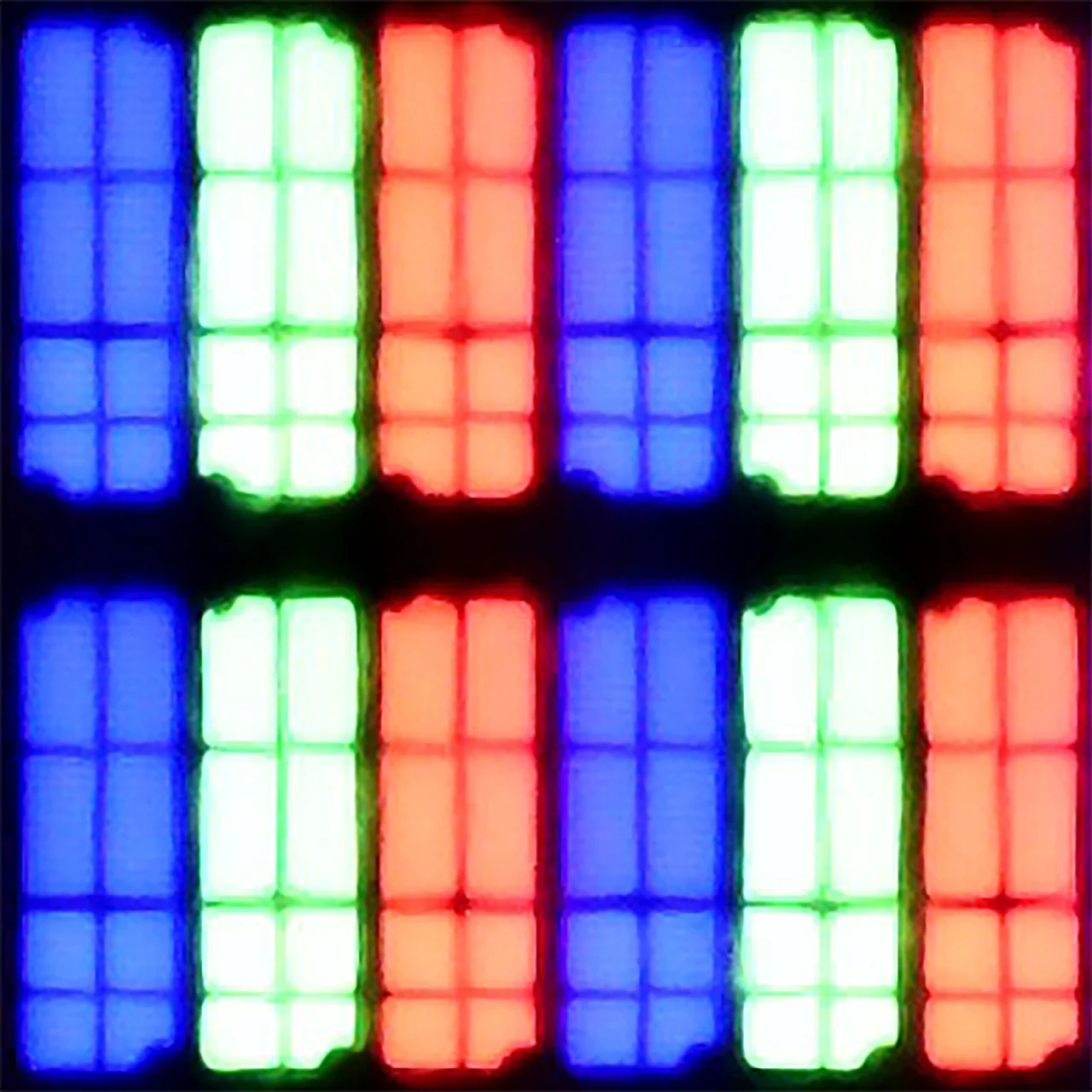
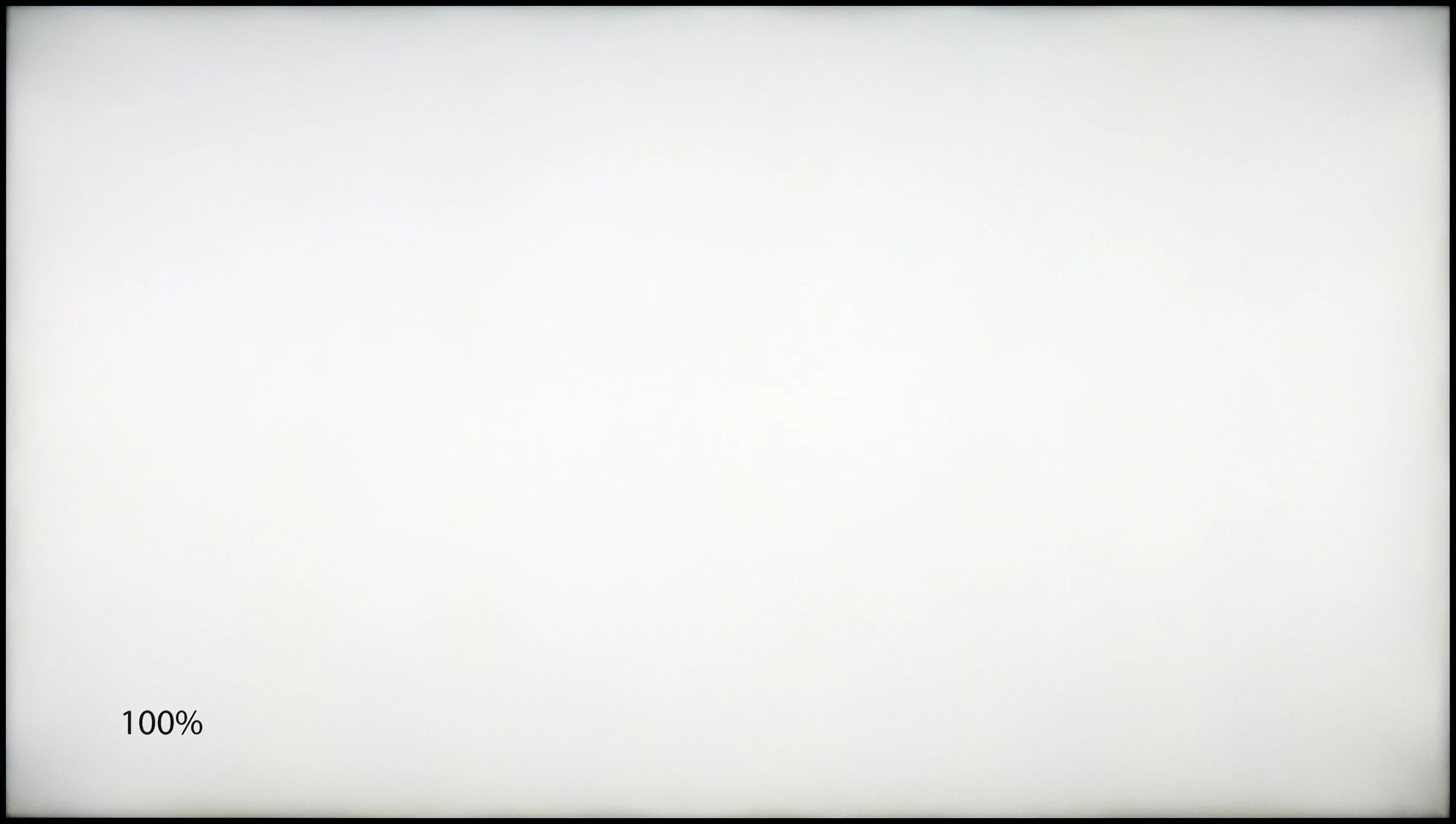
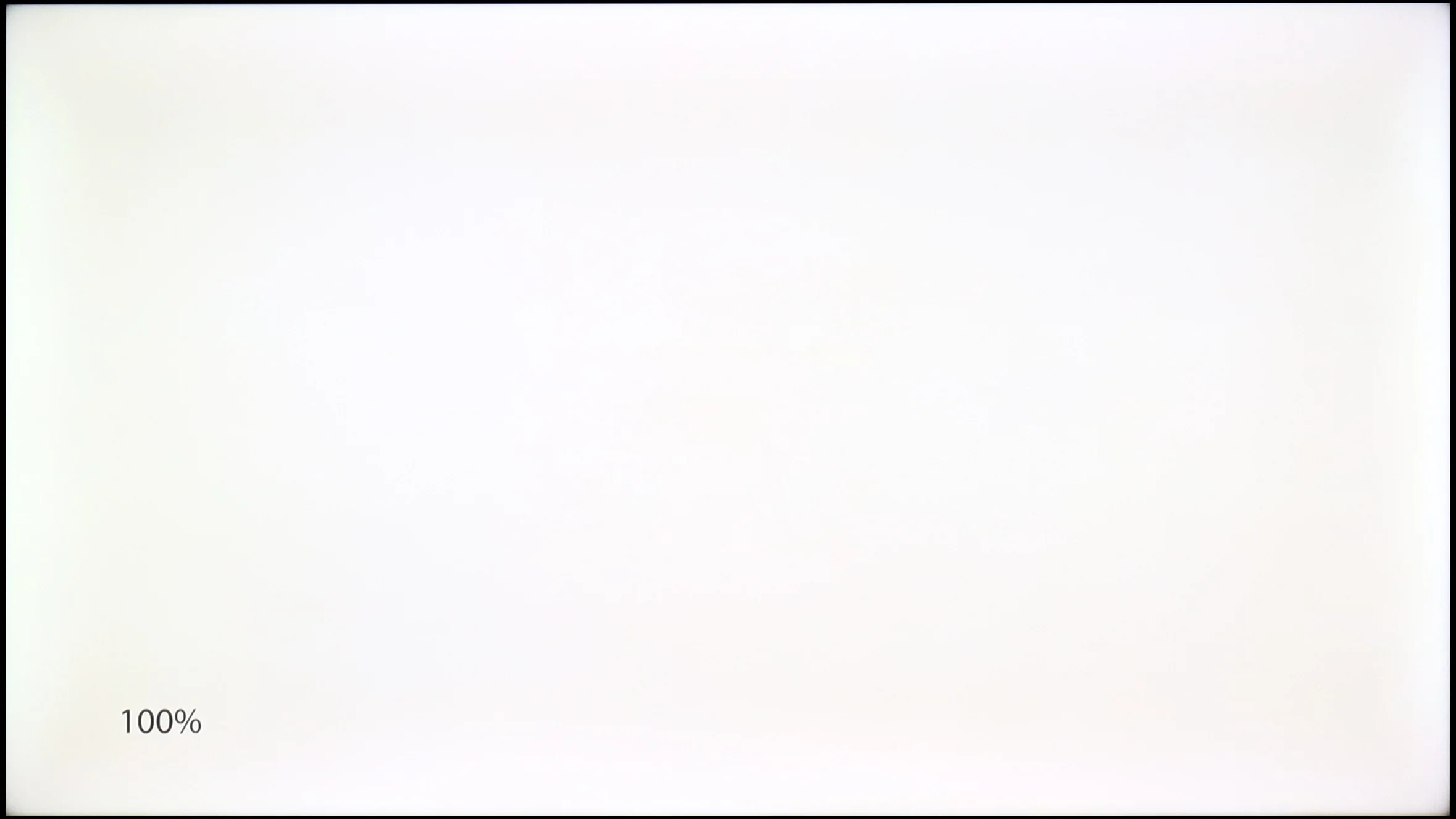
Panel uniformity and thermal imaging:
Sony X75WL
Panasonic W85
TV features
7.7/10
6.8/10
- SystemGoogle TVAmazon FireTV
- System performanceDecentAverage
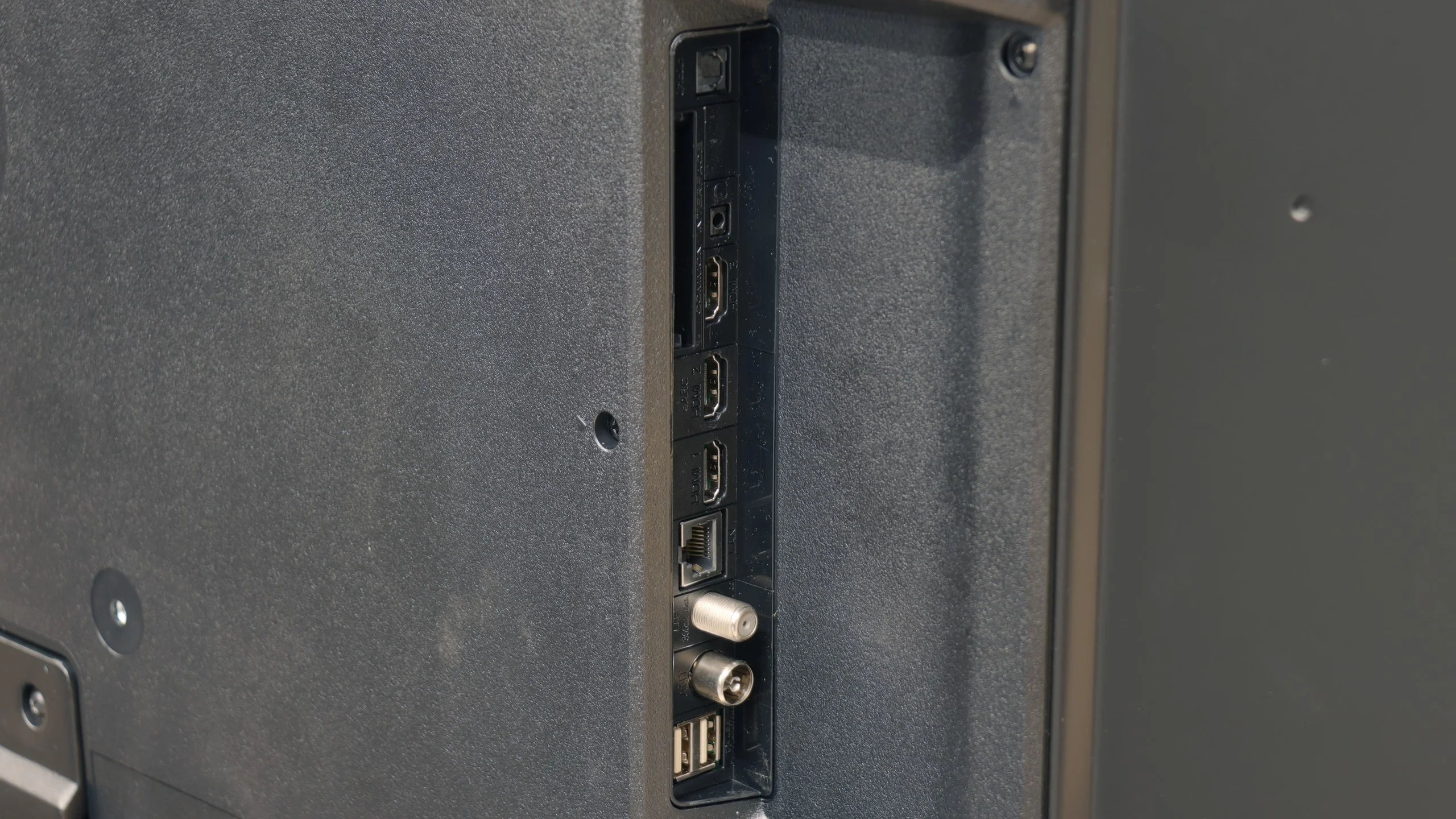
- HDMI inputs4 x HDMI 2.0, 0 x HDMI 2.11 x HDMI 2.0, 2 x HDMI 2.1 48Gbps
- Other inputsRCA (Chinch)
- OutputsToslink (Optical audio), eARC (HDMI), ARC (HDMI)Toslink (Optical audio), eARC (HDMI), ARC (HDMI), Mini-Jack (Headphones)
- Network InterfacesWi-Fi 2.4GHz, Wi-Fi 5GHz, Ethernet (LAN) 100MbpsWi-Fi 2.4GHz, Wi-Fi 5GHz, Ethernet (LAN) 100Mbps
- TV receptionDVB-T, DVB-T2, DVB-S, DVB-S2, DVB-CDVB-T, DVB-T2, DVB-S, DVB-S2
Classic features:
- Recording to USB (terrestrial TV)
- Recording programming
- Picture in Picture (PiP)
- RF remote control (no need to aim)
- Backlit remote control
- Teletext
- Audio only mode
- Bluetooth headphones support
- Simultaneous Bluetooth headphones & TV audio
Smart features:
- AirPlay
- Screen mirroring (Windows Miracast)
- Voice search
- Voice search in native language
- Ability to connect a keyboard and mouse
Sound connection options
- HDMI audioeARC (HDMI), ARC (HDMI)eARC (HDMI), ARC (HDMI)
- Other audio outputsToslink (Optical audio)Toslink (Optical audio), Mini-Jack (Headphones)
- Wireless audioBluetoothBluetooth
Supported audio formats (external HDMI eARC audio):
- Dolby Digital Plus 7.1
- Dolby True HD 7.1
- Dolby Atmos in Dolby Digital Plus (JOC)
- Dolby Atmos in Dolby True HD
- DTS:X in DTS-HD MA
- DTS-HD Master Audio
Senior accessibility
- Numeric keyboard on TV
- Font size adjustment
- Audio description
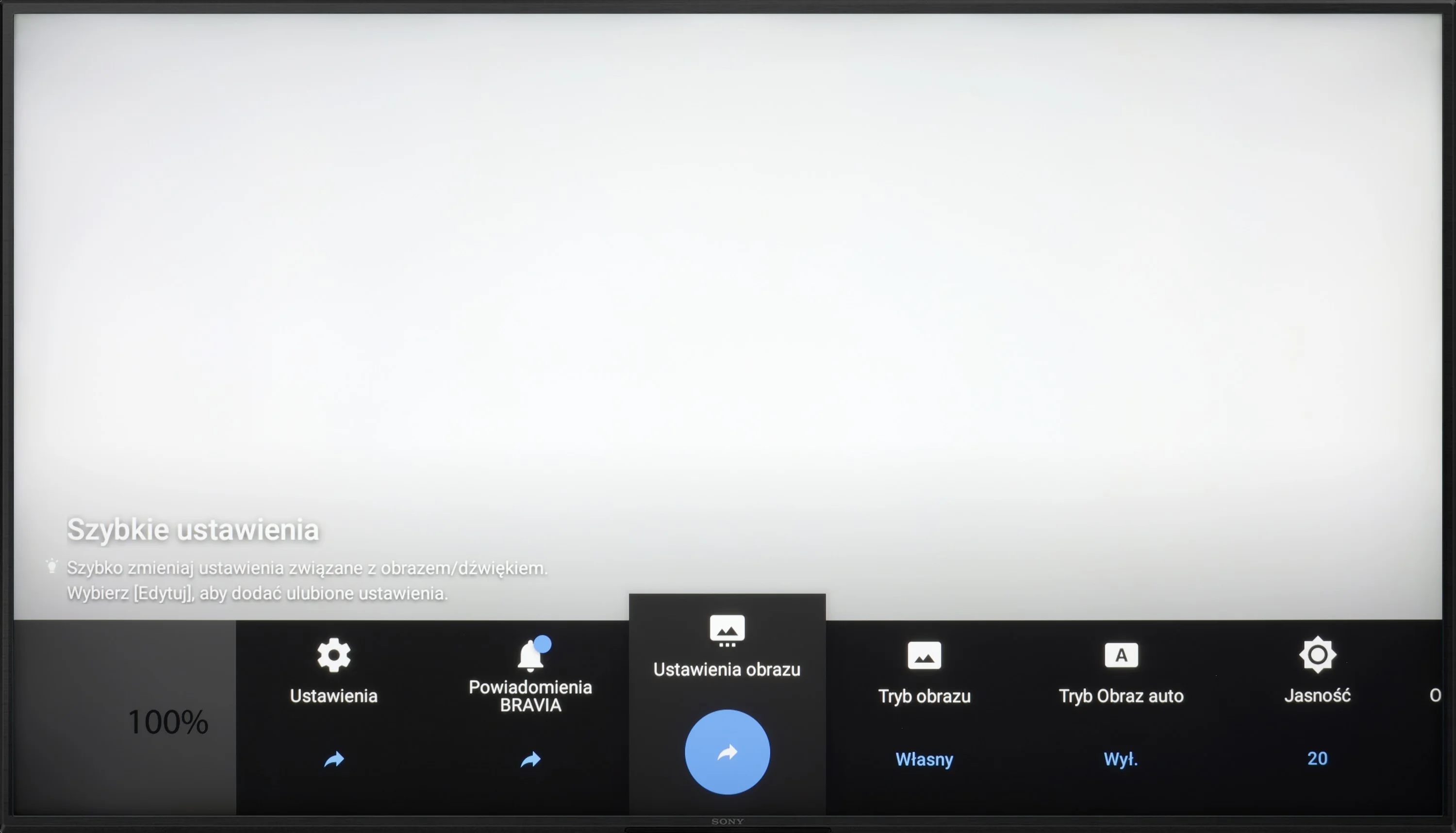
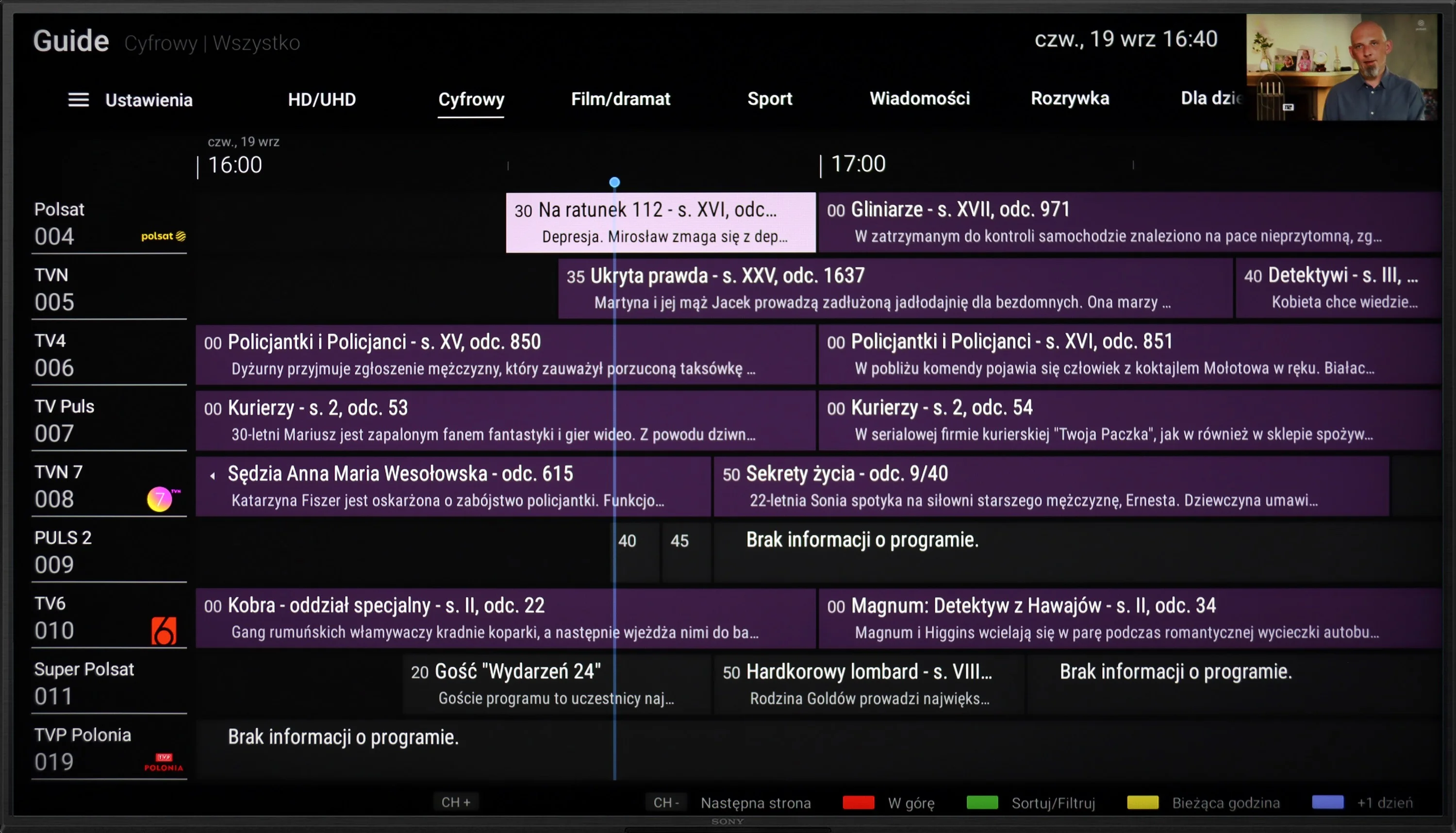
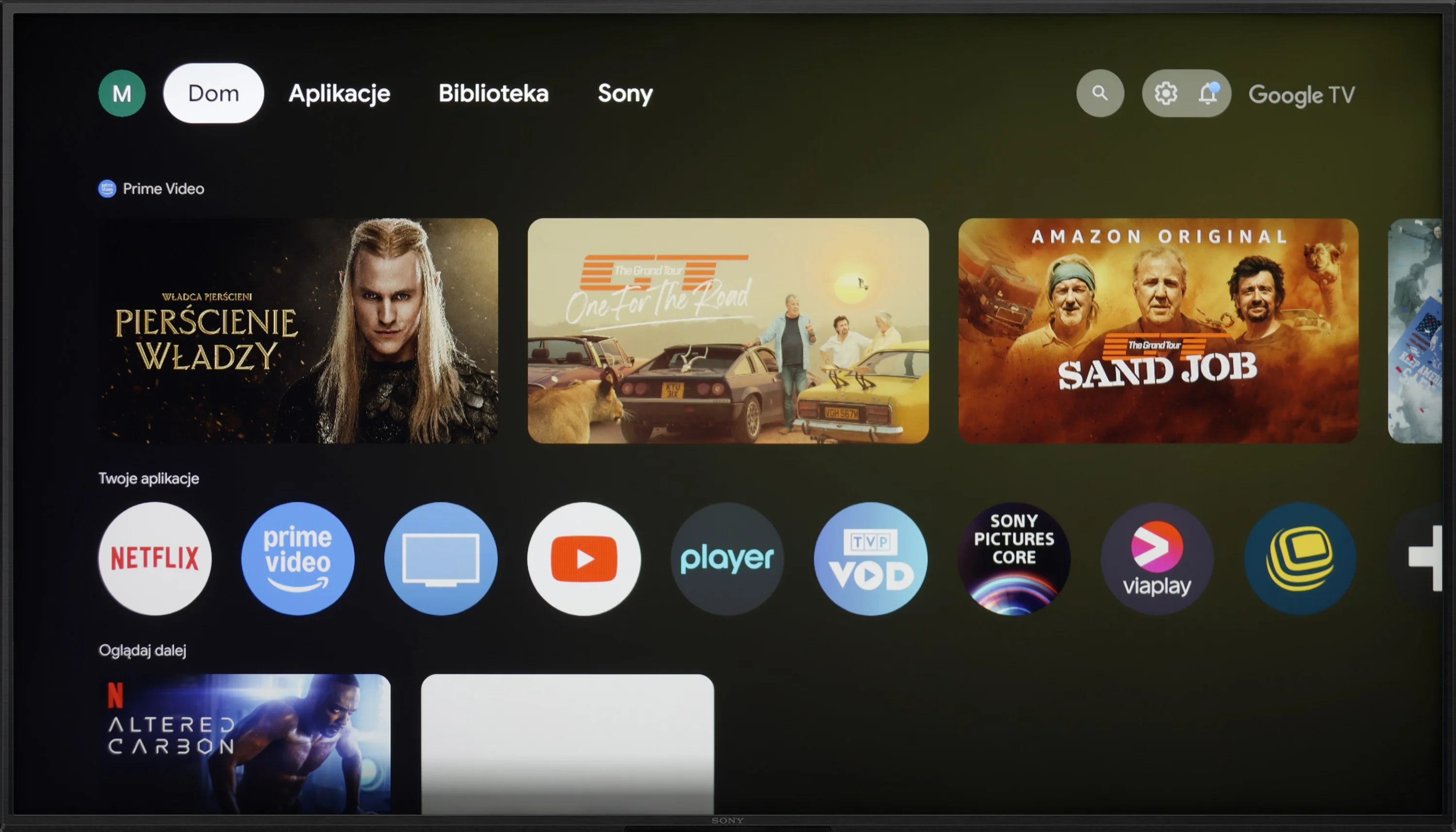
The model KD-43X75WL operates on the Google TV system, which is an extension of Android TV and offers a wide range of features that facilitate the use of the television. Google TV provides access to personalised recommendations based on user preferences and viewed content, making it even easier to find interesting programmes. The system also ensures smooth access to popular applications such as Netflix, YouTube, and Amazon Prime Video, as well as full integration with Google Play Store, allowing for the downloading of additional applications and games. With the built-in Google Assistant, the television can be controlled using voice commands, which is convenient and practical.
The television also offers a number of practical user features. The ability to record programmes onto an external USB drive allows for easy preservation of favourite content for later, which is particularly useful for live broadcasts. The model KD-43X75WL also enables the connection of various peripheral devices, such as keyboards, mice, or Bluetooth headphones, enhancing its functionality. The remote control included in the package operates on a radio communication basis, which means there's no need to aim at the screen to change channels or adjust the volume, making it a significant convenience for everyday use.
In terms of appearance, the model Sony X75WL presents itself solidly, although it cannot be called the slimmest television on the market. The bezels around the screen are not the thinnest, yet the overall look is aesthetically pleasing. It is worth noting the metal legs included in the package, which deserve praise for their sturdiness. These legs are adjustable, allowing for configuration even for very narrow furniture.
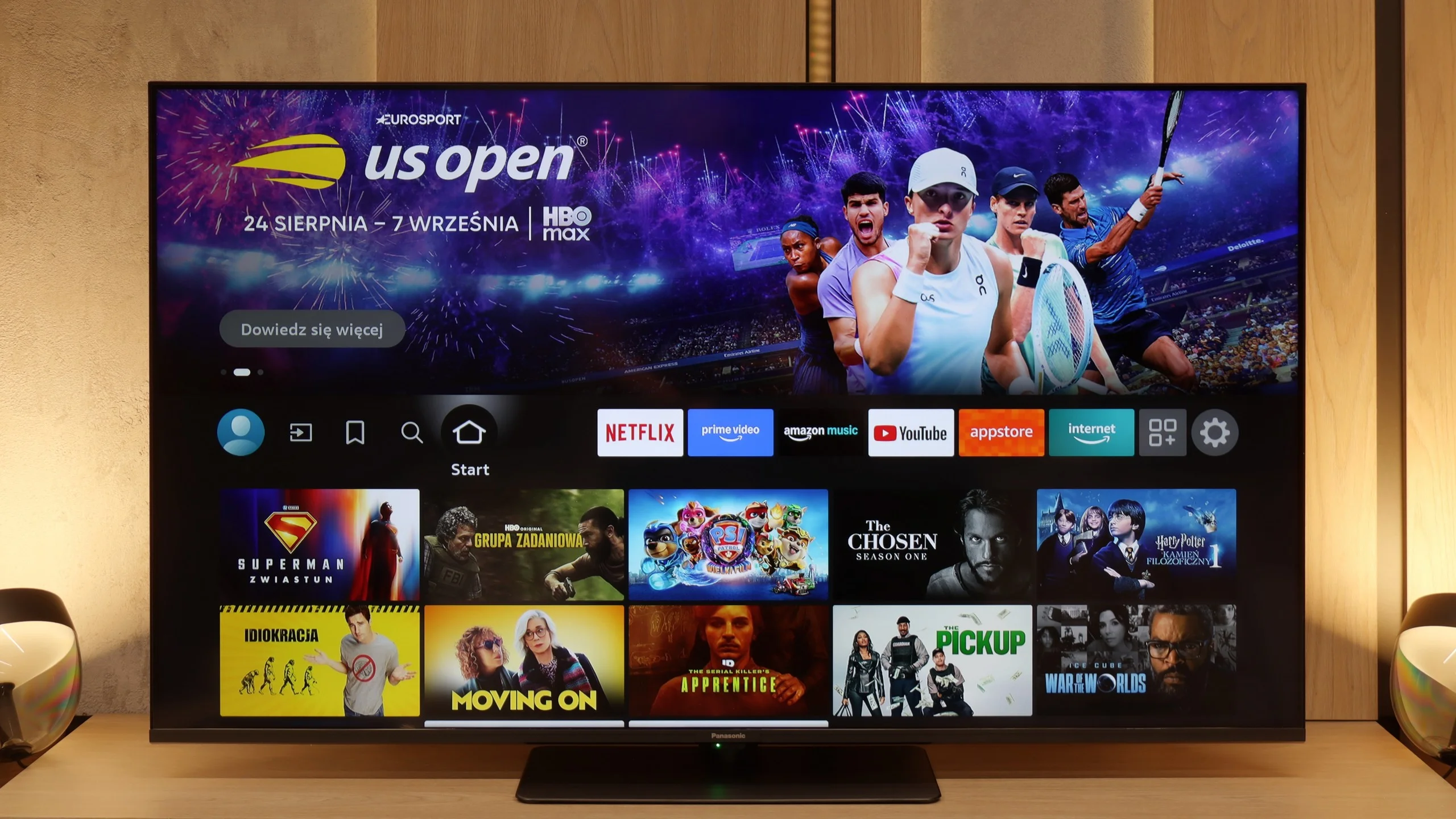
SmartTV: FireTV
The W85B runs on the Fire TV system, and it must be said – it is a significant step forward compared to Panasonic's previous proprietary solutions. Here, we have support for AirPlay, screen mirroring, and even voice control through Alexa. It sounds modern, and in practice, it does provide a lot of capabilities. The problem is that in Europe, Fire TV still looks a bit like a “guest with luggage.” It works decently, but there are occasional micro-hiccups, the interface doesn't always respond as smoothly as we would like, and in the menu, one can encounter awkward translations. This is not yet at the level of the big players like Google TV or even Tizen, but it is still an improvement compared to what Panasonic had previously. The worst part, however, is that the Fire TV application library is quite modest, and this is its biggest drawback.
Classic Television Functions
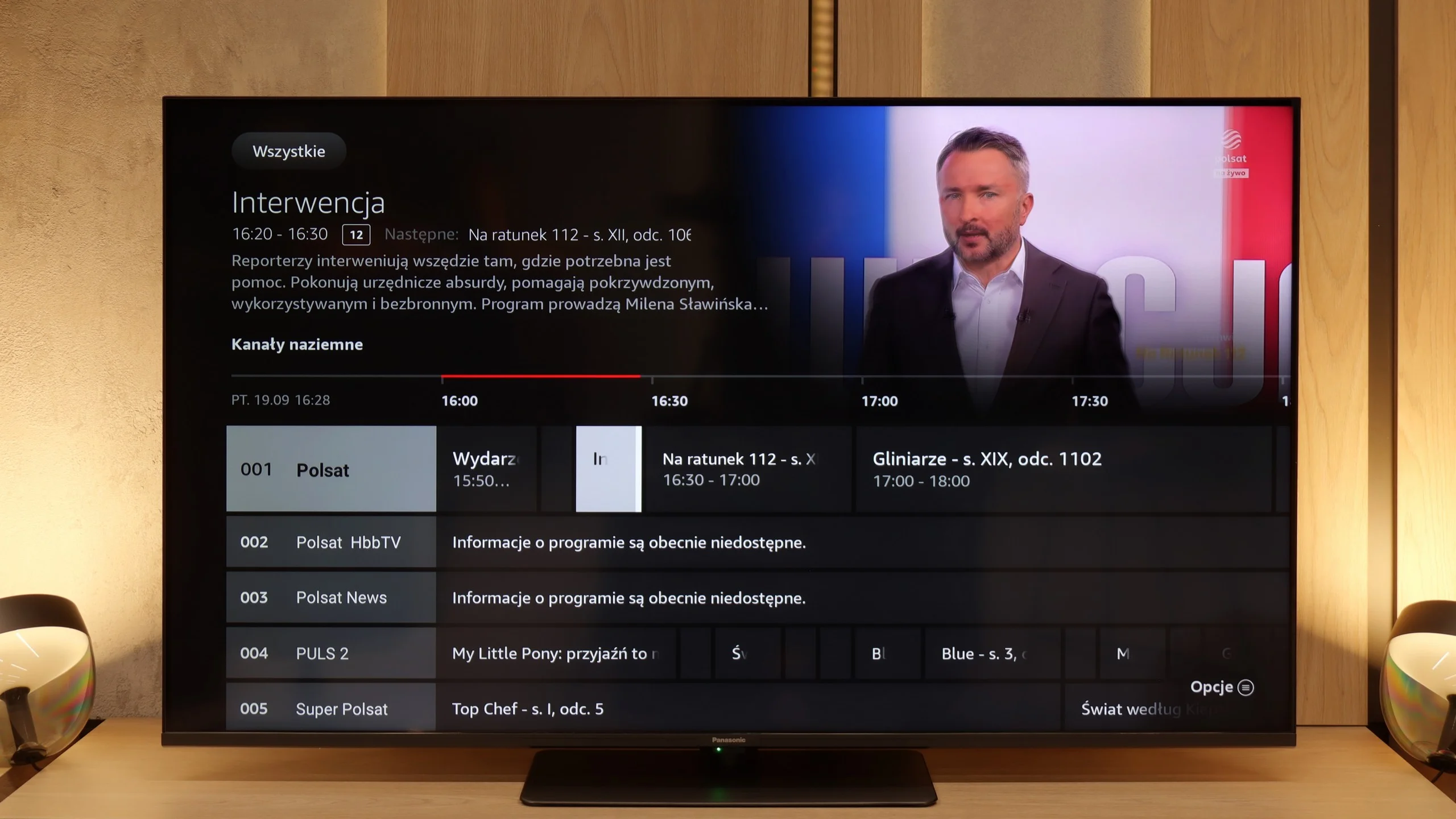
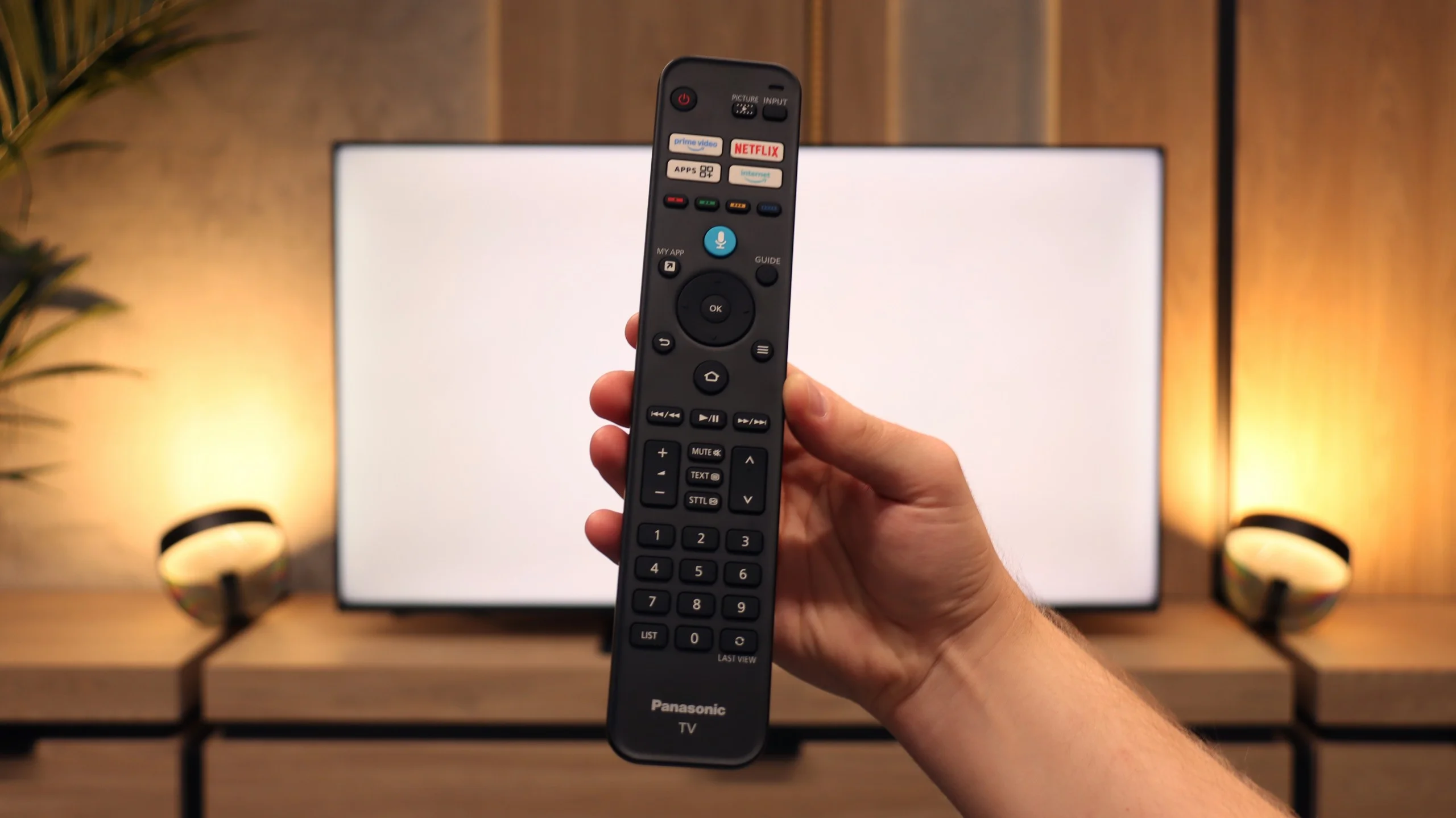
In terms of typical television functionalities, it is quite good – we have a classic remote control with a full numeric keypad, a clear EPG guide, and the possibility to record programmes from the built-in tuner to an external USB drive (e.g. a flash drive). The downside is the lack of the option to schedule recordings in advance – you can only record “here and now,” but not set recordings for later.
Apps
9.6/10
7.6/10






















Playing files from USB
8.7/10
3.1/10
Supported photo formats:
Maximum photo resolution:
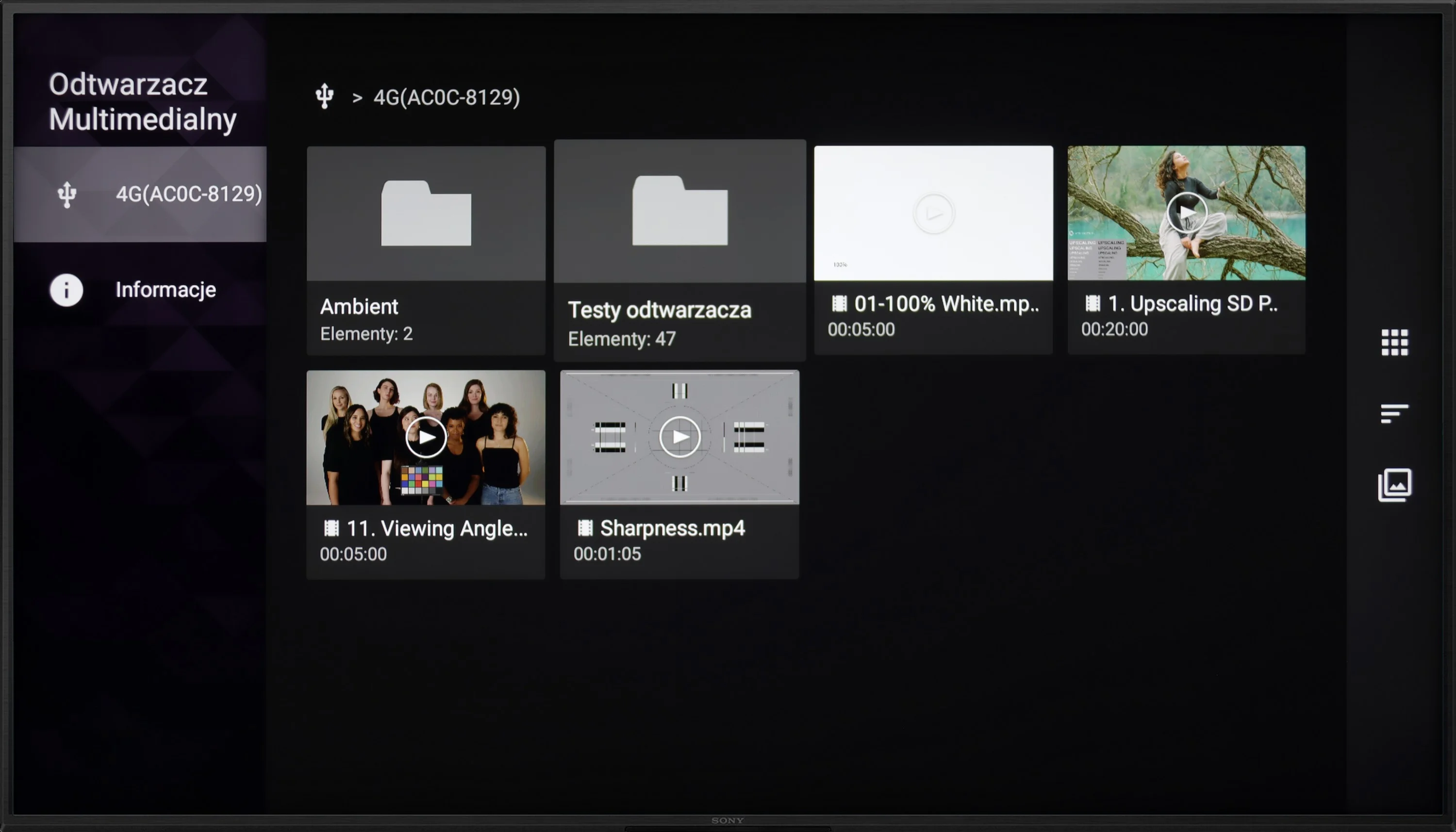
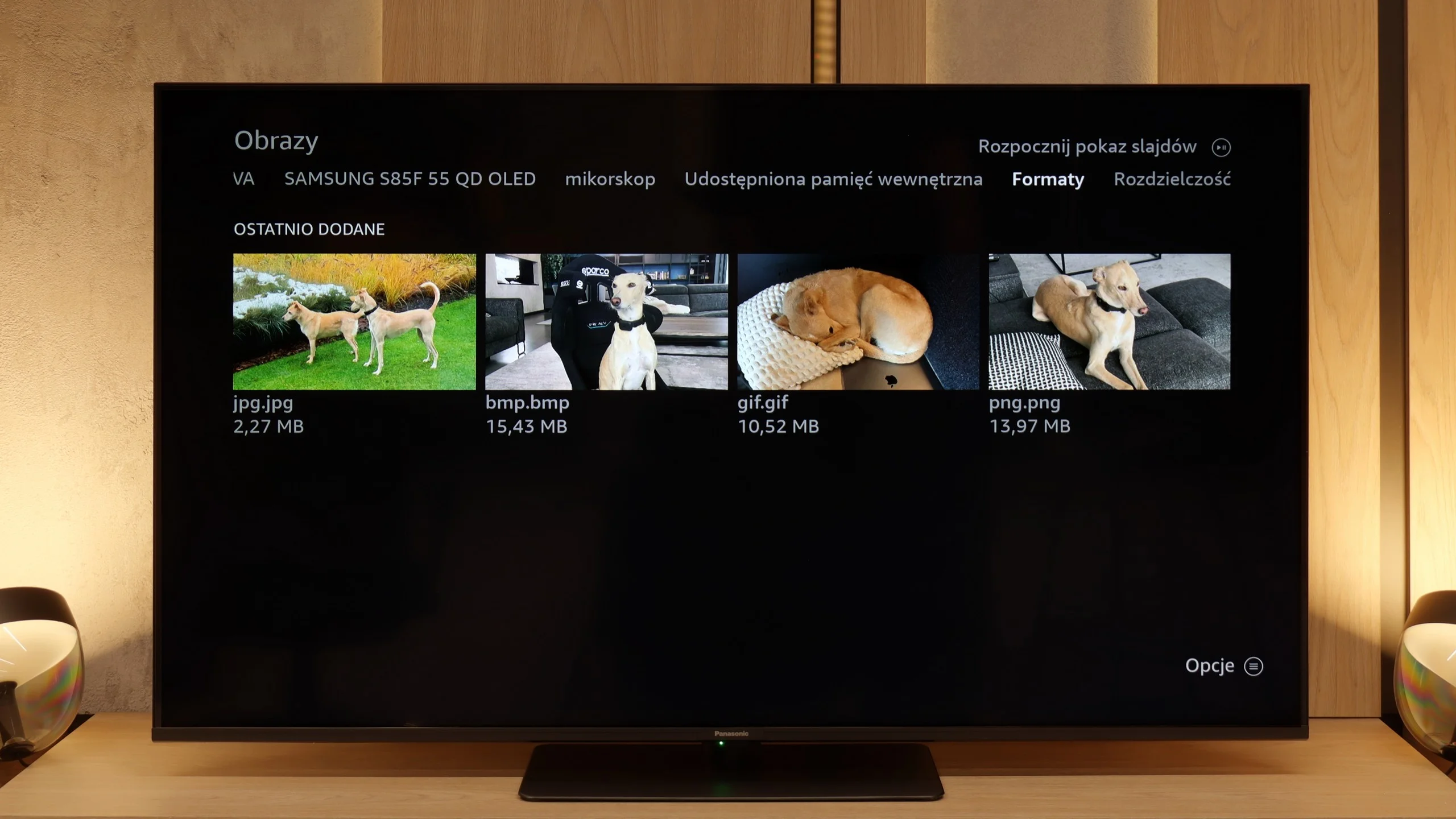
The built-in media player in the Sony X75WL model performs quite well, opening most popular video, audio, and photo formats. However, if we encounter issues with playing less common files, we can easily solve this problem by installing another player available on the Google Play Store, which allows for fuller use of the television's capabilities.
The biggest downside of the built-in player with Fire TV is the lack of support for external text subtitles. If you have your own film library and use text files, you simply won't be able to display them on this television. The player itself handles basic video formats, but if someone wants to fully utilise files from USB, they will likely end up installing an additional application from the store (e.g. VLC).
Sound
6.9/10
5.8/10
- Maximum volume-87dB
- Dolby Digital Plus 7.1
- Dolby True HD 7.1
- Dolby Atmos in Dolby Digital Plus (JOC)
- Dolby Atmos in Dolby True HD
- DTS:X in DTS-HD MA
- DTS-HD Master Audio
The sound quality of the X75WL model is very pleasant, and for this class and size of Sony television, it is truly impressive. There is a subtle bass, and the sound appears clear, which positively affects the reception of multimedia content. The television performs well with both dialogue and sound effects.
Here, the Panasonic W85B unfortunately has nothing to boast about. The speakers sound flat and rather “plastic”, so there’s definitely no talk of cinema experiences here. There’s no depth, there’s no clear bass – just basic sound that’s merely meant to “exist”. It’s a shame because we thought that the external subwoofer used here would actually make a difference. Unfortunately, we were mistaken. The only advantage is that the television can play really loudly. This may appeal to older users who often need higher volumes to comfortably watch programmes or news. It’s sufficient for everyday TV watching, but if someone is thinking about films and games – an additional soundbar or audio system is practically a must.
Sound Quality Test
No sound test video
Acoustic Measurements
No acoustic data
87dBC (Max)
75dBC
Reader comments
Comments are provided by the external service Disqus (Zeta Global). Once loaded, Disqus may set cookies and process data about your activity.
We will remember your choice on this device. Provider's privacy policy