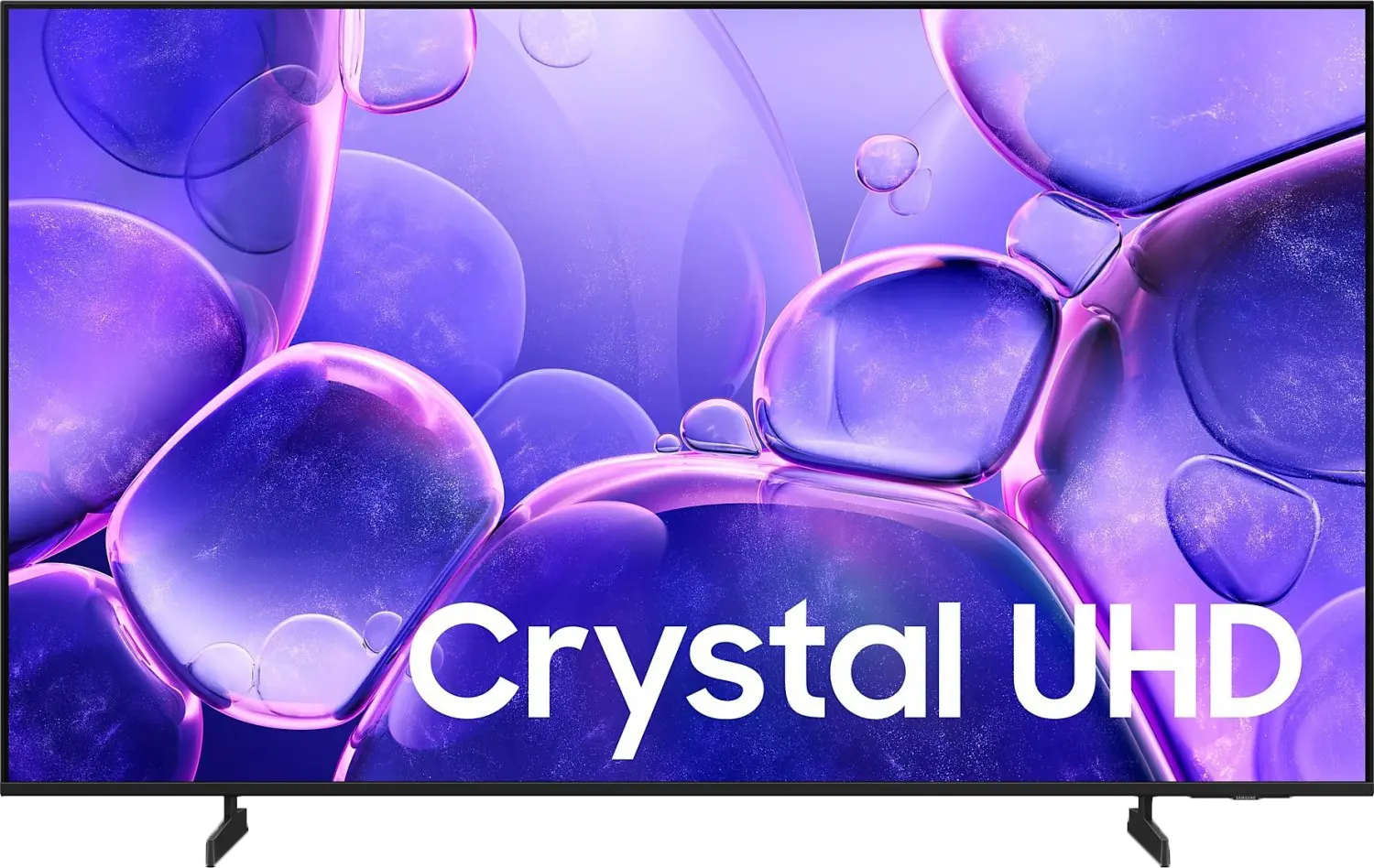
The U8000F is a very basic television that may find its buyers among those looking for the cheapest Samsung 4K with Smart TV. And that is precisely its task. Thanks to the Tizen system, this model offers quite a lot in terms of smart features – the number of apps and possibilities may catch the attention of those who want a reasonably intelligent device at the lowest possible price. As for picture quality – it is average, which is not surprising in this class. Nevertheless, there are a few positives: fairly good viewing angles work well for traditional TV watching from different parts of the room, and the basic features for gamers (such as VRR and ALLM) may suffice for typical "Sunday" gamers. The PC mode also deserves a mention – the television handles font display very well, so it can also serve as a budget monitor. Of course, this is not a model that can be recommended to everyone "sight unseen." But if someone is looking for a cheap Samsung with 4K resolution and a solid Smart system, that is exactly what the U8000F offers.
- Matching (Score) |
- Our verdict |
- TV appearance |
- Where to buy |
- Contrast and black detail |
- HDR effect quality |
- Factory color reproduction |
- Color reproduction after calibration |
- Smoothness of tonal transitions |
- Image scaling and smoothness of tonal transitions |
- Blur and motion smoothness |
- Console compatibility and gaming features |
- Input lag |
- Compatibility with PC |
- Viewing angles |
- Daytime performance |
- Panel details |
- TV features |
- Apps |
- Playing files from USB |
- Sound
Samsung U8000F (IPS) vs TCL C69K / Q6C
 Direct comparison
U8000F / U8092F

C69K / Q6C / C6K
Available screen sizes: 55”
Panel type: LCD IPS
Resolution: 3840x2160
System: Tizen
Model year: 2025
Complete the survey to find out the result
Panel type: LCD VA
Resolution: 3840x2160
System: Google TV
Model year: 2025
Complete the survey to find out the result
Overall rating
5.3
7.1
 Movies and series in UHD quality
 4.9
6.7
 Classic TV, YouTube
 4.8
6.6
 Sports broadcasts (TV and apps)
 5.2
6.3
 Gaming on console
 6.5
8.4
 TV as a computer monitor
 6.0
8.6
 Watching in bright light
 3.4
6.4
 Utility functions
 5.3
7.0
 Apps
Apps 9.3
9.6
 Sound quality
 5.7
6.5
Complete the survey to find out what fits your preferences
Advantages

Extensive Smart system: Tizen
Good viewing angles (IPS Matrix)
Great for working with text - displays fonts excellently
Low input lag
Basic features for gamers - VRR and ALLM
Very good contrast and black: VA panel and MINI-LED backlighting
Good motion smoothness: High refresh rate of 144Hz
Decent panel brightness
Many features for gamers: VRR, ALLM, HDMI 2.1, HGiG
Additional mode for PC gamers: 240Hz
GoogleTV system with a wide selection of applications
Support for multiple HDR formats including Dolby Vision
Support for Dolby Atmos and DTS
Very attractive price
Disadvantages

Low brightness
Very poor black and contrast (IPS Matrix)
Inferior appearance to its predecessor
Infrared remote control
Management of backlighting could be more precise
Minor, occasional errors in the system
Slight ghosting visible in dynamic scenes
Great chaos in naming (many derivative models that differ in no way)
Our verdict
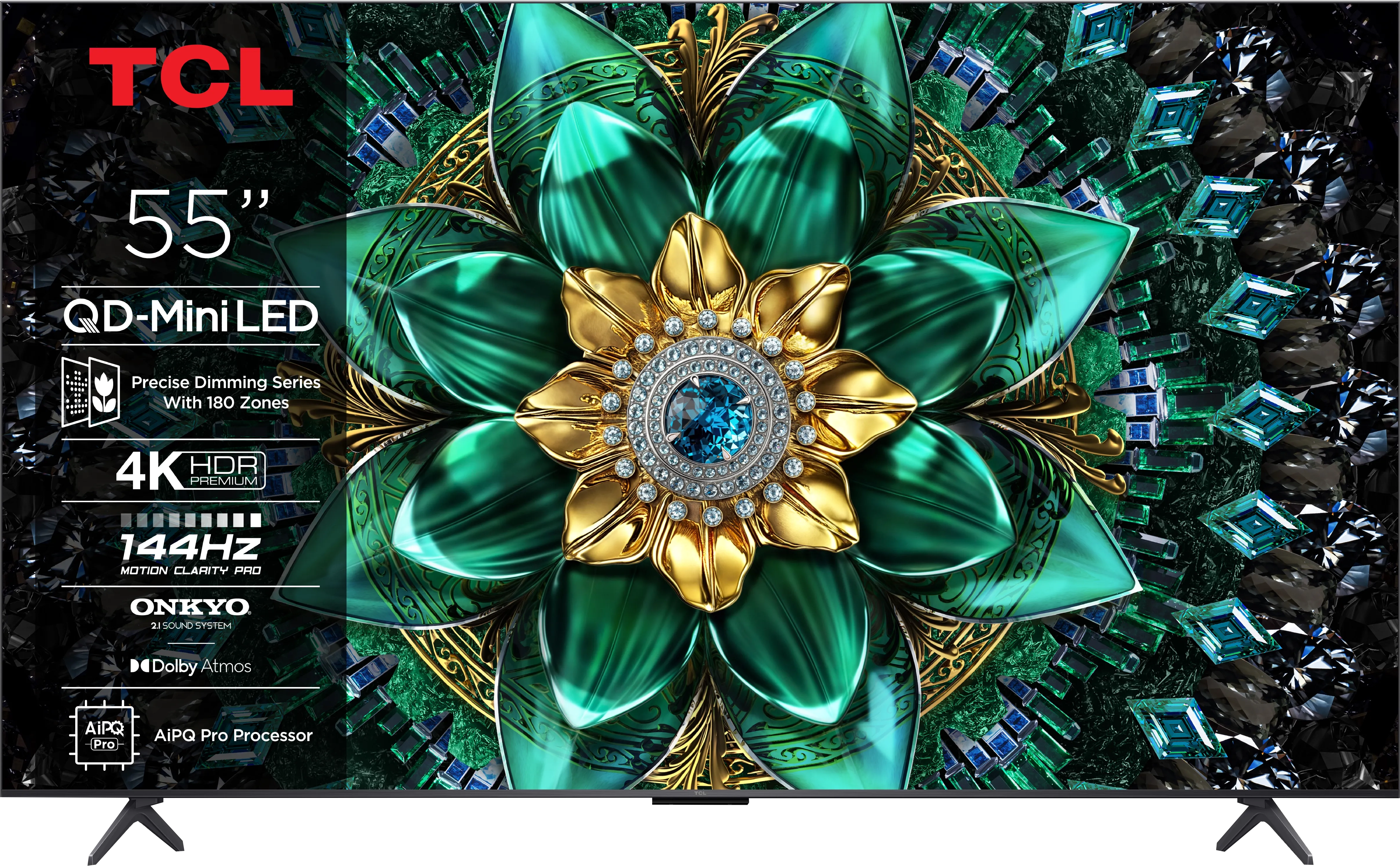
The TCL C69K / Q6C is a TV that perfectly targets gamers and movie fans on a reasonable budget. Its biggest strength is the combination of a VA panel with Mini-LED backlighting. Simply put, contrast is high and blacks are deep, making evening movie sessions look truly impressive. Add to that a 144 Hz refresh rate, which does wonders not only for sports but especially for gaming. And for gamers, it’s a full package: HDMI 2.1, VRR, ALLM, HGiG, and even a 240 Hz option for PC. Throw in Dolby Vision, which gives movies a cinematic touch, and you get a picture that’s just pleasing to the eye. On the software side, it runs Google TV with the Gemini AI assistant, so there’s no shortage of apps. The sound system holds up well too — Dolby Atmos and DTS support are nice additions, complemented by branded Onkyo speakers. Of course, it’s not perfect. The local dimming system can sometimes struggle in complex scenes, slightly lifting black levels. And those Polish translations in the menu... let’s just say they could use some work. Still, the C69K / Q6C makes a very strong case for itself. Considering the price, it’s one of the most interesting all-around TVs for both movies and gaming. Definitely worth watching out for during sales — and hoping for TCL’s usual post-launch firmware improvements.
TV appearance
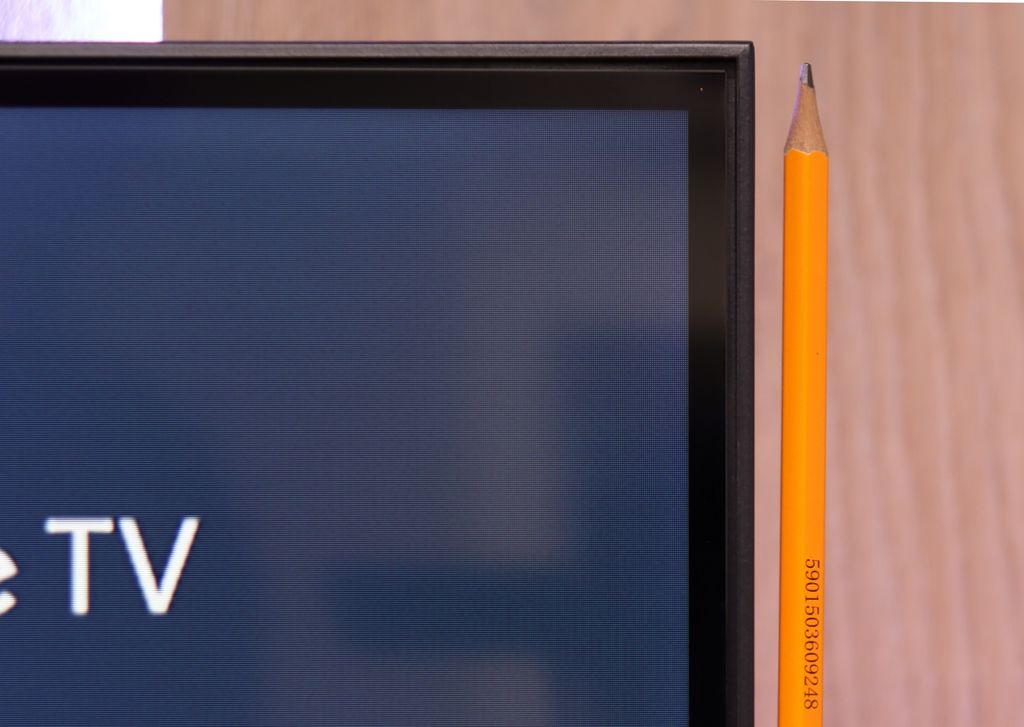
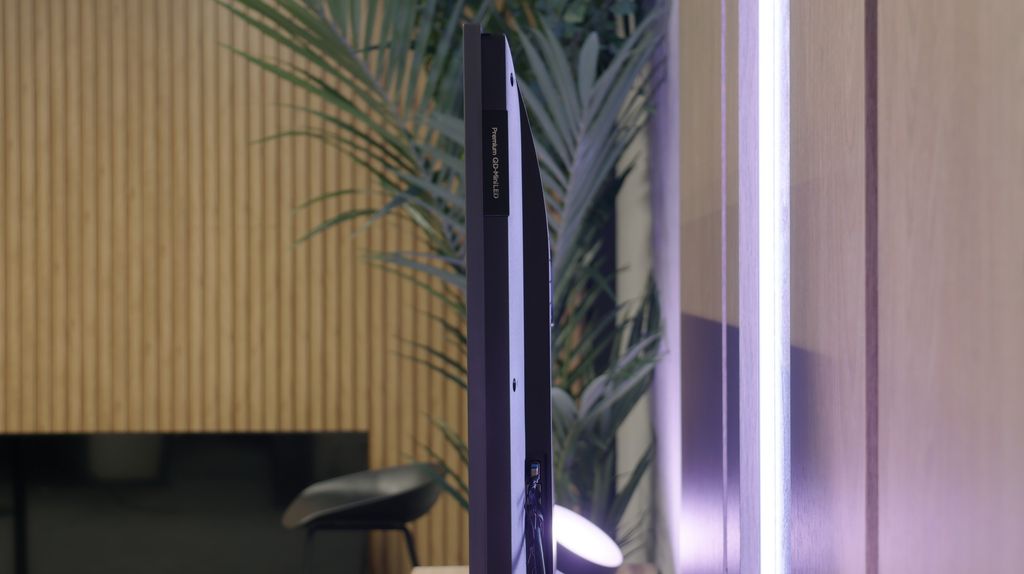
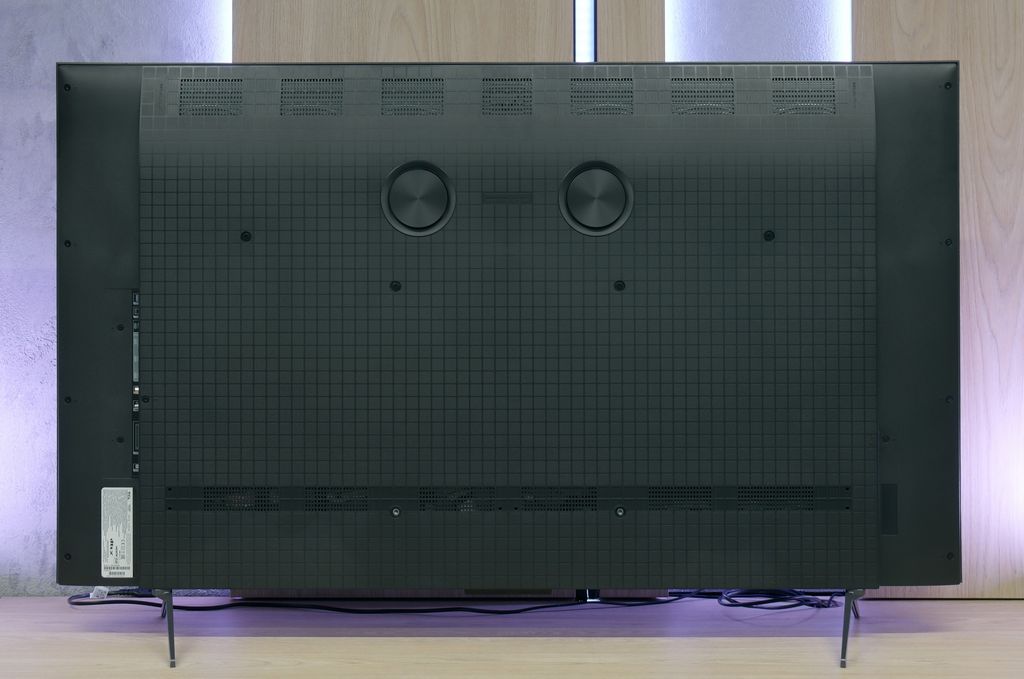

Contrast and black detail
1.1/10
7.3/10
Local dimming function: No
Local dimming function: Yes, number of zones: 180 (10 x 18)
Contrast:


Result
900:1

Result
800:1

Result
700:1

Result
700:1

Result
650:1
Result
113,750:1
Result
17,350:1
Result
16,300:1
Result
9,850:1
Result
4,850:1
Halo effect and black detail visibility:
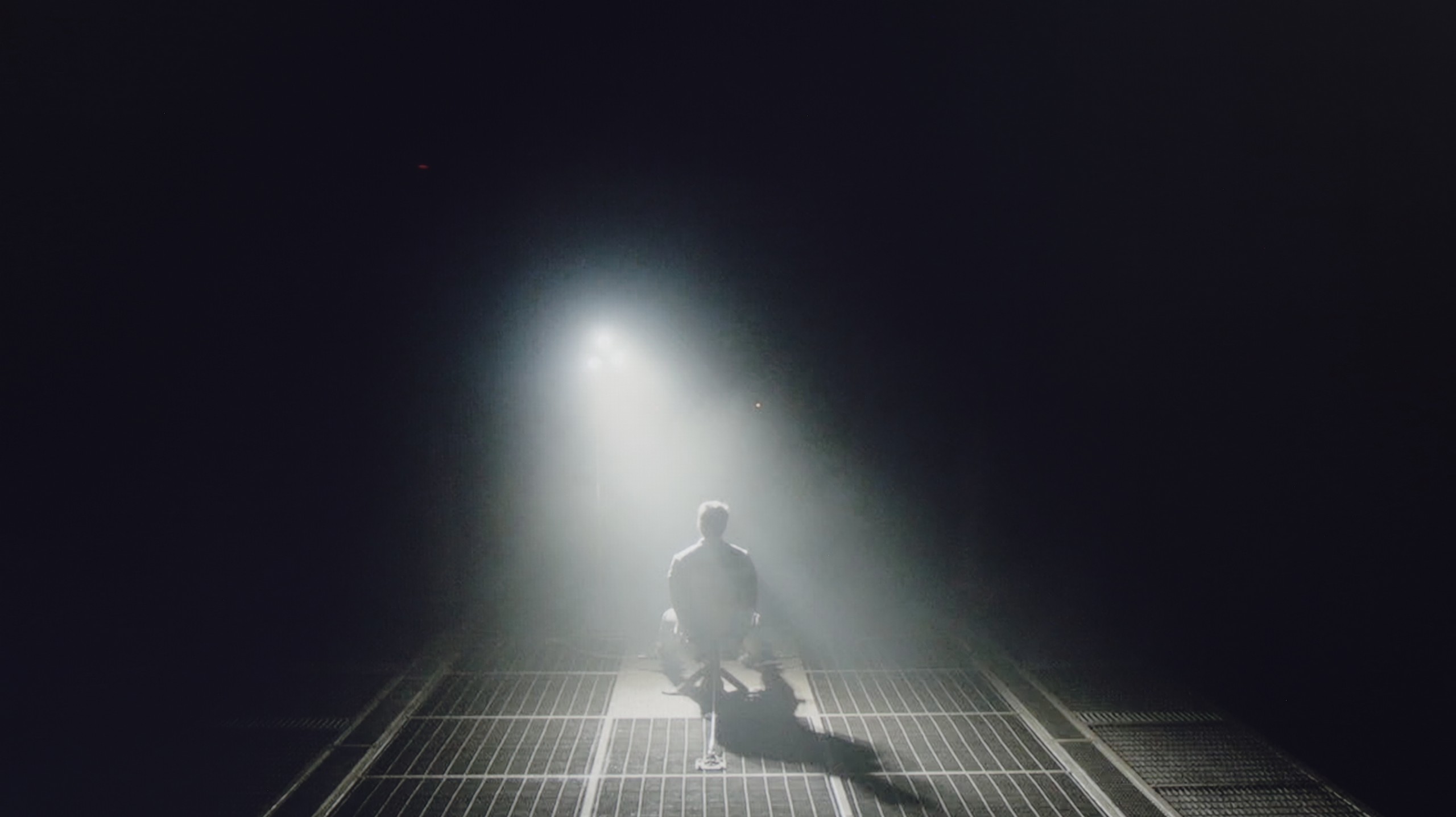
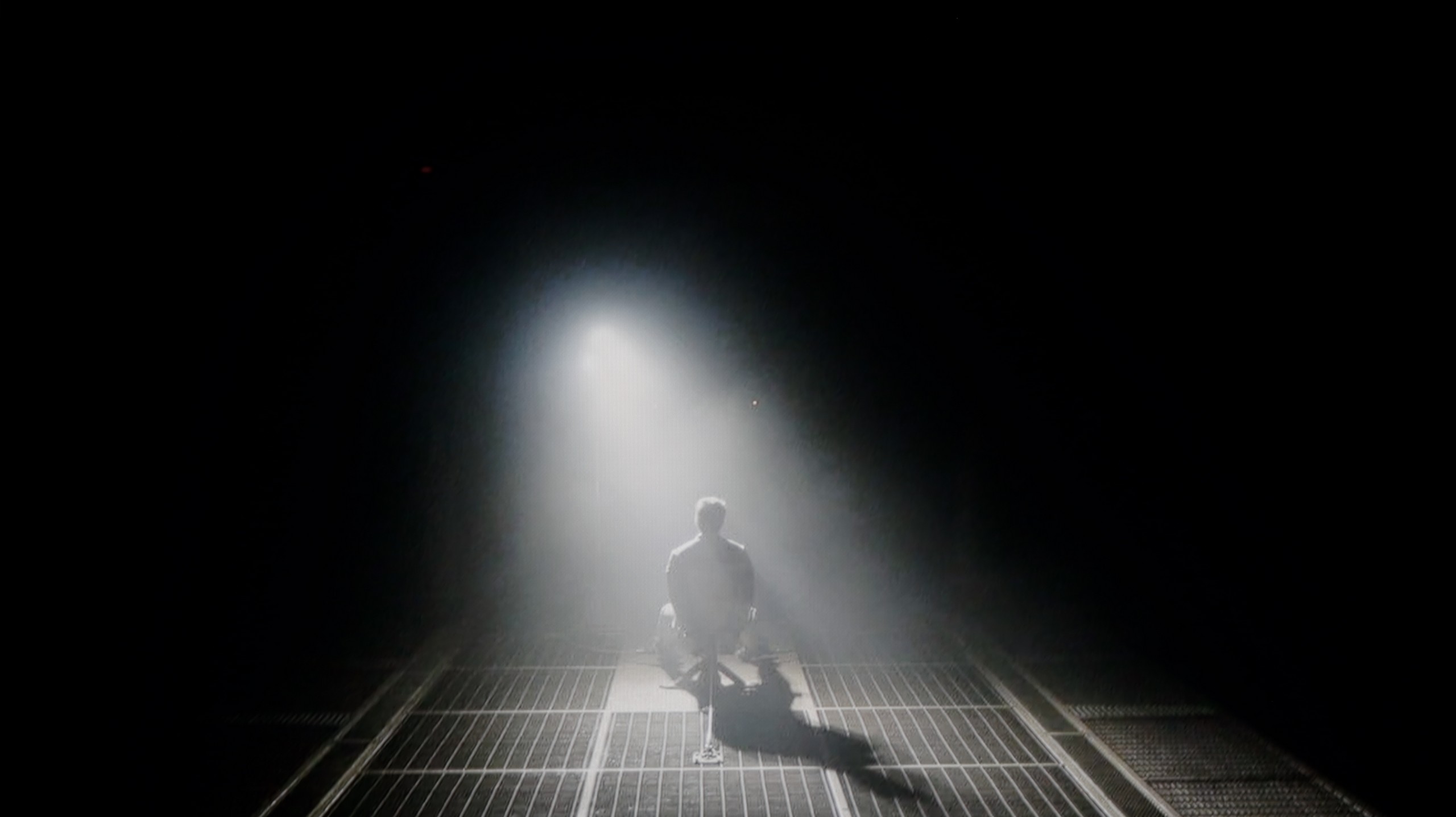
Check the visibility of bright lights on a dark background. Mini-LEDs often struggle with this. The photo does not compare black levels – that’s what the video below is for.
The video accurately shows differences in contrast and black levels between TVs, as well as potential issues: halo around bright objects or Mini-LED zone operation visible as brightness jumps.
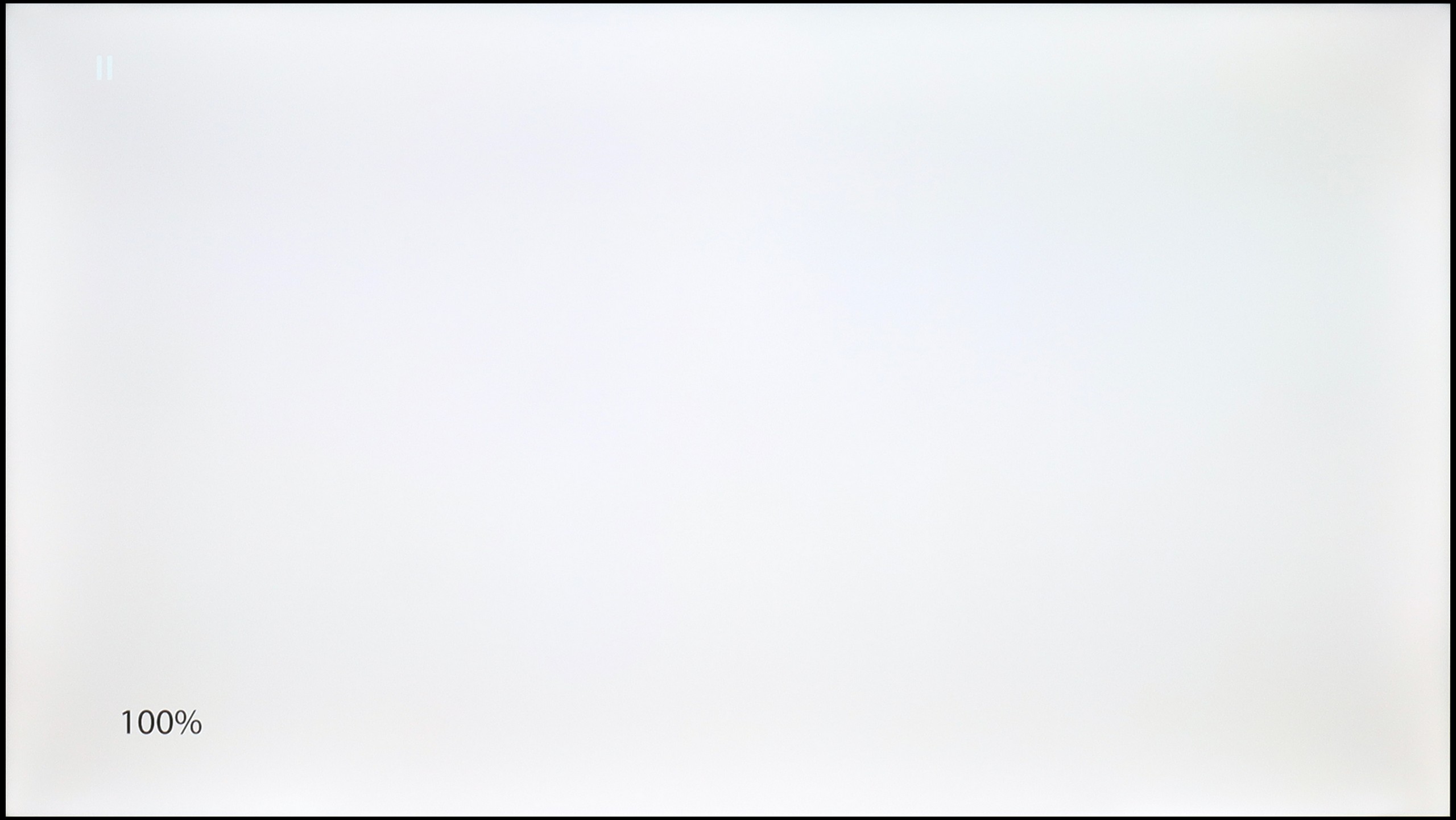
Samsung U8000F, more specifically model U8092F in the 55-inch version, is equipped with an IPS panel. Let's be honest – this is not the best choice when it comes to properly displaying black levels and contrast. The results in this category are simply weak. The contrast is abysmal, and watching dark scenes with any kind of "cinematic" effect is nearly impossible. Additionally, the fact that the television lacks local dimming does not help, making it difficult to achieve better results. The only thing worth praising is the fairly decent uniformity of the panel – but that's more of a minor consolation. Overall, it's not good. If you value deep blacks and reasonable contrast, it is definitely better to opt for the variant with a VA panel, which performs significantly better in this particular series.
The heart of the image in TCL C69K / Q6C is the VA panel (specifically HVA from TCL CSOT), which offers a solid native contrast of around 6000–7000:1, even before local dimming is activated. However, the true strength of this model lies in the Mini-LED backlighting with the ability to dim individual zones. In the 55-inch unit we tested, we counted around 180 of them (this value increases with the diagonal size). For this price segment, the contrast is indeed very impressive. In less complex film scenes, for example in segments from "Oblivion," it presents excellently, and shots immersed in black are very striking. Nevertheless, the characteristics of Mini-LED technology mean that we do not always avoid issues – in more demanding frames with many bright details, halo effects or excessive dimming of certain elements may occur (regardless of the selected local dimming settings). All in all, contrast is undoubtedly a strong point of the C69K / Q6C.
HDR effect quality
3/10
4.9/10
Luminance measurements in HDR:

Result
191 nit

Result
224 nit

Result
241 nit

Result
79 nit

Result
234 nit
Result
610 nit
Result
204 nit
Result
425 nit
Result
148 nit
Result
589 nit
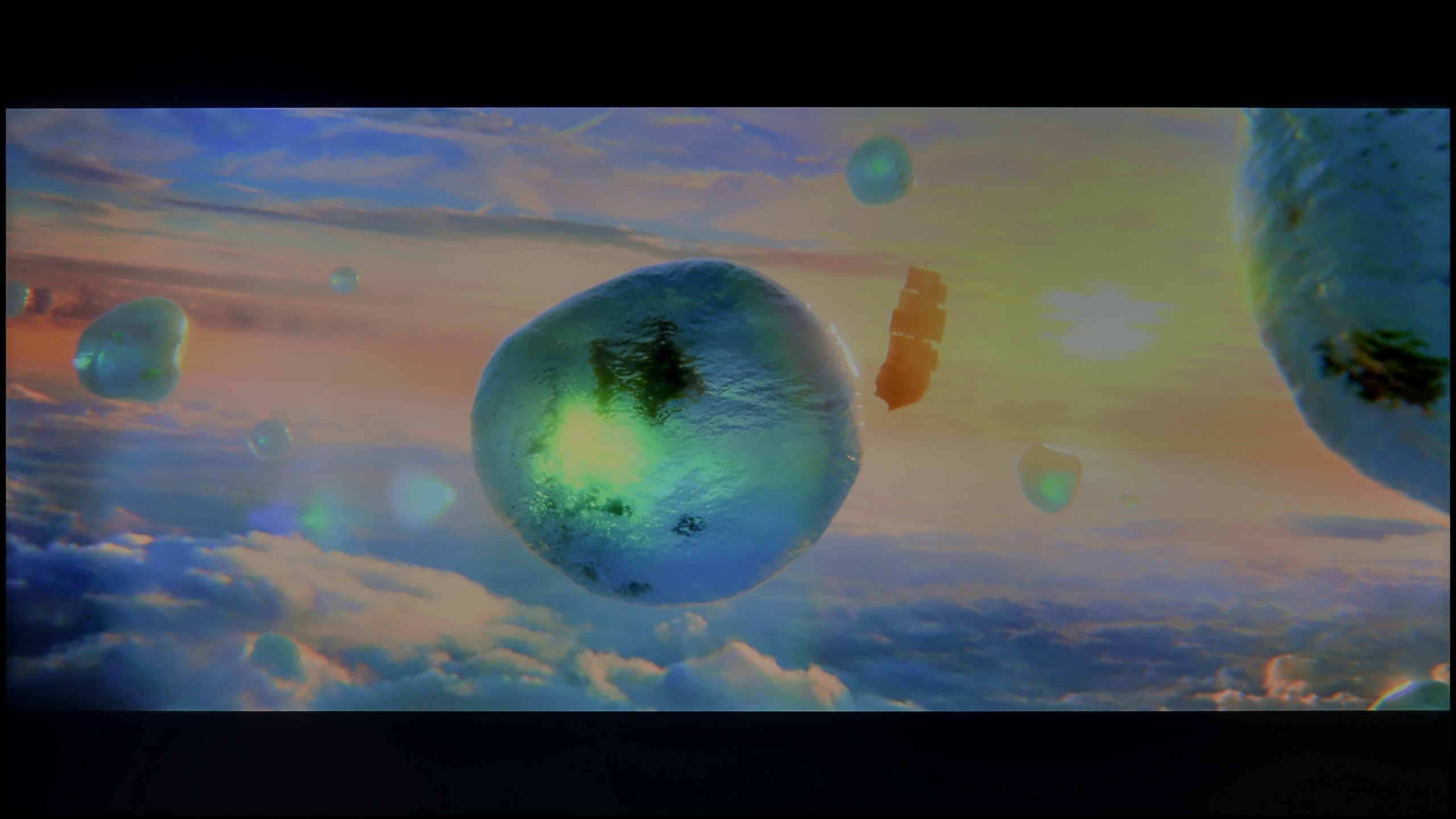
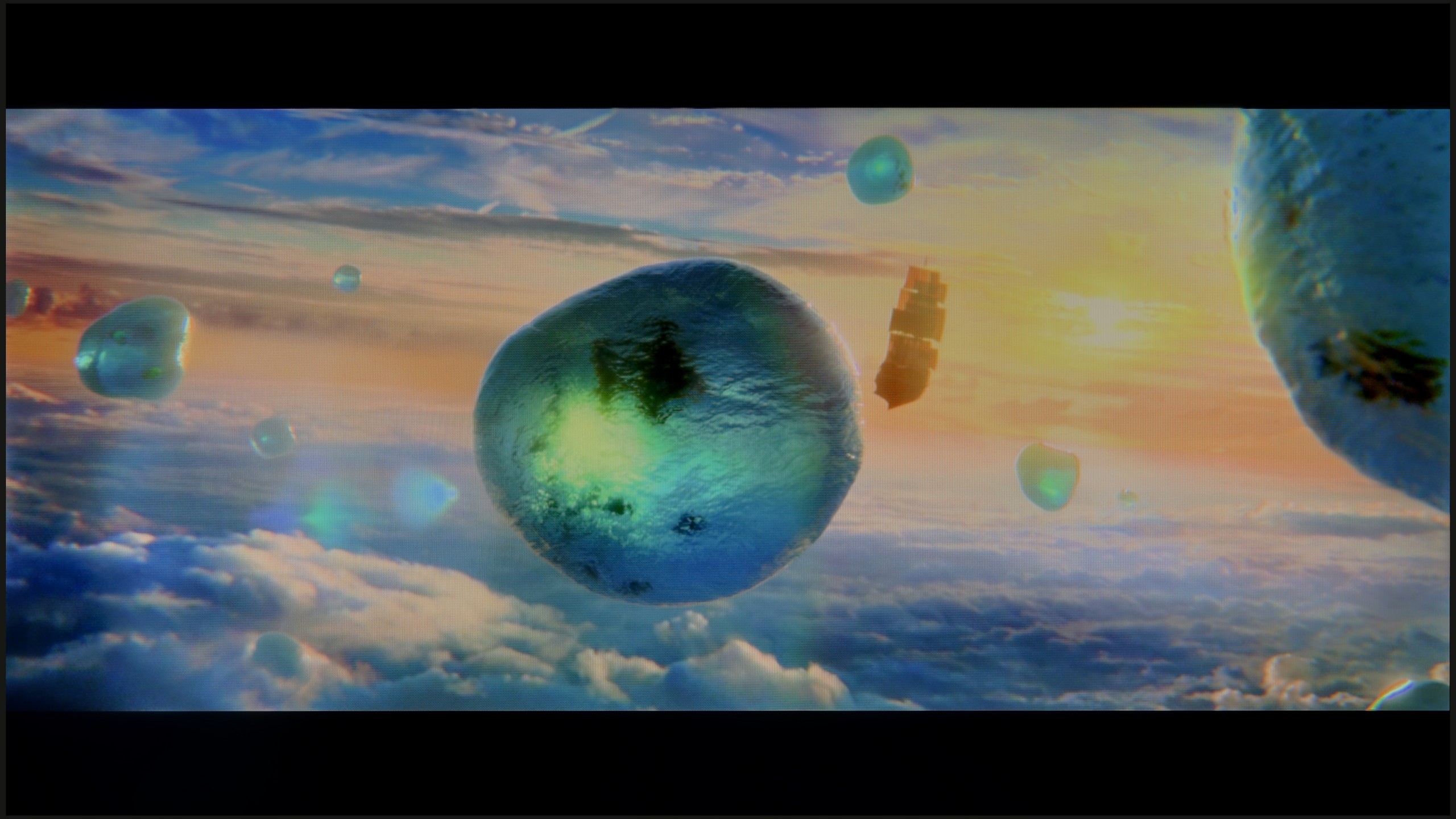
Scene from the movie “Pan” (about 2800 nits)
Scene from the movie “Billy Lynn” (about 1100 nits)
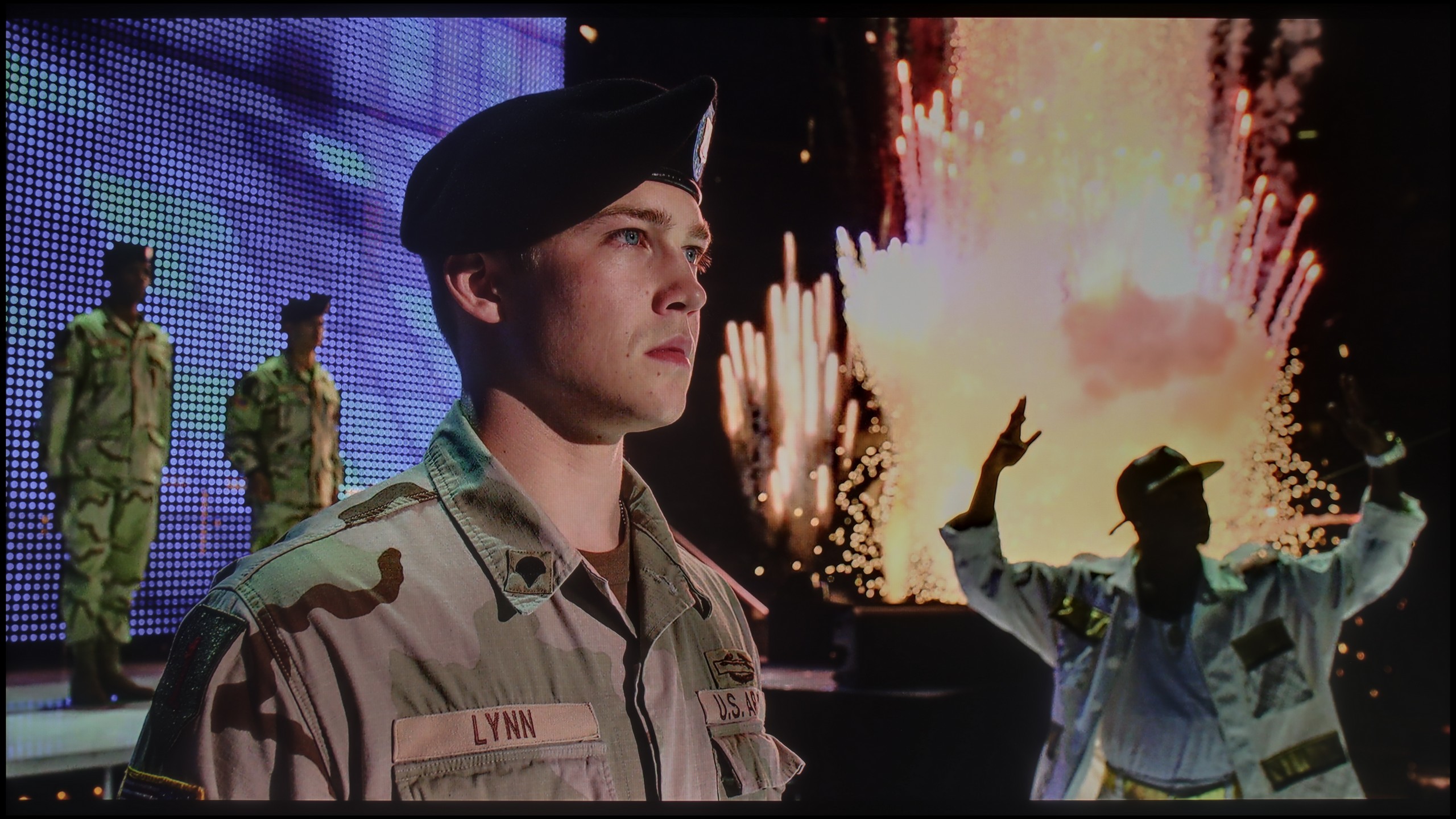
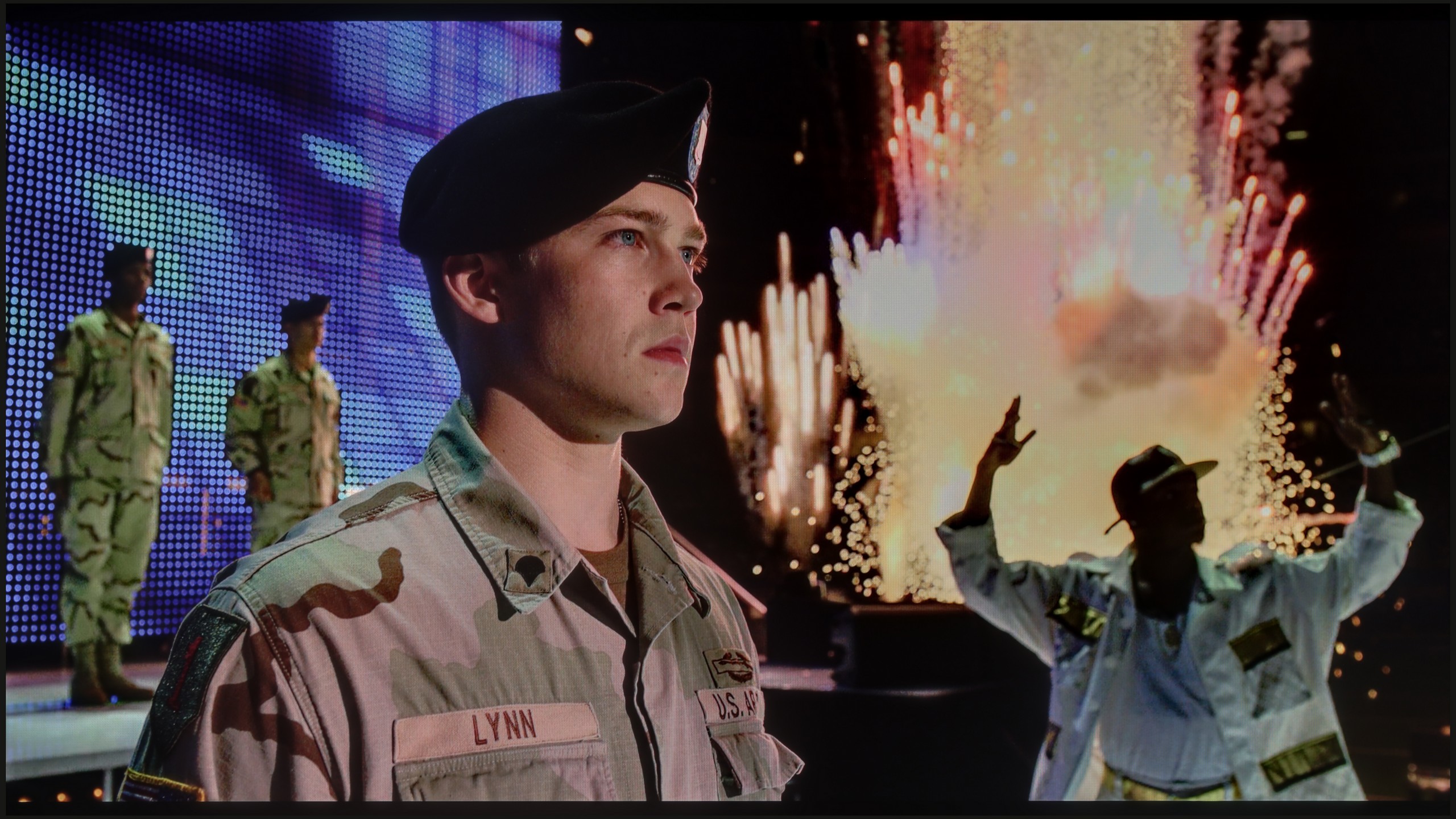
The photos show two HDR10 movies. 'Pan' is one of the brightest productions ever made, while 'Billy Lynn' (soldier) has brightness typical of streaming (Netflix, Prime, HBO MAX). Notice the intensity of effects and detail in whites.
Static HDR10


The photos present the visibility of white details in various HDR formats. They do not show brightness differences between TVs (these can be compared in the previous gallery).
Dynamic: HDR10+
Dynamic: Dolby Vision


The photos present the visibility of white details in various HDR formats. They do not show brightness differences between TVs (these can be compared in the previous gallery).
HDR luminance chart:
TCL C69K / Q6C
Samsung U8000F (IPS)
Better does not mean good – and that is exactly how to summarise the capabilities of U8092F when it comes to displaying bright movie scenes in HDR mode. The brightness of the panel is just under 250 nits, which is definitely too little to enjoy any light effects. An interesting situation was observed during the measurement of the fourth scene from the film Sicario 2 – the television clearly dimmed the entire screen in an attempt to achieve better black levels (which remain weak anyway). One might even suggest that the device is using some form of 'global dimming', but unfortunately – the results are still very poor. To make matters worse, the television does not support a wide colour gamut – the coverage of the DCI-P3 space is around 80%, so one cannot expect truly vibrant colours. The HDR image here looks more like a slightly brightened SDR, and it is this form that we would suggest sticking to when it comes to this television.
In terms of brightness, TCL C69K / Q6C is a moderate model. In optimal film conditions, it shows its full potential, achieving a maximum of around 600 nits. In scenes with large, intense light sources, the HDR effect can be truly satisfying, providing a cinematic shimmer. However, it should be noted that when managing backlight zones, there are situations where parts of the image become dimmed, and sometimes they are barely visible. This suggests that there is still a lack of proper optimisation of the algorithms; however, considering the technical parameters in this price range, the design itself still presents very well.
Factory color reproduction
6.5/10
5/10
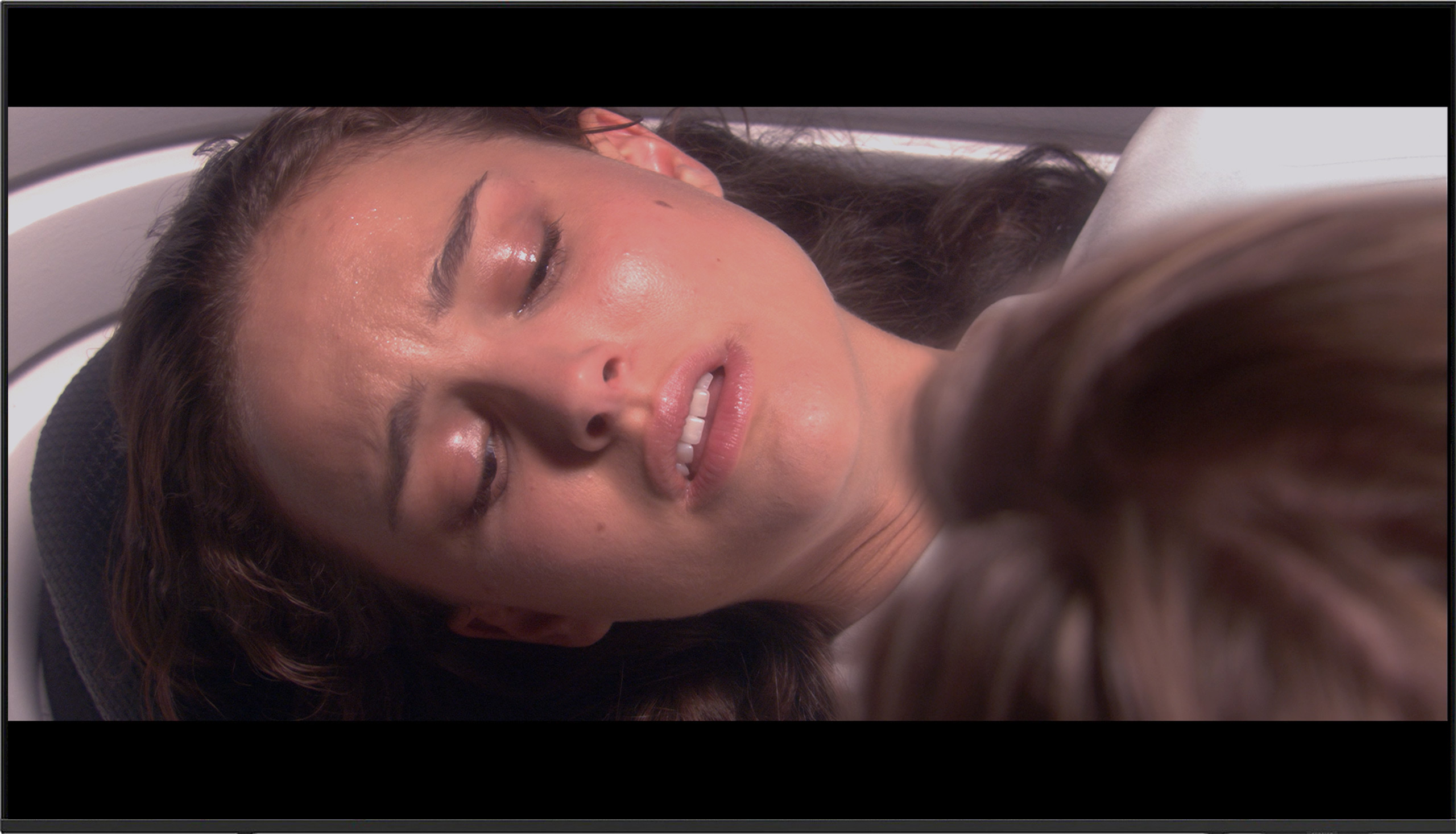
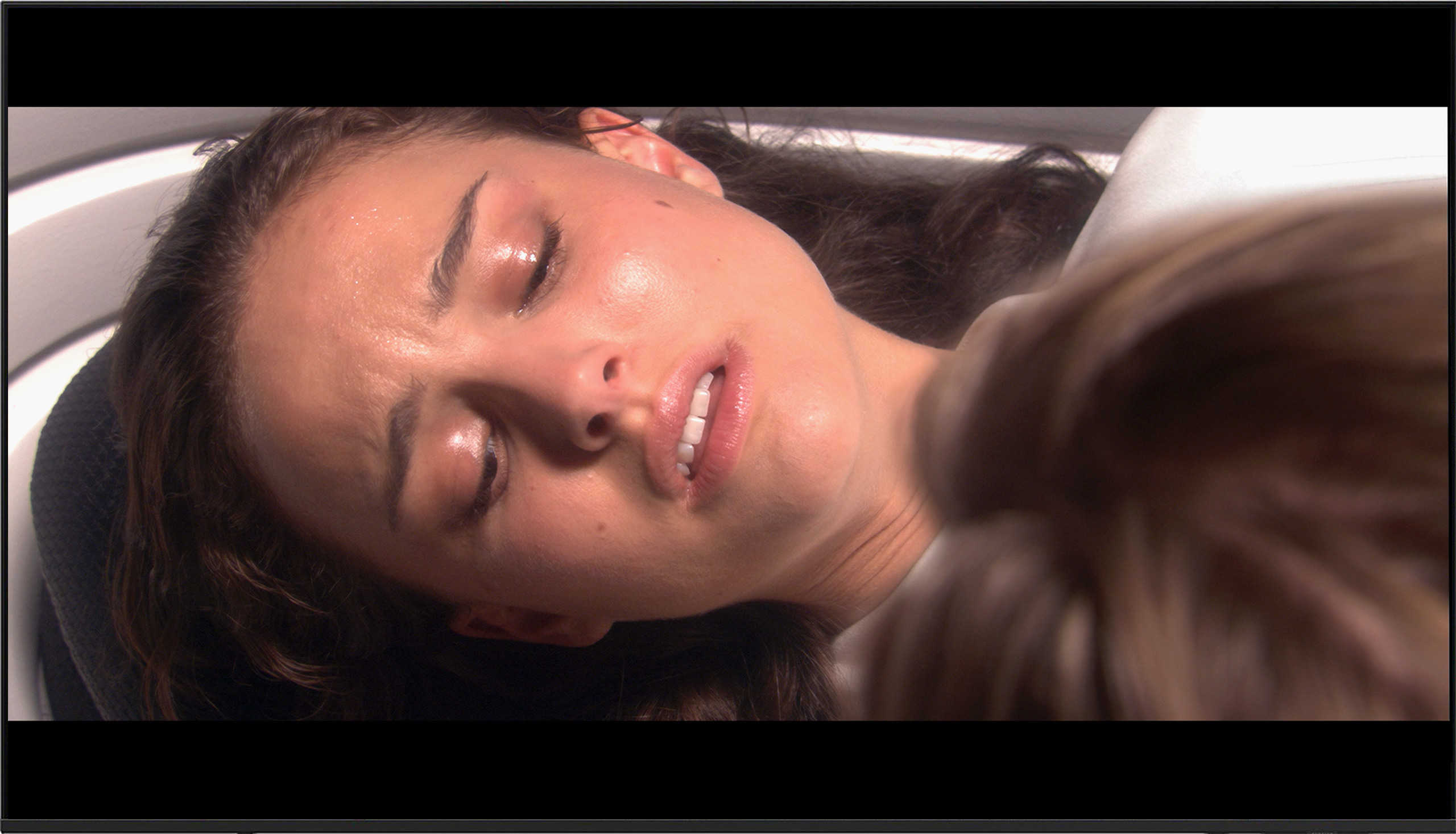
This gallery shows how colors change after professional TV calibration. If you notice the difference, we recommend ordering this service at SkalibrujTV.com.
Factory Mode
After calibration


This gallery shows how colors change after professional TV calibration. If you notice the difference, we recommend ordering this service at SkalibrujTV.com.
Factory Mode
After calibration
The Samsung U8000F has been tested in the best possible picture mode built into the television, namely Filmmaker Mode. This mode should – at least in theory – offer a cinematic, reference picture without unnecessary enhancements. In the case of SDR content (mainly HD/SD), the television, out of the box, showed itself surprisingly well. Errors in white balance hovered around a value of 3, which is roughly on the edge of perceptibility. The only complaint could be about brightness management – the gamma graph showed a slight tendency to lighten or darken certain sections, but even so, the overall performance is quite good for this price segment.
Unfortunately, it looks much worse in HDR mode. Although the white balance was not terrible, the television had significant colour errors – particularly evident in the Color Checker graph, where almost every sample hit outside the target point. The picture in HDR simply looks unnatural, and the colours can be shifted, dull, or too cool. This largely stems from the fact that the U8000F does not support a wide colour gamut (DCI-P3). The television is physically unable to display correct colours in the HDR standard – and unfortunately, this is felt in every more demanding material.
The Filmmaker mode, which has made its debut in this year's TCL televisions (including the C69K / Q6C), is definitely the best choice "to start with." This is the mode we recommend for daily film and series viewings. Unfortunately, as is often the case, best does not mean perfect. In SDR material, the image proved to be too warm, with a pronounced red tint in the white balance. We had the opposite impression with HDR content – here the image became cooler than it should, due to an excess of blue. Additionally, there is the characteristic of brightness, which at times resulted in overexposure. In practice, this translated into quite noticeable errors in colour tests, which is difficult to accept in a mode branded as "from the creators."
Color reproduction after calibration
7.5/10
7.5/10
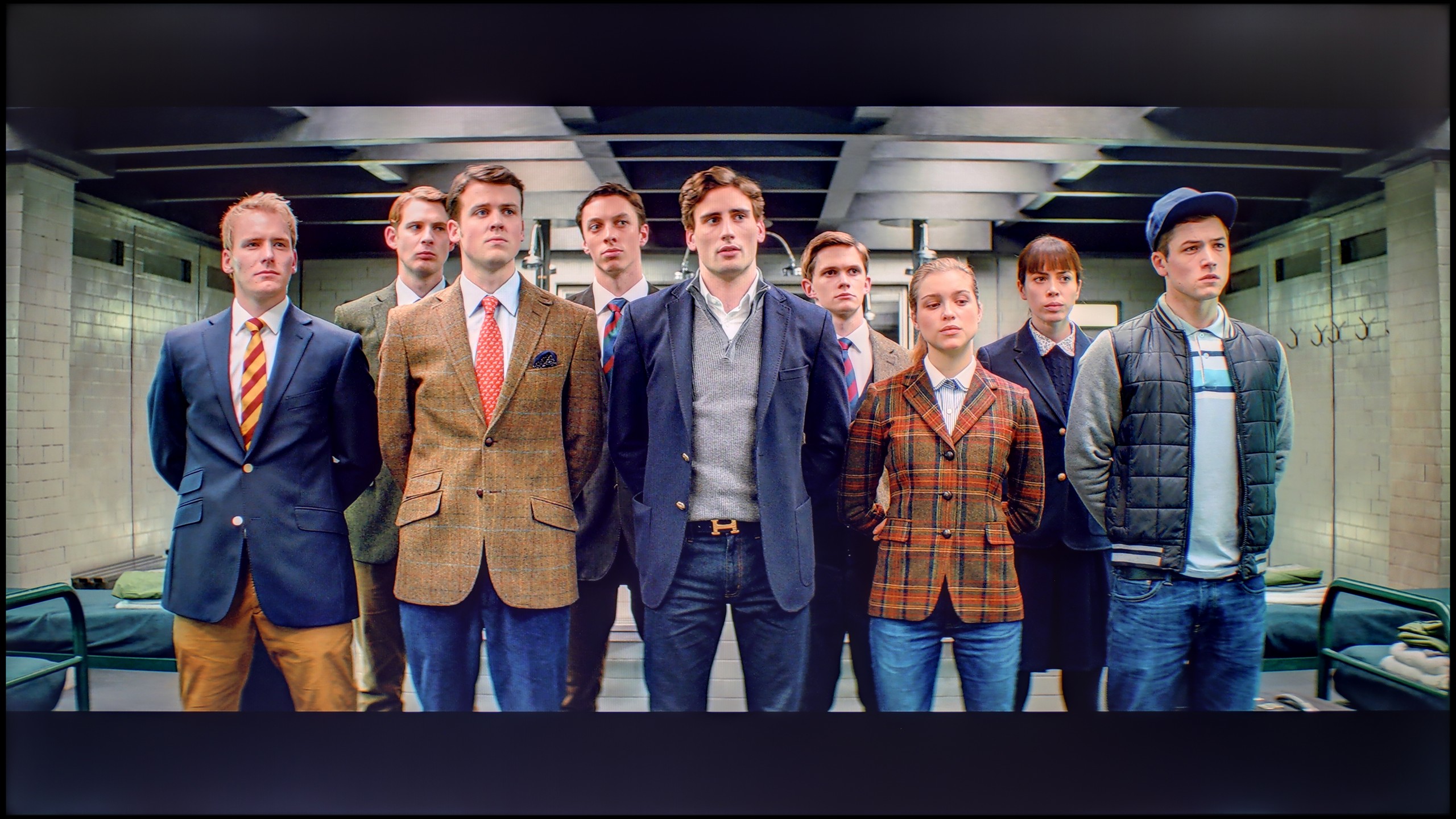
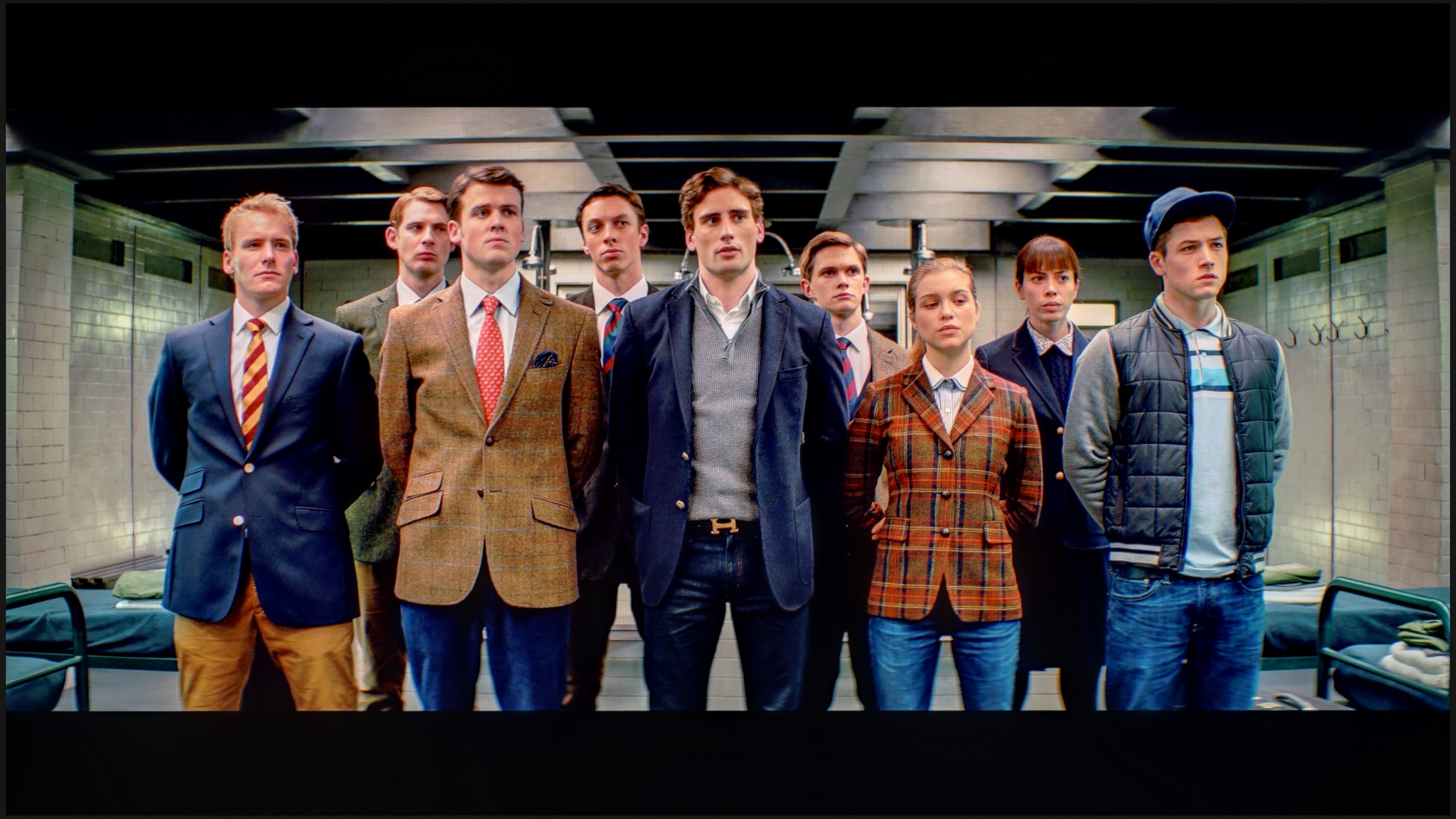
The photos show how movies look on the TV. Pay attention to black detail visibility, colors, and shadow tint.
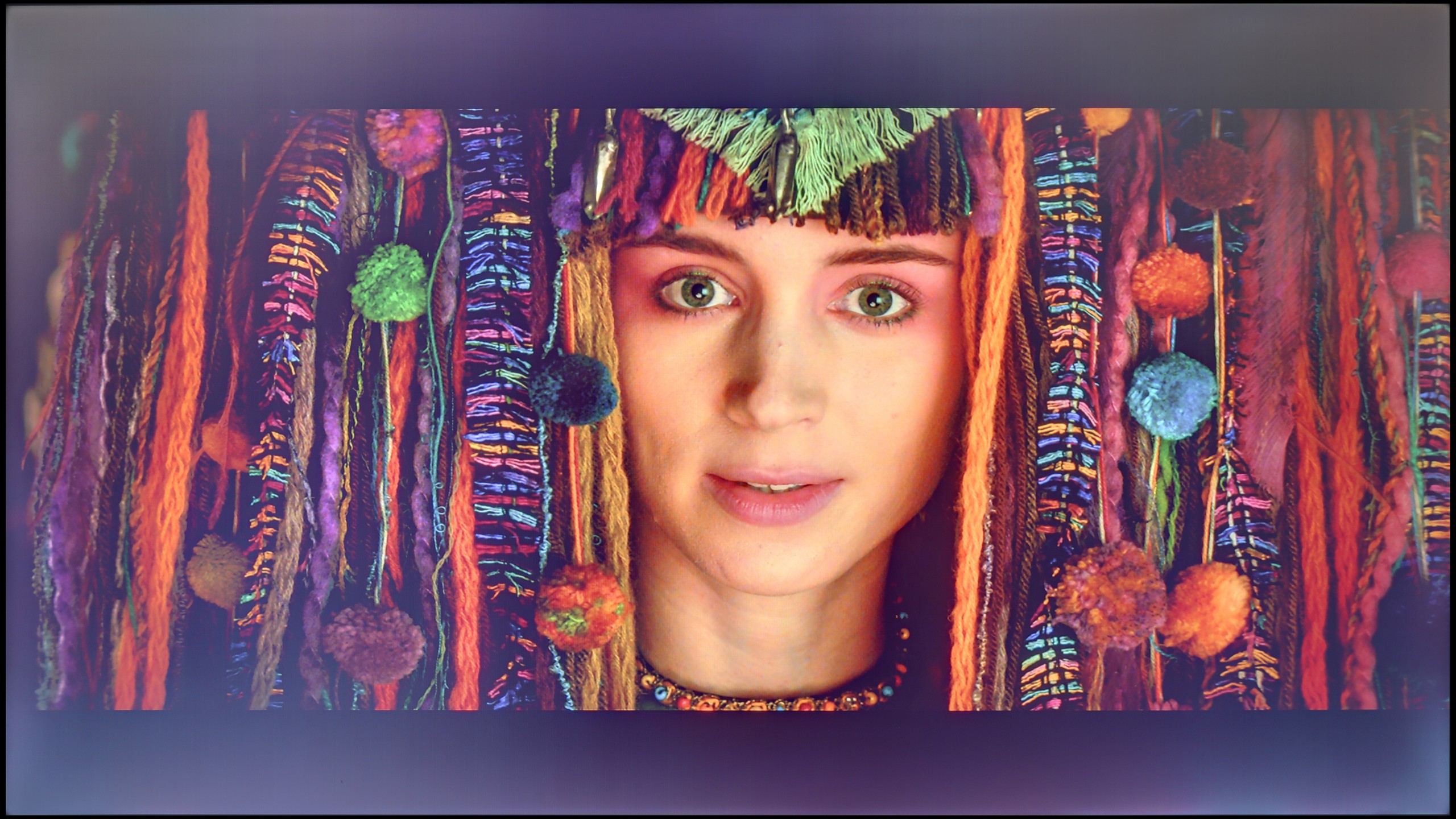
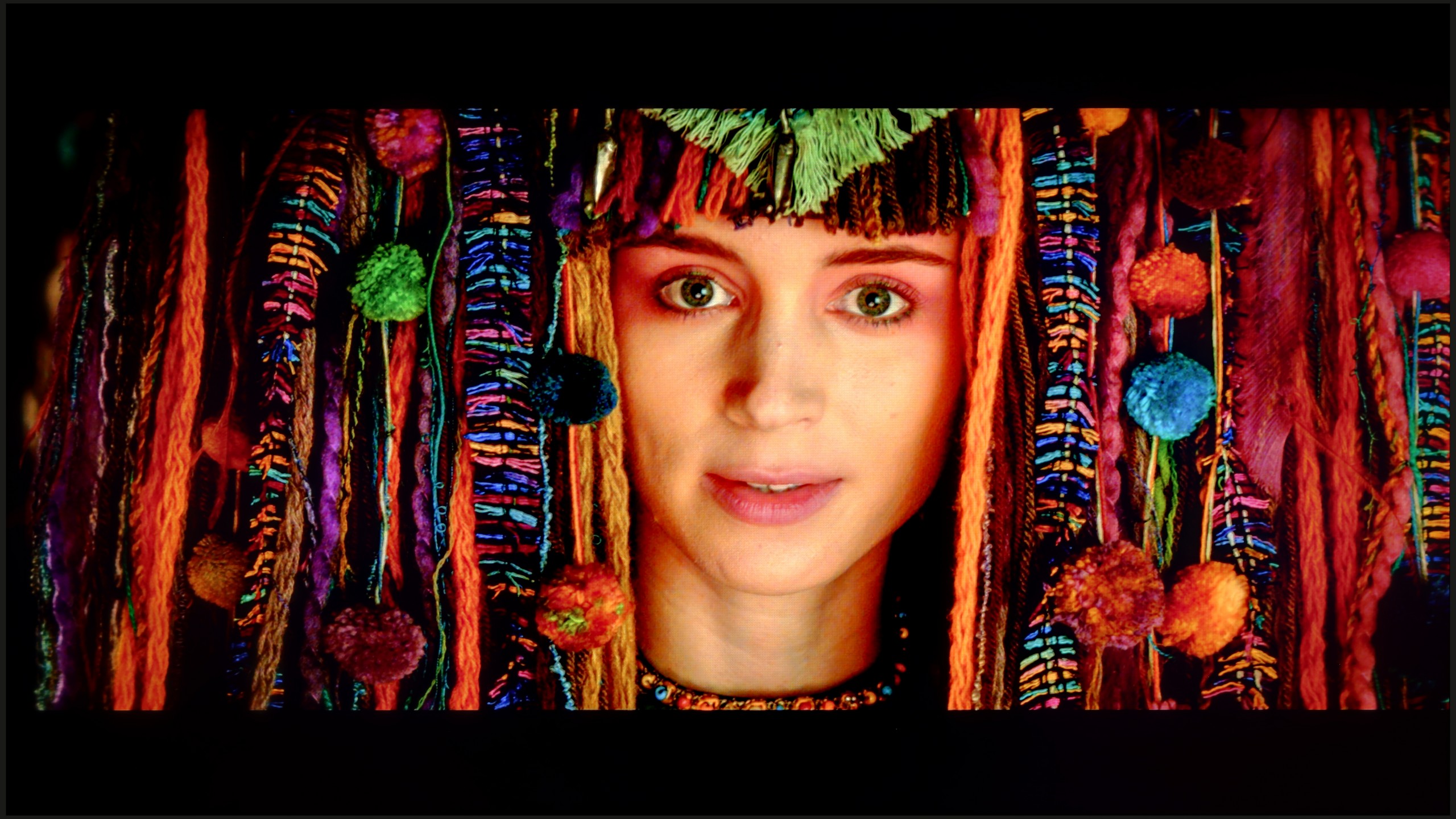
The photos show how movies look on the TV. Pay attention to black detail visibility, colors, and shadow tint.
Although the U8000F already offered a fairly well-balanced image in SDR straight out of the box, we were able to refine it a bit further. We managed to eliminate a slight purple tint and adjust the gamma to a more sensible level. However, the television still has a tendency to overexpose the smallest and brightest parts of the image – the gamma chart shows a characteristic 'dip' that is difficult to completely straighten out.
Unfortunately, the situation is worse in HDR. It's hard to speak of any significant improvement here – the television is simply not designed for HDR content. We tried to correct the image in the advanced settings, but despite our efforts, the colour errors remained substantial – a delta E above 7 indicates very noticeable deviations. It's a bit disappointing, but that's the nature of budget construction. In SDR, the U8000F performs reasonably well, whereas HDR is just not its league.
Through white balance correction, we were able to significantly reduce the tendency of C69K / Q6C to distort colours, which yielded a very good final result. After calibration, the issue of excessive warming of scenes in SDR and excessive cooling of the image in HDR disappeared. However, it is worth analysing the brightness characteristics more closely. While in SDR content it is hard to have major objections – the image looks really good, especially in older films, TV programmes or on YouTube – it performs significantly worse in the case of HDR content. Analysis of the EOTF curve suggests that everything is fine, yet in practice (EOTF in films) the limitations of the design itself become apparent. This model has a tendency to excessively brighten small parts of the frame, only to overly dim the entire scene in other situations. The effect of calibration is therefore undeniable, and in terms of colour reproduction, C69K / Q6C gains a lot. Unfortunately, certain limitations arising from local dimming management simply cannot be bypassed.
Smoothness of tonal transitions
9/10
9.5/10
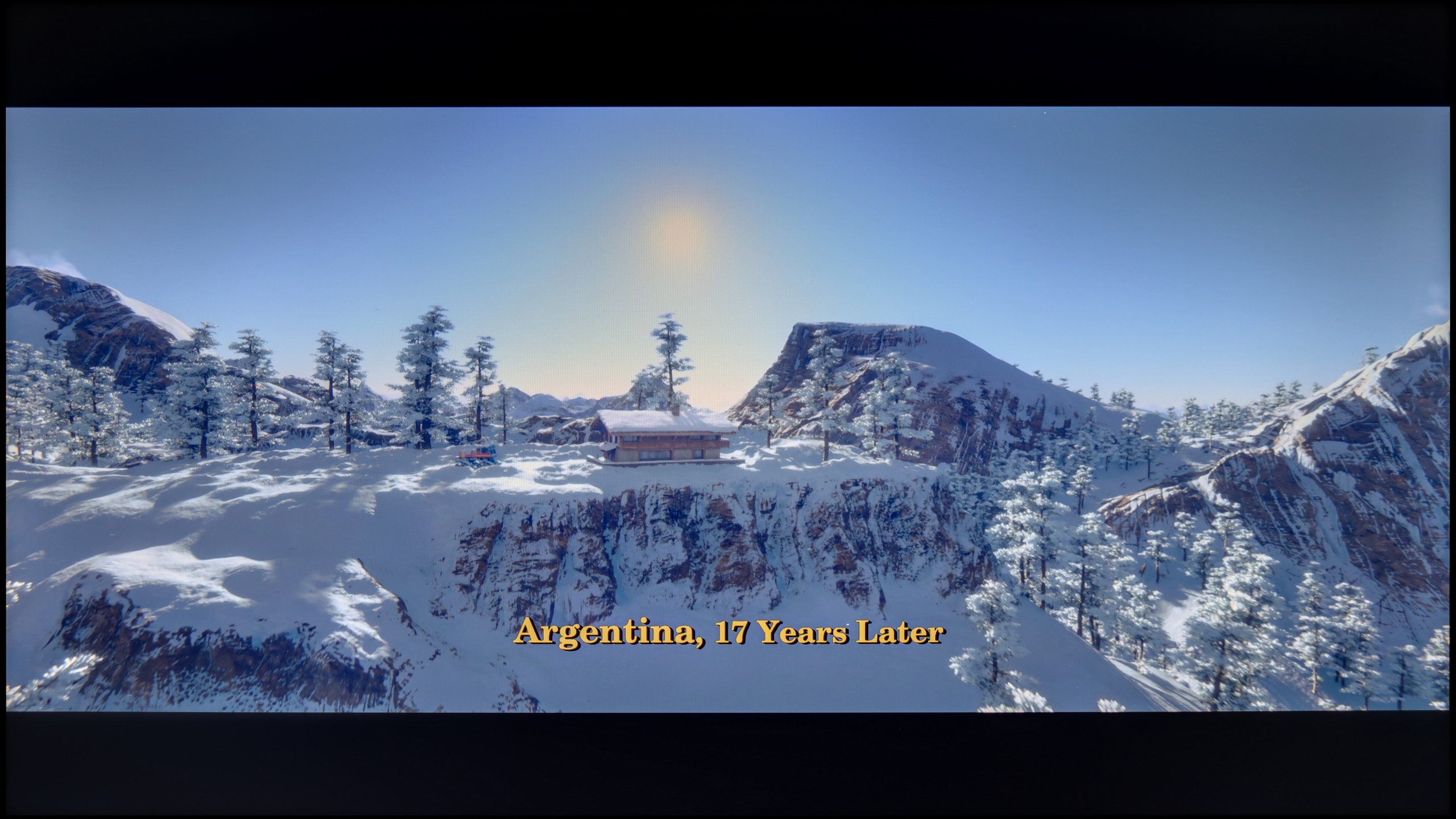
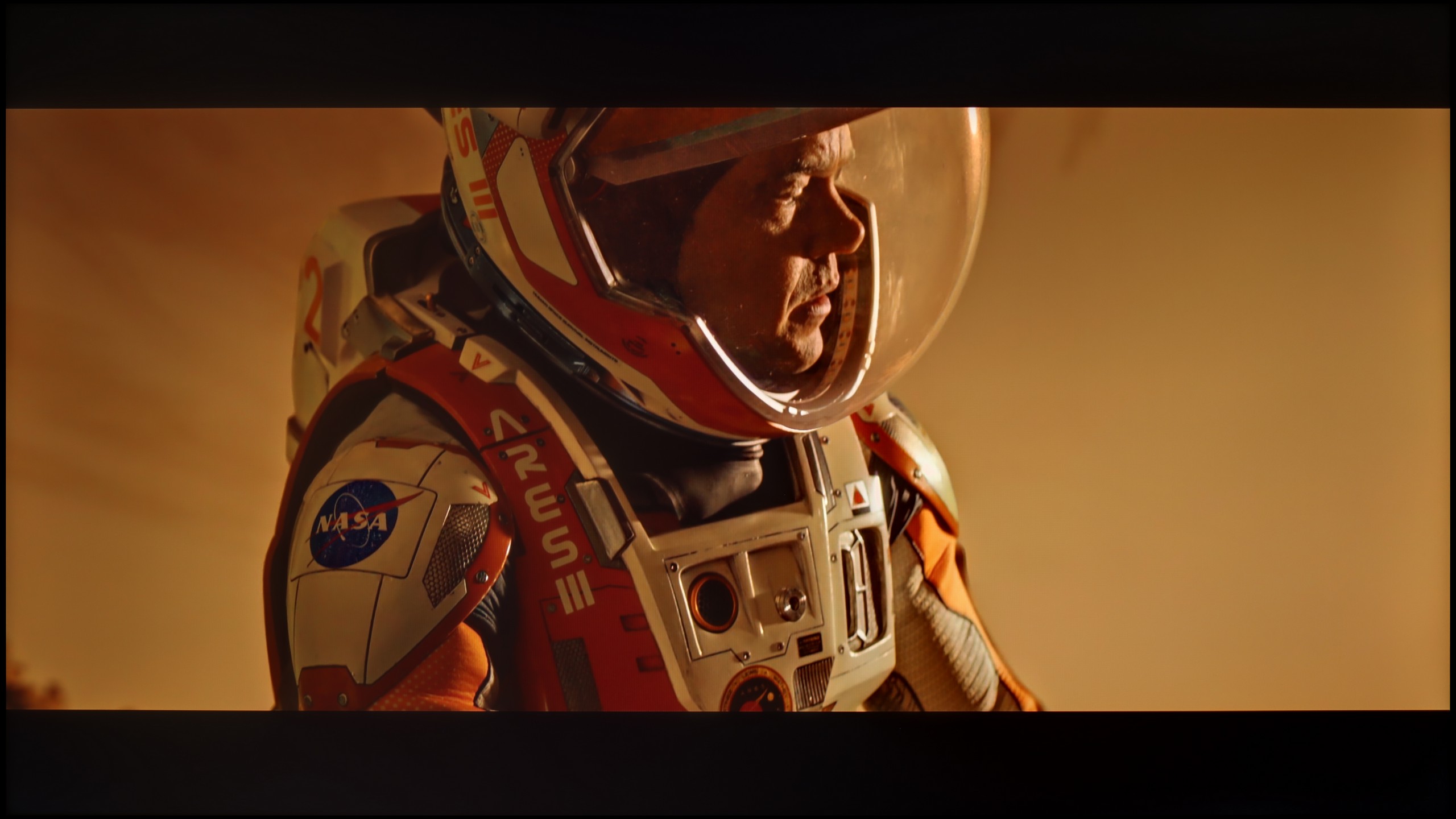
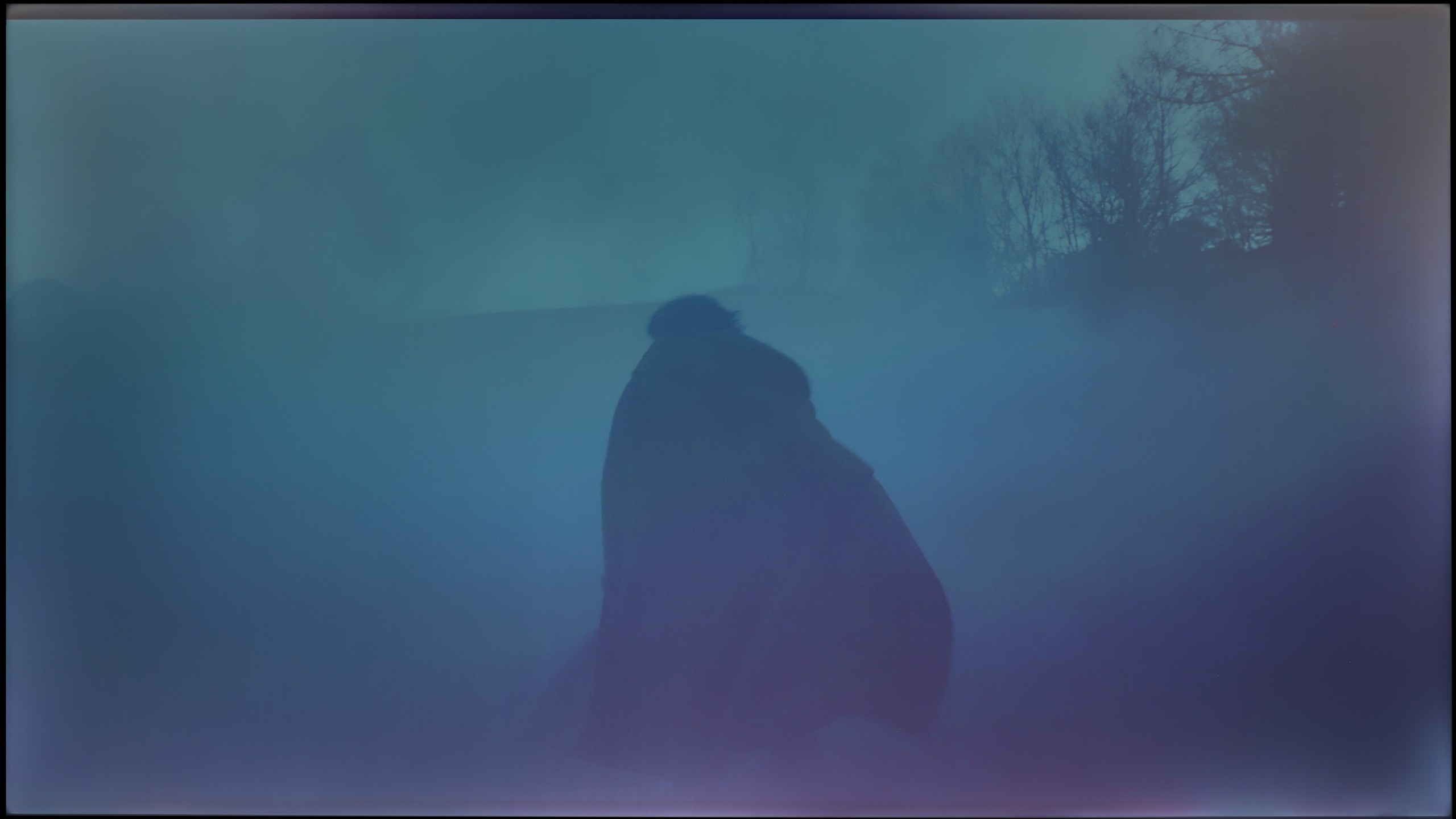
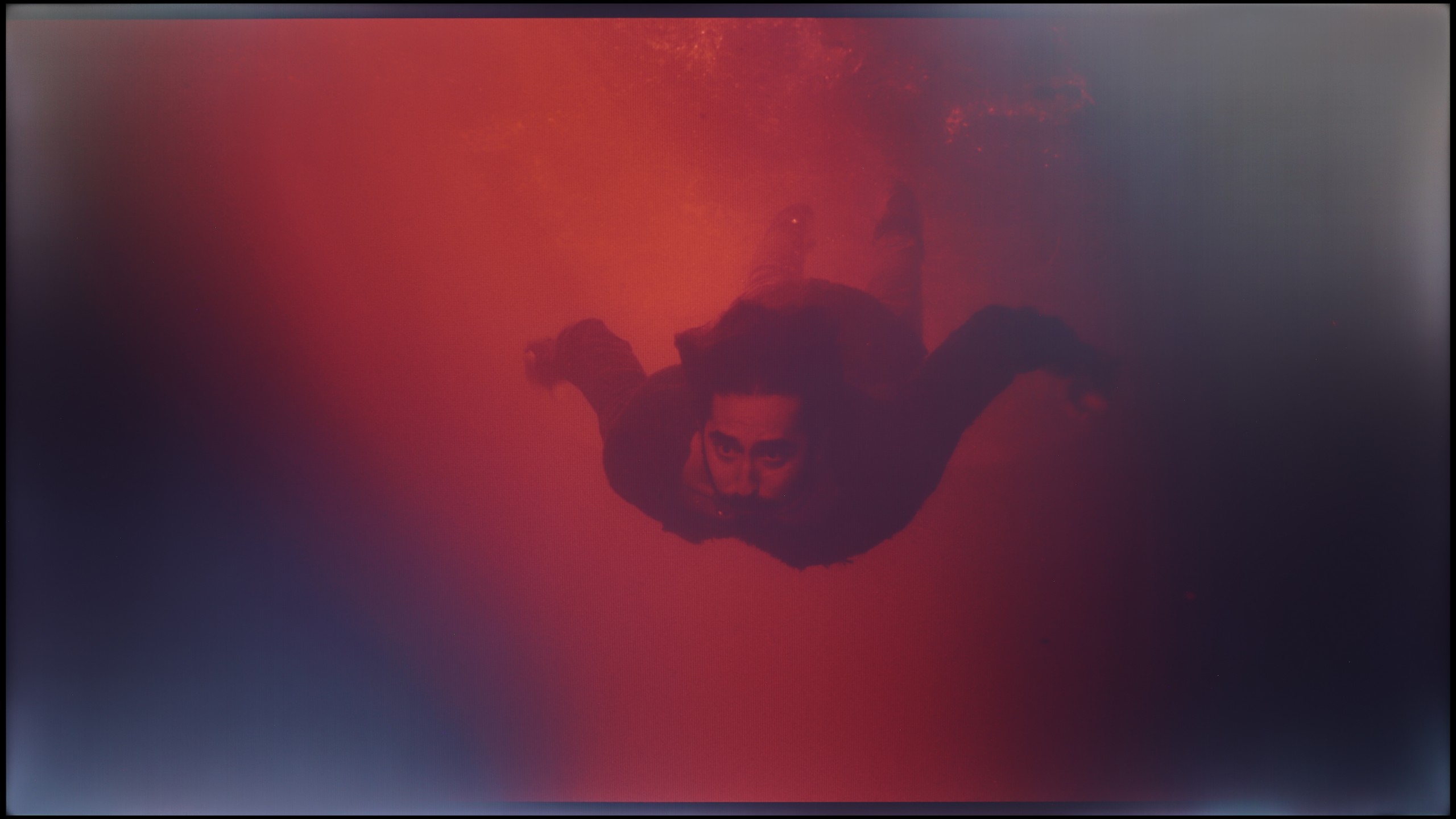
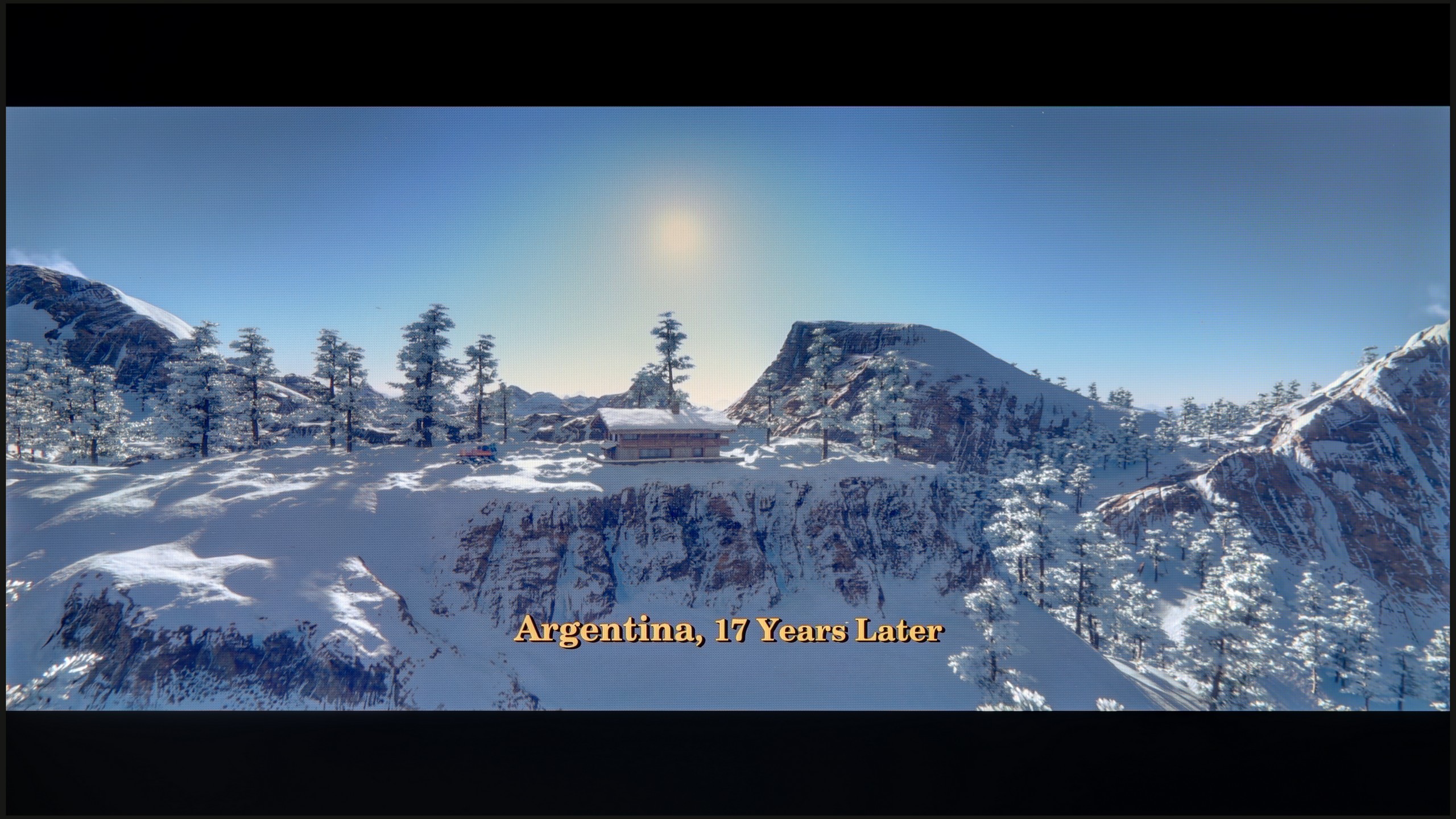
These are selected scenes that show smooth tonal transitions from one color to another. If you see distinct banding, it’s the TV panel’s fault.
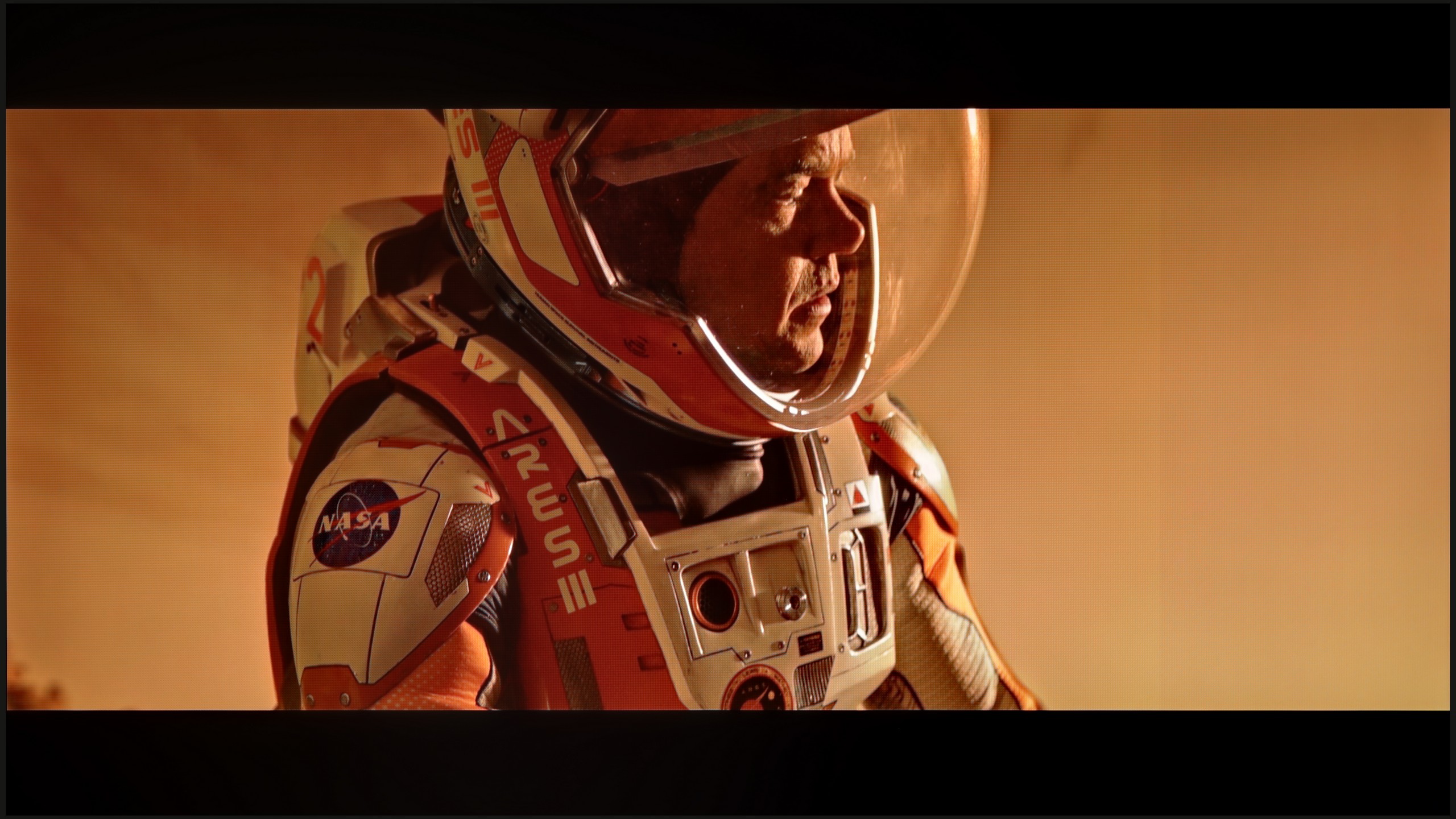
These are selected scenes that show smooth tonal transitions from one color to another. If you see distinct banding, it’s the TV panel’s fault.
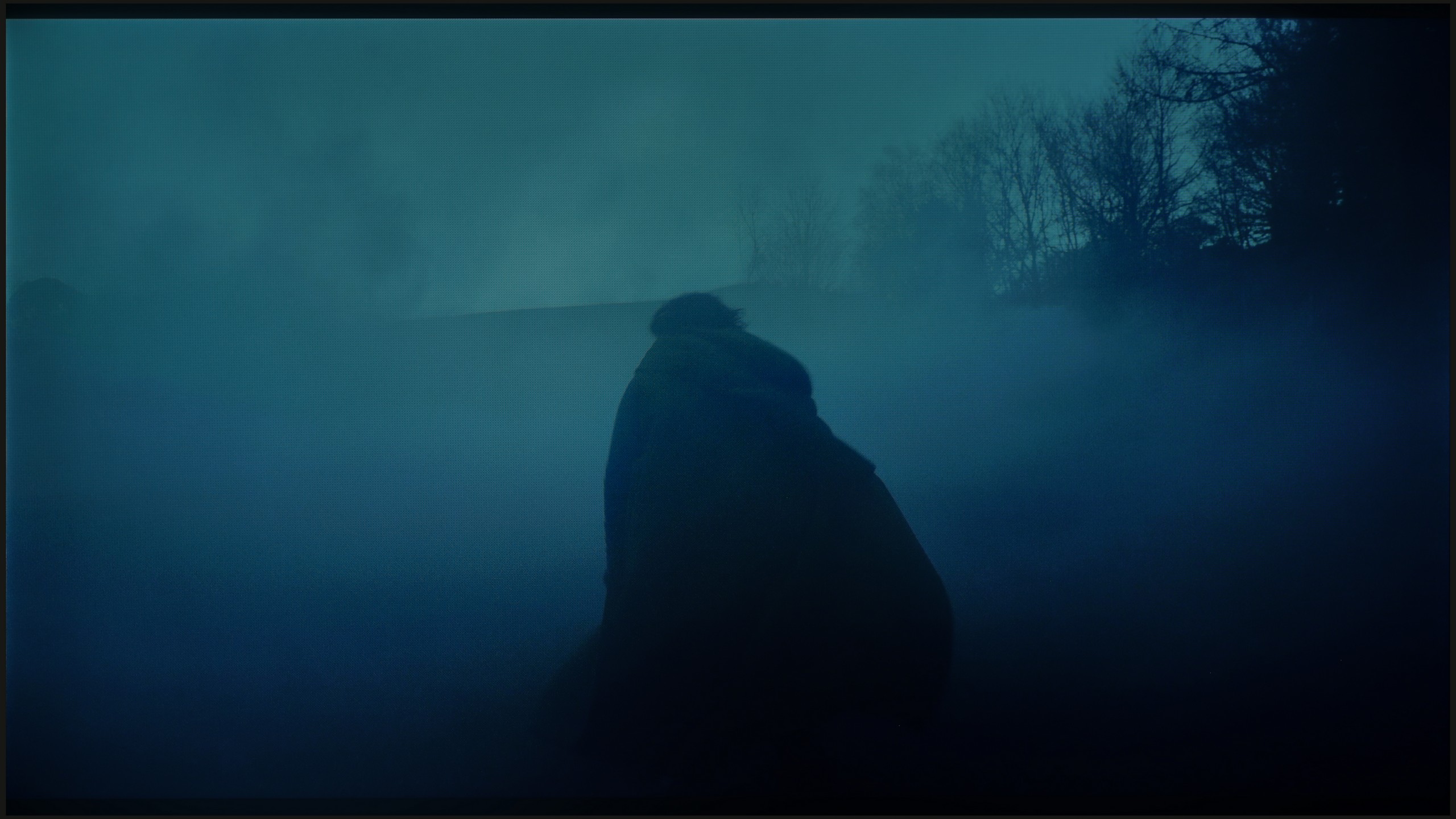
These are selected scenes that show smooth tonal transitions from one color to another. If you see distinct banding, it’s the TV panel’s fault.
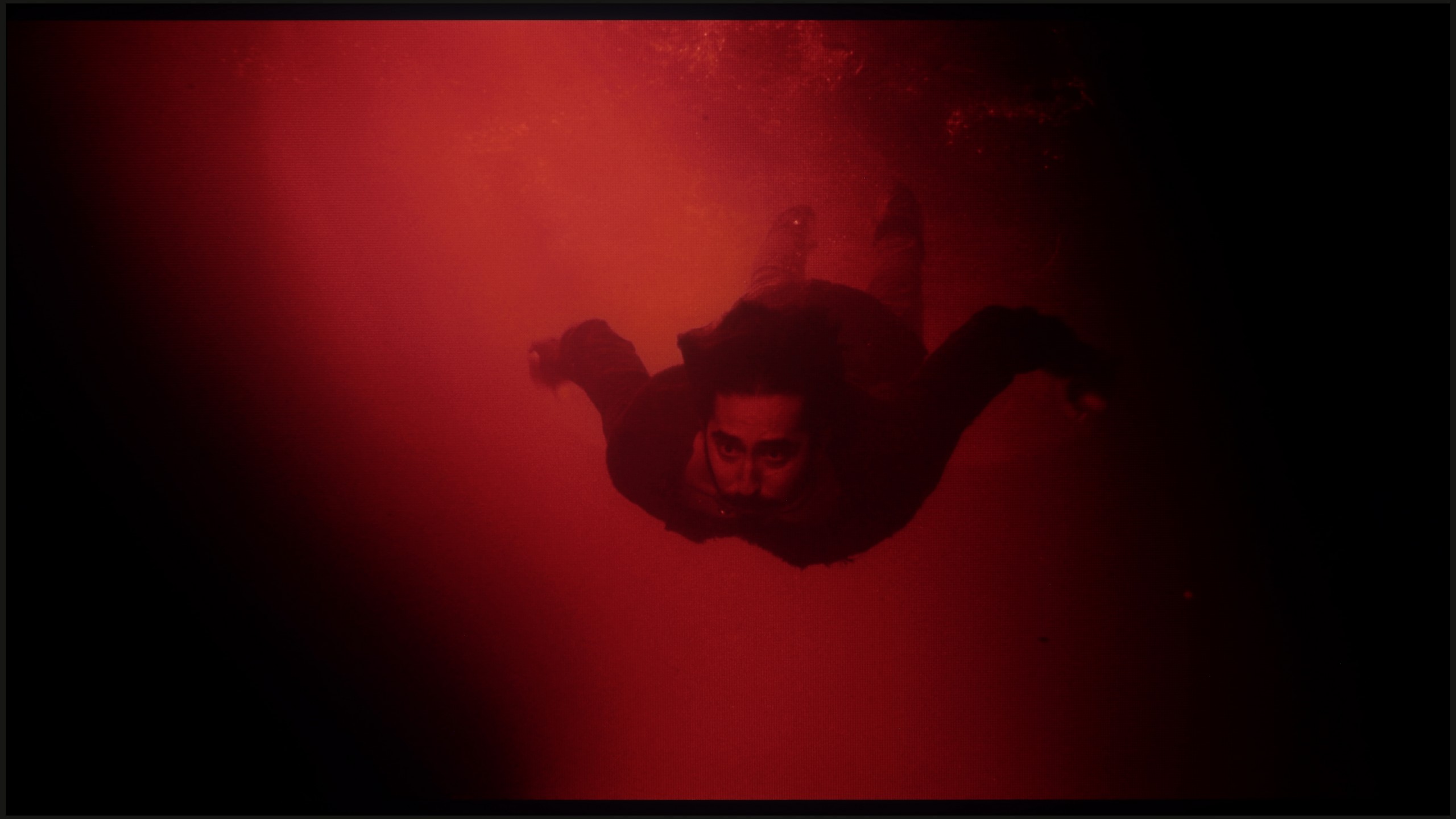
These are selected scenes that show smooth tonal transitions from one color to another. If you see distinct banding, it’s the TV panel’s fault.
Another important aspect to consider when assessing image quality is the smoothness of tonal transitions – that is, how well the television handles the blending of colours and shades. And here the Samsung U8092F performs... almost perfectly. On the test patterns, there are no noticeable stepping transitions, no issues with colour gradients, and the whole picture is not artificially sharpened, which unfortunately happens with many televisions in this class. The image appears natural and very clear. We noticed minimal issues with the brightest scenes, but that is more nitpicking, which only a very trained eye will catch.
In the model C69K / Q6C, tonal transitions (between colours) are very smooth, and it is difficult to notice any banding. The image appears natural, and any minor imperfections are only visible on bright test screens, and that requires very careful scrutiny. In everyday viewing, the effect is simply outstanding. It can be confidently stated that in this category, C69K / Q6C performs exceptionally well.
Image scaling and smoothness of tonal transitions
5/10
5/10


Smooth transition function
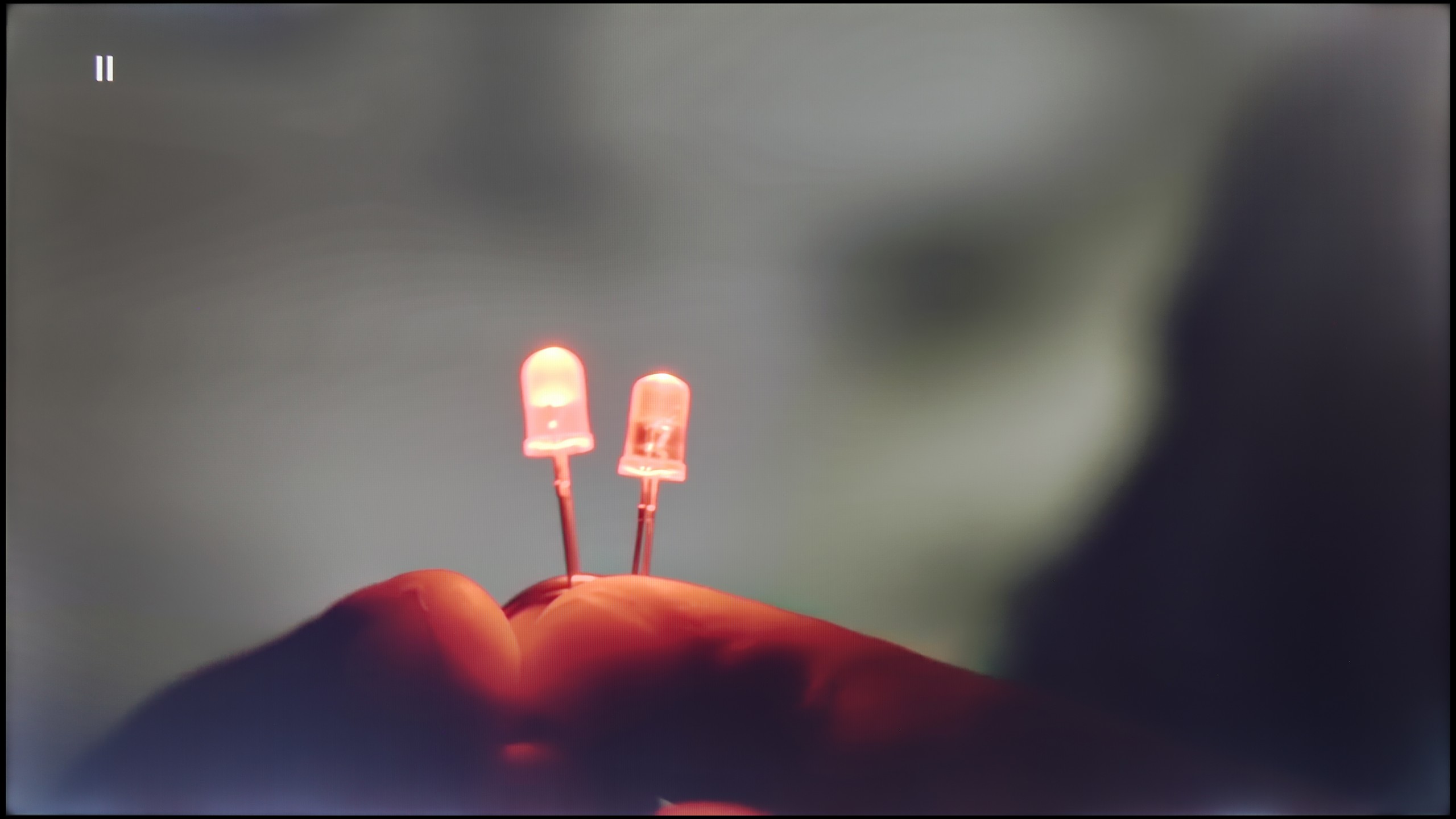
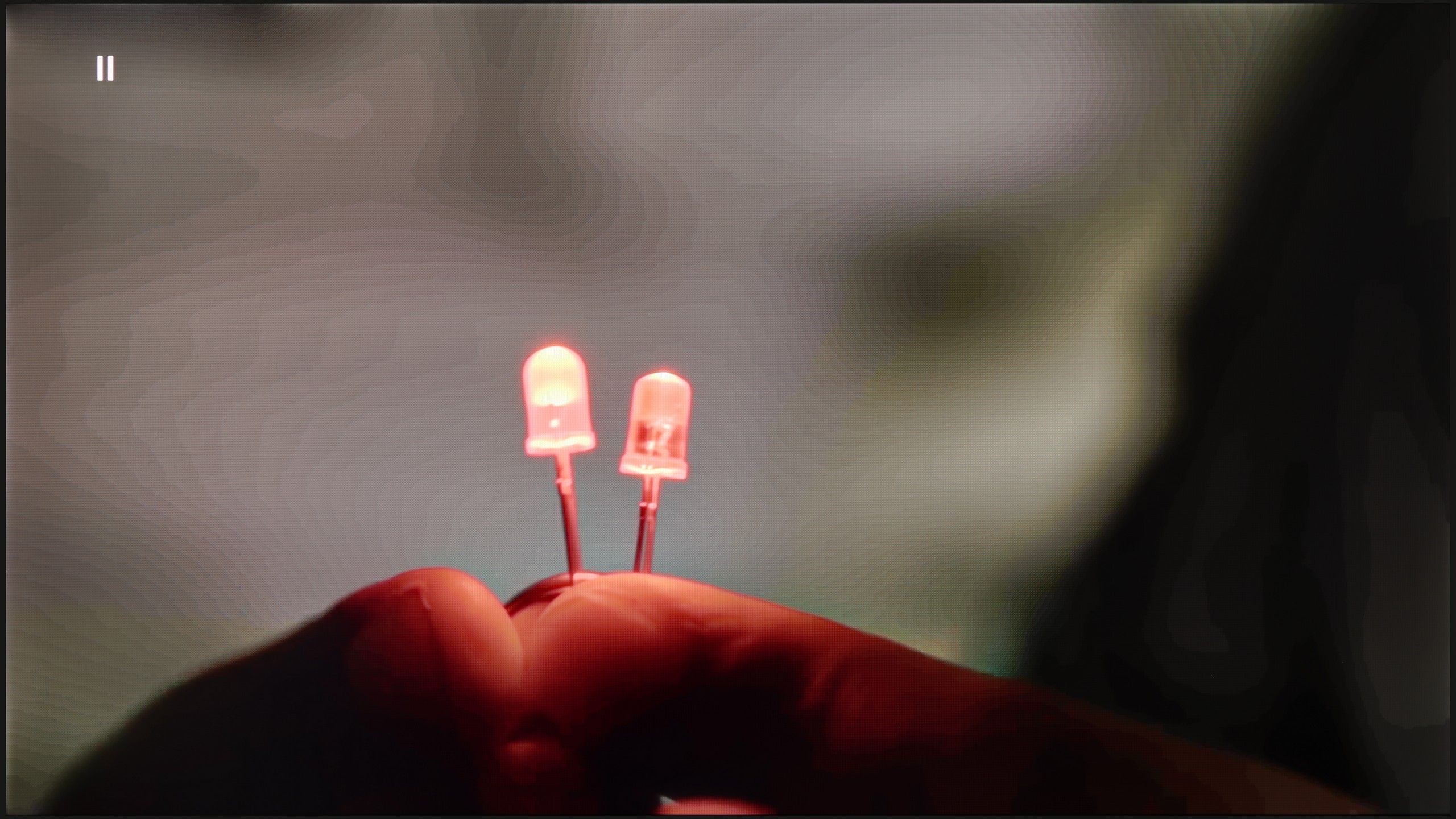
The match photo shows how the TV smooths weak tonal transitions in low-quality video.
Image scaling SD (576i)


The model photo shows how it handles upscaling of SD material.
When it comes to how the Samsung U8000F handles lower quality materials, we must admit that Samsung has made progress compared to its predecessor from last year – namely the DU7192 model, which theoretically occupies the same spot in the range.
This year's model has been equipped with a feature that enhances the fluidity of tonal transitions, which has been implemented much better than last year. Yes, the television still uses fairly strong algorithms that can distort details or remove film grain, but despite that – it can be confidently said that it works effectively.
However, not everything has gone perfectly. The U8000F has noticeable issues with slight image stuttering when watching very old content in very low resolution. If someone plans to play their old VHS tape, they must reckon with the fact that the image may appear slightly "choppy".
In terms of image scaling, TCL C69K / Q6C performs quite well. Lower quality content appears acceptable, and thanks to the lack of overscan issues, the image is displayed in full without any cropping. However, one should not expect miracles – very low-quality materials will not gain a second life here, as the image processor has its limitations.
Thin lines and details exhibit characteristic tearing, which reveals the absence of more advanced image enhancement algorithms. It is also a pity that the C69K / Q6C lacks a tone transition smoothing feature. As a result, in older films or video materials, banding of colours can be visible and may become distracting during prolonged viewing.
Blur and motion smoothness
4.5/10
7.3/10
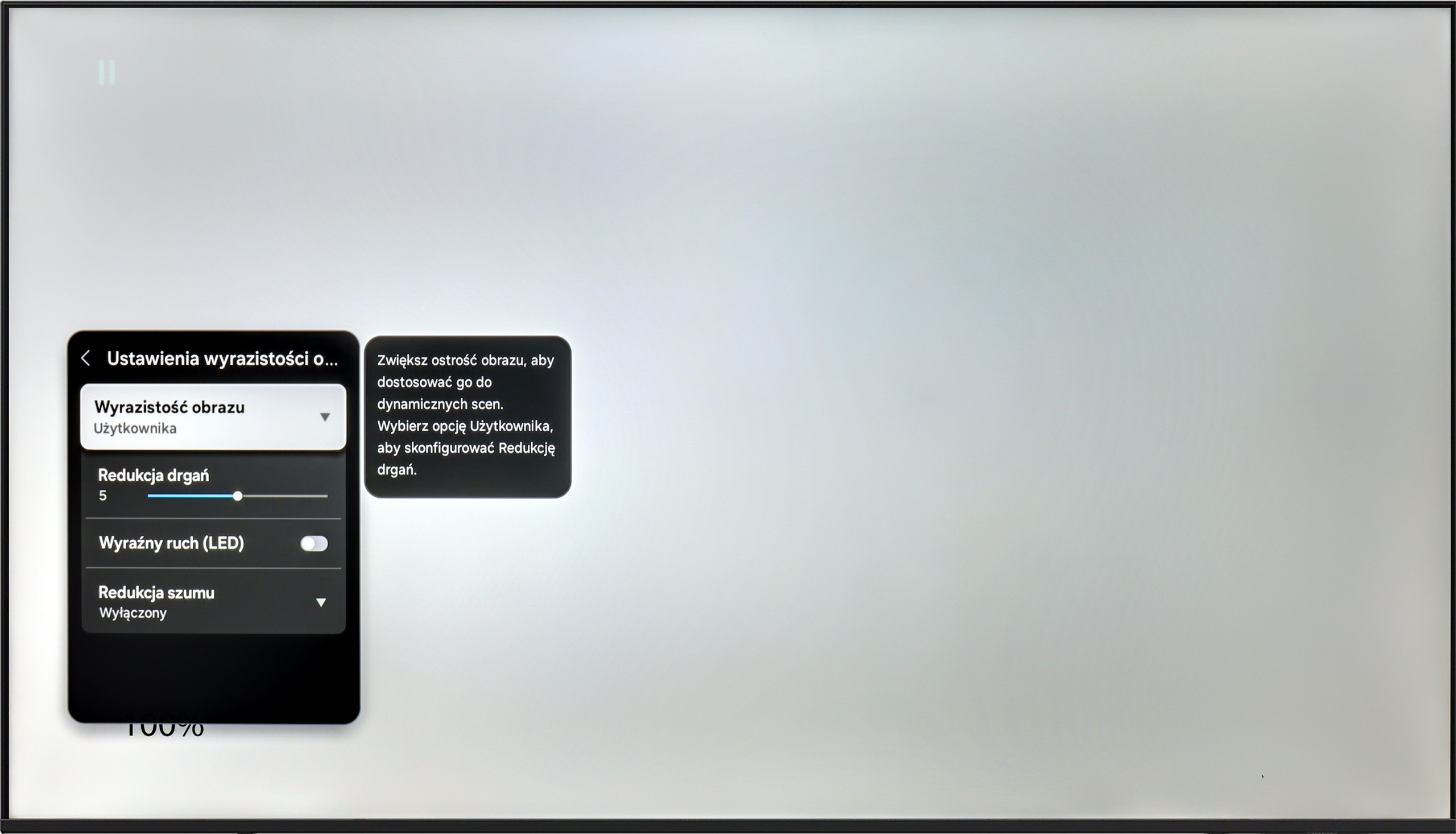
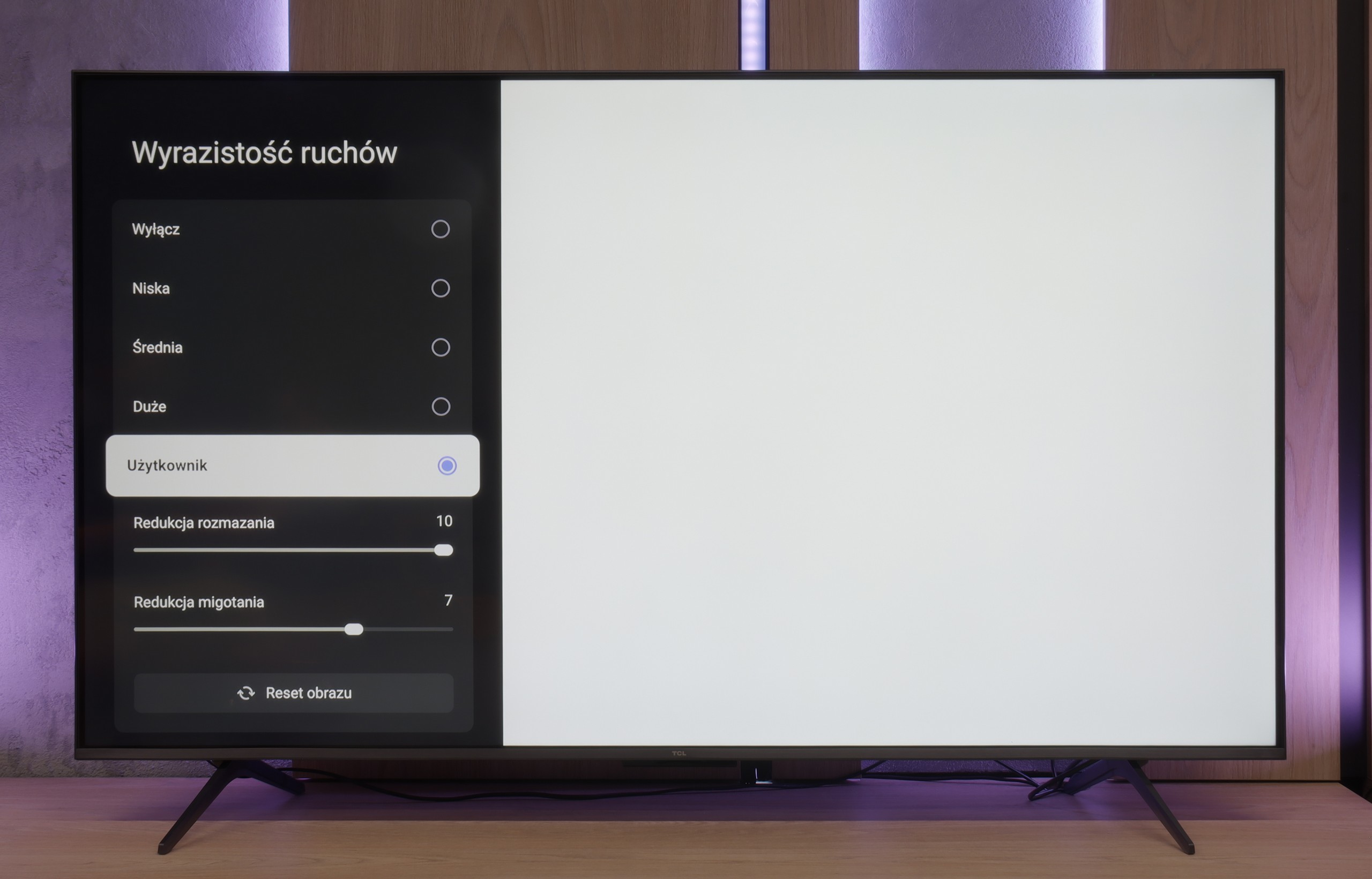
Blur (native resolution, maximum refresh rate):

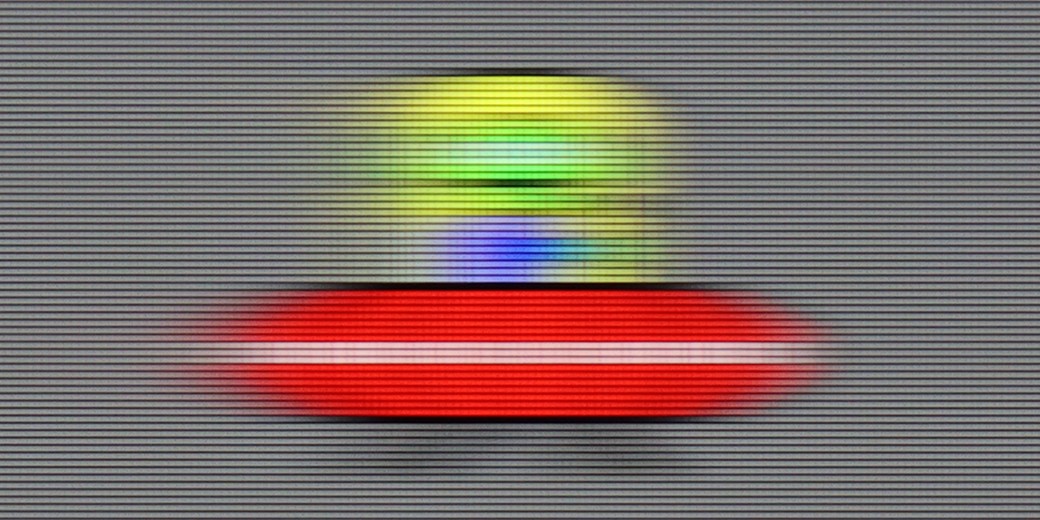
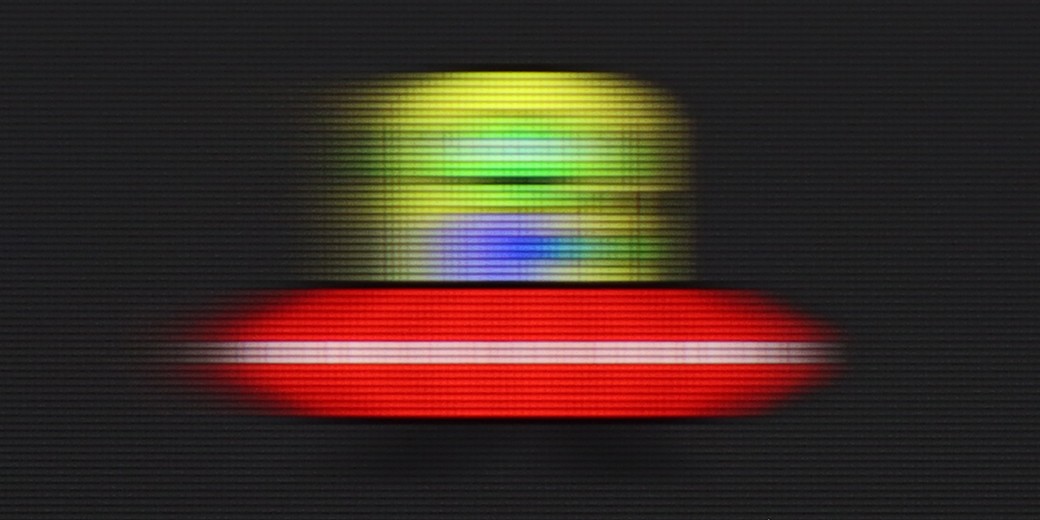
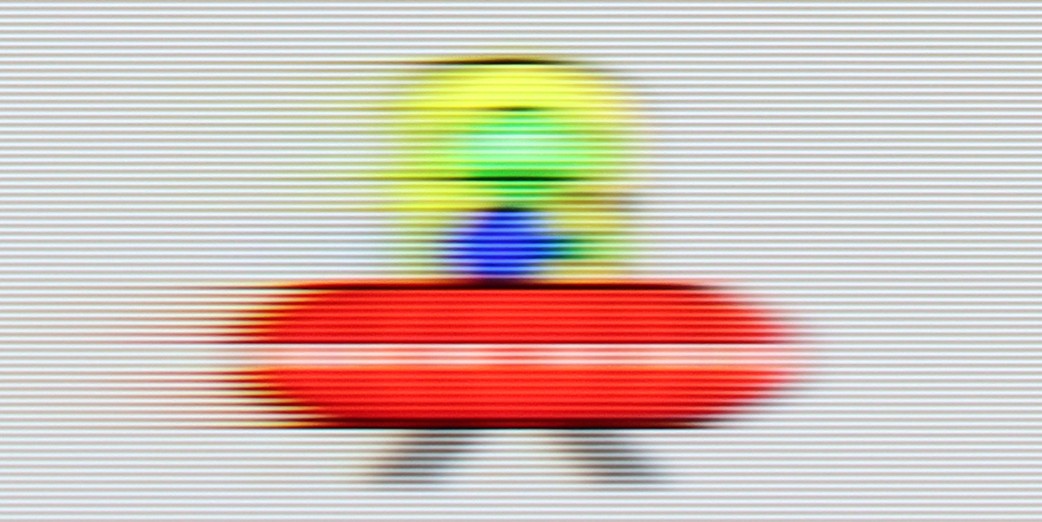
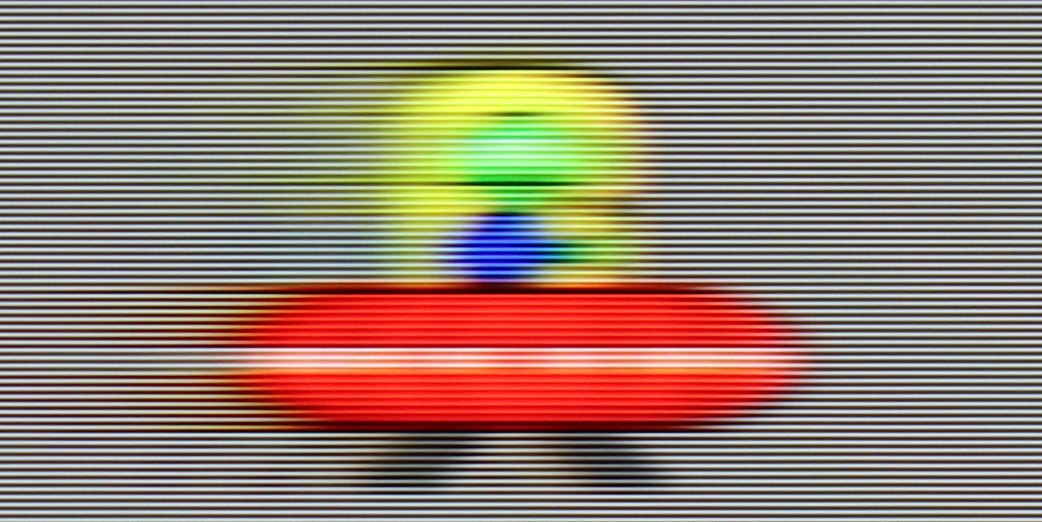
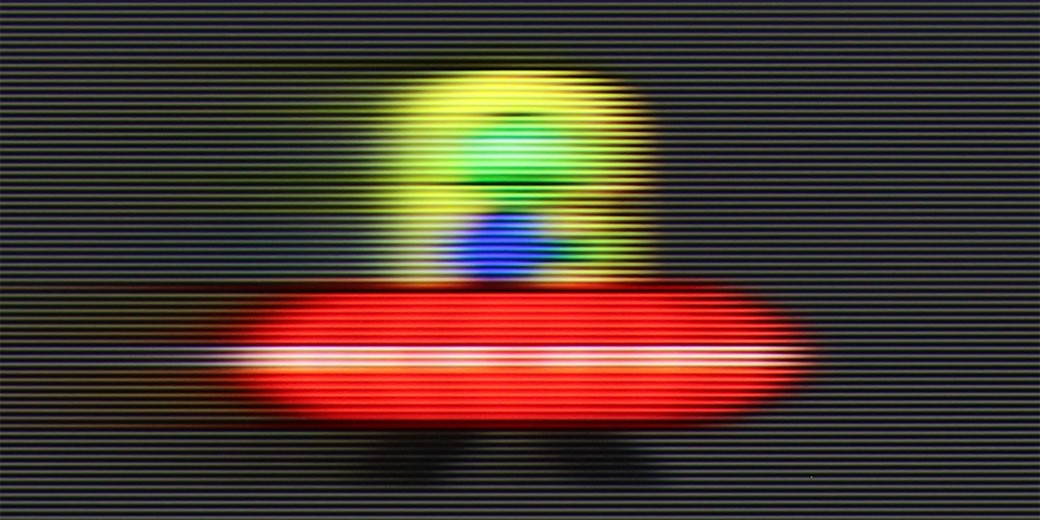
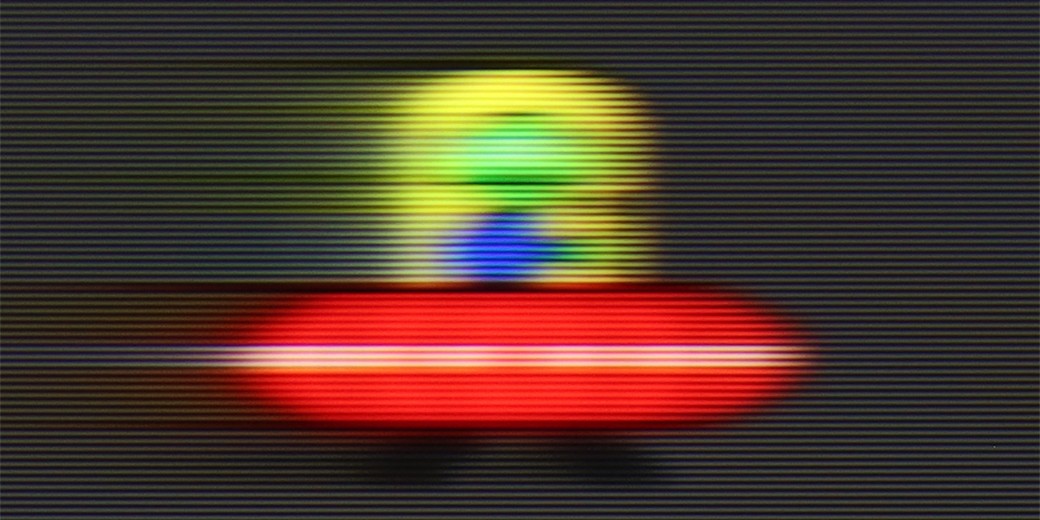
Blur (BFI function enabled):
Image flickers in this mode
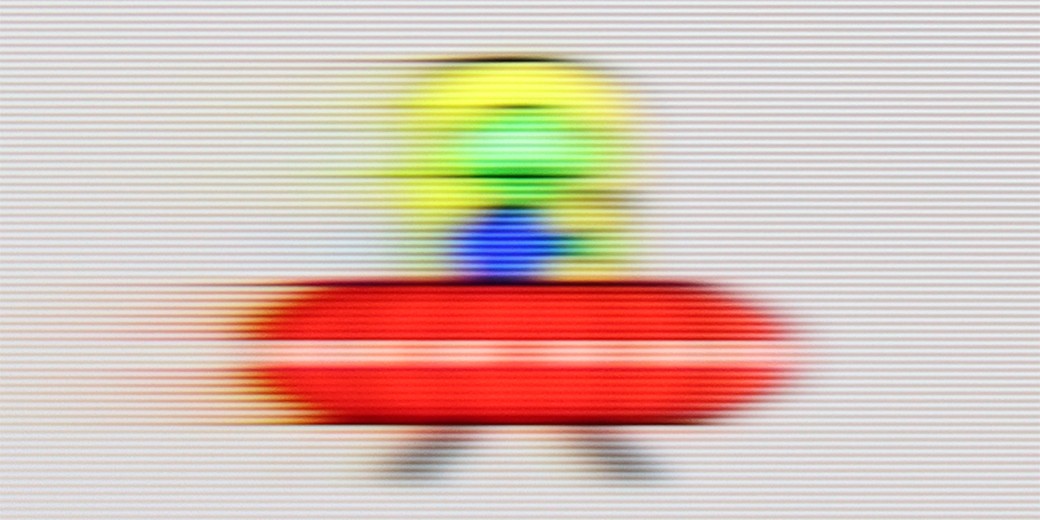
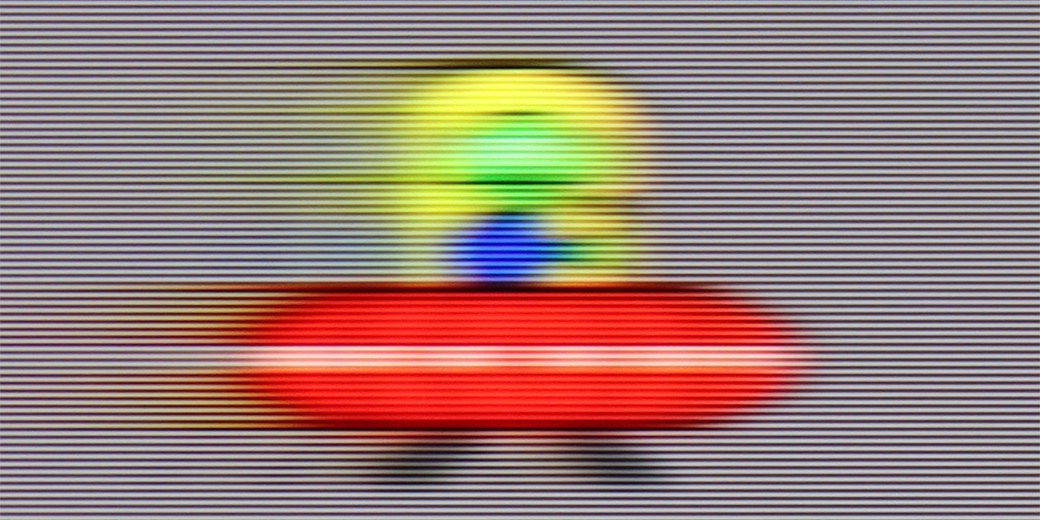
The Samsung U8000F is equipped with a 60 Hz panel, so it's clear from the outset that we shouldn't expect miracles. It's simply the standard in this class – sufficient for everyday viewing but without any fireworks.
The television offers a single motion smoothing slider – a function called “Motion Blur Reduction”, which allows us to adjust the smoothness of the image in films. Higher settings provide a more “theatrical” and smoothed effect, while lower settings maintain the original character of the film with a slight 24p effect. An interesting feature is “LED Clear Motion”, which is a BFI mode – that inserts black frames between frames of the image to improve motion clarity. However, in practice, the screen flickers quite a bit when this feature is activated, and it should be regarded more as an experiment than something that genuinely enhances the comfort of gaming.
The use of a 144 Hz panel in TCL C69K / Q6C is a significant advantage in this price range. It represents an important step forward compared to its predecessor (C655 PRO), which only offered 60 Hz in 4K. The difference is particularly noticeable when watching sports or playing games – the ball, players, or dynamic action in games are displayed more clearly and without loss of detail. Another interesting feature is the panel's ability to work at 240 Hz (which the manufacturer does not officially mention) – we will return to this topic in relation to the PC gaming mode. TCL has also added a feature for movie fans: “Motion Clarity”. This allows users to adjust the picture to their preferences using two simple sliders. We can either keep the visible film frame or opt for very smooth, "
Console compatibility and gaming features
5.3/10
9.8/10
- ALLM
- VRR
- VRR range48 - 60Hz48 - 240Hz
- Dolby Vision Game Mode
- Correct implementation of HGIG
- 1080p@120Hz
- 1440p@120Hz
- 4K@120Hz
- Game bar
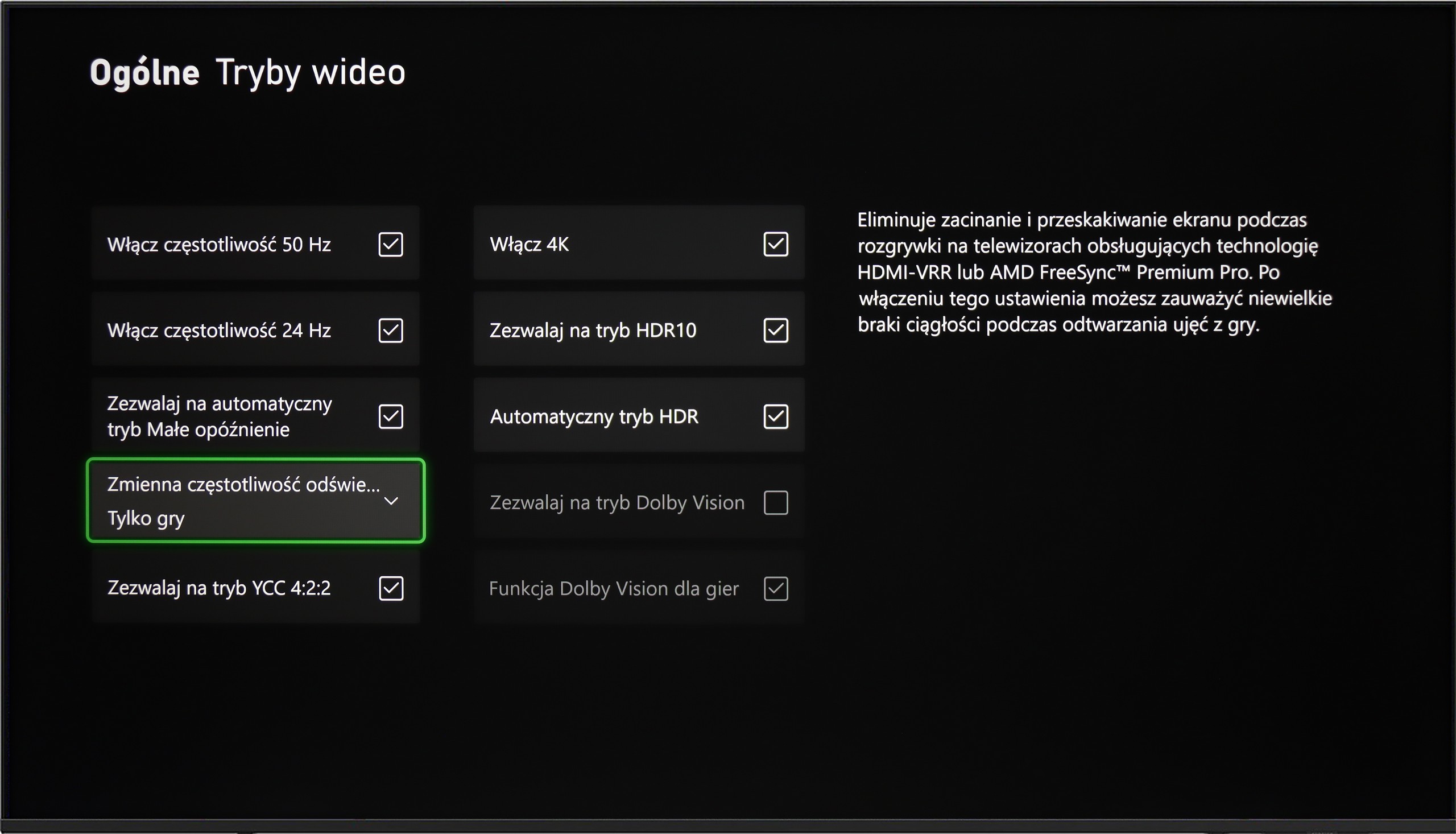
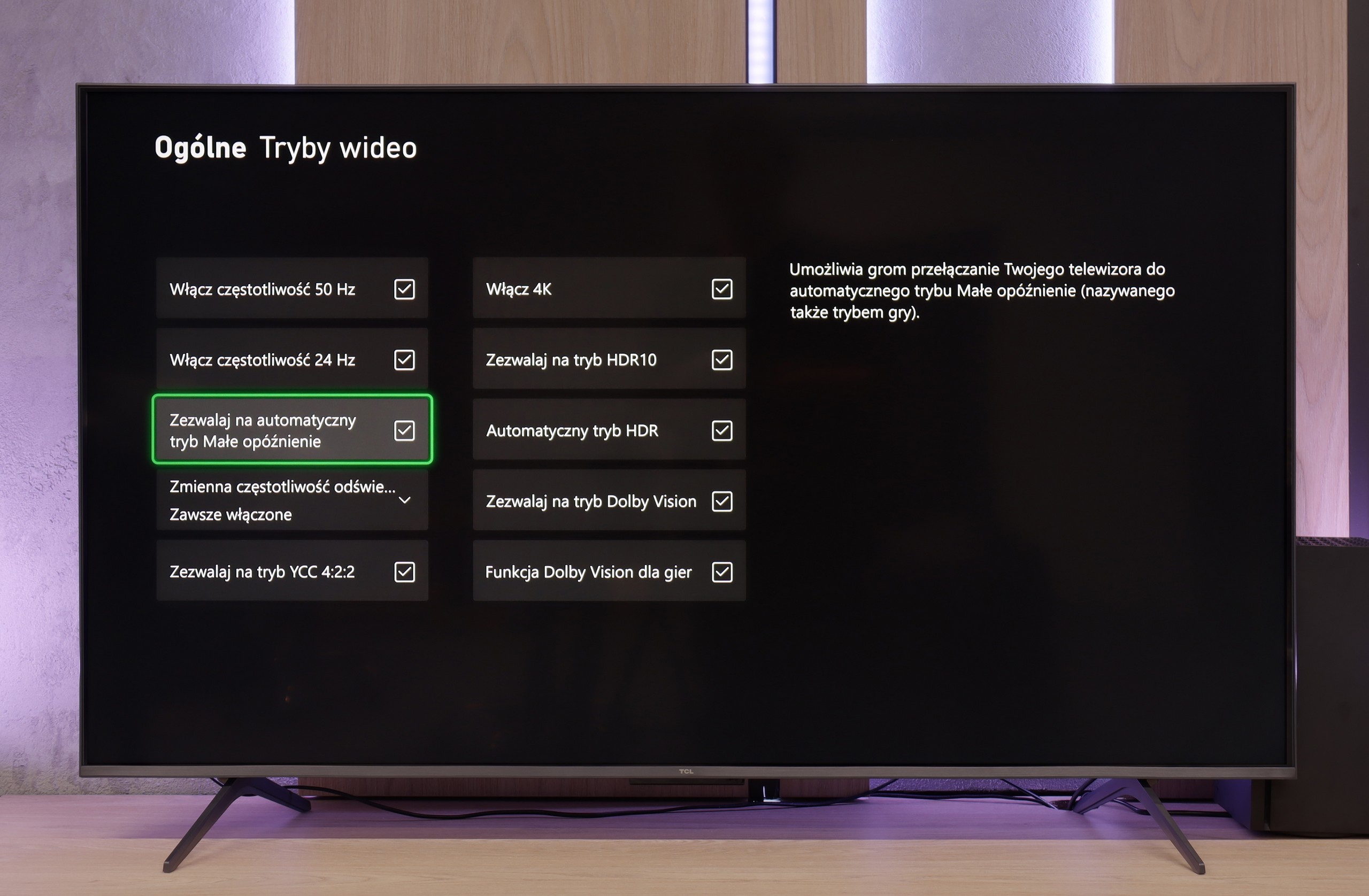
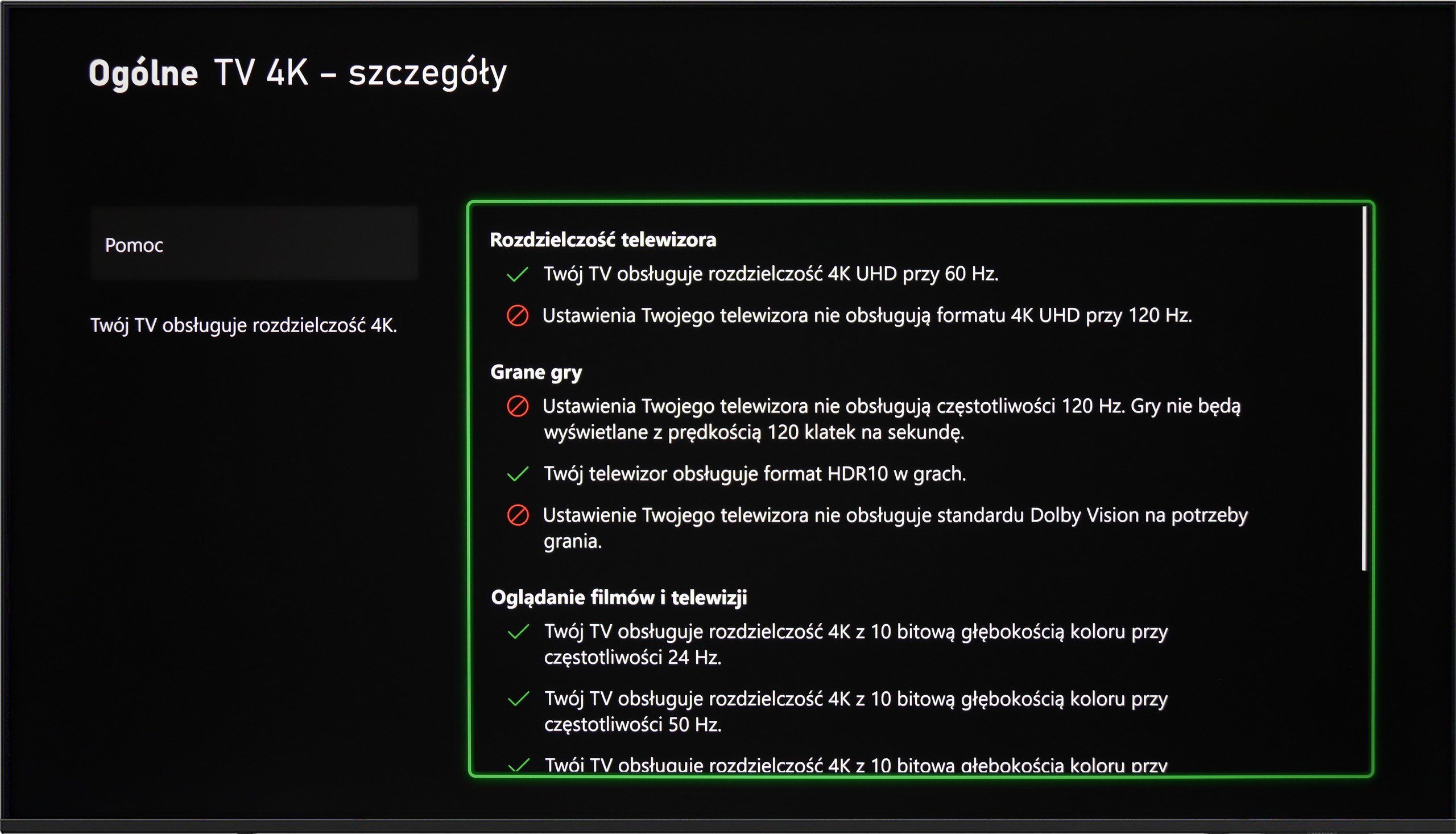
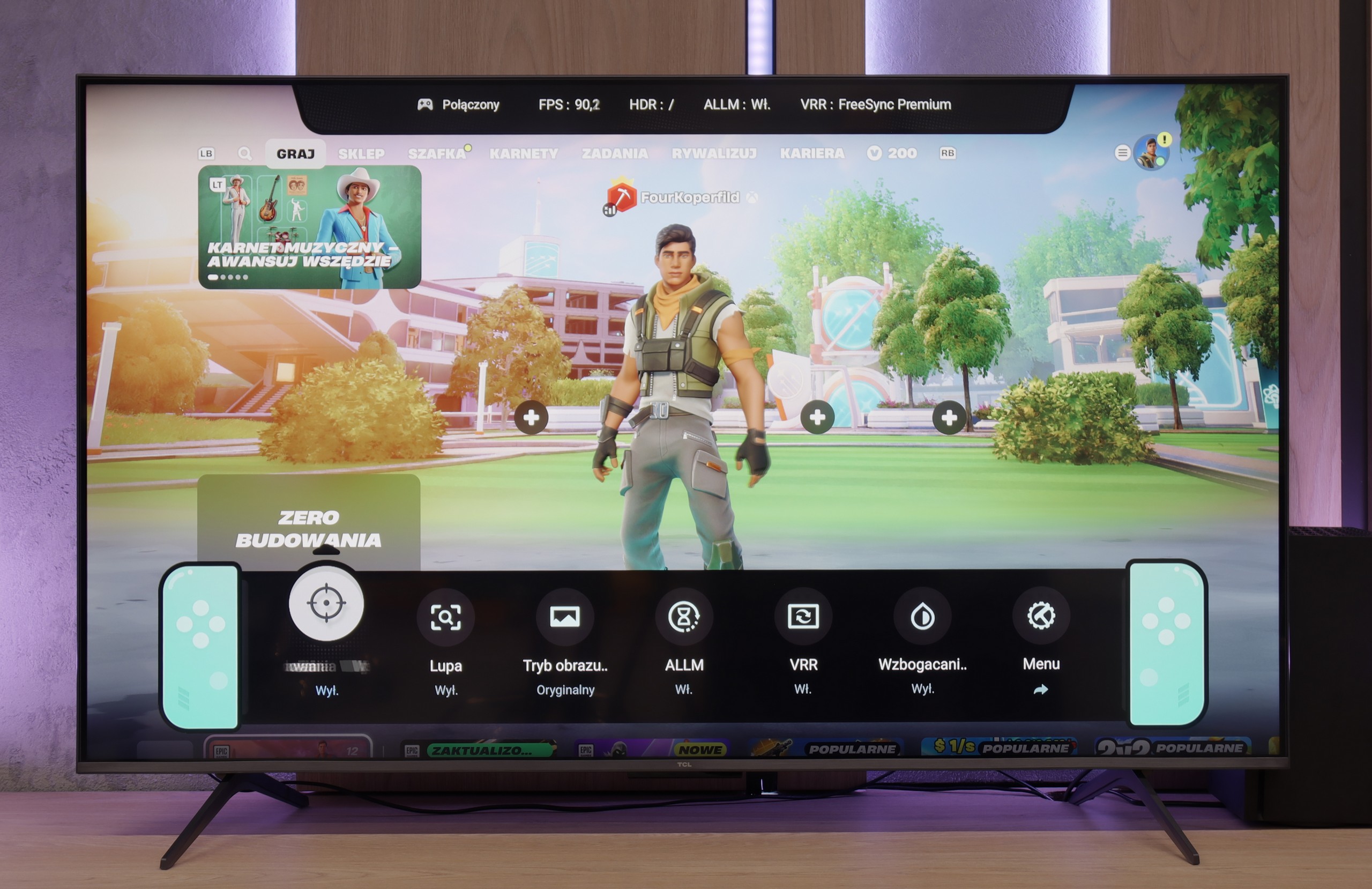

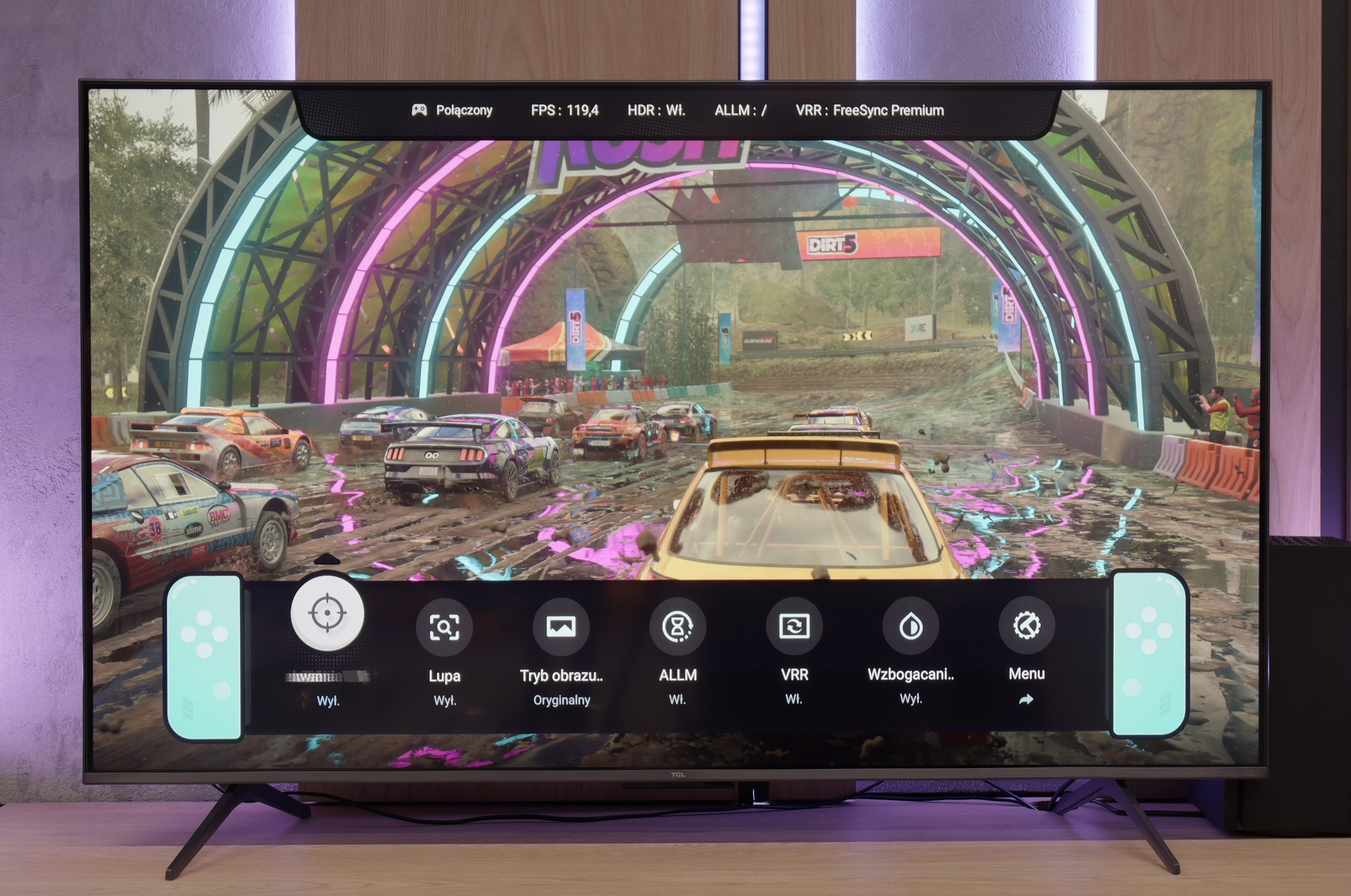
Samsung U8000F offers a basic set of features for gamers, which can still prove sufficient for less demanding users. We have an automatic game mode here – upon launching a game on the console, the television automatically switches to low latency mode, significantly improving response time. We also find a VRR feature, or variable refresh rate, which operates in the range from 48 to 60 Hz. This means that both Xbox and PS5 will not produce a tearing effect on the image – provided, of course, that we stay within this range.
[UPDATE] We have updated our tests of Samsung televisions from the 2025 model year due to the release of software version 1131, which restored the crucial gaming feature HGiG.
And unfortunately, that’s about it in terms of advantages. Additions like Game Bar or higher refresh rates are reserved for higher models of Samsung from the 2025 line. In theory, the television also supports the HGiG feature, which should adjust HDR image to the creators' intentions. Unfortunately – despite the fact that this feature appears in promotional brochures and retail materials – its configuration on the Xbox console has proven to be... impossible in practice.
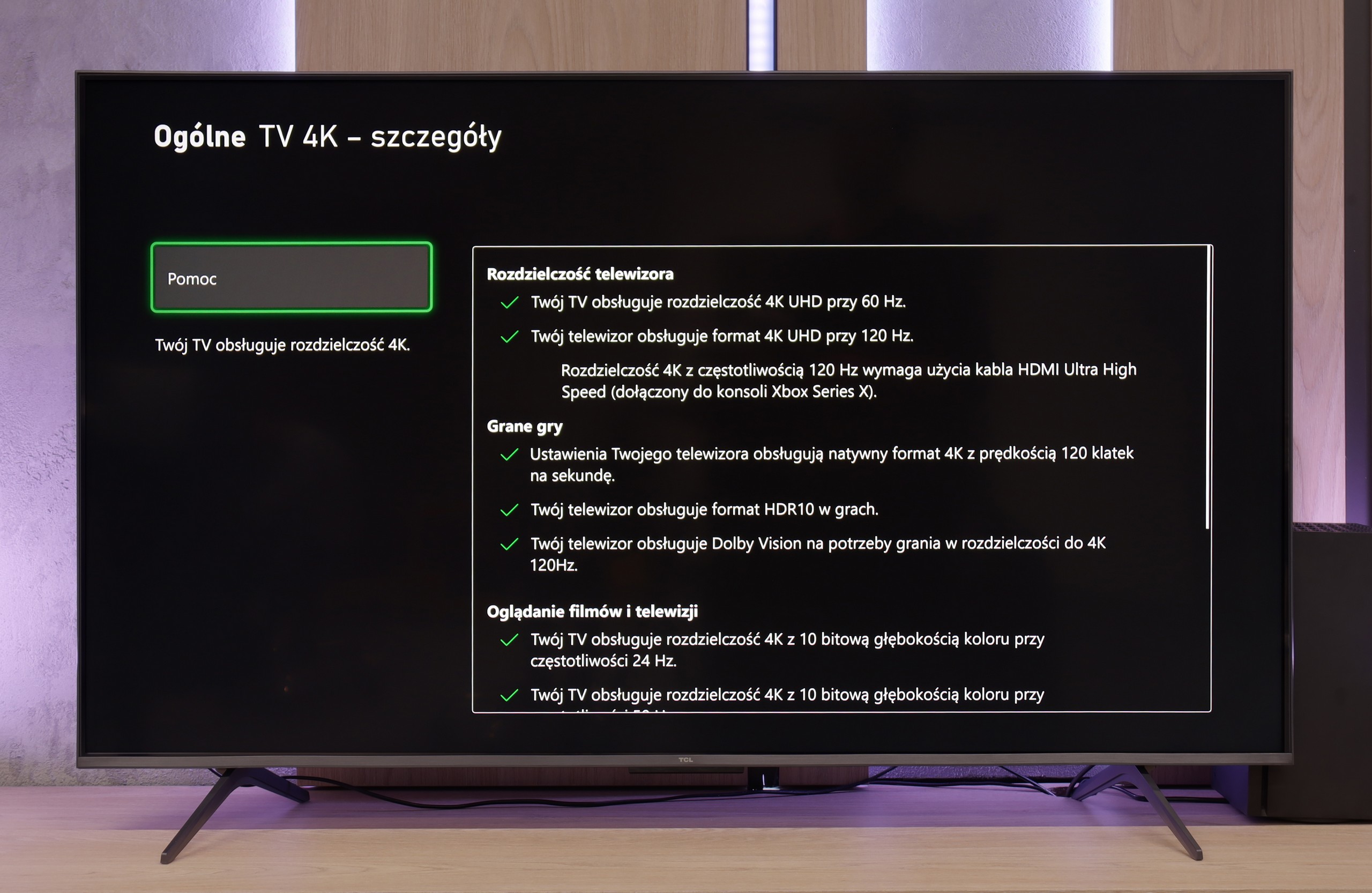
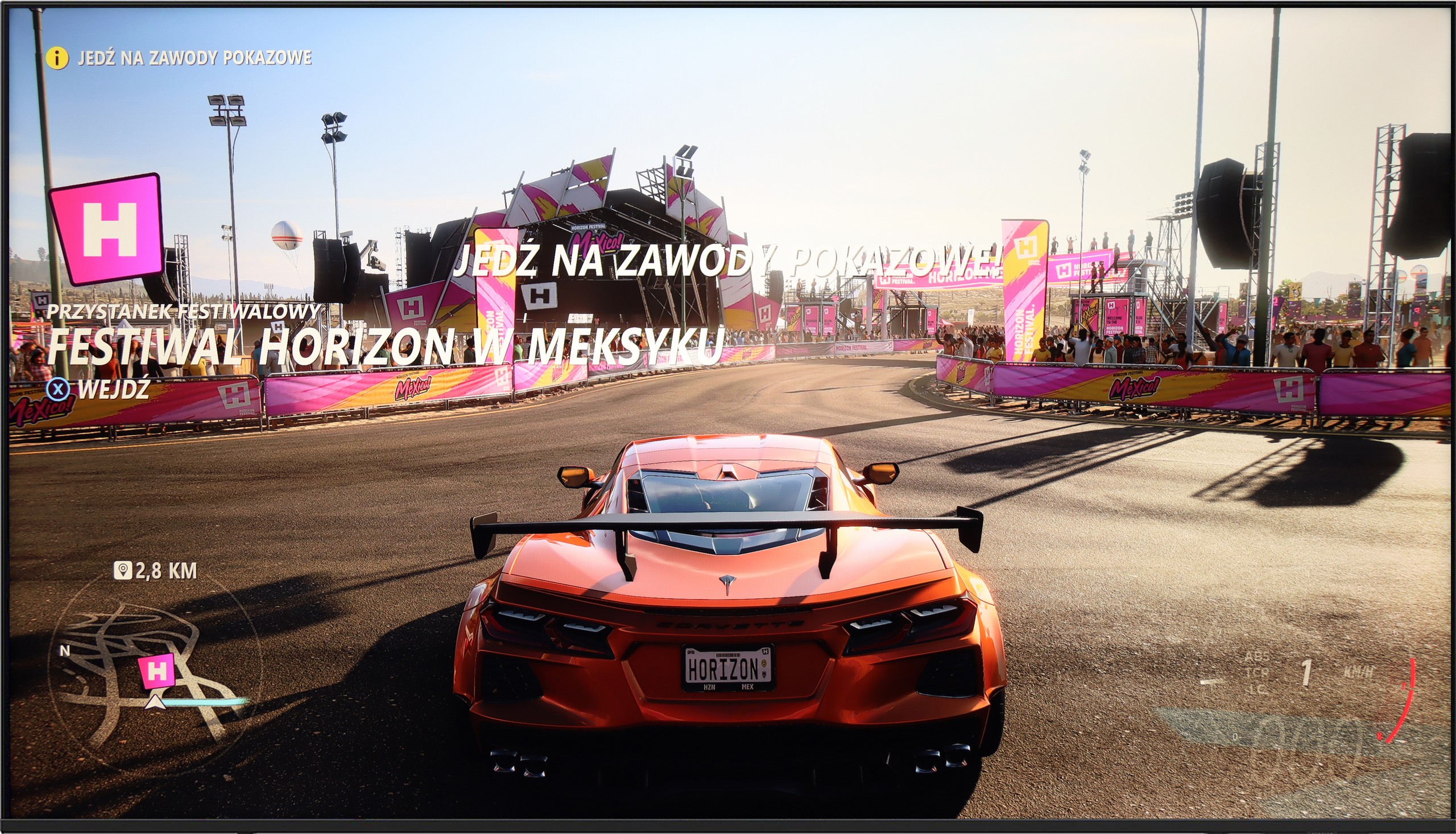
TCL C69K / Q6C is a television that can confidently be described as equipment created with gamers in mind. Here we have 4K at 144 Hz, VRR support, automatic game mode (ALLM), and Dolby Vision Gaming. Additionally, there is a practical Game Bar, which is a panel with the most important settings conveniently at hand – useful when we want to change something quickly during gameplay (e.g. screen aspect ratio: Yes, it can be done!). The wide range of VRR, reaching up to 240 Hz, is particularly noteworthy. However, this option is mainly for PC gamers who will operate below the native 4K resolution. In that case, the television can spread its wings and show additional smoothness, especially in fast-paced e-sports titles. For consoles, we stick to the classic limit of 120 Hz, but even so, the capabilities are truly extensive. The only downside is a slight ghosting that can occasionally be seen in dynamic scenes. Other than that, C69K / Q6C offers everything that gamers expect from a television.
Input lag
10/10
9.7/10
SDR
HDR
Dolby Vision
The Samsung U8092F performed phenomenally in our input lag tests. Regardless of resolution or mode – the results were very low, which is truly impressive for this price segment. One can confidently say that playing on this television will not cause frustration due to large delays between what we do on the controller and what we see on the screen. For most gamers, even the more demanding ones, this result should be more than satisfactory.
In terms of input lag, TCL C69K / Q6C performs excellently. With 120 Hz content, the delay is about 10 ms, and at times even less. This is a level at which the response is practically instantaneous and difficult to find any objections. For 60 Hz material, the result is around 18 ms – still a very good result, entirely sufficient for comfortable gaming.
Compatibility with PC
6/10
8.6/10
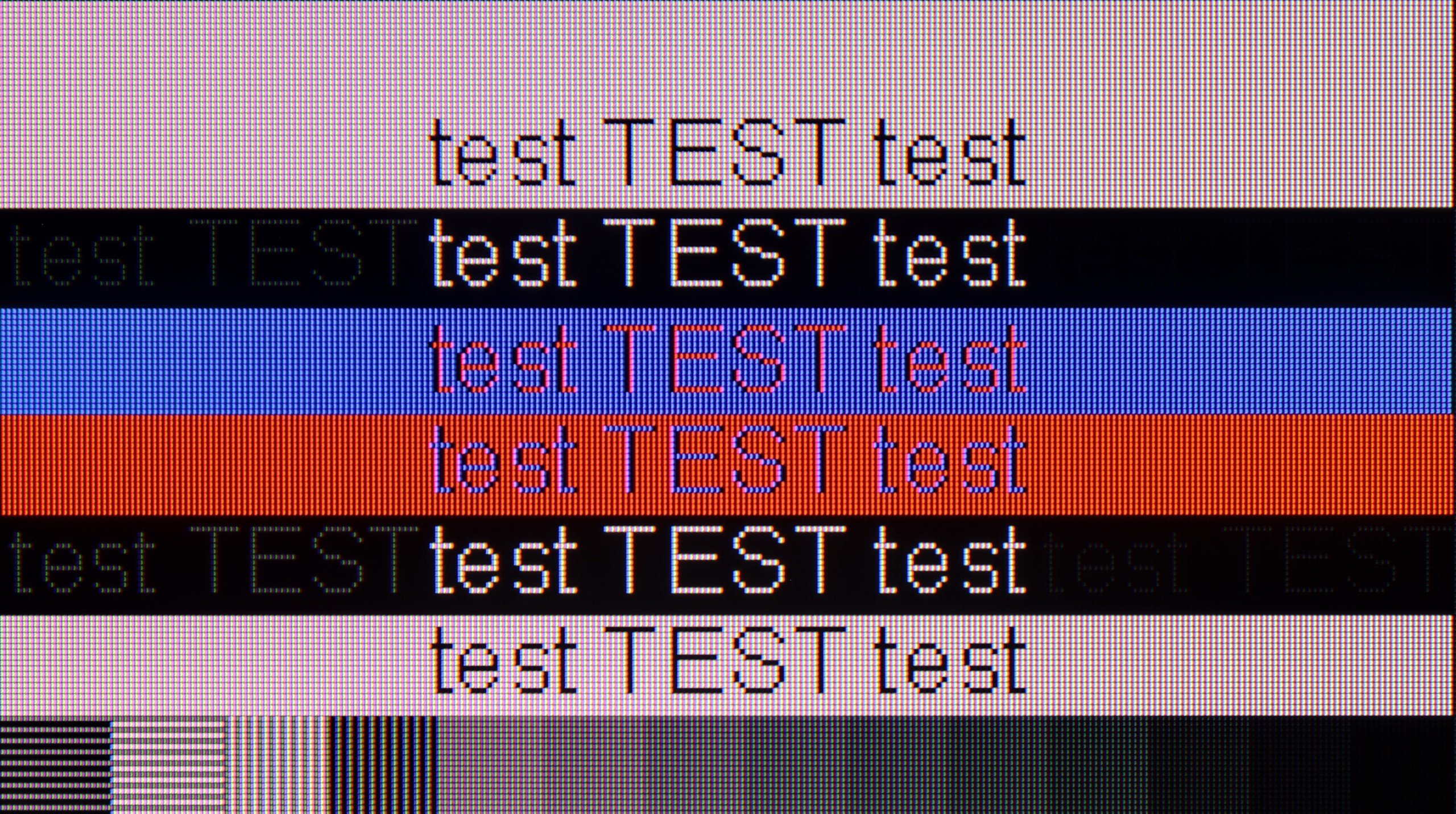
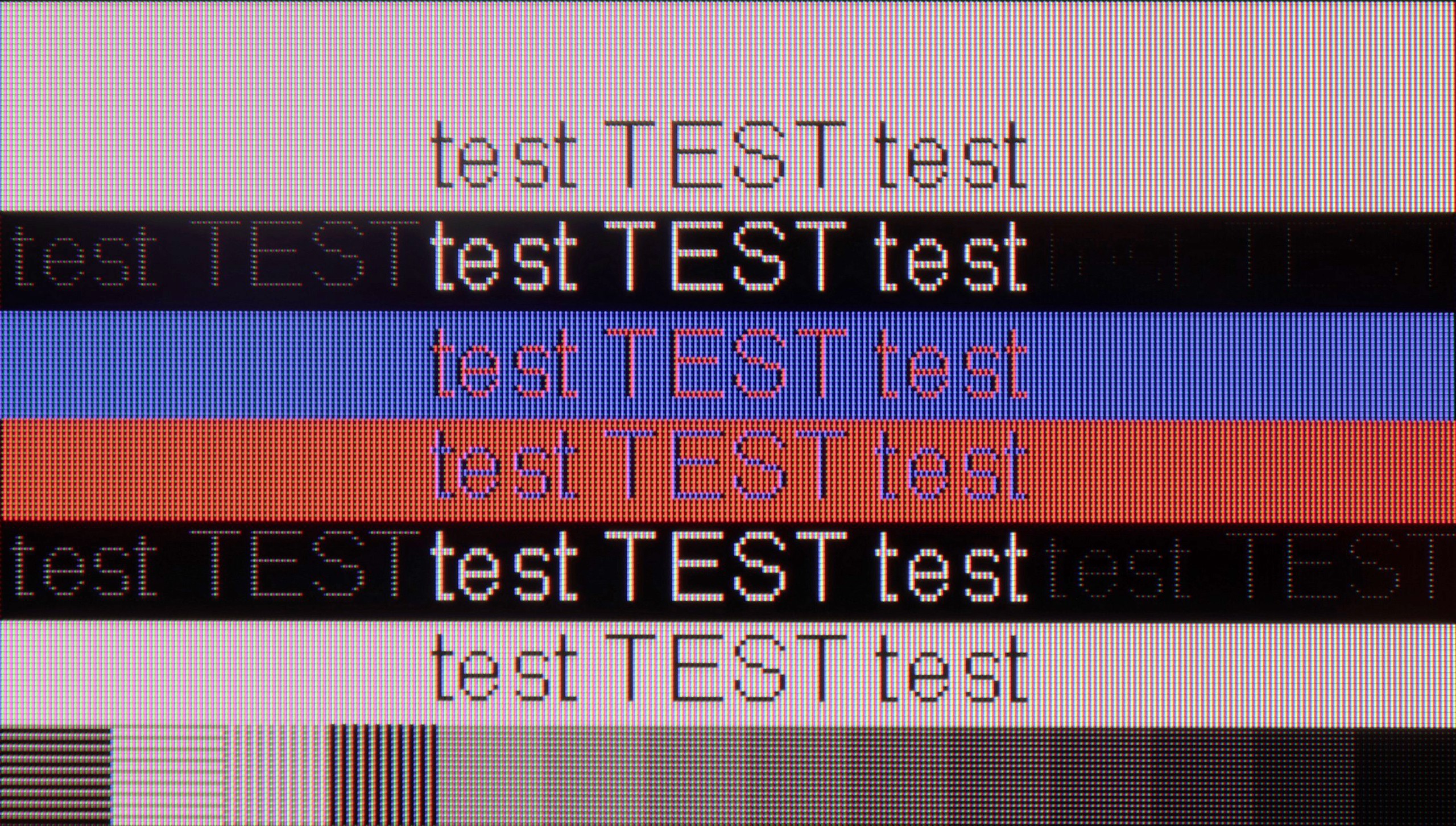
The photo shows the legibility of small fonts. Ideally, lines should be the same thickness on both light and dark text, with minimal pixel gaps.
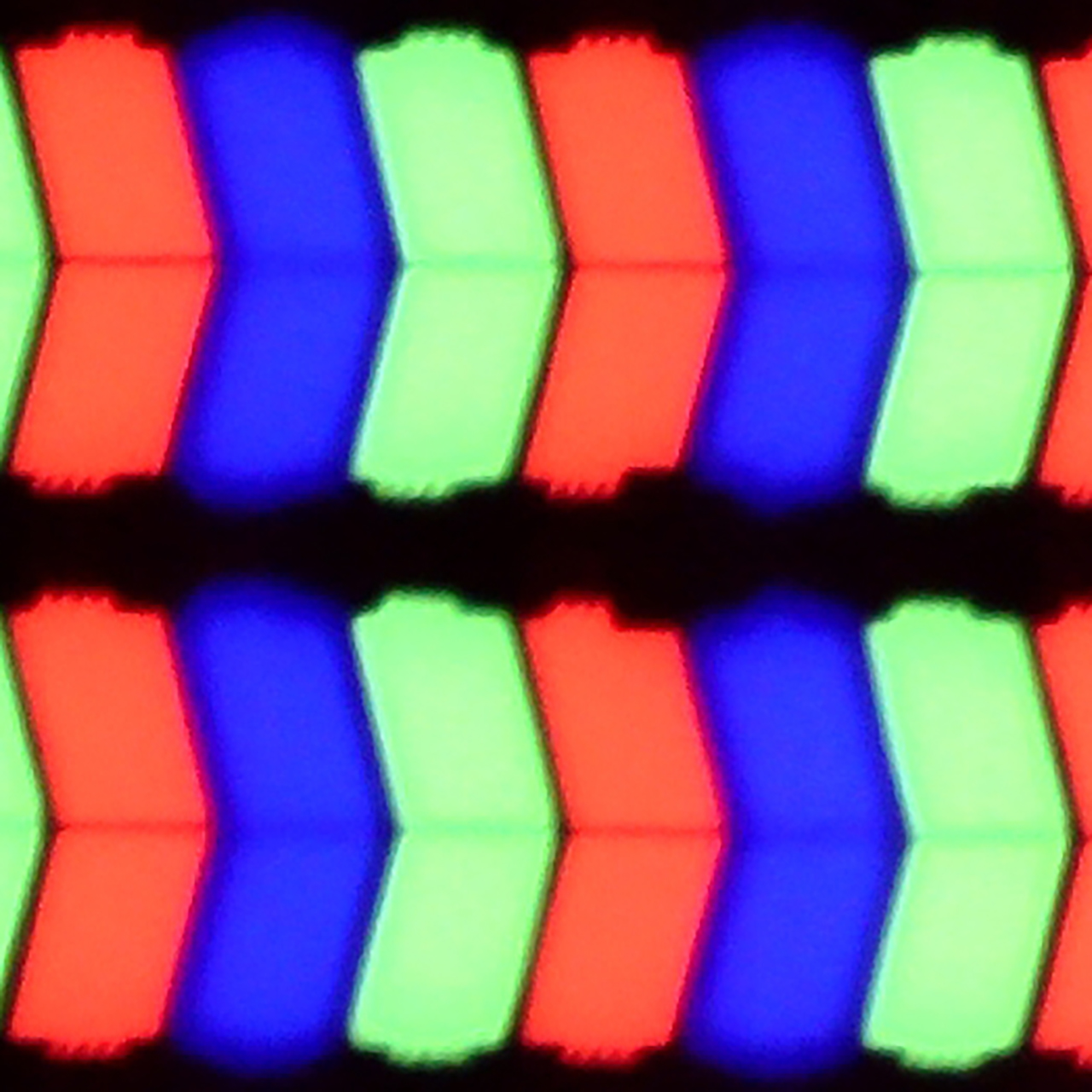
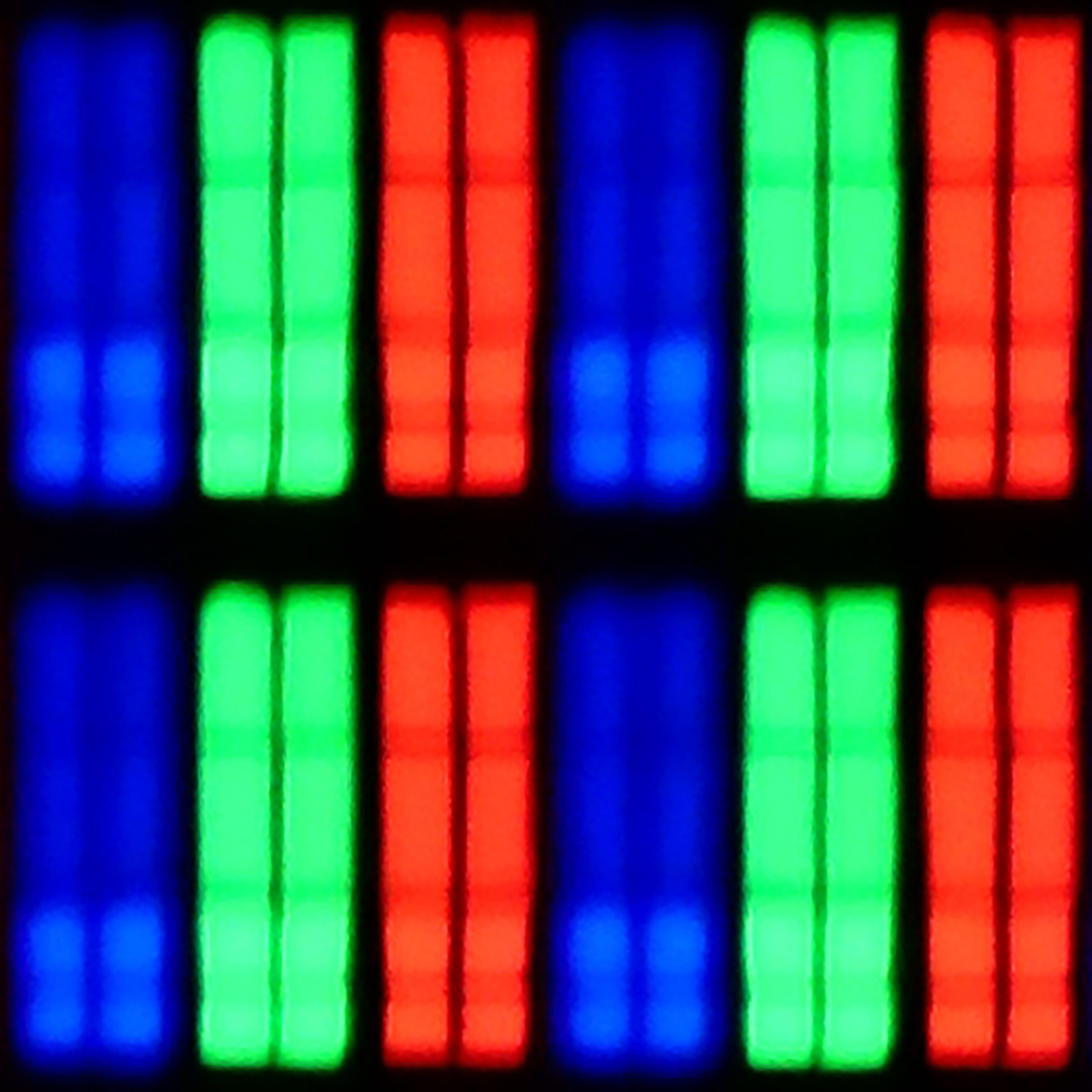
Working on a computer with this television is an absolute pleasure. The Samsung U8092F supports chroma 4:4:4, and thanks to the layout of the sub-pixels in the IPS panel, the readability of fonts – regardless of colour or size – is very, very good. The television is also suitable for occasional gaming on PC, primarily due to its low input lag. However, one must take into account that the G-Sync function does not work on this model, which is odd as VRR functioned without any issues when it came to the console.
As a monitor for a computer, TCL C69K / Q6C performs excellently. At its native resolution, we achieve 4K at 144 Hz, and by lowering the resolution, it can reach even 240 Hz. The television also works with Nvidia and AMD graphics cards, supporting both G-Sync and FreeSync. It is also difficult to find any complaints for office work. Thanks to the support for chroma 4:4:4, the fonts are sharp and legible, and any minor imperfections are so small that they remain unnoticed in everyday use.
Viewing angles
7/10
3/10
The viewing angles on the Samsung U8092F are very good – as one would expect from an IPS panel. The image does not lose much in terms of brightness or colour saturation, even with a greater deviation from the axis. Of course, this is not at the level of organic screens – but it is more than sufficient to comfortably watch the image at an angle, for example, from the side of the sofa.
On the TCL C69K / Q6C, the viewing angles are typical for a VA panel. Sitting directly in front, the image looks very good, but any shift to the side results in a noticeable drop in colour saturation and brightness. The difference is particularly evident in colourful scenes – the hues become washed out, and the contrast loses its depth. Compared to IPS panels, this is clearly a weaker performance, although it is compensated by better blacks and higher native contrast.
Daytime performance
3.4/10
6.4/10
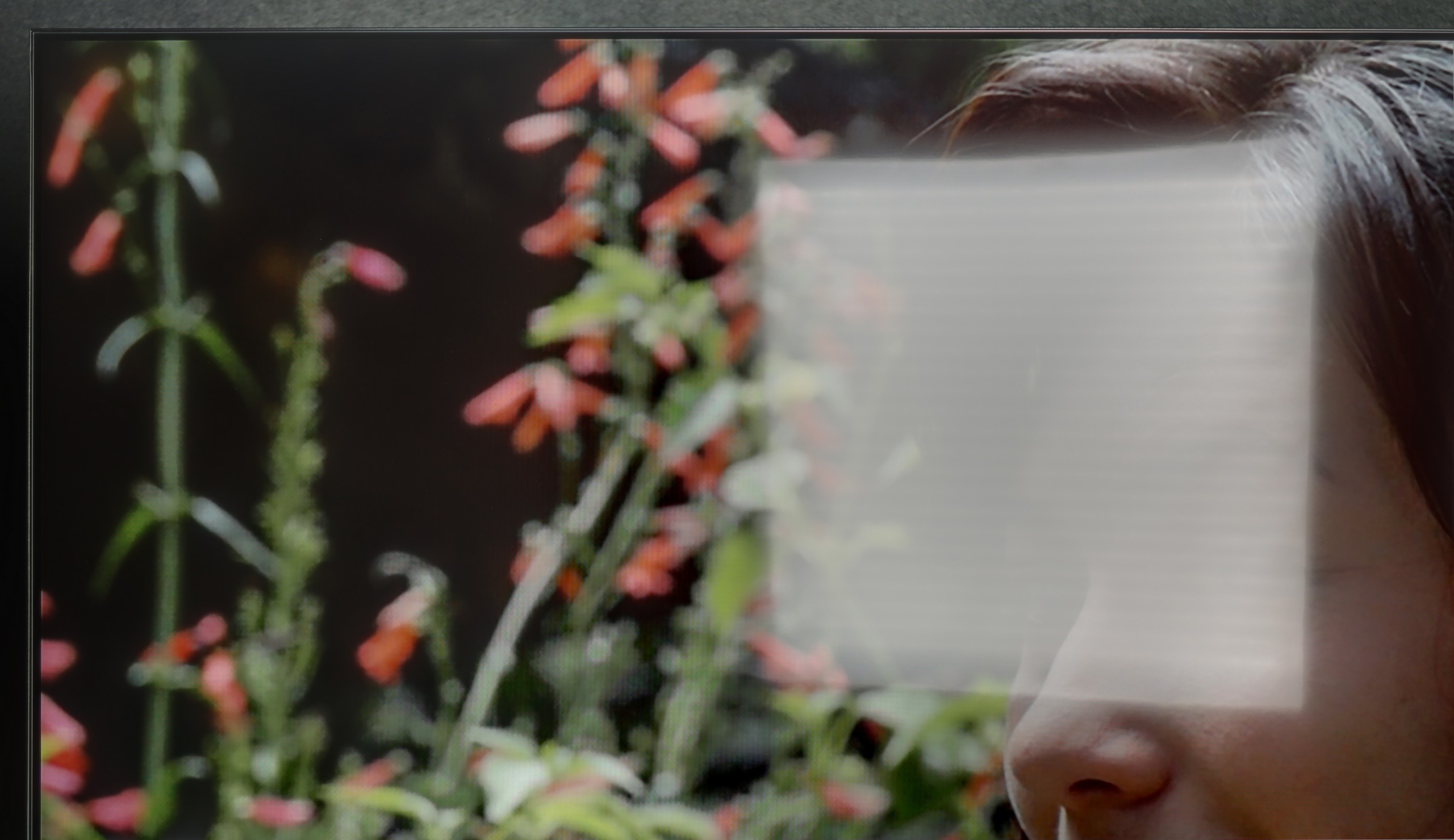
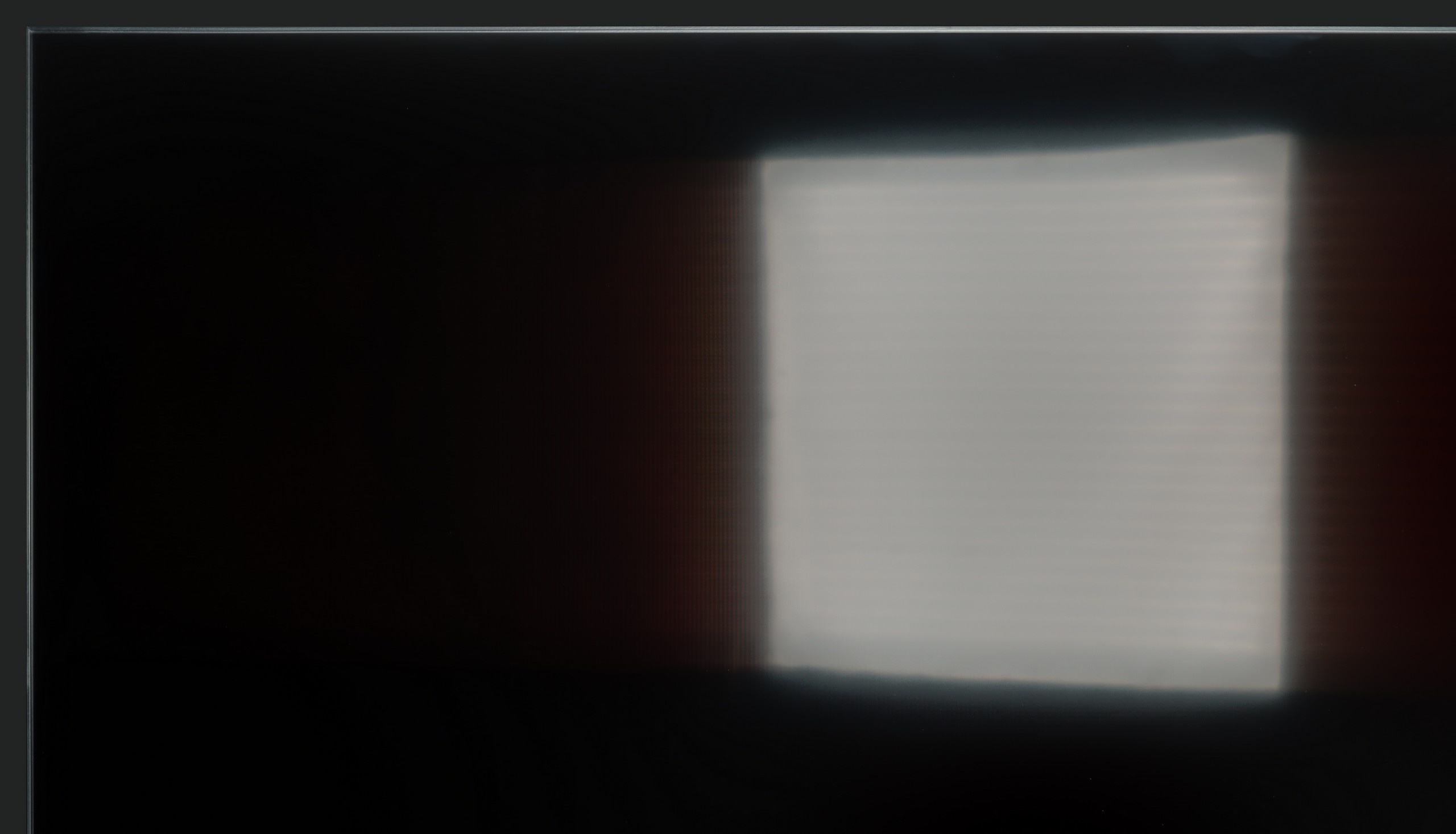
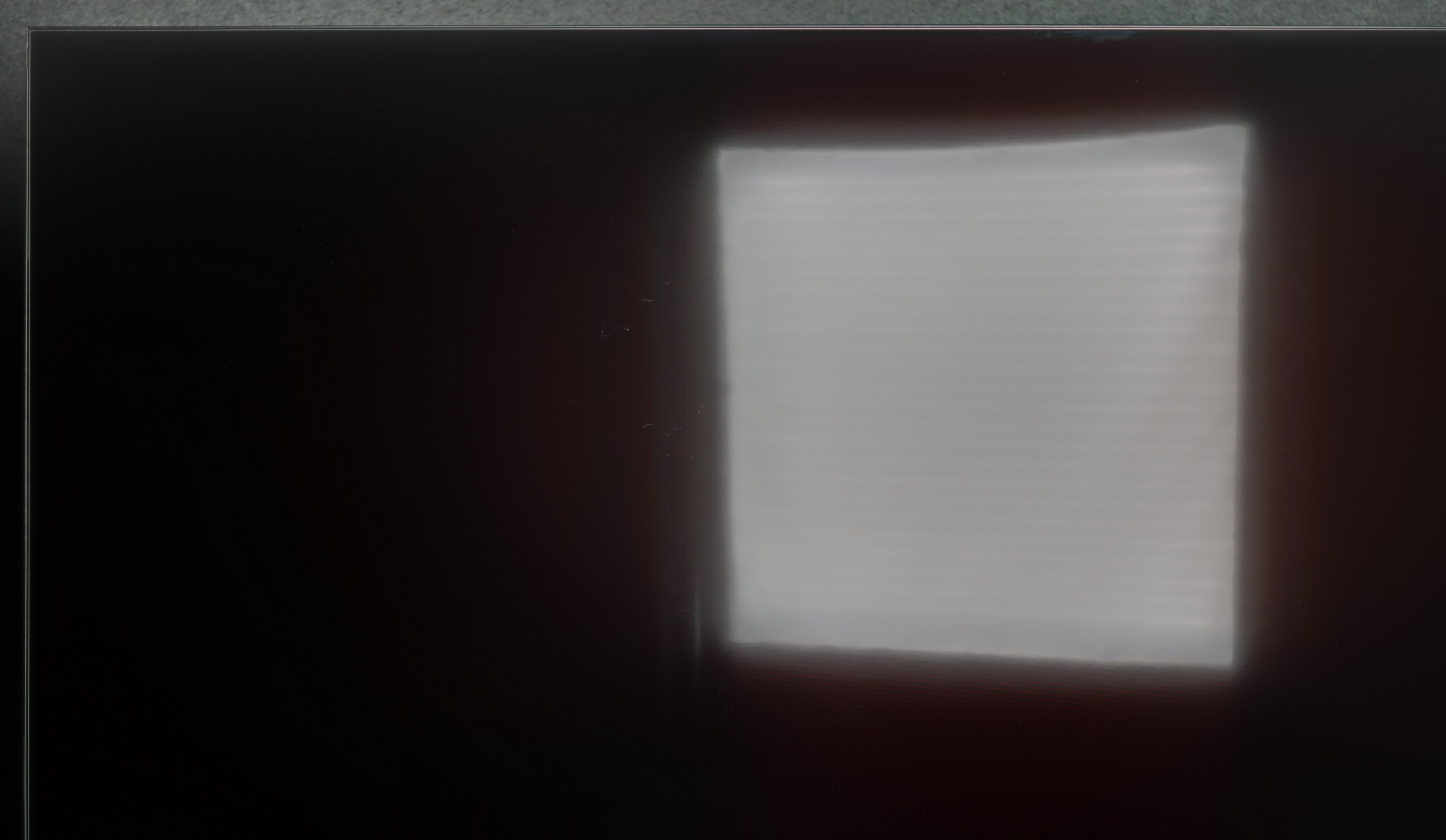
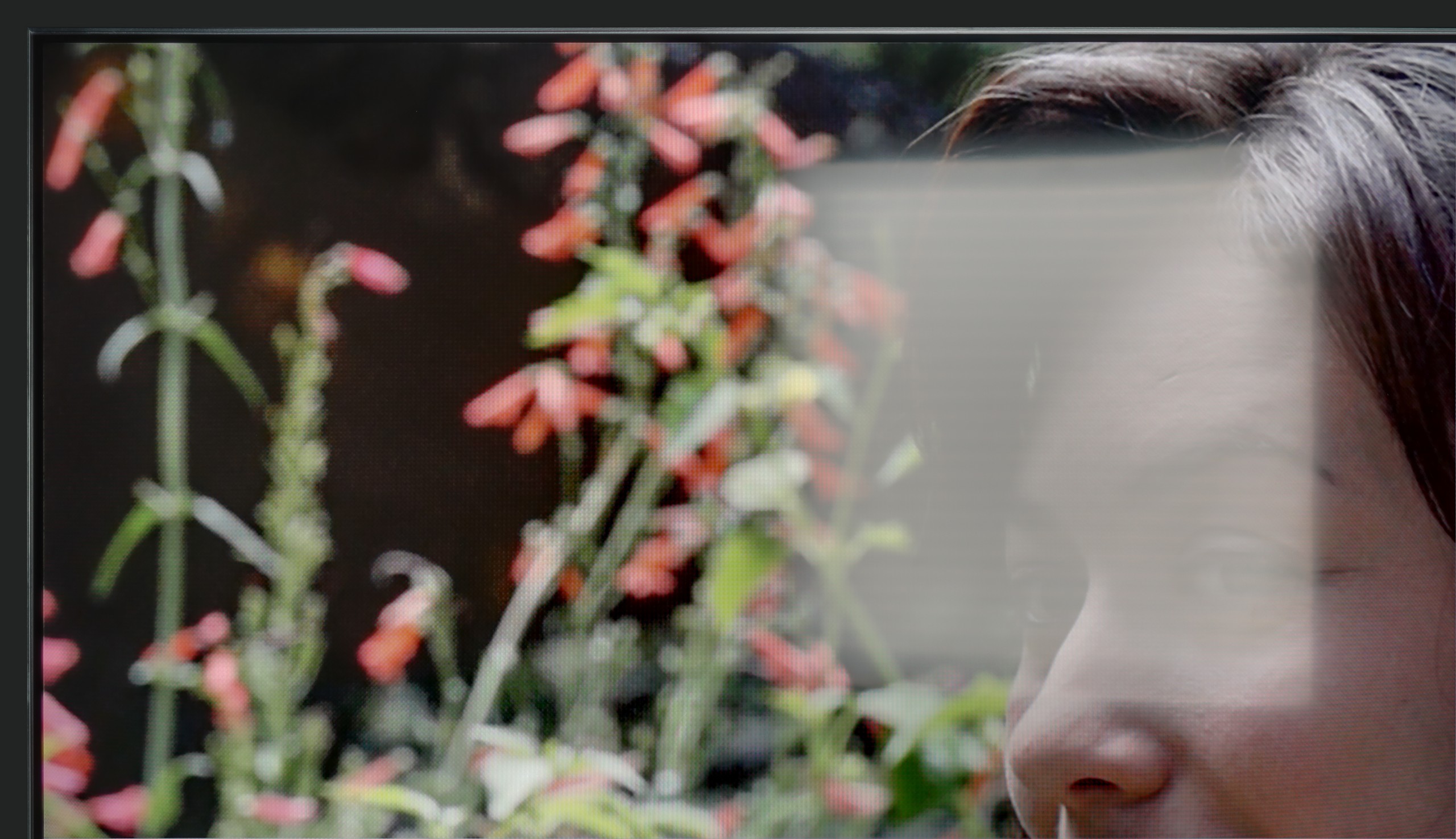
Panel brightness
TCL C69K / Q6C: 532 cd/m2
Samsung U8000F (IPS): 218 cd/m2
Thanks to the satin coating of the Samsung U8092F panel, it handles reflection suppression quite well. The screen does not function like a mirror, and the colours – considering the capabilities of this class of device – remain reasonably saturated, even in somewhat brighter conditions. Unfortunately, the coating alone cannot perform miracles. The television is simply too dim to effectively cut through very challenging lighting conditions. If we place it opposite a light source (e.g. a large window or a strong lamp) – unfortunately, one must reckon with the fact that not everything will be clearly visible on it.
In bright lighting conditions, TCL C69K / Q6C performs quite well. The panel offers decent brightness (in SDR content, it reaches around 550 nits), which allows for comfortable TV viewing in an average-lit living room, and even on days when strong light comes through the windows. This means that daytime viewing does not require complete darkening of the room. Another positive aspect is that the screen coating does a fair job of suppressing reflections, so the television does not become a "mirror" even in bright light. However, it is not at the level of top models with more advanced anti-reflective coatings – in very challenging conditions (e.g., with large windows), reflections will be noticeable.
Panel details
Subpixel Structure:
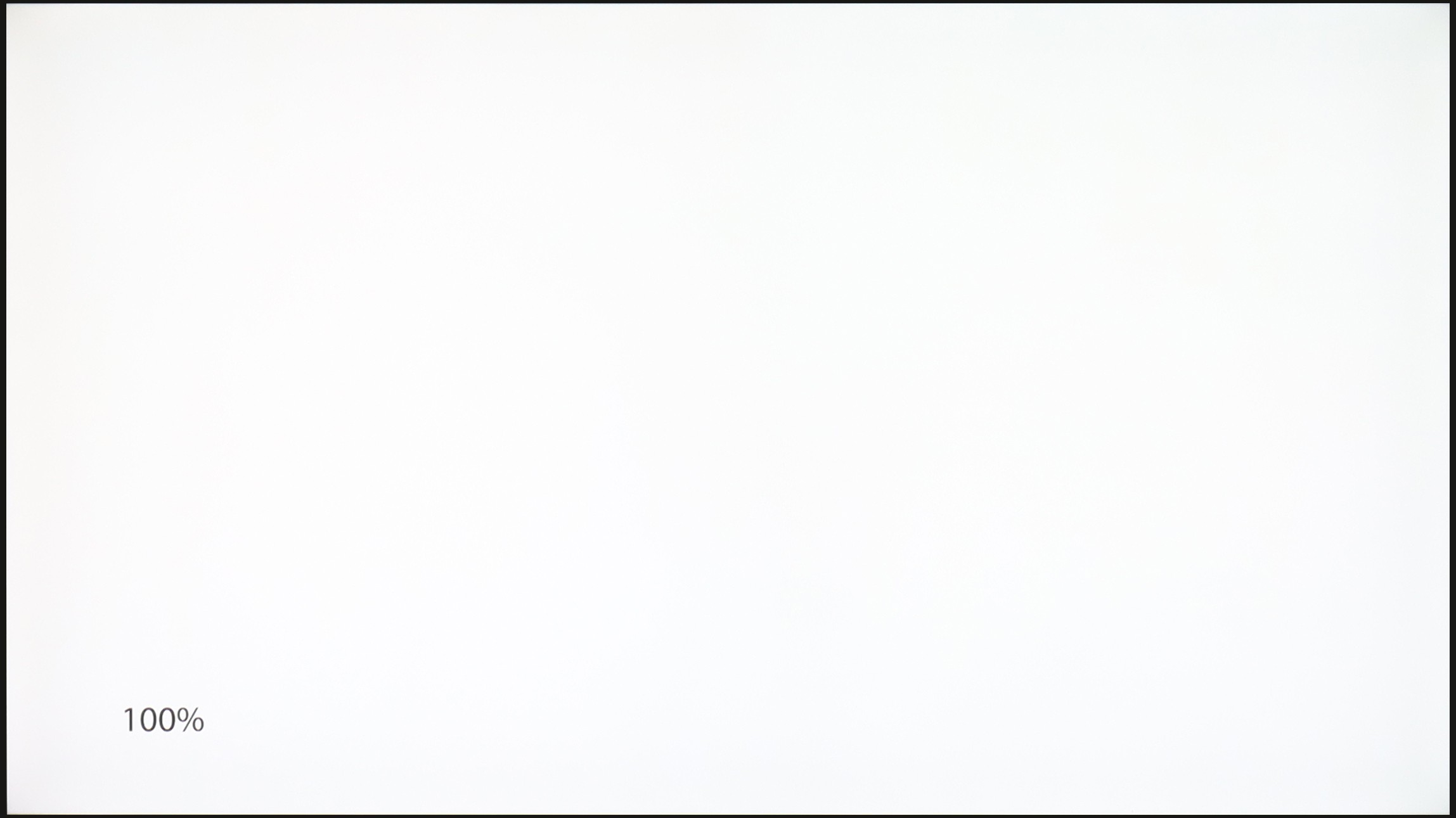
Panel uniformity and thermal imaging:
Samsung U8000F (IPS)
TCL C69K / Q6C
TV features
5.3/10
7/10
- SystemTizenGoogle TV
- System performanceDecentDecent
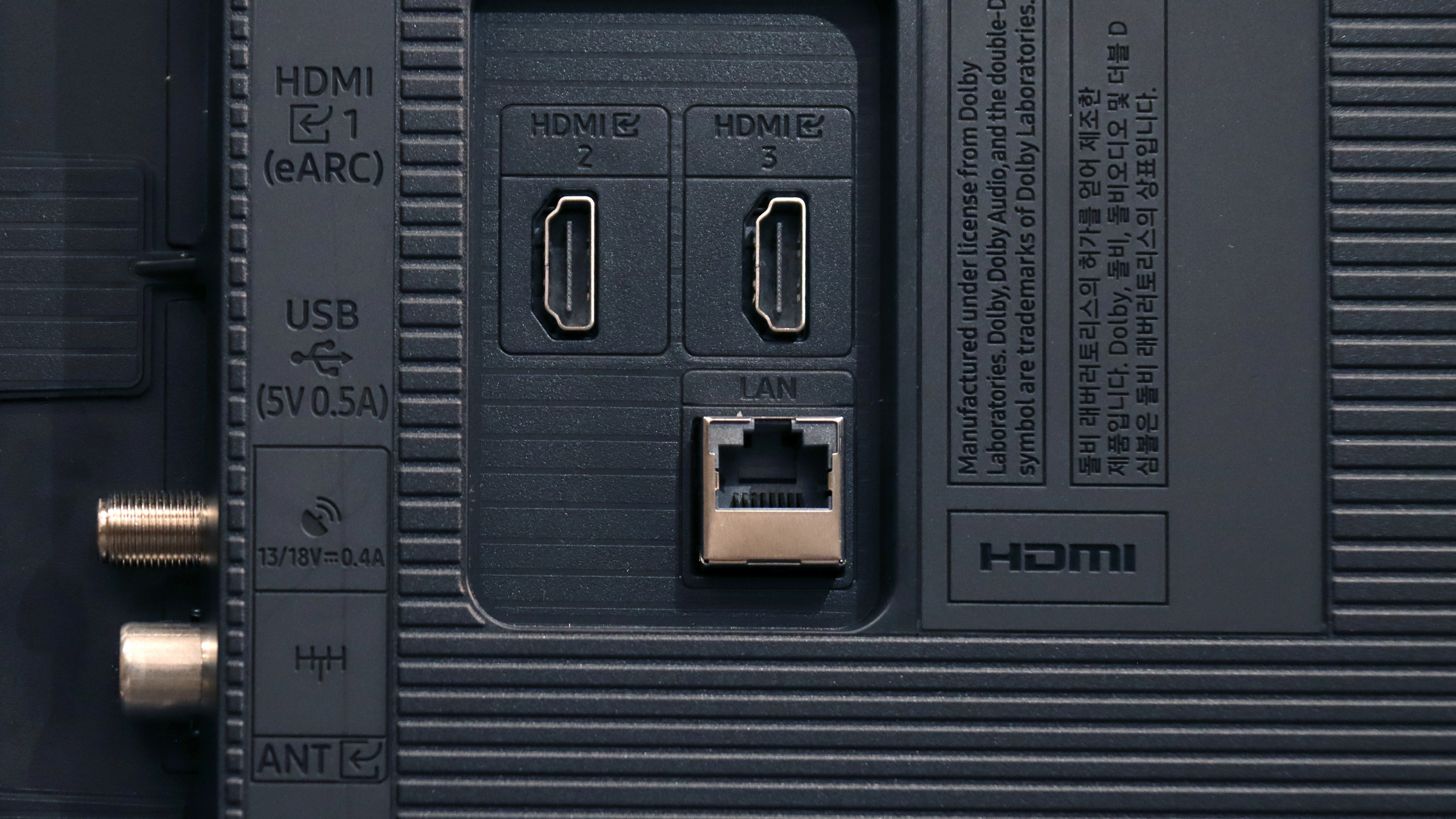
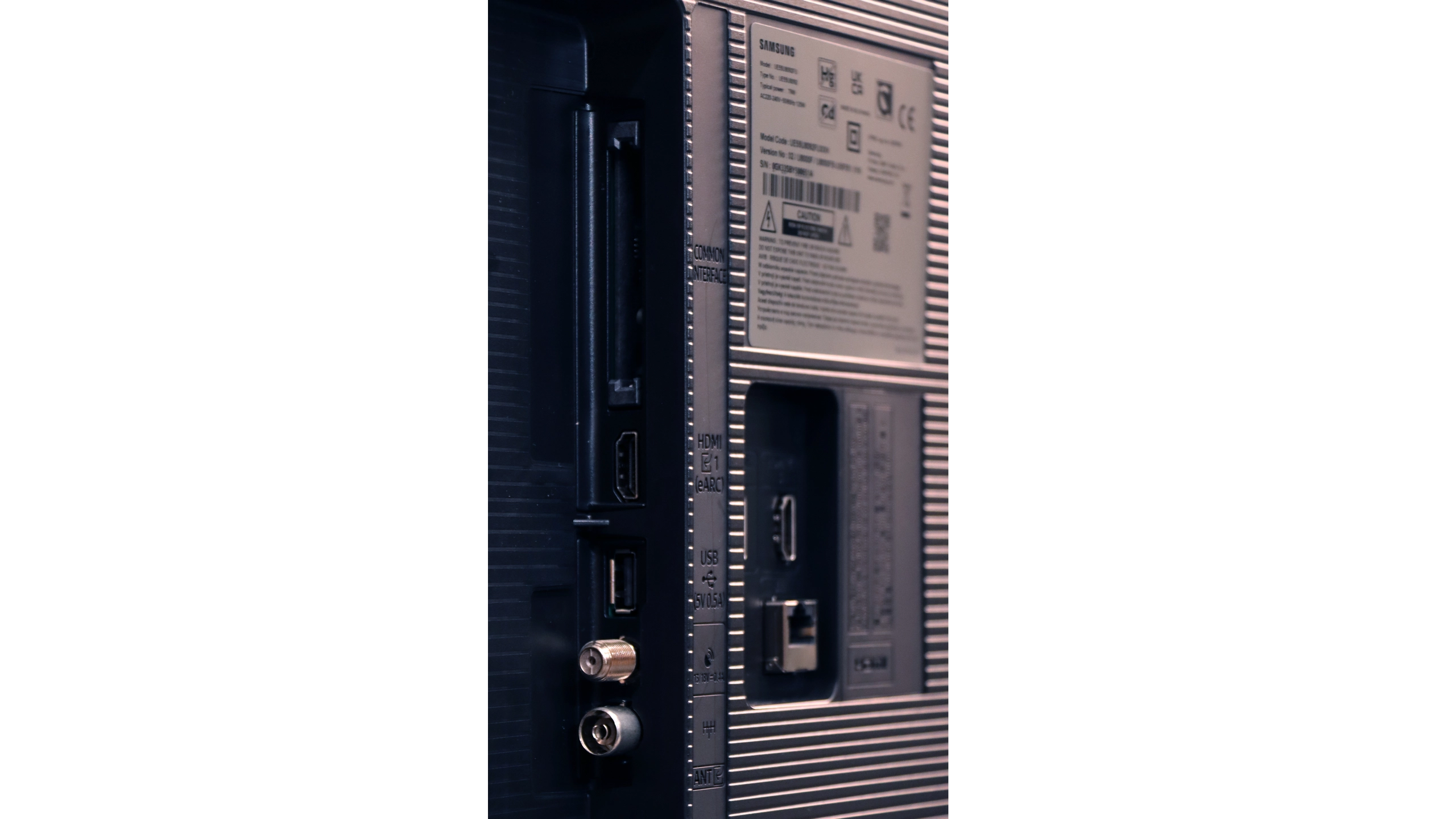
- HDMI inputs3 x HDMI 2.0, 0 x HDMI 2.12 x HDMI 2.0, 2 x HDMI 2.1 48Gbps
- OutputseARC (HDMI), ARC (HDMI)Toslink (Optical audio), eARC (HDMI), ARC (HDMI)
- Network InterfacesWi-Fi 2.4GHz, Wi-Fi 5GHz, Ethernet (LAN) 100MbpsWi-Fi 2.4GHz, Wi-Fi 5GHz, Ethernet (LAN) 100Mbps
- TV receptionDVB-T, DVB-T2, DVB-S, DVB-S2, DVB-CDVB-T, DVB-T2, DVB-S, DVB-S2, DVB-C
Classic features:
- Recording to USB (terrestrial TV)
- Recording programming
- Picture in Picture (PiP)
- RF remote control (no need to aim)
- Backlit remote control
- Teletext
- Audio only mode
- Bluetooth headphones support
- Simultaneous Bluetooth headphones & TV audio
Smart features:
- AirPlay
- Screen mirroring (Windows Miracast)
- Voice search
- Voice search in native language
- Ability to connect a keyboard and mouse
Sound connection options
- HDMI audioeARC (HDMI), ARC (HDMI)eARC (HDMI), ARC (HDMI)
- Other audio outputsToslink (Optical audio)
- Wireless audioBluetooth, Samsung Q-Symphony (Speaker extension)Bluetooth, Samsung Q-Symphony (Speaker extension)
Supported audio formats (external HDMI eARC audio):
- Dolby Digital Plus 7.1
- Dolby True HD 7.1
- Dolby Atmos in Dolby Digital Plus (JOC)
- Dolby Atmos in Dolby True HD
- DTS:X in DTS-HD MA
- DTS-HD Master Audio
Senior accessibility
- Numeric keyboard on TV
- Font size adjustment
- Audio description
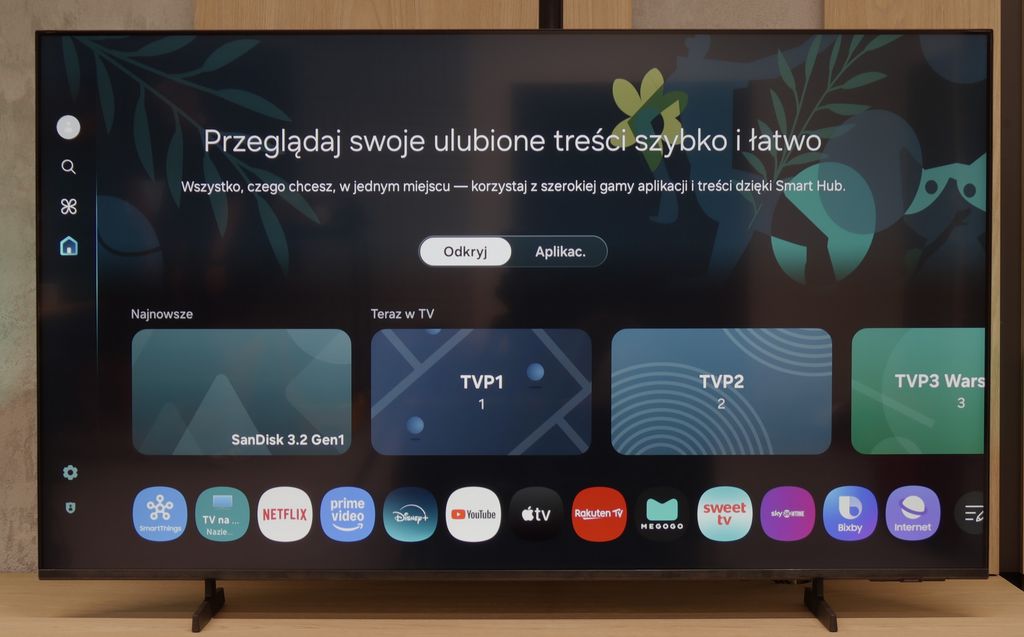
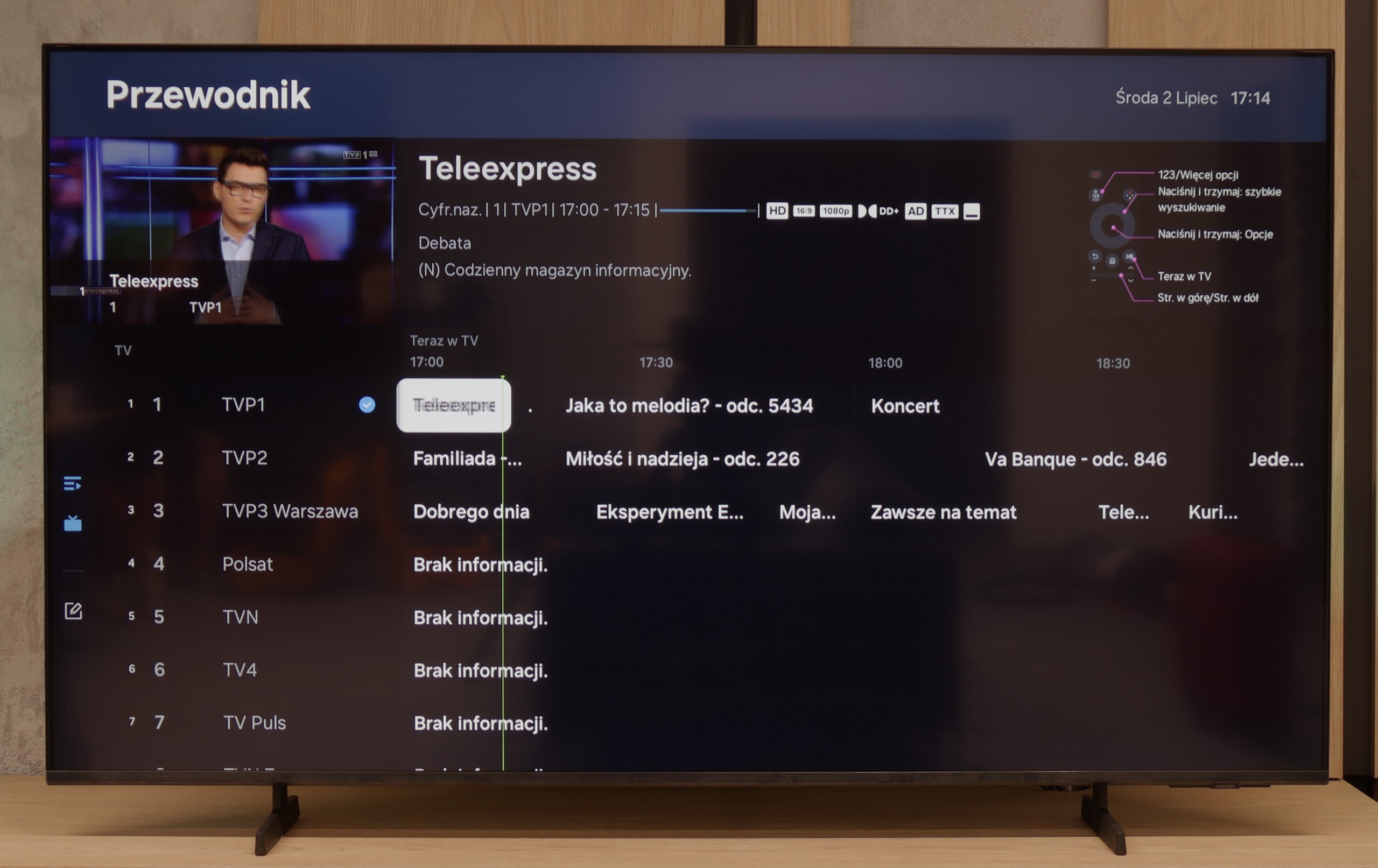
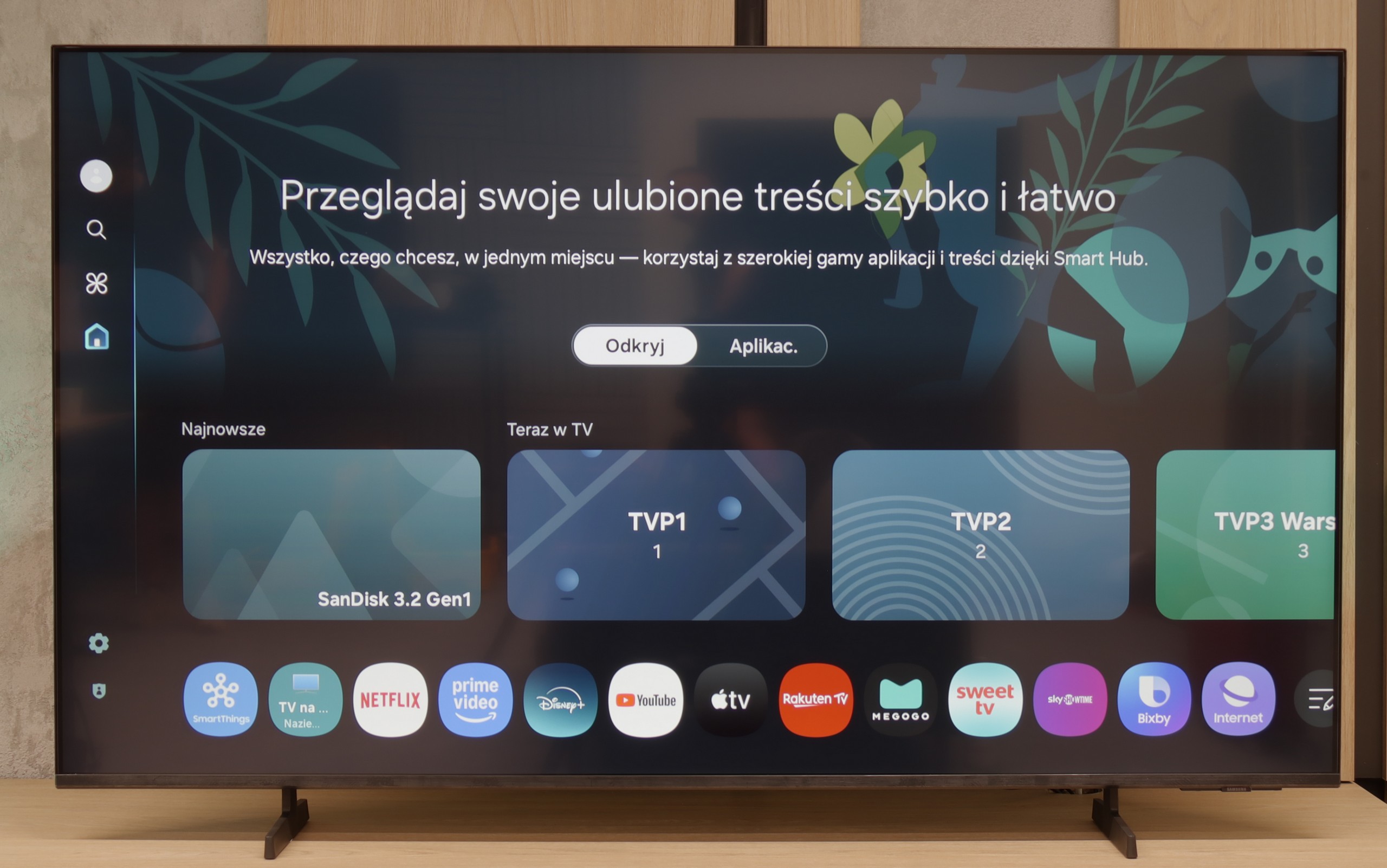
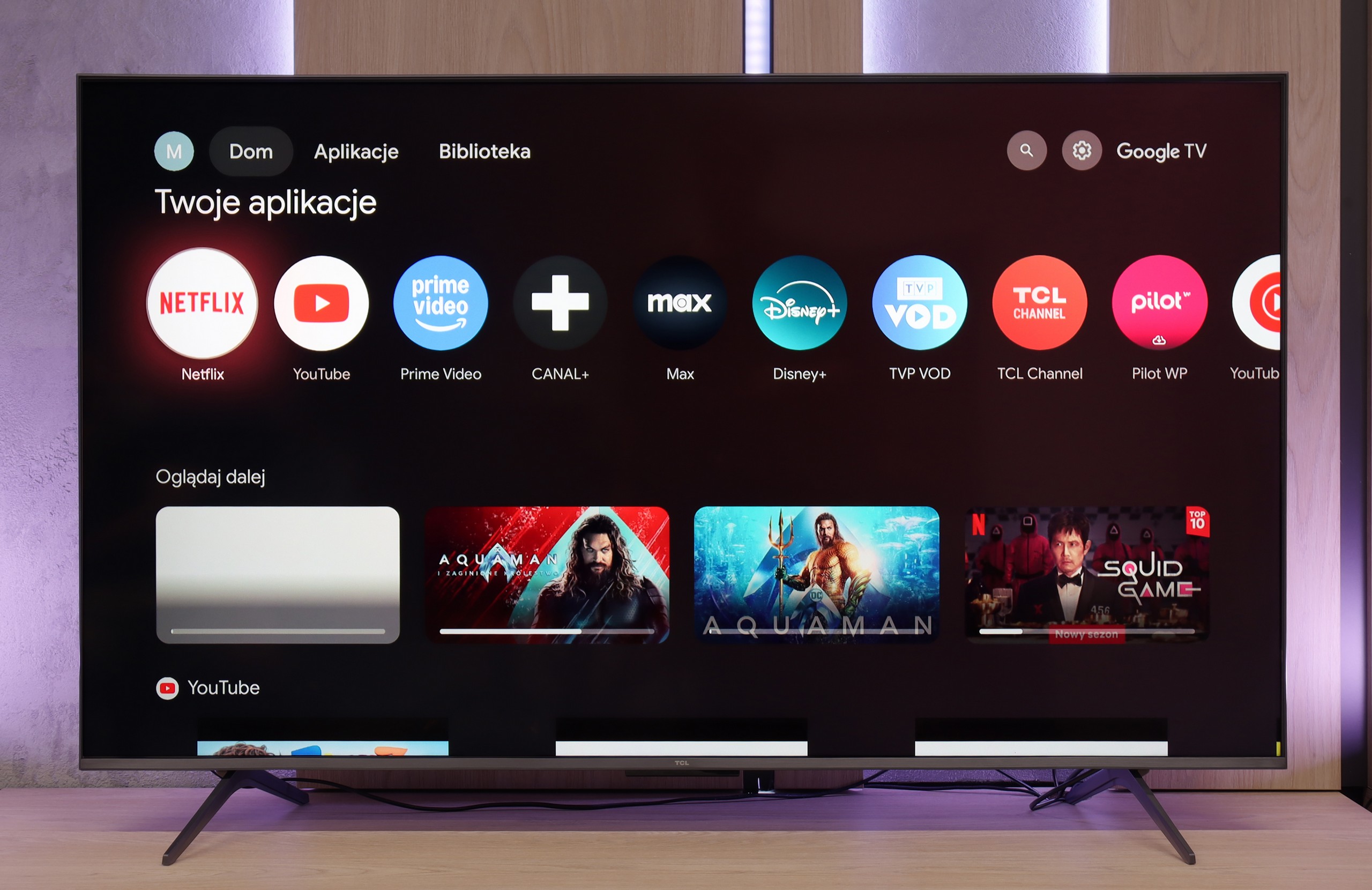
Samsung U8092F – like all this year's models from this brand – runs on the Tizen operating system. The system itself is really well developed: we have access to many applications (though not all), a well-developed smart home support, and various add-ons, including exclusive Samsung applications. There are also features such as AirPlay and Chromecast, which allow us to easily connect our phone to the television and stream multimedia.
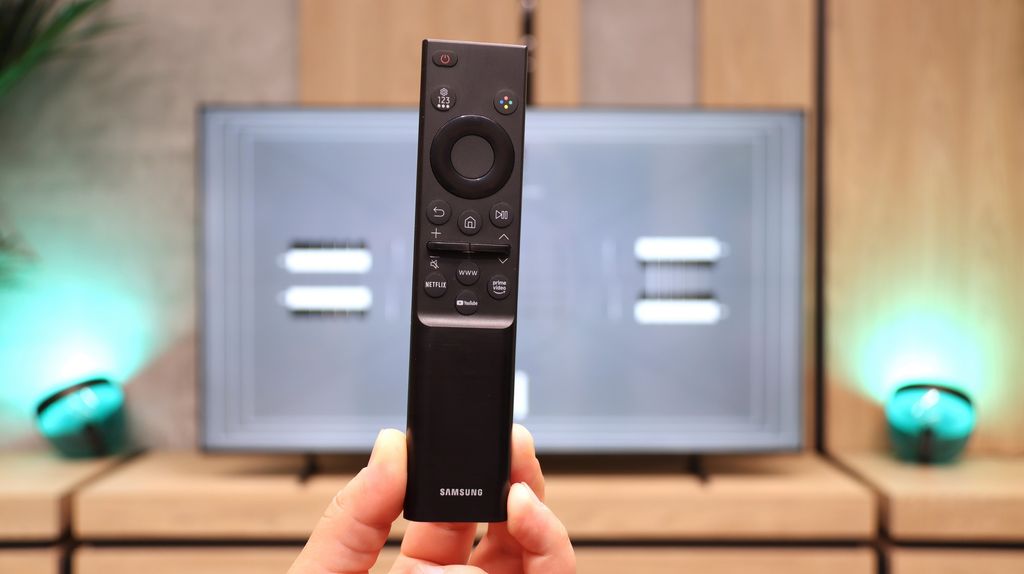
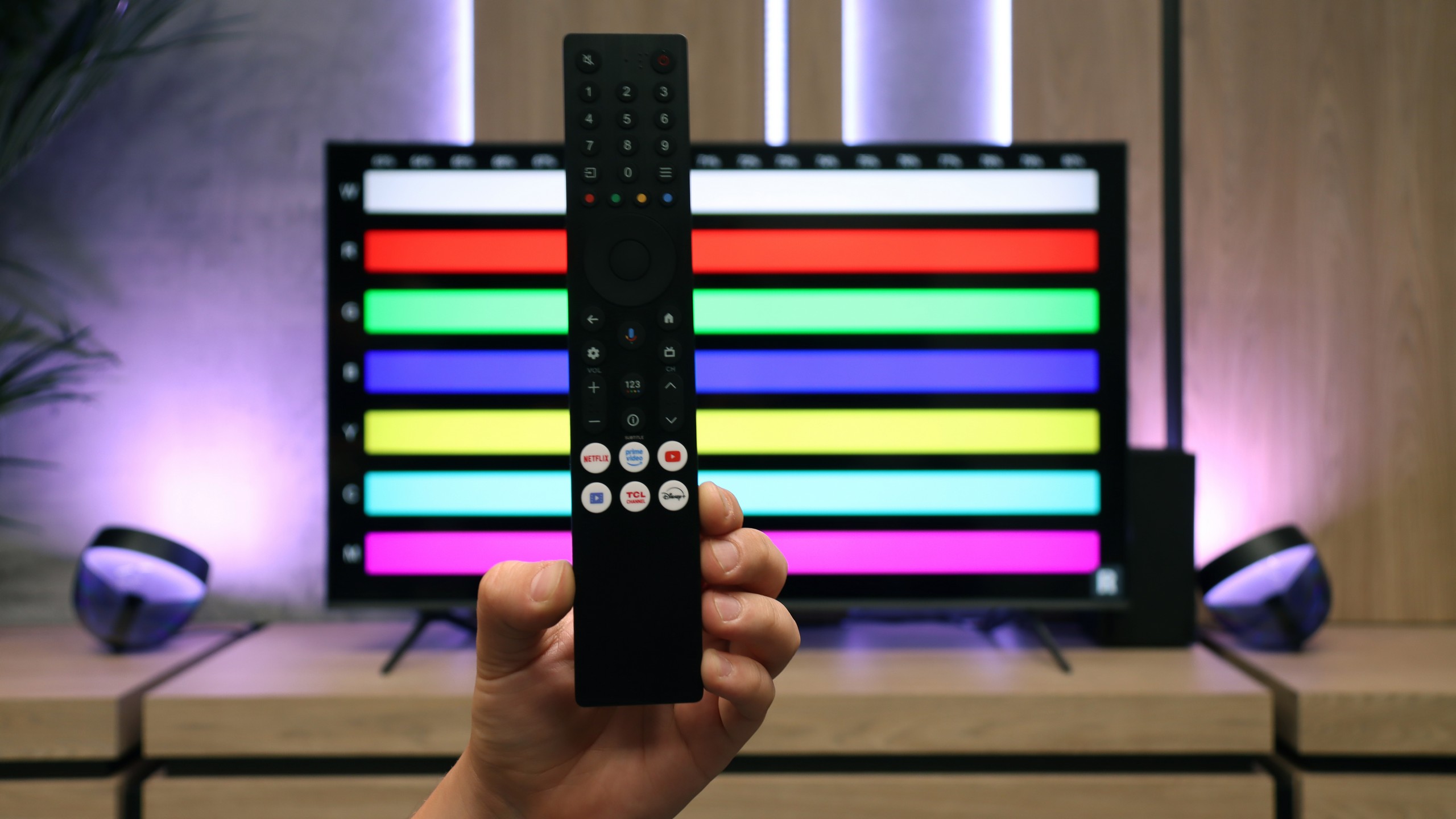
Unfortunately, as this is the cheapest series from Samsung in 2025, the manufacturer has not decided to include a solar remote. In the package, we find a classic infrared remote, which visually resembles the newer version, but unfortunately lacks voice functions. As for the typical "television" add-ons – the recording function and PiP (picture-in-picture) mode are missing. However, HDMI eARC works in its favour, allowing easy control of devices such as a decoder or soundbar with the remote included – and it truly works seamlessly.
Multimedia Features: Google TV
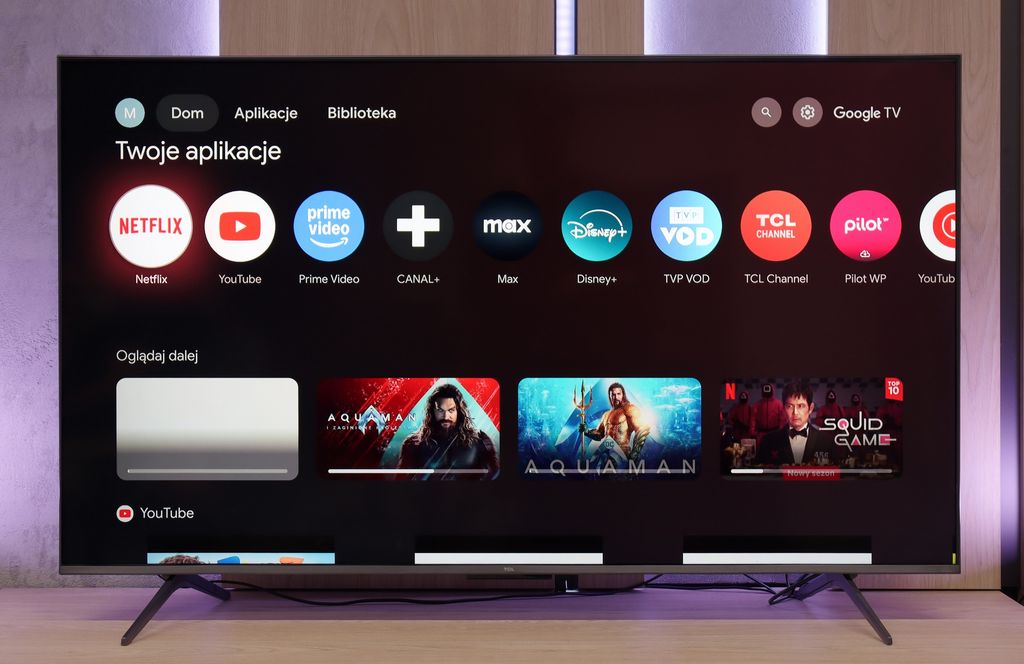
The Google TV system is undoubtedly the strongest user aspect of TCL C69K / Q6C. It gives the television its character and provides an advantage over many competitors. We receive a full package of services: from support for popular streaming applications, through support for screen mirroring, to AirPlay (so that iPhone users feel at home). Additionally, there is the Google Assistant, recently updated to Gemini AI, which not only answers questions but also efficiently executes simple commands (e.g., changing channels or searching for content in VOD). The system itself operates quite responsively. However, one cannot overlook a certain downside: the awkward translations in the Polish menu can elicit a smile but sometimes require a moment's thought to decipher their meaning.
Classic Features
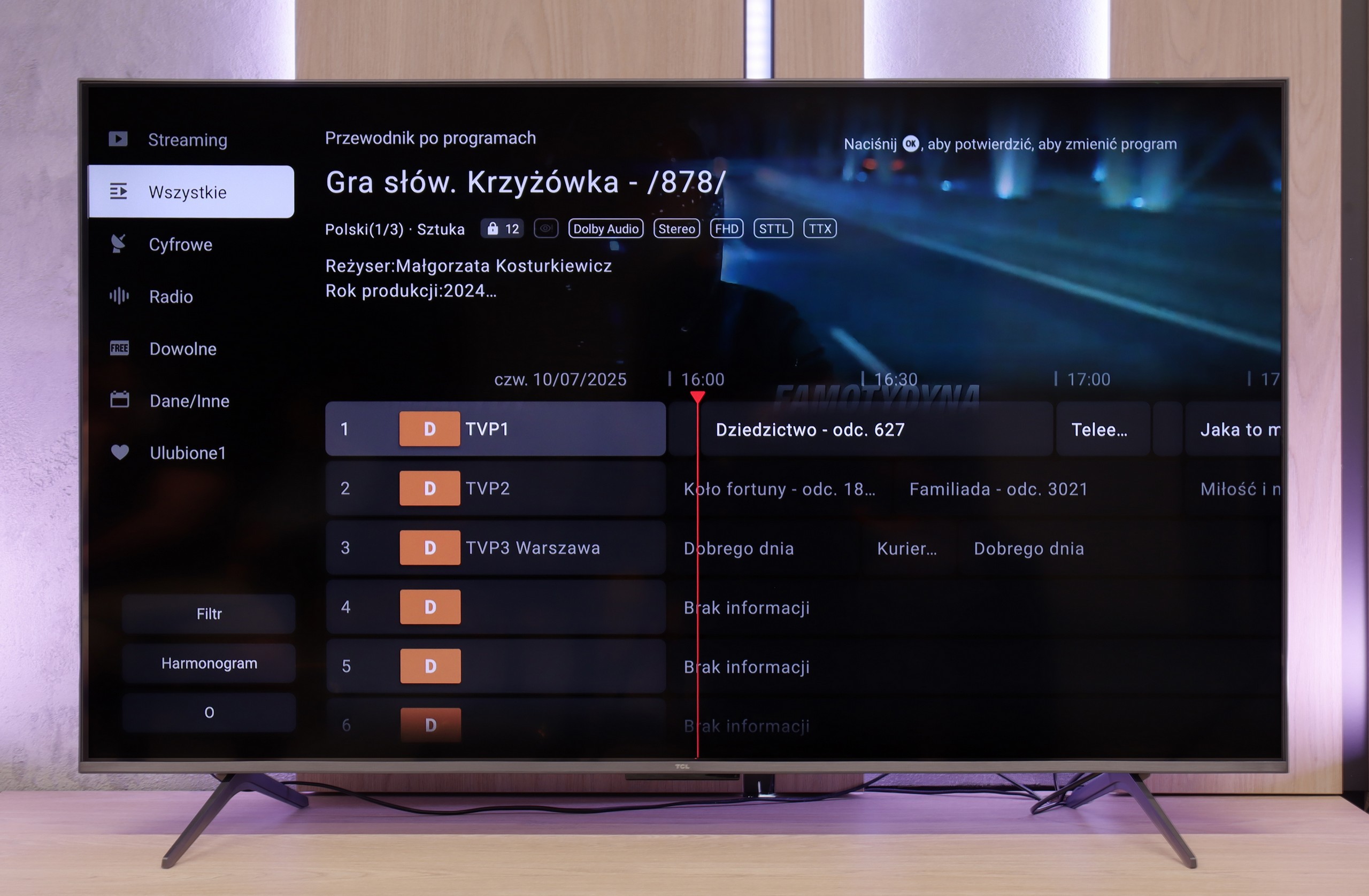
In terms of classic television functions, the TCL C69K / Q6C fares rather average. We will not find USB recording or PiP mode here, which may be disappointing for some users. However, the manufacturer has not forgotten the basics: teletext television and a clear EPG are available, which still matter to certain users. In daily use, the support for external audio devices via Bluetooth is also useful. It’s a simple way to connect, for example, a speaker or headphones, which can be a practical solution for seniors. Beyond that, however, it's hard to find elements that would distinguish C69K / Q6C from its rivals – it is simply a solid but standard package of basic functions.
Apps
9.3/10
9.6/10






















Playing files from USB
9.3/10
8.9/10
Supported photo formats:
Maximum photo resolution:
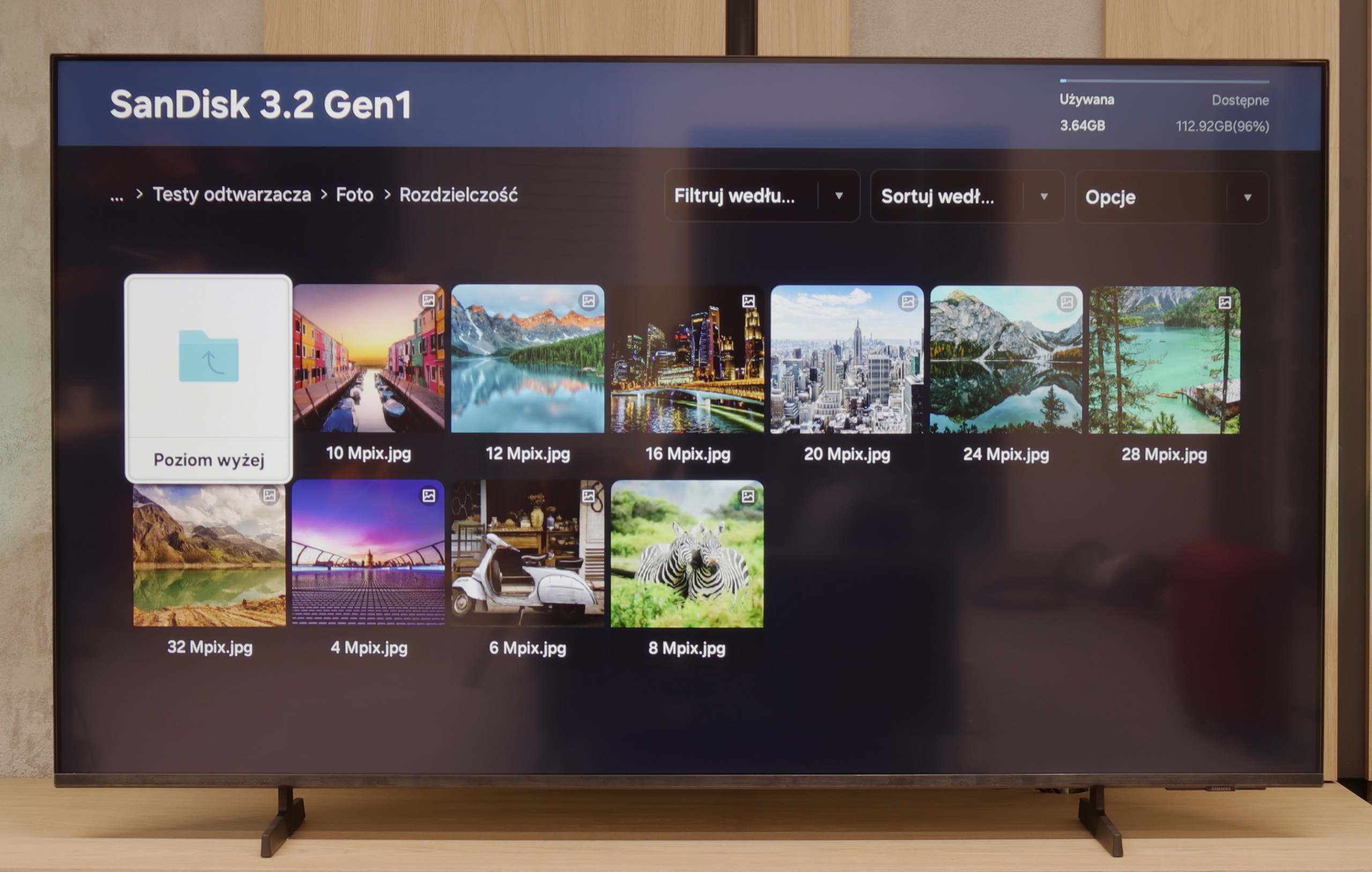
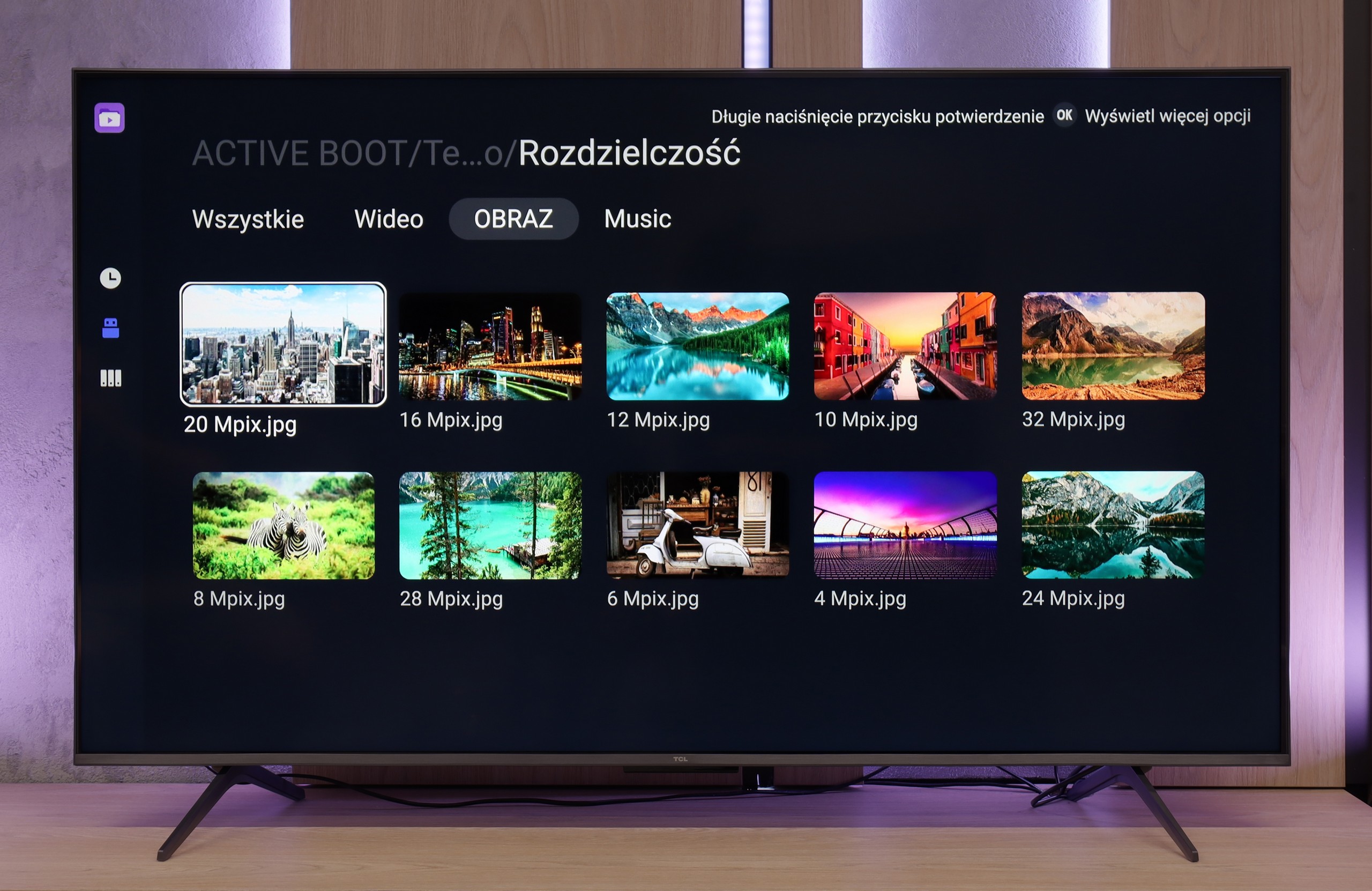
Samsung U8092F handles file playback quite seamlessly – the television supports most popular audio and video formats. Of course, it does not support Dolby Vision, but that is simply not found in any Samsung model.
Some reservations can be made regarding the support for external text files – those that the user would like to add as subtitles to a film. During our tests, the television only played TXT files, while other extensions like SRT or SUB unfortunately did not work. This may not be a problem for everyone, but it's worth knowing. Perhaps it is an issue to be addressed in the future with an update to the television's operating system.
The built-in media player in TCL C69K / Q6C performs really well – practically all popular file formats work without major issues. There are indeed minor exceptions, particularly with less common codecs or unusual video file configurations, but in everyday use, this is rarely noticeable. The biggest advantage, however, is that the television runs on Google TV, which provides complete freedom in choosing additional software. If someone encounters a file that the standard player does not support, it's enough to install an alternative – such as VLC – and the problem disappears.
Sound
5.7/10
6.5/10
- Maximum volume--
- Dolby Digital Plus 7.1
- Dolby True HD 7.1
- Dolby Atmos in Dolby Digital Plus (JOC)
- Dolby Atmos in Dolby True HD
- DTS:X in DTS-HD MA
- DTS-HD Master Audio
U8092F does not pretend to have a home cinema on board. We receive a standard set of 2 x 10 W, which sounds adequate, but without much excitement, although it does have a slight bass. For everyday viewing, such an audio setup is entirely sufficient. We were pleasantly surprised that it managed to play a film with the built-in Dolby Atmos (JOC) codec – though of course, we are not talking about real surround sound.
In terms of audio, TCL C69K / Q6C performs quite well. The manufacturer has been boasting about its collaboration with the Onkyo brand for several years, and it indeed translates into sound quality. The sound is pleasant, with clear mids and a fairly clean top end, and overall it feels well-balanced. Of course, it cannot replace a full-fledged soundbar, especially regarding bass depth, but for built-in speakers in a television of this price range – it is really very good.
Sound Quality Test
No sound test video