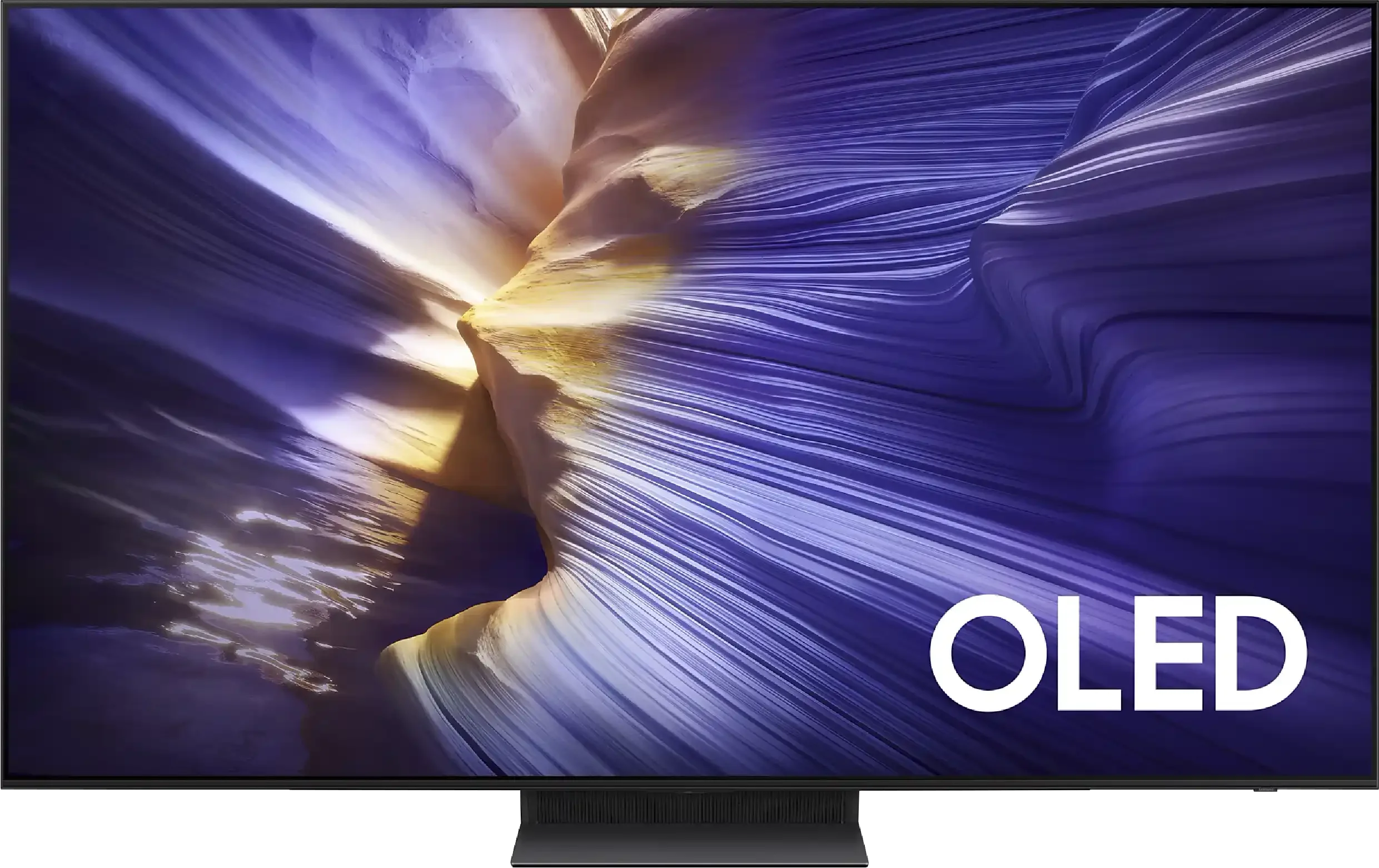
The Samsung S90F is an excellent representative of the premium mid-range in the world of OLED televisions. Here we have an organic matrix that guarantees perfect contrast – and no matter how hard LCD manufacturers try with local dimming in Mini LEDs, this black simply cannot be replicated. The S90F showcases its class without any compromises. Compared to last year's model, we get a slightly brighter WOLED panel that, under favourable conditions, can achieve even 1200 nits. This is a result sufficient for comfortable viewing of HDR materials in reference quality for most scenes – especially on streaming platforms such as Netflix. The picture quality here is at a very high level, whether we're watching a film, gaming on a console, or streaming a sports event. In fact, versatility is one of the biggest advantages of this model. With a refresh rate of 144 Hz, very low input lag, and a full set of features for gamers (including working HGiG and the unique Game Motion Plus smoothing), it’s hard to find fault with anything here. The Tizen system performed really well on the S90F. It has its limitations – primarily a closed ecosystem and fewer app options than on Google TV – but if you mainly use the most popular services, this shouldn’t be an issue. A big plus is also the remote control, which can operate most connected devices – even without a numeric keypad. There are also downsides. The built-in media player occasionally has issues with certain formats, and the anti-reflective coating typical of WOLEDs does not handle strong light very well – reflections can be noticeable. We also lack support for DTS and Dolby Vision, but this has been the standard at Samsung that one could expect for years. So is the S90F with a WOLED panel the perfect television? No – but it really isn't missing much. It’s one of the most refined and complete OLEDs in this price range, capable of handling any content, from a series on Netflix, through gaming on a console, to a Sunday match.
- Matching (Score) |
- Our verdict |
- TV appearance |
- Where to buy |
- Contrast and black detail |
- HDR effect quality |
- Factory color reproduction |
- Color reproduction after calibration |
- Smoothness of tonal transitions |
- Image scaling and smoothness of tonal transitions |
- Blur and motion smoothness |
- Console compatibility and gaming features |
- Input lag |
- Compatibility with PC |
- Viewing angles |
- Daytime performance |
- Panel details |
- TV features |
- Apps |
- Playing files from USB |
- Sound
SAMSUNG S90F (WOLED) vs Hisense UR8S
 Direct comparison
S90FAE

Panel type: WRGB OLED
Resolution: 3840x2160
System: Tizen
Model year: 2025
Complete the survey to find out the result
Panel type: LCD VA
Resolution: 3840x2160
System: VIDAA
Model year: 2026
Complete the survey to find out the result
Overall rating
8.2
8.2
 Movies and series in UHD quality
 8.3
7.4
 Classic TV, YouTube
 8.7
7.6
 Sports broadcasts (TV and apps)
 8.5
7.4
 Gaming on console
 9.6
8.4
 TV as a computer monitor
 8.6
8.5
 Watching in bright light
 6.1
9.5
 Utility functions
 7.7
9.4
 Apps
Apps 8.7
8.3
 Sound quality
 7.4
7.8
Complete the survey to find out what fits your preferences
Advantages

Remarkable black and contrast
High brightness for an OLED TV - 1200 nits peak brightness
Very good motion fluidity - OLED panel 144Hz
Low latency - input lag 5ms
Gaming features: 4x HDMI 2.1, VRR, ALLM, Game Motion Plus, etc.
PiP function and excellent support for external devices with a solar remote
Extended operating system: Tizen
Pleasant sound with a slightly perceptible bass
Very high contrast and good black levels
High image brightness
Potentially wider colour gamut thanks to RGB backlighting
Excellent image processing and upscaling
Panel with a refresh rate of up to 180 Hz
Very good gaming performance
Good viewing angles for a Mini-LED LCD
Matt finish and excellent performance in daylight
Fast VIDAA and many user-focused features
Support for Dolby Vision, HDR10+, Dolby Atmos and DTS
Disadvantages

Issues with playback of certain formats from USB.
Subtle blending of tonal transitions (performs worse than its predecessor S90D)
Lack of support for DTS:X – an external amplifier is required for full support of this format
The full potential of RGB Mini-LED is not always realised in films
HDR brightness can differ from the creators' vision
No proper HGiG implementation
The VIDAA system still lacks a few apps
Our verdict
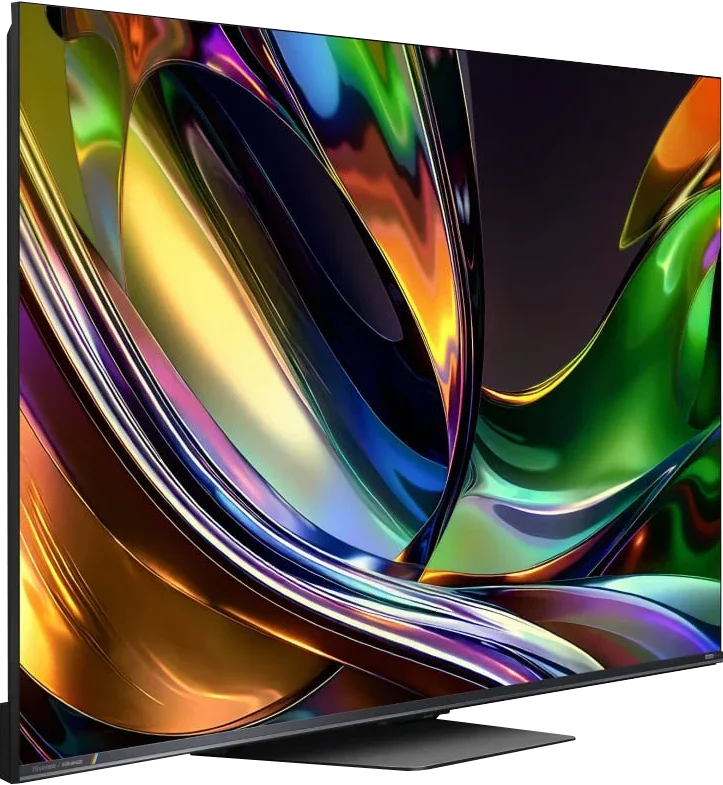
Hisense UR8S is above all a very versatile high-end television that, in most uses, simply performs well or very well. It is not a model aimed solely at cinema, gaming or watching in a bright living room. Its greatest advantage is that it can combine all those things in a single set and it does not have any one clearly weak point. In terms of picture the UR8S has a lot to offer. Contrast is high, HDR can look very impressive, and its brightness is at a level that easily suffices for daytime viewing. Added to that are very good image processing and smooth motion handling. RGB Mini-LED also gives it a very wide colour gamut and it is clear that the technology has significant potential. However, it should be remembered that it does not completely change the character of an LCD television. In more demanding scenes the limitations of local dimming are still visible, and very high colour saturation cannot always be maintained to the same extent as on simple test patterns.
One of the UR8S's strongest points is its everyday usability. The television performs well with sports, is well suited to gaming, and the high brightness and matte finish make a big difference in a bright room. In addition the VIDAA system runs quickly, and Hisense has not removed many features that remain useful in everyday TV use. That is why we mainly see the UR8S as a television for people looking for a single, solid screen for everything. RGB Mini-LED is an interesting addition and provides some real benefits, but it is not the technology alone that makes this model perform well. Its main strength is that it is complete, well equipped and very versatile.
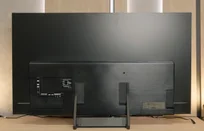
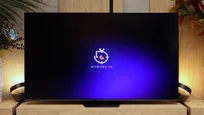
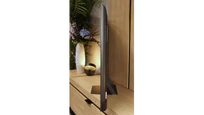
TV appearance

Contrast and black detail
10/10
8/10
Local dimming function: Yes, number of zones: 936 (26 x 36)
Contrast:


Result
∞:1

Result
∞:1

Result
∞:1

Result
∞:1

Result
∞:1
Result
267,450:1
Result
48,550:1
Result
19,450:1
Result
14,850:1
Result
10,800:1
Halo effect and black detail visibility:
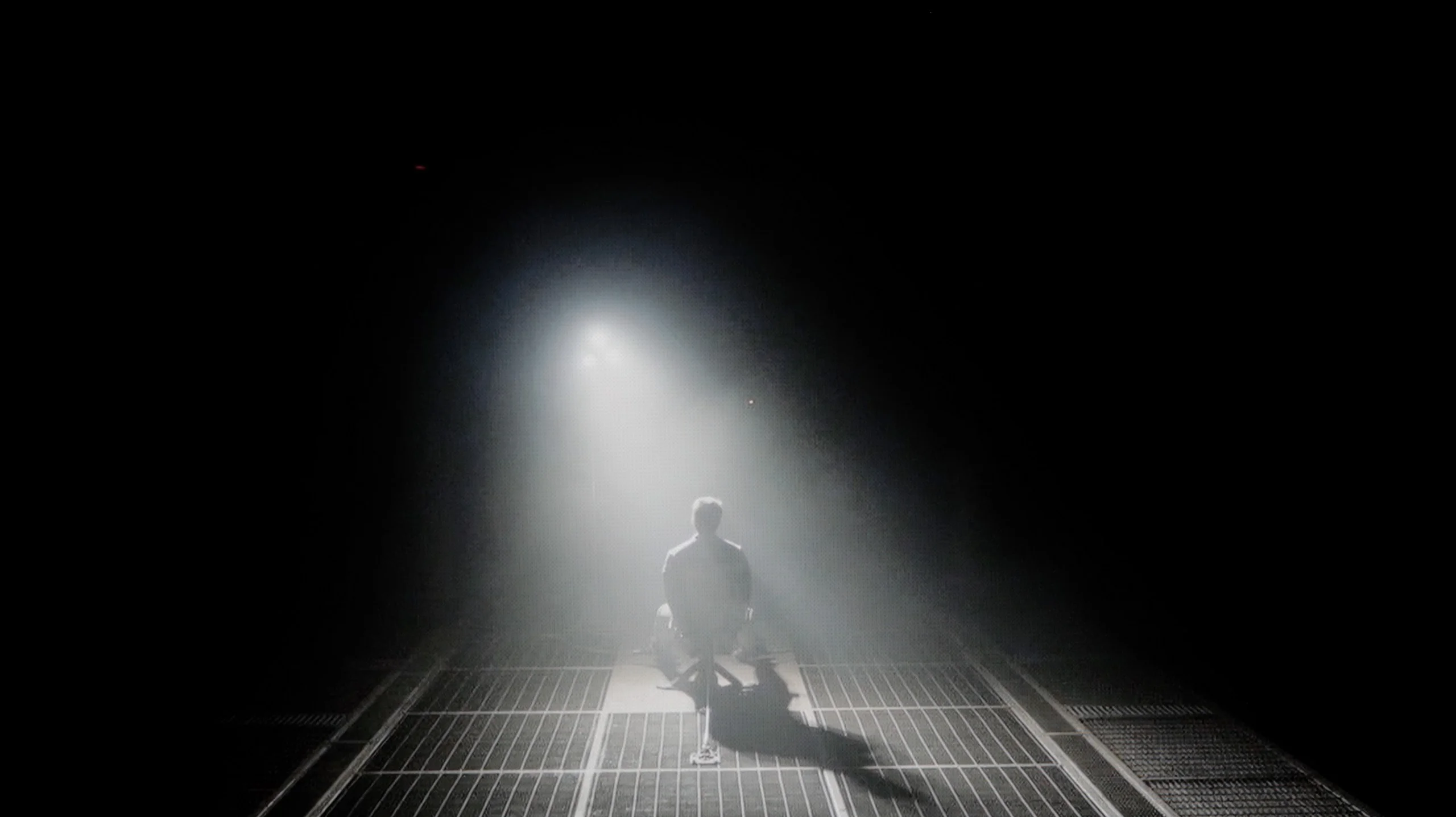
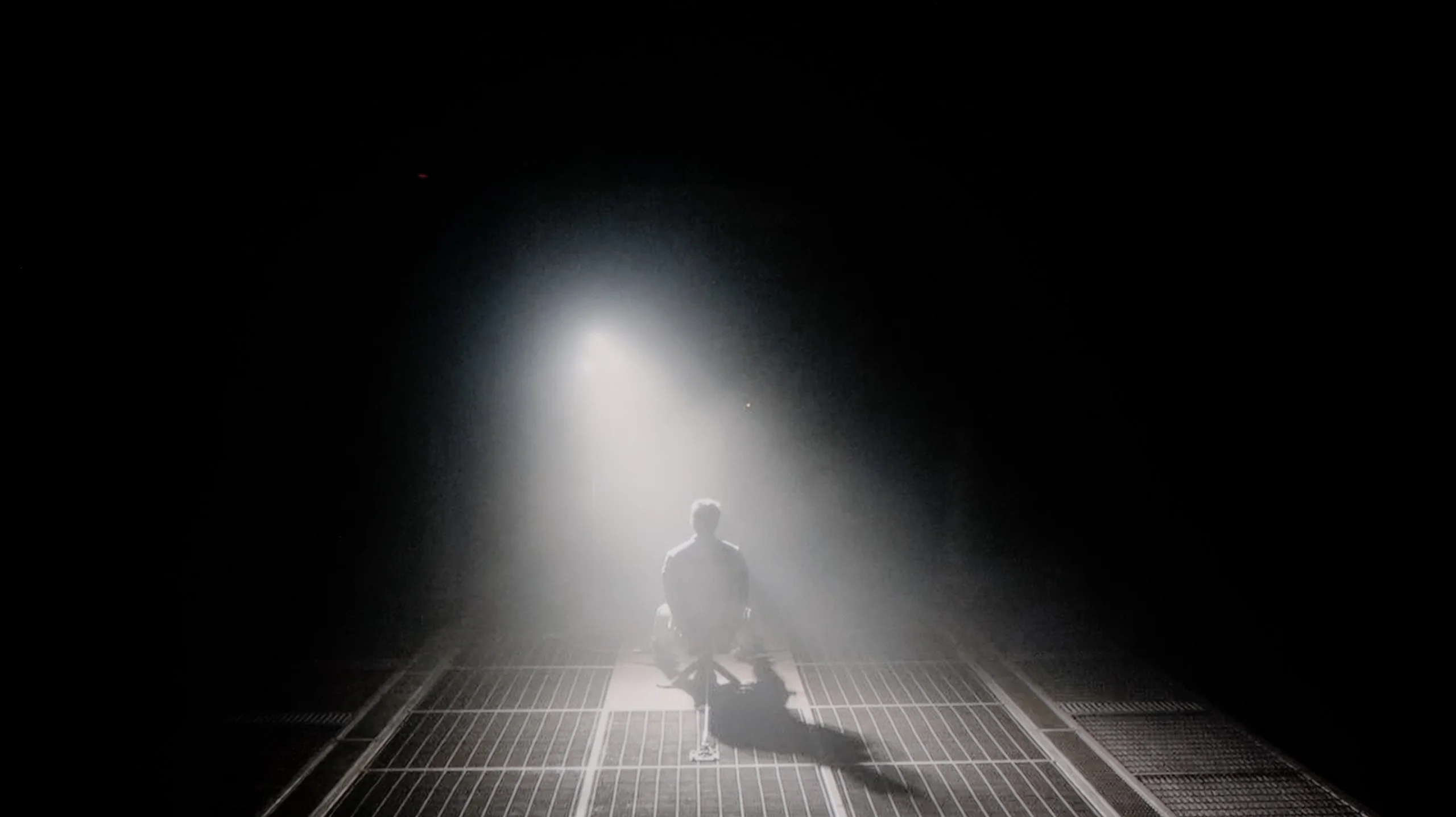
Check the visibility of bright lights on a dark background. Mini-LEDs often struggle with this. The photo does not compare black levels – that’s what the video below is for.
The video accurately shows differences in contrast and black levels between TVs, as well as potential issues: halo around bright objects or Mini-LED zone operation visible as brightness jumps.
In the case of the Samsung S90F, we have an interesting situation: almost all size variants are equipped with WOLED panels, except for the 65-inch version, which has a QD-OLED panel. In this test, we analyse the version with the WOLED panel produced by LG Display, but the question remains; does this affect the quality of black levels and contrast in this part of the test? In practice – it does not. Regardless of the technology used, both panels can generate perfect black and infinite contrast. This is exactly what we expect from any top-tier television. Watching a series in the evening, in a completely dark room, is pure pleasure. The television easily separates bright elements – such as reflections or background lights – from deep, dark parts of the picture, without creating any halos or brightening effects, which top-of-the-line LCD televisions still struggle with. This is where OLED technology shows its strength – and the S90F is no exception. In terms of black levels and contrast, we cannot fault it at all.
We tested the Hisense UR8S in the 65-inch size, and this variant uses a VA panel, so native contrast is already at a very good level and reaches much higher values than those of IPS panels. The most important factor, however, is local dimming. Our unit had 936 zones, and you can clearly see that they can significantly help in dark scenes. For films where a large part of the screen is black, the UR8S performs very well. Black is deep, the black letterbox bars do not glow blue, and in some shots the effect can even slightly resemble OLED. Of course only slightly, because the difference is still visible. It is easiest to notice with small bright elements on a black background. Then a slight halo may appear around the object. It is not large and, during normal viewing, is unlikely to be very distracting, but it shows that this is still a TV with 936 zones, not a screen that can dim each pixel individually.
HDR effect quality
7.2/10
6/10
Luminance measurements in HDR:

Result
1099 nit

Result
1177 nit

Result
1252 nit

Result
1183 nit

Result
577 nit
Result
1241 nit
Result
269 nit
Result
594 nit
Result
188 nit
Result
1452 nit
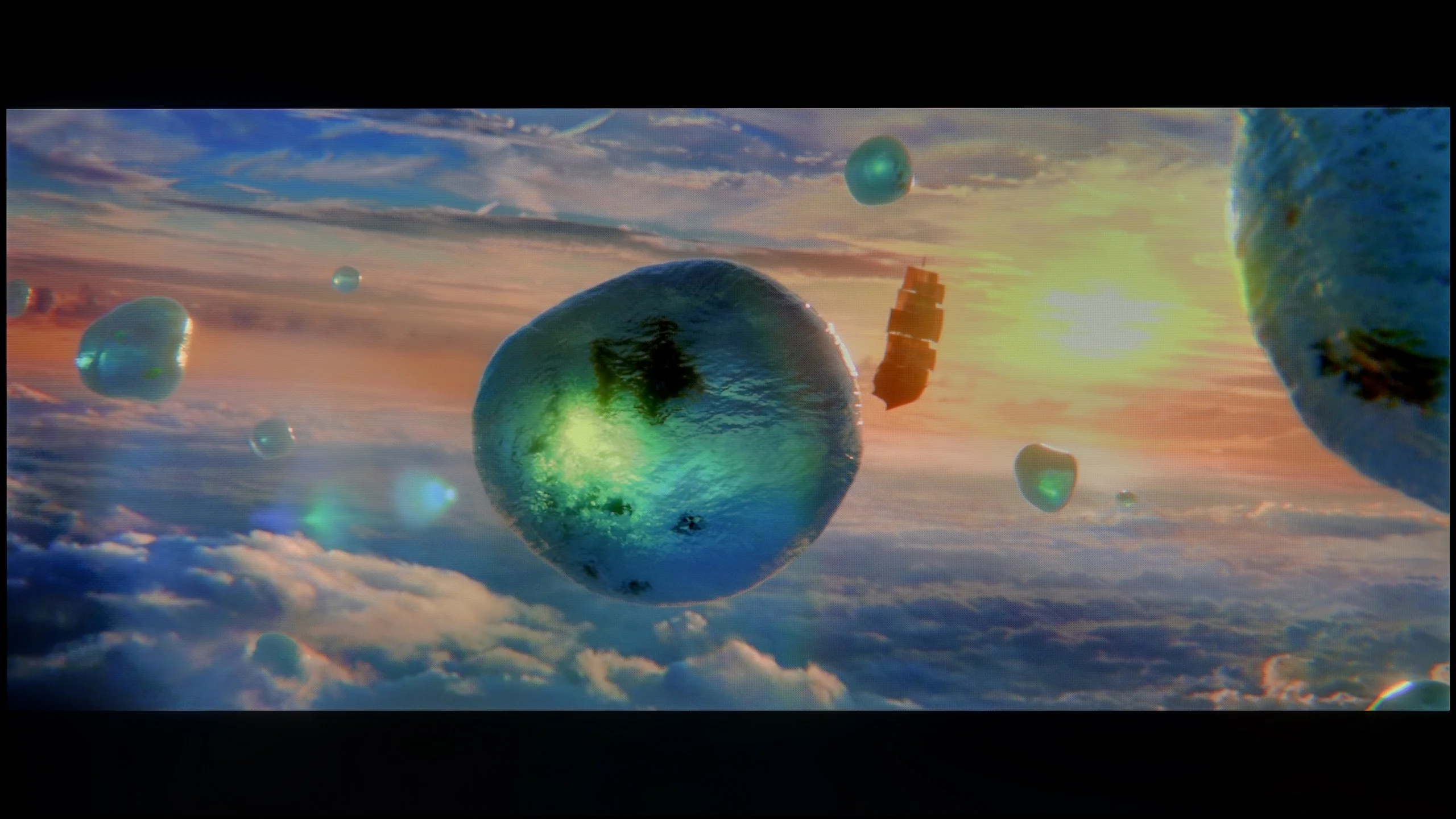
Scene from the movie “Pan” (about 2800 nits)

Scene from the movie “Billy Lynn” (about 1100 nits)
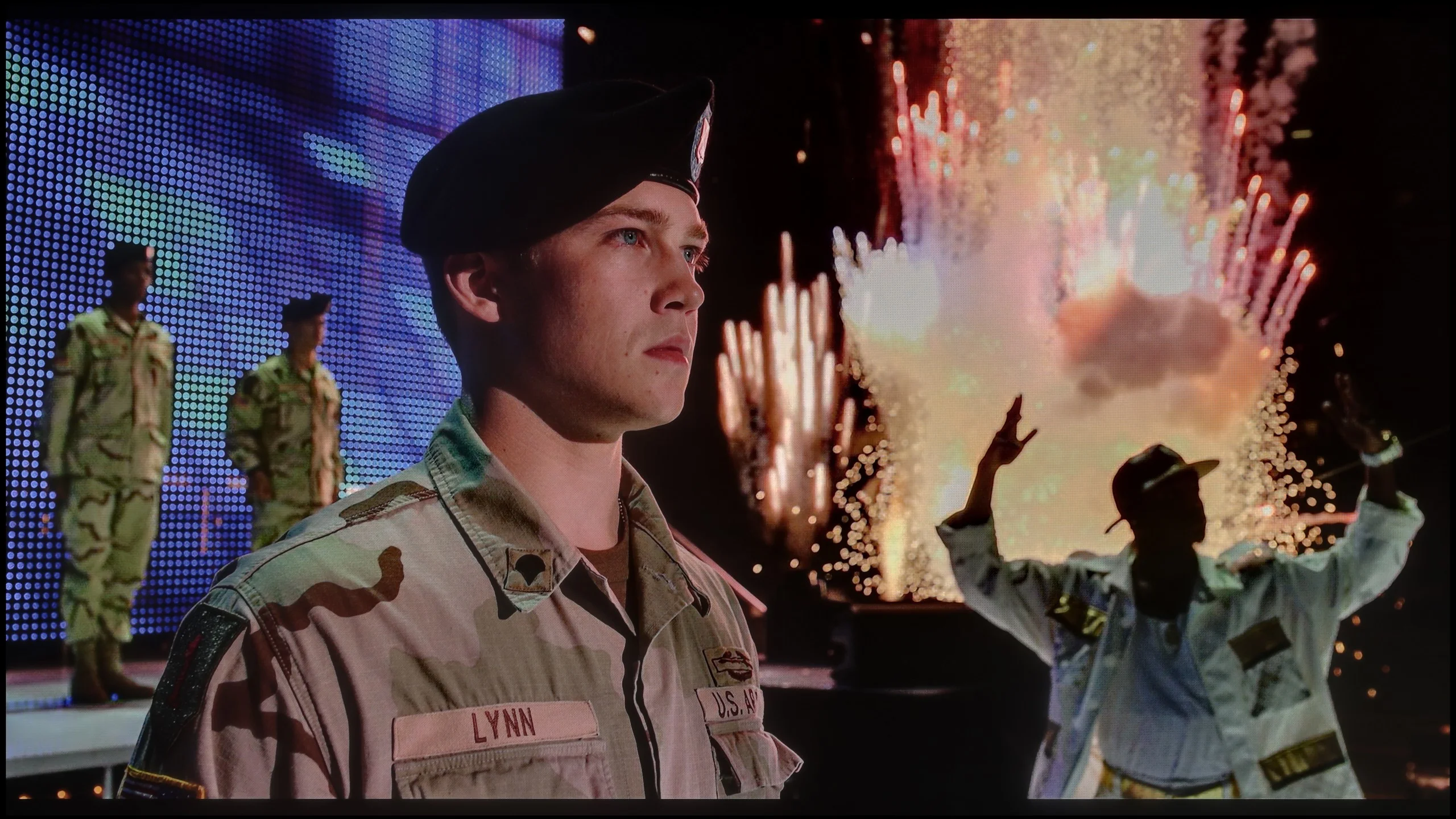
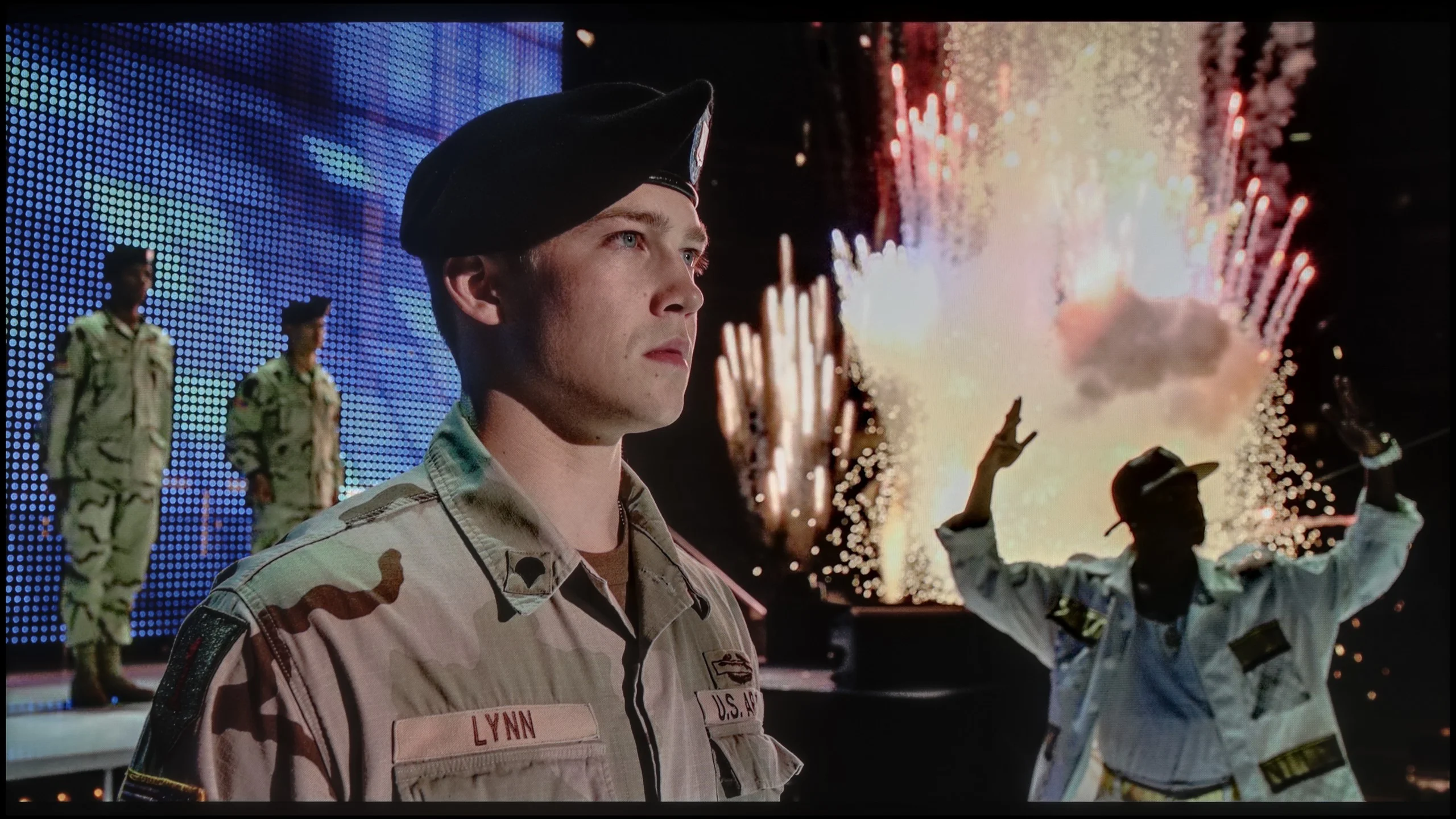
The photos show two HDR10 movies. 'Pan' is one of the brightest productions ever made, while 'Billy Lynn' (soldier) has brightness typical of streaming (Netflix, Prime, HBO MAX). Notice the intensity of effects and detail in whites.
Static HDR10


The photos present the visibility of white details in various HDR formats. They do not show brightness differences between TVs (these can be compared in the previous gallery).
Dynamic: HDR10+
Dynamic: Dolby Vision


The photos present the visibility of white details in various HDR formats. They do not show brightness differences between TVs (these can be compared in the previous gallery).
HDR luminance chart:
Hisense UR8S
SAMSUNG S90F (WOLED)
Luminance of RGB colors
Does the S90F handle not only black, but also bright parts of the image? Definitely yes. Tales of OLEDs as “dark screens” can slowly be regarded as a myth. The Samsung S90F, like the LG C5 based on a very similar panel, achieves brightness exceeding 1000 nits. This is a value entirely sufficient to enjoy impressive and dynamic HDR imagery – both in films and series. Most of the scenes we tested look superb, with well-defined highlights and high contrast. Of course, OLED technology still has its limitations – in very bright, full-screen sequences, such as the test pattern from the film The Meg (picture 5), the television may noticeably dim the image. However, it should be emphasized that such scenes are rare. It can be considered that the HDR effect is good enough that even mid-range OLED models like the S90F can provide a cinematic experience in the home living room.
UR8S is a slightly higher-end Mini-LED, so you could expect a lot in terms of brightness. And indeed, on a synthetic test pattern peak brightness reached around 2200 nits. That’s a very good result, but as always what’s much more important is what the TV does in normal film scenes. Here the results are a bit more uneven. In bright scenes, where there’s a lot of light on screen, the UR8S can deliver really strong HDR. Brightness then reaches about 1500 nits, so the image is very intense and has plenty of punch. It’s worse with small bright elements on a dark background. The TV clearly dims them to keep good blacks and to prevent excessive bloom. As a result things like single stars or tiny reflections can be only around 200 nits. And here HDR is no longer as impressive. So you can see that the local dimming algorithm works effectively, but it also has its cost: sometimes it simply sacrifices the brightness of small details in favour of contrast.
Colours
With RGB Mini-LED TVs colours should be judged a little differently than usual. If we look solely at the panel’s native capabilities, the UR8S performs excellently. We measured around 94% coverage of BT.2020 and practically full DCI-P3. These are among the highest values currently found in LCD TVs and this is where the potential of the RGB backlight is most obvious. The problem is that this potential is not always realised in real scenes. When we ran the same measurements on test patterns with a film background applied, saturation of some colours began to fall noticeably. Individual zones are not always able to control the three RGB components so precisely when the scene becomes more complex. This is most visible with blue and magenta. On simple test patterns they can look very strong, but in more demanding scenes samples of those colours visibly shrink. So the UR8S’s capabilities are enormous, it’s just that the TV cannot fully make use of them in every scene.
Factory color reproduction
7/10
5.1/10


This gallery shows how colors change after professional TV calibration. If you notice the difference, we recommend ordering this service at SkalibrujTV.com.
Factory Mode
After calibration


This gallery shows how colors change after professional TV calibration. If you notice the difference, we recommend ordering this service at SkalibrujTV.com.
Factory Mode
After calibration
The Samsung S90F, like most modern televisions, offers many picture modes, but – in line with our testing tradition – we assessed it in the best one, which is the Filmmaker mode. This way, the image looks significantly more natural than in the default, often oversaturated settings. It was neither overly saturated nor artificially muted – just closer to what should be seen. Of course, "more correct" does not mean "ideal". Unfortunately, our S90F unit had considerable issues with white balance, especially in the blue range, resulting in a slightly yellowish filter being applied to most scenes. Someone might say it looks more "cinematic" – because it is warmer – but let's not kid ourselves, George Lucas did not film Star Wars in sepia 😉 (you will find the comparison with the scene as always below).
Additionally, in HDR materials, there was a noticeable issue with brightness management. The EOTF curve showed a clear "spike" in brightness – the television brightened the image more than it should have, which made some effects look overly intense and diverged from the reference. Fortunately, some of these problems can be eliminated through professional calibration – you will read about its effects later in the review.
For assessing the out-of-the-box colours we used Filmmaker mode, which is intended to show an image that is as close as possible to how the material was prepared. Looking at the white balance alone, the UR8S performs quite well. There is no strong tint that immediately jumps out, although as brightness increases a little too much blue and red start to appear, with a simultaneous shortfall of green. Colour errors therefore show up in measurements, but the image itself does not look bad. We have far greater reservations about how the UR8S manages picture brightness. In SDR the gamma sits around 1.9–2.0 for most of the range instead of the target 2.4. In practice this simply means the picture is too bright, especially in the midtones. Shadows are lifted too much, causing the image to lose some depth. A similar tendency is visible in HDR. The EOTF curve is above the reference value for a large part of its range, so the UR8S again brightens the image more than it should. This is not due to a lack of brightness — the TV has plenty — but to the way it manages that brightness. As a result, HDR content can look very striking, but not always precisely as it should.
Color reproduction after calibration
9.2/10
7.5/10
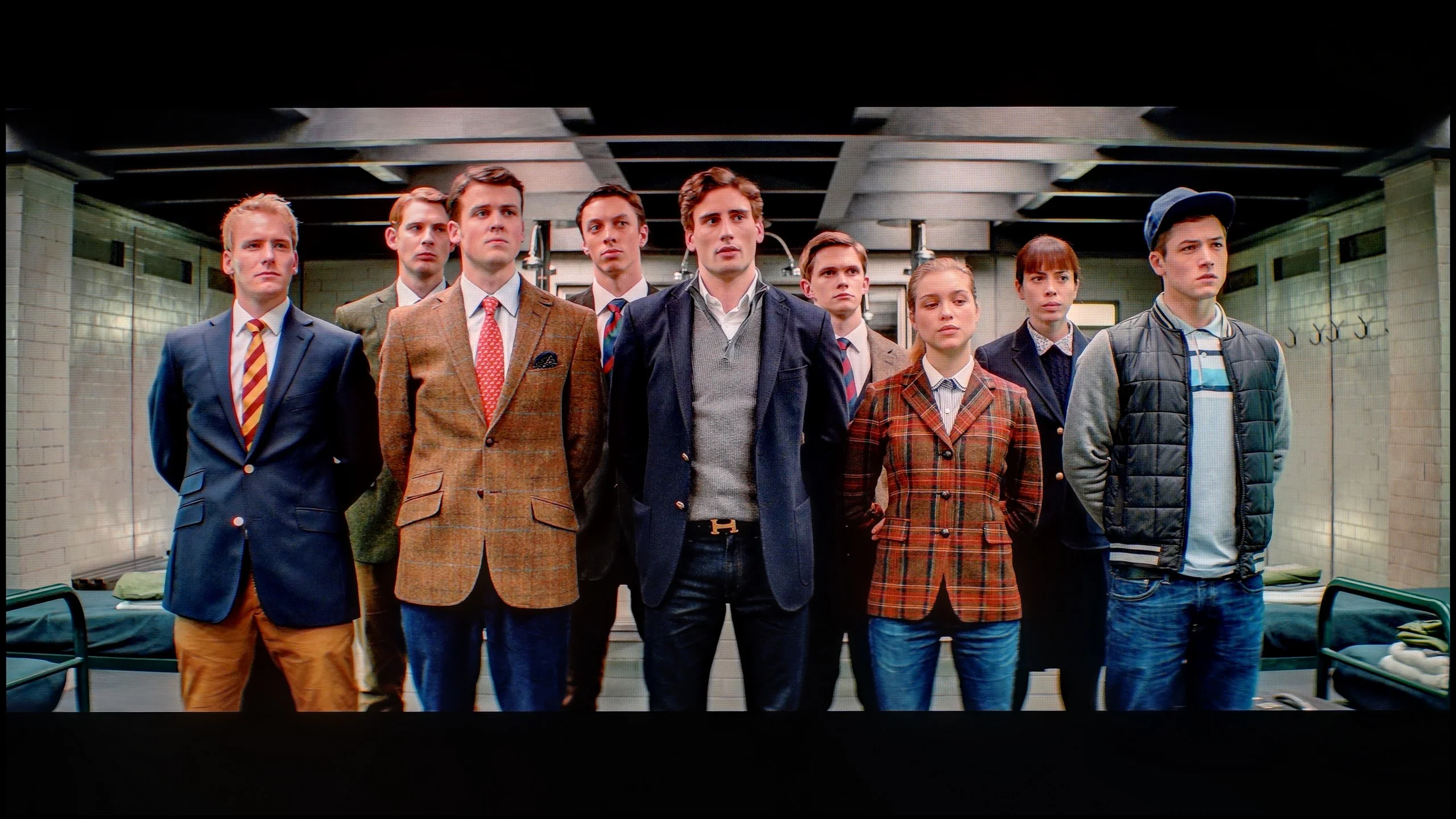
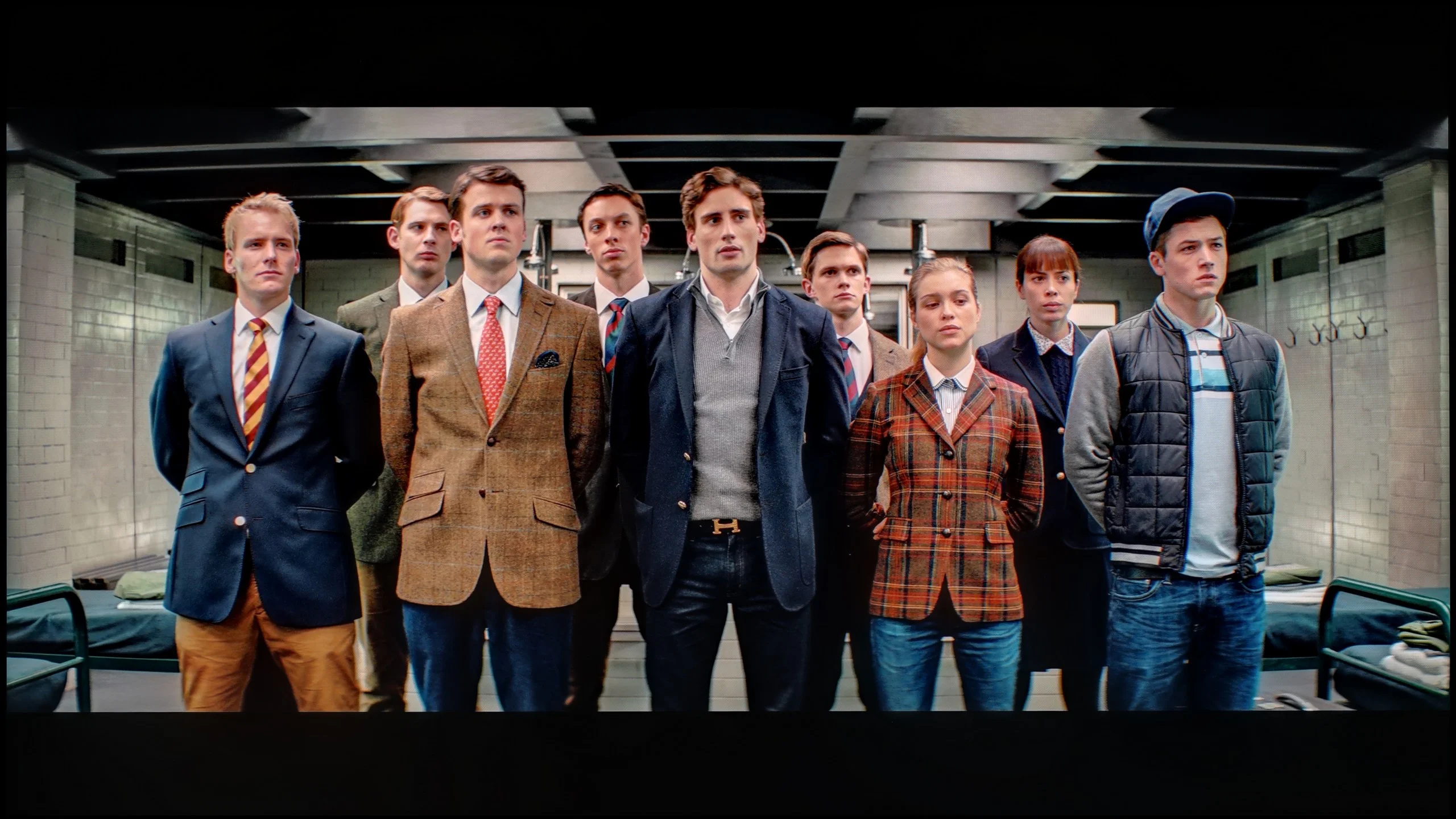
The photos show how movies look on the TV. Pay attention to black detail visibility, colors, and shadow tint.


The photos show how movies look on the TV. Pay attention to black detail visibility, colors, and shadow tint.
After calibration, we managed to eliminate practically all the previously mentioned errors. Older films in SDR quality finally look as they should – without the sepia effect or artificial aging of the image. The atmosphere of the classics returns to its rightful place (you’re welcome, Star Wars fans), and the colours no longer resemble an Instagram filter.
One of the key changes was also the improvement of brightness characteristics in HDR content. We managed to control the EOTF curve in almost a reference manner. Yes, the most demanding users may spot minimal deviations in brightness, but honestly – most viewers won’t even notice that. And it's no wonder, because the vast majority of errors are below a ΔE value of 3, which is below the threshold of visibility. After calibration, the S90F (WOLED) truly becomes an excellent display – one that provides nearly perfect picture quality.
Hisense provides plenty of calibration options and, in SDR, these can yield a very good result. After calibration, the white balance is practically even across the entire range, and colour errors fall to very low values. The UR8S can be adjusted very precisely here. HDR is somewhat different. The white balance itself can also be noticeably improved, although at the highest brightness levels larger deviations begin to appear. The most interesting aspect, however, is the behaviour of the EOTF curve. Even after it has been correctly set on test patterns, the UR8S still tends to interpret brightness in its own way when watching films. Depending on the scene, parts of the image are slightly brightened while others are dimmed relative to how they should appear. This shows that the algorithms controlling the local dimming have a significant influence on the final image. Calibration therefore allows colours to be improved very effectively, but we are not able to completely 'turn off' the way the UR8S manages brightness in HDR.
Smoothness of tonal transitions
7.3/10
9.3/10
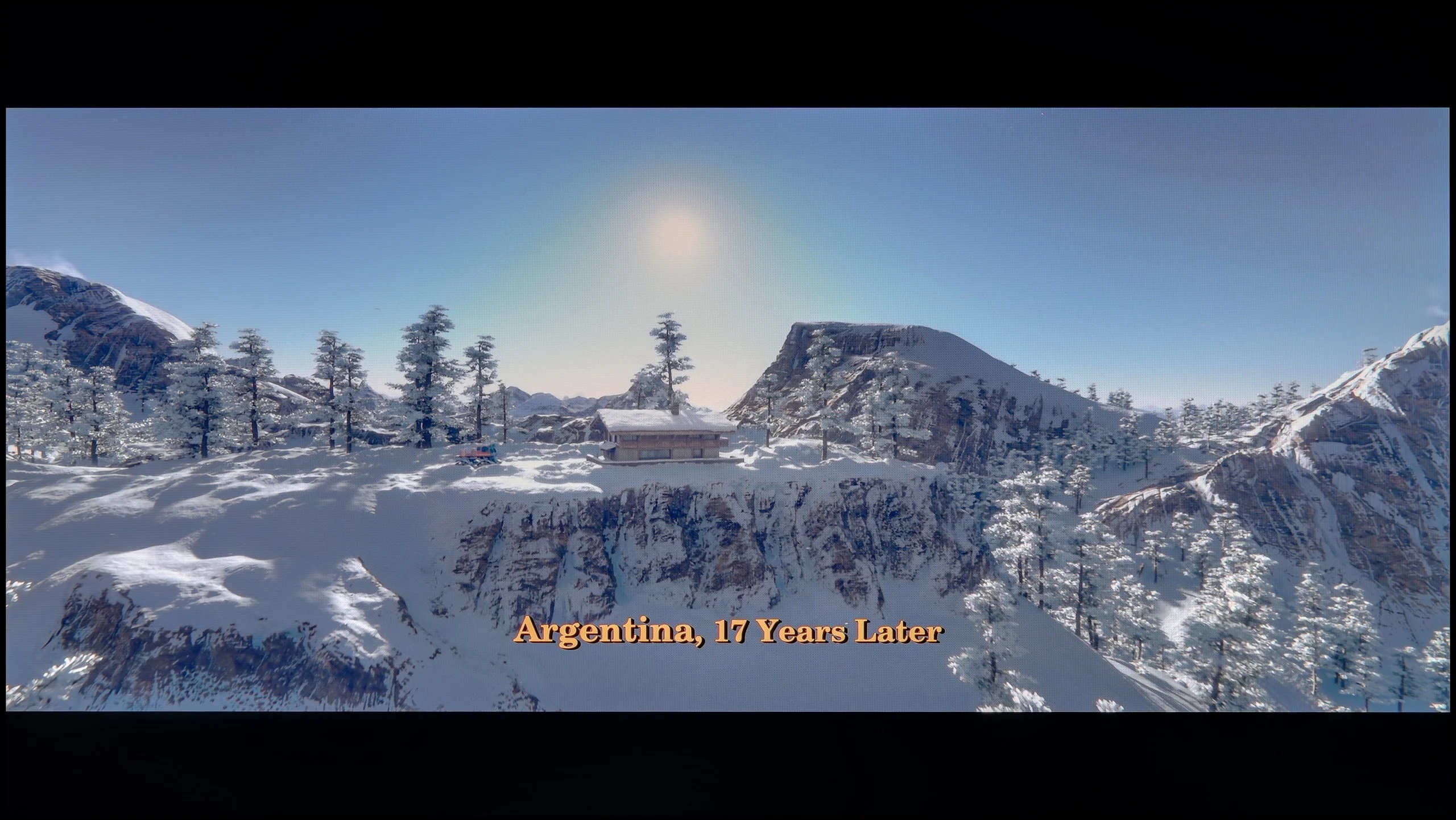

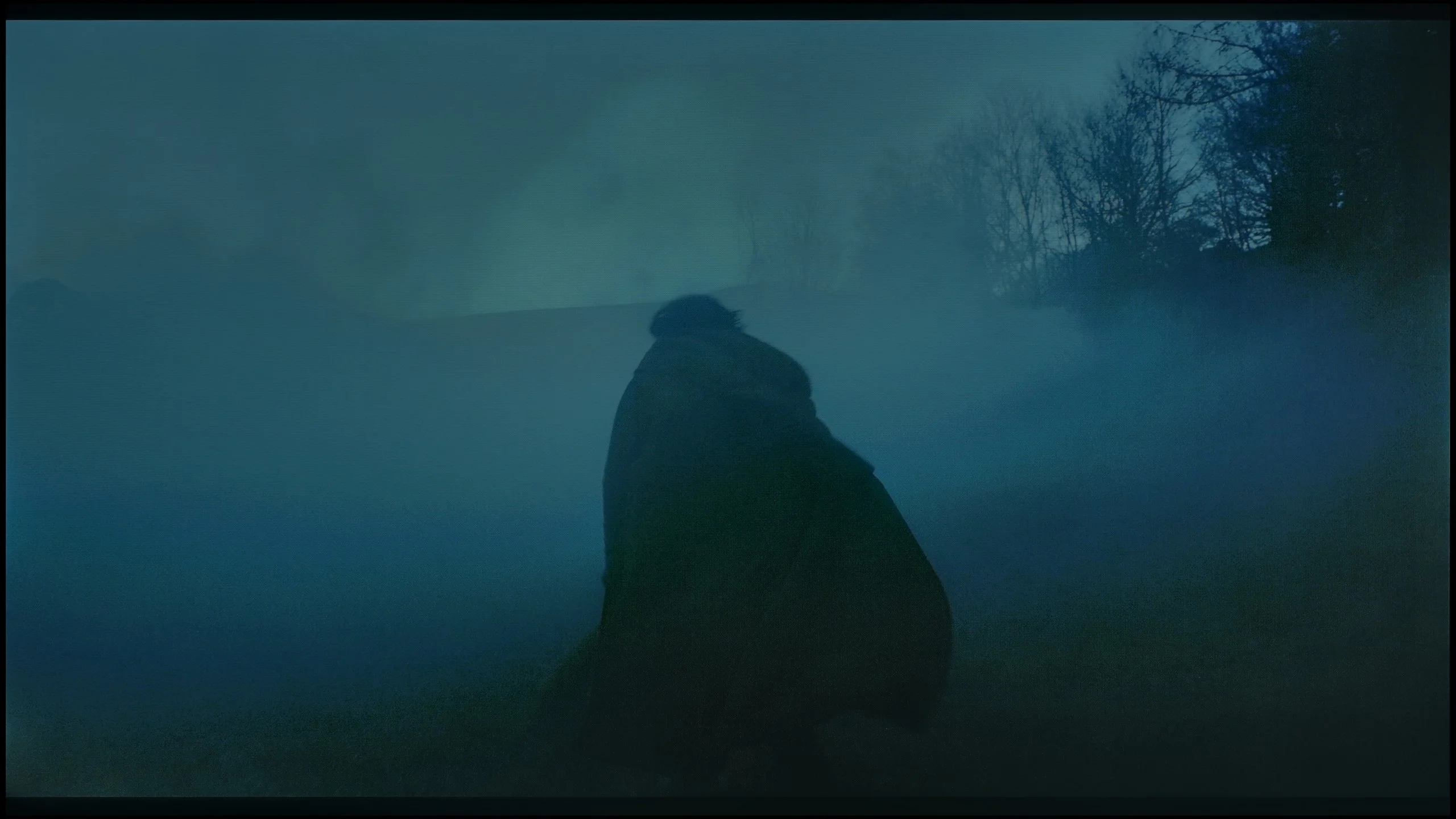
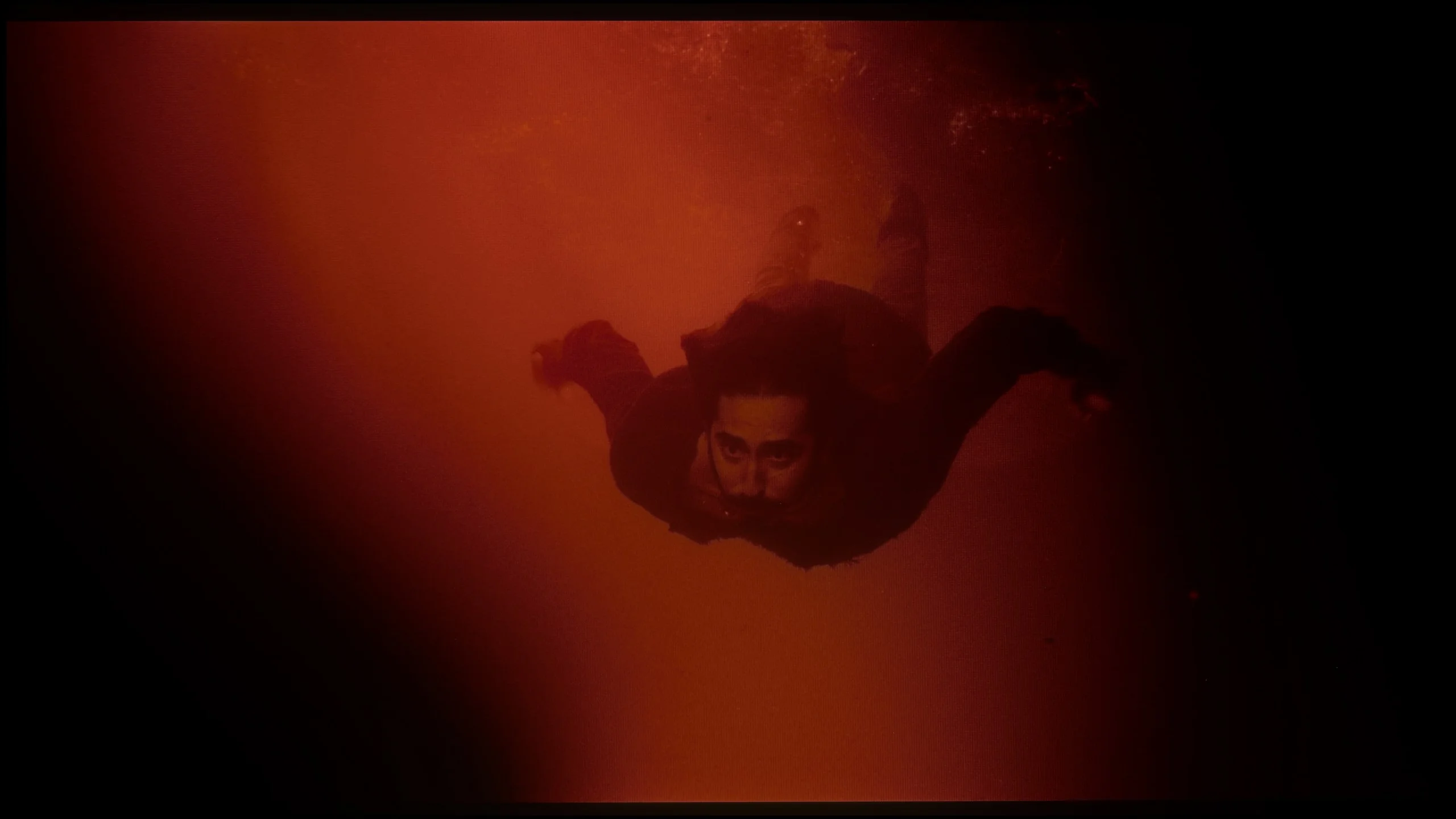
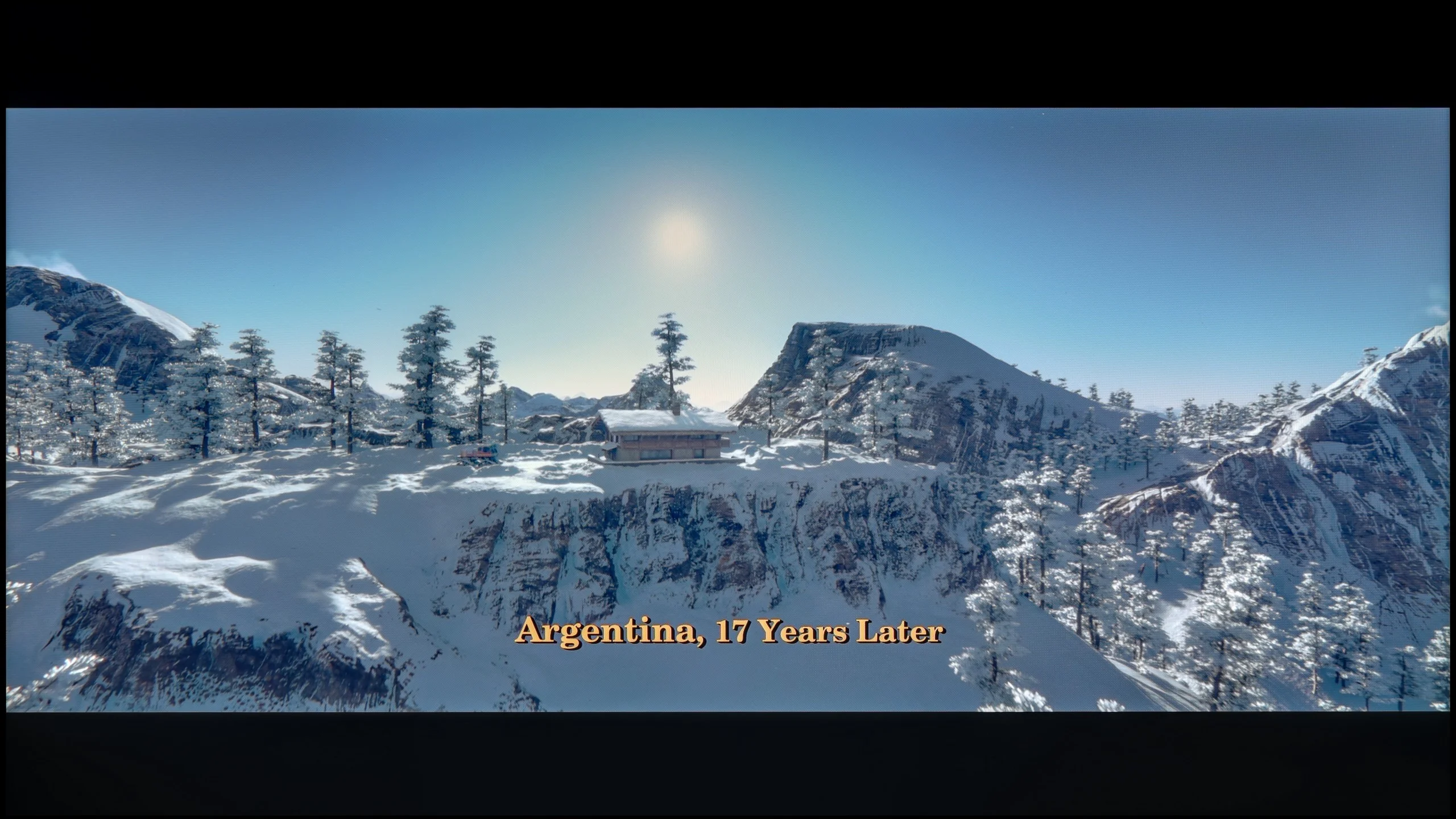
These are selected scenes that show smooth tonal transitions from one color to another. If you see distinct banding, it’s the TV panel’s fault.

These are selected scenes that show smooth tonal transitions from one color to another. If you see distinct banding, it’s the TV panel’s fault.
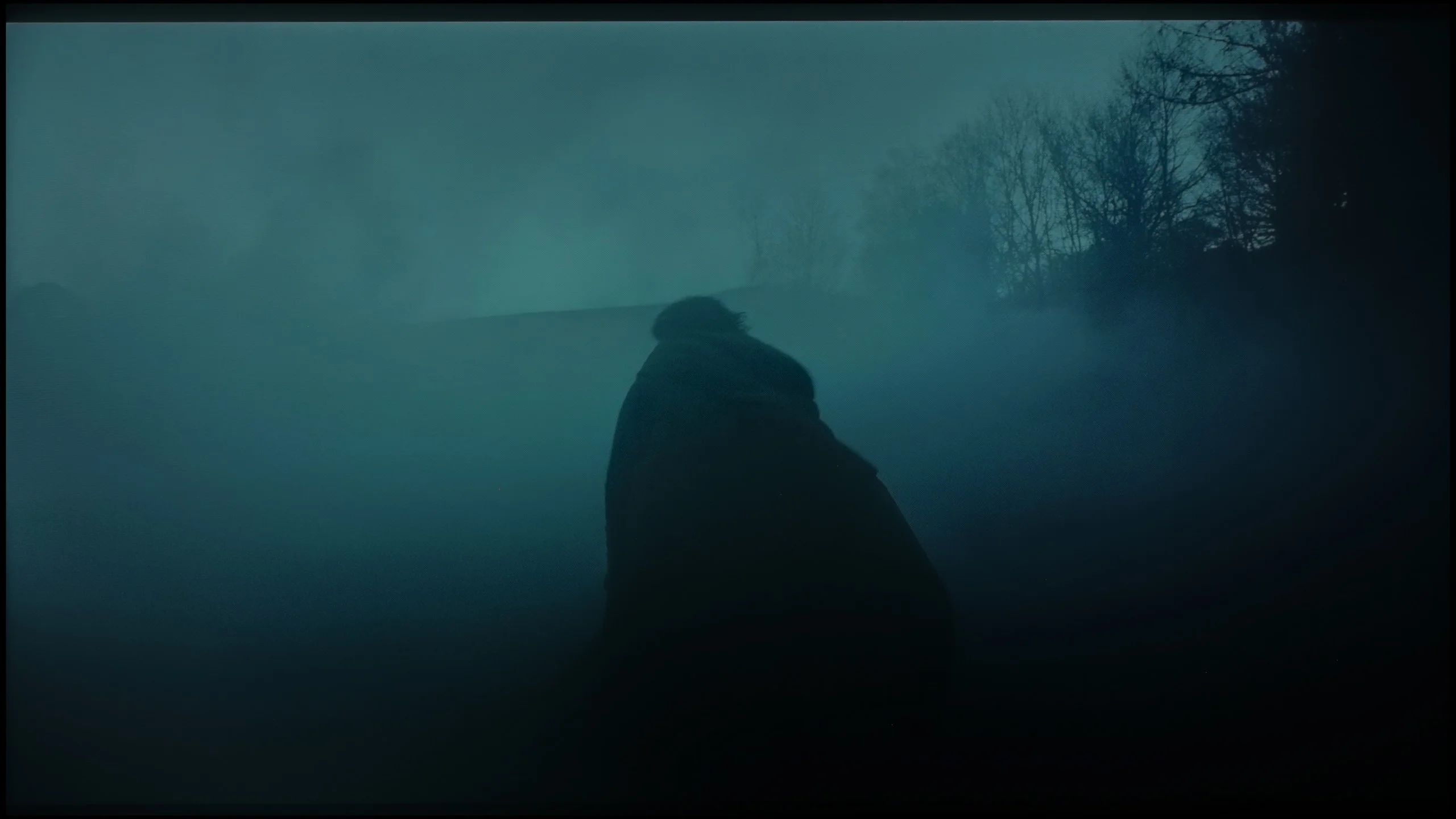
These are selected scenes that show smooth tonal transitions from one color to another. If you see distinct banding, it’s the TV panel’s fault.
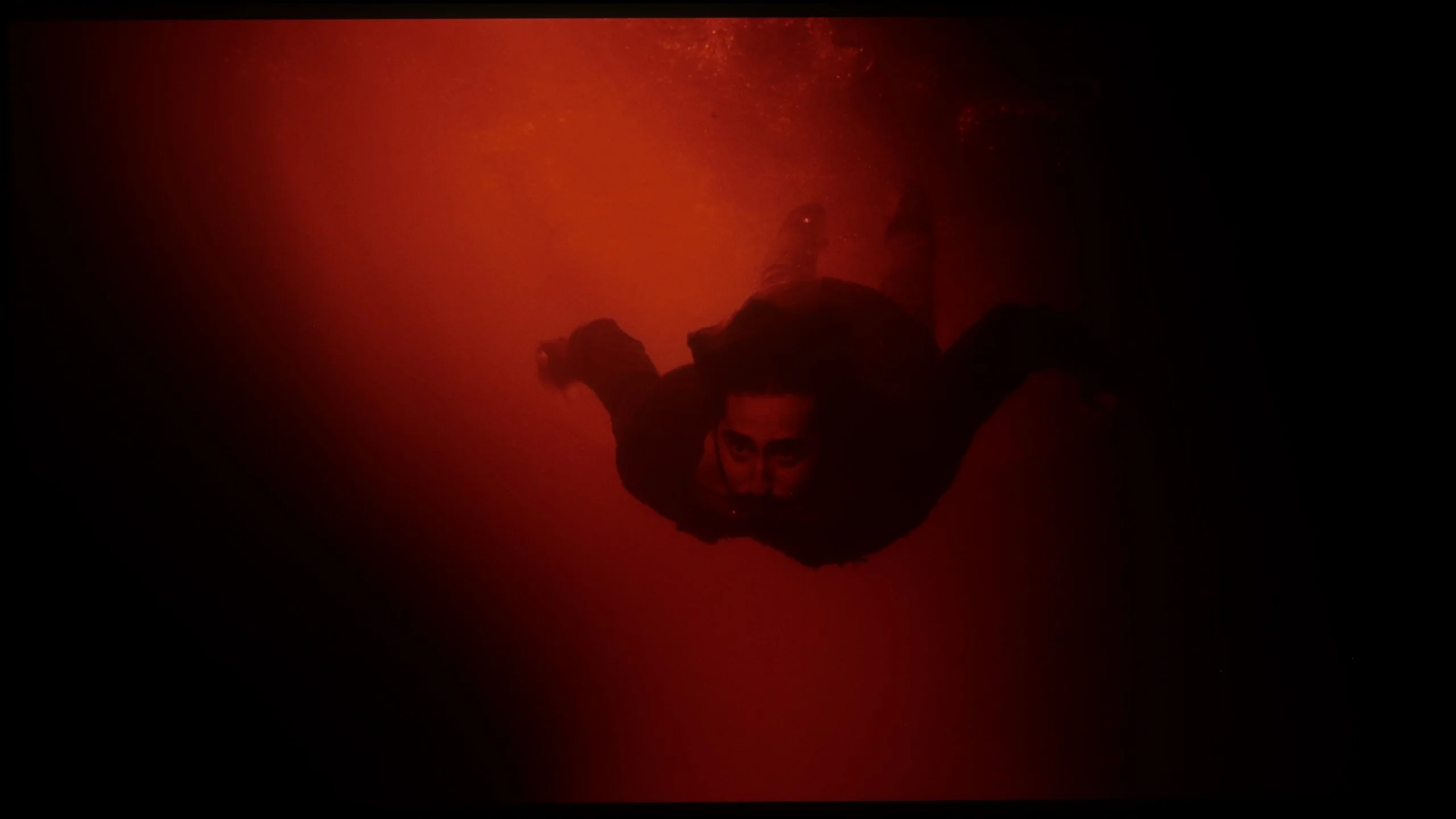
These are selected scenes that show smooth tonal transitions from one color to another. If you see distinct banding, it’s the TV panel’s fault.
And here we must honestly admit – the S90F has somewhat let us down. Compared to last year's S90D model with a WOLED panel (very similar to the one used this year), this year's Samsung has performed worse. This is not only in comparison to its main competitor, the LG C5, but even when put alongside its older sibling. The biggest problems arise in dark scenes, where difficulties with smoothly blending colours are evident – the screen slightly stepped the tonal transitions, causing some parts to lose their naturalness. We don’t know exactly what went wrong – perhaps it’s a matter of software or a different processing algorithm. It's a pity, as we were hoping that the level from last year would be at least maintained. Unfortunately, it is a step backwards.
Tonal transitions on the UR8S are really very good. In most scenes colours shift between successive shades practically without any visible steps or banding. This applies to both darker and brighter parts of the image. Only in very extreme shades of grey can small imperfections be noticed. It looks a little worse in Dolby Vision. In the same scenes subtle banding is easier to notice, particularly in the darker parts of the image. It's still good, but because of that difference the rating is slightly lower.
Image scaling and smoothness of tonal transitions
7.5/10
8/10


Smooth transition function
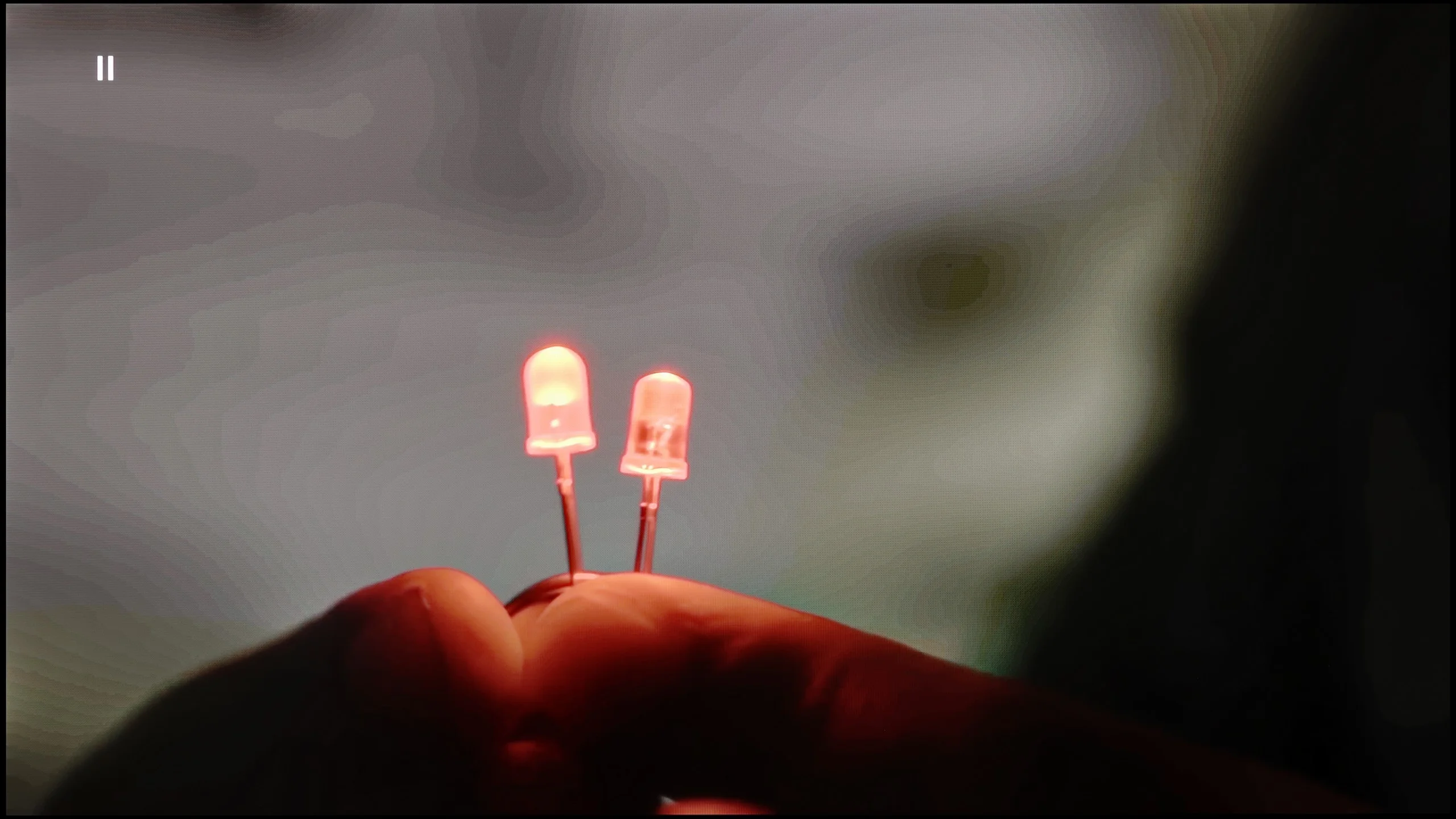
The match photo shows how the TV smooths weak tonal transitions in low-quality video.
Image scaling SD (576i)


The model photo shows how it handles upscaling of SD material.
Digital Image Processing in the S90F:
Fortunately, Samsung, as in most of its models, effectively manages the unwanted posterisation effect in the S90F. The feature responsible for this aspect is noise reduction, which does a decent job of smoothing tonal transitions and eliminating unnatural colour connections – of course, within its limitations. Unfortunately, it operates rather aggressively, so using it comes with compromises. In addition to improving gradation, it can also remove film grain or gently soften facial features. In this case, the choice is yours – do you prefer a more "clean" image, or do you want to preserve the original texture of the material?
Image Scaling in the S90F:
In this year's model, Samsung implemented its own AI processor – NQ4 Gen3, which does quite well with upscaling. In our test scenes, the television effectively "pulled up" lower quality towards artificial 4K – the image was more pleasant to view, and the differences in sharpness between native and scaled content were minimal. Unfortunately, behind all this AI marketing facade lies a certain shortcoming. The S90F struggles with overscan. If you reach for truly archival materials – e.g. a VHS tape of your parents' wedding – you must expect that the lower part of the image may be cut off. The image adaptation function to resolution simply does not work here as it should.
A big plus of the UR8S is the use of the MediaTek Pentonic 800 processor, and digital image processing is one of this model's stronger points. The TV handles smoothing tonal transitions very well, especially with lower-quality content. The feature responsible for this effect works effectively without overprocessing the picture. Even on the medium setting it can noticeably reduce visible banding and unevenness without heavily blurring details. Upscaling itself also performs very well. Lower-resolution content is displayed cleanly, edges look natural, and the image is not overly sharpened. The UR8S simply copes very well with a weaker signal, and in this respect it is one of its most notable strengths.
Blur and motion smoothness
8.5/10
7.8/10
Blur (native resolution, maximum refresh rate):



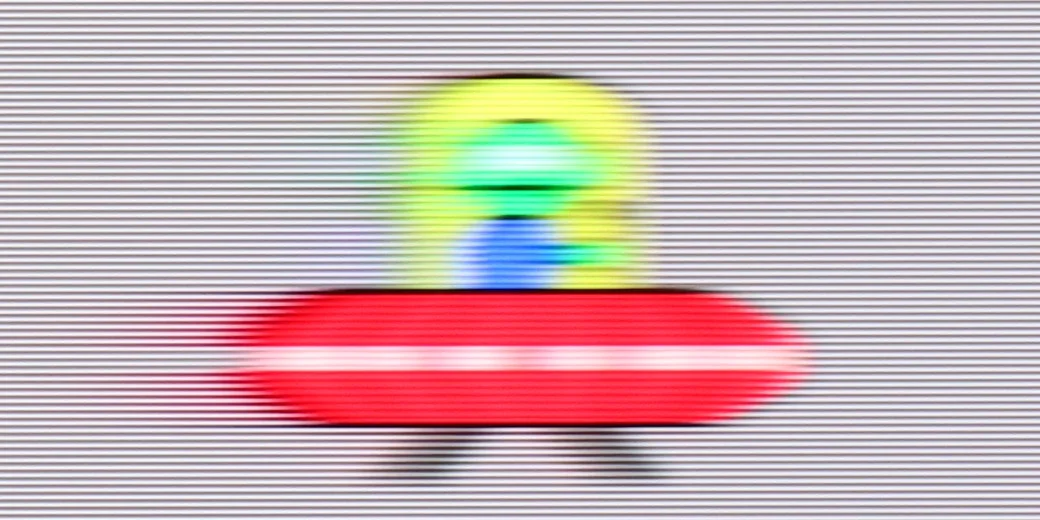
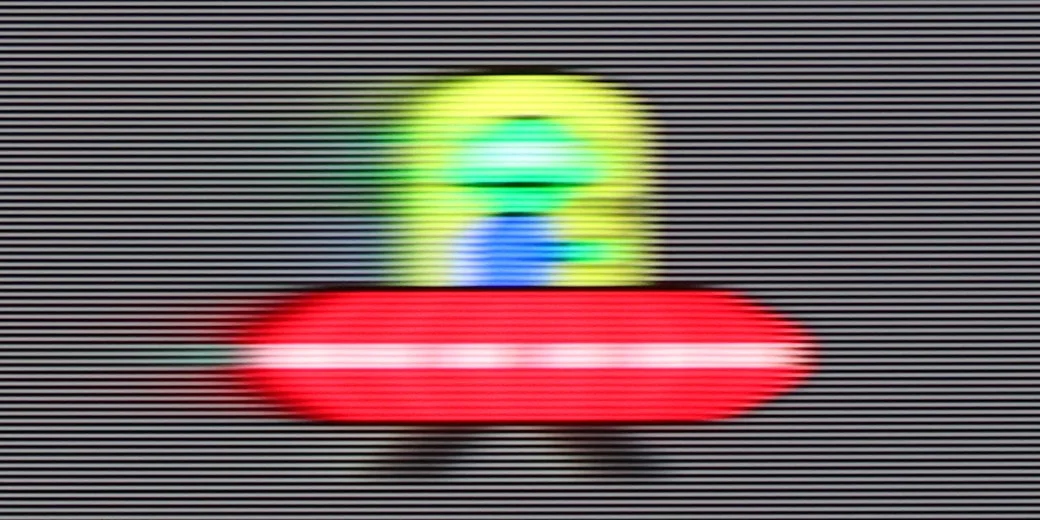
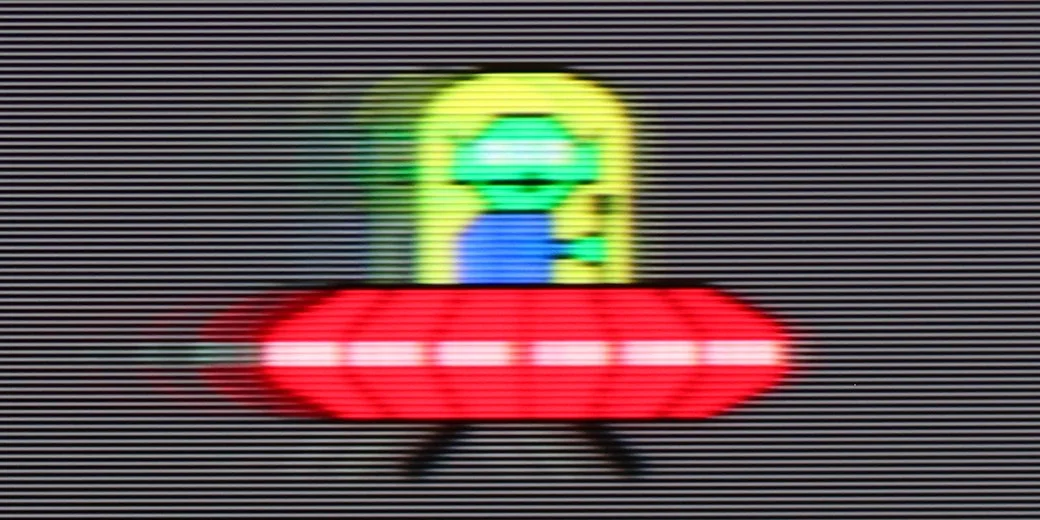
Blur (BFI function enabled):
Image flickers in this mode


Blur ():
Blur (1080P@340Hz):
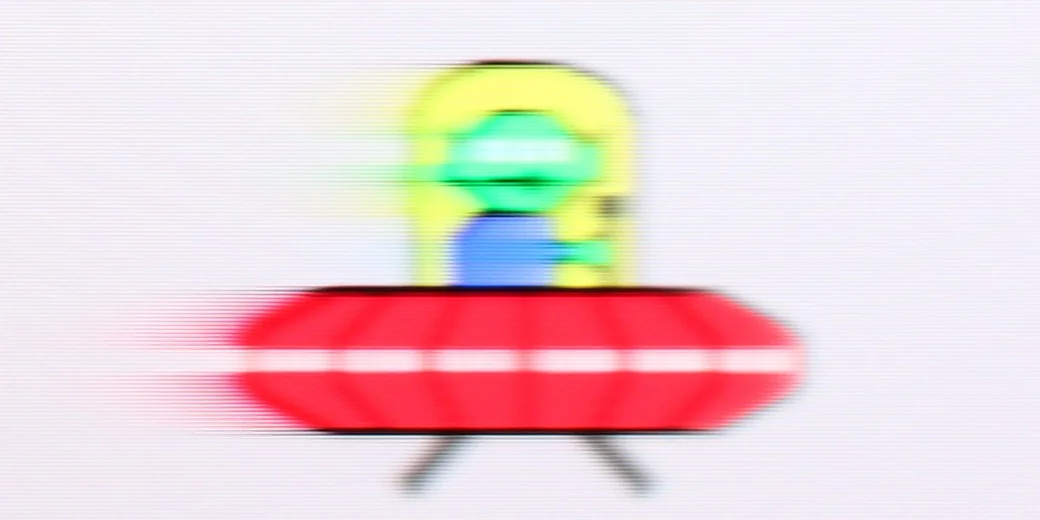
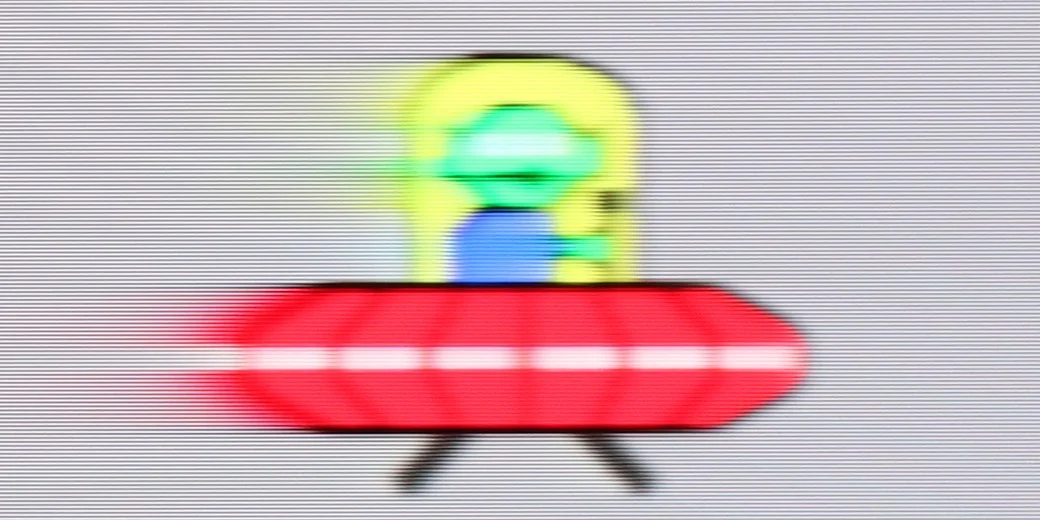
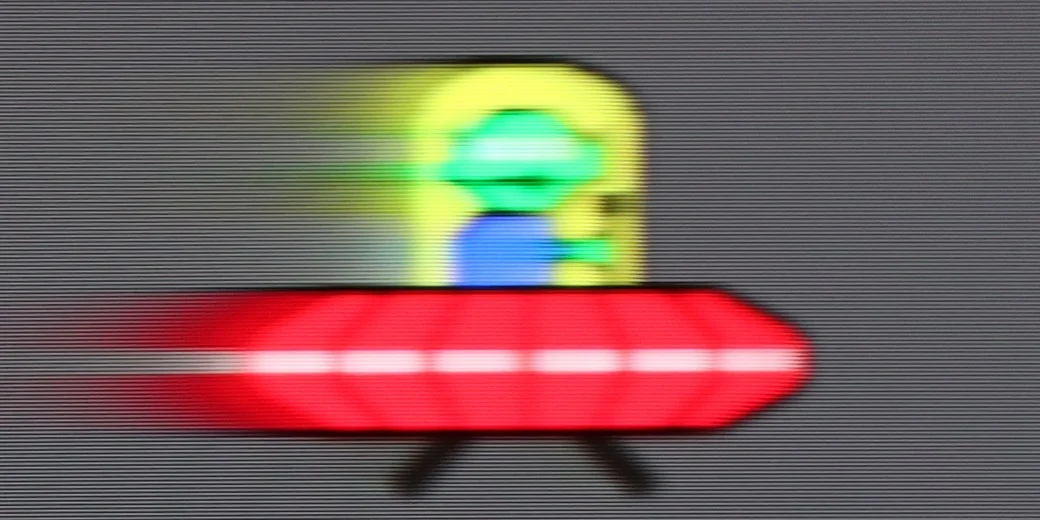
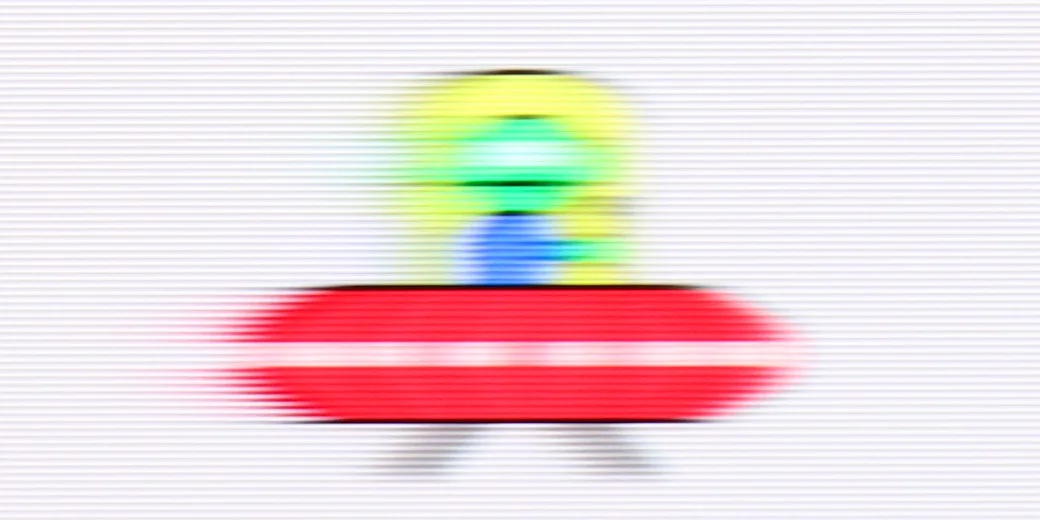
The S90F really handles motion excellently – after all, it’s an OLED with a 144 Hz panel, so sports and games look absolutely stunning on it. The image is fluid, clear, and there’s no room for any ghosting or blurring that sometimes plagues cheaper LCDs.
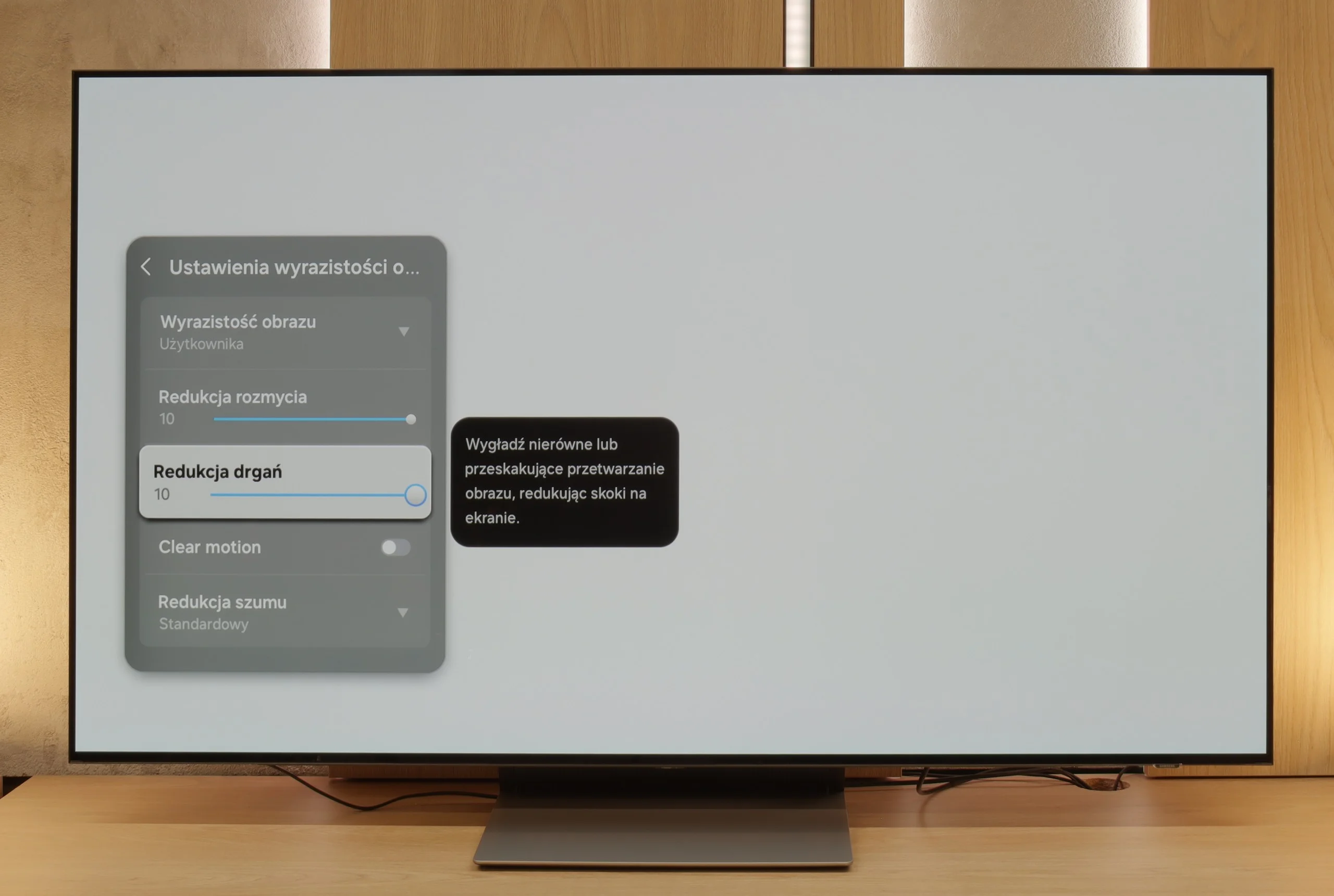
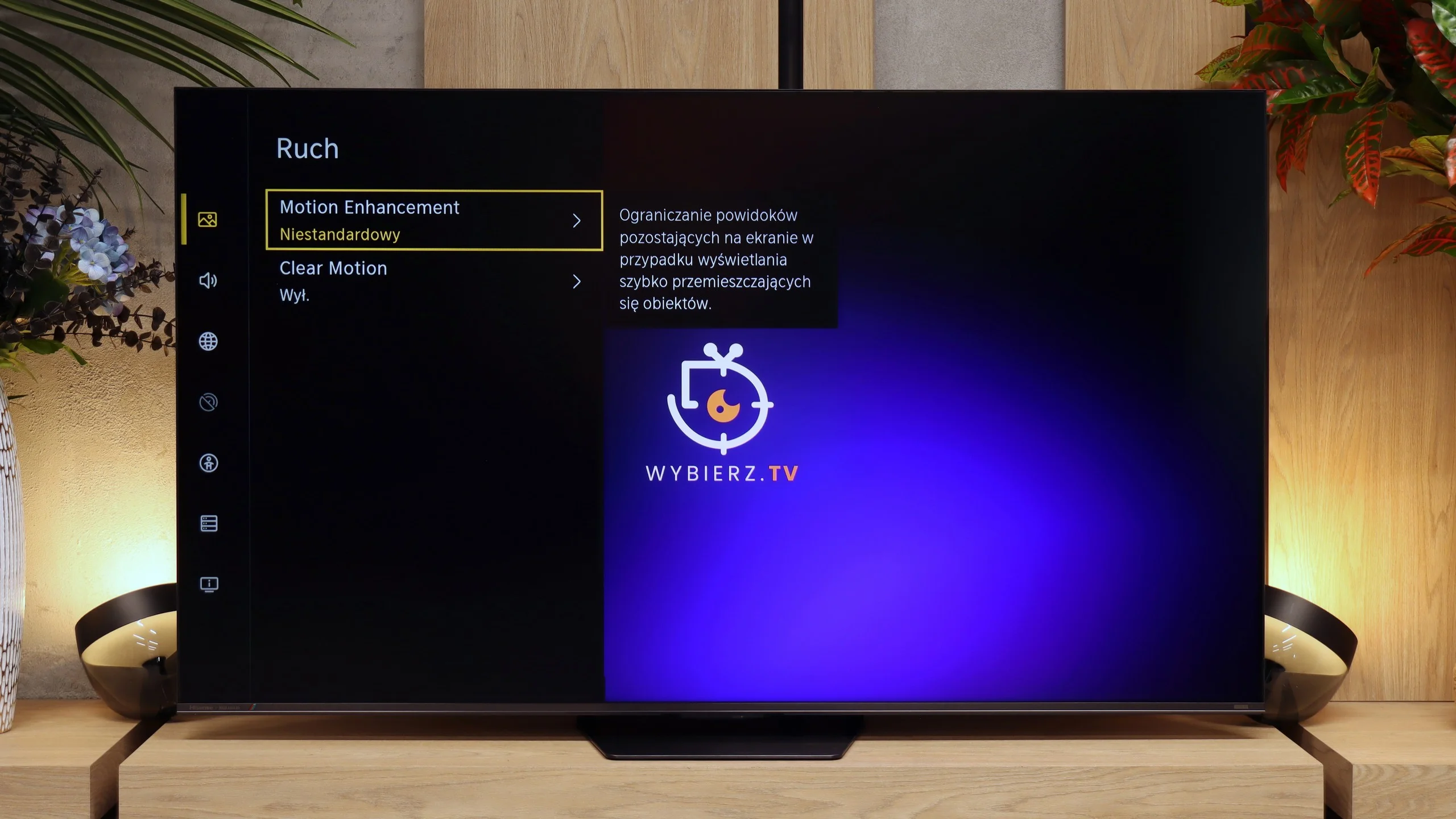
The television is also equipped with motion smoothness settings, allowing you to customise everything to your preference. We have motion blur reduction and judder reduction – you can set it so that the image is super smooth (even to that soap opera effect), or more cinematic, with the classic 24-frame 'choppiness'. The choice is yours; Samsung doesn’t impose anything.
The UR8S is equipped with a panel with a native 180 Hz refresh rate, so right from the start it offers excellent motion handling. The panel itself performs really well here, although some limitations typical of VA panels are still visible. Motion blur is relatively minor for this type of screen, but with faster motion (especially on darker backgrounds) it can still be noticed, particularly when compared with the same image on OLED TVs.
Console compatibility and gaming features
9.5/10
8.5/10
- ALLM
- VRR
- VRR range48 - 144Hz48 - 330Hz
- Dolby Vision Game Mode
- Correct implementation of HGIG
- 1080p@120Hz
- 1440p@120Hz
- 4K@120Hz
- Game bar
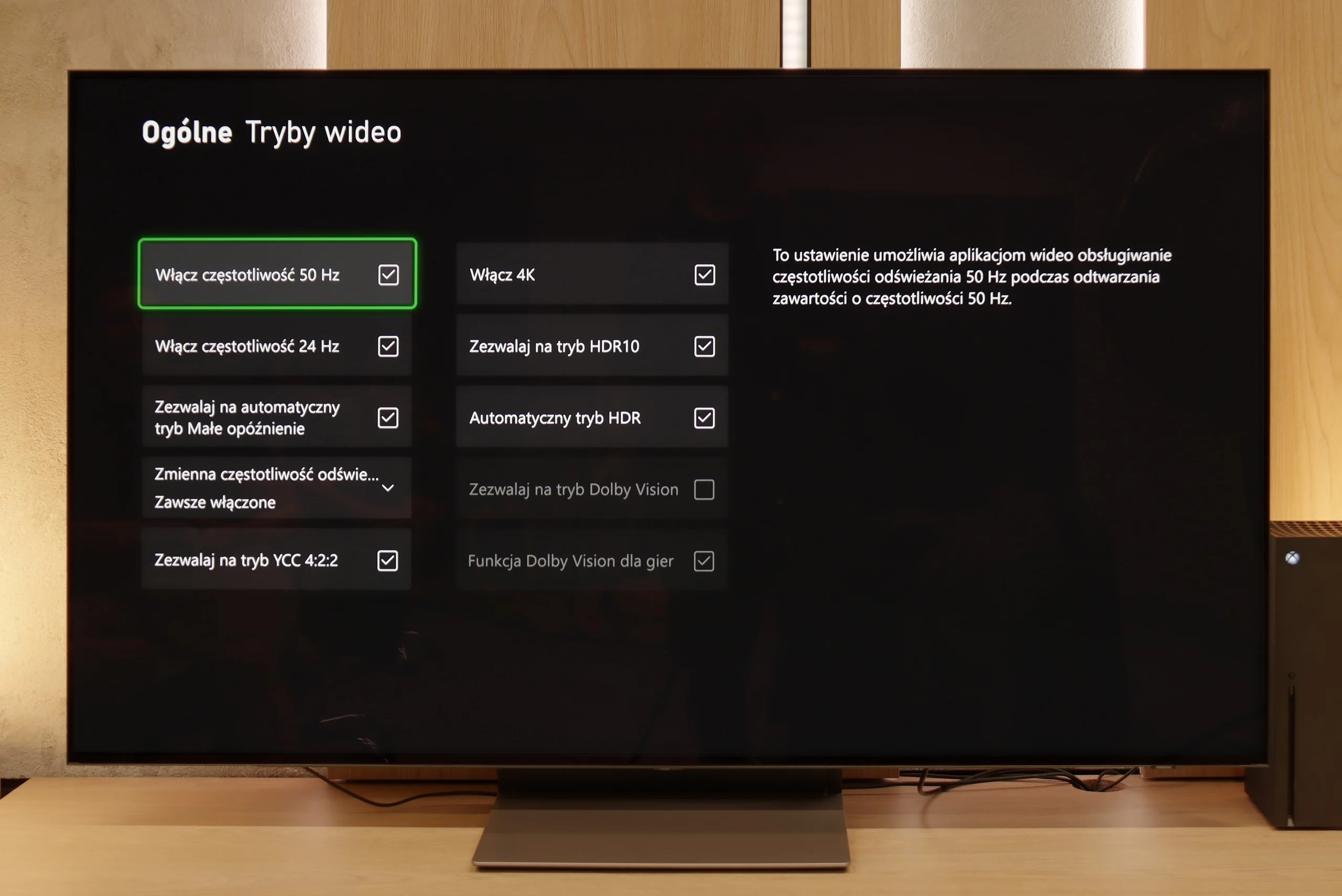
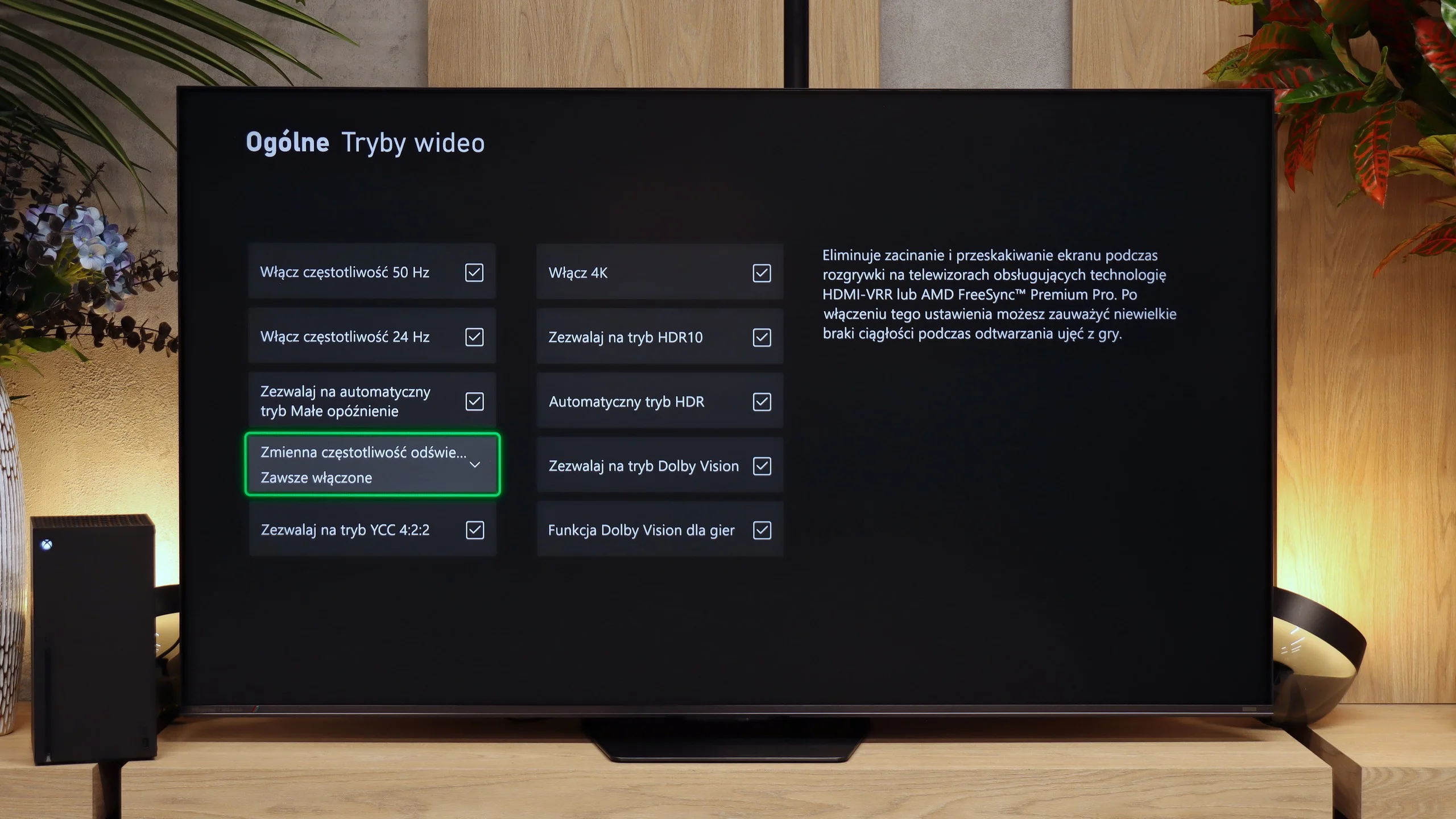
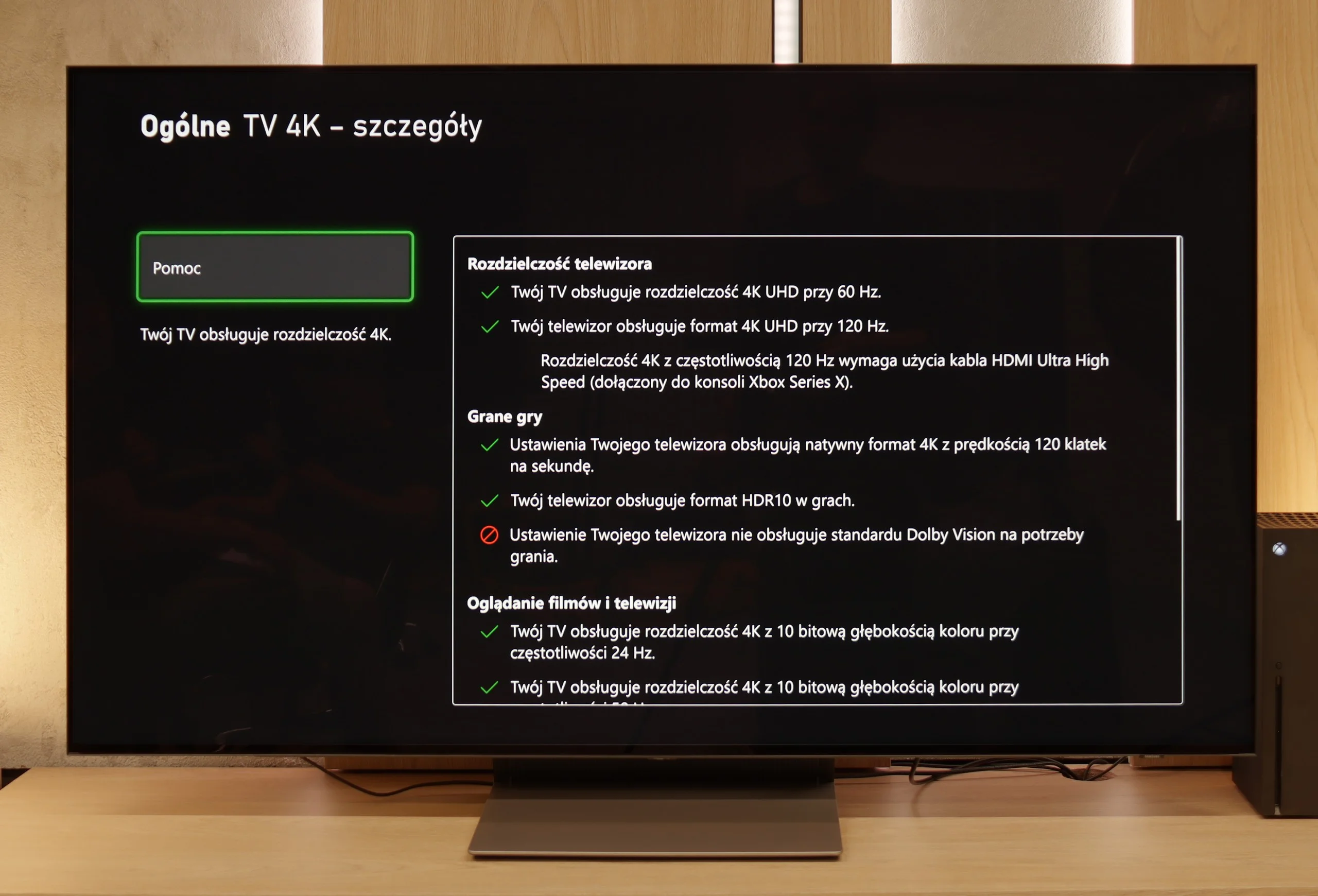
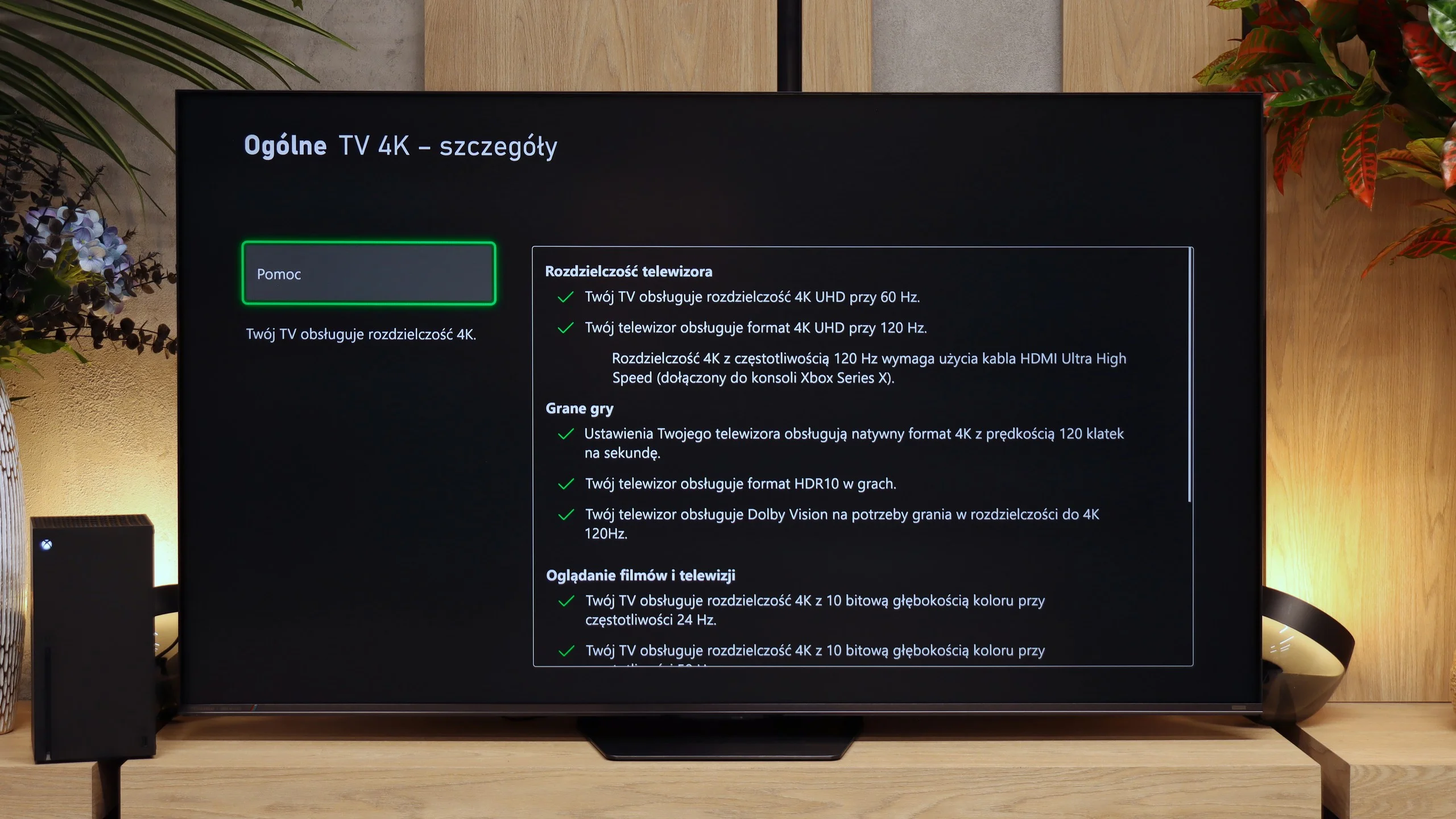
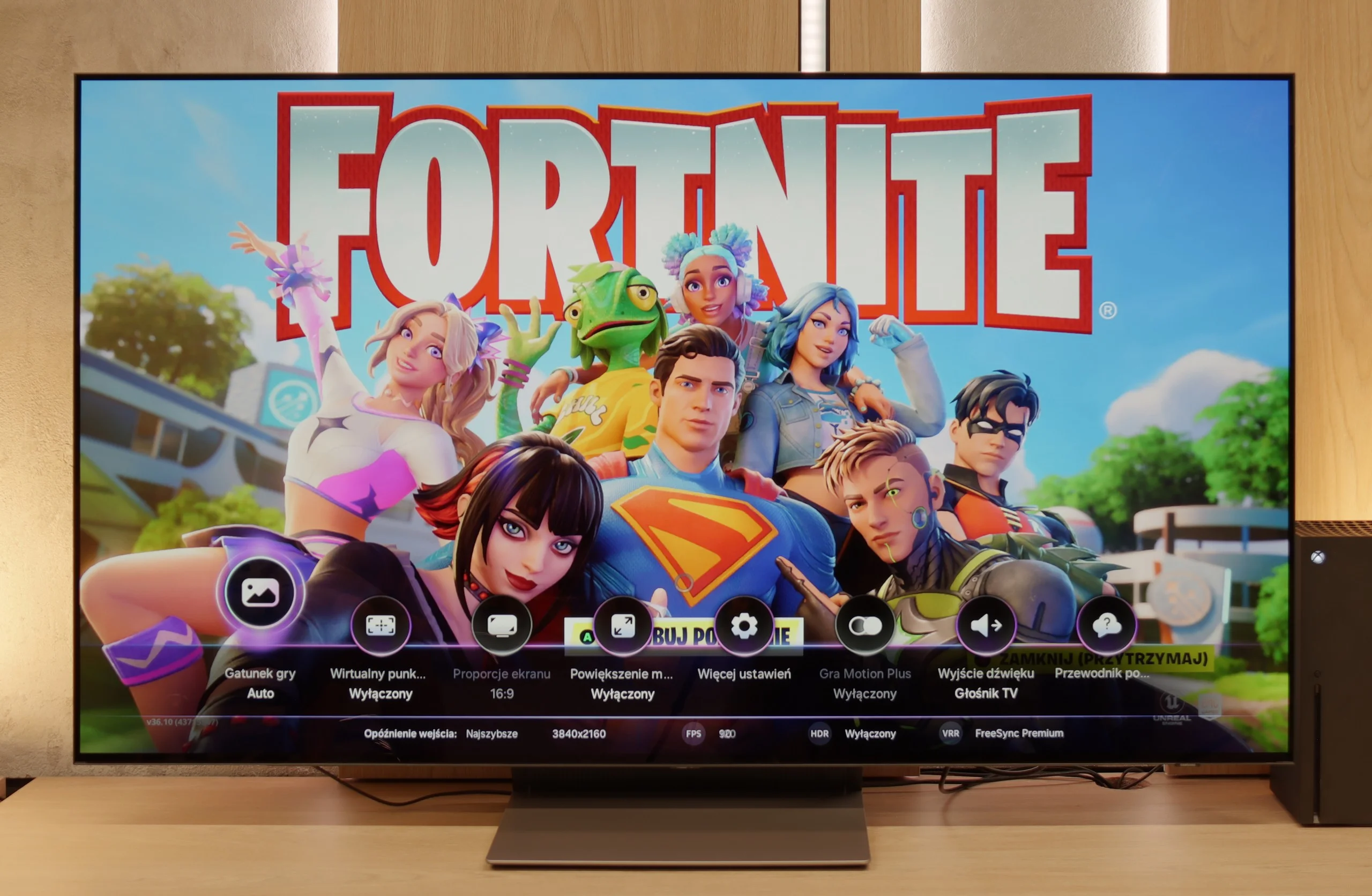
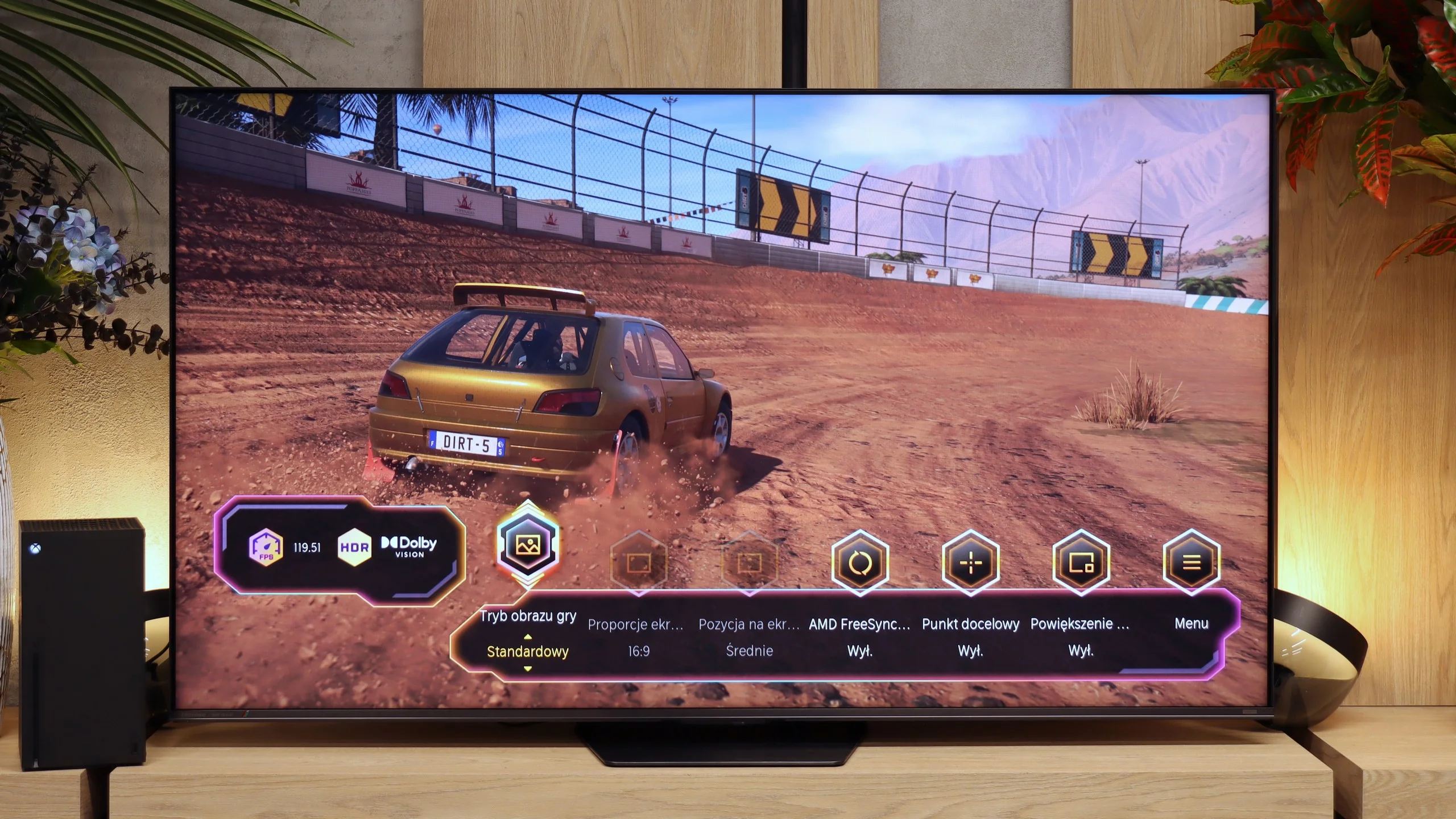
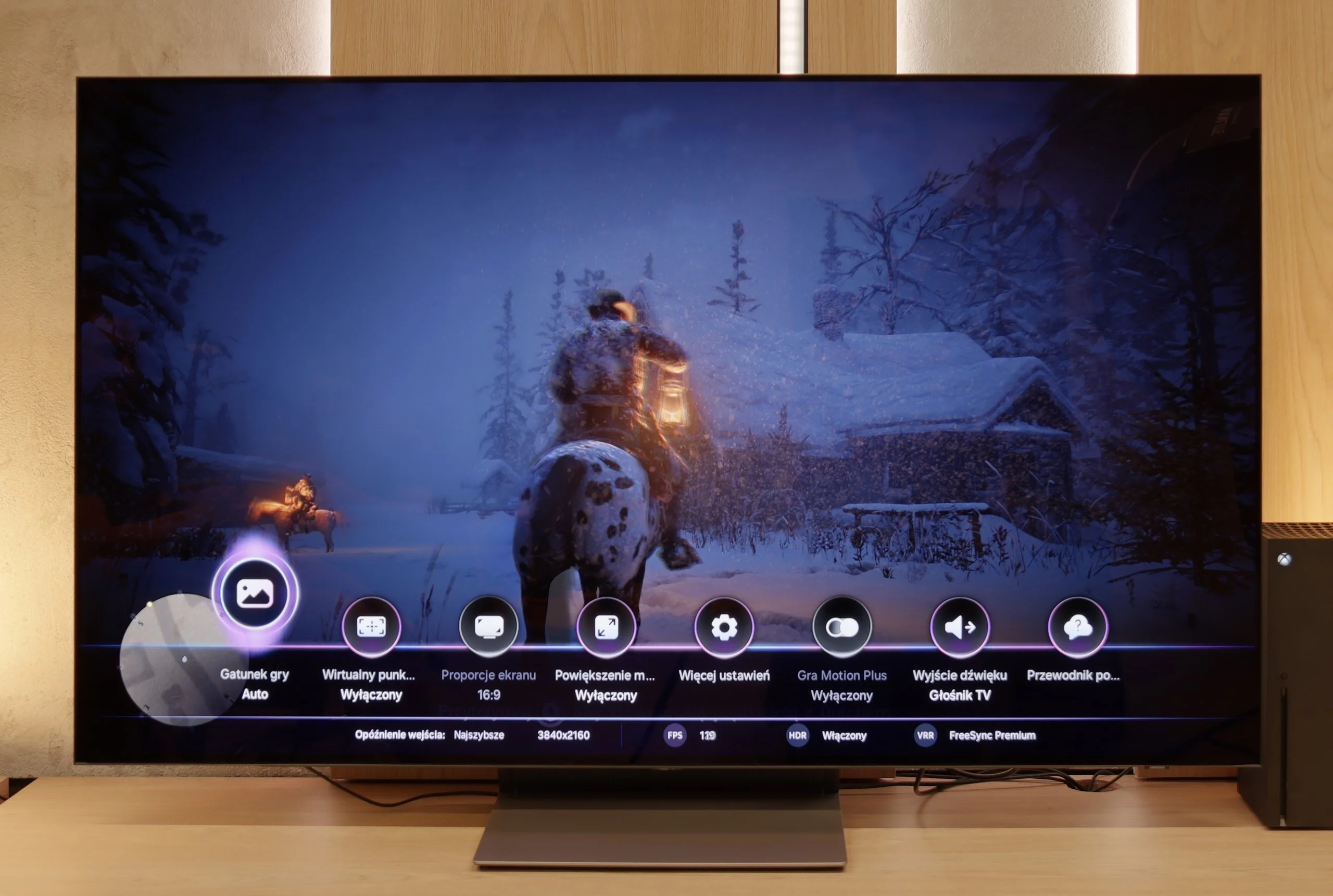
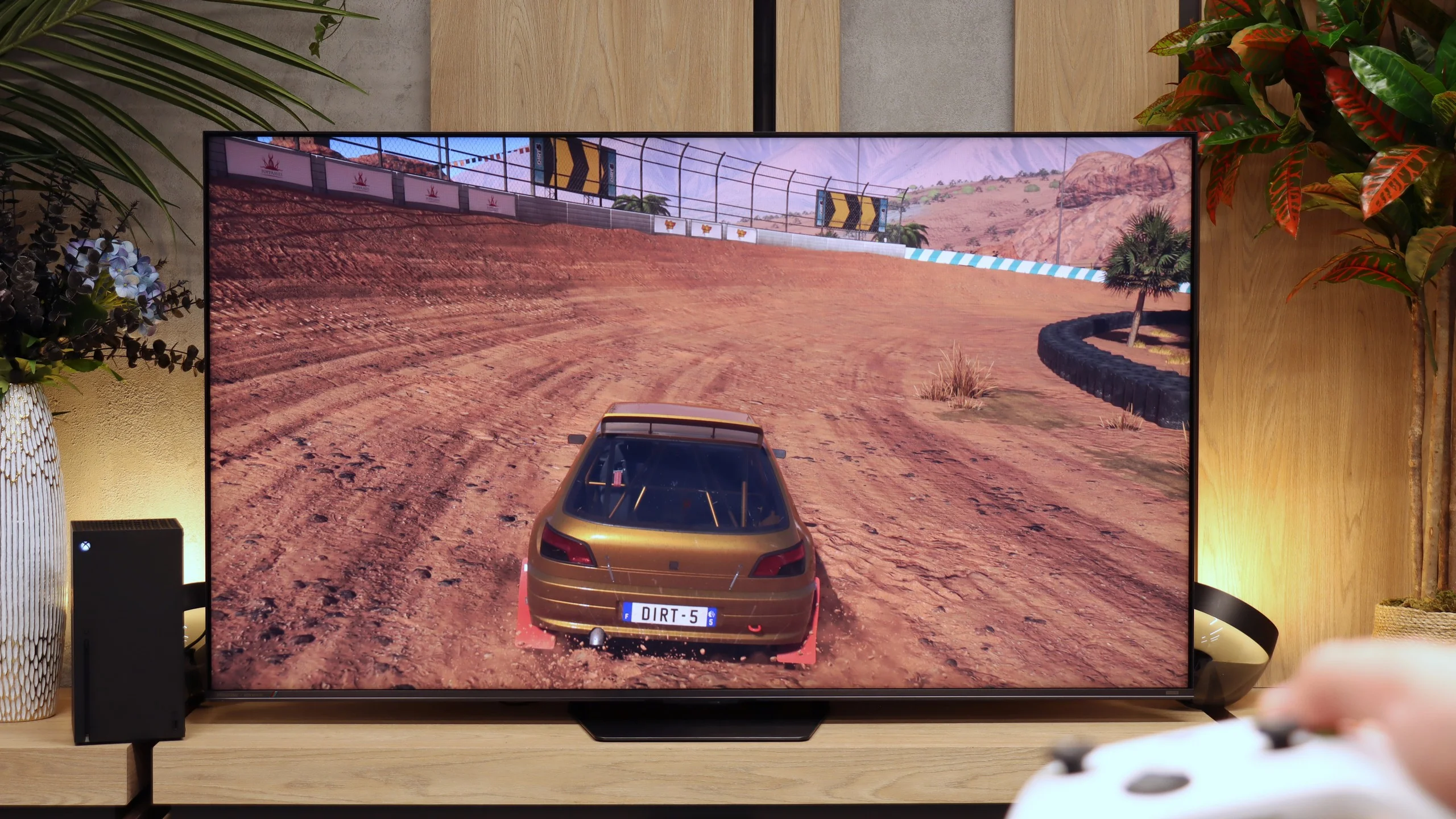
When it comes to gaming features – the S90F has absolutely nothing to fault. Aside from the lack of Dolby Vision, which is already the norm for Samsung. The television operates at 144 Hz, has four HDMI 2.1 ports, so you can easily connect more than one console or PC. Onboard, we also find the Game Bar – a practical tool that allows you to quickly glance at picture settings, VRR status, ALLM mode, and other useful options. Game Motion Plus also deserves a mention – Samsung's proprietary motion enhancer that is the only one truly functioning sensibly in games. The image appears smoother, but without any artificial effects or slowdowns.
It is also worth mentioning the HGiG feature, which – much to our slight surprise – works correctly. We're mentioning this because Samsung clearly broke something in one of the last updates, and in some models, the option responsible for HGiG simply... disappears from the menu. Setting it up becomes practically impossible. Fortunately, our S90F unit did not have this issue, but the situation is dynamic, so it's worth keeping this in mind and regularly checking for updates and information from the manufacturer.
In terms of gamer features the UR8S performs really well. The TV supports practically everything you can expect from a modern console or PC display. It offers ALLM, VRR and 4K at 120 Hz. There is also Dolby Vision in Game Mode, so when using, for example, the Xbox Series X you do not have to give up that HDR format. PC gamers get even more options. The panel can run at 4K at 180 Hz, and dropping to Full HD can raise the refresh rate to as much as 330 Hz. There is also a Game Bar that lets you quickly check key information and change gaming-related settings. The only clear omission is a correct implementation of HGiG. With it enabled the TV still alters HDR brightness mapping, so we do not get the effect intended by that standard. Aside from that, the UR8S is very well prepared for both consoles and a powerful PC.
Input lag
10/10
9.8/10
SDR
HDR
Dolby Vision
The input lag on the S90F is at a level akin to that of a monitor. In optimal conditions, a result of 5 ms was achieved, which is an absolutely stunning outcome – even a benchmark for the most demanding players. Whether you are playing fast-paced shooters, fighting games, or simply value instant response – the S90F does not disappoint in this regard at all.
Input lag on the UR8S is very low. With a 60 Hz signal we measured around 15–16 ms, while switching to 120 Hz reduces the delay to around 9–10 ms. Importantly, we obtained similar results in HDR and Dolby Vision, so using those formats does not noticeably increase the lag. In practice the response to controls is very quick and even more demanding gamers should have no reason to complain.
Compatibility with PC
8.6/10
8.5/10
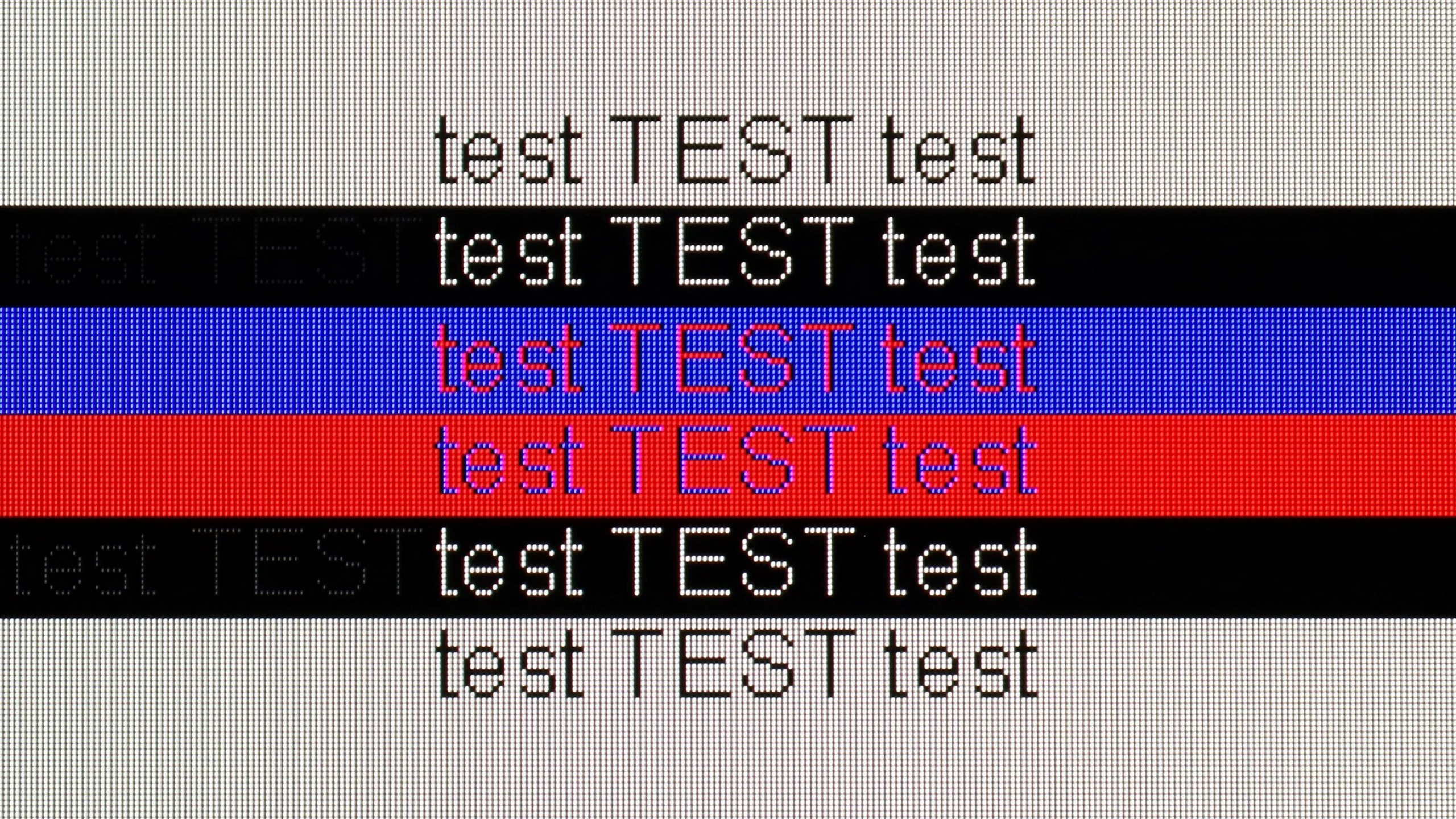
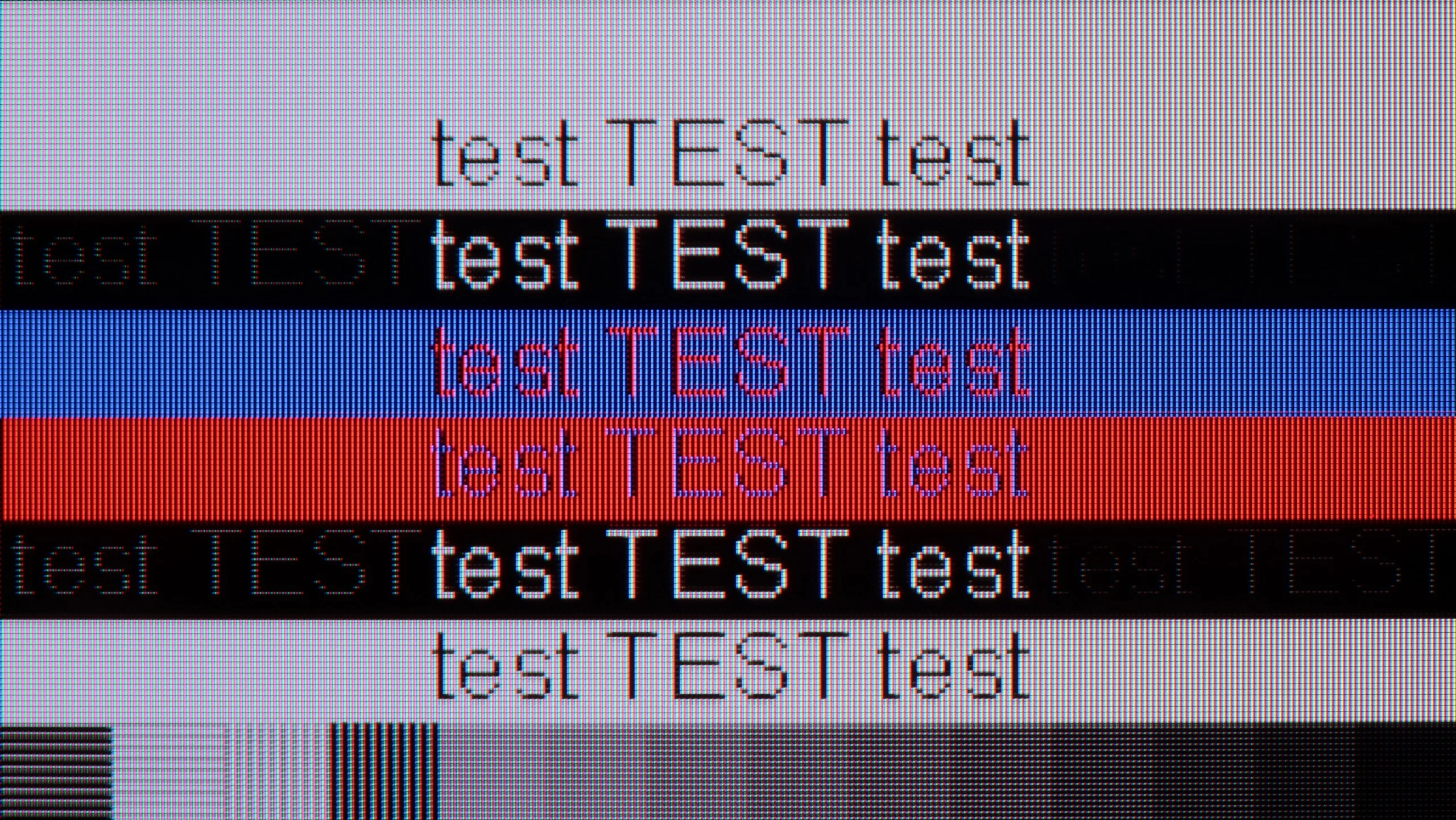
The photo shows the legibility of small fonts. Ideally, lines should be the same thickness on both light and dark text, with minimal pixel gaps.
The S90F is a great tool for both gaming on PC and everyday work. Gamers can rest assured – the television effortlessly supports image synchronisation with NVIDIA graphics cards thanks to G-Sync, and the 144 Hz refresh rate combined with very low input lag only confirms this. The S90F will also serve well as a monitor for text work. Of course, the readability of fonts may be slightly compromised by the characteristic pixel structure in the RWGB layout, but this is a topic well known mainly to those who work with large amounts of text, code, or spreadsheets in Excel. For most users, this will be perfectly acceptable.
The UR8S also works very well as a large computer monitor. The TV correctly handles 4:4:4 chroma subsampling at maximum resolution and refresh rate, so small fonts remain legible and do not have severely jagged or coloured edges. The BGR subpixel layout used is not a major issue here and text still looks good, although picky users will notice that they are not perfect.
There is also a refresh rate of up to 180 Hz at 4K, G-Sync support and very low input lag, which at the maximum refresh rate is around 9 ms. So if someone wanted to use the UR8S not only for a console but also for gaming on a powerful PC, the TV is really well suited to that.
Viewing angles
7.4/10
5.5/10
The viewing angles on the S90F are very good, although it must be admitted that they are slightly inferior to the 65" version with a QD-OLED panel. Nevertheless, the picture quality at wide angles is excellent – colours remain vivid, and brightness does not drop drastically when viewed from the side. There is no need to move the television towards you to see a clear image. For most users, this level is more than sufficient.
Viewing angles on the UR8S are quite good, helped by the use of RGB backlighting. Thanks to the three-colour LEDs, colours seen at an angle hold up better than on many conventional Mini-LEDs that use white or blue backlighting. Of course, it is still not at the level of OLED, and certainly not QD-OLED. At wider angles the image loses a little contrast and saturation, but for an LCD TV the result is really decent.
Daytime performance
6.1/10
9.5/10
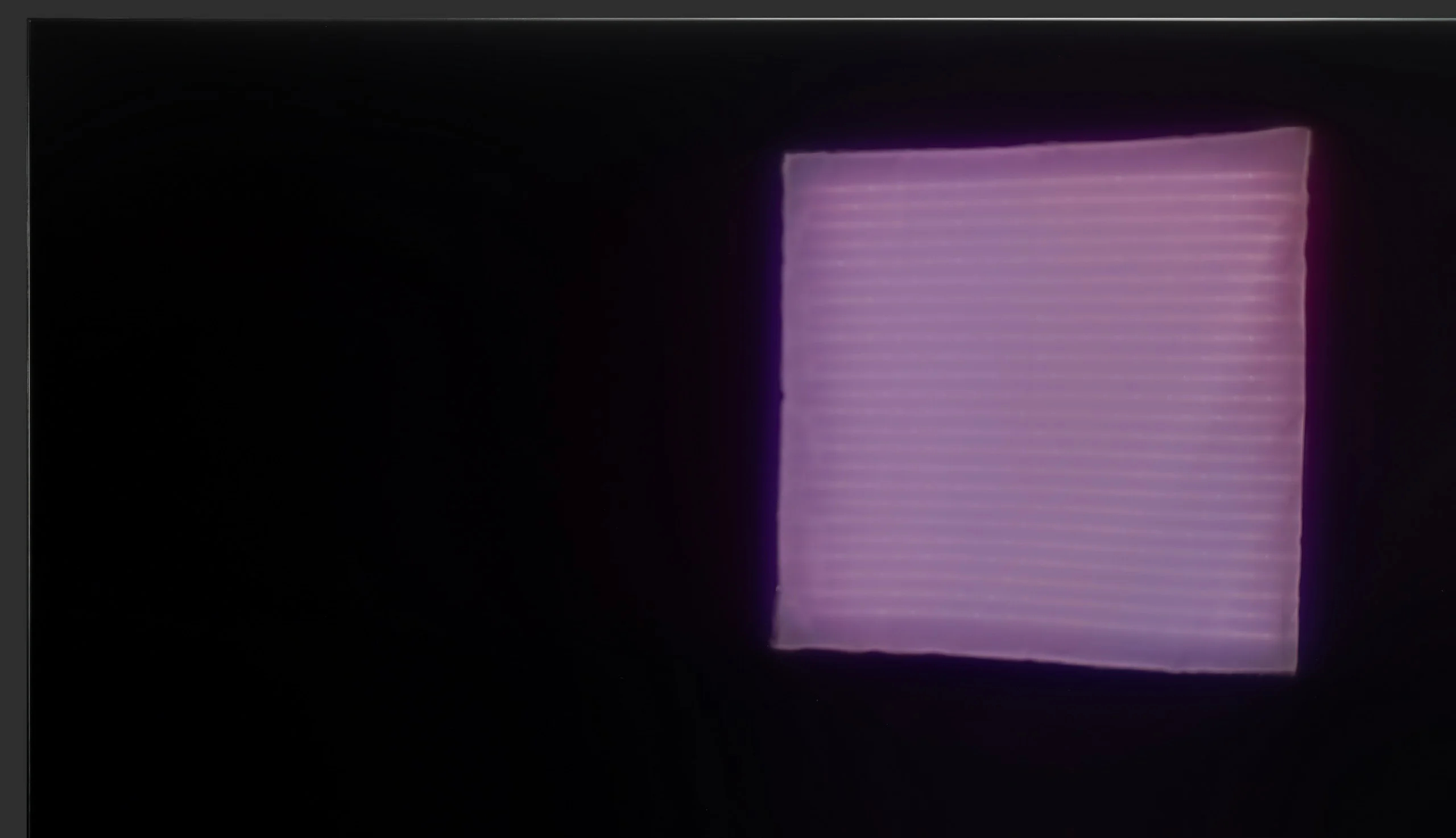
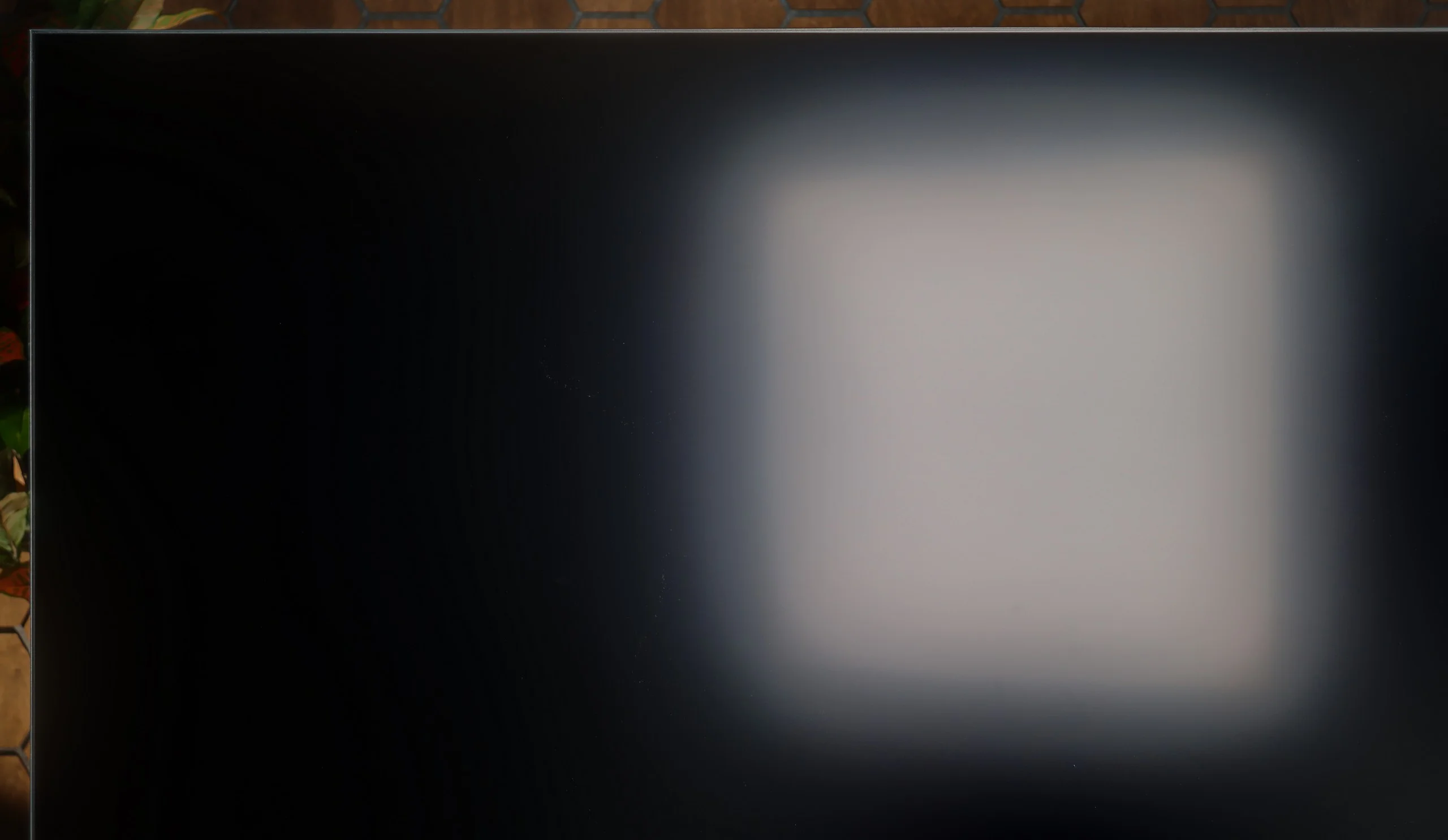
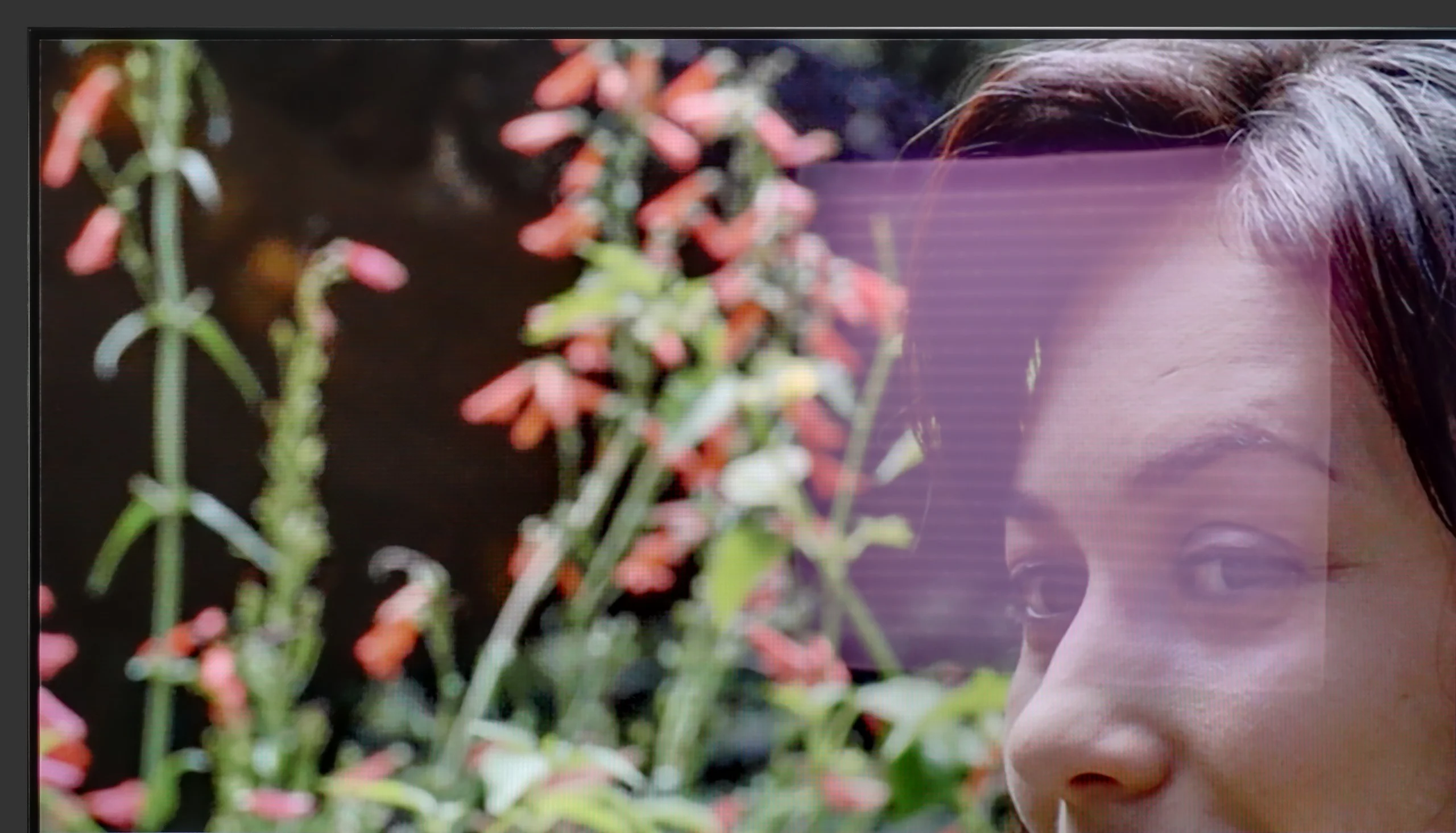
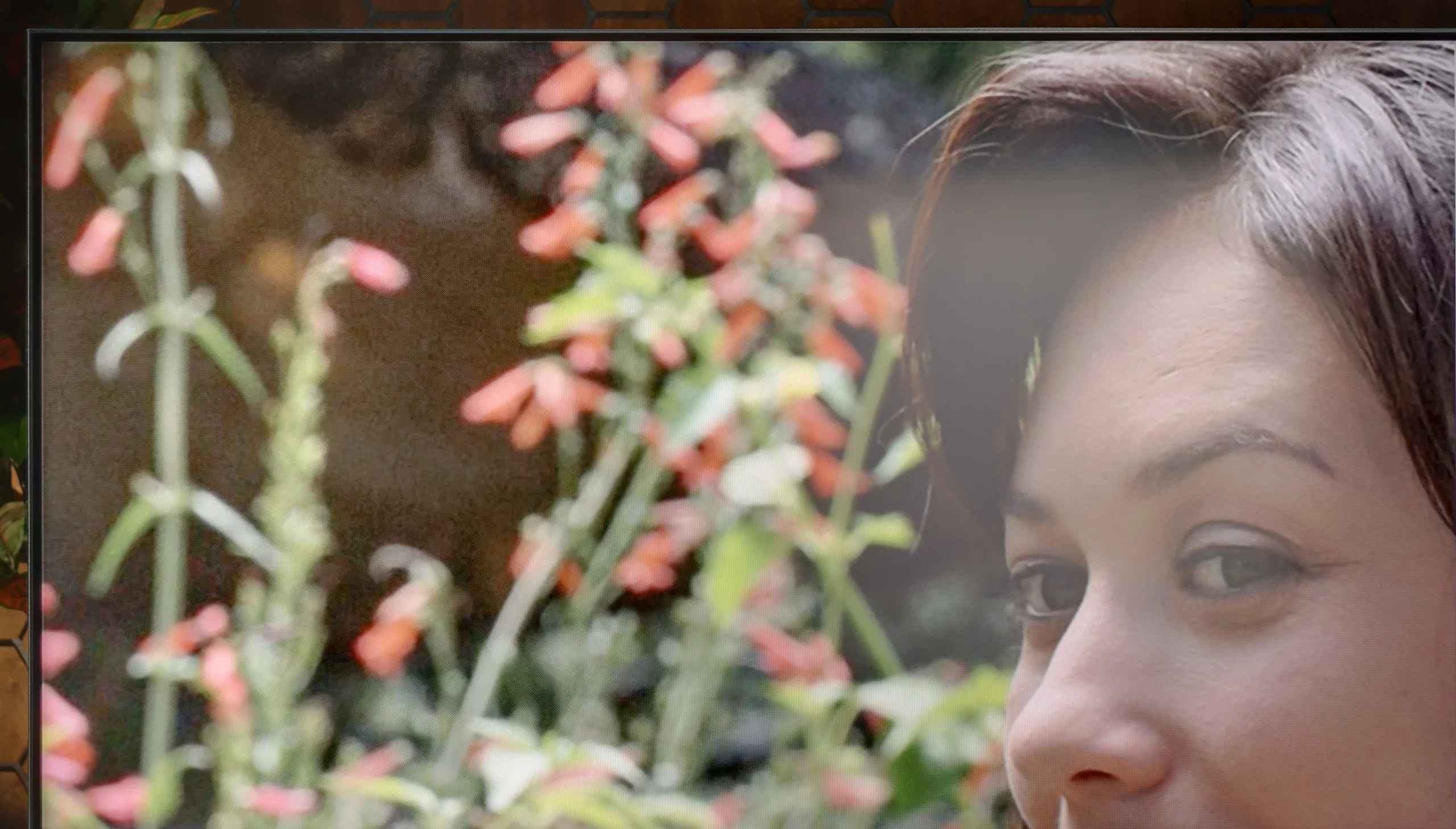
Panel brightness
Hisense UR8S: 1468 cd/m2
SAMSUNG S90F (WOLED): 405 cd/m2
S90F is really a bright television for an OLED. Of course, it is not worth comparing it to Mini-LED televisions or the brightest high-end OLEDs, but under normal lighting conditions, it is quite easy to watch something during the day. The brightness is high enough that you don't need to cover the windows every time you turn on a film or series. However, it is important to remember that the anti-reflective coating on WOLED panels is not among the best. Reflections can be visible, especially with bright light coming in from the window. In such a case, it's best to reach for curtains.
The UR8S performs excellently for daytime viewing. First and foremost it is a very bright TV: in SDR we measured around 1500 nits, so even with a lot of ambient light the picture remains punchy and easy to read. A big plus is the matt finish, which very effectively scatters reflections from windows and lamps. Instead of a distinct reflection on the screen you see more of a soft, blurred glow that is far less distracting while watching.
It is worth noting, however, that the coating works best when you view the TV straight on. At a wider angle it starts to resemble a satin finish and reflections become more pronounced and therefore more bothersome. In a brightly lit room blacks also lose some of their depth, but at such high brightness this is not a major problem. Overall the UR8S is simply a very good choice for a bright living room.
Panel details
Subpixel Structure:
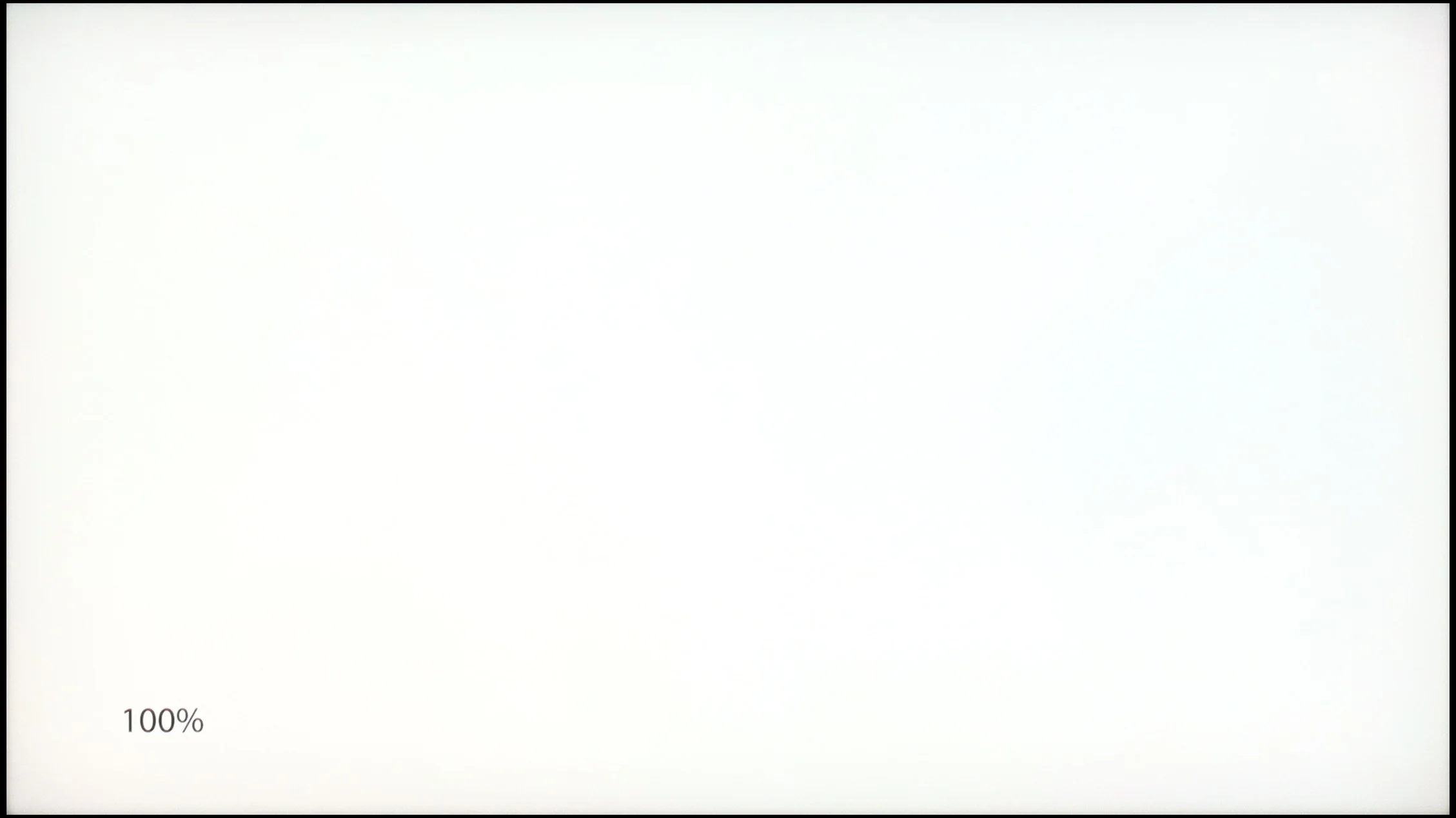
Panel uniformity and thermal imaging:

TV features
7.7/10
9.4/10
- SystemTizenVIDAA
- System performanceVery goodVery good
- HDMI inputs0 x HDMI 2.0, 4 x HDMI 2.1 48Gbps0 x HDMI 2.0, 4 x HDMI 2.1 48Gbps
- Other inputsToslink (Optical audio), IR (remote)
- OutputsToslink (Optical audio), eARC (HDMI), ARC (HDMI)Toslink (Optical audio), eARC (HDMI), ARC (HDMI)
- Network InterfacesWi-Fi 2.4GHz, Wi-Fi 5GHz, Ethernet (LAN) 100MbpsWi-Fi 2.4GHz, Wi-Fi 5GHz, Ethernet (LAN) 100Mbps
- TV receptionDVB-T, DVB-T2, DVB-S, DVB-S2, DVB-CDVB-T, DVB-T2, DVB-S, DVB-S2, DVB-C
Classic features:
- Recording to USB (terrestrial TV)
- Recording programming
- Picture in Picture (PiP)
- RF remote control (no need to aim)
- Backlit remote control
- Teletext
- Audio only mode
- Bluetooth headphones support
- Simultaneous Bluetooth headphones & TV audio
Smart features:
- AirPlay
- Screen mirroring (Windows Miracast)
- Voice search
- Voice search in native language
- Ability to connect a keyboard and mouse
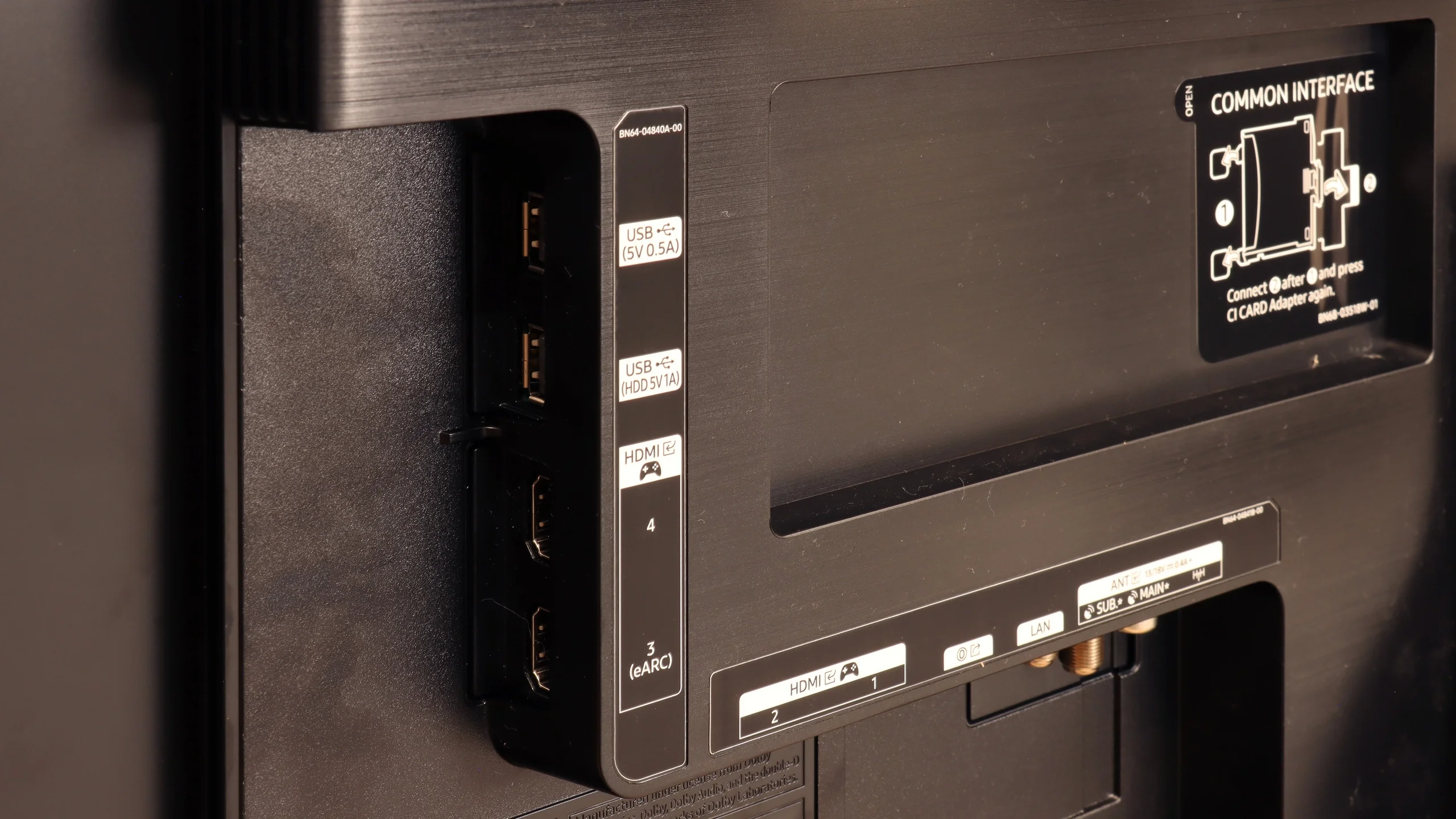
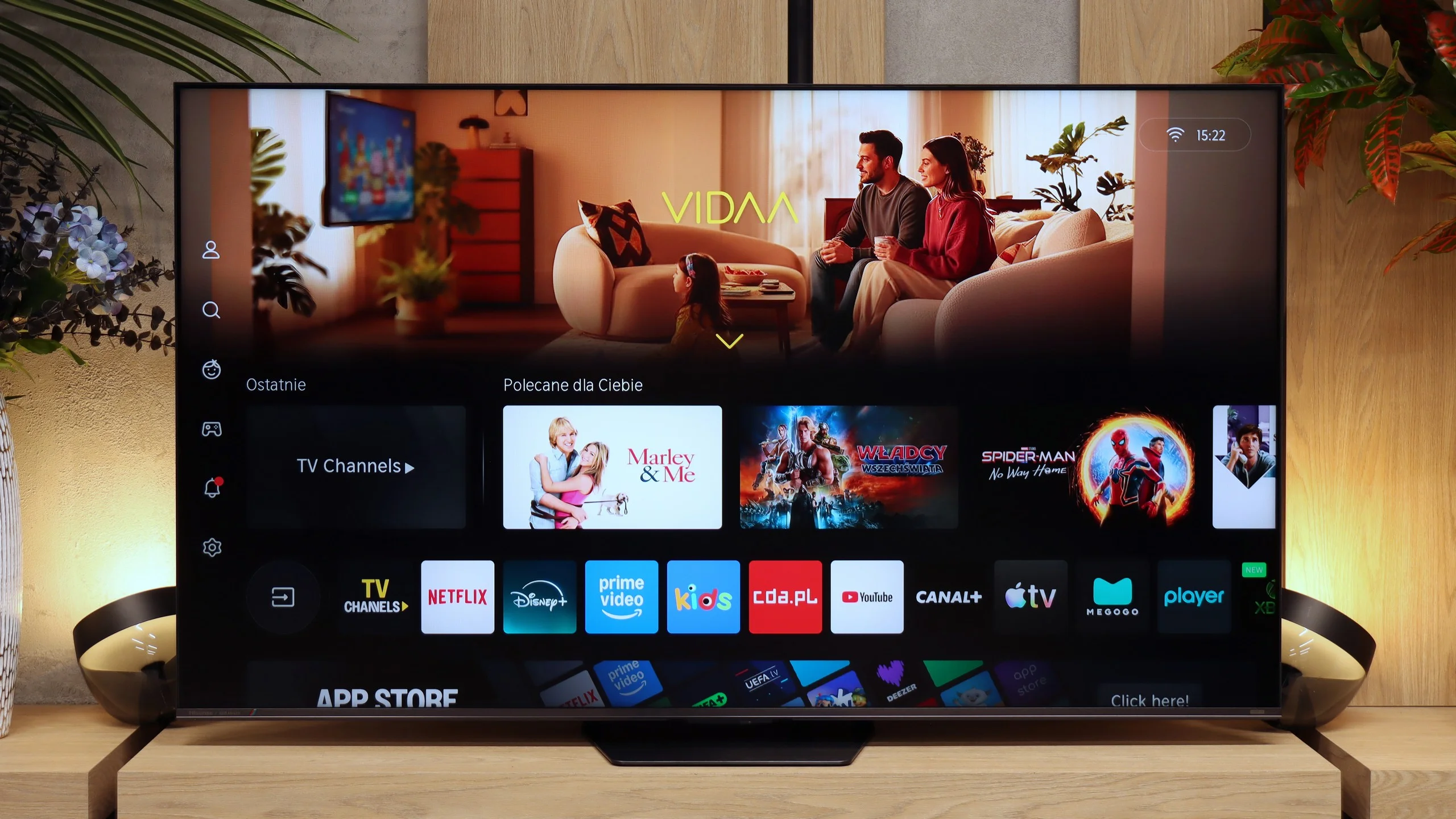
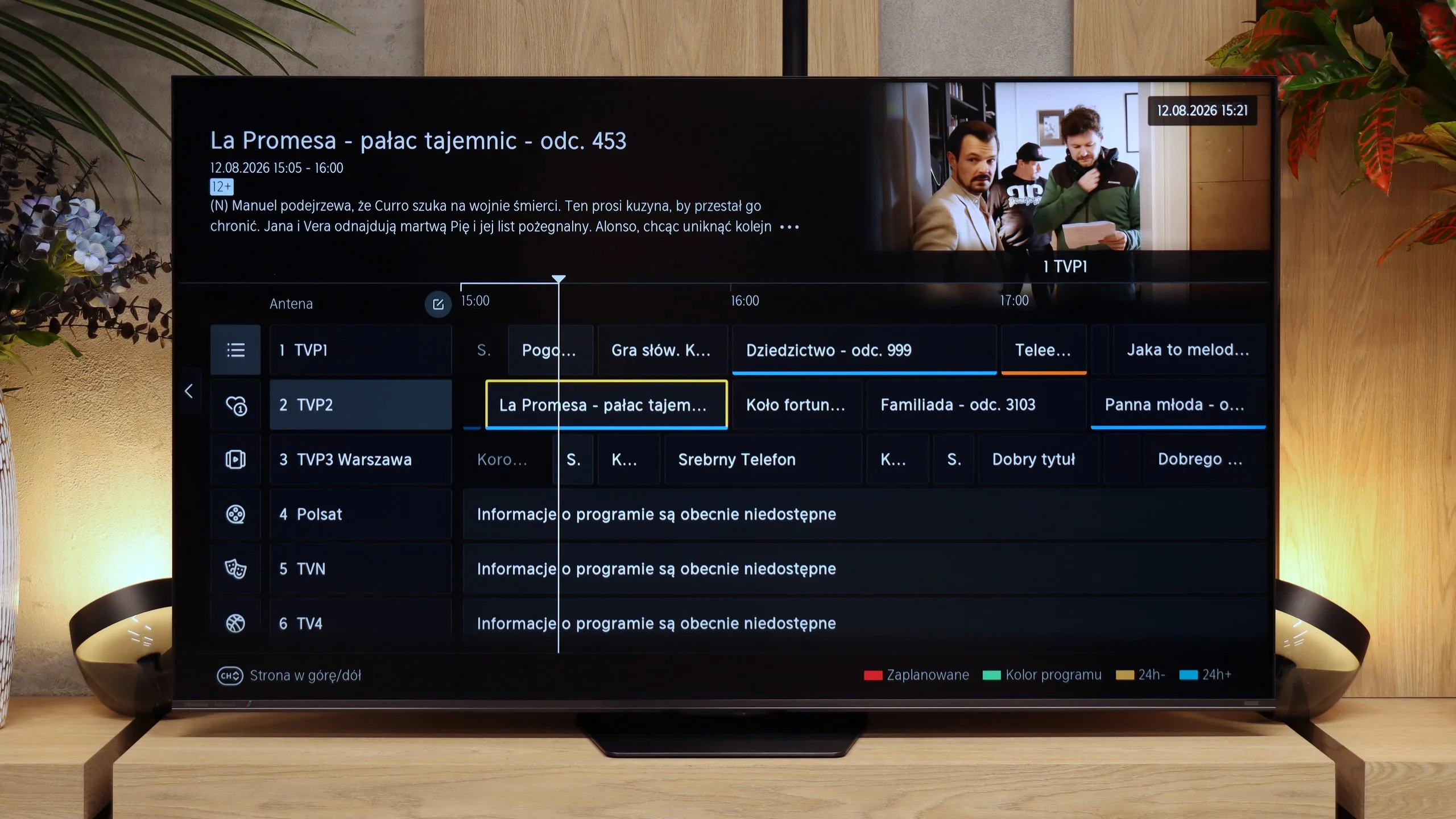
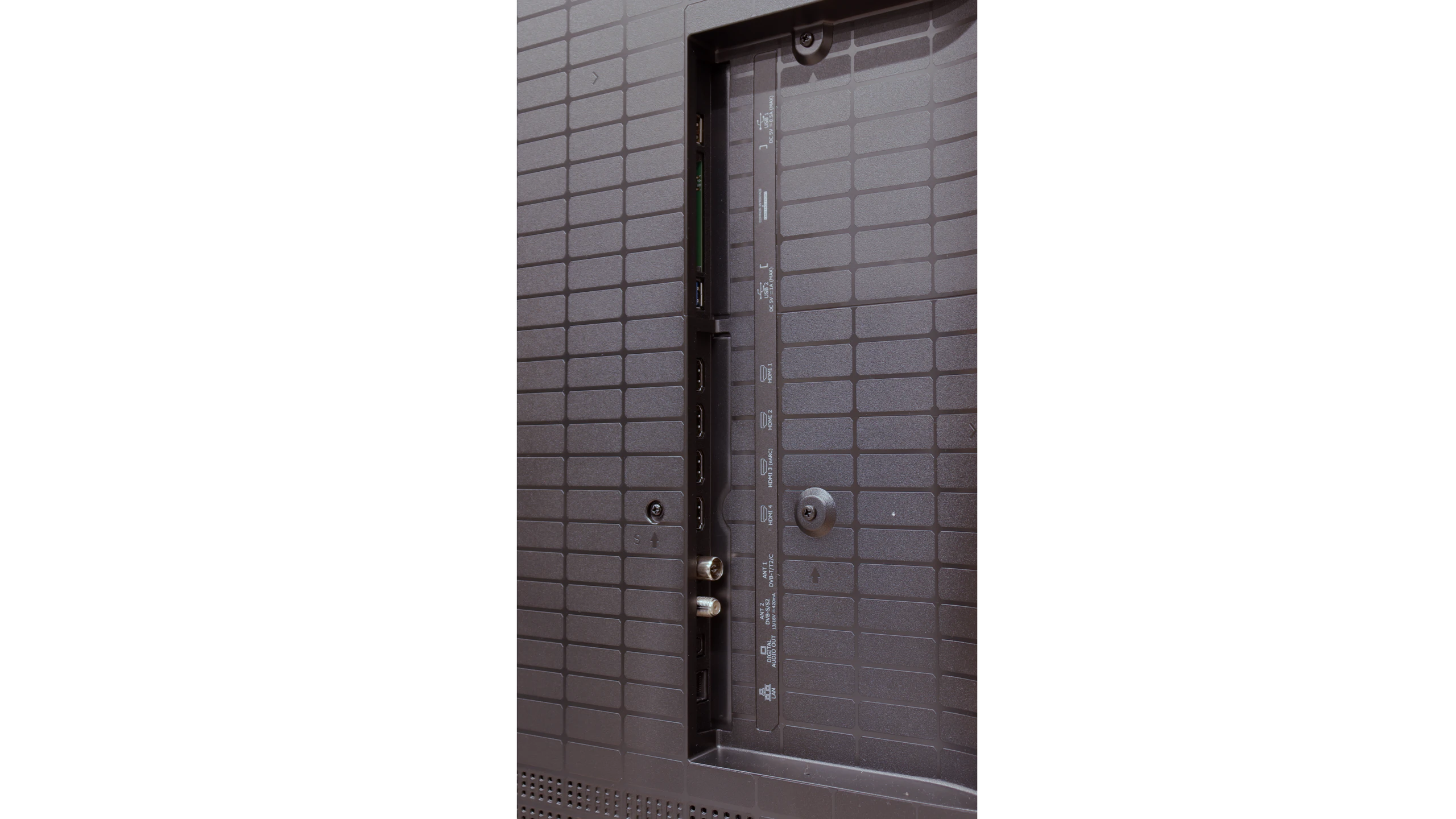
Sound connection options
- HDMI audioeARC (HDMI), ARC (HDMI)eARC (HDMI), ARC (HDMI)
- Other audio outputsToslink (Optical audio)Toslink (Optical audio)
- Wireless audioBluetoothBluetooth
Supported audio formats (external HDMI eARC audio):
- Dolby Digital Plus 7.1
- Dolby True HD 7.1
- Dolby Atmos in Dolby Digital Plus (JOC)
- Dolby Atmos in Dolby True HD
- DTS:X in DTS-HD MA
- DTS-HD Master Audio
Senior accessibility
- Numeric keyboard on TV
- Font size adjustment
- Audio description
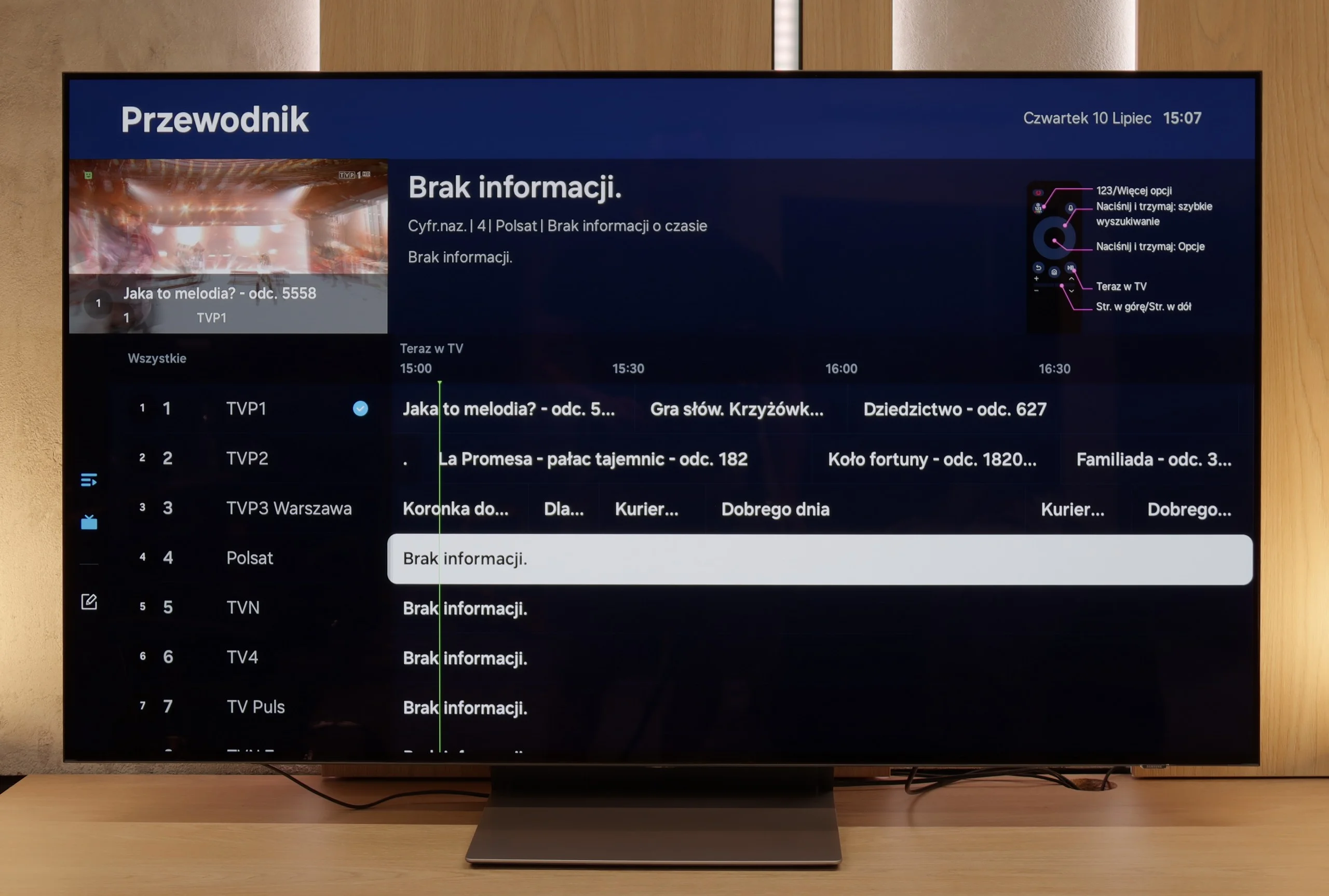
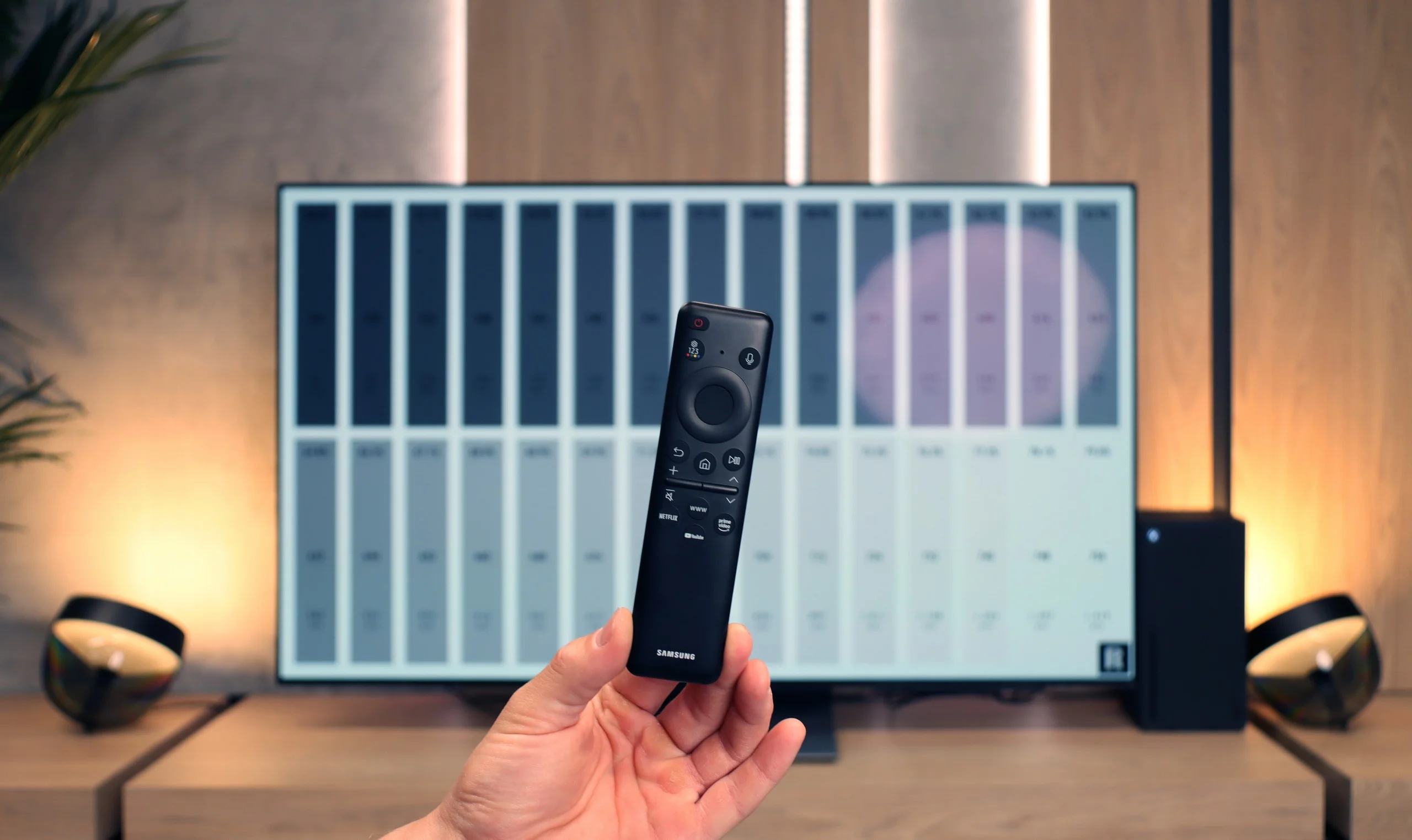
The Samsung S90F is equipped with many classic television features, such as EPG, CI module, and headphone support, but there's also more to it. Thanks to the presence of several tuners, the television offers a picture-in-picture (PiP) function – very useful, for example, when we are watching one match but want to take a glance at the score of another one happening simultaneously. It's a shame that Samsung has completely eliminated the USB recording function for some time now, but this is partly compensated by good integration with set-top boxes and other devices. The remote control – although small and lacking a numeric keypad – allows for the control of many devices connected to the television. We can easily operate a set-top box, amplifier, console, or other equipment with it – and all without the need to reach for multiple remotes.
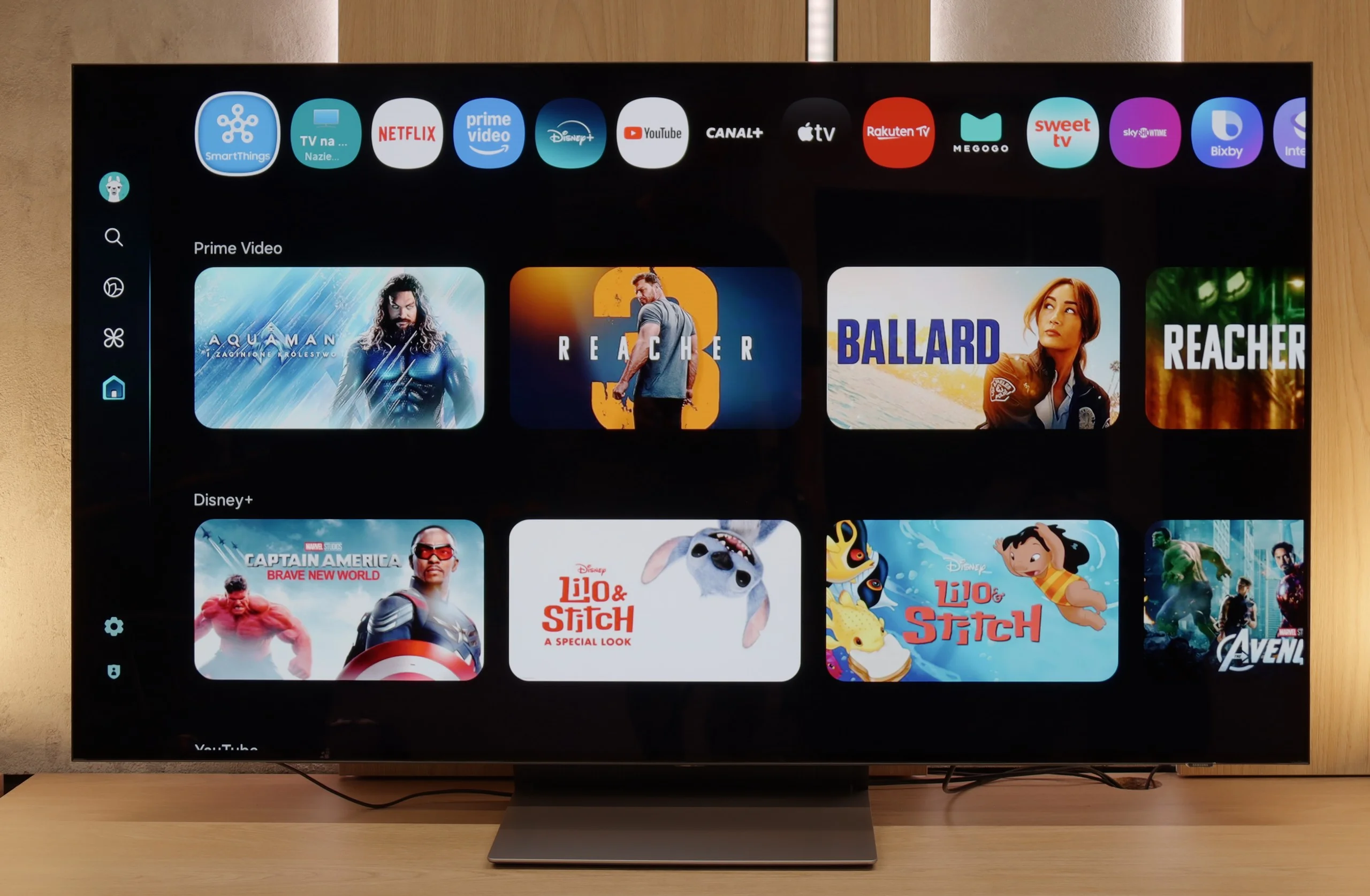
As for the Smart TV system – Tizen on the S90F operates very smoothly, which is not always the case with cheaper models featuring this system. The system itself is comprehensive and offers a lot of functions – we have screen mirroring, AirPlay, Bluetooth device support, as well as many options related to smart home integration, such as controlling light bulbs or other smart devices directly from the television. However, it is important to remember that Tizen is a closed system, so when it comes to apps – we are limited to what we find in the Samsung store. And while this is quite extensive, it does not match the flexibility of the Google TV platform. It's worth keeping this in mind if you have specific needs for niche applications.
Classic features
Hisense is one of those manufacturers that, fortunately, has not yet abandoned the classic functions of a television. The UR8S allows you to record programmes to USB, schedule recordings, has teletext and an audio-only mode. You can also use the TV’s speakers and Bluetooth headphones at the same time. The only thing missing is picture-in-picture (PiP). The remote deserves praise as well. It is well made, backlit and has plenty of buttons, so you can access most key functions without digging through menus. It communicates with the TV via radio, so you do not need to point it directly at the screen.
VIDAA system
The VIDAA system itself runs very quickly and responsively on the UR8S. Apps launch smoothly, navigation is fluid and during our tests we had no major complaints about its performance. The app library is already large enough to include all the major streaming services. There are also extra Smart features. The UR8S supports AirPlay, Miracast, Polish voice search and the ability to connect a keyboard and mouse. VIDAA may not offer as much freedom as Google TV, but for everyday use it provides pretty much everything you need.
Apps
8.7/10
8.3/10






















Playing files from USB
9.1/10
8.5/10
Supported photo formats:
Maximum photo resolution:
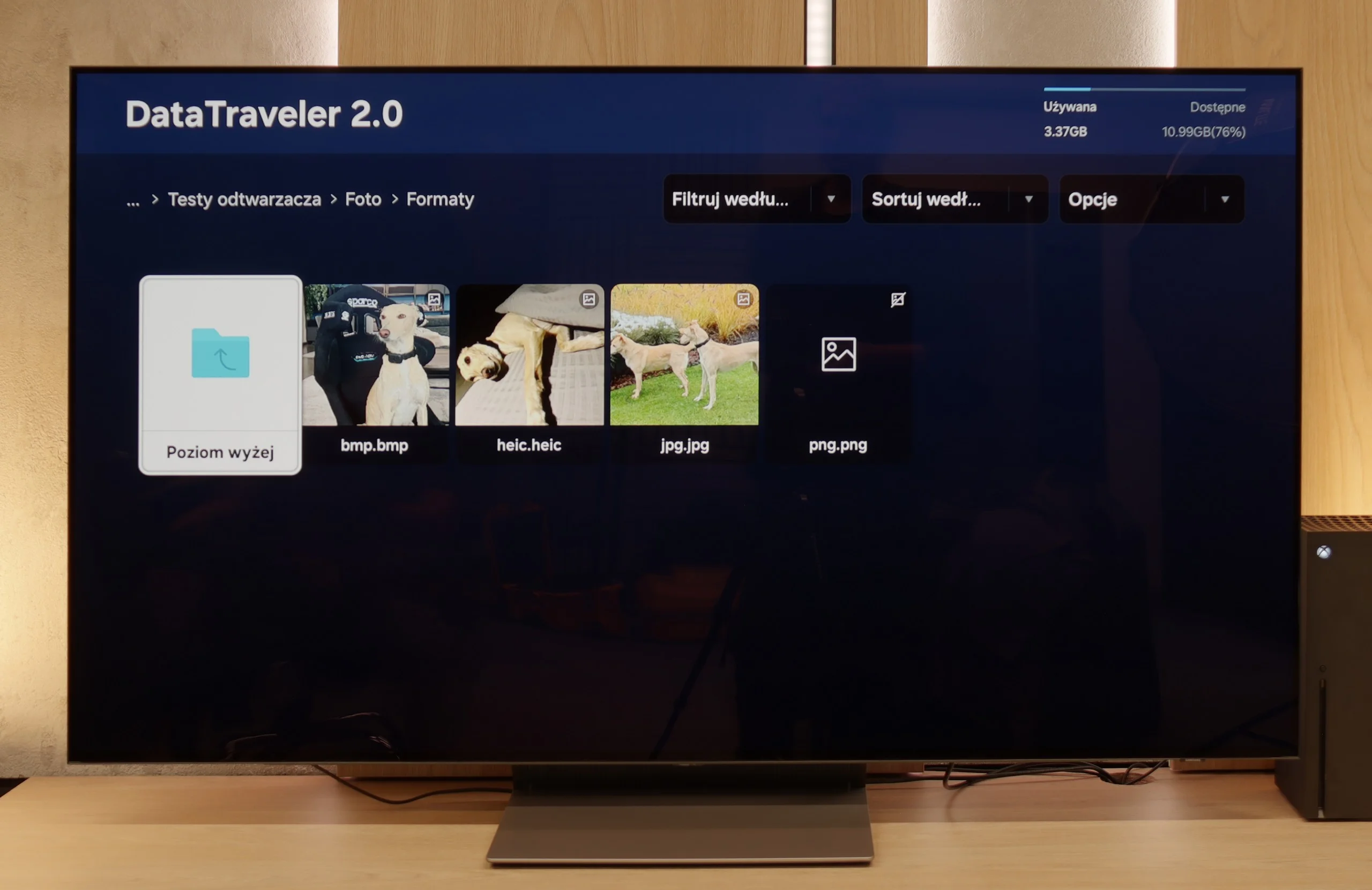
The built-in media player in the S90F is adequate and supports a fair number of popular formats. Unfortunately, during testing – once again – we encountered issues, despite the manufacturer's claims. The television did not play some formats that are supposedly supported, such as HEIC format photos (the Apple version), or SRT and SUB subtitles. In everyday use for most people, such a player is sufficient to play a movie from a USB drive, but it's worth keeping in mind that surprises may occur. Perhaps the situation will improve in future updates, but at the time of writing this review – it works as it works.
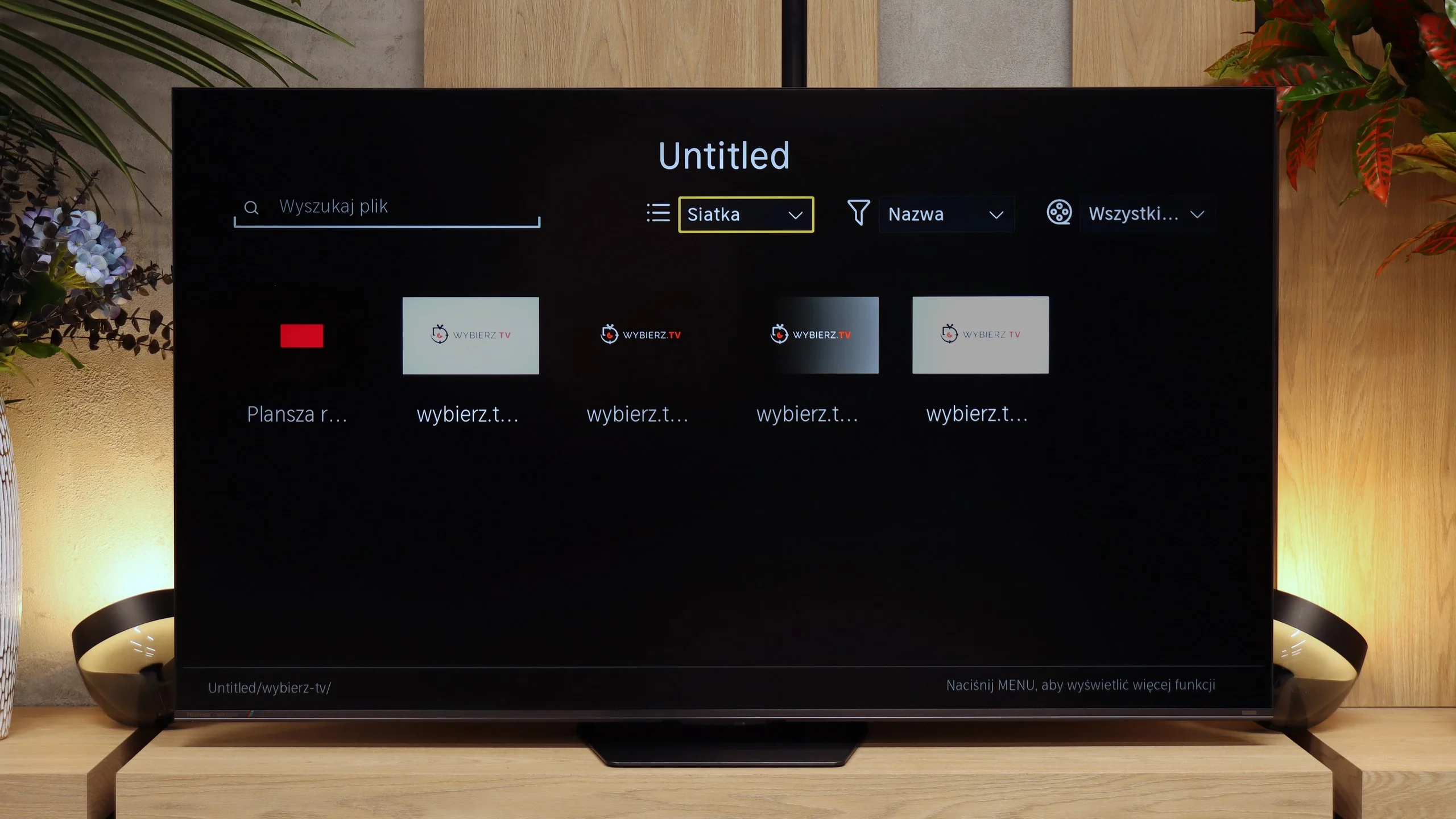
The USB file player works correctly and handles most popular content without major problems. Our main reservation concerns photo handling. The UR8S is rather selective about photos' resolutions; for example, it can open a 16 or 32 Mpix image but refuse to display a 10, 12 or 20 Mpix file. There's little logic to it, so if someone often views photos directly from a USB stick, they may occasionally encounter a file the TV simply won't open.
Sound
7.4/10
7.8/10
- Maximum volume84dB92dB
- Dolby Digital Plus 7.1
- Dolby True HD 7.1
- Dolby Atmos in Dolby Digital Plus (JOC)
- Dolby Atmos in Dolby True HD
- DTS:X in DTS-HD MA
- DTS-HD Master Audio
The S90F plays really quite pleasantly, with noticeable bass and quite good dynamics. A definite plus is the support for Dolby Atmos, which allows the television to deliver a slightly more "spatial" sound – of course, to the extent allowed by the built-in 2.1 system 😉. Unfortunately, as is often the case with Samsung, there is a lack of support for the DTS:X format. So, if you want to take advantage of its capabilities, you need to connect the audio equipment directly to the receiver, rather than to the television itself – otherwise, it simply won't work.
In terms of sound, the UR8S performs very similarly to the lower-tier Hisense U7S Pro, and that's no coincidence. The manufacturer has used practically the same 2.1.2 configuration rated at a total of 50 W. There's an additional subwoofer at the back of the cabinet, while the other speakers are positioned in the lower part of the TV. For built-in speakers, the performance is quite good. The subwoofer adds some bass, so the sound isn't as flat as in basic TVs, and the whole set can get really loud. In our measurement, the maximum loudness reached about 92 dBC. Of course it's not a replacement for a good soundbar, but it's more than enough for casual TV or YouTube watching.
Sound Quality Test
Acoustic Measurements
84dBC (Max)
75dBC
92dBC (Max)
75dBC
Reader comments
Comments are provided by the external service Disqus (Zeta Global). Once loaded, Disqus may set cookies and process data about your activity.
We will remember your choice on this device. Provider's privacy policy