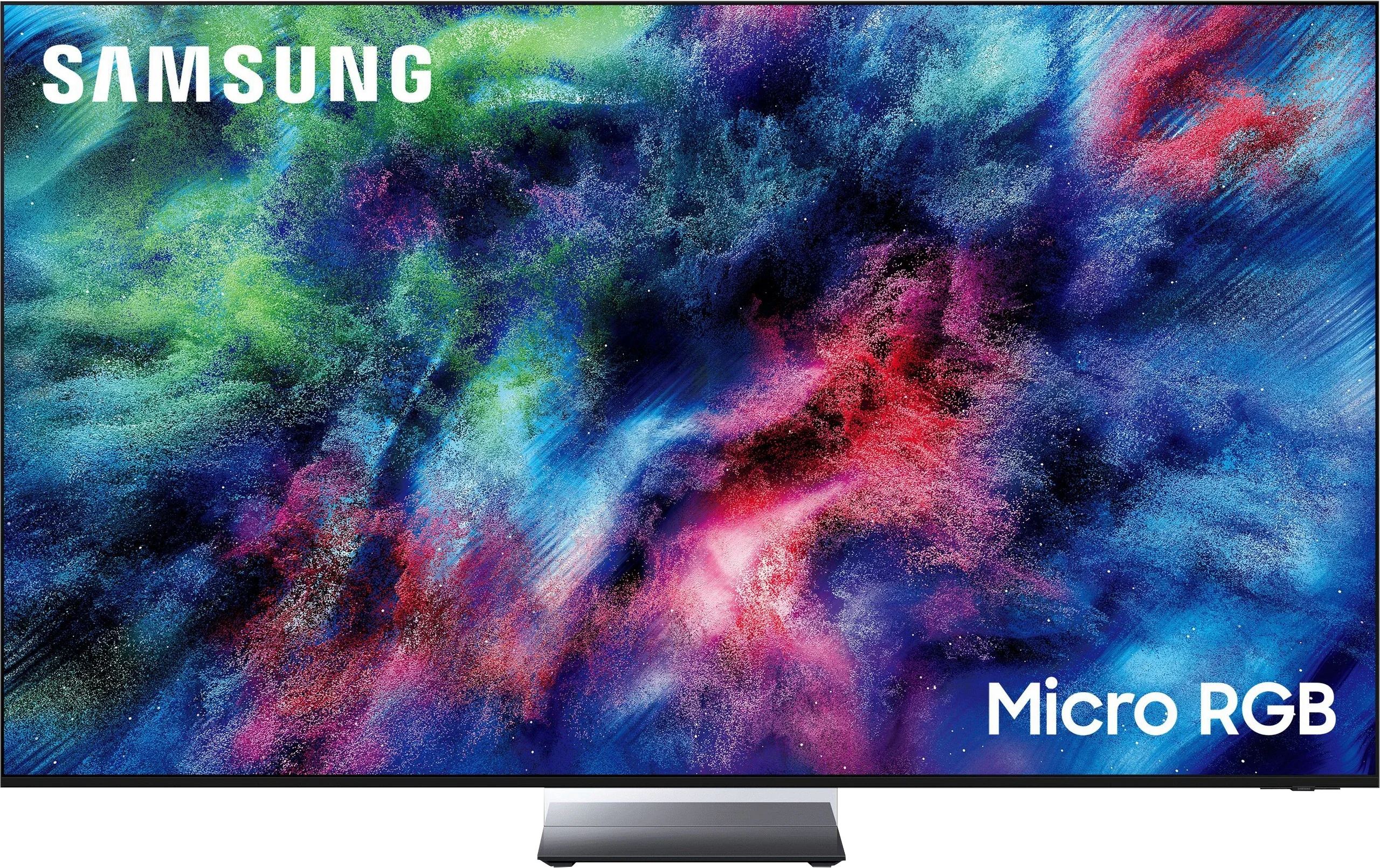
The Samsung R95H is a TV that, above all, shows that the classic LCD panel still has a lot to offer. Micro RGB is not just a marketing name here, because in the right scenes it can actually make a difference. When strongly saturated, uniform colours appear on screen, particularly reds and greens, the R95H can show them with an intensity that is hard to find in typical Mini-LED TVs. Add very deep blacks and high HDR brightness, and the picture can look truly striking both in the evening and in a bright living room. Importantly, the R95H does not give the impression of a TV created only to look good on measurement charts. In everyday use it is simply very versatile. Films look dynamic, sport benefits from the high refresh rate, and gamers get pretty much everything you would expect from a flagship model. On top of that, the TV itself is very well built, Tizen runs smoothly, and the matte finish copes well with reflections. It is hard to find a use case where the R95H would not fit, because it is a very versatile television. The most questions arise only when we start to look more closely at what Micro RGB actually delivers. In simpler scenes the advantage is indeed clear, but when the image becomes more complex and the backlight must simultaneously control many different colours and brightness levels, some of that advantage disappears. At that point the R95H can come closer to traditional quantum-dot TVs than clearly outpace them. We would not treat this as a flaw of the model itself, rather as a limitation of the current generation of RGB displays. Our main reservation, in fact, is its price. The R95H is today one of the most expensive TVs in Samsung’s lineup, and you always have to pay a steep premium for new technology at the start. The problem is that the manufacturer already has very advanced OLEDs in its portfolio, which in many areas can offer a similar or even better picture for a lower price. So the R95H is a good TV, but not necessarily the best value for money. If someone wants a flagship LCD panel and wants to see for themselves what three-colour RGB diodes can do, this is a very strong candidate. However, if value for money is the most important factor, it is worth taking a very serious look at the manufacturer’s top OLEDs, because they are currently the R95H’s biggest competition.
- Matching (Score) |
- Our verdict |
- TV appearance |
- Where to buy |
- Contrast and black detail |
- HDR effect quality |
- Factory color reproduction |
- Color reproduction after calibration |
- Smoothness of tonal transitions |
- Image scaling and smoothness of tonal transitions |
- Blur and motion smoothness |
- Console compatibility and gaming features |
- Input lag |
- Compatibility with PC |
- Viewing angles |
- Daytime performance |
- Panel details |
- TV features |
- Apps |
- Playing files from USB |
- Sound
Samsung R95H Micro RGB vs Samsung S90H (QD-OLED)
 Direct comparison
R95H / Mirco RGB

S90HAT / S90HAE / S92HAT
Available screen sizes: 77”
Panel type: LCD VA
Resolution: 3840x2160
System: Tizen
Model year: 2026
Complete the survey to find out the result
Panel type: QD-OLED
Resolution: 3840x2160
System: Tizen
Model year: 2026
Complete the survey to find out the result
Overall rating
8.2
8.6
 Movies and series in UHD quality
 7.8
9.0
 Classic TV, YouTube
 7.9
9.3
 Sports broadcasts (TV and apps)
 7.5
9.0
 Gaming on console
 9.3
9.8
 TV as a computer monitor
 8.4
8.6
 Watching in bright light
 8.9
6.4
 Utility functions
 7.8
7.3
 Apps
Apps 9.3
9.3
 Sound quality
 7.5
8.4
Complete the survey to find out what fits your preferences
Advantages

Very high contrast and deep blacks
High HDR brightness
Very wide colour gamut thanks to Micro RGB
Very good HDR tone mapping
High refresh rates: 165 Hz in 4K and 240 Hz in Full HD
Extensive gaming features (4x HDMI 2.1, VRR, ALLM, Game Motion Plus and Game Hub)
Matte screen coating effectively reduces reflections
High build quality and sleek design
Extensive Tizen system with many features
Perfect blacks and infinite contrast
Very high HDR brightness (up to 1700 nits)
Excellent colour gamut coverage (QD-OLED)
Reference-grade image reproduction after professional calibration
Excellent motion clarity (no smearing)
Outstanding for gamers (4x HDMI 2.1, VRR, ALLM, low input lag)
High panel refresh rate (up to 165Hz)
Perfect viewing angles
Effective anti-reflective coating (matte)
Fast, responsive Tizen system
Surprisingly good sound
Disadvantages

The colour advantage of Micro RGB diminishes in more complex scenes
High price compared with the competition
Sound quality could be better
No Dolby Vision or DTS:X (mainly for Xbox users and Blu-ray fans)
In bright light, blacks can take on a cherry tint (a characteristic of QD-OLED panels)
The matte coating in strong light affects the perceived colour saturation
Lack of TV features such as USB recording or PIP
No support for DTS:X (an issue for Blu-ray disc fans)
Why can't we find this panel in all sizes?!
Our verdict
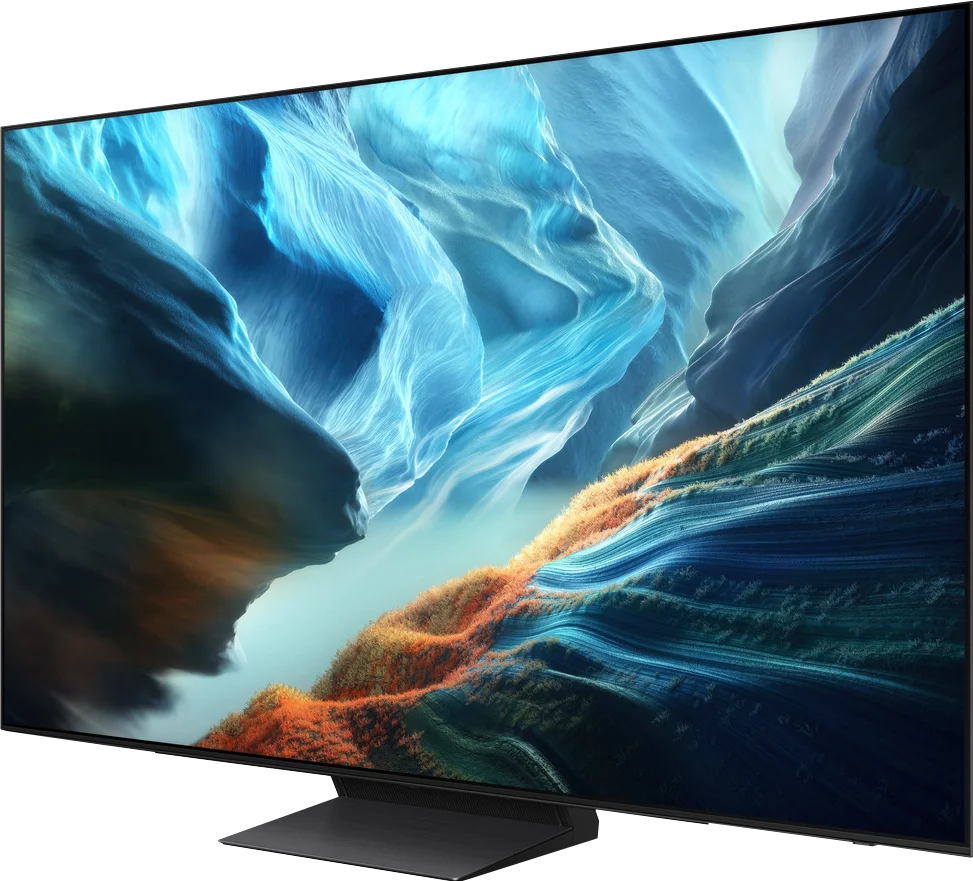
Samsung, what have you actually done? The S90H is a TV that won us over practically from the first minutes. If you want a short answer to whether it's worth the money, we’ll be blunt: yes, absolutely. The combination of perfect, organic black with very high brightness and the vivid colors of the QD-OLED panel creates an effect that wows you from the first time you turn it on. Choosing a matte finish proved to be a perfect decision. No more constant battles with the blinds or seeing your own reflection on a sunny day. Sure, purists like us will notice that in a heavily sunlit room the blacks can slightly shift toward grayish-maroon tones, but daytime usability here is invaluable. Most importantly, in the evening and at night the picture still delivers everything we love about OLEDs: perfect black, excellent contrast, and amazing depth. Add to that a fast, refined Tizen system and an almost complete package of gaming features led by Game Motion Plus. The result is an exceptionally complete TV where minor software niggles don't change the overall, very positive impression. So does the S90H have any serious downside? As far as the TV itself is concerned, it's hard to point to anything that would really spoil its appeal. The biggest reservation is more about Samsung's policy. To this day it's hard for us to understand why such a great QD-OLED panel is available only in the 77-inch model we tested, with the HAT suffix in the name. Maybe that will change in the future, but for now that's how it stands. So if you're aiming exactly for this variant, there's no need to hesitate. The Samsung S90H in the 77-inch QD-OLED version is one of the most exciting TVs of the year. Once the early-adopter tax drops and stronger promotions arrive, it could become one of the most cost-effective OLEDs on the market, and quite possibly one of 2026's biggest bestsellers.
TV appearance


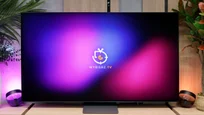
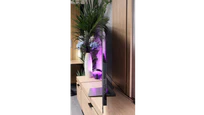

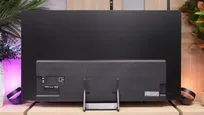

Contrast and black detail
8.4/10
10/10
Local dimming function: Yes, number of zones: 1344 (28 x 48)
Contrast:


Result
3,160,000:1

Result
67,450:1

Result
44,600:1

Result
27,300:1

Result
9,500:1
Result
∞:1
Result
∞:1
Result
∞:1
Result
∞:1
Result
∞:1
Halo effect and black detail visibility:
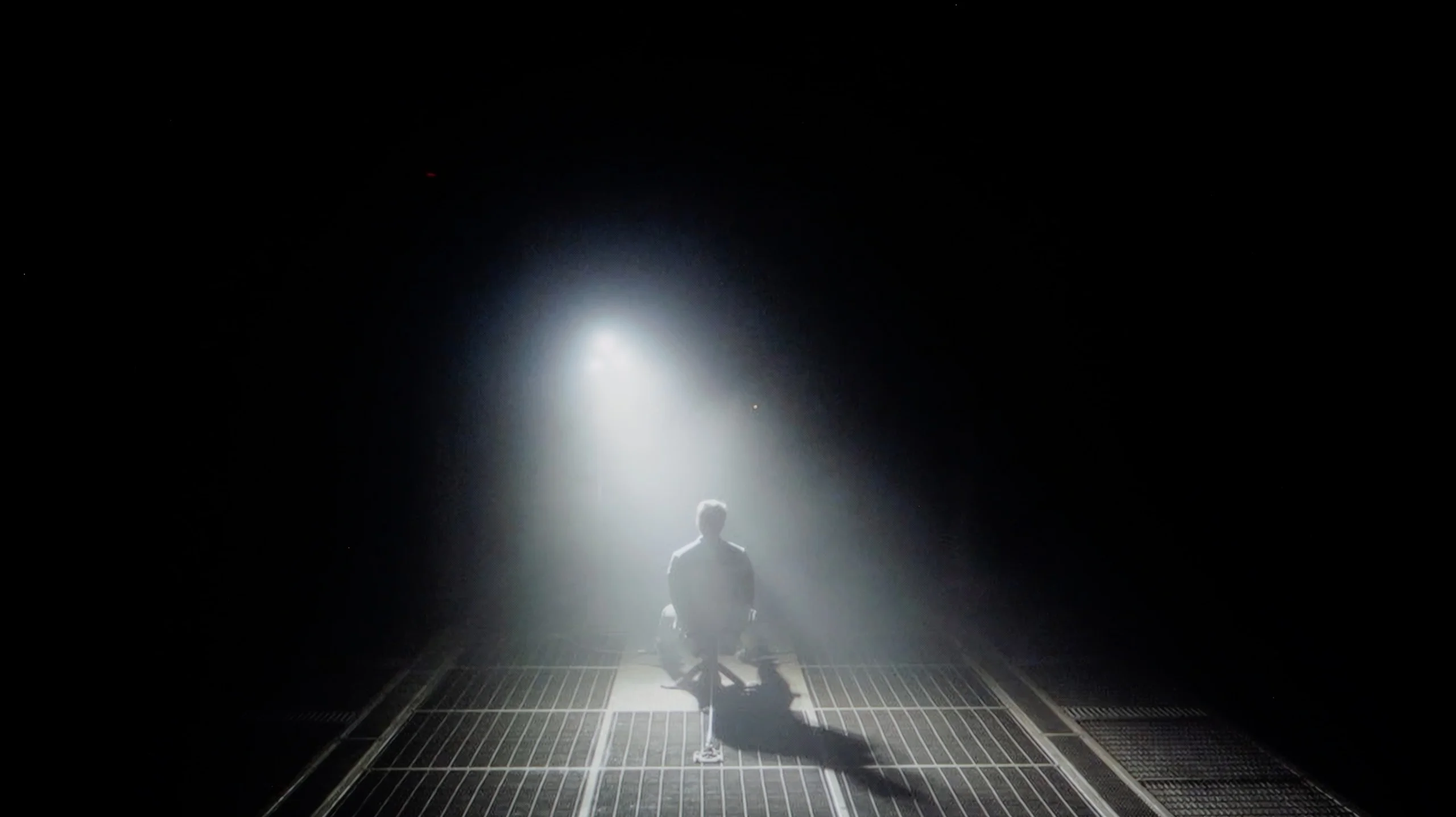
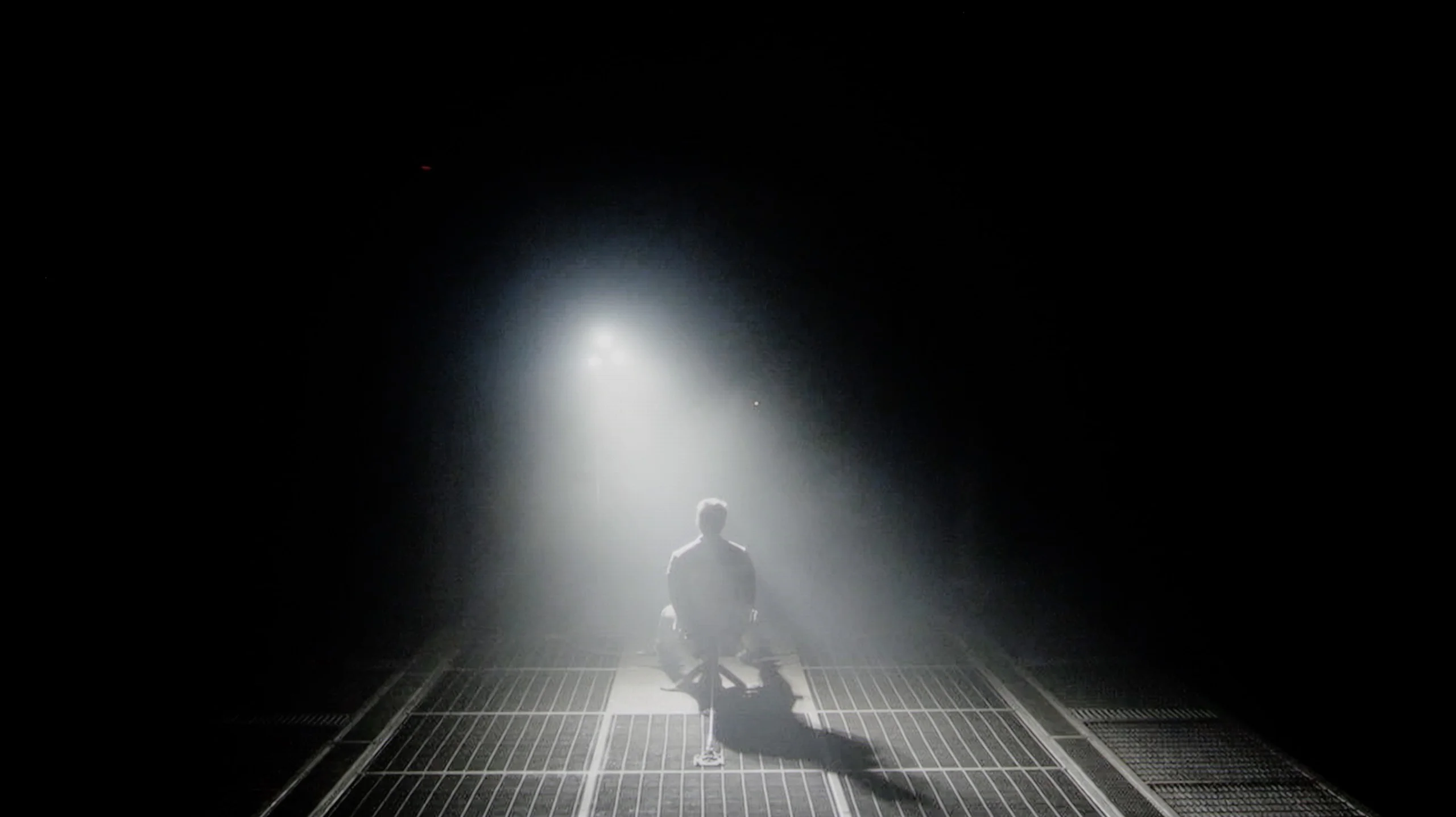
Check the visibility of bright lights on a dark background. Mini-LEDs often struggle with this. The photo does not compare black levels – that’s what the video below is for.
The video accurately shows differences in contrast and black levels between TVs, as well as potential issues: halo around bright objects or Mini-LED zone operation visible as brightness jumps.
Whether the panel uses classic Mini-LEDs or the new Micro RGB, their task with respect to blacks remains essentially the same: to switch off the backlight where the picture should be dark, while still leaving sufficient brightness where it’s needed. The R95H also benefits from a high-contrast VA panel, which on its own delivers much better blacks than, for example, IPS/ADS panels. For testing we used the 65-inch version, in which we counted 1,344 local dimming zones. On larger screen sizes that number will of course be higher, but we do not expect that to fundamentally change how the backlight behaves.
The R95H performs best in scenes with few bright elements. In those cases the TV can strongly dim the rest of the screen and the blacks are genuinely impressive. In more demanding shots, where more bright objects appear against a dark background, you can already see the typical limitations of LCD and the backlight has to operate more compromiseably. Even so, the halo effect is well controlled, and the TV does not overly brighten large parts of the image just to preserve the brightness of a single element. The R95H can therefore deliver very deep blacks and high contrast, especially in scenes where local dimming has favourable conditions to work. This is, of course, not the level of perfect pixel-level turn-off known from OLEDs, but for an LCD TV the results are really very good.
Because the Samsung S90H uses an OLED panel, it deserves top marks for contrast and black levels. Importantly, this applies both to the WOLED-panel version and to the QD-OLED variant we tested. Each pixel emits light independently and can be turned off completely, so the TV delivers perfect blacks and virtually infinite contrast. This results in excellent image depth and a very clear separation of bright elements from a dark background, without the halo effect (blooming) that still occurs even in the best LCD TVs. The effect is particularly striking when watching in a darkened room, where dark scenes look incredibly realistic and the picture gains in three-dimensionality and detail.
HDR effect quality
6.9/10
7.8/10
Luminance measurements in HDR:

Result
1423 nit

Result
703 nit

Result
1089 nit

Result
463 nit

Result
1249 nit
Result
1464 nit
Result
1470 nit
Result
1269 nit
Result
1505 nit
Result
902 nit
Scene from the movie “Pan” (about 2800 nits)


Scene from the movie “Billy Lynn” (about 1100 nits)


The photos show two HDR10 movies. 'Pan' is one of the brightest productions ever made, while 'Billy Lynn' (soldier) has brightness typical of streaming (Netflix, Prime, HBO MAX). Notice the intensity of effects and detail in whites.
Static HDR10


The photos present the visibility of white details in various HDR formats. They do not show brightness differences between TVs (these can be compared in the previous gallery).
Dynamic: HDR10+
Dynamic: HDR10+


The photos present the visibility of white details in various HDR formats. They do not show brightness differences between TVs (these can be compared in the previous gallery).
HDR luminance chart:
Samsung S90H (QD-OLED)
Samsung R95H Micro RGB
In terms of brightness the Samsung R95H shows that it is still a high-end TV, although the results are not always as spectacular as one might expect from a flagship Micro RGB model. In synthetic tests the TV can exceed 2400 nits, so it clearly has plenty of headroom. Crucially, it can maintain high brightness even when bright elements occupy a larger portion of the screen. In real cinematic scenes the situation is a little more complex. The R95H most often reaches around 1000–1400 nits, which still delivers a very good, powerful HDR effect. Bright sun, reflections or lights can look genuinely impressive, and the TV has enough power for HDR to be clearly distinguishable from standard SDR.
The problem appears mainly in very dark scenes with single, small light sources. Here the local dimming algorithm prioritises deep black and reducing halo over maximising the brightness of such elements. As a result, small highlights can be noticeably dimmed. Overall HDR therefore performs well, but not without limitations. The R95H has huge brightness headroom, especially in larger and brighter parts of the image, but in difficult dark scenes its capabilities are primarily limited by the way local dimming operates.
Colours
Colours were supposed to be the biggest revolution brought by RGB backlighting, and indeed the R95H shows considerable potential here. The assessment is not, however, as simple as synthetic measurements alone might suggest. On test patterns the TV performs superbly – BT.2020 coverage reaches almost 94%, and DCI-P3 98%, so particularly strongly saturated reds and greens can look truly impressive. The situation shifts somewhat when, instead of test patterns, we start measuring real film scenes. Then BT.2020 coverage falls to about 87%, and DCI-P3 to 93%. It seems that with more complex images the RGB zones are not always able to maintain the same high colour saturation as on simple charts. They remain saturated, but the advantage of the new backlight is no longer as large as the manufacturer’s figures might suggest.
The Samsung S90H is a genuinely bright TV for the mid-range OLED segment. In synthetic tests its peak brightness reached around 1650 nits. That’s an impressive result in this class, roughly 50% higher than what we have seen from previous models in this price bracket. Most importantly, these tests translate directly to real video material. In four out of five film clips we tested, the S90H’s brightness ranged between 1300 and 1500 nits. That headroom allows it to reproduce most HDR films with very high dynamic range and without obvious compromises, especially in material mastered to 1000–1500 nits. In practice light effects, reflections and explosions have the appropriate punch, and the picture does not appear dimmed. Of course, on full-screen very bright scenes the result is naturally lower and drops to around 900 nits. This is a direct result of the OLED panel’s protection systems working to prevent overload. Even in this scenario there is little to complain about. Those 900 nits across the whole screen is still a very high level, ensuring excellent dynamic range in HDR content.
Colour has always been a major strength of QD-OLED TVs, and the S90H is no exception. The DCI-P3 colour space we measured reached a full 100% (actually 99.9%), while coverage of the much wider BT.2020 gamut hit about 89%. That’s an excellent result, enabling very saturated and vivid colours in HDR content. It’s worth emphasising that QD-OLED’s advantage over WOLED panels is not limited to palette coverage alone. In practice it’s mainly visible in the higher brightness of saturated colours, that is in a greater colour volume. As a result, intense reds, greens and blues in HDR look more vibrant and more striking.
Factory color reproduction
4.3/10
8.3/10
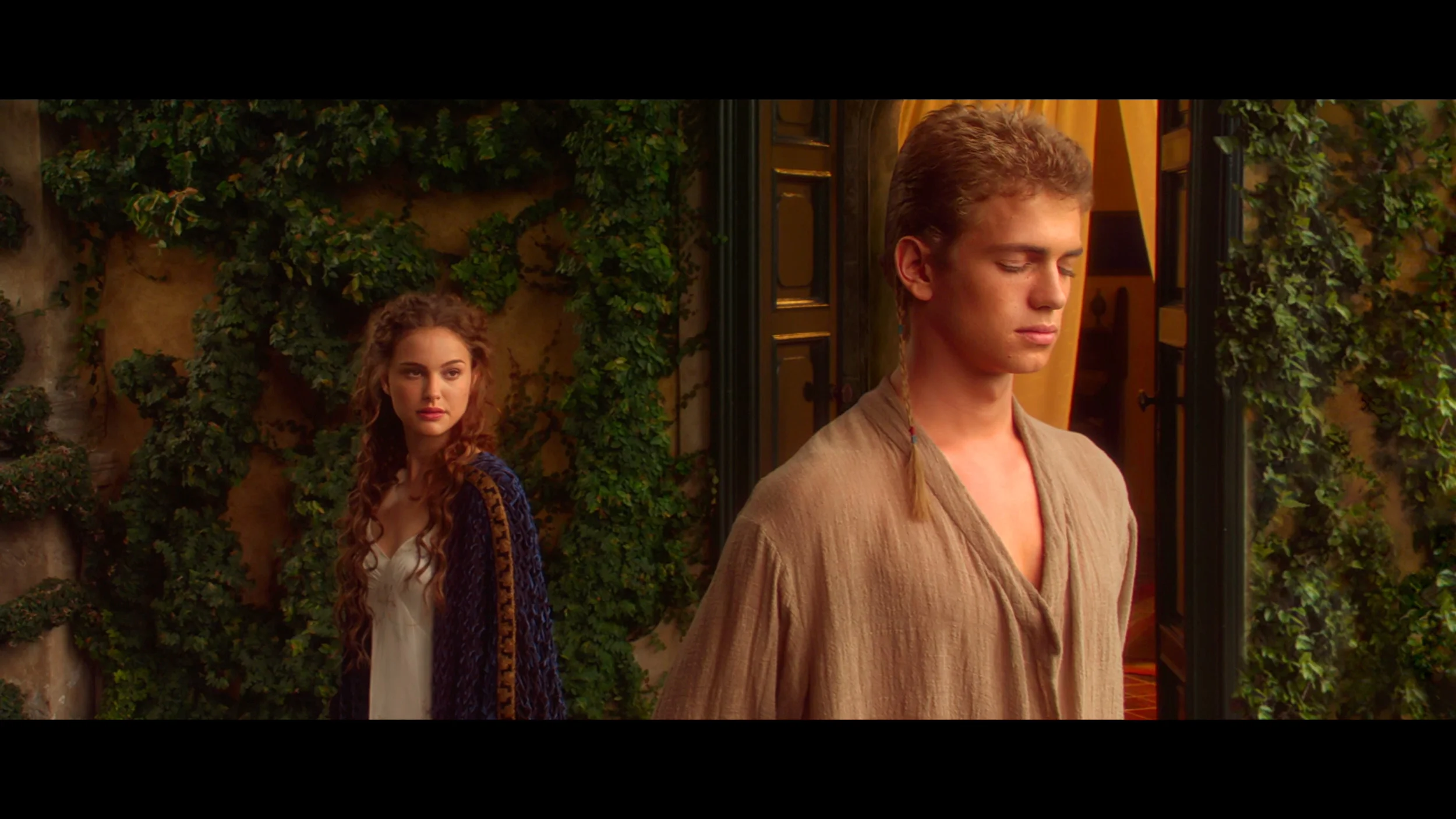

This gallery shows how colors change after professional TV calibration. If you notice the difference, we recommend ordering this service at SkalibrujTV.com.
Factory Mode
After calibration


This gallery shows how colors change after professional TV calibration. If you notice the difference, we recommend ordering this service at SkalibrujTV.com.
Factory Mode
After calibration
For assessing factory colour reproduction we naturally chose the Filmmaker mode, the setting that is supposed to be closest to how the picture was intended by the creators. Here, unfortunately, the R95H does not fully exploit the potential of its panel. The biggest problem in SDR concerns the gamma. The image is noticeably brightened across almost the entire range, which makes it lose some depth and look flatter than it should. The white balance itself is also not ideal; as brightness increases there is a red bias and a lack of blue, making the image too warm. This is especially visible in bright elements and skin tones, which can look more "reddish" than they should.
It looks similar in HDR. The EOTF curve is above the reference value for a significant part of the range, so the R95H again brightens the image compared with how it should look. Combined with the inaccurate white balance, this means the colours here are also not as precise as we would expect from a TV of this class. The factory Filmmaker mode is therefore not the R95H's strong suit. At first glance the picture may look impressive because it is bright and highly saturated, but in terms of fidelity to the source material there is still plenty of room for improvement.
The next stage of the test was to check how the S90H handles colour reproduction without any calibration. As always, we carried out the measurements in Filmmaker Mode, the best factory picture preset. And here Samsung really deserves praise. The factory tuning is at a very high level, and a few years ago this was not one of its strong points. The average colour error (Delta E) remained around 3, which is below the level at which most people can notice any inaccuracies. Only in the brightest shades of grey did the values slightly approach 4, but even then it's hard to regard this as a real problem while watching. For out-of-the-box settings, the result is simply excellent.
Color reproduction after calibration
8.8/10
9.4/10
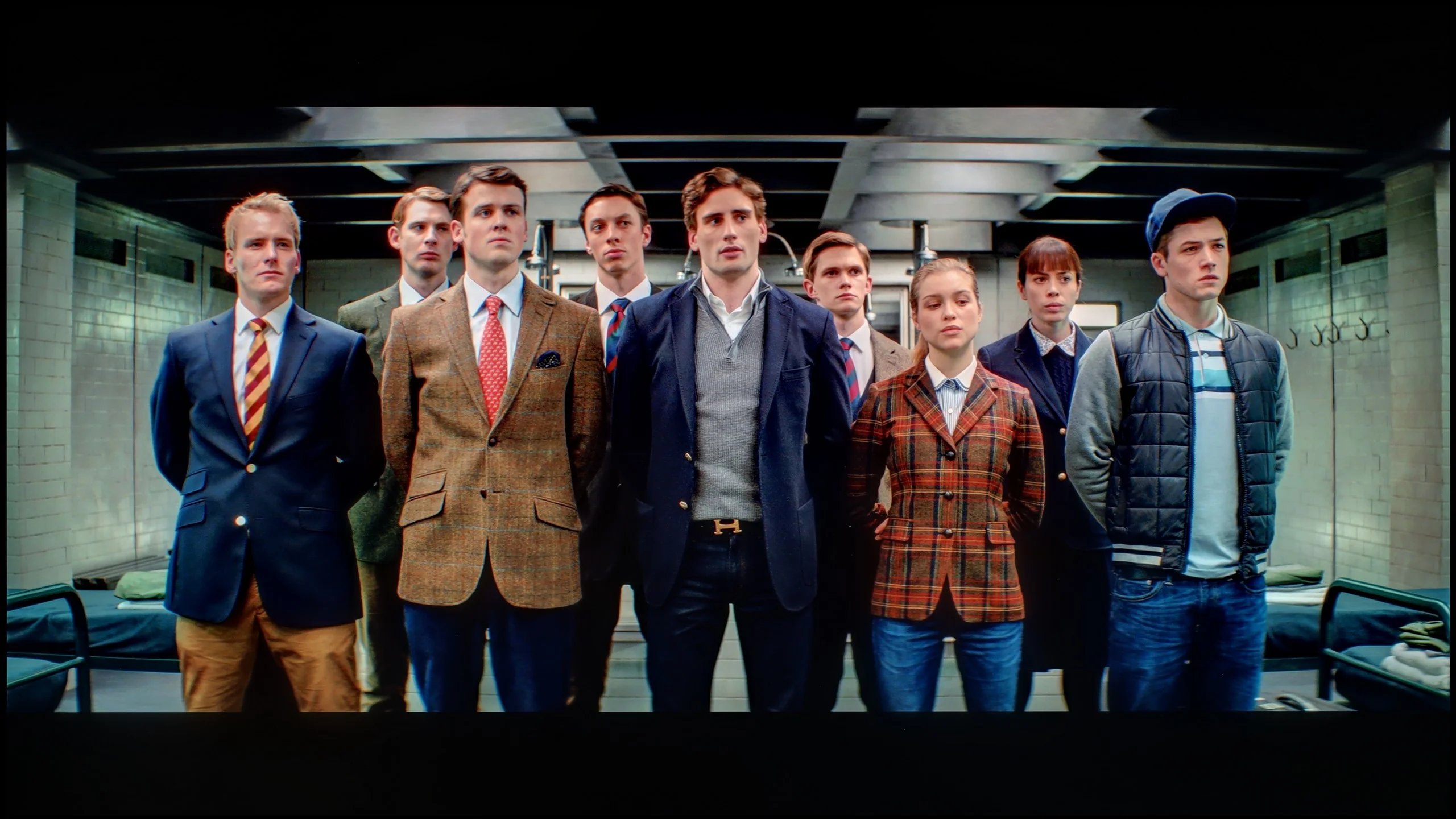
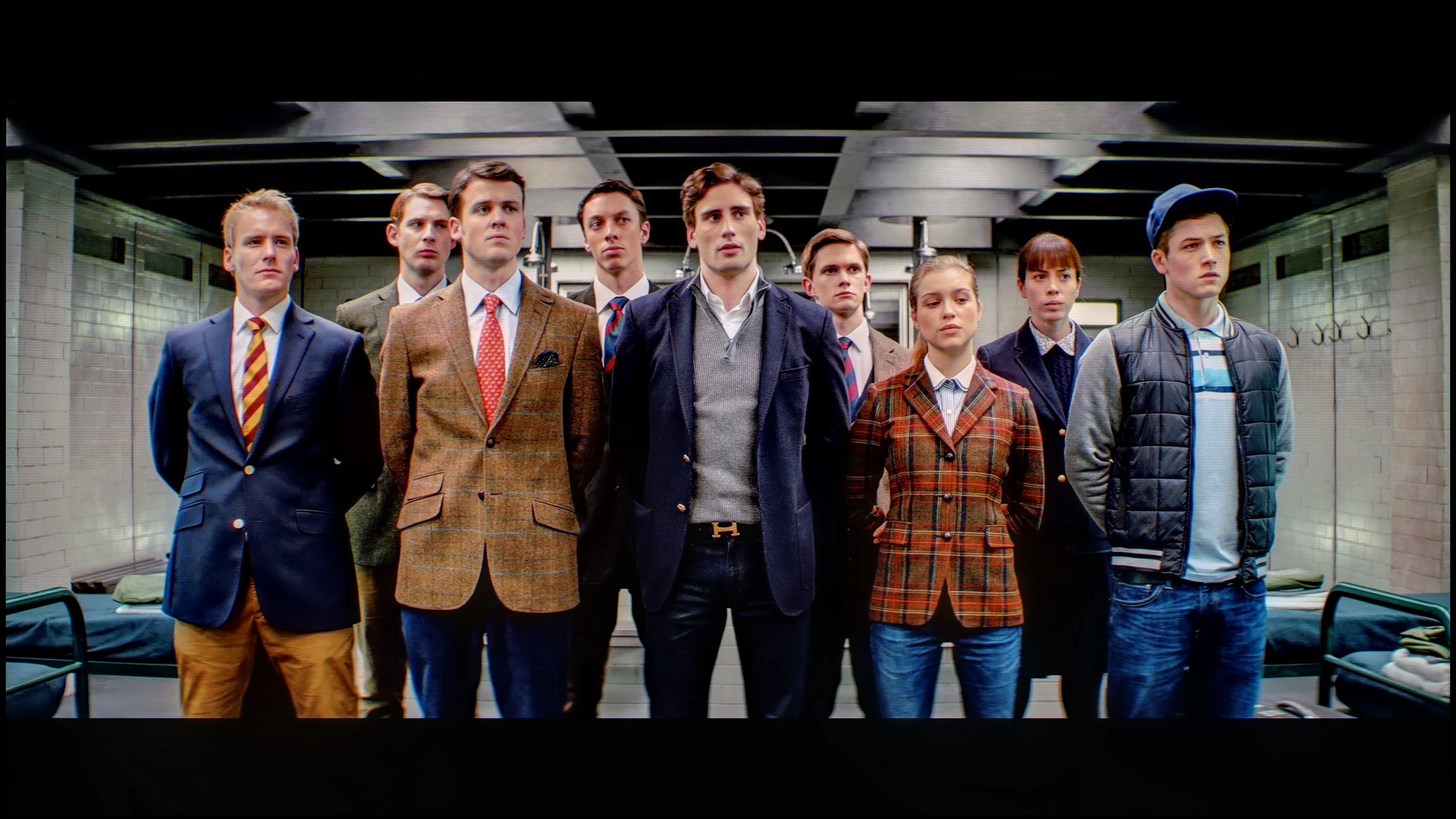
The photos show how movies look on the TV. Pay attention to black detail visibility, colors, and shadow tint.


The photos show how movies look on the TV. Pay attention to black detail visibility, colors, and shadow tint.
The R95H responds very well to calibration. In SDR we managed to set the white balance and gamma almost perfectly, and colour errors fell to a very low level. The difference compared with the factory settings is therefore substantial and after calibration the picture looks noticeably more natural. In HDR we can also make considerable improvements, particularly in terms of white balance and overall colour accuracy. The issue of managing brightness and colour saturation is somewhat different, though. At a certain point we run up against limitations inherent in the RGB backlight and local dimming. Individual zones must control both the brightness and the colour of the light simultaneously, so in more demanding scenes it is not always possible to achieve exactly the same saturation and brightness that the TV shows on simple test patterns. Calibration simply cannot completely overcome that. Despite this, after calibration the R95H delivers accurate image reproduction, and most of the errors we saw on the factory settings can be effectively eliminated.
All right, but you know we wouldn't be ourselves if we didn't also check how far we could push the S90H after professional calibration. And there was no big surprise. Since the factory settings were already very good, there wasn't much room for improvement. Even so, we managed to refine the picture to near perfection. After calibration the mean colour reproduction errors fell below the threshold of perception, with Delta E values under 2 for both SDR and HDR material. We also improved the brightness response, so the image more faithfully reflects the creators' intent and maintains appropriate tonality across the whole luminance range. After professional calibration the S90H therefore becomes a display very close to reference.
Will the difference be spectacular for everyone? Not necessarily. The factory settings already deliver a very high level, so in everyday viewing some people may not notice a dramatic jump. Much also depends on the individual unit. Our sample was very well tuned straight out of the box, but that doesn't mean every S90H will perform at the same level. Even identical models can differ from each other in terms of factory calibration. That's exactly why professional calibration makes sense: it allows a specific unit to be brought to the highest possible accuracy, rather than relying on a bit of luck when buying.
Smoothness of tonal transitions
8.8/10
9/10
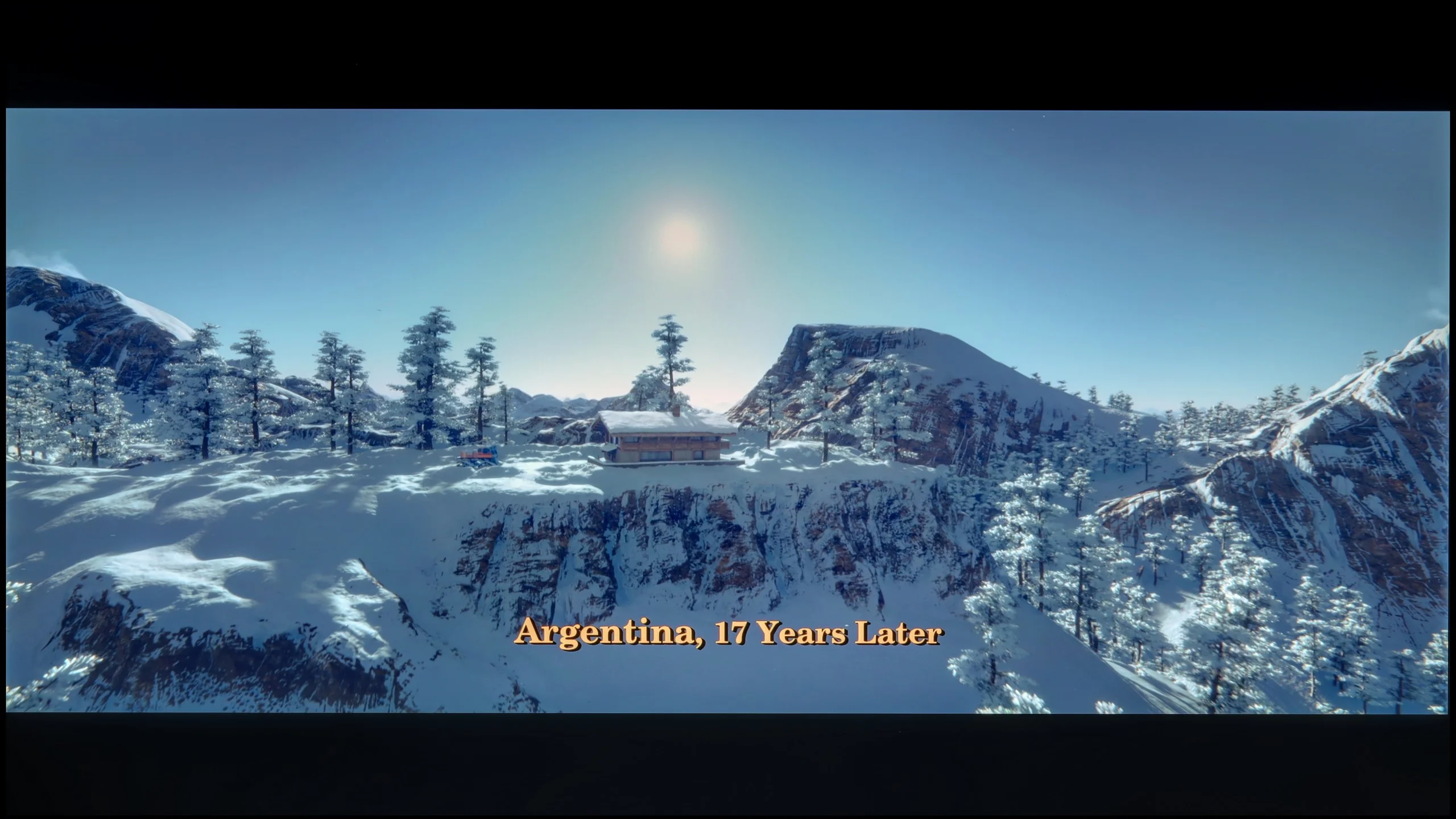

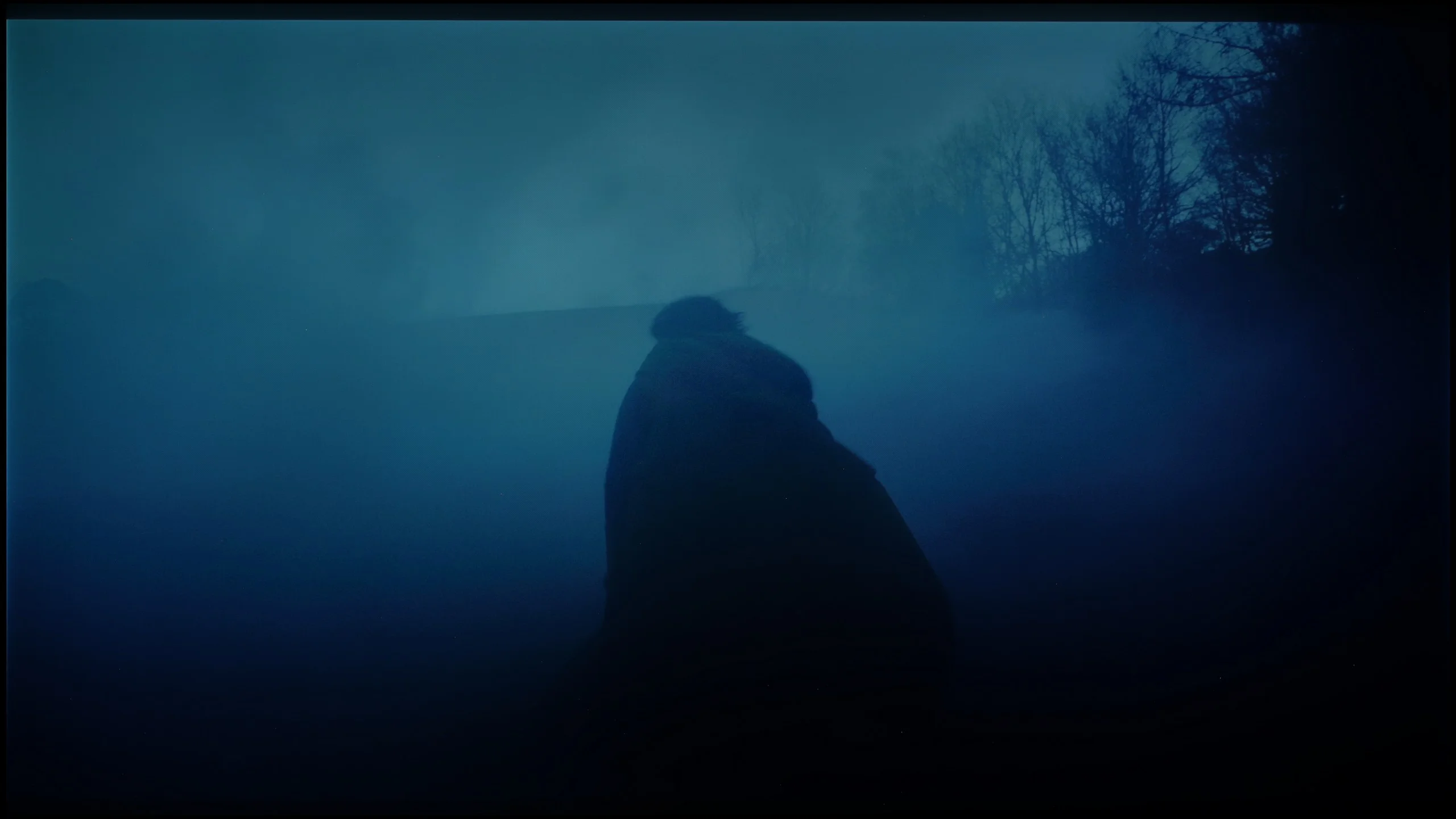

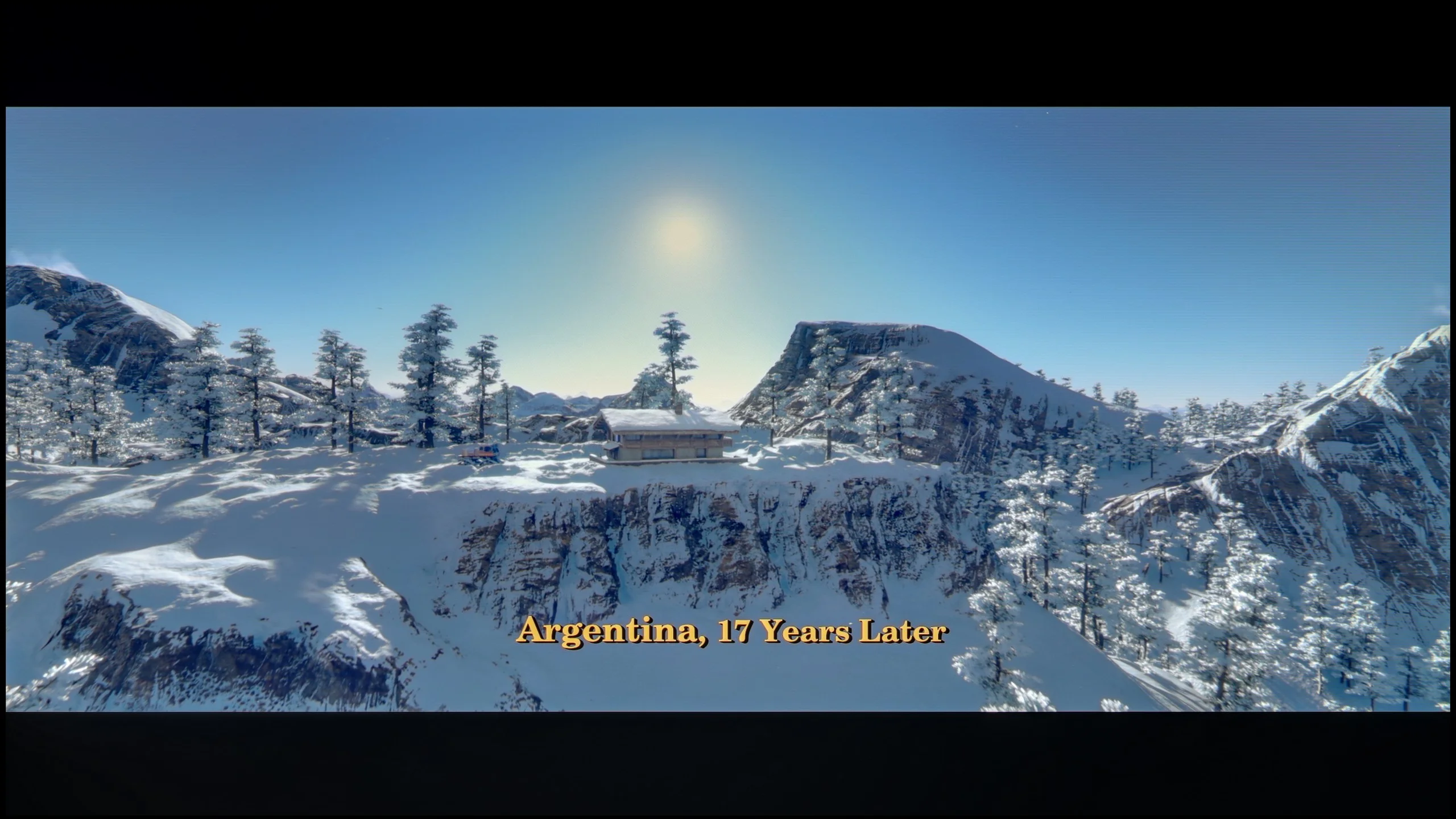
These are selected scenes that show smooth tonal transitions from one color to another. If you see distinct banding, it’s the TV panel’s fault.

These are selected scenes that show smooth tonal transitions from one color to another. If you see distinct banding, it’s the TV panel’s fault.
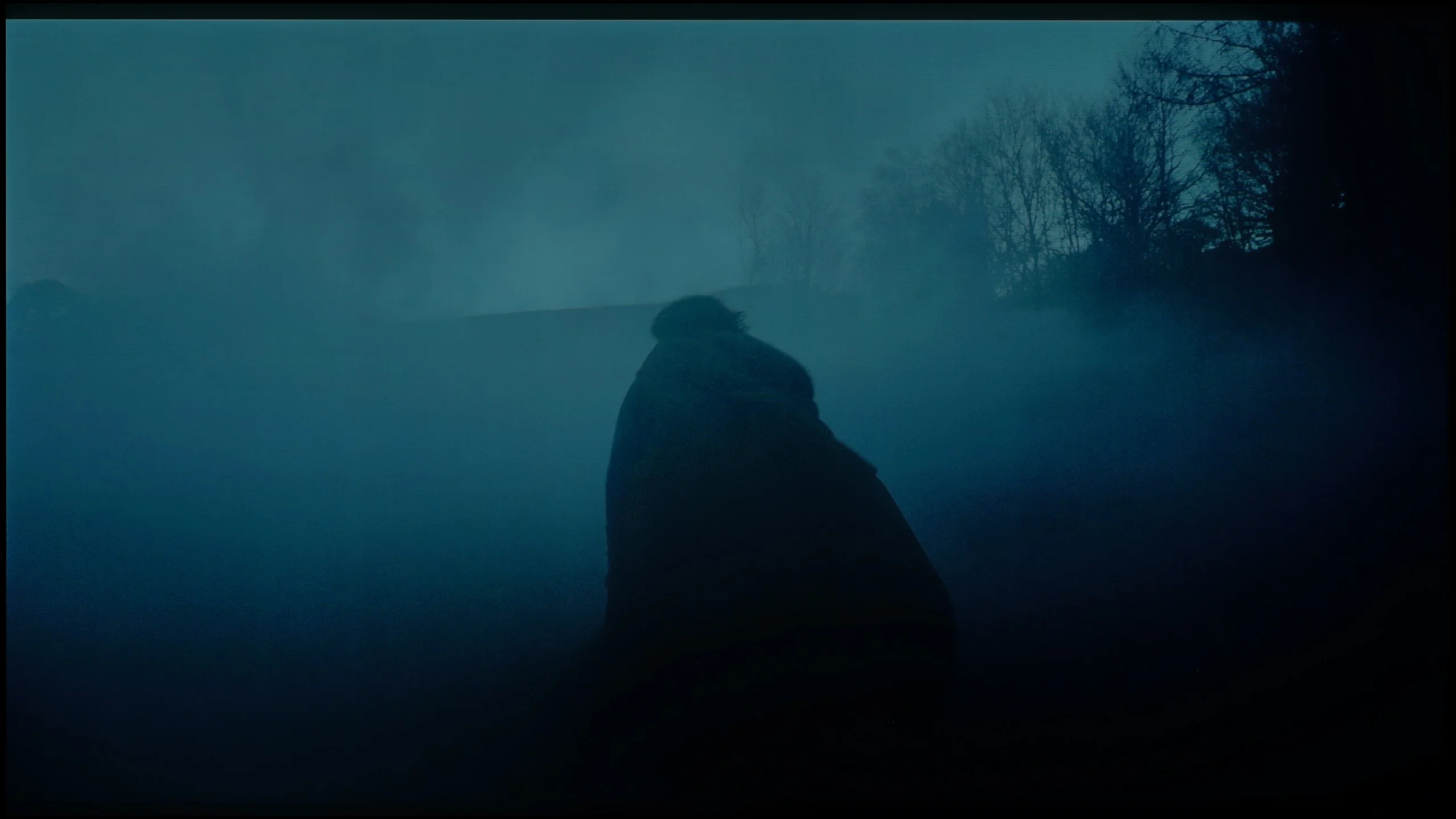
These are selected scenes that show smooth tonal transitions from one color to another. If you see distinct banding, it’s the TV panel’s fault.

These are selected scenes that show smooth tonal transitions from one color to another. If you see distinct banding, it’s the TV panel’s fault.
The R95H also handles gradation well. In the brighter parts of the image the transitions between individual tones are smooth, although on closer inspection you can notice minor signs of posterisation. So it’s not perfect, but during normal viewing it’s unlikely to draw attention. The same applies to darker scenes. The TV maintains smooth transitions and has no major problems with visible banding or colour stepping. From time to time you can spot small imperfections, but overall the R95H deals with this aspect very solidly.
The smoothness of tonal transitions here is exceptionally high. In most content it's hard to spot any obvious posterisation, and if it does occur, it's only in the most demanding scenes. That's one of the traits we often observe in well-tuned QD-OLED panels. In practice they can perform better in terms of gradation than many classic WOLEDs, although of course much also depends on the electronics and the specific model. So if you care about the smoothest possible gradients, the tested variant with a QD-OLED panel has a clear advantage here.
Image scaling and smoothness of tonal transitions
7.5/10
7.5/10


Smooth transition function
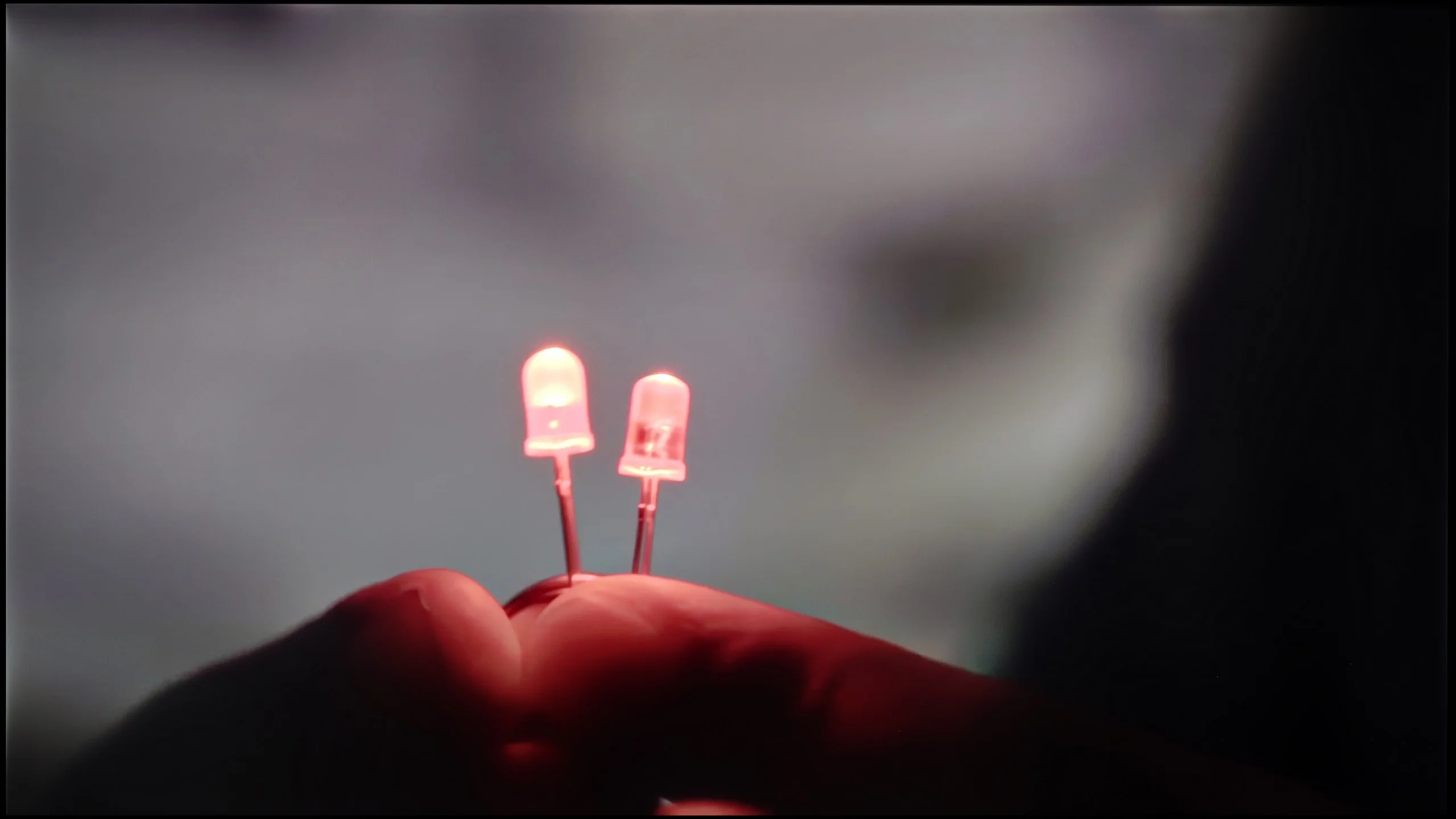
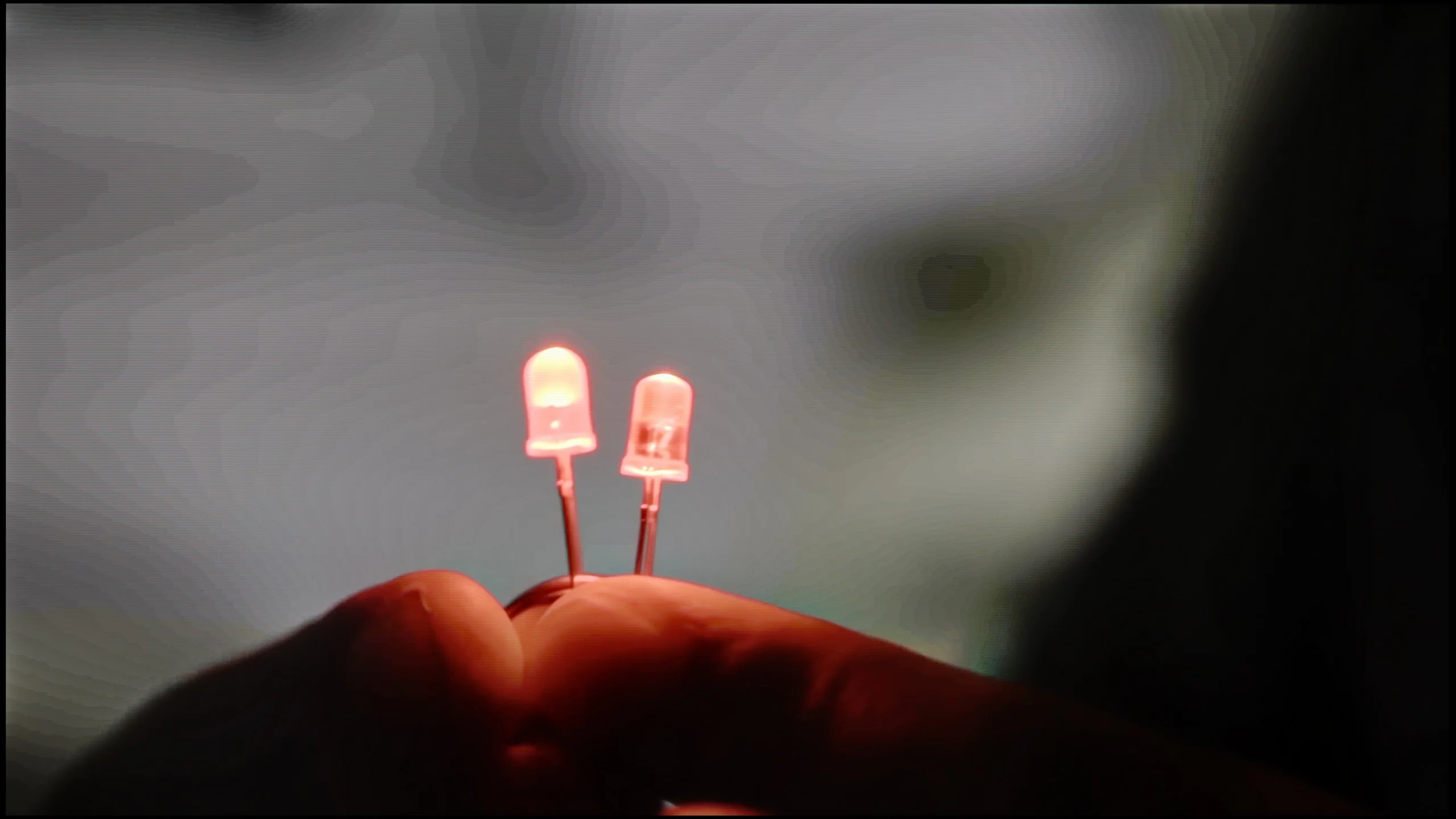
The match photo shows how the TV smooths weak tonal transitions in low-quality video.
Image scaling SD (576i)


The model photo shows how it handles upscaling of SD material.
The Samsung R95H uses the new Micro RGB AI Processor, but in practice we didn't notice a big leap compared with the NQ4 AI Gen2 or Gen3 chips found in Samsung's other TVs. The upscaling itself still performs very well. The image is smoothed appropriately, yet retains plenty of sharpness and does not look overly soft. That's definitely one of Samsung's stronger points. It's a pity that with very low-resolution material you still can't completely disable overscan.
The processor also handles colour gradation well and can effectively smooth unwanted posterization. The noise reduction function is really effective, but you need to use it with care. At higher settings it can start to interfere quite heavily with the image and even remove natural film grain. For that reason it's best used only when the source material is actually heavily compressed.
In this respect Samsung has changed practically nothing compared with last year’s model, which is actually quite good news. The feature responsible for smoothing tonal transitions still very effectively limits the posterisation effect. However, you should remember that it works rather aggressively, because besides the artefacts themselves it can also remove film grain and slightly soften fine image detail. As always, this is therefore a matter of compromise and personal preference. If you want the most faithful reproduction of the source material possible, we recommend leaving this function turned off.
There is also little to be said about upscaling in terms of revolution. The S90H uses the same proprietary NQ4 Gen3 image processor as its predecessor, so scaling quality has remained practically unchanged. The TV handles lower-resolution material well, effectively improving its sharpness. However, the overscan problem has still not been solved. With some older material, especially archival recordings, it may happen that a portion of the image at the edges is cropped. It’s a minor flaw, but a shame Samsung has left this issue unchanged for another year running.
Blur and motion smoothness
7.8/10
8.5/10
Blur (native resolution, maximum refresh rate):






Blur (BFI function enabled):
Image flickers in this mode



Image flickers in this mode



Blur (4K@165Hz):



Blur (4K@165HZ):



Samsung R95H has a 165 Hz panel, so its motion handling is really good. At 120 Hz, for example when gaming on a console or watching sport, motion blur is minimal, and when connected to a PC you can use the full 165 Hz and further improve motion clarity. However, bear in mind it is still a VA panel, so it does not respond as instantly as OLED. You may sometimes notice a faint trail behind a moving object, but from a normal viewing distance this is unlikely to be bothersome. For films and TV shows you can also use the adjustable motion smoothing. You can keep the more cinematic 24 fps look or gradually smooth the motion if you prefer a smoother picture. Samsung gives plenty of flexibility here, so you can easily choose a setting to suit your own preferences.
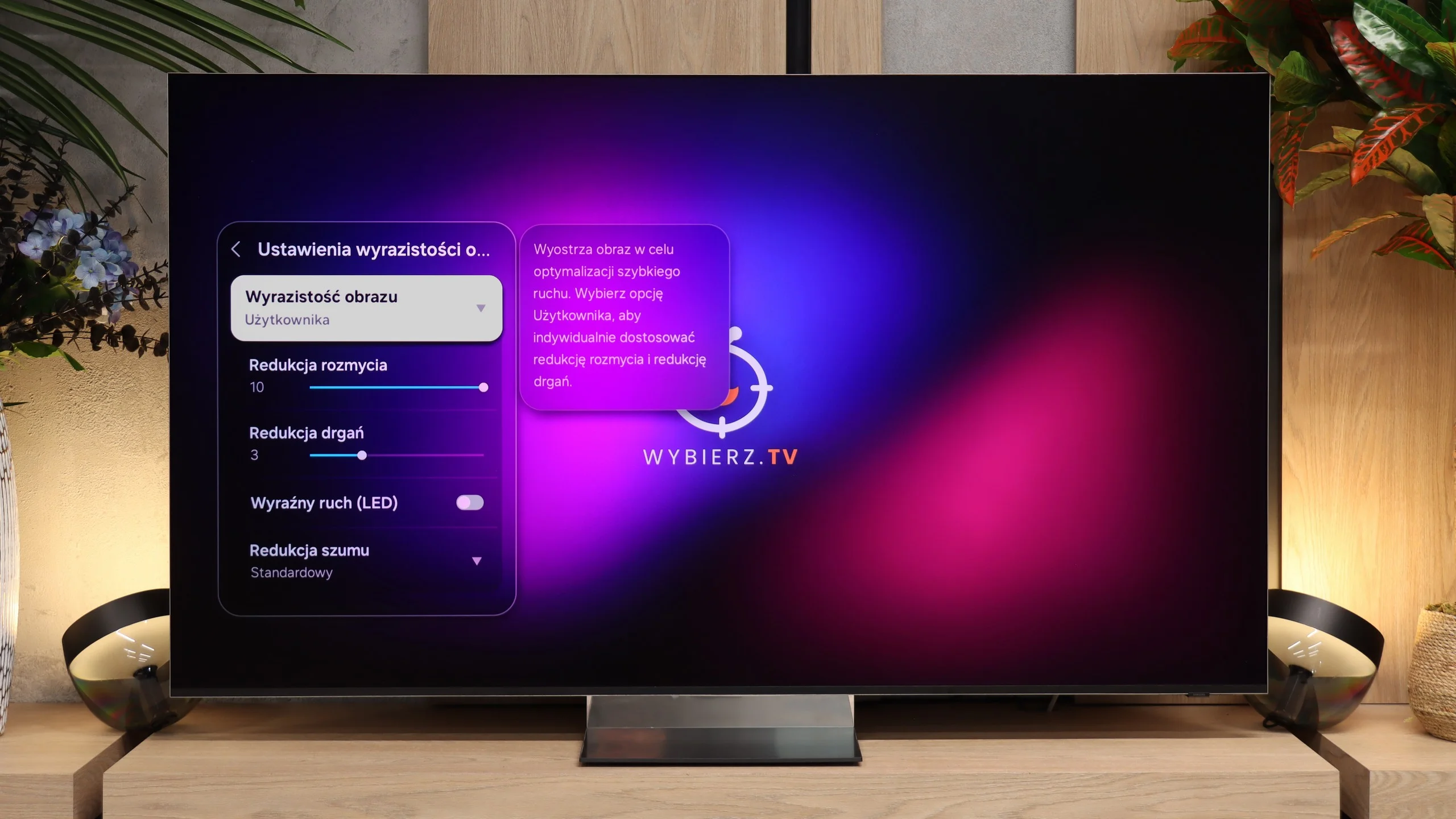
In terms of motion handling the S90H delivers a very high level. A new feature here is a panel with a refresh rate of up to 165 Hz, although in practice that will mainly benefit PC gamers. Films, series and sports broadcasts do not use such high refresh rates, so when watching them the difference compared with the standard 120 Hz will not be noticeable. That said, thanks to the OLED panel's lightning-fast response time motion is very clean and the picture does not suffer from the motion blur typical of many LCDs. Samsung has equipped the television with extensive motion-smoothness settings. You get two sliders: judder reduction and blur reduction, which let you easily tailor the picture's character to your own preferences. You can easily achieve a very smooth image when watching sport, but you can just as well preserve a more cinematic feel at the typical 24 frames per second. It all depends on which effect you prefer.
Console compatibility and gaming features
9.6/10
9.6/10
- ALLM
- VRR
- VRR range48 - 240Hz48 - 165Hz
- Dolby Vision Game Mode
- Correct implementation of HGIG
- 1080p@120Hz
- 1440p@120Hz
- 4K@120Hz
- Game bar
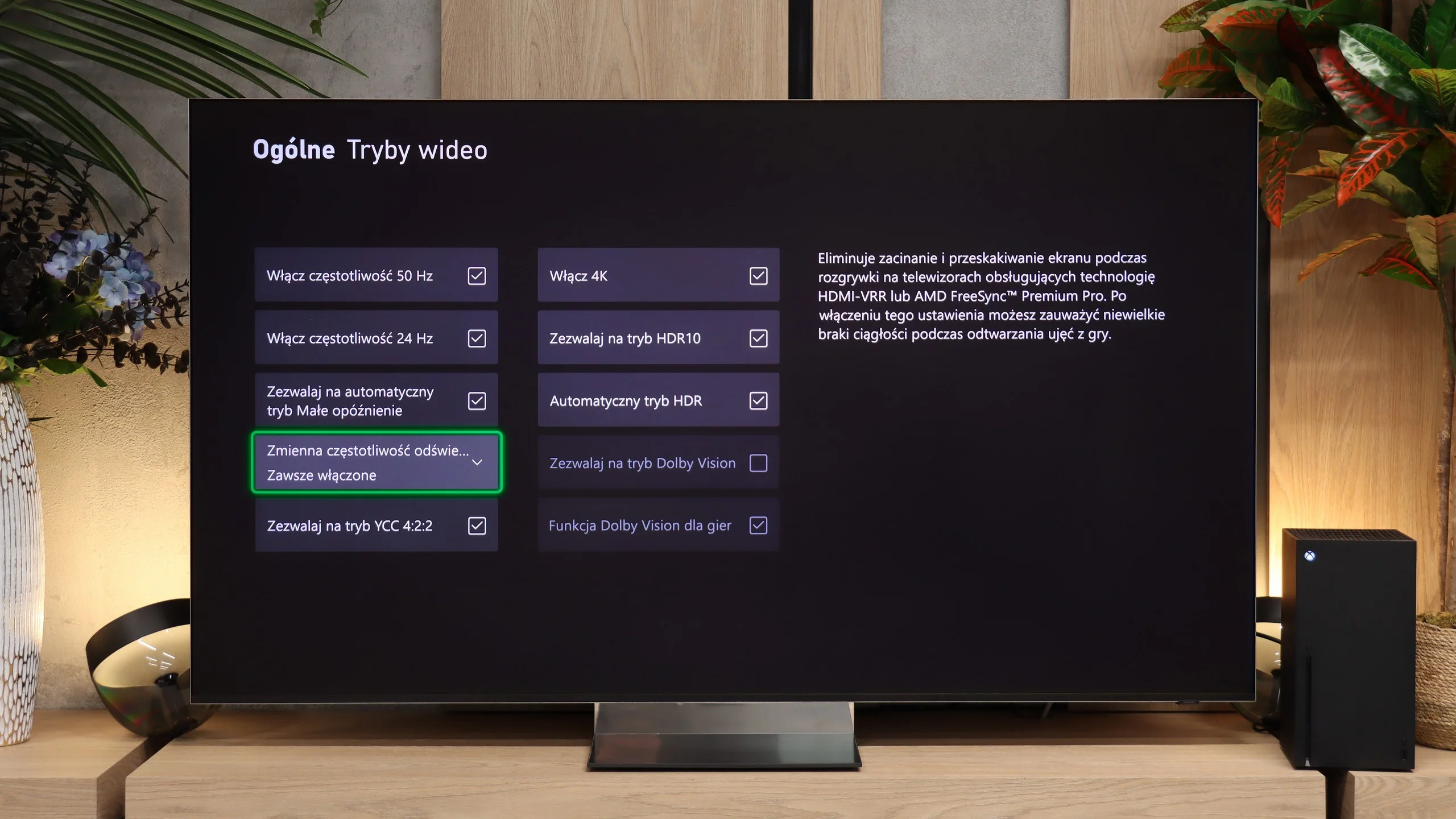
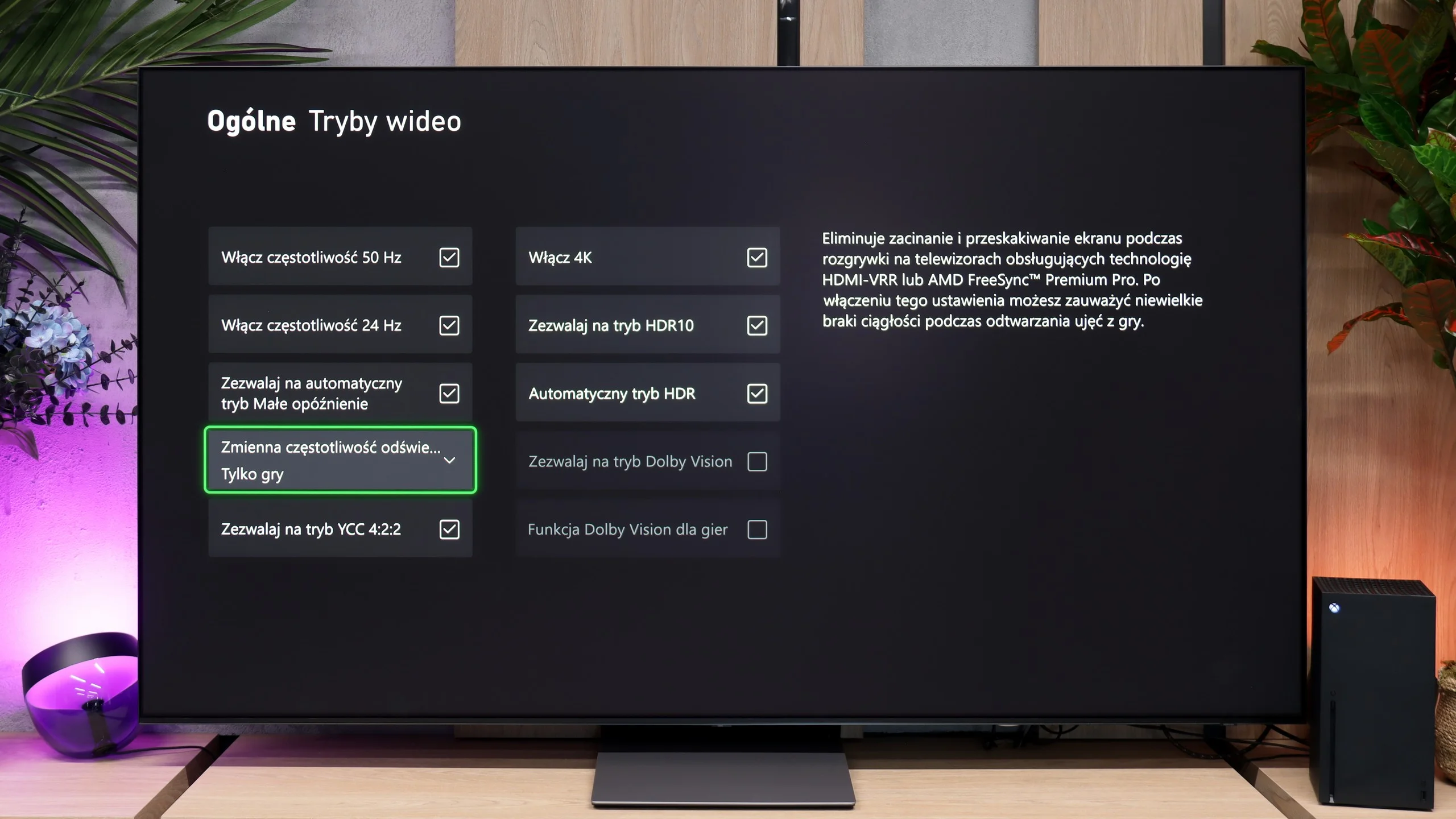
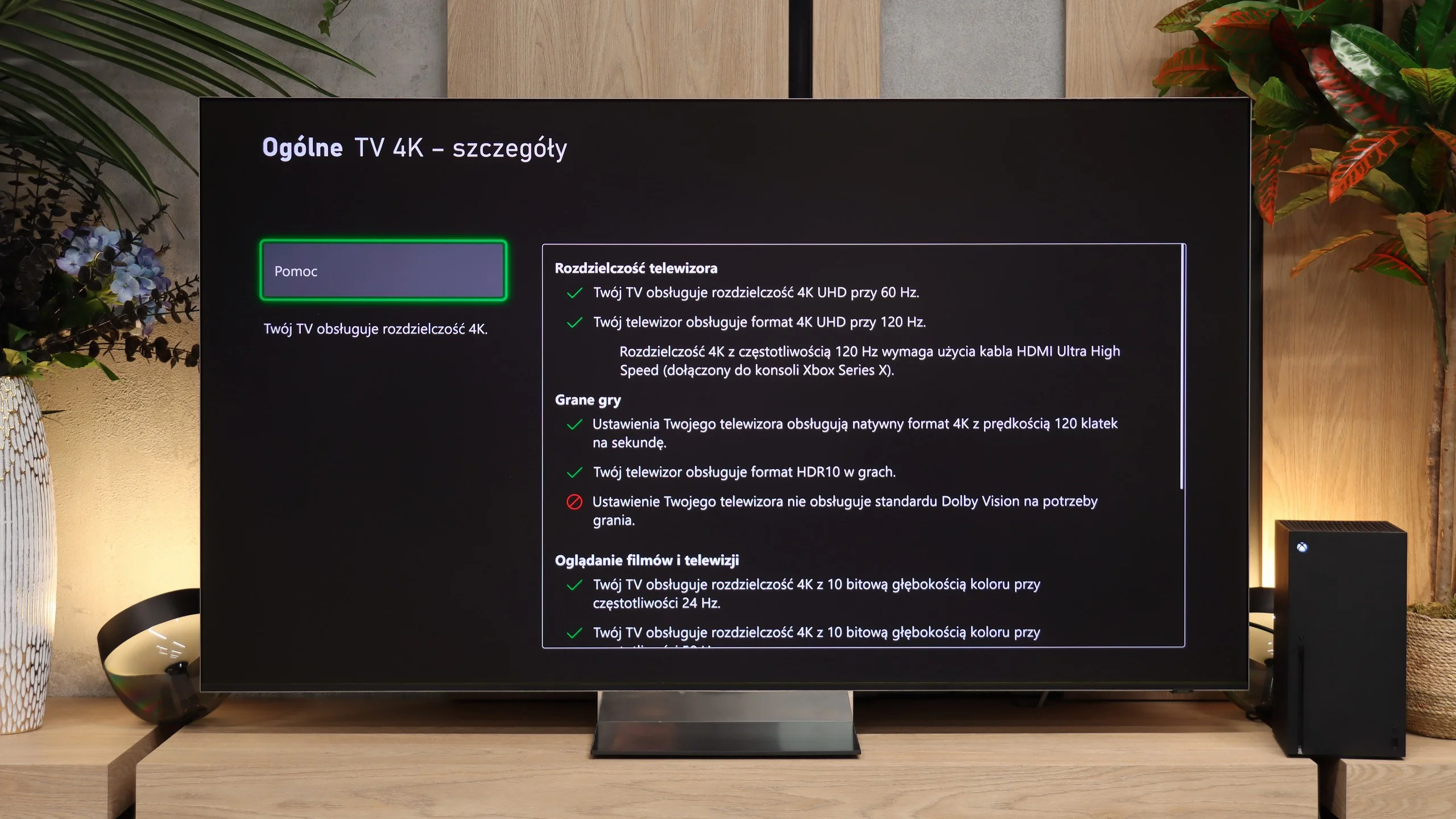
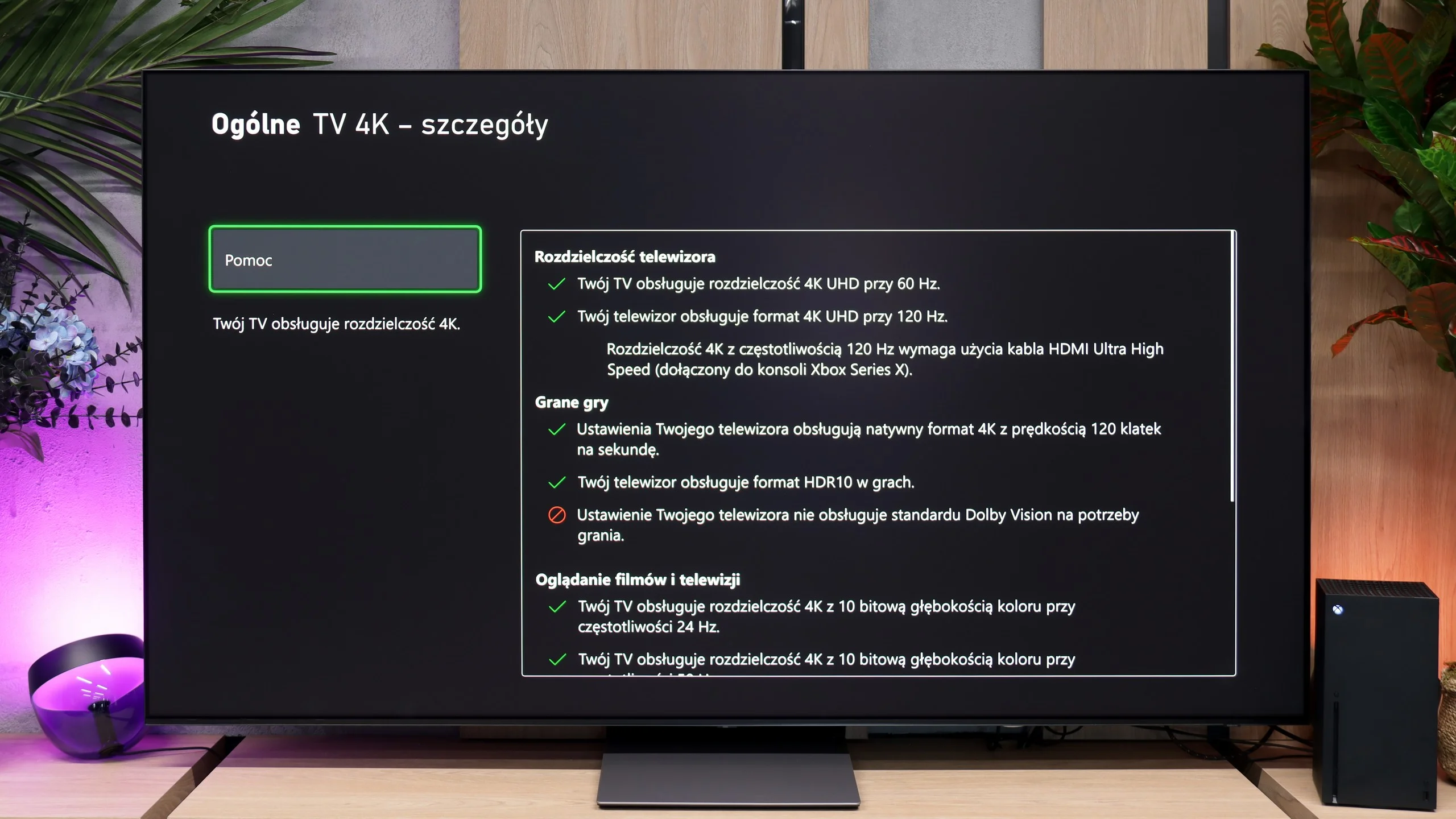
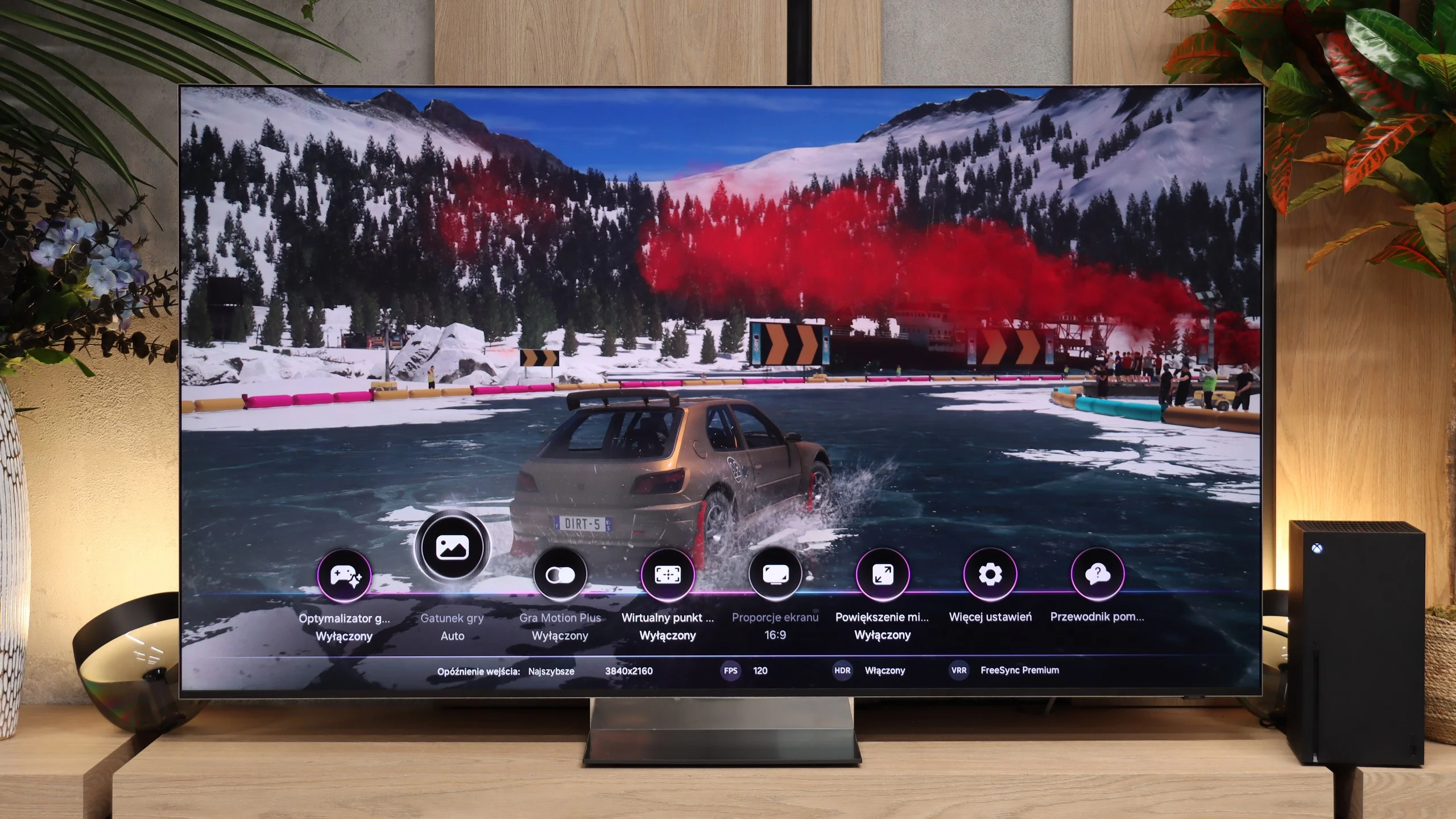
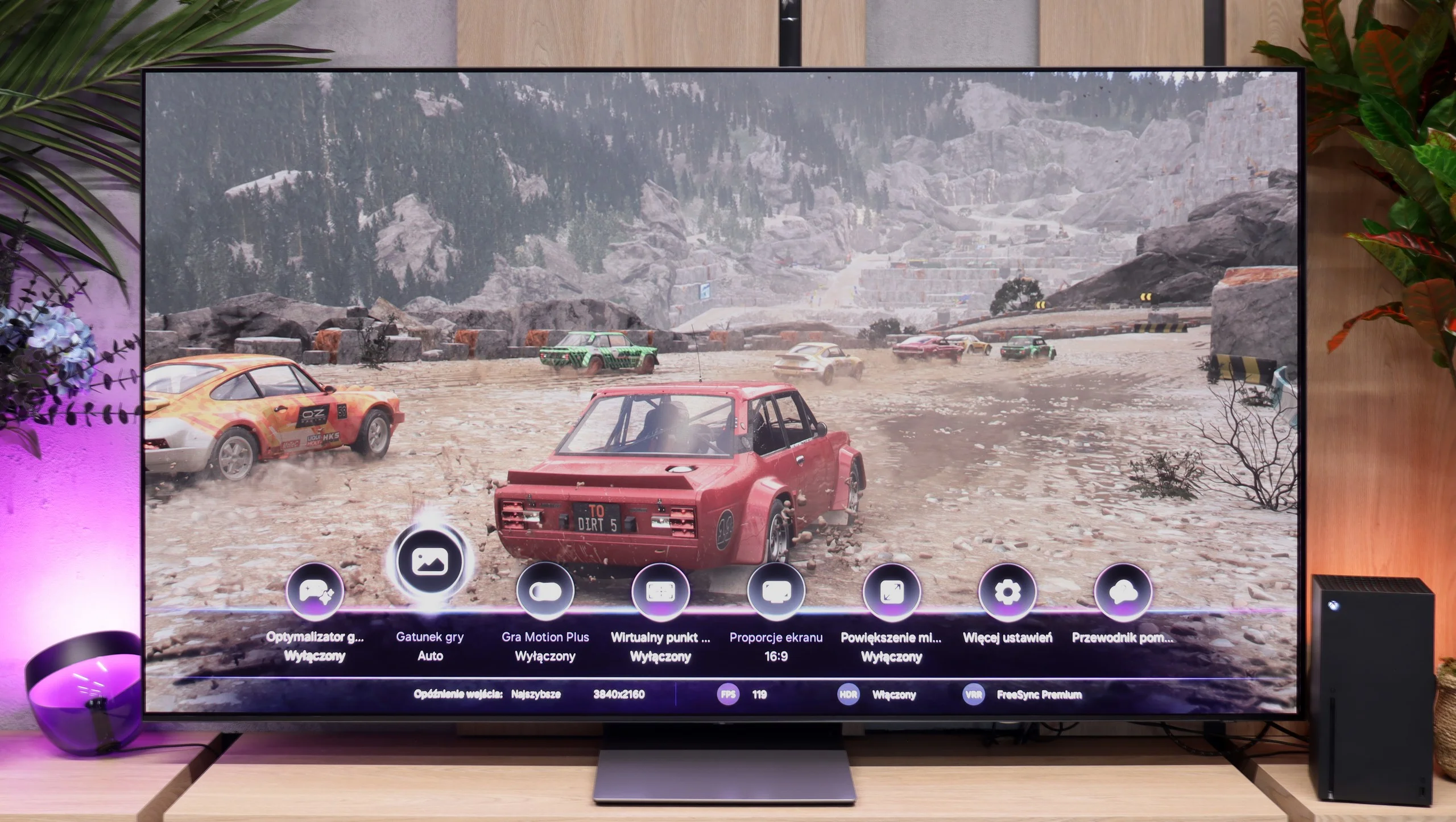
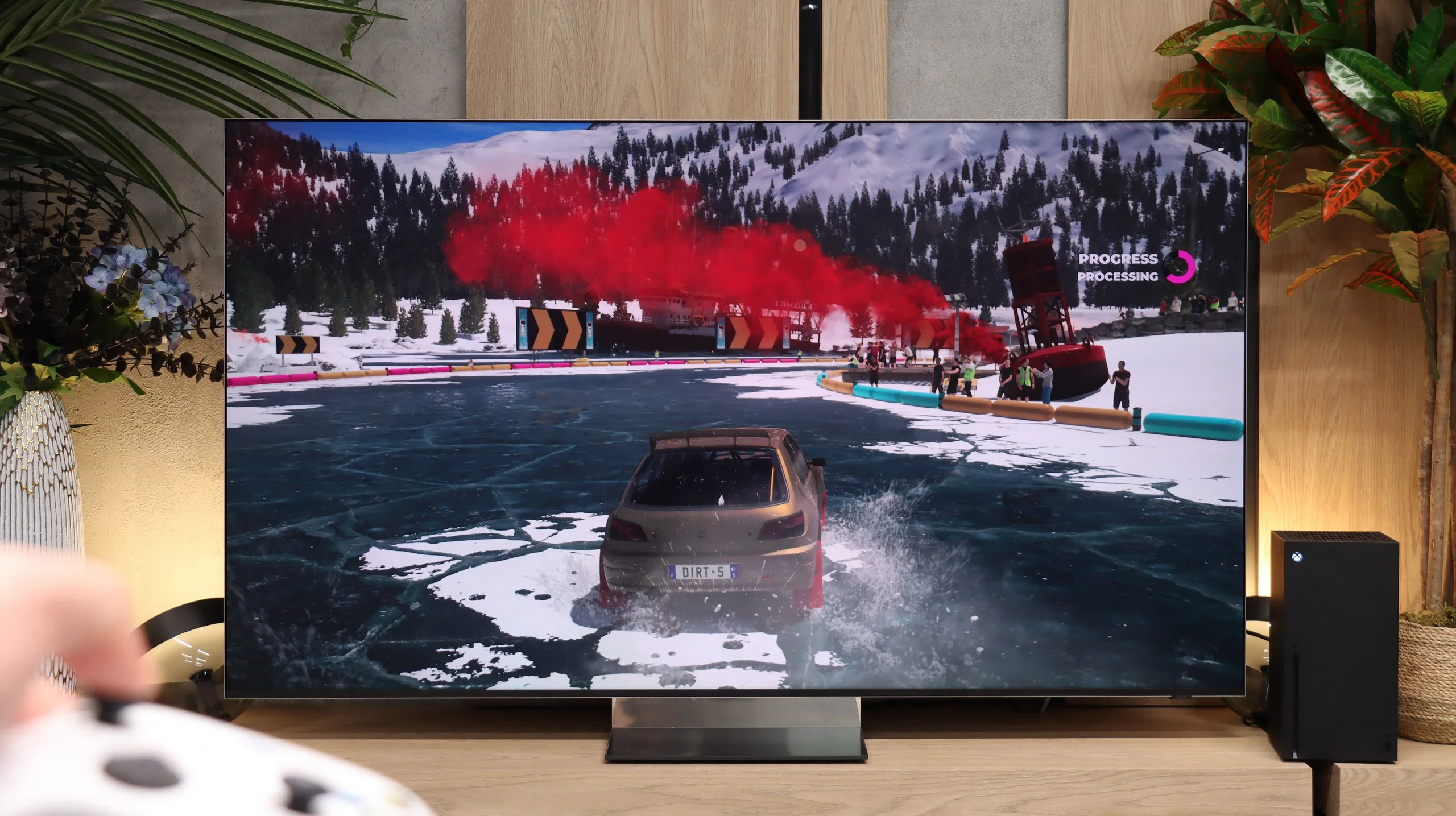
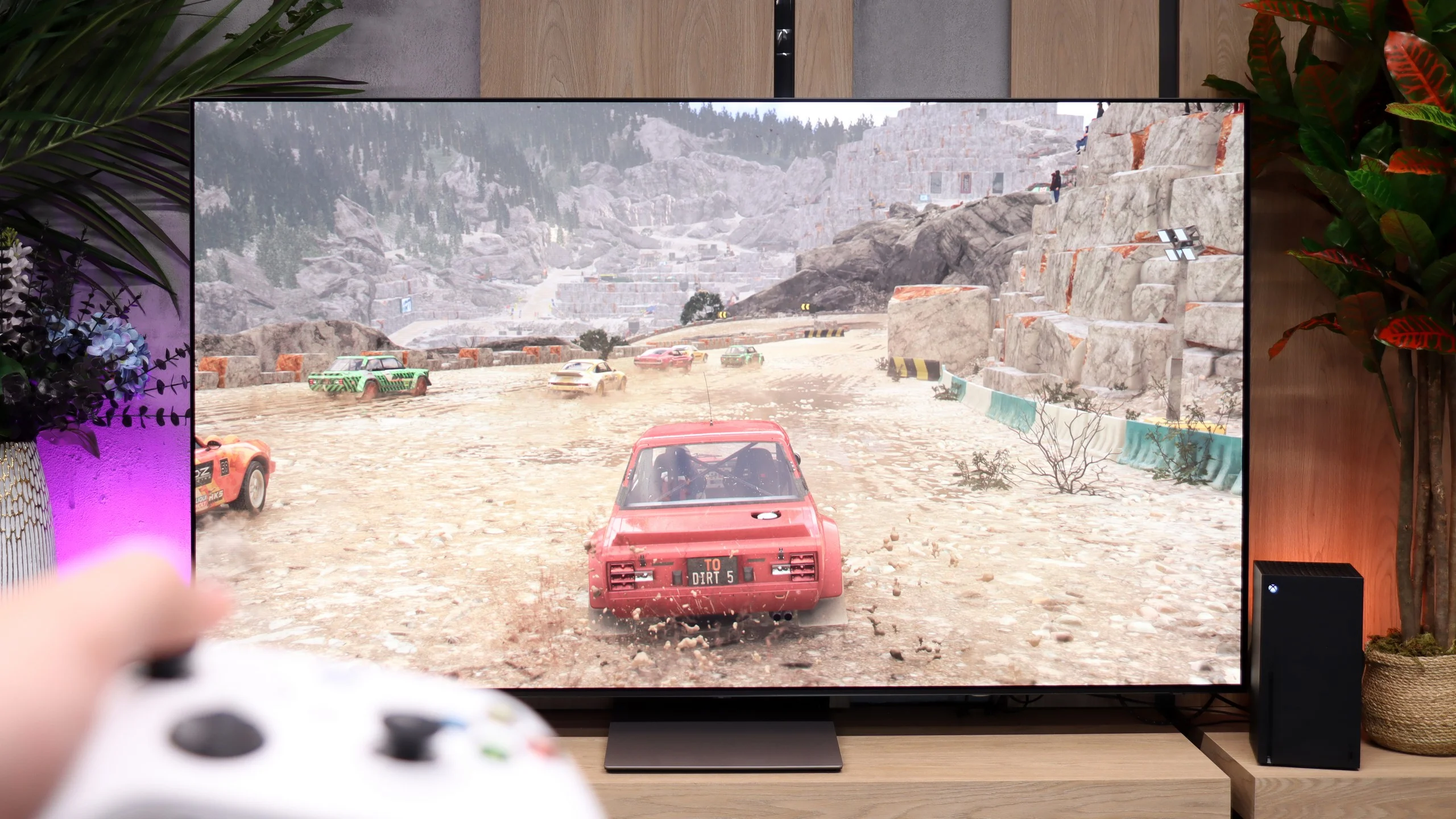
In terms of gaming the Samsung R95H is almost a complete TV. When you connect a PS5 or Xbox Series X you can use 4K at 120 Hz, VRR and ALLM, and the TV also works correctly with HGiG. The only larger omission is Dolby Vision Gaming, which Samsung simply does not support, as with its other televisions. There is also the Game Bar, already seen on other Samsung models, which lets you quickly check the frame rate, VRR status or HDR format and change the most important settings without leaving the game. You can also brighten darker parts of the picture or change the screen aspect ratio.
Samsung also offers Game Motion Plus, a motion-smoothing function developed specifically for games. It makes most sense in titles running at 30 fps, where it can noticeably improve smoothness and make camera movement feel much more pleasant. You should remember, though, that this comes at the cost of higher input lag (about 60 ms), so it is probably not the best choice for online or more fast-paced games. It's also worth mentioning the Gaming Hub, which lets you run some games directly from the cloud without connecting a console. In terms of gamer-focused features, it is therefore hard to find any major shortcomings in the R95H.
From the outset the Samsung S90H feels like a TV designed with gamers in mind, and it's easy to see why. The manufacturer has equipped it with almost everything you could expect from a modern gaming screen. You get as many as four full-bandwidth HDMI 2.1 ports, support for ALLM and VRR, and very high refresh rates. There's also a clear Game Bar that lets you instantly check key picture parameters or change settings without leaving the game. Another very welcome improvement is the HGiG behaviour. Last year it could cause quite a few problems, but on the S90H it works exactly as it should.
Samsung's ace up its sleeve remains its proprietary Game Motion Plus mode. The feature works similarly to the motion smoothing used for films: it improves animation smoothness in games while keeping input lag at a very reasonable level. For titles running at 30 or 60 fps, with the right settings input lag did not exceed 40 ms in our tests. That's a very good result, especially since with many manufacturers enabling similar features results in delays several times higher. Game Motion Plus does not, of course, replace Dolby Vision Gaming, as it's a completely different type of feature, but overall it's a gaming addition that many players may find more noticeable. Smoother motion in 30/60 fps games often makes a bigger difference than HDR itself (which, incidentally, is often poorly implemented in games).
Input lag
9.7/10
10/10
SDR
HDR
Dolby Vision
The input lag on the R95H is low, although it doesn't reach the level of Samsung's best OLEDs. At 120 Hz it's about 10 ms, and at 60 Hz about 20 ms. On paper the difference therefore seems significant, but in normal gaming it's really hard to notice. The TV responds quickly and doesn't feel delayed at all.
Input lag is another aspect that's really hard to fault. With a 120 Hz signal we measured just around 5 ms, which is a truly outstanding result. After switching to even higher refresh rates the latency dropped to astronomically low levels, virtually imperceptible during gaming. The Samsung S90H delivers absolutely market-leading results here.
Compatibility with PC
8.4/10
8.6/10
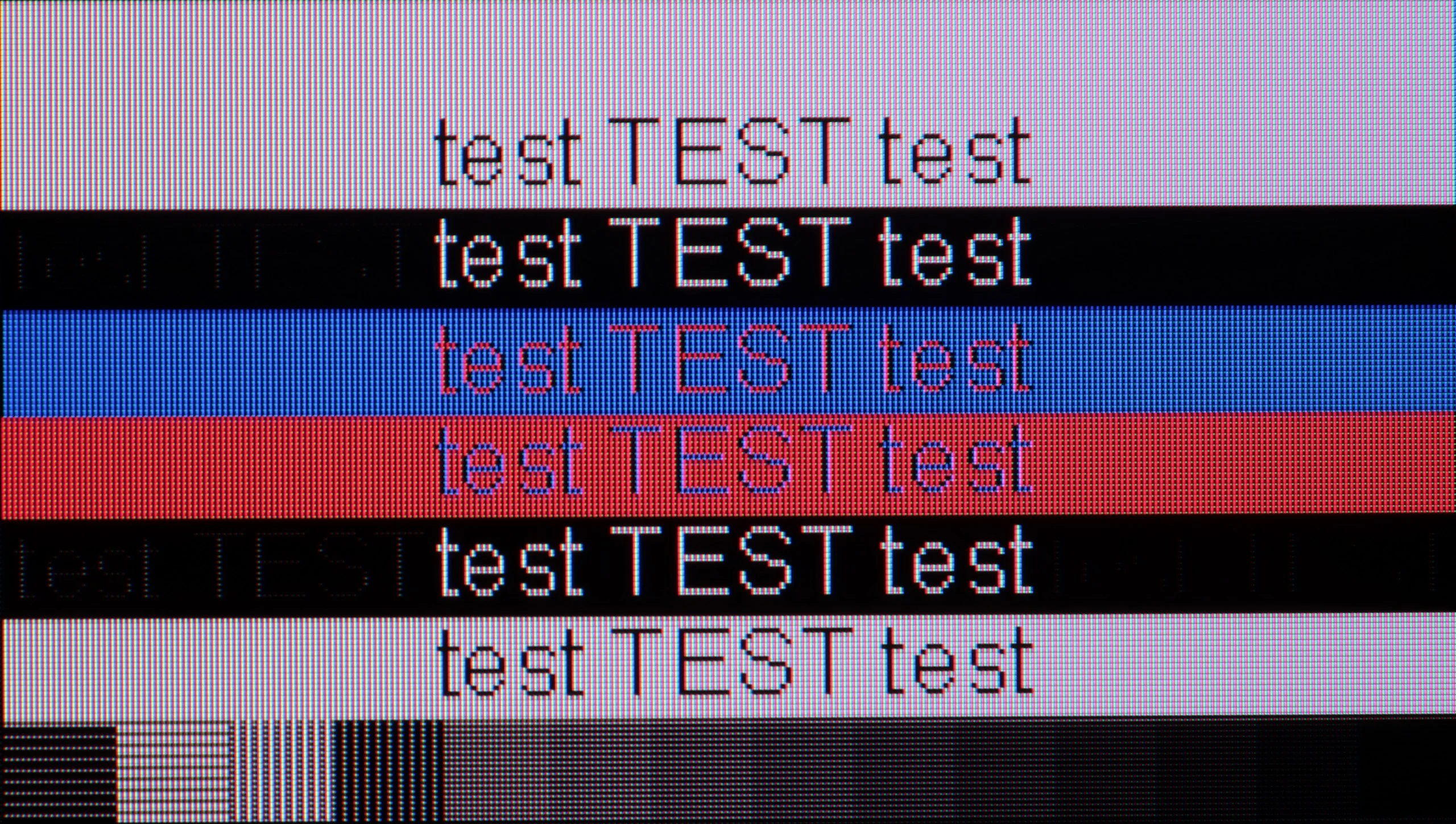
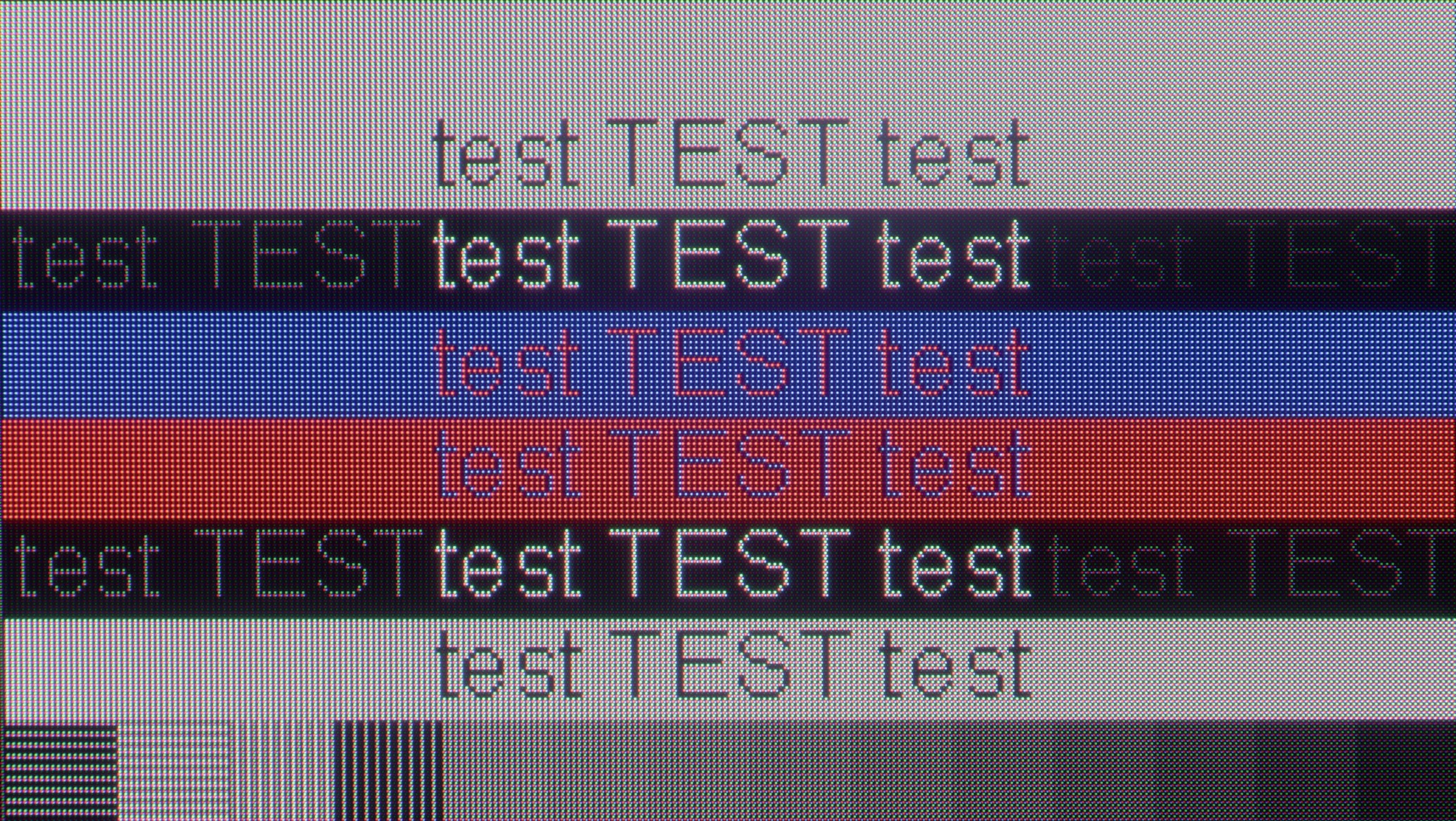
The photo shows the legibility of small fonts. Ideally, lines should be the same thickness on both light and dark text, with minimal pixel gaps.
The R95H is also suitable for PC gaming. In 4K you can use the full 165 Hz, and when dropping to Full HD the refresh rate rises to as much as 240 Hz. That’s definitely a plus, especially for online gaming where such values are perfectly achievable on a powerful PC. The TV also works with G-Sync and FreeSync, so it will play nicely with both NVIDIA and AMD graphics cards. The only thing to nitpick is font legibility. The R95H correctly handles 4:4:4 chroma, but at very close distances you can notice that the horizontal strokes of letters are slightly darker than the vertical ones. However, this isn’t something that stands out during normal use. Besides, the R95H isn’t offered in sizes that would encourage placing it on a desk and using it like a conventional monitor.
The Samsung S90H works excellently as a large PC screen, and not only because of its gaming-oriented feature set. The panel supports a refresh rate of up to 165 Hz, has very low input lag, and the official NVIDIA G-Sync certification allows you to achieve smooth gameplay without screen tearing when used with GeForce graphics cards. If you’re looking for a large display that will handle demanding PC games well, the S90H is an excellent choice.
And what about everyday work with text or web browsing? That’s good too. Fonts are sharp and legible, although you should bear in mind the specifics of QD-OLED panels. Up close you can notice the characteristic triangular subpixel layout, which can make letter edges appear slightly jagged or pick up faint coloured fringing. Is that an issue? In practice, it’s minor. After all, we’re talking about a 77-inch screen, so few people will sit just a few dozen centimetres from the panel. From a normal viewing distance that effect becomes virtually invisible.
Viewing angles
5/10
9.9/10
Viewing angles on the R95H are quite decent, especially given that the TV uses a VA panel. The RGB backlight helps here, allowing colours to hold their saturation better even when you view the screen more from the side. It's not yet on the level of the best RGB displays on the market, nor of OLEDs, but the difference compared with typical Mini-LED TVs with a similar VA panel is noticeable. Colours at wider angles don't wash out as quickly, and the image retains its character for longer.
As befits an OLED, the viewing angles are excellent, but the QD-OLED panel used here goes one step further in that respect. Even if we sit well to the side of the screen, the colours hardly lose saturation and the drop in brightness is marginal. There is also no sign of the greenish tint that can be irritating on some TVs with panels from LG Display. The image retains its colours very well regardless of the angle from which we view it.
Daytime performance
8.9/10
6.4/10
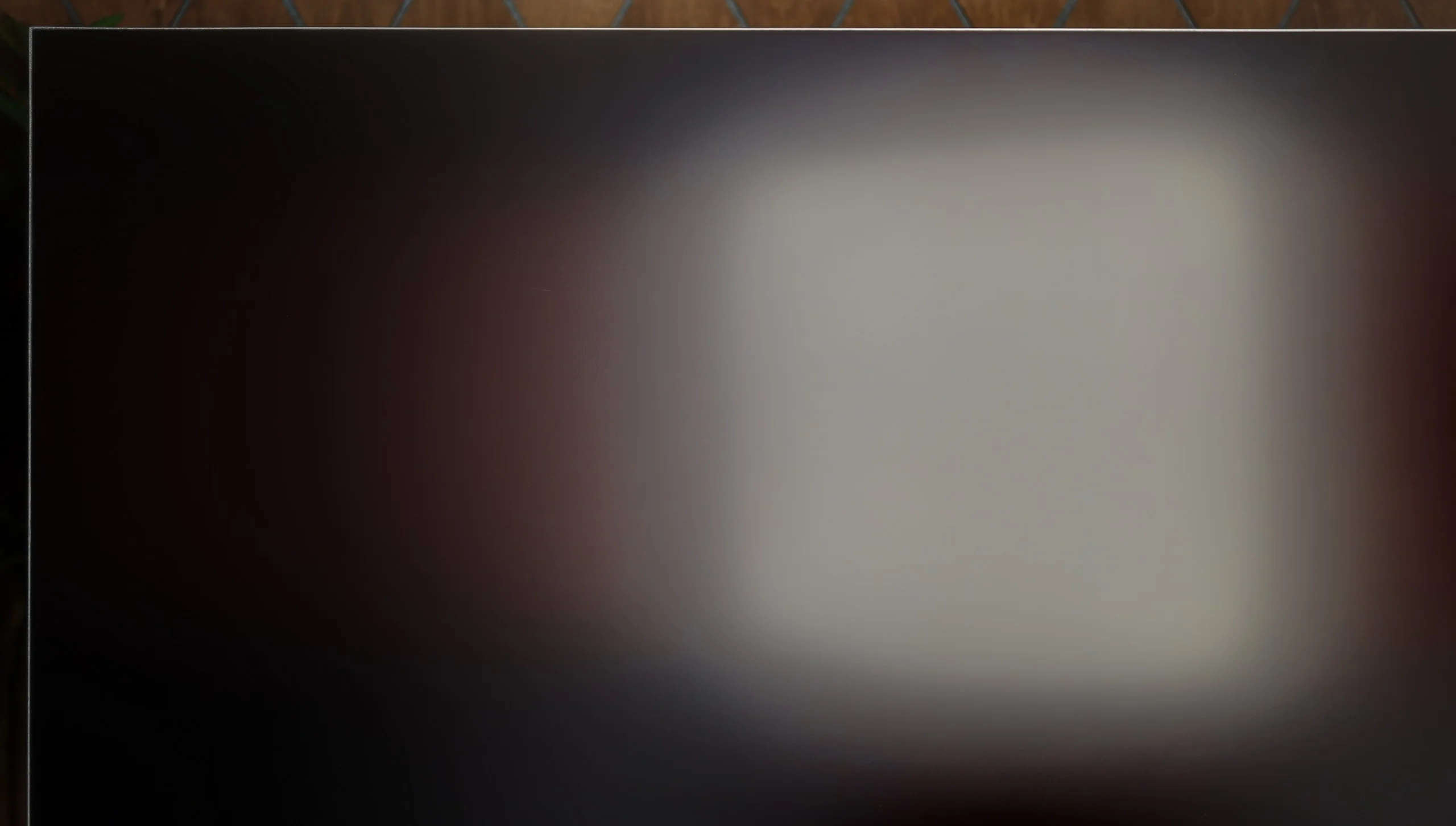
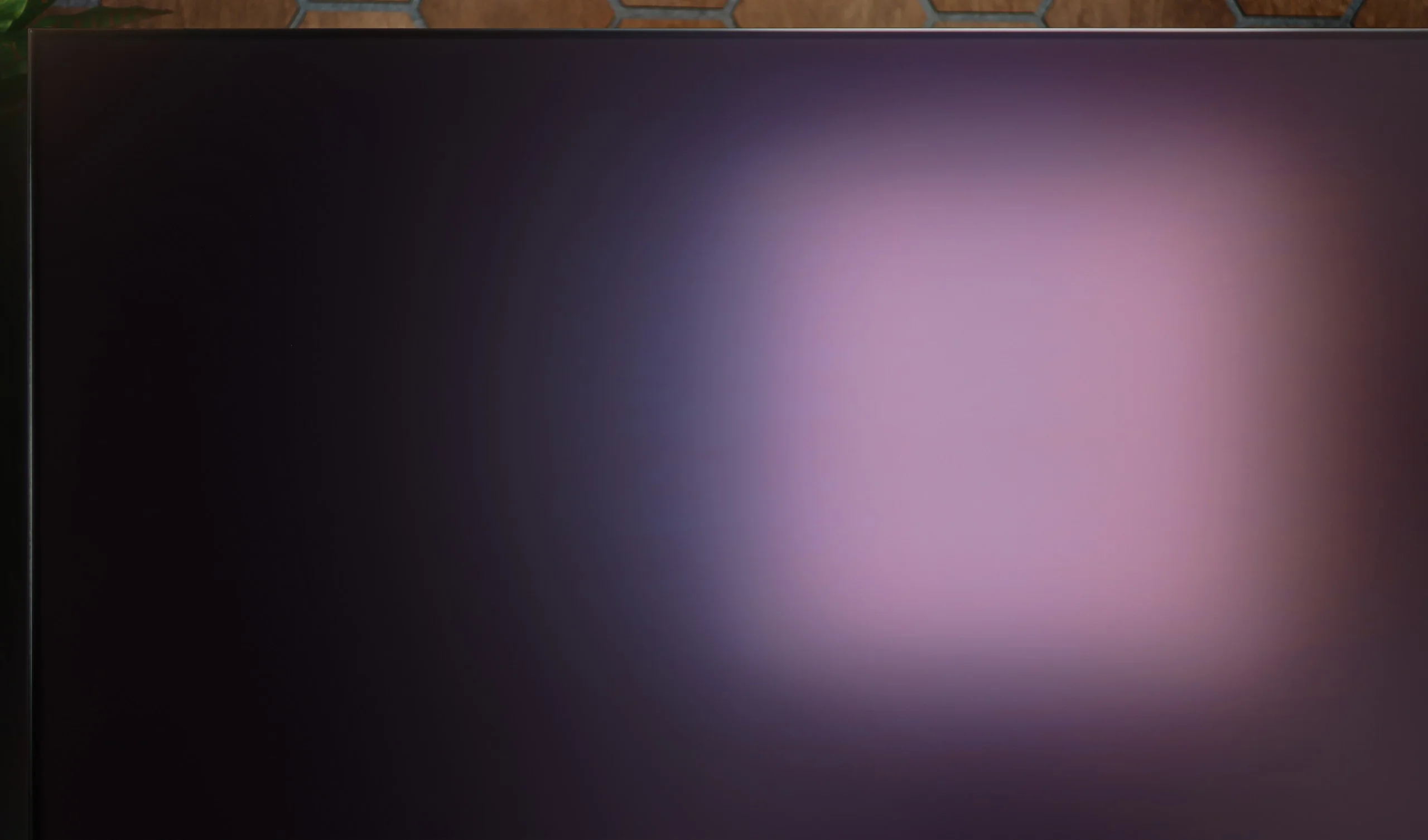

Panel brightness
Samsung S90H (QD-OLED): 486 cd/m2
Samsung R95H Micro RGB : 1172 cd/m2
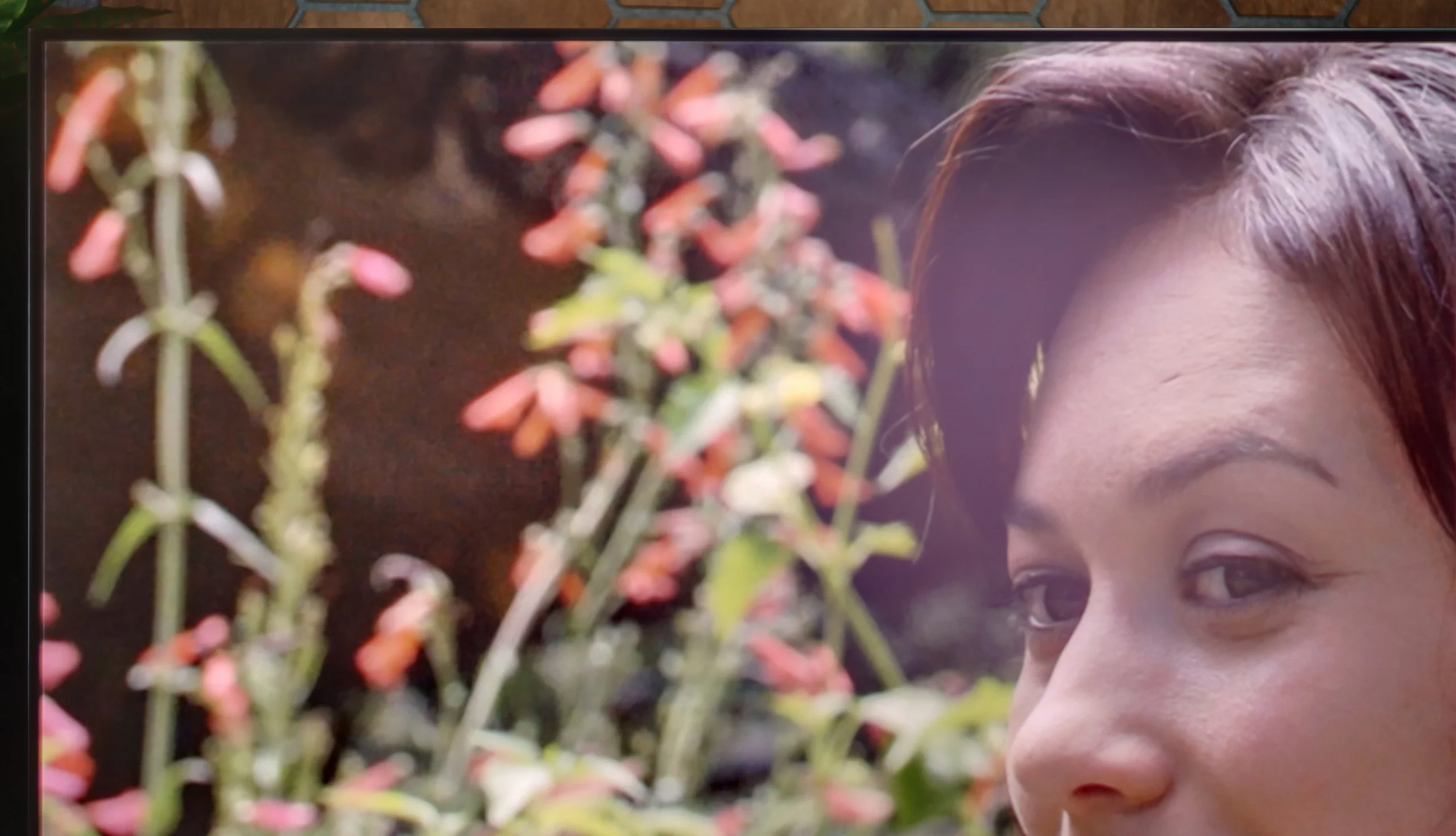
One of the biggest advantages of the R95H as a TV for a bright living room is the matte screen finish. Samsung has been handling these types of coatings very well for years and here we also have one of the better solutions available on the market. Reflections are effectively suppressed, so windows, lamps and other bright elements of the surroundings do not interfere as much when watching during the day. As is usually the case with matte screens, there is a compromise. Instead of a clear reflection, light is scattered across the panel surface, so under strong, direct lighting part of the screen may appear slightly brightened. It's a trade-off, but in a typical living room this solution still works very well.
The R95H also has a second very strong point: high SDR brightness. In a bright living room it's worth setting local dimming to High, because the screen can then reach peaks of up to 2,000 nits, with average brightness of around 1,200 nits. However, remember that the algorithm then operates more aggressively and can sometimes limit visibility of detail in the brightest parts of the image. For evening viewing we therefore recommend setting it to Low, which interferes less with the picture and helps preserve its more natural character.
Brightness values with local dimming set to 'Low':
Local dimming | 5% | 10% | 20% | 30% | 40% | 50% | 60% | 70% | 80% | 90% | 100% |
|---|---|---|---|---|---|---|---|---|---|---|---|
Average | 555 | 591 | 612 | 965 | 958 | 949 | 888 | 799 | 705 | 640 | 620 |
The biggest addition to the S90 range is the matte screen finish. Samsung has taken this step in this line for the first time and, in our view, it was a good move. You notice the difference straight away. The coating very effectively suppresses reflections, so even when there is a window opposite the TV or a strong lamp is shining, you won't see the typical mirror-like glare on the screen. Instead, only a gently diffused light appears, which interferes much less with viewing. If the TV is going to sit in a bright living room, that's really hard to overstate.
Of course there is a trade-off. QD-OLED with a matte coating has a characteristic trait: when strong light hits the screen, blacks can shift slightly towards a cherry tint, and colours may lose a little of their depth. This isn't a defect that occurs in every situation, but a quirk of this design under strong lighting. Fortunately the TV itself is bright enough that there are no issues watching during the day. In SDR it reaches around 500 nits of average brightness, and combined with the matte coating this makes for really comfortable viewing conditions.
Panel details
Subpixel Structure:
Panel uniformity and thermal imaging:

Samsung R95H Micro RGB
Samsung S90H (QD-OLED)
TV features
7.8/10
7.3/10
- SystemTizenTizen
- System performanceVery goodVery good
- HDMI inputs0 x HDMI 2.0, 4 x HDMI 2.1 48Gbps0 x HDMI 2.0, 4 x HDMI 2.1 48Gbps
- OutputsToslink (Optical audio), eARC (HDMI), ARC (HDMI)Toslink (Optical audio), eARC (HDMI), ARC (HDMI)
- Network InterfacesWi-Fi 2.4GHz, Wi-Fi 5GHz, Ethernet (LAN) 100MbpsWi-Fi 2.4GHz, Wi-Fi 5GHz, Ethernet (LAN) 100Mbps, Ethernet (LAN) 1Gbit
- TV receptionDVB-T, DVB-T2, DVB-S, DVB-S2, DVB-CDVB-T, DVB-T2, DVB-S, DVB-S2, DVB-C
Classic features:
- Recording to USB (terrestrial TV)
- Recording programming
- Picture in Picture (PiP)
- RF remote control (no need to aim)
- Backlit remote control
- Teletext
- Audio only mode
- Bluetooth headphones support
- Simultaneous Bluetooth headphones & TV audio
Smart features:
- AirPlay
- Screen mirroring (Windows Miracast)
- Voice search
- Voice search in native language
- Ability to connect a keyboard and mouse
Sound connection options
- HDMI audioeARC (HDMI), ARC (HDMI)eARC (HDMI), ARC (HDMI)
- Other audio outputsToslink (Optical audio)Toslink (Optical audio)
- Wireless audioBluetooth, Samsung Q-Symphony (Speaker extension)Bluetooth, Samsung Q-Symphony (Speaker extension)
Supported audio formats (external HDMI eARC audio):
- Dolby Digital Plus 7.1
- Dolby True HD 7.1
- Dolby Atmos in Dolby Digital Plus (JOC)
- Dolby Atmos in Dolby True HD
- DTS:X in DTS-HD MA
- DTS-HD Master Audio
Senior accessibility
- Numeric keyboard on TV
- Font size adjustment
- Audio description
Smart TV - Tizen
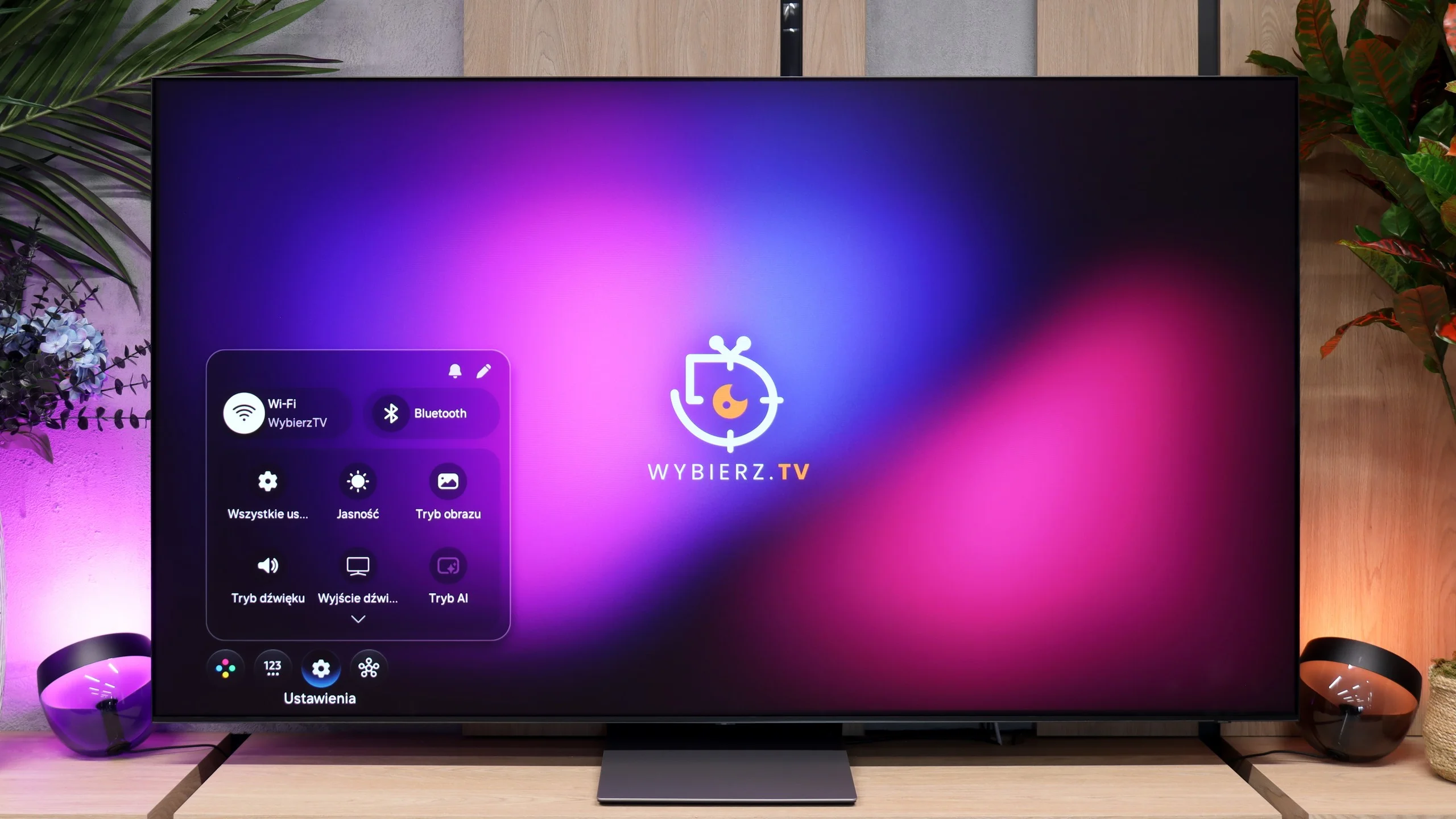
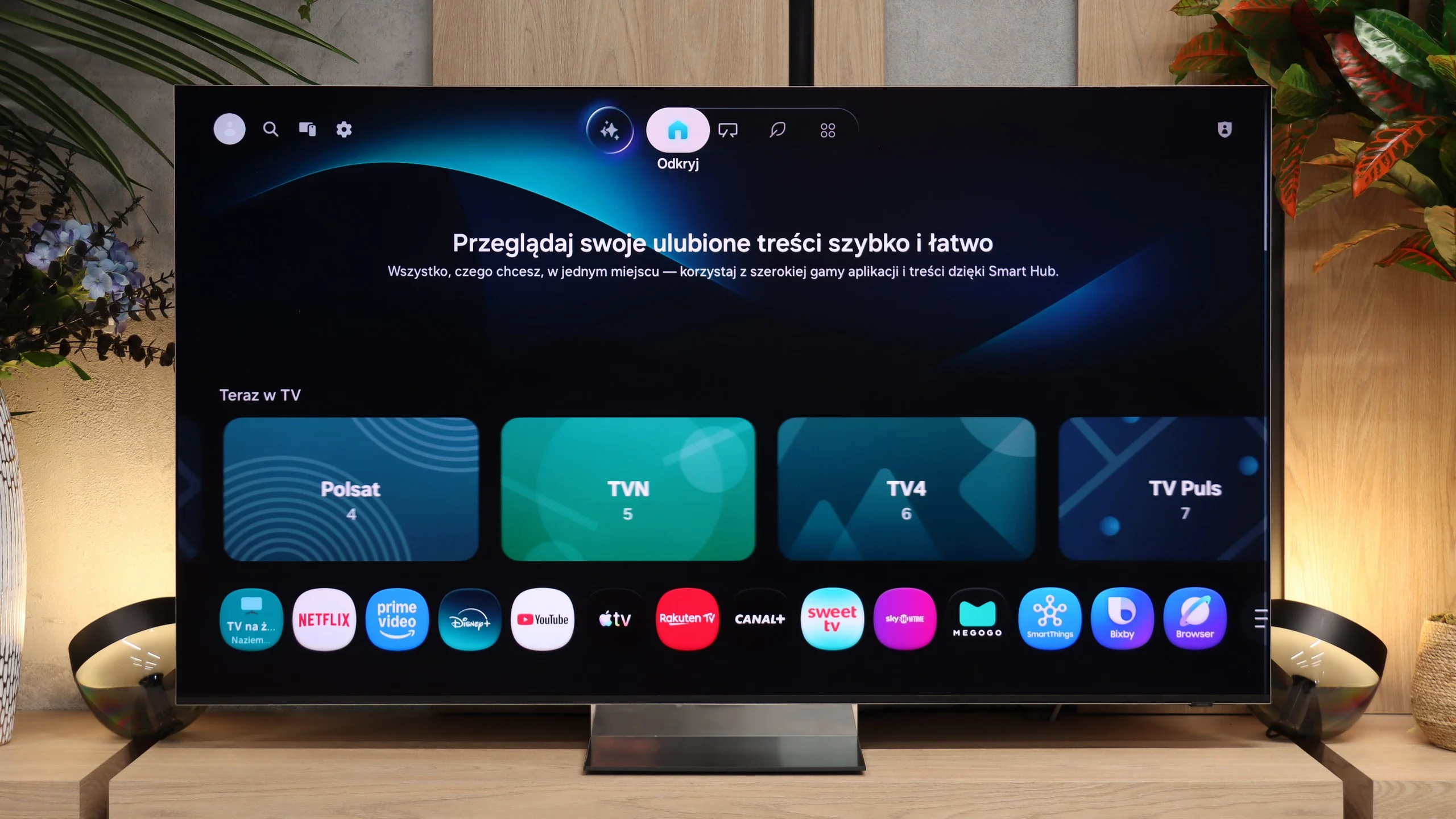
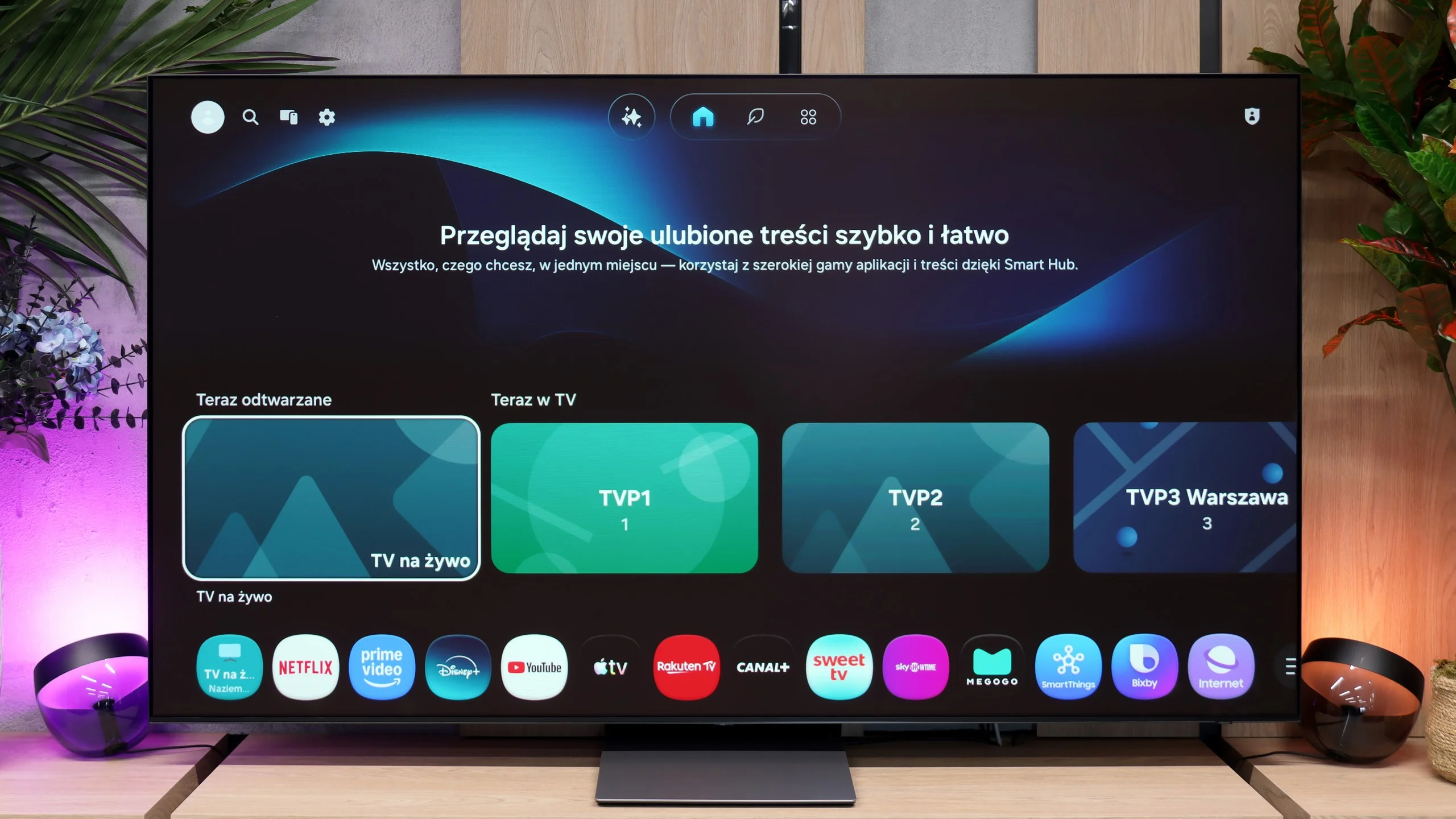
R95H runs on the well-known Tizen platform, which offers pretty much everything you can expect from a Smart TV today. You get access to the most popular streaming apps, the system is responsive and navigating the menus is easy. There’s also the SmartThings ecosystem, allowing the TV to serve as a control hub for smart home devices. It also supports AirPlay 2, easy screen casting from an iPhone and Multi View, which lets you display several sources on screen at once.
Classic features
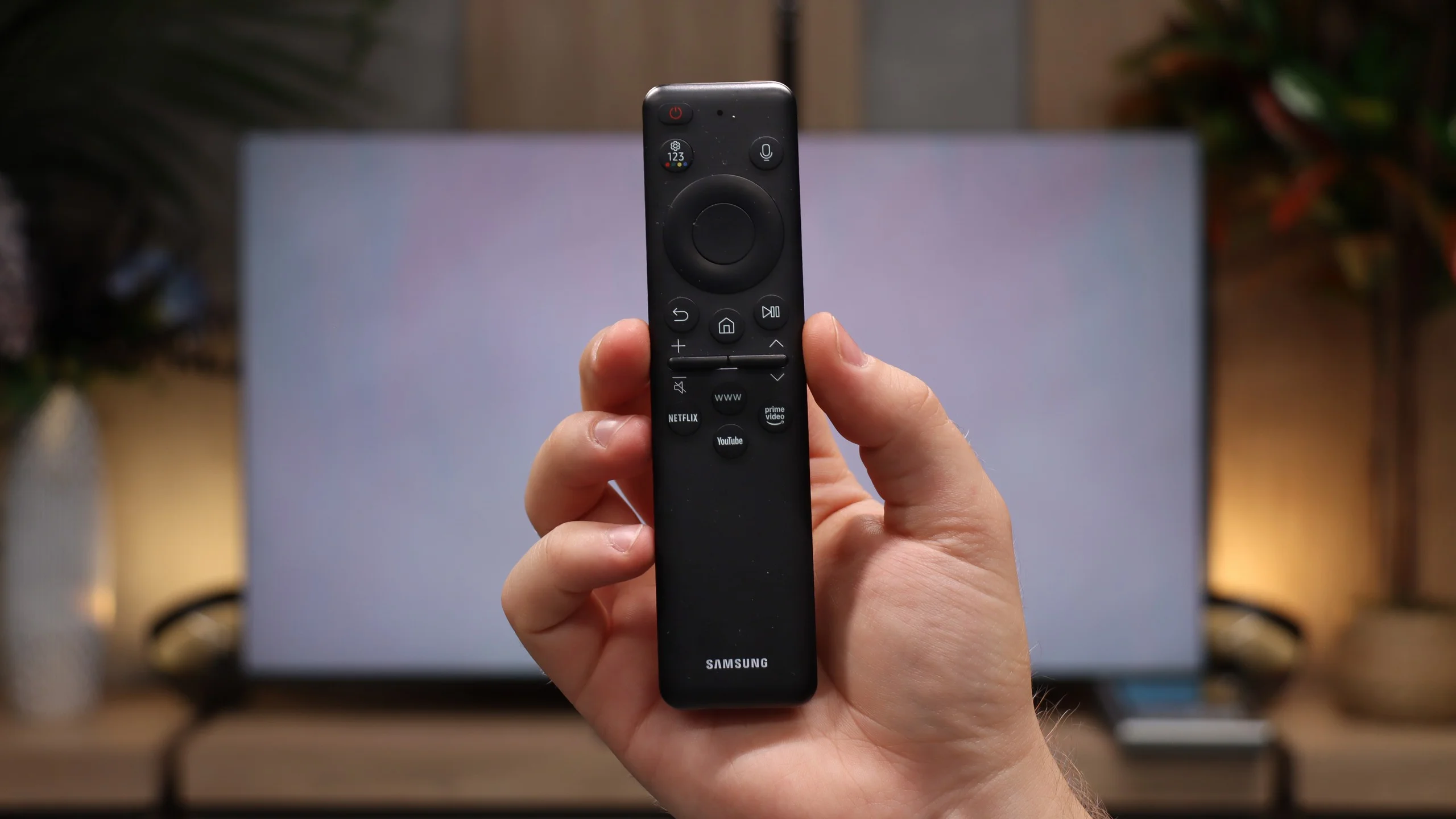
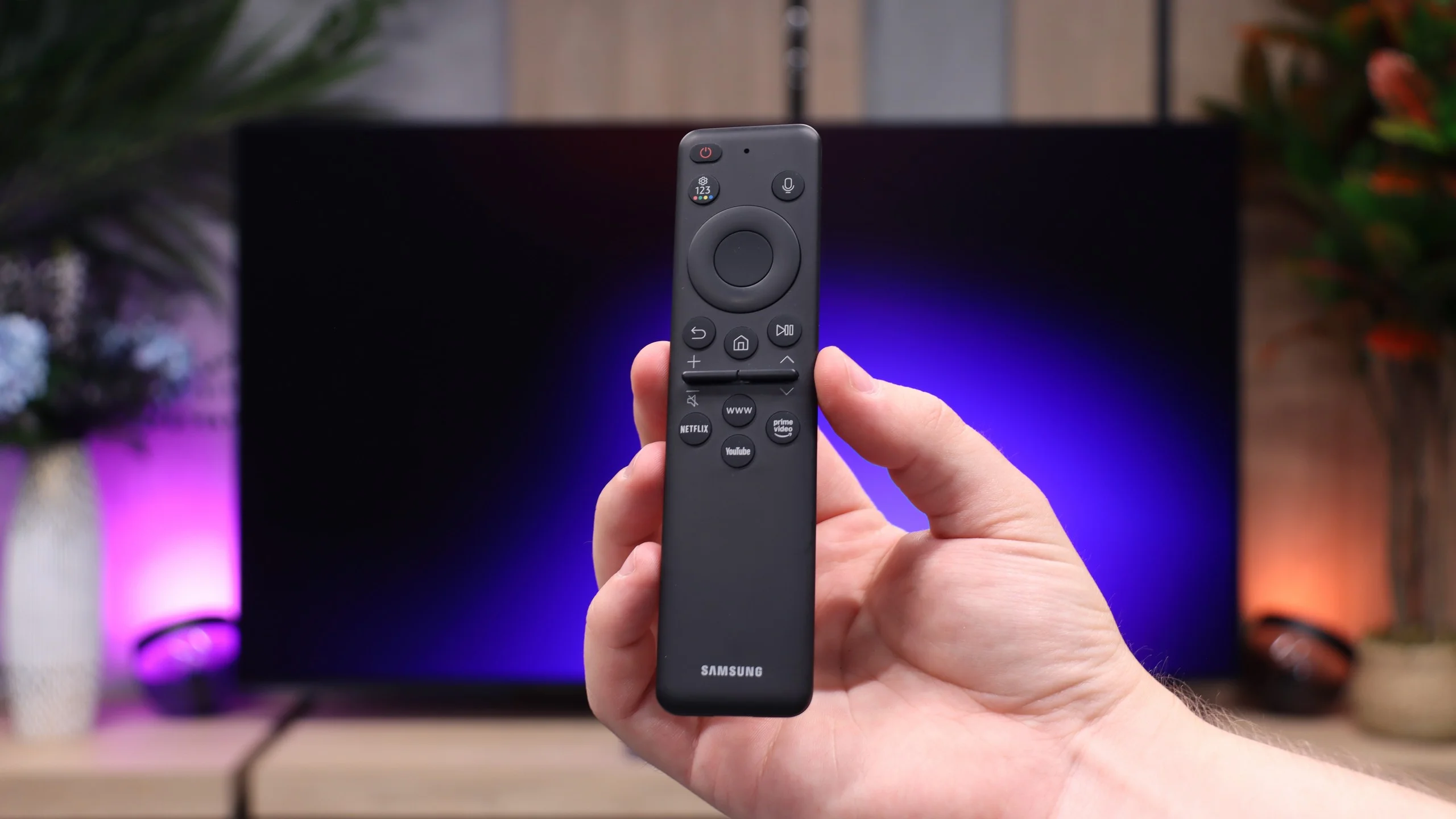
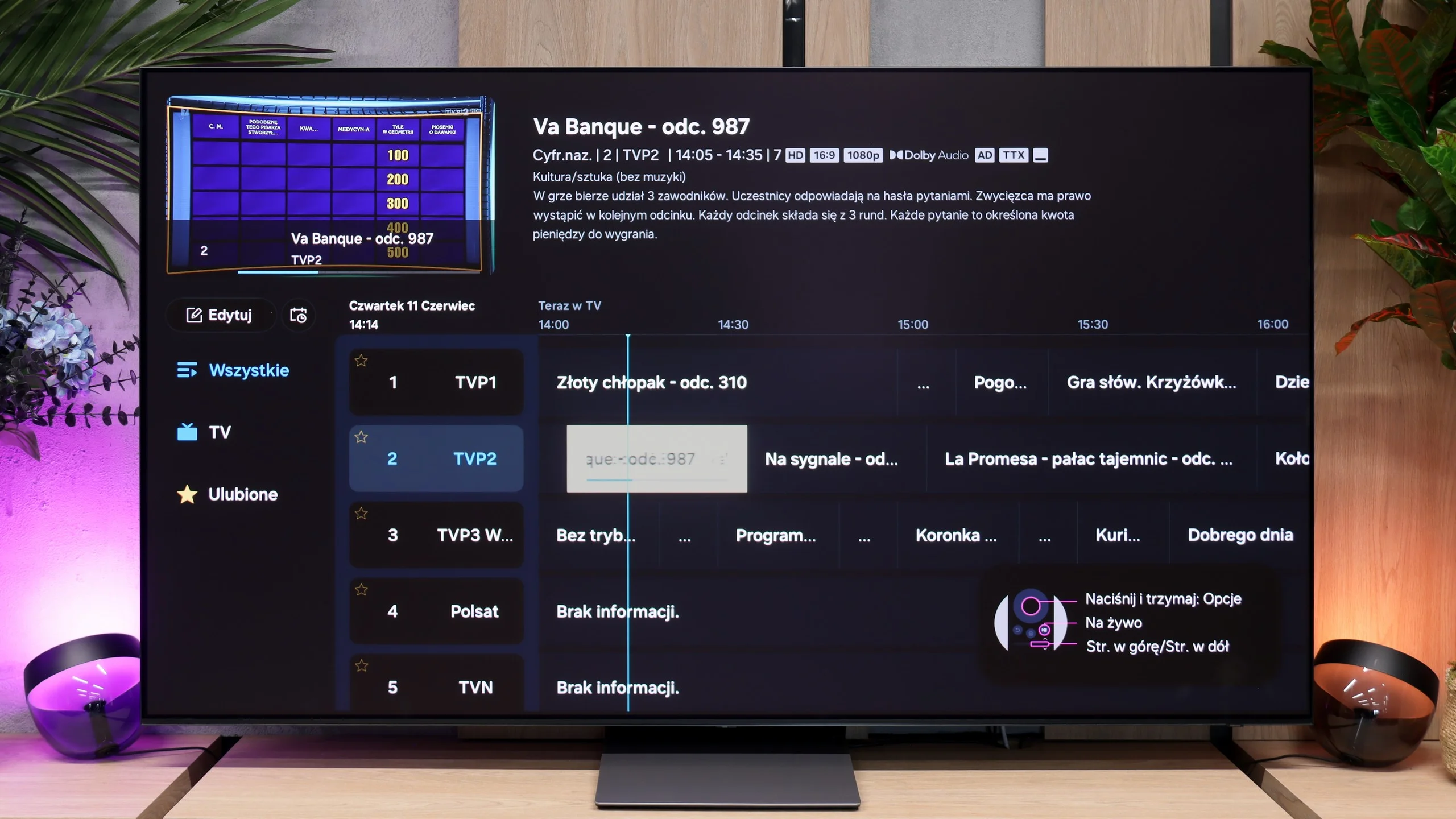
The more traditional side of the R95H is just as solid. The TV includes a full set of tuners for terrestrial, cable and satellite reception, along with a clear EPG. Samsung also deserves credit for keeping PiP (Picture-in-Picture), which the manufacturer removed from some lower-tier models. Here you can still show two sources simultaneously, which can be very useful on the R95H’s large screen sizes. The set is controlled using the distinctive SolarCell remote. It’s compact, has only the essential buttons and doesn’t require battery replacements because it can recharge from light or be charged via a USB-C port. People who mainly use streaming services will quickly get used to it, though fans of traditional broadcast TV may miss a numeric keypad.
Connectors
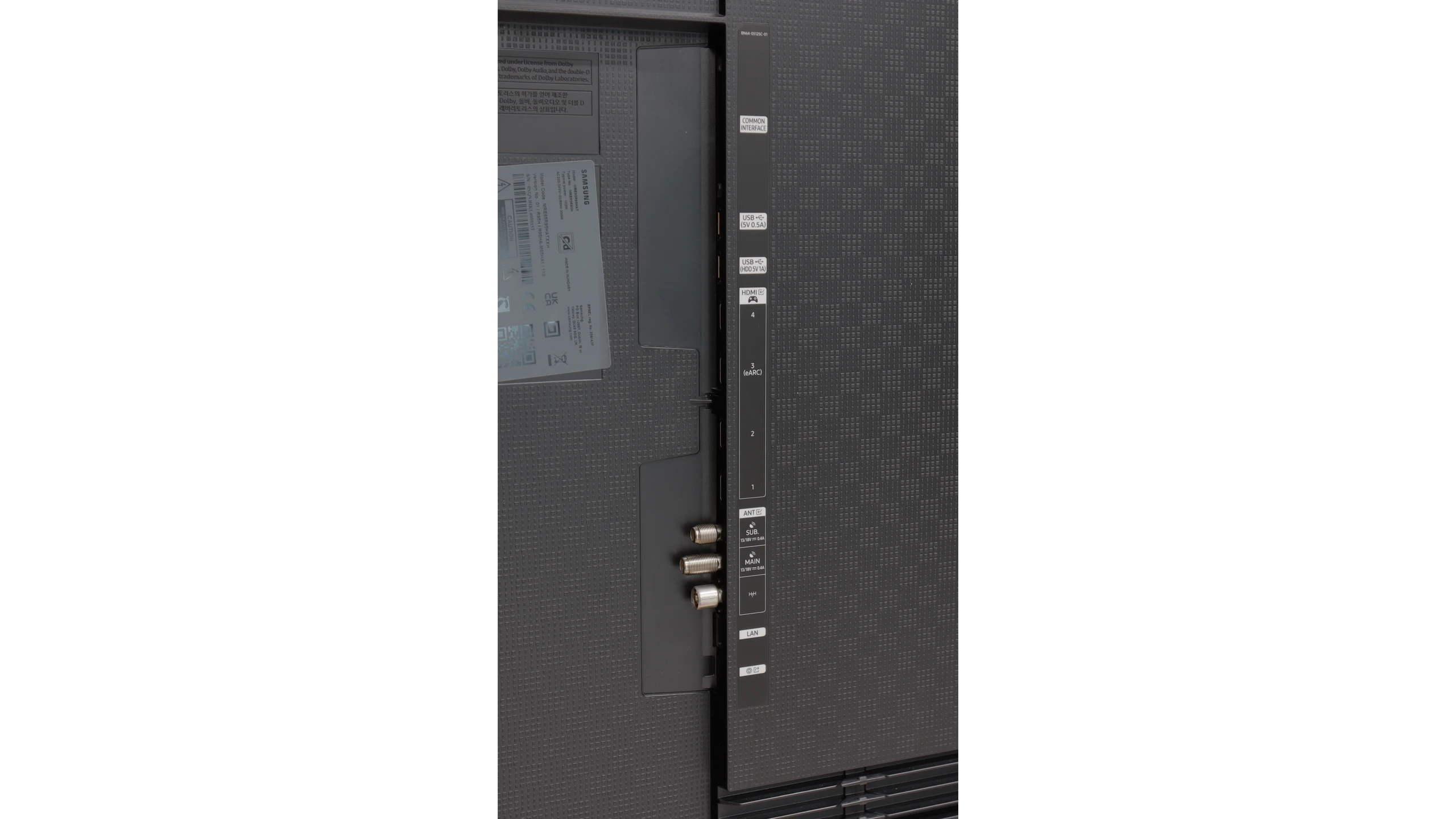
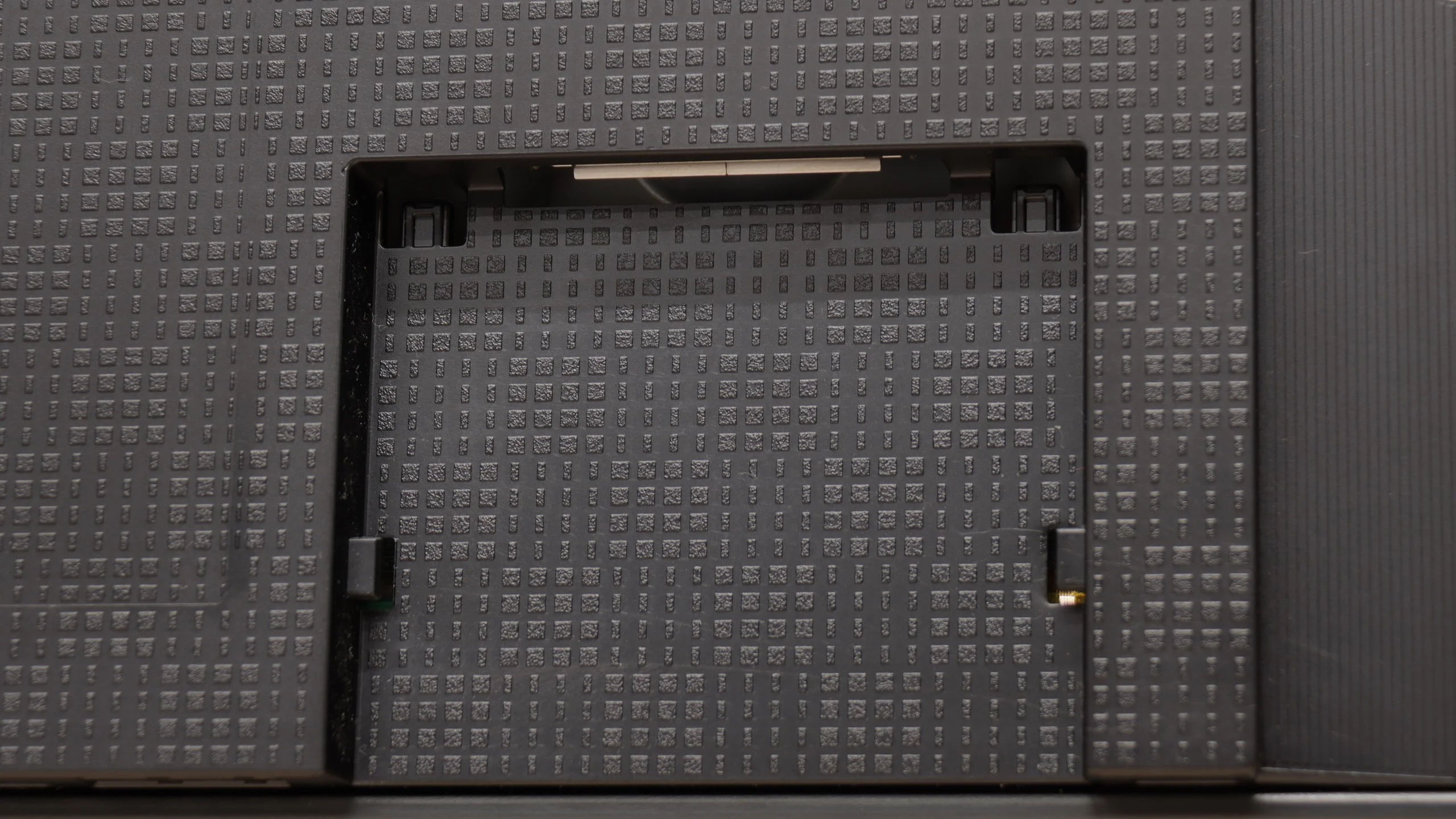
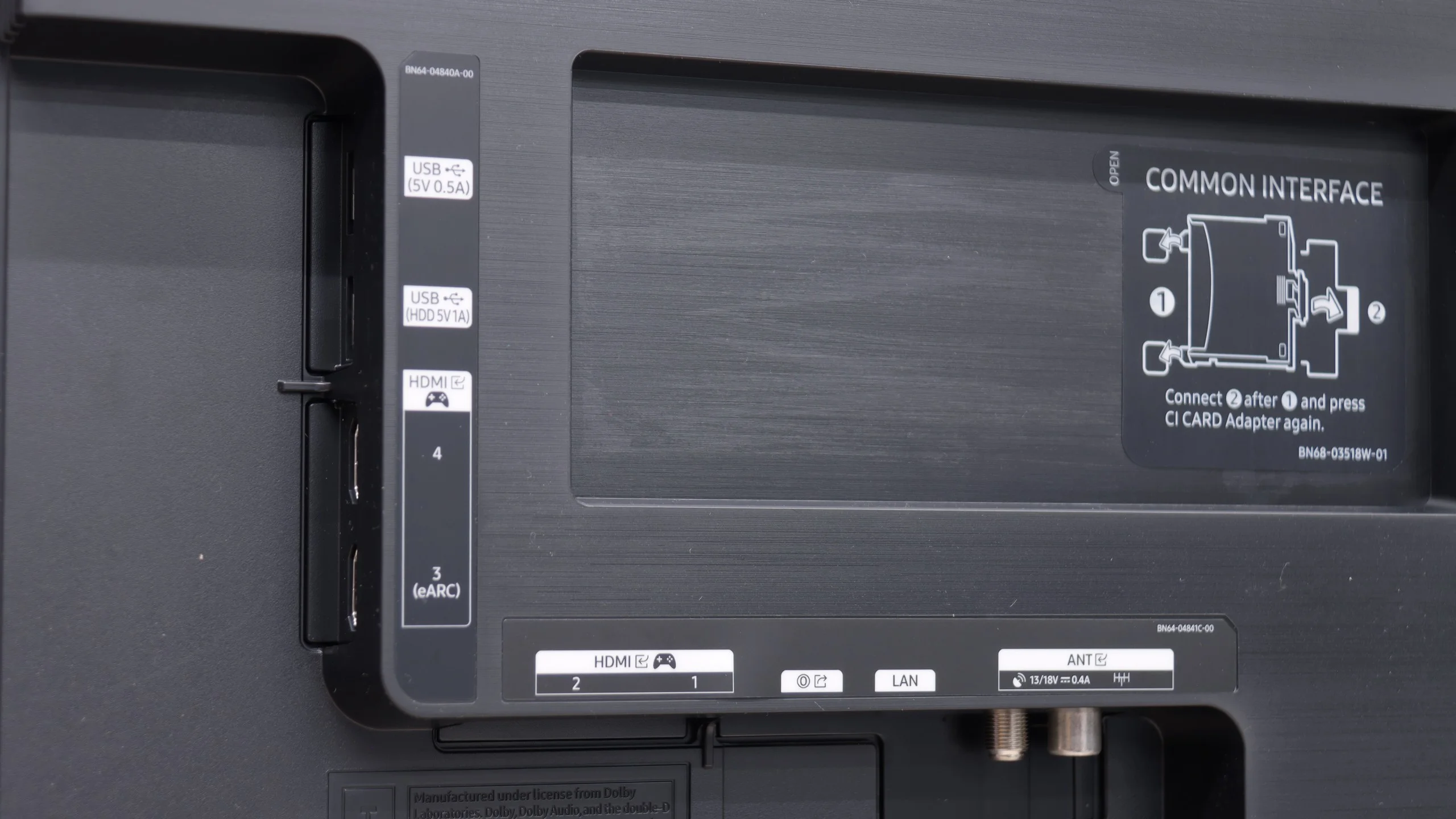
The connectors are arranged in an interesting way too. The R95H has four HDMI 2.1 ports, antenna inputs and an optical output, and it’s also equipped with a dedicated connector for the One Connect module. As with the flagship S99H OLED, you can purchase a wireless One Connect and move some of the cabling away from the TV. It’s an additional cost of 350$ / 1500zł, but when the TV is mounted very close to the wall it can be a very convenient solution.
Traditional TV
When it comes to ordinary cable or an aerial, Samsung hasn't reinvented the wheel. Putting all the AI fanfare to one side, the user largely gets the same as last year. The TV simply does its job: it switches channels smoothly, has a tuner and a CI module slot, so in many cases you can do without an external set-top box. Teletext is also still present. The compact remote is worth praising too; its biggest advantage is radio connectivity, so you don't have to point it directly at the TV to change anything. The problem is that almost every competitor offers most of these features today, and the S90H doesn't add anything particularly special. What's more, the manufacturer has taken a small step backwards. The PiP function, picture-in-picture, has disappeared from the S90 range. If you were in the habit of glancing at the news in the corner of the screen while watching another programme, you won't be able to do that here. A shame.
Smart TV: Tizen
While there's little to get excited about with traditional TV, the Tizen system in its 2026 incarnation is absolutely top-tier. Again putting AI features to one side, the main point is simple: the system is simply lightning fast. Response to commands from the remote is instantaneous, and when navigating menus there are no slow animations or irritating stutters. Although it doesn't include Google TV, the app catalogue is very broad. Practically all the major VOD streaming platforms are available, so it's hard to have any real complaints on that front. Fans of console-free gaming will also be pleased, because Samsung has significantly expanded the cloud gaming section, offering access to the main streaming services directly from the TV. As a Smart TV, the S90H is simply a very comprehensive and exceptionally fast device.
Apps
9.3/10
9.3/10






















Playing files from USB
9.1/10
9.1/10
Supported photo formats:
Maximum photo resolution:
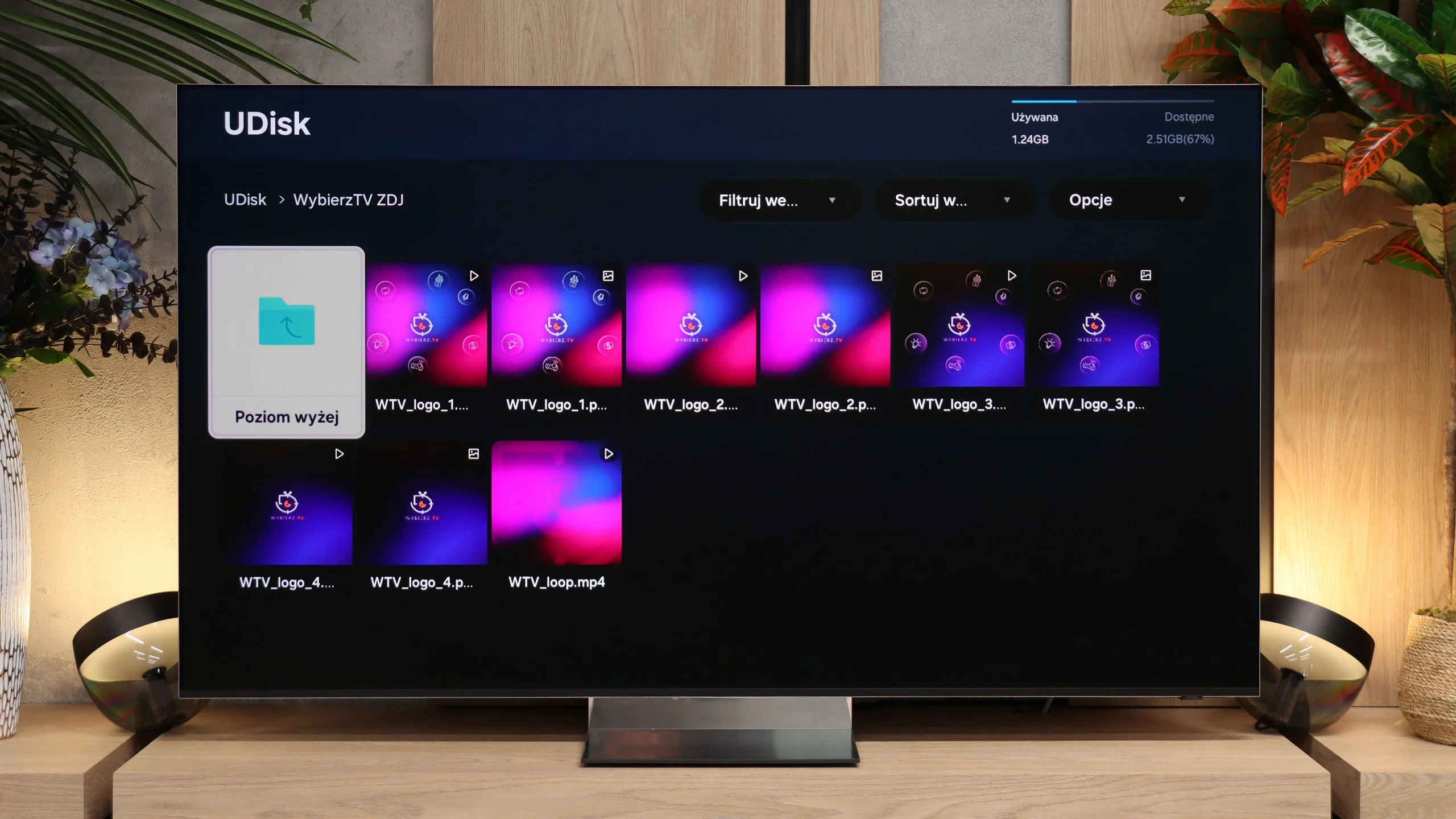
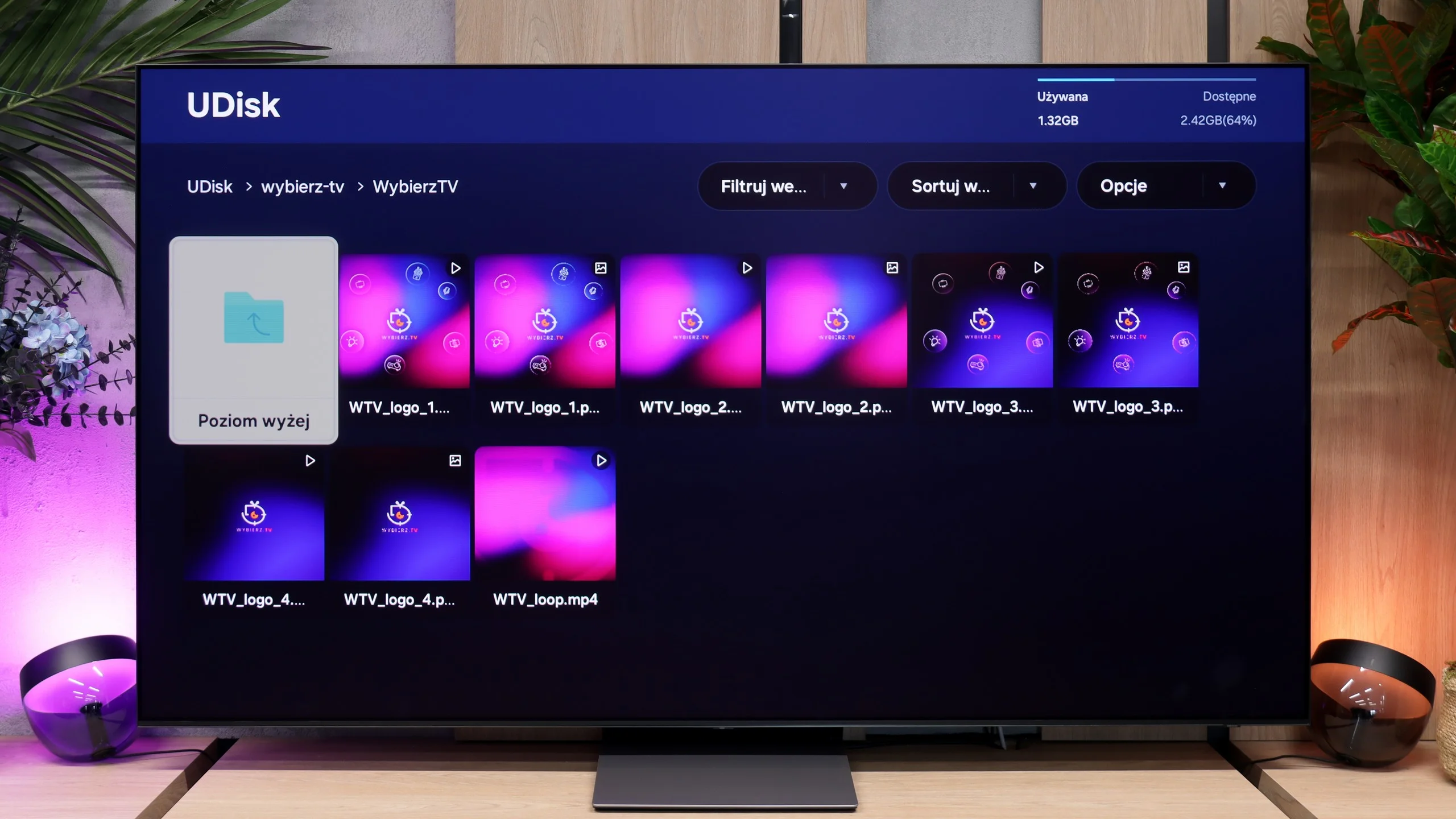
When it comes to playing files from USB, the R95H handles them without issue. During tests we didn't encounter any common video or audio format that the TV had trouble with, and the media player itself runs quickly and reliably. It's a pity Samsung still hasn't added support for the HEIC format. For photos saved in that format, for example from an iPhone, you still have to convert the files beforehand to a more standard format.
Its built-in player handles most popular video, audio and photo formats very well. Its playback capabilities are comprehensive enough that you certainly won't miss the option to install external players, such as VLC. However, we encountered a serious bug when attempting to open HEIC photos from an iPhone. The S90H not only failed to display the files, but caused the system to freeze completely. The receiver stopped responding to any of our commands, so we had to reset it (unplugging it solved the issue). This appears to be a software bug that requires an urgent fix in the next firmware release.
Sound
7.5/10
8.4/10
- Maximum volume89dB89dB
- Dolby Digital Plus 7.1
- Dolby True HD 7.1
- Dolby Atmos in Dolby Digital Plus (JOC)
- Dolby Atmos in Dolby True HD
- DTS:X in DTS-HD MA
- DTS-HD Master Audio
Samsung R95H is equipped with a fairly comprehensive 4.2.2 audio system rated at 70 W and is genuinely pleasant for everyday use. The sound is clean, relatively spacious for a TV and noticeably stronger than in most mid‑range models. For films and series the built‑in speakers cope well and will satisfy even more demanding users. It only gets a bit worse when the material contains a lot of bass. On some tracks we noticed the TV can fall into unpleasant resonances and this is where the limits of the built‑in audio are most apparent. If the low end were better, we would rate the whole setup much higher. If you want stronger bass and a more cinematic sound, it’s worth considering a soundbar with a subwoofer or a home cinema system. A soundbar will of course be the simpler and cheaper option, and thanks to support for Dolby Atmos you can already build a really solid film setup with the R95H. Unless you mainly use physical Blu‑ray releases; in that case remember that Samsung does not support DTS formats, so for some soundtracks that may mean using an external player or an AV receiver.
In theory, the audio specification of the S90 series has remained unchanged for several years. We still get a 2.1 speaker system with a total power of 40 W. However, when we powered up the unit we tested, we were pleasantly surprised. The television sounded noticeably better than the dry technical specifications or our recollections from previous models' tests would suggest. It's hard to say definitively whether this is down to optimisation of the sound-control software, or simply the fact that the 77-inch cabinet allows for slightly larger drivers and gives them better conditions to work in. The fact is the sound is fuller and more dynamic. That's a big plus for the manufacturer. Our only real gripe is the lack of support for the DTS format. Unfortunately, this is a standard increasingly being dropped by TV manufacturers, so Samsung is no exception. On the plus side, it does support the most popular spatial format, Dolby Atmos. Even so, fans of physical Blu-ray releases, where DTS tracks are still very common, may feel slightly disappointed.
Sound Quality Test
Acoustic Measurements
89dBC (Max)
75dBC
89dBC (Max)
75dBC
Reader comments
Comments are provided by the external service Disqus (Zeta Global). Once loaded, Disqus may set cookies and process data about your activity.
We will remember your choice on this device. Provider's privacy policy