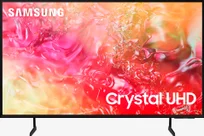
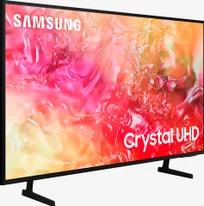
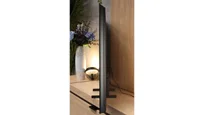
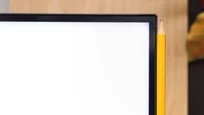
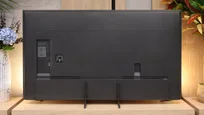
Samsung DU7192 is a very budget-friendly solution that works best as a device for typical Sunday viewing. The television is best suited for daytime watching, as ambient light effectively masks its not-so-great blacks. Thanks to the IPS panel, even at an angle, the colours maintain their hues and saturation. The brightness of the Samsung DU7192 also suggests its intended use, which is television or YouTube, as HDR content on streaming platforms will be too dark. The greatest advantage of the television is the colour reproduction after undergoing a calibration process, as it produces good quality colours that allow for viewing materials in a quality quite close to that which the film director intended. Credit must also be given to the quality of tonal transitions, which are a definite highlight of this television, placing it well above its competition. As for minor features that can be considered good in the Samsung DU7192, there is computer compatibility and the operating system. The former performs remarkably well, and thanks to the properly implemented chroma 4:4:4, the tested television can successfully serve as a monitor, as the readability of fonts will be at a high level. The system, meanwhile, operates very smoothly and efficiently. During testing, there was no situation in which it froze. Additionally, the default media player is excellent and handled virtually every file we prepared for it. So, who is the Samsung DU7192 for? Primarily for less demanding individuals for whom the television serves merely as a small escape in their daily routine. The DU7192 Samsung features a modern and elegant design that will fit into most interiors. The matte frame finish adds style to the device, making it not only a functional but also an aesthetically pleasing element of living room decor. It is worth highlighting that the Samsung DU7192 has an exceptionally slim profile, which makes it easy to mount on the wall, thus saving space in the room. This is an ideal solution for those who wish to enjoy minimalism in their interiors without sacrificing high-quality equipment.
- Matching (Score) |
- Our verdict |
- TV appearance |
- Where to buy |
- Contrast and black detail |
- HDR effect quality |
- Factory color reproduction |
- Color reproduction after calibration |
- Smoothness of tonal transitions |
- Image scaling and smoothness of tonal transitions |
- Blur and motion smoothness |
- Console compatibility and gaming features |
- Input lag |
- Compatibility with PC |
- Viewing angles |
- Daytime performance |
- Panel details |
- TV features |
- Apps |
- Playing files from USB |
- Sound
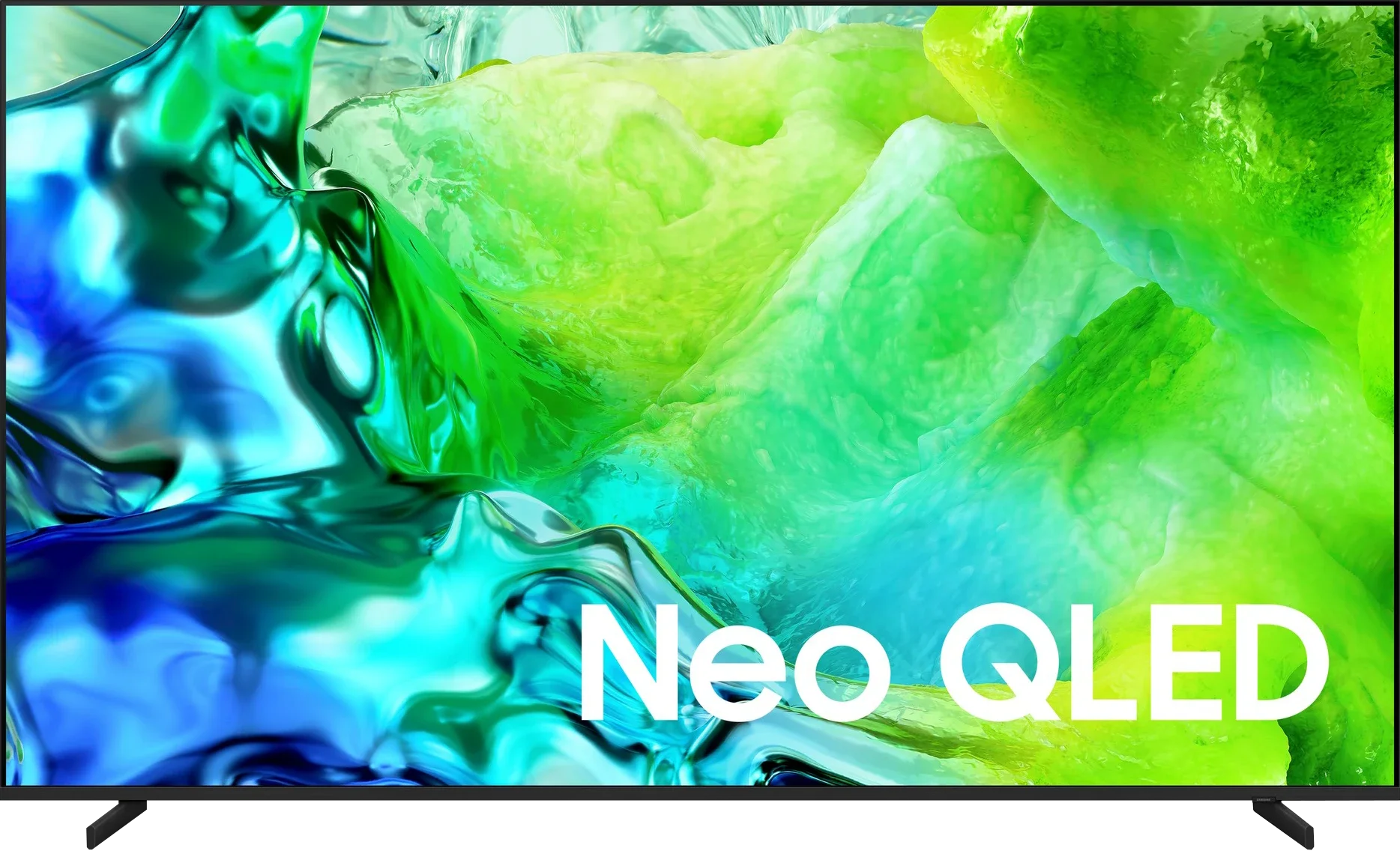
Samsung DU7192 (IPS) vs Samsung QN80H
 Direct comparison

Check the best price offer:
Samsung QN80HDU7192 / DU7172

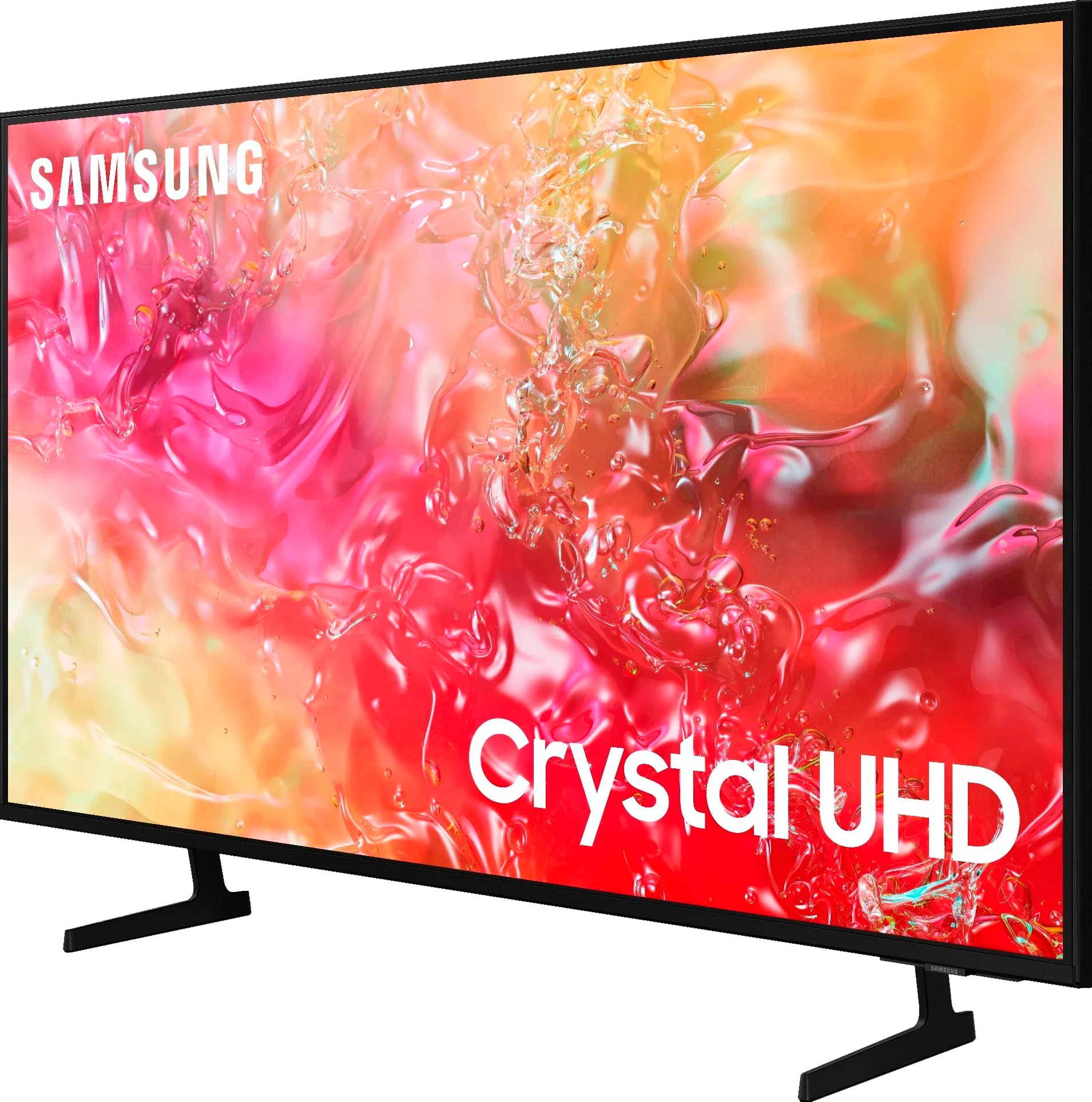
Panel type: LCD IPS
Resolution: 3840x2160
System: Tizen
Model year: 2024
Complete the survey to find out the result
Panel type: LCD VA
Resolution: 3840x2160
System: Tizen
Model year: 2026
Complete the survey to find out the result
Overall rating
5.0
7.3
 Movies and series in UHD quality
 4.6
7.0
 Classic TV, YouTube
 4.2
6.8
 Sports broadcasts (TV and apps)
 4.8
6.8
 Gaming on console
 6.4
9.0
 TV as a computer monitor
 6.0
8.9
 Watching in bright light
 2.8
5.8
 Utility functions
 5.5
7.3
 Apps
Apps 8.7
9.3
 Sound quality
 5.4
7.1
Complete the survey to find out what fits your preferences
Advantages

Excellent cooperation with the computer - low input lag, chroma 4:4:4
Faithful colour reproduction after calibration
Minimal colour degradation at an angle
Smooth operation of the Tizen system
Good blacks thanks to Mini LED backlighting
High brightness, exceeding 1,000 nits in HDR
Rich colours thanks to QLED quantum dots
High 144 Hz panel refresh rate
4x HDMI 2.1 ports
Very low input lag
Advanced gaming features
Fast Tizen OS
Seven years of system support
Excellent compatibility with PCs (240 Hz mode, excellent font readability)
Adjustable foot spacing and height
Disadvantages

Low HDR material brightness
Lack of tone transition smoothing features
Average image scaling
Small number of local dimming zones, 110 in the 65-inch model
Average glare suppression
No USB recording or PiP function
Rather inelegant plastic feet
No solar-powered remote 😓
Our verdict
The Samsung QN80H is a genuinely successful mid-range television and, in our view, should be seen exactly that way. Not as a new Neo QLED flagship, but as the first model in Samsung's lineup to give a clear taste of better picture quality. Full Mini LED backlighting, high brightness and well-saturated colours mean that for someone upgrading from a standard LCD TV the difference can be substantial. A huge plus is that Samsung did not neglect it in terms of functionality. The QN80H received almost the same rich package of features as the flagships. So we have a complete gamers' setup led by four HDMI 2.1 ports and a blazingly fast Tizen system, which also comes with a guarantee of support and updates for the next seven years. Of course we must remember that this is not a top-tier model. The number of Mini-LED dimming zones does not break any records, so in demanding scenes you can see some compromises in image quality. There are also small decisions we simply don't like, such as abandoning the solar-powered remote in favour of a less elegant battery-powered version. Still, it's hard to fault the QN80H for performing poorly in any important area. This is a television that performs at least well on practically every front. Those are exactly the expectations one should have of it. It doesn't try to pass itself off as a flagship, but neither does it disappoint in any aspect. These are precisely the results we expected from the '80' series, and those expectations have been met. Is it worth buying? Yes, but much will depend on the price. At a suitably attractive price, the QN80H could once again become one of Samsung's most sensible models for people who want to step up to a higher level of picture quality but do not intend to pay extra for the brand's most expensive televisions.
TV appearance

Contrast and black detail
1.6/10
6.7/10
Local dimming function: No
Local dimming function: Yes, number of zones: 110 (10 x 11)
Contrast:


Result
800:1

Result
950:1

Result
900:1

Result
900:1

Result
800:1
Result
18,900:1
Result
7,100:1
Result
23,200:1
Result
7,750:1
Result
3,800:1
Halo effect and black detail visibility:
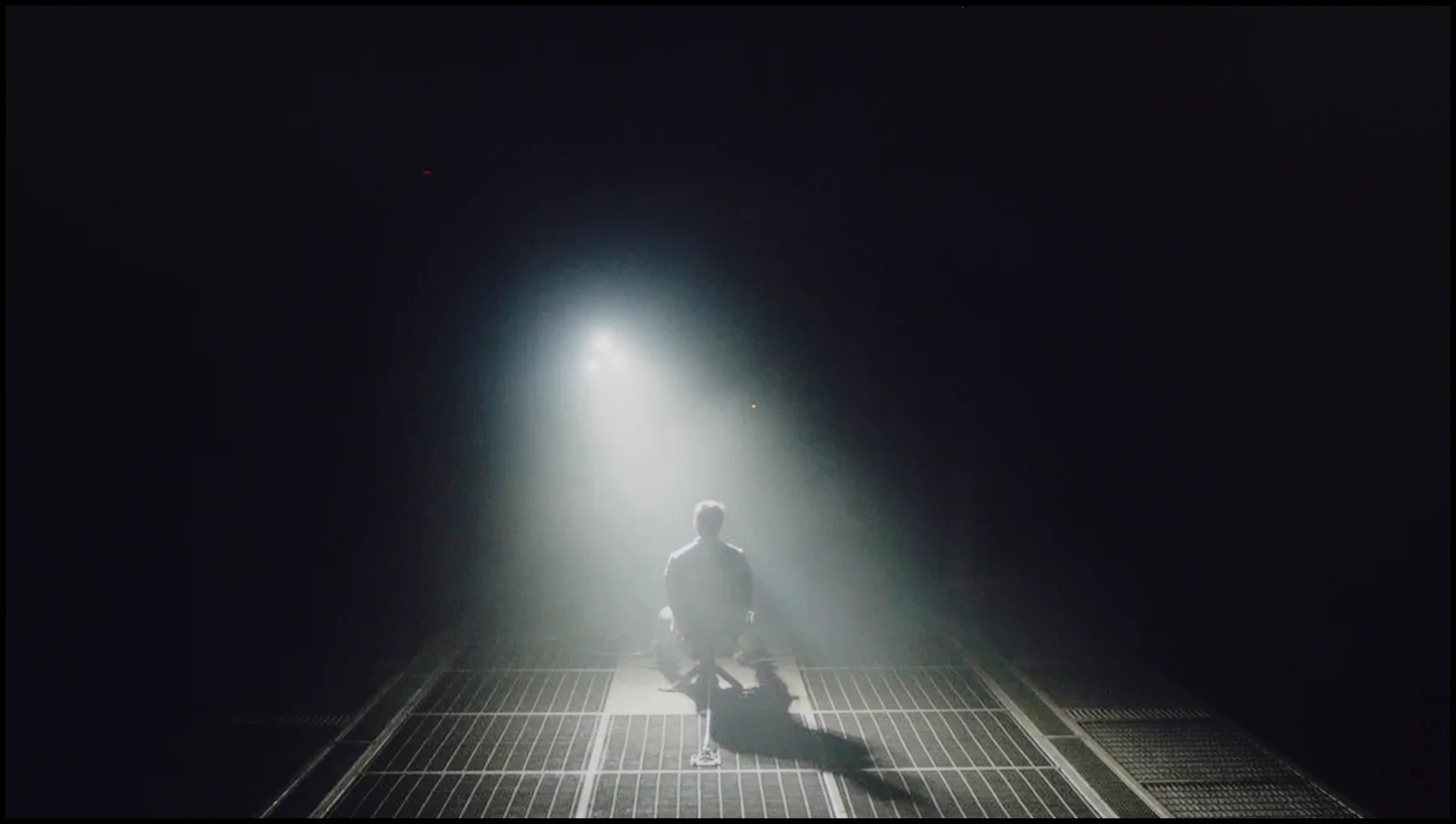
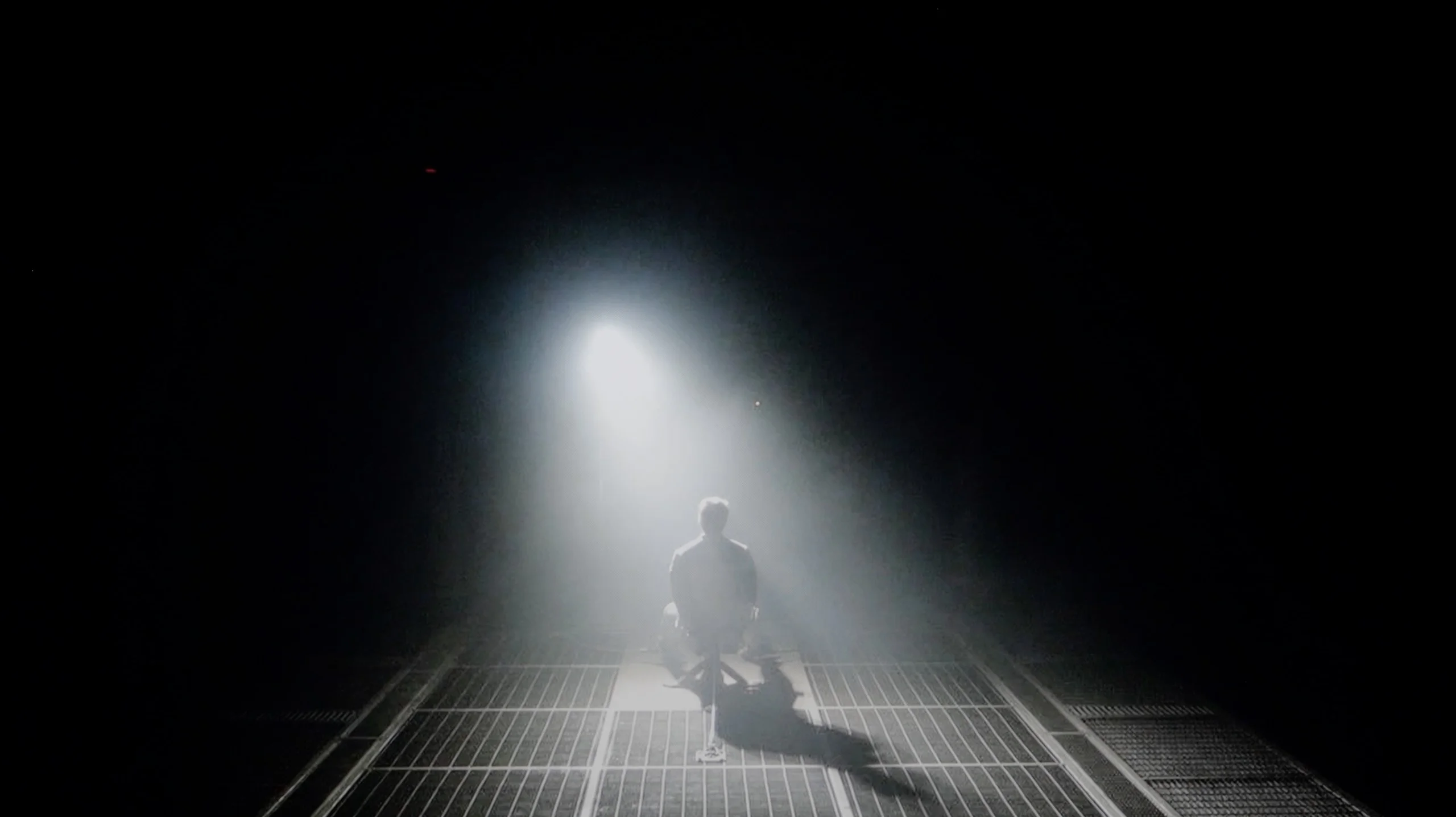
Check the visibility of bright lights on a dark background. Mini-LEDs often struggle with this. The photo does not compare black levels – that’s what the video below is for.
The video accurately shows differences in contrast and black levels between TVs, as well as potential issues: halo around bright objects or Mini-LED zone operation visible as brightness jumps.
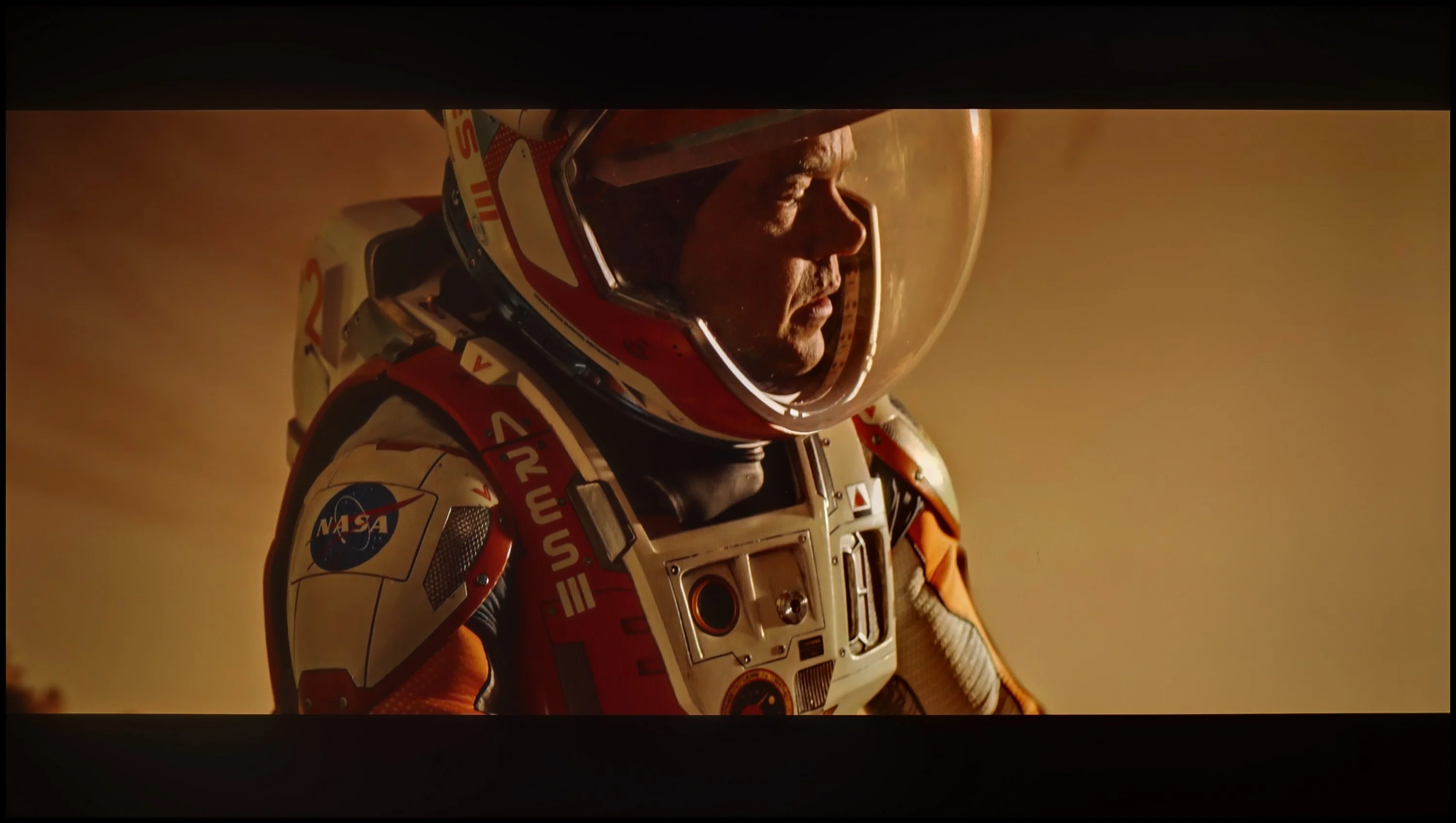
Samsung DU7192 utilises an IPS panel, which, as can be seen, cannot boast the highest contrast and black levels. Measurements indicated that the tested television can only provide maximum values of around 950:1, which is a very low result and rather does not bode well for high performance in the context of home cinema. It is worth noting, however, that we are testing the 43" version, so in a different size, a different type of panel may be "in play". As for the panel used in the Samsung DU7192, it belongs to the lower categorised classes of IPS screens, as these can deliver significantly higher results. However, it should also be remembered that we are dealing with a very budget-friendly unit, which will find its application primarily in an additional room or serve as a cheap receiver for a senior, for whom the quality of the displayed image is often indifferent. In the first image from the film "Oblivion", we primarily see a deep navy black, but also very good separation of lights coming from the spotlight. For better visibility, we recommend examining the image in an enlarged view. Just as there was no significant reason to deny the performance of the television in the first scene, in the second from "Sicario 2", it can be said that it does not require further commentary. Due to practically zero contrast, the scene lacks any depth. There are also noticeable very strong overexposures at the corners of the panel, which are common in budget units. Notable positives include quite good detail specificity, however, this is looking for any positive amidst disappointing results.
The QN80H represents the Neo QLED line, which means it features Mini-LED direct full-array local dimming. In the 65-inch model we tested we counted exactly 110 local dimming zones. Against aggressively priced Chinese competition that number may not look particularly impressive, but it is still vastly better than having no dimming at all or the edge-dimming used in lower-tier models. Especially since Samsung has paired the QN80H with a high-contrast VA panel. As a result, even with a relatively modest number of zones the TV can achieve very good results. In our tests on film scenes the QN80H performed solidly, particularly where deep blacks dominated the screen. In films such as Oblivion the black we measured could be three to four times deeper than the panel’s native capability. That shows the TV can competently and precisely dim the appropriate areas to deliver an image with satisfying contrast.
However, things get tricky in more demanding moments. In scenes with a large number of fine details on a dark background (the helicopter shot at the bottom) the QN80H’s biggest weakness becomes apparent. When small but very bright points appear on screen the dimming algorithm clearly gets confused. Instead of precisely lighting only those details, the TV brightens almost the entire screen, causing the blacks around them to go noticeably grey. This is a direct consequence of the modest number of dimming zones. One can only hope Samsung will optimise the algorithm in future firmware updates. Despite this, we judge the overall contrast positively, particularly when comparing the QN80H with screens that lack local dimming altogether.
HDR effect quality
3.4/10
5.8/10
Luminance measurements in HDR:

Result
200 nit

Result
228 nit

Result
246 nit

Result
233 nit

Result
245 nit
Result
694 nit
Result
385 nit
Result
703 nit
Result
307 nit
Result
660 nit
Scene from the movie “Pan” (about 2800 nits)
Scene from the movie “Billy Lynn” (about 1100 nits)
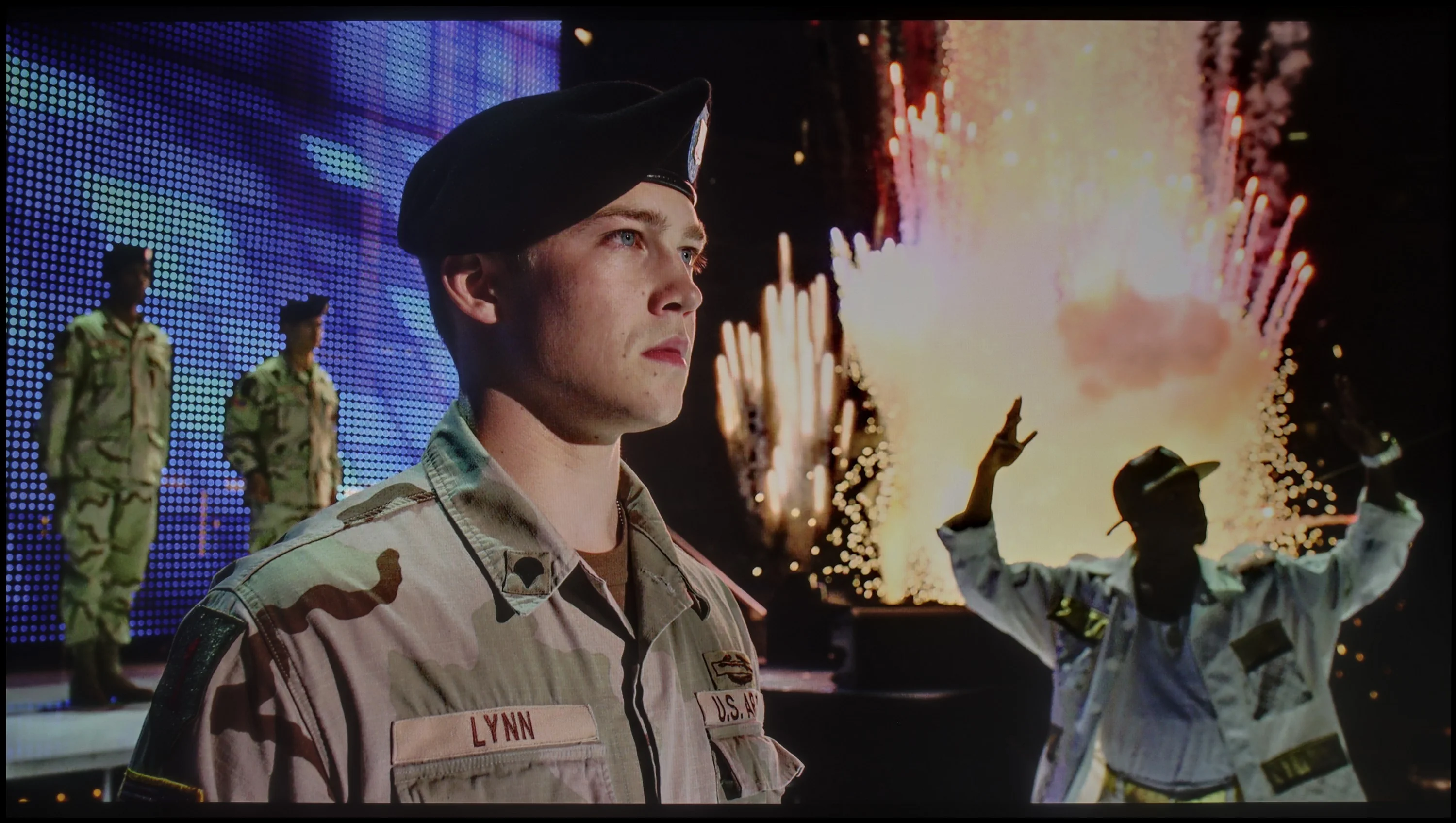
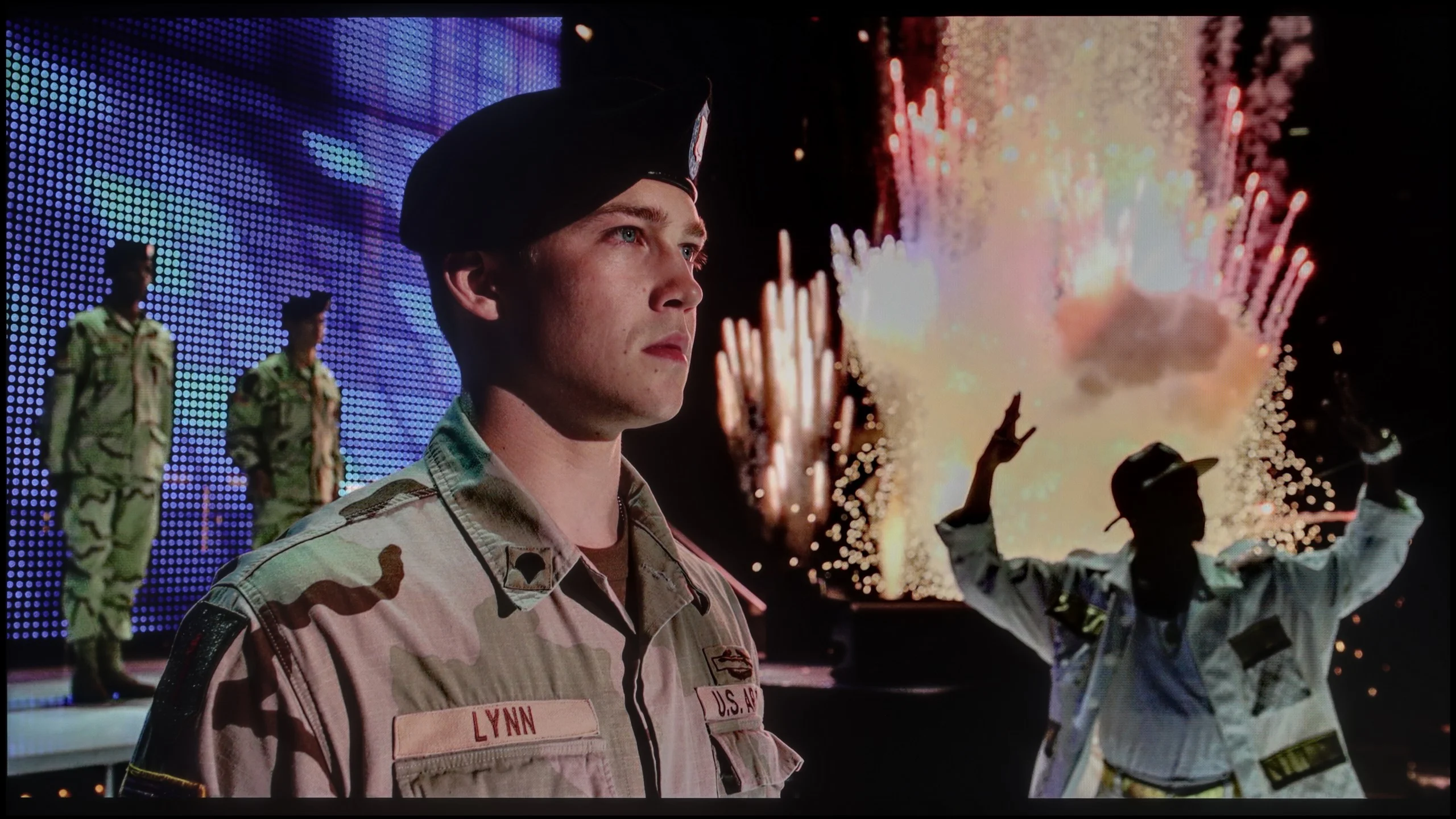
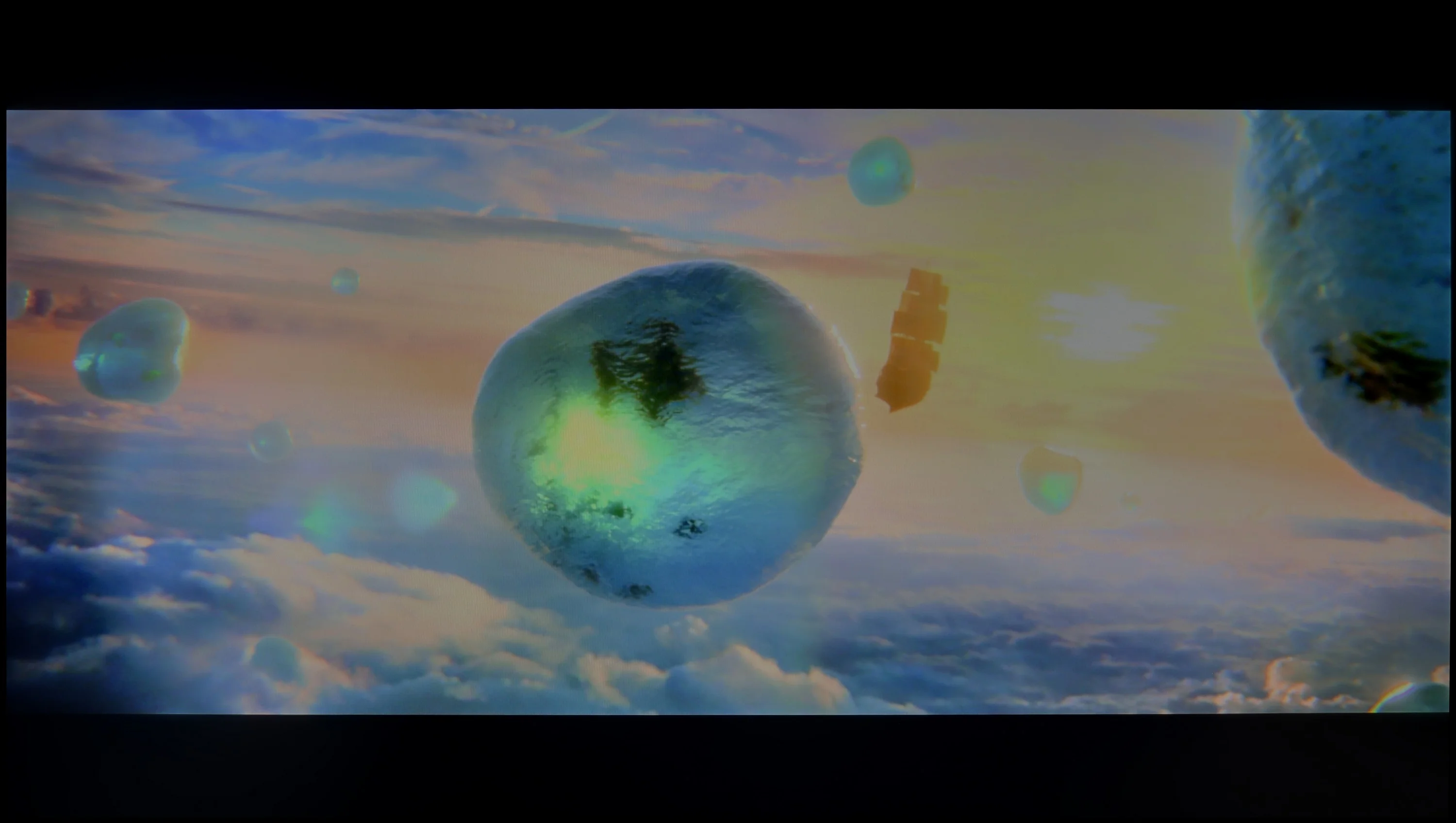
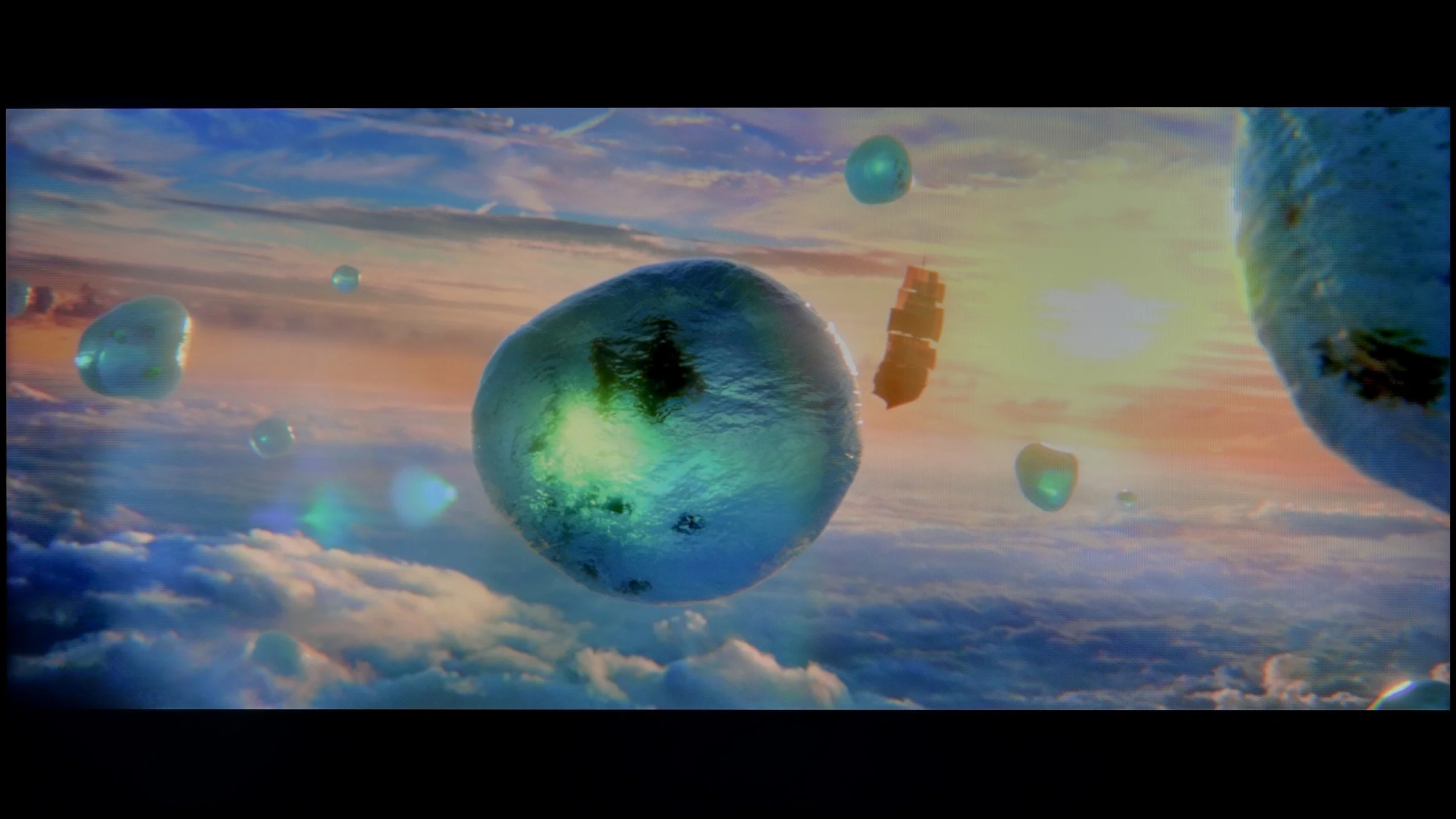
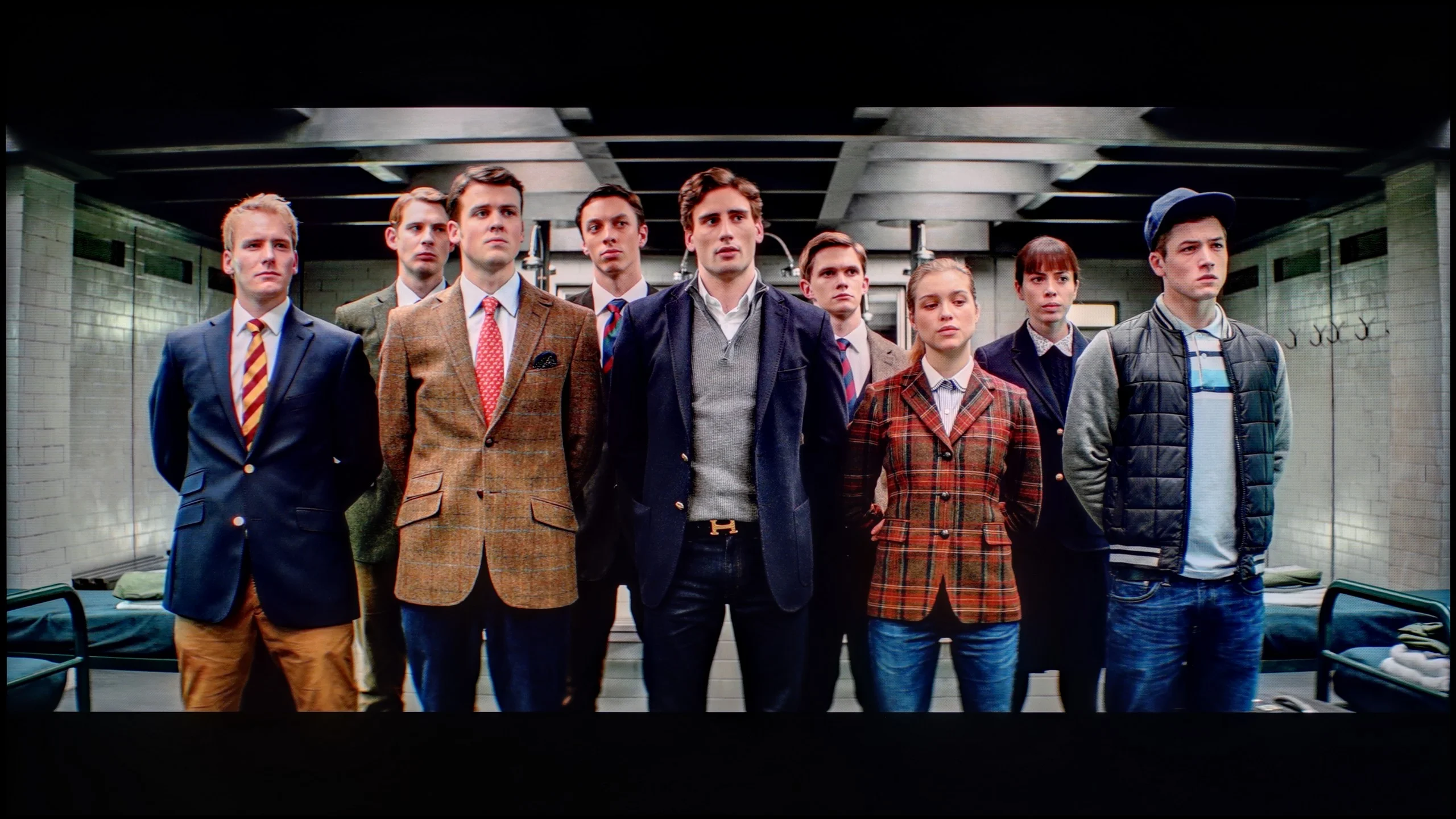
The photos show two HDR10 movies. 'Pan' is one of the brightest productions ever made, while 'Billy Lynn' (soldier) has brightness typical of streaming (Netflix, Prime, HBO MAX). Notice the intensity of effects and detail in whites.
Static HDR10
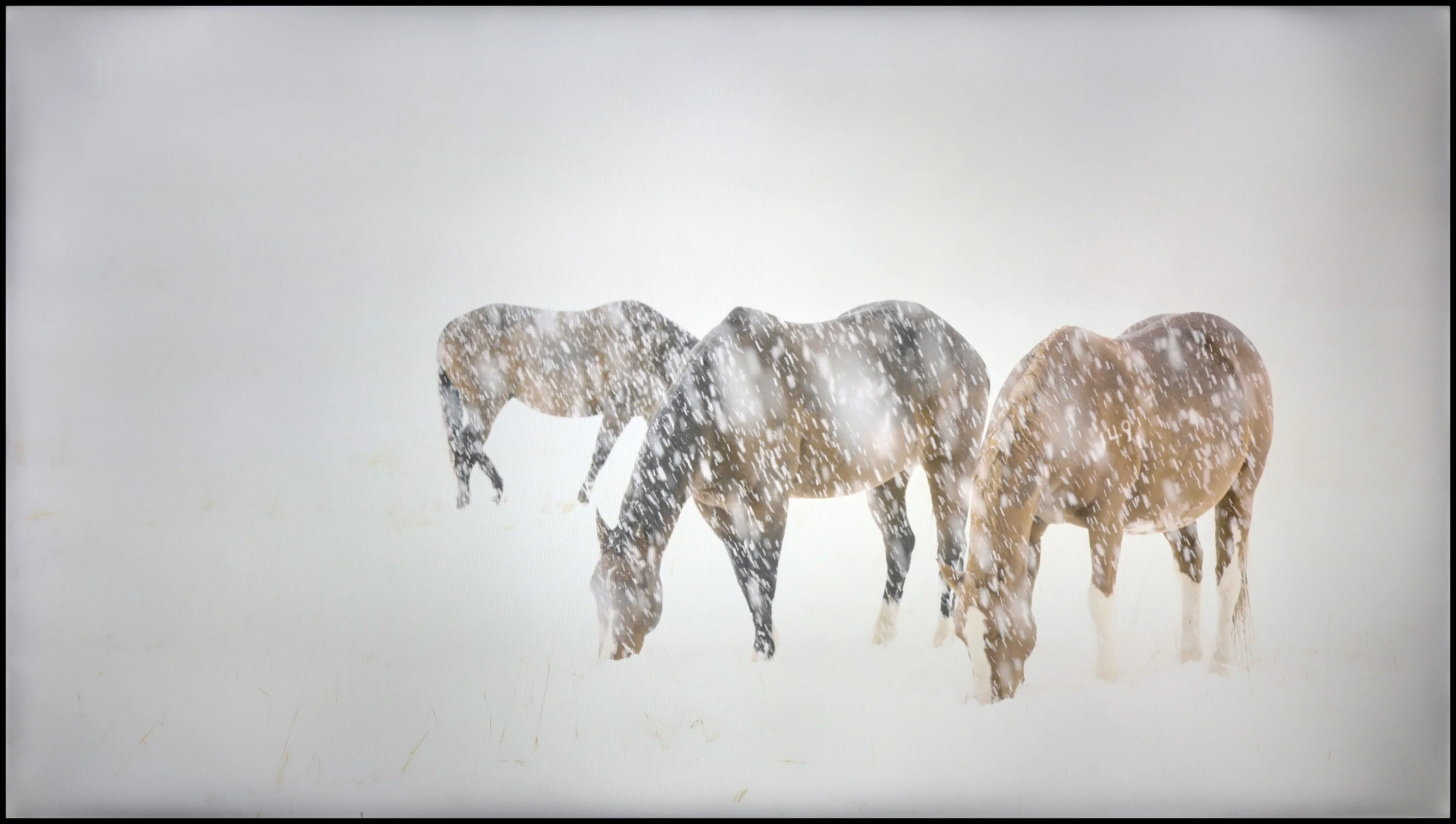

The photos present the visibility of white details in various HDR formats. They do not show brightness differences between TVs (these can be compared in the previous gallery).
Dynamic: HDR10+
Dynamic: HDR10+
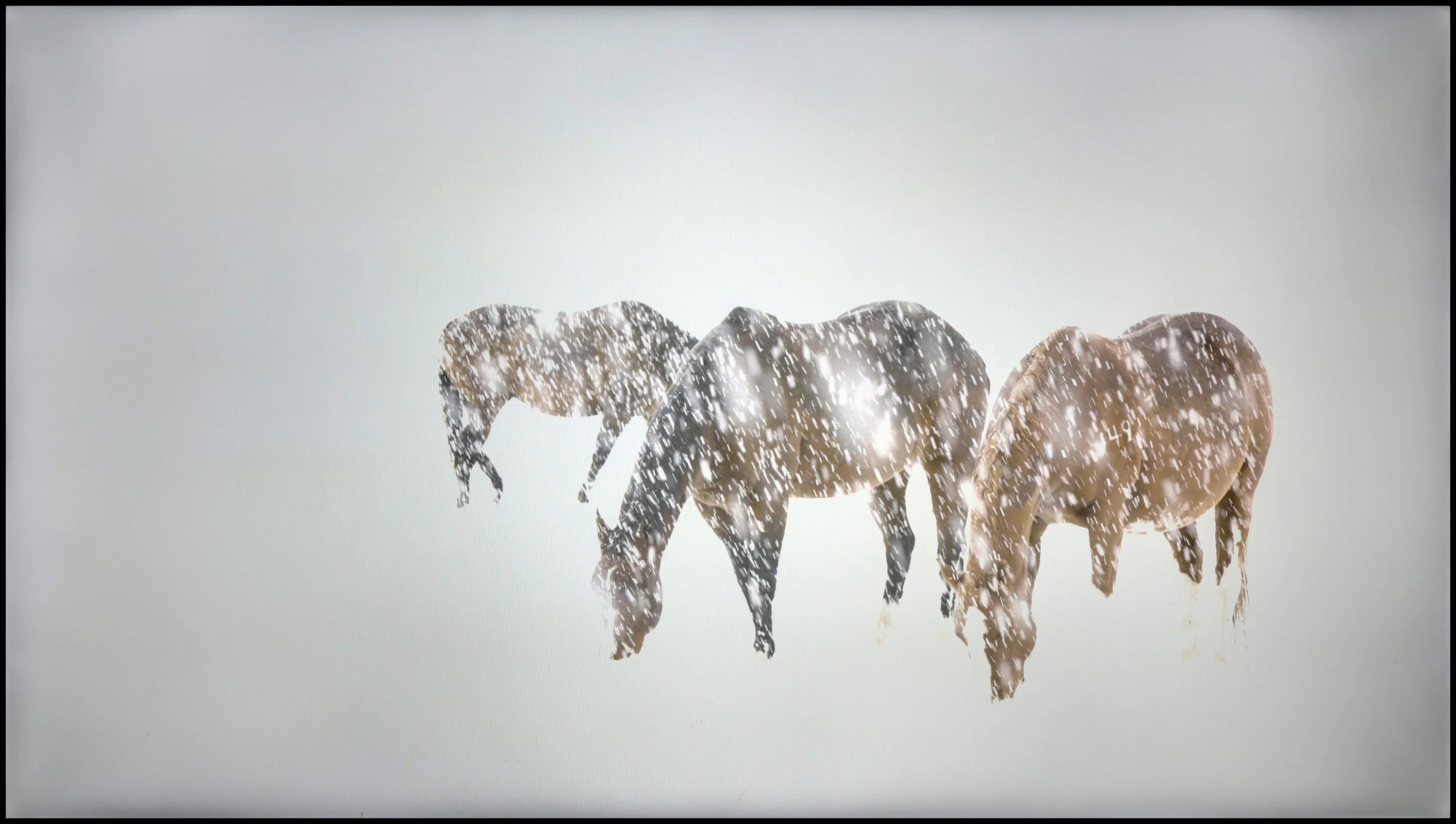

The photos present the visibility of white details in various HDR formats. They do not show brightness differences between TVs (these can be compared in the previous gallery).
HDR luminance chart:
Samsung QN80H
Samsung DU7192 (IPS)
The maximum luminance in HDR materials is 245 nits, which is often surpassed by even lower results. Such values will definitely not be sufficient for comfortable viewing of HDR materials due to the lack of appropriate image dynamics and colour inaccuracies caused by the low brightness of the unit. Although the manufacturer has equipped its device with HDR format offering dynamic metadata, HDR10+, which is what we are referring to, is very rarely used compared to Dolby Vision, which Samsung has not yet introduced in its televisions. It is also worth mentioning that Samsung DU7192 offers only 82% coverage of the wide DCI-P3 colour gamut, which is another reason we should not supply a signal in wide dynamic range, as colour losses will be very noticeable. Samsung DU7192 provides high-quality images that will satisfy most users.
The Samsung QN80H is undoubtedly a bright TV. In synthetic tests it exceeds the 1000-nit mark, which on paper promises a solid HDR effect. In practice the screen really shows its teeth, although it can't fully spread its wings (or its backlight, if you will 🤔) in every condition. Bright, wide scenes make the best impression. Well-lit outdoor shots and brightly lit scenes look really good on it. Brightness then stays around 700 nits, which provides a noticeable step up in quality compared with standard SDR. Problems start in dark scenes with small, pinpoint highlights. The QN80H tends to dim these strongly, in order to protect black depth at all costs. On the one hand this gives better contrast, on the other... you lose dynamics and the brilliance of fine HDR detail. So the TV has considerable potential, but the dimming algorithm can be too restrictive.
Colour gamut coverage
When it comes to colours it's good as well. The QN80H uses quantum dot technology, and in our measurements it covered 93% of the DCI-P3 colour space and about 70% of BT.2020. Today those results aren't exactly jaw-dropping, but in real-world use they're more than sufficient to deliver a vivid, natural image for most films and TV series. Colours are suitably saturated, and after proper calibration they don't look artificial or overly aggressive.
Factory color reproduction
4/10
6.1/10
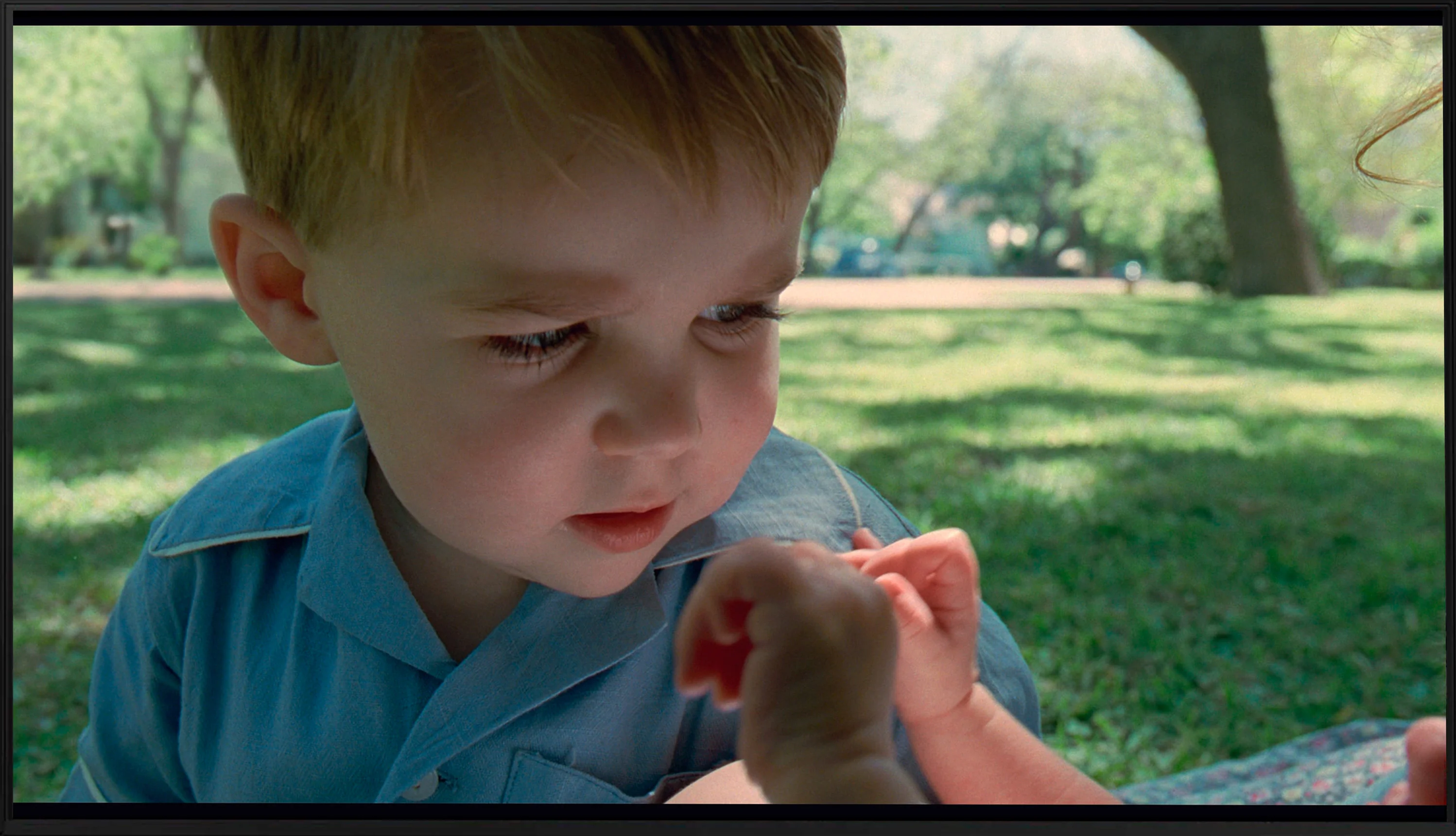
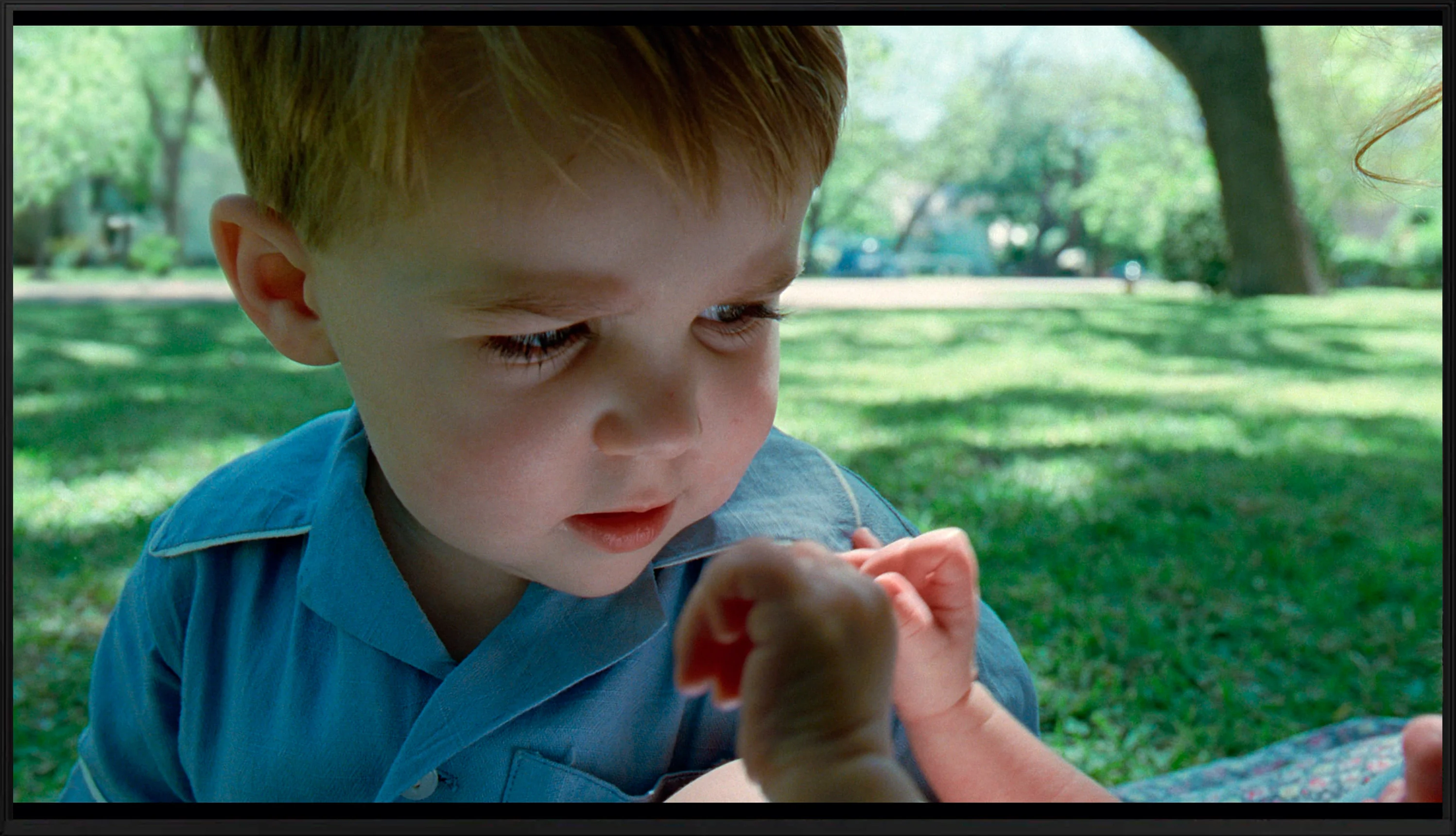
This gallery shows how colors change after professional TV calibration. If you notice the difference, we recommend ordering this service at SkalibrujTV.com.
Factory Mode
After calibration
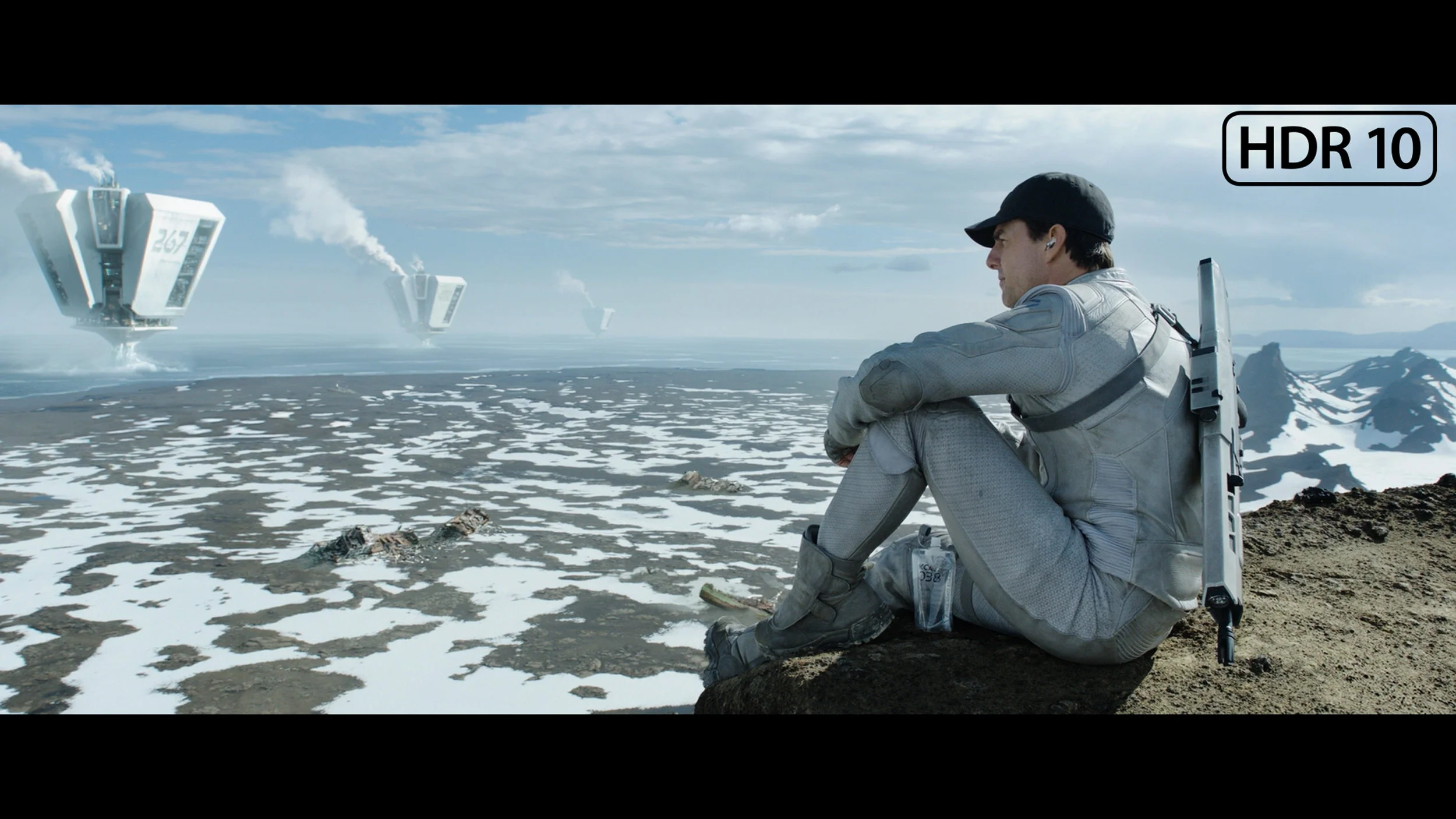
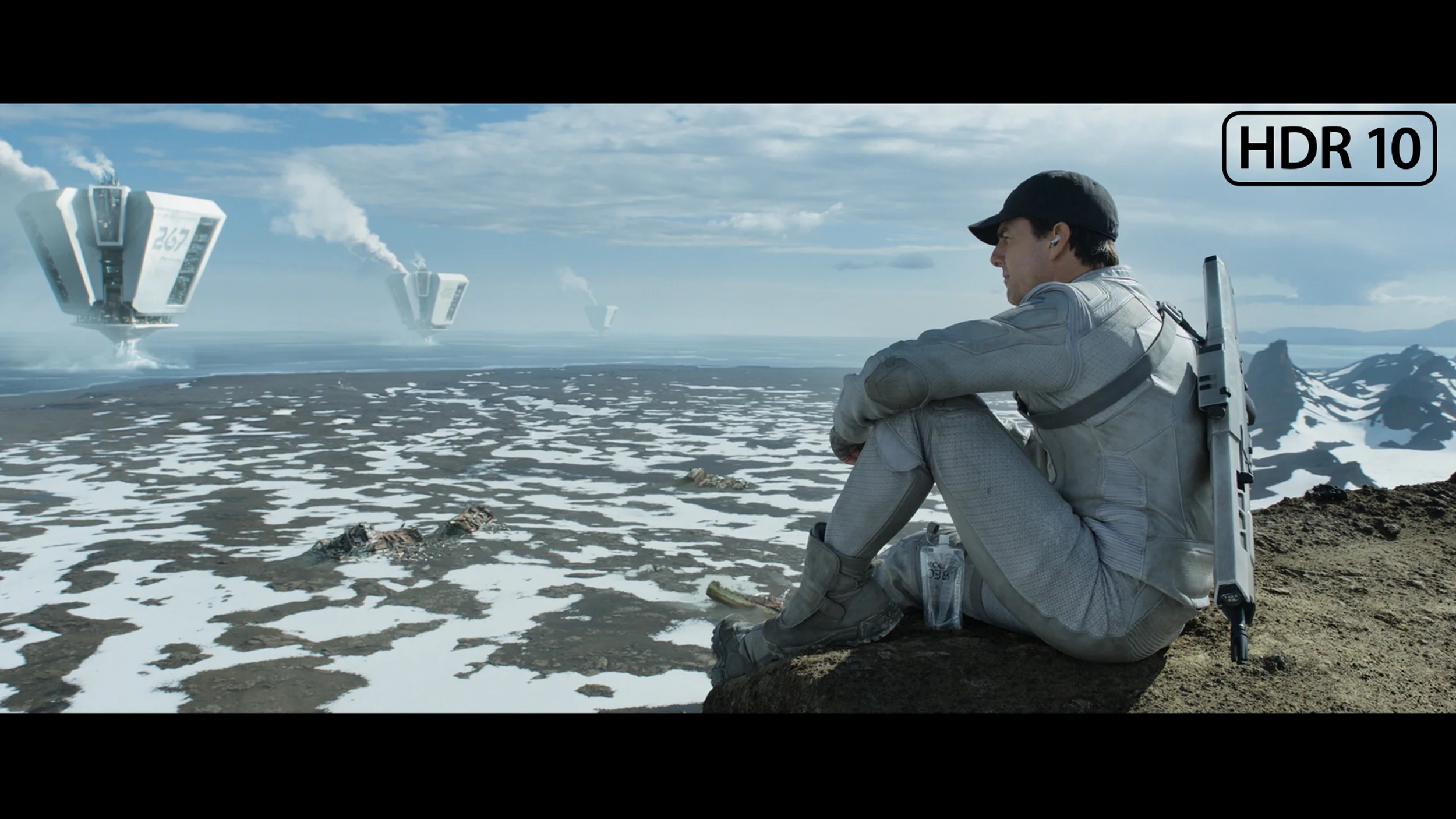
This gallery shows how colors change after professional TV calibration. If you notice the difference, we recommend ordering this service at SkalibrujTV.com.
Factory Mode
After calibration
The best factory mode we used throughout the testing process was "Filmmaker". This, like the vast majority of modes, had its drawbacks. Starting with the most basic chart, which is the white balance, we can notice a pronounced dominance of red, both in SDR and HDR modes. Although there was also some green in the latter, it did not significantly affect the overall impression. A chart with such results, in both cases, gives us an image characterised by strong yellowing, clearly visible on whites and on the faces of the actors. Another important chart, if not more important, is gamma. This, which is meant to control contrast in materials with a standard colour palette, was quite good in factory mode with one caveat regarding the low end. In the darkest scenes, it was significantly lowered, which led to strong brightening, resulting in the film lacking contrast and all suspense. As we mentioned, HDR materials in terms of white balance remained at a similar level. The main change is the EOTF curve chart. At the very beginning, we can observe a bulge, which, just like in the case of gamma, significantly brightened the darkest scenes. However, the chart then changed its characteristics significantly and the measured result dipped below the reference line, causing the film to lose even more dynamics.
The factory settings of the QN80H performed really well, especially compared with the majority of TVs we receive for testing. Of course, our measurements were taken in Filmmaker Mode, and that's the mode we recommend turning on immediately after the initial setup. For SDR material, our sample was set up surprisingly well. The white balance was very even, colours looked natural, and errors were so small they were hard to notice without measurement equipment. The only weaker point was the gamma. In the brighter parts of the image the TV brightened them a little too much, which at times made the picture lose some depth. Still, we'd like most TVs to look this good straight out of the box.
It fared a little worse in HDR. The white balance was still set correctly, so the problem was not with the colours but with the way the QN80H managed image brightness. This was immediately visible on the EOTF chart. The TV brightened large parts of scenes too much, causing the brightest elements to clip. Interestingly, very small points were often dimmed too much at the same time. As a result, some fine details simply disappeared. So the factory Filmmaker mode in HDR is not bad, but it is definitely not as well calibrated as in SDR.
Color reproduction after calibration
5.9/10
8.2/10
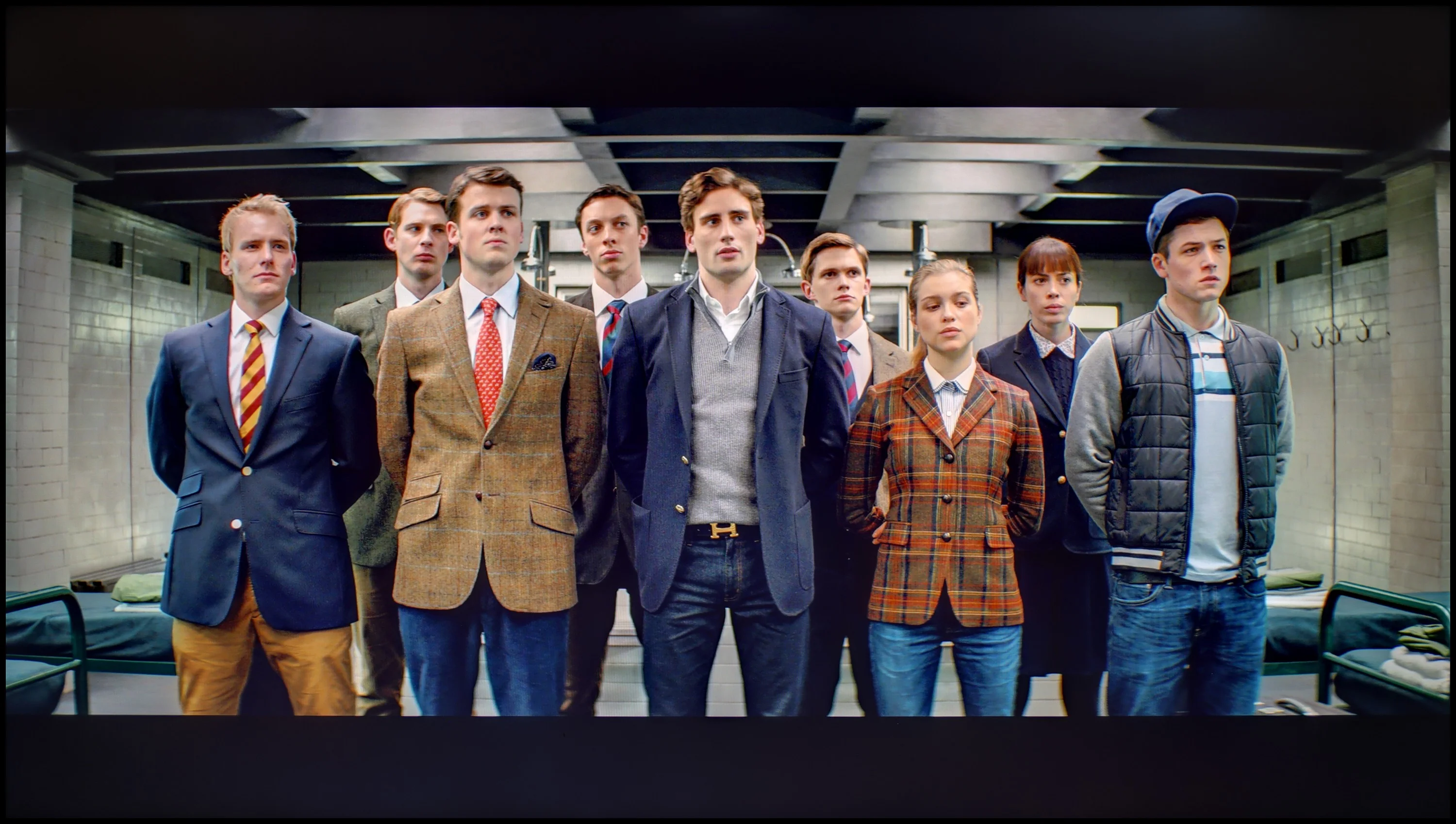
The photos show how movies look on the TV. Pay attention to black detail visibility, colors, and shadow tint.
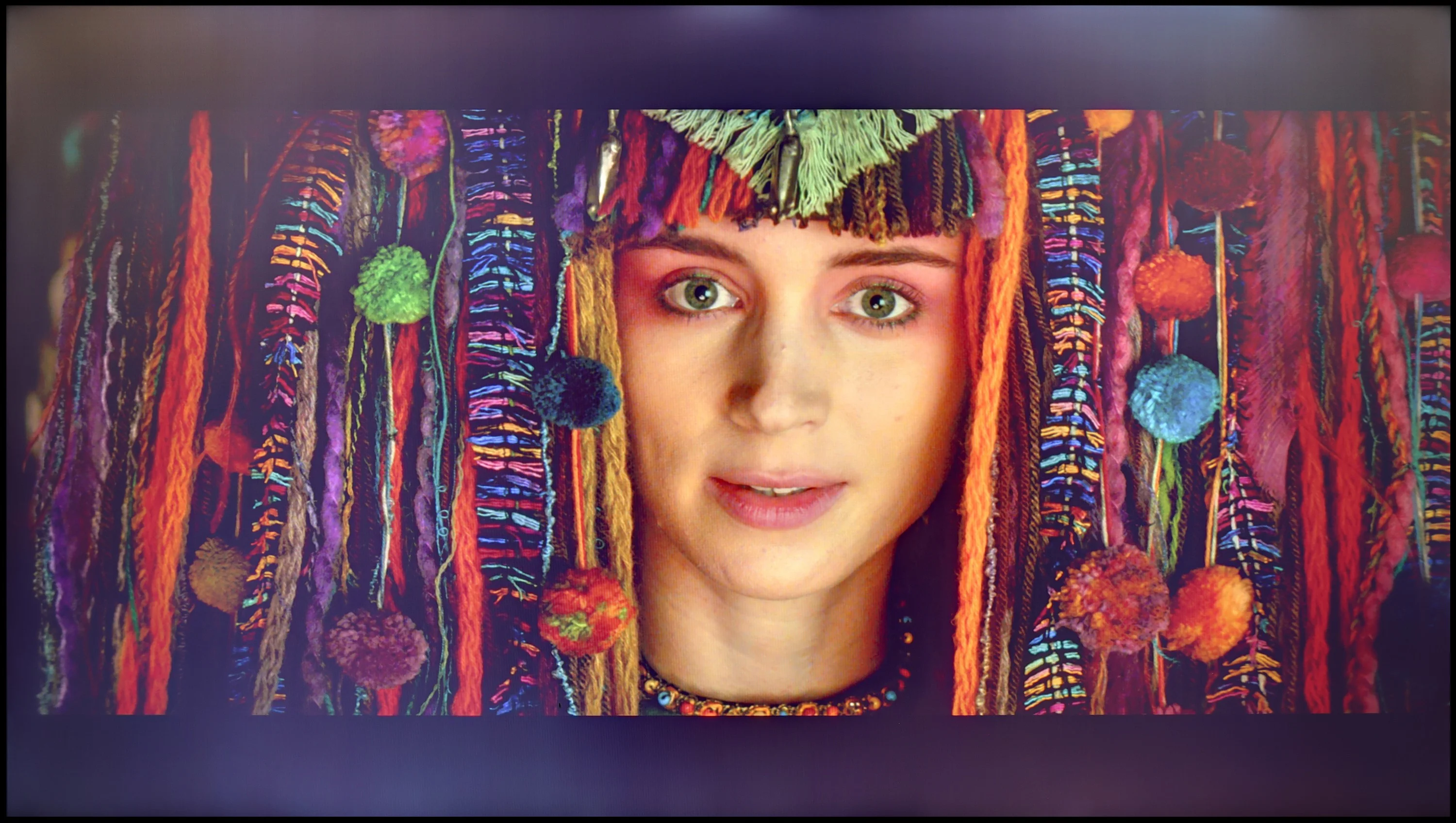
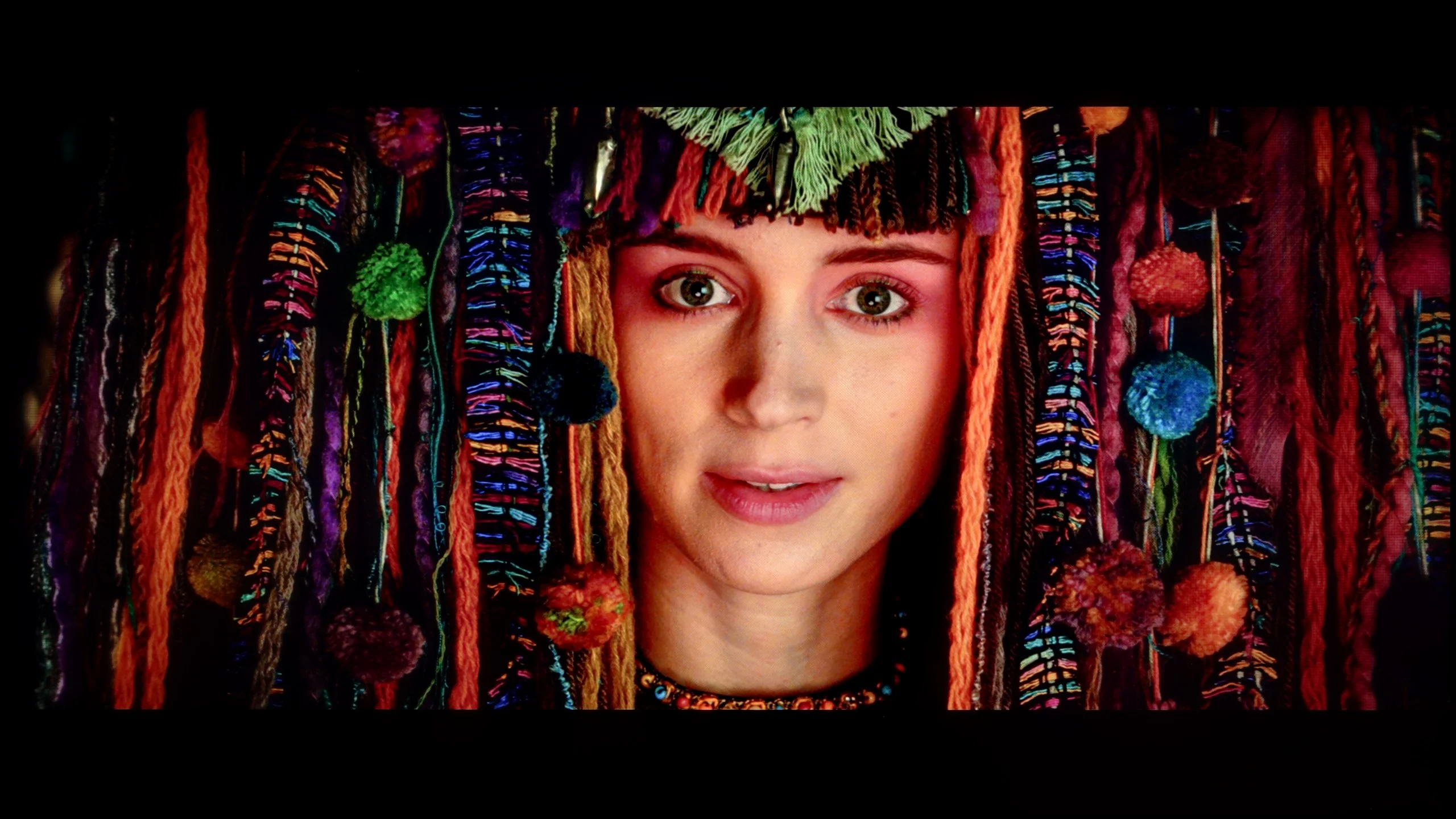
The photos show how movies look on the TV. Pay attention to black detail visibility, colors, and shadow tint.
Samsung has equipped even its lowest-end televisions with advanced tools for the calibration process. So we got to work, and the results of our efforts are more than satisfactory. The white balance, which previously had a strong yellow tint in both scenarios, now looks much, much better, even if there are slight deviations from the norm. The image will still look significantly cleaner than it did before the calibration process. We managed to model the gamma in SDR materials very well, ensuring that the image will be as contrasty as the television allows. The EOTF curve has also changed its face and no longer brightens or darkens the image in such a drastic way. However, it's worth mentioning that in the case of HDR materials, deltaE errors are still very high, but this is due to the insufficient brightness of the unit.
We saw the biggest difference after calibration in HDR Filmmaker mode. SDR was already very good out of the box, so we didn't have much work to do there. In HDR, however, we managed to get to grips with the way the QN80H handled brightness, as it had been over-brightening most scenes. After calibration the picture is calmer, more natural and much closer to how a faithful image should look.
Smoothness of tonal transitions
7.7/10
9.5/10
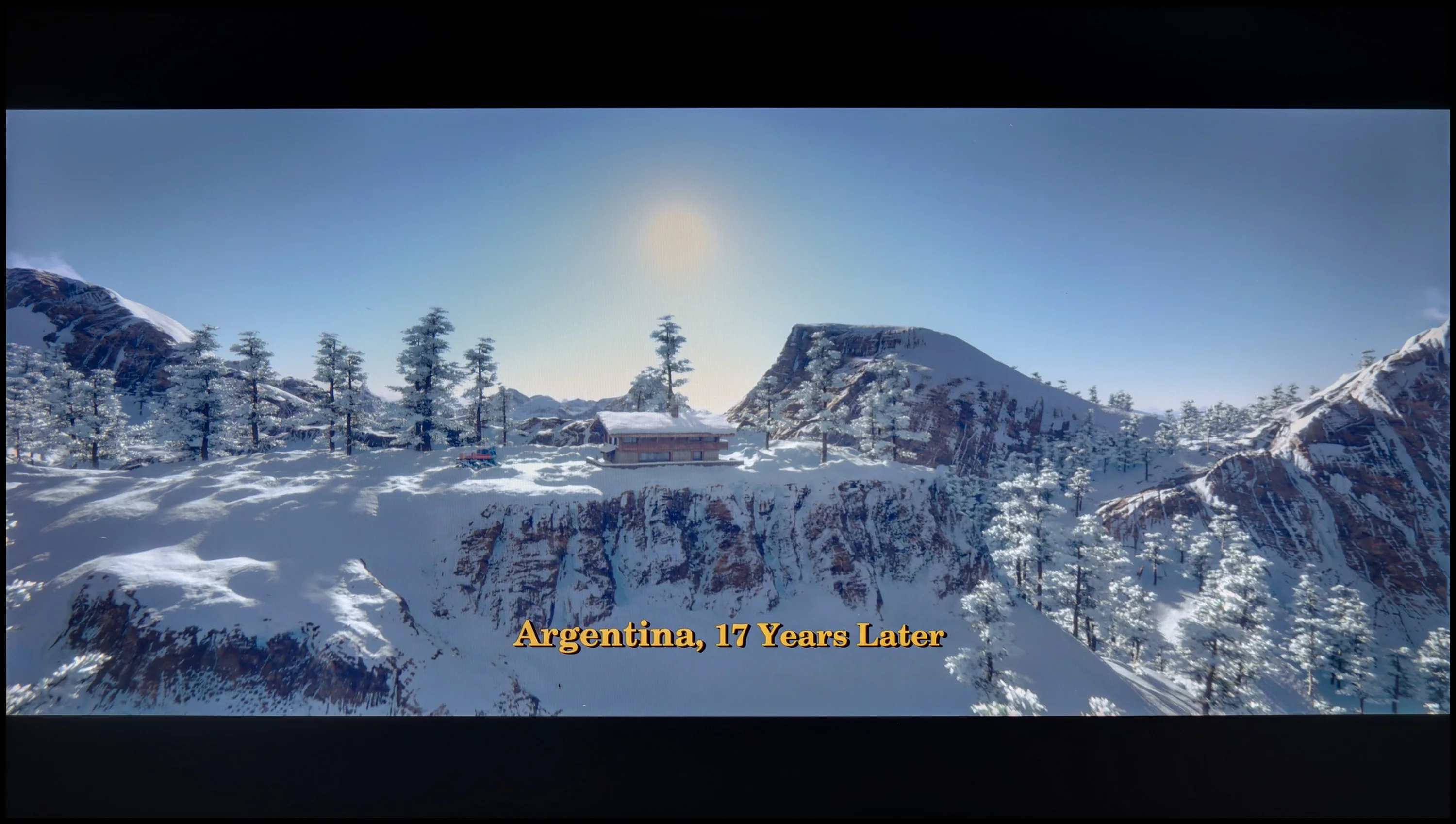
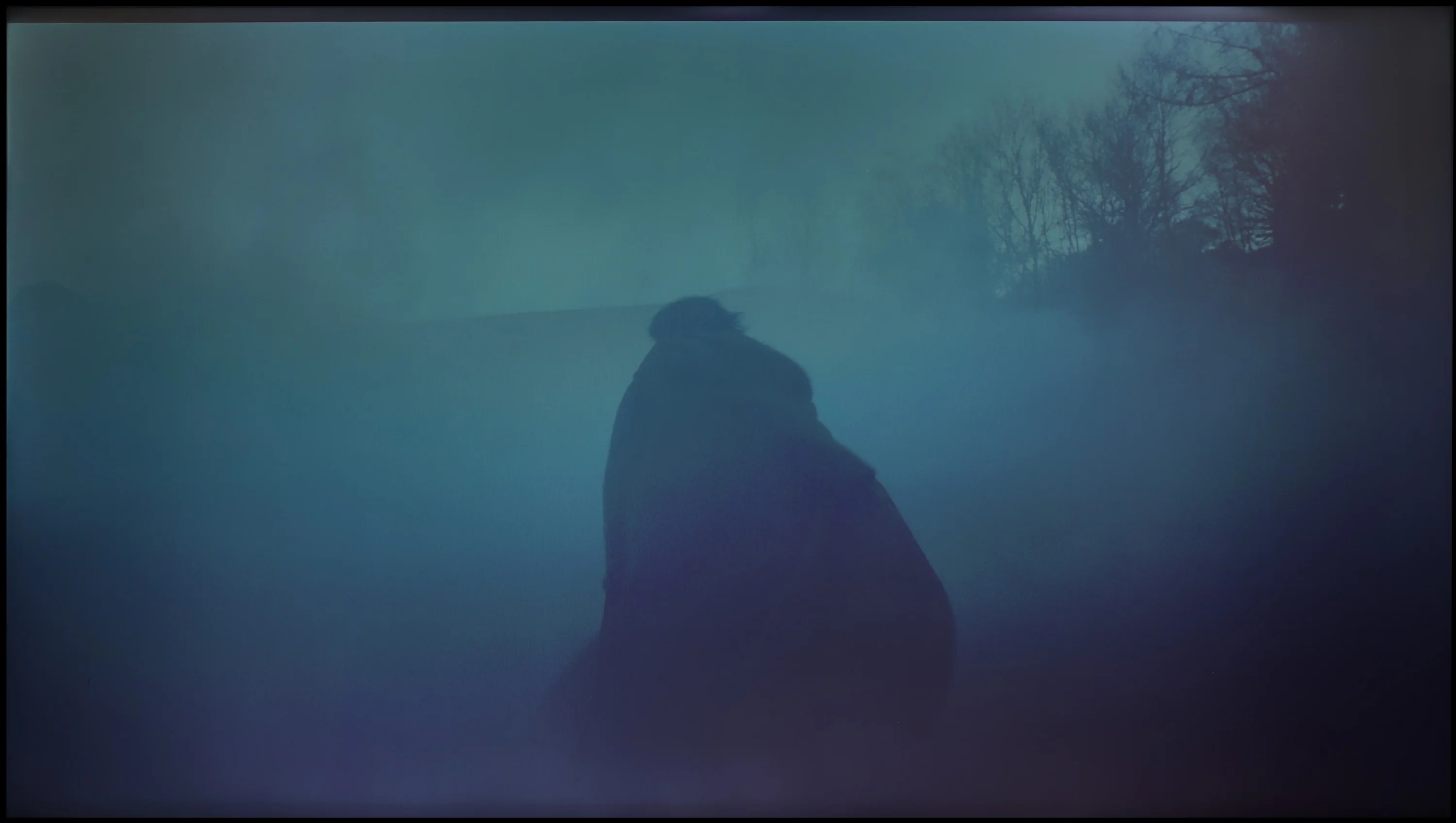
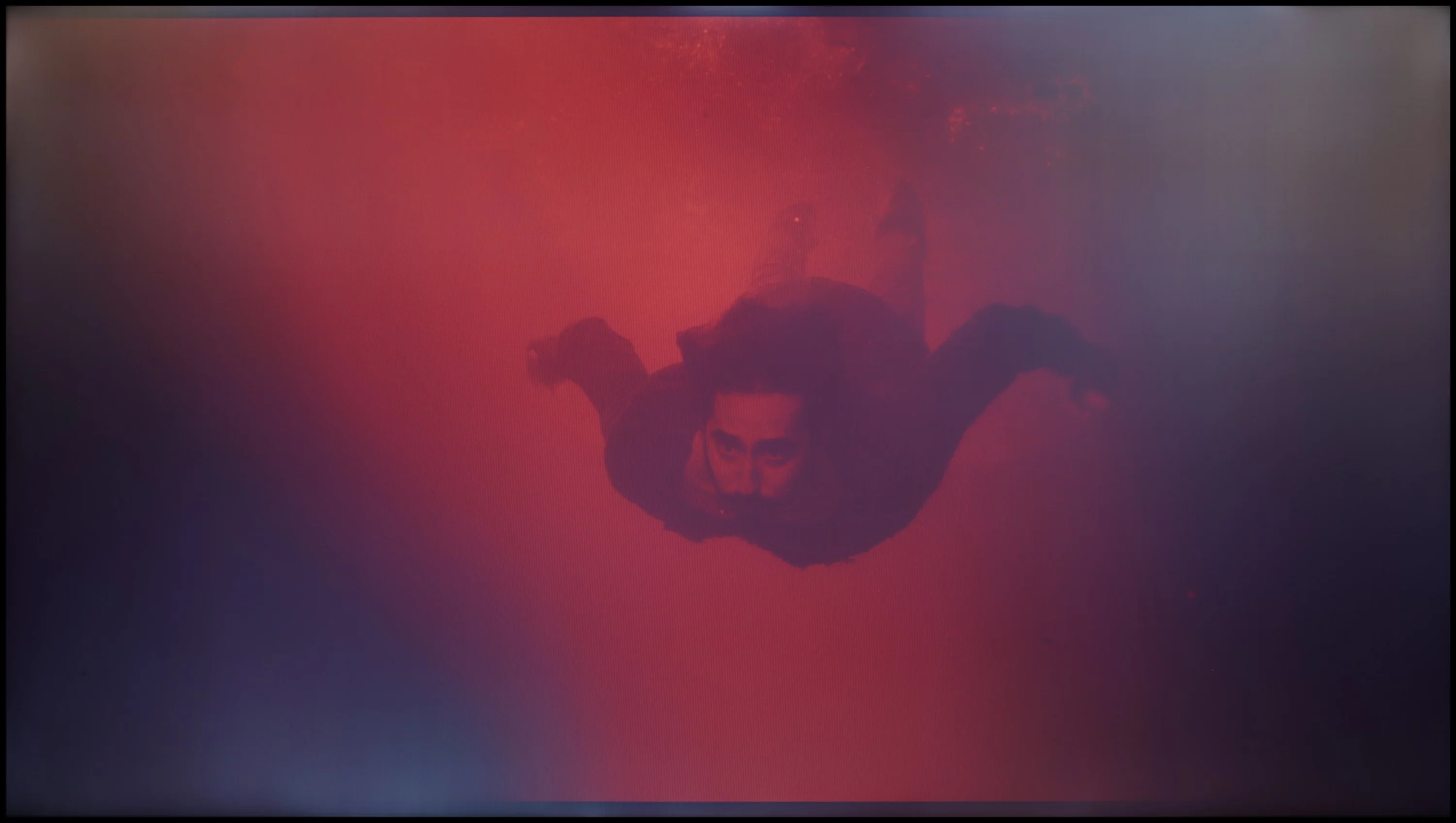
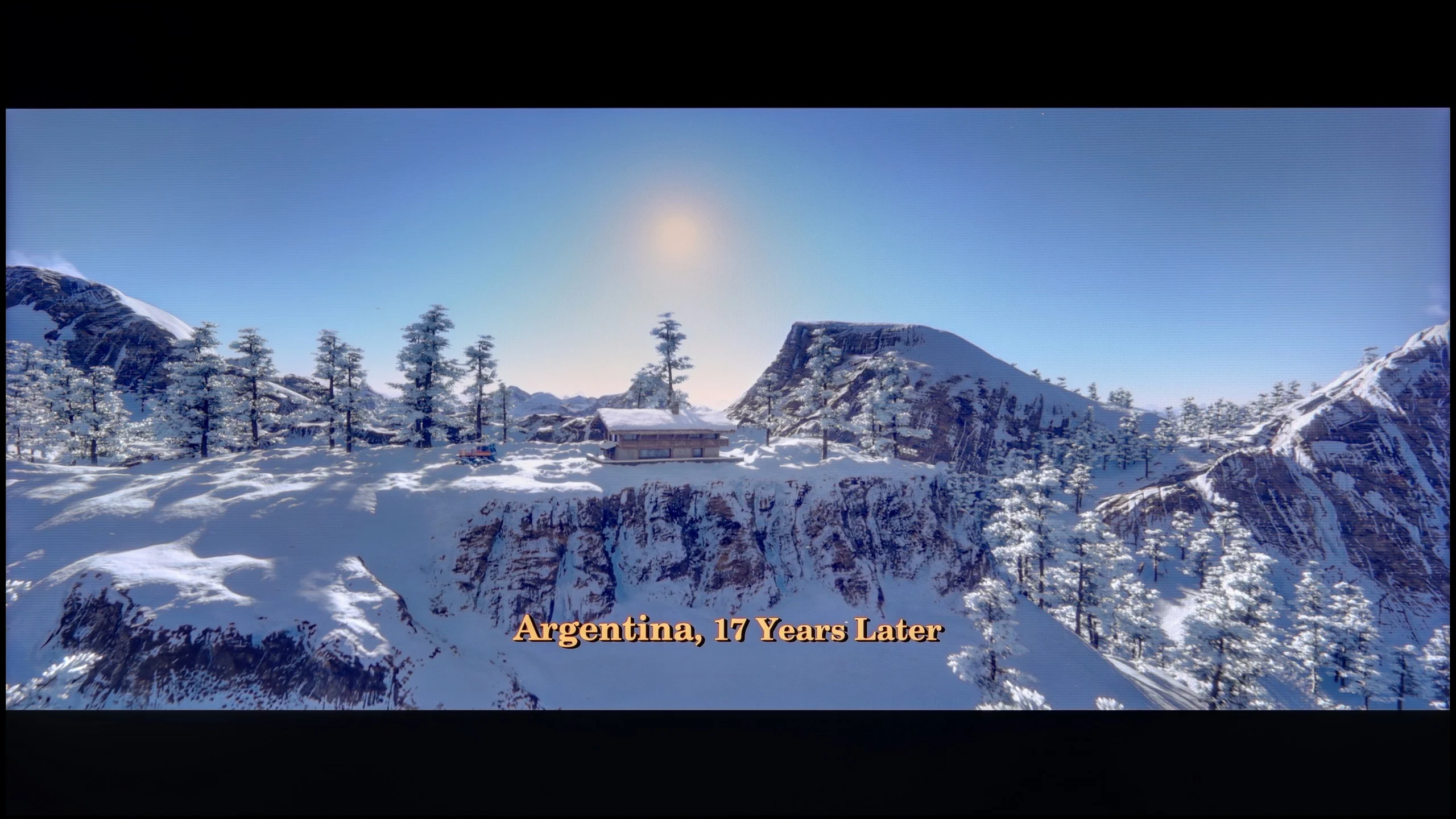
These are selected scenes that show smooth tonal transitions from one color to another. If you see distinct banding, it’s the TV panel’s fault.
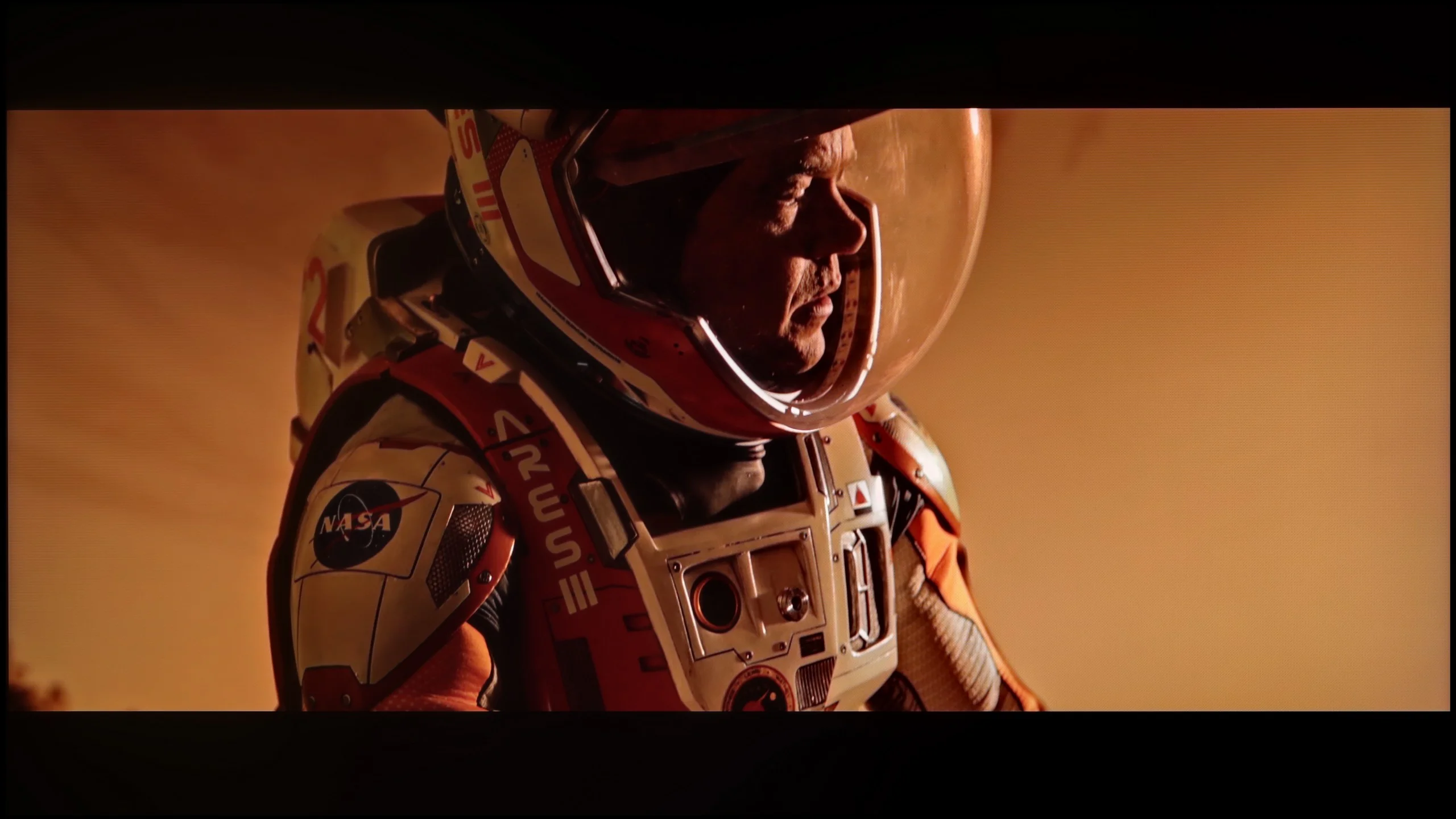
These are selected scenes that show smooth tonal transitions from one color to another. If you see distinct banding, it’s the TV panel’s fault.
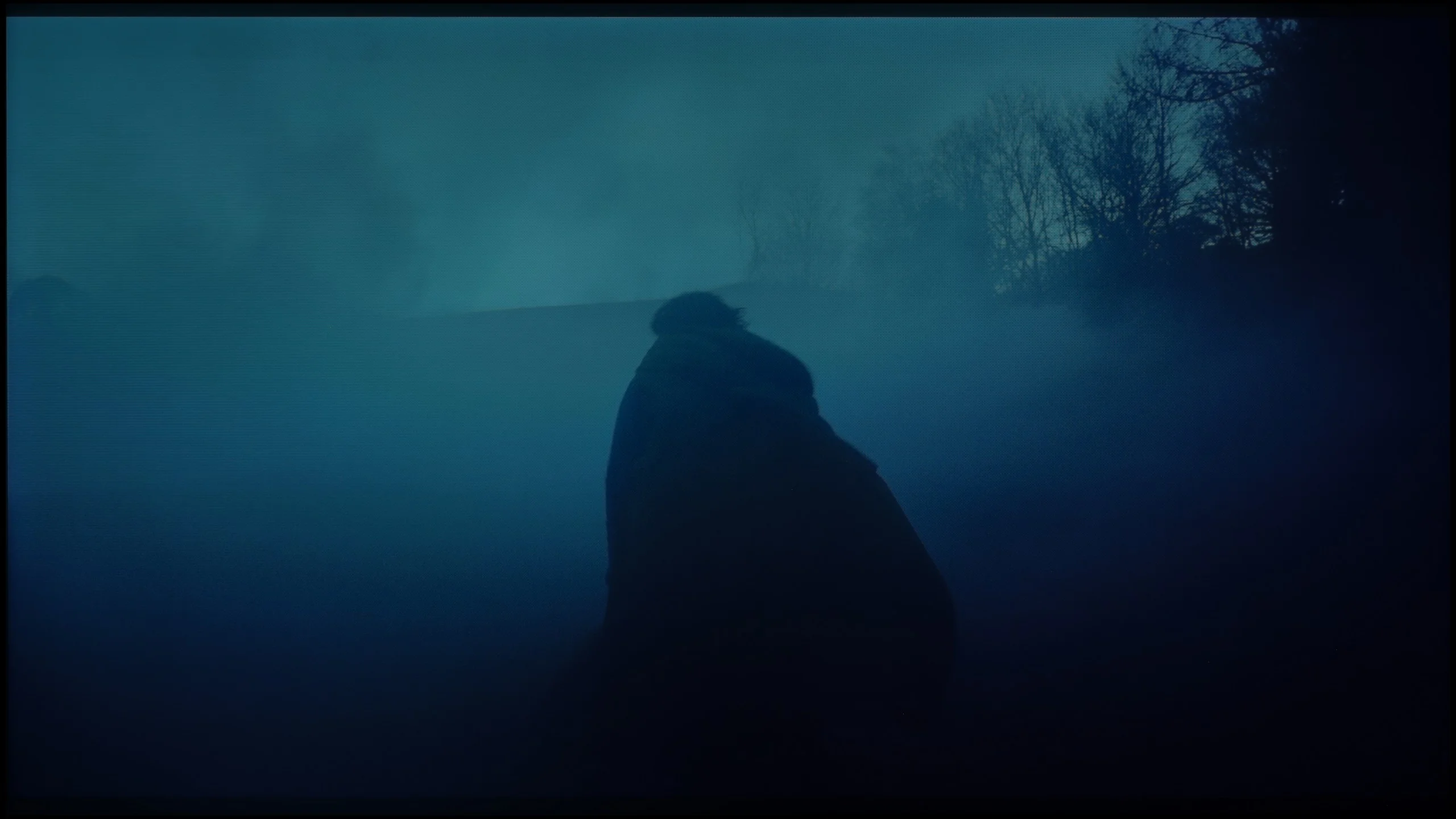
These are selected scenes that show smooth tonal transitions from one color to another. If you see distinct banding, it’s the TV panel’s fault.
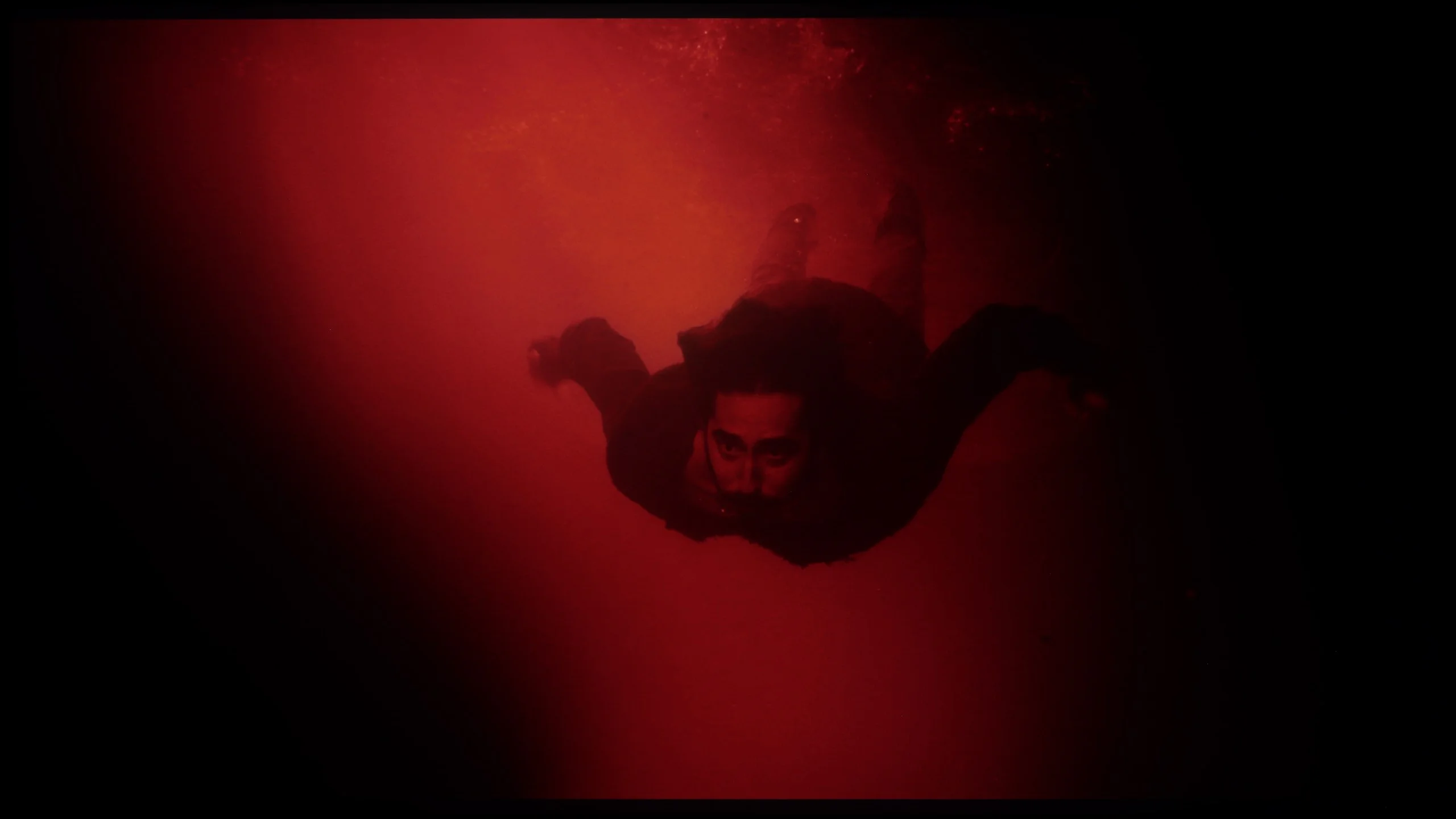
These are selected scenes that show smooth tonal transitions from one color to another. If you see distinct banding, it’s the TV panel’s fault.
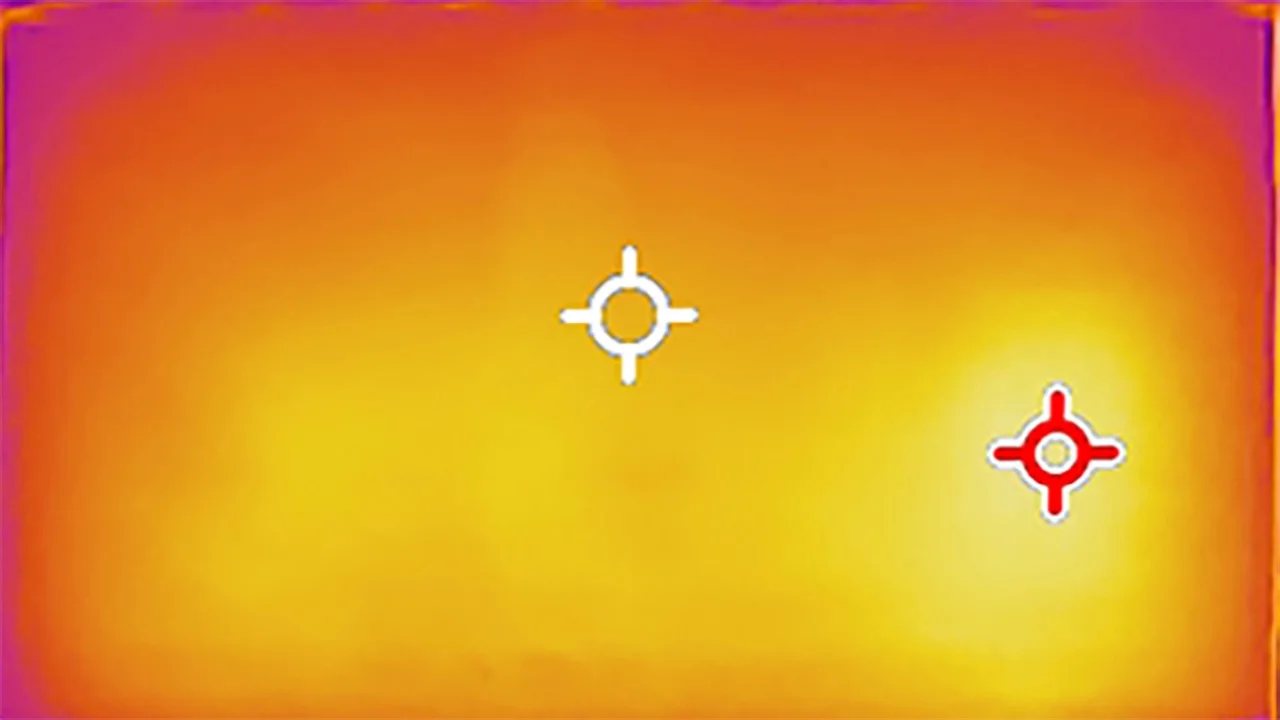
The place where we must commend the television Samsung DU7192 is our procedure for checking the fluidity of tonal transitions. The tested television managed these very well, and in practice, there is nothing that could subject us to any inconveniences. The only place where something can be noticed is in the last scene and the slight posterisation in the reds on the left side. At this point, we must also highlight one more issue, which is no longer related to this testing procedure. Namely, in the vast majority of scenes, there are strong inconsistencies in the backlighting, which will be much more bothersome in the context of evening watching.
The tonal transitions on the Samsung QN80H are very good. Colours of similar hues blend smoothly, without obvious banding, blotches or abrupt steps between successive gradations. Dark gradients look particularly good, for example shades of grey and transitions just above black. It’s in such areas that many televisions begin to show their weaknesses, whereas the QN80H handles them surprisingly well. Minor imperfections only appear in very bright scenes, where slight banding occasionally occurs. However, this is subtle enough that it shouldn’t bother anyone during normal viewing.
Image scaling and smoothness of tonal transitions
3.2/10
7/10


Smooth transition function
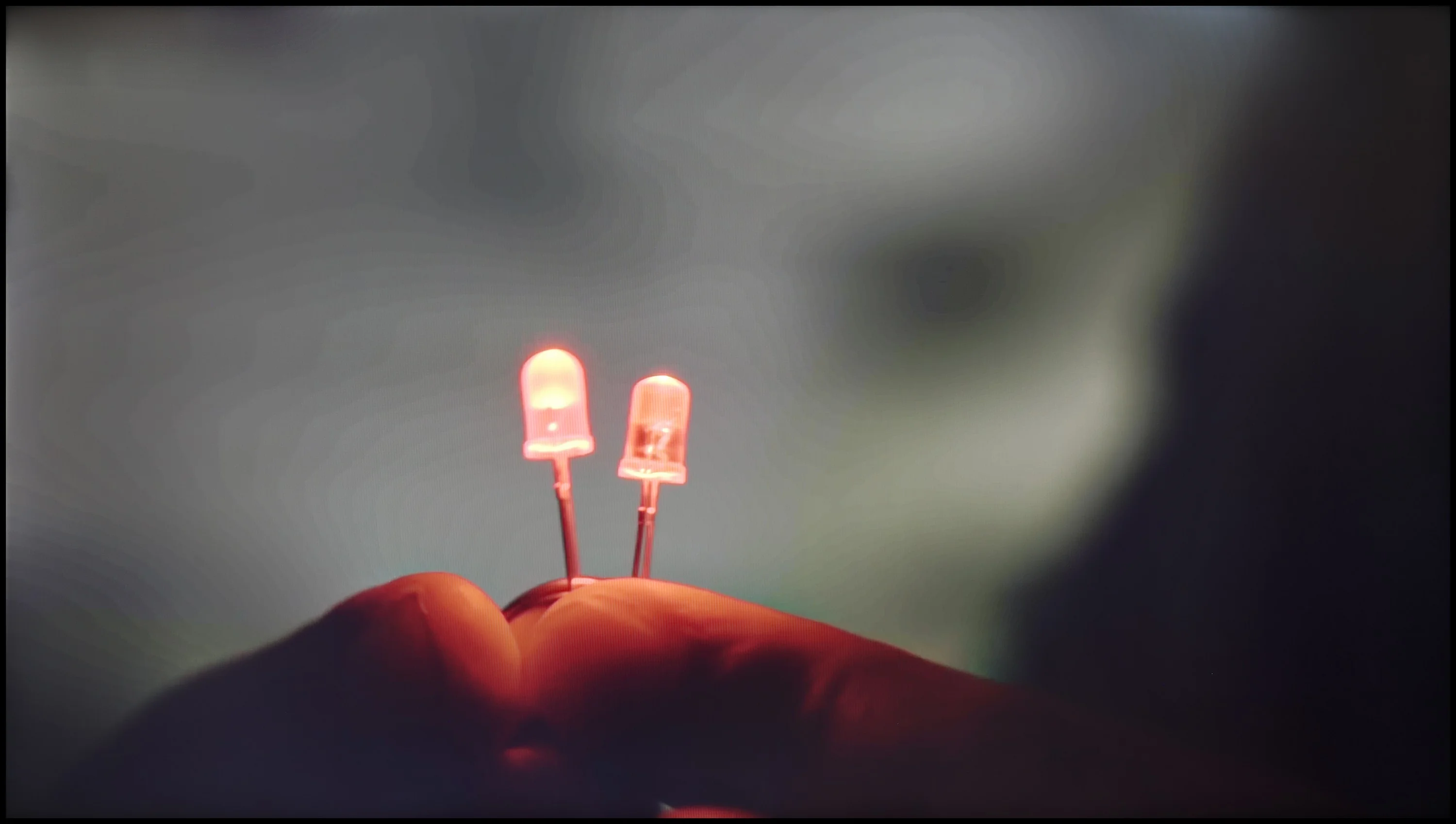
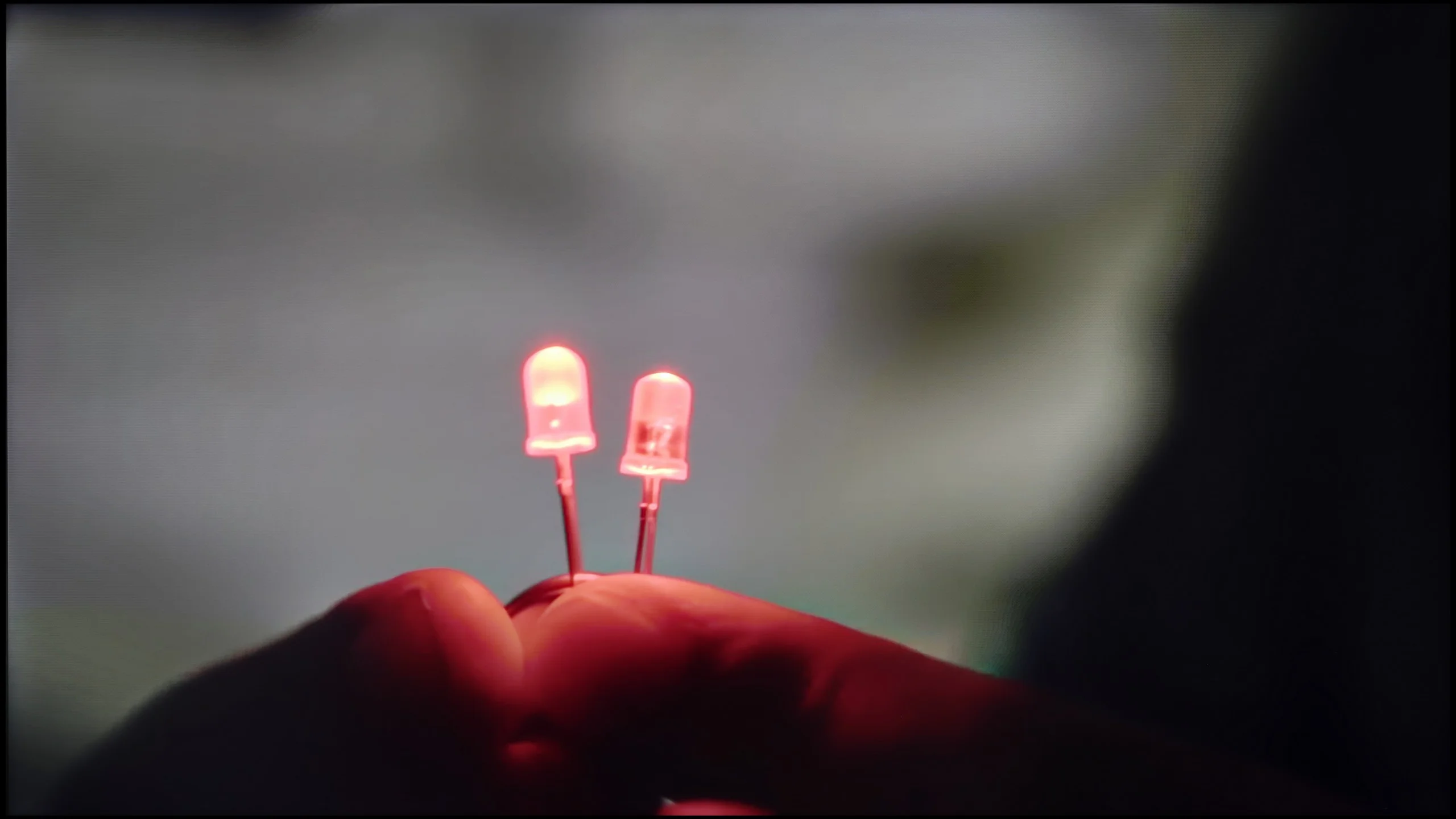
The match photo shows how the TV smooths weak tonal transitions in low-quality video.
Image scaling SD (576i)

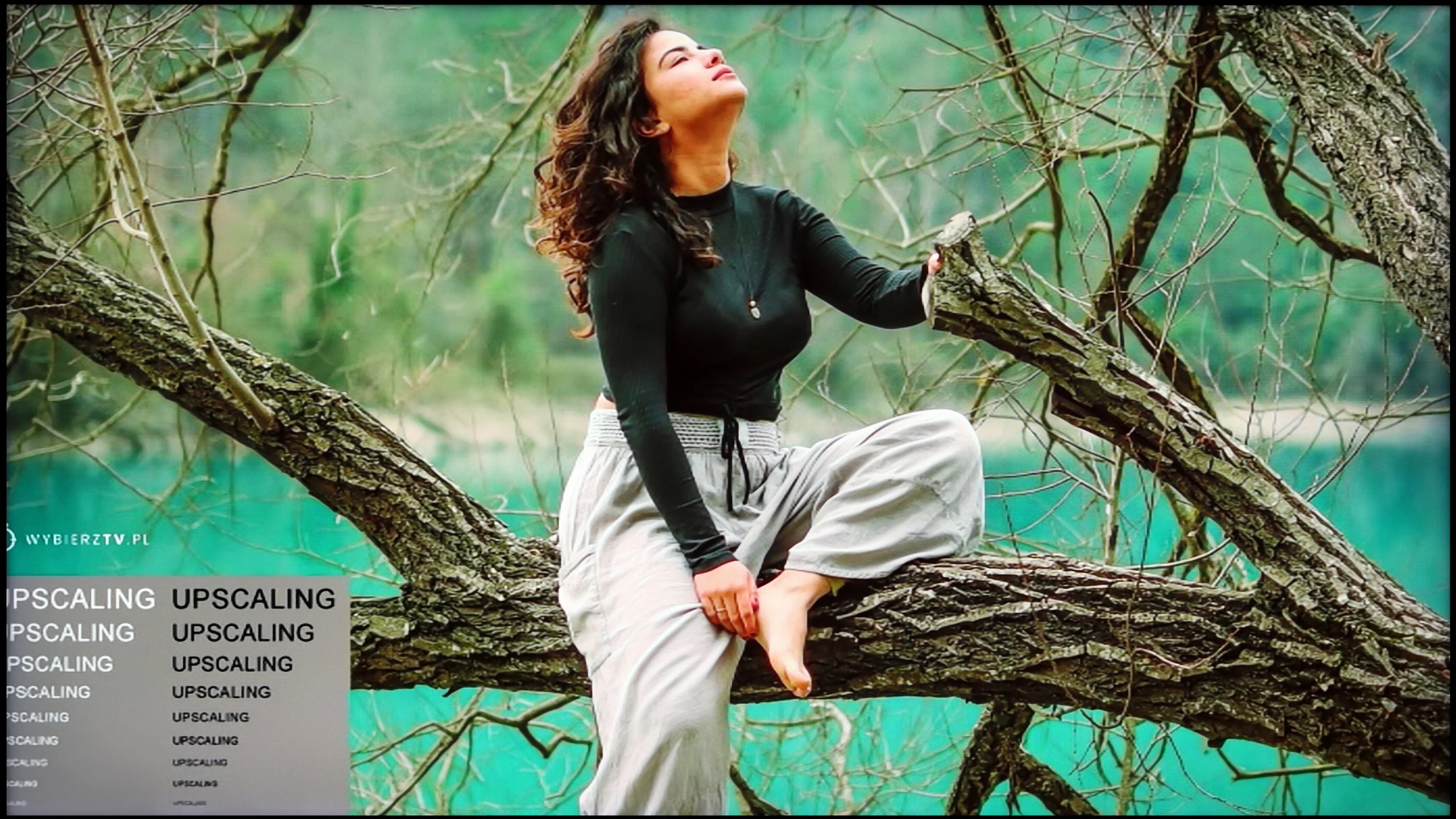
The model photo shows how it handles upscaling of SD material.
Let's return for a moment to the feature of smoothing tonal transitions. We can set it in only two ways - off and auto. As one can easily guess, the former causes significant problems with gradation. However, if we set the latter, both films and series will offer us smooth transitions of colours. It is worth mentioning, though, that this feature has its drawbacks. It greatly interferes with the director's intent, softens the film grain effect, and, what’s worse, often misinterprets small details, also blurring them. In light of this, we conclude that the feature does not exist and do not recommend using it, as this is exactly how the tests of smoothness of tonal transitions were conducted on the tested display.
The next thing we will check in this paragraph is the image scaling process, which is extremely important when watching materials in a lower resolution. Unfortunately, as this is the manufacturer's lowest model, this function does not work very well. All details are heavily blurred, and a characteristic white halo surrounds the characters.
Digital image processing in the Samsung QN80H is handled by the second-generation NQ4 AI processor. It's a chip we already know from the manufacturer's earlier models, and it still performs very well, especially with lower-resolution content. The image is effectively upscaled to 4K, but without excessive sharpening and without giving the impression the TV is aggressively trying to improve the source material.
The "Noise Reduction" function also proves useful. It can noticeably reduce posterisation and visible banding in lower-quality material, particularly in low-bitrate streaming. However, it's important to remember that it does not work without side effects. It can remove some film grain and slightly smooth the image. So with a high-quality source we'd leave this function switched off. If, however, someone is more bothered by banding and uneven tonal transitions than by the loss of some grain, "Noise Reduction" can be a really useful addition.
Blur and motion smoothness
4.9/10
7.8/10
Blur (native resolution, maximum refresh rate):
Blur (BFI function enabled):
Image flickers in this mode

Blur ():
Blur (4K@144Hz):

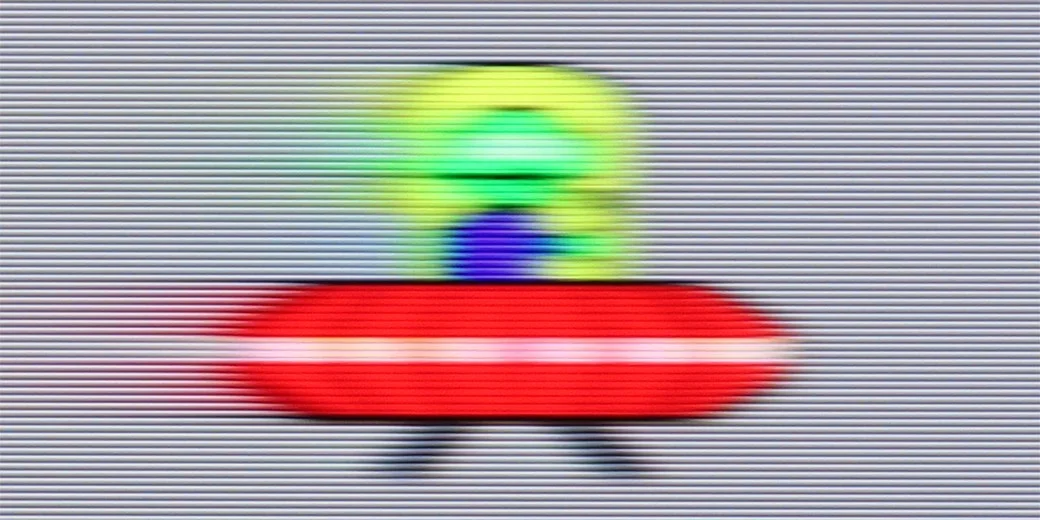
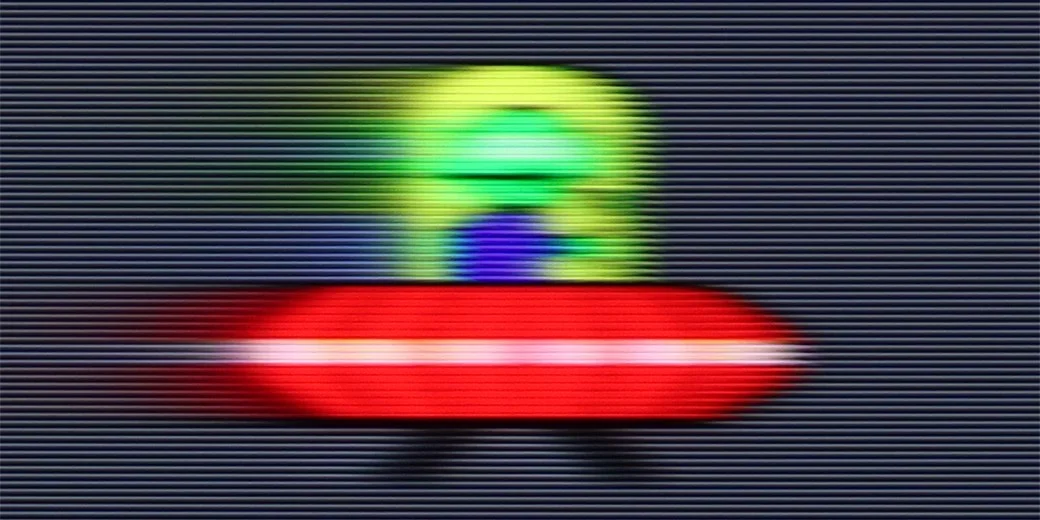
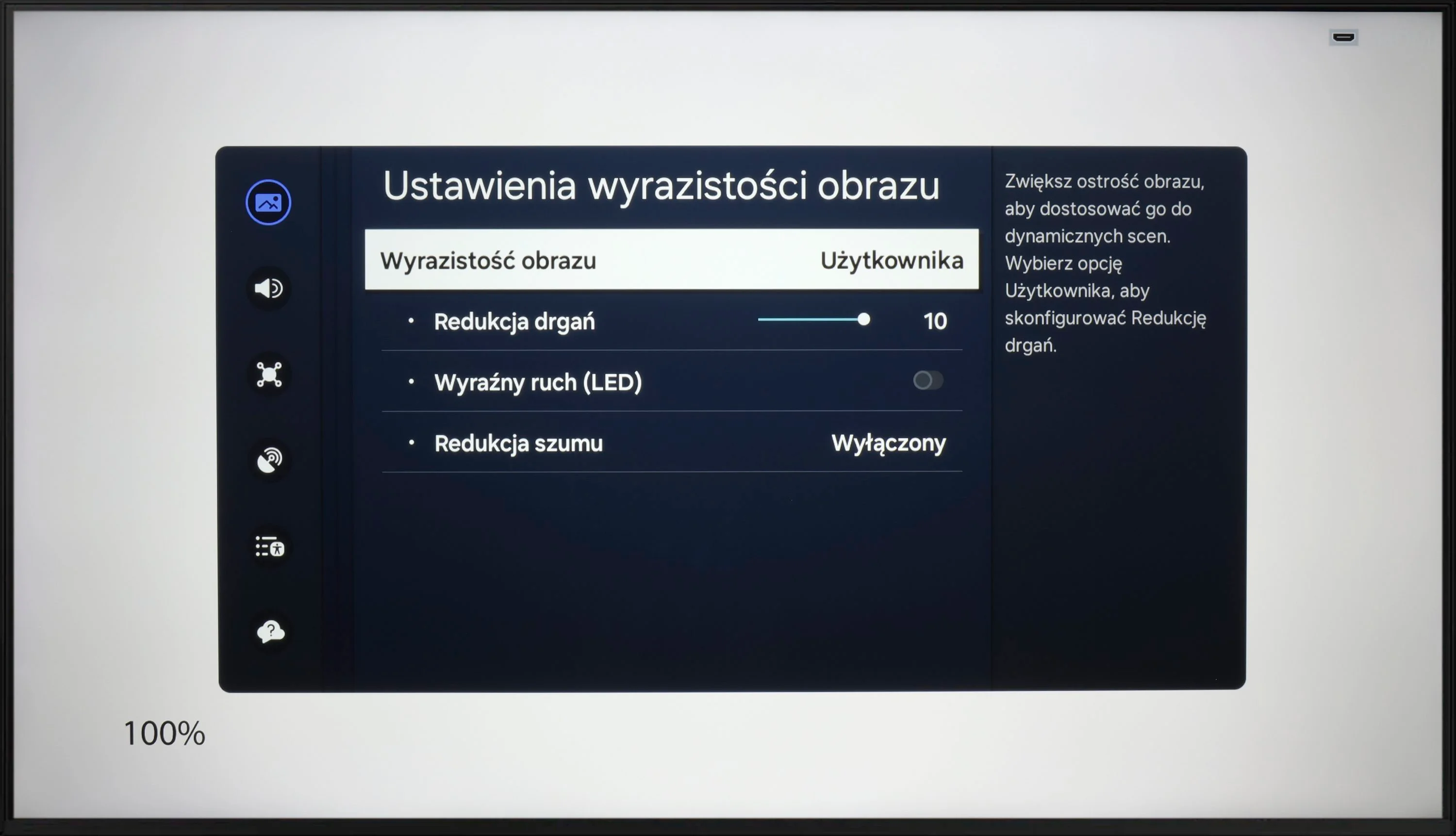
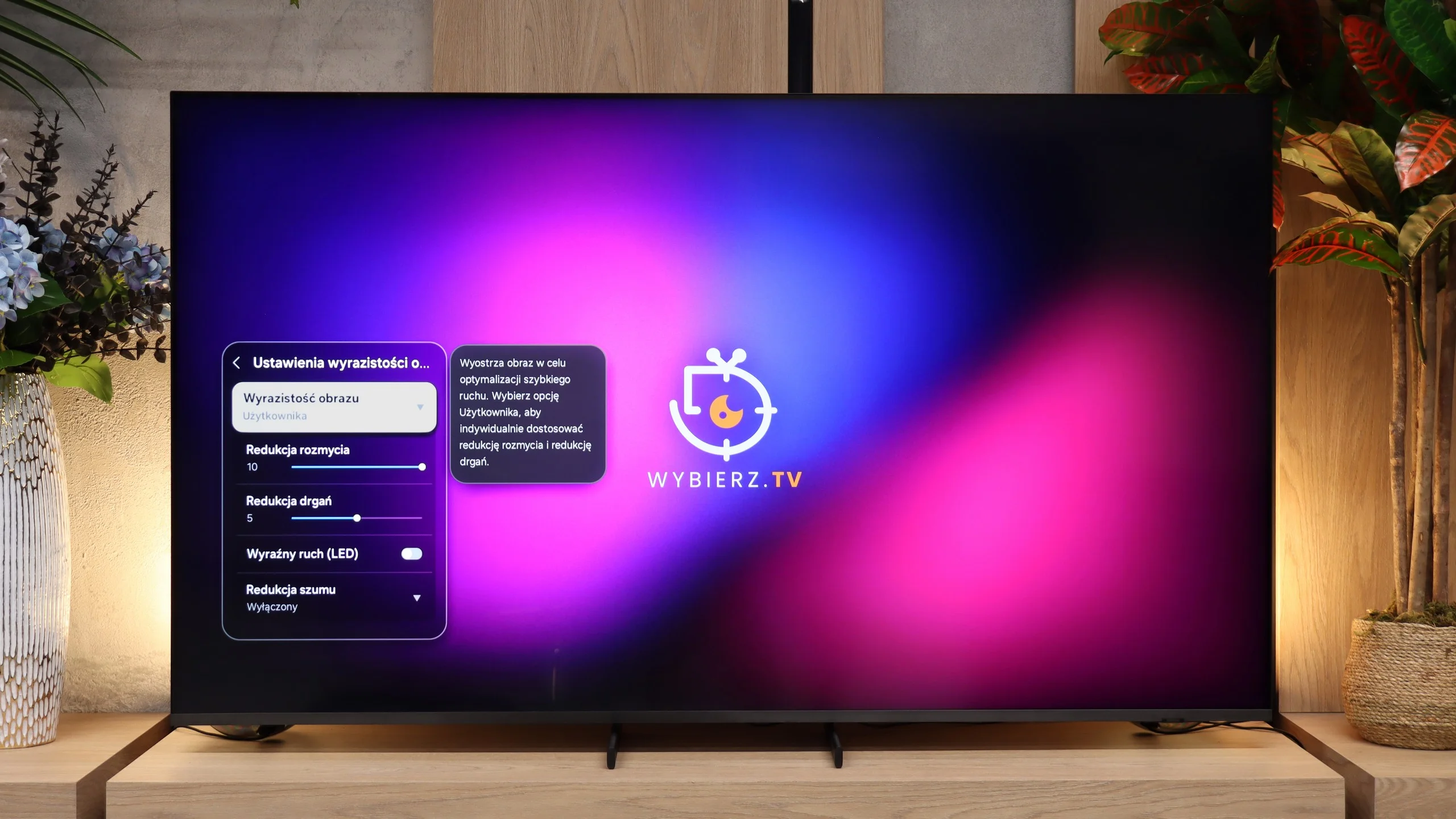
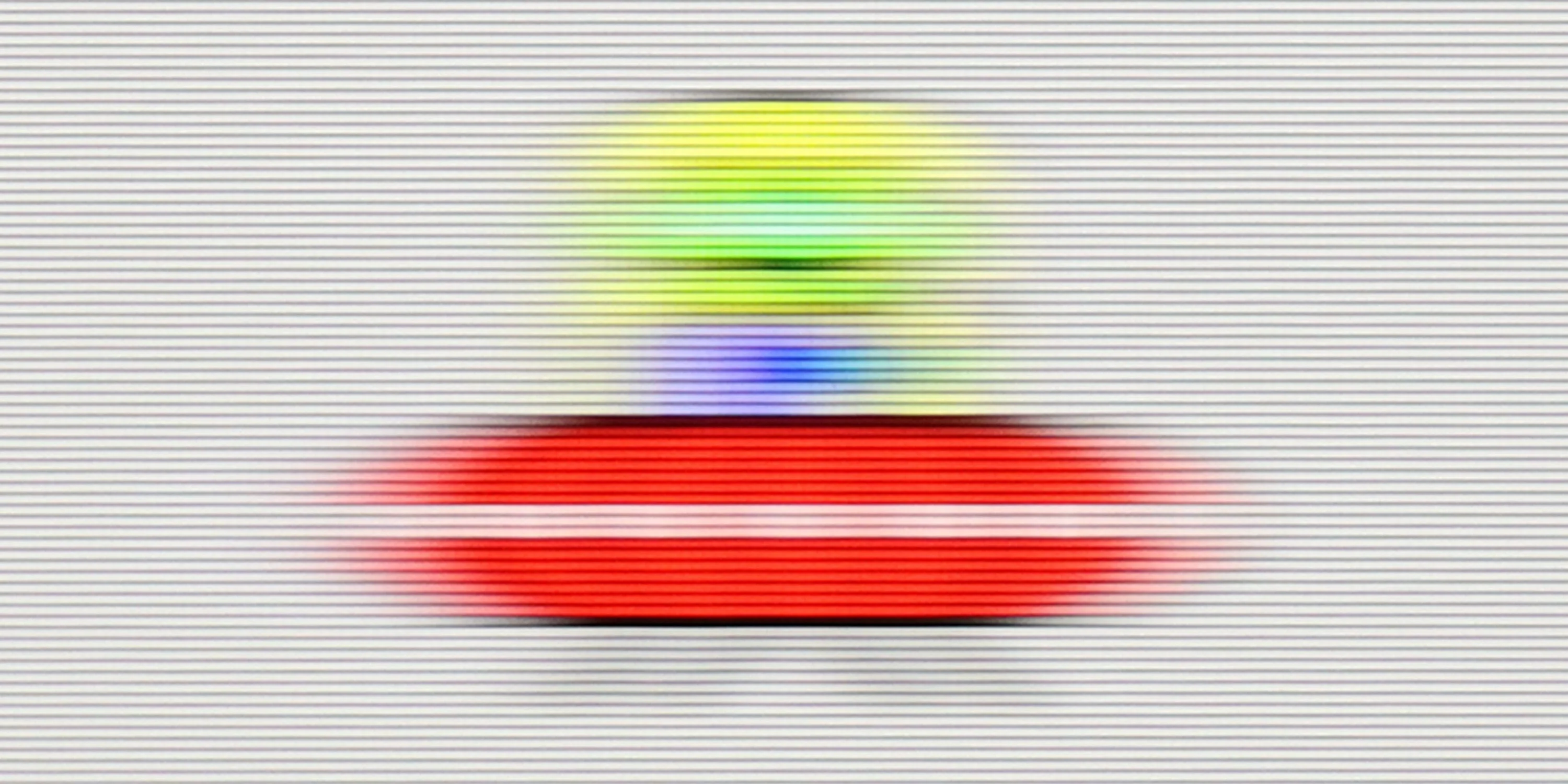
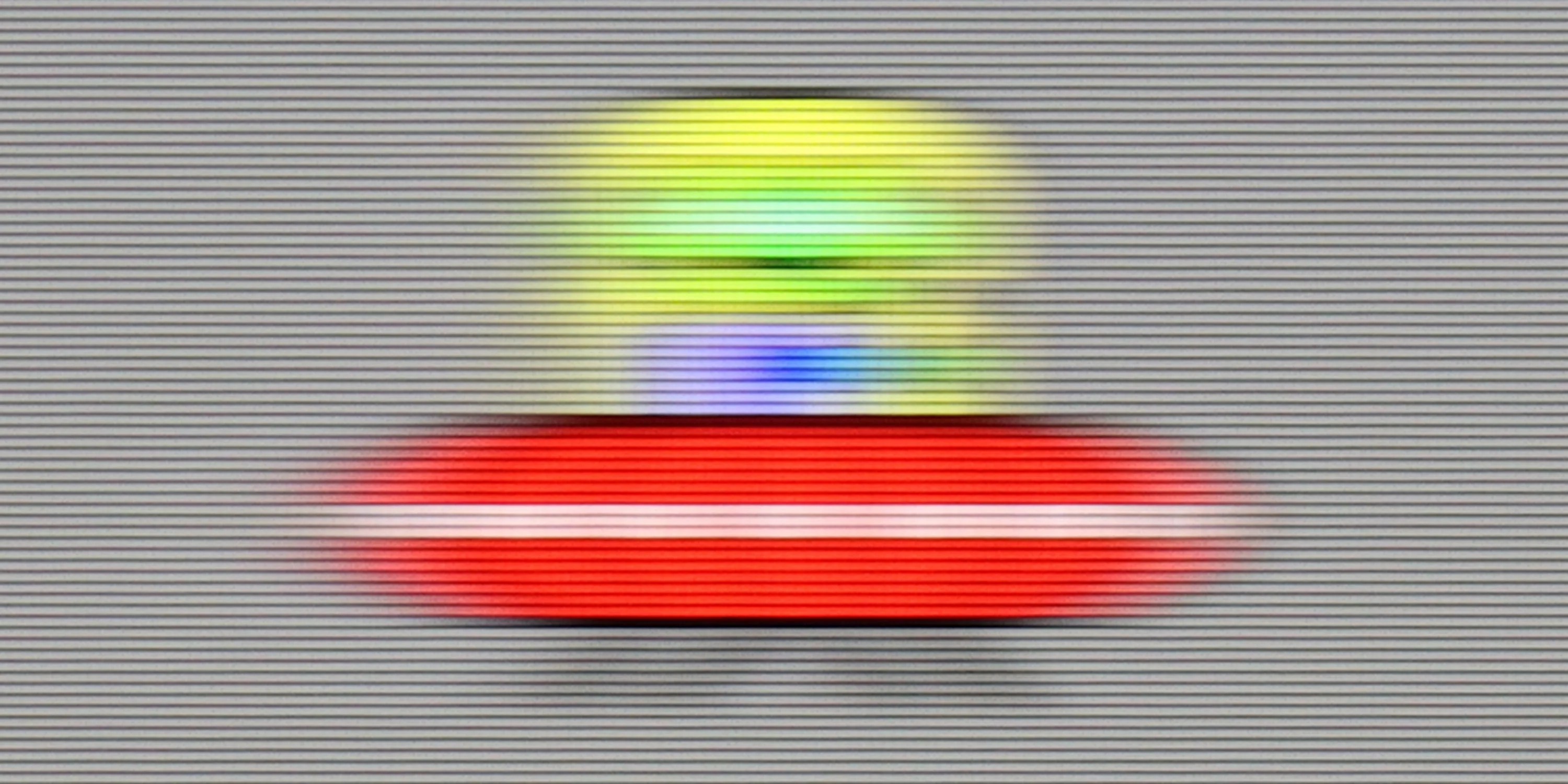
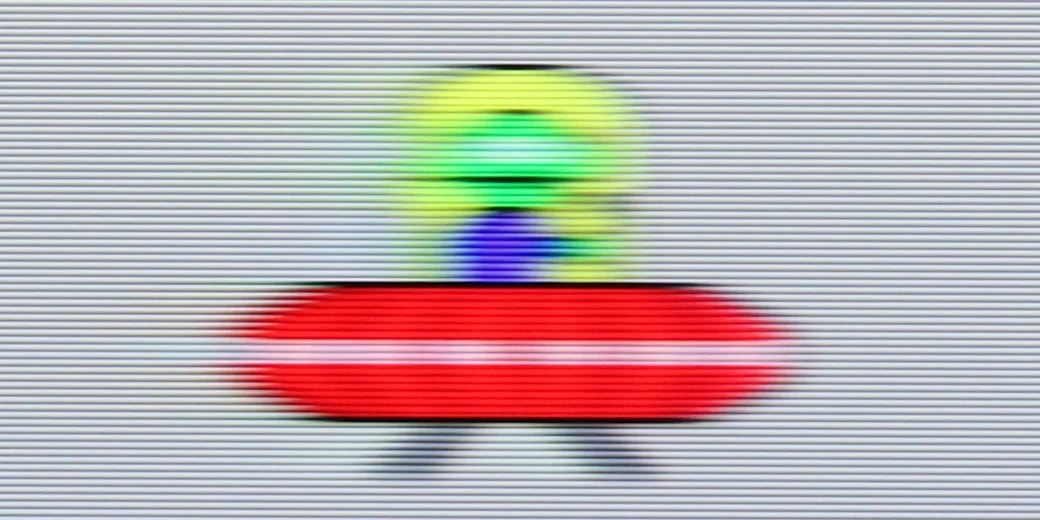
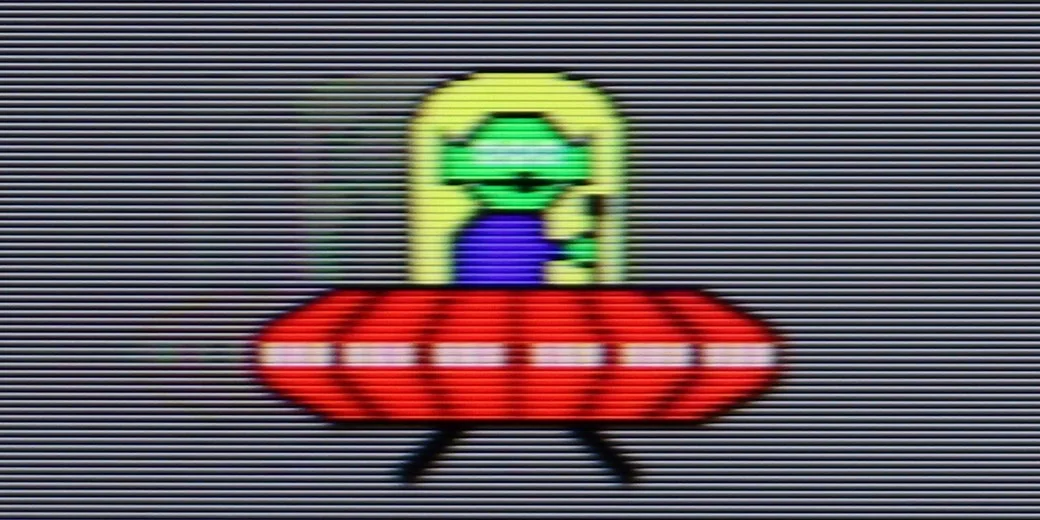
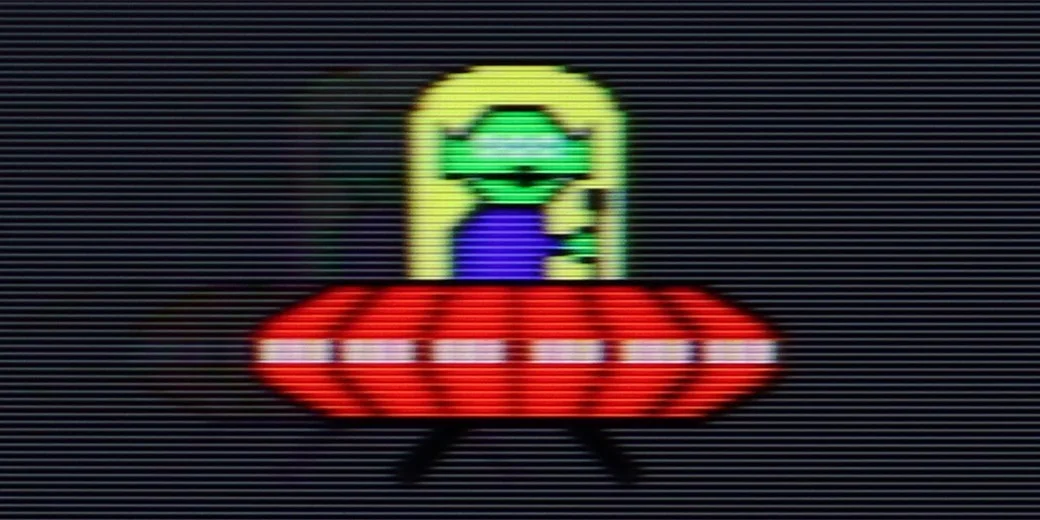
Despite the fact that Samsung DU7192 is the lowest model in the manufacturer's portfolio, it has been implemented with a motion smoothing system. Although it is quite limited in features compared to higher models, its existence is a considerable advantage in the context of competition from similar price ranges. The maximum refresh rate we will provide to the tested television is 60 Hz, which is entirely sufficient for movies and series, although not for sports. In the motion smoothing menu, we find two functions responsible for improving fluidity. These are "Motion Blur Reduction" and "Clear Motion (LED)". We will discuss the latter a bit later. Let us focus on the former, as it is quite puzzling. Unfortunately, despite its presence, we did not find any usefulness. On each of the settings, the image looked the same, with the characteristic judder known from materials recorded at 24 fps.
The matrix of Samsung DU7192 features an average response time. It is worth mentioning that due to this particular type of matrix, it is better than VA matrices in a similar price range. Therefore, it can be exceptionally said that it will not be the worst in the context of watching sports.
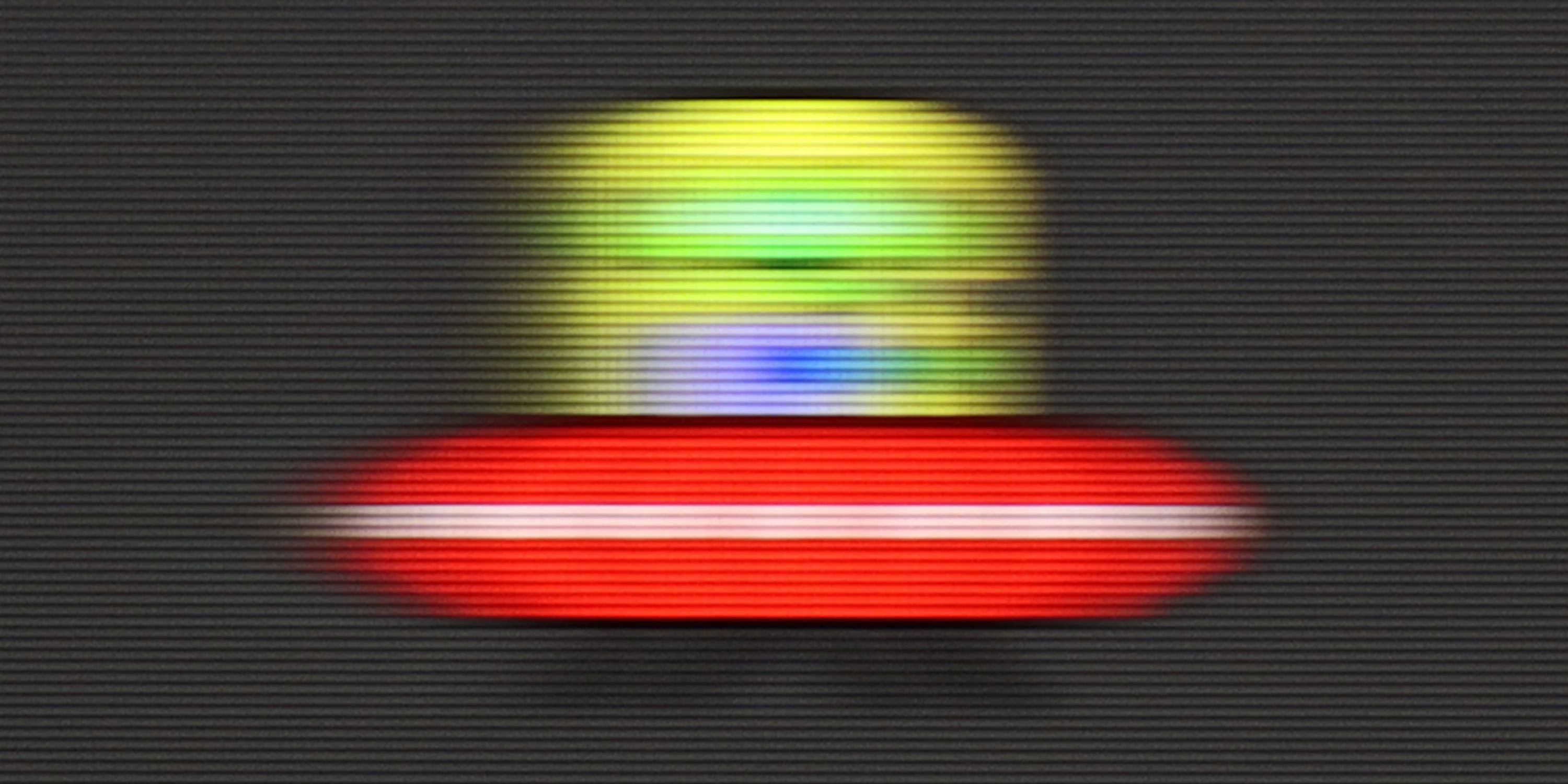
Motion handling and motion clarity on the QN80H are really good, mainly thanks to the fast panel. In 4K the screen refreshes at up to 144 Hz, and when switched to Full HD and connected to a PC it can reach as much as 240 Hz. That's new for Samsung TVs and a useful addition for people who want to use the TV for PC gaming as well. We were more interested, however, in how the QN80H performs at 120 Hz, because consoles use that refresh rate. Here it performs very well. The panel does not suffer greatly from the smearing typical of VA panels, and light trails behind moving objects are mainly visible on dark backgrounds. That said, it's nothing that would interfere with normal watching of sport or gaming. The TV also has a motion smoothing system that Samsung calls "Wyrazistością obrazu". You can adjust judder reduction and blur reduction separately, so it's easy to tailor its behaviour to films, sport or your own preferences.
Console compatibility and gaming features
4.2/10
9.6/10
- ALLM
- VRR
- VRR range 48 - 240Hz
- Dolby Vision Game Mode
- Correct implementation of HGIG
- 1080p@120Hz
- 1440p@120Hz
- 4K@120Hz
- Game bar
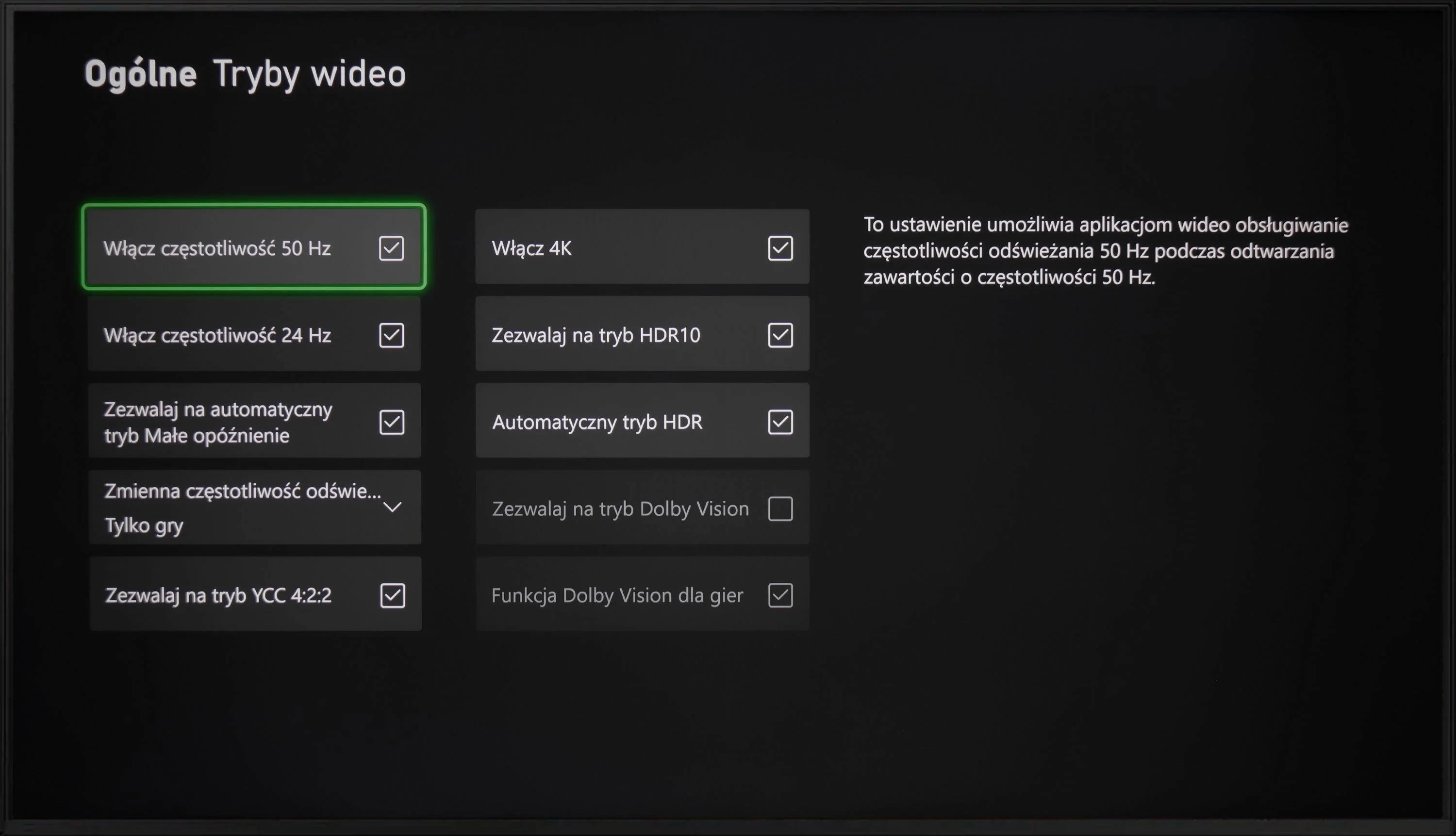
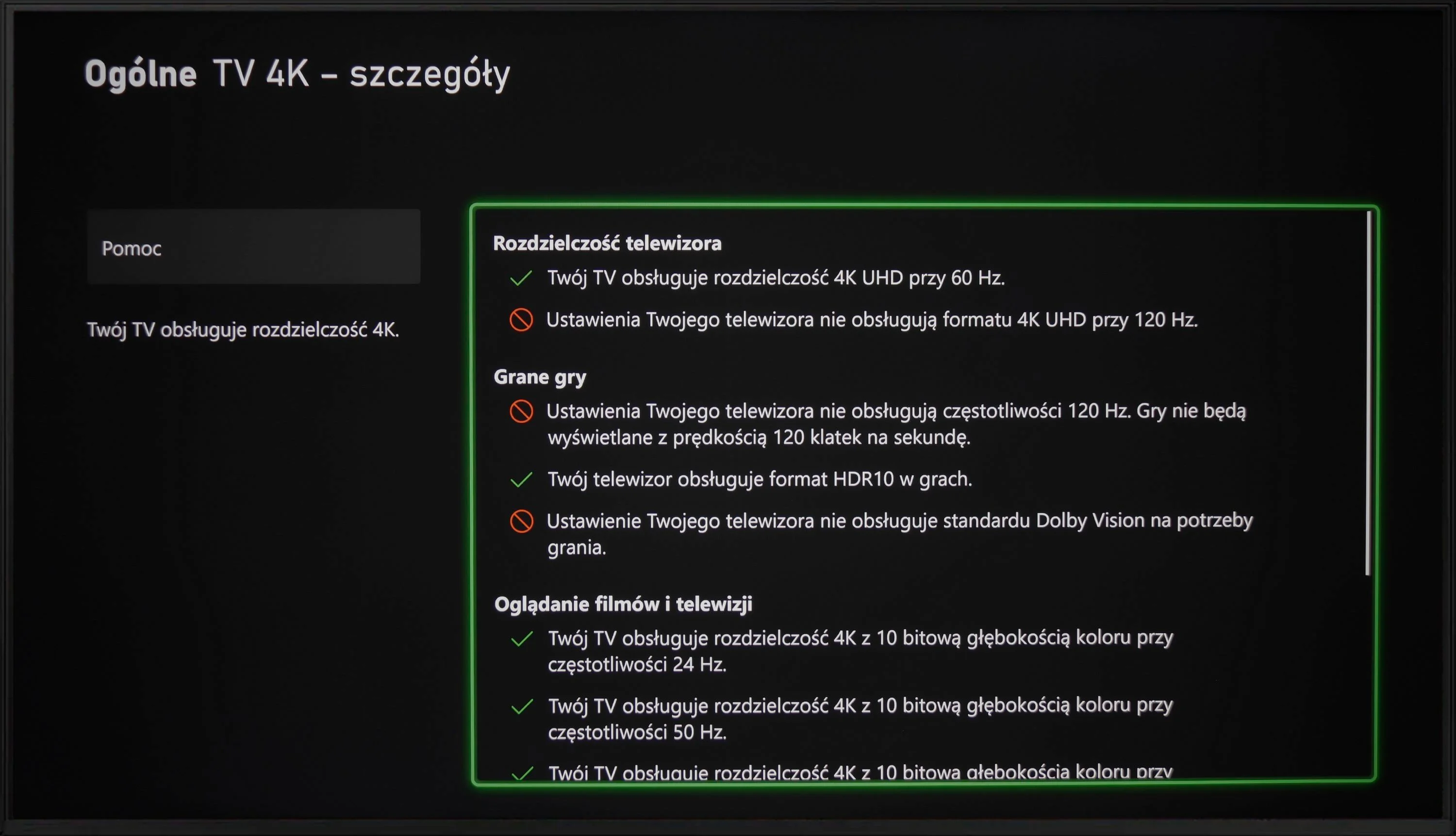
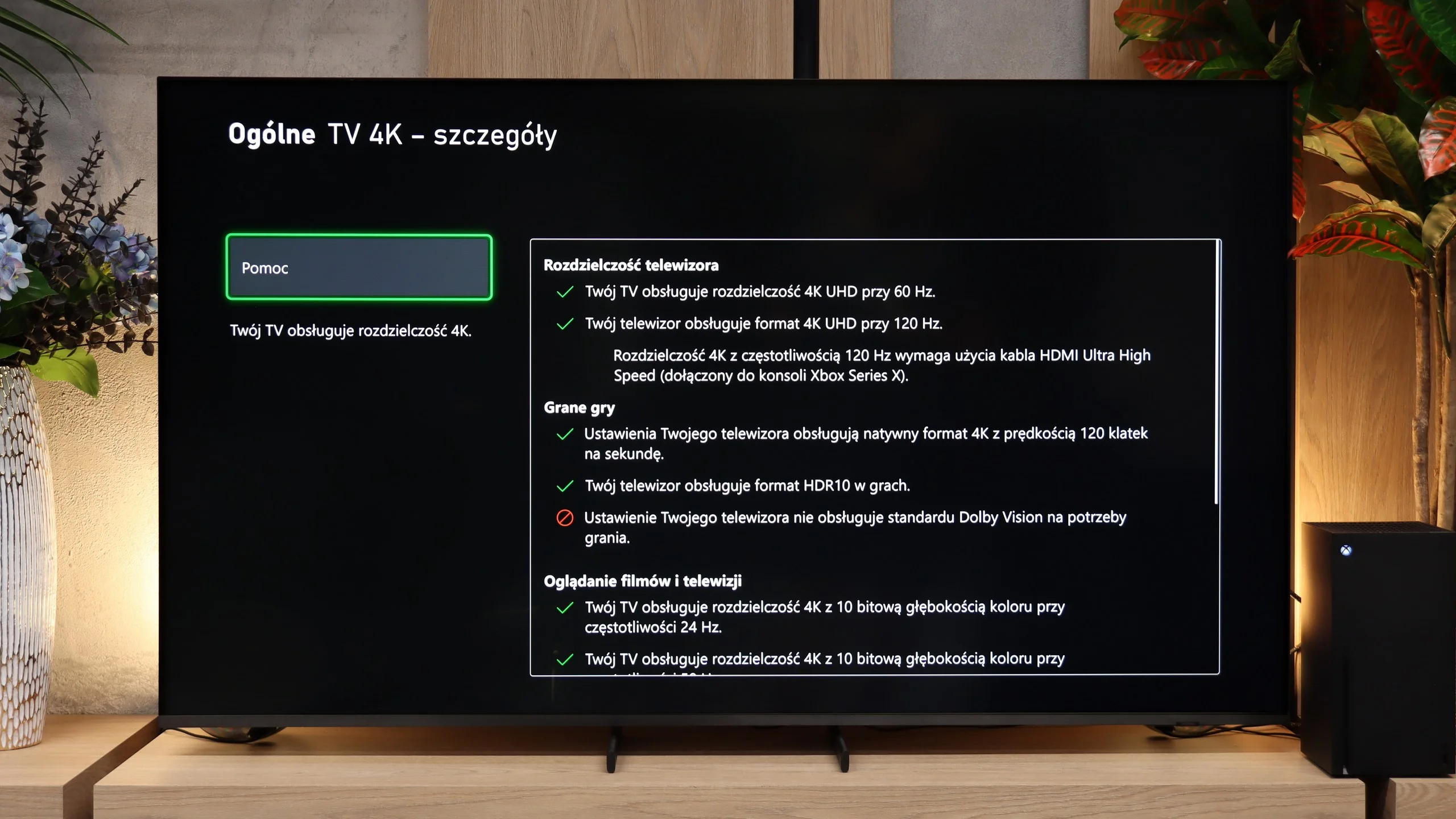
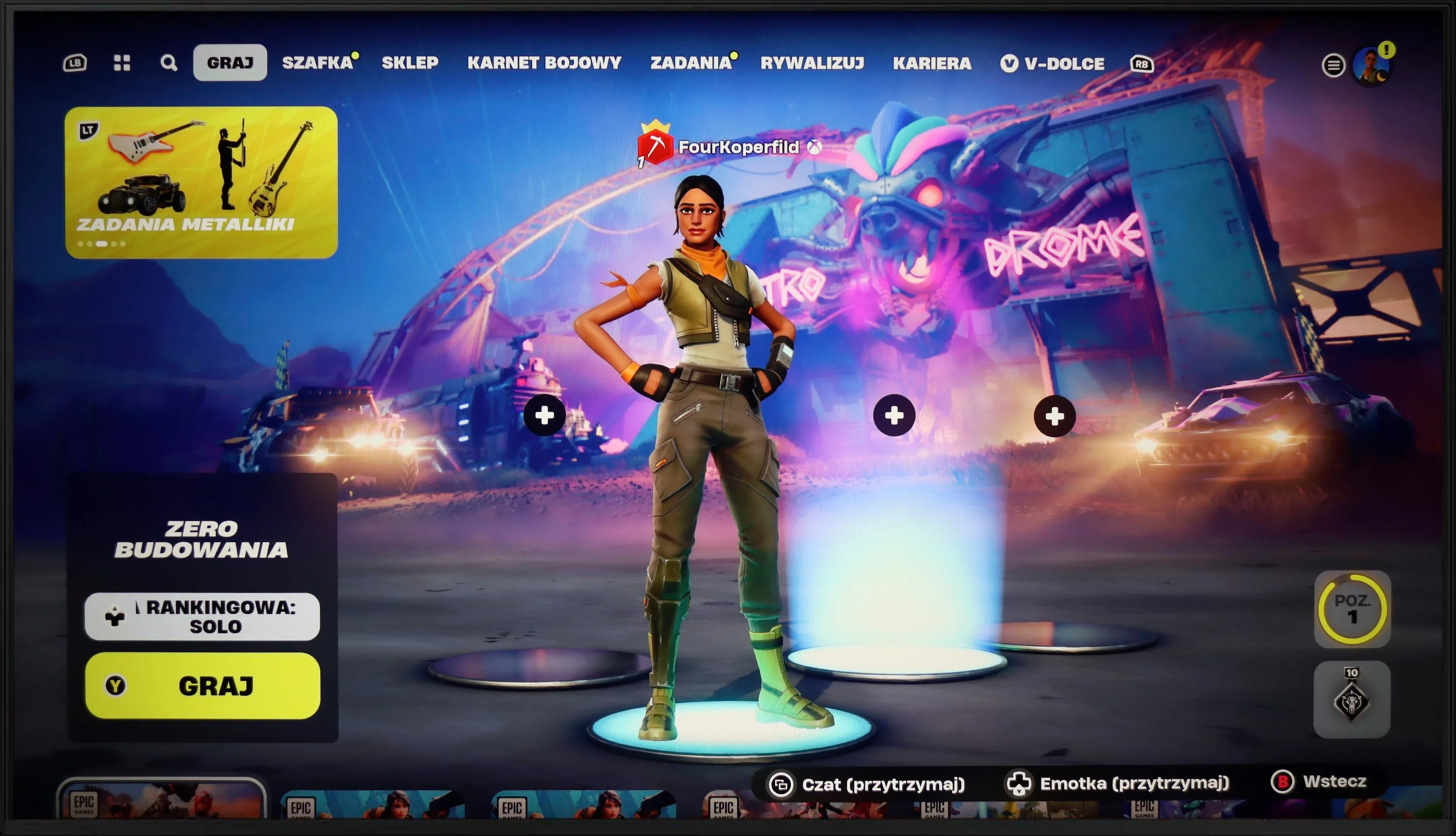
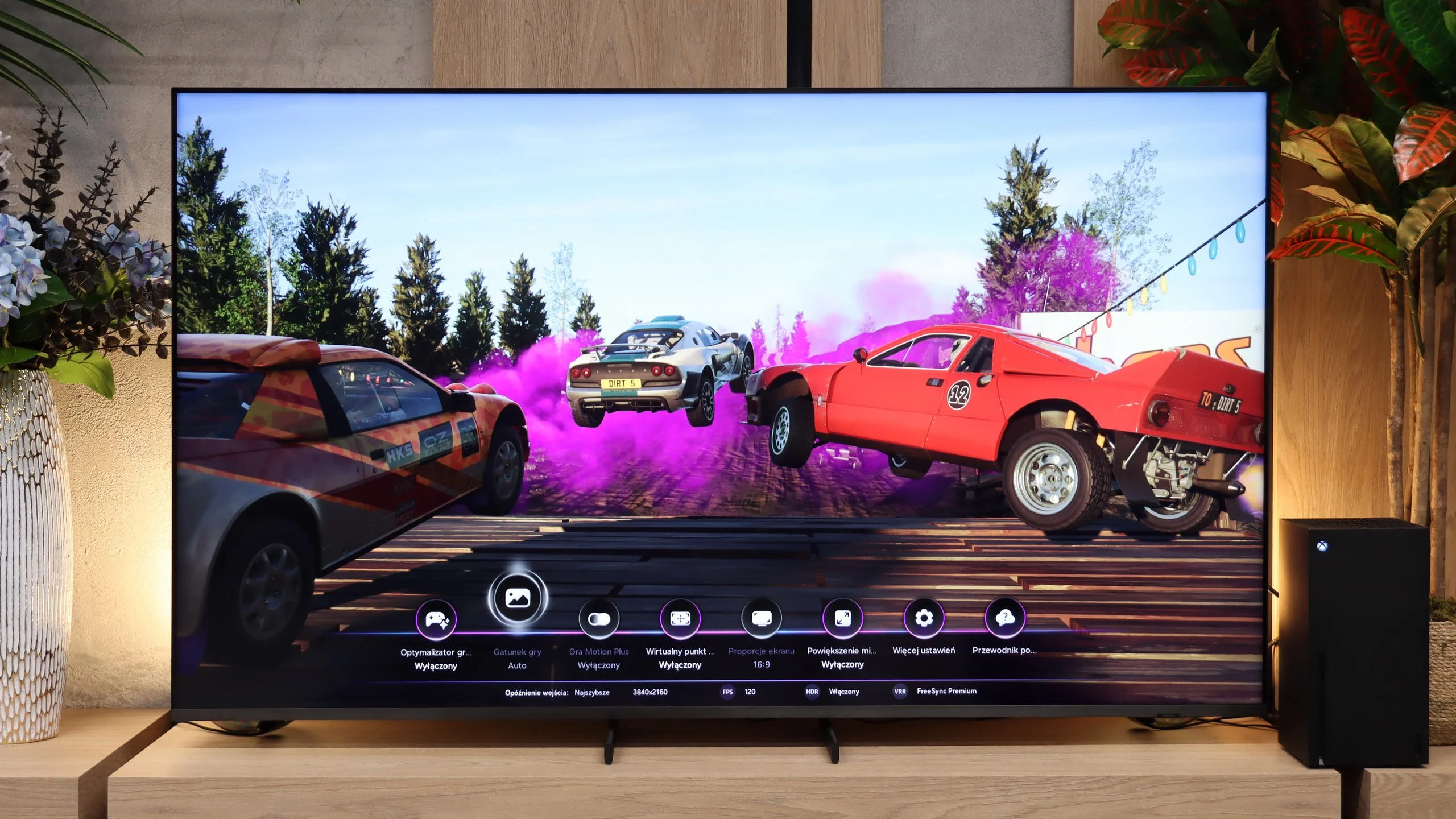
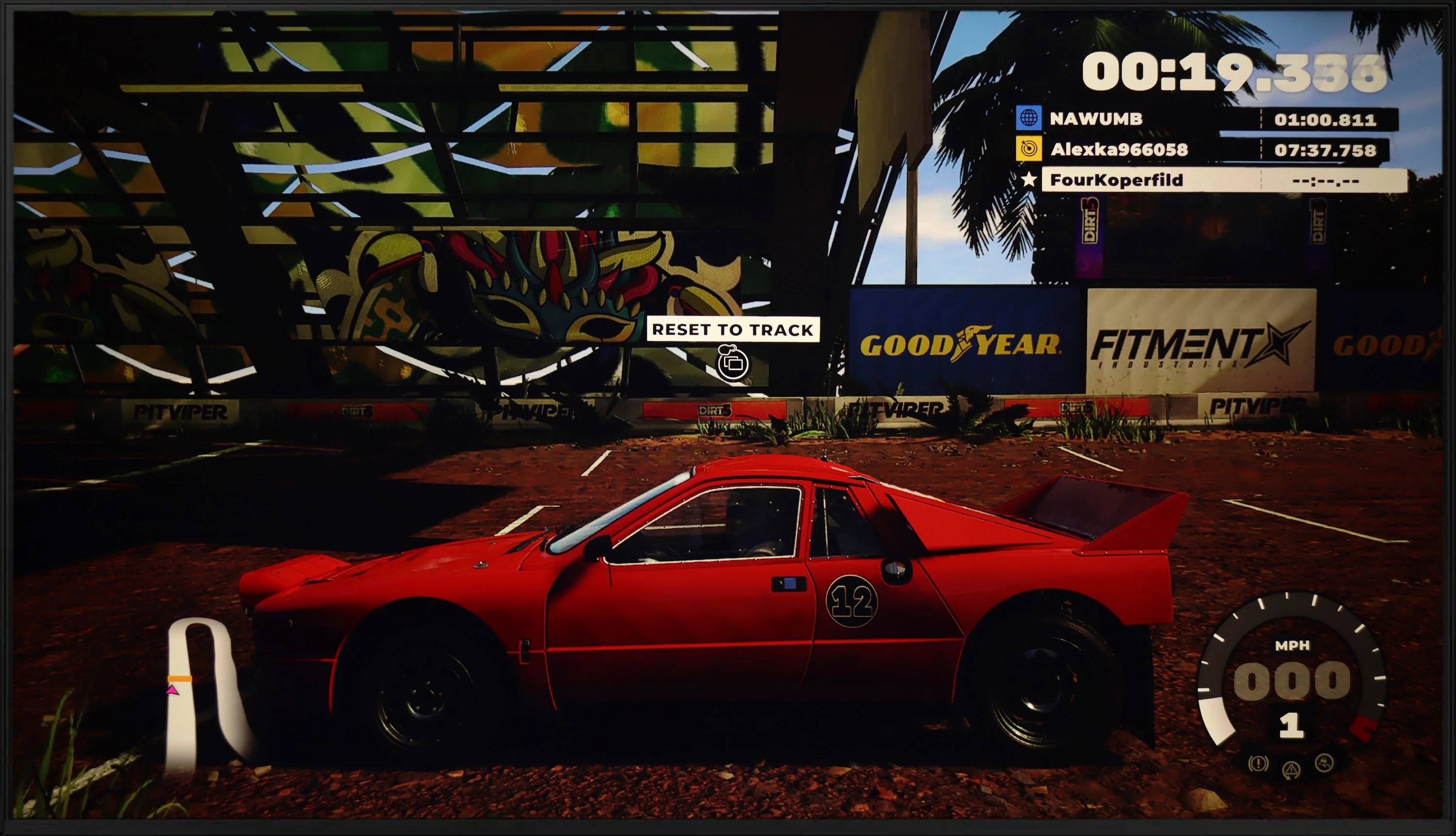
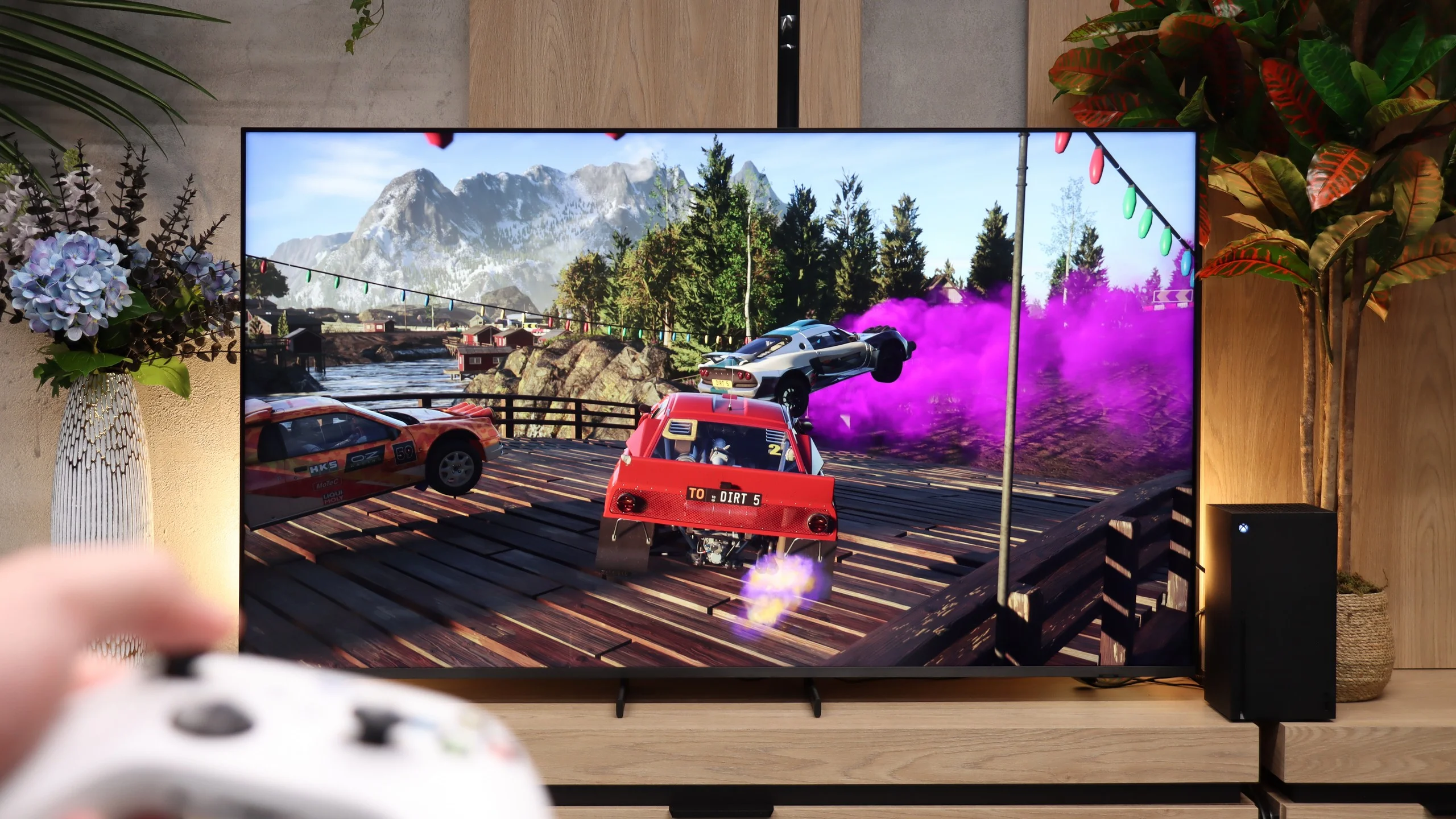
The Samsung DU7192 television is equipped only with HDMI 2.0 ports, which is not surprising given the price of the device and its consumer profile. Therefore, it’s also logical that we won’t achieve maximum quality on the latest generation consoles. Thus, it only has the most basic feature for gamers, which is ALLM. It's a pity that the manufacturer didn’t implement at least GameBar, as it is currently a standard, even in lower-end televisions, and could introduce significant conveniences regarding quick changes to settings.
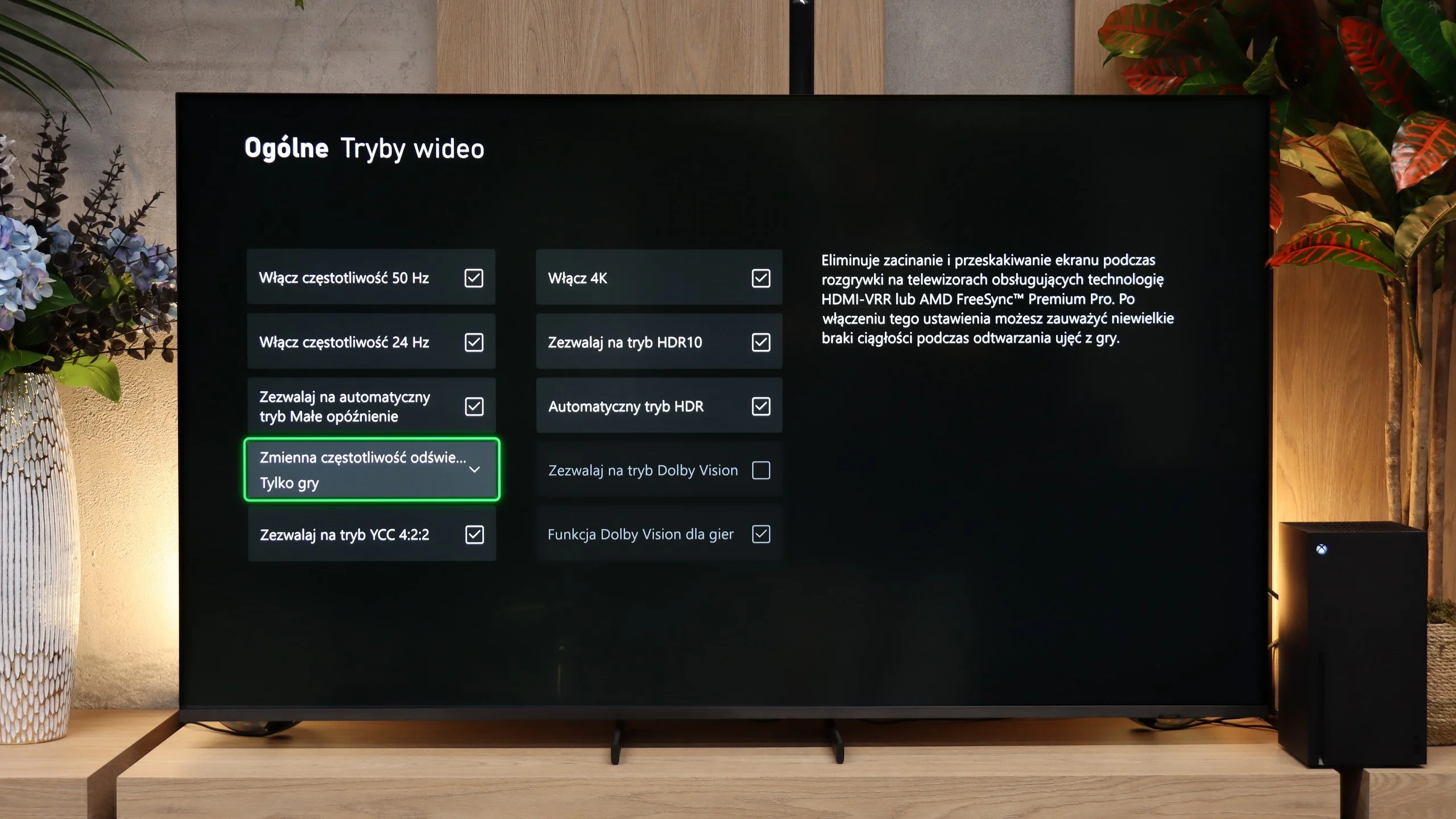
The Samsung QN80H is a TV that stands out when it comes to gaming features. The biggest new addition for 2026 is DLG mode, which allows refresh rates of up to 240 Hz when the image is switched to Full HD. It's an option aimed mainly at PC users, but it also shows that Samsung is still heavily developing the gaming side of its TVs. However, the list of advantages doesn't end there. The QN80H has four full-fledged HDMI 2.1 ports, which is still not standard at this price point. So you can connect several consoles, a PC or a soundbar at the same time without having to wonder which port supports the full video capabilities. The TV also supports VRR, ALLM and HGiG, so it's hard to fault its basic feature set.
A downside is the lack of Dolby Vision, which may matter primarily to Xbox Series X owners. However, this is not a flaw that disqualifies the QN80H as a gaming TV. Samsung has a feature most manufacturers still lack: its proprietary motion smoothing, Game Motion Plus. It's a motion smoothing system that works in game mode too, allowing you to improve the smoothness of titles running at 30 or 60 frames per second without a drastic increase in input lag. In practice, Game Motion Plus can make a much bigger difference than the Dolby codec, especially in more demanding games that don't offer a 60 FPS mode. The image becomes noticeably smoother, while controls remain sufficiently responsive. So despite the lack of Dolby Vision, the QN80H remains one of the best-equipped gaming TVs in its class.
Input lag
10/10
10/10
SDR
HDR
Dolby Vision
The results of input lag measurements in DU7192 are at a high level, regardless of the signal or resolution. All gamers will certainly appreciate the manufacturer's efforts, as a game running at 4K 60 Hz with HDR will have only 11 ms of delay, which is practically imperceptible even in online games.
Input lag on the QN80H is at a very good level. In Game Mode the delay is around 10 ms, which is exactly what we expect nowadays from the best gaming TVs. In that respect it’s hard to fault Samsung. Controls are responsive, controller movement is instantaneous and even more demanding players should not experience any discomfort. With the aforementioned Game Motion Plus enabled, input lag increases to about 45 ms. Of course this is a higher value, but still small enough that in more relaxed role‑playing or adventure games the feature remains fully usable, especially since in return you get a much smoother picture.
Compatibility with PC
6/10
8.9/10
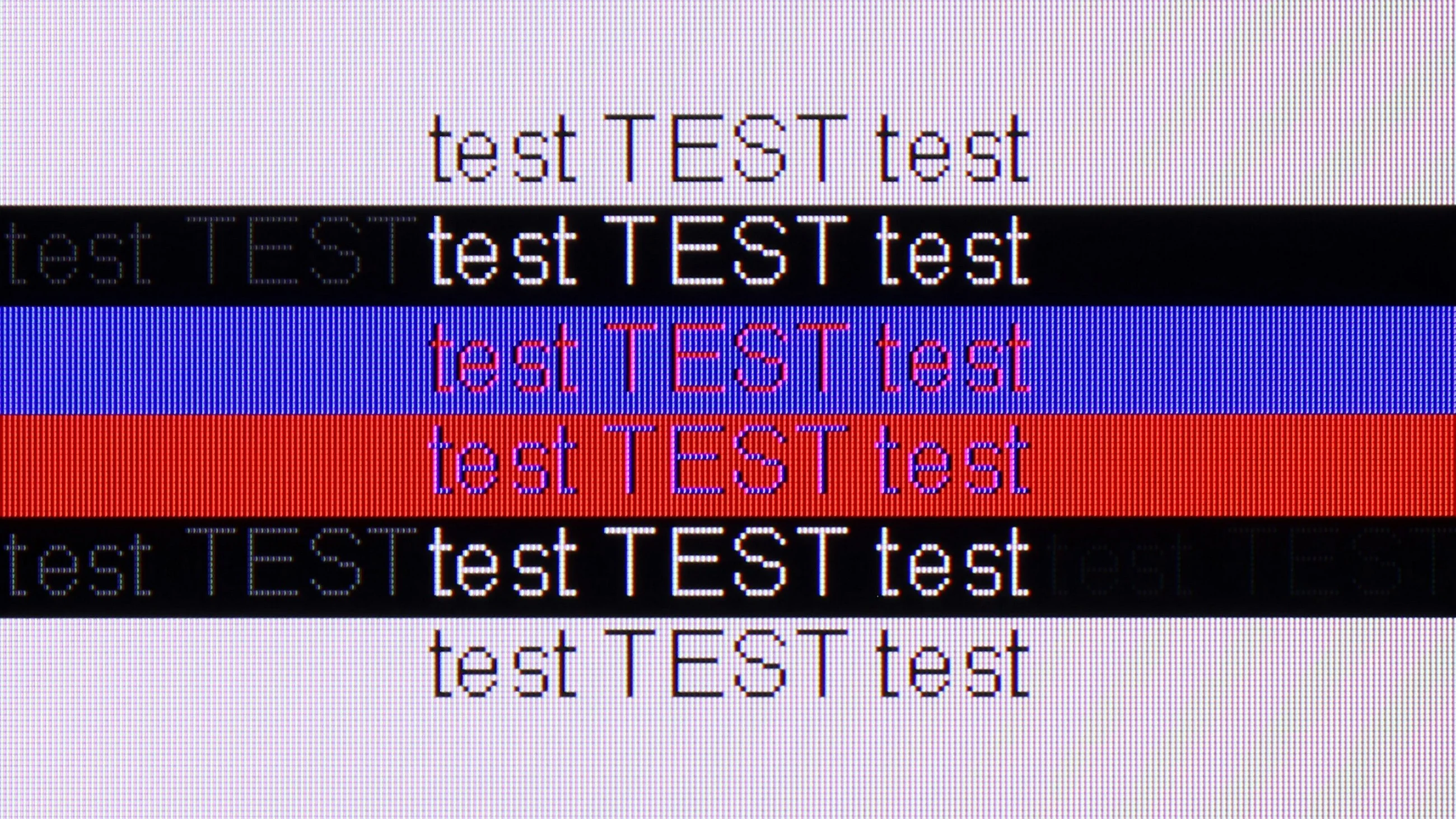
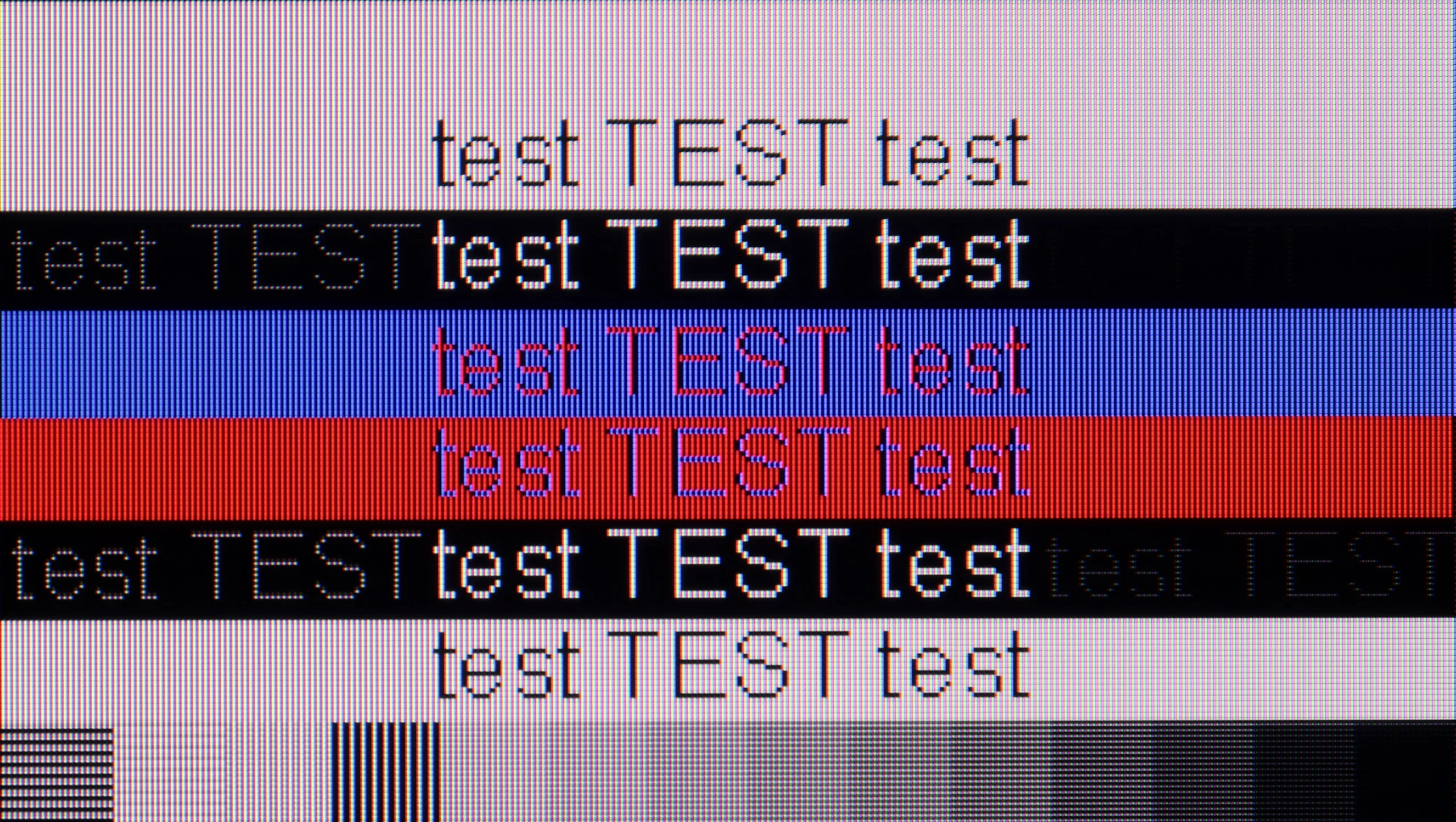
The photo shows the legibility of small fonts. Ideally, lines should be the same thickness on both light and dark text, with minimal pixel gaps.
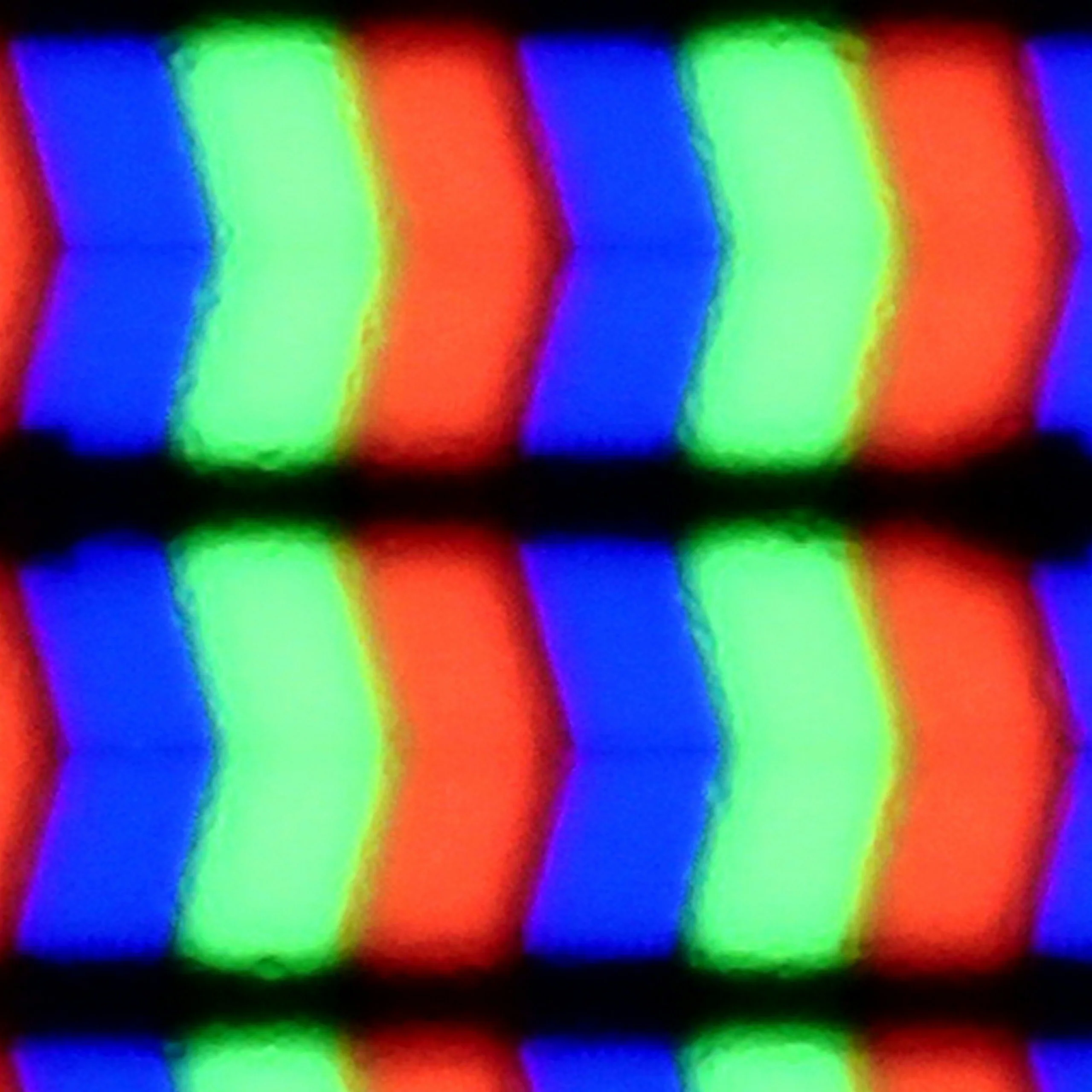
After connecting the television to the computer and wishing to use it as a monitor, we can expect a low input lag of 11 ms, which is practically imperceptible along the mouse-screen-eye line. Thanks to the proper implementation of chroma 4:4:4, the readability of fonts is at a high level, so one can confidently connect the DU7192 to the computer as a monitor and expect comfortable work with text. It is also worth mentioning that this good cooperation with the computer is also due to the IPS panel itself, which, due to its construction, allows for very sharp font retention. The subpixel arrangement is BGR, which does not negatively affect the use of the television as a monitor. However, since operating systems are not adapted to such a subpixel format, it may cause slightly less sharp outlines. This is, however, a practically negligible issue, and only a handful of people may notice it. When it comes to gaming, the lack of G-Sync and a frequency of 60 Hz are limitations that may disappoint gaming enthusiasts, especially those requiring quick reactions. For this reason, the television receives a lower rating in this category, although as a monitor for everyday work, it presents itself decently.
The Samsung QN80H will also easily serve as a large monitor. Aside from the already mentioned 144 Hz refresh rate in 4K (and as much as 240 Hz in Full HD!), the TV offers a full set of gaming features, which when connected to a computer provides plenty of scope. When used for text work, the QN80H also performs very well. The panel used here has a classic, standard RGB pixel layout. Fonts are sharp, clean and very legible. There is no sign of jagged letter edges or strange, coloured outlines around the text. Of course, few people will probably buy such a large TV solely for office work. It is worth knowing, however, that the QN80H will handle such tasks without the slightest hesitation.
Viewing angles
6.8/10
3.2/10
IPS matrices, unlike VA panels, are known for having very good viewing angles. This is no different in the case of Samsung DU7192, as even with a slight shift off-axis, the colours maintain very good hue and saturation. However, it is worth noting the drop in contrast, which is typical for LCD matrices.
Viewing angles are unfortunately the Achilles' heel of the VA panel used here. On the one hand this panel gives the QN80H higher contrast and better blacks, but on the other hand it produces a noticeably worse image when viewed off-axis than TVs with IPS or ADS panels. If you sit a little to the side, colours start to lose saturation and blacks become lighter. The picture remains readable, but it no longer looks as good as when viewed from straight on. Therefore the QN80H will perform best when most viewers sit as close to the centre of the screen as possible.
Daytime performance
2.8/10
5.8/10
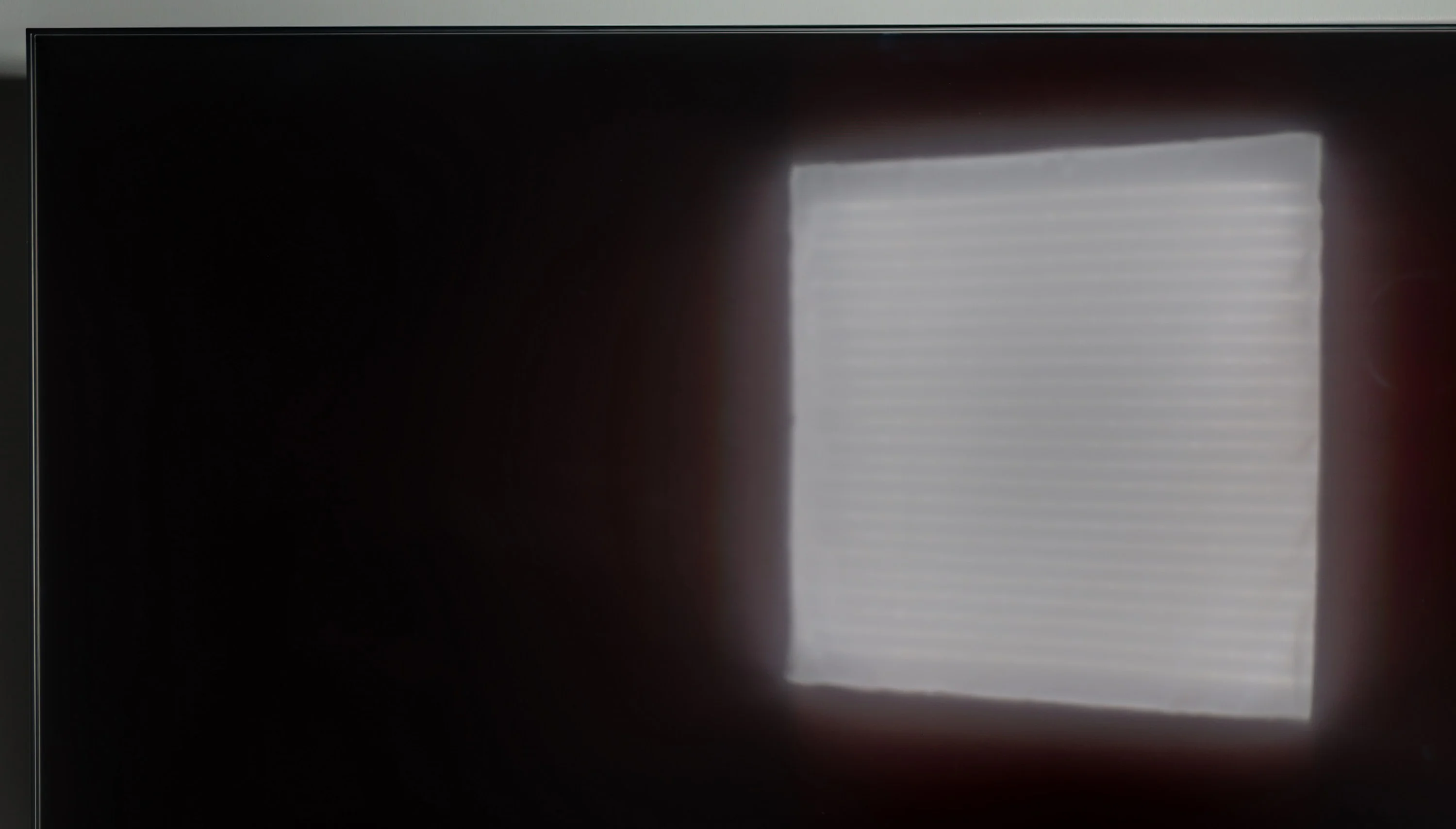
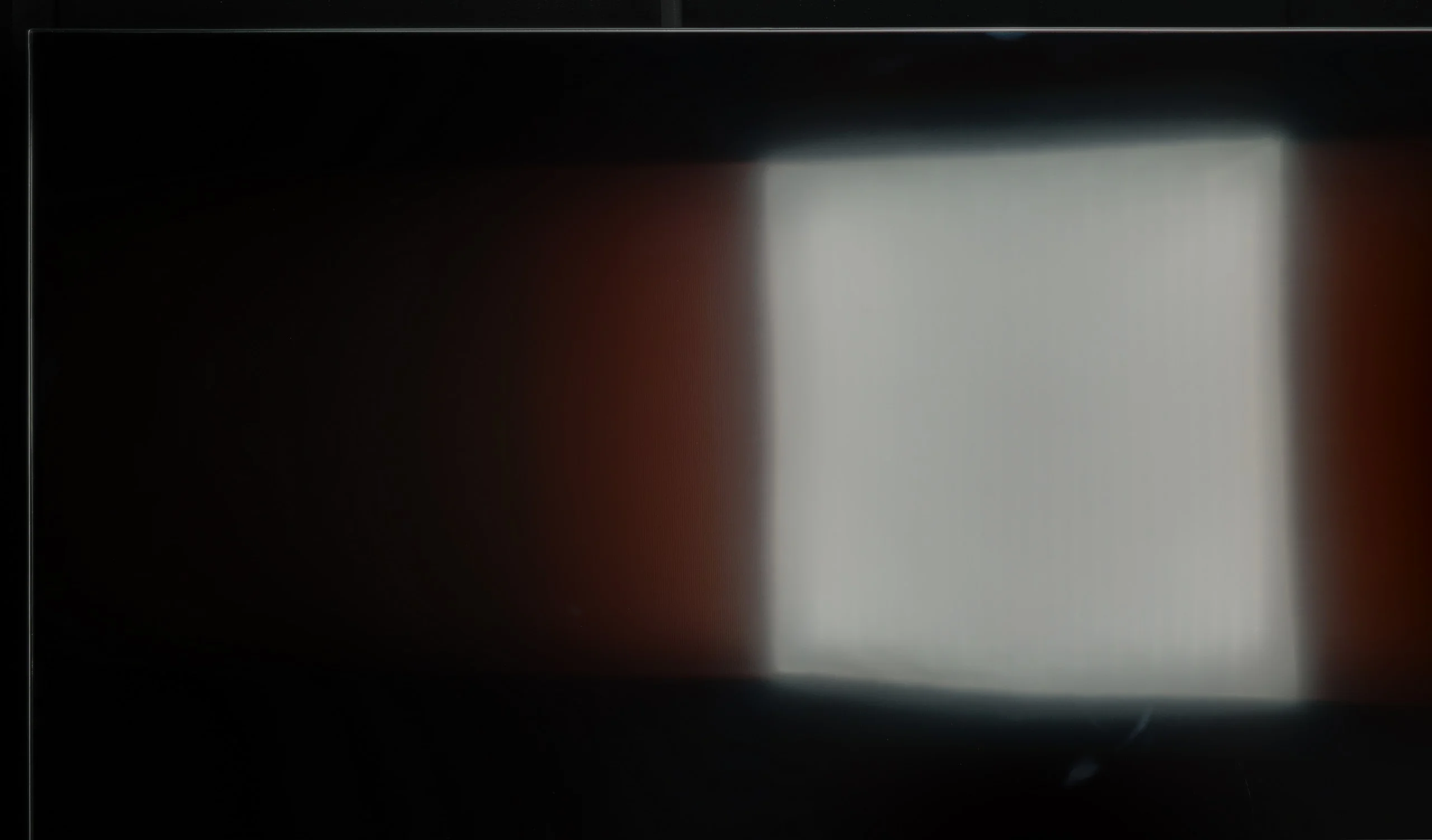
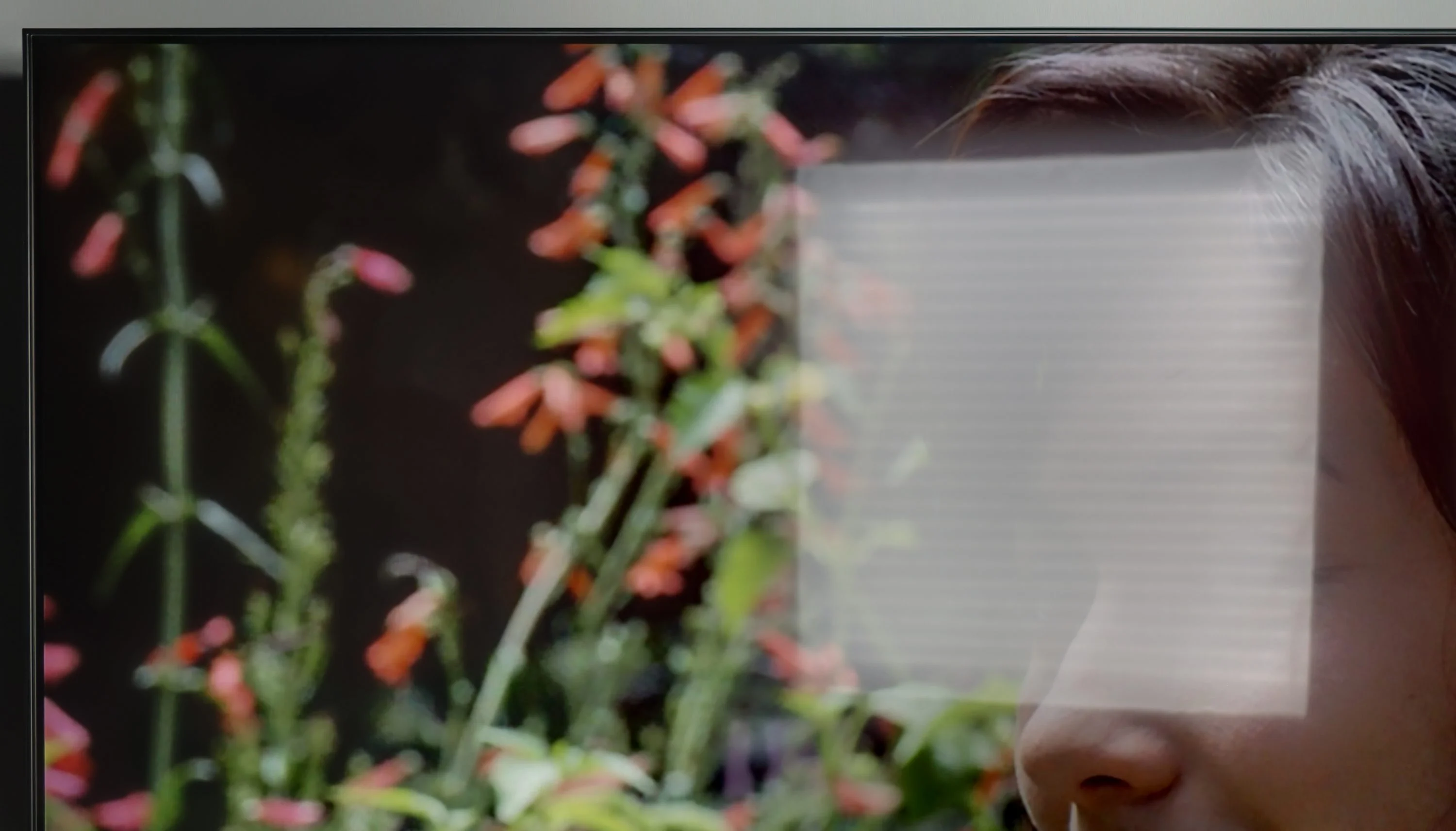
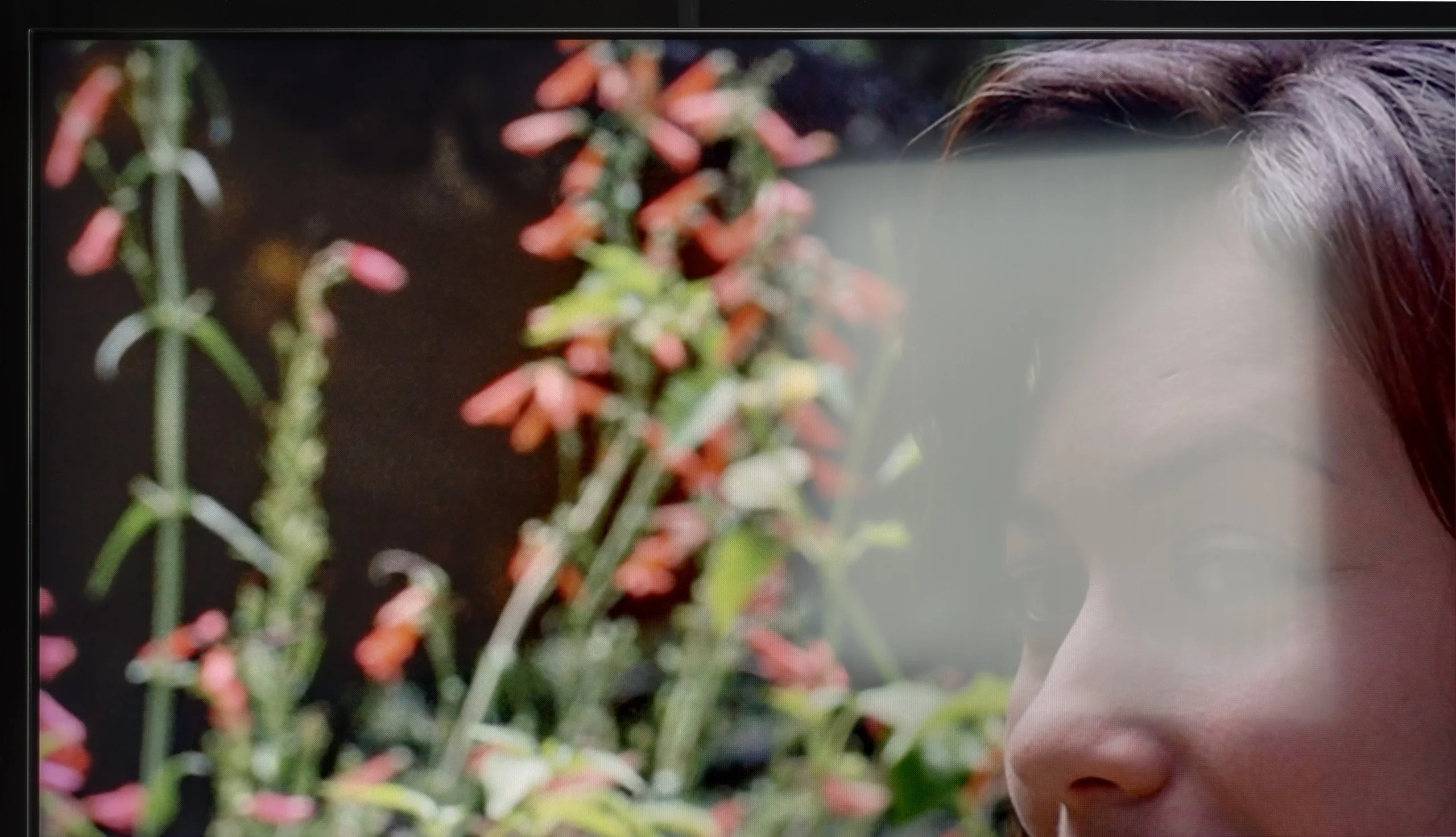
Panel brightness
Samsung QN80H: 459 cd/m2
Samsung DU7192 (IPS): 227 cd/m2
The Samsung DU7192 panel has a satin finish; unfortunately, this did not help the tested television in suppressing reflections of light falling directly on the panel. The situation is not improved by the fact that the maximum brightness of the panel in SDR content is 227 nits. It can be said that the tested television is rather not suited for daytime use.
In terms of brightness for everyday SDR content the Samsung QN80H is a fairly modest television. In typical material it reaches around 460 nits. That may not be a record result, but it's easily enough for watching in a normally lit living room. However, the screen coating is less impressive. It's satin, so it copes with reflections better than a typical glossy panel, but it can still show them quite clearly. What is more, in this respect the QN80H performs a little worse than last year's QN80F. While there should be no problems in a moderately bright room, a large window (or a lamp) placed directly opposite the television can be highly distracting during viewing.
Panel details
Subpixel Structure:
Panel uniformity and thermal imaging:
Samsung DU7192 (IPS)
Samsung QN80H
TV features
5.5/10
7.3/10
- SystemTizenTizen
- System performanceDecentVery good
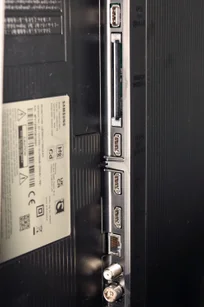
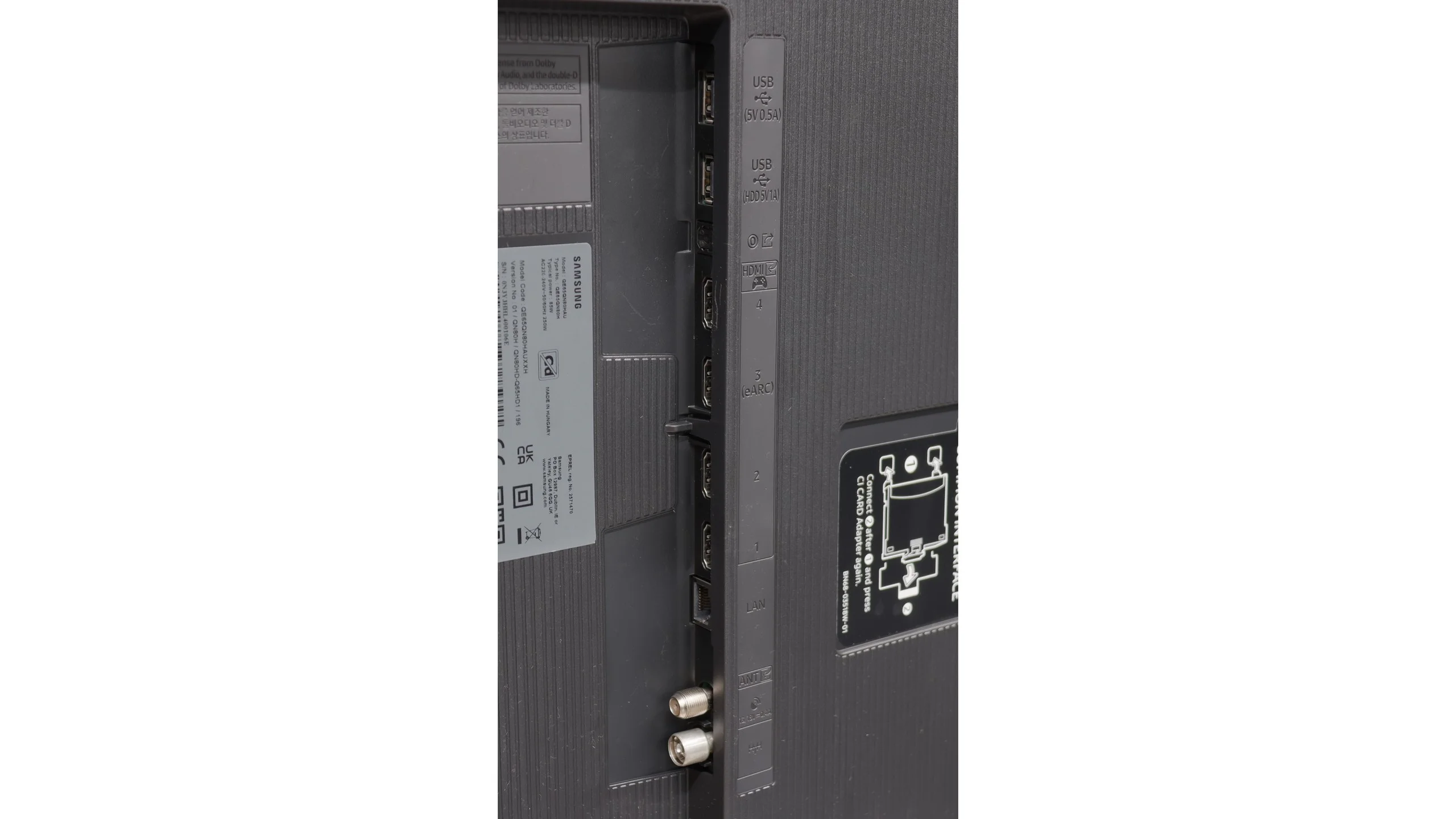
- HDMI inputs3 x HDMI 2.0, 0 x HDMI 2.10 x HDMI 2.0, 4 x HDMI 2.1 48Gbps
- OutputseARC (HDMI), ARC (HDMI)Toslink (Optical audio), eARC (HDMI), ARC (HDMI)
- Network InterfacesWi-Fi 2.4GHz, Wi-Fi 5GHz, Ethernet (LAN) 100MbpsWi-Fi 2.4GHz, Wi-Fi 5GHz, Ethernet (LAN) 100Mbps
- TV receptionDVB-T, DVB-T2, DVB-S, DVB-S2, DVB-CDVB-T, DVB-T2, DVB-S, DVB-S2
Classic features:
- Recording to USB (terrestrial TV)
- Recording programming
- Picture in Picture (PiP)
- RF remote control (no need to aim)
- Backlit remote control
- Teletext
- Audio only mode
- Bluetooth headphones support
- Simultaneous Bluetooth headphones & TV audio
Smart features:
- AirPlay
- Screen mirroring (Windows Miracast)
- Voice search
- Voice search in native language
- Ability to connect a keyboard and mouse
Sound connection options
- HDMI audioeARC (HDMI), ARC (HDMI)eARC (HDMI), ARC (HDMI)
- Other audio outputsToslink (Optical audio)
- Wireless audioBluetoothBluetooth
Supported audio formats (external HDMI eARC audio):
- Dolby Digital Plus 7.1
- Dolby True HD 7.1
- Dolby Atmos in Dolby Digital Plus (JOC)
- Dolby Atmos in Dolby True HD
- DTS:X in DTS-HD MA
- DTS-HD Master Audio
Senior accessibility
- Numeric keyboard on TV
- Font size adjustment
- Audio description
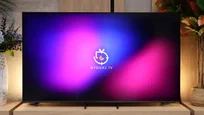
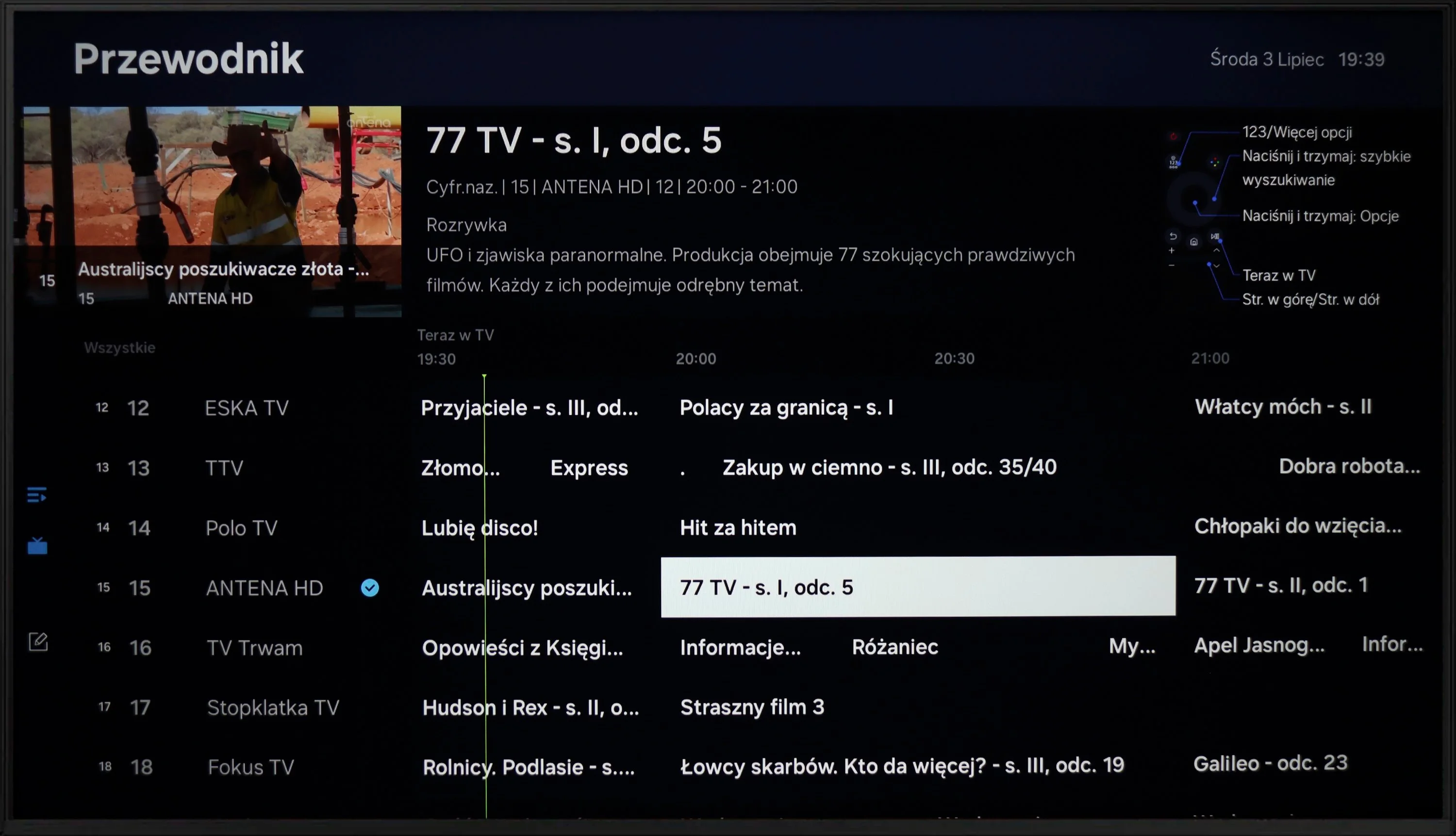
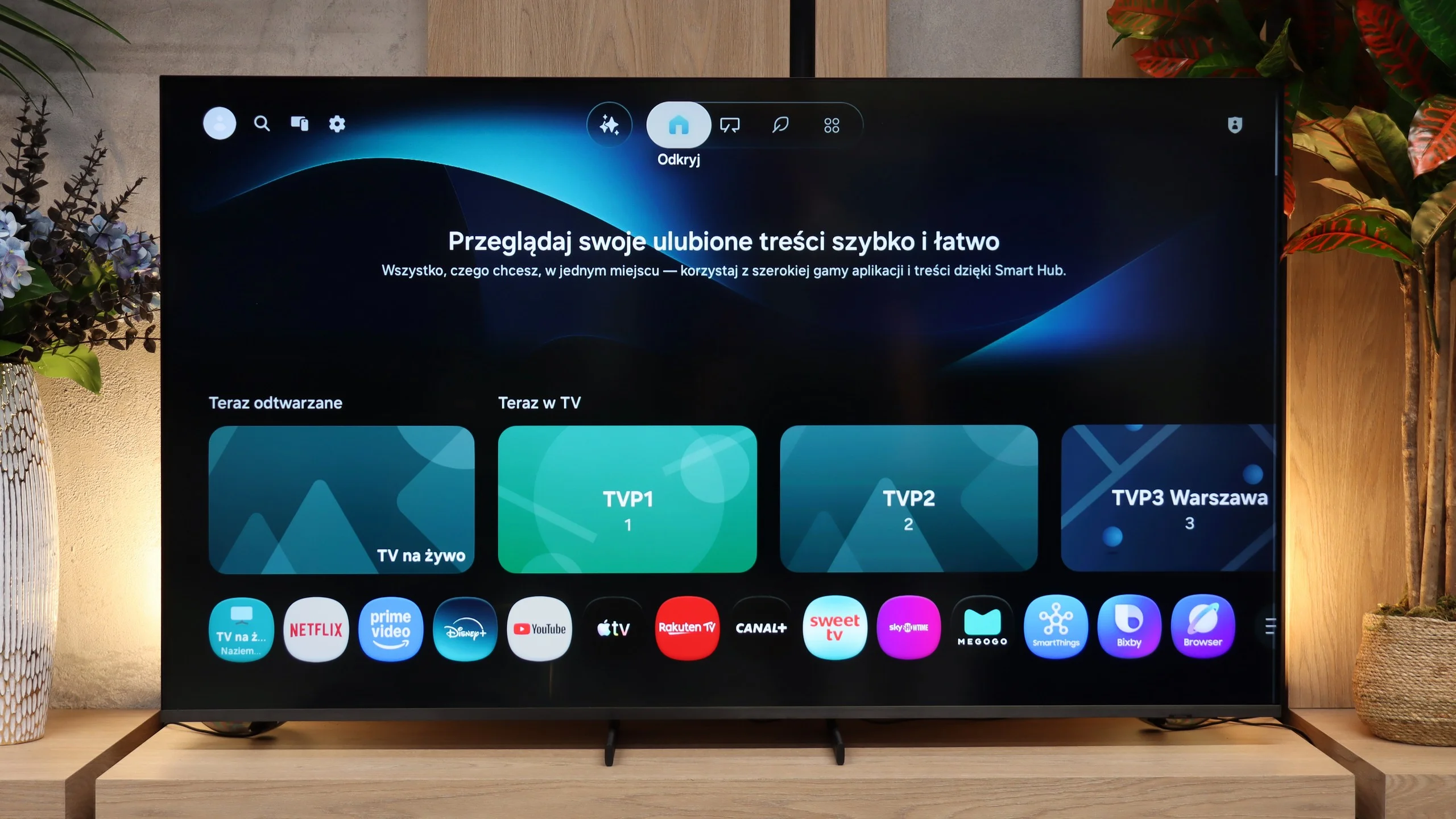
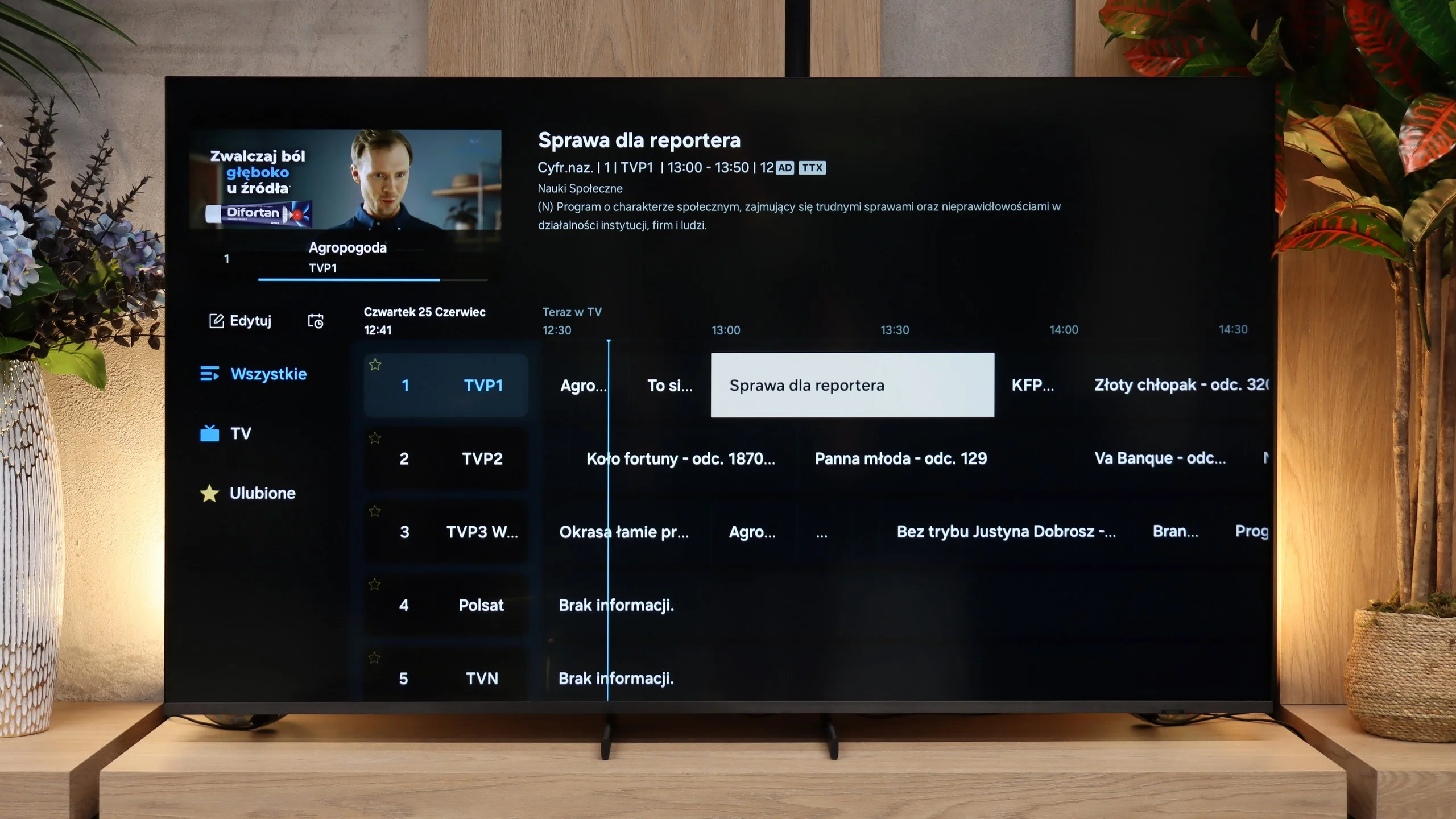
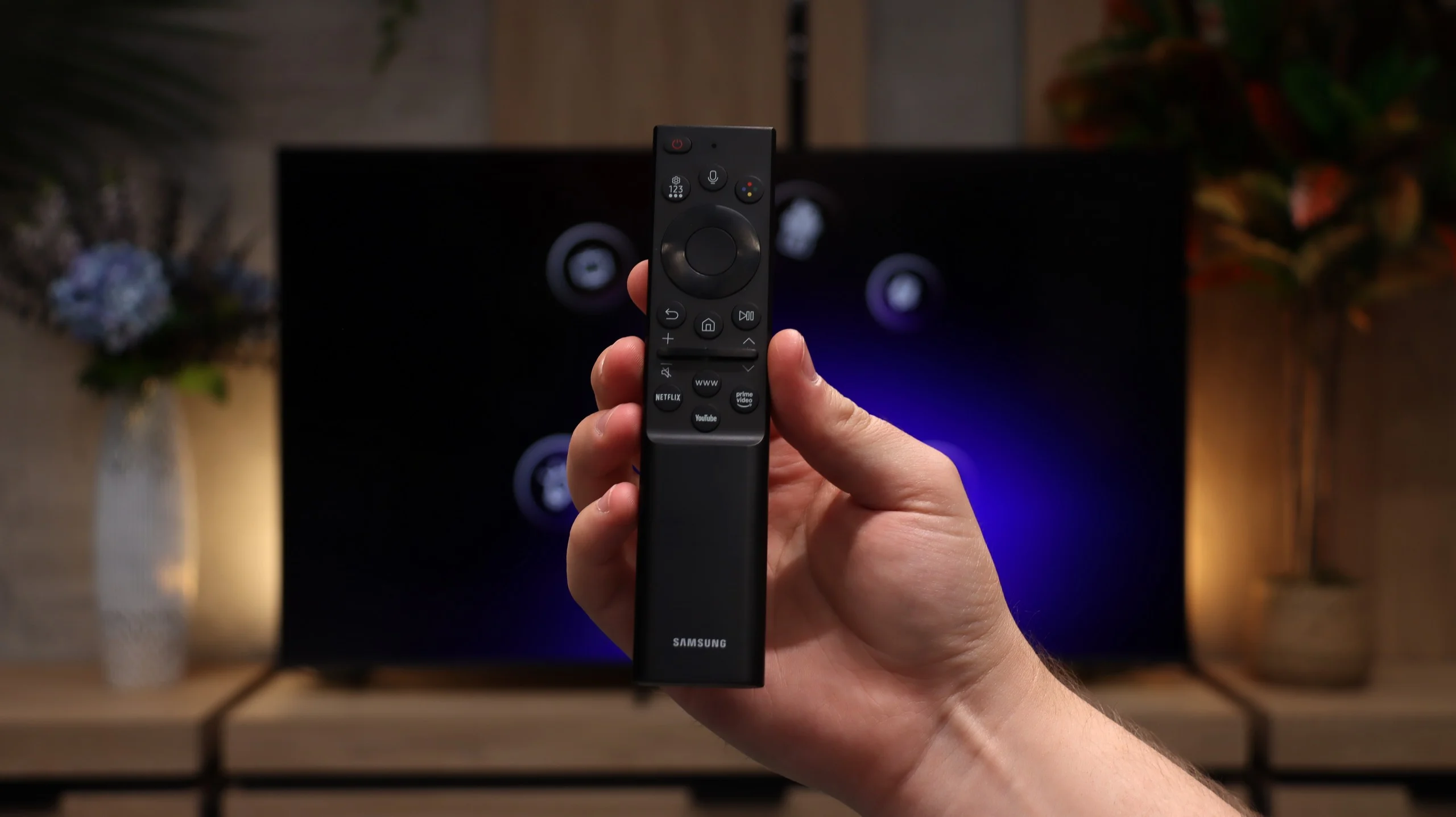
The operation of the Samsung DU7192 is powered by the proprietary Tizen system. This is quite well-known software, as the manufacturer has been developing it in its televisions for a really long time. Its main advantage is smooth performance and the absence of significant lags, which we can confirm through conducted tests. The biggest drawback, however, is its closed nature. Although the app store is quite extensive, we are still at the mercy of the manufacturer. Therefore, we will not be able to install any missing items, for example, from a USB drive. On the other hand, a benefit, especially for Apple device users, is the implementation of AirPlay, which allows easy mirroring of content from a device to the television. Fortunately, Samsung has also provided the option to connect a keyboard and mouse for much quicker navigation through the television menu. It is worth mentioning that the manufacturer has thankfully included a Bluetooth remote this year, which often wasn't the case in the past. The Tizen system has one more advantage. It integrates very well with external devices like the NC+ decoder or soundbars. The connection process is very quick and does not require special skills.
The Tizen system is very efficiently functioning software, which is certainly a strong advantage of the television. While more advanced users may complain about the lack of KODI, the rest will be satisfied.
Smart TV: Tizen
Samsung QN80H traditionally runs on Samsung's proprietary Tizen platform. This software is strongly focused on AI-based solutions and a whole range of other modern features. So things like AirPlay and phone screen mirroring (Screen Mirroring) work here without any problem. The system itself is fast, menu animations are smooth, and that's a clear plus. Tizen also includes many of Samsung's own solutions, led by the SmartThings app, which lets you conveniently manage smart devices throughout the home. Everything is controlled with a small, intuitive remote. Another major advantage is that Tizen is currently one of the longest-supported Smart TV platforms on the market. Samsung states it will support the device for up to 7 years from its launch.
Classic features
The situation is worse when it comes to more traditional TV features. What's missing? The QN80H doesn't allow recording TV programs to USB storage, so it lacks PVR functionality. There is also no classic remote with a numeric keypad, which may bother people who still like to change channels directly using numbers (without a set-top box). In this year's "80" series PIP is also missing, which was present in earlier models. So there's no way to display two images at once. It's clear that Samsung today is focusing more on online features than on solutions aimed at traditional TV users.
Apps
8.7/10
9.3/10






















Playing files from USB
9.1/10
9.1/10
Supported photo formats:
Maximum photo resolution:
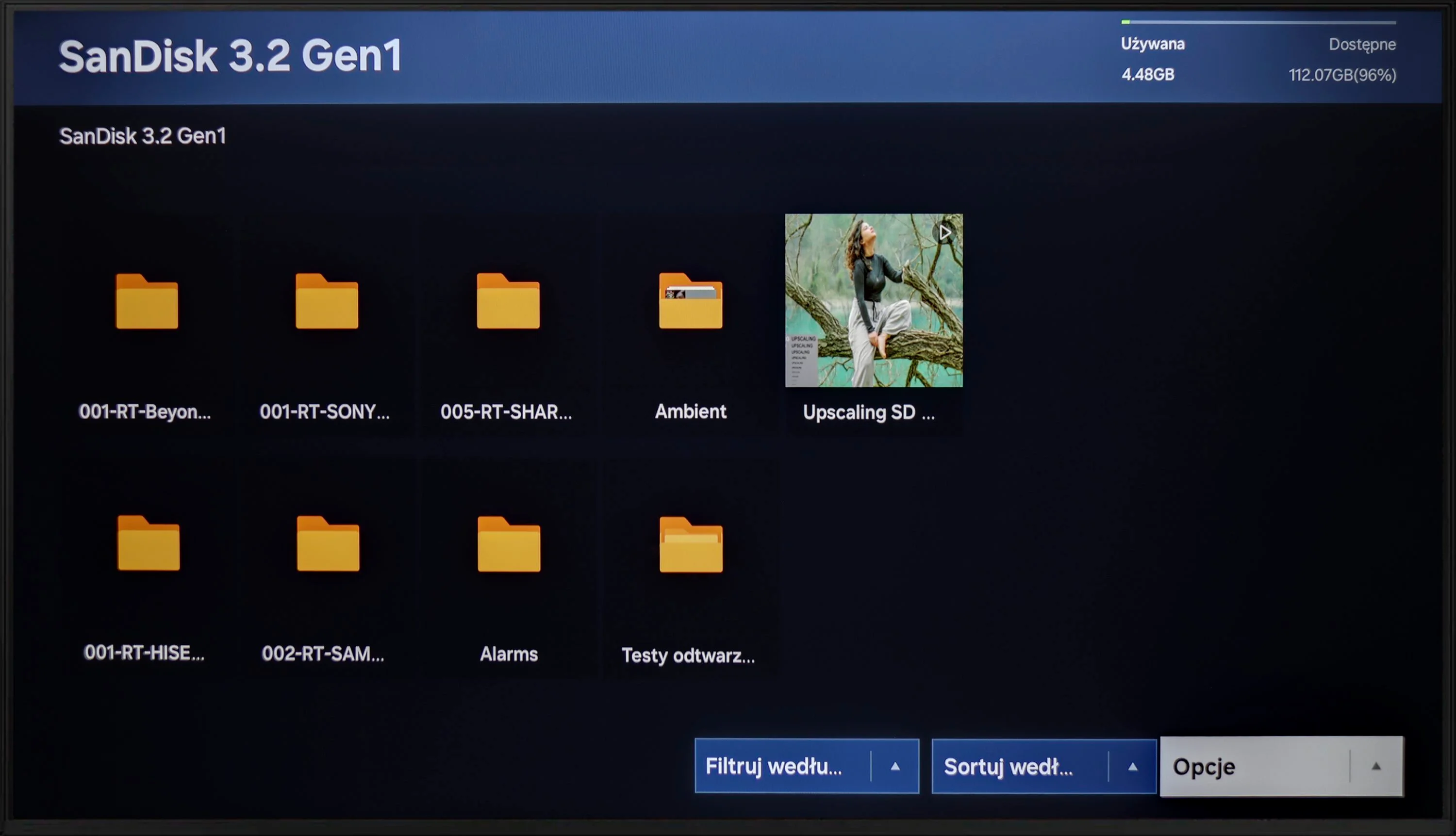
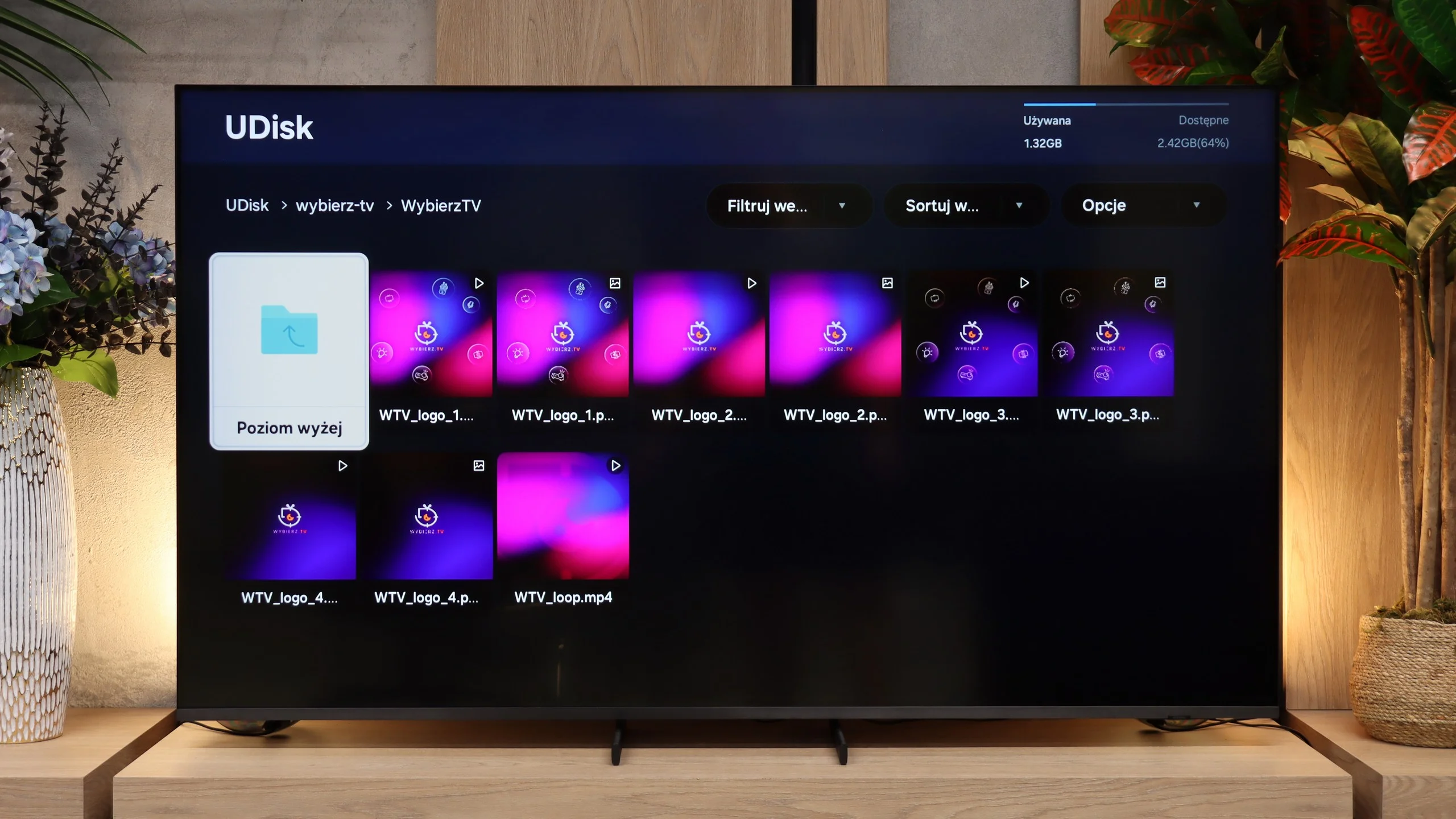
The built-in player Samsung DU7192 is a significant advantage. It handled almost all video and audio files prepared for the testing process excellently. The only exceptions in this regard are the Dolby Vision format (which is not surprising) and less popular codecs. Also worth noting is the support for Polish characters and the ability to change font colours. However, it performs worse with photo formats, as it only supports the popular JPEG. There is definitely a lack of formats such as PNG or Apple's HEIC.
The built-in media player on the QN80H works very well. If you connect a USB stick or an external USB drive, you shouldn't have any major problems playing your own content. The TV supports most popular video, audio and photo formats. The only thing missing for it to be ideal is broader support for less common image formats. A good example is HEIC, which is often used by Apple devices. The QN80H may not be able to open such files.
Sound
5.4/10
7.1/10
- Maximum volume83dB86dB
- Dolby Digital Plus 7.1
- Dolby True HD 7.1
- Dolby Atmos in Dolby Digital Plus (JOC)
- Dolby Atmos in Dolby True HD
- DTS:X in DTS-HD MA
- DTS-HD Master Audio
When evaluating the sound from DU7192, it should be noted that its drivers are not the best. Unfortunately, this has consequences in the form of very poor sound quality. We recommend using half of the volume scale due to possible distortions. Fortunately, the television offers a wide range of audio codecs, including the two most important ones: DTS-HD Master Audio and Dolby Digital Plus, which allows for the transmission of surround sound to an external device. This ensures high sound quality that will satisfy users demanding better audio experiences.
In terms of audio the Samsung QN80H sounds relatively decent. The 2.0 speaker setup with a total power of 30 W isn't exactly spectacular compared with flagship models, but it's perfectly adequate for everyday TV watching, the news or basic TV series. If, however, you want a more cinematic experience, the set offers full support for Dolby Atmos. By connecting a suitable soundbar or speakers you can expect a more spacious sound. Additionally, Samsung supports Q-Symphony, which allows simultaneous playback from the TV's speakers and a compatible soundbar.
An interesting new feature is one based on artificial intelligence. It's a special sport-watching mode called "Football AI". It was created to use sliders to artificially boost the commentator's voice above the stadium noise or... quite the opposite: mute it and leave only the crowd. Although the algorithm can be a little "clumsy" at times, this feature can be a lifesaver. Especially if you happen to tune into a match with a commentator you particularly can't stand... 😉
Sound Quality Test
No sound test video
Acoustic Measurements
No acoustic data
86dBC (Max)
75dBC
Reader comments
Comments are provided by the external service Disqus (Zeta Global). Once loaded, Disqus may set cookies and process data about your activity.
We will remember your choice on this device. Provider's privacy policy