PHILPS PUS9060 vs Samsung Q6F (IPS)

Direct comparison

The One 2025 / PUS9060 / PUS9000 / PUS9010

Info

Q6F

Available screen sizes: 43”50”55”65”85”

Available screen sizes: 55”

Panel type: LCD VA

Resolution: 3840x2160

System: Titan OS

Model year: 2025

Complete the survey to find out the result

Panel type: LCD IPS

Resolution: 3840x2160

System: Tizen

Model year: 2025

Complete the survey to find out the result

Overall rating

6.9

5.1

  • Movies and series in UHD quality

    6.7

    4.8

  • Classic TV, YouTube

    6.5

    4.7

  • Sports broadcasts (TV and apps)

    6.7

    4.9

  • Gaming on console

    8.5

    6.4

  • TV as a computer monitor

    8.6

    6.0

  • Watching in bright light

    6.0

    1.8

  • Utility functions

    6.1

    5.9

  • Apps

    6.7

    9.3

  • Sound quality

    6.6

    5.8

Advantages

  • VA matrix with very good native contrast

  • Ambilight TV system, which enhances perceived contrast

  • Support for dynamic HDR formats: Dolby Vision and HDR10+

  • Great for gamers: 4K 120/144 Hz support, VRR, ALLM, HGiG, G-Sync Compatible

  • Low input lag

  • Very good compatibility with PCs

  • Support for multiple audio formats - Dolby Atmos and DTS

  • Illuminated remote control with numeric keypad

  • Tizen System: Works quickly, does not lag and

  • Large application library (Netflix, YouTube, HBO, Disney)

  • IPS matrix provides a good image even when you are not sitting directly in front of it

  • Great font readability – good as a large monitor for working with text

  • Basic features for gamers: VRR and ALLM

  • Very low input lag

  • User-friendly remote for seniors: Classic layout with numeric buttons

  • Very attractive price

Disadvantages

No like
  • The Titan OS operating system can be underdeveloped

  • Limited number of applications

  • Average viewing angles

  • Lack of television functions (Recording to USB, PIP, Audio-only mode)

  • Infrared remote control (must be aimed at the screen)

  • A brightness of 250 nits is too low to notice any difference in HDR mode

  • The low contrast of the IPS panel spoils evening film screenings

  • An average brightness of 150 nits during the day makes it hard to see anything in a sunny room

  • No optical output

  • Infrared remote control (requires aiming at the screen)

Our verdict

Philips PUS9000 is proof that the manufacturer not only keeps a finger on the pulse but also listens attentively to its users. In the latest iteration of this popular series, there is a noticeable progress – especially compared to the previous generation that we had the opportunity to test. The use of a VA panel has brought a significant improvement in black levels, which finally presents itself at an acceptable level. A brightness of 500 nits does not disappoint even in sunlit rooms, and support for a wide range of HDR formats – including Dolby Vision and HDR10+ – complements the image of a well-prepared device. Additionally, the support for spatial audio technologies such as Dolby Atmos and DTS only enhances the positive impression, especially since the presence of all the aforementioned formats is not a given, even in the priciest models of 2025. But what truly sets this model apart from the competition is the Ambilight system. The multicoloured backlighting not only makes a visual impression – in a darkened room, it can enhance perceived contrast and completely transform the experience of watching a film or series. The gaming mode also deserves recognition. 144 Hz, low input lag, variable refresh rate, G-Sync compatibility, and Game Bar function – everything one could expect from a device designed with consoles and PC in mind. Unfortunately, not everything works perfectly. The Titan OS system, while operating relatively smoothly, still suffers from shortcomings – many popular applications are lacking, minor bugs appear, and the overall experience can be somewhat clunky in everyday use. Moreover, the remote, despite its modern appearance, still uses infrared and requires aiming at the television. What a pity.

So, who is the PUS9060 for? For those who want to immerse themselves in an evening session with impressive Ambilight, game on consoles, and stream content from external devices. In such a scenario, “The One” may indeed turn out to be "the one" – especially since its price is not off-putting on release day.
Samsung Q6F is a television that is difficult to evaluate through the lens of typical QLED models. We must remember that we are dealing with a budget-friendly proposal aimed at a very specific audience. If you are looking for an inexpensive device with the logo of a well-known manufacturer that simply needs to function, display multimedia, and offer classic remote control functionality with buttons – the Q6F might be an interesting option for you. It is a great choice for a senior citizen or someone who needs a large screen "on the cheap" for everyday television, where the IPS matrix and its good viewing angles truly make a difference. However, we must say this bluntly: the biggest complaint about this model is its very low brightness and poor black levels. These are two foundations on which image quality is built, and here they are simply very fragile. This is definitely not a television on which we would recommend watching HDR content – here, that format exists practically only in name. Although the Q6F has a QLED filter and belongs to the Quantum Dot family, utilising the full potential of this technology is practically impossible, as the device is technically unsuitable for such content. We know that it tempts with its very low price and may appeal to many people who do not have high demands. However, you need to know that the label "QLED" suggesting a premium product is in this case far from what Samsung has accustomed us to in recent years. This is a ticket to the world of Samsung, but in a very basic version.

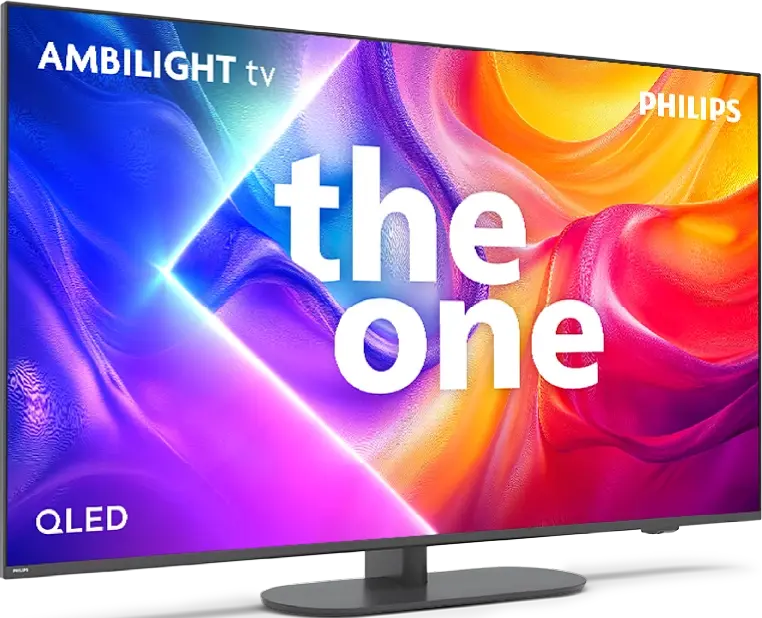
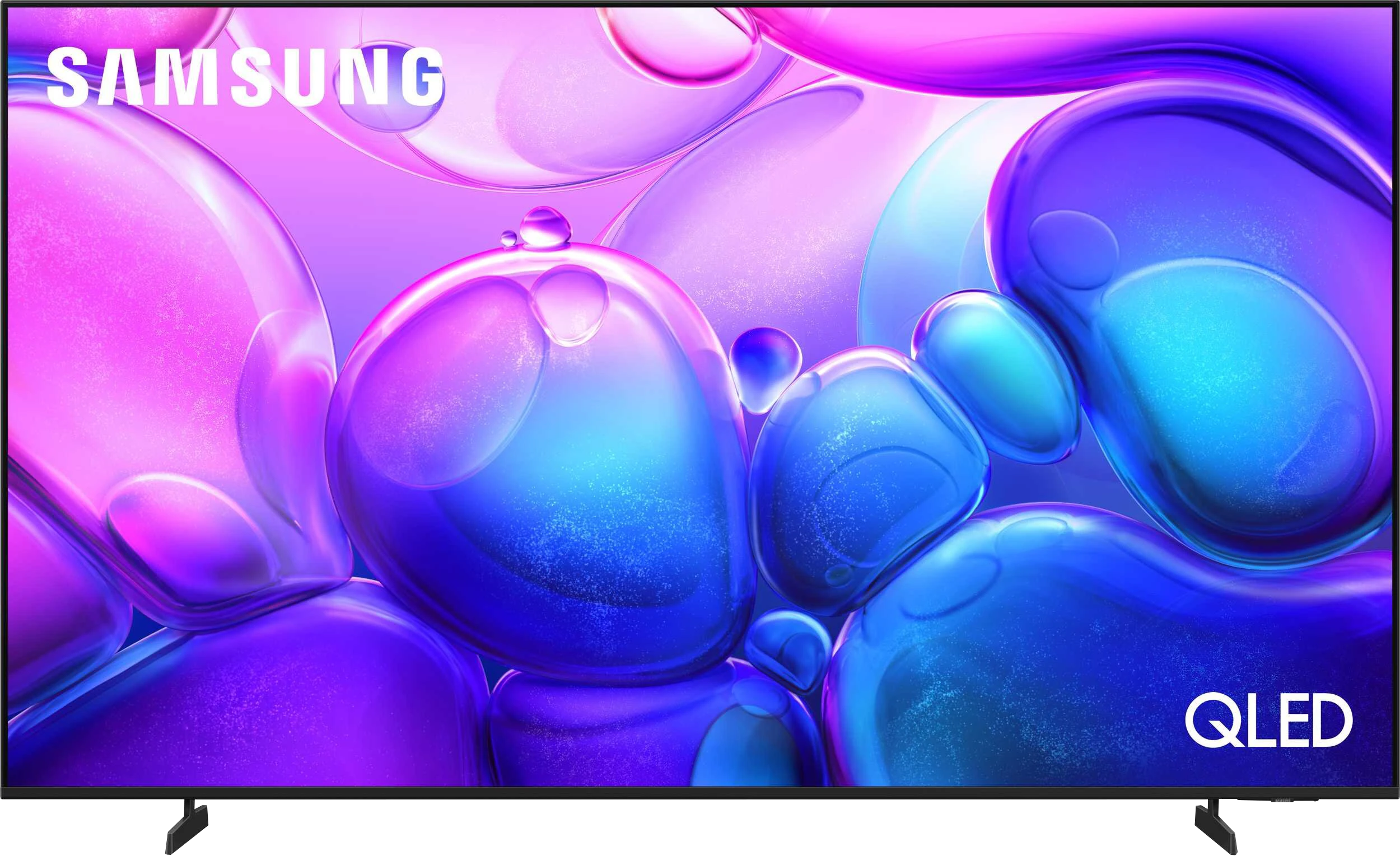
TV appearance

HDMI inputs
0 x HDMI 2.0, 4 x HDMI 2.1 (48Gbps)
3 x HDMI 2.0, 0 x HDMI 2.1
Other inputs
Toslink (Optical audio)
Outputs
Toslink (Optical audio), eARC (HDMI), ARC (HDMI), Mini-Jack (Headphones)
eARC (HDMI), ARC (HDMI)
Network Interfaces
Wi-Fi 2.4GHz, Wi-Fi 5GHz, Ethernet (LAN) 100Mbps
Build quality
Good
Average
Stand type
Central
Legs
Bezel color
Graphite
Graphite
Stand
Fixed
Fixed
Accessories
Stand
Stand

Contrast and black detail

6.2/10

1.9/10

Local dimming function: No

Local dimming function: No

Contrast:

Review PHILPS PUS9060 Contrast and black detail

Result

6,000:1

Review PHILPS PUS9060 Contrast and black detail

Result

6,750:1

Review PHILPS PUS9060 Contrast and black detail

Result

7,300:1

Review PHILPS PUS9060 Contrast and black detail

Result

6,000:1

Review PHILPS PUS9060 Contrast and black detail

Result

6,800:1

Review Samsung Q6F (IPS) Contrast and black detail

Result

900:1

Review Samsung Q6F (IPS) Contrast and black detail

Result

1,000:1

Review Samsung Q6F (IPS) Contrast and black detail

Result

1,050:1

Review Samsung Q6F (IPS) Contrast and black detail

Result

1,050:1

Review Samsung Q6F (IPS) Contrast and black detail

Result

900:1

Halo effect and black detail visibility:

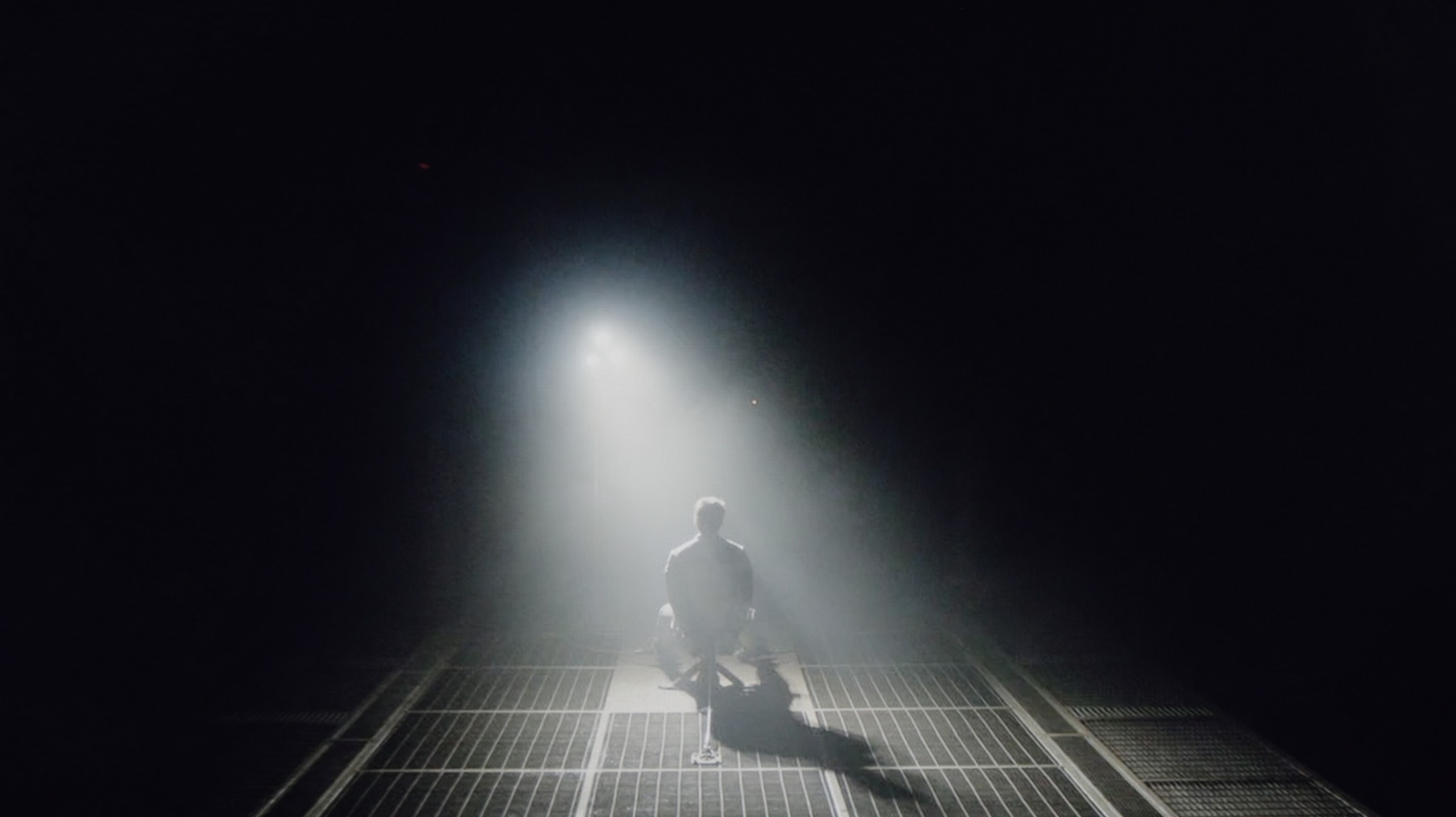
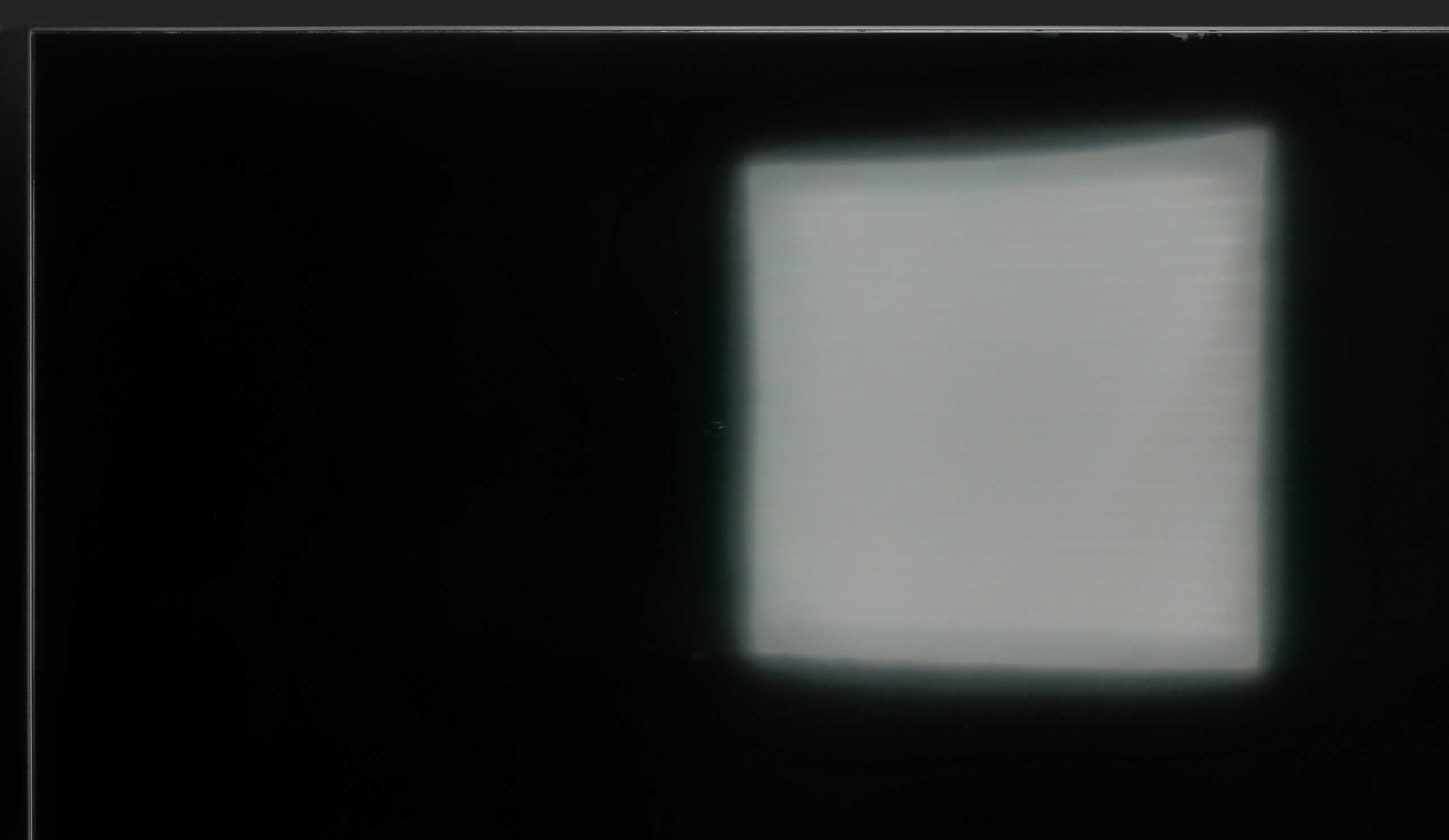
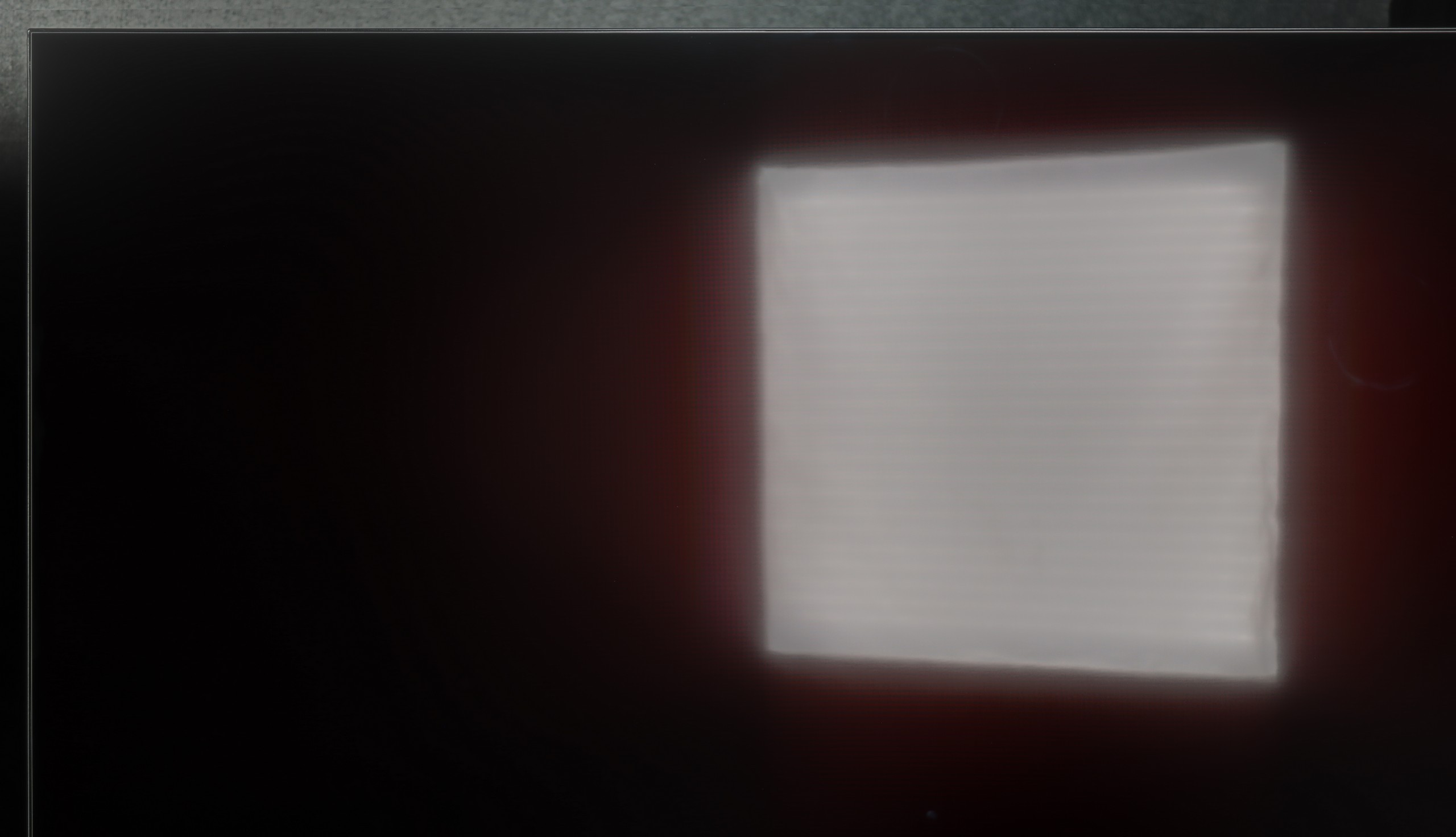
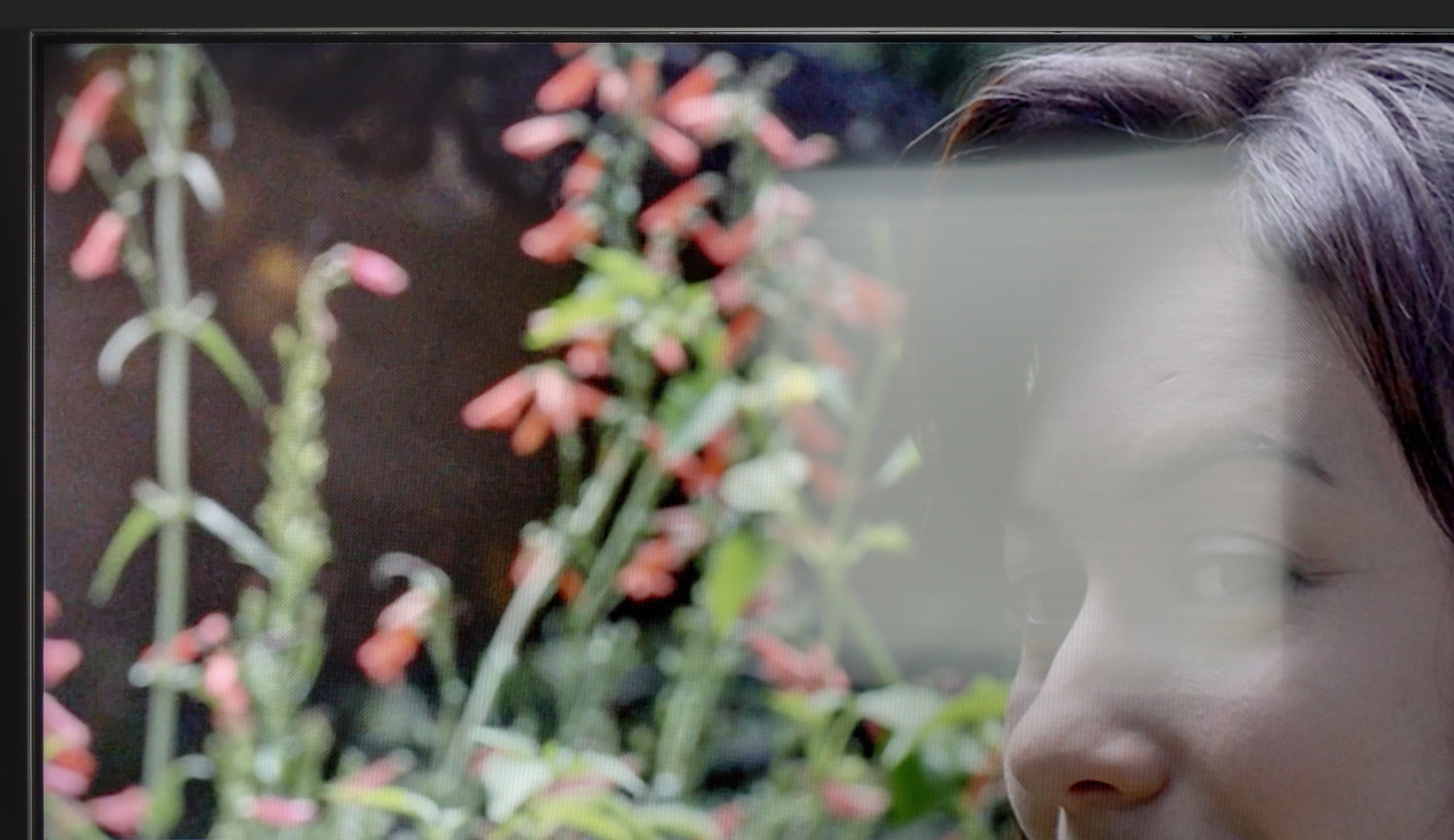
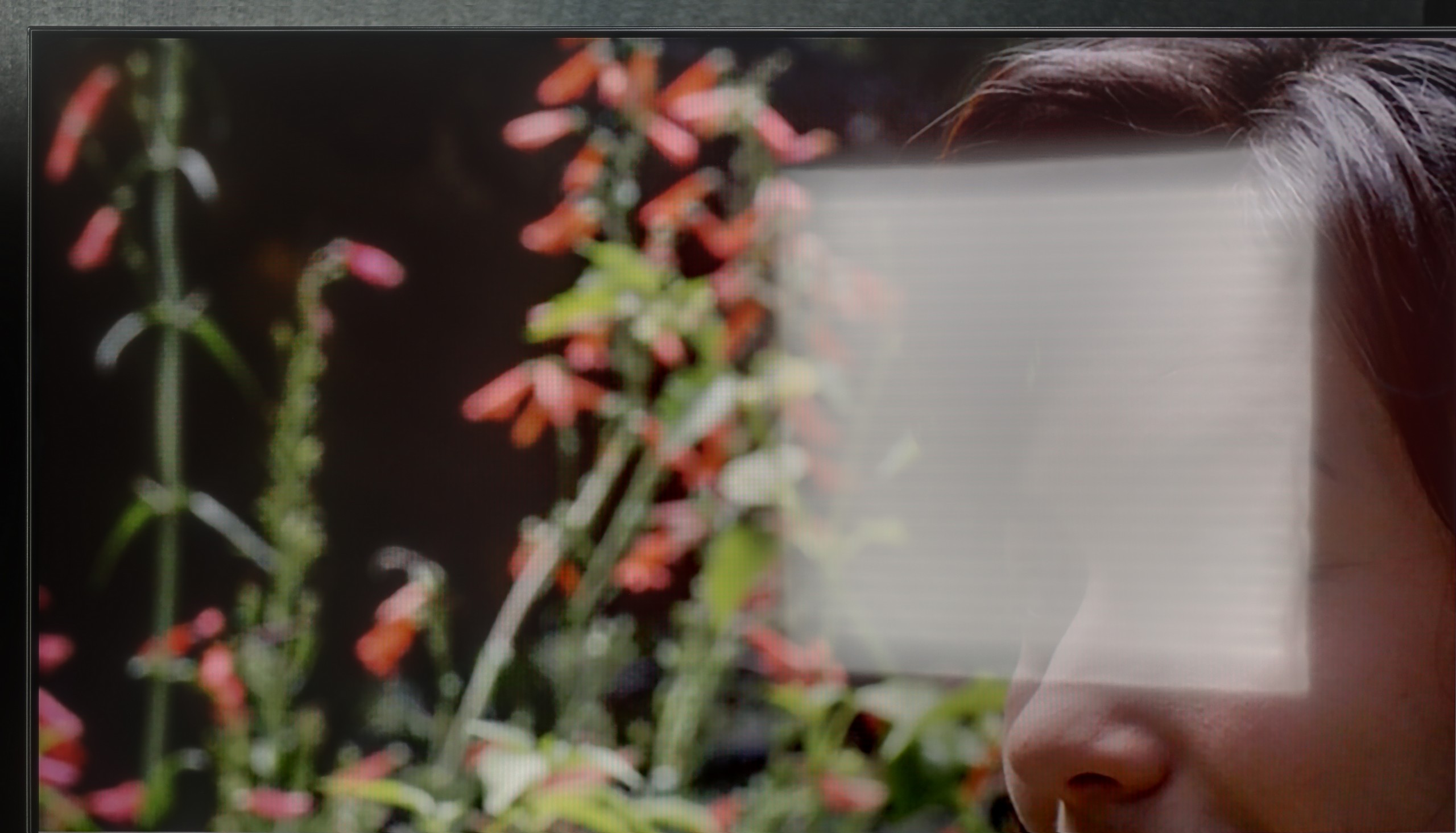
Check the visibility of bright lights on a dark background. Mini-LEDs often struggle with this. The photo does not compare black levels – that’s what the video below is for.

The video accurately shows differences in contrast and black levels between TVs, as well as potential issues: halo around bright objects or Mini-LED zone operation visible as brightness jumps.

The PUS9060 is a television that, in this version, is equipped with a VA panel – and this is immediately evident in the contrast tests. In the tested images, the television achieved really good results, at around 6500:1. Such a result alone indicates that the television has a very decent black level. Unfortunately, the PUS9060 is not equipped with local dimming technology, and as a result, the black levels in the dark may appear to have a tint resembling navy blue. Fortunately, the The One series is known, among other things, for the famous Ambilight system, which significantly improves perceived contrast, and thus ‘tricks’ our eye into seeing a better black level. It may seem simple, but it is remarkably useful. Therefore, we recommend using this television in the evening with this system switched on. It doesn’t necessarily have to be multicoloured and track the picture – it can simply be white.

It is here that it is clearly visible where the manufacturer decided to cut costs. The IPS matrix used, despite being supported by QLED technology, highlights issues with a lack of depth in the image. Results at the level of 1000:1 speak for themselves – the black in this model unfortunately resembles grey. One can try to mitigate the situation by turning on the light in the room, preferably placing it directly behind the television, which allows us to somewhat trick our eyesight. However, no matter what is said, the contrast in the Q6F with the IPS panel is simply weak and this will be noticeable in dark scenes.
HDR effect quality

5.8/10

3/10

Supported formats
HDR10, HDR10+, Dolby Vision, HLG
HDR10, HDR10+
Color gamut coverage
DCI P3: 85.2%, Bt.2020: 62.2%
DCI P3: 87.7%, Bt.2020: 65.7%

Luminance measurements in HDR:

Review PHILPS PUS9060 Brightness measurement

Result

507 nit

Review PHILPS PUS9060 Brightness measurement

Result

430 nit

Review PHILPS PUS9060 Brightness measurement

Result

542 nit

Review PHILPS PUS9060 Brightness measurement

Result

551 nit

Review PHILPS PUS9060 Brightness measurement

Result

545 nit

Review Samsung Q6F (IPS) Brightness measurement

Result

202 nit

Review Samsung Q6F (IPS) Brightness measurement

Result

152 nit

Review Samsung Q6F (IPS) Brightness measurement

Result

247 nit

Review Samsung Q6F (IPS) Brightness measurement

Result

93 nit

Review Samsung Q6F (IPS) Brightness measurement

Result

256 nit

Scene from the movie “Pan” (about 2800 nits)

Scene from the movie “Billy Lynn” (about 1100 nits)

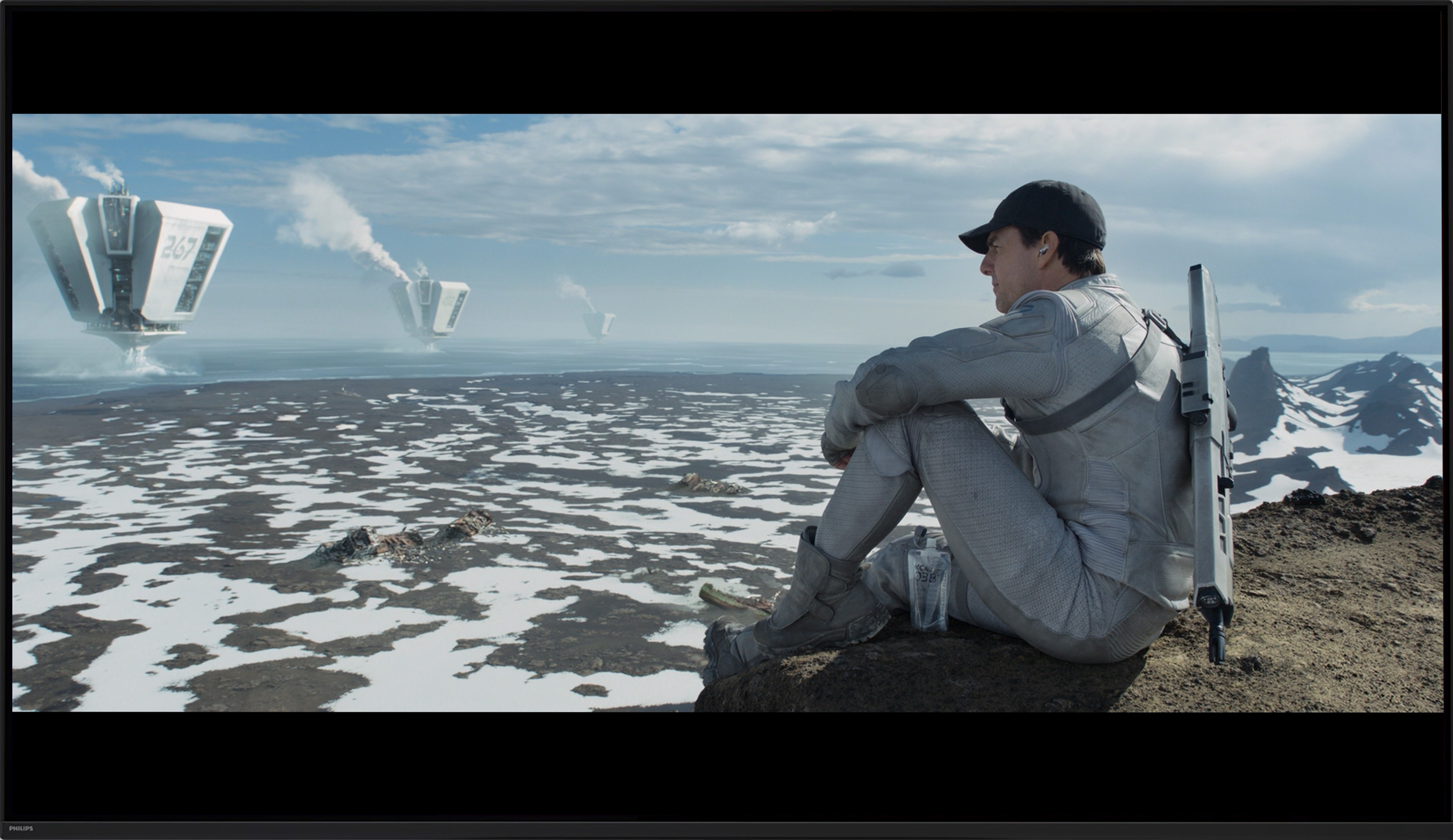
The photos show two HDR10 movies. 'Pan' is one of the brightest productions ever made, while 'Billy Lynn' (soldier) has brightness typical of streaming (Netflix, Prime, HBO MAX). Notice the intensity of effects and detail in whites.

Static HDR10

The photos present the visibility of white details in various HDR formats. They do not show brightness differences between TVs (these can be compared in the previous gallery).

Dynamic: Dolby Vision

Dynamic: HDR10+

The photos present the visibility of white details in various HDR formats. They do not show brightness differences between TVs (these can be compared in the previous gallery).

HDR luminance chart:

Samsung Q6F (IPS)

PHILPS PUS9060

The One is bright enough to enjoy films recorded in HDR format. The average brightness of this model is around 500 nits, so we can easily expect a pleasant viewing experience for films from streaming platforms. Of course – it could always be better, because when it comes to brightness, you can never have too much for this type of content. Unfortunately, a disappointing surprise may be the coverage of the DCI-P3 colour palette offered by the PUS9060. Although the manufacturer boasts about using a QLED filter here (in reality, it’s PFS LED), it's hard to speak of any positive effects from its operation. 85% coverage of the DCI-P3 palette is certainly not a level to be proud of in 2025 – particularly in a television advertised as QLED.

The Samsung Q6F is, unfortunately, a very dark model. Its peak brightness in HDR does not exceed 250 nits, which is a value that is decidedly too low to even talk about any effect of “high dynamic range,” or HDR. In practice, it’s better to stick to content in SDR format, which simply looks more predictable on this television. Another problem is the global dimming technique – in scenes with a lot of black, the television drastically dims the entire panel to artificially improve the black levels. This causes the image to become even darker, and the brightness can drop below 100 nits. The only consolation is supposed to be the QLED technology, but even here it is average. The layer of quantum dots used is not of the highest quality, as the coverage of the DCI-P3 colour palette does not exceed 90%. As a result, the colours in HDR content may simply appear under-saturated.

Factory color reproduction

5.5/10

5.1/10

This gallery shows how colors change after professional TV calibration. If you notice the difference, we recommend ordering this service at SkalibrujTV.com.

Factory Mode

After calibration

This gallery shows how colors change after professional TV calibration. If you notice the difference, we recommend ordering this service at SkalibrujTV.com.

Factory Mode

After calibration

We tested the PUS9060 in the best factory mode available – of course, we are referring to the movie mode. Unfortunately, the best in this case does not mean good. The image in this mode was distinctly yellowish and shifted towards orange tones. The white balance on this television was definitely too warm, giving the entire scene an artificial, somewhat “tanned” appearance. This led to significant colour errors, which in the worst cases exceeded a delta E value of 6 – thus they were visible to the naked eye. The situation was reversed in HDR mode, where the image became too blue and too cool in perception. Additionally, there was a slight increase in brightness – the gamma curve and EOTF suggested that the television slightly brightened the image, which was also evident in the comparative photo below.

We tested the television in Filmmaker mode, which showed us two completely different facets of this model. Looking at SDR content, we were genuinely shocked at how good this television looks straight out of the box. It was really difficult to find fault with anything here. Despite a slight 'muddiness' in the white balance or somewhat brightened details in the blacks (which directly stem from the design of the IPS panel), the colour errors hovered around a level of '2'. This result is not only surprisingly good but downright amazing, considering the price of this device.

On the other hand, what the Q6F displayed in terms of colours after switching to HDR mode was a very unpleasant surprise. The errors in colour reproduction and palette were so enormous that our charts literally ran out of scale. Of course, since Samsung even in such an affordable model offers very extensive calibration options, we decided to approach the issue professionally and see what could be done during calibration.

Color reproduction after calibration

8/10

6.5/10

The photos show how movies look on the TV. Pay attention to black detail visibility, colors, and shadow tint.

The photos show how movies look on the TV. Pay attention to black detail visibility, colors, and shadow tint.

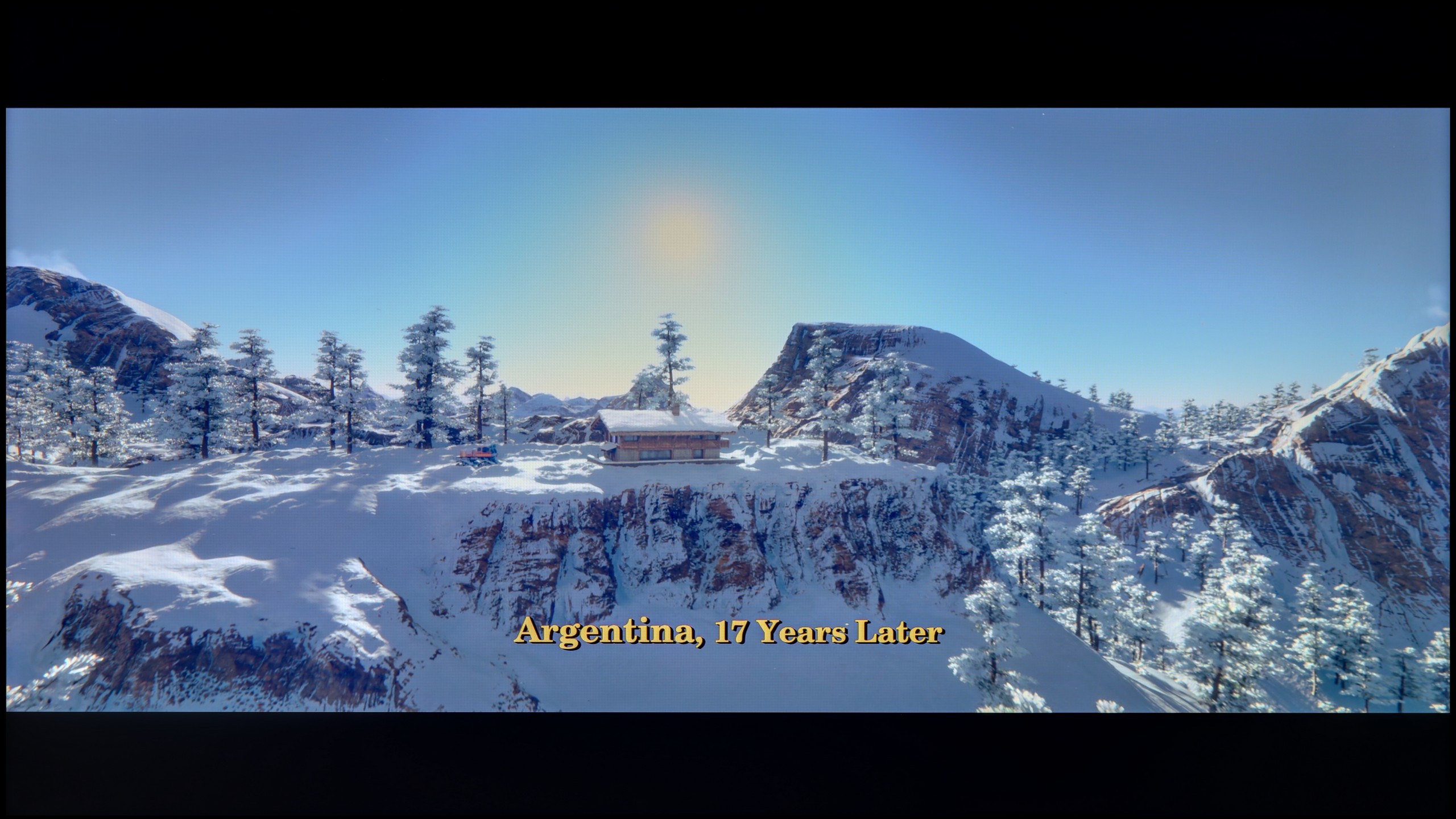
Thanks to calibration in film mode, we managed to completely eliminate the yellow-orange tint, which significantly improved the perception of the entire scene. The image has become much more visually pleasing, although it is still far from reference settings. It may now appear slightly bluish, but it is still a definite improvement compared to the factory settings.

Unfortunately, we were not able to significantly improve the brightness characteristics, but this is already a matter of the television's design - the absence of local dimming limits the ability to precisely manage brightness. The PUS9060 simply cannot dynamically adjust luminance as more advanced models do. Nevertheless, after calibration, the overall experience is much more enjoyable, especially with film material.

After our calibration, the colours in SDR mode looked even better – the result is truly surprising, as colour errors at the '1' level are something generally seen in devices costing several thousand pounds. In this regard, the Q6F is really an excellent screen for everyday television, less demanding series or films. Unfortunately, our intervention in the HDR mode did not bring a noticeable improvement. The television, due to its poor blacks and low coverage of a wide colour gamut, still has significant issues with proper colour saturation, especially reds. This is an example of a device where HDR exists mainly as a label on the box – for everyday use, we definitely recommend watching content in SDR format.

Smoothness of tonal transitions

8.9/10

9/10

These are selected scenes that show smooth tonal transitions from one color to another. If you see distinct banding, it’s the TV panel’s fault.

These are selected scenes that show smooth tonal transitions from one color to another. If you see distinct banding, it’s the TV panel’s fault.

These are selected scenes that show smooth tonal transitions from one color to another. If you see distinct banding, it’s the TV panel’s fault.

These are selected scenes that show smooth tonal transitions from one color to another. If you see distinct banding, it’s the TV panel’s fault.

PHILIPS PUS9060 handles tonal transitions excellently – we did not notice any serious problems with colour blending. The gradation looks natural, without unpleasant bands or harsh transitions. We could only nitpick the most challenging dark scenes – that is where minimal imperfections appear, but overall it looks quite OK, especially for the class of equipment. For most users, the effect will be more than satisfactory.

Samsung Q6F handles the phenomenon of posterisation very well. In most scenes, the colour transitions are smooth and there are no noticeable problematic "steps" when blending colours. Only in very extreme moments, particularly in scenes with brightness close to pure grey, can light banding be detected. However, to be honest, we personally found the issue of slight clouding (uneven backlighting) and the poor contrast of the IPS panel to be more bothersome than the tonal transitions themselves.

Image scaling and smoothness of tonal transitions

6.7/10

5/10

Image without overscan on the SD signal
OK
No
Smooth transition function
OK
OK

Smooth transition function

The match photo shows how the TV smooths weak tonal transitions in low-quality video.

Image scaling SD (576i)

The model photo shows how it handles upscaling of SD material.

In the PUS9060, we find yet another version of the image processor called by Philips the P5 Perfect Picture, which is designed to improve the image – especially the imperfect one. The television features a distortion reduction function, which serves to smooth tonal transitions, i.e., those "colour joins" we mentioned earlier. This function does this very effectively – there is no noticeable harsh gradation of colours, but unfortunately, it works so aggressively that it sometimes dulls desired elements, such as the textures of materials or film grain. So one can consider this a certain compromise. We would rather not recommend using this function for films, but for more casual content – e.g., YouTube or standard television – it is perfectly fine.

The P5 processor also aims to improve the quality of lower-resolution images and does so quite effectively. The test image with the model is very soft – sometimes overly so – but this can be easily adjusted with the sharpness slider to match personal preferences. It is also pleasing that the television does not cut off edges in SD materials – which unfortunately still occurs in some TV models.

Q6F performs very well in upscaling lower-resolution content to native 4K. The scaling here is surprisingly good, even for such an inexpensive television from the QLED series. The only downside is the situation where we are watching very low-resolution materials, such as 576p (typical for old DVD players) – in which case the image may be slightly cropped. This is due to the fact that the television does not allow the Overscan function to be turned off, which is a typical issue with Samsung devices.

The situation is completely different when it comes to digital processing, specifically the attempt to smooth the image of unwanted artifacts. Here the television completely fails. Although there is a function in the menu called "Noise Reduction," it yields no visible results regardless of the slider setting. The only thing it manages to do is introduce undesired errors in the image. Despite its presence in the system, we definitely do not recommend using it.

Blur and motion smoothness

7.8/10

4.6/10

Maximum refresh rate of the panel
144Hz
60Hz
Film motion smoothing option
OK
OK
Blur reduction option
OK
No
BFI function 60Hz
No
Yes, 60Hz (image flickers)
BFI function 120Hz
No
-
Brightness drop with BFI
-%
49%

Blur (native resolution, maximum refresh rate):

Blur (BFI function enabled):

Image flickers in this mode

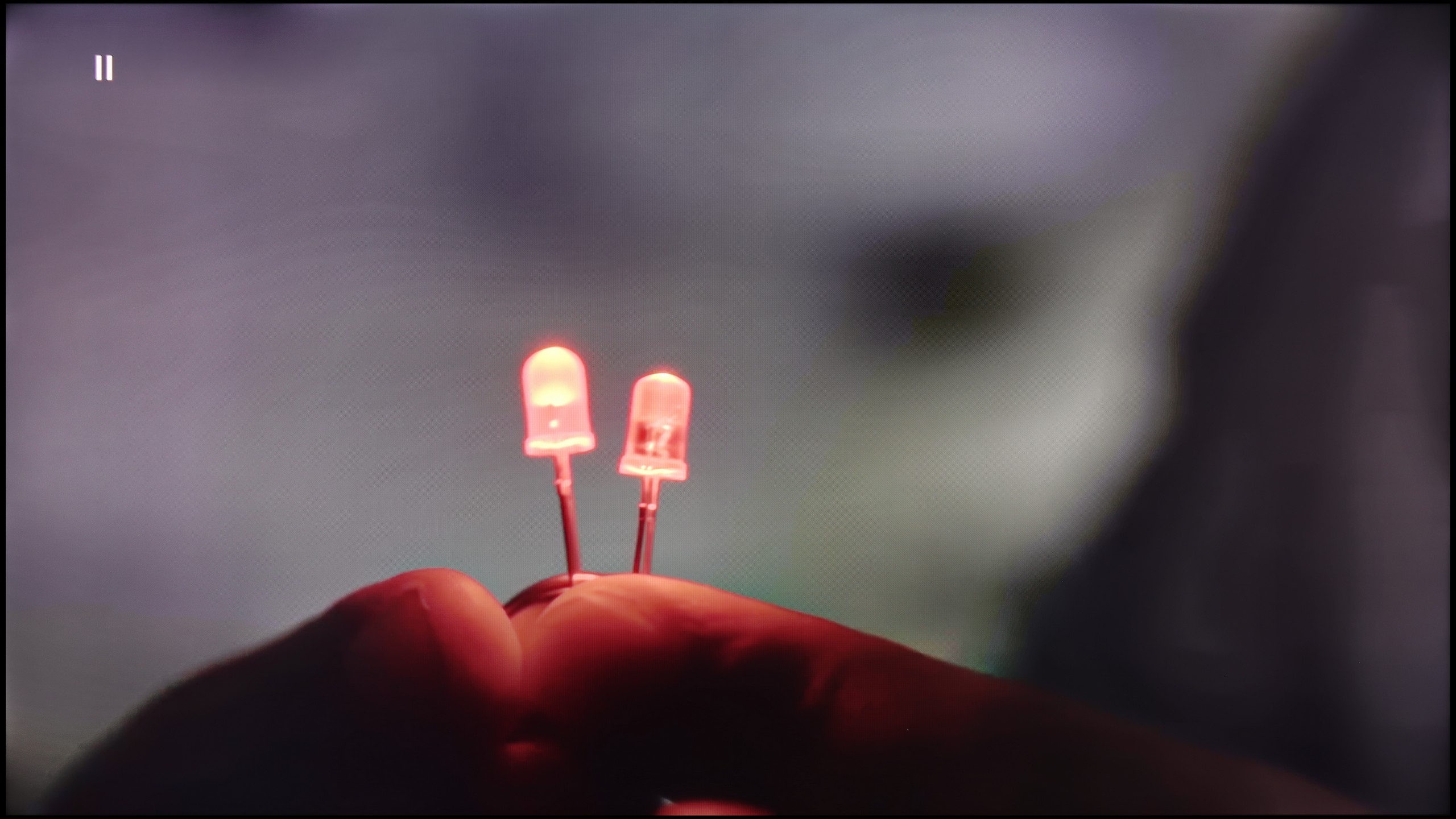
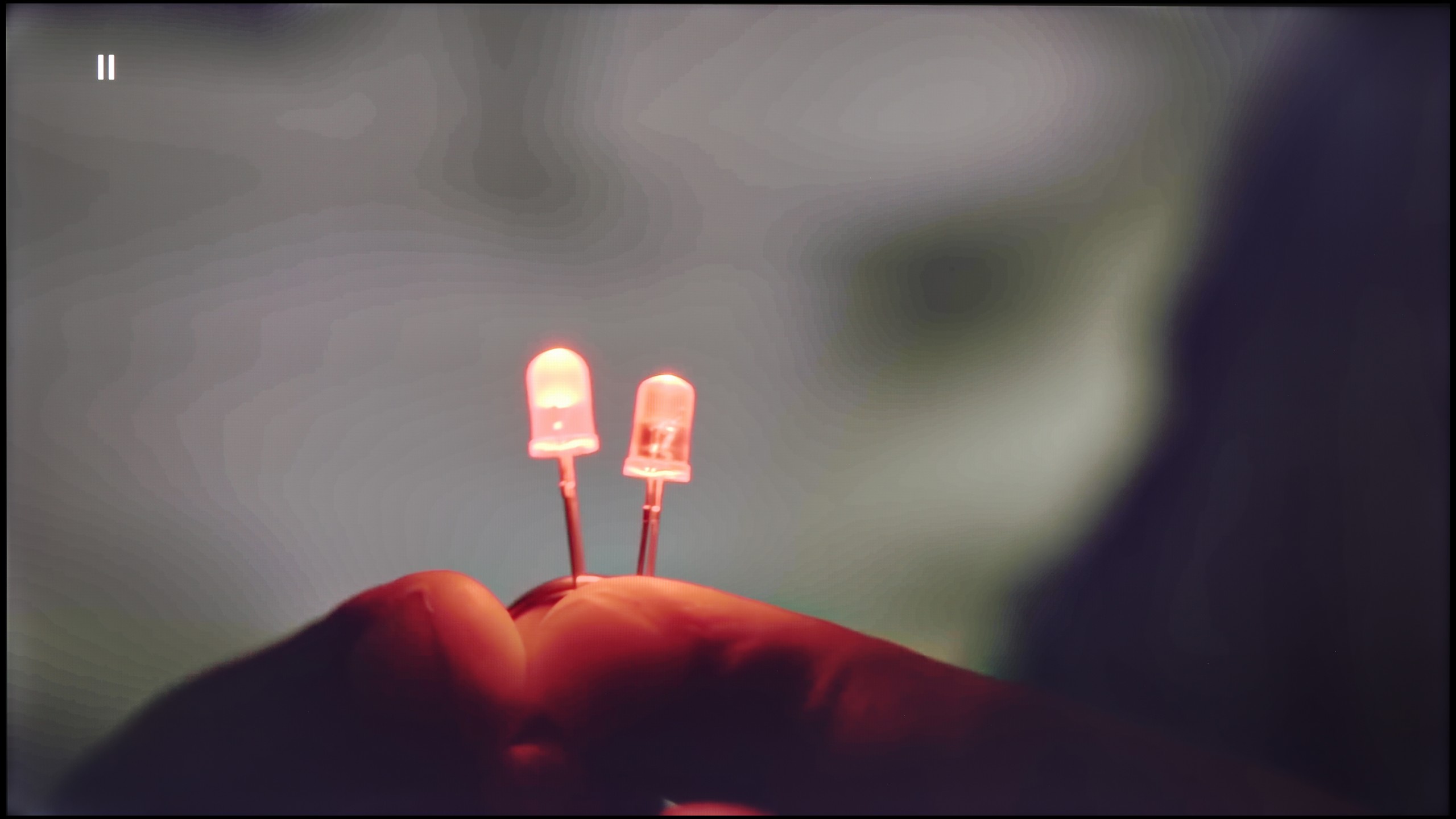
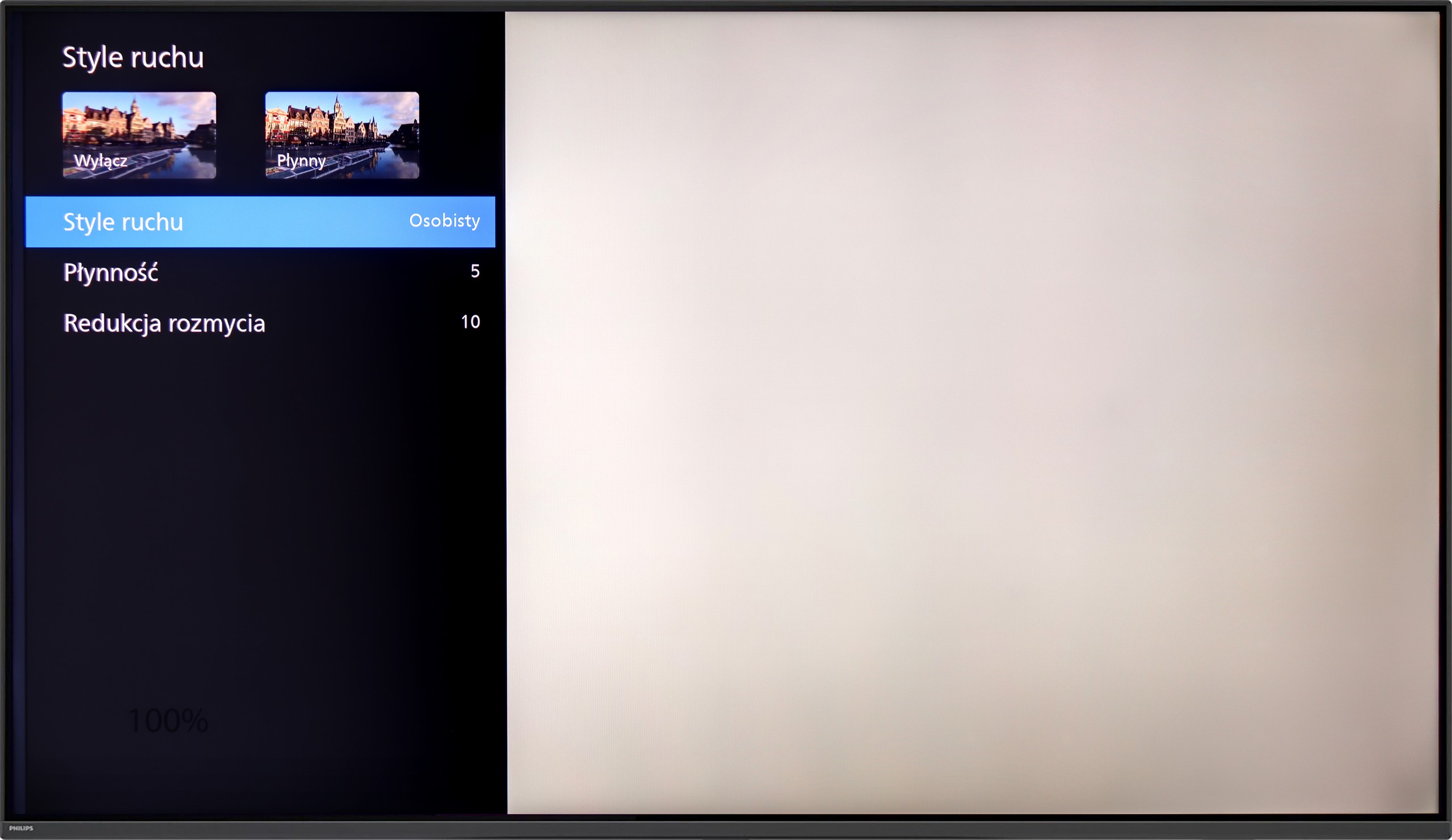
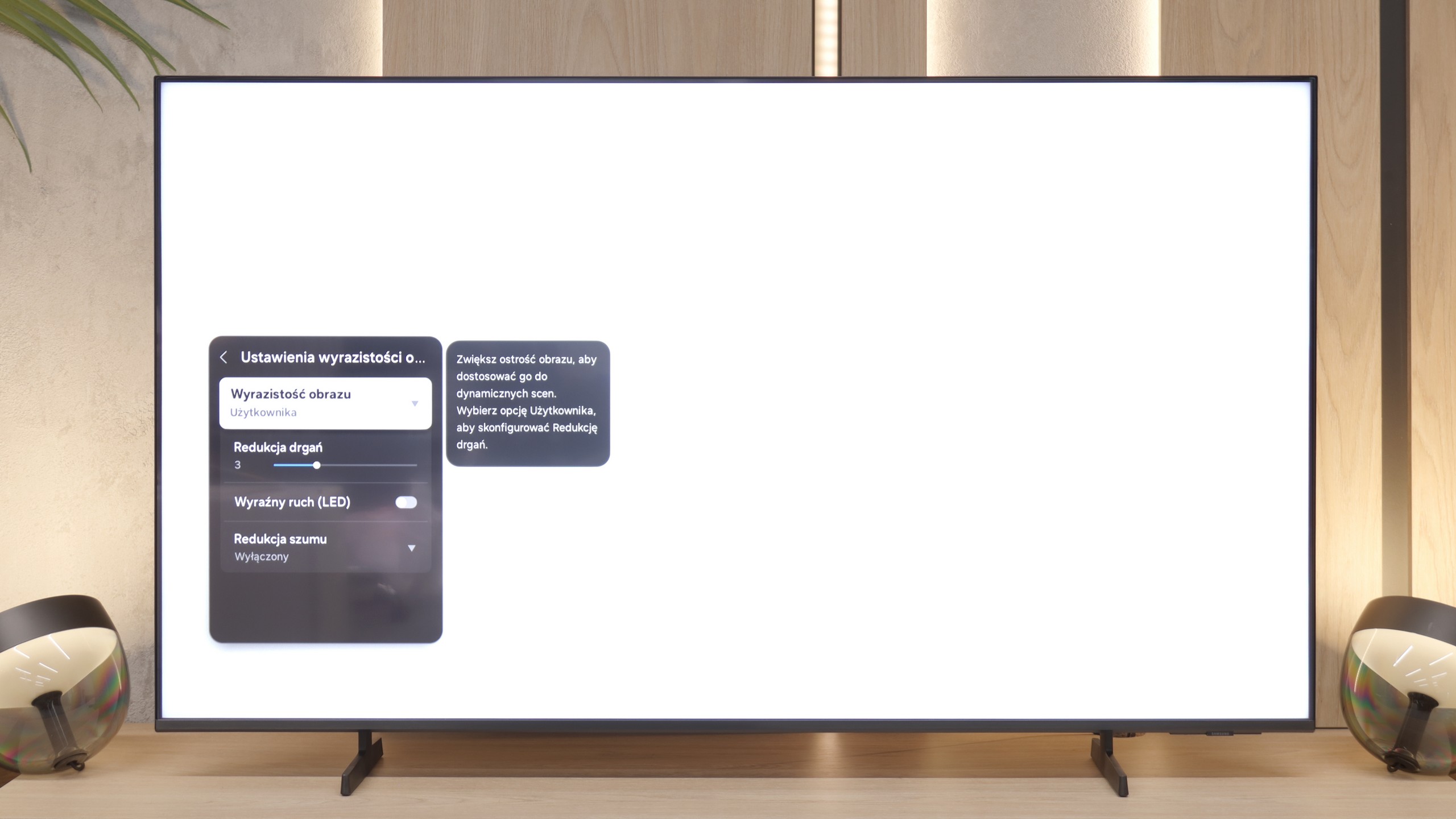
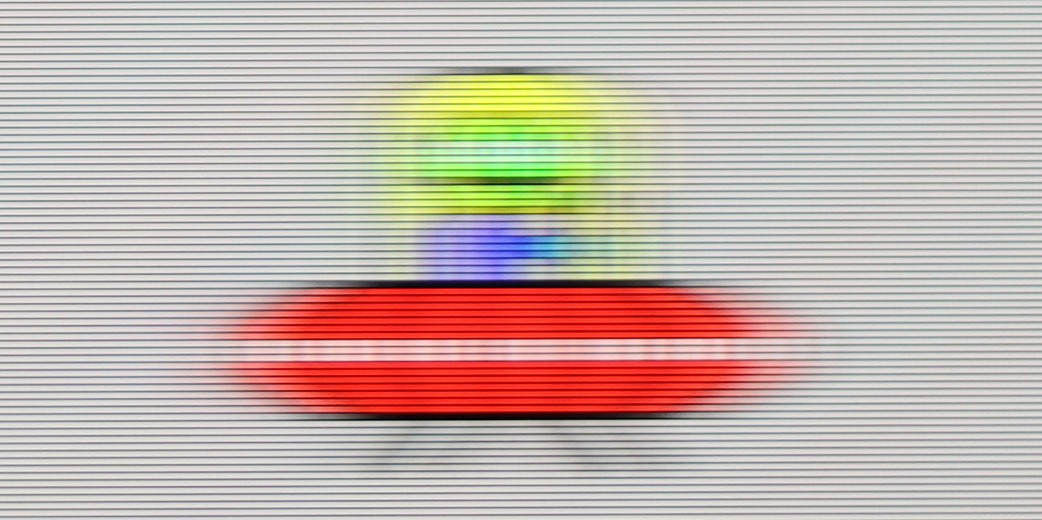
PHILIPS PUS9060 is equipped with a 4K panel with a refresh rate of 144 Hz, so we can confidently say that it is suitable for both watching sports and playing games. And indeed, it is. But what about films that are most often recorded at 24 frames? As with most of the televisions we tested with a refresh rate of 120 Hz and above, the PUS9060 offers two sliders in the motion smoothness options. The “Smoothness” slider allows you to adjust the effect in films – you can set the image to be smoother, resembling a theatrical effect (higher settings), or more cinematic, with a slight "jump" in frame rate (lower settings). Additionally, there is a function called "Motion Blur Reduction," which limits blurring – and this is a very useful feature, especially when watching sports.

The 60 Hz panel in the Samsung Q6F is standard for this price range, making it rather average for dynamic sports or gaming. However, when it comes to films, the television performs quite well thanks to the motion smoothing feature. The "Motion Reduction" option allows you to adjust the smoothness of movement to your own preferences – from maintaining a cinematic character to complete fluidity.

Console compatibility and gaming features

9.8/10

5.3/10

  • ALLM
    Yes
    Yes
  • VRR
    Yes
    Yes
  • VRR range
    48 - 144Hz
    48 - 60Hz
  • Dolby Vision Game Mode
    Yes
    No
  • Correct implementation of HGIG
    Yes
    Yes
  • 1080p@120Hz
    Yes
    No
  • 1440p@120Hz
    Yes
    No
  • 4K@120Hz
    Yes
    No
  • Game bar
    Yes
    No

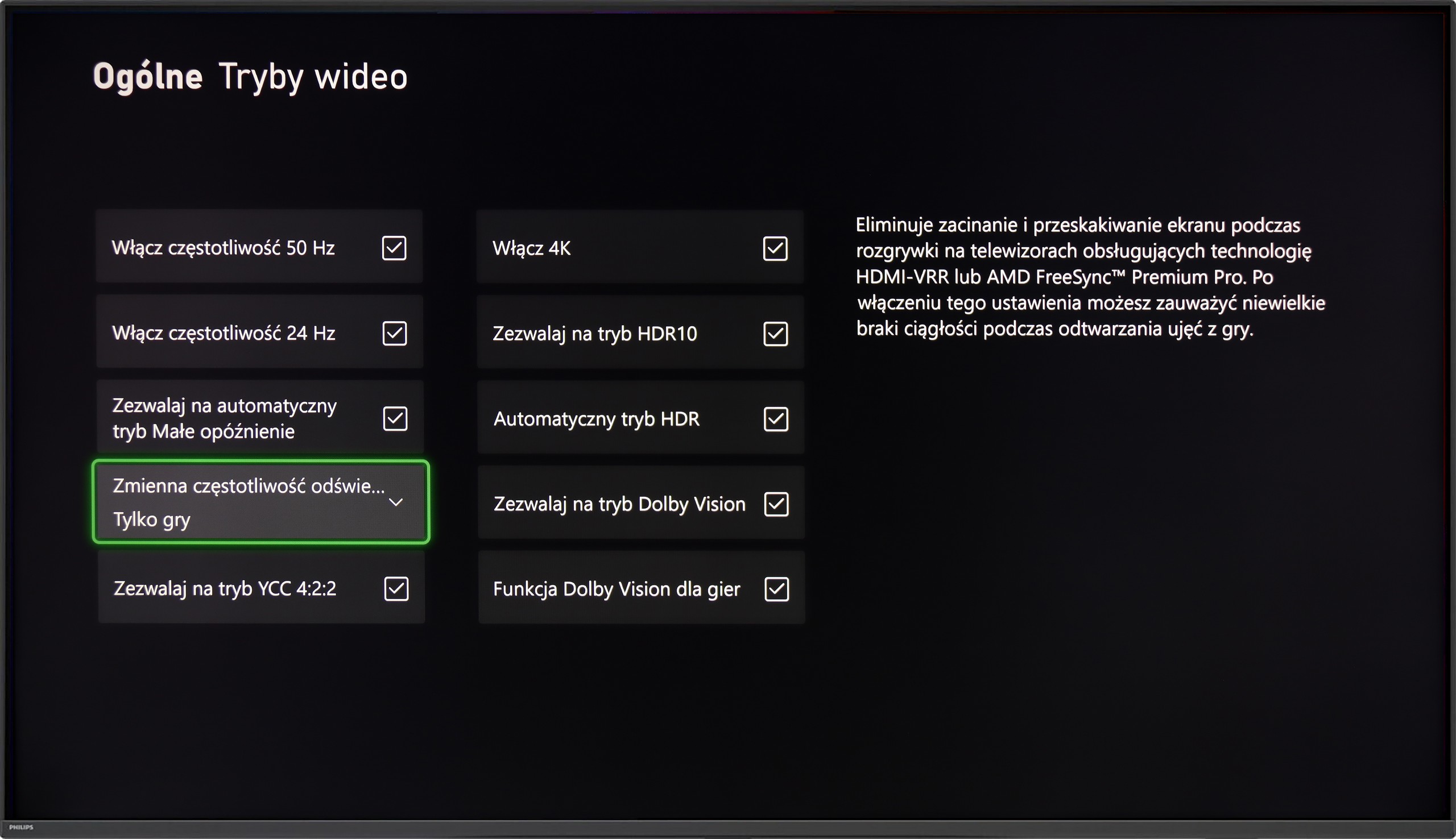
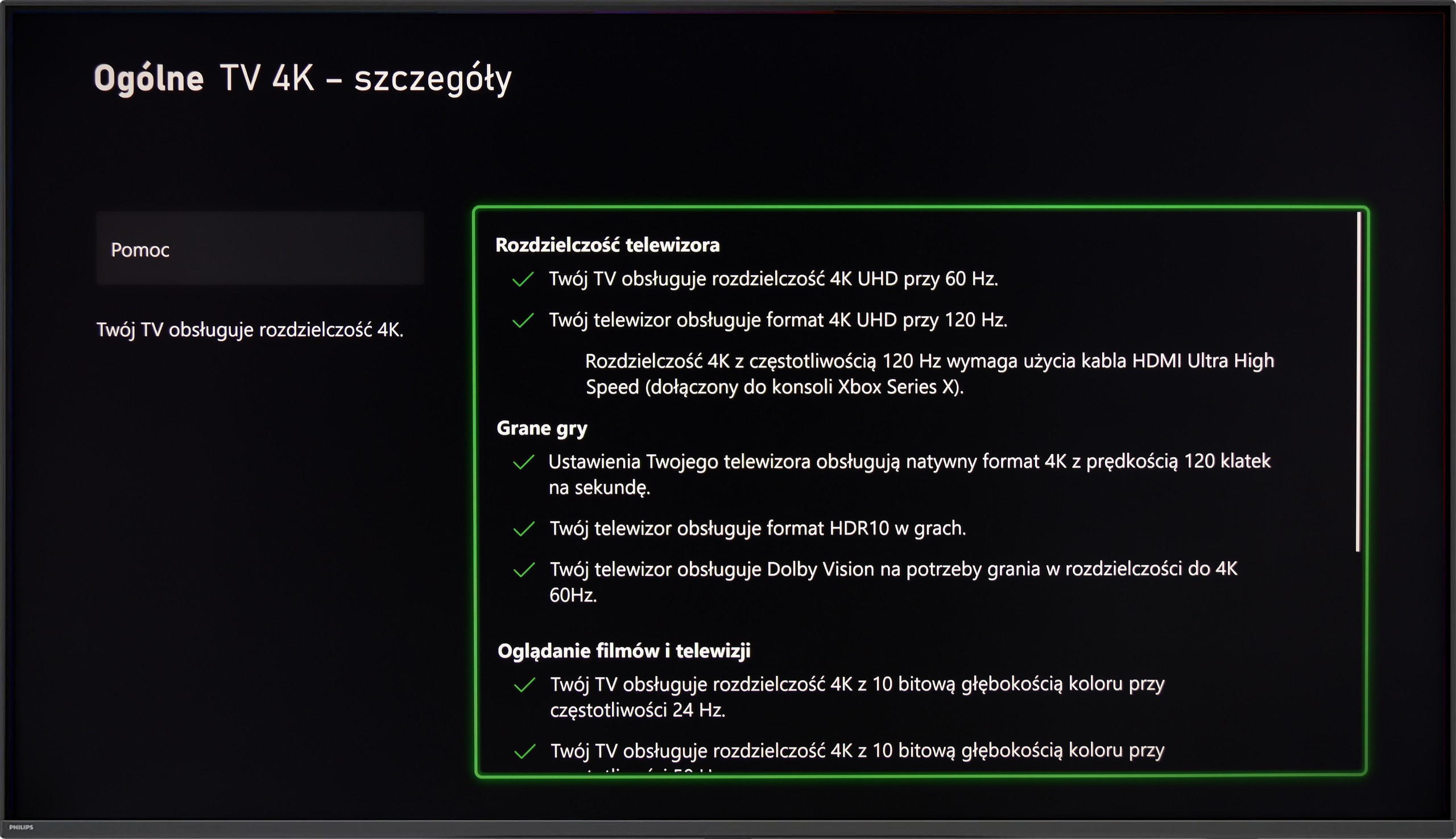
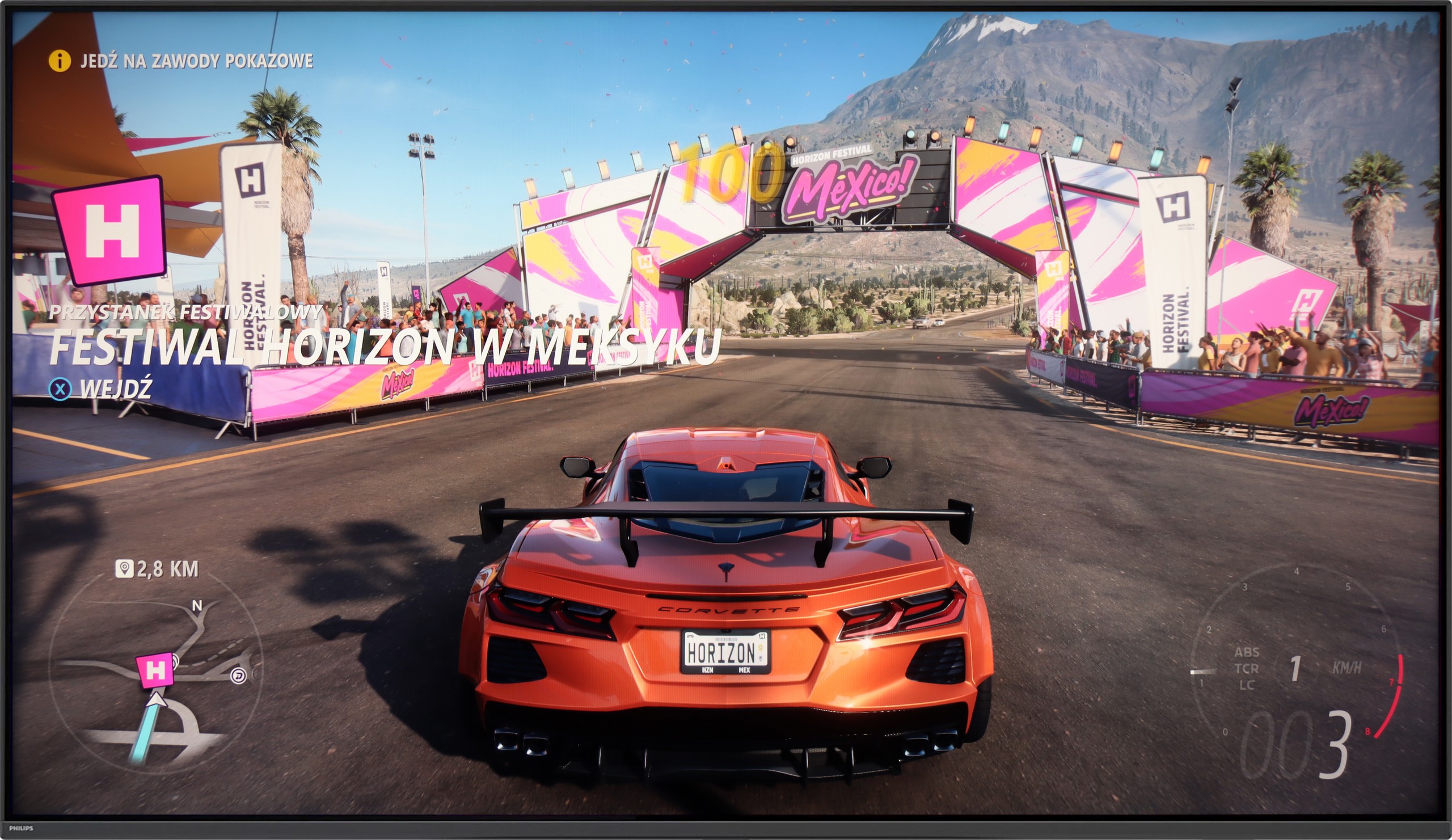
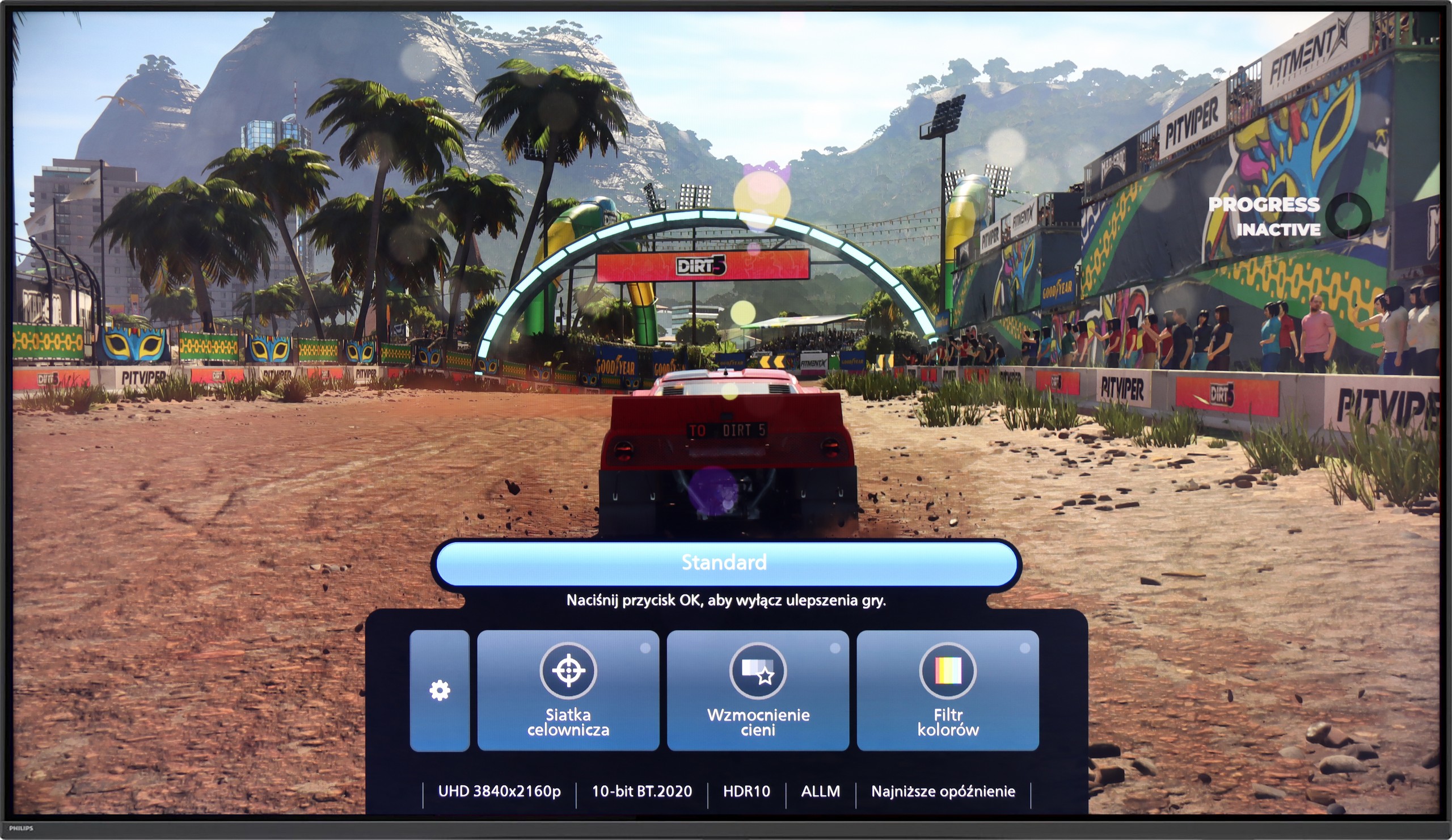
PHILIPS PUS9060 is a true gaming monster – it has practically everything you could expect from a modern gaming television. There's VRR, there's ALLM, and on top of that, there's the implementation of HGiG, which helps to set HDR in games the way the developers intended. The television supports every possible resolution at 120 Hz, including 1080p, 1440p, and full 4K – so regardless of whether you're gaming on Xbox, PS5, or PC, everything works as it should. It also features a simple Game Bar, which is a special menu for gamers that allows you to quickly check if the ALLM mode is indeed working in low-latency mode.

And of course – Ambilight TV. Let’s be honest – without LED lights at the back, it’s not really a proper gaming setup. 😉 The multicoloured backlighting can really enhance the atmosphere, especially in the evening. It may not be to everyone's taste, but younger gamers will be thrilled – because it just looks impressive.

We're not going to beat around the bush – the Q6F is not a television designed for gamers. Although it features additions like ALLM (automatic low latency mode) and VRR frame synchronisation for consoles, the list of advantages basically ends there. Aside from these basics, the television offers nothing more that would satisfy those who spend a lot of time in front of a console. It’s a great shame that such a useful tool as Game Bar, which allows for quick control of game parameters in Samsung's higher models, is missing here. In terms of gaming, this model is absolutely basic and is only suitable for "casual" gamers.

Input lag

9.5/10

10/10

SDR

1080p60
18 ms
11 ms
1080p120
10 ms
2160p60
18 ms
11 ms
2160p120
9 ms

HDR

2160p60
17 ms
11 ms
2160p120
8 ms
4320p60

Dolby Vision

2160p60 DV
33 ms
2160p120 DV

The One from 2025 performs very well in terms of responsiveness. An input lag of around 9 ms at a 120 Hz signal and 18 ms at 60 Hz are values that ensure a quick and smooth response to every movement of the controller. Playing even dynamic action titles or demanding e-sports games is completely comfortable. The situation is slightly worse when it comes to Dolby Vision – here the delay increases to around 33 ms. This is still an acceptable level for most “casual” gamers, but more demanding users may notice a slight slowdown in response. Therefore, in our opinion, a better choice would be the classic HDR10 mode with HGiG active. In this model, it has been implemented correctly and not only avoids delays but also eliminates potential problems with brightness and detail reproduction that sometimes occur in Dolby Vision.

As a consolation for the modest list of features for gamers, it is worth adding that the Q6F has absolutely no issues with input lag. The response to controller movements is instantaneous, and the television does not introduce any additional delays regardless of the resolution we are currently playing in. In this respect, the control is very precise and comfortable, which is a significant advantage in this class of hardware.

Compatibility with PC

8.6/10

6/10

Chroma 444 (max. resolution and refresh rate)
Yes
Yes
Font clarity
Very Good
Very Good
Readability of dark text and shapes
Good
Very Good
Input lag in PC mode (4K, max. refresh rate)
8ms
11ms
Matrix subpixel arrangement
BGR
BGR
Max refresh rate
144Hz
60Hz
G-Sync
Yes
No

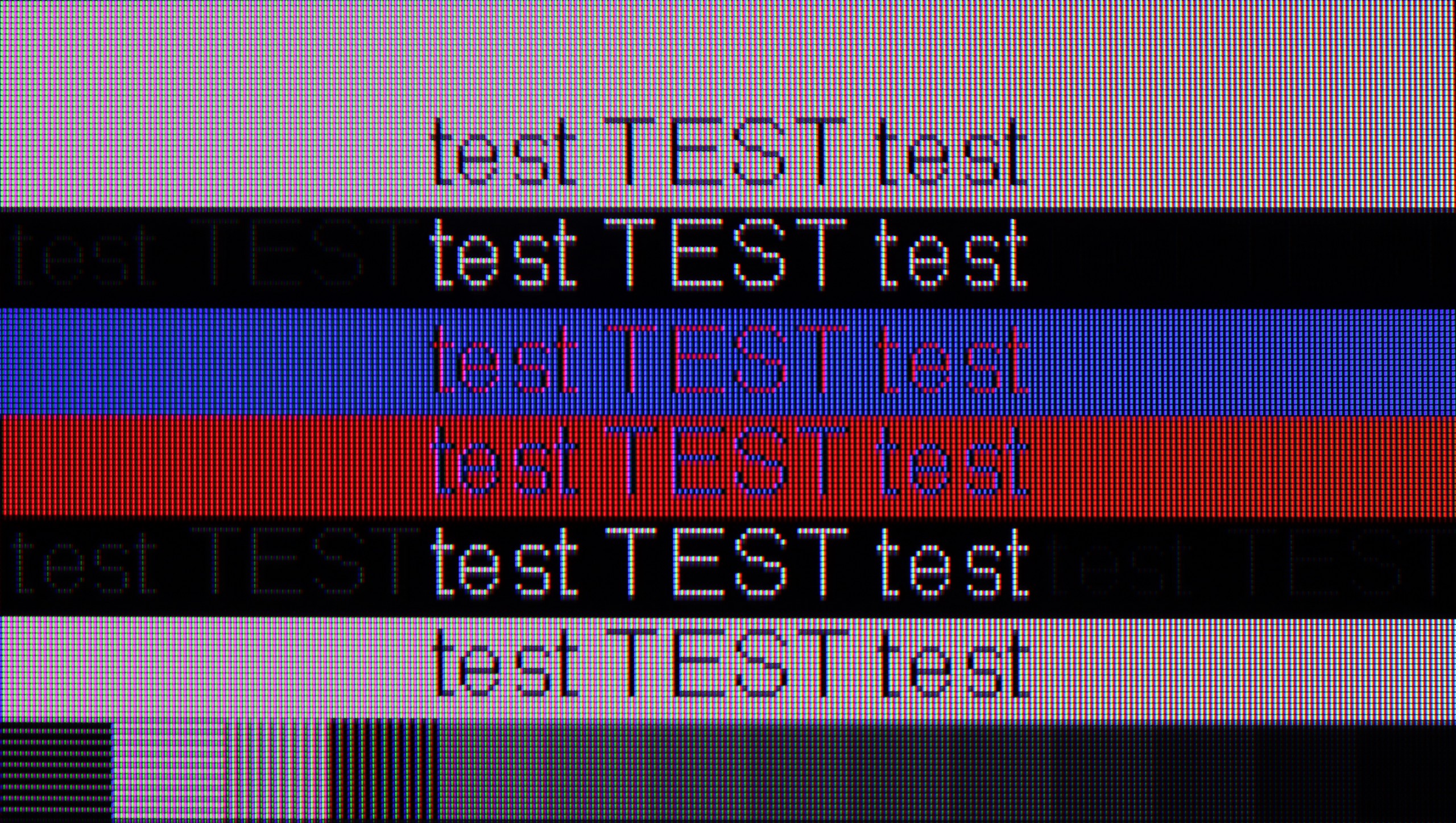
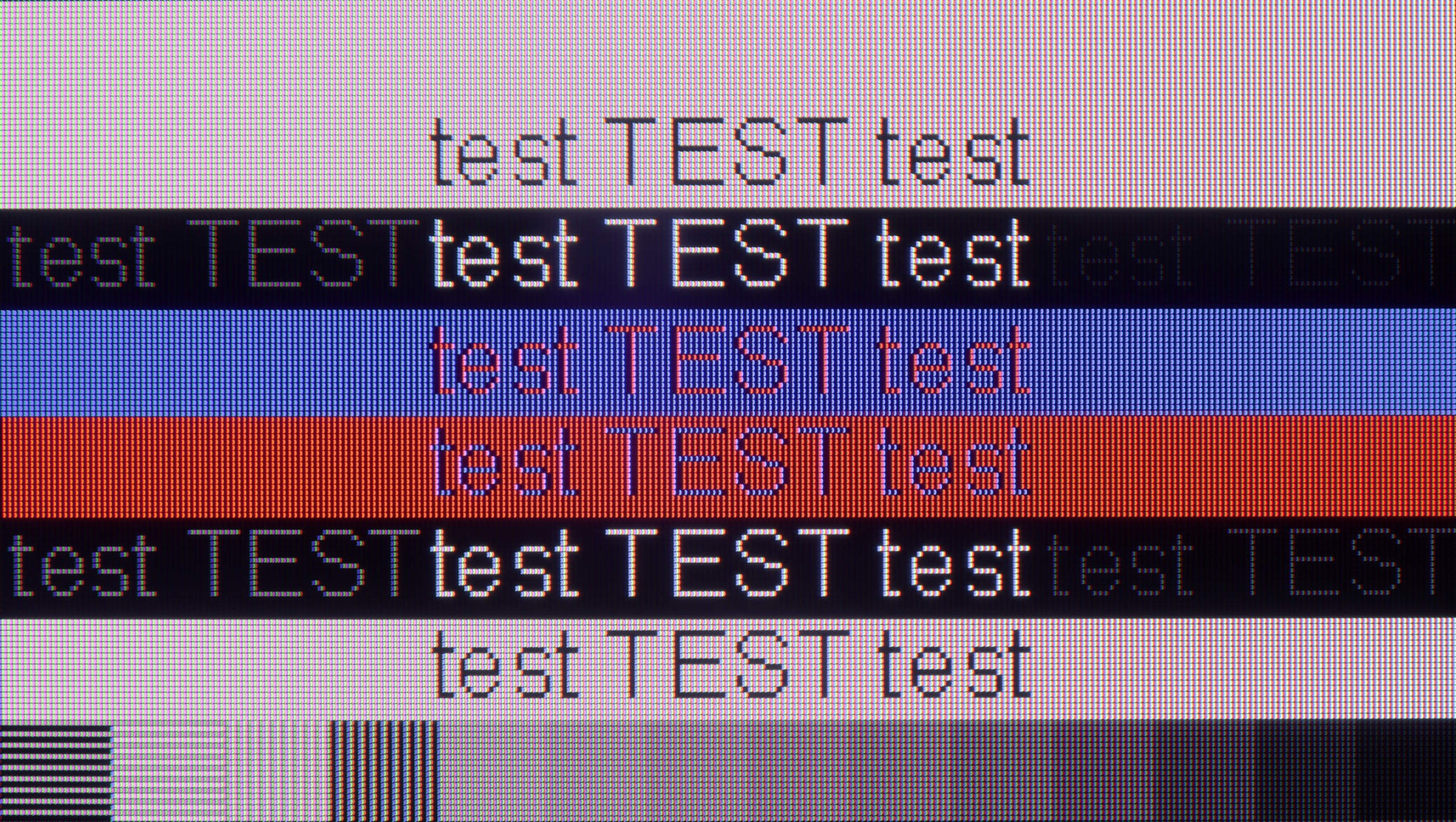
The photo shows the legibility of small fonts. Ideally, lines should be the same thickness on both light and dark text, with minimal pixel gaps.

Using the computer on the PHILIPS PUS9060 should be pure pleasure. As we mentioned earlier, the television performs excellently for gaming on a console, but it also handles well in combination with a computer. It offers a refresh rate of 144 Hz, G-Sync Compatible works correctly, and it has low input lag - making it reasonable to consider this model as a fully-fledged PC monitor for gaming.

In terms of daily work, it is also good. Chroma 4:4:4 has been implemented correctly, so fonts are sharp and readable. We did not notice any issues with text clarity, although with very dark backgrounds, one can observe a slight dimming of the letters with a slight edge doubling. In practice, however, this should not bother anyone, even when working with text.

Although the Q6F is not a screen specifically designed for PC gaming, it deserves praise for how well it handles text rendering. As a monitor for text work, browsing the web, or daily news reading, the television performs exceptionally well. The readability of the text is at a very high level, thanks to the proper implementation of the Chroma 4:4:4 signal and the use of an IPS panel. If you are looking for an affordable, large screen for office work, the Q6F performs really solidly in this regard. Especially since Samsung offers very good integration with the Windows system and built-in Microsoft Office tools.

Viewing angles

3.4/10

5.6/10

Brightness drop at an angle of 45 degrees
65%
78%

The PUS9060 model is equipped with a VA panel, which – as is usually the case – does not perform very well when viewing at an angle. With a greater deviation from the axis, the screen brightness noticeably decreases, and colours lose saturation. Unfortunately, this is a typical compromise compared to IPS panels, which offer better viewing angles but have significantly weaker contrast and blacks. Here the situation is reversed – blacks are good, but angles are very average. Of course, with standard straight-on viewing, there is no problem, but in a larger living room or with a larger TV, where someone is sitting far to the side or we are looking at the edges of the screen, the differences will be noticeable.

The viewing angles are one of the stronger points of the Q6F model, which is directly due to the use of an IPS panel. They are significantly better than those in TVs based on VA panels. This means that the image viewed at an angle remains clear and does not become "washed out" or faded. However, it is worth noting that while the colours look really good, the drop in brightness at wider angles is quite noticeable. Nevertheless, this is a solid performance for people who do not always sit perfectly in front of the screen.

Daytime performance

6/10

1.8/10

Panel finish
Satin
Satin
Reflection suppression
Decent
Average
Black levels during daytime
Good
Good

Panel brightness

Samsung Q6F (IPS): 125 cd/m2

PHILPS PUS9060: 495 cd/m2

The Philips PUS9060 performs quite well in a bright room. The satin finish of the panel effectively reduces reflections and glare, so watching in a room full of lamps or with large windows should not pose major problems. It's also a plus that the blacks do not wash out excessively, and the picture still retains decent contrast. The situation could be even better if the television offered higher brightness. About 500 nits is a decent result, but in very challenging lighting conditions, it may prove insufficient.

What more can I say – apart from the satin finish of the panel, which does a fairly mediocre job of reducing reflections, the Q6F is such a dark device that it’s not suitable even for moderately lit rooms. A brightness level of 150 nits is simply astronomically low by today’s standards. With such a result, any larger light source in the room will make the image difficult to read. This is definitely not a model for a sunlit living room.

Panel details

Backlight Type
PFS LED
QLED
Software version during testing
TPN258E_V058.002.179.041
T-KSU2EFDEUC-0090-1110.7
Image processor

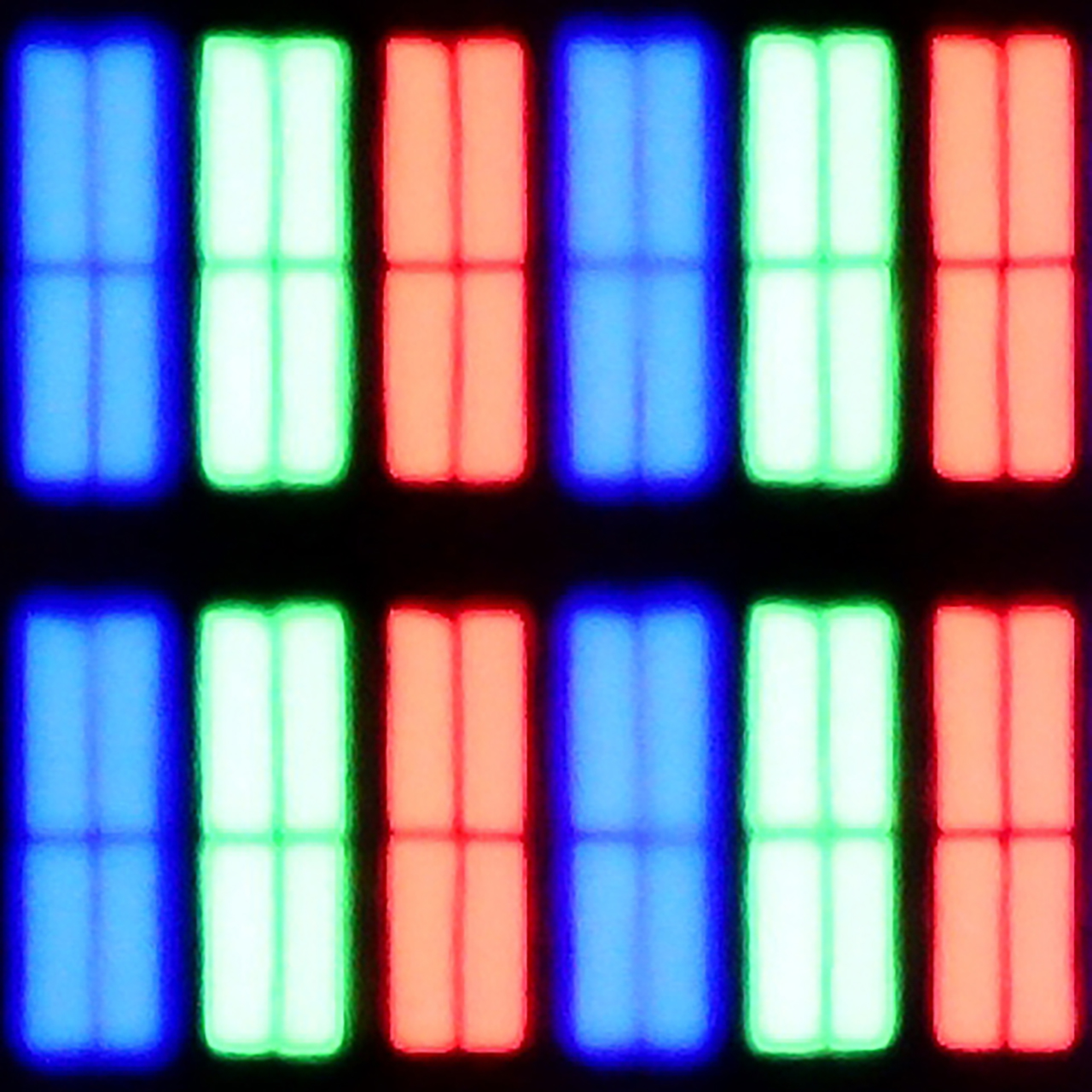
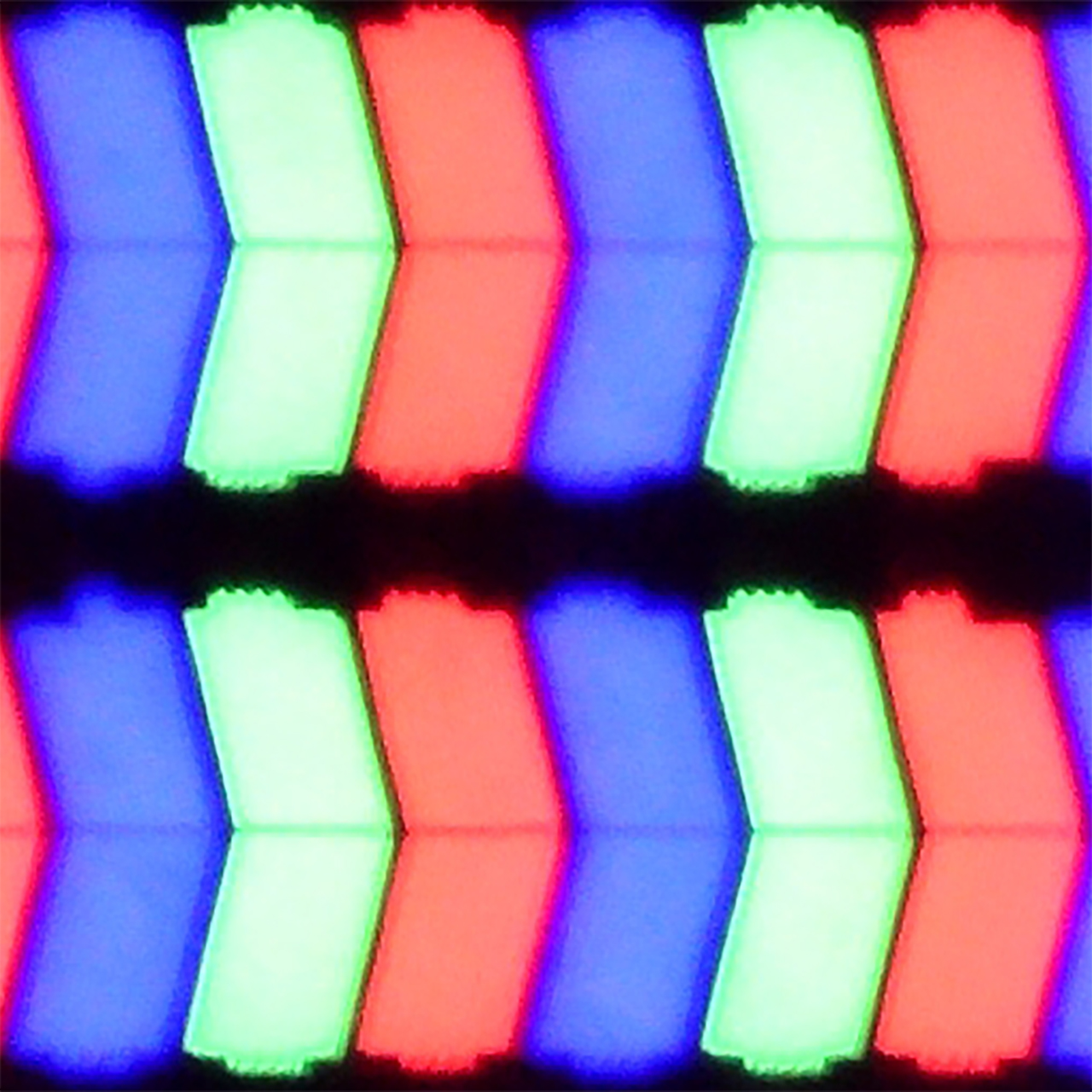
Subpixel Structure:

Panel uniformity and thermal imaging:

Review PHILPS PUS9060 TV Panel details
Review Samsung Q6F (IPS) TV Panel details

TV features

6.1/10

5.9/10

  • HDMI inputs
    0 x HDMI 2.0, 4 x HDMI 2.1 48Gbps
    3 x HDMI 2.0, 0 x HDMI 2.1
  • Other inputs
    Toslink (Optical audio)
  • Outputs
    Toslink (Optical audio), eARC (HDMI), ARC (HDMI), Mini-Jack (Headphones)
    eARC (HDMI), ARC (HDMI)
  • Network Interfaces
    Wi-Fi 2.4GHz, Wi-Fi 5GHz, Ethernet (LAN) 100Mbps
    Wi-Fi 2.4GHz, Wi-Fi 5GHz, Ethernet (LAN) 100Mbps
  • TV reception
    DVB-T, DVB-T2, DVB-S, DVB-S2, DVB-C
    DVB-T, DVB-T2, DVB-S, DVB-S2, DVB-C

Classic features:

  • Recording to USB (terrestrial TV)
    No
    No
  • Recording programming
    No
    No
  • Picture in Picture (PiP)
    No
    No
  • RF remote control (no need to aim)
    No
    No
  • Backlit remote control
    Yes
    No
  • Teletext
    Yes
    Yes
  • Audio only mode
    Yes
    Yes
  • Bluetooth headphones support
    Yes
    Yes
  • Simultaneous Bluetooth headphones & TV audio
    No
    Yes

Smart features:

  • AirPlay
    Yes
    Yes
  • Screen mirroring (Windows Miracast)
    Yes
    Yes
  • Voice search
    Yes
    No
  • Voice search in native language
    No
    No
  • Ability to connect a keyboard and mouse
    Yes
    Yes
Review PHILPS PUS9060 TV features
Review Samsung Q6F (IPS) TV features

Classic Features of TheOne TV:

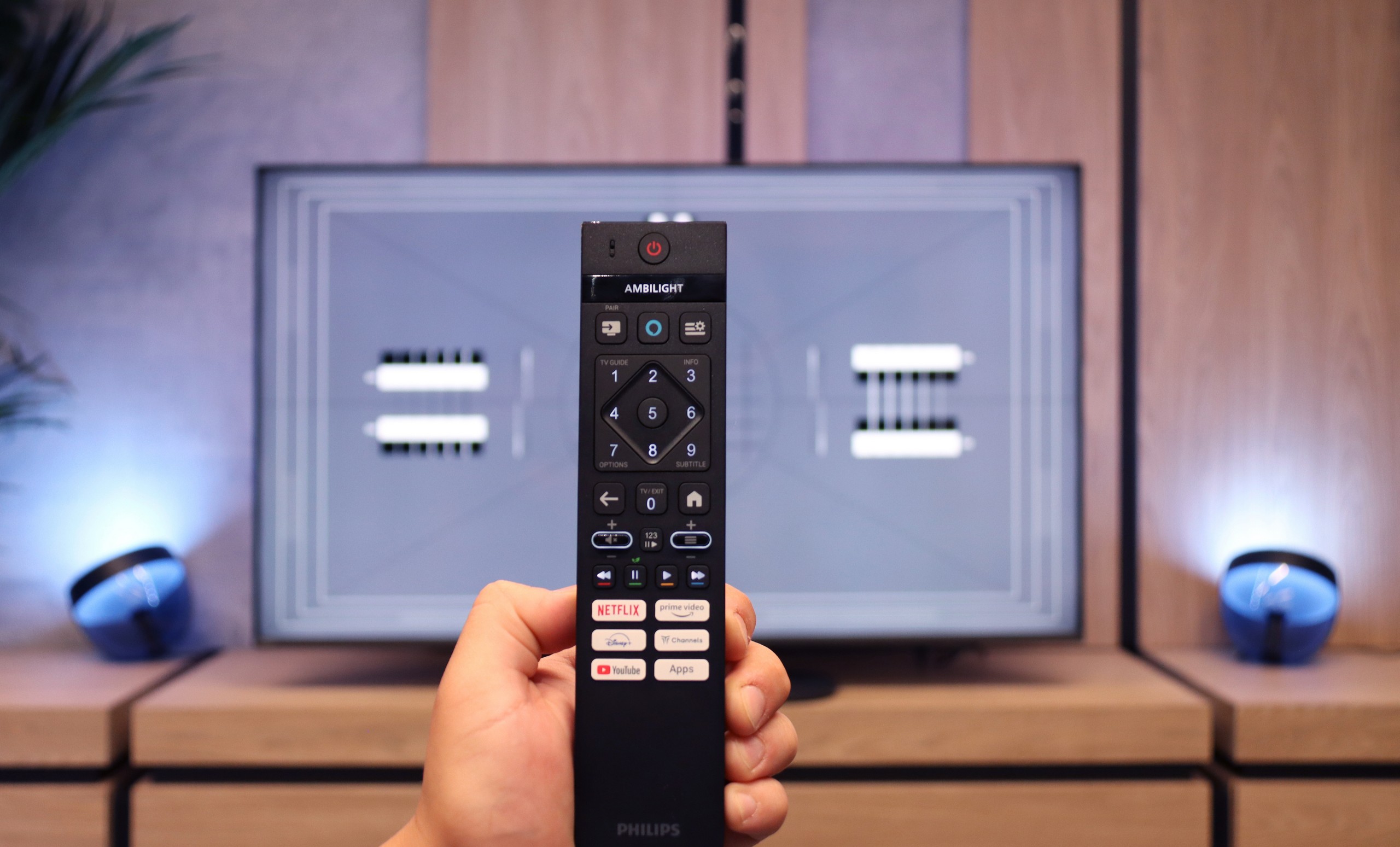
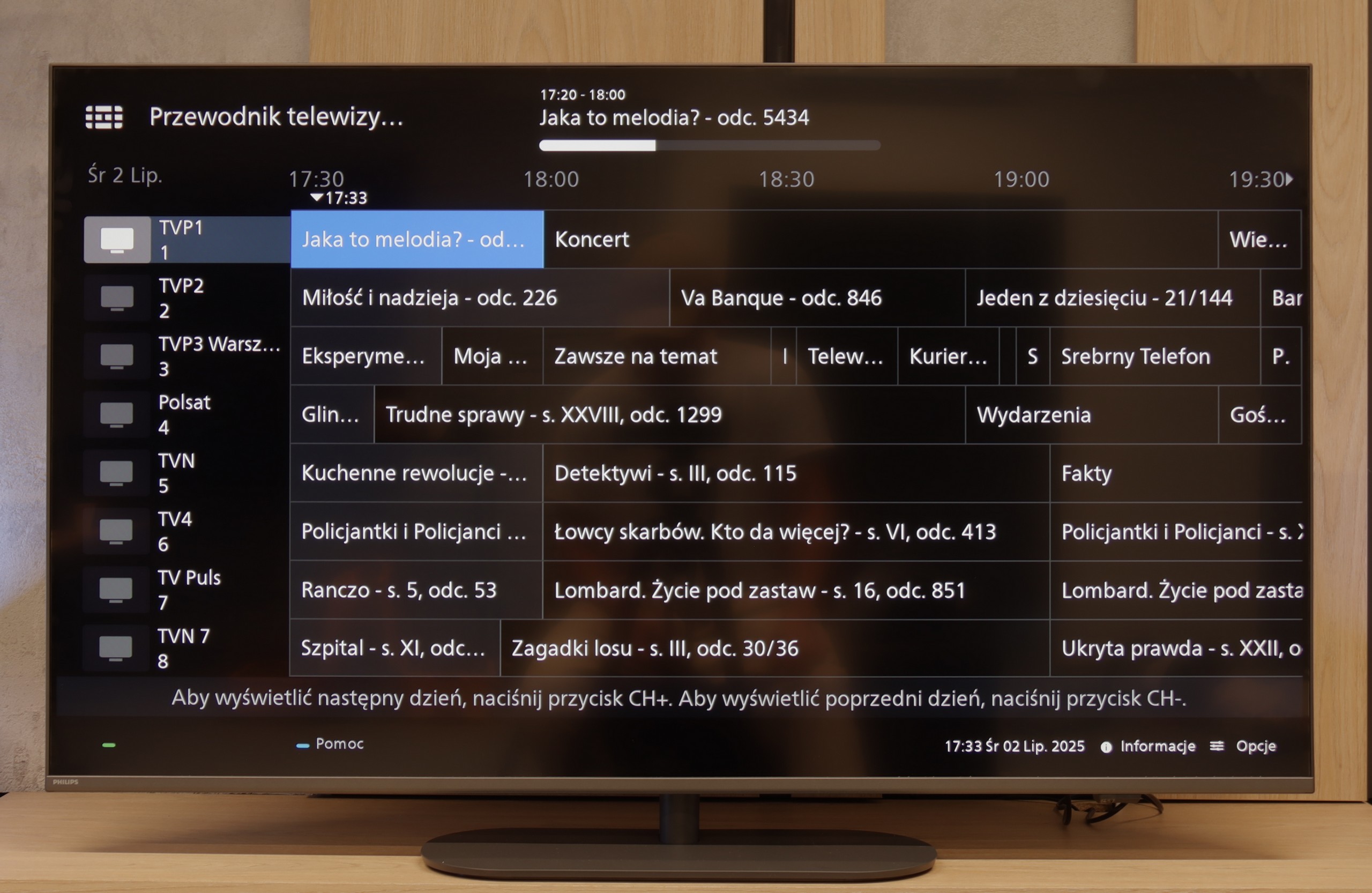
When it comes to these "classic features," the PUS9060 performs quite mediocrely. Of course, we will find everything basic here; there's EPG, teletext, and the ability to connect headphones via Bluetooth. But unfortunately – it lacks the USB recording function, and there's no PiP (picture in picture) mode, which is becoming rarer but is still useful. On the plus side, the remote control with a numeric keypad is modern, backlit, and visually impressive. It's just a shame that it's still a classic infrared model, so to use it, you have to aim it directly at the screen. It's a bit disappointing because with such a modern appearance, it really called for Bluetooth (RF) control.

Smart TV:

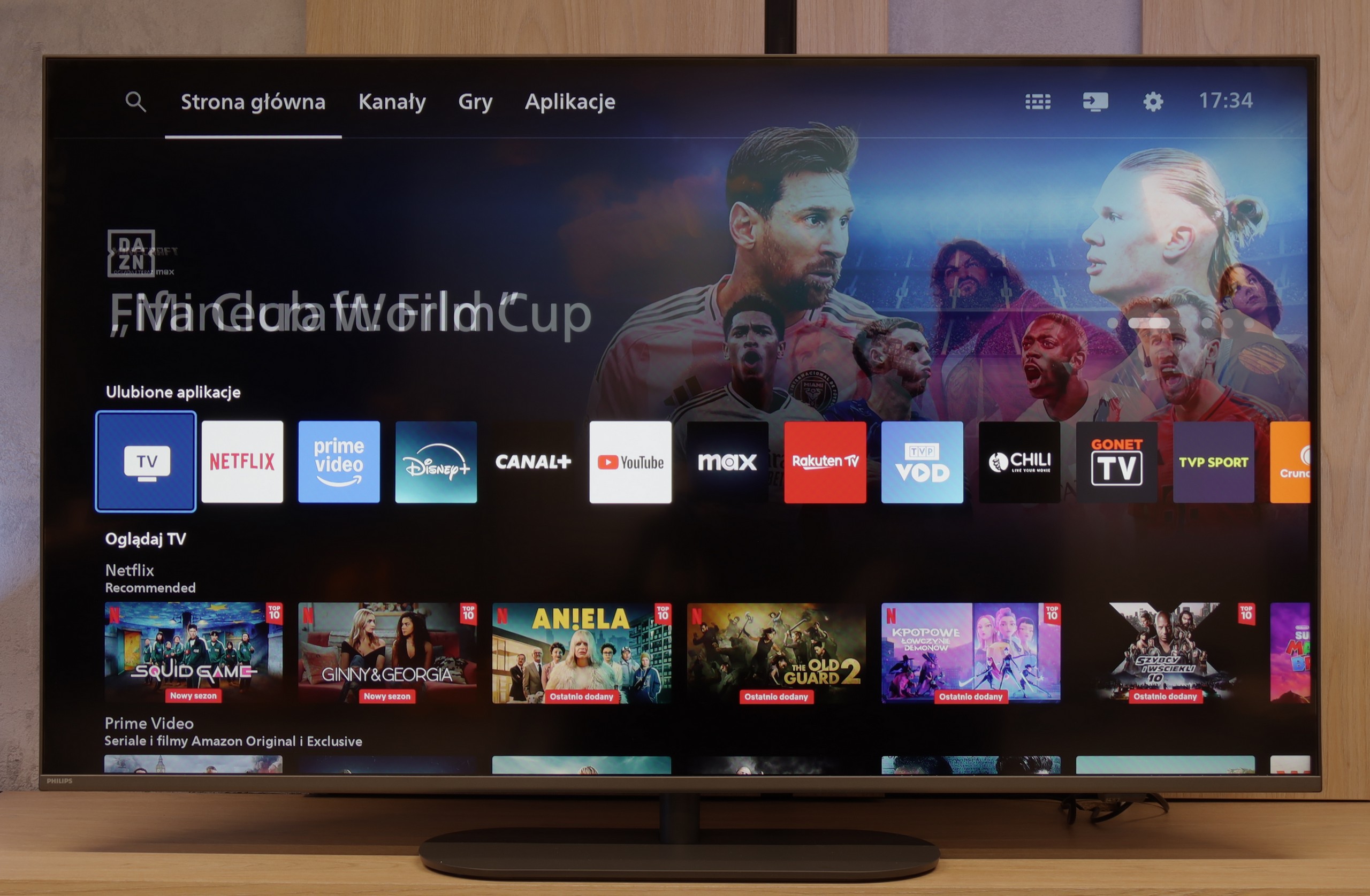
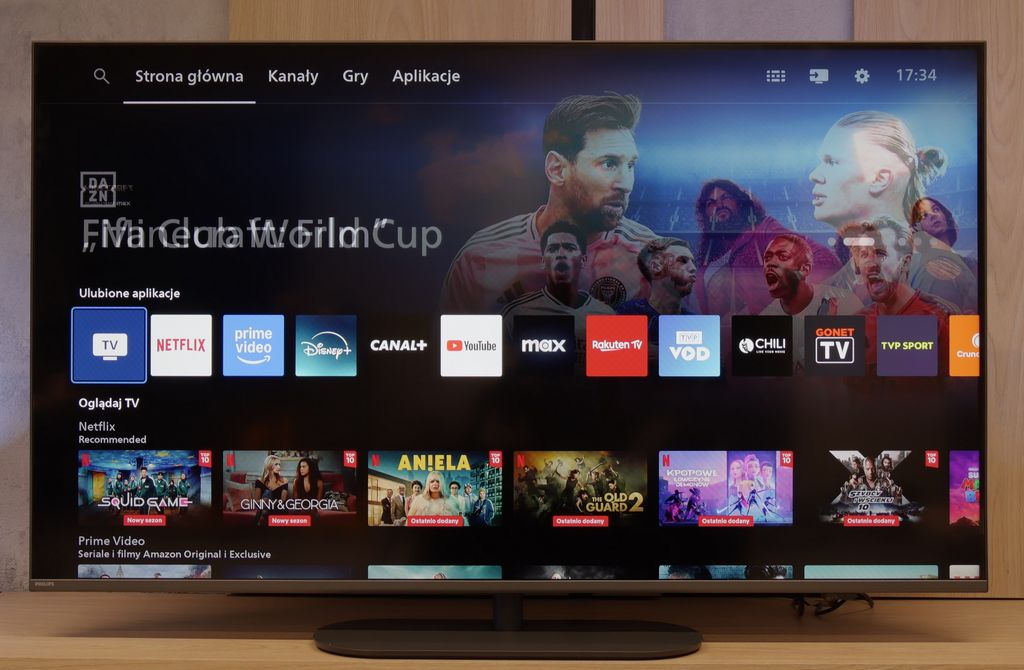
Most Philips TVs from 2025 operate on the Titan OS system, which debuted relatively recently – and unfortunately, this still comes with certain problems. The system itself runs quite smoothly – definitely better than in cheaper Philips models – and it did not cause us issues when using features like screen mirroring or AirPlay (which is not so obvious even in 2025). The biggest downside of Titan OS is still the rather mediocre access to applications (list below). The advantage is that we can bypass this by connecting a keyboard and mouse to the TV and using the built-in browser, but it's not the most comfortable solution – rather a makeshift one.

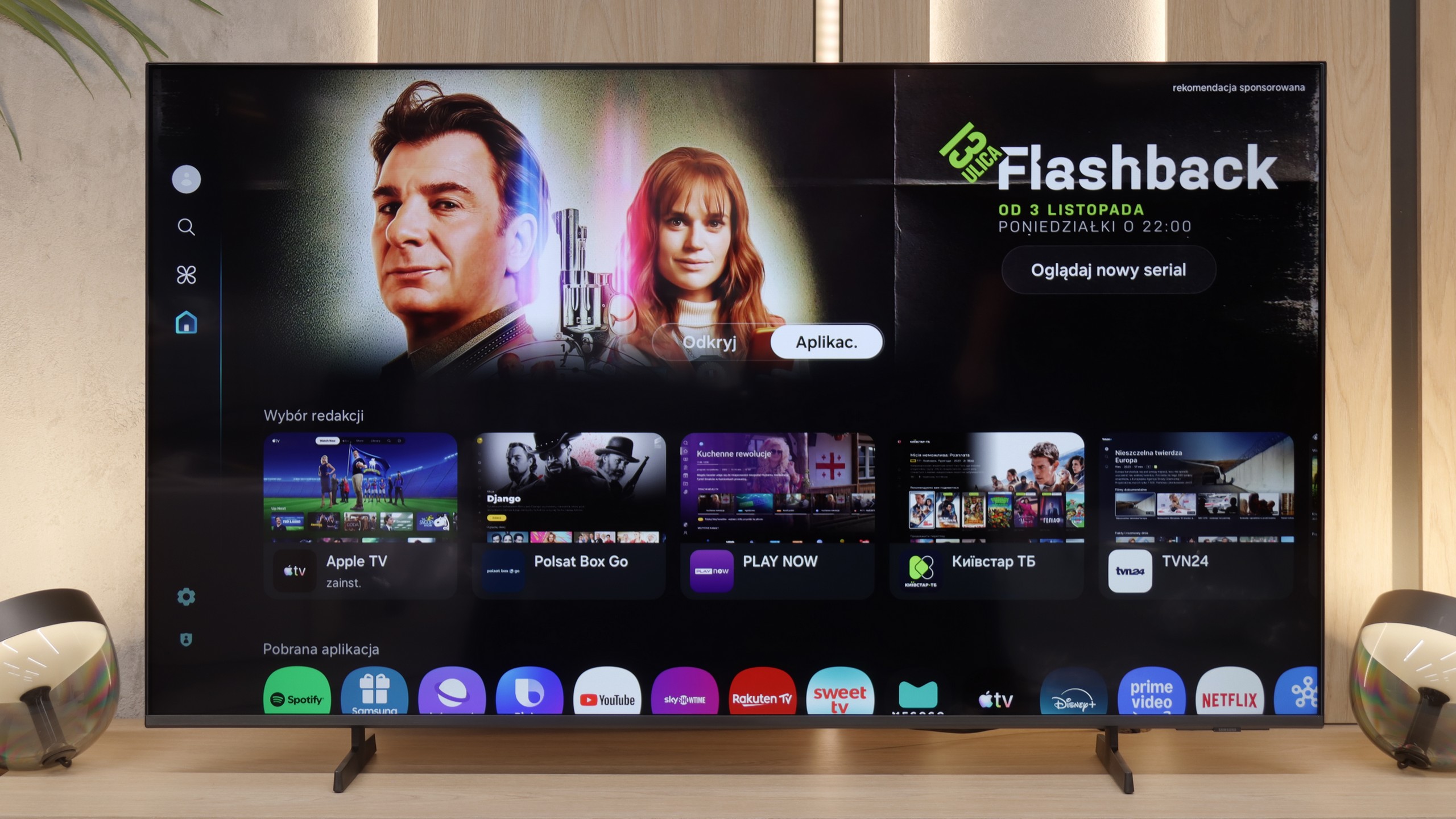
It is really nice that in Samsung televisions – even the most budget-friendly ones – the Tizen system simply "doesn't lag". The speed of operation, although not at the level of the most expensive models, is definitely better than in the case of Google TV at a similar price. Thanks to Tizen, we have access to a truly vast library of applications, AirPlay, and other Smart TV features.

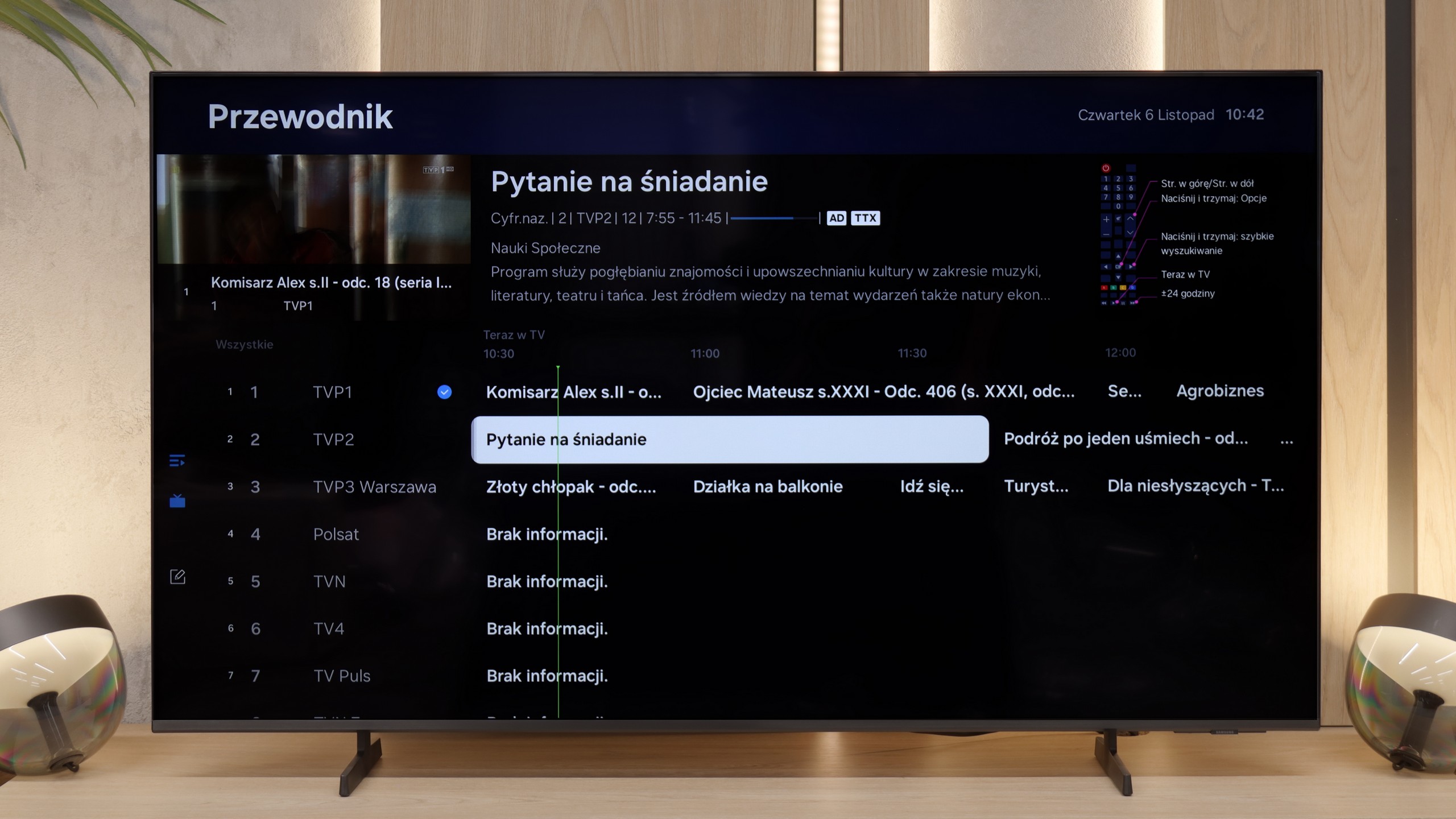
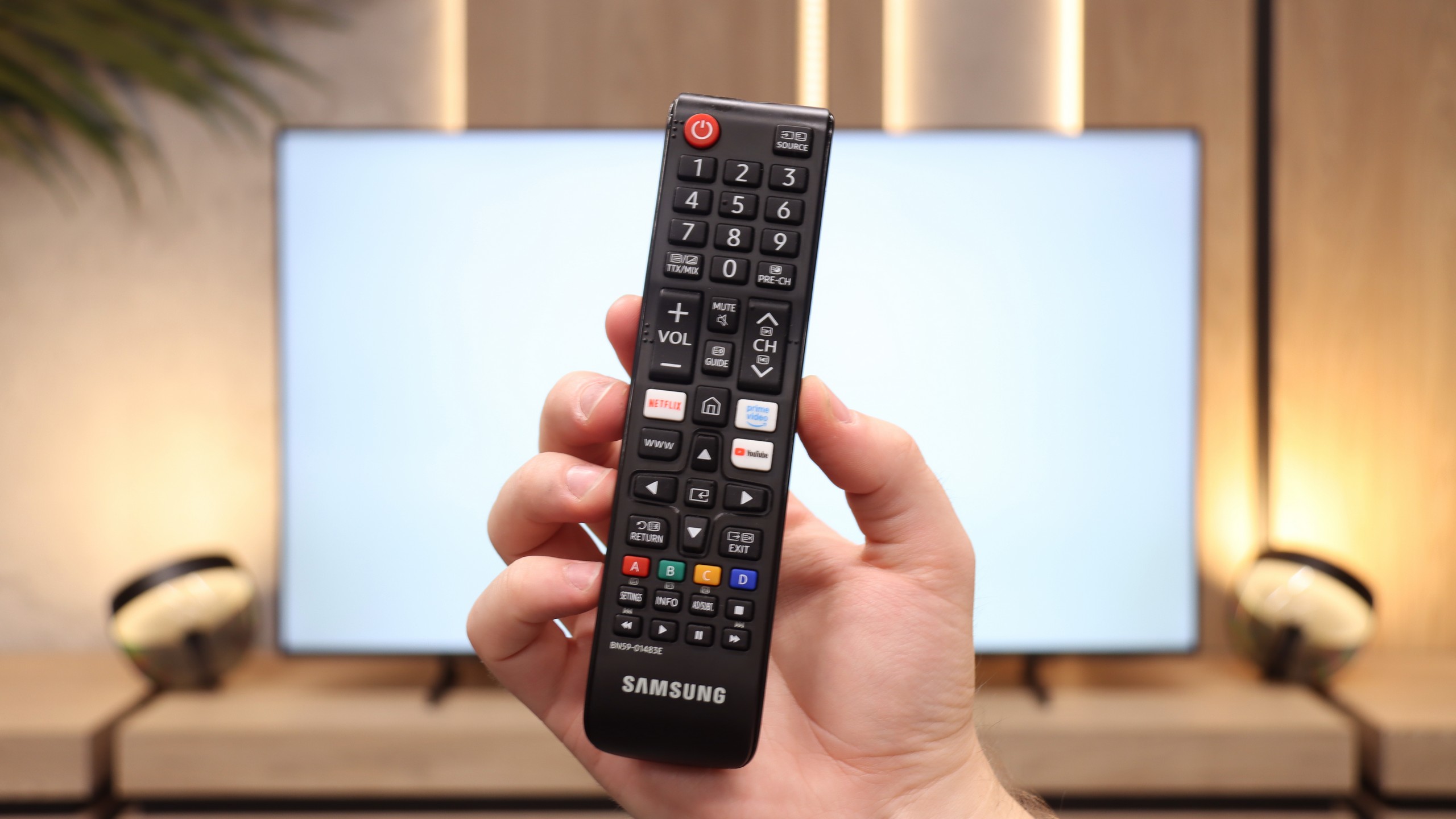
It is worth adding that the remote control included with the Q6F is an older, yet somewhat modernised version of the classic Samsung infrared controller, equipped with a full numeric keypad. Although it operates via infrared, it has many buttons, which might appeal to older users watching traditional television – it simply makes channel switching easier. We will also find a clear EPG interface, teletext, and support for Bluetooth headphones. It sounds a bit like the fulfilment of a senior's dream, and there is some truth in that.

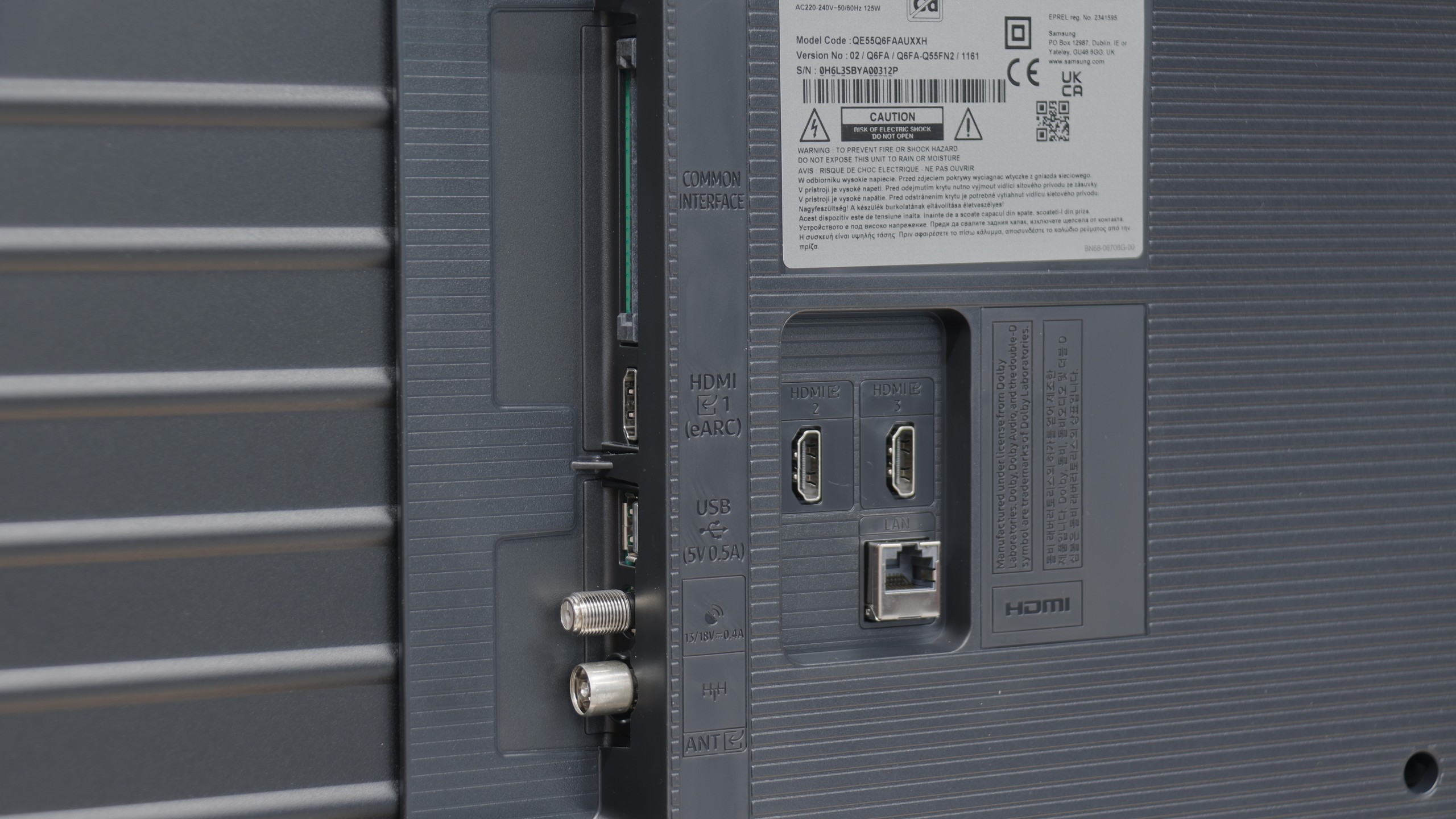
However, we must note a serious lack regarding connections: in this model, we will not find an optical output for audio devices. Only the HDMI eARC connection is available, which can be a significant hassle if we have an external audio system.

Apps

6.7/10

9.3/10

OK
Disney_Plus
OK
Amazon_Prime_Video
OK
Player_TVN
OK
Polsat_Box_Go
OK
Canal_Plus_Online
OK
TVP_VOD
No
Apple_TV_Plus
No
SkyShowtime
OK
Rakuten
OK
CDA_Premium_Browser
No
Spotify
No
Tidal
OK
Netflix
OK
YouTube
OK
HBO_MAX
No
Kodi
No
Apple_music
No
Eleven_sports
No
Xbox Game Pass
No
GeForce Now!
No
Amazon Luna
OK
Boosteroid
No
Steam Link
OK
Disney_Plus
OK
Amazon_Prime_Video
OK
Player_TVN
OK
Polsat_Box_Go
OK
Canal_Plus_Online
OK
TVP_VOD
OK
Apple_TV_Plus
OK
SkyShowtime
OK
Rakuten
OK
CDA_Premium_Browser
OK
Spotify
No
Tidal
OK
Netflix
OK
YouTube
OK
HBO_MAX
No
Kodi
OK
Apple_music
OK
Eleven_sports
OK
Xbox Game Pass
OK
GeForce Now!
OK
Amazon Luna
OK
Boosteroid
No
Steam Link

Playing files from USB

7.9/10

9.3/10

Supported photo formats:

JPEG
Yes
Yes
HEIC
No
Yes
PNG
Yes
Yes
GIF
Yes
No
WebP
No
No
TIFF
No
No
BMP
Yes
Yes
SVG
No
No

Maximum photo resolution:

4 Mpix
Yes
Yes
6 Mpix
Yes
Yes
8 Mpix
Yes
Yes
10 Mpix
No
Yes
12 Mpix
No
Yes
16 Mpix
Yes
Yes
20 Mpix
No
Yes
24 Mpix
No
Yes
28 Mpix
No
Yes
32 Mpix
Yes
Yes

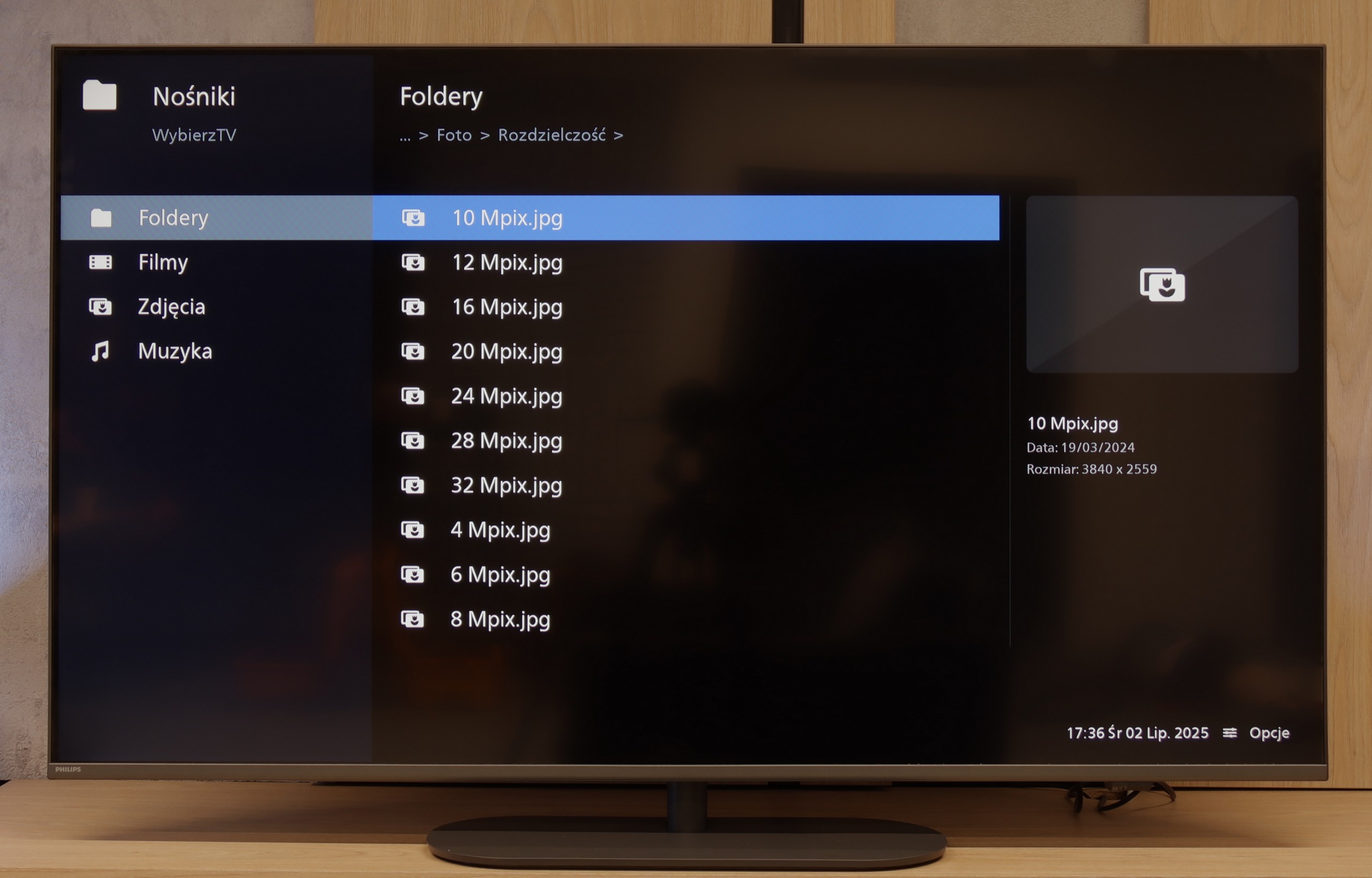
The built-in player in the PUS9060 played practically most popular audio and video formats, so it's really hard to find fault here. Movies in popular containers, music, and photos – everything worked without any problems.

The only potential drawback might be the limited number of supported subtitle formats and the randomly selected photo resolutions that the television can read. But aside from that, most everyday users will be perfectly fine without the need to connect a computer or console to display their files from a pen drive.

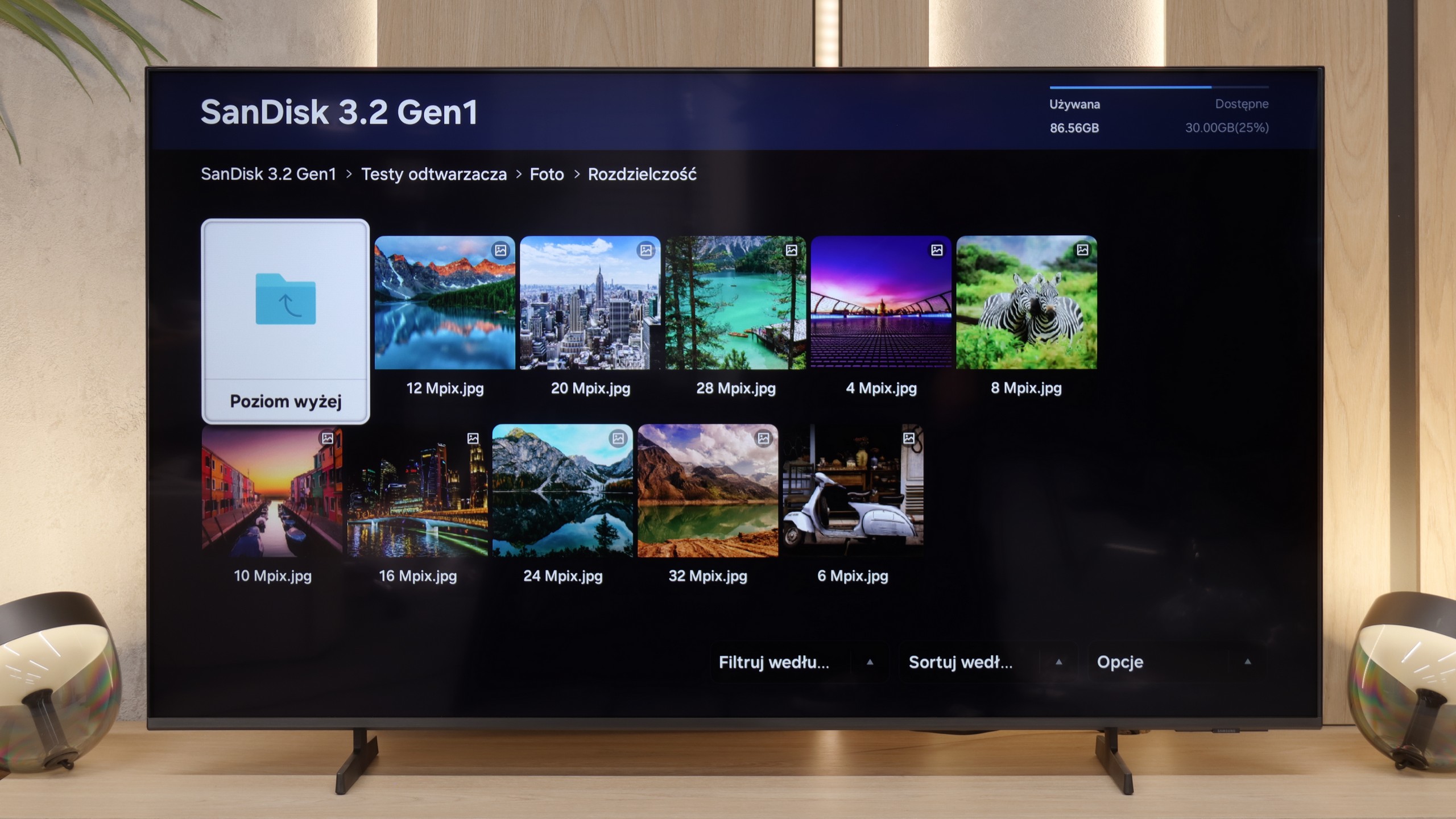
When it comes to multimedia support from external media, the Samsung Q6F performs exceptionally well, especially considering that it is a closed system. The television has no issues with most popular video, audio, or photo formats (EVEN HEIC!). The media player operates stably and quickly loads content from USB drives or network servers. It is a solid device for browsing your own film archives or home photo galleries.

Sound

6.6/10

5.8/10

  • Maximum volume
    85dB
    -
  • Dolby Digital Plus 7.1
    Yes
    Yes
  • Dolby True HD 7.1
    Yes
    No
  • Dolby Atmos in Dolby Digital Plus (JOC)
    Yes
    Yes
  • Dolby Atmos in Dolby True HD
    Yes
    No
  • DTS:X in DTS-HD MA
    Yes
    No
  • DTS-HD Master Audio
    Yes
    No

The sound from the PHILIPS PUS9060 was generally pleasant, although it is hard to call it sensational. The tested unit had built-in audio in a 2.0 configuration with a total power of 40 W, which is entirely sufficient for everyday viewing. Fortunately, the television supports most popular audio formats, so if someone connects a soundbar or home cinema, they can confidently expect full support for Dolby Atmos or DTS – without any hassle or loss of quality. For true audio fans, this is definitely good news.

When it comes to sound, the Samsung Q6F plays... well, flat. However, at the same time, the sound is clear and loud enough that it is perfectly suitable for listening to the news or regular television. The voices of the presenters are understandable and do not fade into the background. However, if someone cares about even decent experiences when watching films, we definitely recommend purchasing a soundbar. Even the cheapest model from the Korean manufacturer's range will make a huge difference here and save the situation.

Sound Quality Test

Acoustic Measurements

85dBC (Max)

75dBC

0dBC (Max)

75dBC