The Philips OLED909 is certainly an engineering showcase from the Dutch manufacturer for 2024. When it comes to picture quality, the television delivers what one can expect from OLED technology – deep blacks and infinite contrast. Additionally, it is equipped with META technology (MLA micro-lenses), which significantly enhances its brightness and further improves the already excellent viewing angles of organic matrix televisions. As a result, HDR effects look phenomenal, and the TV will satisfy most users looking for great picture quality in this class of devices. In terms of motion fluidity, the OLED909 does not disappoint either. The 144 Hz panel, combined with a full set of gaming features such as HDMI 2.1, ALLM, and VRR, makes it the perfect choice for gaming enthusiasts. Both dynamic shooters and spectacular racing games will look smooth and responsive. Regarding usability, the television features the Google TV operating system, just like the OLED809 model. This solution is significantly better than TitanOS, which is found in the lowest series OLED 769 from the Dutch manufacturer. It provides access to a vast number of applications, easy navigation, and support for voice assistants. Additionally, there is a four-sided Ambilight system that adds magic to every movie night, creating a unique atmosphere. However, it is not a device without flaws. The biggest issue regarding the picture is the average fluidity of tonal transitions – colour banding is visible in subtle gradients, which may disturb more discerning viewers. In the context of PC compatibility, although it is phenomenal hardware for gamers, it may not be the best choice for text or graphic work, due to the lack of 4:4:4 chroma support. In terms of usability, it is worth mentioning a few disappointments. We really liked the remote control in this model – it is well designed, and the backlit numeric keypad is a great addition, especially when using the television in the evening. Unfortunately, it mainly operates on infrared, so we found ourselves getting annoyed a few times when we had to aim precisely at the screen. This is a bit strange, considering that in this price range we expected more modern solutions. The lack of recording features or picture-in-picture (PiP) also surprised us – these are functions that are often standard in this segment. Despite these flaws, the Philips OLED909 is a television that impresses with its picture quality, gaming features, and unique additions like Ambilight. The biggest question one has to ask is: is it worth it? It is great hardware, but its high price raises the question of whether it is the best choice in terms of price to quality ratio.
- Matching (Score) |
- Our verdict |
- TV appearance |
- Where to buy |
- Contrast and black detail |
- HDR effect quality |
- Factory color reproduction |
- Color reproduction after calibration |
- Smoothness of tonal transitions |
- Image scaling and smoothness of tonal transitions |
- Blur and motion smoothness |
- Console compatibility and gaming features |
- Input lag |
- Compatibility with PC |
- Viewing angles |
- Daytime performance |
- Panel details |
- TV features |
- Apps |
- Playing files from USB |
- Sound
Philips OLED909 vs Philips OLED950
 Direct comparison
OLED909
OLED950 / OLED+

Panel type: WRGB OLED
Resolution: 3840x2160
System: Google TV
Model year: 2024
Complete the survey to find out the result
Panel type: WRGB OLED
Resolution: 3840x2160
System: Google TV
Model year: 2025
Complete the survey to find out the result
Overall rating
8.1
8.4
 Movies and series in UHD quality
 8.2
8.8
 Classic TV, YouTube
 8.6
8.8
 Sports broadcasts (TV and apps)
 8.8
8.5
 Gaming on console
 9.5
9.5
 TV as a computer monitor
 6.4
6.5
 Watching in bright light
 5.7
7.3
 Utility functions
 6.7
6.5
 Apps
Apps 9.6
9.6
 Sound quality
 8.1
8.2
Complete the survey to find out what fits your preferences
Advantages

Perfect blacks - OLED
High brightness HDR
Support for advanced HDR formats – HDR10, HDR10+, Dolby Vision, HGiG
Good motion smoothness - 144Hz
Excellent gaming compatibility – ALLM, VRR, low input lag
One of the best viewing angles on the market
Excellent colour reproduction after calibration
Four-sided Ambilight system
GoogleTV operating system – rich selection of applications, voice control, easy operation
Good sound quality – built-in soundbar
Amazing peak brightness, exceeding 2000 nits on test screens (Tandem OLED panel)
Perfect black and infinite contrast
Support for all HDR formats, including Dolby Vision and HDR10+
Excellent gaming features: support for 4K@120Hz, VRR, ALLM, and 144 Hz mode
Very low input lag
Impressive 4-sided Ambilight system
Google TV system offering access to a vast library of apps
Backlit remote, charged via USB-C connector
Disadvantages

Visible tonal transitions
Infrared remote control
Font display issues (PC computer)
Lack of recording functions from built-in tuners and PIP
Price relative to competitors
Only two HDMI ports in standard 2.1
Remote control communicating via infrared (requires aiming at the receiver)
Very high price compared to market competition
Sound quality noticeably weaker than in the lower model OLED910
Slight issues with posterisation
Our verdict
Philips OLED950 is undoubtedly a technological showcase that redefines in many ways what we can expect from a home entertainment centre. The use of the groundbreaking Tandem OLED panel means we are at an absolute peak in terms of picture quality. The combination of infinite black and perfect contrast with brightness that can exceed the magical barrier of 2000 nits in HDR mode creates effects that are, at times, breathtaking. Whether we are watching films in a sunlit living room or gaming at night with the support of a 4-sided Ambilight system, the experience is simply phenomenal. This is a complete screen that will satisfy both the cinephile seeking fidelity in Dolby Vision and the gamer demanding 144 Hz and perfect motion response.
However, this admiration for the raw performance of the panel mingles with a certain feeling of inadequacy when we look at the manufacturer's promises regarding image processing. Philips heavily promoted the use of the "dual" P5 processor, suggesting that it would be a remedy for all the woes of digital signal processing. However, reality proved to be less revolutionary. In our tests, the difference compared to models equipped with the standard, single P5 chip was almost imperceptible in everyday use. Issues with the smoothness of tonal transitions or posterisation in difficult scenes, although rare, still occur. Given the astronomical price of this model, we were hoping for a significantly greater quality leap in this aspect that would justify such a high positioning of the equipment. The issue of cost-effectiveness thus becomes the biggest problem of this otherwise outstanding television. When we look at the market with a cool eye, the situation of the 950 model becomes complicated. It’s not even about the strong competition from cheaper flagship models like LG G5 or Samsung S95F, but about the "fratricidal" battle within Philips' own offerings. It turns out that the lower-positioned OLED910 model offers us practically the same brilliant picture generated by an identical panel. Moreover, the 910 model wins in the audio department, offering an integrated soundbar from Bowers & Wilkins, which is simply absent in the pricier 950 model in favour of a different design. We thus face a paradox: we get the same picture and worse sound, yet we must pay significantly more. Therefore, although the OLED950 is a fantastic screen, in 2025 the title of "Best Philips Television" and our recommendation goes to the model OLED910.
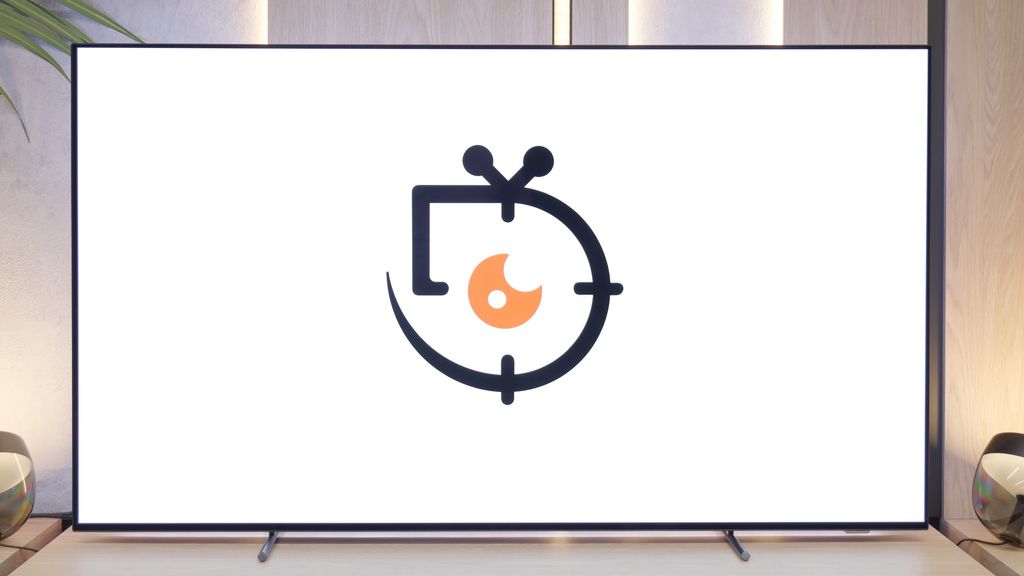
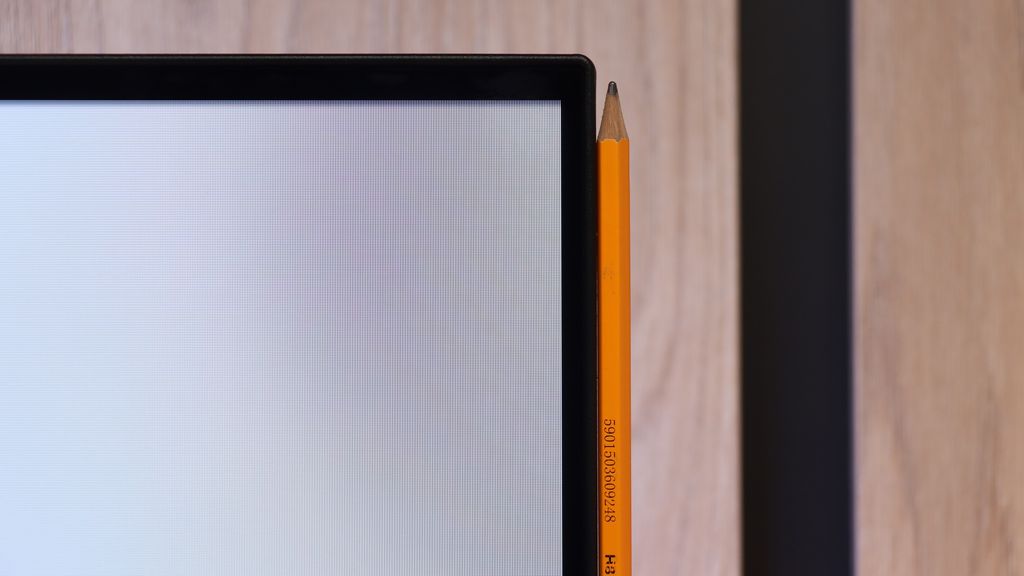
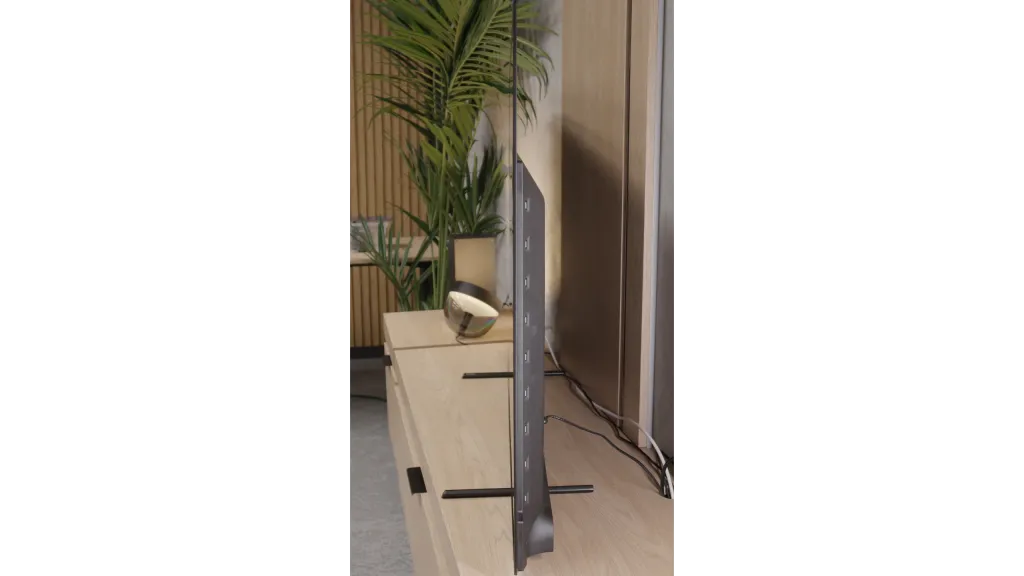
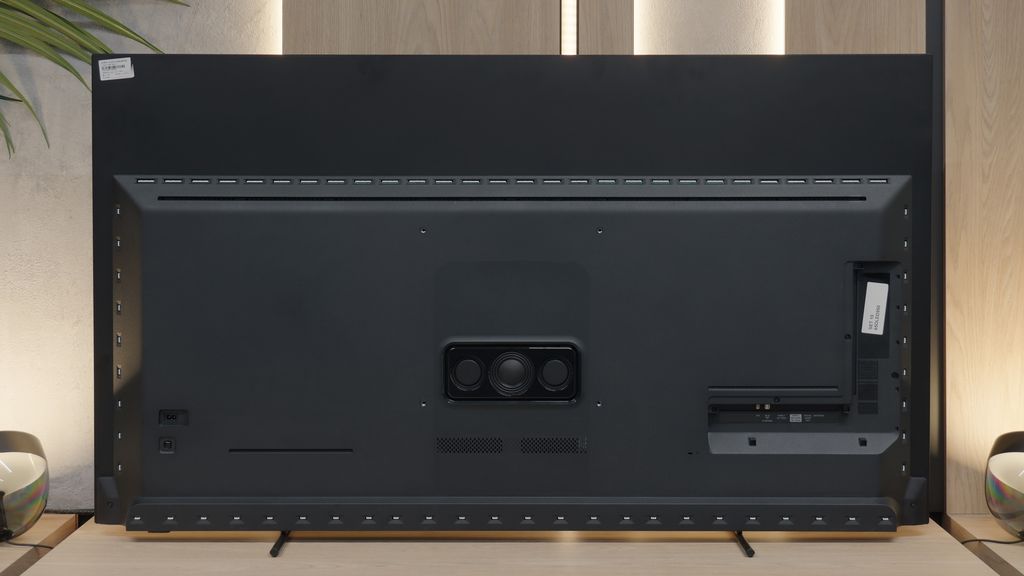
TV appearance


Where to buy

No links
Contrast and black detail
10/10
10/10
Contrast:


Result
∞:1

Result
∞:1

Result
∞:1

Result
∞:1

Result
∞:1
Result
∞:1
Result
∞:1
Result
∞:1
Result
∞:1
Result
∞:1
Halo effect and black detail visibility:


Check the visibility of bright lights on a dark background. Mini-LEDs often struggle with this. The photo does not compare black levels – that’s what the video below is for.
The video accurately shows differences in contrast and black levels between TVs, as well as potential issues: halo around bright objects or Mini-LED zone operation visible as brightness jumps.
The Philips OLED909 presents exemplary achievements in the category of contrast and black levels, characteristic of OLED technology. Tests on five panels confirmed infinite contrast, making the television an ideal choice for film enthusiasts in darkened rooms. A scene from the film Oblivion impresses with the excellent separation of light from the lamp, allowing full appreciation of the precise reproduction of even the smallest details. The scene from the film Sicario 2 also performs well, where the bright lights of the helicopter have been perfectly separated from the dark background. However, in this same scene, the phenomenon of desaturation, or loss of colour saturation, is noticeable. Although this is not directly related to the assessment of contrast and black levels, it is worth mentioning, especially if perfect colour reproduction in every situation is crucial. Despite this minor flaw, the black levels generated by the Philips OLED909 remain incredibly deep and deserve top marks.
There is not much to elaborate on here. As with every OLED television, the black and contrast quality in the Philips OLED950 is simply perfect. Regardless of the film scene being watched, night shots, or materials in a 2.39:1 aspect ratio with black bars, you can count on perfect black without any halos or brightening. This is one of the greatest advantages of OLED technology over LCD and Mini-LED televisions. There is no game of local dimming algorithms or compromises here. Black always remains black. The only thing we noticed in our tests is the helicopter scene from the film Sicario 2. The OLED950 quite clearly highlights details in the shadows. However, this is a feature of our test sample, more related to the character of image reproduction than to the black quality itself. In this regard, everything here is at the highest level.
HDR effect quality
7.8/10
8.7/10
Luminance measurements in HDR:

Result
1394 nit

Result
1471 nit

Result
1594 nit

Result
1552 nit

Result
708 nit
Result
1910 nit
Result
2084 nit
Result
2194 nit
Result
2179 nit
Result
1370 nit
Scene from the movie “Pan” (about 2800 nits)


Scene from the movie “Billy Lynn” (about 1100 nits)


The photos show two HDR10 movies. 'Pan' is one of the brightest productions ever made, while 'Billy Lynn' (soldier) has brightness typical of streaming (Netflix, Prime, HBO MAX). Notice the intensity of effects and detail in whites.
Static HDR10


The photos present the visibility of white details in various HDR formats. They do not show brightness differences between TVs (these can be compared in the previous gallery).
Dynamic: Dolby Vision
Dynamic: Dolby Vision


The photos present the visibility of white details in various HDR formats. They do not show brightness differences between TVs (these can be compared in the previous gallery).
HDR luminance chart:
Philips OLED950
Philips OLED909
Luminance of RGB colors
Luminance of RGB colors
Philips OLED909 impresses with its HDR quality, achieving up to 1500 nits of peak brightness in tested scenes. This is an excellent result, placing this television among the best OLED models on the market. The MLA panel, also used in models such as the Panasonic Z95A and LG G4, plays a key role here, allowing for exceptionally bright and detailed reproduction of dynamic scenes. However, it is worth noting that in the most demanding scene from the film The Meg, brightness drops to around 700 nits. This is a typical phenomenon in OLED technology, where intensely bright full-screen images cause a limitation in luminance. Nevertheless, the HDR effect still looks very good, and the television performs better than most of the competition under similar conditions. The wide colour gamut coverage also deserves praise. The OLED909 offers 95% coverage of DCI-P3, ensuring that the television can display vibrant and realistic colours.
The OLED950 is a phenomenal television for consuming content in HDR format, primarily thanks to the innovative Tandem OLED panel. With this technology, the screen can generate astronomical brightness levels, reaching over 2000 nits in film scenes (on test patterns). This is an exceptional result that places the OLED950 among the world’s top displays available on the market. However, it is important to note a specific characteristic of this solution – at moments when full-screen bursts of light appear on the screen, brightness can drop by as much as half. It is worth emphasising, though, that values above 1000 nits on a full screen are still an outstanding result. This allows for the HDR image to be displayed exactly as filmmakers would wish, maintaining the dynamics and impact of bright scenes.
The use of the Tandem OLED panel has also brought tangible benefits in terms of colour reproduction, improving elements that traditional WOLED panels struggled with compared to their QD-OLED competition. For the OLED950, the colour gamut coverage is broader than in classic WOLED panels, reaching nearly 100% of the DCI-P3 colour space and a solid 82% of the demanding BT.2020 palette. Although these results still do not match the high standards of QD-OLED panels, the difference diminishes during real-world use. We cannot deny that in the vast majority of films, colours look simply fantastic on this model – they are saturated, vibrant, and full of depth.
Factory color reproduction
7.6/10
5.5/10


This gallery shows how colors change after professional TV calibration. If you notice the difference, we recommend ordering this service at SkalibrujTV.com.
Factory Mode
After calibration


This gallery shows how colors change after professional TV calibration. If you notice the difference, we recommend ordering this service at SkalibrujTV.com.
Factory Mode
After calibration
Just like with other televisions, the Philips OLED909 has been tested for colour reproduction in factory modes. The best mode turned out to be Filmmaker Mode, however, despite its name, it is not without flaws.
The biggest problem is the white balance. In both HD and 4K HDR content, there is a noticeable dominance of green and red hues, which causes a distinct yellowing of the screen. This effect is particularly evident in test materials, for instance in a scene with Tom Cruise in the foreground, where the difference compared to a calibrated image is very apparent.
As for brightness characteristics, in HD material the gamma was overly boosted – it was below the reference value of 2.4, which gave the image a “milky” filter and affected overall clarity. In the case of 4K HDR content, we noticed the opposite phenomenon – at the beginning of the EOTF curve, there is a noticeable drop, indicating problems with reproducing the smallest details in dark scenes. Although Filmmaker Mode offers acceptable quality, noticeable errors in white balance and brightness characteristics show that the television requires additional calibration to fully demonstrate its potential in colour reproduction.
We tested the OLED950 model in Film mode. Although it is theoretically the best and most faithful preset on this television, in practice it proved not to be free from flaws. Interestingly, in the unit we tested, the biggest challenge was not the white balance itself – although it did show a slight tendency to give the image a pinkish hue. The main issue lay in the way the television managed brightness, both in everyday SDR content and in demanding HDR scenes. The analysis of the gamma graph and the EOTF curve leads to one key conclusion: the television excessively exposes brightness in the lower registers. This results in the image appearing less contrasty than the panel technology allows. Details in dark areas that should remain perfectly black (characteristic of "OLED black") are simply unnecessarily highlighted and brightened. Fortunately, these errors can be corrected using the appropriate tools, which is why – as always – we proceeded with professional calibration.
Color reproduction after calibration
9/10
9.4/10


The photos show how movies look on the TV. Pay attention to black detail visibility, colors, and shadow tint.


The photos show how movies look on the TV. Pay attention to black detail visibility, colors, and shadow tint.
Philips OLED909 offers tools for image calibration, which significantly improves its quality. After calibrating the Filmmaker Mode, the television presents a much more natural colour representation. The white balance after calibration looks very good. Although we noticed slight deviations in the blue tint in HD content, the errors are within acceptable limits, and the image gives a much better impression than in the factory settings. The brightness characteristics, including gamma and EOTF, have also been clearly improved. The television no longer has issues with excessive brightening or darkening of the image. Both dark and bright details are now rendered correctly, making the image look very good in every scene. After calibration, the Filmmaker Mode in the Philips OLED909 offers excellent image quality that will meet the expectations of even the more demanding users. Calibration fully utilises the potential of this model.
As can be seen, the OLED950, after a professional calibration process, transforms into an absolutely phenomenal display that, without a shadow of a doubt, can be placed alongside the best televisions currently available in the world. This equipment only needed a professional touch to show its full potential and eliminate factory shortcomings. The minimal errors in reproduction in the Color Checker tests and the fidelity of the colour palette speak for themselves. We are dealing with an almost perfect device here. A true window to the world, offering image quality of the highest order.
Smoothness of tonal transitions
4.6/10
7.1/10



These are selected scenes that show smooth tonal transitions from one color to another. If you see distinct banding, it’s the TV panel’s fault.

These are selected scenes that show smooth tonal transitions from one color to another. If you see distinct banding, it’s the TV panel’s fault.

These are selected scenes that show smooth tonal transitions from one color to another. If you see distinct banding, it’s the TV panel’s fault.

These are selected scenes that show smooth tonal transitions from one color to another. If you see distinct banding, it’s the TV panel’s fault.
The Philips OLED909 performs average in terms of fluidity of tonal transitions. The WOLED panel used in this model is not known for handling tonal transitions perfectly, and in the case of the OLED909, it looks somewhat worse than in competing models with similar panels. There are noticeable subtle transitions and colour blends in the bright and dark areas of the image, which can be particularly visible in more demanding scenes with subtle gradients. This effect may influence the perception of content, especially for users who pay attention to such details.
If we were to point out the weaker aspect of the OLED950 model in comparison to market competitors like the G5 and S95F, it would be the digital signal processing – just like with most televisions from this manufacturer. Although the processor used here is termed “dual,” our practical tests did not reveal significant changes compared to the lower-positioned OLED910 model. The differences are, in fact, symbolic, which was reflected in only a cosmetic increase in the rating in this category. In very demanding, particularly dark scenes, one can still occasionally notice issues with slight posterisation. However, it must be clearly stated that this is a “flaw” that the average viewer will very rarely notice during normal usage, and the overall perception remains at a high level.
Image scaling and smoothness of tonal transitions
6.9/10
7.1/10

Smooth transition function

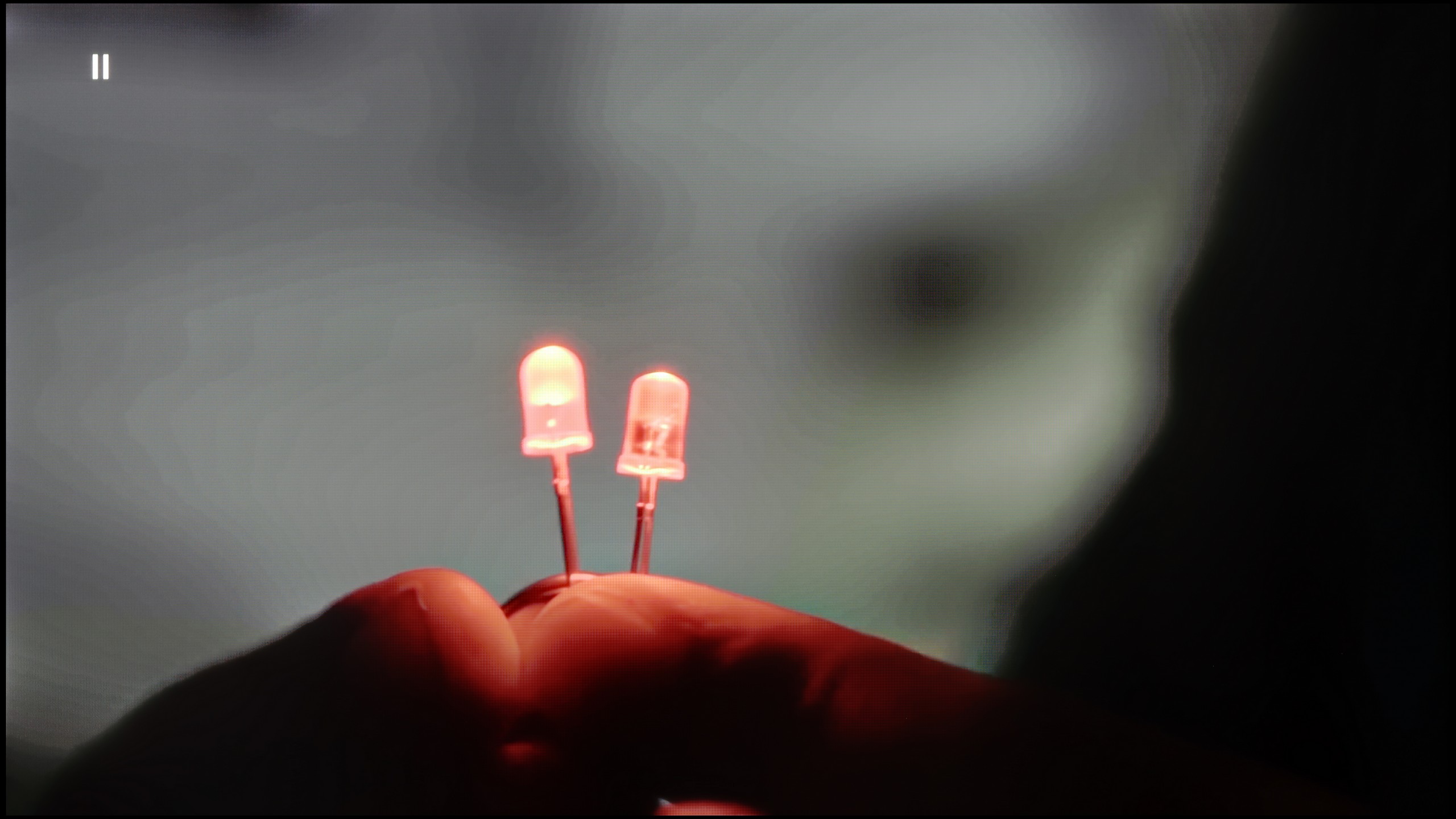
The match photo shows how the TV smooths weak tonal transitions in low-quality video.
Image scaling SD (576i)


The model photo shows how it handles upscaling of SD material.
The Philips OLED909 offers a distortion reduction feature aimed at smoothing tonal transitions. Unfortunately, the effectiveness of this function leaves much to be desired. Setting it to the "Medium" level brings certain effects, but it comes with the risk of blurring important details in the image. For this reason, we do not recommend using this option unless we are keen on mitigating visible artifacts at the cost of detail.
As for image scaling, the television presents a very plastic image, which may appeal to viewers who prefer a softer picture. Those expecting clearer sharpness will also find a solution, as image scaling can be adjusted according to individual preferences in the settings.
Upscaling
In terms of the image upscaling, the proprietary P5 processor performs just as well as in most models from this manufacturer. Low-resolution content takes on a very soft and plastic character. This kind of presentation will certainly appeal to many people. However, if you prefer sharper contours, you can lightly enhance them with the appropriate slider in the television's menu. It's really hard to find fault in this aspect. The image simply looks very good and additionally there is no issue with the phenomenon of overscan.
Smoothing and Distortion Reduction
The function for smoothing tonal transitions performs somewhat worse. In the settings, we find an option called "Distortion Reduction." This allows for three levels of adjustment of the processor's interference. Unfortunately, the Minimum setting works poorly and the smoothing effects are negligible. The Medium level gives a decent result, but it also starts to smooth out actors' skin details. On the other hand, the Maximum setting works too aggressively. It definitely removes too much detail from the faces and background elements, and can even take away the film grain. To achieve the optimal effect, it's worth experimenting with these settings at home and adjusting them to your preference. It may seem that the Medium option is the best compromise here.
Blur and motion smoothness
8.5/10
8.5/10

Blur (native resolution, maximum refresh rate):




Blur ():
Blur (4K@144Hz):



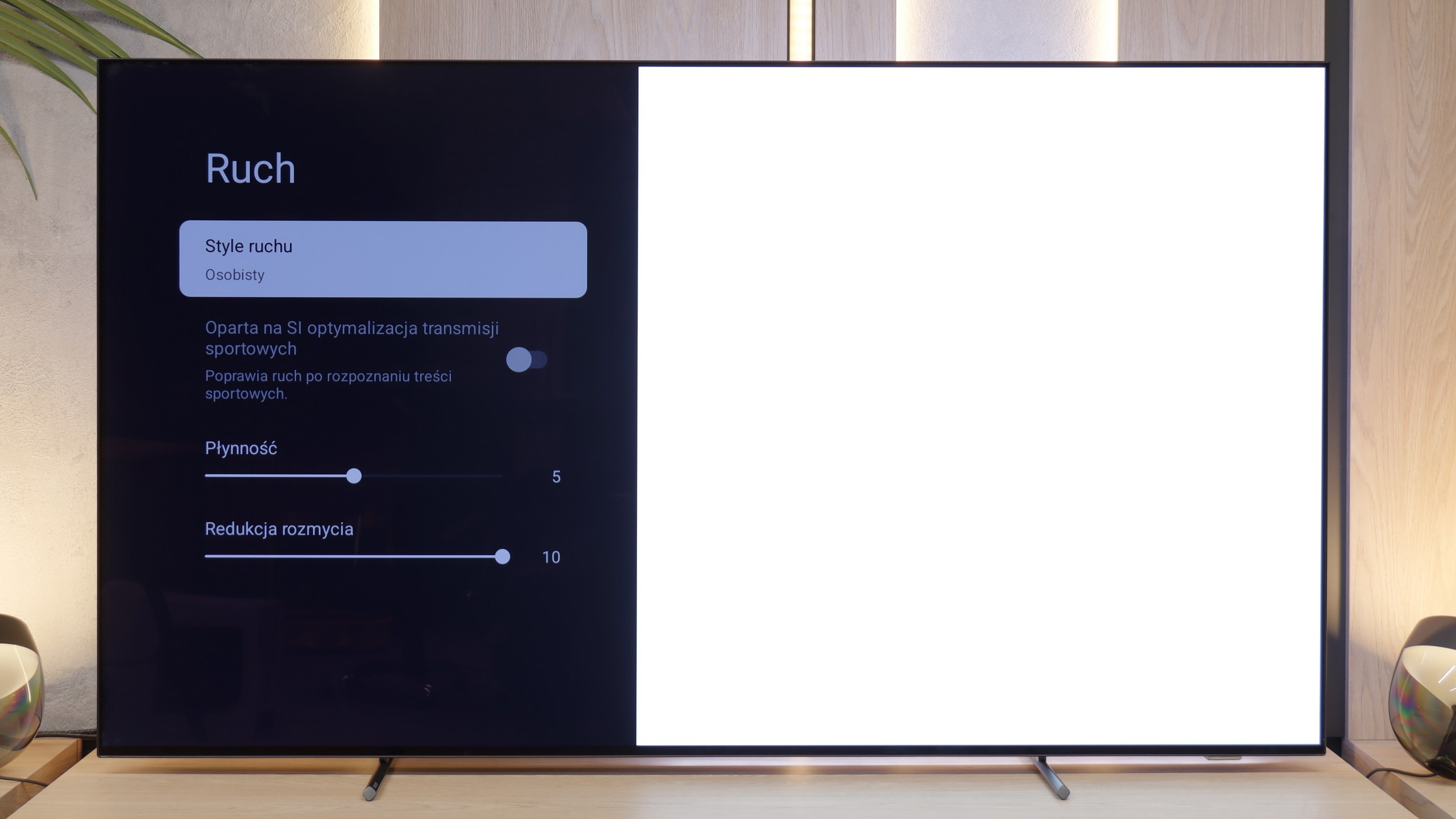
The Philips OLED909 with a 144 Hz panel offers excellent motion smoothness, which should satisfy both film enthusiasts and gamers. Additionally, the television is equipped with a motion smoothing feature called "Motion Style", which allows for precise adjustment of motion fluidity to personal preferences. In the settings, we find two sliders: "Smoothness", responsible for regulating motion fluidity in films, and "Blur Reduction", which helps eliminate minor artifacts and distortions in dynamic scenes. This feature works well, ensuring that even rapid movements on the screen are clear and readable.
The motion reproduction in the OLED950 model is virtually perfect. This is typical for screens of this type (OLED 120Hz+), as the panel shows no blurring at all. This allows us to enjoy perfect sharpness in practically any conditions. Much of this is thanks not only to the specifics of organic technology. Equally important work is done by the smoothing systems implemented by the manufacturer.
Console compatibility and gaming features
10/10
9.8/10
- ALLM
- VRR
- VRR range40 - 144Hz48 - 144Hz
- Dolby Vision Game Mode
- Correct implementation of HGIG
- 1080p@120Hz
- 1440p@120Hz
- 4K@120Hz
- Game bar

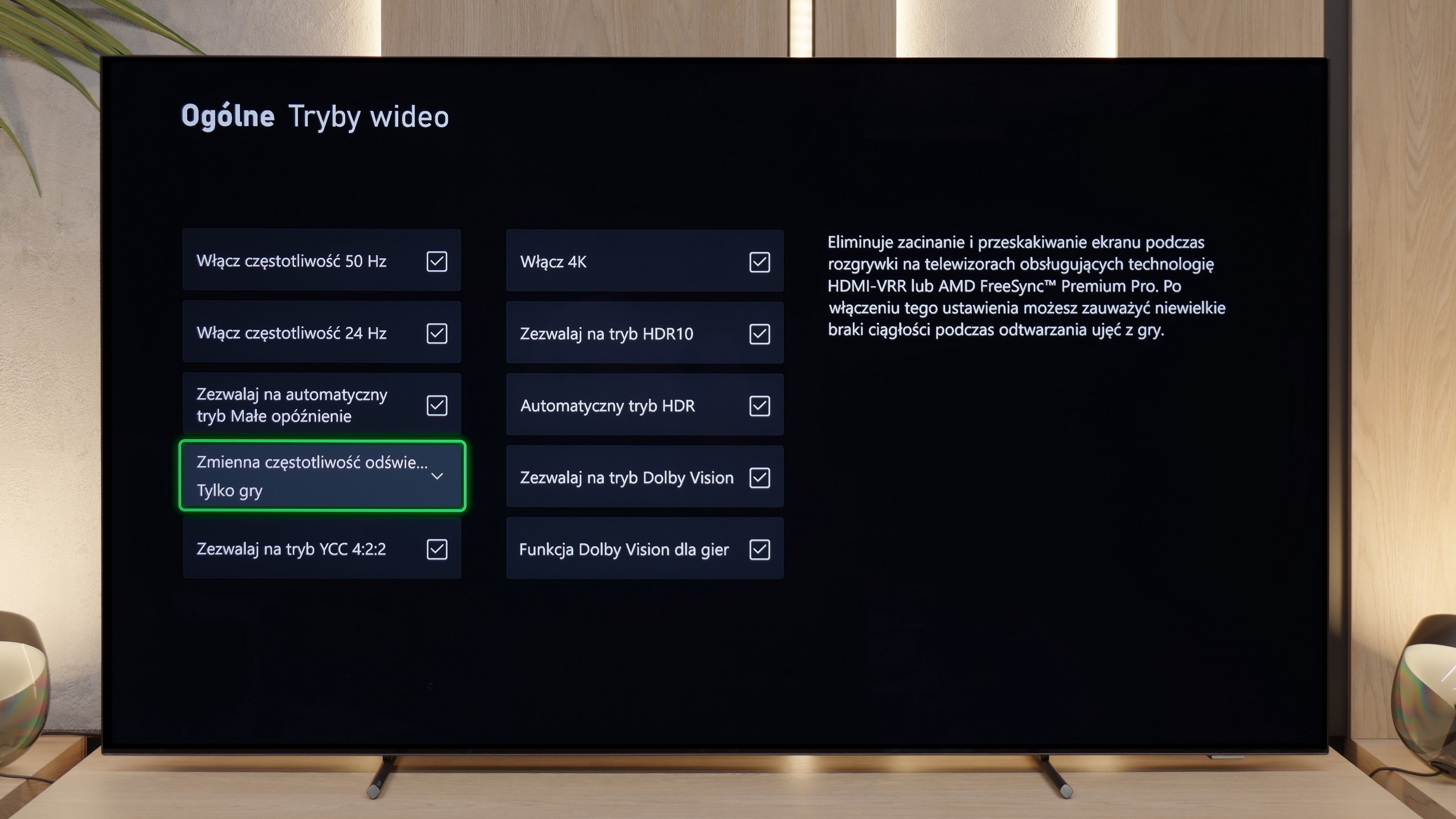

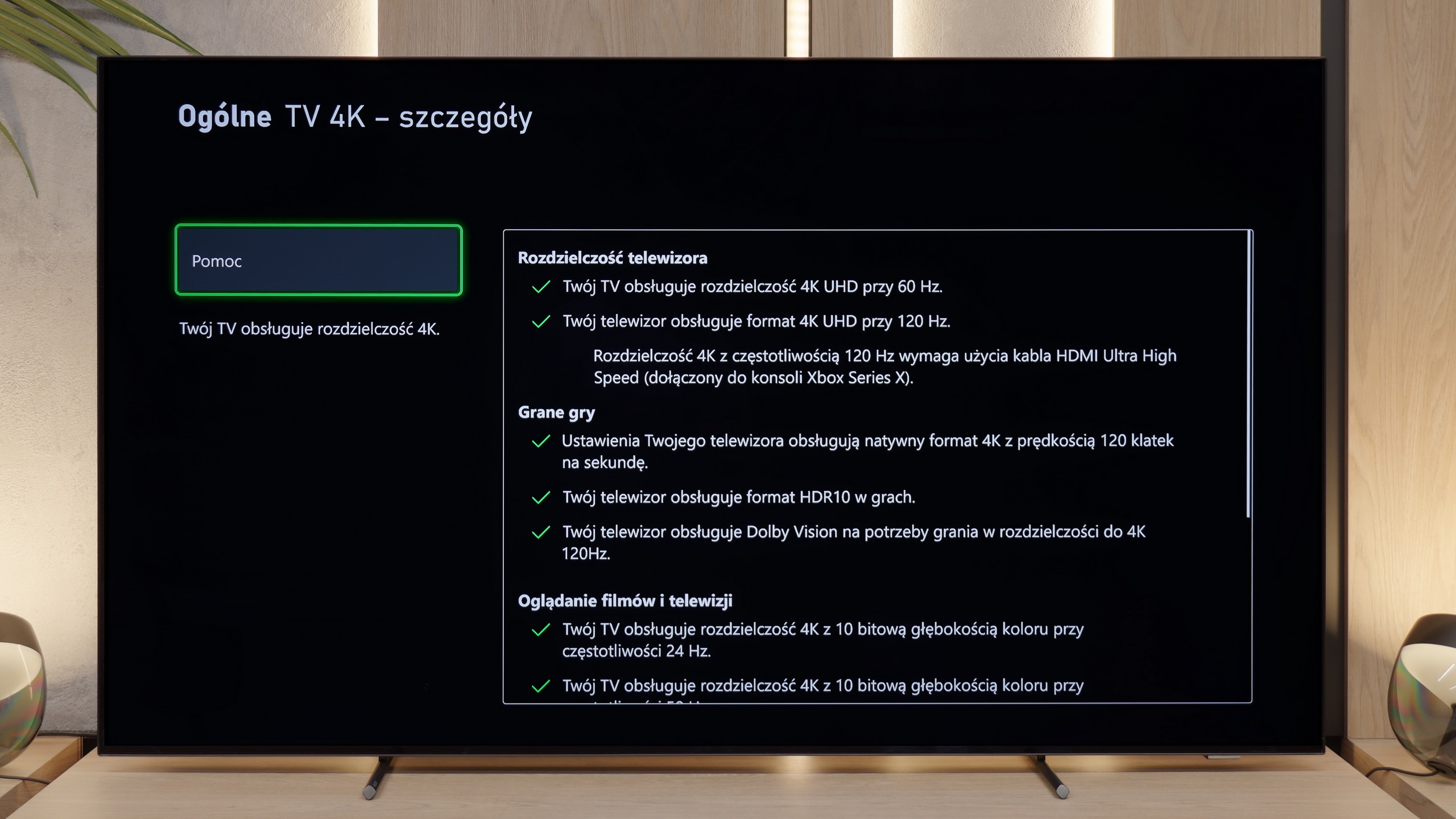

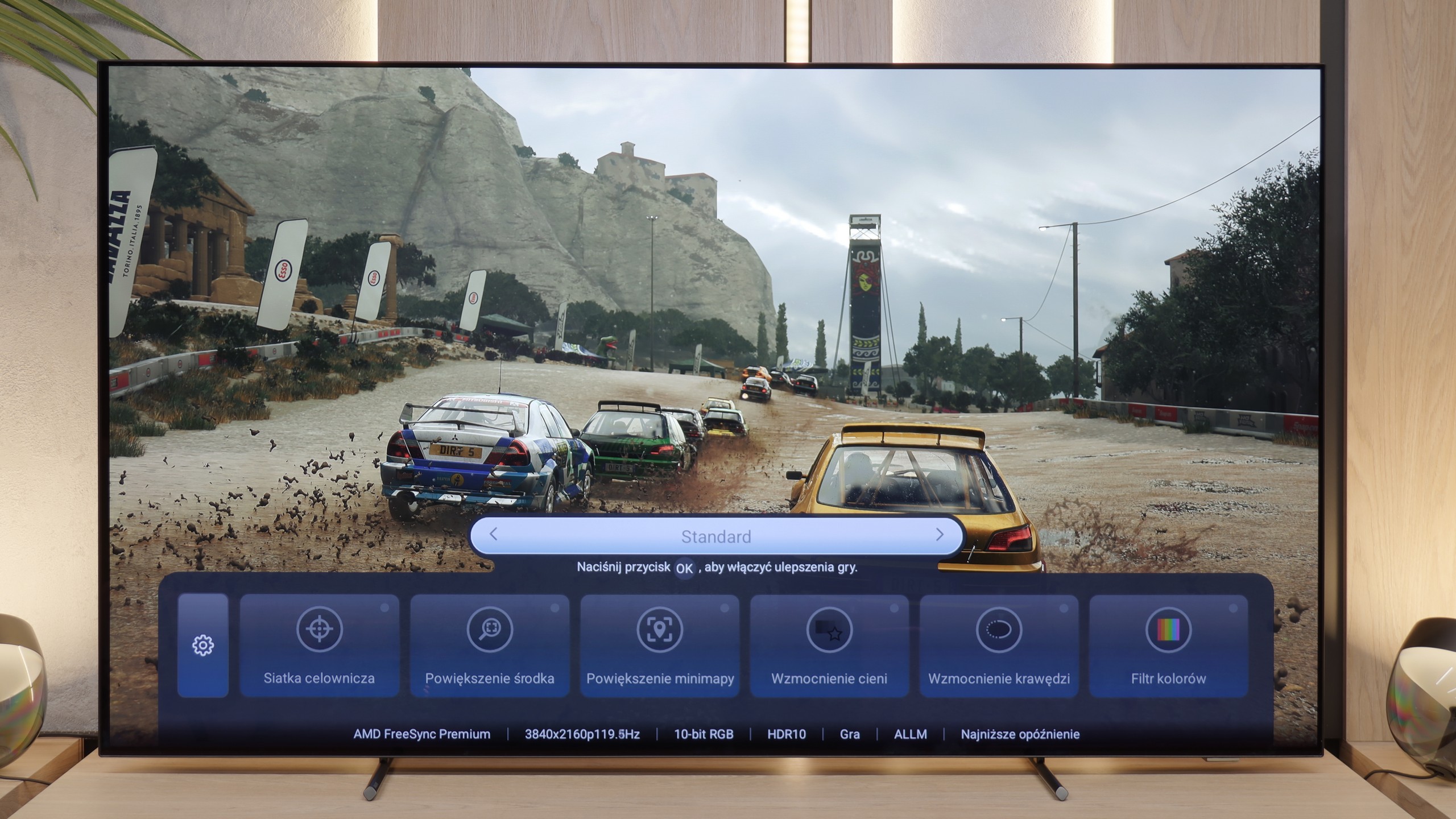


The Philips OLED909 is a television that meets practically all the requirements of gamers. Equipped with ALLM (Auto Low Latency Mode), VRR (Variable Refresh Rate), and support for Dolby Vision, it guarantees an excellent gaming experience. Additionally, the television offers very low input lag, ensuring that reactions to player movements are instantaneous, which will be particularly appreciated by fans of fast-paced games.
The television handles any resolution at 120 Hz without any issues, and even supports higher refresh rates. The HGiG feature, responsible for accurately displaying HDR content in games, works as it should, making the image in game mode balanced and aligned with the guidelines of console manufacturers.
The OLED909 is also equipped with the Game Bar feature, which allows for quick preview and adjustment of game-related settings. Although the interface of this solution appears less visually appealing than that of competitors, it serves its purpose well, offering all the essential options in one place.
The OLED950 is nearly the perfect television for gamers. This is not only due to the unique atmosphere created by the Ambilight system during gameplay. The most important aspect here is the robust hardware support. You will find literally everything you should expect from a modern gaming display. The manufacturer has implemented two HDMI 2.1 ports with full bandwidth of 48 Gb/s. This gives us access to gaming in 4K resolution at 120 frames per second. Of course, support for VRR technology and the automatic ALLM game mode is also included. The device handles any HDR signal without difficulty, whether we are using Dolby Vision or the HGiG standard.
Access to all settings is available from one place thanks to the special Game Bar overlay. Although this interface may not be the most visually appealing on the market, it fully accomplishes its purpose. It displays all the important signal parameters and offers useful extras. Gamers can take advantage of the minimap zoom feature or add a permanent crosshair on the screen, which can be seen as a small aid in online competition. The contrast range adjustment also proves to be useful, as it allows you to brighten shadows and gain better visibility of enemies hidden in dark corners of the map.
Input lag
10/10
10/10
SDR
HDR
Dolby Vision
Philips OLED909 achieves remarkable results in the input lag category. Values of 13 ms at 60 Hz and 5 ms at 120 Hz are among the best outcomes available on the market. Such low input lag ensures immediate response, which is crucial for gamers expecting maximum precision in dynamic games. Special praise is warranted for its performance in Dolby Vision mode, where low input lag is also maintained. This allows gamers to enjoy not only smooth gameplay but also the full visual potential of HDR games without any compromises. Philips OLED909 is one of the best choices in this regard for gaming enthusiasts.
As we have come to expect from televisions in this segment, the signal delay in this model is practically negligible. Our measurements indicated almost reference values: just 5 ms at a refresh rate of 120 Hz and 12 ms for a 60 Hz signal. This means an instantaneous response to every command issued via the controller, mouse, or keyboard. With such low results, the only limitation during dynamic online gameplay is now just your own reflexes and lack of "skill," not the hardware. 😉
Compatibility with PC
6.4/10
6.5/10

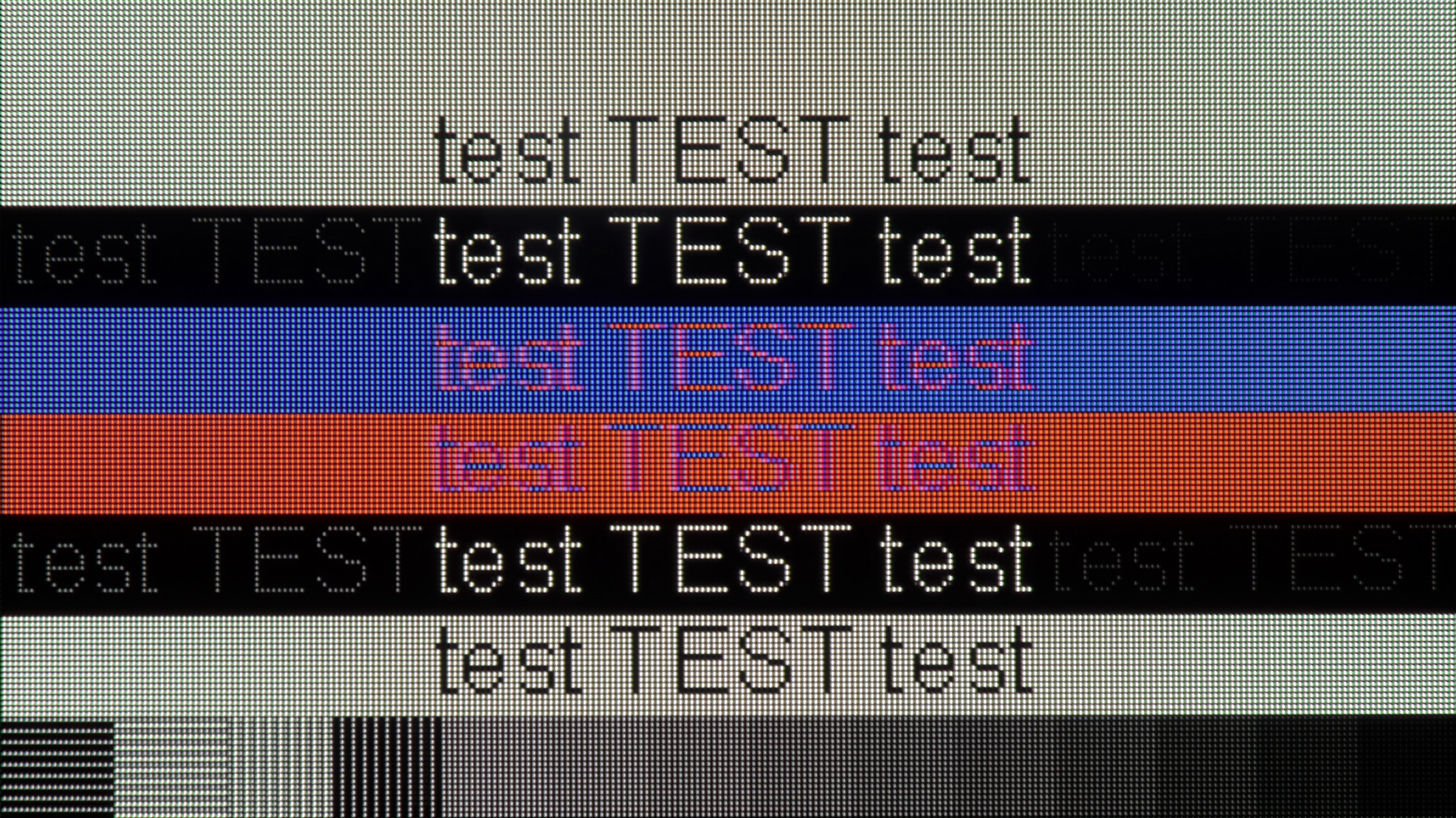
The photo shows the legibility of small fonts. Ideally, lines should be the same thickness on both light and dark text, with minimal pixel gaps.
The Philips OLED909 is a good choice for gaming on a computer. The television supports G-SYNC, provides very low input lag and offers a refresh rate of 144 Hz in PC mode, making it an ideal solution for gamers who value smooth and responsive gameplay. However, for everyday work with text or graphics, the situation is slightly worse. Although the readability of fonts is at an acceptable level, up close, you can notice that they appear slightly blurry. This is due to the lack of full implementation of chroma 4:4:4, which is responsible for perfect sharpness and clarity of fonts.
The OLED909 will perform excellently in gaming applications, but for those planning to use the television mainly for text work, it may be less suitable. In such cases, it is worth considering a device with full support for chroma 4:4:4.
In this category, the situation looks quite specific. If we look at the OLED950 through the lens of a gamer, we get a phenomenal display. It performs excellently not only with consoles but also in combination with a powerful computer. Here we have access to an additional 144 Hz mode, full support for G-Sync and FreeSync technologies, as well as very low input lag. One could therefore risk stating that for PC gamers, this is an almost ideal monitor.
However, problems arise when we look at the readability of the fonts. We are not just referring to the unusual subpixel arrangement of WOLED panels (BWRG), which causes a specific colouration of the text edges in all TVs of this type. The tested model has trouble properly displaying Chroma 4:4:4 sampling. This is mainly visible when we display colourful text on another colourful background. The letters then gain strange shading, unnatural contours, and unwanted artefacts. It's a bit of a shame, although we must honestly admit that this is a very specific flaw. For 99% of you, no one is likely to notice this during normal entertainment. However, if you belong to that 1% of people planning to purchase the OLED950 strictly as an office monitor, you may feel disappointed.
Viewing angles
9.7/10
7.6/10
The Philips OLED909 offers some of the best viewing angles available on the market. OLEDs are known for their excellent picture quality from various angles, but the use of micro-lens technology further enhances this capability. As a result, the television maintains excellent colours, contrast, and brightness even when watching the picture from a significant angle. In practice, the OLED909 performs so well that it can even compete with televisions equipped with technology QD-OLED, which also provides wide viewing angles. This makes the television perfect for large rooms and watching together from various positions without worrying about losing picture quality.
As is fitting for organic technology, the viewing angles here are practically very good. We can enjoy a great picture regardless of where on the sofa we are looking at the screen. The only reservation arises when directly comparing the Tandem OLED matrix used here with the competition's solutions. In comparison with last year's LG panels equipped with MLA filters or the best QD-OLED screens from Samsung, the angles in the OLED950 are slightly weaker. They are not as perfect as those of the mentioned rivals. Nevertheless, they generally still maintain a very high level, and in everyday use, it is hard to consider this a disadvantage.
Daytime performance
5.7/10
7.3/10



Panel brightness
Philips OLED950: 615 cd/m2
Philips OLED909: 427 cd/m2
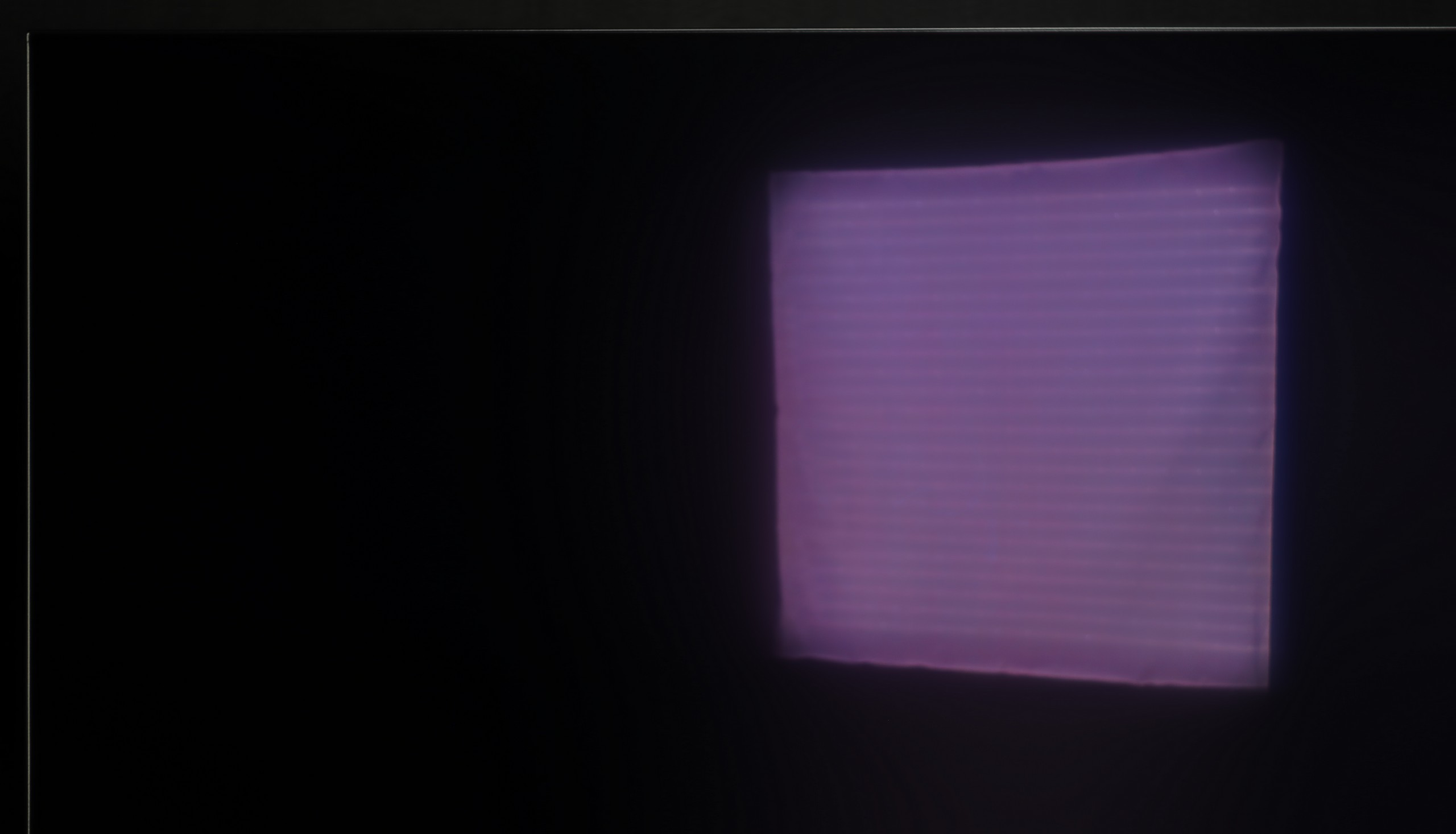
Philips OLED909, despite the glossy surface of the panel, handles the suppression of reflections from light falling directly on the screen quite well. This is particularly useful in brighter rooms where reflections can disrupt viewing. However, the use of micro-lens technology has its limitations – the black levels during the day take on a slightly pink tint. A similar, although more noticeable phenomenon can be observed in QD-OLED panels.
Regarding brightness, the OLED909 achieves an average brightness in SDR of 430 cd/m². This is sufficient for comfortable use of the television even in moderately challenging lighting conditions. Nevertheless, it is worth remembering that the brightness levels of OLEDs still fall short of televisions with mini-LED technology, which can be several times brighter.
The OLED950 model will perform well in very bright rooms without any concerns. A key advantage here is the previously mentioned very high brightness of the panel. The performance is impressive for OLED technology. It can confidently be stated that in this respect, this television is capable of competing with mid-range Mini-LED models. In the world of organic panels, this is not at all obvious, which is a significant advantage of the tested device.
However, there is a certain drawback that can be described as a Achilles' heel. Similar to most Tandem OLED panels, the manufacturer has applied a glossy screen coating here. Unfortunately, it does not handle direct light reflections very well. It is worth bearing this in mind when planning the position of the television in relation to windows, as reflections may be noticeable.
Panel details
Subpixel Structure:

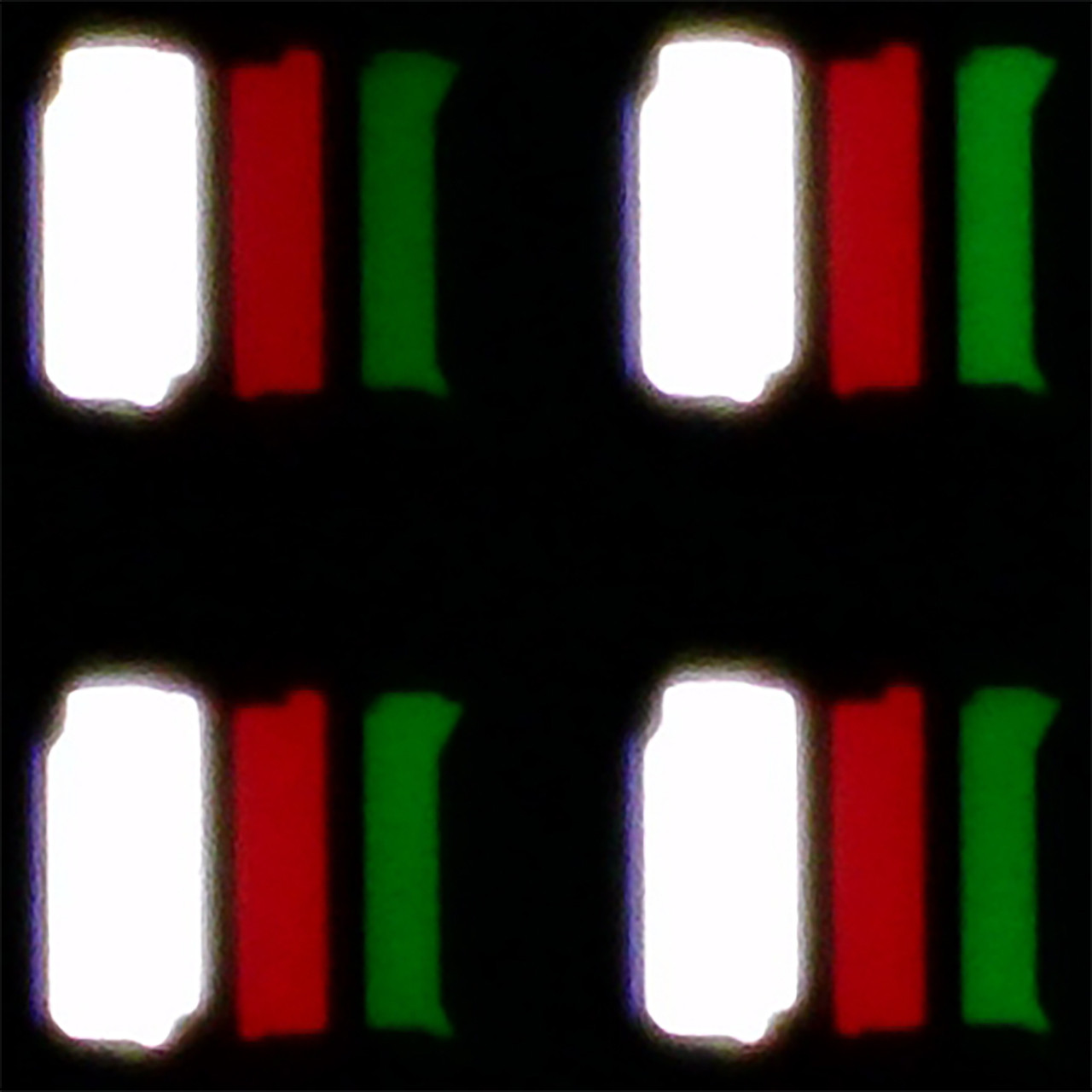
Panel uniformity and thermal imaging:


TV features
6.7/10
6.5/10
- SystemGoogle TVGoogle TV
- System performanceVery goodGood
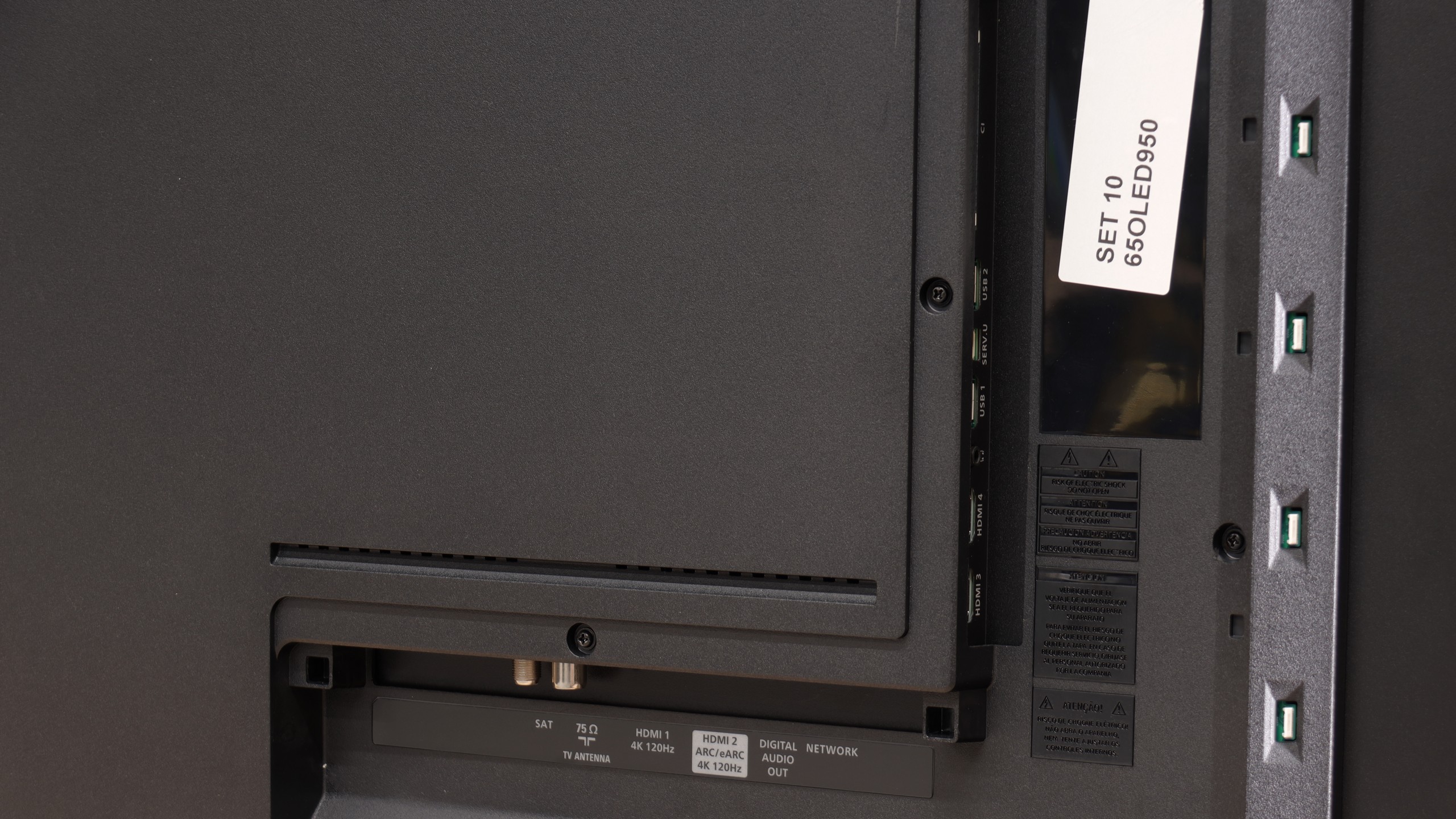
- HDMI inputs2 x HDMI 2.0, 2 x HDMI 2.1 48Gbps2 x HDMI 2.0, 4 x HDMI 2.1 48Gbps
- OutputsToslink (Optical audio), eARC (HDMI), ARC (HDMI), Mini-Jack (Headphones)Toslink (Optical audio), eARC (HDMI), ARC (HDMI), Mini-Jack (Headphones)
- Network InterfacesWi-Fi 2.4GHz, Wi-Fi 5GHz, Ethernet (LAN) 100MbpsWi-Fi 2.4GHz, Wi-Fi 5GHz, Ethernet (LAN) 100Mbps
- TV receptionDVB-T, DVB-T2, DVB-S, DVB-S2, DVB-CDVB-T, DVB-T2, DVB-S, DVB-S2, DVB-C
Classic features:
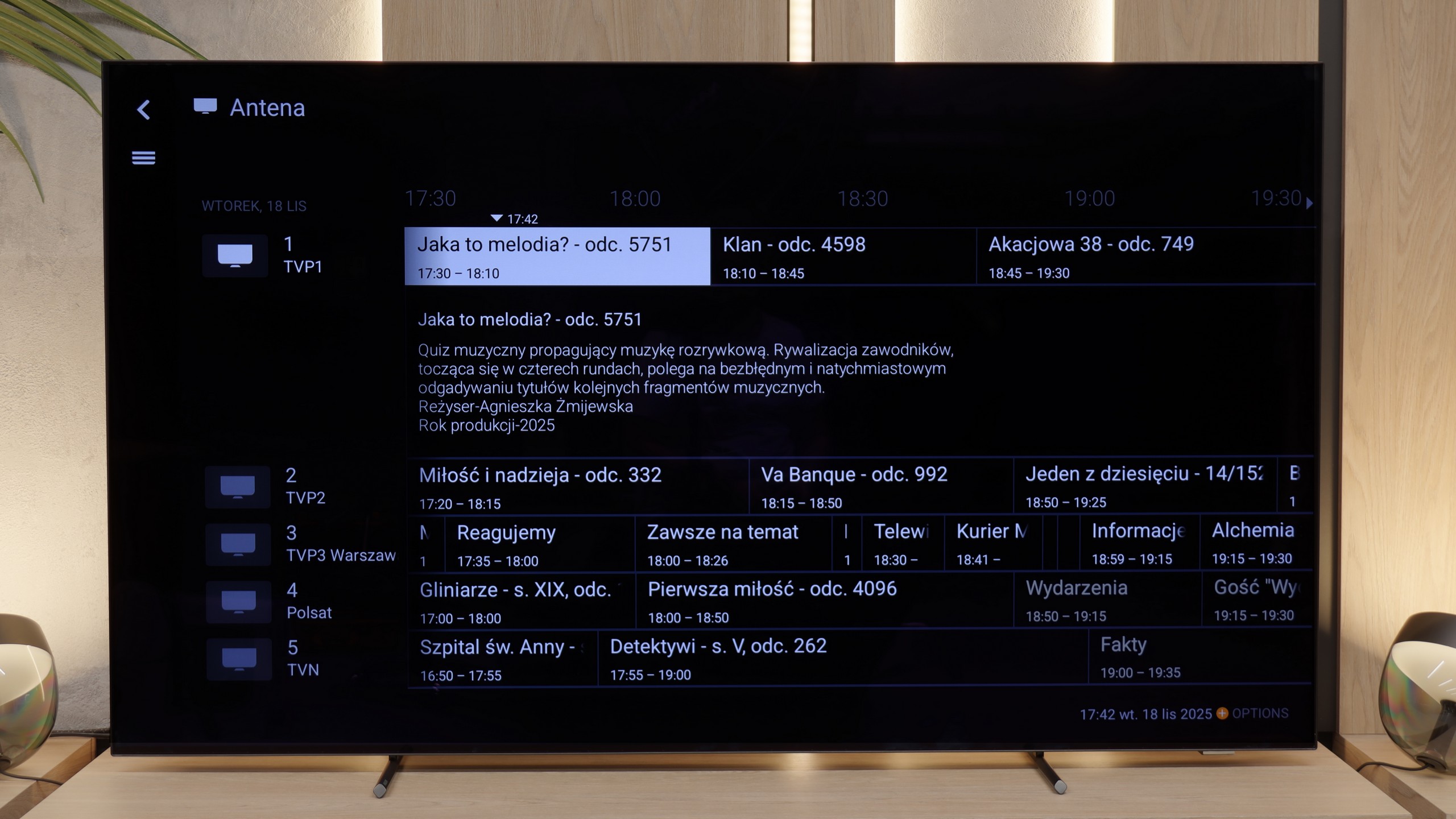
- Recording to USB (terrestrial TV)

- Recording programming
- Picture in Picture (PiP)
- RF remote control (no need to aim)
- Backlit remote control
- Teletext
- Audio only mode
- Bluetooth headphones support
- Simultaneous Bluetooth headphones & TV audio
Smart features:
- AirPlay
- Screen mirroring (Windows Miracast)
- Voice search
- Voice search in native language
- Ability to connect a keyboard and mouse


Sound connection options
- HDMI audioeARC (HDMI), ARC (HDMI)eARC (HDMI), ARC (HDMI)
- Other audio outputsToslink (Optical audio), Mini-Jack (Headphones)Toslink (Optical audio), Mini-Jack (Headphones)
- Wireless audioBluetoothBluetooth
Supported audio formats (external HDMI eARC audio):
- Dolby Digital Plus 7.1
- Dolby True HD 7.1
- Dolby Atmos in Dolby Digital Plus (JOC)
- Dolby Atmos in Dolby True HD
- DTS:X in DTS-HD MA
- DTS-HD Master Audio
Senior accessibility
- Numeric keyboard on TV
- Font size adjustment
- Audio description
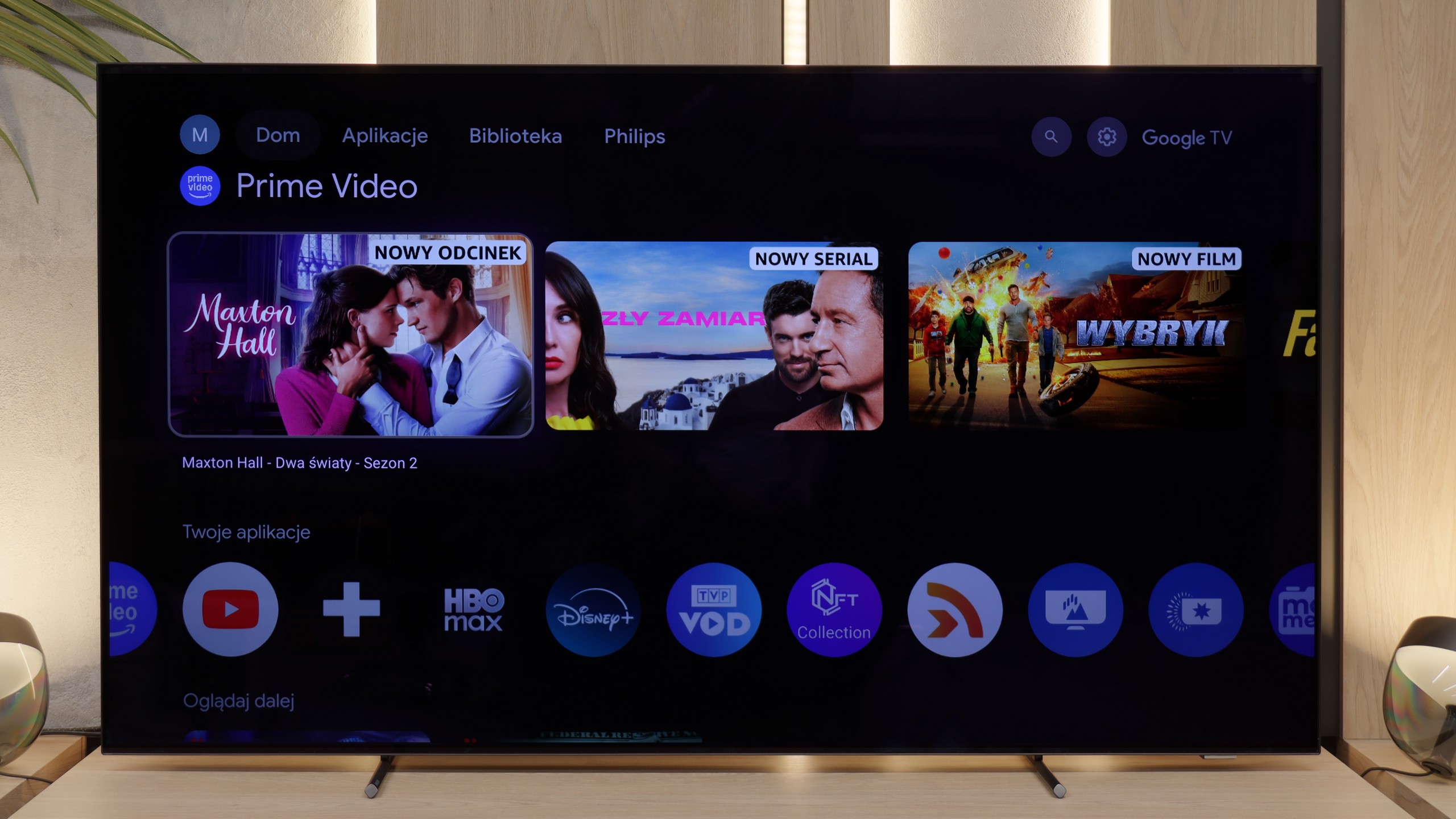
In the OLED909 model, Philips has opted for Google TV instead of its proprietary Titan OS. This solution provides users with significantly greater capabilities, especially concerning the availability of applications. Google TV offers a vast library of programs to download, from popular streaming services to tools and games. The system also supports voice commands, making it easier to search for content and manage the device, enhancing the comfort of daily use.
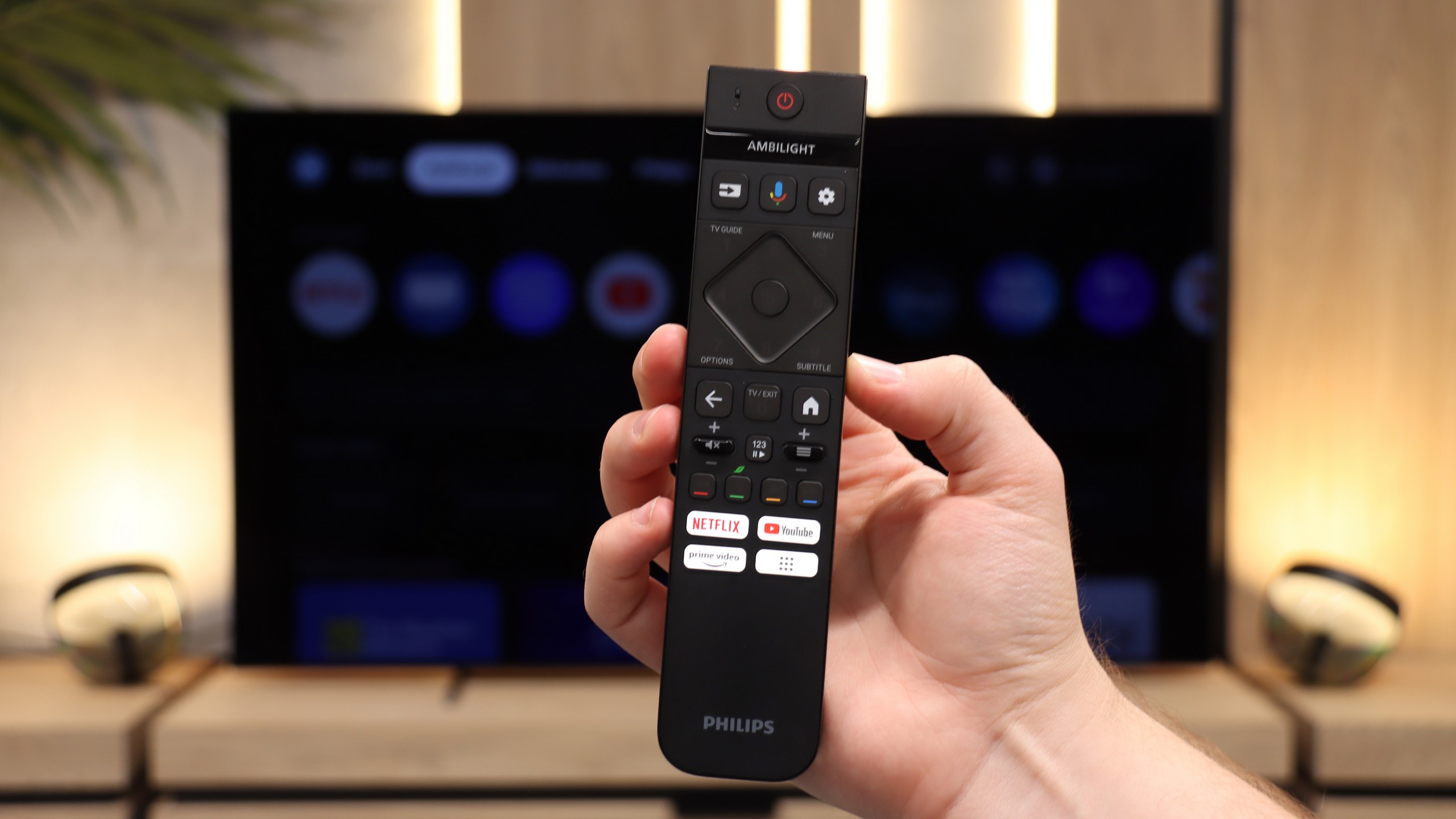
In terms of user functions, the television also performs well. It features support for AirPlay and Miracast technology, which allow for easy transmission of images and sound from other devices. Additionally, the television easily supports external accessories such as mice and keyboards, enabling it to serve as a more versatile entertainment hub. However, it is worth noting that the OLED909 does not include a PiP (picture-in-picture) feature or the ability to record programmes from its built-in tuners. A new feature in this model is the backlit remote, which looks attractive and operates in hybrid mode – it can function as a smart remote, and when the appropriate button is pressed, the numerical keypad also lights up. Unfortunately, its operation can be irritating, as it is based on standard infrared control, and the only function supporting RF (radio) technology is the voice command feature.
The Philips OLED909 stands out from other models with its four-sided Ambilight system. This allows the television to create dynamic lighting around the screen that adapts to the content being displayed. This solution not only enhances the sense of immersion but also improves viewing comfort in darker rooms. Ambilight remains one of the most distinctive features of Philips televisions, which is difficult to find among competitors.
Smart Features
The biggest plus of the OLED950 is the Google TV system — the manufacturer is increasingly moving away from it in cheaper models in favour of TitanOS, but here we are fortunately still provided with a full Android-based environment. This means access to a vast library of applications, a voice assistant, and convenient features like Chromecast. For unknown reasons, we have once again been unable to launch Windows Miracast in the editorial office, despite the manufacturer's claim that this option is available. On the positive side: Apple device users can rest easy, as the television supports AirPlay.
Classic Features
In terms of "classics", the television offers a rather basic set: teletext and Bluetooth connectivity. The most objections arise regarding the remote control. On one hand, it is sensibly designed with backlighting, "hybrid" switching between typical functions and a numeric keypad, and charging via USB-C. On the other hand, enthusiasm quickly wanes when it turns out that you need to aim it at the screen, as it operates on infrared.
Apps
9.6/10
9.6/10






















Playing files from USB
7.9/10
9.5/10
Supported photo formats:
Maximum photo resolution:

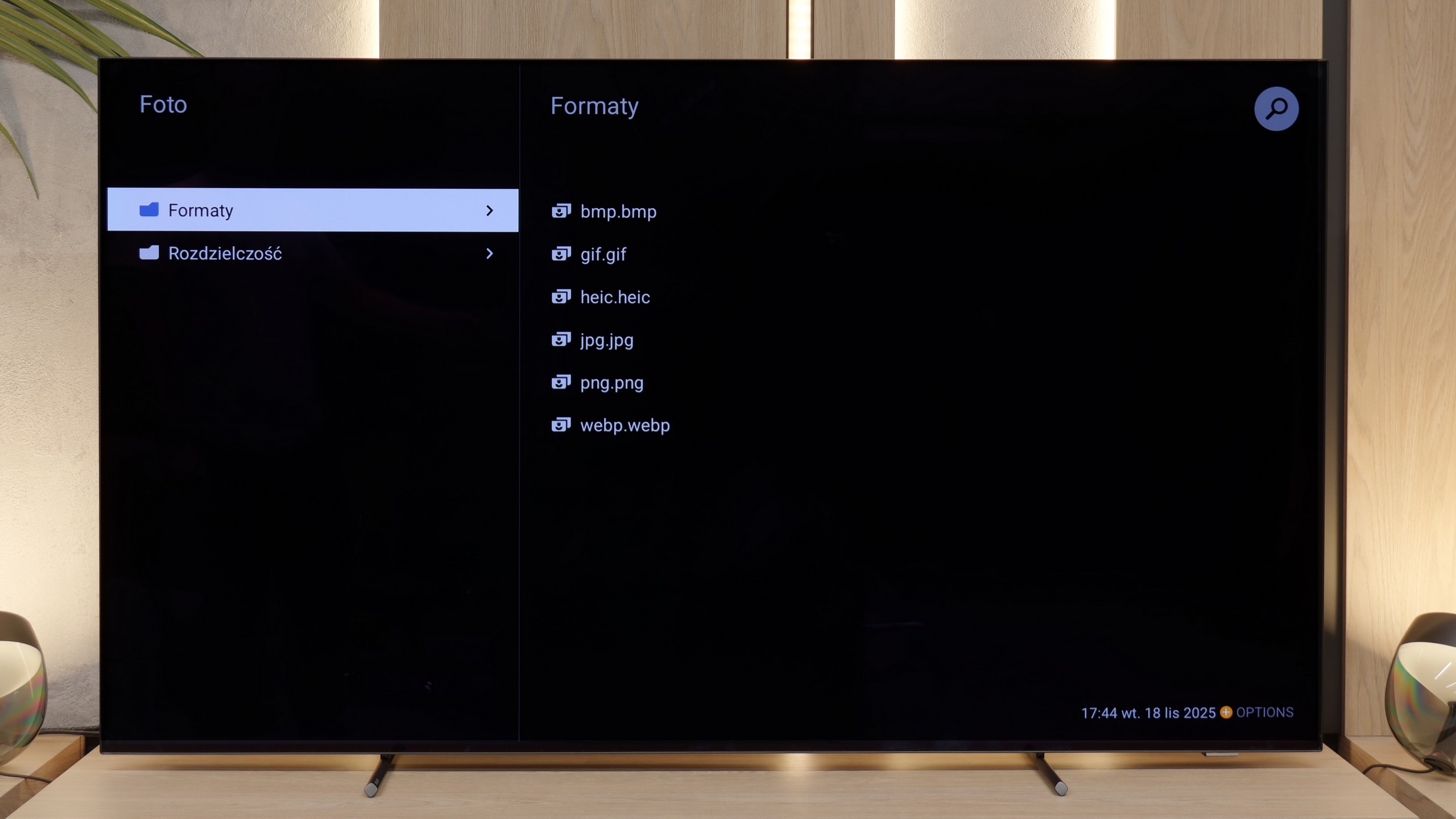
The Philips OLED909 features a built-in media player that handles most popular video, audio, and subtitle file formats with ease. However, it is worth noting that the pre-installed player does not support Polish characters in subtitles, which can be cumbersome when watching content from USB. Fortunately, with the Google TV system, this limitation can be easily bypassed. It is sufficient to download an alternative player from the wide range of available applications, which will provide full support for Polish characters and additional features, such as more advanced subtitle settings or support for less common formats. This means that even minor shortcomings in the factory software are not a major issue for users.
The factory file player in the OLED950 model works simply brilliantly. During our tests, the device handled virtually every format we provided. Whether they were video files, audio tracks or photos, the television played them without issue. It is difficult to find weak points in the handling of the most popular standards. However, if someone still feels something is lacking (which seems unlikely), the operating system comes to the rescue. With the presence of Google TV, we are not solely dependent on default solutions. At any time, we can enter the app store and install an external player, such as the popular VLC or Kodi. This gives us the assurance that the television can handle literally any file from our home library.
Sound
8.1/10
8.2/10
- Maximum volume-85dB
- Dolby Digital Plus 7.1
- Dolby True HD 7.1
- Dolby Atmos in Dolby Digital Plus (JOC)
- Dolby Atmos in Dolby True HD
- DTS:X in DTS-HD MA
- DTS-HD Master Audio
The Philips OLED909 stands out with its built-in soundbar featuring a navy fabric finish, branded by the renowned name Bowers & Wilkins. At the bottom of the screen, we find a solid speaker system, additionally supported by a built-in subwoofer at the back of the casing. The sound quality is truly impressive for the class of this device. The soundbar delivers clear and detailed audio that performs well with both dialogues and sound effects in films or games.
The 2.1 speaker setup used here, with a total power of 70 W, provides a really solid dose of proper sound. It plays clearly, and thanks to the additional subwoofer at the back of the enclosure, the sound is deep and has a definite impact. This element is often missing in cheaper designs, where bass is virtually non-existent. However, we must face the truth when comparing it to the OLED910 model. That television, equipped with a built-in Bowers & Wilkins soundbar, simply sounds much better. Was it a good decision? In our opinion, the outstanding audio from the 910 model adds greater value. Choosing the 950 model makes sense mainly if you are big fans of Ambilight, and you deal with sound through an external home cinema or soundbar anyway.
Sound Quality Test
No sound test video