Philips OLED769 is the entry-level OLED model from the Dutch manufacturer for 2024, but don’t let that mislead you. OLED769 surprises with its image quality and several interesting features. Thanks to OLED technology, the colours are truly vivid, and the contrast is very good – deep blacks and bright highlights displayed on this screen make a difference, especially when watching evening series. When it comes to motion fluidity, OLED769 performs really well. The 120 Hz panel handles dynamic scenes excellently, whether it's sports or games. When it comes to gaming on consoles, the television does not disappoint either – 4 HDMI 2.1 ports support VRR and ALLM, and the fast response time ensures smooth and responsive gameplay. And what about Ambilight? It’s a classic Philips feature and one of those functions that either you love or hate. In this model, it works very well – the backlighting responds to the content on the screen and adds atmosphere, particularly in a dark room. It’s not something that everyone will consider essential, but it does make an impression in the evenings – at least on us. As for the new operating system TitanOS, it leaves us with mixed feelings. It operates quickly, but some popular applications are missing. For more demanding users, it might lack the flexibility that earlier Philips systems (GoogleTV) offered. Philips OLED769 is a good choice for those looking for a television with beautiful image quality and the exceptional addition of Ambilight. The image quality and motion fluidity will satisfy most users, and the minor limitations of the operating system will not be a hindrance if you prioritise basic applications. It’s a solid option for both watching films and gaming.
- Matching (Score) |
- Our verdict |
- TV appearance |
- Where to buy |
- Contrast and black detail |
- HDR effect quality |
- Factory color reproduction |
- Color reproduction after calibration |
- Smoothness of tonal transitions |
- Image scaling and smoothness of tonal transitions |
- Blur and motion smoothness |
- Console compatibility and gaming features |
- Input lag |
- Compatibility with PC |
- Viewing angles |
- Daytime performance |
- Panel details |
- TV features |
- Apps |
- Playing files from USB |
- Sound
Philips OLED769 vs Samsung R85H / R86H
 Direct comparison
OLED769 / AMIBLIGHT TV
R85H / R86H / Micro RGB

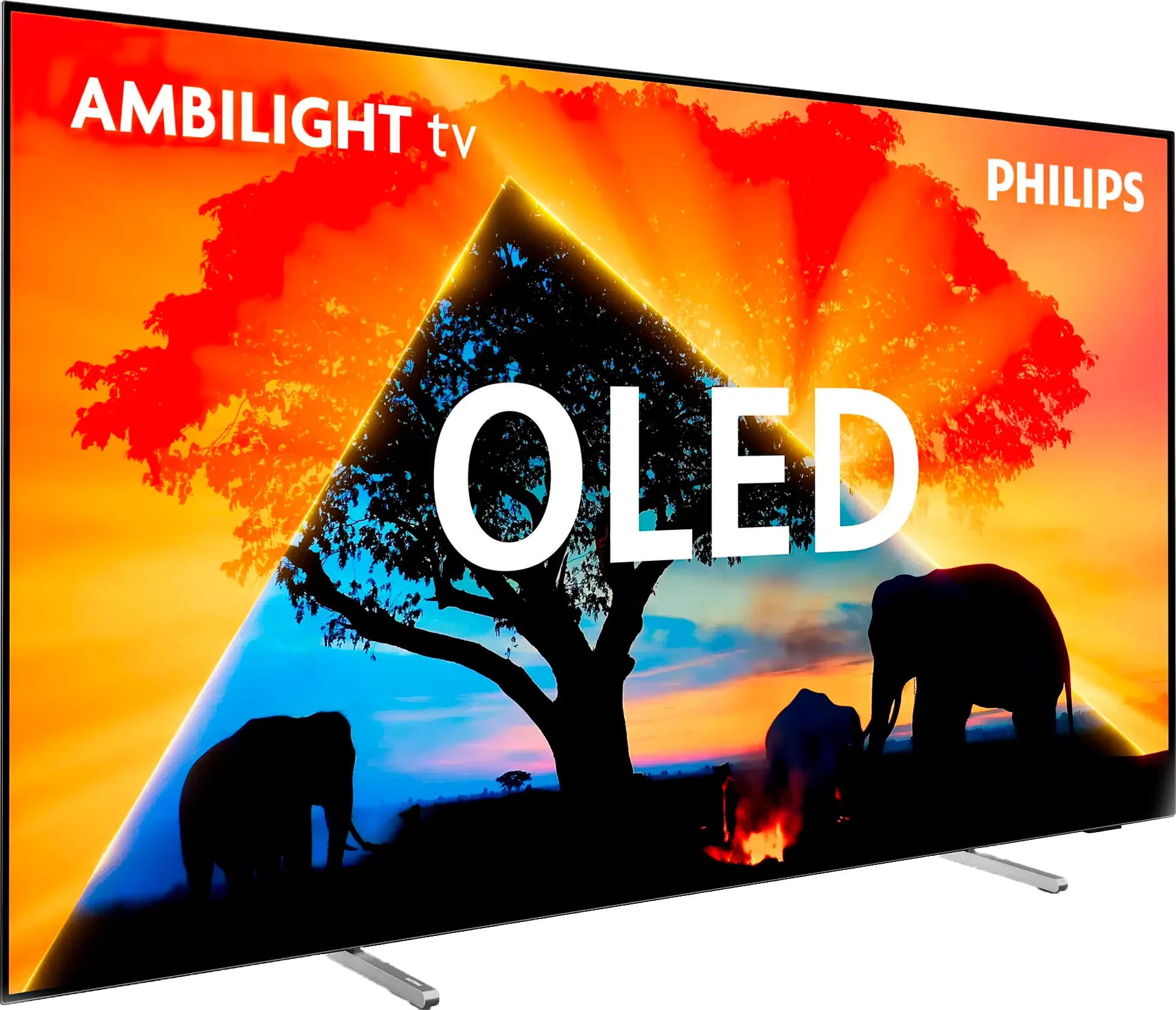
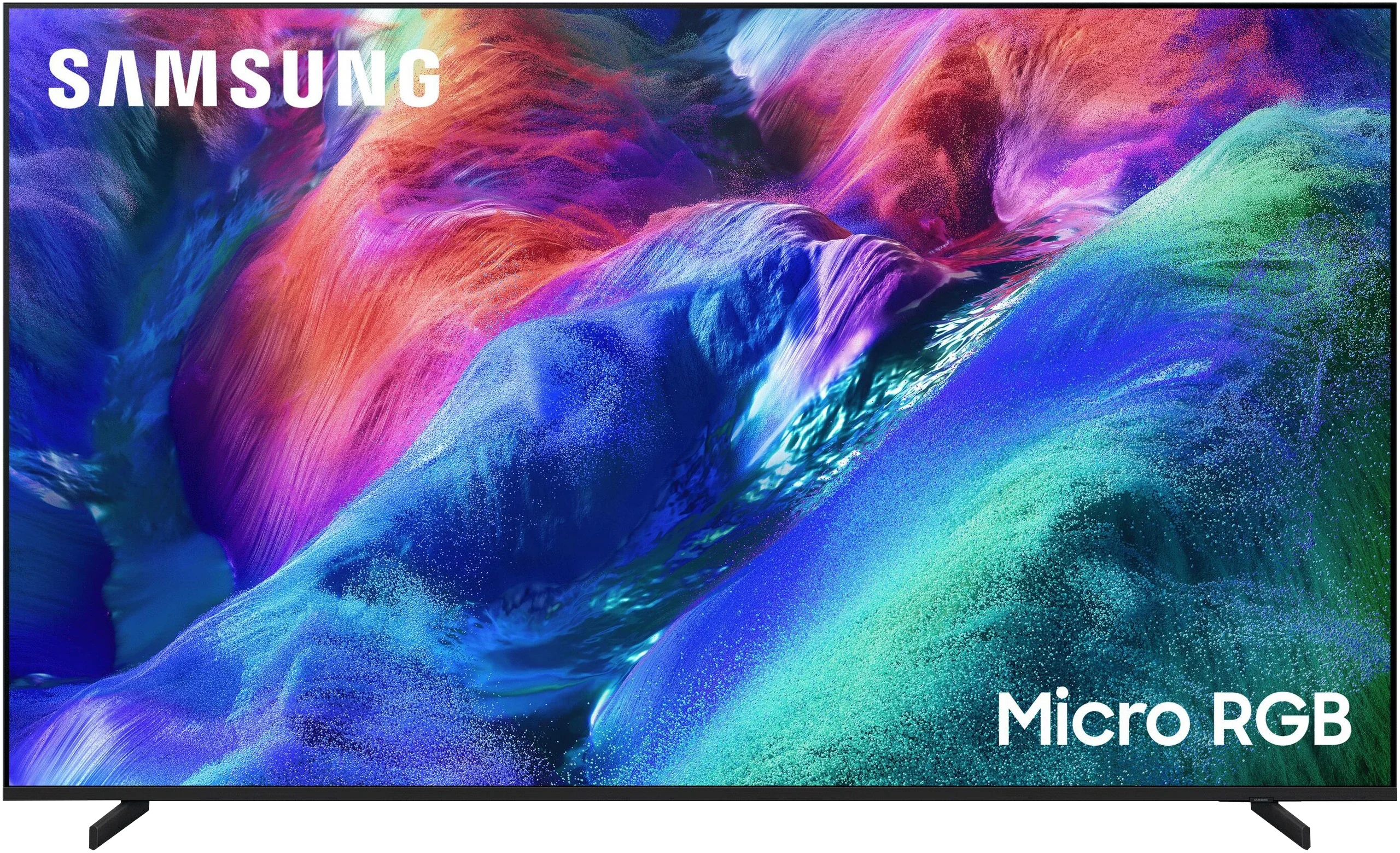
Panel type: WRGB OLED
Resolution: 3840x2160
System: Titan OS
Model year: 2024
Complete the survey to find out the result
Panel type: LCD VA
Resolution: 3840x2160
System: Tizen
Model year: 2026
Complete the survey to find out the result
Overall rating
7.3
7.7
 Movies and series in UHD quality
 7.7
7.3
 Classic TV, YouTube
 8.4
7.6
 Sports broadcasts (TV and apps)
 8.4
7.2
 Gaming on console
 9.2
8.9
 TV as a computer monitor
 7.6
8.0
 Watching in bright light
 4.6
7.3
 Utility functions
 5.7
7.3
 Apps
Apps 6.7
9.3
 Sound quality
 6.7
7.1
Complete the survey to find out what fits your preferences
Advantages

Great contrast
Perfect choice for gamers and sports - HDMI 2.1, 120Hz, low input lag
3-sided Ambilight system
Excellent colour reproduction after calibration
- Good black levels and contrast, VA panel with local dimming - High HDR brightness, approx. 1000 nits - Very wide colour gamut and colour volume - Matte anti-reflective coating - 144 Hz / 240 Hz panel (DLG) - 4x HDMI 2.1 - Extensive gaming features (ALLM, VRR, low input lag, G-Sync) - Fast and functional Tizen system (7 years of support) - Good viewing angles (for a VA panel) - Adjustable stand width and height
Disadvantages

Poorly developed operating system - TitanOS
Average brightness
Limited number of local dimming zones
RGB backlighting isn't always able to realise its full potential
Visible smearing on the VA panel
No Dolby Vision / DTS:X
Our verdict
The Samsung R85H is, above all, a very versatile television that performs well in almost any use. You can place it in a bright living room, connect a console, watch a film or series in the evening, and use it for everyday broadcast TV, and each time you’ll get a picture of a good standard. It may not be a model that makes as strong an impression from the first minutes as Samsung’s best OLEDs, but it’s hard to point to a single feature that would significantly limit its use. That versatility is probably its greatest strength. Naturally, the most attention around the R85H goes to the new "Micro RGB" backlight. From our tests, we’d say it can indeed give some advantage over conventional Mini-LED, although not always in the areas the manufacturer emphasises most. On measurement charts its colour reproduction capabilities are impressive, but in real, more complex scenes the TV is not always able to exploit the full potential of the three-colour backlight. Its strength is most evident in simpler parts of the image, where intense reds, greens or blues can look really striking. Viewing angles are also a little better, as colours viewed at an angle retain their saturation longer than on classic LCD TVs. However, Micro RGB does not solve all the limitations of RGB technology. With very saturated elements you can sometimes notice slight colour bleeding onto neighbouring bright parts of the image, and a relatively small number of local dimming zones means the backlight cannot always operate as precisely as its on-paper capabilities would suggest. The R85H therefore shows that RGB genuinely has potential and could be the next step in the development of LCD televisions, but simply using coloured LEDs does not automatically deliver a huge jump in picture quality. For that reason we would treat the R85H primarily as a slightly better and more interesting alternative to the QN80H, rather than a TV you must buy at all costs just because it carries the Micro RGB badge. If the price difference between the models is reasonable, we would choose the R85H. We would not, however, pay a large premium solely for the new backlight, because its advantage in everyday viewing is not always as great as marketing materials might suggest. Regardless, the R85H is a successful all-purpose TV and that is probably the best way to view it.
TV appearance

Contrast and black detail
10/10
7.9/10
Local dimming function: Yes, number of zones: 150 (10 x 15)
Contrast:


Result
∞:1

Result
∞:1

Result
∞:1

Result
∞:1

Result
∞:1
Result
182,800:1
Result
46,750:1
Result
22,450:1
Result
10,900:1
Result
9,050:1
Halo effect and black detail visibility:
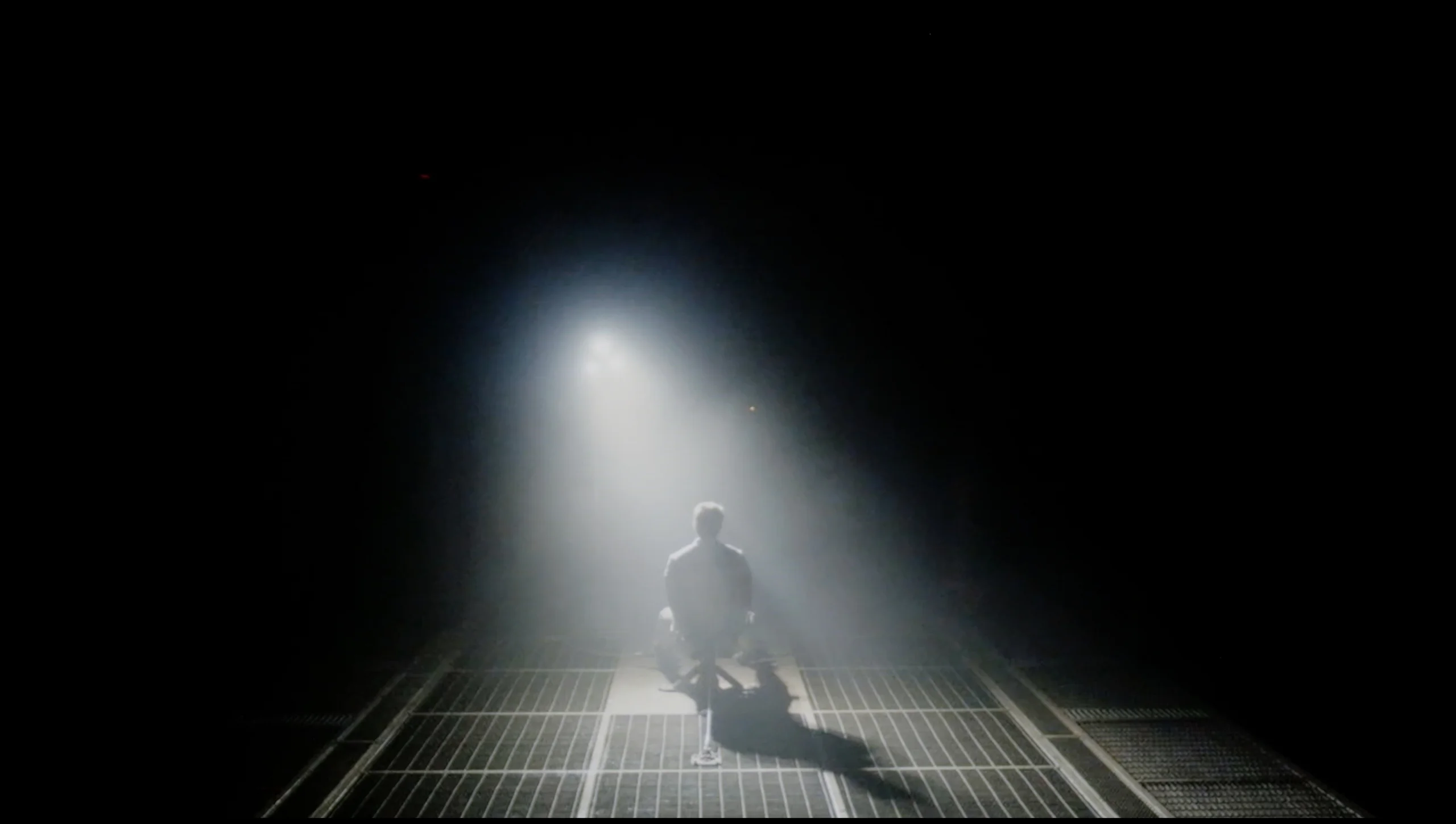
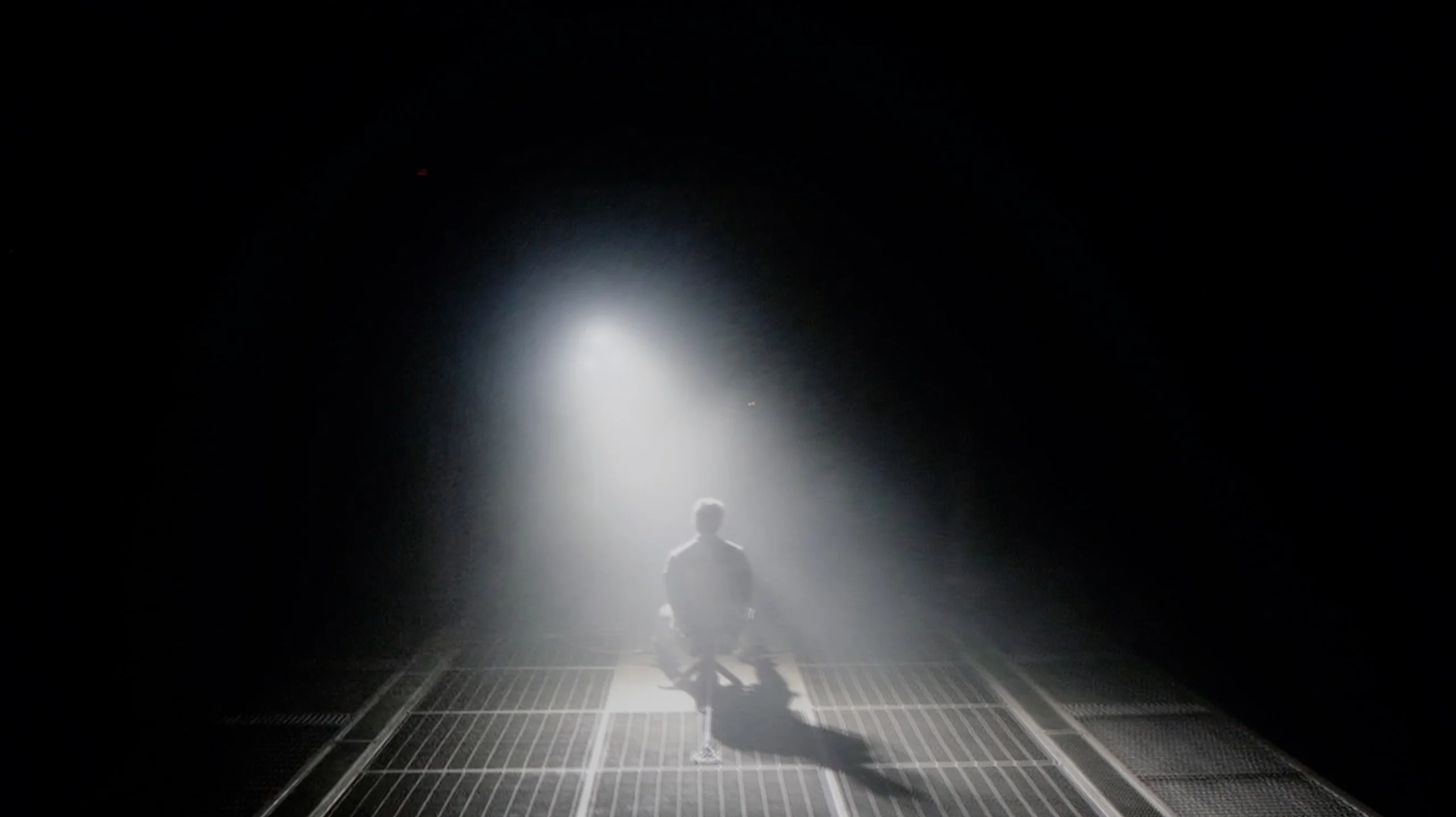
Check the visibility of bright lights on a dark background. Mini-LEDs often struggle with this. The photo does not compare black levels – that’s what the video below is for.
The video accurately shows differences in contrast and black levels between TVs, as well as potential issues: halo around bright objects or Mini-LED zone operation visible as brightness jumps.
Philips OLED769 impresses with its black levels and contrast. Thanks to OLED technology, each pixel in this television is self-illuminating, allowing for the complete shutdown of individual pixels. This means that black areas of the image are pitch black, and the contrast is infinite. The effect is incredibly realistic, with excellent clarity and detail in dark scenes. The OLED panel used in Philips OLED769 is produced by LG, known as WOLED, ensuring the highest quality in black reproduction. As a result, the television offers a contrast that is unattainable for traditional LCD televisions - even the best ones on the market.
The Samsung R85H uses a Micro RGB backlight with local dimming and can perform very well in terms of blacks. In the 55-inch version we tested we counted about 150 zones, so it’s not on a par with the most advanced Mini-LEDs, where that number can run into the thousands. Even so, in many scenes the local dimming algorithm handles things quite effectively. With larger, clearly separated bright objects on a dark background the blacks are deep and the contrast can be very impressive. The halo effect is also reasonably well controlled, so during typical viewing the R85H does demonstrate the benefits of local dimming. The limitations of the small number of zones do show up with more demanding material, particularly when the screen contains many very small bright elements. A good example are scenes with starry skies. In such situations the TV can practically abandon local dimming, causing the black level to rise noticeably and the image to lose a large part of its contrast. Interestingly, we observed similar behaviour even when the bright points were already much fewer, so it appears to be more a quirk of how the algorithm works than solely a physical zone count. Overall, however, the R85H’s blacks are good. It’s not at the level of the most expensive Mini-LEDs with thousands of independently controlled zones, and in difficult scenes the difference is clear. In most material the local dimming nevertheless does its job and delivers significantly better blacks.
HDR effect quality
6.1/10
5.6/10
Luminance measurements in HDR:

Result
609 nit

Result
707 nit

Result
801 nit

Result
775 nit

Result
261 nit
Result
860 nit
Result
214 nit
Result
758 nit
Result
235 nit
Result
912 nit
Scene from the movie “Pan” (about 2800 nits)


Scene from the movie “Billy Lynn” (about 1100 nits)

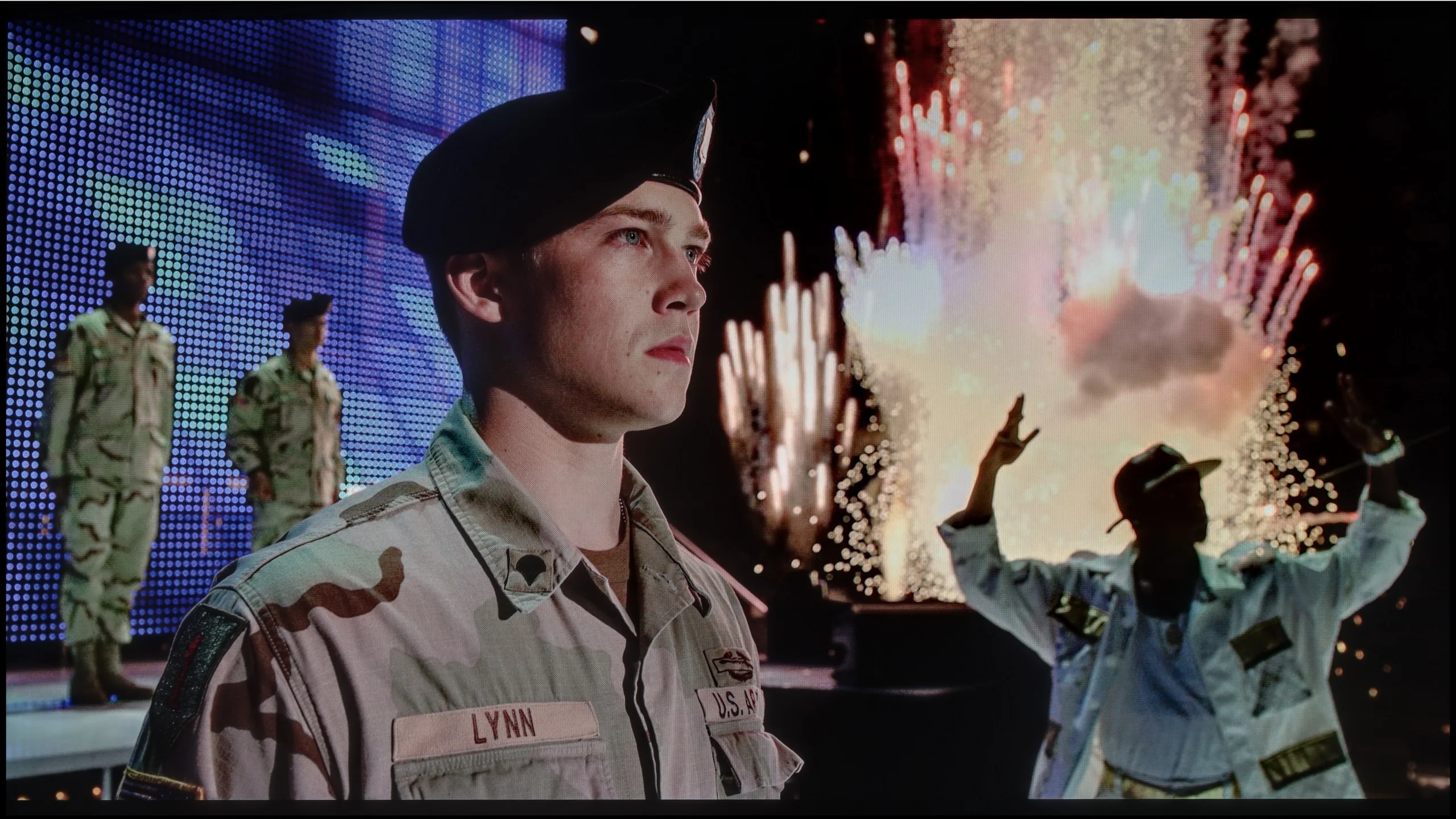
The photos show two HDR10 movies. 'Pan' is one of the brightest productions ever made, while 'Billy Lynn' (soldier) has brightness typical of streaming (Netflix, Prime, HBO MAX). Notice the intensity of effects and detail in whites.
Static HDR10


The photos present the visibility of white details in various HDR formats. They do not show brightness differences between TVs (these can be compared in the previous gallery).
Dynamic: Dolby Vision
Dynamic: HDR10+


The photos present the visibility of white details in various HDR formats. They do not show brightness differences between TVs (these can be compared in the previous gallery).
HDR luminance chart:
Samsung R85H / R86H
Philips OLED769
Luminance of RGB colors
Philips OLED769 performs quite well, particularly in film scenes with small points of light. The television surprises with its brightness, reaching around 800 nits, which is an impressive result. As a result, fine sources of light, such as street lamps at night or stars in the sky, are sharp and full of detail. However, the biggest challenge for this model is the scene with a full-screen burst of sunlight. In such moments, the brightness drops to about 250 nits, which is not very impressive. This is a typical problem for cheaper OLED displays, which struggle to maintain high brightness across the entire screen surface.
When it comes to brightness, the R85H performs really respectably. In most of our test scenes the TV reaches around 800 to 900 nits, and with larger bright elements it can exceed 1000 nits. These are not, of course, levels on a par with the pricier Mini-LEDs, but they are more than enough for watching films and TV shows in HDR, and the effect can already be quite noticeable. The problem reappears in more demanding scenes where there is a small bright element on a very dark background. Here the TV can significantly limit its brightness so as not to light up too large a portion of the screen. In our measurements such small highlights fell even to around 200 to 250 nits, so it is clear that a small number of zones combined with the particular behaviour of the algorithm has consequences here. Fortunately, this is not something that disturbs viewing all the time. In typical mixed HDR scenes the R85H looks good and can deliver appropriate image dynamics. It's just that with very small points of light you shouldn't expect an effect as strong as on TVs with many more zones or on OLEDs.
Factory color reproduction
6.4/10
5.4/10


This gallery shows how colors change after professional TV calibration. If you notice the difference, we recommend ordering this service at SkalibrujTV.com.
Factory Mode
After calibration


This gallery shows how colors change after professional TV calibration. If you notice the difference, we recommend ordering this service at SkalibrujTV.com.
Factory Mode
After calibration
The "Film" mode proved to be the best factory setting in terms of fidelity to the source material, and it is on this that we based our tests. However, like other factory modes, it was not without flaws. Let us examine, therefore, what exactly went wrong in SDR and HDR materials.
In both cases, the white balance was disrupted by the excessive dominance of green and red hues. This phenomenon created a yellowish tint that spread across the entire image, leading to issues such as yellowed whites and unnatural skin tones. These problems were clearly highlighted on the "ColourChecker" palette, where each of the samples was shifted towards warmer tones.
As for contrast and brightness, in the Philips OLED769, we can look at two key graphs: Gamma for HD content and the EOTF curve for 4K HDR content. In the case of the first graph, the gamma value falls below the optimal level of 2.4, resulting in an increase in brightness of light areas of the image. This means that bright elements may be slightly overexposed, losing detail and depth. In contrast, the EOTF curve for 4K HDR content performs really well. The graph shows that the television effectively conveys details in both the brightest and darkest areas of the image, resulting in a realistic and dynamic representation of scenes.
In Filmmaker mode our R85H sample performed acceptably in SDR, but a few things stood out immediately in the measurements. In the white balance red increased with rising brightness while blue decreased. As a result the brighter parts of the picture had a slightly too warm tint. Gamma only held to the target value at the start. It then gradually fell, which left most of the image a little too bright. The combination of these two effects also showed up in the colours, with errors growing particularly in the brighter and more saturated samples. It did not look bad, but for Filmmaker mode we had expected a bit more accuracy. Interestingly, in HDR our sample fared noticeably better. The white balance was much more even and, over most of the range, the individual components stayed close together. Only in the very brightest areas did red start to be lacking, causing white to shift subtly. The EOTF curve, by contrast, looked very good and followed the target luminance levels across almost the entire range. That does not mean HDR colours were perfect. The Colour Checker still showed some deviations, especially for some of the more saturated hues, but the errors were clearly smaller than in SDR.
Color reproduction after calibration
8.8/10
8.6/10


The photos show how movies look on the TV. Pay attention to black detail visibility, colors, and shadow tint.


The photos show how movies look on the TV. Pay attention to black detail visibility, colors, and shadow tint.
After professional calibration, Philips OLED769 truly shines in terms of colour accuracy. The television has been completely stripped of any yellow tint in both HD and 4K content. The Colour Checker test confirms that deltaE errors are minimal, occasionally exceeding a value of 2, which means we can speak of almost perfect director's representation.
When it comes to contrast, the situation is equally impressive. With 4K materials, there wasn't much to improve initially, while the gamma chart has been significantly enhanced. This allows dark and light areas of the image to be represented with greater accuracy, resulting in a realistic and dynamic portrayal of scenes.
The calibration has allowed the full potential of this television to be unleashed, both in terms of colours and contrast. Philips OLED769 now offers vivid, natural images of high quality that will delight any user, whether they are watching films or using other multimedia.
After calibration the R85H shows it has genuinely substantial capabilities in colour reproduction. It performed best in SDR, where the white balance could be brought almost perfectly into line and the gamma stays very close to the target value across most of the range. This also translated into very low errors on the Colour Checker, so there is really little to pick fault with. HDR also shows a clear improvement, although some things can no longer be corrected as well. At the highest brightness levels the character of the backlight begins to make itself felt and the individual components of the white balance start to drift apart. The same applies to the most saturated colours, which do not always land exactly where they should. Despite these limitations the overall image is much more accurate than with the factory settings, and the biggest difference is definitely seen in SDR. There is, however, one thing calibration cannot fix. With heavily saturated elements the colour can slightly bleed onto adjacent bright areas of the image. It is easiest to notice this on white, which can pick up a faint tint of a neighbouring colour. It does not appear in every scene, but when the material is demanding the effect can be visible. This is more a characteristic of the way the RGB backlight works than a matter of picture settings.
Smoothness of tonal transitions
5.9/10
8.9/10
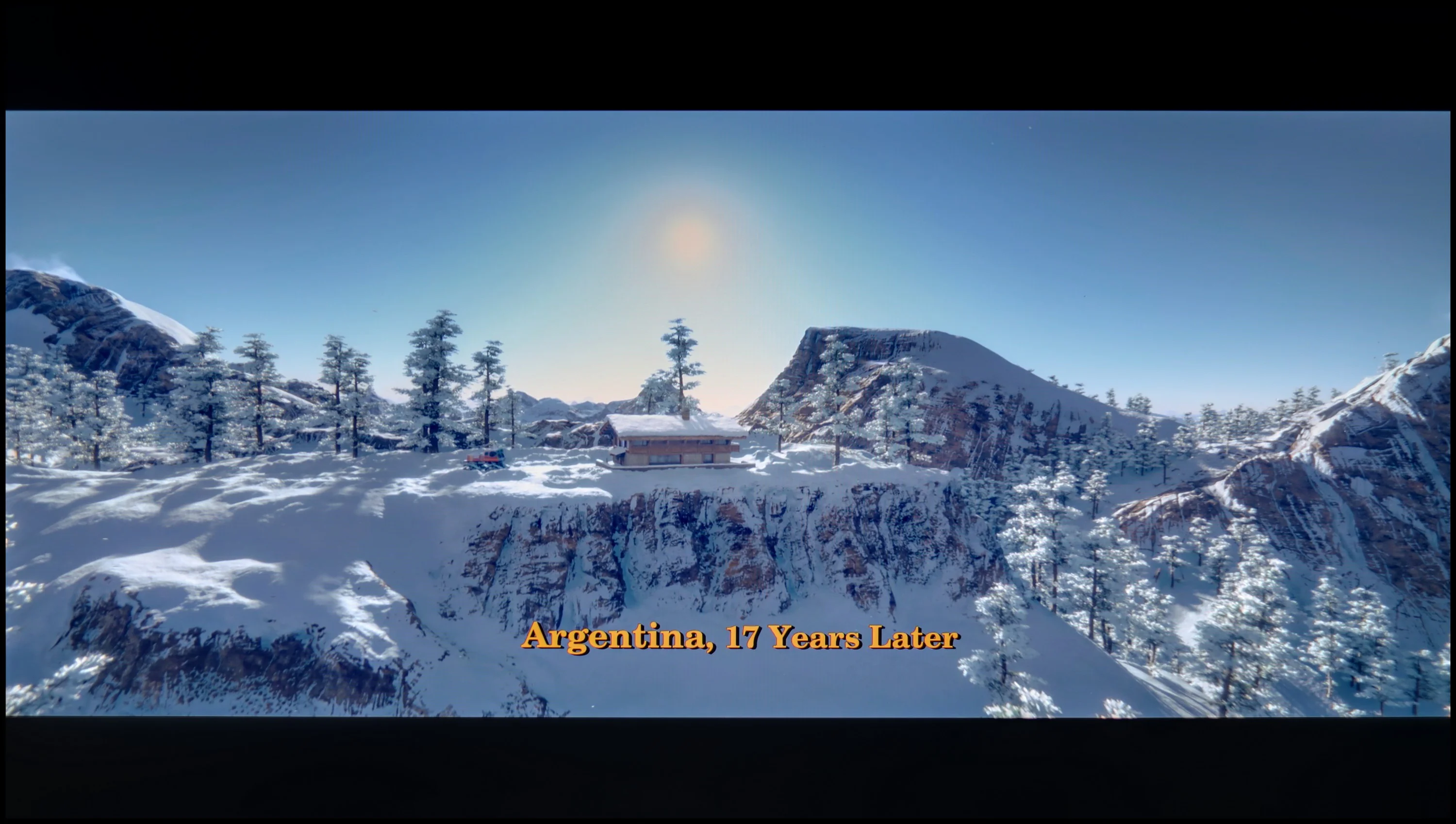

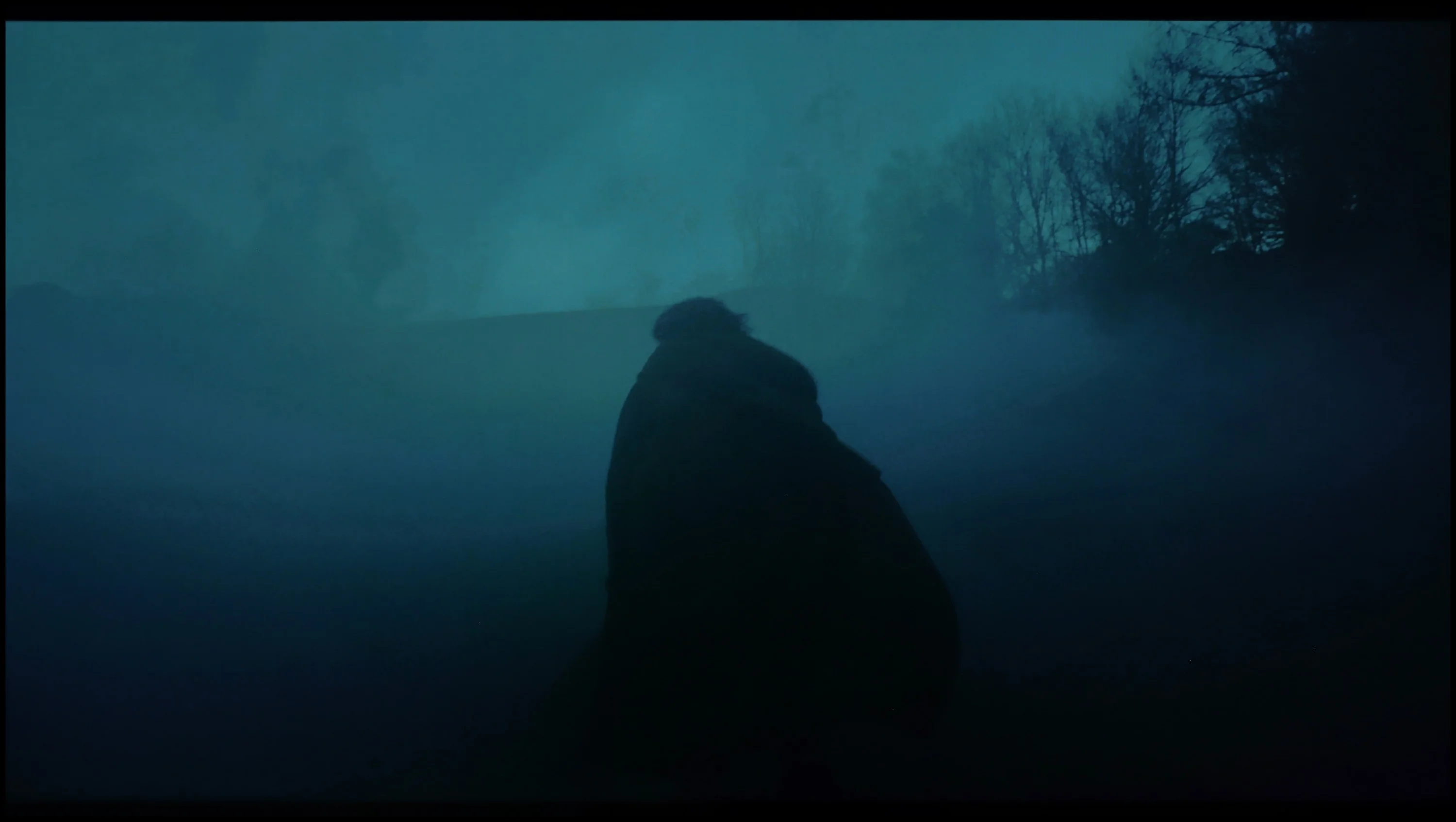
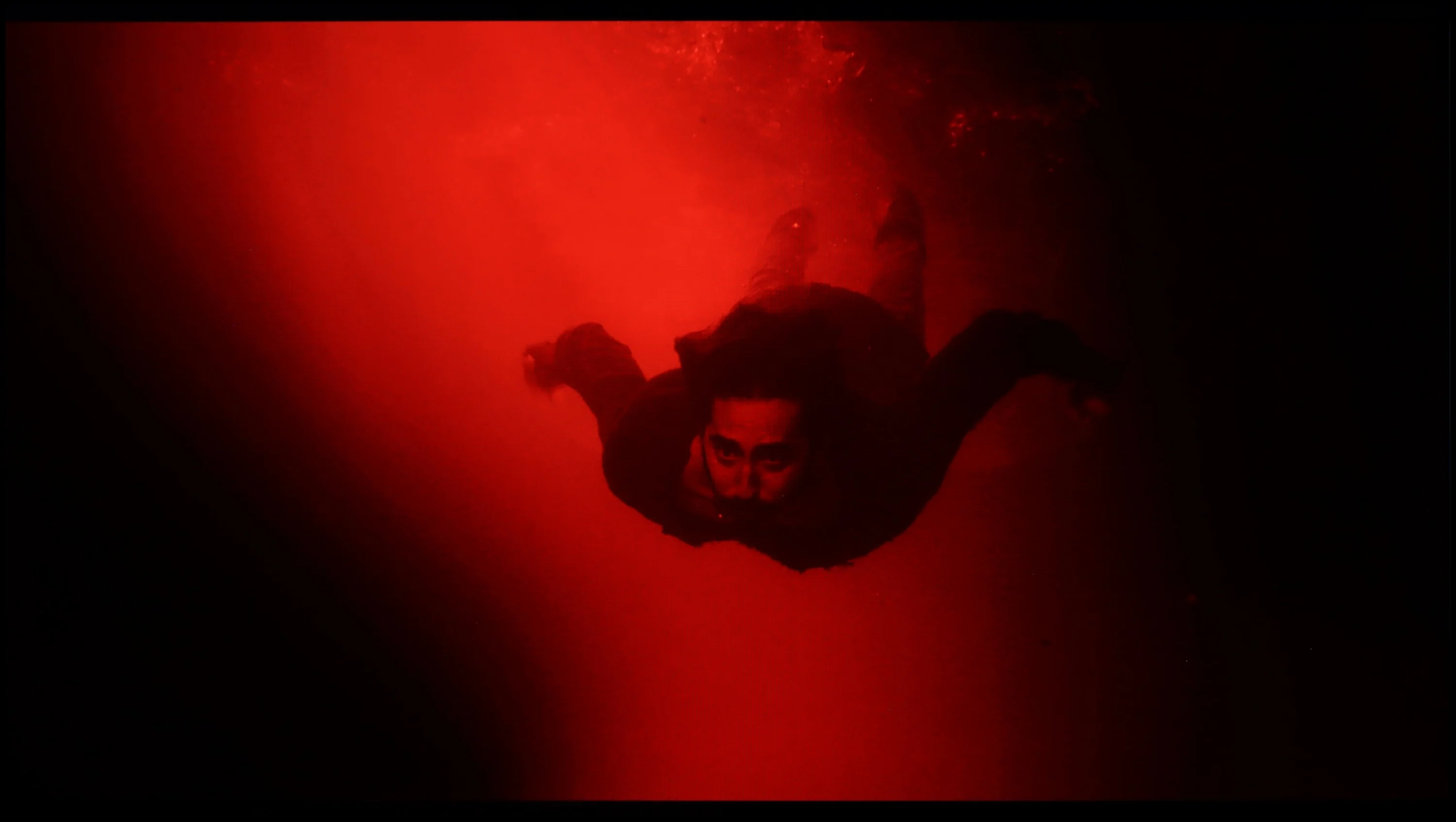
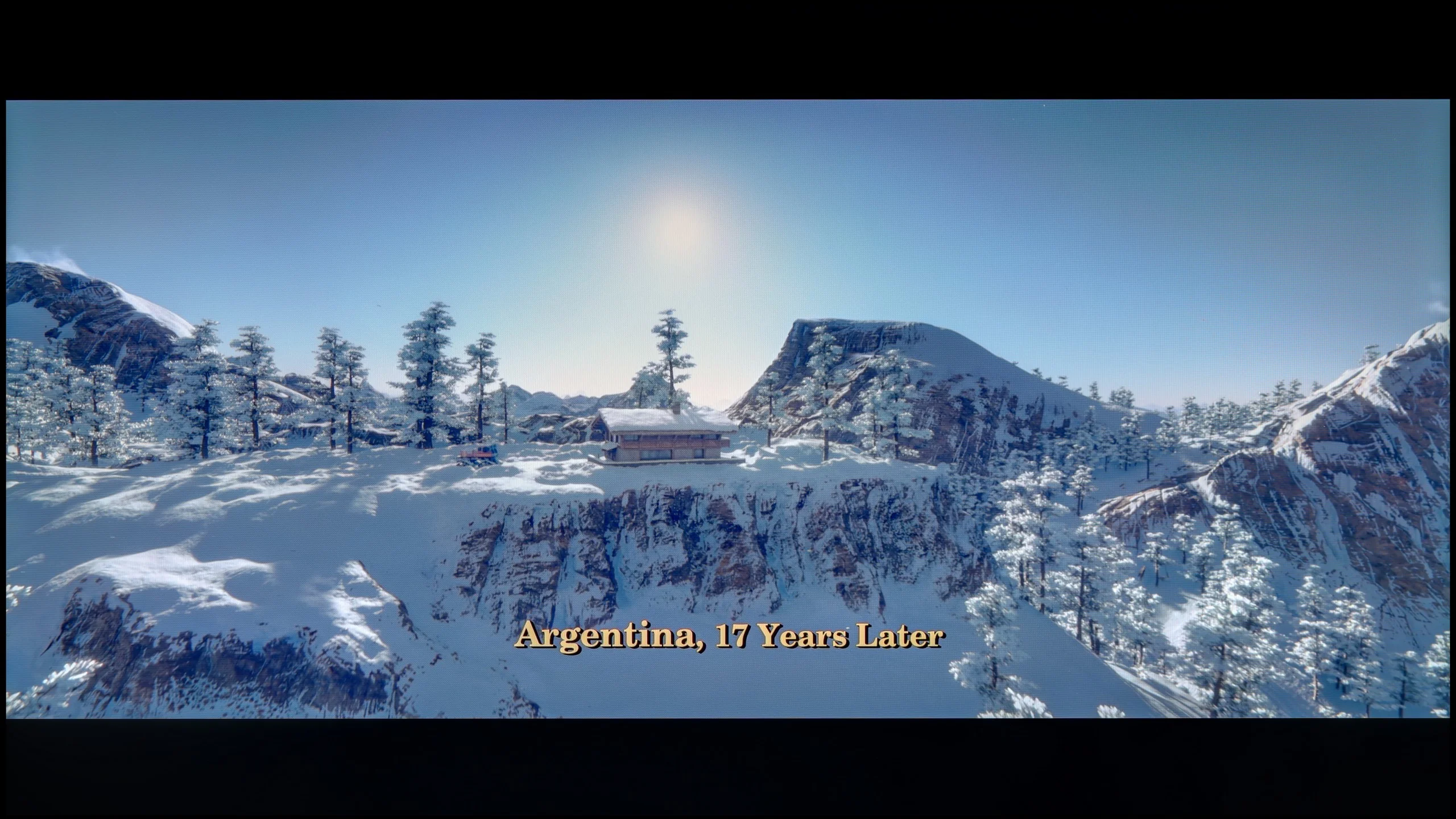
These are selected scenes that show smooth tonal transitions from one color to another. If you see distinct banding, it’s the TV panel’s fault.

These are selected scenes that show smooth tonal transitions from one color to another. If you see distinct banding, it’s the TV panel’s fault.
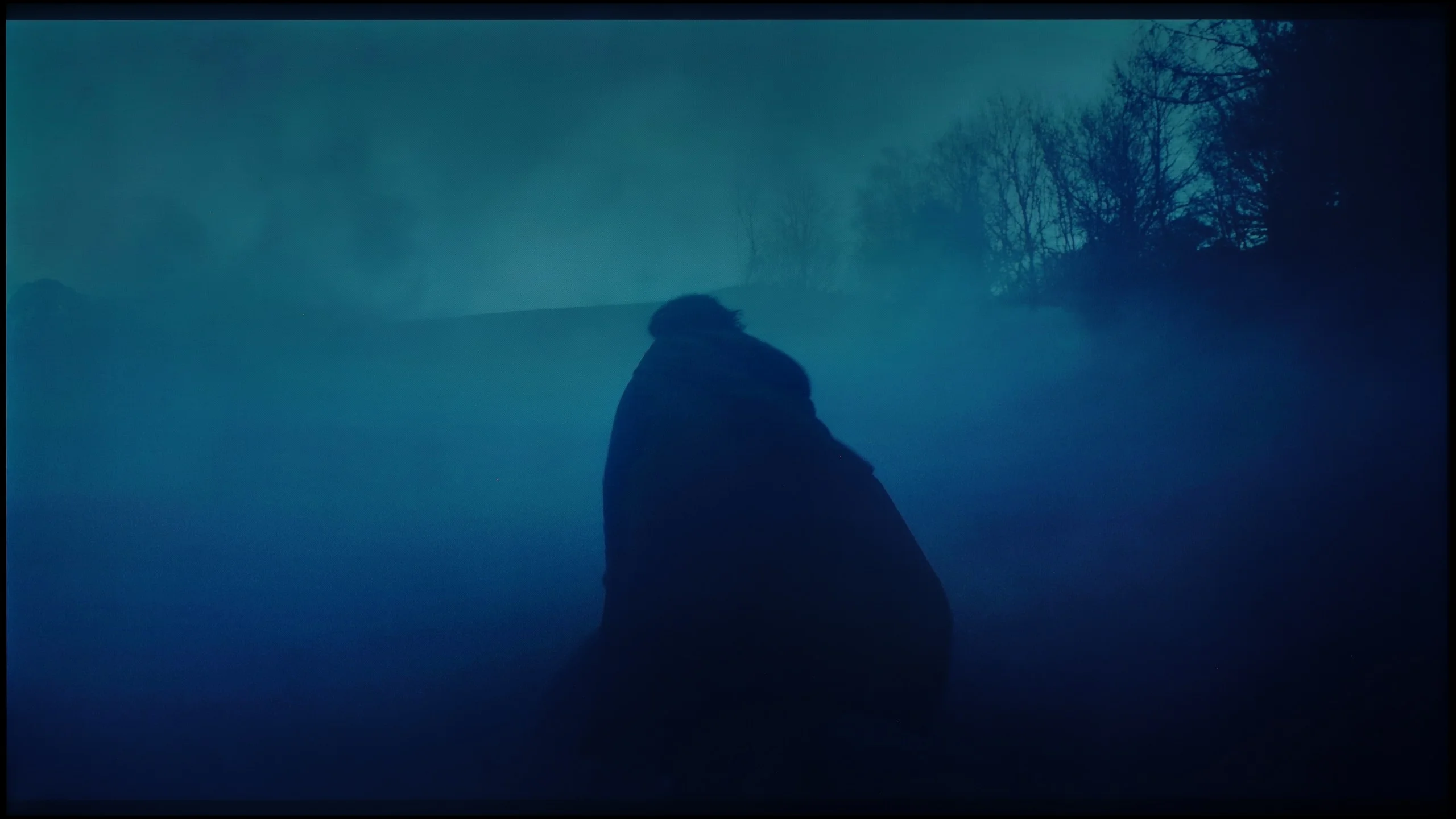
These are selected scenes that show smooth tonal transitions from one color to another. If you see distinct banding, it’s the TV panel’s fault.
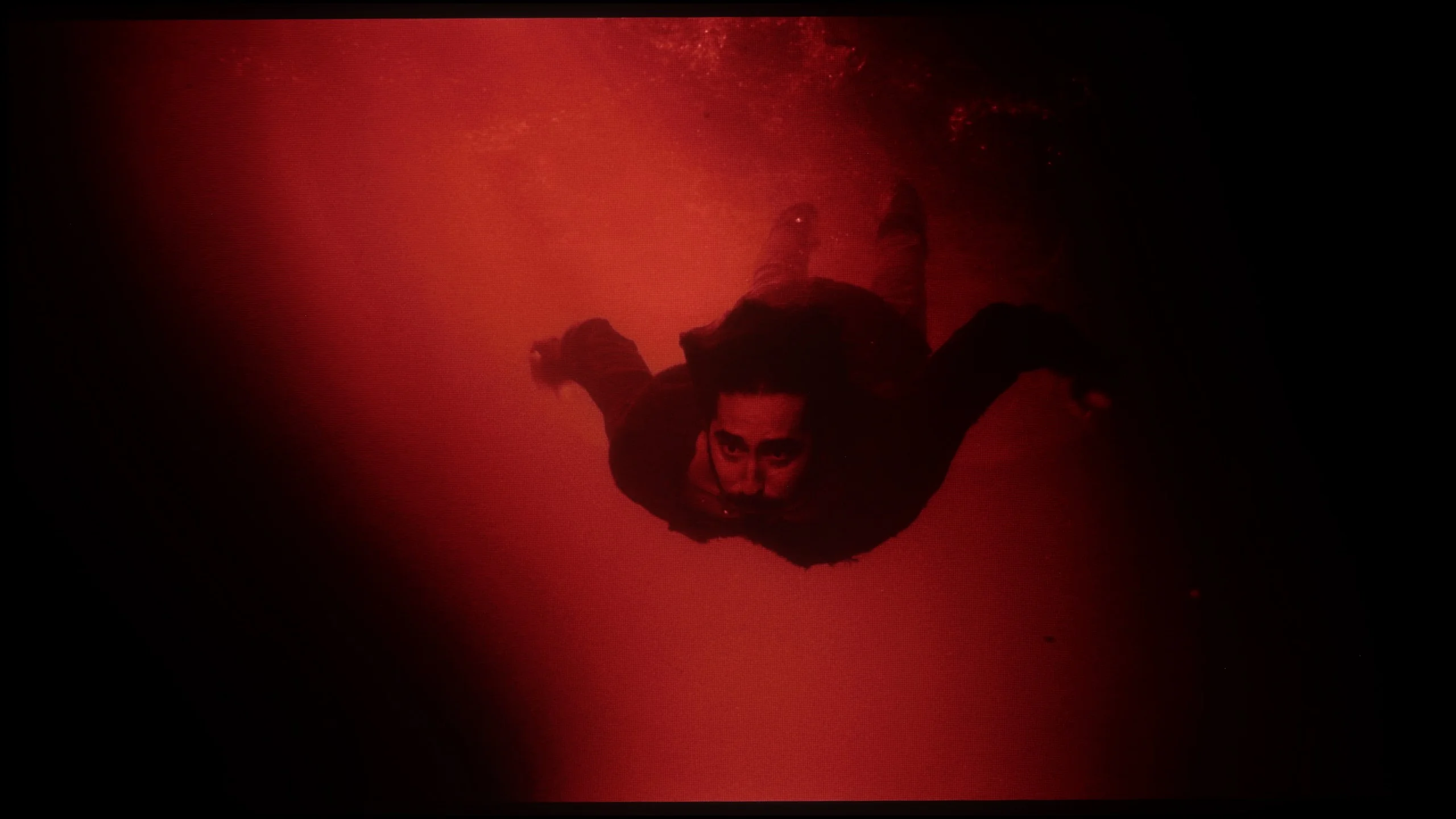
These are selected scenes that show smooth tonal transitions from one color to another. If you see distinct banding, it’s the TV panel’s fault.
The gradation in Philips OLED769 unfortunately proves problematic in almost every scene from the test sequence. Particular difficulties arise in dark colours and around black. In these areas, in addition to the posterisation effect, the image is enhanced by a solid dose of noise. The problem with tonal transitions is not limited to dark hues – it can also be seen in lighter elements, such as in a scene from the film "Kingsman," where clear colour banding is visible around the sun. This phenomenon can significantly affect the visual perception, especially in scenes where black and dark shades play a key role. It's hard not to notice these imperfections, which can disrupt the viewing experience, particularly for viewers who value excellent image quality.
Samsung R85H handles tonal transitions quite well, and during normal viewing this is not something that particularly draws attention. On bright gradients the transitions are mostly smooth, and only on closer inspection can slight steps between some brightness levels be noticed. These are not pronounced and do not noticeably affect the viewing experience. It is very similar in darker areas. Here you can also sometimes pick up small steps between similar shades, but there is no issue with heavy banding or obvious breaking up of gradients. Bright skies, fog and darker shadows are all displayed smoothly and without major problems.
Image scaling and smoothness of tonal transitions
7.2/10
7.5/10


Smooth transition function
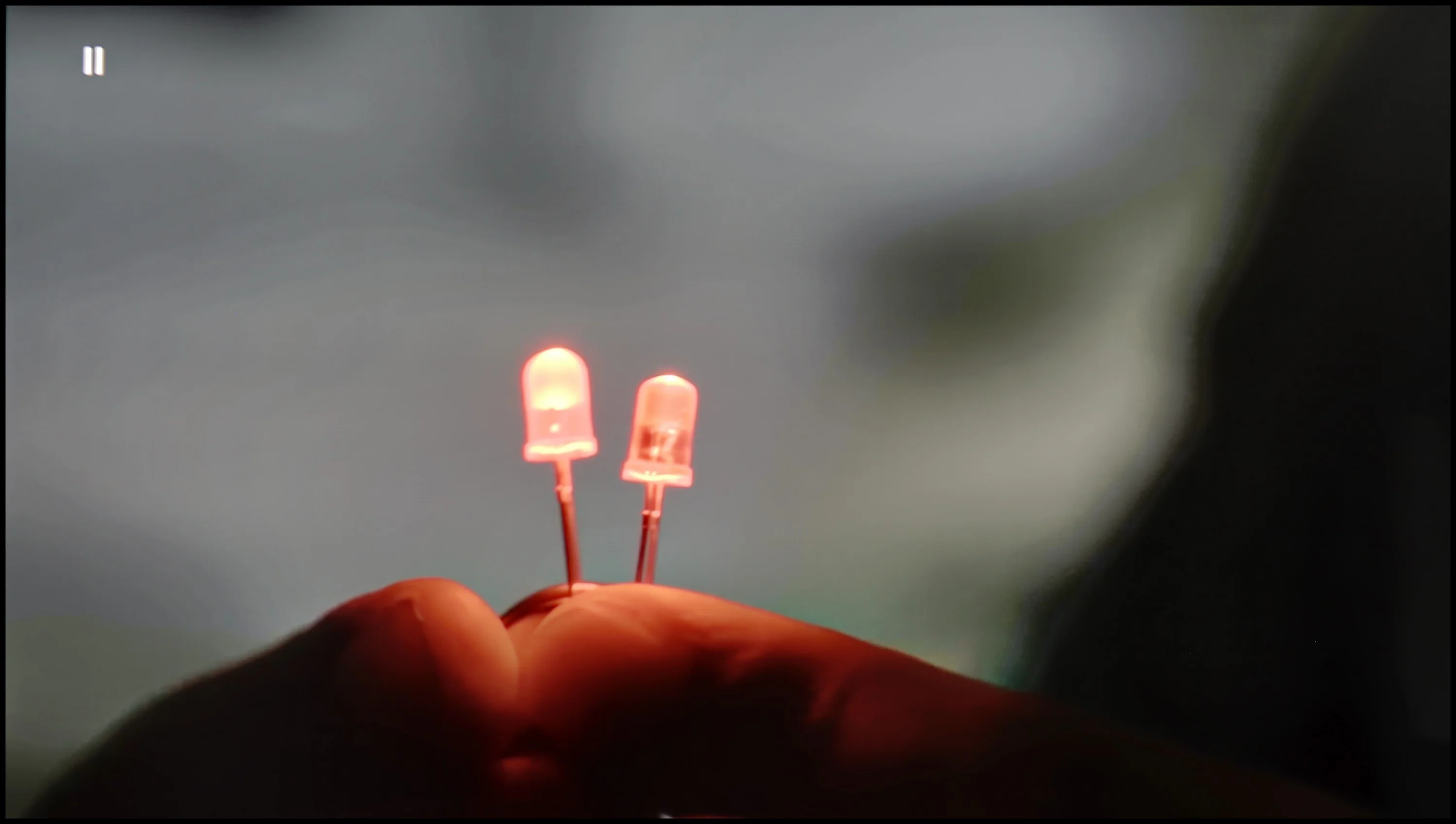
The match photo shows how the TV smooths weak tonal transitions in low-quality video.
Image scaling SD (576i)


The model photo shows how it handles upscaling of SD material.
When it comes to lower quality materials, the distortion reduction in the Philips OLED769 handles tonal transitions well, especially at the minimum setting. It is worth noting that at this setting, film grain is not blurred, which is a pleasant surprise, as such negative phenomena often occur with other manufacturers. Overall, it is quite a decent solution. However, it should be pointed out that this setting does not work in HDR mode, where gradation issues are much more pronounced. In HDR mode, the television struggles with smoothing tonal transitions and may present more noticeable distortions and noise, reducing picture quality in dynamic scenes.
Regarding digital processing, the Philips OLED769 performs well. The model in the photo is not overly jagged, and the branches in the background lack the characteristic jagged edges. The television achieves this effect thanks to the absence of artificial sharpness, which may be an advantage for some users. Others, however, may find this less attractive, as they prefer a more vibrant, sharper image instead of a subtle effect. This effect can be mitigated by using a higher setting for the "Sharpness" parameter.
In the R85H image processing is handled by the Micro RGB AI Processor. The name is new, but when it comes to upscaling lower-quality material the TV’s behaviour is very similar to what Samsung has shown before. And that’s not a bad thing, because the manufacturer has dealt with this aspect quite well for years. Lower-resolution content is displayed cleanly, edges do not become excessively soft, and the TV does not try to artificially extract details at any cost. The result is simply well balanced, and with regular broadcasts or older recordings the R85H performs as you would expect from a Samsung in this class. There remains only a minor drawback in the form of overscan, which cannot be completely turned off at the lowest resolutions. A separate matter is the additional processing of weaker sources. The R85H can smooth posterisation and somewhat tidy up heavily compressed footage, but it is worth emphasising that it does this relatively aggressively. At stronger noise reduction settings it begins to remove not only compression artefacts but also fine details and the natural film grain. It is therefore best used only when the material truly needs it.
Blur and motion smoothness
8.5/10
7.4/10
Blur (native resolution, maximum refresh rate):






Blur ():
Blur (1080p@240Hz):


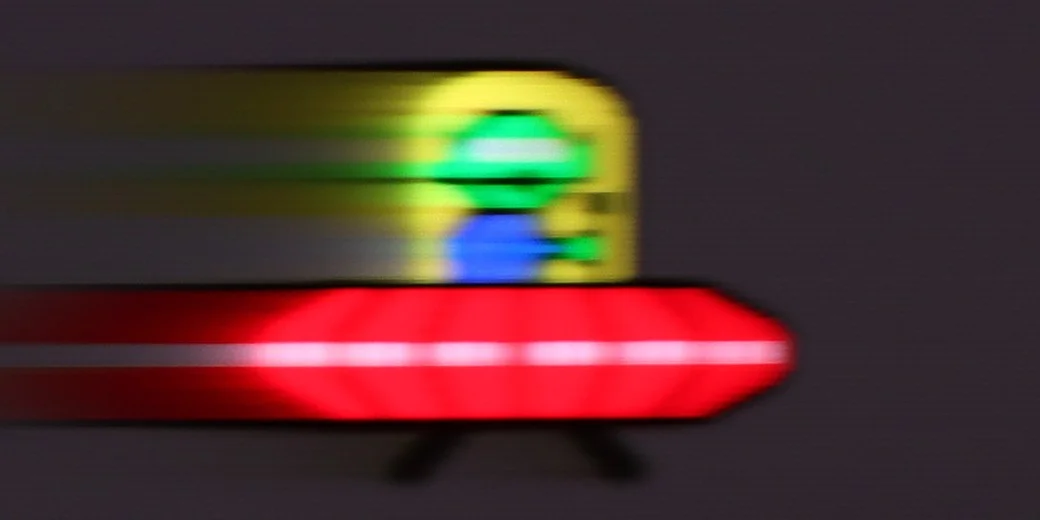
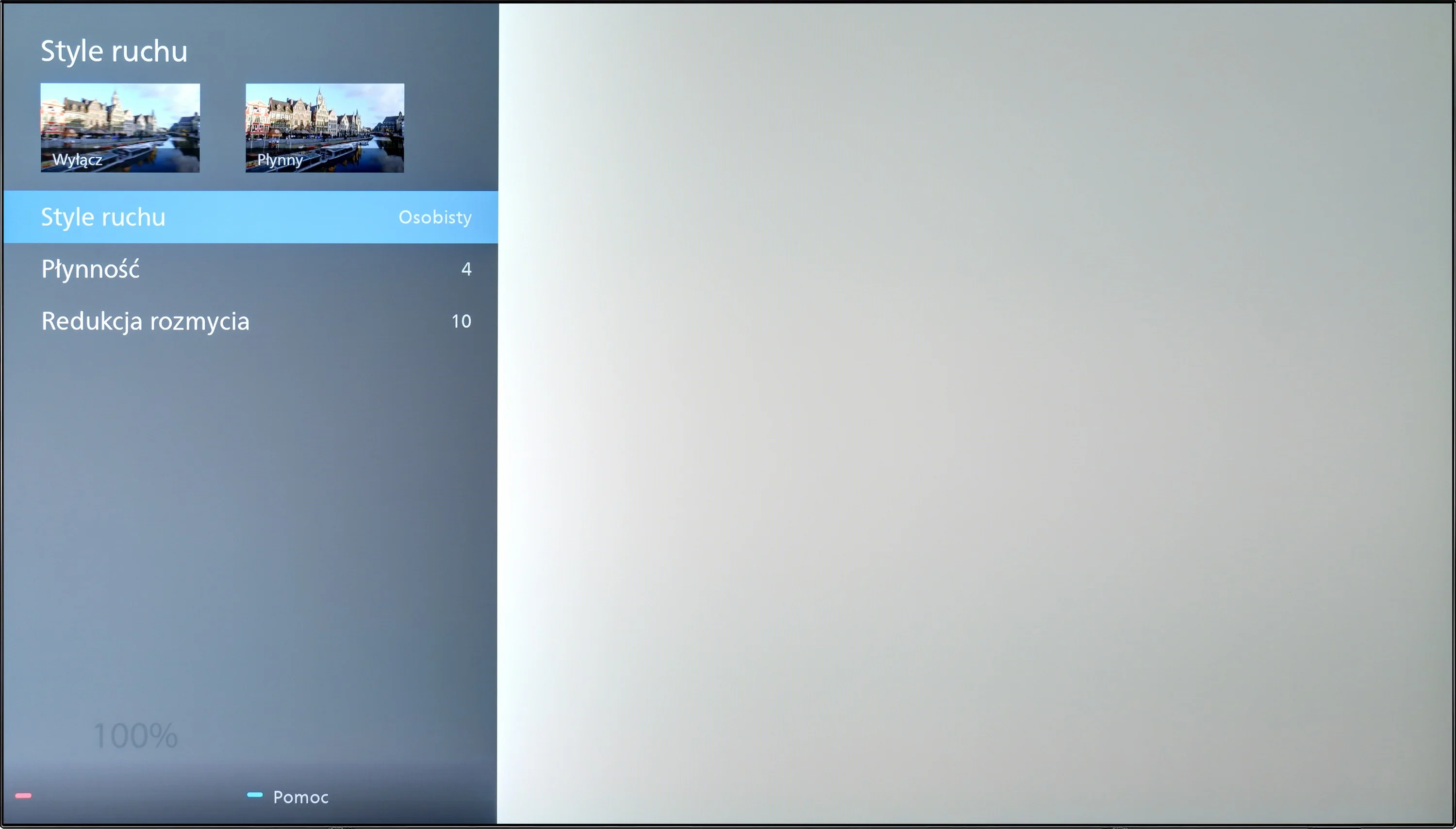
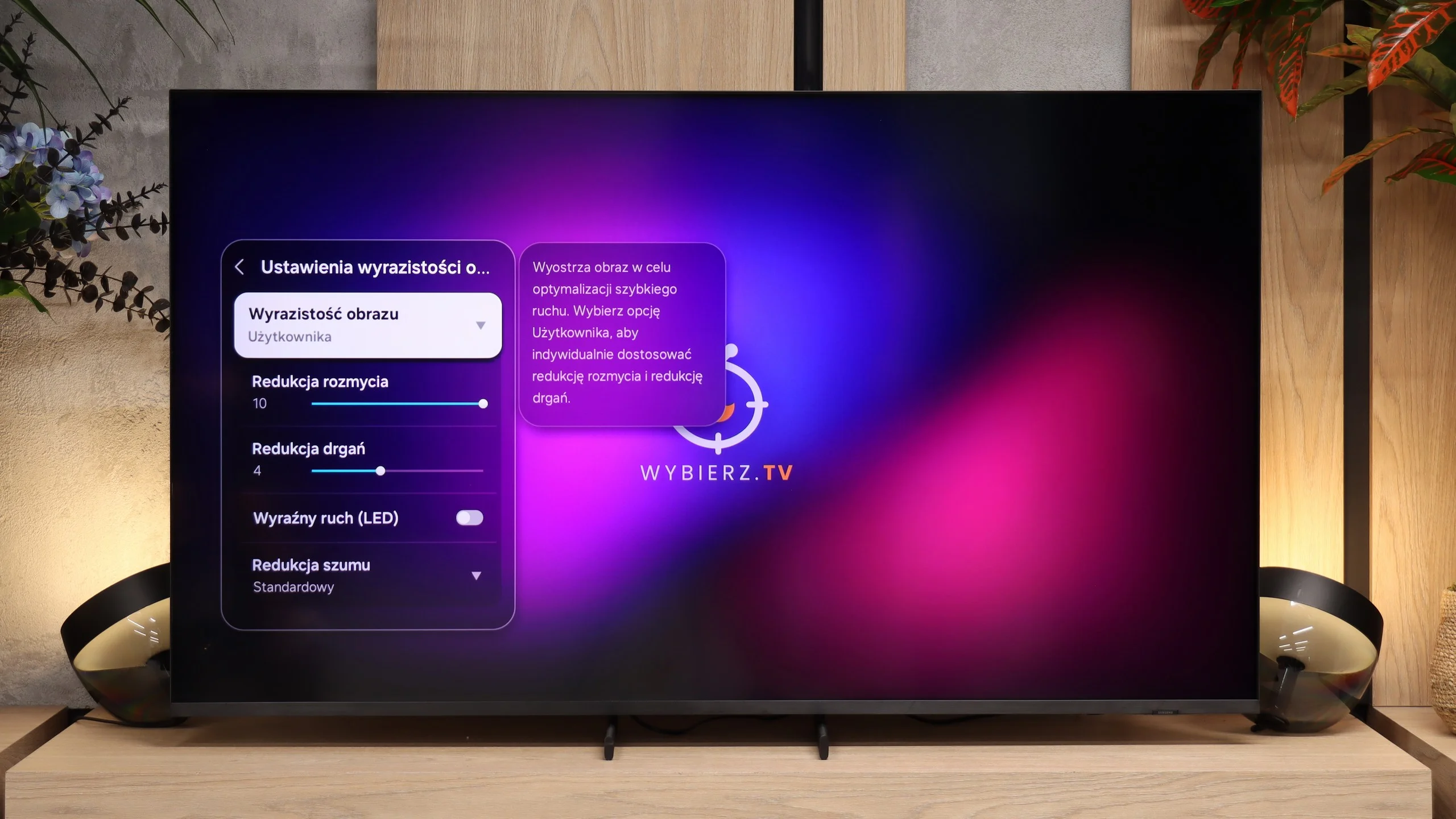
Philips OLED769 features a multi-stage motion smoother called "Motion Style", which will satisfy users who appreciate the ability to customise the fluidity of motion in films. With this function, you can set the image to be more frame-like or smooth, resembling a theatrical effect. This is a great solution for those who want to adapt the displayed content to their visual preferences. Gamers will also not be disappointed, as the television, like most OLEDs, is equipped with a 120Hz panel. This provides exceptional fluidity and dynamism of the image. Unfortunately, Philips OLED769 does not have the BFI (Black Frame Insertion) feature, which could further improve motion fluidity and sharpness. Despite this limitation, the television still offers excellent visual experiences for both cinema lovers and gamers. This is definitely one of its strong points.
The R85H has a 144 Hz panel, so motion is really smooth here. Just bear in mind that the extra hertz above 120 are mainly used when connected to a PC, so in this category we don't treat them as any particular advantage. For films and TV, what's more important is that the panel is fast enough to provide access to an advanced motion-smoothing feature, "Motion Clarity", which lets you set motion anywhere from more film-like to very smooth. The panel's response time is a bit worse. Because it's a VA panel, fast-moving objects can leave a slight trail. On bright backgrounds this isn't very noticeable, but the darker the scene, the more pronounced the smearing becomes. This is a typical trait of this type of panel and it's easiest to notice in dark shots.
Console compatibility and gaming features
10/10
9.6/10
- ALLM
- VRR
- VRR range40 - 120Hz48 - 240Hz
- Dolby Vision Game Mode
- Correct implementation of HGIG
- 1080p@120Hz
- 1440p@120Hz
- 4K@120Hz
- Game bar
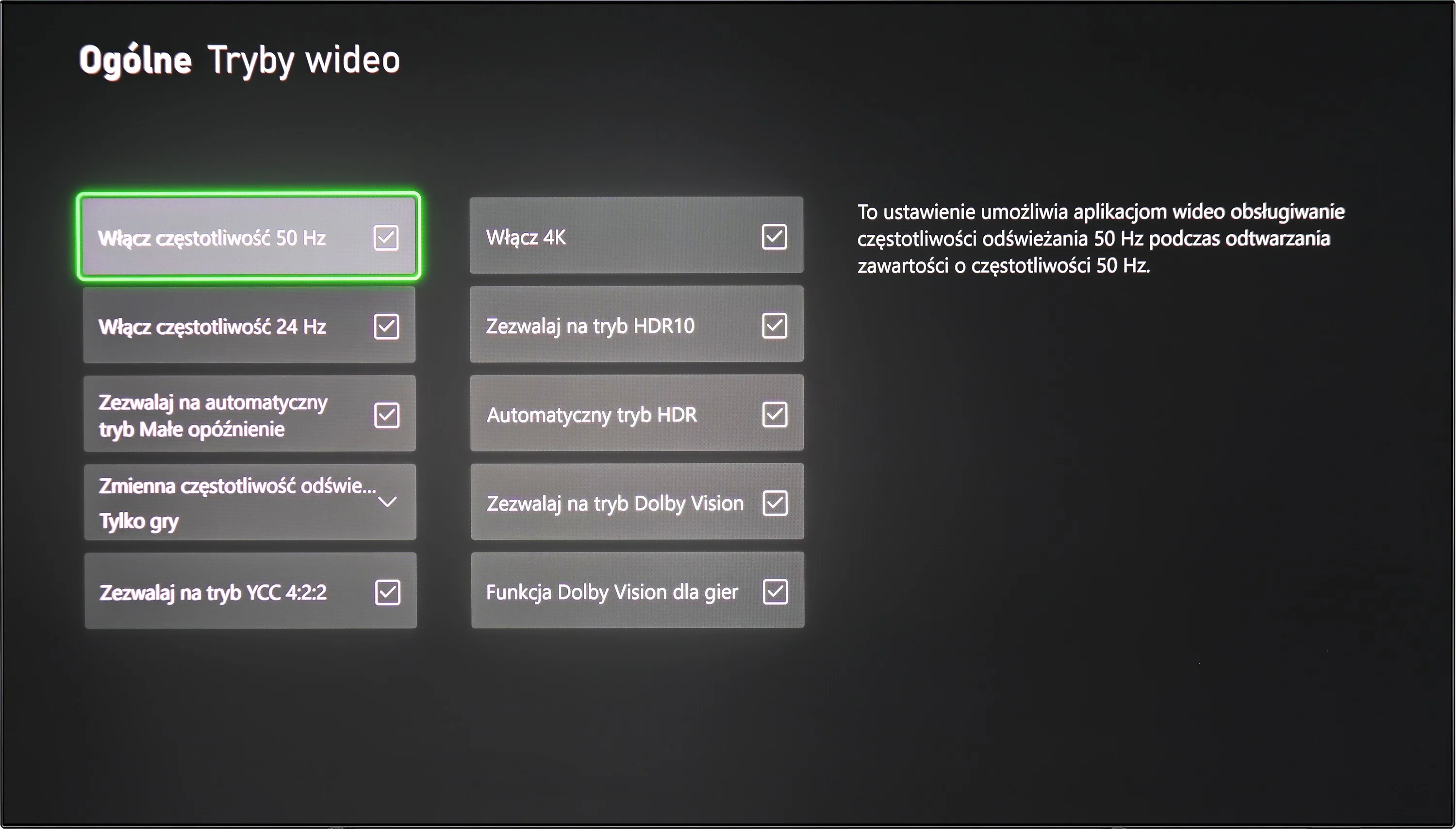
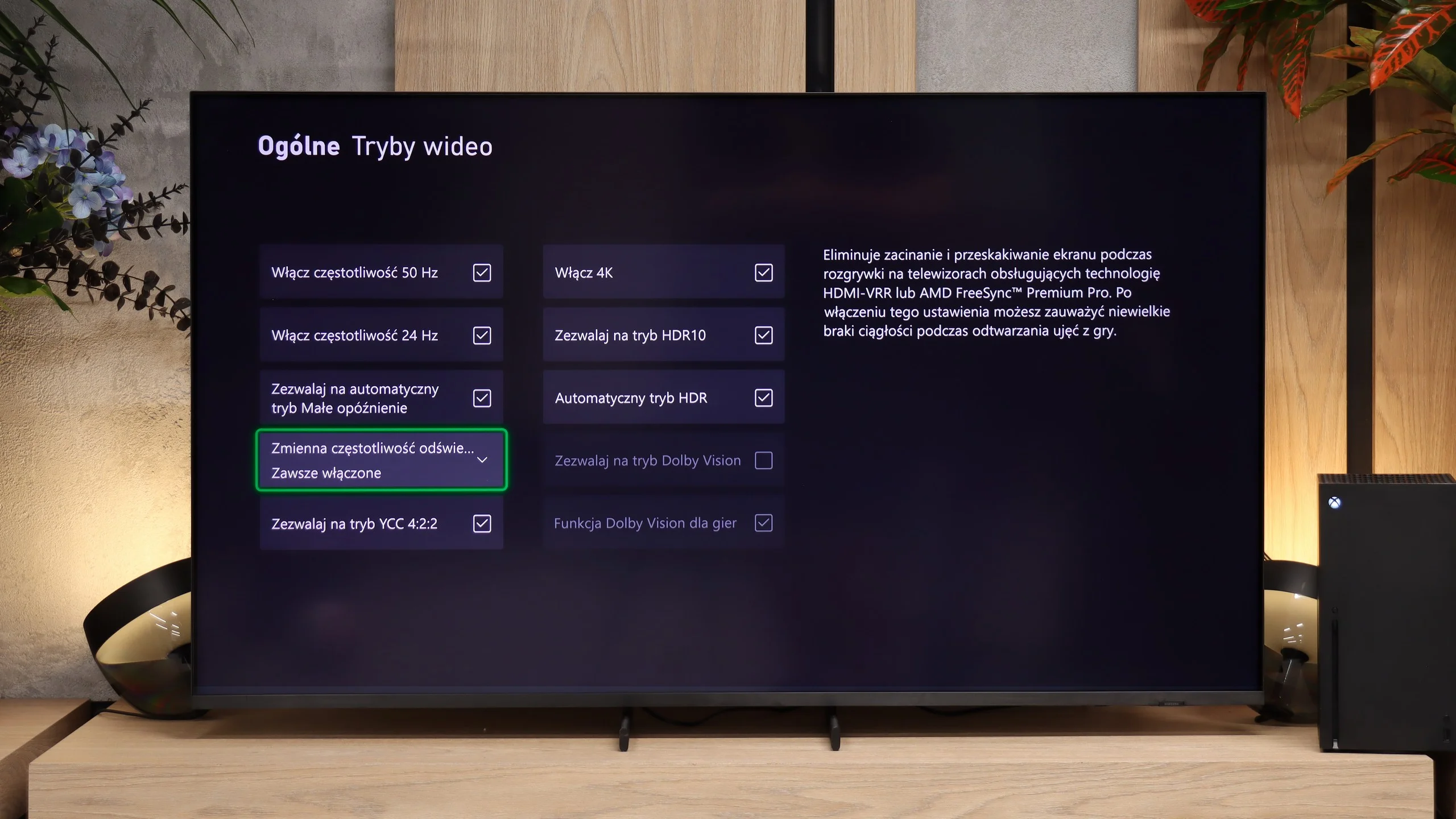
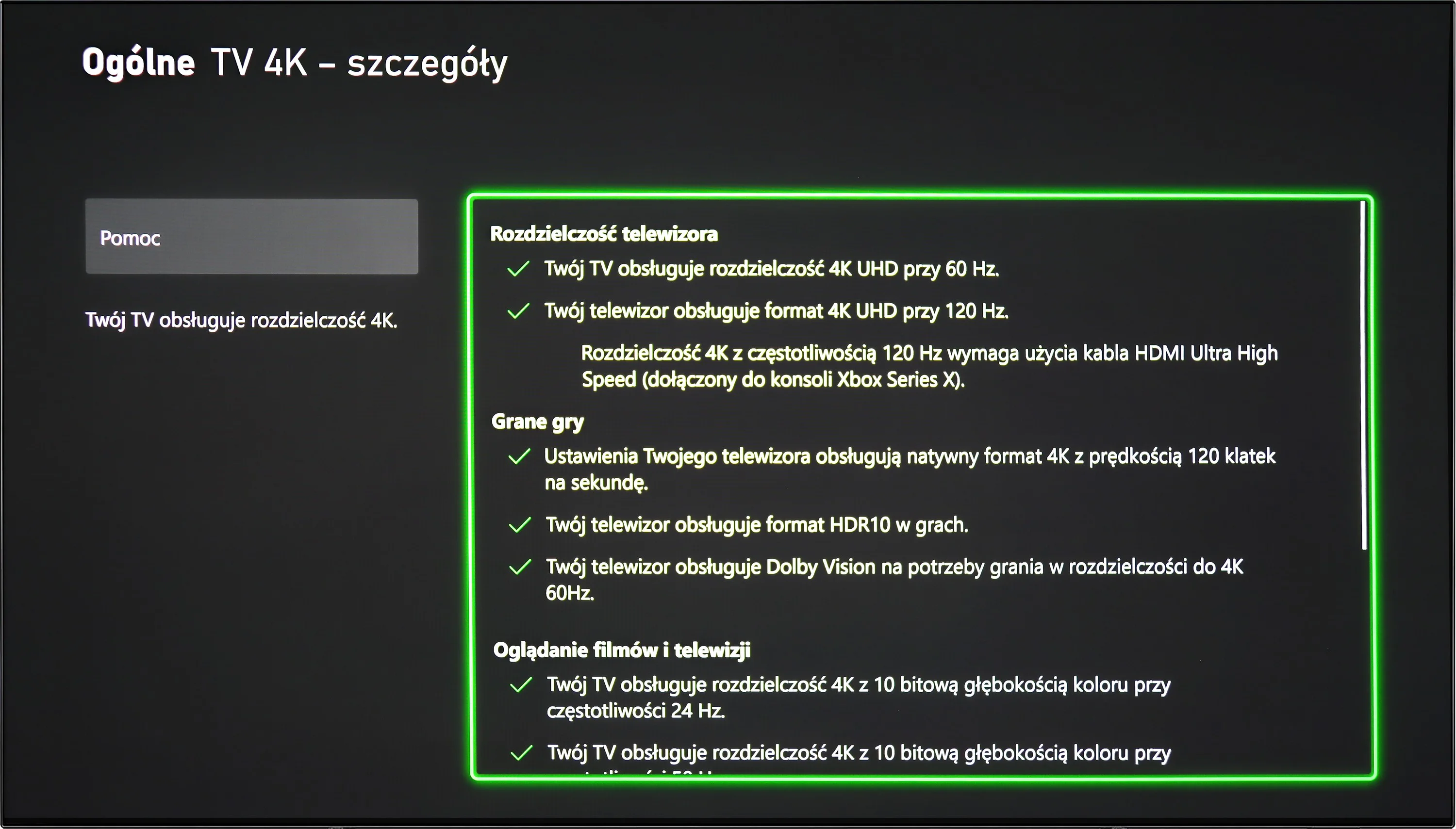
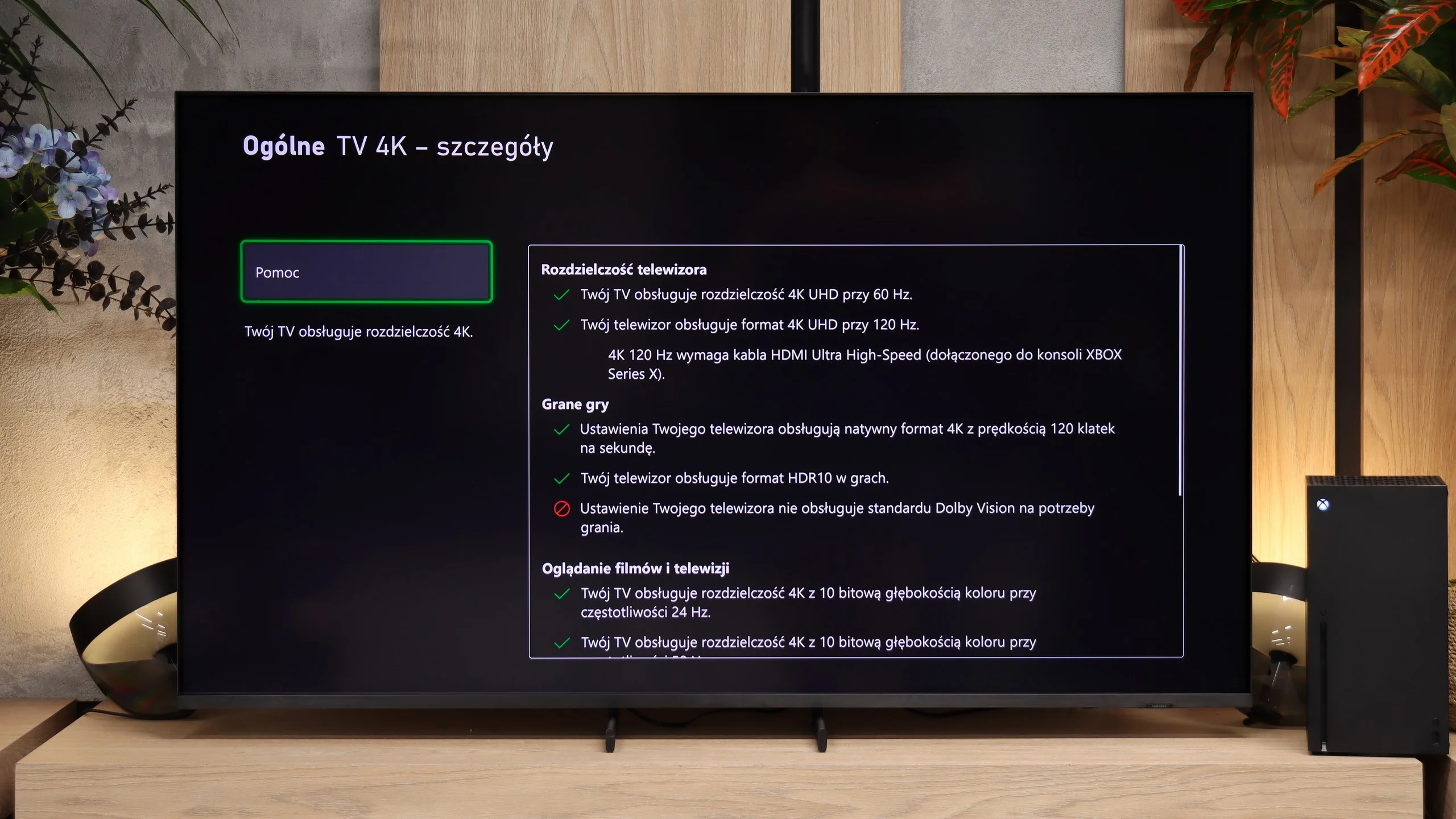
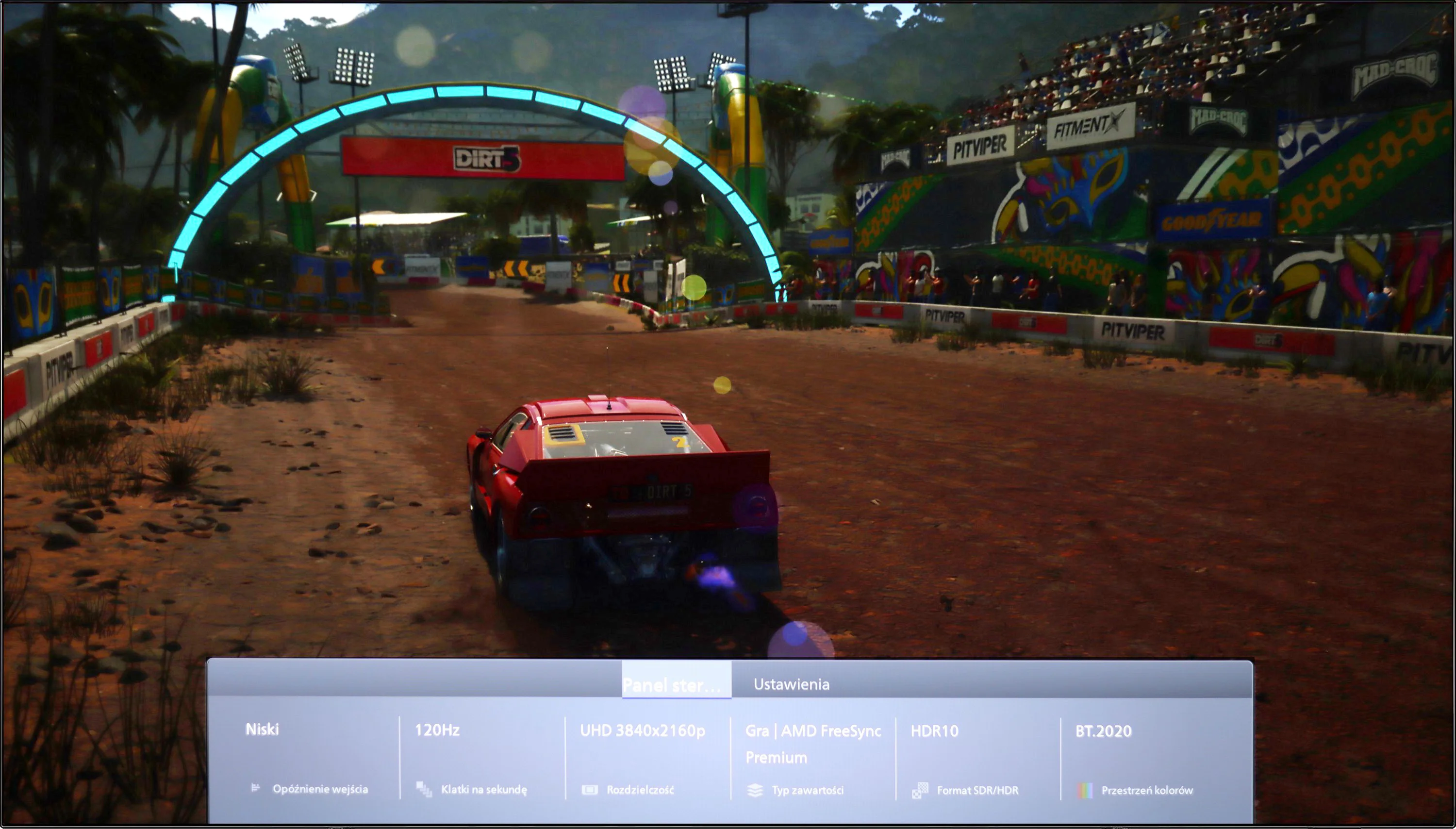
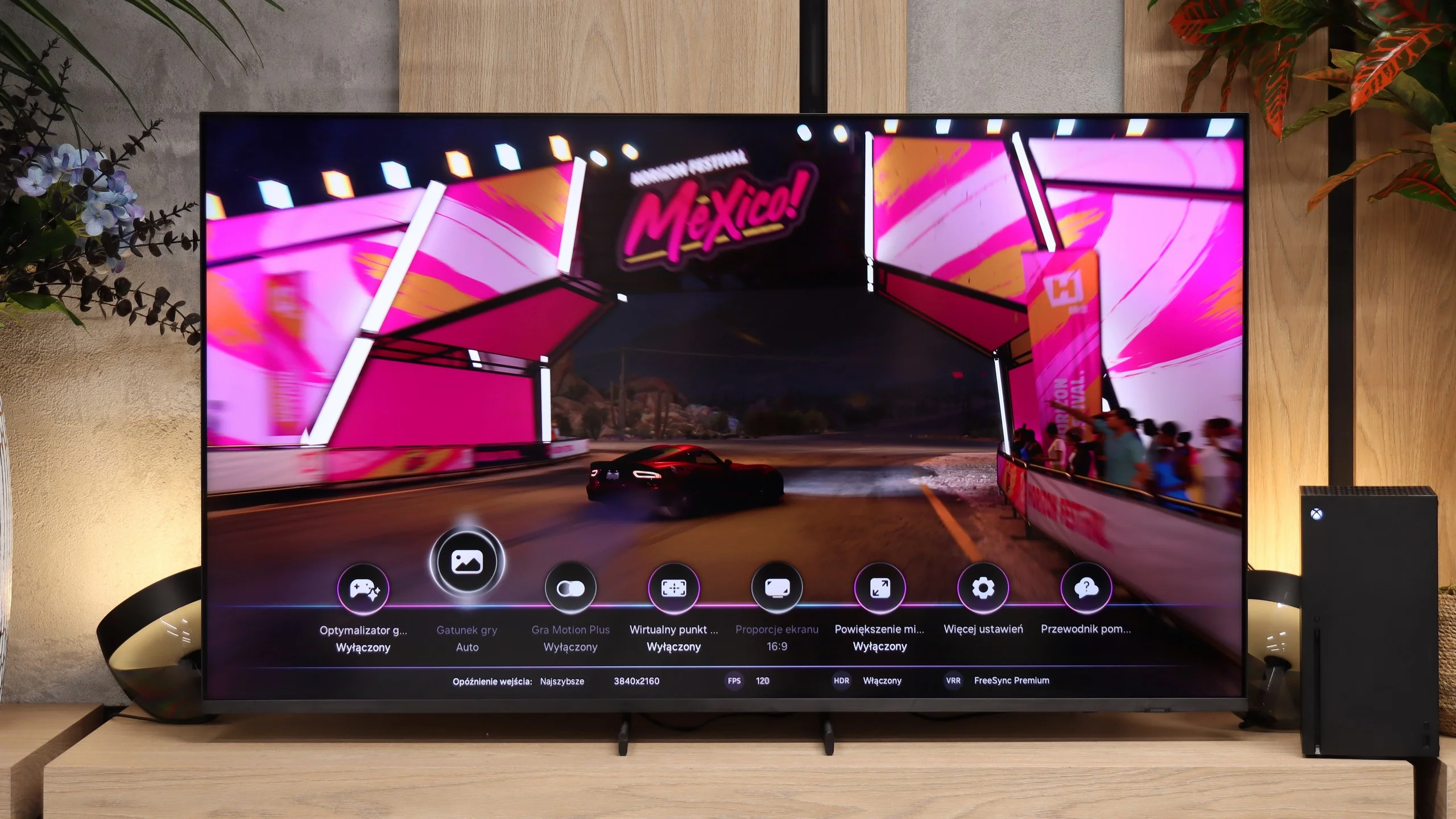
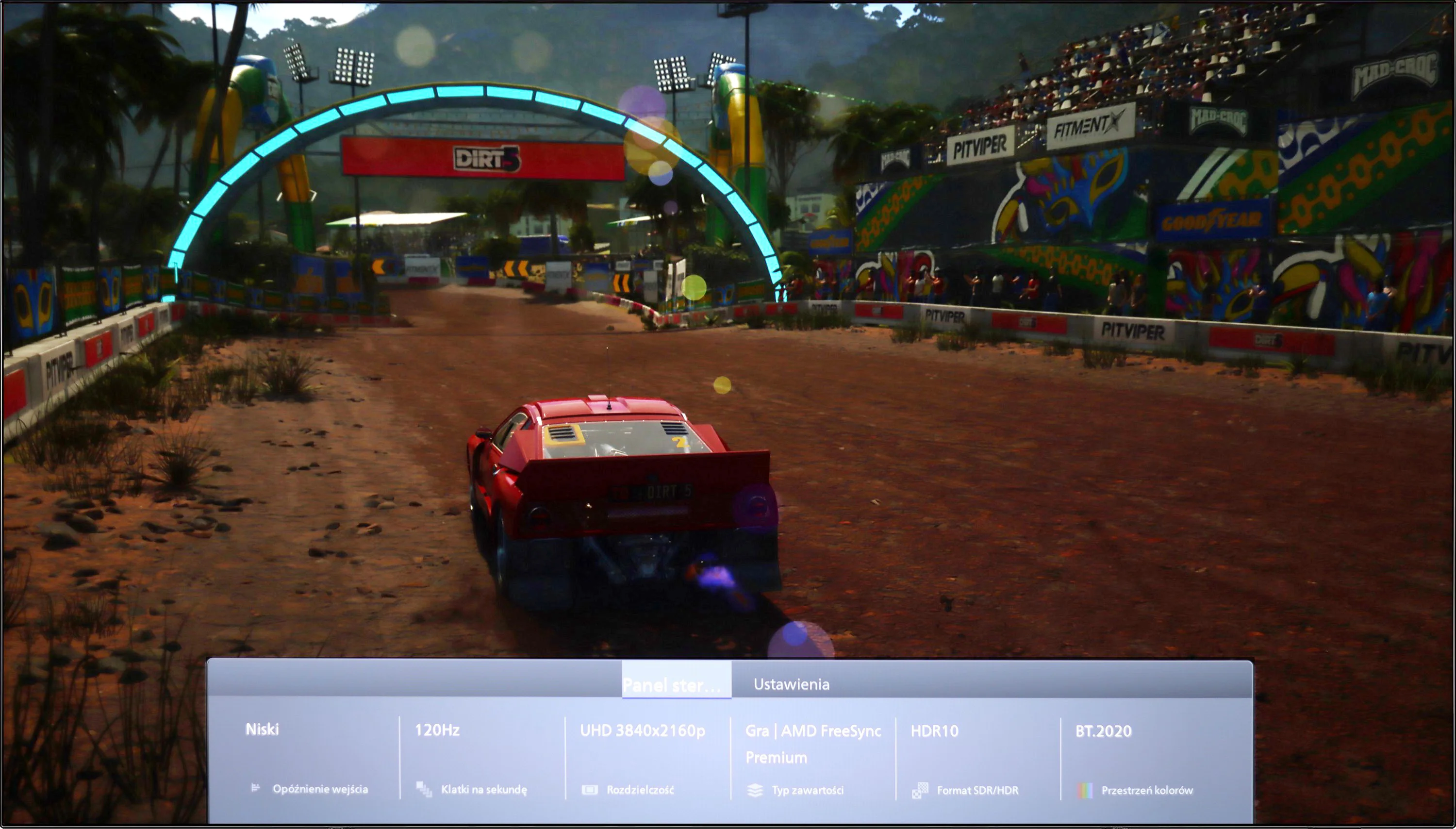
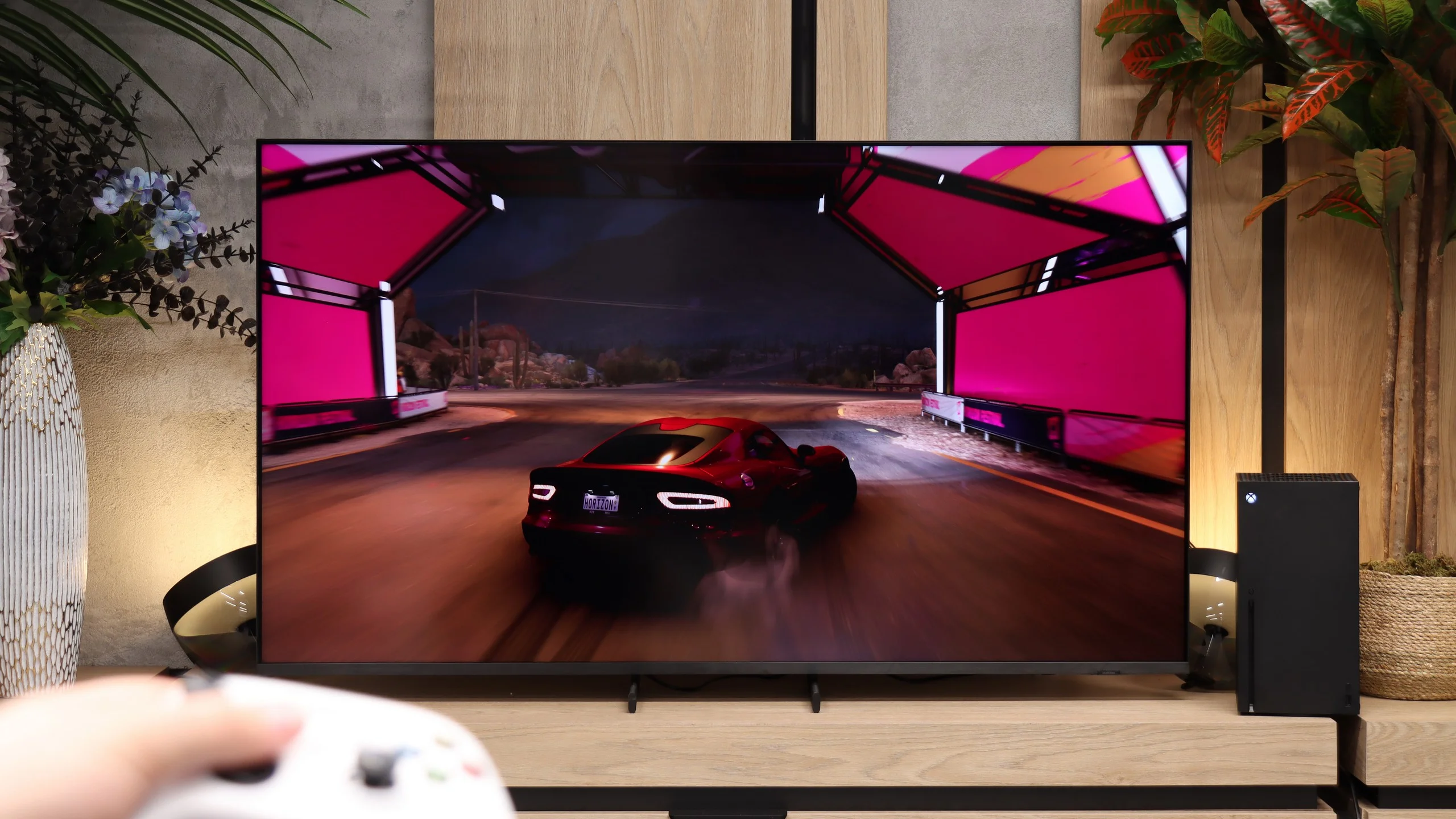
Philips OLED769 has been designed with gamers in mind, offering full compatibility with consoles and the highest quality of gameplay. The television received the maximum rating in this category, providing everything that the heart desires. With HDMI 2.1 ports fully supporting ALLM (Auto Low Latency Mode) and VRR (Variable Refresh Rate), the television ensures smooth and hassle-free gaming. ALLM automatically switches the television to low latency mode, while VRR eliminates stuttering and screen tearing, resulting in fluidity and stability in gaming. The Dolby Vision gaming feature is another advantage, although it only works at a frequency of 60 Hz. Most casual gamers will likely not feel the lack of a higher frequency; however, more demanding users may have some reservations. This allows for enjoyment of a dynamic range of tones and realistic images, enhancing the gaming experience. PC gamers will also not be disappointed, as Philips OLED769 offers full compatibility with Nvidia graphics cards, thanks to support for G-Sync. This technology synchronises the refresh rate of the television with the graphics card, eliminating tearing and stuttering, resulting in excellent image fluidity.
Philips OLED769 is a television that perfectly meets the needs of gamers, offering a wide range of advanced features and technologies that significantly enhance gameplay quality and user comfort.
Samsung has been steadily expanding its gaming features for several years, and the R85H really doesn't miss anything important here. The TV supports 4K at 120 Hz, VRR and ALLM, so we can easily take advantage of the PlayStation 5 or Xbox Series X. HGiG also works correctly, so with HDR properly set on the console, games retain the correct brightness and we don't unnecessarily lose detail in the brightest parts of the picture. The only major omission is Dolby Vision Gaming, which Samsung does not support on any of its TVs. The Game Bar is also very useful — a handy menu you can bring up without leaving the game. We can quickly check the frame rate, VRR status or change key picture settings. Samsung also adds a few less obvious features, such as the ability to change the aspect ratio and Game Motion Plus, which can further smooth games running at 30 or 60 frames per second. Of course this comes at the cost of higher input lag (around 55 ms), but for slower-paced titles it may be an interesting addition for some people.
Input lag
9.8/10
9.6/10
SDR
HDR
Dolby Vision
The input lag on the Philips OLED769 is truly impressively low. At a frequency of 120Hz, values hovering around 5 ms make a huge impression, and for a frequency of 60Hz, 13 ms is also an excellent result. Such low latencies ensure a quick response to player movements, which is crucial for smooth and responsive gameplay. The only thing that can be criticised is the lack of support for Dolby Vision at materials/games with a refresh rate of 120Hz. Nevertheless, the television still offers incredible visual experiences and excellent specifications that will satisfy any gamer.
Input lag on the R85H is low, though not record-breaking. At 120 Hz it is around 12–13 ms, and at 60 Hz around 17–18 ms. In practice this makes little difference; the controls are responsive and you won't notice any lag during normal gaming.
Compatibility with PC
7.6/10
8/10
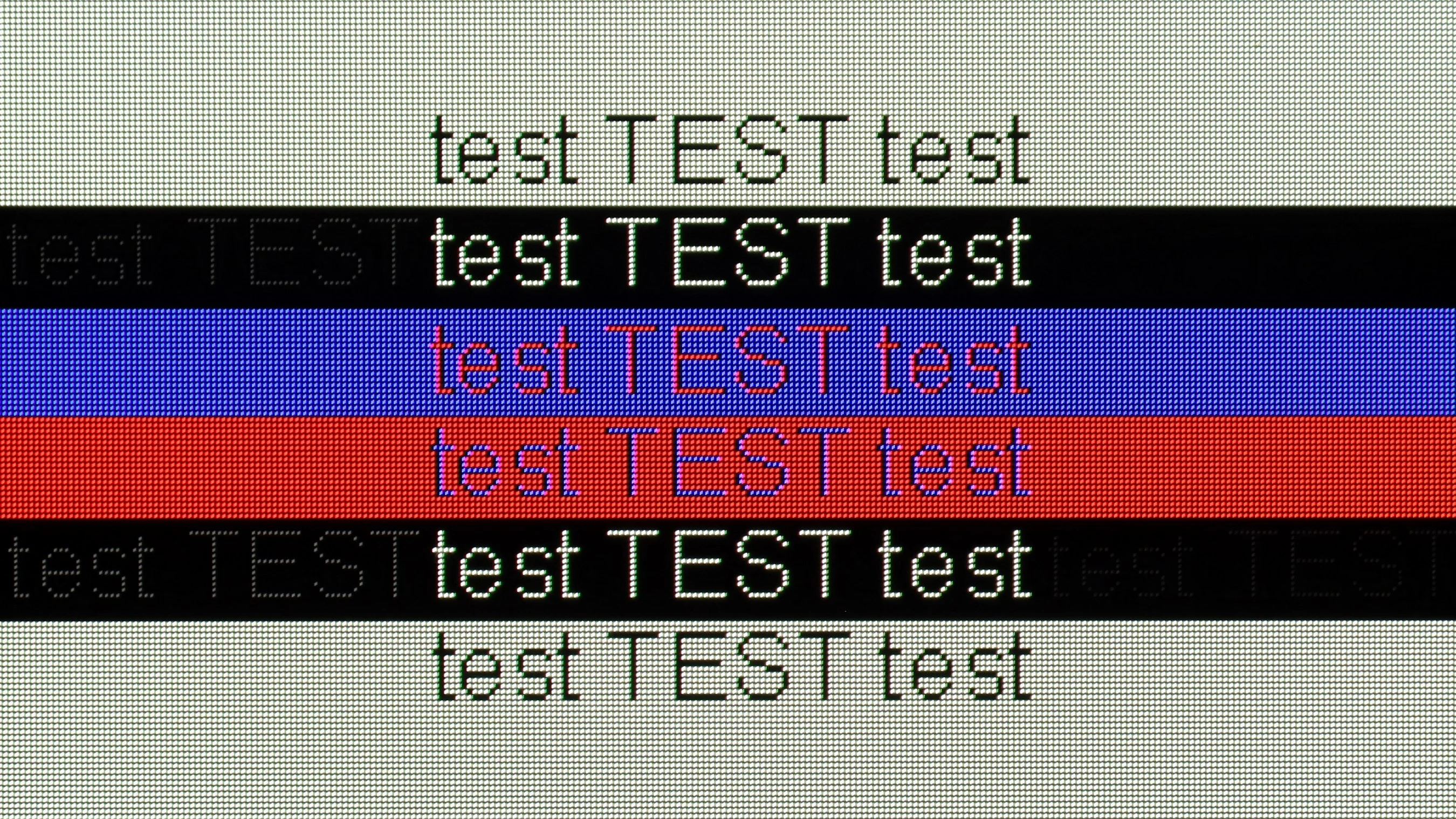
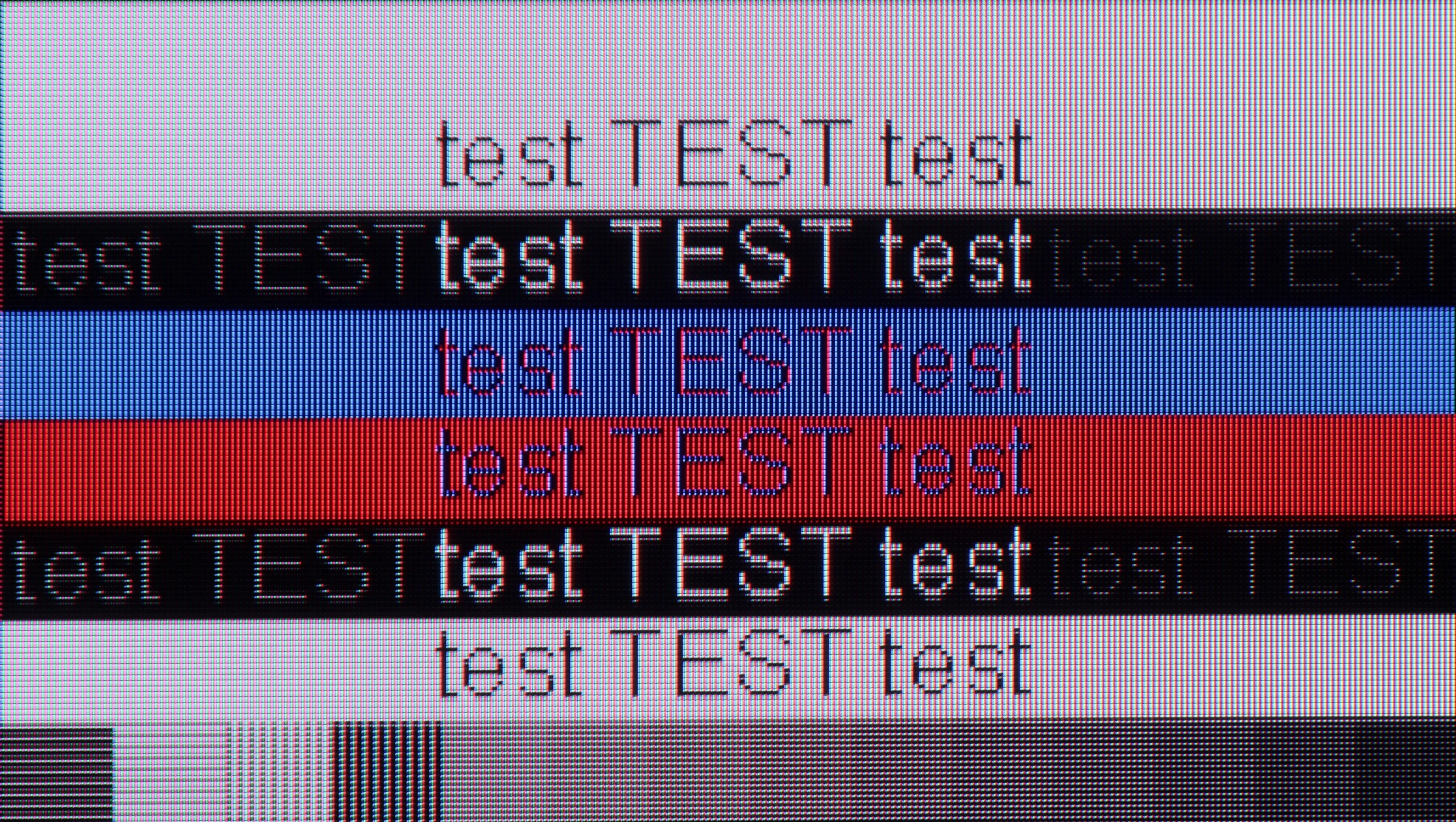
The photo shows the legibility of small fonts. Ideally, lines should be the same thickness on both light and dark text, with minimal pixel gaps.
OLED769 performs excellently in collaboration with PCs. The rating in this category is very good, primarily due to the great readability of fonts, regardless of the background colour. The support for chroma 4:4:4 further enhances image quality, ensuring clear and sharp details. The low response time is another advantage of this model, which translates into smoothness and responsiveness during work and gaming. All of this makes the Philips OLED769 an ideal choice for PC users seeking a large screen with high image quality and excellent parameters.
The R85H has a lot to offer when connected to a PC as well. In 4K we can use the full 144 Hz, and if you prioritise frame rate above all else, dropping to Full HD lets the TV push the refresh rate up to 240 Hz. It also supports G-Sync and FreeSync and has low input lag, so the R85H can easily double as a large gaming monitor. Text legibility is somewhat weaker, though. The TV correctly supports 4:4:4 chroma subsampling, so in theory it has everything needed to render fonts sharply. In practice, however, some fonts show small colour artefacts, especially with dark text and high-contrast edges. It’s not a problem that prevents normal use, but if you plan to sit close to the screen and use the R85H mainly as a monitor for text, it’s worth bearing in mind. It is far better suited to PC gaming.
Viewing angles
7.5/10
4.8/10
When it comes to viewing angles, Philips OLED769 performs excellently, as is the case with all OLED televisions. The image remains clear and does not lose quality regardless of the viewing angle. This means you can enjoy exceptional picture quality even when watching from the side or from more unusual locations in the room. The only televisions that offer even better viewing angles are those equipped with QD-OLED and OLED MLA panels. These technologies can provide even greater stability and image clarity from various angles. However, compared to standard LCD televisions, Philips OLED769 still offers significantly better viewing angles, making it a great choice for large rooms and family movie nights.
Viewing angles on the R85H are rather acceptable and that's basically all the praise they get. It's still a VA panel, and panels of this type are not the best choice if you often watch the television from a wide angle. As you move to the side the image loses contrast and blacks start to look increasingly grey. The R85H does, however, have an advantage over conventional VA TVs. Thanks to its tri-colour RGB backlight, colours viewed at an angle don't lose saturation as quickly and the 'washed-out' effect is somewhat less noticeable. If you often watch the television with a larger group and some people sit well to the side, there are screens on the market that handle this task much better.
Daytime performance
4.6/10
7.3/10
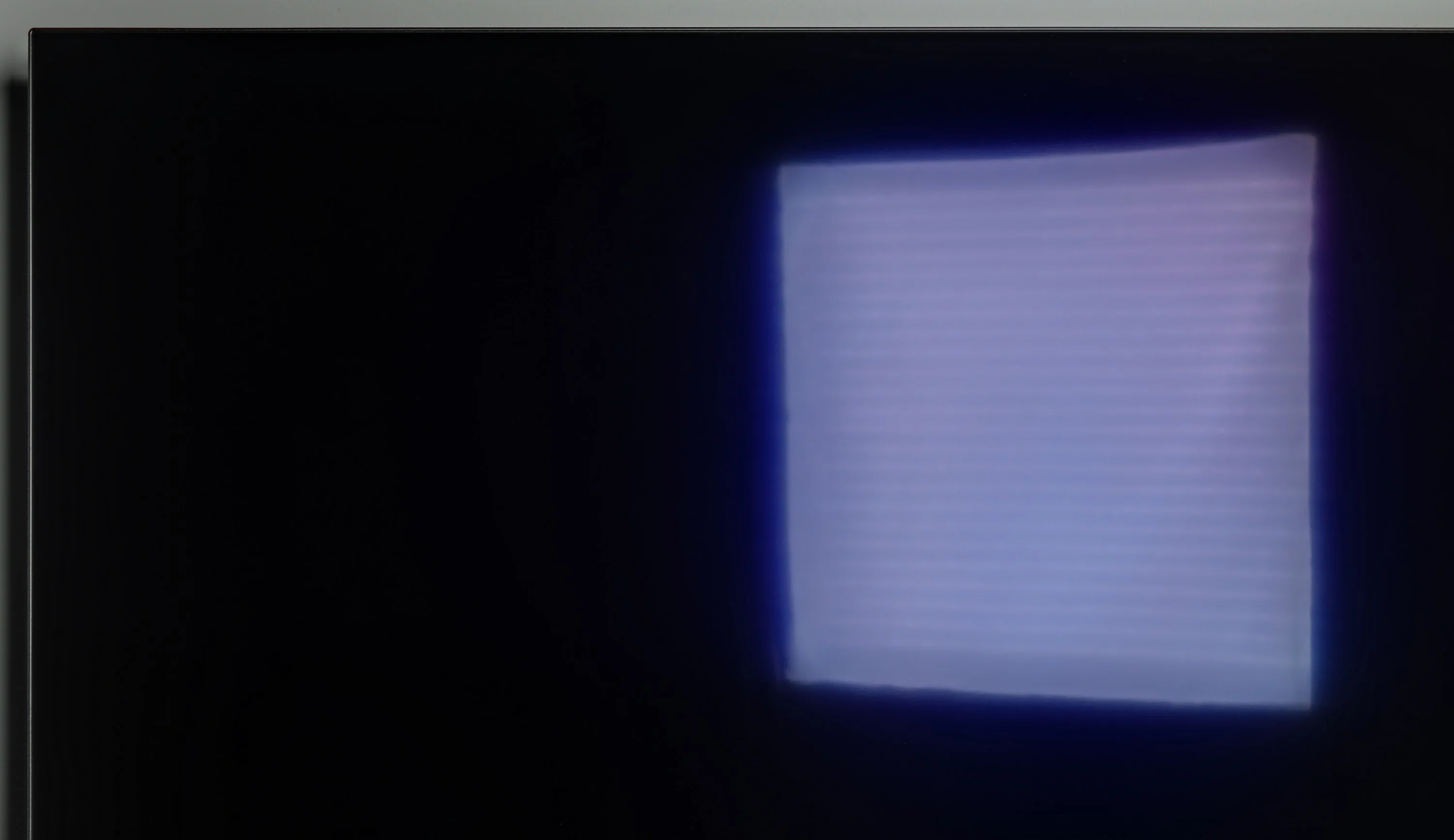
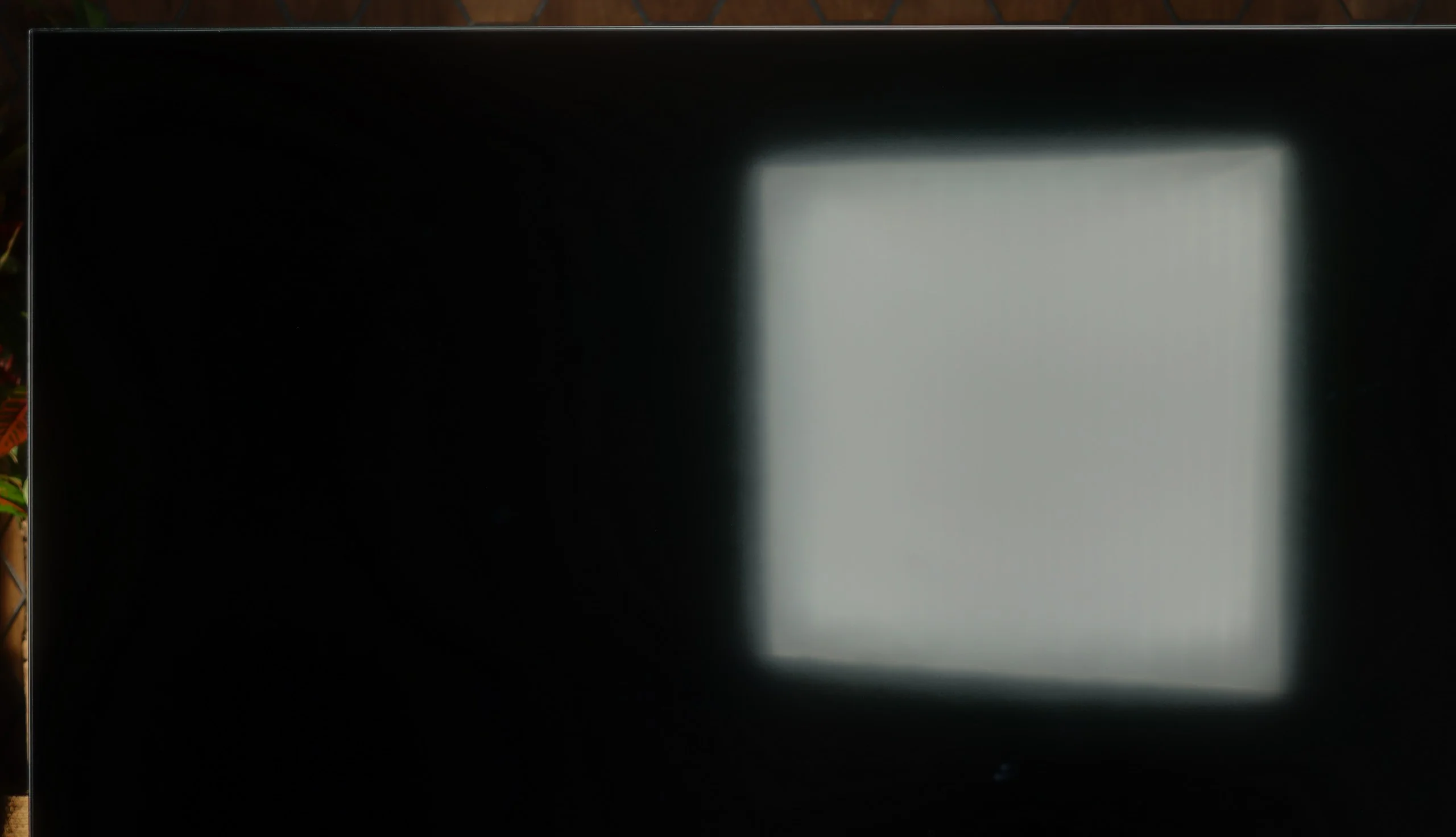
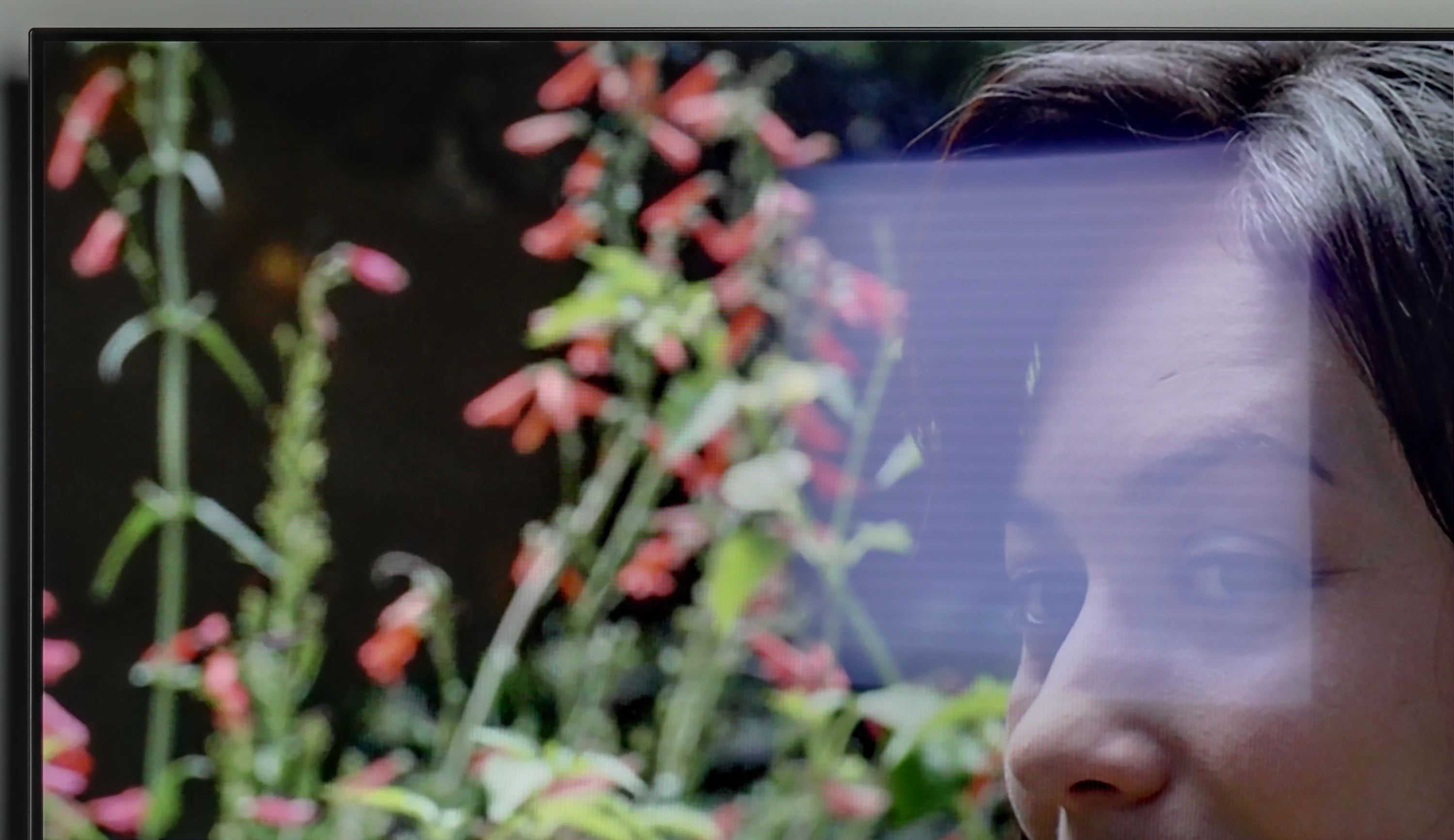
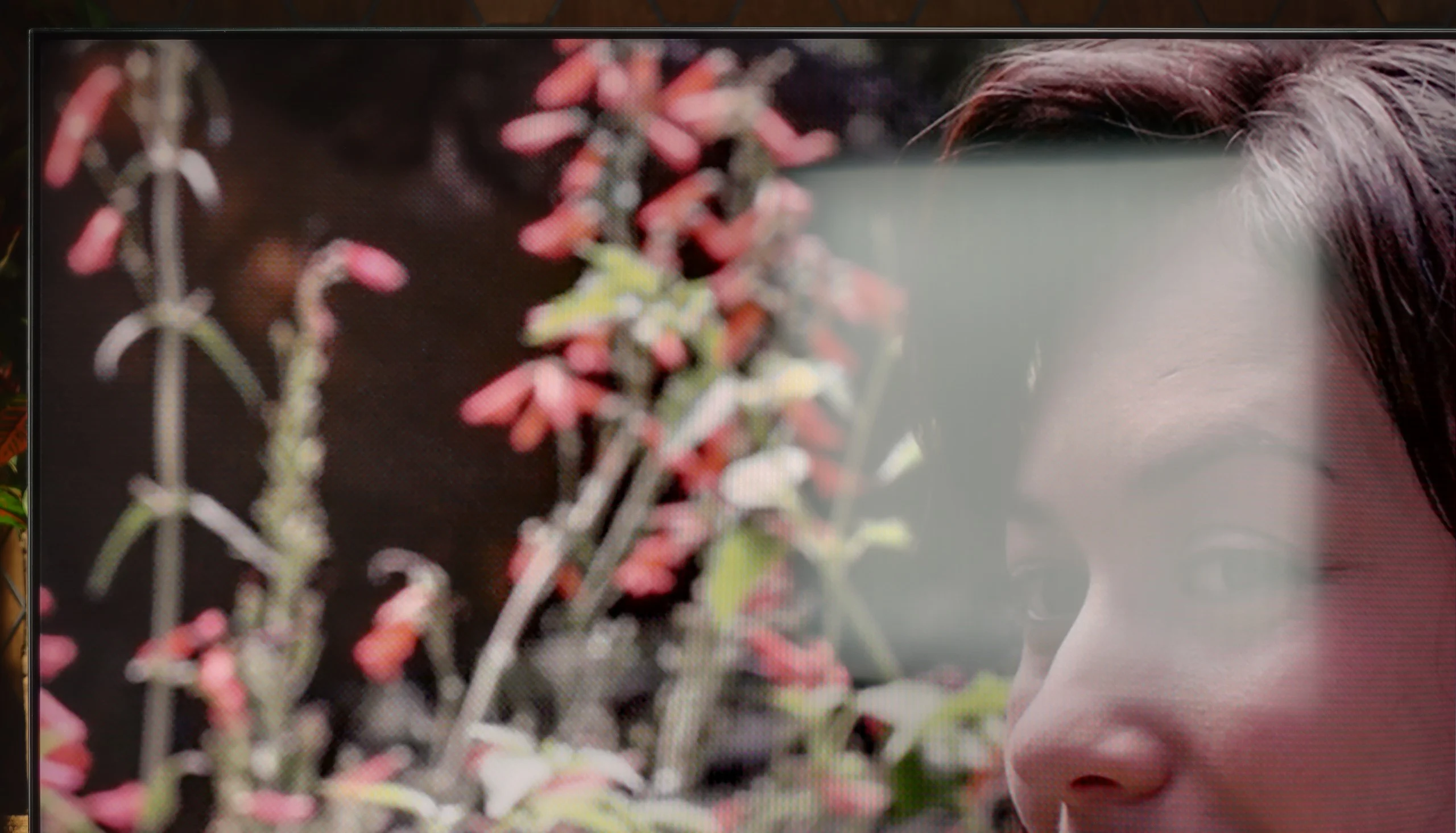
Panel brightness
Samsung R85H / R86H: 726 cd/m2
Philips OLED769: 258 cd/m2
The performance of the television Philips OLED769 during the day leaves something to be desired. The screen, although satin, moderately suppresses reflections, which can be noticeable in bright rooms. The low rating is primarily due to the rather average brightness of the television—250 nits is not impressive and may not be sufficient to ensure proper image quality in strong daylight. This makes viewing on sunny days potentially less comfortable, and the image details may be harder to discern.
In a bright room the R85H performs quite well, although much depends on the local dimming setting. For daytime viewing we recommend setting it to High, because the TV noticeably increases its brightness then. On large bright areas it reaches around 600 nits, and on smaller sections it can approach 1000 nits, so the picture remains easy to see even with stronger light in the living room. The satin coating handles reflections reasonably well and in most cases does not turn the screen into a mirror, although strong light sources will of course still be visible.
However, bear in mind that the High setting means the local dimming algorithm works more aggressively. Therefore for evening viewing we recommend switching it to Low. The TV won't be as bright then, but it preserves details in the brightest parts of the image better, which at night we think is much more important than maximum brightness.
Local dimming | 5% | 10% | 20% | 30% | 40% | 50% | 60% | 70% | 80% | 90% | 100% |
|---|---|---|---|---|---|---|---|---|---|---|---|
Low | 445 | 485 | 517 | 532 | 537 | 542 | 551 | 556 | 556 | 573 | 556 |
Panel details
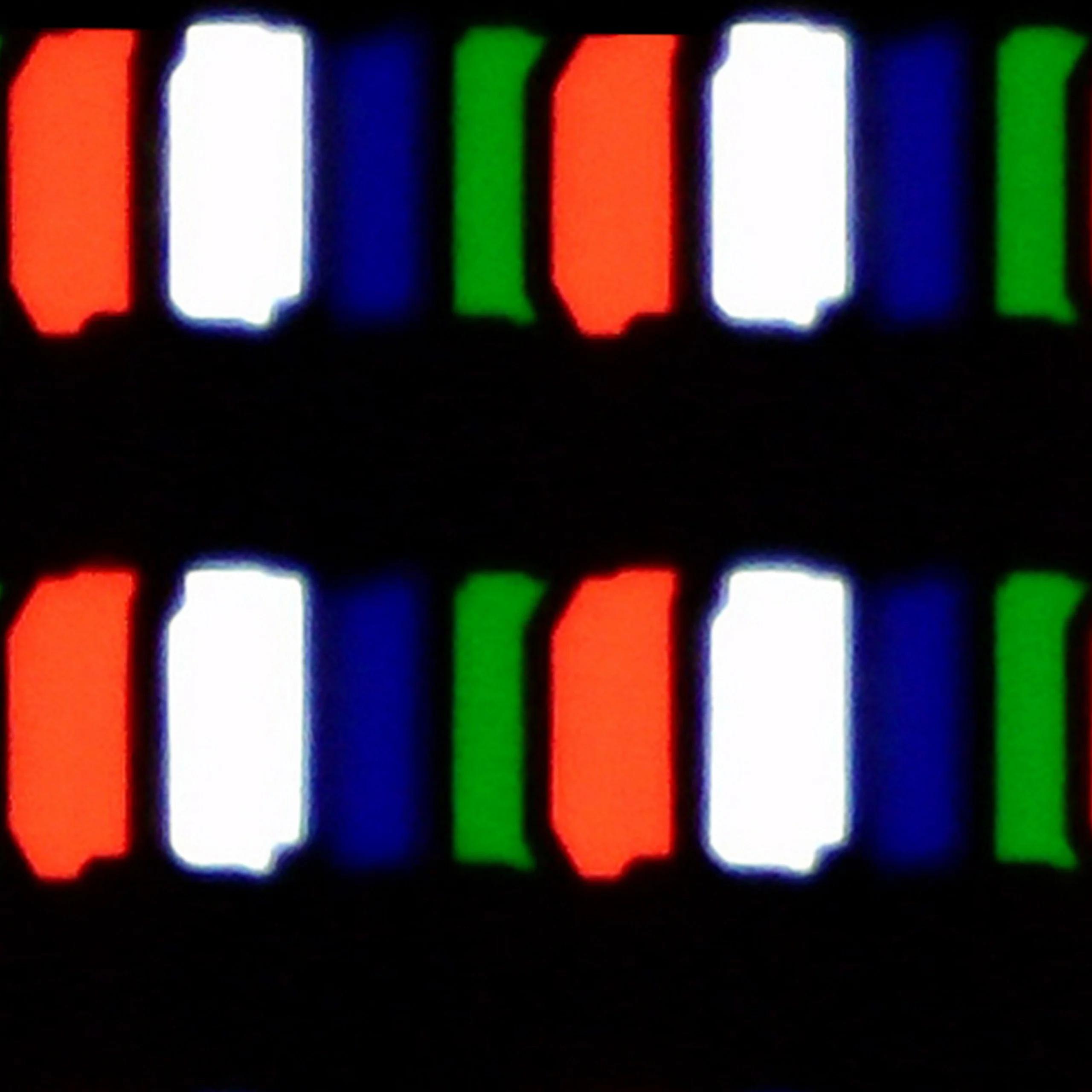
Subpixel Structure:
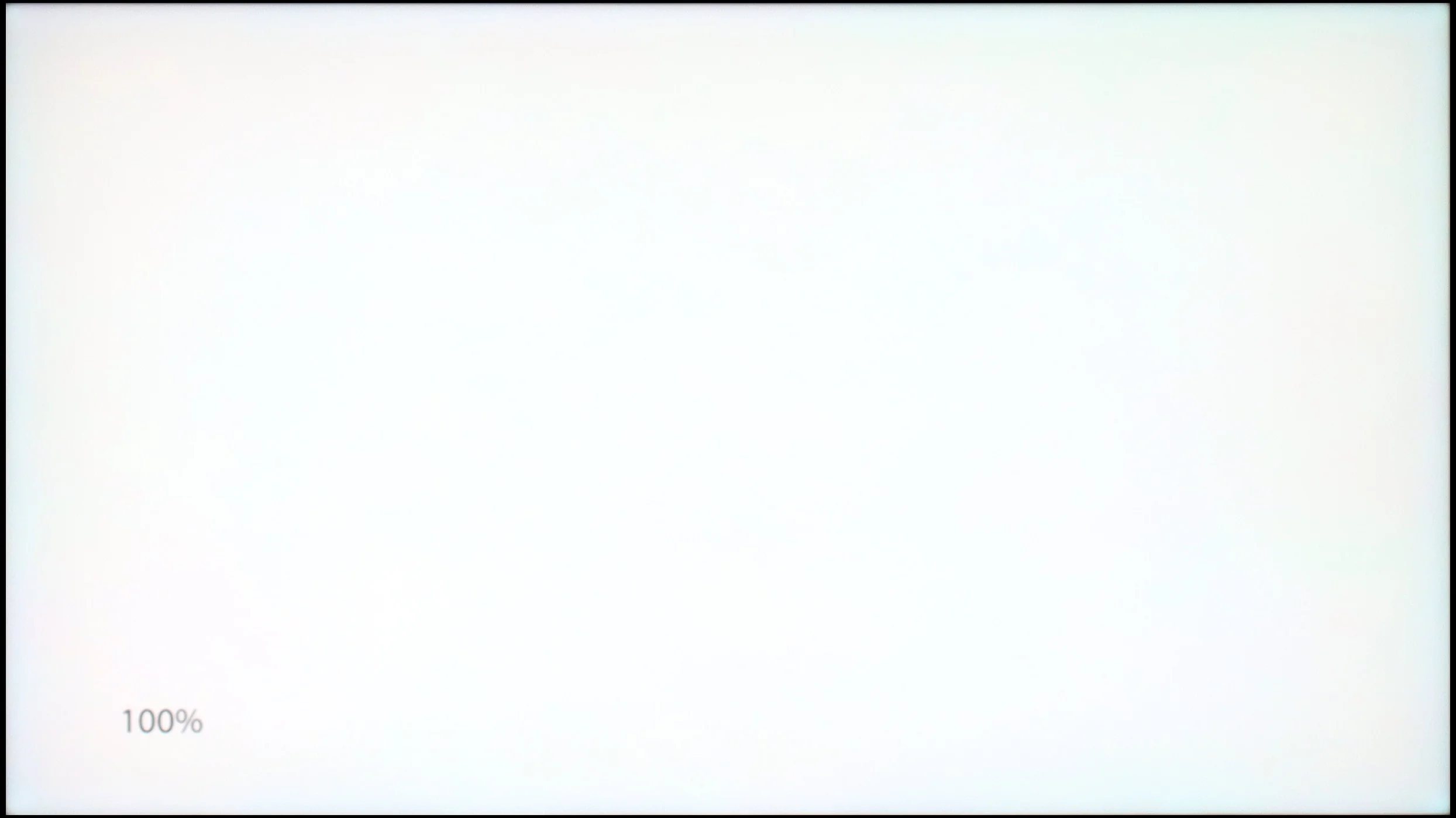
Panel uniformity and thermal imaging:

Philips OLED769
Samsung R85H / R86H
TV features
5.7/10
7.3/10
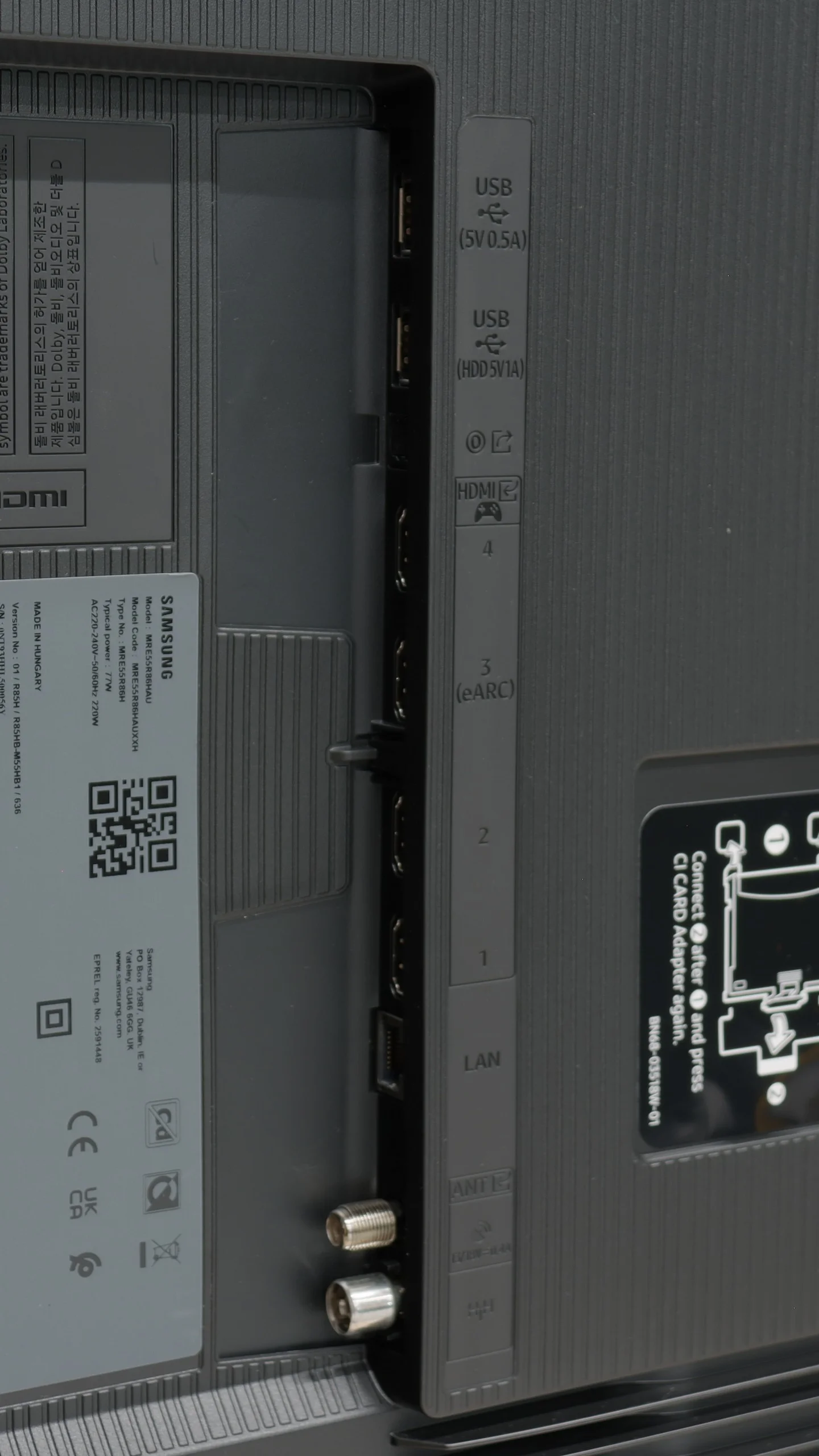
- SystemTitan OSTizen
- System performanceDecentVery good
- HDMI inputs0 x HDMI 2.0, 4 x HDMI 2.1 48Gbps0 x HDMI 2.0, 4 x HDMI 2.1 48Gbps
- OutputsToslink (Optical audio), eARC (HDMI), ARC (HDMI), Mini-Jack (Headphones)Toslink (Optical audio), eARC (HDMI), ARC (HDMI)
- Network InterfacesWi-Fi 2.4GHz, Wi-Fi 5GHz, Ethernet (LAN) 100MbpsWi-Fi 2.4GHz, Wi-Fi 5GHz, Ethernet (LAN) 100Mbps
- TV receptionDVB-T, DVB-T2, DVB-S, DVB-S2, DVB-CDVB-T, DVB-T2, DVB-S, DVB-S2, DVB-C
Classic features:
- Recording to USB (terrestrial TV)
- Recording programming
- Picture in Picture (PiP)
- RF remote control (no need to aim)
- Backlit remote control
- Teletext
- Audio only mode
- Bluetooth headphones support
- Simultaneous Bluetooth headphones & TV audio
Smart features:
- AirPlay
- Screen mirroring (Windows Miracast)
- Voice search
- Voice search in native language
- Ability to connect a keyboard and mouse
Sound connection options
- HDMI audioeARC (HDMI), ARC (HDMI)eARC (HDMI), ARC (HDMI)
- Other audio outputsToslink (Optical audio), Mini-Jack (Headphones)Toslink (Optical audio)
- Wireless audioBluetoothBluetooth
Supported audio formats (external HDMI eARC audio):
- Dolby Digital Plus 7.1
- Dolby True HD 7.1
- Dolby Atmos in Dolby Digital Plus (JOC)
- Dolby Atmos in Dolby True HD
- DTS:X in DTS-HD MA
- DTS-HD Master Audio
Senior accessibility
- Numeric keyboard on TV
- Font size adjustment
- Audio description
The greatest asset of the Philips OLED769 television is undoubtedly the three-sided Ambilight system. This technology truly makes a difference by extending the screen onto the walls around the television, creating the illusion of a larger screen. It not only enhances the visual experience but also adds a unique atmosphere, whether we are watching a film, playing games, or using other multimedia.
An interesting feature is the new remote control included with televisions operating on the TitanOS system. Its backlighting makes it very convenient to use, although its wireless functionality leaves something to be desired. Its hybrid design sometimes requires you to aim at the television screen, while at other times you do not, depending on which button you are using, which can be somewhat annoying.
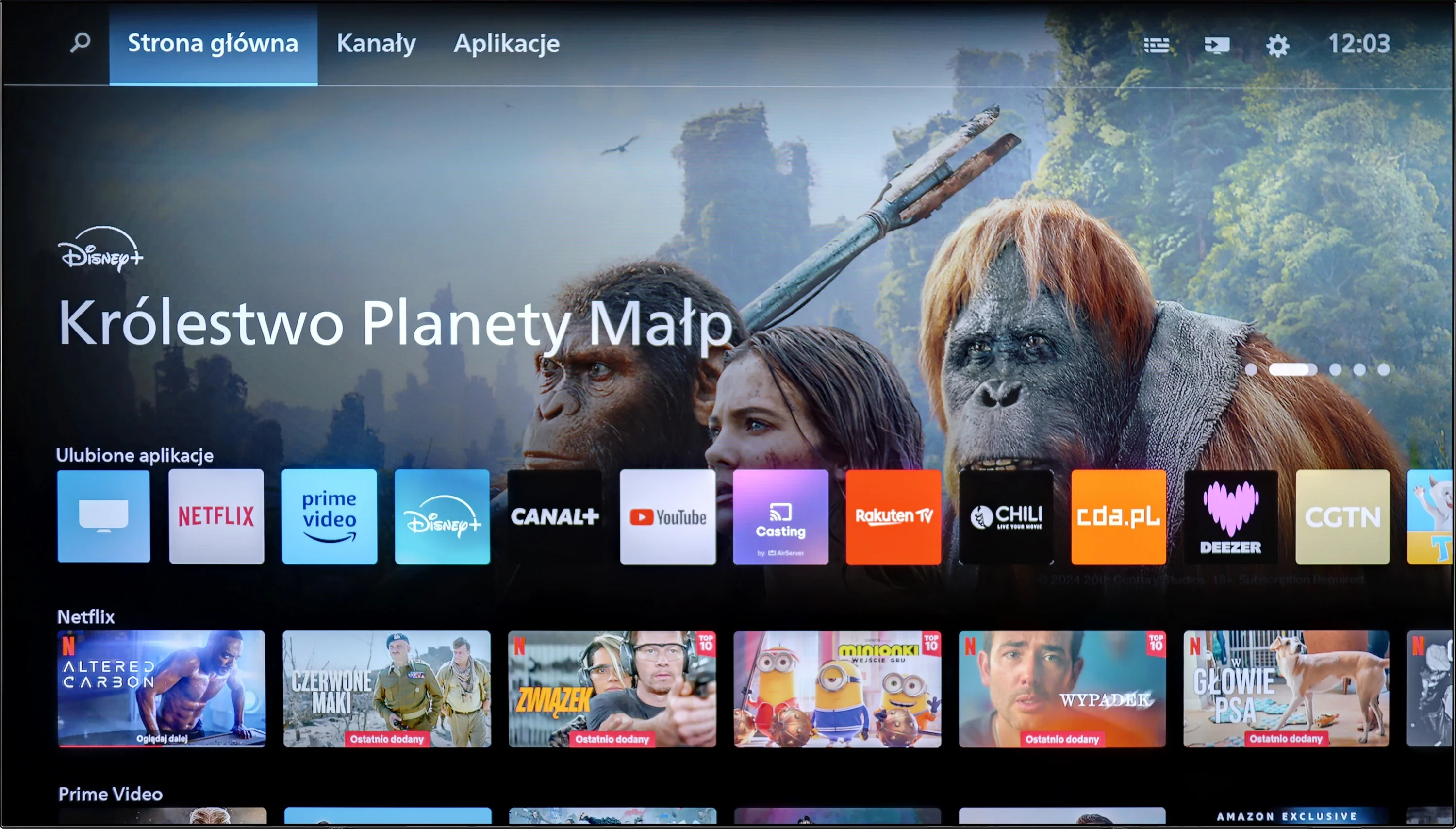
In the context of the operating system, Philips has introduced a new strategy this year by replacing the previous open GoogleTV system with its own proprietary TitanOS. As is often the case with new technologies, TitanOS has its growing pains. At the moment, it only offers a few basic applications, and the app store does not impress with its variety. This may disappoint some users who expect a wide range of available applications. Additionally, the lack of support for AirPlay features and the ability to record onto USB are further limitations that could be problematic.
Television features
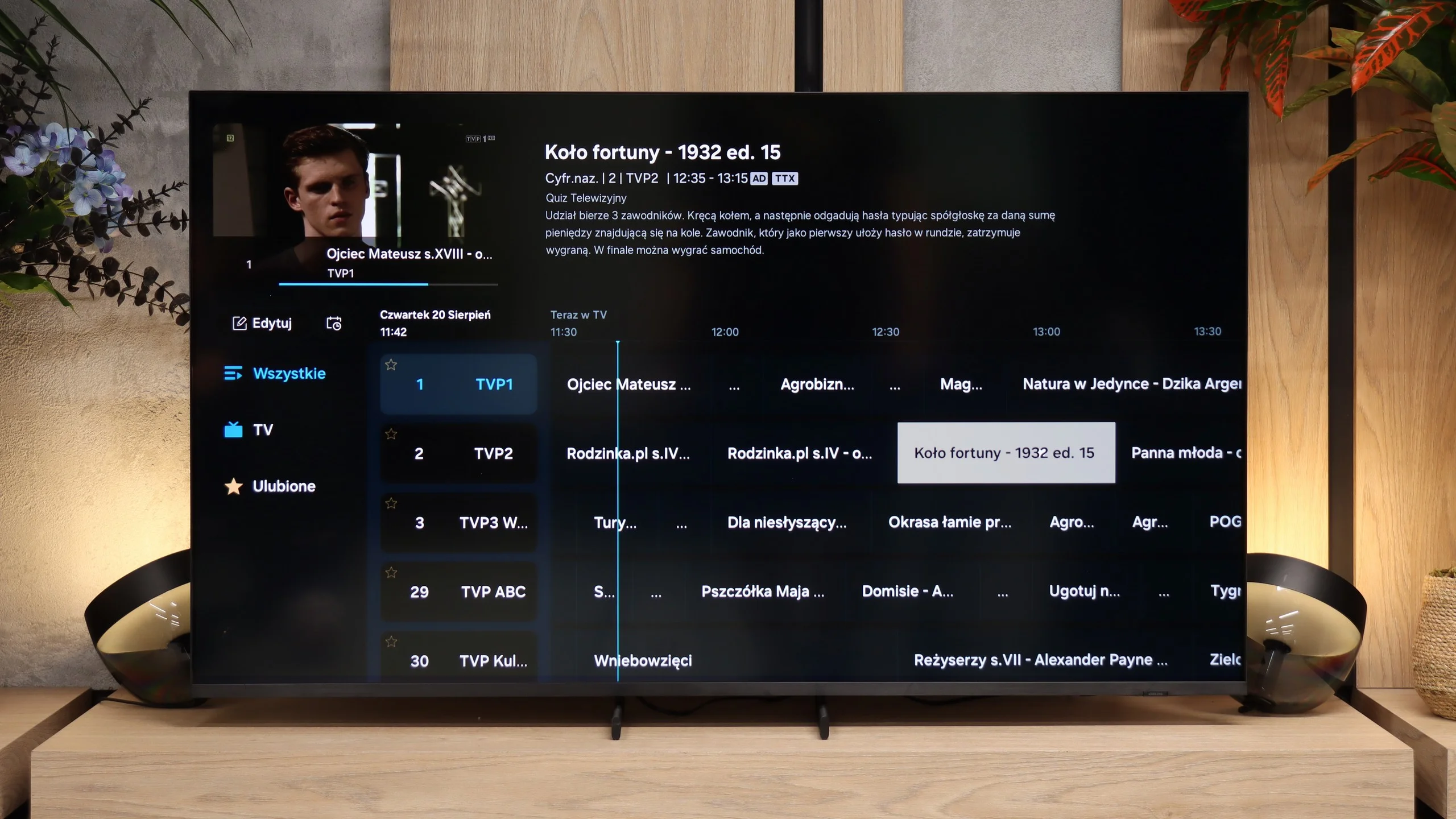
If the R85H is also to be used for watching traditional broadcast TV, Samsung offers pretty much everything you would expect from a modern model. Channel navigation is convenient, the programme guide is clear, and switching between channels doesn't take too long. There is also the standard set of tuners and support for CI+ modules. It's a pity, though, that Samsung has for some time been limiting some of the more traditional features that once distinguished feature-rich TVs. It's clear that streaming and the whole Smart TV ecosystem have become far more important to the manufacturer today. For example, you won't find the ability to record TV channels to USB storage or to split the screen using PiP.
Smart TV features
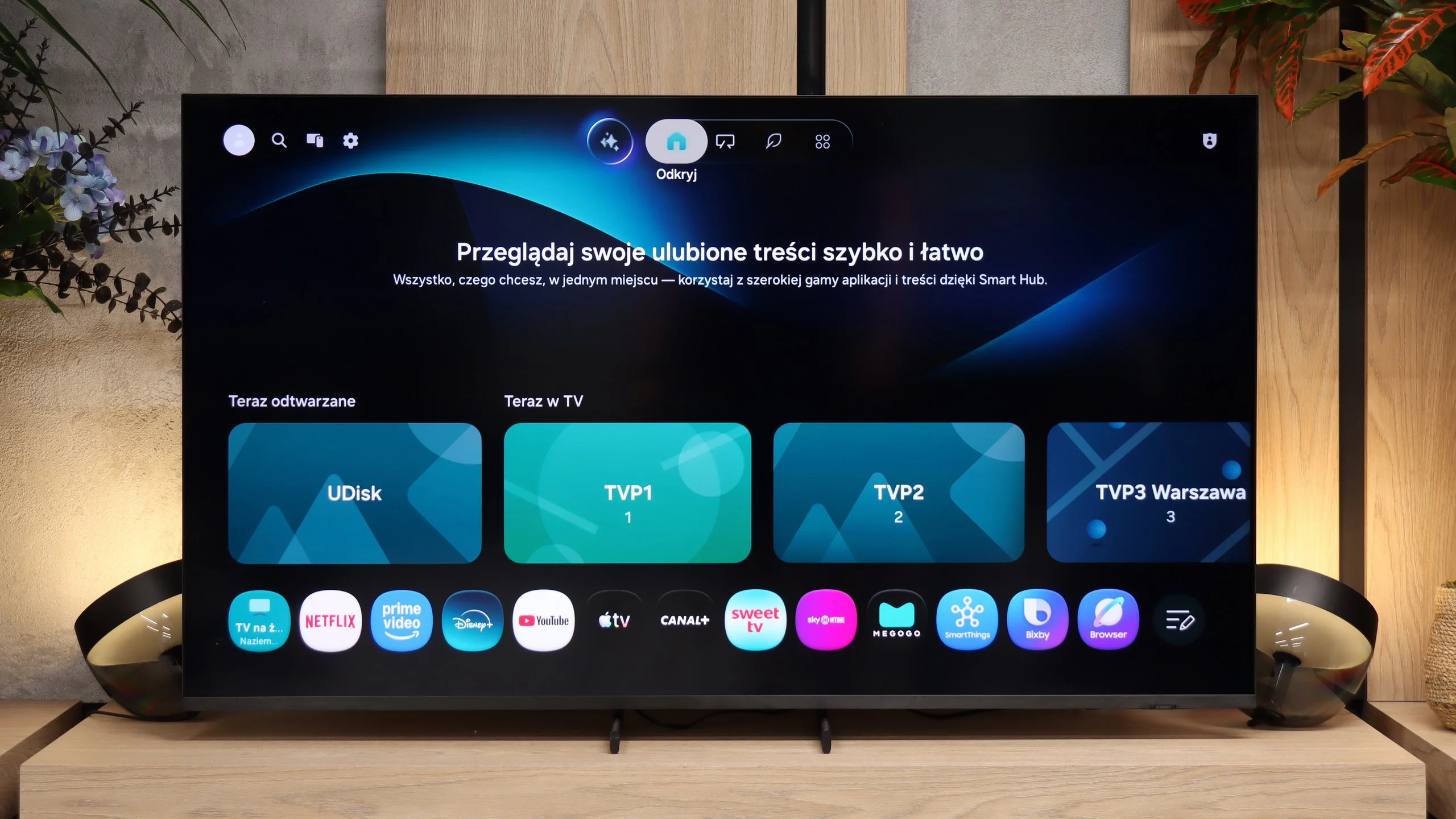
This is handled by the well-known Tizen. The system runs smoothly and provides access to virtually all popular VOD apps, so Netflix, Disney+, Max, Prime Video, YouTube and other local services are available without much trouble. The interface itself is fairly feature-rich and takes a moment to get used to, but afterwards navigating it is very straightforward. Samsung is also developing features that go beyond simply watching films and series. SmartThings lets you connect the R85H to smart home devices and control them directly from the screen. There is AirPlay, smartphone screen mirroring, and Multi View if you want to display two different sources side by side. So it's hard to fault the system in terms of capabilities.
Apps
6.7/10
9.3/10






















Playing files from USB
8.2/10
9.1/10
Supported photo formats:
Maximum photo resolution:
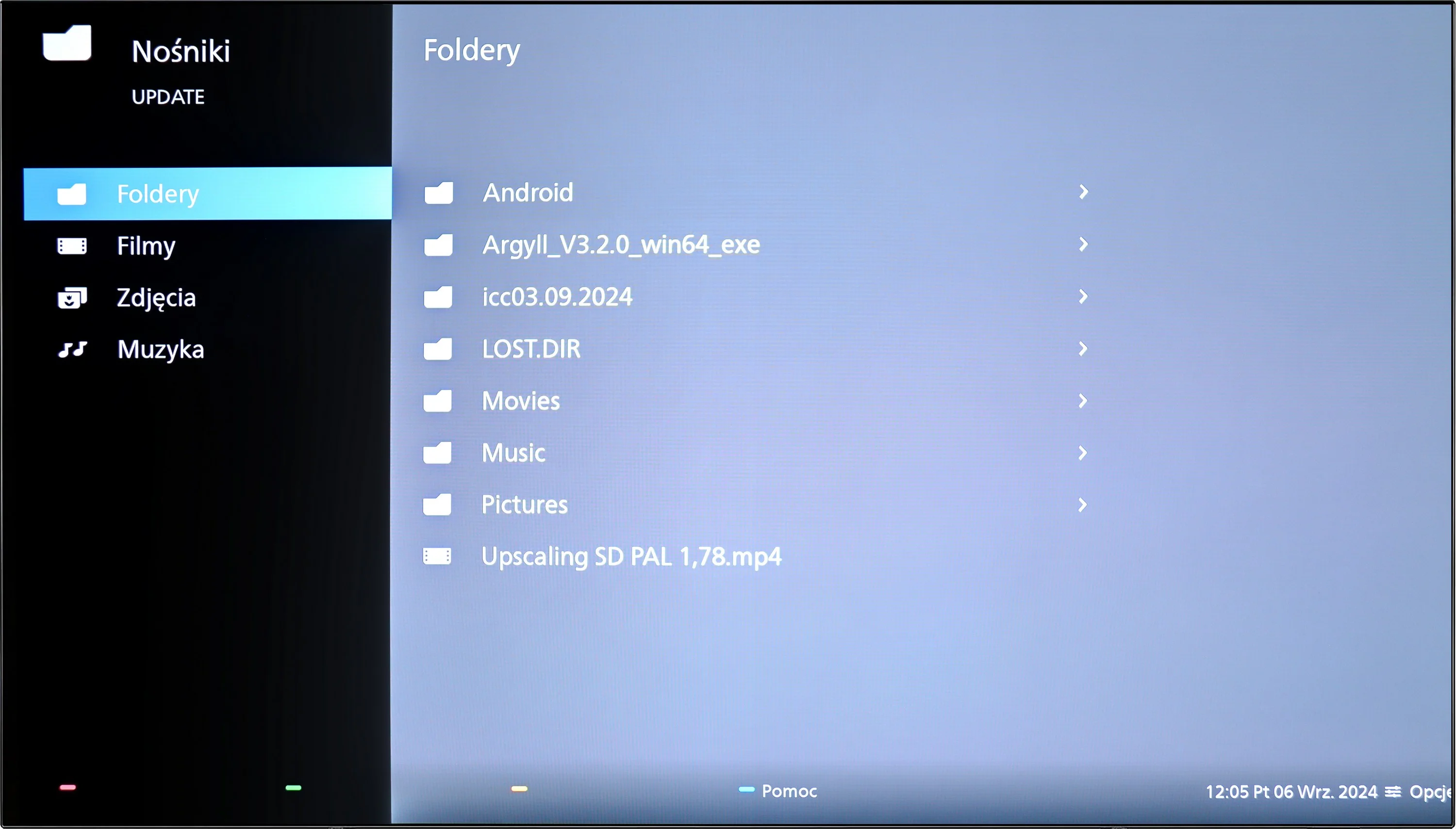
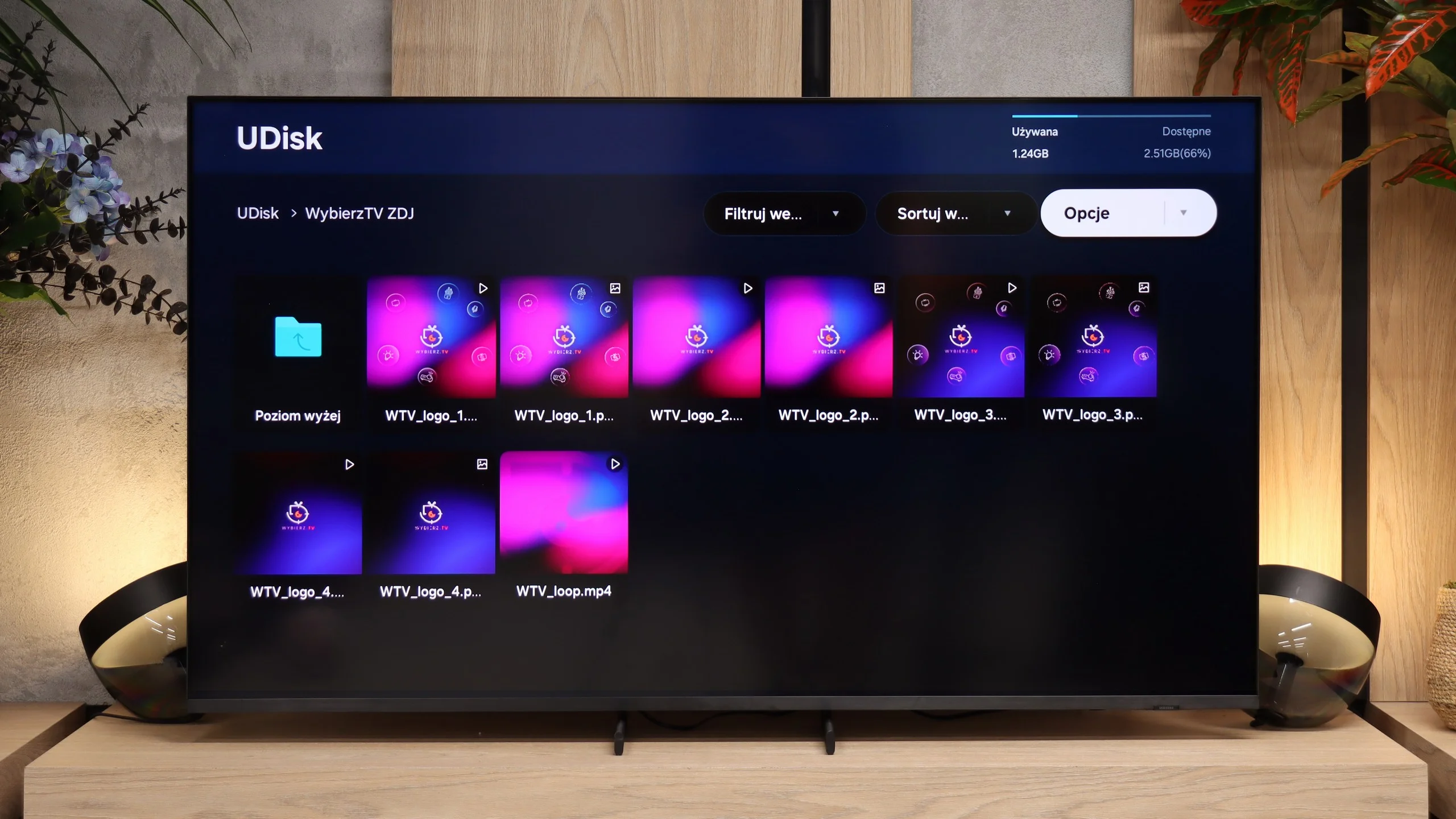
The built-in player in Philips OLED769 generally performs well. Although it may lack support for unusual formats, which could pose a problem for specific users, most should be satisfied with the available options. The built-in player in the TitanOS system allows for the reading of Polish characters and the changing of font colour, which additionally makes everyday use easier. Thanks to these features, playing files from USB is comfortable and versatile.
The built-in media player handles most popular video, audio and photo formats. The on-screen menu runs smoothly, and thumbnails load without delay even in folders containing hundreds of files. For photos you can open JPEG, PNG or BMP files in high resolution without any problem, although the list of supported formats has gaps. The most noticeable omission is support for HEIC (iPhone photos) and some more niche formats such as WebP, GIF or TIFF. For a traditional holiday photo slideshow the player is entirely adequate.
Sound
6.7/10
7.1/10
- Maximum volume-89dB
- Dolby Digital Plus 7.1
- Dolby True HD 7.1
- Dolby Atmos in Dolby Digital Plus (JOC)
- Dolby Atmos in Dolby True HD
- DTS:X in DTS-HD MA
- DTS-HD Master Audio
In the sound category, Philips OLED769 may not offer super dynamic sound, using speakers with a power of 2x10W. However, it is worth noting the support for all audio formats including Dolby and DTS. Thanks to this, despite the power limitations, users can enjoy high-quality sound with the help of external players.
The audio section of the R85H is a replica of the setup from the QN80H. It uses the same 2.0 stereo kit with 30 W of power, which easily handles dialogue clarity in news programmes and TV series, though for movie blockbusters it's definitely worth adding a soundbar. On board are support for Dolby Atmos, Q-Symphony technology (for pairing with Samsung soundbars) and an "AI Football" mode. The latter lets you use sliders to boost or almost completely remove the commentator's voice relative to the stadium crowd, and although the algorithm can sometimes hesitate, it can be a great addition for fans.
Sound Quality Test
No sound test video
Acoustic Measurements
No acoustic data
89dBC (Max)
75dBC
Reader comments
Comments are provided by the external service Disqus (Zeta Global). Once loaded, Disqus may set cookies and process data about your activity.
We will remember your choice on this device. Provider's privacy policy