The Hisense U8Q is a television that makes it hard not to feel that the manufacturer approached the topic with the ambition of a top student. The picture is strong, vibrant and contrasting – as if it were shouting: “look, I can do more than most in this price range!” And indeed, there is some truth to this. The secret lies in the large number of dimming zones in Mini-LED technology. Thanks to this, HDR does not just come down to promises in the brochure, but can actually impress – especially during evening viewings. It's also hard to complain about motion fluidity. Watching matches and fast-paced games is enjoyable, and although the ball may sometimes leave a slight trace, for 99% of viewers this will be a detail of little importance in everyday watching. Gamers also have reasons to be pleased here – although it's worth mentioning the lack of HGiG functionality right away. Aside from that, however, it is really good: low input lag, three HDMI 2.1 ports and a full set of gaming features make the U8Q one of the more interesting Mini-LEDs for console fans. Of course, there are no perfect products. The television still carries some “mini-LED” remnants, and the Vidaa system – although full of features – can be less intuitive and has a more modest selection of apps than competing platforms. But are these serious drawbacks or rather minor jabs in the context of the price and what we actually get? We leave the answer to that question to you!
- Matching (Score) |
- Our verdict |
- TV appearance |
- Where to buy |
- Contrast and black detail |
- HDR effect quality |
- Factory color reproduction |
- Color reproduction after calibration |
- Smoothness of tonal transitions |
- Image scaling and smoothness of tonal transitions |
- Blur and motion smoothness |
- Console compatibility and gaming features |
- Input lag |
- Compatibility with PC |
- Viewing angles |
- Daytime performance |
- Panel details |
- TV features |
- Apps |
- Playing files from USB |
- Sound
Hisense U8Q vs Samsung QN90F / QN92F
 Direct comparison
U8Q
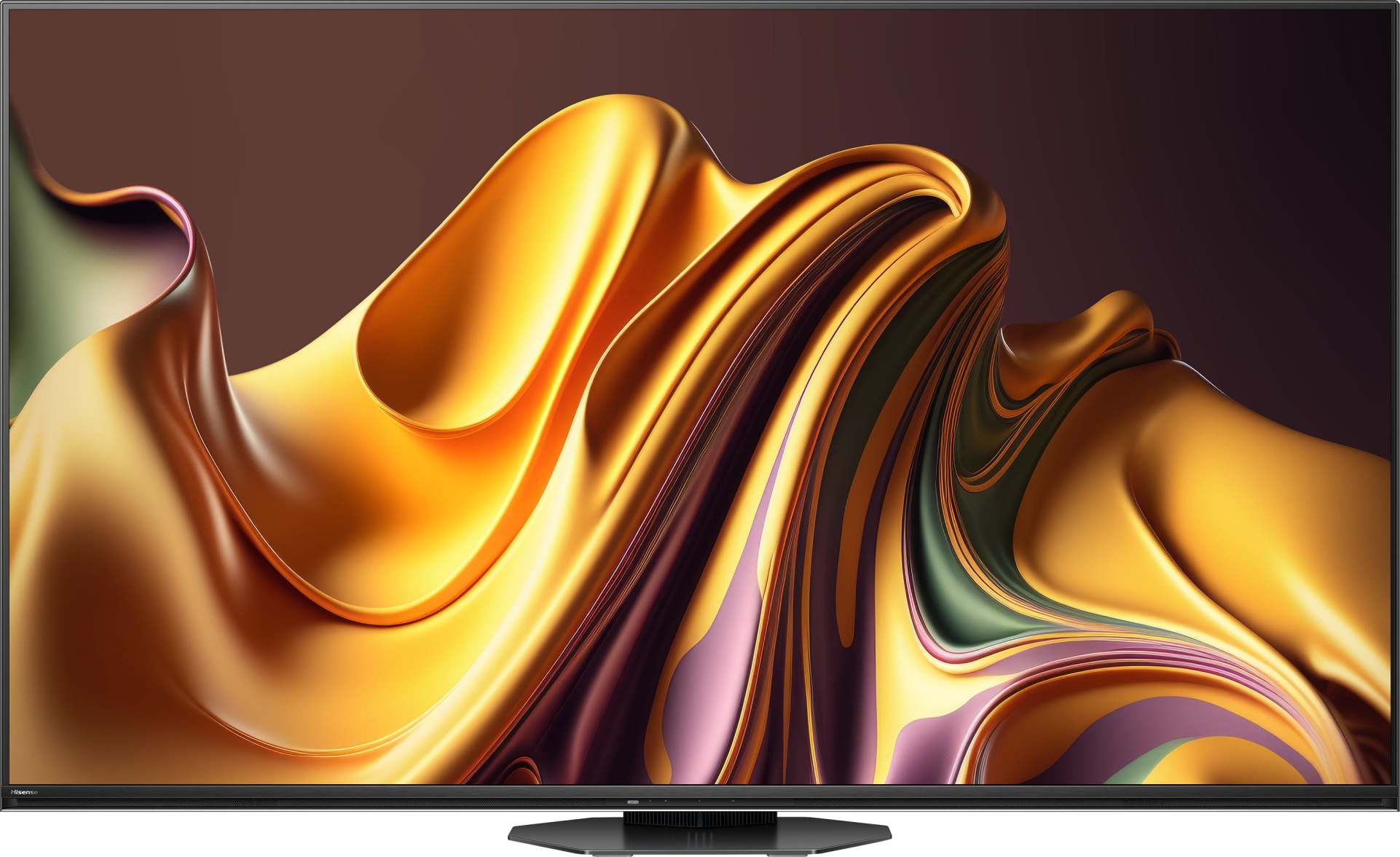
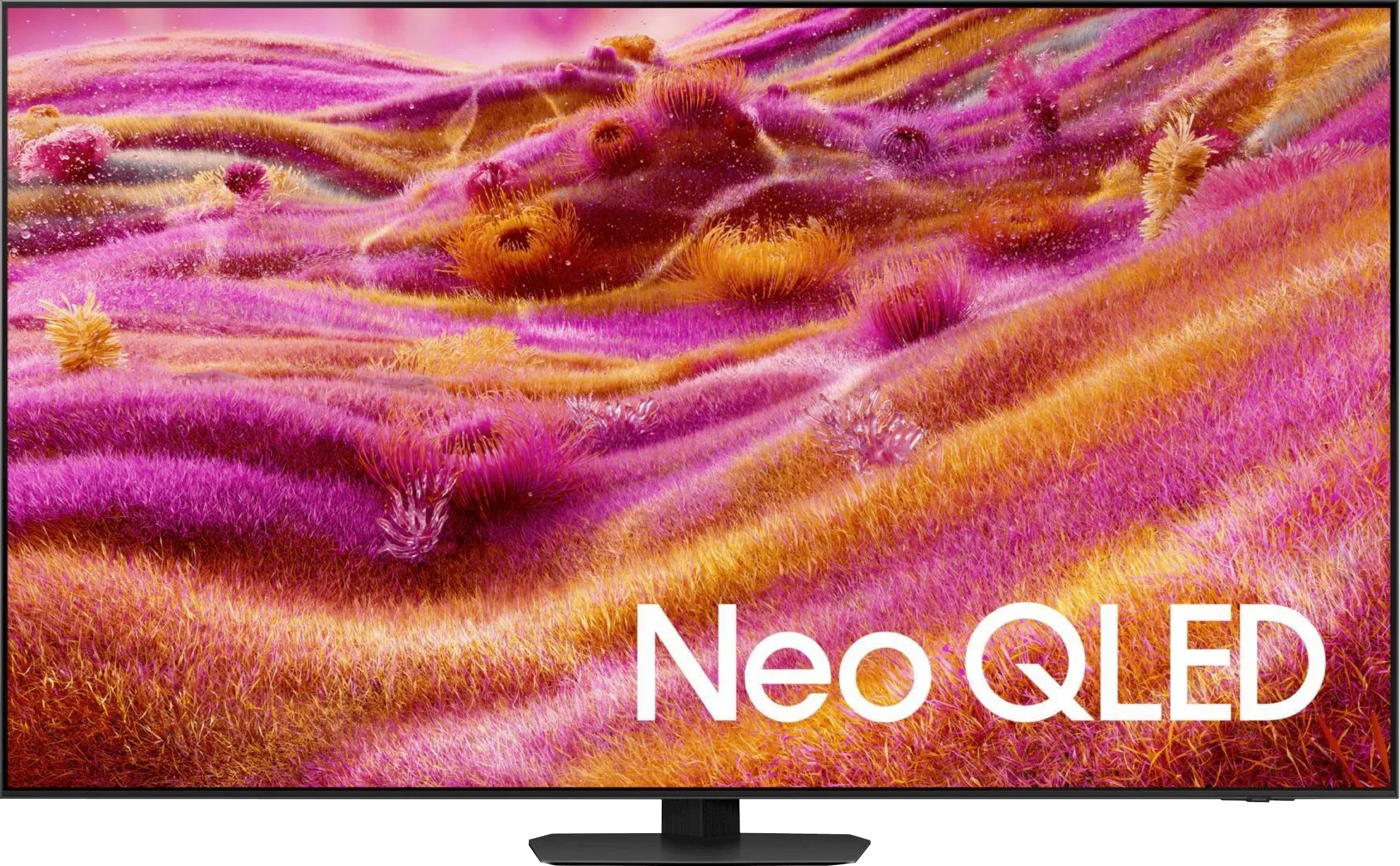
Panel type: LCD VA
Resolution: 3840x2160
System: VIDAA
Model year: 2025
Complete the survey to find out the result
Panel type: LCD VA
Resolution: 3840x2160
System: Tizen
Model year: 2025
Complete the survey to find out the result
Overall rating
8.0
7.9
 Movies and series in UHD quality
 7.8
7.8
 Classic TV, YouTube
 7.6
7.6
 Sports broadcasts (TV and apps)
 7.1
7.2
 Gaming on console
 8.5
9.1
 TV as a computer monitor
 8.4
8.8
 Watching in bright light
 8.2
7.2
 Utility functions
 9.4
7.7
 Apps
Apps 7.7
9.3
 Sound quality
 7.8
7.8
Complete the survey to find out what fits your preferences
Advantages

Great blacks and contrast
Incredibly high brightness
Full HDR format package: HDR10, HDR10+, Dolby Vision
Good motion fluidity - 165Hz panel
Outstanding usability in difficult lighting conditions (High brightness + New anti-reflective coating on the panel)
Many features for gamers, VRR, ALLM, HDMI 2.1, 288Hz for PC
All 3 ports in HDMI 2.1 standard (Finally!)
USB-C with video signal sending capability (Displayport)
Many features in the Vidaa system
Support for DTS and Dolby Atmos
Very good contrast and black levels
Amazing HDR brightness in films
Very good performance of the television during the day thanks to the matte panel and high brightness
High motion fluidity – up to 165 Hz in PC mode
Low input lag
A lot of features for gamers, including the proprietary gaming smoothness enhancer Game Motion Plus
High susceptibility to image calibration
Smooth Tizen operating system with smart home (IoT) features
Pleasant sound with noticeable bass despite the slim design
Modern design
Disadvantages

Missing some applications in the Vidaa operating system
At maximum volume, the television shakes slightly
The television tends to "overexpose" the image in 4K HDR materials.
Worse viewing angles compared to its predecessor QN90D.
No DTS sound for Blu-ray home theatres.
Our verdict
The Samsung QN90F is a television that, in many respects, demonstrates how maturely miniLED technology can be developed. It offers excellent contrast and black levels, very high HDR brightness that works well for both films and games, and a matte panel that makes a huge difference in everyday use. It is this feature that makes the QN90F one of the best televisions for watching in sunny living rooms – reflections and glare practically disappear, and the image remains sharp and clear. Gamers, in turn, are provided with a full suite of essential features, very low input lag, as well as the unique Game Motion Plus mode, which continues to be a strong advantage for Samsung over the competition. Additionally, there is a fast Tizen system, high-quality smart features, and quite pleasant sound which can be enhanced with a soundbar through Q-Symphony. However, there have been some compromises. Samsung chose to forgo a coating that would widen viewing angles – and although the matte panel performs excellently during the day, there is a noticeable drop in brightness and colour intensity at steeper angles. Despite these remarks, the QN90F remains one of the best, if not the best, miniLED 4K televisions currently available. It is a model that combines excellent image parameters, high functionality, and modern design, while also being exceptionally practical for everyday use. For anyone looking for a television for a bright living room that can handle films, sports, and games – it is hard to find a better choice today.
TV appearance
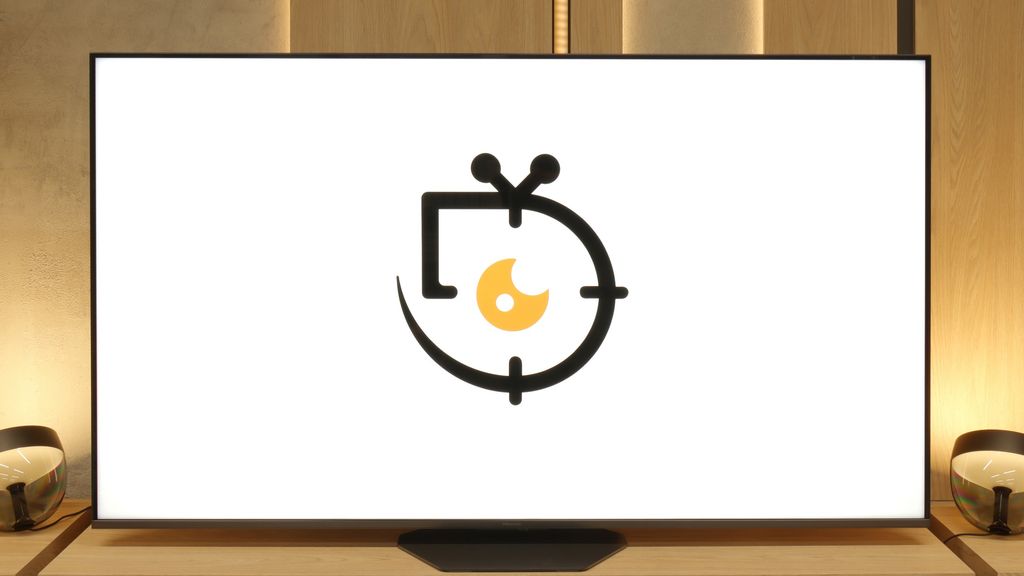
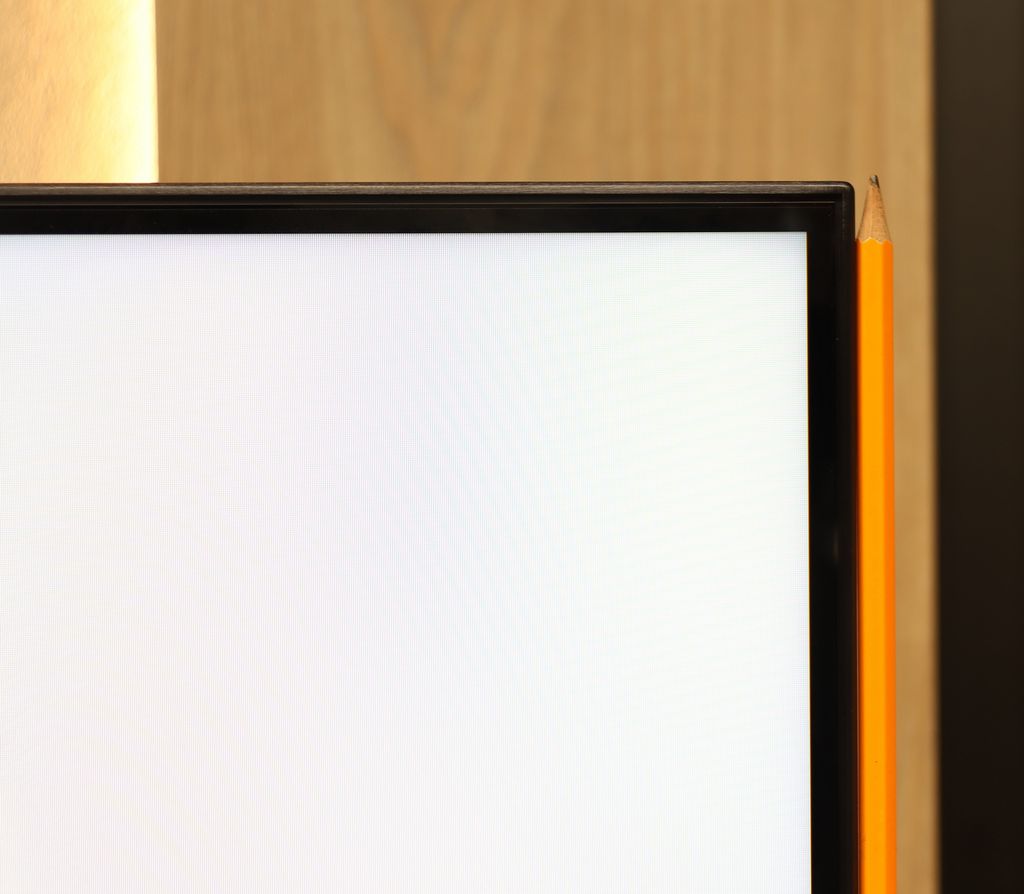
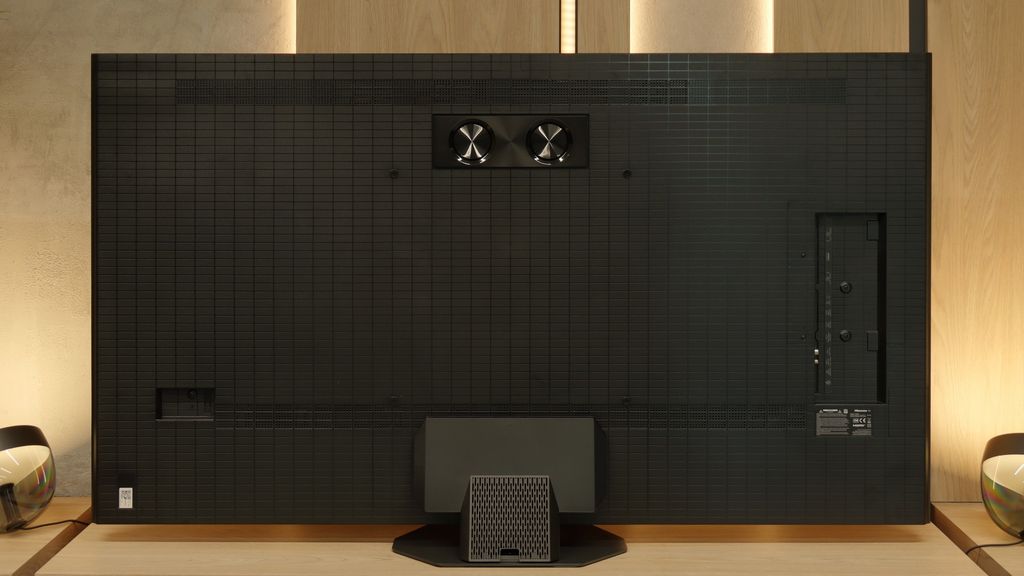
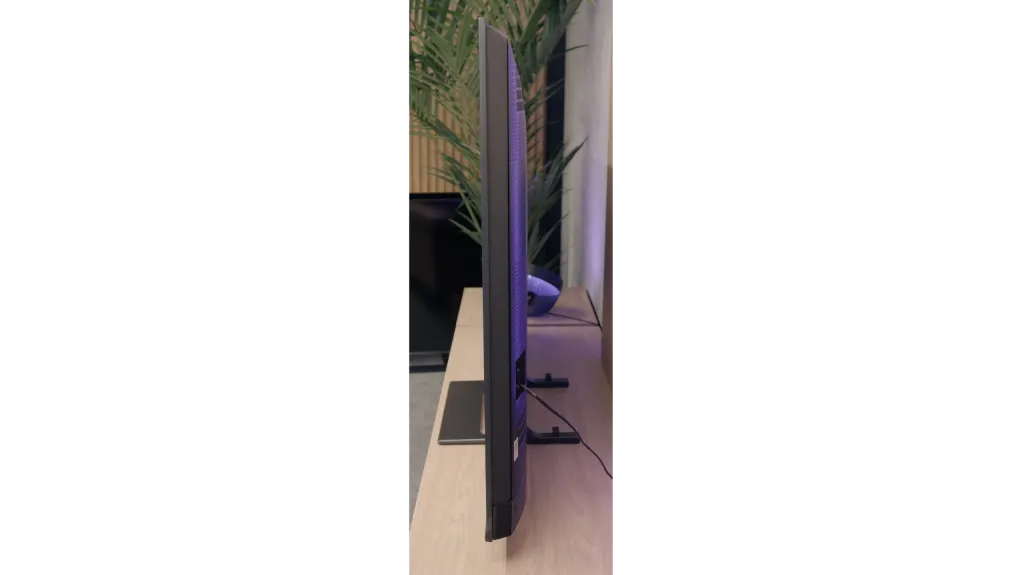
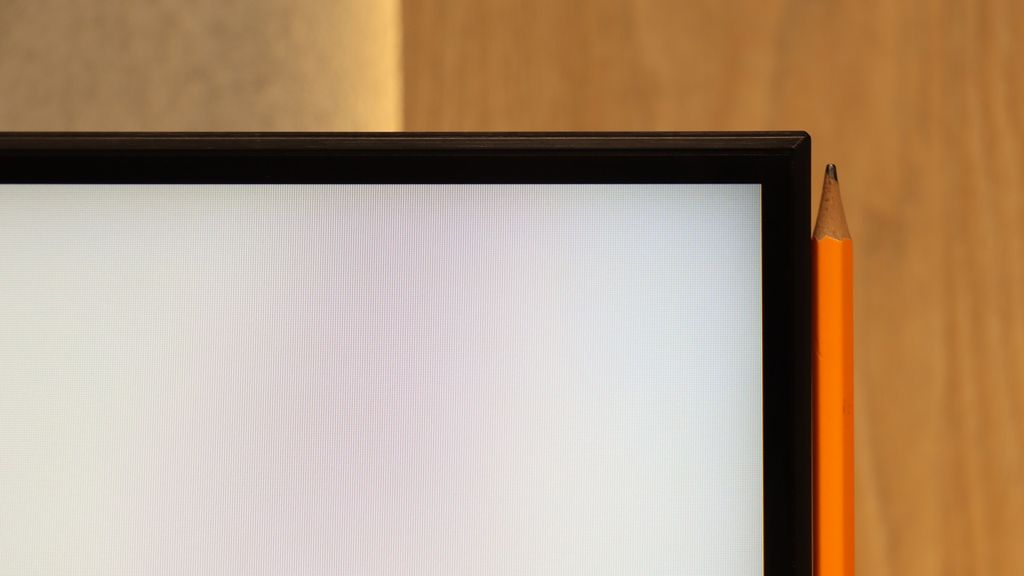
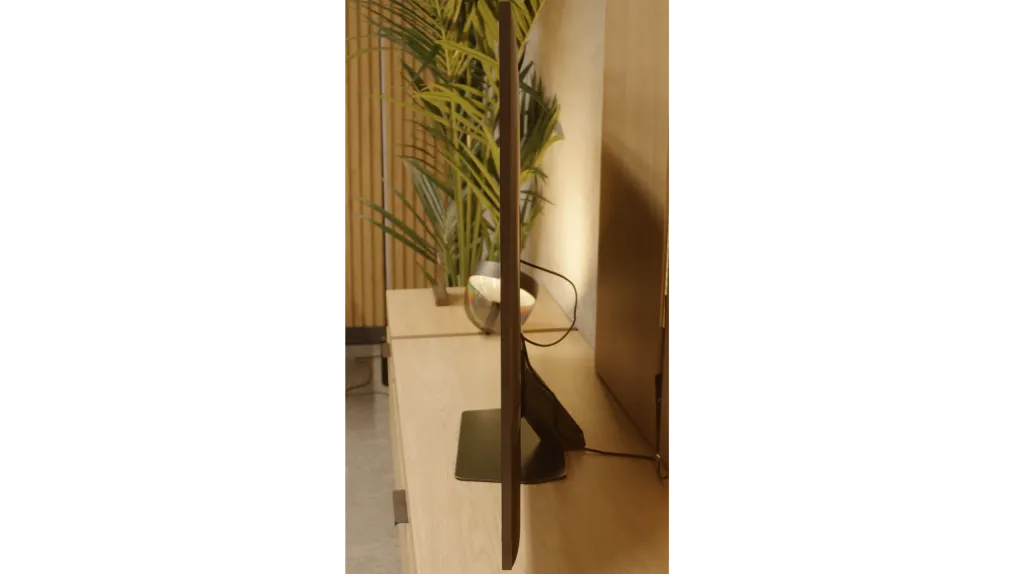
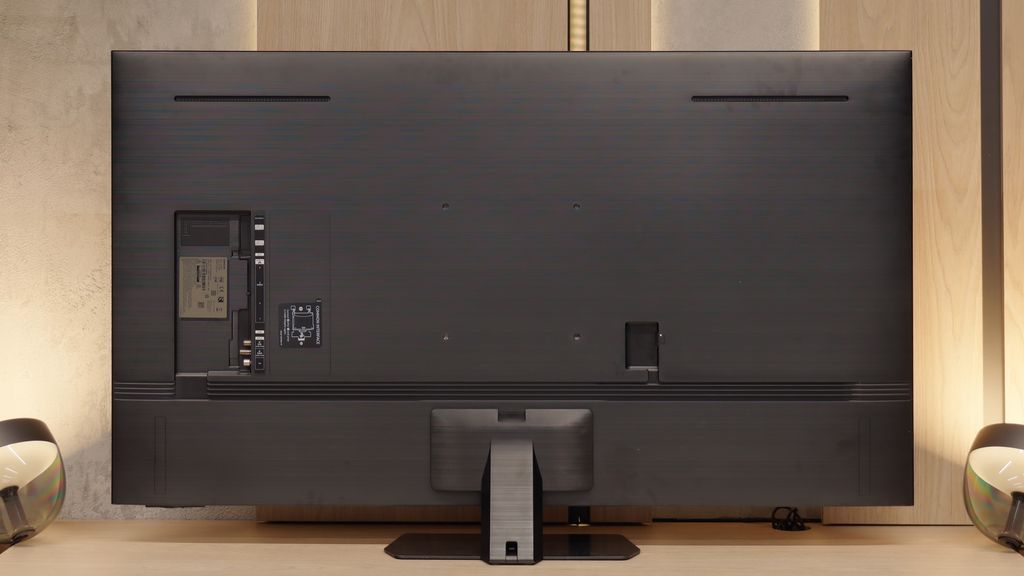

Contrast and black detail
8.6/10
8/10
Local dimming function: Yes, number of zones: 2048 (32 x 64)
Local dimming function: Yes, number of zones: 504 (14 x 36)
Contrast:


Result
1,024,000:1

Result
140,000:1

Result
35,000:1

Result
22,350:1

Result
22,300:1
Result
1,530,000:1
Result
62,450:1
Result
186,400:1
Result
7,400:1
Result
4,500:1
Halo effect and black detail visibility:
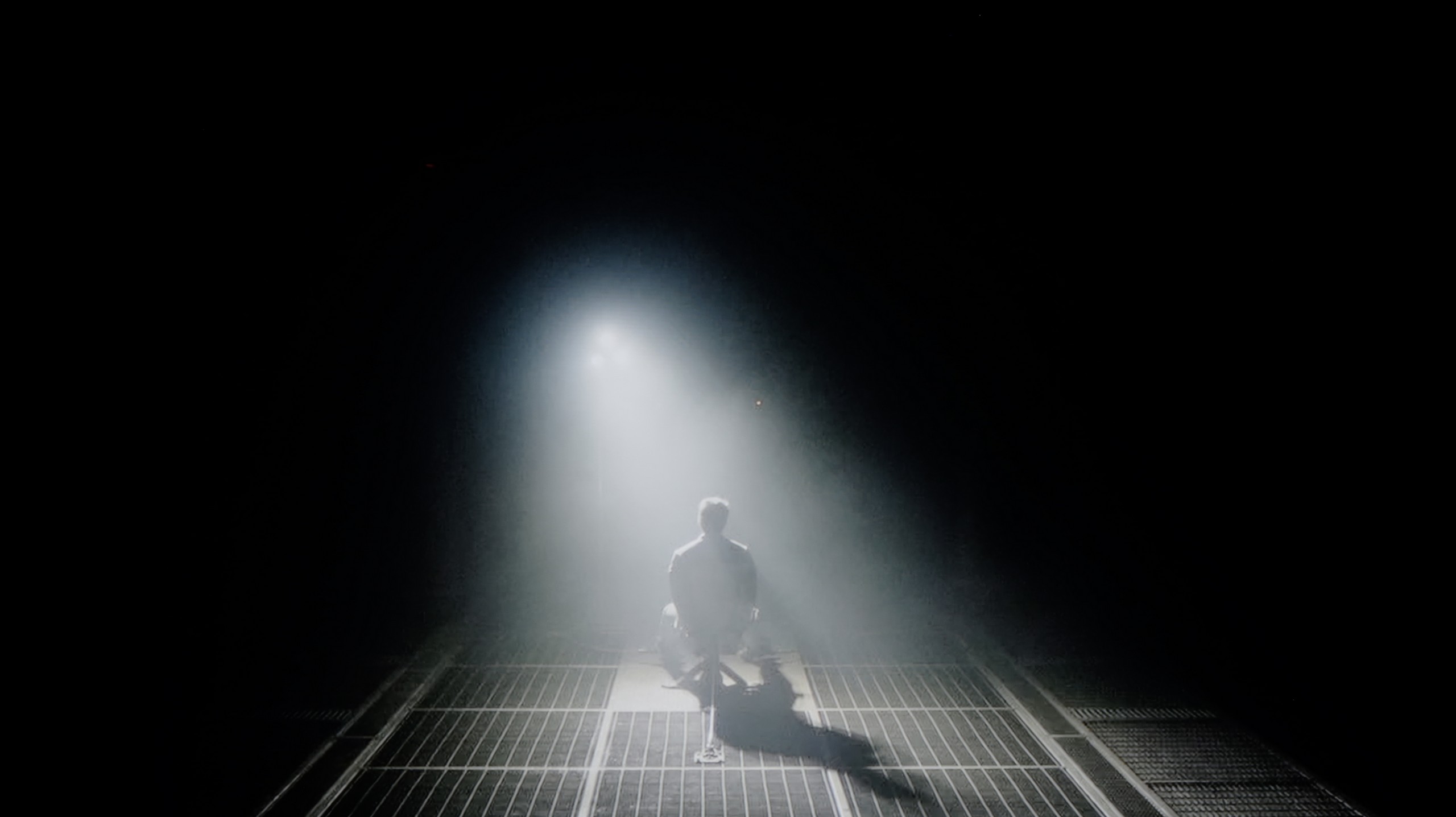
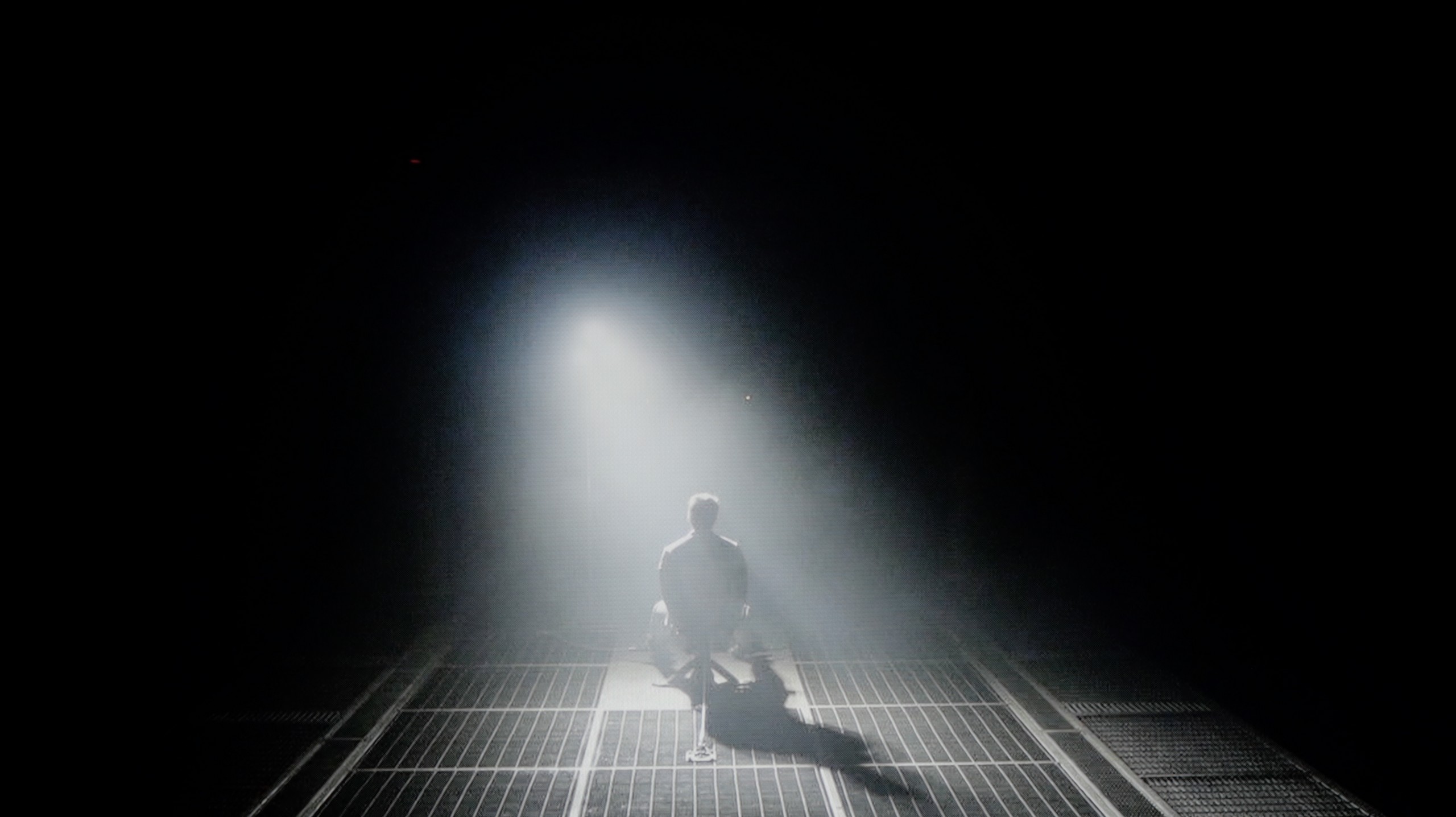
Check the visibility of bright lights on a dark background. Mini-LEDs often struggle with this. The photo does not compare black levels – that’s what the video below is for.
The video accurately shows differences in contrast and black levels between TVs, as well as potential issues: halo around bright objects or Mini-LED zone operation visible as brightness jumps.
The unit of Hisense U8Q that we tested, measuring 65 inches, is equipped with a VA panel, which in itself offers high native contrast. However, this is not the greatest strength of this model – the key lies in the Mini LED backlighting. Thanks to the use of thousands of dimming zones and a well-developed light management algorithm, the contrast in the U8Q can be described as excellent, especially for a TV of this technology.
The best results reach a level of around one million to one – a result that commands respect and places the U8Q among the top Mini LED televisions. Indeed, there are certain hiccups and even drops in contrast, but they are not as dramatic as in many other models of this class that we have tested on our portal. It should also be noted that like every Mini LED television, the U8Q is not entirely free from typical imperfections – sometimes the image may be dimmed too much or slight blooming with a halo effect may appear. However, this does not change the overall impression: the contrast in the Hisense U8Q is stunning and constitutes one of the greatest assets of this model.
If we compare the contrast results of this year's QN90F with last year's QN90D, it quickly becomes clear that the differences are minimal. In the best film scenes, the contrast can reach values well over six figures, and sometimes even seven figures, which can be confidently considered as results almost infinite. And indeed – in typical cinematic shots, the effect closely resembles that known from OLED televisions. Samsung deserves praise because, despite the relatively "modest" number of dimming zones – 504 in the 55-inch variant (modest compared to Chinese competitors like Hisense U8Q or TCL C8K/C9K) – they have managed to fine-tune the local dimming algorithms. This is particularly evident in the most challenging scenes, where compared to last year's model, the precision of dimming has nearly doubled. Of course, we still do not have perfectly separated bright objects from black, and one cannot speak of an absence of halo effects (slight glows around small bright objects) known from MINI-LED televisions, so with OLEDs, the QN90F still does not win. But it is definitely closing the gap in a more mature and refined way than the year before.
HDR effect quality
7.6/10
7.4/10
Luminance measurements in HDR:

Result
2195 nit

Result
725 nit

Result
1652 nit

Result
485 nit

Result
1541 nit
Result
1638 nit
Result
763 nit
Result
1119 nit
Result
562 nit
Result
1947 nit
Scene from the movie “Pan” (about 2800 nits)


Scene from the movie “Billy Lynn” (about 1100 nits)


The photos show two HDR10 movies. 'Pan' is one of the brightest productions ever made, while 'Billy Lynn' (soldier) has brightness typical of streaming (Netflix, Prime, HBO MAX). Notice the intensity of effects and detail in whites.
Static HDR10


The photos present the visibility of white details in various HDR formats. They do not show brightness differences between TVs (these can be compared in the previous gallery).
Dynamic: Dolby Vision
Dynamic: HDR10+


The photos present the visibility of white details in various HDR formats. They do not show brightness differences between TVs (these can be compared in the previous gallery).
HDR luminance chart:
Samsung QN90F / QN92F
Hisense U8Q
When it comes to HDR, the Hisense U8Q shows its claws. On paper, that is, in synthetic measurement tests, the television can achieve nearly 4000 nits of peak brightness. This is a value that most models can only envy. In practice, this translates to very strong light effects in films – in some scenes, we managed to measure a real brightness of between 1500 and 2000 nits, which is a level typically reserved for the absolute top tier of televisions on the market.
Of course, it's not always perfect. In small, pinpoint elements, brightness can drop – a good example is scene number 4 from the film Sicario 2, where instead of thousands of nits, we get around 500. But it’s worth noting that the effect does not disappear completely – the light is still visible, and the image does not seem artificially dimmed. This is a typical issue with Mini LEDs, so it's difficult to consider this a major downside.
On the other hand, the colour reproduction is a huge plus. Thanks to additional coatings that enhance colour saturation, the U8Q nearly covers the entire DCI-P3 colour space (98%), and for the wider BT.2020 range, it achieved over 80%. This is an excellent result that makes HDR films look rich, vivid, and simply very cinematic.
The Samsung QN90F can truly shine with brightness. In our measurements, it achieved over 2200 nits, which directly translates to the viewing experience. In practice, this means that when a film features a very bright scene – for example, a sunrise in The Meg – the screen looks as if it is actually lit by natural light. This is not just a number from a chart, but a real sense of image intensity! However, the television may not always deliver this full power. With smaller details like reflections or lamps, brightness drops to 500–700 nits. This is a deliberate decision by the algorithms – it allows for better control of the contrast between large and small elements, preventing the image from losing balance. Importantly, this is still a huge improvement compared to last year's QN90D, where similar details were often almost invisible, shining at just 200 nits. Here, the HDR effect is much more consistent and credible. The only downside is the colours. The DCI-P3 coverage has stalled at 91%, which in this price bracket can be considered a rather average result.
Factory color reproduction
7/10
5/10


This gallery shows how colors change after professional TV calibration. If you notice the difference, we recommend ordering this service at SkalibrujTV.com.
Factory Mode
After calibration
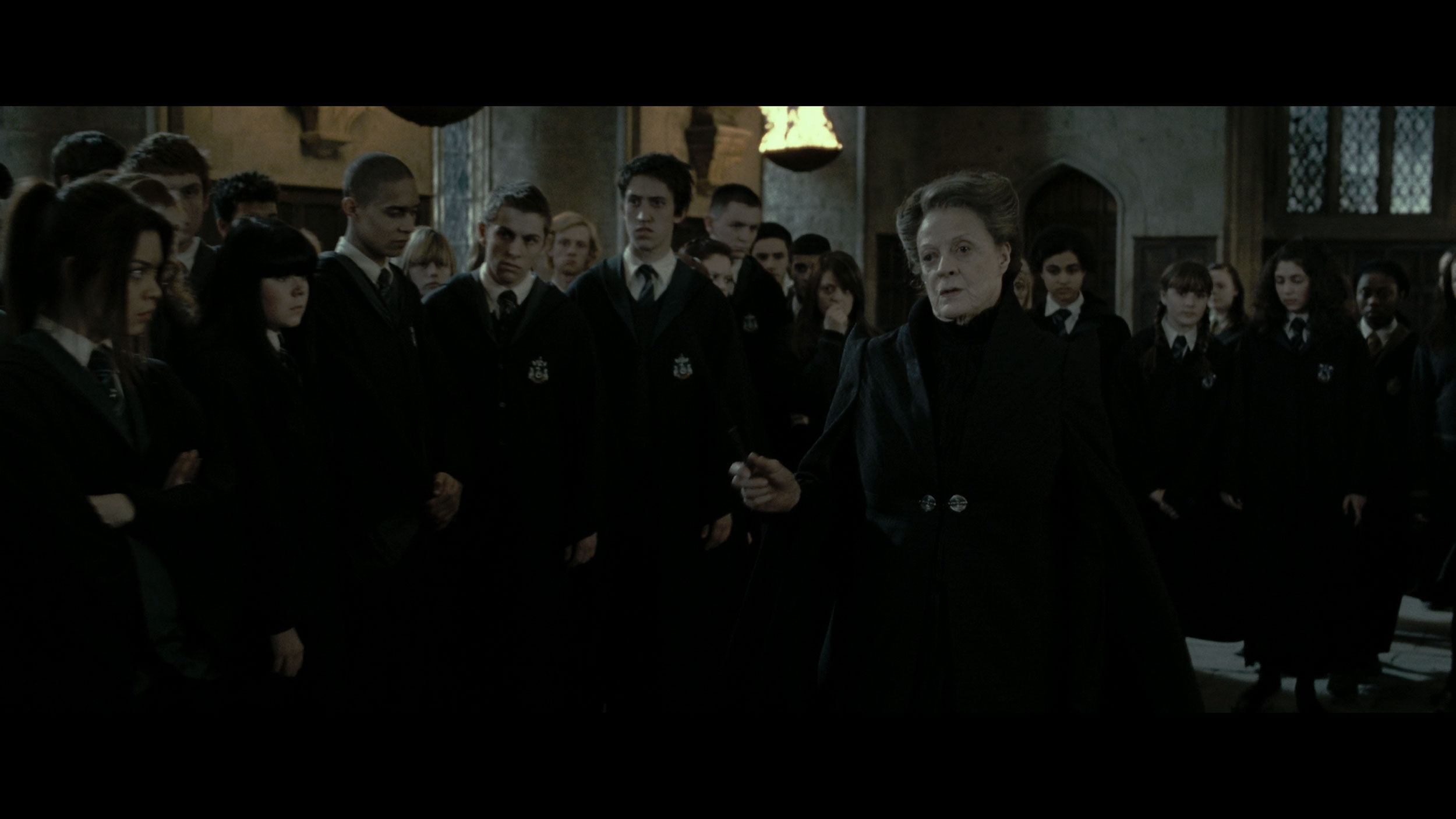
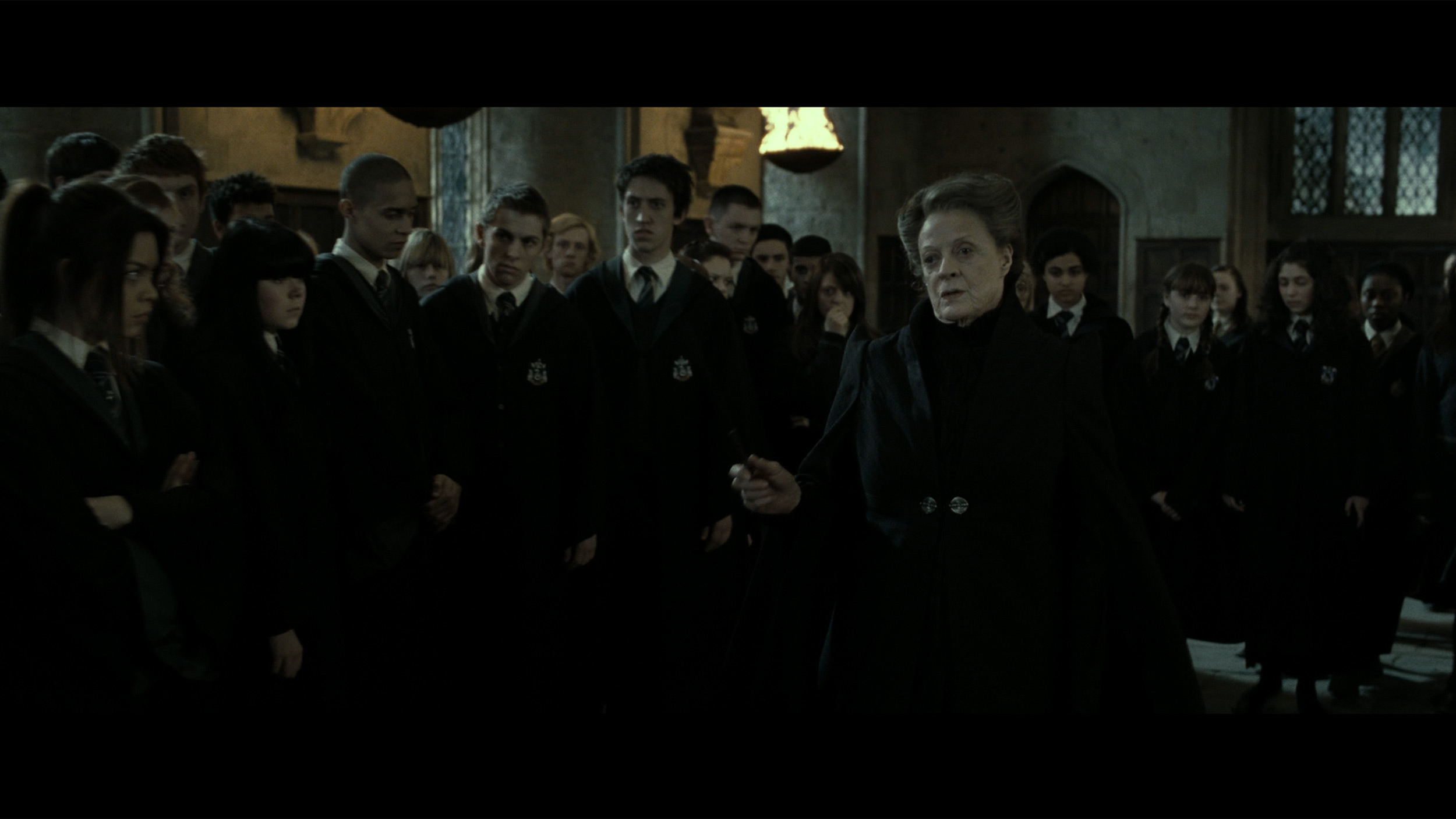
This gallery shows how colors change after professional TV calibration. If you notice the difference, we recommend ordering this service at SkalibrujTV.com.
Factory Mode
After calibration
We must admit that when the U8Q arrived at our editorial office, we were slightly surprised… and positively so. Usually, in televisions, the white balance immediately requires adjustment – it can be too warm or too cold, which immediately leads to strange colour mistakes. Meanwhile, here the situation looks really good straight out of the box. Of course, we are talking about our unit, so there is no guarantee that every model will be equally well calibrated, but in our case, the first impressions were very positive. The only more apparent issue concerned the way the television manages brightness. Looking at the EOTF graph, it is clear that the U8Q tends to brighten small elements on the screen. This, in turn, caused what we mentioned earlier – slight overexposure and the impression that the entire scene can be a bit too bright. However, this is not a flaw that undermines the picture, rather an effect characteristic of this model.
The colour reproduction of the QN90F was tested in Filmmaker mode and, as is often the case with Samsung televisions, this mode proves to be the best starting point straight out of the box. However, this does not mean that the image is free from flaws. The white balance in both SDR and HDR content was surprisingly good – the colours did not drift in any direction and even in its factory settings, it looked solid. A problem arose with the gamma curves and EOTF, which dictate how the television manages brightness. Here, the QN90F significantly brightened the entire image, causing blacks and colours to lose their intensity, and the overall effect resembled that of an applied milky filter. Fortunately, Samsung, unlike many competitors in the miniLED world, provides the user with plenty of tools to control the settings that we do not find with other manufacturers, such as Chinese producers. Therefore, we decided to see if we could squeeze the full potential out of the QN90F because we know that such a high-end series is capable of much more.
Color reproduction after calibration
8/10
9/10


The photos show how movies look on the TV. Pay attention to black detail visibility, colors, and shadow tint.


The photos show how movies look on the TV. Pay attention to black detail visibility, colors, and shadow tint.
Of course, we wouldn’t be ourselves if we didn’t make adjustments to the white balance. After calibration, we managed to equalise the SDR signal to practically perfection – older films, YouTube content, and classic television looked almost ideal on the U8Q. This is truly an exceptional level that shows this model can do a lot if given a bit of help. Unfortunately, the situation is different with HDR content. The colours themselves don’t pose many problems, but the U8Q’s biggest issue remains the EOTF brightness characteristics. In practice, the television tends to “over-expose” beyond how the image should look in its original form. It’s that slight "bleeding" that we noticed earlier in comparisons with the best screens on the market. It’s a bit of a shame that this characteristic can’t be fully tamed – if we could maintain equally good control over brightness in HDR as in SDR, we would be dealing with an absolutely reference-quality image.
After our adjustment of the settings, the QN90F displayed what it is truly capable of – and it must be admitted that this is one of the best images we have seen on a miniLED screen this year. As we mentioned earlier, the white balance was not a major issue even in its factory state, but only after gamma calibration did it manage to get close to reference values. The same is true for HDR content, where the EOTF curve post-adjustment presents mature and cohesive results. Indeed, in some films, it is noticeable that the smallest elements of the image are slightly brightened, and with a limited number of dimming zones, there is still a risk of halo effect. However, it should be remembered that such phenomena are characteristic of all miniLED televisions, and it is difficult to expect miracles even from the QN90F. The most important thing is that after calibration, the television delivers an image that, in terms of representing the director's vision, confidently competes with many OLED screens available on the market.
Smoothness of tonal transitions
8.9/10
8.9/10


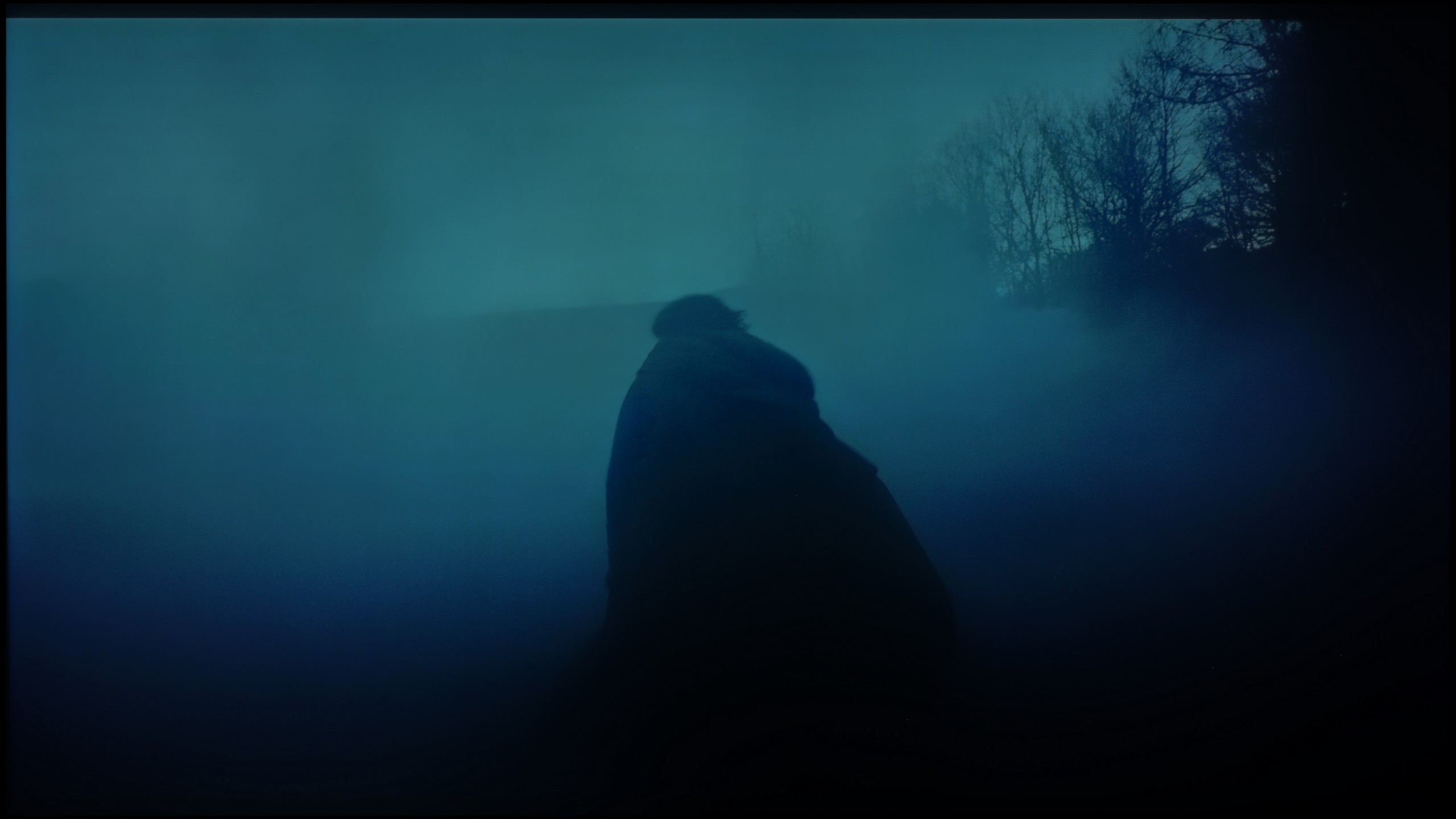
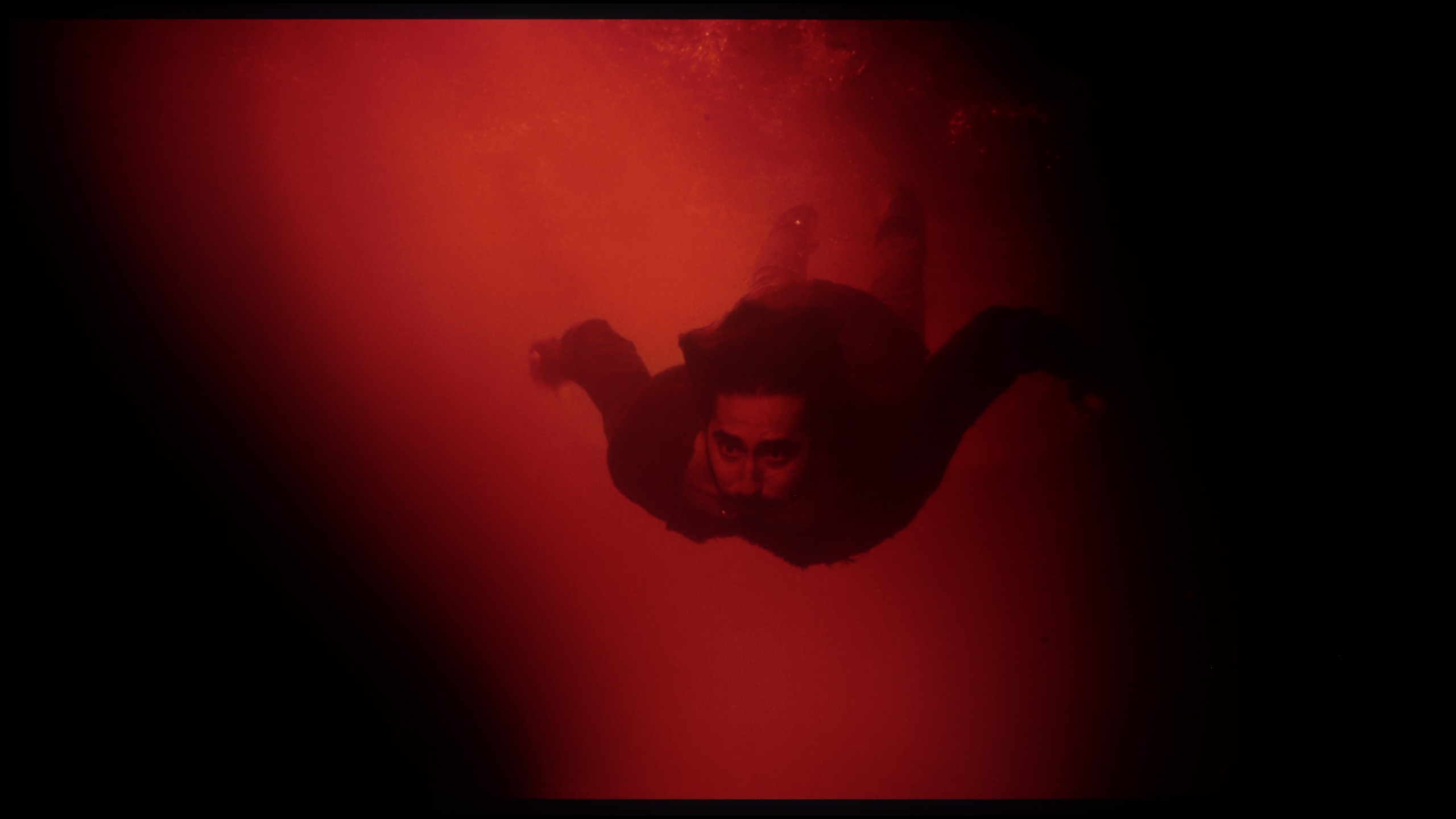
These are selected scenes that show smooth tonal transitions from one color to another. If you see distinct banding, it’s the TV panel’s fault.

These are selected scenes that show smooth tonal transitions from one color to another. If you see distinct banding, it’s the TV panel’s fault.
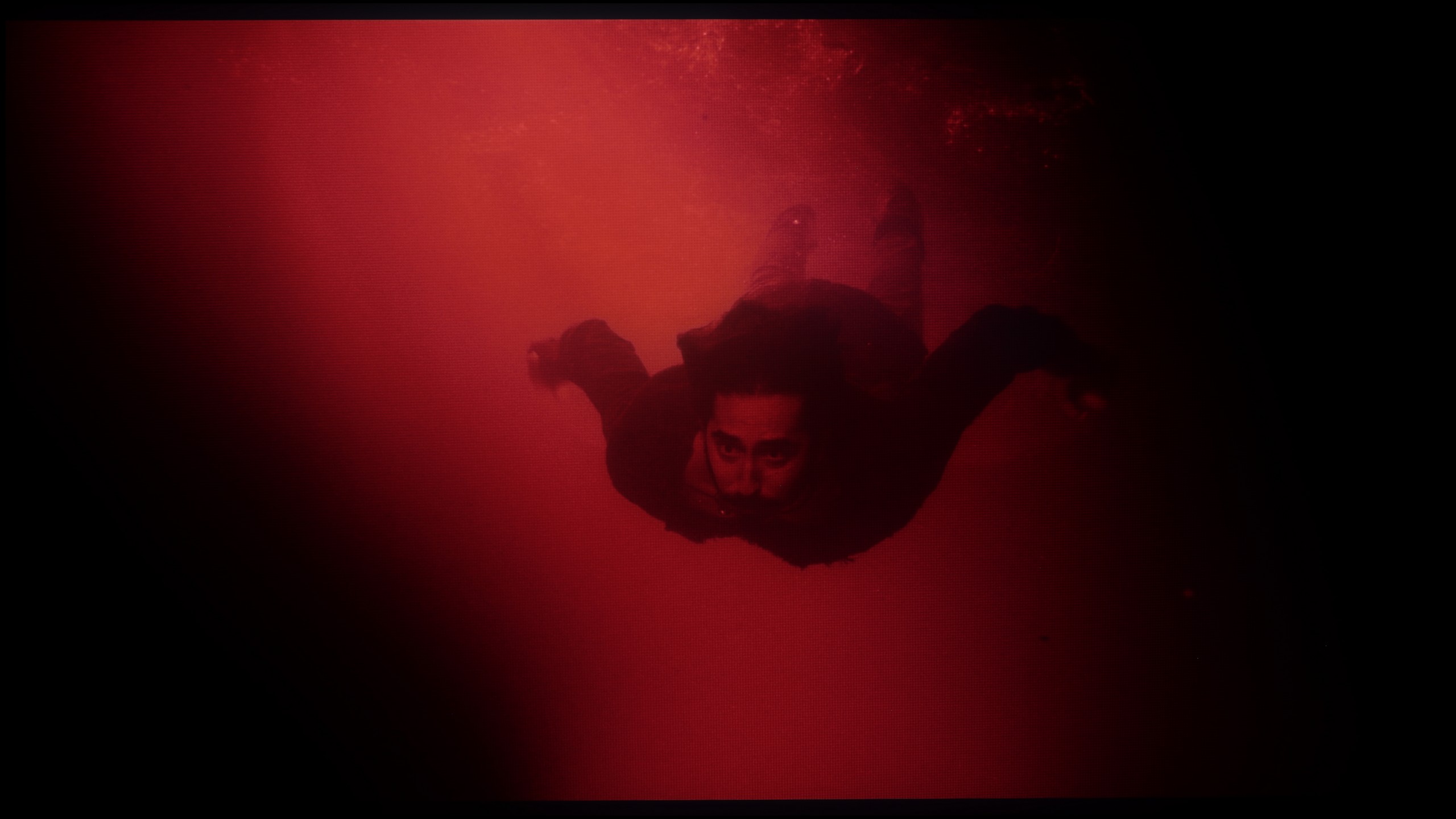
These are selected scenes that show smooth tonal transitions from one color to another. If you see distinct banding, it’s the TV panel’s fault.
These are selected scenes that show smooth tonal transitions from one color to another. If you see distinct banding, it’s the TV panel’s fault.
When it comes to the fluidity of tonal transitions, the Hisense U8Q made a really great impression on us. Even in the darkest scenes, where unsightly bands and ugly transitions usually appear on other televisions, here the image remains smooth and cohesive. Nothing layers, there is no "stair-step" effect – everything looks as it should. Similarly, in brighter shots – it is also very good. Sure, if we looked through a magnifying glass, we would probably find some minor flaw, but during normal viewing, it's hard to complain about anything. Overall, it performs very, very well!
The tonal transitions in the QN90F are at a very good level. Regardless of the scene being tested, it was difficult to identify any significant issues with colour blending or visible banding. Even in demanding sequences, such as the scene from the film Green Knight, where the actor immerses himself in red water, the picture appeared smooth and natural. Indeed, with careful viewing, one might spot minor micro-imperfections – for example, in the greys or in very bright shots – but they do not affect the overall perception. The television performs well enough that most viewers are unlikely to notice these imperfections.
Image scaling and smoothness of tonal transitions
8/10
7.5/10


Smooth transition function
The match photo shows how the TV smooths weak tonal transitions in low-quality video.
Image scaling SD (576i)


The model photo shows how it handles upscaling of SD material.
Hisense U8Q handles lower quality materials quite well. The television can smooth out tonal transitions thanks to the "Smooth and Gradient Picture" feature – it works best when set to Medium. At this setting, it nicely dims unwanted bands and unevenness in the picture, but importantly, it does not remove the film grain or fine details.
The upscaling itself is also at a good level. Images from lower resolutions appear smooth and soft, sometimes even overly so – we get a plastic effect that may not appeal to everyone. Fortunately, this can be easily corrected with the sharpness slider, allowing the picture to be adjusted to personal preferences.
QN90F handles upscaling very well. Materials in lower resolutions, even SD, are enhanced to a clear and sharp image, in which a lot of detail in the background can be seen. This is a significant advantage, as the television makes older content or everyday television look considerably better than on most budget screens. However, the issue of overscan remains, which is the trimming of the screen edges, and this cannot be turned off in Samsung TVs. This can cause some subtitles on the screen to disappear or Auntie's face from the wedding on the VHS tape to be slightly cut off. 😉
Digital image processing also works well. In the menu, we find a function called "noise reduction," which can smooth tonal transitions and improve the reception of lower quality materials, e.g. from YouTube. At the medium setting, the effect is most beneficial – it does not heavily interfere with details, while eliminating the problem of "stepping" in colours. However, it is worth remembering that the function can be quite aggressive and removes natural grain from older films, so it is best to use it in moderation.
Blur and motion smoothness
7.6/10
7.5/10
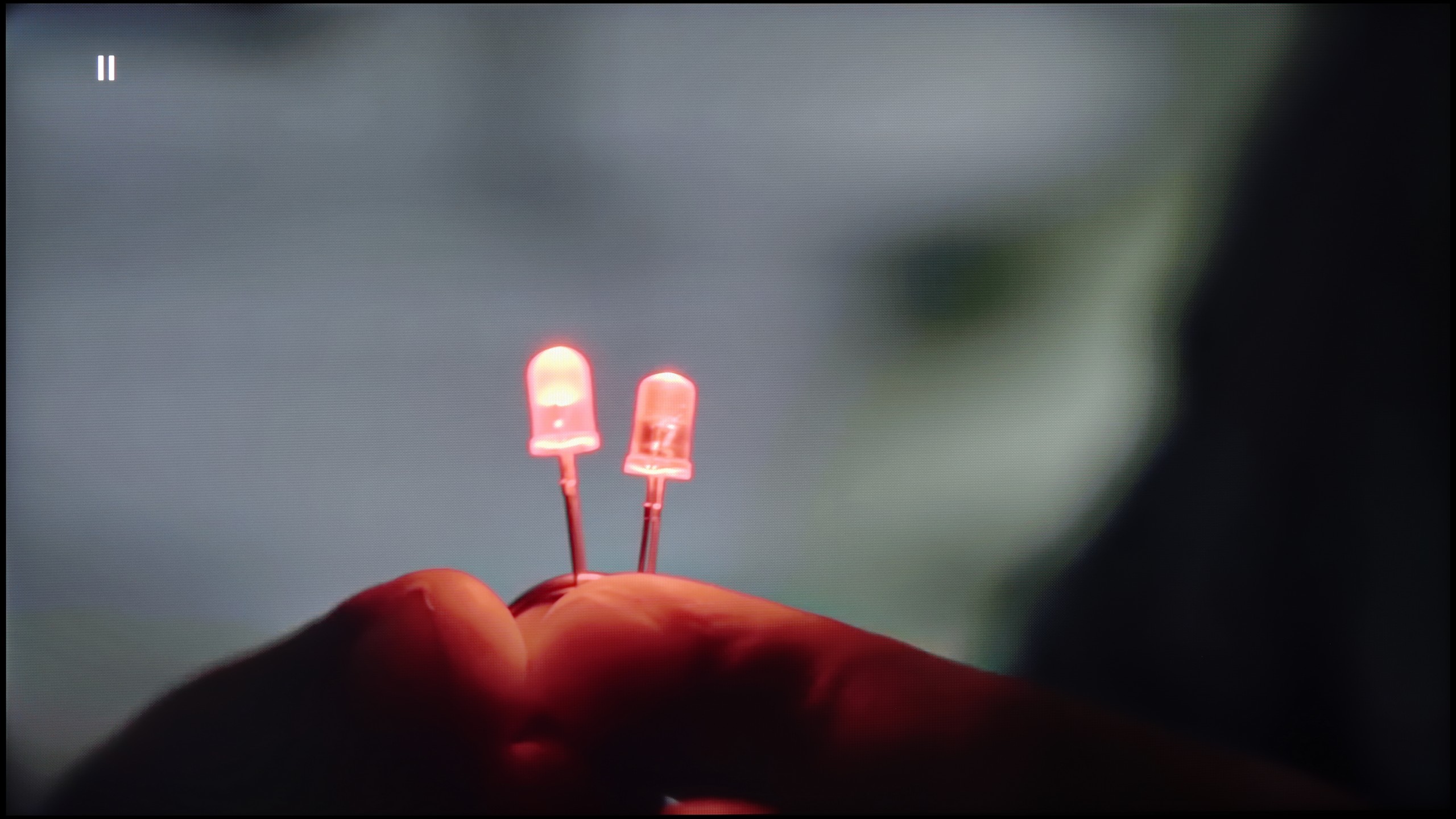
Blur (native resolution, maximum refresh rate):






Blur (BFI function enabled):



Image flickers in this mode



Blur (1080p@288Hz):



Blur (4K@165Hz):



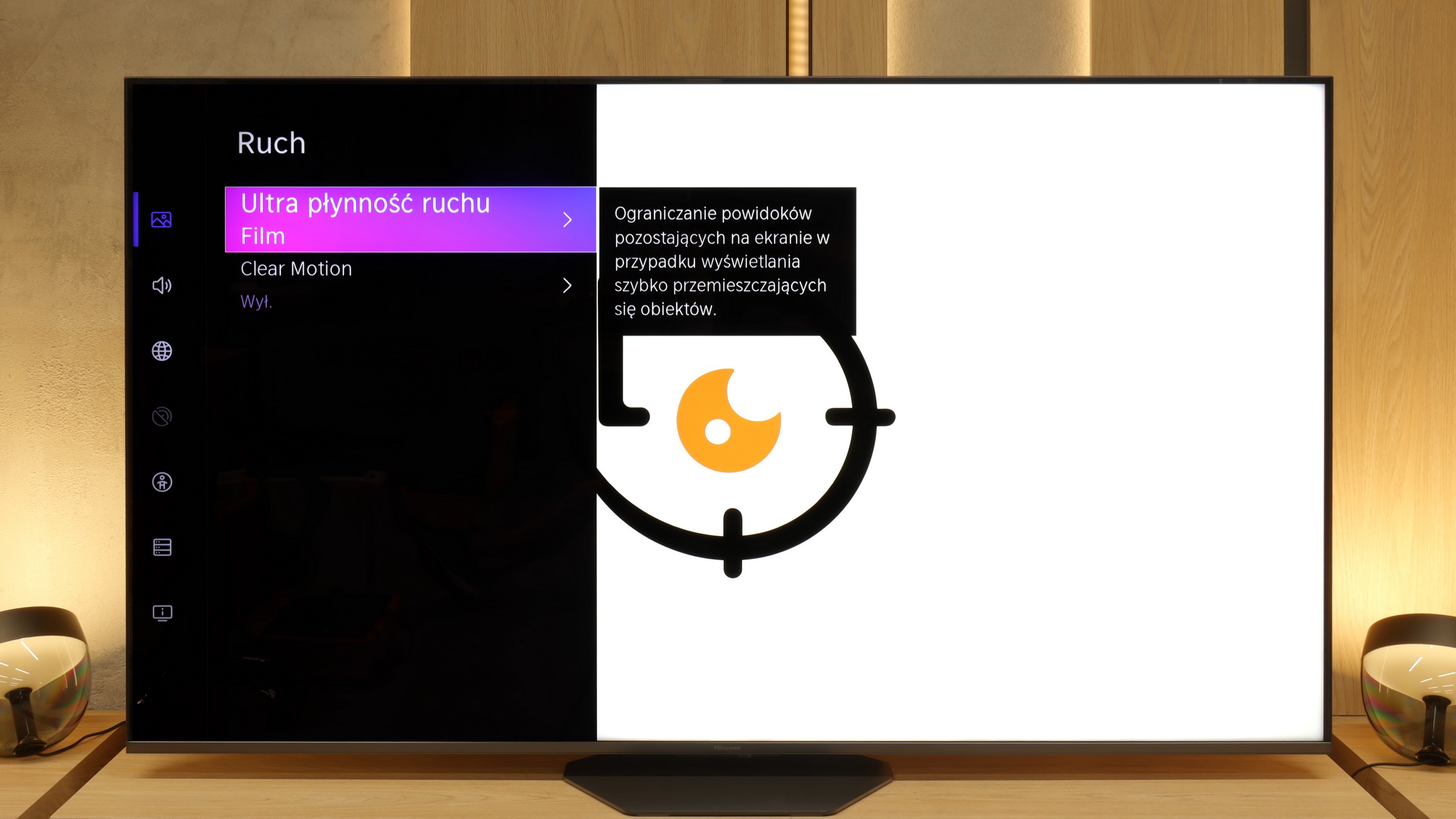
Hisense U8Q features a panel that can refresh the image up to 165 Hz in 4K resolution. In practice, this will primarily be utilised by PC gamers, but as the saying goes – it’s better to have it than not 😊. For films and series, we have a built-in smoothness enhancer called Ultra Motion Smoothness. In the settings, it can be easily adjusted to suit personal preferences – whether we want a more “cinematic” frame rate or a smooth, theatrical spectacle.
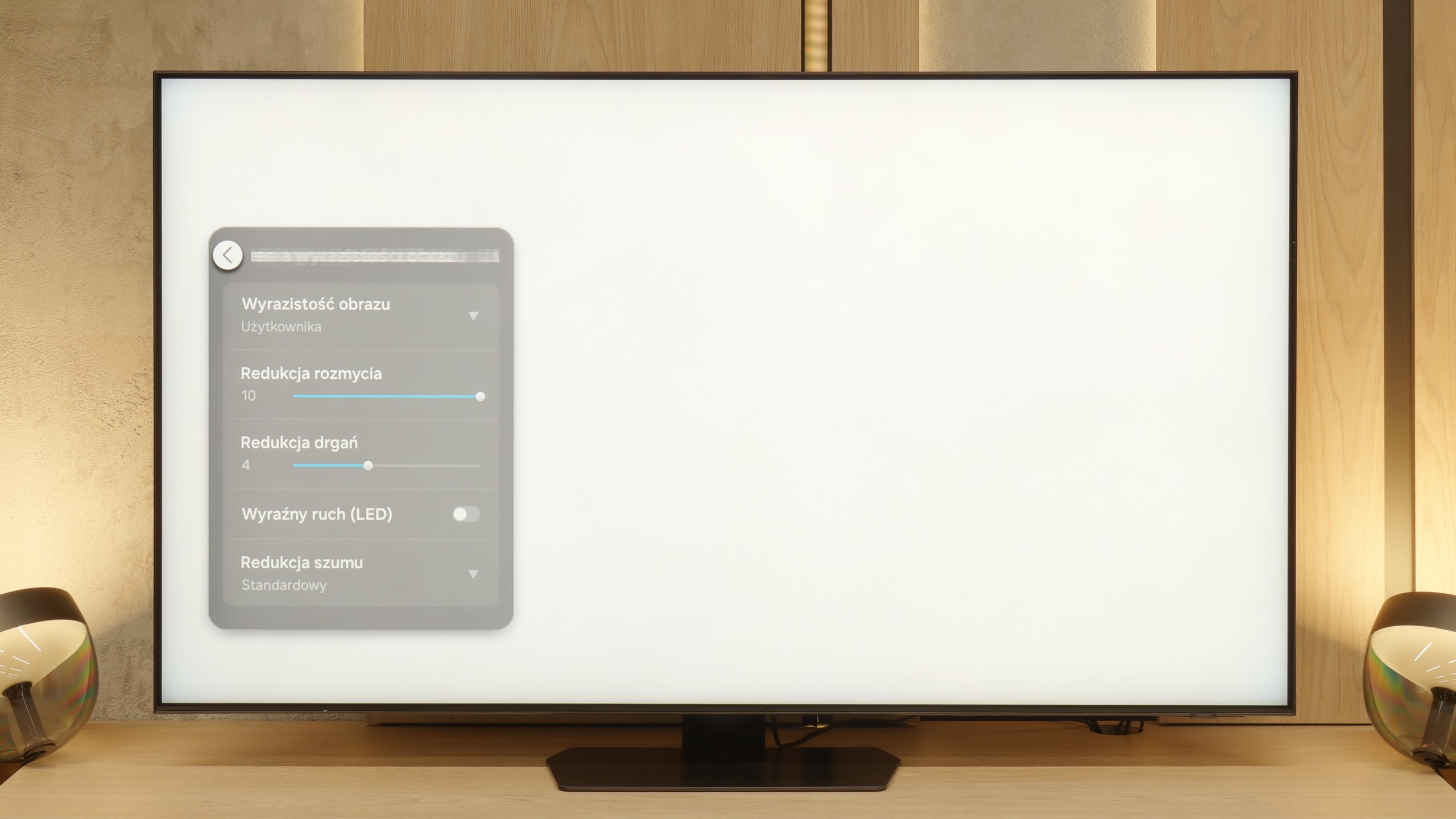
The QN90F is equipped with a panel that has a maximum refresh rate of 165 Hz, and although this advantage will primarily be appreciated by PC gamers, it is still worth highlighting. In films or sports broadcasts, we are limited to the classic 120 Hz, but this is not a cause for concern. In practice, the additional motion smoother is of greater importance here. With the "Motion Clarity" setting, we can adjust the picture to our own preferences. The blur reduction option is responsible for fluidity and ghosting in sports. Meanwhile, the "judder reduction" function improves motion smoothness in productions shot at 24 frames, such as films and series. If we set it high, the film appears smoother and more fluid than it was actually shot. Lower values, on the other hand, preserve its cinematic "rawness" with a visible film frame.
Console compatibility and gaming features
8.5/10
9.6/10
- ALLM
- VRR
- VRR range48 - 288Hz48 - 165Hz
- Dolby Vision Game Mode
- Correct implementation of HGIG
- 1080p@120Hz
- 1440p@120Hz
- 4K@120Hz
- Game bar
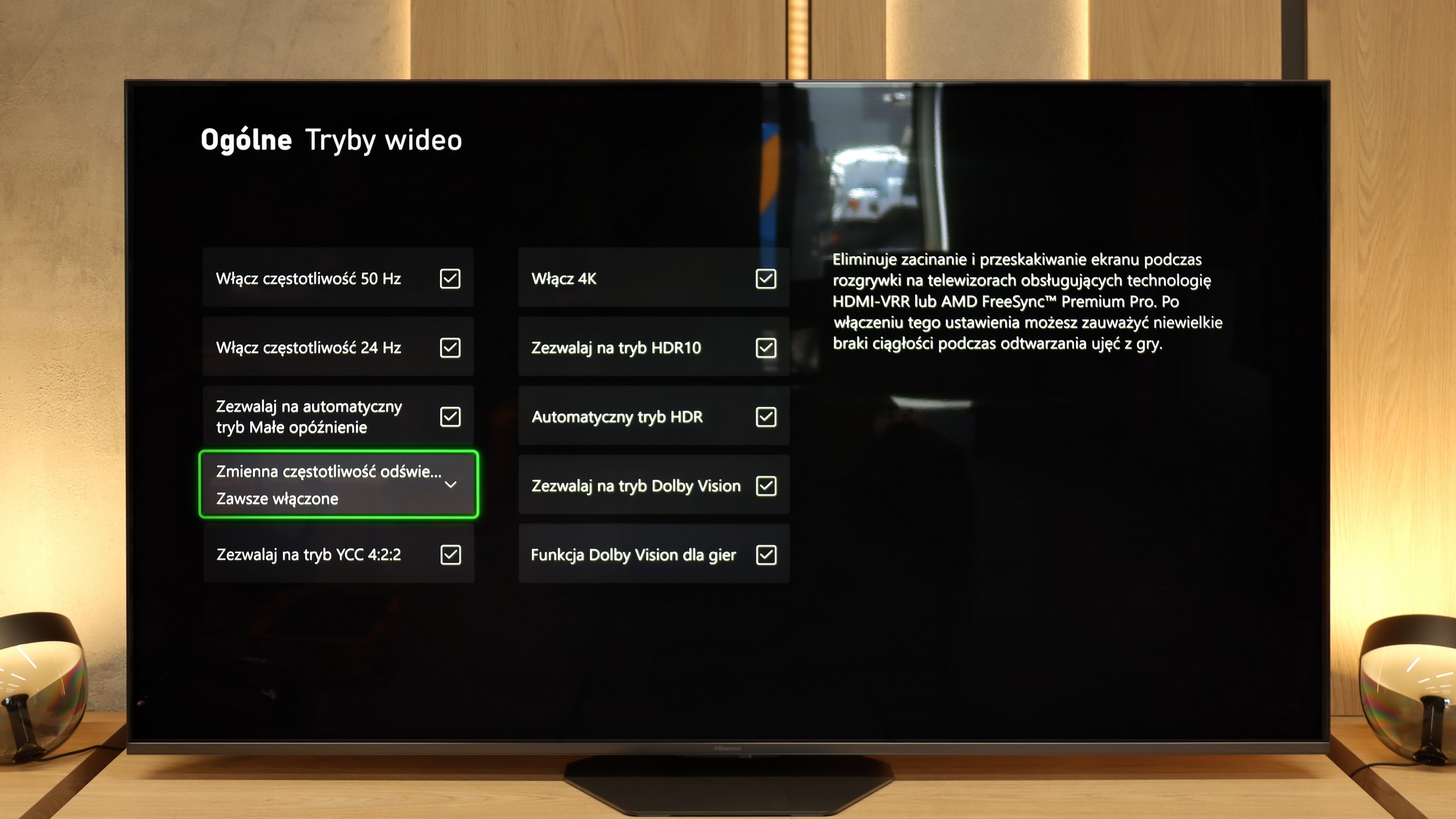
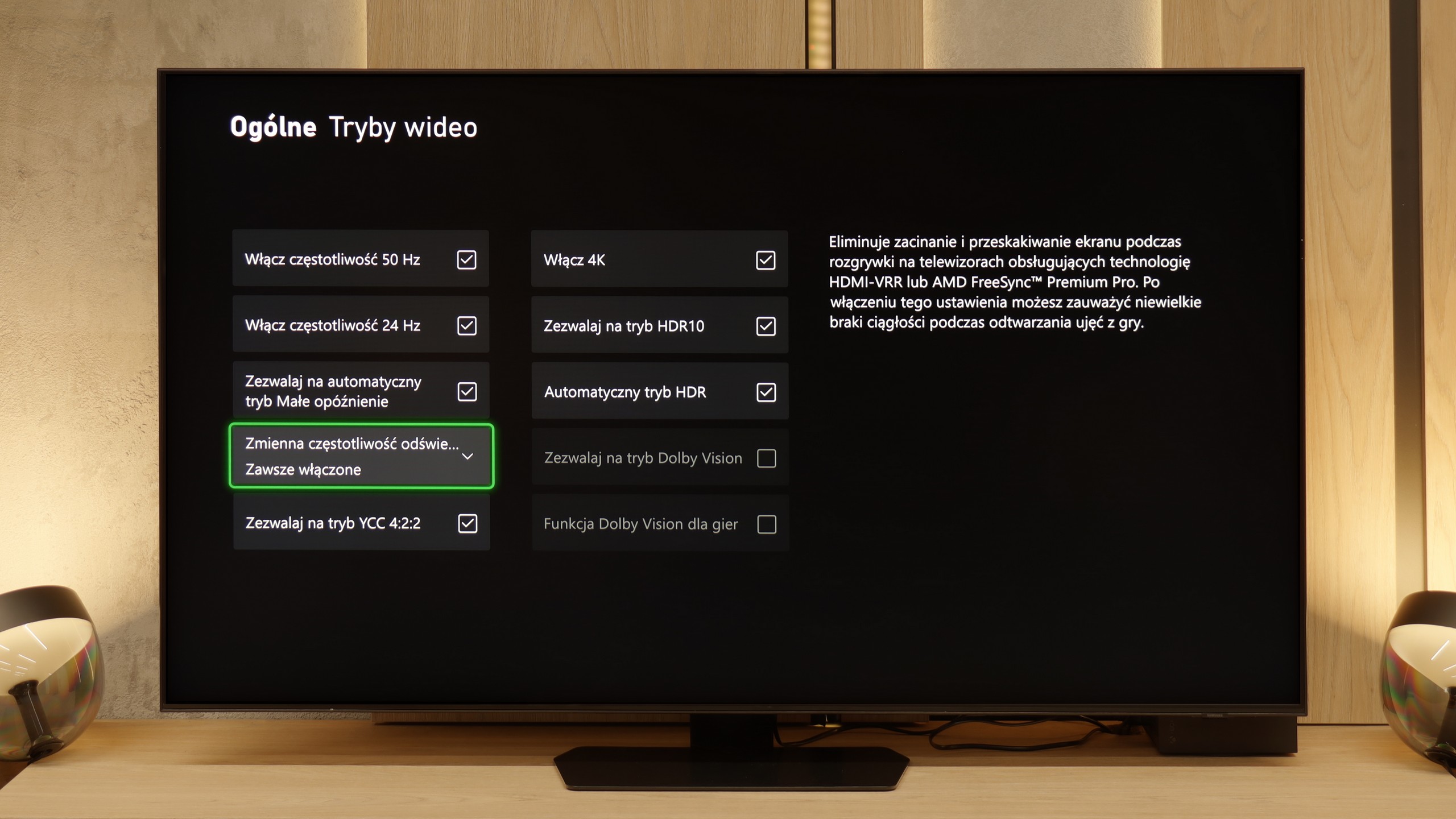
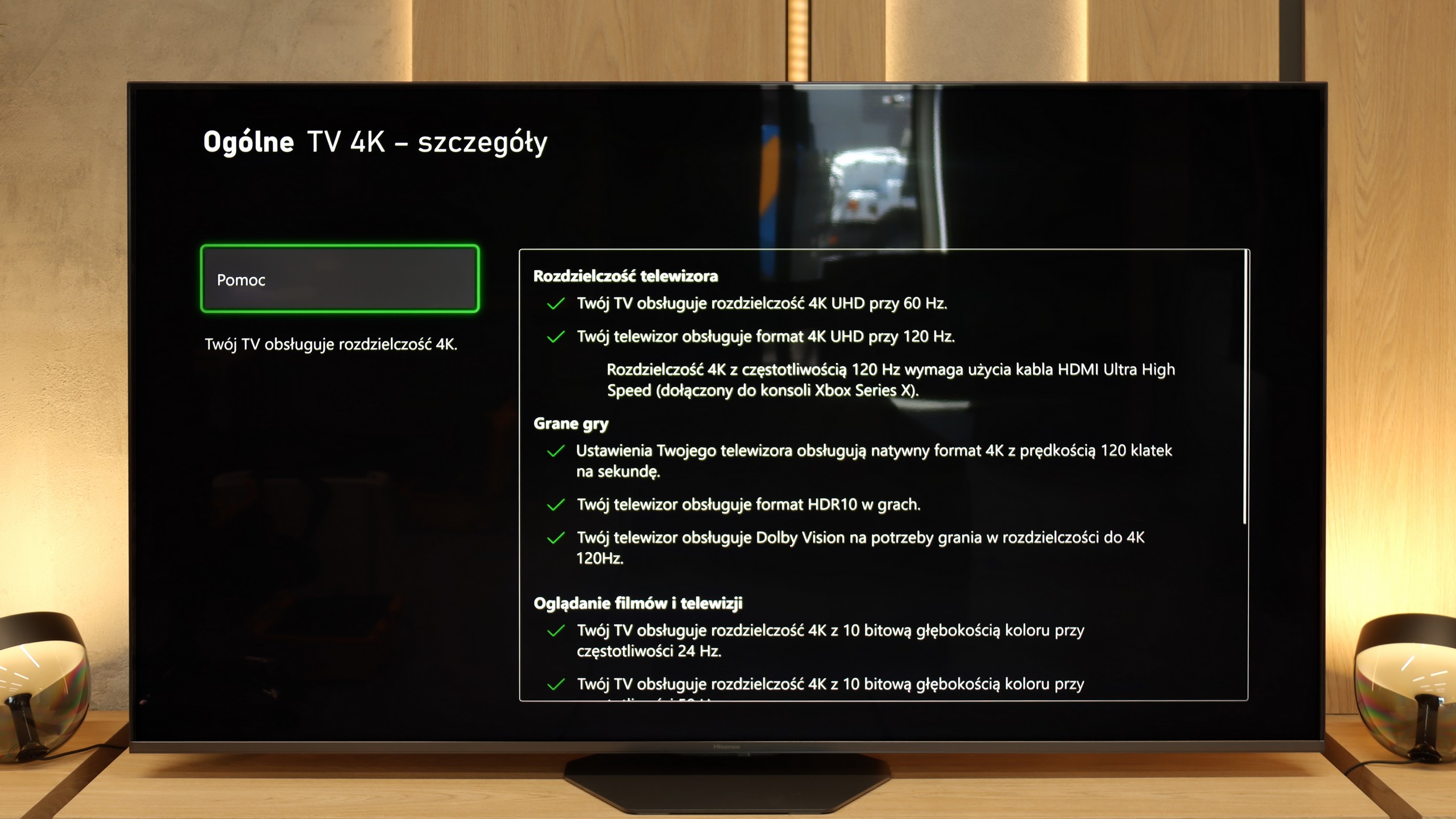
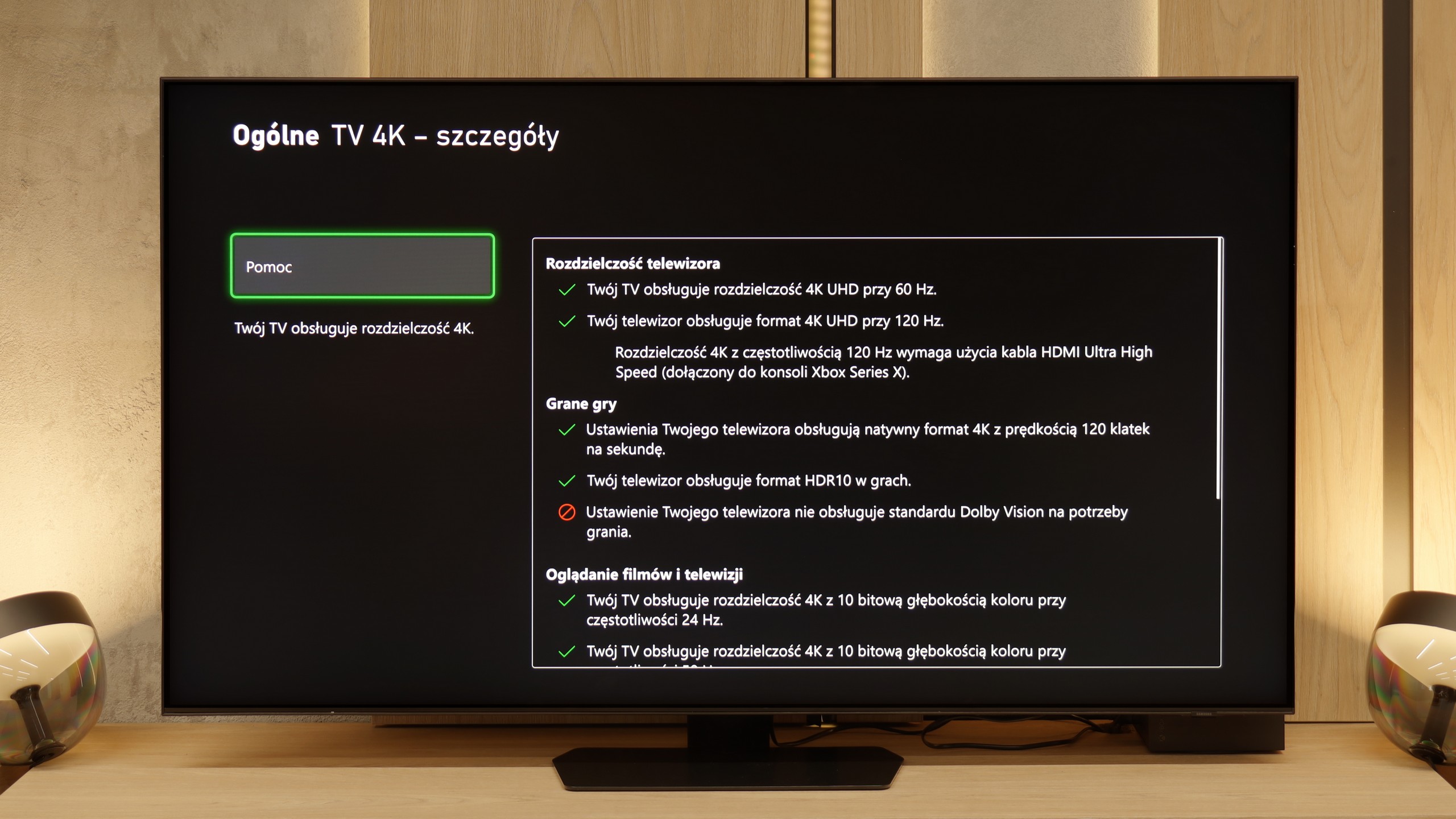
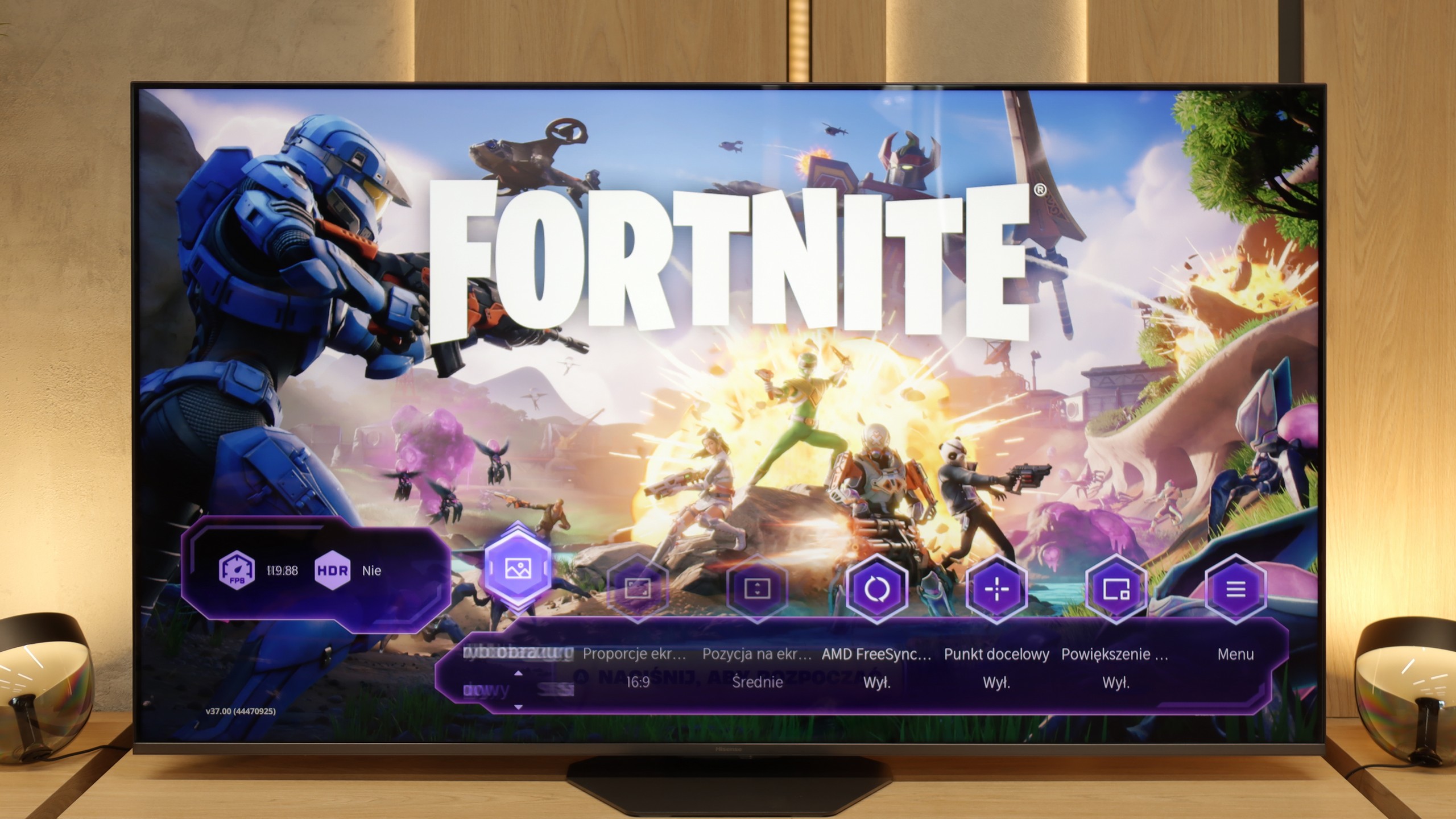
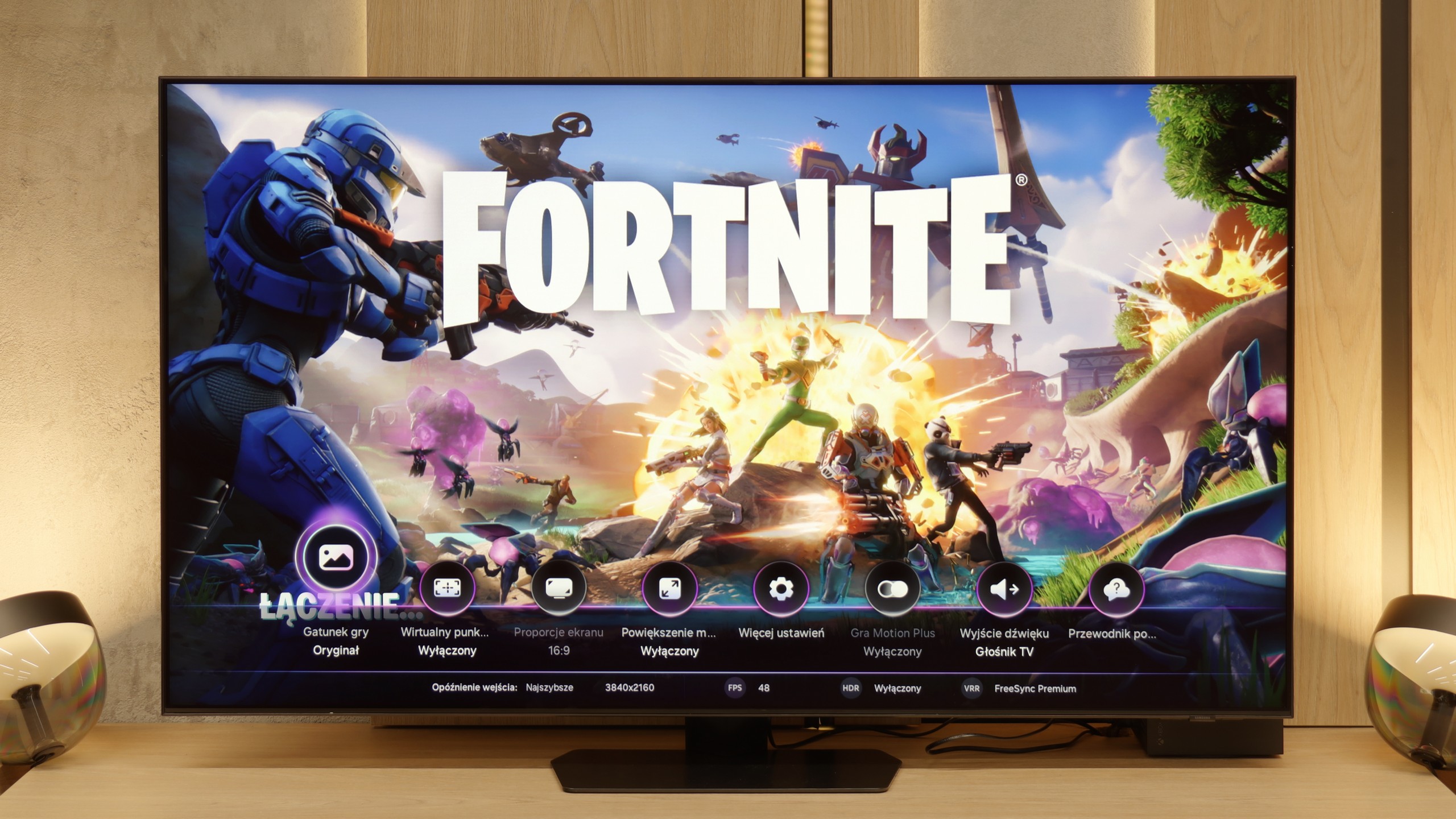
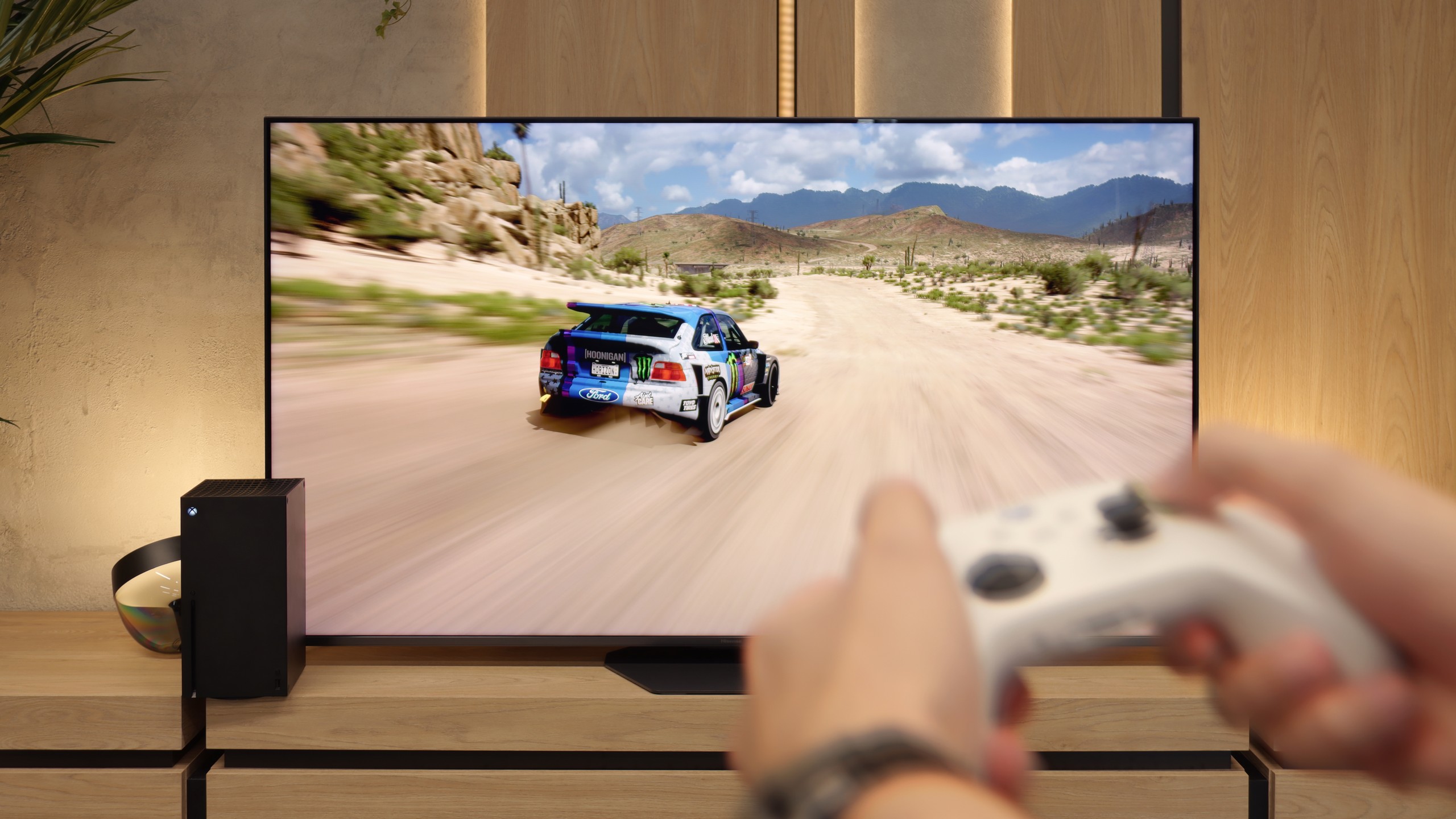
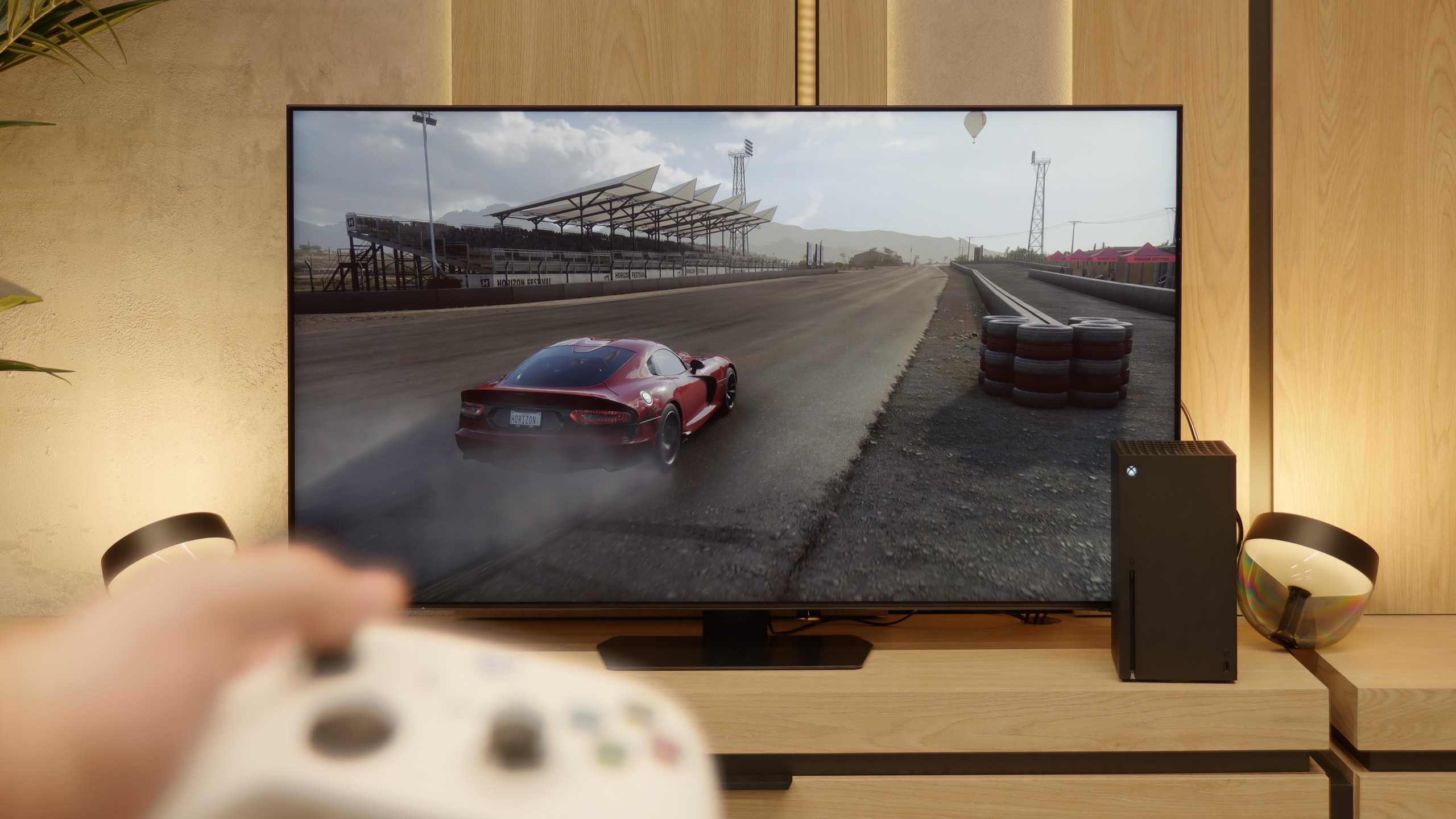
In terms of features, the Hisense U8Q has practically everything one could expect from a modern gaming television. Thanks to the new processor, the manufacturer managed to implement as many as three HDMI 2.1 ports, so there is no problem connecting several consoles or a computer. On top of that, it includes all the key technologies – Game Bar with parameter preview, variable refresh rate (VRR), automatic low latency mode (ALLM)… in a word, a complete set.
But as is often the case with Hisense, it fell a bit short of perfection. The biggest drawback remains the lack of support for the HGiG format, which allows the brightness of the television to be adjusted to the console and maximises HDR in games. It’s a shame, because if this element were included, we would have a device practically made for gamers. As it stands, the U8Q remains “only” a very good choice 😉
QN90F has almost everything to be the perfect television for gamers. There’s no need to remind anyone of features like four HDMI ports, VRR, ALLM, or refresh rates reaching even 165 Hz. The Game Motion Plus mode deserves great praise, as it is a unique motion smoother for games. Thanks to this, it adds a few “artificial” frames and makes the image generated from the console look smoother than it should. This is a very unique solution in the world of televisions – rival systems usually do not offer this – and that is why Samsung has had a strong selling point among gamers for years, even despite the lack of support for the still niche Dolby Vision in games.
[UPDATE] We have updated our tests of Samsung televisions from the 2025 lineup due to the release of software version 1131, which restored the crucial feature for gamers, HGiG.
So why do we say "almost" the perfect screen? Unfortunately, like in recent Samsung models, we noticed an issue with the lack of the HGiG feature. This solution allows the television to leave the control of tone mapping up to the console, so that games look exactly as intended by the creators. What's worse, this feature was previously present and disappeared after software updates. Instead of minor improvements, we got a step back. It’s a shame, because without this absence, the QN90F could truly be the ideal choice for gamers in the miniLED category.
Input lag
9.8/10
9.6/10
SDR
HDR
Dolby Vision
The Hisense U8Q really handles signal delay well. In 120 Hz mode, the input lag is around 10 ms, while with 60 Hz content it hovers around 18 ms. These are values that place it among the fast televisions, and in practice, it is difficult to have any significant complaints about them. The response is instantaneous; controlling a character or a car on the screen happens without perceptible delays. Whether someone is playing fast-paced shooters or calmer narrative titles, the U8Q performs excellently.
The input lag on the QN90F is very low. For 120 Hz content, it is about 10–12 ms, and at 60 Hz, it drops below 20 ms. These are values that can confidently be called exemplary. The slightly higher input lag – by 1–2 ms – is due to the fact that the lowest latencies, below 10 ms, are reserved for the 165 Hz mode. However, regardless of the resolution or refresh rate, you can count on the fact that the QN90F always responds quickly and responsively to our movements on the controller or keyboard and mouse.
Compatibility with PC
8.4/10
8.8/10
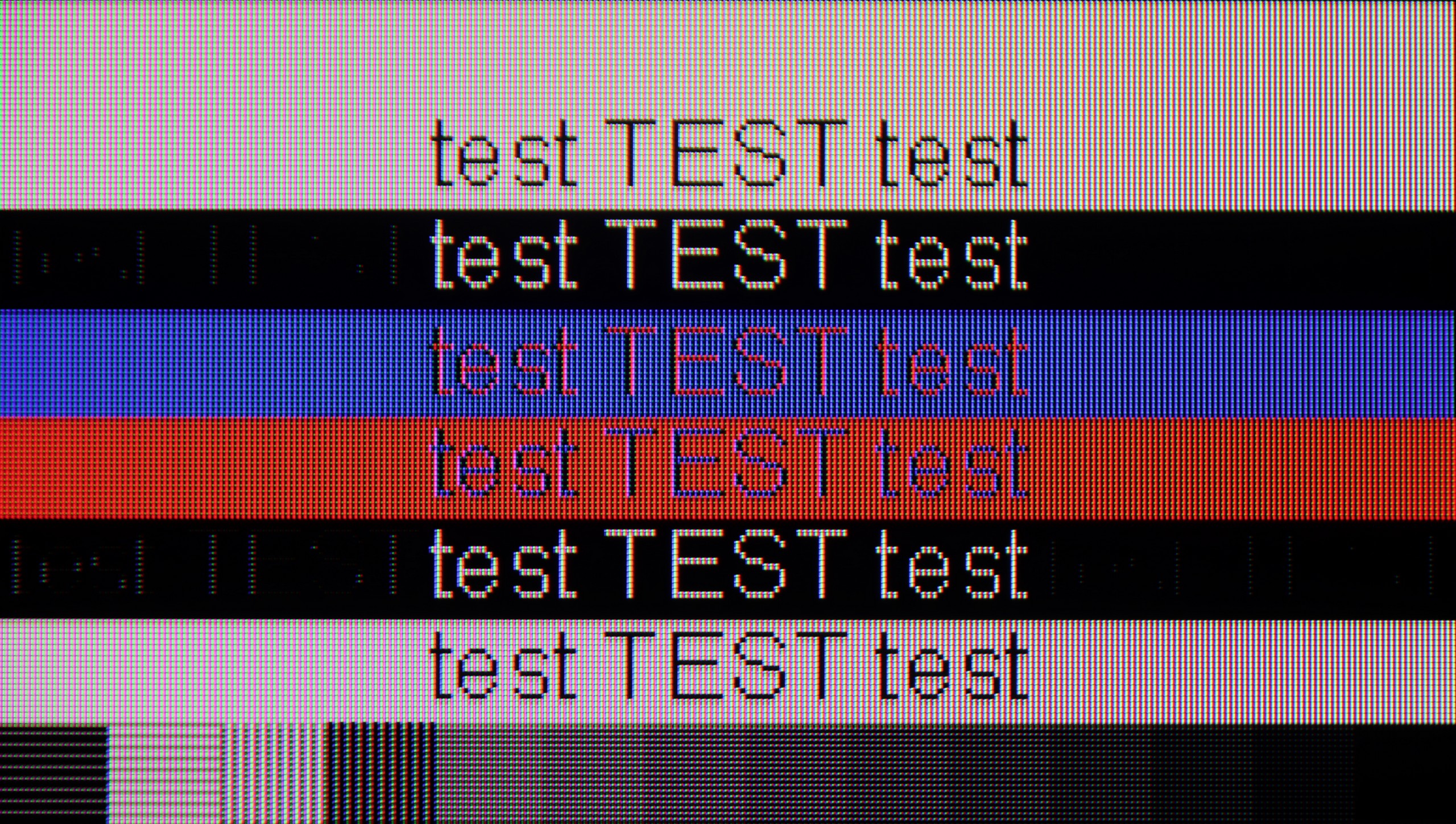
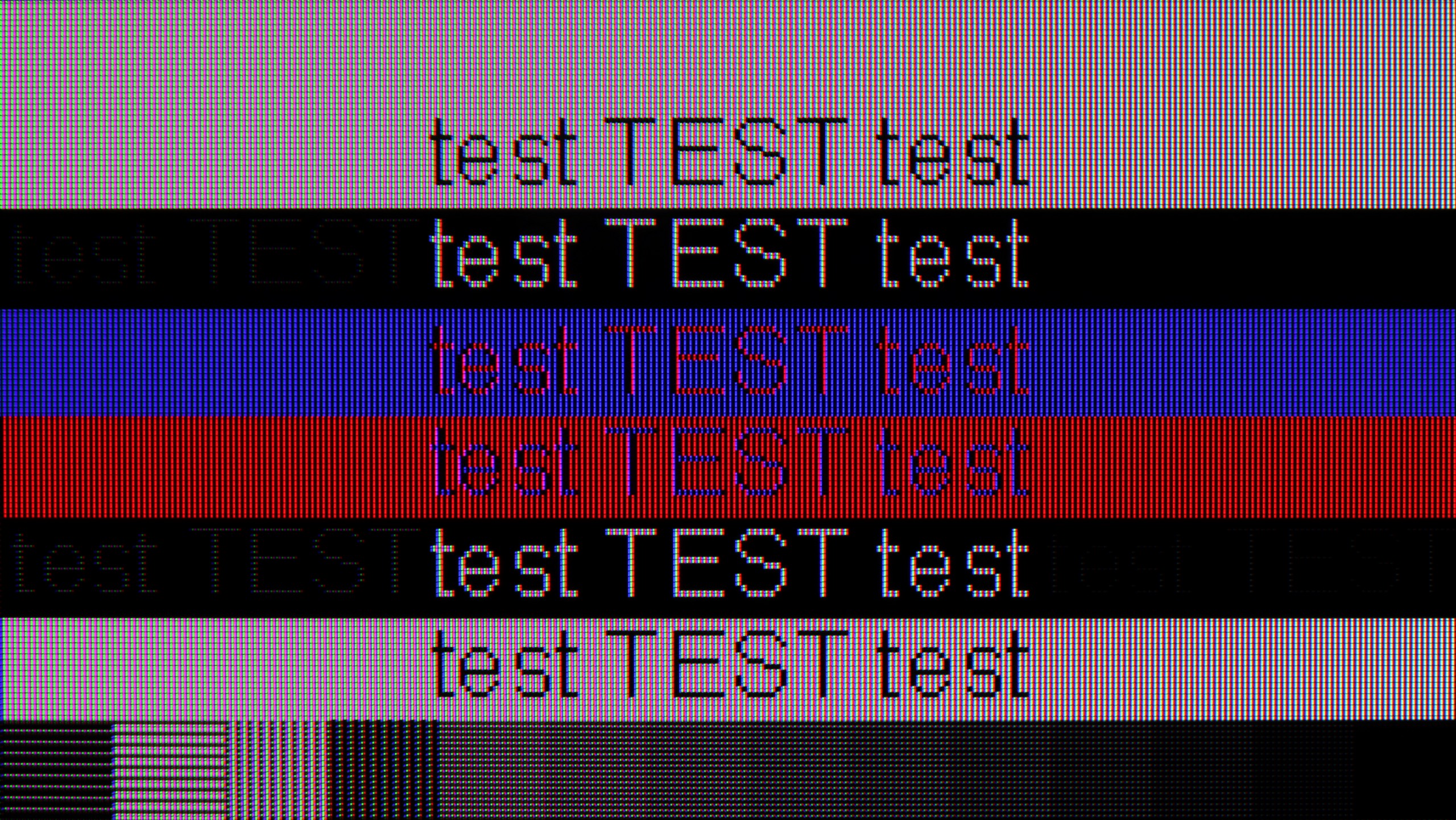
The photo shows the legibility of small fonts. Ideally, lines should be the same thickness on both light and dark text, with minimal pixel gaps.
As we mentioned regarding the features for gamers – Hisense U8Q also communicates well with computers. The 4K panel with a refresh rate of 165 Hz is impressive on its own, and at Full HD resolution, it can even boost to 288 Hz. This is great news for e-sports fans, where speed of reaction matters most, rather than the highest image quality. Additionally, it supports G-Sync and FreeSync, so gameplay is smooth, without stutters and annoying frame tearing.
A pleasant surprise is the presence of a USB-C port with DisplayPort functionality for laptops or even phones. This is a true novelty in televisions, and it's quite possible that Hisense will be a pioneer here, setting the direction for the competition.
When it comes to working with text, we must mention one small inconvenience. Although the U8Q correctly handles chroma 4:4:4, it has issues displaying very thin, horizontal fonts. This means that some subtitles or interface elements may be hard to read. Probably no one buys this model with office work in mind, but if someone were to have such a plan – it’s worth keeping this in mind.
Collaboration with a PC is another strong point of the QN90F. It is a screen that works well for both work and gaming. This makes sense especially in smaller sizes, such as 43 inches, where the television can easily fit on a desk. The 165 Hz mode, designed primarily for PC gamers, supports technologies such as G-Sync and AMD FreeSync Premium Pro, ensuring smooth and highly responsive gameplay. Office work performs equally well – the readability of fonts is high due to the proper handling of chroma. However, we noticed that switching the refresh rate from 165 Hz to 120 Hz significantly improves the readability of very dark text and thin lines. Therefore, if someone wants to use the QN90F as a work monitor, it is worth considering the 120 Hz mode.
Viewing angles
3.2/10
3.6/10
In terms of viewing angles, the Hisense U8Q performs averagely – typical for a VA panel. It's a classic compromise: in exchange for much better blacks and contrast than in IPS panels, we must accept that watching from a wider angle does not look as good. Colours begin to lose intensity, and the picture slightly brightens. For a viewer sitting directly in front of the television – it’s a dream. For someone who sits more to the side – it’s a bit less so.
The viewing angles on the QN90F are rather average and typical for LCD screens with a VA panel. It’s a bit of a shame that Samsung has foregone additional coatings to widen the viewing angles in this model – probably at the expense of using a matte panel. The effect is that with a greater angle from the centre, the drop in brightness is quite significant, and the colours lose their intensity. This is a compromise that one has to consider when opting for a screen with a classic VA panel.
Daytime performance
8.2/10
7.2/10

Panel brightness
Samsung QN90F / QN92F: 665 cd/m2
Hisense U8Q: 914 cd/m2
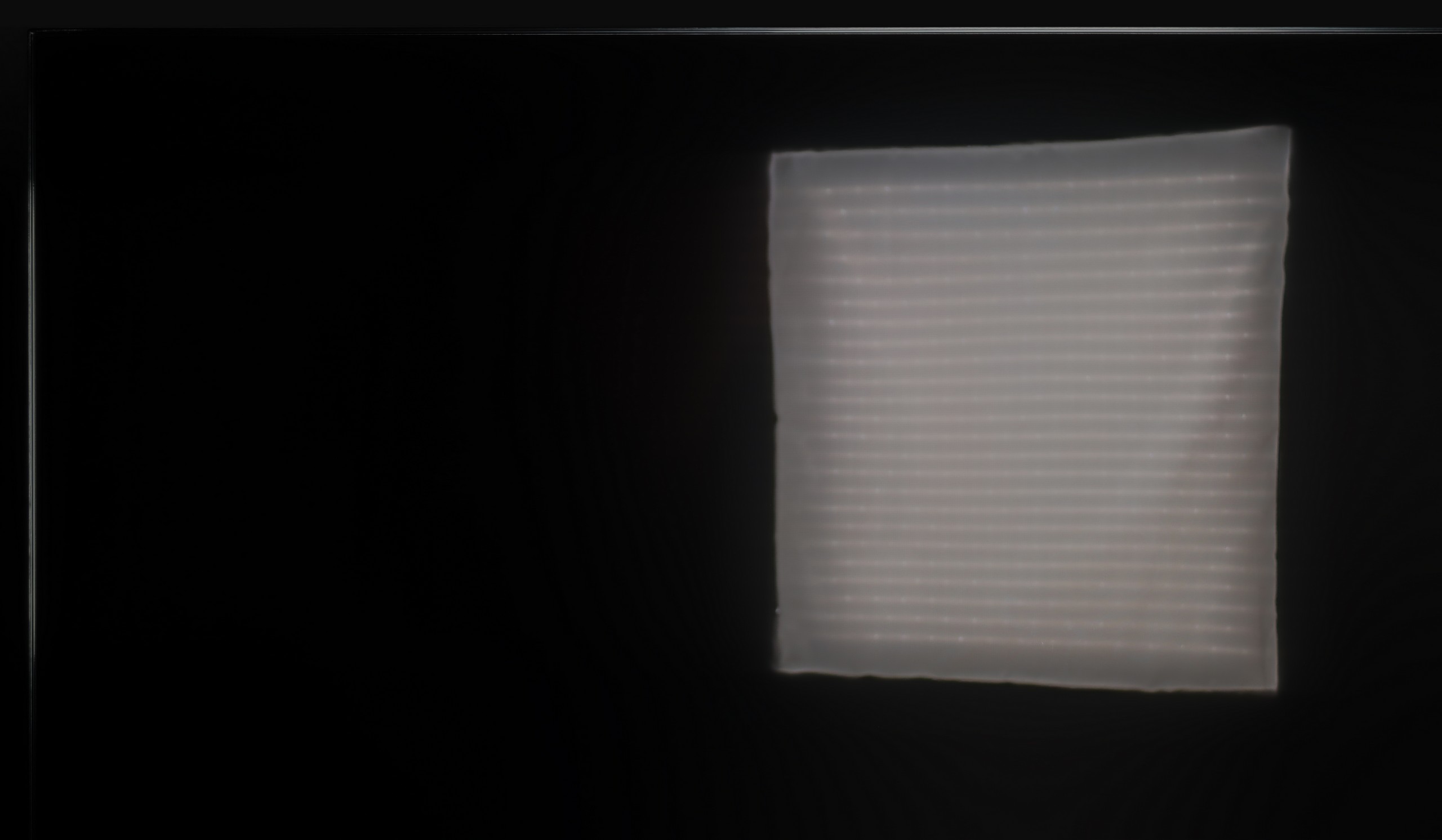
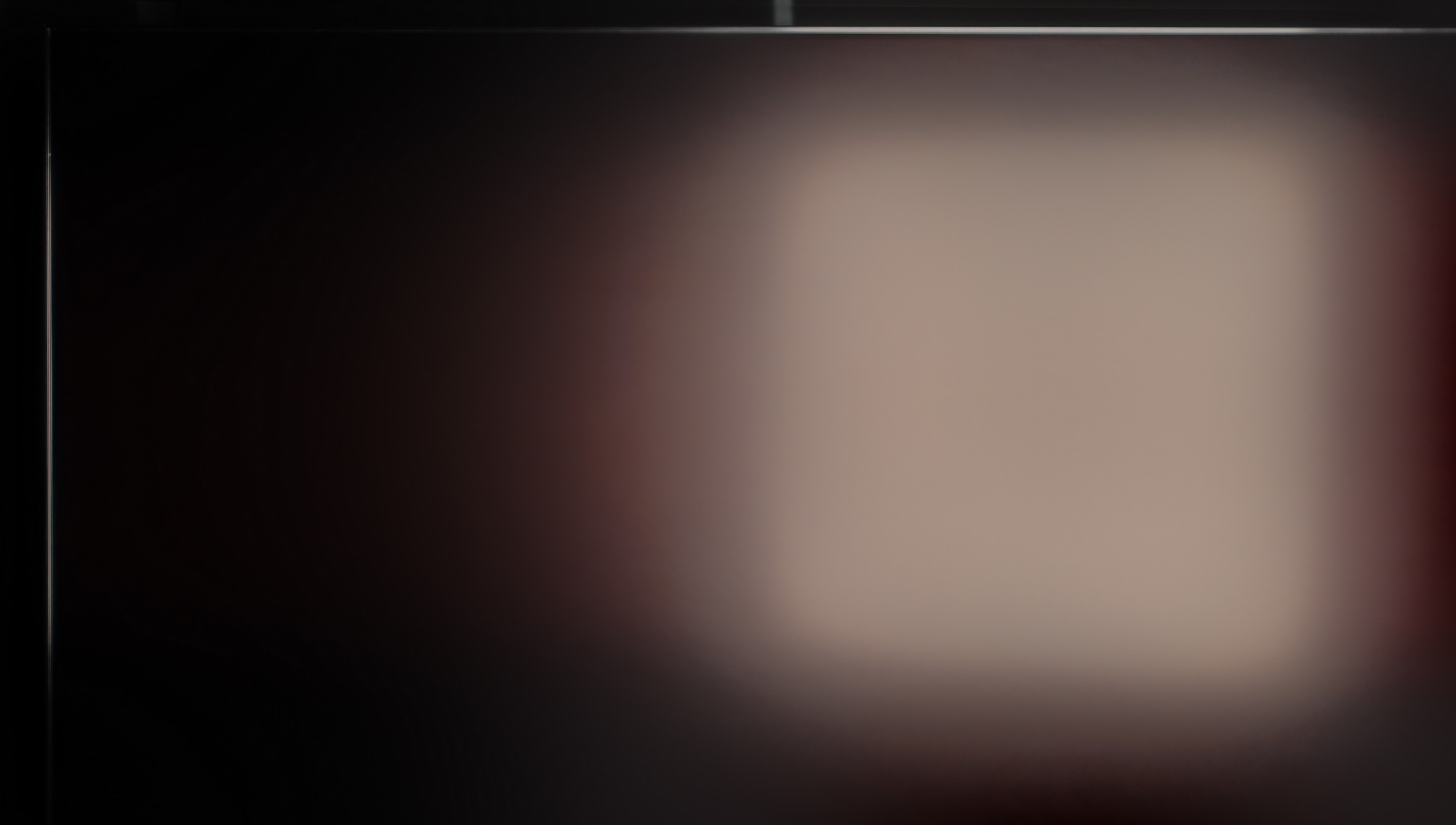
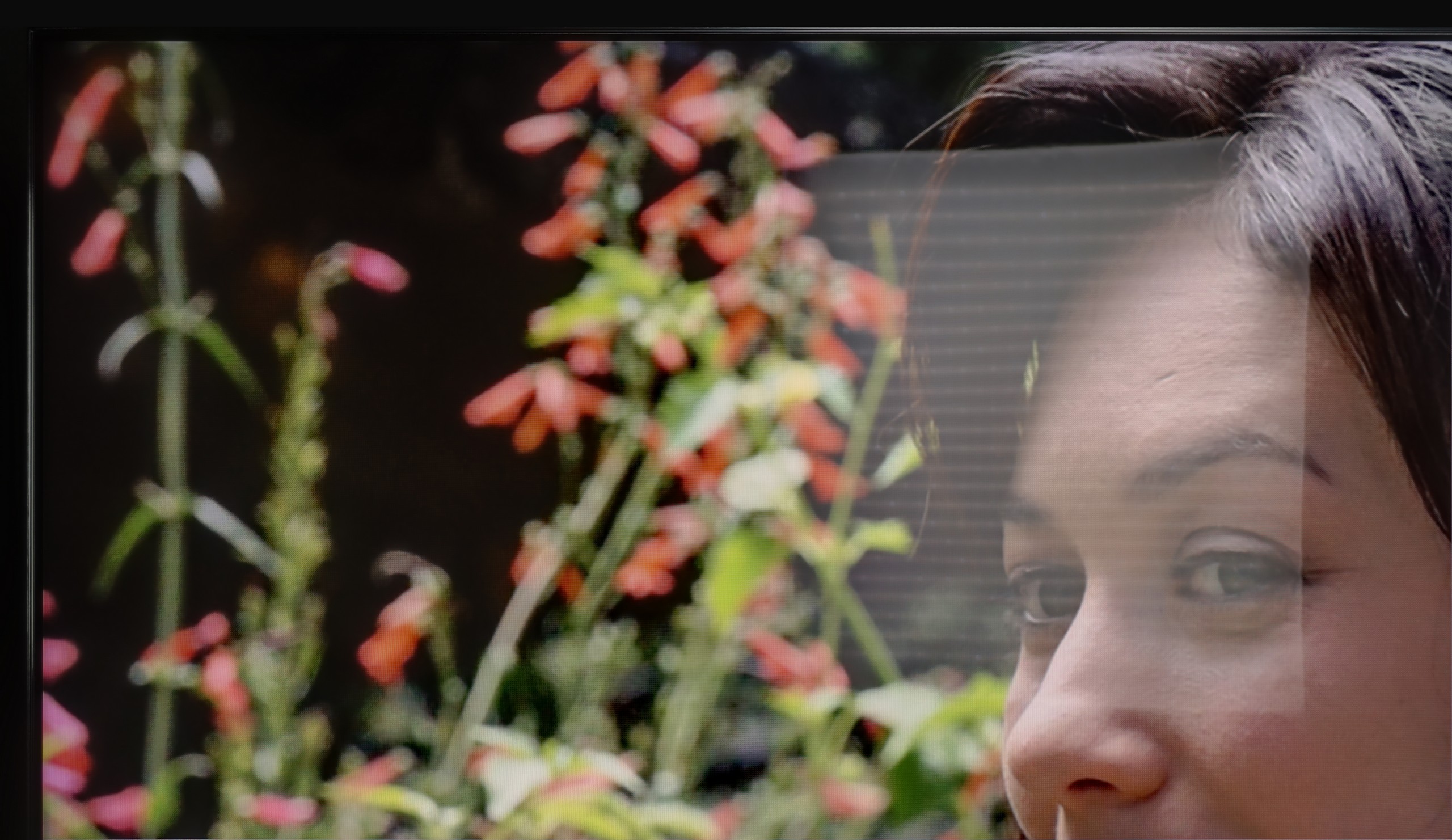
Hisense has opted for a new anti-reflective coating called Anti-Reflection PRO. It aims to enhance viewing comfort in challenging lighting conditions – and it indeed does the job. Reflections do not disappear entirely, but they are well controlled and do not interfere with daily viewing. However, the highlight is the brightness in SDR – around 1000 nits! This is a result that would make even the top super premium models proud. As a result, the U8Q performs excellently in sunlit rooms and can confidently be considered one of the best televisions for daytime viewing.
QN90F is the first Neo QLED 4K with a matte display, and it must be said that this change is felt immediately. During the day, the screen behaves quite differently than typical LCD televisions – reflections are heavily subdued, and glares almost disappear, so there’s no need to constantly cover windows or fiddle with furniture placement. Colours in a bright room look natural, although their intensity can slightly drop under very strong lighting. However, this is not something that significantly spoils the viewing experience – rather a minor price to pay for the comfort of watching in sunlight. Additionally, there’s an average SDR brightness of around 700 nits, which means that the television can easily "cut through" in very sunny living rooms. It's hard to recommend anything better: if someone is looking for a miniLED 4K television that can cope in a brightly-lit living room, the QN90F is one of the most reliable choices.
Panel details
Subpixel Structure:
Panel uniformity and thermal imaging:
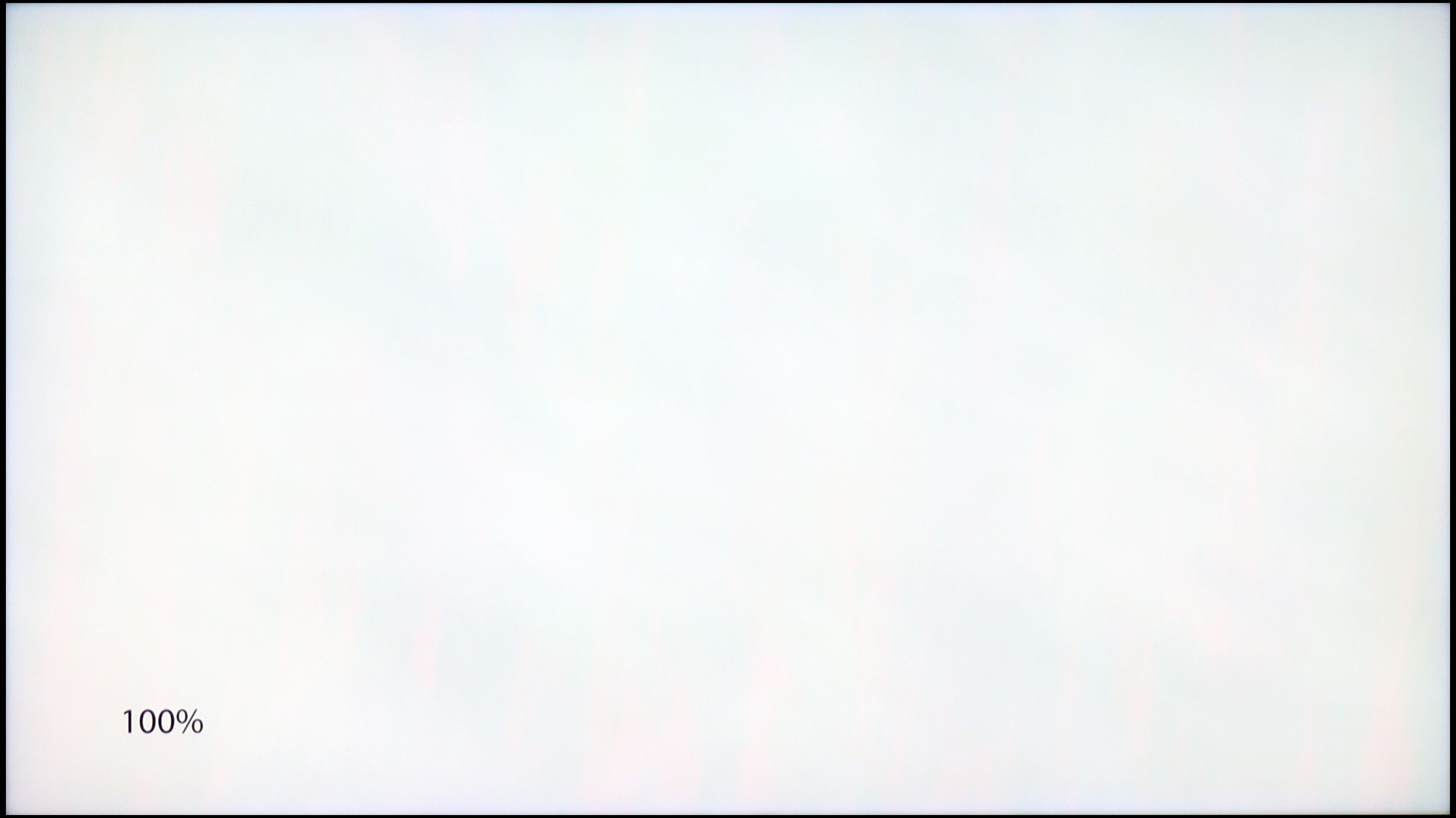
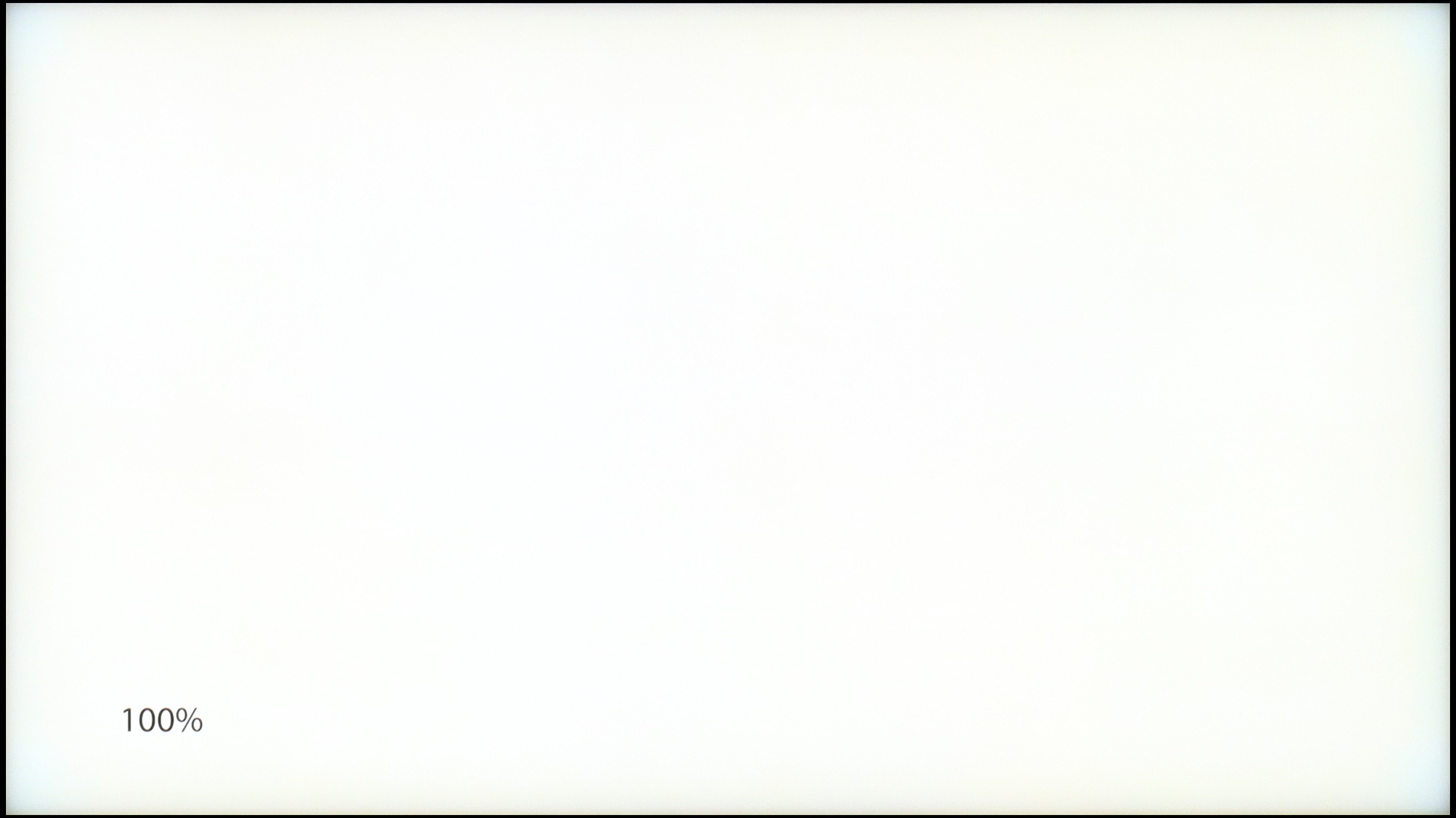
Hisense U8Q
Samsung QN90F / QN92F
TV features
9.4/10
7.7/10
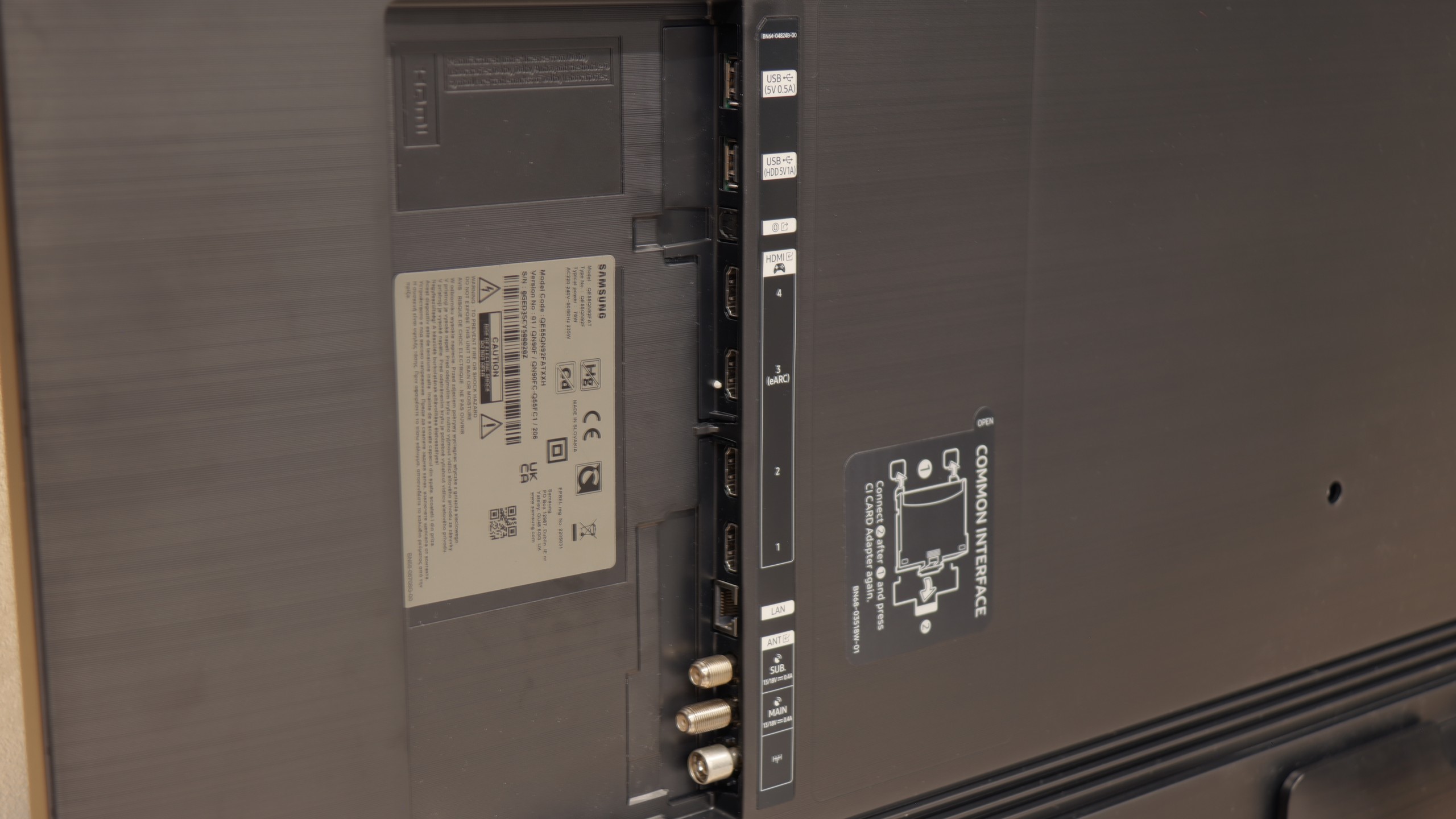
- HDMI inputs0 x HDMI 2.0, 3 x HDMI 2.1 48Gbps0 x HDMI 2.0, 4 x HDMI 2.1 48Gbps
- Other inputsToslink (Optical audio), RCA (Chinch)
- OutputseARC (HDMI), ARC (HDMI), Mini-Jack (Headphones)Toslink (Optical audio), eARC (HDMI), ARC (HDMI)
- Network InterfacesWi-Fi 2.4GHz, Wi-Fi 5GHz, Ethernet (LAN) 100MbpsWi-Fi 2.4GHz, Wi-Fi 5GHz, Ethernet (LAN) 100Mbps
- TV receptionDVB-T, DVB-T2, DVB-S, DVB-S2, DVB-CDVB-T, DVB-T2, DVB-S, DVB-S2, DVB-C
Classic features:
- Recording to USB (terrestrial TV)
- Recording programming
- Picture in Picture (PiP)
- RF remote control (no need to aim)
- Backlit remote control
- Teletext
- Audio only mode
- Bluetooth headphones support
- Simultaneous Bluetooth headphones & TV audio
Smart features:
- AirPlay
- Screen mirroring (Windows Miracast)
- Voice search
- Voice search in native language
- Ability to connect a keyboard and mouse
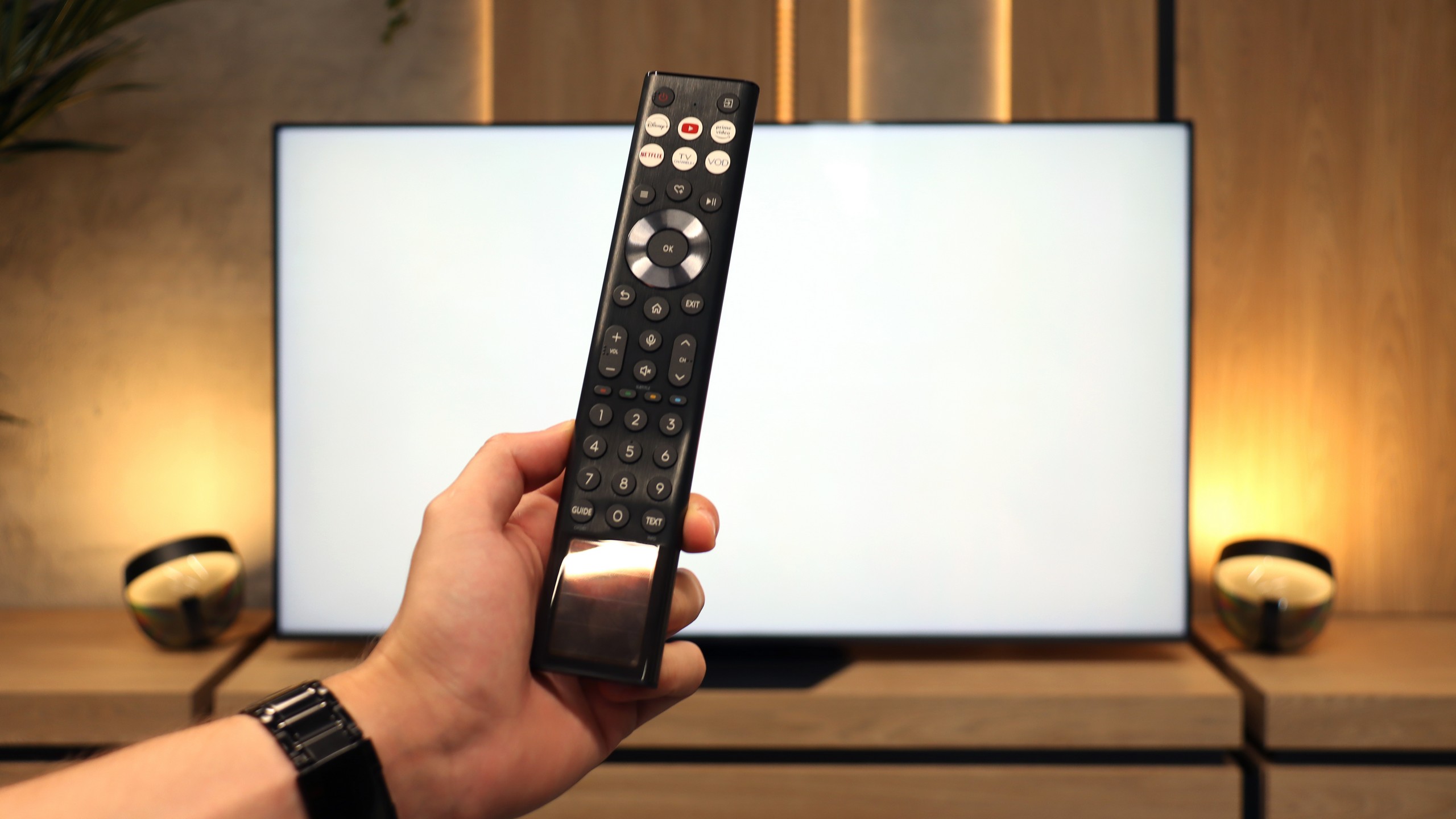
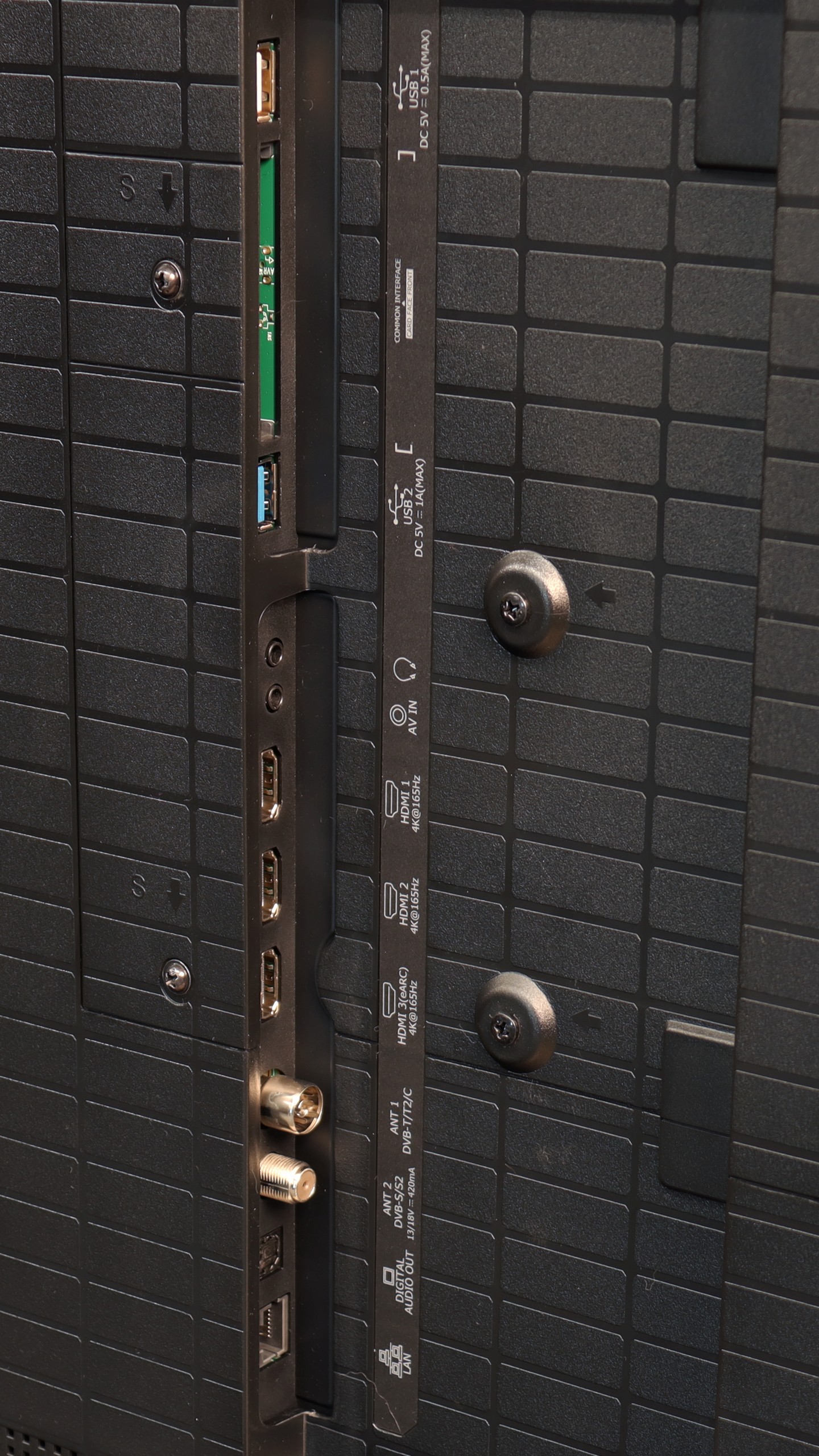
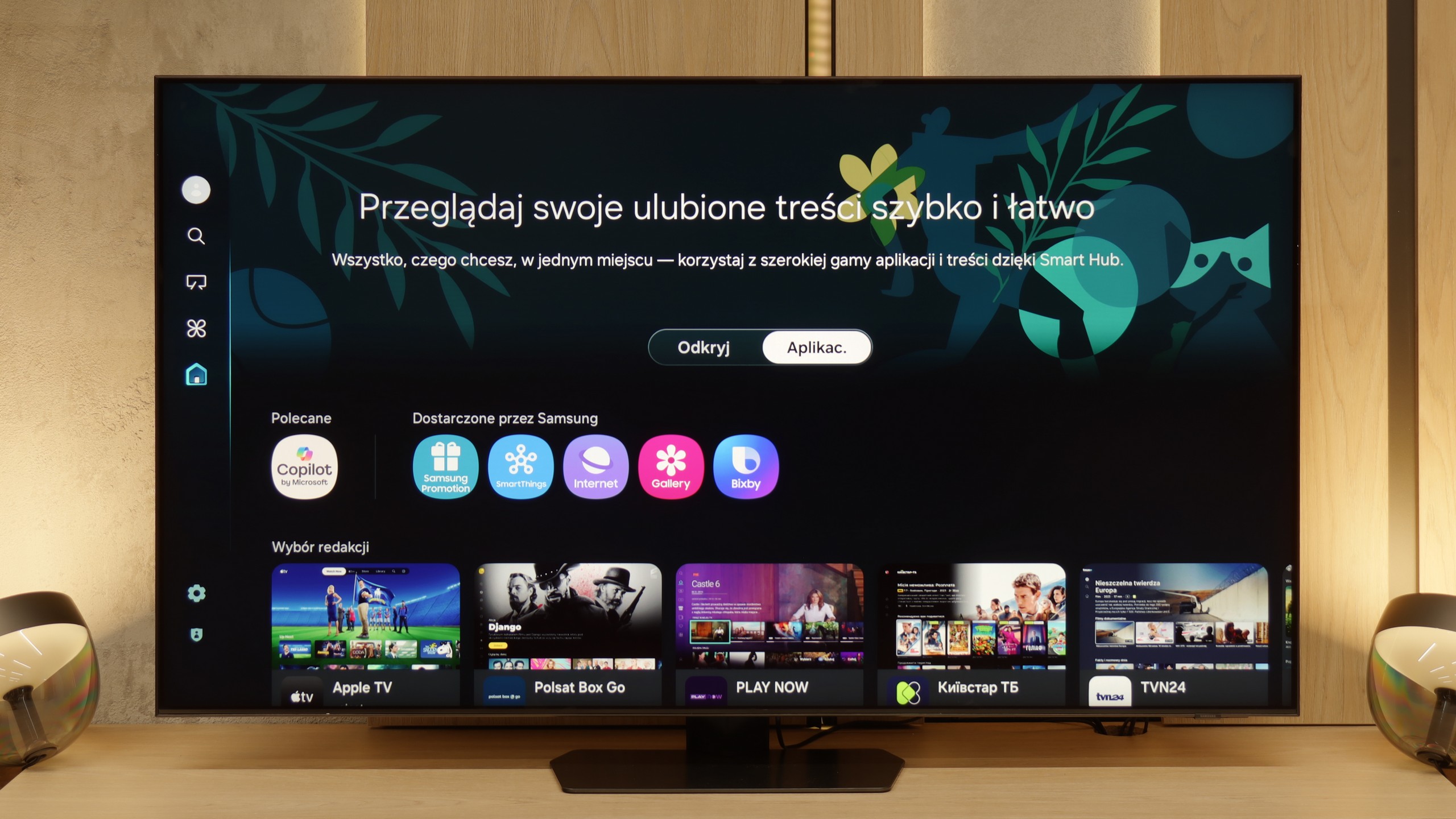
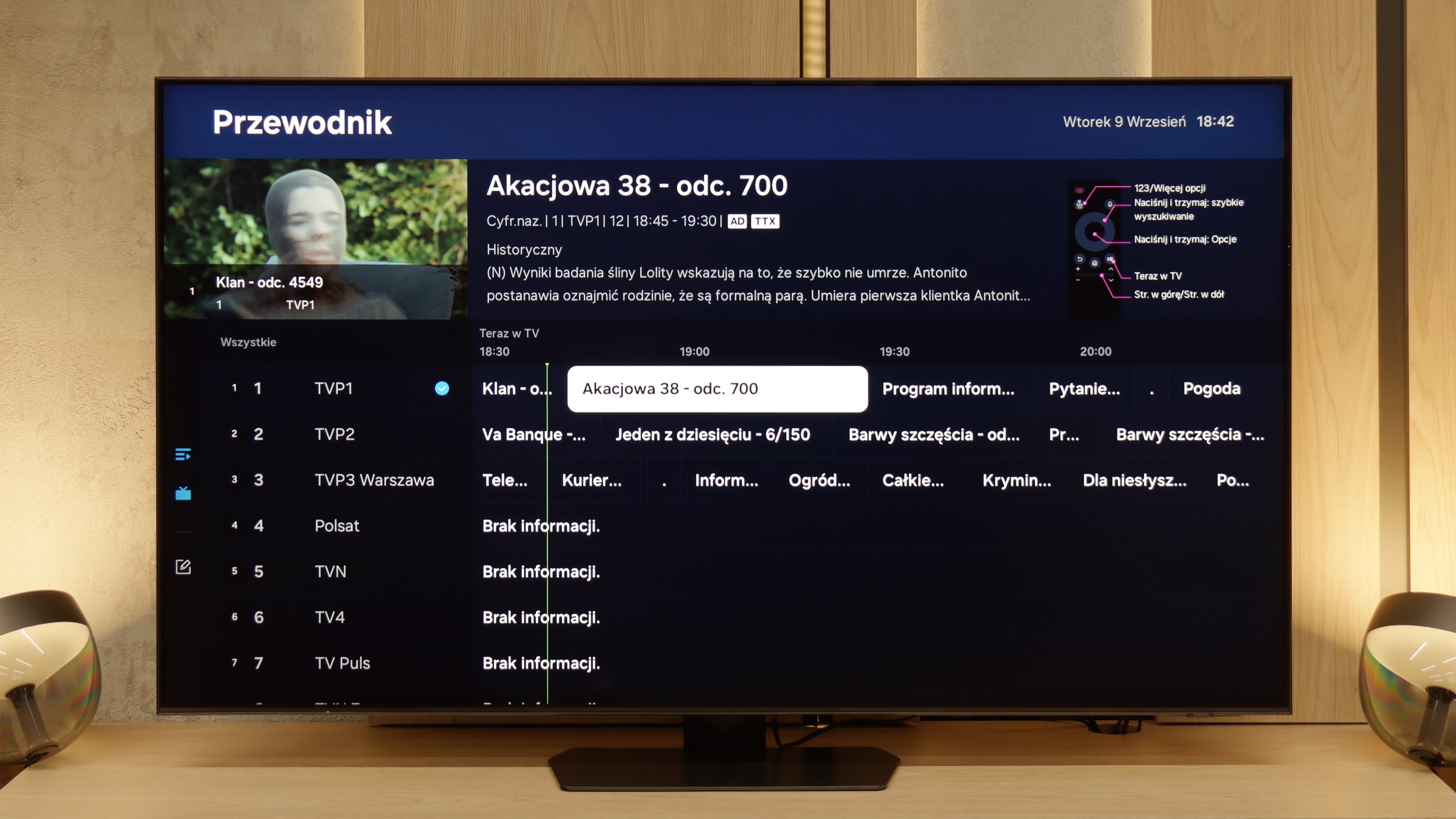
Classic Features
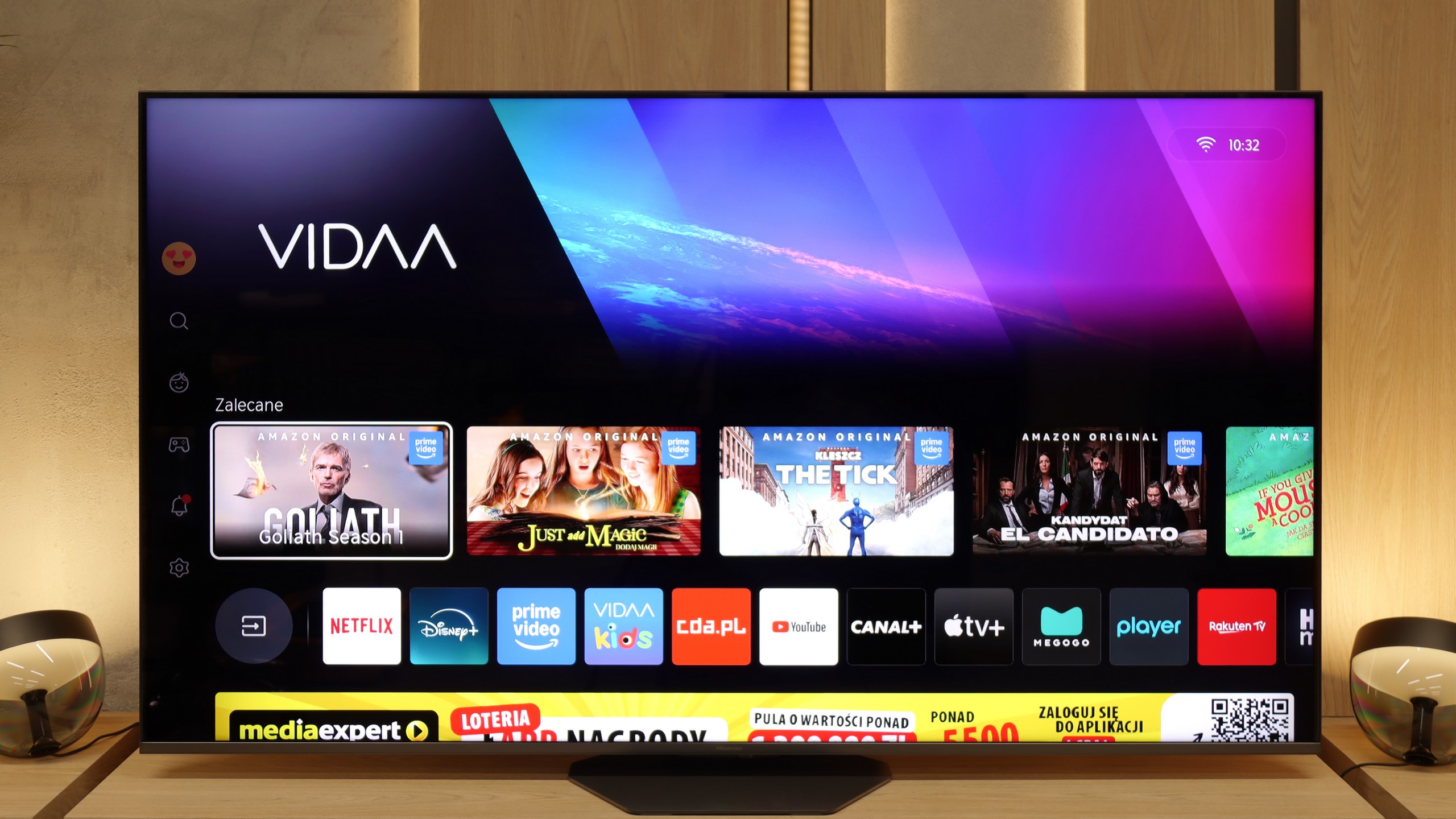
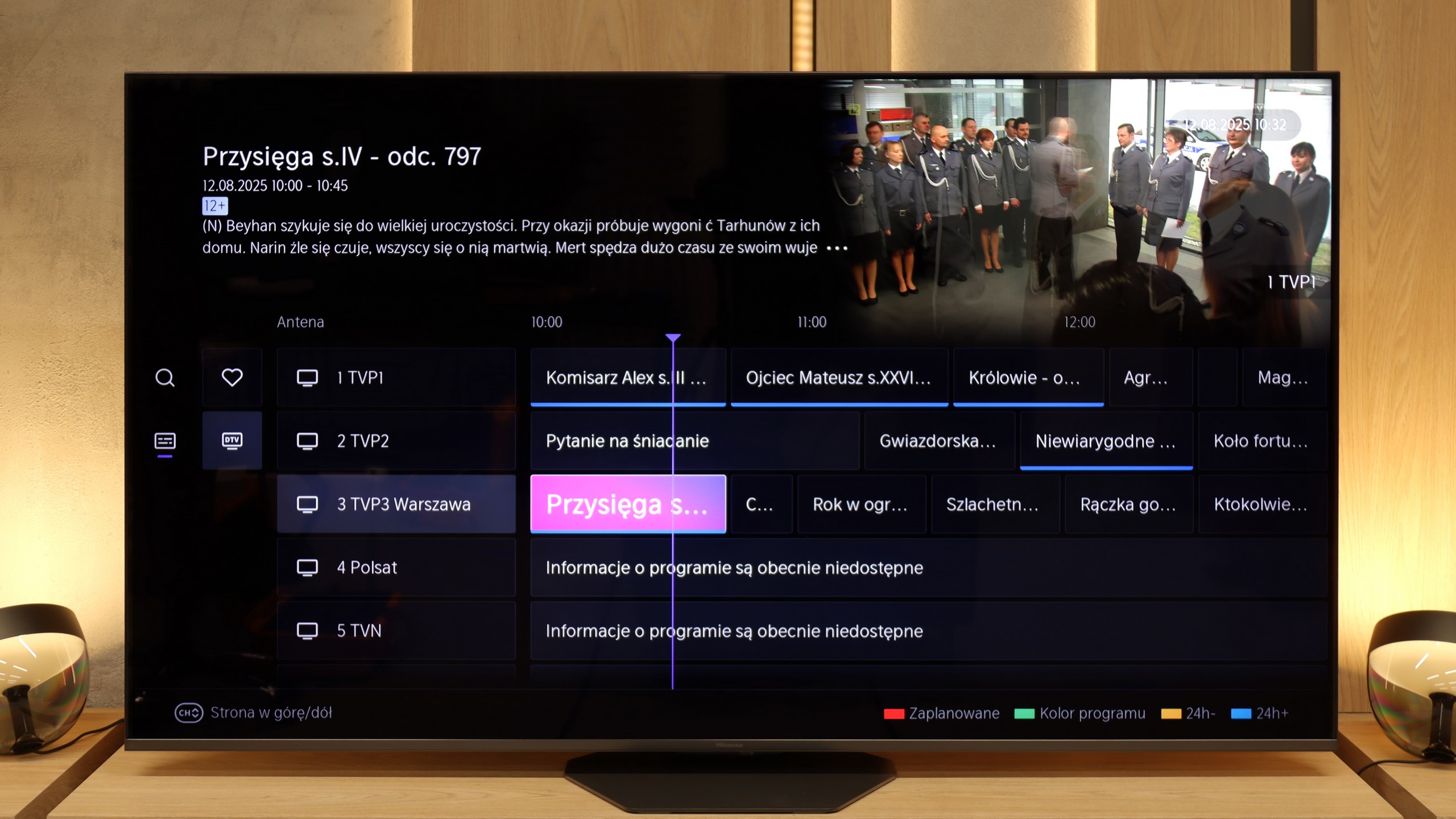
The Hisense U8Q runs on the VIDAA system, which can still be considered relatively new in the European market, but it must be admitted – the manufacturer has a lot to offer here. We find classic features that are still useful to many people: recording to USB, a clear EPG guide, and the ability to connect wired headphones, which will be especially appreciated by seniors. A nice addition is the presence of an audio jack – a connector that is slowly disappearing completely from televisions, yet here it has been retained.
USB-C in the Television!
A new feature in the U8Q is the USB-C port with DisplayPort support. This is an unconventional but very practical solution – thanks to it, you can connect a laptop or phone with one cable, even if these devices do not have an HDMI output.
Smart Features: VIDAA
When it comes to smart features, VIDAA works efficiently. The interface is fast, applications open without significant delays, and network functions – such as screen mirroring or AirPlay – work very well. Of course, there are minor shortcomings, but these are more details than real problems. The Achilles' heel remains the somewhat limited application library. However, it is worth remembering that the list of available programs can change from day to day – some disappear, while others appear, so the situation may improve.
Smart TV Features: Tizen
Samsung has been developing its Tizen system for years, and in the QN90F, it is clear that they have reached a point where it is truly difficult to find fault. The system operates smoothly, responds quickly to commands, and does not lag when using more demanding applications. If someone uses an iPhone – there is AirPlay and screen mirroring. If someone has an Android phone – there will be no problem either. Additionally, there is a voice assistant that understands commands in several languages, including Polish, so you can play a movie or change the channel without reaching for the remote. An interesting feature is also the integration with Microsoft’s Coopilot and AI functions, but SmartThings proves to be much more practical – thanks to it, the television can become the centre of the home ecosystem, connecting not only Samsung devices but also Philips Hue bulbs, for example.
Classic Features
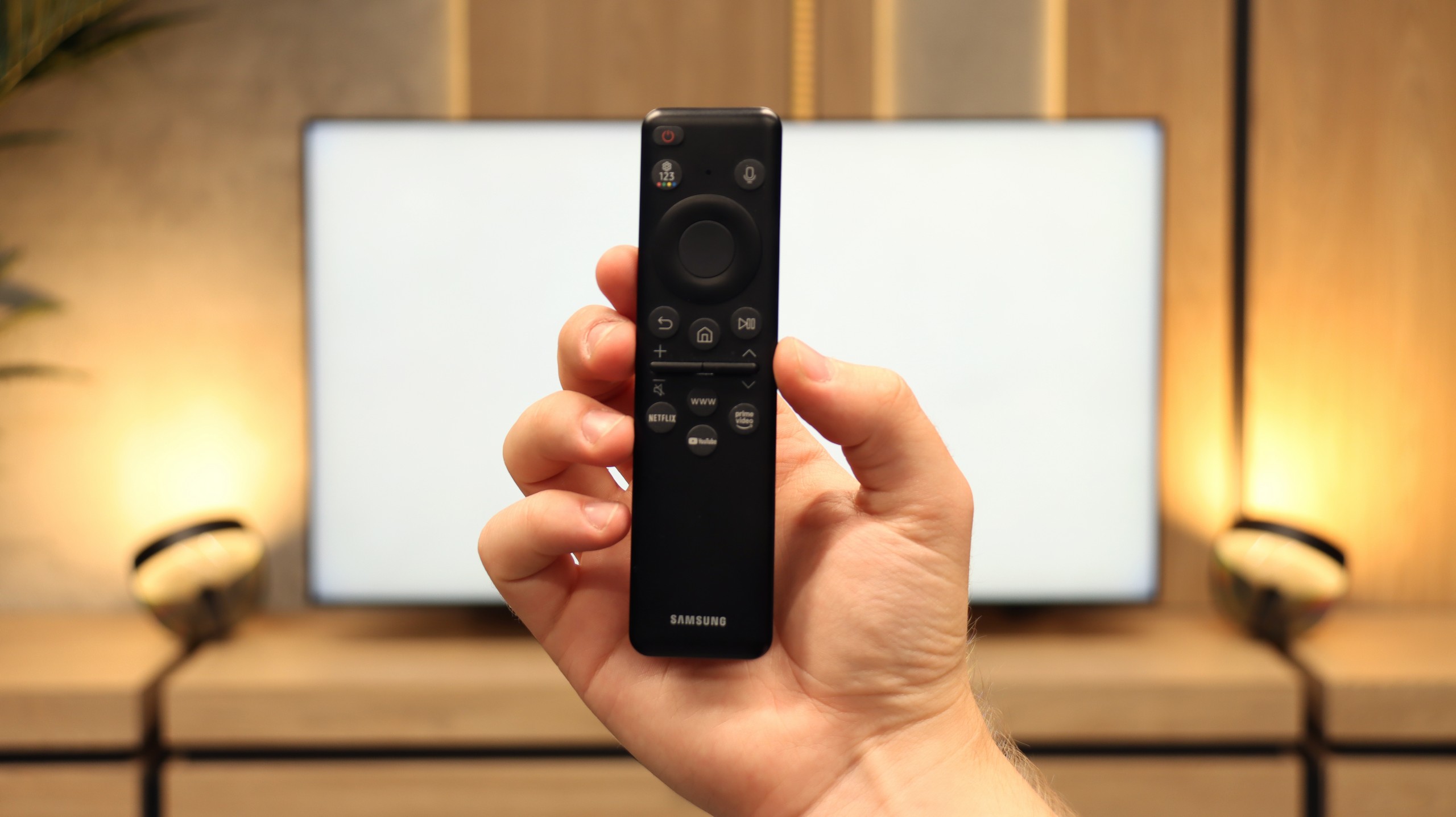
The QN90F can also function as an ordinary television. We can forget about recording on USB, but instead, we get PIP mode, which is picture-in-picture – a feature that is rarely found today. Thanks to it, you can simultaneously follow a match and a series, which can save the evening in many households. Additionally, there is a clear EPG guide and a small remote that charges with light (so no batteries are needed) and can take control of the decoder, soundbar, or even a console. It may not be the most advanced on the market, but in everyday use, it turns out to be simply convenient.
Apps
7.7/10
9.3/10






















Playing files from USB
8.3/10
9.1/10
Supported photo formats:
Maximum photo resolution:
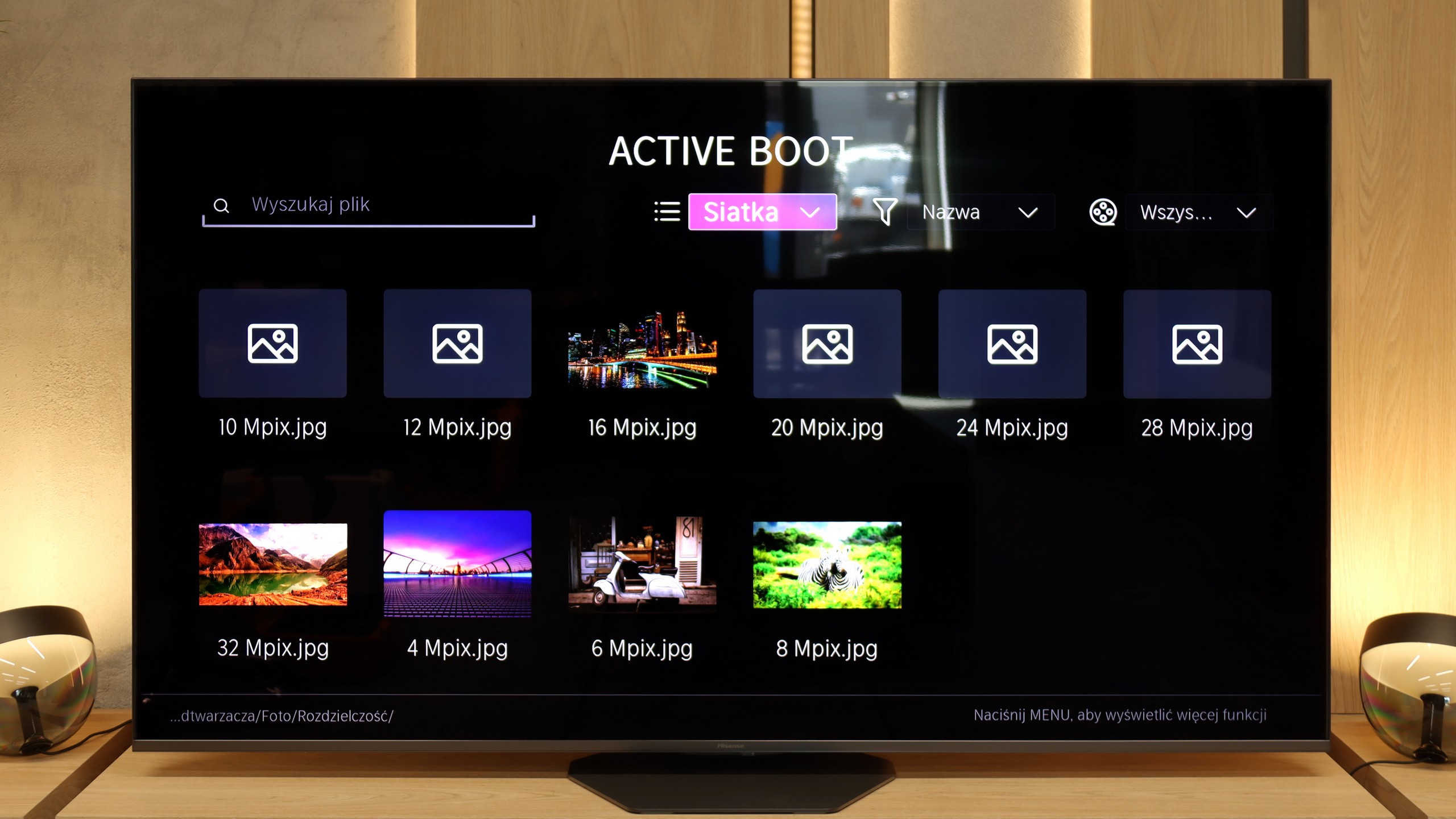
The built-in media player in the Hisense U8Q will be more than sufficient for most people. The television opens popular video and audio formats and also handles photos. However, there is a small caveat – not all photo resolutions are supported. Therefore, if we have photographs saved in a very high number of megapixels, they may simply not open. It is worth keeping this in mind to avoid unpleasant surprises during the family photo presentation.
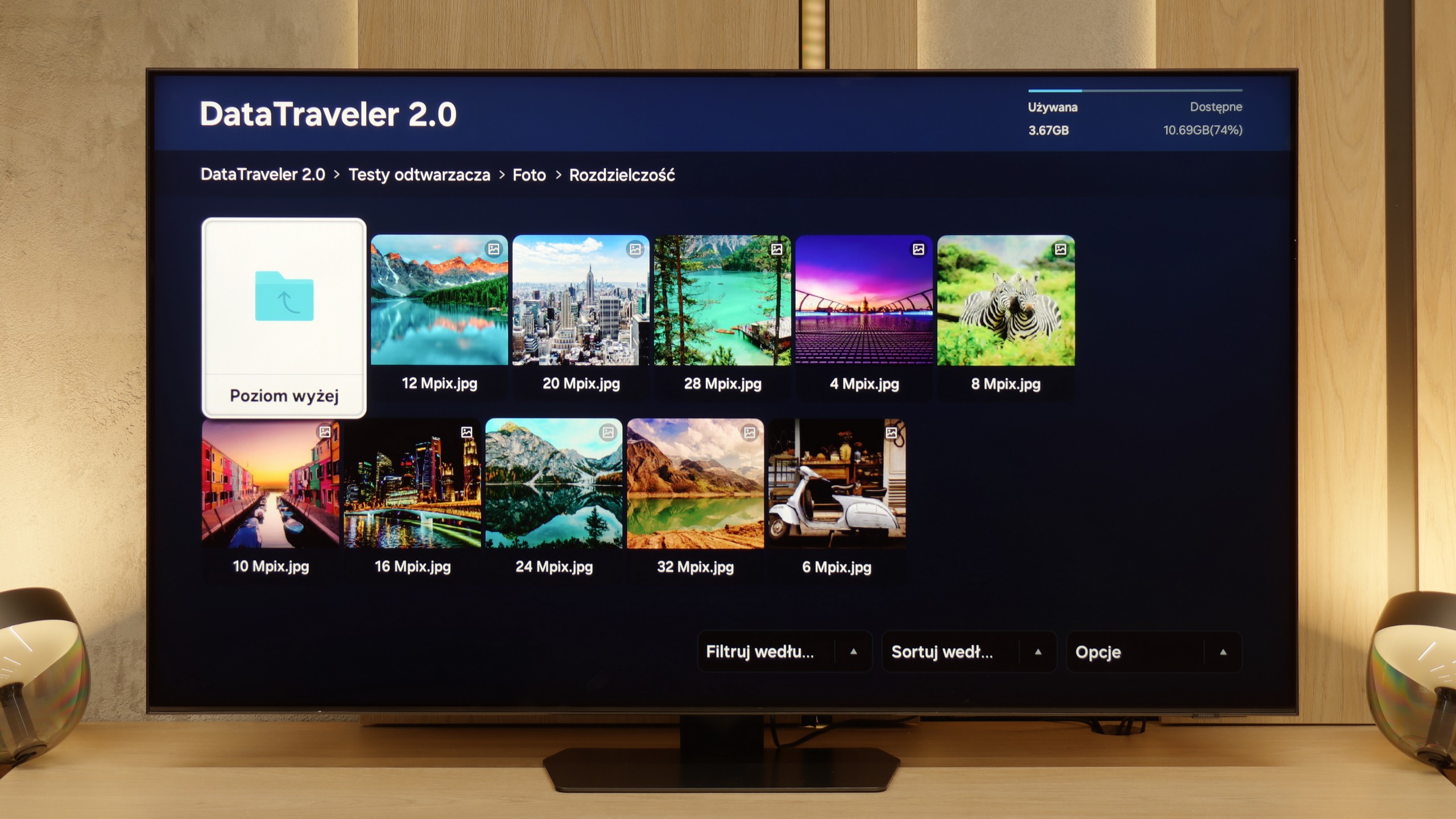
The built-in media player in the QN90F performs quite well. It supports most popular audio and video formats and can easily play graphic files such as JPEG or PNG. The problem only arises with files in the HEIC format – a type of high-quality photo standard used in iPhones. In theory, the television should support them, as they appear on the list of compatible formats, but in practice, attempting to open a HEIC file can freeze the entire system and force a power reset. It's a somewhat strange situation and another minor glitch that shouldn't occur in equipment of this class. On the other hand, one can be very satisfied as it supports most popular audio and video formats.
Sound
7.8/10
7.8/10
- Maximum volume88dB86dB
- Dolby Digital Plus 7.1
- Dolby True HD 7.1
- Dolby Atmos in Dolby Digital Plus (JOC)
- Dolby Atmos in Dolby True HD
- DTS:X in DTS-HD MA
- DTS-HD Master Audio
The Hisense U8Q performs really well in terms of sound. The sound quality is pleasant, with a slight bass and quite decent mid-tones, making it entirely sufficient for everyday viewing of films, series, or gaming.
It gets a bit worse when we crank the volume up to 100%. This is rather a rare scenario, but it’s worth mentioning. With very strong bass, the rear speakers start to work so intensely that the television can slightly 'shudder', and the sound transitions into an unpleasant, plastic echo. Therefore, it’s best to stay within the range of 70–80% volume – at that level, the U8Q sounds clear and pleasant, without any unwanted effects.
The QN90F performs really very well. Despite the slim design of the television, there’s a noticeable bass that adds depth to the sound. The speaker system here operates in a 4.2.2 configuration and offers a total power of 60 W – for built-in audio, this is quite a solid result. Moreover, with materials supporting Dolby Atmos, one can perceive a subtle spatial effect, which works quite well in everyday viewing. Of course, with equipment of this class, it's difficult not to recommend an additional soundbar. It's best to choose one that supports Q-Symphony technology – thanks to this, the television and soundbar play simultaneously, resulting in a fuller and decidedly more cinematic effect.
Sound Quality Test
Acoustic Measurements
88dBC (Max)
75dBC
86dBC (Max)
75dBC