Hisense U6NQ is really an interesting model from the Chinese manufacturer. It is the first MiniLED from the series for 2024 and the only one with a refresh rate of 60 Hz. Starting with the picture quality, the MiniLED backlighting combined with the VA panel does its job – the contrast is good, and watching films in the evening is a pleasure. A stable HDR effect, support for Dolby Vision and HDR10+, as well as solid colours mean that the television handles most everyday tasks well. The Vidaa system works smoothly – it is fast and intuitive, without any annoying stutters. A few popular applications, such as Spotify or Tidal, are missing, but most users will find what they need here, including the option to record programmes to a USB stick or external drive. What about motion fluidity? It's quite decent. The ability to choose between 4K at 60 Hz and Full HD at 120 Hz is a nice addition, especially if we are gaming on consoles that often do not offer perfect 4K at 120 frames. Features like VRR and ALLM further enhance the comfort of occasional gaming. However, there are some drawbacks. Issues with motion blur are noticeable in dynamic scenes, and the lack of any feature reducing this effect does not help. In terms of picture quality, this television strongly prioritises brightness, which sometimes leads to situations where black gains a slightly bluish tint in difficult conditions. In short: Hisense U6NQ is a decent choice for those looking for a television offering good picture quality and a convenient operating system. It is not equipment without compromises, but it performs really solidly for its price.
- Matching (Score) |
- Our verdict |
- TV appearance |
- Where to buy |
- Contrast and black detail |
- HDR effect quality |
- Factory color reproduction |
- Color reproduction after calibration |
- Smoothness of tonal transitions |
- Image scaling and smoothness of tonal transitions |
- Blur and motion smoothness |
- Console compatibility and gaming features |
- Input lag |
- Compatibility with PC |
- Viewing angles |
- Daytime performance |
- Panel details |
- TV features |
- Apps |
- Playing files from USB |
- Sound
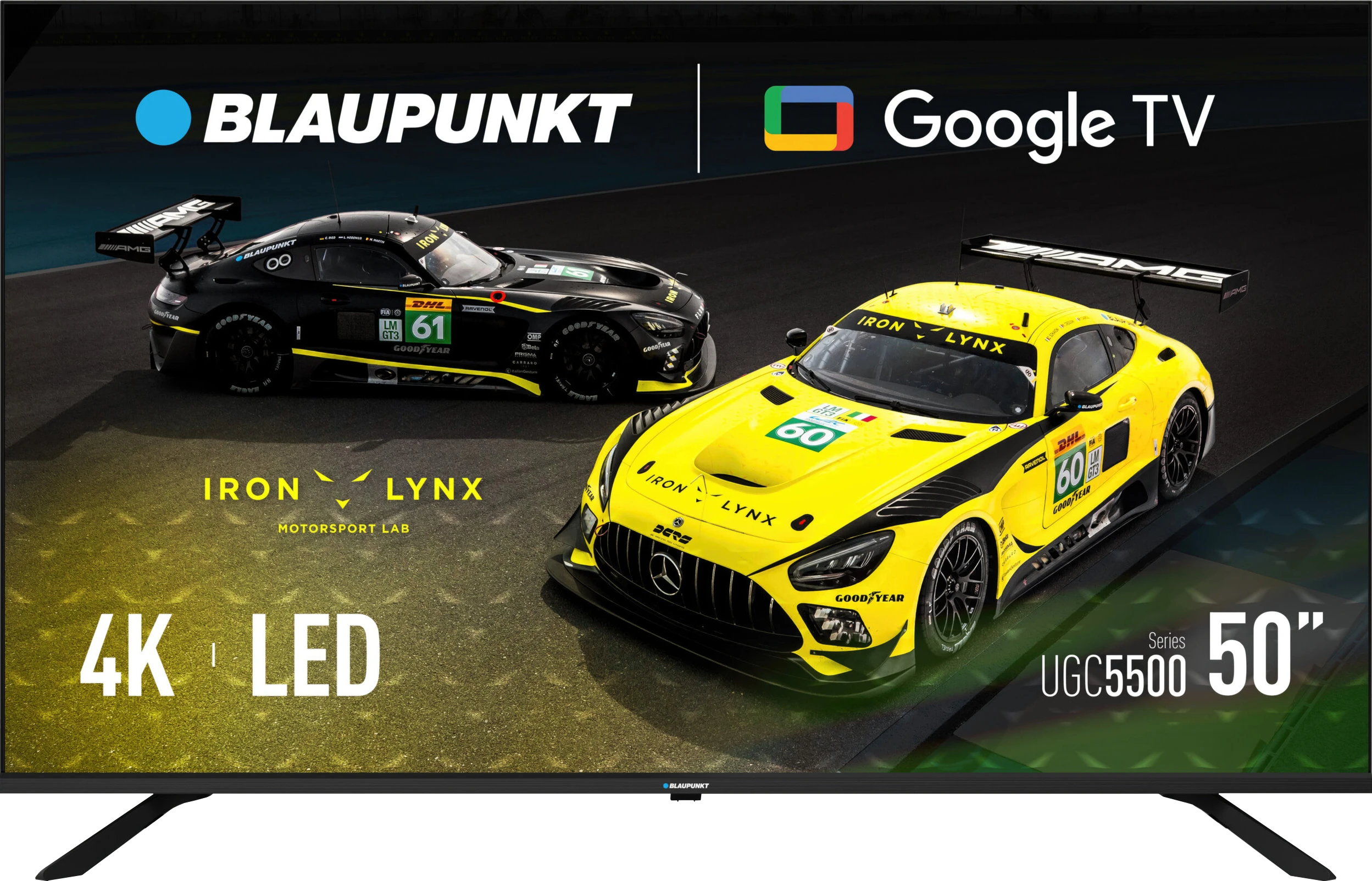
Hisense U6NQ vs Blaupunkt UGC5500S
 Direct comparison

Panel type: LCD VA
Resolution: 3840x2160
System: VIDAA
Model year: 2024
Complete the survey to find out the result
Panel type: LCD IPS
Resolution: 3840x2160
System: Google TV
Model year: 2025
Complete the survey to find out the result
Overall rating
6.5
5.0
 Movies and series in UHD quality
 6.7
4.2
 Classic TV, YouTube
 6.5
4.1
 Sports broadcasts (TV and apps)
 5.0
4.1
 Gaming on console
 7.1
5.4
 TV as a computer monitor
 6.0
6.0
 Watching in bright light
 6.1
4.0
 Utility functions
 8.9
5.1
 Apps
Apps 7.7
9.6
 Sound quality
 6.3
6.0
Complete the survey to find out what fits your preferences
Advantages

Good contrast and black levels for its price class
Support for multiple HDR formats - Dolby Vision, HDR 10+
Accurate colour reproduction out of the box
Flexible refresh rate - 4K@60Hz or FullHD@120Hz
Decent for occasional gaming - low input lag, ALLM, VRR
Recording to USB from built-in tuners
Google TV system: a massive library of applications
Relatively low input lag
Good viewing angles: thanks to the IPS panel
Working with PC: exemplary font readability (Chroma 4:4:4)
Refresh rate: 120 Hz at Full HD resolution
Presence of a classic mini-jack output
Quite pleasant sound: clear and loud beyond the "budget" standard
Disadvantages

Missing several applications in the VIDAA system - Spotify or Tidal
Issues with motion blur
The dimming algorithms work moderately
Very weak black and contrast
HDR: low brightness (250 nits) and lack of real effect
System fluidity: sluggish operation and "dull" remote
Motion: complete lack of digital smoothers in the menu
Image processing: visible overscan and motion artifacts
Our verdict
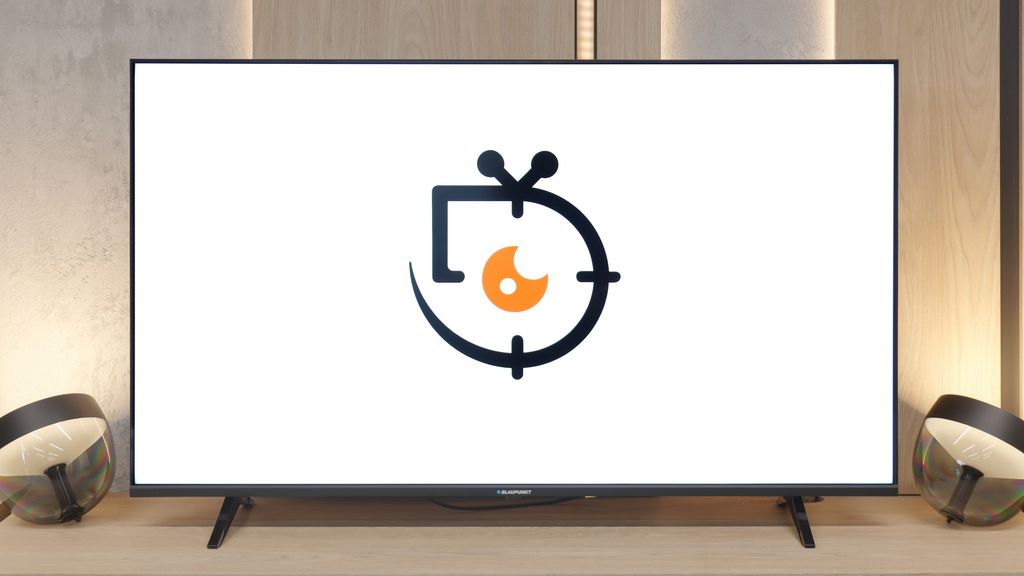
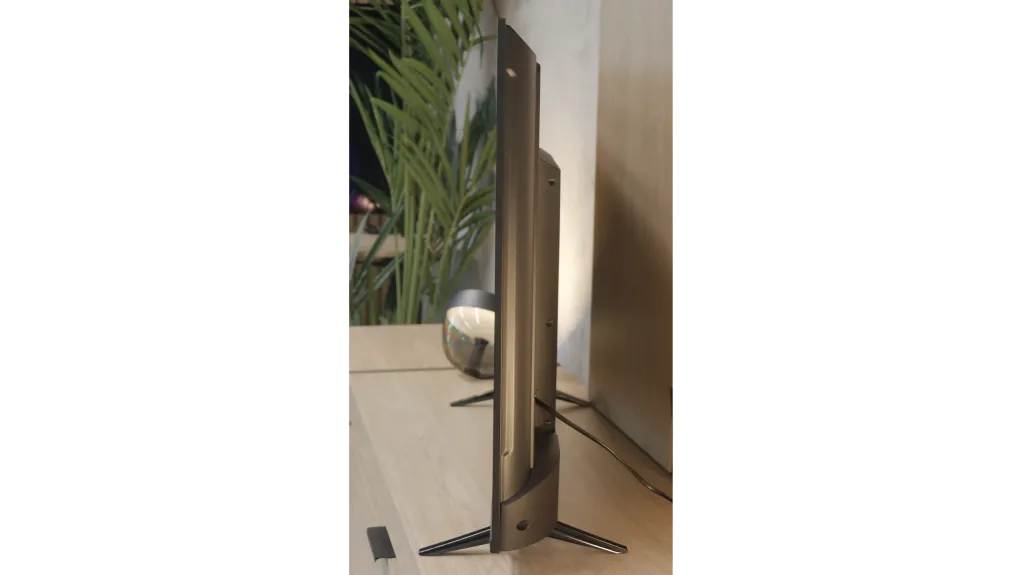
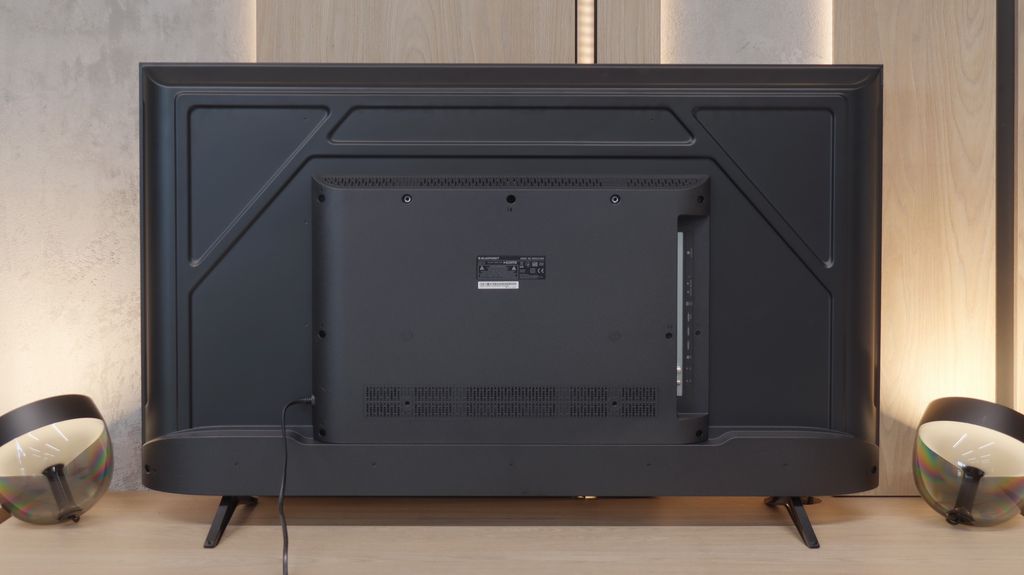
Blaupunkt UGC5500S is a textbook example of a very cheap television that has primarily two huge advantages: the Google TV system and an extremely low price. It is these two elements that make it an appealing option for many people. During testing, we also found a great alternative use for it, which is working with a computer. Thanks to the exemplary legibility of fonts and good viewing angles of the IPS matrix, Blaupunkt surprisingly performs well as an inexpensive monitor. However, one must be aware that this device is typically budget-friendly, and this cost-saving is evident in the image quality. The matrix is simply dim, making it difficult to excel in challenging lighting conditions, not to mention creating any real HDR effect. Additionally, despite good viewing angles, the black level on this model leaves much to be desired – in the evenings, it will be rather dark grey, which is a typical characteristic of the IPS technology used here. Viewed through the lens of price, this is a device that aims to compete in the market not based on image quality, but rather on the amount on the receipt. Blaupunkt UGC5500S will fit perfectly as an additional television in the home, equipment for the holiday home, or in a less important room where the image simply needs to be present, and we want to enjoy all the benefits and applications that Google TV offers.
TV appearance




Contrast and black detail
7/10
2.2/10
Local dimming function: Yes, number of zones: 160 (20 x 8)
Local dimming function: No
Contrast:


Result
61,250:1

Result
13,650:1

Result
14,700:1

Result
11,150:1

Result
5,800:1
Result
1,000:1
Result
1,100:1
Result
1,150:1
Result
1,100:1
Result
1,050:1
Halo effect and black detail visibility:


Check the visibility of bright lights on a dark background. Mini-LEDs often struggle with this. The photo does not compare black levels – that’s what the video below is for.
The video accurately shows differences in contrast and black levels between TVs, as well as potential issues: halo around bright objects or Mini-LED zone operation visible as brightness jumps.
The tested 55-inch model is equipped with a VA panel, which provides deeper blacks compared to IPS/ADS panels. The very use of this technology makes the contrast reach quite a decent level. It is also worth highlighting that the Hisense U6NQ, as a television with MiniLED technology in this version, has 160 local dimming zones, which significantly improves picture quality in many scenes. During testing, for example, in the film Oblivion, the television demonstrated good separation of the hologram lights, and the contrast remained at a satisfactory level. Unfortunately, in more demanding materials, such as the Pioneer Kuro test pattern, a noticeable drop in quality was observed. In such scenes, the dimming zones did not operate correctly, leading to a significant decrease in contrast. Similar issues occurred in scenes from the film Sicario 2, where the blooming effect was clearly visible, suggesting the television's difficulties with precise local dimming management. Despite these shortcomings, the overall contrast level of U6NQ can be considered solid, especially in this price category. The television performs well in most standard scenes, and its capabilities in displaying blacks are better than those of models with other types of panels.
To put it bluntly: when it comes to blacks, it is simply very poor. Our measurements on test screens have only confirmed what we saw with the naked eye – a result around 1000:1 is disappointing nowadays, even in this price range. In cinematic conditions, this "black" simply does not exist. To be more specific, we fired up one of our favourite test scenes – a helicopter flyover in “Sicario 2” (you can see this in the video we’ve included below). Instead of a pitch-black, deep night, we got an image that is... navy blue. Everything that should be dark and mysterious on screen actually shines a dark blue. This is the price we pay for using an IPS panel. On one hand, we get fairly decent viewing angles, so if you’re watching television with the whole family from different angles, the picture doesn’t lose much saturation. On the other hand, if you plan to have evening screenings with the lights turned off, this lack of contrast will hit your eyes from the first minute.
HDR effect quality
5.6/10
3.8/10
Luminance measurements in HDR:

Result
443 nit

Result
426 nit

Result
505 nit

Result
442 nit

Result
448 nit
Result
232 nit
Result
245 nit
Result
255 nit
Result
238 nit
Result
252 nit
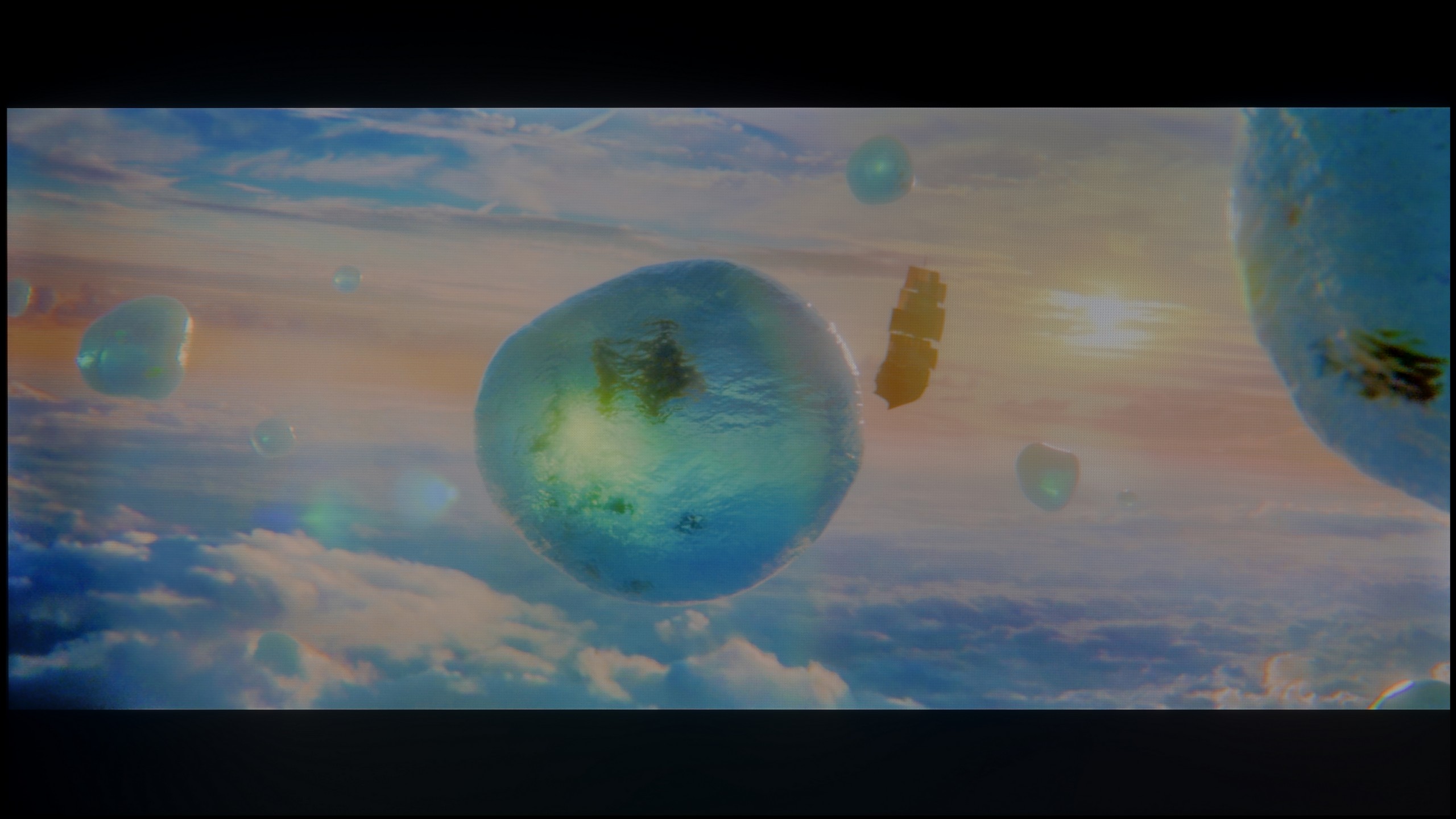
Scene from the movie “Pan” (about 2800 nits)

Scene from the movie “Billy Lynn” (about 1100 nits)


The photos show two HDR10 movies. 'Pan' is one of the brightest productions ever made, while 'Billy Lynn' (soldier) has brightness typical of streaming (Netflix, Prime, HBO MAX). Notice the intensity of effects and detail in whites.
Static HDR10


The photos present the visibility of white details in various HDR formats. They do not show brightness differences between TVs (these can be compared in the previous gallery).
HDR luminance chart:
Blaupunkt UGC5500S
Hisense U6NQ
Hisense U6NQ offers a stable HDR effect, which is a rarity in TVs with local dimming. On most streaming platforms, in films and series recorded in 4K, the television delivers consistent performance – in every tested scene, regardless of difficulty, the brightness is around 450 nits. This is a pleasant surprise, as in many models of this class, there are notable differences – some scenes are well-lit, while others are heavily dimmed by dimming algorithms. However, the Hisense U6NQ prioritises maintaining higher brightness, which comes at the expense of black levels, as mentioned in the contrast test paragraph.
The HDR effect on the U6NQ is satisfactory, offering a noticeable "burst" of light in bright moments, although it is worth noting the previously mentioned blooming, which may be visible in more challenging scenes. In terms of colours, the television also performs decently – the coverage of the DCI-P3 palette is 89%, and BT.2020 is 71%. Although these are not results that would impress more demanding users, for beginners in the world of high-quality materials, the U6NQ serves as a solid choice. Therefore, it presents an interesting proposition as an "entry-level" television for home cinema.
Here, too, we will not mince words – if you are looking for a television strictly for cinematic experiences in HDR, you have come to the wrong place. The Blaupunkt UGC5500S is unfortunately not a machine designed for such challenges. This is primarily due to its very low brightness, which we measured during our tests. A result of around 250 nits on film scenes speaks for itself. It is simply too little to even talk about any real HDR effect. Quite frankly, everything displayed here in this format can be confidently regarded as a somewhat “enhanced” SDR mode. We expected this, as virtually every device in this price range falters in this area, but we feel obliged to warn you about it. Manufacturers love to boast about HDR compatibility with stickers on their boxes, but in reality, this format simply does not exist here – it lacks the “fuel” of brightness.
The situation is particularly difficult for Blaupunkt, as we are dealing with a panel that has a very basic coverage of the DCI-P3 colour palette, reaching only about 80%. You will not find any advanced coatings to extend these capabilities (such as quantum dots), which means that scenes that should ideally burst with richly saturated colours appear simply under-saturated on this screen. Therefore, we have a specific piece of advice for you: do not force the HDR mode on this model. If you have the option in the streaming app settings – simply turn it off. By sticking to the classic SDR mode, you can be sure that the television will not attempt to “enhance” something that it cannot handle hardware-wise.
Factory color reproduction
8/10
4.8/10


This gallery shows how colors change after professional TV calibration. If you notice the difference, we recommend ordering this service at SkalibrujTV.com.
Factory Mode
After calibration


This gallery shows how colors change after professional TV calibration. If you notice the difference, we recommend ordering this service at SkalibrujTV.com.
Factory Mode
After calibration
Hisense U6NQ in Filmmaker mode offers really decent colour reproduction, although it's worth noting that differences between individual units can be noticeable. The model we tested was pleasantly surprising, especially with HD content in SDR quality. The white balance was correct here, and errors around 3–4 ΔE should be acceptable for the average viewer. The television performed slightly worse with colour reproduction in 4K HDR materials. The dominance of blue shades led to unnatural cool tones on the Colour Checker chart, giving the image a "store-bought" character. Combined with issues in brightness characteristics – gamma and EOTF curve caused some parts of the image to be too dark – the Filmmaker mode loses some of its credibility in this case. Although the factory settings of the tested unit deserve praise, especially in SDR, there were still minor shortcomings that would require correction to fully exploit the capabilities of the television.
We also took a close look at how Blaupunkt handles colours in movie mode, and here the matter is, in short, twofold. Once again, we need to clearly separate what we see in standard SDR format from what happens when HDR is turned on, as these are two entirely different worlds. Let’s start with the better side of the coin. If you plan to watch classic television, YouTube, or older films on this television, you can count on really reasonably well-tuned colours. In our test unit, the white balance in movie mode performed exceptionally well, which honestly surprised us. Of course, to avoid being overly optimistic, we did notice some shortcomings. Looking at the gamma charts, we observed that the processor struggles with appropriately dimming the image in its brightest areas. Additionally, there is quite a strong, at times excessively aggressive red saturation, which resulted in visible errors in reproducing certain shades. Nevertheless, in general terms, the image in SDR is simply solid and can be watched without a grimace on one’s face. Unfortunately, the charm disappears the moment we again enter the HDR world. Here, Blaupunkt behaves as if we suddenly switched it to shop mode, and in its worst version. The excess blue in the white balance is so significant that it is almost blinding, ruining any realism of the scene. Moreover, the television interprets brightness very loosely, which, when analysing the EOTF curve, clearly showed that for most of the time, the colours appear simply washed out and lacking in depth. This is, by the way, perfectly visible through the colour errors that become evident in this mode. Once again, we are left with the same conclusion: Blaupunkt in SDR mode looks significantly better and more natural than in HDR, which feels forced and lacking appropriate refinement.
Color reproduction after calibration
8.3/10
6.4/10


The photos show how movies look on the TV. Pay attention to black detail visibility, colors, and shadow tint.


The photos show how movies look on the TV. Pay attention to black detail visibility, colors, and shadow tint.
Although the factory settings of the Filmmaker mode on the Hisense U6NQ were quite good, we decided to carry out a calibration to fully assess the capabilities of this model. Only after such an adjustment can one see how the television performs under ideal conditions. In the case of SDR content, which was already at a high level, we managed to further improve the white balance. However, the most significant change came from correcting the brightness characteristics – the gamma was optimised and no longer causes excessive dimming of the image, which improves its naturalness.
For 4K HDR content, the calibration also produced positive effects. We eliminated the blue dominance issue, resulting in a more balanced and natural image. However, managing brightness in HDR materials remains a more complex matter. The EOTF curve, while having problems with dimming the image in the 10–30% brightness range in laboratory conditions, reveals other shortcomings in real scenes. The television tends to excessively brighten the smallest elements on the screen. As a result, this leads to visible halo effects around bright objects. This phenomenon, which we mentioned earlier in the context of contrast and HDR, arises from the technological limitations of the particular model and is often difficult to eliminate.
In short: although the Filmmaker mode with factory settings performed decently, calibration allowed us to extract an even better effect – minor adjustments resulted in a more balanced image, especially in HDR content. For users seeking the highest quality picture, calibration will be a beneficial step.
It may sound like a joke – pulling out professional measuring equipment for a television costing around a thousand złotys / 250 dollars, but we wouldn’t be ourselves if we didn’t check it out. The question is: does such cheap equipment give us any room for manoeuvre when it comes to calibration? To your surprise, the answer is: yes, and very much so. In the Blaupunkt UGC5500S menu, we found surprisingly many options that allowed us to really work on the picture. These are not just empty sliders; they are specific tools that we could utilise using our measuring sensors and software. In SDR mode, the effects were visible to the naked eye. We successfully eliminated the problem we mentioned earlier – that excessive, almost artificial red saturation. We also fixed the issue of improper dimming in the brightest parts of the image. After calibration, the standard format image became significantly more balanced and simply correct. When it came to HDR, the situation was again more complicated. While we managed to 'tame' that aggressive blue tint in the white balance, it was clear that we were fighting somewhat in vain. Even after adjusting the settings, the television still tried to interfere with the image in its own way, as if the electronics knew better than us how the scene should look. Additionally, there is a hardware barrier that no slider can overcome – colours in HDR still remain under-saturated. This is simply due to the quality of the panel itself; it physically cannot produce the most vibrant colours. To sum up this topic: if any of you ask whether it is possible to calibrate a television for a 'thousand', we answer with full conviction: it is possible.
Smoothness of tonal transitions
7.8/10
6.4/10


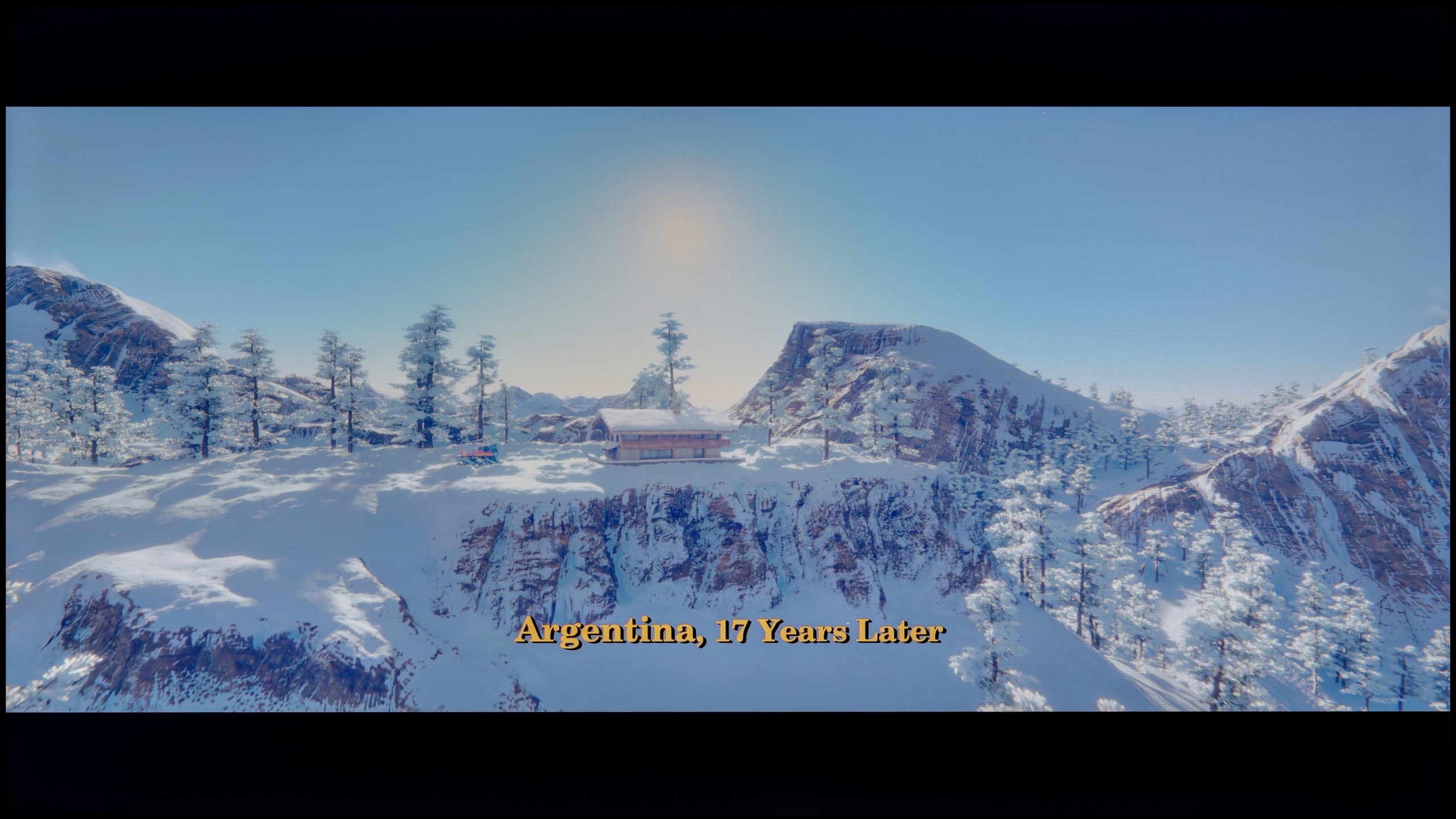
These are selected scenes that show smooth tonal transitions from one color to another. If you see distinct banding, it’s the TV panel’s fault.

These are selected scenes that show smooth tonal transitions from one color to another. If you see distinct banding, it’s the TV panel’s fault.
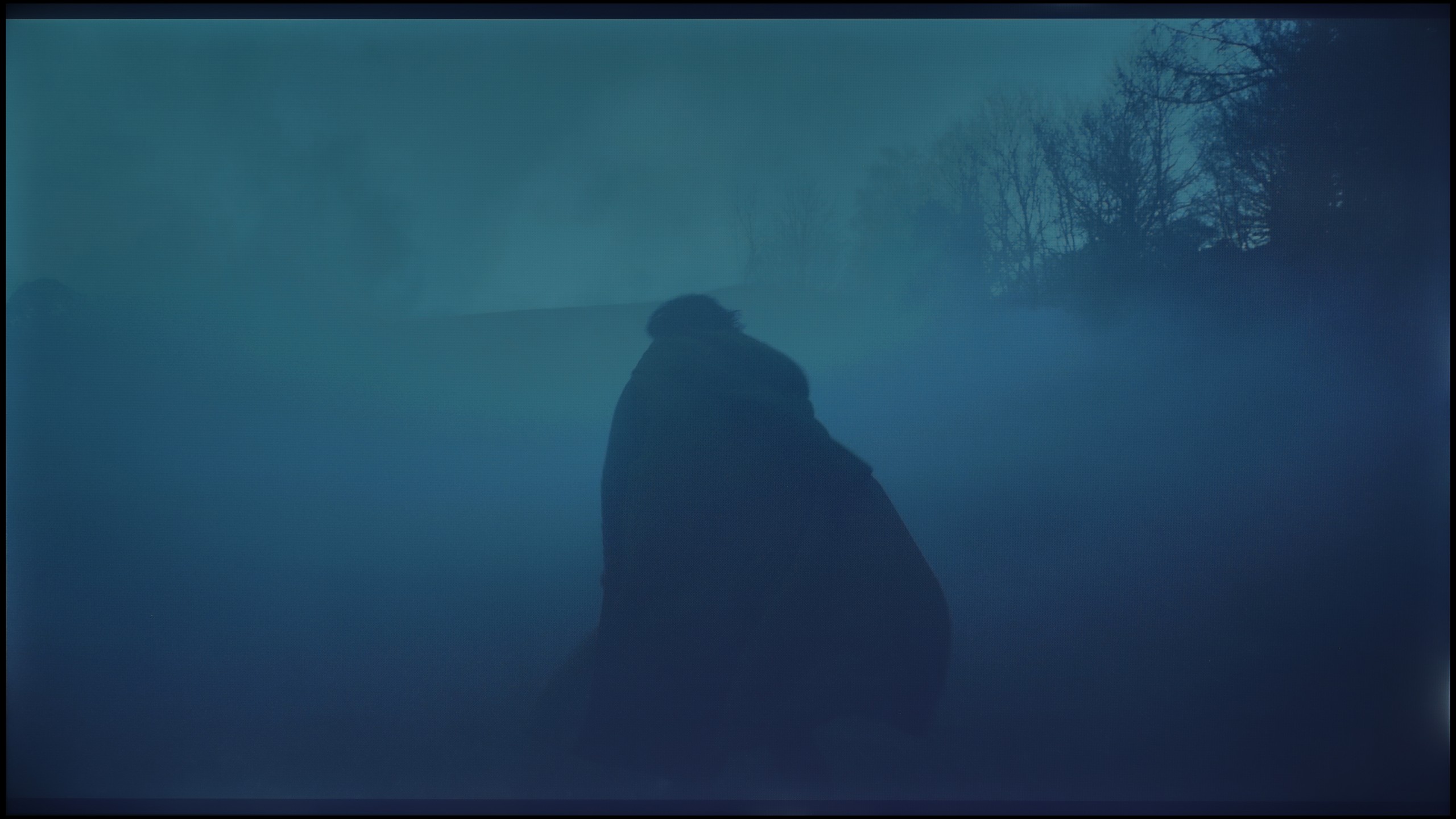
These are selected scenes that show smooth tonal transitions from one color to another. If you see distinct banding, it’s the TV panel’s fault.

These are selected scenes that show smooth tonal transitions from one color to another. If you see distinct banding, it’s the TV panel’s fault.
The fluidity of tonal transitions in Hisense U6NQ is at a very good level. In most scenes, there are no visible issues with colour blending, which ensures a pleasant and cohesive visual experience. However, a more discerning eye may spot slight imperfections in specific instances, such as the scene with the blue sky in Kingsman or the final scene with the red background. These subtle shortcomings are, however, small enough not to affect the image perception for most users. Overall, the television performs very well in this category.
Looking at our test photographs, it's really hard to criticise anything. Most of the colours in the attached images blend together almost perfectly, creating smooth gradients without noticeable "steps". And indeed, in most scenes where we captured these shots, it looked surprisingly good. However, the problem arises when we stop analysing still frames and simply start watching the films. In motion, the situation changes dramatically. During dynamic scenes on screen, artefacts begin to appear, which are a direct result of simply using a poor image processor here. Unfortunately, a static photo cannot convey this "jarring" of colours, but you must take our word for it: what looks clean and smooth in the picture can stand out harshly during the screening and is simply annoying. This is precisely why we have a rather low rating in this category.
Image scaling and smoothness of tonal transitions
5.6/10
2.5/10


Smooth transition function


The match photo shows how the TV smooths weak tonal transitions in low-quality video.
Image scaling SD (576i)


The model photo shows how it handles upscaling of SD material.
With high-quality materials, such as 4K, tonal transitions on U6NQ look really good – the colours blend nicely, and the image is coherent. Unfortunately, when we move to content in lower resolutions, the television does not offer any additional features that could improve this aspect. An example is the test with the light bulb, where it is clearly visible that the television has a problem with rendering subtle tonal transitions.
However, digital processing performs quite well. The image looks pliable, is pleasantly soft, and free from excessive banding. Moreover, thanks to the sharpness settings, it can be adjusted according to personal preferences – whether towards a softer or sharper image. Overall, although scaling lower quality materials could be better, the television handles image processing effectively.
If you expect the processor in this model to magically "fix" the poor-quality signal from cable TV or old films from YouTube, we must disappoint you. The capabilities of this television end at absolutely basic upscaling, which is simply stretching the image to a higher resolution. It does this adequately in that the image is not blurry, but there's no mention of any intelligent sharpening or adding details here. Worse still, Blaupunkt is completely devoid of any features for reducing unwanted tonal transitions. If the material being watched has what is known as banding (that is, ugly "steps" instead of a smooth transition of colours, e.g., in the sky), this television will display it in all its glory. Additionally, the television has a tendency to slightly crop the edges of the image. Instead of displaying 100% of what the source sends, Blaupunkt slightly enlarges the frame, causing us to lose details at the very edges of the screen. In summary: in the category of digital "enhancing" of images, Blaupunkt simply performs poorly. We receive a raw, unprocessed signal, with all its flaws.
Blur and motion smoothness
3.4/10
3.7/10

Blur (native resolution, maximum refresh rate):



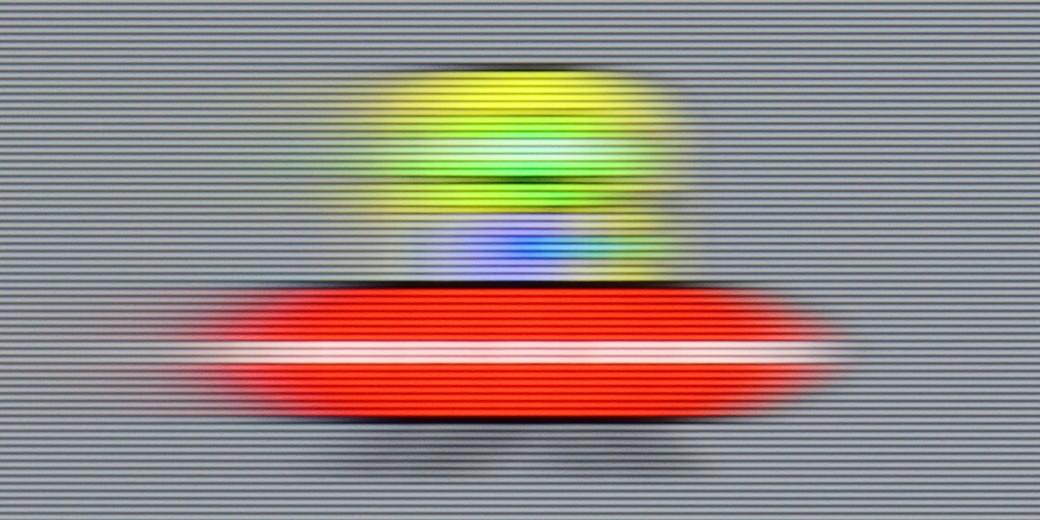
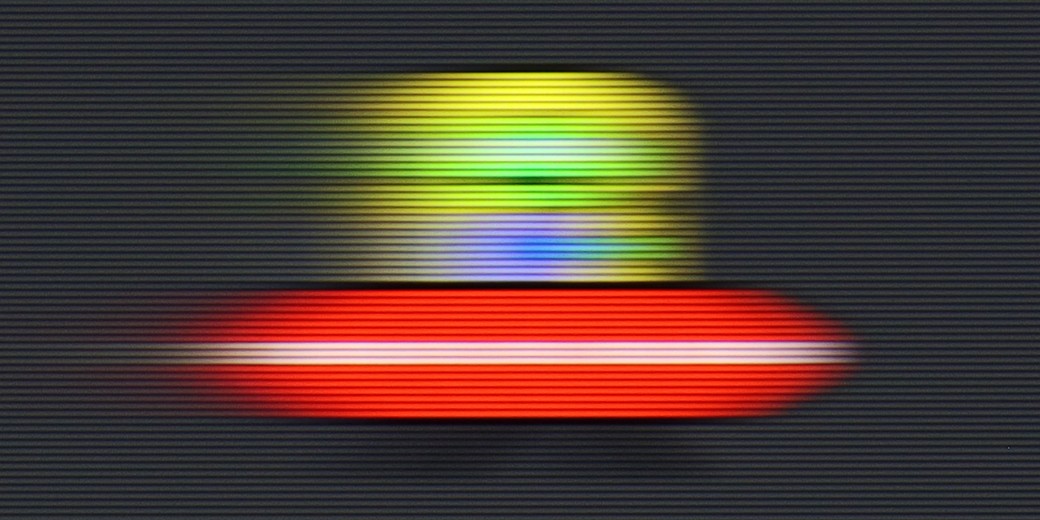
Hisense U6NQ offers native 60 Hz refresh rate at 4K resolution, but the manufacturer has added a feature that allows the refresh rate to be increased to 120 Hz, at the cost of reducing the resolution to Full HD. This solution, which we have seen before in TCL televisions, such as the C655 or C655 PRO. This gives the user the choice – higher motion fluidity or full resolution. This is a sensible approach, especially considering that many games on next-generation consoles do not achieve full performance in 4K at 120 Hz.
As for movies, the television is equipped with a motion smoothing feature that allows you to adjust the motion characteristics to your own preferences. This allows for a more cinematic effect or increased fluidity in dynamic scenes. Overall, Hisense U6NQ offers reasonable solutions in terms of motion fluidity that should satisfy both gamers and movie enthusiasts.
When it comes to motion fluidity, Blaupunkt has nothing to defend itself with. A 60 Hz panel at this price is standard, so none of us were expecting an impeccably sharp image in fast action scenes or during a match. However, the biggest drawback of this model is that you won't find any digital motion smoothers in the menu. The manufacturer has not given us any room for manoeuvre – nothing can be smoothed out or adjusted to our personal preferences. The image is always "raw," and we receive it exactly as the source transmits it. For fans of cinematic "jumping" of the image, this might be good, but the rest of us simply have to get used to the lack of any motion enhancement.
Console compatibility and gaming features
6.3/10
3.5/10
- ALLM
- VRR
- VRR range48 - 60Hz
- Dolby Vision Game Mode
- Correct implementation of HGIG
- 1080p@120Hz
- 1440p@120Hz
- 4K@120Hz
- Game bar

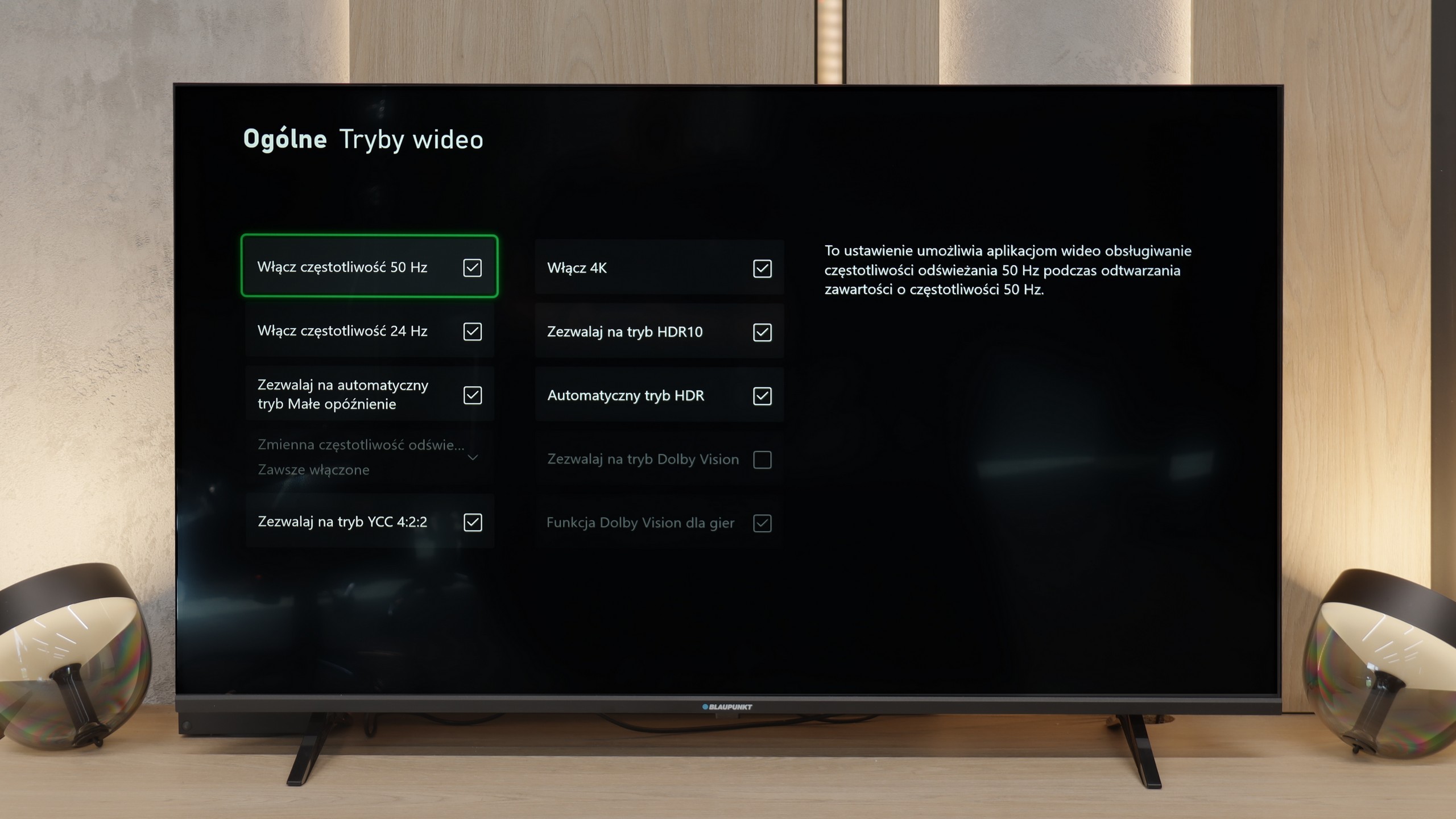


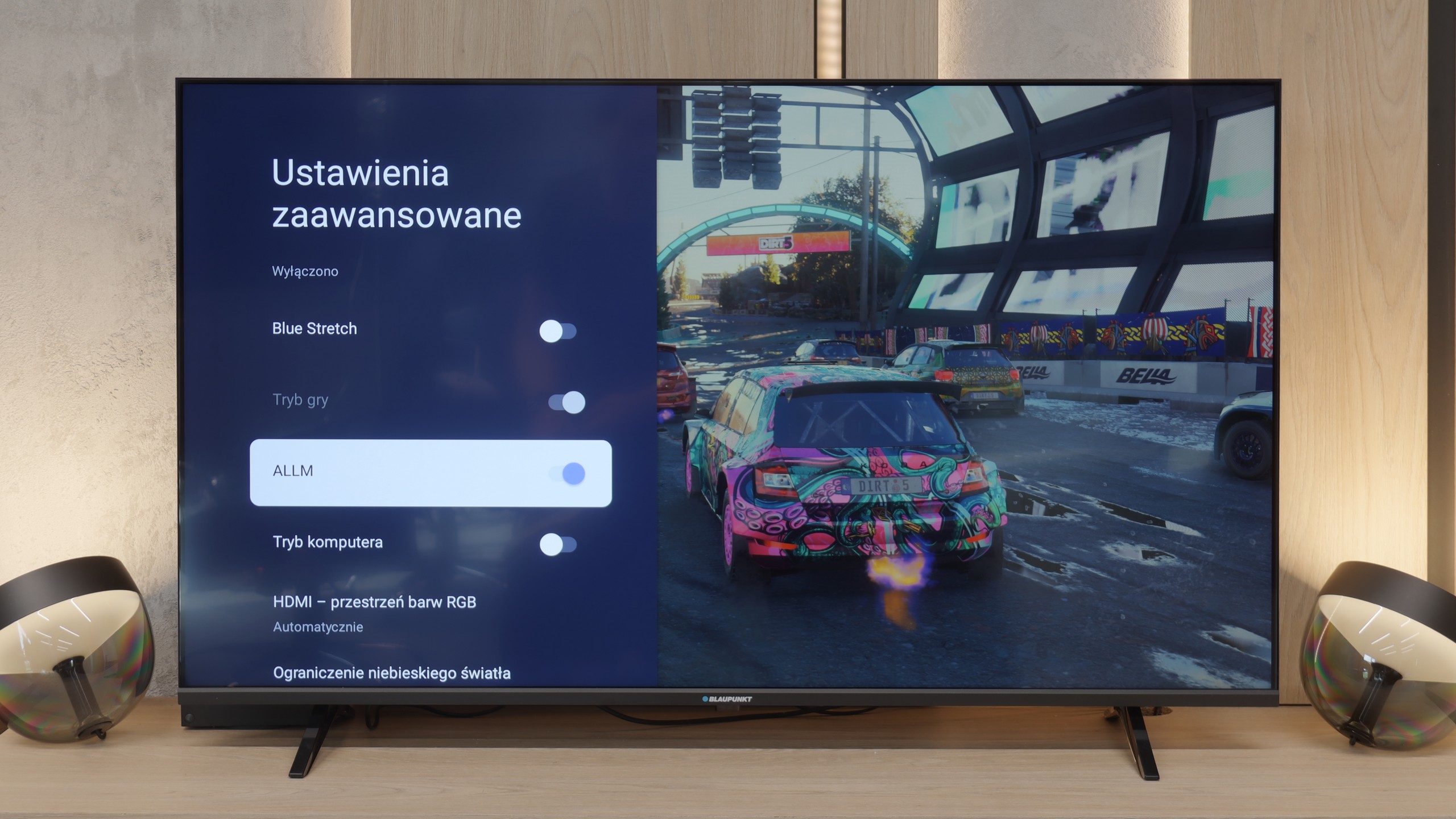

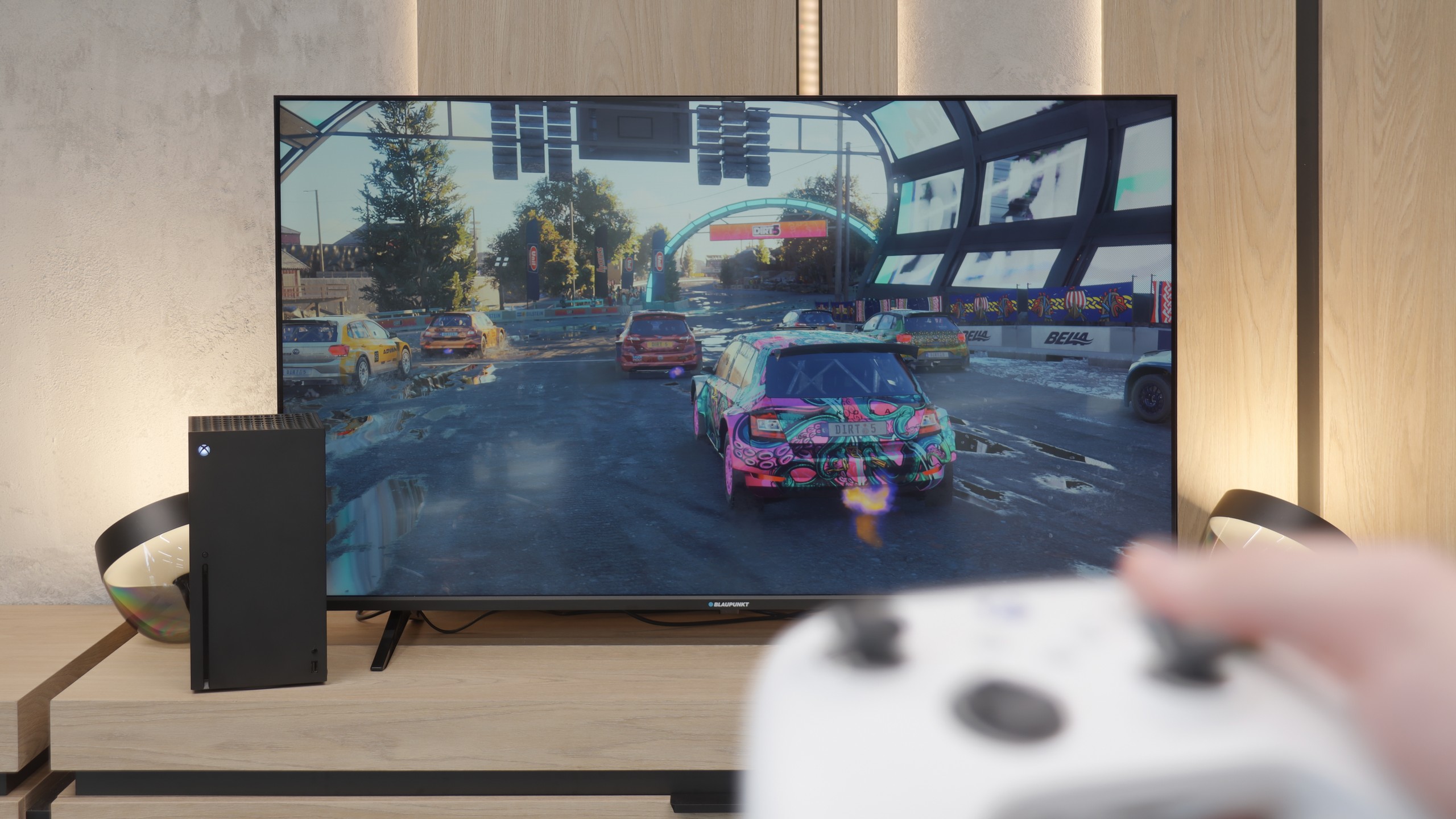
Hisense U6NQ offers the option to choose between 4K at 60 Hz and Full HD with a refresh rate of 120 Hz. This solution may appeal to gamers who want to decide what is more important to them – higher resolution or smoothness. The television supports features such as ALLM and VRR, which help in achieving smoother gameplay. A nice addition is the GameBar – an easy-to-use panel that allows you to quickly change picture settings and check statistics. There is also a Dolby Vision Game mode, which operates with low input lag, which is a big plus for console enthusiasts. Unfortunately, it lacks HGiG, which could further enhance HDR quality in games. Nevertheless, the Hisense U6NQ performs quite well as a gaming television, especially for those who play occasionally and do not require the highest refresh rates in 4K. It is a solid choice for less demanding users.
When it comes to gaming on the Blaupunkt, we weren't expecting miracles, and indeed – the list of features is not very long. However, there are two interesting points worth mentioning, as they might be significant for some of you at this price. The first plus is that the TV quickly detects the connected console. Thanks to the ALLM (Auto Low Latency Mode) feature, the device knows when you start gaming and automatically switches to low-latency mode. This is convenient because you don't have to fiddle with settings each time to prevent input lag from ruining the fun. The second point is a genuine surprise that caught us off guard. Although it has a 60 Hz panel, the Blaupunkt can display images at 120 Hz at Full HD resolution. Sure, you lose the details of 4K, but for those playing more dynamic, online shooters where smoothness is more important than resolution, this is a really nice and unexpected addition in such an inexpensive device. Besides these two points, you won't find anything more here. There are no advanced smoothness enhancement systems for gamers or extensive gaming menu bars. This is a simple screen for occasional gaming.
Input lag
9.9/10
8.6/10
SDR
HDR
Dolby Vision
The television Hisense U6NQ offers a very low input lag of 14 ms, making it a good choice for gamers, especially those who prefer fast-paced titles. It is also worth noting that the Dolby Vision mode in games works really well here. This is a pleasant surprise, as on many other televisions this HDR mode performs only averagely.
An important point for every gamer is, of course, input lag, which refers to how quickly the television responds to our movements on the controller. Here, Blaupunkt has something to brag about, although the results are quite specific. At 4K resolution, the lag is just 12 ms. That's an excellent result. With such low lag, gaming feels simply phenomenal, and the response is almost instantaneous. It is a pity, however, that the situation changes when switching to 1080p mode. Here, the input lag increases to about 30 ms. To be clear: this is still not a terrible result. For most people, it will be "more than acceptable," and during casual gaming, you probably won't even notice it. Nonetheless, it is a shame that such good parameters could not be maintained as we saw with full 4K. Nevertheless, in the overall assessment, as a budget screen for consoles, Blaupunkt performs quite admirably in this regard.
Compatibility with PC
6/10
6/10

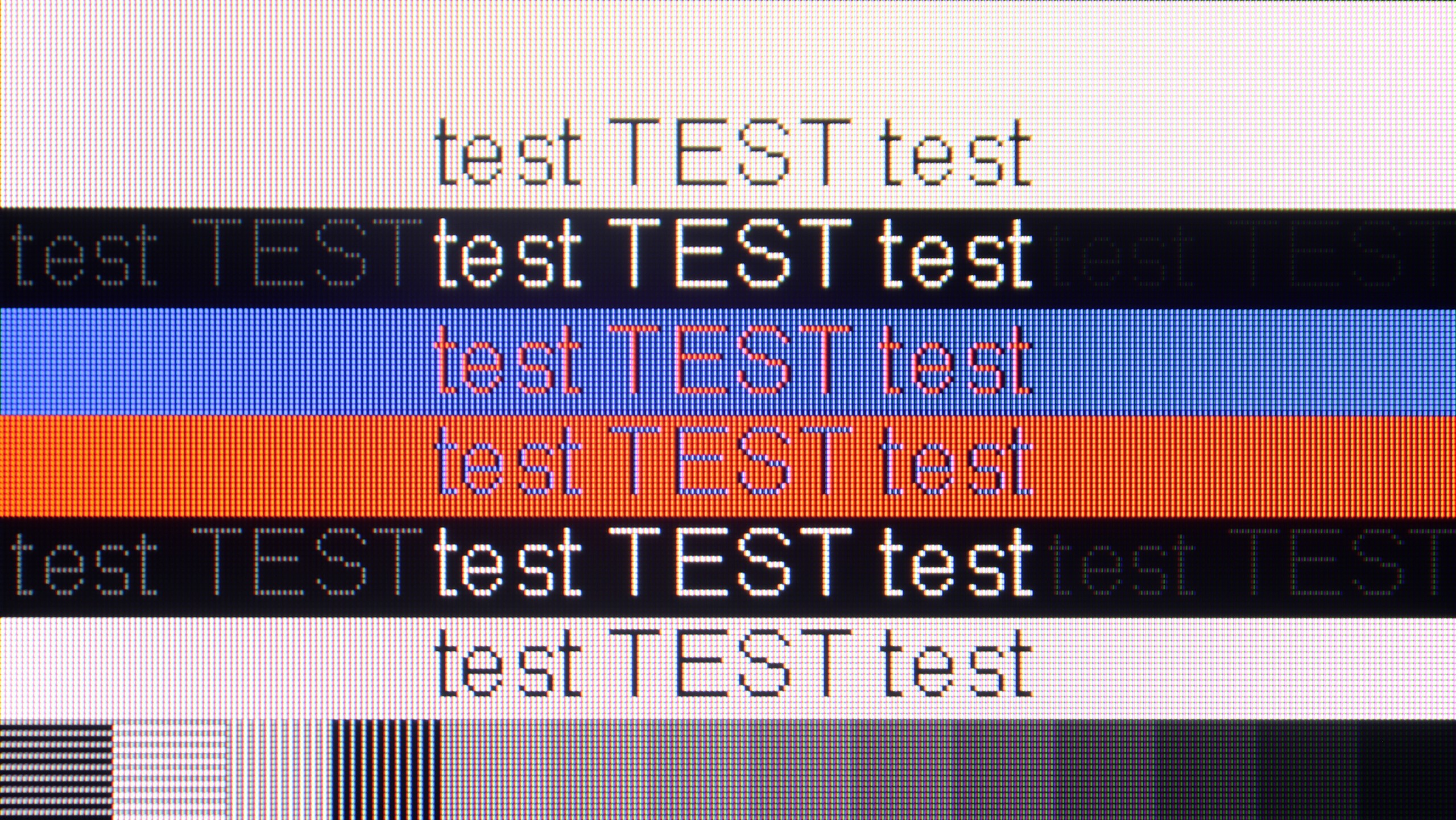
The photo shows the legibility of small fonts. Ideally, lines should be the same thickness on both light and dark text, with minimal pixel gaps.
As a screen for working with a computer, Hisense U6NQ performs quite well. The fonts are sufficiently clear, making it adequate for everyday writing or browsing the internet.
When it comes to gaming, the television supports G-Sync, but only at 4K resolution at 60 Hz. Unfortunately, if anyone was hoping for 120 Hz fluidity in 1080p with G-Sync enabled, they may be disappointed – this television does not offer that. It's somewhat unfortunate, as it could have been a decent solution for gamers who prefer smoothness over resolution.
If you plan to connect a computer to this television, it is absolutely crucial that you find and enable the PC compatibility option in the menu. Once you do that, magic happens – the implementation of Chroma 4:4:4 and font readability jumps to an exemplary level. The readability of text is simply excellent here. Of course, our editorial meticulousness would not allow us to pass by this equipment without taking a look "under the hood." During very specific tests with thin, dark text, we noticed that the horizontal and vertical matrix masks differ slightly in brightness levels. However, we want to reassure you: this phenomenon is so subtle that during normal use, such as writing emails or browsing the web, you would not be able to notice it with the naked eye. We maintain our opinion that as a monitor strictly for dynamic PC gaming, it is not the ideal choice (as we mentioned in the context of the 60 Hz refresh rate), but if any of you are wondering whether you can comfortably work on such a Blaupunkt – we answer: yes, it is absolutely possible.
Viewing angles
3/10
5/10
The viewing angles on the Hisense U6NQ are average, which is typical for VA panels. Thanks to this technology, we gain better contrast and deeper blacks, but at the cost of image visibility at wider angles. It's a classic compromise – in televisions with IPS panels, the situation is reversed, where viewing angles are wider, but contrast and blacks suffer in quality.
It’s really very good here. Whether we were sitting directly in front or on the edge of the sofa, the colours did not lose their saturation. This is a big plus if you plan to watch matches or films with a larger group – no one will complain that the picture looks worse for them. Although IPS panels are known for their good angles, in this particular model, when viewed from a sharp angle, the picture noticeably loses brightness. Interestingly, the colour saturation remains intact, but the screen simply becomes darker. This is not something that disqualifies this television, but it’s worth knowing.
Daytime performance
6.1/10
4/10


Panel brightness
Blaupunkt UGC5500S: 245 cd/m2
Hisense U6NQ: 488 cd/m2
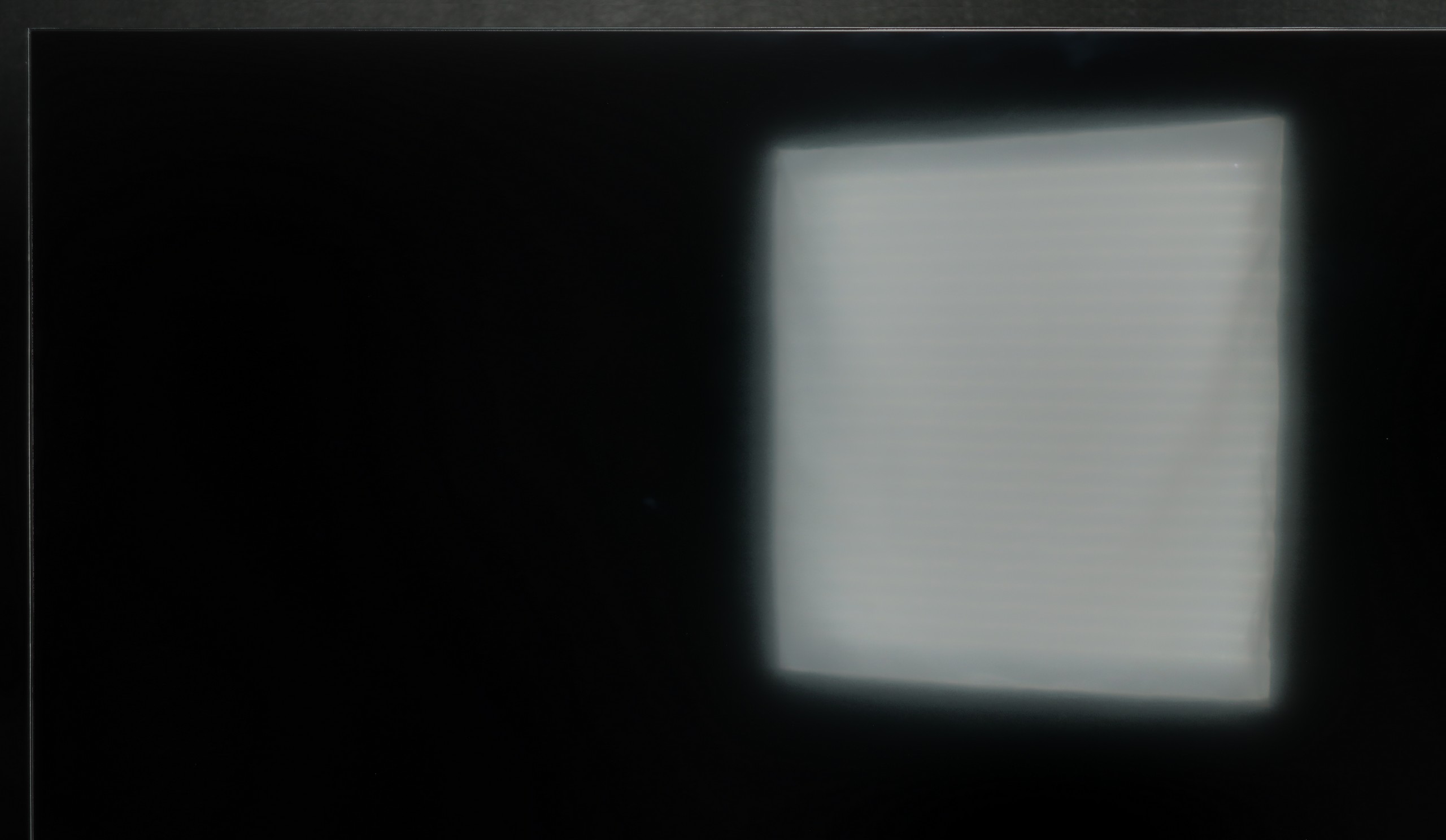
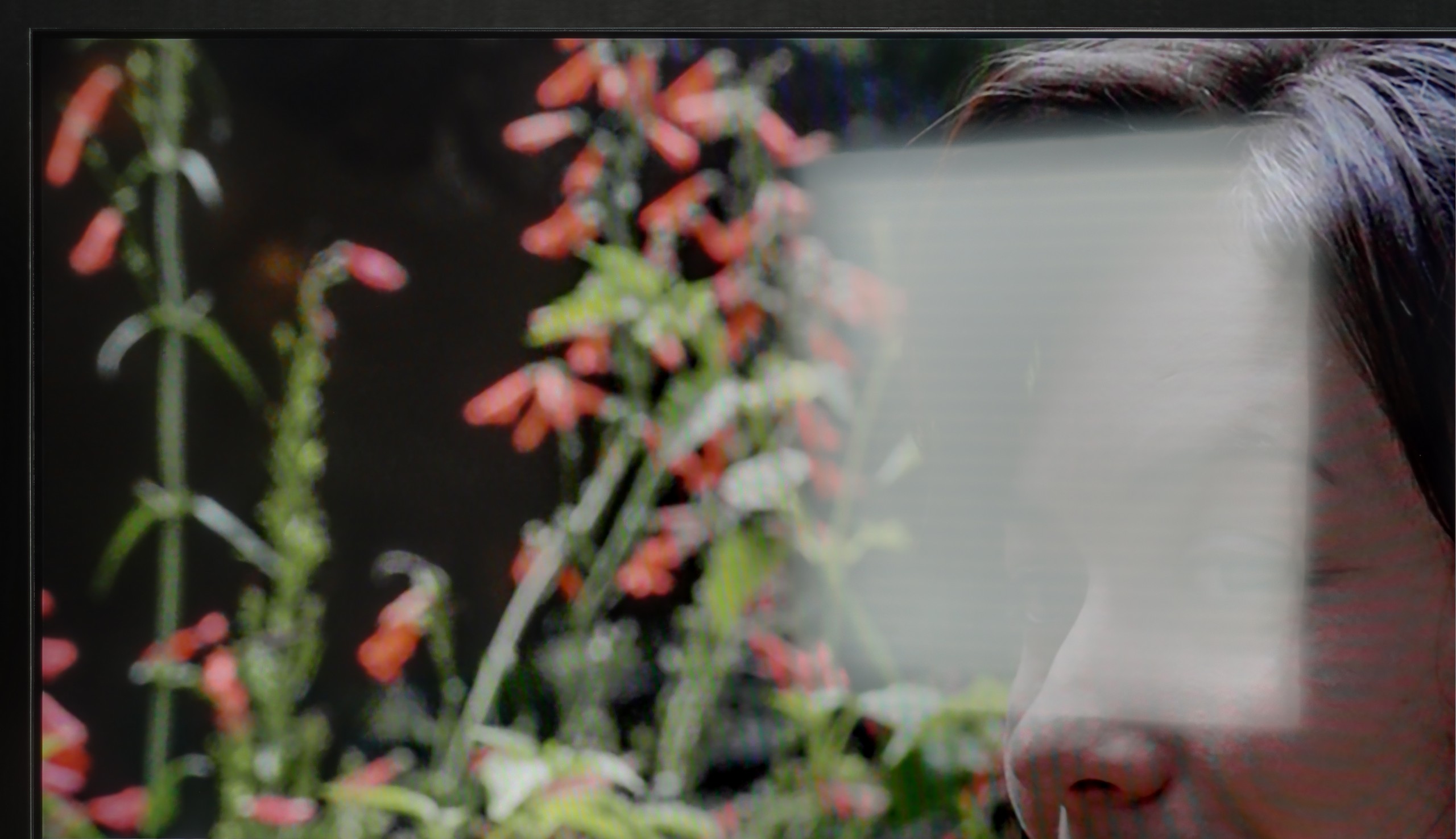
Hisense U6NQ performs well in bright rooms thanks to the satin finish on the panel, which effectively suppresses reflections. The average brightness on SDR content, such as standard television, is 488 cd/m², which is more than sufficient for comfortable viewing even under slightly challenging lighting conditions.
In terms of daytime performance, Blaupunkt is simply average. It all comes down to the low brightness of the panel, which – as we have mentioned, hovers around 250 nits. This is definitely too little for the screen to "break through" the strong light coming into the living room. As a result, under strong sunlight, the image loses clarity and appears somewhat washed-out. However, there is one bright spot in this category, the satin finish of the panel. Thanks to this, we do not have to deal with the mirror effect, which often means that instead of watching a film, we are seeing a reflection of our own sofa. The satin nicely diffuses reflections, which somewhat saves the situation. Nevertheless, we cannot cheat physics: while the coating bravely fights against reflections, the low brightness ultimately surrenders in the battle with sunlight. If you are planning a screening in the middle of the day in a very bright room, be prepared for the necessity of drawing the curtains.
Panel details
Subpixel Structure:

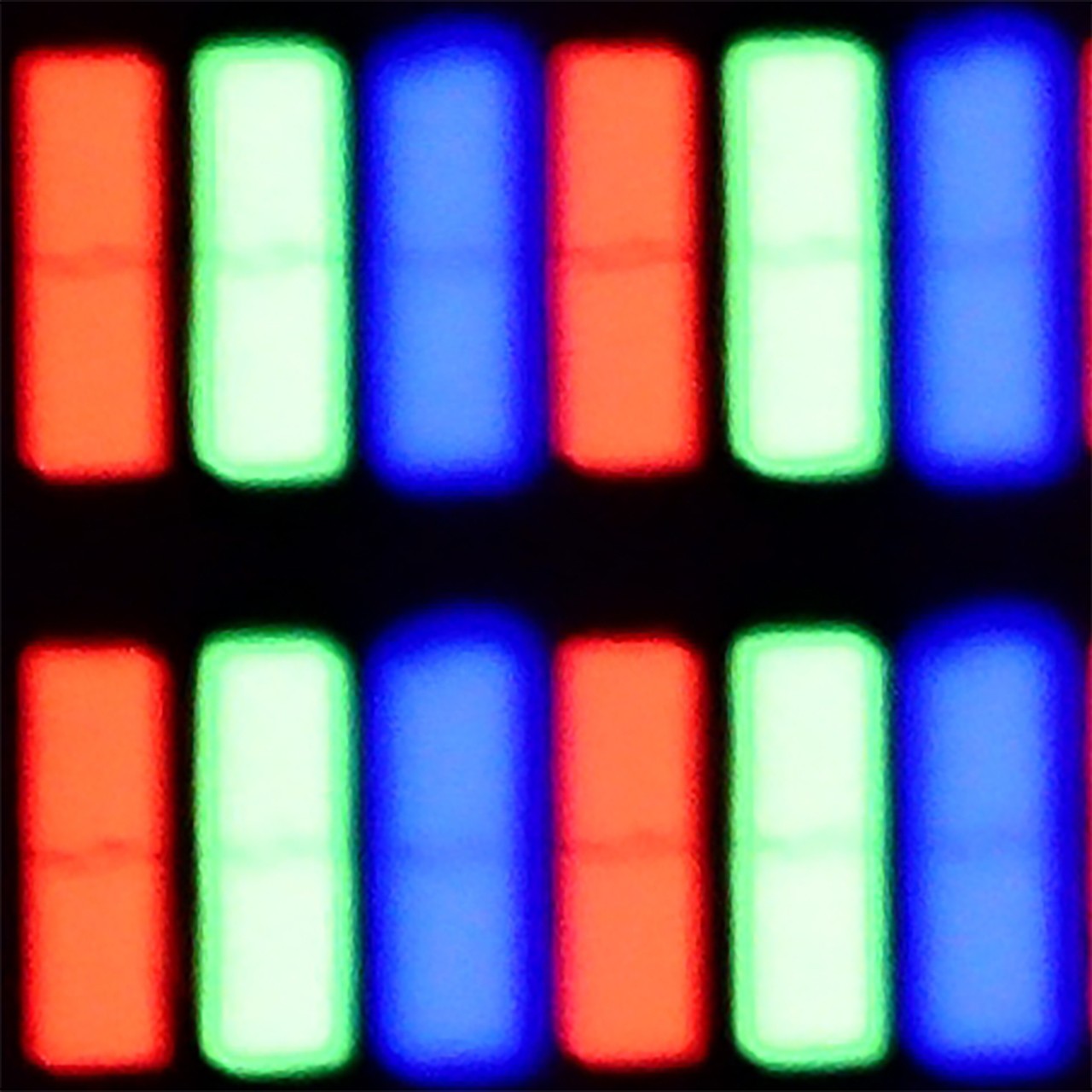
Panel uniformity and thermal imaging:


TV features
8.9/10
5.1/10
- SystemVIDAAGoogle TV
- System performanceGoodAverage
- HDMI inputs3 x HDMI 2.0, 0 x HDMI 2.13 x HDMI 2.0, 0 x HDMI 2.1
- Other inputsRCA (Chinch)RCA (Chinch)
- OutputsToslink (Optical audio), eARC (HDMI), ARC (HDMI), Mini-Jack (Headphones)Toslink (Optical audio), eARC (HDMI), ARC (HDMI), Mini-Jack (Headphones)
- Network InterfacesWi-Fi 2.4GHz, Wi-Fi 5GHz, Ethernet (LAN) 100MbpsWi-Fi 2.4GHz, Wi-Fi 5GHz, Ethernet (LAN) 100Mbps
- TV receptionDVB-T, DVB-T2, DVB-S, DVB-S2, DVB-CDVB-T, DVB-T2, DVB-S, DVB-S2, DVB-C
Classic features:
- Recording to USB (terrestrial TV)
- Recording programming
- Picture in Picture (PiP)
- RF remote control (no need to aim)
- Backlit remote control
- Teletext
- Audio only mode
- Bluetooth headphones support
- Simultaneous Bluetooth headphones & TV audio
Smart features:
- AirPlay
- Screen mirroring (Windows Miracast)
- Voice search
- Voice search in native language
- Ability to connect a keyboard and mouse


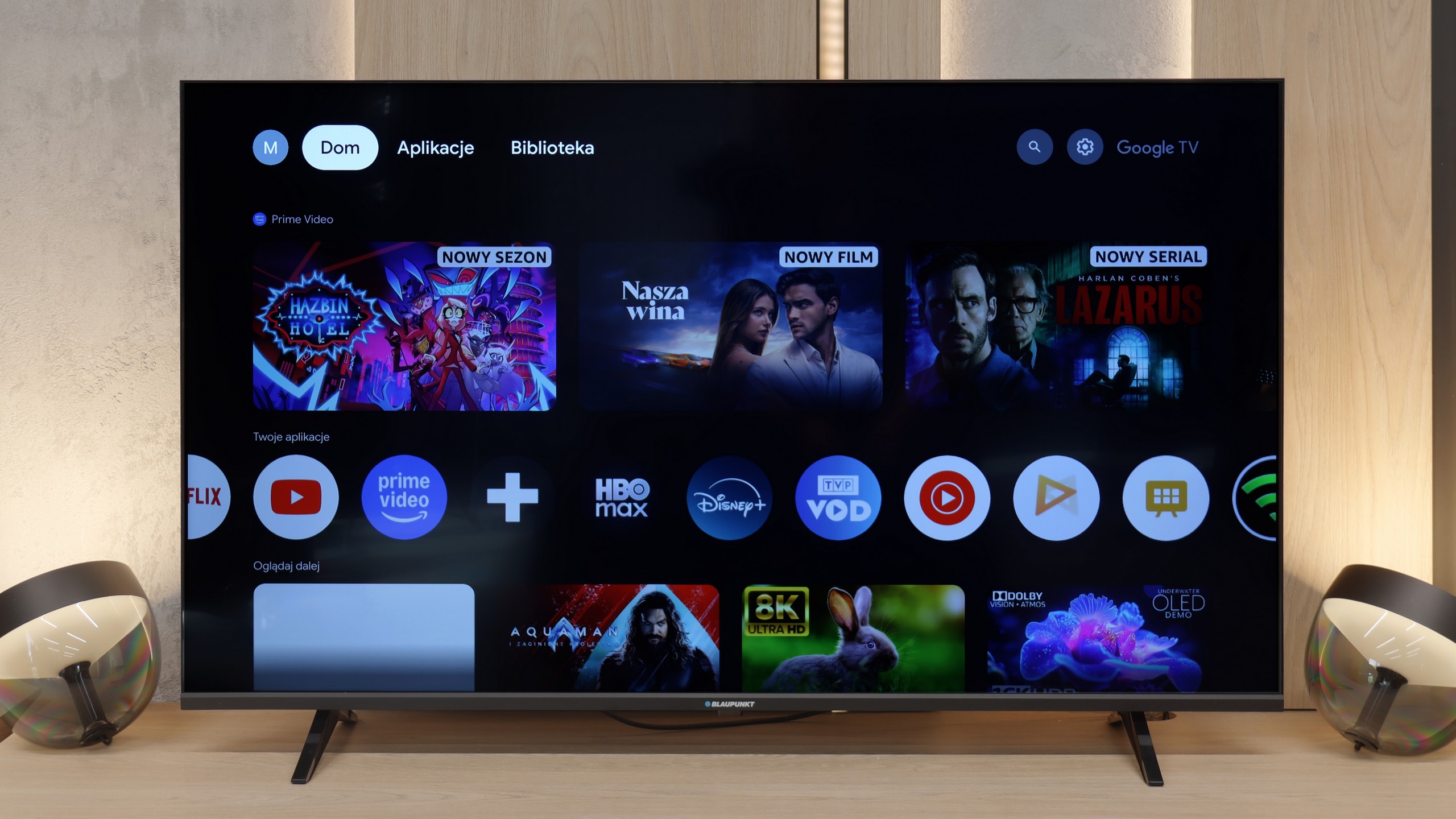
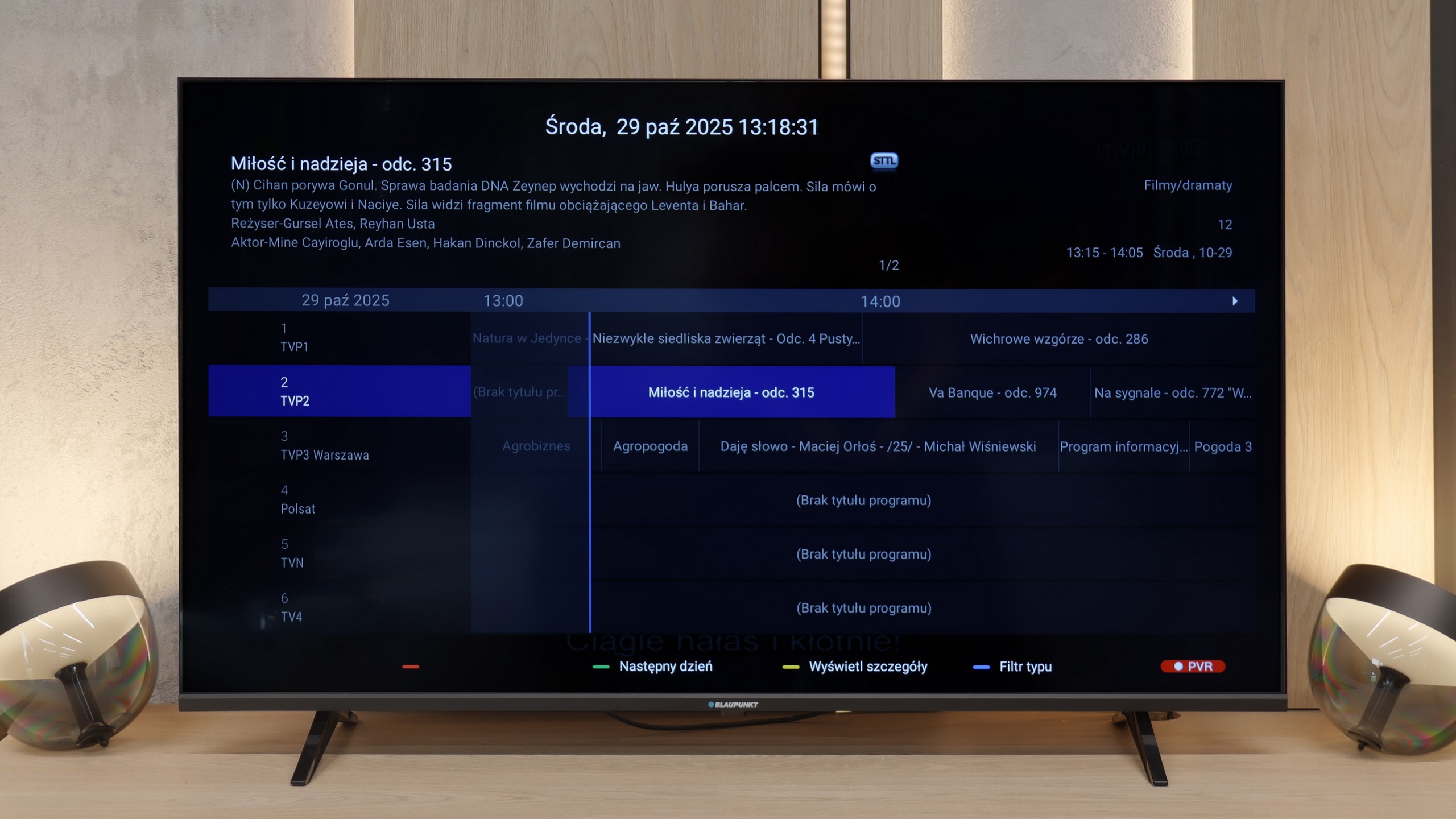

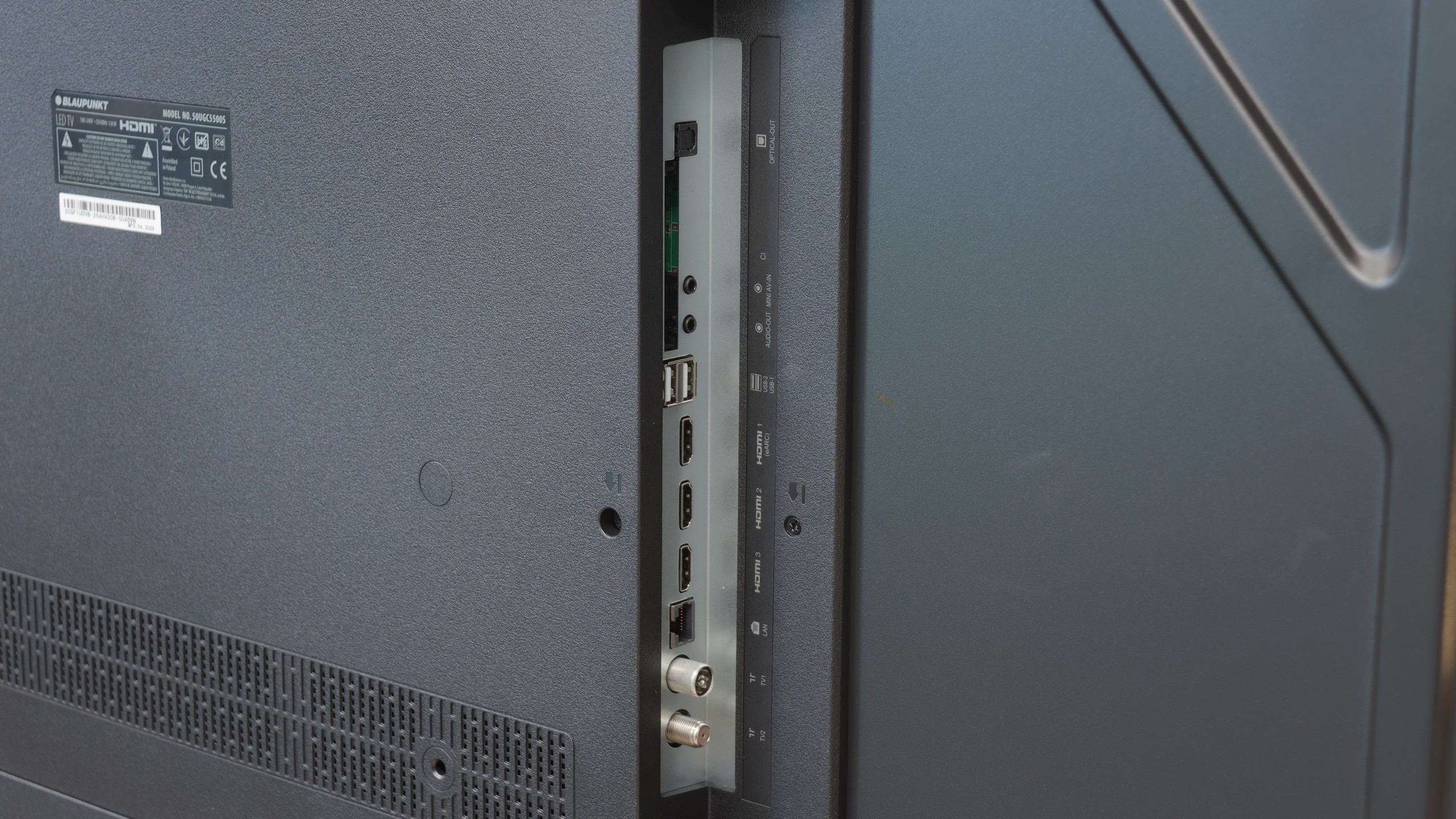
Sound connection options
- HDMI audioeARC (HDMI), ARC (HDMI)eARC (HDMI), ARC (HDMI)
- Other audio outputsToslink (Optical audio), Mini-Jack (Headphones)Toslink (Optical audio), Mini-Jack (Headphones)
- Wireless audioBluetoothBluetooth
Supported audio formats (external HDMI eARC audio):
- Dolby Digital Plus 7.1
- Dolby True HD 7.1
- Dolby Atmos in Dolby Digital Plus (JOC)
- Dolby Atmos in Dolby True HD
- DTS:X in DTS-HD MA
- DTS-HD Master Audio
Senior accessibility
- Numeric keyboard on TV
- Font size adjustment
- Audio description
The Vidaa system, on which the Hisense U6NQ operates, is probably one of its stronger points. It is quick, runs smoothly, and most importantly – it doesn’t suffer from any stuttering that can be irritating in other televisions. It’s great that voice search is available in Polish, which makes operation significantly easier. There are plenty of apps here, but unfortunately, there is a lack of music apps such as Spotify or Tidal. It’s a shame because a television is not just for films and series – some would probably happily use it for listening to music as well.
Among the additional features, we have the option to record television programmes onto a USB drive or external hard disk. There is also AirPlay and Miracast, so it’s easy to stream images from a smartphone. The built-in Bluetooth is also useful, allowing you to connect headphones, a mouse, or a keyboard. The only thing that is really missing here is the PiP (picture-in-picture) feature. If it were added, the television would be complete in terms of functionality. Nonetheless, the Hisense U6NQ offers a lot and is more than sufficient for most users.
In terms of Smart TV functionality, the Blaupunkt UGC5500S is a classic example of a device where the system is both its greatest asset and its biggest flaw. On one hand, we have full Google TV here, which is a huge plus at this price point. We get access to a massive library of applications and basically all the functionality we know from brands that use this software. Nothing has been cut out forcibly, which is truly refreshing in such an inexpensive television. Unfortunately, we must honestly admit that in Blaupunkt's execution, this system simply works clumsily. This is a typical ailment of budget televisions with Google TV – the processor barely keeps up with the software. Navigation through the menu is not as smooth as we would like, and the remote can respond with a noticeable delay, giving the impression of being "dull." Of course, once you launch a specific application and start playing a movie, everything works stably, but just sifting through the interface requires a bit of patience.
As for traditional television features, Blaupunkt doesn't offer anything extraordinary. It is a simple device for basic tasks. The remote control deserves a plus, as it features a classic numeric keypad, which is simply convenient for flipping through cable channels. We also have Bluetooth, so you can easily connect wireless headphones or a speaker. The television also has a physical mini-jack headphone output. At a time when manufacturers are mass removing this connection, the presence of a "jack" is a nod towards those with older audio equipment or simply those who prefer classic wired headphones. It's a little thing, but it’s appreciated.
Apps
7.7/10
9.6/10






















Playing files from USB
8.5/10
9.3/10
Supported photo formats:
Maximum photo resolution:

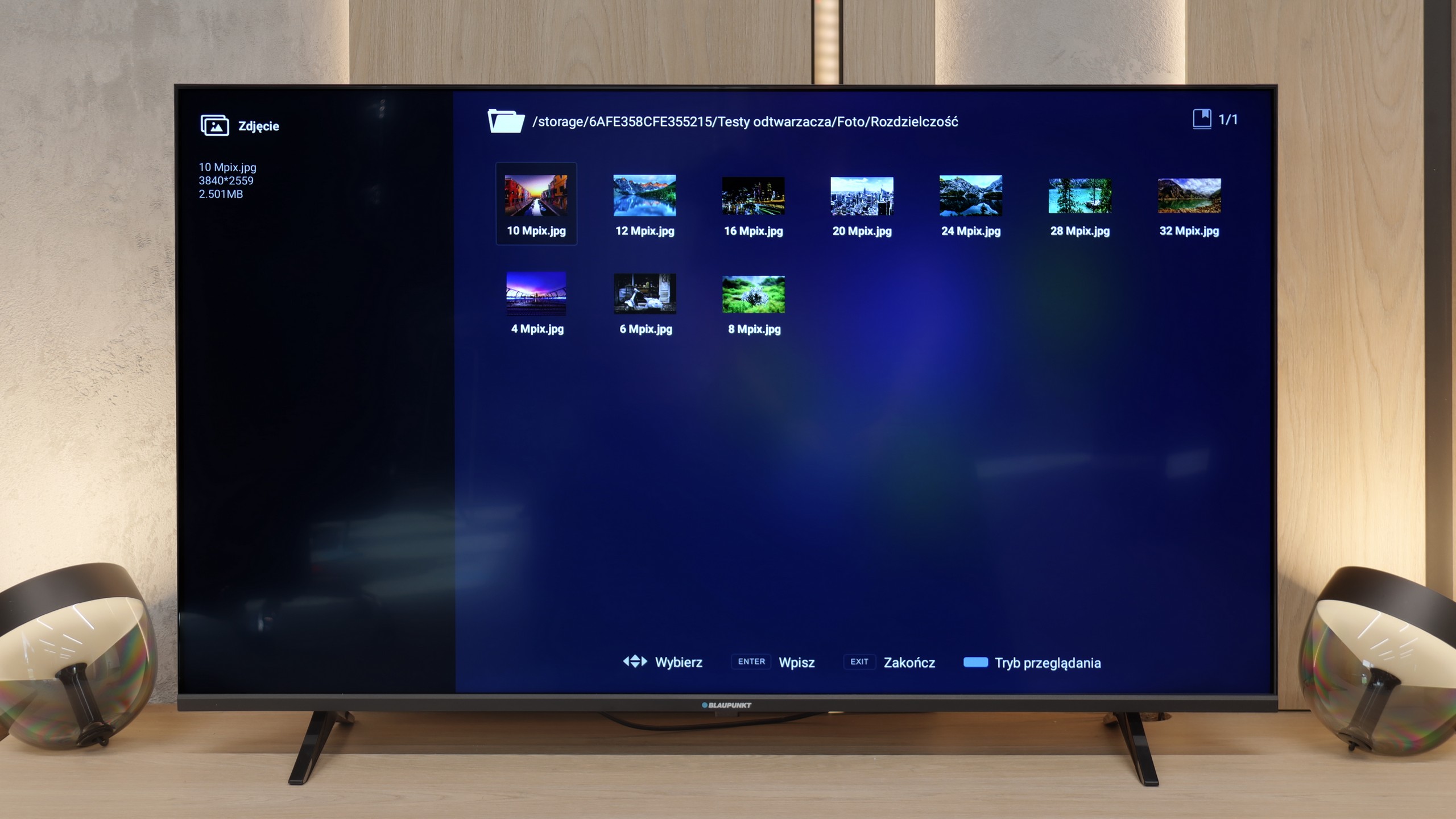
The built-in media player in Hisense U6NQ should satisfy most users. It supports Polish characters and allows for easy editing of displayed subtitles, which is a big plus. Unfortunately, it lacks support for the AV1 codec, which may be an issue for those looking to play newer video formats. However, for less demanding users, the features of the player will be fully adequate.
In terms of playing files from USB, Blaupunkt performs quite well. We checked several of the most popular formats, and basically everything important worked fine on the factory player. Therefore, you're not forced to immediately download additional software right after taking the television out of the box, as the equipment is simply self-sufficient from the start. Nevertheless, taking advantage of the charms of Google TV, we still recommend that you install something external, like VLC or Kodi. The factory player is adequate, but it is in these external applications that you will find the most configuration options, better subtitle support, or simply a more convenient interface. Since the system gives you such freedom, it is worth taking advantage of it to get as much as possible from your multimedia.
Sound
6.3/10
6/10
- Maximum volume-85dB
- Dolby Digital Plus 7.1
- Dolby True HD 7.1
- Dolby Atmos in Dolby Digital Plus (JOC)
- Dolby Atmos in Dolby True HD
- DTS:X in DTS-HD MA
- DTS-HD Master Audio
Hisense U6NQ is equipped with a standard set of speakers with a power of 20 W, which is a typical solution in this class of televisions. The sound is adequate but does not stand out in any particular way. However, it is worth noting the support for all popular audio codecs, including DTS and Dolby Atmos. This allows us to easily connect a home cinema system or soundbar, achieving significantly better sound experiences than from the built-in speakers.
In terms of audio, Blaupunkt performs really well, especially considering that this is a typical budget television. It’s evident, or rather audible, that the brand has not forgotten its roots, and for such an inexpensive model, the sound is exceptionally good. Of course, there is a noticeable lack of bass, but the overall output is loud, and surprisingly clear. Most importantly for us – even at higher volumes, the sound is not heavily distorted, which is a rarity and a pleasant surprise at this price point.
Sound Quality Test
No sound test video
Acoustic Measurements
No acoustic data
85dBC (Max)
75dBC