The Haier Q80FUX television is one of the most schizophrenic propositions we've had in our editorial office for a long time. On one hand, we have a solid piece of equipment here: a VA panel ensuring deep blacks, as expected in this segment, and a QLED quantum filter that can indeed produce vibrant, eye-catching colours. This is the foundation upon which a really competitive mid-range receiver could have been built. Unfortunately, all this matrix potential is systematically thwarted by the software, which represents a true millstone around the neck of this model. The Achilles' heel of the Q80FUX is its total capitulation when faced with HDR10 materials. The electronics seem to completely misunderstand how to interpret the signal, resulting in the brightest parts of the image being continuously blown out, turning them into a flat, milky patch. If we add the Google TV system to this, which, although functional, is unstable, full of bugs, and annoying shortcomings, we see a product that feels raw and clearly shows the manufacturer's lack of experience. Just when we thought we had written this model off, we discovered its surprising niche. Once connected to a console, the Q80FUX undergoes a transformation. It turns out that this television offers an impressively low input lag, fully supports VRR, and can handle a 120Hz signal in Full HD resolution. In the gaming world, where responsiveness is everything, these parameters put it in a very good light. So, we are dealing with a device of very narrow specialization. This is not a universal living room television – it lacks stability and above all, any correctness when handling films. Rather, it is a budget-friendly, large-format monitor for gamers, who can consciously forgive it all the software flaws in exchange for those few key attributes needed for consoles/PC at a relatively affordable price.
- Matching (Score) |
- Our verdict |
- TV appearance |
- Where to buy |
- Contrast and black detail |
- HDR effect quality |
- Factory color reproduction |
- Color reproduction after calibration |
- Smoothness of tonal transitions |
- Image scaling and smoothness of tonal transitions |
- Blur and motion smoothness |
- Console compatibility and gaming features |
- Input lag |
- Compatibility with PC |
- Viewing angles |
- Daytime performance |
- Panel details |
- TV features |
- Apps |
- Playing files from USB |
- Sound
Haier Q80FUX vs Philips OLED811
 Direct comparison
OLED801 / OLED811

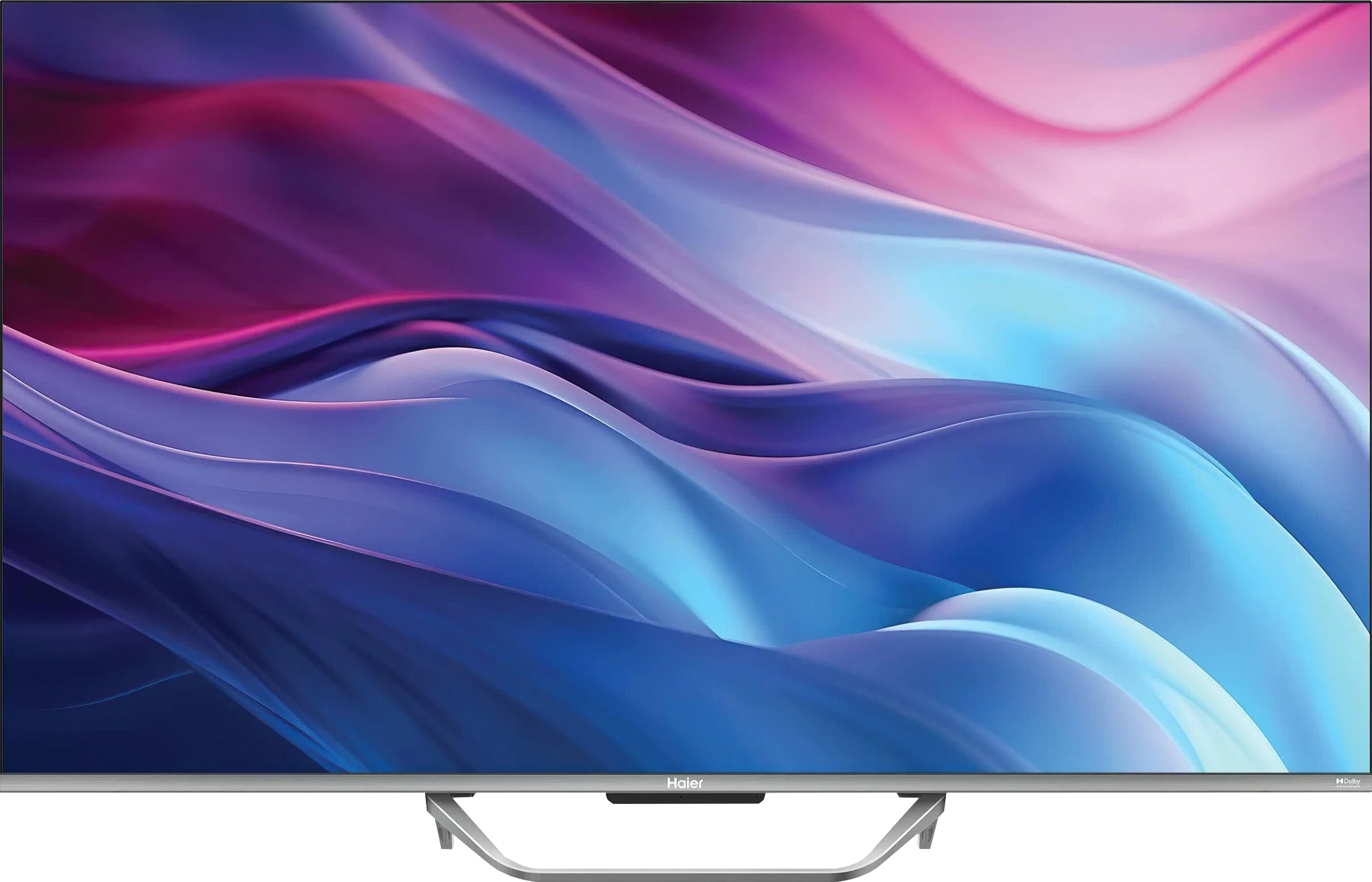
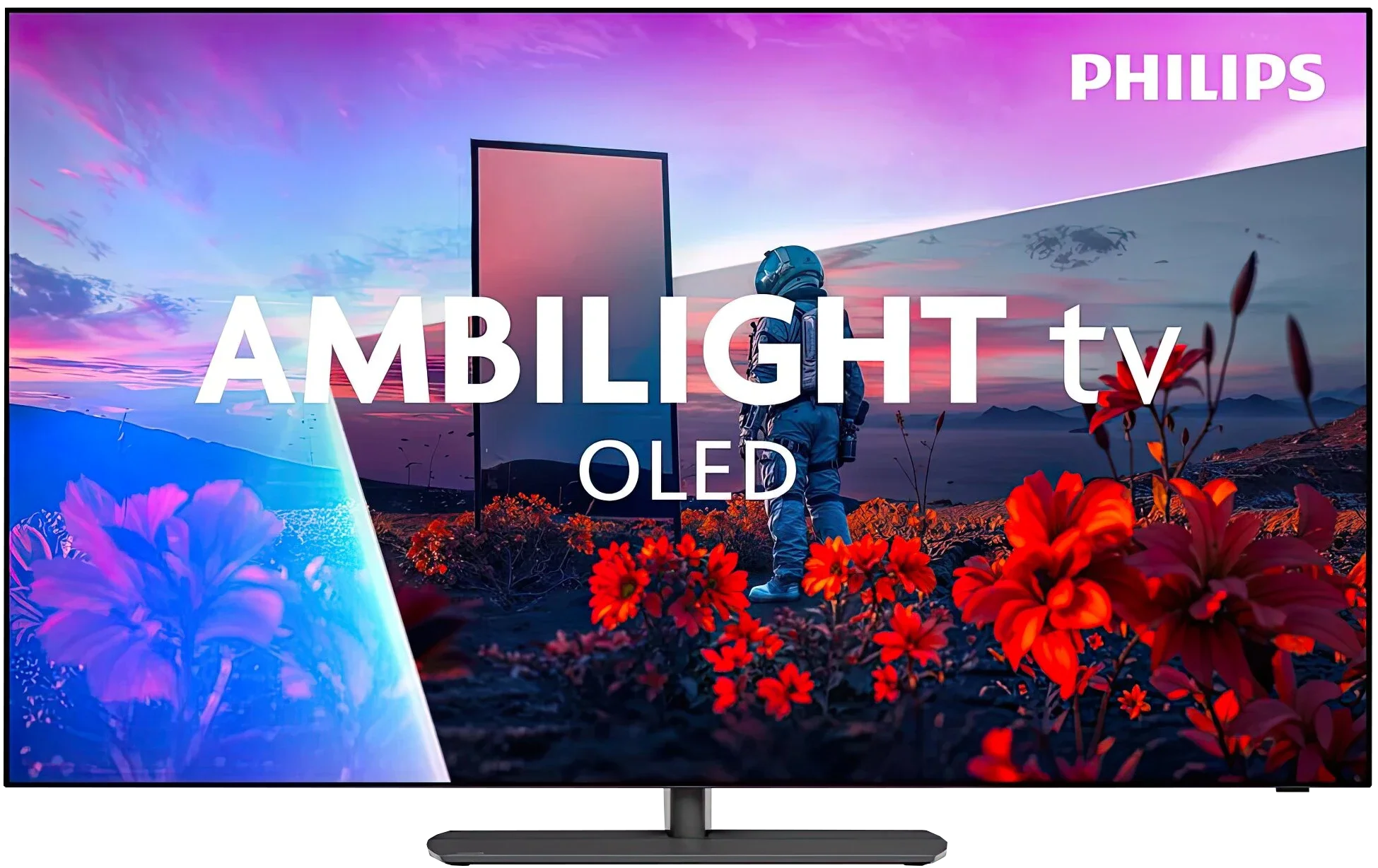
Panel type: LCD VA
Resolution: 3840x2160
System: Google TV
Model year: 2025
Complete the survey to find out the result
Panel type: WRGB OLED
Resolution: 3840x2160
System: Titan OS
Model year: 2026
Complete the survey to find out the result
Overall rating
5.8
8.1
 Movies and series in UHD quality
5.9
8.5
 Classic TV, YouTube
5.6
8.7
 Sports broadcasts (TV and apps)
4.7
8.5
 Gaming on console
6.7
8.9
 TV as a computer monitor
6.0
8.6
 Watching in bright light
4.8
6.0
 Utility functions
5.6
7.9
 Apps
9.6
7.7
 Sound quality
5.5
7.6
Complete the survey to find out what fits your preferences
Advantages

Very good native contrast and decent black (thanks to the VA panel)
PFS / QLED filter - Wide colour gamut (approx. 95% DCI-P3)
Remarkably low input lag (below 10 ms at 120Hz and around 12 ms at 60Hz), making it an excellent choice for fast-paced games.
Support for 120Hz in lower resolution (Full HD) and the presence of VRR and ALLM
Support for Dolby Vision
Well-functioning file player from USB
Presence of an analogue headphone output (jack)
Three-sided Ambilight that creates a great atmosphere for viewing
Perfect blacks and excellent contrast from the OLED panel
Powerful HDR effect. Brightness around 1500 nits
Very good viewing angles
Excellent motion clarity (no smearing)
Supports 4K at 165 Hz
Four HDMI 2.1 ports
Extensive gaming features
Support for multiple audio/video formats: (Dolby Vision, Dolby Atmos, HDR10+, DTS)
Disadvantages

The image is quite heavily "blown out" in HDR
Google TV software is full of bugs, poor translations, and issues
Lack of any image enhancement features (noise reduction, gradient smoothing)
Average brightness
Flat, bass-less sound
High input lag in Dolby Vision mode for gaming
Odd and poorly ergonomic remote
Smaller app library on Titan OS than on Google TV or most competitors
Infrared remote that needs to be pointed at the TV (sometimes responds slowly)
Very high input lag in games with Dolby Vision
Visible posterization (mainly in bright scenes)
Underused image-processing capabilities of the Pentonic 800
Our verdict
Philips OLED811 is a mid-range OLED for 2026 that stands out from its biggest rivals mainly for one thing: Ambilight. The light that follows the picture and spreads across the wall can change the atmosphere of an entire viewing session. In the evening the screen seems to extend beyond its borders and watching simply gains extra charm. For some it will be a pleasant extra, for others a sufficient reason to choose Philips again. The picture itself is very comparable to what models such as the LG C6 or Samsung S90H offer when using the same type of panel. So you get deep, perfect blacks on which bright elements make a strong impression. The OLED811 can deliver powerful HDR and, importantly, after calibration the picture itself is close to the reference. There is no big advantage over the competition, but there is also no feeling that by choosing Philips for Ambilight you are sacrificing image quality.
There are also a few good changes for gamers compared with last year’s model. Thanks to the MediaTek Pentonic 800 chipset we finally have four HDMI 2.1 ports, so connecting several devices, for example consoles, a PC and a soundbar, no longer requires choosing which device will get the full capabilities of the port. Gaming itself is very enjoyable — the television responds quickly, supports variable refresh rates, and from a PC allows gaming in 4K at 165 Hz. It’s a pity that the new processor’s capabilities were not put to equally good use when processing lower-quality sources. The biggest concern, however, is the operating system. Titan OS replaced the popular Google TV and although it has clearly developed over the past year, it is still hard to call the change a positive one. The system runs more smoothly, has more useful features, and the app library already contains most popular streaming services. Nevertheless, the selection of apps is still much smaller than with Google or the competition, and in our view that remains the OLED811’s biggest drawback. People who use less popular services may particularly feel this difference.
Is it worth buying? Yes, if Titan OS meets your needs. In terms of picture and gaming capabilities the OLED811 has as much to offer as its rivals, but Ambilight gives it something others do not. So Philips both gives and takes. It adds a unique viewing atmosphere but limits freedom of app choice. If the apps you use are available, that compromise may be worth making.
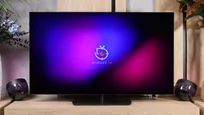
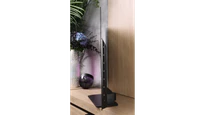
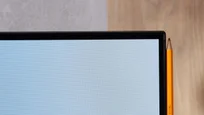
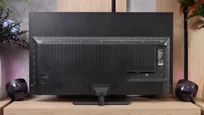
TV appearance



Contrast and black detail
6.3/10
10/10
Local dimming function: No
Contrast:


Result
5,200:1

Result
7,400:1

Result
7,550:1

Result
7,300:1

Result
6,450:1
Result
∞:1
Result
∞:1
Result
∞:1
Result
∞:1
Result
∞:1
Halo effect and black detail visibility:
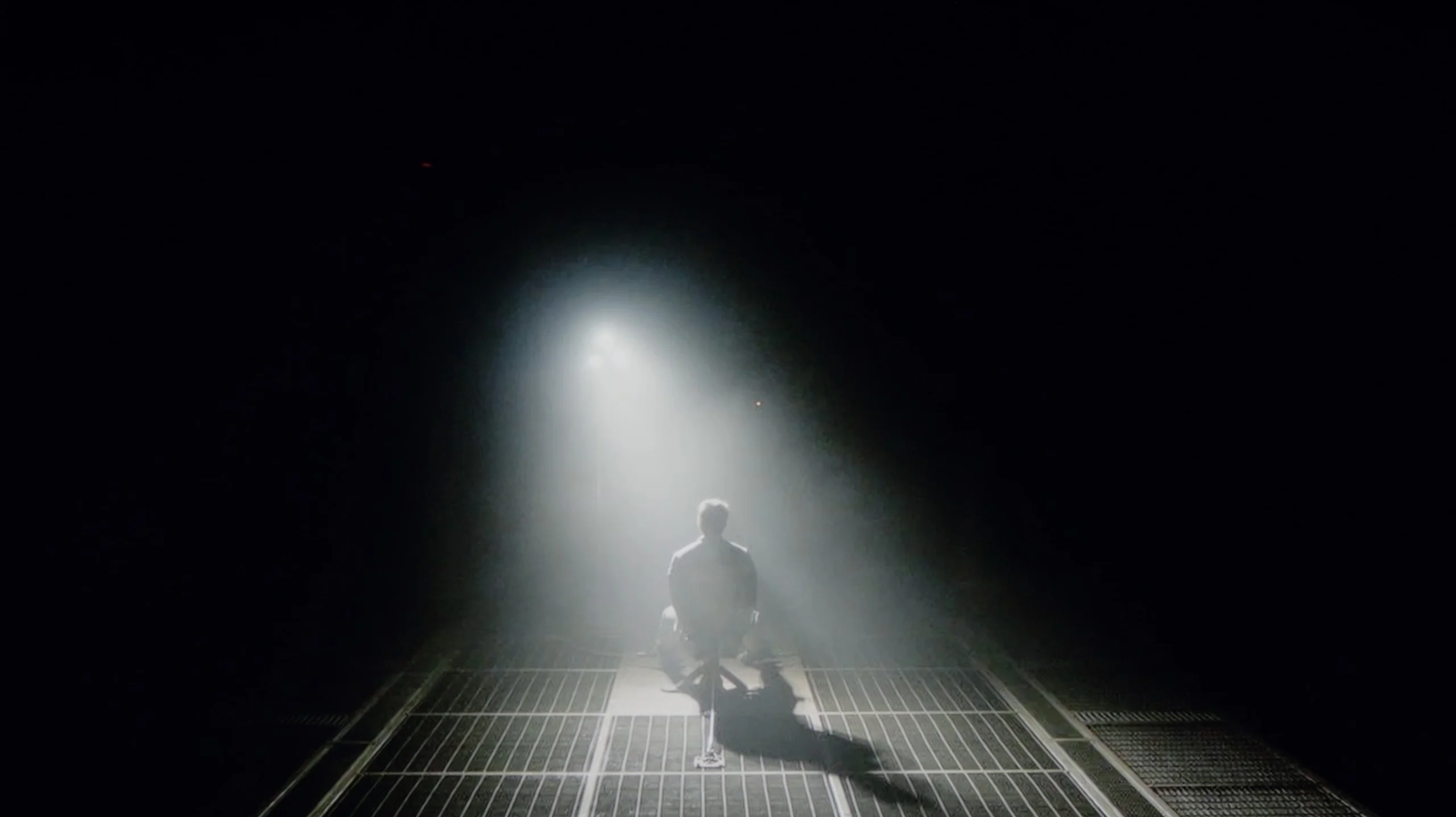
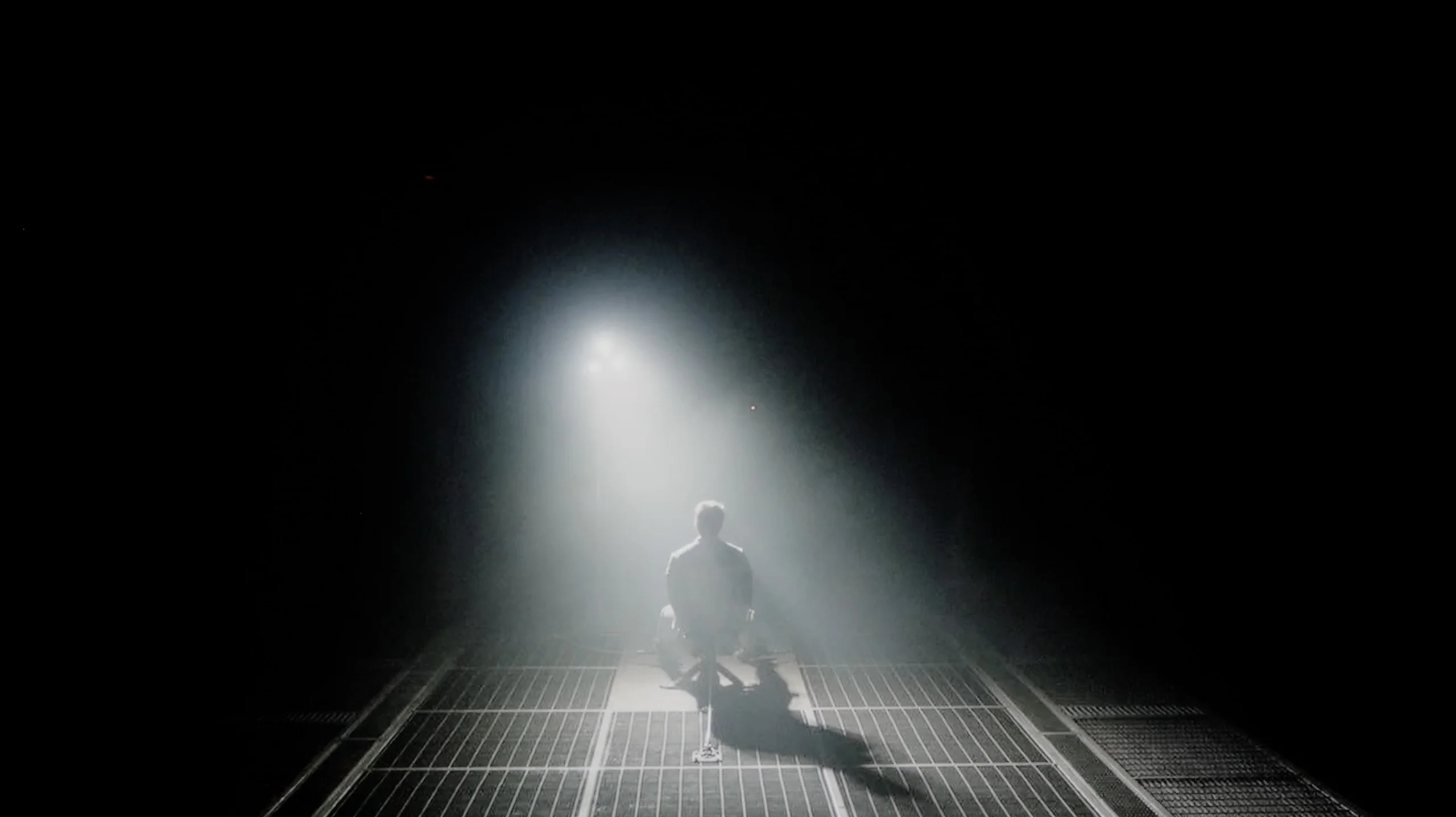
Check the visibility of bright lights on a dark background. Mini-LEDs often struggle with this. The photo does not compare black levels – that’s what the video below is for.
The video accurately shows differences in contrast and black levels between TVs, as well as potential issues: halo around bright objects or Mini-LED zone operation visible as brightness jumps.
I must admit that approaching a receiver in this price range, one instinctively crosses their fingers, hoping that at least the black won’t be a grey patch. Meanwhile, the Haier Q80FUX, specifically the 55-inch specimen residing in our editorial office, can very positively surprise in this regard. Its secret lies in the use of a VA panel, which inherently has a tendency to generate high contrast. And these are not empty promises. During screenings, in most cinematic shots, the contrast consistently reported levels from 5000:1, often reaching the threshold of 8000:1. These are really strong results, considering the fact that this television does not possess any, even minimal, form of local dimming. Translating this into experiences from behind the couch: for its price point, the Q80FUX offers simply solid black. Of course, it is not that perfectly velvety depth that makes the screen disappear into darkness. When we conduct a screening in conditions of full isolation from light, we notice that in the darkest parts of the image, the black reveals its budget origins, subtly veering towards a bluish hue. However, this is a defect that is easy to mask – just a bit of light from a lamp in the corner of the room is enough for this nuance to become invisible, and the image to regain satisfying depth.
Black and contrast are categories where the Philips OLED811 showcases all the benefits of OLED technology. Each pixel lights independently and can be switched off completely, so black is simply black. There’s no grey glow or haloing around bright objects. During evening viewings this produces a great effect: stars in the night sky, city lights and text on dark backgrounds remain clearly separated from a perfectly black surround.
It’s therefore hard to expect any improvement here over other OLEDs, because in terms of black depth and contrast the result is already exemplary. The OLED811 doesn’t need local dimming or a compromise between the brightness of a small object and the black around it. Even a single bright point can sit next to a completely switched-off pixel, giving the image outstanding depth.
It’s in scenes with extensive black that the advantage over Mini LED TVs becomes clear. Even the most sophisticated local-dimming systems control larger areas of the image, so in demanding shots they can create a glow around bright elements or dim them to preserve a dark background. The Philips OLED811 doesn’t suffer from this problem.
HDR effect quality
4.9/10
7.6/10
Luminance measurements in HDR:

Result
308 nit

Result
327 nit

Result
352 nit

Result
330 nit

Result
344 nit
Result
1225 nit
Result
1310 nit
Result
1443 nit
Result
1368 nit
Result
626 nit
Scene from the movie “Pan” (about 2800 nits)


Scene from the movie “Billy Lynn” (about 1100 nits)


The photos show two HDR10 movies. 'Pan' is one of the brightest productions ever made, while 'Billy Lynn' (soldier) has brightness typical of streaming (Netflix, Prime, HBO MAX). Notice the intensity of effects and detail in whites.
Static HDR10


The photos present the visibility of white details in various HDR formats. They do not show brightness differences between TVs (these can be compared in the previous gallery).
Dynamic: Dolby Vision
Dynamic: Dolby Vision


The photos present the visibility of white details in various HDR formats. They do not show brightness differences between TVs (these can be compared in the previous gallery).
HDR luminance chart:
Philips OLED811
Haier Q80FUX
Luminance of RGB colors
Alright, let’s move on to the topic that stirs up so much discussion, namely the capabilities of the television in HDR mode. Let’s state it clearly right away: the Haier Q80FUX is certainly not a brightness demon. The panel of this receiver can generate about 350 nits at peak, which in today’s terms is the absolute minimum to even talk about the presence of High Dynamic Range (HDR). On the positive side, this power is at least stable – regardless of which test pattern or film scene we used, the measurements consistently oscillated in the range of 300-350 nits. These are therefore results that are at best sufficient, definitely far from the dazzling display of capabilities we are accustomed to with more expensive models. Fortunately, there is one aspect in which the Q80FUX compensates for these shortcomings and does so impressively. After all, we are talking about a QLED television (more precisely PFS LED), which means that thanks to the quantum dot filter applied to the panel, it can generate really juicy, vibrant colours. These are not empty promises – a DCI-P3 colour gamut coverage of nearly 95% is an impressive result and directly translates into colours that are very pleasant to the eye and saturated.
Philips OLED811 uses a new generation of WOLED EX panels, also found in models such as the LG C6 and Samsung S90H. After calibration we measured around 1500 nits, which is a very good result for an OLED TV. You can see this clearly in films and series. All kinds of bright flashes have the right intensity, especially when they appear against a dark background. In such scenes the OLED811 can deliver truly impressive HDR. Of course, that does not mean you will see that level of brightness in every shot. When the screen is filled with a large amount of white or a wide explosion, brightness falls to around 600 nits. That is still a good result, but those scenes no longer have the same punch as small, bright elements on a dark background. This is a known limitation of OLEDs and the OLED811 is no exception.
Colours
Aside from HDR brightness, colours also matter and here Philips performs very well. It covers almost the entire DCI-P3 gamut, which contains most of the colours used in HDR films and series. You get saturated reds and lush greens, and when watching it’s hard to find major faults in that respect. It looks a little worse with the much wider BT.2020 gamut, whose most saturated shades are already out of reach for this panel. There is also the issue of the white subpixel that the WOLED panel uses to boost brightness. With very bright colours you can see a certain washout: the colour is bright but loses some of its intensity. It is precisely in such situations that QD-OLED panels from Samsung Display have the advantage. However, in most films and series this is not something that will immediately stand out.
Factory color reproduction
4/10
7.8/10


This gallery shows how colors change after professional TV calibration. If you notice the difference, we recommend ordering this service at SkalibrujTV.com.
Factory Mode
After calibration
Factory settings for movie mode are rarely perfect, but in the case of the Q80FUX, we were confronted with a noticeable imbalance. In SDR content, the image was decidedly too warm, a result of excessive red in the white balance, giving the whole a slightly sepia tone. Ironically, in HDR materials, the television fell into the opposite extreme – an excess of blue caused an unnatural, cold effect in perception. However, it was not the capricious white balance that was the biggest problem with this television. The real culprit, responsible for the aforementioned issues, was hiding deeper. It turned out that the Q80FUX has completely miscalibrated gamma values and, crucial for HDR, a poorly executed EOTF curve. It was these erroneous factory settings that caused persistent clipping of the brightest parts of the image, overlaying them with that characteristic milky filter. Thus, we found the source of the problem. This state of affairs led to general, significant colour errors, which were easy to catch even for an untrained eye. Like every television we tested, we decided to calibrate this model as well, and the results of these adjustments can be found in the next paragraph.
Film mode on the Philips OLED811 is sensibly set up straight out of the box. Most colour errors remain small, both in SDR and HDR, so you can sit down to watch without adjusting the settings first. There are no major inaccuracies that would immediately distract from the film. It falls a little short of perfection, though. The white balance shows a slight lack of red compared with green, so whites and greys can have a faint greenish tint. It is not a strong colour cast, but measurements clearly show it. There are also minor brightness deviations in SDR: some parts of the image are slightly brightened, and the darkest shades are not always reproduced evenly. In HDR the TV sticks much closer to the reference, although in places it gently lifts detail from the shadows. These are generally areas that could be improved. The factory film mode provides a good starting point, and calibration will reveal how much more can be gained from it.
Color reproduction after calibration
6.1/10
9.3/10


The photos show how movies look on the TV. Pay attention to black detail visibility, colors, and shadow tint.


The photos show how movies look on the TV. Pay attention to black detail visibility, colors, and shadow tint.
The results of our calibration procedures must, regrettably, be acknowledged as twofold. Generally speaking, the picture is undeniably better than before the corrections; however, the biggest winner of this process turned out to be SDR content. It is precisely there, after correcting the gamma and white balance graphs, that we achieved results that can confidently be called very good. After adjustment, the Q80FUX truly shines in standard dynamics, showing only slight errors in the most difficult skin tone reproductions. Unfortunately, the weakest link remains HDR content. Here lies the paradox: despite having calibrated the white balance to nearly perfection, the overall colour errors still remain at quite a high level. The reason is that the television continues to interpret static HDR10 metadata "in its own way," stubbornly enforcing that unfortunate image burn-out effect, which inevitably leads to significant distortions. Although we have successfully eliminated the factory excess of blue, it is precisely due to this interference of electronics that the screen still tends to stray into somewhat overly cold tones. That is just how this television is.
After calibration the Philips OLED811 produces an image very close to the reference. We managed to correct the white balance and eliminate the slight tint visible in the factory settings. Errors in the Color Checker measurements for SDR and HDR fell to around 1 to 2, and many samples are even below 1. That's a level at which differences from the reference image are hard to spot with the naked eye. We also improved the gamma, and only in the brightest whites is there a slight brightening remaining. In HDR the EOTF curve also tracks the reference closely, although the TV still tends to gently boost the brightness of small elements, such as stars or on-screen text. This gives the picture a little extra sparkle that shouldn't be there, but otherwise there's little to fault. It was already good out of the box, and after calibration we managed to refine most of the remaining shortcomings.
Smoothness of tonal transitions
7.5/10
7.5/10





These are selected scenes that show smooth tonal transitions from one color to another. If you see distinct banding, it’s the TV panel’s fault.

These are selected scenes that show smooth tonal transitions from one color to another. If you see distinct banding, it’s the TV panel’s fault.
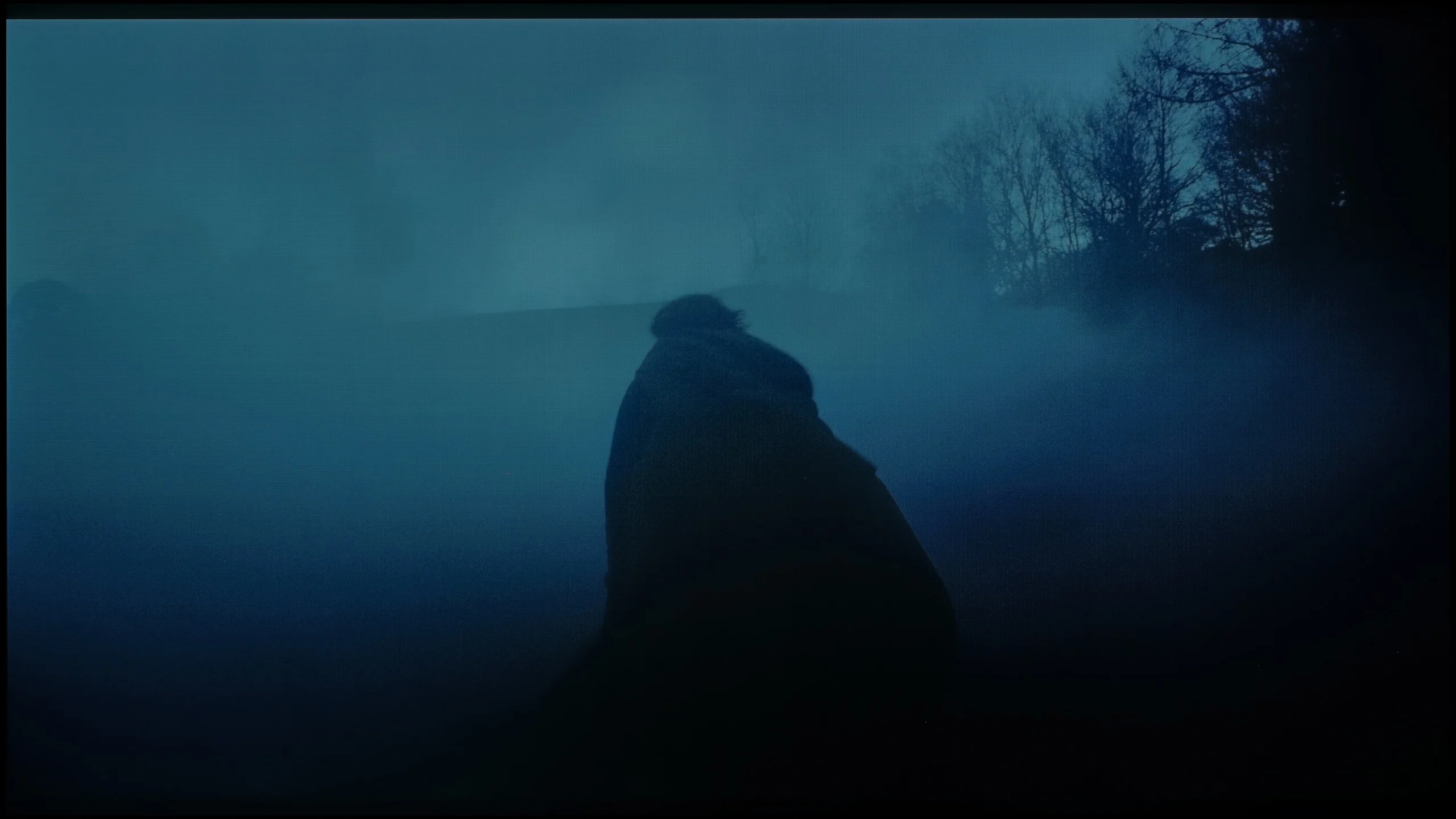
These are selected scenes that show smooth tonal transitions from one color to another. If you see distinct banding, it’s the TV panel’s fault.
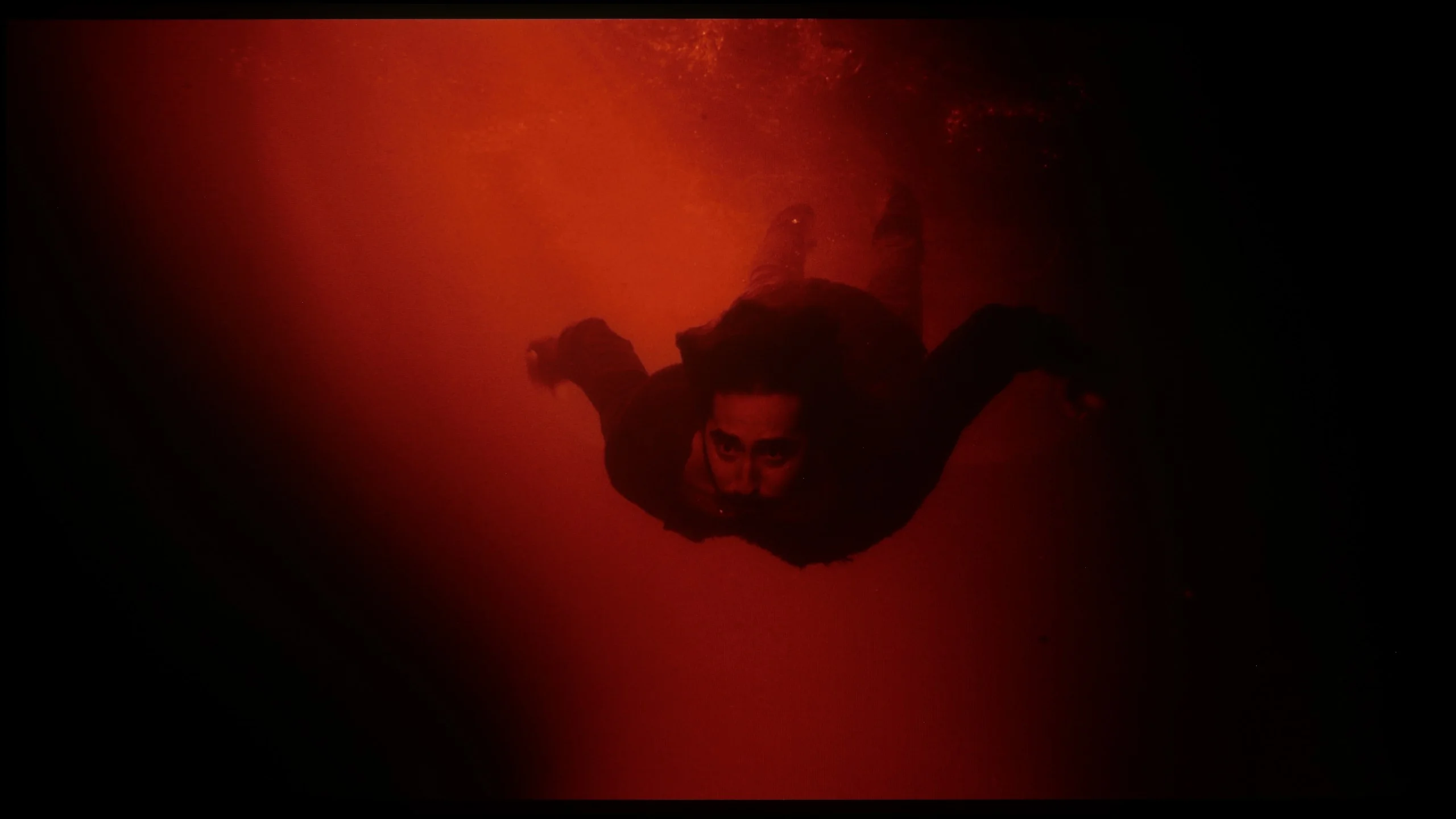
These are selected scenes that show smooth tonal transitions from one color to another. If you see distinct banding, it’s the TV panel’s fault.
Analysing the ability of the television to handle subtle tonal transitions, known as "banding", leads us to interesting conclusions. The Haier Q80FUX seamlessly blends neighbouring colours in most scenes, creating a smooth, cohesive image. However, this process is not perfect. During testing, we noted minor issues and imperfections in every test scene we used. These may not be errors that aggressively stand out and ruin the viewing experience, yet their presence is worth noting. Interestingly, this receiver shows no particular weaknesses or strengths in this regard – it handles this challenge in exactly the same way, whether displaying delicate gradients of a bright sky or dark transitions in the shadows.
Compared with Philips' previous OLEDs the smoothness of tonal transitions has clearly improved. The biggest difference is visible in dark parts of the picture, which can cause WOLED panels a lot of trouble. On the OLED811 they have been smoothed very well, with tones transitioning smoothly from one to another without visible banding or contouring. That's a big plus, especially when viewing dark scenes.
Unfortunately, it's not as good in brighter scenes. That's where we have the biggest reservations: instead of a gentle transition between tones, in places you can see distinct boundaries, known as posterisation. It can be quite noticeable, and it's a shame that the improvement seen in dark scenes did not extend to the brighter parts of the image to a similar degree.
Image scaling and smoothness of tonal transitions
4/10
6.8/10


Smooth transition function
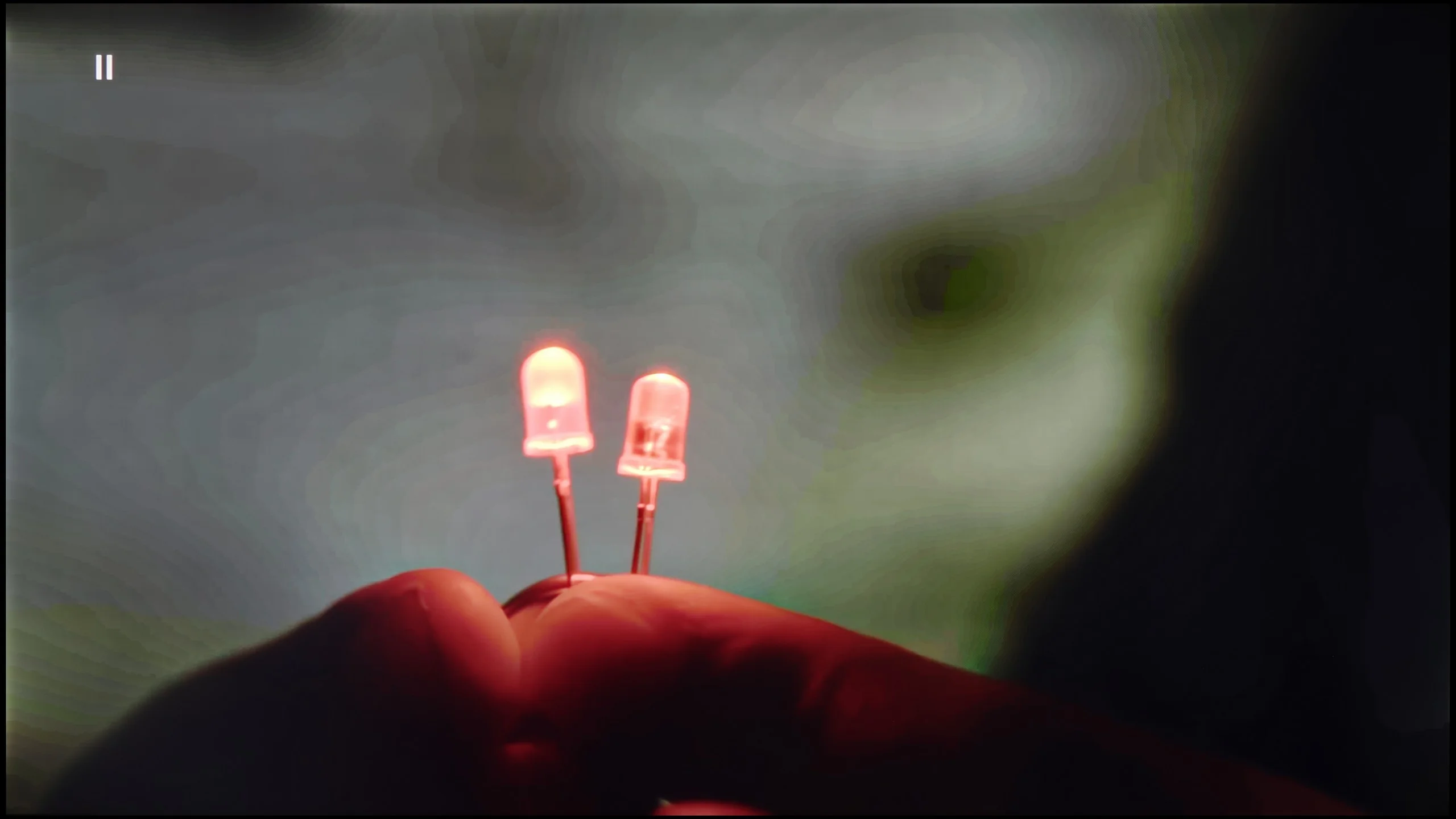
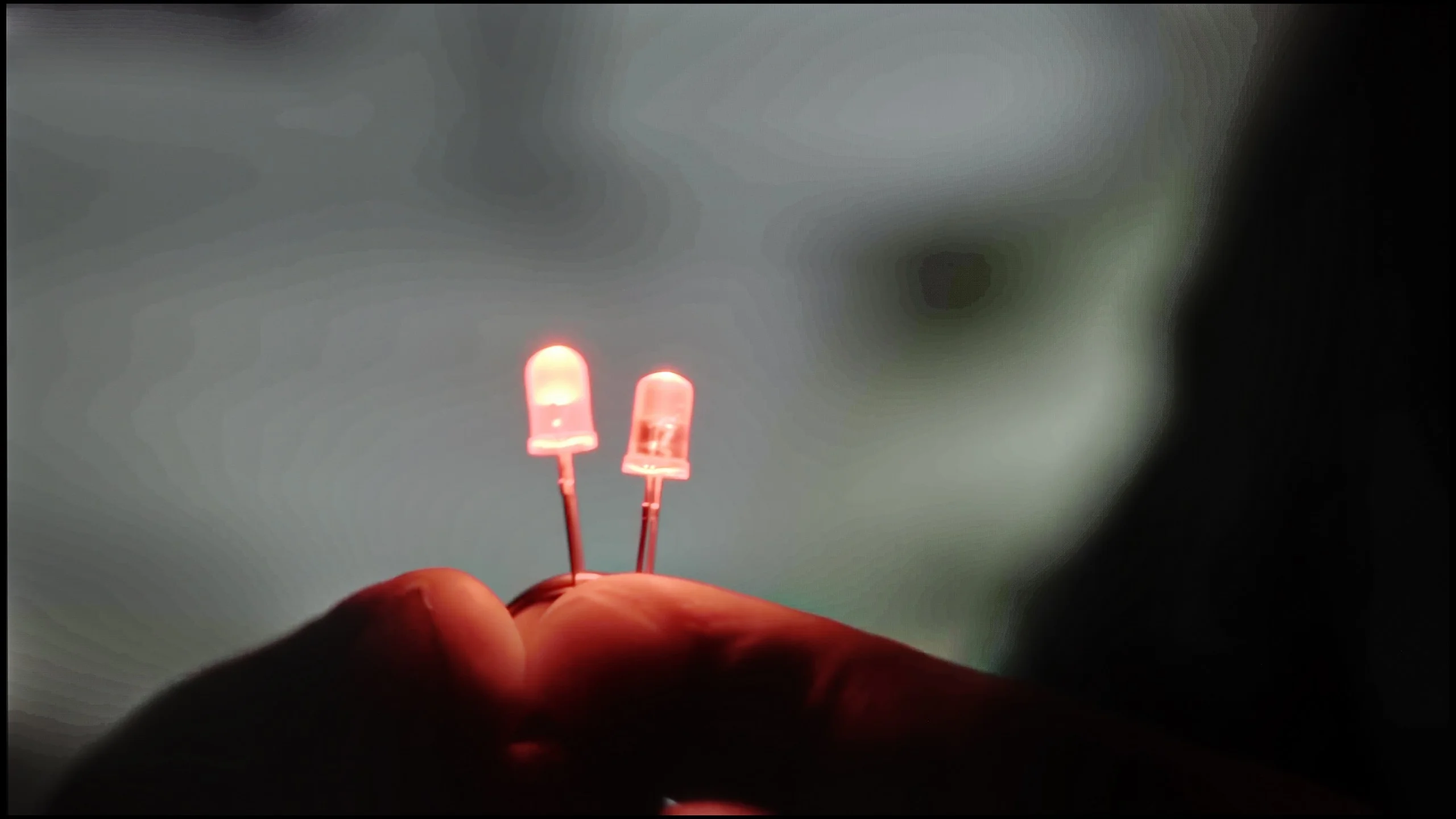
The match photo shows how the TV smooths weak tonal transitions in low-quality video.
Image scaling SD (576i)


The model photo shows how it handles upscaling of SD material.
If there is one area where Haier clearly shows it still has a long way to go compared to the market leaders, it is digital image processing. The upscaling, well... is just alright. And that’s really about all that can be said about it. It does what is expected of it: it ensures that lower resolution signals do not scare us with harsh pixelation on the screen and do not look like a forcibly enlarged postage stamp. However, it is far from the finesse and “intelligent” sharpening that more experienced players in this market have developed over the years. The biggest shortcoming of the Q80FUX software is the almost complete lack of any additional "cleaning" and smoothing functions for the image. The receiver does not offer any noise reduction or gradient improvement mechanisms. This means that with older or heavily compressed materials, we simply have to come to terms with the fact that any imperfections in tonal transitions or blending of colours, which we mentioned earlier, will continually accompany us during the viewing.
OLED811 handles lower-quality material reasonably well, though it falls well short of perfection. The "Banding reduction" function helps to smooth tonal transitions and on the low setting gives a fairly good result. It does not remove bands between shades as effectively as similar solutions from some competitors, but at least it does not introduce new artefacts in the process. This is a sensible setting for everyday viewing. There is still some dissatisfaction, however, because the MediaTek Pentonic 800 chipset used here can, in other manufacturers' implementations, cope with the effects of heavy compression more effectively even at similarly low settings. Much therefore depends on how a given manufacturer makes use of its capabilities. We have a few more comments about the upscaling to 4K. There is a lot of detail, but the overall image looks rather soft. Edges are heavily smoothed, which robs the picture of a bit of sharpness and clarity. This can be partly corrected with the sharpness slider in the menu, though that will merely accentuate outlines rather than recover detail. On the plus side, there is no overscan; even with an SD signal the TV does not crop the edges of the picture.
Blur and motion smoothness
4.5/10
8.5/10
Blur (native resolution, maximum refresh rate):




Blur ():
Blur (4K@165Hz ):



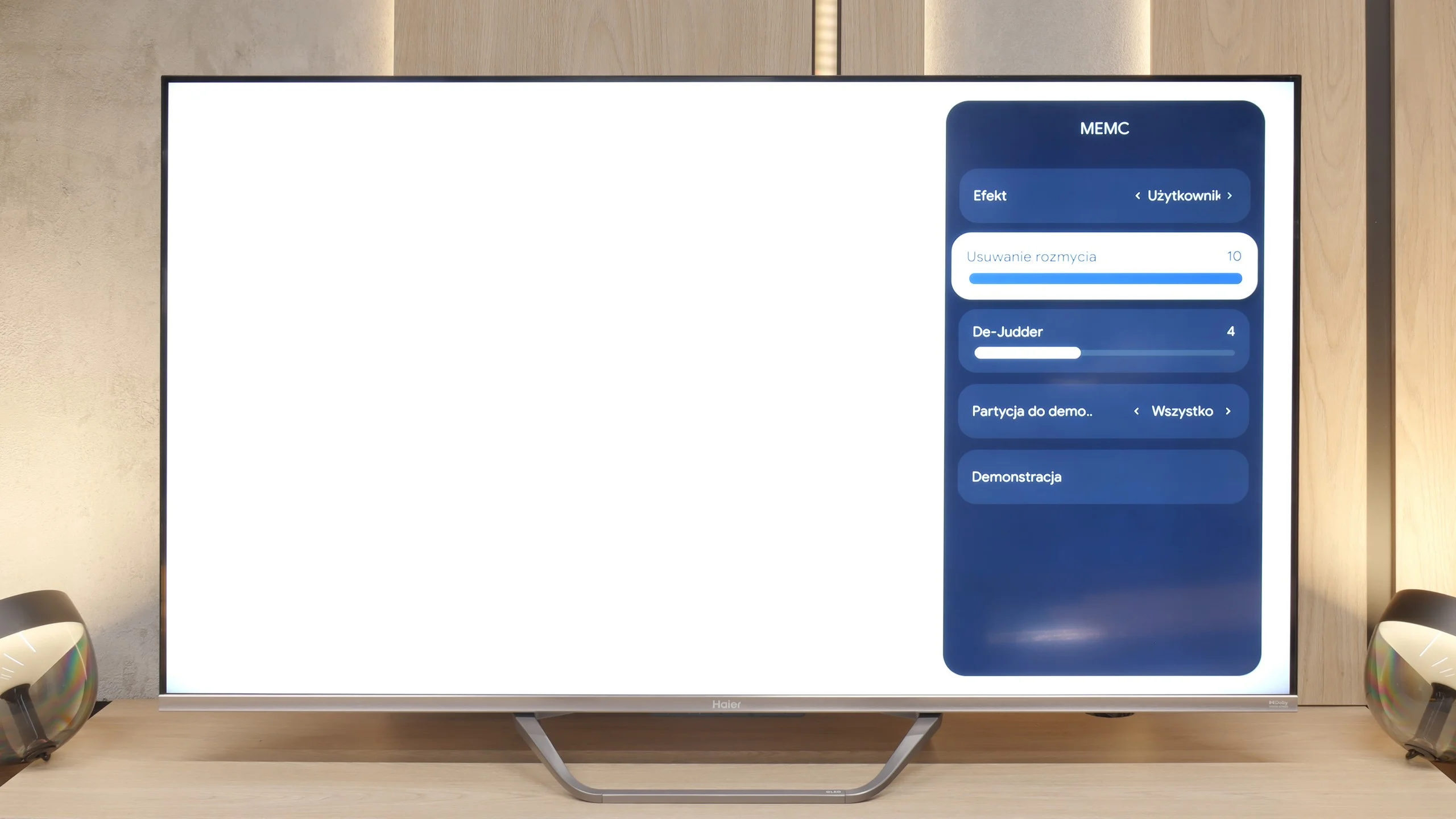
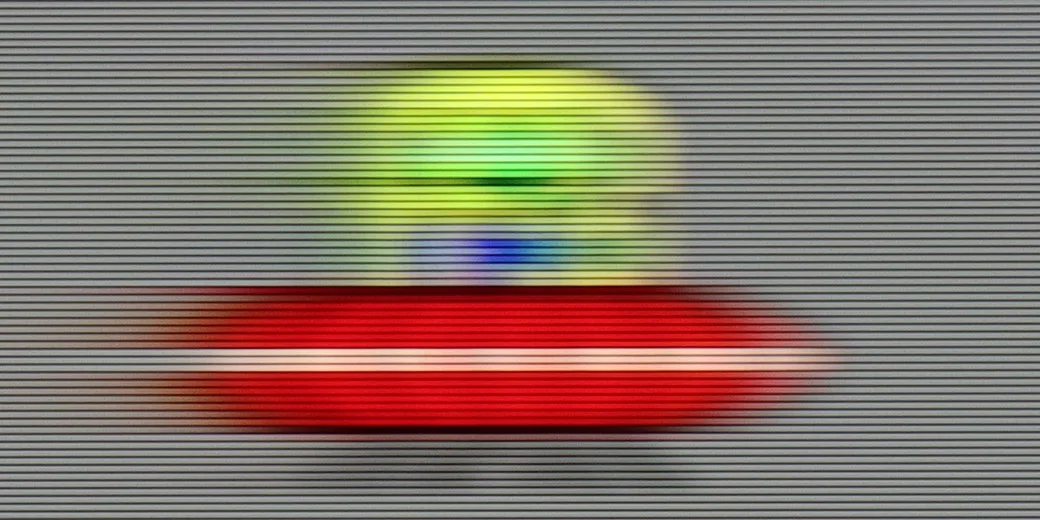
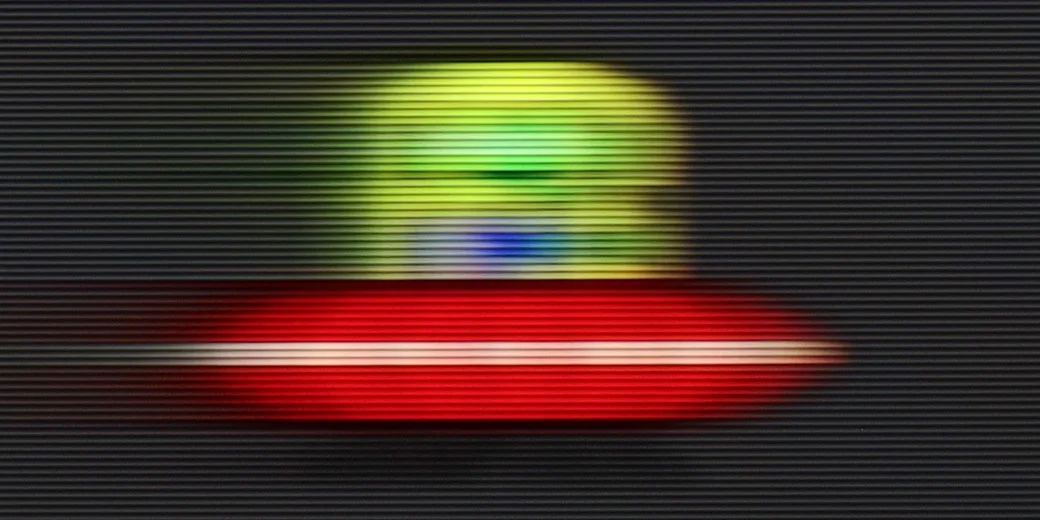
The issue of motion fluidity and blurring is largely predetermined by the use of a 60-hertz panel, which naturally makes it difficult to recommend this receiver to enthusiasts of very dynamic content. Fortunately, in the Q80FUX, we find a few options (although, as we shall see shortly, in reality only one) that are supposed to improve the experience with older film productions. There is a "De-Judder" slider available, which actually controls the smoothness of the image and allows us to adjust it to our preferences: from raw, cinematic frame rates to a more theatrical, smoothed presentation. However, a true surprise awaits us just beside it in the menu. There is also a second slider, supposedly dedicated to removing blur – a feature we typically encounter in 120Hz panels to combat motion blur in sports. However, as we expected, recalling memories from the tests of the K85F model, this slider here is merely a façade. Its adjustment does absolutely nothing to the image and it simply appears to be an oversight by the product engineers who left a non-functional option in the software for this type of panel.
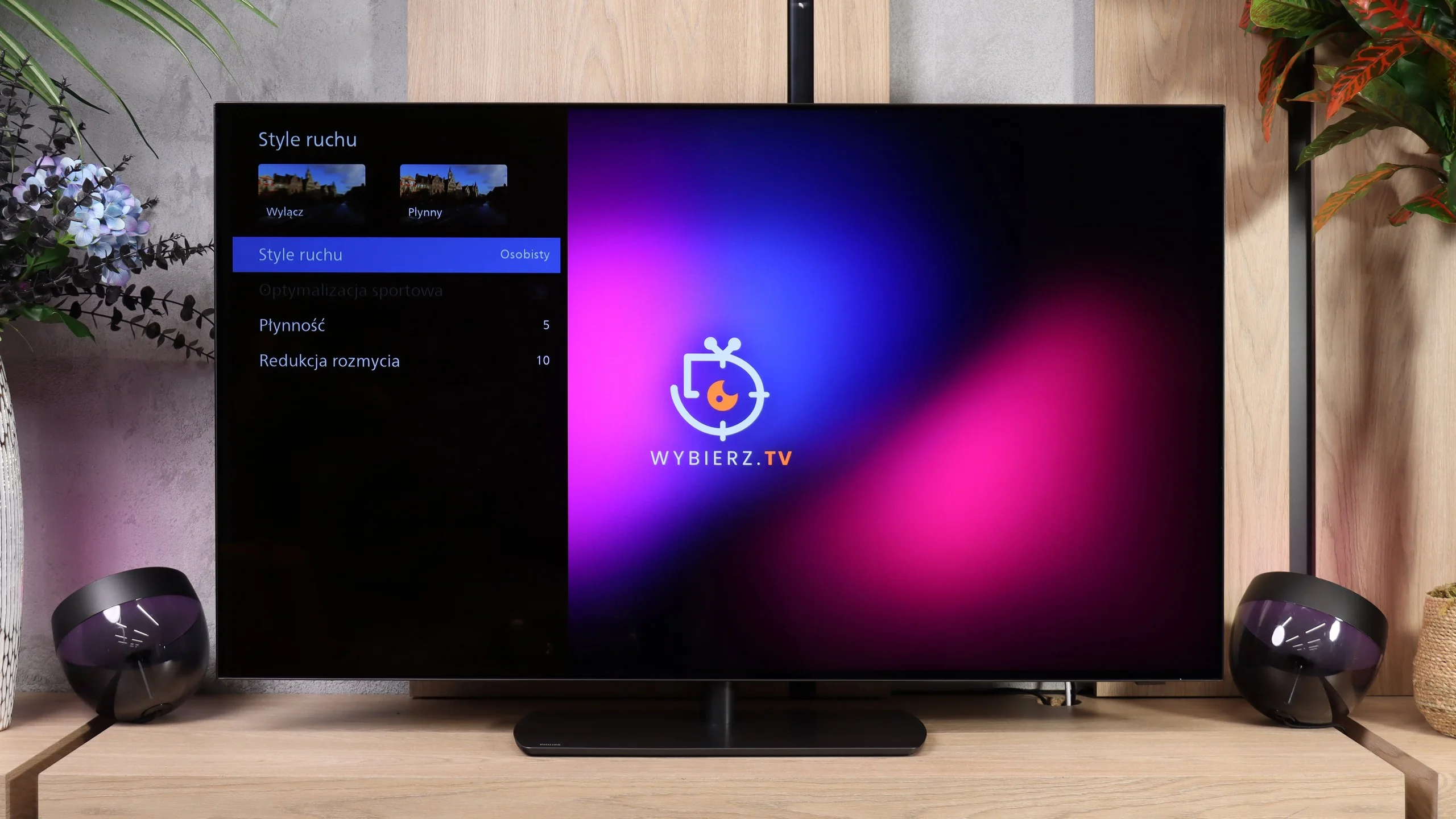
In terms of motion handling the OLED811 performs excellently. At 120 Hz, which is useful for console gaming and watching sport, the picture stays clear and moving objects do not leave noticeable smears. The fast response of OLED pixels helps here; this is clear in the UFO test, even on dark backgrounds. There are also motion smoothing controls. For films you can adjust the level of smoothing to suit your taste, ranging from preserving a cinematic character to much smoother motion. A separate blur reduction setting is useful for fast-paced material such as sports broadcasts.
Console compatibility and gaming features
5.6/10
9.5/10
- ALLM
- VRR
- VRR range48 - 120Hz48 - 165Hz
- Dolby Vision Game Mode
 Yes, high input lag Yes, high input lag
- Correct implementation of HGIG
- 1080p@120Hz
- 1440p@120Hz
- 4K@120Hz
- Game bar
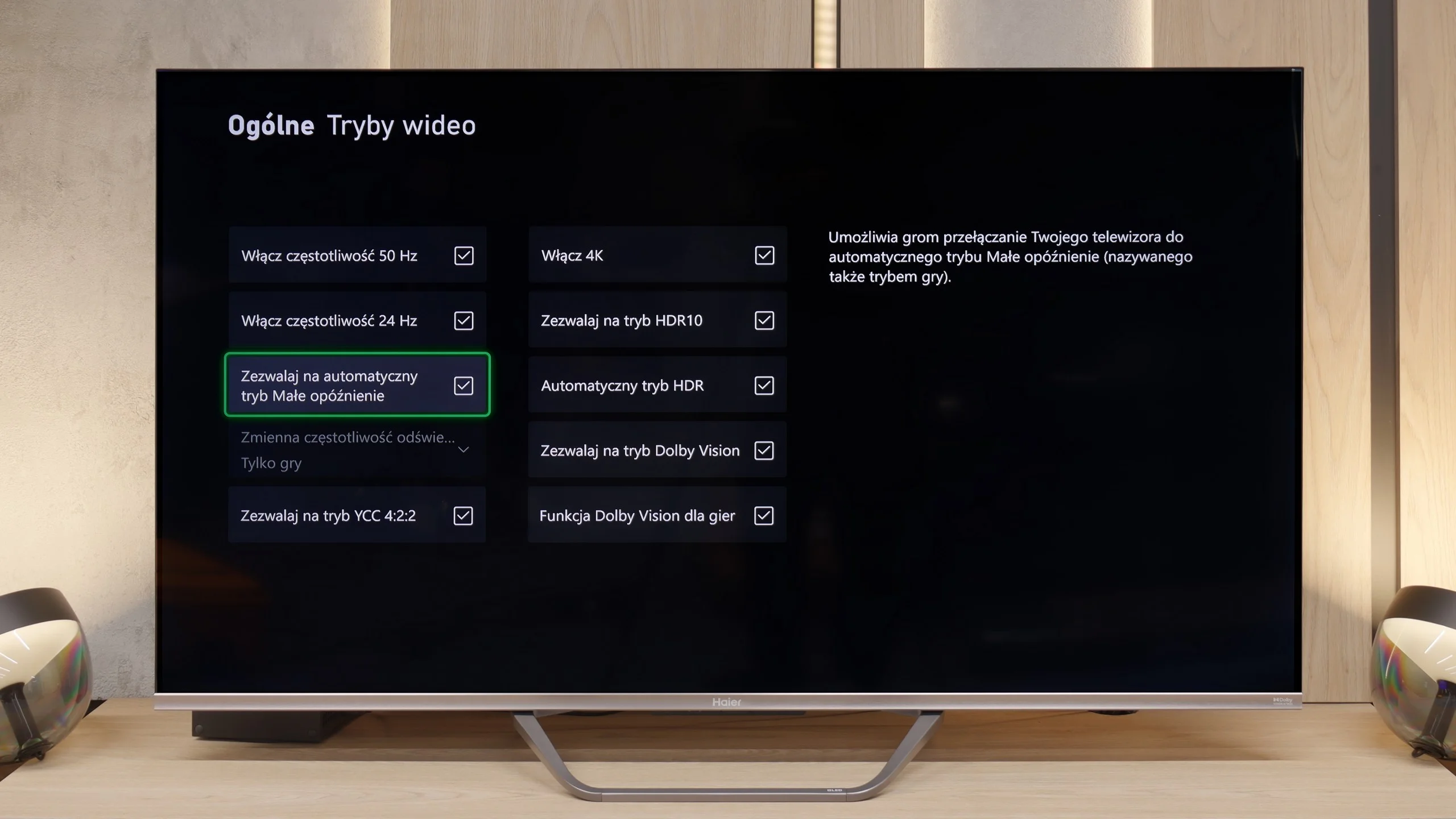
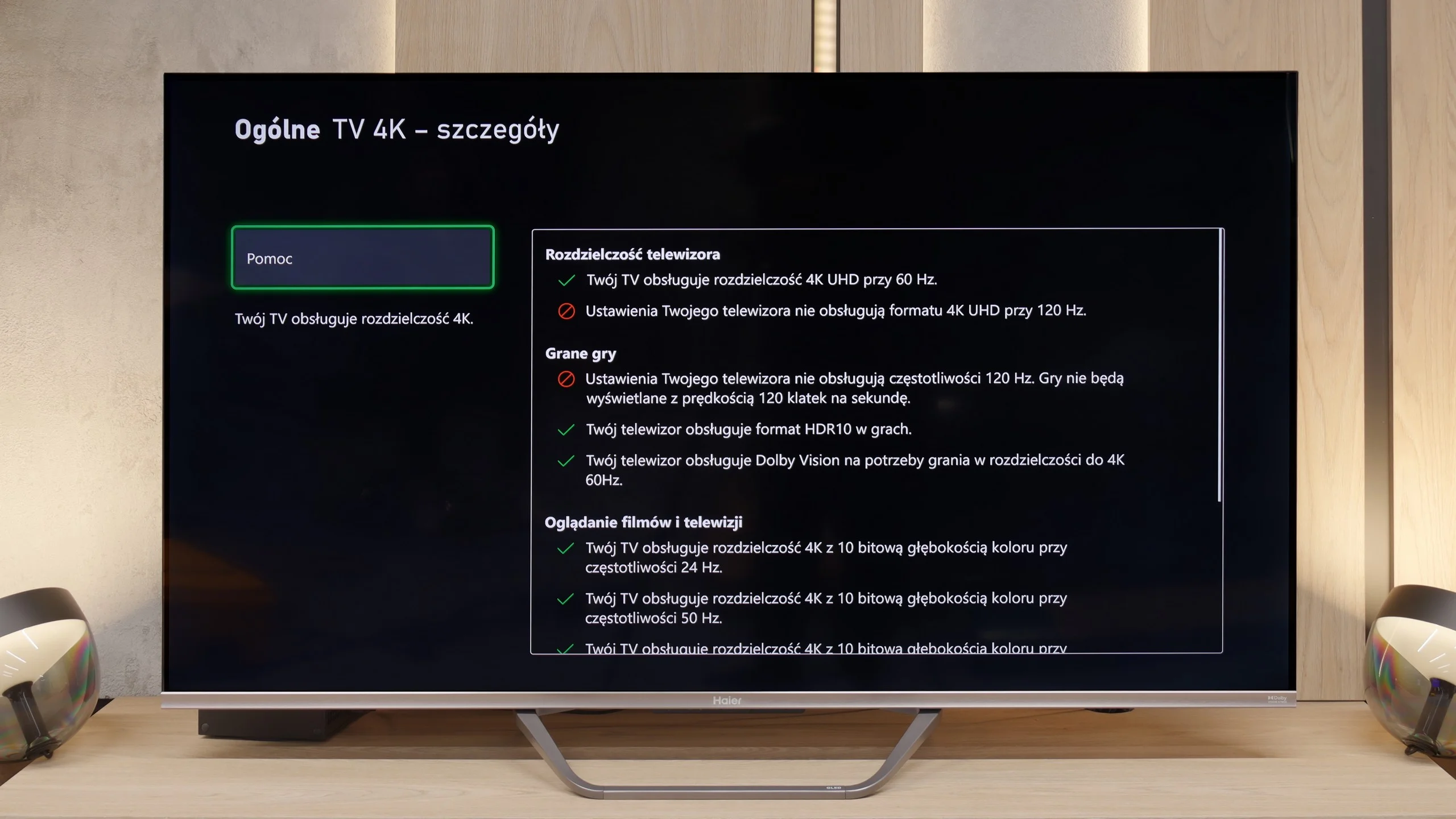
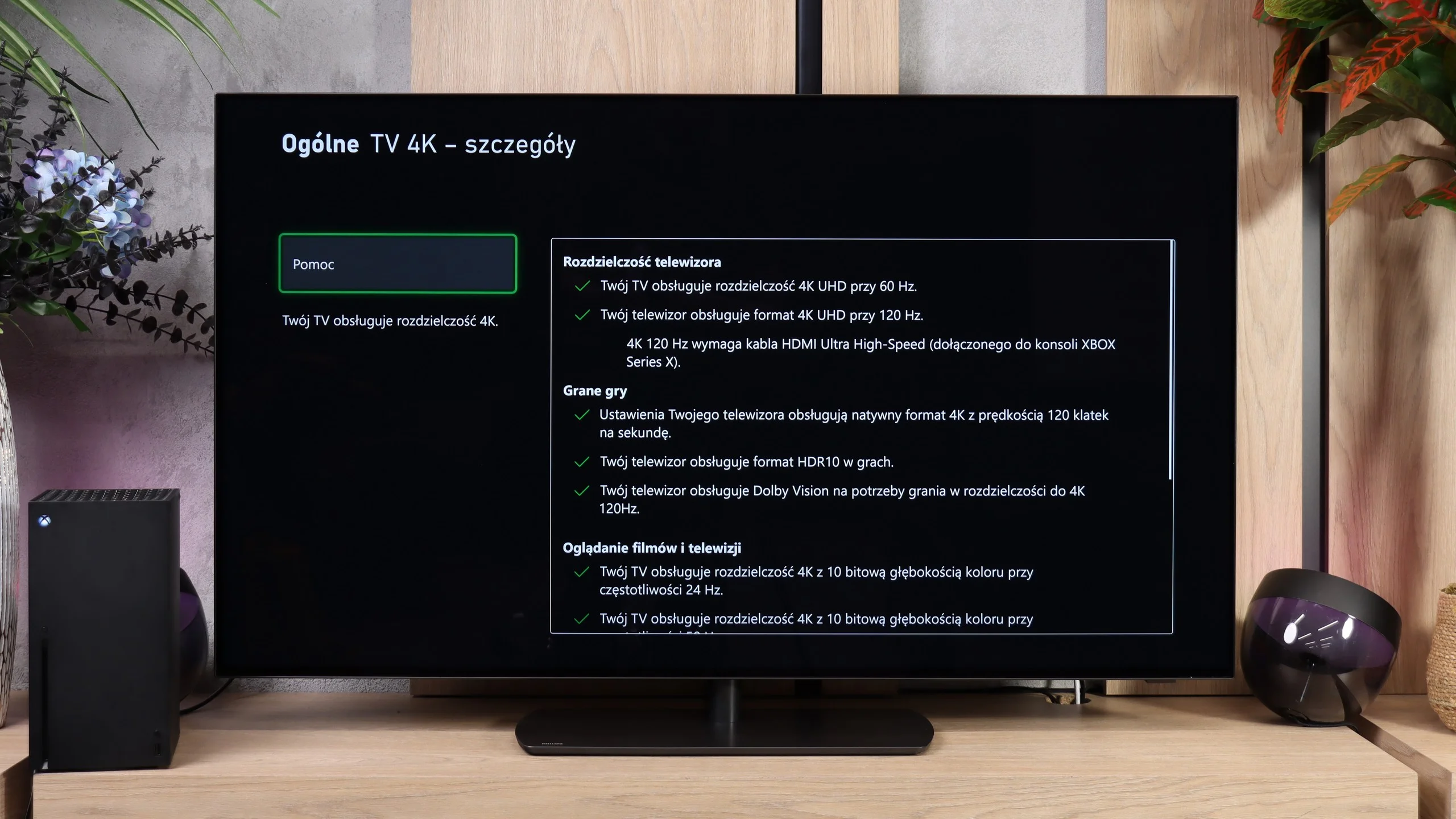
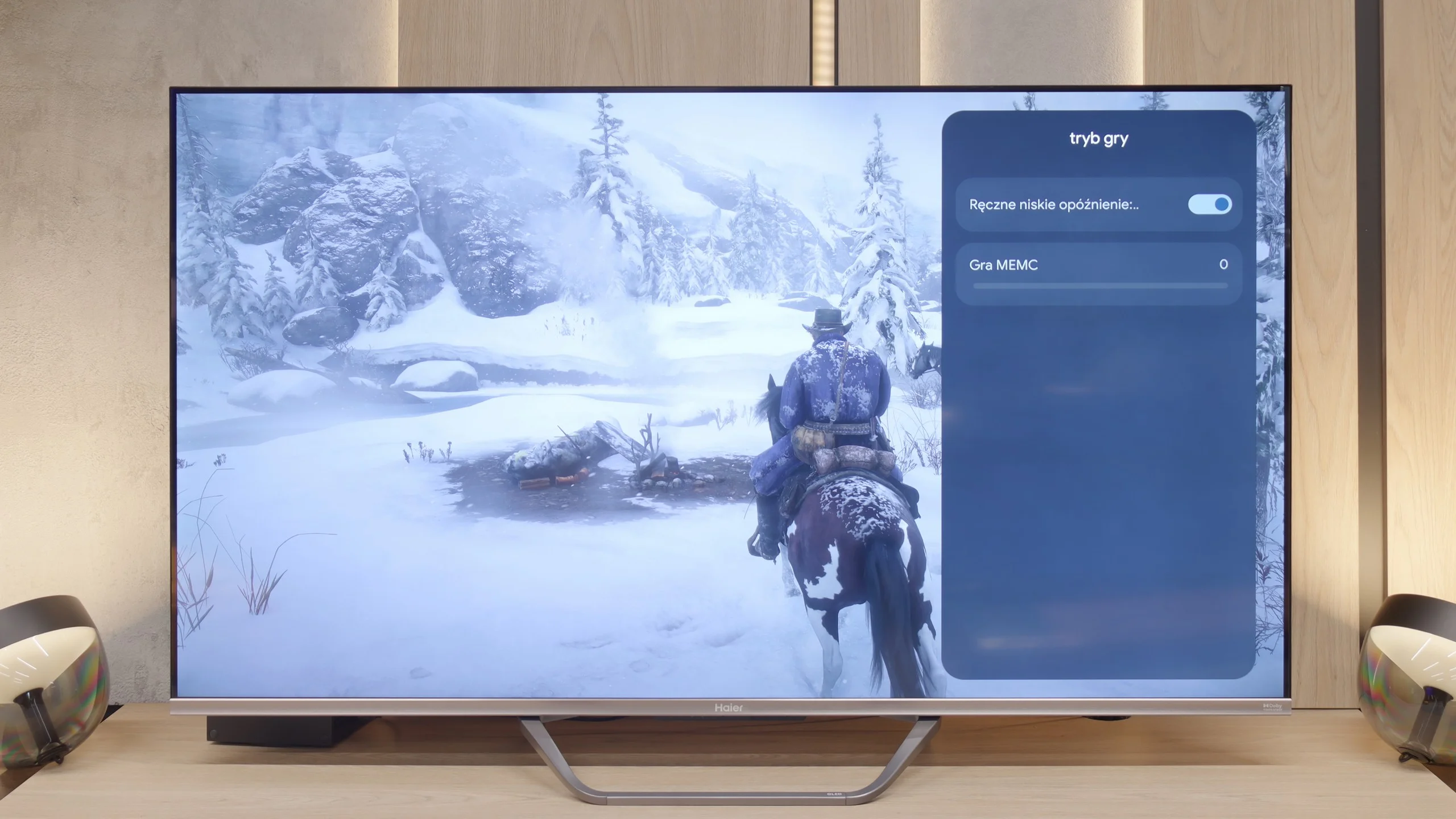
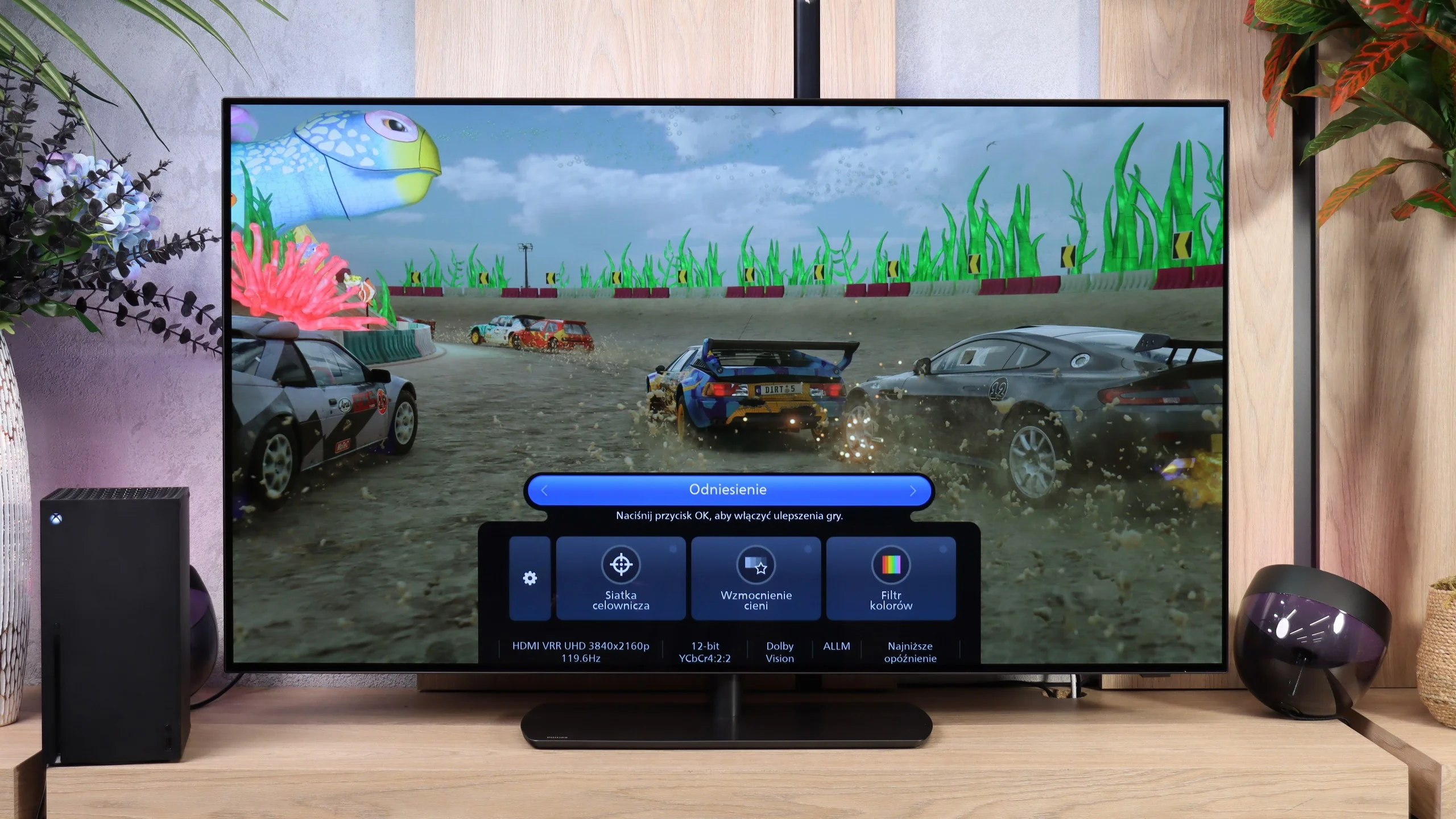
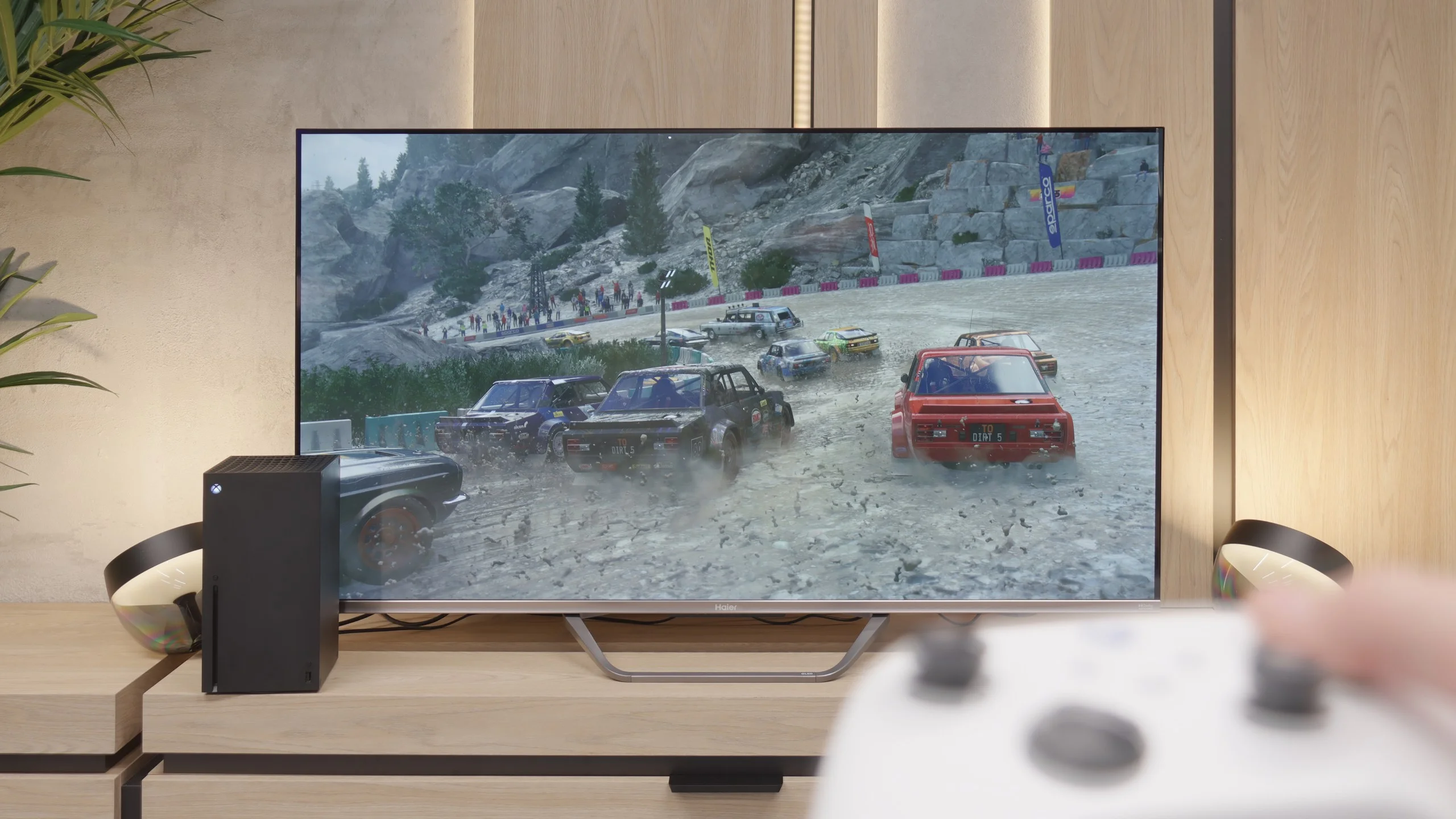
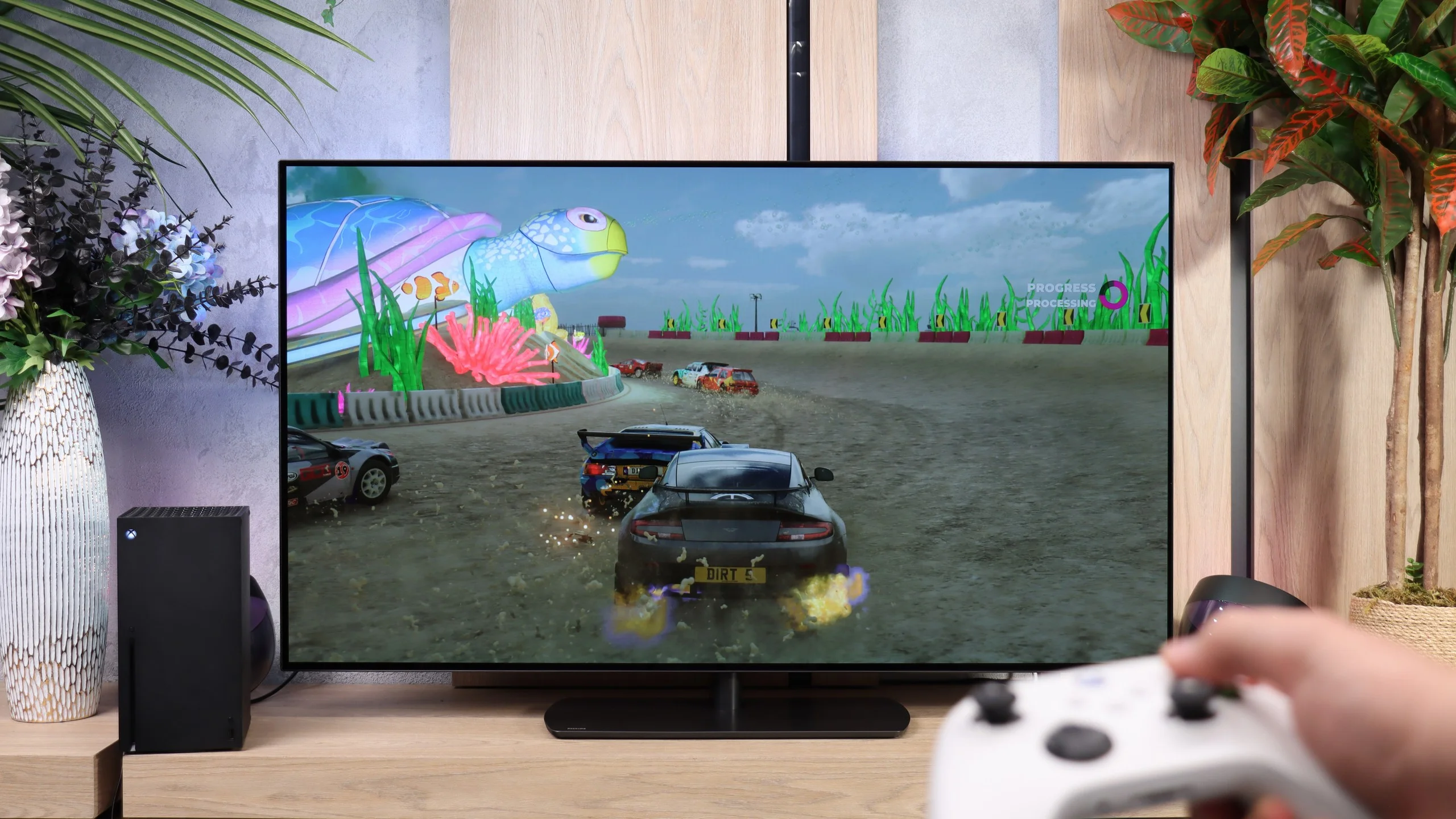
Stepping into the realm of gaming, the Haier Q80FUX proves to be quite a decent companion for the "casual gamer". Onboard, we find highly desired features such as VRR (Variable Refresh Rate) and ALLM (Auto Low Latency Mode). However, the biggest surprise is something else altogether. Although we are not dealing with a 4K@120Hz panel here, the television is capable of accepting and displaying a 120Hz signal at a lower resolution (Full HD). This is a very useful feature that allows for a conscious switch of the console to a lower resolution mode in exchange for significantly higher smoothness, which is a compromise entirely acceptable in the gaming world.
We won’t particularly complain about the lack of extras like the "Game Bar", as it's merely a nice addition. The most concerning issues arise when we delve into the world of HDR in gaming. Due to the television constantly adapting the signal "in its own way", setting the brightness on the console according to the HGIG standard is nearly impossible to achieve as per instructions. Worse still, in the Dolby Vision mode for gaming, the input lag increases to around 50 ms, which is a value high enough to render this mode practically unusable. However, in general, we would not recommend gaming on this television in HDR mode, so these are not such grave shortcomings. What is most pleasing is the presence of 120Hz in Full HD, which makes the Q80FUX a rather nice television for the occasional gamer.
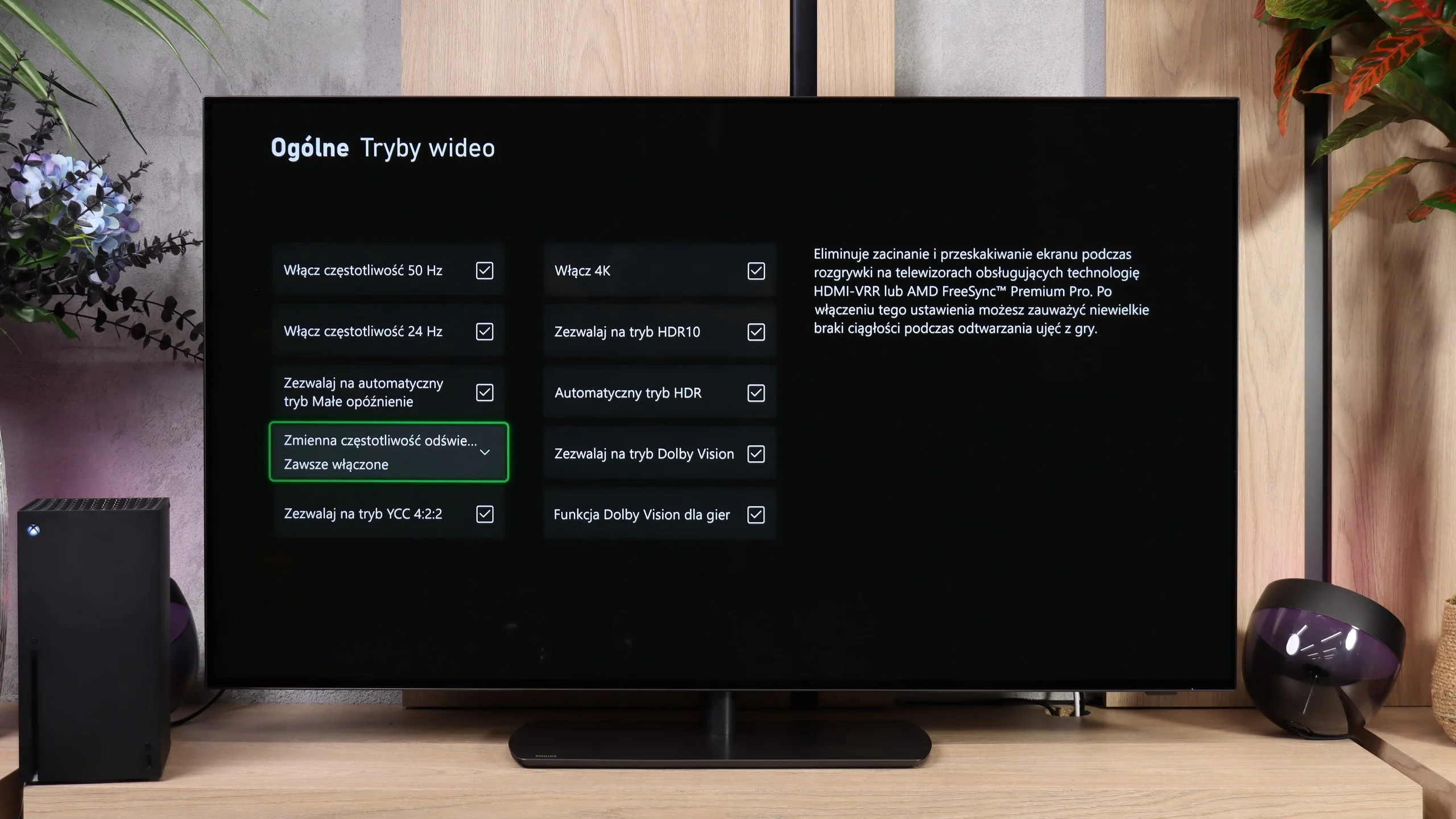
OLED811 has almost everything you could expect from a TV for gaming. It supports 120 Hz at Full HD, 1440p and 4K, and when connected to a PC it can reach 165 Hz. It also has VRR, which helps prevent screen tearing when frame rates fluctuate, and ALLM, which automatically switches to game mode. So you don't have to dig into the settings every time you power up your console.
Another plus is that HGiG works correctly, so once HDR is set on the console the TV doesn't apply its own changes to image brightness. There's also a Game Bar to check signal parameters and quickly change settings useful while gaming. The list even includes Dolby Vision for gaming, but there is a significant catch, which you can read about below.
Input lag
9.4/10
8.8/10
SDR
HDR
Dolby Vision
If there is one category in which the Haier Q80FUX absolutely shines and shows its claws, it is input lag. In this regard, the television presents results that are nothing short of remarkable. In 120Hz mode (achieved, let us remind you, at a lower resolution), input lag drops below 10 ms, which is an excellent value, worthy of high-end gaming monitors. Not much worse, and still at a very good level, is the classic 60Hz mode – here the measurements consistently indicated around 12-14 ms. These are results that significantly more expensive, dedicated gaming designs would not be ashamed of. The only serious stumble here is the Dolby Vision mode. As we have established before, its activation raises the lag to an unacceptable level, so we definitely advise against using it during any interactive gameplay.
The OLED811 responds instantly. We measured 14 ms at 60 Hz and just 5 ms at 120 Hz, both in Full HD and 4K. Those are excellent results that let you comfortably play even fast online titles. Unfortunately, when Dolby Vision is enabled the situation changes dramatically: at 60 Hz latency rises to 157 ms, and at 120 Hz it is 57 ms. The first figure in particular already means a clearly noticeable delay between input on the controller and the on-screen response. For gaming, it’s definitely better to stick with HDR10.
Compatibility with PC
6/10
8.6/10
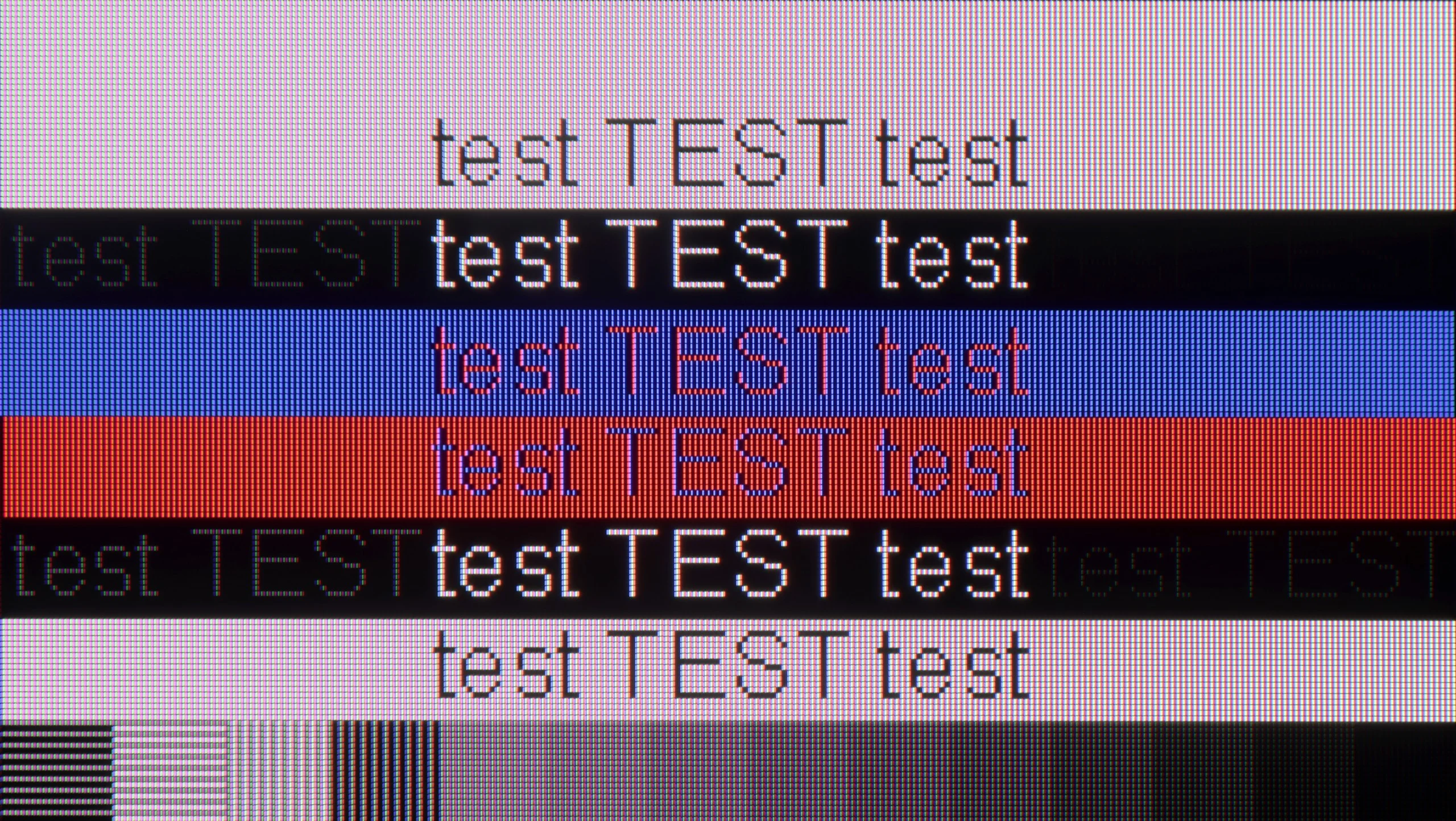
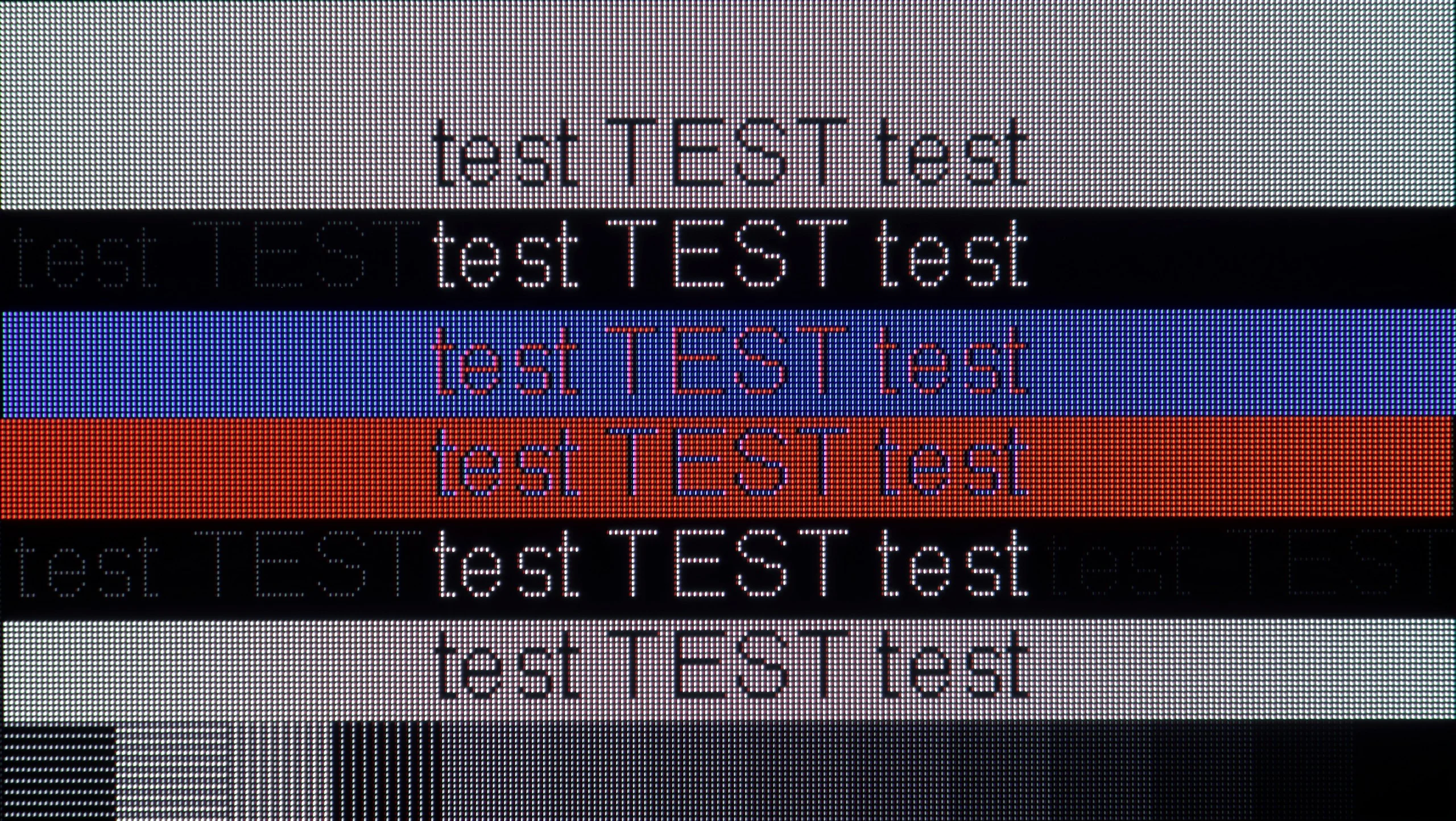
The photo shows the legibility of small fonts. Ideally, lines should be the same thickness on both light and dark text, with minimal pixel gaps.
We also checked, of course, how the Q80FUX performs when connected to a computer. And here’s another pleasant surprise – it handles this really very well. The most important thing is that the fonts are very readable, so nothing blurs and you can work on it normally. Additionally, just like with consoles: we can set a lower resolution here in exchange for achieving a high refresh rate of 120Hz. Importantly, in this mode, G-Sync launched correctly and worked well. This only confirms that this television is truly a successful and efficient piece of equipment for gaming, even on a PC.
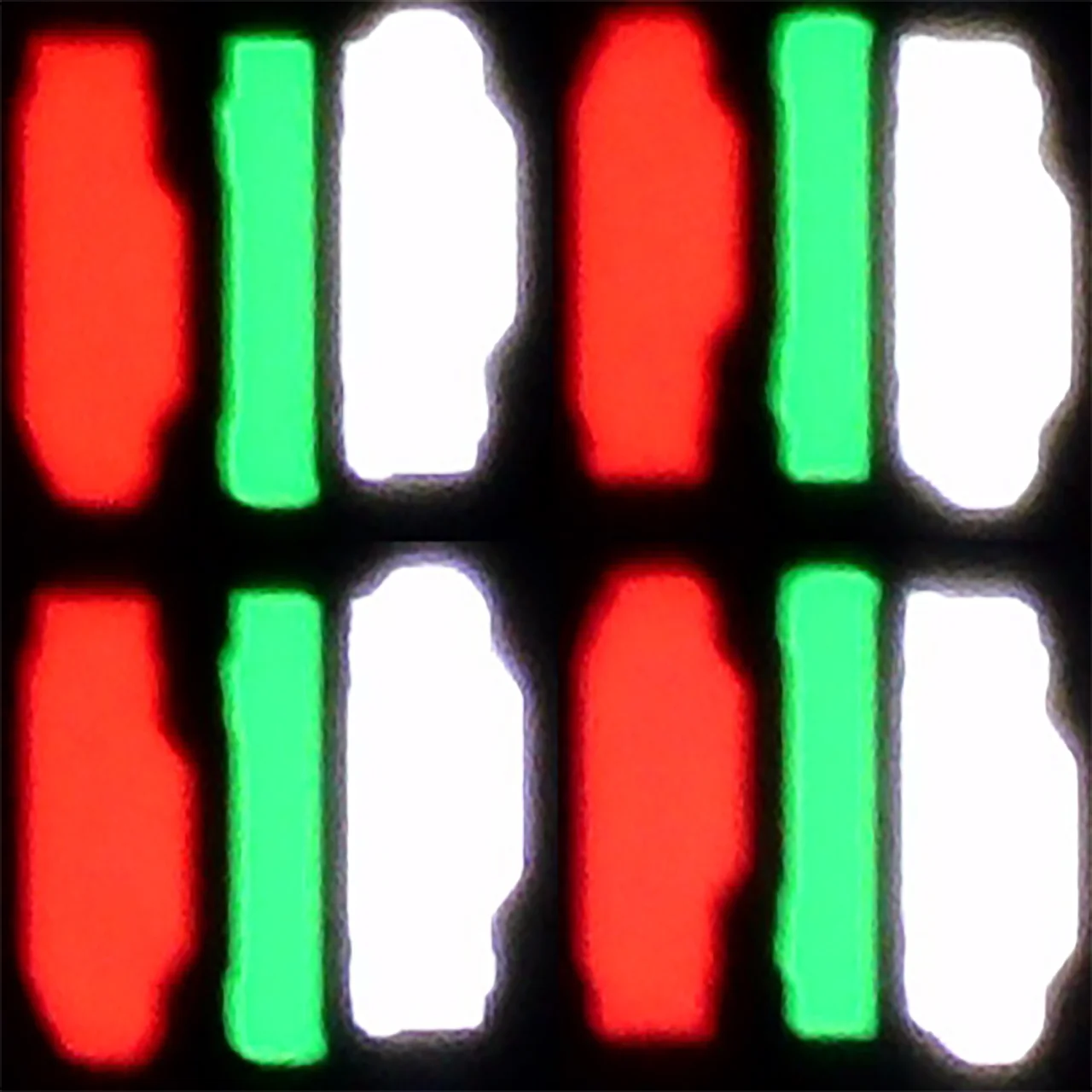
The Philips OLED811 works very well with a PC. The manufacturer has finally managed to implement 4:4:4 chroma correctly, even at maximum resolution and refresh rate. As a result, small text and coloured edges are legible, without blurring or rainbow artefacts caused by loss of colour information. Dark text on dark backgrounds also performs well, which is something TVs can struggle with. There are still minor imperfections related to the RGWB subpixel layout. Fonts are not as sharp as on a conventional RGB monitor, and white letters can show faint red outlines up close. From a normal viewing distance you hardly notice it, though sitting close to the screen at a desk makes it easier to spot.
The most fun, however, comes from gaming on a PC. The combination of 4K at 165 Hz, functional G-Sync and input lag of around 5 ms makes the OLED811 excellent for that. If you have a PC that can take advantage of such a refresh rate, it’s definitely worth connecting it to the Philips.
Viewing angles
3.3/10
7.8/10
Anyone who plans screenings in a wide family group must be aware of the fundamental compromise that Haier has made by implementing a VA panel in this model. This technology has indeed given us deep blacks and high contrast, but its inherent characteristic is also a noticeable narrowing of viewing angles. It is enough to sit a bit further to the side of the sofa to immediately notice how the colours start to lose saturation and the image begins to fade. It’s simply a classic trade-off – we gain something (contrast) at the expense of something else (angles) – and the Q80FUX fits perfectly into this pattern.
The viewing angles on the OLED811 are excellent and among the best on the market. Even sitting well off to the side, you still see an image with deep blacks and well-saturated colours. This is a big advantage over LCD screens, as you don't have to sit directly in front to enjoy good picture quality.
QD-OLED panels do even better, keeping colours truer at angles. On the Philips, at greater off‑axis angles white shifts slightly towards greenish hues, but the effect is so small that it is hard to find it bothersome during viewing. We'd even say that, in this respect, we've come across the best WOLED panel unit we've tested so far.
Daytime performance
4.8/10
6/10
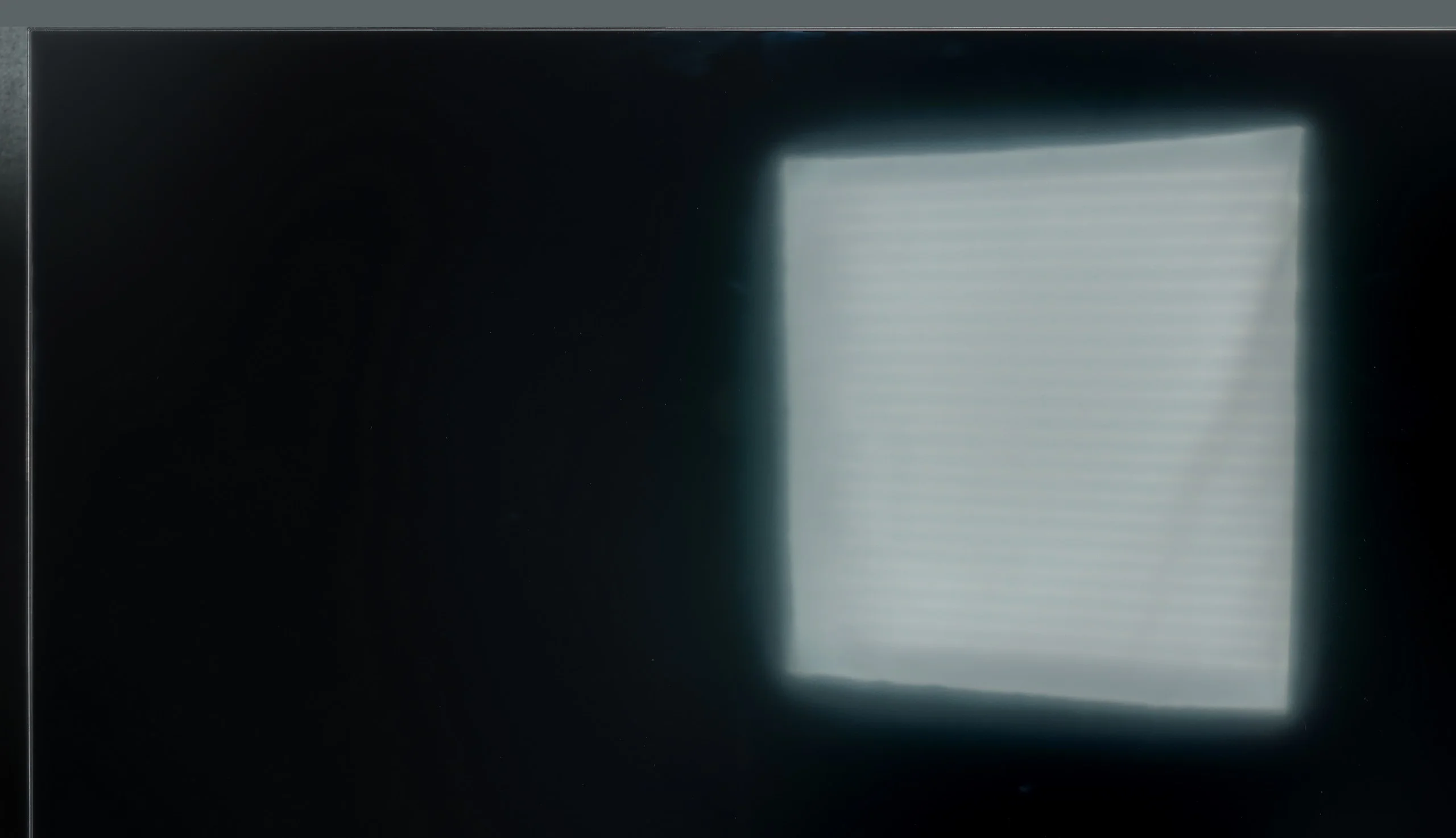
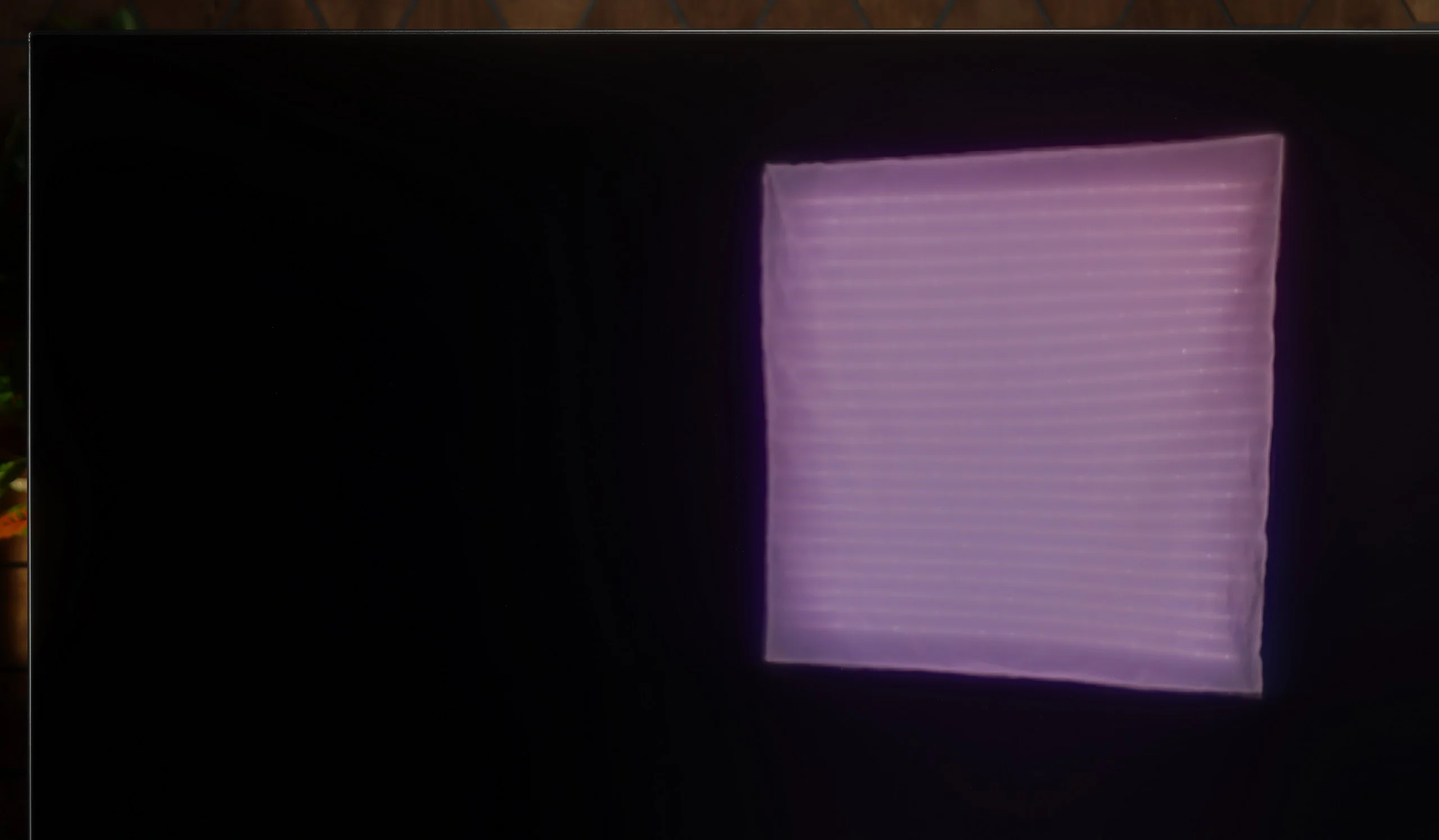
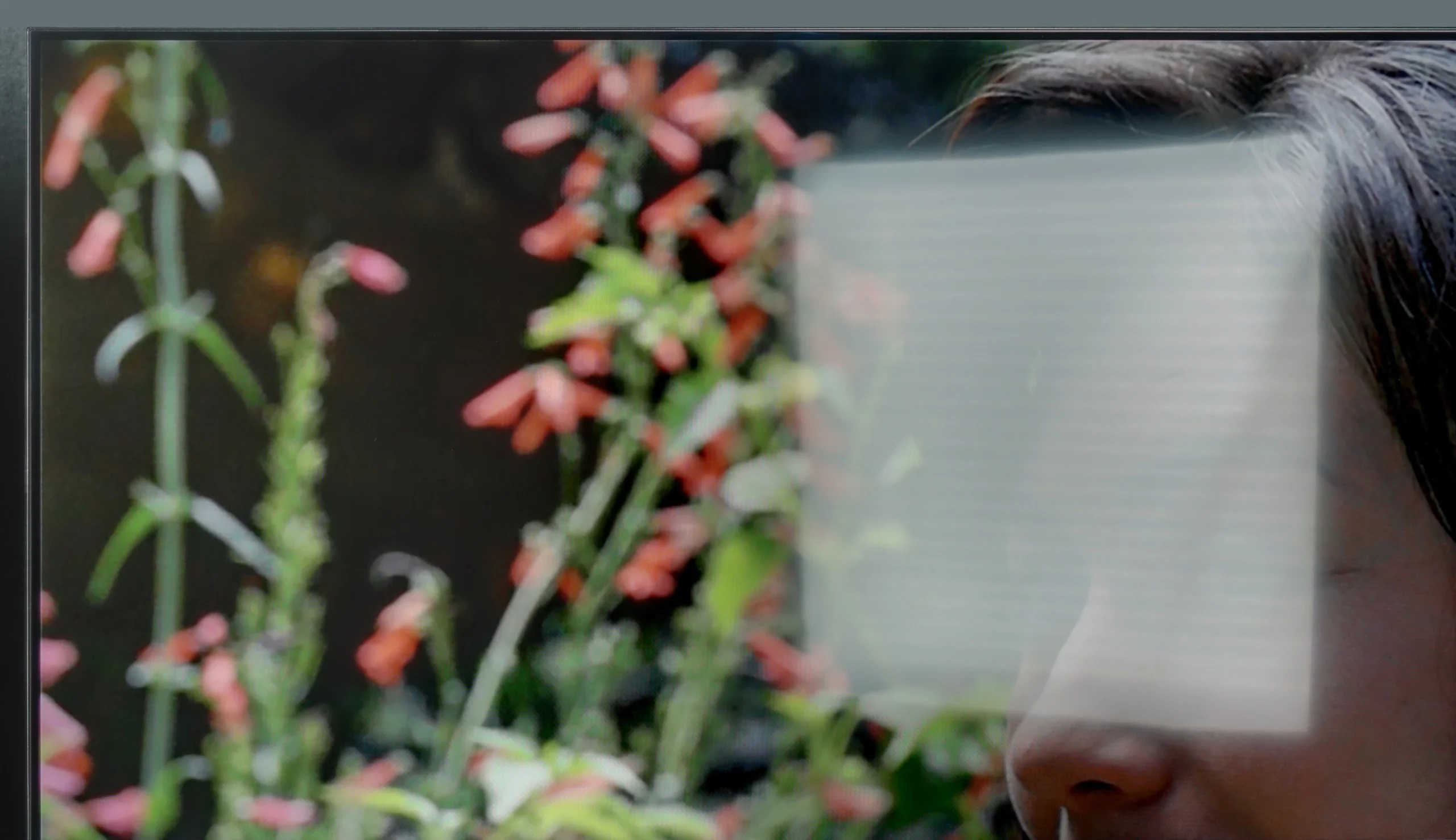
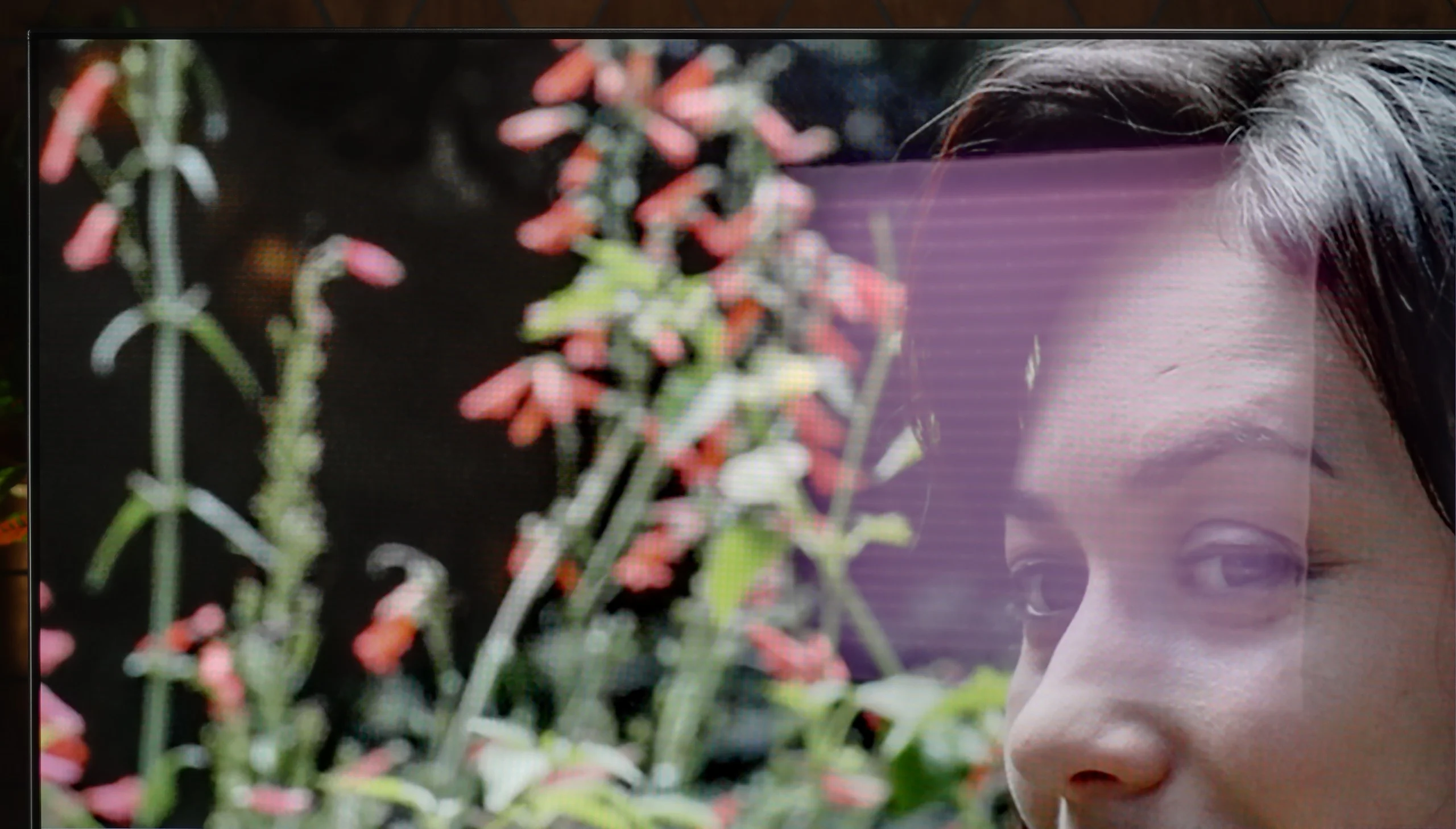
Panel brightness
Philips OLED811: 392 cd/m2
Haier Q80FUX: 317 cd/m2
The clash of the receiver with the daily challenges posed by a bright living room is quite decent in the case of the Q80FUX, although it is certainly difficult to speak of it as ideal. The panel itself is equipped with a coating that handles most reflections and glare from the surroundings quite effectively. Equally importantly, even in more challenging lighting conditions, the screen manages to retain pleasantly saturated colours. However, the weakness of this construction reveals itself where the brightness comes into play. The previously mentioned, rather moderate maximum brightness (around 350 nits) means that in confrontation with intense, natural light coming through the window, the screen often struggles to "break through". On a sunny day, the image may simply lack the appropriate impact.
OLED811 copes with daytime viewing, though in a very bright living room it has its limitations. Maximum SDR brightness reaches around 600 nits, comparable to the LG C6 or the Samsung S90H, which use the same panel. That’s noticeably more than entry-level OLEDs and will be more than enough for most people. However, bear in mind this brightness is not sustained across the whole screen; it falls with large areas of white, and our average measurement was about 392 nits.
A bigger problem can be direct reflections from windows or lamps. The glossy coating suppresses them reasonably well, but they are still clearly visible on the screen, especially in dark scenes. It doesn’t diffuse them as effectively as matte screens, so placing the TV opposite a large window is not the best idea. On the plus side, blacks remain very good even during the day. In a typical living room the Philips will cope without major issues, but with strong sunlight falling directly on the screen you will want blinds.
Panel details
Subpixel Structure:
Panel uniformity and thermal imaging:


Haier Q80FUX
Philips OLED811
TV features
5.6/10
7.9/10
- SystemGoogle TVTitan OS
- System performanceAverageGood
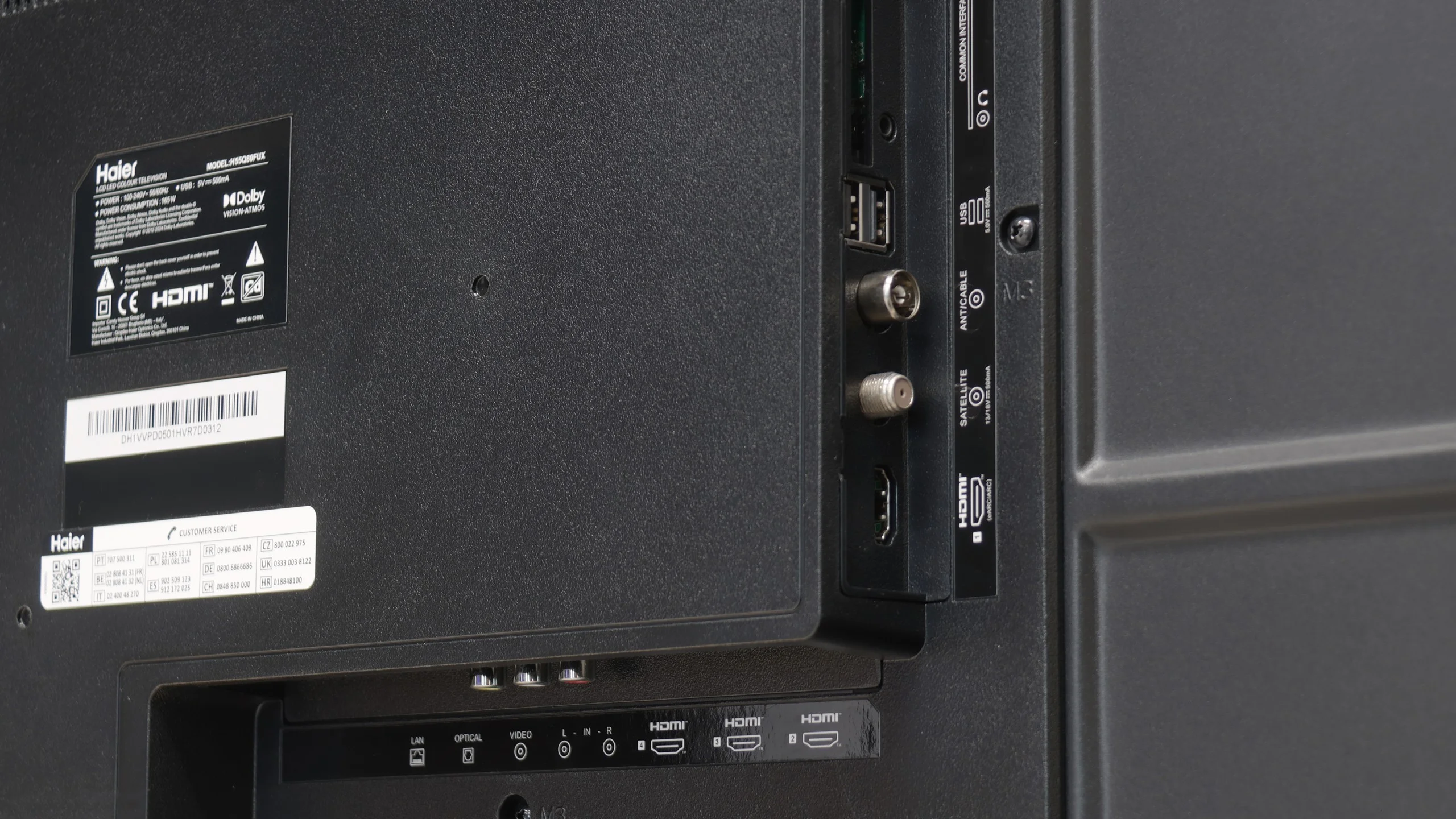
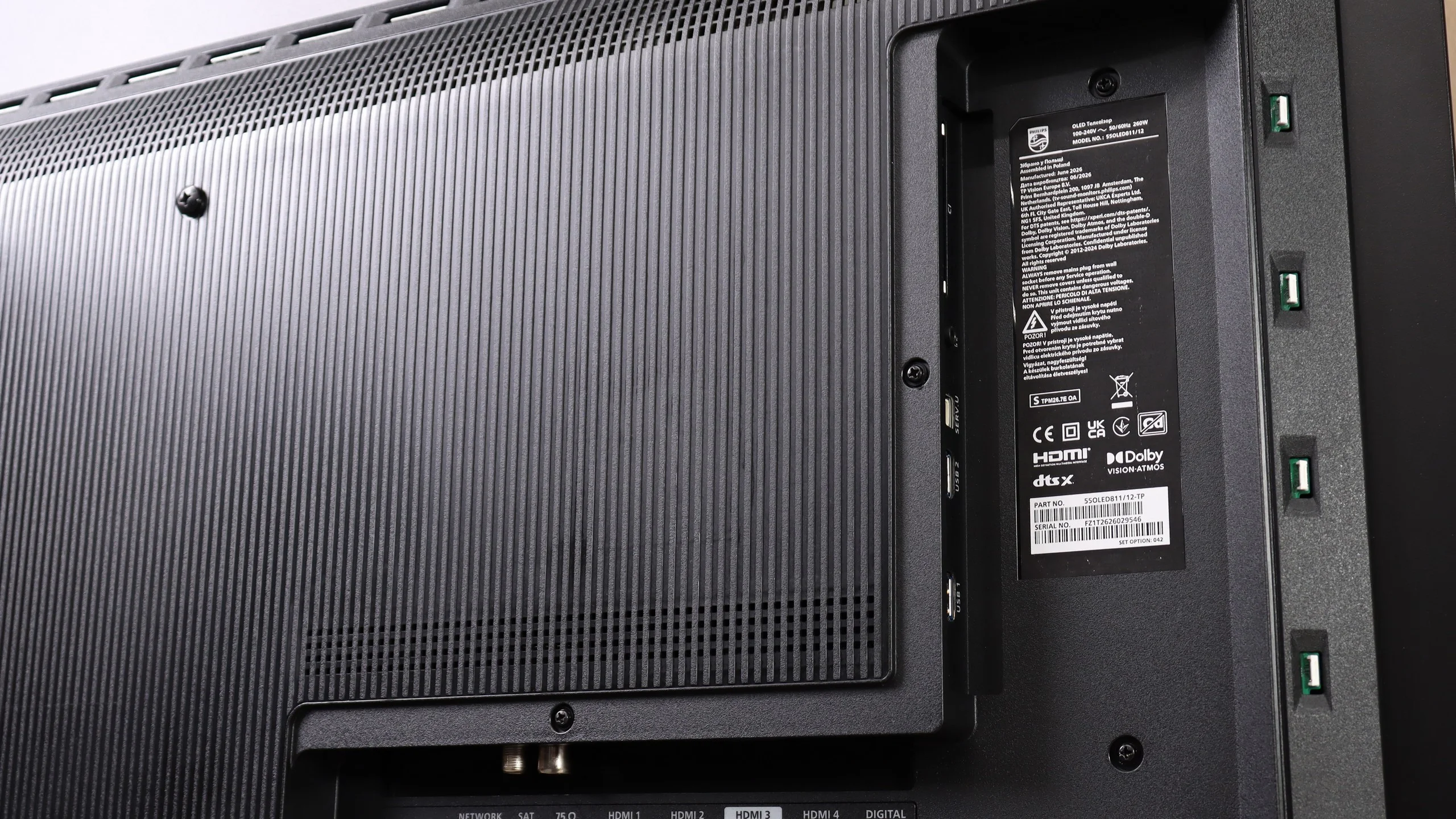
- HDMI inputs4 x HDMI 2.0, 0 x HDMI 2.10 x HDMI 2.0, 4 x HDMI 2.1 48Gbps
- Other inputsRCA (Chinch)
- OutputsToslink (Optical audio), eARC (HDMI), ARC (HDMI), Mini-Jack (Headphones)Toslink (Optical audio), eARC (HDMI), ARC (HDMI), Mini-Jack (Headphones)
- Network InterfacesWi-Fi 2.4GHz, Wi-Fi 5GHz, Ethernet (LAN) 100MbpsWi-Fi 2.4GHz, Wi-Fi 5GHz, Ethernet (LAN) 100Mbps
- TV receptionDVB-T, DVB-T2, DVB-S, DVB-S2, DVB-CDVB-T, DVB-T2, DVB-S, DVB-S2, DVB-C
Classic features:
- Recording to USB (terrestrial TV)
- Recording programming
- Picture in Picture (PiP)
- RF remote control (no need to aim)
- Backlit remote control
- Teletext
- Audio only mode
- Bluetooth headphones support
- Simultaneous Bluetooth headphones & TV audio
Smart features:
- AirPlay
- Screen mirroring (Windows Miracast)
- Voice search
- Voice search in native language
- Ability to connect a keyboard and mouse
Sound connection options
- HDMI audioeARC (HDMI), ARC (HDMI)eARC (HDMI), ARC (HDMI)
- Other audio outputsToslink (Optical audio), Mini-Jack (Headphones)Toslink (Optical audio), Mini-Jack (Headphones)
- Wireless audioBluetoothBluetooth
Supported audio formats (external HDMI eARC audio):
- Dolby Digital Plus 7.1
- Dolby True HD 7.1
- Dolby Atmos in Dolby Digital Plus (JOC)
- Dolby Atmos in Dolby True HD
- DTS:X in DTS-HD MA
- DTS-HD Master Audio
Senior accessibility
- Numeric keyboard on TV
- Font size adjustment
- Audio description
SmartTV on Haier Q80FUX: GoogleTV
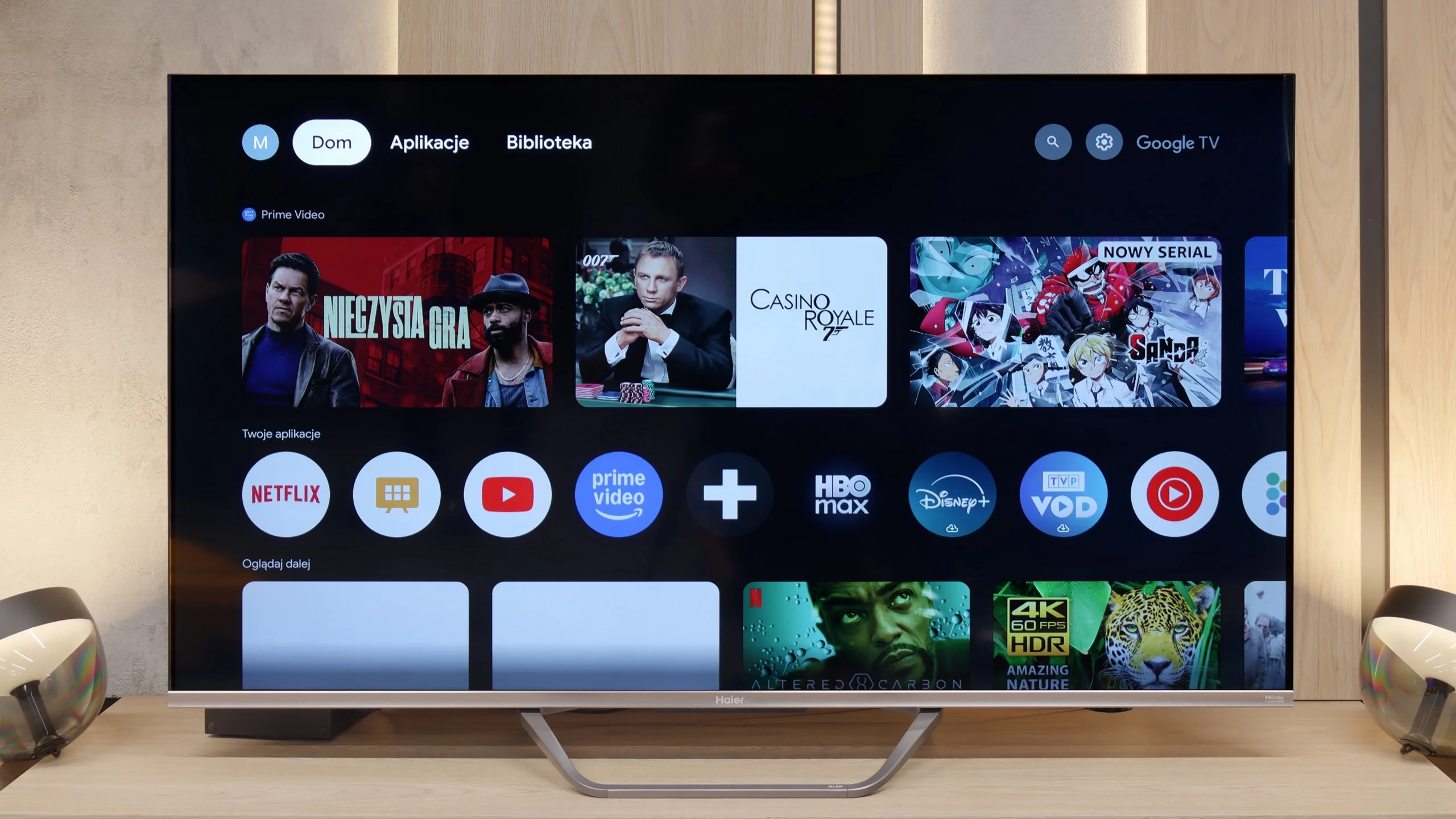
Let's start with the smart layer, which in the Q80FUX is managed by the Google TV system. This is theoretically a huge advantage, opening access to an incredible library of apps, facilitating screen mirroring from mobile devices, and offering convenient voice search. Unfortunately, just like in other models from this brand that we tested, the implementation of this platform leaves much to be desired. It's not even about drastic stuttering or delays in navigation, but rather a festival of minor errors, oversights, and terrible translations in the menu. Because of this, it's hard to regard "Google TV" in Haier's version as equal to what we find in receivers from Sony or TCL, even though the same proudly sounding name is displayed on the box.
Classic Features
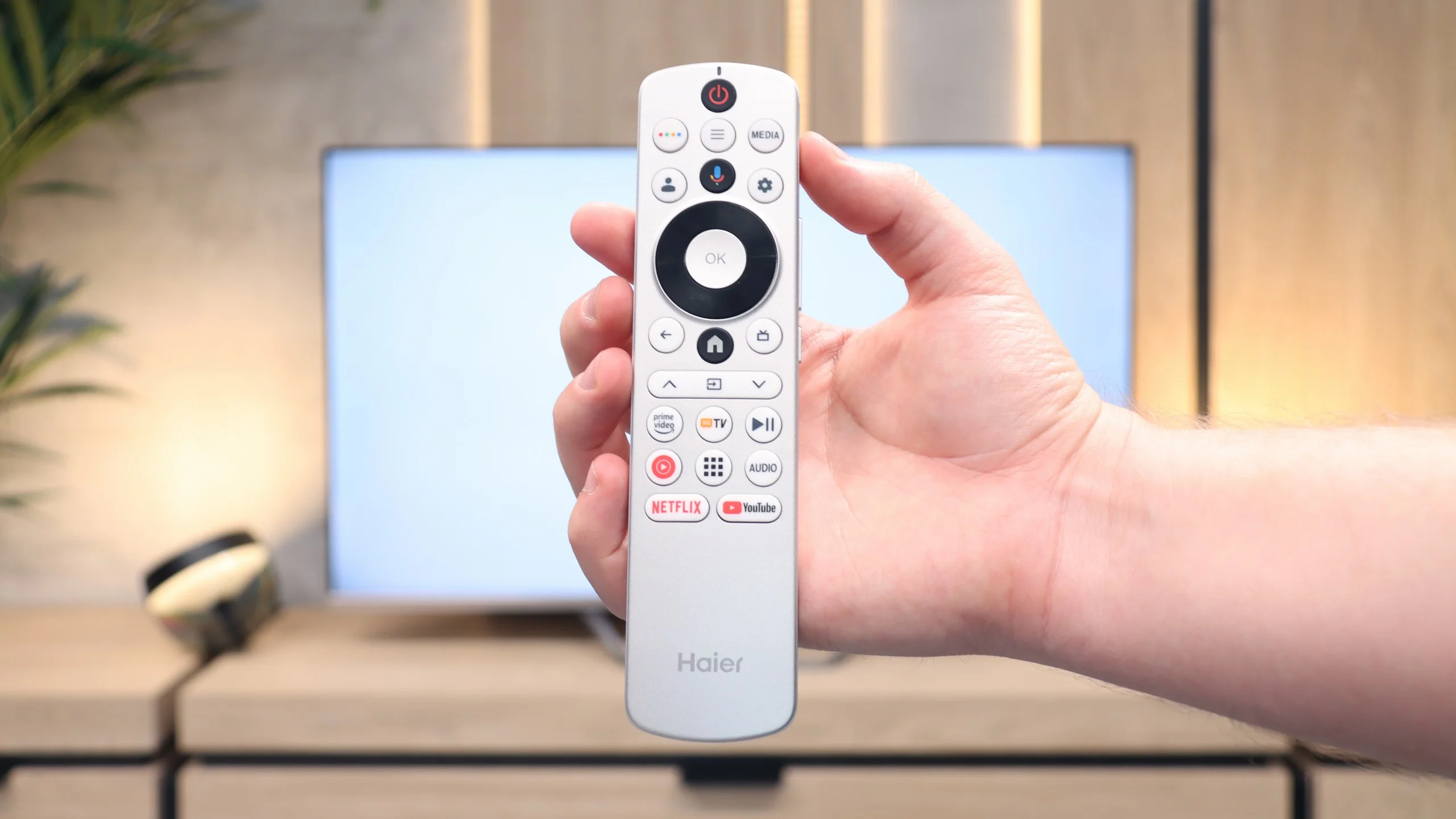
Moving on to the classic, functional features of the television, the image of the device does not improve at all. The only commendable aspect is the presence of Bluetooth connectivity and an unusual but useful relic from the past in the form of an analogue headphone jack output. Aside from that, it's hard to find anything that would excite us. Due to the problematic software, the receiver (like its predecessors in our tests) was unable to find any terrestrial television channels, despite other televisions connected to the same installation having no issues whatsoever. The remote control itself is also strange – its design may appeal to some, but due to the lack of a numeric keypad and the absurd placement of some buttons on the side edge, it definitely cannot be called senior-friendly.
Smart features: Titan OS
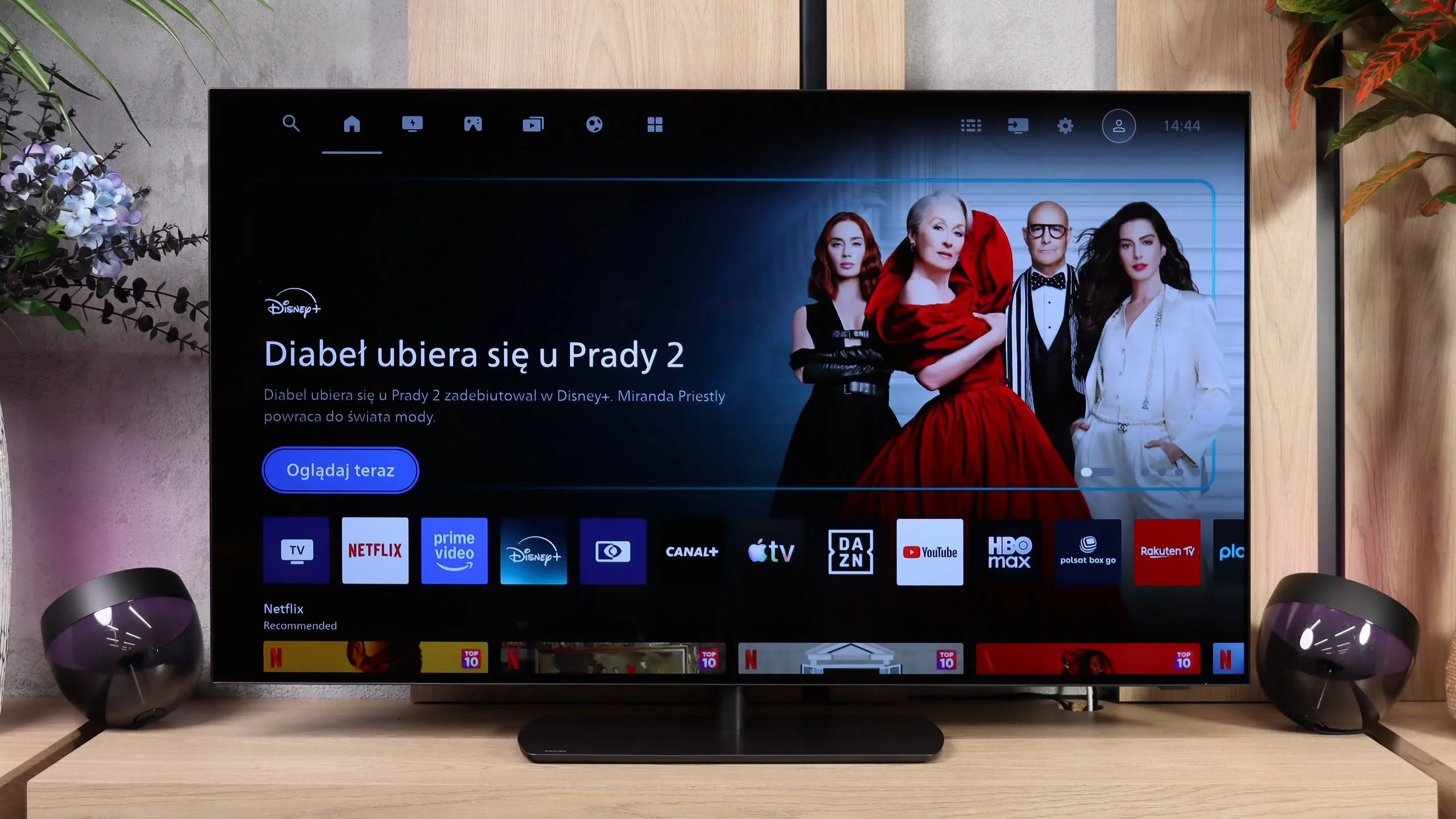
It's the Smart TV system that is the most controversial change in the OLED811. Philips dropped the user-favorite Google TV in favor of its own Titan OS. For many people this may be hard to accept, although Titan has been getting better every year and runs noticeably smoother. We have working AirPlay, screen mirroring from a computer, and voice search in Polish. System responsiveness has improved too, though minor delays still occur when navigating menus. We suspect the infrared remote is partly to blame, as it doesn't always register commands immediately. The biggest limitation compared with Google TV remains a smaller app selection. That doesn't mean it's empty — you'll find Netflix, Prime Video, Disney+, CANAL+, and Apple TV was recently added to the library. If you mainly use popular services, Titan should be enough, but it's worth checking availability of lesser-known apps before buying (list at the bottom 😉).
Ambilight
Ambilight is still one of the best reasons to consider a Philips. On the OLED811 it's three-sided — LEDs at the top and along the sides of the chassis light the wall with colors matched to what's happening on screen. In the evening it creates a great effect and can change the mood of the whole room, which is why we awarded extra points for this feature. You don't have to use dynamic picture tracking though. If you prefer calmer viewing conditions, you can set a steady white light. That's a nice option for evening sessions when you don't want to sit in front of a bright screen in a completely dark room.
Classic features
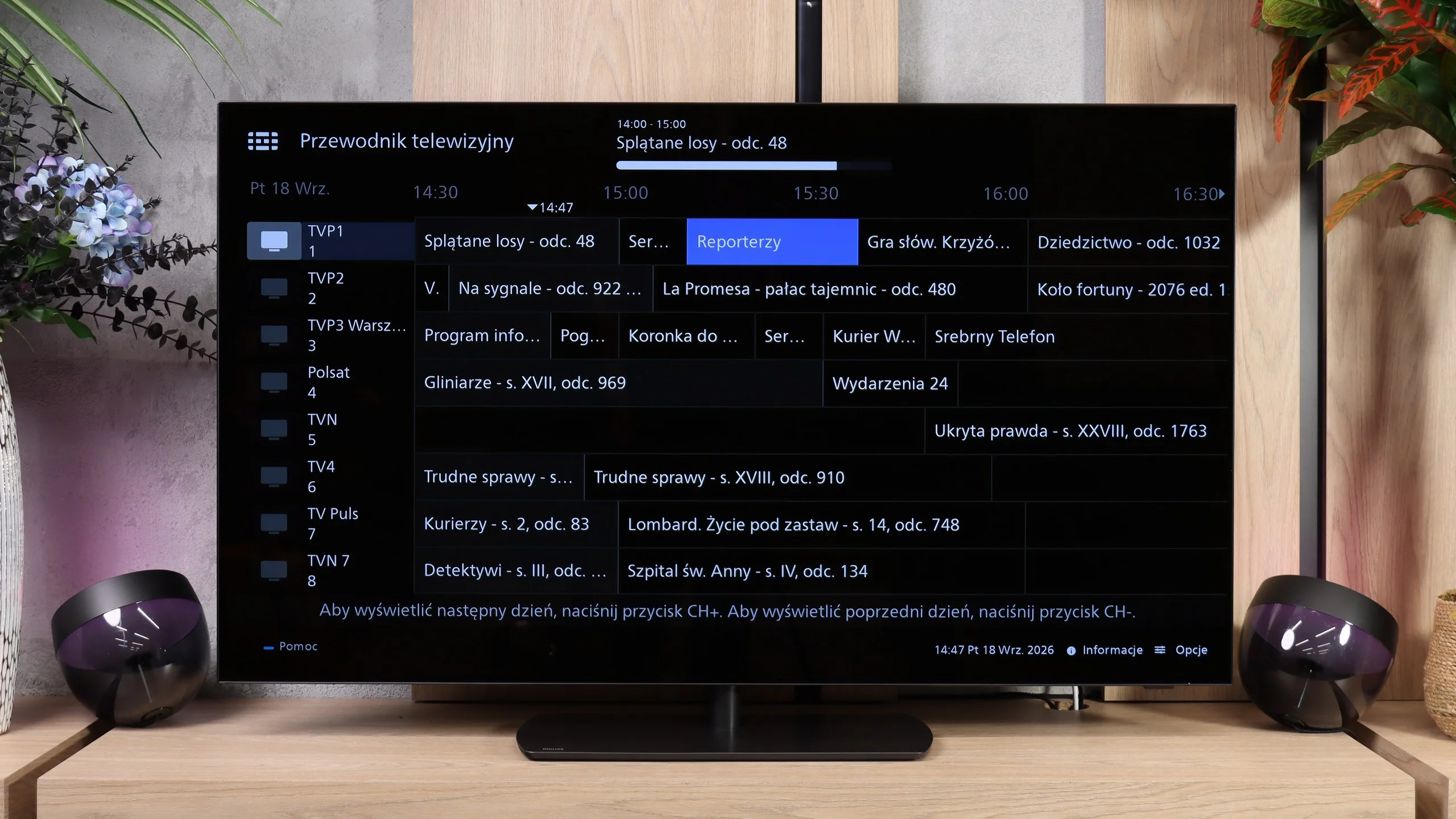
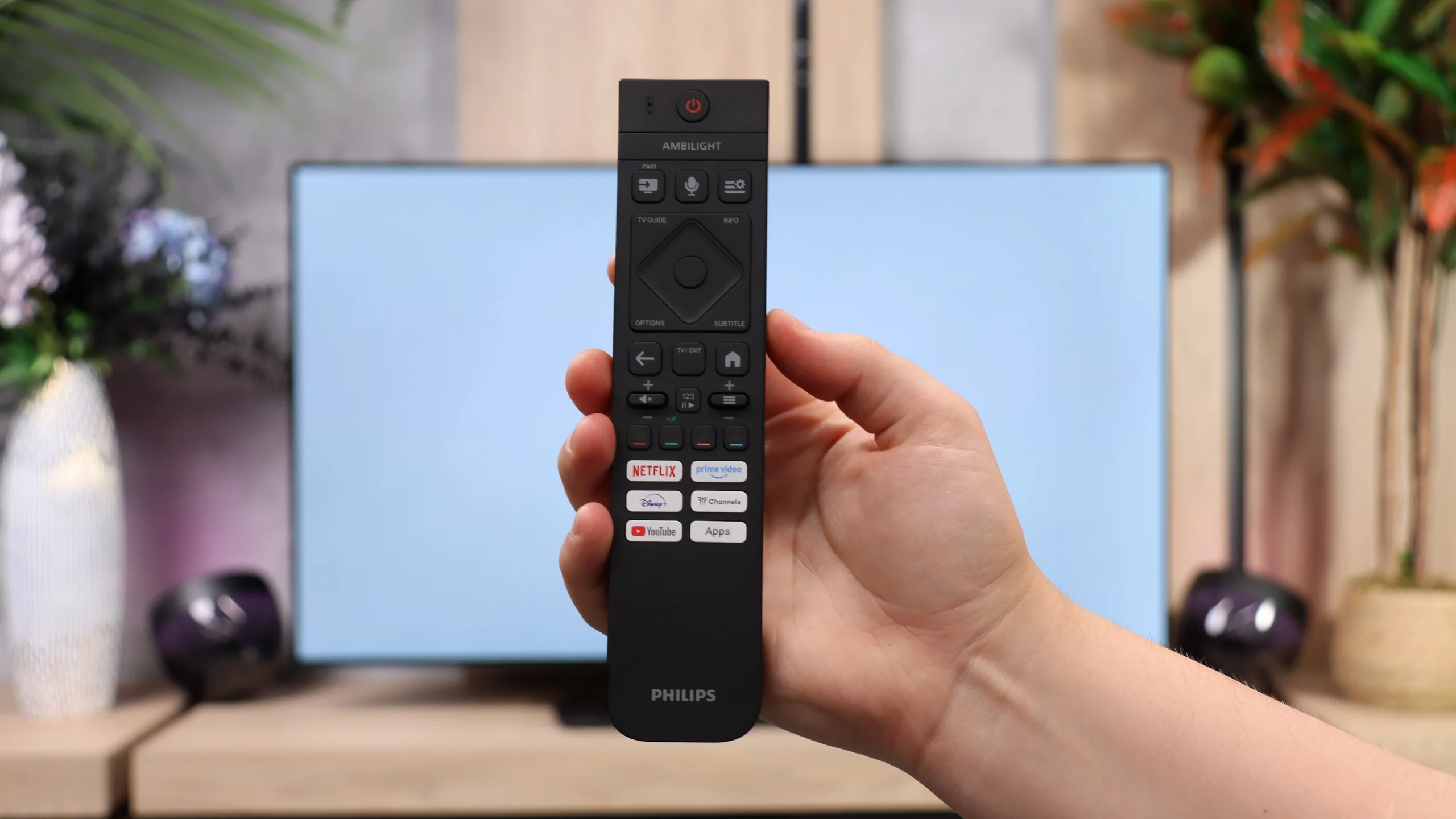
For regular TV watching the OLED811 performs well, although there is no USB recording or picture-in-picture (PiP). You can connect Bluetooth headphones and use them at the same time as the TV speakers. What bothers us most is the aforementioned infrared control. The remote itself is really interestingly designed: it has backlighting and a hybrid keyboard with a numeric section. It's a shame you have to aim it at the TV like with old remotes. For equipment at this level we'd prefer to just press buttons without wondering which way we're holding the remote. Hopefully Philips will fix that in future models.
Apps
9.6/10
7.7/10






















Playing files from USB
9.6/10
8.6/10
Supported photo formats:
Maximum photo resolution:
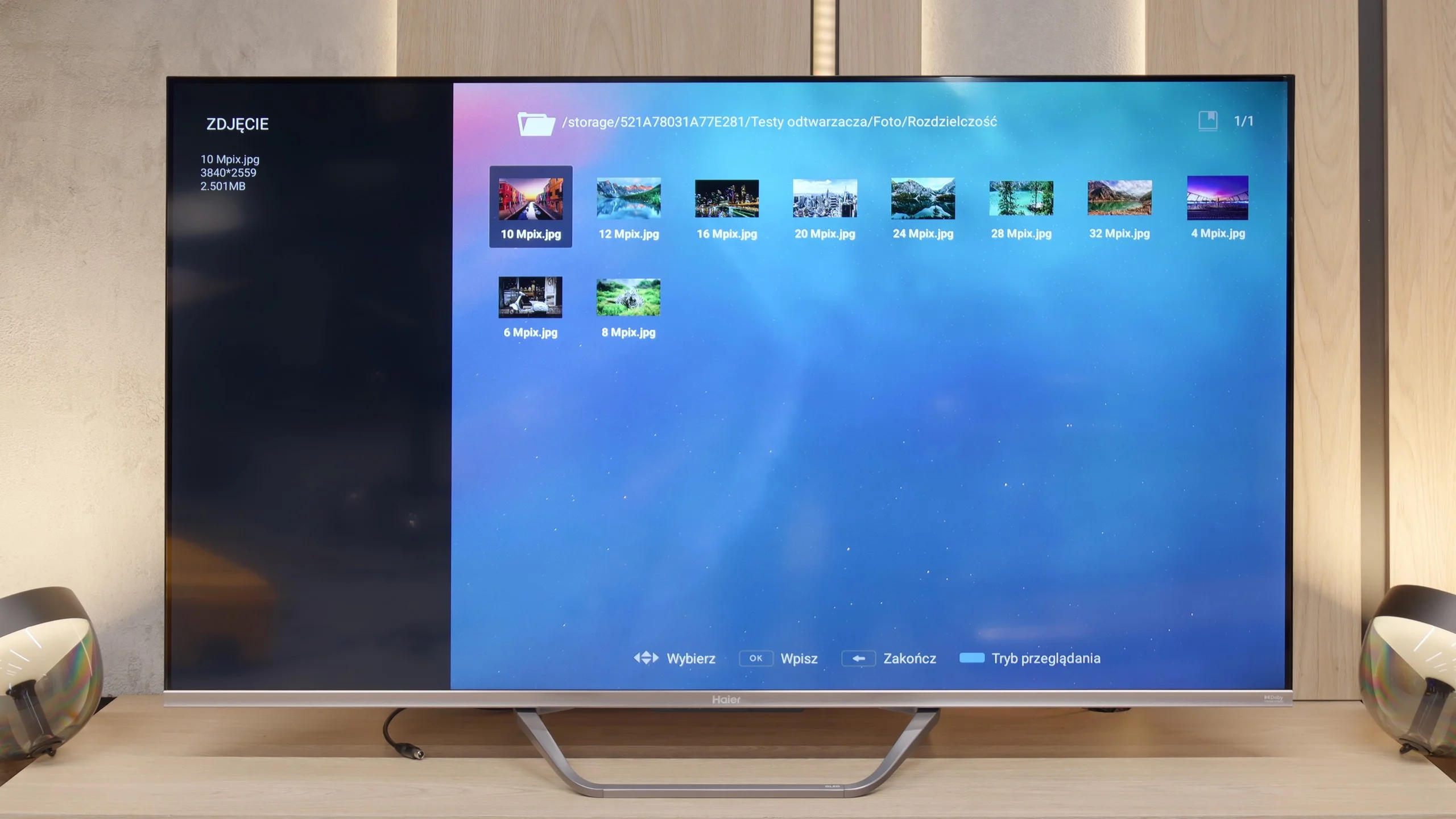
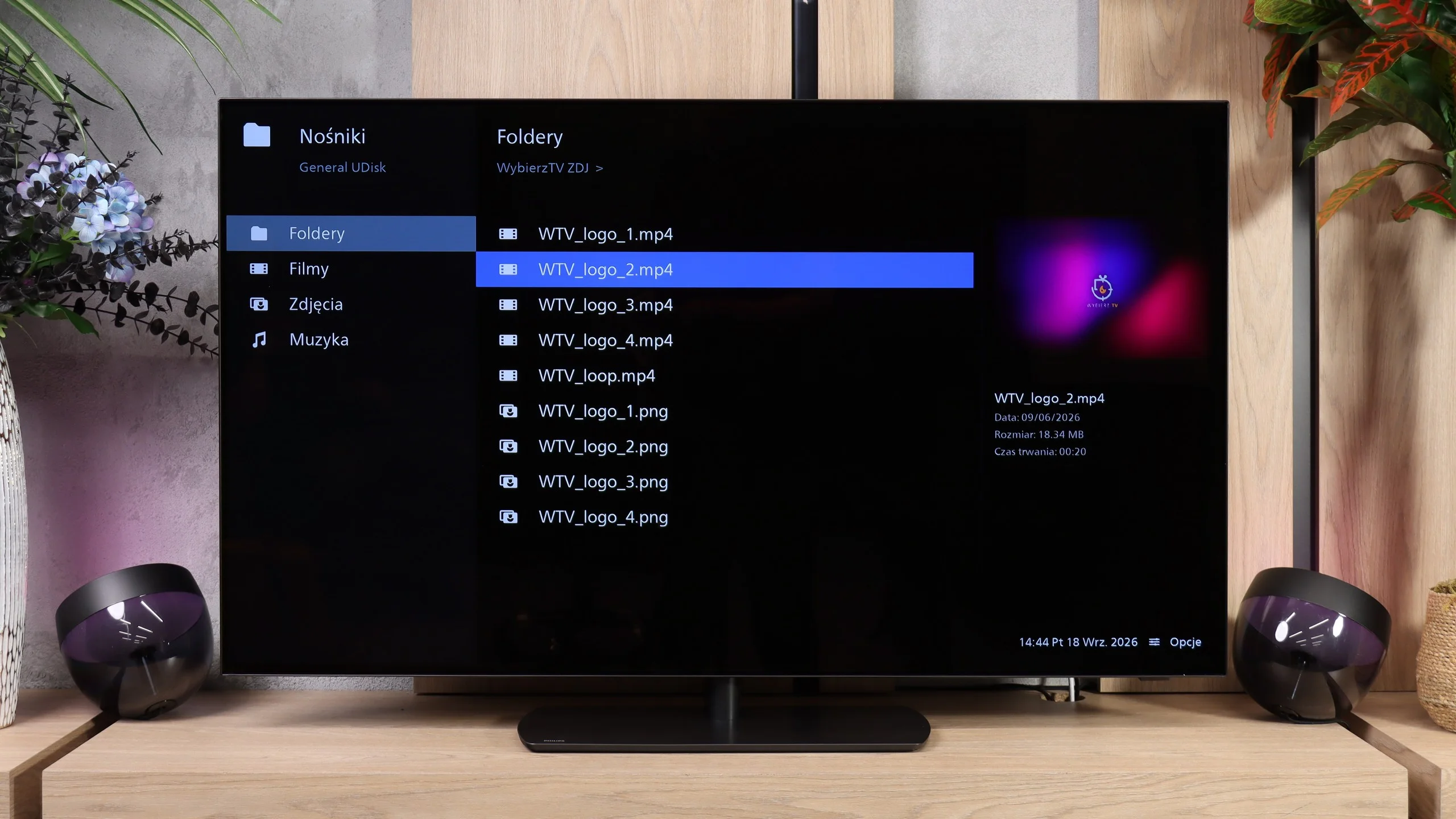
We must admit that after a series of setbacks we experienced in assessing the overall implementation of the Google TV system, we approached the media player test with considerable reservation. Meanwhile, in this one specific aspect, the Q80FUX served us a genuine surprise. The built-in application for managing files from USB drives works simply excellently. This software component seems to be completely immune to the ailments that afflict the rest of the system, opening practically all the most important and popular video file formats that we presented to it.
The USB player in the OLED811 handles most of the audio and video formats we test, so it's perfectly adequate for watching a film or playing music from a USB stick. However, our main reservations are about photos, specifically its oddly selective handling of their resolutions. The TV opened 8, 16 and 32MP files but couldn't cope with the rest. It's not that the photos are simply too large. The player can display a higher-resolution image yet refuse to open a smaller one. When browsing holiday snaps this can be simply irritating, because some of them will need to be converted on a computer first... or you could just mirror your screen remotely...😉
Sound
5.5/10
7.6/10
- Maximum volume84dB93dB
- Dolby Digital Plus 7.1
- Dolby True HD 7.1
- Dolby Atmos in Dolby Digital Plus (JOC)
- Dolby Atmos in Dolby True HD
- DTS:X in DTS-HD MA
- DTS-HD Master Audio
When it comes to acoustic "experiences", the Haier Q80FUX seems to adhere to the principle that sound is simply meant to be there. And it is – that's about all that can be said. The built-in speakers deliver an exceptionally flat sound, lacking character, and above all, they lack any distinct bass foundation. A small consolation is the fact that the television supports Dolby Atmos format. However, let's be honest: to truly benefit from the merits of this codec and hear the promised spatial quality, passive decoding capability is not enough. Connecting an external home theatre system or at least a decent soundbar is, in this case, not just a recommendation but an absolute necessity.
There have been a few concrete changes to the audio compared with last year’s OLED820. The rear subwoofer is gone, and the 4.1 speaker layout has been replaced by a 2.2 configuration. Despite these changes, the OLED811 still sounds good and fairly balanced. It can play louder, and the sound even seems a little fuller than a year ago. However, the bass has suffered. Although the sound has some weight, the low end lacks the depth of its predecessor. It’s easiest to hear this in films and music, when you’re waiting for a bigger punch. Still, this is well above average for built‑in TV speakers. If you want deeper bass and clearer spatial effects, it’s worth considering a soundbar or a system with an AV receiver. Philips gives plenty of freedom here: it supports both Dolby Atmos and DTS, and can pass Dolby TrueHD tracks over HDMI eARC to compatible equipment. So there are options if we decide to expand the audio setup in future.
Sound Quality Test
Acoustic Measurements
84dBC (Max)
75dBC
93dBC (Max)
75dBC
Reader comments
Comments are provided by the external service Disqus (Zeta Global). Once loaded, Disqus may set cookies and process data about your activity.
We will remember your choice on this device. Provider's privacy policy