The TCL C655 / C69B in the 98” version stands out among smaller models as it features a 144 Hz panel, opening up new possibilities for fluidity and dynamism in image quality. This QLED from 2024, brought to you by a Chinese manufacturer, maintains a very good price-to-quality ratio, especially for a device of this size. The 98” variant offers all the advantages of the smaller versions, including the modern Google TV system. It’s an incredibly convenient solution – allowing users to utilise an intuitive interface, control the TV with voice commands in Polish thanks to Google Assistant, and quickly access the most popular streaming apps such as Netflix, YouTube, and Prime Video. AirPlay support and the ability to connect devices via Bluetooth further enhance its versatility. Admittedly, the lack of a recording function and picture-in-picture (PiP) might somewhat disappoint users accustomed to these options, but an external decoder should alleviate this issue. In terms of image quality, the TCL C655 / C69B still offers high native contrast thanks to the VA panel, along with rich colour coverage (DCI-P3), enabled by quantum dot technology (PFS-QLED). Although this model does not have local dimming (found in the C655 PRO version), its black level and image quality remain very good for its class. Gamers will also find something to their liking – the TV supports variable refresh rate (VRR), automatic low latency mode switching (ALLM), and Dolby Vision in gaming mode. In summary, the TCL C655 / C69B in the 98” version is an excellent option for those seeking a large television with solid image quality and good features, standing out with an excellent price-to-quality ratio.
- Matching (Score) |
- Our verdict |
- TV appearance |
- Where to buy |
- Contrast and black detail |
- HDR effect quality |
- Factory color reproduction |
- Color reproduction after calibration |
- Smoothness of tonal transitions |
- Image scaling and smoothness of tonal transitions |
- Blur and motion smoothness |
- Console compatibility and gaming features |
- Input lag |
- Compatibility with PC |
- Viewing angles |
- Daytime performance |
- Panel details |
- TV features |
- Apps |
- Playing files from USB |
- Sound
TCL C655 / C69B 98' vs LG OLED G6 (G64LW, G66LS)
 Direct comparison
C655 / C69B

G64LW / G66LS
Available screen sizes: 98”
Panel type: LCD VA
Resolution: 3840x2160
System: Google TV
Model year: 2024
Complete the survey to find out the result
Panel type: WRGB OLED
Resolution: 3840x2160
System: WebOS
Model year: 2026
Complete the survey to find out the result
Overall rating
6.6
8.7
 Movies and series in UHD quality
 5.8
8.6
 Classic TV, YouTube
 5.7
8.7
 Sports broadcasts (TV and apps)
 6.2
8.6
 Gaming on console
 8.5
9.5
 TV as a computer monitor
 7.6
8.7
 Watching in bright light
 5.6
8.2
 Utility functions
 6.0
8.5
 Apps
Apps 9.6
9.1
 Sound quality
 6.7
8.4
Complete the survey to find out what fits your preferences
Advantages

High brightness level of 450 nits
High native contrast
Google TV support with access to numerous streaming apps
Gaming features like ALLM, VRR, and Game Bar, as well as Dolby Vision support in gaming mode
Very low input lag, even in Dolby Vision mode (13 ms)
Support for Apple AirPlay and the ability to connect devices via Bluetooth
Relatively low price
120/144Hz and HDMI 2.1 in the 98' variant *
Perfect black OLED
High brightness HDR and SDR
Great anti-reflective coating
Reference colours (after calibration can be displayed just like on director's equipment)
Full support for gamers (HDMI 2.1, 165 Hz, VRR, ALLM)
Low Input Lag (below 5ms)
Smoothness and sharpness in motion
Outstanding upscaling and image processing
Full support for Dolby Vision
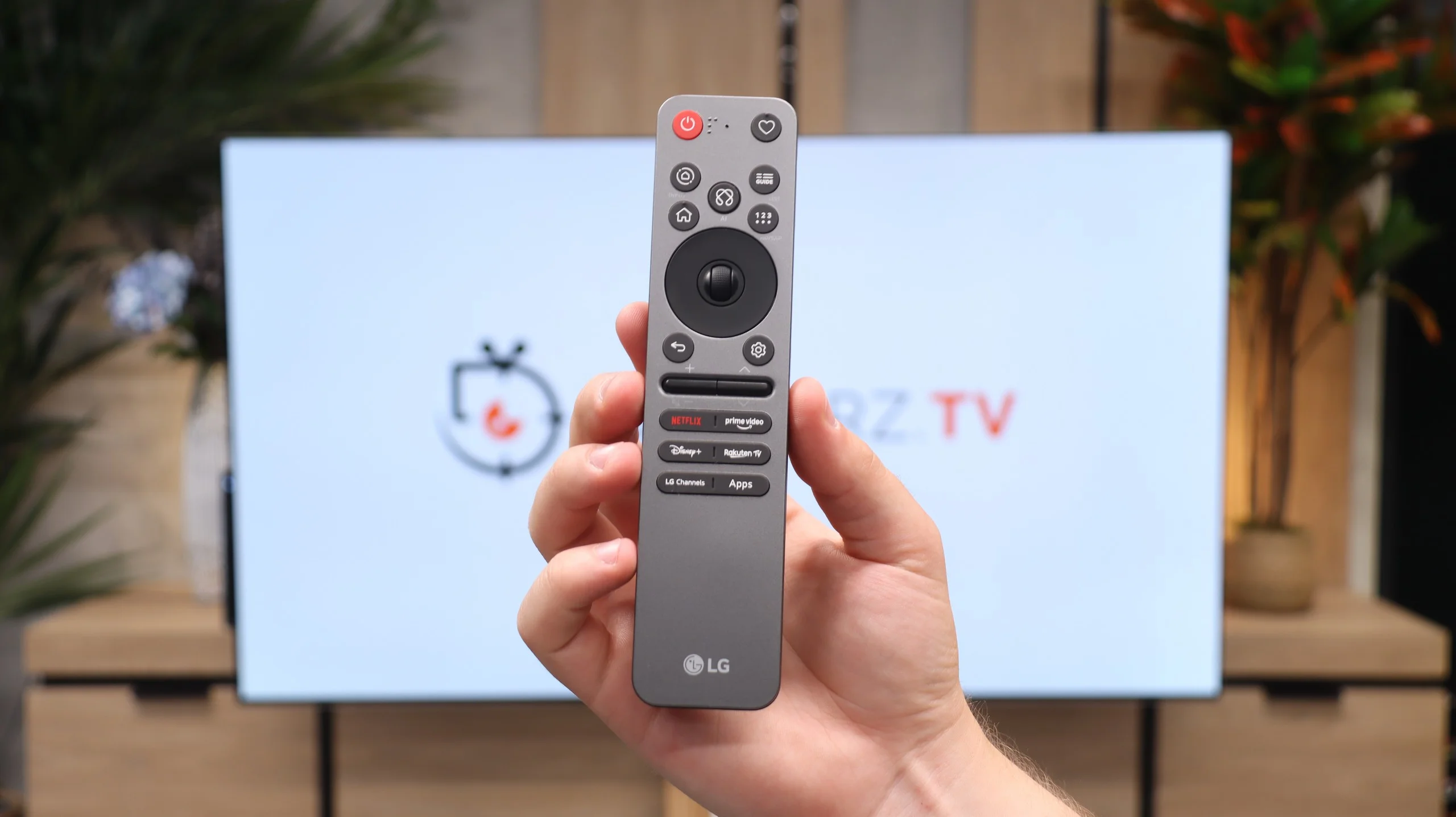
Functional webOS system with Magic remote control support
5-year warranty on the panel included
Disadvantages

Poor viewing angles resulting from the VA panel – the image loses quality when viewed from the side
No content recording function to USB and no picture-in-picture (PiP) option
Very annoying dithering – graininess and flickering of the image close to black
Worse (though still good) viewing angles than its predecessor
Lack of support for DTS:X audio codec (useful for Blu-ray owners)
Our verdict
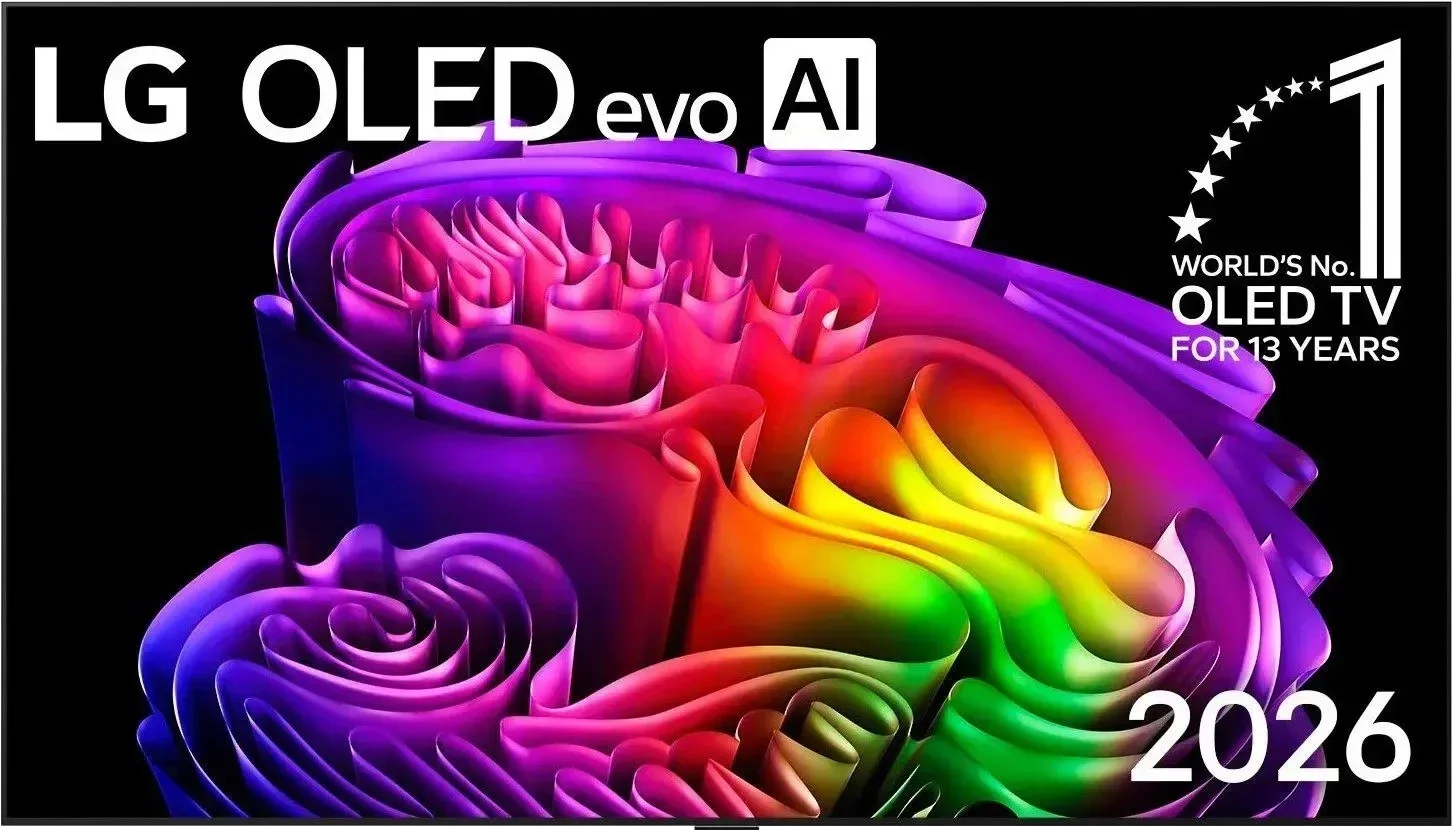
Without a doubt, the LG G6 is an outstanding television in many aspects. Thanks to the new generation 2 Tandem OLED panel, it does something that no other glossy screen on the market has managed so far – it superbly suppresses light reflections while maintaining perfect, unblemished image quality. When we add record brightness and the unique properties of the panel itself, the G6 can produce images that can literally knock you off your feet at times. The excellent webOS system and features for gamers further reinforce the belief that it is a worthy successor to the G5 model. However, this is only one side of the coin... because in a device of this class, the expectations are the highest they can be. During detailed testing, we encountered issues with digital image processing in scenes close to black. We're talking about overly aggressive dithering and slight flickering of details in dark sequences. Although during normal viewing from the couch this flaw does not stand out drastically and does not negate the overall admiration for the contrast, a trained eye will easily notice that LG's engineers stumbled at the last hurdle during the panel tuning. When buying a pretty expensive flagship product right here and now, perfection is simply expected from the first turn on.
Despite this obvious blunder, the LG G6 is still absolutely at the forefront of the market and one of the most interesting televisions of this year. It has a solid foundation to become the ultimate screen. We firmly believe that the manufacturer will quickly diagnose the problem and release an appropriate software update – if that happens, the competition will again have nothing to look for. We promise to keep monitoring the situation continuously, and as soon as a patch appears, we will definitely verify its effectiveness.
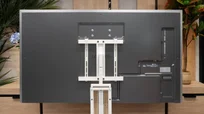
TV appearance

Contrast and black detail
6.2/10
10/10
Local dimming function: No
Contrast:


Result
7,000:1

Result
6,850:1

Result
6,350:1

Result
7,050:1

Result
4,850:1
Result
∞:1
Result
∞:1
Result
∞:1
Result
∞:1
Result
∞:1
Halo effect and black detail visibility:
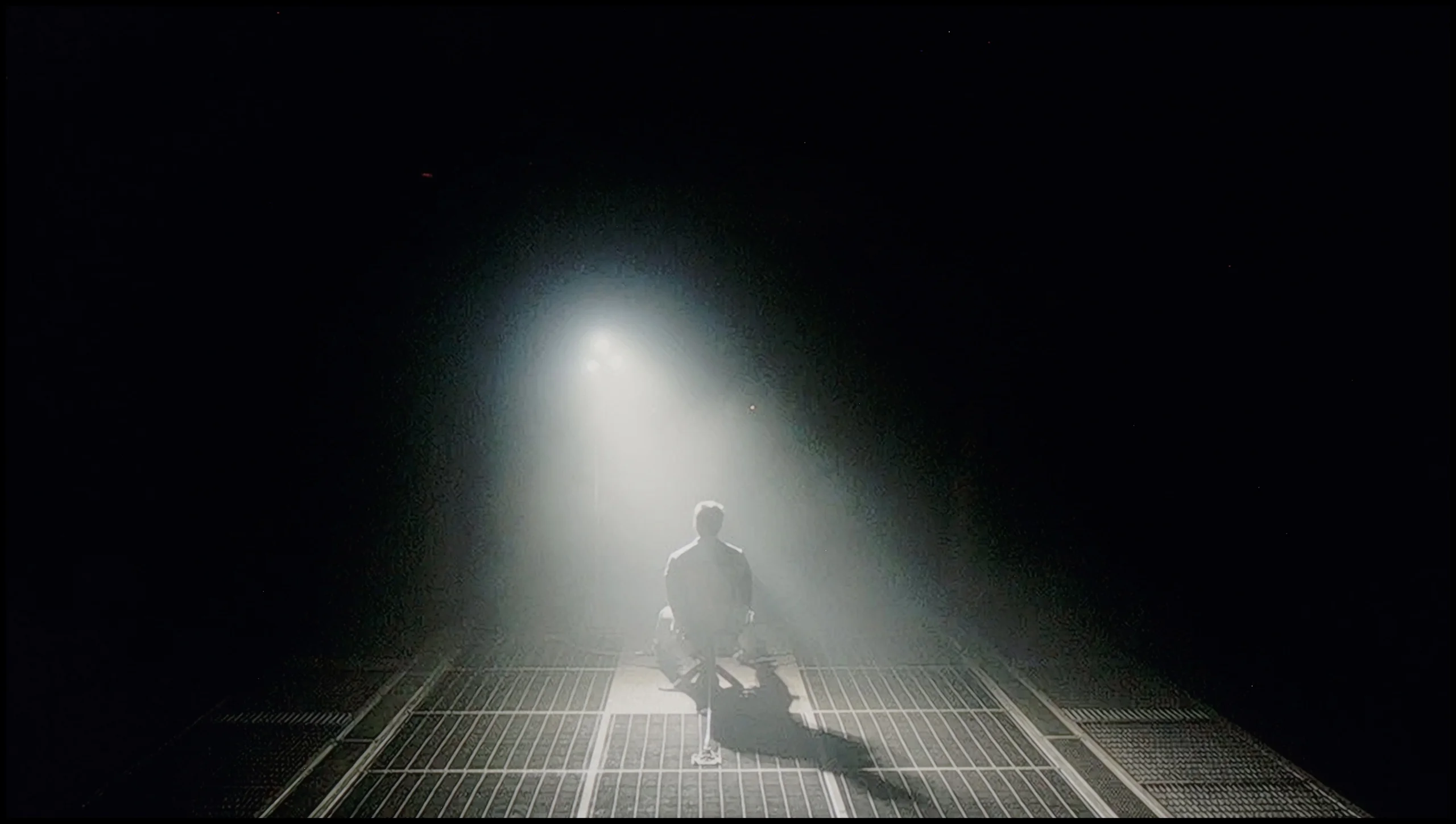
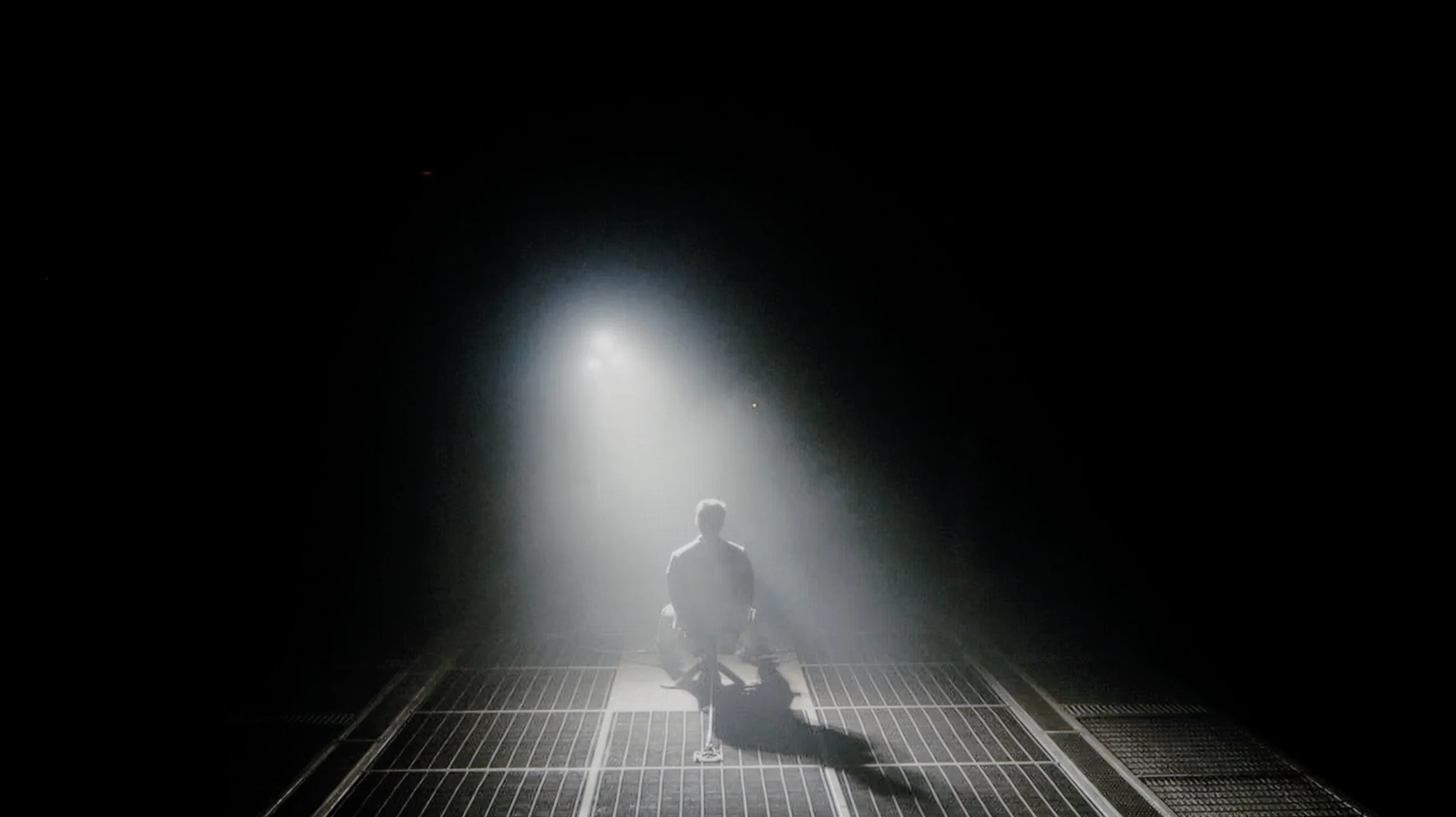
Check the visibility of bright lights on a dark background. Mini-LEDs often struggle with this. The photo does not compare black levels – that’s what the video below is for.
The video accurately shows differences in contrast and black levels between TVs, as well as potential issues: halo around bright objects or Mini-LED zone operation visible as brightness jumps.
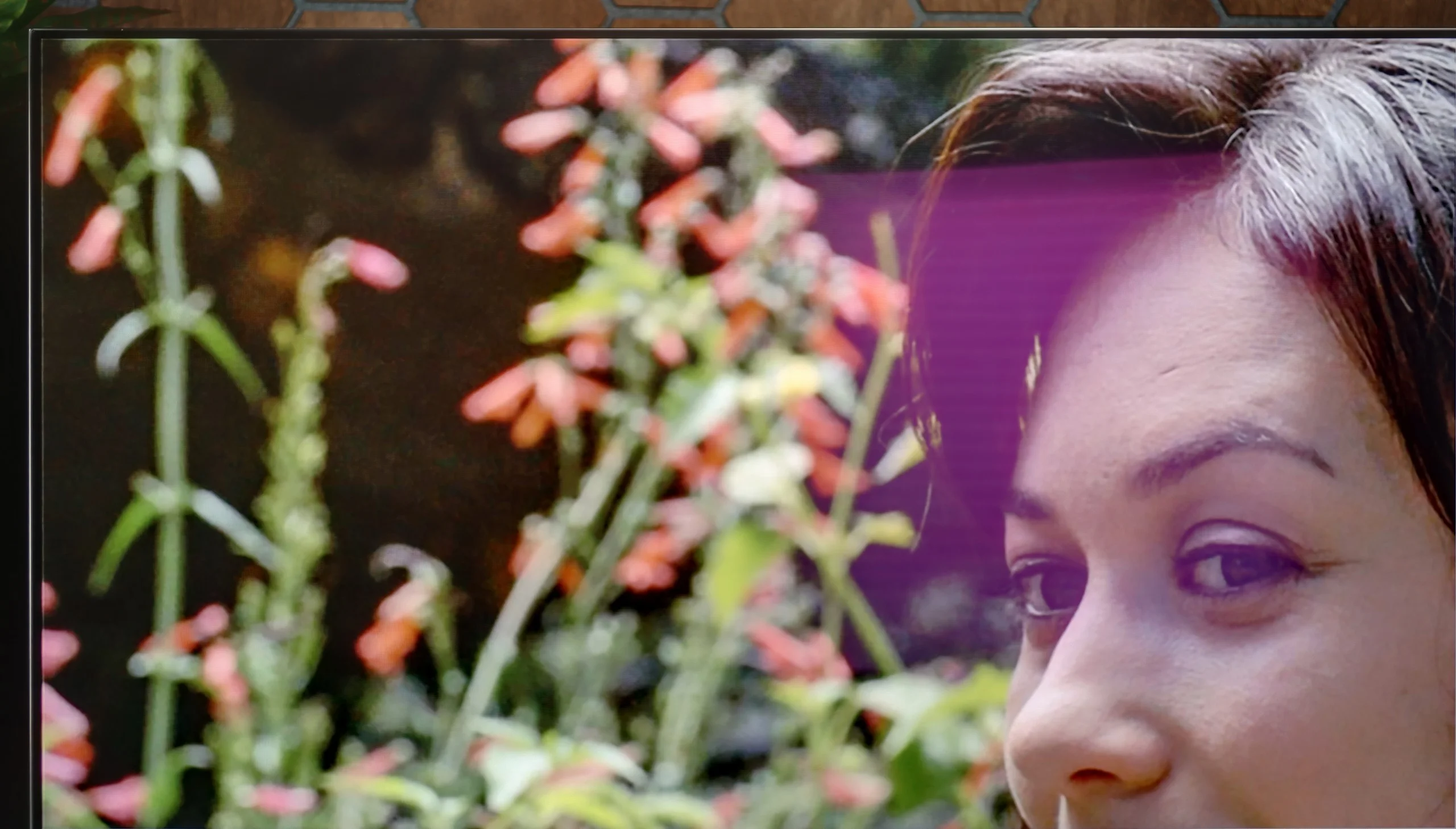
The TCL C655 / C69B TV uses a VA panel, providing solid contrast, which translates into better image depth and a more satisfying black compared to IPS panels. However, the lack of local dimming technology found in the model with the "Pro" suffix means that black quality doesn't reach its full potential. In demanding scenes, such as night shots in the film Sicario 2, the black takes on a slightly bluish hue, which may slightly weaken the immersion experience. Overall, it's good, but the implementation of local dimming could significantly enhance the effect.
As the LG G6 is based on OLED technology, specifically the WOLED TANDEM 2nd gen matrix, when it comes to black levels and contrast, we’re talking about perfection, which is confirmed by our lab measurements – in every test scenario, the TV achieved an absolute infinity mark. The ability to independently control each pixel gives it a significant advantage over any LCD panel on the market. This translates to a brilliant, plastic depth of image that immediately pulls you into any possible viewing experience. This is clearly visible in the example of a dark, challenging scene with a helicopter from the film Sicario 2. While traditional screens with local dimming (including Mini-LEDs) can generate an annoying “halo” effect in such moments, lighten black bars in films, or lose details in the shadows, the LG G6 handles it flawlessly. Black, where it needs to be black, remains pitch-black and perfectly separated from bright points.
*A small note: during this test, a quite strong grain and flickering of the image are noticeable. However, we do not take this into account when assessing the contrast itself and this part of the review – we will describe this specific issue in the further section. Paragraph: "Smoothness of tonal transitions".
HDR effect quality
5.4/10
9.1/10
Luminance measurements in HDR:

Result
370 nit

Result
420 nit

Result
485 nit

Result
403 nit

Result
455 nit
Result
2387 nit
Result
2345 nit
Result
2418 nit
Result
2439 nit
Result
1844 nit
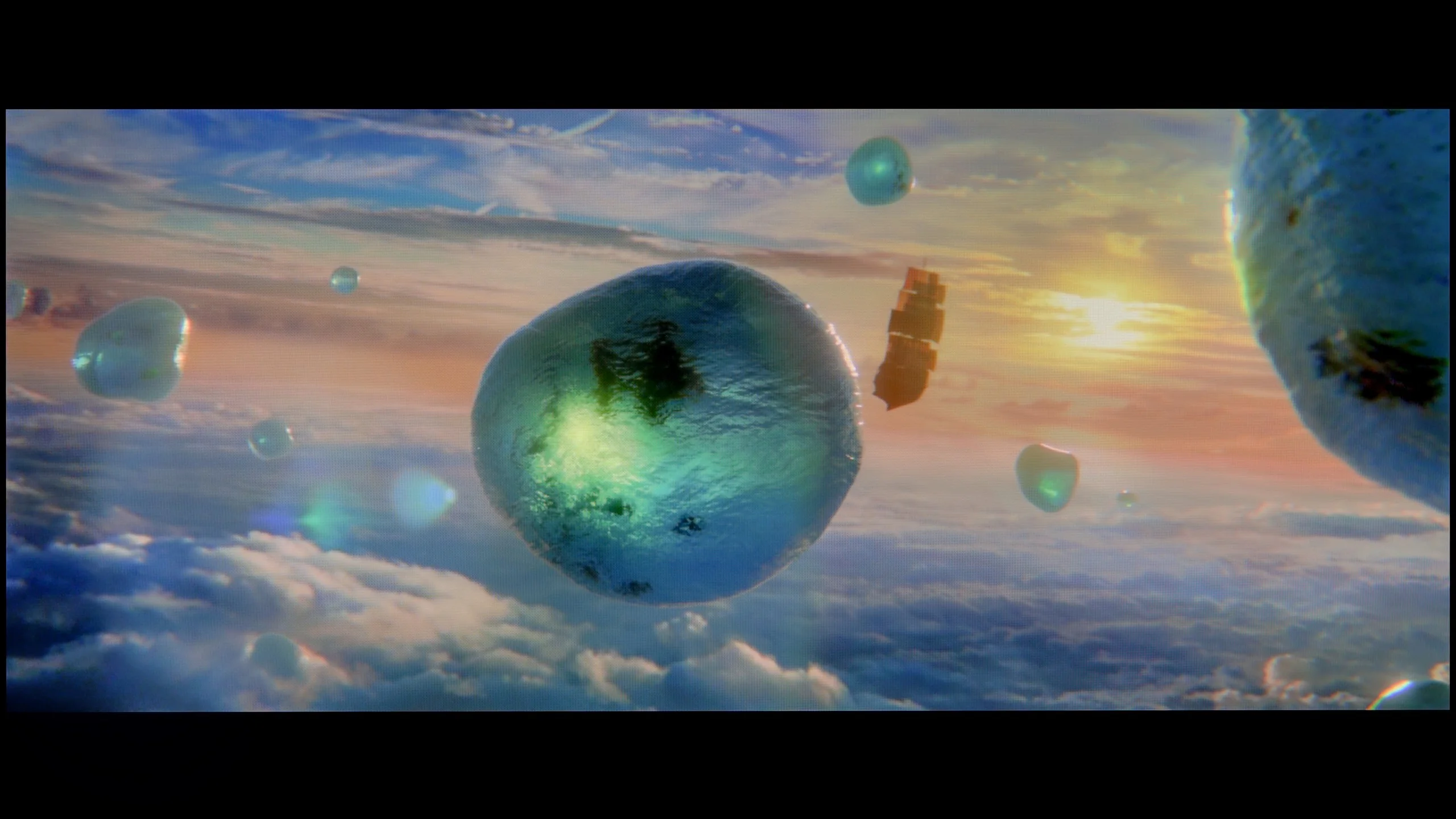
Scene from the movie “Pan” (about 2800 nits)
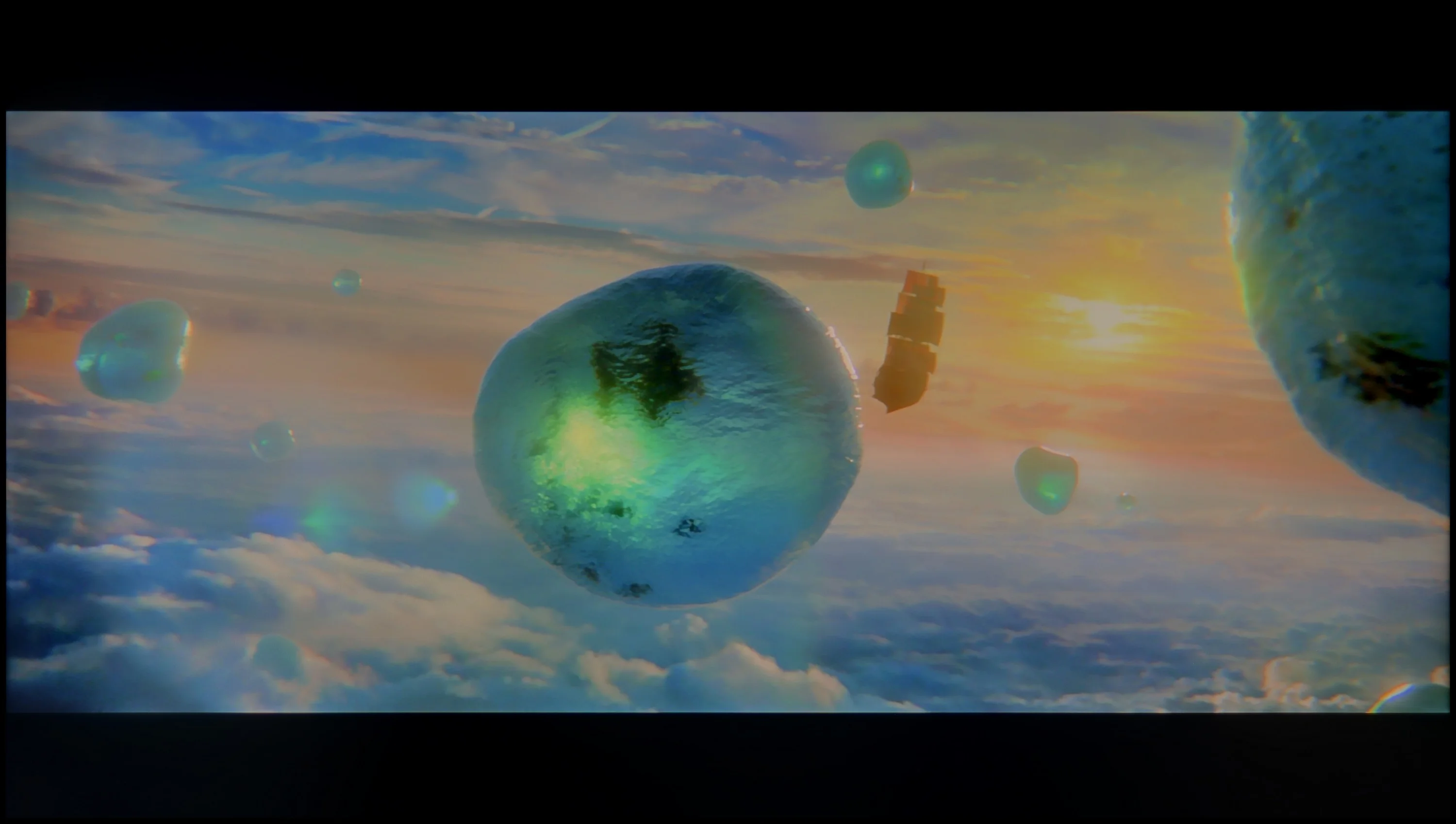
Scene from the movie “Billy Lynn” (about 1100 nits)
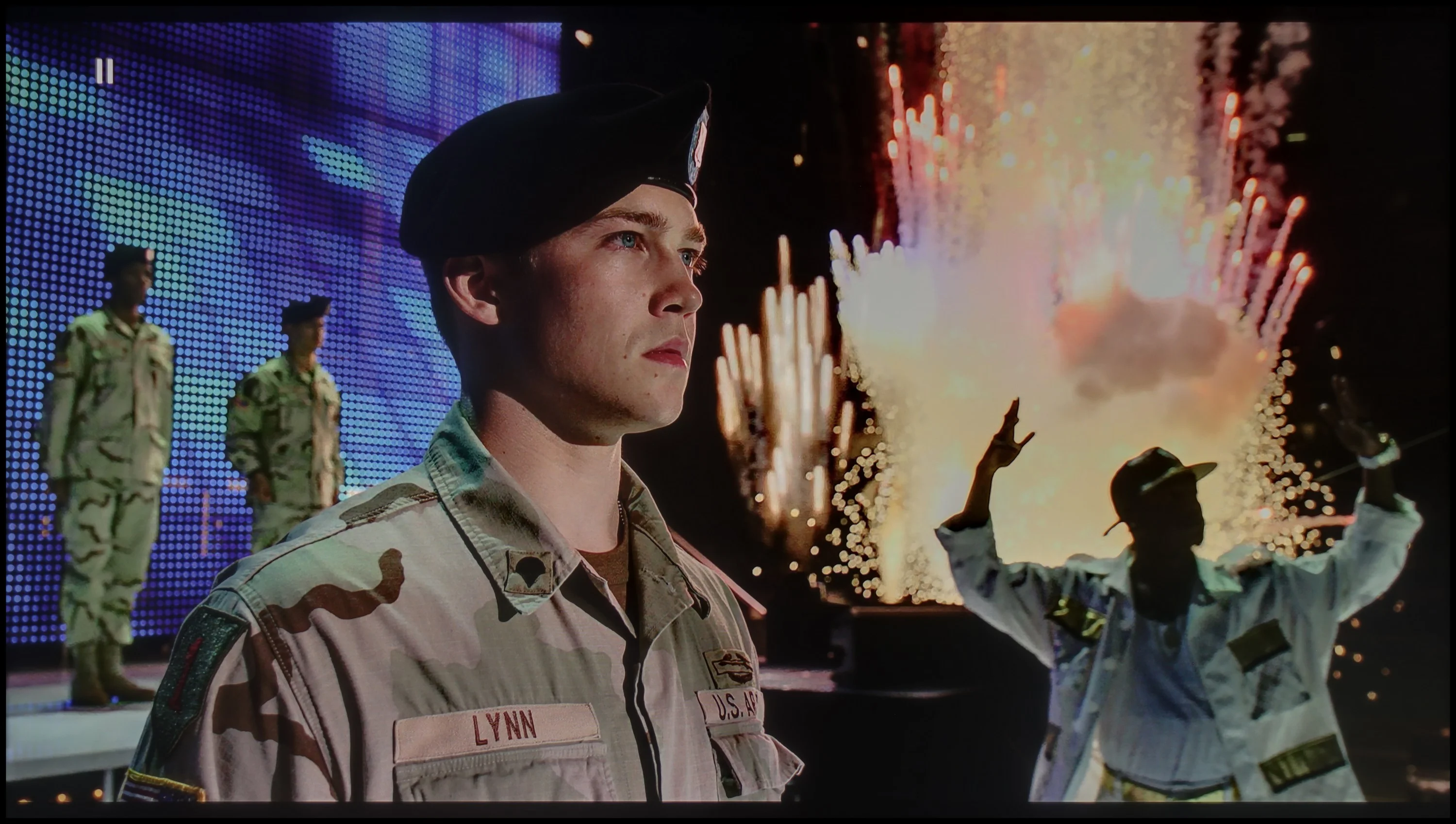
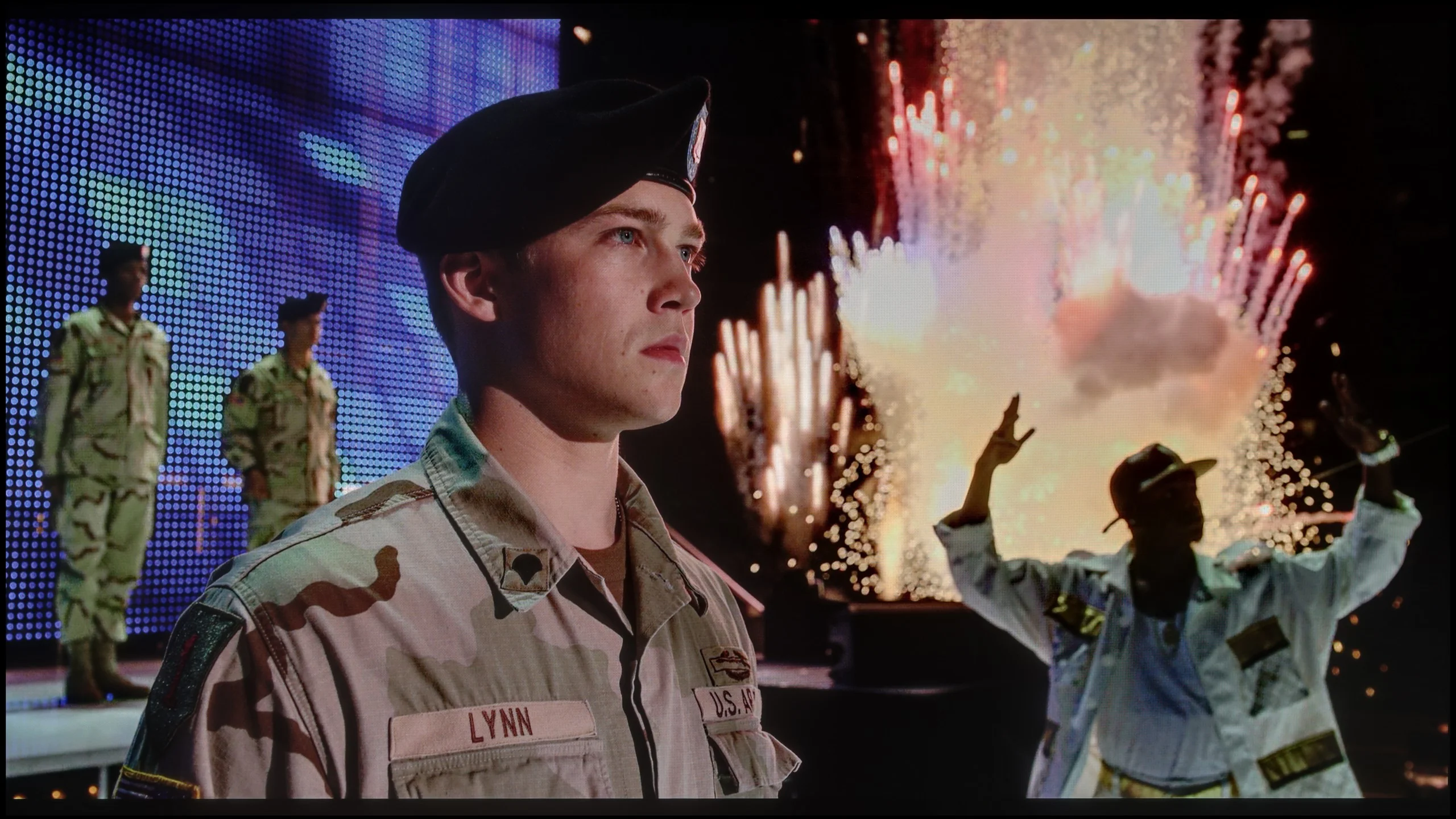
The photos show two HDR10 movies. 'Pan' is one of the brightest productions ever made, while 'Billy Lynn' (soldier) has brightness typical of streaming (Netflix, Prime, HBO MAX). Notice the intensity of effects and detail in whites.
Static HDR10


The photos present the visibility of white details in various HDR formats. They do not show brightness differences between TVs (these can be compared in the previous gallery).
Dynamic: Dolby Vision
Dynamic: Dolby Vision


The photos present the visibility of white details in various HDR formats. They do not show brightness differences between TVs (these can be compared in the previous gallery).
HDR luminance chart:
LG OLED G6 (G64LW, G66LS)
TCL C655 / C69B 98'
Luminance of RGB colors
The quality of the HDR effect on TCL C655 / C69B looks quite promising. The average value in the test charts is around 450 nits, which already allows one to feel the brilliance of light effects and better image dynamics. However, as previously mentioned, this effect can be somewhat dampened by slight differences in bright and dark shades due to the lack of local dimming technology. However, the coverage of the DCI-P3 colour gamut at 94% is commendable, and this is possible thanks to the use of a quantum dot (QLED) panel. As a result, the colours are vivid and well-reproduced when watching HDR content.
The LG G6 is currently one of the brightest OLEDs on the market. Its peak brightness reaches nearly 2500 nits and, best of all, this translates directly to real movie scenes. The TV flawlessly extracts details in the bright areas of the image. And this is regardless of whether we are talking about very small points in the form of stars in the sky or slightly larger elements on the screen. Naturally, with full-screen, uniformly white scenes, the brightness of the G6 drops due to the panel protection system (ABL). However, in real, varied movie shots, this value still hovers around an impressive 2000 nits, which can be considered a remarkable result. The coverage of the color palette also deserves praise. The new 2nd generation Tandem OLED panel has brought about only a cosmetic change, but still an improvement. The coverage of the DCI-P3 color space reaches nearly 99.5%, while the ultra-wide BT.2020 is around 84%. These are very good results, although it's important to remember one thing: at extremely high brightness levels, the volume of colors will be lower than in QD-OLED panels from Samsung Display due to the use of white sub-pixels (WOLED). However, in everyday content and most films, capturing this difference will be very difficult.
Factory color reproduction
4.2/10
7.4/10
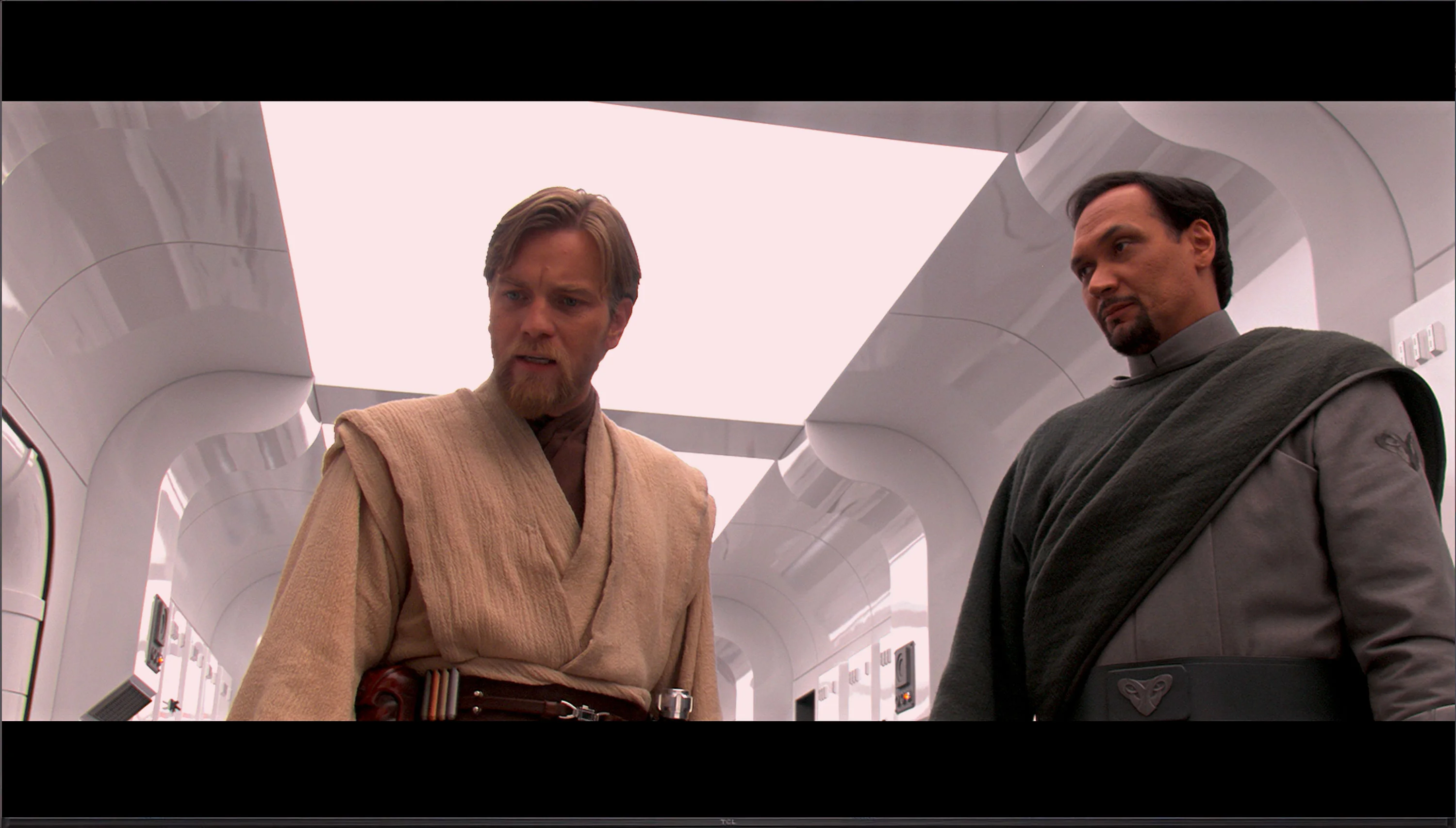
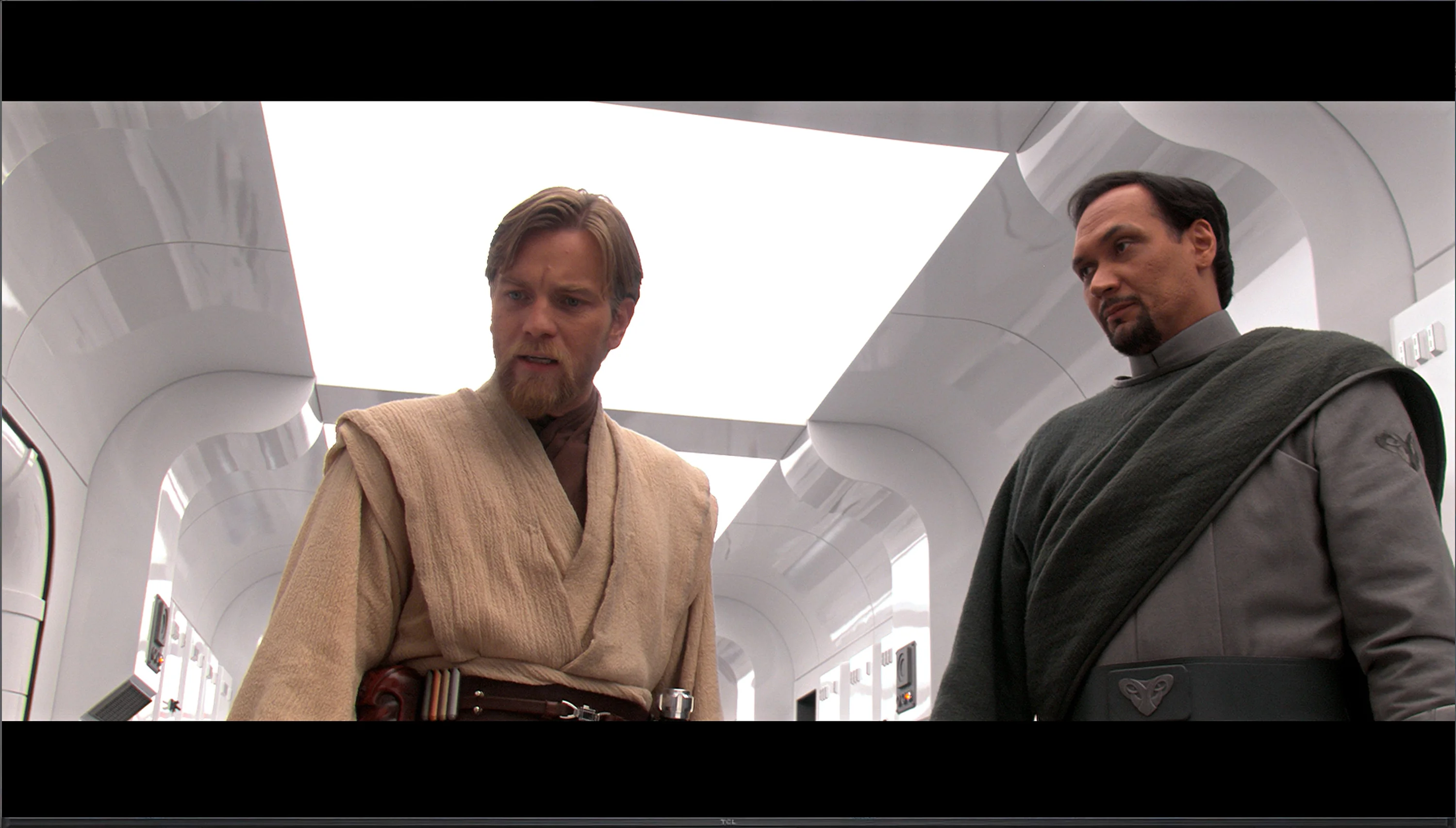
This gallery shows how colors change after professional TV calibration. If you notice the difference, we recommend ordering this service at SkalibrujTV.com.
Factory Mode
After calibration
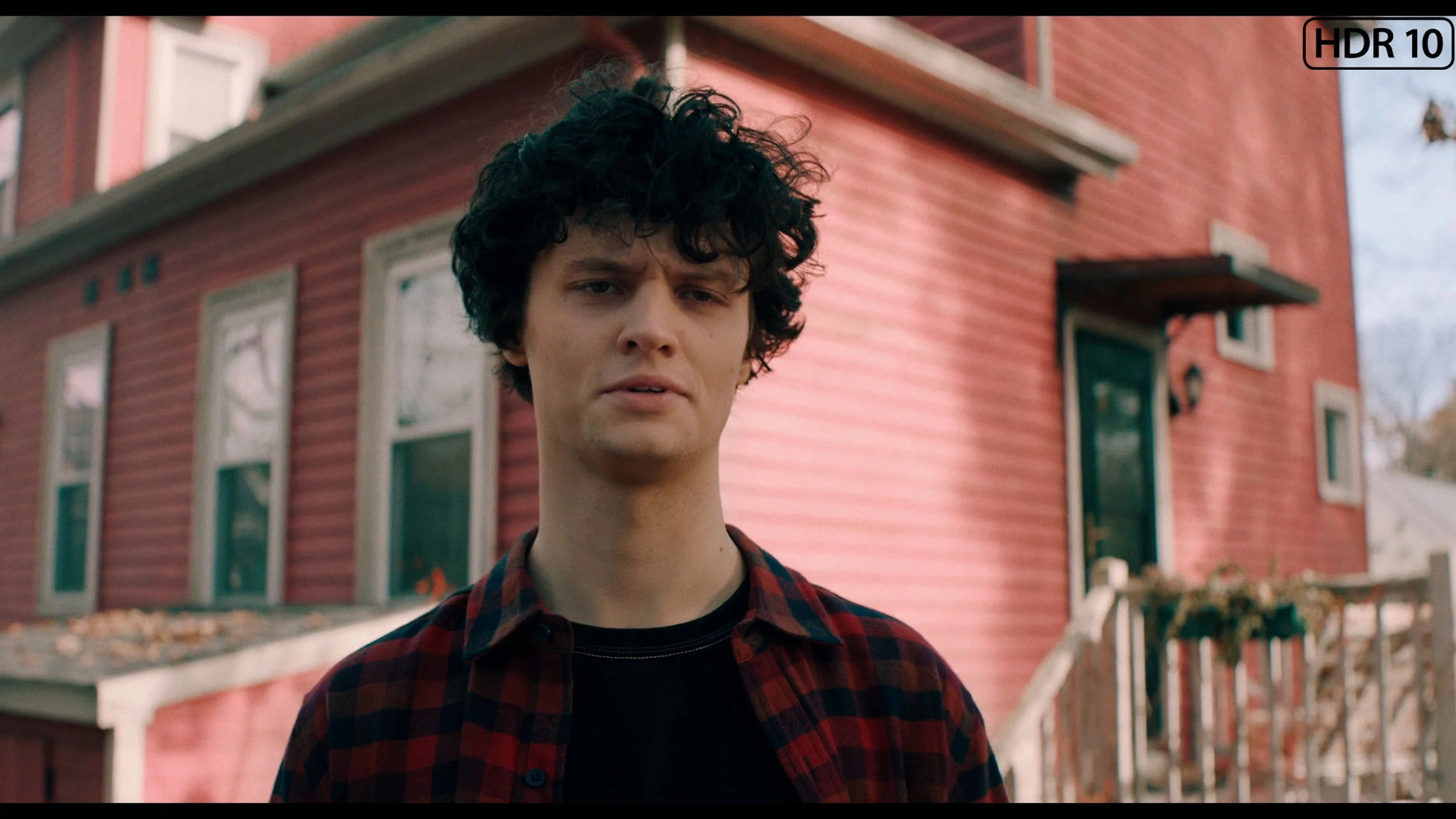
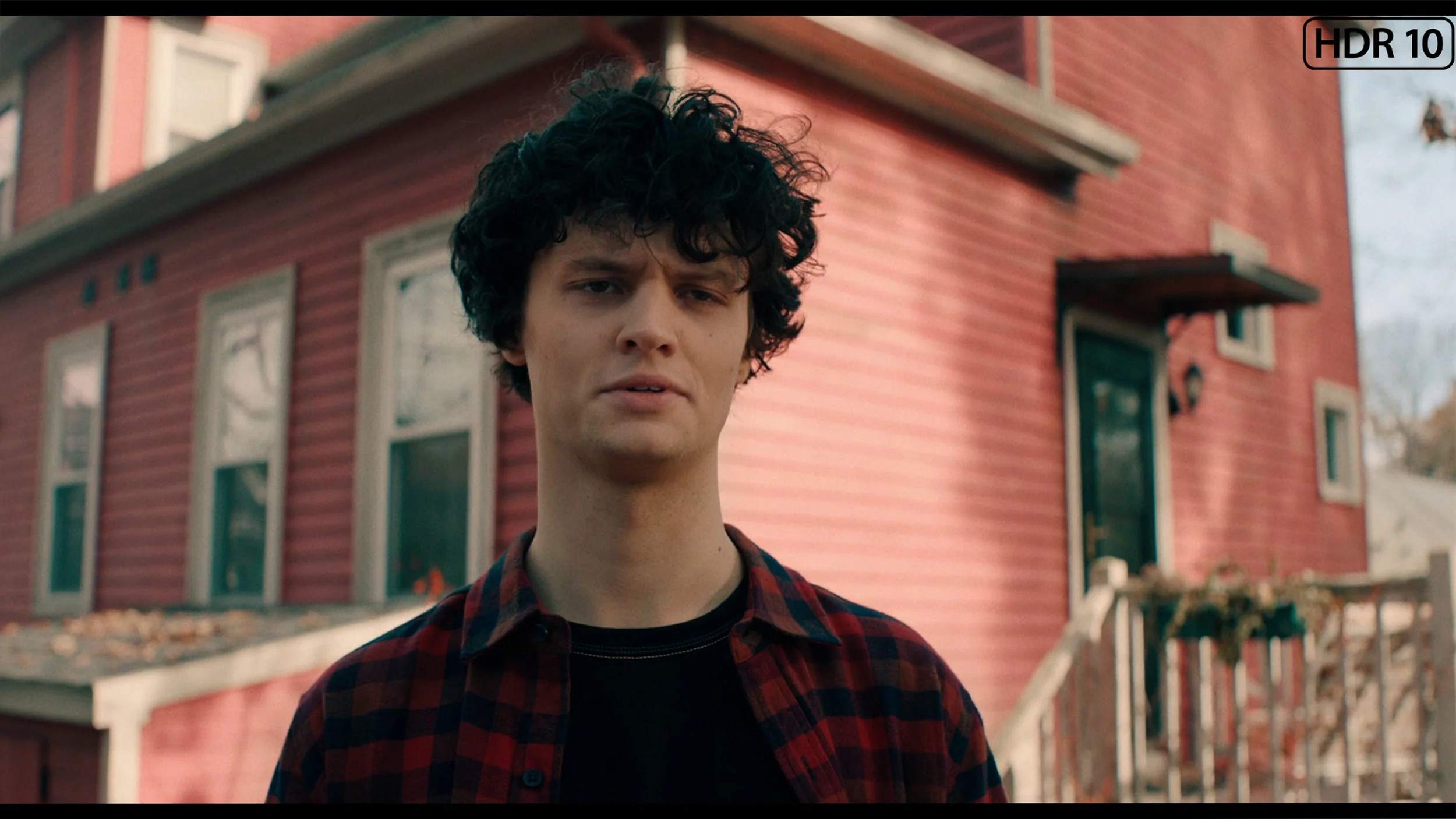
This gallery shows how colors change after professional TV calibration. If you notice the difference, we recommend ordering this service at SkalibrujTV.com.
Factory Mode
After calibration
The TCL C655 / C69B television offers a film mode that has been tested for colour reproduction quality. Although this mode is called film mode, unfortunately, it has quite a few issues that a director would definitely not want to see when filming their work. Starting with image analysis, it's worth examining the white balance – both in HD and 4K HDR content, the white balance has significant errors. In both cases, the red colour dominates, which makes the colours too warm, and the overall effect takes on a pink or yellow tint. The Colour Checker test confirms these errors – the colour samples veer into incorrect shades, which impacts the overall colour fidelity. A less significant issue is the brightness characteristic. However, it is also not free of flaws. The gamma chart shows a strong spike at the beginning, which can cause the image to be overly bright, and the EOTF curve responsible for brightness in 4K HDR materials also shows considerable fluctuations – it is evident that the television struggles to maintain the appropriate brightness, but it does not always succeed effectively.
We tested the LG G6 in the best factory mode for colour fidelity, which is FILMMAKER MODE. In the case of our test unit, this mode was reasonably well tuned straight out of the box. In SDR content, the only issue we noticed was the white balance, which leaned towards warmer tones. This made the image occasionally appear slightly yellowish, but overall, it wasn't a significant problem. The G6 performed a bit worse in HDR content. There, the white balance showed too much blue component. This caused the image to veer towards cooler shades, resulting in quite noticeable errors. As can be seen on our ColorChecker chart, the colours shifted towards these cooler registers. Nevertheless, considering the factory settings, the television presented a perfectly decent level. However, we know that OLED screens – particularly those from LG – respond exceptionally well to professional calibration, so we immediately proceeded to do just that.
Color reproduction after calibration
8/10
9.2/10
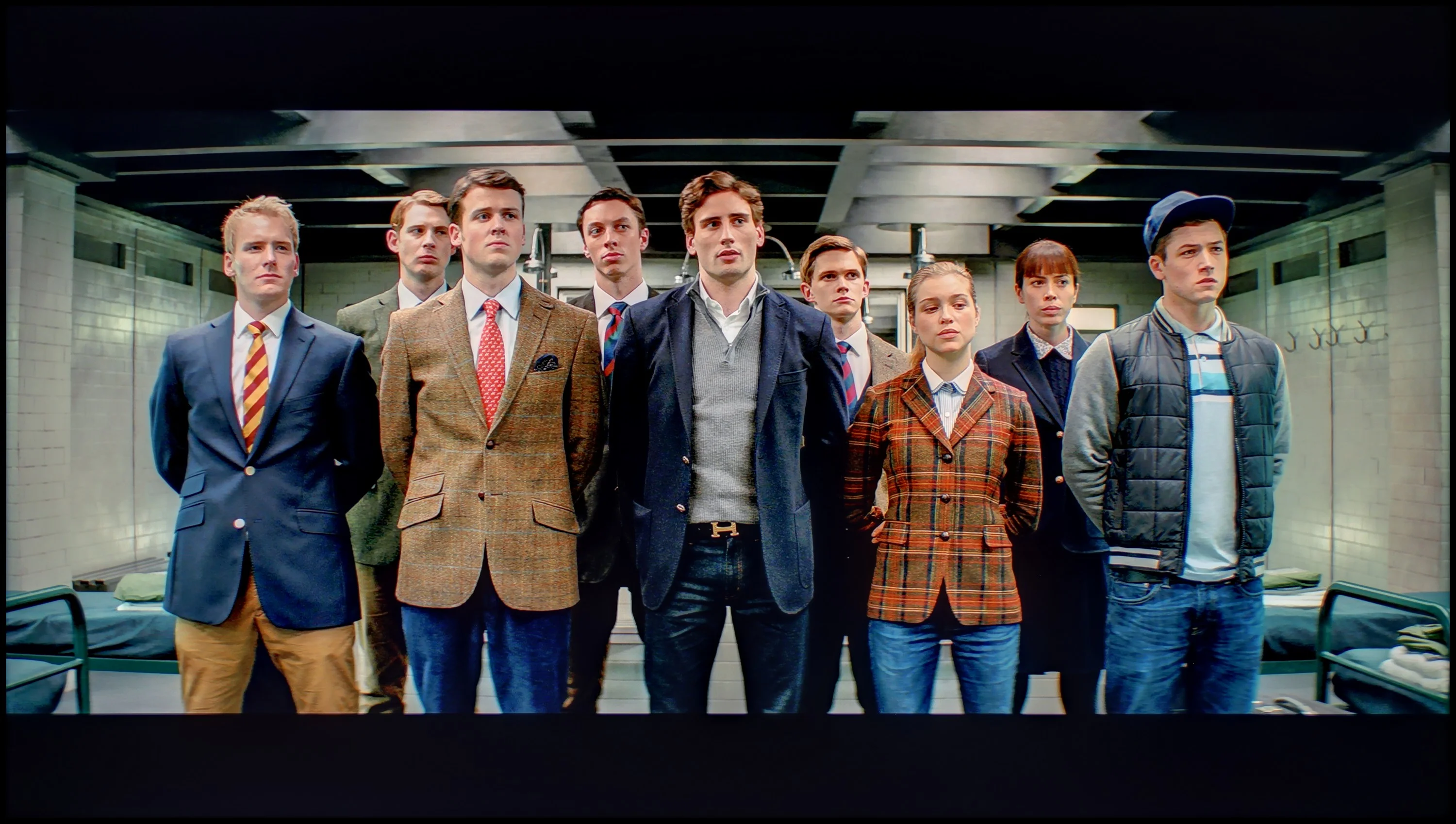
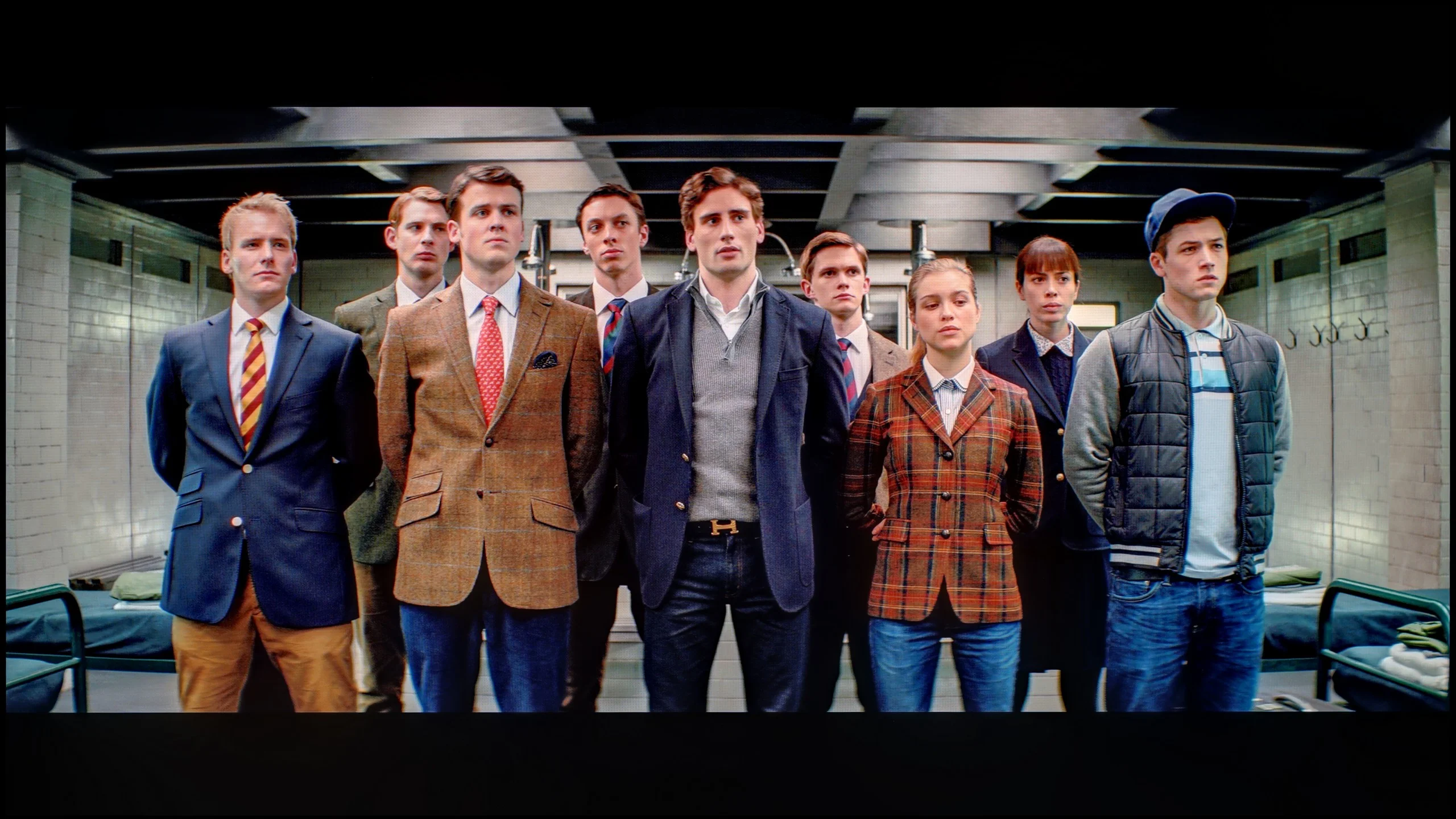
The photos show how movies look on the TV. Pay attention to black detail visibility, colors, and shadow tint.
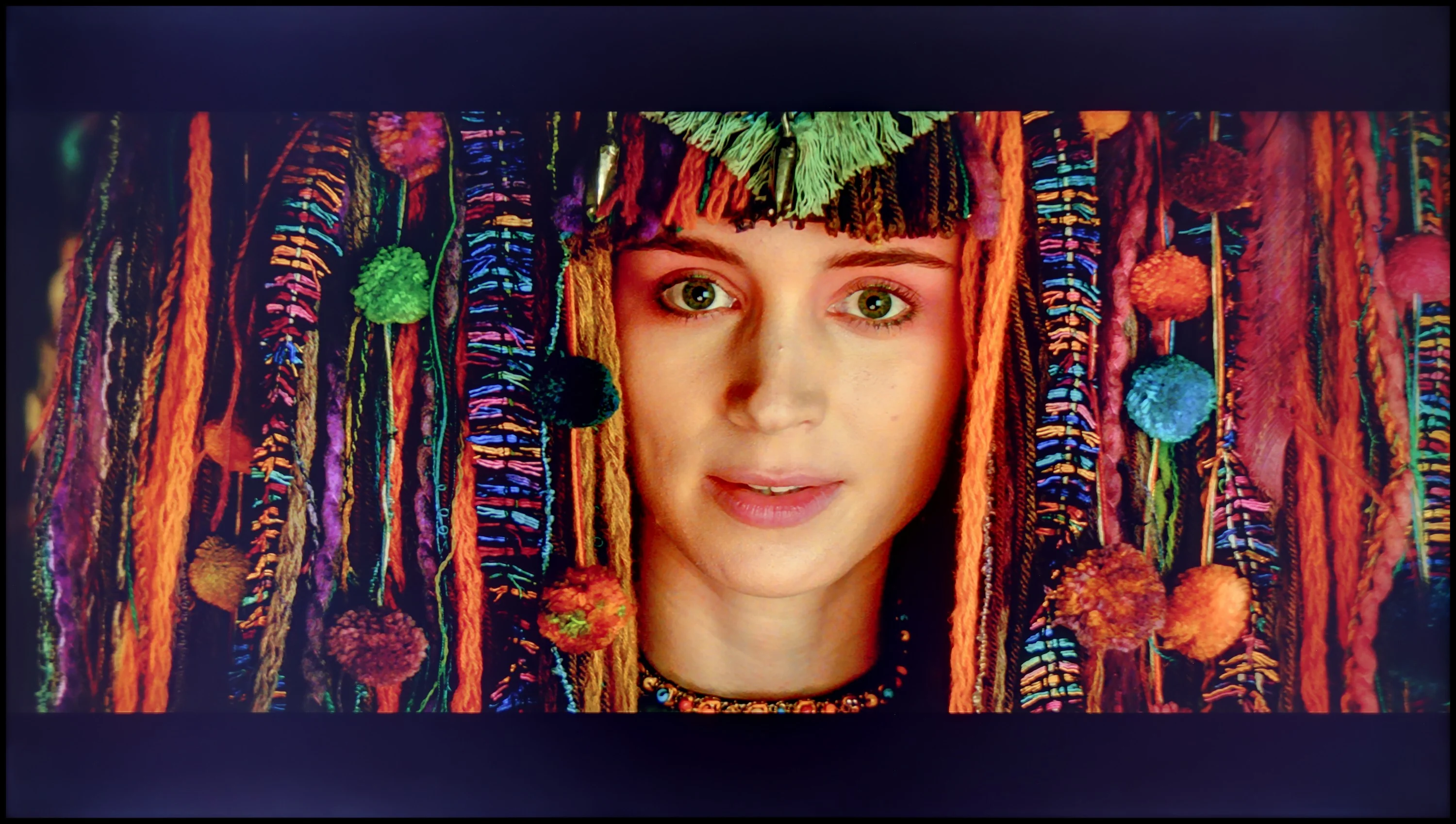
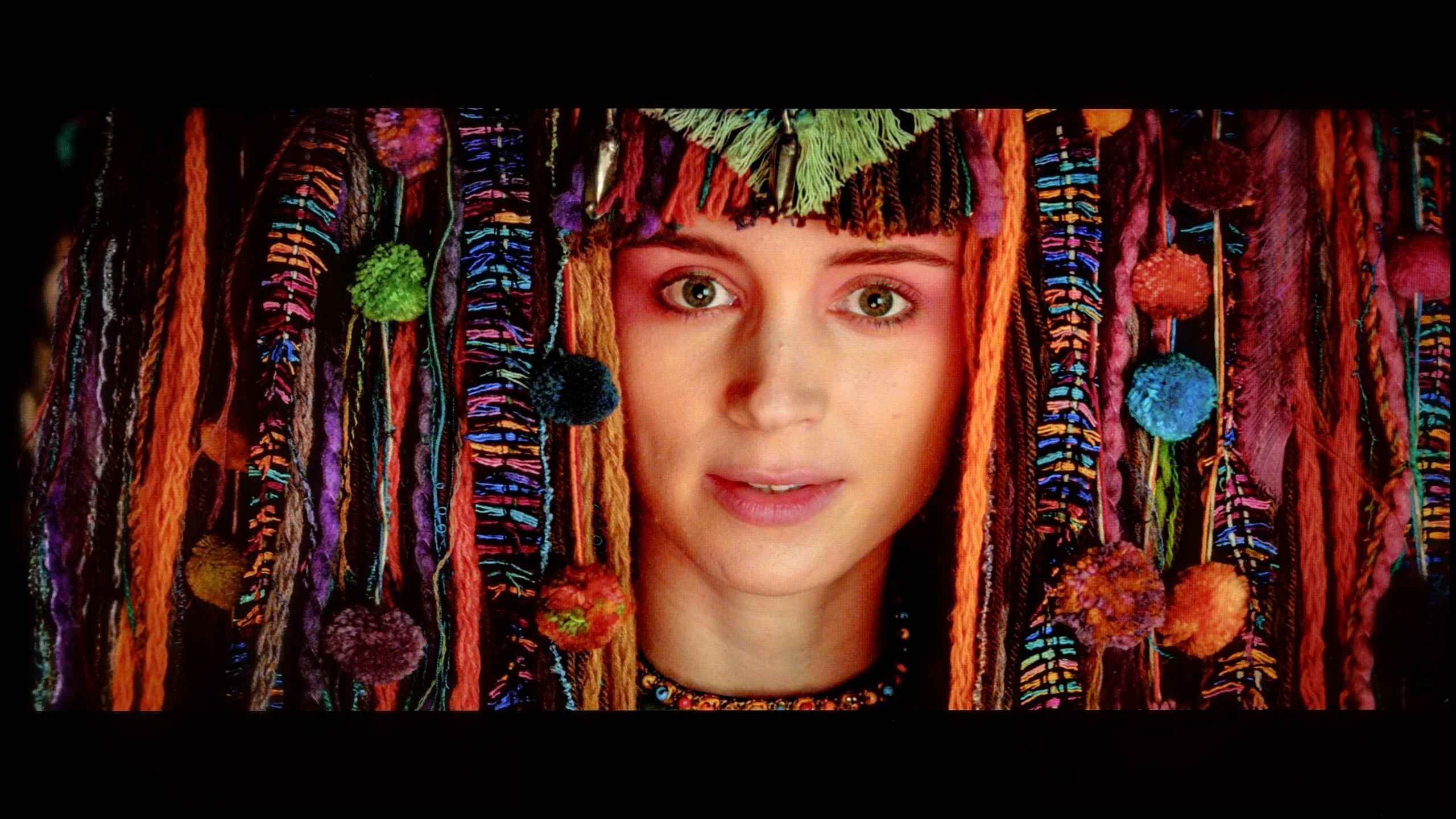
The photos show how movies look on the TV. Pay attention to black detail visibility, colors, and shadow tint.
After calibrating the movie mode of the TCL C655 / C69B television, the white balance has been adjusted, and the colours look as they should – confirmed only by slight deviations in the Colour Checker test. The gamma is really accurate, which means the television shouldn’t have issues with brightness in low-resolution materials. Unfortunately, a similar EOTF characteristic is still visible, which is a natural phenomenon in televisions that do not have local dimming – it’s just difficult for them to "shine" brighter in a given part of the screen. Despite this construction limitation that cannot be bypassed, we recommend adjustments in the settings, as the overall colour presentation looks really very good.
After completing a professional calibration, we gained complete control over the panel, and we managed to align all parameters to nearly zero. We were able to tune the white balance perfectly, which removed the factory's cool and warm tints from the screen. The effects are visibly clear in the ColorChecker test – the average colour reproduction errors dropped below the critical value of 1-2. And what does this mean? PERFECT colours, without any distortion! However, as a reviewer’s duty, we must point out how the LG G6 arbitrarily manipulates brightness, which is due to the EOTF curve's behavior. When we look at the standard synthetic graph, it might seem that the line is quite straight. However, the situation changes when we turn on the measurement filter, which shows how the television interprets brightness in actual, moving film scenes (EOTF in MOVIES). Then, it is clear as day that some of the smallest fragments on the screen are slightly overly brightened by the algorithm. Of course, for the average viewer, such a deviation will practically go unnoticed, but in the test of such an expensive screen, it’s worth noting – especially since we are talking about a model that has huge aspirations for the title of the best television of the year.
Smoothness of tonal transitions
4.5/10
5.5/10
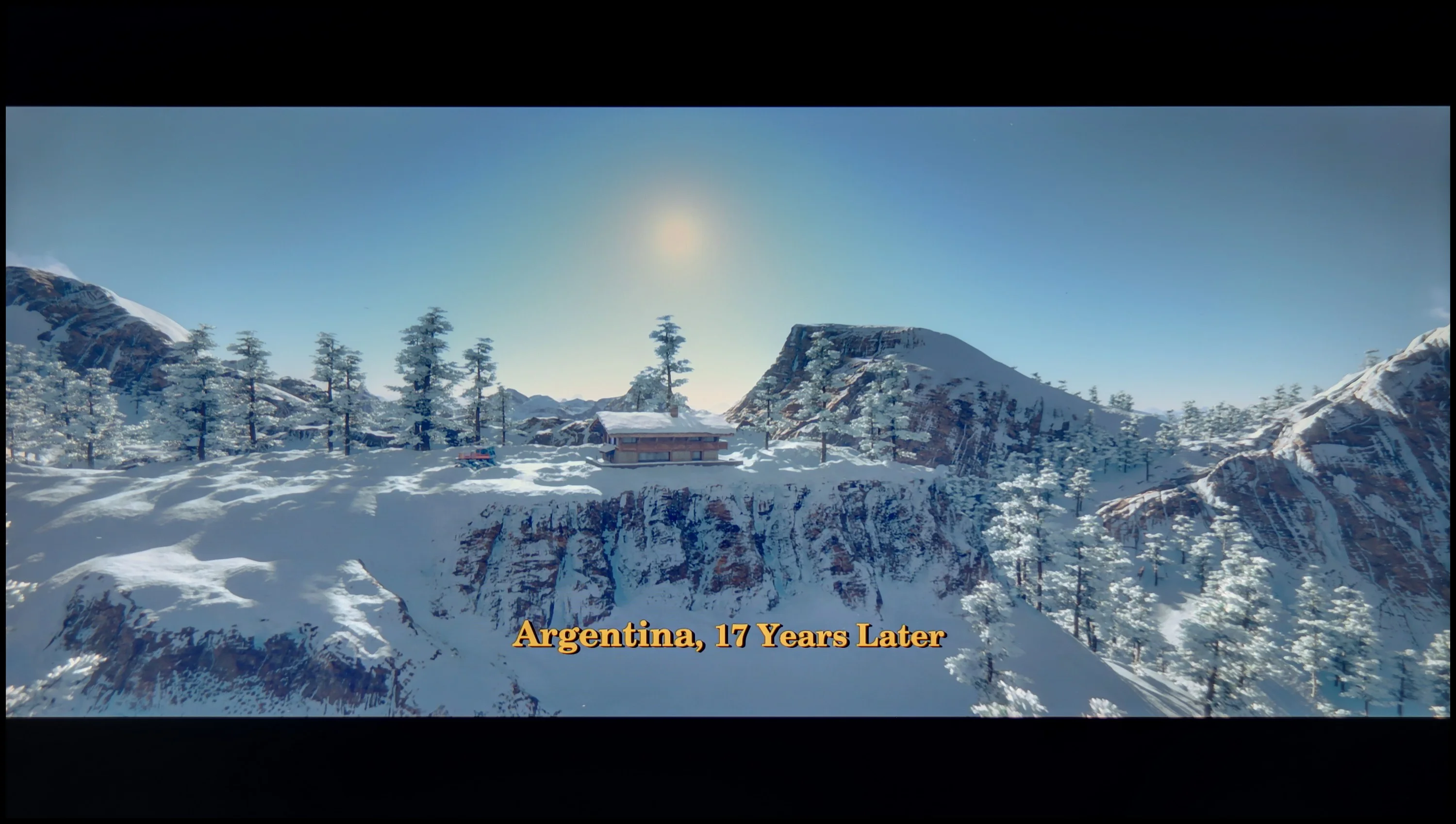
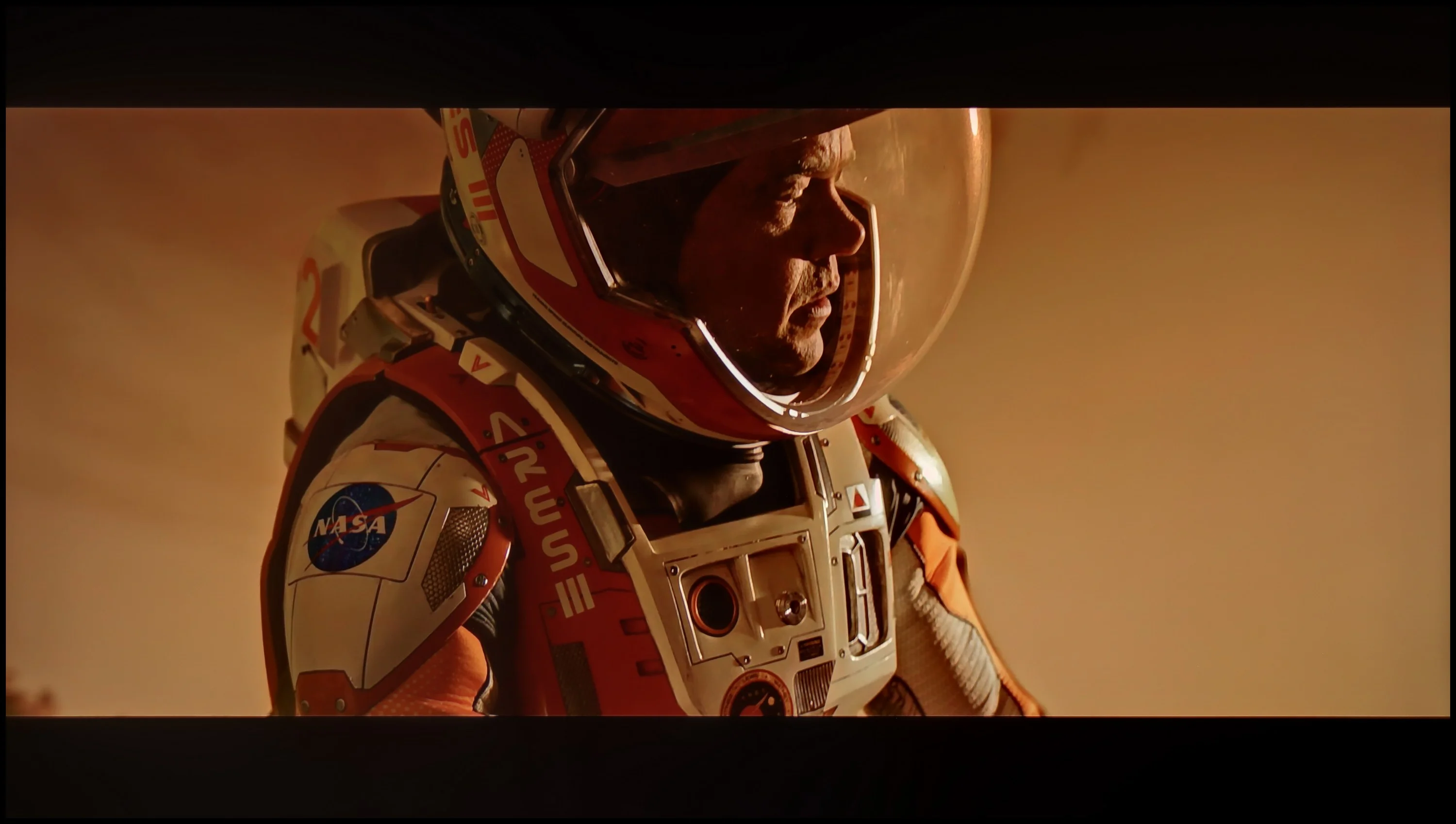
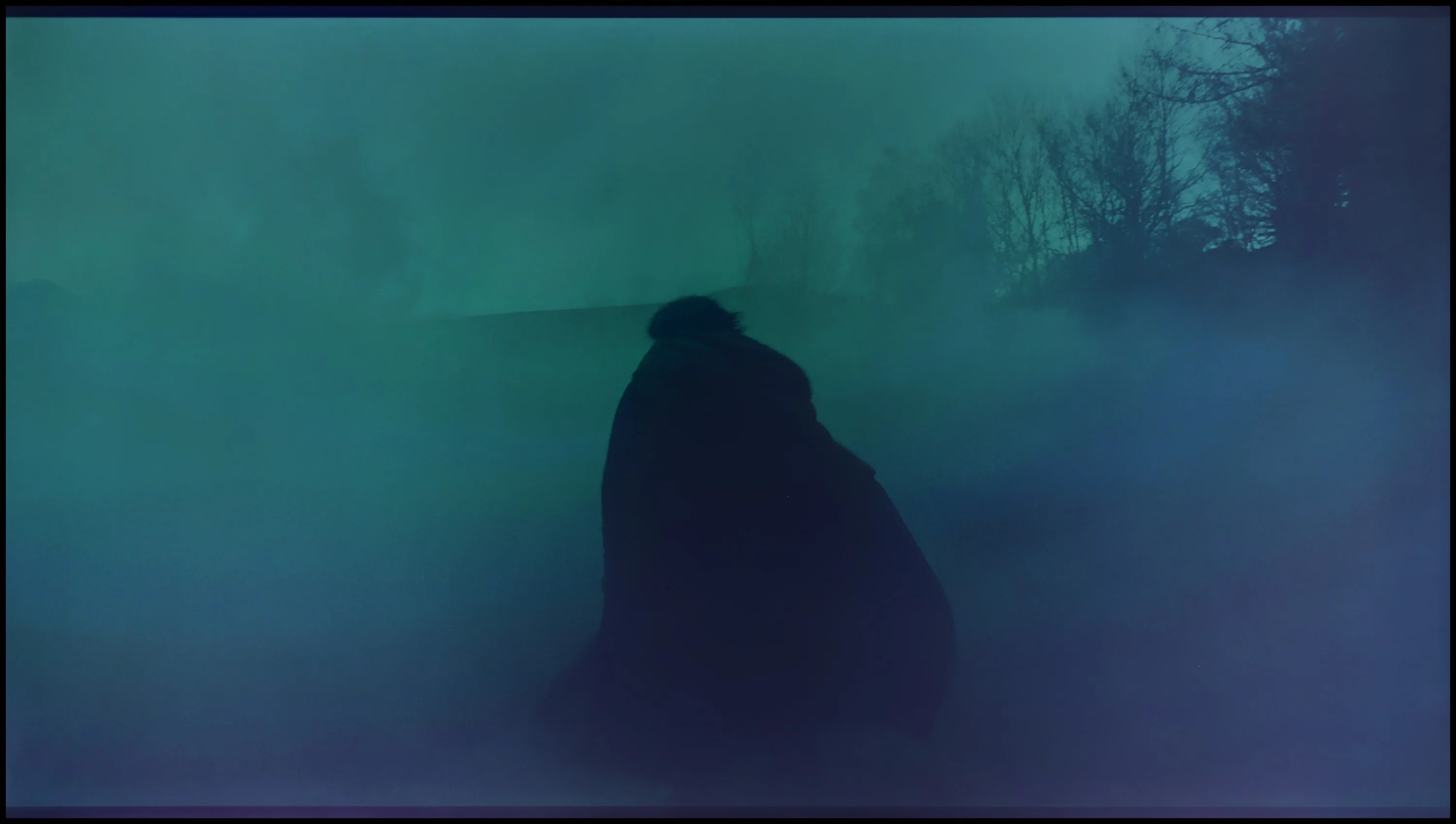
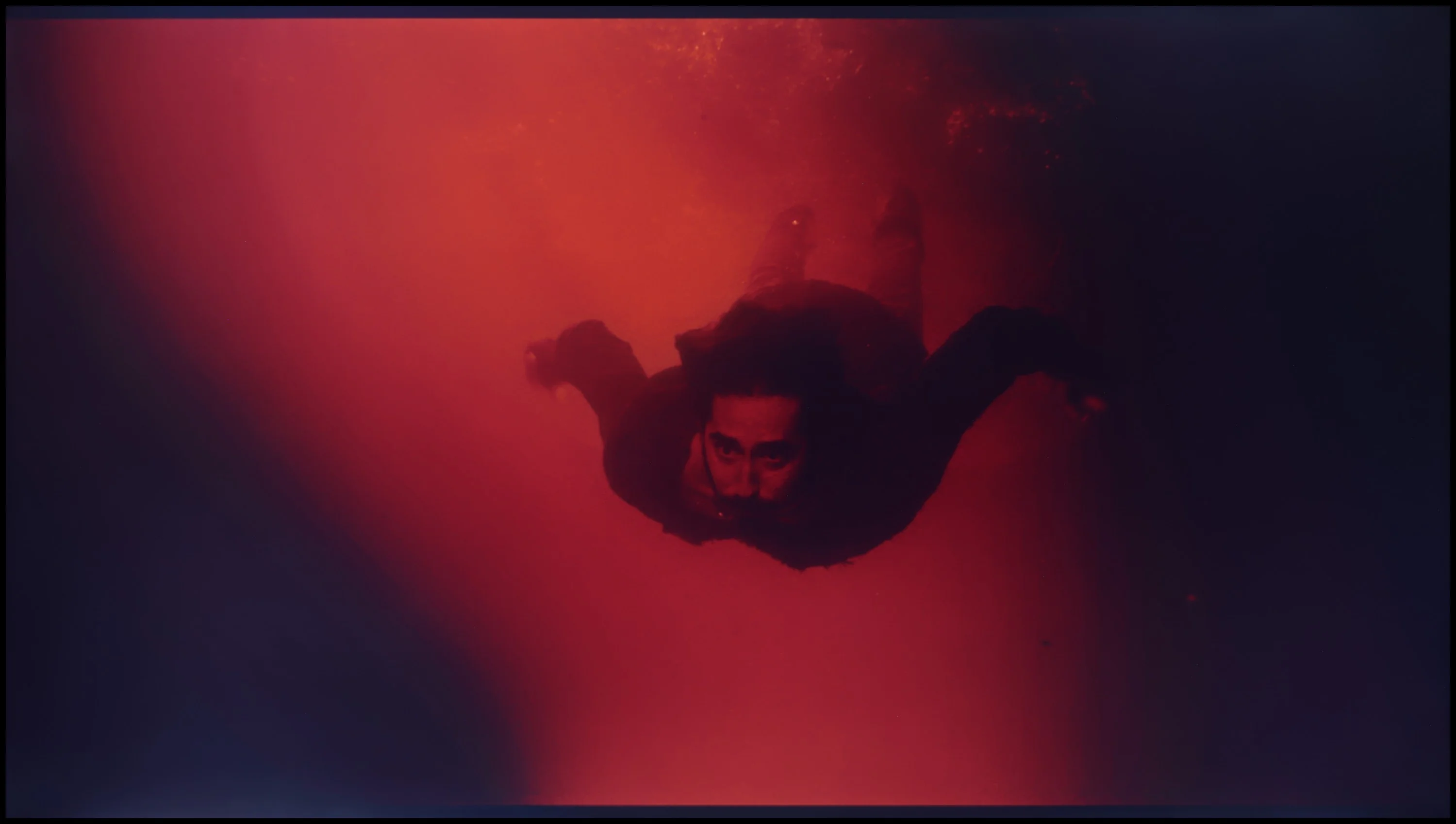
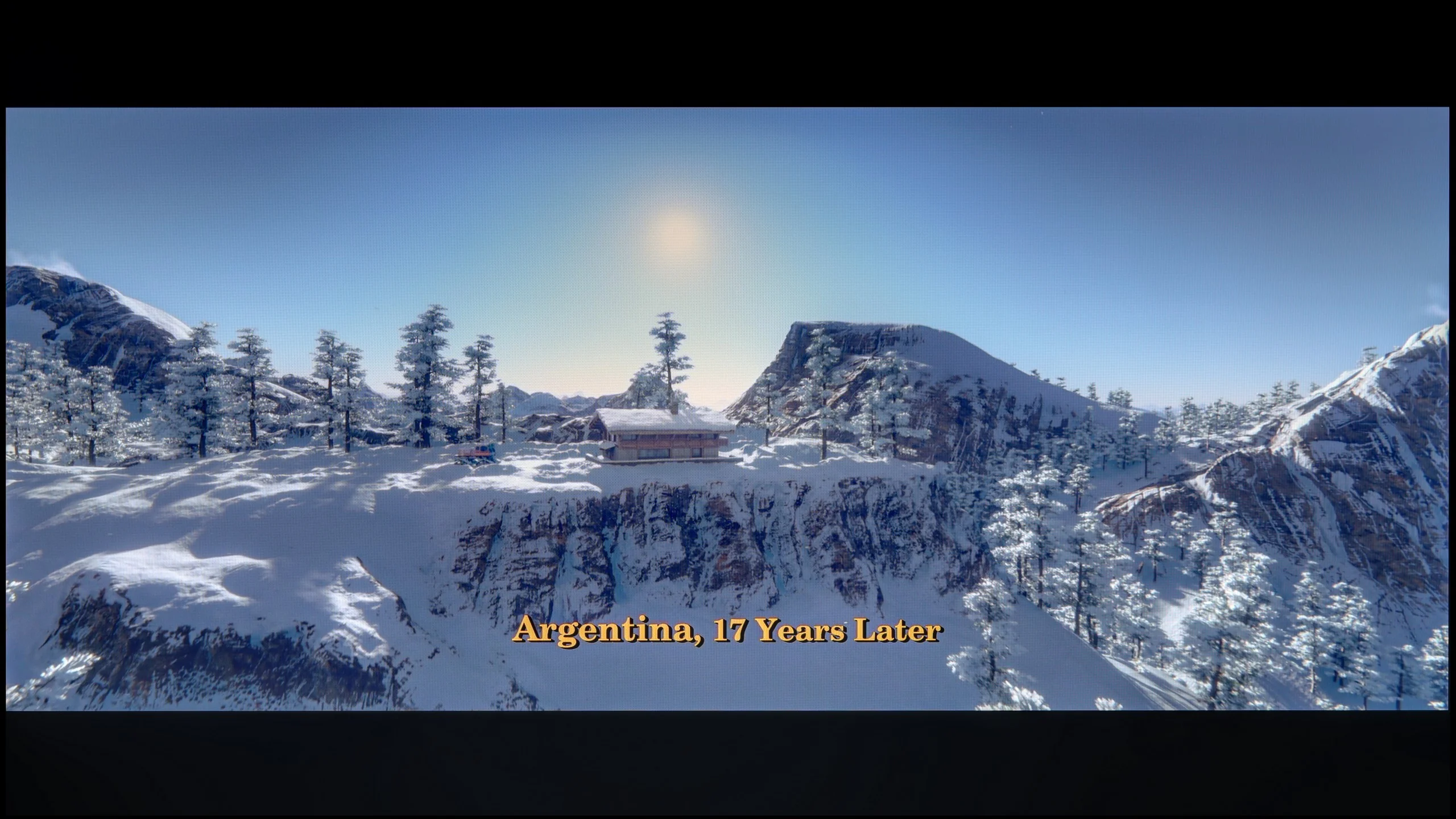
These are selected scenes that show smooth tonal transitions from one color to another. If you see distinct banding, it’s the TV panel’s fault.
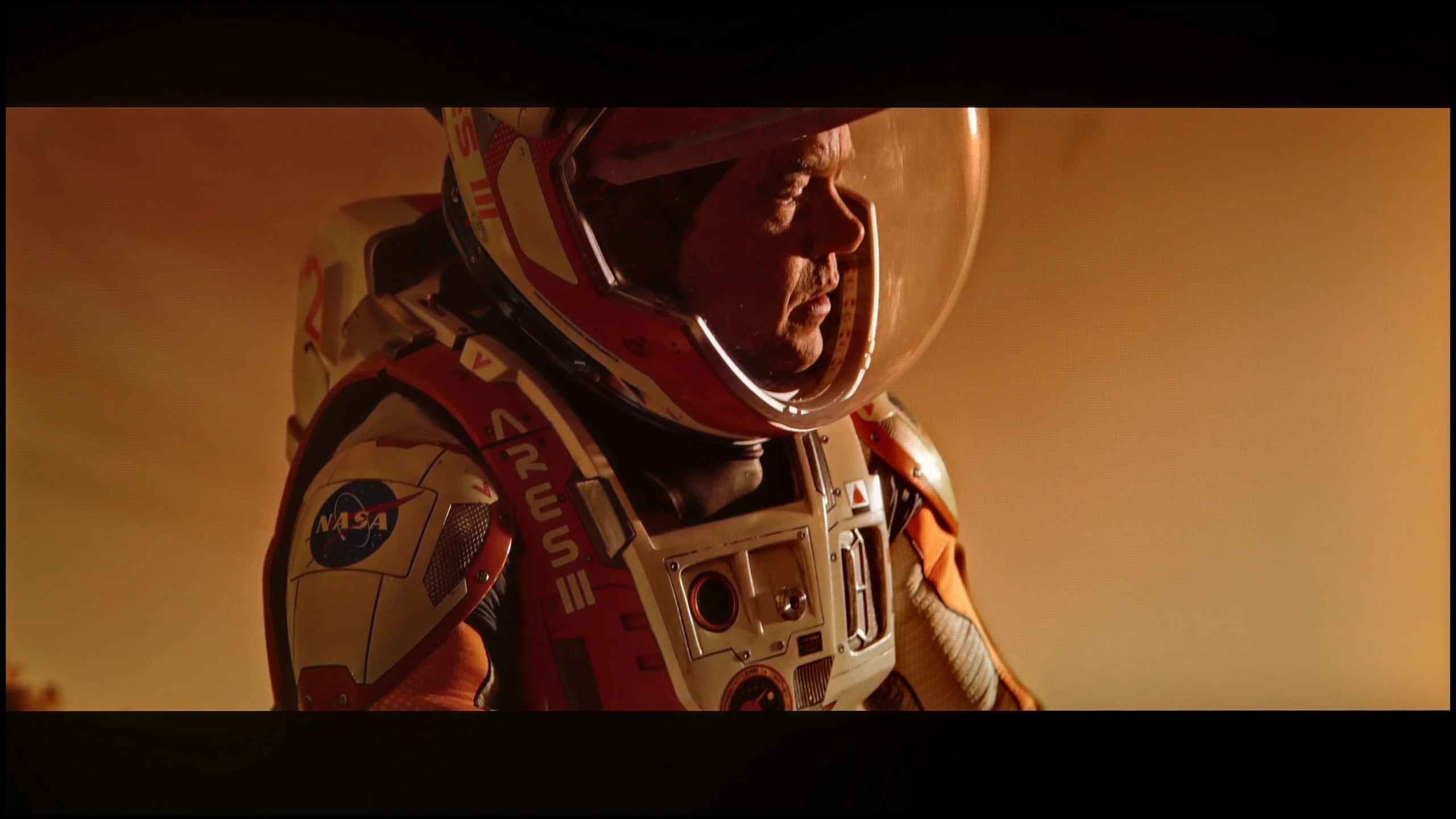
These are selected scenes that show smooth tonal transitions from one color to another. If you see distinct banding, it’s the TV panel’s fault.
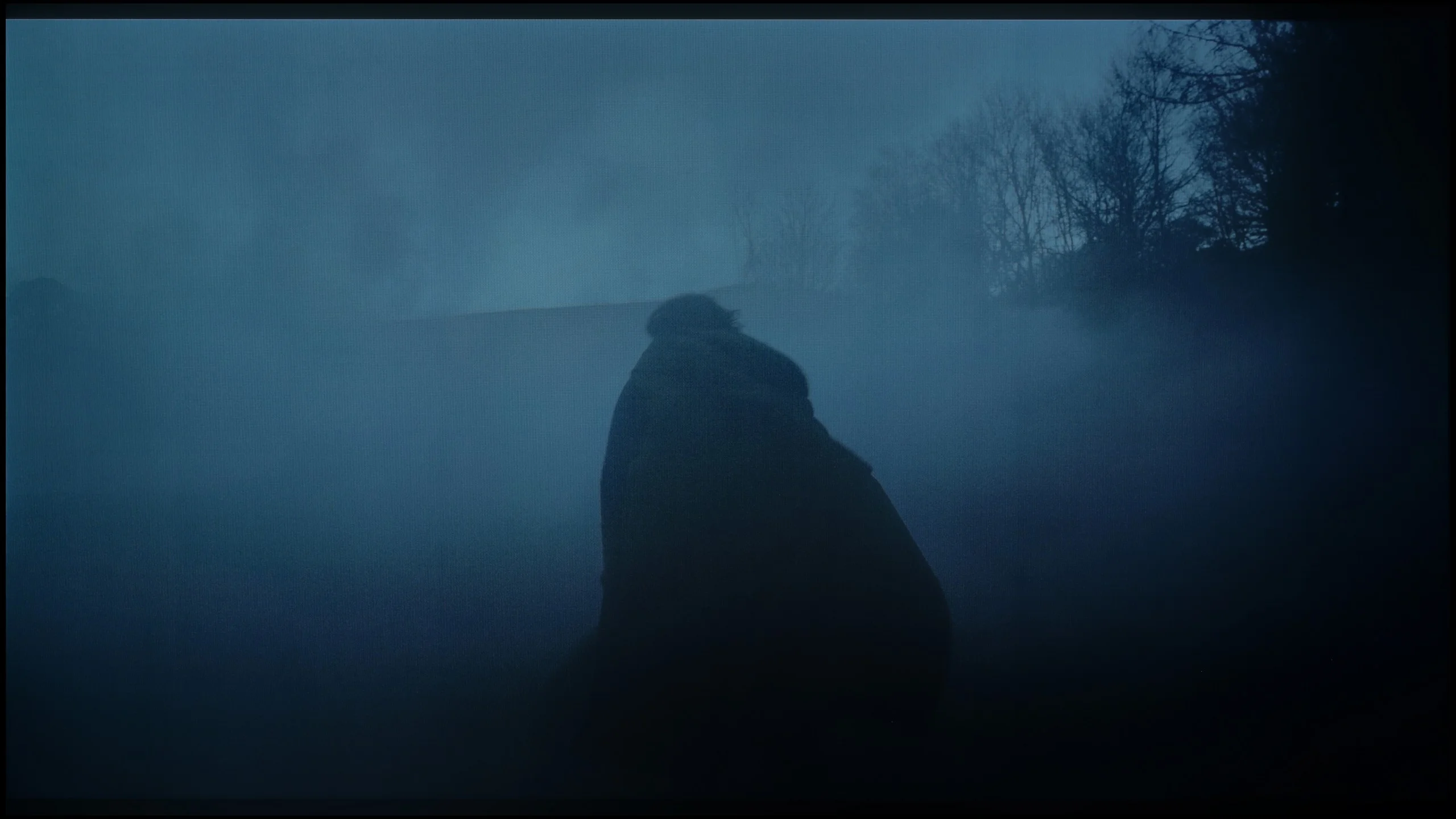
These are selected scenes that show smooth tonal transitions from one color to another. If you see distinct banding, it’s the TV panel’s fault.
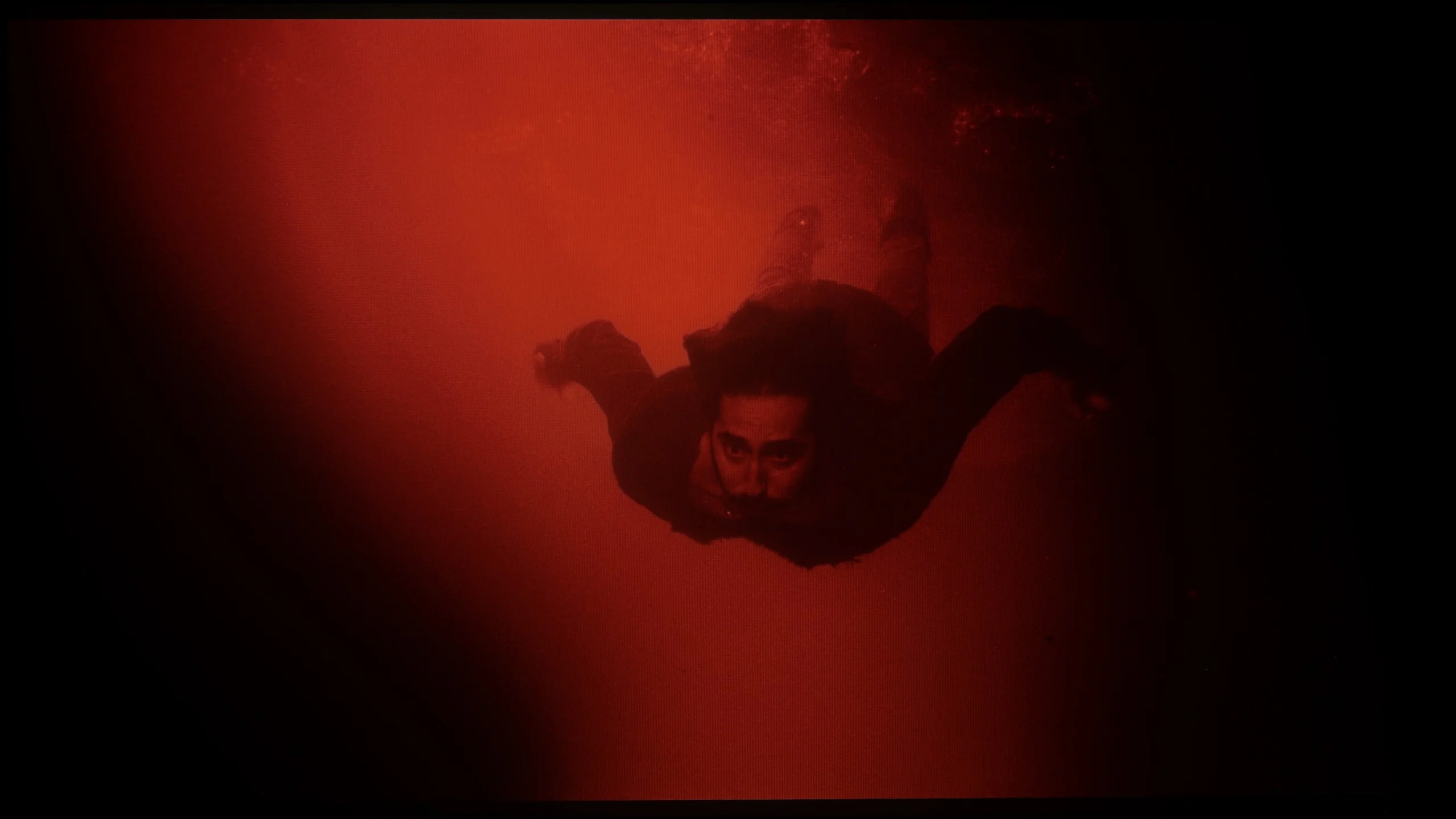
These are selected scenes that show smooth tonal transitions from one color to another. If you see distinct banding, it’s the TV panel’s fault.
The tonal transitions in TCL C655 / C69B are really quite good and would deserve a high rating, however, the score has been significantly lowered for another reason - the image is artificially sharpened despite the "sharpness" setting being at 0. This makes the image uncomfortable to look at. While this may be unacceptable for purists, those who place less importance on perfect image reproduction may find this effect appealing.
Unfortunately, we arrive at the least cheerful part of this review. If we were to evaluate solely the fluidity of tonal transitions, the G6 would score high marks. The blending of colours is at a very good level, and at times it resembles what we've seen from Samsung's QD-OLED panels. This is great news because until now, unsightly, layered bands in dark shades have been the bane of WOLED panels. In this category, we would easily give a strong 8.5 out of 10.
Note: Unfortunately, the final score in this section drops significantly, and the culprit is very aggressive dithering. In dark scenes, the image literally "shakes," and in areas close to black/dark grey, the television can flicker annoyingly. We don’t know exactly what this is due to, but looking at the tests from other reviewers around the world – everyone has encountered exactly the same problem. We hope that LG will fix this as soon as possible with some sort of update. We know that LG is capable of responding quickly to negative user feedback, which can already be read online. We will keep an eye on this and will inform you in case of any improvements.
Image scaling and smoothness of tonal transitions
5/10
8.7/10


Smooth transition function
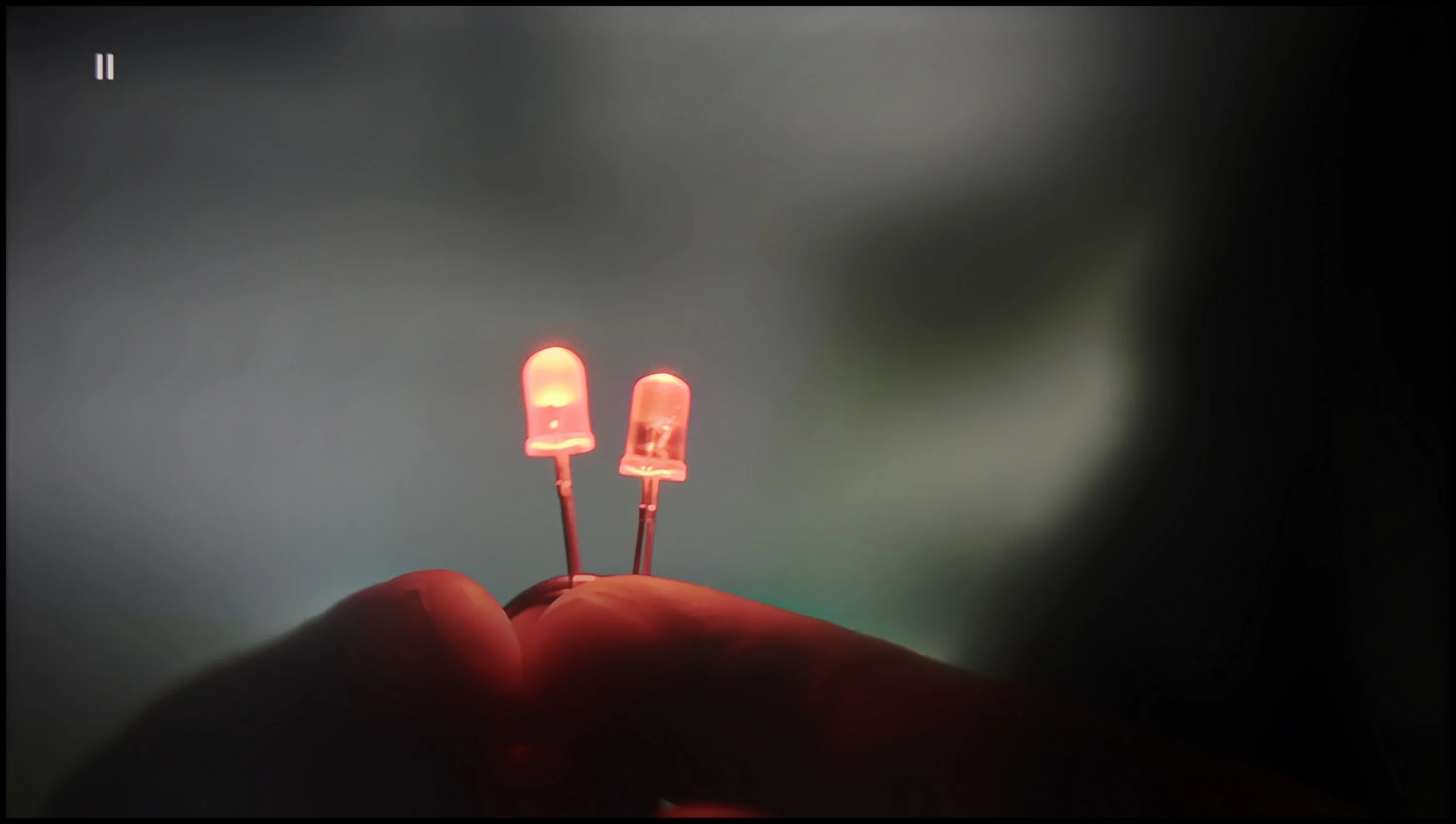
The match photo shows how the TV smooths weak tonal transitions in low-quality video.
Image scaling SD (576i)


The model photo shows how it handles upscaling of SD material.
The TCL C655 / C69B TV handles tonal transitions well in lower quality materials. The “Gradual Smoothing” function at its lowest setting effectively eliminates visible banding, but it also results in a loss of detail, for example, in the texture of objects. A plus is that it does not interfere with film grain, allowing the image to maintain a natural look.
In terms of digital processing, the TV adds a significant amount of artificial sharpness, which may appeal to those who prefer a vivid image. For those who prefer a more subtle rendering of details, this may be a drawback. Another downside is the quite aggressive overscan – the image is cropped, which leads to the loss of fragments at the edges and limits the field of view.
No matter what one might say about the G6's issues with near-black signal, it must be fairly acknowledged that it handles heavily compressed material and lower resolution content extremely well. All unwanted, ugly tonal transitions are effectively reduced here by the "Smooth Gradation" feature. At the "Low" setting, the algorithm works flawlessly – effectively masking the artifacts resulting from strong compression without destroying the sharpness and details in the frame. Higher levels of this feature do further smooth the image, but they start to blur the real texture elements of the objects, so we recommend keeping this slider at a low level. As for the actual upscaling to 4K, the processor does an excellent job – edge sharpness and detail reconstruction are at the highest level, and in this respect, the G6 is on par with the global leaders.
Blur and motion smoothness
7.5/10
8.5/10
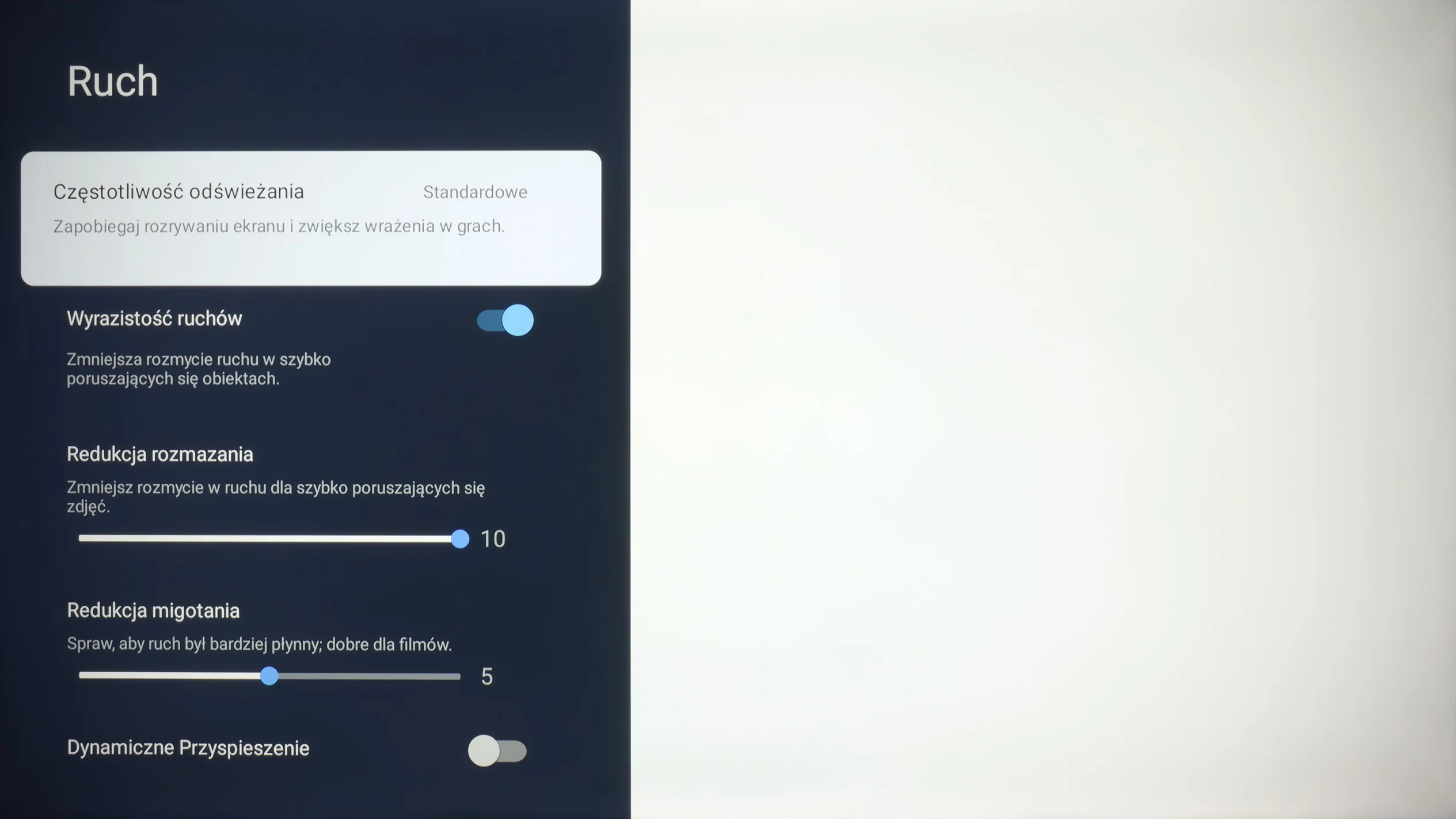
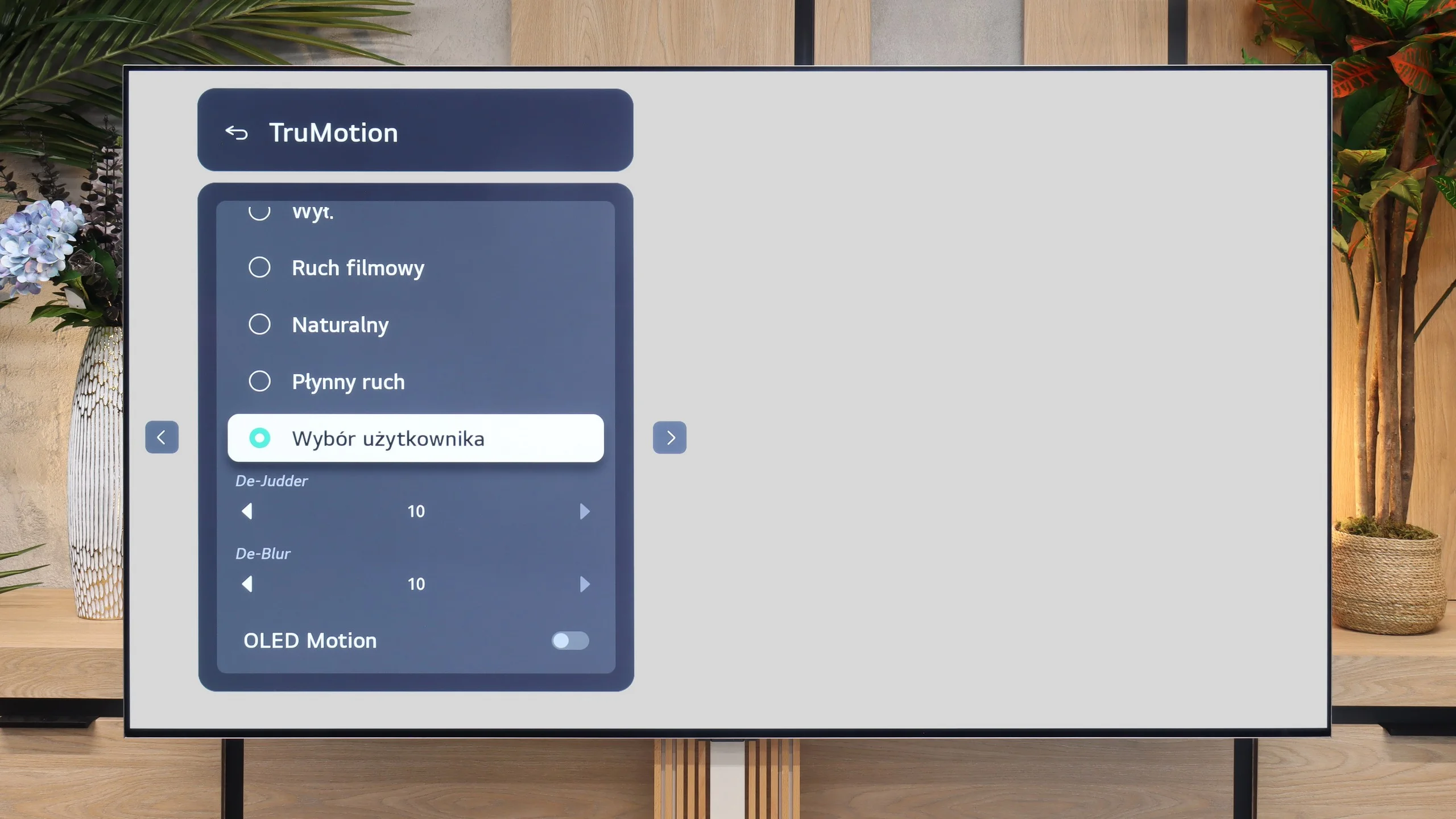
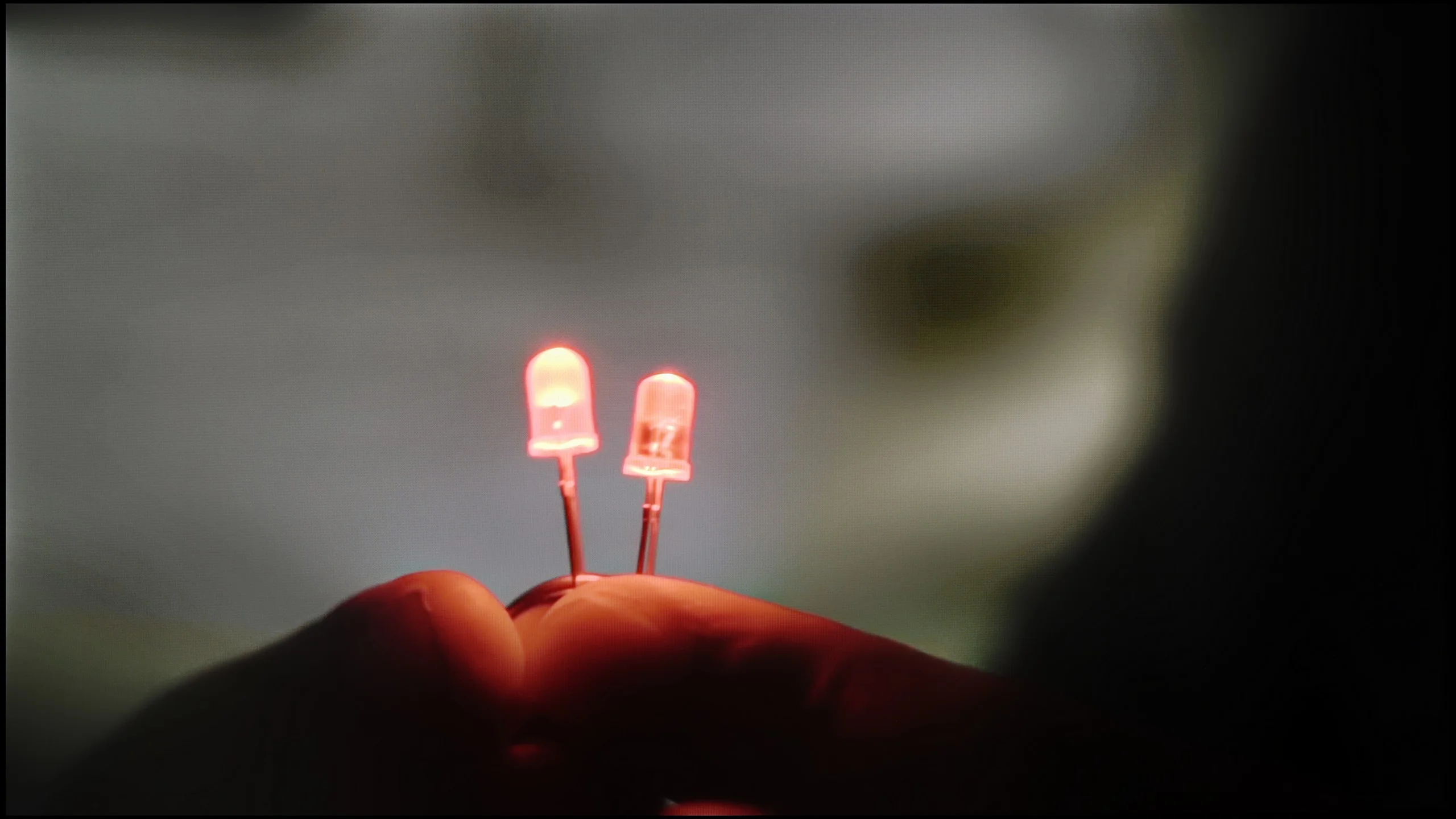
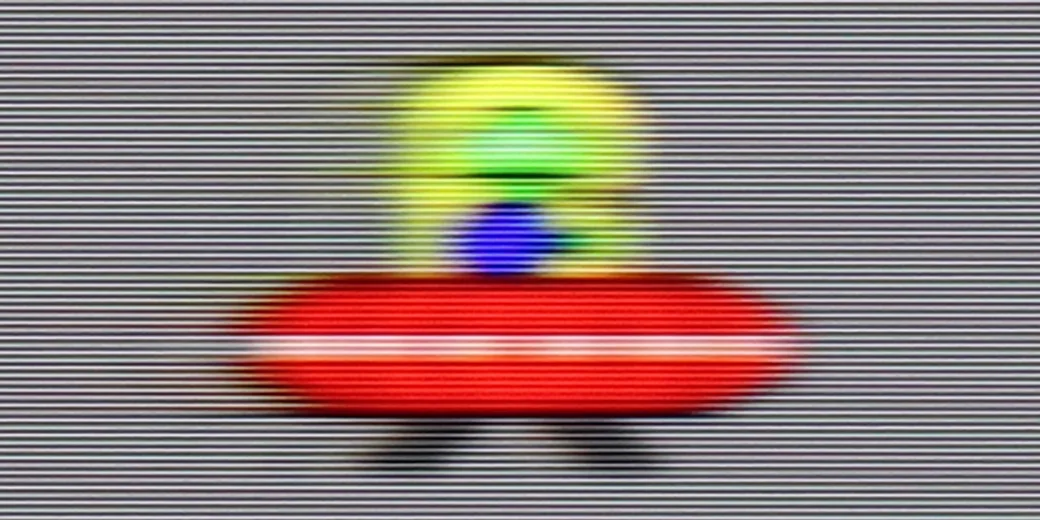
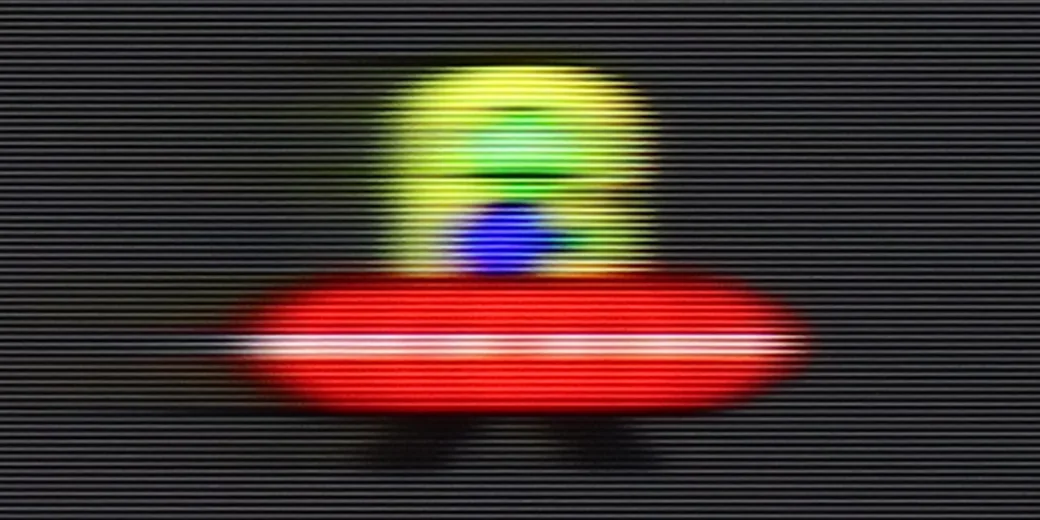
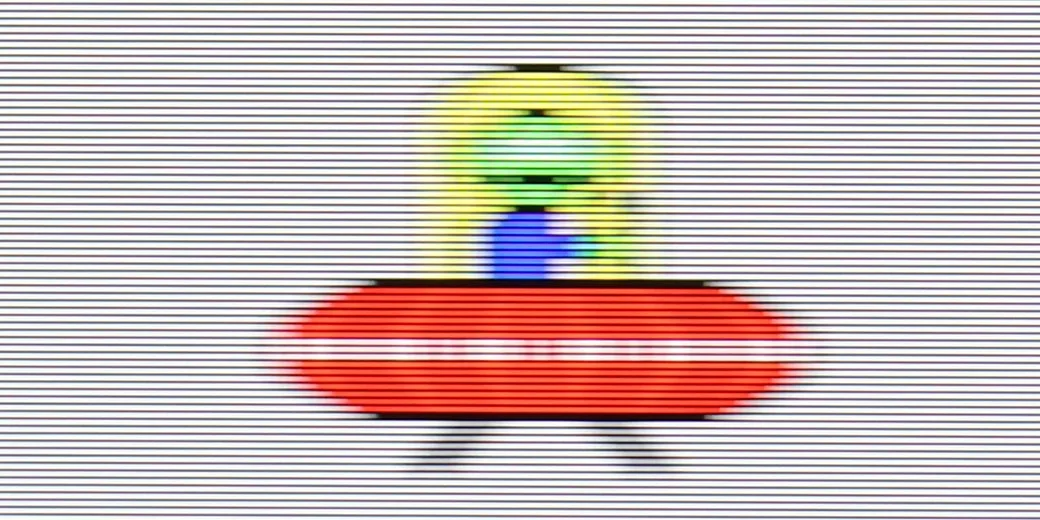
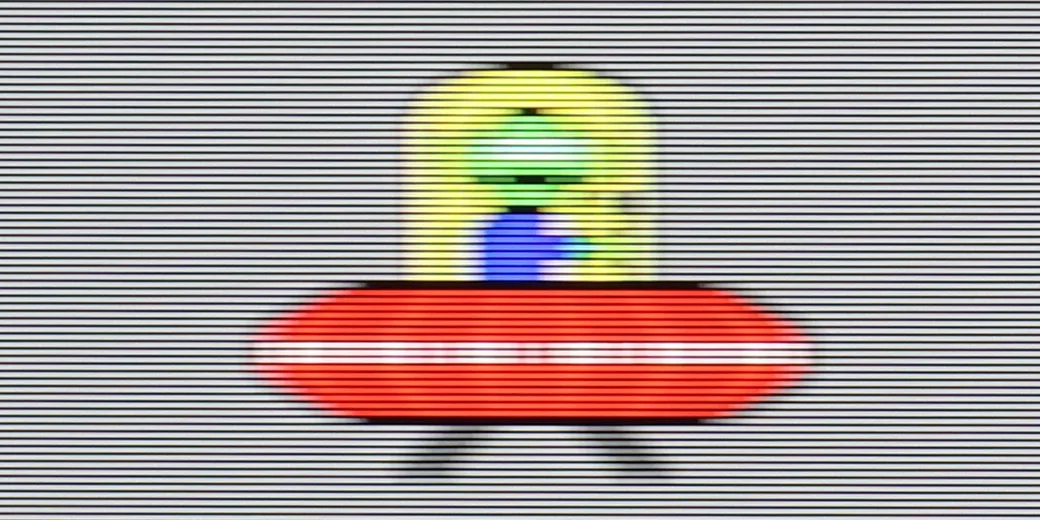
Blur (native resolution, maximum refresh rate):
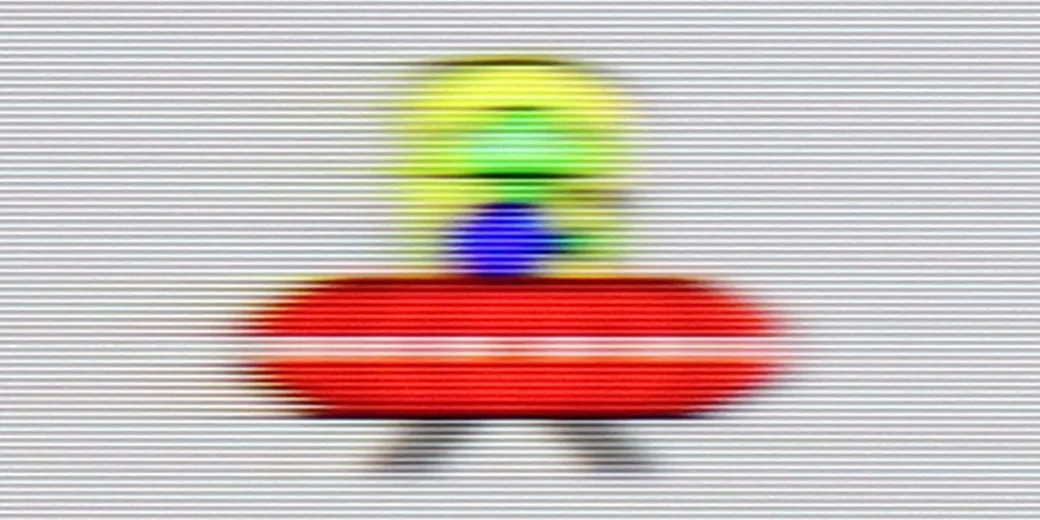
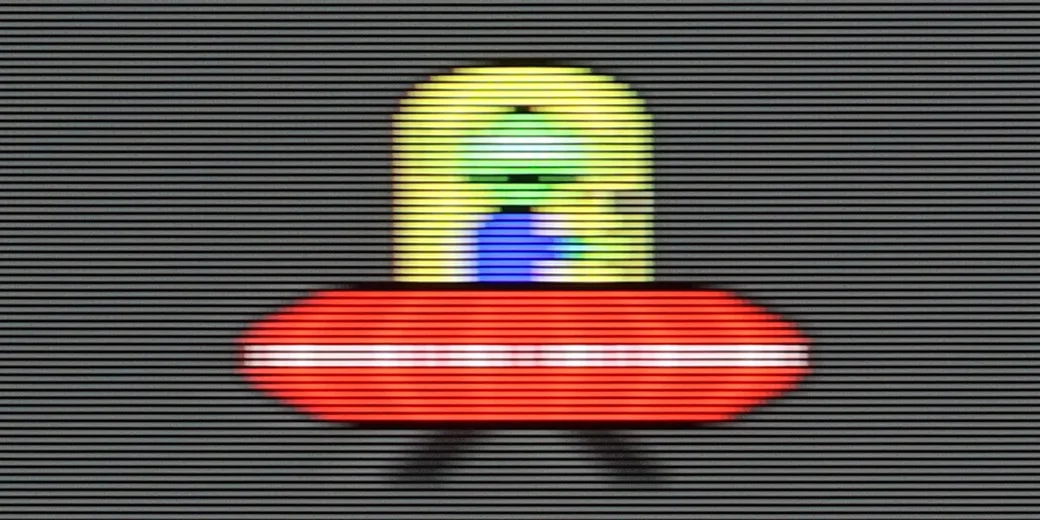
Blur (BFI function enabled):
Image flickers in this mode
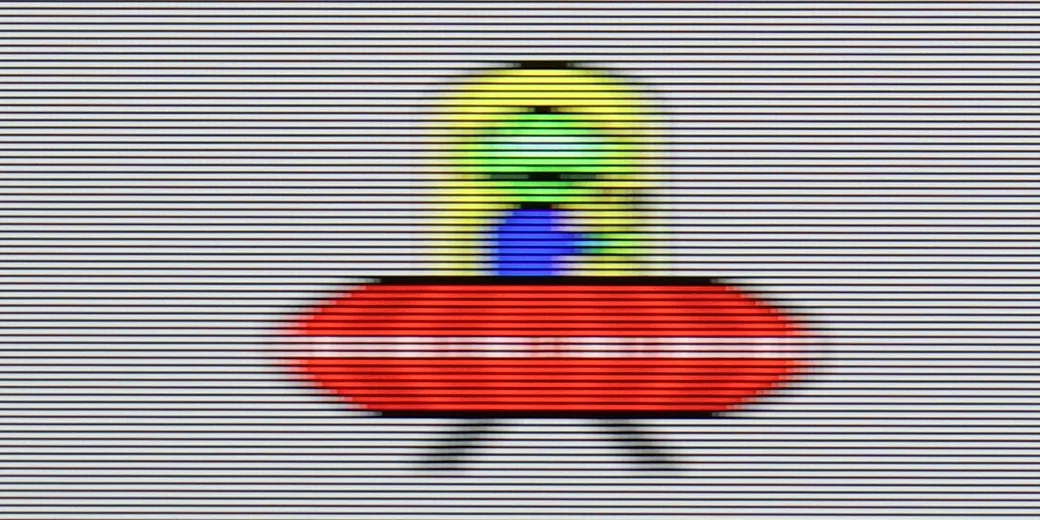
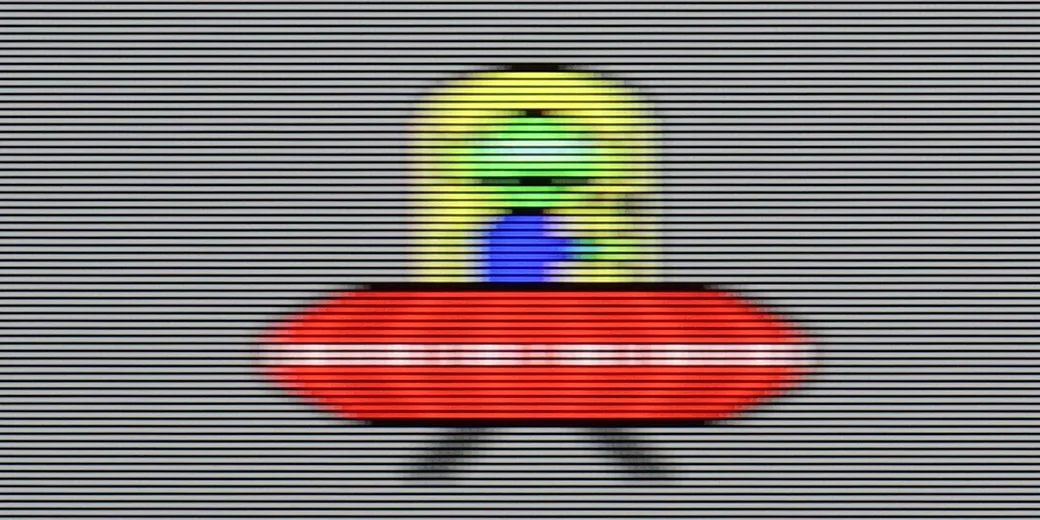
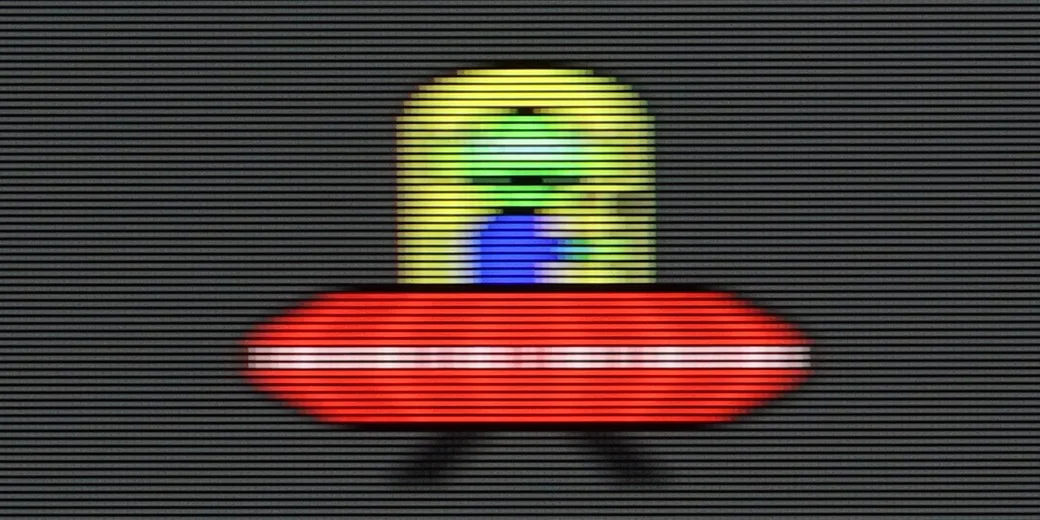
Blur ():
Blur (4K@165Hz):
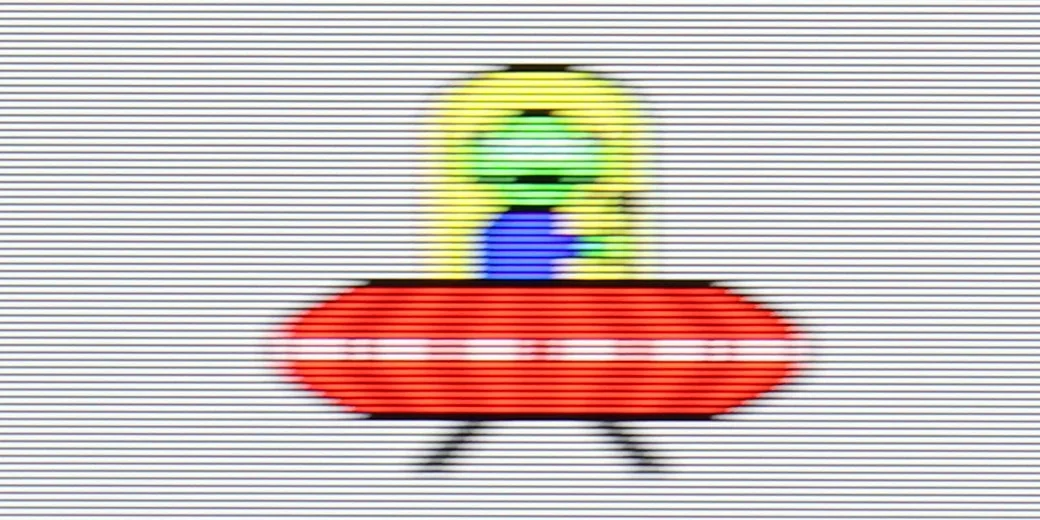
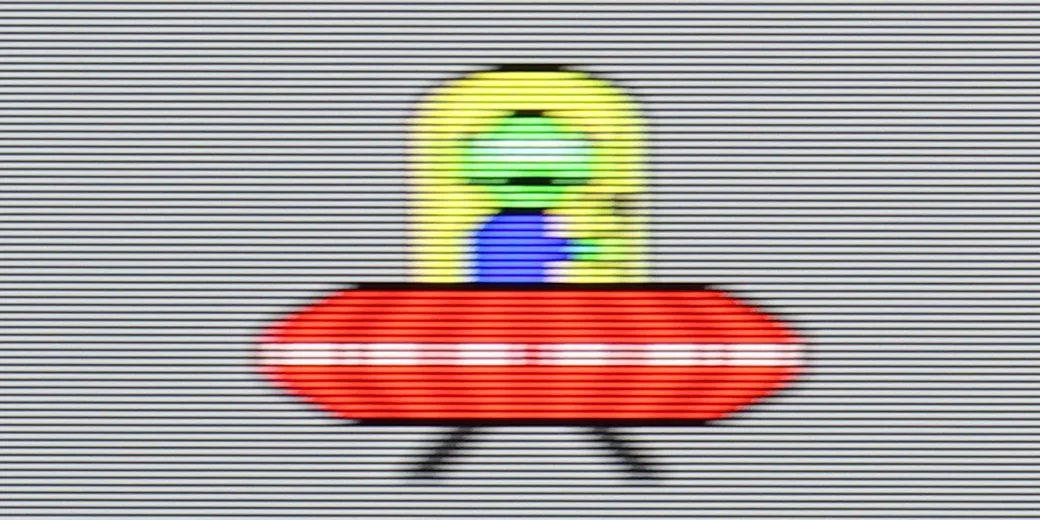
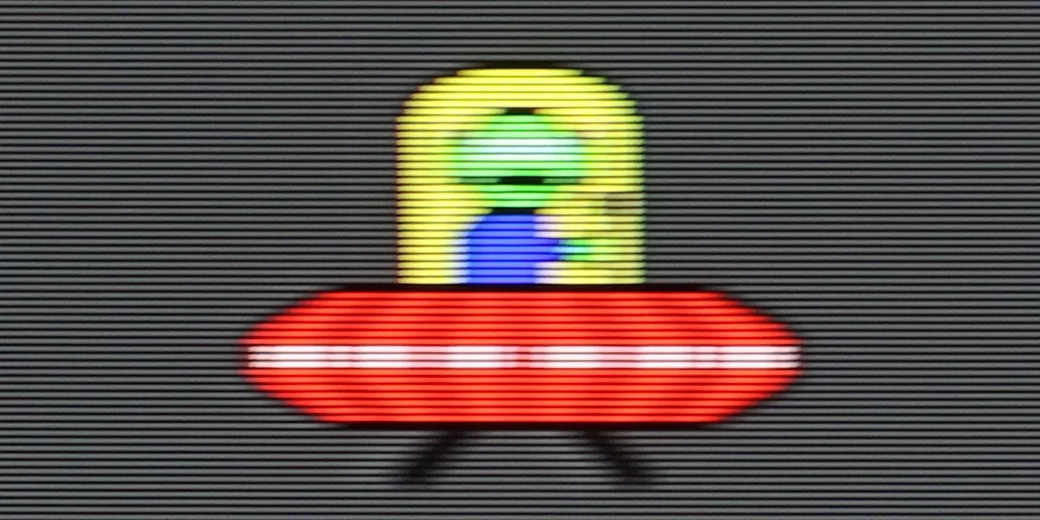
Unlike the smaller versions, the 98” model stands out with significantly better motion fluidity. Instead of the standard 60 Hz, this colossal screen is equipped with a full 144 Hz panel, which opens up entirely new possibilities – for both gamers and movie lovers. With its full motion smoother, the television delivers incredible image fluidity, eliminating ghosting and improving the comfort of watching dynamic scenes. It's worth noting that this technology operates across the full refresh rate range, meaning there's no need to compromise between fluidity and quality. Additionally, the "Flicker Reduction" feature allows you to adjust the fluidity to your own preferences – you can choose a more cinematic effect with visible frame rate or a maximally smooth image.
The LG G6 is an OLED television, so in the category of motion fluidity, it traditionally deserves the highest marks. The TV supports very high refresh rates of up to 165 Hz in 4K resolution, but most importantly – there are absolutely no signs of blurring on the screen. The response time of the matrix is virtually instant, ensuring that dynamic images remain perfectly sharp.
Console compatibility and gaming features
9.8/10
10/10
- ALLM
- VRR
- VRR range48 - 144Hz40 - 165Hz
- Dolby Vision Game Mode
- Correct implementation of HGIG
- 1080p@120Hz
- 1440p@120Hz
- 4K@120Hz
- Game bar
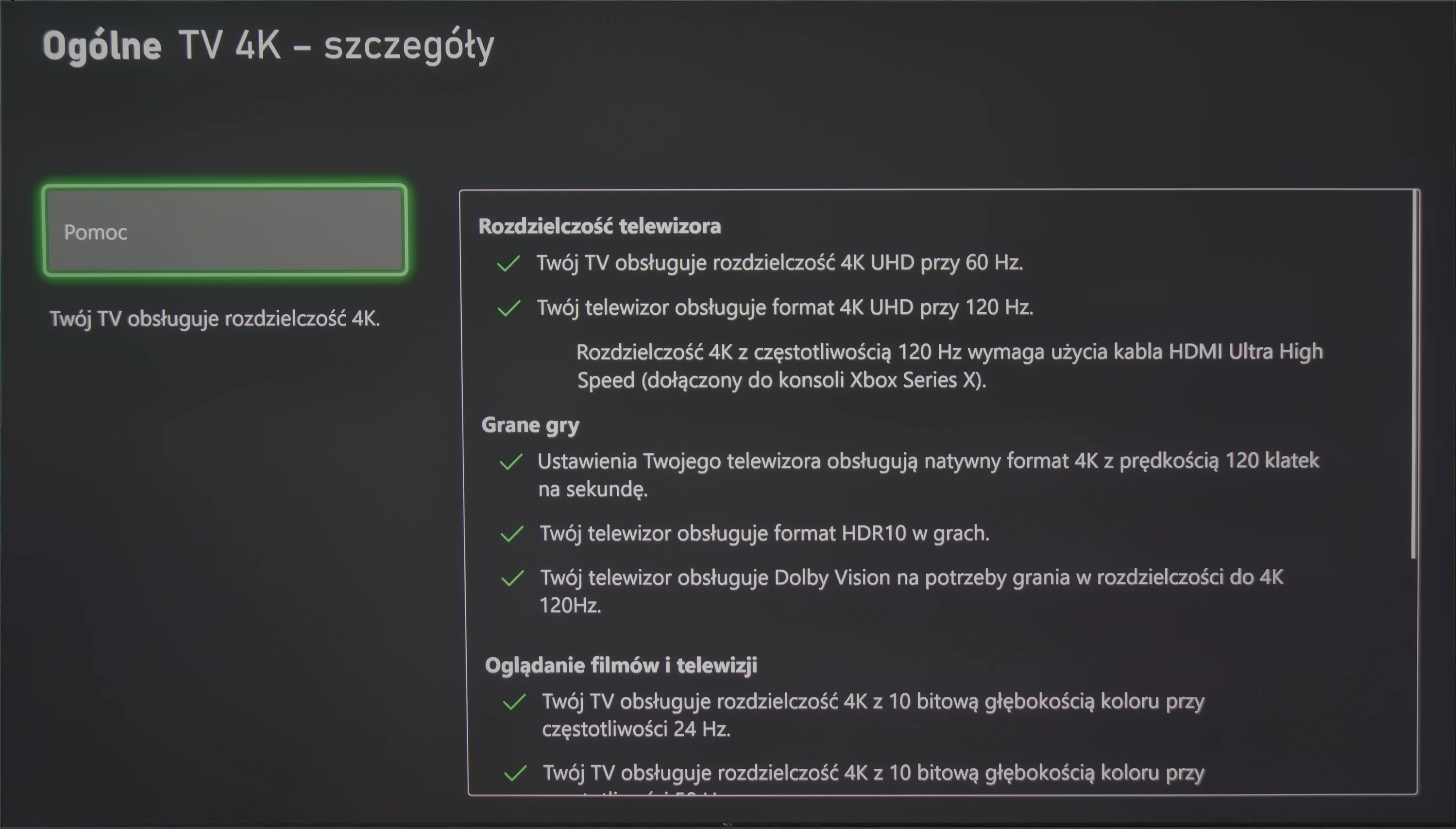
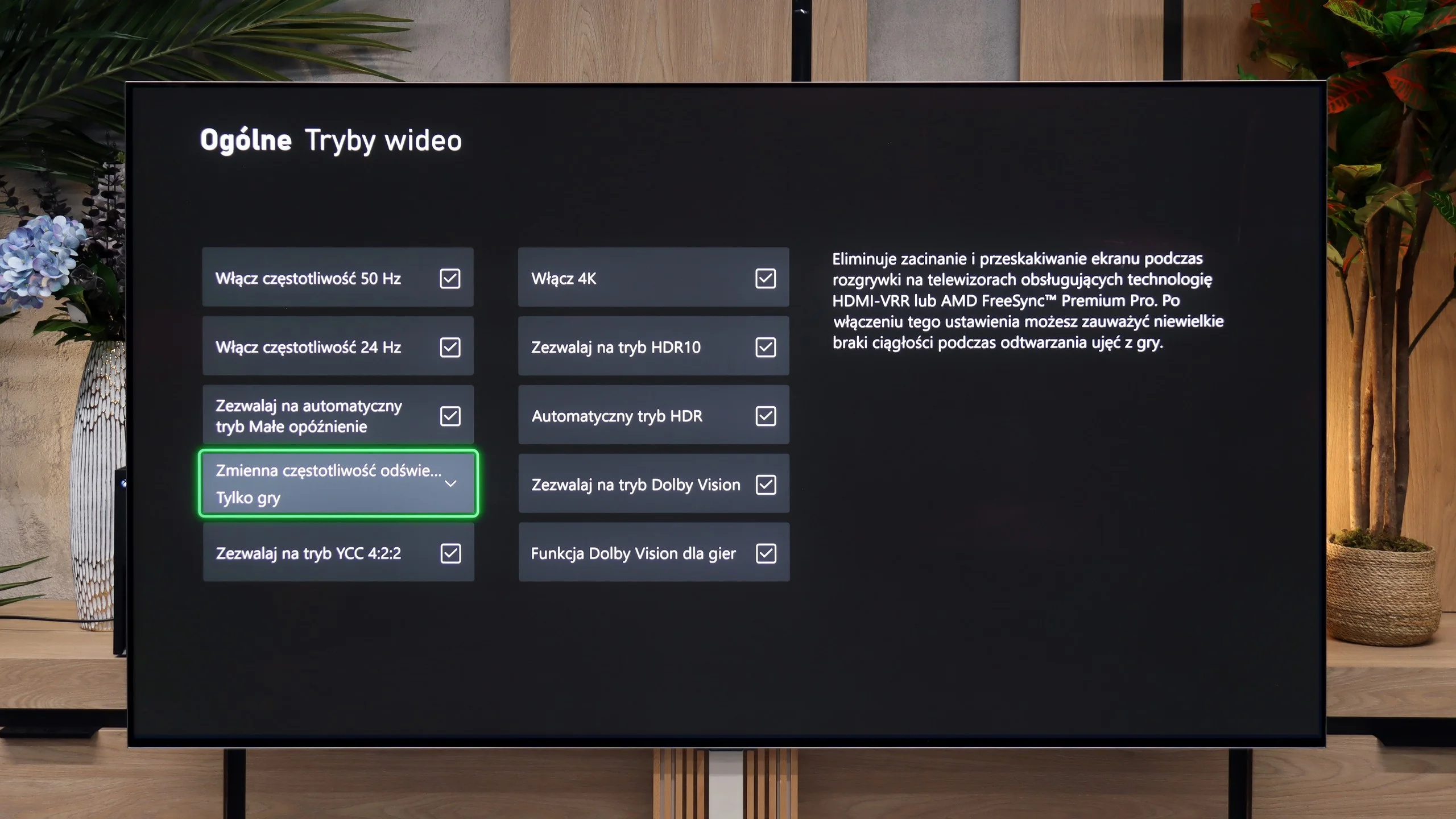
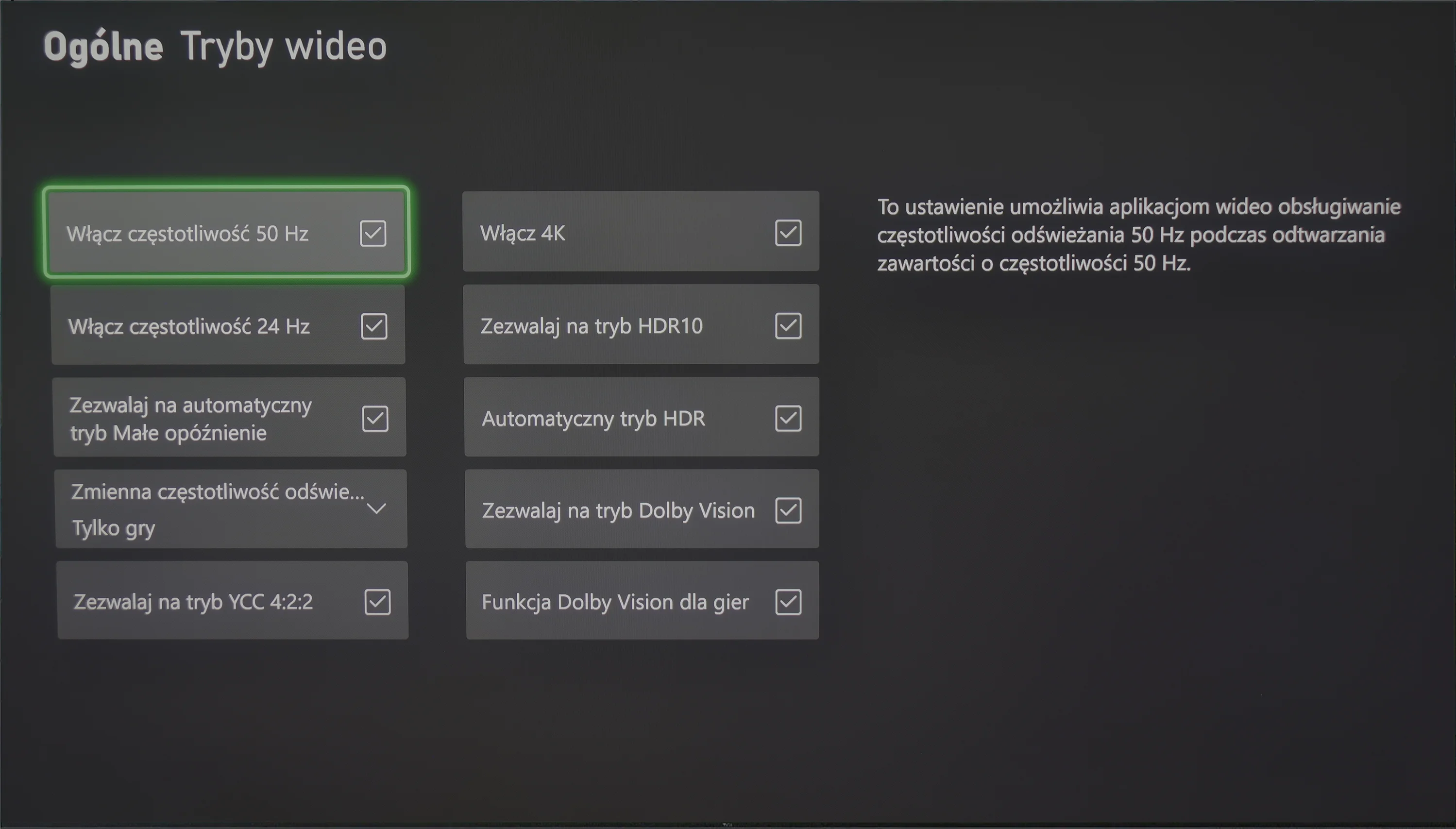
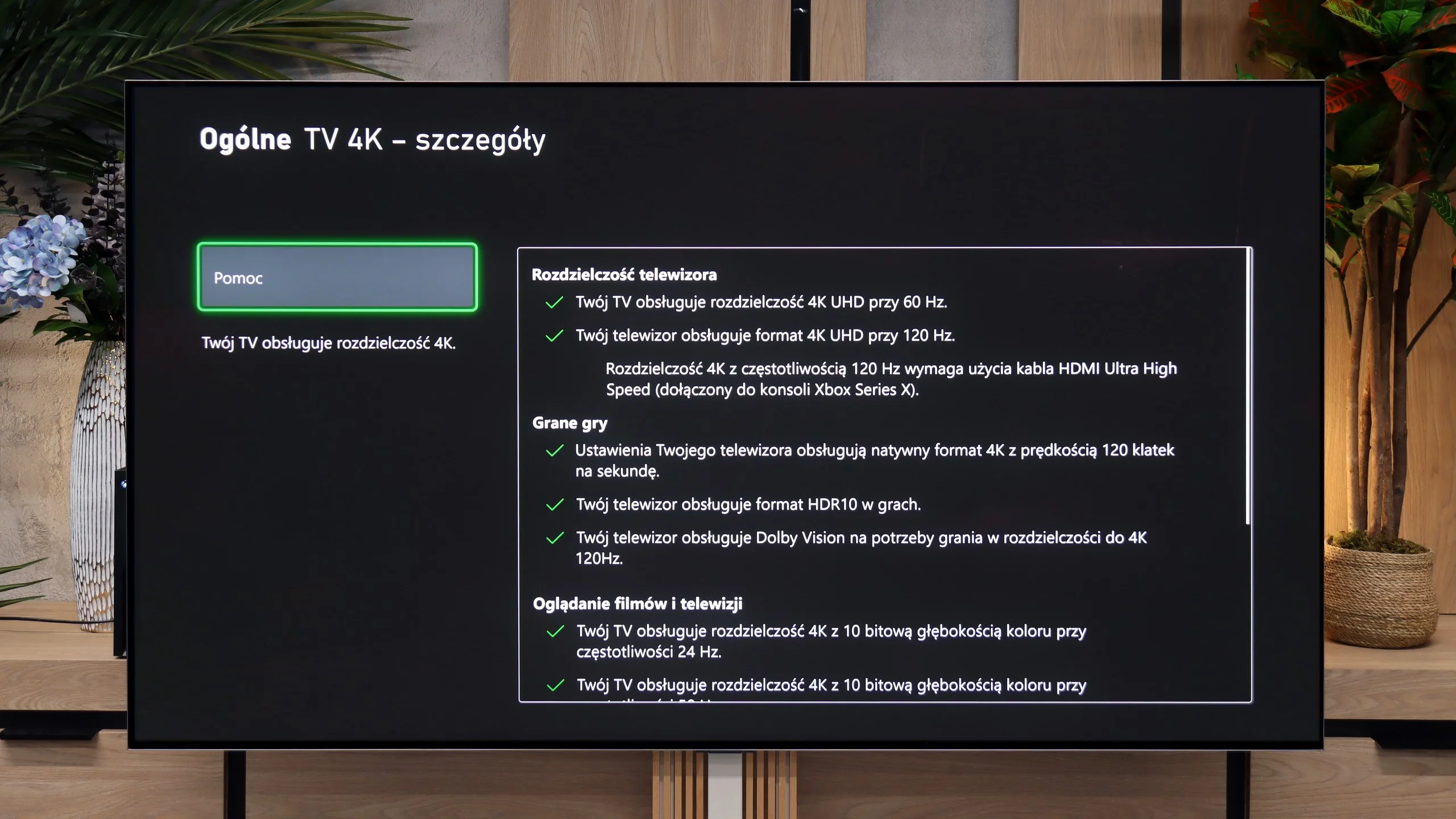
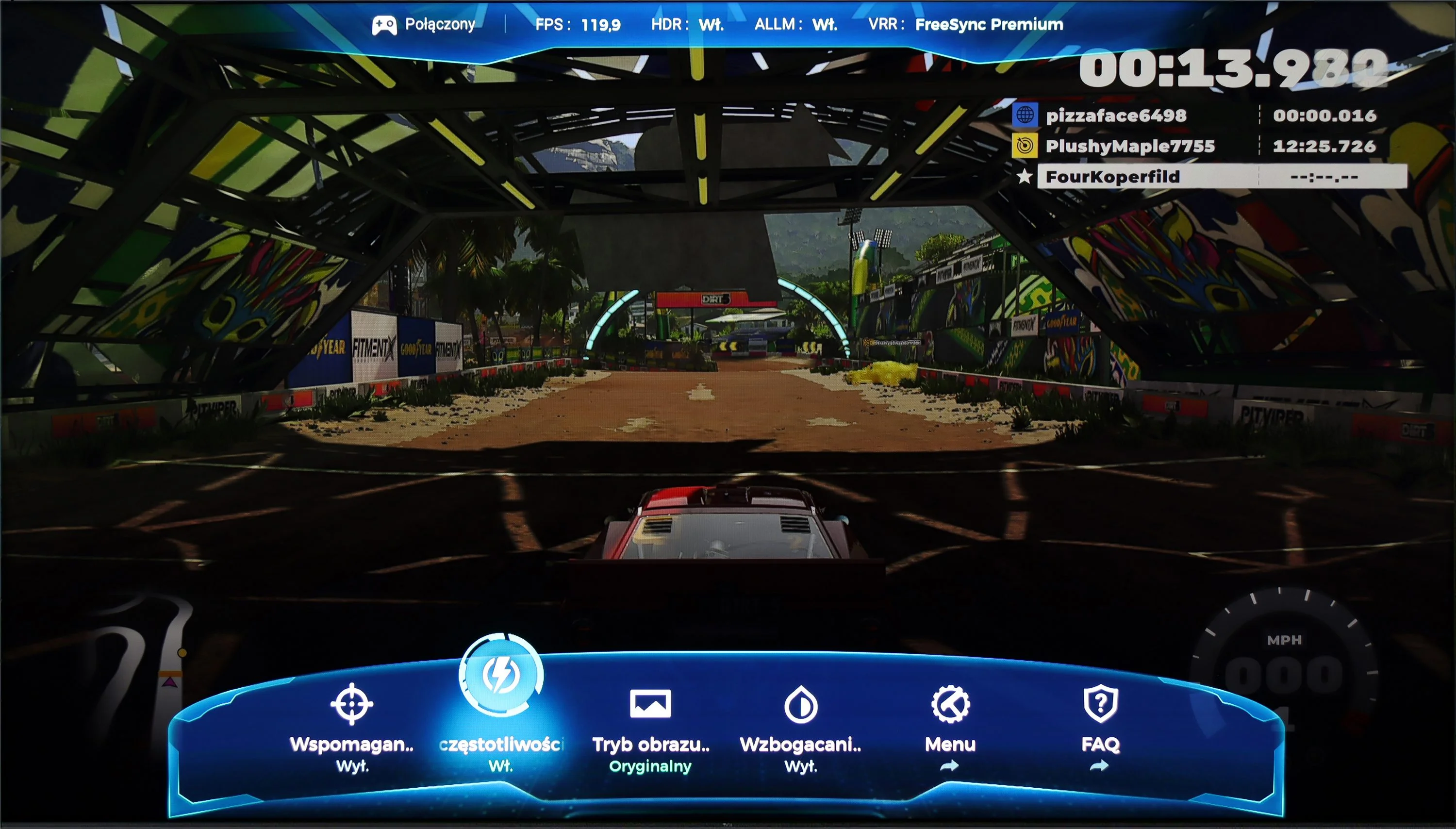
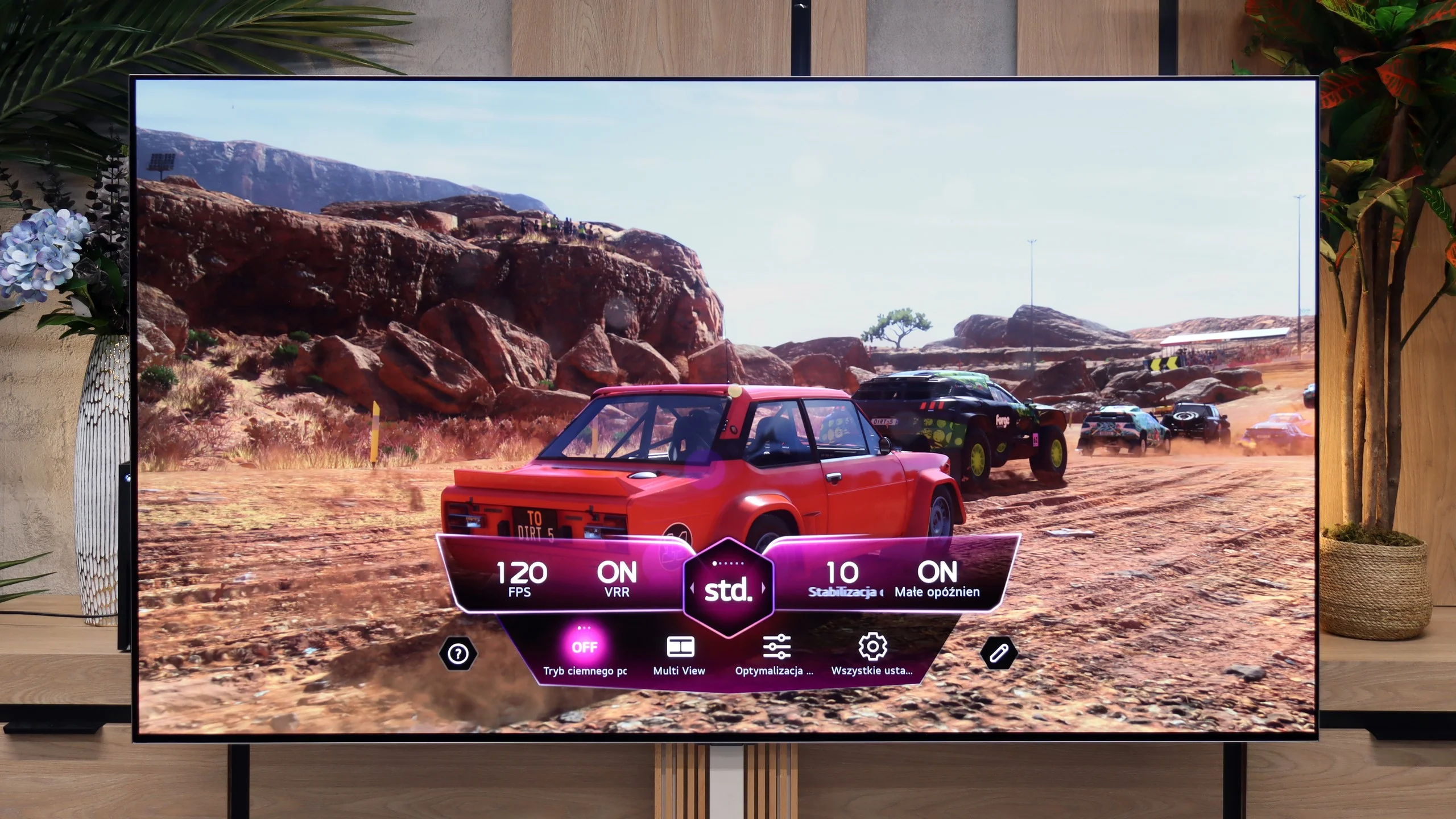
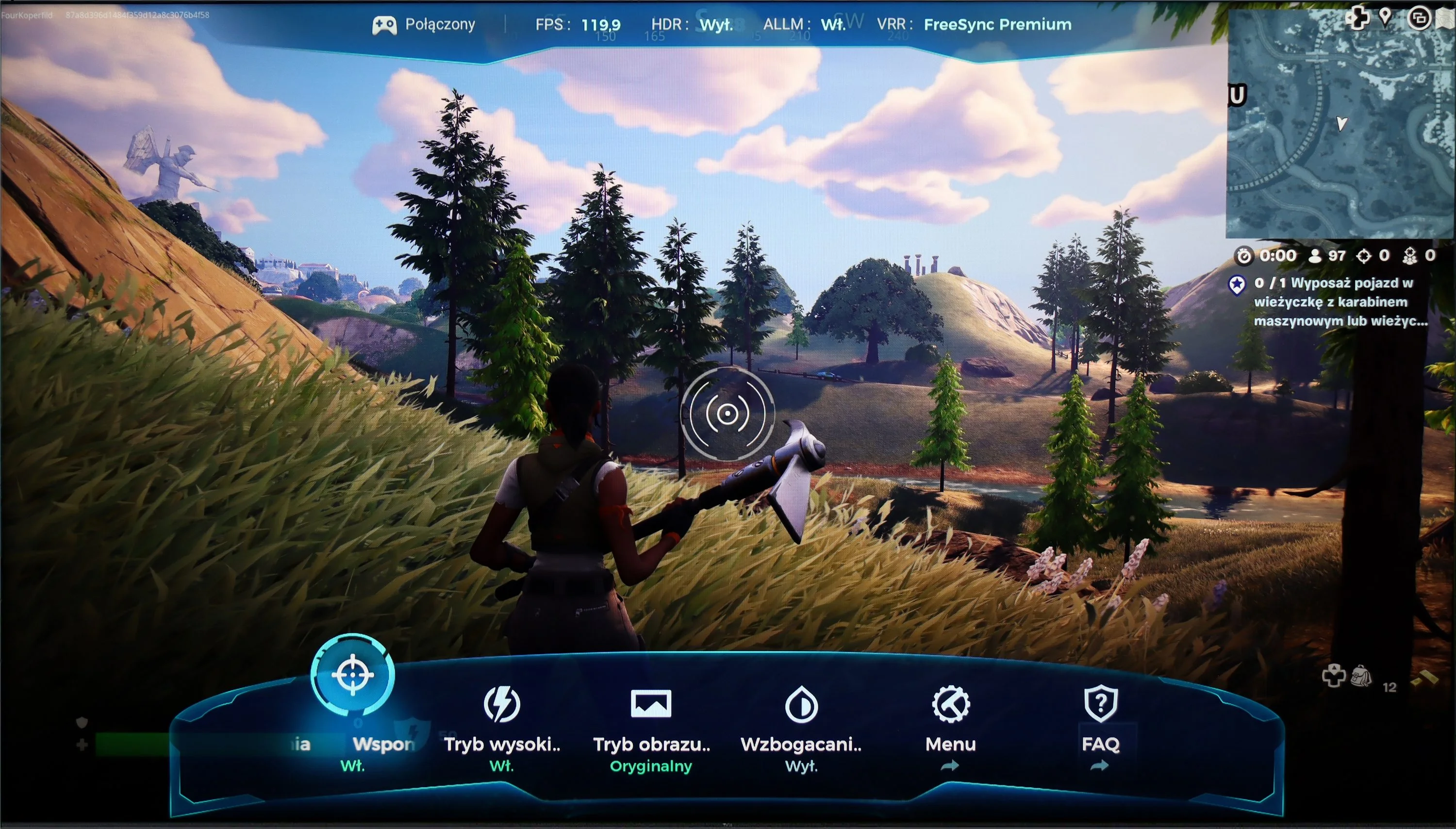
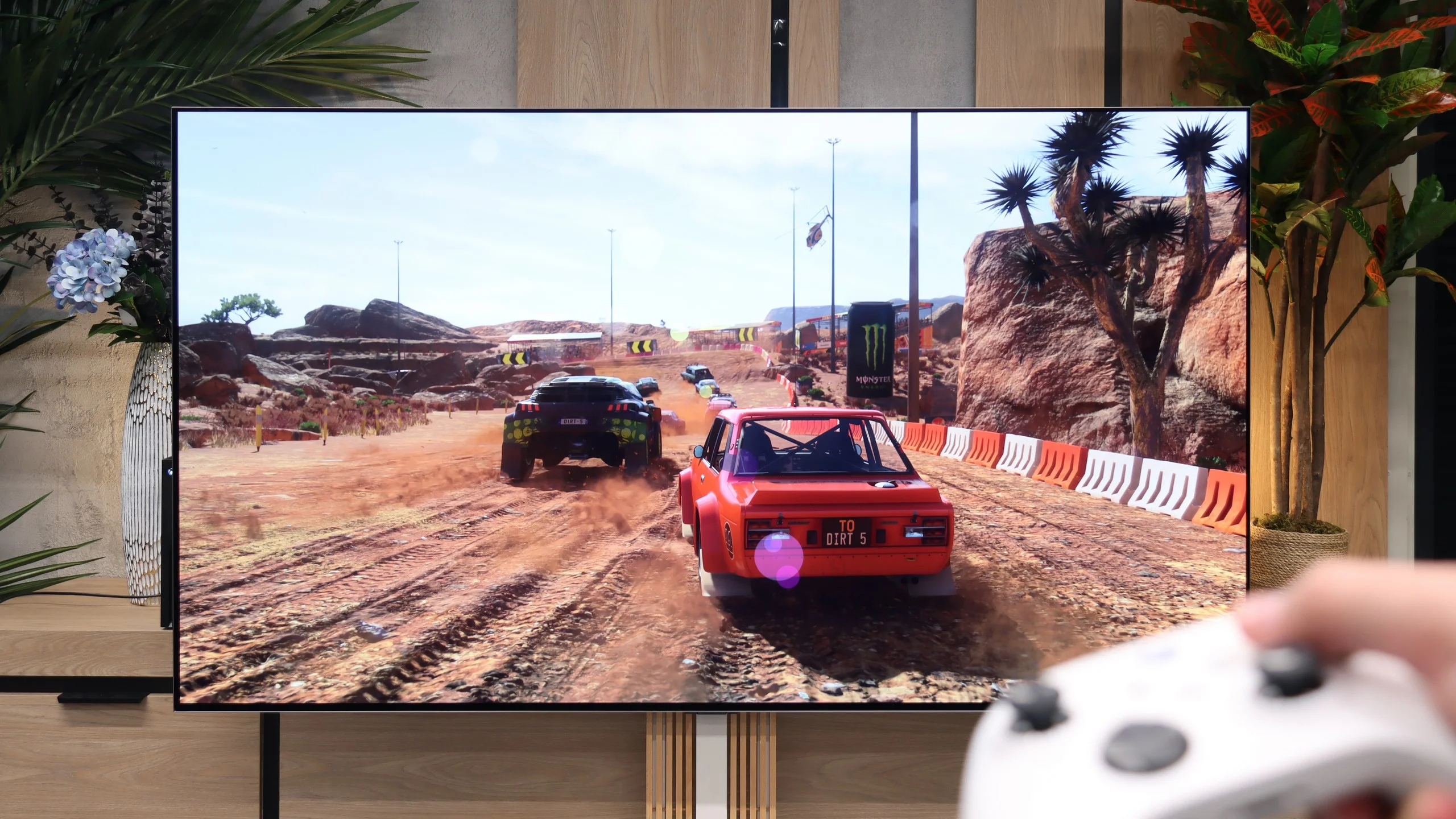
The 98-inch TCL C655 / C69B is excellently equipped for gamers. Full-featured HDMI 2.1 ports and a 144 Hz panel allow for gaming in 4K at 120 Hz, providing the smoothness and responsiveness that will impress even the most demanding.
The TV supports variable refresh rate (VRR), eliminating screen tearing, while the automatic low latency mode (ALLM) ensures that gaming starts instantly, without the need for manual adjustment of settings. There is also support for Dolby Vision and HGiG, ensuring that the image quality in games is even better – details are sharp, colours are natural, and contrast is perfectly balanced.
Additionally, the TV offers a dedicated gaming panel that allows for quick adjustment of picture settings without the need to exit the game. It’s a device that meets practically all the requirements of the modern gamer.
The LG G6 is a true beast for gamers and one of the best-equipped TVs on the market in this regard. The manufacturer didn't compromise and equipped this model with four full HDMI 2.1 ports with a maximum bandwidth of 48 Gbps. This means that no matter which port you plug in your PlayStation 5, Xbox Series X, or powerful PC, you'll get the absolute maximum performance out of them.
The TV supports a full suite of gaming technologies: from VRR (Variable Refresh Rate), to AMD FreeSync Premium Pro, and Nvidia G-Sync Compatible. Let's add to that a remarkably low, almost imperceptible input lag and an excellently functioning game panel (Game Optimizer), which allows you to constantly monitor signal parameters. Gaming on this screen, with the perfect black of OLED and powerful refresh rates, is pure pleasure.
Input lag
10/10
9.9/10
SDR
HDR
Dolby Vision
Input lag of below 15 ms is truly an impressive result. Regardless of the mode selected – even in Dolby Vision – the delay is practically unnoticeable. This means every response is instantaneous, providing an excellent experience both in gaming and when watching dynamic content.
When it comes to signal delay, the results are remarkably low. With a standard 120 Hz signal, the Input Lag is just 5 ms. At 60 Hz, this value increases to 13 ms, which is still excellent and completely imperceptible latency. The only thing we need to criticise is the TV’s behaviour when providing the Dolby Vision Gaming signal. In this format, the Input Lag nearly doubles, reaching 13 ms for 120 Hz and 22 ms for 60 Hz. Despite this jump, we believe these values in gaming are so low that absolutely no one will feel any discomfort during gameplay.
Compatibility with PC
7.6/10
8.7/10
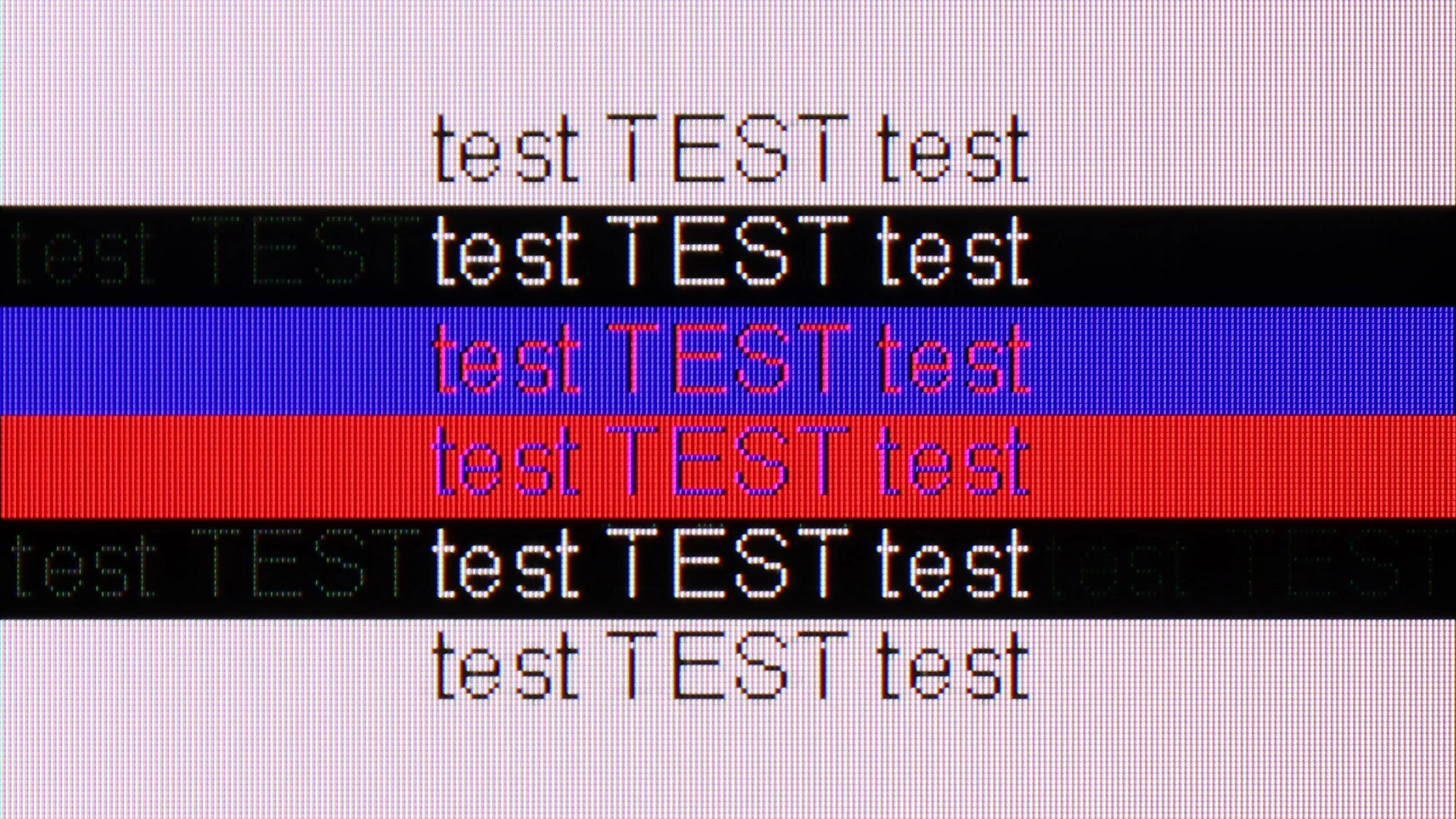
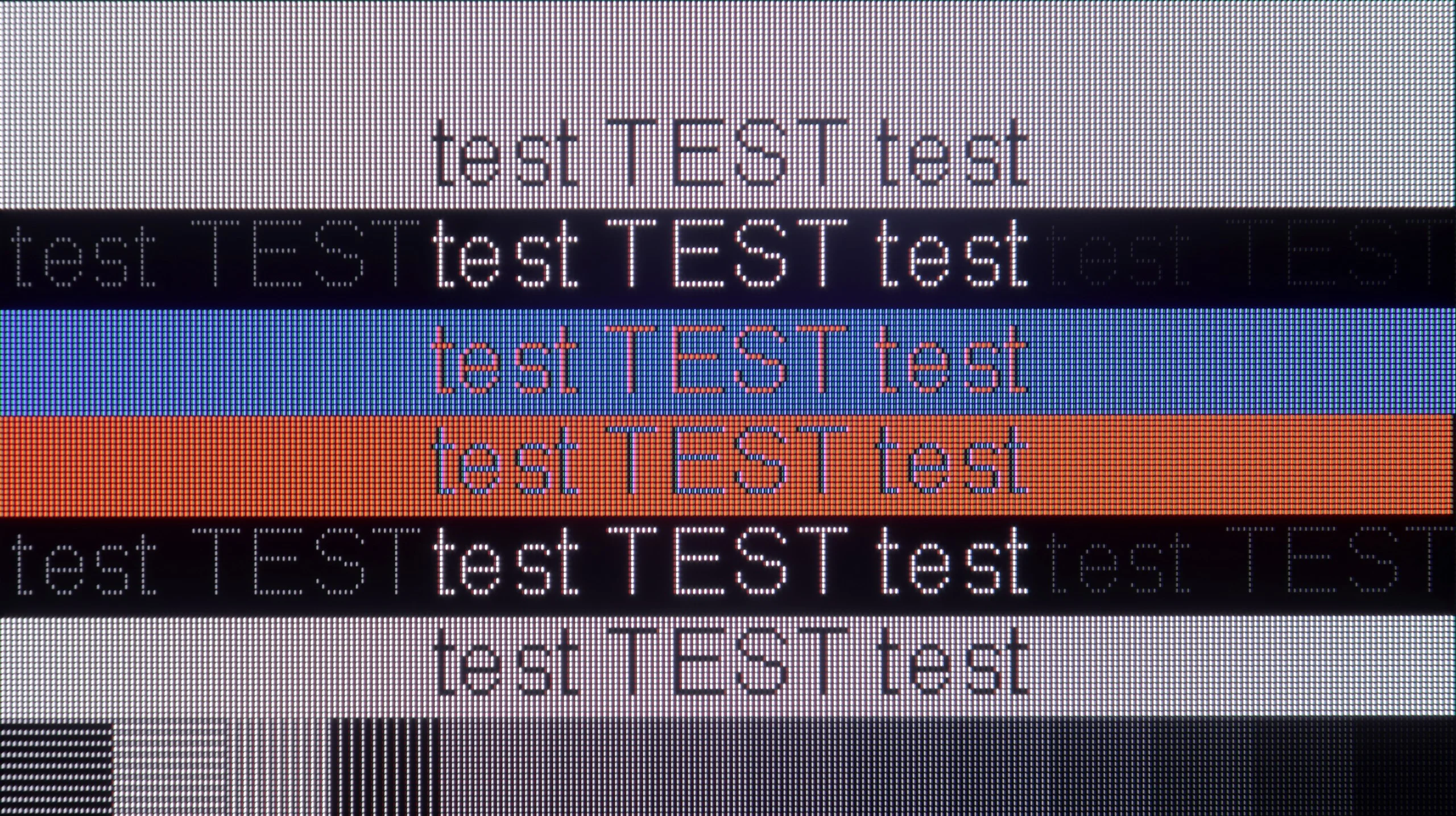
The photo shows the legibility of small fonts. Ideally, lines should be the same thickness on both light and dark text, with minimal pixel gaps.
The TV will easily handle being a monitor (though it's hard to imagine a desk that can fit a 100-inch screen). You can easily connect a PC to it, and with a 144 Hz panel and support for G-Sync and FreeSync technologies, it will be a great choice for gamers. As for text readability, the TV also performs well, although very small font sizes can have some drawbacks – sometimes the lines of pixels are slightly broken. Of course, with such a screen and a distance of several metres, these minor flaws are practically unnoticeable, but it's worth being aware that they exist.
As we mentioned earlier, the LG G6 offers an outstanding display for gamers as well as for casual computer users. With full support for Nvidia G-Sync and AMD FreeSync technology, as well as a high refresh rate of up to 165 Hz, this television performs brilliantly as a massive gaming monitor. However, daily office work with text looks a bit worse (though in our opinion still very good), which is a typical characteristic of every WOLED-type screen. Due to the specific arrangement of four subpixels (with an additional white subpixel), rather than three like in classic computer monitors, system fonts can have an additional, in this case red glow around black or white letters. This is directly due to the new structure of the second-generation Tandem OLED matrix, which now operates in an RGWB arrangement (last year's first generation Tandem OLED used a BWRG arrangement). In our opinion, the sharpness of font edges has slightly worsened because of this, but it is definitely not something that will immediately catch your eye during occasional document work or web browsing.
Viewing angles
2.5/10
7.2/10
The viewing angles in this model are typical for VA panels, which unfortunately means they're poor. TCL plans to improve this aspect from 2025, but at the moment, it doesn't look great. Considering the enormous screen size that will often be viewed at different angles, the effect is simply disappointing. Even IPS panels, although they offer weaker contrast, perform better in this regard.
As befits an OLED panel, the viewing angles on the LG G6 are really good. A TV viewed from the side does not lose drastically in brightness or colour saturation. In this regard, the image quality is miles better than any LCD TV – and this applies to both IPS panels and especially to VA panels that lack special wide-angle coatings. In this area, the only better screens on the market remain QD-OLED panels from Samsung Display, where the angles are simply perfect, as well as older WOLED panels with MLA (microlens) technology, which LG abandoned in this series two years ago. Unfortunately, we assess the viewing angles in this year's model to be slightly worse than last year. We noticed that the 2nd generation Tandem OLED panel tends to take on a greener hue at a steep angle, while last year's model maintained greater neutrality in this regard.
Daytime performance
5.6/10
8.2/10
Panel brightness
LG OLED G6 (G64LW, G66LS): 857 cd/m2
TCL C655 / C69B 98': 484 cd/m2
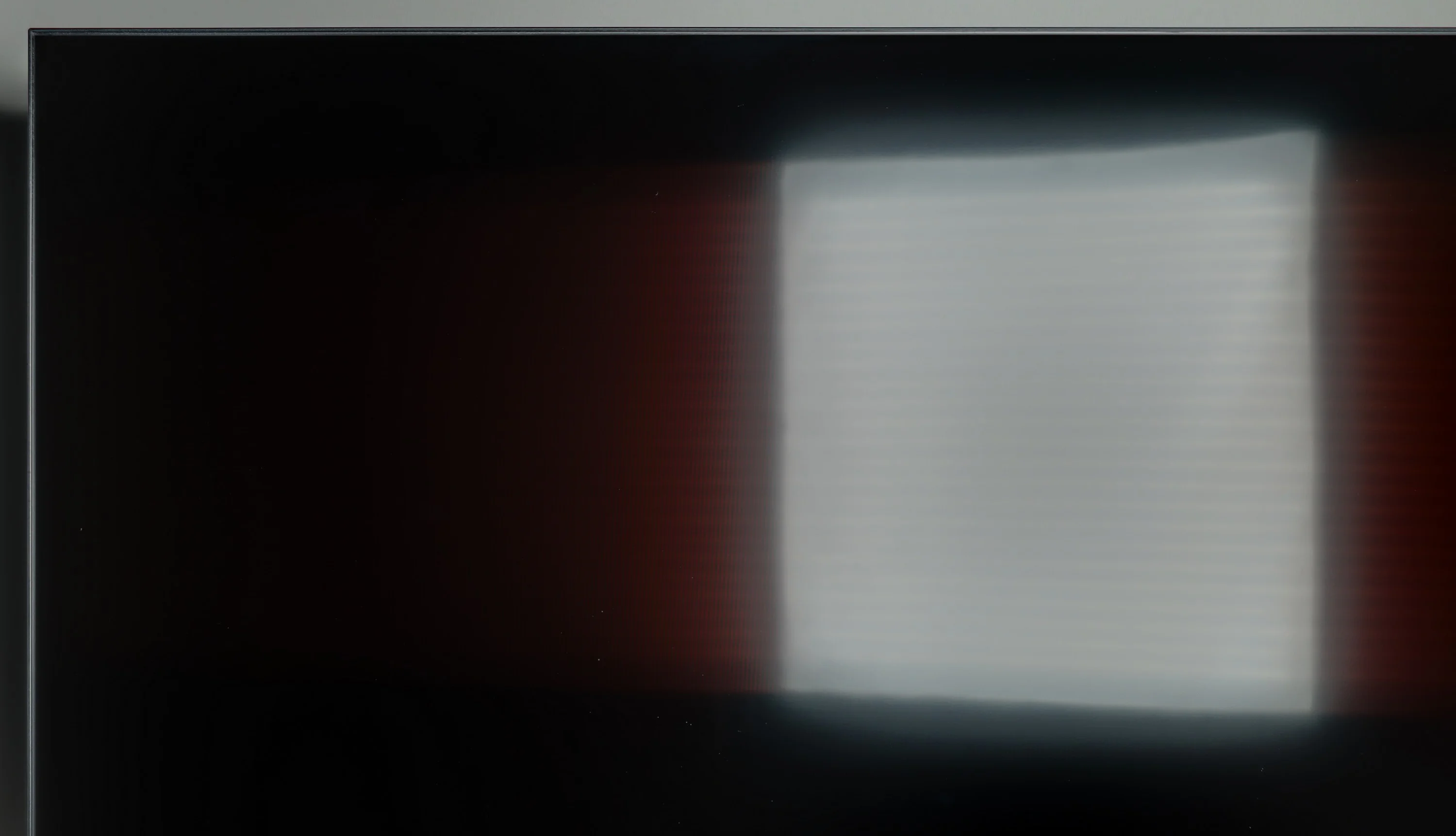
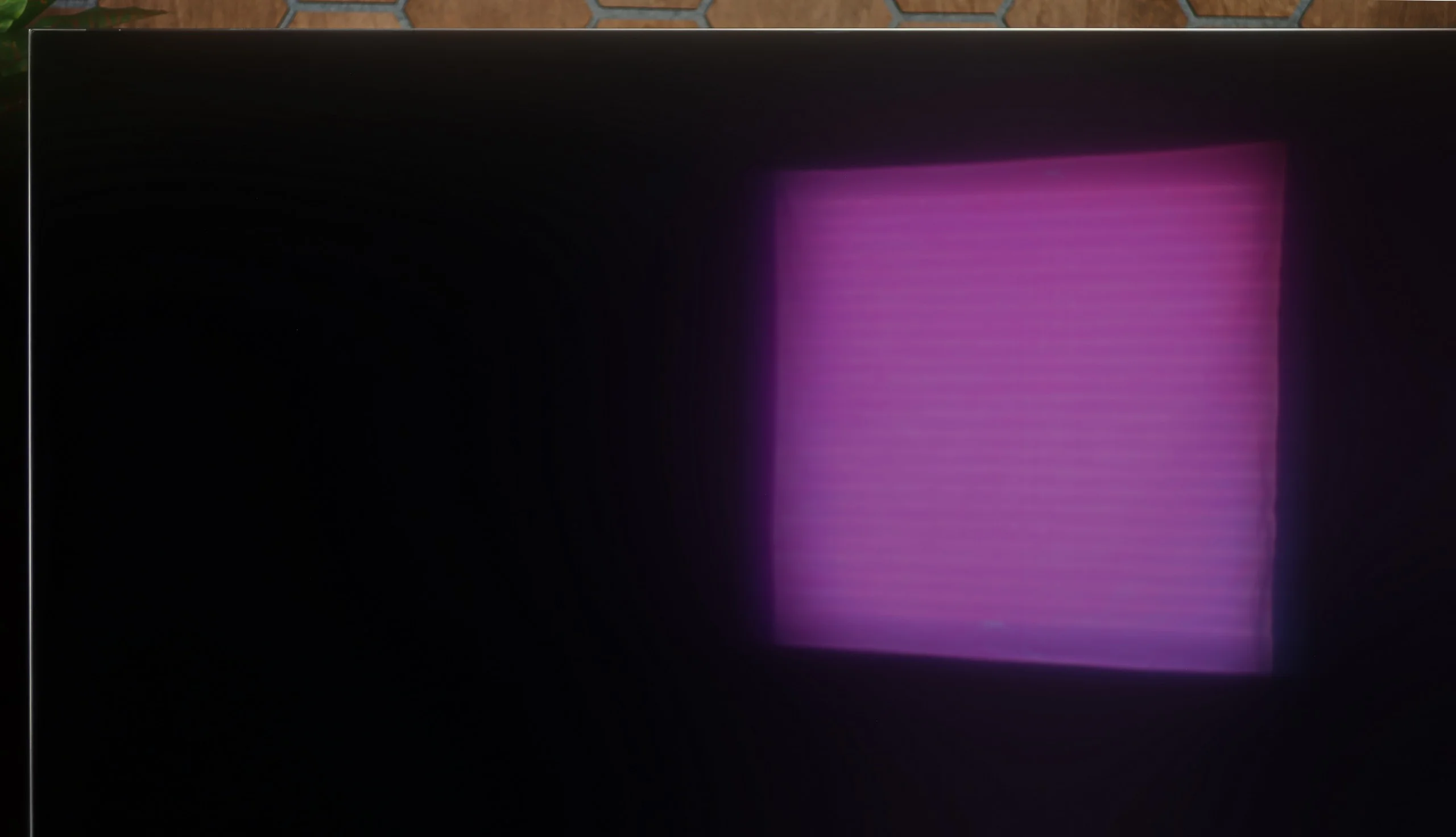
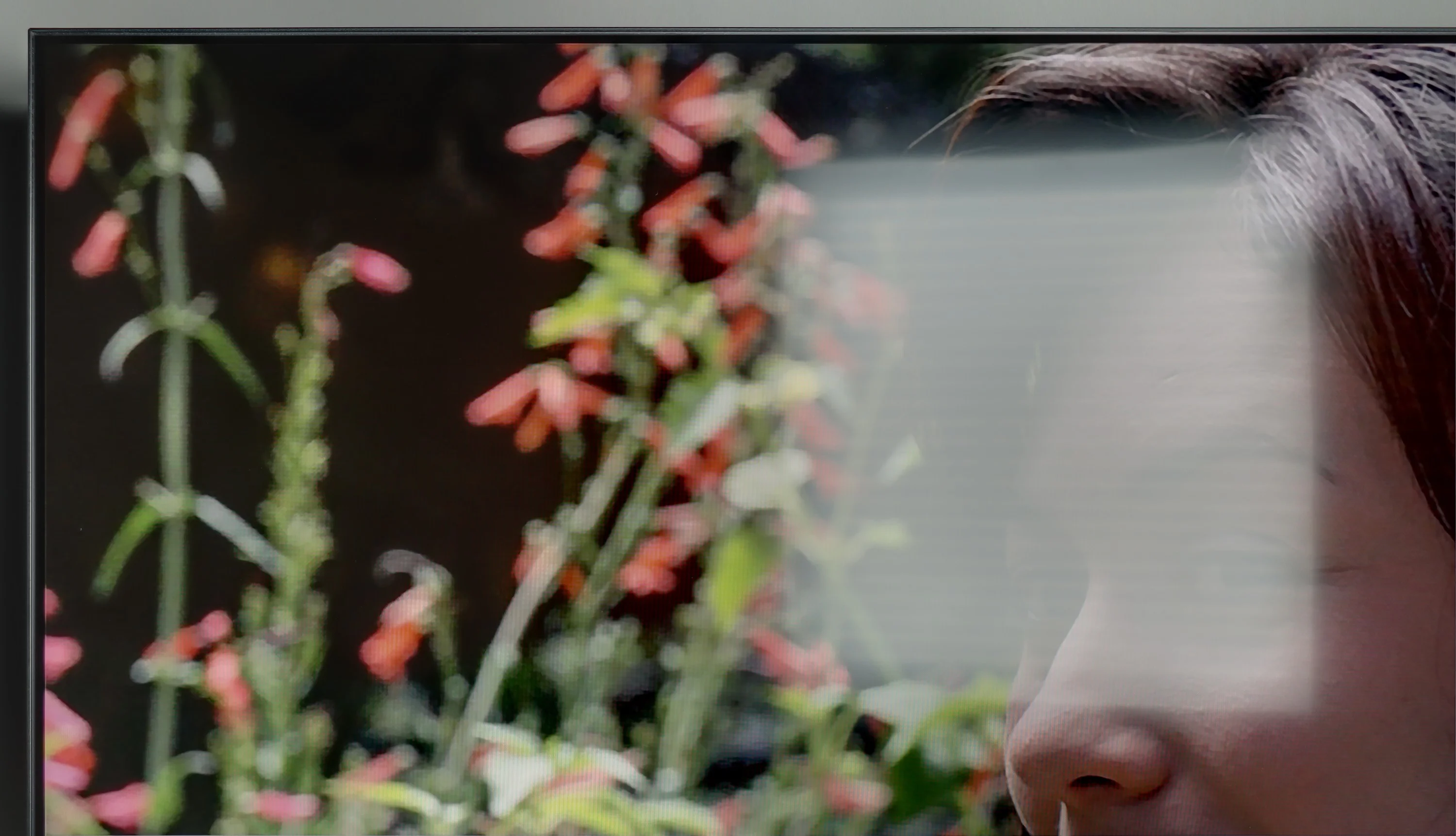
Generally, the TCL C655 / C69B offers decent brightness, reaching around 480 nits. This makes the TV suitable for bright rooms and allows for comfortable viewing of content even during the day. Unfortunately, the satin finish of the display moderately suppresses reflections, which in strong sunlight can worsen image visibility. Despite this, in most cases, the TV's brightness is sufficient to provide decent picture quality.
LG G6 will perform wonderfully as a television in a well-lit room. Thanks to its impressive peak brightness, the TV can easily cut through most external light sources. Best of all, the new generation of Tandem OLED panel has brought significant improvements in reducing reflections. Although the screen coating is still glossy (which helps maintain well-saturated colours even in challenging conditions), it effectively dampens glare. It does this far better than traditional OLED screens with a standard glossy coating. We could confidently compare this level to glossy QD-OLED panels, but with one key advantage for LG. Unlike the competition's technology, in this model, deep black in a bright lounge remains intact. There’s no grey or purple tint from ambient light – the black in the G6 during the day is just as perfect as it is at night.
Panel details
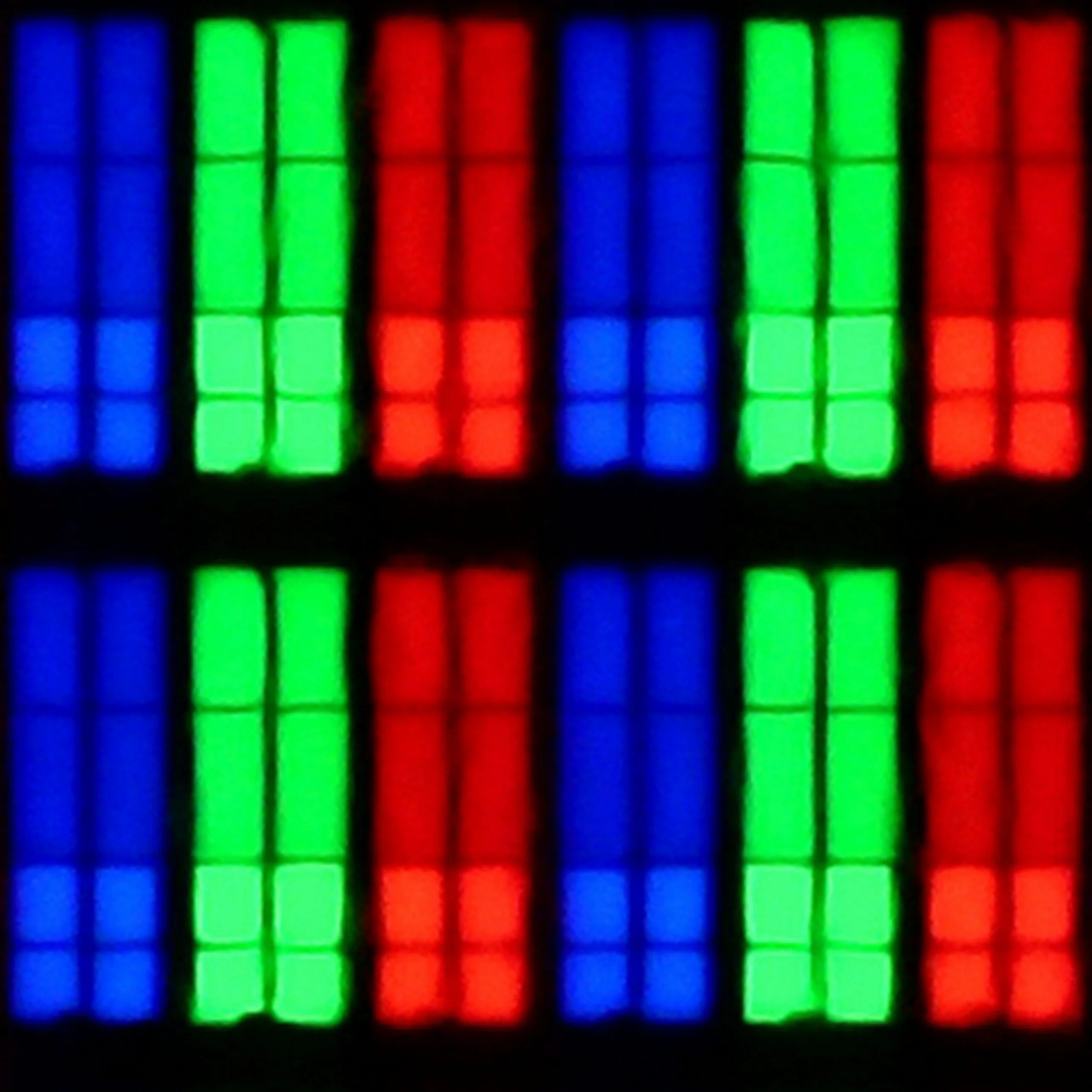
Subpixel Structure:
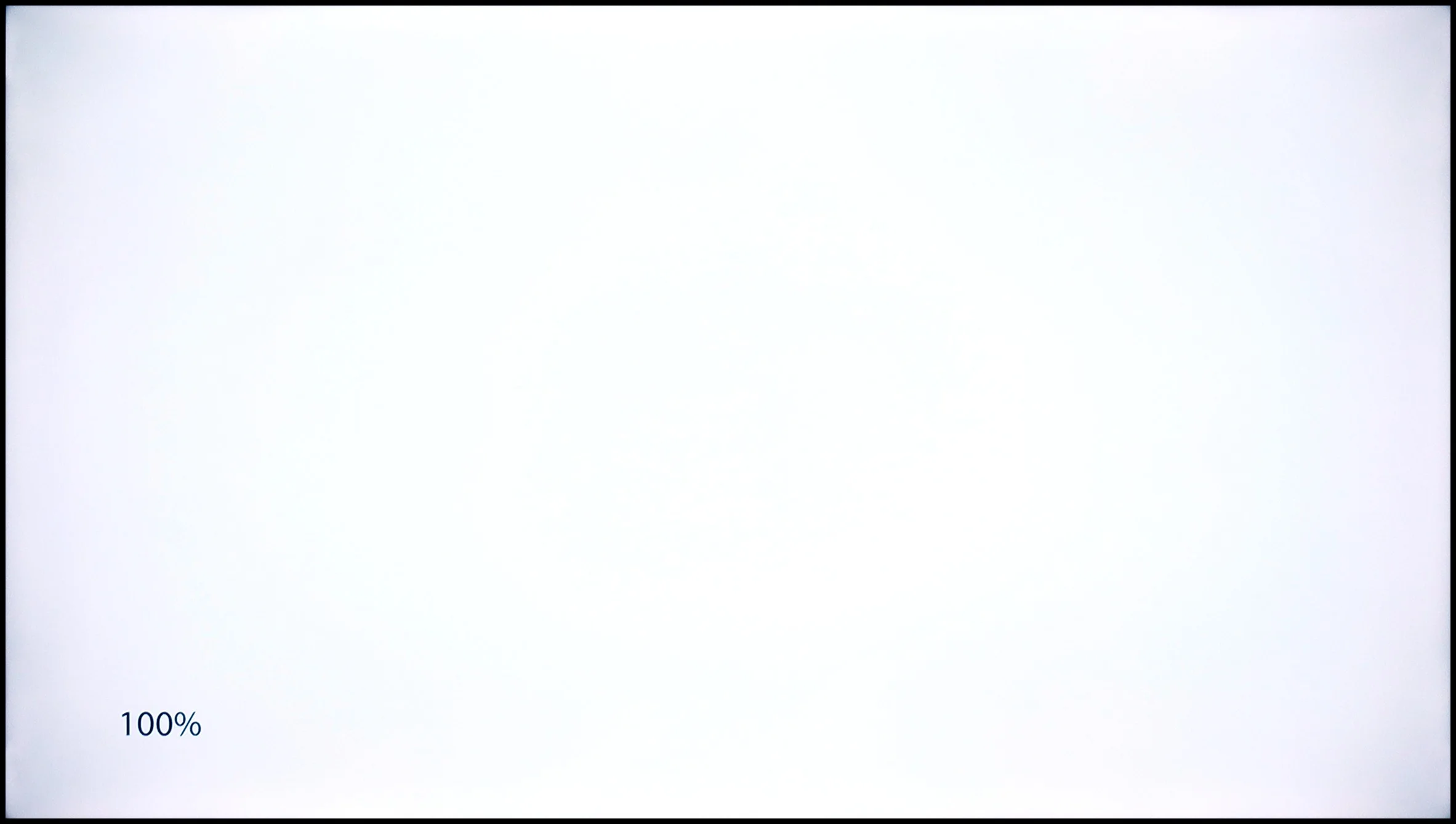
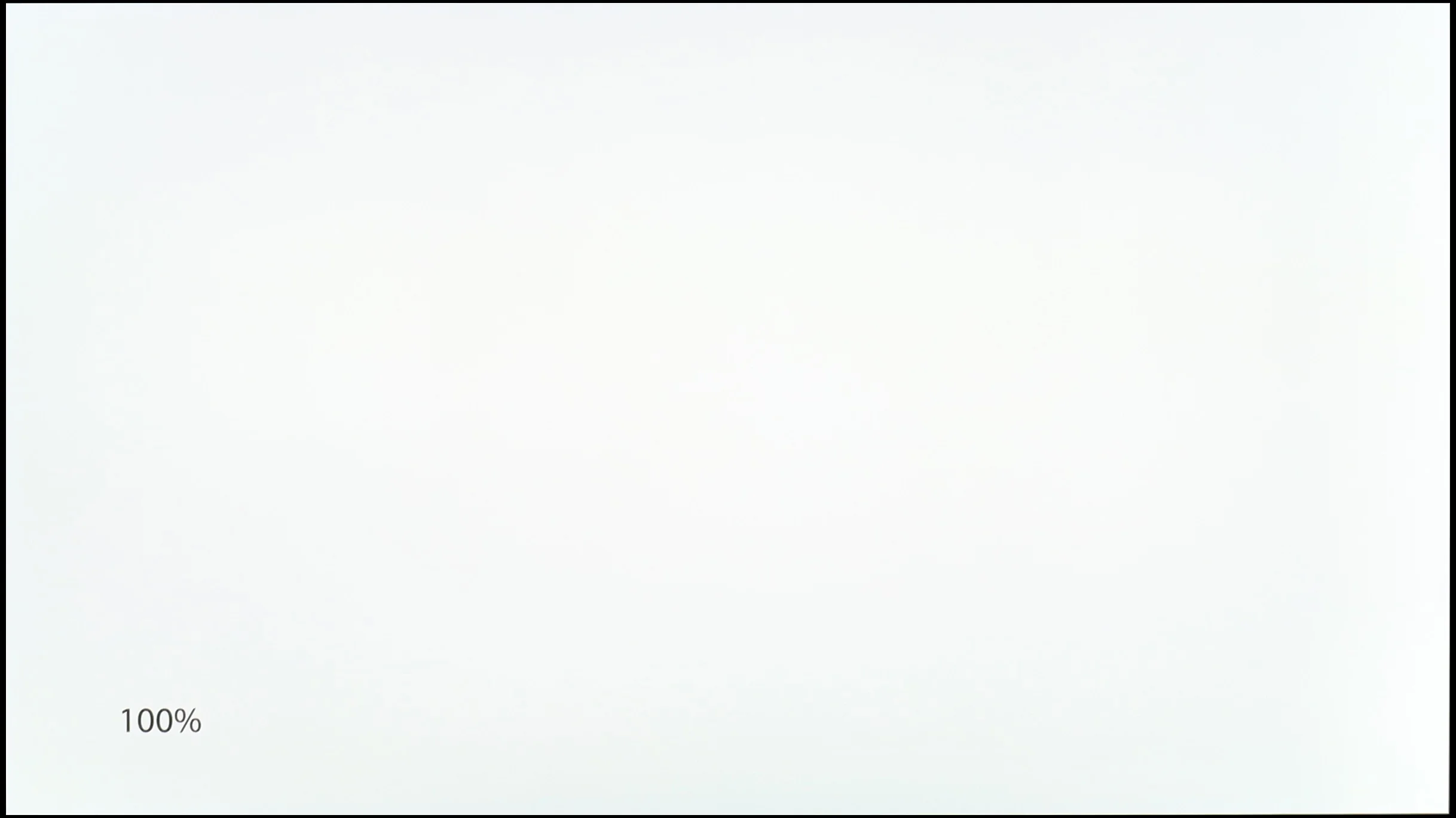
Panel uniformity and thermal imaging:
TCL C655 / C69B 98'
LG OLED G6 (G64LW, G66LS)
TV features
6/10
8.5/10
- SystemGoogle TVWebOS
- System performanceSystemResponsiveness-Very good
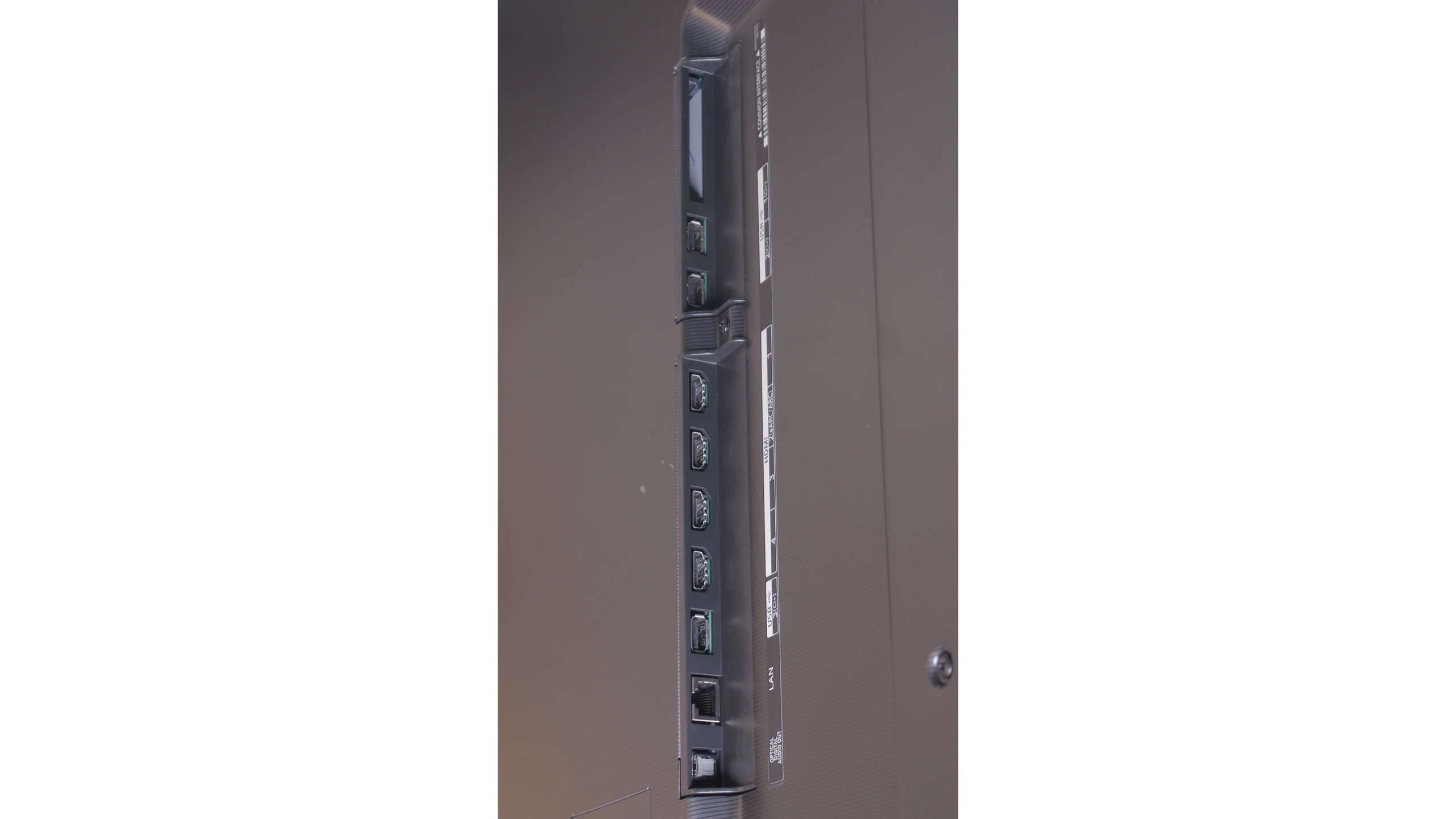
- HDMI inputs2 x HDMI 2.0, 2 x HDMI 2.1 48Gbps0 x HDMI 2.0, 4 x HDMI 2.1 48Gbps
- Other inputsToslink (Optical audio)IR (remote)
- OutputsToslink (Optical audio), eARC (HDMI), ARC (HDMI)Toslink (Optical audio), eARC (HDMI), ARC (HDMI)
- Network InterfacesWi-Fi 2.4GHz, Wi-Fi 5GHz, Ethernet (LAN) 100MbpsWi-Fi 2.4GHz, Wi-Fi 5GHz, Ethernet (LAN) 100Mbps
- TV receptionDVB-T, DVB-T2, DVB-S, DVB-S2, DVB-CDVB-T, DVB-T2, DVB-S, DVB-S2, DVB-C
Classic features:
- Recording to USB (terrestrial TV)
- Recording programming
- Picture in Picture (PiP)
- RF remote control (no need to aim)
- Backlit remote control
- Teletext
- Audio only mode
- Bluetooth headphones support
- Simultaneous Bluetooth headphones & TV audio
Smart features:
- AirPlay
- Screen mirroring (Windows Miracast)
- Voice search
- Voice search in native language
- Ability to connect a keyboard and mouse
Sound connection options
- HDMI audioeARC (HDMI), ARC (HDMI)eARC (HDMI), ARC (HDMI)
- Other audio outputsToslink (Optical audio)Toslink (Optical audio)
- Wireless audioBluetoothBluetooth
Supported audio formats (external HDMI eARC audio):
- Dolby Digital Plus 7.1
- Dolby True HD 7.1
- Dolby Atmos in Dolby Digital Plus (JOC)
- Dolby Atmos in Dolby True HD
- DTS:X in DTS-HD MA
- DTS-HD Master Audio
Senior accessibility
- Numeric keyboard on TV
- Font size adjustment
- Audio description
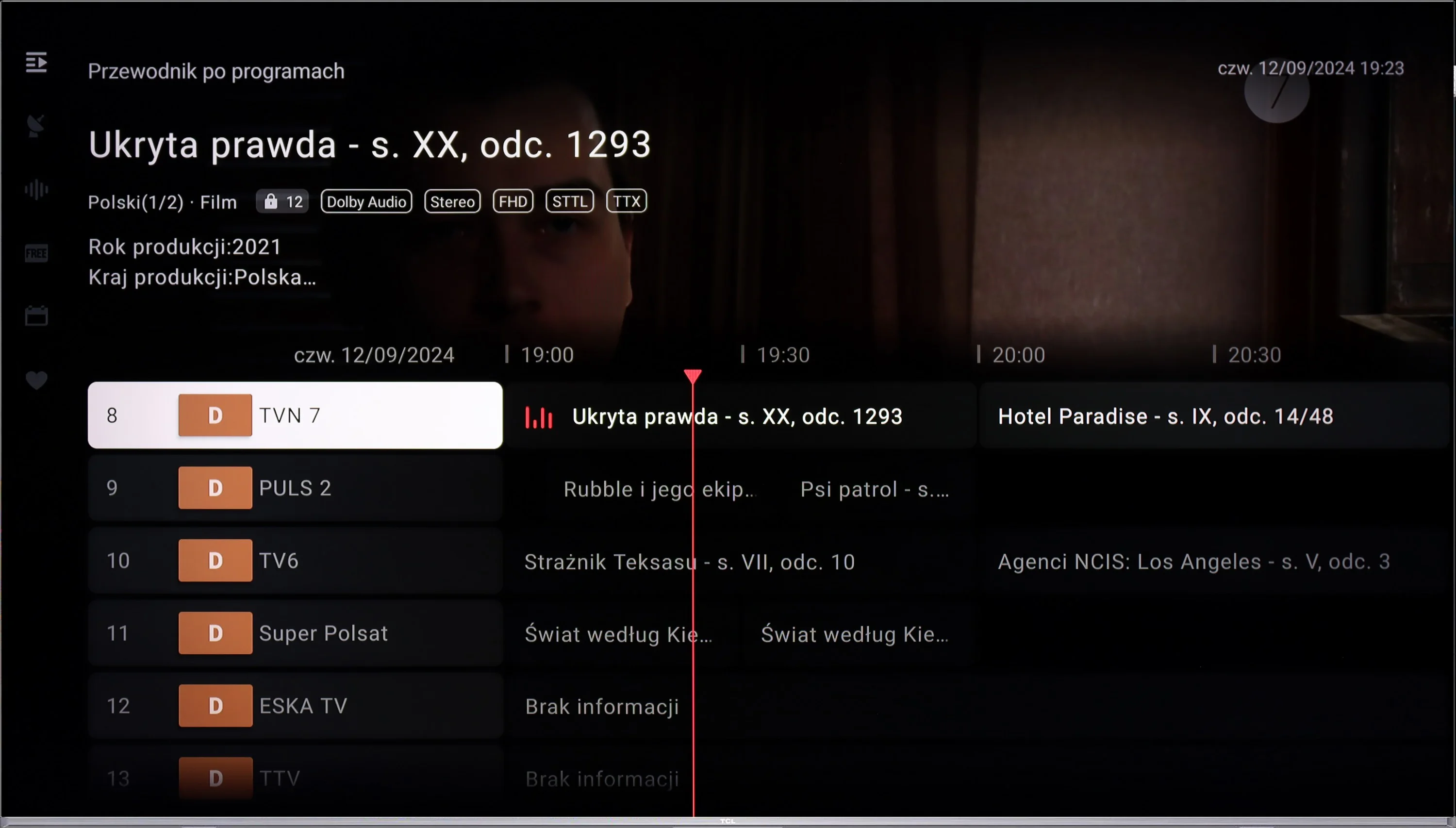
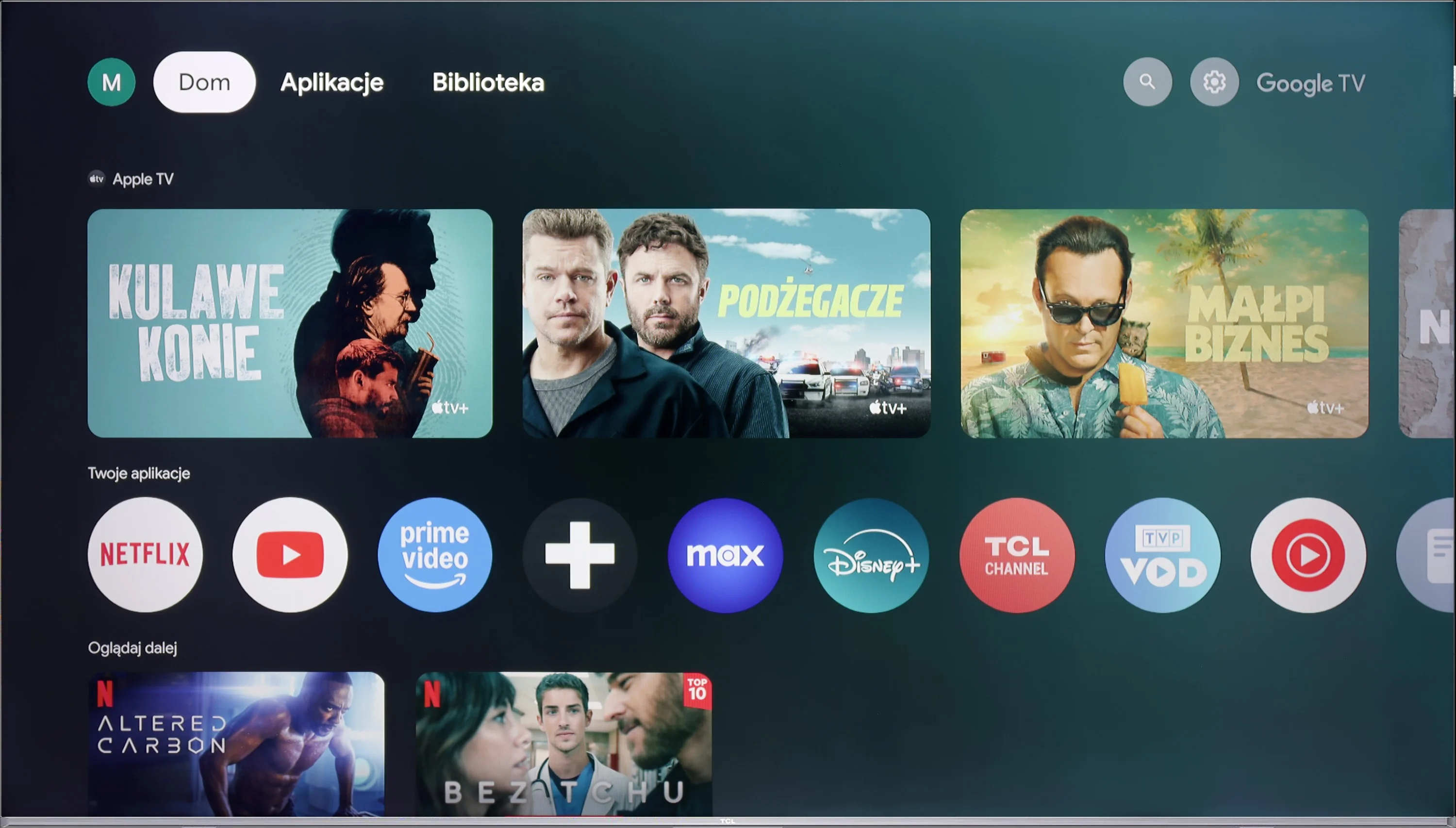
The TCL C655 / C69B TV runs on Google TV, an upgraded system based on Android TV. This solution provides users with personalised recommendations based on their preferences and previous choices. The interface is clear and intuitive, making it easy to browse apps, series, or movies. The platform supports the most popular streaming services – from Netflix to Disney+ – giving access to a wide library of content. With Google Assistant, it is possible to control the TV by voice and integrate it with a smart home ecosystem.
In terms of connectivity, the TCL C655 / C69B offers AirPlay, which allows for media streaming from Apple devices in no time. Bluetooth ensures seamless connection of peripherals like headphones or keyboards, enhancing comfort while using the TV. Unfortunately, this model does not offer content recording features or Picture-in-Picture (PiP) mode, which may be a disappointment for users accustomed to more versatile solutions.
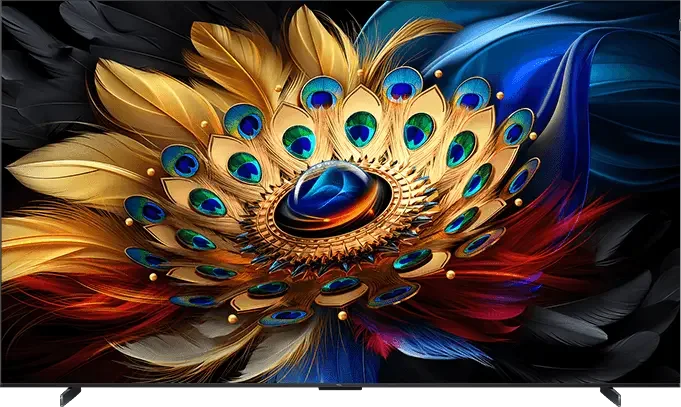
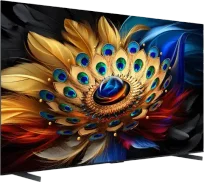
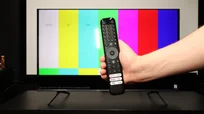
As for appearance, the TCL C655 / C69B is sturdy and modern. Although it may not be the thinnest, and its bezels are not the narrowest, the overall design is neat and elegant. Particular attention should be given to the adjustable metal legs, which can be set in a narrow stance. This practical solution makes it easier to place the TV on different types of tables, making it more versatile for various home spaces.
webOS System and Smart Features
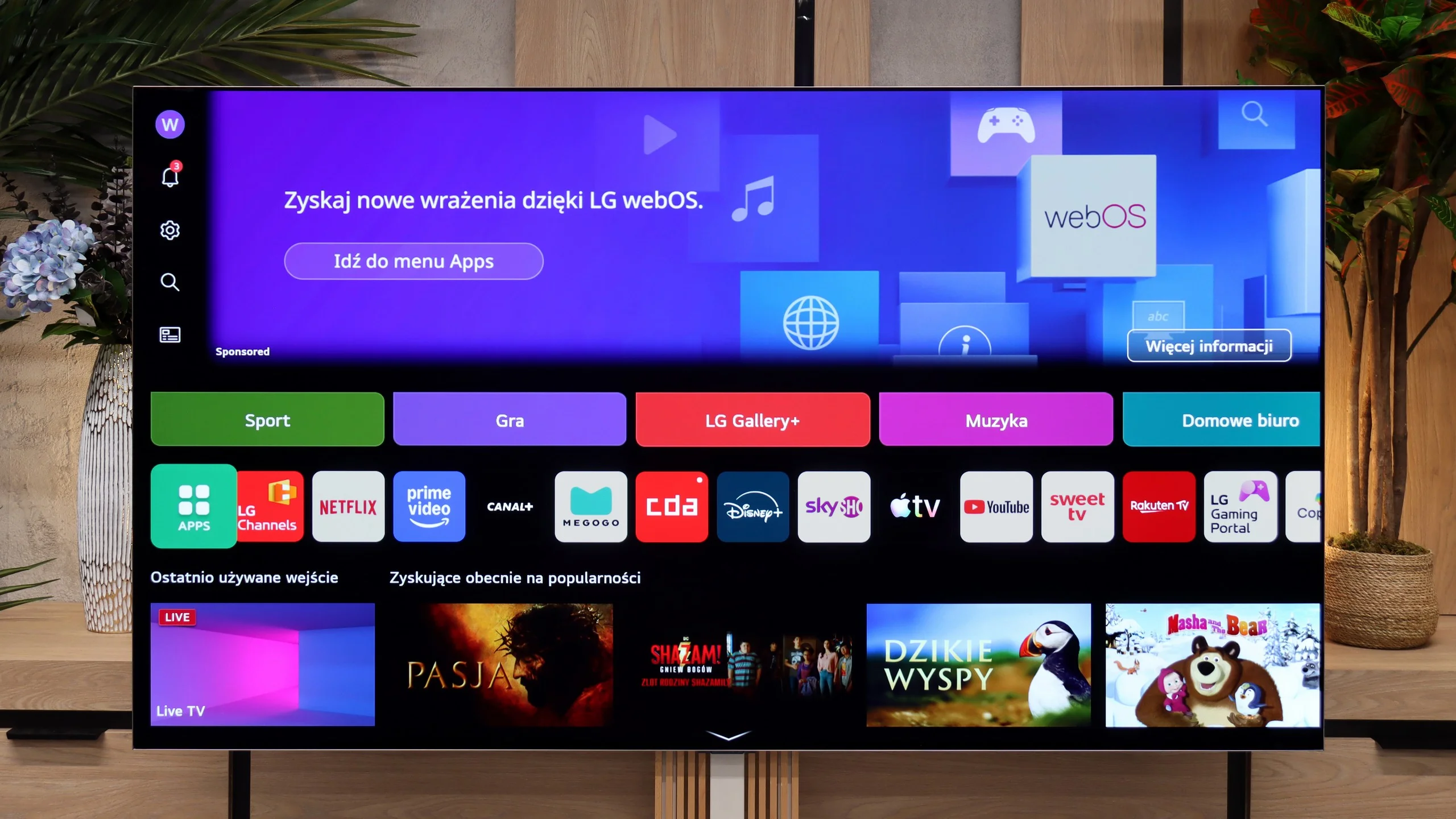
The television runs on the latest version of the webOS system. Although it is a closed platform, it supports absolutely all the key streaming apps on the market. You can also easily access useful wireless connectivity features like built-in Chromecast, AirPlay, and classic screen mirroring. However, the biggest standout feature of the LG platform is the brilliant Magic remote. While it is quite compact and lacks a physical numeric keypad, it does something that competitors still can't replicate – it functions like a wireless mouse. It is equipped with a gyroscope, allowing you to move an intuitive cursor across the screen, which dramatically speeds up entering passwords or navigating menus. Additionally, LG has one of the best voice assistants for controlling the device, and this combination with the Magic remote provides excellent capabilities for navigating the system. The only thing that can be quite irritating here is the intrusive ads and sponsored tiles, as LG increasingly clutters the main screen of the system. Despite this, the lack of Google TV is not a detriment to the G6 – considering the smooth operation of webOS, one can confidently say it is even an advantage.
Features for Traditionalists
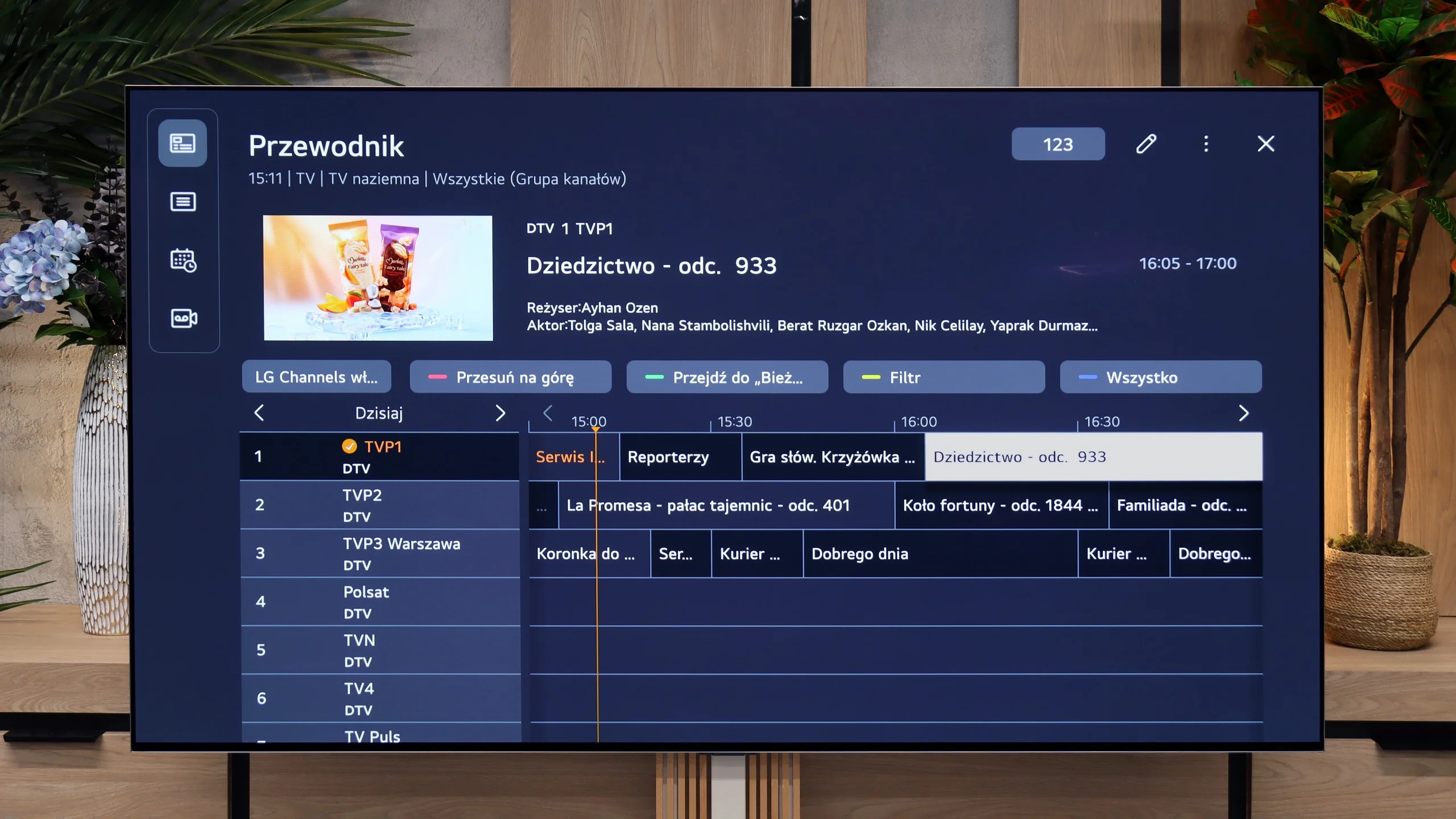
In terms of traditional television, the LG G6 also performs excellently and does not forget about traditional users. Despite the minimalist remote, it includes a plethora of useful features. The manufacturer did not skip on the PVR function, which allows recording programs from the built-in tuners directly to external USB storage or a hard drive. We also have a smoothly functioning TimeShift for pausing live TV and a recording scheduling option. These features can prove to be a great advantage during the upcoming FIFA World Cup, when matches will be played late in the evening and we may not be able to watch them live. Of course, standard features are also included, such as the ability to connect wireless headphones via Bluetooth.
Apps
9.6/10
9.1/10






















Playing files from USB
8.3/10
9.2/10
Supported photo formats:
Maximum photo resolution:
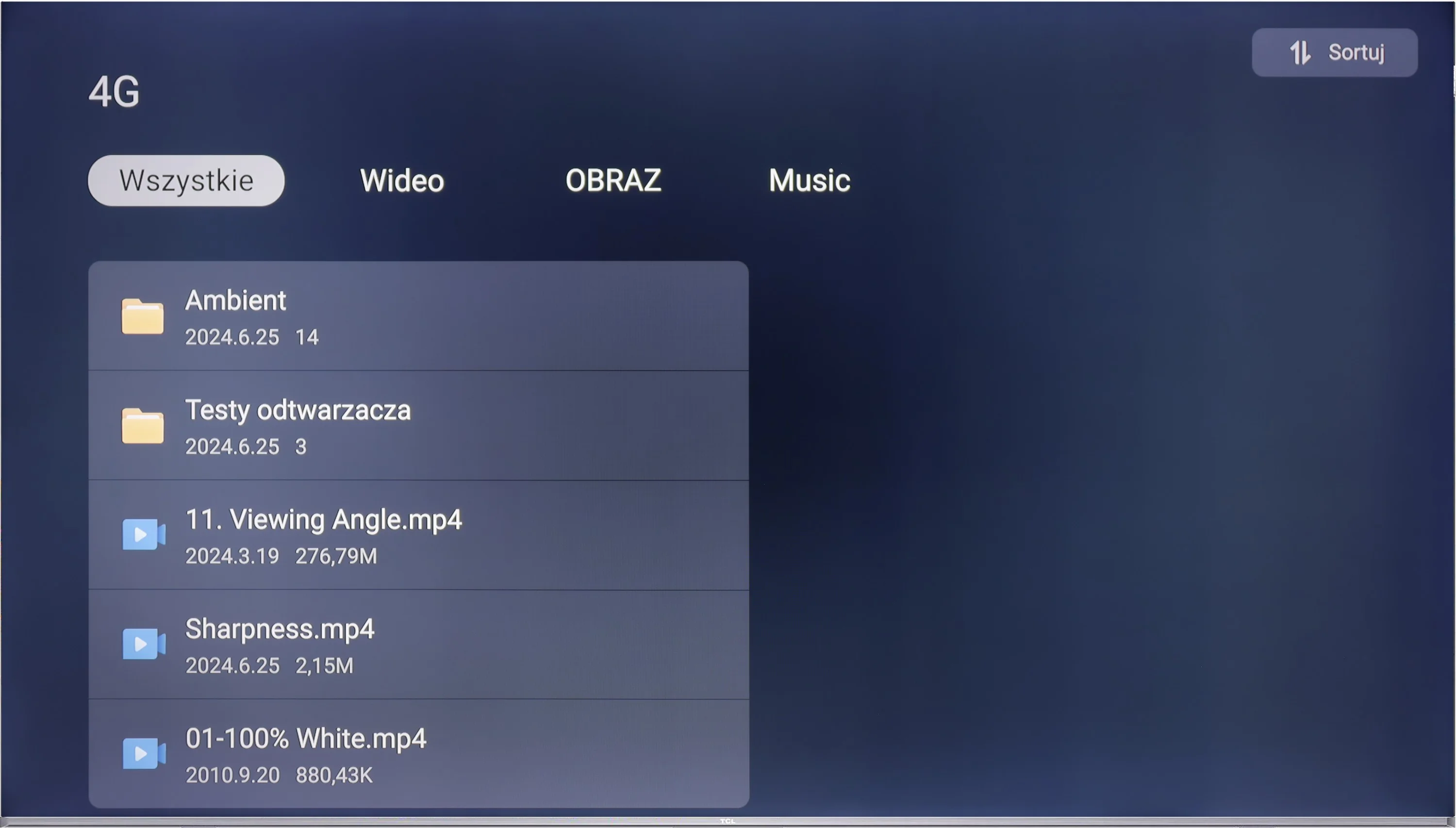
Thanks to the built-in media player, the TCL C655 / C69B can play most popular formats from connected devices. This is a convenient solution that makes it easier to access your favourite content saved on external drives or USB sticks. However, there are situations where less common formats may not be supported correctly. Fortunately, the television uses the Google TV system, which allows for downloading alternative apps from Google Play. This enables the installation of media players tailored to individual needs, significantly expanding the device's capabilities and eliminating potential file compatibility issues.
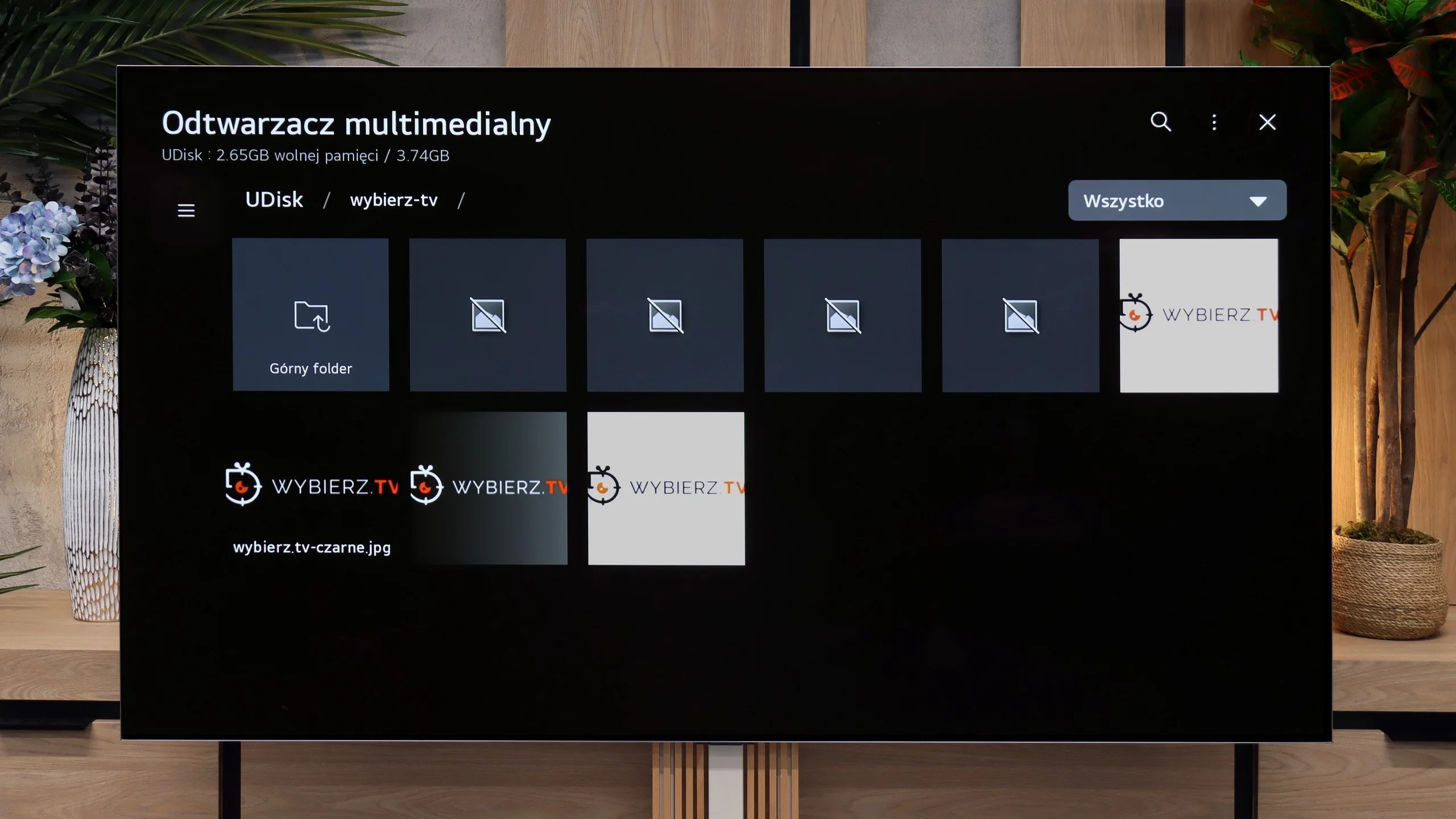
The inability to install an external file player (as is the case with systems based on Android) is actually not a problem for the LG G6. The built-in factory player works great and seamlessly supports most audio, video, or photo formats that we provided from our USB drive. However, during testing, we encountered some shortcomings – namely, a rather strange lack of support for subtitles in the popular .txt format. We do believe that this option will soon be available on the G6 with the next software update.
Sound
6.7/10
8.4/10
- Maximum volume-88dB
- Dolby Digital Plus 7.1
- Dolby True HD 7.1
- Dolby Atmos in Dolby Digital Plus (JOC)
- Dolby Atmos in Dolby True HD
- DTS:X in DTS-HD MA
- DTS-HD Master Audio
The 98” variant features a better audio system compared to the smaller models, providing a more dynamic and spatial sound. Combined with a subwoofer branded by Onkyo, the audio acquires depth and clarity. This device is suitable not only for watching movies but also for listening to music or watching concerts.
Despite its very flat body, the LG G6 sounds surprisingly good. The manufacturer has managed to pack quite decent speakers under the display that can produce a sound that is fairly “spatial” – if you can even call the limited physical capabilities of the TV that 😉. The sound is clear, has good dynamics, and is flawless for everyday viewing of news programmes or series. The TV also supports the very popular Dolby Atmos spatial audio codec without any issues.
Unfortunately, for the second year in a row, there is no support for the DTS:X format. Be that as it may, it has recently been quite unpopular in streaming services, but a premium TV in terms of price and quality, in our opinion, simply should not limit users regarding audio format support. Additionally, we have to criticise LG for somewhat downgrading the audio menu itself. We missed more advanced settings and predefined sound profiles, which were definitely more abundant in last year's model.
Sound Quality Test
No sound test video
Acoustic Measurements
No acoustic data
88dBC (Max)
75dBC
Reader comments
Comments are provided by the external service Disqus (Zeta Global). Once loaded, Disqus may set cookies and process data about your activity.
We will remember your choice on this device. Provider's privacy policy