At first glance, it’s clear that the TCL A300 NXTVision aims to be more than just an ordinary television. It offers a picture display mode that – unlike competitors from Korea, Samsung The Frame – is completely free. Additionally, just like its rivals, extras are included at no charge. In the packaging, alongside the television, we find extra frames that mimic light wood and a flat wall mount, allowing the television to truly resemble a gallery piece. When it comes to everyday use, the standout feature is the Google TV system – comprehensive, fast and offering access to a massive number of apps. And if we feel like stepping out of the digital museum and jumping straight into the gaming world, the A300 can surprise us. With two HDMI 2.1 ports, 144 Hz, VRR, ALLM, and a very low input lag, even demanding gamers can feel at home here. Well... perhaps except for those sensitive to motion blur – as this remains one of the bigger issues with this model. There are also downsides. While the picture mode is free – which is commendable – the actual quality of the available graphics falls noticeably short compared to what Samsung offers in its paid ART Store. The displayed images resemble photos rather than realistic reproductions of artworks. Unfortunately, the A300 – much like the competing Hisense S7NQ – performs poorly here and additionally has some software issues. The brightness of the television itself also leaves much to be desired – it’s the dimmest of the “framed trio,” which translates to average daytime viewing and limited HDR effect. Nevertheless, the TCL A300 NXTVision is a reasonably sensible alternative to Samsung The Frame or S7NQ – especially if we are looking for a cheaper solution without additional charges for access to the “gallery” mode and with an operating system that doesn’t limit us in any way regarding the number of apps. However, it’s important to remember that this is a proposal with a lot of compromises. If we want to save a bit and don’t expect top-notch picture quality, the A300 can hit the visual bullseye. Otherwise, it’s worth looking at its competition.
- Matching (Score) |
- Our verdict |
- TV appearance |
- Where to buy |
- Contrast and black detail |
- HDR effect quality |
- Factory color reproduction |
- Color reproduction after calibration |
- Smoothness of tonal transitions |
- Image scaling and smoothness of tonal transitions |
- Blur and motion smoothness |
- Console compatibility and gaming features |
- Input lag |
- Compatibility with PC |
- Viewing angles |
- Daytime performance |
- Panel details |
- TV features |
- Apps |
- Playing files from USB |
- Sound
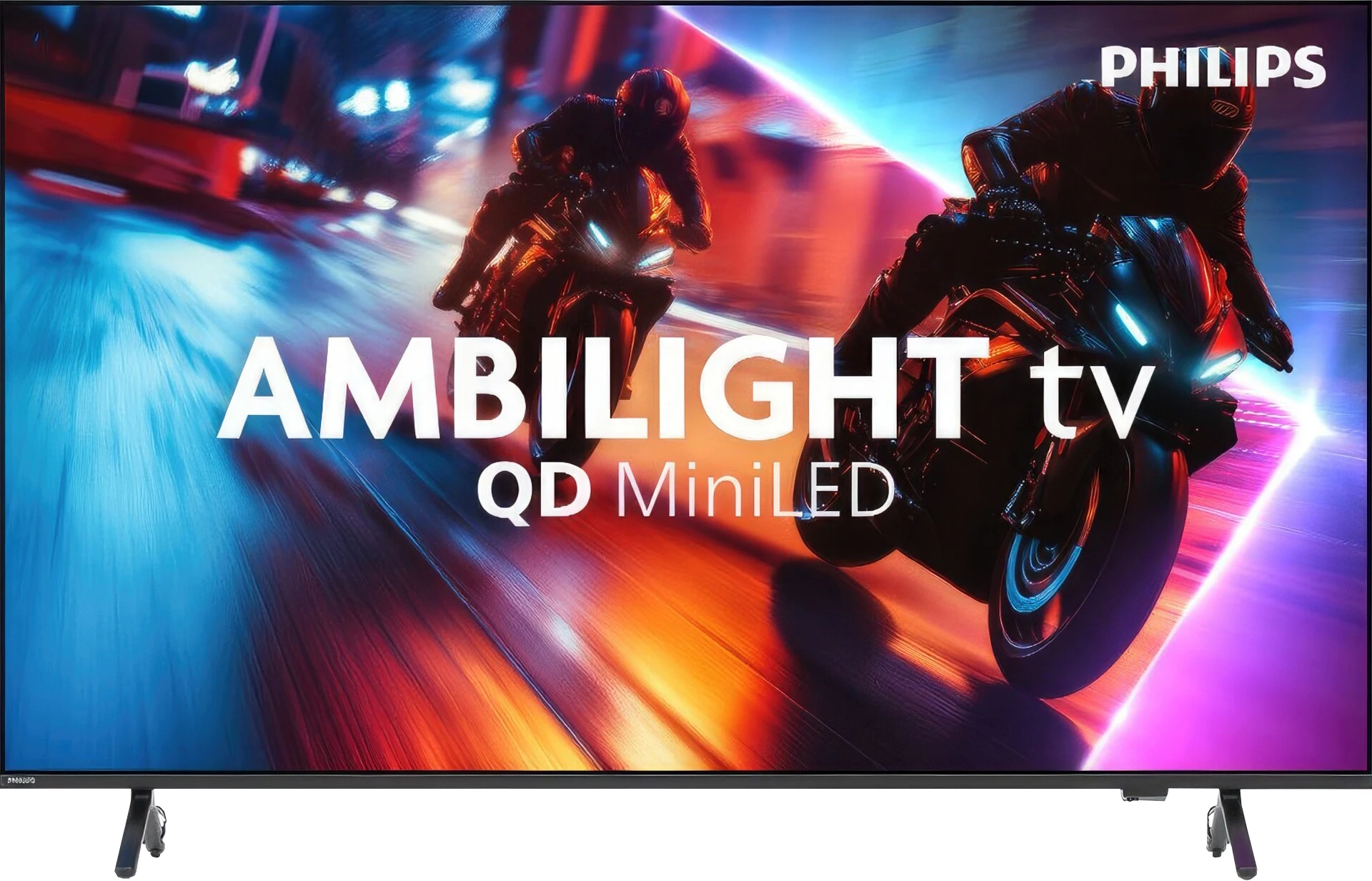
TCL A300W NXTVision vs Philips MLED920 / MLED910
 Direct comparison
A300W / A300W PRO / NXTVision

MLED920 / MLED910

Panel type: LCD VA
Resolution: 3840x2160
System: Google TV
Model year: 2024
Complete the survey to find out the result
Panel type: LCD VA
Resolution: 3840x2160
System: Titan OS
Model year: 2025
Complete the survey to find out the result
Overall rating
6.5
6.5
 Movies and series in UHD quality
 6.3
6.4
 Classic TV, YouTube
 6.0
6.8
 Sports broadcasts (TV and apps)
 5.9
6.8
 Gaming on console
 8.2
8.5
 TV as a computer monitor
 8.2
4.0
 Watching in bright light
 4.7
5.5
 Utility functions
 7.0
5.5
 Apps
Apps 9.6
6.7
 Sound quality
 6.0
6.2
Complete the survey to find out what fits your preferences
Advantages

Frames styled like a picture in the set
Bracket included
VA matrix with decent contrast
Supports all popular HDR formats, including Dolby Vision and HDR10+
Great for gamers: VRR, G-Sync, ALLM, low input lag
High refresh rate - 144Hz
Free "picture mode"
Supports DTS:X and Dolby Atmos
GoogleTV operating system with the largest app base
Solid black and high contrast thanks to mini-LED backlighting
HDR brightness reaching 700–800 nits in real movie scenes
Support for multiple HDR formats including Dolby Vision and HDR10+
Ambilight – an element that adds atmosphere, especially in the evening
A lot of supported audio formats: DTS:X, Dolby Atmos, Dolby True HD 7.1
144 Hz panel with support for VRR, ALLM, and Dolby Vision Gaming
Loud sound (up to 88 dB)
Illuminated remote
Disadvantages

Low brightness
Motion blur issues
No recording function on USB or PiP
Inferior image quality in "art mode" compared to Samsung The Frame
Colours and blacks fade significantly in sunlight
No VESA standard
Software bugs
Titan OS is quite underdeveloped – there are significant errors and missing features in the applications
Few user-friendly features
Hybrid infrared remote
Issues with the smoothness of tonal transitions in dark scenes
The television is not suitable (aside from gaming) for working with a PC – strong dithering and poor readability of fonts, especially coloured ones and on dark backgrounds
Our verdict
Philips MLED920 is a natural continuation of last year’s PML9000 model, but it’s not a rehash. It’s clear that the manufacturer has done their homework – primarily, the local dimming algorithms have been improved, which last year could really spoil the viewing experience. Now, black levels and contrast are definitely better, and combined with Dolby Vision here, even HDR content looks quite decent. The picture can sometimes shine where it should, and it doesn’t strain the eyes in more challenging scenes. Undoubtedly, the greatest asset of the MLED920 is its unique Ambilight system. The three-sided backlighting can give films and games a whole new atmosphere – it’s as if the screen is extending beyond its boundaries, and the whole room becomes part of the viewing experience. This is something that will be appreciated not only by movie buffs but also by gamers, who, in addition to the lights, get a full set of features typical of modern gaming TVs: 144 Hz, VRR, ALLM, and Dolby Vision Gaming. In this regard, Philips has a lot to offer. But. Well, there’s a big but – this is where we reach the most difficult part of this verdict – it’s still a dual-purpose device. On one hand, we have strong picture quality and the unique Ambilight feature, on the other, there are hardware limitations that are hard to ignore. Titan OS in its current form is a big hindrance, full of bugs and shortcomings that make the TV lag behind the competition. Added to this is the price, which is by no means low for the features offered. Therefore, it’s hard to recommend it unequivocally to everyone. However, if you’re looking for Philips' brightest screen at a reasonable price, with Ambilight, a full set of features for gamers, and basic apps – the MLED920 will be quite a good choice.
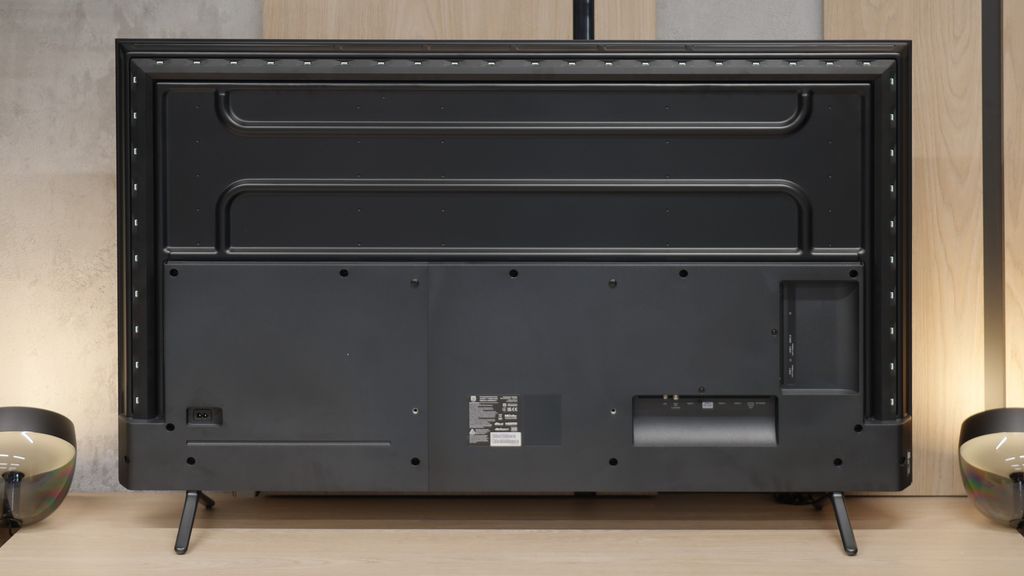
TV appearance



Contrast and black detail
5.5/10
7.9/10
Local dimming function: No
Local dimming function: Yes, number of zones: 144 (12 x 12)
Contrast:


Result
5,000:1

Result
5,450:1

Result
3,800:1

Result
4,000:1

Result
3,950:1
Result
298,900:1
Result
38,500:1
Result
23,950:1
Result
16,850:1
Result
8,000:1
Halo effect and black detail visibility:

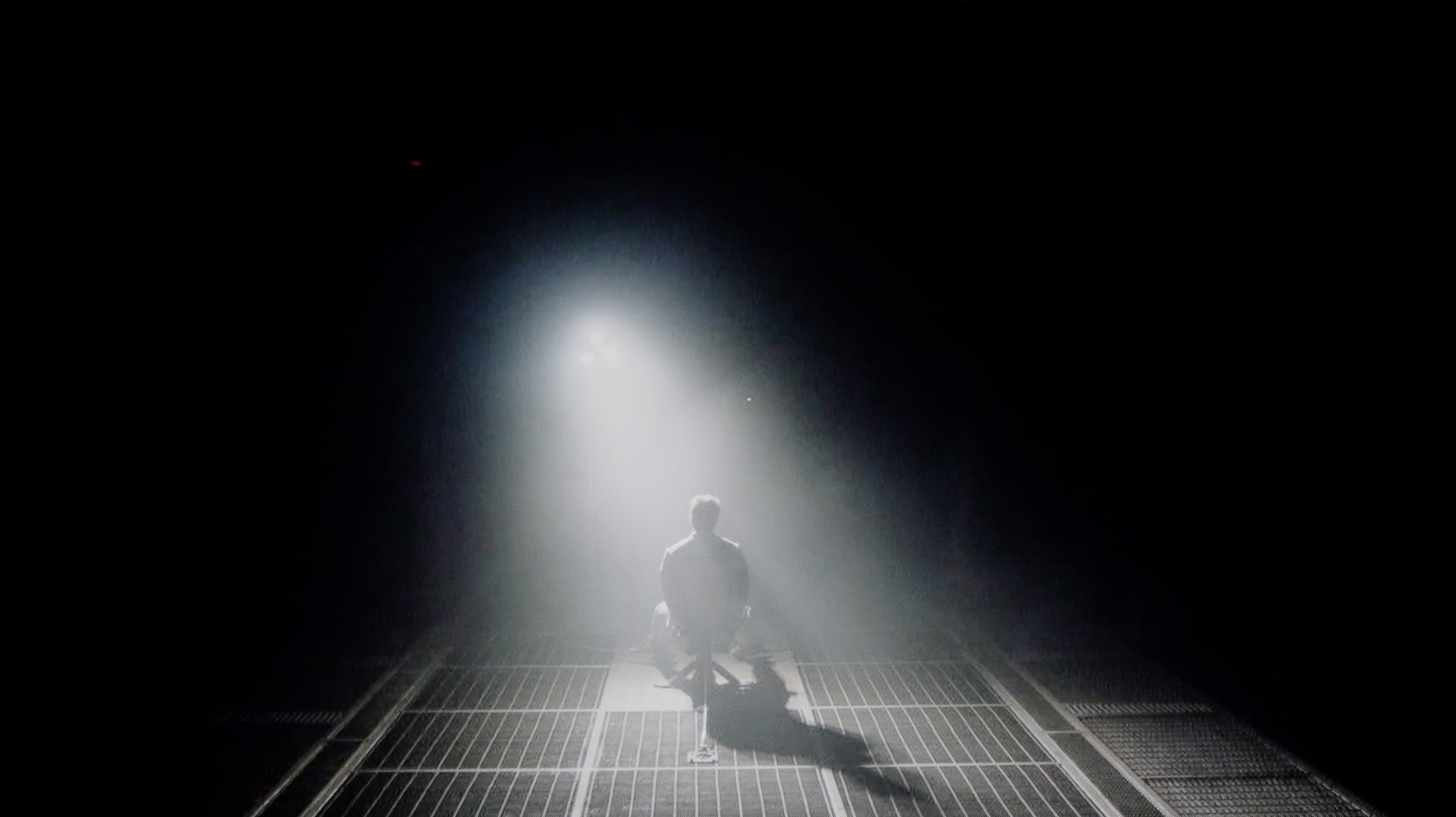
Check the visibility of bright lights on a dark background. Mini-LEDs often struggle with this. The photo does not compare black levels – that’s what the video below is for.
The video accurately shows differences in contrast and black levels between TVs, as well as potential issues: halo around bright objects or Mini-LED zone operation visible as brightness jumps.
TCL A300, also known as NXTVision, uses a VA panel, so from the outset, decent contrast could be expected. On our test screens, the television indeed showed typical results for this type of panel – in the best case, the contrast reached around 5000:1, which is not a bad result for this segment.
However, it should be noted that the model is not equipped with any local dimming technology, which unfortunately is evident in practice. Black, although at times quite deep, often turns into navy blue or grey – especially in darker scenes. In short: for a television without local dimming, it’s not bad, but it shouldn't be compared to models that already have such a feature on board.
Philips MLED920 in the 55-inch version that we had the opportunity to test uses a high-contrast VA panel. The panel itself is one thing, but the real standout feature of this model is the mini-LED backlighting. This largely determines how black and contrast look – and it must be said that Philips has taken a big step forward compared to the models from 2024, where the local dimming algorithms performed just average. In this new version, it is significantly better, and the contrast presented by the MLED920 can truly surprise in a positive way. At times, it even approaches the level known from the best LCD TVs on the market – blacks can be deep, the image gains a three-dimensional quality, and viewing experiences in a dark room leave a great impression. Of course, as with any mini-LED TV, this is not an image completely free of compromises. With a large number of small elements on the screen, the local dimming algorithms can sometimes get confused – at times dimming details more than we would like and other times brightening the background, resulting in slight, light blue halos around objects (the so-called halo effect). Despite these imperfections, we must emphasize that black and contrast are truly strengths of the Philips MLED920 and definitely one of the reasons to consider it in the mid-range segment.
HDR effect quality
5/10
5/10
Luminance measurements in HDR:

Result
357 nit

Result
348 nit

Result
338 nit

Result
350 nit

Result
389 nit
Result
722 nit
Result
177 nit
Result
775 nit
Result
131 nit
Result
677 nit
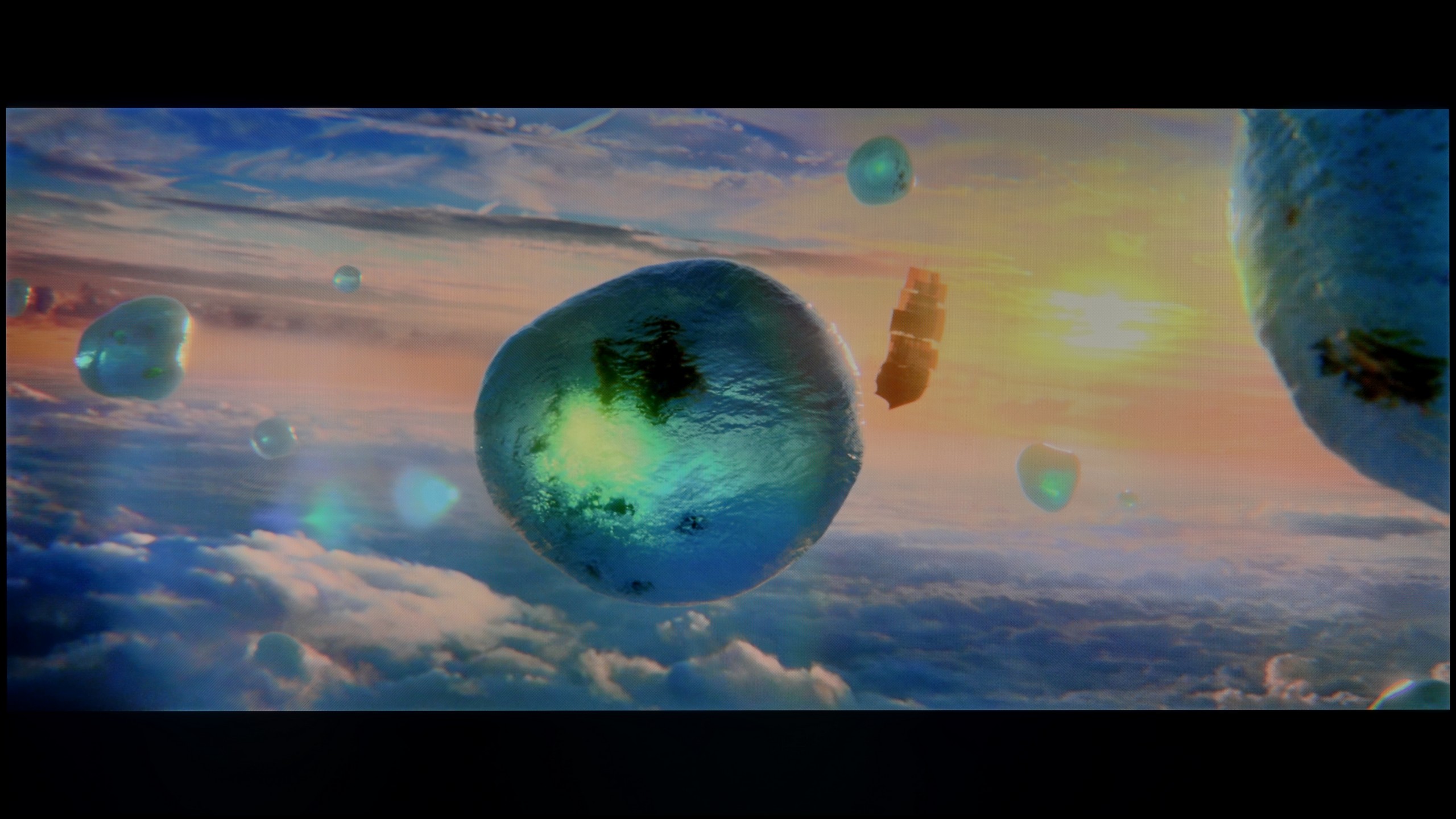
Scene from the movie “Pan” (about 2800 nits)

Scene from the movie “Billy Lynn” (about 1100 nits)

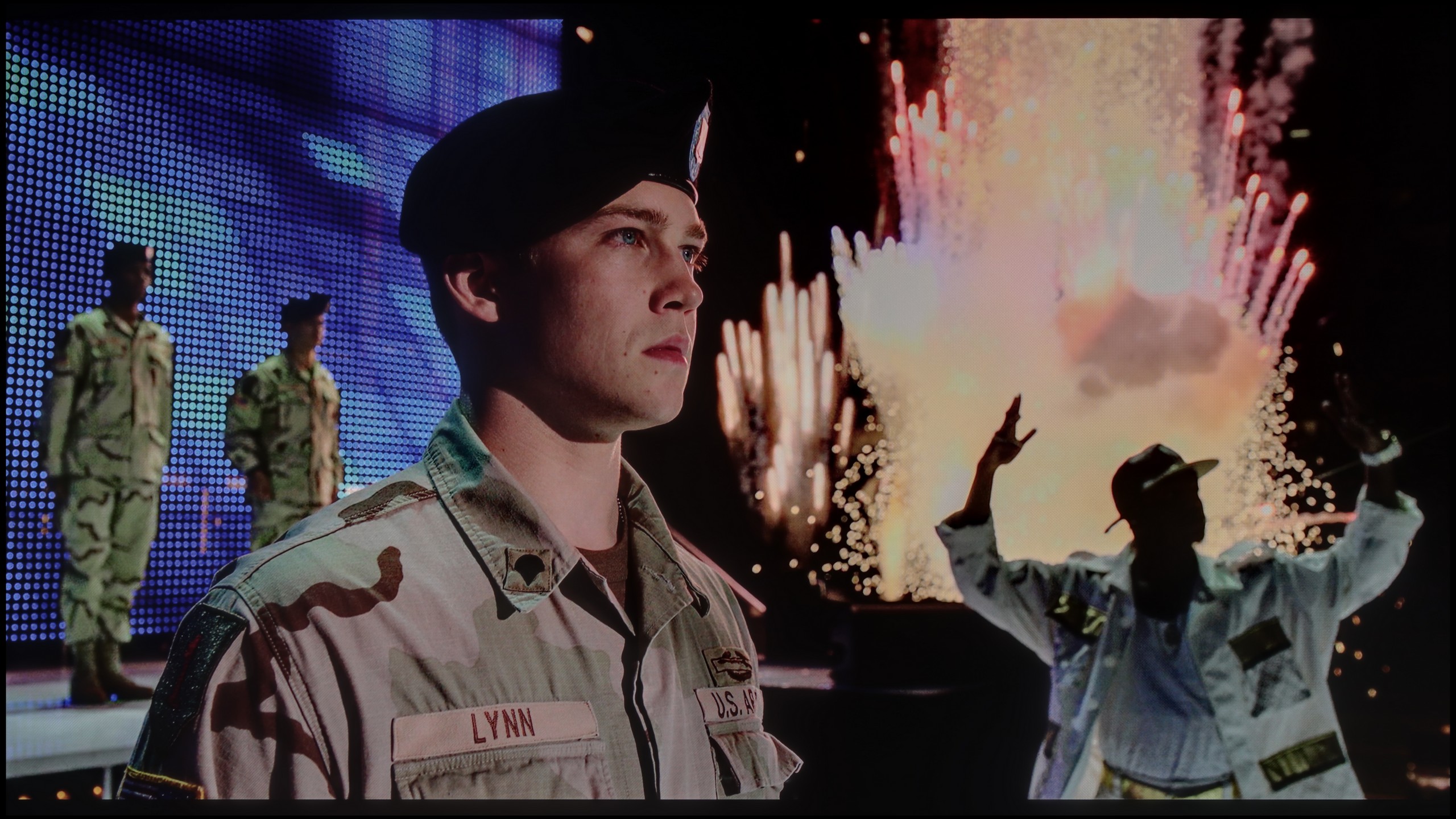
The photos show two HDR10 movies. 'Pan' is one of the brightest productions ever made, while 'Billy Lynn' (soldier) has brightness typical of streaming (Netflix, Prime, HBO MAX). Notice the intensity of effects and detail in whites.
Static HDR10


The photos present the visibility of white details in various HDR formats. They do not show brightness differences between TVs (these can be compared in the previous gallery).
Dynamic: Dolby Vision
Dynamic: Dolby Vision


The photos present the visibility of white details in various HDR formats. They do not show brightness differences between TVs (these can be compared in the previous gallery).
HDR luminance chart:
Philips MLED920 / MLED910
TCL A300W NXTVision
When it comes to brightness, the TCL A300W is definitely the dimmest TV among all frame-style models, such as Samsung The Frame or Hisense CanvasTV – and unfortunately, you can see that right away. In our measurements, peak luminance reached only around 400 nits, and on test movie screens, this value dropped to 350 nits. That’s definitely too little to feel the real "magic" of bright HDR effects. As a consolation – the TV is equipped with a PFS LED coating (which is something like QLED), which provides very good coverage of a wide colour gamut, both DCI-P3 and BT.2020. In addition, there is full support for all popular HDR formats – HDR10, HDR10+, HLG, and Dolby Vision – which somewhat compensates for the shortcomings in brightness and helps improve the overall experience of materials in this quality.
Philips MLED920 in our measurements in static tests even reached around 900 nits, which for a mid-range model is quite an impressive result. In practice, this translates to a lot of satisfaction during viewing – in scenes rich in bright light, such as the first, third, or fifth test patterns, the screen was able to generate around 700 nits, which is sufficient to feel the real "HDR effect". However, it cannot be denied that the limited number of backlight zones and the typical mini-LED compromises in dimming algorithms reveal their flaws in more demanding scenes. In sequences with small light sources – like the moon or a scene from the film Sicario 2 – the television clearly prioritises maintaining deeper blacks at the expense of the brightness of these small elements. For most viewers, this is still a reasonable compromise, as the dark background looks much better, although it should be noted that the details themselves may not dazzle with intensity. The question of colours also leaves a bit to be desired. Although the employed PFS filter (the equivalent of quantum dots known from QLEDs) does its job and the colours appear quite vibrant, the coverage of the DCI-P3 colour space reaches "only" 90%. In everyday viewing, this will be sufficient, but in extremely colourful productions – like the latest Disney animations – one can notice that some tones are not as vivid as they could be in other constructions.
Factory color reproduction
5.9/10
5/10


This gallery shows how colors change after professional TV calibration. If you notice the difference, we recommend ordering this service at SkalibrujTV.com.
Factory Mode
After calibration
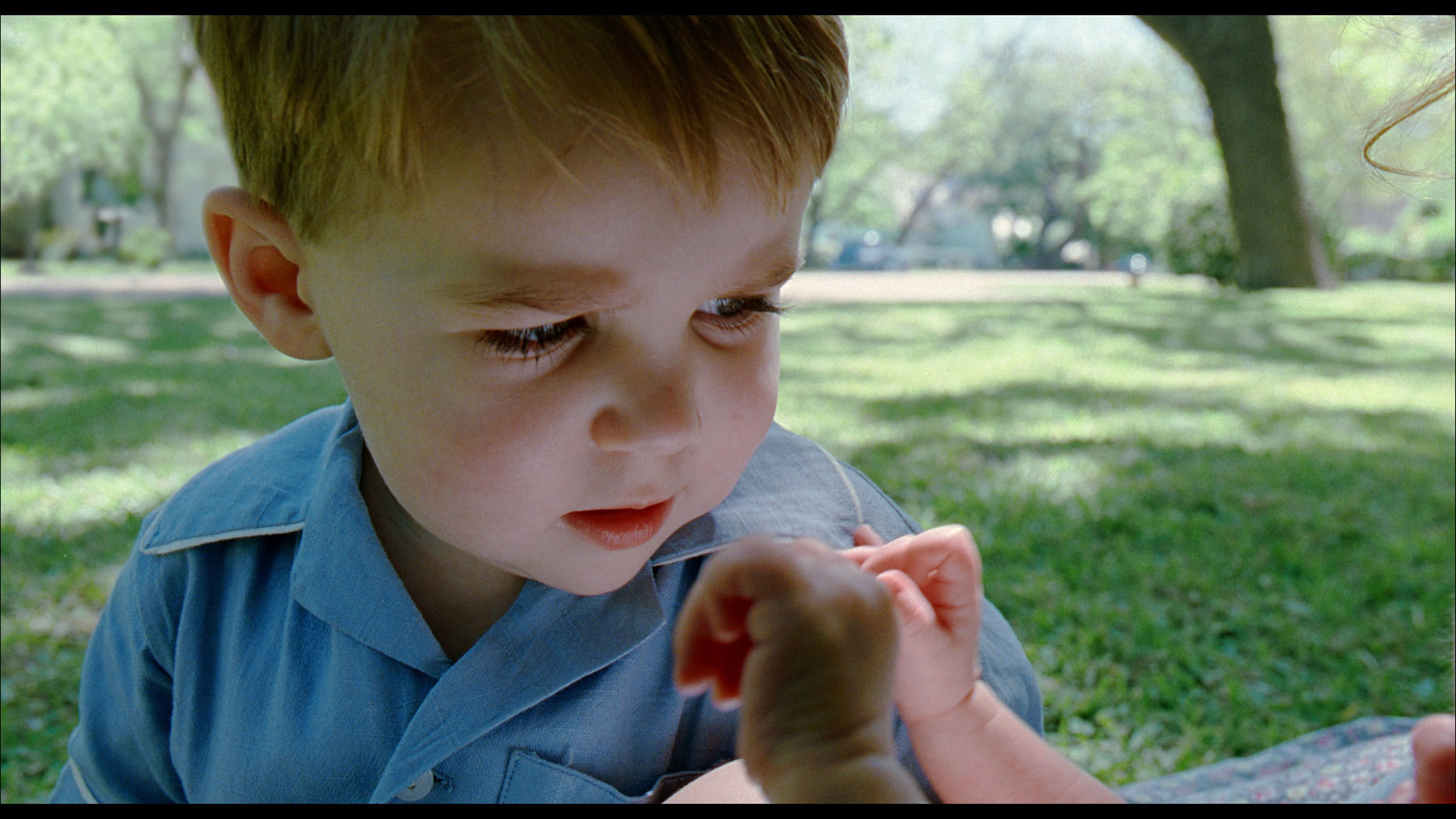

This gallery shows how colors change after professional TV calibration. If you notice the difference, we recommend ordering this service at SkalibrujTV.com.
Factory Mode
After calibration
TCL A300 offers several picture modes, but without a doubt, the movie mode performs the best. Unfortunately, even though it is the best option available, it is not free from errors. Both in HD and HDR content, the image has a noticeably too warm hue – it has a slight pink tint, which is particularly noticeable in snowy scenes. Instead of pure white, we get a pinkish coating that spoils the natural perception of colours.
The management of brightness is also lacking. In the case of older HD materials, the image often seems too dark – confirmed by an elevated gamma value. Conversely, with HDR content, the effect is the opposite – the image is overly bright, as we observed in scenes from the film Pan. Such a lack of consistency also affects colour accuracy – a test with a ColorChecker showed that many samples clearly deviate from reference values.
Fortunately, TCL allows for manual adjustment of settings, so we decided to check how the television would perform after our professional calibration. The effects of this adjustment are described below.
Like every Philips TV we've tested, the MLED920 was primarily assessed in Filmmaker mode – the so-called "most honest" mode, designed for films and to faithfully convey the intentions of the creators. Indeed, in terms of colour accuracy, it performs best among all the modes available on the TV, but it is not without flaws. The first thing that stands out is the white balance. The image has a slight tendency towards purple-pink tones, giving it a somewhat unnatural character. However, an even bigger problem turned out to be what we mentioned earlier – image clipping. Just looking at the gamma or EOTF charts reveals that the line deviates significantly from the norm, dropping below a value of 1.8. In practice, this means "bleeding" of the brightest whites, where the image becomes almost milky. Fortunately, most of these issues can be corrected – the MLED920 responds to calibration, and with a few adjustments, image quality can be significantly improved.
Color reproduction after calibration
8/10
7.5/10

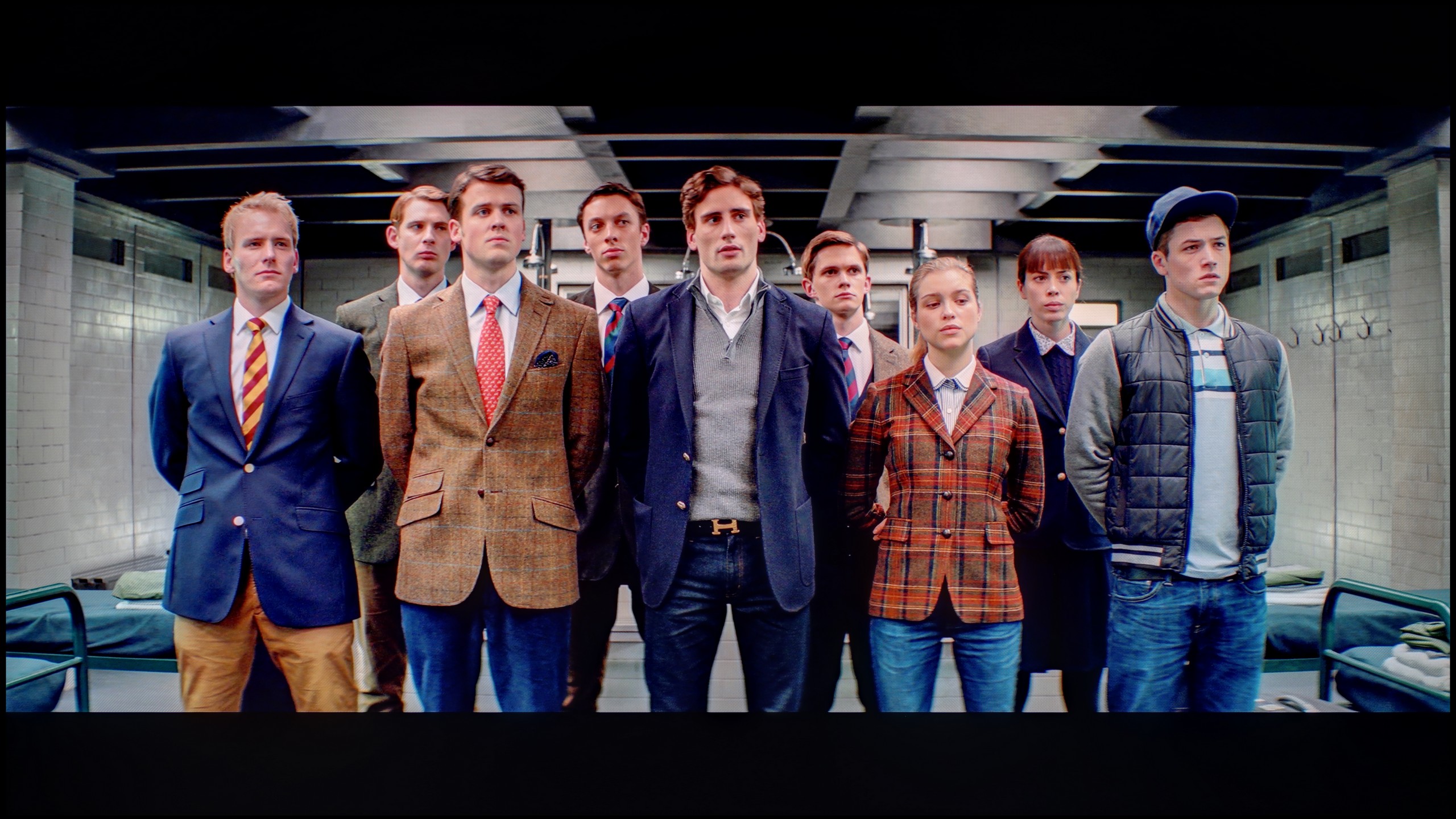
The photos show how movies look on the TV. Pay attention to black detail visibility, colors, and shadow tint.


The photos show how movies look on the TV. Pay attention to black detail visibility, colors, and shadow tint.
After our professional calibration, the TCL A300 has literally been given a new lease on life. The image has stopped being too warm, and the colours finally look as they should – as confirmed by the ColorChecker test, where the colour samples finally started hitting their marks, at least to some reasonable degree. It was also possible to partially correct the brightness management – the image is now more balanced and less "wobbly" between different types of content. Of course, certain limitations can't be bypassed – a slightly visible blooming effect still occurs, but that's a characteristic of the technology, not something that can be eliminated even after professional settings.
Generally: after calibration, the A300 looks significantly better and gains a whole new quality.
After calibration, we managed to largely tame the white balance – to the extent that the average viewer will not be able to detect colour inaccuracies. The characteristic pink-purple glow that previously disrupted the naturalness of the image has also disappeared. The colour palette has been organised, and the colours appear more cohesive and neutral. The gamma in SDR content looks really good after calibration – there’s no sign of the earlier “bleeding” effect in bright scenes. The image has become more contrasty and free from the milky effect that previously severely affected the viewing experience. In the case of HDR content, the improvement is also noticeable, although here it is still evident that the television goes “its own way”. The EOTF curve cannot be fully adjusted, as Philips simply does not offer tools for precise control of this parameter in its settings. In many films, the television still exposes the image “in its own way”. Despite these limitations, calibration has brought a lot of good – the majority of colour inaccuracies have been minimised and the overall image balance has significantly improved. However, one must remember that certain barriers arise from the very hardware construction and simply cannot be overcome.
Smoothness of tonal transitions
8.6/10
6.5/10


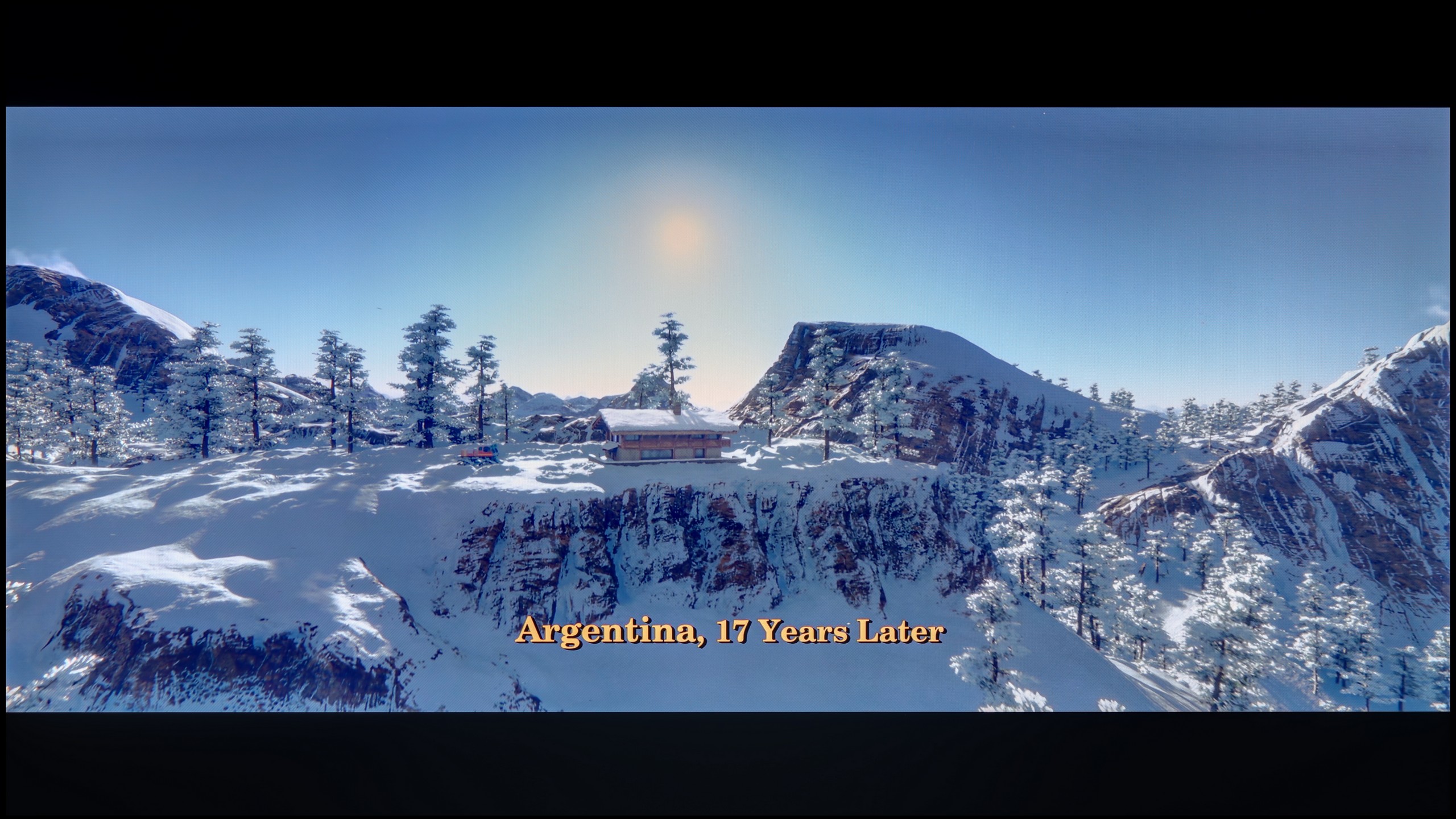
These are selected scenes that show smooth tonal transitions from one color to another. If you see distinct banding, it’s the TV panel’s fault.
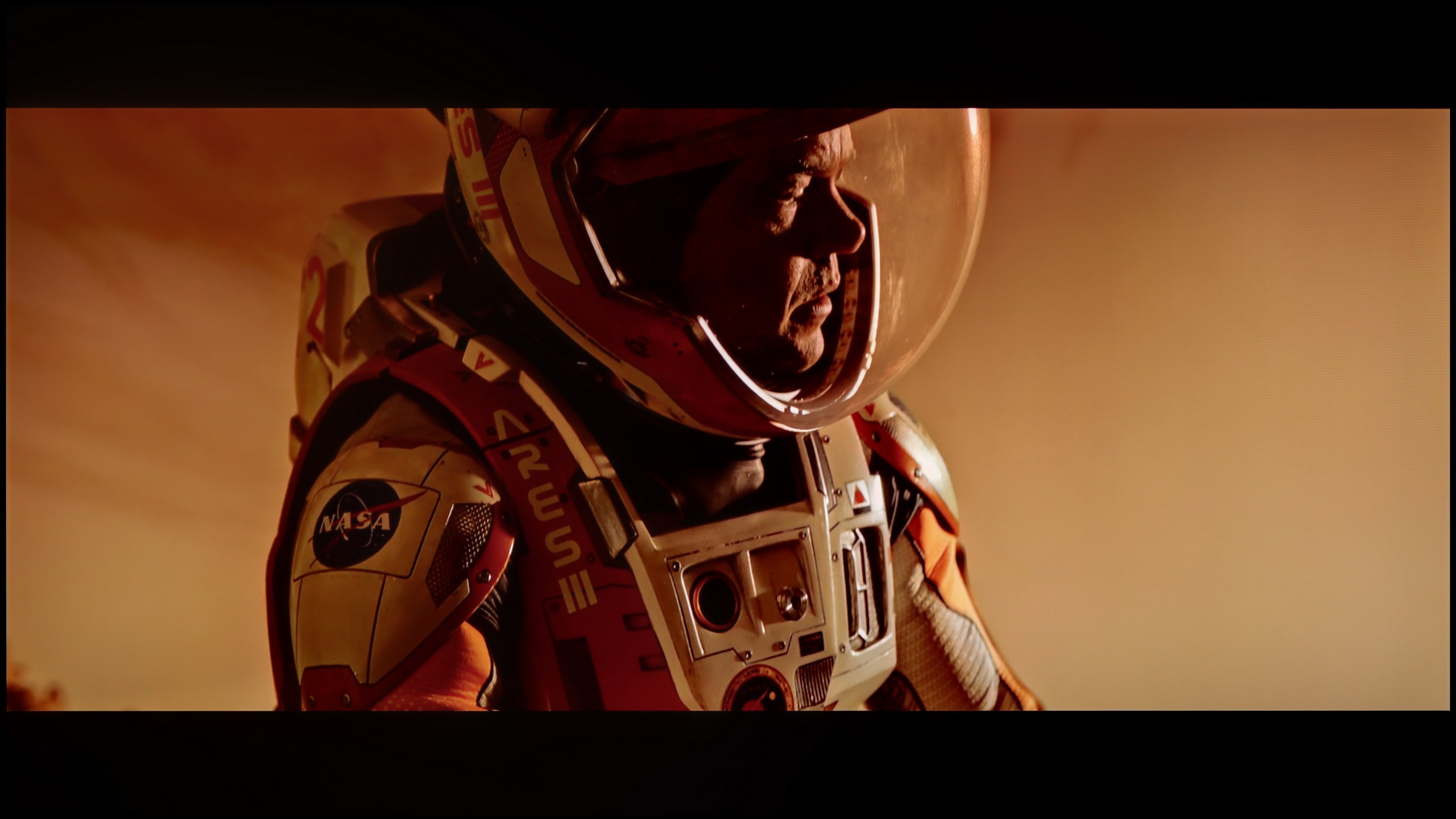
These are selected scenes that show smooth tonal transitions from one color to another. If you see distinct banding, it’s the TV panel’s fault.
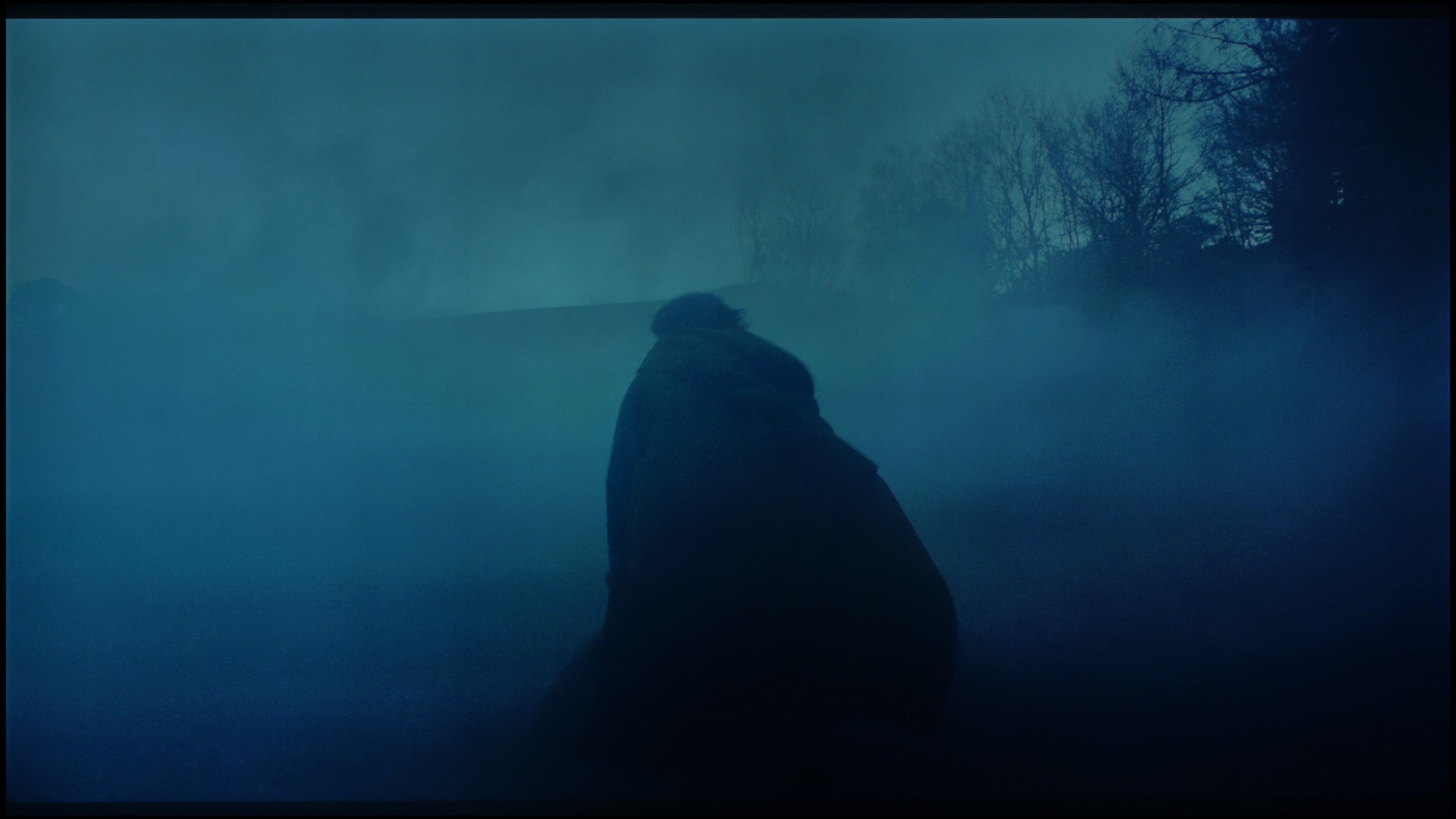
These are selected scenes that show smooth tonal transitions from one color to another. If you see distinct banding, it’s the TV panel’s fault.
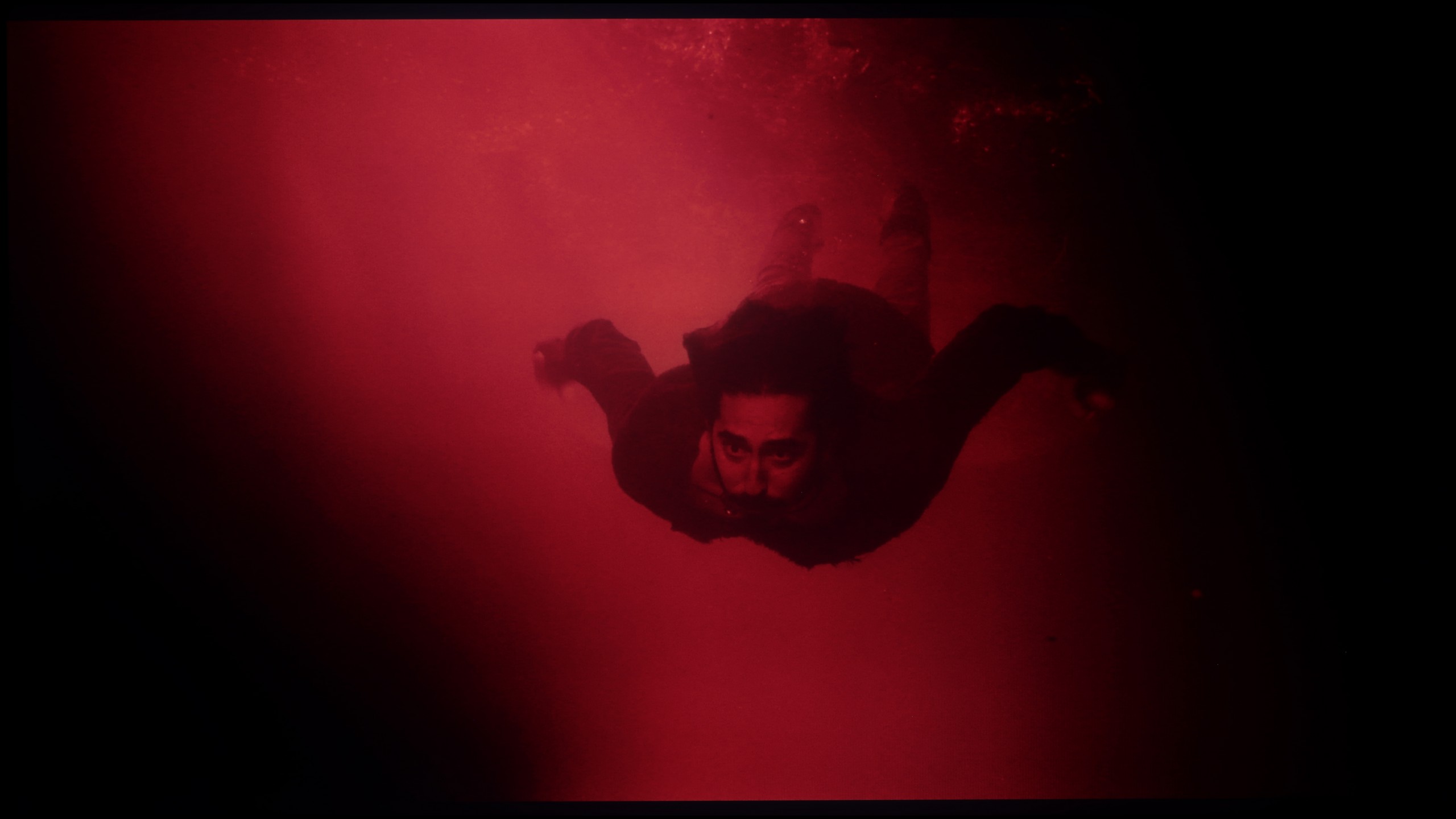
These are selected scenes that show smooth tonal transitions from one color to another. If you see distinct banding, it’s the TV panel’s fault.
TCL A300 NXTVision is another frame-style television that really manages well with the smoothness of tonal transitions. It's hard to find distinct bands or sharp transitions between shades of one colour – it all looks natural and smooth.
However, it's fair to say that among the three tested models (The Frame and S7NQ), TCL performs the weakest in this category. In darker and lighter scenes, you can notice slight imperfections. Nevertheless, looking at it as a whole, for a television in this range – it really presents itself solidly. It might not be the best of the bunch, but it holds a very good standard.
The fluidity of tonal transitions in the Philips MLED920 is not its strongest suit. In our tests, we quickly noticed that the television has noticeable issues in darker scenes – examples include segments from the film The Green Knight or test grey palettes. There, you can see characteristic banding of colours and too harsh transitions between shades, which can be quite noticeable in productions with a darker aesthetic. Fortunately, the situation looks better in brighter scenes – there, the image presents smoothly and without significant artifacts.
Image scaling and smoothness of tonal transitions
5.5/10
7/10

Smooth transition function

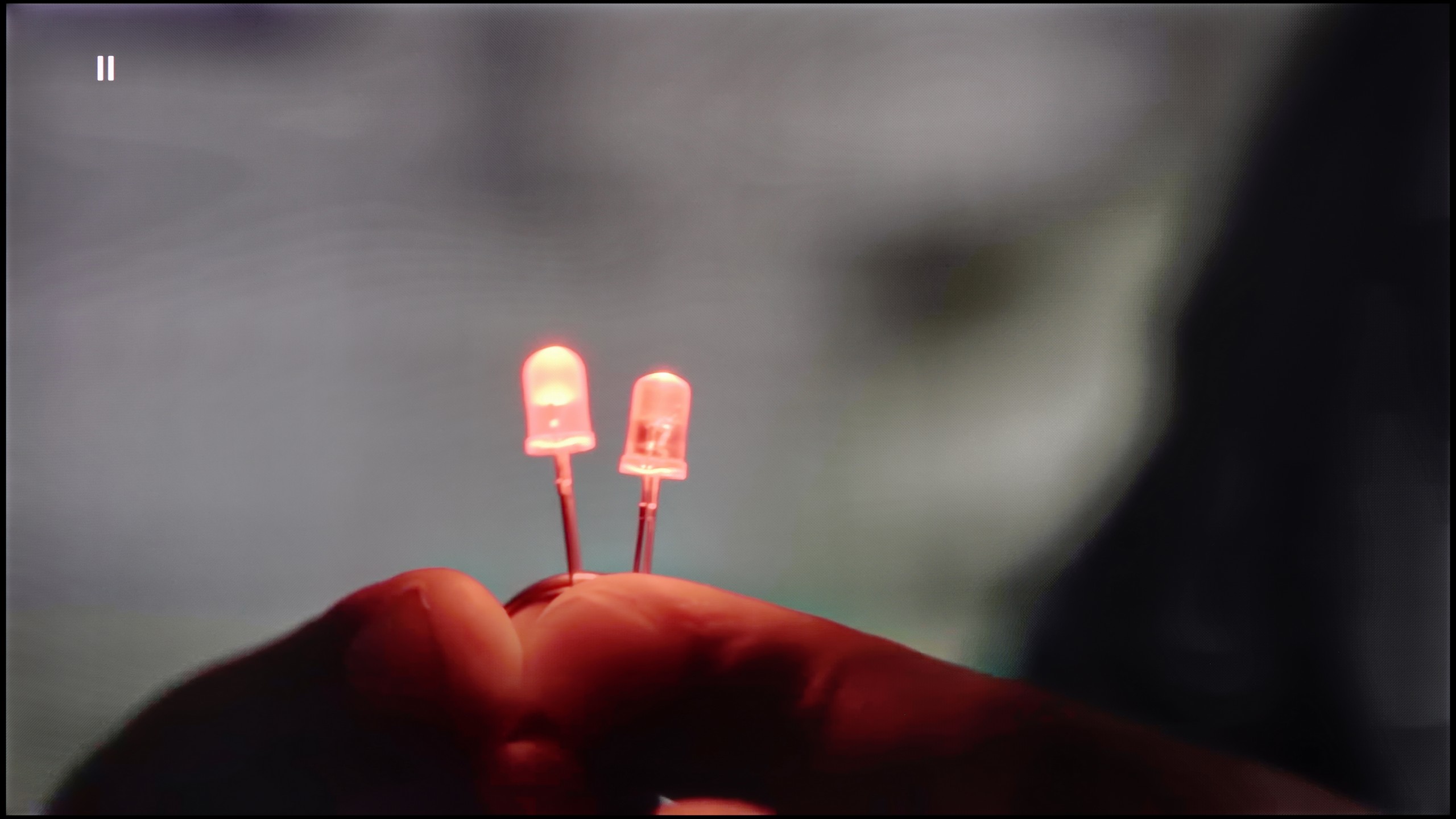
The match photo shows how the TV smooths weak tonal transitions in low-quality video.
Image scaling SD (576i)


The model photo shows how it handles upscaling of SD material.
TCL A300 handles tonal transitions in high-quality films very well, but the question arises – how does it perform with weaker materials? The TV is equipped with a tonal smoothing feature; however, its effectiveness can be described in one word: “random”. In one scene, it may work and improve the gradation, but when turned off… the effect remains the same. There is a lack of consistency and predictability here.
Image scaling is also not one of A300's strong points. On the test pattern, the main character actually looked better than on the raw signal, but with thin lines – like fonts or background details – there was noticeable jaggedness and aliasing. On the plus side, the TV does not cut off the image and has no issues with overscan, but the overall quality of scaling is rather average.
The manufacturer has equipped this model with several features that improve signal quality, and although we usually approach such “enhancers” with caution, here they prove to be really helpful. The key option is called “distortion reduction” – it works best at a medium level because, on one hand, it effectively smooths out unwanted steps and colour transitions, and on the other, it doesn’t excessively cut details, meaning the image still looks natural.
It’s a bit worse when it comes to upscaling. Lower quality materials – such as the test video with the model – appeared soft and lacking sharpness. Of course, it can be partially adjusted with the sharpness slider in the menu, but the result still falls short compared to what competitors offer at a similar price. Philips still needs to work on this aspect because, in light of the successful improvement of tonal transitions, the upscaling simply comes off weak.
Blur and motion smoothness
6.4/10
7.7/10

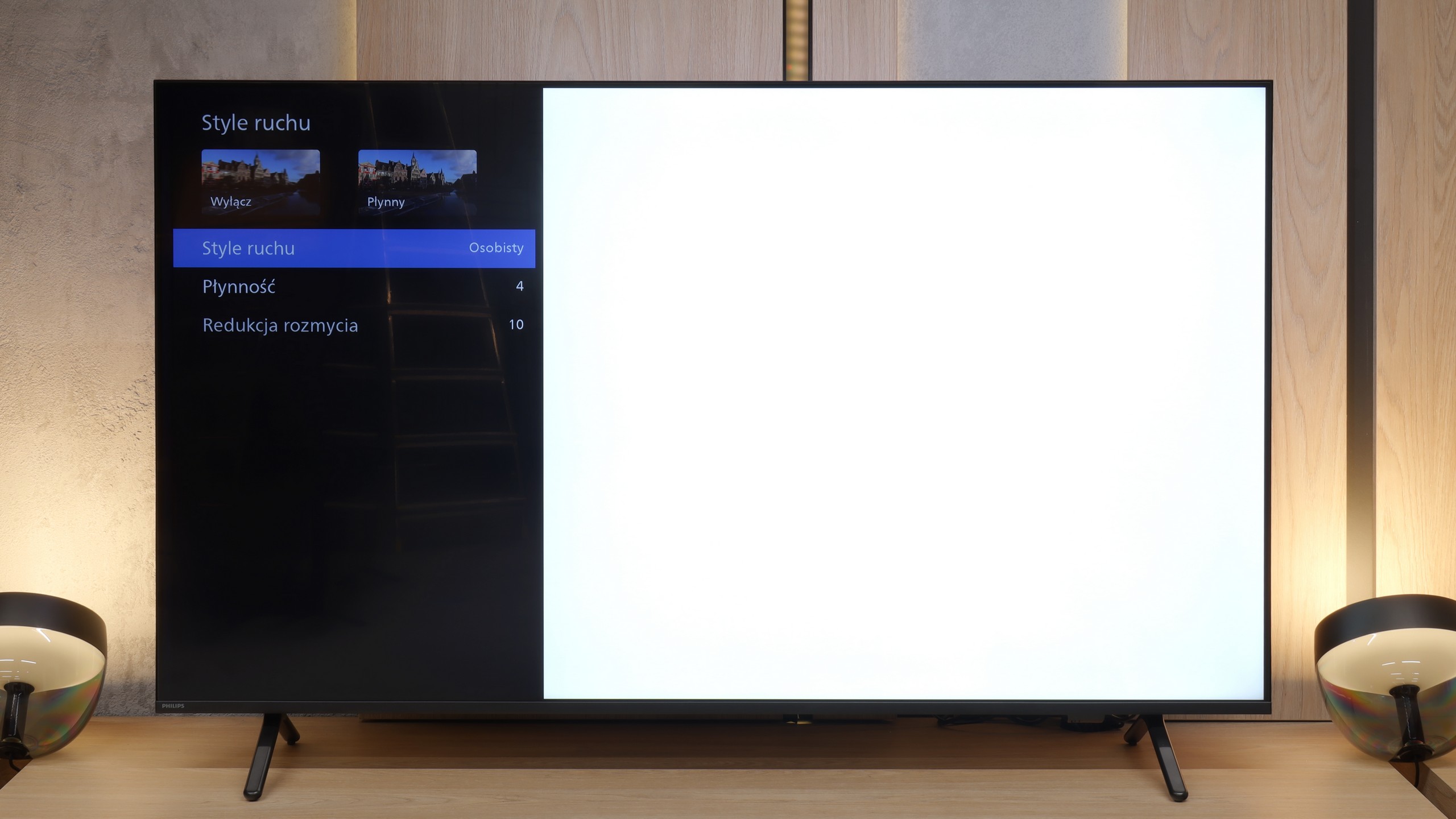
Blur (native resolution, maximum refresh rate):





Blur ():
Blur (4K@144Hz):
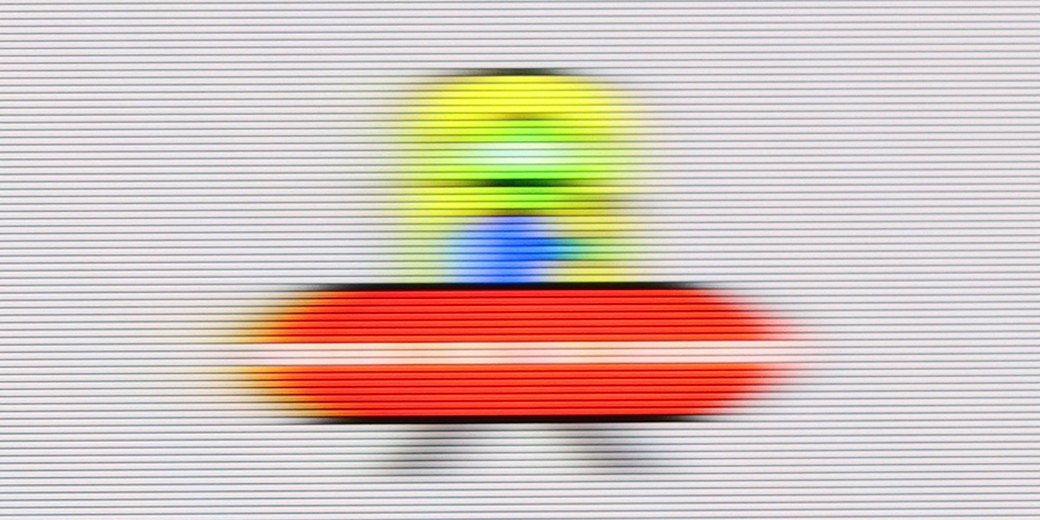
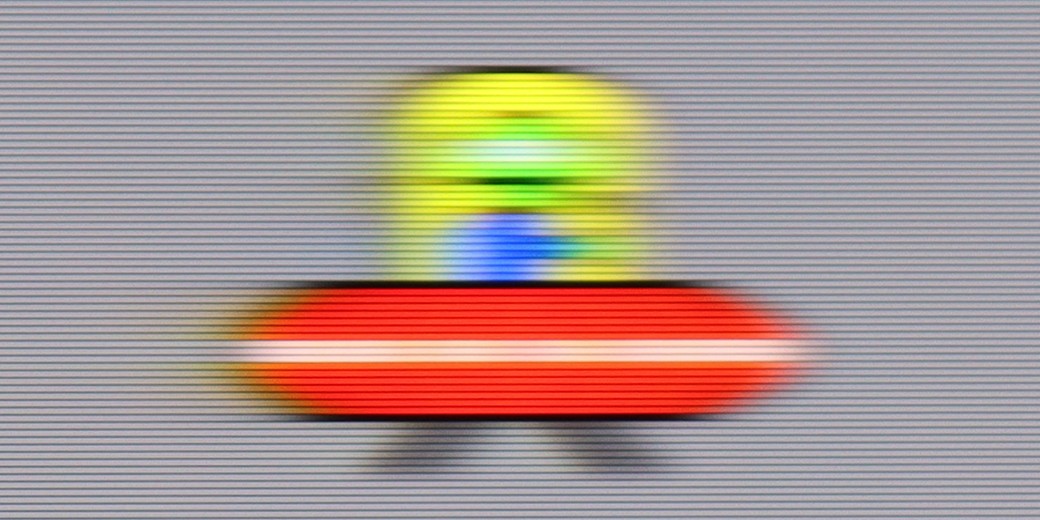
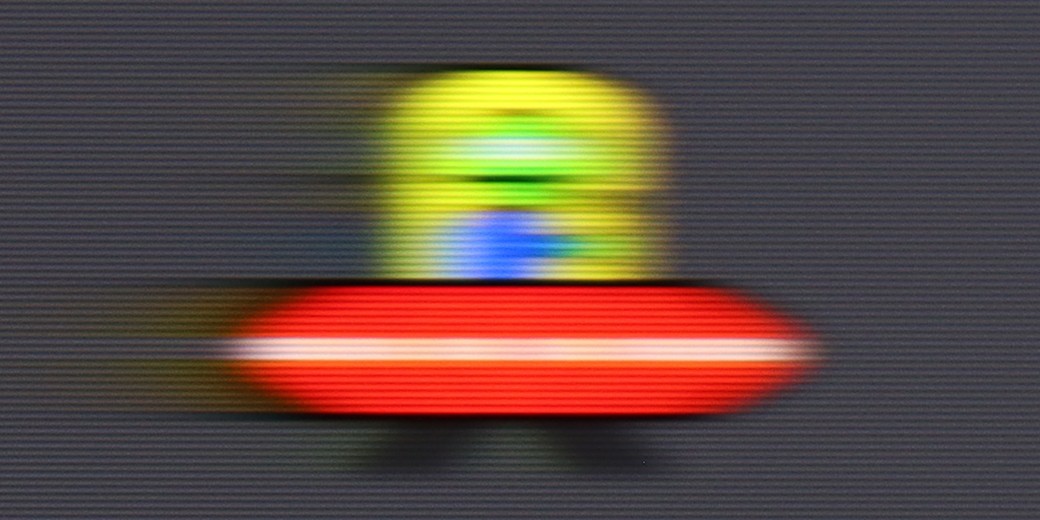
TCL A300 is equipped with a 144 Hz panel, which should instantly satisfy virtually everyone - both gamers and sports fans. Motion is fluid and the image is clear even during fast scenes. Additionally, the television offers a motion enhancement feature called "Motion," where we find two sliders on a 10-point scale. These allow you to adjust the effect to your own preferences - from a classic, filmic look with visible frames to a very smooth (though already unnatural) image reminiscent of a soap opera effect. This way, everyone can find a setting that suits them.
Philips MLED920 features a 144 Hz panel, which immediately suggests that we shouldn’t complain about motion smoothness. And indeed – for a VA panel, the motion blur is relatively low here, and while you can sometimes notice slight issues on darker backgrounds, they’re not something that will catch the eye of most people during regular viewing.
A big plus is also the presence of a motion smoother called “Motion Style.” It allows you to adjust the smoothness to your own preferences – if someone prefers a more “theatrical,” almost television-like character of the image, they can increase the sliders, and if they want to maintain the natural “judders” of a cinematic frame, they just need to set lower values. This way, everyone can find a happy medium.
Console compatibility and gaming features
9.8/10
9.8/10
- ALLM
- VRR
- VRR range48 - 144Hz48 - 144Hz
- Dolby Vision Game Mode
- Correct implementation of HGIG
- 1080p@120Hz
- 1440p@120Hz
- 4K@120Hz
- Game bar

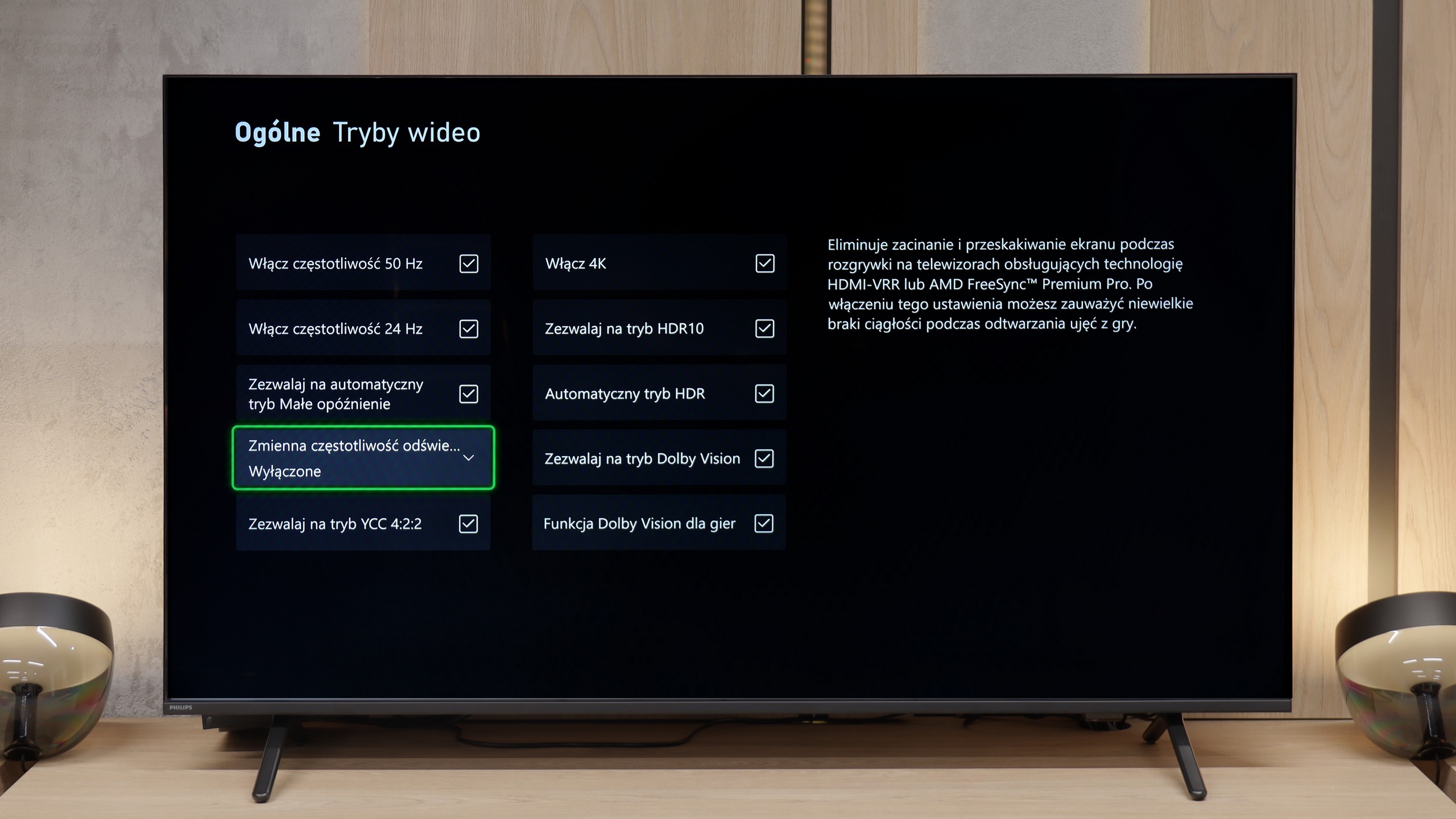

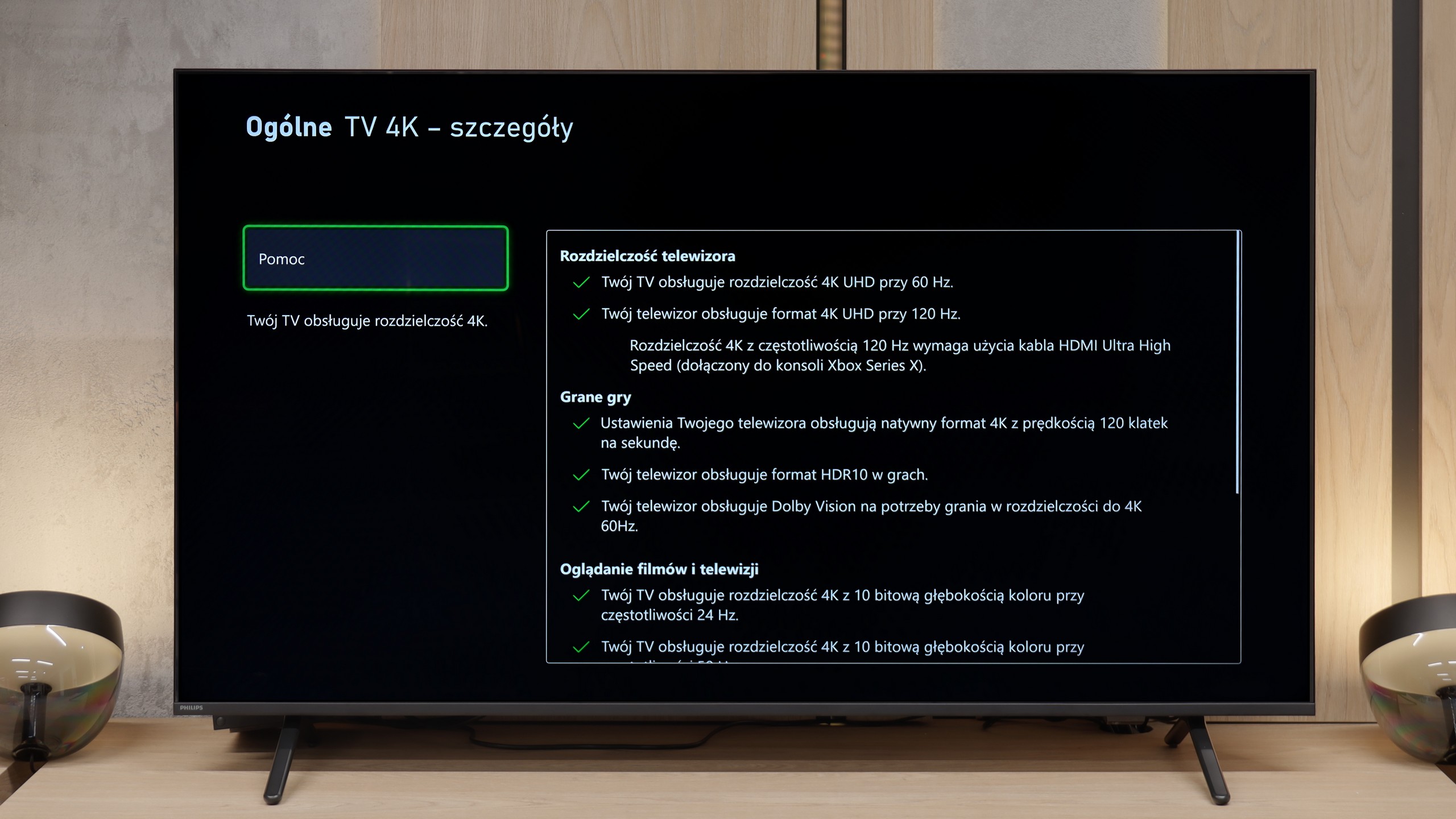

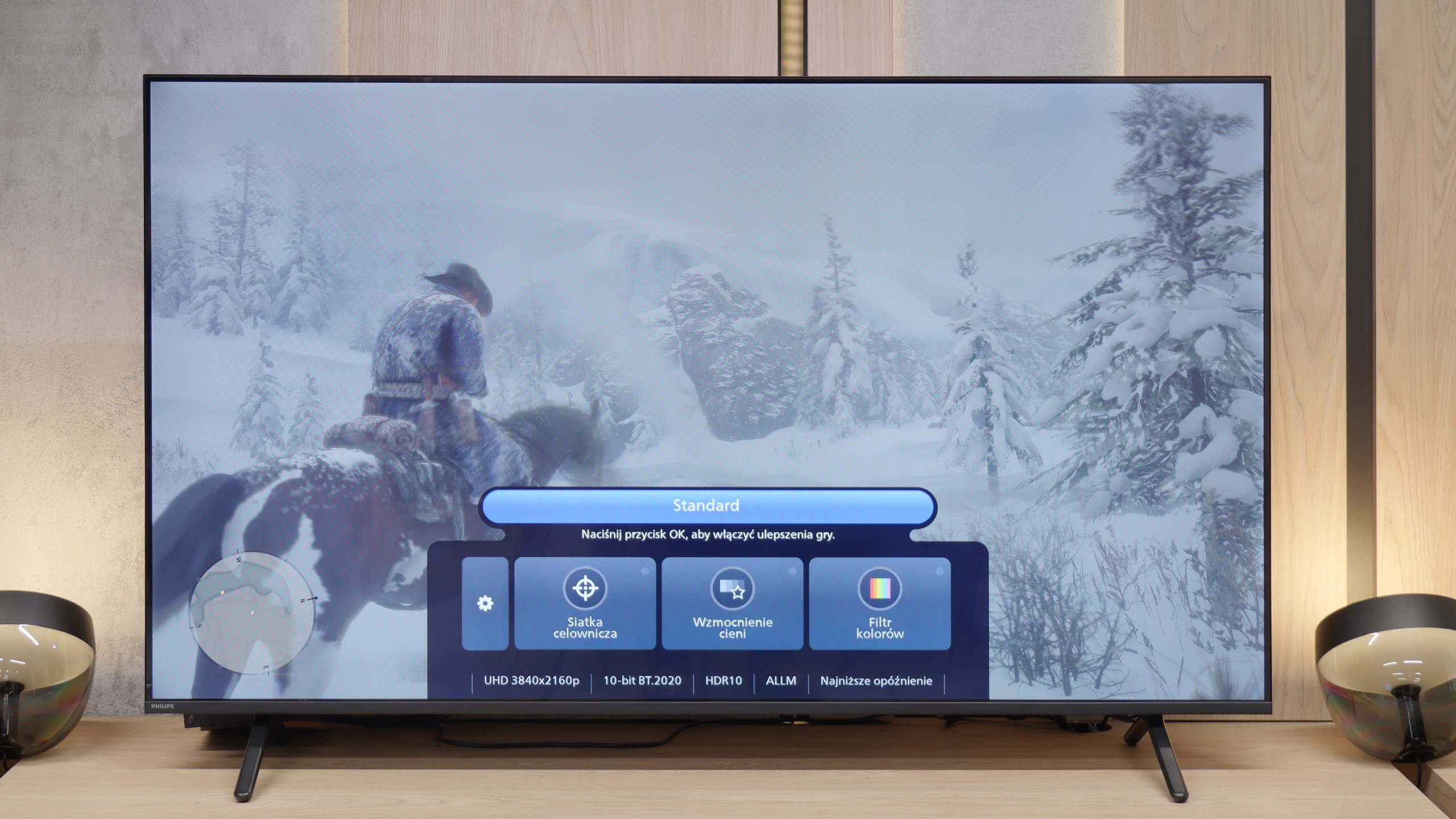

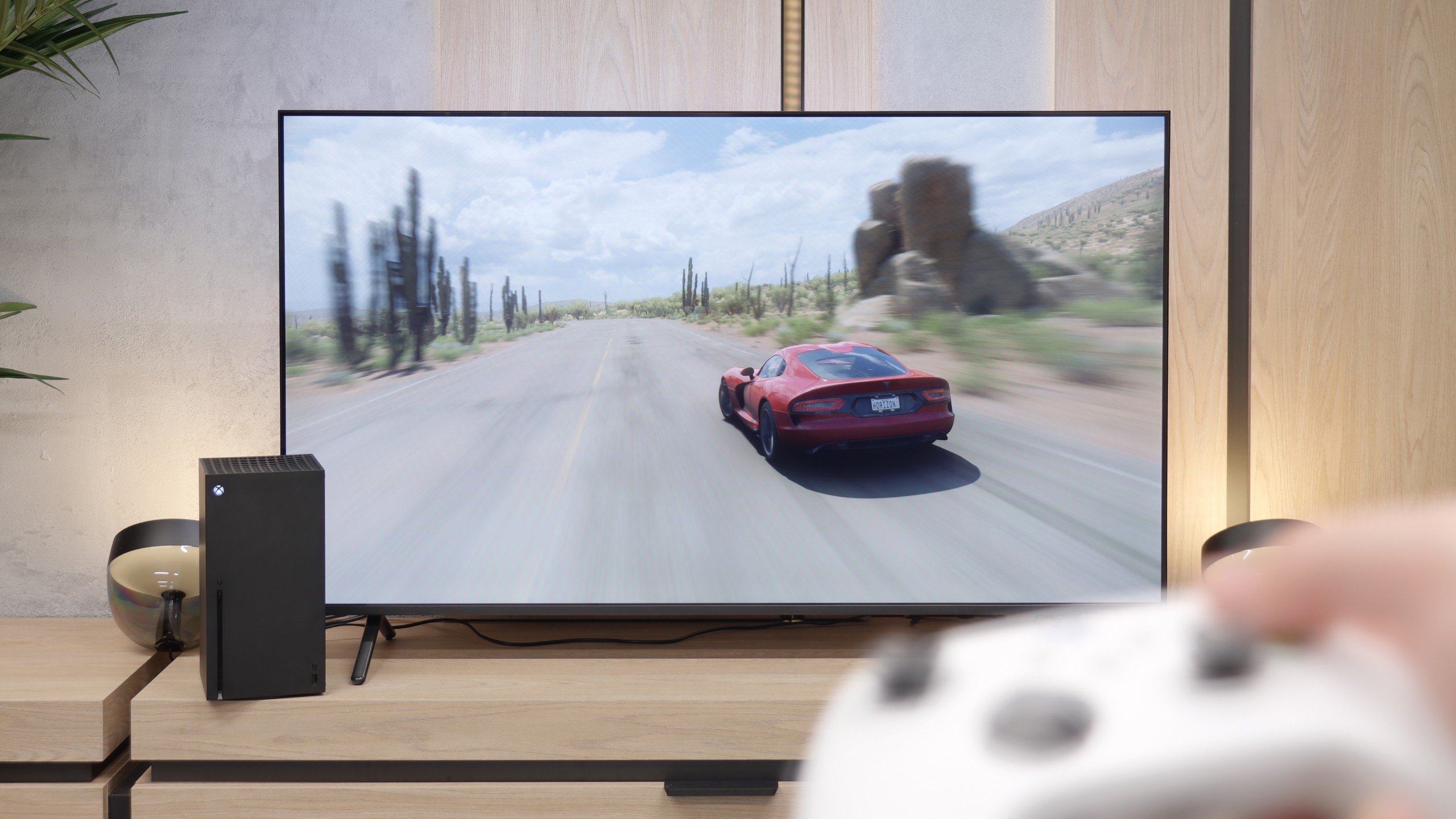
The TCL A300 is a television designed not only to transport us to a digital art museum but also into the full-fledged world of gaming. It offers practically everything you can expect from gaming hardware: two full-bandwidth HDMI 2.1 ports, 144 Hz refresh rate, support for VRR and ALLM.
It also deserves credit for the proper implementation of the HGIG mode – something that competing Hisense sometimes struggles with. The television handles lower resolutions (e.g., Full HD) with ease while maintaining high refresh rates, which will be appreciated by owners of older consoles or PCs.
Additionally, there's an attractive and clear GameBar that facilitates quick access to settings for gamers. The A300 is indeed well-prepared for gaming at the highest level – it’s just a shame that issues with ghosting somewhat detract from its overall appeal as a gaming device.
For gamers, the Philips MLED920 is truly a complete tool. The manufacturer has taken care of everything that is now considered standard in televisions for consoles and PCs. It has ALLM, so the console automatically switches the screen to game mode, there’s VRR and a 144 Hz refresh rate that ensures smooth gameplay even in fast-paced titles. All key HDR formats are supported – including HGiG and Dolby Vision Gaming for Xbox – which means that regardless of what you’re playing and on which console, the television will be able to extract the maximum potential from the image. In everyday gaming, the Game Bar proves useful too – a relatively simple implementation by Philips, but a functional panel where you can quickly check image parameters, enable VRR, or adjust details without leaving the game. It’s not as elaborate as the competition, but it does its job without any complaints. And finally, something that sets Philips apart from the competition – Ambilight. The three-sided LED backlighting can make a huge impression in games, especially in the evening. It’s also a way to slightly 'expand' the screen and create a greater sense of immersion. And since coloured LEDs have recently become almost an essential element of a gamer’s room, the MLED920 fits perfectly into this trend.
Input lag
9.7/10
9.6/10
SDR
HDR
Dolby Vision
In terms of input lag, the TCL A300 performs really well. Values below 10 ms at a refresh rate of 120 Hz are something many gamers dream of – such low lag is practically unnoticeable, both during everyday gaming and in more demanding esports titles. One could nitpick about the result of 23 ms in Dolby Vision mode at 60 frames, but it's still low enough that serious objections are hard to come by. In this category, the A300 truly excels.
The input lag on the Philips MLED920 is really very good – in 120 Hz mode, we measured values below 10 ms, which places this model among the absolute top of LCD TVs in terms of responsiveness. Even at 60 Hz, a result of around 18 ms is fully acceptable and won't interfere with any type of gameplay. One exception is the Dolby Vision mode at 60 frames, where the latency can increase to as much as 35 ms. This is a result that may be a bit glaring for esports players, but it must be stated honestly – for most so-called "casual gamers," it will be absolutely imperceptible. Especially since we're talking about values that still allow for comfortable gaming without major compromises.
Compatibility with PC
8.2/10
4/10

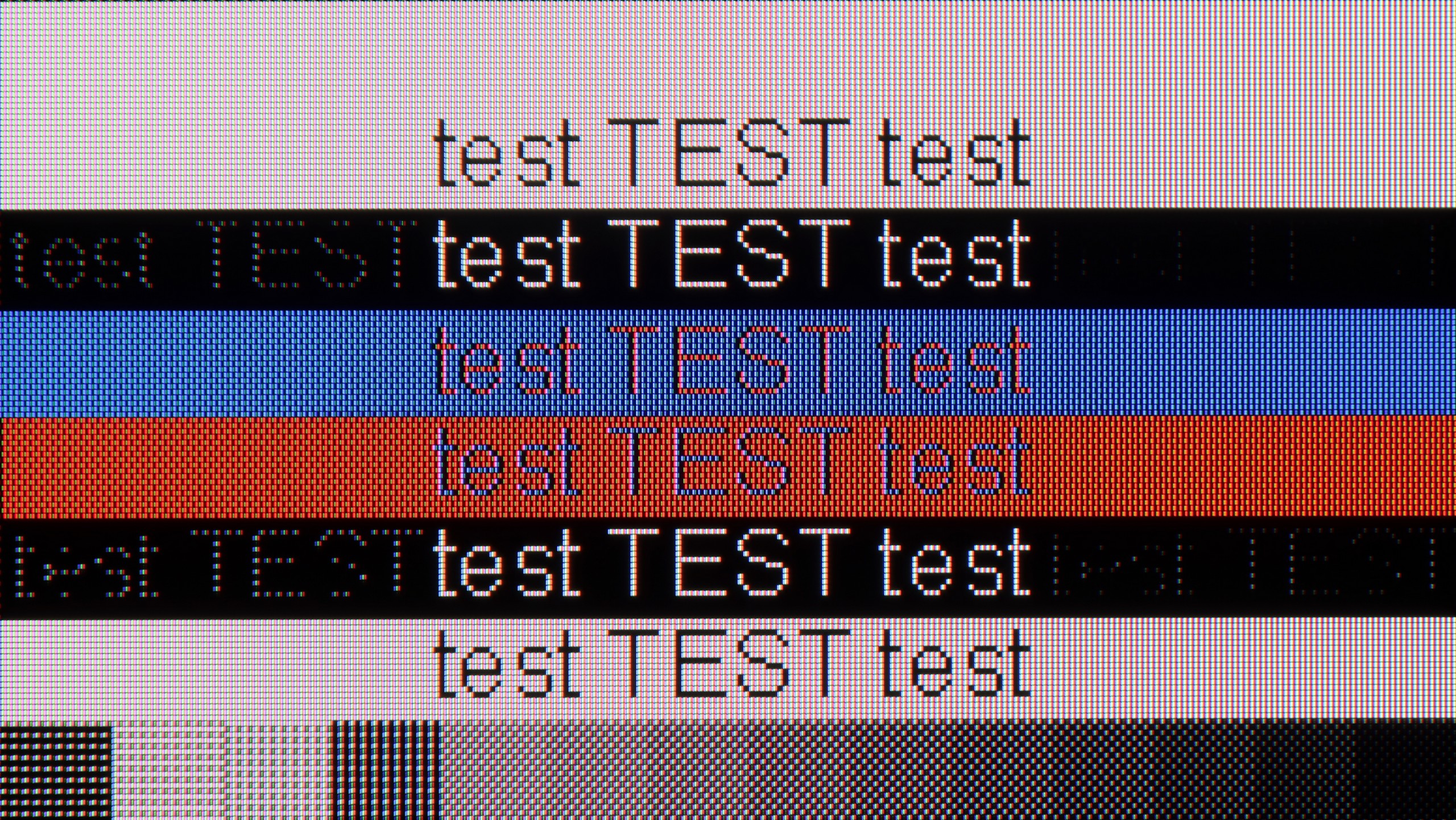
The photo shows the legibility of small fonts. Ideally, lines should be the same thickness on both light and dark text, with minimal pixel gaps.
If we plan to use the TCL A300 as a computer monitor, we may be pleasantly surprised. The television performs really well in this role. It is equipped with a 144 Hz panel, supports G-Sync, and, as we mentioned, offers very low input lag, so gaming on it with a connected PC is pure enjoyment.
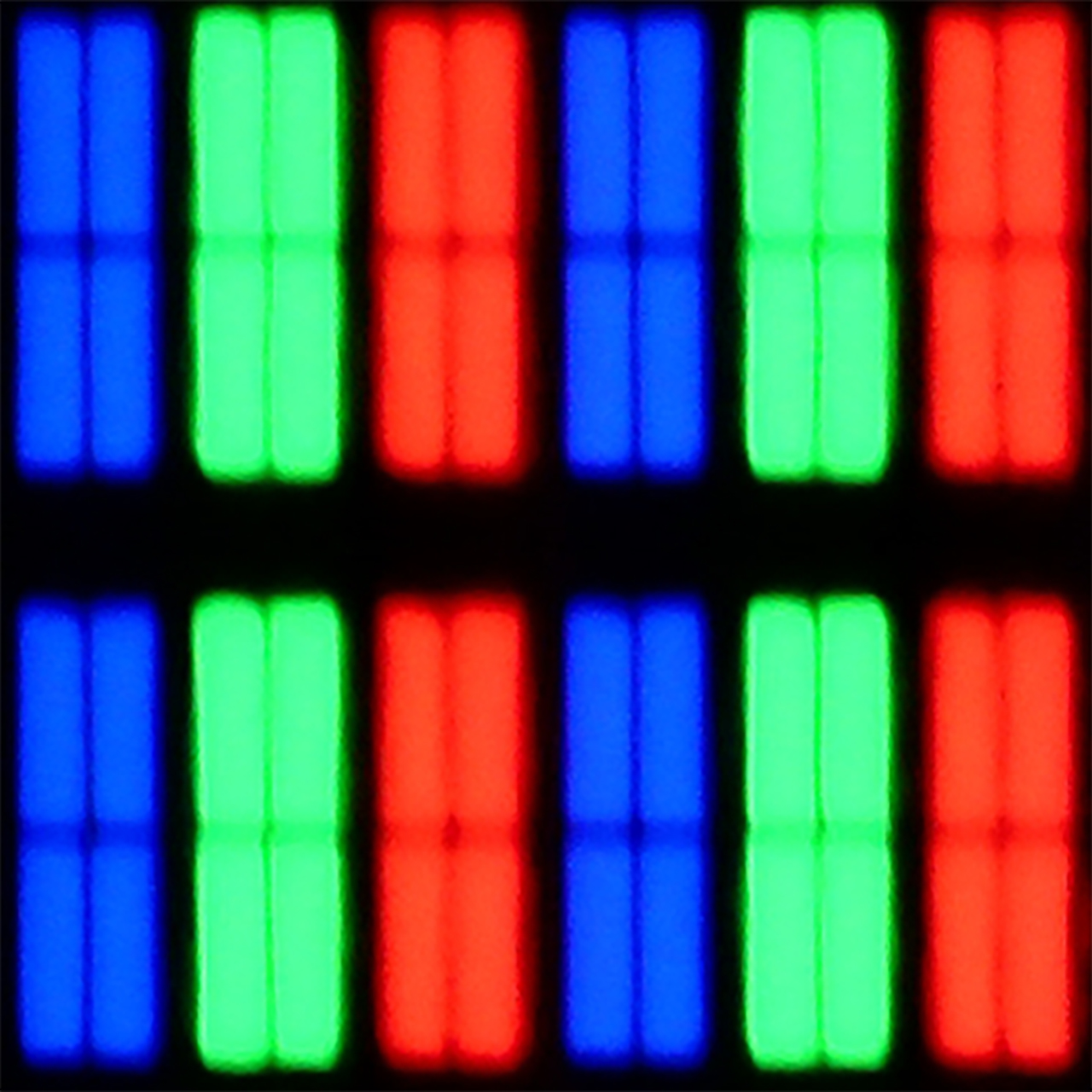
Working with text is also possible, although with some limitations. The TCL A300 has slight issues displaying dark fonts and thin lines – this is due to the construction of the subpixels, which in everyday use can be a bit annoying, even though it looks better in photos than in reality.
The television supports chroma 4:4:4, but only up to 120 Hz. Therefore, we noted that this feature is available, but with a limitation – if we care about perfectly readable fonts, it's worth sticking with the refresh rate of 120 Hz. At 144 Hz, the clarity of the text may suffer somewhat.
When it comes to working with a PC, the Philips MLED920 evokes quite mixed feelings. On one hand, it looks impressive on paper – we have 144 Hz, support for G-Sync and FreeSync, so in terms of gaming on PC, the TV does not disappoint. Anyone looking for a large screen for computer games gets a solid package of features here. However, when we try to use it as a typical monitor for everyday work, its limitations quickly become apparent. The fonts do not look the best – there is noticeable strong dithering, coloured letters can be jagged, and with very dark text, there are even strange anomalies, as if the panel is losing thin lines and having trouble reproducing them correctly. In short: For PC gaming, yes. For any work and reading text: a definite no.
Viewing angles
3.2/10
3.2/10
The viewing angles on the TCL A300 NXTVision are, let’s be honest, average. The TV is equipped with a VA panel, which inherently has quite limited angles, and unfortunately, this is evident here. The video below speaks for itself – even a slight deviation from the centre results in a noticeable drop in contrast and colour saturation. It’s a shame that this is yet another frame-style TV that has done absolutely nothing about it. After all, we don't always have the option to sit perfectly straight on – especially if the device is also meant to serve a decorative function in the living room.
The viewing angles on the MLED920 are classic for VA type panels – even a slight tilt from the centre causes the image to start losing colours, contrast weakens, and the overall picture becomes quite flat and less appealing. There are no miracles here. So if you’re watching films with a larger group and everyone is sitting a bit to the side, this will be slightly noticeable. On the other hand, you get what you pay for: thanks to this panel, the MLED920 can display a much deeper black than TVs with IPS panels.
Daytime performance
4.7/10
5.5/10

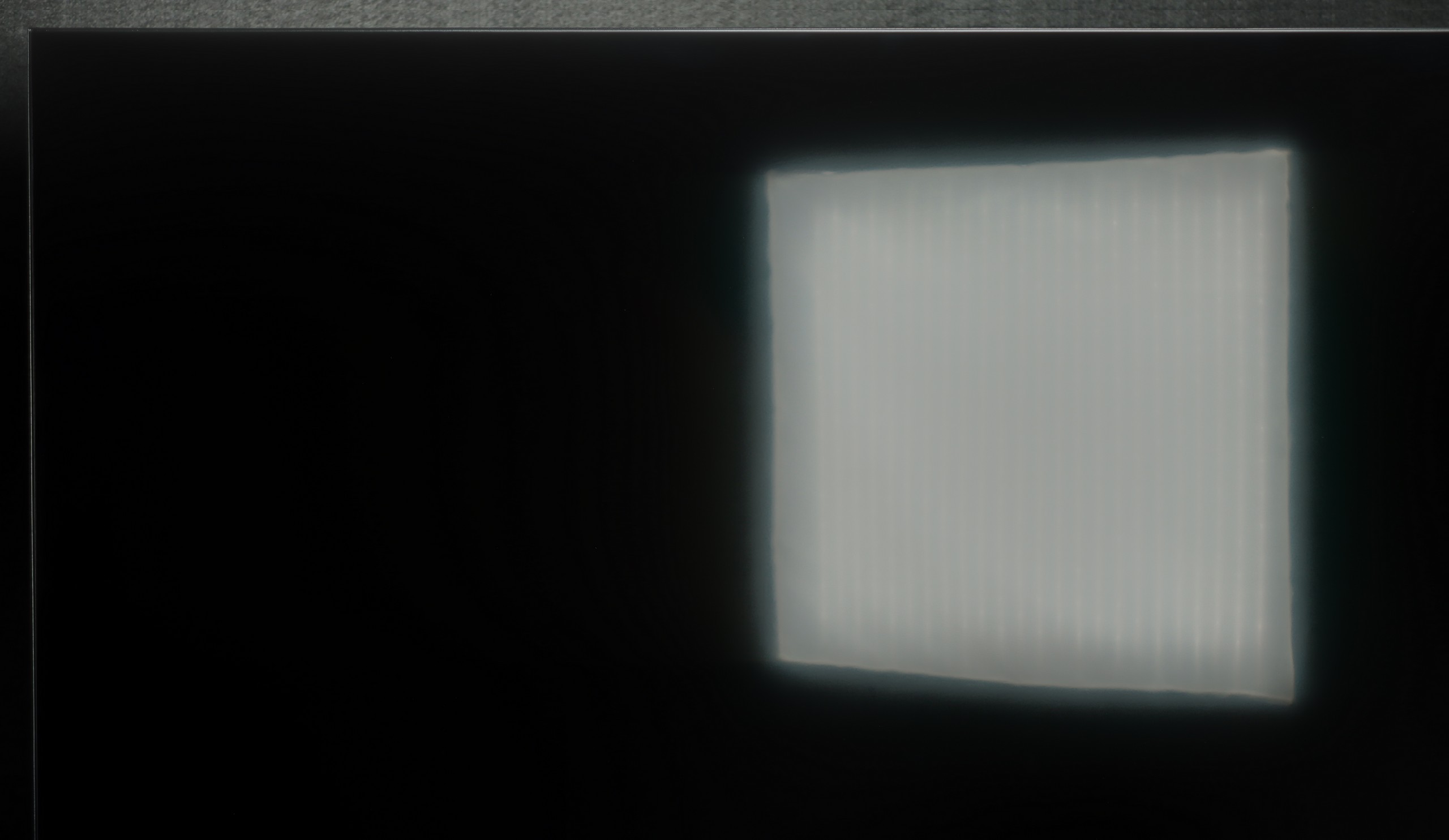

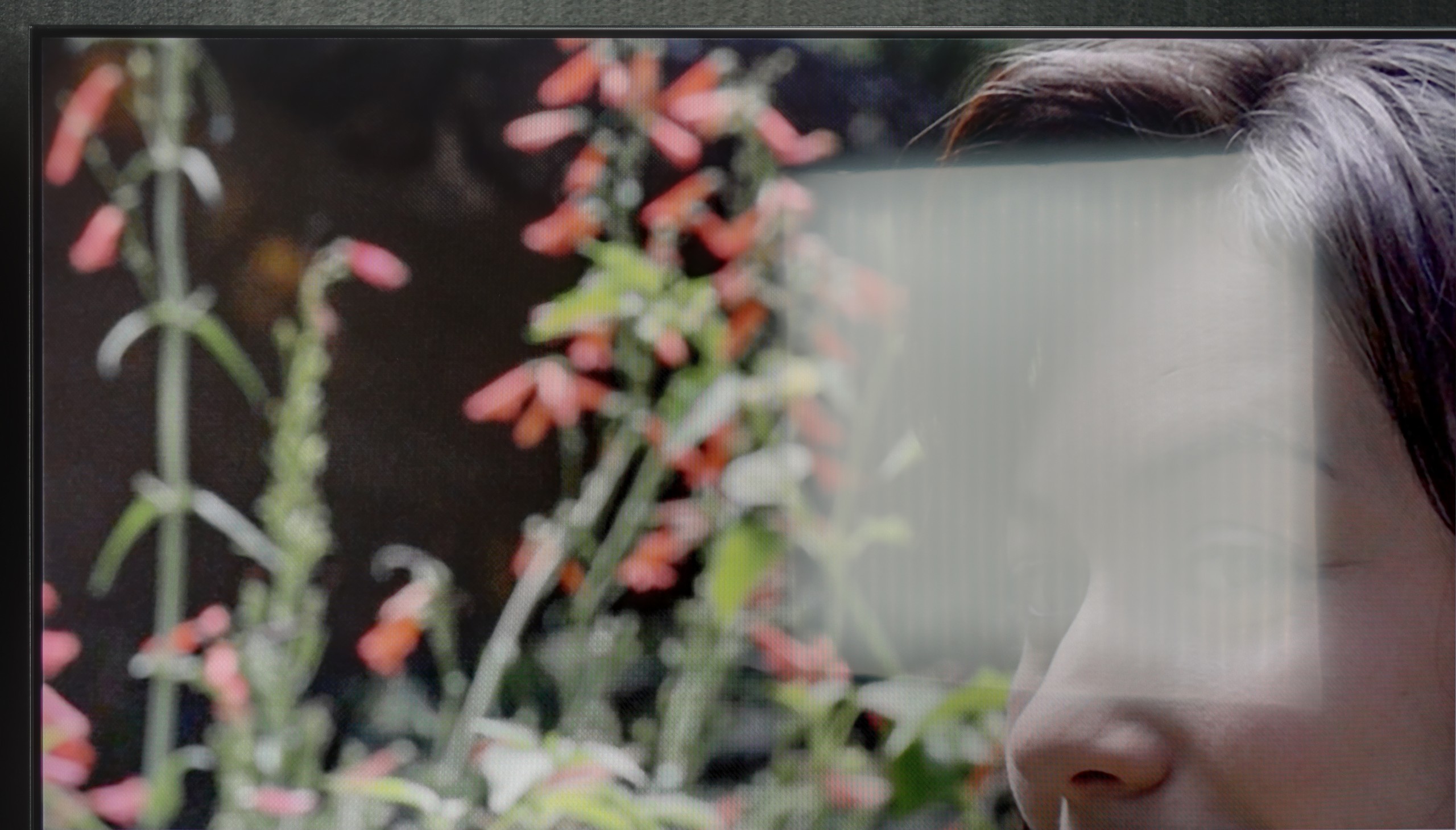
Panel brightness
Philips MLED920 / MLED910: 421 cd/m2
TCL A300W NXTVision: 388 cd/m2
The TCL A300 NXTVision is equipped with a matte panel very similar to the one found in one of its Chinese competitors – the Hisense S7NQ. This type of surface does quite well in reducing reflections, although it must be admitted that it performs worse than Samsung's The Frame, which offers a significantly higher level in this regard. As is usually the case with matte displays, blacks during the day lose depth and appear more grey than black – and this is no different here. Unfortunately, the fact that the A300 is the darkest TV of the three tested doesn’t help either. This gives it a real problem in breaking through in heavily sunlit rooms.
Philips MLED920 performs quite well in everyday use. The satin finish on the panel effectively reduces reflections, and in most moderately sunny living rooms, it manages unwanted glare quite well. However, it's important to remember that this is not a TV that dazzles with brightness – the average value in SDR hovers around 450 nits. In very bright rooms, particularly with large south-facing windows, the screen doesn't always stand up to the intense daylight. In such situations, it's worth supporting it with even light curtains, so viewing comfort doesn't suffer too much.
Panel details
Subpixel Structure:
Panel uniformity and thermal imaging:

TCL A300W NXTVision
Philips MLED920 / MLED910
TV features
7/10
5.5/10
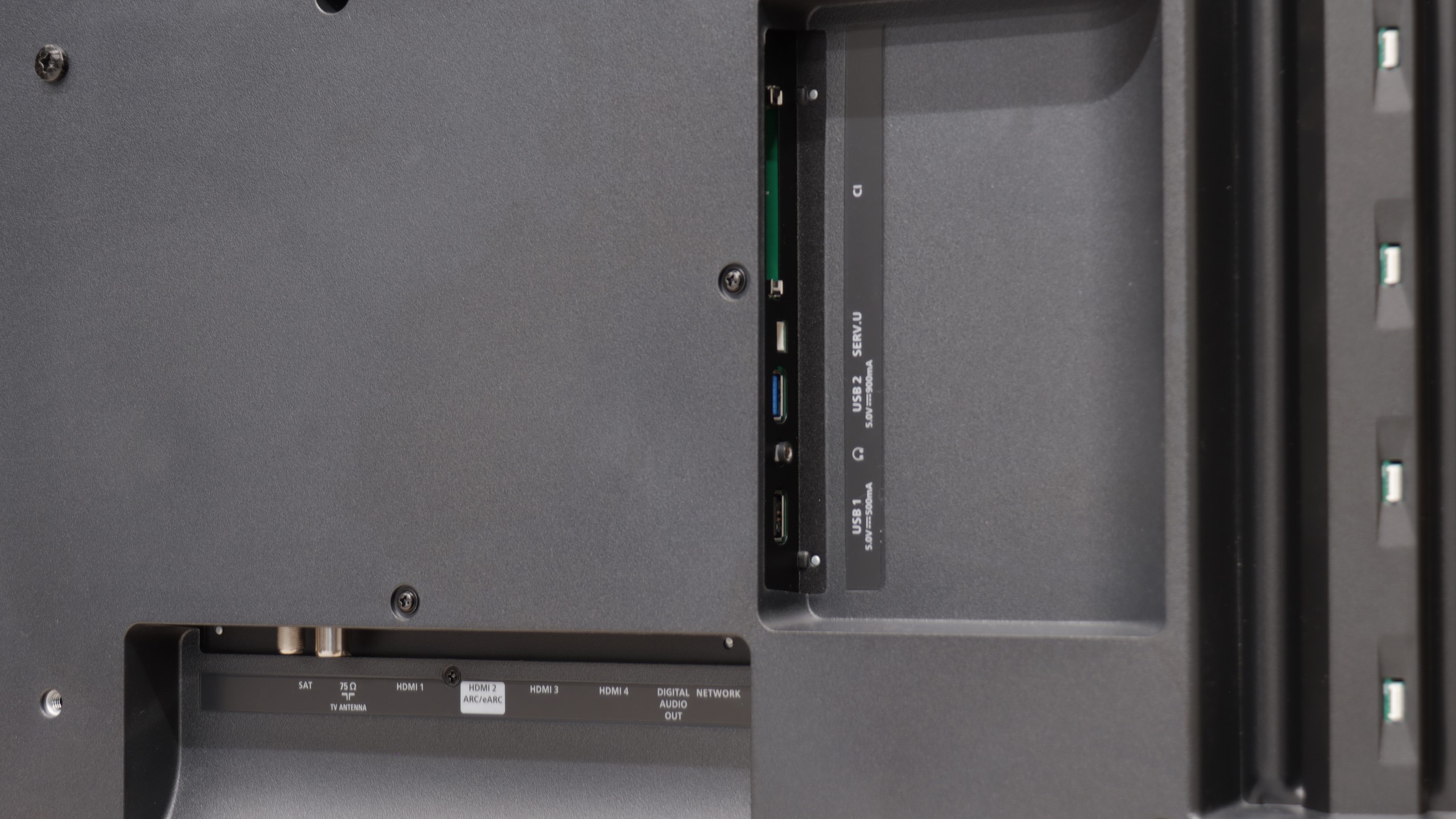
- HDMI inputs2 x HDMI 2.0, 2 x HDMI 2.1 48Gbps0 x HDMI 2.0, 4 x HDMI 2.1 48Gbps
- OutputsToslink (Optical audio), eARC (HDMI), ARC (HDMI)Toslink (Optical audio), eARC (HDMI), ARC (HDMI), Mini-Jack (Headphones)
- Network InterfacesWi-Fi 2.4GHz, Wi-Fi 5GHz, Ethernet (LAN) 100MbpsWi-Fi 2.4GHz, Wi-Fi 5GHz, Ethernet (LAN) 100Mbps
- TV receptionDVB-T, DVB-T2, DVB-S, DVB-S2, DVB-CDVB-T, DVB-T2, DVB-S, DVB-S2, DVB-C
Classic features:
- Recording to USB (terrestrial TV)

- Recording programming
- Picture in Picture (PiP)
- RF remote control (no need to aim)
- Backlit remote control
- Teletext
- Audio only mode
- Bluetooth headphones support
- Simultaneous Bluetooth headphones & TV audio
Smart features:
- AirPlay
- Screen mirroring (Windows Miracast)
- Voice search
- Voice search in native language
- Ability to connect a keyboard and mouse


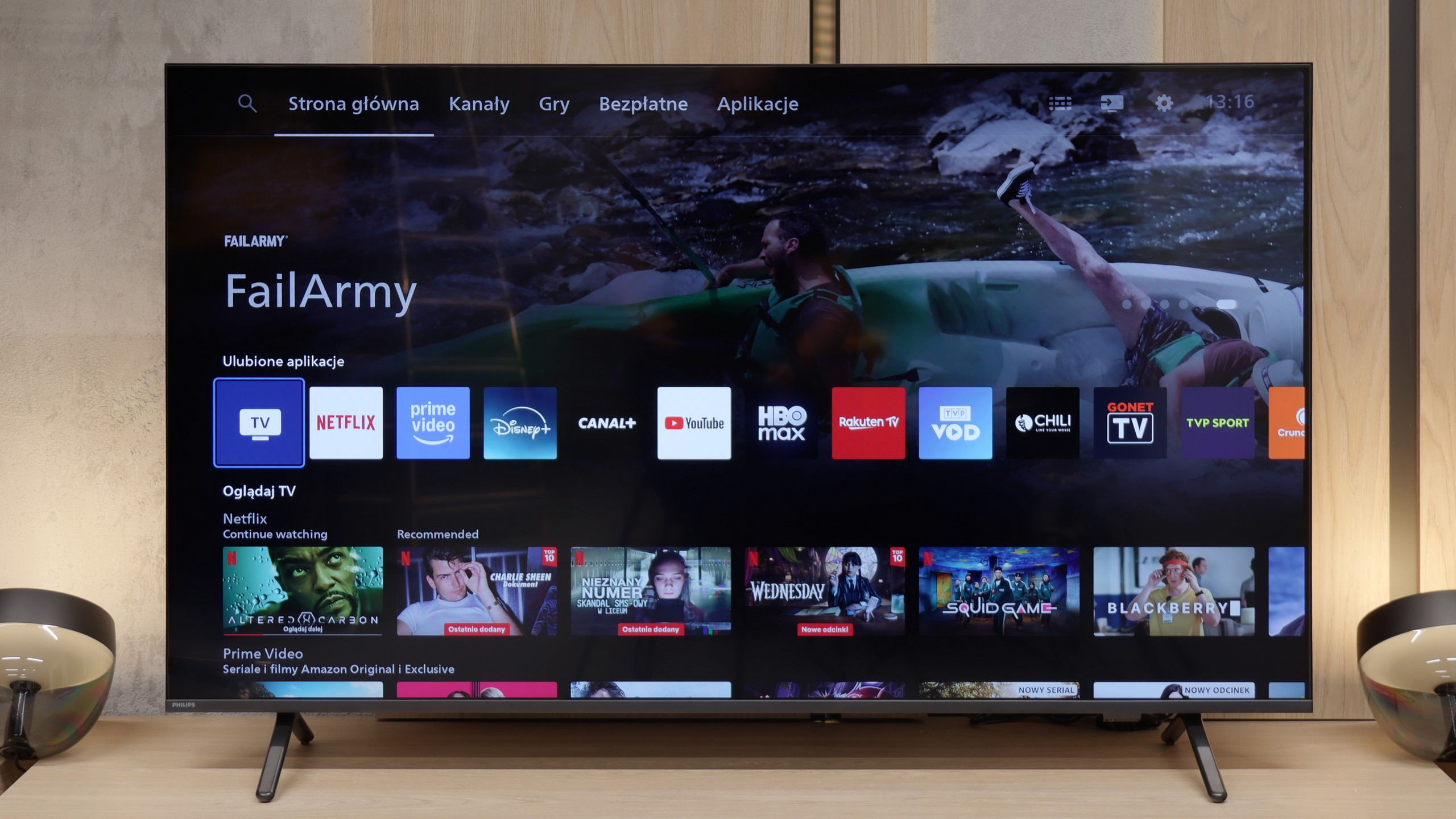
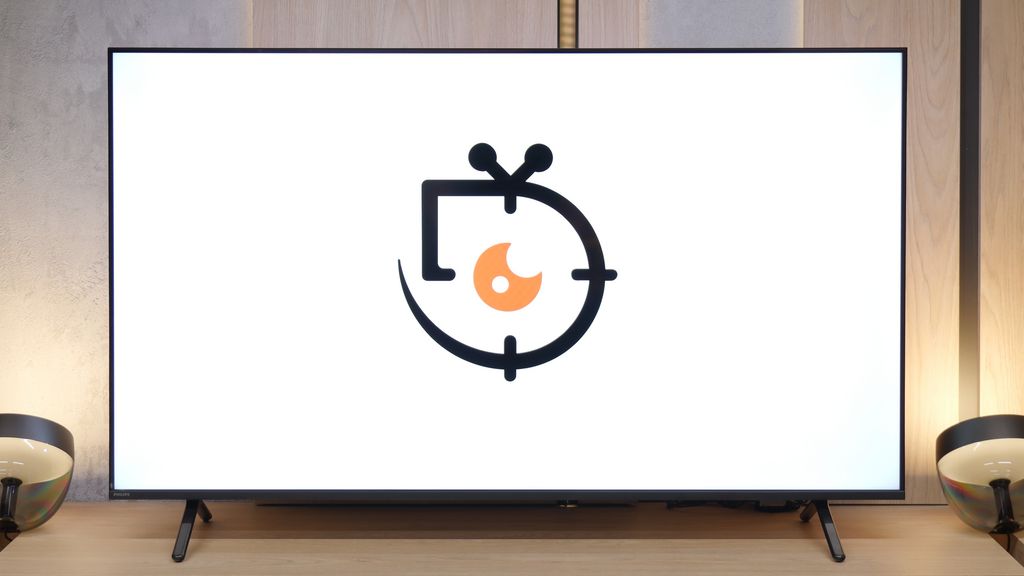
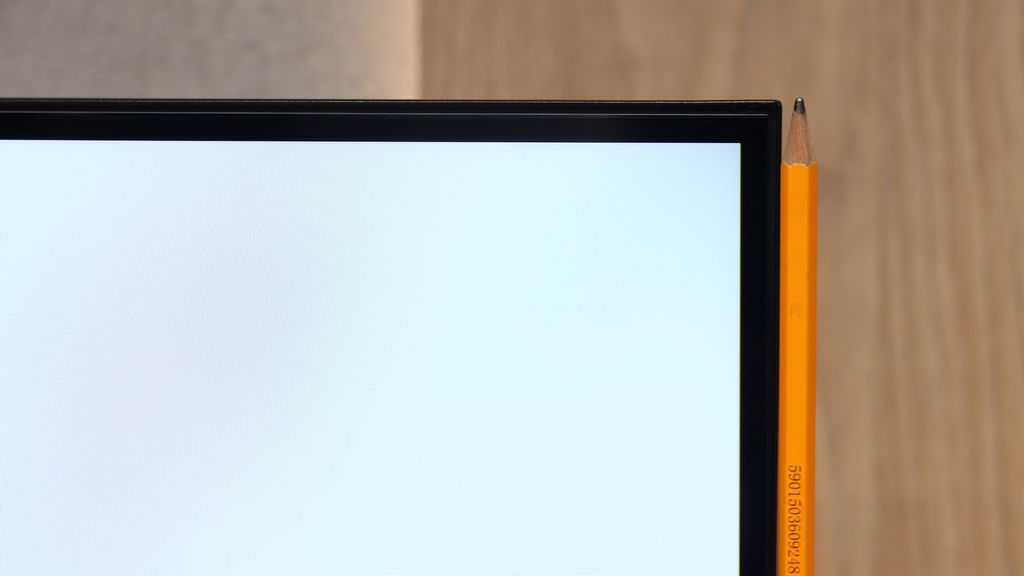
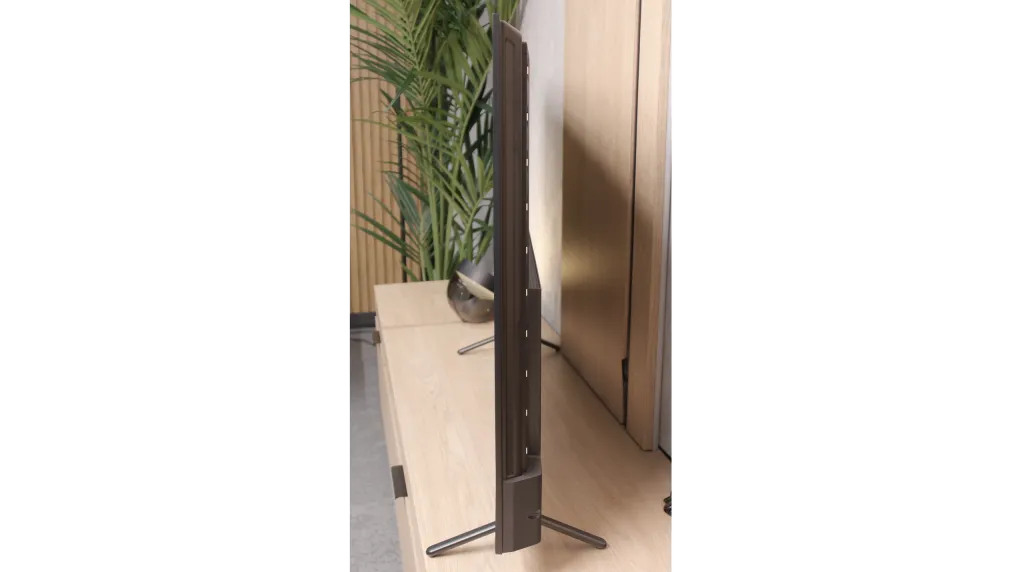
TCL A300 is a television styled as a painting, which in everyday use can successfully pretend to be a work of art hanging on the wall. It is equipped with a special image display mode, additional frames in a light wood tone, and a flat wall mount that allows you to hang the television like a real painting – without any gap from the wall.
A significant advantage of the image mode is that it is completely free. We have access to several dozen works from which we can choose one to be displayed while in standby – instead of a black screen, the image we selected remains on the wall. The quality of graphic reproduction is okay, but it must be admitted that it clearly falls short of that from Samsung's ART Store. Although access to images there is paid, the quality of the scans is significantly better – you can see the texture of the paint, canvas, and details. In the TCL A300, it resembles high-quality photos rather than realistic reproductions of artworks. Additionally, the implementation of the image mode in the system leaves a lot to be desired. For example – if we set the brightness to 10% in image mode, that same value automatically transfers to the regular viewing mode, where we could easily set the brightness to 50% or even 100%. It also works the other way around – when we set the brightness to 100% in regular mode, after switching to gallery mode, the images are displayed with the same maximum brightness, shining too intensely and losing the whole effect of a “picture on the wall.” These are minor but irritating errors that can spoil the experience of what was supposed to be visually subtle and elegant.
Moving on to more classic functions – the A300 runs on the Google TV system, which currently offers by far the largest selection of applications (full list available below). The responsive voice assistant with support for the Polish language also deserves a big plus. As standard – as with most TCL televisions – the USB recording function or picture-in-picture (PiP) mode was missing.
Smart TV – Titan OS
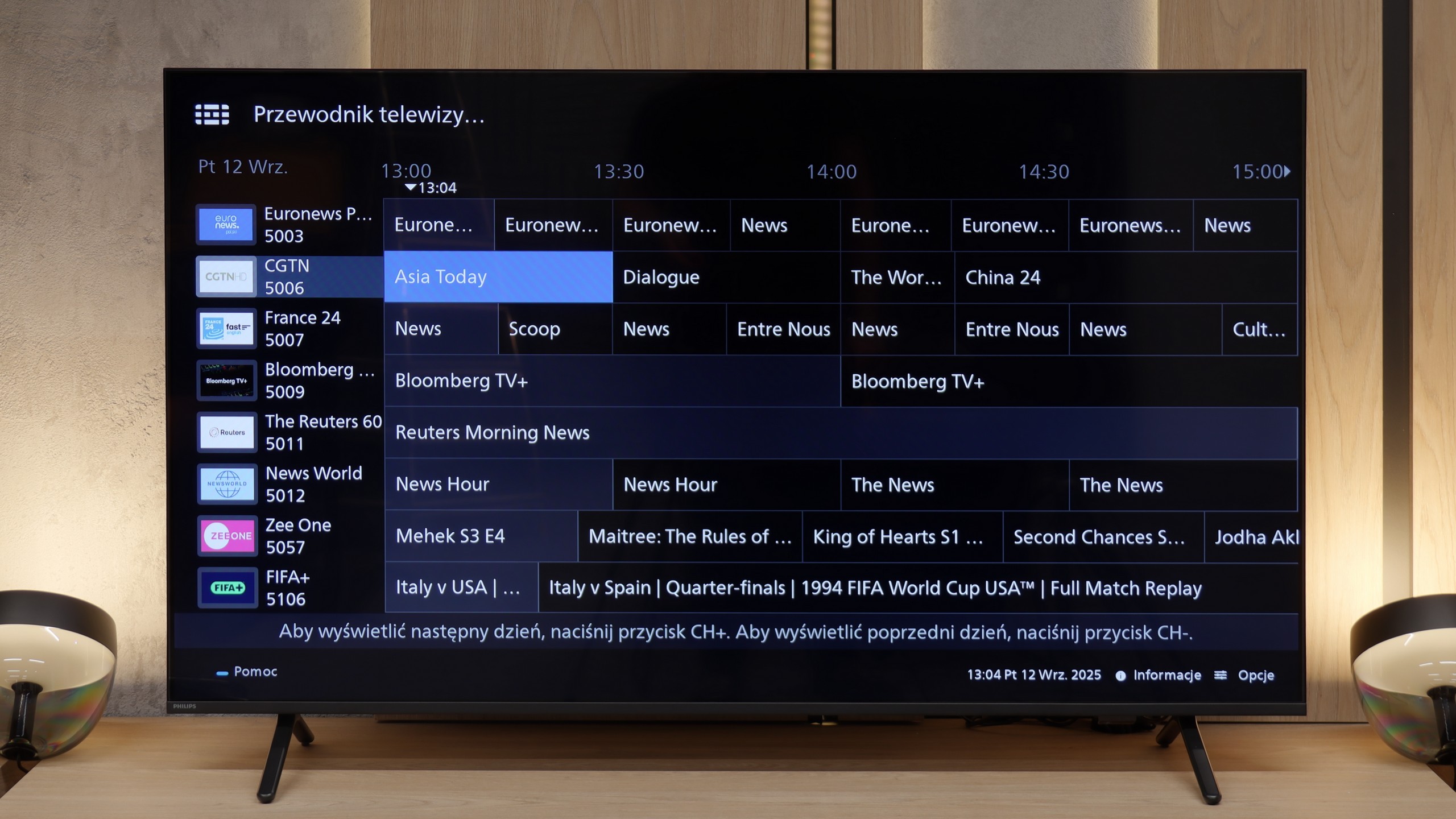
Philips MLED920 uses the proprietary Titan OS, which is just starting its adventure in the TV market and unfortunately, this is evident at every turn. On one hand, we have basic features – such as AirPlay support or the ability to mirror content from a smartphone, but on the other hand, its limitations quickly become apparent. Screen mirroring works only with a phone, but not with a laptop. Voice search? Yes, but it only works with Amazon Alexa and in languages supported by this assistant. The system operates fairly quickly, but every now and then it can "fail" and gives the impression of something that is underdeveloped and still evolving.
Classic TV Functions
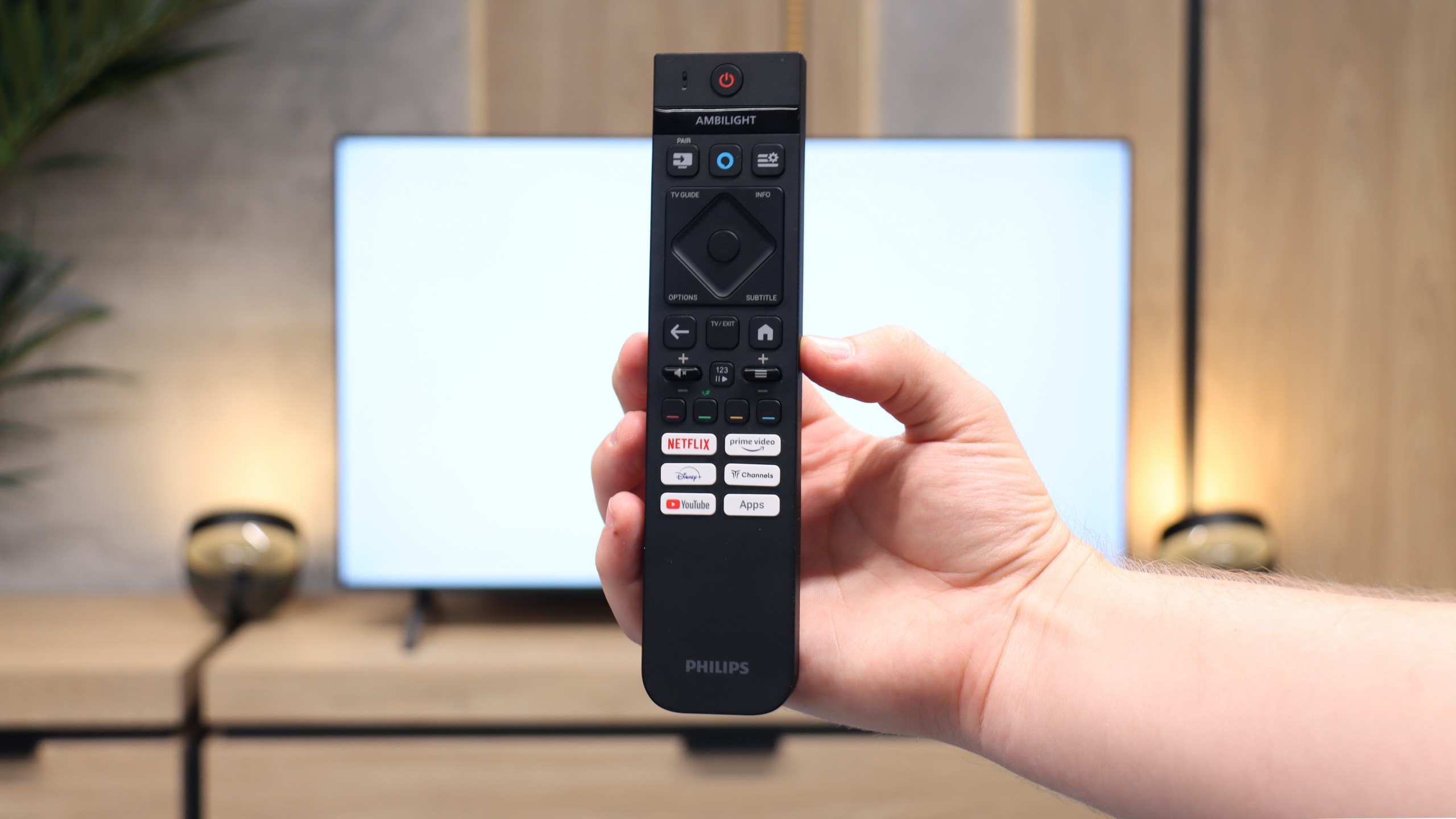
Titan OS also doesn't excel in terms of classic TV functions. Aside from the hybrid remote with a numeric keypad – which is indeed backlit and thoughtfully designed in two modes, it unfortunately operates on infrared – there’s nothing here that would truly set the MLED920 apart from the competition. There’s a lack of USB recording or a PiP function, and such solutions could be useful in this class. From unusual additions, we have an analog output in the form of a jack, which allows for connecting headphones or older speakers. It’s a small nod to users who still use older equipment.
Ambilight TV
What definitely draws attention away from the shortcomings of Titan OS is the unique, three-sided Ambilight system. Here, Philips still plays in its own league and can impress those who haven't experienced this feature before. The colour backlighting that reacts to the content on the screen adds a unique atmosphere to viewing sessions and is something that the competition does not offer in a similar form. It is precisely Ambilight that is meant to ensure that other shortcomings – both system-related and functional – take a back seat.
Apps
9.6/10
6.7/10






















Playing files from USB
8.9/10
8.5/10
Supported photo formats:
Maximum photo resolution:

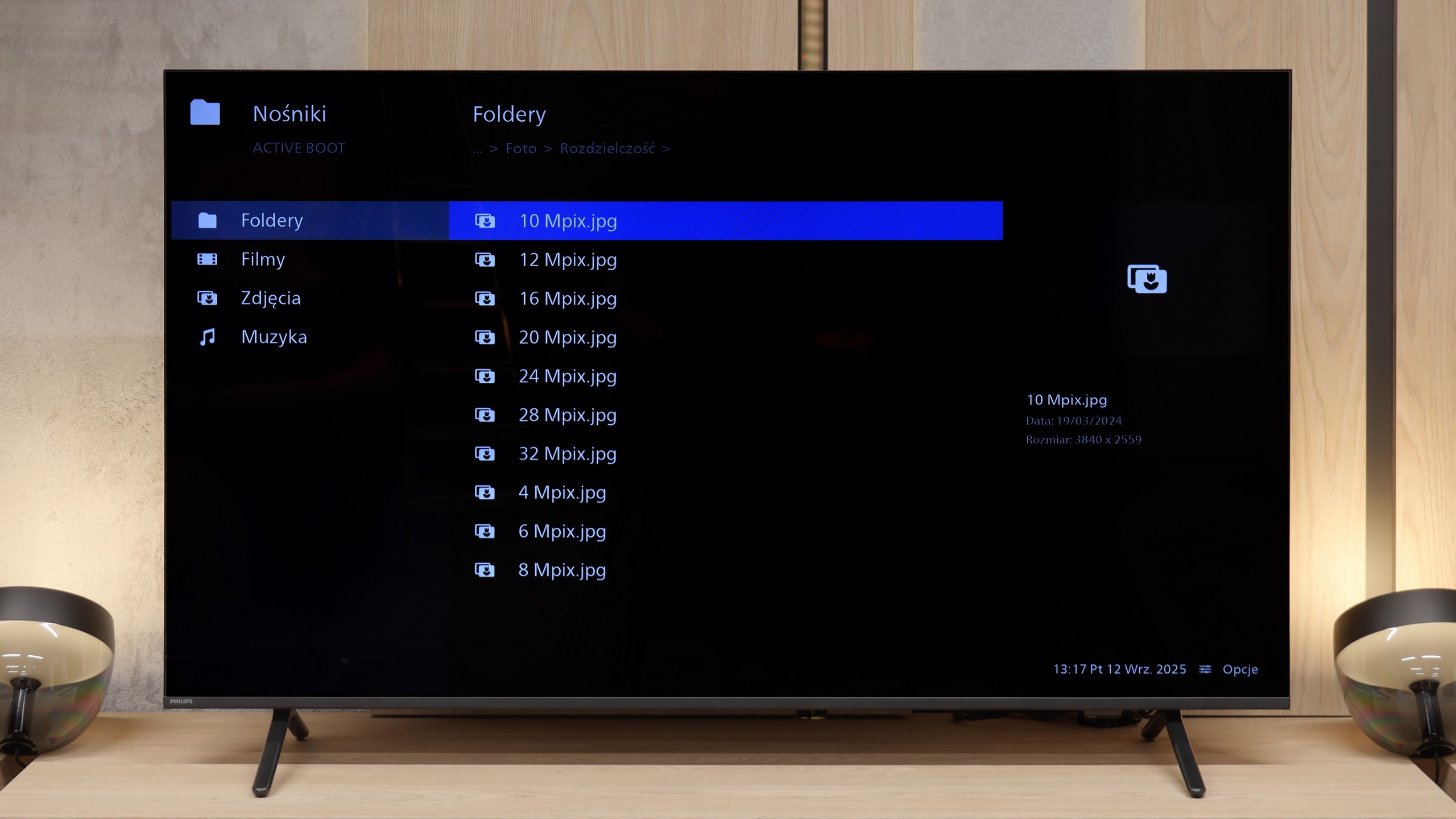
The built-in player on the TCL A300 works as it should – most popular video and photo files play without any problems. It lacks support for Apple's HEIC format (which is quite common in many TVs), but most users still use AirPlay, so it shouldn't be a major issue. If someone isn't satisfied with the default player, the Google TV system offers plenty of options – you can easily install an alternative app that better suits your tastes. Nevertheless, it's worth noting that the factory solution is completely sufficient for everyday use.
The built-in player in the Philips MLED920 works quite well and handles most popular audio and video files without any major issues – just as you can see in our test table. So there’s no worry about typical movie or music formats. The only complaint we can have is regarding its rather selective support for photo formats and some resolutions.
Sound
6/10
6.2/10
- Maximum volume-88dB
- Dolby Digital Plus 7.1
- Dolby True HD 7.1
- Dolby Atmos in Dolby Digital Plus (JOC)
- Dolby Atmos in Dolby True HD
- DTS:X in DTS-HD MA
- DTS-HD Master Audio
When it comes to sound, the TCL A300W – like its competitors – sounds quite... flat, after all, we are talking about a super slim television. For everyday watching of news or series, this level is more than sufficient, but during movie screenings, we might noticeably miss depth and space. On a positive note, it’s worth mentioning that the television supports both Dolby Atmos and the increasingly rare DTS:X – which provides more options when connecting an external audio system. It’s also worth noting that the A300 PRO model is equipped with a dedicated, flat soundbar. And it’s no ordinary soundbar – it sounds better than most of the televisions we’ve tested.
The sound in the Philips MLED920 is probably not the element that will impress you the most. It sounds fairly flat, lacking depth and clearer bass, which means movies or concerts don't have that extra layer of immersion that a better audio system can provide. However, it must be said that the volume is at a really decent level – the TV can ramp up to even 88 decibels. A big plus of the MLED920 is not so much the sound quality itself, but the support for audio formats. Philips has ensured compatibility with virtually all the major standards, including Dolby Atmos, DTS, and Dolby TrueHD 7.1. This means that if someone decides to connect an external soundbar or amplifier, they won't encounter any limitations and will be able to enjoy the full cinema sound.
Sound Quality Test
No sound test video
Acoustic Measurements
No acoustic data
88dBC (Max)
75dBC