Testing the Sony Bravia 7 quickly revealed that this television can really do quite a bit. Although it is the "lowest" model from the Japanese manufacturer in the new 2024 lineup, it doesn’t feel like a compromise at all. The picture impressed us with its depth of black and the detail in bright scenes – thanks to the Mini LED technology that makes a difference. When we watched movies in Dolby Vision, it was immediately evident how much HDR adds life to every scene. The intense colours and great dynamics made watching evening screenings a genuine pleasure for us. Using this television daily also surprised us positively. The Google TV system worked flawlessly, and the selection of apps was large enough that we easily found everything we wanted to watch. The backlit remote is a small but practical addition – in the evenings, we greatly appreciated not having to fumble around for the buttons. The older content we watched improved in quality thanks to advanced image processing. When we checked the TV for gaming, it also made a good impression on us. The 120 Hz refresh rate ensured smooth visuals, and the low input lag allowed us to enjoy fast-paced and dynamic gameplay. We particularly liked the Game Bar feature – easy access to settings during gameplay is something that every gaming enthusiast will appreciate. The television handled even more demanding titles excellently. However, not everything was perfect. Only two HDMI 2.1 ports, one of which is designated for eARC, could be an issue if someone plans to connect multiple devices at once. Additionally, when we watched the television at an angle, we noticed that the picture quality was not as good as when viewed head-on – the lack of a layer improving viewing angles was noticeable here. Nevertheless, the Bravia 7 is a television that pleasantly surprised us. It combines excellent picture quality with functionality that works well both in everyday use and during evening screenings or dynamic gaming sessions. The minor limitations are noticeable, but they do not overshadow the whole package, which definitely deserves the attention of buyers.
- Matching (Score) |
- Our verdict |
- TV appearance |
- Where to buy |
- Contrast and black detail |
- HDR effect quality |
- Factory color reproduction |
- Color reproduction after calibration |
- Smoothness of tonal transitions |
- Image scaling and smoothness of tonal transitions |
- Blur and motion smoothness |
- Console compatibility and gaming features |
- Input lag |
- Compatibility with PC |
- Viewing angles |
- Daytime performance |
- Panel details |
- TV features |
- Apps |
- Playing files from USB |
- Sound
Sony Bravia 7 (XR70) vs Hisense U8Q
 Direct comparison
BRAVIA 7 / XR70
U8Q

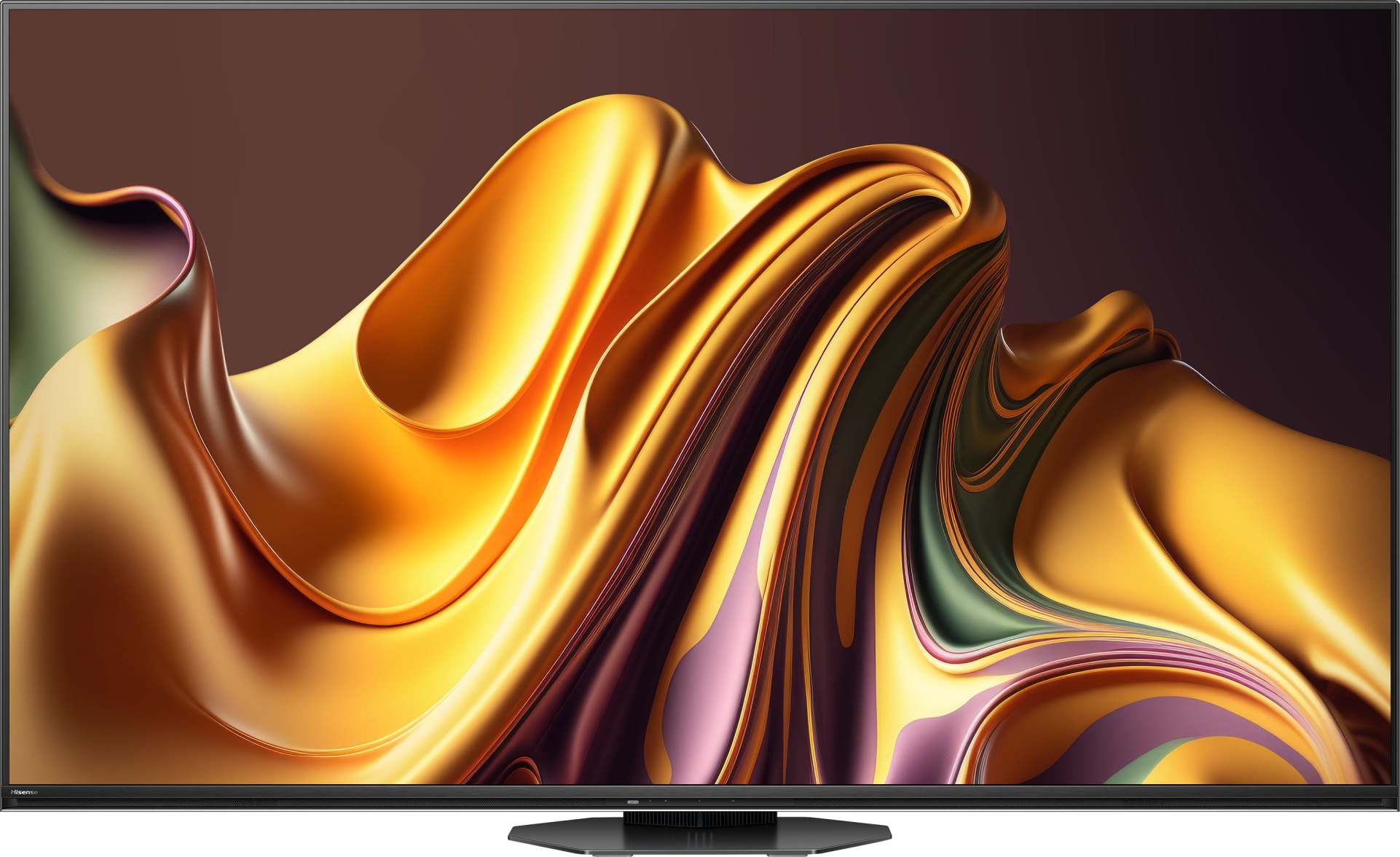
Panel type: LCD VA
Resolution: 3840x2160
System: Google TV
Model year: 2024
Complete the survey to find out the result
Panel type: LCD VA
Resolution: 3840x2160
System: VIDAA
Model year: 2025
Complete the survey to find out the result
Overall rating
8.1
8.0
 Movies and series in UHD quality
 7.7
7.8
 Classic TV, YouTube
 7.6
7.6
 Sports broadcasts (TV and apps)
 7.6
7.1
 Gaming on console
 8.4
8.5
 TV as a computer monitor
 7.6
8.4
 Watching in bright light
 8.4
8.2
 Utility functions
 8.8
9.4
 Apps
Apps 9.6
7.7
 Sound quality
 7.8
7.8
Complete the survey to find out what fits your preferences
Advantages

High brightness
Good contrast
Great Dolby Vision support
Google TV – intuitive system, easy access to apps, backlit remote
Very good built-in speakers
Excellent digital processing
Good for gamers - HDMI 2.1, multiple features, low input lag
Great blacks and contrast
Incredibly high brightness
Full package of HDR formats: HDR10, HDR10+, Dolby Vision
Good motion smoothness - 165Hz panel
Exceptional usability in difficult lighting conditions (High brightness + New anti-reflective coating on the panel)
Many features for gamers, VRR, ALLM, HDMI 2.1, 288Hz for PC
All 3 ports in HDMI 2.1 standard (Finally!)
USB-C with video signal output capability (Displayport)
Many features in the Vidaa system
Support for DTS and Dolby Atmos
Disadvantages

No extension coating for wide viewing angles at this price
Only 2 HDMI 2.1 ports - including one ARC
Missing some apps on the Vidaa operating system
At maximum volume, the television slightly shakes
The television tends to "burn out" the image in 4K HDR content.
Our verdict
Hisense U8Q is a television that makes it hard not to feel that the manufacturer approached the topic with the ambition of a top student. The picture is strong, vibrant, and contrasted – as if it’s shouting: “look, I can do more than most at this price!” And indeed, there is something to this. The secret lies in the large number of dimming zones in Mini-LED technology. Thanks to them, HDR doesn't just end with promises from the brochure, but can truly impress – especially during evening screenings. It's also hard to complain about motion smoothness. Watching matches and fast-paced games is enjoyable, and while the ball may leave a slight trail at times, it will be a negligible detail for 99% of viewers in everyday watching. Gamers also have reasons to be pleased here – although it should be mentioned right away that there is no HGiG feature. Other than that, it’s really good: low input lag, three HDMI 2.1 ports, and a full set of gaming features make the U8Q stand out as one of the more interesting Mini-LEDs for console fans. Of course, there are no perfect products. The television still carries some "miniLED" quirks, and the Vidaa system – although packed with features – can be less intuitive and has a more modest selection of apps compared to competing platforms. But are these serious flaws or rather minor drawbacks in the context of price and what we actually get? We leave that question for you to answer!
TV appearance



Contrast and black detail
7.7/10
8.6/10
Local dimming function: Yes, number of zones: 512 (32 x 16)
Local dimming function: Yes, number of zones: 2048 (32 x 64)
Contrast:


Result
190,000:1

Result
14,700:1

Result
45,000:1

Result
4,400:1

Result
4,800:1
Result
1,024,000:1
Result
140,000:1
Result
35,000:1
Result
22,350:1
Result
22,300:1
Halo effect and black detail visibility:

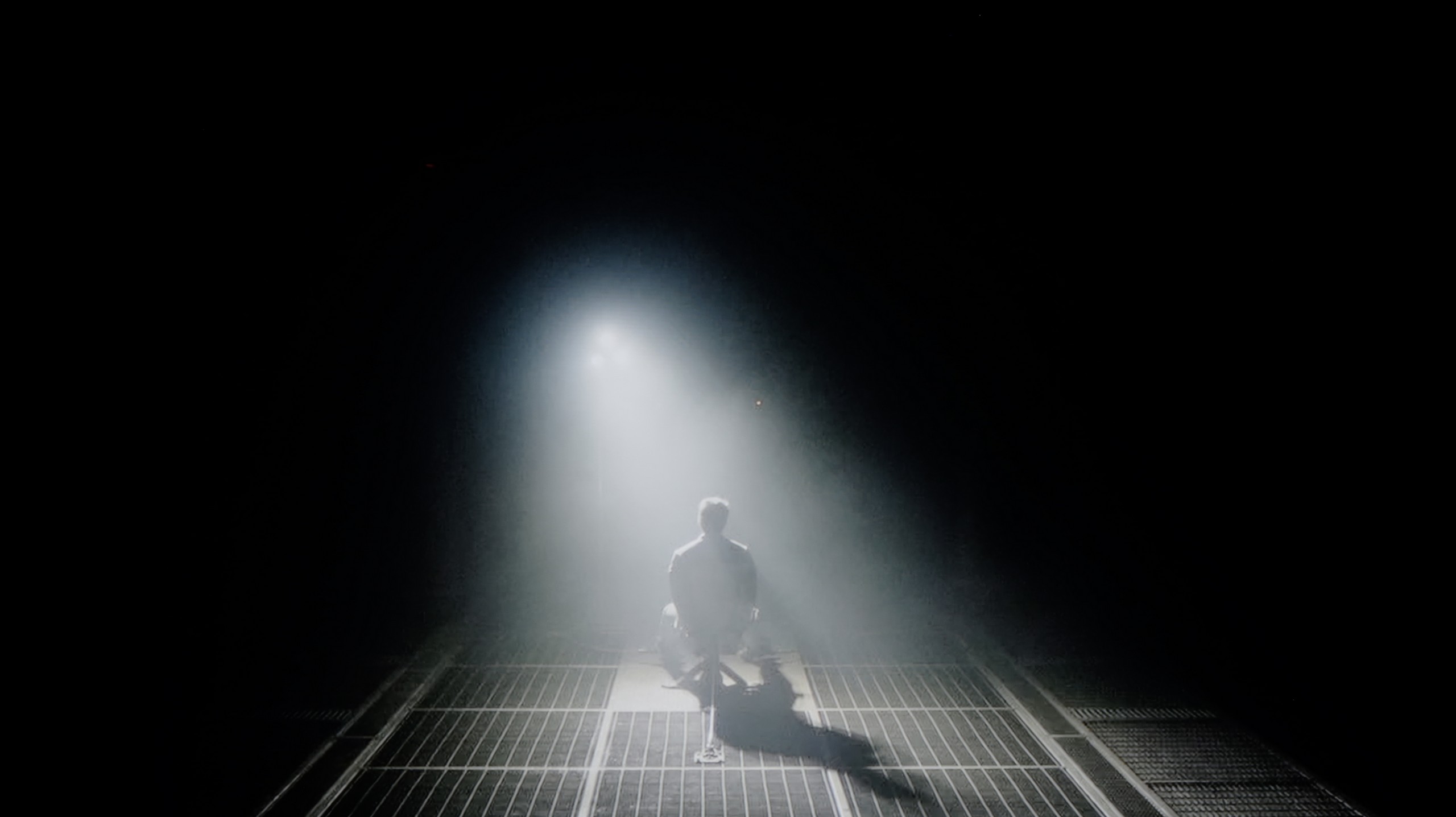
Check the visibility of bright lights on a dark background. Mini-LEDs often struggle with this. The photo does not compare black levels – that’s what the video below is for.
The video accurately shows differences in contrast and black levels between TVs, as well as potential issues: halo around bright objects or Mini-LED zone operation visible as brightness jumps.
The Sony BRAVIA 7 television with a VA panel and MiniLED backlighting technology offers excellent black quality. The tested 65-inch variant is equipped with 512 dimming zones, allowing for very good contrast, particularly during demanding movie scenes. Naturally, larger sizes of the television have more zones, which positively affects contrast and image depth. During tests, in scenes from the film "Oblivion," the BRAVIA 7 handled dark and bright areas exceptionally well, providing decent separation of lights (the light effect did not merge into a large blob) from deep blacks. However, as is often the case with televisions featuring local dimming, certain difficulties arise with small, bright light sources. In more challenging sections (e.g., scenes 4 and 5), it's noticeable that the television "struggles" to maintain high brightness for these elements, which impacts contrast – bright objects are either too dark (resulting in poor contrast) or exhibit a slight halo effect around them. In a scene from the film Sicario 2, the operation of the zones can be seen, causing the aforementioned effect, though it is minimal. Despite these minor imperfections, the overall impression is positive – the local dimming algorithm works quite well, ensuring that the picture maintains high contrast, and the quality of blacks and details is satisfactory.
The unit we tested, the Hisense U8Q in 65 inches, is equipped with a VA panel that offers high native contrast on its own. However, this is not the biggest strength of this model—the key lies in the Mini LED backlighting. With the use of thousands of dimming zones and a well-tuned light management algorithm, the contrast in the U8Q can be described as excellent, especially for a TV of this technology.
The best results reach around a million to one—a result that is impressive and places the U8Q among the top Mini LED TVs. Yes, there are certain issues and even drops in contrast, but they are not as dramatic as with many other models in this class that we have tested on our portal. It's also worth noting that like every Mini LED TV, the U8Q is not completely free from typical imperfections—sometimes the picture can be dimmed too much, or there may be slight blooming effects with a halo. However, this does not change the overall impression: the contrast in the Hisense U8Q is stunning and is one of the greatest assets of this model.
HDR effect quality
7/10
7.6/10
Luminance measurements in HDR:

Result
1322 nit

Result
624 nit

Result
1133 nit

Result
457 nit

Result
989 nit
Result
2195 nit
Result
725 nit
Result
1652 nit
Result
485 nit
Result
1541 nit
Scene from the movie “Pan” (about 2800 nits)


Scene from the movie “Billy Lynn” (about 1100 nits)

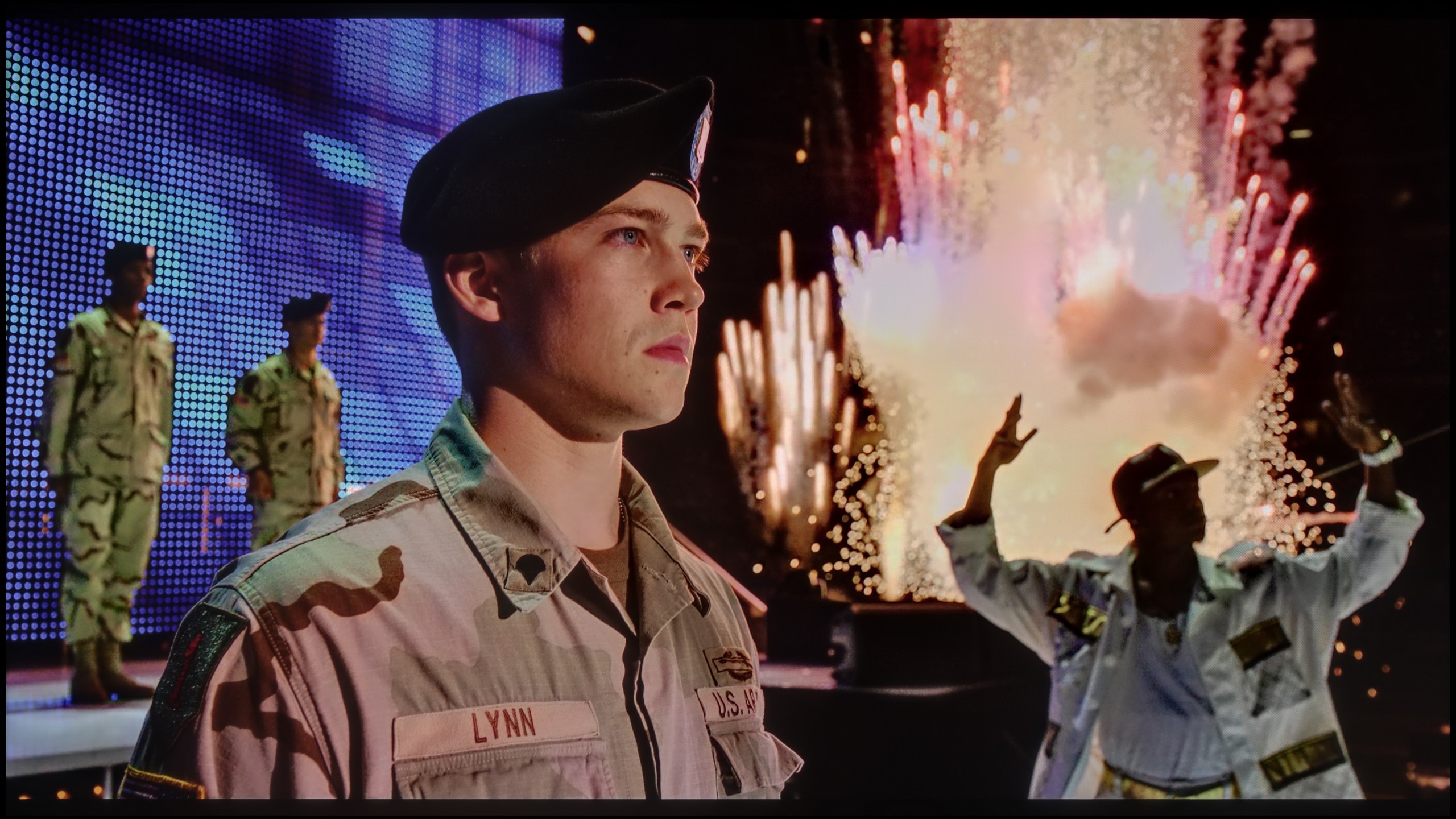
The photos show two HDR10 movies. 'Pan' is one of the brightest productions ever made, while 'Billy Lynn' (soldier) has brightness typical of streaming (Netflix, Prime, HBO MAX). Notice the intensity of effects and detail in whites.
Static HDR10


The photos present the visibility of white details in various HDR formats. They do not show brightness differences between TVs (these can be compared in the previous gallery).
Dynamic: Dolby Vision
Dynamic: Dolby Vision


The photos present the visibility of white details in various HDR formats. They do not show brightness differences between TVs (these can be compared in the previous gallery).
HDR luminance chart:
Hisense U8Q
Sony Bravia 7 (XR70)
Now that we know the TV handles contrast well, let’s check how it performs in terms of HDR effects. The luminance graph shows very high capabilities for this model – 1500 nits is truly an impressive result. HDR effects are particularly striking in scenes where most of the screen is covered in light, such as in the 1st, 3rd, and 5th test scenes. Minor imperfections, typical of this technology, are still visible with very small light effects, as seen in the scene from the film "Sicario 2," where brightness drops to 500 nits. Although these aren't staggering results, they can be considered decent. Additionally, it's worth praising the TV for its high coverage of a wide colour gamut – DCI-P3 at 96%, which allows for vibrant, saturated colours.
When it comes to HDR, the Hisense U8Q shows its claws. On paper, meaning in synthetic measurement tests, the TV can "push out" nearly 4000 nits of peak brightness. This is a value that most models can only envy. In practice, this translates to very strong light effects in movies – in some scenes we managed to measure real levels from 1500 to 2000 nits, which is a level usually reserved for the absolute top-tier TVs on the market.
Of course, it's not always so perfect. In small, point-like elements, brightness can drop – a good example is scene number 4 from the movie Sicario 2, where instead of thousands of nits we get about 500. But it's worth noting that the effect doesn't disappear completely – the light is still visible, and the image doesn't appear artificially dimmed. This is a typical issue with Mini LEDs, so it’s hard to consider it a major drawback.
However, a huge plus has to be granted for colour reproduction. Thanks to additional coatings improving colour saturation, the U8Q almost covers the entire DCI-P3 colour space (98%), and for the wider BT.2020 gamut it achieved over 80%. This is an excellent result that makes HDR films look juicy, intense, and just very cinematic.
Factory color reproduction
6.7/10
7/10


This gallery shows how colors change after professional TV calibration. If you notice the difference, we recommend ordering this service at SkalibrujTV.com.
Factory Mode
After calibration


This gallery shows how colors change after professional TV calibration. If you notice the difference, we recommend ordering this service at SkalibrujTV.com.
Factory Mode
After calibration
The IMAX Enhanced mode on the Sony BRAVIA 7 TV is definitely the best mode available on this model, although it is not without its flaws, as its name might suggest. The biggest issue is white balance – both in HD and 4K HDR content, there is a noticeable dominance of the red colour, which causes the image to take on pinkish hues. This is particularly evident on the test image with snow, where the pinkish tint becomes very noticeable. Errors in the Colour Checker test also confirm these deviations – although they are not catastrophic, there is a tendency to lean towards warmer tones. In terms of brightness characteristics, the gamma remains at a decent level with a slight spike but without major issues. However, the biggest challenge is with 4K material. It is clear that the EOTF curve is significantly above the reference graph, making the image appear overly bright.
We have to admit that when the U8Q arrived in our editorial office, we were slightly surprised… and in a good way. Usually, white balance in televisions immediately requires adjustment – it can be too warm or too cold, which immediately causes strange colour errors. Meanwhile, here the situation looks really good straight out of the box. Of course, we’re talking about our unit, so there’s no guarantee that every model will be tuned as well, but in our case, the first impressions were very positive. The only more noticeable issue was related to how the television manages brightness. Looking at the EOTF chart, it’s clear that the U8Q tends to brighten small elements on the screen. This, in turn, caused what we mentioned earlier – slight overexposure and the impression that the whole scene is a bit too bright. However, this is not a flaw that negates the picture, rather an effect characteristic of this model.
Color reproduction after calibration
9.1/10
8/10

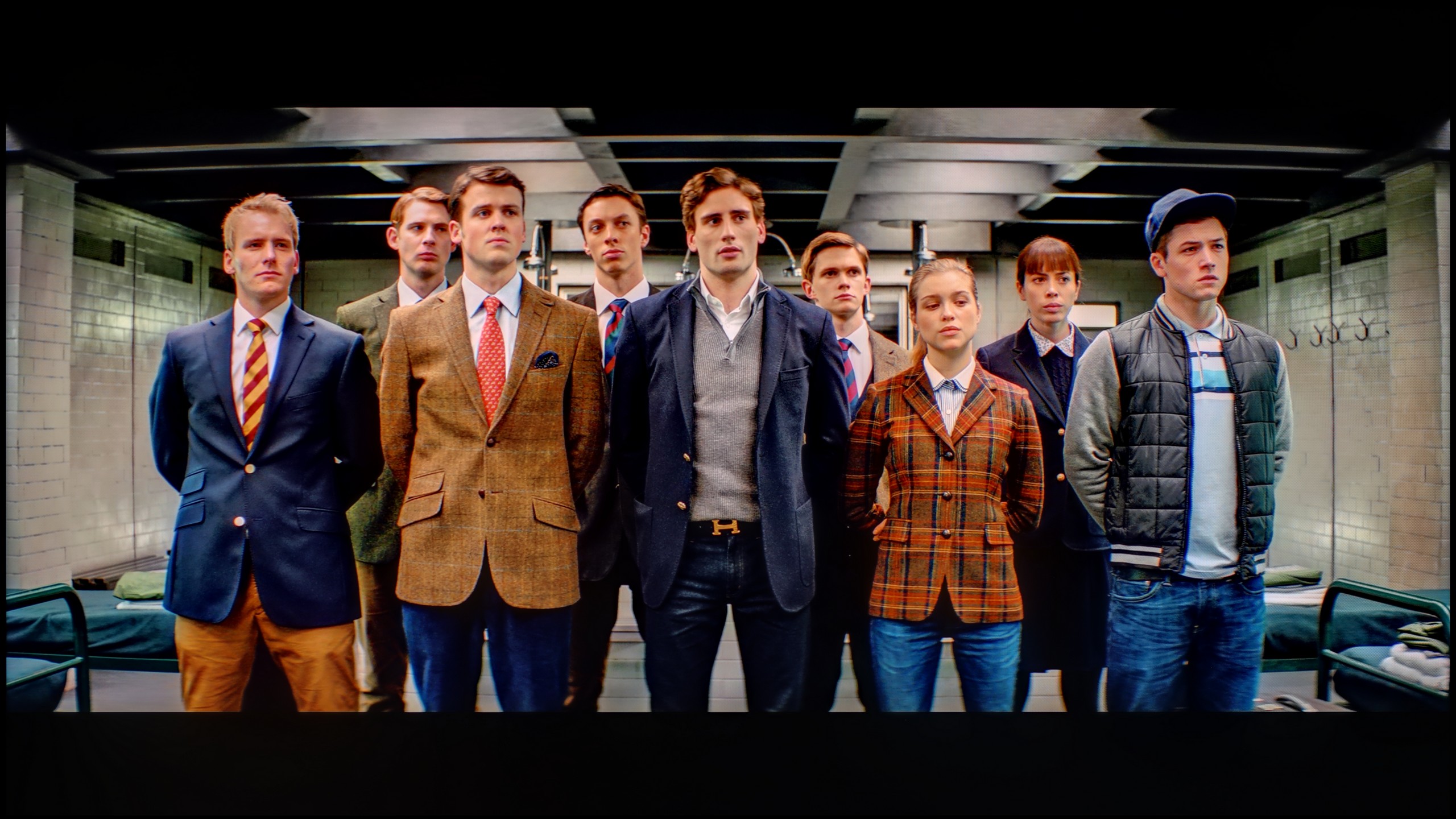
The photos show how movies look on the TV. Pay attention to black detail visibility, colors, and shadow tint.


The photos show how movies look on the TV. Pay attention to black detail visibility, colors, and shadow tint.
Sony BRAVIA XR70 offers a wide range of tools that allow you to customise the image to your own preferences, enabling significant adjustments to the settings. White balance has been freed from the red colour dominance issue – snow no longer takes on pink hues, which was previously noticeable. Although there are slight deviations in the final part of the white balance chart regarding a drop in blue colour, they are acceptable and difficult to notice in everyday use. The Colour Checker test confirms that colour reproduction errors are no longer as pronounced and rarely exceed a value of 2, which is a very good result. As for brightness, gamma, although it didn't require major improvement, has been slightly adjusted. However, the most significant change has been noted in the EOTF curve – the television no longer has issues with excessively brightening the entire image in 4K materials. However, upon closer examination and incorporating the EOTF characteristics in film materials, some limitations of the television become apparent due to the previously discussed dimming algorithm. Some small elements may be slightly more illuminated, but these errors are minor enough that most users won't notice them. Overall, the calibration results are very, very positive.
Of course, we wouldn’t be ourselves if we didn’t make adjustments to the white balance. After calibration, we managed to level the SDR signal to near perfection – older films, YouTube content, and classic television looked nearly ideal on the U8Q. It’s truly an impressive level that shows this model can do a lot if given a bit of help. Unfortunately, the situation is different with HDR content. The colours themselves don’t pose much of a problem, but the biggest issue with the U8Q remains the EOTF brightness characteristics. In practice, the television tends to "shoot" above how the image should originally look. It’s this slight "blowout" we noticed earlier in comparisons with the best screens on the market. It’s a bit of a shame that this characteristic can't be completely tamed – if we could maintain equally good brightness control in HDR as we do in SDR, we would be looking at an absolutely reference-level image.
Smoothness of tonal transitions
9/10
8.9/10



These are selected scenes that show smooth tonal transitions from one color to another. If you see distinct banding, it’s the TV panel’s fault.

These are selected scenes that show smooth tonal transitions from one color to another. If you see distinct banding, it’s the TV panel’s fault.
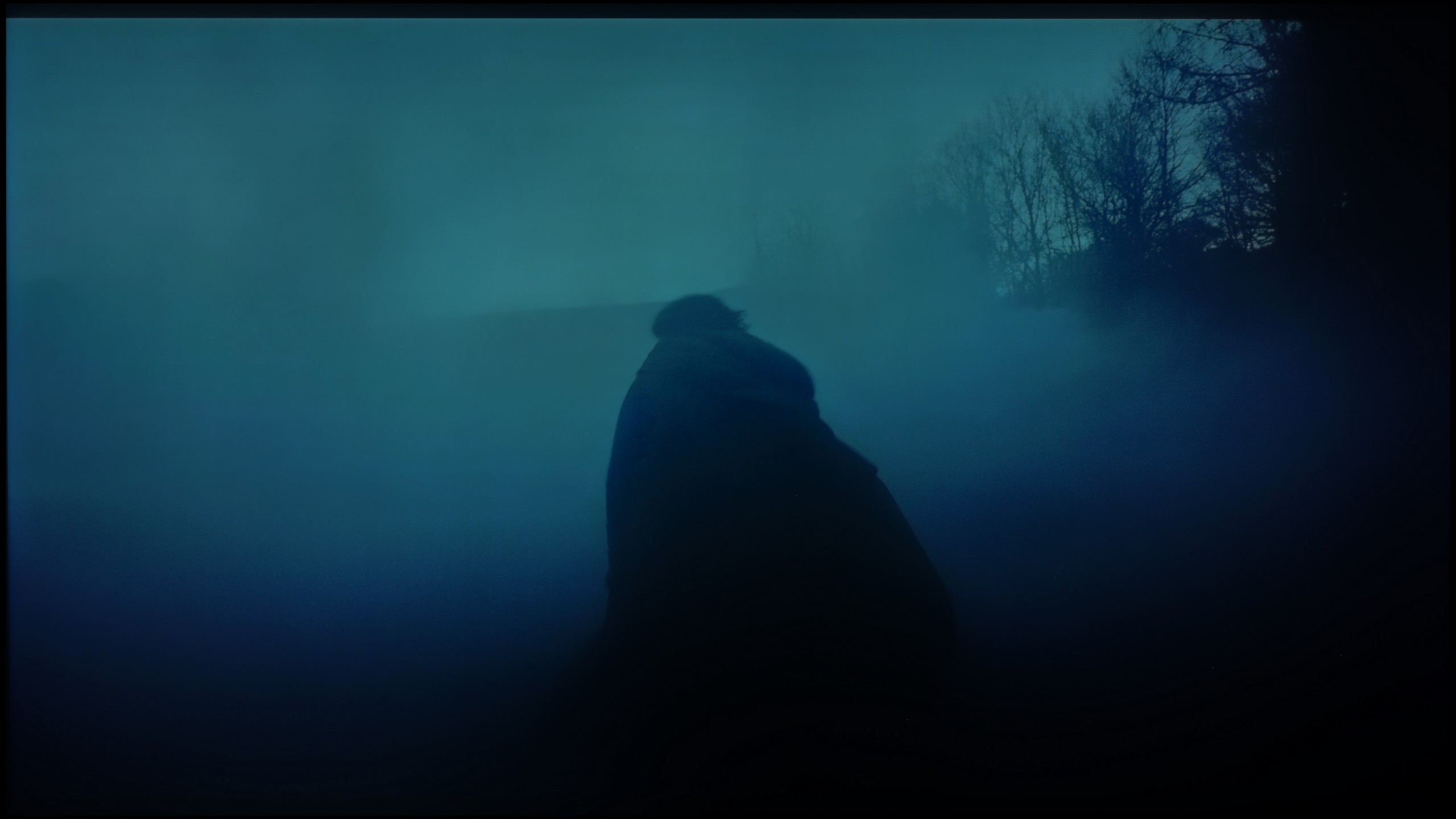
These are selected scenes that show smooth tonal transitions from one color to another. If you see distinct banding, it’s the TV panel’s fault.
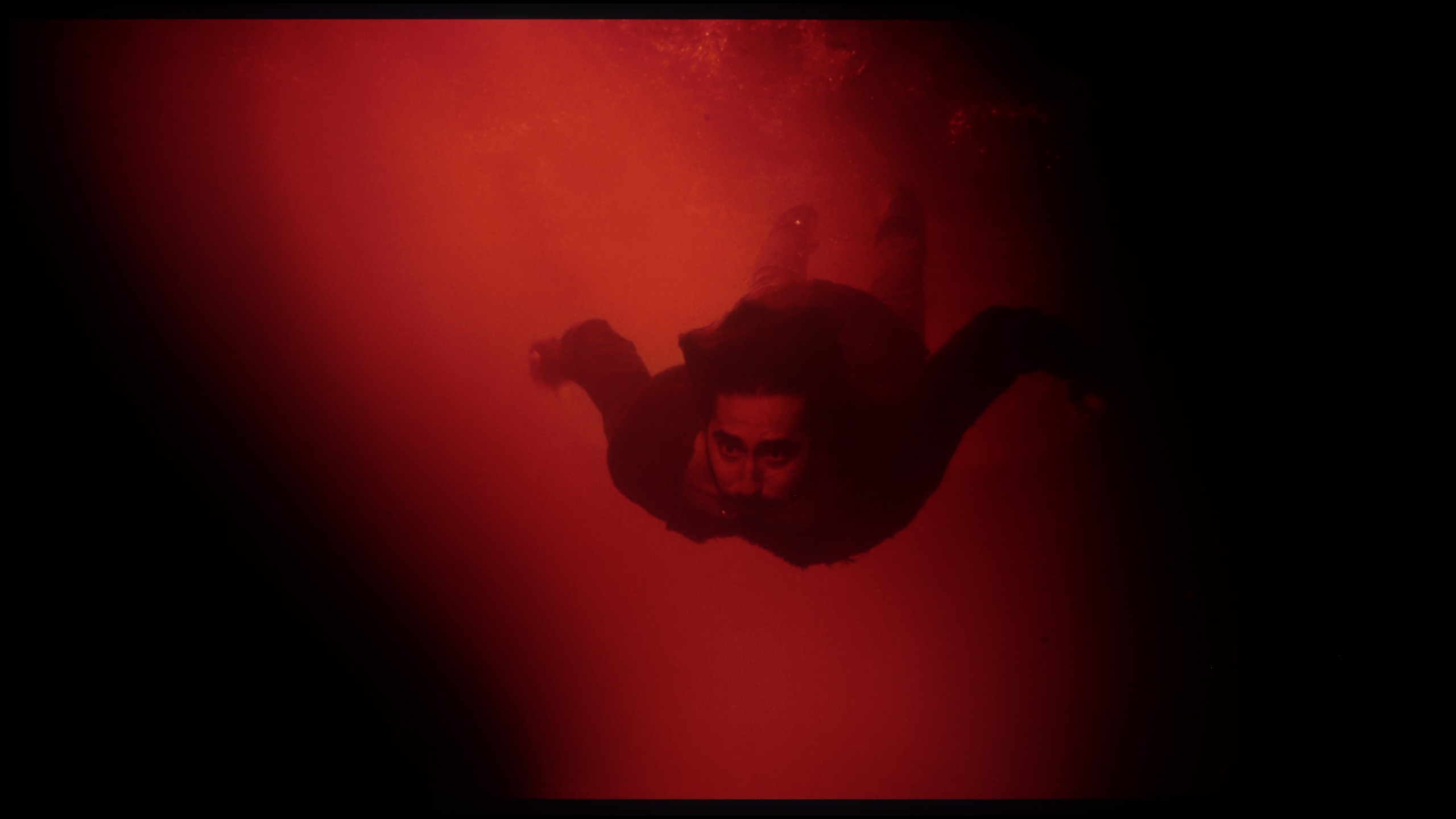
These are selected scenes that show smooth tonal transitions from one color to another. If you see distinct banding, it’s the TV panel’s fault.
The Sony XR70 TV handles gradation exceptionally well. In the test sequence, only a few scenes show slight problems with tonal transitions in darker areas, but most of these issues disappear when the gentle gradation option is activated. Overall, the TV offers excellent gradation that will satisfy even the most demanding users.
When it comes to tonal transition fluidity, the Hisense U8Q left a really great impression on us. Even in the darkest scenes, where usually other TVs show ugly banding and unpleasant transitions, here the picture remains smooth and cohesive. Nothing is separating, there's no "banding" effect – everything looks just as it should. Similarly, in brighter shots – it's also very good. Sure, if we were looking through a magnifying glass, we might find some minor flaws, but in normal viewing, it's hard to pick on anything. Overall, it performs very, very well!
Image scaling and smoothness of tonal transitions
8.5/10
8/10

Smooth transition function

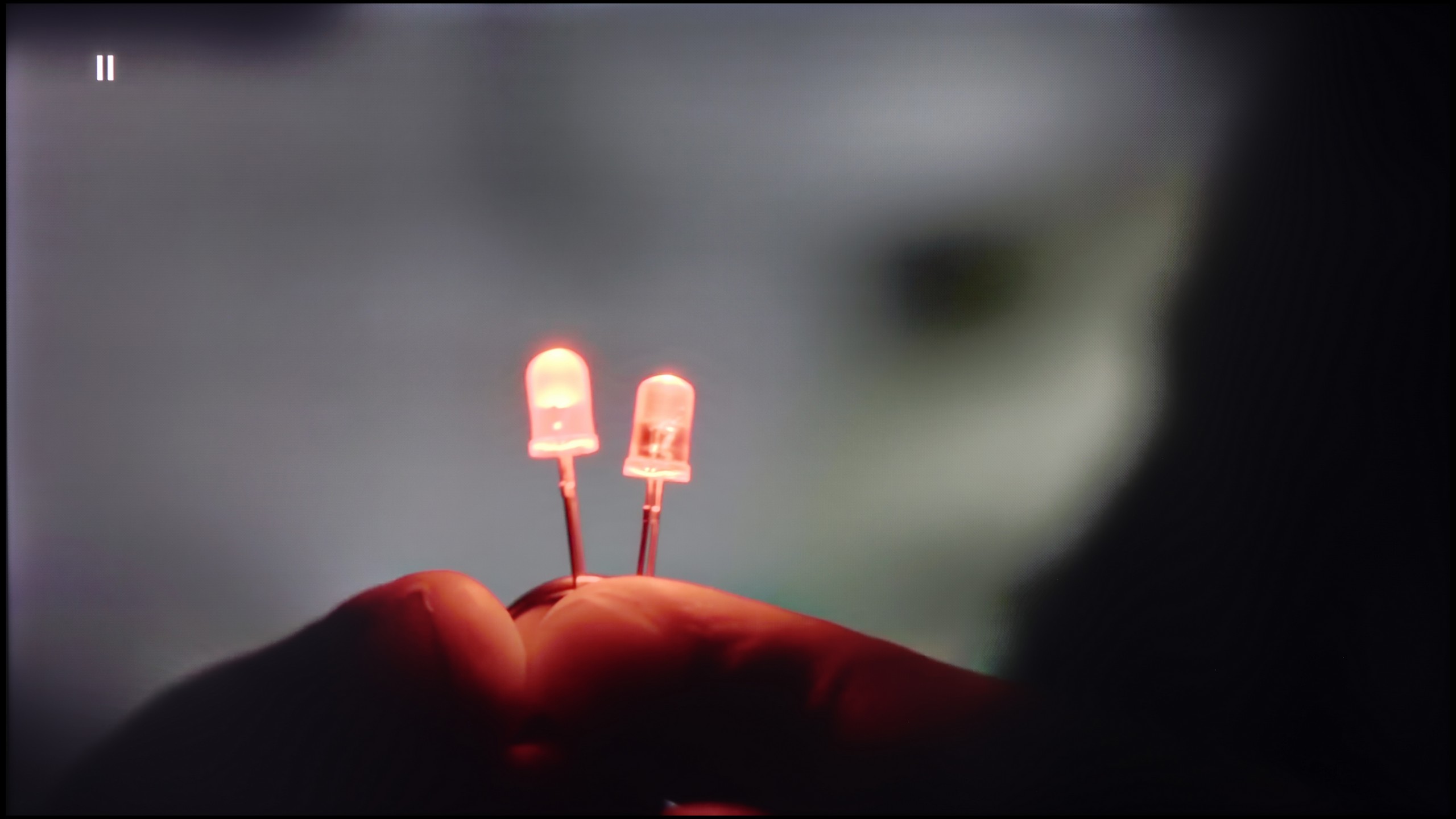
The match photo shows how the TV smooths weak tonal transitions in low-quality video.
Image scaling SD (576i)


The model photo shows how it handles upscaling of SD material.
Since we know that the television handles high-quality content very well, it's worth checking how it performs with lower-quality material. Here, the television shows its potential, and the graphics processor used works remarkably well. On the test screen with the light bulb, there are no issues with colour blending, and the gentle gradation function works very well – we recommend setting it to "Medium".
When it comes to digital processing, or the so-called upscaling, the television sharpens the image quite significantly, which leads to a slight jaggedness, for example on branches in the background, but it doesn't remove desired details. Despite this, the overall appearance is really attractive and may appeal to most users. However, if you prefer a softer, more plastic image, you can reduce this effect in the settings by adjusting the sharpness level to your liking.
Hisense U8Q handles lower quality materials quite well. The television can smooth tonal transitions thanks to the “Smooth and Gradient Picture” feature – it works best on the Medium setting. It nicely dims unwanted bands and irregularities in the image, but importantly, it doesn't remove the film grain or fine details.
The upscaling itself is also at a good level. Image from lower resolutions appears smooth and soft, sometimes a bit too much – we get a plastic effect that may not appeal to everyone. Fortunately, this can be easily corrected with the sharpness slider, allowing you to adjust the image to your personal preferences.
Blur and motion smoothness
8.3/10
7.6/10

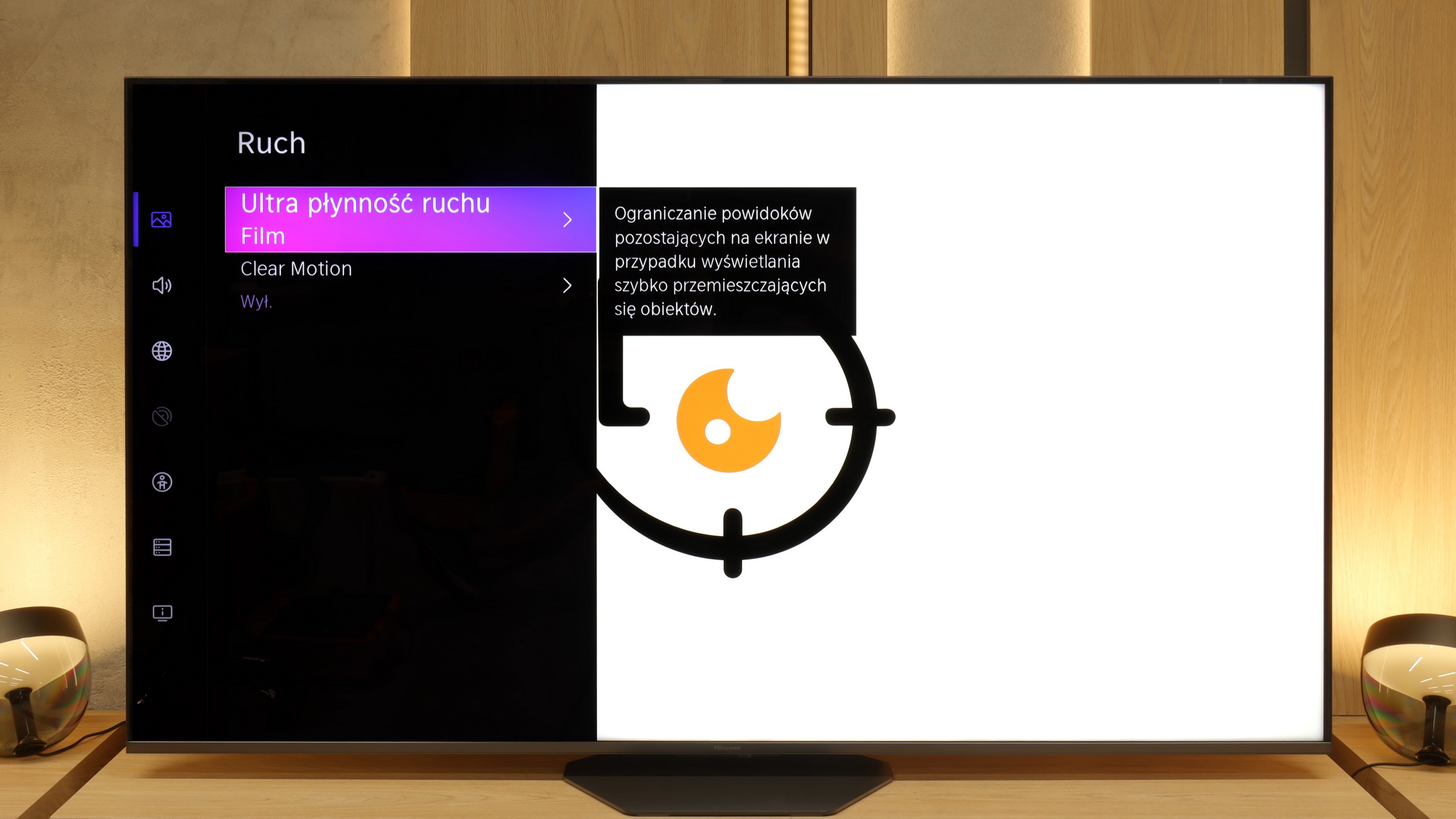
Blur (native resolution, maximum refresh rate):


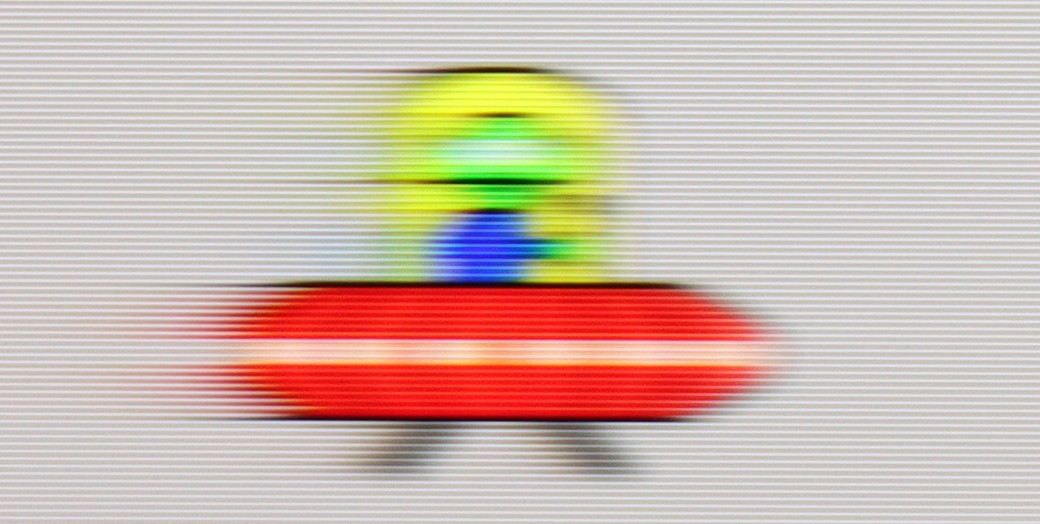
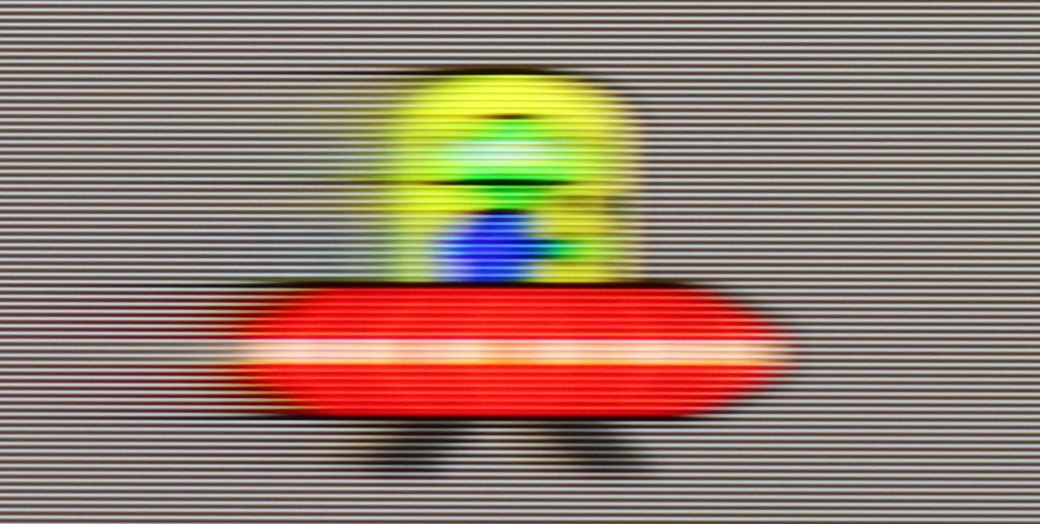
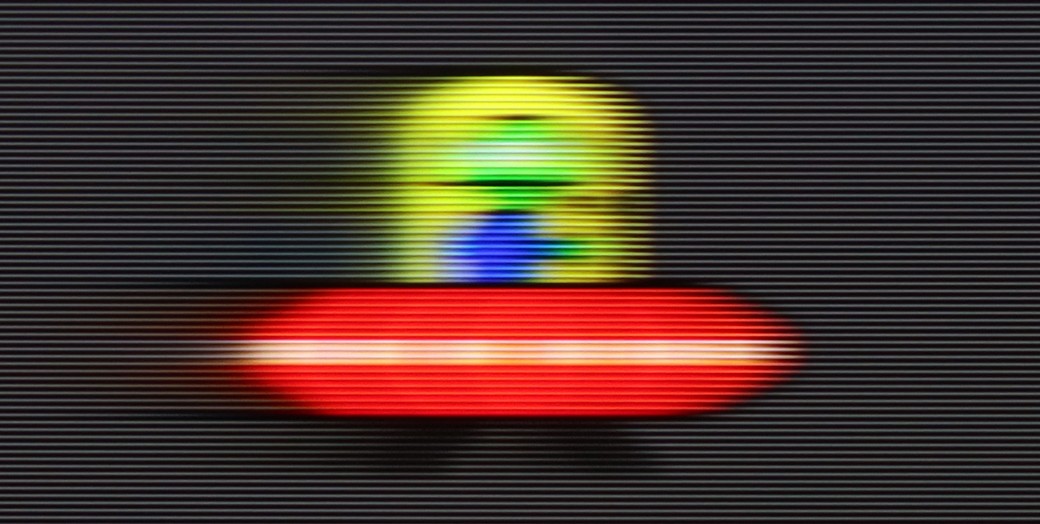
Blur (BFI function enabled):





Blur ():
Blur (1080p@288Hz):

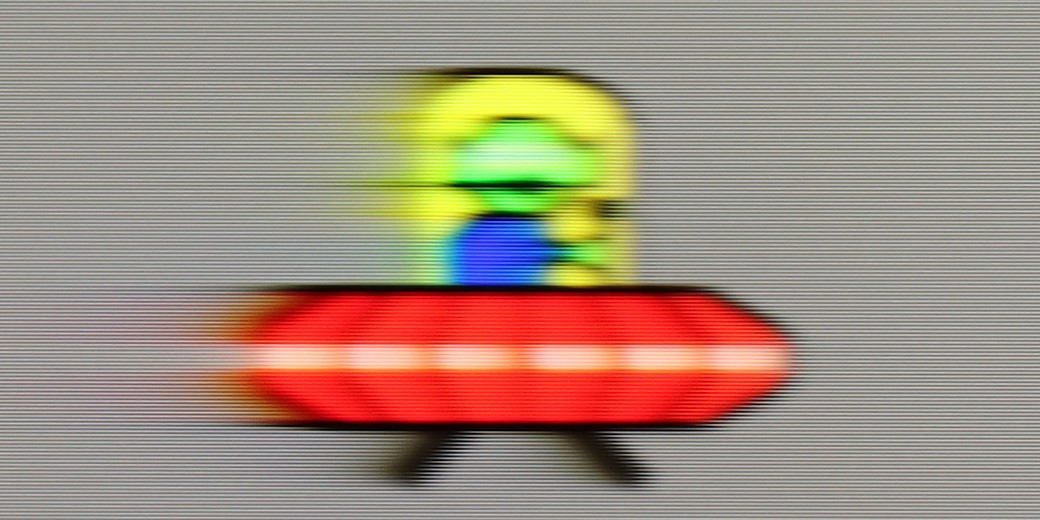
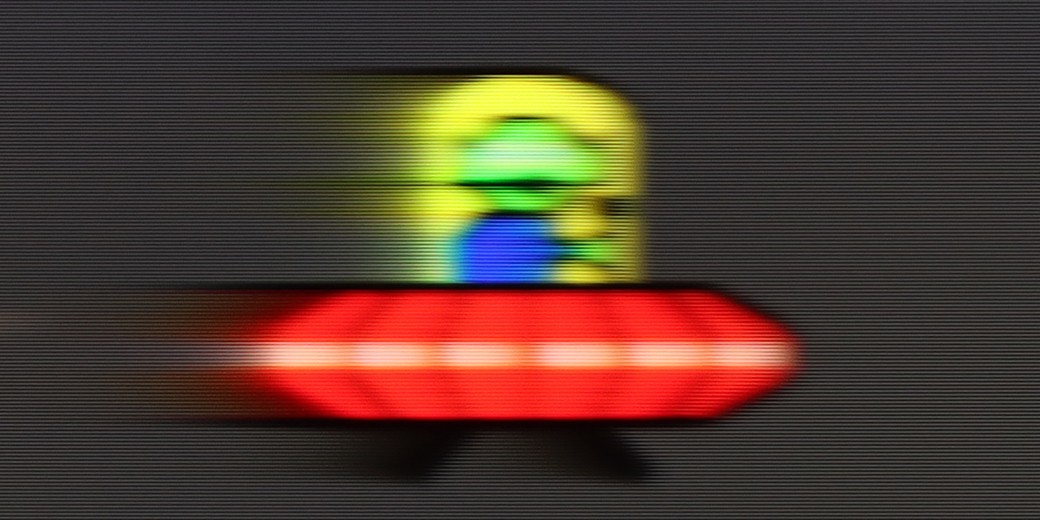
The Sony BRAVIA 7 TV with a 120 Hz panel will satisfy most users in terms of motion fluidity. Additionally, Sony offers a Motion Flow feature that allows for the selection of three different picture settings, adjusting them to personal preferences: Smoothness – Film: This setting improves motion fluidity, giving the image a more cinematic or theatrical quality. Smoothness – Camera: This setting provides even greater fluidity, useful for watching dynamic scenes like sports broadcasts. Clarity: This setting focuses on minimising noise and motion artifacts, resulting in a more stable and clear image.
Hisense U8Q has a panel that can refresh the image up to 165 Hz in 4K resolution. In practice, this will mainly benefit PC gamers, but as they say – better to have it than not 😊. For movies and series, we have a built-in smoother called Ultra Motion Smoothing. In the settings, it can be easily adjusted to your own preferences – whether you want a more ‘cinematic’ frame rate or a smooth, theatrical spectacle.
Console compatibility and gaming features
8.1/10
8.5/10
- ALLM
- VRR
- VRR range48 - 120Hz48 - 288Hz
- Dolby Vision Game Mode
- Correct implementation of HGIG

- 1080p@120Hz
- 1440p@120Hz
- 4K@120Hz
- Game bar

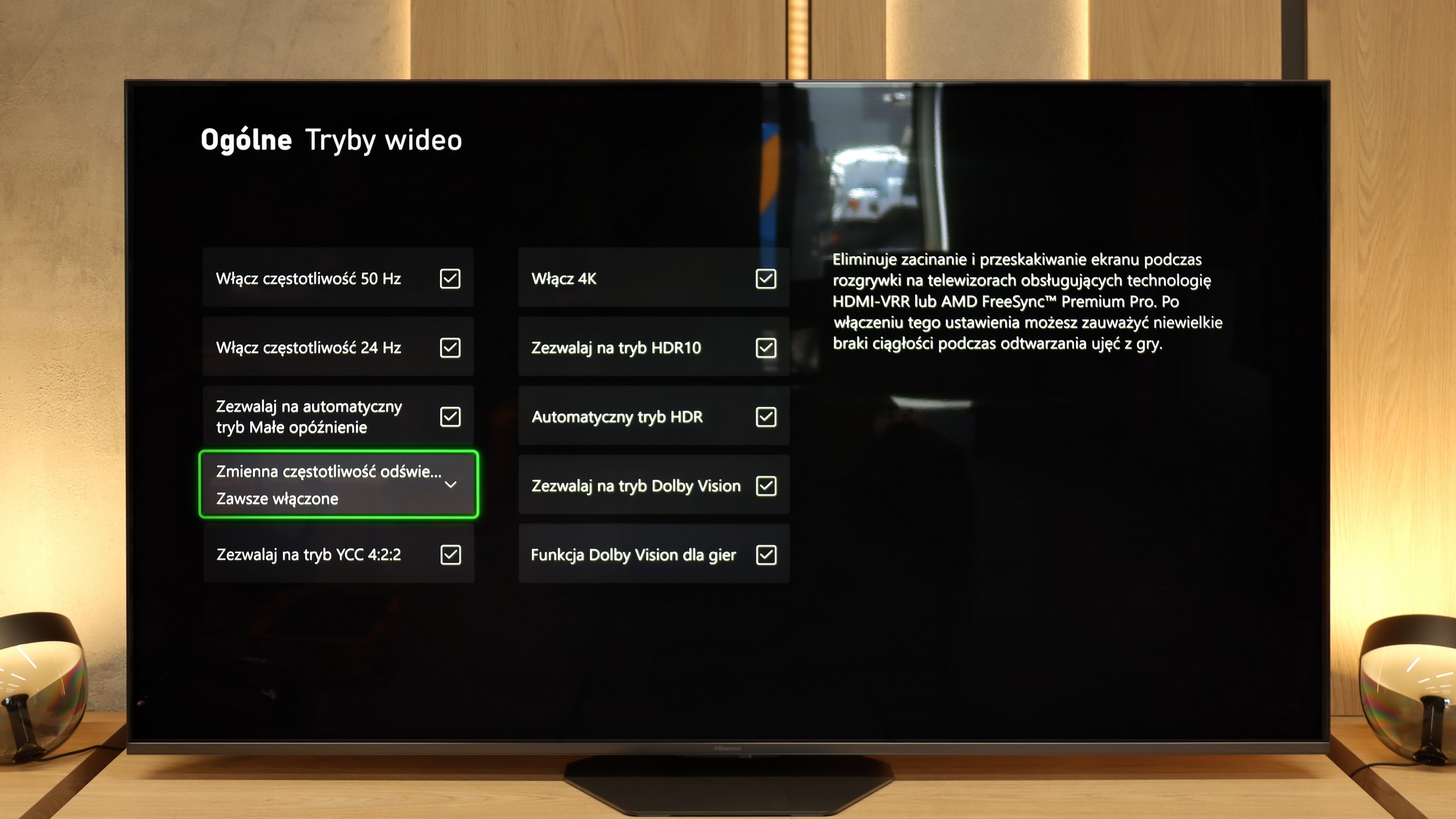

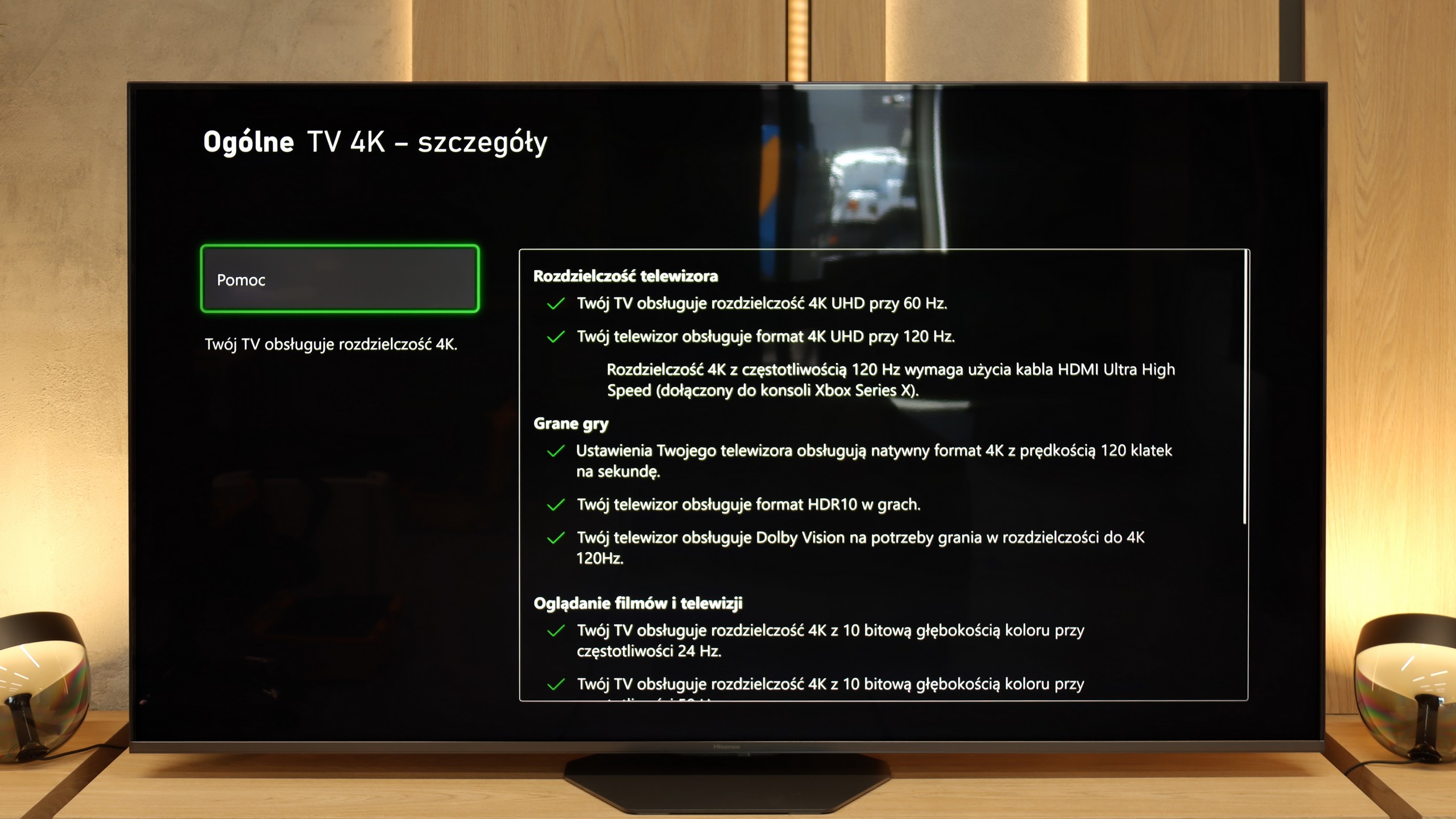

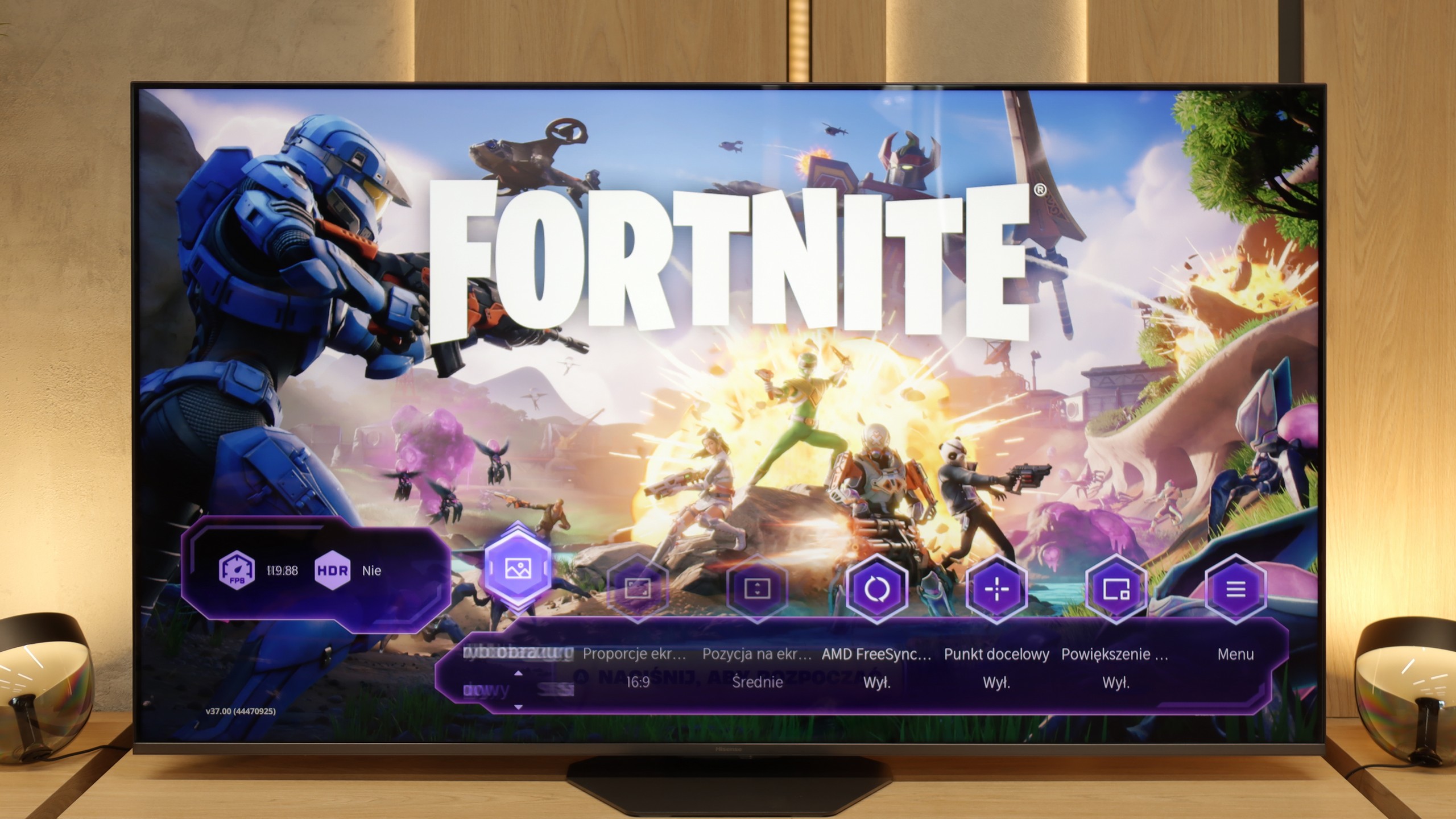

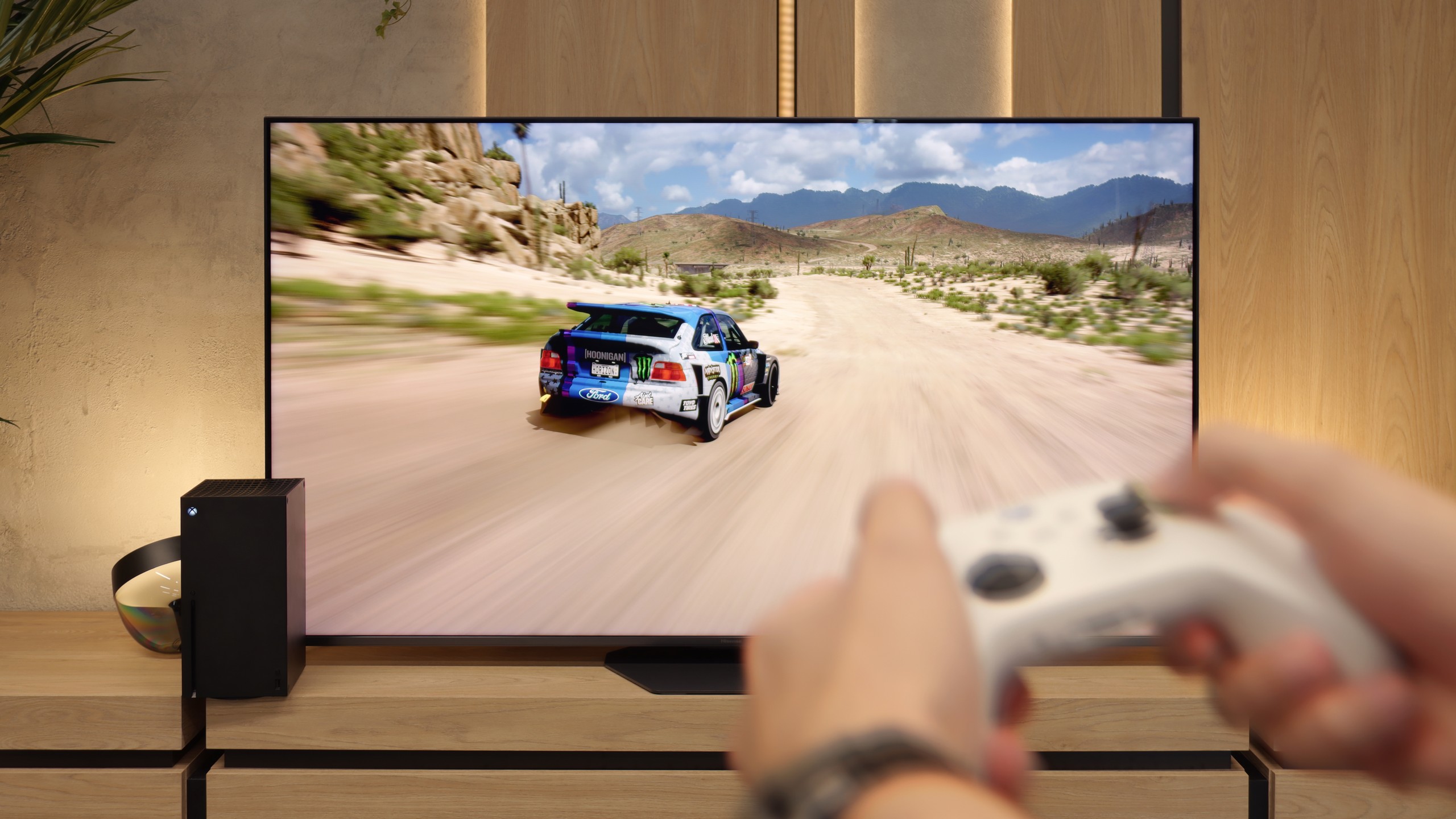
Sony Bravia 7 has significantly improved its capabilities in terms of compatibility with consoles compared to earlier models. The TV supports variable refresh rate (VRR), which eliminates screen tearing, and it syncs with graphics cards to ensure smooth display. The automatic low latency mode (ALLM) effectively reduces input lag, which is crucial in dynamic games. Dolby Vision with low latency further delivers impressive HDR effects that look great during gameplay.
Sony Bravia 7 also offers a Game Bar feature, providing quick access to settings and monitoring parameters while gaming. An interesting option is the ability to enable a virtual on-screen reticle, which can give a slight advantage in shooter games. However, compared to the Bravia 9 model, the HGIG feature in the Bravia 7 doesn't perform as well, which may be noticeable for more demanding gamers – particularly as the HGIG mode is becoming increasingly popular among gamers as the preferred method for reproducing HDR effects.
A downside is the lack of support for 1440p@120 Hz resolution, which could make gaming easier for users with less powerful graphics cards. Additionally, the Sony Bravia 7 is equipped with two HDMI 2.1 ports, one of which is often used to connect an audio system via eARC, limiting the number of available ports for connecting next-gen consoles.
In terms of features, the Hisense U8Q has practically everything one would expect from a modern gaming television. Thanks to the new processor, the manufacturer has managed to implement three HDMI 2.1 ports, so there’s no trouble connecting multiple consoles or a computer. On top of that, it includes all the key technologies – Game Bar with parameter previews, variable refresh rate (VRR), automatic game mode (ALLM)… in a word, a complete set.
But as often happens with Hisense, it’s missing just a bit from perfection. The biggest drawback remains the lack of support for the HGiG format, which allows the TV's brightness to be adjusted to the console and gets the most out of HDR in games. It’s a shame because if this feature were included, we’d have a device practically made for gamers. As it stands, the U8Q remains “only” a very good choice 😉
Input lag
9.7/10
9.8/10
SDR
HDR
Dolby Vision
Sony BRAVIA 7 delivers outstanding results in terms of input lag, especially with 120 Hz materials, where the delay is around 11 ms – this is an excellent result that will satisfy even the most demanding gamers. The Dolby Vision mode also deserves recognition, as it is usually associated with higher input lag, yet here it performs really well, providing a comfortable gaming experience. However, we deducted 0.3 points for results above 20 ms for 60 Hz content, although we believe that for most users, this difference is more of a placebo effect.
The Hisense U8Q really performs well in terms of signal delay. In 120 Hz mode, the input lag is around 10 ms, and with 60 Hz content, it hovers around 18 ms. These are values that place it among the fast televisions, and in practice, it's hard to have any significant reservations about them. The reaction is instant, controlling a character or a car on screen occurs without noticeable delays. Regardless of whether someone is playing dynamic shooters or calmer narrative titles, the U8Q will perform excellently.
Compatibility with PC
7.6/10
8.4/10

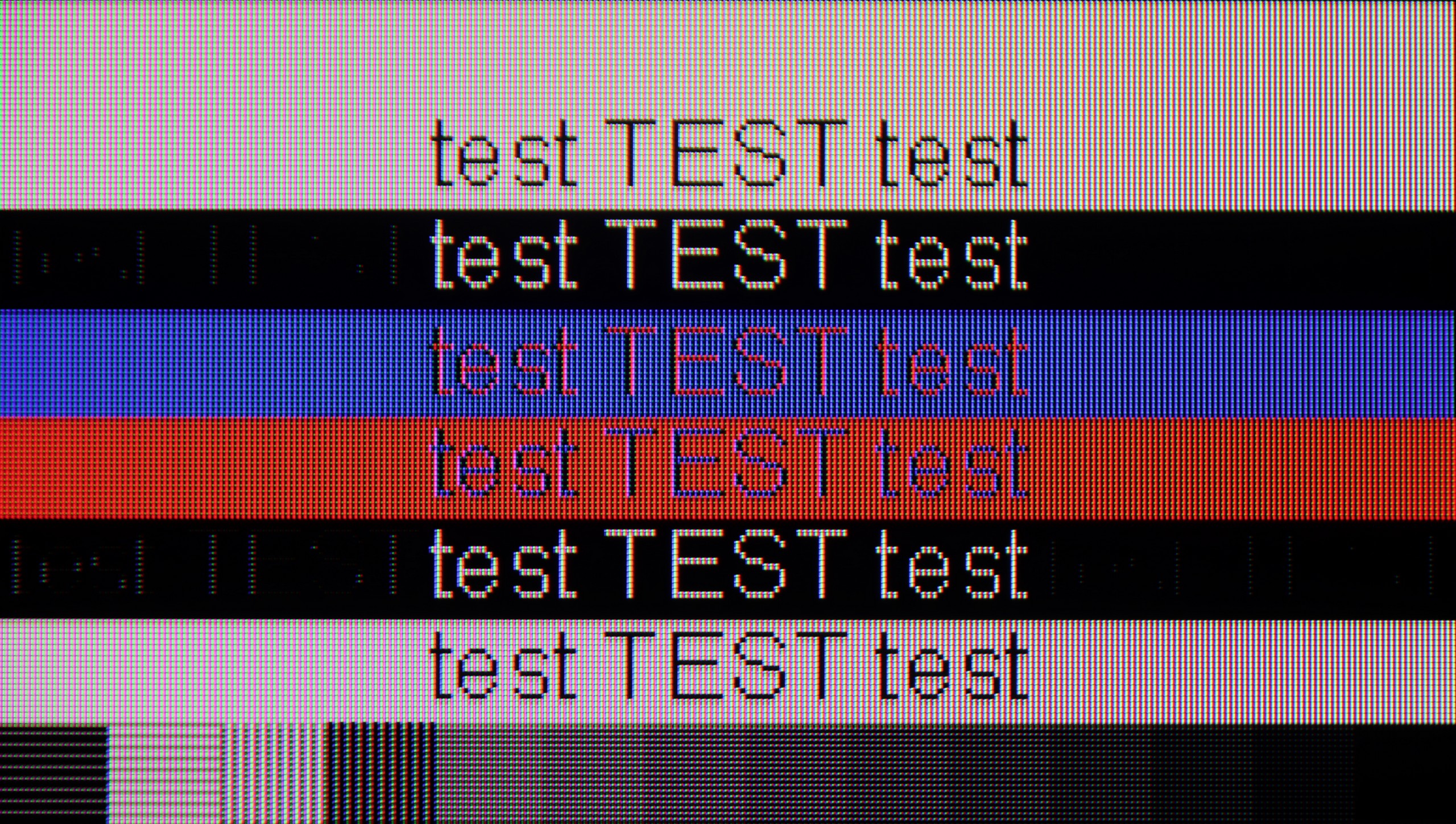
The photo shows the legibility of small fonts. Ideally, lines should be the same thickness on both light and dark text, with minimal pixel gaps.
The Sony BRAVIA 7 television works well with computers, providing clear and legible fonts. An input lag of 11 ms is also an excellent result that will satisfy users using the television for gaming and work. However, it should be mentioned that in the case of grey letters, some slight fading of certain pixels can be observed, which somewhat affects the readability of darker fonts, for which we deducted a few points.
As we mentioned regarding the features for gamers – the Hisense U8Q also communicates well with computers. The 4K display with a refresh rate of 165 Hz is impressive on its own, and at Full HD resolution, it can even "overclock" to 288 Hz. This is great news for e-sports fans, where speed of reaction counts more than the highest quality of image. Additionally, it supports G-Sync and FreeSync, making gameplay smooth, without stutters or annoying frame tearing.
A pleasant surprise is the presence of a USB-C port with DisplayPort functionality for laptops or even phones. This is a true novelty in televisions, and it’s quite possible that Hisense will be a pioneer here, setting the direction for the competition.
However, when it comes to working with text, we must mention one minor inconvenience. Although the U8Q correctly handles chroma 4:4:4, it has difficulty displaying very thin, horizontal fonts. This means that some subtitles or interface elements may be hard to read. Most people aren’t buying this model with the intention of office work, but if someone had such a plan – it’s worth keeping this in mind.
Viewing angles
3.4/10
3.2/10
The Sony BRAVIA 7 TV has poor viewing angles, which is typical for VA panels. The picture quickly loses quality when viewed from a greater angle – colours become washed out and contrast decreases. Considering the price of the device, it's a shame that a coating wasn't applied to enhance the viewing angles, which would certainly improve the viewing experience from different spots in the room.
In terms of viewing angles, the Hisense U8Q performs averagely – typical for VA panels. It's a classic compromise: in exchange for much better blacks and contrast than with IPS panels, we have to accept that viewing from a wider angle doesn’t look as good. Colours start to lose their intensity, and the image lightens a bit. For someone sitting directly in front of the TV – it's fantastic. For someone who sits a bit off to the side – not so much.
Daytime performance
8.4/10
8.2/10

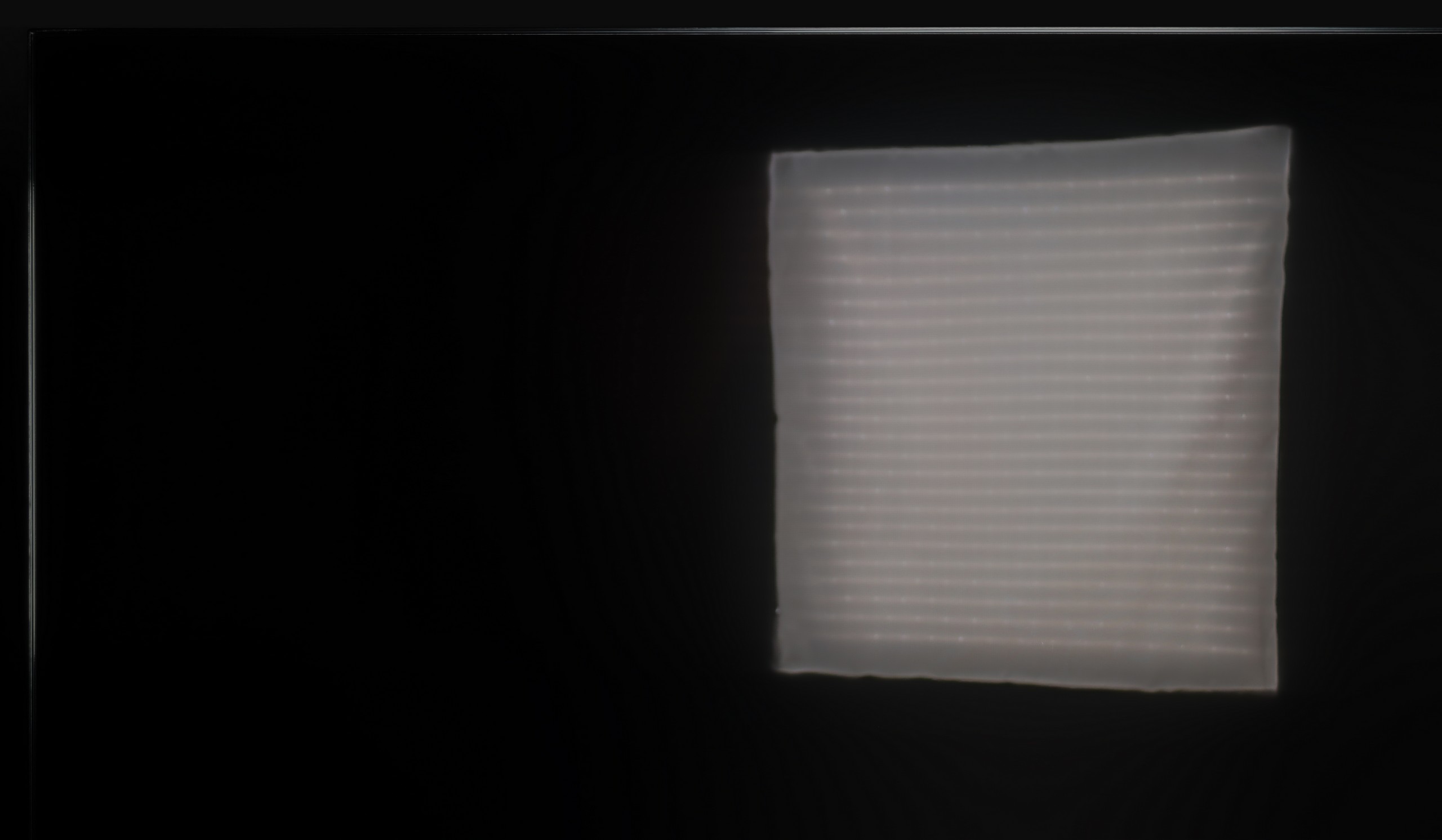

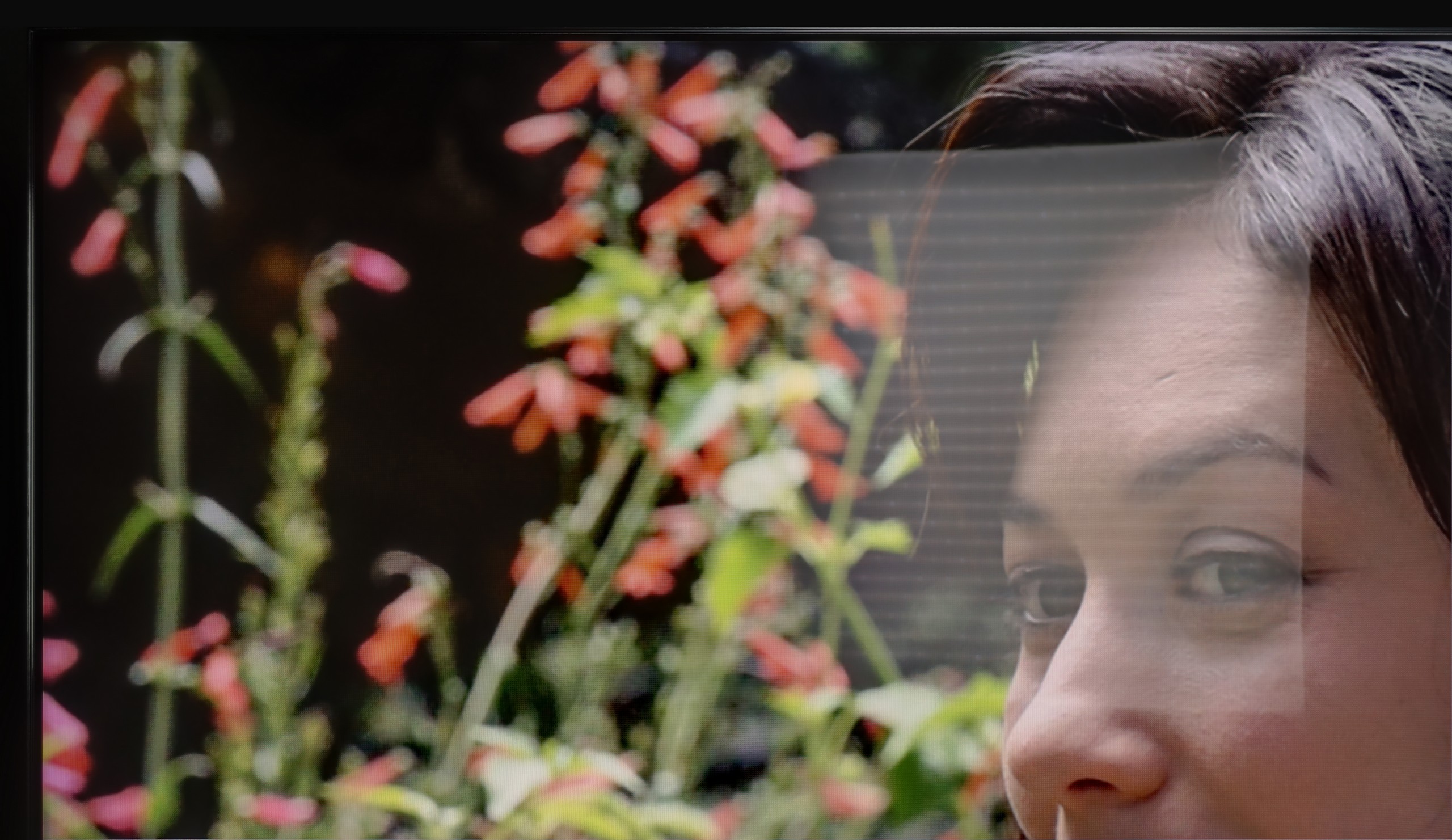
Panel brightness
Hisense U8Q: 914 cd/m2
Sony Bravia 7 (XR70): 1014 cd/m2
BRAVIA 7 performs exceptionally well in bright surroundings. The satin finish effectively reduces reflections, while causing minimal side blur, resulting in very good visibility during the day. A brightness level of 1000 cd/m² in SDR mode is astonishing and ensures that the picture remains clear even in brightly lit rooms.
Hisense has introduced a new anti-reflective coating called Anti-Reflection PRO. It aims to improve viewing comfort in difficult lighting conditions – and it really does the job. Reflections don't disappear entirely, but they are well controlled and do not interfere with everyday viewing. However, the highlight is the brightness in SDR – around 1000 nits! That's a result that would make top super premium models proud. As a result, the U8Q performs excellently in sunny rooms and can definitely be considered one of the best televisions for daytime viewing.
Panel details
Subpixel Structure:

Panel uniformity and thermal imaging:


Sony Bravia 7 (XR70)
Hisense U8Q
TV features
8.8/10
9.4/10
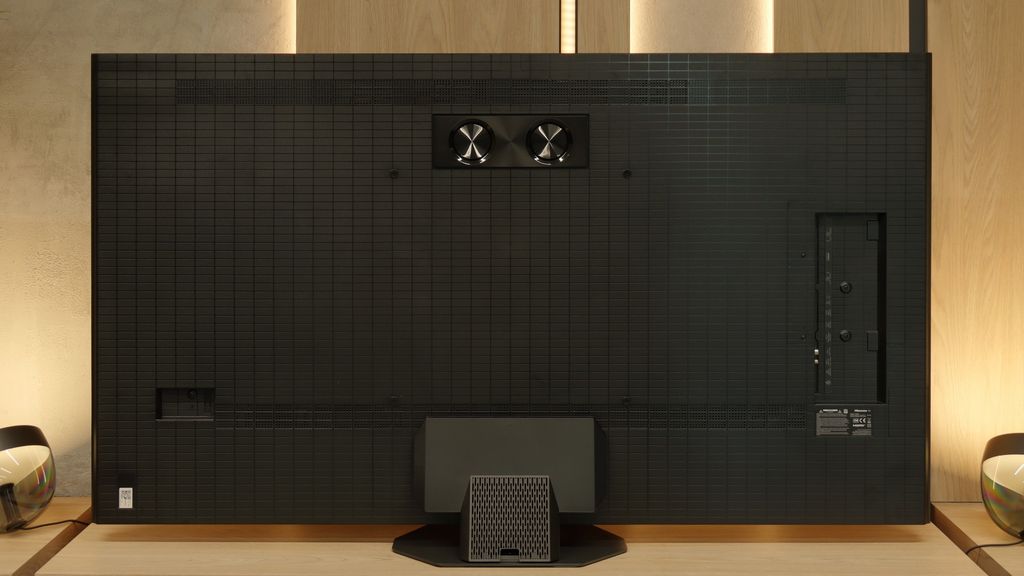
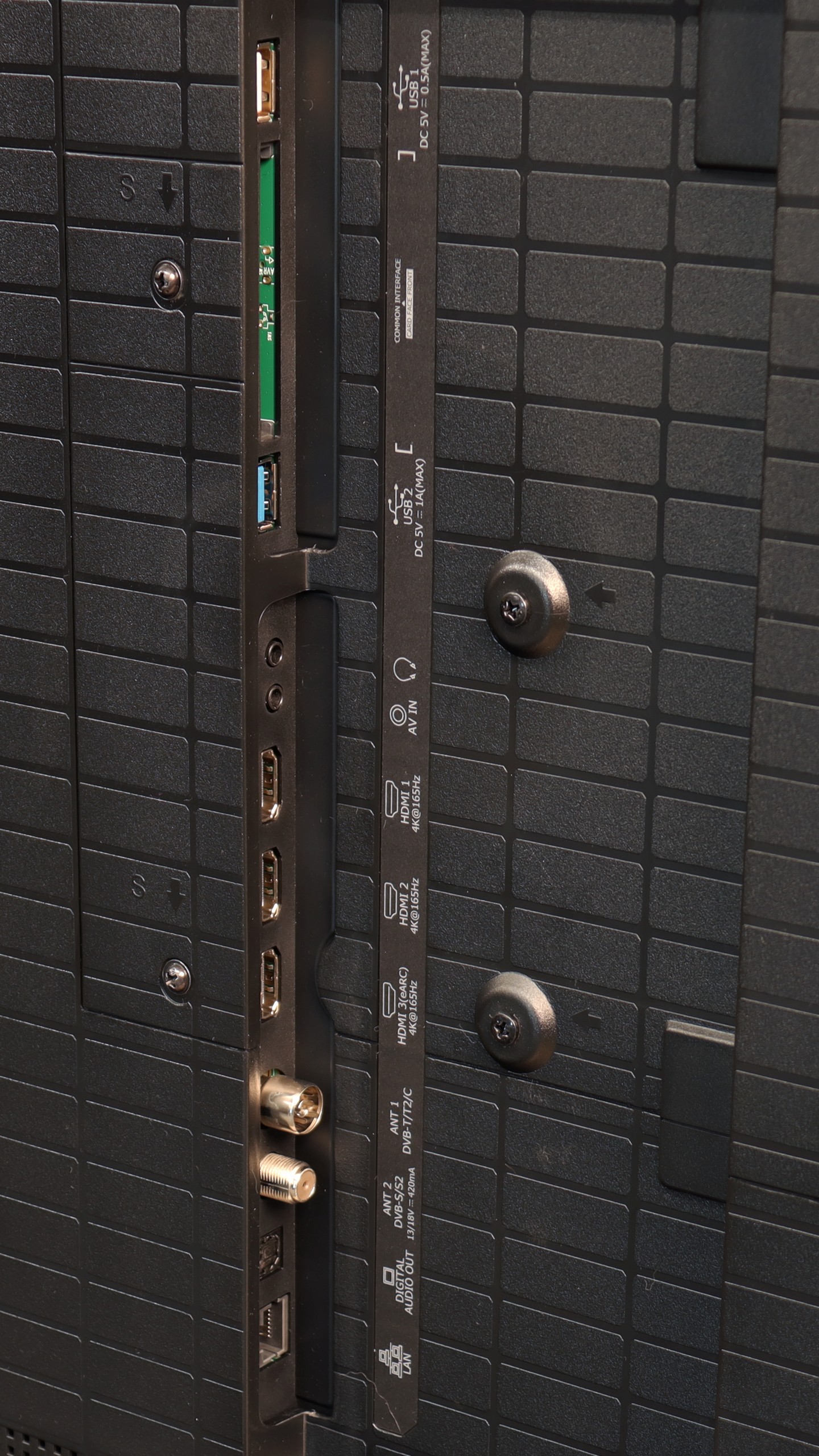
- HDMI inputs2 x HDMI 2.0, 2 x HDMI 2.1 48Gbps0 x HDMI 2.0, 3 x HDMI 2.1 48Gbps
- Other inputsToslink (Optical audio), RCA (Chinch)
- OutputsToslink (Optical audio), eARC (HDMI), ARC (HDMI)eARC (HDMI), ARC (HDMI), Mini-Jack (Headphones)
- Network InterfacesWi-Fi 2.4GHz, Wi-Fi 5GHz, Ethernet (LAN) 100MbpsWi-Fi 2.4GHz, Wi-Fi 5GHz, Ethernet (LAN) 100Mbps
- TV receptionDVB-T, DVB-T2, DVB-S, DVB-S2, DVB-CDVB-T, DVB-T2, DVB-S, DVB-S2, DVB-C
Classic features:
- Recording to USB (terrestrial TV)
- Recording programming
- Picture in Picture (PiP)
- RF remote control (no need to aim)
- Backlit remote control
- Teletext
- Audio only mode
- Bluetooth headphones support
- Simultaneous Bluetooth headphones & TV audio
Smart features:
- AirPlay
- Screen mirroring (Windows Miracast)
- Voice search
- Voice search in native language
- Ability to connect a keyboard and mouse


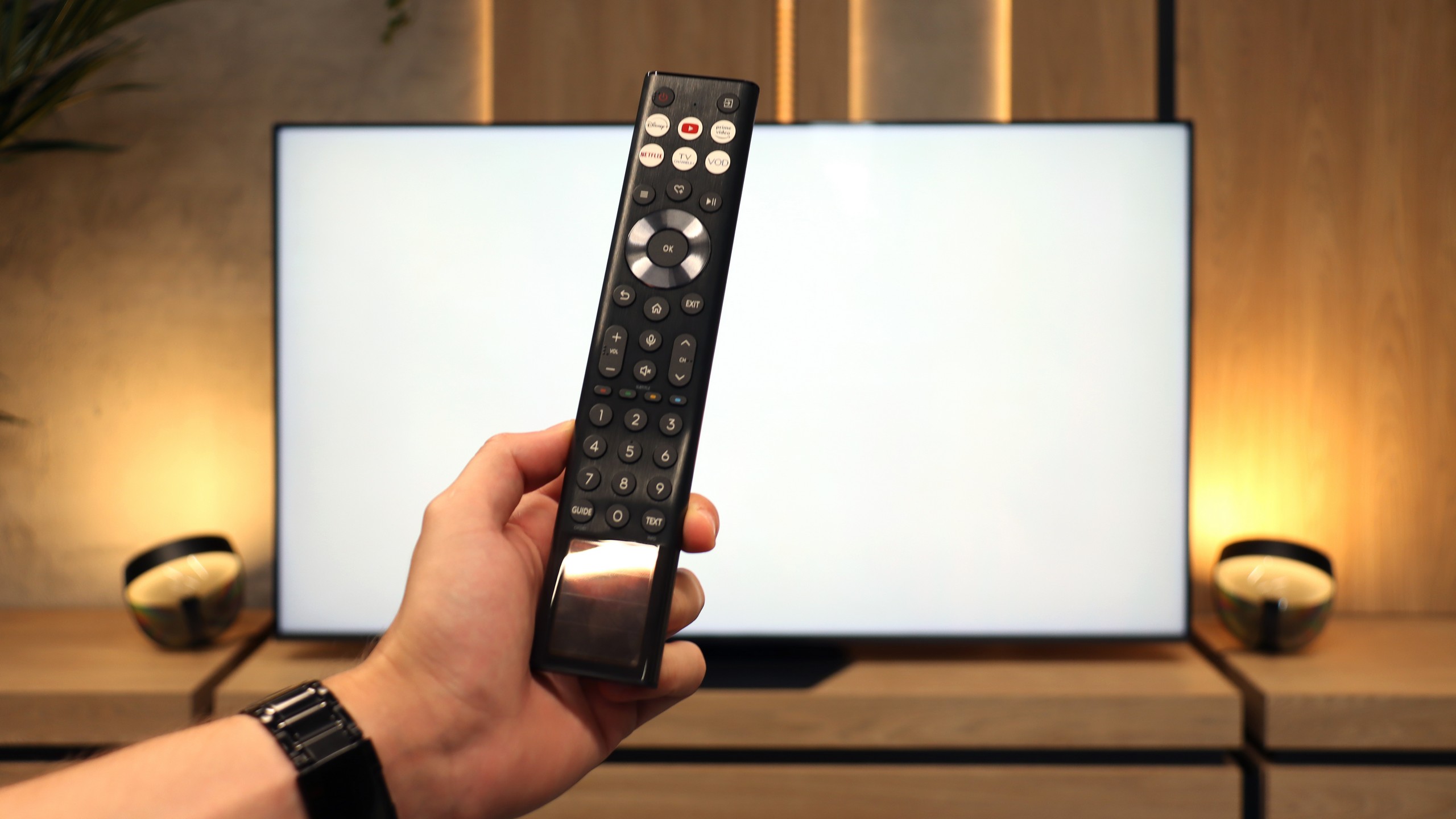
Sony Bravia 7 runs on the Google TV system, which offers an intuitive and fast interface, providing easy access to a plethora of applications. Google Assistant supports Polish language, making the use of the television even more convenient and personalised. The interface is clear, and access to features and applications is quick and seamless. It's worth mentioning the remote, which is rechargeable via USB-C port. Additionally, the remote is backlit, making it significantly easier to use at night.
Sony Bravia 7 offers a wide range of capabilities that will satisfy most users. The ability to record programs and easily connect devices via Bluetooth are major pluses. Unfortunately, it lacks the Picture-in-Picture (PiP) feature, which could be useful for watching two video sources simultaneously.
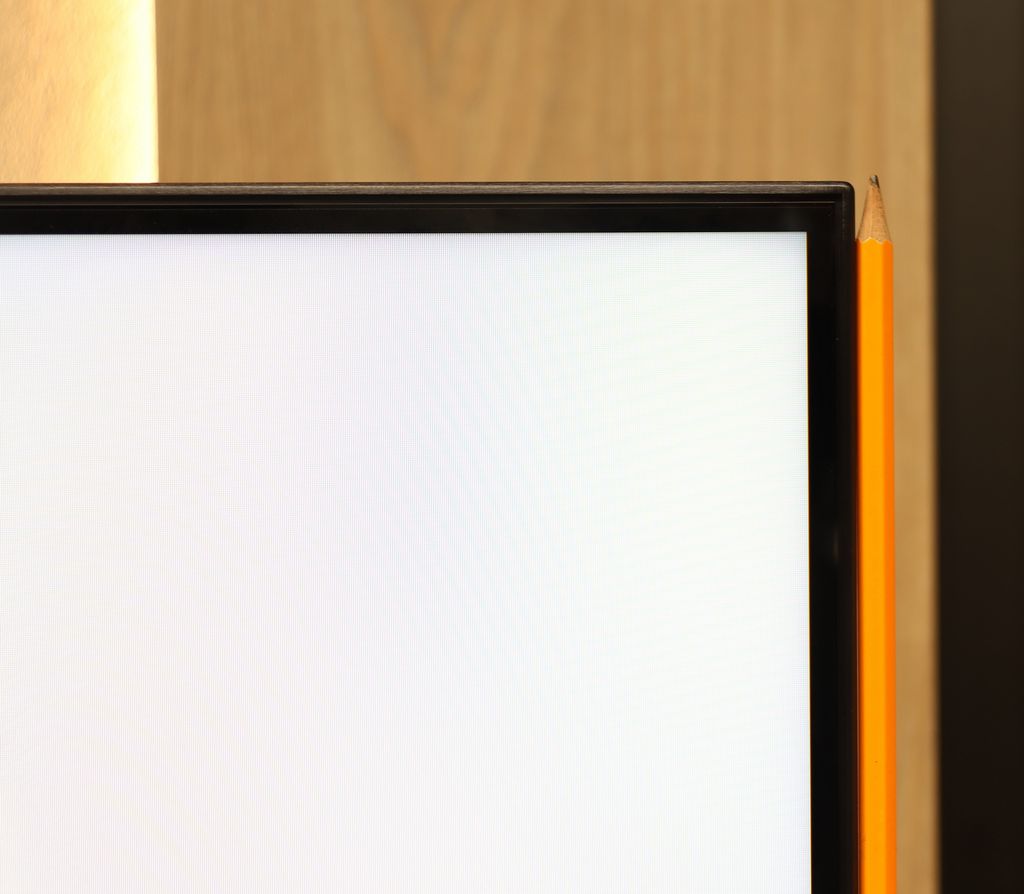
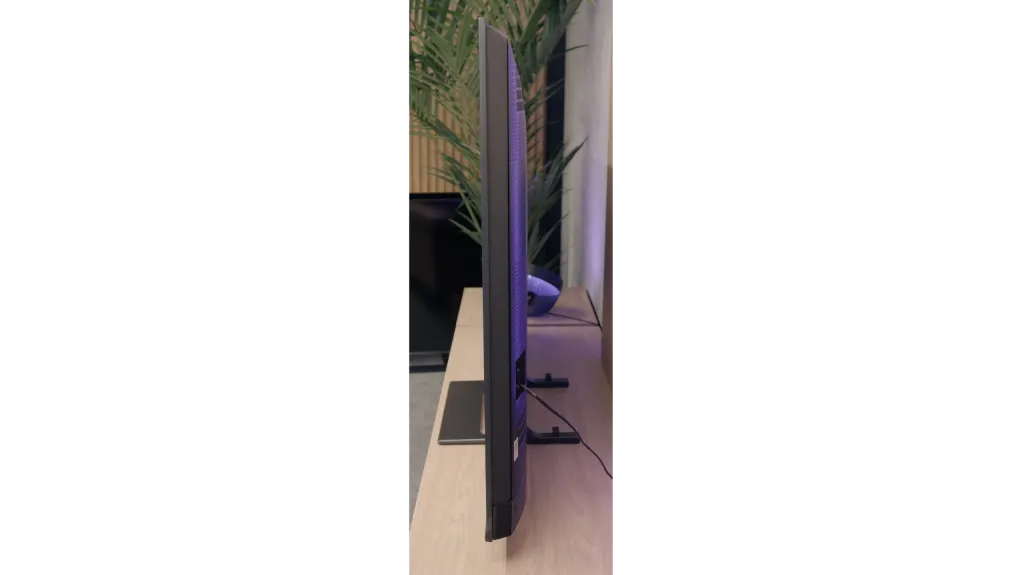
XR70 stands out with its practical and elegant design. The television is equipped with a 4-position stand, allowing it to be adapted to various spaces and settings – this is particularly useful when flexibility in interior arrangement is desired. Additionally, the slim aluminium frame gives the device a modern and stylish appearance. Although it is not as slim as some competing Korean models, it still looks very attractive and sturdy.
Classic Features
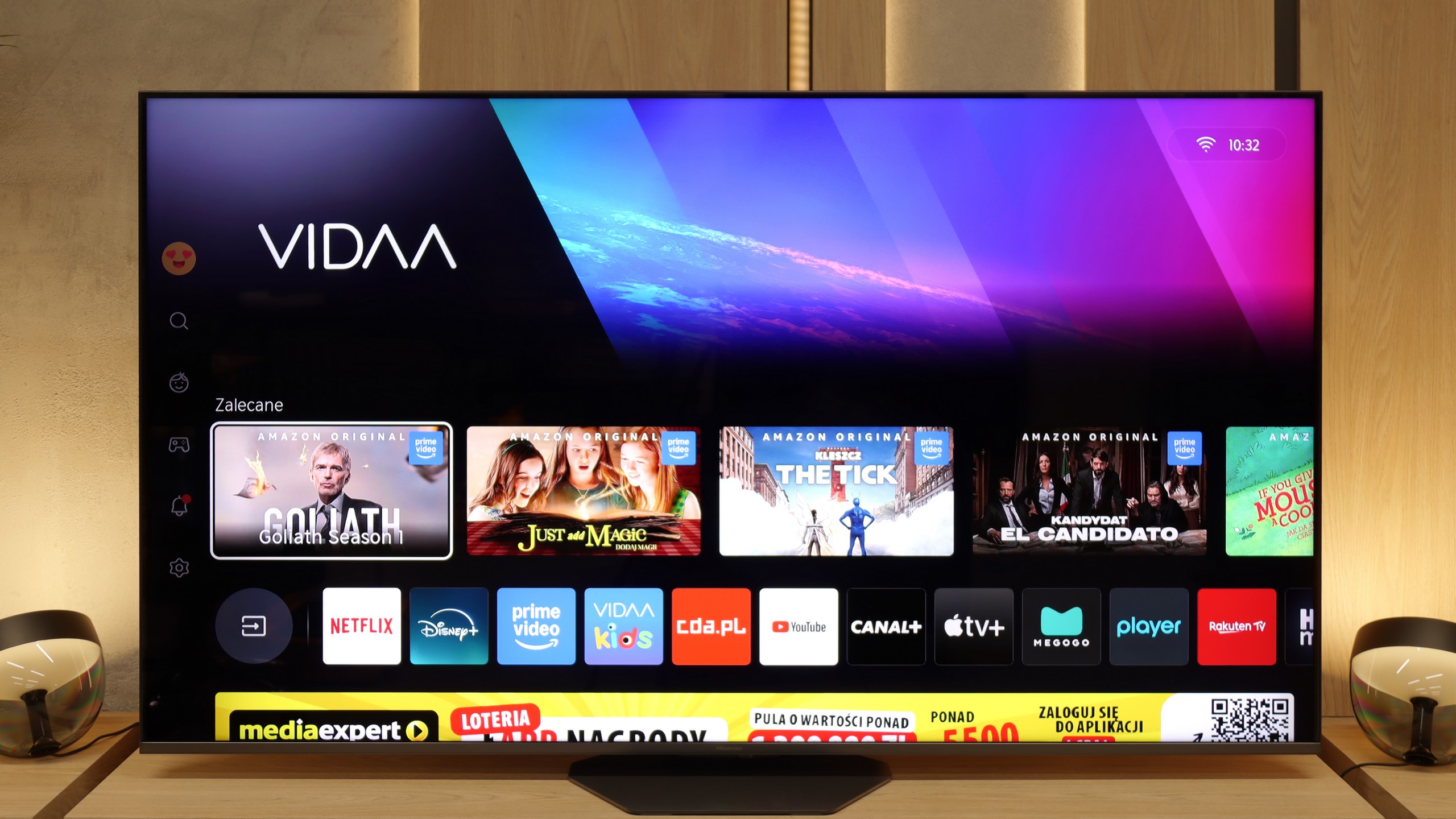
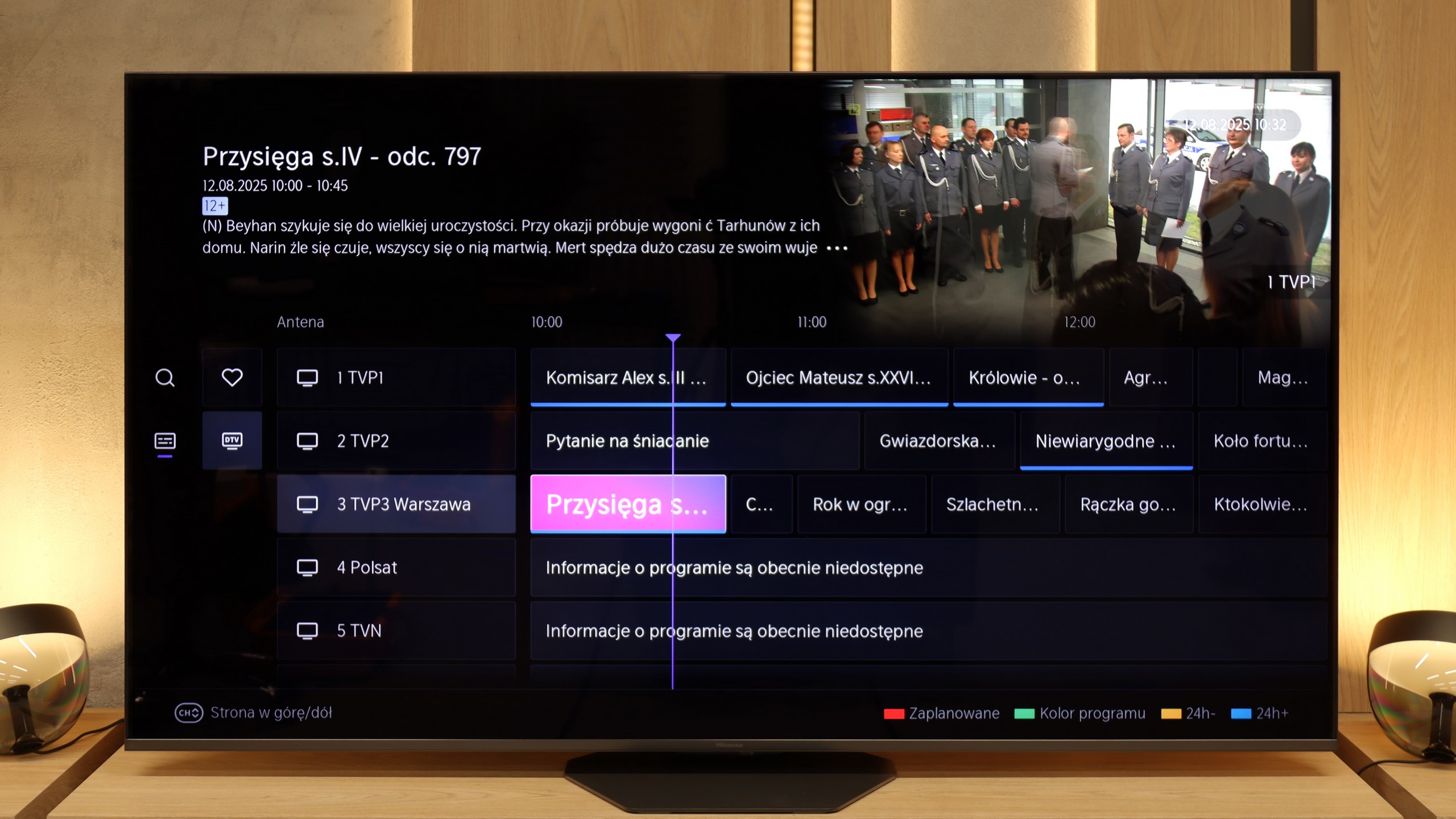
Hisense U8Q runs on the VIDAA system, which can still be considered a newcomer in the European market, but it must be acknowledged – the manufacturer really has a lot to offer here. You'll find classic features that many people still find useful: USB recording, a clear EPG guide, and the ability to connect wired headphones, which will be particularly appreciated by seniors. A nice addition is the presence of an audio jack – a connection that is slowly disappearing from televisions, but has been retained here.
USB-C in the TV!
A new feature in the U8Q is the USB-C port with DisplayPort support. This is a non-standard but very practical solution – it allows you to connect a laptop or phone with a single cable, even if those devices don't have an HDMI output.
Smart Features: VIDAA
When it comes to smart features, VIDAA operates smoothly. The interface is fast, apps open without significant delays, and network functions – such as screen mirroring or AirPlay – work very well. Sure, there are some minor shortcomings, but these are more details than real problems. The Achilles' heel remains the somewhat limited app library. However, it's worth remembering that the list of available programs can change from day to day – some disappear, others appear, so the situation may improve.
Apps
9.6/10
7.7/10






















Playing files from USB
8.6/10
8.3/10
Supported photo formats:
Maximum photo resolution:

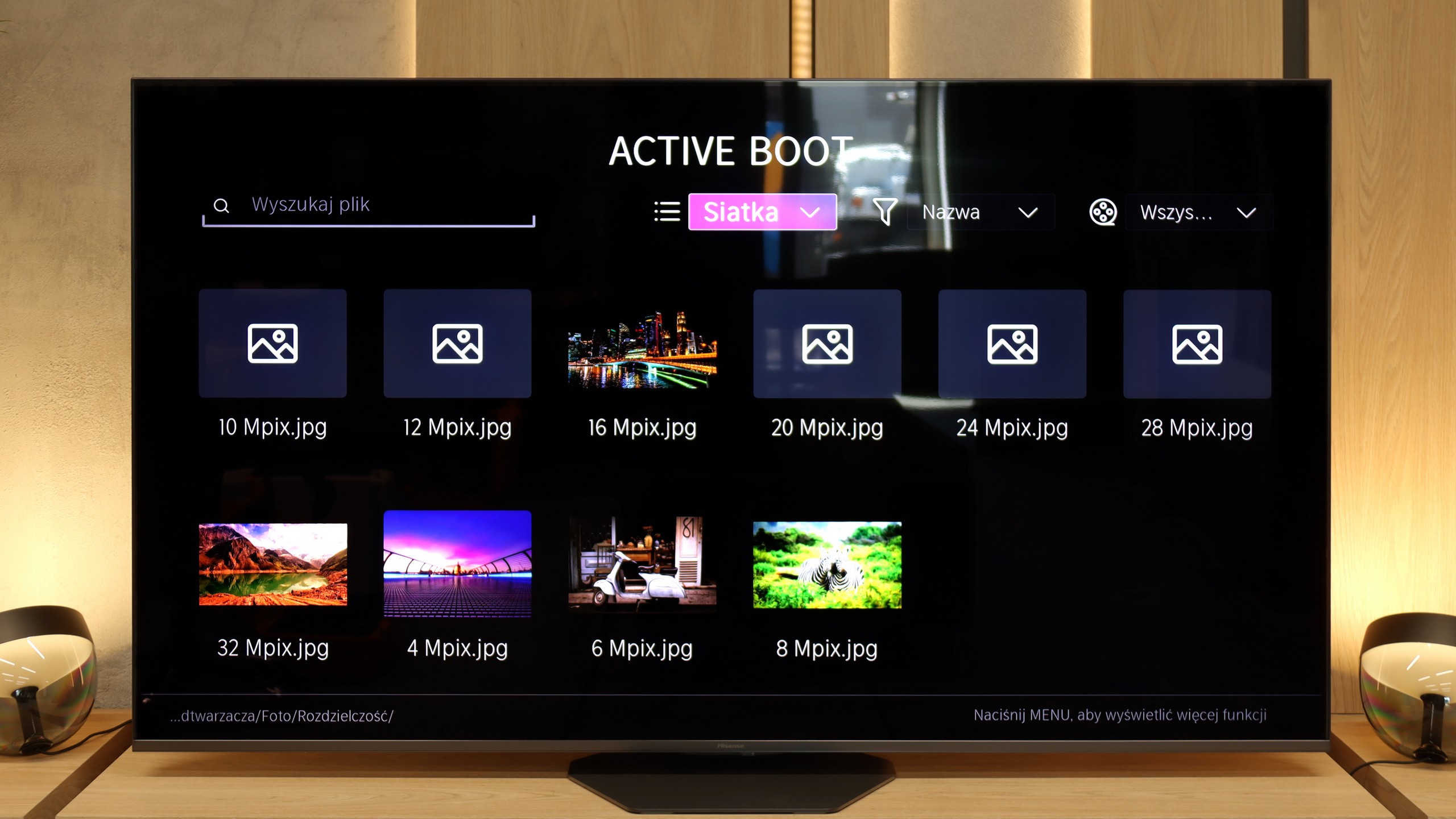
The built-in player handles most popular video and audio formats, allowing you to enjoy a wide range of content without any issues. Although there are minor shortcomings when displaying photos, thanks to the Google TV system, you can easily install other apps that effectively solve this problem and expand the multimedia capabilities of the television.
The built-in media player in the Hisense U8Q will be completely sufficient for most people. The television opens popular video and audio formats and also handles photos. However, there is a small caveat – not all photo resolutions are supported. Therefore, if we have photographs saved in a very high number of megapixels, they may simply not open. It’s worth bearing this in mind to avoid unpleasant surprises during the family photo show.
Sound
7.8/10
7.8/10
- Maximum volume85dB88dB
- Dolby Digital Plus 7.1
- Dolby True HD 7.1
- Dolby Atmos in Dolby Digital Plus (JOC)
- Dolby Atmos in Dolby True HD
- DTS:X in DTS-HD MA
- DTS-HD Master Audio
Although the Sony Bravia 7 TV is only equipped with a 2-channel speaker system (2.0), each channel has two speakers with a total power of 40 W. This results in really good quality sound, and the bass is noticeable, making watching movies and listening to music more enjoyable.
The Hisense U8Q performs really well in terms of sound. The audio is pleasant, with a slight bass and quite decent mid tones, so it’s perfectly adequate for everyday viewing of movies, series, or gaming.
It does get a bit worse when we crank the volume up to 100%. That’s a rather rare scenario, but it’s worth mentioning. With very strong bass, the rear speakers start to work so intensely that the TV can slightly “rattle,” and the sound takes on an unpleasant, plastic echo. Therefore, it’s best to keep the volume between 70–80% – at that level, the U8Q sounds clear and enjoyable, without any unwanted effects.
Sound Quality Test
No sound test video
Acoustic Measurements
85dBC (Max)
75dBC
88dBC (Max)
75dBC