 Direct comparison
Sharp GR8 is a television created primarily for those who expect an exceptionally smooth image. It is essentially the successor to the FQ8 model, and it's clear that the manufacturer has heavily focused on the aspect of motion dynamics. 144 Hz makes a difference – and not just in games. Sports broadcasts can also look fantastic, without those annoying blurring or "choppiness" that can take the joy out of watching. In terms of image quality, Sharp opted for a VA panel. While it doesn't feature local dimming, you can still count on pleasant contrast. Additionally, there's Dolby Vision, which gives evening movie screenings depth – even if the TV doesn't reach the brightness claimed by the manufacturer. It must be said that when the lights in the room are dimmed, the overall look is really pleasing to the eye. One of the biggest advantages of the GR8 is Google TV. We have access to a full range of applications, voice search in Polish, and a simple, intuitive interface. This means we don't have to limit ourselves to the standard TV functions, as there is always the option to install additional programs and tailor the system to our own needs. Of course, a few things could have been polished. The declared HDR brightness is higher on paper than in reality, which may leave the most discerning cinema enthusiasts feeling unsatisfied. Moreover, a few useful features known from other models are missing: there’s no USB recording or PiP functionality, and Apple device owners will be disappointed by the lack of AirPlay. Nevertheless, this is a television mainly aimed at those who value smooth visuals and high refresh rates. If we primarily care about dynamic gameplay and good support for games, while wanting to quietly enjoy a film in the evenings with pleasing quality, the Sharp GR8 should meet those expectations.
- Matching (Score) |
- Our verdict |
- TV appearance |
- Where to buy |
- Contrast and black detail |
- HDR effect quality |
- Factory color reproduction |
- Color reproduction after calibration |
- Smoothness of tonal transitions |
- Image scaling and smoothness of tonal transitions |
- Blur and motion smoothness |
- Console compatibility and gaming features |
- Input lag |
- Compatibility with PC |
- Viewing angles |
- Daytime performance |
- Panel details |
- TV features |
- Apps |
- Playing files from USB |
- Sound
GR8765E / GR8465E / GR8265E


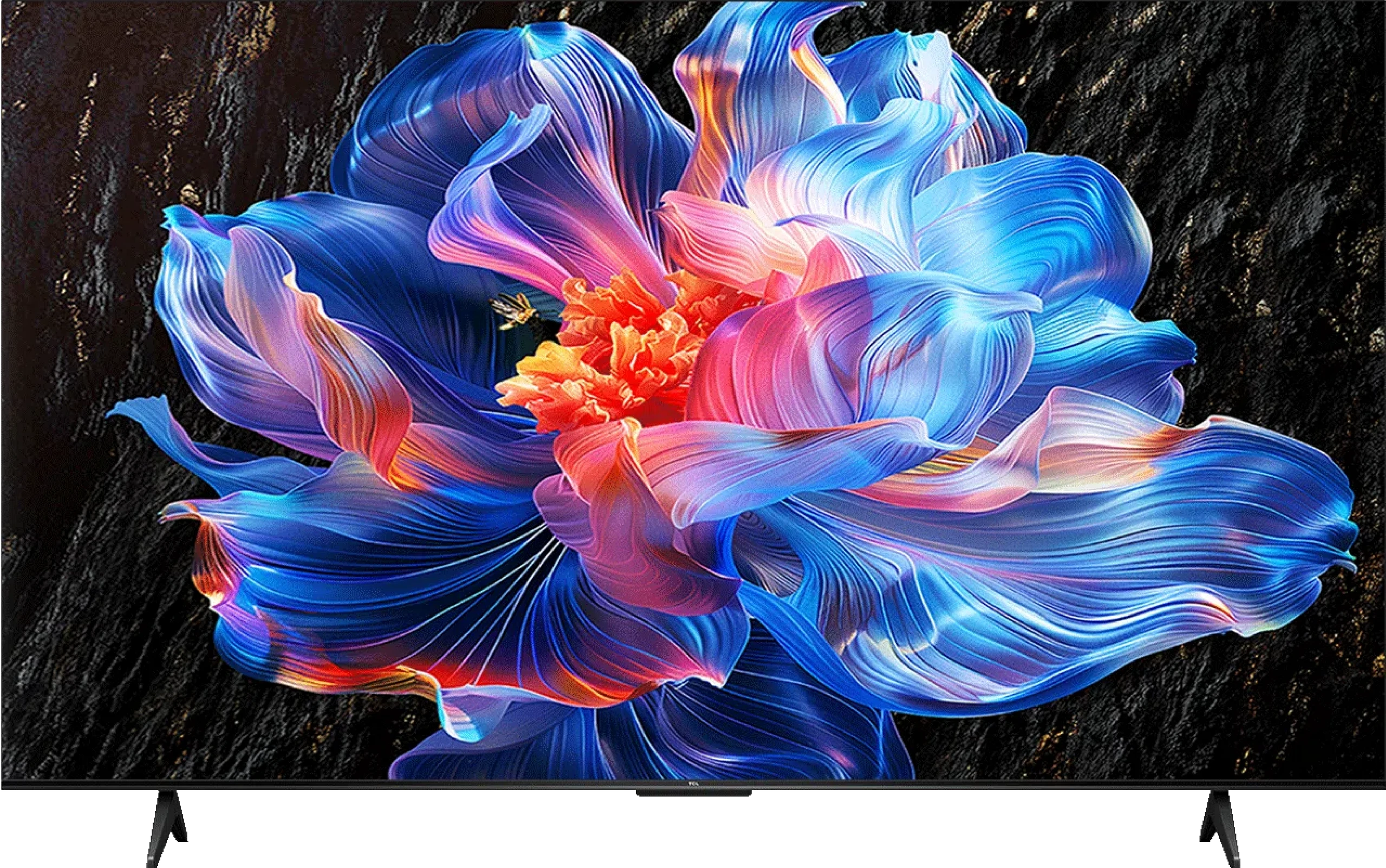
Panel type: LCD VA
Resolution: 3840x2160
System: Google TV
Model year: 2024
Complete the survey to find out the result
Panel type: LCD VA
Resolution: 3840x2160
System: Google TV
Model year: 2025
Complete the survey to find out the result
Overall rating
6.4
5.2
 Movies and series in UHD quality
 6.2
4.9
 Classic TV, YouTube
 6.1
5.0
 Sports broadcasts (TV and apps)
 6.4
3.9
 Gaming on console
 7.8
6.0
 TV as a computer monitor
 4.0
4.0
 Watching in bright light
 4.5
3.6
 Utility functions
 6.0
7.3
 Apps
Apps 9.6
9.6
 Sound quality
 7.0
5.8
Complete the survey to find out what fits your preferences
Advantages

VA matrix with decent contrast
144 Hz refresh rate and two HDMI 2.1 ports – a great option for gamers
Support for VRR and ALLM, low input lag
Dolby Vision support
Google TV with a rich selection of apps, voice search in Polish, and an intuitive interface
Decent sound
Attractive price
Advanced GoogleTV system with a large app library
Decent contrast thanks to the VA panel
Quite a good functioning dynamic tone mapping feature (often saves the TV in HDR content)
Low input lag below 15 ms
Presence of ALLM mode and simple Game Bar
Support for Dolby Vision Gaming (Xbox Series S/X)
Support for Dolby Atmos and DTS:X, making it easier to use with a soundbar
Disadvantages

HDR brightness is lower than claimed by the manufacturer (around 360 nits instead of 500)
In PC mode, it does not support 4:4:4 chroma – text and fonts are therefore less readable
No USB recording and PiP function
No support for AirPlay – Apple device owners may feel disappointed
Very low brightness (~200 nits) = no cinematic effects
Narrow colour gamut coverage, especially in HDR content
Poor Dolby Vision implementation
Strong motion blur in dynamic scenes (panel only 60 Hz)
Average upscaling – the image can be artificially sharpened
Unusual subpixel arrangement making font readability difficult when working with PC
Limited viewing angles typical of VA panels
The TV performs poorly in heavily sunlit rooms
Google TV system can be sluggish and doesn't operate as smoothly as in more expensive models
No USB recording feature or Picture-in-Picture mode
Our verdict
The TCL V6C is a television whose appeal lies primarily in three elements: the Google TV system, several features beneficial for gamers, and a very low price. The biggest advantage is indeed Google TV – it provides access to an enormous library of apps, from the most popular streaming services to lesser-known programs, and it allows the use of AirPlay, screen mirroring, and voice search. For many users, this system alone may be a sufficient reason to consider a purchase. Additionally, there are simple yet practical features for gamers, such as ALLM mode, low input lag, and a Game Bar with parameter previews, which make occasional gaming on a console more convenient. The third argument, and perhaps the most important, is the price – it’s hard to find another model with Google TV in this class that offers such wide access to smart features. However, when it comes to picture quality, it’s clear that we are dealing with a significant number of compromises. The V6C is a very dim television. Colours remain dull, and in more demanding scenes, the image can be flat and lacking in detail. The contrast provided by the VA panel can be considered decent, but this comes at the cost of weak viewing angles. Additionally, there is motion blur in dynamic sports scenes, as well as an unnatural upscaling effect that often artificially sharpens details instead of enhancing them. So, who is this model for? The V6C is a television that will work well as a simple device for everyday watching of TV or YouTube, and its greatest strength is its operating system and low price. However, if we’re hoping for budget-friendly cinematic experiences or comfortable gaming in modern titles, this model will quickly reveal its limitations. Therefore, when purchasing it, one must be clear about what they are choosing – it’s a television for simple tasks, not a device that is meant to impress with picture quality.
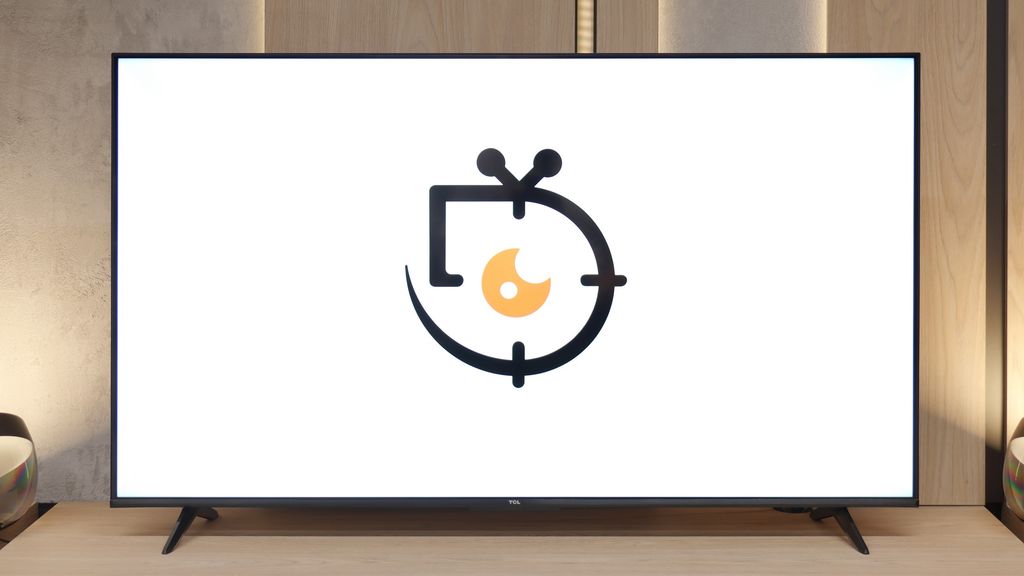
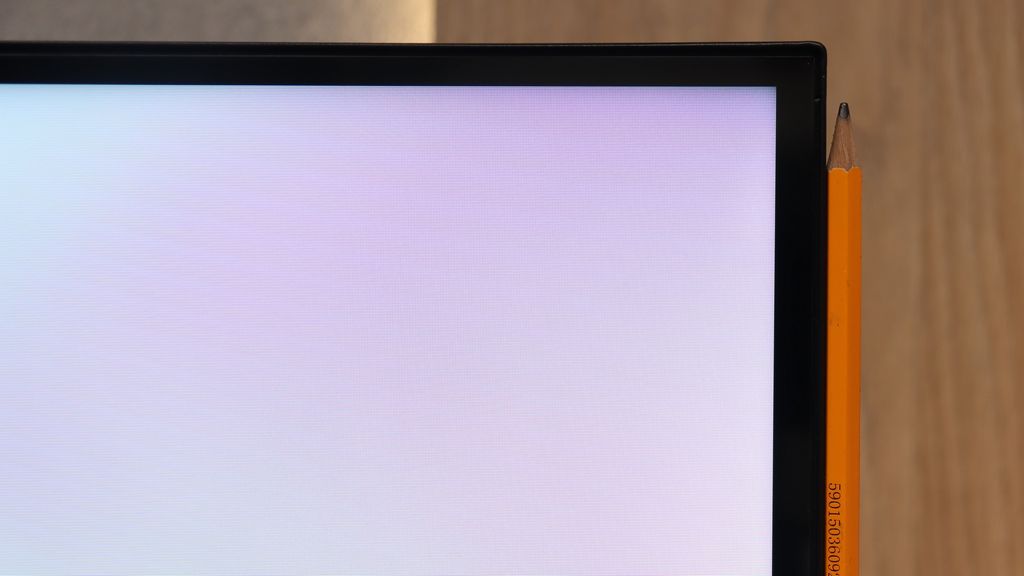
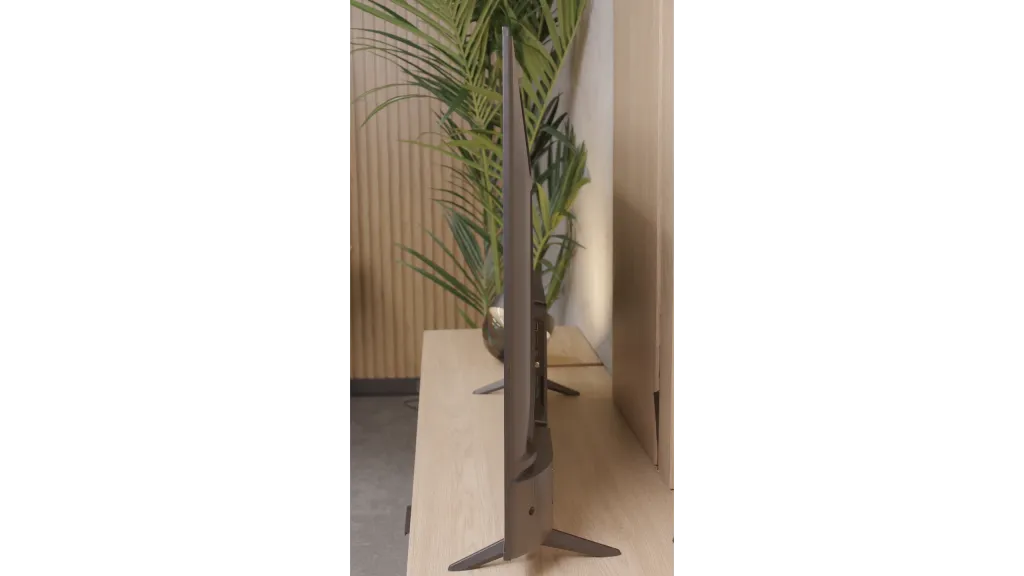
TV appearance


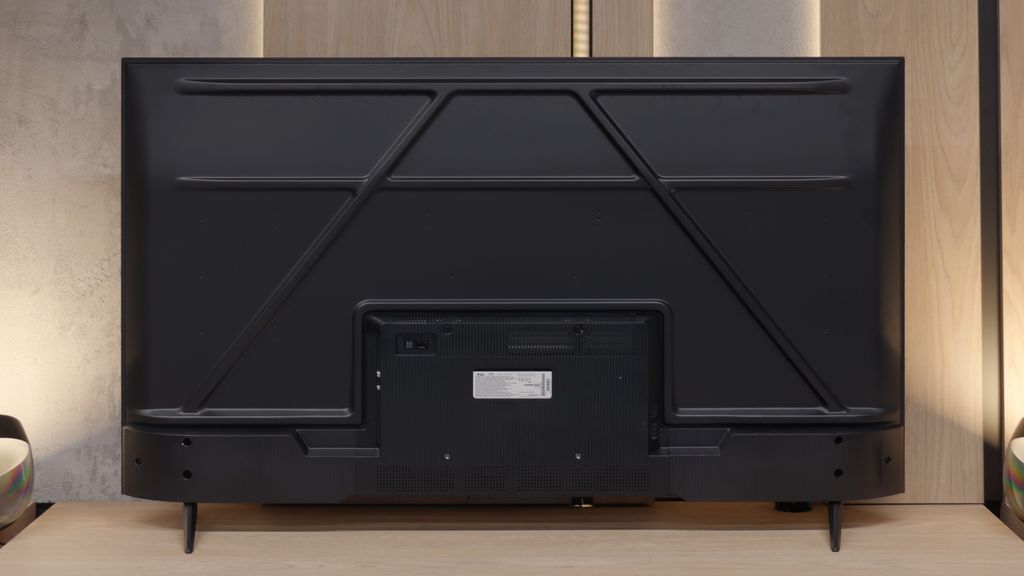
Where to buy

Contrast and black detail
5.9/10
5.2/10
Local dimming function: No
Local dimming function: No
Contrast:


Result
5,300:1

Result
5,800:1

Result
6,600:1

Result
5,650:1

Result
4,700:1
Result
4,450:1
Result
4,900:1
Result
3,150:1
Result
4,250:1
Result
2,550:1
Halo effect and black detail visibility:

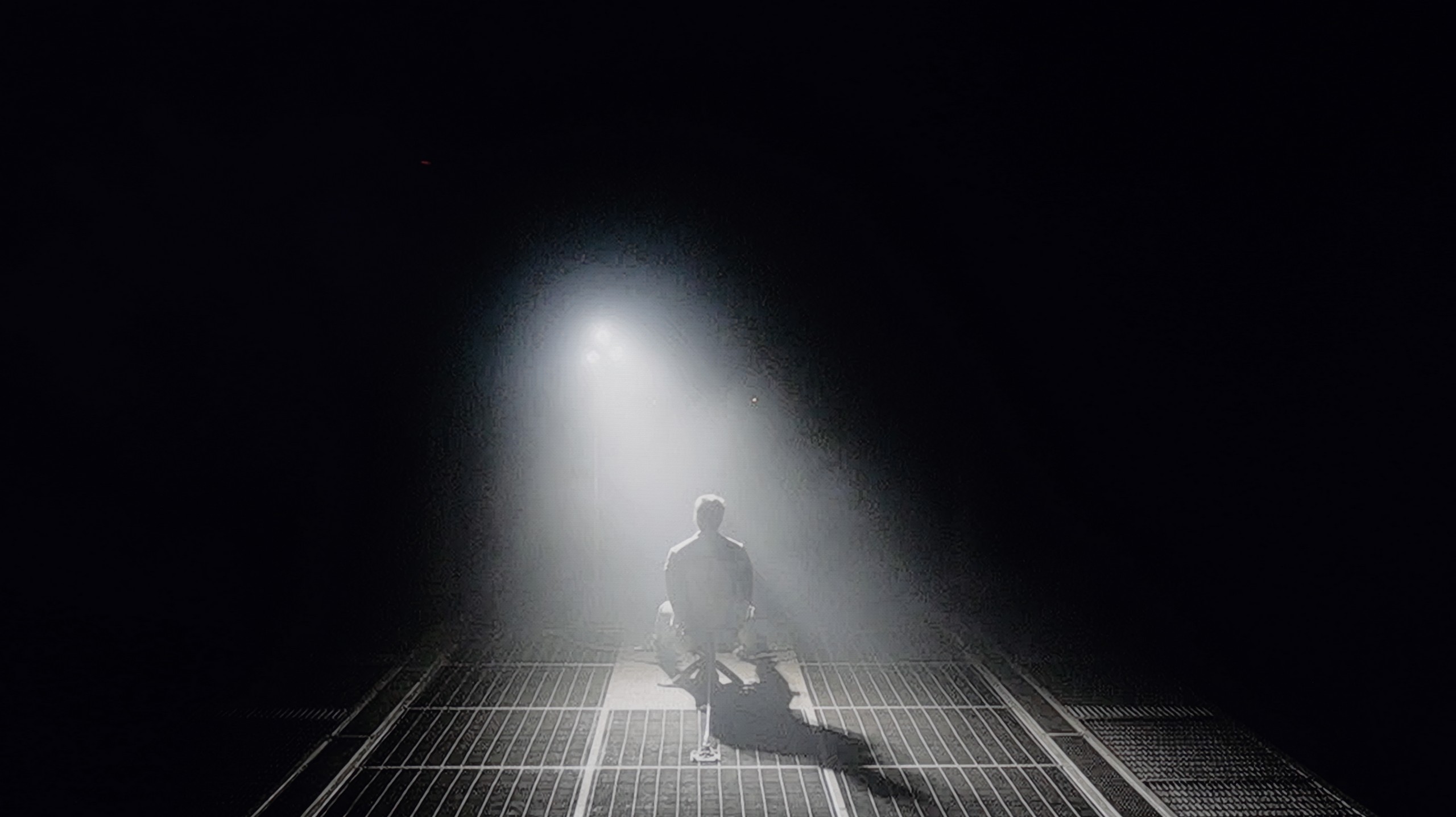
Check the visibility of bright lights on a dark background. Mini-LEDs often struggle with this. The photo does not compare black levels – that’s what the video below is for.
The video accurately shows differences in contrast and black levels between TVs, as well as potential issues: halo around bright objects or Mini-LED zone operation visible as brightness jumps.
Sharp GR8 uses a VA panel, which can provide quite decent contrast. In tested movie scenes, for example in “Arrival,” the television showed that it can achieve really good results. A contrast ratio of 6600:1 is a figure that can be considered solid in this price segment. However, it should be noted that the television is not equipped with local dimming technology. This is quite obvious, considering the class of the equipment. Despite this, Sharp GR8 performs well with the separation of bright and dark elements, which definitely deserves recognition. However, it's important to remember that televisions without local dimming have their limitations. In very dark conditions, such as during a viewing in a completely dark room, black may take on shades of navy instead of appearing deep and pitch black. Overall, Sharp GR8 offers quite solid contrast that should satisfy most users.
The TCK V6C uses a VA matrix, which is a solution that is considered quite a sensible choice in budget televisions. This type of panel offers high contrast and can provide pleasant experiences, especially during evening movie sessions. Of course, in this price range, it’s hard to expect local dimming – that technology is simply not present here. The effect is that blacks won’t be as deep and inky as in more expensive models, and at times they might resemble more of a shade of navy. Fortunately, this can be easily worked around – just turn on a soft light behind the television or place a small lamp in the corner of the room, and the eye will "trick" itself, making the blacks appear much better. Given the equipment in this range, the contrast can therefore be regarded as decent and sufficient for everyday viewing.
HDR effect quality
4.8/10
3.2/10
Luminance measurements in HDR:

Result
305 nit

Result
332 nit

Result
369 nit

Result
365 nit

Result
367 nit
Result
149 nit
Result
163 nit
Result
193 nit
Result
172 nit
Result
196 nit
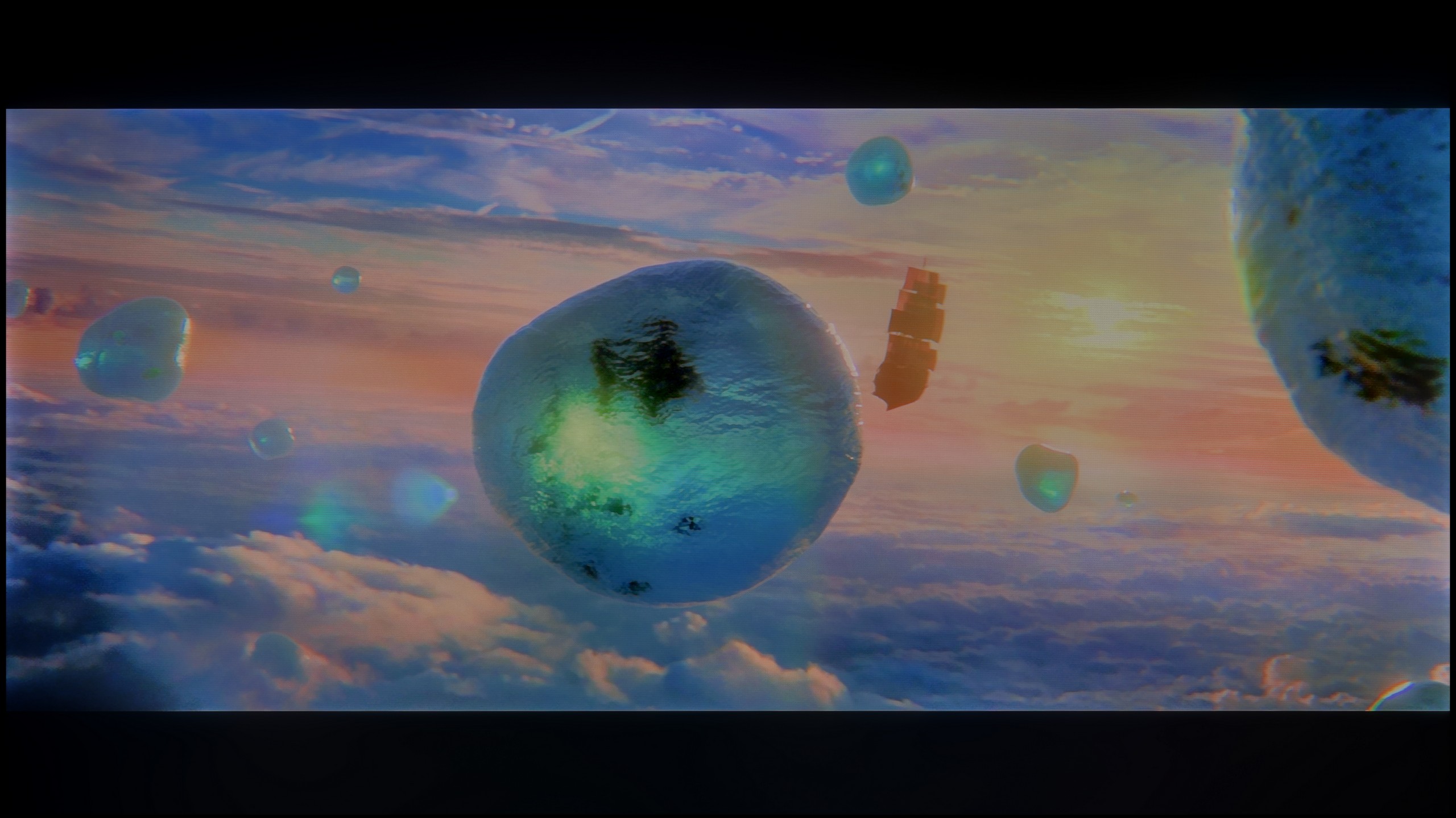
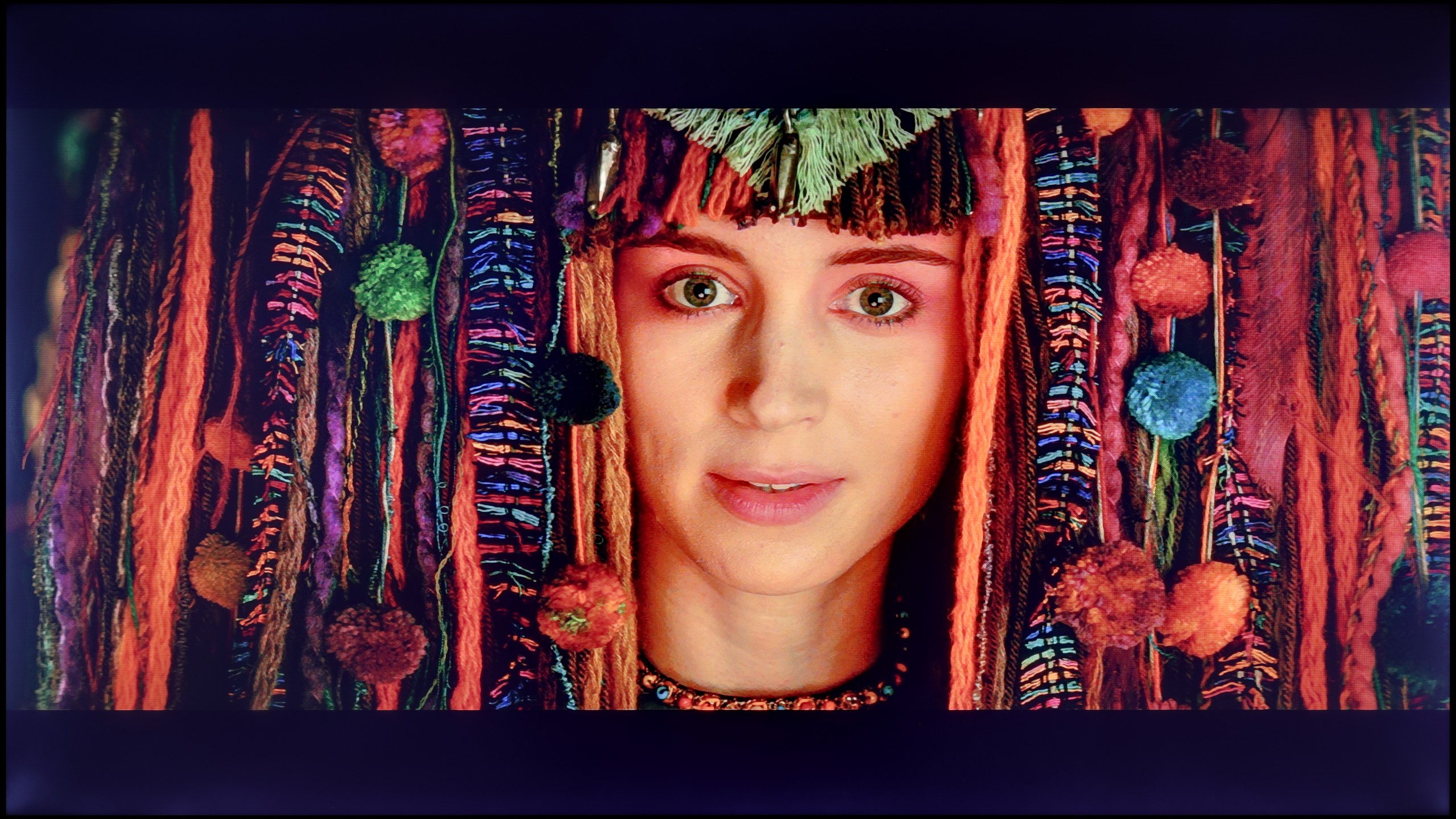
Scene from the movie “Pan” (about 2800 nits)

Scene from the movie “Billy Lynn” (about 1100 nits)

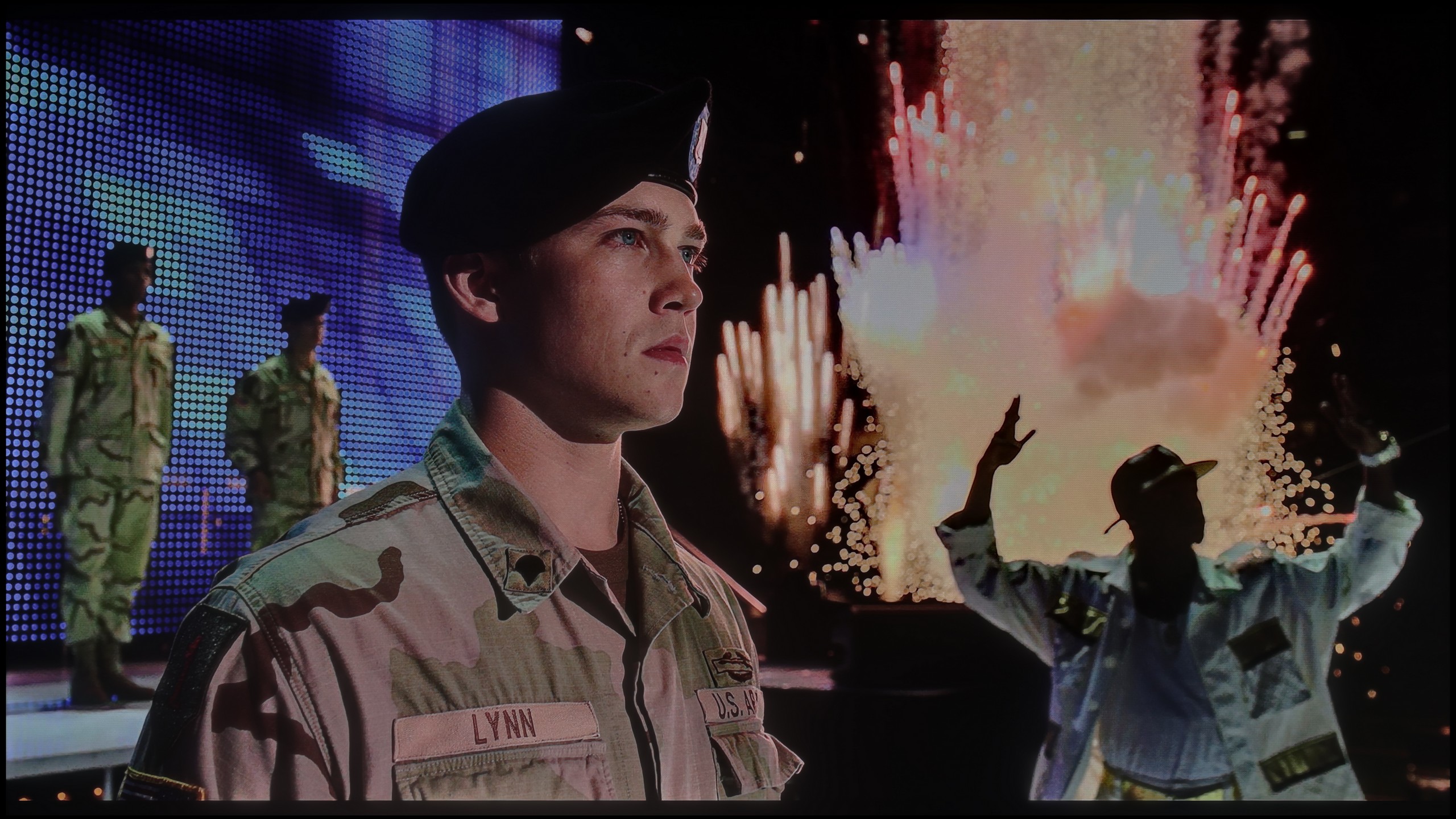
The photos show two HDR10 movies. 'Pan' is one of the brightest productions ever made, while 'Billy Lynn' (soldier) has brightness typical of streaming (Netflix, Prime, HBO MAX). Notice the intensity of effects and detail in whites.
Static HDR10


The photos present the visibility of white details in various HDR formats. They do not show brightness differences between TVs (these can be compared in the previous gallery).
Dynamic: Dolby Vision
Dynamic: Dolby Vision


The photos present the visibility of white details in various HDR formats. They do not show brightness differences between TVs (these can be compared in the previous gallery).
HDR luminance chart:
TCL V6C
Sharp GR8
Sharp GR8 in its promotional materials boasts of "very high brightness" at a level of 500 nits. Unfortunately, our tests showed that reality is somewhat different – the average luminance we were able to achieve was around 360 nits. This is rather an average result, especially in the context of the manufacturer's claims. Such brightness does not allow for a full enjoyment of HDR effects. The image is a bit sharper than in standard SDR, but it's hard to talk about true vibrancy and depth of bright elements here. However, the coverage of the DCI-P3 colour palette at 95% deserves praise. This is the result of applying an additional PFS coating, known from QLED technology. As a result, colours are vibrant and have a pleasant, natural tone, which partially compensates for the shortcomings in brightness.
When it comes to HDR, the TCK V6C clearly shows that it is not its strong suit. A peak brightness of around 200 nits makes it difficult to talk about true HDR effects – the picture simply remains too dark to bring out details in bright scenes or convey the appropriate dynamics. Although the television formally supports many HDR formats, it is not practically equipped for such demanding content. The lack of additional layers that enhance colors, such as QLED or PFS LED, further limits the appeal of the image – in more spectacular productions, the colours may seem washed out compared to more expensive models. Therefore, the V6C will primarily serve as a television for everyday viewing, YouTube, or SDR content, rather than as equipment for high-quality cinematic experiences.
Factory color reproduction
5.4/10
4.8/10


This gallery shows how colors change after professional TV calibration. If you notice the difference, we recommend ordering this service at SkalibrujTV.com.
Factory Mode
After calibration
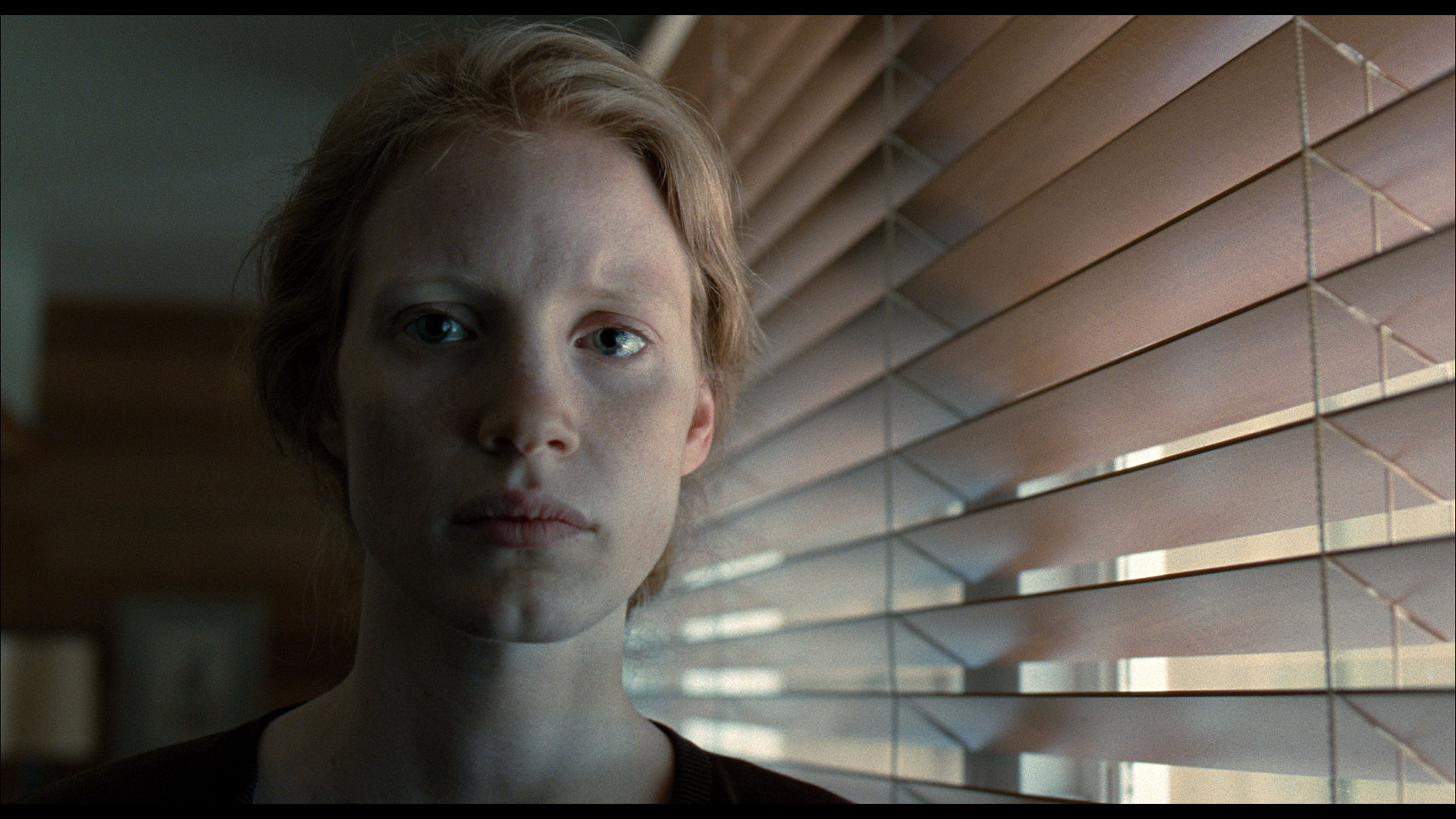
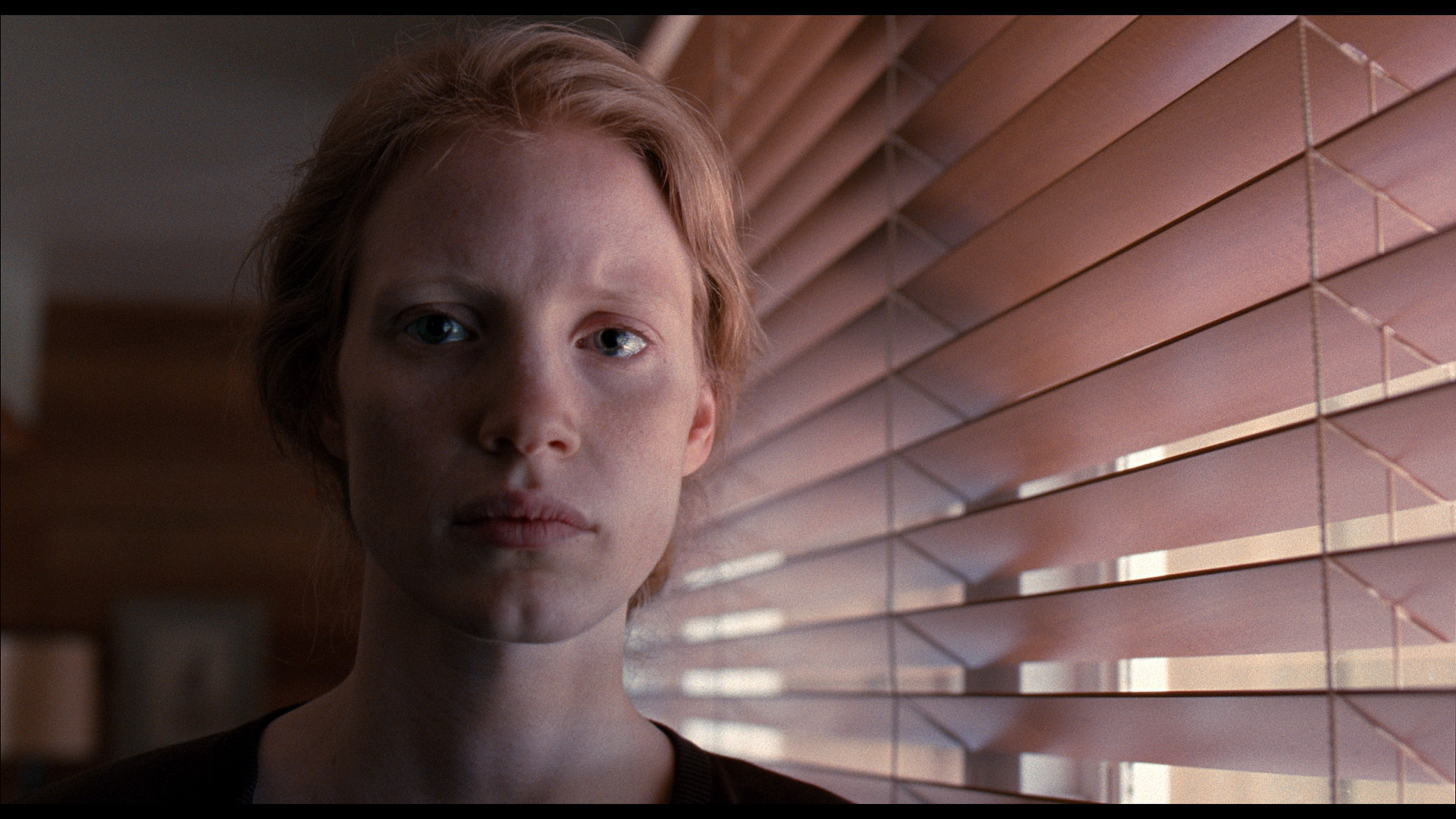
This gallery shows how colors change after professional TV calibration. If you notice the difference, we recommend ordering this service at SkalibrujTV.com.
Factory Mode
After calibration
At the beginning, it's worth noting that colour reproduction tests are always conducted in the best factory picture mode. In the case of Sharp GR8, this is the “Film” mode. When it comes to white balance, which affects how we perceive colours on the screen, in SDR mode the strong dominance of blue immediately stands out. This results in an unnatural cooling of the image – blue elements take on a purple hue, and skin tones appear to have a pink tint, which we can see in the comparative photo from the film STAR WARS. During the Color Checker test, it was clearly visible how the colour samples deviated from the standard values, confirming significant errors in colour reproduction. The gamma was also not ideal – it caused excessive brightening of the entire image, causing the scene to lose depth and proper tonal transitions.
In the 4K HDR mode, the situation looks much better. The dominance of blue is much less noticeable, although there are minor issues with the blending of red and blue. This makes some shades look slightly unnatural. The EOTF curve, which is responsible for image brightness in 4K HDR content, showed another problem – the TV tends to excessively darken the image across the entire surface of the screen.
To summarise, the “Film” mode in Sharp GR8 would require some adjustments in order to fully utilise the potential of this television. Fortunately, we took care of this and proceeded with calibration.
We started colour reproduction tests with the Filmmaker mode, which in theory should be the best choice straight out of the box. It certainly performs better than the Eco or Dynamic modes, which heavily interfere with the image and spoil its natural character. As you can see in the graphs, the factory tuning of the V6C is not ideal, although it's not a disaster either. The biggest issue turned out to be a lack of red – the TV clearly "cools" the image, which is especially noticeable on human faces, giving a "zombie skin" effect. This particular issue was the most bothersome during everyday viewing. Looking at the colour palette in HDR content, the shortcomings in red are also noticeable, and their source is the relatively narrow coverage of the colour space. Of course, every TV can be calibrated, so we decided to check how the V6C would perform after such an adjustment.
Color reproduction after calibration
8/10
5.2/10

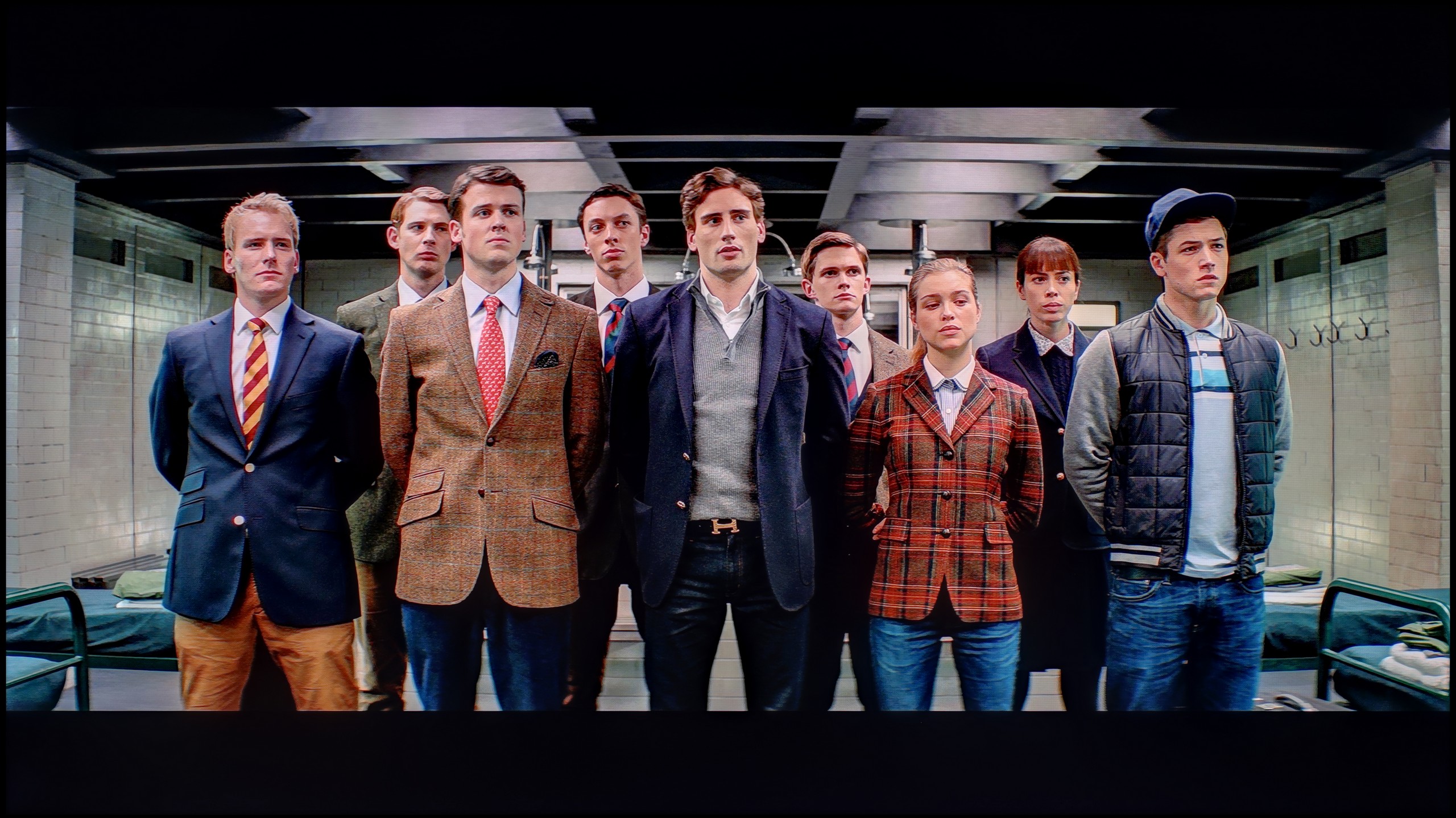
The photos show how movies look on the TV. Pay attention to black detail visibility, colors, and shadow tint.

The photos show how movies look on the TV. Pay attention to black detail visibility, colors, and shadow tint.
Sharp GR8 is one of those televisions that really gains a second life after proper calibration. Both in HD and 4K content, the white balance performs very well, especially considering this model's price segment. The picture becomes significantly closer to what the director intended to show – colours appear natural, and skin tones gain the right depth and warmth. The brightness characteristics also leave a very positive impression. Both the gamma and the EOTF curve demonstrate really solid values. While slight imperfections can be noticed, they are subtle enough that it's difficult to see them during everyday viewing. In summary, calibration allows Sharp GR8 to show its best face, offering a picture that is not only pleasant to the eye but also faithfully conveys the creators' intentions.
My dear friends – we haven't faced such a difficult "calibration battle" in years. The V6C turned out to be one of the most stubborn TVs we've dealt with in the office. The calibration trials alone took us several hours of work and required a lot of patience. We finally managed to slightly warm up the skin tones, which made faces stop looking like they were pulled straight out of a horror film, a common issue with the factory settings. Unfortunately, that wasn't the end of it – the TV reacted to our adjustments in white balance in a completely unpredictable manner. Where we expected stability in the image in a certain area, new errors appeared, and Color Checker measurements showed deviations that couldn't be rationally explained. It's hard to say whether the fault lay with the software or the design itself, but one thing is certain – the V6C put up exceptionally strong resistance. Ultimately, the calibration brought improvement, especially in SDR content, where the image became more pleasing and natural. However, it must be clearly stated that the design limitations remain. The TV still flattens the image in HDR materials and has noticeable deficiencies in colour reproduction. This is equipment more suited for everyday TV watching or SDR content rather than for cinematic experiences in the highest quality.
Smoothness of tonal transitions
8/10
7/10


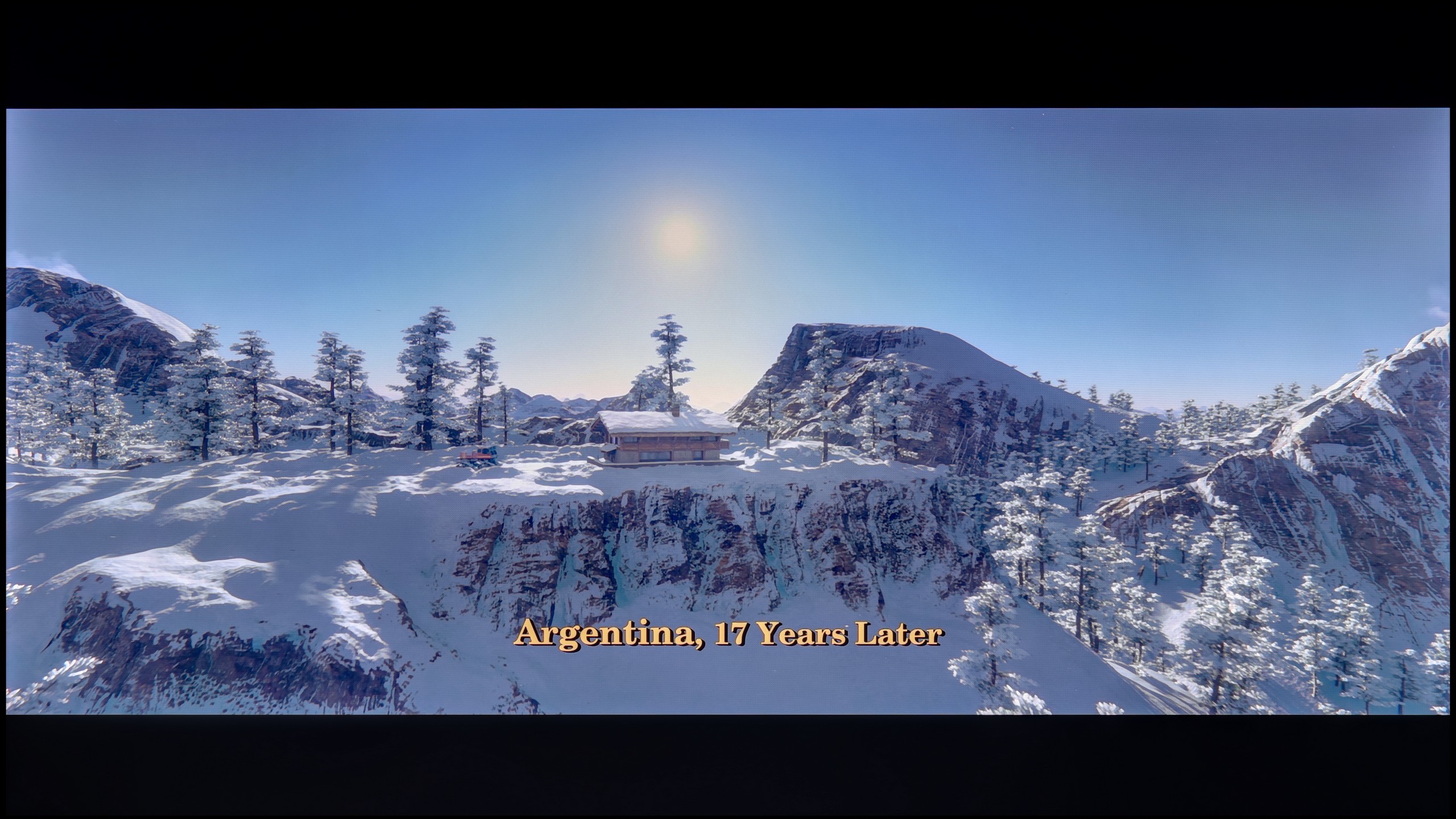
These are selected scenes that show smooth tonal transitions from one color to another. If you see distinct banding, it’s the TV panel’s fault.
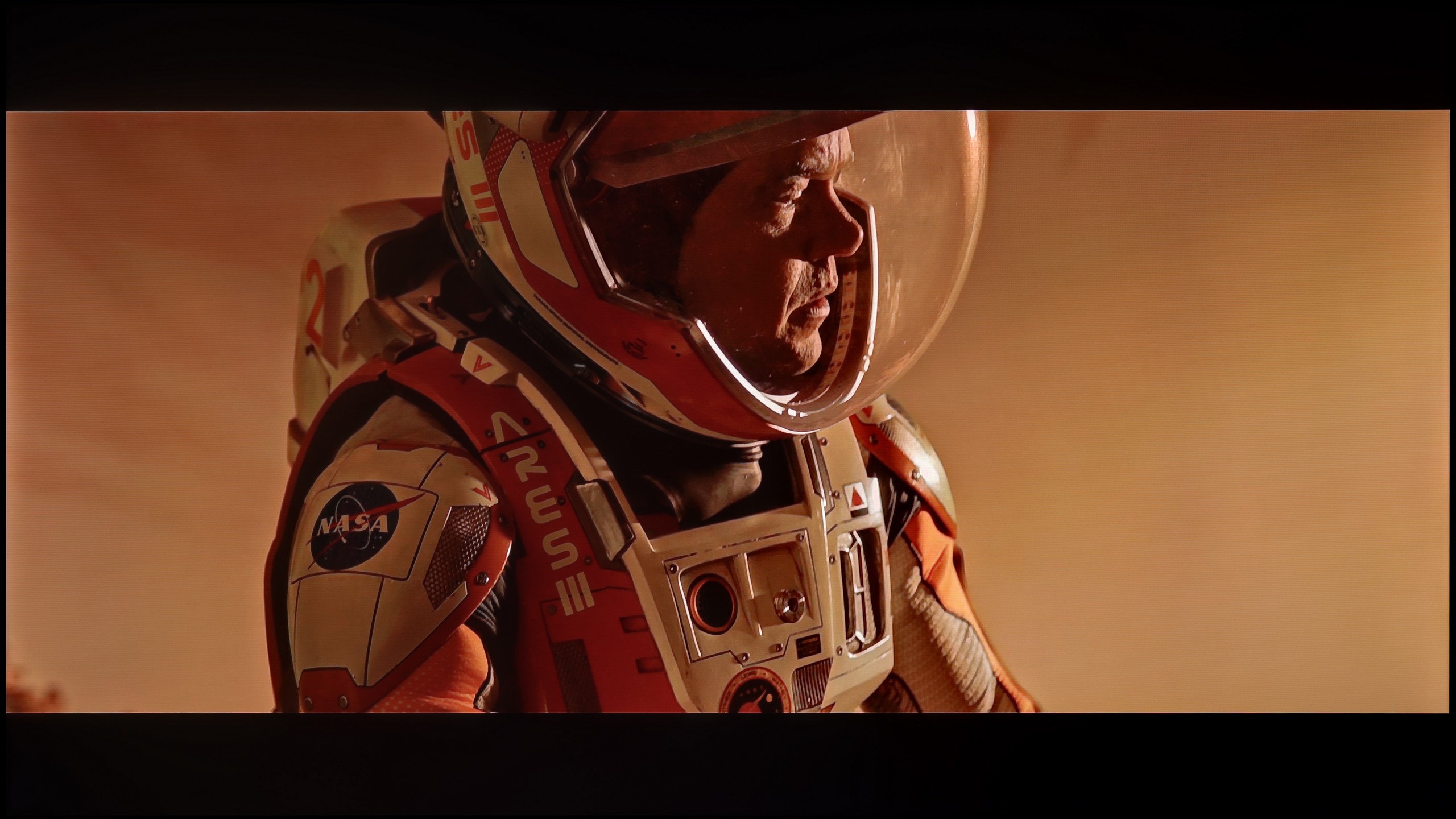
These are selected scenes that show smooth tonal transitions from one color to another. If you see distinct banding, it’s the TV panel’s fault.
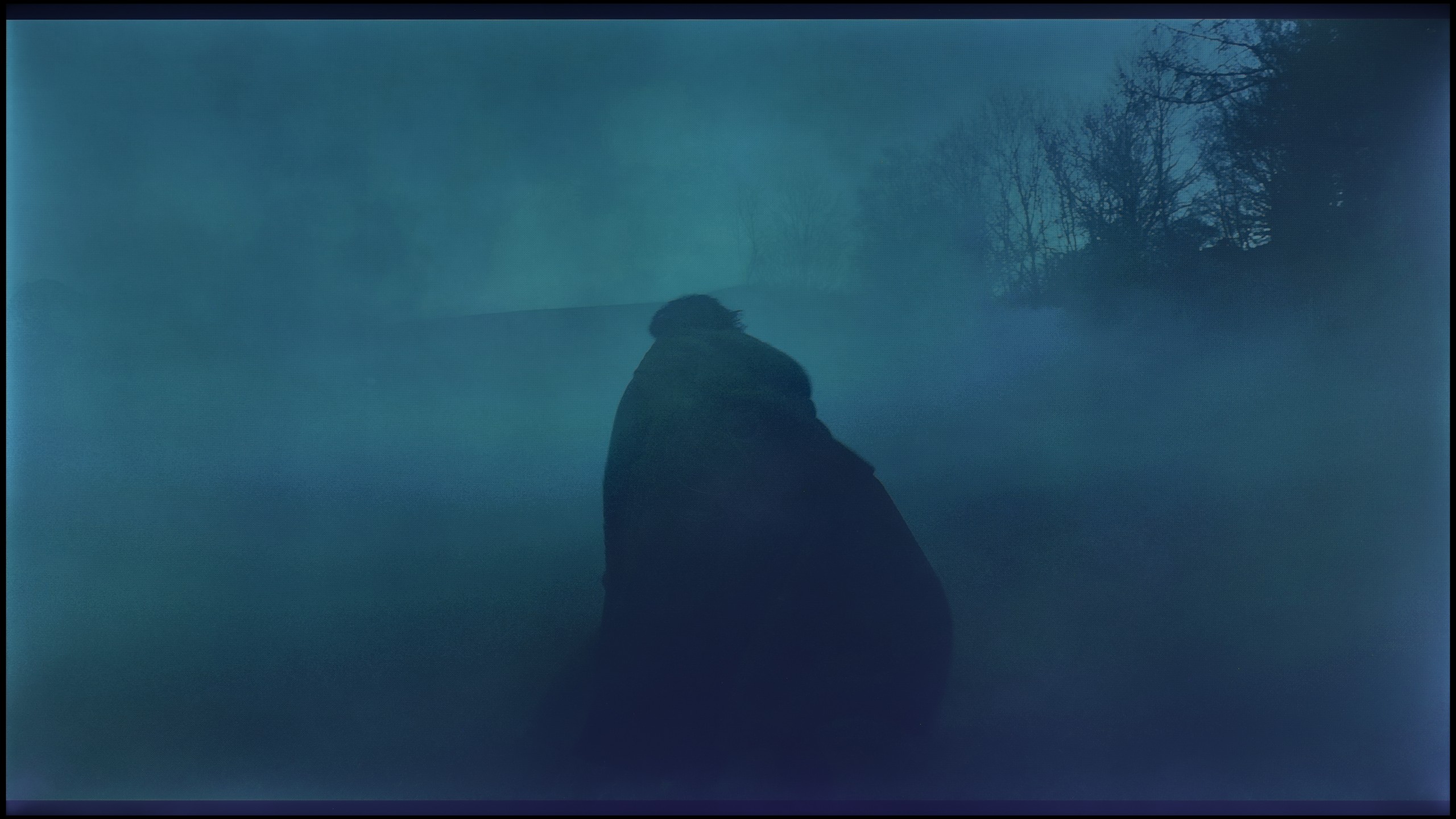
These are selected scenes that show smooth tonal transitions from one color to another. If you see distinct banding, it’s the TV panel’s fault.
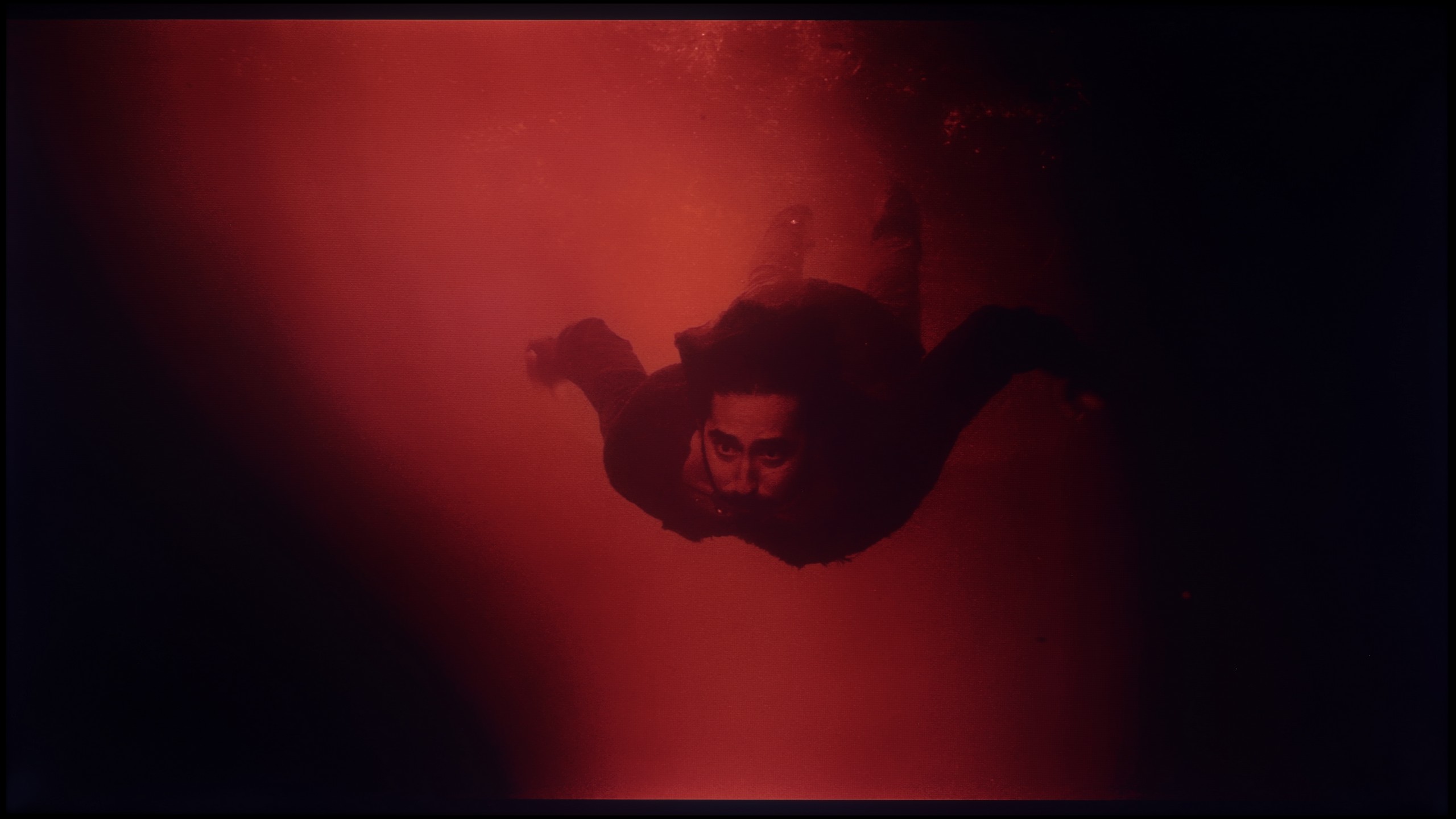
These are selected scenes that show smooth tonal transitions from one color to another. If you see distinct banding, it’s the TV panel’s fault.
When it comes to the fluidity of tonal transitions in high-quality materials such as 4K, Sharp GR8 performs really well. Colour gradients are smooth, and transitions between shades are natural and free from visible artifacts. The television has no issues reproducing subtle differences in colours, even in demanding scenes. Only the most discerning users, who closely examine the image, may notice slight imperfections in the darkest shades. For most viewers, the quality of tonal transitions in the Sharp GR8 will be more than satisfactory and will not negatively affect the perception of the image.
When it comes to the fluidity of tonal transitions, it doesn’t look too bad during everyday viewing. In most scenes, the image appears smooth, and the colours blend without noticeable disruptions. So you can comfortably watch movies or series without worrying about glaring artefacts. The problem only starts in more extreme moments – in very bright or exceptionally dark scenes, the V6C shows its limitations. You can then see slight "stepping" of colours, meaning a lack of perfectly smooth transitions. Fortunately, these are rather sporadic situations.
Image scaling and smoothness of tonal transitions
5.5/10
5/10


Smooth transition function

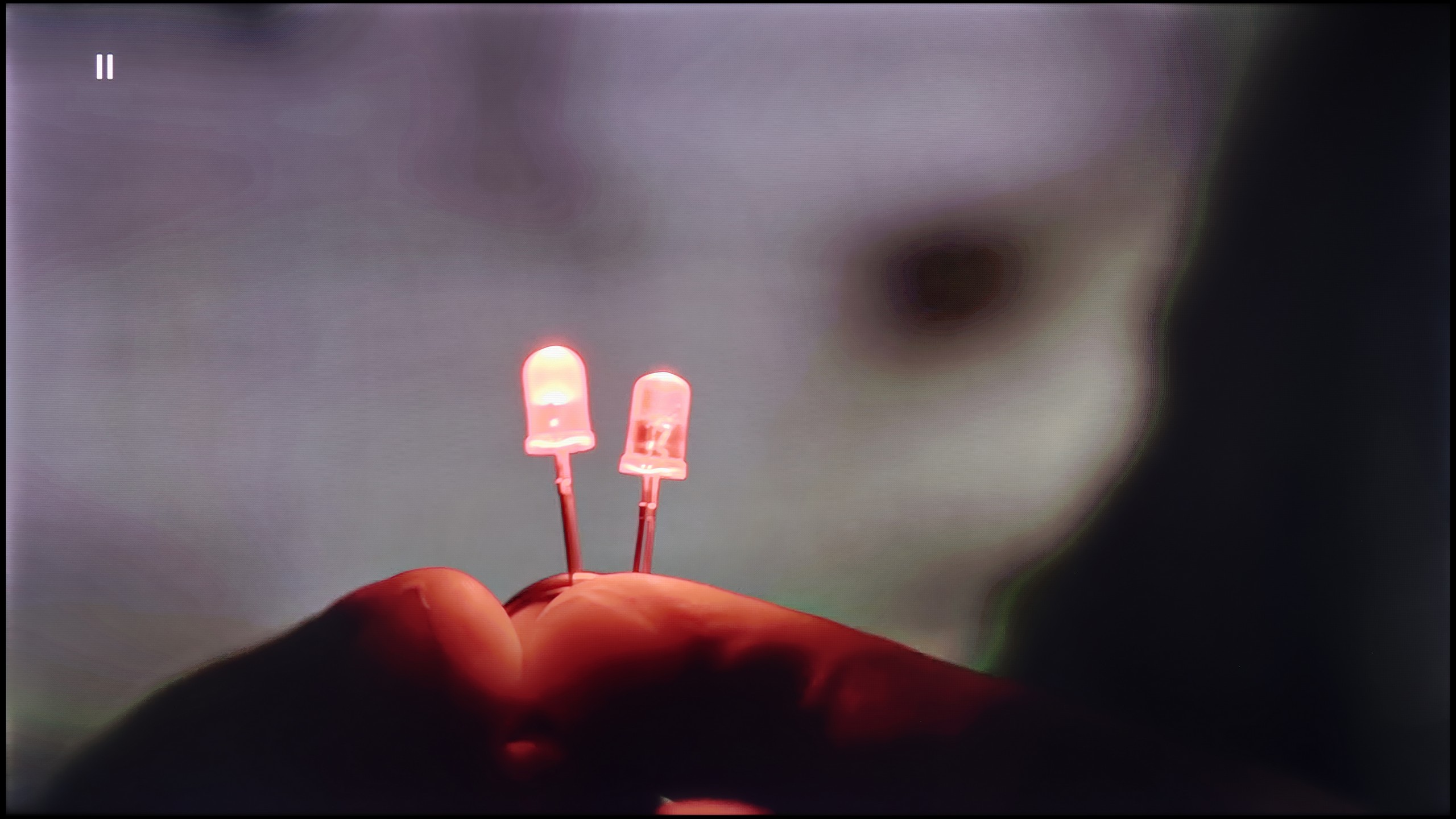
The match photo shows how the TV smooths weak tonal transitions in low-quality video.
Image scaling SD (576i)


The model photo shows how it handles upscaling of SD material.
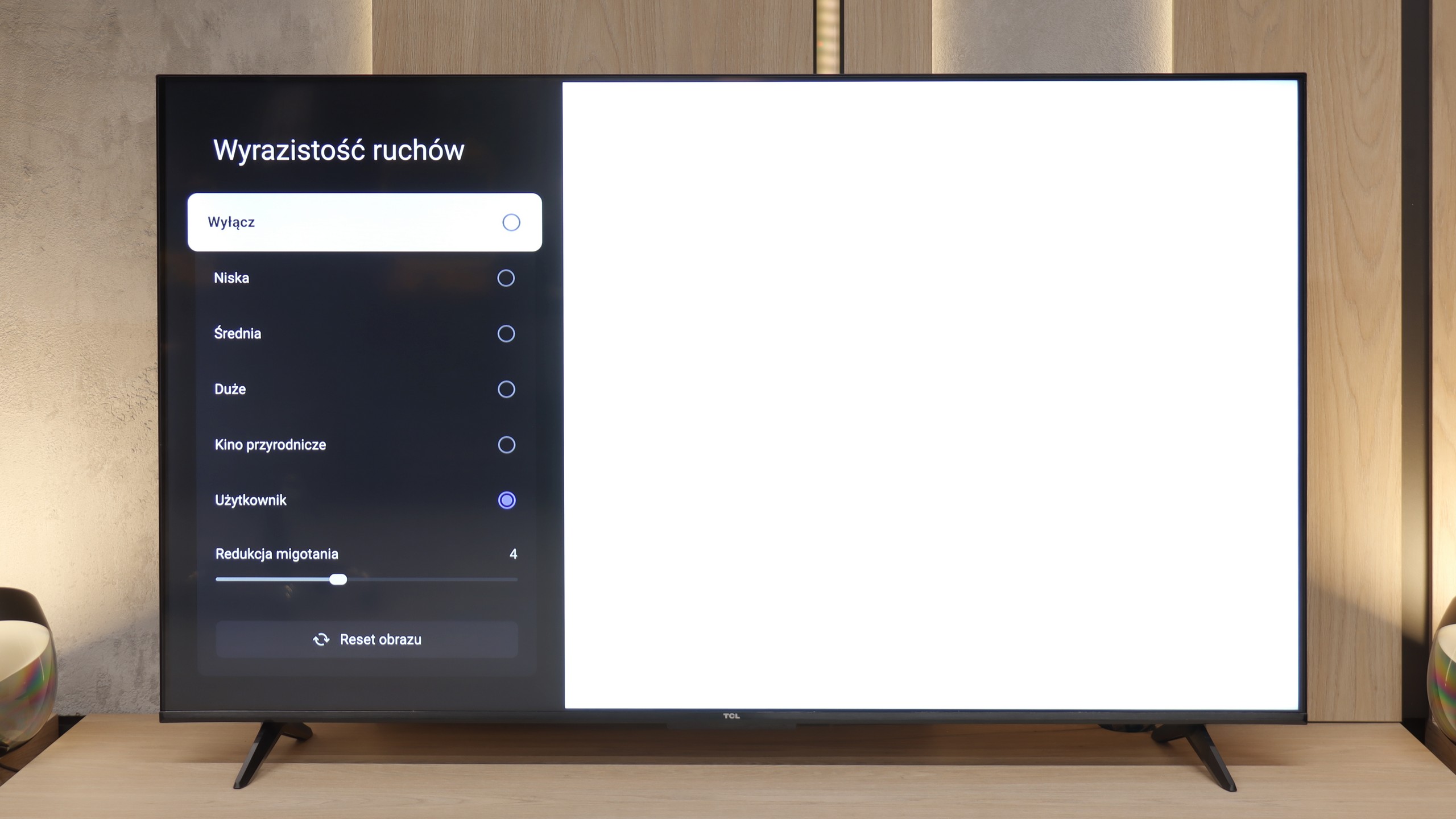
Sharp GR8 is equipped with a feature called "10-bit colour reproduction," which theoretically should improve the smoothness of tonal transitions. In practice… well, the effect is surprising, but not in a very positive way. Even at the highest settings, it’s hard to notice any impact on the actual tonal transitions. Instead, the feature surprisingly smooths out things it shouldn’t - walls, shirts, or other flat surfaces look almost as if they have been ironed. In the test, we had to note that there is simply no actual impact on tonal transitions.
When it comes to image scaling, Sharp GR8 performs significantly better. The television can give the image a plastic, smooth characteristic, making even lower resolution content look quite good. Of course, with more demanding details, such as thin branches of trees in the background, you can see slight jaggedness, but it’s not something that would significantly affect the viewing comfort.
When it comes to upscaling, the V6C doesn't bring anything groundbreaking to the table. Lower quality content is heavily sharpened, making the image look quite unnatural, at times almost artificial. This can be somewhat alleviated by reducing the sharpness level in the settings, but the effect isn't spectacular. The image still falls short of perfection. The digital processing itself performs better. The function responsible for smoothing tonal transitions works quite effectively, especially at the medium setting, where the image truly appears smoother. Unfortunately, its operation is rather aggressive – it heavily interferes with the overall scene, causing actors in the foreground to start looking like characters from super smooth soap operas. Therefore, we would not recommend using this option if a natural viewing experience is important to us.
Blur and motion smoothness
7.4/10
3/10

Blur (native resolution, maximum refresh rate):


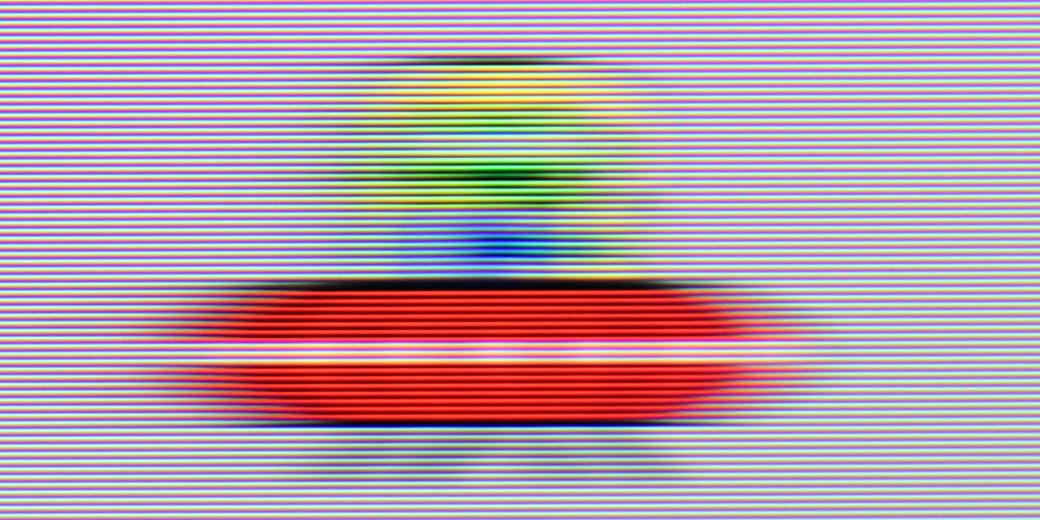
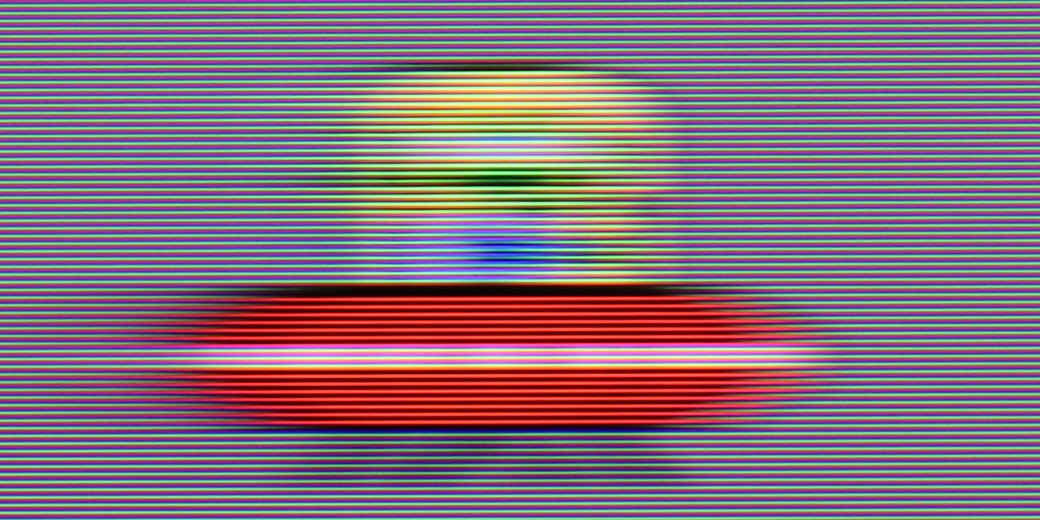
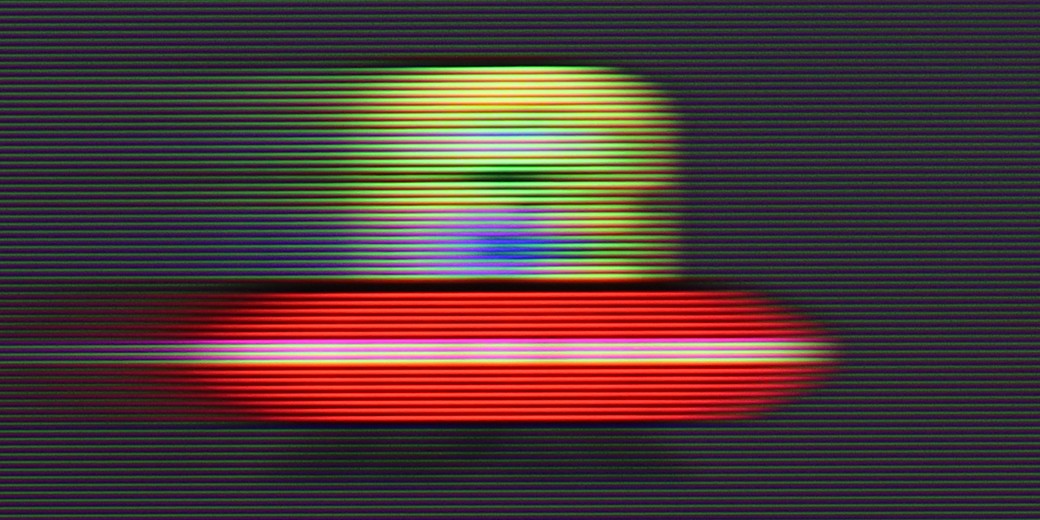
This is where Sharp GR8 has the opportunity to stand out against the competition in its price segment. The television is equipped with a 144 Hz refresh rate panel, which is an impressive result, especially if we plan to use it for dynamic content such as action films, sports broadcasts, or video games. Additionally, the manufacturer has included a motion smoothing feature, commonly known as a 'smoother'. The user has three levels of adjustment available, allowing them to tailor the effect to their personal preferences – from subtle smoothing to a more aggressive intervention in the fluidity of the image. It's a nice addition, particularly for those who mainly watch films and care about smooth, cinematic sequences without annoying judders or stuttering.
Smoothing and motion fluidity are areas where the V6C quickly reveals its limitations. It's a 60 Hz TV, so it was hard to expect miracles here. In dynamic sports scenes, the image performs rather mediocrely. This is most noticeable in darker scenes, where distinct trails and blurred "halos" follow moving objects, which can be quite distracting. This is definitely a weaker point of this model. Fortunately, there is also a small plus. The V6C is equipped with a motion smoother that works while watching movies. Thanks to it, productions filmed at 24 frames per second, which is practically all cinema titles and series, can look smoother than they were actually recorded. Importantly, the intensity of the effect can be adjusted to personal preferences – from slight smoothing to the full "soap opera effect."
Console compatibility and gaming features
7.8/10
4/10
- ALLM
- VRR
- VRR range48 - 144Hz
- Dolby Vision Game Mode
- Correct implementation of HGIG
- 1080p@120Hz
- 1440p@120Hz
- 4K@120Hz
- Game bar

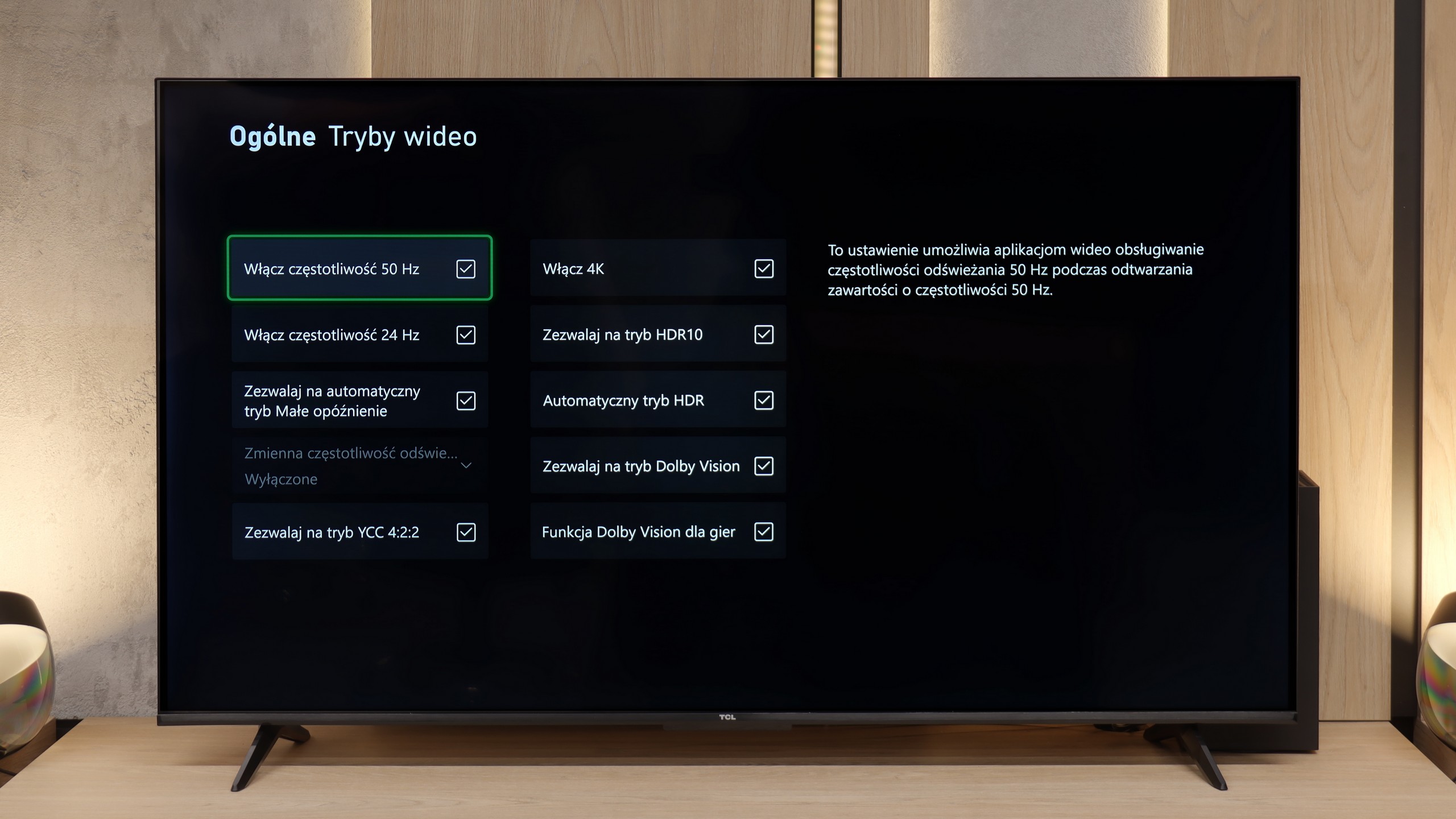

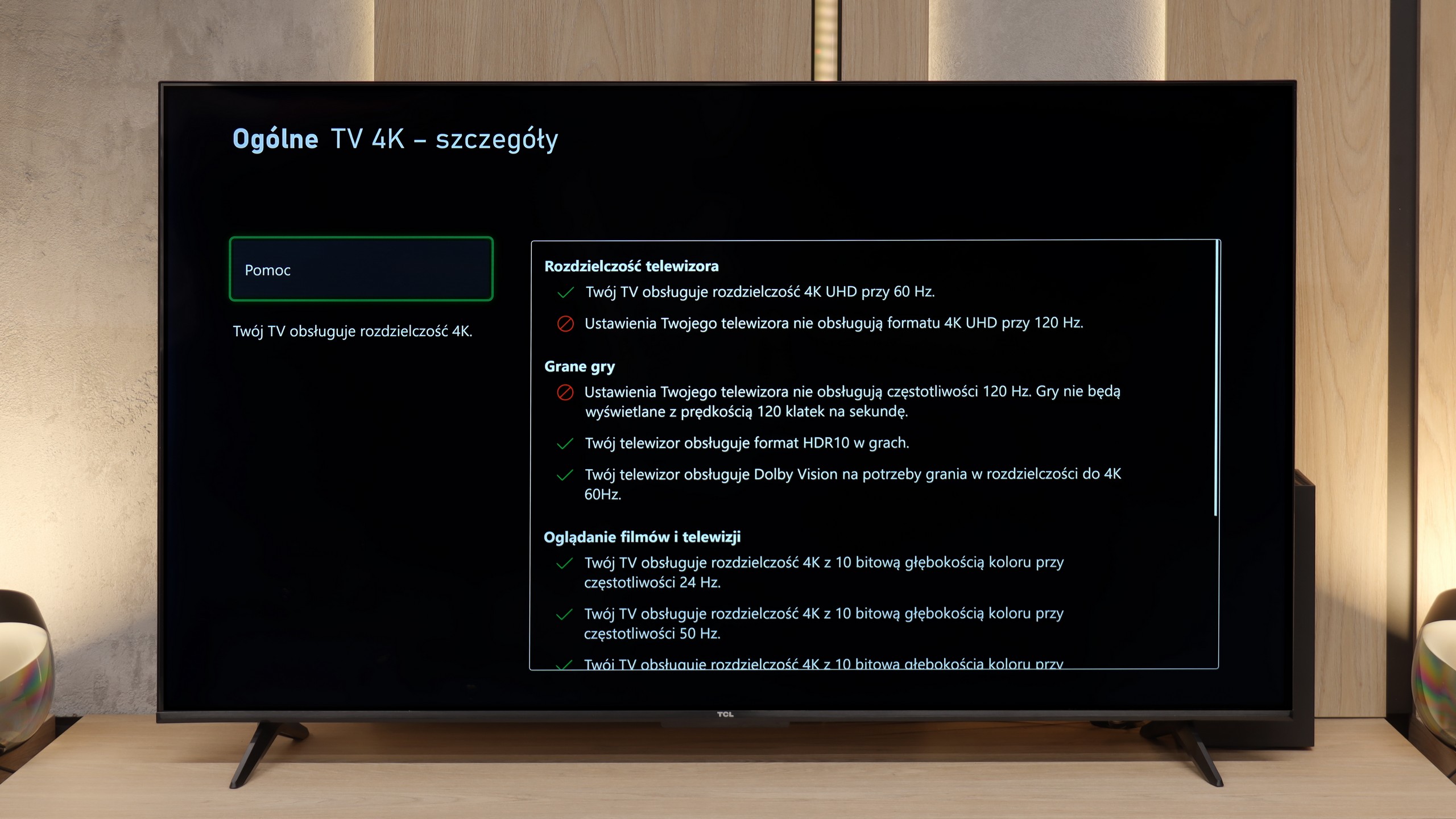

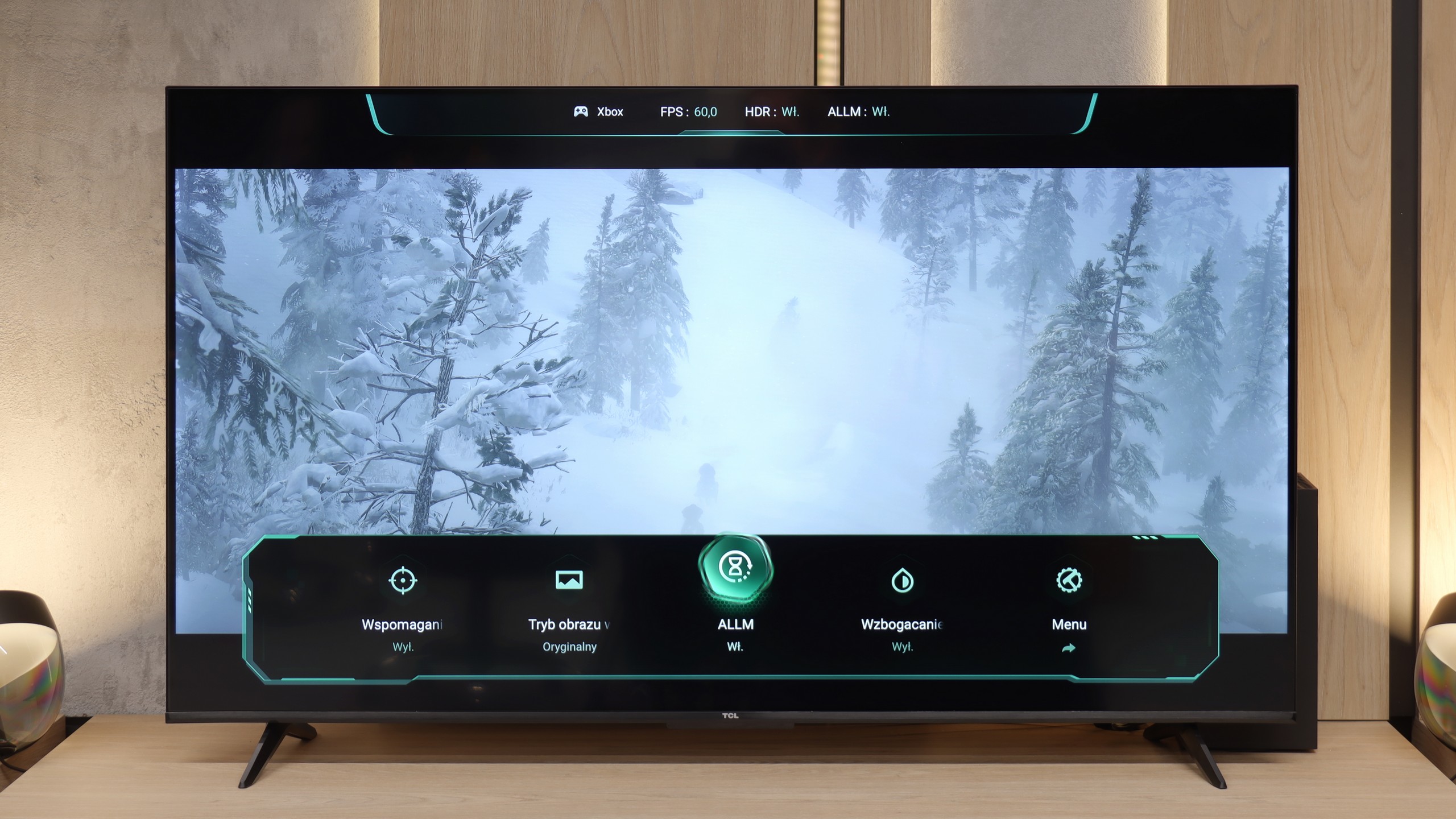

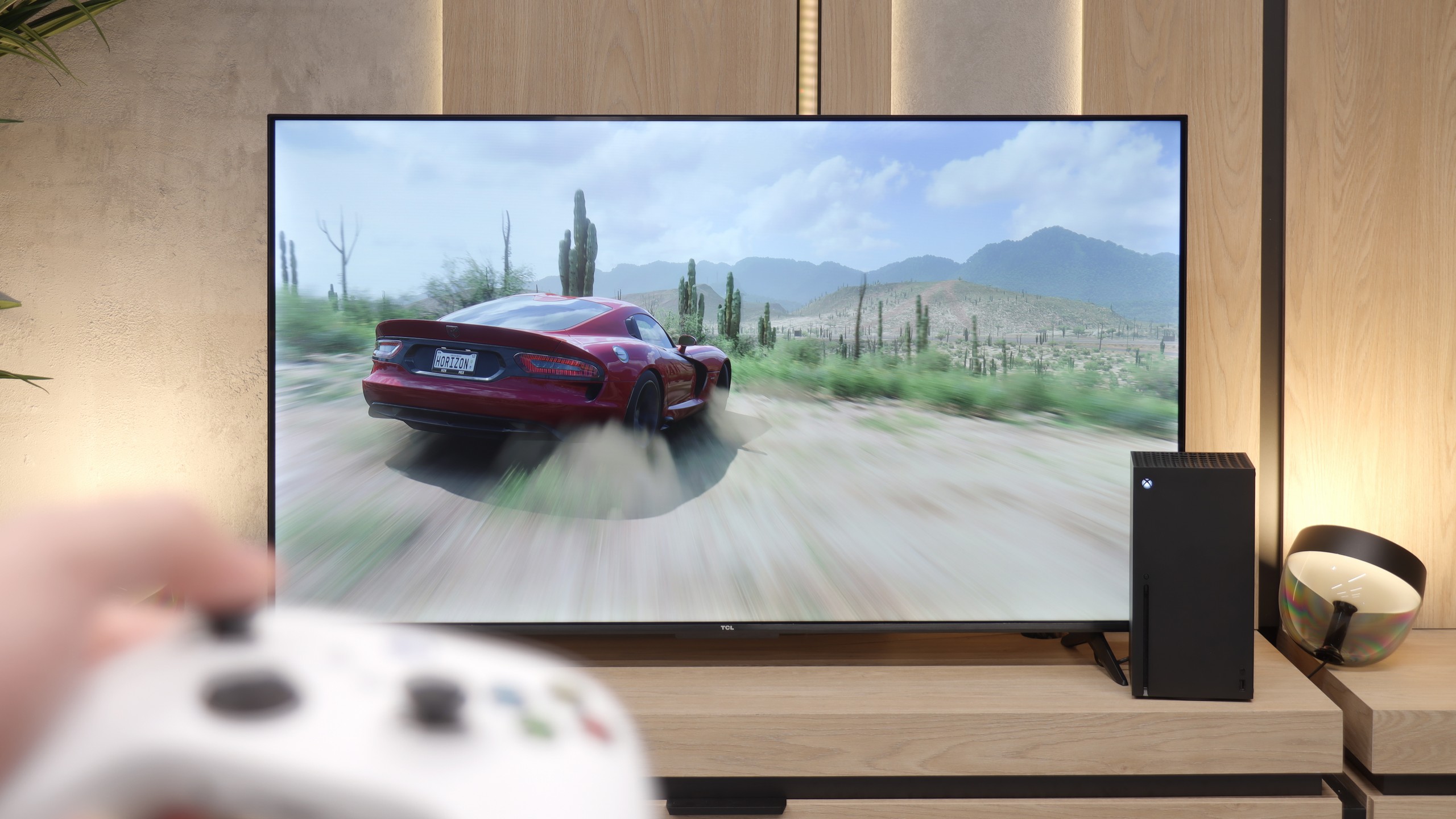
If the television has a 144 Hz panel and two full HDMI 2.1 ports, it’s clear it was designed with gamers in mind. The Sharp GR8 offers exactly that – high refresh rates and the right connections to get the most out of modern consoles and PCs. It also features ALLM, which automatically switches the TV to low latency mode, and VRR, ensuring the picture doesn’t stutter even in more demanding moments. In practice, everything works as it should, and it's difficult to find fault. However, it’s not without its shortcomings. There’s a lack of support for HGiG, which better adjusts HDR for games, as well as Game Bar, which makes it easier to quickly adjust settings without leaving the game. Despite these drawbacks, the Sharp GR8 is a really solid option for gamers.
Even though the V6C is not a TV designed with avid gamers in mind, TCL has included a few features that may appeal to more casual users. You'll not find a 120 Hz panel or HDMI 2.1 ports here, but there is an ALLM mode that automatically switches the TV into low latency mode. There's also a quite practical Game Bar – a simple panel allowing the preview of basic parameters, changing the picture mode, or even enabling a virtual crosshair on the screen. Another interesting feature is the support for Dolby Vision Gaming, intended for Xbox Series S/X consoles – a nice addition, although in practice it doesn’t offer as much as in more expensive models. However, the biggest issue remains the HDR configuration. The HGiG function, responsible for adjusting the brightness and contrast of games to the capabilities of the panel, doesn't respond as we would expect – the picture can be overly dark or too flattened. As a result, a better solution turns out to be simply playing in SDR mode, where the V6C operates steadily and doesn’t try to pretend to be an HDR TV.
Input lag
9.7/10
10/10
SDR
HDR
Dolby Vision
Sharp GR8 performs really well in terms of delays. With a refresh rate of 120 Hz, the input lag is only 9 ms, and at 60 Hz – about 18 ms. These values are practically imperceptible even for the most demanding gamers, where every millisecond counts. Importantly, the Dolby Vision mode also works responsively, which is not a standard in TVs within this price range. This is definitely a big plus for those who want to enjoy not only smoothness but also better HDR effects while gaming.
The input lag measurement shows values below 15 ms, which is a level that is practically difficult to perceive with the naked eye. Even in dynamic games, the action remains responsive, and the controls are smooth. This is a result that can confidently be considered very good and sufficiently adequate for most players, even if the V6C is not strictly gaming hardware.
Compatibility with PC
4/10
4/10

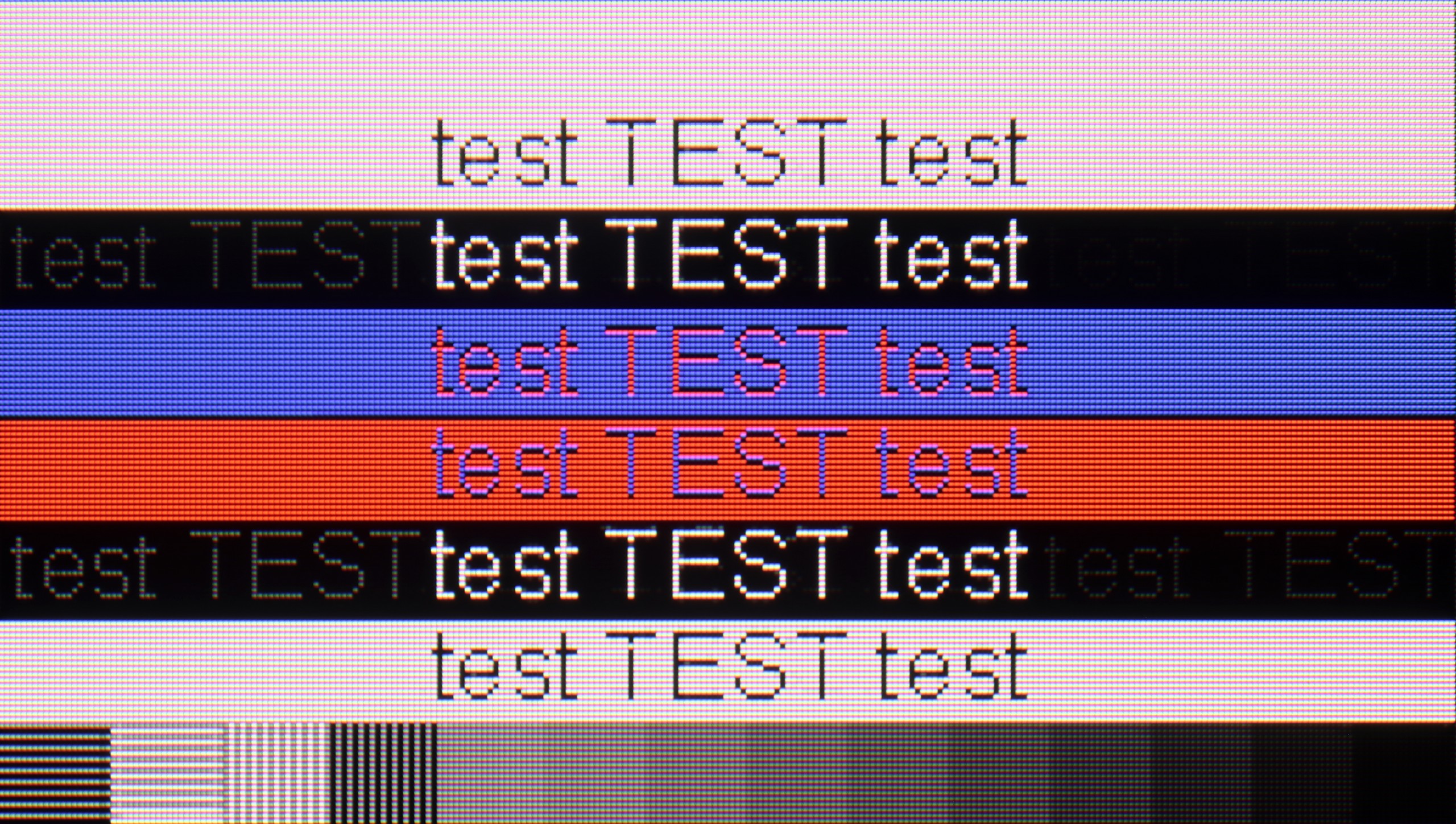
The photo shows the legibility of small fonts. Ideally, lines should be the same thickness on both light and dark text, with minimal pixel gaps.
Sharp GR8 performs quite well as a screen for PC gaming. With a refresh rate of 144 Hz, low input lag, and support for G-Sync and FreeSync technologies, it's a set that guarantees smooth and responsive gameplay. Games look dynamic, and the image remains stable even in the most demanding moments. However, a problem arises when it's time to work with text. The television does not support chroma 4:4:4, which means fonts are blurred and difficult to read. Longer work with documents or browsing websites can become simply tiring on the eyes.
Sharp GR8 is a great choice for PC gamers, but rather poor for office work. If we plan to use this television mainly for gaming, we should be satisfied. However, if we think of it as a monitor for everyday work, it's better to look for another solution.
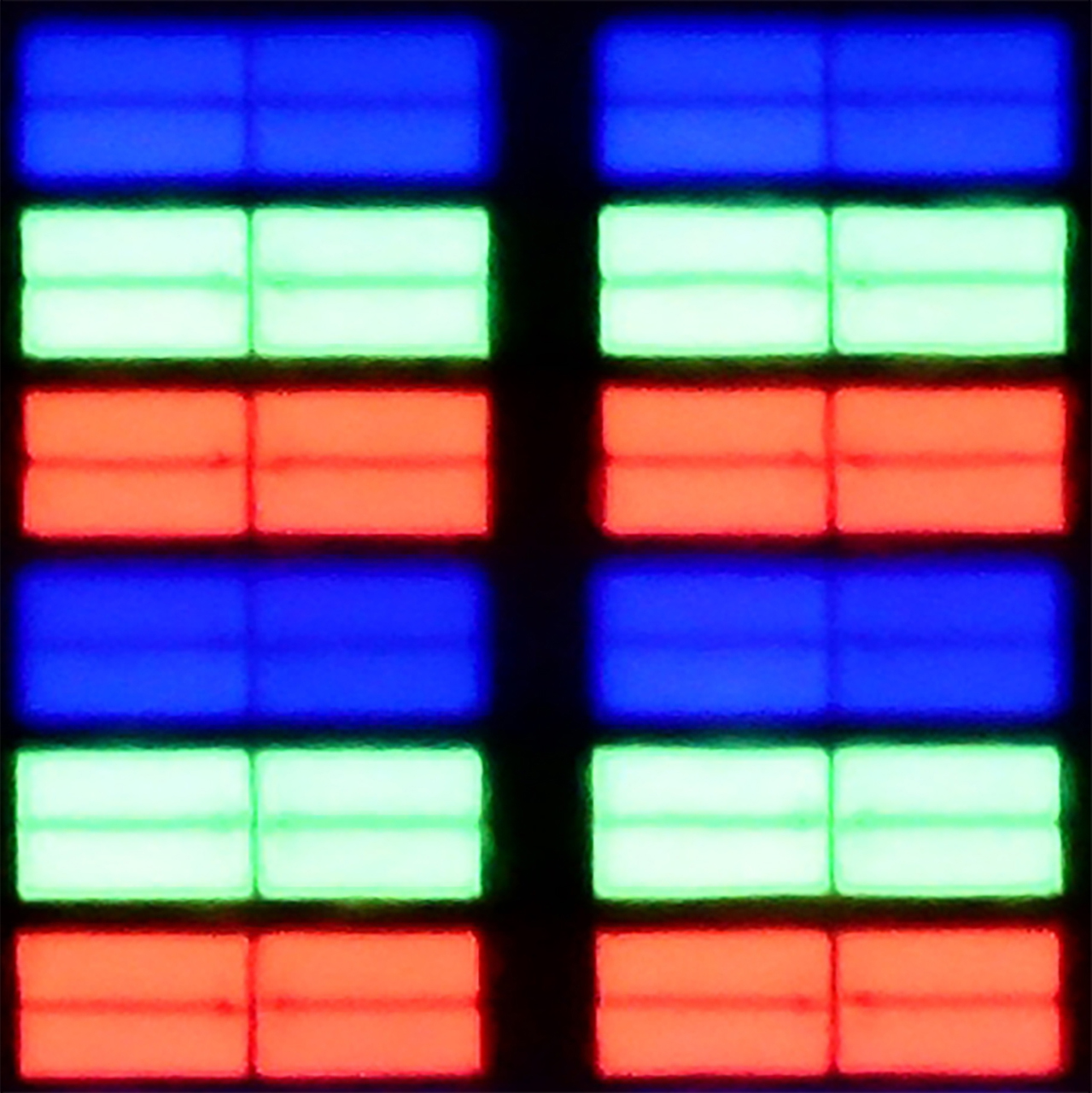
Cooperation with a PC is only partially satisfying. The television supports chroma 4:4:4, so at first glance, the fonts look quite decent. The problem arises when we take a closer look – under the microscope, it turns out that TCL has used an atypical subpixel arrangement in the V6C. Instead of the classic vertical layout, we have a horizontal arrangement here, which in practice causes various artifacts and unevenness in displaying letters. As a result, the fonts can appear jagged, and after prolonged use, the text can be straining on the eyes. Therefore, it’s hard to regard the V6C as a sensible substitute for a monitor – while it’s suitable for the occasional opening of a browser or watching content from a computer, it simply doesn't work as a primary screen for work. There’s also not much to say about gaming features, as they simply aren’t present.
Viewing angles
3.2/10
2.9/10
When it comes to viewing angles, Sharp GR8 doesn't surprise – and it's hard to blame it, considering the use of a VA panel. When watching from a more significant angle, the image loses quality, colours become washed out, and contrast noticeably drops. Additional coatings that widen viewing angles could improve this aspect, but that's a solution we typically find in more expensive LCD TV models. If we plan to watch television mainly straight on, there won't be much of a problem. However, in the case of a larger number of viewers sitting at different angles, it's worth being aware of this limitation.
The viewing angles on the V6C are the classic compromise we know from VA matrices. We gain solid black when watching straight on, but just a slight shift to the side clearly diminishes the image quality – colours fade and contrast drops. This is a typical limitation of this technology and probably won’t surprise anyone who has previously dealt with TVs. In practice, this means that the V6C works best in a “one sofa” setup – when watching straight in front of the screen, the black looks decent, but a larger group of viewers spread across the living room will quickly notice differences in the displayed image.
Daytime performance
4.5/10
3.6/10

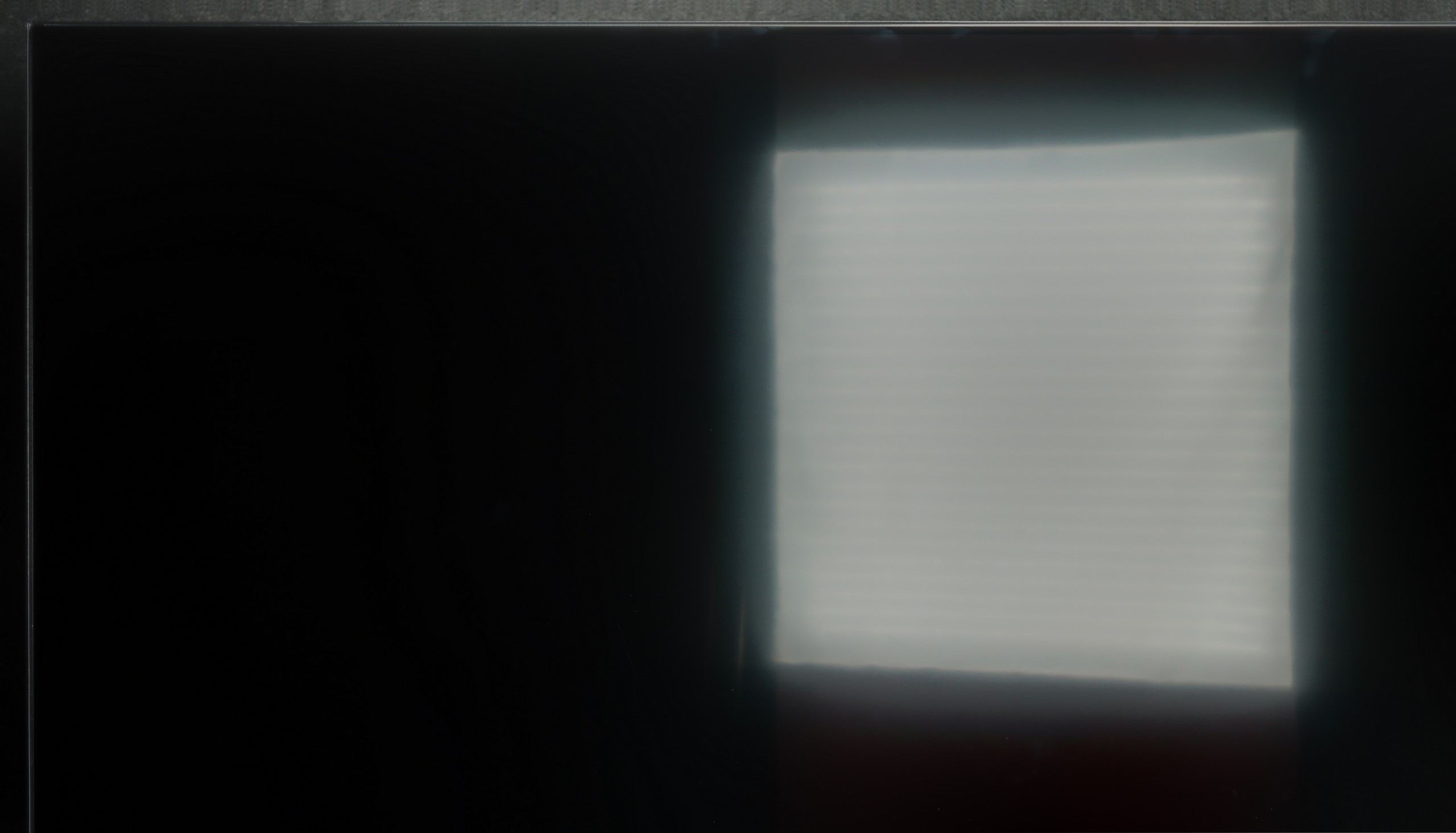

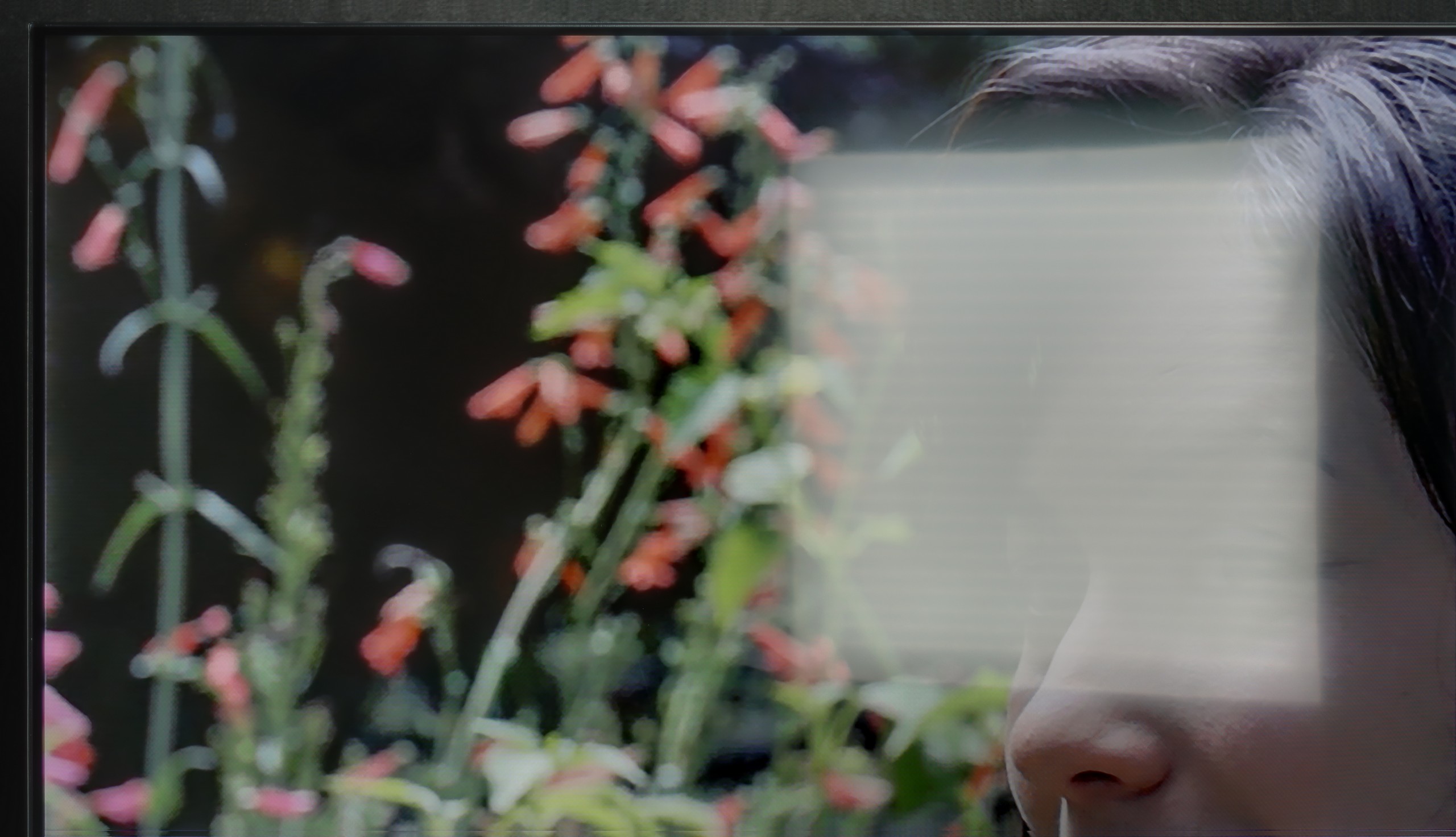
Panel brightness
TCL V6C: 210 cd/m2
Sharp GR8: 329 cd/m2
Sharp GR8 has a satin finish display that performs average with reflections. Bright surrounding elements, such as windows or lamps, quite clearly reflect on the screen and can be distracting while viewing. The brightness level of 330 cd/m² in SDR content is also unimpressive. As a result, the television is best suited for rooms where not too much natural light comes in. So, it can be said that the GR8 holds up during the day, but it is certainly not equipment made for brightly lit living rooms. If we mainly watch in the evenings or in controlled lighting, it won’t be a major issue.
The V6C’s performance during the day isn’t one of its strong points. It’s a relatively dim television, which is why it simply struggles in heavily lit rooms. The satin finish on the panel somewhat dampens reflections and does indeed reduce troublesome glares, but it’s not enough to speak of full viewing comfort. When a lot of natural light floods into the room, the screen isn’t able to “break through” it, causing the image to appear dull and hard to read. The V6C is definitely a piece of equipment that feels much better suited for evening viewing than for sunny afternoons.
Panel details
Subpixel Structure:

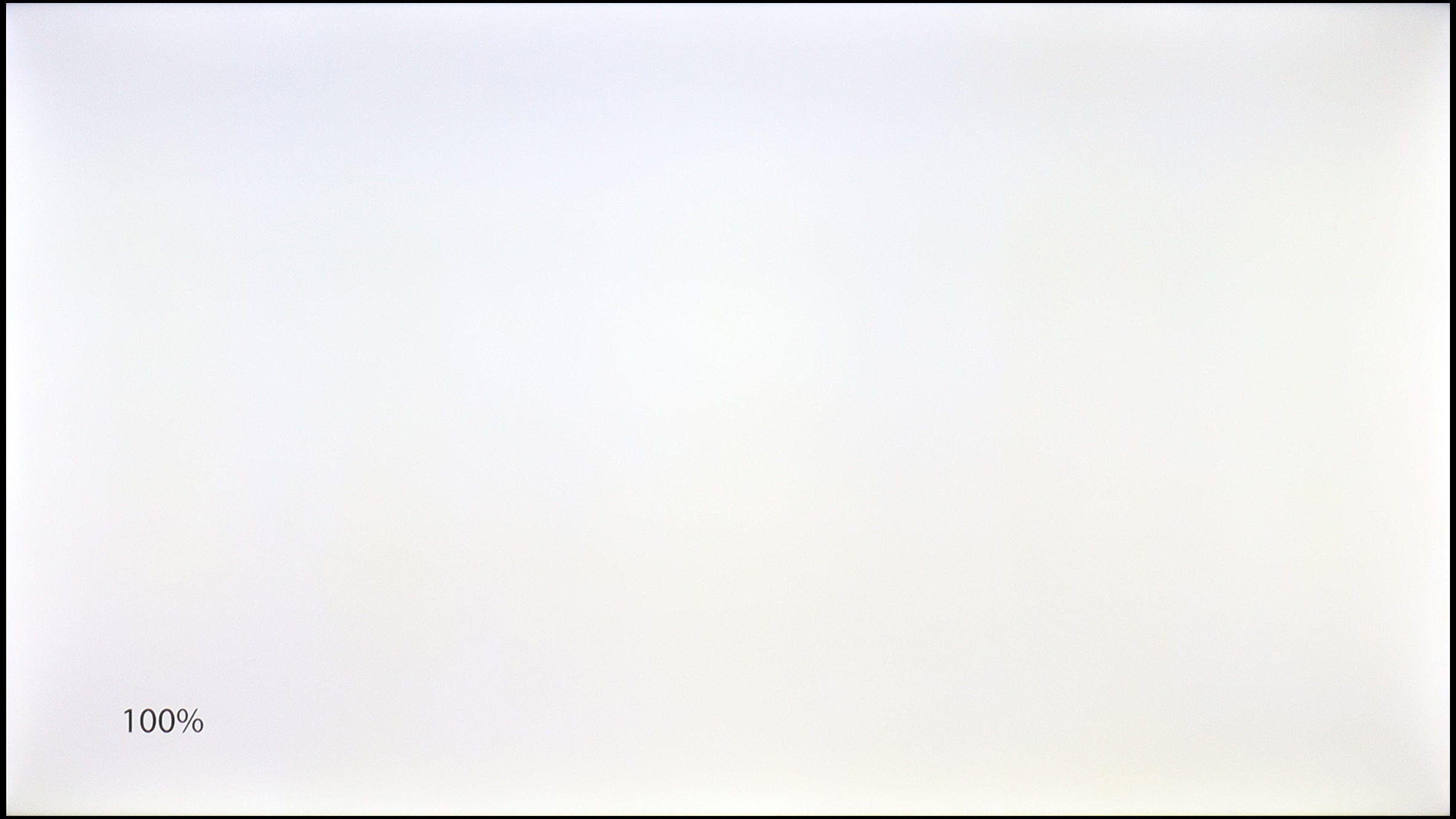
Panel uniformity and thermal imaging:

Sharp GR8
TCL V6C
TV features
6/10
7.3/10
- SystemGoogle TVGoogle TV
- System performanceDecentAverage
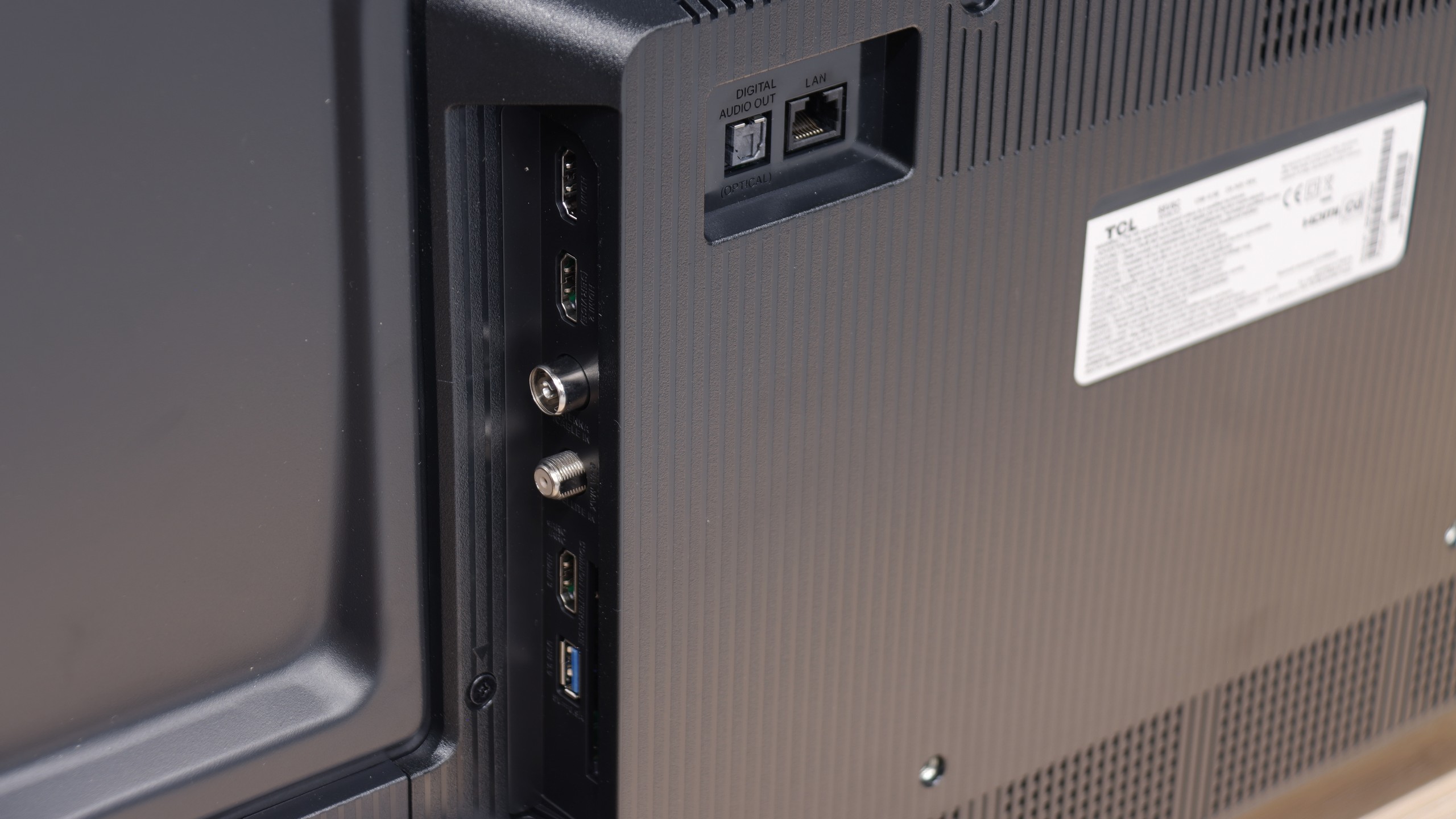
- HDMI inputs2 x HDMI 2.0, 2 x HDMI 2.1 48Gbps3 x HDMI 2.0, 0 x HDMI 2.1
- Other inputsRCA (Chinch)
- OutputsToslink (Optical audio), eARC (HDMI), ARC (HDMI), Mini-Jack (Headphones)Toslink (Optical audio), eARC (HDMI), ARC (HDMI)
- Network InterfacesWi-Fi 2.4GHz, Wi-Fi 5GHz, Ethernet (LAN) 100MbpsWi-Fi 2.4GHz, Wi-Fi 5GHz, Ethernet (LAN) 100Mbps
- TV receptionDVB-T, DVB-T2, DVB-S, DVB-S2, DVB-CDVB-T, DVB-T2, DVB-S, DVB-S2, DVB-C
Classic features:
- Recording to USB (terrestrial TV)
- Recording programming
- Picture in Picture (PiP)
- RF remote control (no need to aim)
- Backlit remote control
- Teletext
- Audio only mode
- Bluetooth headphones support
- Simultaneous Bluetooth headphones & TV audio
Smart features:
- AirPlay
- Screen mirroring (Windows Miracast)
- Voice search
- Voice search in native language
- Ability to connect a keyboard and mouse


Sound connection options
- HDMI audioeARC (HDMI), ARC (HDMI)eARC (HDMI), ARC (HDMI)
- Other audio outputsToslink (Optical audio), Mini-Jack (Headphones)Toslink (Optical audio)
- Wireless audioBluetoothBluetooth
Supported audio formats (external HDMI eARC audio):
- Dolby Digital Plus 7.1
- Dolby True HD 7.1
- Dolby Atmos in Dolby Digital Plus (JOC)
- Dolby Atmos in Dolby True HD
- DTS:X in DTS-HD MA
- DTS-HD Master Audio
Senior accessibility
- Numeric keyboard on TV
- Font size adjustment
- Audio description
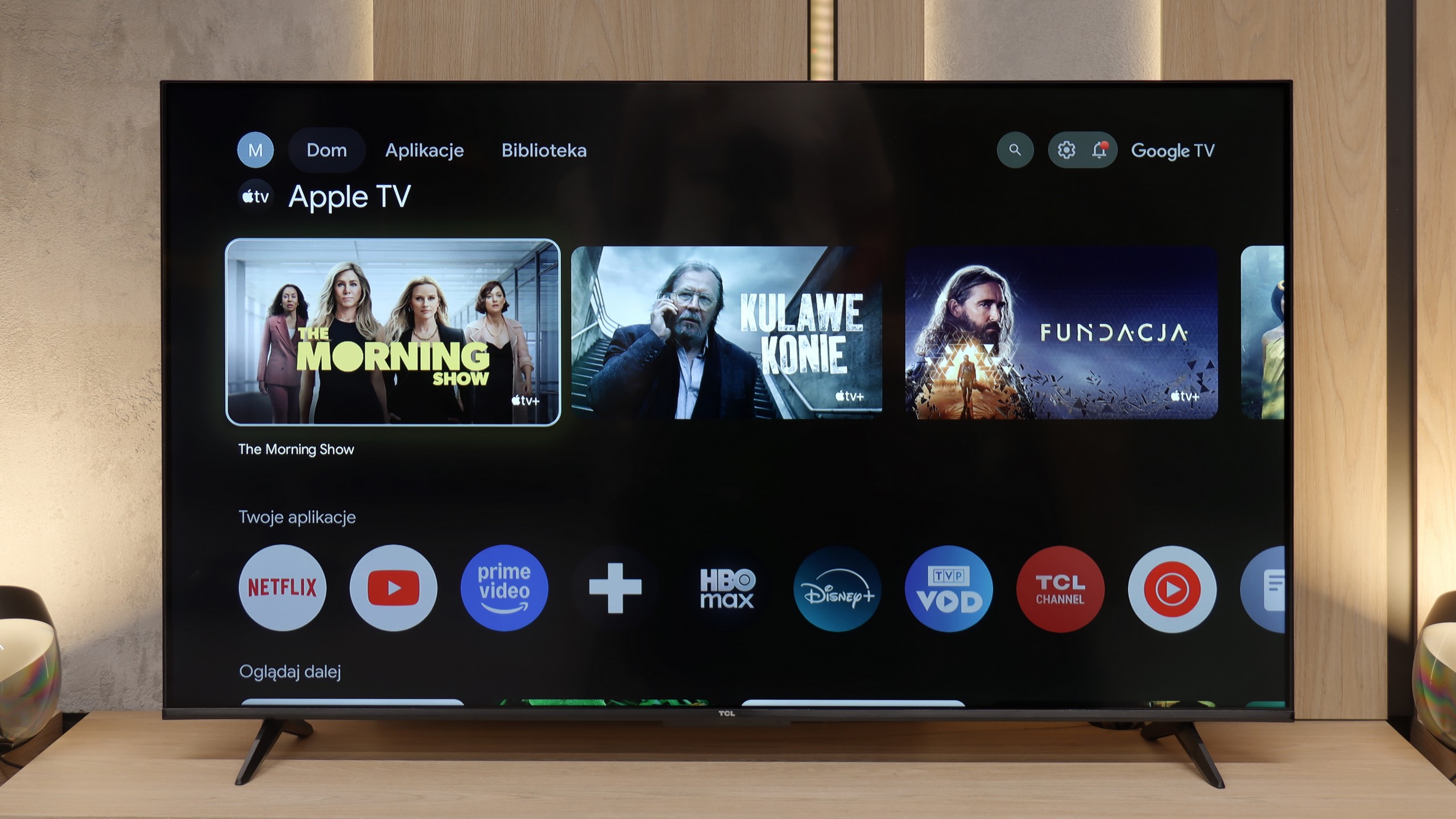
Google TV is definitely the biggest advantage of Sharpa GR8. This system is a true multimedia powerhouse – it includes practically all popular streaming apps, such as Netflix, HBO Max, and Disney+. Voice search works in Polish and, importantly, is really responsive. We can tell the TV what we want to watch, and it quickly finds the right content. Plus, the interface is clear and intuitive, so even people who aren't keen on technological innovations can manage without any problem. In short, Google TV gets the job done.
Unfortunately, when it comes to more classic functions, the GR8 is rather average. There are no options for USB recording or PiP (picture in picture) functionality. Moreover, although the TV supports Bluetooth connectivity, iPhone users may feel disappointed as there is no support for AirPlay.
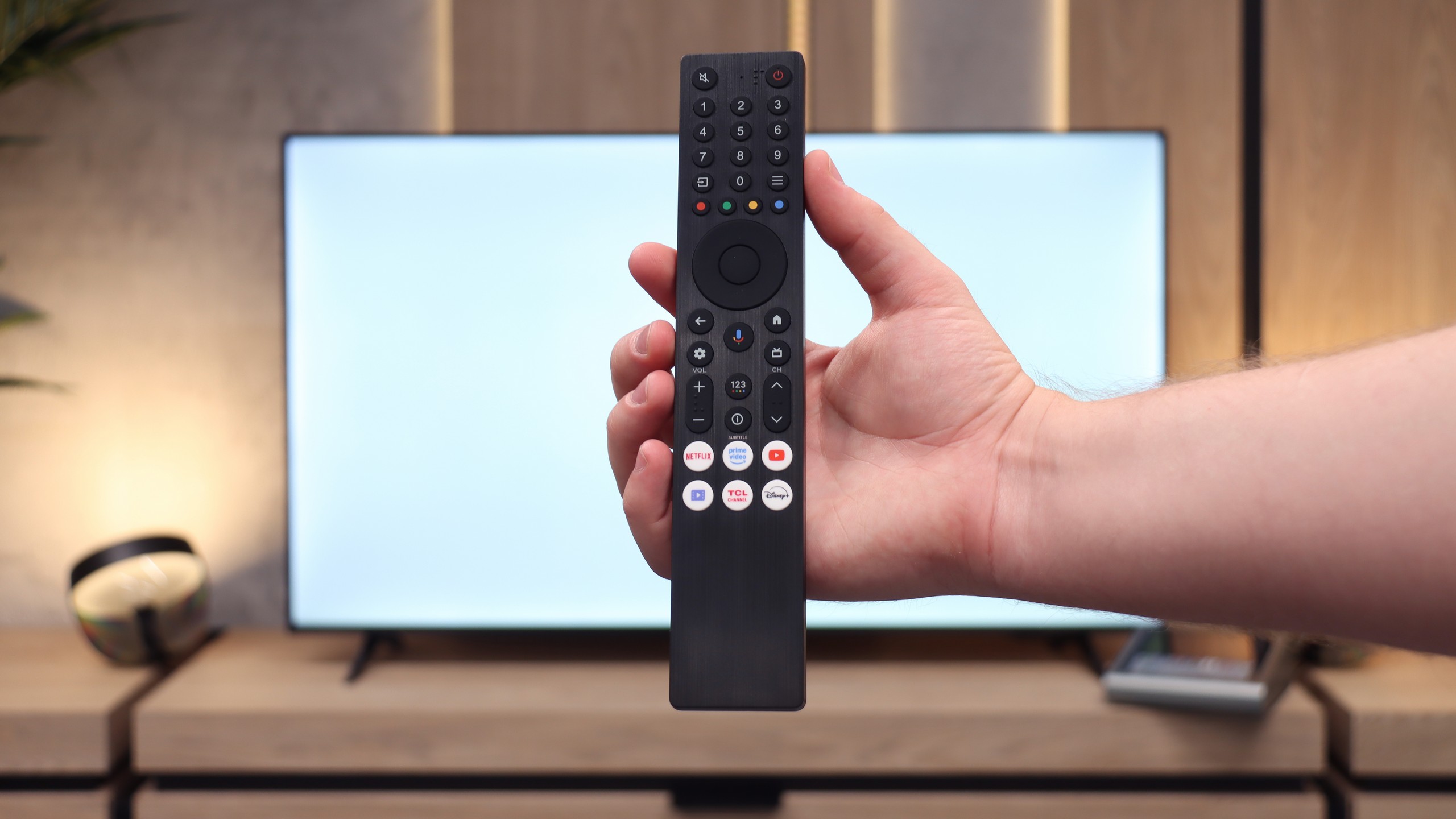
The remote included is simple but well thought out. It has a solar panel on the front, allowing it to be charged by light, and the additional charging port means we don’t have to worry about changing batteries. Also, it’s a plus that the remote doesn’t require aiming at the screen – it works regardless of which way it’s pointed.
SmartTV: GoogleTV
The biggest asset of the V6C is the Google TV operating system. It's an advanced platform that provides access to a vast array of applications – from YouTube, Netflix, Disney+ and HBO Max, to less popular programs that can be easily downloaded from the Google store. Additionally, there are useful features such as AirPlay, screen mirroring, and voice search. However, it’s important to note that Google TV is not the lightest system. In the case of the V6C, which is a budget television, there are sometimes noticeable lags and slower interface responses. This doesn't ruin everyday use, but it can be felt, especially compared to more expensive TCL models or competitors.
Classic Features
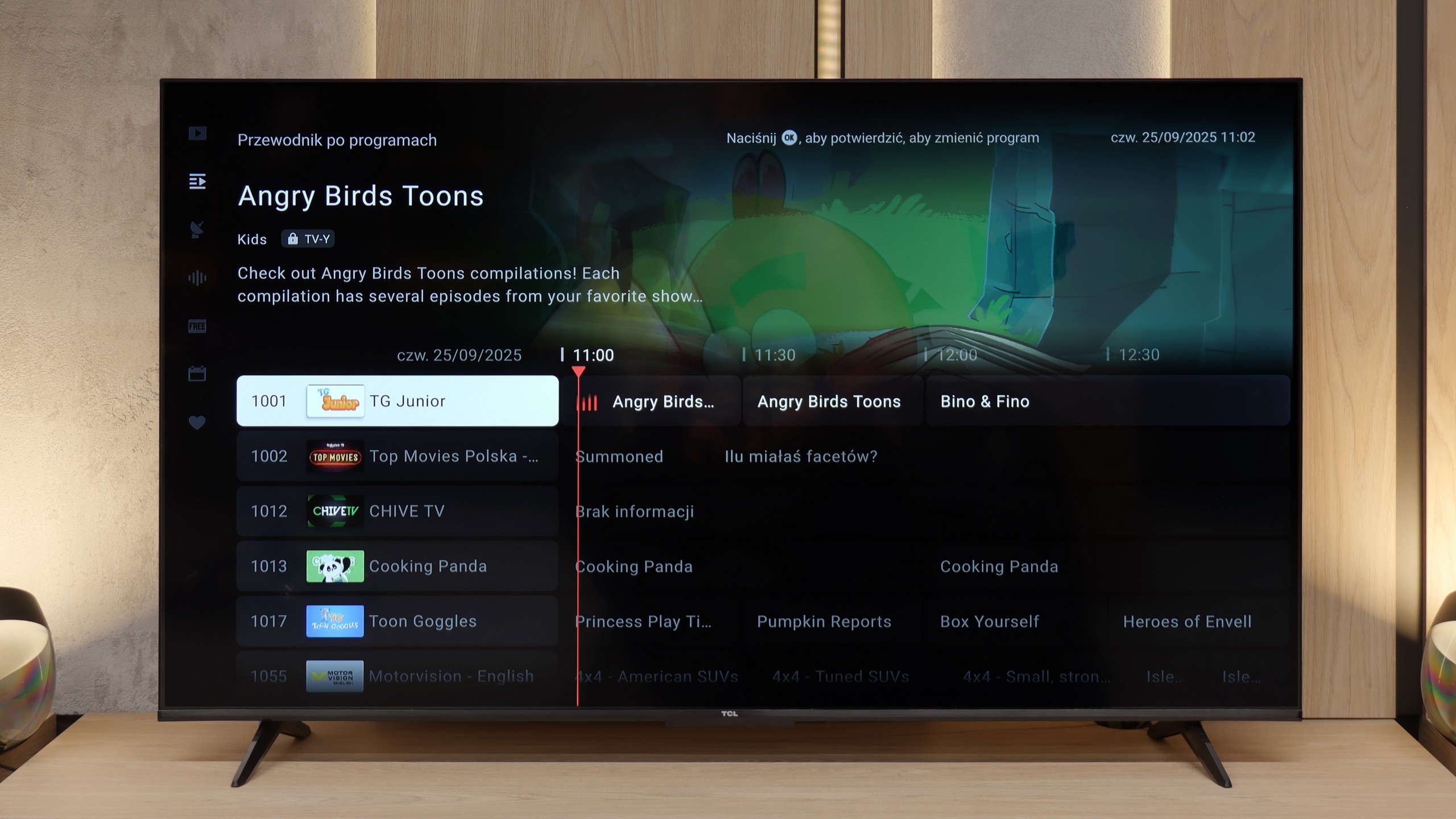
The V6C also doesn’t forget about solutions for those who use television in a traditional way. The package includes a classic remote with a large number of buttons, including a full numeric keypad. This is practical for people watching terrestrial or cable television. The television also offers teletext and a clear interface for managing channels. Notably, the Bluetooth support is hassle-free – we can easily pair headphones or a speaker. Therefore, the V6C performs solidly as an everyday television, though one must remember certain limitations. There’s no USB recording or picture-in-picture (PiP) mode, which are features that mainly older users might need. (Though not only 😉).
Apps
9.6/10
9.6/10






















Playing files from USB
9.1/10
8.7/10
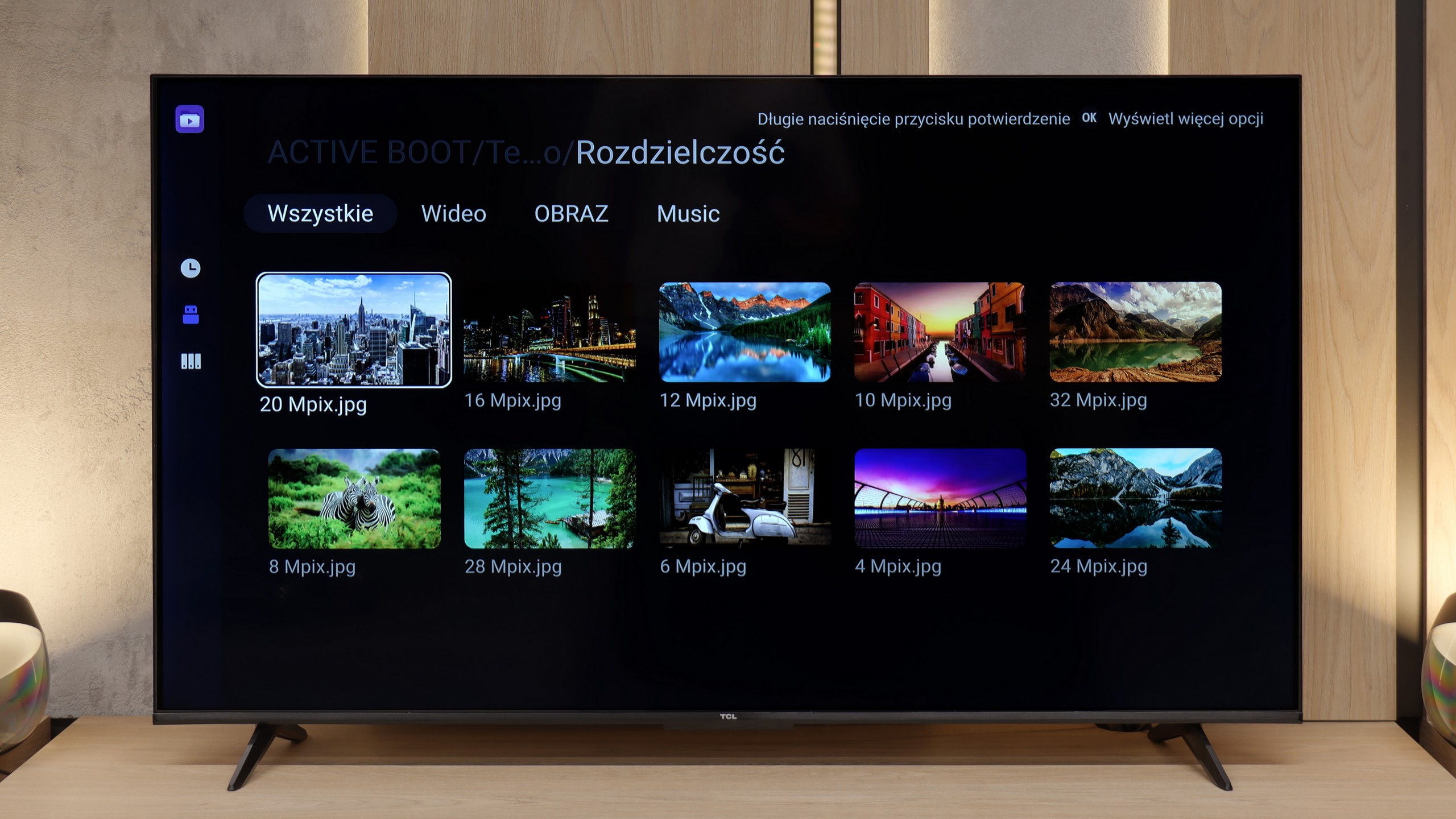
Supported photo formats:
Maximum photo resolution:

Sharp GR8 handles multimedia playback from USB really well. It supports practically all popular audio and video formats, so we don’t have to worry about any files not playing.
However, the built-in player has its limitations – for instance, we won’t find the option to change the font colour in subtitles here. Fortunately, the Google TV system allows us to bypass this issue. All you need to do is download an alternative media playback app from the Google Play Store that offers more advanced configuration options.
Playing files from USB on the V6C is quite decent. The built-in player handles most popular video and audio formats well, and during tests, we didn't encounter significant issues with typical files. The biggest problem arose with very high-resolution photos - above 20 Mpix, the TV often refused to cooperate. We also noticed some minor functionality gaps regarding video playback. The video player lacks the option to change font colours, which worked without issues in other TCL models. Fortunately, these are inconveniences that are easy to get around. Thanks to Google TV, you can install external applications like VLC or KODI, which solve most problems and offer much broader file handling capabilities.
Sound
7/10
5.8/10
- Maximum volume-83dB
- Dolby Digital Plus 7.1
- Dolby True HD 7.1
- Dolby Atmos in Dolby Digital Plus (JOC)
- Dolby Atmos in Dolby True HD
- DTS:X in DTS-HD MA
- DTS-HD Master Audio
Sharp GR8 pleasantly surprises with its sound quality. Although it comes with a standard set of speakers, you can hear the influence of collaboration with Harman/Kardon. The sound is clear, dialogue is well-highlighted, and the overall sound profile is pleasant to the ear. It's not at the level of flagship models with advanced audio systems, but for this price segment – it's really good.
Unfortunately, Sharp has chosen to remove the built-in soundbar that we saw in the previously reviewed model Sharp FQ8. It's a shame because this solution significantly enhanced the sound quality and gave the TV an edge over the competition.
The sound on the V6C doesn't stand out from the competition in the same price range. The audio is quite flat, and there's simply a lack of bass. Fortunately, the television can play loud – measured at 83 decibels, it's a pretty decent result, and importantly, even at maximum volume, there is no unpleasant crackling that often plagues cheaper models. However, it's worth noting the support for advanced surround sound formats rather than just the quality of the built-in audio. The V6C handles Dolby Atmos and DTS:X, so connecting a soundbar or another external audio system won't be an issue and will allow full use of these codecs. This is a good sign for those planning to expand their setup with additional audio equipment.
Sound Quality Test
No sound test video
Acoustic Measurements
No acoustic data
83dBC (Max)
75dBC