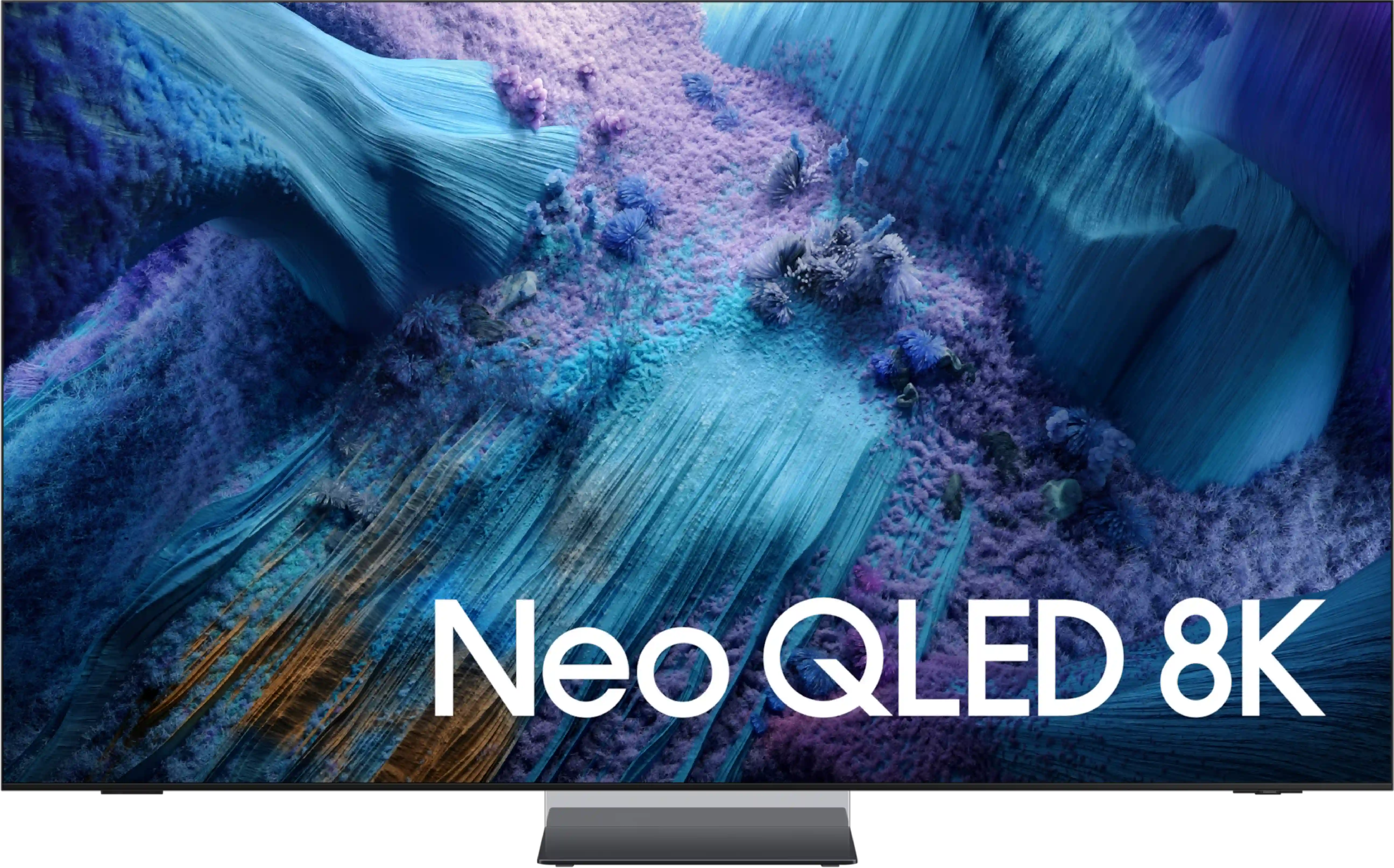
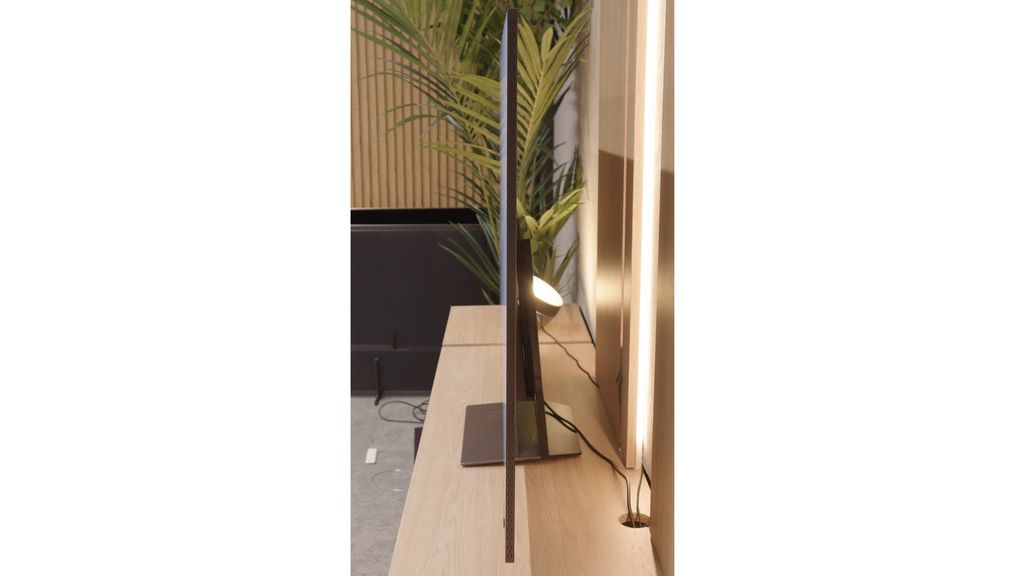
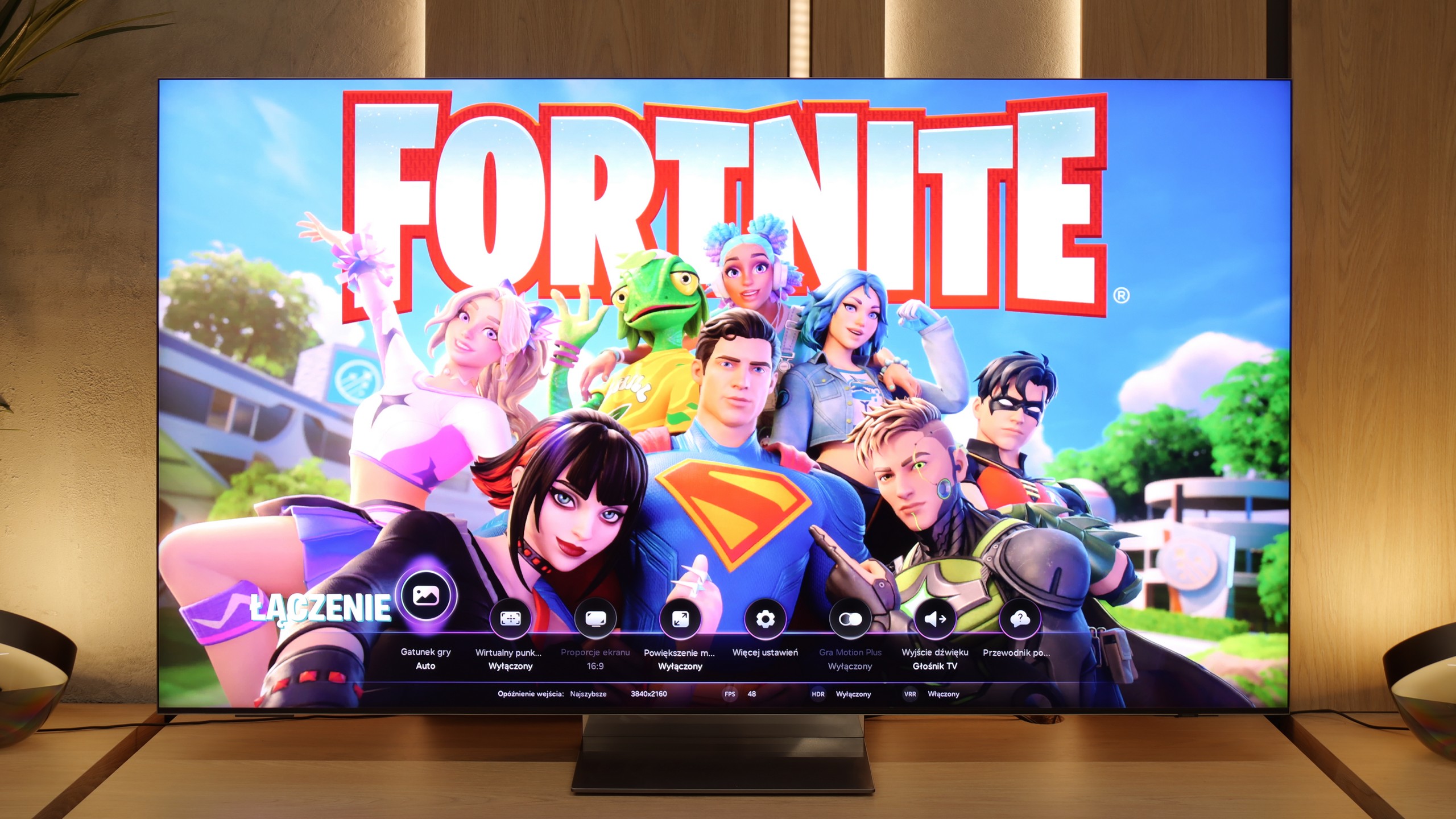
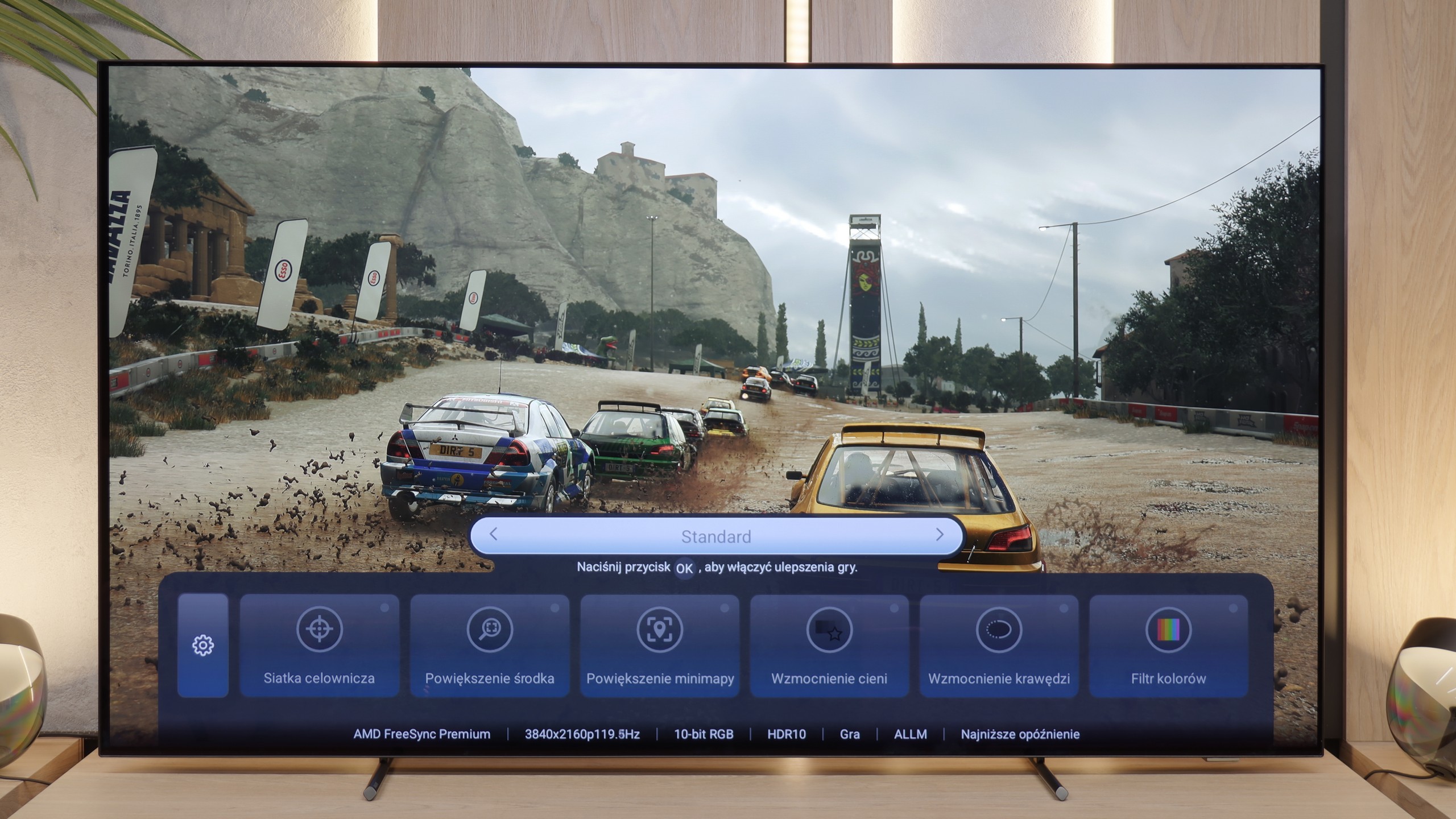
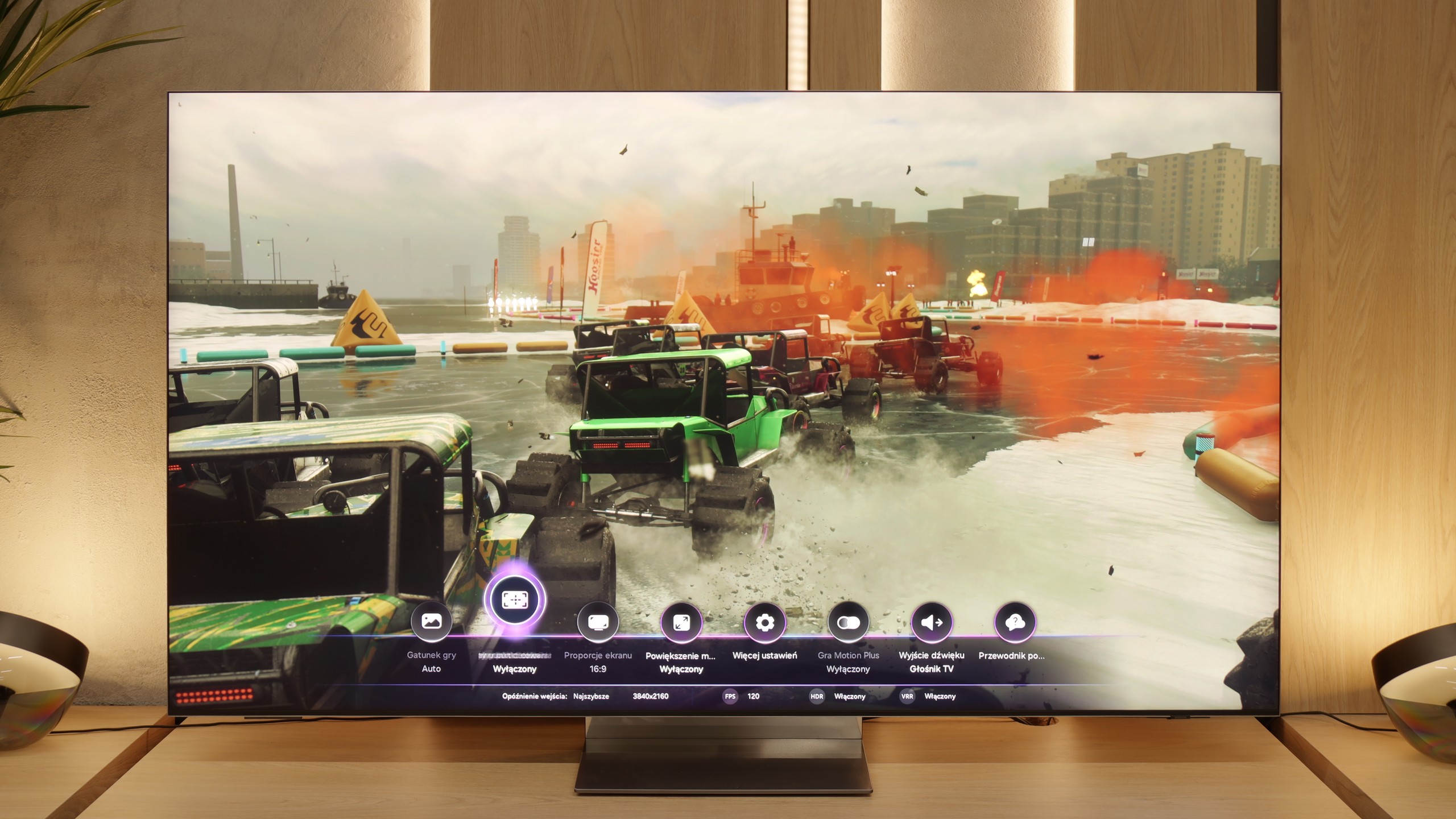
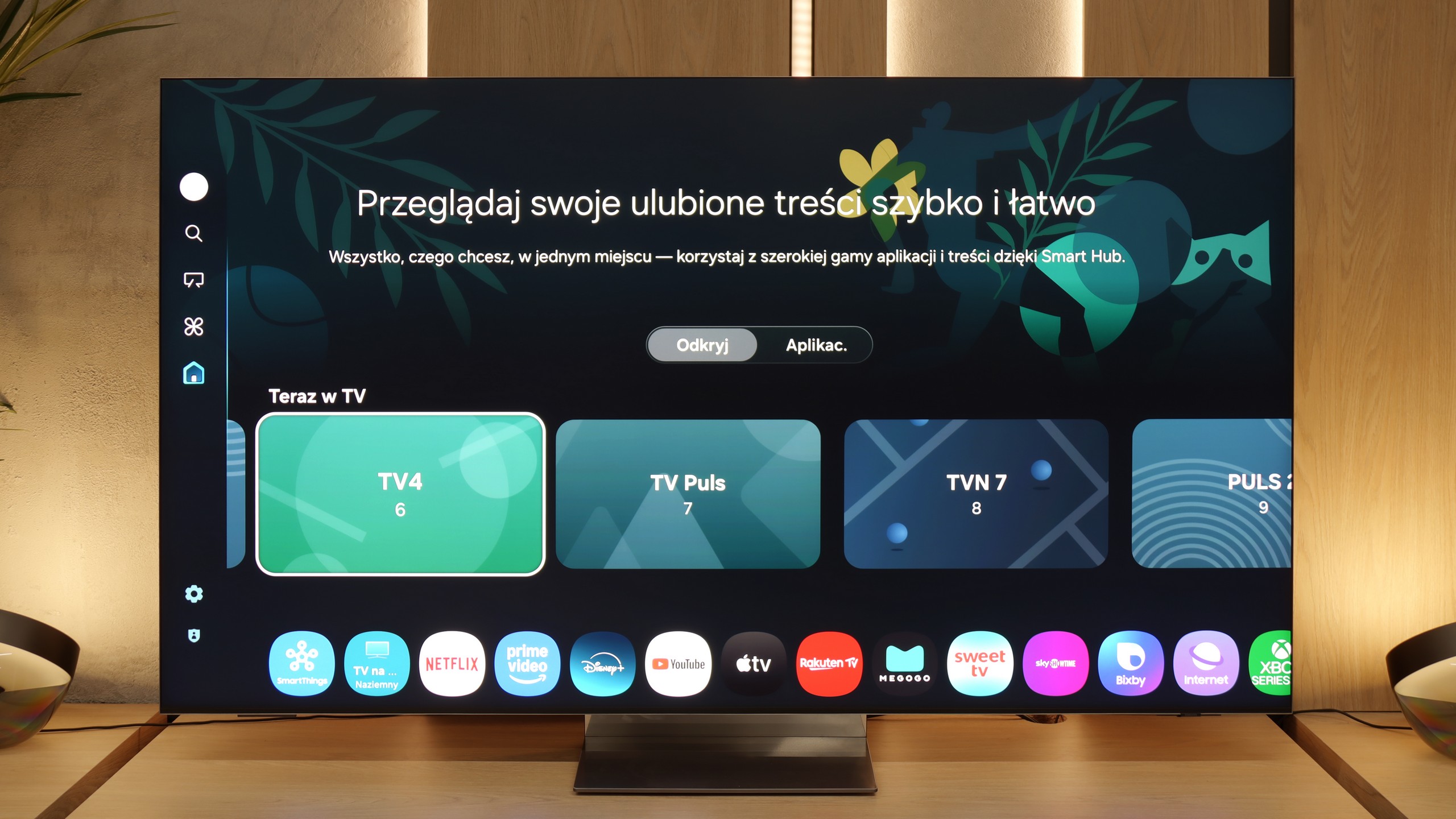
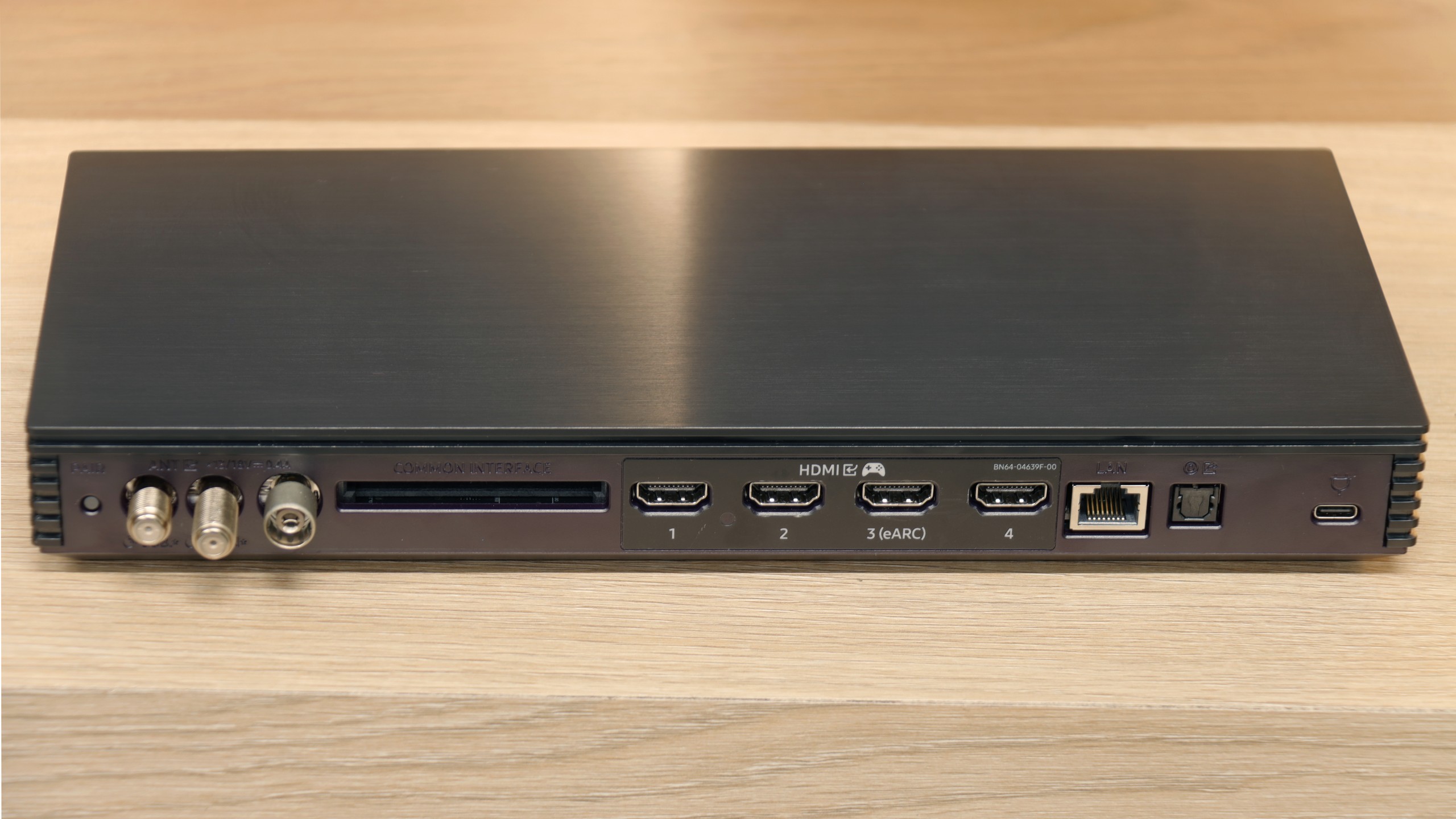
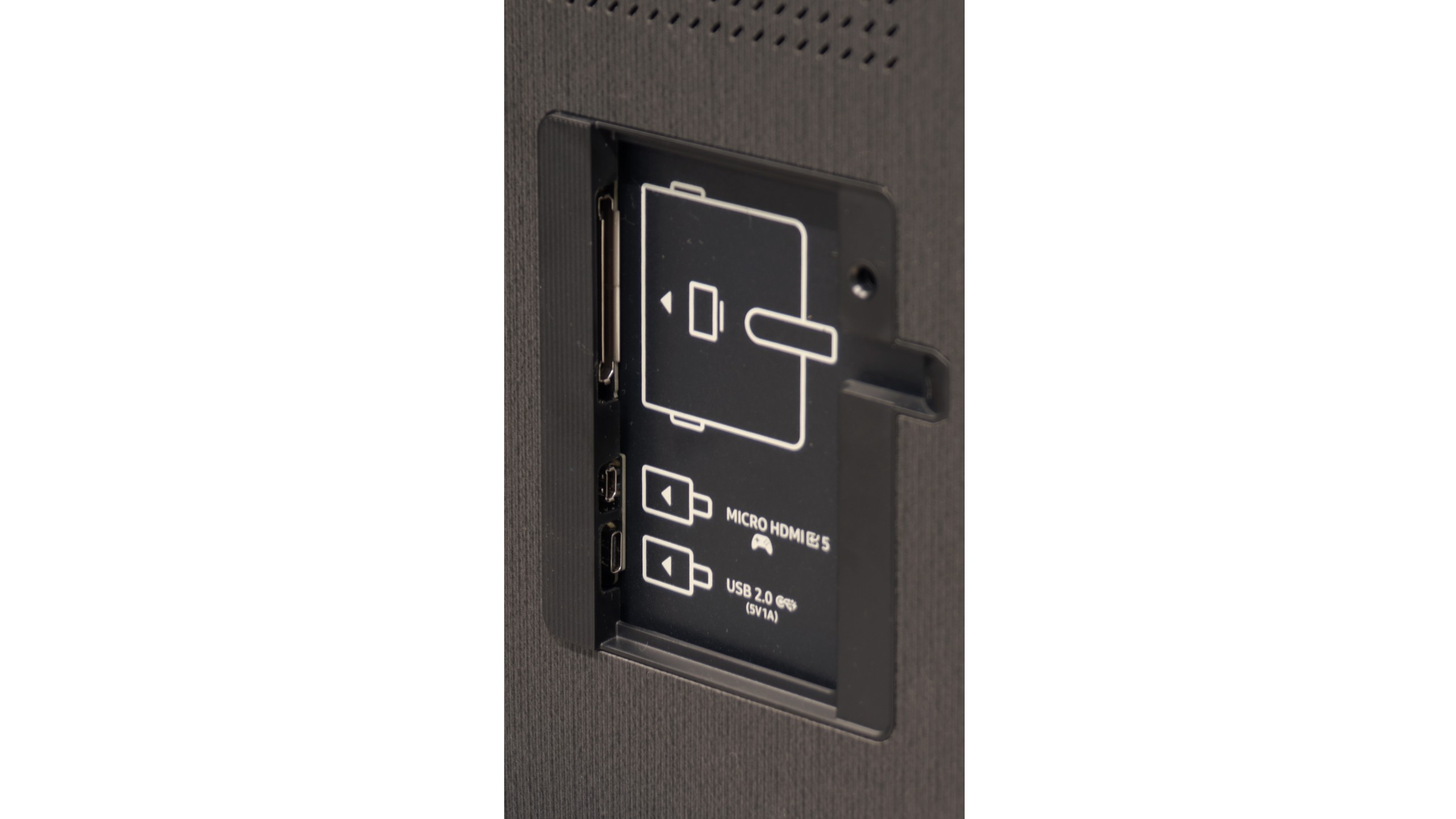
Samsung QN990F is a television that makes a huge impression from the very first moment. It's probably one of the most beautiful models on the market – ultra-slim, with an almost invisible frame and a stand that makes it look like the screen is levitating above the table. On top of that, there's the futuristic Wiraless One Connect module, this time in a wireless version, which helps to reduce the number of cables in the living room and gives the whole setup a modern character. But it doesn't stop at design. The QN990F also boasts a powerful specification. Mini-LED with over a thousand dimming zones can generate contrast that occasionally rivals that of OLEDs. "Additionally, there's very high HDR brightness and a new matte screen that effectively eliminates reflections. And when we add excellent motion smoothness with a refresh rate of up to 240 Hz in 4K, we have a set of features that truly impress. Samsung hasn't forgotten about gamers – we have Game Bar, VRR, ALLM, five HDMI 2.1 ports, and phenomenal input lag at the level of 10–15 ms (when connected via micro HDMI).
And this is where we get to the crux of the matter. Because while the QN990F impresses on paper and in many tests, in practice, some solutions still require fine-tuning. The wireless One Connect module raises input lag to unacceptable levels for gamers, Mini-LED can struggle in challenging scenes with a lot of detail, and the lack of Dolby Vision or DTS:X reminds us that Samsung is stubbornly following its own path, sometimes at the expense of the user. Despite this, the QN990F is a television that shows the direction of industry development. It's not a model for everyone – but for those who love gadgets, technological innovations, and want a screen in their living room that looks like it's from the future. However, if someone is looking solely for the best picture quality, they will even find models within Samsung's portfolio that perform significantly better – maybe without 8K, but with more refined contrast or colours. Because 8K still remains a technology that looks firmly towards the future and QN990F shows what televisions of tomorrow might look like. But are we – the viewers – ready to pay such a high price for this vision and accept the compromises that come with it?
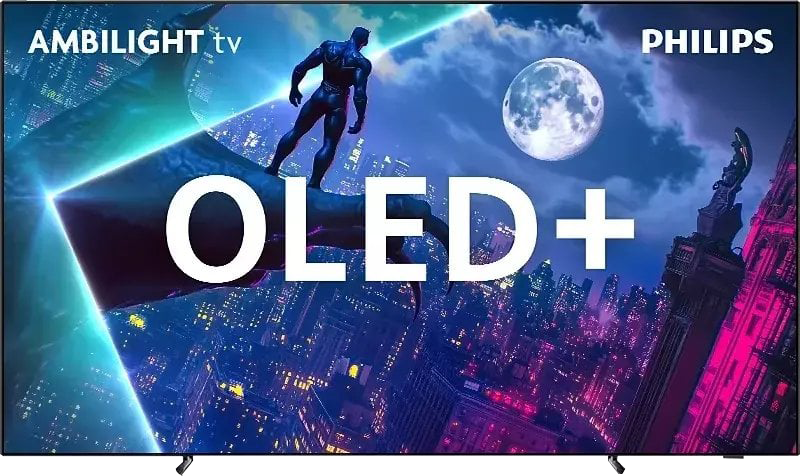
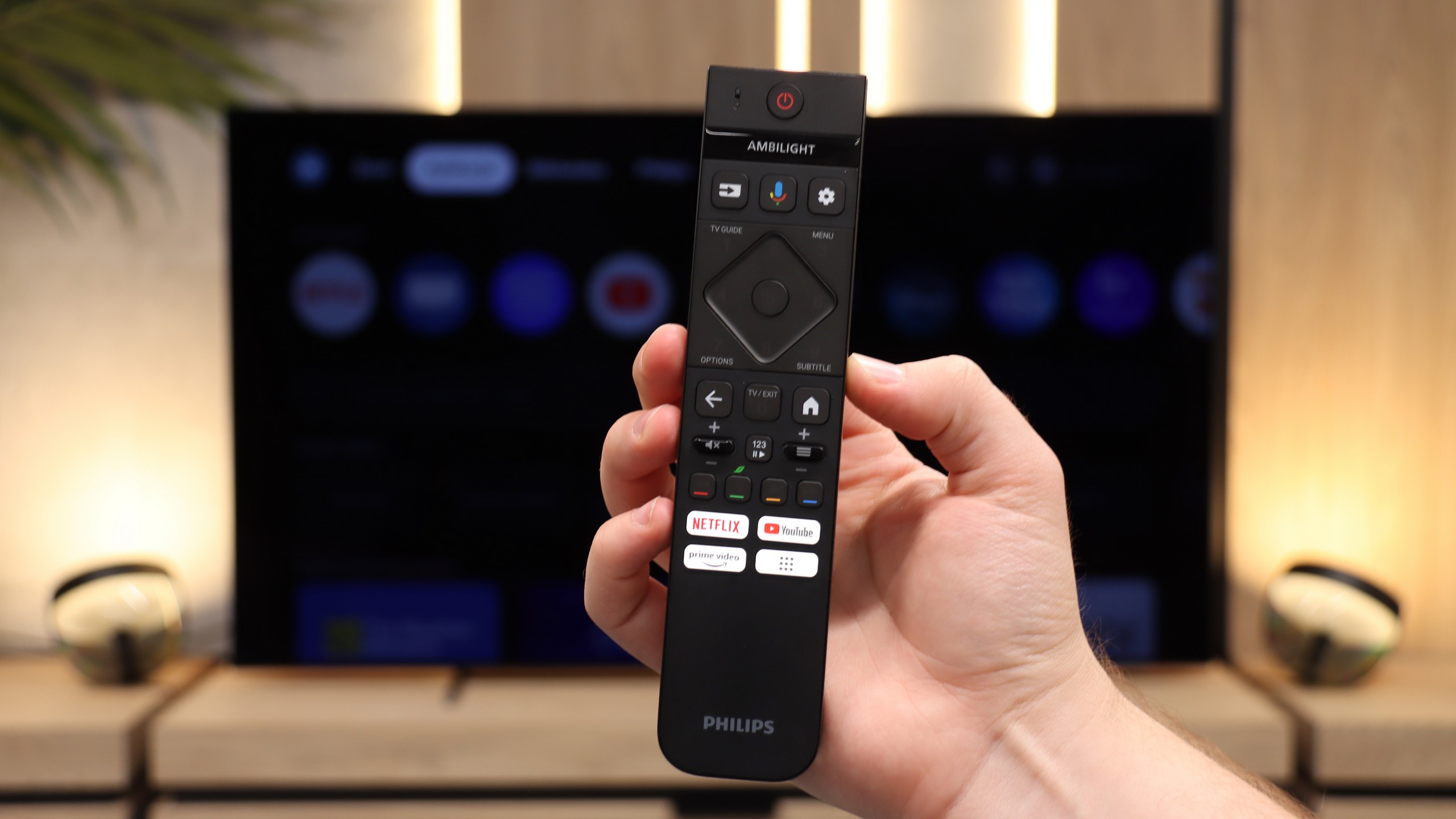
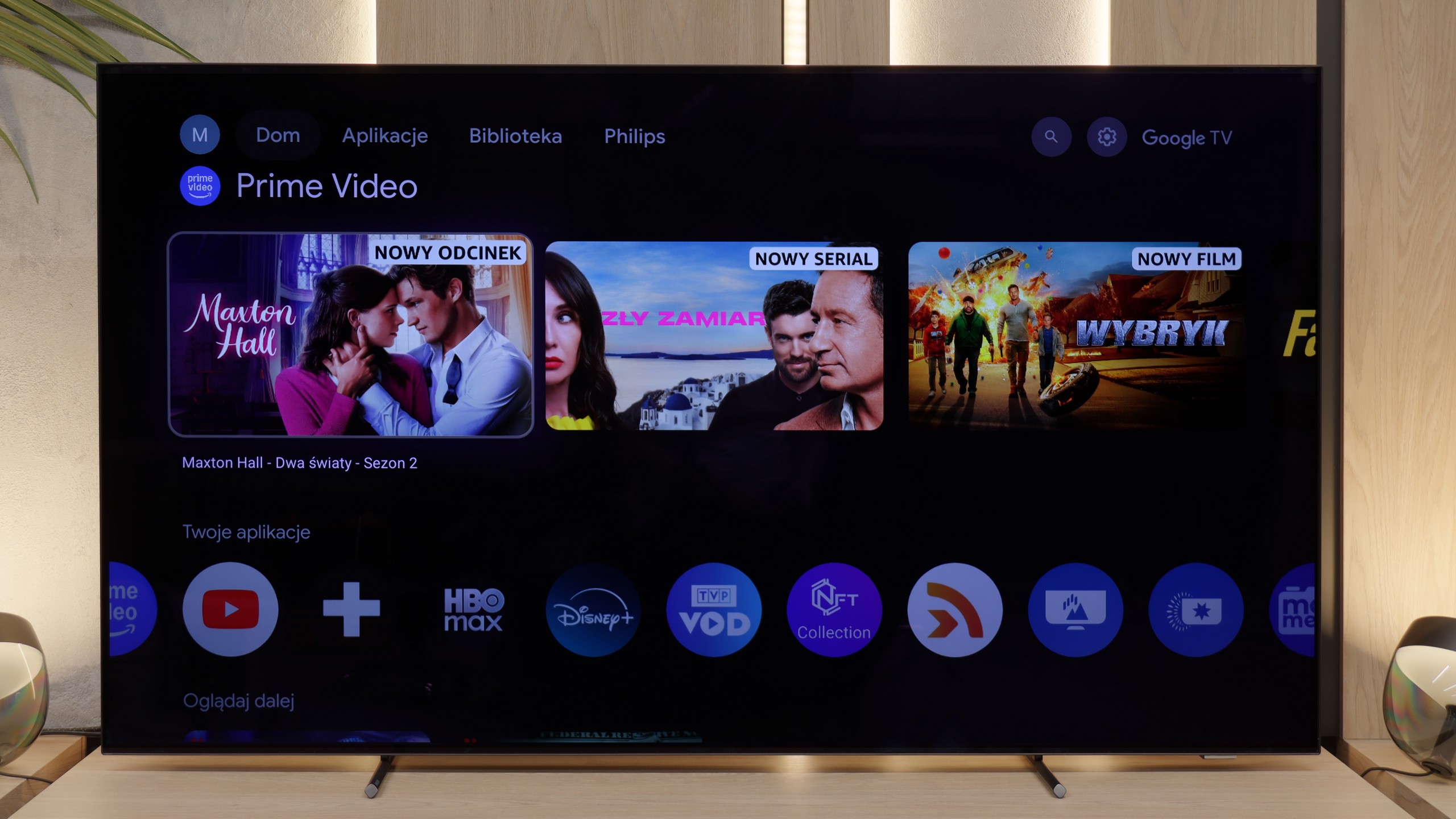
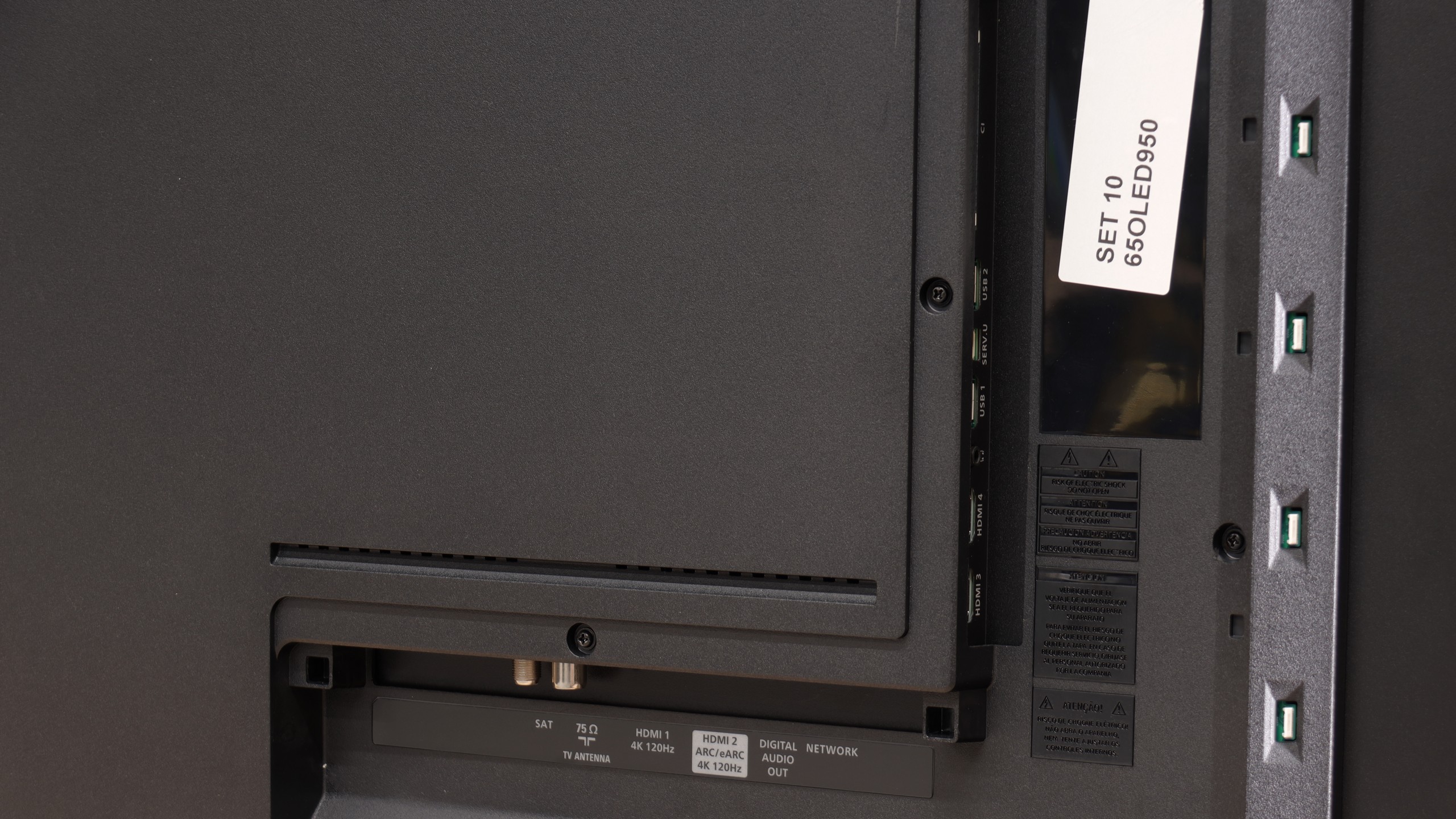
Philips OLED950 is undoubtedly a technological showcase that redefines many aspects of what we can expect from a home entertainment centre. The use of the groundbreaking Tandem OLED panel brings us to the absolute peak in terms of image quality. The combination of infinite black and perfect contrast with brightness that can exceed the magical barrier of 2000 nits in HDR mode produces effects that are, at times, breathtaking. Whether we’re watching movies in a sunlit lounge or gaming at night with the support of a four-sided Ambilight system, the experience is simply phenomenal. It’s a complete screen that will satisfy both the cinema enthusiast seeking fidelity in Dolby Vision, and the gamer demanding 144 Hz and perfect motion response.
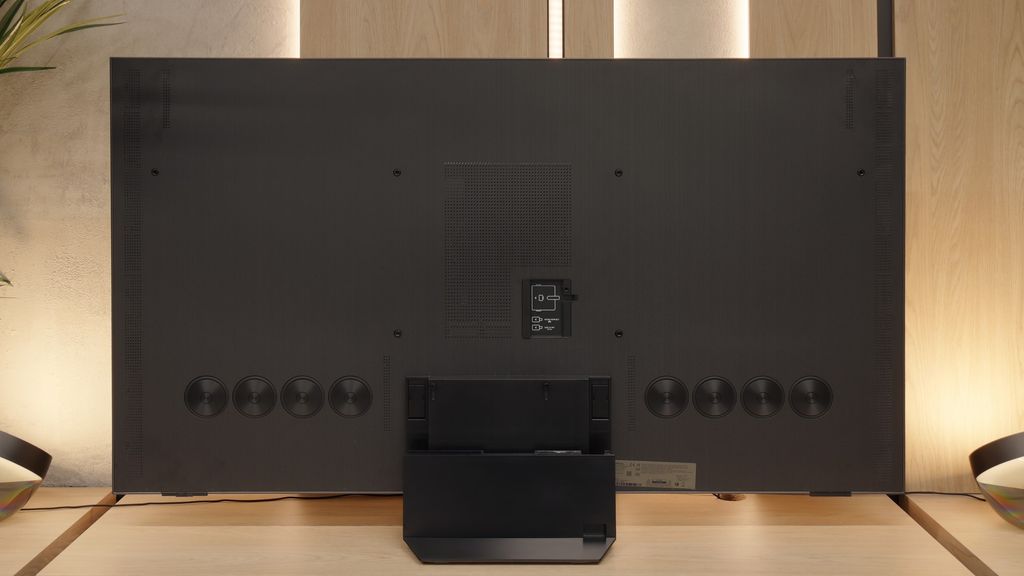
However, this awe for the raw performance of the panel is mixed with a sense of inadequacy when we consider the manufacturer's promises regarding image processing. Philips has heavily promoted the use of the "dual" P5 processor, suggesting that it would be a remedy for all the woes of digital signal processing. However, reality proved to be less revolutionary. In our tests, the difference compared to models equipped with the standard, single P5 chip was nearly imperceptible in everyday use. Issues with the smoothness of tonal transitions and posterization in difficult scenes, although rare, still occur. Considering the astronomical price of this model, we expected a significantly greater qualitative leap in this aspect that would justify such high positioning of the equipment. The question of value for money becomes the biggest problem for this otherwise outstanding television. When we look at the market with a cool eye, the situation for the 950 model becomes complicated. It’s not just about the strong competition from cheaper flagships like the LG G5 or Samsung S95F, but also about the "fratricidal" battle within Philips' own offerings. It turns out that the lower positioned OLED910 model offers us practically the same, brilliant image generated by the identical panel. Moreover, the 910 model outshines in audio, offering an integrated soundbar from Bowers & Wilkins, which is simply missing in the more expensive 950 model due to a different design. We are thus faced with a paradox: we get the same image and inferior sound, but we have to pay significantly more. Therefore, although the OLED950 is a fantastic screen, in 2025 the title of "Best Philips Television" and our recommendation goes to the model OLED910.
 Direct comparison