Samsung QN900F vs Samsung S90H (WOLED)

Direct comparison

NeoQLED 8K / QN900F

S90H / S92H / HAE / HAT

Info

Available screen sizes: 65”75”85”

Available screen sizes: 42”48”55”65”83”

Panel type: LCD VA

Resolution: 3840x2160

System: Tizen

Model year: 2025

Complete the survey to find out the result

Panel type: WRGB OLED

Resolution: 3840x2160

System: Tizen

Model year: 2026

Complete the survey to find out the result

Overall rating

7.8

8.4

  • Movies and series in UHD quality

    7.3

    8.6

  • Classic TV, YouTube

    7.3

    8.8

  • Sports broadcasts (TV and apps)

    7.4

    8.5

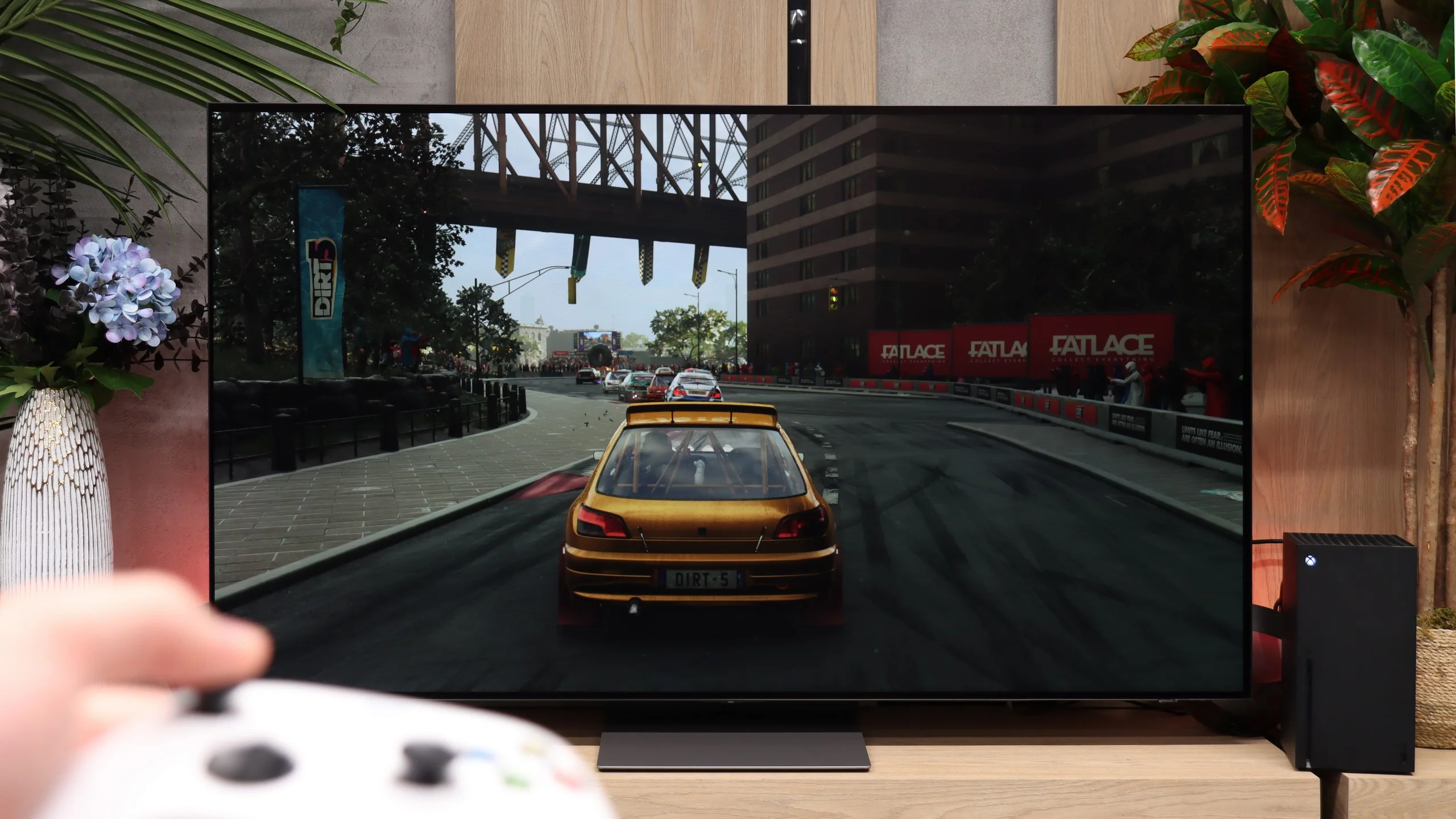
  • Gaming on console

    9.1

    9.7

  • TV as a computer monitor

    8.4

    8.6

  • Watching in bright light

    7.1

    6.5

  • Utility functions

    7.2

    7.3

  • Apps

    9.3

    9.3

  • Sound quality

    8.2

    8.4

Advantages

  • Good blacks

  • Very high brightness - up to 2000 nits in HDR

  • Excellent motion fluidity - 4k@165hz with low motion blur

  • Many features for gamers: VRR, ALLM, Game-bar, low input lag

  • Decent viewing angles

  • High usability efficiency in difficult lighting conditions: Matte screen + high brightness

  • Pleasant and very fast operating system: Tizen

  • Pleasant sound from built-in speakers

  • Perfect blacks and infinite contrast (OLED)

  • Very high HDR brightness (up to 1400 nits)

  • Effective anti-reflective coating (Matte, Glare Free)

  • Excellent colour accuracy after calibration

  • Great motion handling (no motion blur)

  • Excellent for gamers (4× HDMI 2.1, VRR, ALLM, low input lag)

  • Game Motion Plus feature

  • Refresh rate up to 165 Hz

  • Wide viewing angles

  • Fast, fully featured Tizen

  • Good sound

Disadvantages

No like
  • Local dimming algorithms could have been better refined

  • Missing support for recording from built-in tuners

  • Missing DTS:X (home theatre)

- In bright light colours lose some depth (a characteristic of matte coatings) - Lack of TV features such as USB recording or picture-in-picture (PiP) - No support for DTS:X (an issue for Blu-ray disc fans) - Reduced colour saturation compared with the QD-OLED variant

Our verdict

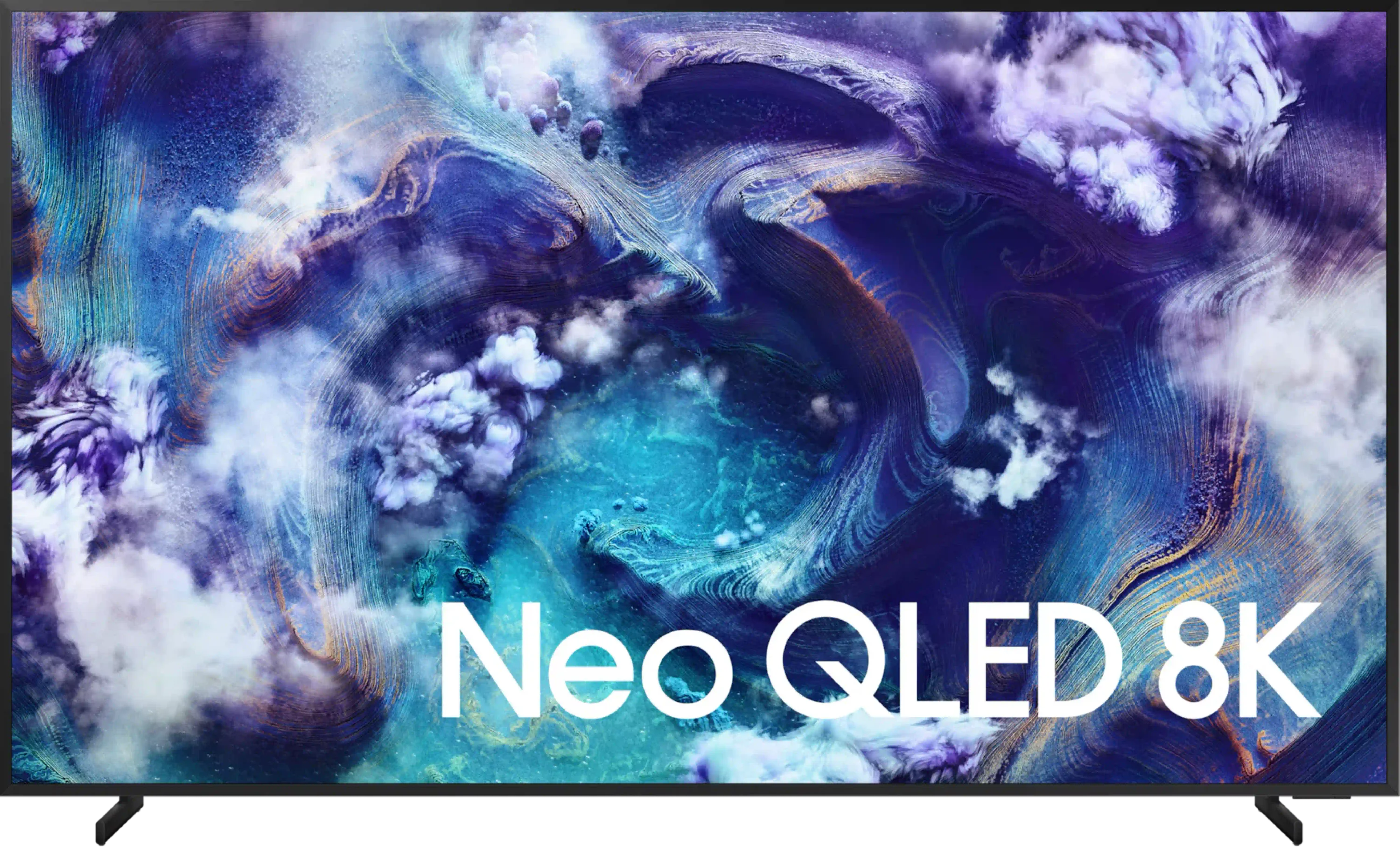
The Samsung QN900F is a television that can make a huge impression. The greatest strength of this model is the combination of Mini-LED backlighting with a matte panel. This not only provides decent blacks but above all incredible brightness and excellent visibility in any conditions. During the day, in a brightly lit room, it is probably the best-performing television in Samsung's offering this year. Gamers will also find plenty to like here – even though it's an 8K screen, it can run at 165 Hz in 4K. In addition, it comes with a full suite of HDMI 2.1, VRR and ALLM features, and low input lag, so the QN900F is well-suited for both next-gen consoles and PCs. The design also deserves big praise – when mounted on the wall, with its thick metal frame, this model resembles a more luxurious version of the iconic The Frame. Combined with the matte panel and Art Store mode, it can actually be treated as a piece of equipment that not only plays and shines but also decorates the living room.

However, not everything is perfect. Despite its impressive specs, managing local dimming doesn't always perform as well as one might expect. Given the large number of zones, Samsung could improve its control over blacks and HDR effects – it’s clear that the potential is enormous, but this doesn't always translate to top-tier picture quality. Additionally, it’s worth noting that 8K resolution is still more of a novelty than a real necessity, and the price of this model makes it easy to start looking for cheaper alternatives, even within Samsung's own offerings. Despite these reservations, the QN900F is a television that can definitely impress. Its strength lies not in the 8K itself, but in how it presents the picture, how it looks, and the enjoyment it provides when using it.

[UPDATE] We have updated our 2025 Samsung TV reviews following the release of firmware version 1131, which officially restores the essential HGiG (HDR Gaming Interest Group) support.


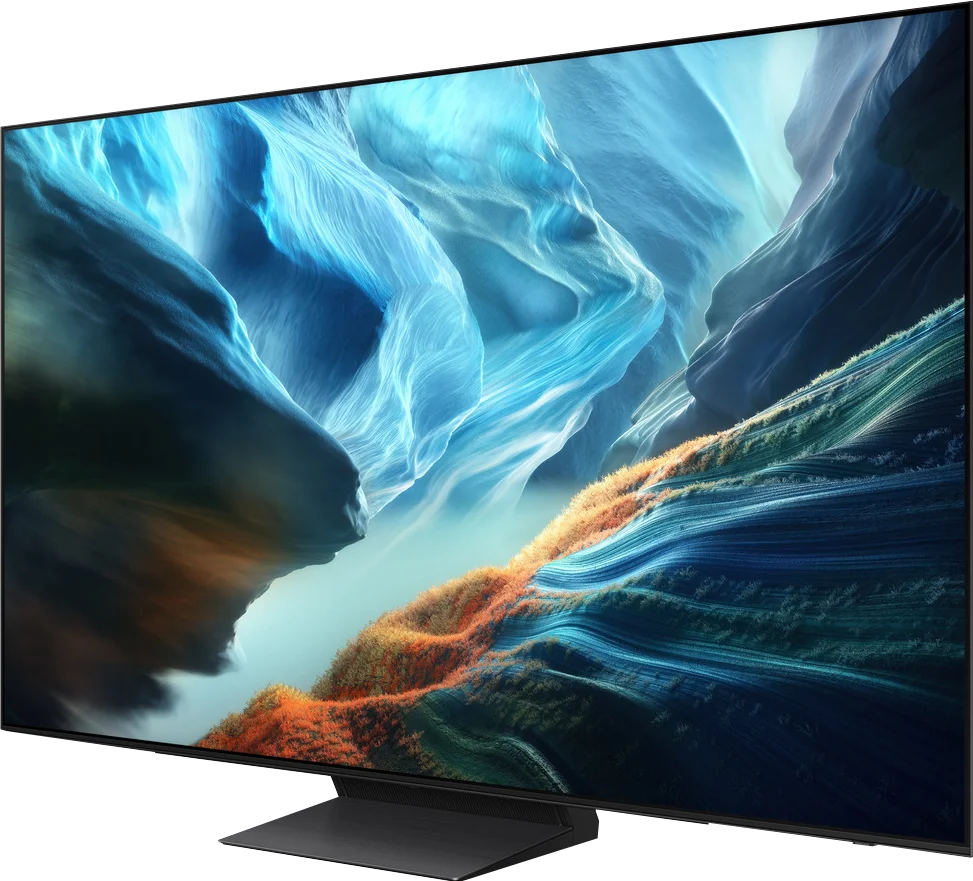
Samsung S90H is a TV that simply makes a brilliant impression. The combination of OLED’s absolute black, high brightness and excellent motion clarity produces a picture that’s hard to look away from. And that’s exactly what you expect from a good OLED TV. The matte anti-reflective coating also works very well. Reflections on a sunny day become less of an issue, and thanks to the standard polariser blacks don’t shift as much toward greyish-maroon tones as they do on QD-OLED. Add a snappy Tizen, an excellent set of gaming features led by Game Motion Plus, and surprisingly good, full-bodied sound from the built-in speakers. Any weaknesses? Of course. Tone transitions aren’t quite as perfect as on QD-OLED, and viewing angles remain slightly worse. In practice these are minor points, especially since WOLED also has its own advantages, particularly in a bright room where it preserves black levels and colour saturation better. Overall, QD-OLED still comes out a bit ahead, but this time the difference isn’t as pronounced as it was a year ago. For most people this won’t be a deciding factor when choosing a TV. So our advice is this: instead of obsessing over panel type, pick the size that best fits your room. Whether you buy the WOLED or QD-OLED version, you’ll get a mature, versatile and very well-balanced TV. As every year, the S90H series holds a top spot among the best-value OLEDs of 2026.

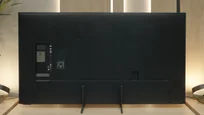
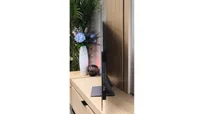
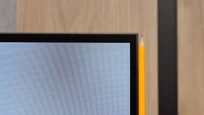
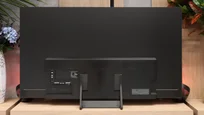
TV appearance

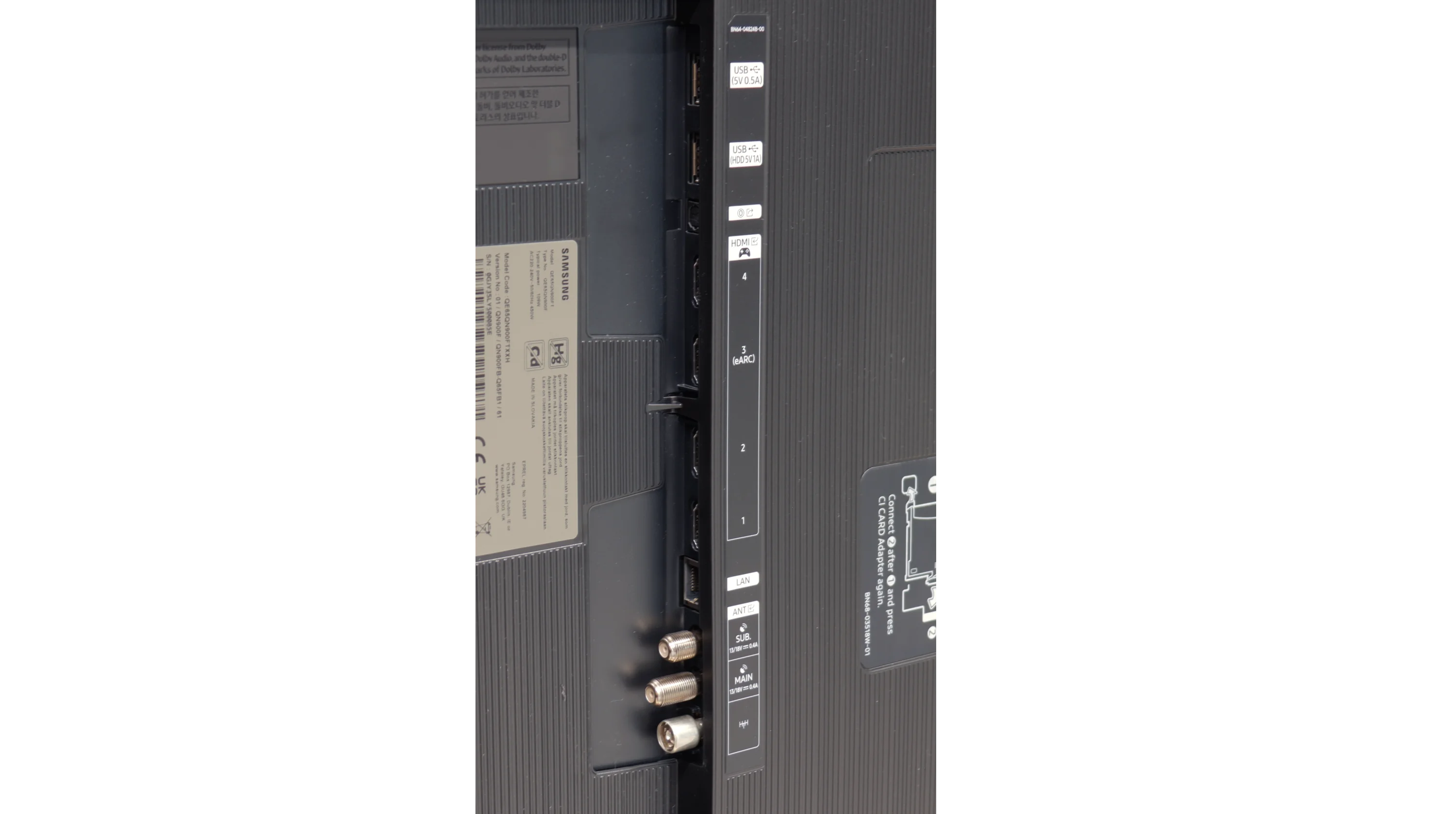
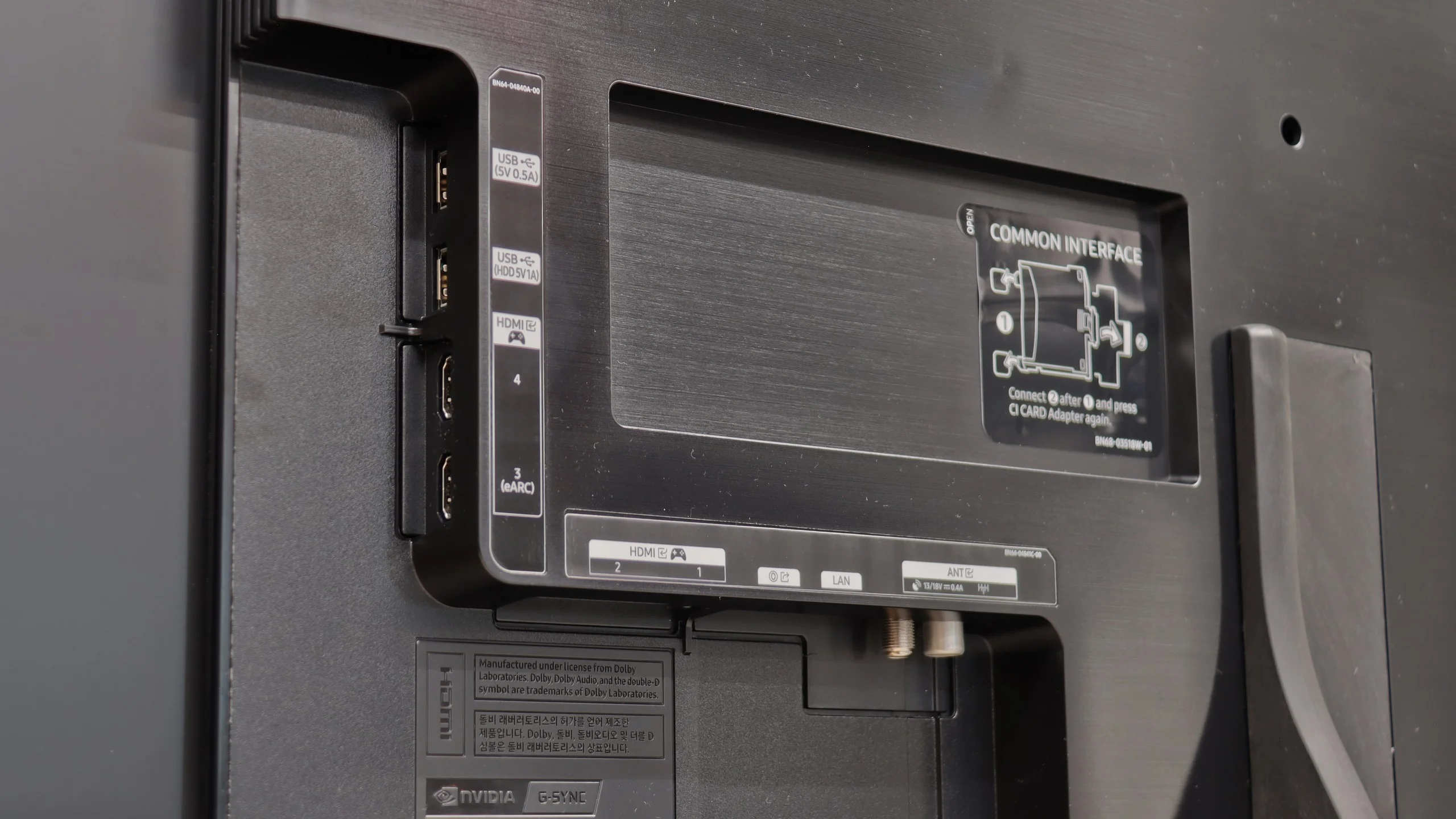
HDMI inputs
0 x HDMI 2.0, 4 x HDMI 2.1 (40Gbps)
0 x HDMI 2.0, 4 x HDMI 2.1 (48Gbps)
Other inputs
Toslink (Optical audio), IR (remote)
Outputs
Toslink (Optical audio), eARC (HDMI), ARC (HDMI)
Network Interfaces
Wi-Fi 2.4GHz, Wi-Fi 5GHz, Ethernet (LAN) 100Mbps
Build quality
Premium
Premium
Stand type
Legs
Central
Bezel color
Graphite
Graphite
Stand
Height adjustment
Fixed
Flat design
Yes
No
Accessories
Stand
Stand

Contrast and black detail

7.2/10

10/10

Local dimming function: Yes, number of zones: 1056 (24 x 44)

Contrast:

Review Samsung QN900F Contrast and black detail

Result

126,000:1

Review Samsung QN900F Contrast and black detail

Result

41,650:1

Review Samsung QN900F Contrast and black detail

Result

49,800:1

Review Samsung QN900F Contrast and black detail

Result

5,350:1

Review Samsung QN900F Contrast and black detail

Result

2,250:1

Review Samsung S90H (WOLED) Contrast and black detail

Result

:1

Review Samsung S90H (WOLED) Contrast and black detail

Result

:1

Review Samsung S90H (WOLED) Contrast and black detail

Result

:1

Review Samsung S90H (WOLED) Contrast and black detail

Result

:1

Review Samsung S90H (WOLED) Contrast and black detail

Result

:1

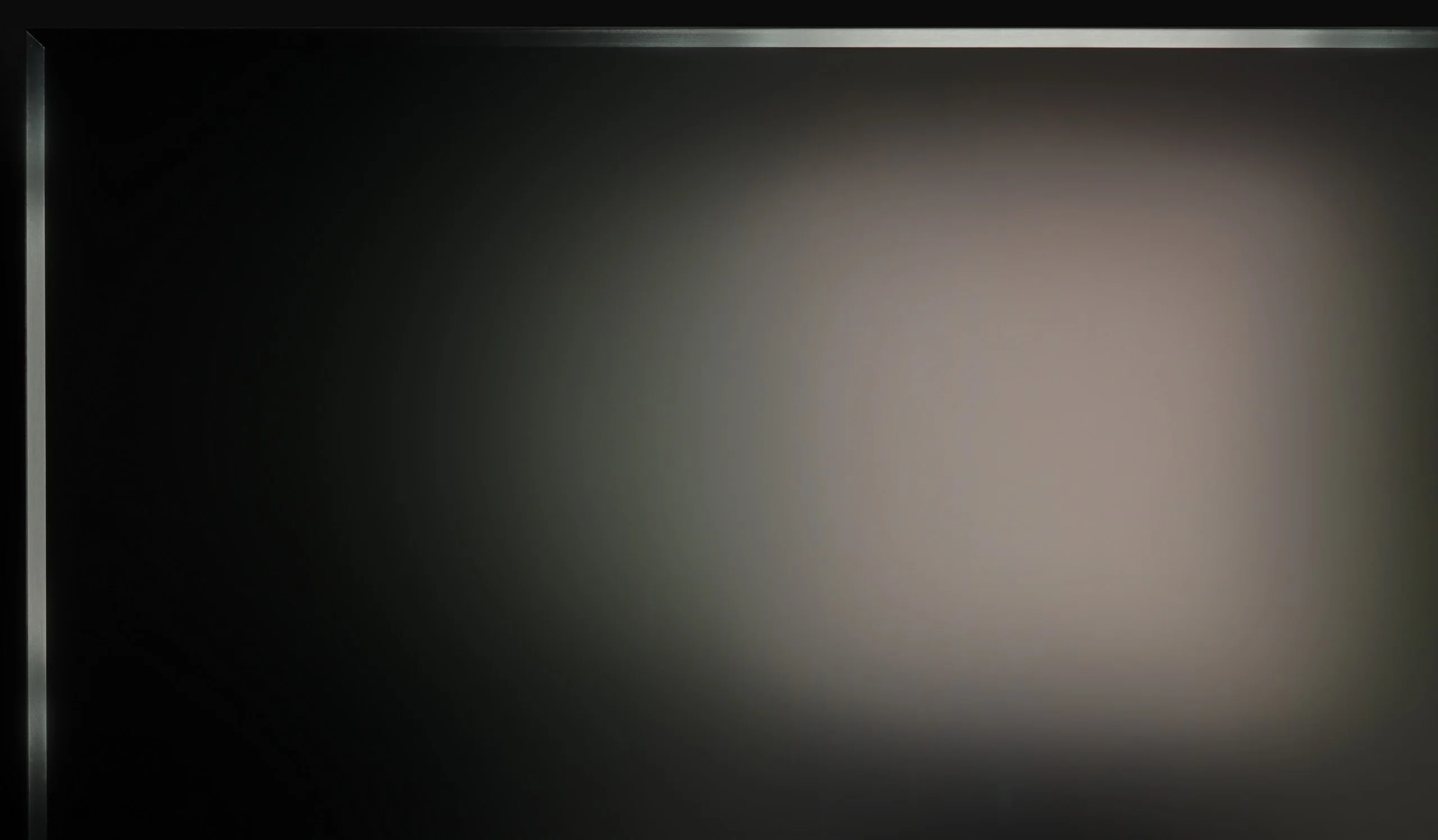
Halo effect and black detail visibility:

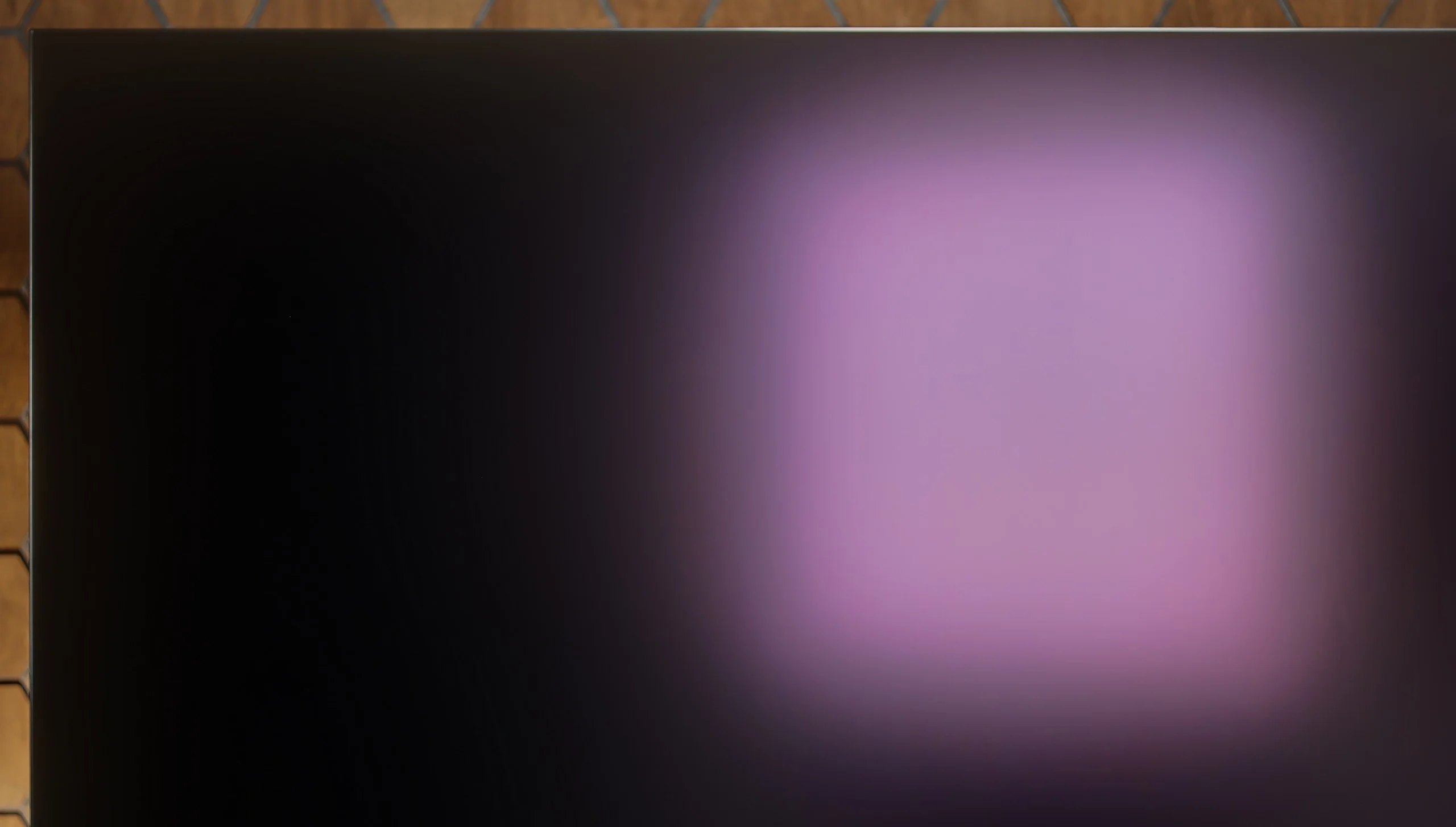
Check the visibility of bright lights on a dark background. Mini-LEDs often struggle with this. The photo does not compare black levels – that’s what the video below is for.

The video accurately shows differences in contrast and black levels between TVs, as well as potential issues: halo around bright objects or Mini-LED zone operation visible as brightness jumps.

The QN900F is equipped with a VA panel, which in itself provides decent contrast, but that’s not where its greatest strength lies. This is a mini-LED TV, so we have local dimming technology here, allowing selected areas of the image to be dimmed. In the 65-inch variant, we counted as many as 1,056 zones, which resulted in really solid performance. In the best possible scenario, the QN900F achieved a contrast exceeding 100,000:1, which is an absolutely impressive result – at such a moment, the blacks could really resemble those of an OLED. However, it's important to remember that it is not an OLED and has its classic mini-LED quirks. Because the TV must decide which zone to brighten and which to dim, there are moments when the algorithm doesn’t quite know what to do. This was the case, for example, in one of our test scenes, where the QN900F prioritised brightness over the depth of black, resulting in a significant drop in contrast to a level of 2,300:1. Yes, elements on the screen were brighter, but around them was a characteristic glow (halo effect) – the black then resembled more of a navy blue. Generally, the black in the QN900F is really very good – but not quite enough to compare it with TVs that have organic panels.

As the Samsung S90H uses an organic display, it deserves the highest possible rating for contrast and blacks. This applies to both variants on the market: the WOLED model we tested and the QD-OLED version. Because each pixel is an independent light source and can switch completely off, the TV delivers absolutely perfect black and infinite contrast. In practice that translates into brilliant image depth and perfectly sharp separation of bright details from a dark background. Any haloing (blooming), which still affects even top Mini LED-backlit LCD TVs, is completely absent here. The true magic of the WOLED panel is most evident during evening viewing in a darkened room; the dark areas of the picture gain remarkable texture, impressive three-dimensionality and a wealth of details hidden in the shadows.

HDR effect quality

6.4/10

7.7/10

Supported formats
HDR10, HDR10+, HLG
HDR10, HDR10+, HLG
Color gamut coverage
DCI P3: 90.6%, Bt.2020: 66.0%
DCI P3: 99.4%, Bt.2020: 75.9%

Luminance measurements in HDR:

Review Samsung QN900F Brightness measurement

Result

1200 nit

Review Samsung QN900F Brightness measurement

Result

609 nit

Review Samsung QN900F Brightness measurement

Result

850 nit

Review Samsung QN900F Brightness measurement

Result

214 nit

Review Samsung QN900F Brightness measurement

Result

1415 nit

Review Samsung S90H (WOLED) Brightness measurement

Result

1374 nit

Review Samsung S90H (WOLED) Brightness measurement

Result

1419 nit

Review Samsung S90H (WOLED) Brightness measurement

Result

1570 nit

Review Samsung S90H (WOLED) Brightness measurement

Result

1395 nit

Review Samsung S90H (WOLED) Brightness measurement

Result

713 nit

Scene from the movie “Pan” (about 2800 nits)

Scene from the movie “Billy Lynn” (about 1100 nits)

The photos show two HDR10 movies. 'Pan' is one of the brightest productions ever made, while 'Billy Lynn' (soldier) has brightness typical of streaming (Netflix, Prime, HBO MAX). Notice the intensity of effects and detail in whites.

Static HDR10

The photos present the visibility of white details in various HDR formats. They do not show brightness differences between TVs (these can be compared in the previous gallery).

Dynamic: HDR10+

Dynamic: HDR10+

The photos present the visibility of white details in various HDR formats. They do not show brightness differences between TVs (these can be compared in the previous gallery).

HDR luminance chart:

Samsung S90H (WOLED)

Samsung QN900F

Luminance of RGB colors

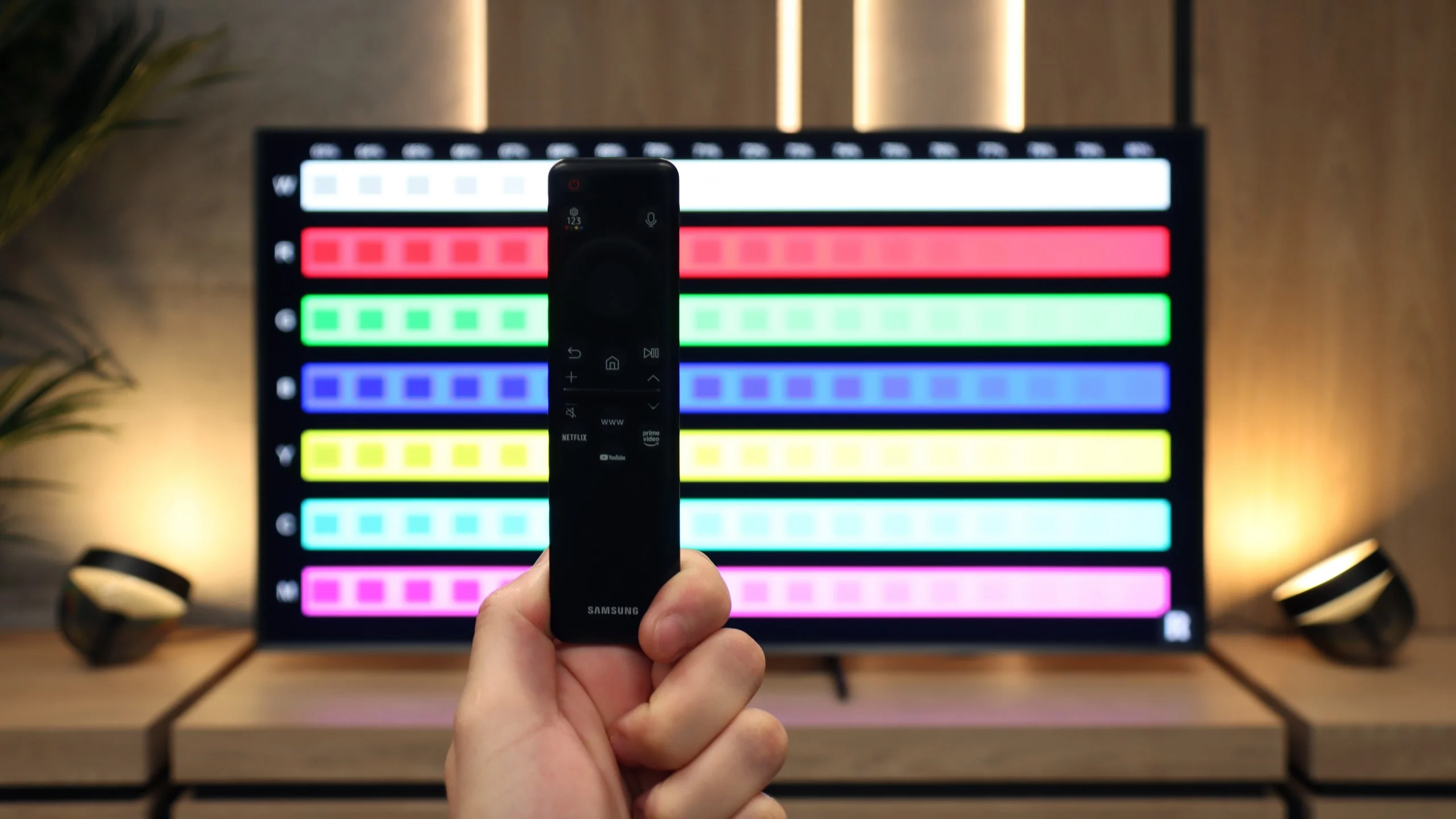
QN900F is a seriously bright TV – it can generate nearly 2000 nits, which is a level that remains unattainable for most models on the market. But the ability to achieve such brightness isn’t everything – it also matters whether the TV can make good use of it. And here it’s not always perfect. Our tests on cinematic scenes showed that in scenes like those from Life of Pi or The Meg, the QN900F can really shine – both literally and figuratively. In such moments, its greatest advantage, which is brightness, makes a huge impression. However, in more demanding scenes, things start to get tricky – similar to assessing contrast. When smaller, bright elements appear on the screen, the TV often struggles with the decision of whether to highlight them at the cost of black levels or perhaps maintain deep blacks but tone down the brightness. The result is situations where, for example, in the movie Sicario 2, the brightness dropped to just 200 nits, making details barely visible. The dimming algorithms could definitely be better, considering the class of this television.

The Samsung S90H in the WOLED variant is still an exceptionally bright TV for its price bracket, although it is slightly dimmer compared with the QD-OLED version. That difference is not as pronounced as in last year’s F series, where gaps sometimes reached 500 nits. Here the parameters of both panels are very similar, with differences in peak brightness of only about 100–150 nits. In small-window measurements the S90H with the WOLED panel easily reaches close to 1,500 nits. That headroom lets it phenomenally convey the dynamics of HDR effects — blooms, light reflections and explosions have the right punch, exactly as intended by the studio creators. As with most OLED displays, when a very bright scene fills the entire screen, panel protection systems kick in and brightness naturally falls to around 700 nits. It’s worth stressing that this is still an excellent result on the market, often noticeably better than many Mini LED screens in the same segment.

Colour gamut coverage

The biggest difference between the two S90H variants lies in colour reproduction and saturation. This stems directly from the different construction of the WOLED panel, which uses an additional white subpixel. As a result, very high-brightness colours don’t achieve quite the same saturation, and the wide-colour volume is slightly more limited than with QD-OLED. That said, in everyday use these differences will be hard for most viewers to notice. Our measured DCI-P3 coverage on the WOLED panel reaches almost 99%, meaning that for the vast majority of real film scenes both variants will present an almost identical image. The real gap only appears in rarer, especially demanding productions that use the ultra-wide BT.2020 gamut. Because of the WOLED panel’s construction, coverage of that standard is roughly 15% lower compared with the S90HAT with a QD-OLED panel, so the brightest, heavily lit HDR colours may appear a touch less vivid.

Factory color reproduction

5/10

7.6/10

This gallery shows how colors change after professional TV calibration. If you notice the difference, we recommend ordering this service at SkalibrujTV.com.

Factory Mode

After calibration

This gallery shows how colors change after professional TV calibration. If you notice the difference, we recommend ordering this service at SkalibrujTV.com.

Factory Mode

After calibration

Testing the QN900F in Filmmaker mode, the distinct characteristics of the image quickly became apparent, despite this mode being designed to reflect the director's vision. The white balance was not perfect – the television had noticeable deficits in blue. This caused the entire scene to take on a warmer tone, as if someone had applied a subtle filter in shades of yellow and orange to the image. In films where bright shots dominate – for example, scenes in the snow or under strong daylight – this gave an impression of a slight warmth that does not always convey the director's intention. The second noticeable element was the management of brightness. The QN900F sometimes brightened the image more than necessary. It looked as if the exposure had been slightly "pushed up," which caused the scene to lose some naturalness. Shadows could be too shallow, and contrast slightly weakened. These are not disqualifying errors, but for a television in this price range, it is clear that the Filmmaker mode has not been perfected one hundred percent. This is particularly noticeable when we compare its image to what was visible after the screen calibration.

In Filmmaker mode, which we strongly recommend switching on straight out of the box, the S90H offers very good factory colour tuning. Colours are natural and faithful to the creators' intent, without the annoying oversaturation seen in more aggressive profiles. However, as is often the case without full calibration, there is unit-to-unit variation. In our test the white balance was a little deficient in the blue component, so the image leaned slightly towards warmer, yellowish tones. This was most noticeable in bright scenes, such as the snowy sequences from Star Wars. Additionally, the gamma curve was slightly low at around 2.2, which caused a small lift in shadow detail. In HDR mode the tuning was a bit better, showing only a slight undersaturation in the red region.

Color reproduction after calibration

8.7/10

9.2/10

The photos show how movies look on the TV. Pay attention to black detail visibility, colors, and shadow tint.

The photos show how movies look on the TV. Pay attention to black detail visibility, colors, and shadow tint.

After calibration, we managed to reduce the errors in white balance and adjust them to a level that can be considered acceptable. It's not perfect, but definitely better than the factory settings. Most colour errors now fall within the deltaE 2–3 range, so in practice, they shouldn't be noticeable during everyday viewing. The biggest improvement is evident in how the television handles brightness in SDR content. Shadows and details are no longer flattened, giving the image depth and naturalness. As for 4K HDR materials – colours themselves are no longer an issue, but one can still notice some imperfections in Mini-LED technology. The QN900F tends to excessively dim the smallest bright elements, causing them to sometimes disappear from view. However, it's worth noting that this is a much better solution than boosting the entire screen, which would ruin the contrast. This is more of a characteristic of the technology rather than a typical flaw, but it's worth keeping in mind. The effects of the calibration are really very good.

After full calibration, you can safely say the S90H in the WOLED version looks almost perfect. In SDR mode colour errors fall to ultra-low levels and Delta E values very rarely exceed 2. That's a phenomenal result, so if perfectly faithful colour reproduction matters to you, it's definitely worth getting it calibrated. The calibrated HDR mode also performs very well, where the white balance was stabilised and previous deviations eliminated. After professional tuning it's really hard to fault anything, because the TV delivers an image with almost exemplary naturalness and three-dimensionality. The slightly lower score in this category compared with the QD-OLED variant is solely due to the saturation limitation in extremely bright scenes, while the tuning potential and colour fidelity are at the highest level.

Smoothness of tonal transitions

8.3/10

8/10

These are selected scenes that show smooth tonal transitions from one color to another. If you see distinct banding, it’s the TV panel’s fault.

These are selected scenes that show smooth tonal transitions from one color to another. If you see distinct banding, it’s the TV panel’s fault.

These are selected scenes that show smooth tonal transitions from one color to another. If you see distinct banding, it’s the TV panel’s fault.

These are selected scenes that show smooth tonal transitions from one color to another. If you see distinct banding, it’s the TV panel’s fault.

The QN900F performs really well in terms of gradation. The tonal transitions are smooth and natural, without clear contours or banding. Interestingly, it is one of the few televisions that handles dark transitions better than bright ones – we only noticed subtle imperfections in strongly illuminated scenes like that from the Kingsman film. In most cases, the image simply looks very good and we have nothing to complain about.

The smoothness of tonal transitions is at a very solid level here, and the WOLED panel variant has been noticeably improved compared with last year’s F-series model. Troublesome gradient artefacts and visible banding occur much less often. Despite this clear improvement, it still does not reach the level of QD-OLED technology. In almost every direct comparison the QD-OLED panel handles smooth transitions between shades a little more precisely. In summary, when it comes to gradients the WOLED panel is clearly better than earlier generations of these panels, but the QD-OLED variant still holds a noticeable advantage in this area.

Image scaling and smoothness of tonal transitions

7.5/10

7.5/10

Image without overscan on the SD signal
No
No
Smooth transition function
OK
OK

Smooth transition function

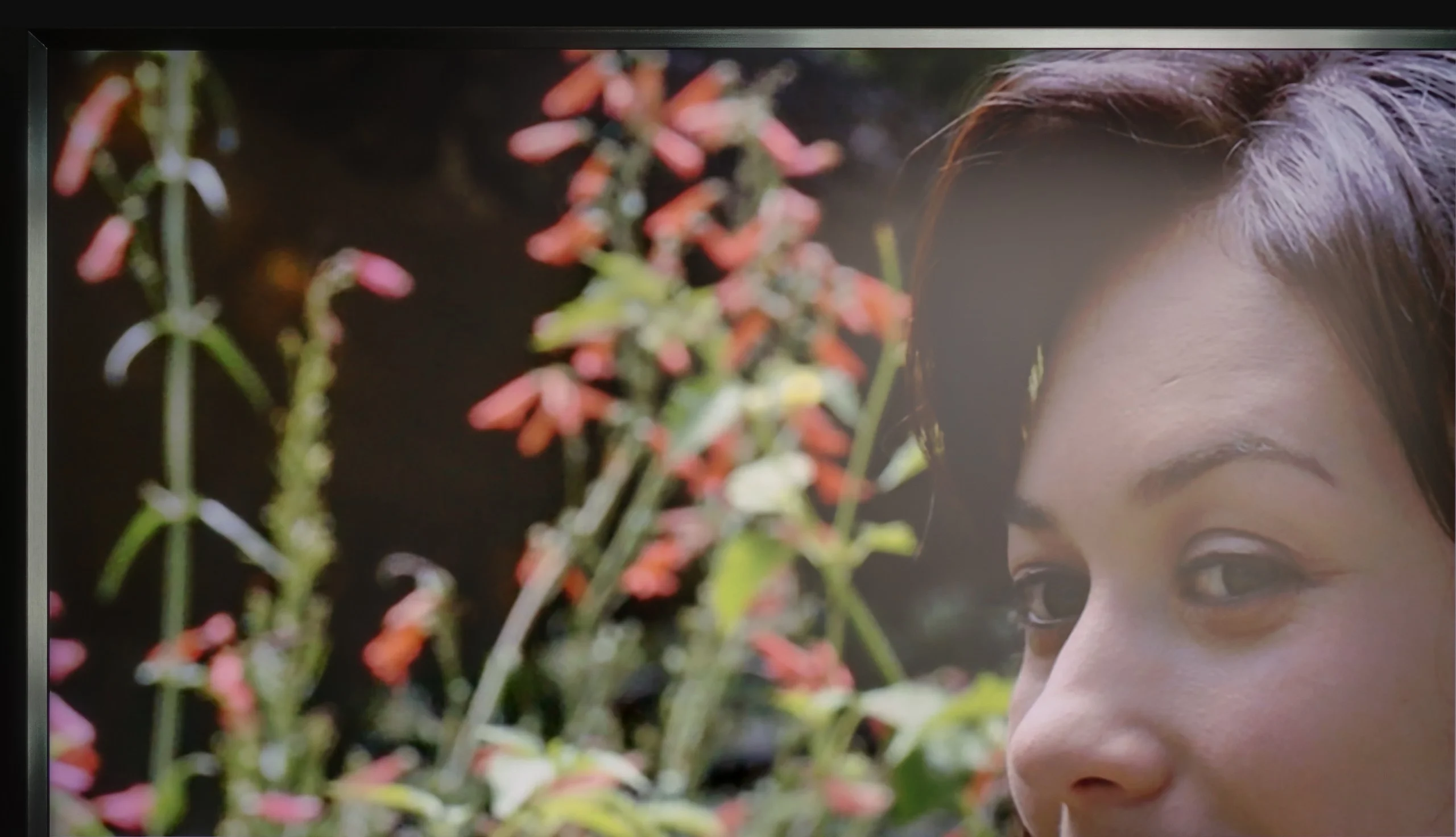
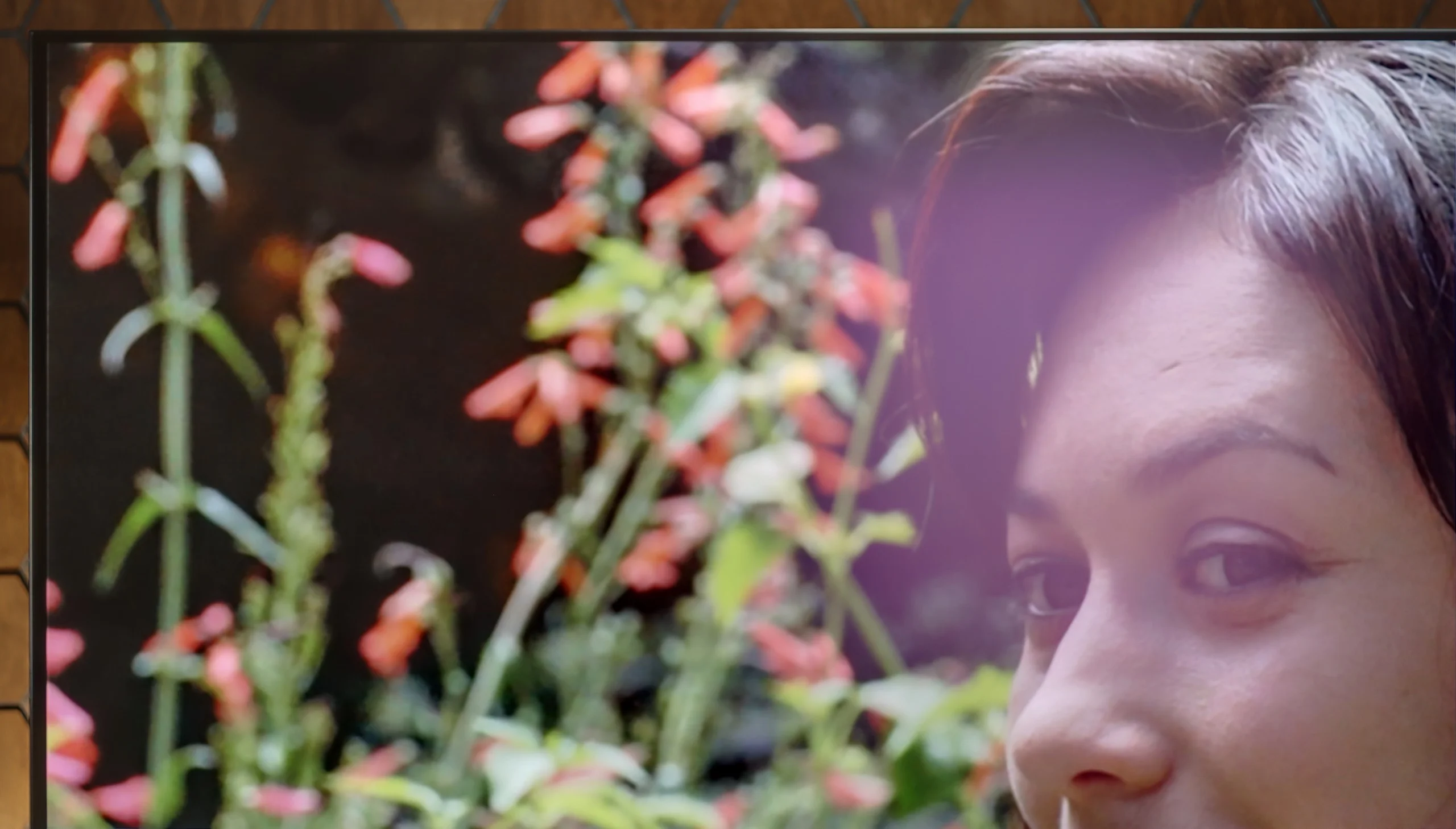
The match photo shows how the TV smooths weak tonal transitions in low-quality video.

Image scaling SD (576i)

The model photo shows how it handles upscaling of SD material.

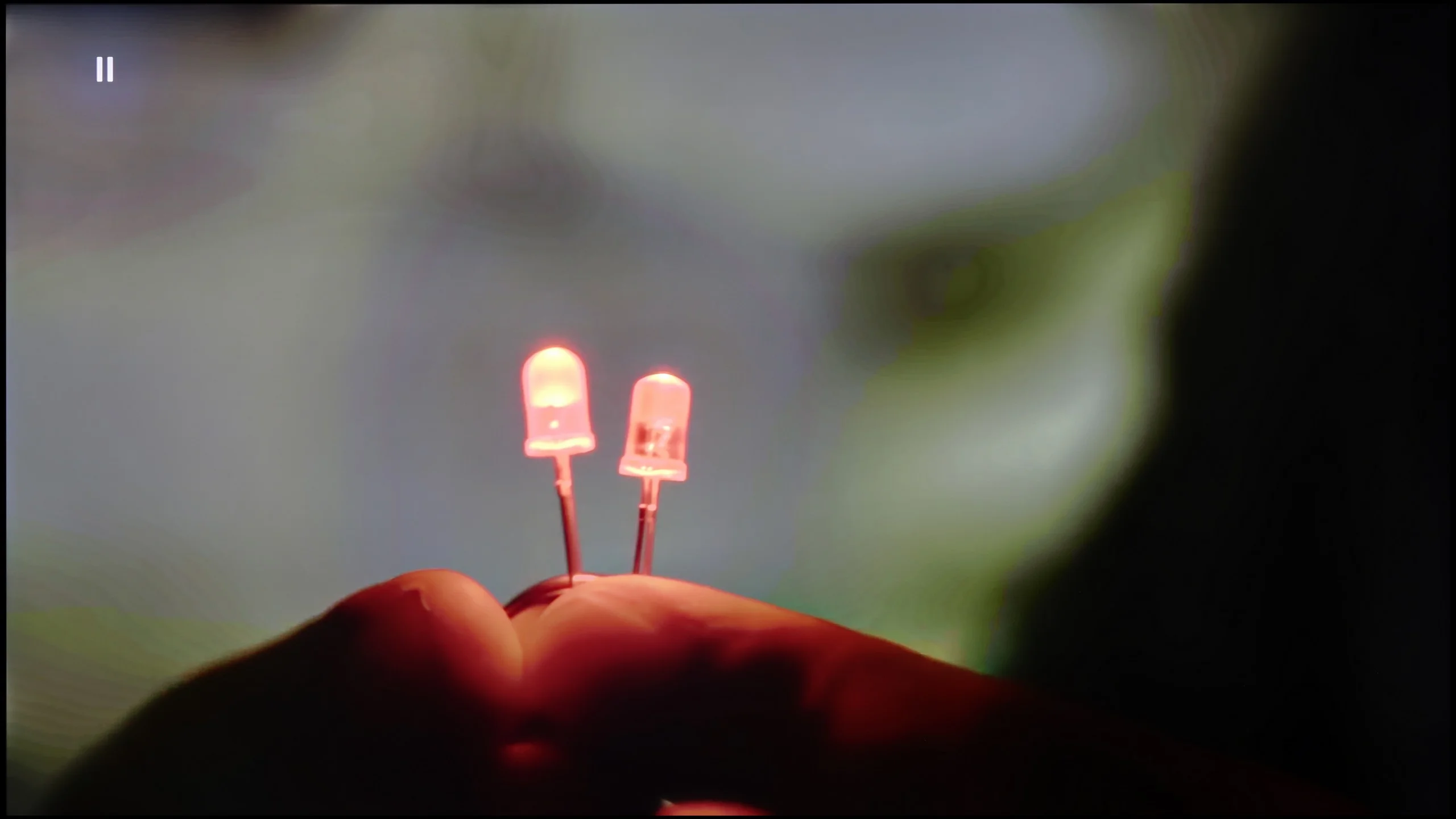
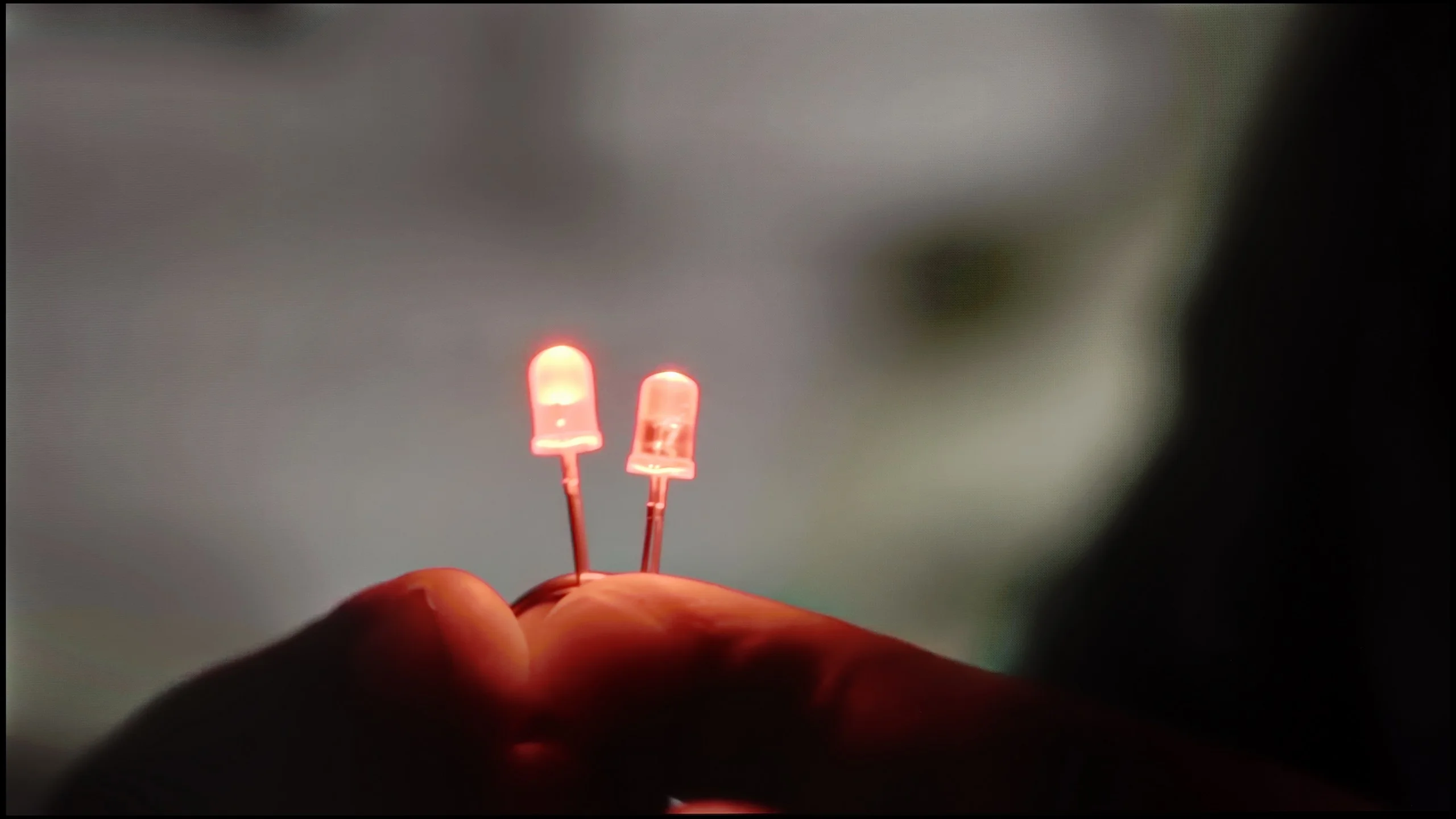
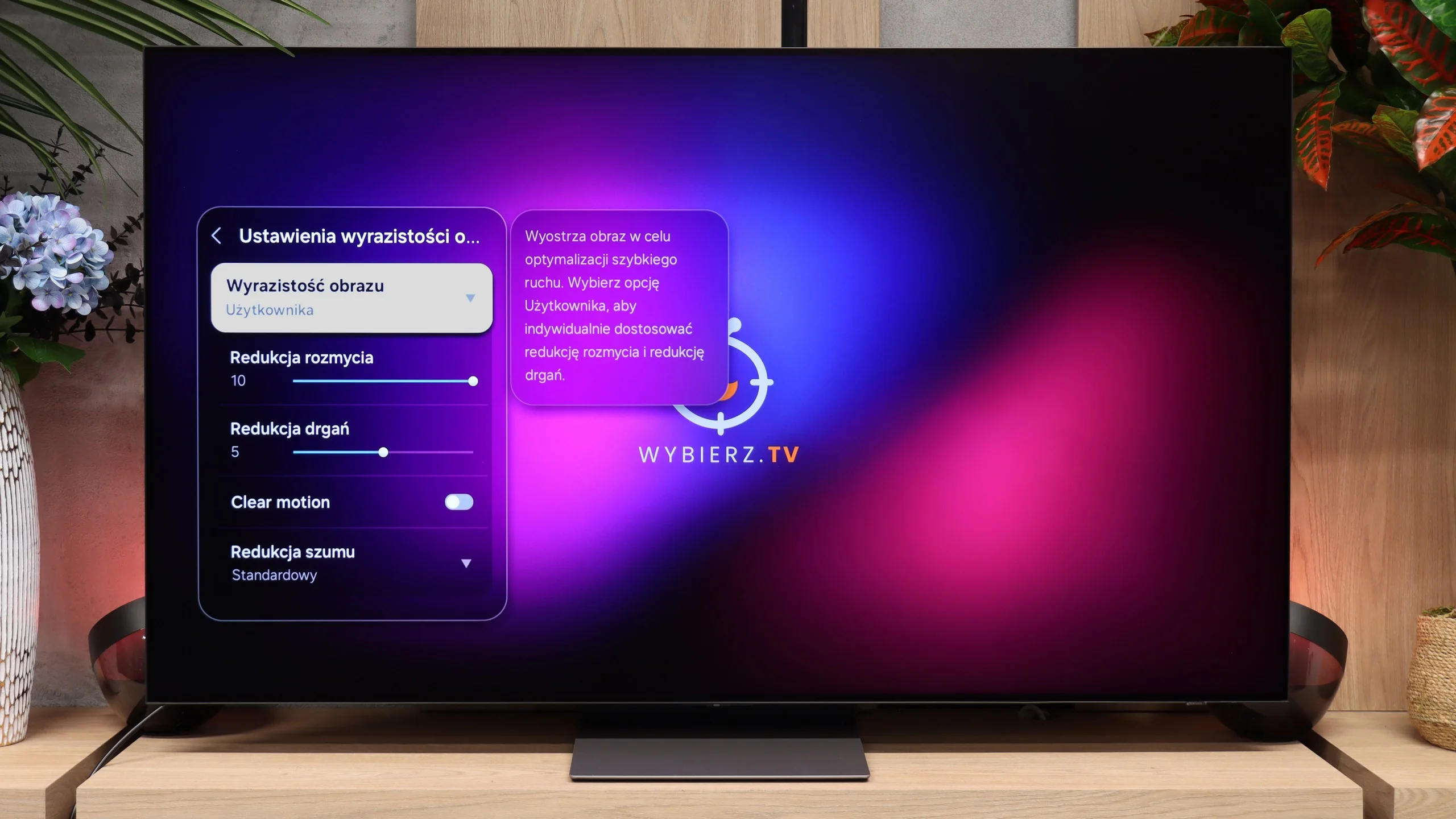
If we want to get rid of awkward tonal transitions that can be annoying, for example, while watching YouTube, we can use a feature called noise reduction. It works really effectively – it eliminates issues with colour blending when set to Standard level. However, as with most Samsung TVs, this comes with some compromises. Although we didn't notice this feature having a significant impact on the structure of objects in the image, it unfortunately reacts quite aggressively to film grain. Most people will likely appreciate this effect – the noise is simply removed – but if someone is looking for an image as close as possible to reference settings, we definitely recommend turning this option off.

When it comes to upscaling, or dealing with very low-quality content, the QN900F performs really well. On the test pattern with a model, the image looked clear, with only slight jaggedness that shouldn't bother most viewers. However, it’s worth mentioning one issue – the TV sometimes struggles with so-called overscan, which means older content may be slightly cut off. This can manifest, for example, with disappearing subtitles at the bottom of the screen.

When it comes to banding reduction itself, Samsung has kept the same solutions known from last year’s models. The dedicated gradient-smoothing function works quite well and can effectively mask unwanted tonal transitions, which can be useful on a WOLED panel that’s somewhat more prone to banding. However, it’s important to remember it acts aggressively. This mechanism, aside from the artefacts themselves, can remove fine film grain and subtly soften detail. Ultimately it’s a trade-off, but if you want perfectly faithful image reproduction, it’s safer to leave this option off.

There’s also no breakthrough in scaling. The S90H uses the same NQ4 Gen3 processor as its predecessor, so upscaling quality was almost identical. The chip sharpens lower-resolution material very well, pulling a satisfying level of detail out of it. However, Samsung still hasn’t solved the old overscan problem. For some older recordings or archival footage the edges of the image can be slightly cropped. It’s a minor drawback, but it’s a shame the manufacturer still hasn’t fixed it.

Blur and motion smoothness

7.8/10

8.5/10

Maximum refresh rate of the panel
165Hz
165Hz
Film motion smoothing option
OK
OK
Blur reduction option
OK
OK
BFI function 60Hz
Yes, 60Hz (image flickers)
BFI function 120Hz
No
No
Brightness drop with BFI
74%
50%

Blur (native resolution, maximum refresh rate):

Blur (BFI function enabled):

Image flickers in this mode

Image flickers in this mode

Blur (4K@165Hz):

Blur (4K@165Hz ):

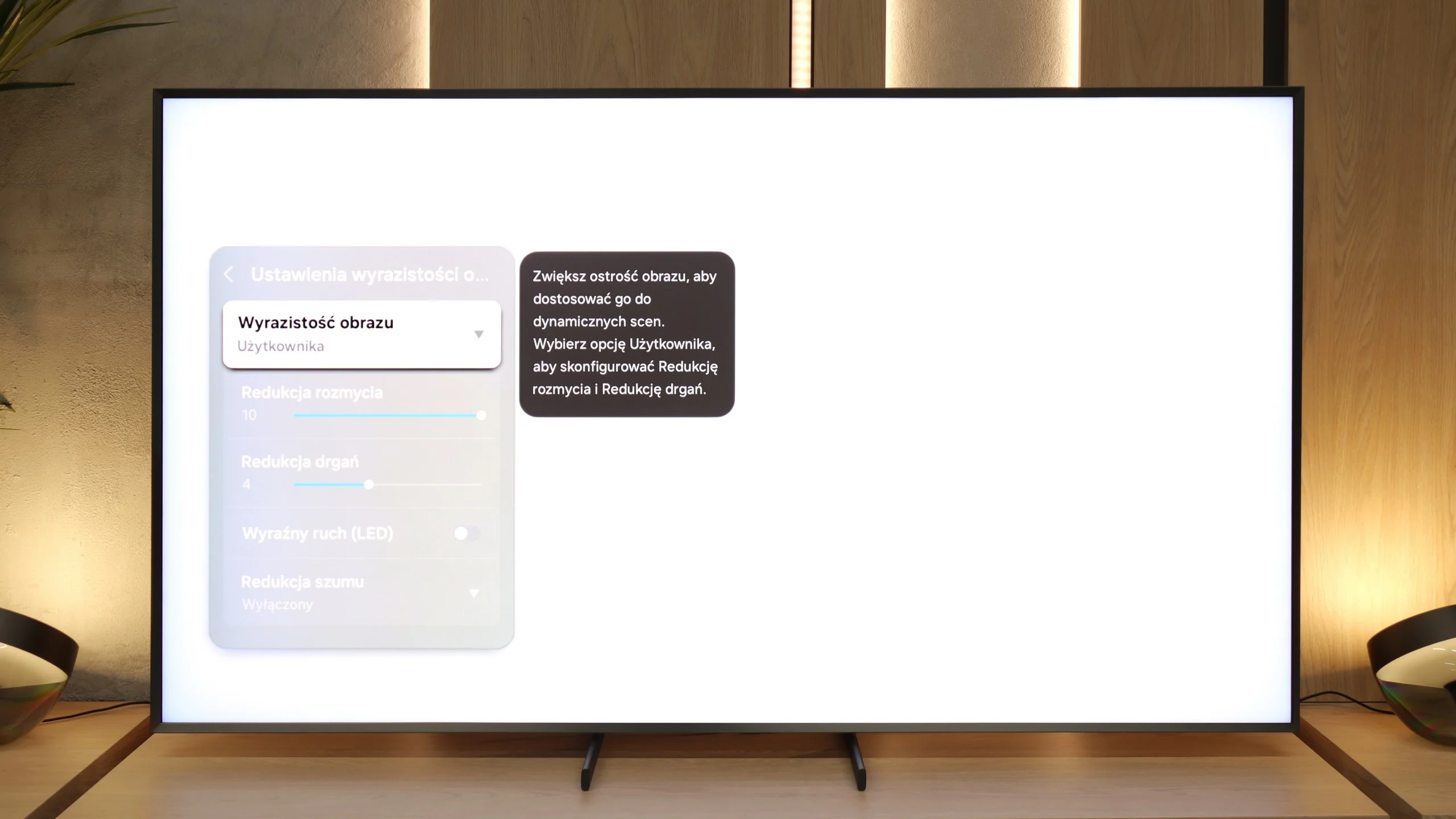
There’s really nothing to nitpick here – the QN900F looks great when it comes to motion. Thanks to its 165 Hz panel in 4K, you can confidently say that this TV is suited for both watching sports and gaming. The motion smoother plays a key role here. It works brilliantly – not just with sports broadcasts, where it can eliminate blurring and image judder, but also in games, where animation becomes clearer and more fluid. And of course, if someone likes to experiment with movies – they have that option as well. At lower settings, you can see a slight graininess and a filmic quality, while higher settings introduce a soap opera effect. So everyone can tailor the picture to their preferences, and the TV has the power to handle it.

When it comes to motion handling the S90H is simply excellent. This year's panel offers its refresh rate boosted to 165 Hz, although in practice the benefit will mainly be for gamers connecting a powerful PC. For movies, TV series or sports broadcasts such a high refresh rate makes no difference and the picture looks exactly the same as at the standard 120 Hz. Regardless of the source, the OLED panel's lightning-fast response time does the job. Motion is clean, and the ghosting or smearing seen on LCDs simply doesn't occur here.

Console compatibility and gaming features

9.6/10

9.6/10

  • ALLM
    Yes
    Yes
  • VRR
    Yes
    Yes
  • VRR range
    48 - 165Hz
    48 - 165Hz
  • Dolby Vision Game Mode
    No
    No
  • Correct implementation of HGIG
    Yes
    Yes
  • 1080p@120Hz
    Yes
    Yes
  • 1440p@120Hz
    Yes
    Yes
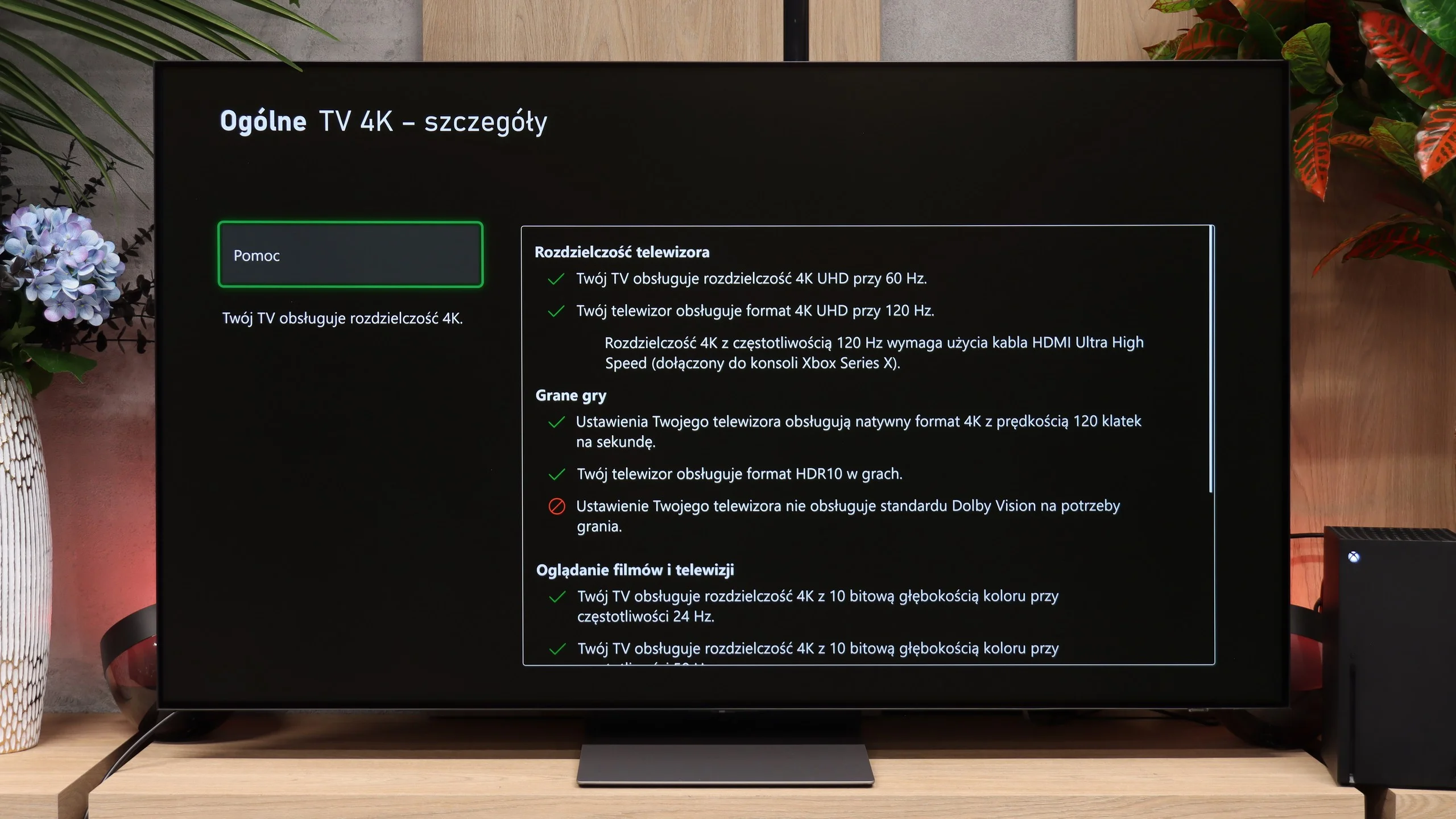
  • 4K@120Hz
    Yes
    Yes
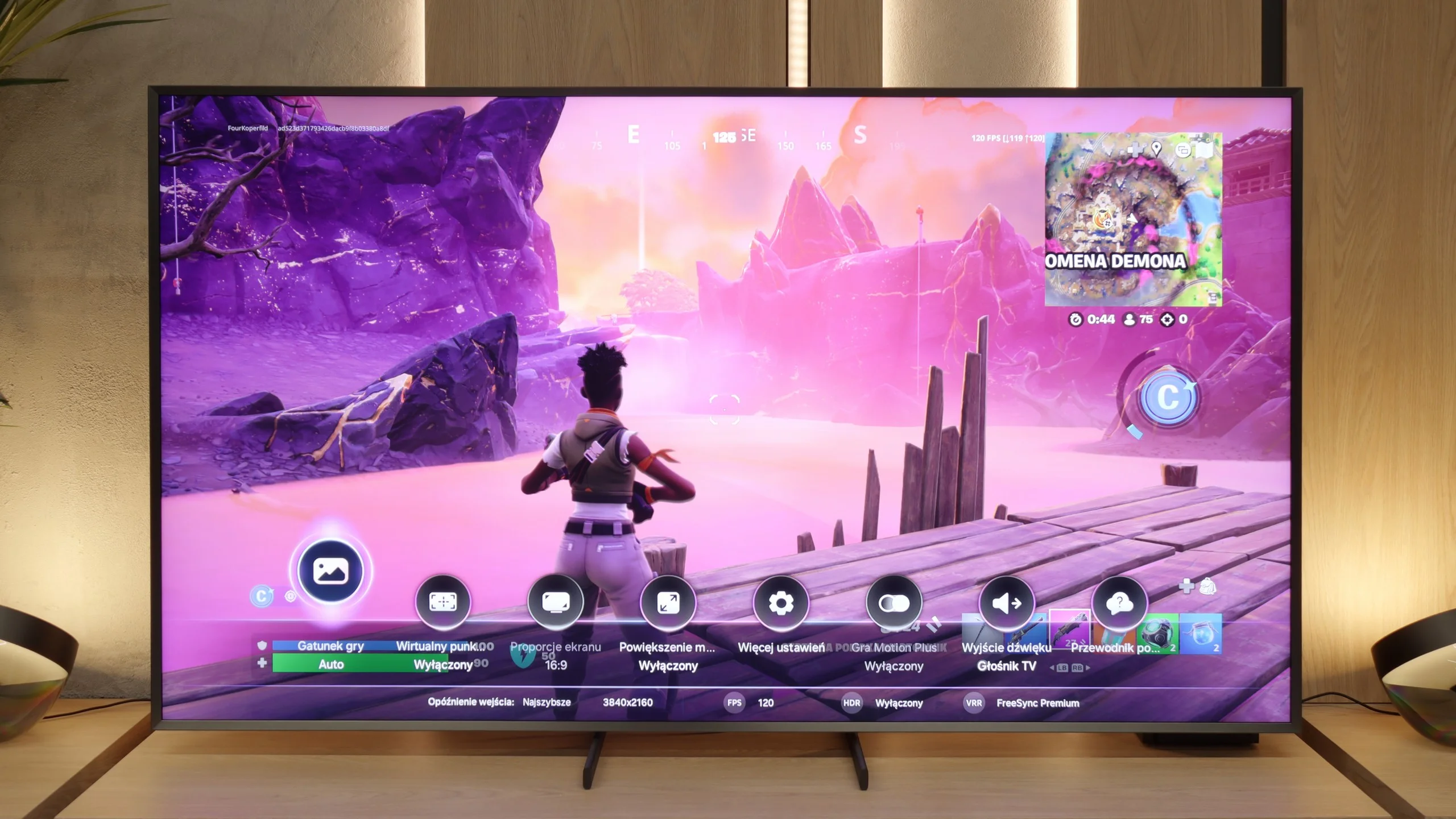
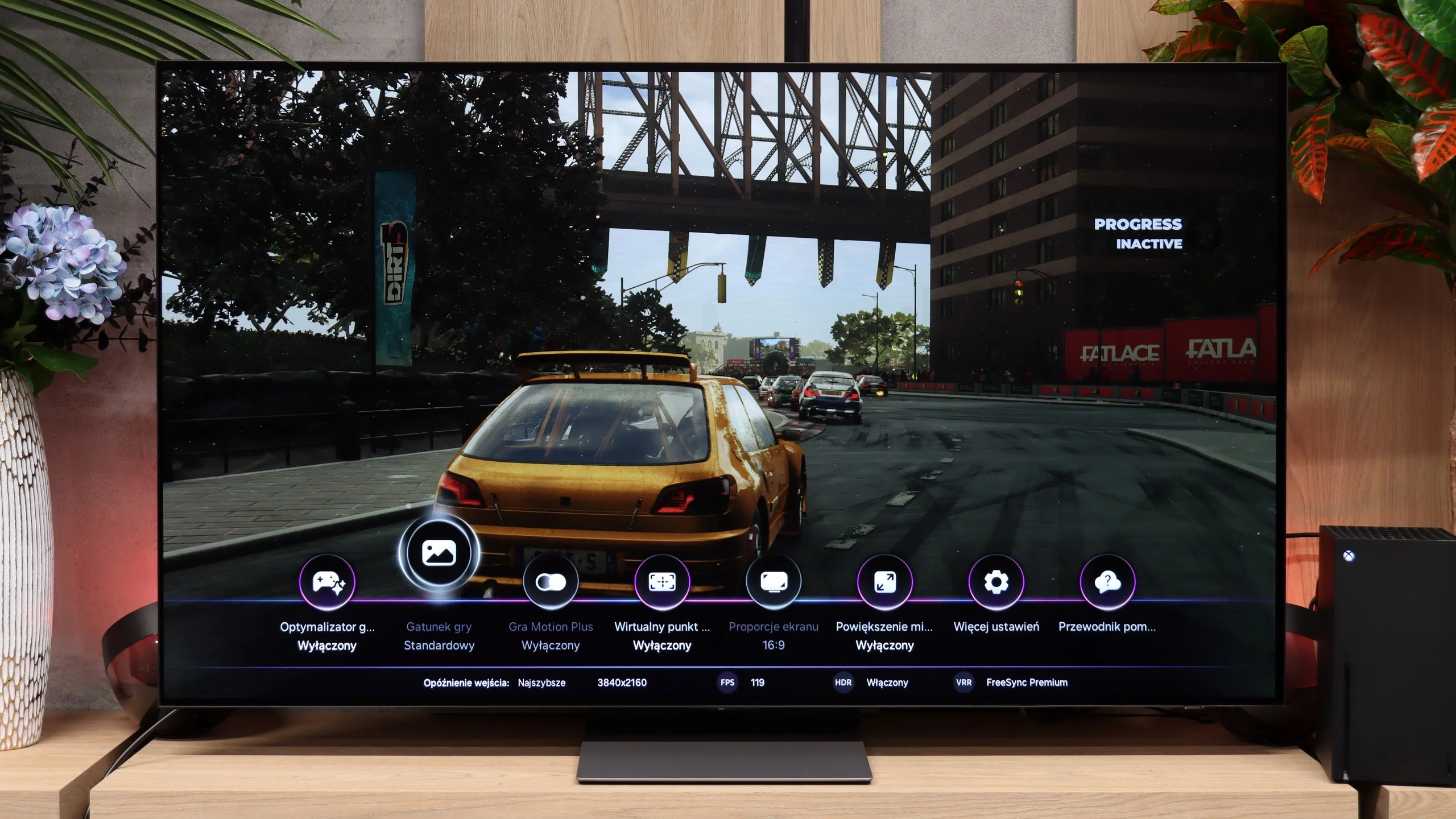
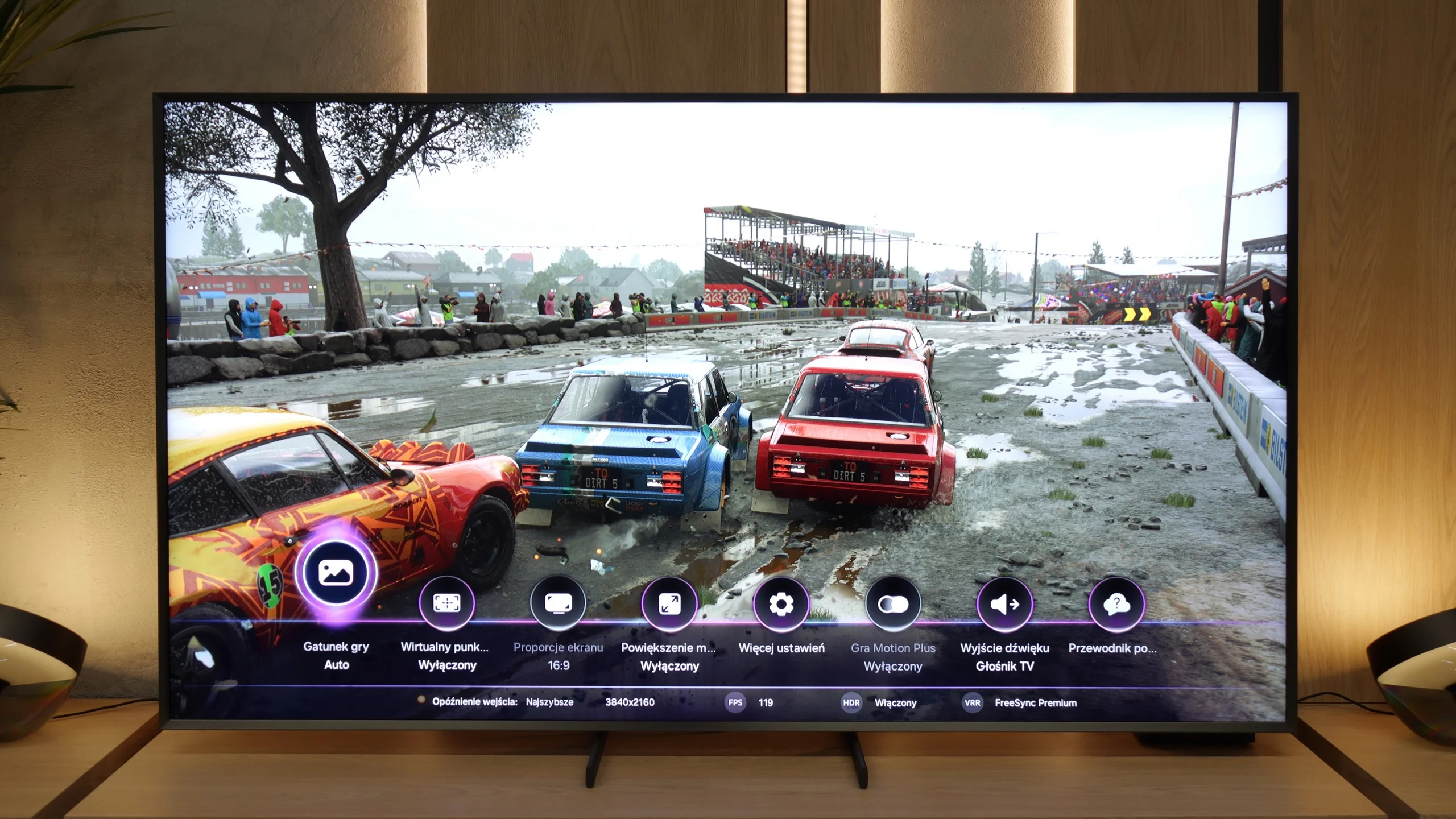
  • Game bar
    Yes
    Yes

[UPDATE] We have updated our 2025 Samsung TV reviews following the release of firmware version 1131, which officially restores the essential HGiG (HDR Gaming Interest Group) support.
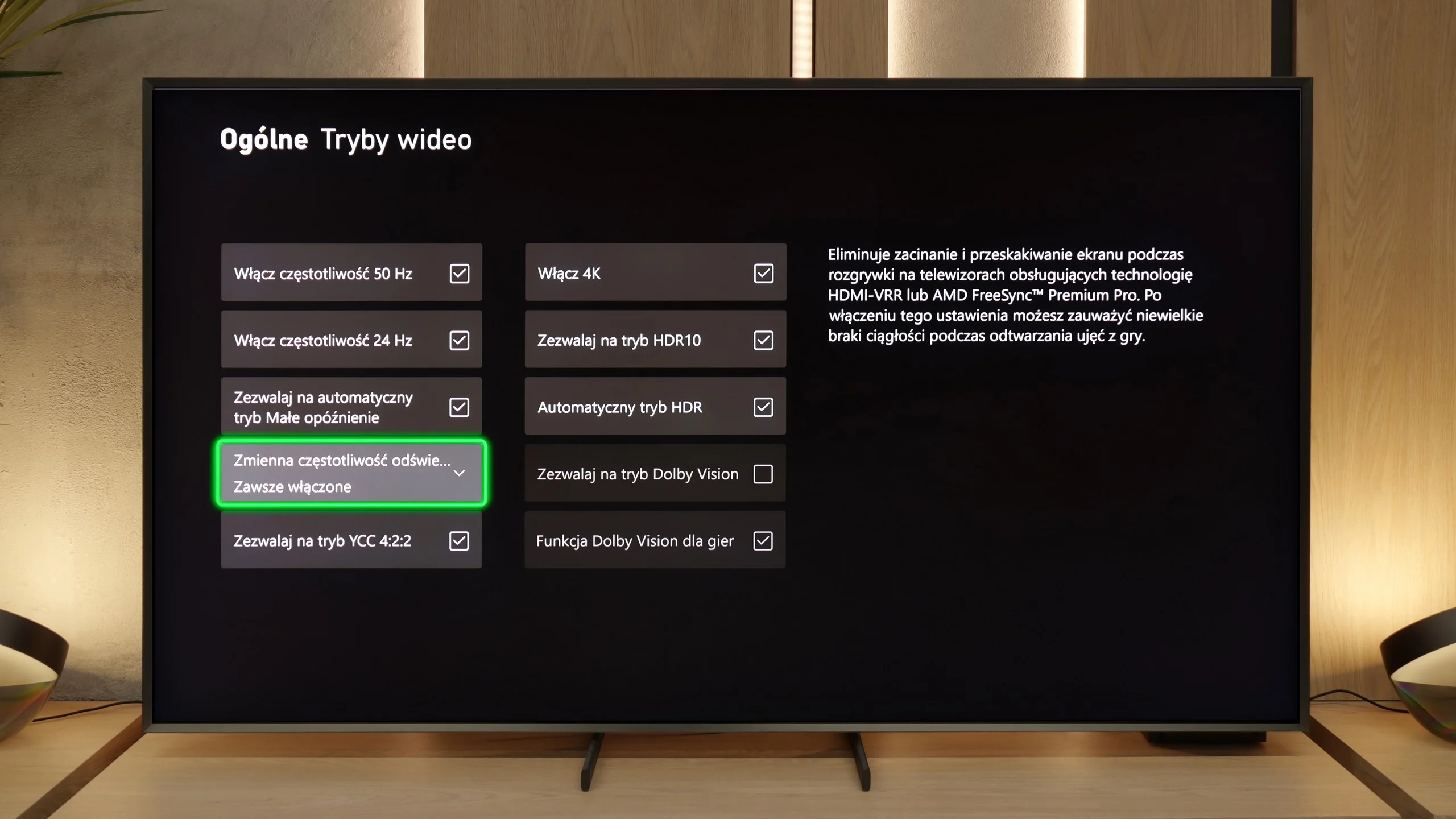
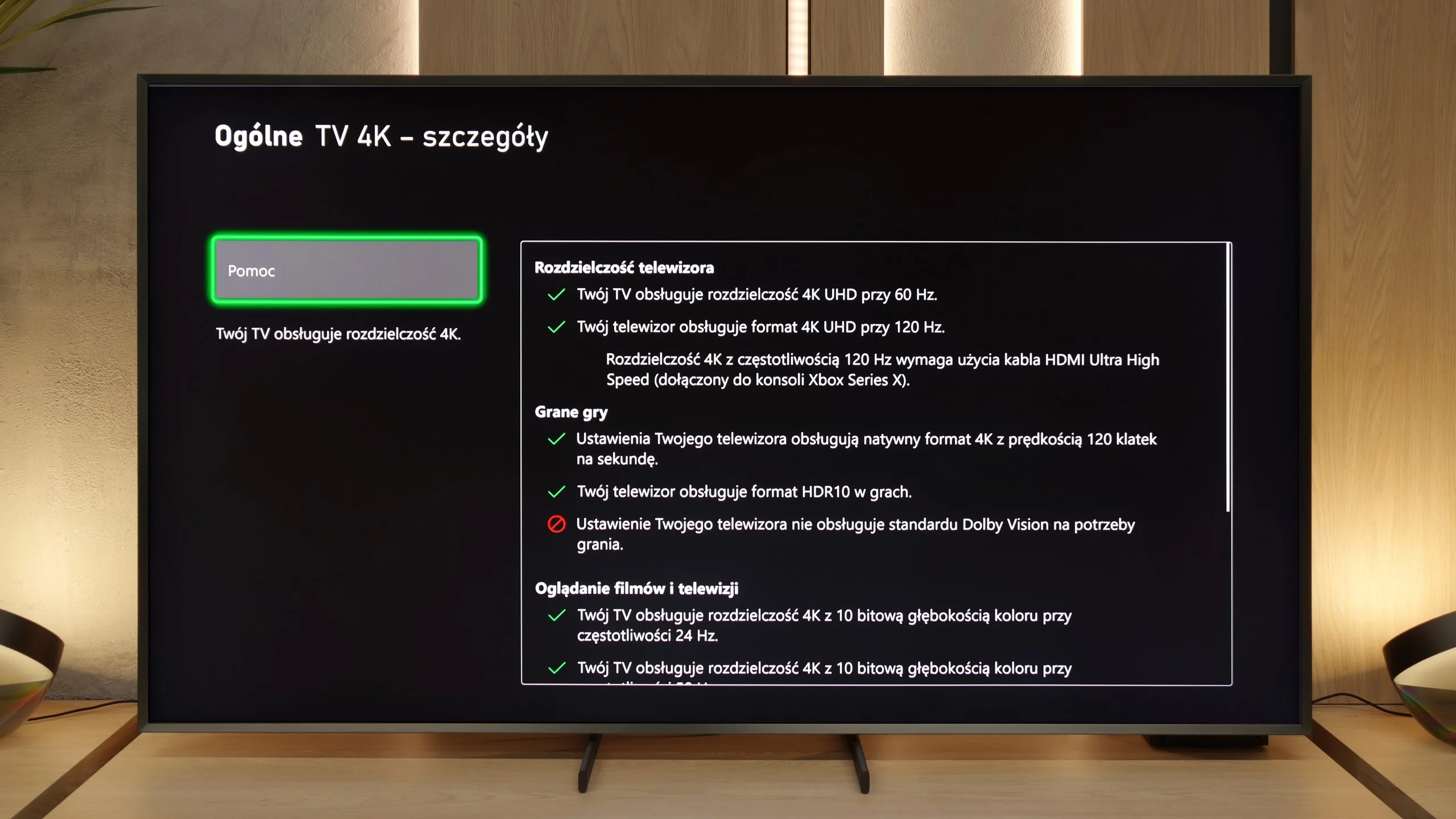
It's really good here. The QN900F offers a full set of features that we would expect from a top-notch gaming TV – we have VRR, ALLM, Game Bar, as well as cloud gaming apps. However, the biggest standout is its proprietary motion smoother, which also works in games and – importantly – does not add noticeable input lag. This is something we won't find in other competitors. Unfortunately, there is also something concerning. This year, Samsung has clearly messed up something with its TVs. During the testing of the QN900F before its update, it had the HGIG feature, which allowed for perfect adjustment of HDR settings for consoles. However, according to our procedures, we always update the hardware to the latest version – to give the manufacturer a chance to fix any issues. And here… it went the other way.After the update, the HGIG feature disappeared from the menu, making proper configuration of the console for HDR practically impossible. It was supposed to be complete – 165Hz, four HDMI 2.1 ports, a full gaming package… but unfortunately, it turned out to be a little mishap. What a shame.

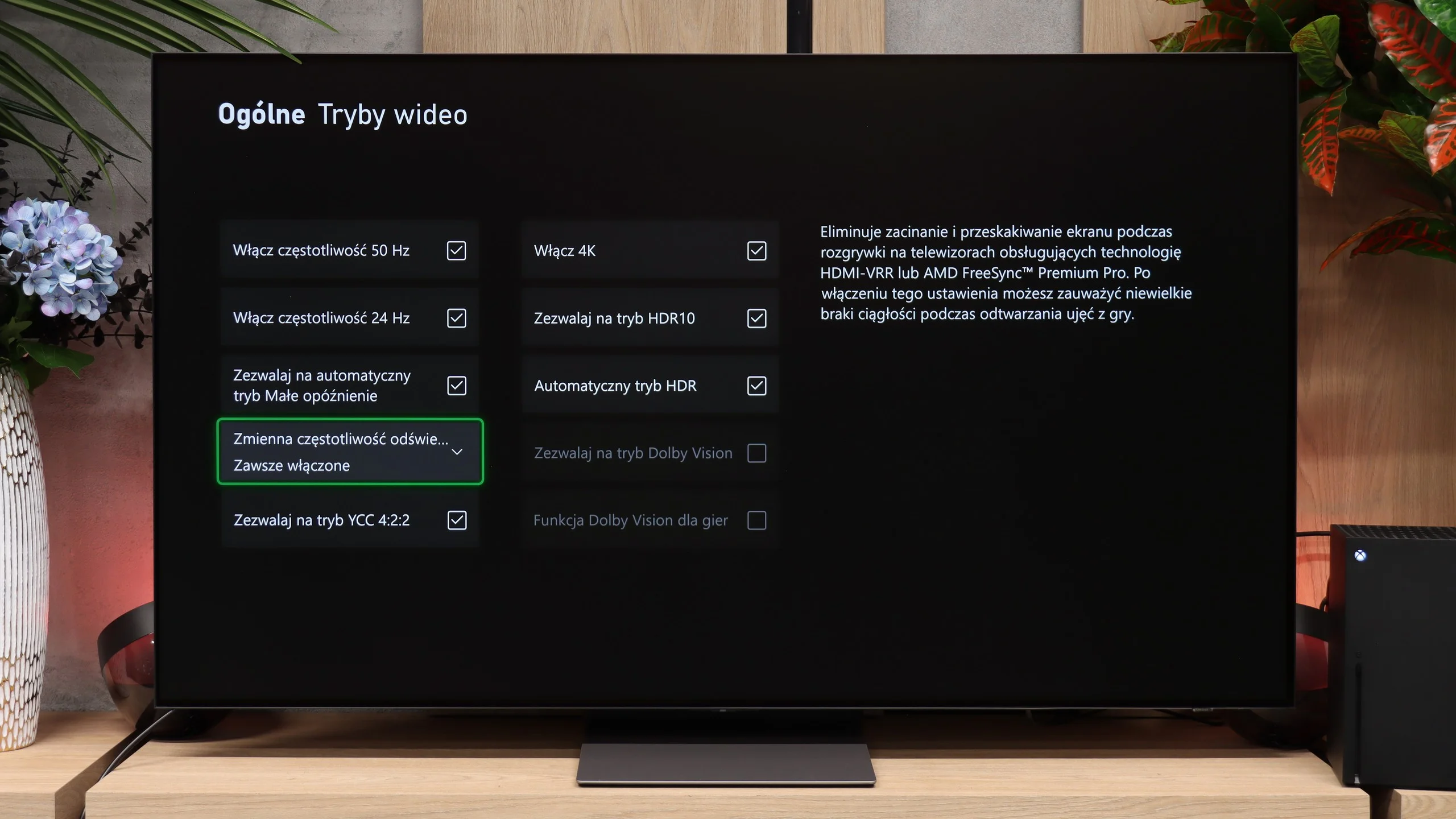
Gamers should feel right at home with the S90H, because Samsung has left few reasons to complain in this area. The TV has four HDMI 2.1 ports, each supporting VRR, ALLM and high refresh rates. There's also the Game Bar, a handy menu that lets you quickly check key parameters and change settings without leaving the game. Importantly, Samsung has also improved HGiG. In last year's models it could cause issues when used with a console, but on the S90H it now works as it should. What really stands out against the competition is Game Motion Plus. It's a specialised motion-smoothing mode for games that works best with titles running at 30 or 60 frames per second. Motion becomes noticeably smoother and latency remains at a reasonable level. In our measurements it was under 50 ms, so gaming is still comfortable. That's important, because on many TVs enabling a similar smoothing feature causes such a big increase in input lag that controls become noticeably sluggish. Samsung has managed to find a good compromise here. There's still no Dolby Vision Gaming, but in practice Game Motion Plus may prove to be the more useful feature.

Input lag

9.8/10

10/10

SDR

1080p60
13 ms
10 ms
1080p120
12 ms
6 ms
2160p60
14 ms
10 ms
2160p120
11 ms
6 ms

HDR

2160p60
13 ms
10 ms
2160p120
10 ms
5 ms
4320p60
18 ms

Dolby Vision

2160p60 DV
2160p120 DV

In terms of input lag, the QN900F presents a class of its own. Regardless of the resolution or refresh rate set – the response time remains instantaneous. It's one of those TVs where it's really hard to feel any delay. Gamers can count on full responsiveness and certainty that every action from the controller will be instantly reflected on the screen. In this category – it's simply the top shelf.

Input lag is another aspect that's hard to fault. At 120 Hz we measured just about 5 to 6 ms, which is truly outstanding. Switching to even higher refresh rates, the delay fell to astronomically low levels, practically imperceptible during gameplay. The Samsung S90H delivers top-tier results.

Compatibility with PC

8.4/10

8.6/10

Chroma 444 (max. resolution and refresh rate)
Yes
Yes
Font clarity
Good
Good
Readability of dark text and shapes
Average
Very Good
Input lag in PC mode (4K, max. refresh rate)
18ms
6ms
Matrix subpixel arrangement
BGR
RWGB
Max refresh rate
165Hz
165Hz
G-Sync
Yes
Yes

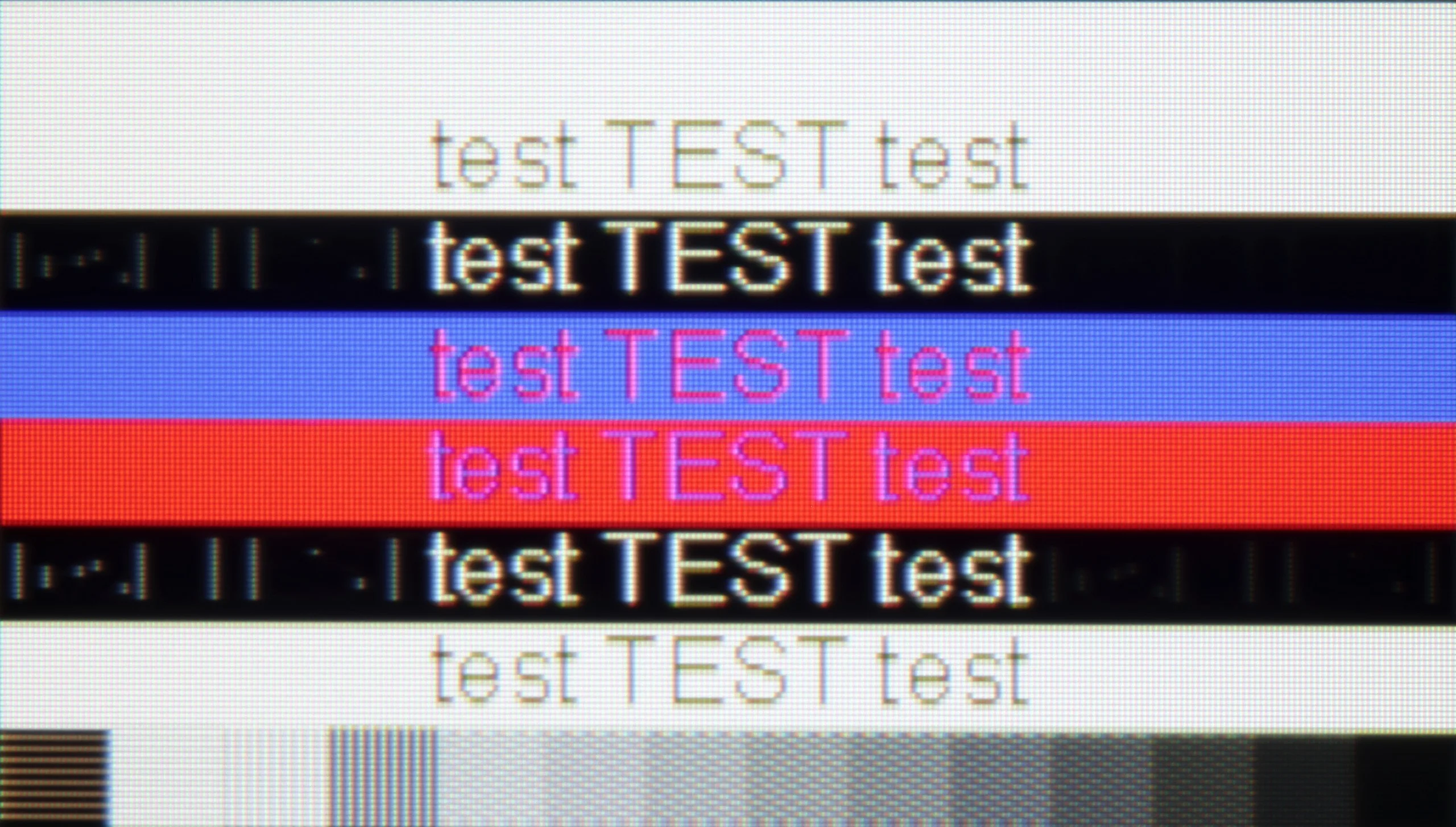
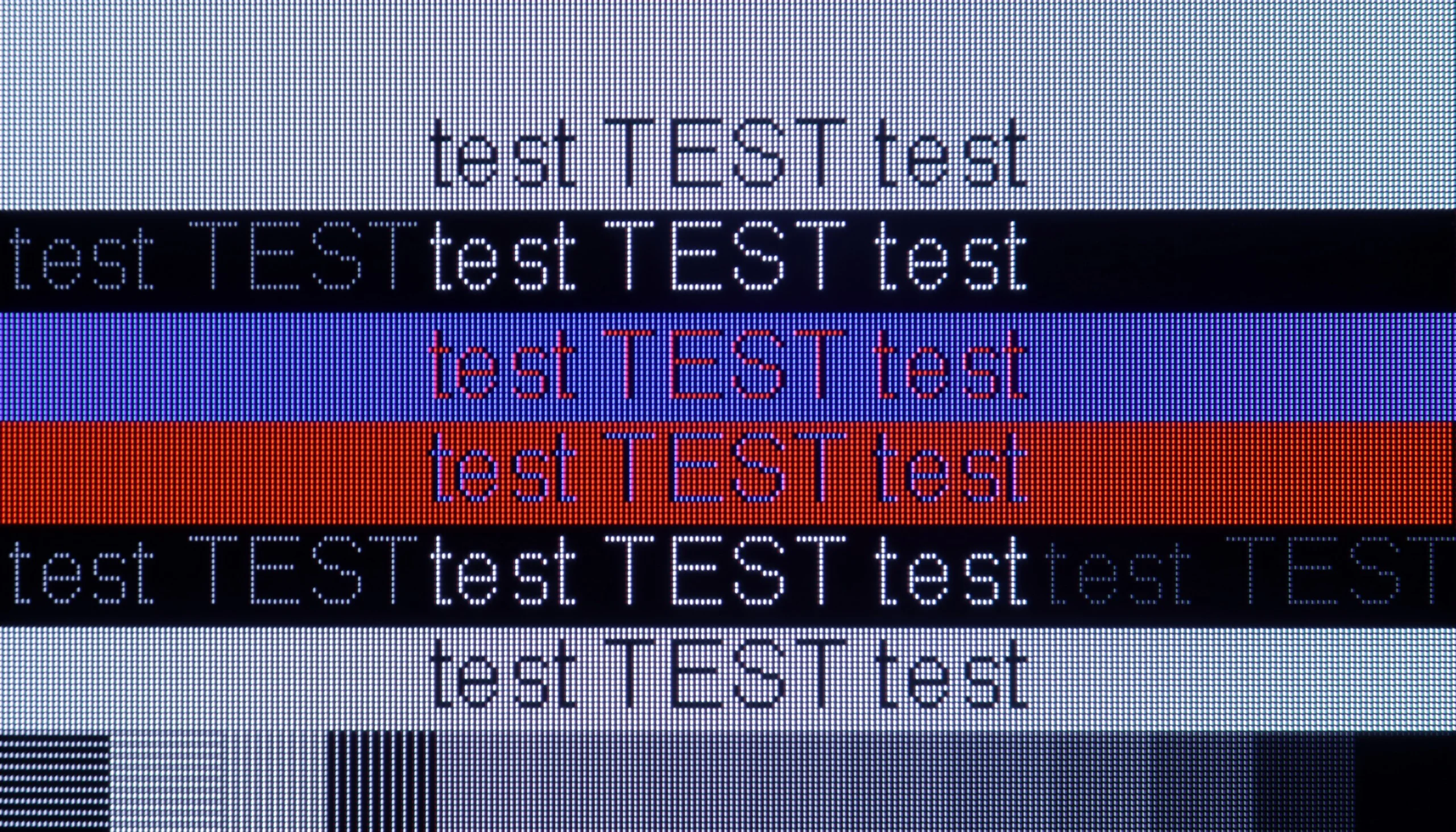
The photo shows the legibility of small fonts. Ideally, lines should be the same thickness on both light and dark text, with minimal pixel gaps.

QN900F is an 8K television, so even in a larger size it can be considered a fully-fledged work monitor – of course, provided that someone can actually fit such a colossus on their desk. The device supports chroma 4:4:4, so overall font readability is good, although we noticed some issues with the thinnest lines. This may be due to the fact that at its native 8K resolution, some texts are simply so microscopic that the television isn't necessarily perfectly suited for it. It sounds a bit silly, but how else can you explain it? 😉

On the other hand, the QN900F can be a great choice for PC gamers. It supports G-Sync technology, and at 4K resolution, it offers a refresh rate of up to 165 Hz. So if you have a very powerful computer, the QN900F will allow it to spread its wings and showcase its gaming prowess in full glory.

The S90H works very well as a large-format monitor for PC, and not just because of its comprehensive gaming features. NVIDIA G-Sync certification, low input lag and support for refresh rates up to 165 Hz mean it runs smoothly with typical gaming PCs. In terms of motion and image sharpness in PC games it’s hard to find fault. The situation is a little different for everyday office work, web browsing or text editing. Although fonts remain legible, the specific subpixel structure of the WOLED panel (with an additional white subpixel) can be noticeable. When sitting very close to the screen, letter edges and small interface elements can show slight coloured fringing or appear a bit softened. This is characteristic of WOLED panels. In practice, however, it’s not a major issue. We tested the 65-inch variant, which is naturally used from about a metre or more. From that distance the effect practically disappears and doesn’t interfere with daily work. It may be more noticeable in the smallest sizes, like 42 or 48 inches, which often sit on a desk and are used from a distance of a few dozen centimetres.

Viewing angles

5/10

7.6/10

Brightness drop at an angle of 45 degrees
67%
31%

The viewing angles on the QN900F are pretty decent, but we feel that the "Ultra Viewing Angle" coating that Samsung heavily advertises underperforms compared to last year. Yes – the effect is still much better than most LCD TVs with VA panels, but it's still a fair way off from OLEDs or high-quality IPS panels. The image holds up reasonably well from the side, with colours not fading as quickly as with standard VAs; however, we expected more, especially since previous generations from Samsung have managed to perform better. Perhaps the addition of the matte coating that appeared in this year's 8K series is having an impact on this.

Viewing angles on the Samsung S90H are very good and among the best on the market. That's thanks to the OLED panel, which when viewed from the side does not lose brightness or colour saturation as quickly as many LCD TVs. The picture therefore keeps its proper appearance for longer, which matters especially when watching TV in a larger group and not everyone is sitting directly in front of the screen. Only at a really large angle can you notice the advantage of QD-OLED panels. In their case viewing angles are practically perfect, while with the WOLED version the colours and brightness then start to change slightly.

Daytime performance

7.1/10

6.5/10

Panel finish
Matte
Matte
Reflection suppression
Very Good
Very Good
Black levels during daytime
Average
Good

Panel brightness

Samsung S90H (WOLED): 473 cd/m2

Samsung QN900F: 723 cd/m2

One of the new features in 8K from Samsung is the matte display. The Koreans have been gradually "matting" their televisions this year, and it's fair to say that the QN900F is at the very top in this regard – reflections are suppressed better than in any other model on the market. Practically, this means that even in a brightly lit lounge, the image remains clear, and reflections virtually disappear from the screen. Of course, such a coating comes at a cost. Colours lose a bit of intensity, and black in bright light doesn't appear as deep as on glossy screens. But this is more of a detail than a real problem, because after all, the vibrancy of colours and depth of black matter most in the evening, with the lights off – and then this effect completely disappears.

There is, however, one area where the S90H with a WOLED panel performs better than the QD-OLED version. It's viewing in a brightly sunlit room. Thanks to the presence of a traditional polariser, blacks here don't shift toward grey or a dark burgundy as much as they do on QD-OLED panels. Combined with the new matte coating, this delivers very good results. The picture retains more depth even in strong light, and colours don't lose their vibrancy so quickly. That doesn't mean the screen remains completely black in every condition. Under very strong illumination you can notice a faint purple tint typical of WOLED panels. In the S90H it is partly muted by the matte coating and isn't as obvious. Ultimately both variants perform similarly in this category. WOLED handles black retention in a bright room better, but on the other hand it achieves slightly lower SDR brightness. At times the difference compared with the QD-OLED version can reach around 150 nits.

Panel details

Backlight Type
Mini-LED QLED
WRGB OLED
Software version during testing
T-OSCPFDEUC-0090-1110.7, E2500007, BT-S
T-RSMHDEUC-0100-120 4.3, E4601200, BT - G. albo 1204
Image processor

Subpixel Structure:

Panel uniformity and thermal imaging:

Review Samsung QN900F TV Panel details
Review Samsung S90H (WOLED) TV Panel details

Samsung QN900F

Samsung S90H (WOLED)

TV features

7.2/10

7.3/10

  • System
    Tizen
    Tizen
  • System performance
    Very good
    Very good
  • HDMI inputs
    0 x HDMI 2.0, 4 x HDMI 2.1 40Gbps
    0 x HDMI 2.0, 4 x HDMI 2.1 48Gbps
  • Other inputs
    Toslink (Optical audio), IR (remote)
  • Outputs
    Toslink (Optical audio), eARC (HDMI), ARC (HDMI)
    Toslink (Optical audio), eARC (HDMI), ARC (HDMI)
  • Network Interfaces
    Wi-Fi 2.4GHz, Wi-Fi 5GHz, Ethernet (LAN) 100Mbps
    Wi-Fi 2.4GHz, Wi-Fi 5GHz, Ethernet (LAN) 100Mbps
  • TV reception
    DVB-T, DVB-T2, DVB-S, DVB-S2, DVB-C
    DVB-T, DVB-T2, DVB-S, DVB-S2, DVB-C

Classic features:

  • Recording to USB (terrestrial TV)
    No
    No
  • Recording programming
    No
    No
  • Picture in Picture (PiP)
    Yes
    No
  • RF remote control (no need to aim)
    Yes
    Yes
  • Backlit remote control
    No
    No
  • Teletext
    Yes
    Yes
  • Audio only mode
    Yes
    Yes
  • Bluetooth headphones support
    Yes
    Yes
  • Simultaneous Bluetooth headphones & TV audio
    Yes
    Yes

Smart features:

  • AirPlay
    Yes
    Yes
  • Screen mirroring (Windows Miracast)
    Yes
    Yes
  • Voice search
    Yes
    Yes
  • Voice search in native language
    Yes
    Yes
  • Ability to connect a keyboard and mouse
    Yes
    Yes
Review Samsung QN900F TV features
Review Samsung S90H (WOLED) TV features

Sound connection options

  • HDMI audio
    eARC (HDMI), ARC (HDMI)
    eARC (HDMI), ARC (HDMI)
  • Other audio outputs
    Toslink (Optical audio)
    Toslink (Optical audio)
  • Wireless audio
    Bluetooth, Samsung Q-Symphony (Speaker extension)
    Bluetooth, Samsung Q-Symphony (Speaker extension)

Supported audio formats (external HDMI eARC audio):

  • Dolby Digital Plus 7.1
    Yes
    Yes
  • Dolby True HD 7.1
    No
    Yes
  • Dolby Atmos in Dolby Digital Plus (JOC)
    Yes
    Yes
  • Dolby Atmos in Dolby True HD
    No
    Yes
  • DTS:X in DTS-HD MA
    No
    No
  • DTS-HD Master Audio
    No
    No

Senior accessibility

  • Numeric keyboard on TV
    No
    No
  • Font size adjustment
    Yes
    Yes
  • Audio description
    Yes
    Yes

Television Features

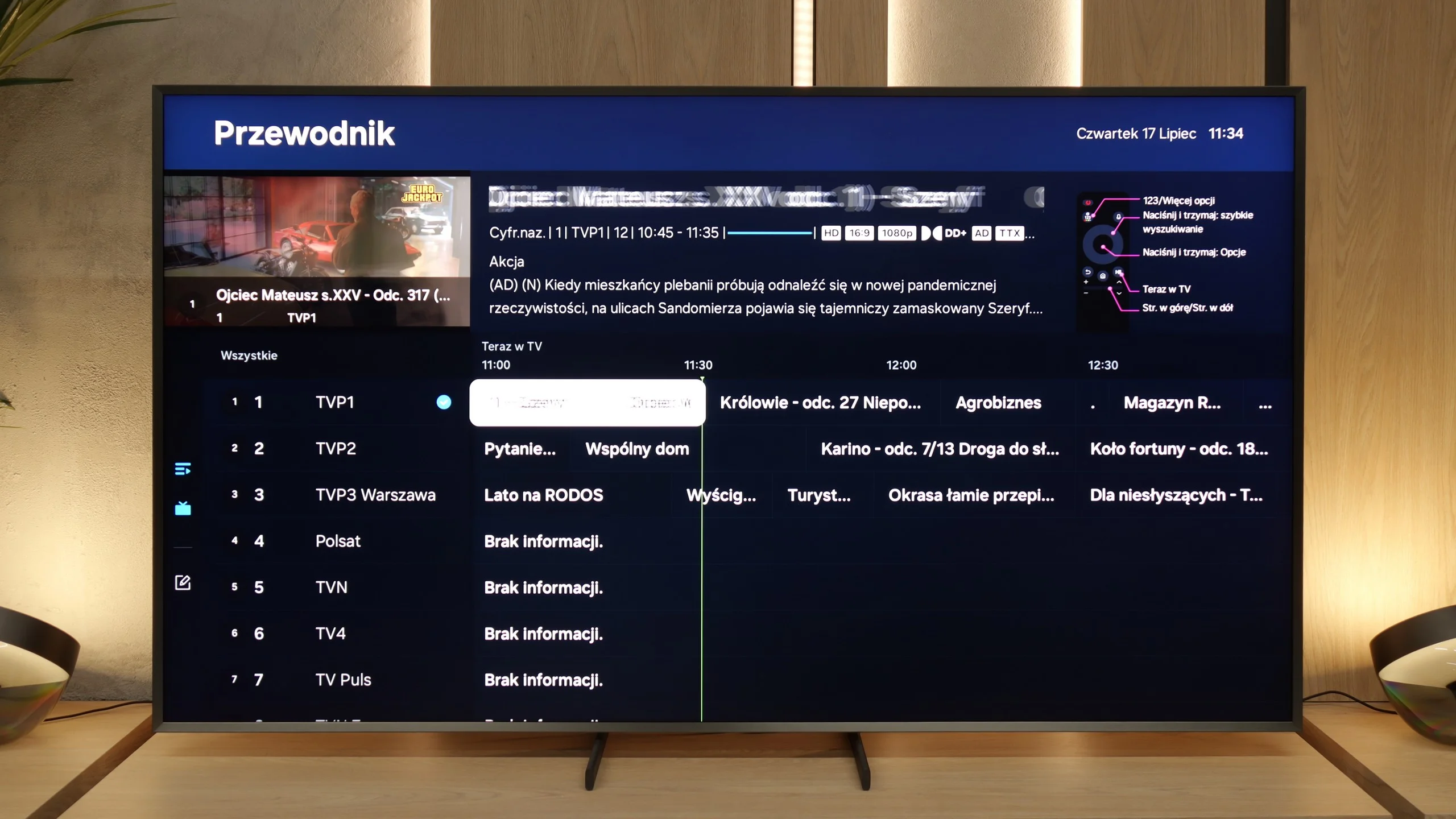
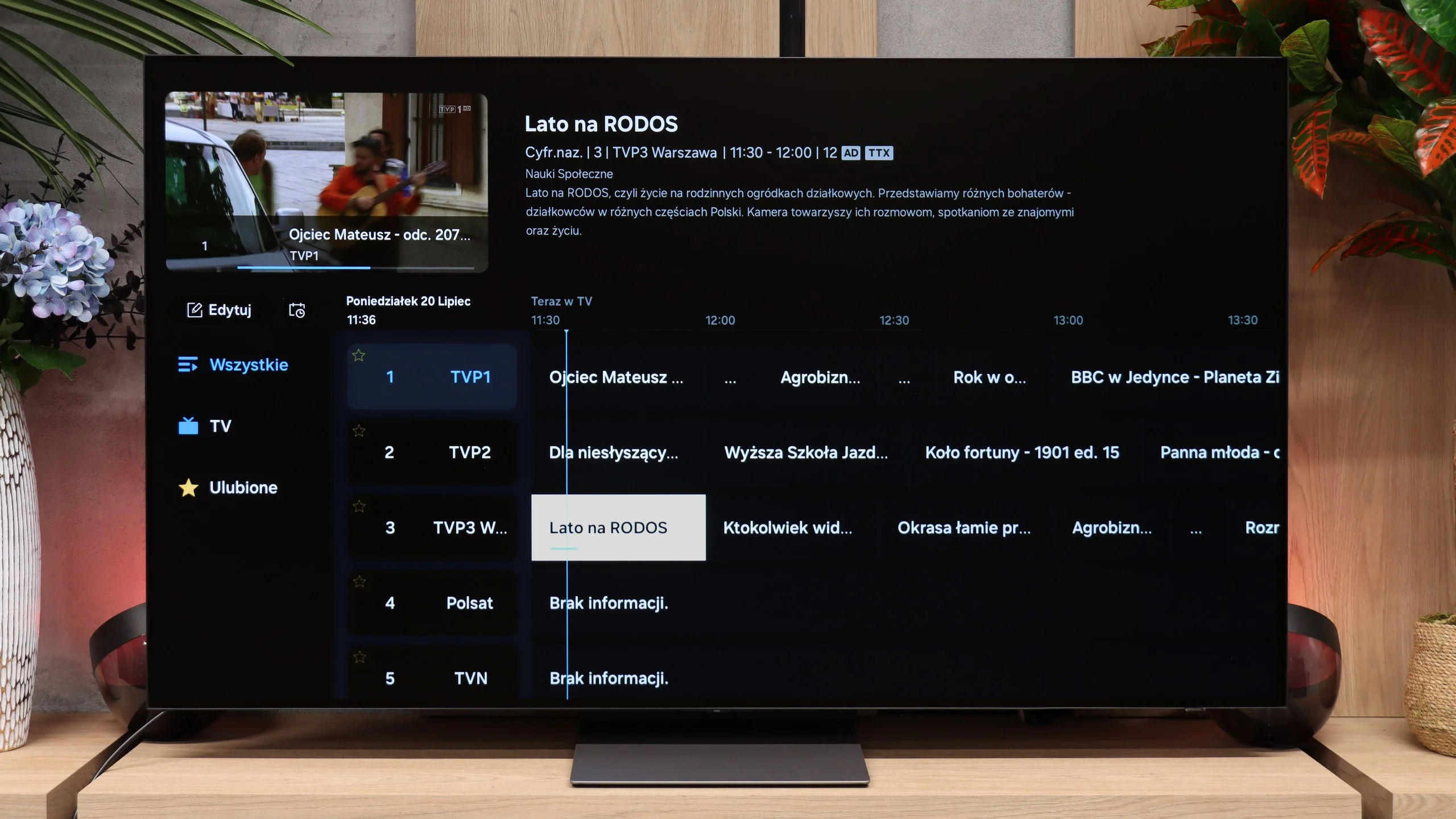
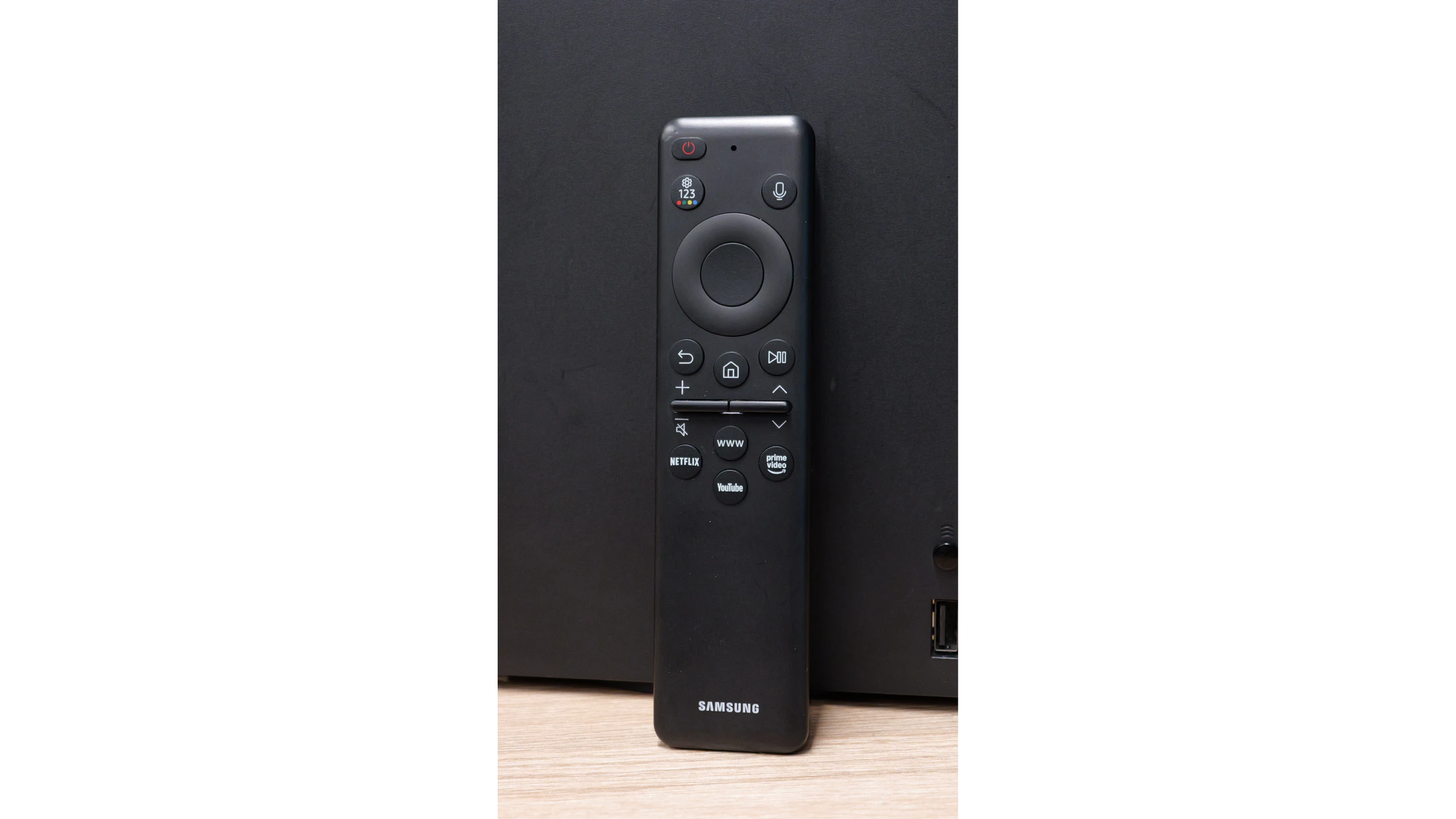
QN900F has a lot to offer. In addition to standard connections and tuners, it also has many television-specific features. There’s teletext, a clear EPG, and even a PiP function, which is quite rare these days. The QN900F easily handles other devices using the included solar remote, which in a sense compensates for the lack of recording from the built-in antenna tuners.

Smart TV

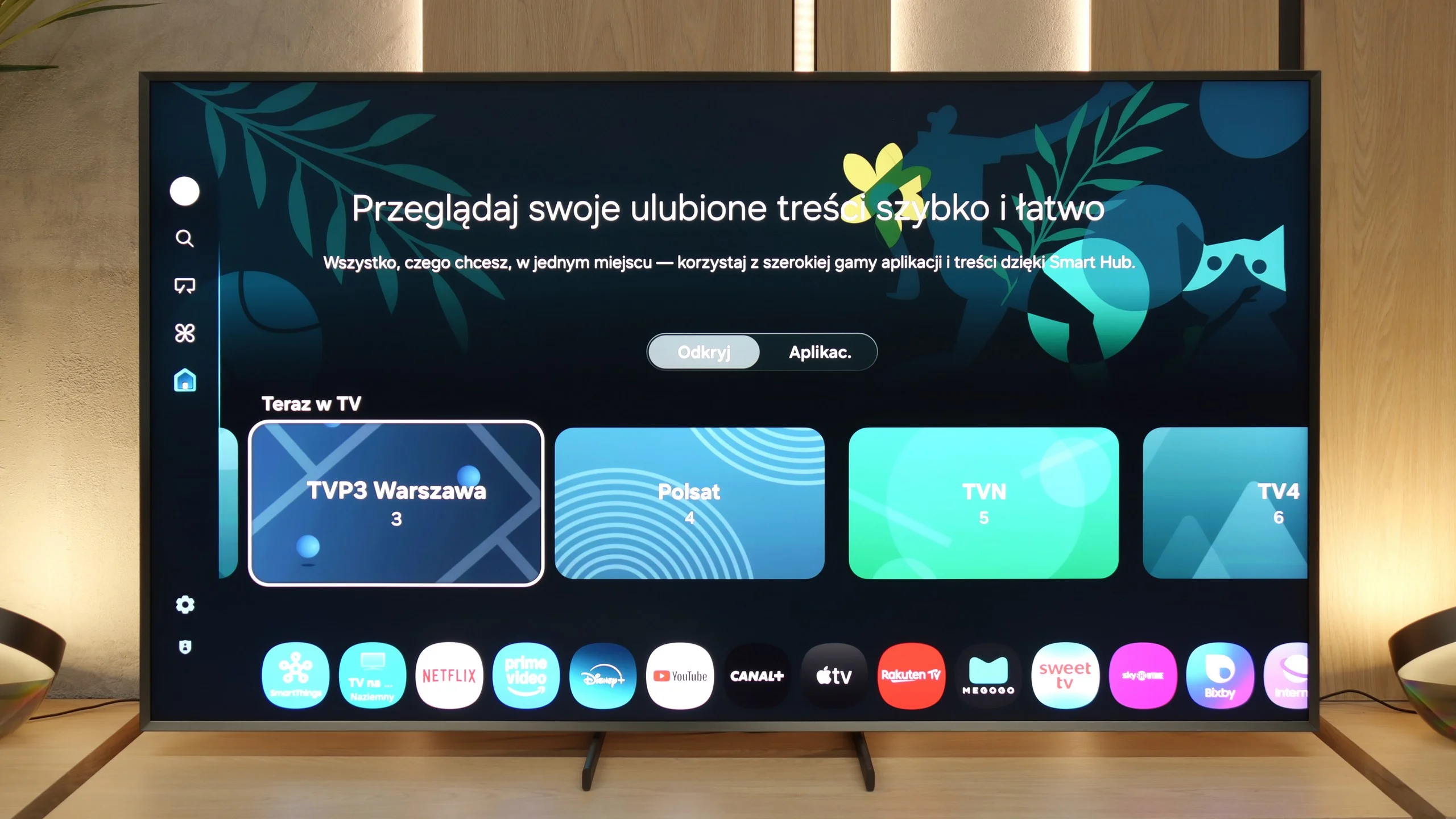
When it comes to smart features, Samsung as usual provides plenty – there’s a large number of applications (though not all), and Tizen on the QN900F ran very smoothly. It’s also hard to find a better television for connecting external devices – AirPlay, Miracast, Chromecast – everything works flawlessly. An interesting feature is the Art Gallery mode, which – like in The Frame – allows you to display images on the screen when it’s off. With quite a thick, massive frame, the effect is really impressive – it looks like a digital painting on the wall and could leave a lasting impression. So, you could call the QN900F extravagantly The Frame Super Extra Pro 😉

Classic TV

With regular cable or terrestrial TV, Samsung doesn't offer any revolutions compared with last year's model. Putting the marketing AI features to one side, you simply get a solid, traditional package: a full set of tuners, a CI slot for a conditional-access module (CAM), teletext and a convenient RF remote that doesn't need to be pointed directly at the screen. The problem is that the competition offers exactly the same today, and the S90H adds nothing in this area. What's more, the S90 series has lost the PIP function, picture-in-picture. If you liked keeping an eye on the news in the corner of the screen while watching another programme, you can't do that here.

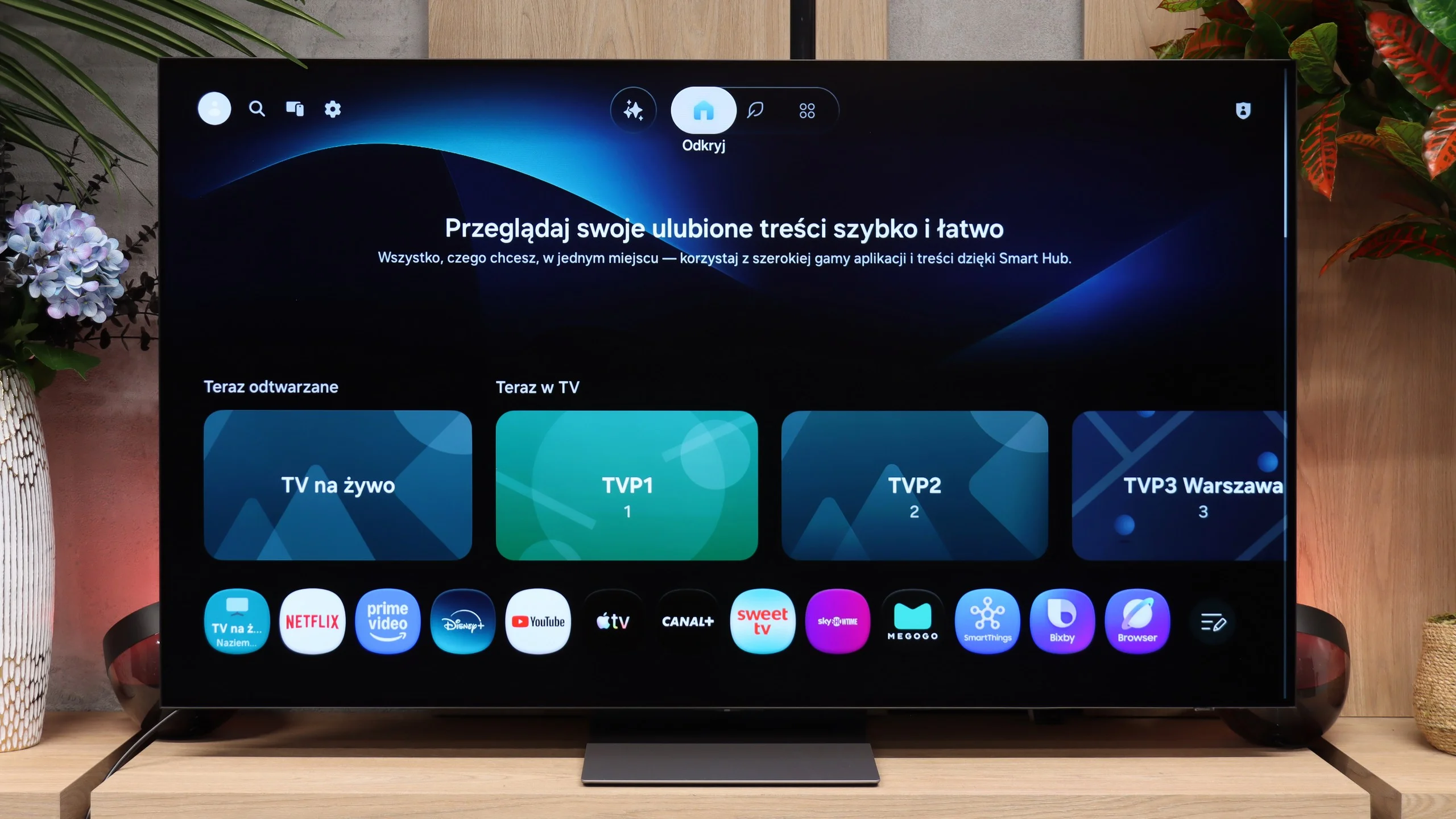
Smart TV: Tizen

While there are few novelties for traditional TV, Tizen for 2026 performs really well. The main point is that the system runs incredibly smoothly and responds to commands without hesitation. Any animation stutter or lag when navigating menus has disappeared. Although it's Samsung's proprietary platform rather than the Google TV many prefer, the app library is complete and includes all the major VOD services. Cloud-gaming fans will also be pleased, as the gaming section has been thoroughly polished. For everyday Smart TV use, it's an exceptionally fast and mature environment.

Apps

9.3/10

9.3/10

OK
Disney_Plus
OK
Amazon_Prime_Video
OK
Player_TVN
OK
Polsat_Box_Go
OK
Canal_Plus_Online
OK
TVP_VOD
OK
Apple_TV_Plus
OK
SkyShowtime
OK
Rakuten
OK
CDA_Premium_Browser
OK
Spotify
No
Tidal
OK
Netflix
OK
YouTube
OK
HBO_MAX
No
Kodi
OK
Apple_music
OK
Eleven_sports
OK
Xbox Game Pass
OK
GeForce NOW
OK
Amazon Luna
OK
Boosteroid
No
Steam Link
OK
Disney_Plus
OK
Amazon_Prime_Video
OK
Player_TVN
OK
Polsat_Box_Go
OK
Canal_Plus_Online
OK
TVP_VOD
OK
Apple_TV_Plus
OK
SkyShowtime
OK
Rakuten
OK
CDA_Premium_Browser
OK
Spotify
No
Tidal
OK
Netflix
OK
YouTube
OK
HBO_MAX
No
Kodi
OK
Apple_music
OK
Eleven_sports
OK
Xbox Game Pass
OK
GeForce NOW
OK
Amazon Luna
OK
Boosteroid
No
Steam Link

Playing files from USB

9.1/10

9.1/10

Supported photo formats:

JPEG
Yes
Yes
HEIC
No
No
PNG
Yes
Yes
GIF
No
No
WebP
No
No
TIFF
No
No
BMP
Yes
Yes
SVG
No
No

Maximum photo resolution:

4 Mpix
Yes
Yes
6 Mpix
Yes
Yes
8 Mpix
Yes
Yes
10 Mpix
Yes
Yes
12 Mpix
Yes
Yes
16 Mpix
Yes
Yes
20 Mpix
Yes
Yes
24 Mpix
Yes
Yes
28 Mpix
Yes
Yes
32 Mpix
Yes
Yes

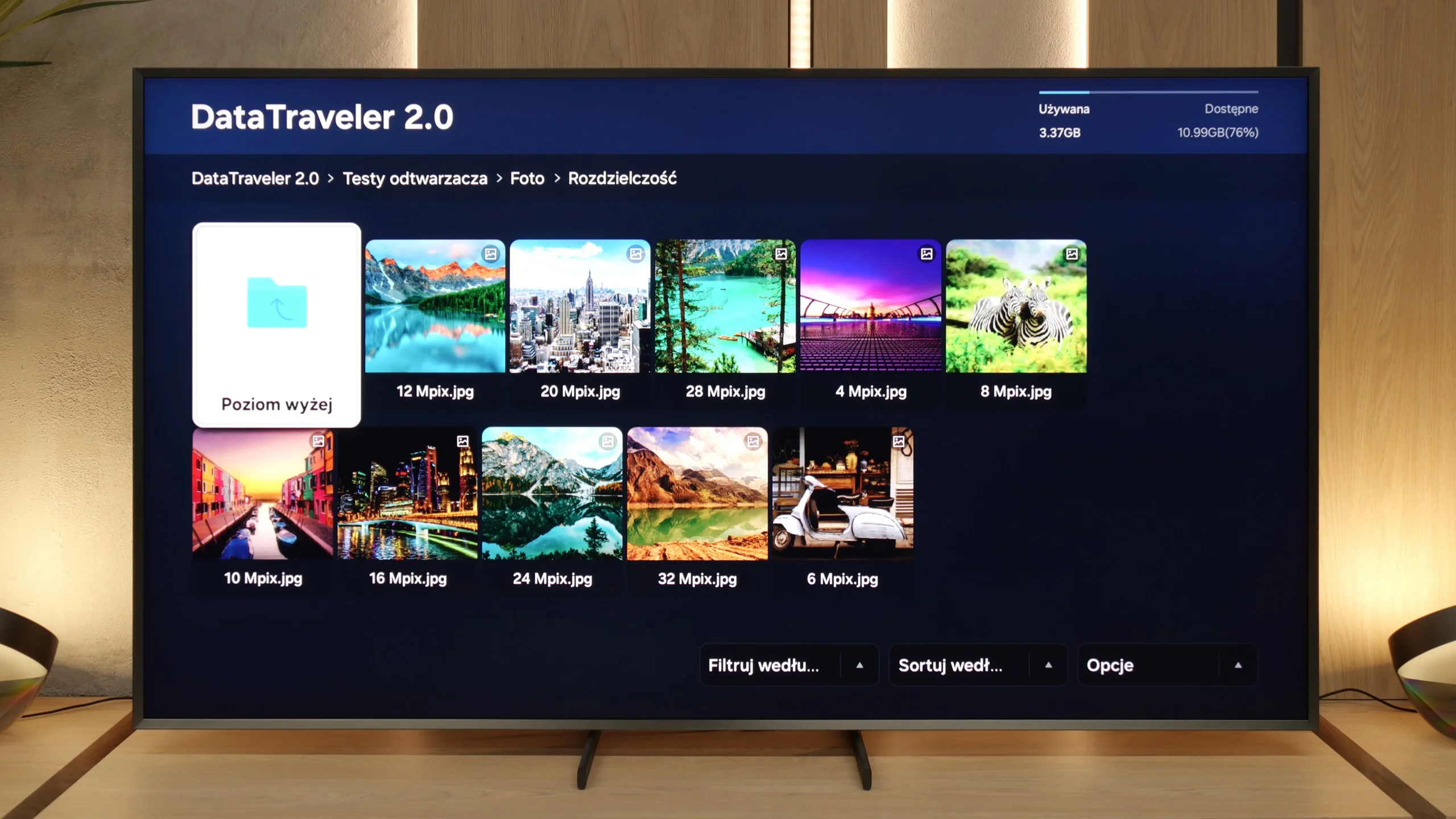
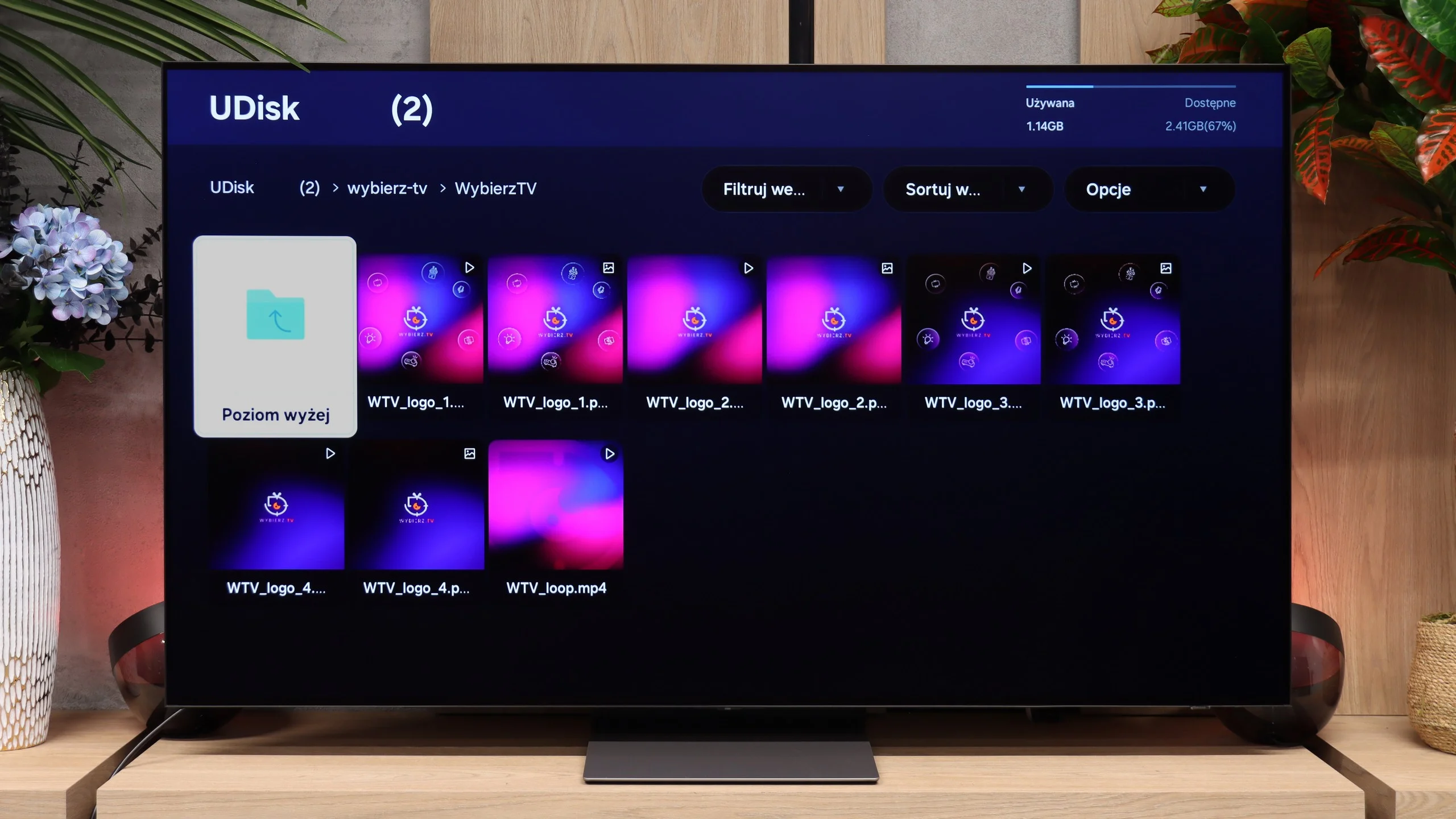
The built-in media player in the QN900F works really well. During testing, we didn’t notice any major issues with handling various audio and video formats – and you can check this for yourself in our file list. The only puzzle that arose was with the subtitles – we could only get those saved in .txt format to work, even though according to Samsung's information, the TV should support many more extensions. What could be the reason for this? It's hard to say. It’s possible that it’s just a temporary bug that will be fixed in one of the upcoming updates.

The built-in media player handles most popular video, audio and photo formats without any problems. The range of supported files is broad enough that the inability to install external apps like VLC isn't an issue at all. However, we encountered one serious bug when trying to open HEIC photos from an iPhone. The TV not only failed to display the files, it caused Tizen to completely freeze. The system stopped responding to the remote and we had to unplug it. This is a clear software bug that Samsung should patch as soon as possible in the next firmware update.

Sound

8.2/10

8.4/10

  • Maximum volume
    -
    -
  • Dolby Digital Plus 7.1
    Yes
    Yes
  • Dolby True HD 7.1
    No
    No
  • Dolby Atmos in Dolby Digital Plus (JOC)
    Yes
    Yes
  • Dolby Atmos in Dolby True HD
    No
    No
  • DTS:X in DTS-HD MA
    No
    No
  • DTS-HD Master Audio
    No
    No

The QN900F performs really nicely – as you’d expect from a premium television. The bass is quite strong but slightly muted. We wouldn’t compare it to top-tier audio systems, but for built-in speakers, it does the job. The high tones also stand out – quite clear and distinct, which is particularly helpful when watching films with a lot of dialogue. Unfortunately, Samsung still doesn’t support the DTS:X format in its televisions. This means that if we want to hear sound recorded in that standard, we need to connect an external home theatre system via an amplifier – the television alone simply won’t play it.

Theoretically, the audio specification in the S90 series has been unchanged for several years. We still get a 2.1 setup with a total power of 40 W, so before testing we assumed that noticeably better sound would mainly concern the largest variants. Yet the 65-inch model we tested sounded noticeably better than its predecessors. The sound is fuller, more dynamic and has more "body" than the dry technical specs would suggest. We don't know whether Samsung changed the speakers themselves or if the improvement mainly comes from better tuning and software optimisation, but the effect is audible from the first moments. For such a slim TV the S90H performs really well and for many people may be sufficient even without a soundbar. Our only real gripe is the lack of DTS:X support, which is unfortunately disappearing from TVs more and more. There is Dolby Atmos, though, so streaming service users are unlikely to notice much of a problem. Those who mainly use Blu-ray discs may be left wanting, since DTS tracks still appear quite often on them.

* In the review we used the S90H variant. The S92H is also available for sale, equipped with two additional 20 W drivers. That gives a 2.1.2 configuration with a total power of 60 W, so you can expect stronger, more spacious sound. We can't confirm this, however, as we didn't have the opportunity to test that version.

Reader comments

Comments are provided by the external service Disqus (Zeta Global). Once loaded, Disqus may set cookies and process data about your activity.

We will remember your choice on this device. Provider's privacy policy