Samsung QN80F 100" vs TCL RM7L

Direct comparison

Available screen sizes: 100”

Available screen sizes: 65”75”85”98”

Panel type: LCD VA

Resolution: 3840x2160

System: Tizen

Model year: 2025

Complete the survey to find out the result

Panel type: LCD VA

Resolution: 3840x2160

System: Google TV

Model year: 2026

Complete the survey to find out the result

Overall rating

7.5

7.8

  • Movies and series in UHD quality

    7.2

    7.4

  • Classic TV, YouTube

    7.0

    7.1

  • Sports broadcasts (TV and apps)

    6.7

    6.9

  • Gaming on console

    8.9

    8.8

  • TV as a computer monitor

    8.6

    8.4

  • Watching in bright light

    7.0

    7.8

  • Utility functions

    7.7

    7.8

  • Apps

    9.3

    9.6

  • Sound quality

    6.7

    7.8

Advantages

  • HDR brightness up to 1300 nits

  • Good black levels - MiniLED with a VA panel

  • Fast 144 Hz panel and 4 HDMI 2.1 ports

  • Many features for gamers: VRR, ALLM, and a great gamebar

  • Low input lag (<10 ms)

  • Fast Tizen operating system with SmartThings support

  • Supports Dolby Atmos

  • Very high HDR and SDR brightness

  • Good blacks and contrast (VA panel + mini-LED)

  • Impressive picture

  • Full support for HDR formats, including Dolby Vision and HDR10+

  • Extensive gaming features (VRR, ALLM, HGiG)

  • Good motion clarity with low smearing (up to 288Hz)

  • Google TV operating system (many apps, Gemini voice assistant)

Disadvantages

No like
  • Poor viewing angles

  • Modest number of dimming zones for a 100" screen

  • Missing Dolby Vision

  • Poor digital image processing due to the use of the older MediaTek Pentonic 700 processor

  • Glossy screen coating does a poor job of reducing reflections

  • Only two HDMI 2.1 ports

  • Less stable colours, dependent on the dimming algorithm (a characteristic of RGB panels)

Our verdict

QN80F is the first-ever “eighty” from Samsung available in a 100-inch version (previously “just” 98 inches 😉) and is also the model that has entered the series with Mini LED backlighting. It must be said that it performs really well at this scale. Although the number of dimming zones may not impress given such a massive screen, the contrast and blacks are solid, and combined with high brightness, the TV can deliver great experiences when watching movies and series in HDR. The 144 Hz panel ensures smooth motion, and the full set of features for gamers – VRR, ALLM, and Game Motion Plus – makes QN80F hard to label as anything other than a screen designed for both console and PC. Additionally, there's a fast and stable Tizen that provides access to all key apps and can act as a smart home hub via the proprietary SmartThings app. Of course, there are some shortcomings – there’s no Dolby Vision, no USB recording, and the viewing angles at 100 inches can be really problematic. Mini LED also has its limitations, so those expecting absolutely perfect blacks need to keep this in mind. On the other hand, given the current prices of OLEDs in this size, it’s hard to speak of any real competition.

QN80F is a versatile TV, well-crafted and providing plenty of satisfaction for everyday use. Looking at the history of this series, one can be sure that as soon as it appears on reasonable promotions, it will be one of the most interesting options in its class. And if Samsung fine-tunes the minor flaws with updates, this 100-inch beast may turn out to be really hard to beat, much like its smaller variants.
TCL RM7L is a TV that can’t be judged fairly by numbers and measurement charts alone. Although it’s not uncompromising, it more than holds its own in everyday use. It delivers a bright, dynamic and saturated picture, so it’s great for HDR content, games and fast-paced movies. The RM7L doesn’t chase perfect "reference-grade" accuracy. Instead it serves up an image that’s simply pleasing to the eye. It’s also hard to fault in daily use. Google TV runs smoothly and provides access to a full suite of apps, and a rich set of features for gamers means the TV performs as well connected to a console or PC as it does during an evening on the couch. It’s a versatile piece of kit that will suit most home uses. What’s most interesting is TCL’s approach to backlighting. Rather than chasing numbers and inflating local dimming zones like the C7L, they’ve gone with RGB Mini-LED technology. The result is genuinely intriguing. Although black levels and contrast are very good, in the toughest scenes, with bright objects on a dark background, halo can be slightly more noticeable than on its stablemate. Interestingly, the bloom takes on the colour of the displayed element, so it looks much more natural and doesn’t draw the eye away from the viewing experience as much as it does on classic Mini-LED screens. And that’s the dilemma. Put the RM7L next to the TCL C7L and it’s hard to deliver a clear, objective verdict. Both models cost almost the same but represent two completely different backlight design philosophies. The C7L wins on dimming precision thanks to a larger number of zones, while the RM7L makes up for it with the unique, very eye-pleasing character of its RGB panel. Until recently the choice boiled down to a simple calculation of zones; today, as TCL shows, the picture is much more interesting. If we had to pick between the two, we’d lean slightly toward the C7L for its higher number of zones and equally impressive, saturated colours, but the final choice always depends on what an individual expects from their TV.

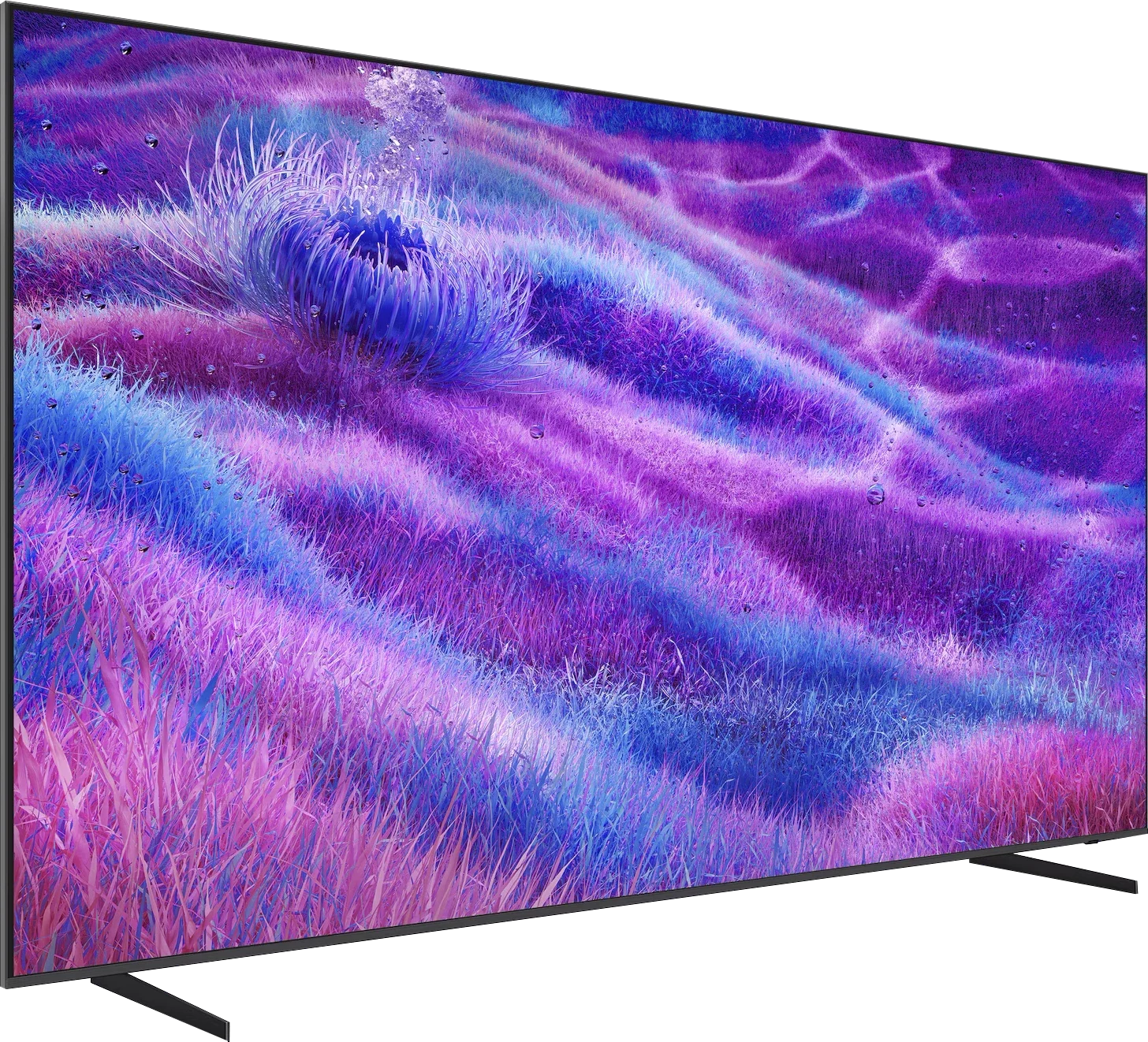
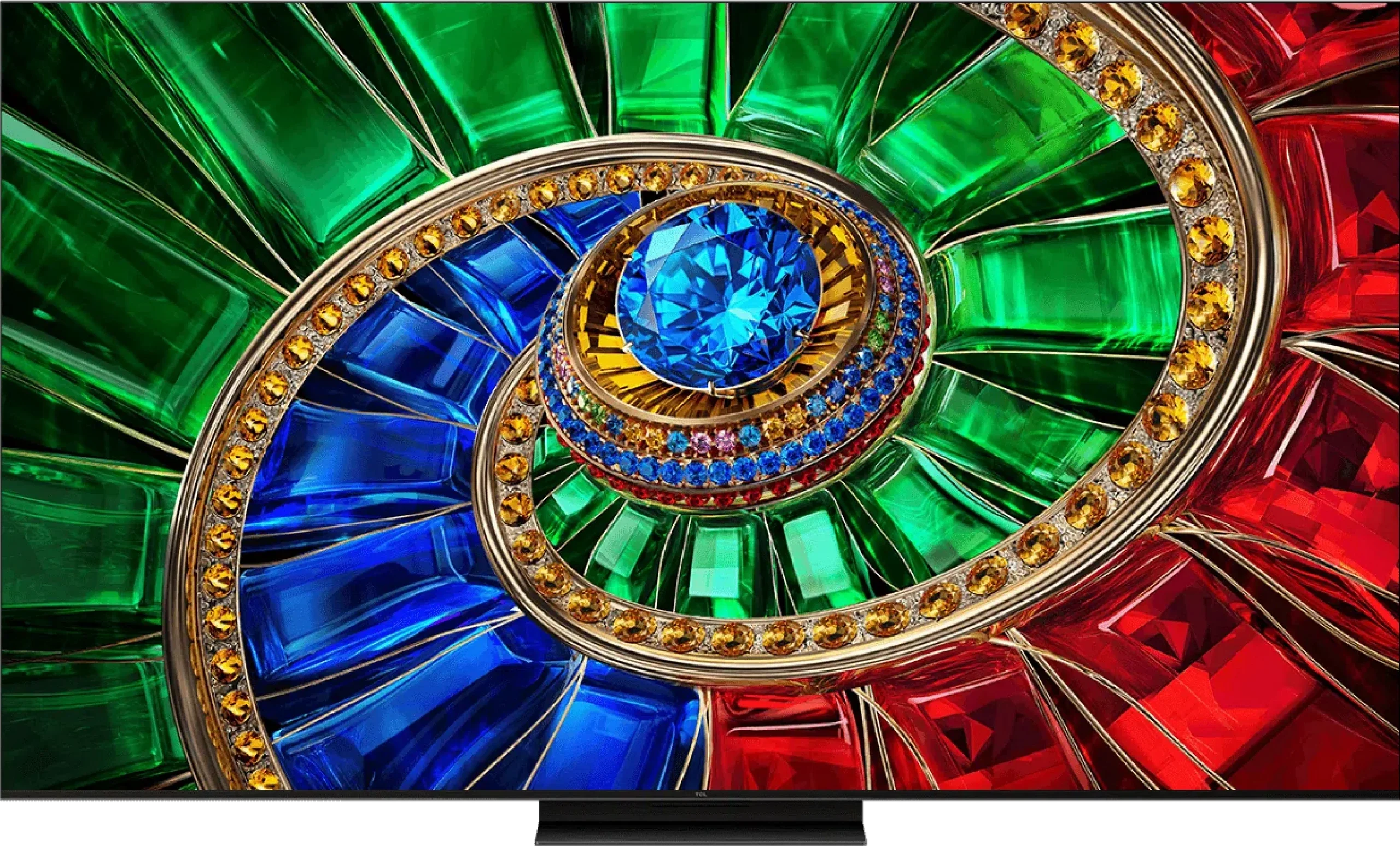
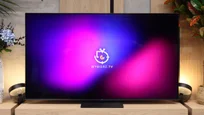
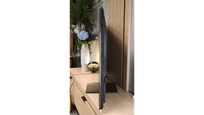
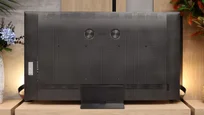
TV appearance

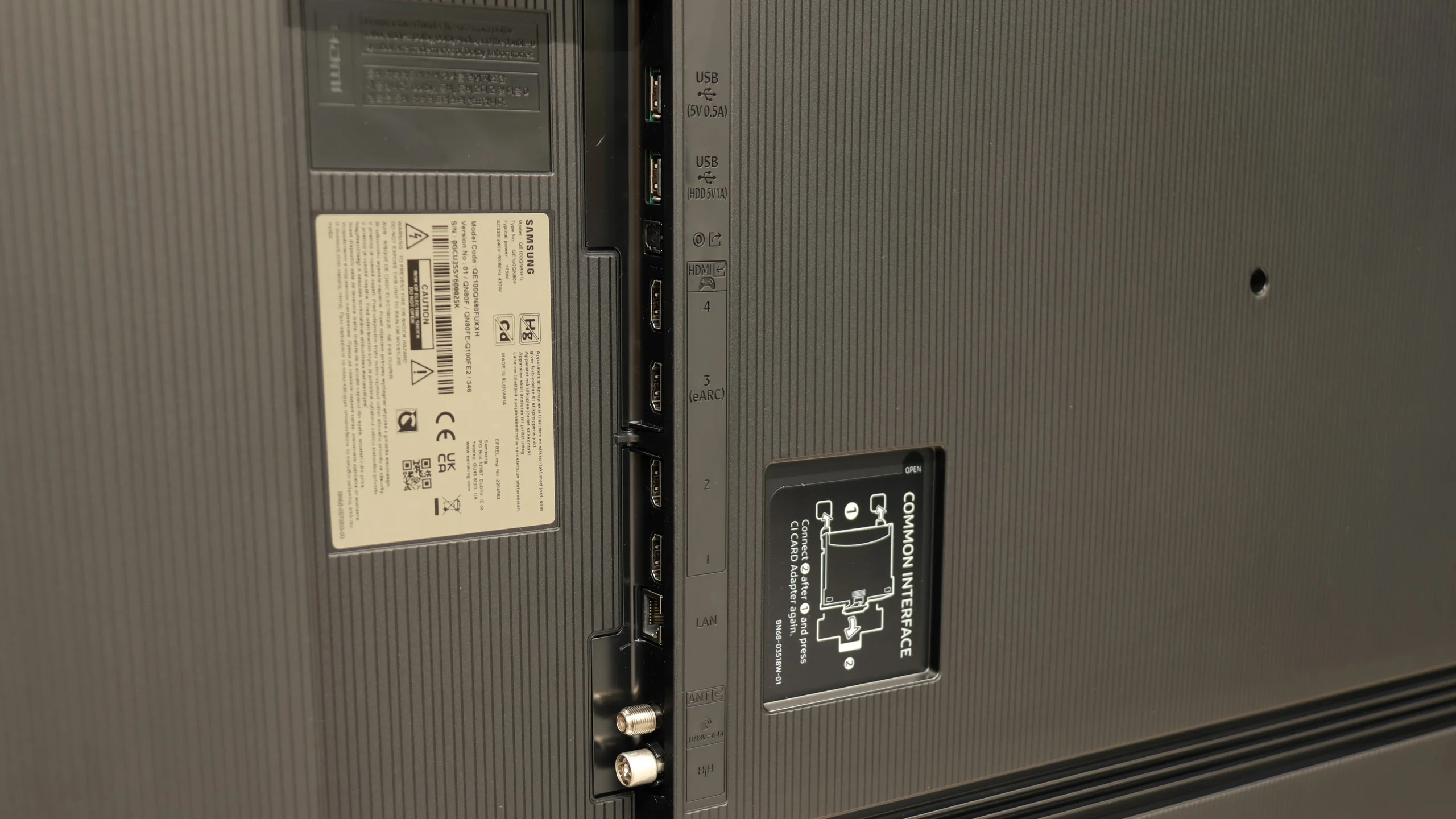
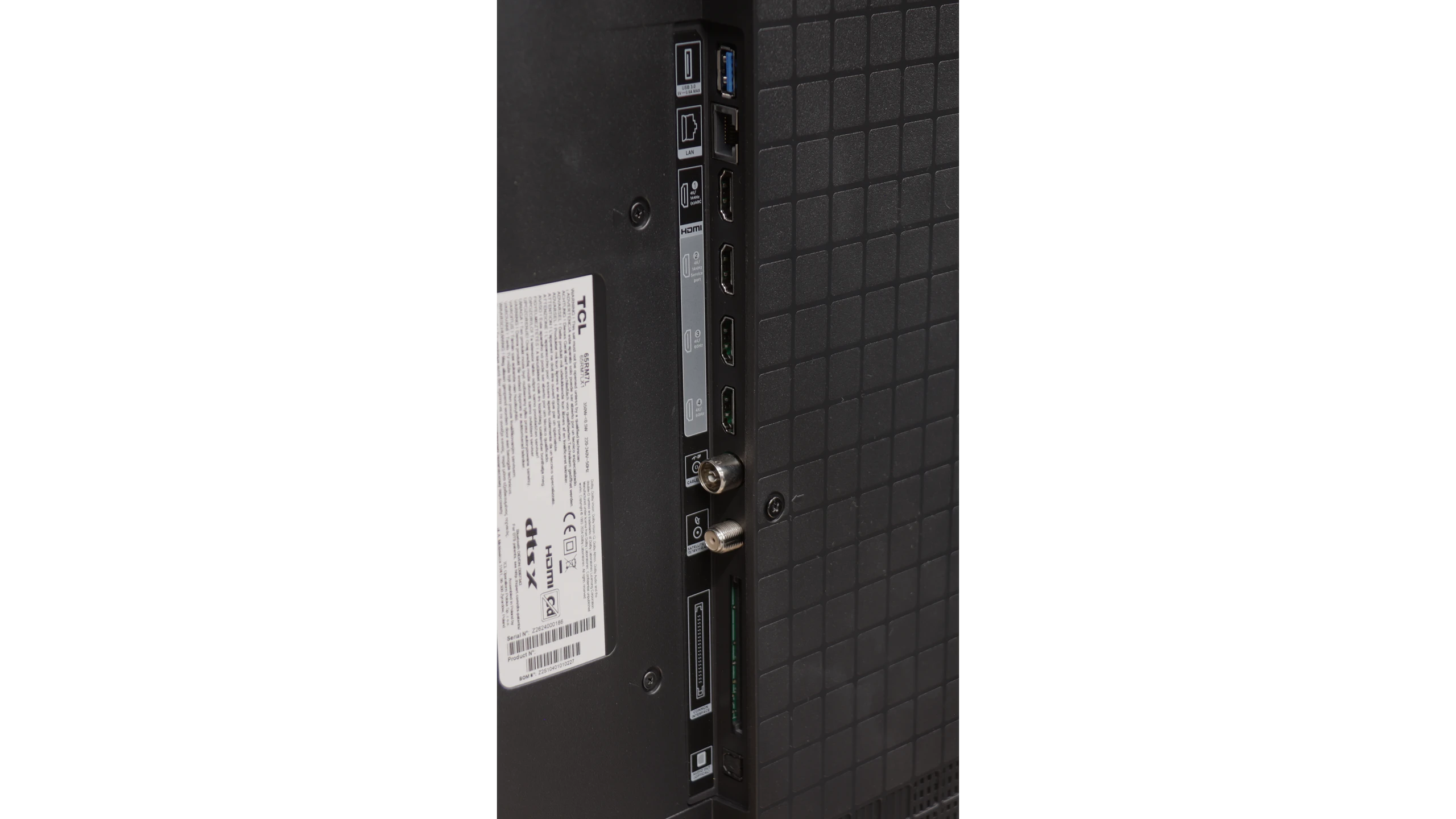
HDMI inputs
0 x HDMI 2.0, 4 x HDMI 2.1 (48Gbps)
2 x HDMI 2.0, 2 x HDMI 2.1 (48Gbps)
Other inputs
Outputs
Toslink (Optical audio), eARC (HDMI), ARC (HDMI)
Network Interfaces
Wi-Fi 2.4GHz, Wi-Fi 5GHz, Ethernet (LAN) 100Mbps
Build quality
Premium
Good
Stand type
Legs
Central
Bezel color
Graphite
Graphite
Stand
Fixed
Height adjustment
Flat design
Yes
No
Accessories
Stand
Stand

Contrast and black detail

7.1/10

7.7/10

Local dimming function: Yes, number of zones: 120 (10 x 12)

Local dimming function: Yes, number of zones: 448 (16 x 28)

Contrast:

Review Samsung QN80F 100"  Contrast and black detail

Result

94,400:1

Review Samsung QN80F 100"  Contrast and black detail

Result

12,650:1

Review Samsung QN80F 100"  Contrast and black detail

Result

31,750:1

Review Samsung QN80F 100"  Contrast and black detail

Result

7,350:1

Review Samsung QN80F 100"  Contrast and black detail

Result

3,000:1

Review TCL RM7L Contrast and black detail

Result

258,450:1

Review TCL RM7L Contrast and black detail

Result

41,400:1

Review TCL RM7L Contrast and black detail

Result

18,800:1

Review TCL RM7L Contrast and black detail

Result

15,650:1

Review TCL RM7L Contrast and black detail

Result

8,350:1

Halo effect and black detail visibility:

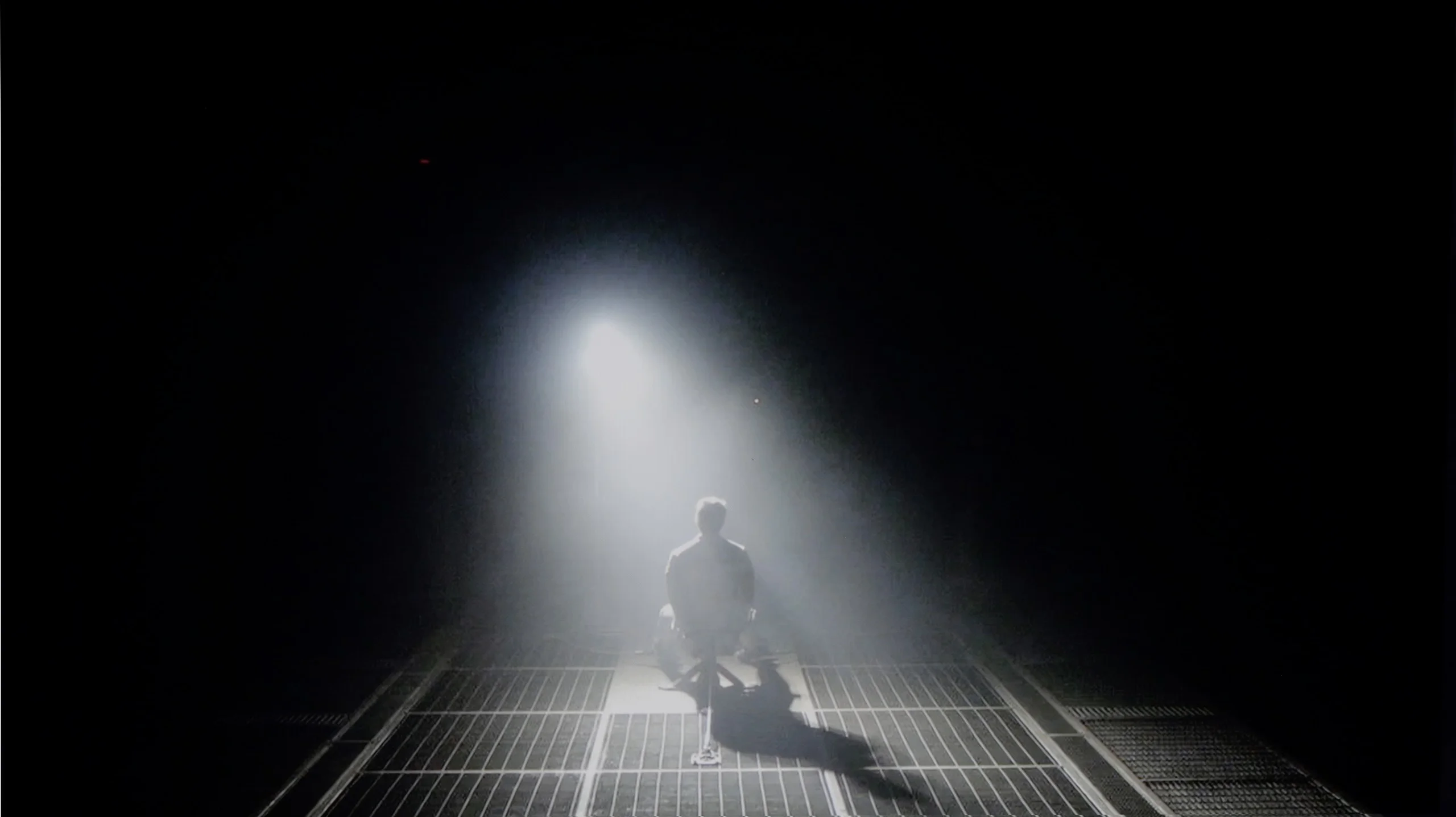
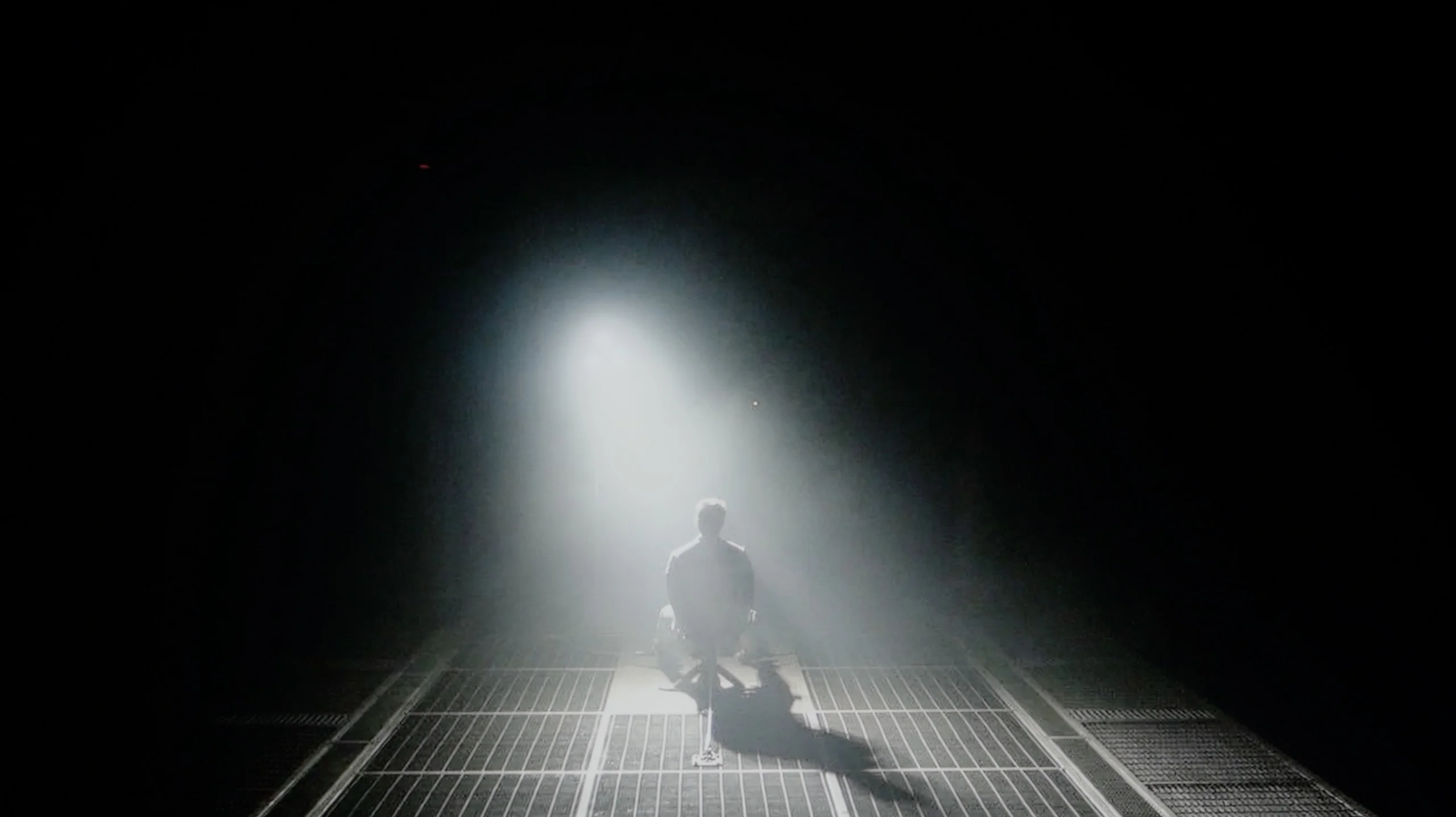
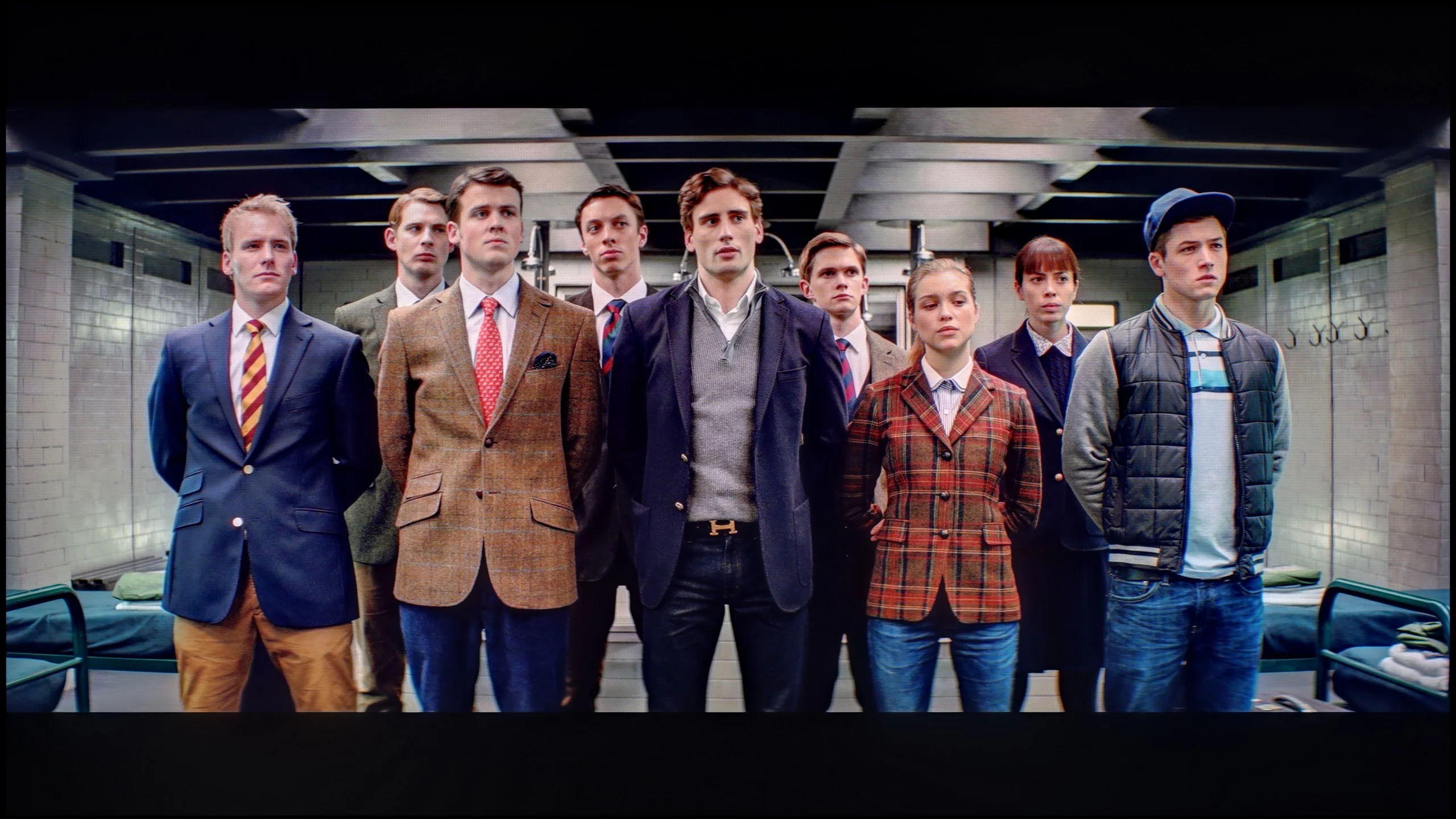
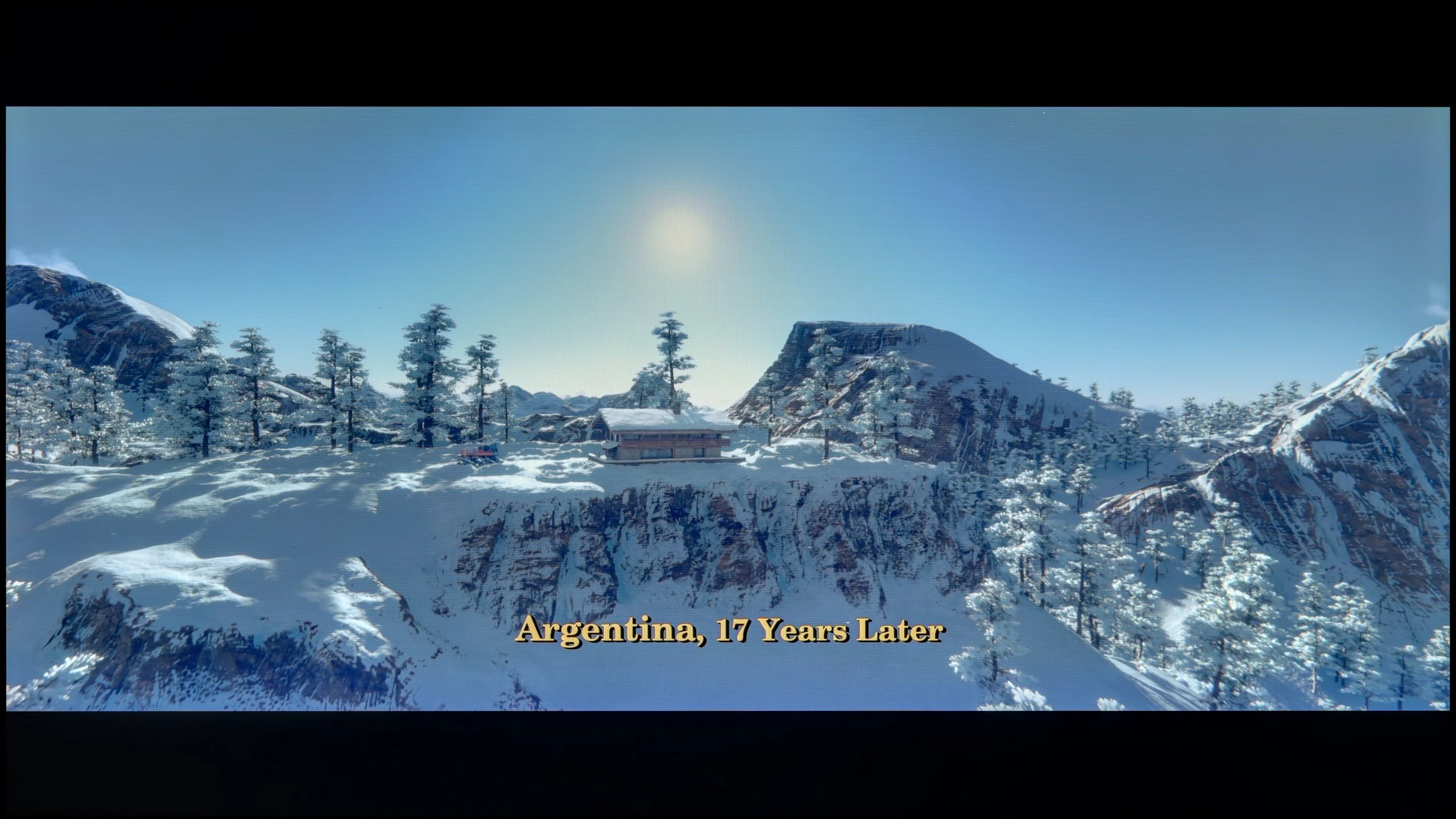
Check the visibility of bright lights on a dark background. Mini-LEDs often struggle with this. The photo does not compare black levels – that’s what the video below is for.

The video accurately shows differences in contrast and black levels between TVs, as well as potential issues: halo around bright objects or Mini-LED zone operation visible as brightness jumps.

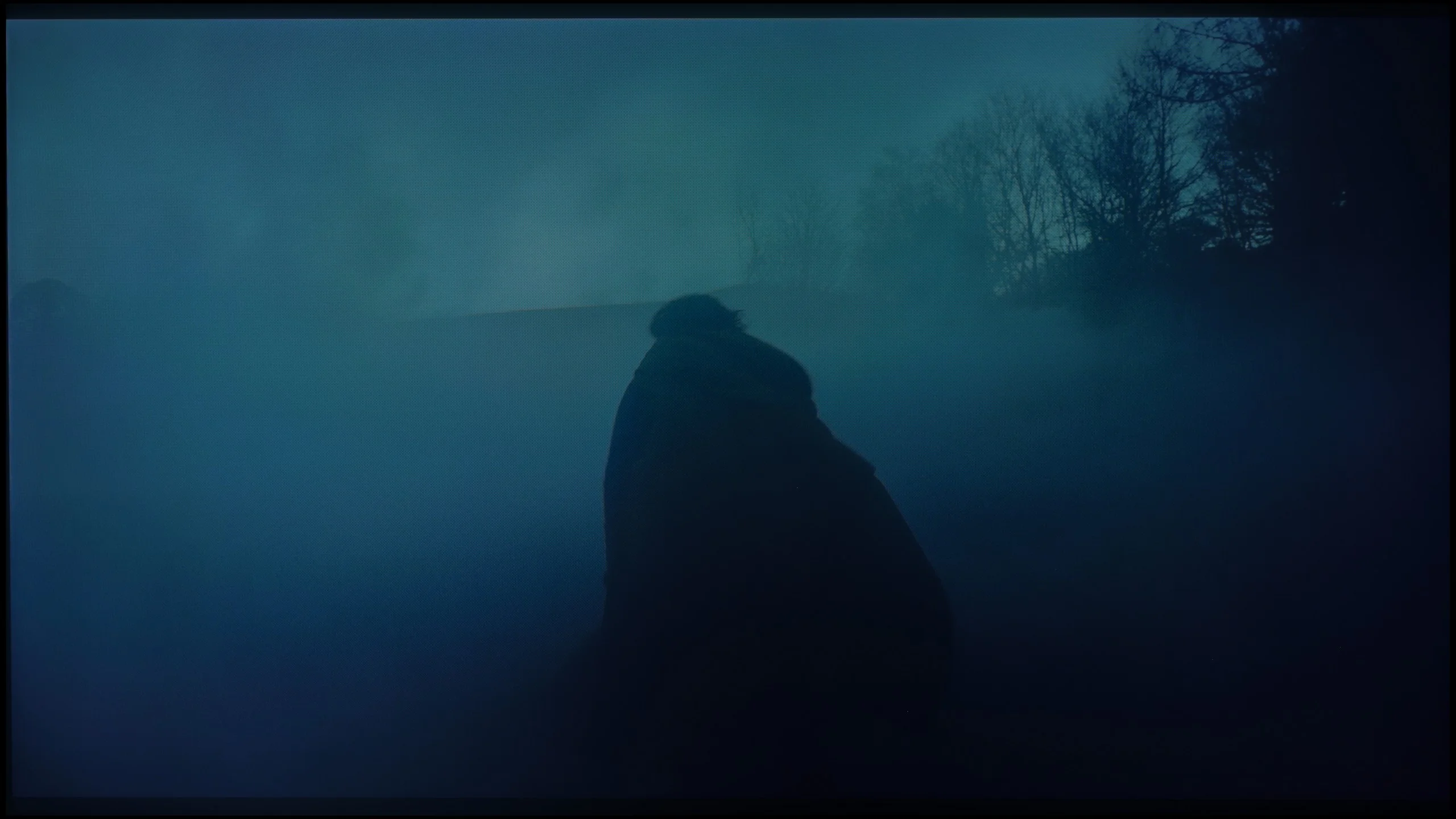
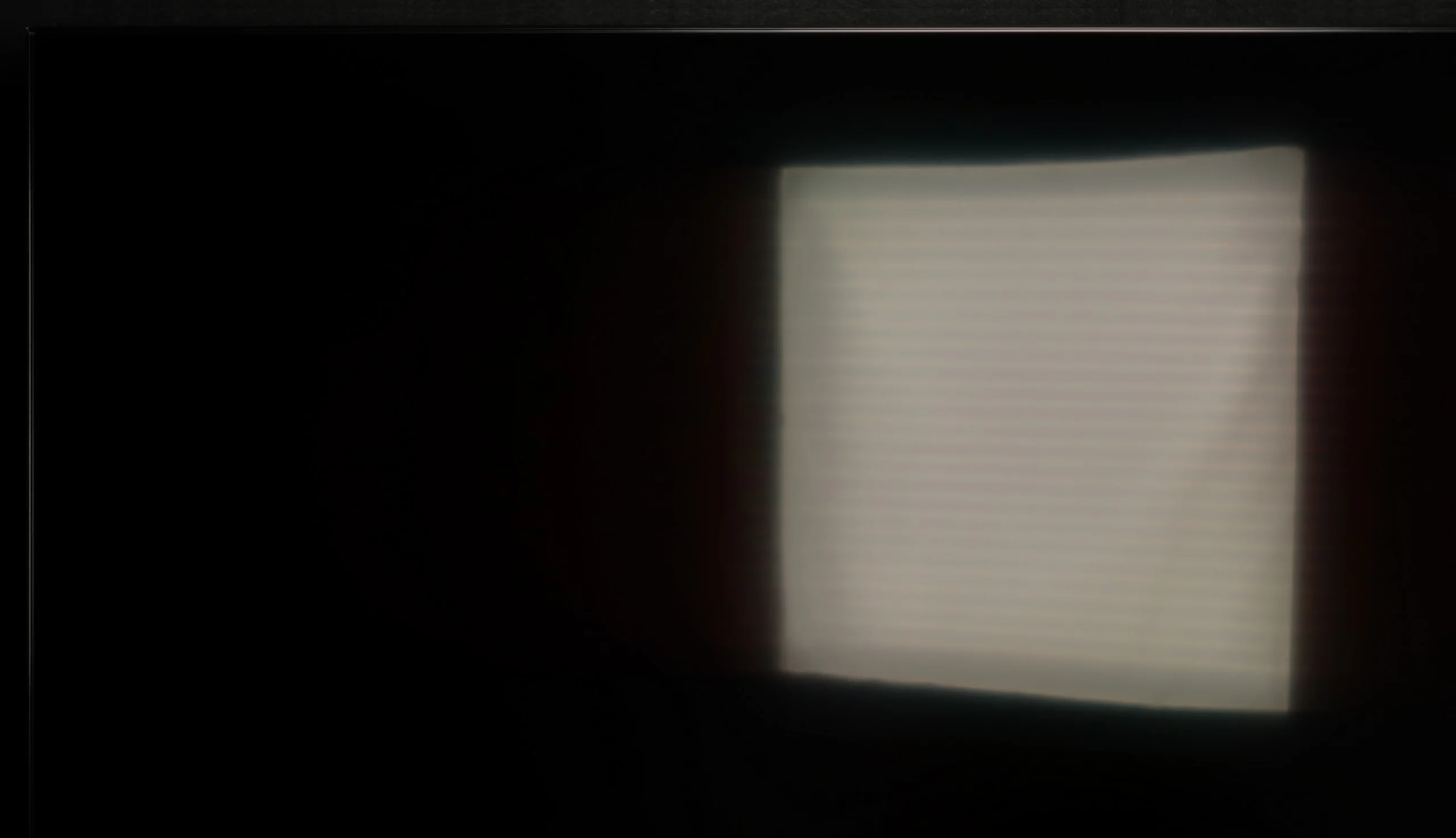
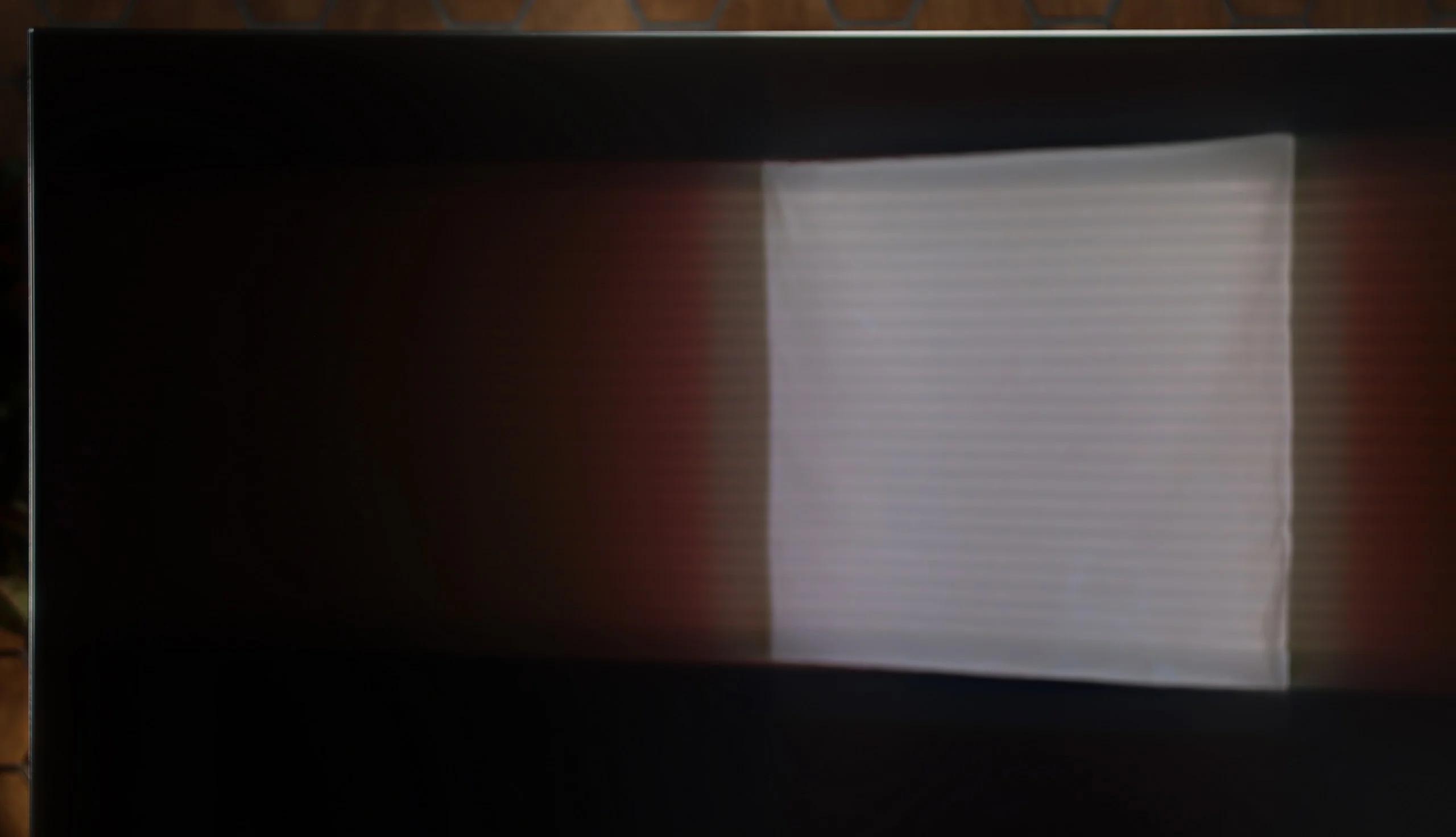
QN80F belongs to the NeoQLED family, which are Samsung's TVs based on mini-LED technology. In practice, this means local dimming zones designed to improve contrast and light separation. In the case of the 100-inch version, we have a VA panel combined with around 120 zones – a rather modest result for such a large surface area, though it has to be said that it still translates to noticeably better results than in smaller diagonals. In its best cinematic scenes, the contrast can be really strong – five-digit values are not an exaggeration, and lights separate from blacks in a way that makes a strong impression at first glance. However, you can't fool physics. Given that such a huge screen has to 'work' with a relatively small number of zones, there are moments when the TV struggles with image control. For example, when a multitude of bright, small elements appear on a black background in the film's final scene, you can see halos and blooming around them. This shows that even with a well-crafted algorithm, mini-LED still has its limitations. Generally, though, the contrast can be considered very good, and in everyday viewing, most users will be fully satisfied. Just keep in mind that this model won't provide the absolute black levels known from OLEDs, just like no LCD television will.

Black performance on the TCL RM7L is really good. The combination of a high-contrast VA panel with a zone-based RGB Mini-LED backlight allows the TV to achieve very high contrast figures. In most of the scenes we measured, the results were good enough that dark parts of the image looked deep and convincing. The RM7L performs best in less demanding shots where black occupies a large portion of the screen and bright elements are relatively small. In such conditions contrast can reach six-figure values. As scene complexity increases, results gradually fall off, but that is a natural characteristic of any LCD TV using local dimming.

However, the RM7L has noticeably fewer zones than its counterpart using an SQD Mini-LED backlight. In the 65-inch version the difference is more than twofold, so you more often see more pronounced blooming around bright elements on a dark background. In terms of pure dimming precision, the RM7L is therefore not as accurate as the C7L. RGB Mini-LED has its own advantage here though. The bloom is not simply white, it takes on the color of the displayed element. A good example is the helicopter cockpit scene from Sicario 2, where a greenish bloom appears around the green lights instead of the typical bright halo known from conventional Mini-LED TVs. The halo effect is still visible, but because its color matches the image it is less distracting and looks more natural.

Ultimately we rate the RM7L and C7L similarly for black-level performance. The C7L controls the backlight better thanks to a larger number of zones, while the RM7L makes up for it with the character of its bloom. The bloom is somewhat larger, but its color blends better with the displayed image.

NOTE: Naturally, as the TV size increases the number of zones grows, yet we expect similar contrast results across RM7L sizes. It’s also worth adding that TCL lists the number of "color zones" in its product brochures, not the actual dimming zones. Since each color zone consists of three RGB channels, the advertised number should be divided by three. Therefore 1,344 color zones in the 65-inch unit we tested mean 448 actual dimming zones.

Size

Dimming zones (actual)

Color zones

65"

448

1344

75"

600

1800

85"

720

2160

98"

960

2880

HDR effect quality

6.5/10

6.6/10

Supported formats
HDR10, HDR10+, HLG
HDR10, HDR10+, Dolby Vision, Dolby Vision IQ, HLG
Color gamut coverage
DCI P3: 90.0%, Bt.2020: 67.9%
DCI P3: 96.6%, Bt.2020: 88.7%

Luminance measurements in HDR:

Review Samsung QN80F 100"  Brightness measurement

Result

1150 nit

Review Samsung QN80F 100"  Brightness measurement

Result

721 nit

Review Samsung QN80F 100"  Brightness measurement

Result

875 nit

Review Samsung QN80F 100"  Brightness measurement

Result

377 nit

Review Samsung QN80F 100"  Brightness measurement

Result

849 nit

Review TCL RM7L Brightness measurement

Result

914 nit

Review TCL RM7L Brightness measurement

Result

538 nit

Review TCL RM7L Brightness measurement

Result

653 nit

Review TCL RM7L Brightness measurement

Result

494 nit

Review TCL RM7L Brightness measurement

Result

1413 nit

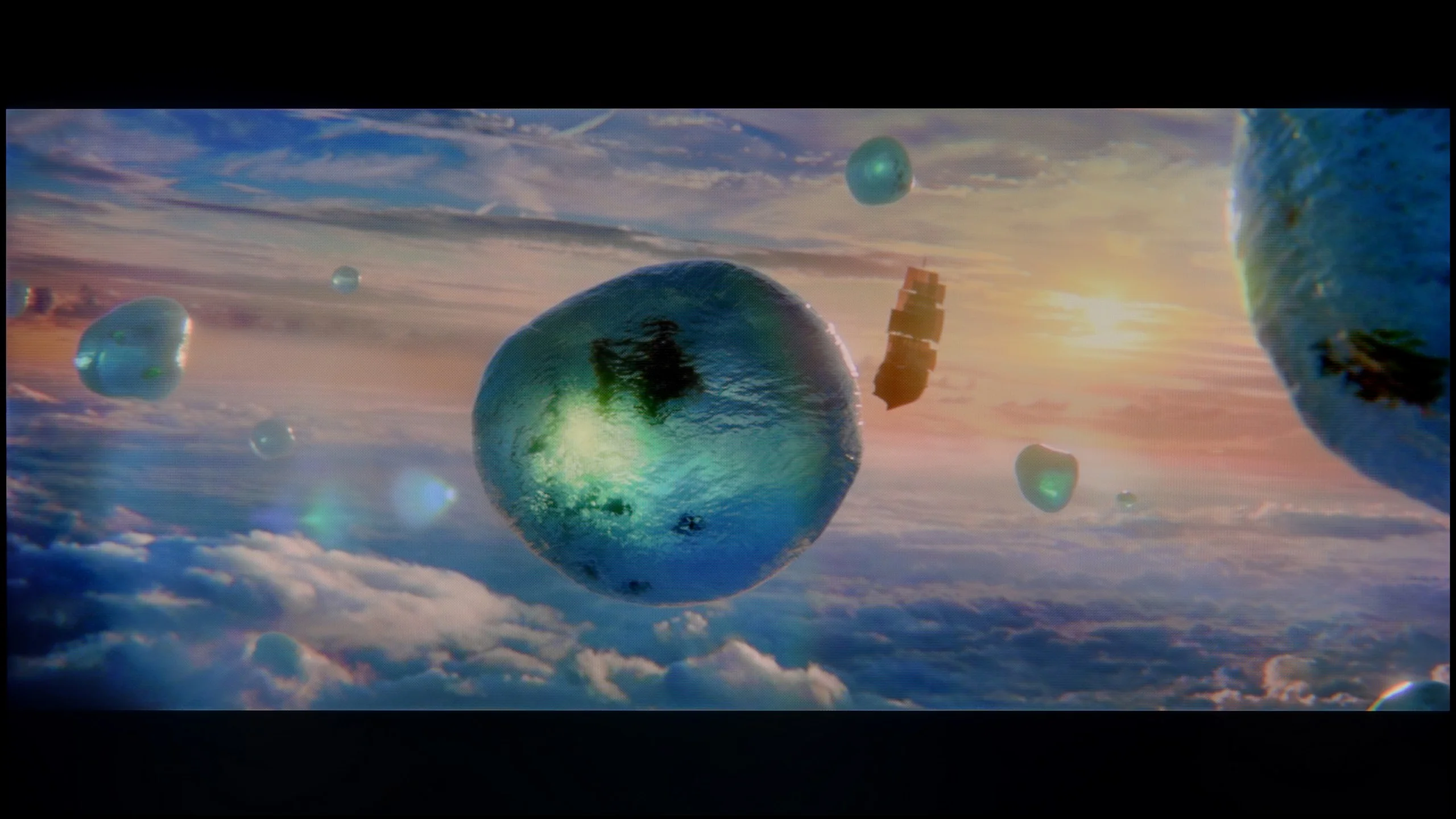
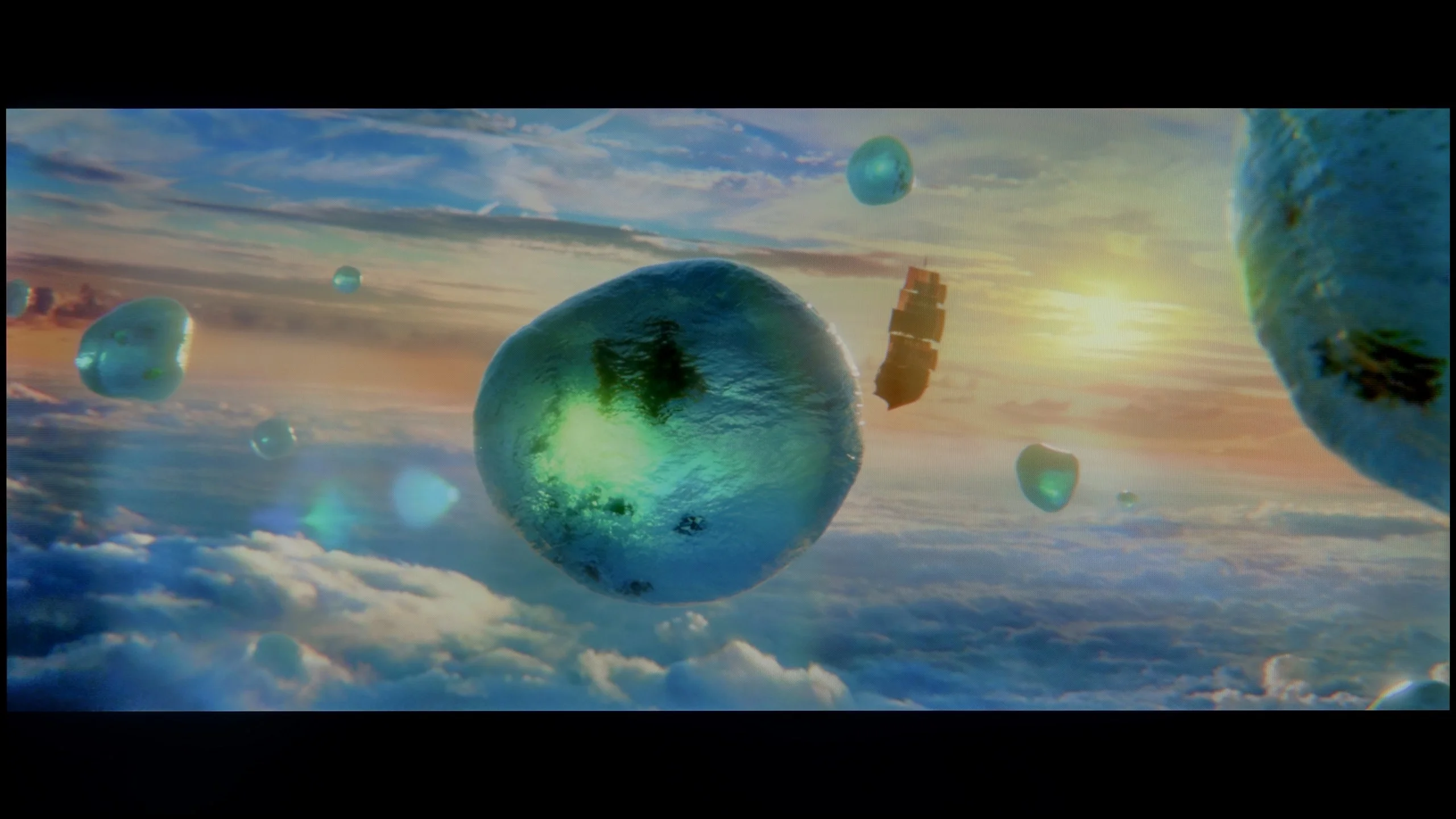
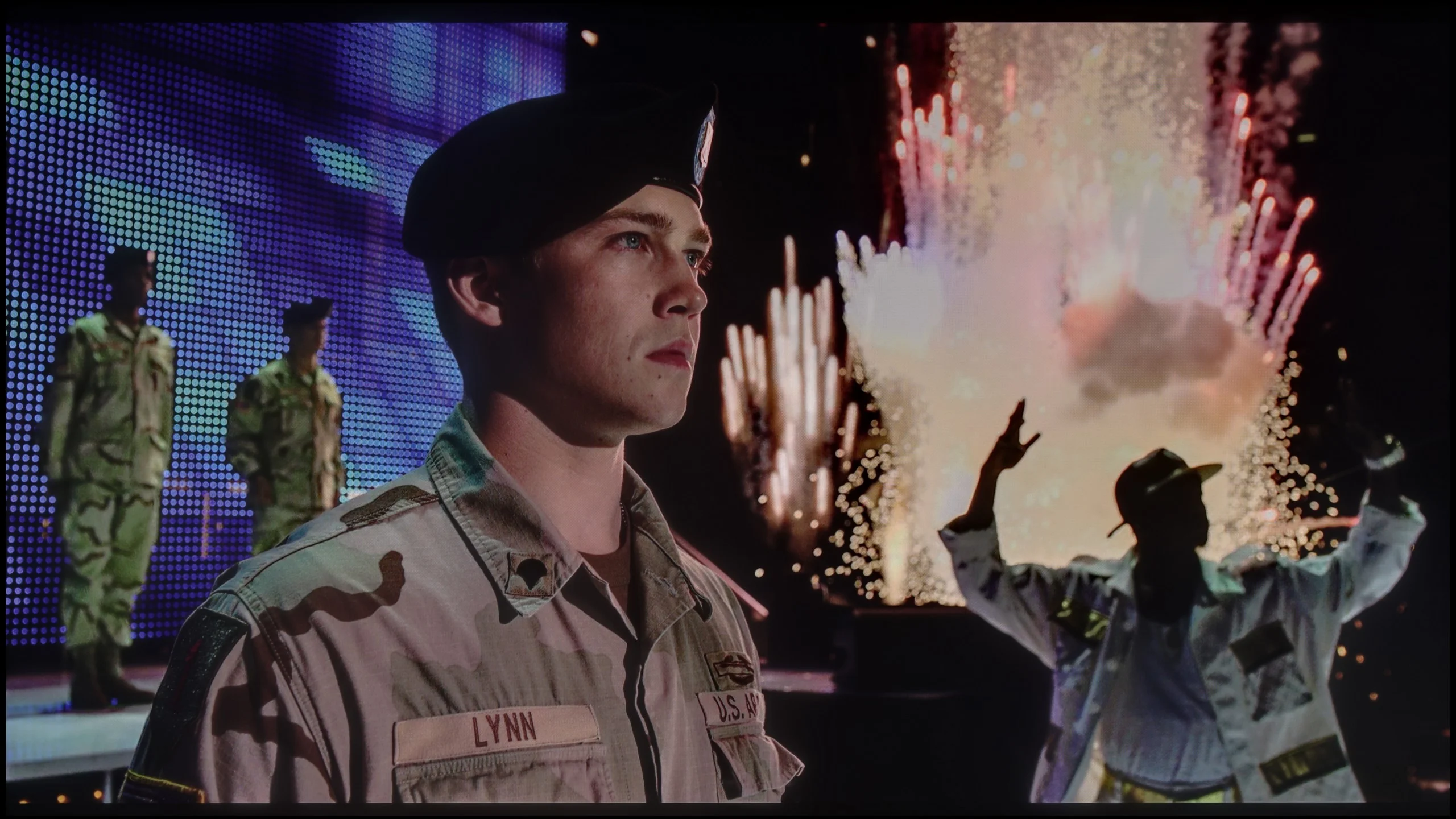
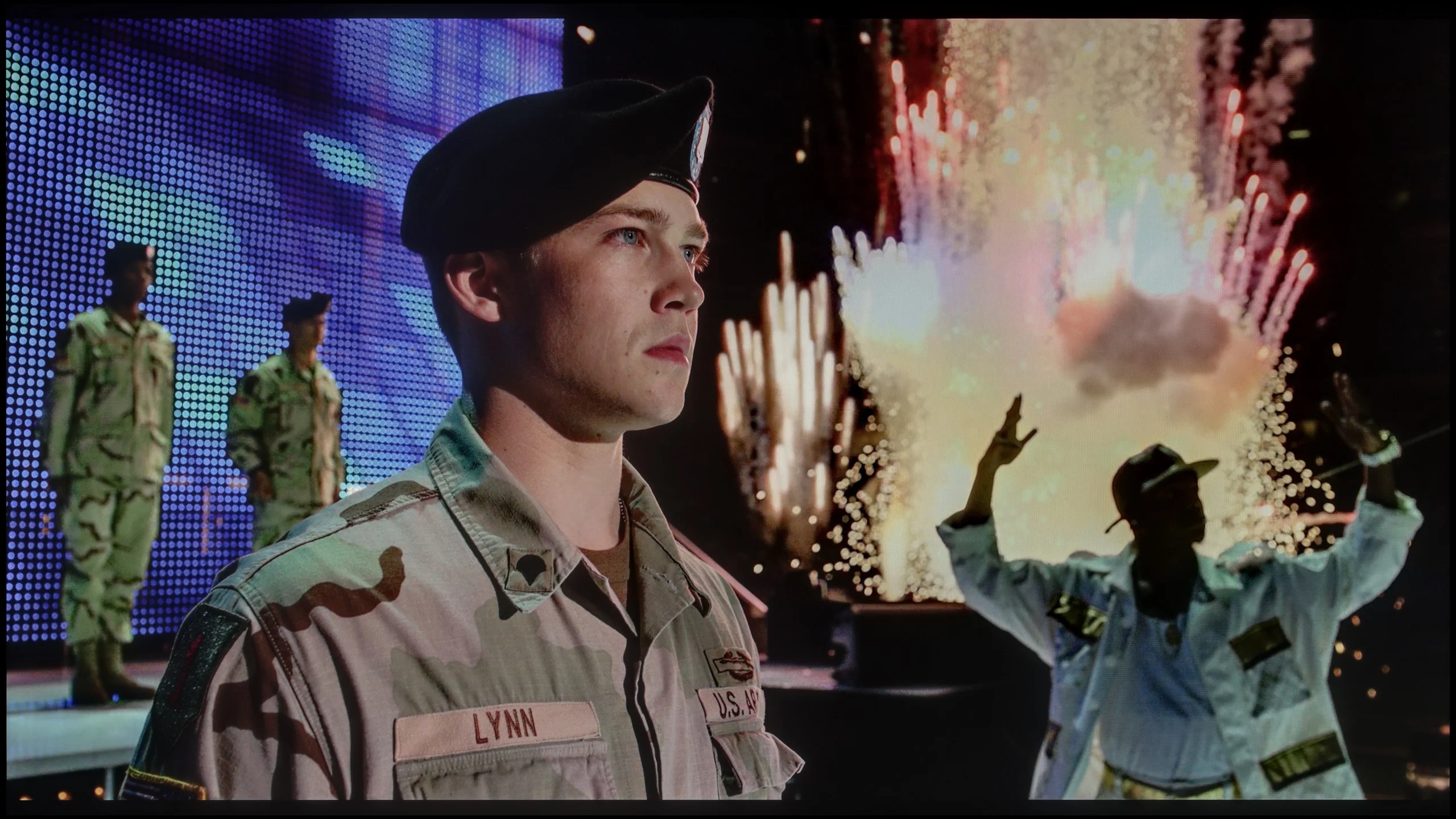
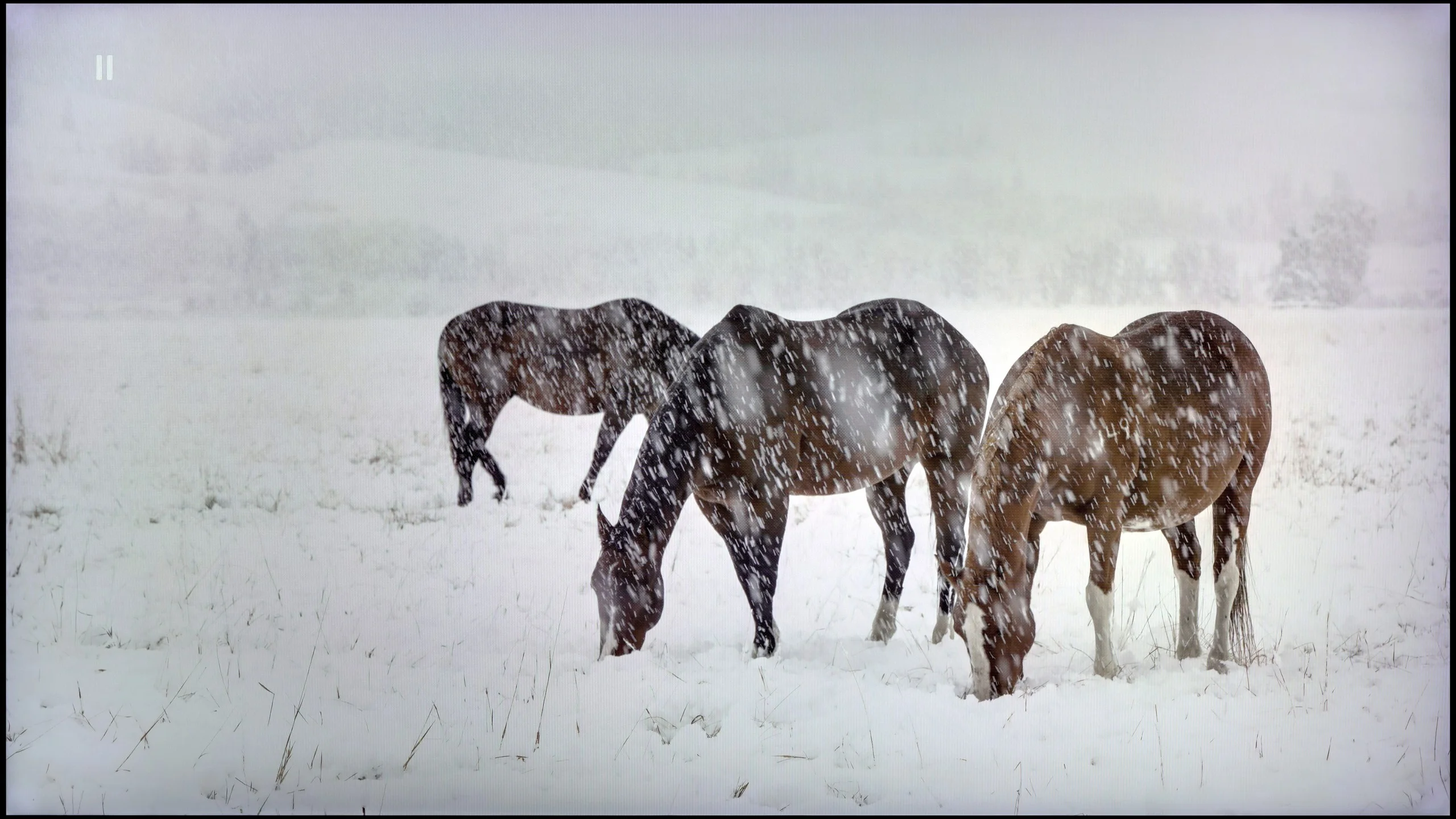
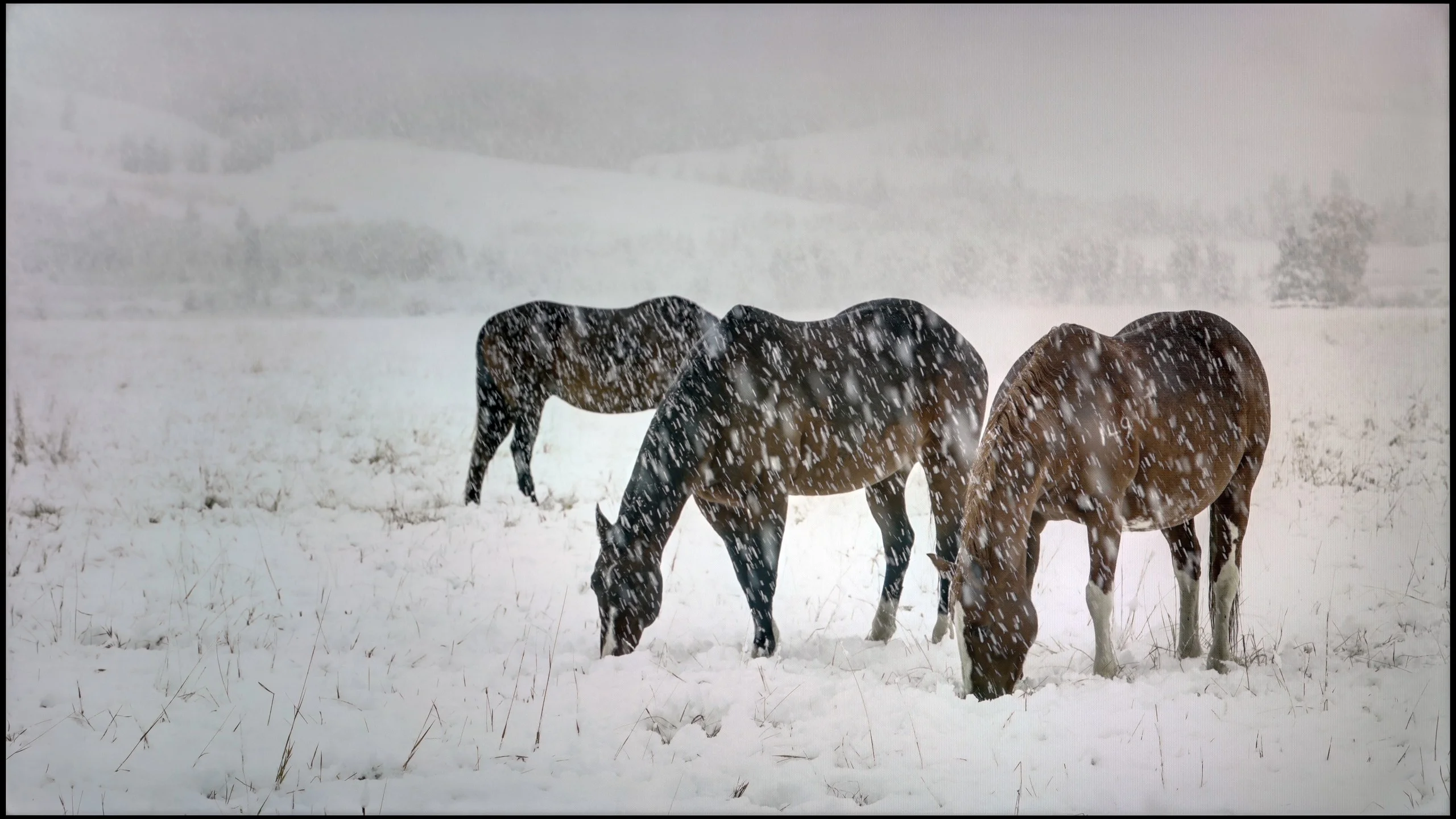
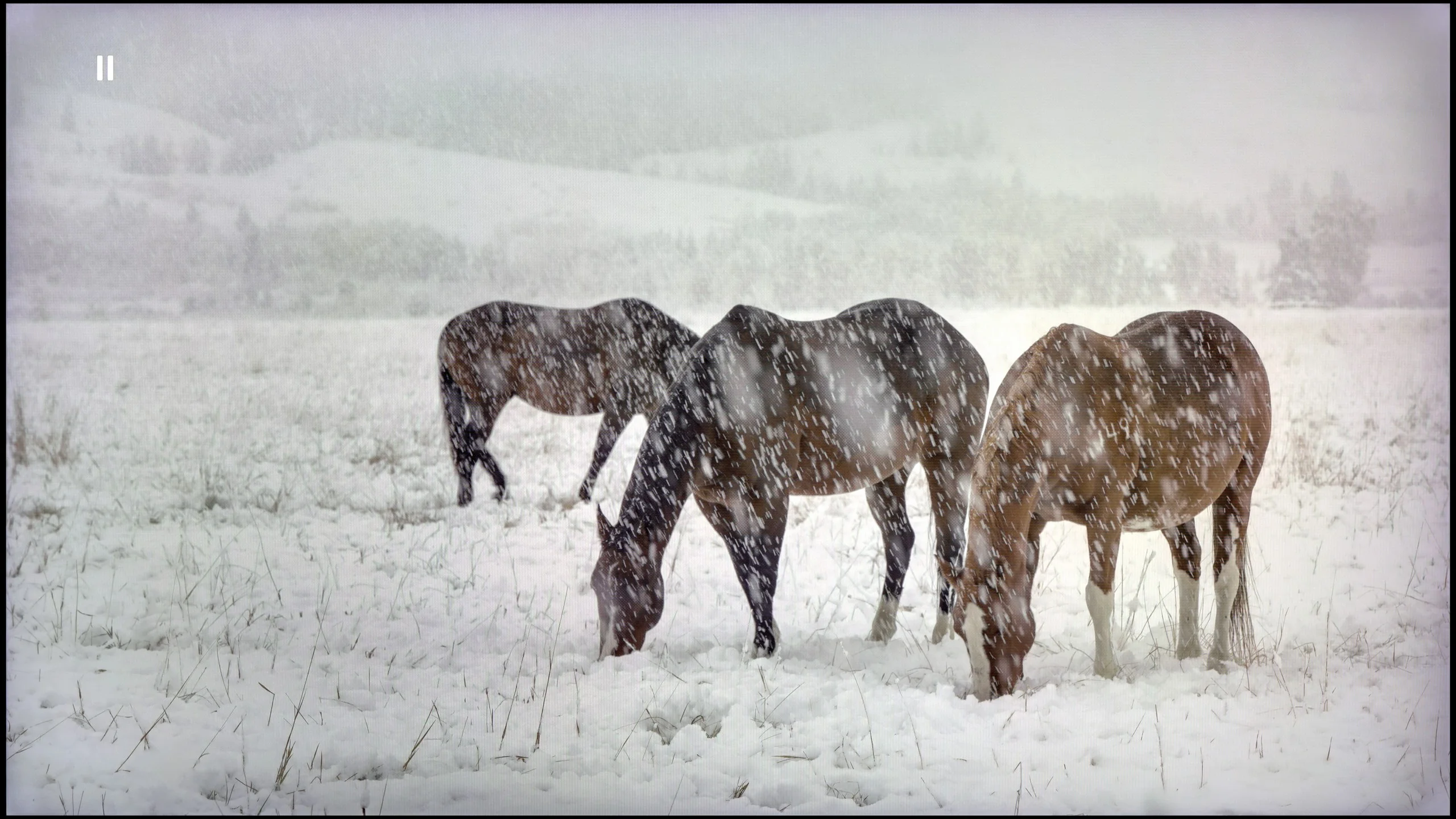
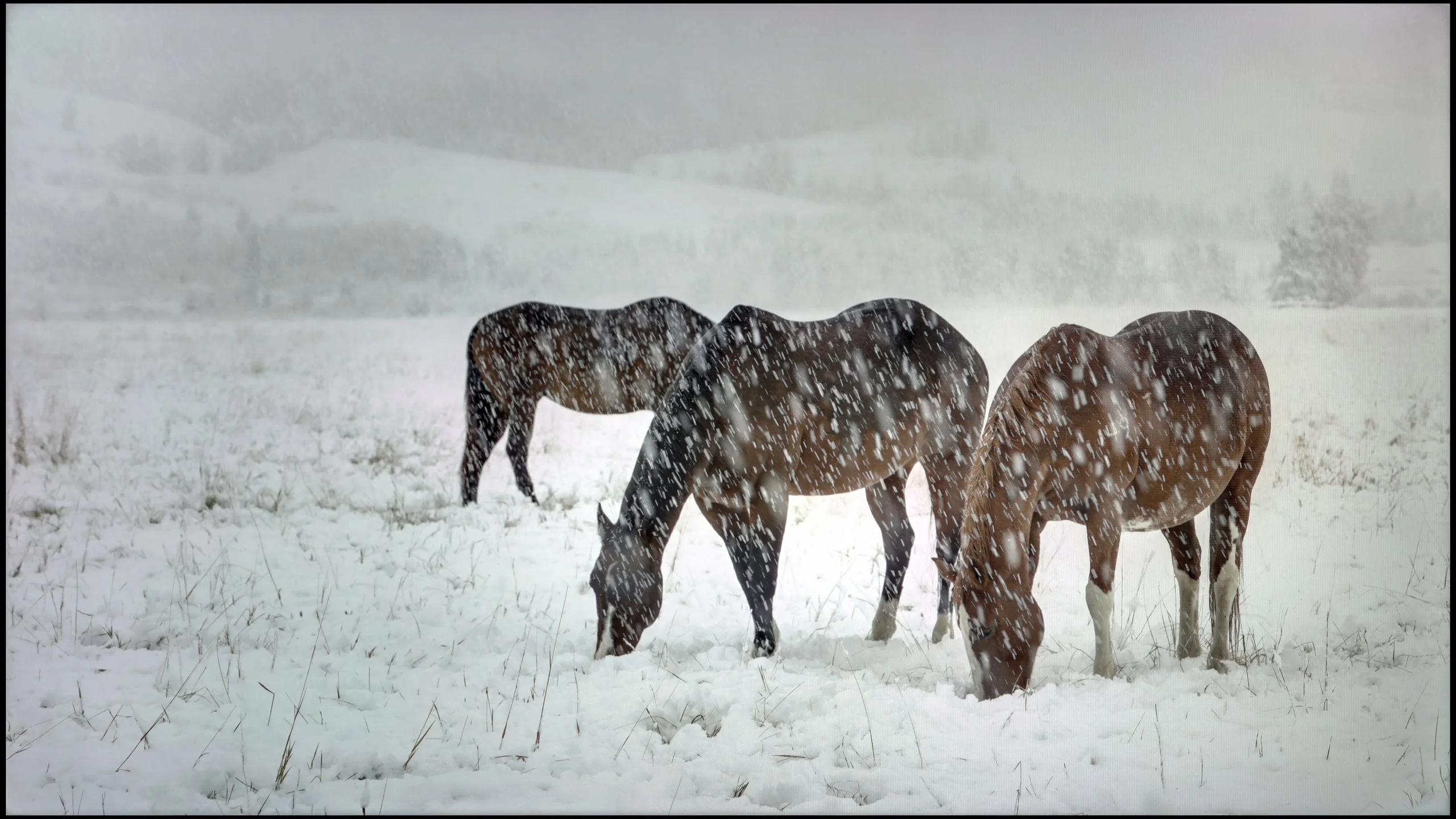
Scene from the movie “Pan” (about 2800 nits)

Scene from the movie “Billy Lynn” (about 1100 nits)

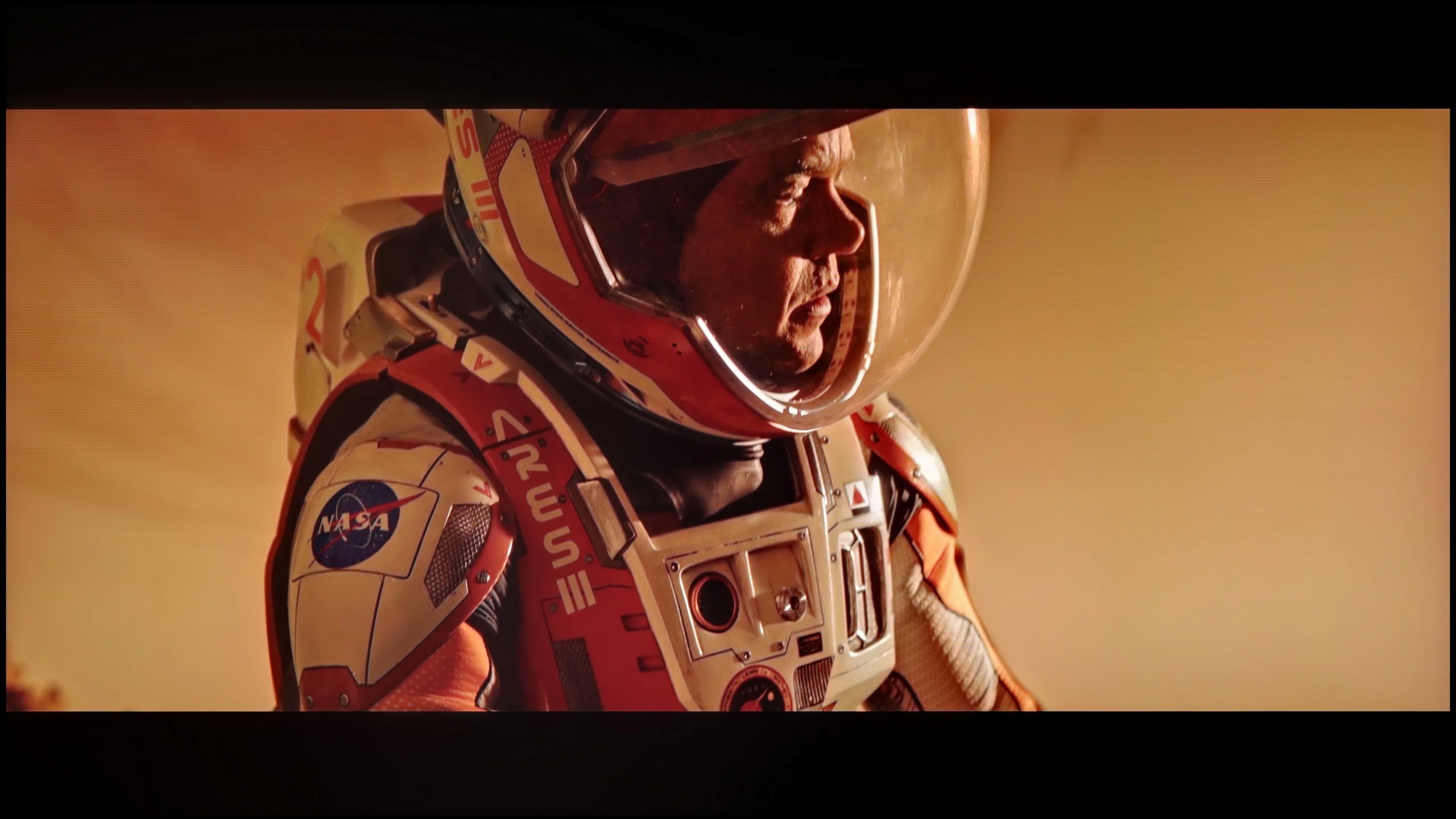
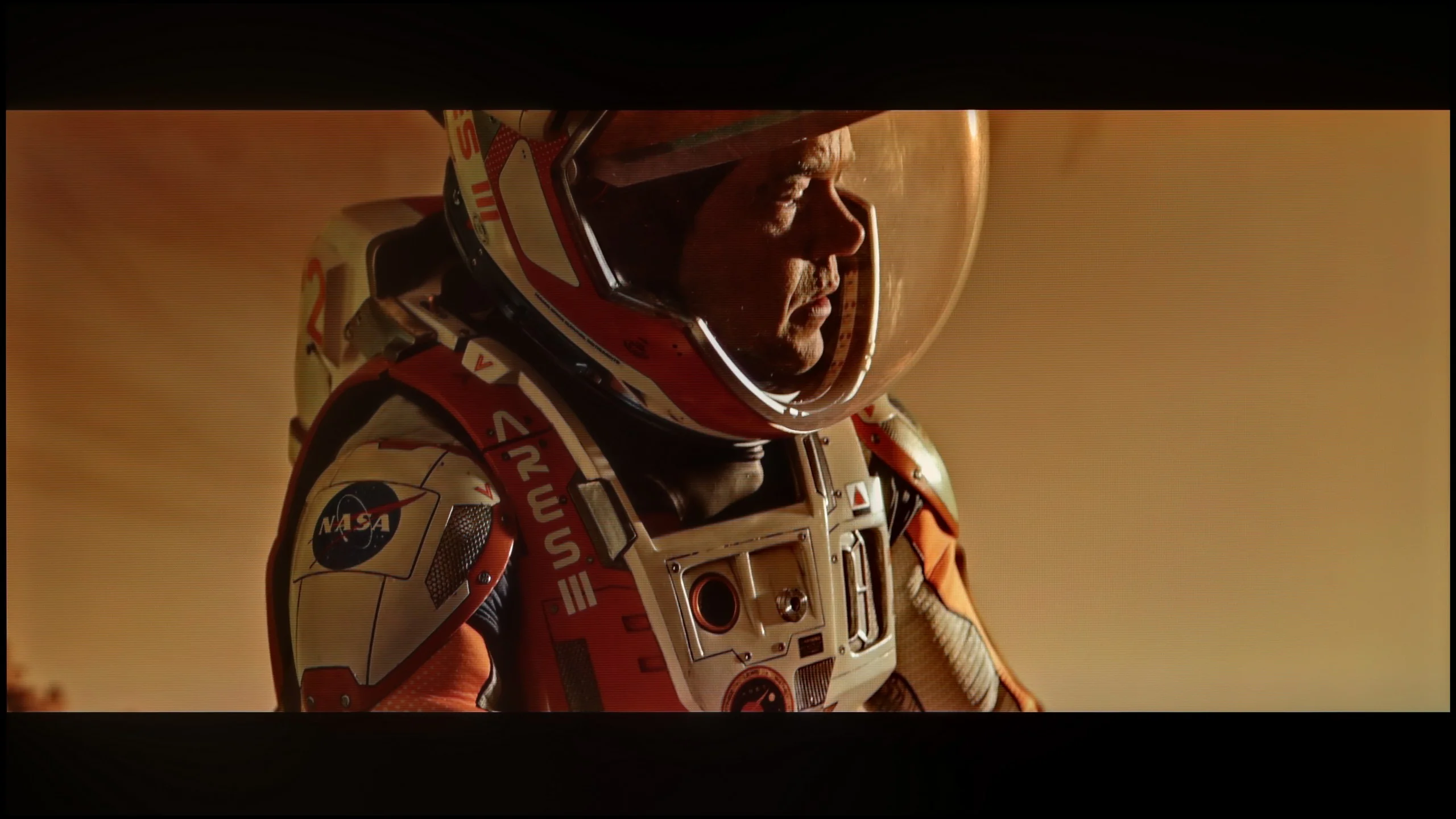
The photos show two HDR10 movies. 'Pan' is one of the brightest productions ever made, while 'Billy Lynn' (soldier) has brightness typical of streaming (Netflix, Prime, HBO MAX). Notice the intensity of effects and detail in whites.

Static HDR10

The photos present the visibility of white details in various HDR formats. They do not show brightness differences between TVs (these can be compared in the previous gallery).

Dynamic: HDR10+

Dynamic: Dolby Vision

The photos present the visibility of white details in various HDR formats. They do not show brightness differences between TVs (these can be compared in the previous gallery).

HDR luminance chart:

TCL RM7L

Samsung QN80F 100"

When it comes to HDR in Filmmaker mode, the QN80F can make a great first impression. Our lab tests showed that under the best conditions, the TV can achieve brightness exceeding 1200–1300 nits. These are truly remarkable results that make HDR effects in many films look incredible. The TV is simply bright enough that it doesn't have to artificially adapt the image – the bright parts of the scene have the right 'power' and actually look like a light source. Of course, the lab is one thing, and everyday viewing is another. In practice, during film scenes, brightness typically hovers around 700–1100 nits. These are still excellent values that, in most cases, provide a strong sense of realism and make the lights on the screen truly blinding. The problem arises in exceptionally difficult sequences, where, like almost every mini-LED, it reveals its limitations. A good example is Sicario 2: scenes with the helicopter in the night sky look much weaker, and the lights lose intensity, dropping to around 370 nits, making it hard to speak of serious awe. Additionally, there's the issue of colours. Although we are dealing with a QLED, the coverage of the DCI-P3 colour gamut is about 90%. This is a rather average result for a quantum dot TV. In practice, this means that some colours may appear less saturated than we would expect, especially in demanding HDR productions.

TCL RM7L is a bright TV. In our measurements its peak brightness hovered around 1600 nits. That’s noticeably less than the C7L, which can get close to 2600 nits, but in real-world film scenes the difference between the models isn’t that large. In less demanding shots, where plenty of bright elements appear on screen, the RM7L can sustain around 1000 nits, and sometimes even a bit more, approaching 1500 nits. It performs worse in dark scenes with small points of light; then their brightness can fall to about 500 nits. This behaviour isn’t random. The TV deliberately dims small elements to better control the backlight and preserve higher contrast. This comes at the expense of their intensity, but it’s typical for TVs with local dimming in a similar price range.

Colour gamut coverage

In HDR brightness isn’t the only thing that matters, colour does too. Here the RM7L has a lot to show. Colours are strongly saturated and the wide colour gamut is one of its main strengths. In our measurements it reached about 96% of DCI-P3 and around 83% of BT.2020. It’s worth remembering, though, that on a TV with this kind of backlight the result can vary depending on the scene. On test patterns colours look best, while in films their saturation can be a little lower than on SQD Mini LED or QD-OLED TVs. The backlight design itself is interesting. The RM7L doesn’t use the classic red, green and blue LED set. TCL used two green LEDs and one blue, with red produced via a PFS phosphor. You can see this in spectrometer measurements, but it doesn’t have a major impact on the picture. Colours are still rendered correctly.

Factory color reproduction

6/10

5.8/10

This gallery shows how colors change after professional TV calibration. If you notice the difference, we recommend ordering this service at SkalibrujTV.com.

Factory Mode

After calibration

This gallery shows how colors change after professional TV calibration. If you notice the difference, we recommend ordering this service at SkalibrujTV.com.

Factory Mode

After calibration

Samsung QN80F performs best in Filmmaker mode, which is designed to faithfully reproduce the creators' intentions. And indeed – this is the mode where the TV shows its potential. But let's not fool ourselves, it’s far from perfect. In SDR content, a significant issue emerged with white balance. Slight deficiencies in green and a clear excess of red caused the screen to take on a pinkish hue. You don't even need measuring tools to notice this – in everyday viewing, the subtly shifted colour palette could be quite noticeable, and in colour checker tests, the colours nearly "jumped" outside their reference fields. With HDR content, the situation looked a bit better, as the white balance was closer to ideal, but another problem emerged – brightness management. The EOTF curve often caused the image to become too bright, which spoiled the impression of contrast, and in dynamic scenes, it led to a slight "flicker" in perception. We've actually mentioned this before in the sections about black levels and HDR. The good news, however, is that Samsung provides plenty of tools for improvement. The QN80F allows for very detailed calibration, including a 20-point white balance. And since the manufacturer has left us with so many options, we decided to see how the TV would perform after a solid correction.

Factory colours were checked in Filmmaker Mode, the best picture setting available to the user. TCL has been using it in its TVs for two years, and its purpose is to reproduce the image as faithfully as possible to the filmmakers' intent. On the RM7L it was indeed the best calibrated mode, though not without faults. The biggest issue was the white balance. An excess of red and blue made the image shift slightly toward pink tones. This was visible in both SDR and HDR. In addition, the brightness response was slightly boosted, so the picture looked a little brighter but at the same time less contrasty than it should.

Color reproduction after calibration

8.3/10

8/10

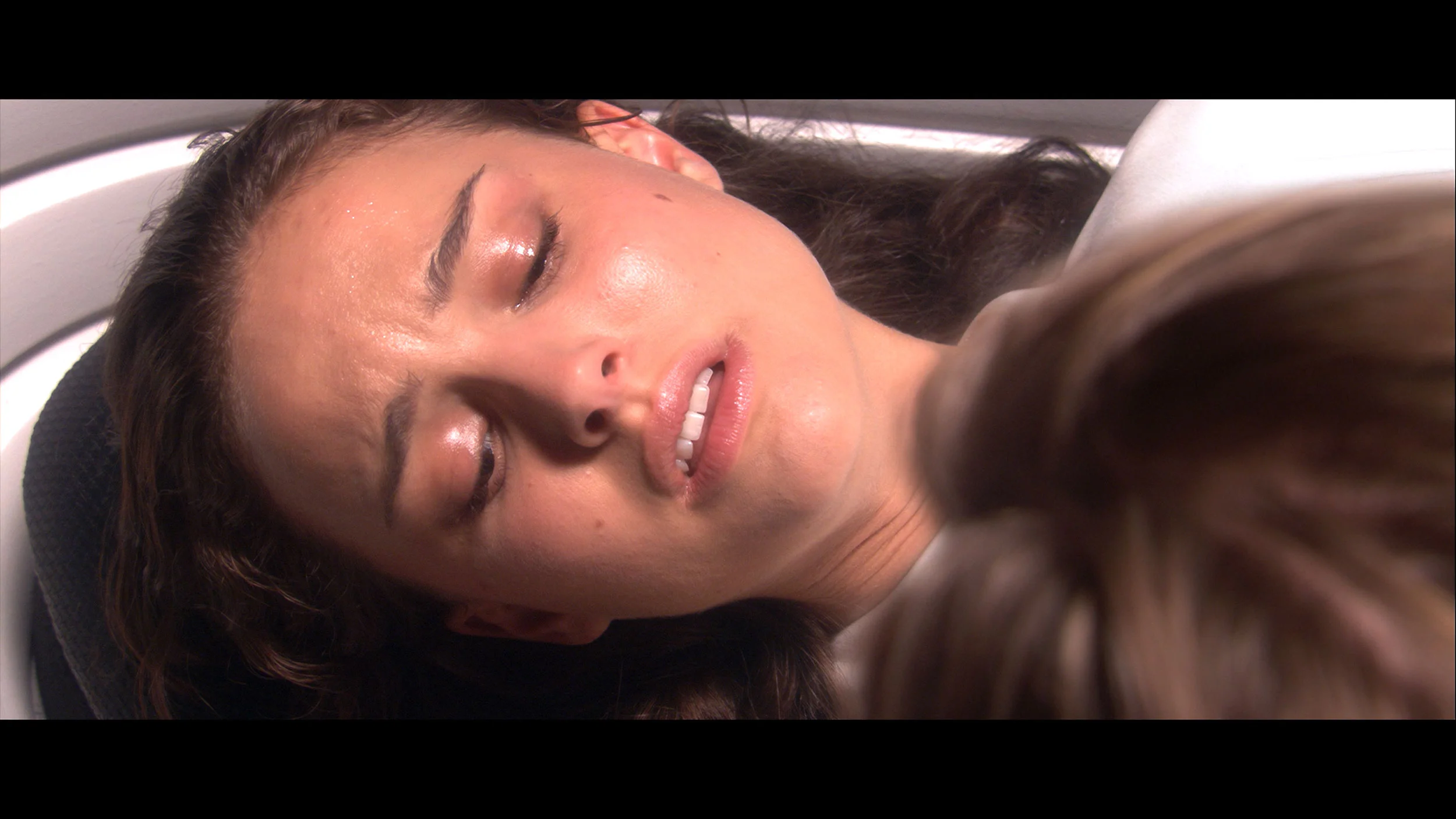
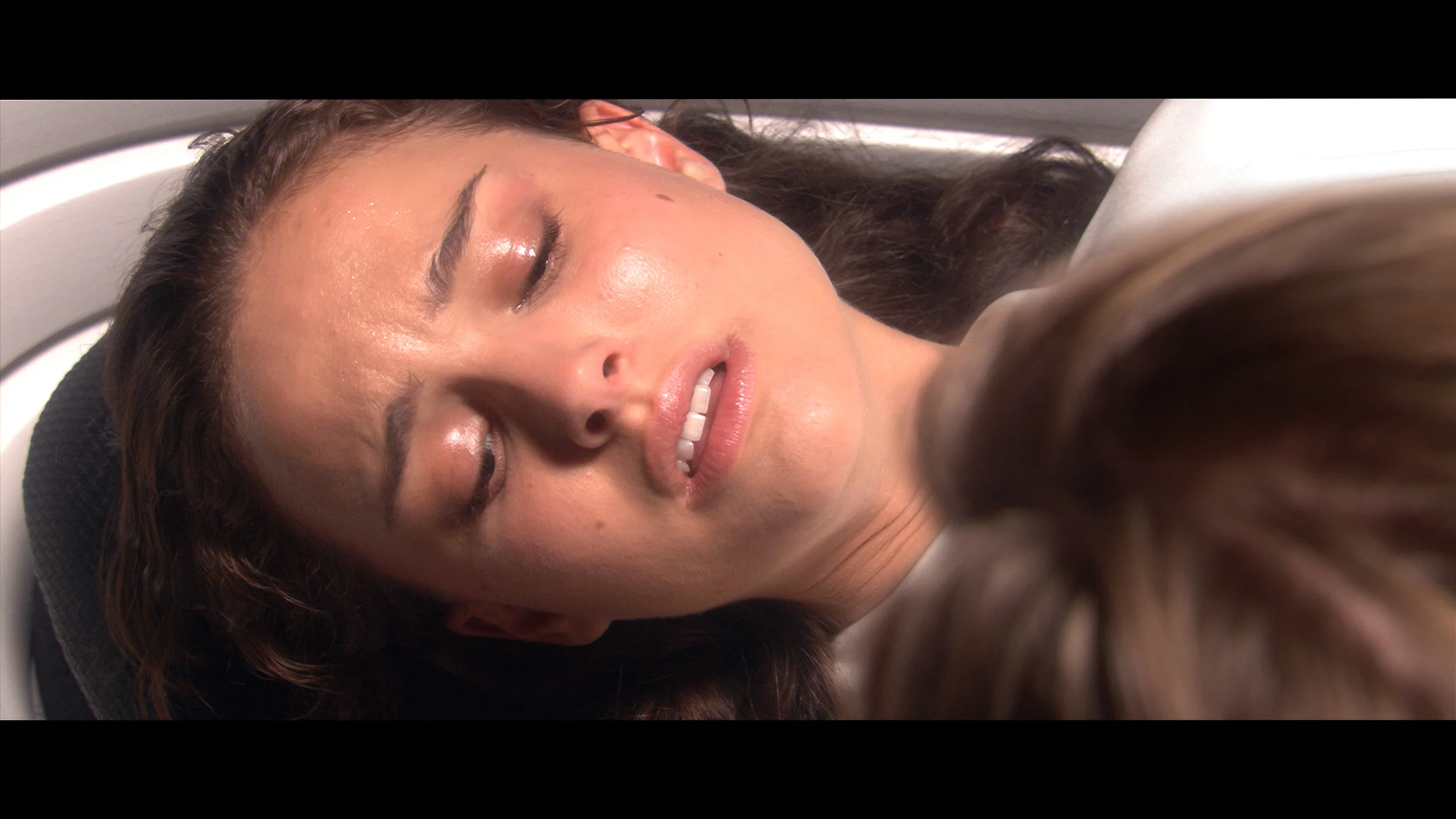
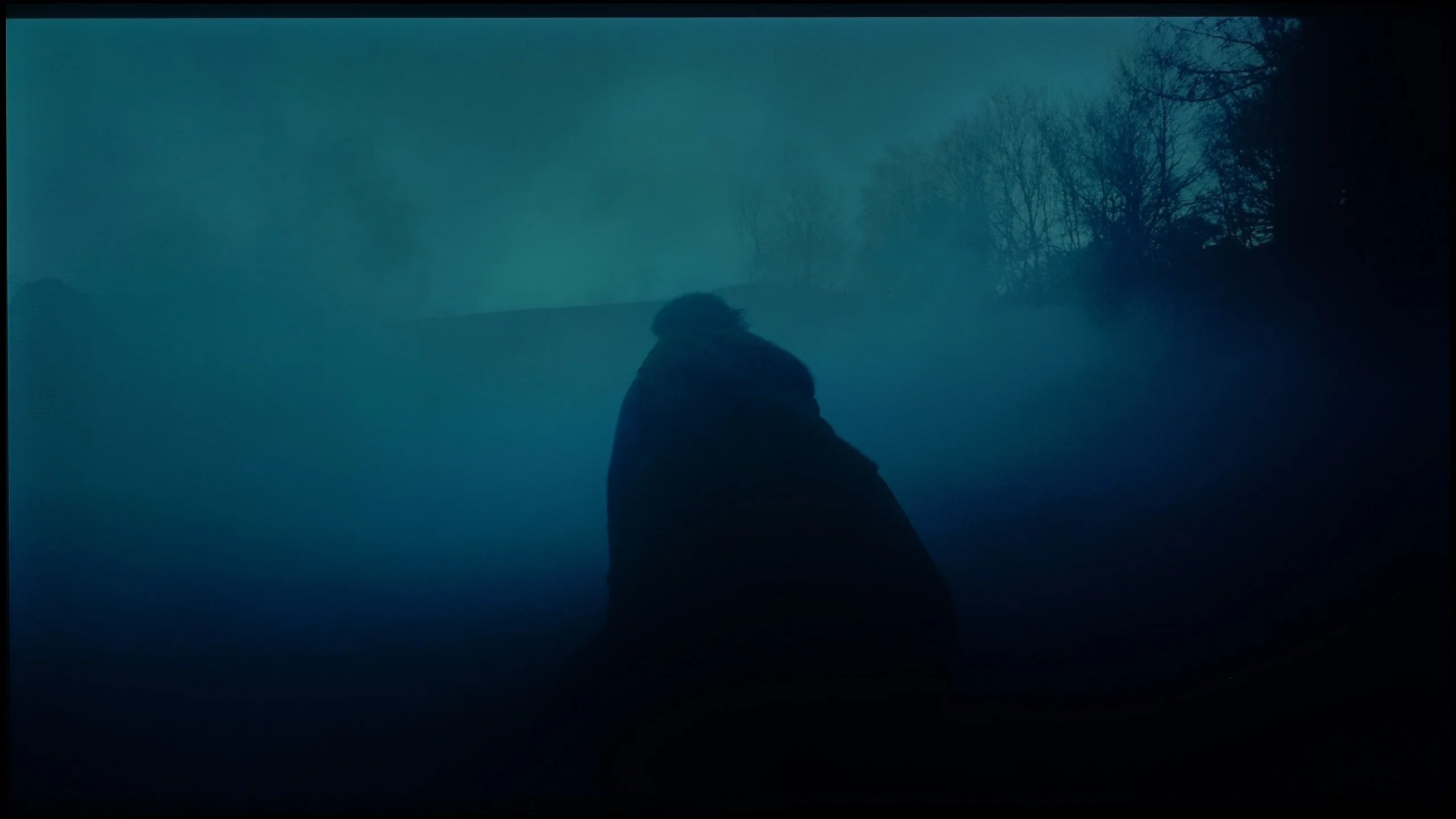
The photos show how movies look on the TV. Pay attention to black detail visibility, colors, and shadow tint.

The photos show how movies look on the TV. Pay attention to black detail visibility, colors, and shadow tint.

After calibrating the QN80F, it immediately showed that it has much more to offer. The pink hue that used to spoil the viewing experience has disappeared, and the white balance finally looks as it should – natural and without excessive deviations. The colours have gained depth, and the image has become more saturated and coherent, making movies simply more enjoyable to watch. It's a bit like taking a light mist off the screen – suddenly everything appears sharper and clearer. Brightness management has also improved. The TV no longer gets lost so easily in dynamic changes, and the EOTF graph shows that the curve tracking is significantly more stable. Of course, there are no miracles – the limited number of zones still means that small, bright elements can be slightly washed out, but that's just a result of the design rather than the settings. After this adjustment, the QN80F feels like a more mature piece of equipment, and watching movies finally provides the satisfaction expected from even a higher-end television.

Thanks to a fairly extensive calibration menu we managed to correct the vast majority of the issues described earlier. The biggest change was the white balance. After calibration it looks very good, so the image has lost its pinkish tint and become much more neutral. The luminance response has also improved. Both the SDR gamma and the HDR EOTF curve are now much closer to the reference values. The picture is no longer unnecessarily bright, and darker parts look more natural and have greater depth. Better luminance accuracy has also affected the colours, which after calibration are noticeably more accurate. Not everything could be set perfectly though. In HDR material the RM7L still interprets part of the signal in its own way and doesn’t always stick exactly to the reference curve. You can see this mainly in some darker scenes, where the TV can either slightly lift the shadows or darken them completely. That’s where the earlier impression of a slightly brightened, less contrasty image came from. Even so, the calibration delivers a very good result here. It removes the most visible errors and, above all, makes the picture much closer to how it should look.

Smoothness of tonal transitions

9/10

8.9/10

These are selected scenes that show smooth tonal transitions from one color to another. If you see distinct banding, it’s the TV panel’s fault.

These are selected scenes that show smooth tonal transitions from one color to another. If you see distinct banding, it’s the TV panel’s fault.

These are selected scenes that show smooth tonal transitions from one color to another. If you see distinct banding, it’s the TV panel’s fault.

These are selected scenes that show smooth tonal transitions from one color to another. If you see distinct banding, it’s the TV panel’s fault.

In terms of the fluidity of tonal transitions, meaning the blending of colours into one another, the QN80F performs really well. The colour gradients are smooth, the image doesn't break into artificial bands, and the sky or vast shaded surfaces look as they should – without strange patches or interference. It particularly excels in scenes with dark tones, where many televisions can struggle and produce ugly artefacts. Here, everything remains coherent and clear. Admittedly, in the brightest areas, you might occasionally notice slight banding, but that's a detail that only very demanding viewers, analysing the image frame by frame, would pick up. In everyday use, there's practically nothing to complain about. The QN80F gives a sense of confidence that tonal transitions won't be a distraction.

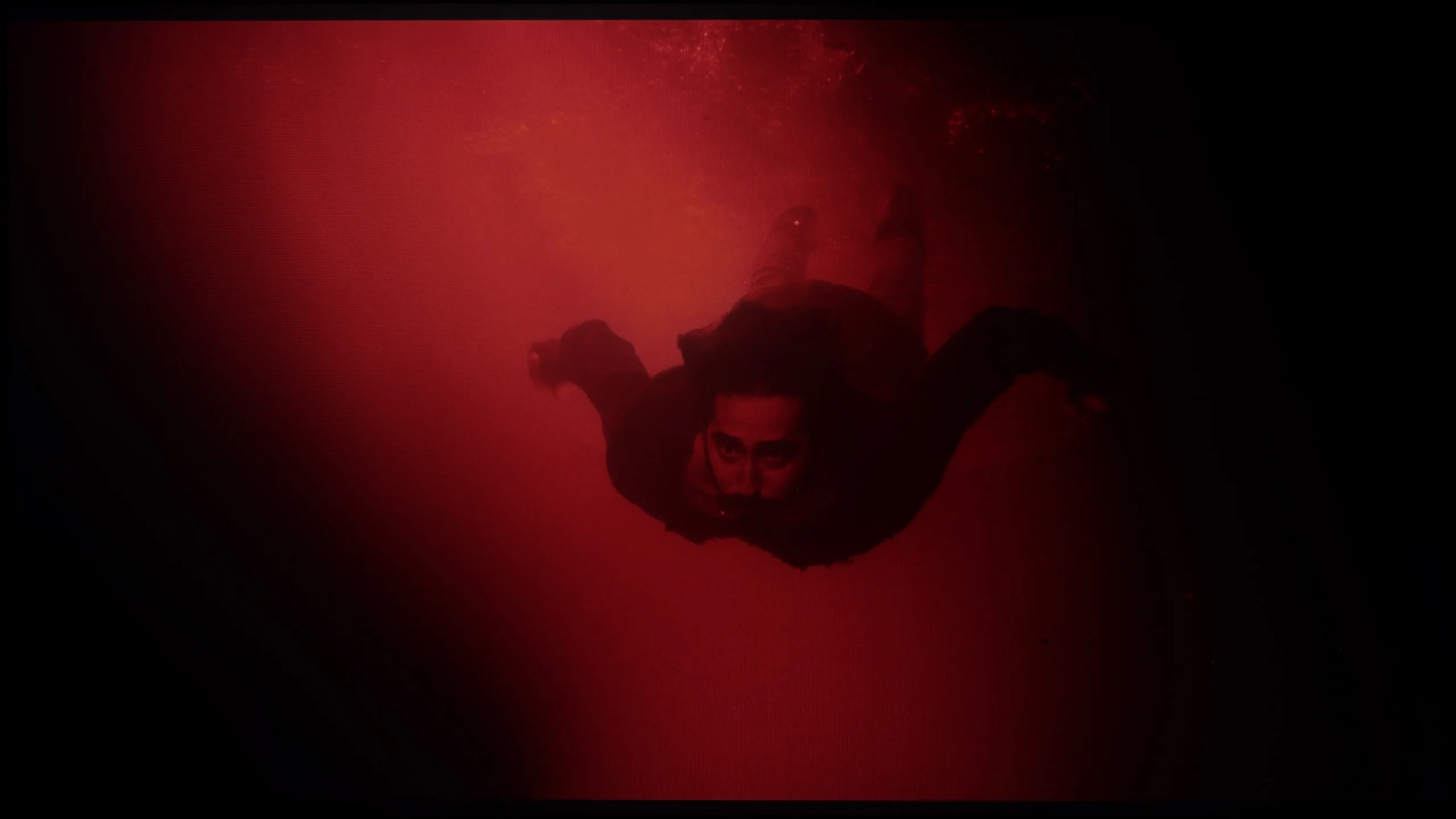
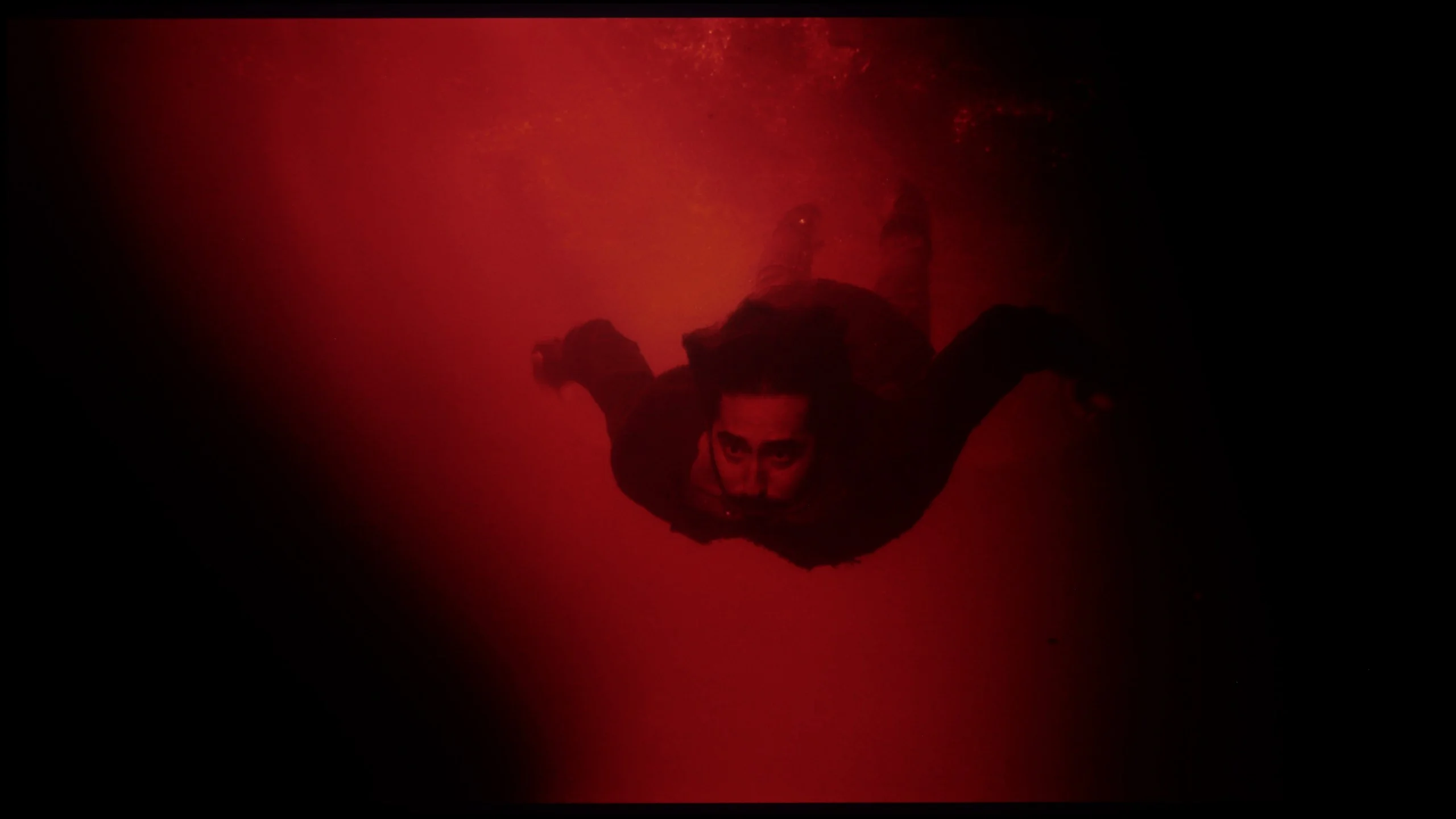
The RM7L handles tonal transitions very well. In both bright and dark scenes the gradients are smooth and there’s no noticeable colour banding. Minor issues only appear with exceptionally demanding material, such as our fourth test pattern with red water fading into black. It’s worth noting, however, that most TVs struggle to reproduce that scene perfectly. In everyday use this shouldn’t be a major problem.

Image scaling and smoothness of tonal transitions

7.5/10

5.5/10

Image without overscan on the SD signal
No
OK
Smooth transition function
OK
OK

Smooth transition function

The match photo shows how the TV smooths weak tonal transitions in low-quality video.

Image scaling SD (576i)

The model photo shows how it handles upscaling of SD material.

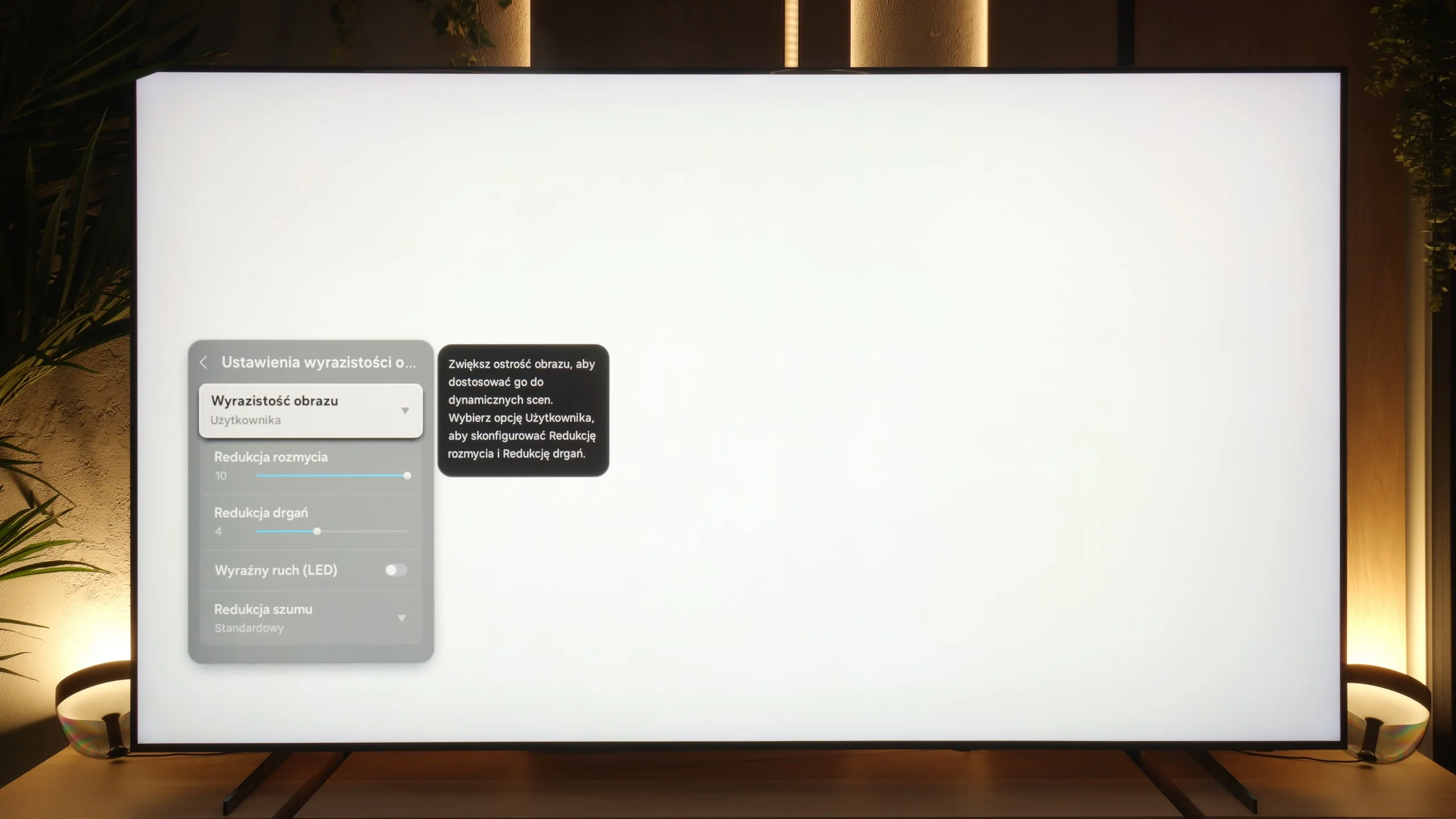
With lower quality materials, such as YouTube videos or older television recordings, the QN80F can show both its strengths and weaknesses. If strange colour transitions or artefacts start to appear on the screen, it's worth reaching for the noise reduction feature. The best setting is at the "medium" level – it smooths out problematic segments while not blurring the entire image. However, one compromise must be kept in mind: this feature always removes film grain. If someone enjoys its presence in older productions, it's better to leave the reduction off, as regardless of the setting, the grain simply disappears.

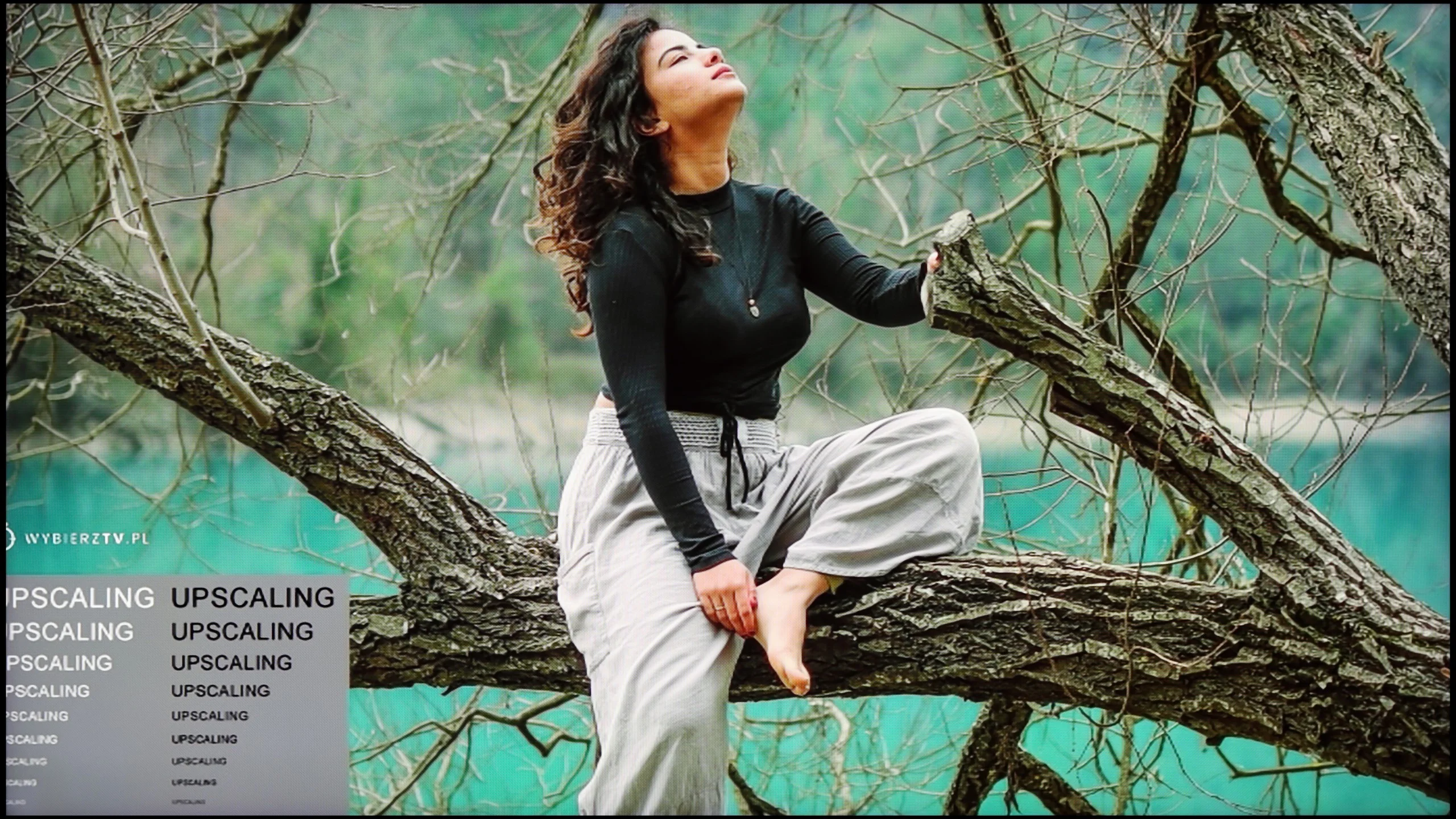
Resolution scaling, or upscaling, is another strong point for Samsung. The QN80F may not be the best television on the market, but it performs very well in its price class, which is crucial for such a large size as a 100-inch screen. Even low-quality materials can gain a second life – the image becomes sharper, more readable, and overall, much more pleasant to view. A weak point remains overscan, which is slight cropping of edges in very low resolutions (e.g., 576p), something that has been a longstanding issue for Samsung. Fortunately, in everyday viewing of HD and 4K content, this is practically of no significance anymore.

Upscaling and digital image processing are not the RM7L’s strong points. TCL has used a MediaTek Pentonic 700 chipset here, labelled MT5896, which isn’t among the best processors at handling lower-quality sources. The biggest issues appear with heavily compressed content from YouTube or regular broadcast TV. The processor can’t effectively hide posterisation and the characteristic banding between shades. The feature meant to smooth these issues does little to help and can also interfere with the picture too much, smoothing faces and fine textures, for example. For that reason it’s best not to use it.
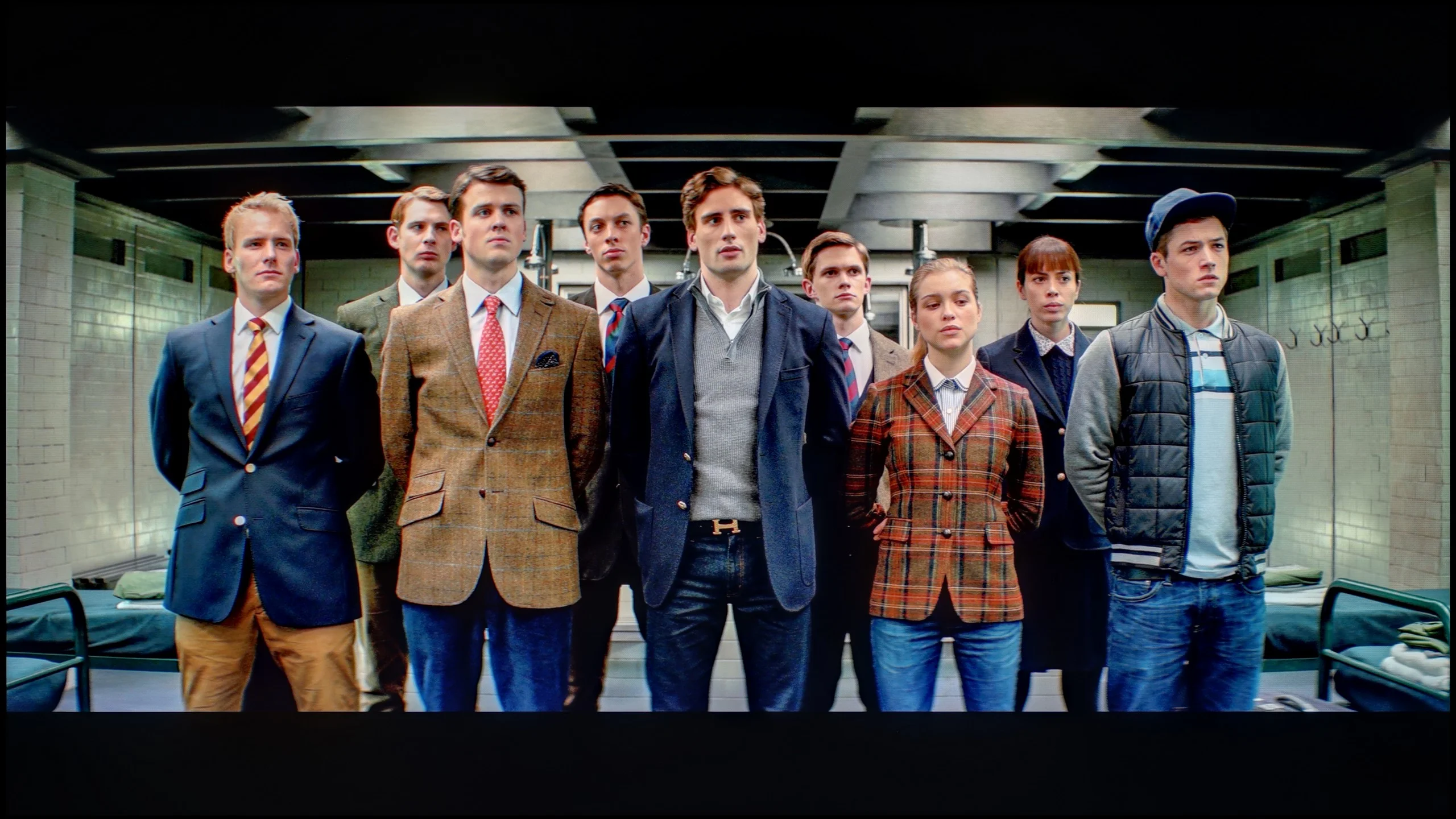
Plain upscaling to 4K looks better. Lower-quality sources are reasonably sharp and retain a sufficient amount of detail. It’s not on a par with the best processors on the market, but for everyday viewing the result is perfectly acceptable.

Blur and motion smoothness

7/10

7.8/10

Maximum refresh rate of the panel
144Hz
144Hz
Film motion smoothing option
OK
OK
Blur reduction option
OK
OK
BFI function 60Hz
Yes, 60Hz (image flickers)
Yes, 120Hz (double contours)
BFI function 120Hz
No
Yes, 240Hz (double contours)
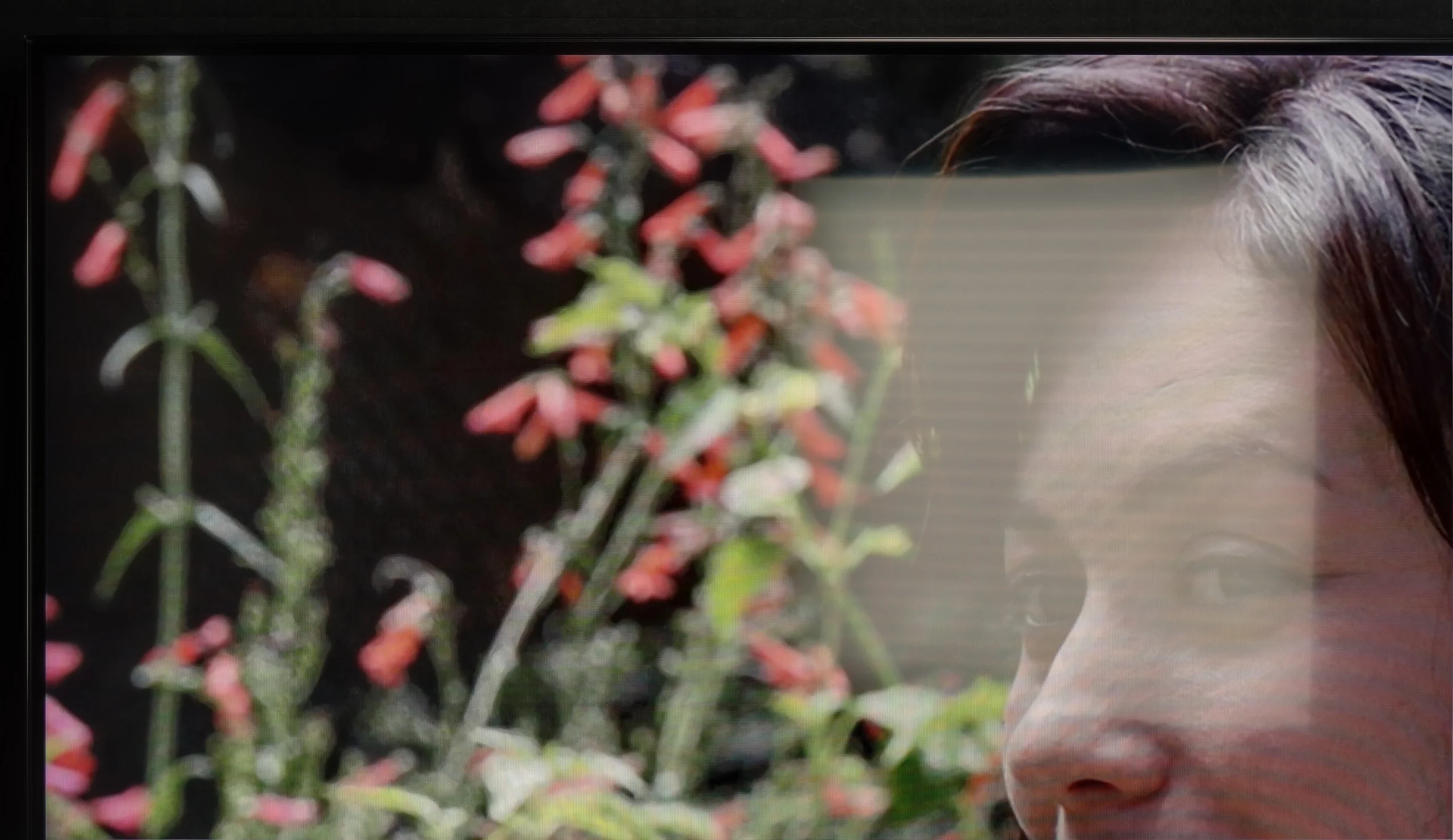
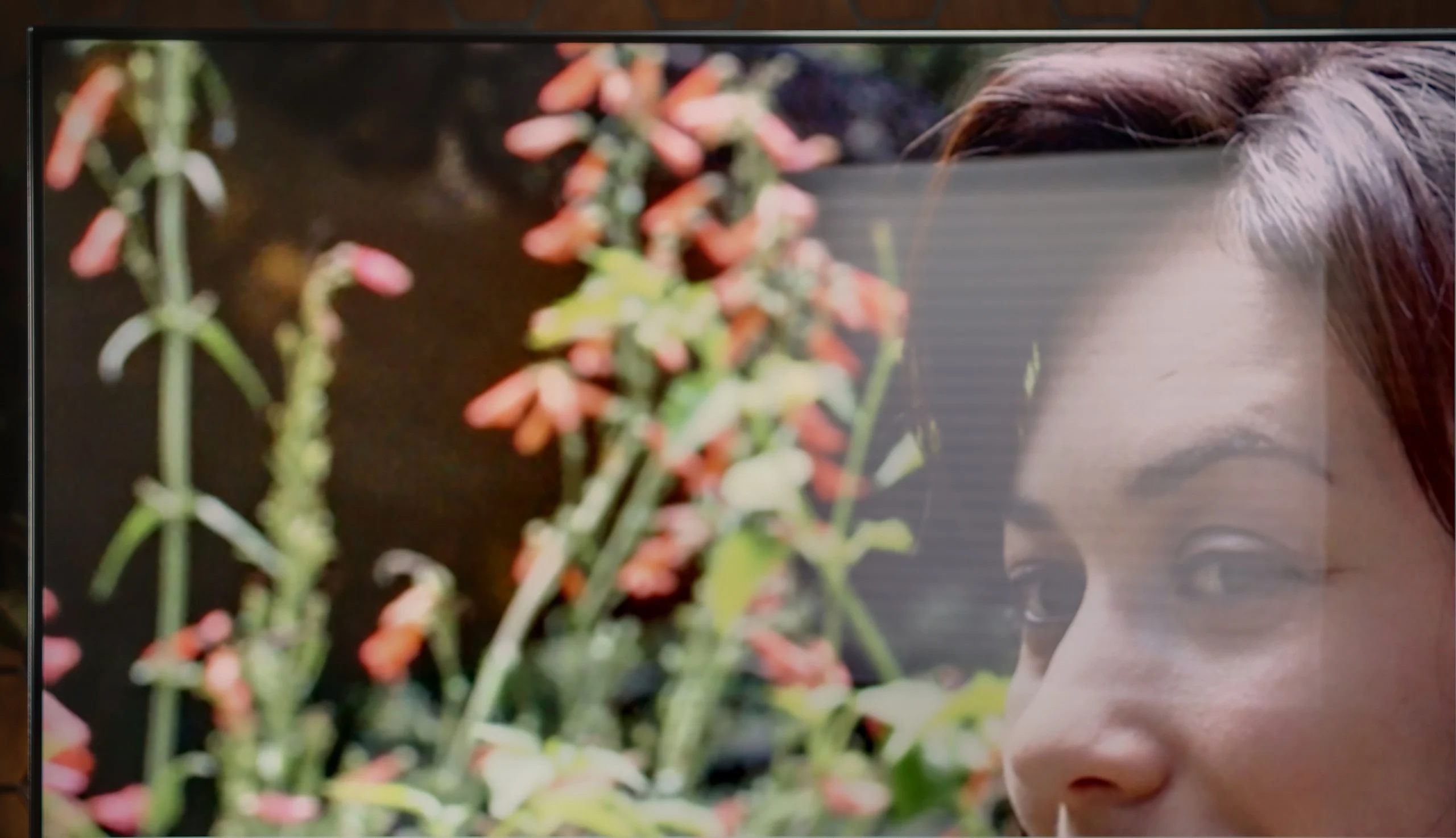
Brightness drop with BFI
69%
44%

Blur (native resolution, maximum refresh rate):

Blur (BFI function enabled):

Image flickers in this mode

Blur (4K@144Hz):

Blur (4K@144Hz ):

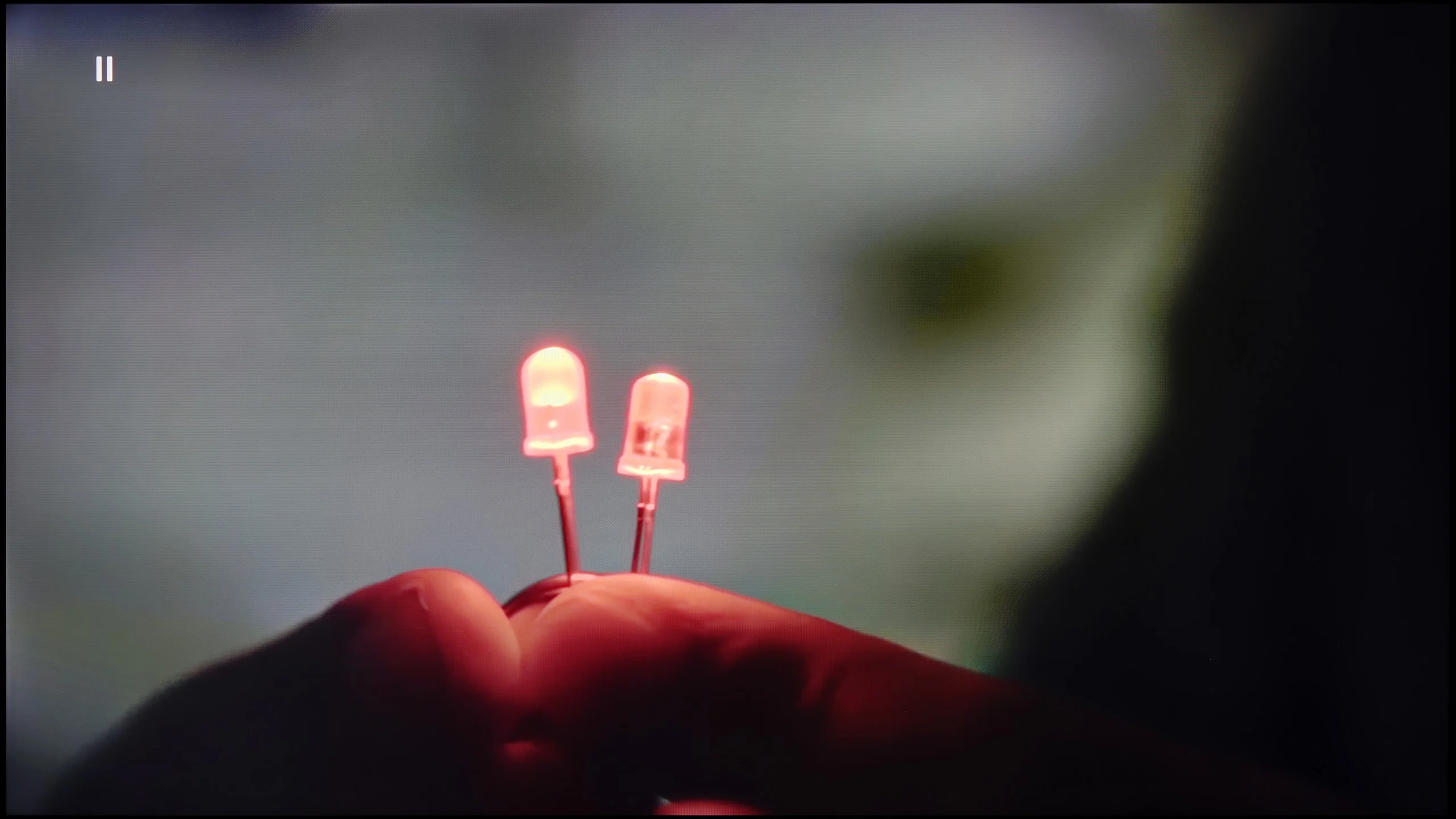
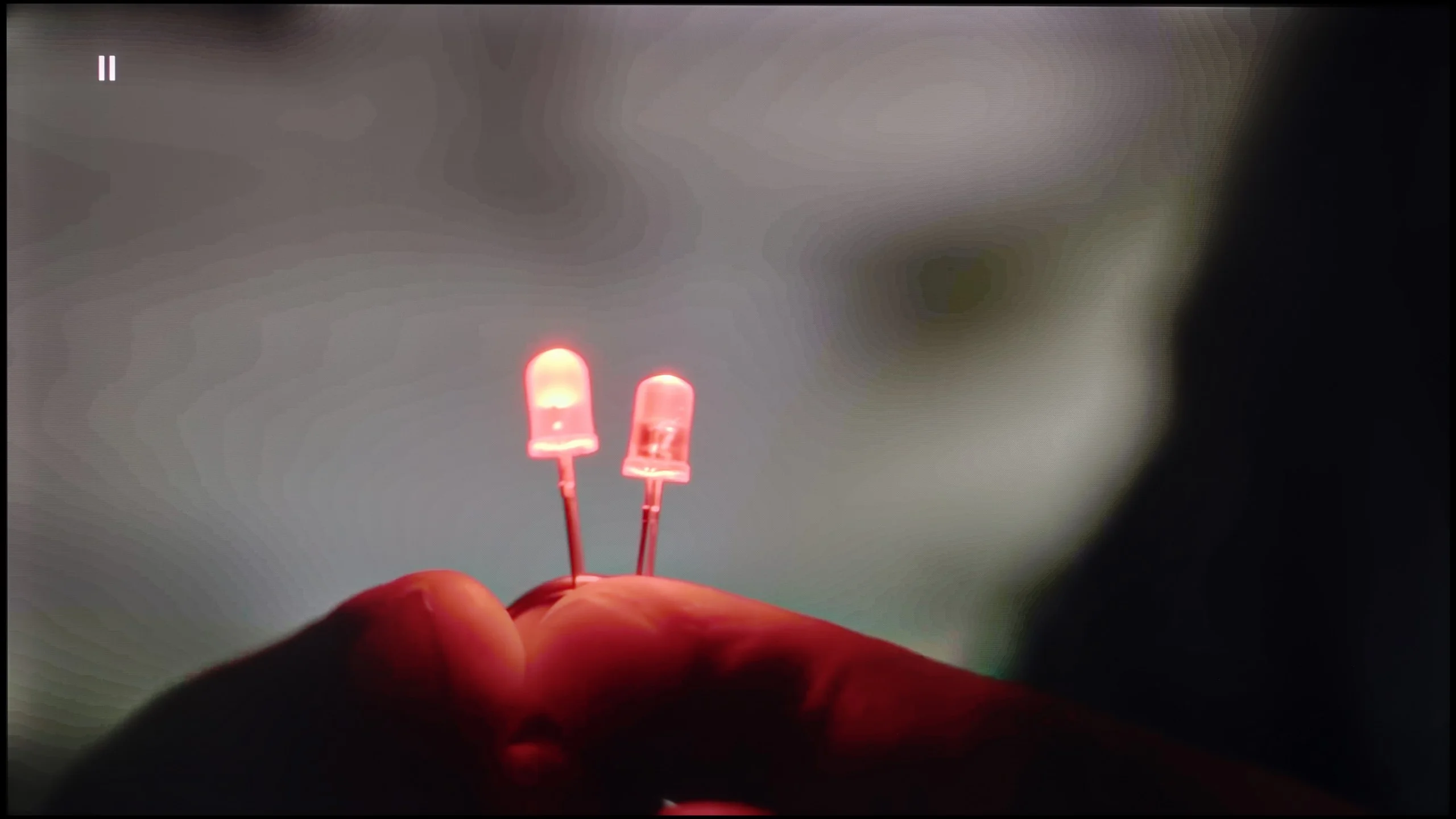
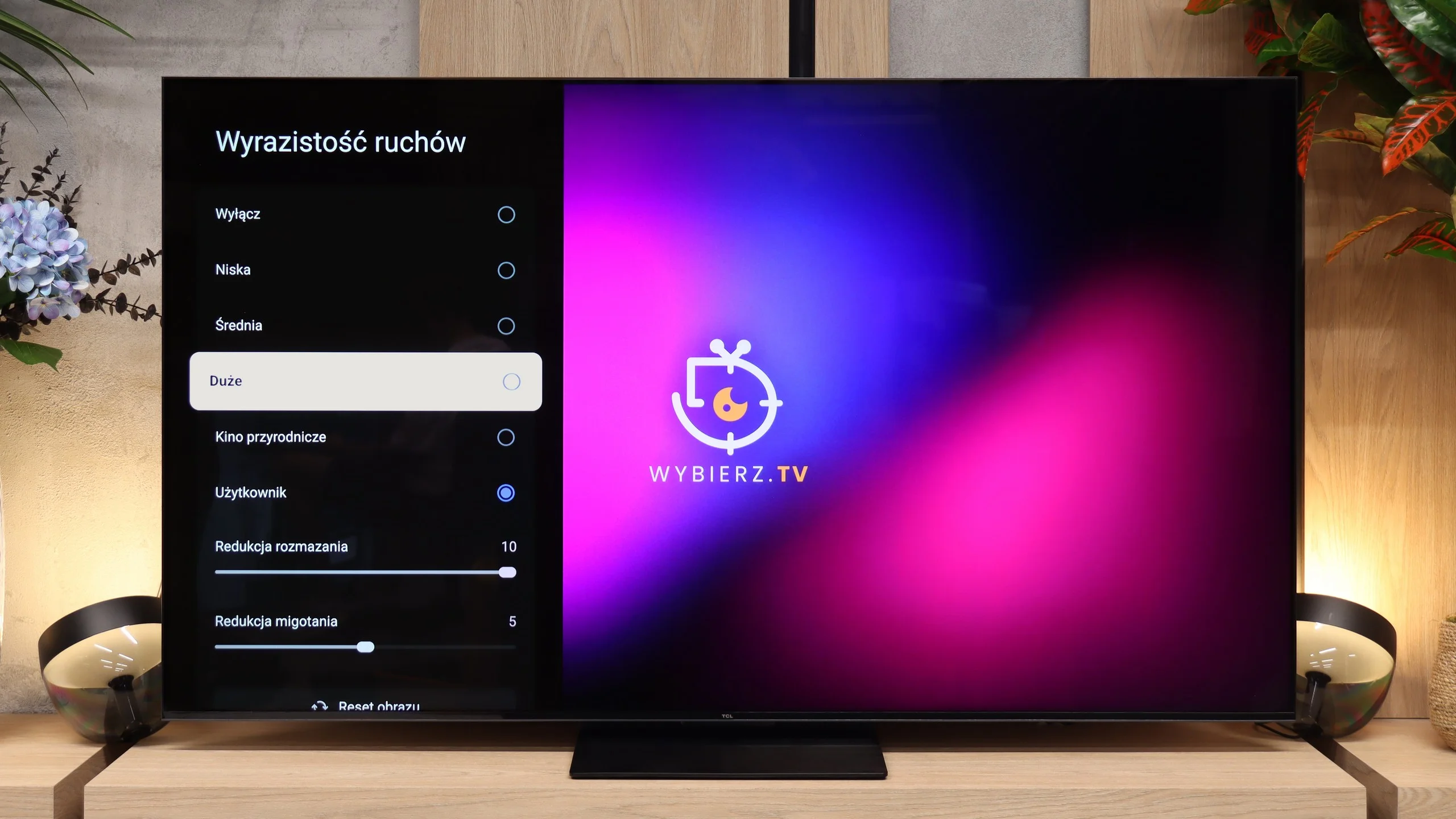
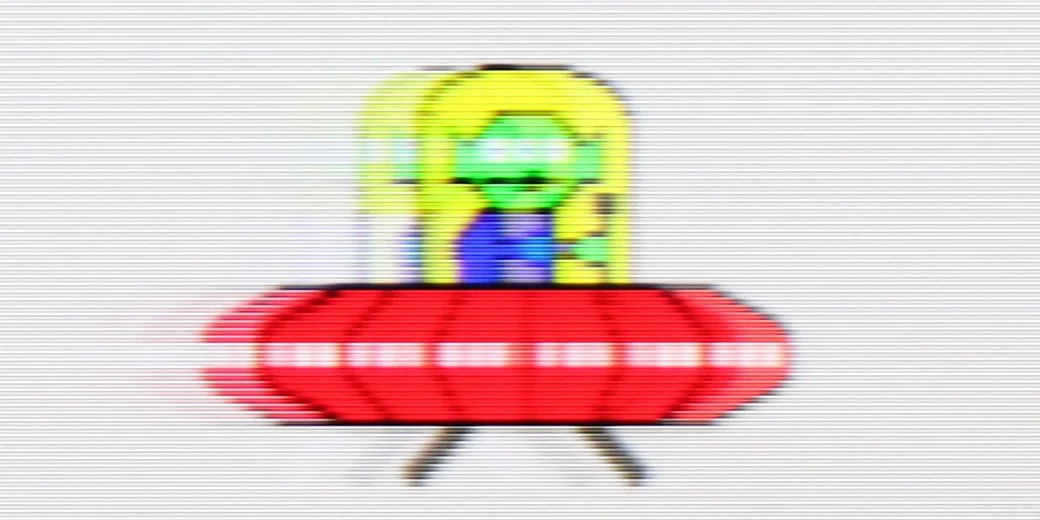
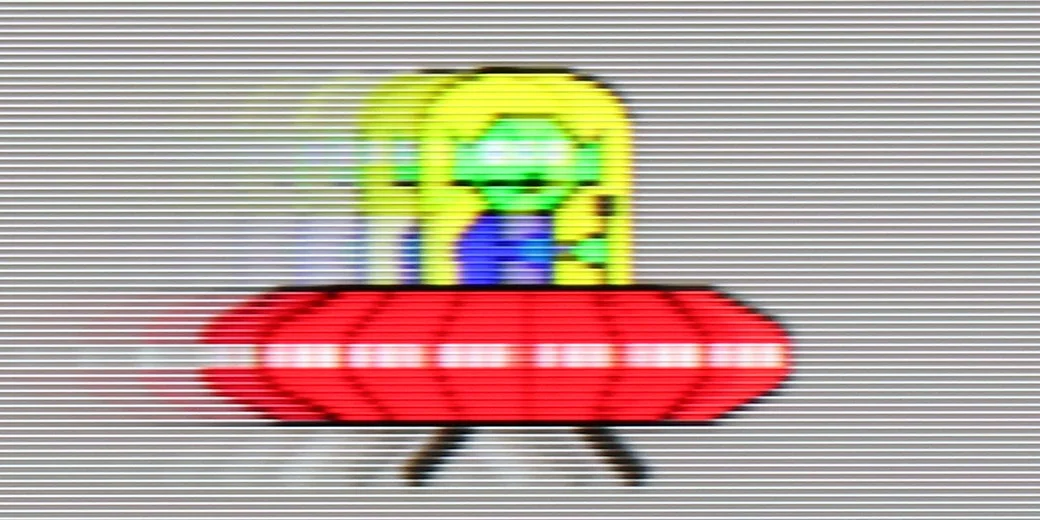
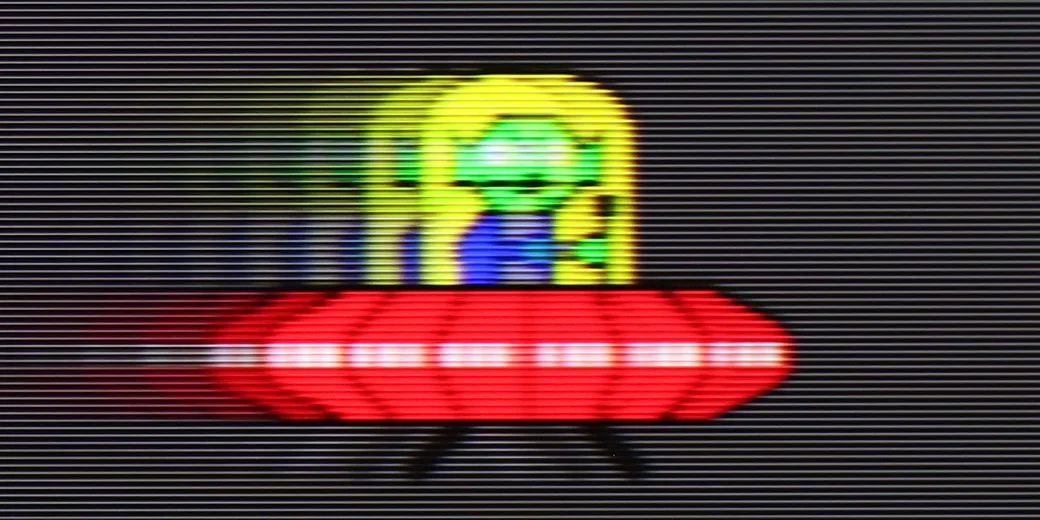
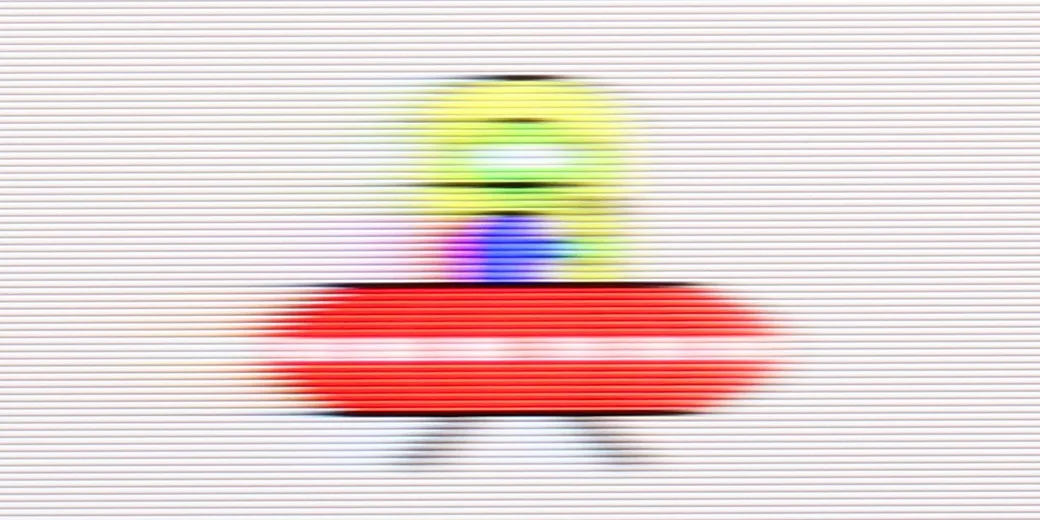
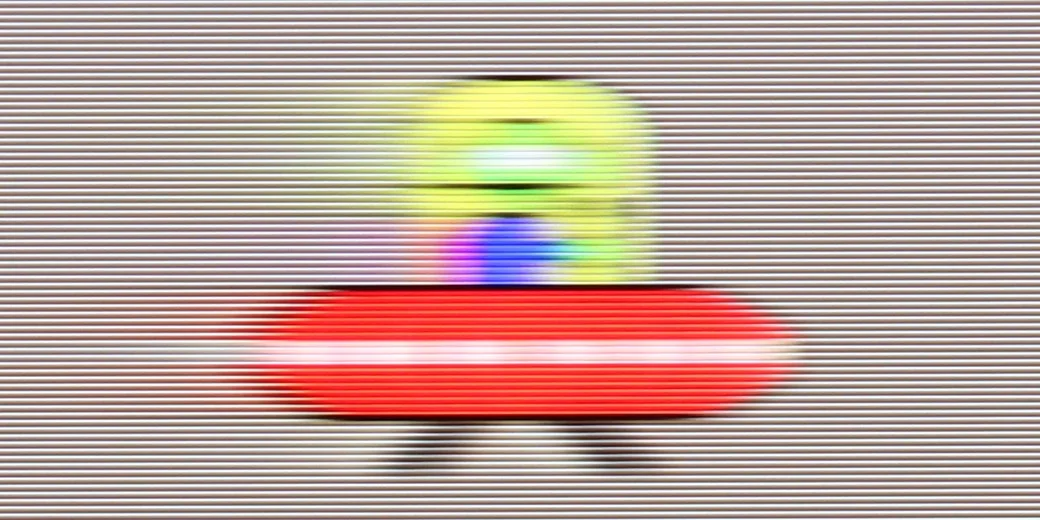
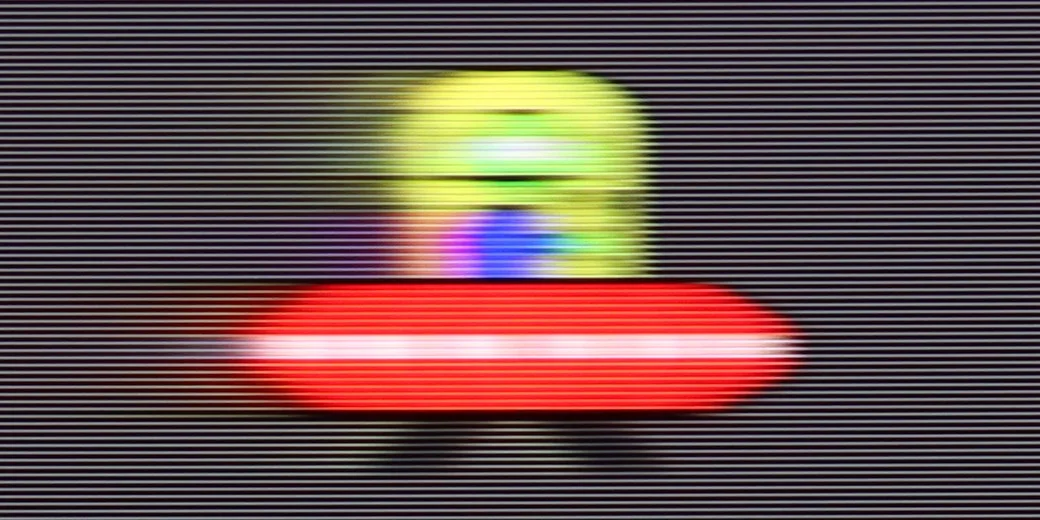
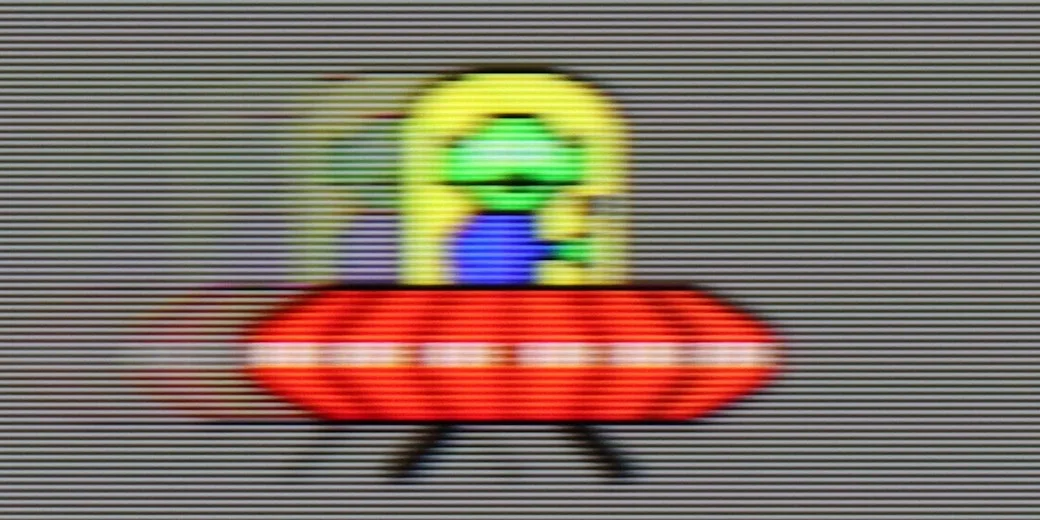
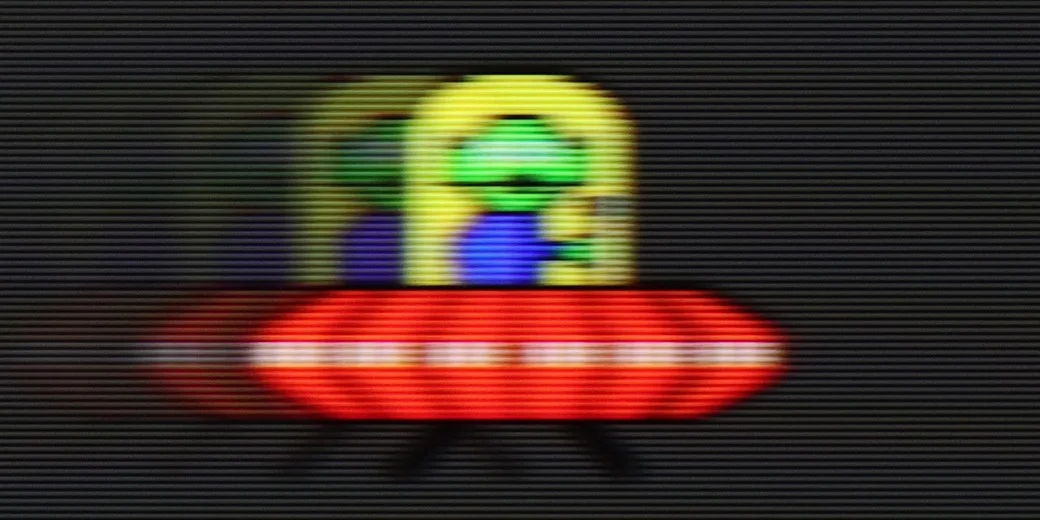
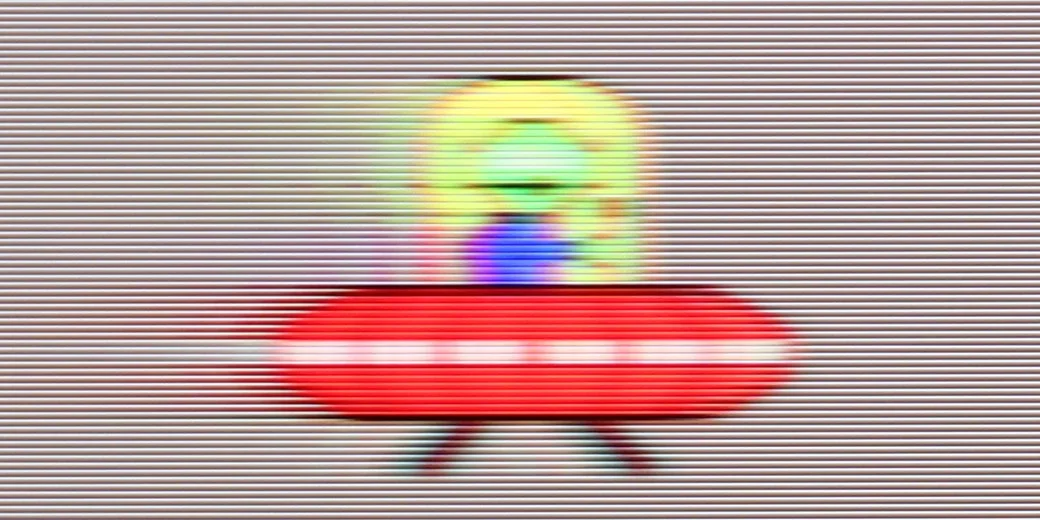
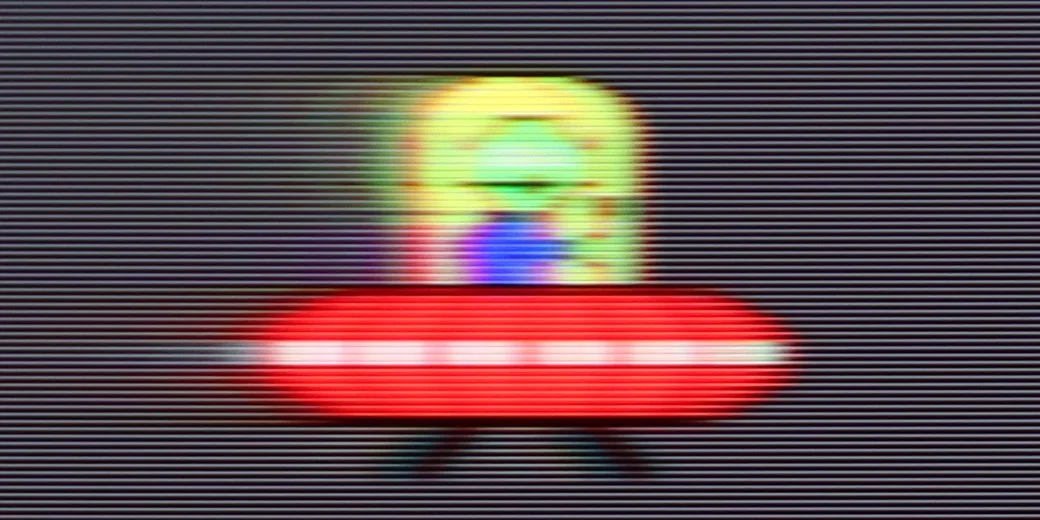
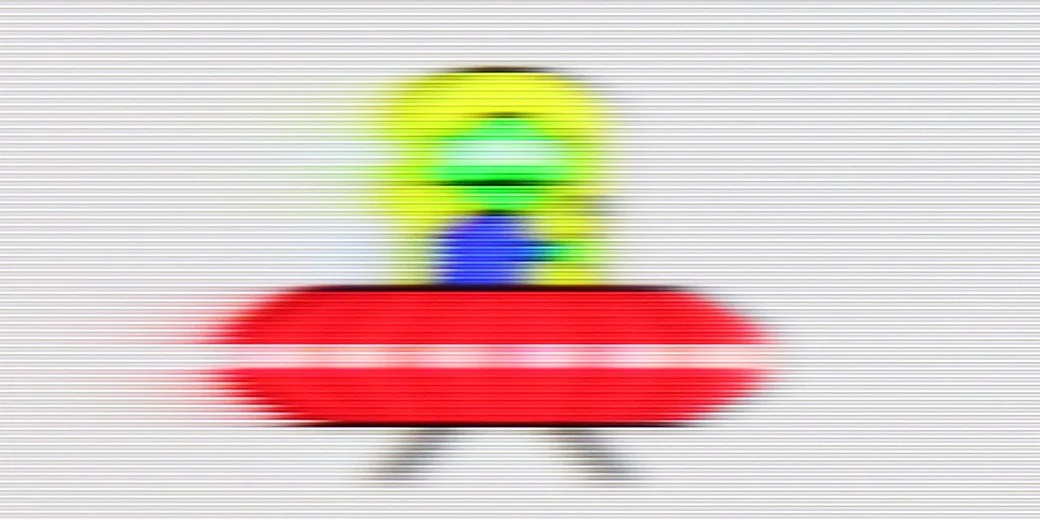
QN80F features a 144 Hz panel, and this is evident in practice – with full refresh, the image is incredibly smooth, and motion blur remains at an acceptable, barely noticeable level. However, this mode is mainly aimed at PC gamers. The most important point of reference in everyday use remains the 120 Hz refresh rate, and here a certain crunch arises. During the UFO test, we noticed ghosting of rapidly moving objects – it looked as if the television had the BFI (Black Frame Insertion) feature permanently enabled, which in practice led to an unpleasant effect of double edges. We still don't know if this is a software issue or a peculiarity of this model, but in its current state, it's hard to commend such behaviour.

The RM7L uses a 144 Hz VA panel, so right from the start it's well prepared for sports, games and other dynamic content. The high refresh rate also gives the motion interpolation more room to work, so it can generate additional frames. On the RM7L it performs well and, when set correctly, can noticeably improve motion smoothness without producing an excessive soap opera effect.

Console compatibility and gaming features

9.6/10

9.8/10

  • ALLM
    Yes
    Yes
  • VRR
    Yes
    Yes
  • VRR range
    48 - 144Hz
    48 - 288Hz
  • Dolby Vision Game Mode
    No
    Yes
  • Correct implementation of HGIG
    Yes
    Yes
  • 1080p@120Hz
    Yes
    Yes
  • 1440p@120Hz
    Yes
    Yes
  • 4K@120Hz
    Yes
    Yes
  • Game bar
    Yes
    Yes

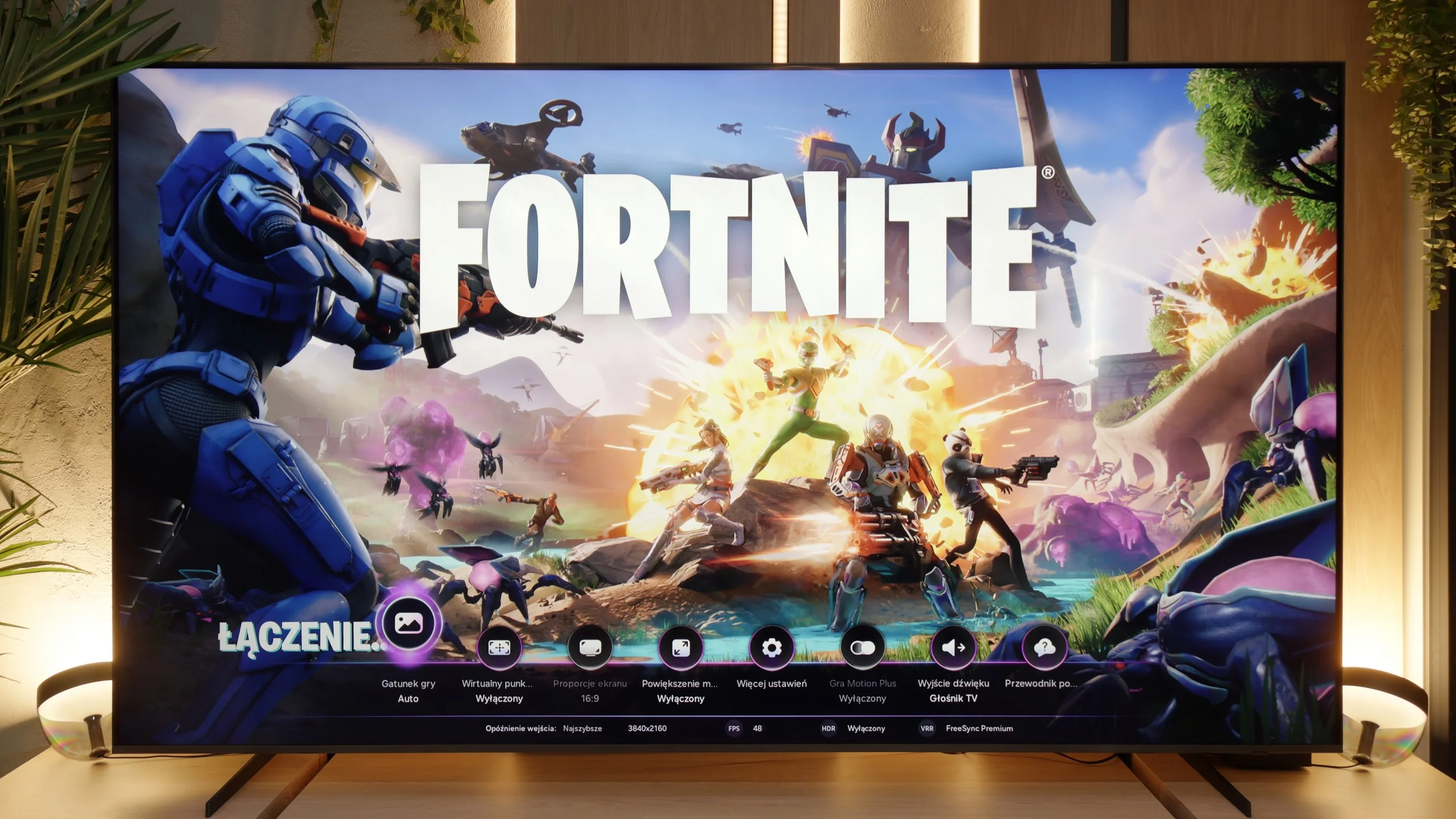
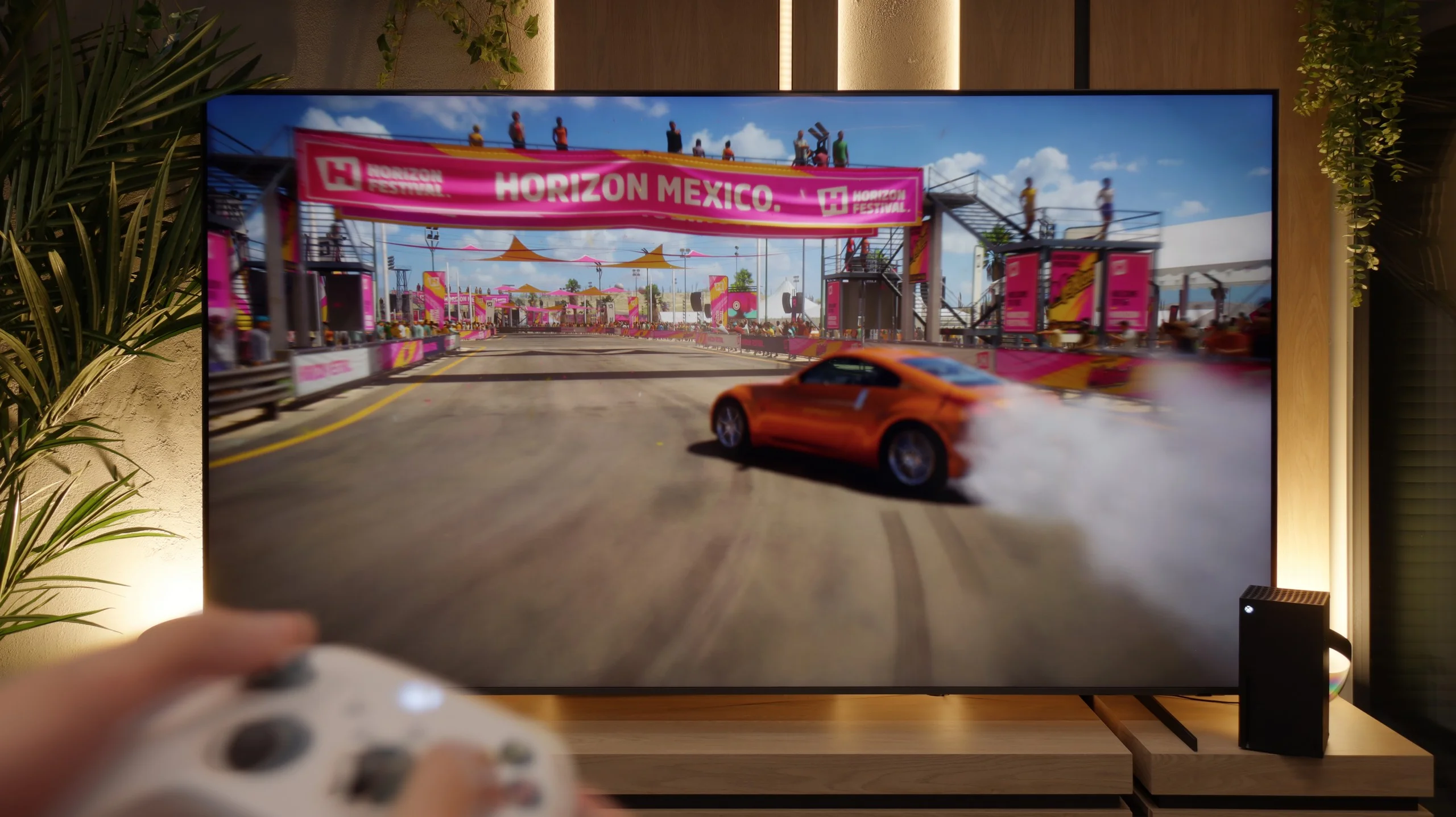
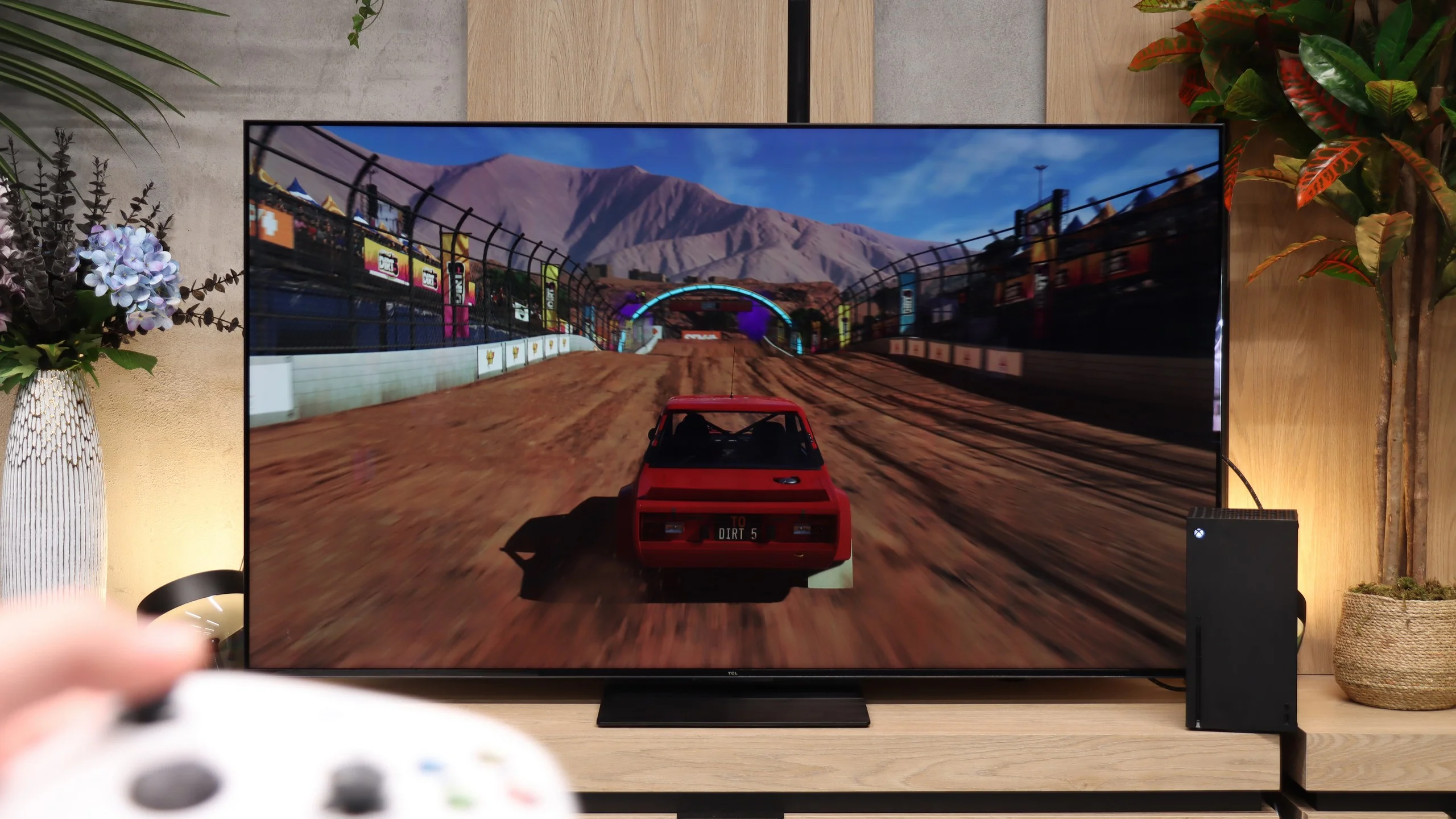
The Samsung QN80F feels like a TV made with gamers in mind. On the list of advantages, we have a 144 Hz display, four fully-fledged HDMI 2.1 ports, complete support for VRR and ALLM, and one of the best-designed game bars on the market. Added to this is the Game Motion Plus motion smoother, which also works in games without actually increasing input lag, making the QN80F a true standout in this category. In practice, this means you can enjoy smoother visuals without losing responsiveness, which is a dream for any console gamer!

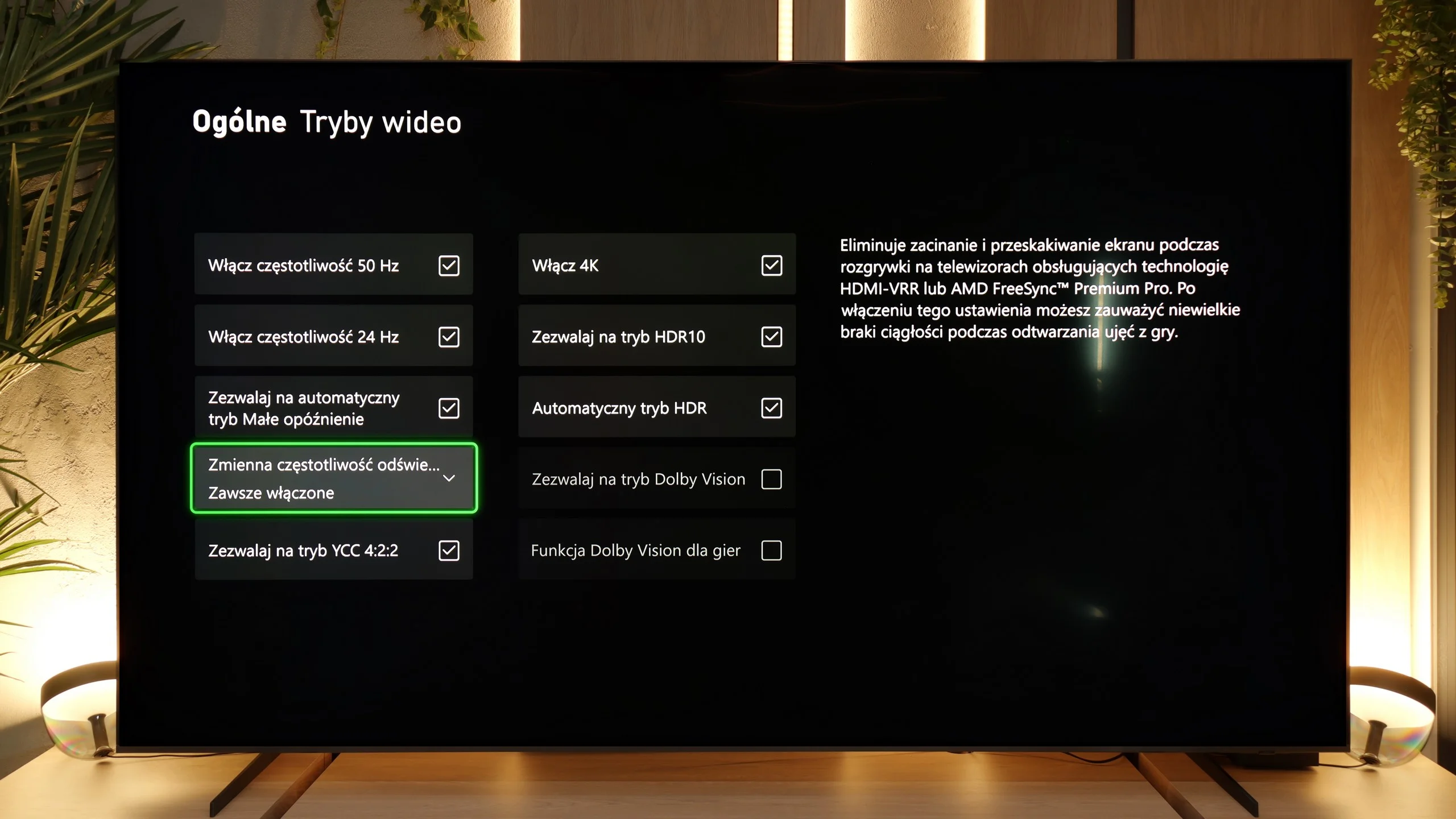
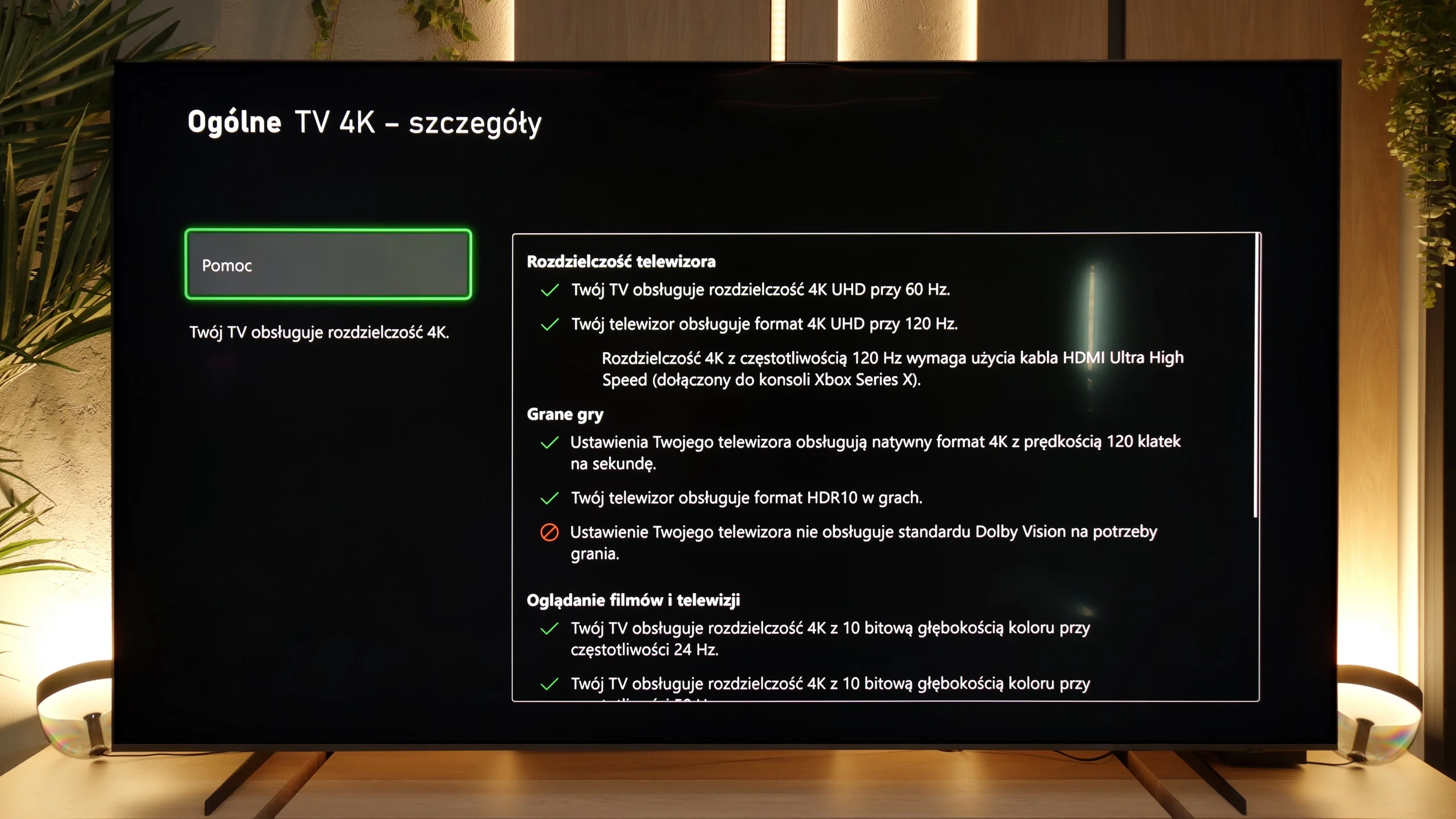
As usual with Samsung, there’s a lack of Dolby Vision in games, and this is no longer surprising. What surprised us much more, however, is that in the models from 2025… the HGIG feature has disappeared. It was this feature that allowed consoles like the PlayStation 5 and Xbox Series X to perfectly match HDR tone mapping to the TV's capabilities. In the current firmware of the QN80F, this option is simply missing – it looks more like a mistake than a conscious decision by the manufacturer, but as of the test day, we have to acknowledge that HGIG is not available. Because of this single omission, the QN80F goes from being an almost perfect gaming TV to just “almost” perfect. It’s a significant shame because, apart from this, Samsung has created a model that truly raises the bar in the gaming equipment segment.

[UPDATE] We have updated our tests of Samsung TVs from the 2025 range due to the release of software version 1131, which has restored the crucial feature HGiG for gamers.

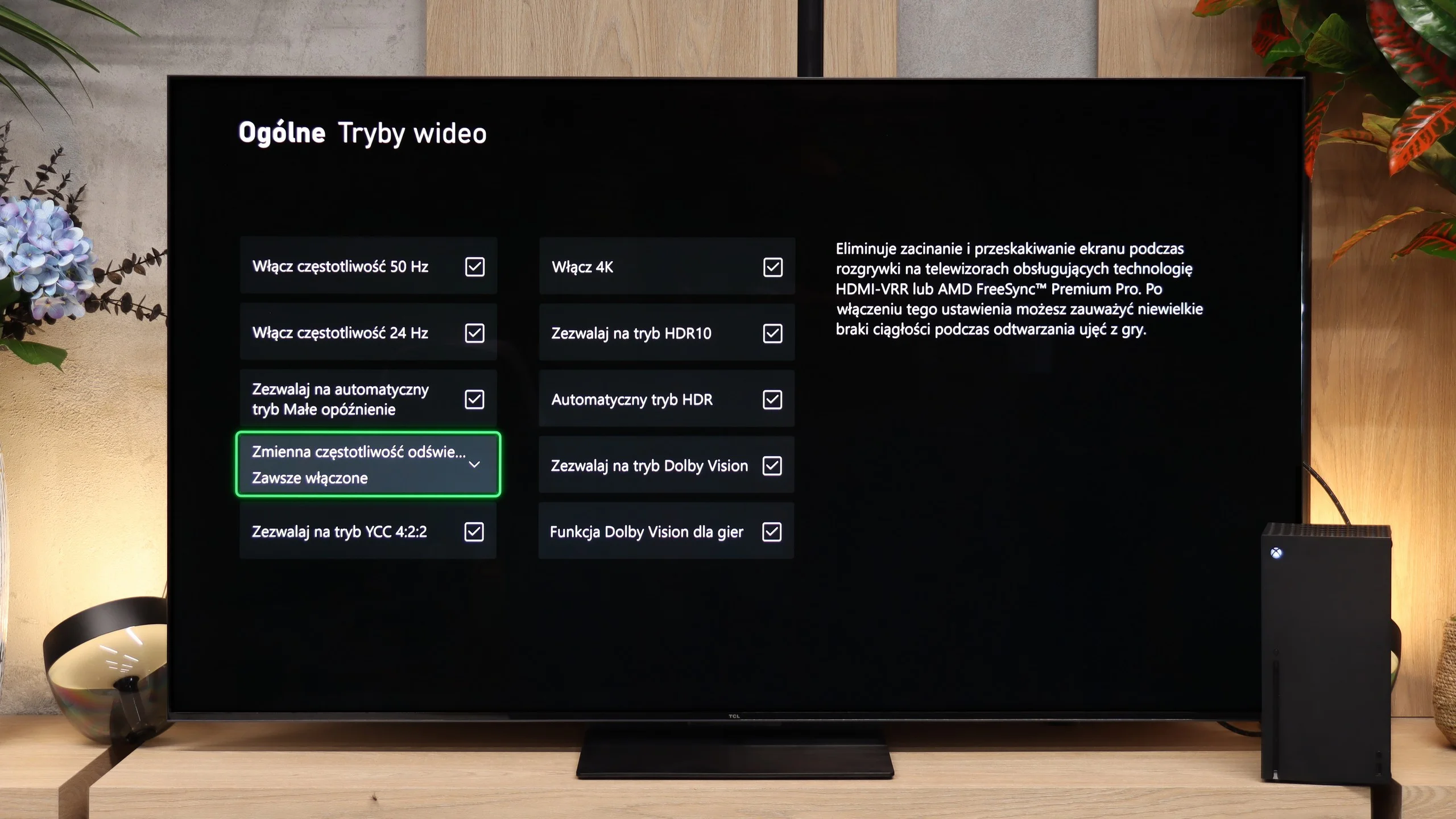
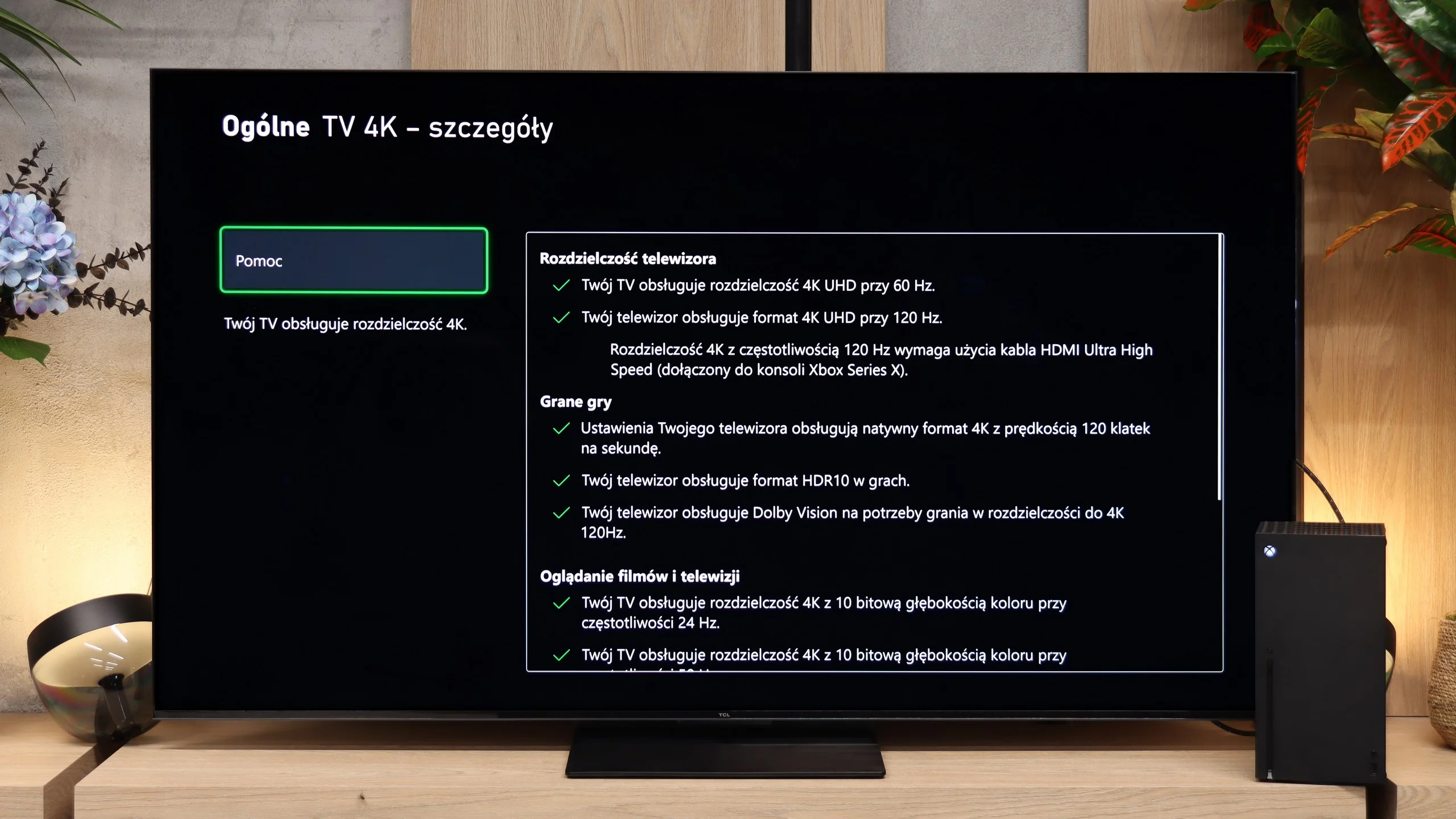
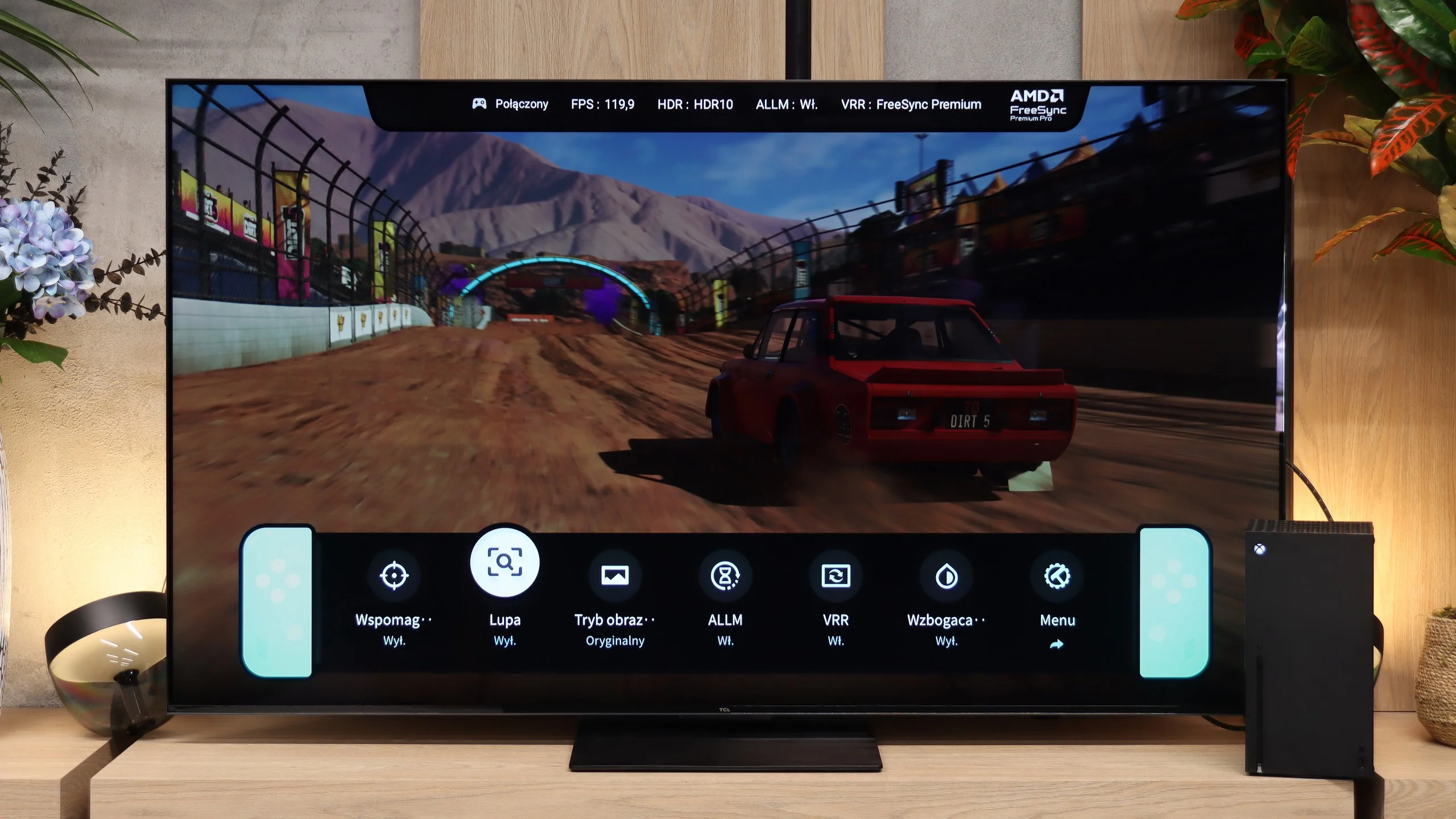
When it comes to gamer-focused features, there's almost nothing but praise for the RM7L. The TV supports ALLM, VRR, Dolby Vision Gaming and works correctly with HGiG, so it's hard to point to any major gaps in that area. In practice that means automatic switching to a low-latency mode, smoother motion with variable frame rates and accurate brightness reproduction in HDR games. There's also a handy Game Bar. From it you can quickly check the frame rate, VRR status, signal format and aspect ratio, and change key settings without leaving the game. TCL has added a few extra options too, such as an on-screen reticle and brightening of dark areas, which can be useful in some titles. The biggest downside comes from using the Pentonic 700 processor. Only two of the four HDMI ports support the full HDMI 2.1 standard. With a single console that won't be a big issue, but if you hook up two consoles and a PC you might run out of ports, especially since one of those ports may also be needed for eARC and a soundbar.

Input lag

9.8/10

9.9/10

SDR

1080p60
17 ms
14 ms
1080p120
8 ms
9 ms
2160p60
17 ms
14 ms
2160p120
8 ms
9 ms

HDR

2160p60
17 ms
14 ms
2160p120
8 ms
9 ms
4320p60

Dolby Vision

2160p60 DV
14 ms
2160p120 DV
9 ms

Input lag is something that can ruin the whole fun, but fortunately, there’s nothing to worry about with the QN80F. At 120 Hz, the lag drops below 10 ms, so it feels like the TV doesn’t even exist between the controller and the image. The response is instantaneous, everything happens exactly when we want it to. At 60 Hz, the result is around 17 ms – that’s more, but still within the bounds of full comfort. In practice, console games look and run smoothly, with no annoying lags at all. This is the moment when you can see that Samsung really has put effort into the gaming mode – the QN80F provides a sense of control and speed that one would expect more from a monitor than from a 100-inch behemoth in the living room.

Input lag in the RM7L is low. With a 120 Hz signal it falls below 10 ms, and at 60 Hz it's just under 15 ms. In practice the response to controls is immediate, and even the lower numbers seen on OLEDs don't give a noticeable advantage here. Dolby Vision Gaming also performs well. Input lag in that mode remains at the same level as in the other gaming modes, which is still not standard across all TVs.

Compatibility with PC

8.6/10

8.4/10

Chroma 444 (max. resolution and refresh rate)
Yes
Yes
Font clarity
Very Good
Good
Readability of dark text and shapes
Average
Good
Input lag in PC mode (4K, max. refresh rate)
8ms
8ms
Matrix subpixel arrangement
BGR
RGB
Max refresh rate
144Hz
144Hz
G-Sync
Yes
Yes

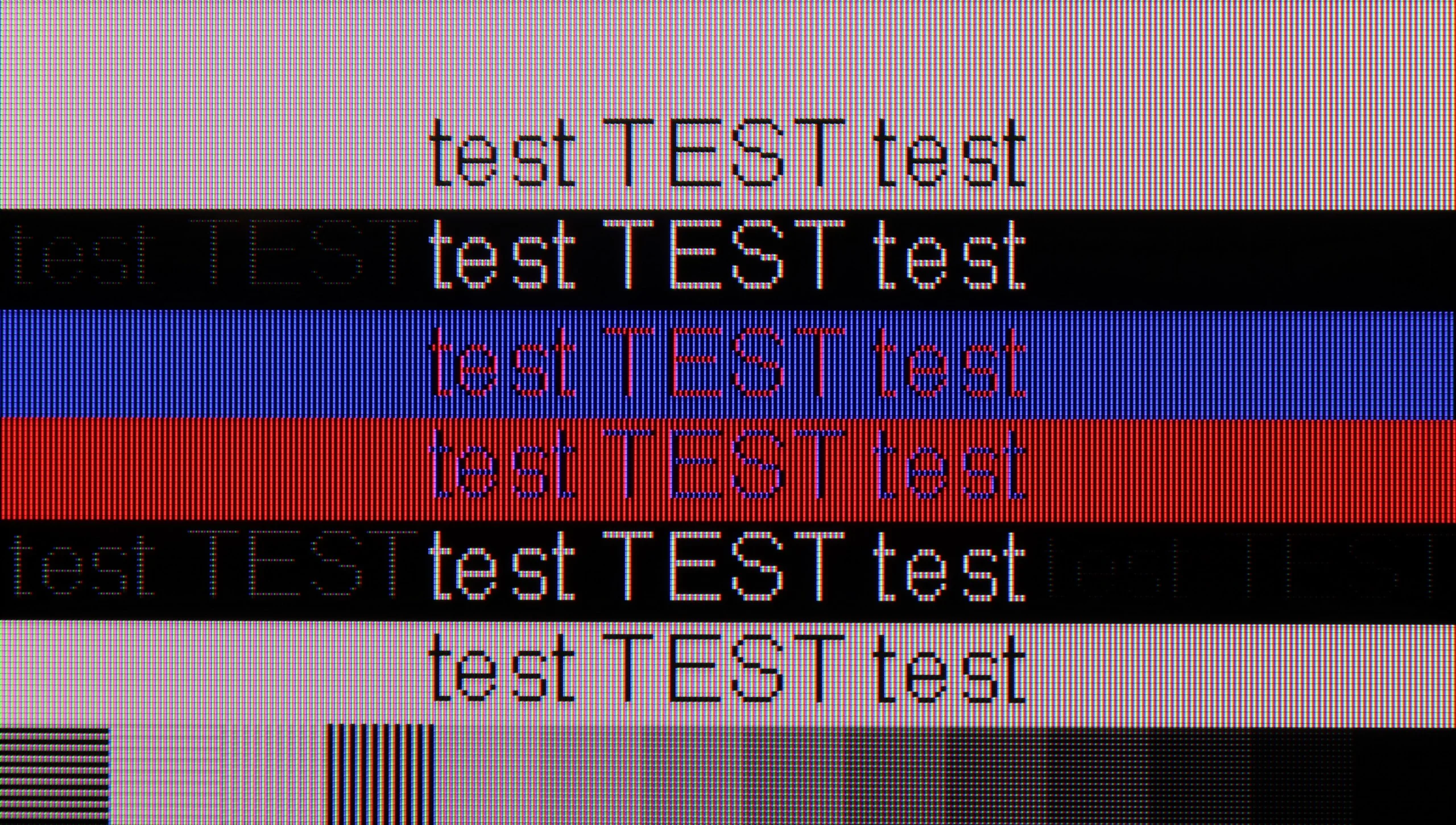
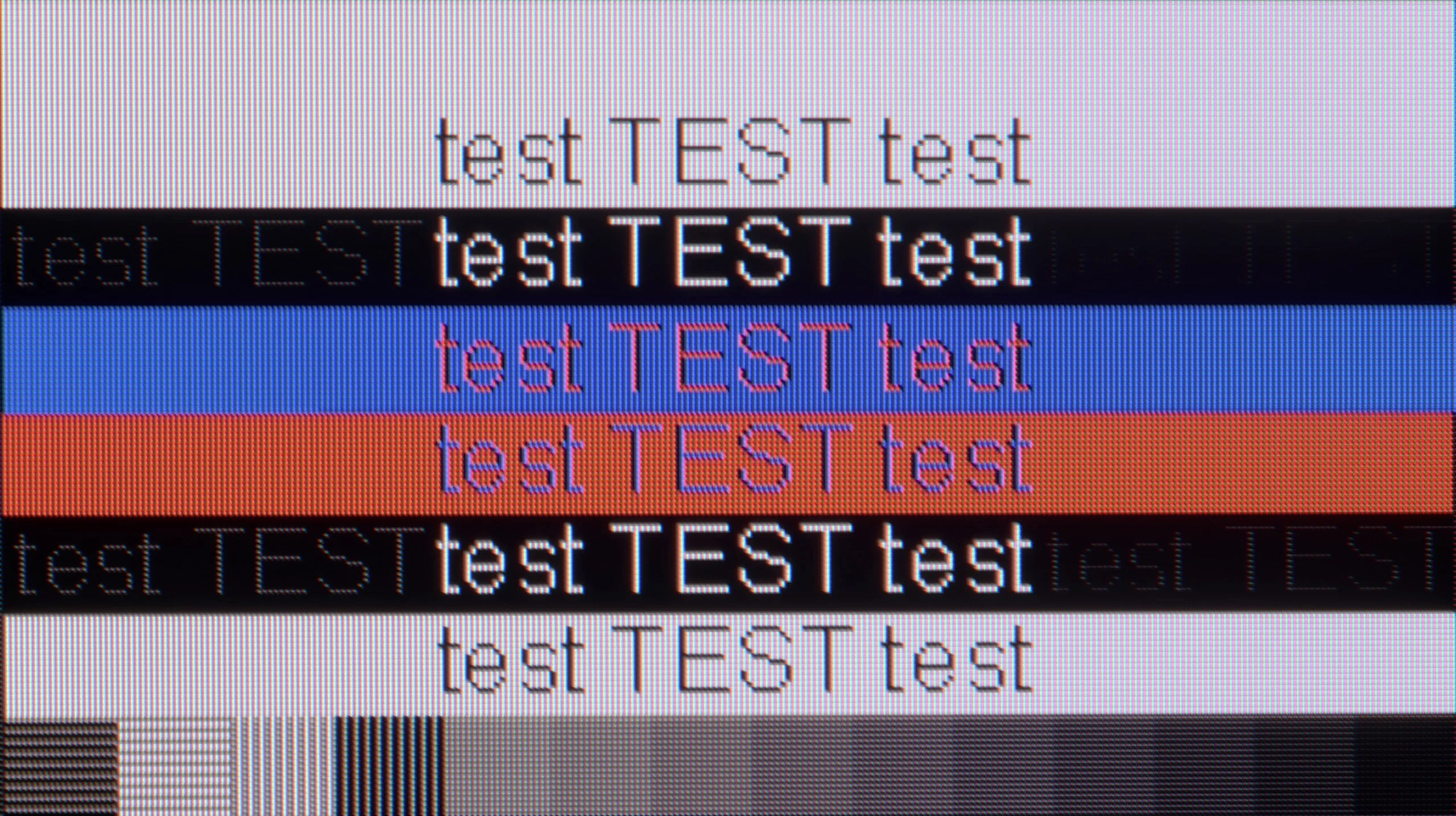
The photo shows the legibility of small fonts. Ideally, lines should be the same thickness on both light and dark text, with minimal pixel gaps.
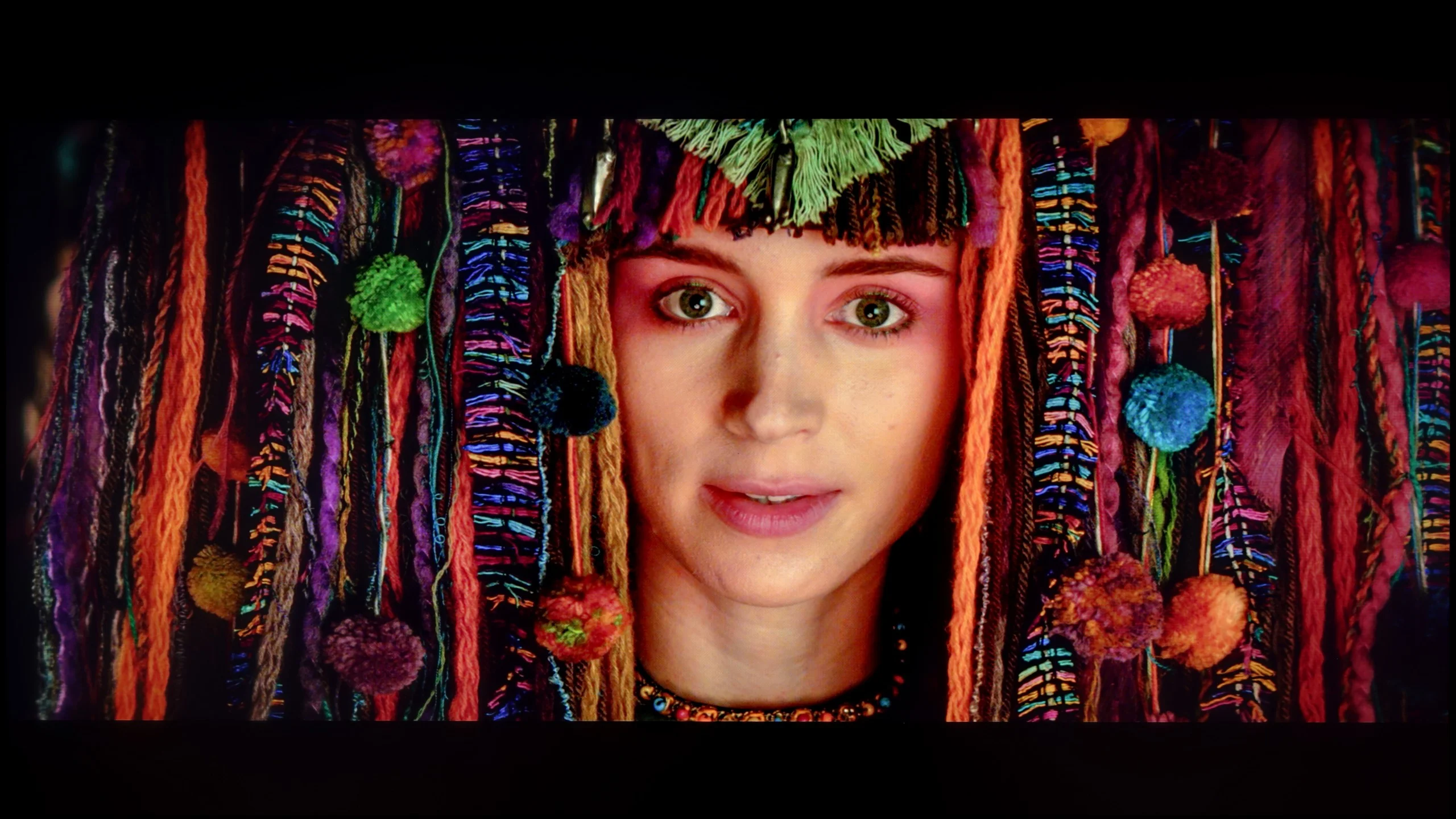
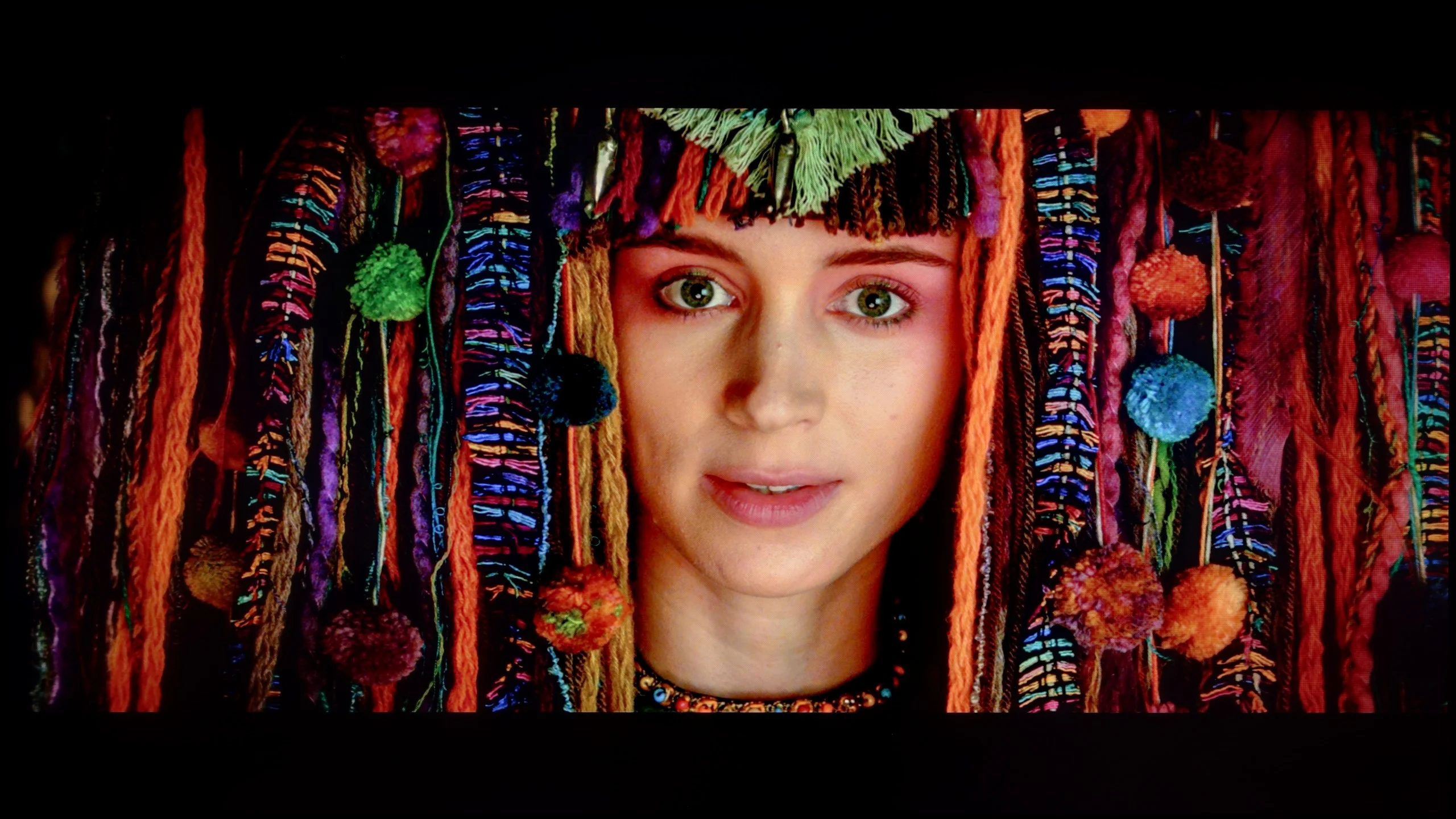
There’s something a bit odd about collaborating with a PC on the QN80F. When it comes to gaming, there’s no reason to worry: we have full support for 144 Hz, both G-Sync and FreeSync work, and the smoothness is truly impressive. The problem only arises during everyday computer use – particularly when we're looking at fonts instead of games. In 120 Hz mode, the picture looks nearly perfect. The letters are readable and sharp, and the only small detail you might notice is a slight dimming of thin lines. However, that’s a detail that shouldn't interfere with normal usage. Bigger issues arise at 144 Hz, which is meant to be designed for PC gamers. Instead of crystal clear fonts, a strange anomaly appears. The TV adds shadows with tiny dots to them, making the text look just odd. Thankfully, it’s more of a curiosity than a real problem. After all, it’s hard to imagine someone placing a 100-inch giant on their desk and staring at Excel sheets or Word documents from half a metre away. The QN80F is excellent for gaming, and for regular PC use, it’s better to simply stick with 120 Hz mode.
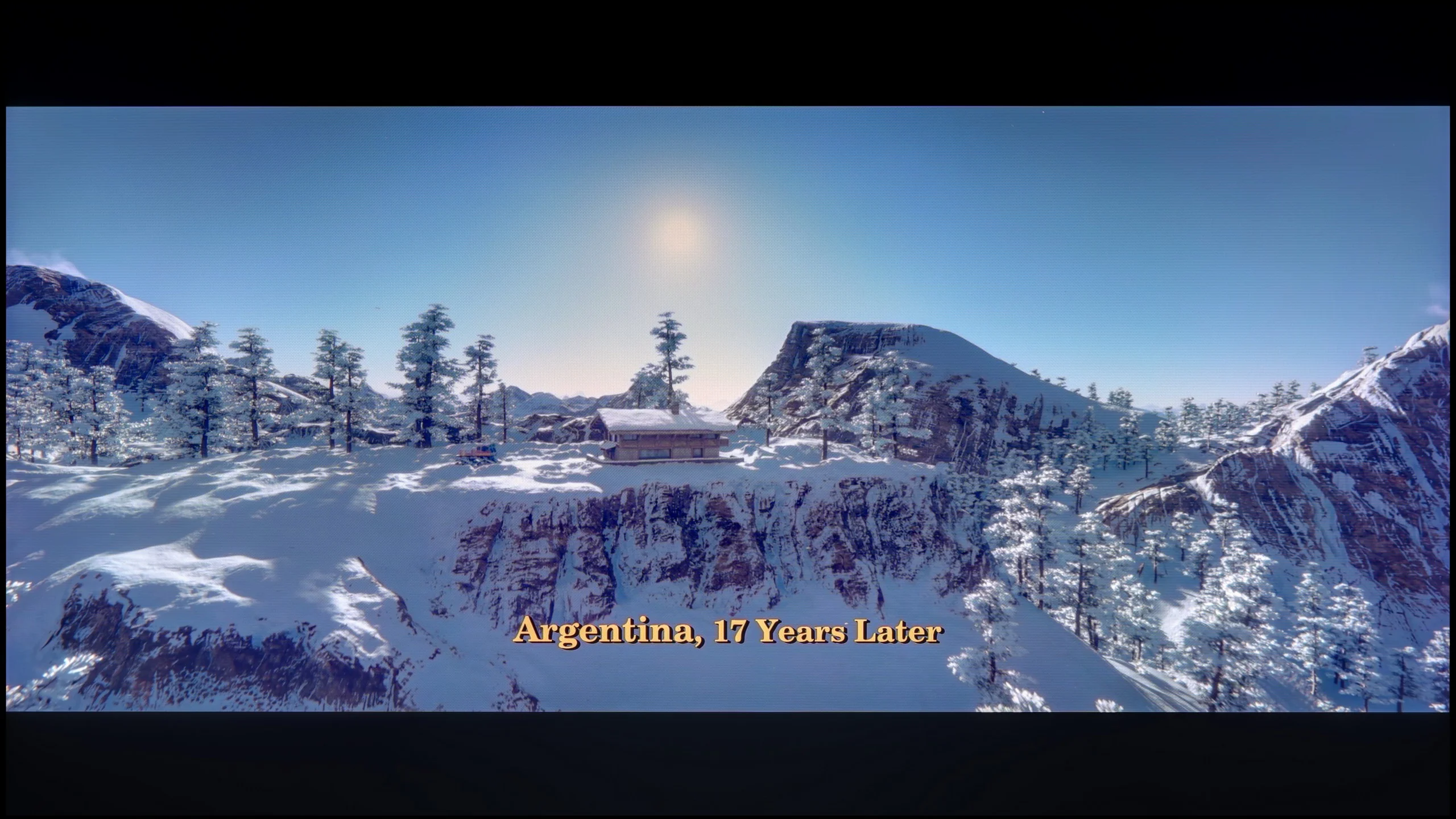
Working with a PC on the RM7L is very good, especially if you treat it as a gaming display. The TV supports 4K at 144 Hz, and dropping to Full HD can push the refresh rate as high as 288 Hz. It also supports G-Sync and FreeSync, so there's little to complain about in terms of smoothness. Text handling is a bit weaker. At the maximum refresh rate, letters viewed up close are not perfectly sharp and you can notice a faint shadow behind them. Switching to 120 Hz improves the situation, though they're still not perfect. That said, it's hard to call this a serious flaw, since given the sizes the RM7L is available in, it's unlikely to be used on a desk as a monitor for document work.

Viewing angles

3.1/10

4.5/10

Brightness drop at an angle of 45 degrees
71%
81%

The viewing angles are unfortunately a weak point of the QN80F. With smaller TVs, it's still bearable, but with a 100-inch model, the flaw becomes much more noticeable. Just sitting slightly off to the side is enough for the edges of the screen to appear fainter than the centre. And when we try to watch something from a greater angle, the image simply loses its charm – colours become washed out, contrast drops, and there's no longer the depth that you see head-on. It's a pity that with such a large screen, Samsung didn't opt for coatings that would expand the angles. This is where they would make the most sense, as it's hard to expect everyone in the living room to sit perfectly in front of the screen. If someone primarily cares about wide angles, they should be looking for mini-LEDs on an IPS panel – these may not have such deep blacks, but in terms of side viewing, they perform much better.

The viewing angles on the RM7L are pretty good and among the better ones you’ll find on TVs with a VA panel. Even when looking at the screen from the side, colours don’t shift as much as they do on many classic designs of this type. In that respect the RM7L can be compared to the better WHVA panels used in higher-end TCL series like the C8L and X11L. There is, however, one clear downside. As the viewing angle increases the picture brightness falls very quickly. Colours and the overall character of the image remain relatively intact, but the screen itself becomes noticeably darker. At very wide off-centre angles the difference is large enough that the picture can simply look too dark. For that reason the RM7L is best watched as close to the centre of the screen as possible.

Daytime performance

7/10

7.8/10

Panel finish
Satin
Glare
Reflection suppression
Decent
Poor
Black levels during daytime
Very Good
Very Good

Panel brightness

TCL RM7L: 959 cd/m2

Samsung QN80F 100" : 623 cd/m2

The performance of the QN80F during the day is an interesting topic because the 100-inch version differs from the smaller sizes not only in scale but also in the coating used. Samsung has opted for a different type of anti-reflective layer here, and it's fair to say that the effect is not as good as in the smaller models – reflections are somewhat more noticeable, especially with bright light coming in from the window. On the other hand, the manufacturer has found a way around this, as the 100-inch QN80F compensates with its sheer brightness. The average luminance in SDR content exceeds 620 nits, which practically provides a strong reserve for viewing even in brightly lit rooms. In everyday use, the difference between the weaker reflection suppression and higher brightness is practically negated – the television maintains readability and does not lose clarity even in the middle of the day. The end result is that although the coating in this version is not among the best, the high brightness of the QN80F performs better in bright conditions than one might expect.

The RM7L should perform well in a bright living room, mainly thanks to its high SDR brightness. With everyday content the TV averages around 1000 nits, so it easily cuts through light entering the room and keeps the picture readable during the day. The weaker point is the glossy panel coating. Direct reflections are quite noticeable, and stronger light sources can also spread across the screen surface. For that reason it's best not to position the TV facing a window or a lamp. With the right placement, however, the RM7L will still be an excellent choice for a brightly sunlit room.

Panel details

Backlight Type
Mini-LED QLED
Mini-LED RGB + PFS
Software version during testing
T-PTMFDEUC-0090-1110.7, E2500007, BT-S
V8-0012T01-LF1V641.003171
Image processor
MT5896 2,5GB RAM

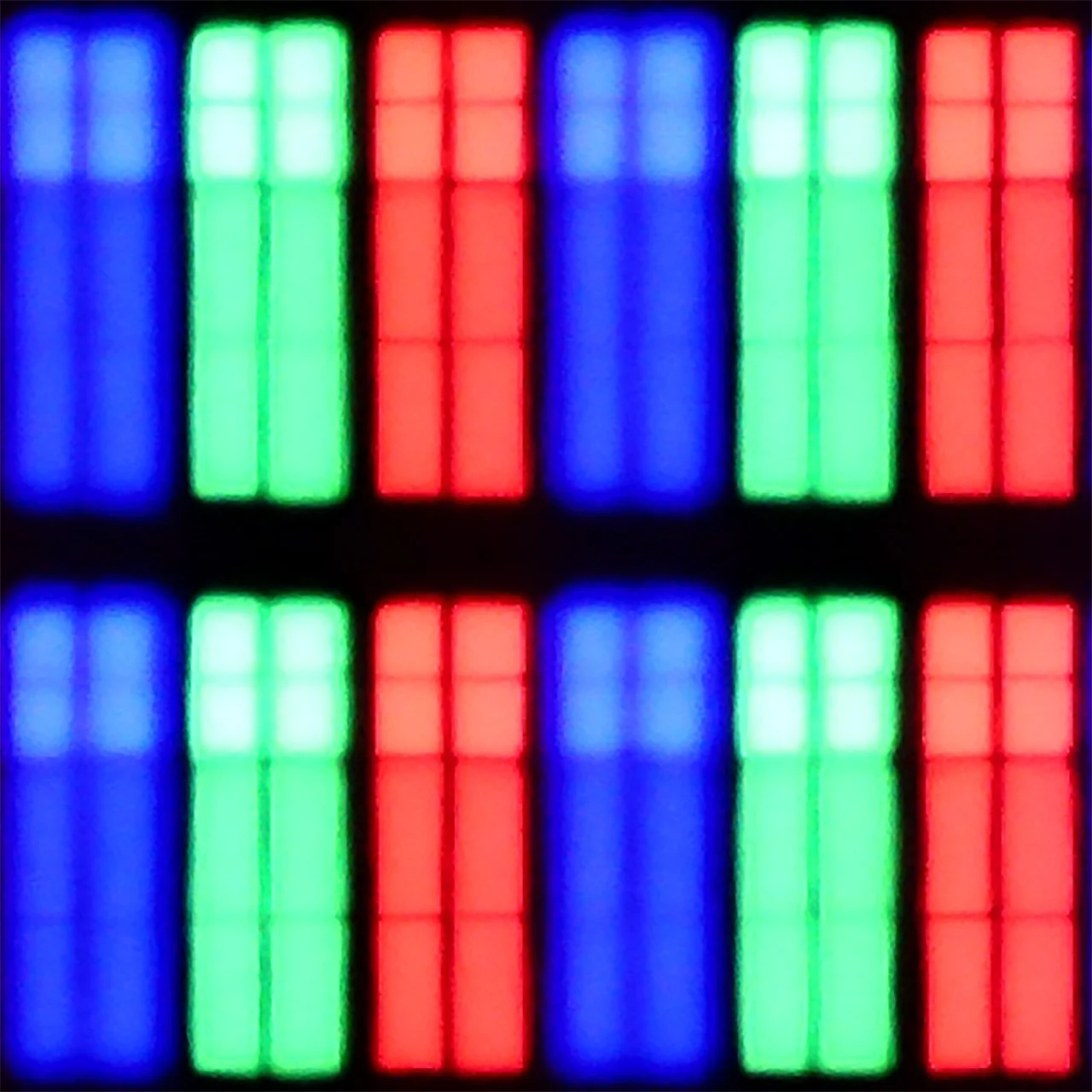
Subpixel Structure:

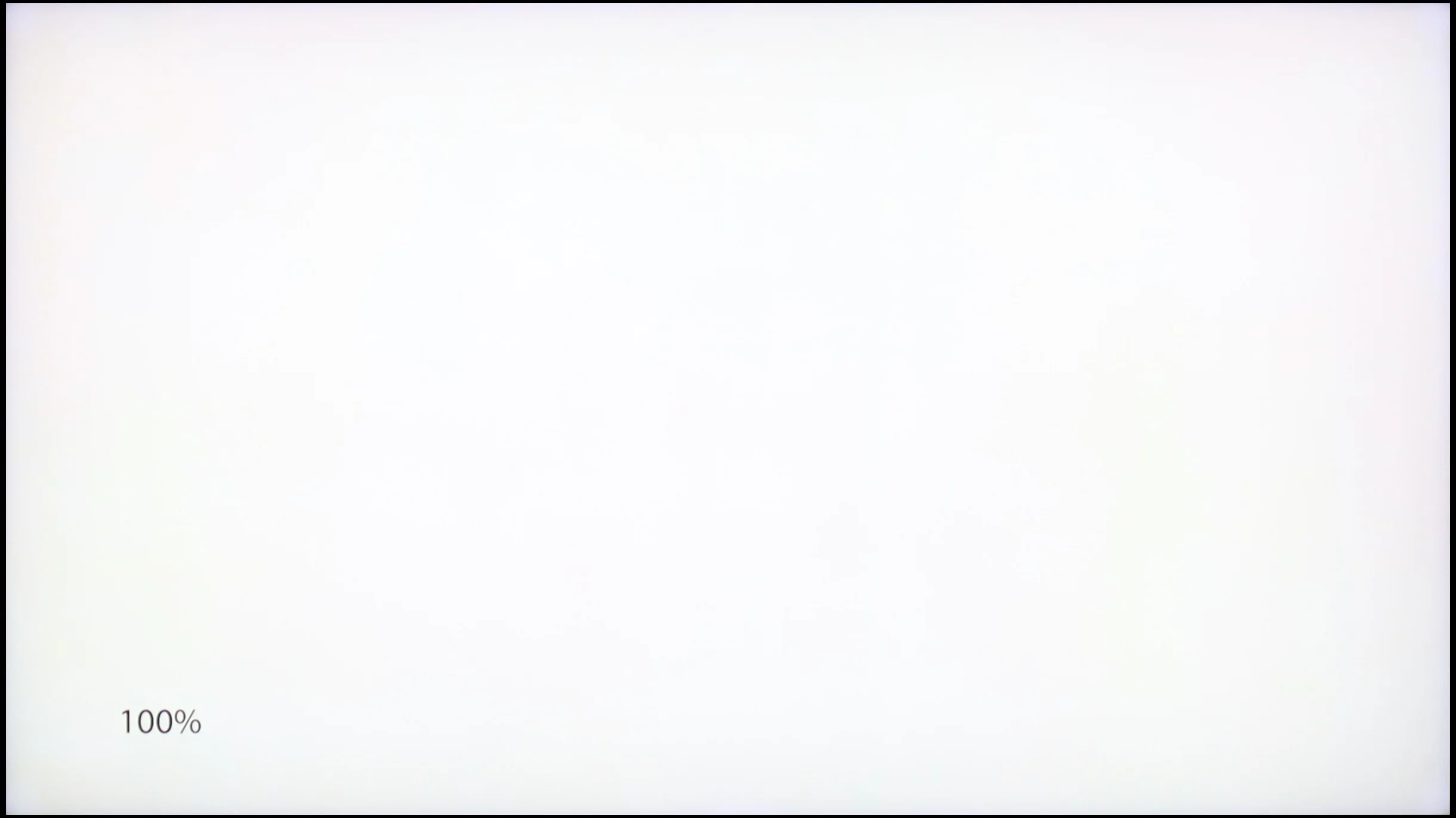
Panel uniformity and thermal imaging:

Review Samsung QN80F 100" TV Panel details
Review TCL RM7L TV Panel details

Samsung QN80F 100"

TCL RM7L

TV features

7.7/10

7.8/10

  • System
    Tizen
    Google TV
  • System performance
    Very good
    Good
  • HDMI inputs
    0 x HDMI 2.0, 4 x HDMI 2.1 48Gbps
    2 x HDMI 2.0, 2 x HDMI 2.1 48Gbps
  • Outputs
    Toslink (Optical audio), eARC (HDMI), ARC (HDMI)
    Toslink (Optical audio), eARC (HDMI), ARC (HDMI)
  • Network Interfaces
    Wi-Fi 2.4GHz, Wi-Fi 5GHz, Ethernet (LAN) 100Mbps
    Wi-Fi 2.4GHz, Wi-Fi 5GHz, Ethernet (LAN) 100Mbps
  • TV reception
    DVB-T, DVB-T2, DVB-S, DVB-S2, DVB-C
    DVB-T, DVB-T2, DVB-S, DVB-S2, DVB-C

Classic features:

  • Recording to USB (terrestrial TV)
    No
    No
  • Recording programming
    No
    No
  • Picture in Picture (PiP)
    Yes
    No
  • RF remote control (no need to aim)
    Yes
    Yes
  • Backlit remote control
    No
    No
  • Teletext
    Yes
    Yes
  • Audio only mode
    Yes
    Yes
  • Bluetooth headphones support
    Yes
    Yes
  • Simultaneous Bluetooth headphones & TV audio
    Yes
    Yes

Smart features:

  • AirPlay
    Yes
    Yes
  • Screen mirroring (Windows Miracast)
    Yes
    Yes
  • Voice search
    Yes
    Yes
  • Voice search in native language
    Yes
    Yes
  • Ability to connect a keyboard and mouse
    Yes
    Yes
Review Samsung QN80F 100"  TV features
Review TCL RM7L TV features

Sound connection options

  • HDMI audio
    eARC (HDMI), ARC (HDMI)
    eARC (HDMI), ARC (HDMI)
  • Other audio outputs
    Toslink (Optical audio)
    Toslink (Optical audio)
  • Wireless audio
    Bluetooth, Samsung Q-Symphony (Speaker extension)
    Bluetooth, Samsung Q-Symphony (Speaker extension)

Supported audio formats (external HDMI eARC audio):

  • Dolby Digital Plus 7.1
    Yes
    Yes
  • Dolby True HD 7.1
    Yes
    Yes
  • Dolby Atmos in Dolby Digital Plus (JOC)
    Yes
    Yes
  • Dolby Atmos in Dolby True HD
    Yes
    Yes
  • DTS:X in DTS-HD MA
    No
    Yes
  • DTS-HD Master Audio
    No
    Yes

Senior accessibility

  • Numeric keyboard on TV
    No
    Yes
  • Font size adjustment
    Yes
    Yes
  • Audio description
    Yes
    Yes

SmartTV Features: Tizen

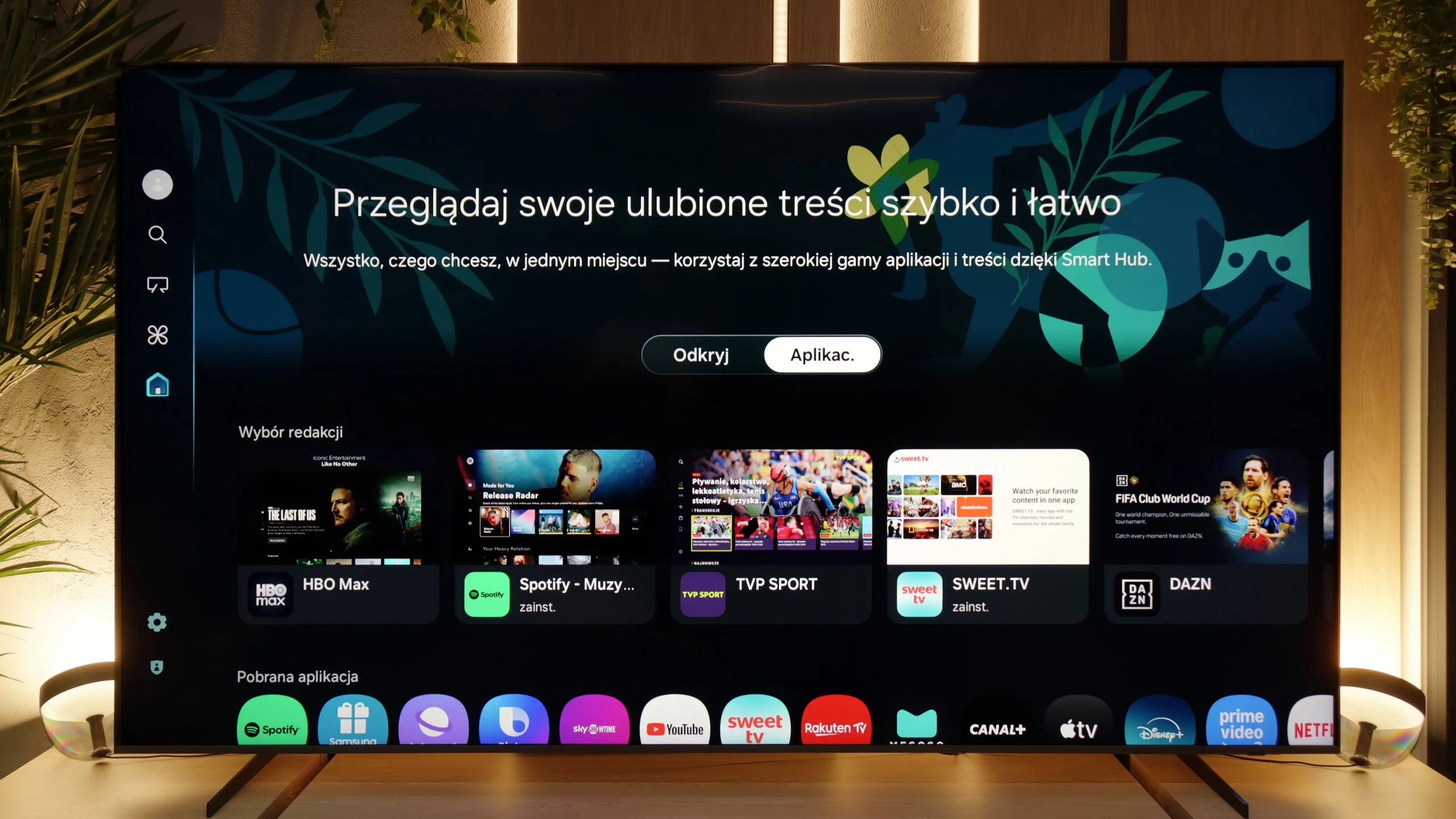
When it comes to smart features, the QN80F has plenty to boast about. Samsung relies on Tizen, and it’s clear that this system has been refined over the years. All the major streaming apps are available, voice search works, and there’s AirPlay and Miracast, so there’s no issue with casting content from your phone or laptop. The most interesting aspect, however, is that the TV can integrate other devices in the home into its ecosystem – with SmartThings and support for the Matter standard, you can connect bulbs, robotic vacuum cleaners, or even devices from other brands. In practice, the QN80F becomes not just a screen for movies, but also a convenient control centre for the entire apartment. Of course, it’s still a closed system, so a few less popular apps might be missing, but let’s be honest – for 99% of users, it has everything they need and even more.

Classic Features

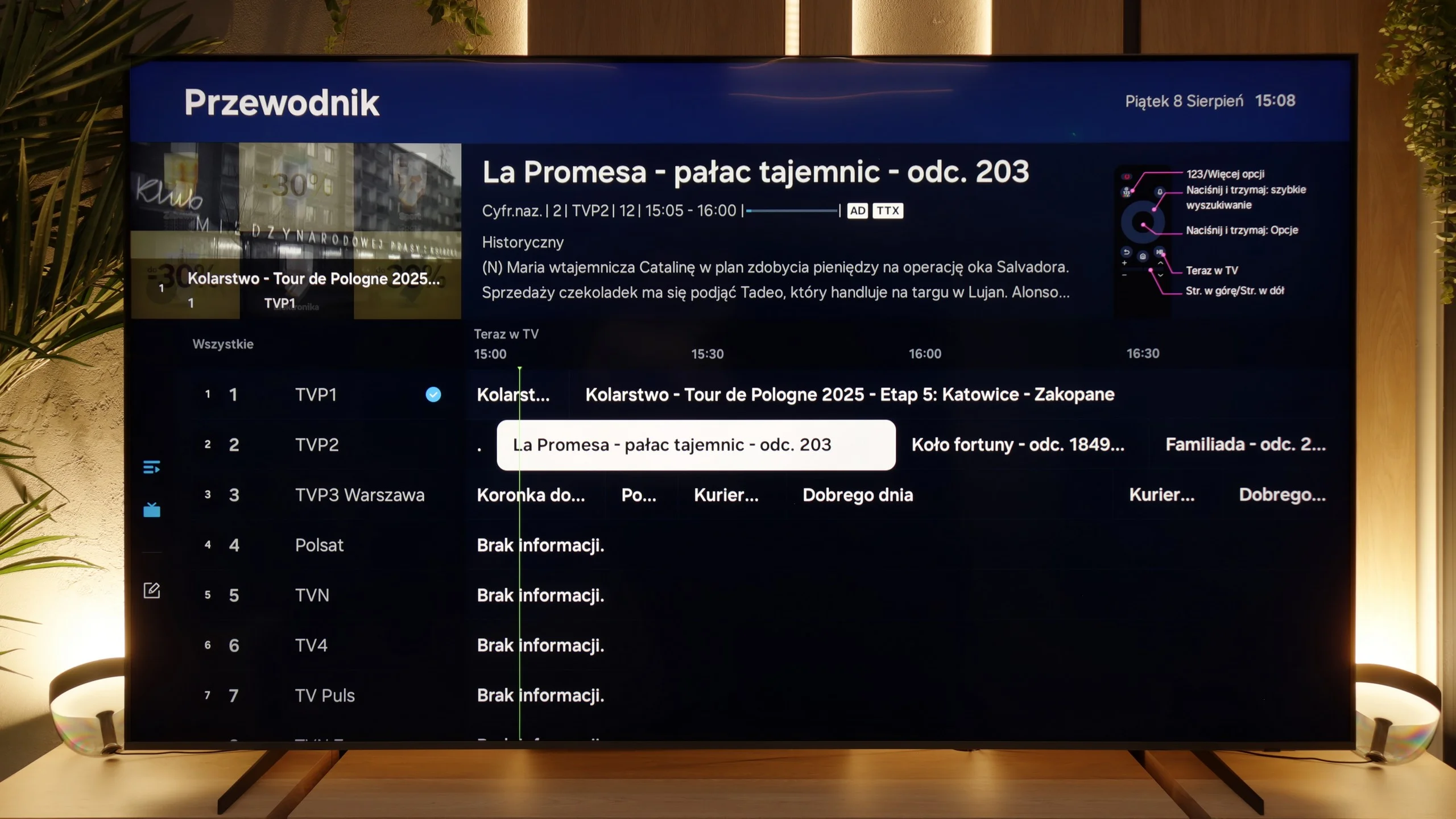
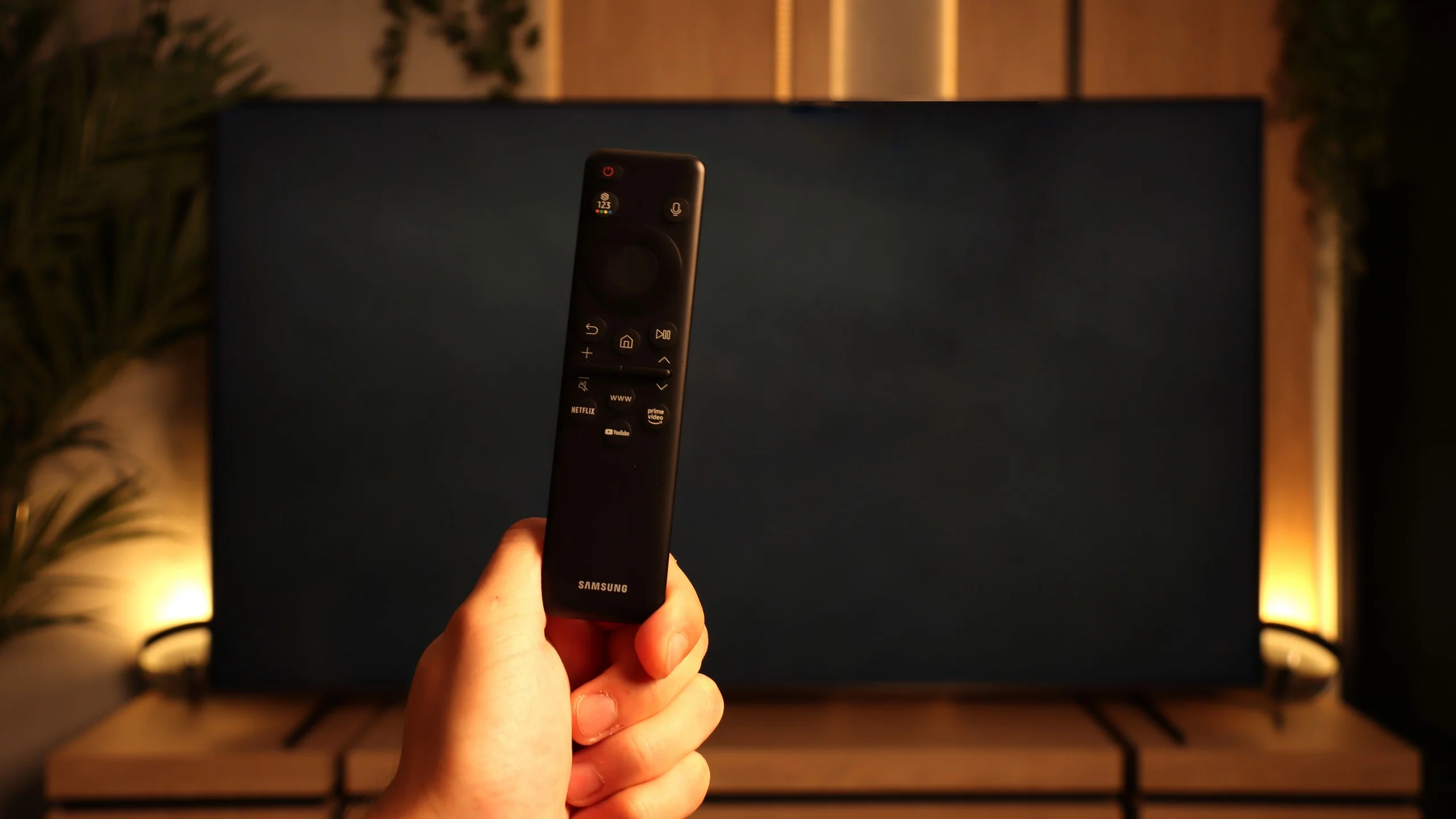
The traditional features on the QN80F perform quite well, although a few things are lacking. On the plus side, it has PiP, or picture-in-picture – a feature that is rarely found these days but can still be very practical. Additionally, we have EPG, still functioning teletext, and Bluetooth support, which makes it easy to pair headphones or a soundbar. On the downside, it lacks USB recording from the built-in tuners, as well as a remote with a traditional numeric keypad. Instead, we get Samsung's signature small remote, which may initially seem too minimalist. It must be noted, however, that this unassuming gadget hides a lot of capabilities and can control other devices, such as satellite decoders, consoles, or Blu-ray players, so in practice, one remote is enough to manage the entire setup in the lounge.

Smart TV features

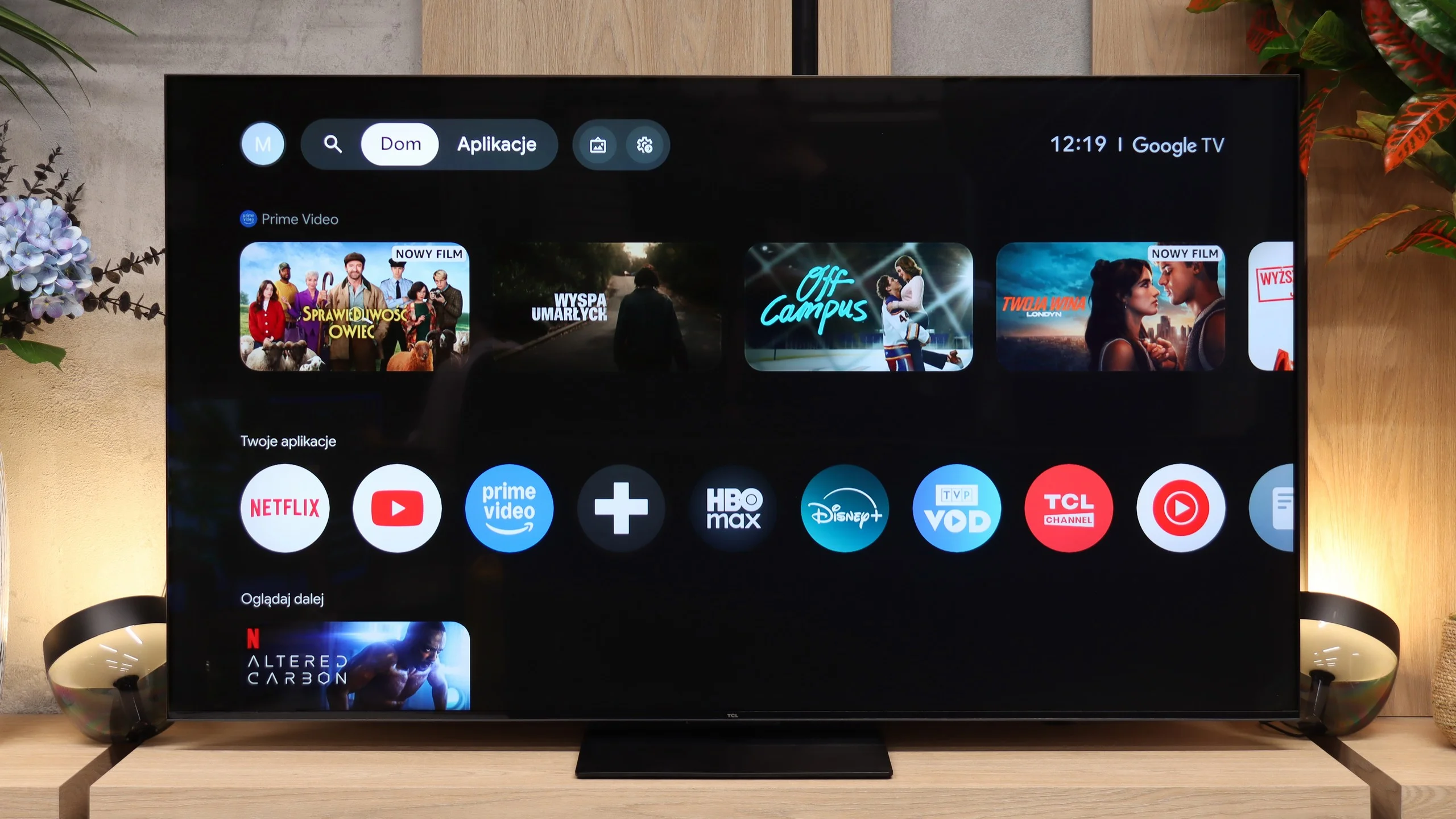
The RM7L runs on Google TV, and that's great news, because it's one of the most polished systems on the market today. The store has practically everything: from the big streaming platforms to lesser-known apps, so you really don't need to worry about a lack of content. It also includes the classics, Chromecast and AirPlay, which let you easily cast or mirror your phone's screen to the big display. An interesting change is the replacement of the previous Google Assistant with Gemini. The new "artificial brain" better recognises natural speech and can answer questions far more sensibly. Everything runs smoothly and delivers exactly what we expect from a TV today.

Traditional TV

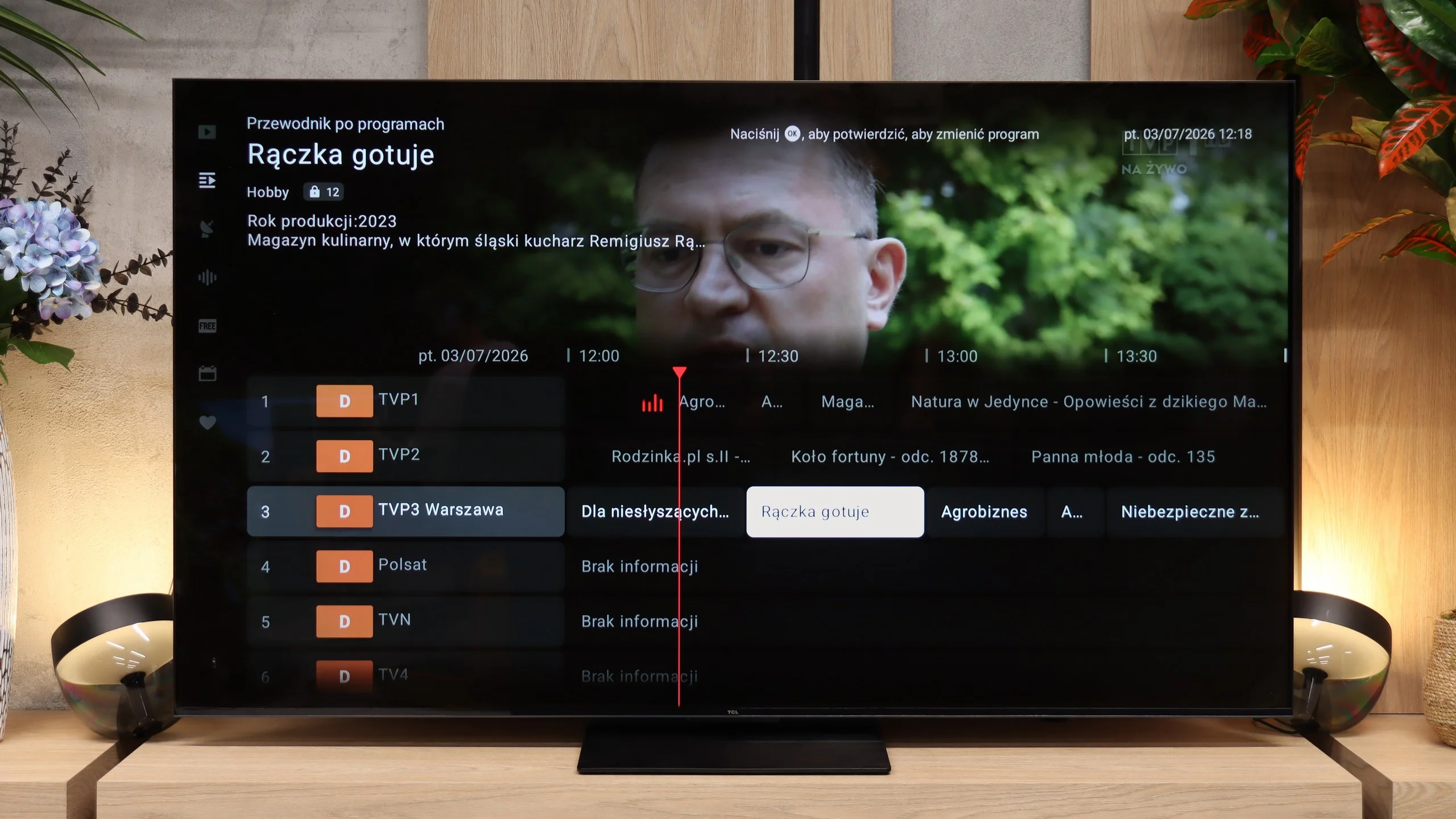
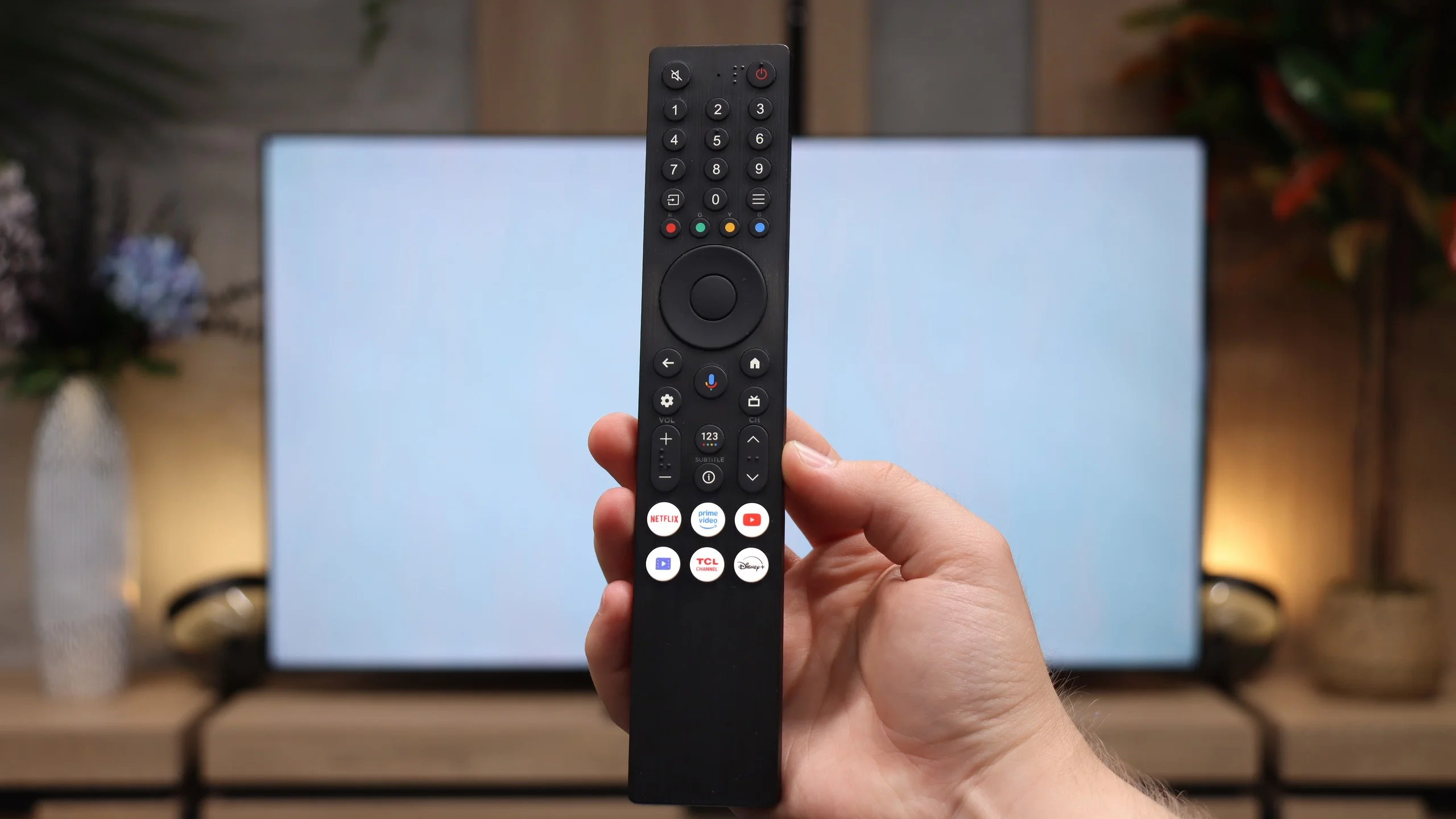
If someone prefers to flick through channels rather than stream, they'll be pleased to find a conventional remote. It has a full numeric keypad and plenty of physical buttons, so operating the TV is quite simple without having to dig through on-screen menus. As for the TV's core features, it's solid. The programme guide (EPG) and changing channels work flawlessly, though you won't find extra features like PiP or PVR.

Apps

9.3/10

9.6/10

OK
Disney_Plus
OK
Amazon_Prime_Video
OK
Player_TVN
OK
Polsat_Box_Go
OK
Canal_Plus_Online
OK
TVP_VOD
OK
Apple_TV_Plus
OK
SkyShowtime
OK
Rakuten
OK
CDA_Premium_Browser
OK
Spotify
No
Tidal
OK
Netflix
OK
YouTube
OK
HBO_MAX
No
Kodi
OK
Apple_music
OK
Eleven_sports
OK
Xbox Game Pass
OK
GeForce NOW
OK
Amazon Luna
OK
Boosteroid
No
Steam Link
OK
Disney_Plus
OK
Amazon_Prime_Video
OK
Player_TVN
OK
Polsat_Box_Go
OK
Canal_Plus_Online
OK
TVP_VOD
OK
Apple_TV_Plus
OK
SkyShowtime
OK
Rakuten
OK
CDA_Premium_Browser
OK
Spotify
OK
Tidal
OK
Netflix
OK
YouTube
OK
HBO_MAX
OK
Kodi
No
Apple_music
OK
Eleven_sports
No
Xbox Game Pass
OK
GeForce NOW
No
Amazon Luna
OK
Boosteroid
OK
Steam Link

Playing files from USB

9/10

9.4/10

Supported photo formats:

JPEG
Yes
Yes
HEIC
No
Yes
PNG
No
Yes
GIF
No
Yes
WebP
No
Yes
TIFF
No
No
BMP
Yes
Yes
SVG
No
No

Maximum photo resolution:

4 Mpix
Yes
Yes
6 Mpix
Yes
Yes
8 Mpix
Yes
Yes
10 Mpix
Yes
Yes
12 Mpix
Yes
Yes
16 Mpix
Yes
Yes
20 Mpix
Yes
Yes
24 Mpix
Yes
Yes
28 Mpix
Yes
Yes
32 Mpix
Yes
Yes

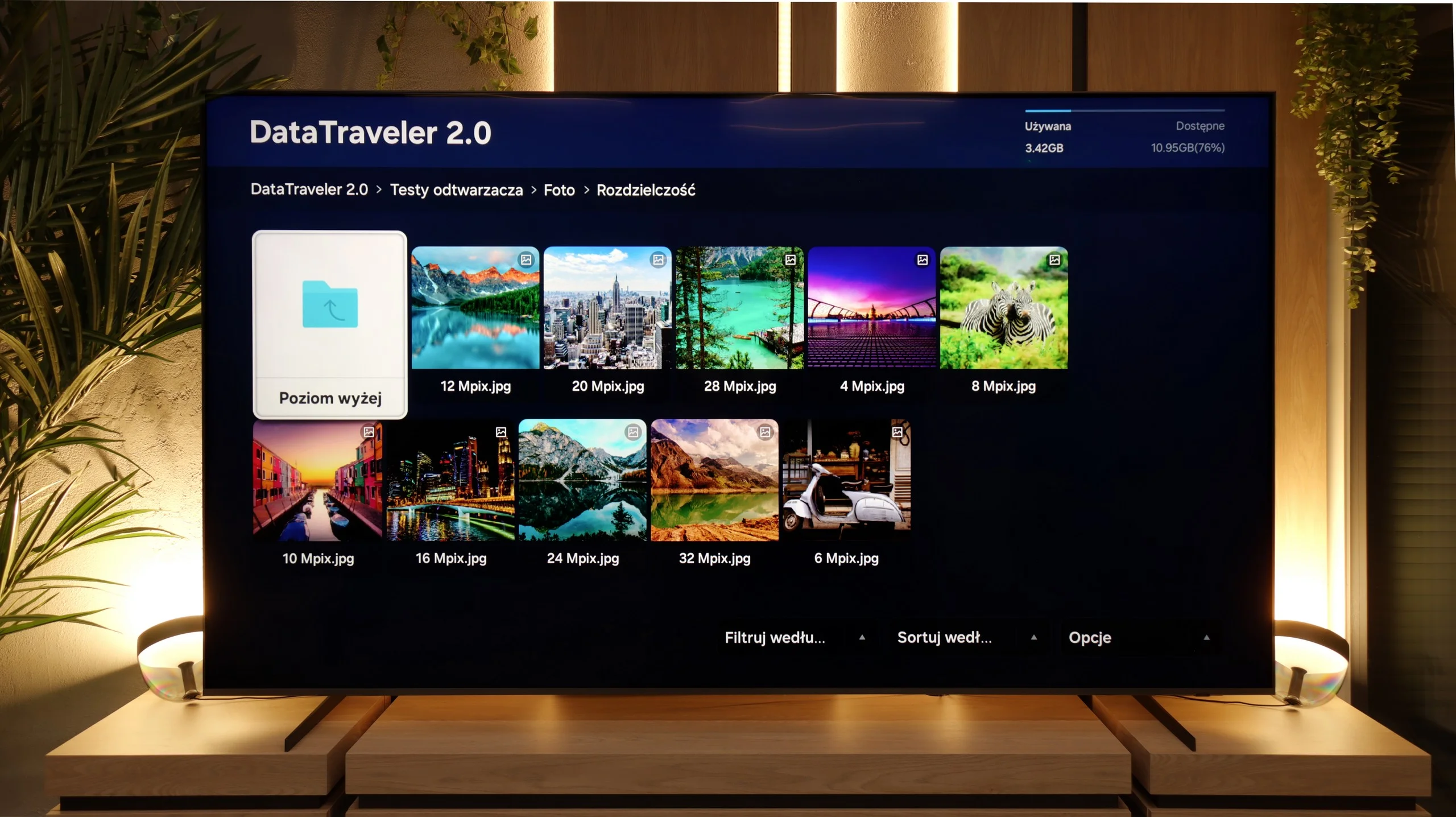
The built-in media player in the QN80F performs decently, but it's hard to talk about full extravagance. It handles movies quite well – easily playing popular video formats, from simple MP4s to heavier containers. It’s not at the level of all-in-one apps like VLC, but it’s sufficient for everyday viewing. Especially since the latest update addressed the issue with supporting various subtitle formats in films. The situation is a bit worse when it comes to photos. Support is basically limited to JPG and BMP, so if someone keeps their photo archive in a different format, they will need to use an additional app or will be forced to convert their photos.

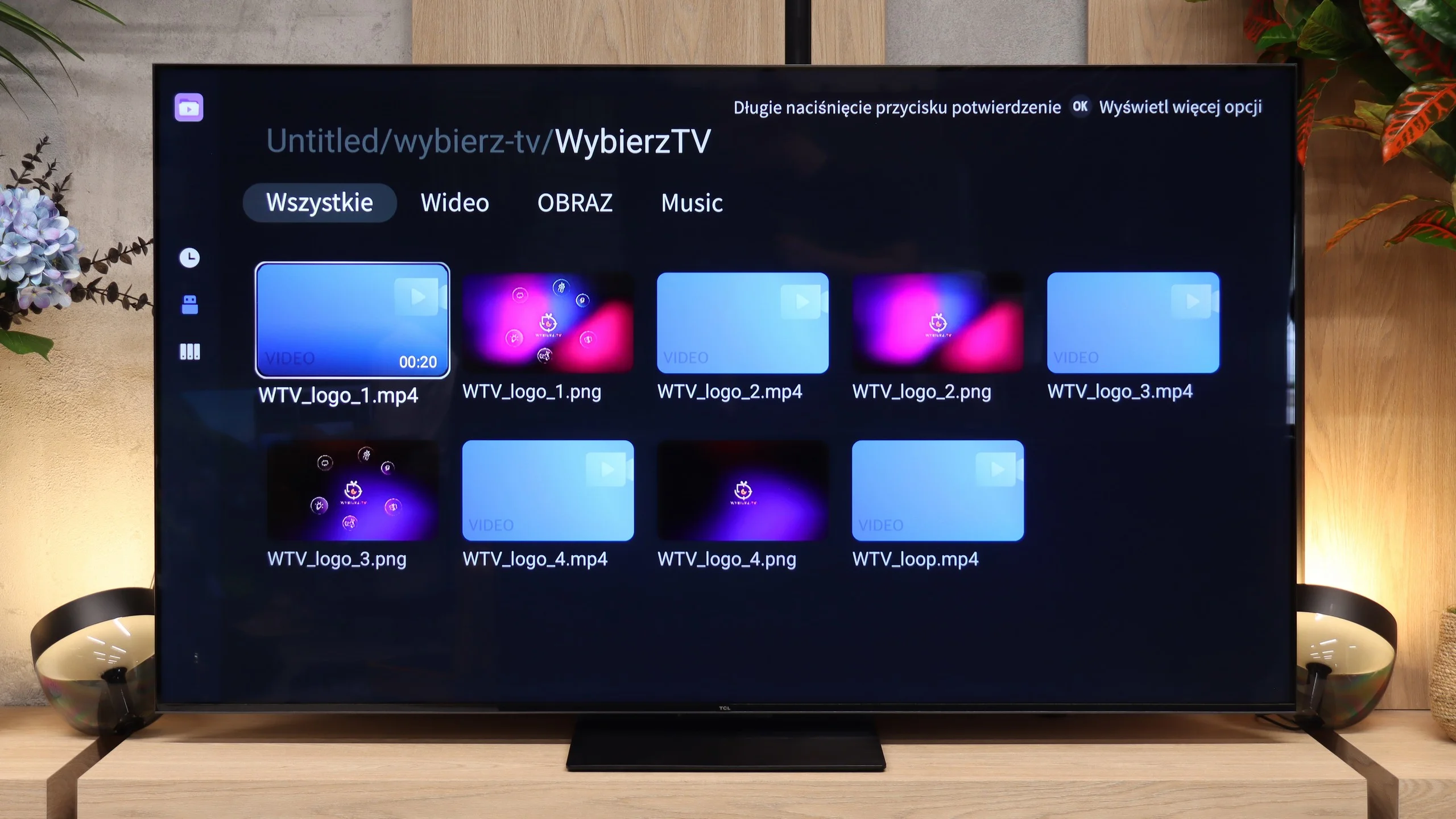
The RM7L's file player performs very well. The TV handled most of the test material with no problems, whether movies, photos or music. Shortcomings do occur, of course, but they mainly affect less common formats. In practice, most people will be fine without installing an extra media player.
Sound

6.7/10

7.8/10

  • Maximum volume
    87dB
    88dB
  • Dolby Digital Plus 7.1
    Yes
    Yes
  • Dolby True HD 7.1
    No
    No
  • Dolby Atmos in Dolby Digital Plus (JOC)
    Yes
    Yes
  • Dolby Atmos in Dolby True HD
    No
    No
  • DTS:X in DTS-HD MA
    No
    Yes
  • DTS-HD Master Audio
    No
    Yes

QN80F performs well on its own – with a bit of bass, some space thanks to Dolby Atmos, and clear enough that daily watching of movies or series isn’t tiring. But with a 100-inch screen, it's begging for a soundbar. Only then will the scale of image and sound start to align, because while the TV does a decent job, it's hard to expect the built-in speakers to fill such a large living room with sound.

Unlike the higher C7L, C8L or X11L series, the RM7L doesn't include an audio system branded by Bang & Olufsen. TCL has gone with an Onkyo speaker setup here, supported by "Ultra Bass" technology. The difference is also visible in the build. Instead of metal grilles they used simpler plastic covers. Does that affect sound quality? In our view, not as much as you might think. The RM7L simply sounds good, with a slightly different character to the C7L. Dialogue is clean and clear, and the TV can easily fill a larger living room. The amount of bass is also a plus. For a TV in this class there's quite a bit of bass and it doesn't sound completely flat.

Our measurements back this up. Maximum loudness reaches around 88 dB, which is a very good result, and the frequency response remains relatively even. Only above about 7 to 8 kHz do we see a more noticeable drop in output, so the highest frequencies aren't as well reproduced. That said, for a TV of this class the RM7L offers a surprisingly pleasant sound and most users won't have cause to complain.

Sound Quality Test

Acoustic Measurements

87dBC (Max)

75dBC

88dBC (Max)

75dBC

Reader comments

Comments are provided by the external service Disqus (Zeta Global). Once loaded, Disqus may set cookies and process data about your activity.

We will remember your choice on this device. Provider's privacy policy