Samsung Q80D is a very versatile television. It’s definitely a piece of equipment that can easily adapt to the needs of both gamers and those looking for a device for everyday viewing. As for the former - namely gamers. Thanks to HDMI 2.1 support, a 120 Hz refresh rate, and low input lag, it makes playing on console or PC pure pleasure. Additionally, the Game Bar feature allows for quick adjustments without the need to exit the game – a small thing, but it makes a difference. It’s also worth mentioning a fantastic feature in the form of an efficient motion smoother that works well in games. It gives the impression that playing on such a television adds a few FPS, thus providing an advantage in the game. During everyday use, the Q80D performs very well too. The Tizen system offers access to popular apps such as Netflix, Prime Video, and Disney+, so nothing is lacking here. The high brightness of the screen ensures that the television performs very well even in well-lit rooms. A nice and interesting addition is the solar remote, which not only does not require battery replacements but also allows control of other devices (e.g. set-top boxes, consoles, soundbars). When it comes to picture quality, the Q80D has a lot to offer. Although it lacks Dolby Vision support, after calibration, the colours look fantastic, and the contrast and black level thanks to FALD technology (full array local dimming) impressed us greatly, considering the television's segment. Thanks to the VA panel enhanced with quantum dots (QLED), the colours on the Q80D can look truly excellent. Watching movies or series in the evening is a real pleasure – especially if we care about good details. However, there are little things that might be bothersome. The lack of a recording feature is a certain limitation, although it may not be a problem for everyone. Another obvious issue will be its viewing angles. These are typical results for this type of panel, so one must reckon with the fact that at the cost of great blacks, the Q80D simply performs average when looked at from the side. Nevertheless, the Samsung Q80D is a great television that performs well in every situation. It offers excellent picture quality, many useful features, and solid build quality for its price range. A few minor shortcomings, however, do not take away its charm, as overall it’s a model that will comfortably meet the expectations of most users – both those who game on consoles and those who simply enjoy evening screenings with good visuals.
- Matching (Score) |
- Our verdict |
- TV appearance |
- Where to buy |
- Contrast and black detail |
- HDR effect quality |
- Factory color reproduction |
- Color reproduction after calibration |
- Smoothness of tonal transitions |
- Image scaling and smoothness of tonal transitions |
- Blur and motion smoothness |
- Console compatibility and gaming features |
- Input lag |
- Compatibility with PC |
- Viewing angles |
- Daytime performance |
- Panel details |
- TV features |
- Apps |
- Playing files from USB |
- Sound
Samsung QLED Q80D vs Samsung Q6F (IPS)
 Direct comparison
Q80D
Q6F
Available screen sizes: 55”

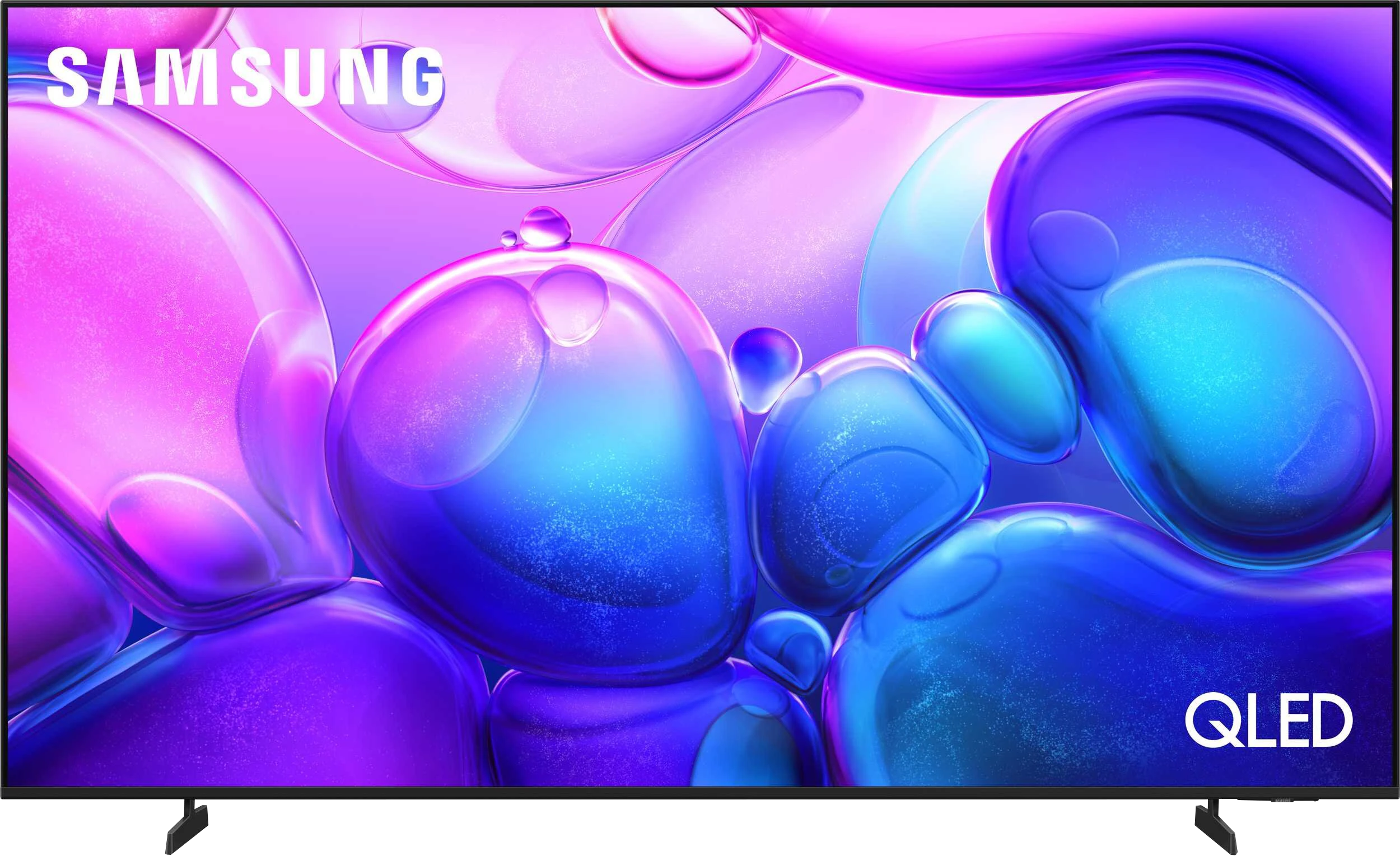
Panel type: LCD VA
Resolution: 3840x2160
System: Tizen
Model year: 2024
Complete the survey to find out the result
Panel type: LCD IPS
Resolution: 3840x2160
System: Tizen
Model year: 2025
Complete the survey to find out the result
Overall rating
7.2
5.1
 Movies and series in UHD quality
 6.8
4.8
 Classic TV, YouTube
 6.7
4.7
 Sports broadcasts (TV and apps)
 6.6
4.9
 Gaming on console
 8.7
6.4
 TV as a computer monitor
 7.6
6.0
 Watching in bright light
 6.0
1.8
 Utility functions
 8.0
5.9
 Apps
Apps 9.3
9.3
 Sound quality
 6.6
5.8
Complete the survey to find out what fits your preferences
Advantages

Great choice for gamers - lots of functionality, low input lag, 120Hz
High brightness of the panel - good performance during the day
Good blacks and contrast - VA panel with local dimming
Excellent tonal transitions
Advanced "Tizen" smart system
Pleasant sound from the built-in speakers
Tizen System: Works quickly, doesn't lag and
Large app library (Netflix, YouTube, HBO, Disney)
IPS matrix provides a good picture even when you're not sitting directly in front
Great font readability – good as a large monitor for text work
Basic features for gamers: VRR and ALLM
Very low input lag
Senior-friendly remote: Classic layout with numeric buttons
Very attractive price
Disadvantages

Average viewing angles
No recording function
No DTS (may hinder connection to home theatre)
Brightness of 250 nits is too low to feel any difference in HDR mode
Low contrast of the IPS panel ruins night movie sessions
Average brightness of 150 nits during the day makes it hard to see anything in a sunny room
No optical output
Infrared remote (requires aiming at the screen)
Our verdict
Samsung Q6F is a television that’s difficult to assess through the lens of typical QLED models. We must remember that this is a budget offering aimed at a very specific audience. If you’re looking for an inexpensive device with the logo of a well-known manufacturer that simply needs to work, display multimedia, and offer basic remote control with buttons – the Q6F could be an interesting option for you. It’s a great choice for seniors or anyone who needs a large screen “on the cheap” for everyday television, where its IPS panel and good viewing angles really make a difference. However, we must say it plainly: the biggest drawback of this model is its very low brightness and poor blacks. These are the two foundations on which image quality is built, and here they are simply very fragile. It’s definitely not a television we would recommend for watching HDR content – this format exists here in name only. Although the Q6F has a QLED filter and belongs to the Quantum Dot family, fully utilizing the potential of this technology is practically impossible, as the device is technically unsuitable for such content. We know it’s tempting with its very low price and may appeal to many people with modest expectations. However, you should know that the suffix “QLED” suggesting a premium product is, in this case, far from what Samsung has accustomed us to in recent years. It’s a ticket into the world of Samsung, but in a very basic version.
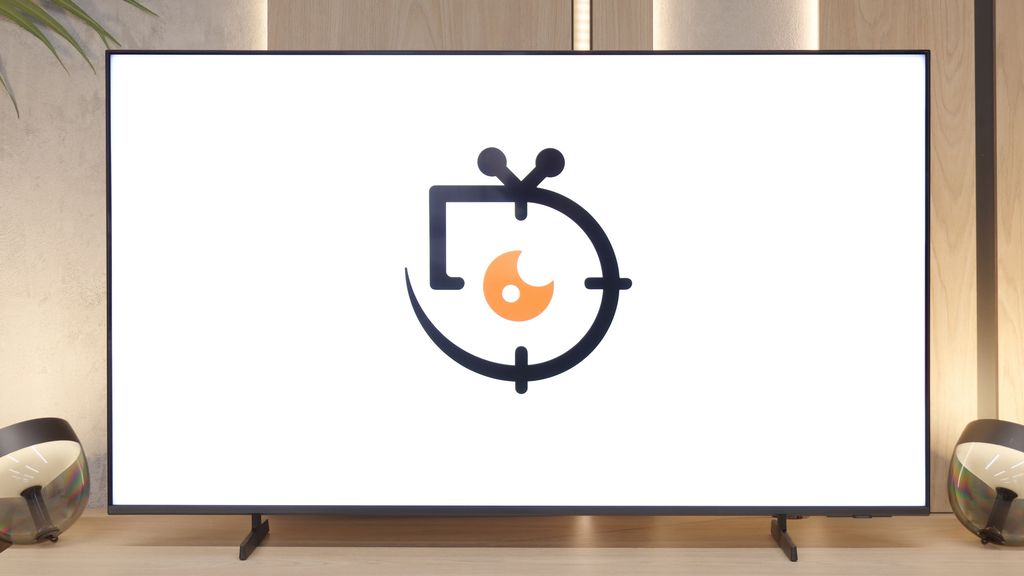
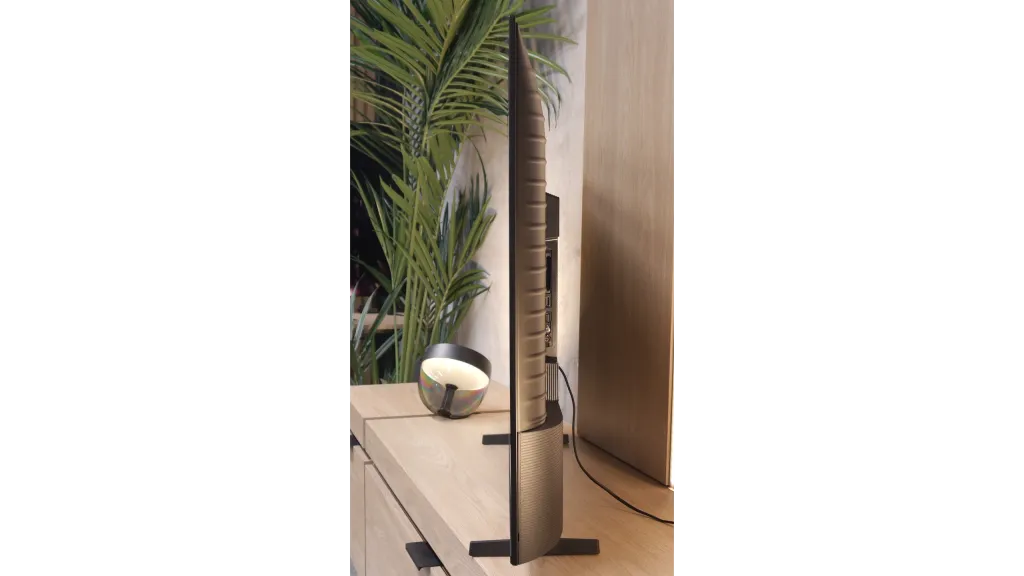
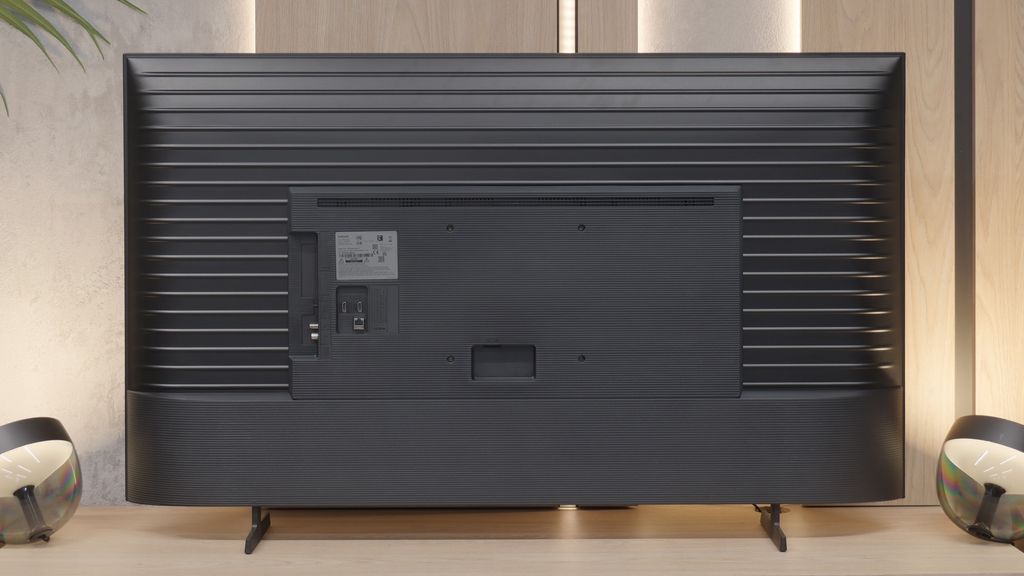
TV appearance




Contrast and black detail
6.7/10
1.9/10
Local dimming function: Yes, number of zones: 100 (10 x 10)
Local dimming function: No
Contrast:


Result
37,350:1

Result
8,850:1

Result
20,350:1

Result
4,300:1

Result
3,800:1
Result
900:1
Result
1,000:1
Result
1,050:1
Result
1,050:1
Result
900:1
Halo effect and black detail visibility:

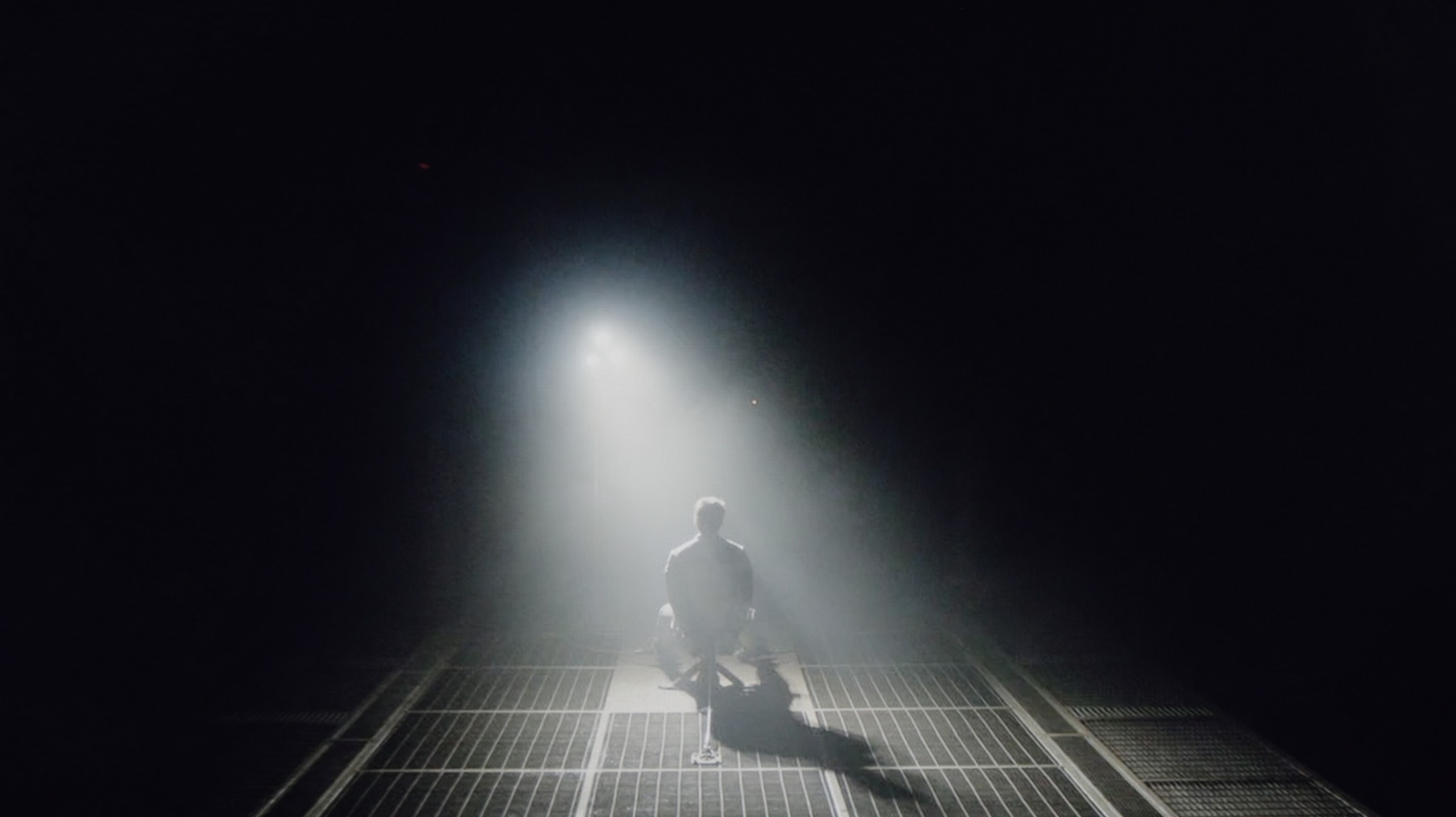
Check the visibility of bright lights on a dark background. Mini-LEDs often struggle with this. The photo does not compare black levels – that’s what the video below is for.
The video accurately shows differences in contrast and black levels between TVs, as well as potential issues: halo around bright objects or Mini-LED zone operation visible as brightness jumps.
The Samsung Q80D television is equipped with a VA panel, which immediately affects the difference in contrast and black reproduction compared to IPS panels. VA panels offer significantly better contrast and deeper blacks, while IPS panels have better viewing angles but poorer contrast. For the 55" model, the television has 100 local dimming zones, and it should be noted that this number may vary depending on the screen size. Thanks to local dimming, blacks look good, but it's worth mentioning that the algorithm of this technology, combined with a limited number of zones, can sometimes go a bit "haywire." Bright objects can be dimmed to achieve better blacks. During testing in a scene from the film Oblivion, the lights merged into one blot, regardless of the dimming settings, showing the limitations of this technology. In the movie Sicario 2, large dimming zones were particularly noticeable, for example, with small helicopter lights, indicating how large the areas controlled by a single dimming zone are. Despite these imperfections, the local dimming technology still offers significantly better picture quality than televisions without this feature or with edge lighting. With the ability to completely turn off individual zones, the television can provide a noticeable boost in brightness in selected areas, which can give the image a cinematic effect, especially in dark rooms.
It’s clear here where the manufacturer decided to cut costs. The IPS panel used, despite the support of QLED technology, highlights issues with lack of depth in the image. Results at a level of 1000:1 speak for themselves – the black in this model unfortunately resembles grey. You can try to salvage the situation by turning on the lights in the room, and best of all, placing them directly behind the television, which can somewhat trick our eyes. However, no matter what, the contrast in the Q6F with the IPS panel is simply weak and this will be noticeable in dark scenes.
HDR effect quality
5.8/10
3/10
Luminance measurements in HDR:

Result
927 nit

Result
423 nit

Result
612 nit

Result
242 nit

Result
856 nit
Result
202 nit
Result
152 nit
Result
247 nit
Result
93 nit
Result
256 nit
Scene from the movie “Pan” (about 2800 nits)

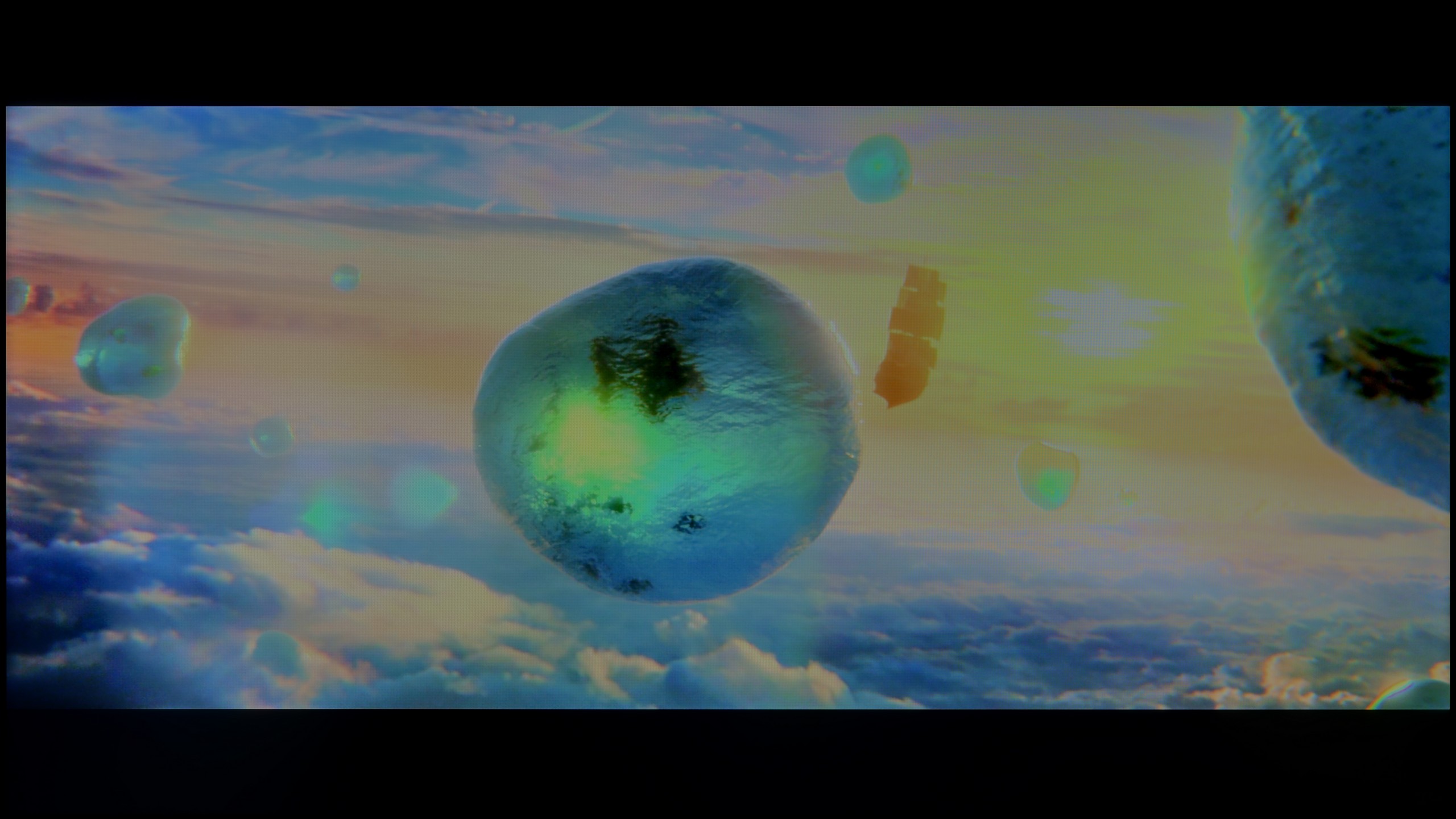
Scene from the movie “Billy Lynn” (about 1100 nits)


The photos show two HDR10 movies. 'Pan' is one of the brightest productions ever made, while 'Billy Lynn' (soldier) has brightness typical of streaming (Netflix, Prime, HBO MAX). Notice the intensity of effects and detail in whites.
Static HDR10

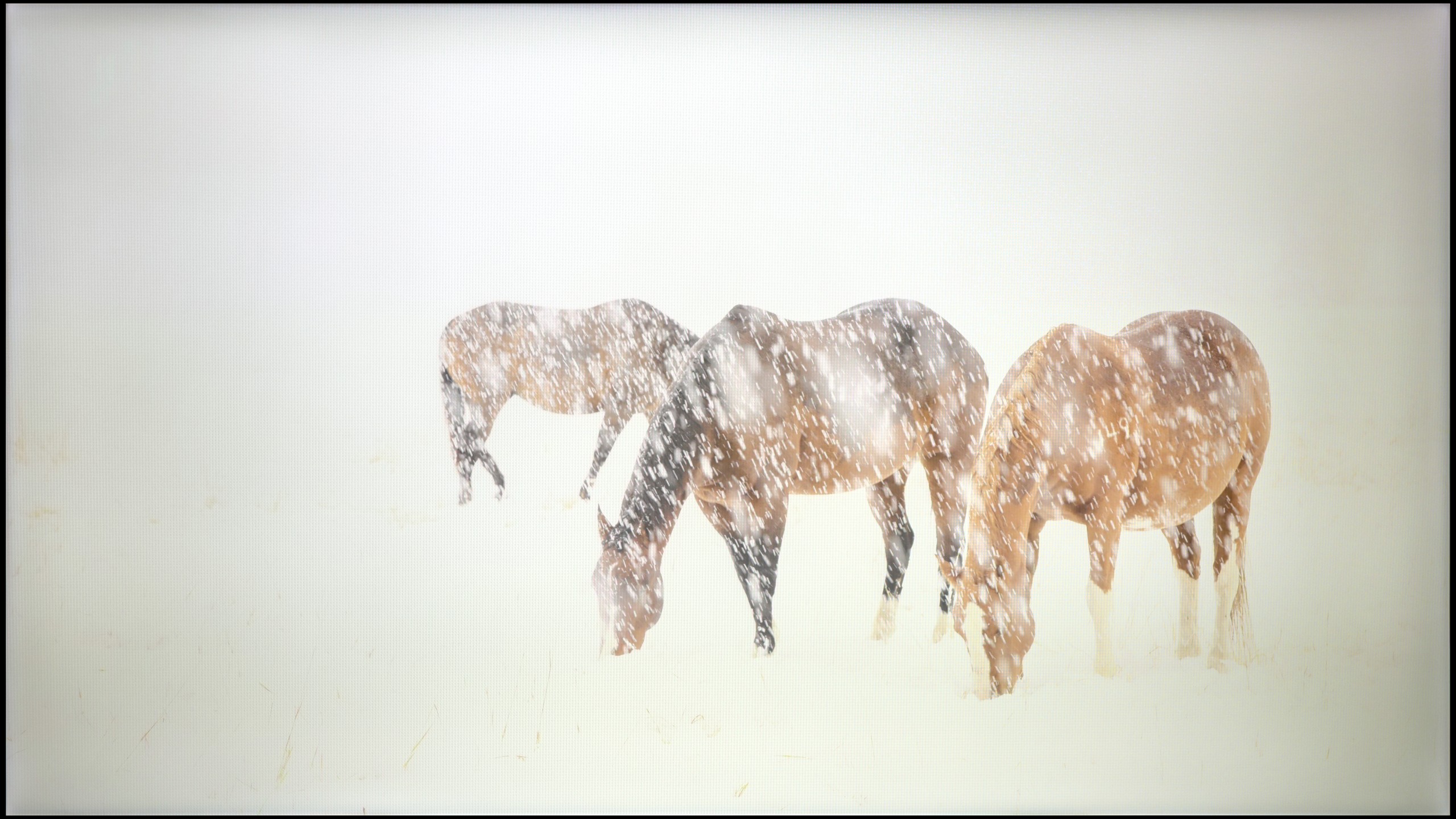
The photos present the visibility of white details in various HDR formats. They do not show brightness differences between TVs (these can be compared in the previous gallery).
Dynamic: HDR10+
Dynamic: HDR10+

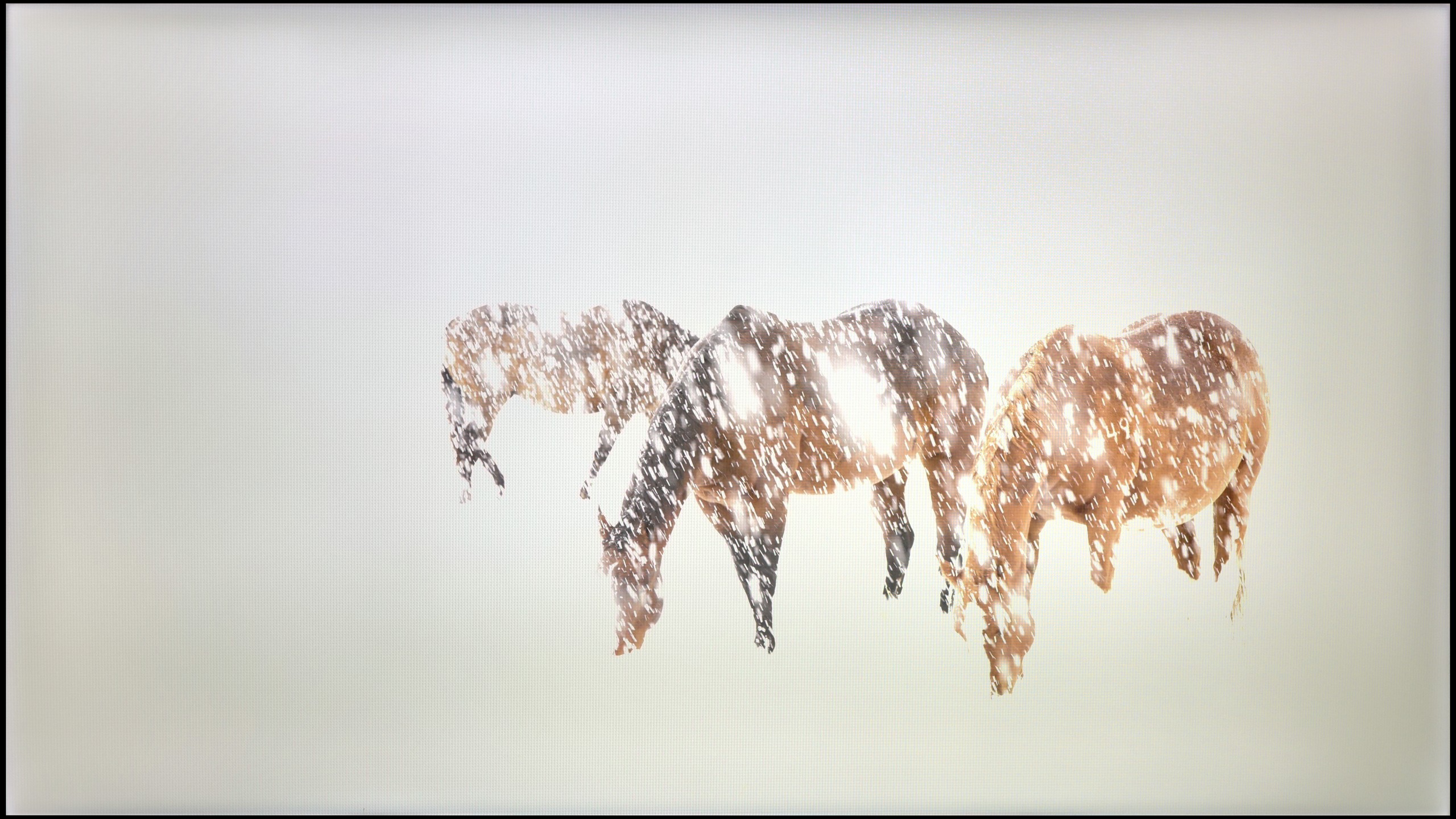
The photos present the visibility of white details in various HDR formats. They do not show brightness differences between TVs (these can be compared in the previous gallery).
HDR luminance chart:
Samsung Q6F (IPS)
Samsung QLED Q80D
In the context of HDR, the Samsung Q80D television, as expected, achieves very positive brightness results in the tested movie scenes, where the frame is filled with light, reaching values from 600 to 900 nits, allowing for a great juiciness of the image. Such results enable the user to feel the difference between HDR and SDR quality. Unfortunately, problems arise in situations where small light effects occur against a dark background. In such cases (e.g., the 4th test screen from the film Sicario 2), a noticeable drop in brightness is observed, which is caused by the large size of the dimming zones used here. This limitation, combined with the dimming algorithm, affects how the television handles small bright elements on a dark background. At that point, we may experience an undesired lack of brightness, and the HDR effect resembles that of SDR.
Unfortunately, the Samsung Q6F is a very dark model. Its peak brightness in HDR does not exceed 250 nits, which is definitely too low to even talk about any "high dynamic range" or HDR effect. In practice, it's better to stick to content in SDR format, which simply looks more predictable on this TV. Another issue is the global dimming technique – in scenes with a lot of black, the TV drastically dims the entire screen to artificially improve the black levels. This results in the image becoming even darker, with brightness sometimes dropping below 100 nits. The only consolation is the QLED technology, but even here it's average. The applied quantum dot layer is not of the highest quality, as the coverage of the DCI-P3 colour gamut does not exceed 90%. Because of this, colours in HDR content may simply appear unsaturated.
Factory color reproduction
6.8/10
5.1/10


This gallery shows how colors change after professional TV calibration. If you notice the difference, we recommend ordering this service at SkalibrujTV.com.
Factory Mode
After calibration
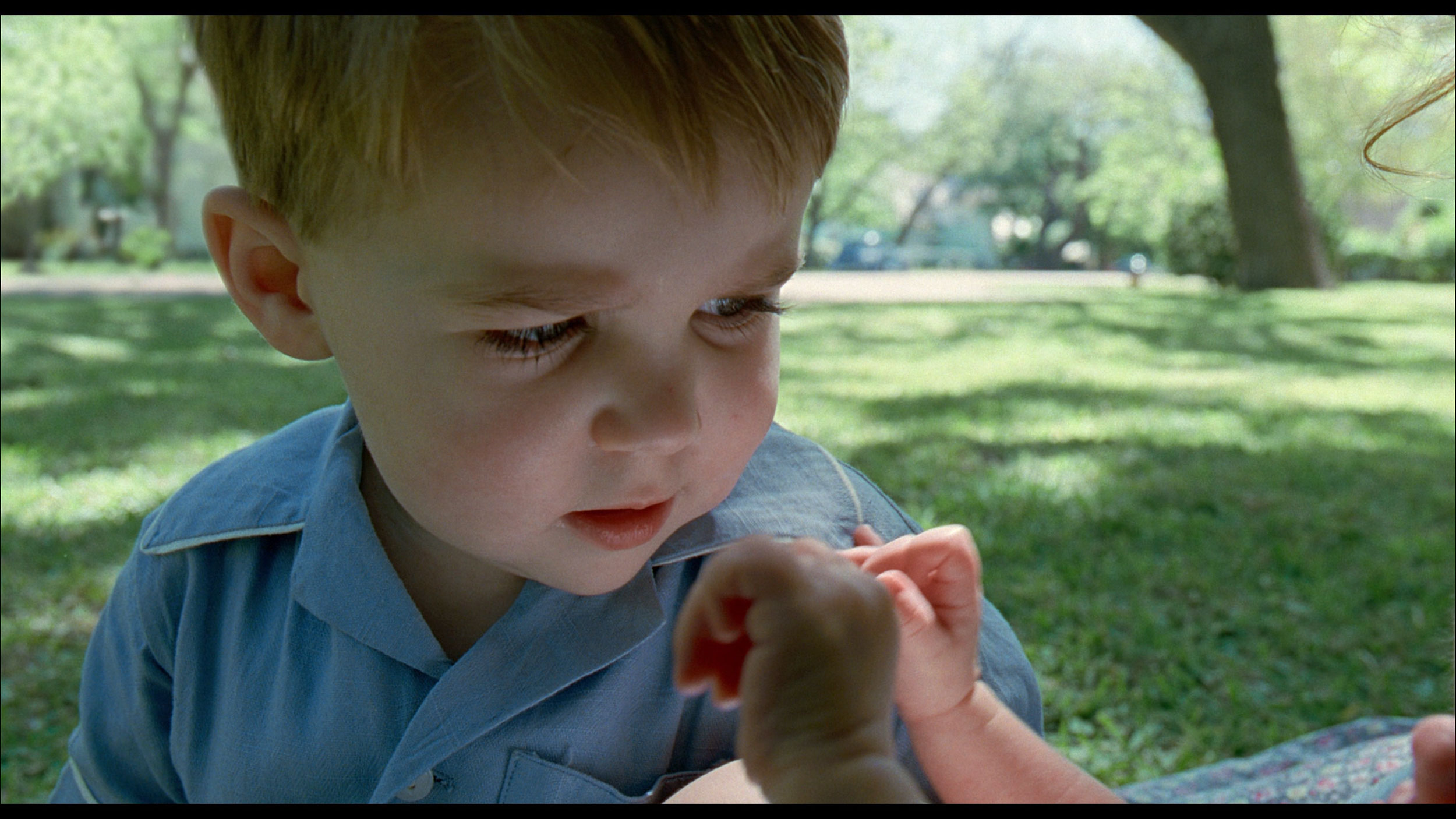
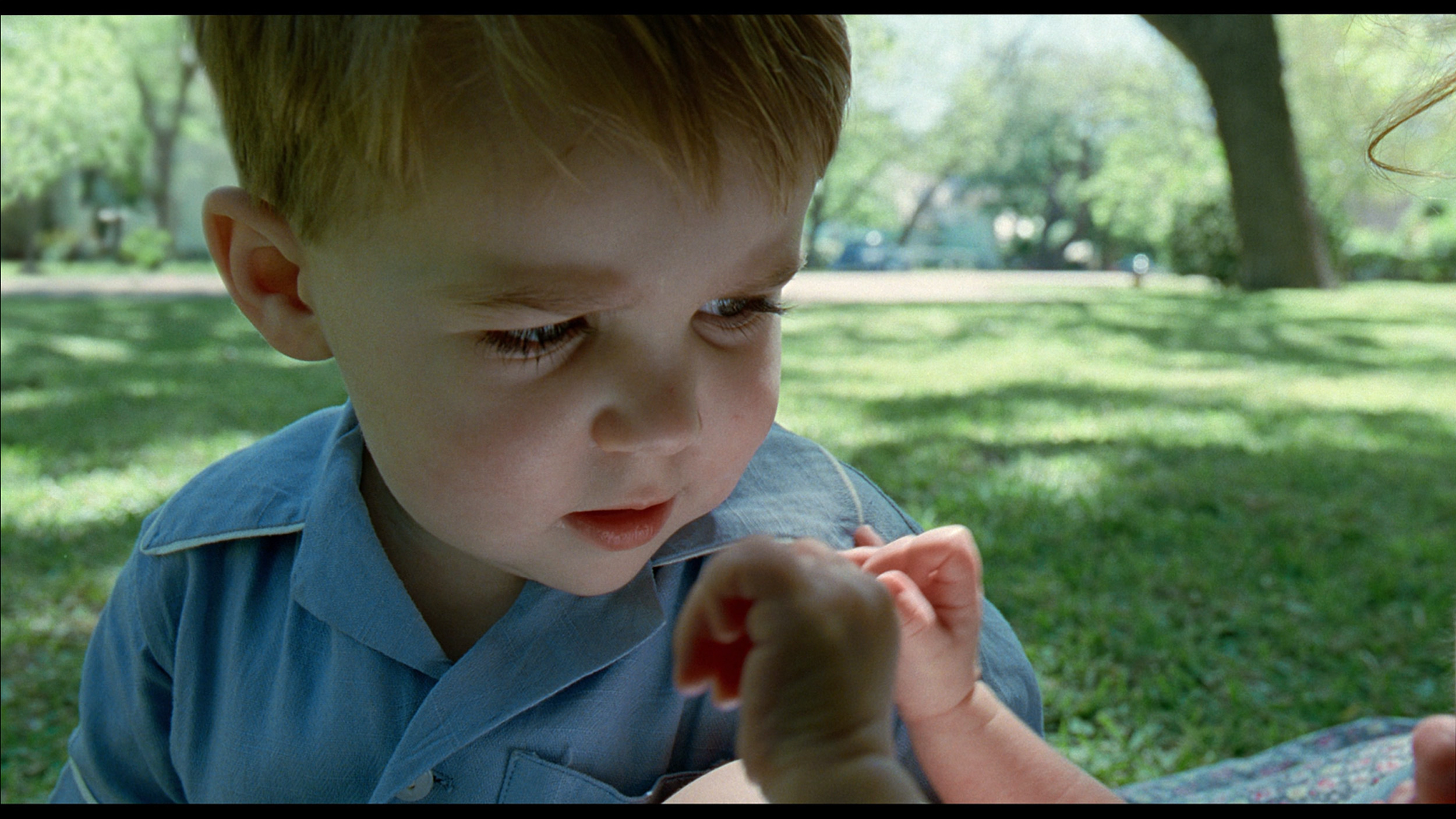
This gallery shows how colors change after professional TV calibration. If you notice the difference, we recommend ordering this service at SkalibrujTV.com.
Factory Mode
After calibration
In "Filmmaker" mode, which is the best choice right out of the box, the Samsung Q80D television shows solid colour reproduction. For SDR content, a noticeable drop at the start of the gamma curve suggests that details in dark scenes may be less clear, affecting the overall viewing experience. Regarding white balance in SDR content, while generally correct, significant drops in blue at screen coverage above 70% can result in less natural shades in both bright and dark scenes. Users may notice that some blue elements in the image may appear less vibrant, and the overall colour will have a warmer hue.
In HDR content, the EOTF curve being above the reference line for most of the time indicates that the television may struggle to accurately reproduce brightness and details in the brighter parts of the image, which can be detrimental for the viewer. It is also worth noting the significant drop at the start of this chart, indicating that the television has difficulty reproducing brightness in the darker parts of the image, as seen in the contrast and black test, where several scenes were unable to show the full capabilities of the television’s brightness. In terms of its white balance, the initially good performance on the graph is promising, but the steep decline in red, coupled with a significant increase in blue, can lead to inaccuracies in reproducing some skin tones and other key colours. This phenomenon may be noticeable to viewers in scenes where colour details are crucial.
We tested the television in Filmmaker mode, which showed us two completely different sides of this model. Looking at SDR content, we were honestly shocked at how good this television looks straight out of the box. It was really hard to pick on anything here. Despite a slight 'messiness' in white balance and some slightly brightened details in the blacks (which directly stems from the IPS panel construction), colour errors hovered around the '2' level. This is not only a surprisingly good result but rather phenomenal, considering the price of the device.
On the other hand, what the Q6F showed in terms of colours when switched to HDR mode was a very unpleasant surprise. The errors in colour reproduction and palette were so massive that our charts literally ran out of scale. Of course, since Samsung even in such a budget model offers very extensive calibration options, we decided to approach the issue professionally and see what could be done during calibration.
Color reproduction after calibration
8.1/10
6.5/10

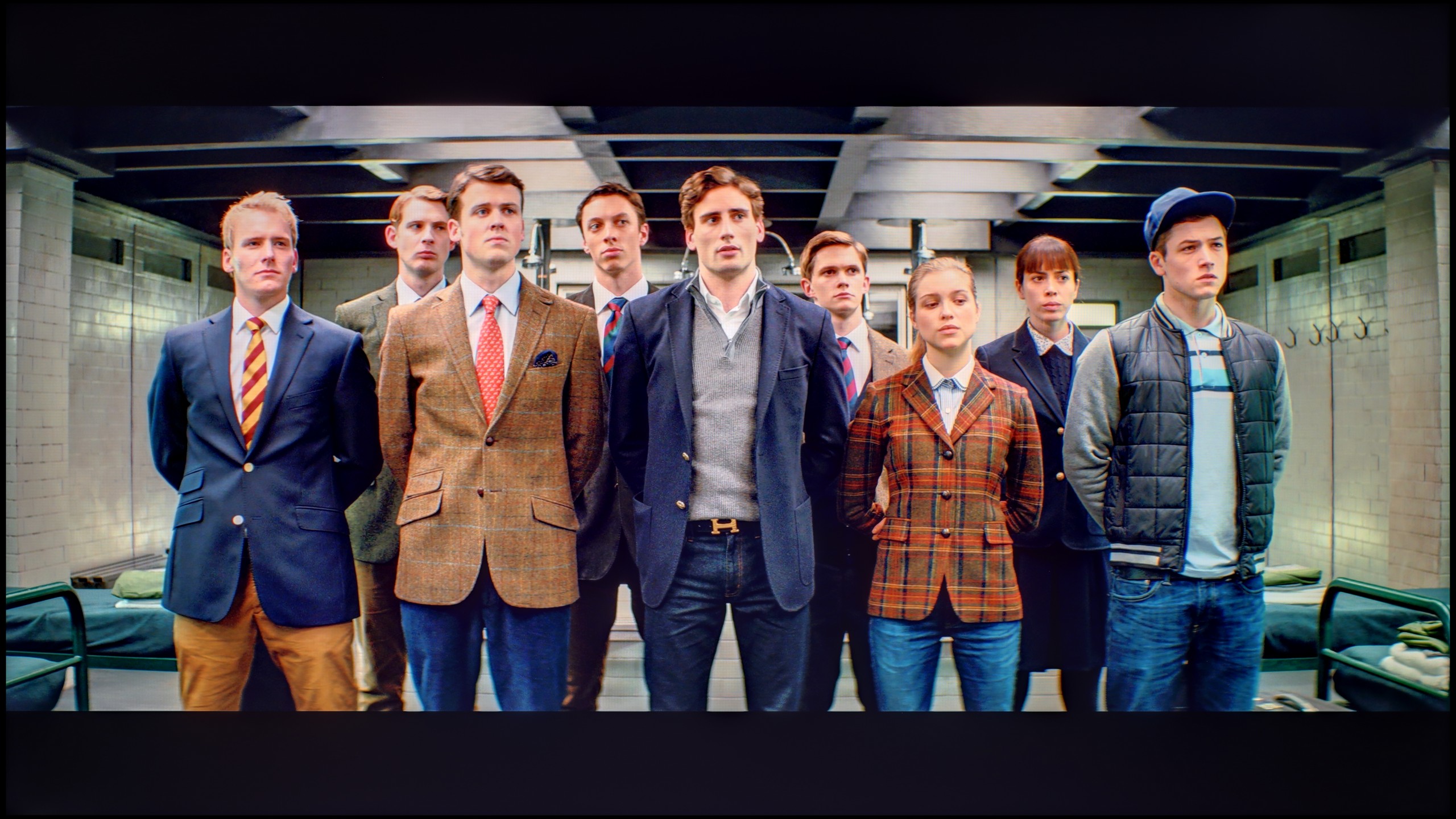
The photos show how movies look on the TV. Pay attention to black detail visibility, colors, and shadow tint.


The photos show how movies look on the TV. Pay attention to black detail visibility, colors, and shadow tint.
The movie mode after calibration looks significantly better than the one you see right out of the box. Samsung offers an advanced range of calibration tools in its televisions. Among them are 2- and 20-point greyscale adjustment and CMS (Color Management System). Both in HDR and SDR mode, white balance has improved significantly, although there are slight errors at the end of the graph for HDR content. Contrast has also been greatly improved, and the gamma curve responsible for SDR shows better results. However, when it comes to HDR, the EOTF curve on the television appears to be at an ideal level at first glance. However, when we dig a bit deeper and enable the EOTF graph while watching films, we may notice that all the lines of the curve are above the reference line. You could even say that the television is "cheating" when playing film material. Such a situation, where the EOTF curve is above the reference line, causes the screen – although it may appear brighter, which some users might find appealing – to lose detail in the darker parts of the image. In practice, this means that in scenes with a lot of shadows or dark elements, the television is unable to accurately render the details that should be visible.
After our calibration, the colours in SDR mode looked even better – the result is truly surprising, as colour errors at a level of "1" are something typically seen in devices costing several thousand dollars. In this respect, the Q6F is really a great screen for everyday television, less demanding series, or movies. Unfortunately, our intervention in HDR mode did not yield a noticeable improvement. The television, due to its weak blacks and low coverage of a wide colour gamut, still has significant issues with proper colour saturation, especially reds. This is an example of a device where HDR primarily exists as a label on the box – for everyday use, we definitely recommend watching content in SDR format.
Smoothness of tonal transitions
8.8/10
9/10


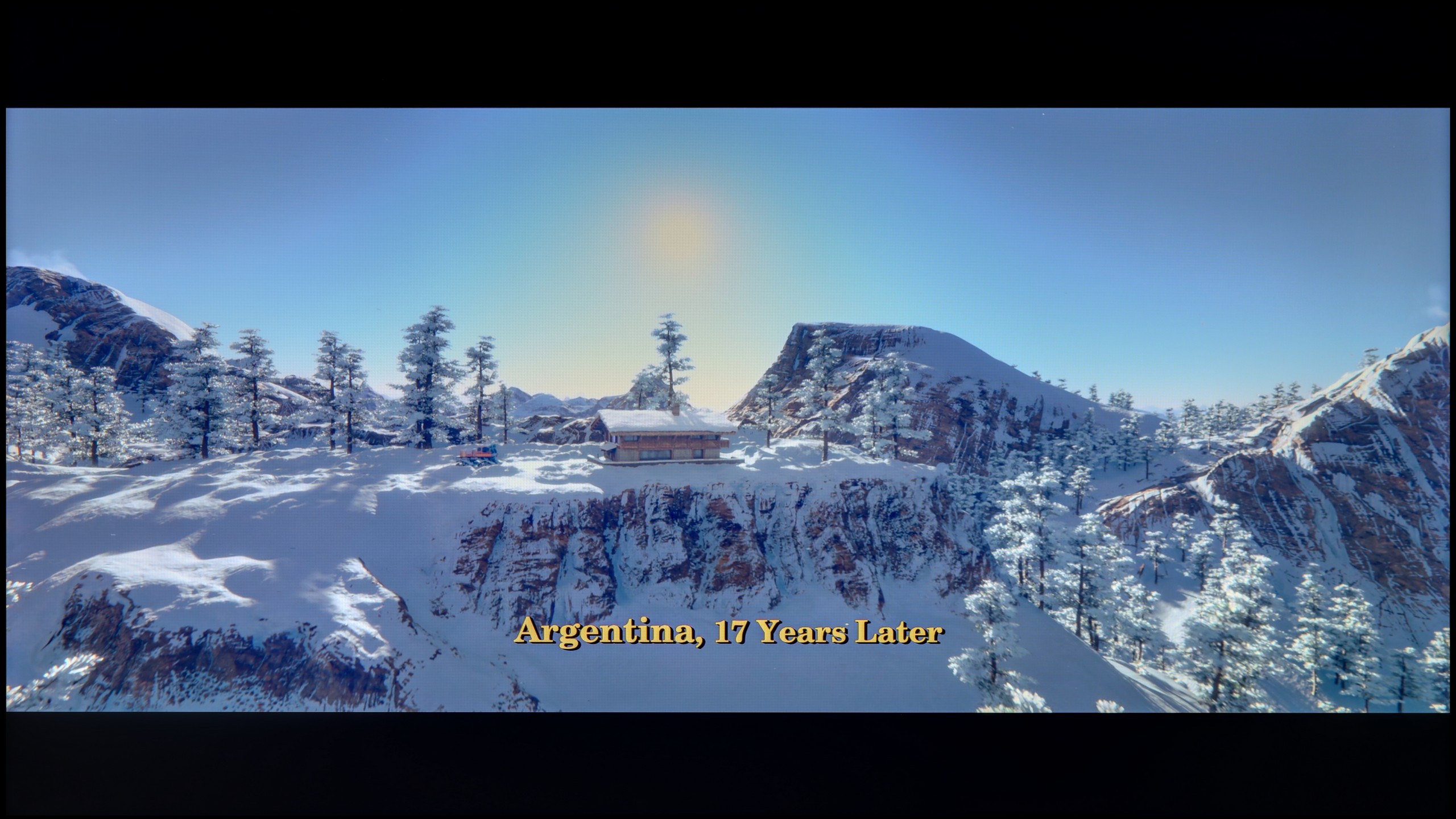
These are selected scenes that show smooth tonal transitions from one color to another. If you see distinct banding, it’s the TV panel’s fault.
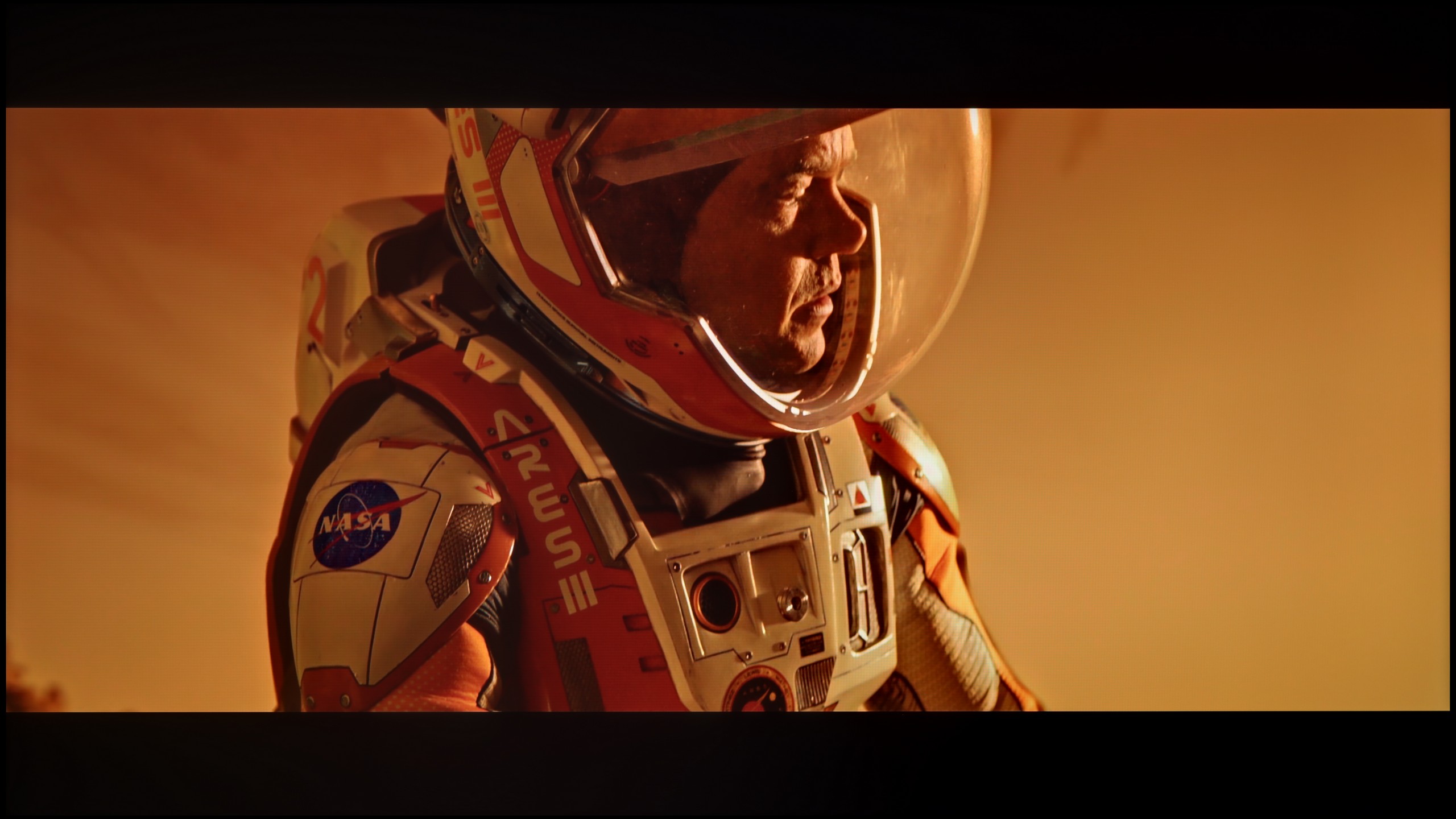
These are selected scenes that show smooth tonal transitions from one color to another. If you see distinct banding, it’s the TV panel’s fault.

These are selected scenes that show smooth tonal transitions from one color to another. If you see distinct banding, it’s the TV panel’s fault.
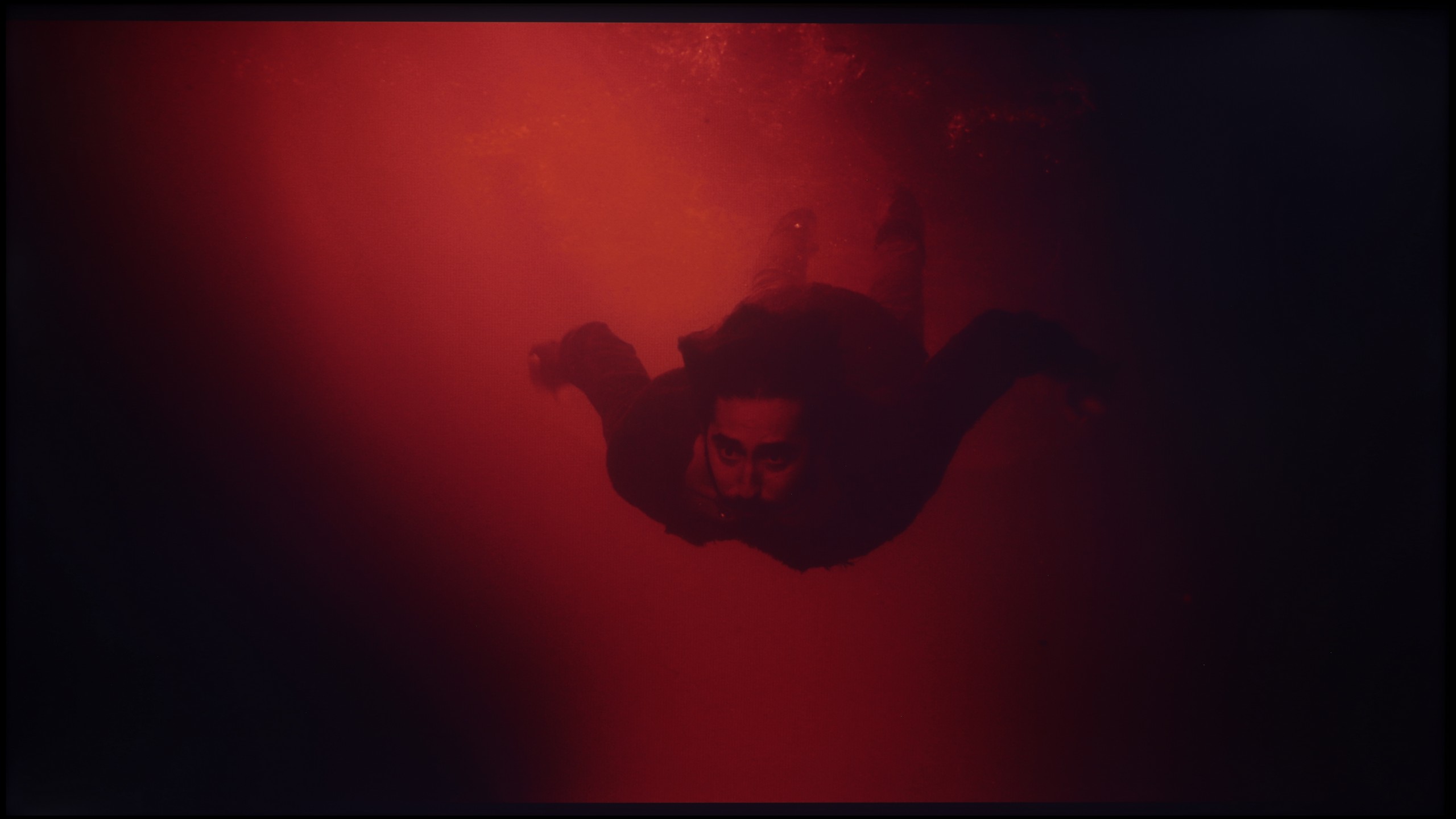
These are selected scenes that show smooth tonal transitions from one color to another. If you see distinct banding, it’s the TV panel’s fault.
The tonal gradation on the Samsung Q80D television is excellent and can be considered one of its strong points. Even in the most demanding scenes from the films we tested, it performs superbly. Any potential issues with smoothing transitions in colours are minimal and subtle. The average viewer is unlikely to notice them, which translates to an overall positive visual experience in everyday use.
Samsung Q6F handles the phenomenon of posterization very well. In most scenes, the colour transitions are smooth and there are no problematic "steps" when blending colours. Only in very extreme moments, particularly in scenes with brightness close to pure grey, can slight banding be noticed. However, to be honest, we personally found the issue of slight clouding (uneven backlighting) and the poor contrast of the IPS panel to be much more bothersome than the tonal transitions themselves.
Image scaling and smoothness of tonal transitions
7/10
5/10


Smooth transition function

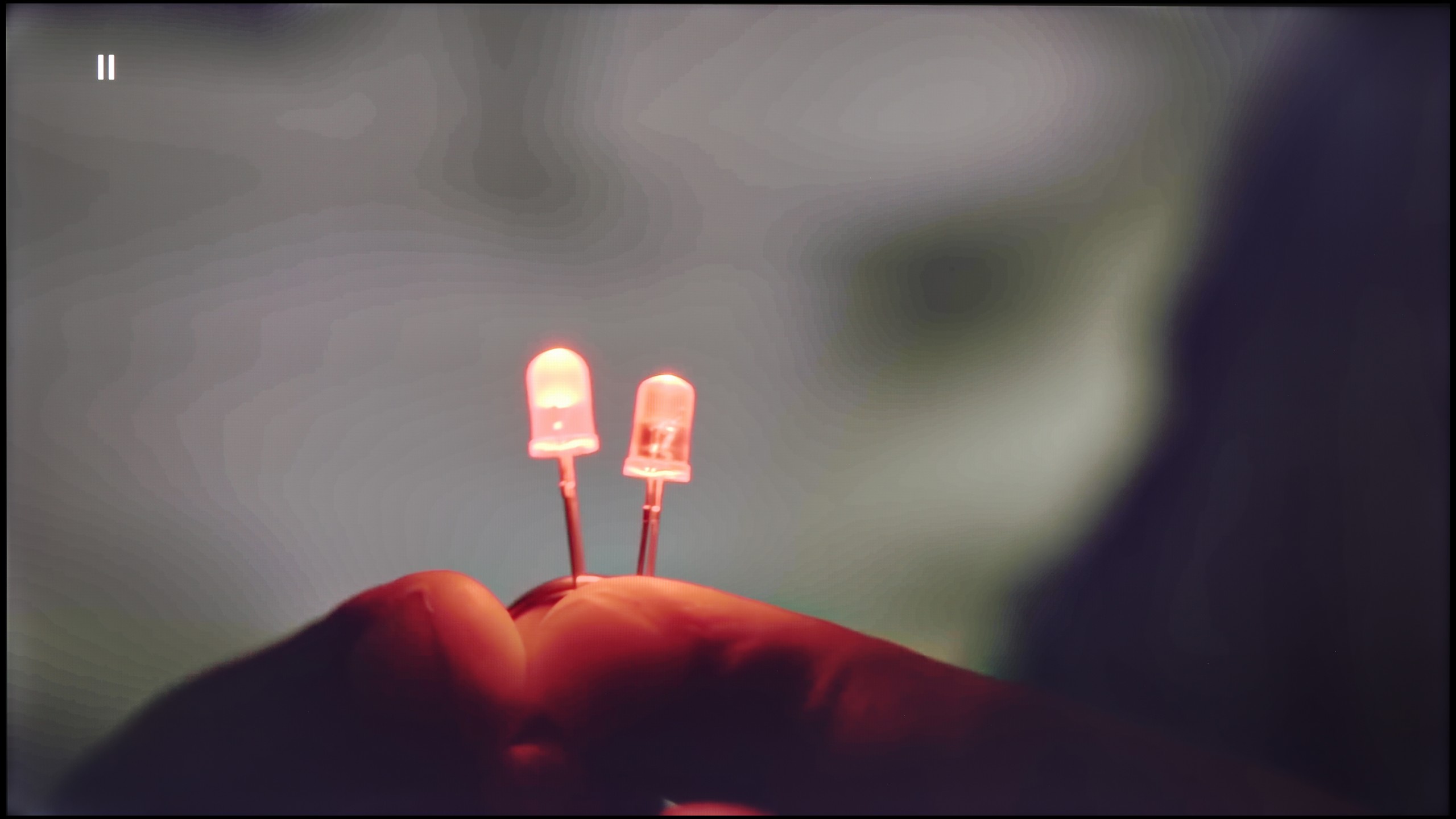
The match photo shows how the TV smooths weak tonal transitions in low-quality video.
Image scaling SD (576i)


The model photo shows how it handles upscaling of SD material.
Samsung Q80D performs very well with low-quality materials. The noise reduction works on the principle of gentle gradation, making it very effective in smoothing out unwanted image disturbances. Unfortunately, this same effectiveness also causes it to blur elements that shouldn't be smoothed, such as film grain. For those who prioritise a plastic, smooth image, this can be seen as a significant advantage, especially with lower-quality content.
In terms of image scaling, Samsung Q80D stands out positively in this aspect, significantly enhancing the viewing comfort. The TV handles the conversion of lower-resolution materials, improving their quality and details. For example, in the attached image featuring a model, there are no visible artefacts or excessive fraying of branches, which demonstrates advanced image processing technology.
Q6F handles upscaling lower resolution content to native 4K very well. The scaling is surprisingly good, even for such an inexpensive QLED model. The only downside is when watching very low-resolution materials like 576p (typical for old DVD players) – the image may appear slightly cropped. This is because the TV does not allow the option to turn off the Overscan feature, which is a common issue with Samsung devices.
The situation is completely different when it comes to digital processing, or the attempt to smooth the image of unwanted artifacts. Here, the TV completely fails. Although in the menu we find a feature called "Noise Reduction," it does not produce any noticeable results regardless of the slider setting. The only thing it seems to do is introduce undesirable errors into the image. Despite its presence in the system, we definitely do not recommend using it.
Blur and motion smoothness
7.3/10
4.6/10

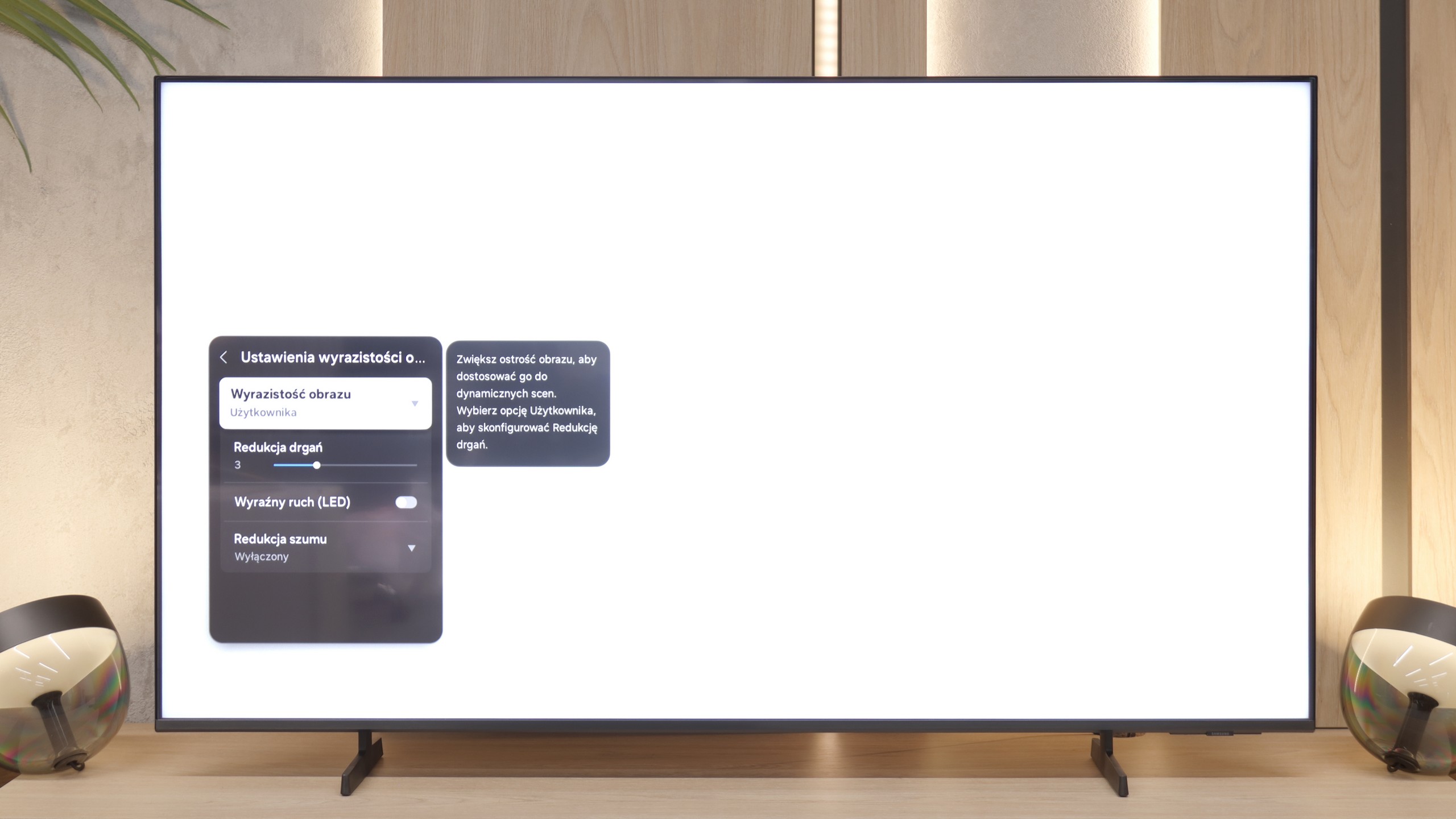
Blur (native resolution, maximum refresh rate):


Blur (BFI function enabled):
Image flickers in this mode


Image flickers in this mode



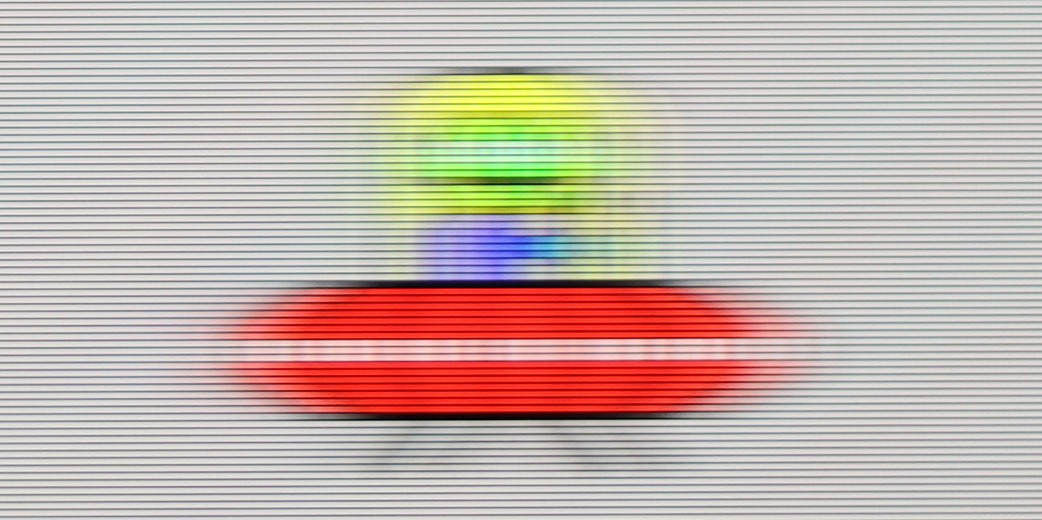
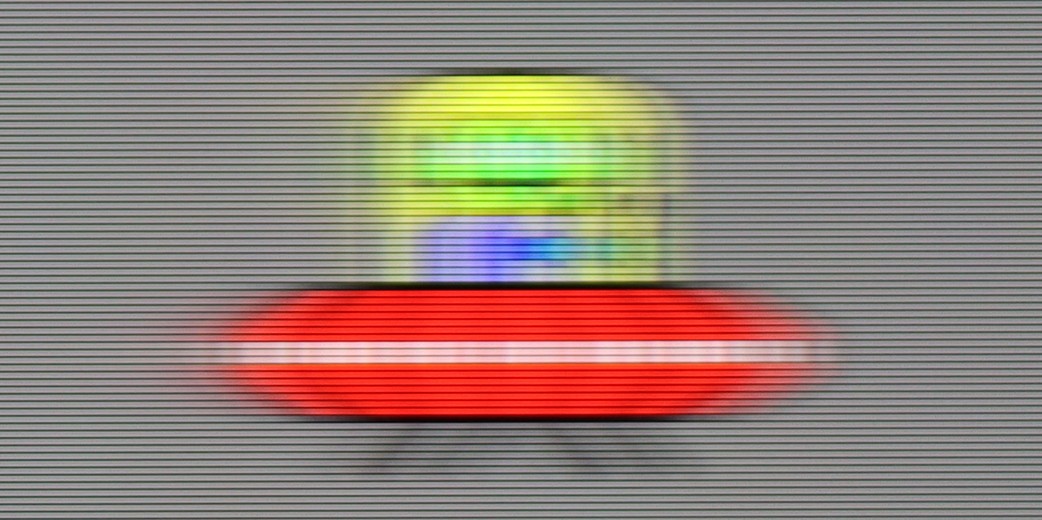
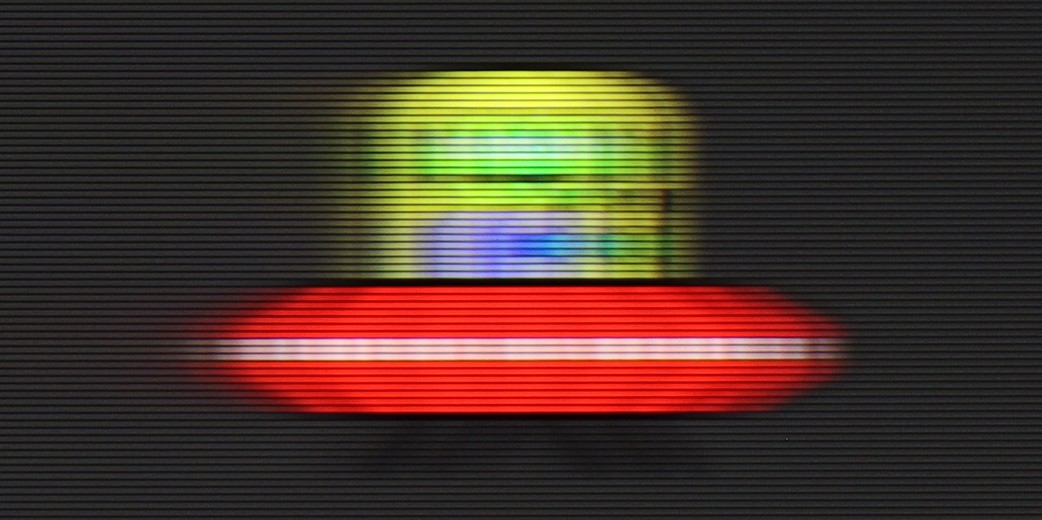
The Samsung Q80D television stands out very positively in terms of motion fluidity and minimizing blur, mainly due to the 120Hz panel and above-average panel response time. Users have two options for adjusting fluidity: "Motion Smoothing," which allows for adjustments in a 10-step scale, and "Blur Reduction," particularly effective at higher refresh rates, improving the sharpness of fast-moving objects. In the UFO test, there is no blurring behind the moving object, and the image is not cloned forward, indicating the absence of an overshoot effect.
The 60 Hz panel in the Samsung Q6F is standard in this price range, making it a rather average model for dynamic sports or gaming. However, when it comes to movies, the TV performs quite well thanks to its smoothing feature. The "Motion Vibration Reduction" option allows you to adjust the motion smoothness to your own preferences – from preserving a cinematic feel to full smoothness.
Console compatibility and gaming features
9.5/10
5.3/10
- ALLM
- VRR
- VRR range48 - 120Hz48 - 60Hz
- Dolby Vision Game Mode
- Correct implementation of HGIG
- 1080p@120Hz
- 1440p@120Hz
- 4K@120Hz
- Game bar


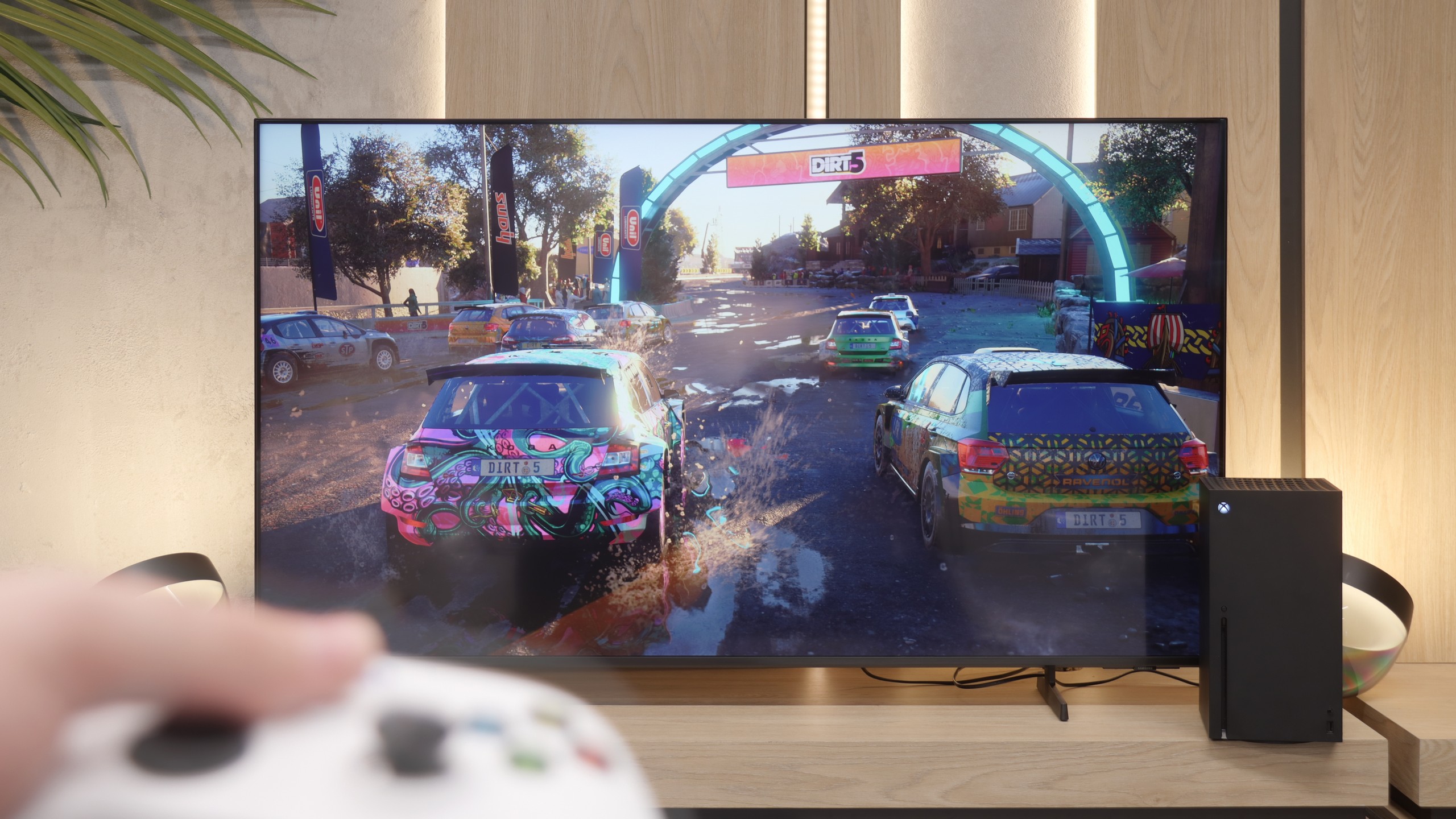

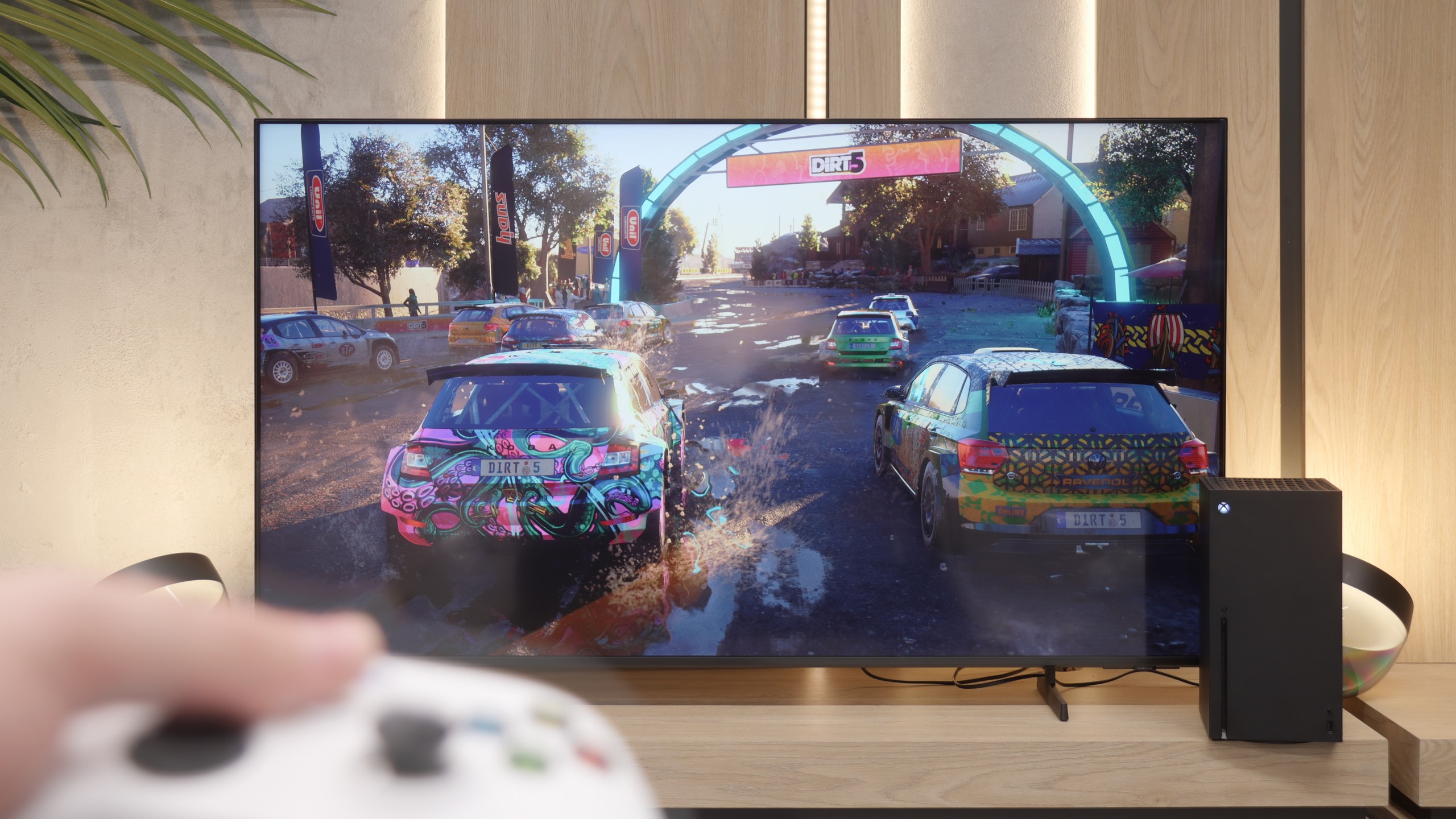
The Samsung Q80D TV is a real gem for gamers. It is equipped with four HDMI 2.1 ports, which is a rarity, especially in this price range. This allows users to enjoy features such as ALLM (Auto Low Latency Mode), VRR (Variable Refresh Rate), and 120Hz at 4K resolution. These features ensure smoothness and responsiveness of the image, which is a key aspect during dynamic gameplay. The TV also supports HGIG (HDR Gaming Interest Group), enabling optimal HDR content display in games. Additionally, it comes with a Game Bar, providing quick access to gaming settings. Users with Nvidia graphics cards will also be pleased with the implementation of G-Sync. This feature eliminates stuttering and screen tearing. The only downside is the lack of support for Dolby Vision, which may be disappointing for users looking for that HDR format. It's also worth mentioning that since 2022, thanks to the collaboration with Microsoft, Samsung TVs offer the Xbox Game Pass app, allowing for cloud gaming. This is an added bonus for gamers who want to take advantage of a wide library of games without needing a console.
We won’t beat around the bush – the Q6F is not a television designed with gamers in mind. While it does include features like ALLM (Auto Low Latency Mode) and VRR frame syncing for consoles, that's pretty much where the list of advantages ends. Beyond these basics, the television offers nothing more that could satisfy those who spend a lot of time in front of a console. It's a real shame that a useful tool like Game Bar, which allows for quick control of game parameters in higher-end Samsung models, is missing here. In terms of gaming, this is an absolutely basic model and it will only suit 'casual' gamers.
Input lag
9.8/10
10/10
SDR
HDR
Dolby Vision
What more can I say, the input lag at this level is simply outstanding. It's hard to achieve a better result that will satisfy gamers! The television performed excellently at every tested resolution and refresh rate, both in SDR and HDR.
As a consolation for the modest list of features for gamers, it's worth mentioning that the Q6F has absolutely no issues with input lag. The response to the controller's movements is immediate, and the television does not introduce any additional delay regardless of the resolution we are currently playing in. In this respect, the control is very precise and comfortable, which is a big plus in this class of equipment.
Compatibility with PC
7.6/10
6/10

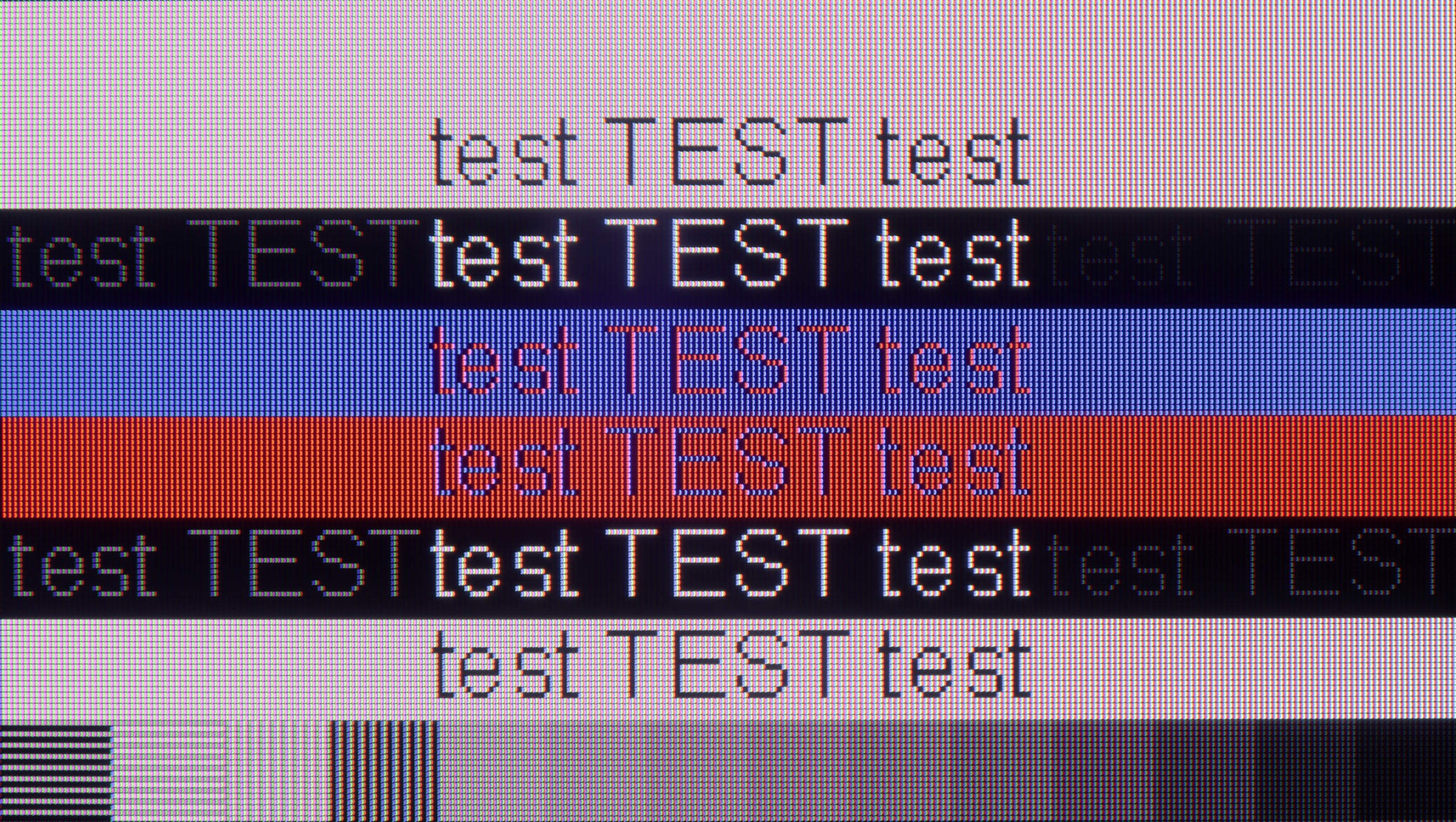
The photo shows the legibility of small fonts. Ideally, lines should be the same thickness on both light and dark text, with minimal pixel gaps.
Samsung Q80D performs well as a computer monitor. With support for chroma 4:4:4 (only works in "Game" mode), text on the screen is sharp and readable, which is very important for those who want to work on such a TV with text documents or spreadsheets. One of the biggest advantages of this model is its exceptionally low input lag in “PC” mode, which is only 9 ms. This is a reference-level result that ensures smoothness and responsiveness, which is crucial for both gamers and video editing professionals. The only thing we can nitpick is that there is a certain issue with font rendering on dark backgrounds. When we zoom in on the tested font image, we notice that the horizontal lines are darker compared to the vertical ones. This means that the sub-pixels in the TV do not fully illuminate in this case. This could be due to an oversight by the manufacturer regarding the optimisation of the algorithm responsible for displaying thin lines, which affects the quality of details in text rendering on dark backgrounds. Nevertheless, Samsung Q80D is a very good choice as a PC monitor.
Although the Q6F isn't a screen designed specifically for PC gaming, it deserves praise for how well it handles font display. As a monitor for text work, browsing websites, or daily news reading, the television performs exceptionally well. The readability of text is at a very high level, thanks to the proper implementation of the Chroma 4:4:4 signal and the use of an IPS panel. If you're looking for a cheap, large screen for office work, the Q6F holds up really well in this regard. Especially since Samsung offers very good integration with the Windows system and built-in Microsoft Office tools.
Viewing angles
3/10
5.6/10
Samsung Q80D, equipped with a VA panel, unfortunately doesn't perform well with viewing angles. When we watch the screen at a 45-degree angle, there is a noticeable loss of brightness. The image becomes less sharp, which can be problematic if we plan to watch TV from different spots in the room. However, the VA panel has its advantages. When we look directly at the screen, black is deep and well-saturated. Moreover, even at an angle, dark colours retain their depth, which is rare for this type of panel.
The viewing angles are one of the better aspects of the Q6F model, which is directly attributed to the use of an IPS matrix. They are much better than in televisions based on VA panel technology. As a result, the image viewed at an angle remains clear and does not become "washed out" or faded. However, it is worth noting that while the colours look really good, the drop in brightness at a greater angle is already quite noticeable. Nonetheless, this is a solid result for those who don't always sit directly in front of the screen.
Daytime performance
6/10
1.8/10

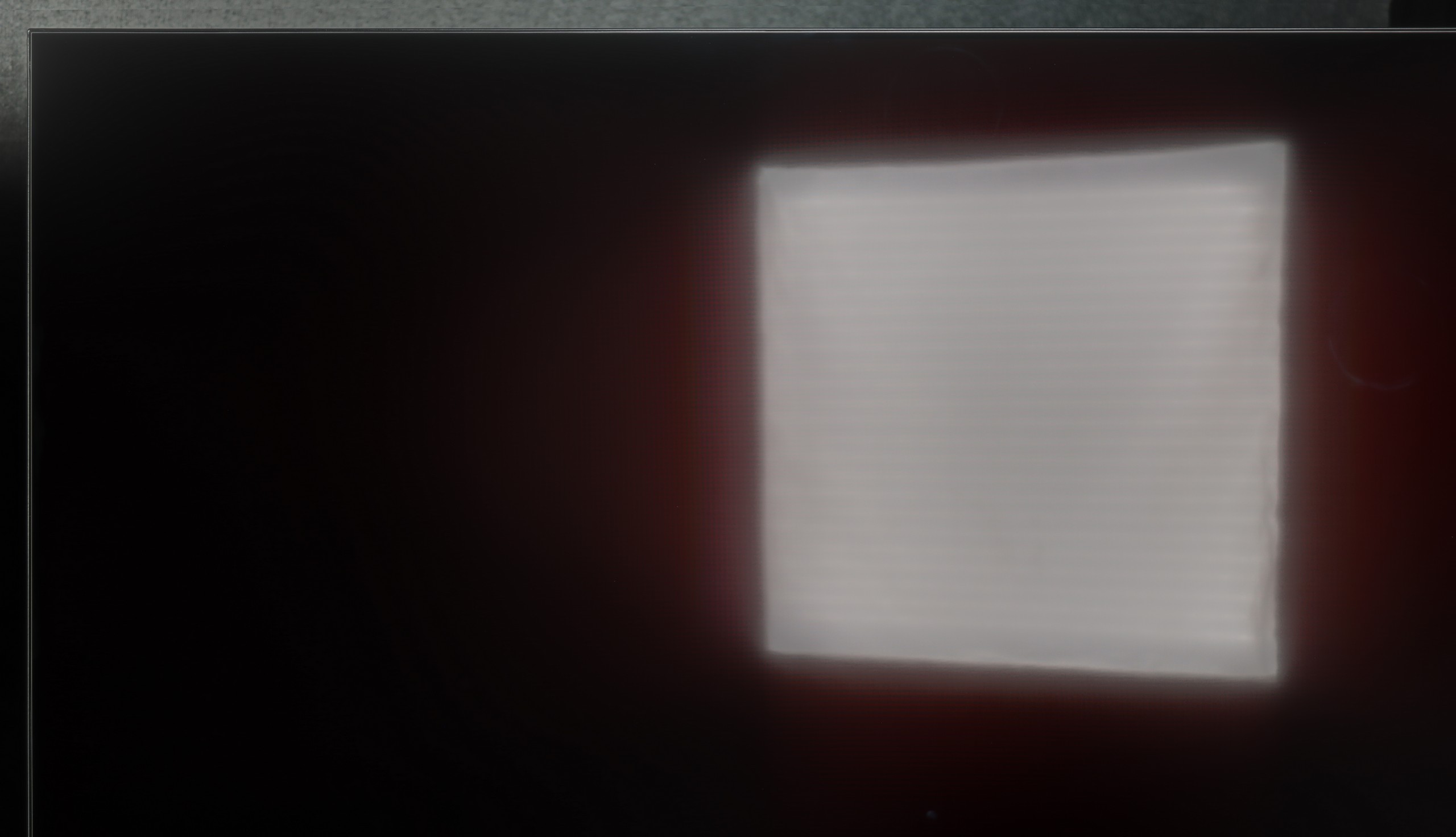

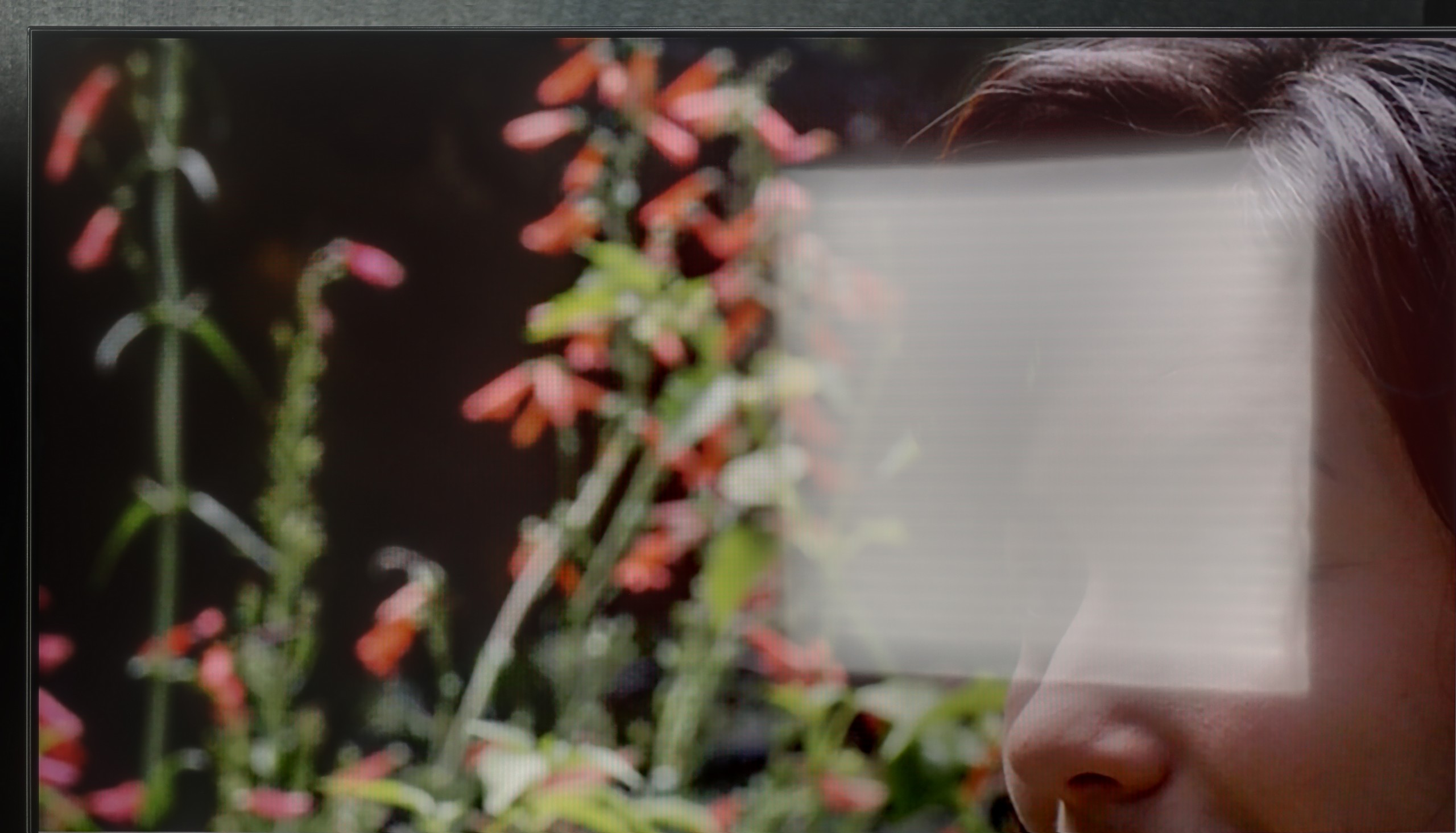
Panel brightness
Samsung Q6F (IPS): 125 cd/m2
Samsung QLED Q80D: 550 cd/m2
The Samsung Q80D television stands out with very good brightness, averaging 550 nits, which is an impressive result, especially as it maintains this brightness across the entire surface of the screen. As a result, the picture is sharp and clearly visible even in bright rooms, which is a big plus when watching television during the day. However, despite the matte coating on the panel, the television struggles somewhat with glare suppression. In bright lighting conditions, unwanted reflections can occur, which may disrupt viewing comfort. This is particularly noticeable when there are light sources in the room that directly hit the screen.
What more can I say – aside from the satin finish of the panel, which barely reduces reflections, the Q6F is dark enough that it’s not suitable even for moderately lit rooms. A brightness of around 150 nits is simply astronomically low by today’s standards. With such a result, any larger light source in the room will make the image hard to read. This is definitely not a model for a sunlit living room.
Panel details
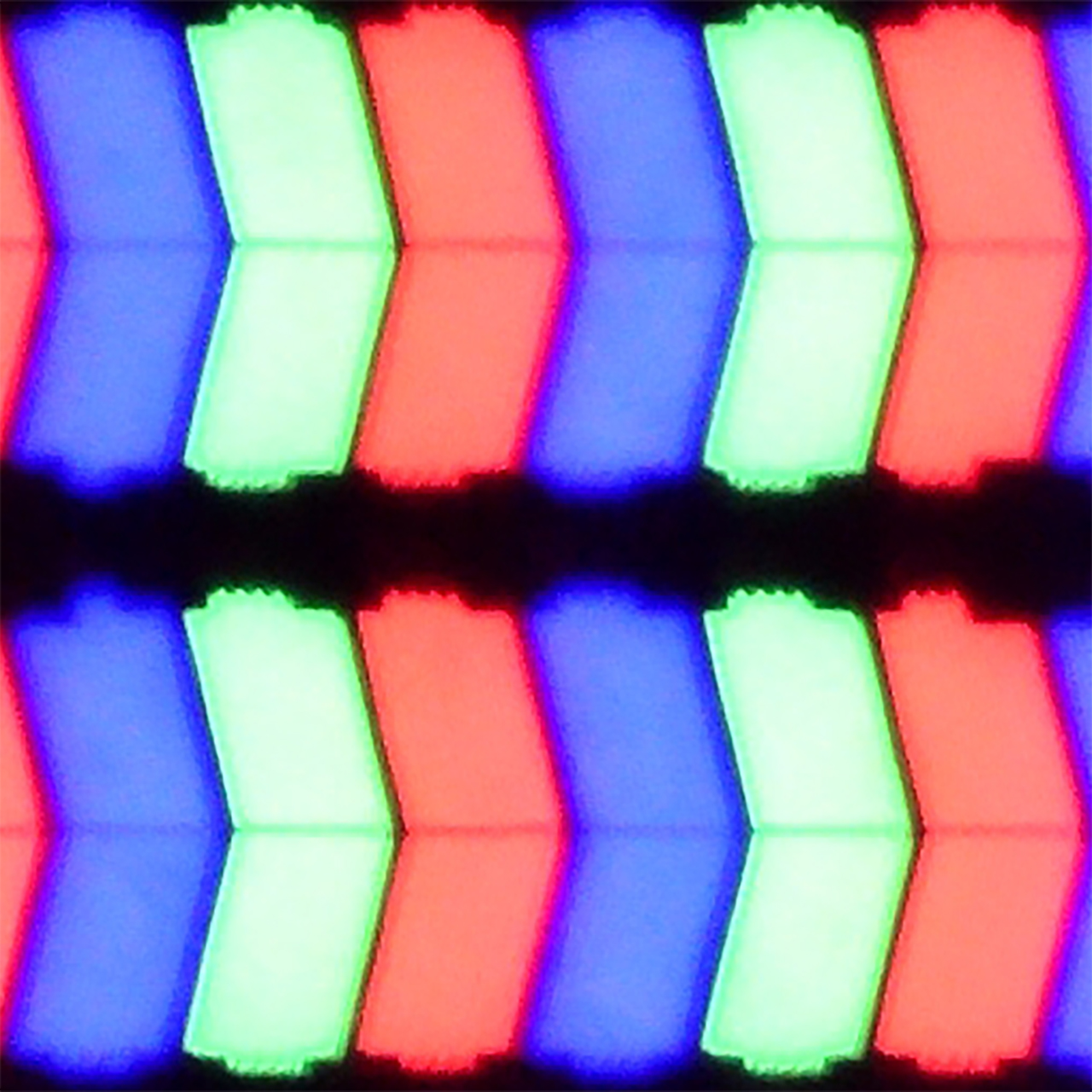
Subpixel Structure:

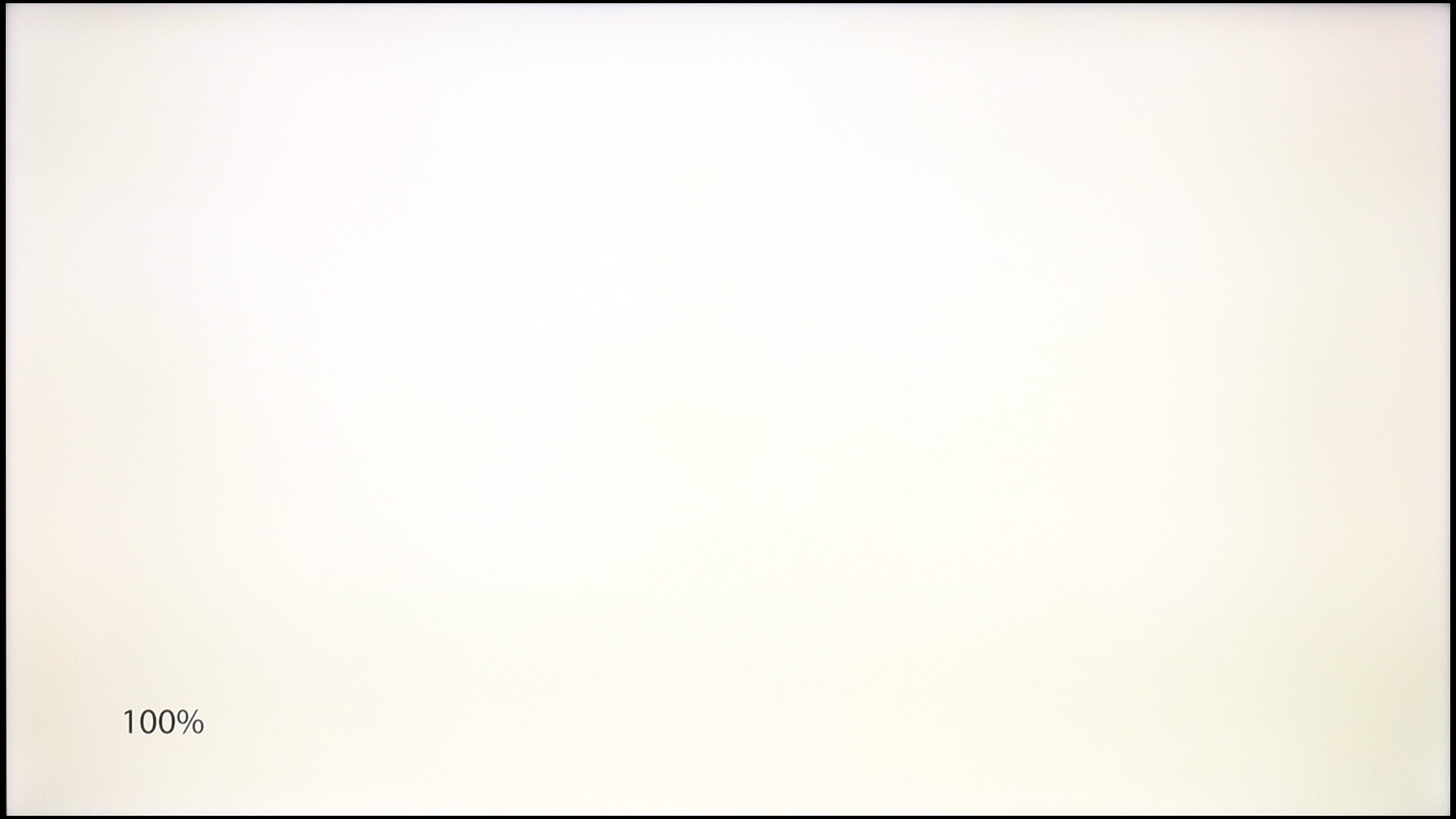
Panel uniformity and thermal imaging:

Samsung QLED Q80D
Samsung Q6F (IPS)
TV features
8/10
5.9/10
- SystemTizenTizen
- System performanceVery goodDecent
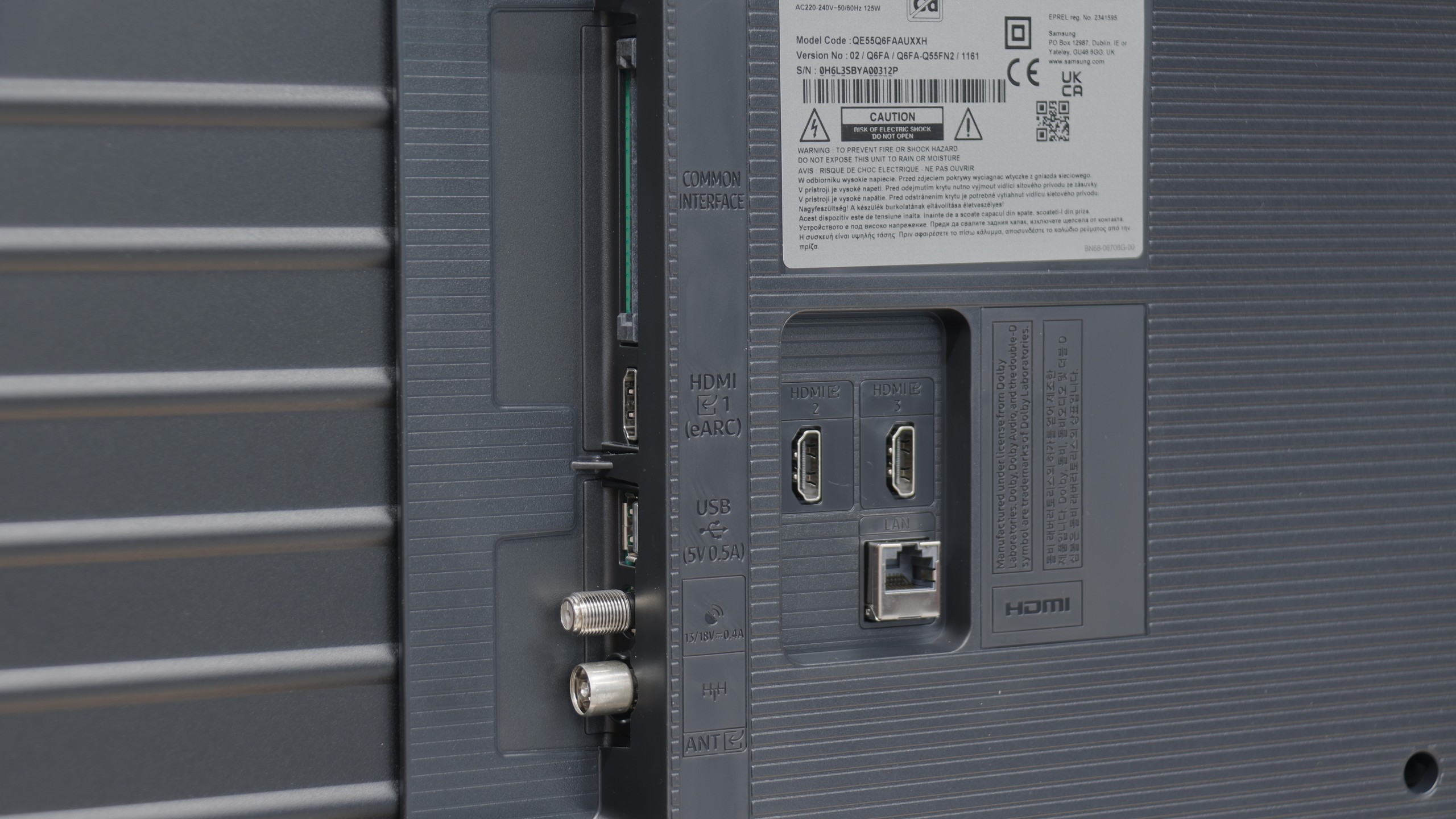
- HDMI inputs0 x HDMI 2.0, 4 x HDMI 2.1 48Gbps3 x HDMI 2.0, 0 x HDMI 2.1
- OutputsToslink (Optical audio), eARC (HDMI), ARC (HDMI)eARC (HDMI), ARC (HDMI)
- Network InterfacesWi-Fi 2.4GHz, Wi-Fi 5GHz, Ethernet (LAN) 100MbpsWi-Fi 2.4GHz, Wi-Fi 5GHz, Ethernet (LAN) 100Mbps
- TV receptionDVB-T, DVB-T2, DVB-S, DVB-S2, DVB-CDVB-T, DVB-T2, DVB-S, DVB-S2, DVB-C
Classic features:
- Recording to USB (terrestrial TV)
- Recording programming
- Picture in Picture (PiP)
- RF remote control (no need to aim)
- Backlit remote control
- Teletext
- Audio only mode
- Bluetooth headphones support
- Simultaneous Bluetooth headphones & TV audio
Smart features:
- AirPlay
- Screen mirroring (Windows Miracast)
- Voice search
- Voice search in native language
- Ability to connect a keyboard and mouse


Sound connection options
- HDMI audioeARC (HDMI), ARC (HDMI)eARC (HDMI), ARC (HDMI)
- Other audio outputsToslink (Optical audio)
- Wireless audioBluetoothBluetooth
Supported audio formats (external HDMI eARC audio):
- Dolby Digital Plus 7.1
- Dolby True HD 7.1
- Dolby Atmos in Dolby Digital Plus (JOC)
- Dolby Atmos in Dolby True HD
- DTS:X in DTS-HD MA
- DTS-HD Master Audio
Senior accessibility
- Numeric keyboard on TV
- Font size adjustment
- Audio description
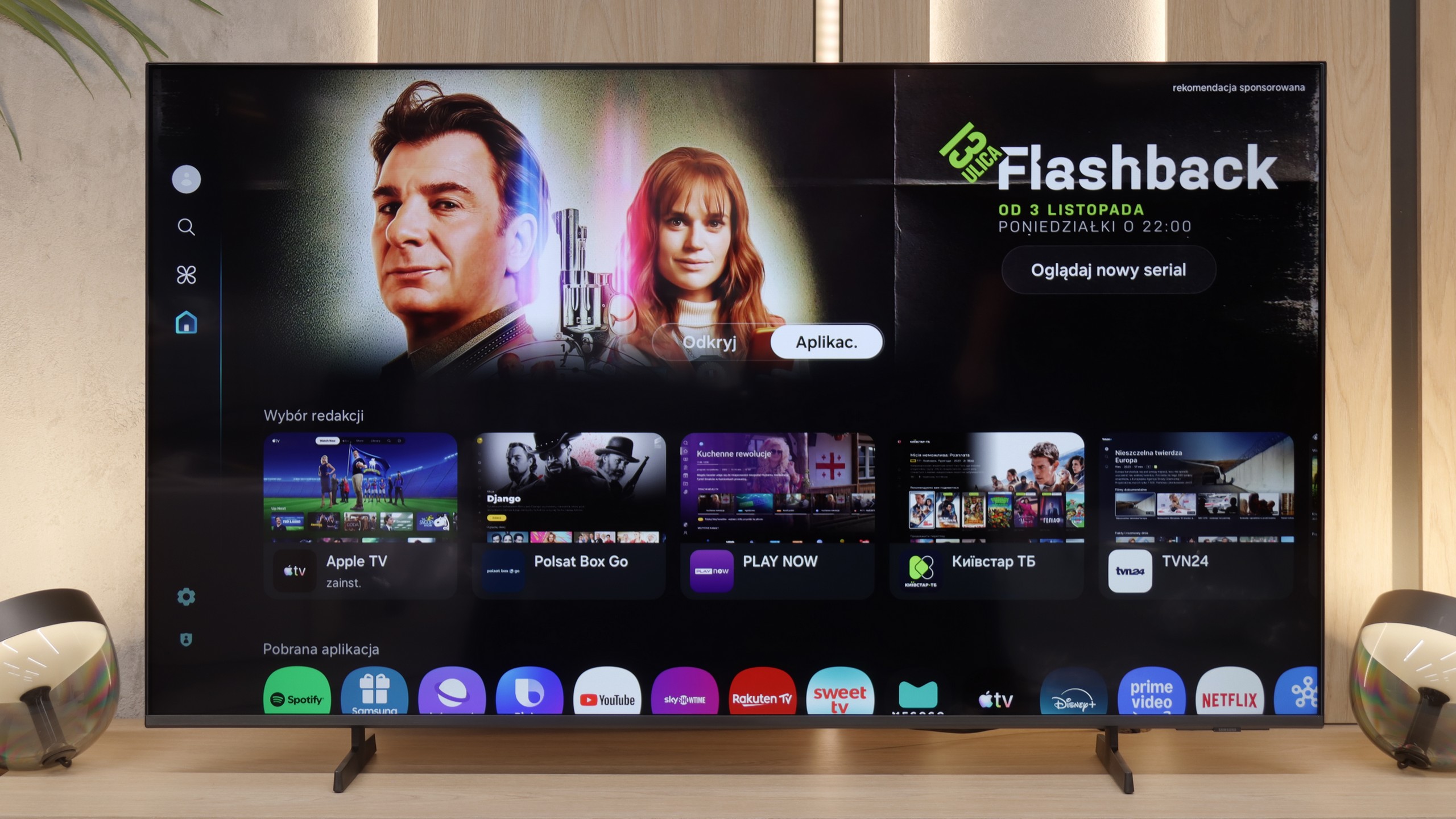
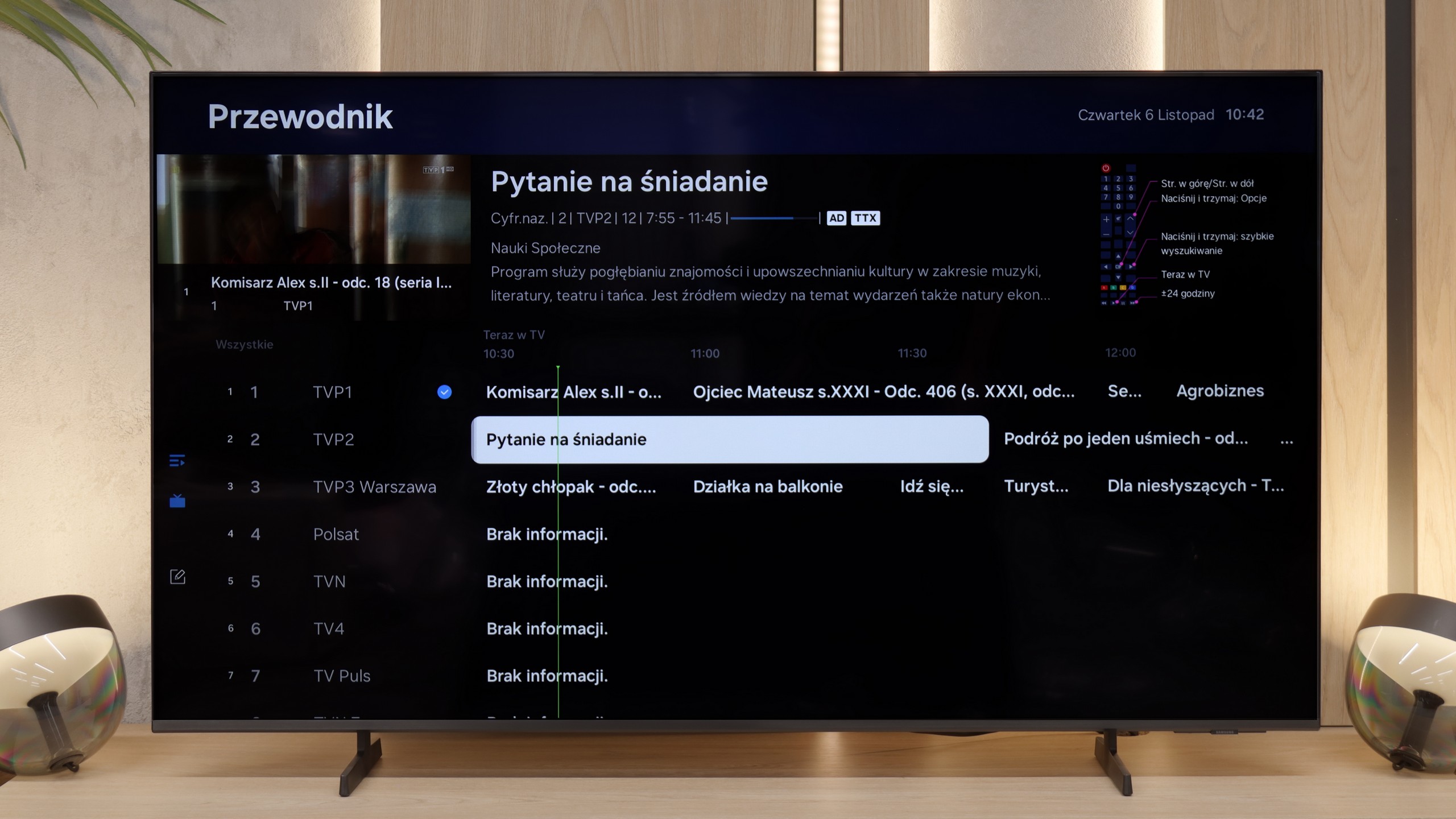
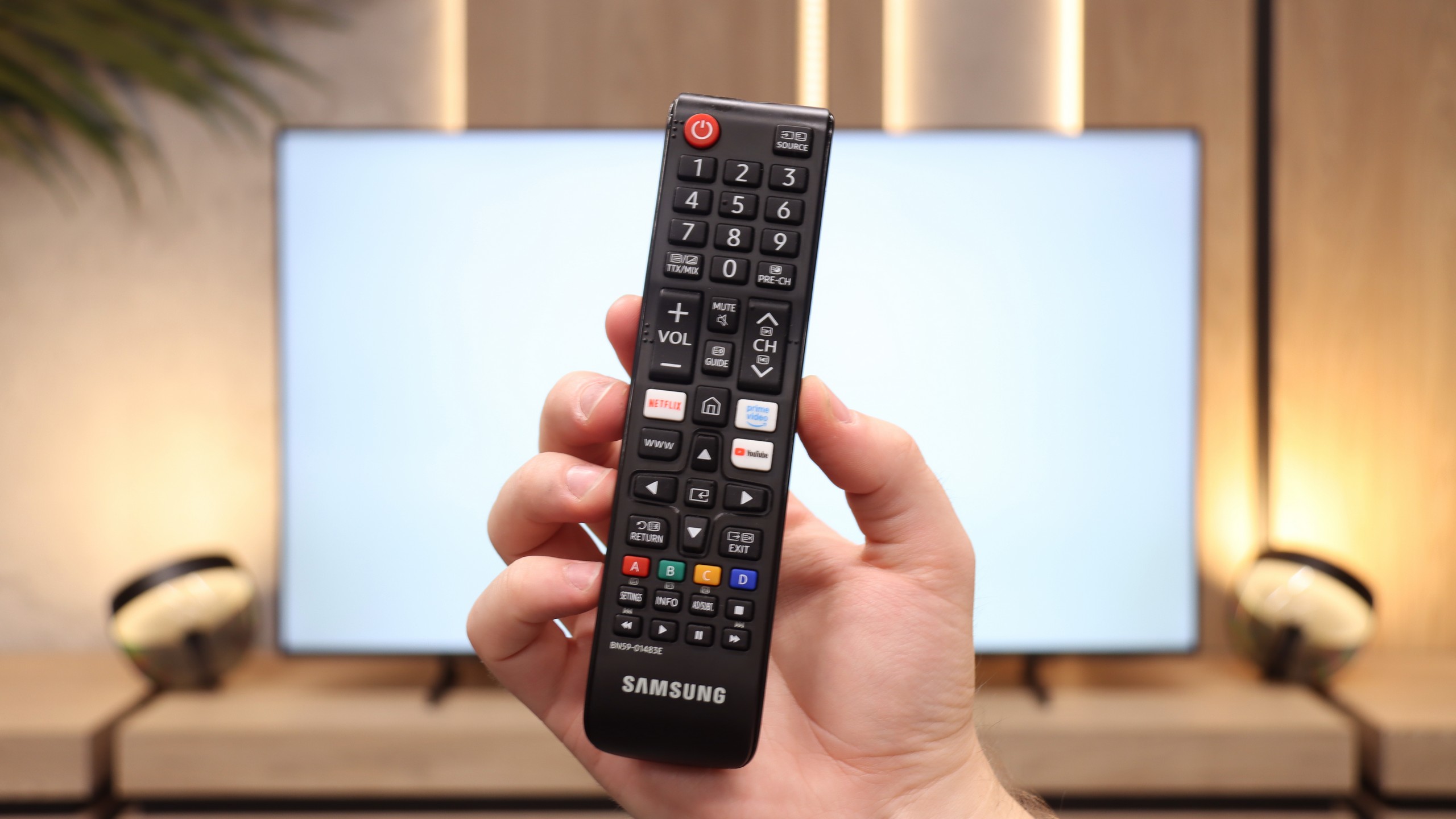
The Samsung Q80D television offers a range of features that significantly enhance user comfort. The Tizen system is an advanced platform that provides users with an intuitive and smooth experience. Thanks to its user-friendly interface, navigating through apps and settings is quick and easy. Tizen supports a rich set of applications, including popular streaming services, allowing access to a wide range of entertainment content without the need for additional devices, and a new feature for 2024 is support for the Polish language. It's also worth mentioning the solar remote control, which is not only eco-friendly but also convenient for everyday use. The solar cell remote can easily control other devices such as home theatres, set-top boxes (e.g., Canal+), or gaming consoles, which is quite a challenge for other manufacturers. Returning to the console, Samsung Q80D offers several features that gamers may appreciate. Firstly, the television supports VRR (Variable Refresh Rate) technology, which enables smoother game display, eliminating issues like tearing and stuttering. Additionally, with low input lag, reactions in games are quick and precise. The Samsung Q80D is also equipped with a Game Bar feature, which allows quick access to key gaming settings without the need to exit the game. From this interface, we can check and adjust parameters like VRR, input lag, frames per second (FPS), as well as screen ratios and sound settings. This means gamers can continuously optimise their experience by adjusting settings according to their current gaming needs. The television supports AirPlay, allowing easy content sharing from Apple devices, and enables connection to various Bluetooth devices such as mice or headphones, increasing its versatility. The only downside is the lack of USB recording support and the fact that the Q80D unfortunately does not support the DTS sound format. This means that if we have content encoded in this format, the device will not be able to properly play back the audio track. This could pose a problem for those using Blu-ray discs or media files that often utilise DTS to provide high-quality surround sound. To achieve complete audio experiences, it may be necessary to use an external player or soundbar that supports this format.
It’s really great that Samsung TVs – even the most budget-friendly ones – the Tizen system simply doesn’t slow down. The speed of operation isn’t quite on par with the most expensive models, but it’s definitely better than Google TV at a similar price. Thanks to Tizen, we have access to a truly vast library of apps, AirPlay, and other Smart TV features.
It’s worth noting that the remote control included with the Q6F is an older yet somewhat modernised version of the classic Samsung infrared controller, equipped with a full numeric keypad. Although it works via infrared, it has plenty of buttons, which might appeal to older users who watch traditional television – it simply makes channel switching easier. We also find a clear EPG interface, teletext, and support for Bluetooth headphones. It sounds a bit like a senior's dream come true, and there’s definitely something to that.
However, we must note a serious shortcoming regarding connections: this model lacks an optical output for audio devices. The only option available is an HDMI eARC connection, which could be a significant hassle if we have an external audio system.
Apps
9.3/10
9.3/10






















Playing files from USB
9.1/10
9.3/10
Supported photo formats:
Maximum photo resolution:

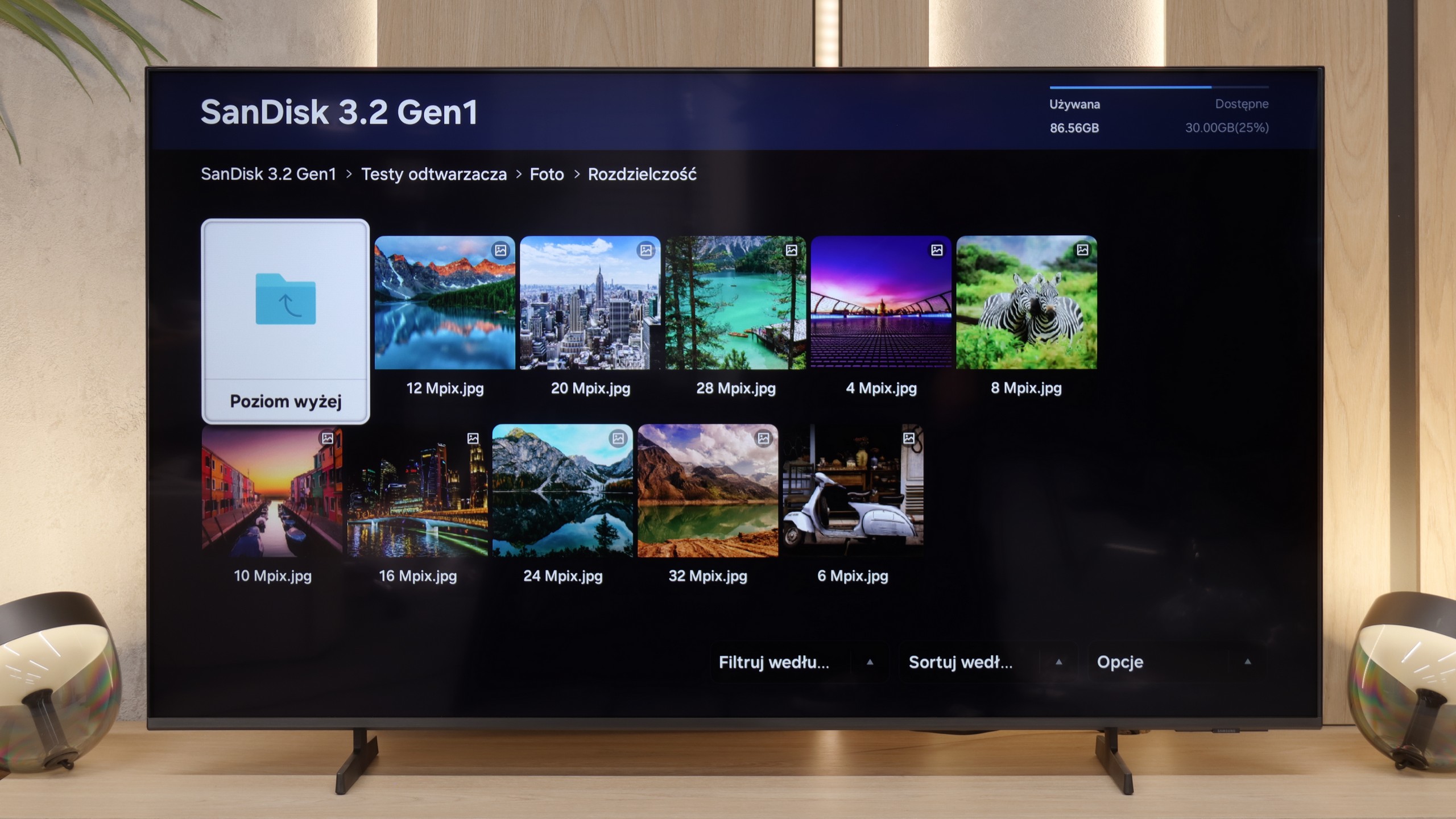
The built-in player in the Samsung Q80D television is definitely one of its strong points. It handles almost all video and audio files that we tested exceptionally well. The only exceptions are the Dolby Vision format, which is not surprising, and less common codecs. On the plus side, it supports Polish characters and offers the ability to customise font colours. On the downside, the TV struggles a bit with photo formats, as it only supports JPEG among the popular ones, while lacking support for formats like PNG or Apple HEIC.
When it comes to handling multimedia from external sources, the Samsung Q6F performs exceptionally well, especially considering that we are dealing with a closed system. The TV has no issues with most popular video, audio, or image formats (EVEN HEIC!). The media player operates steadily and quickly loads the contents of USB drives or network servers. It's a solid device for browsing your own film archives or home photo galleries.
Sound
6.6/10
5.8/10
- Maximum volume--
- Dolby Digital Plus 7.1
- Dolby True HD 7.1
- Dolby Atmos in Dolby Digital Plus (JOC)
- Dolby Atmos in Dolby True HD
- DTS:X in DTS-HD MA
- DTS-HD Master Audio
The Samsung Q80D television is equipped with a decent audio system with a power of 40W in a 2.2 configuration, providing quite good sound experiences. This system supports all popular Dolby codecs, allowing for the use of advanced audio formats during movie watching or gaming. However, it is worth noting one drawback: the television does not support DTS functionality. Nonetheless, the lack of this feature can be bypassed by connecting an external audio system, which can significantly improve sound quality and provide a more immersive audio experience. Additionally, Samsung offers a wide portfolio of soundbars that can be integrated with the television, as well as the Q-Symphony system, which allows for sound synchronization between the television and soundbar.
When it comes to sound, the Samsung Q6F plays... well, flat. However, the sound is clear and loud enough that it's perfectly suitable for watching news or regular television. The voices of the presenters are understandable and don't get lost in the background. However, if someone values even decent experiences when watching films, we definitely recommend purchasing a soundbar. Even the cheapest model from the Korean manufacturer's range will make a huge difference and save the situation.
Sound Quality Test
No sound test video
Acoustic Measurements
No acoustic data
0dBC (Max)
75dBC