Samsung Q6F is a television that’s difficult to assess through the lens of typical QLED models. We must remember that this is a budget offering aimed at a very specific audience. If you’re looking for an inexpensive device with the logo of a well-known manufacturer that simply needs to work, display multimedia, and offer basic remote control with buttons – the Q6F could be an interesting option for you. It’s a great choice for seniors or anyone who needs a large screen “on the cheap” for everyday television, where its IPS panel and good viewing angles really make a difference. However, we must say it plainly: the biggest drawback of this model is its very low brightness and poor blacks. These are the two foundations on which image quality is built, and here they are simply very fragile. It’s definitely not a television we would recommend for watching HDR content – this format exists here in name only. Although the Q6F has a QLED filter and belongs to the Quantum Dot family, fully utilizing the potential of this technology is practically impossible, as the device is technically unsuitable for such content. We know it’s tempting with its very low price and may appeal to many people with modest expectations. However, you should know that the suffix “QLED” suggesting a premium product is, in this case, far from what Samsung has accustomed us to in recent years. It’s a ticket into the world of Samsung, but in a very basic version.
- Matching (Score) |
- Our verdict |
- TV appearance |
- Where to buy |
- Contrast and black detail |
- HDR effect quality |
- Factory color reproduction |
- Color reproduction after calibration |
- Smoothness of tonal transitions |
- Image scaling and smoothness of tonal transitions |
- Blur and motion smoothness |
- Console compatibility and gaming features |
- Input lag |
- Compatibility with PC |
- Viewing angles |
- Daytime performance |
- Panel details |
- TV features |
- Apps |
- Playing files from USB |
- Sound
Samsung Q6F (IPS) vs Samsung The Frame Pro 2026 (LS03HW)
 Direct comparison
Q6F
The Frame Pro / LS03HW

Available screen sizes: 55”
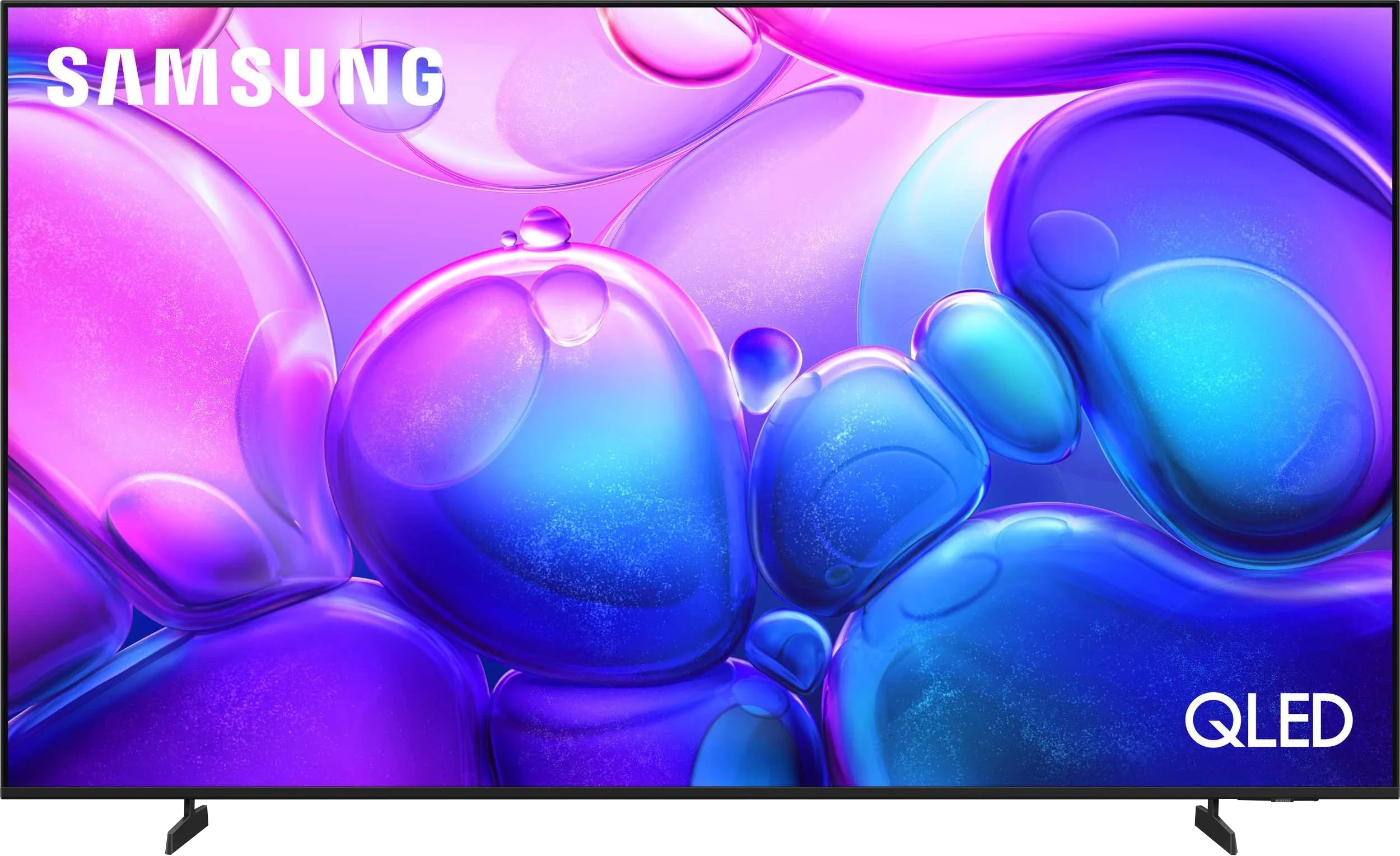
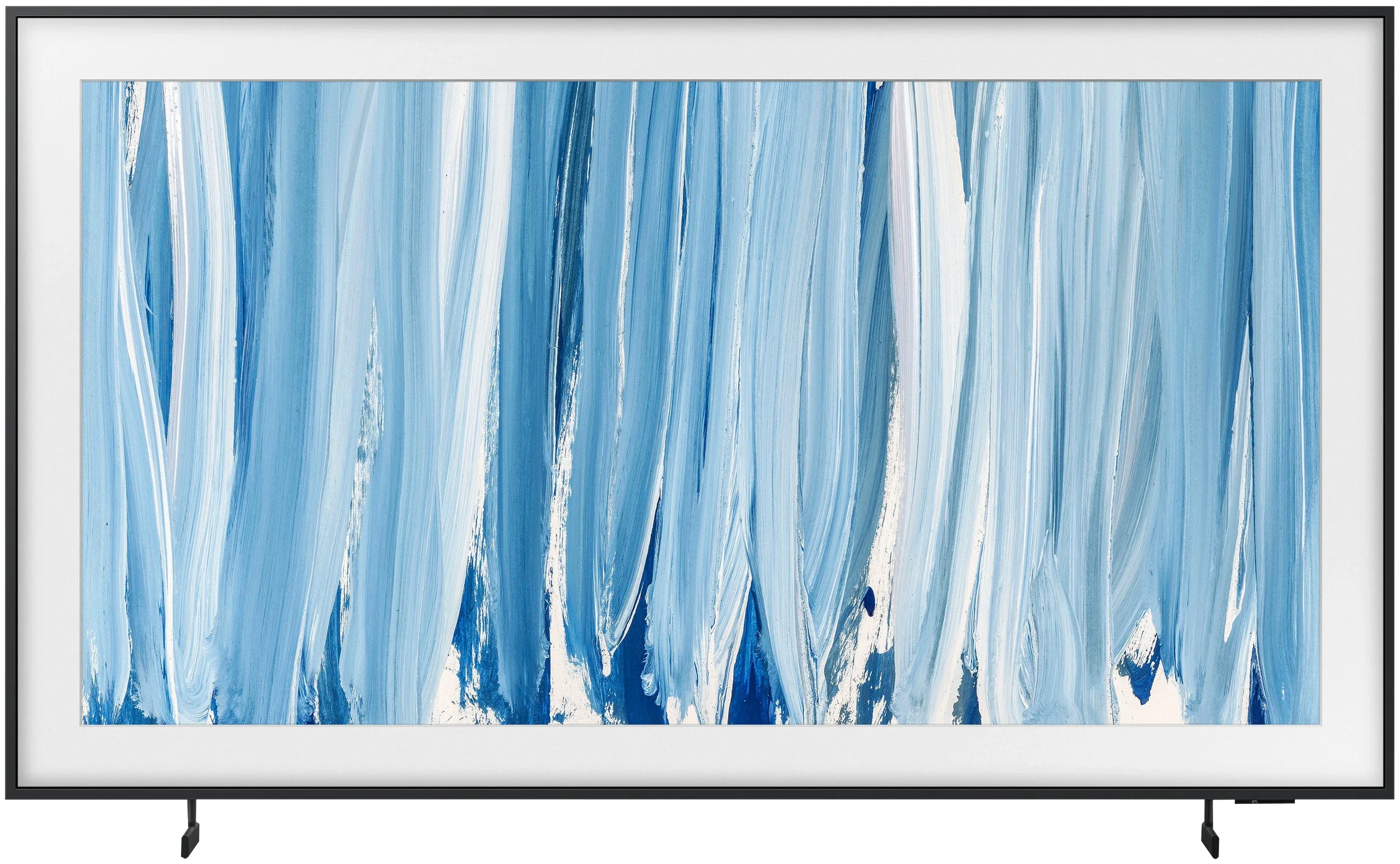
Panel type: LCD IPS
Resolution: 3840x2160
System: Tizen
Model year: 2025
Complete the survey to find out the result
Panel type: LCD VA
Resolution: 3840x2160
System: Tizen
Model year: 2026
Complete the survey to find out the result
Overall rating
5.1
7.3
 Movies and series in UHD quality
 4.8
6.8
 Classic TV, YouTube
 4.7
6.5
 Sports broadcasts (TV and apps)
 4.9
6.9
 Gaming on console
 6.4
8.9
 TV as a computer monitor
 6.0
8.4
 Watching in bright light
 1.8
6.5
 Utility functions
 5.9
7.7
 Apps
Apps 9.3
9.3
 Sound quality
 5.8
6.4
Complete the survey to find out what fits your preferences
Advantages

Tizen System: Works quickly, doesn't lag and
Large app library (Netflix, YouTube, HBO, Disney)
IPS matrix provides a good picture even when you're not sitting directly in front
Great font readability – good as a large monitor for text work
Basic features for gamers: VRR and ALLM
Very low input lag
Senior-friendly remote: Classic layout with numeric buttons
Very attractive price
On-wall picture styling: interchangeable frames
Well equipped: wall mount and Wiralles One Connect included
Art Store: the best artwork scans on the market
Matte screen finish: no reflections
High brightness 850–900 nits
Wide colour gamut (QLED)
Many gaming features: VRR, ALLM, refresh rate up to 240 Hz, Game Motion Plus
Smooth, sharp motion: relatively low motion blur for a VA panel
Tizen operating system, rich in modern features
Disadvantages

Brightness of 250 nits is too low to feel any difference in HDR mode
Low contrast of the IPS panel ruins night movie sessions
Average brightness of 150 nits during the day makes it hard to see anything in a sunny room
No optical output
Infrared remote (requires aiming at the screen)
Poor black levels for a "Neo QLED" screen (edge-lit)
Art Store requires a monthly subscription (you can work around this by uploading your own photos 😉)
Poor viewing angles (they could be better to improve the on-wall picture effect)
High input lag when using the Wireless One Connect wireless module
Our verdict
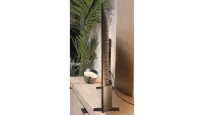
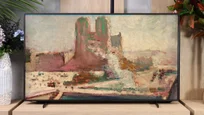
The Frame Pro 2026 makes the most sense when you want a TV that looks good in the living room and isn’t just another large black slab on the wall. And here Samsung still does something most manufacturers can’t match. Flush mounting, interchangeable bezels, Art Mode, a matte finish and the wireless One Connect mean that when The Frame Pro is hung correctly it can really look more like a piece of decor than AV equipment. In our view, it’s the best-executed TV of this kind on the market. Importantly, you don’t entirely pay for the looks with everyday performance. The Frame Pro is bright, the matte finish handles reflections very well, so it works really well in a brightly lit living room. Colors are vivid, motion is handled very well, and there are surprisingly many gamer-friendly features for a TV that’s primarily meant to “look better.” More questions arise when you consider the “Pro” badge and the fact it’s labelled as a Neo QLED screen. From that you might expect a large jump in picture quality over the regular The Frame, but in practice it isn’t that big. The TV uses Mini-LED backlighting and local dimming, but the zones are located at the edges of the screen. That’s a completely different approach than in more advanced Mini-LEDs, where the backlight works across the whole panel. That isn’t a major issue in bright, colorful scenes. It becomes more noticeable in the evening, especially in films with many dark scenes. Then you can see that black levels and backlight control are clearly weaker than in the best Mini-LED TVs. This is where it becomes most clear that “Pro” doesn’t mean top-tier picture quality in this case. An interesting alternative is the Samsung S99H. It has a strong design focus, but in terms of picture it really goes further. Of course it also costs significantly more, so it’s not a direct replacement but rather an option for someone who wants to combine both worlds with fewer compromises. So is it worth buying The Frame Pro 2026? We think yes, but only if you know what you’re paying for. The TV’s biggest strengths are its looks, Art Mode, very good performance in a bright living room, and the wireless One Connect. If that’s what you’re looking for, The Frame Pro is a very appealing option. If the main reason to pay extra is significantly better picture quality, we’re less convinced. It’s simply a better, more refined The Frame, not a full-fledged rival to the best Mini-LEDs.
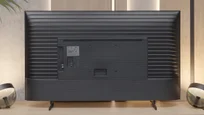
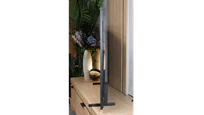
TV appearance
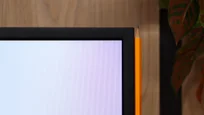
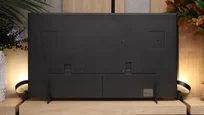

Contrast and black detail
1.9/10
5.3/10
Local dimming function: No
Local dimming function: Yes, number of zones: 24 (1 x 24)
Contrast:


Result
900:1

Result
1,000:1

Result
1,050:1

Result
1,050:1

Result
900:1
Result
5,400:1
Result
3,250:1
Result
3,900:1
Result
3,750:1
Result
3,900:1
Halo effect and black detail visibility:
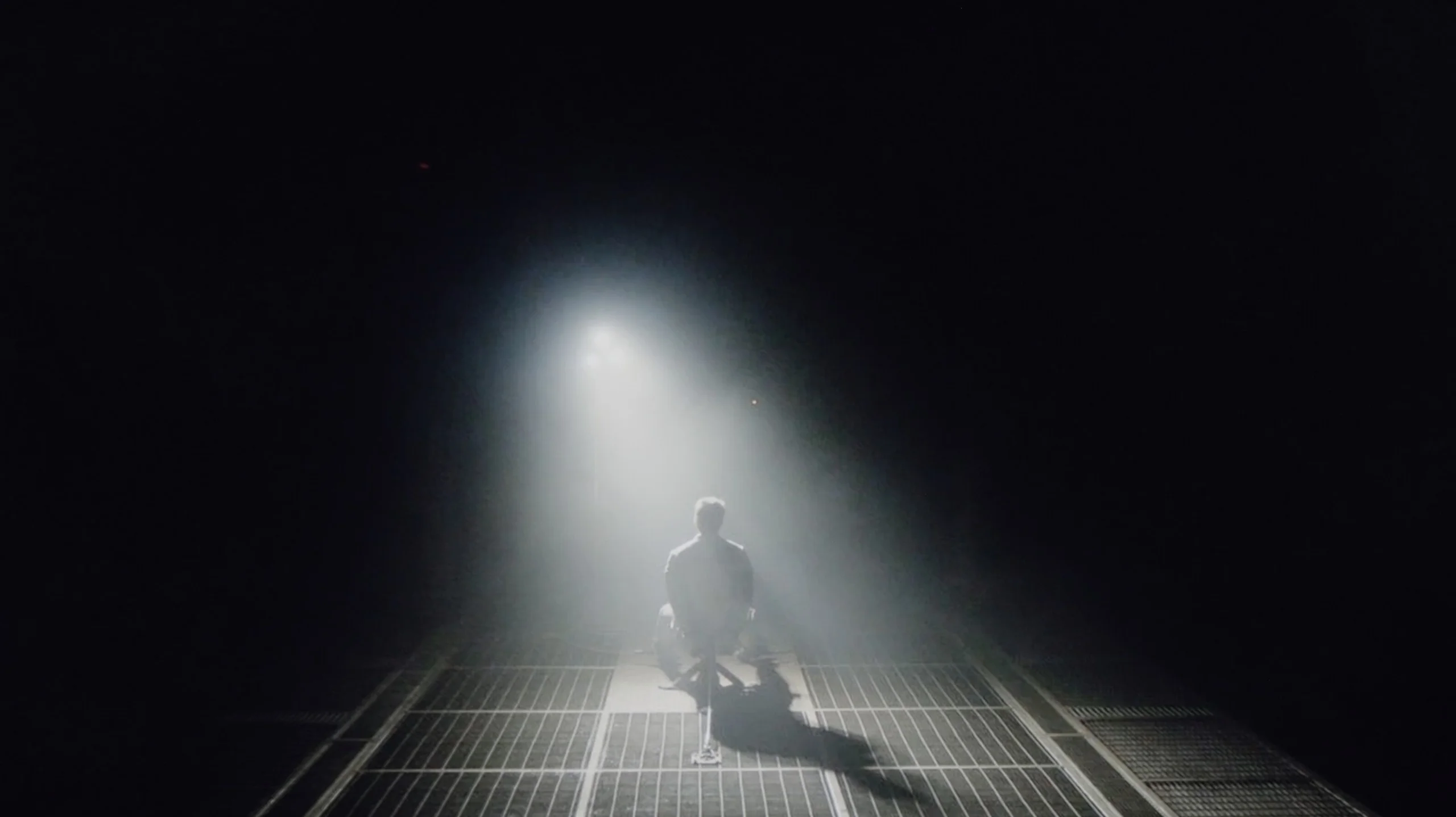
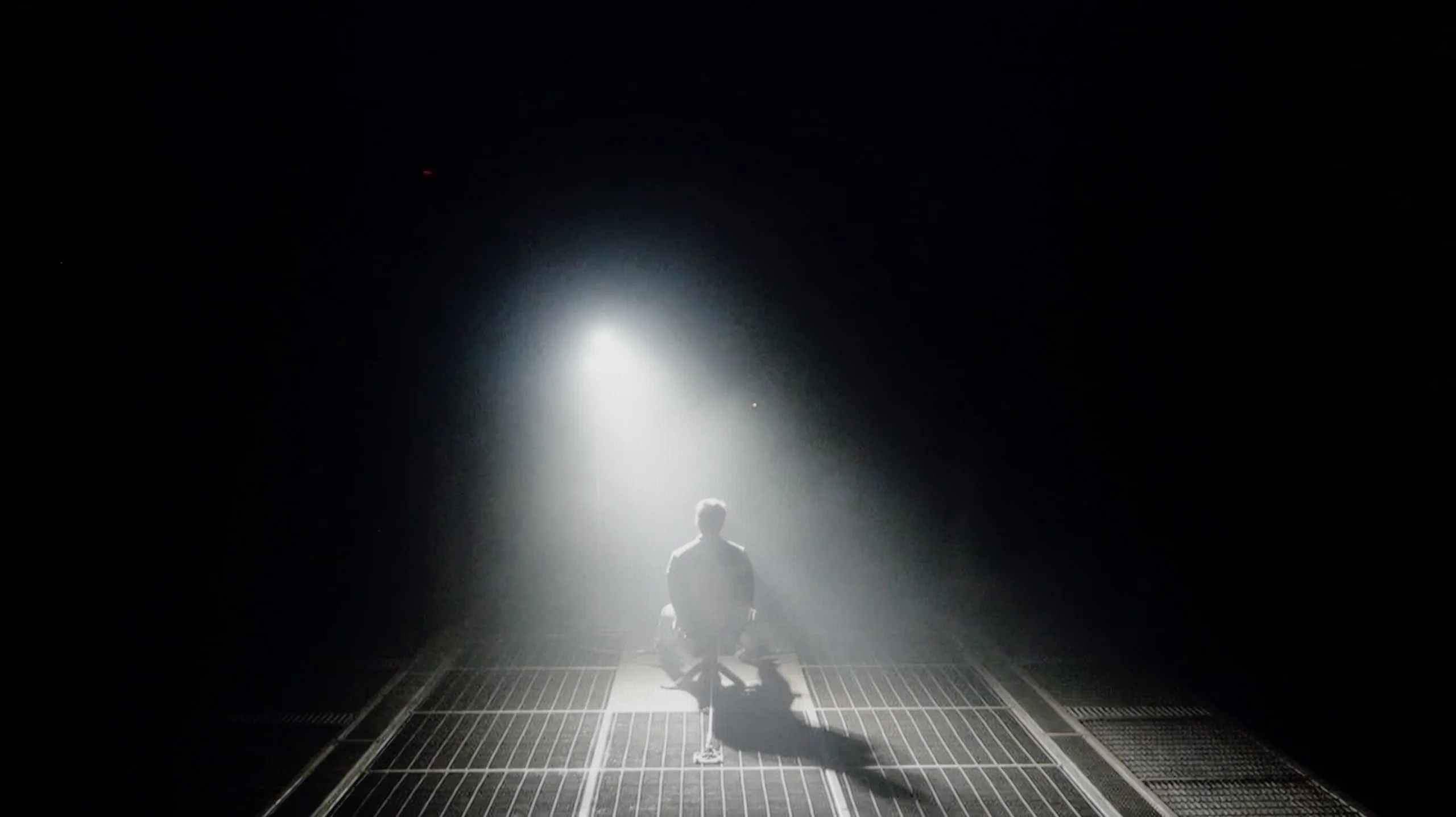
Check the visibility of bright lights on a dark background. Mini-LEDs often struggle with this. The photo does not compare black levels – that’s what the video below is for.
The video accurately shows differences in contrast and black levels between TVs, as well as potential issues: halo around bright objects or Mini-LED zone operation visible as brightness jumps.
It’s clear here where the manufacturer decided to cut costs. The IPS panel used, despite the support of QLED technology, highlights issues with lack of depth in the image. Results at a level of 1000:1 speak for themselves – the black in this model unfortunately resembles grey. You can try to salvage the situation by turning on the lights in the room, and best of all, placing them directly behind the television, which can somewhat trick our eyes. However, no matter what, the contrast in the Q6F with the IPS panel is simply weak and this will be noticeable in dark scenes.
The Frame Pro formally belongs to the Neo QLED family, so it uses Mini-LED backlighting. Except this isn't the same kind of Mini-LED we know from most TVs in that series. Instead of a large number of zones placed behind the panel, it only has a single row of zones at the edge. In practice it's an edge-lit design that simply uses smaller LEDs. Unfortunately that's quite quickly visible in blacks. There's just not enough local dimming here for the TV to handle more demanding scenes well. In our measurements contrast most often fell in the range of 3,000–5,000:1, so it's hard to speak of the level you'd expect from more advanced Mini-LEDs. You see it most when single bright elements appear on a dark background. A larger part of the image lights up with them, which makes blacks look noticeably shallower, almost navy. The Sicario 2 scene illustrates this well. Because of that placement of the zones, the TV simply doesn't have the precision to show it any other way. The Frame Pro uses Mini-LED, but its black performance is much closer to simpler designs. It's a bit of a shame, because this is the element we complained about most last year.
HDR effect quality
3/10
6/10
Luminance measurements in HDR:

Result
202 nit

Result
152 nit

Result
247 nit

Result
93 nit

Result
256 nit
Result
834 nit
Result
536 nit
Result
545 nit
Result
460 nit
Result
668 nit
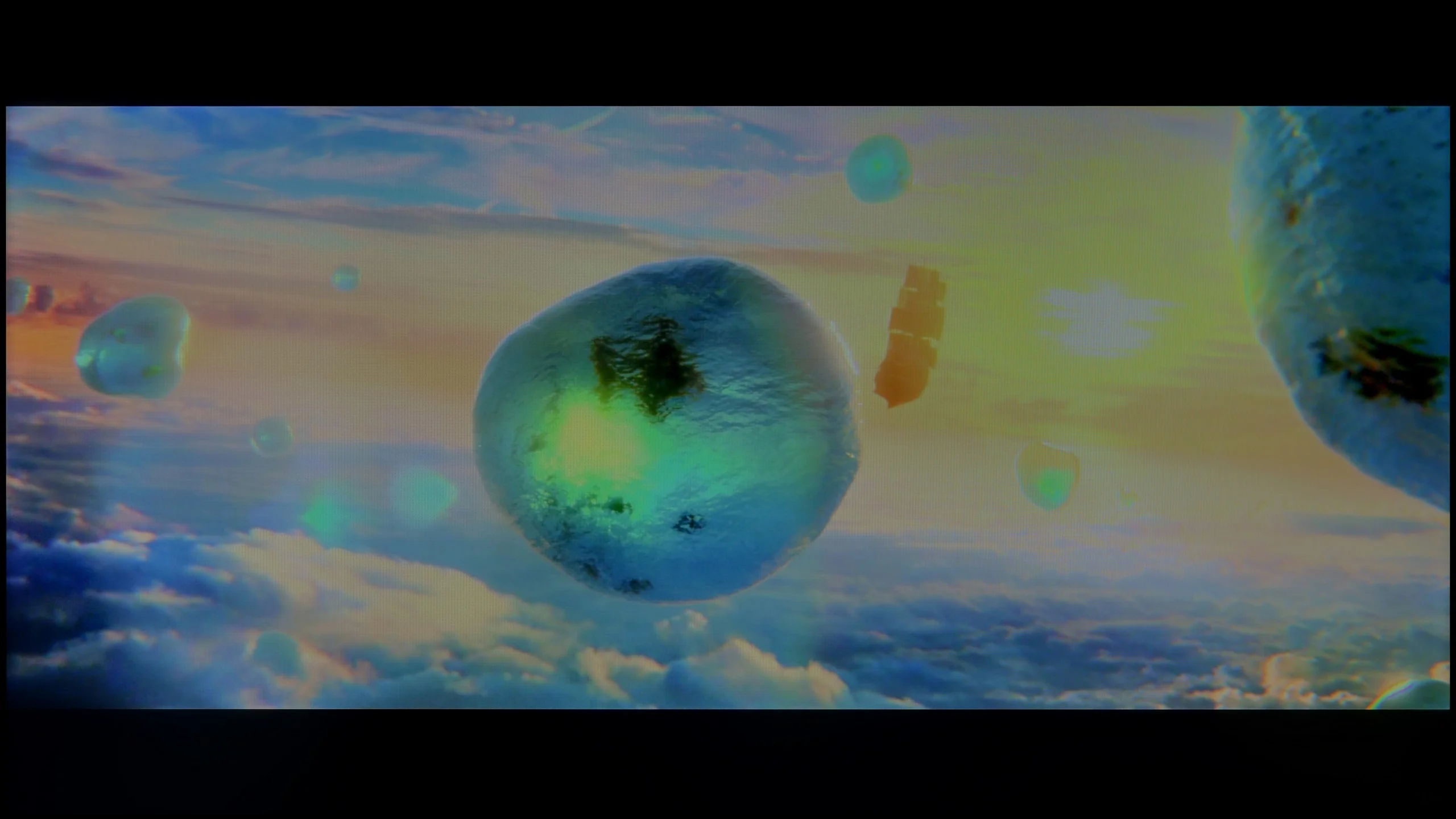
Scene from the movie “Pan” (about 2800 nits)

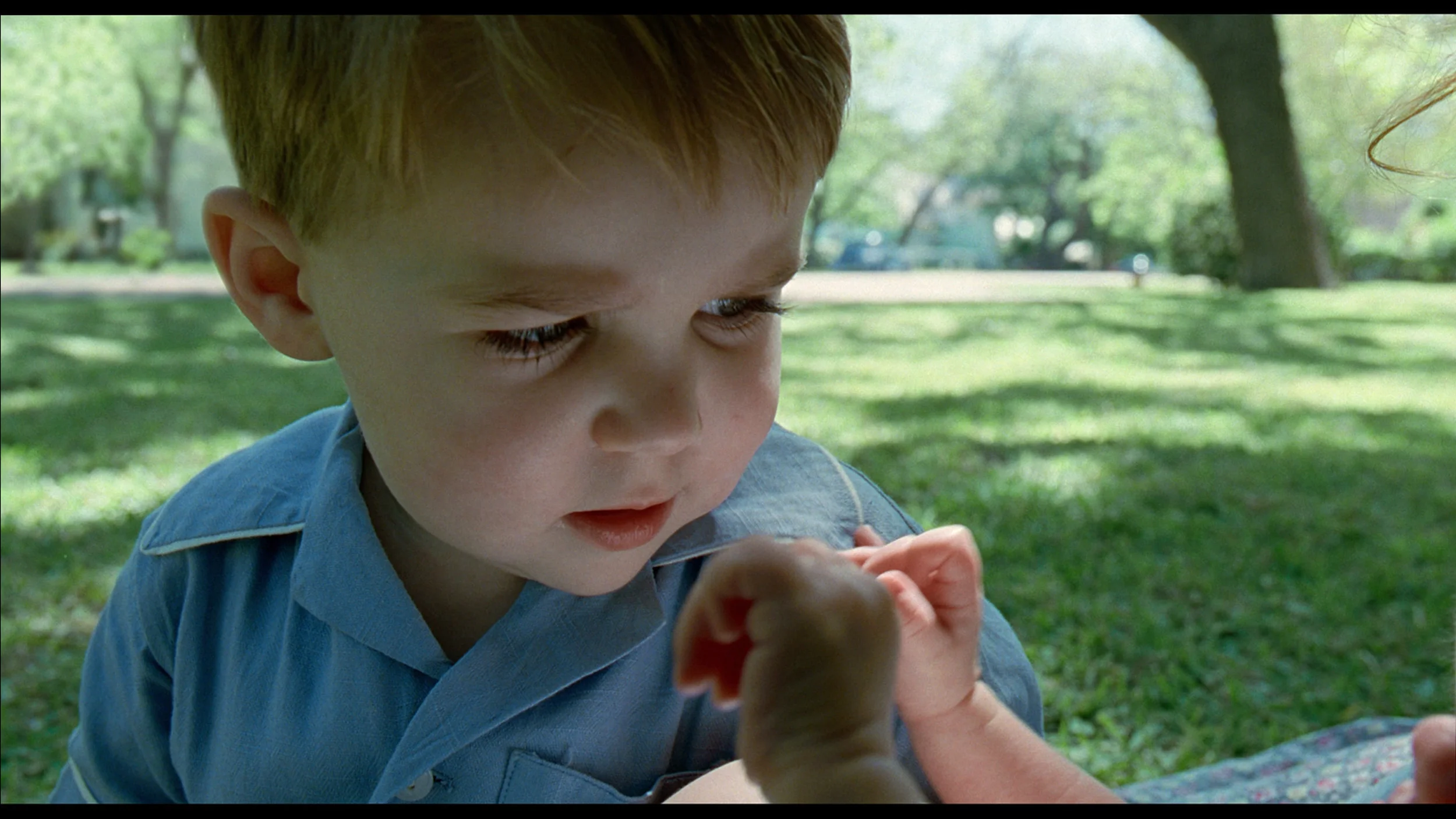
Scene from the movie “Billy Lynn” (about 1100 nits)


The photos show two HDR10 movies. 'Pan' is one of the brightest productions ever made, while 'Billy Lynn' (soldier) has brightness typical of streaming (Netflix, Prime, HBO MAX). Notice the intensity of effects and detail in whites.
Static HDR10


The photos present the visibility of white details in various HDR formats. They do not show brightness differences between TVs (these can be compared in the previous gallery).
Dynamic: HDR10+
Dynamic: HDR10+


The photos present the visibility of white details in various HDR formats. They do not show brightness differences between TVs (these can be compared in the previous gallery).
HDR luminance chart:
Samsung The Frame Pro 2026 (LS03HW)
Samsung Q6F (IPS)
Unfortunately, the Samsung Q6F is a very dark model. Its peak brightness in HDR does not exceed 250 nits, which is definitely too low to even talk about any "high dynamic range" or HDR effect. In practice, it's better to stick to content in SDR format, which simply looks more predictable on this TV. Another issue is the global dimming technique – in scenes with a lot of black, the TV drastically dims the entire screen to artificially improve the black levels. This results in the image becoming even darker, with brightness sometimes dropping below 100 nits. The only consolation is the QLED technology, but even here it's average. The applied quantum dot layer is not of the highest quality, as the coverage of the DCI-P3 colour gamut does not exceed 90%. Because of this, colours in HDR content may simply appear unsaturated.
You can't fault The Frame Pro for one thing: brightness. At peak we measured about 850-900 nits, so the TV has plenty of power to make many HDR scenes look really impressive. Bright, full-screen shots and more colourful frames perform best. In those scenes The Frame Pro can make a good impression — the image is bright, punchy and has the effect we expect from HDR. In our measurements some scenes reached over 800 nits, and even in tougher passages the TV maintained a fairly respectable brightness level.
The problem starts when HDR depends on small bright elements shown against a dark background. Single lamps, stars or reflections can be bright, but very often the black level across a larger part of the image also rises. As a result the bright point itself can look good, but the whole frame loses a lot of quality. That means The Frame Pro shows HDR best in scenes that are simply full-screen. If a film or series contains many such shots, the effect can be genuinely enjoyable. In darker material the limits of local dimming become much more noticeable.
Colours
The Frame Pro deserves praise for its colour gamut coverage. The TV uses quantum dots, the solution known as QLED, so it can deliver really well-saturated colours. In our measurements coverage of the important DCI-P3 palette was around 94.5%, while the more demanding BT.2020 was about 72%.
Those are very solid results that in most scenes produce pleasant, saturated colours. Of course they are not as eye-catching as the values from the latest panels using RGB backlights, but The Frame Pro makes up for that in another way — colour stability. Regardless of the scene, colour saturation remains fairly consistent and there aren't situations where the TV loses colour badly in more demanding frames.
Factory color reproduction
5.1/10
5.5/10

This gallery shows how colors change after professional TV calibration. If you notice the difference, we recommend ordering this service at SkalibrujTV.com.
Factory Mode
After calibration


This gallery shows how colors change after professional TV calibration. If you notice the difference, we recommend ordering this service at SkalibrujTV.com.
Factory Mode
After calibration
We tested the television in Filmmaker mode, which showed us two completely different sides of this model. Looking at SDR content, we were honestly shocked at how good this television looks straight out of the box. It was really hard to pick on anything here. Despite a slight 'messiness' in white balance and some slightly brightened details in the blacks (which directly stems from the IPS panel construction), colour errors hovered around the '2' level. This is not only a surprisingly good result but rather phenomenal, considering the price of the device.
On the other hand, what the Q6F showed in terms of colours when switched to HDR mode was a very unpleasant surprise. The errors in colour reproduction and palette were so massive that our charts literally ran out of scale. Of course, since Samsung even in such a budget model offers very extensive calibration options, we decided to approach the issue professionally and see what could be done during calibration.
In SDR material The Frame Pro in Filmmaker mode performs quite well, though it falls short of perfect. White balance is relatively even, but as brightness increases the blue component diminishes, so brighter parts of the image can have a slightly warmer tint. A bigger difference is visible in the gamma, i.e. the screen’s brightness handling. Across most of the range it runs below our reference point, which means the TV brightens the midtones a little. As a result, the image can appear a little brighter and less contrasty than it should. The colour errors themselves aren’t huge, but they’re noticeable enough that calibration can still make a significant improvement.
In HDR content the white balance looks similar, being fairly even across much of the range, with larger deviations appearing only at higher brightness. The EOTF curve, however, is more revealing. The Frame Pro holds up fairly well against the reference values in the brighter parts of the image, but clearly lifts the darkest parts. This is primarily due to the TV’s backlight design. This also affects the colours. With less saturated colours the errors are still moderate, but they become significantly larger as saturation increases. In Colour Checker measurements many samples already show high error values. So the out-of-the-box HDR can be considered decent, but it’s definitely not an image we’d call very accurate.
Color reproduction after calibration
6.5/10
8.5/10

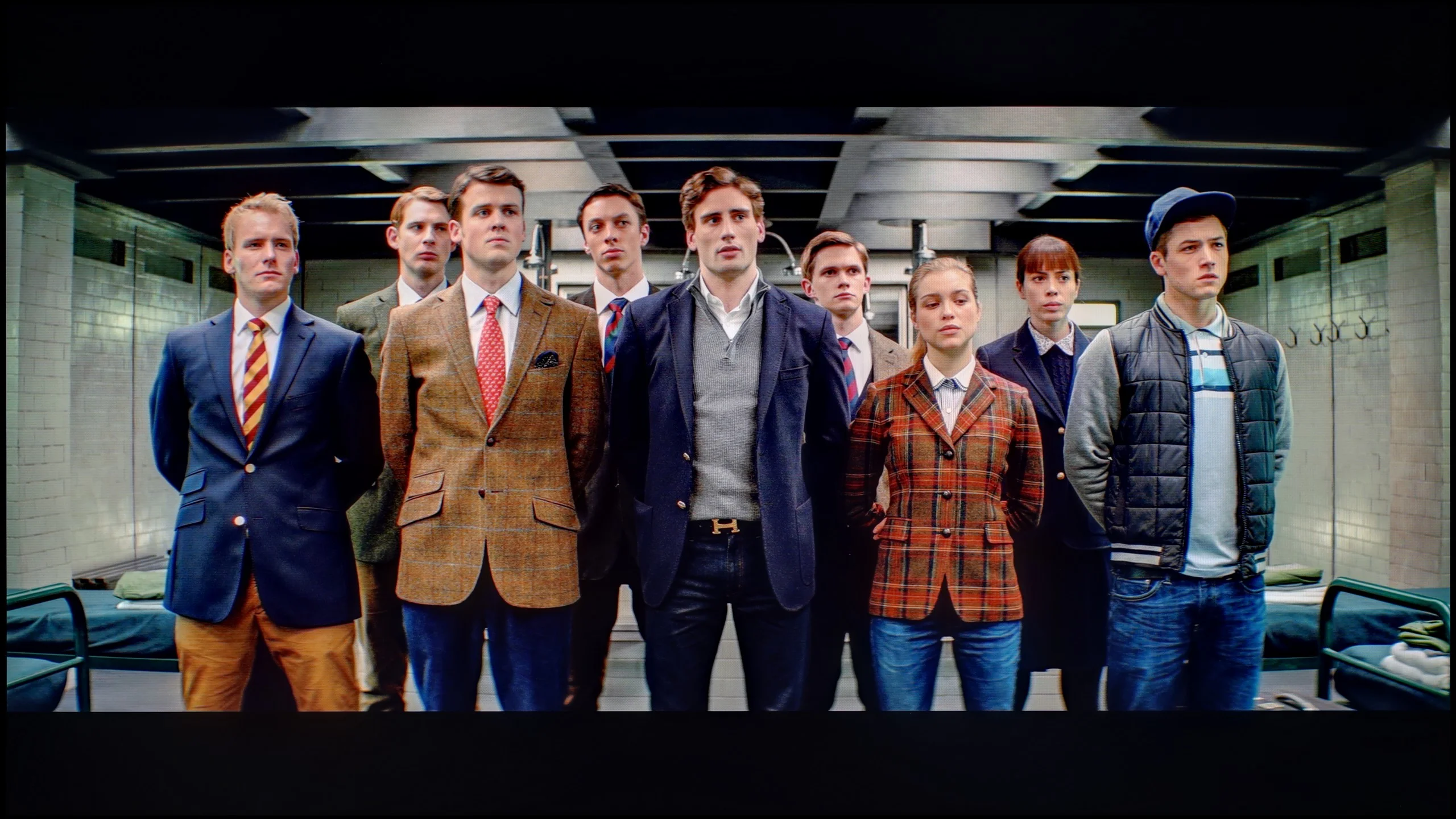
The photos show how movies look on the TV. Pay attention to black detail visibility, colors, and shadow tint.


The photos show how movies look on the TV. Pay attention to black detail visibility, colors, and shadow tint.
After our calibration, the colours in SDR mode looked even better – the result is truly surprising, as colour errors at a level of "1" are something typically seen in devices costing several thousand dollars. In this respect, the Q6F is really a great screen for everyday television, less demanding series, or movies. Unfortunately, our intervention in HDR mode did not yield a noticeable improvement. The television, due to its weak blacks and low coverage of a wide colour gamut, still has significant issues with proper colour saturation, especially reds. This is an example of a device where HDR primarily exists as a label on the box – for everyday use, we definitely recommend watching content in SDR format.
After calibration, the biggest improvements are seen mainly in SDR material. We managed to even out the white balance, but an even more important change was the gamma correction, which before calibration had the greatest effect on the picture's character. After the adjustments the gamma curve is now very close to the reference, so the image is not as bright in the mid-tones and simply looks more natural. Colour errors have also been noticeably reduced, so the effect of calibration in SDR is clearly visible.
In HDR the situation is a bit more complex. White balance was improved and in some ranges the TV tracks the reference much better, but at higher brightness levels deviations still appear. The same goes for colour reproduction; some errors can be corrected, but not all stem from the settings themselves. This reveals the limitations of the TV's design and the way its backlight and local dimming affect the HDR image. So with The Frame Pro, calibration makes the biggest difference to everyday content. Regular TV, YouTube and films and series in SDR (mainly those from cheaper streaming service tiers) can look noticeably better afterwards.
Smoothness of tonal transitions
9/10
9.5/10
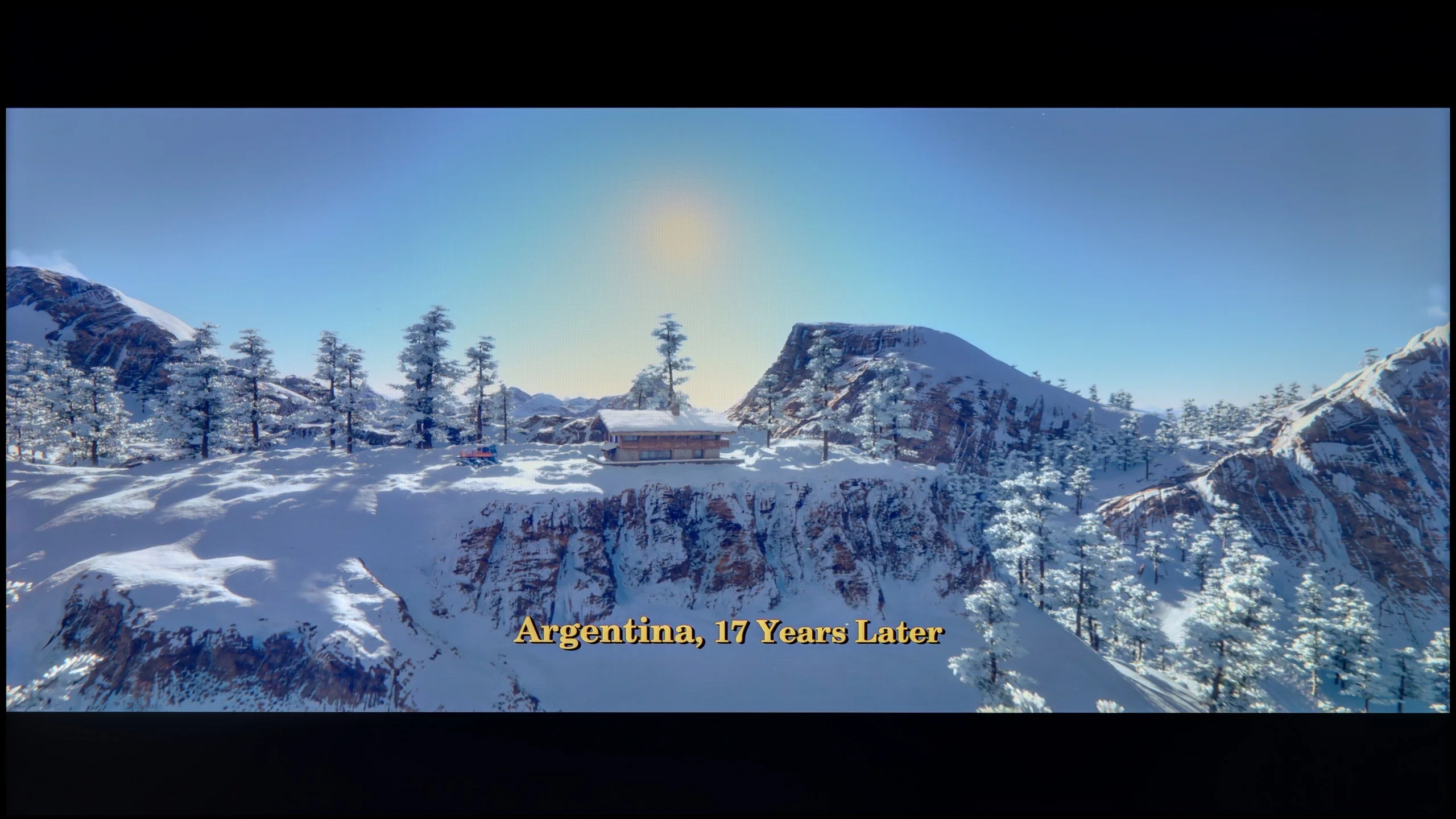

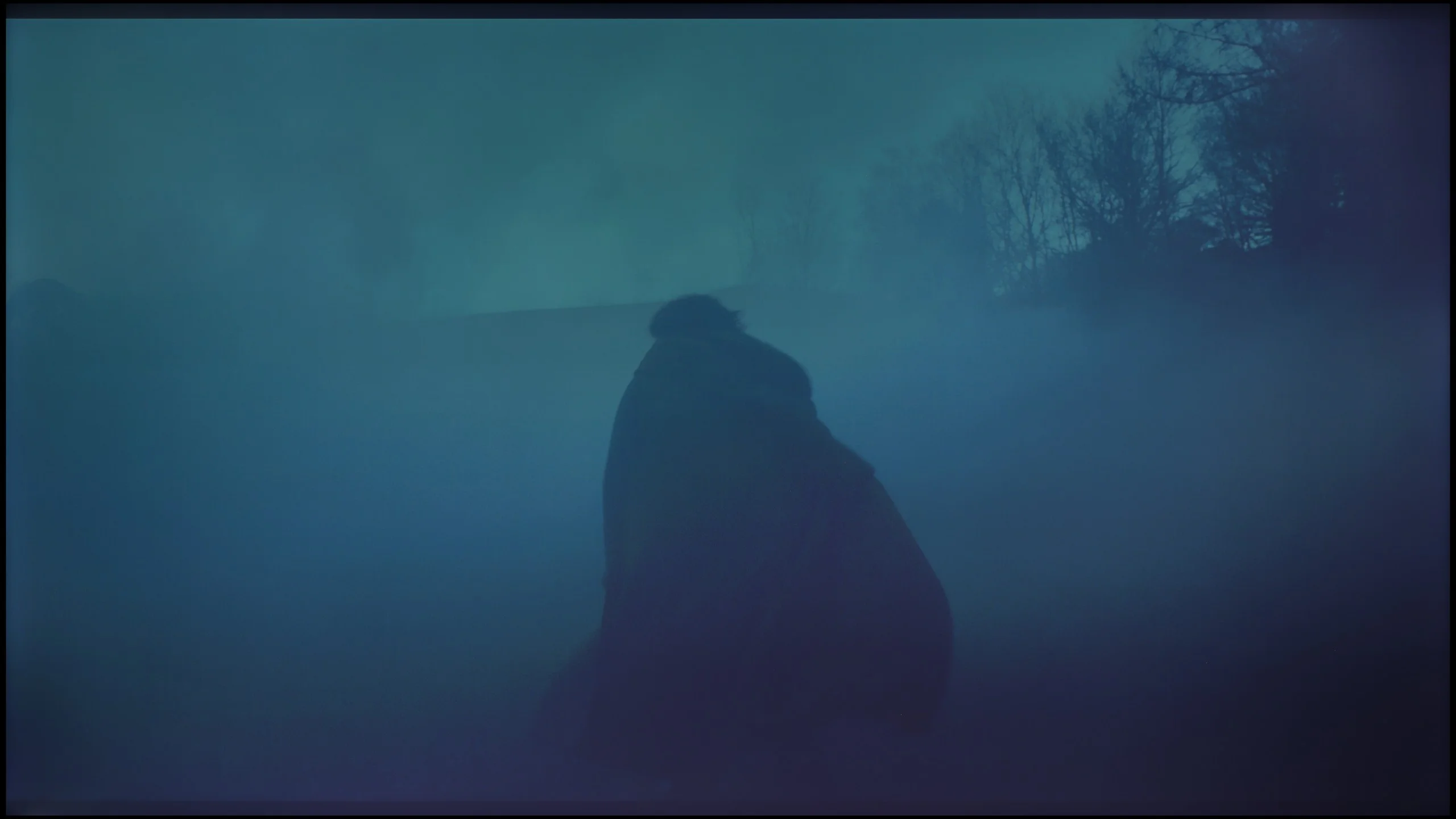

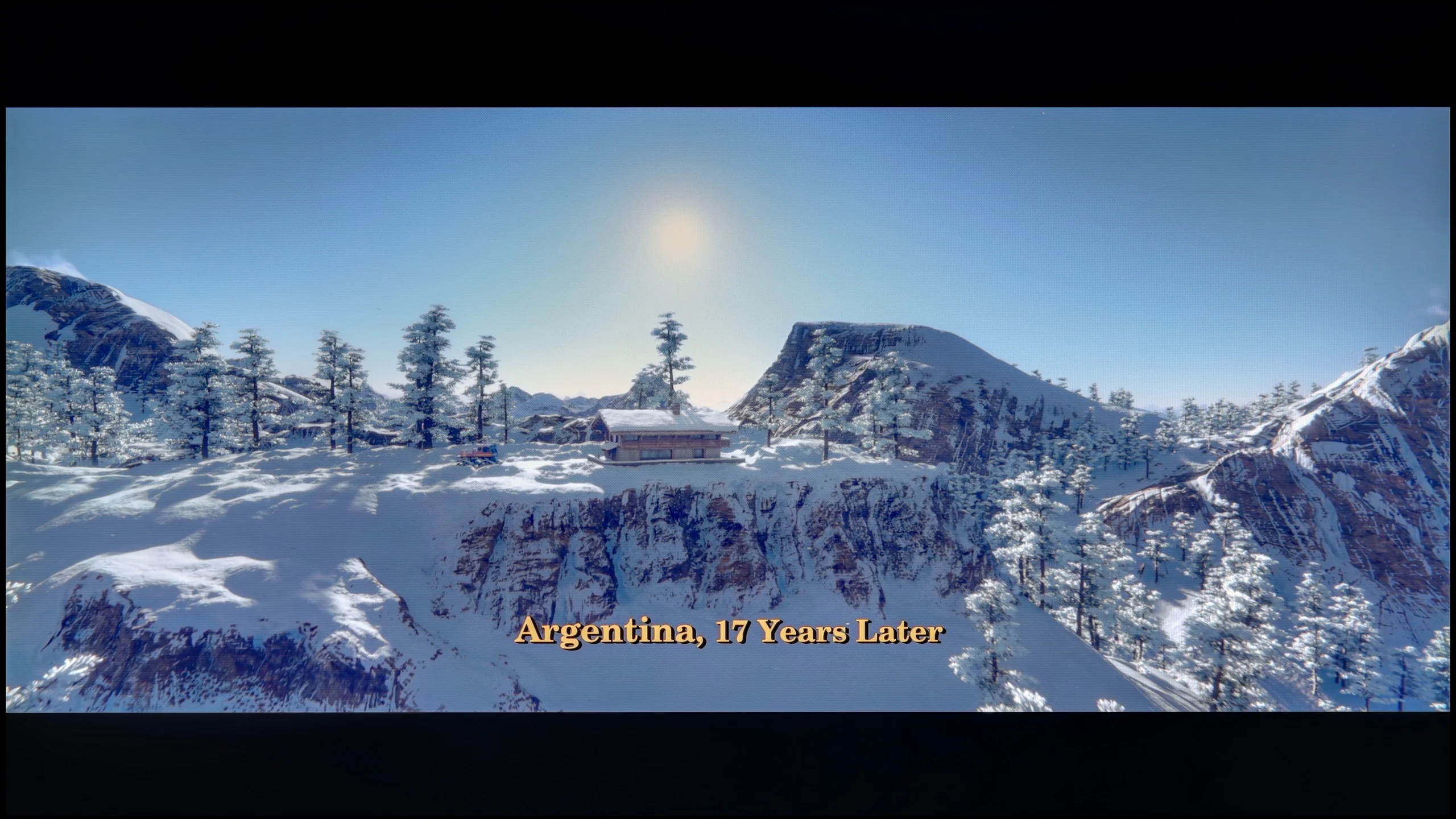
These are selected scenes that show smooth tonal transitions from one color to another. If you see distinct banding, it’s the TV panel’s fault.

These are selected scenes that show smooth tonal transitions from one color to another. If you see distinct banding, it’s the TV panel’s fault.
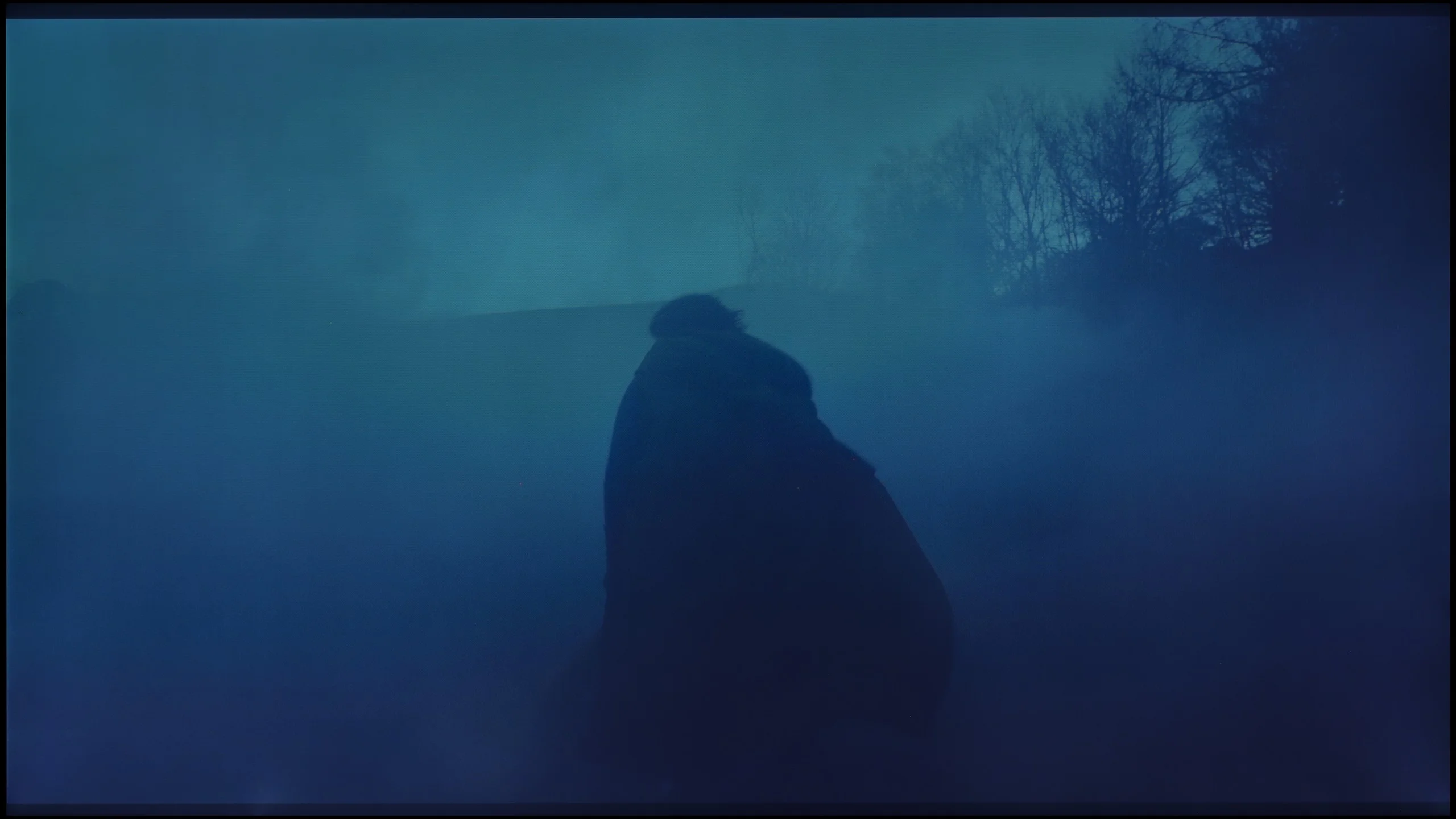
These are selected scenes that show smooth tonal transitions from one color to another. If you see distinct banding, it’s the TV panel’s fault.

These are selected scenes that show smooth tonal transitions from one color to another. If you see distinct banding, it’s the TV panel’s fault.
Samsung Q6F handles the phenomenon of posterization very well. In most scenes, the colour transitions are smooth and there are no problematic "steps" when blending colours. Only in very extreme moments, particularly in scenes with brightness close to pure grey, can slight banding be noticed. However, to be honest, we personally found the issue of slight clouding (uneven backlighting) and the poor contrast of the IPS panel to be much more bothersome than the tonal transitions themselves.
The Frame Pro handles the smoothness of tonal transitions really well. In most content you don't see noticeable banding or ugly breaks between similar shades, and gradients look smooth and natural. Even in more demanding scenes with mist or dark transitions, issues are very rare. It's definitely one of this model's strengths.
Image scaling and smoothness of tonal transitions
5/10
7.5/10


Smooth transition function
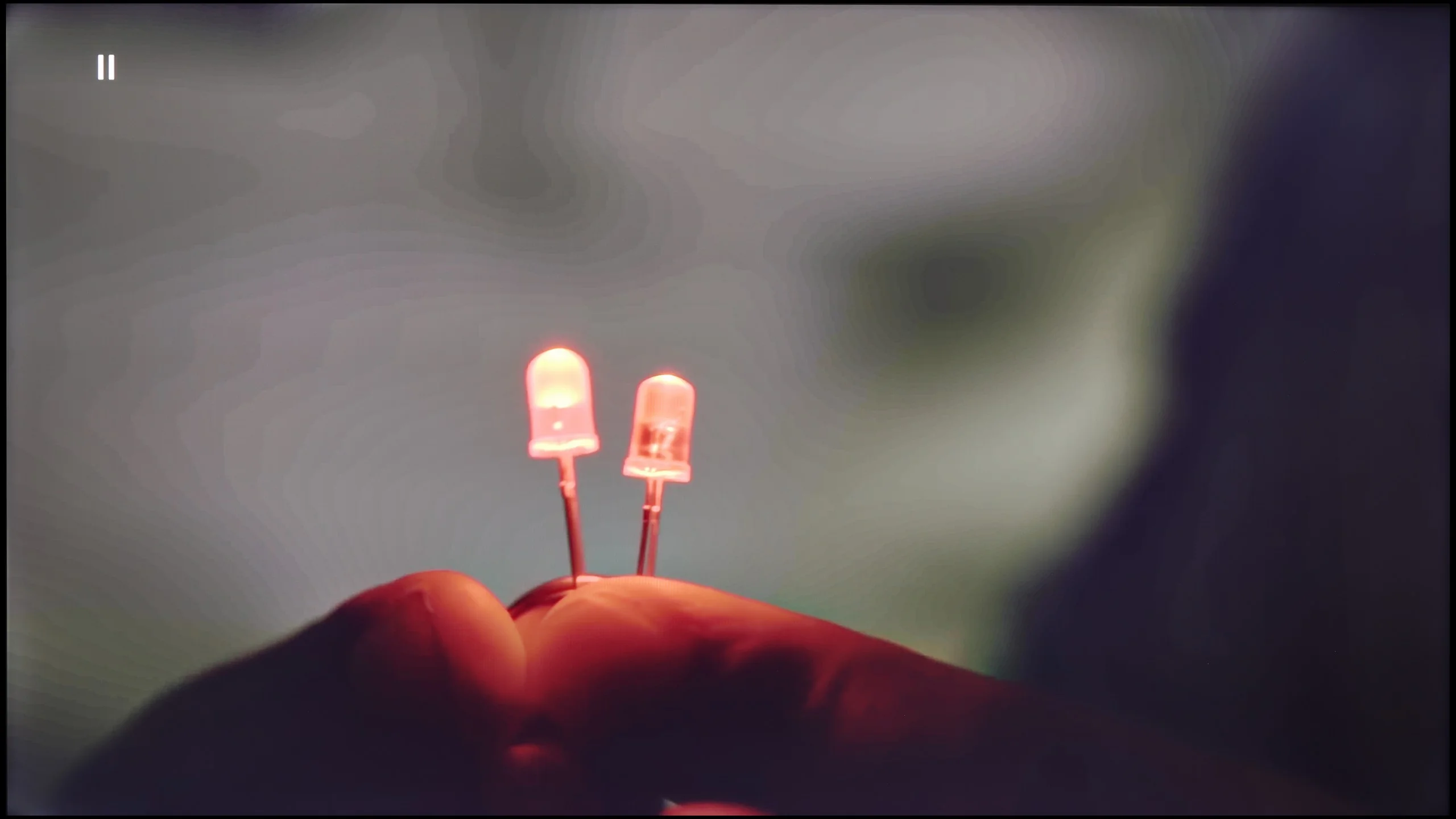
The match photo shows how the TV smooths weak tonal transitions in low-quality video.
Image scaling SD (576i)


The model photo shows how it handles upscaling of SD material.
Q6F handles upscaling lower resolution content to native 4K very well. The scaling is surprisingly good, even for such an inexpensive QLED model. The only downside is when watching very low-resolution materials like 576p (typical for old DVD players) – the image may appear slightly cropped. This is because the TV does not allow the option to turn off the Overscan feature, which is a common issue with Samsung devices.
The situation is completely different when it comes to digital processing, or the attempt to smooth the image of unwanted artifacts. Here, the TV completely fails. Although in the menu we find a feature called "Noise Reduction," it does not produce any noticeable results regardless of the slider setting. The only thing it seems to do is introduce undesirable errors into the image. Despite its presence in the system, we definitely do not recommend using it.
The Frame Pro uses the NQ4 AI Gen3 processor, so in terms of image processing it behaves very similarly to other recent Samsung TVs. Upscaling works really well, with lower-resolution material being sensibly sharpened and the picture remaining readable without over-emphasising edges. With regular TV broadcasts or lower-quality YouTube content this can deliver a noticeable improvement, although viewers watching even older sources, such as VHS tapes, may notice a slight cropping on the left side (overscan).
It’s a different story for heavily compressed footage and the reduction of noise and posterization artefacts. The "Noise Reduction" feature can improve poorer material, but it fairly quickly starts to interfere with the picture and removes fine detail and film grain. So it’s best used sparingly and mainly when the source genuinely needs it.
Blur and motion smoothness
4.6/10
7.9/10
Blur (native resolution, maximum refresh rate):


Blur (BFI function enabled):
Image flickers in this mode



Image flickers in this mode



Blur ():
Blur (1080p@240Hz):


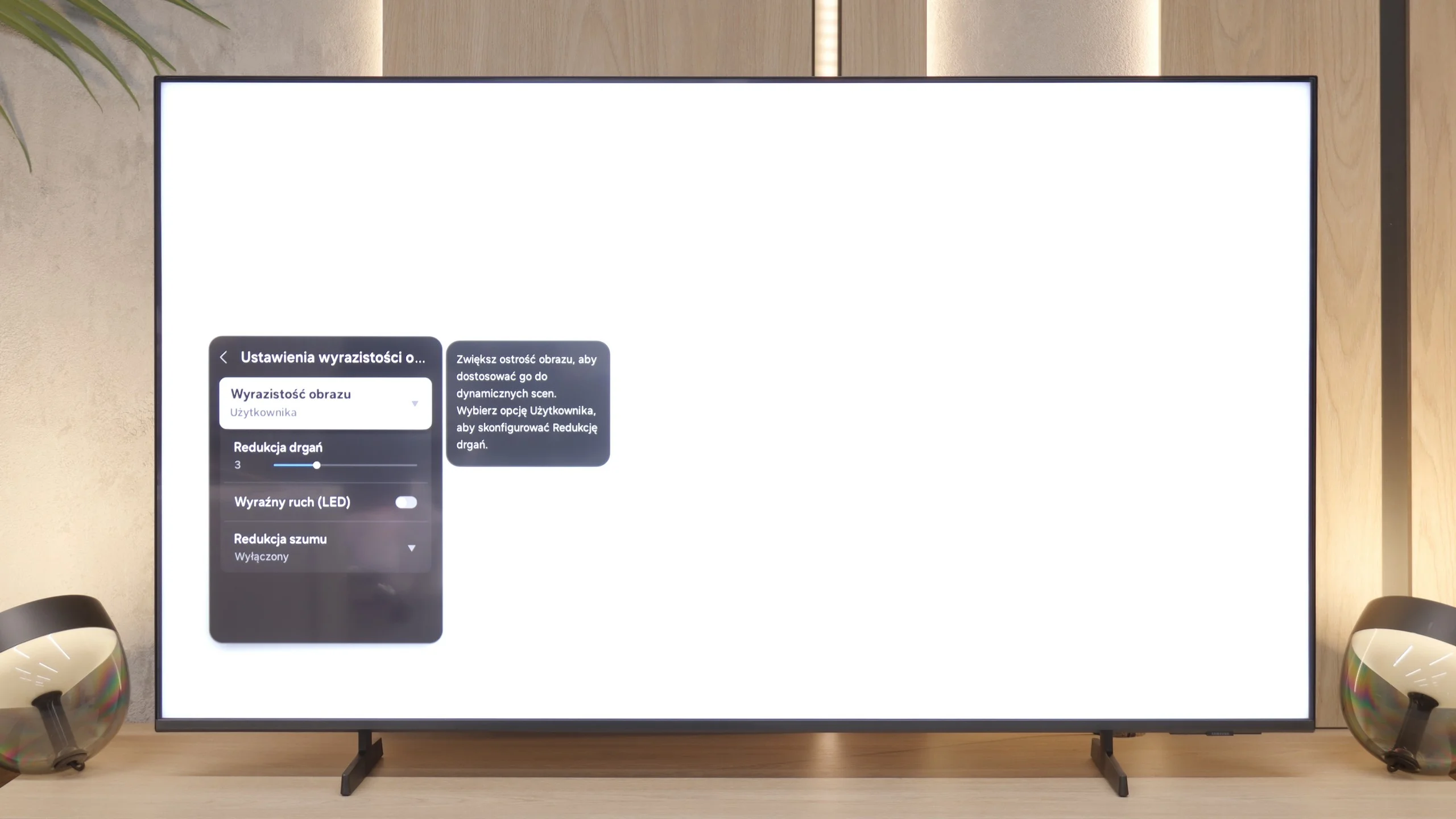
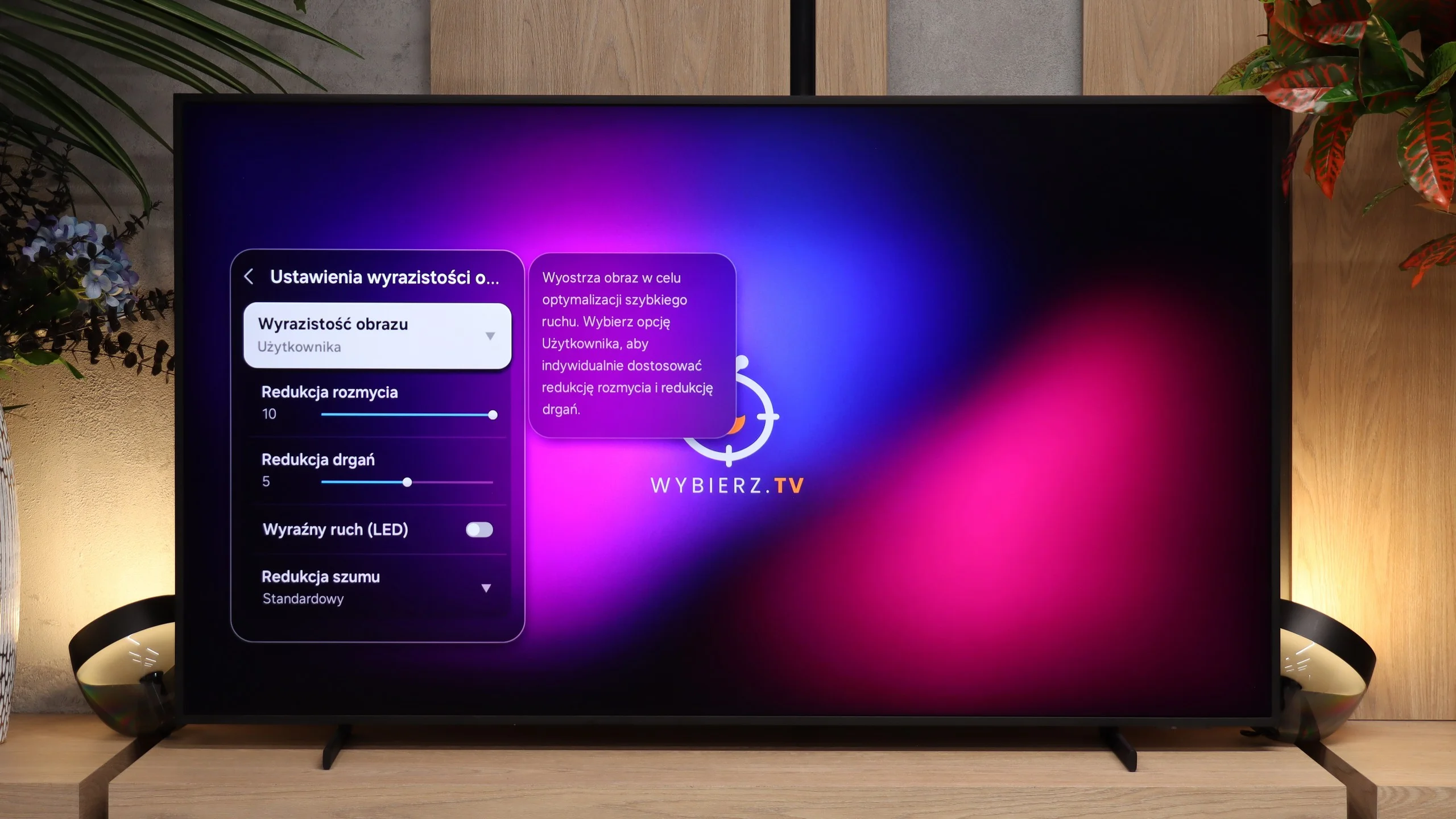
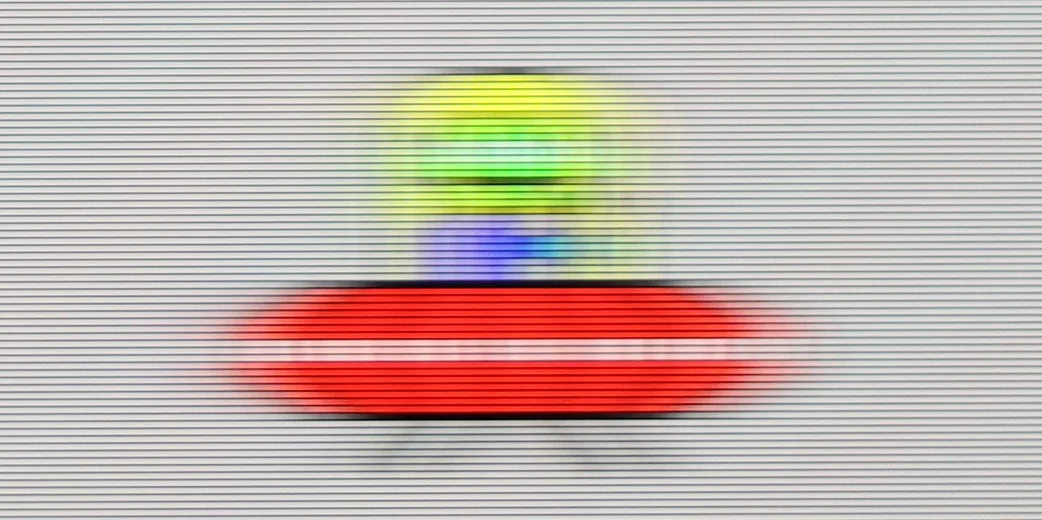
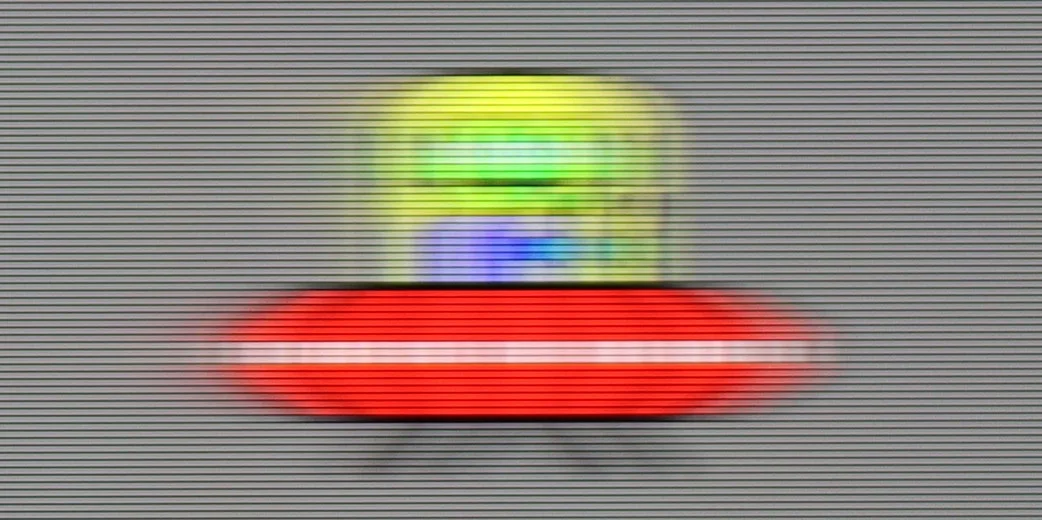
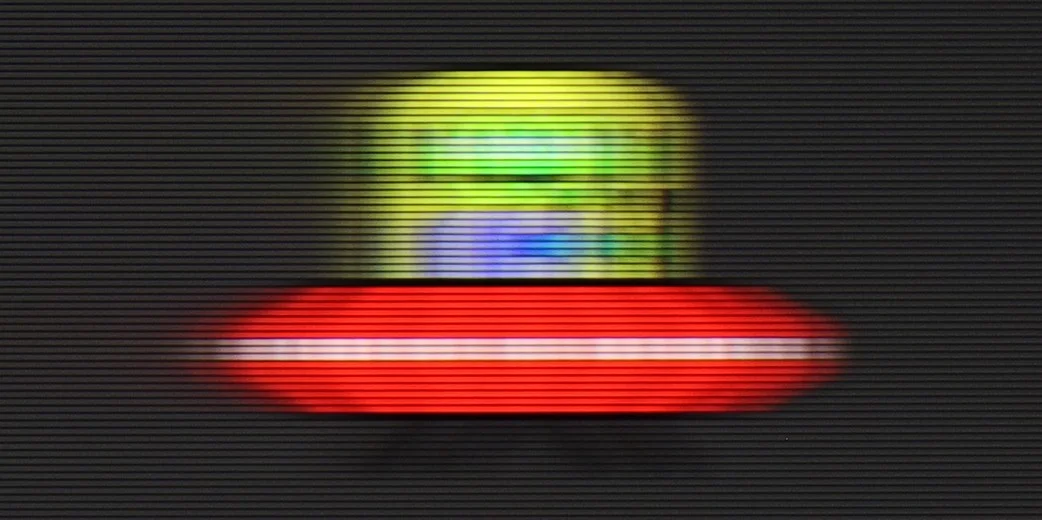
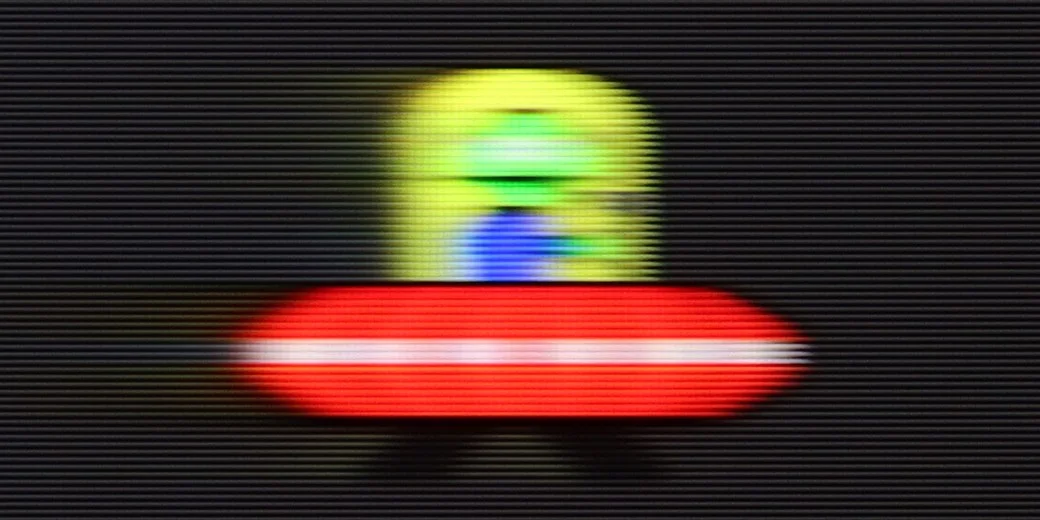
The 60 Hz panel in the Samsung Q6F is standard in this price range, making it a rather average model for dynamic sports or gaming. However, when it comes to movies, the TV performs quite well thanks to its smoothing feature. The "Motion Vibration Reduction" option allows you to adjust the motion smoothness to your own preferences – from preserving a cinematic feel to full smoothness.
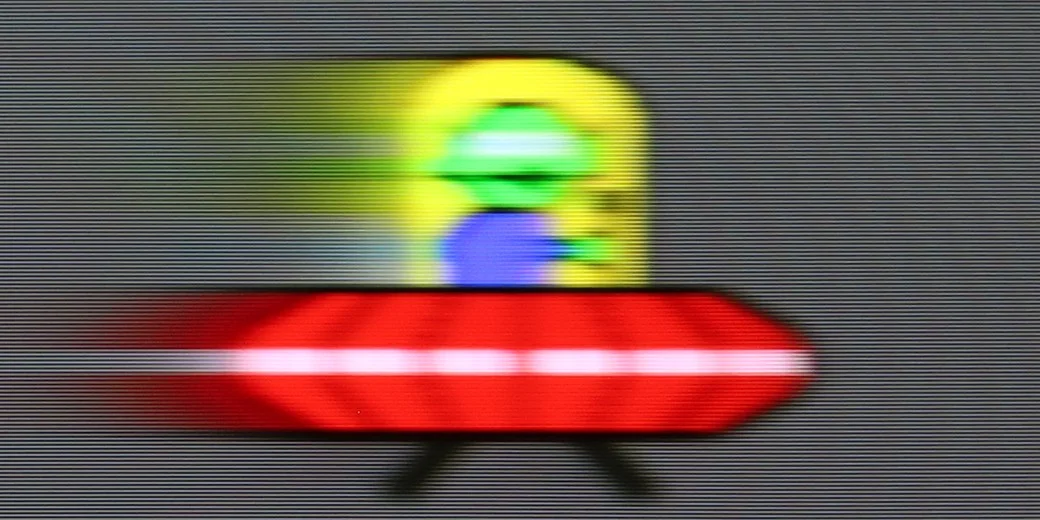
The Frame Pro is equipped with a 144 Hz panel and, when connected to a PC, also supports 240 Hz at Full HD. That's mainly a feature aimed at PC gamers, but the TV also handles the standard 120 Hz refresh rate used for watching sport or gaming on consoles very well. A major plus is the low smearing. For a VA panel, The Frame Pro performs really well in this regard. You don't see the strong, dark trails behind moving objects that are fairly common on TVs with this type of panel. That keeps fast sport and dynamic games clear in motion. There's also a motion smoothing feature with adjustable strength, so for films and sports broadcasts you can tailor the motion to your preferences. You can find our recommended settings in the photo.
Console compatibility and gaming features
5.3/10
9.6/10
- ALLM
- VRR
- VRR range48 - 60Hz48 - 240Hz
- Dolby Vision Game Mode
- Correct implementation of HGIG
- 1080p@120Hz
- 1440p@120Hz
- 4K@120Hz
- Game bar
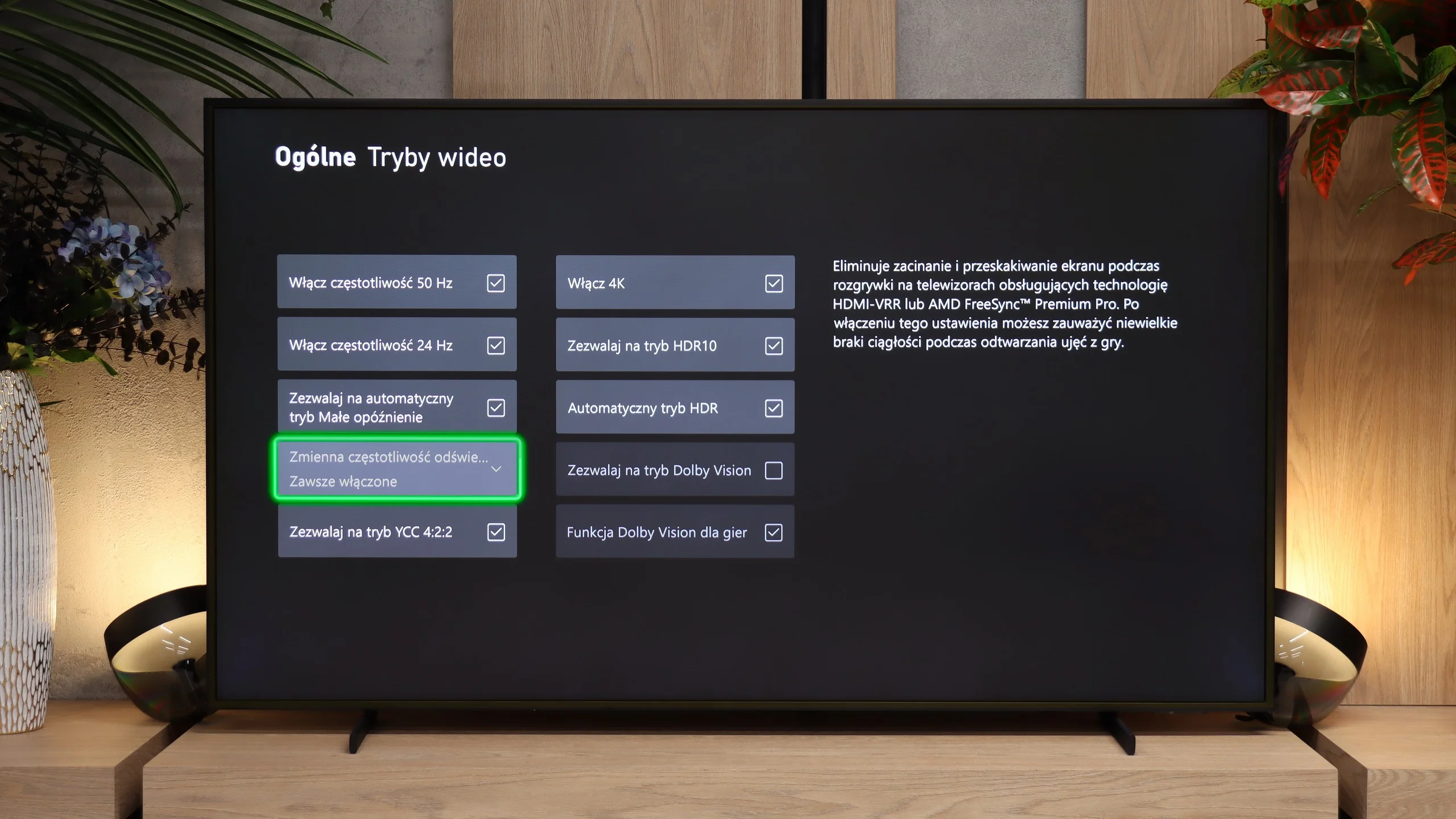
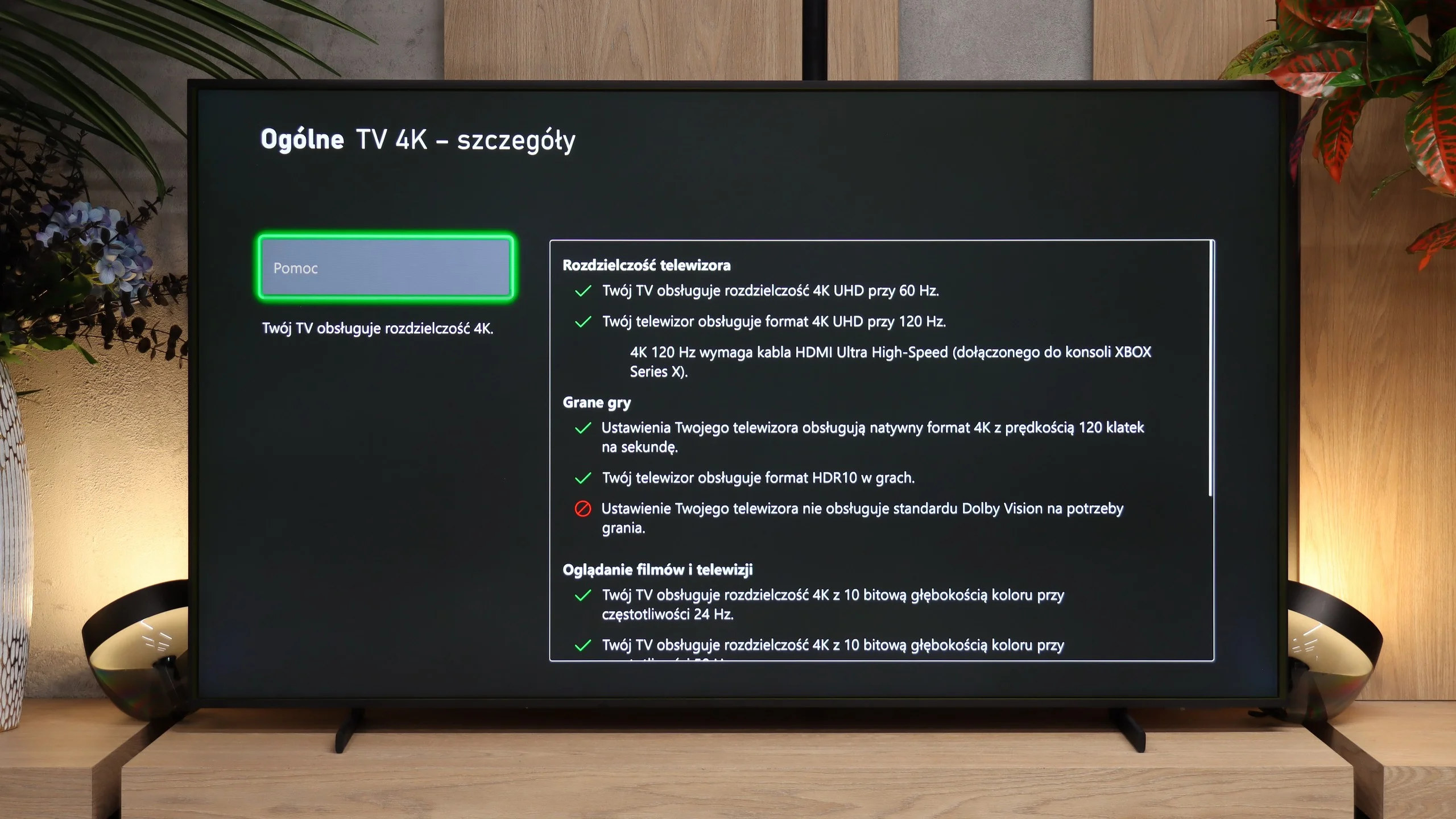
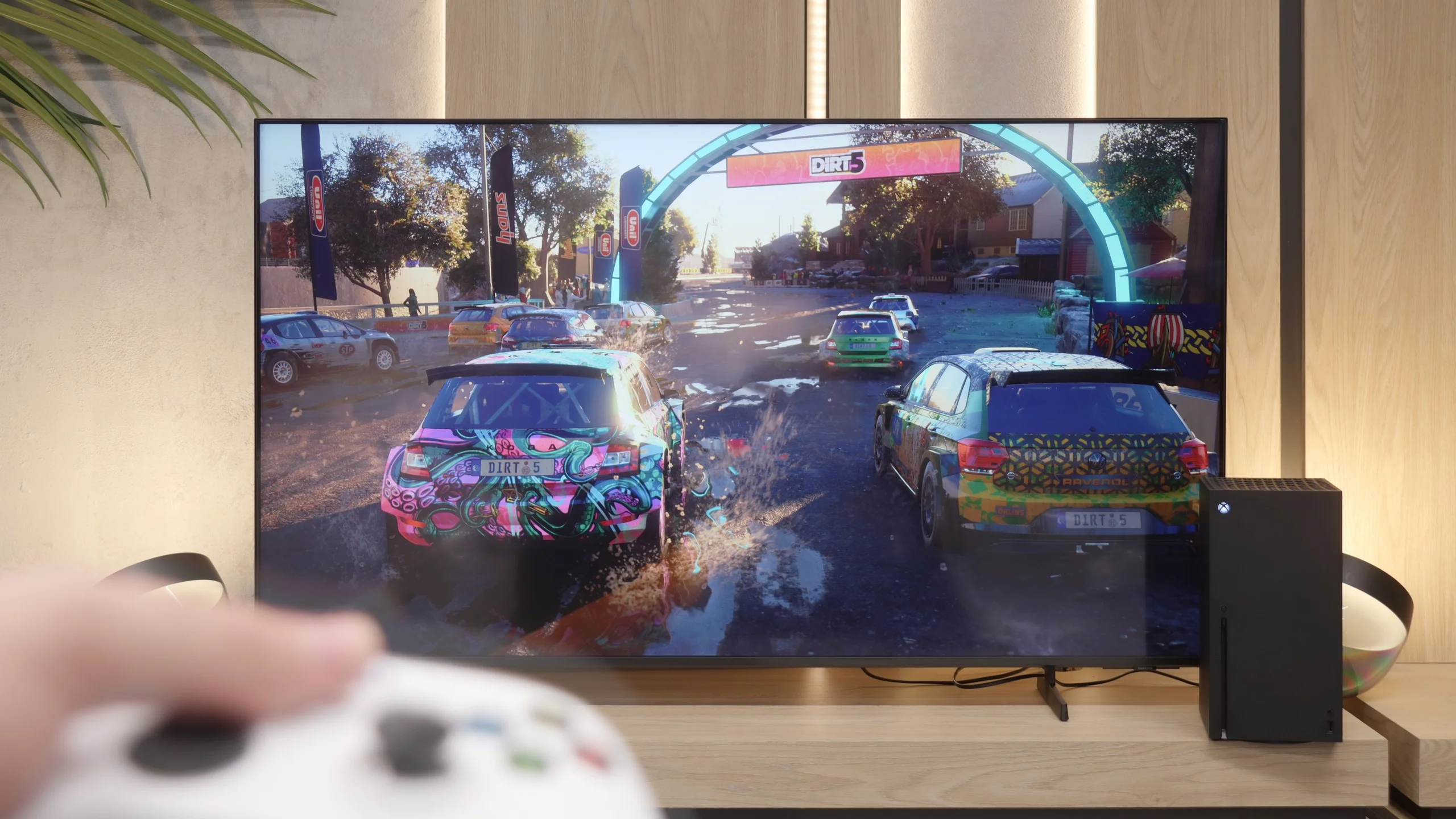
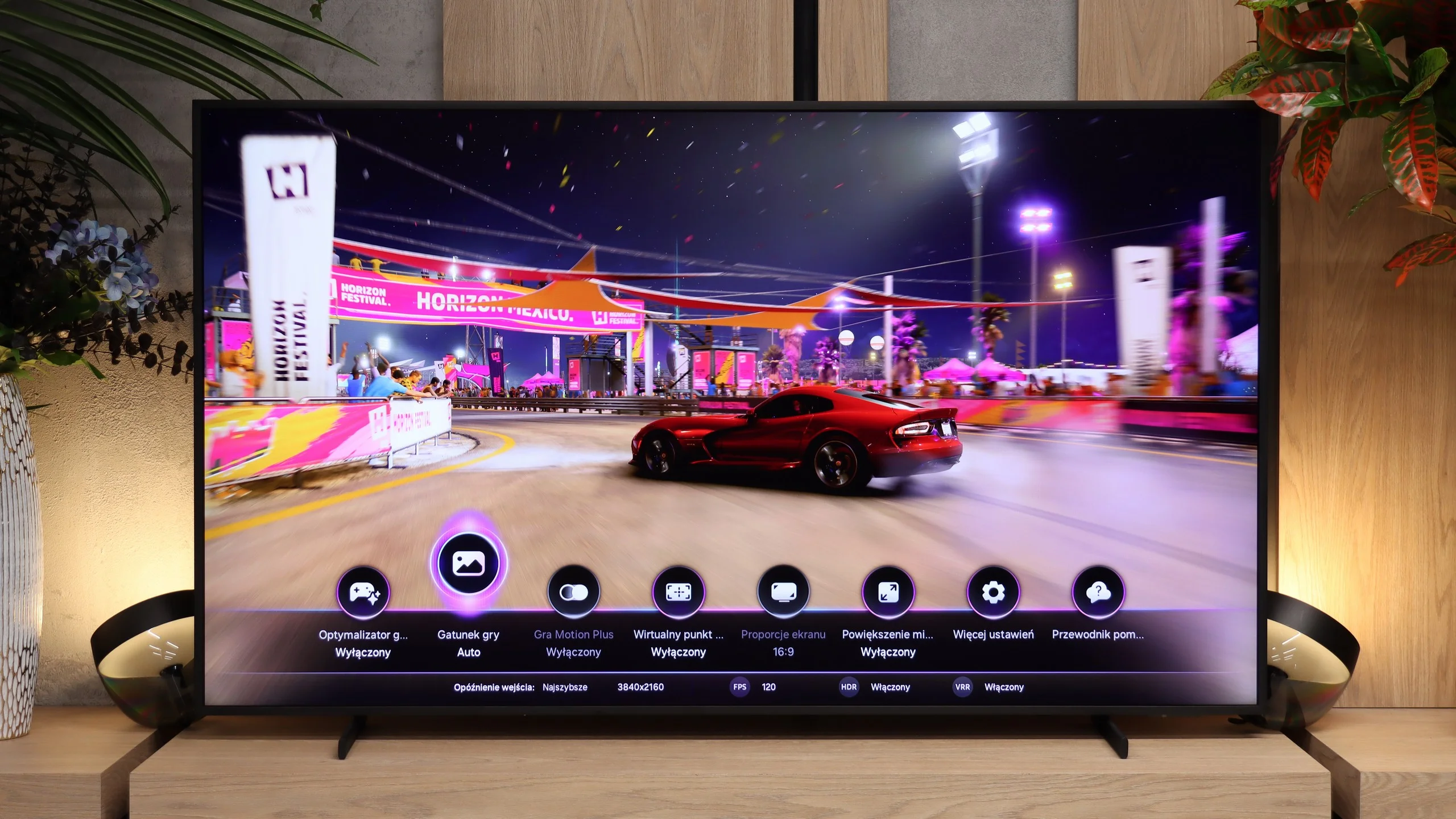
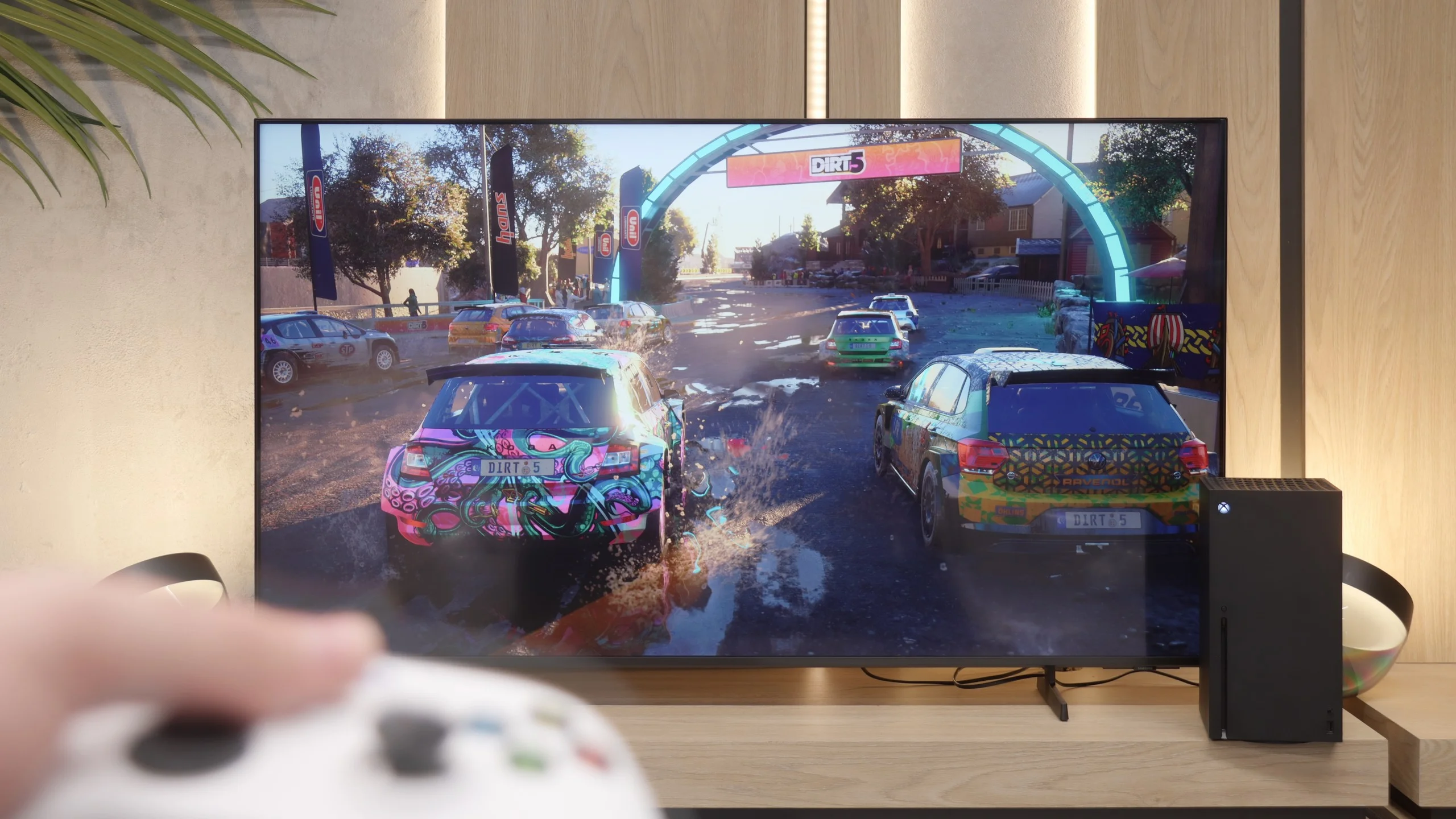
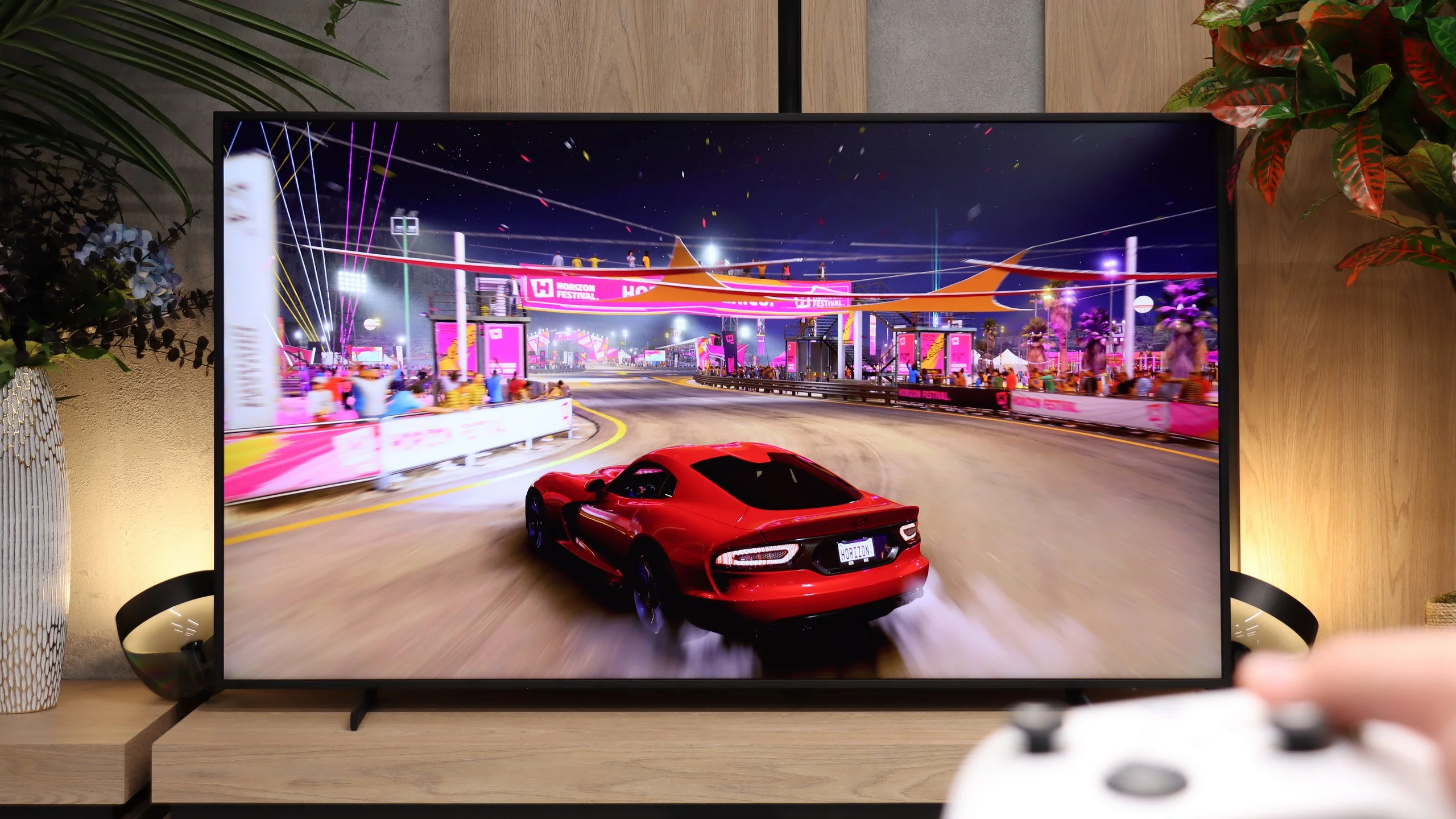
We won’t beat around the bush – the Q6F is not a television designed with gamers in mind. While it does include features like ALLM (Auto Low Latency Mode) and VRR frame syncing for consoles, that's pretty much where the list of advantages ends. Beyond these basics, the television offers nothing more that could satisfy those who spend a lot of time in front of a console. It's a real shame that a useful tool like Game Bar, which allows for quick control of game parameters in higher-end Samsung models, is missing here. In terms of gaming, this is an absolutely basic model and it will only suit 'casual' gamers.
For gamers, The Frame Pro has a lot to offer. The TV supports 4K at 120 Hz, VRR, ALLM and a correctly implemented HGiG. When connected to a PC you can also run 144 Hz at 4K, and even 240 Hz if you drop to Full HD. Samsung also bundles its usual set of gamer extras: an expanded Game Bar that lets you quickly view and change the key settings, and Game Motion Plus to improve smoothness for games running at 30 or 60 fps. There’s also the Gaming Hub and the ability to play in the cloud without needing to connect a console. The only real omission is Dolby Vision Gaming, which Samsung doesn’t support. Aside from that, The Frame Pro offers pretty much everything you’d expect from a well-equipped gaming TV today.
Input lag
10/10
10/10
SDR
HDR
Dolby Vision
As a consolation for the modest list of features for gamers, it's worth mentioning that the Q6F has absolutely no issues with input lag. The response to the controller's movements is immediate, and the television does not introduce any additional delay regardless of the resolution we are currently playing in. In this respect, the control is very precise and comfortable, which is a big plus in this class of equipment.
adasdsadddas
Input Lag Wirales One Connect (2-3 metry od TV)
SDR | HDR |
|---|---|
1080p60 Hz: 61 | 2160p60 Hz HDR: 71 |
1080p120 Hz: 39 | 2160p120 Hz HDR: 32 |
2160p60 Hz: 63 | |
2160p120 Hz: 32 |
Compatibility with PC
6/10
8.4/10
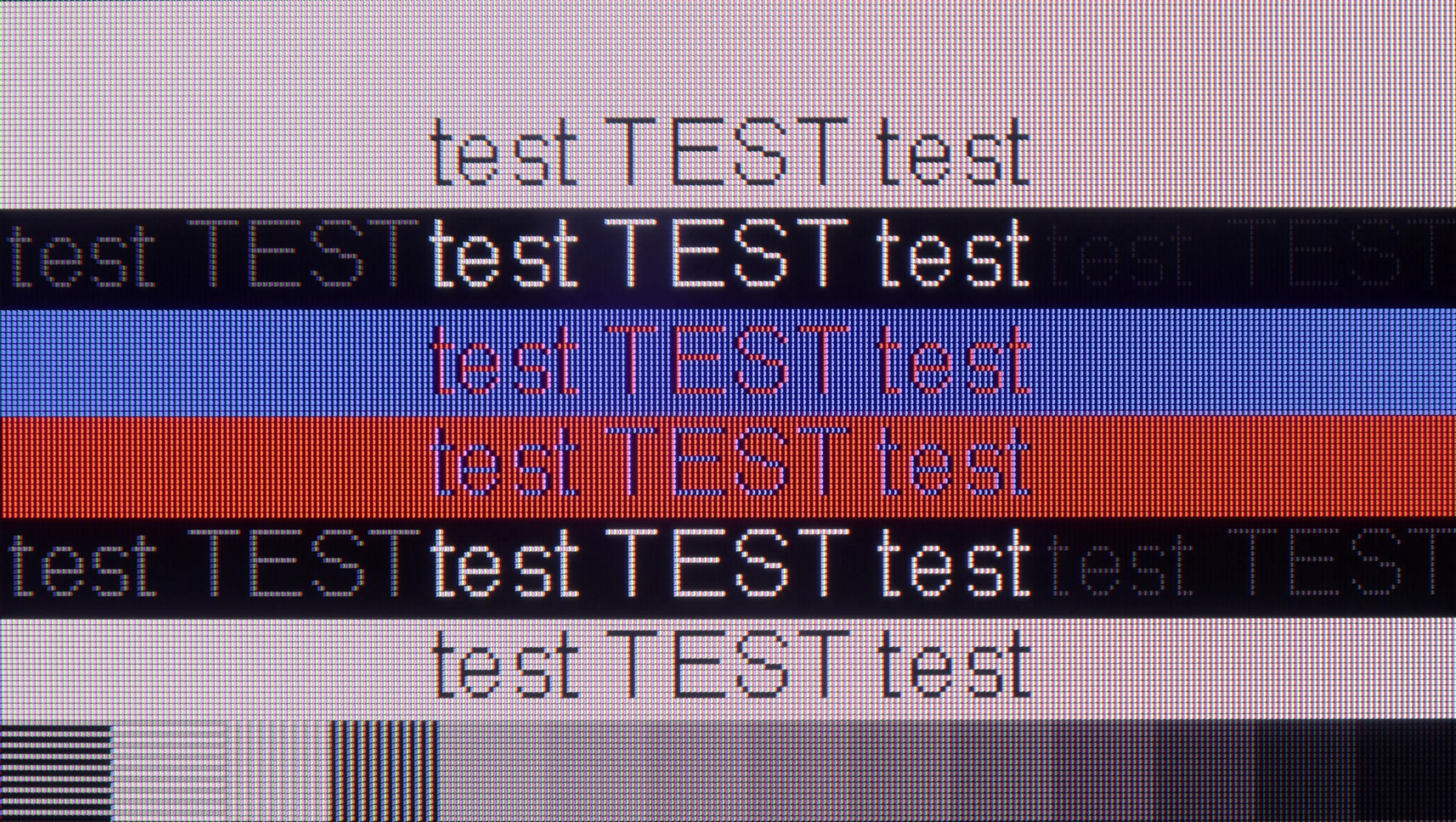
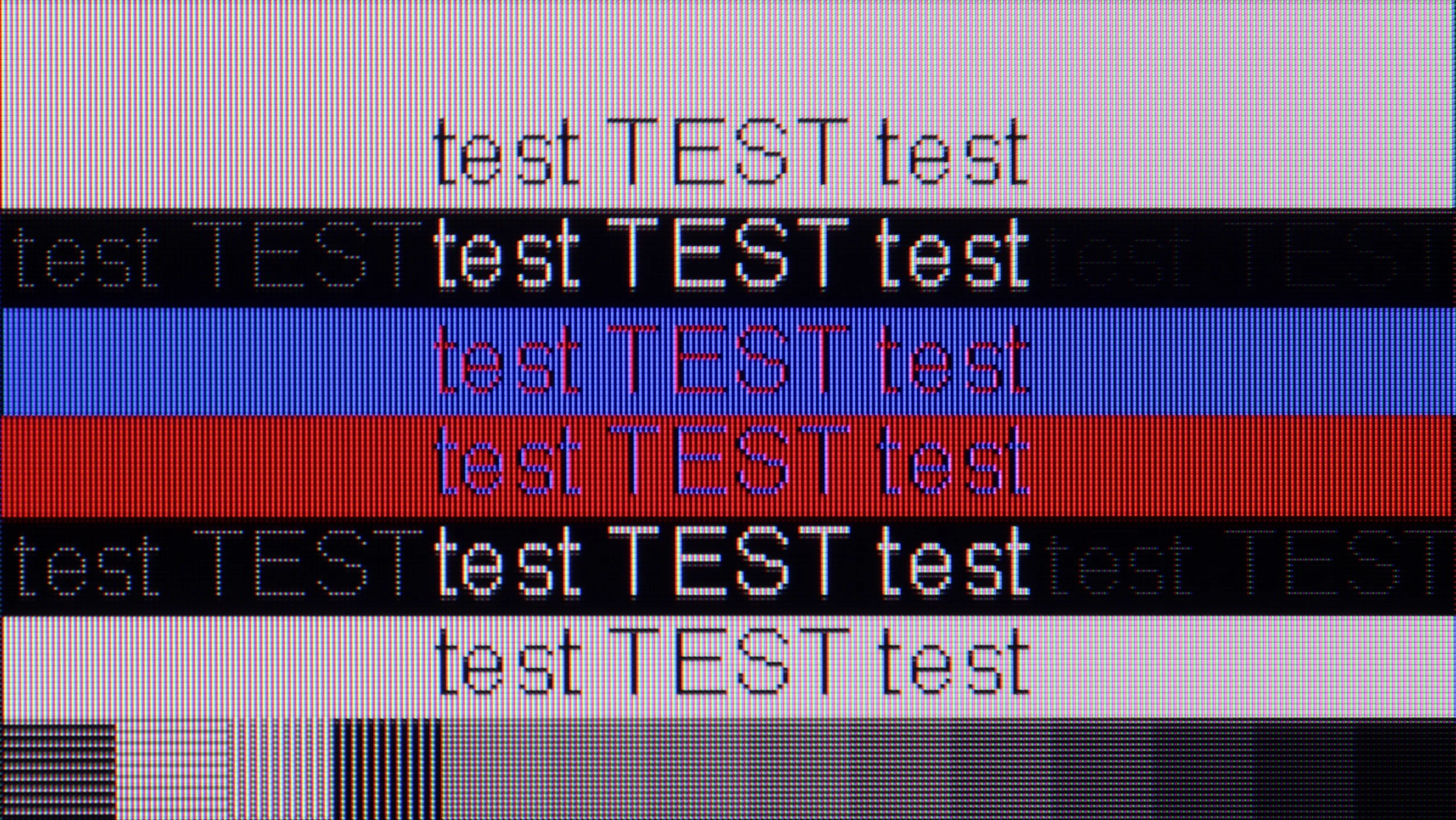
The photo shows the legibility of small fonts. Ideally, lines should be the same thickness on both light and dark text, with minimal pixel gaps.
Although the Q6F isn't a screen designed specifically for PC gaming, it deserves praise for how well it handles font display. As a monitor for text work, browsing websites, or daily news reading, the television performs exceptionally well. The readability of text is at a very high level, thanks to the proper implementation of the Chroma 4:4:4 signal and the use of an IPS panel. If you're looking for a cheap, large screen for office work, the Q6F holds up really well in this regard. Especially since Samsung offers very good integration with the Windows system and built-in Microsoft Office tools.
The Frame Pro performs well when connected to a computer. It supports full 4:4:4 chroma, 144 Hz at 4K and 240 Hz at Full HD. It also works with both NVIDIA's G-Sync and AMD FreeSync. However, it's not ideal for working with text. From a normal viewing distance everything looks fine, but up close you can see minor artefacts around fonts and slightly less crisp edges. That doesn't matter much for gaming or watching content, but you may notice it for office work.
Viewing angles
5.6/10
3.4/10
The viewing angles are one of the better aspects of the Q6F model, which is directly attributed to the use of an IPS matrix. They are much better than in televisions based on VA panel technology. As a result, the image viewed at an angle remains clear and does not become "washed out" or faded. However, it is worth noting that while the colours look really good, the drop in brightness at a greater angle is already quite noticeable. Nonetheless, this is a solid result for those who don't always sit directly in front of the screen.
Viewing angles on The Frame Pro are average, if not poor. The TV uses a classic VA panel and at wider angles the picture loses quality quite quickly. Brightness drops first and foremost, but colour saturation also clearly falls, making the image look more washed out. That's a bit more of a shame on The Frame Pro than on a regular TV. It's a model that's often meant to hang on the wall and also serve as artwork, so better viewing angles would be really welcome here.
Daytime performance
1.8/10
6.5/10
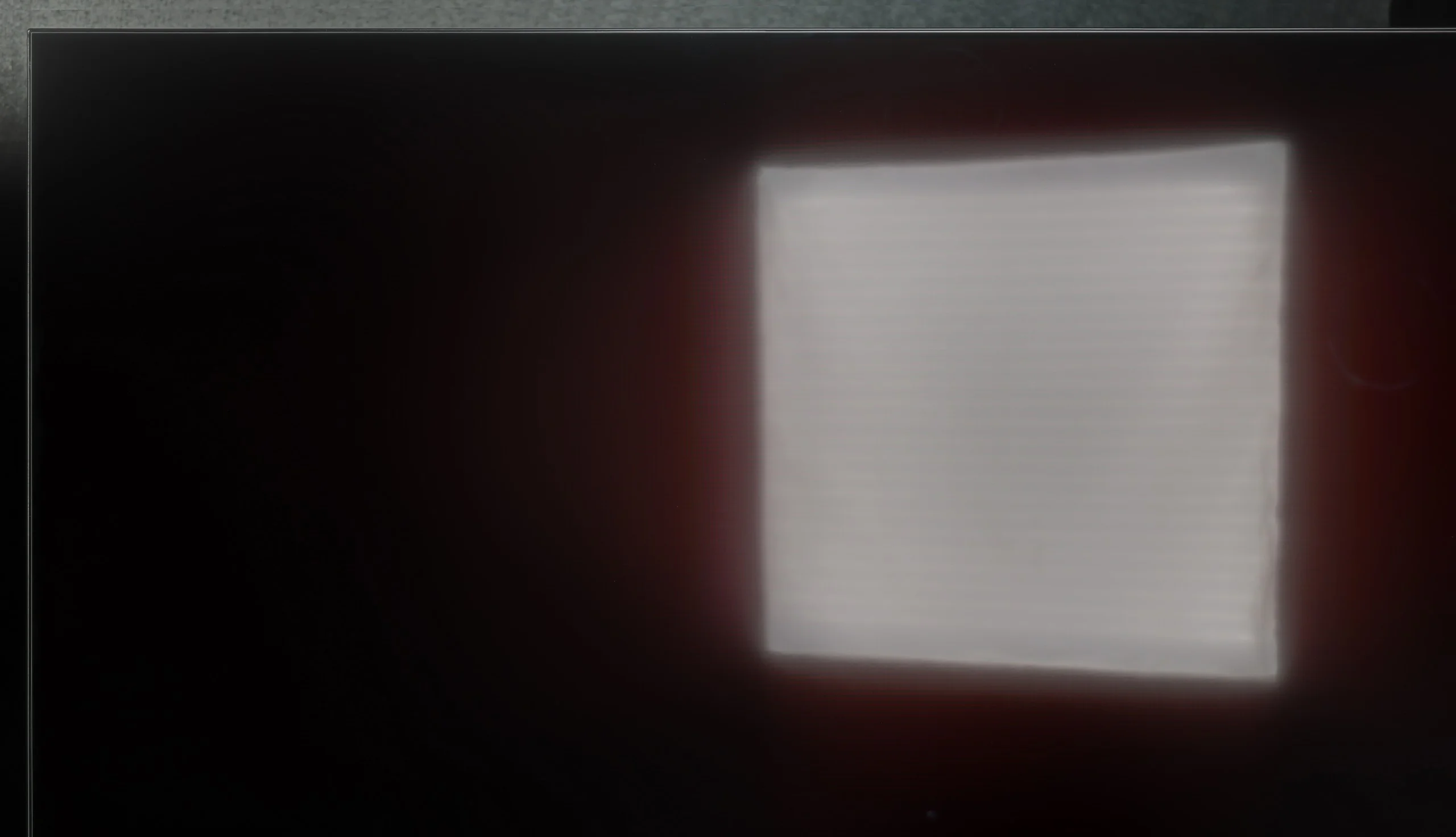
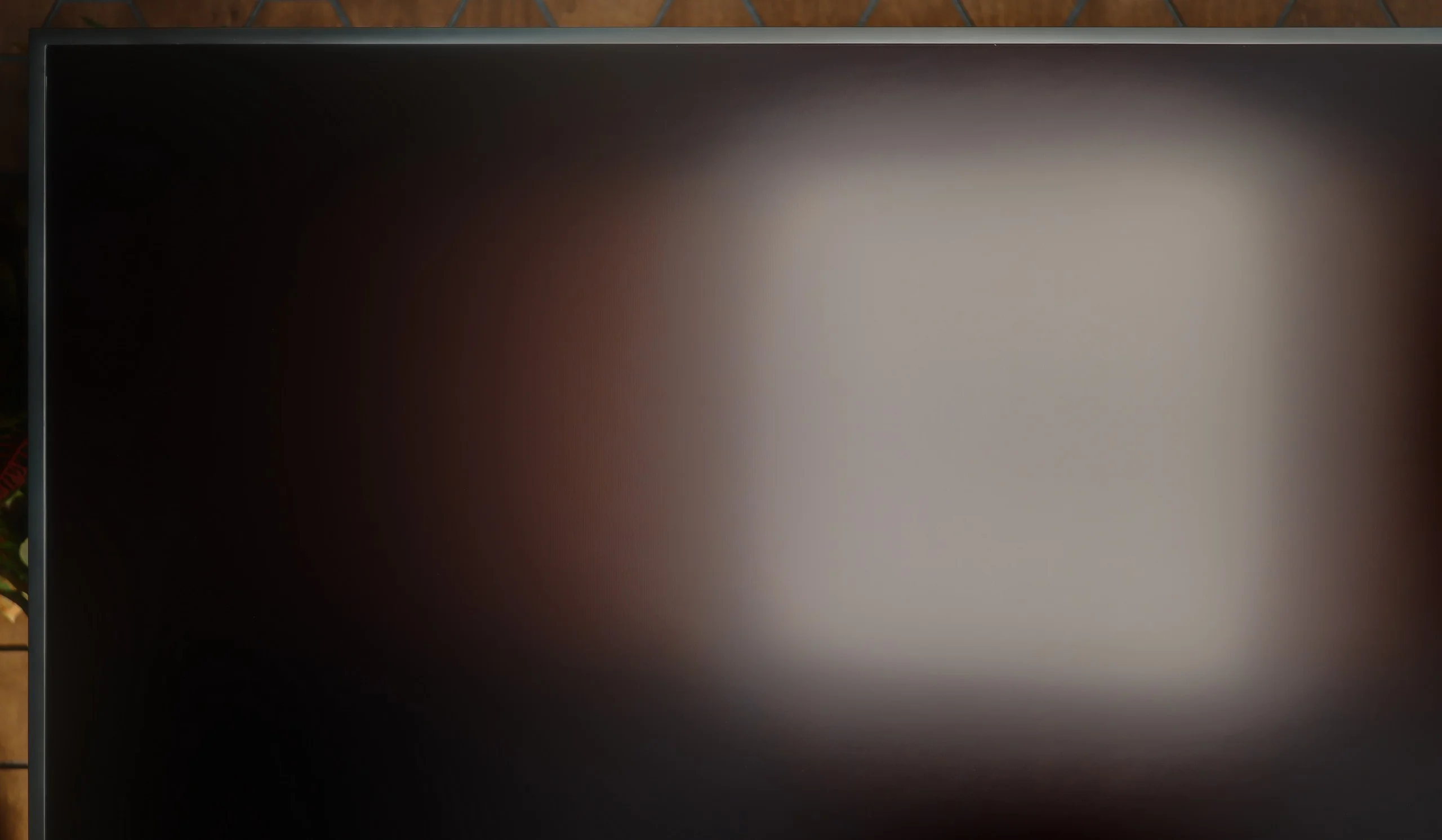
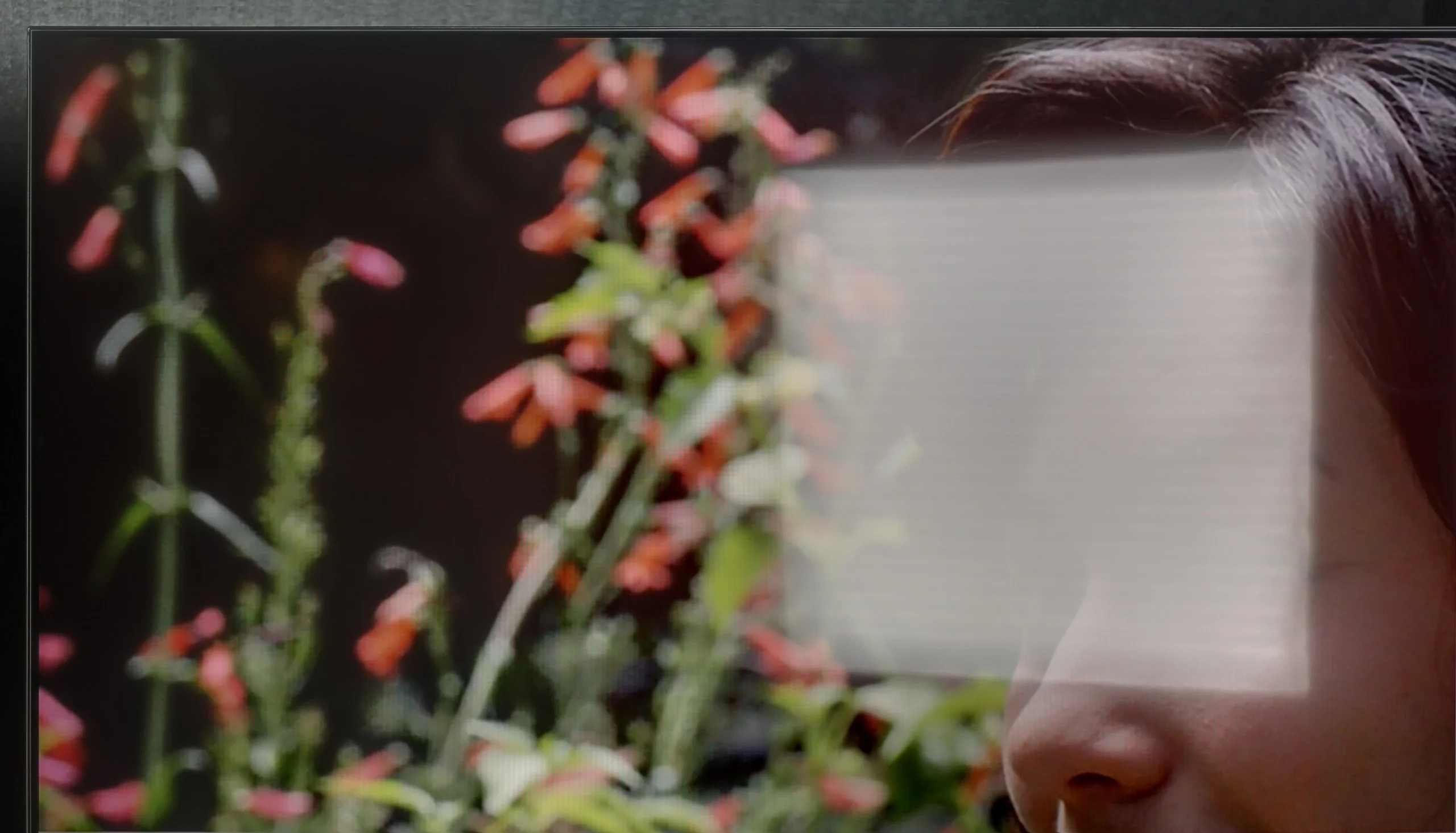
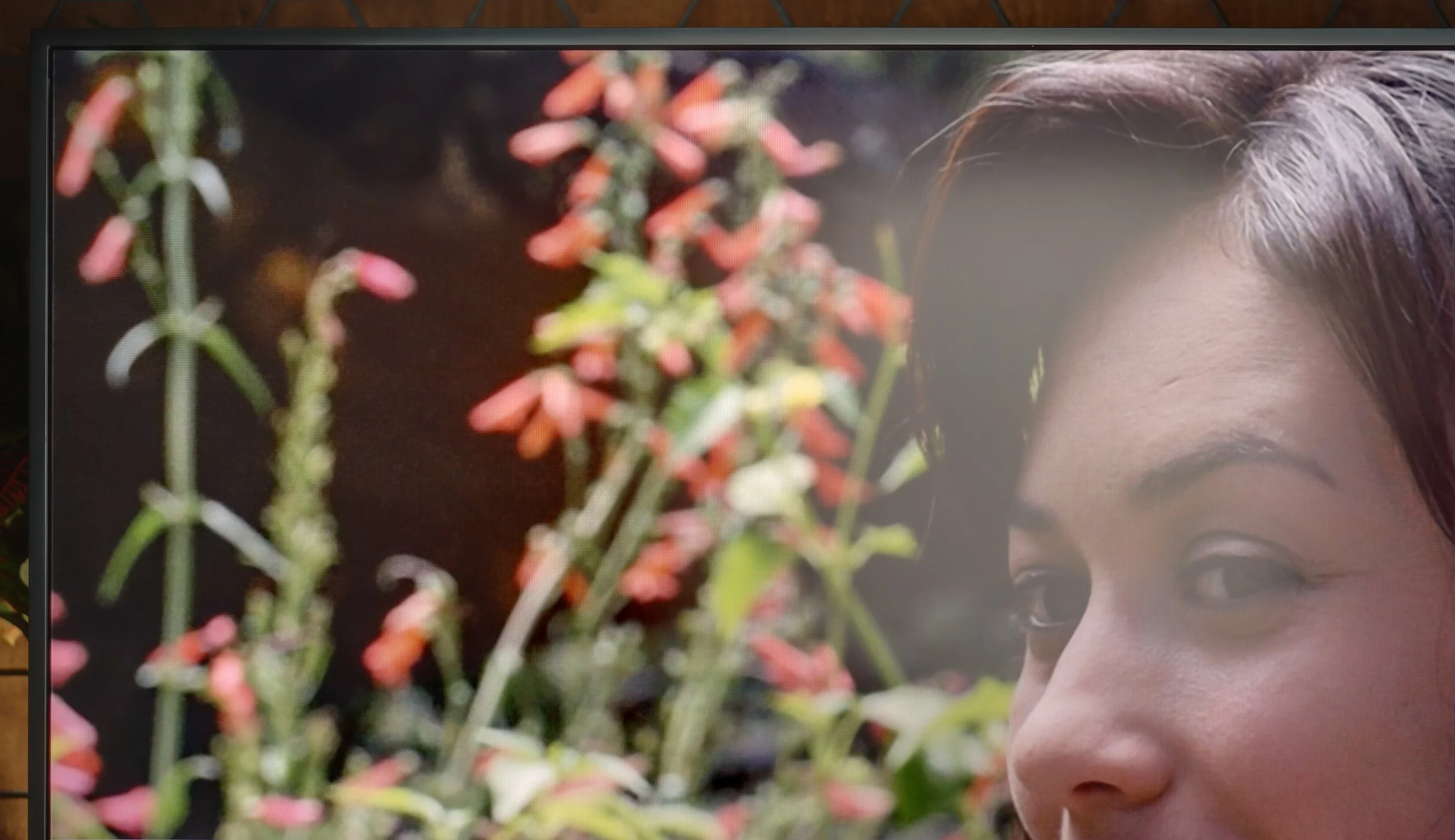
Panel brightness
Samsung The Frame Pro 2026 (LS03HW): 587 cd/m2
Samsung Q6F (IPS): 125 cd/m2
What more can I say – aside from the satin finish of the panel, which barely reduces reflections, the Q6F is dark enough that it’s not suitable even for moderately lit rooms. A brightness of around 150 nits is simply astronomically low by today’s standards. With such a result, any larger light source in the room will make the image hard to read. This is definitely not a model for a sunlit living room.
During the day The Frame Pro performs quite well. SDR brightness stays at around 600 nits, so the picture remains readable even in a brighter room. The biggest advantage is the matte screen coating, which very effectively diffuses reflections and means lamps or windows aren't so visible on the screen. However, we noticed that on this year's model the coating affects the image itself a bit more. In stronger light the blacks become slightly lifted and colours lose some of their depth. It's still a very good choice for a bright living room, but in that respect the screen is not without compromises.
Panel details
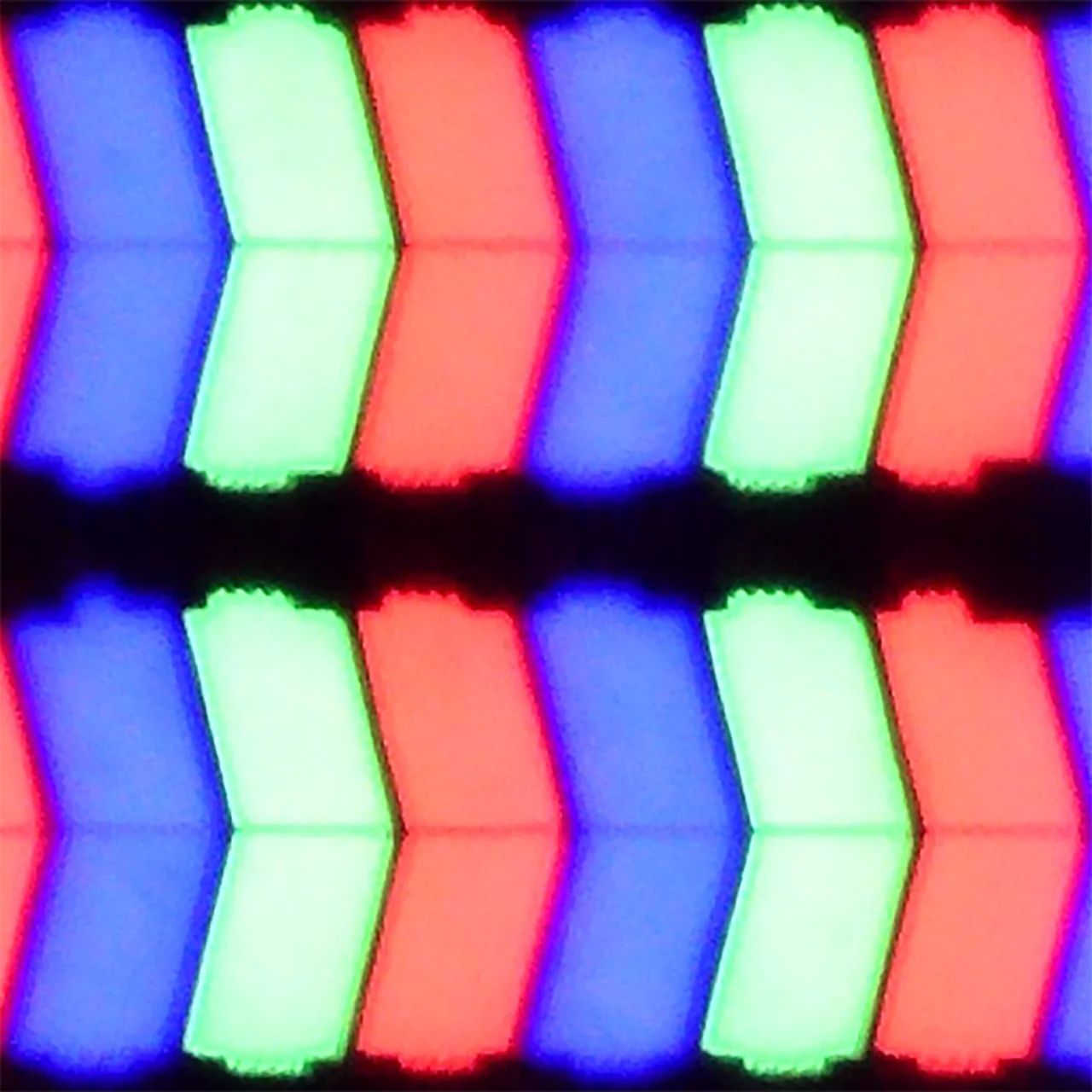
Subpixel Structure:
Panel uniformity and thermal imaging:
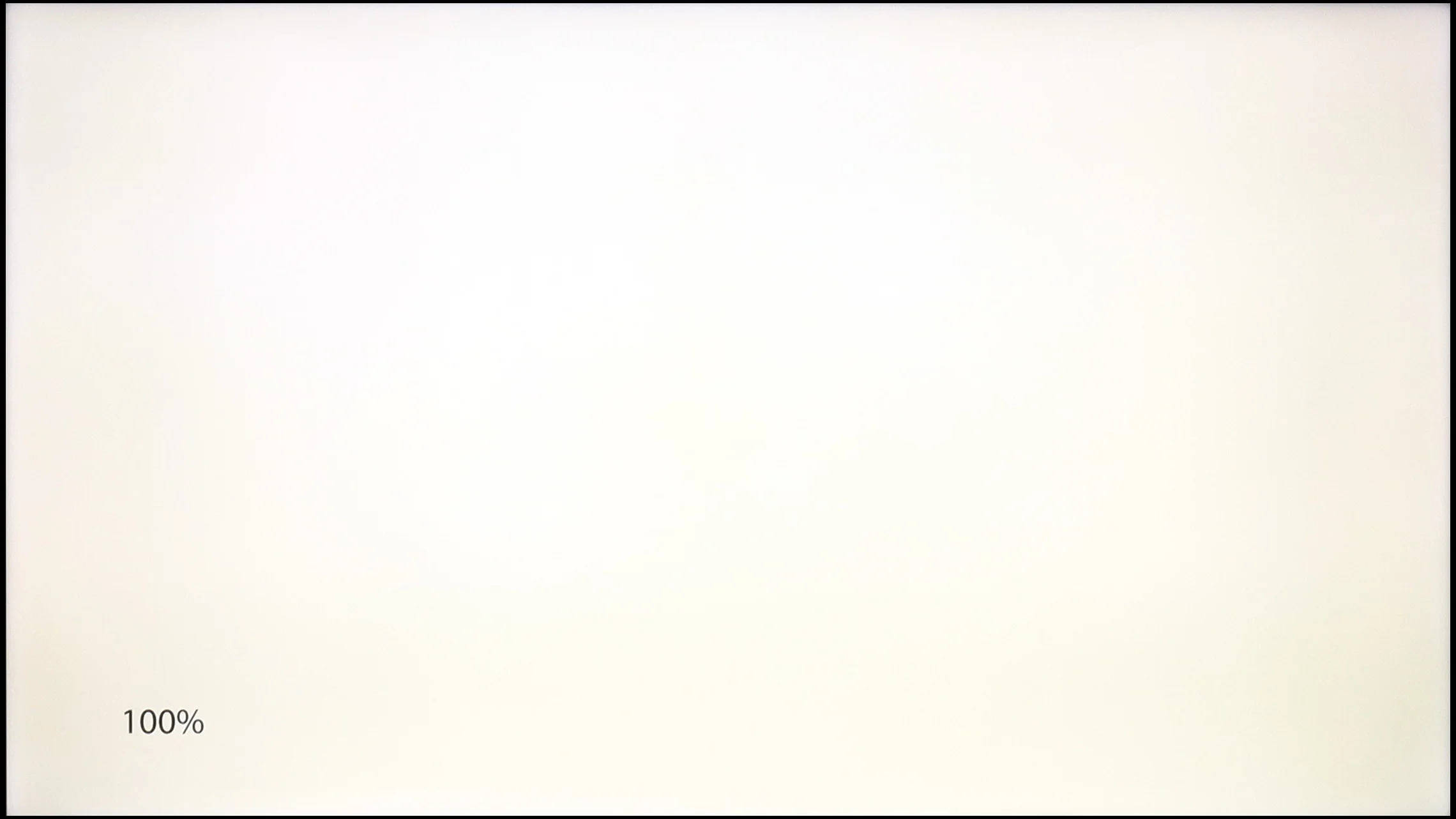

Samsung Q6F (IPS)
Samsung The Frame Pro 2026 (LS03HW)
TV features
5.9/10
7.7/10
- SystemTizenTizen
- System performanceDecentGood
- HDMI inputs3 x HDMI 2.0, 0 x HDMI 2.10 x HDMI 2.0, 5 x HDMI 2.1 48Gbps
- Other inputsUSB-C, Micro-HDMI
- OutputseARC (HDMI), ARC (HDMI)Toslink (Optical audio), eARC (HDMI), ARC (HDMI)
- Network InterfacesWi-Fi 2.4GHz, Wi-Fi 5GHz, Ethernet (LAN) 100MbpsWi-Fi 2.4GHz, Wi-Fi 5GHz, Ethernet (LAN) 100Mbps
- TV receptionDVB-T, DVB-T2, DVB-S, DVB-S2, DVB-CDVB-T, DVB-T2, DVB-S, DVB-S2, DVB-C
Classic features:
- Recording to USB (terrestrial TV)
- Recording programming
- Picture in Picture (PiP)
- RF remote control (no need to aim)
- Backlit remote control
- Teletext
- Audio only mode
- Bluetooth headphones support
- Simultaneous Bluetooth headphones & TV audio
Smart features:
- AirPlay
- Screen mirroring (Windows Miracast)
- Voice search
- Voice search in native language
- Ability to connect a keyboard and mouse
Sound connection options
- HDMI audioeARC (HDMI), ARC (HDMI)eARC (HDMI), ARC (HDMI)
- Other audio outputsToslink (Optical audio)
- Wireless audioBluetooth, Samsung Q-Symphony (Speaker extension)Bluetooth, Samsung Q-Symphony (Speaker extension)
Supported audio formats (external HDMI eARC audio):
- Dolby Digital Plus 7.1
- Dolby True HD 7.1
- Dolby Atmos in Dolby Digital Plus (JOC)
- Dolby Atmos in Dolby True HD
- DTS:X in DTS-HD MA
- DTS-HD Master Audio
Senior accessibility
- Numeric keyboard on TV
- Font size adjustment
- Audio description
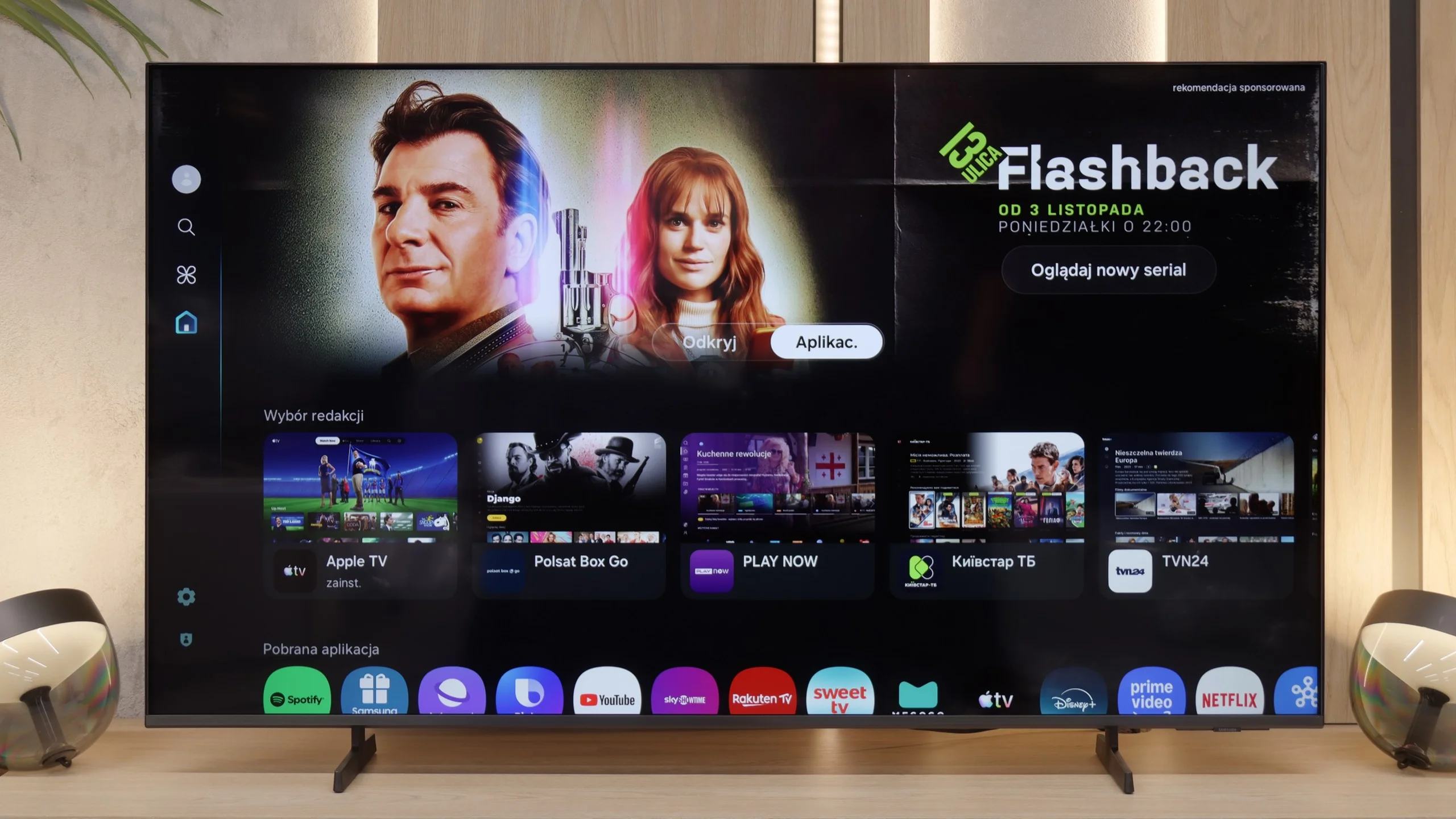
It’s really great that Samsung TVs – even the most budget-friendly ones – the Tizen system simply doesn’t slow down. The speed of operation isn’t quite on par with the most expensive models, but it’s definitely better than Google TV at a similar price. Thanks to Tizen, we have access to a truly vast library of apps, AirPlay, and other Smart TV features.
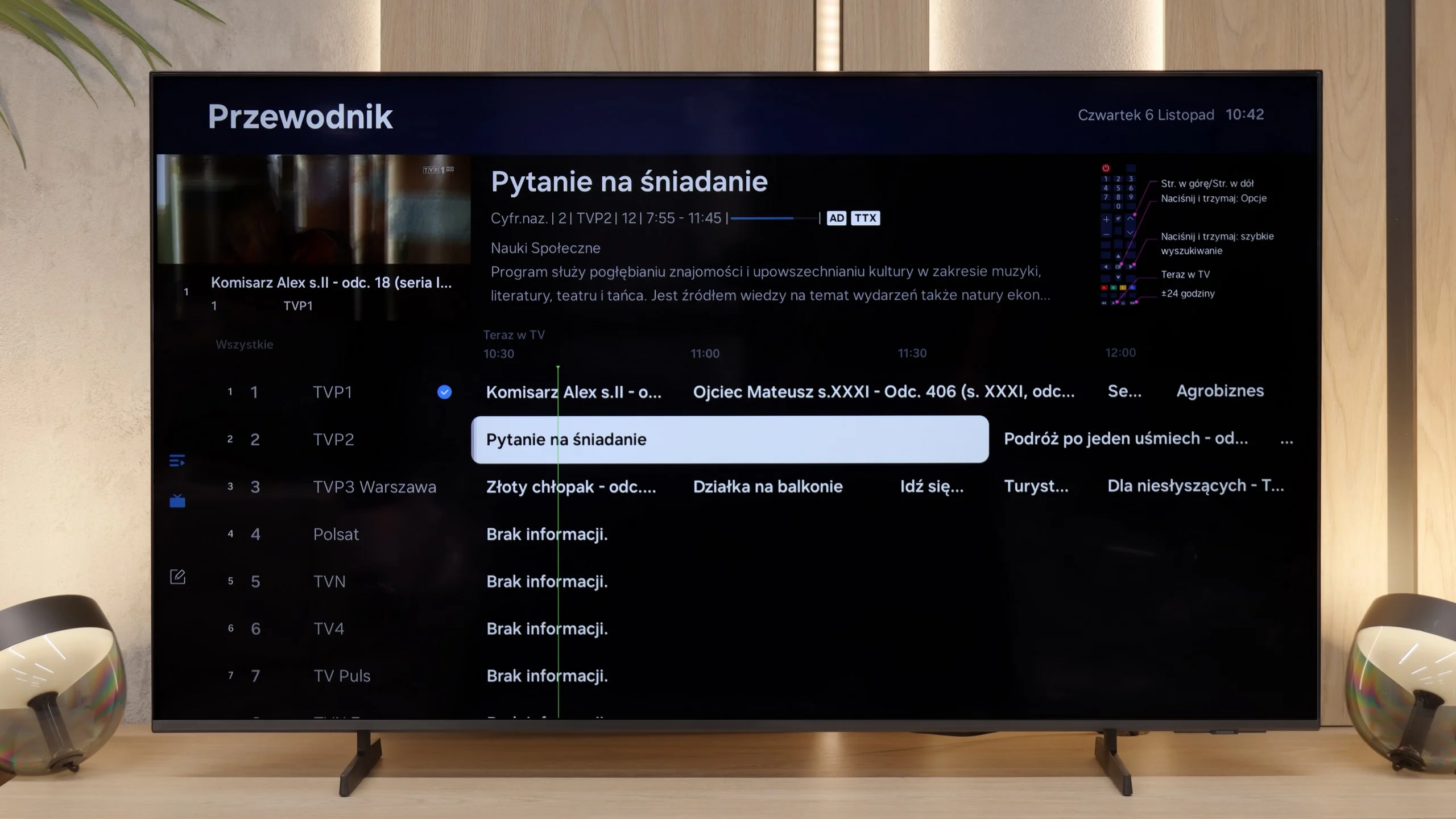
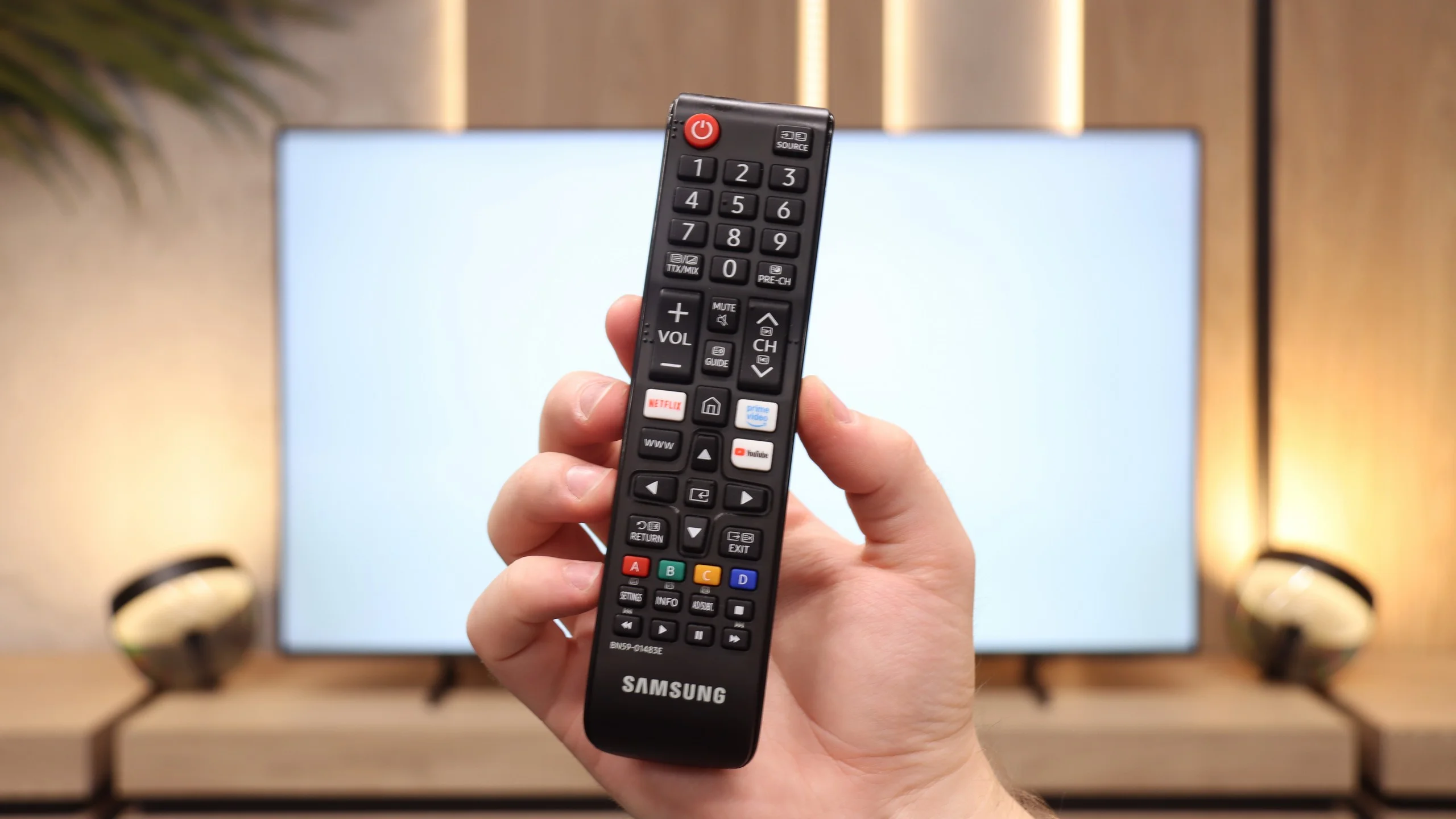
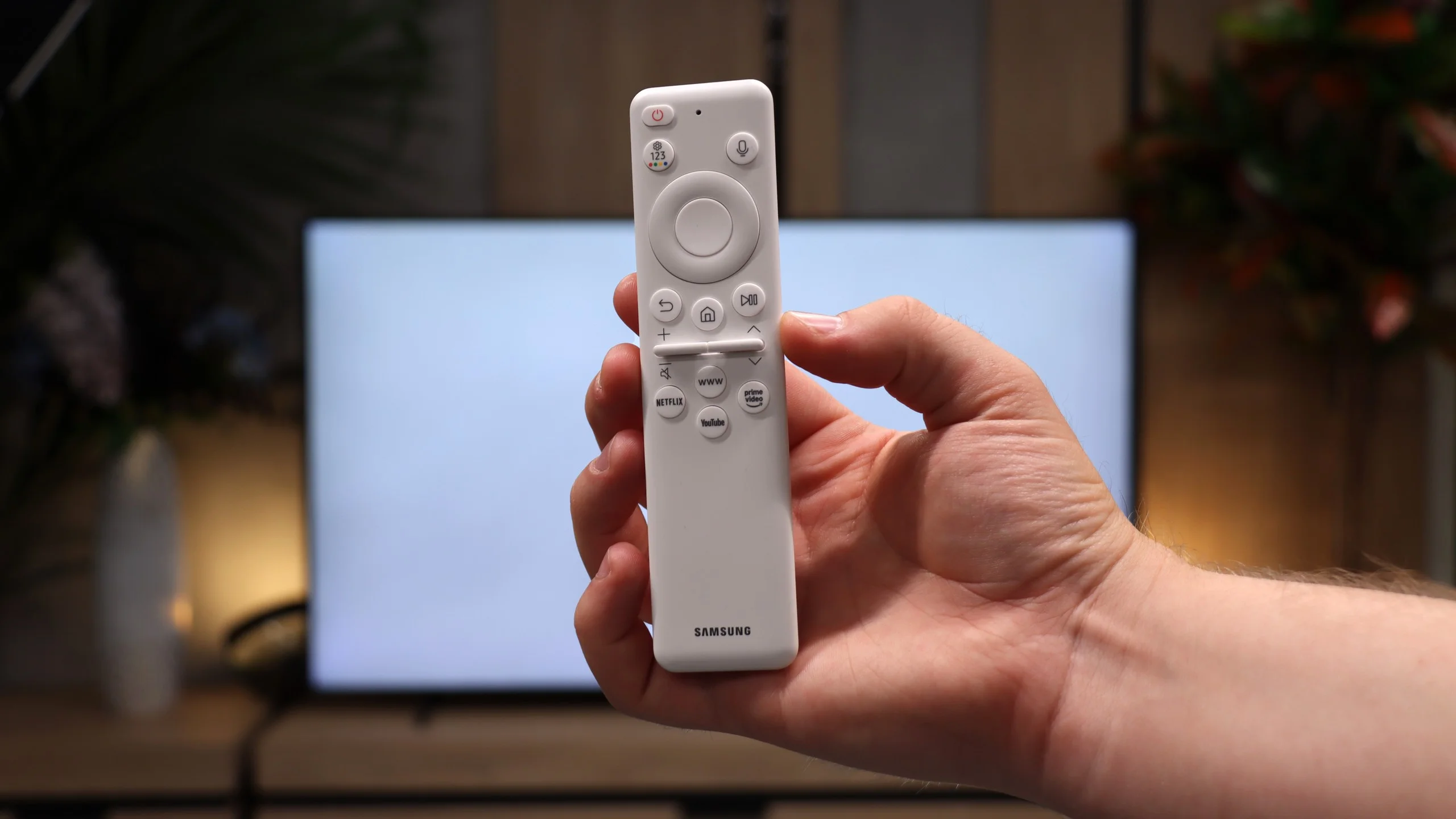
It’s worth noting that the remote control included with the Q6F is an older yet somewhat modernised version of the classic Samsung infrared controller, equipped with a full numeric keypad. Although it works via infrared, it has plenty of buttons, which might appeal to older users who watch traditional television – it simply makes channel switching easier. We also find a clear EPG interface, teletext, and support for Bluetooth headphones. It sounds a bit like a senior's dream come true, and there’s definitely something to that.
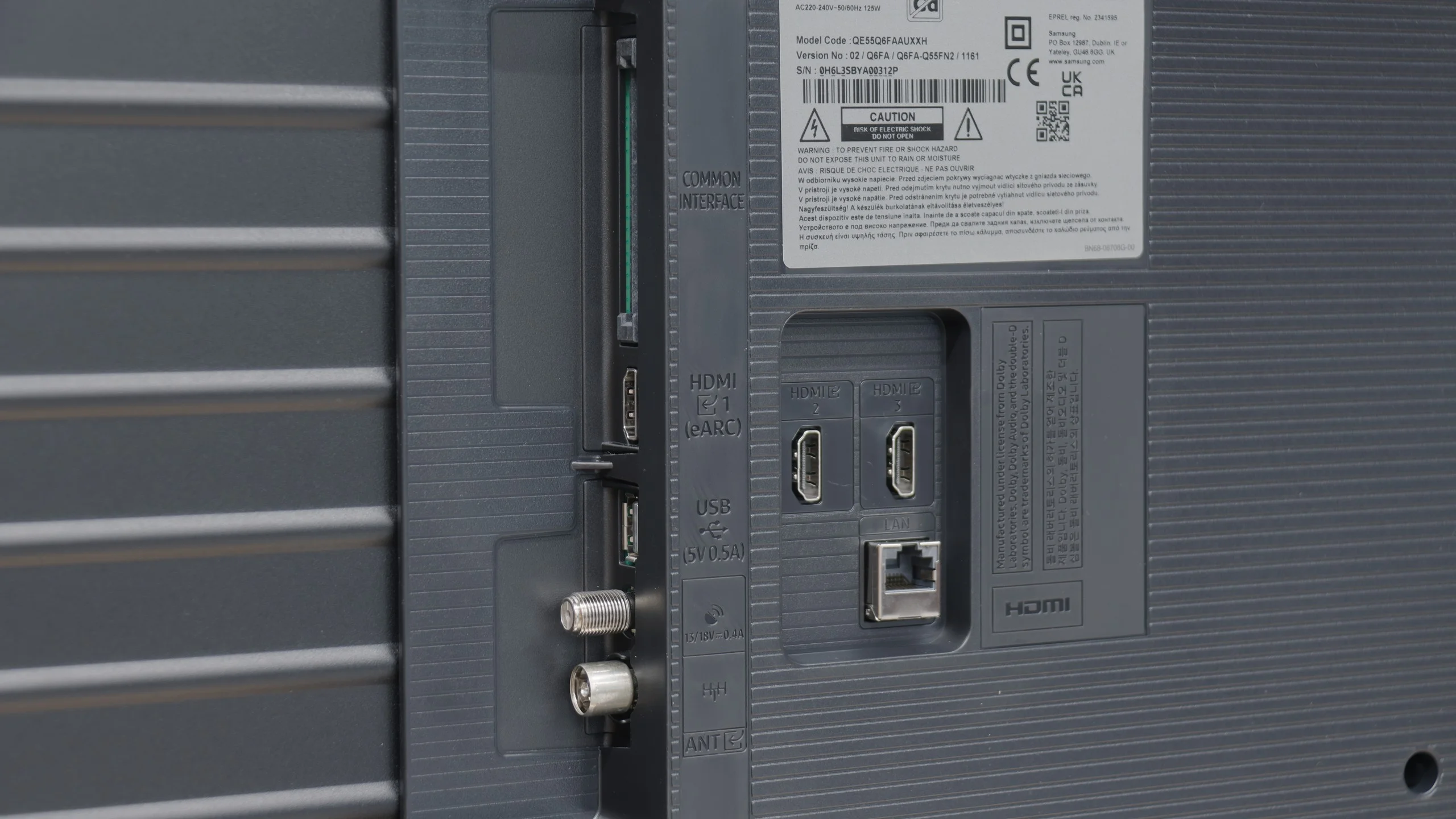
However, we must note a serious shortcoming regarding connections: this model lacks an optical output for audio devices. The only option available is an HDMI eARC connection, which could be a significant hassle if we have an external audio system.
Tizen and Smart TV features
Tizen is, of course, behind the Smart TV features. The system runs smoothly and offers a very large selection of streaming apps. It also supports AirPlay, Miracast and voice search in Polish. In that respect The Frame Pro is not especially different from other new Samsungs – you simply get the manufacturer's feature-rich, well-working system.
Art Mode and Art Store
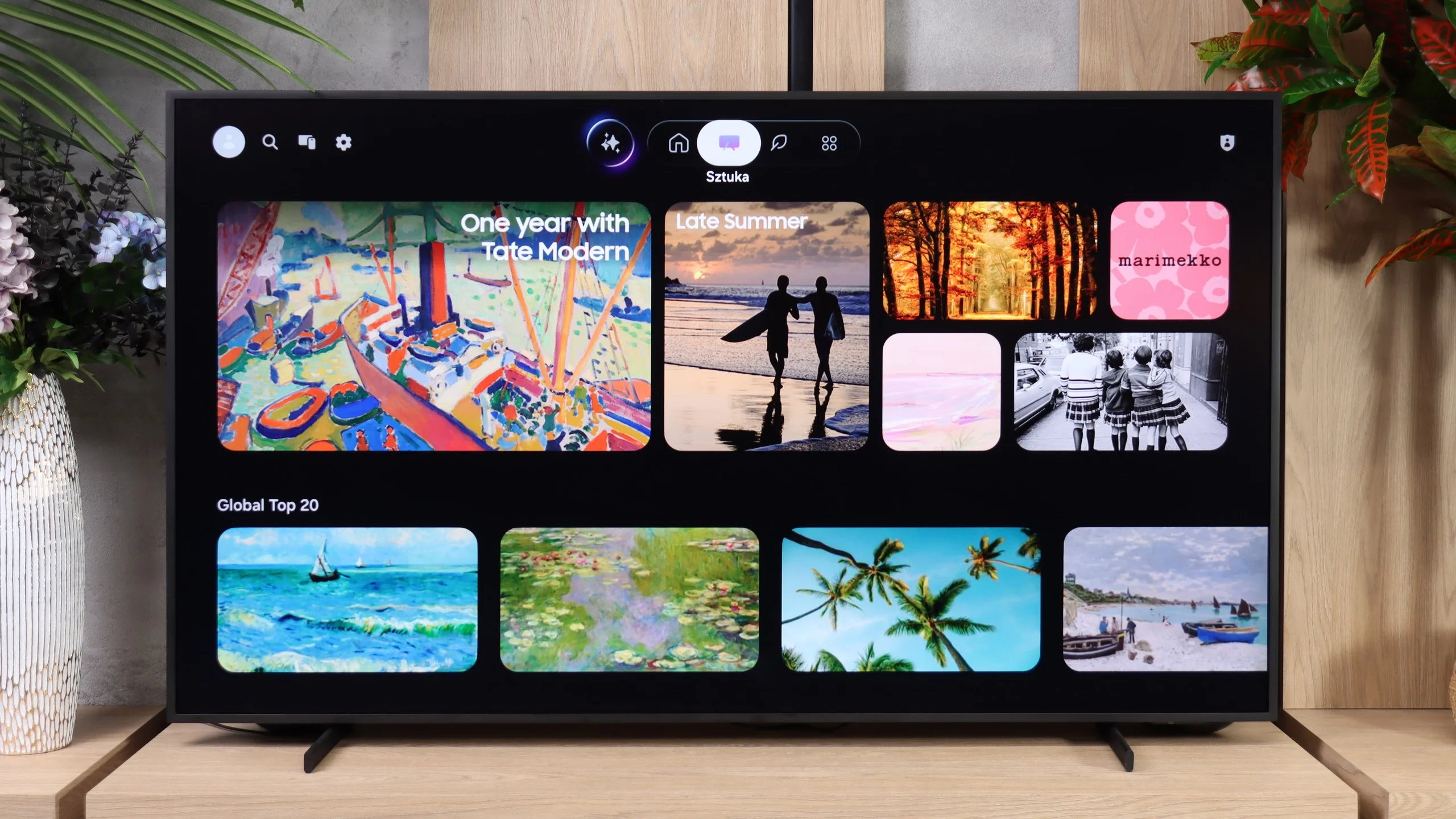
Far more interesting is Art Mode, since it's one of the most important features of the whole Frame series. When turned off, the TV can display paintings, photos or graphics instead of a black screen and can genuinely do a good job of imitating a classic picture hanging on the wall. Samsung provides access to the Art Store, where the selection is really large and the materials themselves are prepared to very high quality. The problem is that full access requires a subscription, and in our view that's a significant drawback for a TV whose main selling point is this feature. Fortunately we're not limited to the Art Store. You can upload your own photos or artwork, so nothing stops you from finding a high-resolution piece yourself and displaying it on the screen. The automation of this mode is also handled very interestingly. The Frame Pro not only has an ambient light sensor to adapt the look of the displayed image to the room, but also a presence sensor. The TV can therefore detect that someone is in the room and automatically activate Art Mode.
Classic features
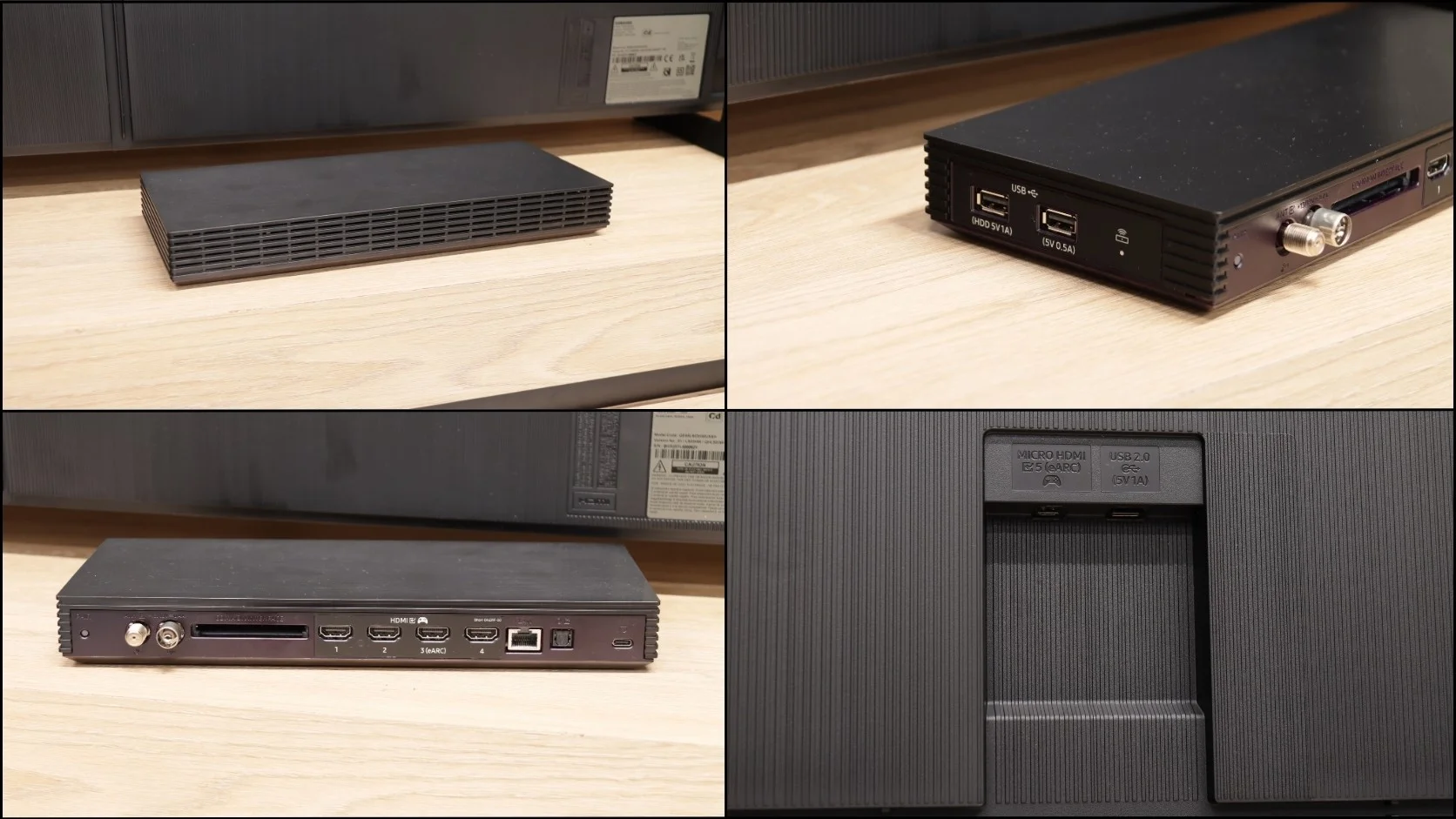
As for classic TV features, The Frame Pro offers a rather basic set of conveniences. We have DVB-T/T2, DVB-S/S2 and DVB-C tuners, teletext, a sound-only mode and the ability to use Bluetooth headphones and the TV speakers at the same time. Missing, however, are USB programme recording, PiP and a more advanced remote, for example one with a numeric keypad. The remote works via radio, so you don't need to point it at the screen.
Apps
9.3/10
9.3/10






















Playing files from USB
9.3/10
9.1/10
Supported photo formats:
Maximum photo resolution:
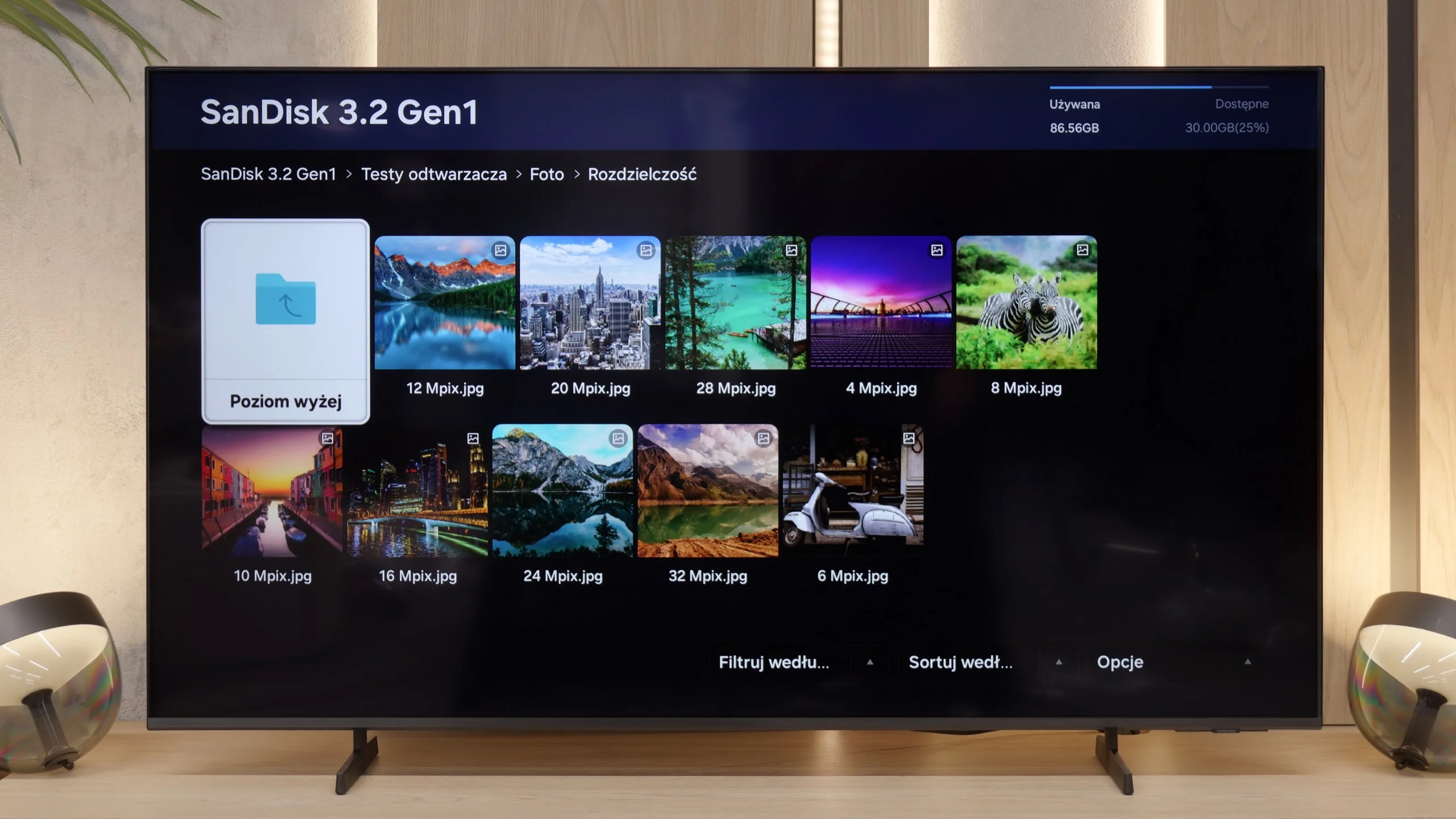
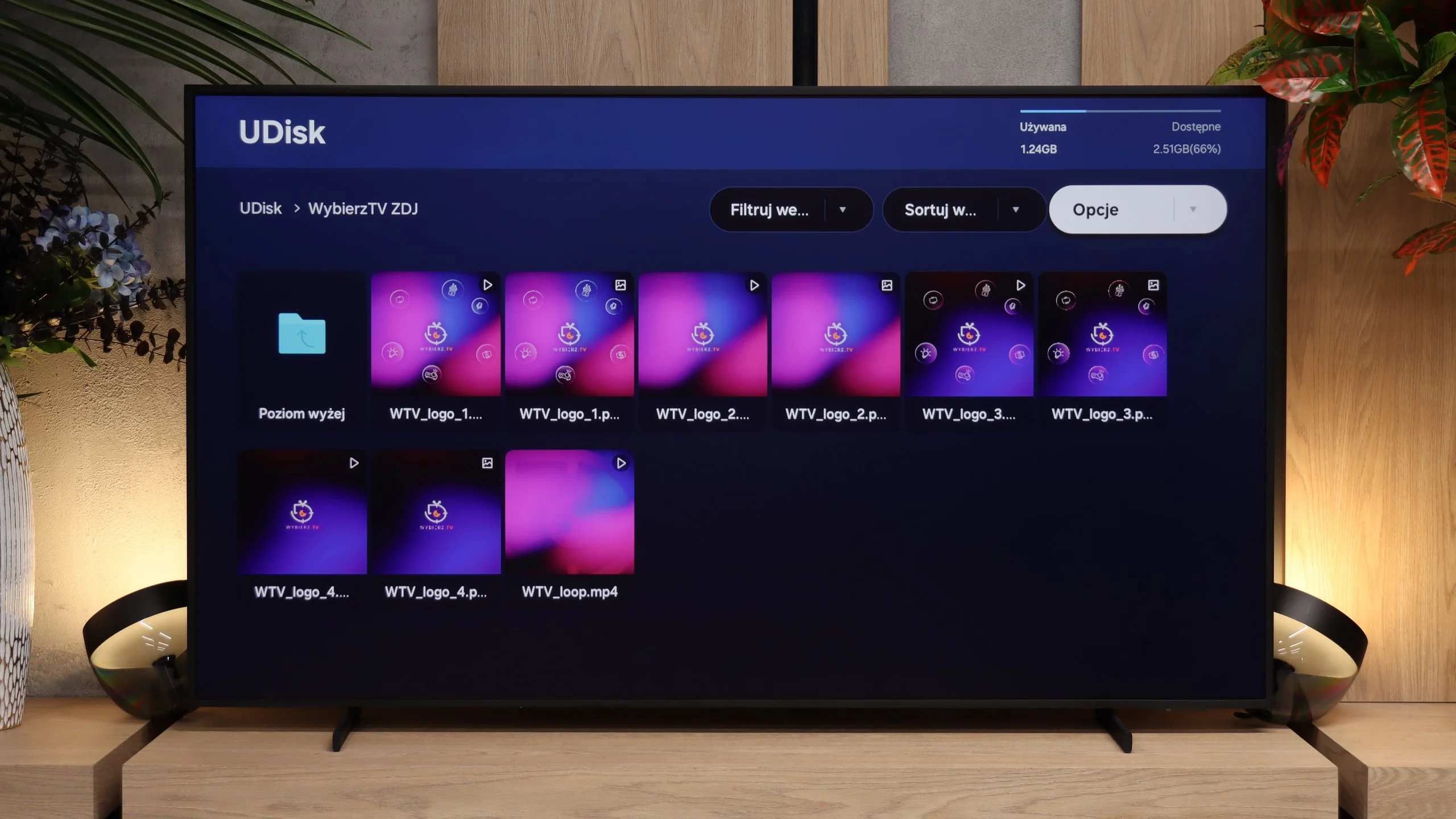
When it comes to handling multimedia from external sources, the Samsung Q6F performs exceptionally well, especially considering that we are dealing with a closed system. The TV has no issues with most popular video, audio, or image formats (EVEN HEIC!). The media player operates steadily and quickly loads the contents of USB drives or network servers. It's a solid device for browsing your own film archives or home photo galleries.
The Frame Pro handles playing files from a USB drive well. Most common video, audio and photo formats work correctly, so you probably won't need to connect a laptop just to play a movie or browse photos. What we miss most is support for HEIC, the format commonly used for photos taken with iPhones. Apple users will therefore have to convert those photos to a supported format beforehand or simply stream them to the TV via AirPlay. Other than that, the player works great.
Sound
5.8/10
6.4/10
- Maximum volume-89dB
- Dolby Digital Plus 7.1
- Dolby True HD 7.1
- Dolby Atmos in Dolby Digital Plus (JOC)
- Dolby Atmos in Dolby True HD
- DTS:X in DTS-HD MA
- DTS-HD Master Audio
When it comes to sound, the Samsung Q6F plays... well, flat. However, the sound is clear and loud enough that it's perfectly suitable for watching news or regular television. The voices of the presenters are understandable and don't get lost in the background. However, if someone values even decent experiences when watching films, we definitely recommend purchasing a soundbar. Even the cheapest model from the Korean manufacturer's range will make a huge difference and save the situation.
The sound on The Frame Pro is decent and hasn't changed much compared with last year's model. The TV handles dialogue particularly well, with voices clear and easy to hear. However, it lacks stronger bass, so films and music don't have much depth. If you care about better sound, it's worth considering a soundbar when buying The Frame Pro. Models from the S series suit it especially well. Their slim design complements the look of the TV. Finally, The Frame Pro supports Dolby Atmos, so with a compatible soundbar or AV receiver you can enjoy immersive audio. It does not support DTS, which is worth bearing in mind when playing films from your own library, for example Blu-ray discs.
Sound Quality Test
Acoustic Measurements
0dBC (Max)
75dBC
89dBC (Max)
75dBC
Reader comments
Comments are provided by the external service Disqus (Zeta Global). Once loaded, Disqus may set cookies and process data about your activity.
We will remember your choice on this device. Provider's privacy policy