Philips PUS8500 vs SHARP JP7765E

Direct comparison

PUS8500 / PUS8560 / PUS8510 / PUS8600

Info

JP7

Available screen sizes: 43”50”55”65”75”85”

Available screen sizes: 50”55”65”75”

Panel type: LCD VA

Resolution: 3840x2160

System: Titan OS

Model year: 2025

Complete the survey to find out the result

Panel type: LCD VA

Resolution: 3840x2160

System: Google TV

Model year: 2026

Complete the survey to find out the result

Overall rating

5.8

6.1

  • Movies and series in UHD quality

    5.6

    6.4

  • Classic TV, YouTube

    6.2

    6.0

  • Sports broadcasts (TV and apps)

    5.3

    3.9

  • Gaming on console

    6.7

    6.1

  • TV as a computer monitor

    5.6

    5.0

  • Watching in bright light

    4.9

    7.3

  • Utility functions

    4.8

    5.2

  • Apps

    6.7

    9.6

  • Sound quality

    6.2

    6.0

Advantages

  • Ambilight System

  • High native contrast - VA panel

  • Low input lag

  • Essential features for gamers: ALLM and VRR

  • Full support for audio formats: Dolby Atmos and DTS

  • Backlit remote with numerical keypad

  • Good black and contrast – mini-LED backlighting with a VA panel

  • High brightness – will handle bright living rooms

  • Google TV system – unlimited app base and smart features

  • Very good file player – plays almost everything

  • Mini-jack output – rare and useful headphone connection

  • Extremely loud – up to 90 dB (ideal for seniors)

  • Very attractive price

Disadvantages

No like
  • Average panel brightness

  • The TitanOS system feels unfinished (some features don't work, gaps in applications)

  • Infrared remote control

  • Font readability issues (PC)

  • Massive trailing and only a 60Hz panel

  • Poor mini-LED local dimming algorithms

  • Narrow viewing angles (a natural characteristic of VA panels)

  • No VRR and HGiG – features for gamers

  • Odd sound – the audio has a "hole" in the dialogues

Our verdict

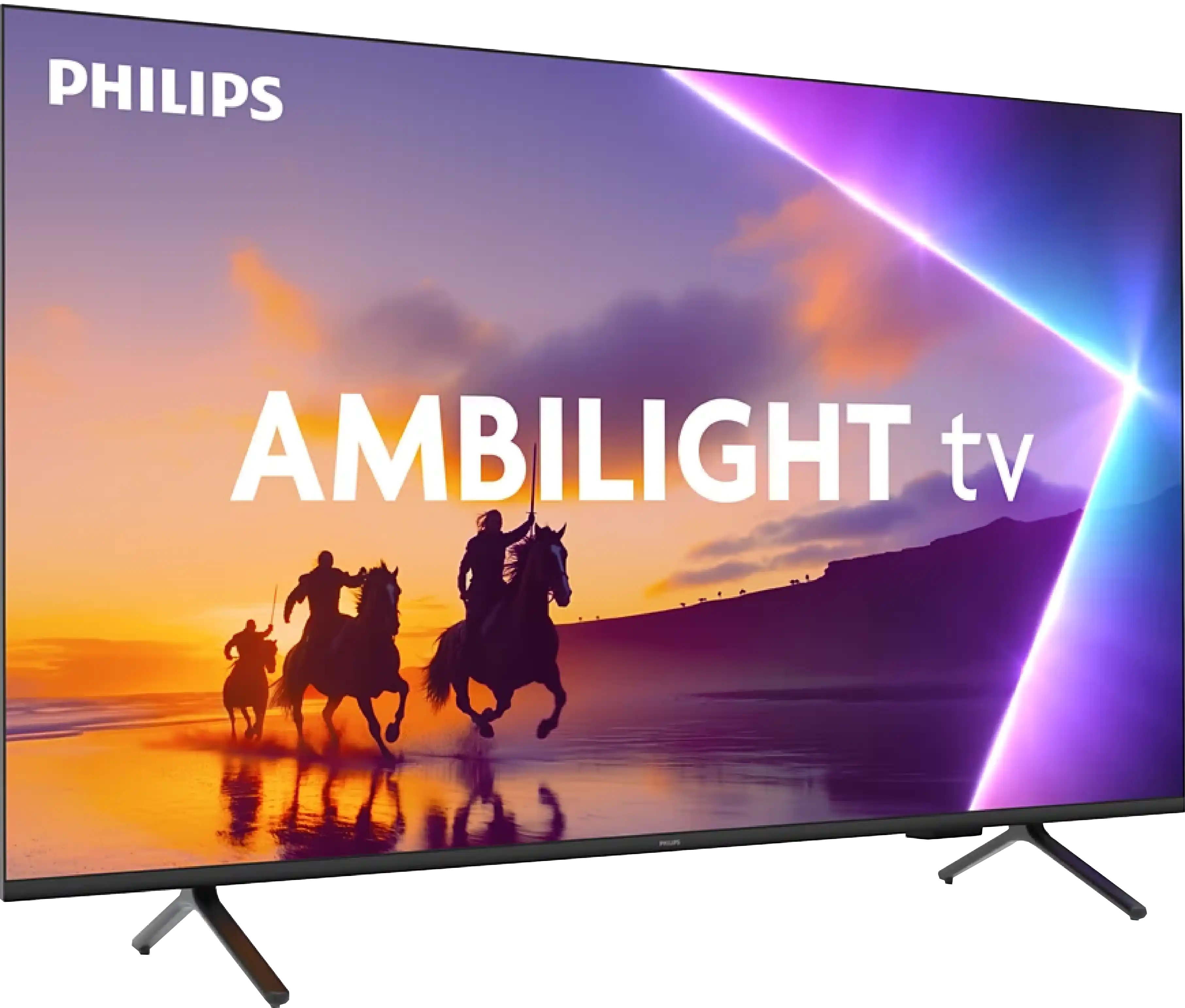
Ambilight because that's exactly where we need to start, it's the biggest reason to buy the PUS8500. The three-sided backlighting on the TV looks fantastic, especially in the evening. It creates atmosphere, masks contrast imperfections, and makes viewing simply more enjoyable. Even if the black isn’t perfect here, at high contrast the native VA panel is just good. On top of that, there’s really decent input lag and several gaming features like ALLM and VRR. Although there’s no HDMI 2.1 or 120Hz panel, casual gaming should be a pleasure. Especially since it plays responsively and without delays. Let’s add full support for audio formats – it includes both Dolby Atmos and DTS, so soundbar owners also have something to be happy about.

But let’s not kid ourselves – this is still a budget TV, and at times that’s quite obvious. Brightness is average – not so weak that you can't watch anything, but if you hit an exceptionally sunny day, watching under such conditions without blinds can be problematic. However, in our opinion, the biggest disappointment with the PUS8560 is the Titan OS operating system. Despite the fact that the system debuted some time ago, some things just didn’t work – for example, screen mirroring from a phone despite the manufacturer stating that this feature is present. There are fewer apps than the competition, and the system itself feels a bit clunky. Generally, it seems to do something already, but it clearly lacks refinement.

Of course, this isn’t a TV meant to compete with top models. But if someone is looking for something simple, with the cool atmosphere that the Ambilight system provides, it’s quite a fair proposition. You just need to know what to expect and accept the compromises, of which there are plenty here.

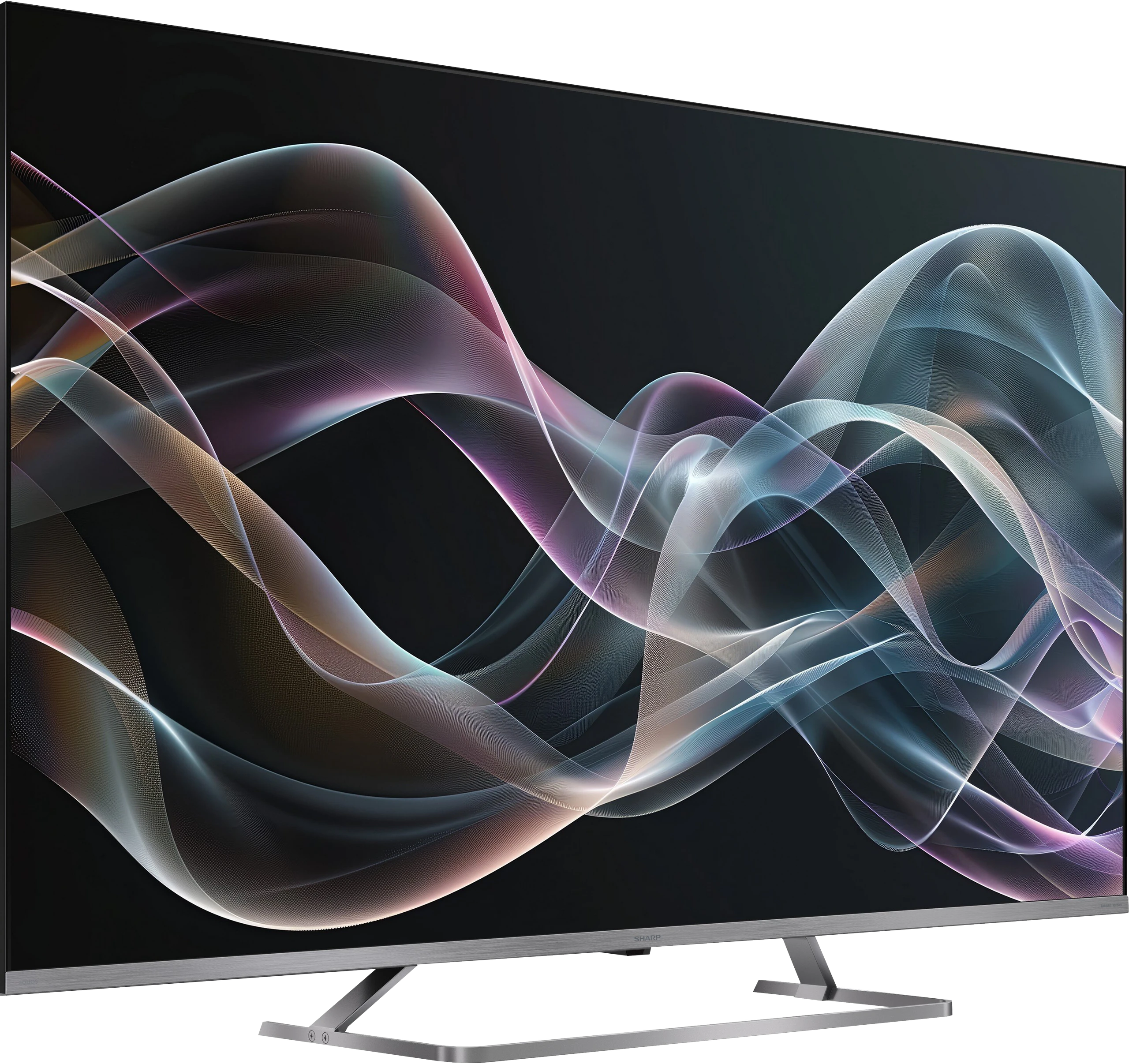
Sharp JP7765 is yet another offering in the market that tries to prove that Mini-LED technology doesn't have to cost a fortune. The low price is matched by an exceptionally high brightness – a peak of 1000 nits in HDR is a result that is simply impressive in this price range. Although the proprietary processor doesn't always handle backlighting management in demanding scenes perfectly, support for Dolby Vision effectively saves the day. With dynamic metadata, the picture becomes vivid, deep, and simply attractive to the eye. Adding to this the Google TV system, extreme volume, and a rarely found headphone jack, we have a device that is a brilliant option for seniors or less demanding viewers switching from a regular, cheap LCD. In such a scenario, the Sharp JP7 presents itself as a really good and cost-effective choice. However, it's necessary to state the matter clearly: contrary to marketing slogans, this isn't gear for everyone. Gamers or sports fans will definitely not find this suitable. The biggest drawback of the JP7765 model is the slow, 60Hz panel and significant motion blur, which essentially disqualifies this TV for watching fast-paced matches or playing quick titles. The image loses sharpness during rapid movements to such an extent that for a football or racing fan, this could be an unacceptable barrier.

So who is the Sharp JP7765 for? It's a sensible option for budget-conscious individuals who don't have high demands for motion fluidity but value a "kick" of brightness. By choosing the Sharp JP7, you'll definitely make a better deal than buying basic (non-dimming) TVs from competitors. At a similar price, rivals usually offer standard LCD panels that can't compete with the capabilities of even such a basic Mini-LED model as the JP7. Ultimately, it comes down to a simple equation: you accept poorer motion fluidity in exchange for immense brightness, which is hard to find with other manufacturers at this price.

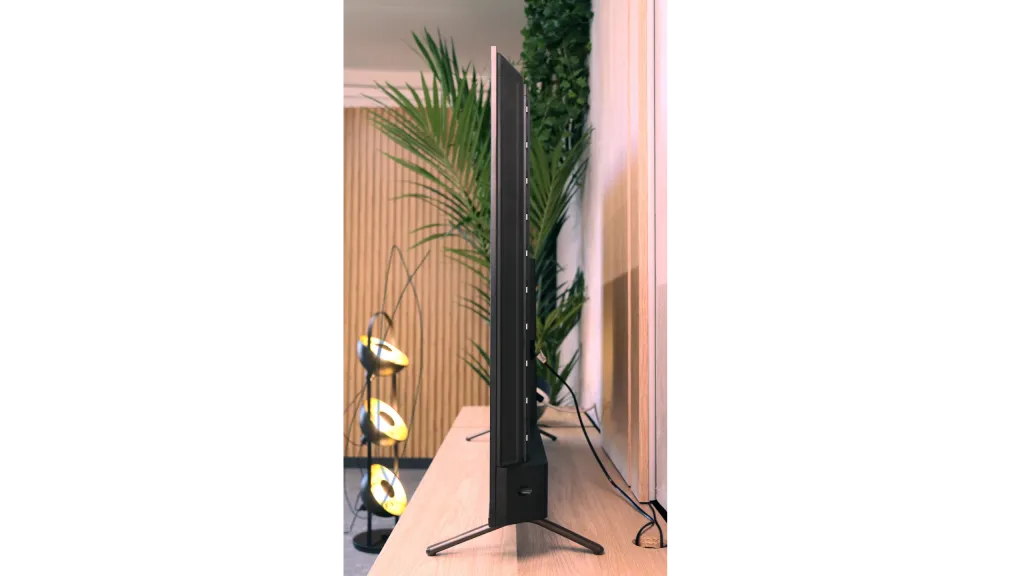
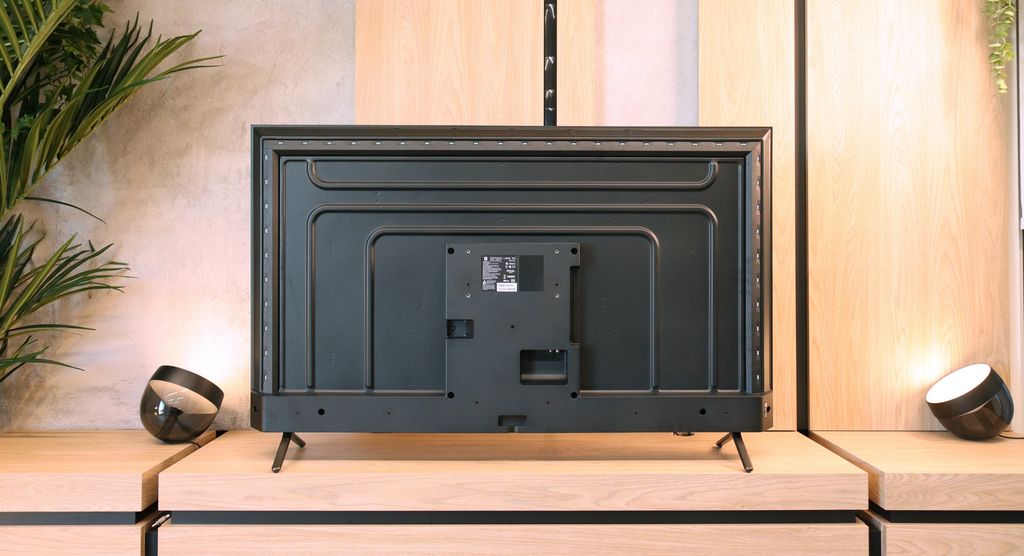
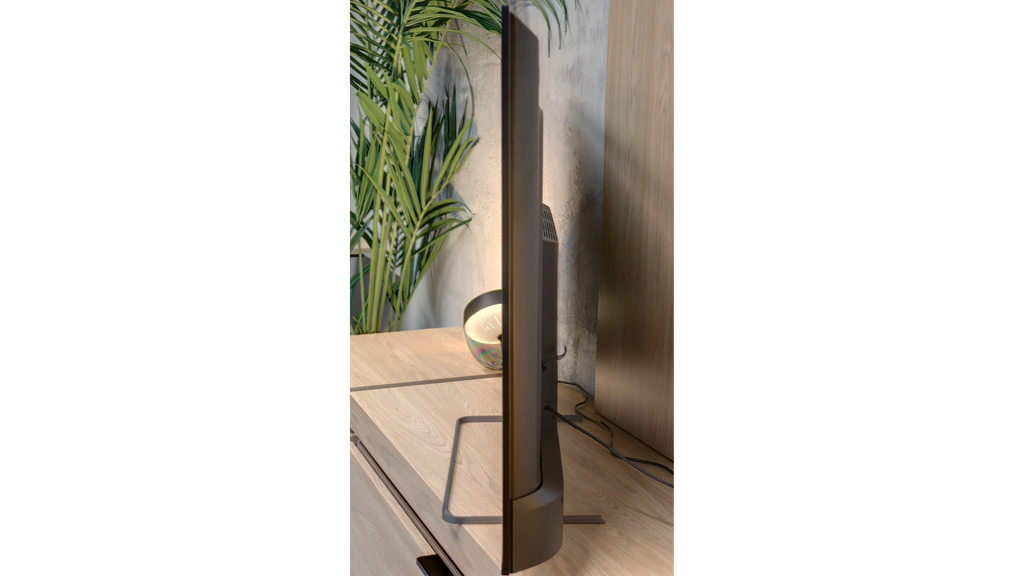
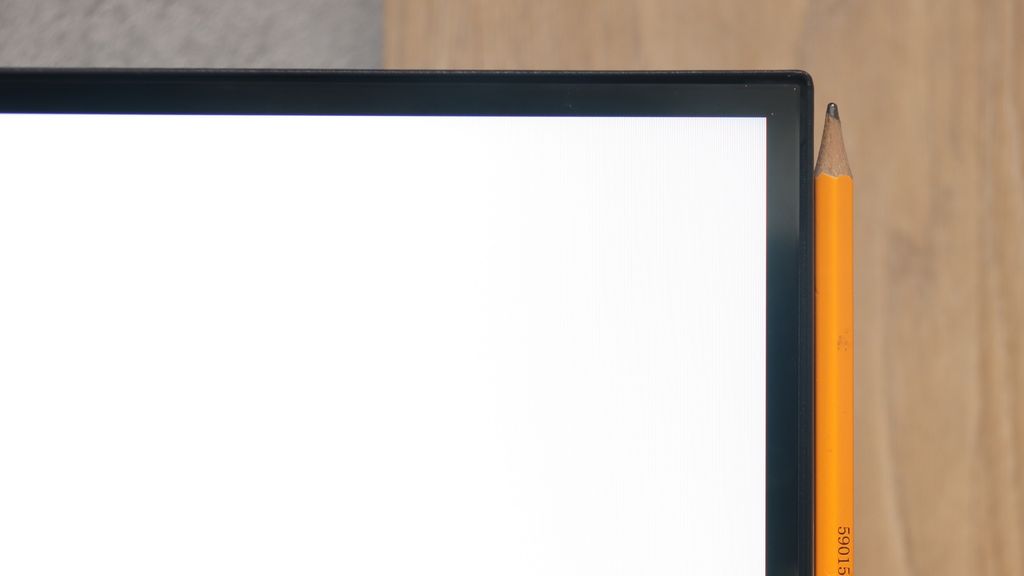
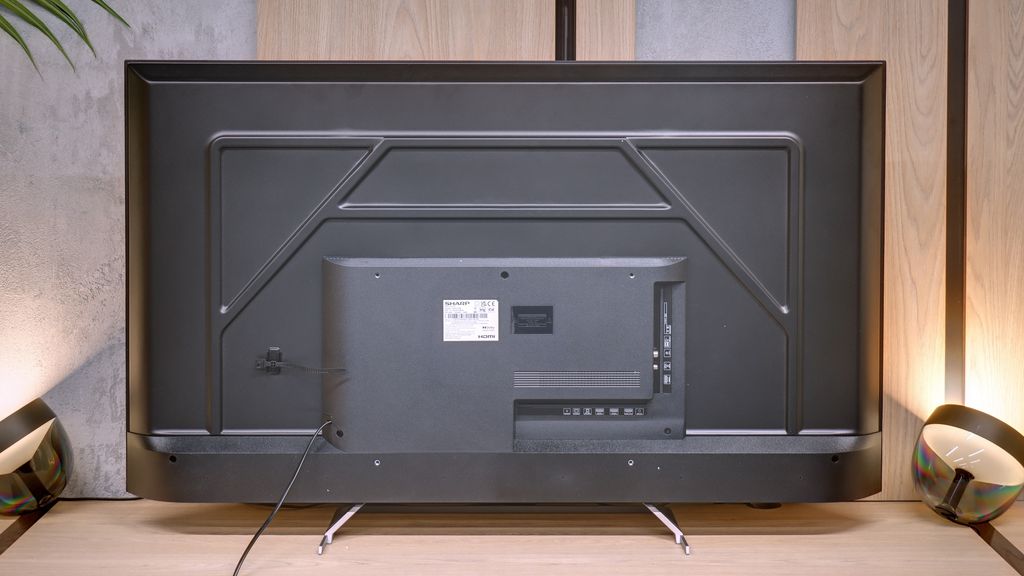
TV appearance

HDMI inputs
3 x HDMI 2.0, 0 x HDMI 2.1
4 x HDMI 2.0, 0 x HDMI 2.1
Other inputs
RCA (Chinch)
Outputs
Toslink (Optical audio), eARC (HDMI), ARC (HDMI), Mini-Jack (Headphones)
Network Interfaces
Wi-Fi 2.4GHz, Wi-Fi 5GHz, Ethernet (LAN) 100Mbps
Build quality
Average
Average
Stand type
Legs
Central
Bezel color
Graphite
Silver
Stand
Base adjustment
Fixed
Accessories
Stand
Stand

Contrast and black detail

6.1/10

7.3/10

Local dimming function: No

Local dimming function: Yes, number of zones: 160 (10 x 16)

Contrast:

Review Philips PUS8500  Contrast and black detail

Result

6,000:1

Review Philips PUS8500  Contrast and black detail

Result

5,950:1

Review Philips PUS8500  Contrast and black detail

Result

6,250:1

Review Philips PUS8500  Contrast and black detail

Result

5,950:1

Review Philips PUS8500  Contrast and black detail

Result

5,750:1

Review SHARP JP7765E Contrast and black detail

Result

64,100:1

Review SHARP JP7765E Contrast and black detail

Result

18,250:1

Review SHARP JP7765E Contrast and black detail

Result

46,350:1

Review SHARP JP7765E Contrast and black detail

Result

7,000:1

Review SHARP JP7765E Contrast and black detail

Result

4,500:1

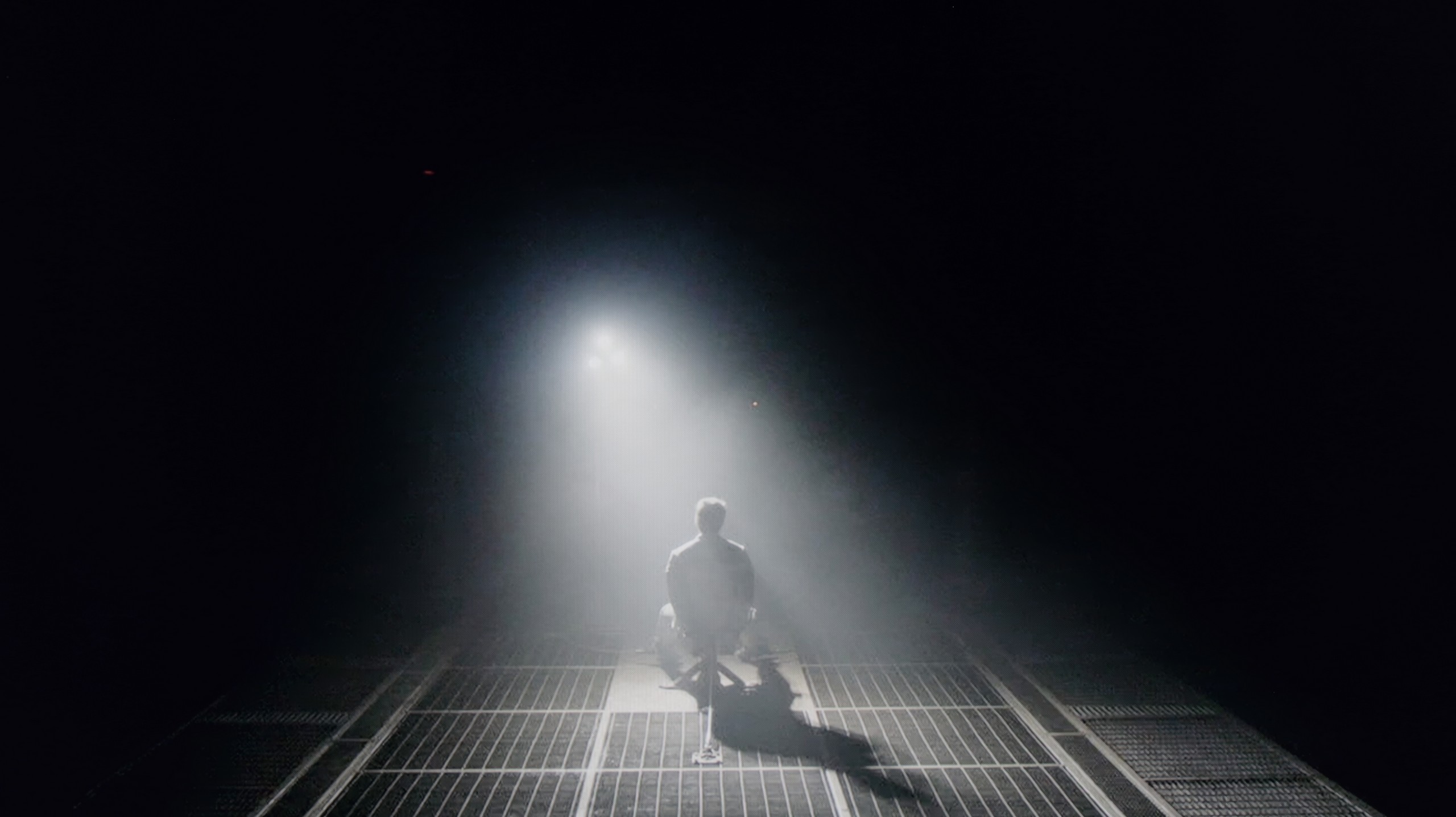
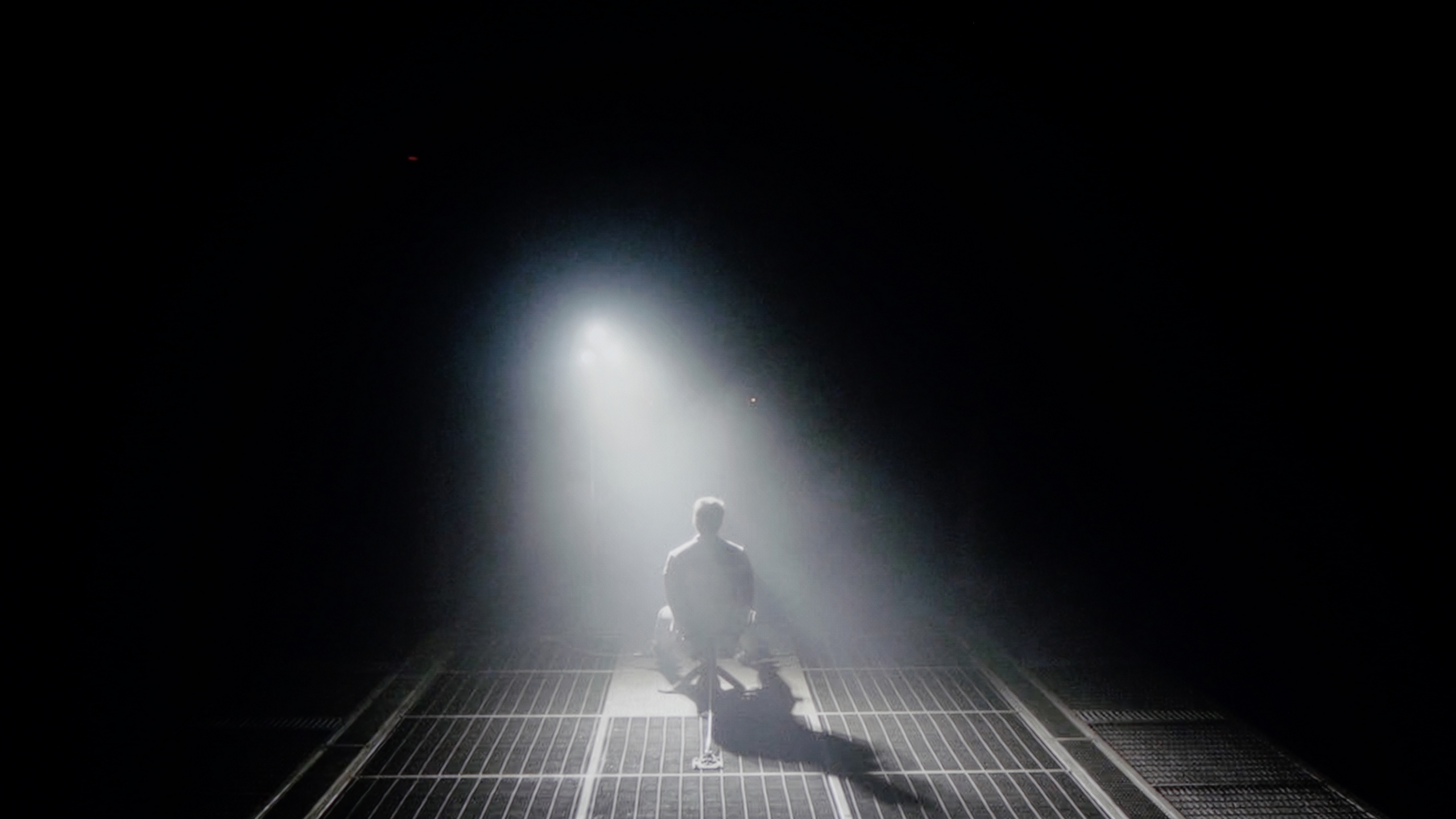
Halo effect and black detail visibility:

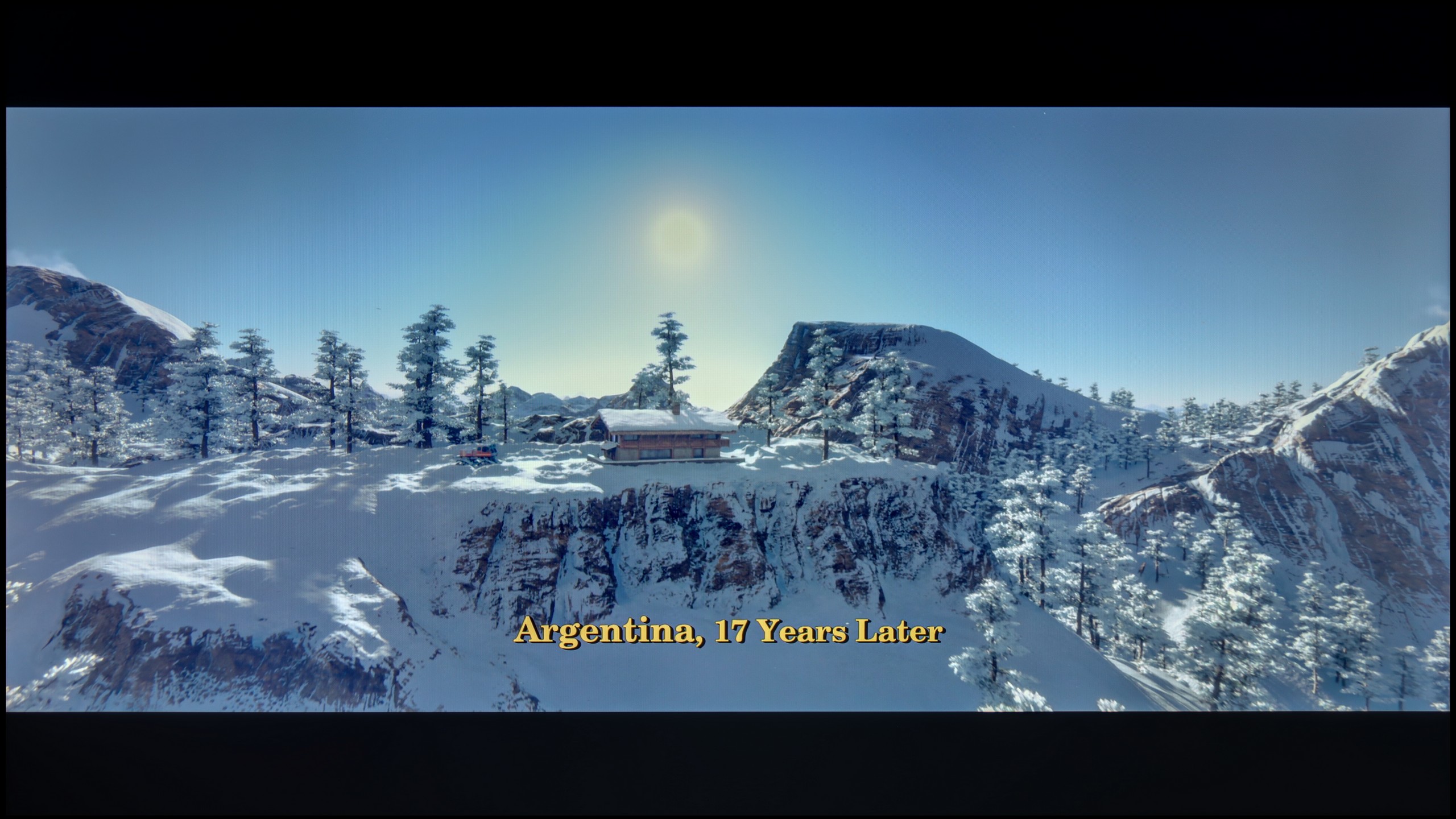
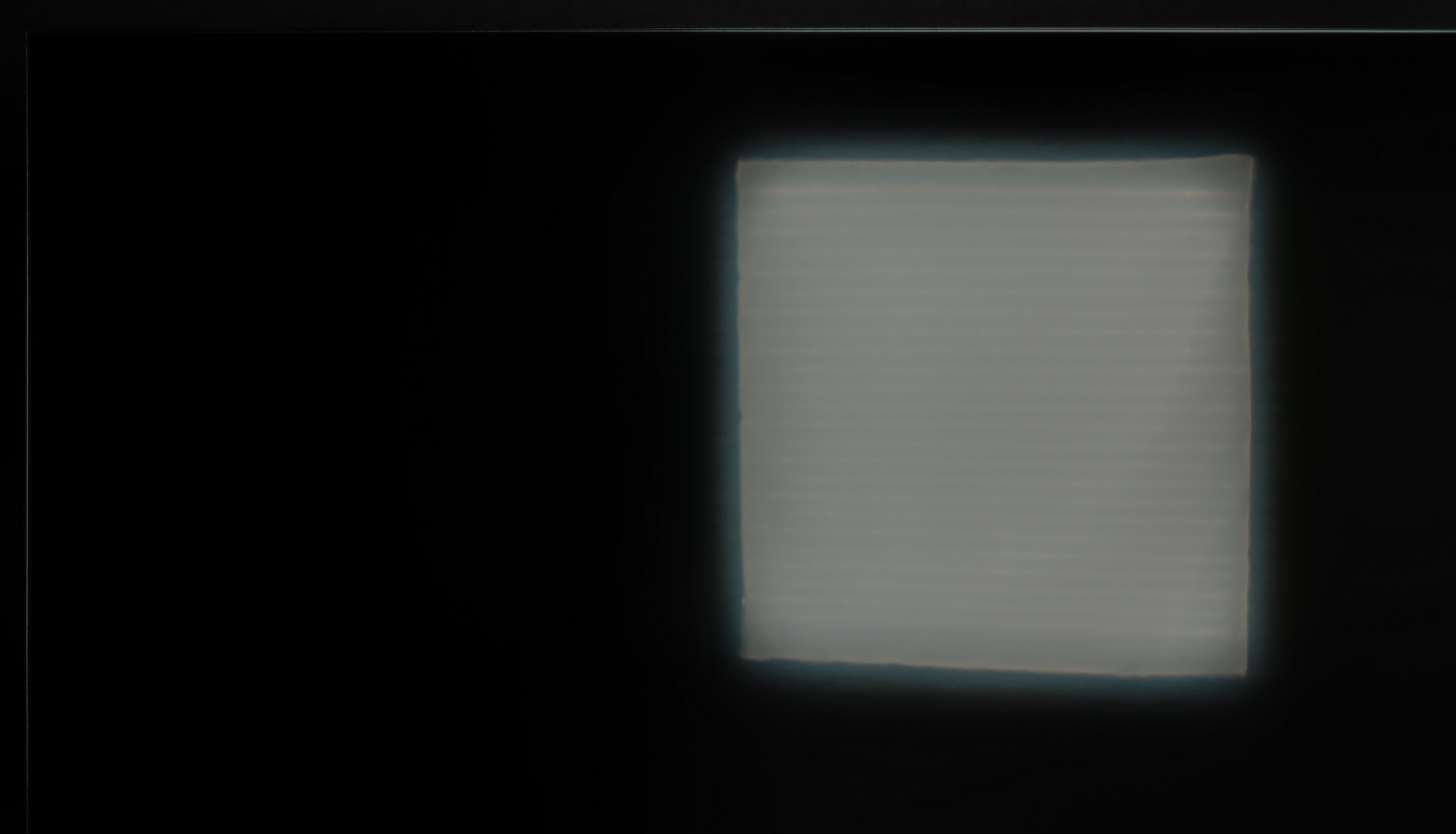
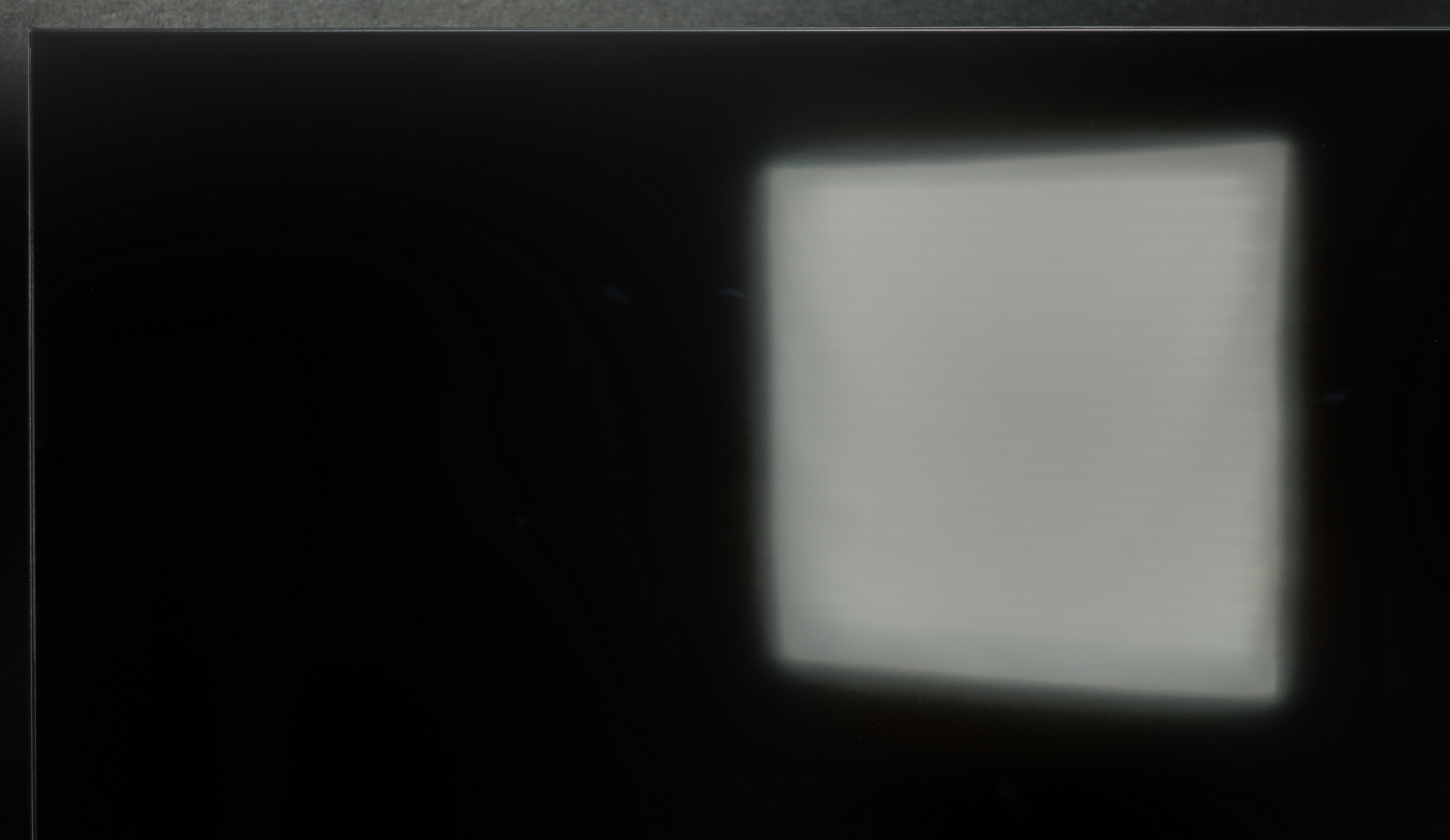
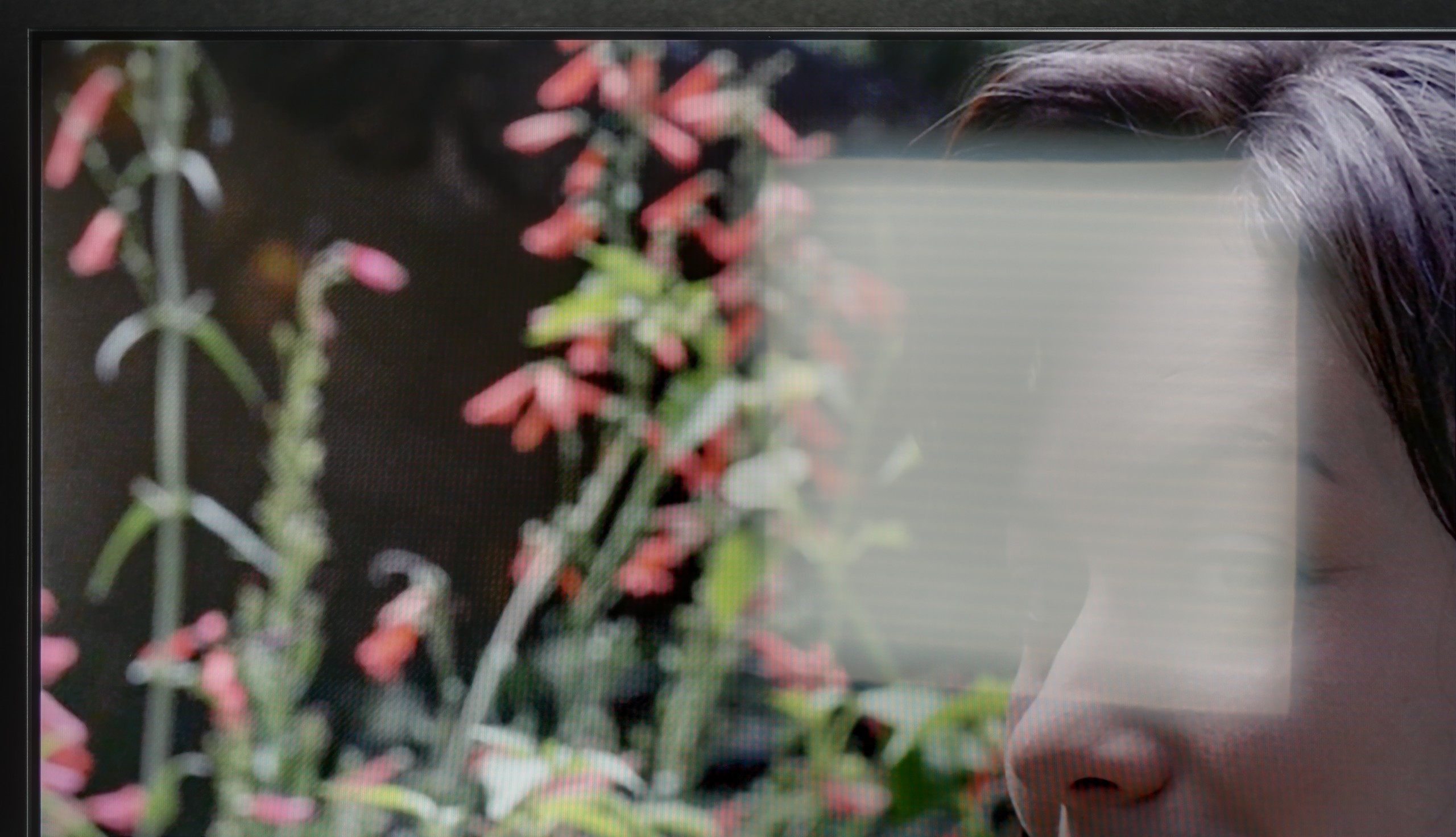
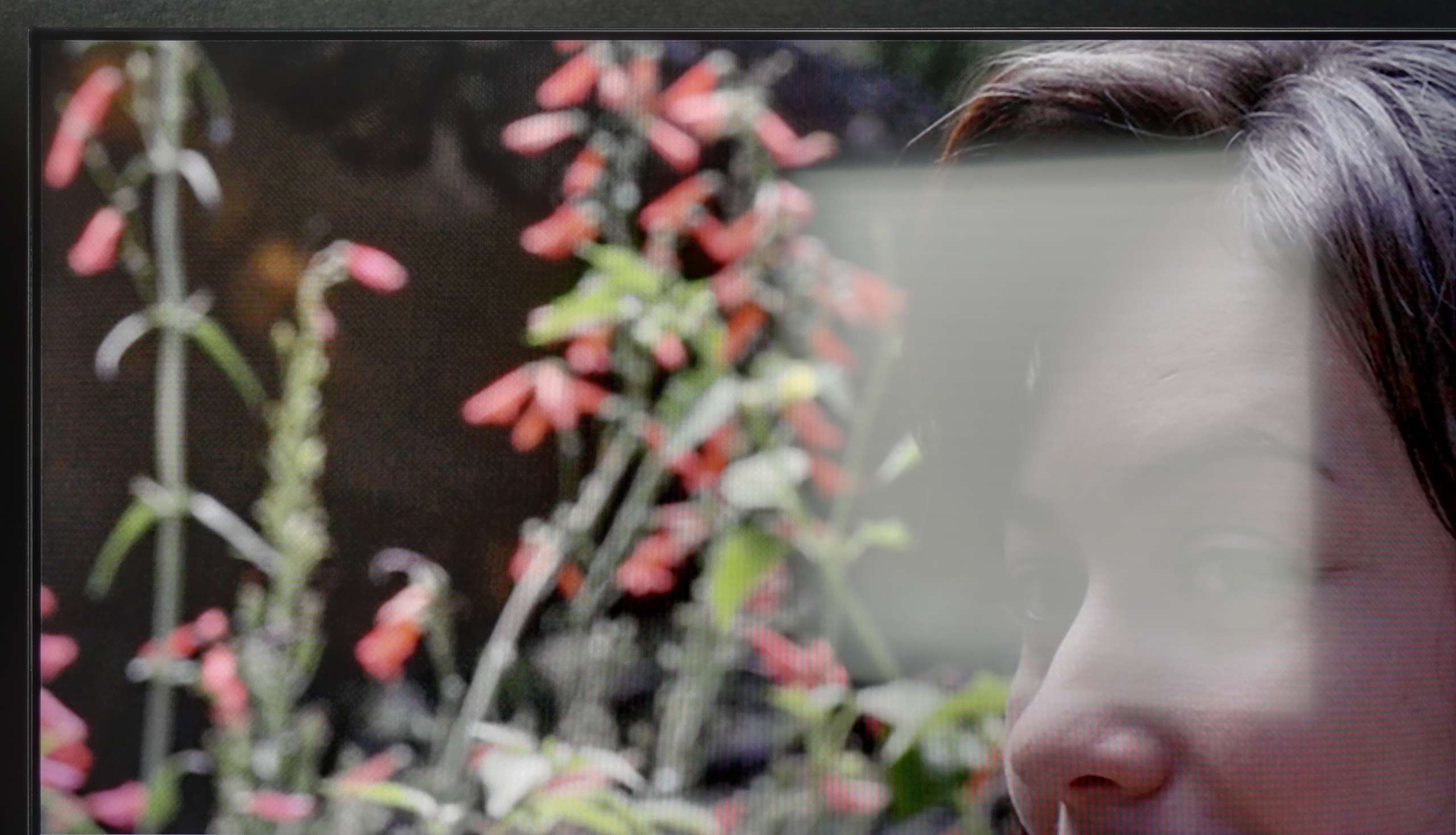
Check the visibility of bright lights on a dark background. Mini-LEDs often struggle with this. The photo does not compare black levels – that’s what the video below is for.

Philips PUS8560 in the size version we tested is equipped with a VA panel. This means that black levels – for an LCD TV – can be considered decent. And that is indeed the case with this model. Both blacks and the overall impression of contrast in the movie scenes we tested are really quite good – the image doesn't bleed, and details are visible even in more challenging segments.

But the panel alone is not everything. Unfortunately, the PUS8500 does not come with local dimming (which is a given looking at the TV segment), so one has to reckon with the fact that in completely dark conditions, black can resemble shades of navy more than true black. On the other hand – and here's a plus for Philips – the Ambilight system does an excellent job. The backlighting really affects the perception of contrast. As a result, even if technically the black isn't perfect, the subjective experience of the picture becomes much more enjoyable. For many people, that's enough to make an evening viewing really spectacular.

When it comes to what’s most important in Mini-LEDs, namely contrast and black levels, the Sharp JP7 in the 55-inch size we've tested uses a VA panel. Combined with backlighting divided into 160 zones (in a 10x16 layout), this promises really solid performance. Measurements on static film test patterns can be downright shocking, with reported contrast reaching five-digit values, even hitting levels of 50,000:1. On paper, this is a result that even much more expensive models would envy, and black levels under such conditions look very appealing.

Unfortunately, a TV is bought for watching movies, not for admiring static test patterns, and here the magic tends to fade. When something more begins to happen on the screen – especially in complex, dark scenes with a lot of small, bright elements – the backlight system in the JP7 starts to literally go haywire. Zones can "dance" before the viewer's eyes, flickering on and off in a manner that can be just plain annoying and distracts from the action. It is clear that Sharp has a huge area for improvement regarding local dimming management. The hardware potential in the form of Mini-LEDs is substantial, but the control algorithms clearly struggle to tame them.

HDR effect quality

4.8/10

5.3/10

Supported formats
HDR10, HDR10+, HLG
HDR10, Dolby Vision, HLG
Color gamut coverage
DCI P3: 90.4%, Bt.2020: 65.8%
DCI P3: 94.0%, Bt.2020: 70.1%

Luminance measurements in HDR:

Review Philips PUS8500  Brightness measurement

Result

273 nit

Review Philips PUS8500  Brightness measurement

Result

300 nit

Review Philips PUS8500  Brightness measurement

Result

324 nit

Review Philips PUS8500  Brightness measurement

Result

343 nit

Review Philips PUS8500  Brightness measurement

Result

334 nit

Review SHARP JP7765E Brightness measurement

Result

1014 nit

Review SHARP JP7765E Brightness measurement

Result

247 nit

Review SHARP JP7765E Brightness measurement

Result

606 nit

Review SHARP JP7765E Brightness measurement

Result

180 nit

Review SHARP JP7765E Brightness measurement

Result

605 nit

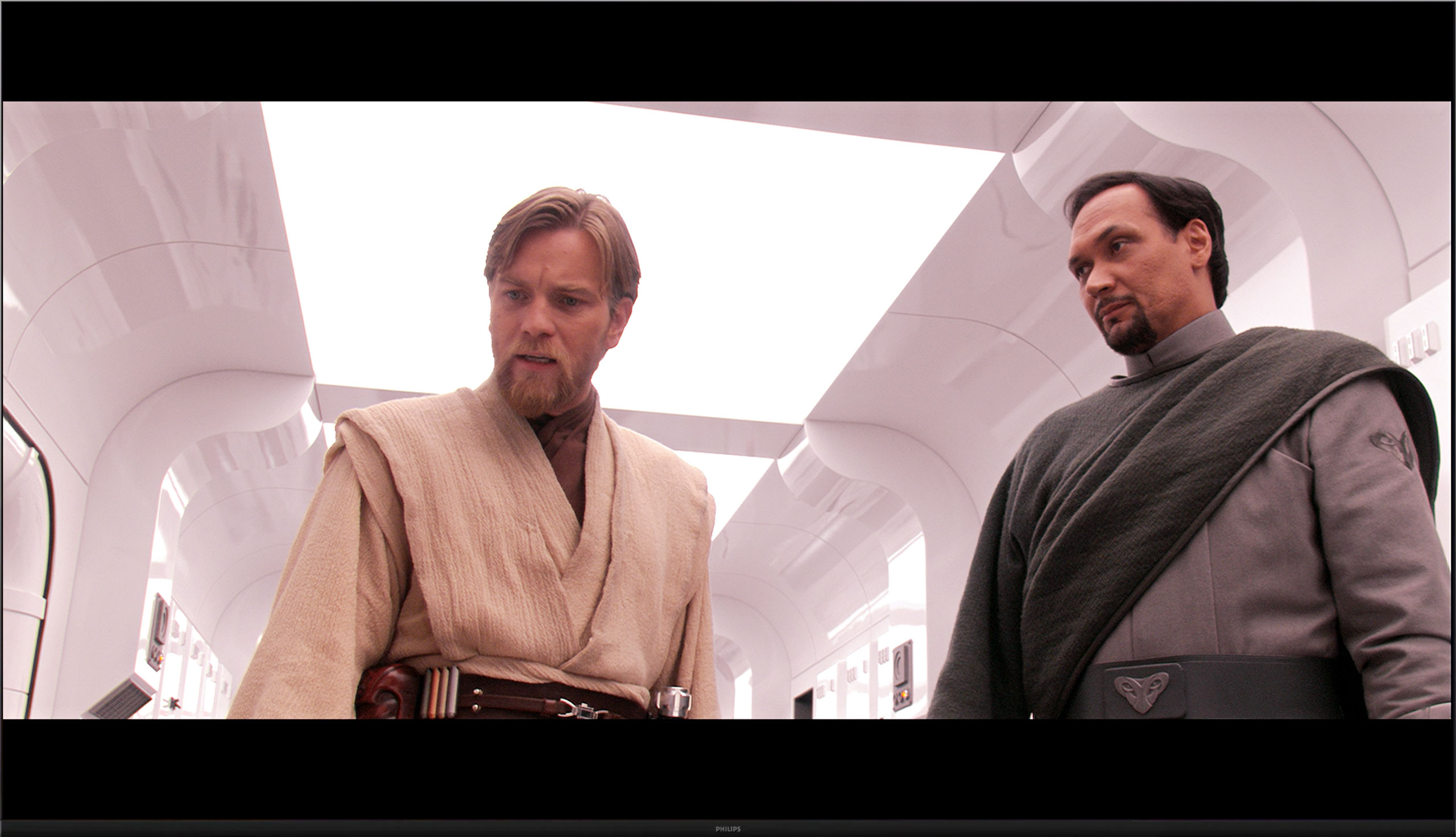
Scene from the movie “Pan” (about 2800 nits)

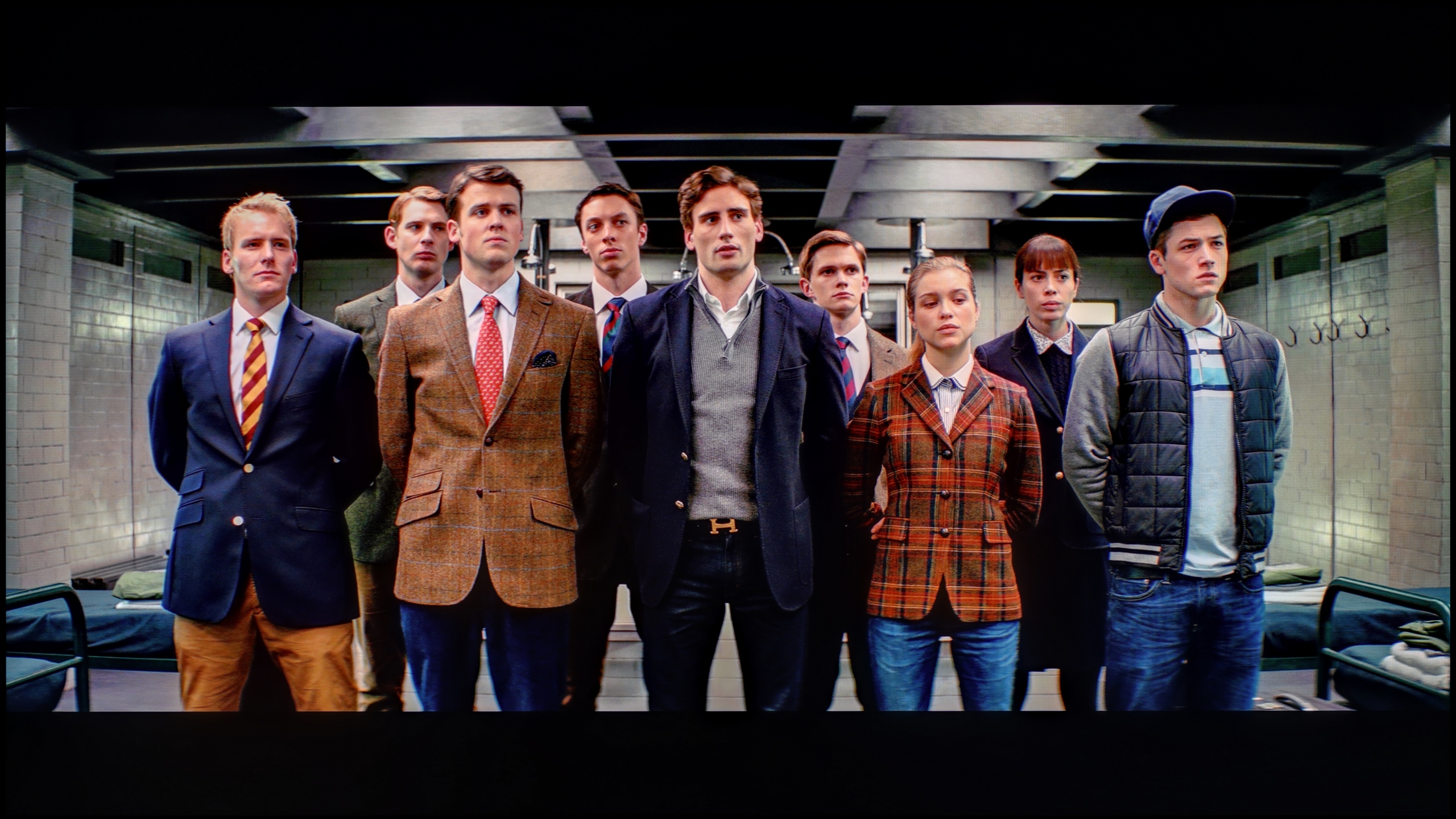
Scene from the movie “Billy Lynn” (about 1100 nits)

The photos show two HDR10 movies. 'Pan' is one of the brightest productions ever made, while 'Billy Lynn' (soldier) has brightness typical of streaming (Netflix, Prime, HBO MAX). Notice the intensity of effects and detail in whites.

Static HDR10

The photos present the visibility of white details in various HDR formats. They do not show brightness differences between TVs (these can be compared in the previous gallery).

Dynamic: HDR10+

Dynamic: Dolby Vision

The photos present the visibility of white details in various HDR formats. They do not show brightness differences between TVs (these can be compared in the previous gallery).

HDR luminance chart:

SHARP JP7765E

Philips PUS8500

When it comes to HDR performance on the PUS8560, it's safe to say that it's rather average. The brightness of the panel is around 350 nits, so we consider this to be the absolute minimum for watching content in this format. However, it’s not a result that will impress viewers looking for the best possible picture.

On the plus side, it's worth noting that the PUS8500 series – including the PUS8560/12 tested here – is marketed as a QLED television. And indeed, we can expect a wider colour gamut here. This model is equipped with an additional filter (PFS), and the DCI-P3 coverage of around 90% should suffice for most users. This filter operates very similarly to quantum dots. As a result, colours are quite well-saturated. It's not an outstanding result, but it's entirely sufficient for watching movies and series from streaming platforms.

So how does the brightness of the Sharp JP7 perform in the most demanding titles? Honestly, we were quite surprised at first. The TV is able to achieve over 1000 nits of brightness, which is an outstanding and rare result for a device costing just under 2000 zł (for 55 inches). Watching bright, full-screen scenes, you can get the impression that you are dealing with really good equipment. But unfortunately, we have to return to the issue we mentioned earlier, which is local dimming management. When small, bright spots appear on a dark background (like in test scenes from the films Life of Pi or Sicario 2), it’s clear how poorly the JP7 handles these zones. The TV dims them almost to the maximum, crushing the whole HDR effect, which at such moments resembles a flat SDR image (less than 200 nits). This instability means that in demanding, contrast-rich films, the image on the JP7 unfortunately loses its appeal.

As a consolation, it's worth noting that the panel has the potential to display colours well. A PFS (phosphor) filter has been employed here, which allows the coverage of the DCI-P3 colour gamut to reach a solid 94%. The manufacturer calls its product a “QLED,” even though it technologically relies mainly on the aforementioned PFS filter. Considering the recent market battles between manufacturers over what can and cannot be called QLED, we leave the issue of the correctness of this terminology to your judgement. However, it remains a fact that the potential for reproducing saturated colours in this panel is simply good.

Factory color reproduction

6.2/10

4/10

This gallery shows how colors change after professional TV calibration. If you notice the difference, we recommend ordering this service at SkalibrujTV.com.

Factory Mode

After calibration

This gallery shows how colors change after professional TV calibration. If you notice the difference, we recommend ordering this service at SkalibrujTV.com.

Factory Mode

After calibration

We tested the television on the best available factory settings, that is, in Film/Filmmaker mode – this is the mode we recommend for everyday viewing. Unfortunately, it is not without its flaws. Both in HD and HDR content, the image had a distinct tendency to pinkness, caused by an excess of red and blue in the white balance. Another issue turned out to be excessive brightness of the image, as confirmed by both the gamma graph and the EOTF curve. This characteristic was responsible for the loss of detail and washed-out colours in more challenging HDR scenes we mentioned earlier. All of this led to quite significant colour reproduction errors – in extreme cases, the delta E value exceeded 7, while the threshold for visibility of errors for the human eye is about 3. This situation can be improved through calibration, and you can read about its effects below.

When it comes to colours straight out of the box, the Sharp JP7 was tested in the Film mode, which traditionally offers the most cohesive image compared to the yellowed “Eco” mode or the glaring blue of the “Dynamic” mode. Although this is the best choice among the available settings, the results still fall short of ideal. The white balance clearly lacked red and blue components, causing many scenes to take on an unnatural, greenish hue. Another issue was the gamma – in full-screen scenes, the TV produced excessively bright images, completely robbing it of its cinematic character. All of this resulted in colour reproduction errors, especially in shades of grey, which exceeded the Delta E 10 value. To remind you: errors above 2-3 are already noticeable to the human eye, so here we are dealing with a significant distortion of reality.

In HDR mode, the situation is reversed, but not in a better way. Here, the white balance is dominated by blue, giving the image an unnatural, almost “store-like” sharpness, reminiscent of aggressive demonstration modes. Moreover, the measurements of the EOTF curve emphasise the store-like nature of the image. The graph clearly shows that the TV generates images that are significantly brighter than the standards predict, resulting in an artificially boosted and unrealistic final effect. The Sharp JP7 is evidently trying to appear stronger than it actually is, but it does so at the expense of fidelity to the original content.

Color reproduction after calibration

8.4/10

6.7/10

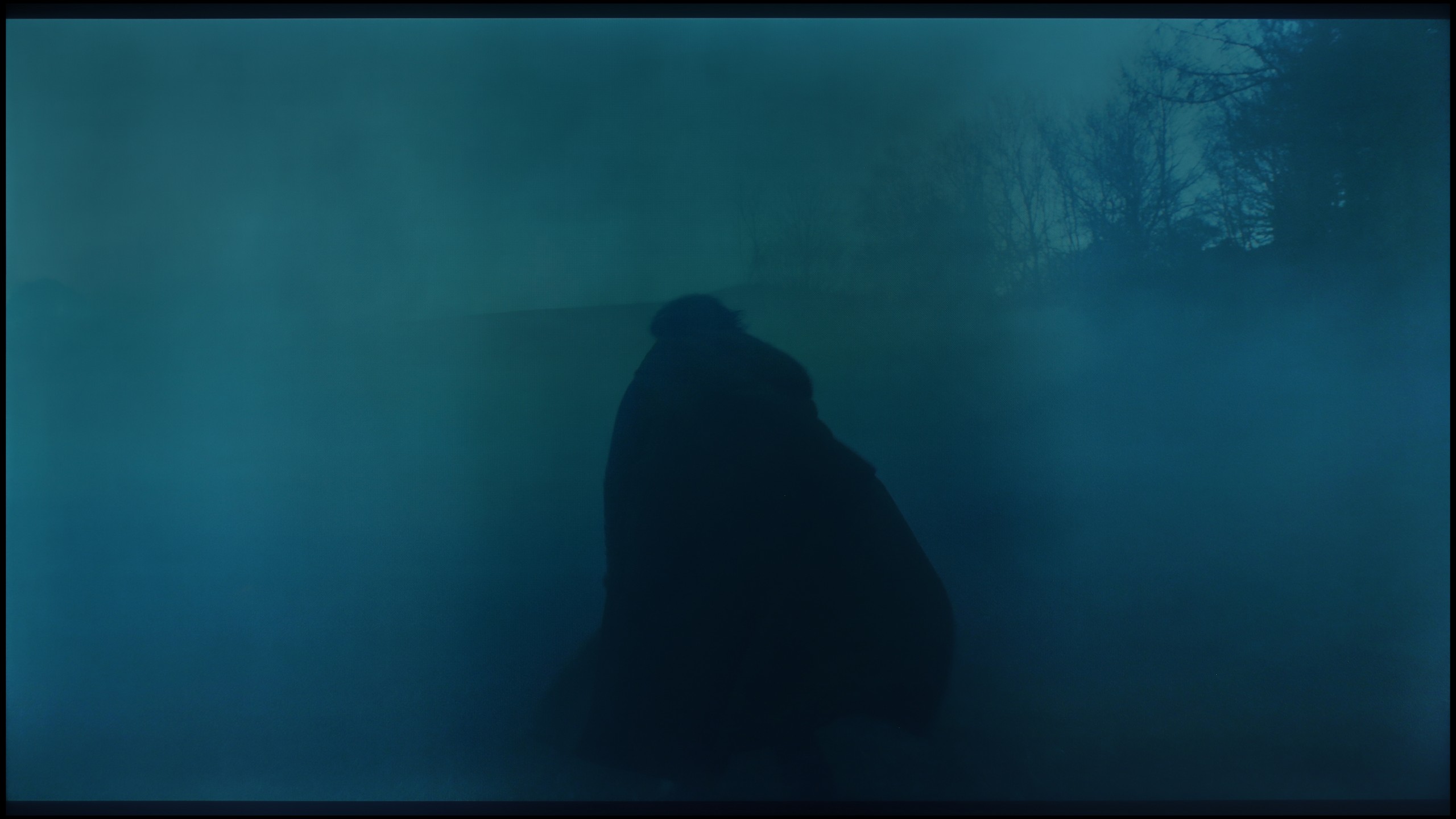
The photos show how movies look on the TV. Pay attention to black detail visibility, colors, and shadow tint.

The photos show how movies look on the TV. Pay attention to black detail visibility, colors, and shadow tint.

The Dutch manufacturer offers quite a large dose of settings in its products, so as usual, we decided to tinker with them a bit. The effects are immediately noticeable – we managed to correct the white balance, which made the image cease to appear overly pinkish. The brightness characteristics were also partially equalised, of course within the limits that the television itself allows. The picture is no longer so excessively brightened, and the overall reception after calibration is definitely better than in the factory settings of the Filmmaker mode.

You could only nitpick about the characteristics of the EOTF curve, which still indicates that the image tends to brighten HDR content. Despite our efforts, the darkest parts of the scenes can still be too bright, and the brightest ones do not always reach their full contrast potential. However, it must be clearly stated that we are dealing with a typically budget-oriented design – one cannot expect reference-quality rendering of HDR content from it.

Calibration has definitely helped this model – it improved the balance, toned down the aggressive colour palette, and brought the image closer to what one can expect from a well-configured movie mode. However, there are certain limitations that cannot be overcome.

We subjected the JP7 to our standard calibration procedure and honestly... the television gained a second life thanks to it, especially with SDR content (YouTube, traditional television, series, or older films). With our precise adjustments to the white balance and stabilisation of the gamma, colour errors dropped to a value of below 3. This is a level at which the human eye struggles to perceive discrepancies. In this scenario, the Sharp JP7 delivers an image with truly excellent colour accuracy, which is a significant advantage in this price range. However, the HDR content turned out to be much more problematic. Here, despite our efforts and interventions in the settings, the television simply refused to cooperate. In the JP7 menu, we won’t find any option to effectively control how brightness is managed (EOTF). Although a significant portion of the colour errors has been reduced, the image still remained unnaturally oversaturated. It’s a bit disappointing because the potential of the mini-LED backlit panel is great, but the software presents a clear barrier.

The conclusion is simple: when watching less demanding content (SDR) on the JP7, you can expect an image that is more than satisfactory, but in HDR you will have to accept a certain degree of "artificiality" that cannot be bypassed even with professional equipment.

Smoothness of tonal transitions

6.3/10

7.5/10

These are selected scenes that show smooth tonal transitions from one color to another. If you see distinct banding, it’s the TV panel’s fault.

These are selected scenes that show smooth tonal transitions from one color to another. If you see distinct banding, it’s the TV panel’s fault.

These are selected scenes that show smooth tonal transitions from one color to another. If you see distinct banding, it’s the TV panel’s fault.

These are selected scenes that show smooth tonal transitions from one color to another. If you see distinct banding, it’s the TV panel’s fault.

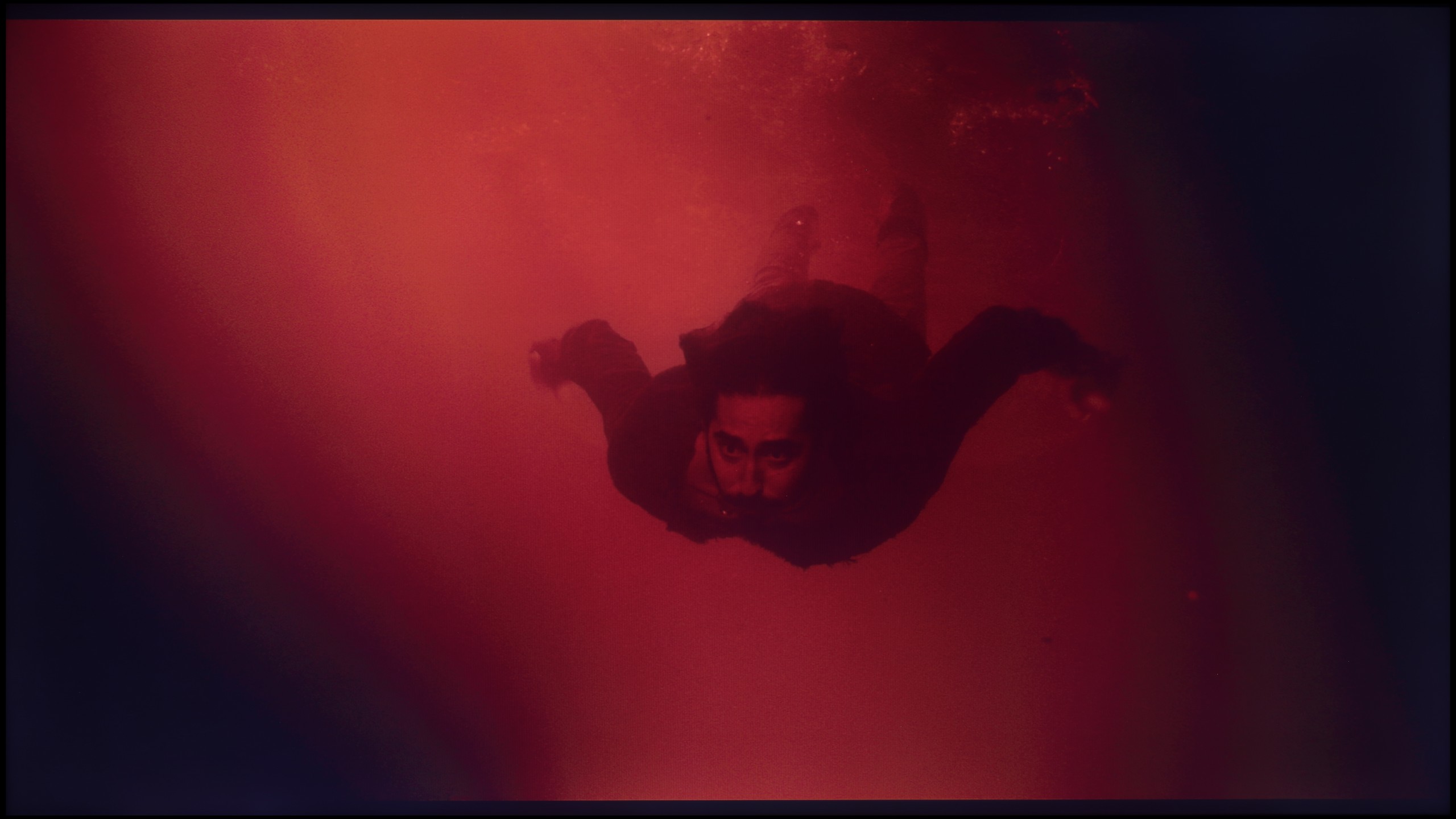
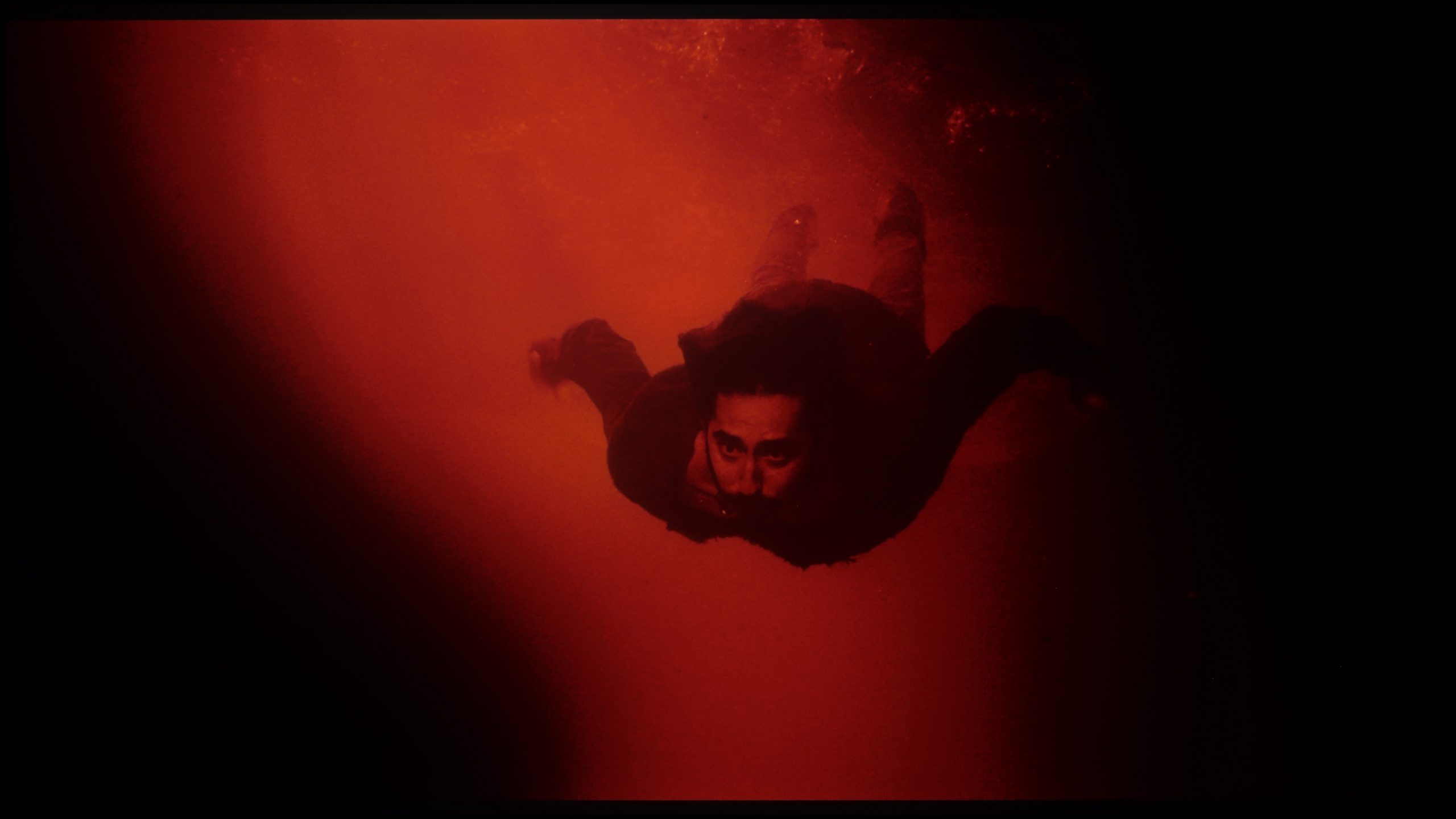
The PUS8560 handles colour blending into smooth gradients very well. During testing, the image appeared coherent and natural, with serious issues regarding tonal transitions occurring only in very dark scenes – for example, in a shot with red water, where subtle cut-offs between colours could be observed. However, these are rather exceptions that don’t spoil the perception of most content. It’s worth mentioning another phenomenon that has a greater impact on image quality – this relates to the so-called dithering, which is a slight “tingling” visible on solid backgrounds. This effect can be particularly noticeable in high-quality materials and may slightly detract from the impression of image clarity. It is for this fault that we deducted some points in the rating.

When it comes to image clarity, posterisation on the Sharp JP7 fortunately doesn’t distract too much from the content being viewed. In most scenes, it’s hard to spot annoying stripes or the so-called “jaggies” of colour, which often ruin the experience during scenes with smooth colours. Of course, you can't expect miracles here, as in some extremely demanding scenes, a trained eye might notice issues in the tonal transitions. However, it’s not at a level that would realistically distract during a film. Well, unless you have good eyesight and are looking for artefacts on the screen – then you’ll probably find something.

Image scaling and smoothness of tonal transitions

6.5/10

3.5/10

Image without overscan on the SD signal
OK
OK
Smooth transition function
OK
No

Smooth transition function

The match photo shows how the TV smooths weak tonal transitions in low-quality video.

Image scaling SD (576i)

The model photo shows how it handles upscaling of SD material.

Philips PUS8560 offers a deinterlacing function, hidden under the name “distortion reduction”. And while it indeed serves its purpose, smoothing out problematic tonal transitions, it operates a bit too broadly. In practice, it affects not just colourful gradients but also softens faces, clothing textures, and furniture surfaces. This undermines the authenticity of the image – especially in films where natural texture is of great importance. However, if someone is looking for smoothing at any cost, it’s best to set this option to “Low”. For cinema image enthusiasts – we definitely do not recommend it.

On the plus side, the quality of scaling older materials is worth noting – the PUS8560 model handles them surprisingly well. The image retains a natural softness without artificially boosted sharpness. It’s also worth mentioning that the TV correctly displays very low-resolution content, avoiding issues with image cropping (so-called overscan).

When it comes to lower quality materials and how Sharp JP7 handles them, the situation is ambiguous. Let's start with the upscaling itself – here we have no major objections. The process of scaling the image to a higher resolution is correct; the picture remains readable and clear, without the overscan effect, which means no cropped edges. Of course, it's not at the level of top models and at times you can notice slight tearing on the edges, but in this price range, the effect is fully acceptable.

However, the actual digital image processing performs much worse, as aside from the scaling, it practically doesn’t exist. In the JP7 menu, we won’t find any options that would effectively smooth out unwanted tonal transitions or reduce noise in the image. As a result, the signal hits the panel in a very raw form, which with heavily compressed materials (e.g., from YouTube) results in noticeable posterisation. Either this is a programming error or a very strange design decision, because in earlier Sharp models this function was available and, more importantly, worked with noticeable effect. Here, we are stuck with what the source delivers, without any digital support from the image processor.

Blur and motion smoothness

4/10

2/10

Maximum refresh rate of the panel
60Hz
60Hz
Film motion smoothing option
No
OK
Blur reduction option
No
No
BFI function 60Hz
No
-
BFI function 120Hz
No
-
Brightness drop with BFI
-%
-%

Blur (native resolution, maximum refresh rate):

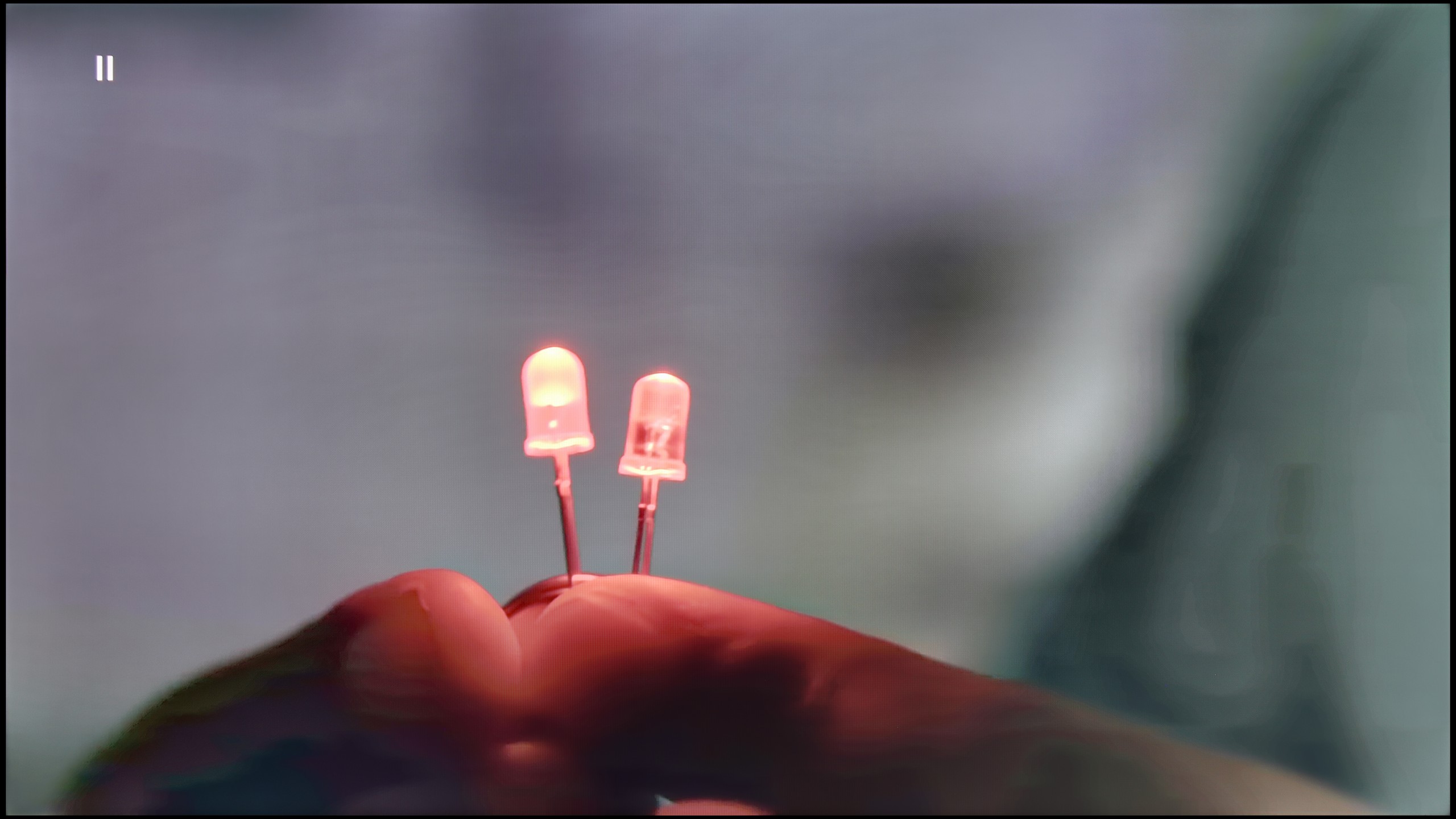
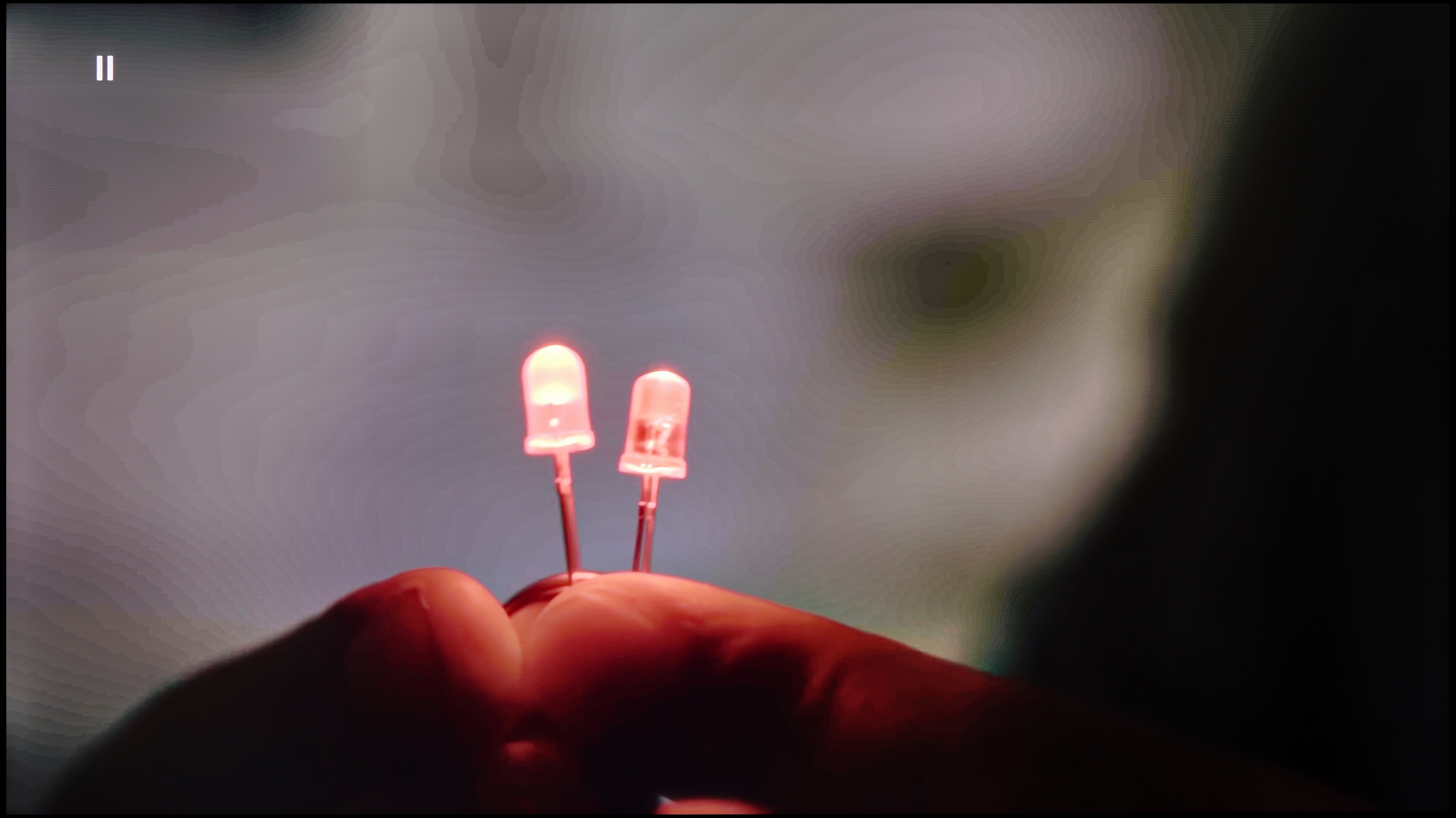
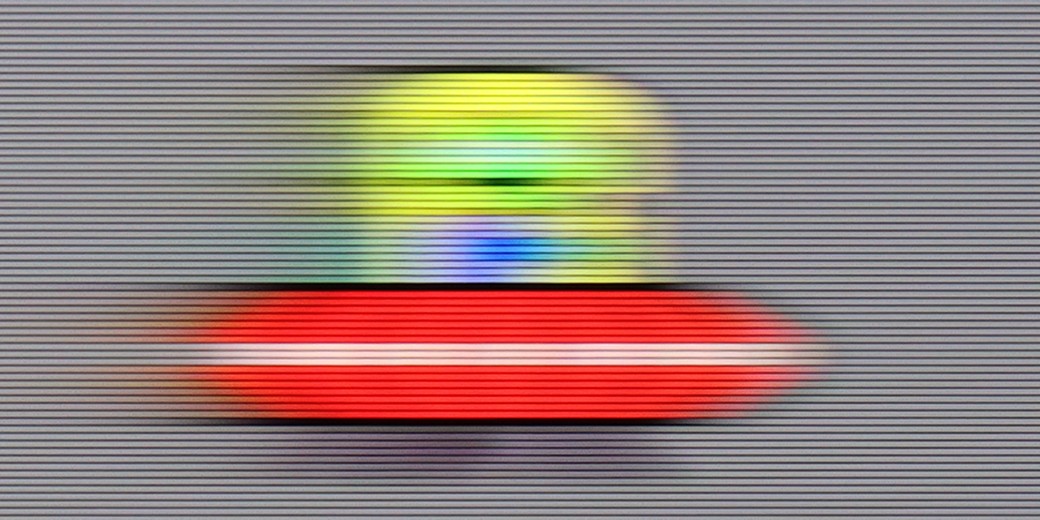
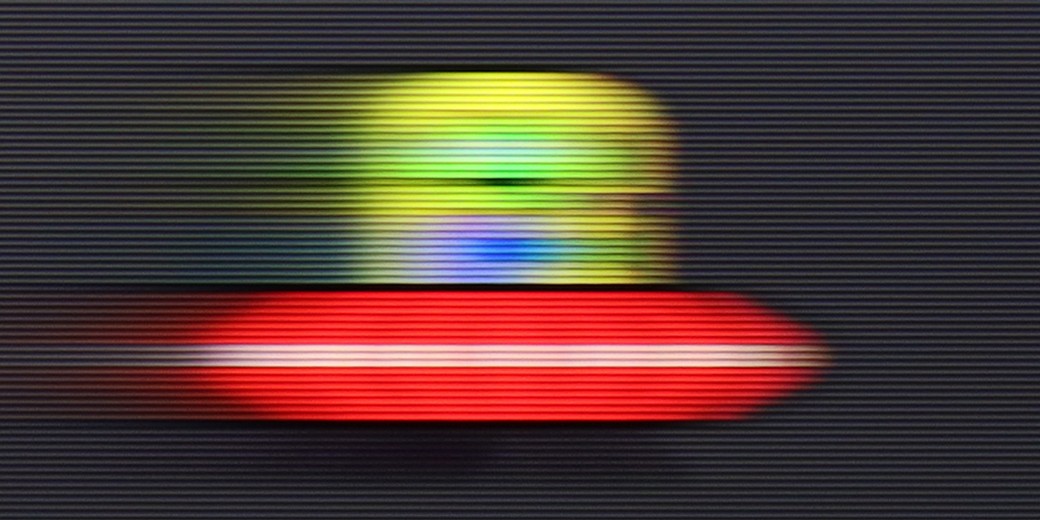
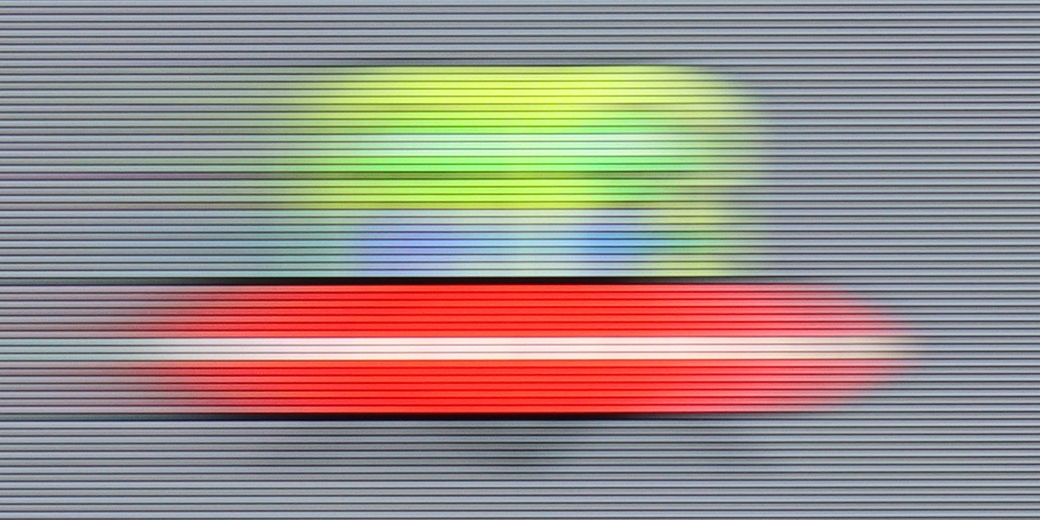
The Philips PUS8560 is a television equipped with a 60 Hz refresh rate panel, which already limits its capabilities for displaying dynamic content right from the start. Watching sports or playing on a console is not one of the more enjoyable experiences. The situation is further worsened by the absence of any option to improve film fluidity. In the menu, you won’t find settings that would allow for the activation of motion smoothing or even a slight motion blur for films recorded at 24 frames per second. You can imagine the effect. The image can appear choppy, especially in shots with panoramic camera movements.

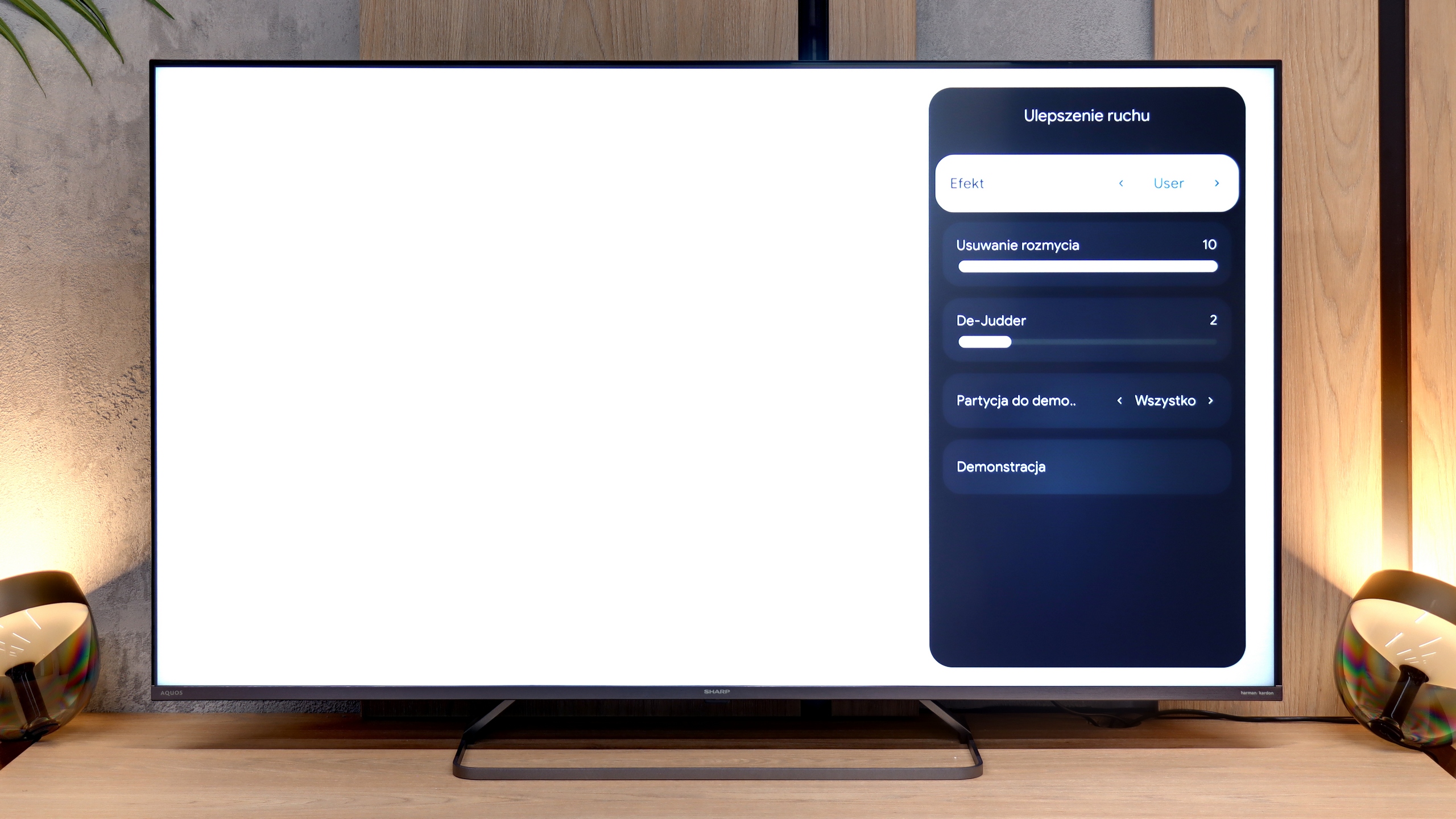
The motion fluidity on the Sharp JP7 is quite average, and the reason is simple: the TV uses a 60Hz panel. This immediately makes it hard to recommend for watching sports or serious gaming, where higher refresh rates are already the standard. The only real plus is the presence of a motion smoother, which we can control in films with a slider called De-judder. Lower settings give a more raw, “cinematic” (framey) image, while higher ones add artificial fluidity. We suggest setting it somewhere in the middle of the scale, around 3-5 – this is the best compromise to avoid the soap opera effect while also getting rid of the annoying image skipping. Interestingly, in the menu, we also find a slider for "motion blur reduction," which usually indicates the presence of a 120Hz panel. However, in the case of the JP7, it doesn’t actually enhance the image and serves more as a dummy – it looks good in the settings, but technically it shouldn’t work on this panel.



Console compatibility and gaming features

4.7/10

4/10

  • ALLM
    Yes
    Yes
  • VRR
    Yes
    No
  • VRR range
    48 - 60Hz
    No
  • Dolby Vision Game Mode
    No
    Yes
  • Correct implementation of HGIG
    No
    No
  • 1080p@120Hz
    No
    No
  • 1440p@120Hz
    No
    No
  • 4K@120Hz
    No
    No
  • Game bar
    Yes
    Yes

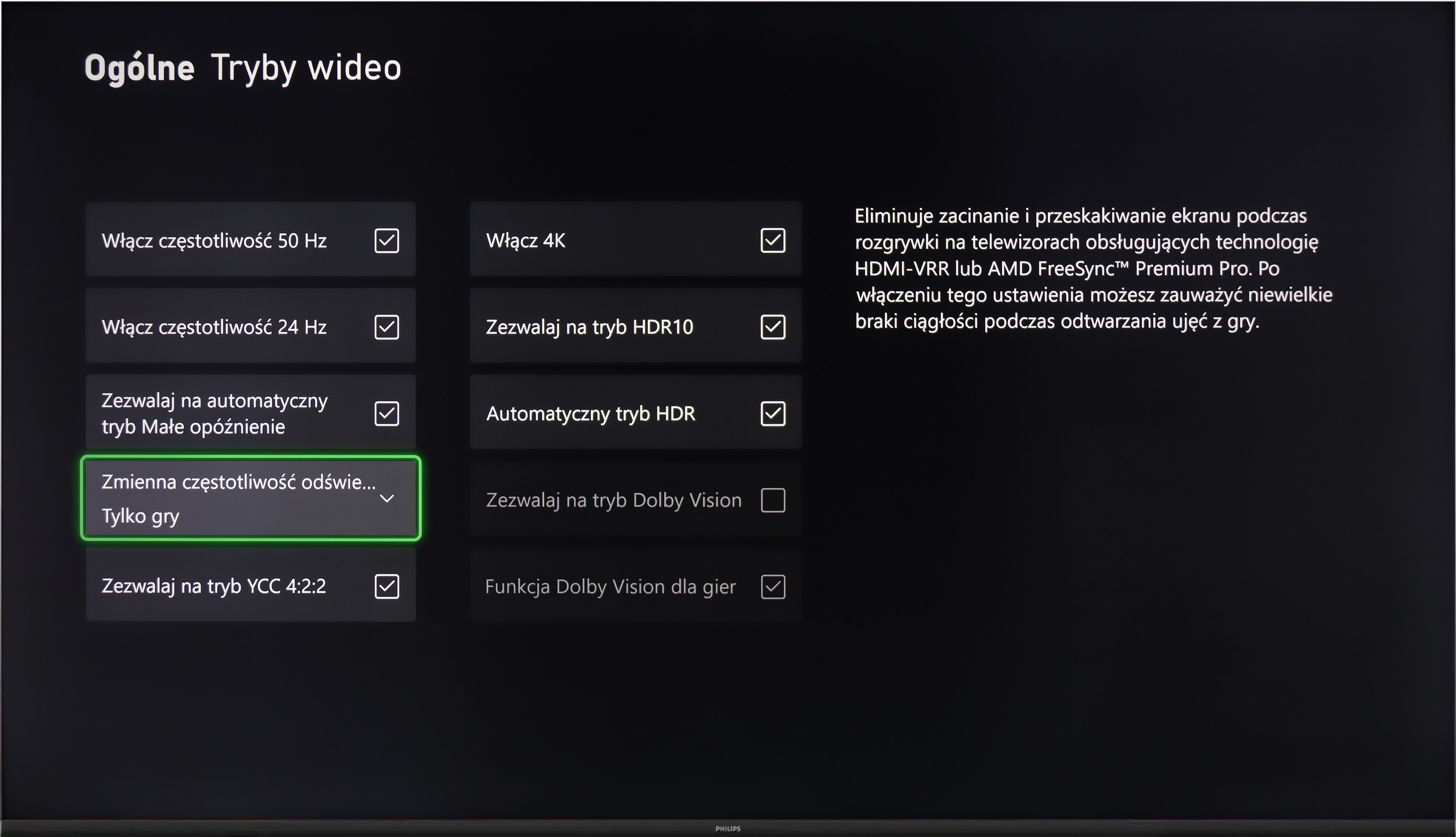
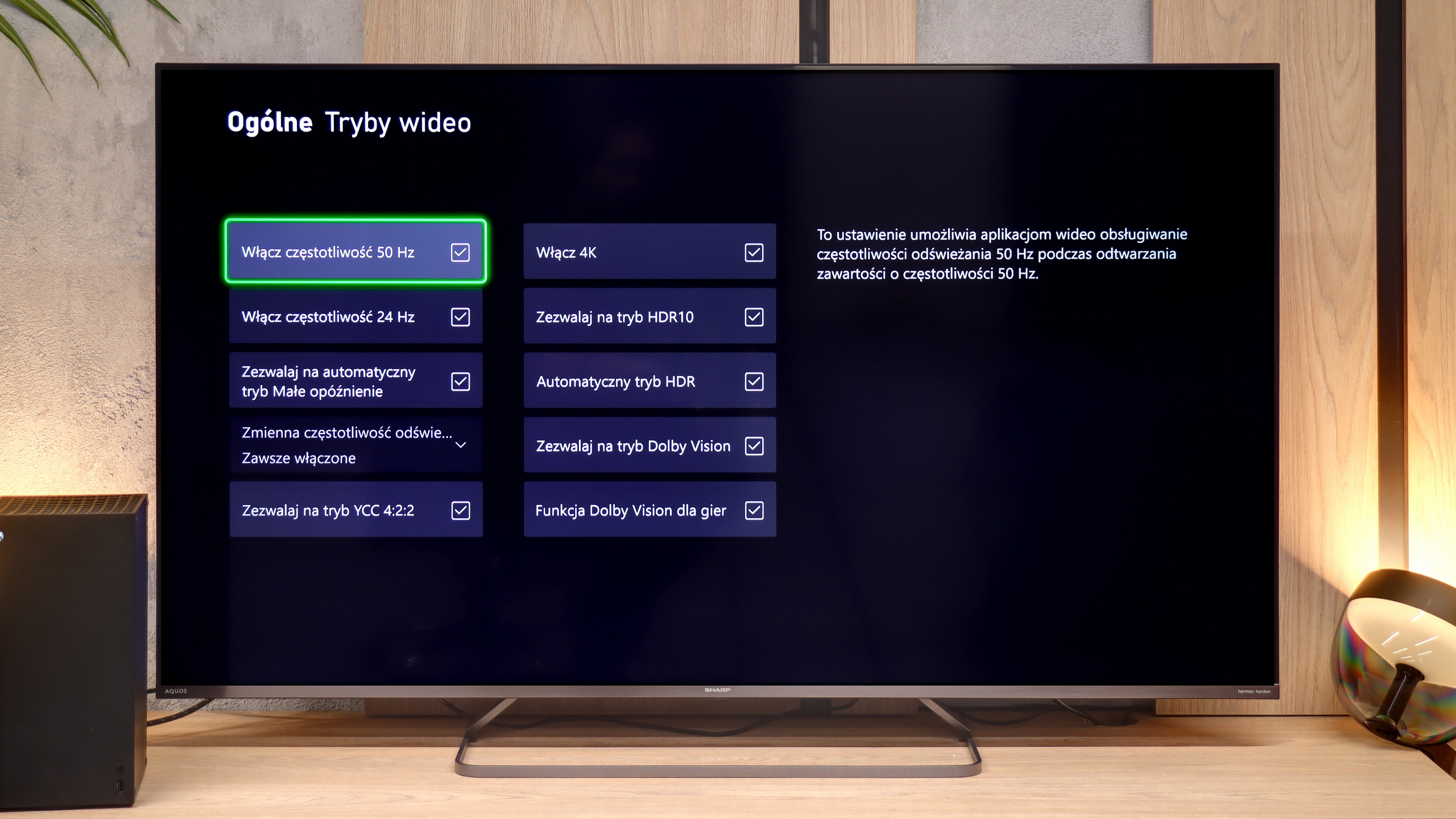
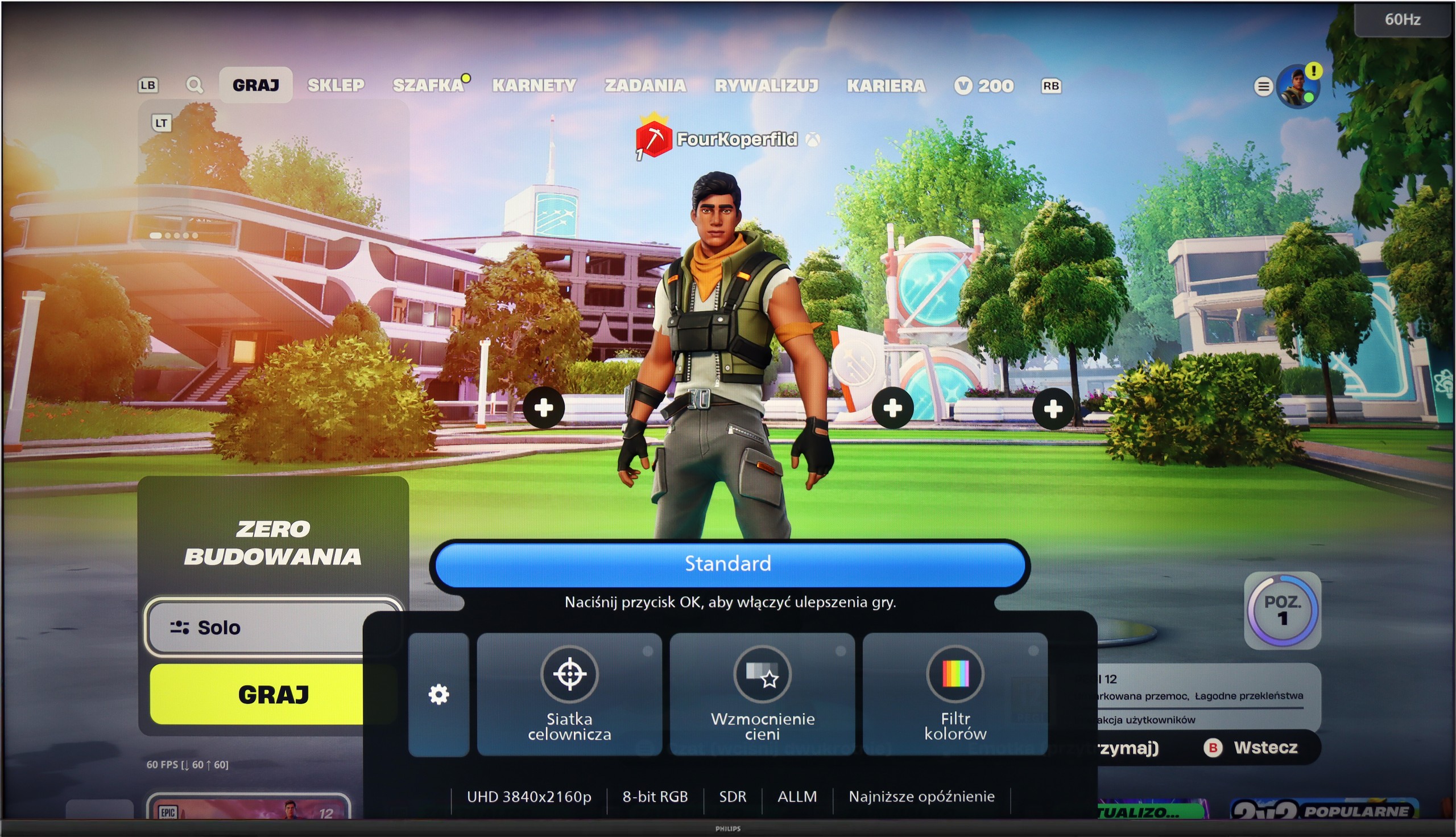
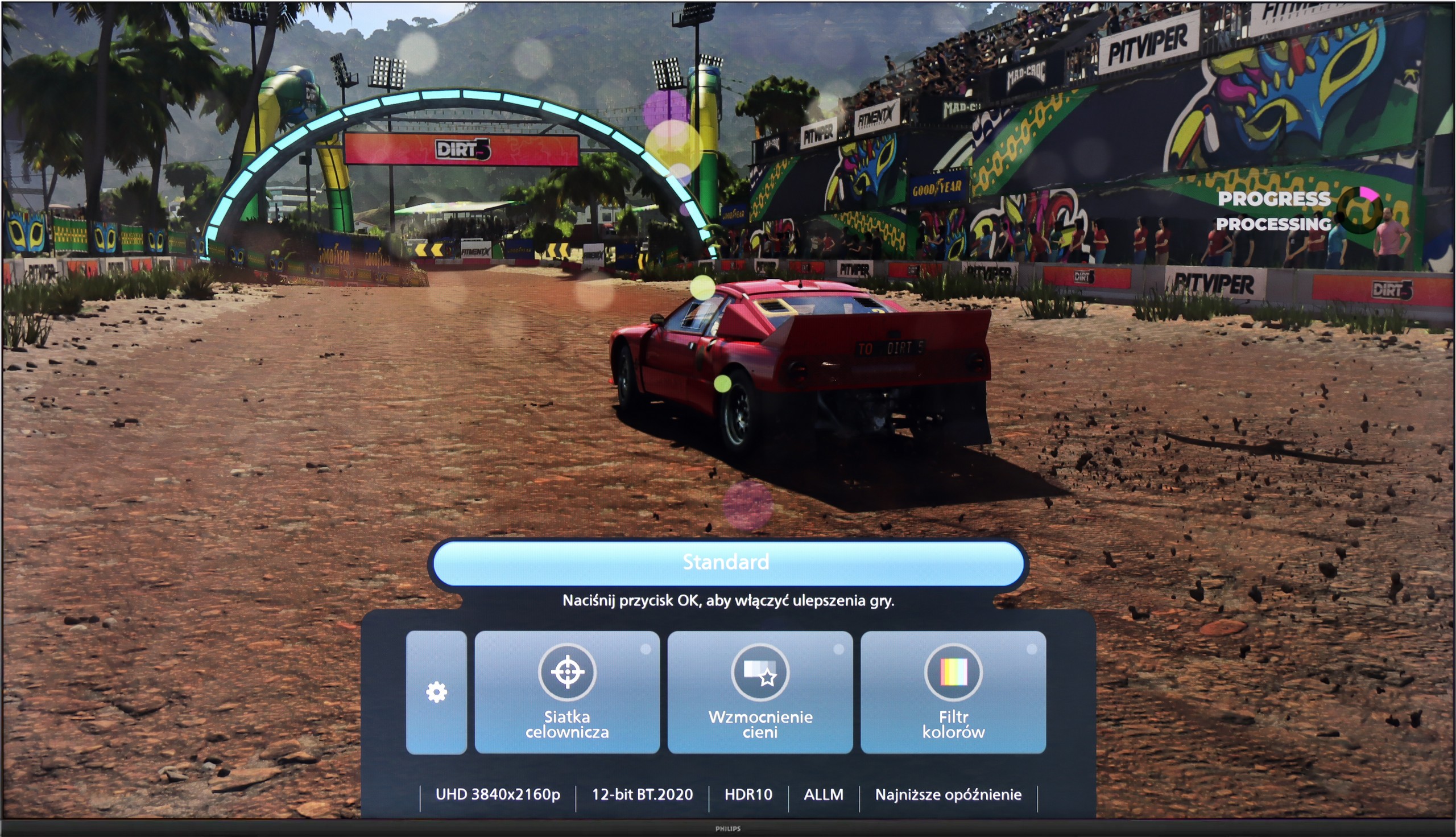
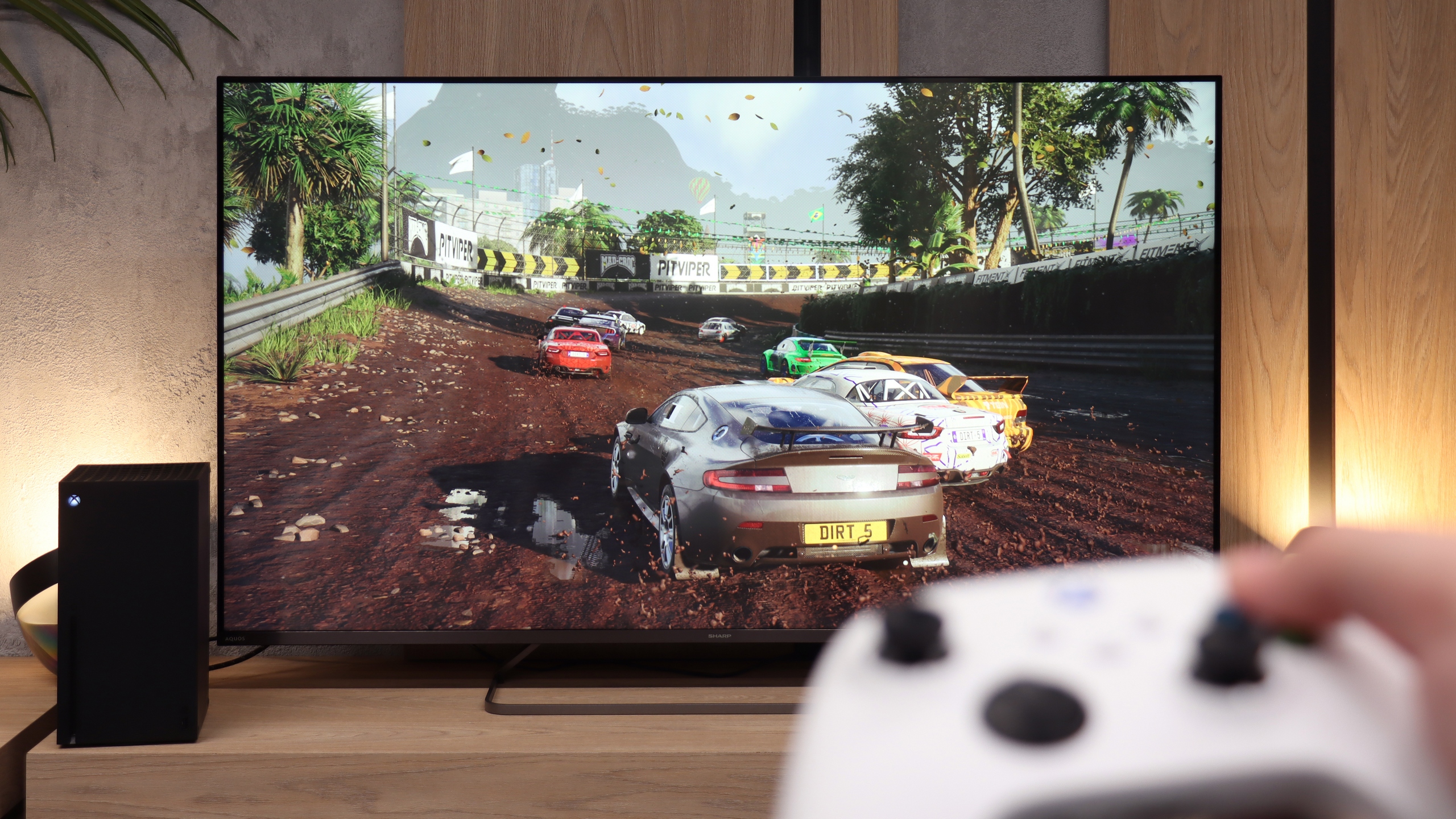
Although the Philips PUS8560 is not designed with gamers in mind, the manufacturer has equipped it with a few features that may prove useful when connecting a console. Onboard, we find automatic switching to game mode (ALLM), as well as a simple connection status information bar – the so-called Game Bar. It doesn't make a particularly visual impression, but it serves its purpose. The presence of variable refresh rate (VRR), operating in the range of 48 to 60 Hz, may come as a surprise. This is not a wide range, but for less demanding games or titles with unstable frame rates, VRR can help reduce the tearing effect. However, this is the only element that can be considered beyond the minimum.

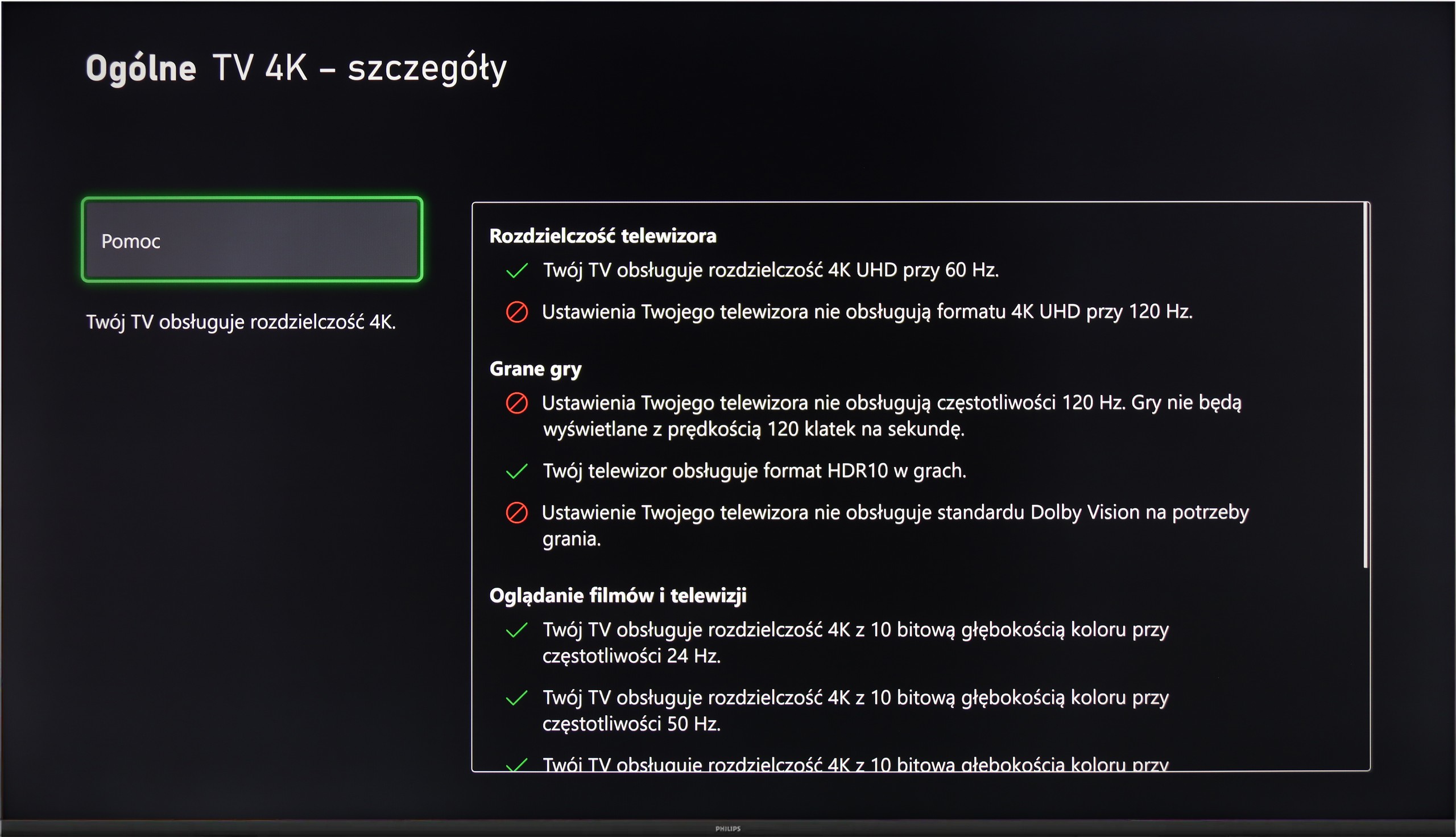
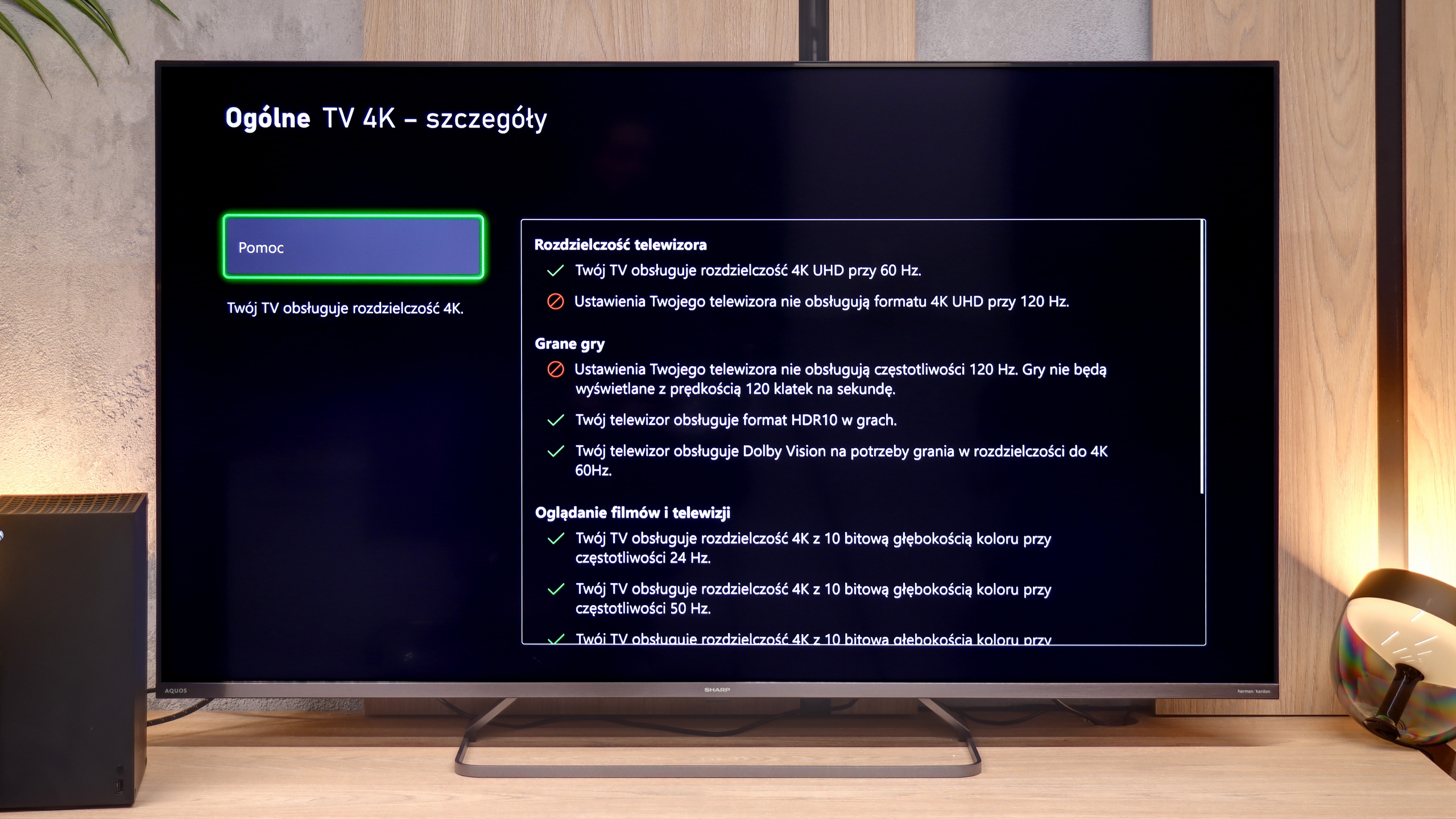
It must be clearly stated that the PUS8560 is not equipment for gamers looking for a responsive screen and full support for modern console features. It lacks HDMI 2.1 ports, the refresh rate is limited to 60 Hz, and the panel's response time is not among the fastest. This model may at best suit people who play occasionally and want to enjoy the Ambilight system.

As we mentioned earlier, the 60Hz panel is not a feature that will attract gamers to the Sharp JP7. Perhaps for the casual gamer, whose console still generates most titles at 60 frames per second, there might be something interesting? When it comes to specific additions, we find here:

  • ALLM mode: Automatically switches the TV to low latency game mode (input lag).

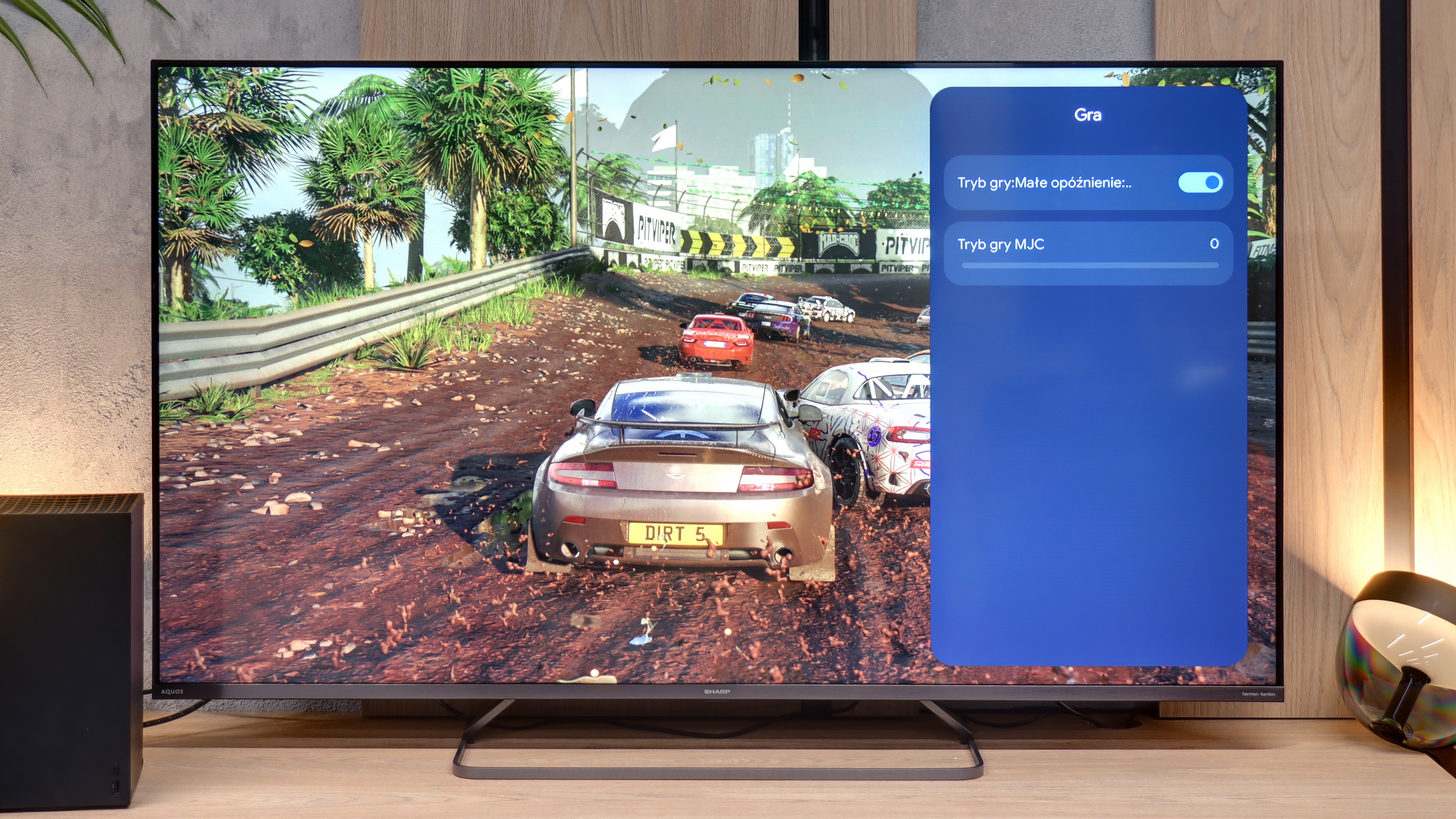
  • Player menu: Which is hard to call a fully-fledged “Game Bar,” as the functionality is minimal. Aside from enabling ALLM, there’s only a dedicator for gaming which we advise against as it introduces very noticeable artifacts and spoils responsiveness.

  • Dolby Vision Gaming: For Microsoft's consoles.

Unfortunately, the list of shortcomings is much longer and more painful than the positives. The biggest disappointment is the lack of support for 120Hz, even when reducing the resolution to Full HD. The presence of 120Hz would allow for performance modes to be activated in many games on the PS5 or Xbox Series X. Another shortcoming is the VRR, which means that during frame drops, we are susceptible to screen tearing. Very problematic is also the lack of proper implementation of the HGiG standard. This results in the fact that during HDR calibration in the console menu, it is very easy to "overshoot" the brightness settings. As a result, instead of clear details in the highlights, we end up with an unnaturally oversaturated image with cut-off details. The Sharp JP7 is a proposal only for those who game very occasionally.

Input lag

10/10

9.3/10

SDR

1080p60
13 ms
13 ms
1080p120
29 ms
2160p60
13 ms
13 ms
2160p120

HDR

2160p60
12 ms
13 ms
2160p120
4320p60

Dolby Vision

2160p60 DV
13 ms
2160p120 DV

The input lag on the PUS8560 is very good. When we previously mentioned that this screen is rather for the "casual gamer", there's nothing to be ashamed of in this regard – even compared to screens aimed at gamers. Results around 12 ms are truly remarkable, allowing for an enjoyable responsive gameplay experience. It doesn't matter whether we're playing in Full HD or 4K – the lag remains equally low, so if you're after a fast reaction time, the PUS8560 definitely won't disappoint in this area.

The issue of input lag in the Sharp JP7 is quite intriguing. In all 60Hz modes, the TV boasts a mere 13 ms result. This is truly an excellent result, making the lag practically unnoticeable during gameplay. In this regard, Sharp has risen to the occasion, and even in dynamic titles, the controls remain responsive.

However, during our tests, we encountered a certain technical conundrum. Using our professional Murideo generator, we were able to force and measure input lag at 120Hz refresh rate in Full HD resolution. This sounds promising, but in reality, it is merely a 'paper' curiosity, as standard external devices like consoles or computers were unable to coax the Sharp into operating in that mode. Although professional diagnostic tools see some hidden potential here, for the end user, the JP7 remains just a 60Hz screen.

Compatibility with PC

5.6/10

5/10

Chroma 444 (max. resolution and refresh rate)
Yes
Yes
Font clarity
Very Good
Good
Readability of dark text and shapes
Poor
Average
Input lag in PC mode (4K, max. refresh rate)
13ms
13ms
Matrix subpixel arrangement
BGR
BGR
Max refresh rate
60Hz
60Hz
G-Sync
No
No

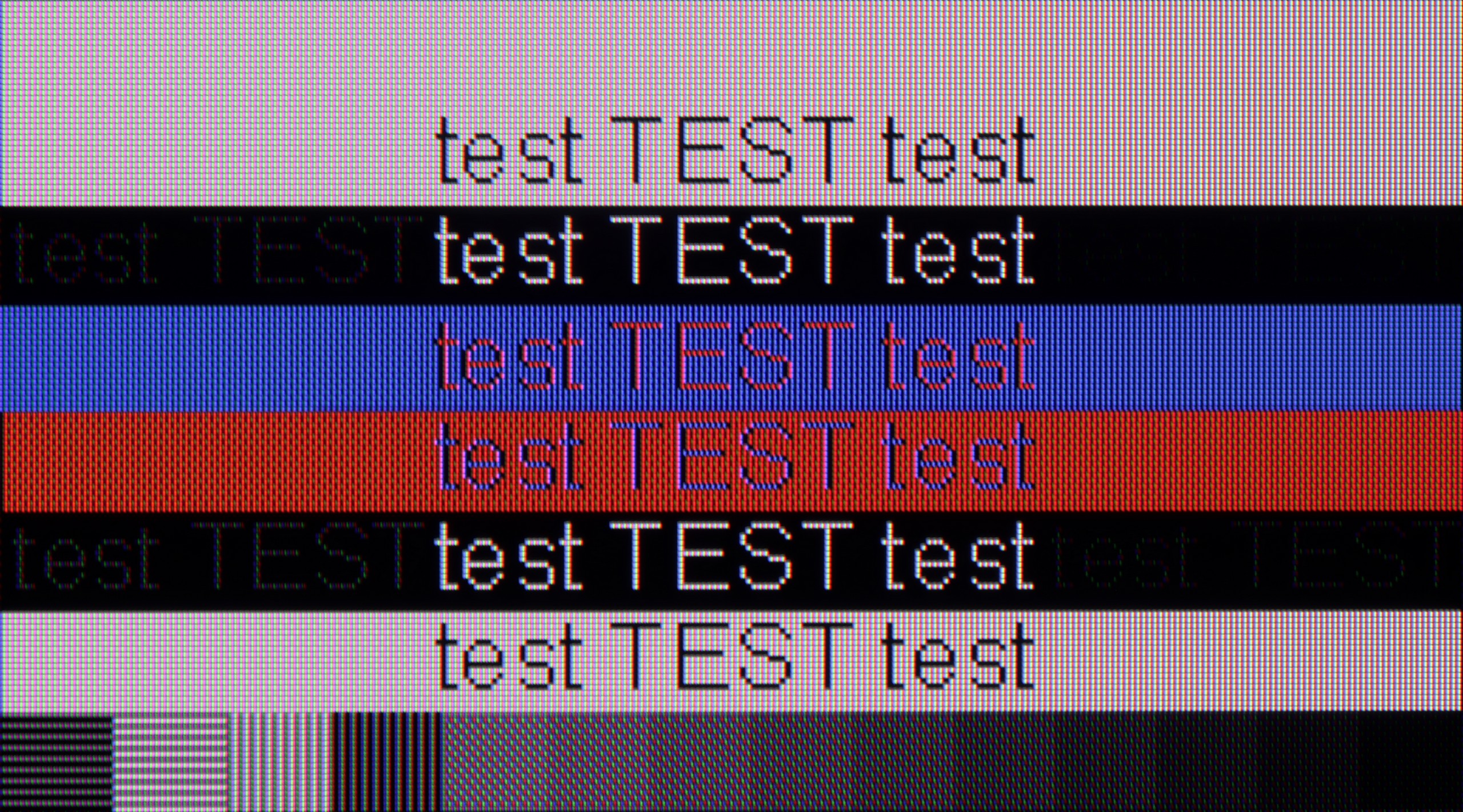
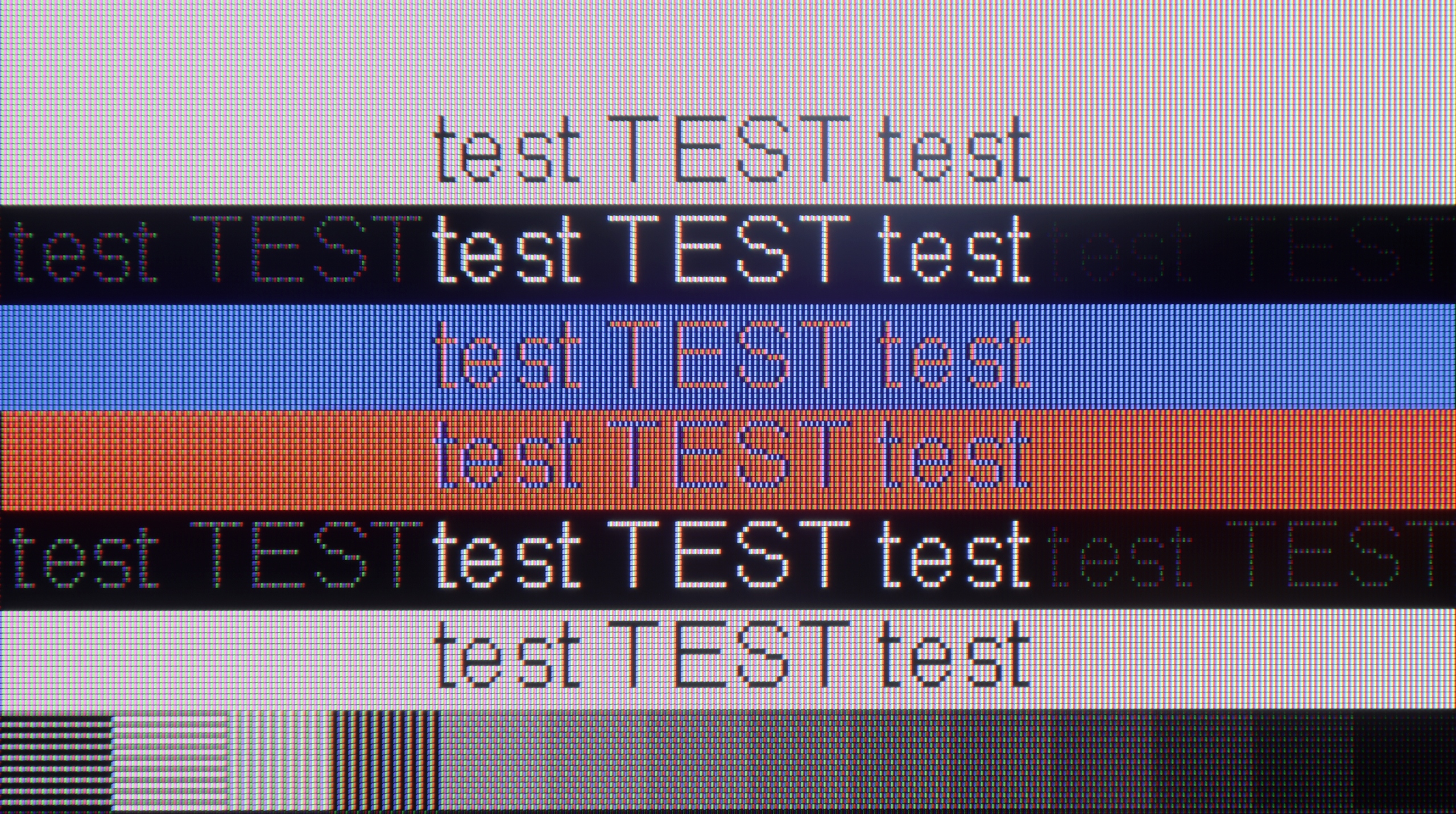
The photo shows the legibility of small fonts. Ideally, lines should be the same thickness on both light and dark text, with minimal pixel gaps.

If we're talking about working with a PC on the PUS8560, it looks… quite strange. Chroma 4:4:4 is present in “Monitor” mode, but there’s a problem with grey fonts – not all subpixels light up, which makes the text appear jagged. Meanwhile, in “Game” mode, chroma 4:4:4 disappears, but the grey fonts look correct. In practice, we are therefore forced to juggle settings if we want to have perfectly readable text all the time. And what about gaming on a computer? Here our opinion remains unchanged compared to consoles – it’s possible, but without fireworks. There’s no variable refresh rate for G-SYNC graphics cards, and the refresh rate itself remains relatively low. On the plus side, we can once again highlight the very low input lag, which saves the situation in fast-paced games.

Sharp JP7 performs moderately as a monitor. While the readability of standard fonts on a white or black background is acceptable, the clarity significantly drops with darker and thinner text, making it difficult to work with text for extended periods. For occasional browsing of news in the browser, this panel is sufficient; however, we definitely do not recommend it as a permanent screen for PC gaming. Besides the rigid limit of 60Hz, the television does not support any form of frame synchronization (no G-Sync or FreeSync), which combined with the significant motion blur of the panel makes the user experience in dynamic scenarios quite poor.

Viewing angles

3.3/10

3.1/10

Brightness drop at an angle of 45 degrees
68%
77%

The viewing angles on the PUS8560 are exactly what you'd expect from a VA panel - it's not the best. The image loses quality even with a slight shift off-axis – colours become washed out, and blacks start to resemble a dark navy. This is, of course, the price for the better contrast that VA offers head-on. In the case of our 55-inch model, it can still be acceptable, especially if the TV is positioned perfectly in front of the couch. But with larger screens or a less central setup in the living room – it could be a problem for comfortable viewing.

Sharp JP7 uses a VA panel, which automatically means narrow viewing angles. It's a classic compromise: we get quite good blacks and contrast, but at the cost of image degradation when viewed from the side. At an angle, the colours clearly fade and wash out, losing their saturation, so the JP7 is definitely a device for watching "straight on," rather than from the corner of the couch.

Daytime performance

4.9/10

7.3/10

Panel finish
Satin
Satin
Reflection suppression
Decent
Decent
Black levels during daytime
Good
Good

Panel brightness

SHARP JP7765E: 708 cd/m2

Philips PUS8500 : 331 cd/m2

The PUS8560 performs reasonably well during the day... moderately. The satin finish of the panel does a pretty good job of reducing reflections, which means that light from windows or lamps doesn't interfere too much. The black levels also look decent for a VA panel – even in daylight, there aren't significant contrast losses. But the magic fades when it gets really bright. The panel's brightness is around 300 nits, which is definitely too little to speak of full comfort in a heavily sunlit room. In such conditions, the PUS8560 simply needs to be complemented with blinds – otherwise, the picture starts to look quite washed out.

The satin coating applied in the Sharp JP7 quite effectively reduces reflections, although it’s still far from being fully matte. The real 'gamechanger' in bright rooms, however, is the brightness of the device itself in SDR content. With an average result of 700 nits and peaks around 1000 nits, this is an exceptional performance in the segment under 2000 PLN. Thanks to such high luminance, the television can easily handle even brightly lit living rooms. One just has to watch out for direct reflections, for instance from a window opposite, because the satin used here won’t eliminate them completely, but at this brightness, the picture will remain legible.

Panel details

Backlight Type
PFS LED
Mini-LED PFS LED
Software version during testing
TPN256E_V056.002.127.051
UKN4.250714.091
Image processor
MT5896 2GB RAM

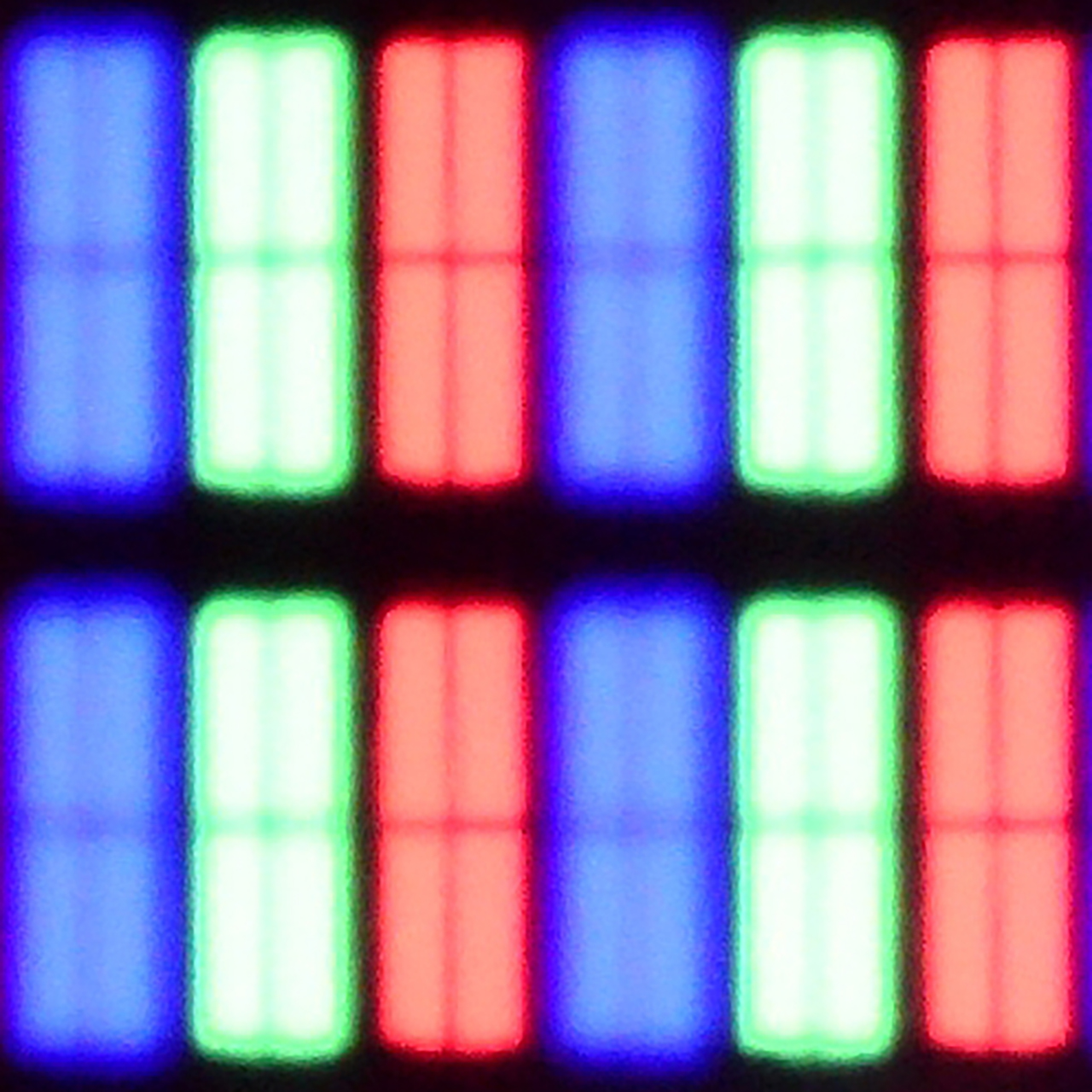
Subpixel Structure:

Panel uniformity and thermal imaging:

Review Philips PUS8500 TV Panel details
Review SHARP JP7765E TV Panel details

Philips PUS8500

SHARP JP7765E

TV features

4.8/10

5.2/10

  • HDMI inputs
    3 x HDMI 2.0, 0 x HDMI 2.1
    4 x HDMI 2.0, 0 x HDMI 2.1
  • Other inputs
    RCA (Chinch)
  • Outputs
    Toslink (Optical audio), eARC (HDMI), ARC (HDMI), Mini-Jack (Headphones)
    Toslink (Optical audio), eARC (HDMI), ARC (HDMI), Mini-Jack (Headphones)
  • Network Interfaces
    Wi-Fi 2.4GHz, Wi-Fi 5GHz, Ethernet (LAN) 100Mbps
    Wi-Fi 2.4GHz, Wi-Fi 5GHz, Ethernet (LAN) 100Mbps
  • TV reception
    DVB-T, DVB-T2, DVB-S, DVB-S2, DVB-C
    DVB-T, DVB-T2, DVB-S, DVB-S2, DVB-C

Classic features:

  • Recording to USB (terrestrial TV)
    No
    No
  • Recording programming
    No
    No
  • Picture in Picture (PiP)
    No
    No
  • RF remote control (no need to aim)
    No
    Yes
  • Backlit remote control
    Yes
    No
  • Teletext
    Yes
    Yes
  • Audio only mode
    Yes
    Yes
  • Bluetooth headphones support
    Yes
    Yes
  • Simultaneous Bluetooth headphones & TV audio
    No
    Yes

Smart features:

  • AirPlay
    No
    No
  • Screen mirroring (Windows Miracast)
    No
    Yes
  • Voice search
    Yes
    Yes
  • Voice search in native language
    No
    Yes
  • Ability to connect a keyboard and mouse
    Yes
    Yes
Review Philips PUS8500  TV features
Review SHARP JP7765E TV features

Classic TV Features:

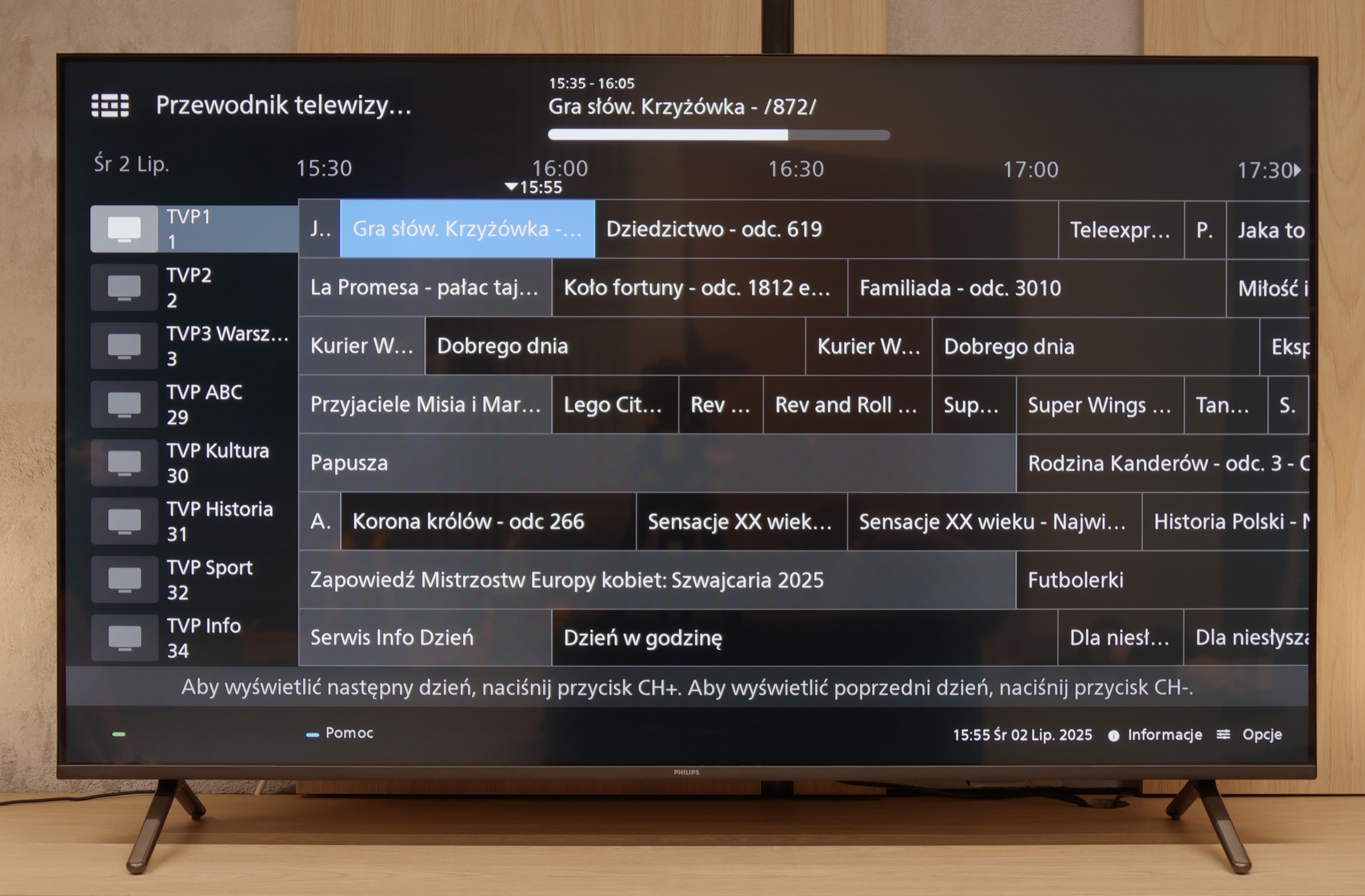
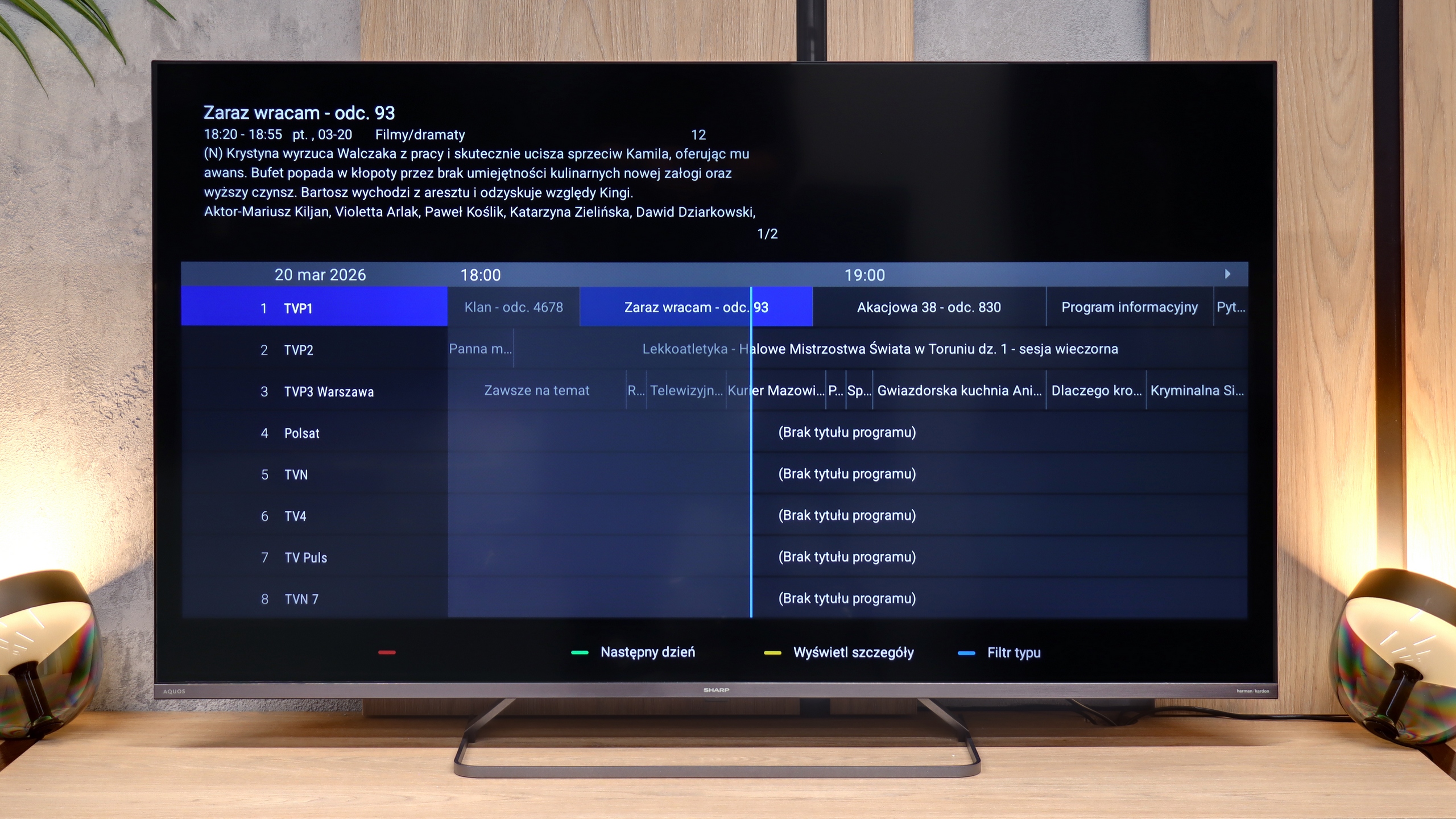
If you’re looking for a TV that, in the basic sense, “works” – the PUS8560 will fill that role. In terms of classic features, we have a rather minimalist set. On the plus side, there’s an electronic program guide (EPG), teletext, a backlit remote with a classic numeric keypad, and a headphone jack input. It sounds a bit like a dream set for seniors – and there’s some truth to that. However, it must be said clearly: this is a TV with very limited capabilities. We won’t find USB recording from DVB tuners here, and there’s no Picture-in-Picture mode or other conveniences known from more expensive models.

Smart TV:

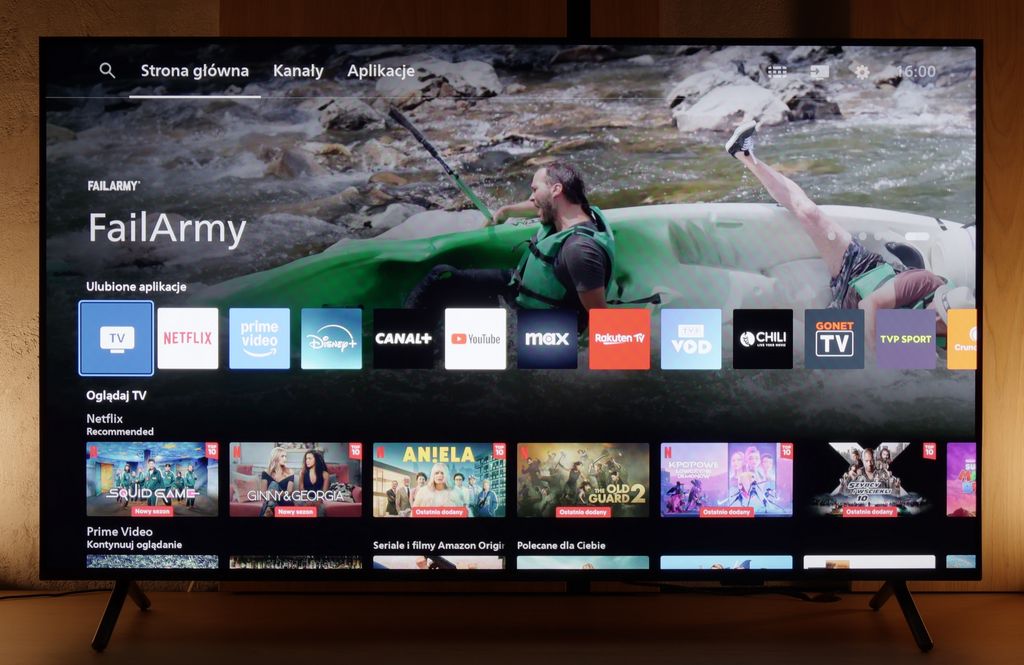
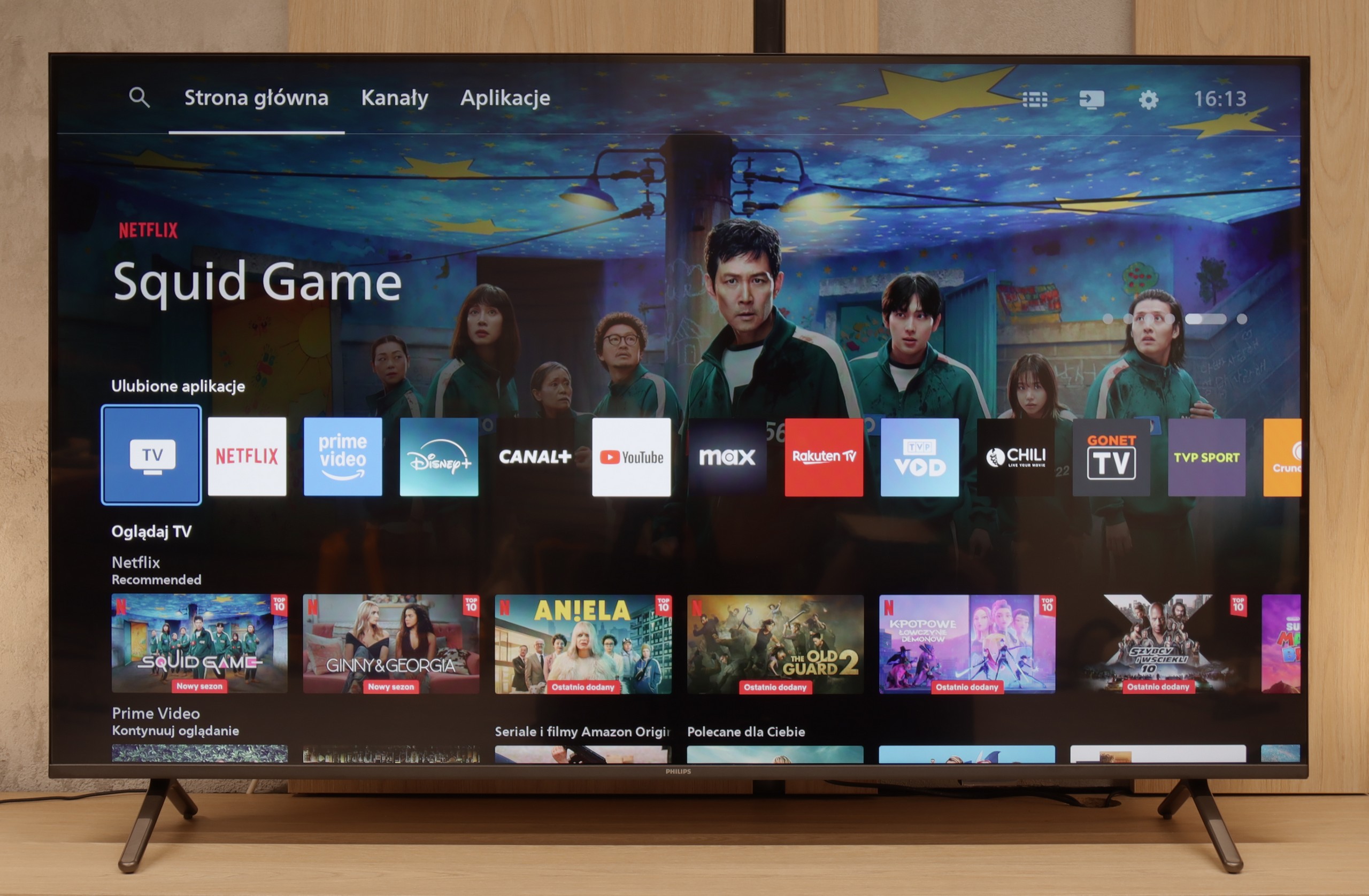
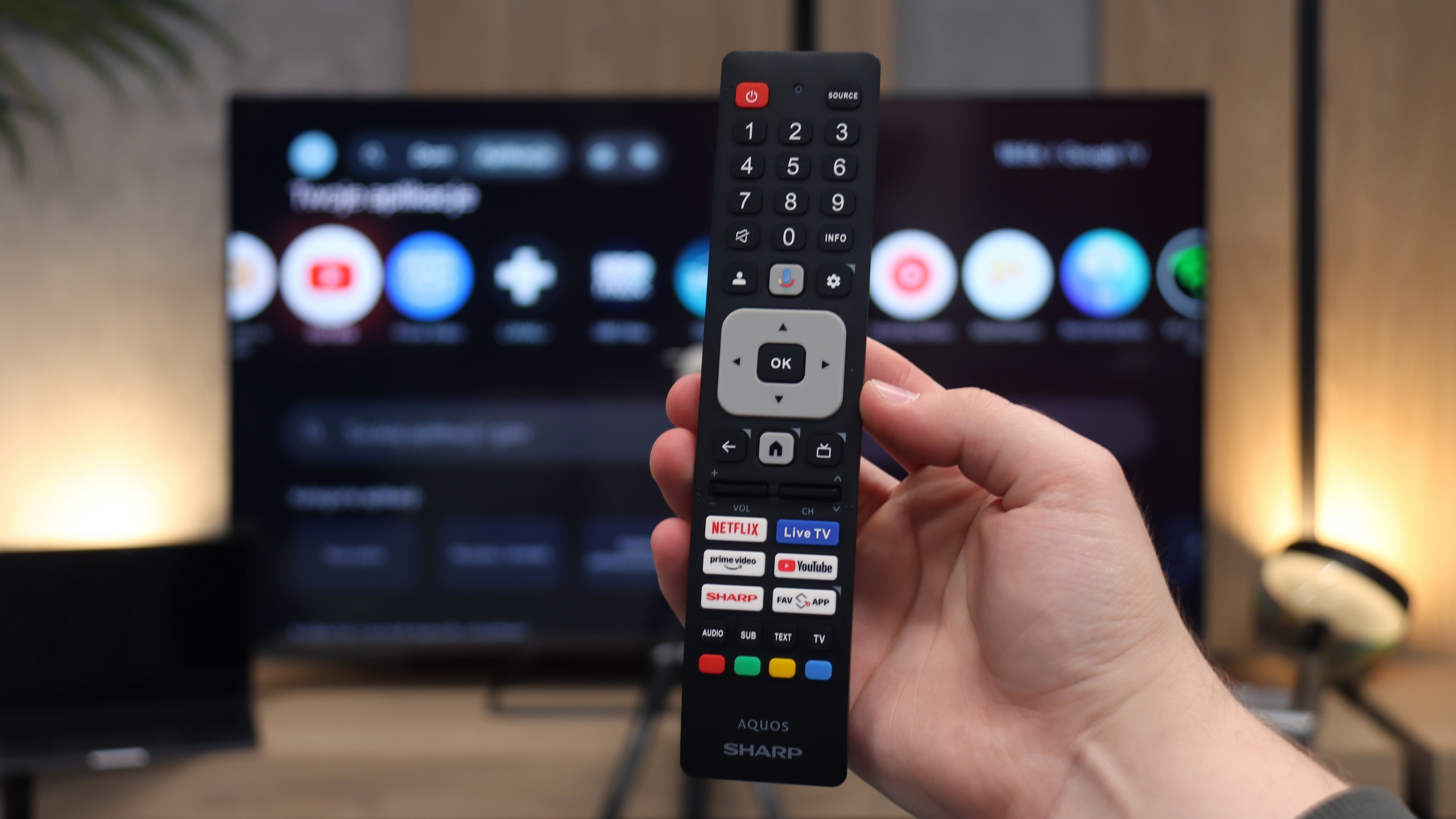
How does SmartTV fare on the PUS8560? Well, it gets a bit trickier here. The PUS8560 runs on the Titan OS, which in this particular implementation posed significant issues. Some functions, though present “on paper,” simply didn’t work. For example: Wireless screen mirroring features like Chromecast or Miracast – we tried to activate them with several different phones and laptops… without success. Perhaps this will be fixed in the future, but at the time of testing – it didn’t work. Also, the speed of the system left much to be desired – switching applications or home screens was simply slow. A substantial portion of the functions in the menu seem to be heavily hidden in the depths of a poorly organised system. To make matters worse, the library of available applications is quite limited. Although the situation with apps is better than last year, it’s still far from ideal. A modern remote tries to save the situation – slim, elegant, backlit and really well-made. Unfortunately, it operates on classic infrared, so you have to aim it at the screen. The only exception is voice control, which works via Bluetooth… it’s just a pity it doesn’t support Polish.

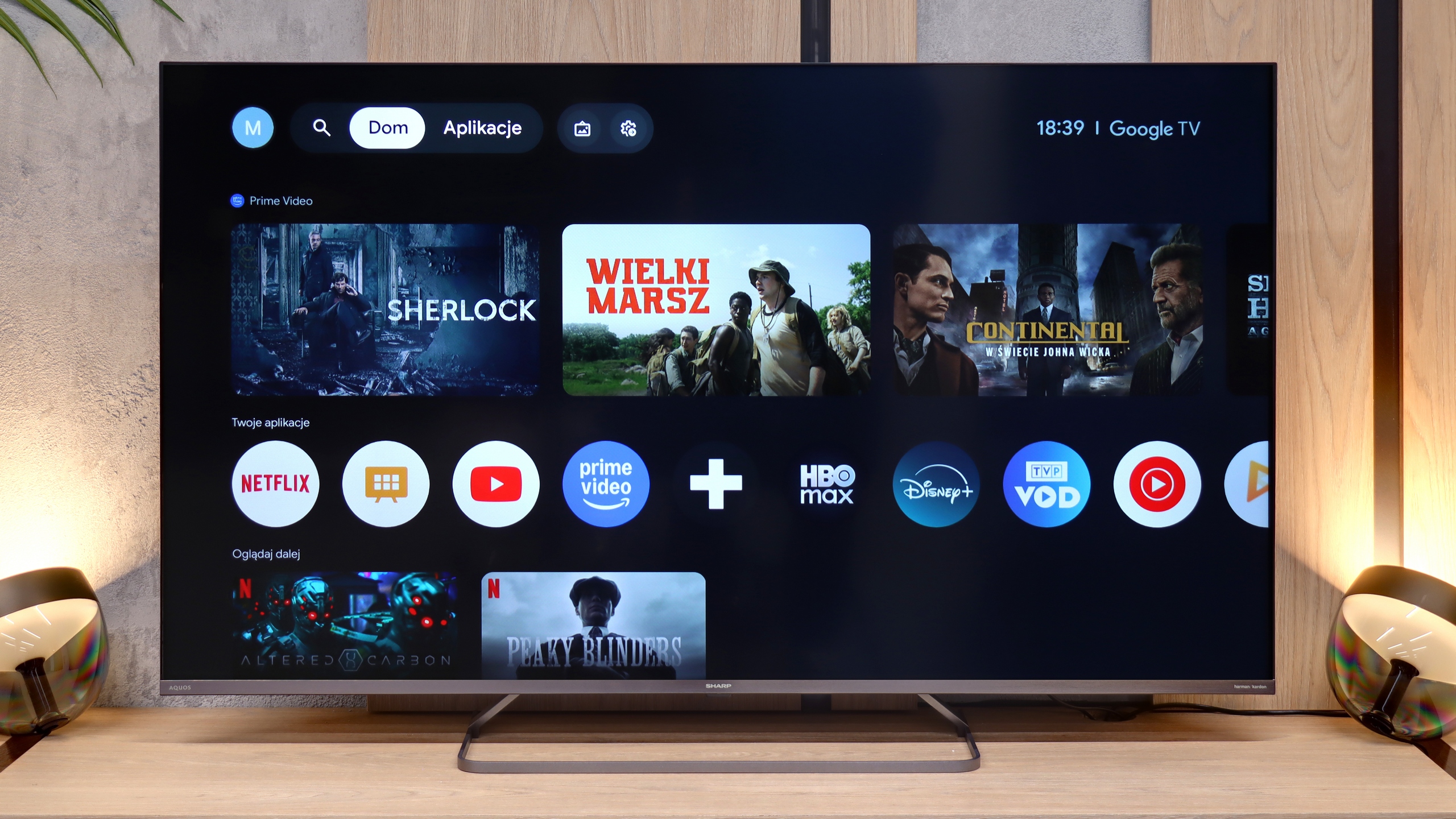
Smart TV Features - Google TV

The main advantage of the Sharp JP7 is the Google TV system, which currently offers the widest access to apps on the market. The library is almost limitless – from all popular streaming services to niche VOD solutions and multimedia players. The system provides significant freedom for personalisation and access to the latest versions of popular platforms. In the package, we receive a Bluetooth remote that allows for the use of the built-in voice assistant without the need to point at the television. The only notable shortcoming in the multimedia area that we encountered is the lack of support for AirPlay. Apple device users, such as iPhone or iPad owners, will not be able to wirelessly stream images directly to the screen of this Sharp.

Classic Features and Connections

Regarding traditional TV functions, the Sharp JP7 does not offer anything that goes beyond the market standard. There is no option to record programs to external storage (PVR) or a dual tuner, which excludes the use of picture-in-picture (PiP) functionality. The television provides only basic solutions such as teletext and the ability to wirelessly connect accessories via Bluetooth. Gemini message content

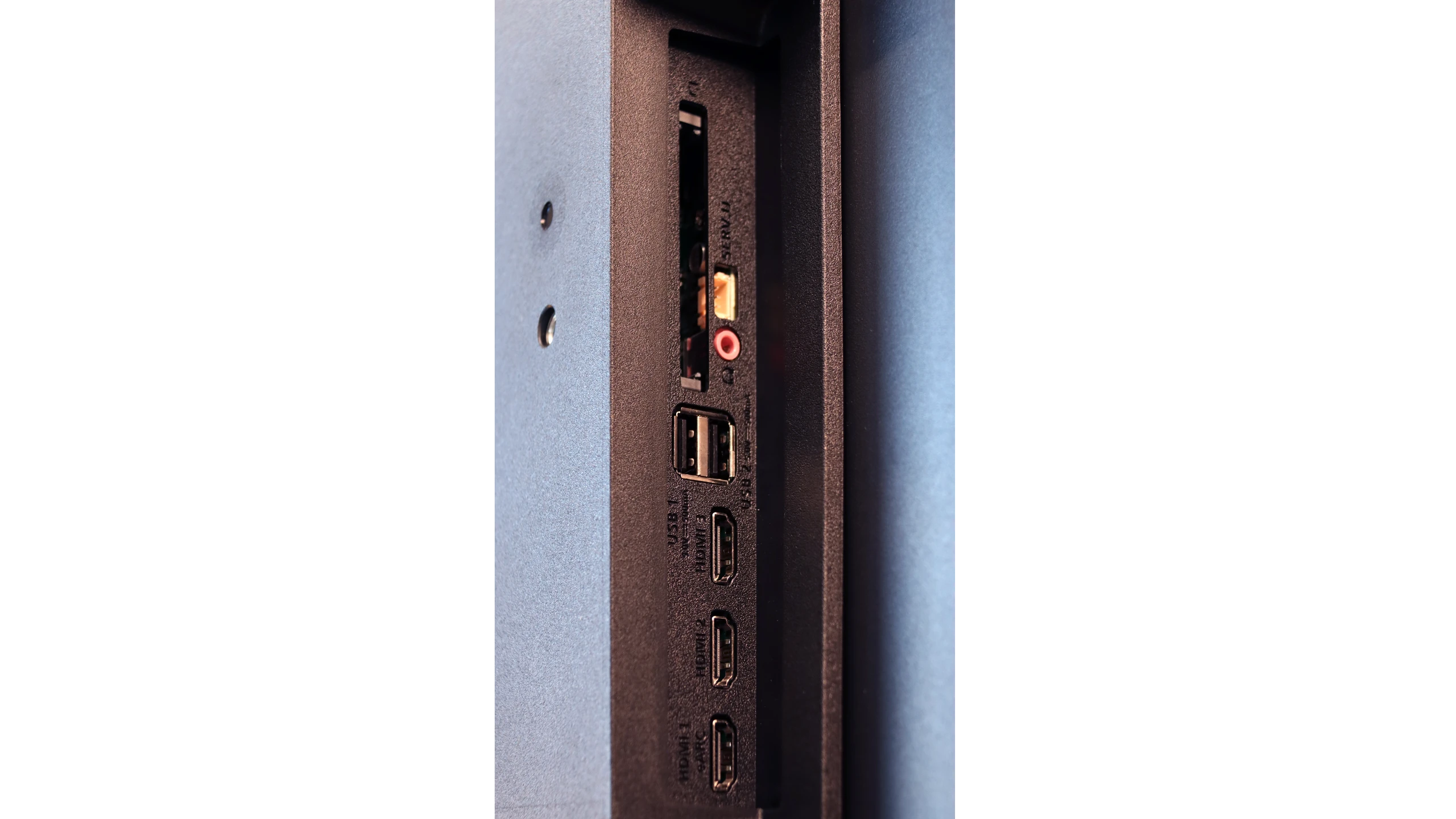
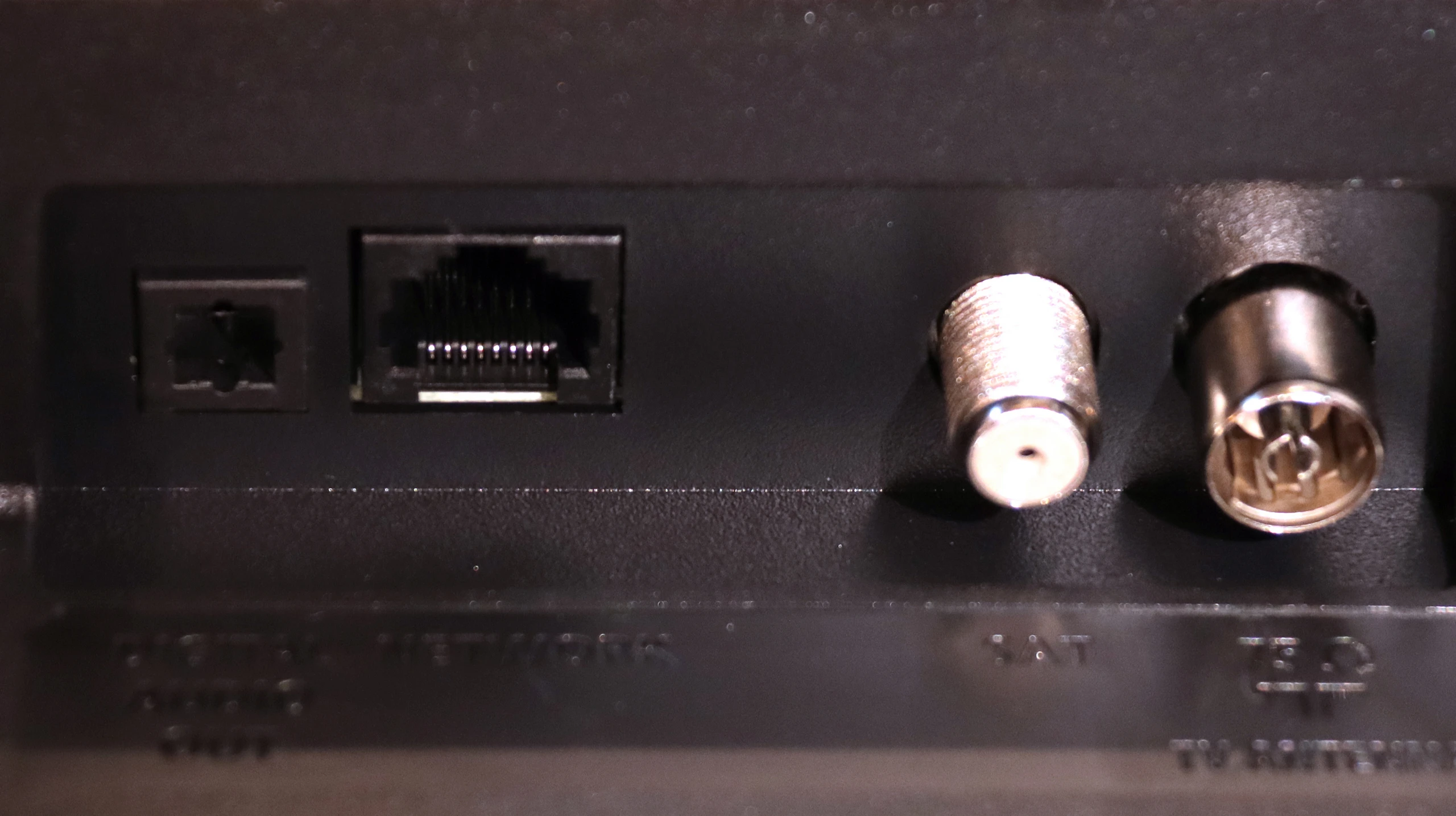
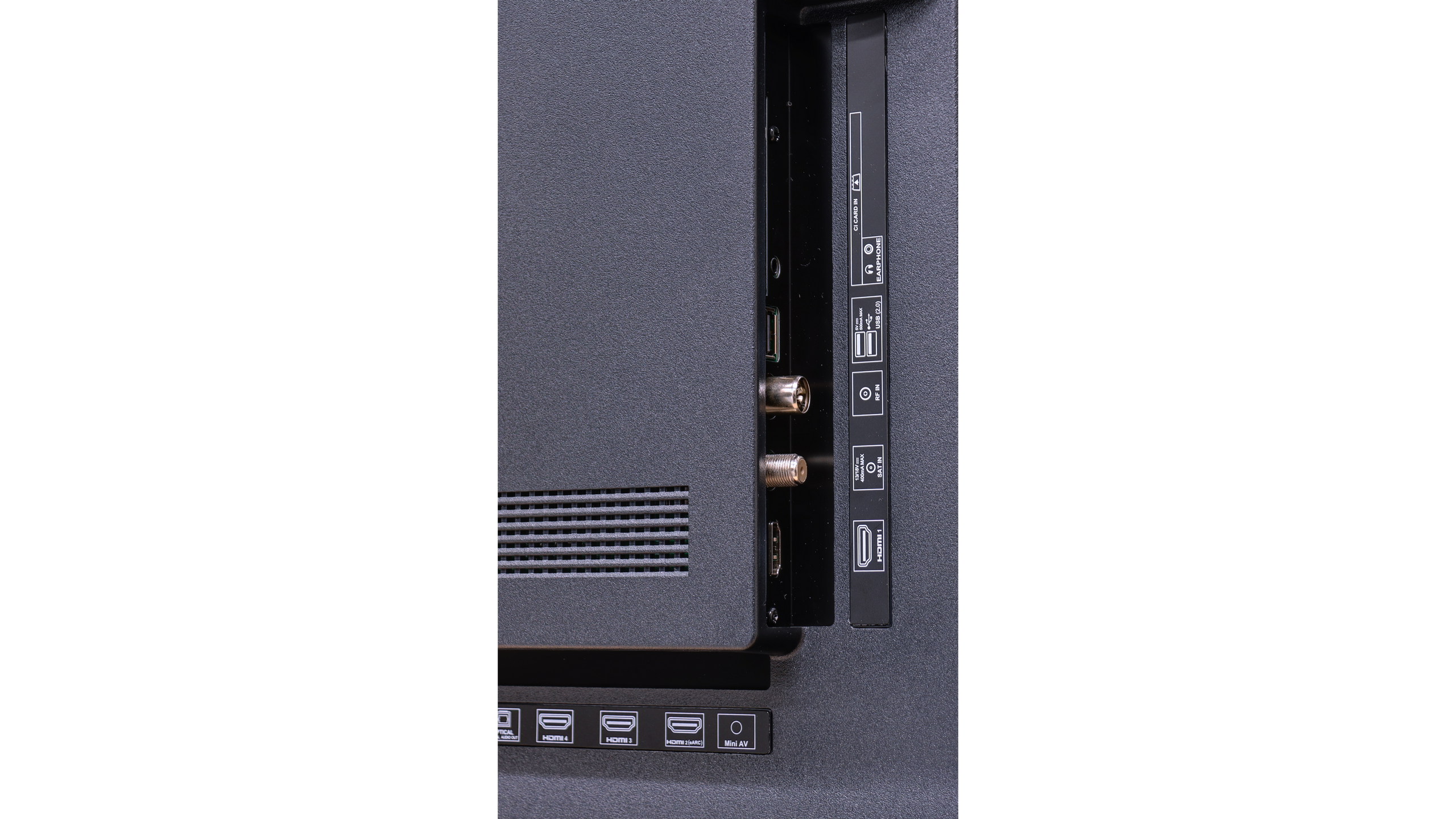
As for connections, the Sharp JP7 offers 4 HDMI ports, which the manufacturer proudly describes as standard 2.1. However, let's make this clear: this is purely a marketing move, as in practice these ports offer only full functionality of standard 2.0 due to the limitations of the television. On the plus side, it is worth noting the presence of a classic mini-jack headphone output, which allows connection of older audio systems or speakers without the need for adapters or HDMI eARC standard. This is a rather rare and very practical addition nowadays.

Apps

6.7/10

9.6/10

OK
Disney_Plus
OK
Amazon_Prime_Video
OK
Player_TVN
OK
Polsat_Box_Go
OK
Canal_Plus_Online
OK
TVP_VOD
No
Apple_TV_Plus
No
SkyShowtime
OK
Rakuten
OK
CDA_Premium_Browser
No
Spotify
No
Tidal
OK
Netflix
OK
YouTube
OK
HBO_MAX
No
Kodi
No
Apple_music
No
Eleven_sports
No
Xbox Game Pass
No
GeForce Now!
No
Amazon Luna
OK
Boosteroid
No
Steam Link
OK
Disney_Plus
OK
Amazon_Prime_Video
OK
Player_TVN
OK
Polsat_Box_Go
OK
Canal_Plus_Online
OK
TVP_VOD
OK
Apple_TV_Plus
OK
SkyShowtime
OK
Rakuten
OK
CDA_Premium_Browser
OK
Spotify
OK
Tidal
OK
Netflix
OK
YouTube
OK
HBO_MAX
OK
Kodi
No
Apple_music
OK
Eleven_sports
No
Xbox Game Pass
OK
GeForce Now!
No
Amazon Luna
OK
Boosteroid
OK
Steam Link

Playing files from USB

8/10

9.4/10

Supported photo formats:

JPEG
Yes
Yes
HEIC
No
Yes
PNG
Yes
Yes
GIF
Yes
Yes
WebP
No
Yes
TIFF
No
No
BMP
Yes
Yes
SVG
No
No

Maximum photo resolution:

4 Mpix
Yes
Yes
6 Mpix
Yes
Yes
8 Mpix
Yes
Yes
10 Mpix
No
Yes
12 Mpix
No
Yes
16 Mpix
Yes
Yes
20 Mpix
No
Yes
24 Mpix
No
Yes
28 Mpix
No
Yes
32 Mpix
Yes
Yes

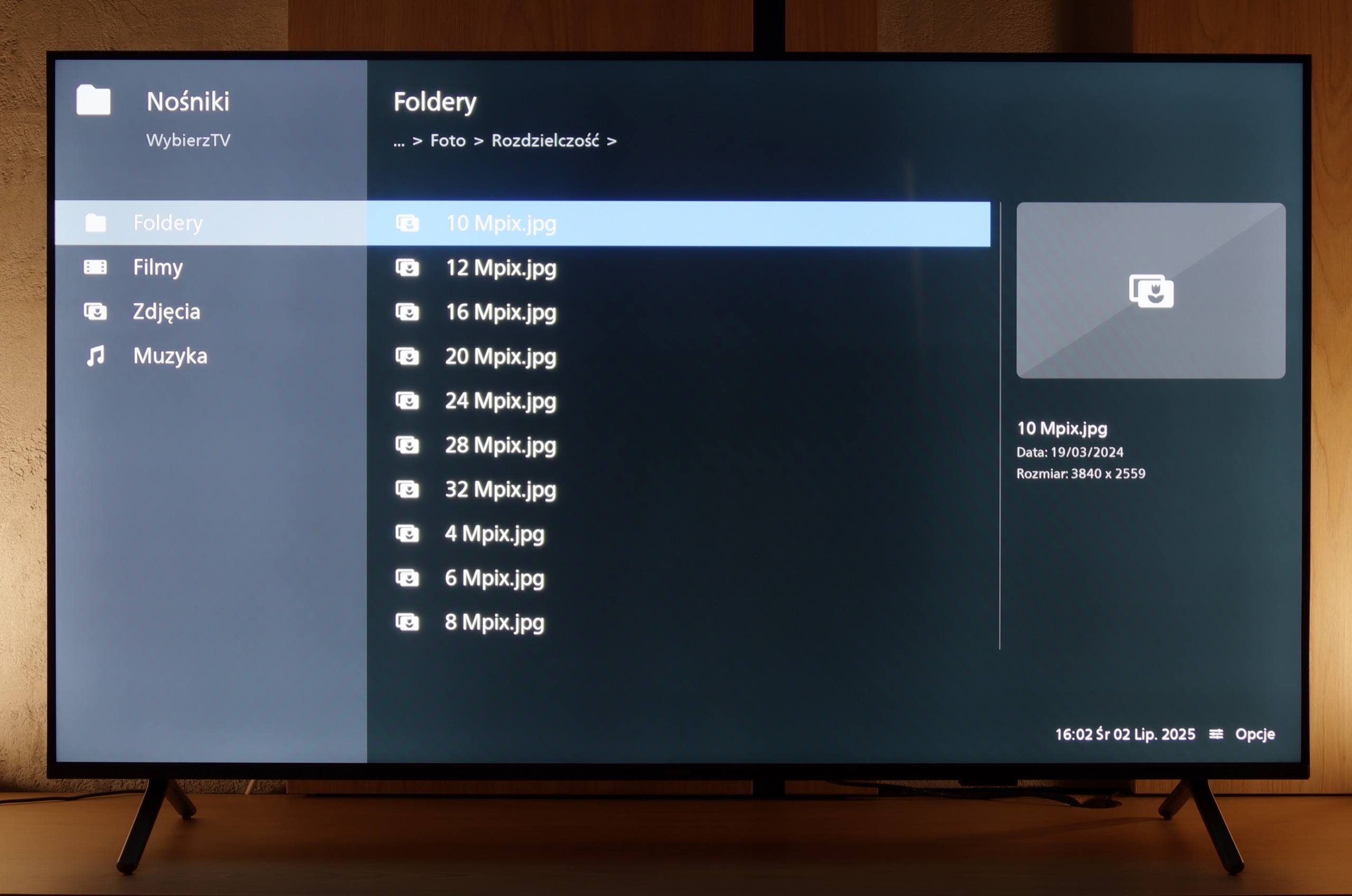
PUS8560 handles most popular video and audio formats from USB memory without much hassle, so there's no need to elaborate on individual compatibilities. In everyday use, it should just work – and it does. The only thing worth noting is the handling of images. Although the television easily recognises popular extensions, with very high resolution graphic files, there are times when some images simply won't display. It might not be a major issue, but it's good to keep it in mind, especially if we want to view photographs straight from the camera. Besides that, PUS8560 shouldn't have any major problems playing files from USB.

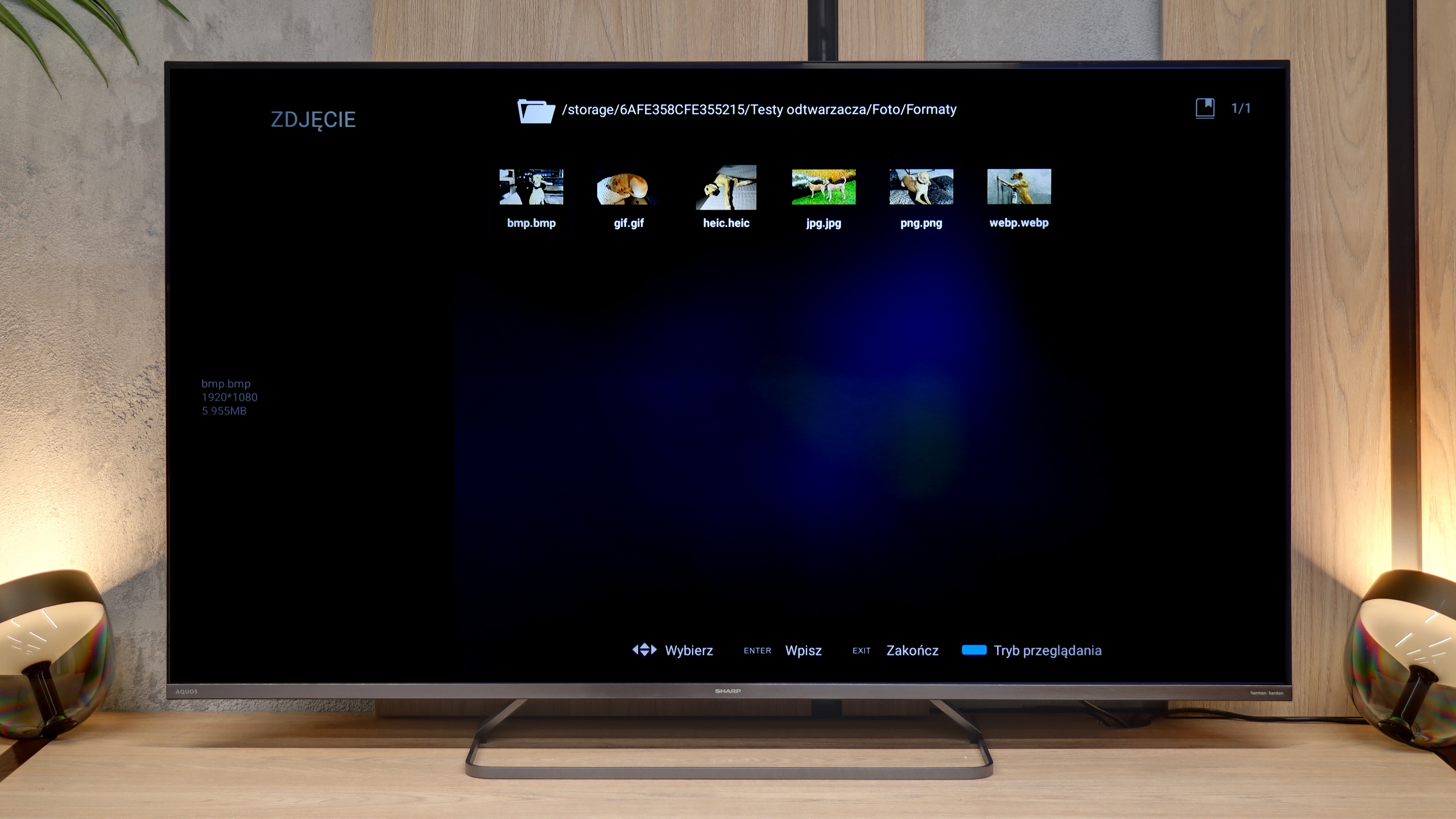
When it comes to multimedia support from external sources, the Sharp JP7 simply excels. The built-in player is a real surprise, as it handled almost every file format we supplied. It even managed to support the HEIC format (mainly used in Apple devices) without any issues, which many TVs struggle with. Here, Sharp displayed the photos without the slightest hitch. Of course, a significant advantage is the presence of the Google TV system, which allows the installation of external apps like VLC or Kodi in case of any problems. However, in our opinion, this would be an unnecessary step as the factory player is refined and versatile enough to satisfy even the most demanding users.

Sound

6.2/10

6/10

  • Maximum volume
    -
    89dB
  • Dolby Digital Plus 7.1
    Yes
    Yes
  • Dolby True HD 7.1
    Yes
    Yes
  • Dolby Atmos in Dolby Digital Plus (JOC)
    Yes
    Yes
  • Dolby Atmos in Dolby True HD
    Yes
    No
  • DTS:X in DTS-HD MA
    Yes
    No
  • DTS-HD Master Audio
    Yes
    No

The television sounds quite pleasant, and it can confidently be said that the audio level will be fully adequate for most users – for both watching daily programs and enjoying an evening binge of a series. Moreover, it's a nice surprise that even in such an affordable Philips series, they decided to acquire licenses for full audio formats such as Dolby Atmos and DTS. This is great news for home theatre and soundbar owners, as it means complete compatibility and no need to "fiddle around" with connecting external devices.

The sound coming from the JP7765E model can be described as unusual, and even – looking at our measurements – quite peculiar. The first thing that stands out is the massive scale of volume. The TV can reach levels of almost 90 decibels (89 dBC on the chart), which is a record result in this class. Such strong "loudness" is sure to appeal to seniors or those who need a device with very high audibility.

However, a glance at the frequency chart explains why the sound seems so "weird." The characteristic is extremely uneven: we have solid boosts in the lower registers (around 200 Hz) and in the high tones, but the mid-range – where most of the information about the human voice lies (between 500 Hz and 1.5 kHz) – experiences a huge drop. This makes the sound unnatural and can seem "withdrawn" at key moments of dialogues.

On the plus side, there is support for the Dolby Atmos format. However, it must be honestly admitted that to truly feel the potential of this system, connecting at least a decent soundbar will be necessary. The JP7's own speakers, despite being very loud, are unable to convey the cinematic depth and precision required by this standard.

Acoustic Measurements

No acoustic data

89dBC (Max)

75dBC