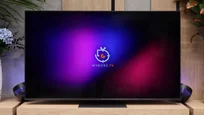
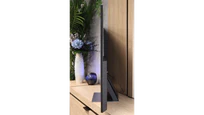
Philips OLED 809 is quite a versatile television that appeals to a wide range of consumers. Its standout feature among all the TV models on the market is the multicoloured Ambilight backlighting. It often allows for even greater immersion and engagement in the world of film. What is most important in televisions—contrast, black levels, and colour reproduction—are all at a high standard, which is something that will always impress in OLED TVs. The tested television, while performing quite well in our tests, does have some notable drawbacks. These include the quality of tonal transitions and the jumpy operation of the dynamic tone mapping feature. In some cases, these can be slightly irritating to sensitive eyes. However, Philips OLED 809 performs really well in other aspects, particularly in two areas: gaming performance and motion smoothing. The former stands out significantly, as each of the implemented features operates without the slightest hiccup, allowing for an even more immersive gaming experience. As for motion smoothness, it matches the high level of support for gaming. Thanks to two sliders, whose effects are noticeable at every position, every user is able to find the best level of smoothing for themselves. One cannot overlook the Google TV system, which operates very smoothly and during the tests, there were no instances of any "stuttering".
- Matching (Score) |
- Our verdict |
- TV appearance |
- Where to buy |
- Contrast and black detail |
- HDR effect quality |
- Factory color reproduction |
- Color reproduction after calibration |
- Smoothness of tonal transitions |
- Image scaling and smoothness of tonal transitions |
- Blur and motion smoothness |
- Console compatibility and gaming features |
- Input lag |
- Compatibility with PC |
- Viewing angles |
- Daytime performance |
- Panel details |
- TV features |
- Apps |
- Playing files from USB |
- Sound
Philips OLED809/819 vs LG MRGB85B
 Direct comparison
OLED809 / OLED819 / AMIBLIGHT TV

MRGB85 / MRGB86 / MRGB87 / MRGB88
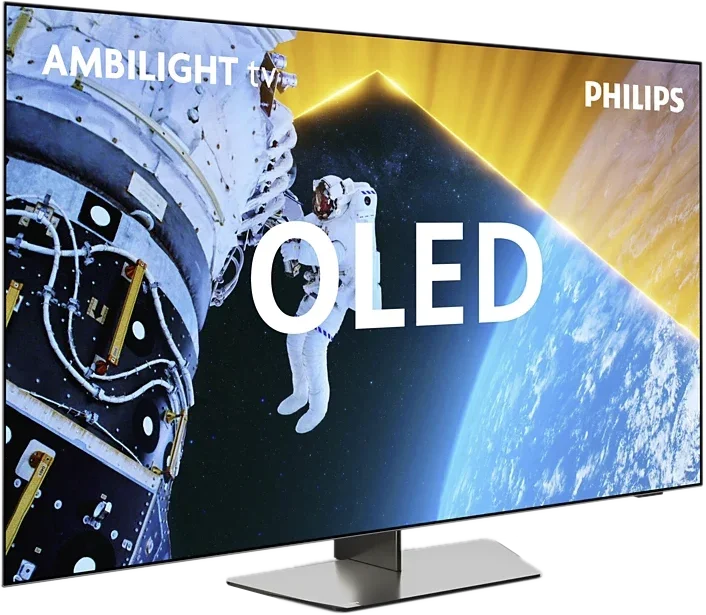
Panel type: WRGB OLED
Resolution: 3840x2160
System: Google TV
Model year: 2024
Complete the survey to find out the result
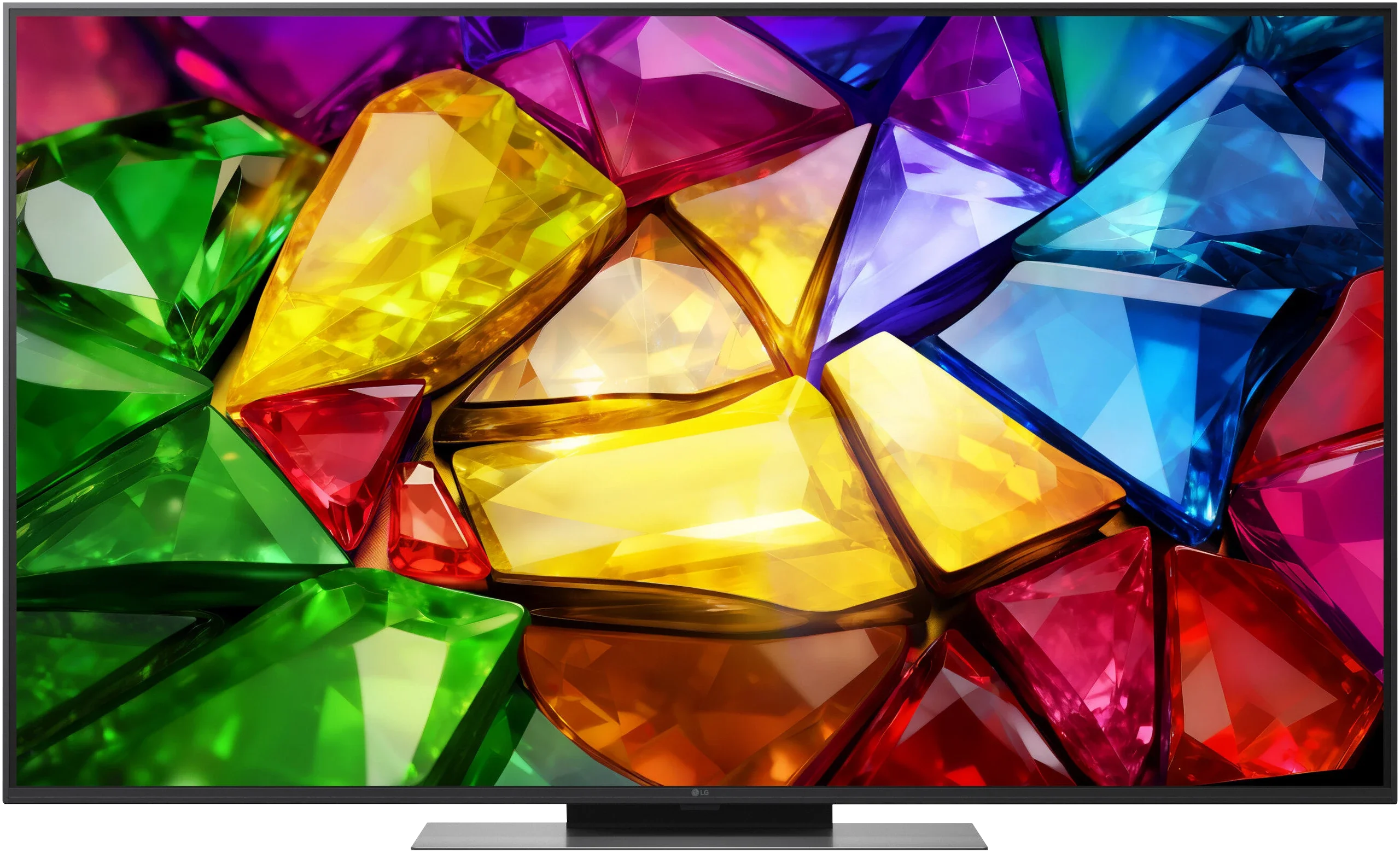
Panel type: LCD VA
Resolution: 3840x2160
System: WebOS
Model year: 2026
Complete the survey to find out the result
Overall rating
7.6
6.9
 Movies and series in UHD quality
 7.3
6.2
 Classic TV, YouTube
 7.9
6.0
 Sports broadcasts (TV and apps)
 8.2
6.4
 Gaming on console
 9.2
8.3
 TV as a computer monitor
 6.4
8.4
 Watching in bright light
 5.5
6.1
 Utility functions
 7.9
7.7
 Apps
Apps 9.6
9.1
 Sound quality
 7.1
6.4
Complete the survey to find out what fits your preferences
Advantages

Extensive Google TV system with good app support
Very good collaboration with the console
Good image smoothness and an extensive system for improving it
Multicoloured Ambilight backlighting
Highly advanced gaming features
Three full-bandwidth HDMI 2.1 ports
Support for 4K at 144 Hz, VRR, G-Sync and FreeSync
Low input lag
Supports Dolby Vision HDR
Fast and user-friendly webOS
Magic remote with gyroscope
Decent brightness and a wide colour gamut
Disadvantages

Poor factory colour reproduction (can be fixed through calibration)
Strongly contrasting tonal transitions
Average legibility of fonts when connected to a computer
Average black level
Aggressive edge-lit local dimming control
Average HDR picture quality
Poor viewing angles and noticeable smearing on the VA panel
Our verdict
LG MRGB85 is a TV that suits gamers and people attached to the webOS ecosystem best. In that respect there’s little to fault. It offers plenty of benefits for gamers thanks to a very high panel refresh rate. Add a smoothly working webOS — which stands out on the market above all because of the convenient Magic Remote and a full set of features for traditional TV — and it’s easy to see its appeal. The problem starts when you look at overall picture quality and compare it with the price the manufacturer asks for this model. The MRGB85 launches at a level that, to put it mildly, is hard to call attractive compared with competing models. For a similar price you can find TVs offering much more extensive backlighting and, above all, better black level control. The most controversial aspect is the naming and the way LG positions this model. MRGB85 does use a three-colour backlight, but it’s edge‑lit. It’s therefore hard to call this a proper RGB Mini‑LED in the sense commonly used for TVs that employ a large number of independently controlled zones behind the panel. In practice the limitations of local dimming are very noticeable and in dark scenes they significantly spoil the viewing experience. That does not mean the MRGB85 is a bad TV. It handles everyday material well, offers decent colours, solid brightness and a very wide feature set. SDR content can look really good, and Dolby Vision partly helps mask weaker brightness handling in HDR. Still, it’s hard to shake the impression that the biggest problem with this model isn’t the design itself but its price and the overly ambitious positioning relative to the rest of the market. If someone is mainly after a TV for gaming, values the convenience of webOS and finds it on a big sale, the MRGB85 can make sense. At the current price it falls back, because the competition today simply offers more in terms of picture quality.
TV appearance

Contrast and black detail
10/10
5/10
Local dimming function: Yes, number of zones: 6 (1 x 6)
Contrast:


Result
∞:1

Result
∞:1

Result
∞:1

Result
∞:1

Result
∞:1
Result
12,100:1
Result
6,200:1
Result
15,900:1
Result
6,000:1
Result
4,600:1
Halo effect and black detail visibility:
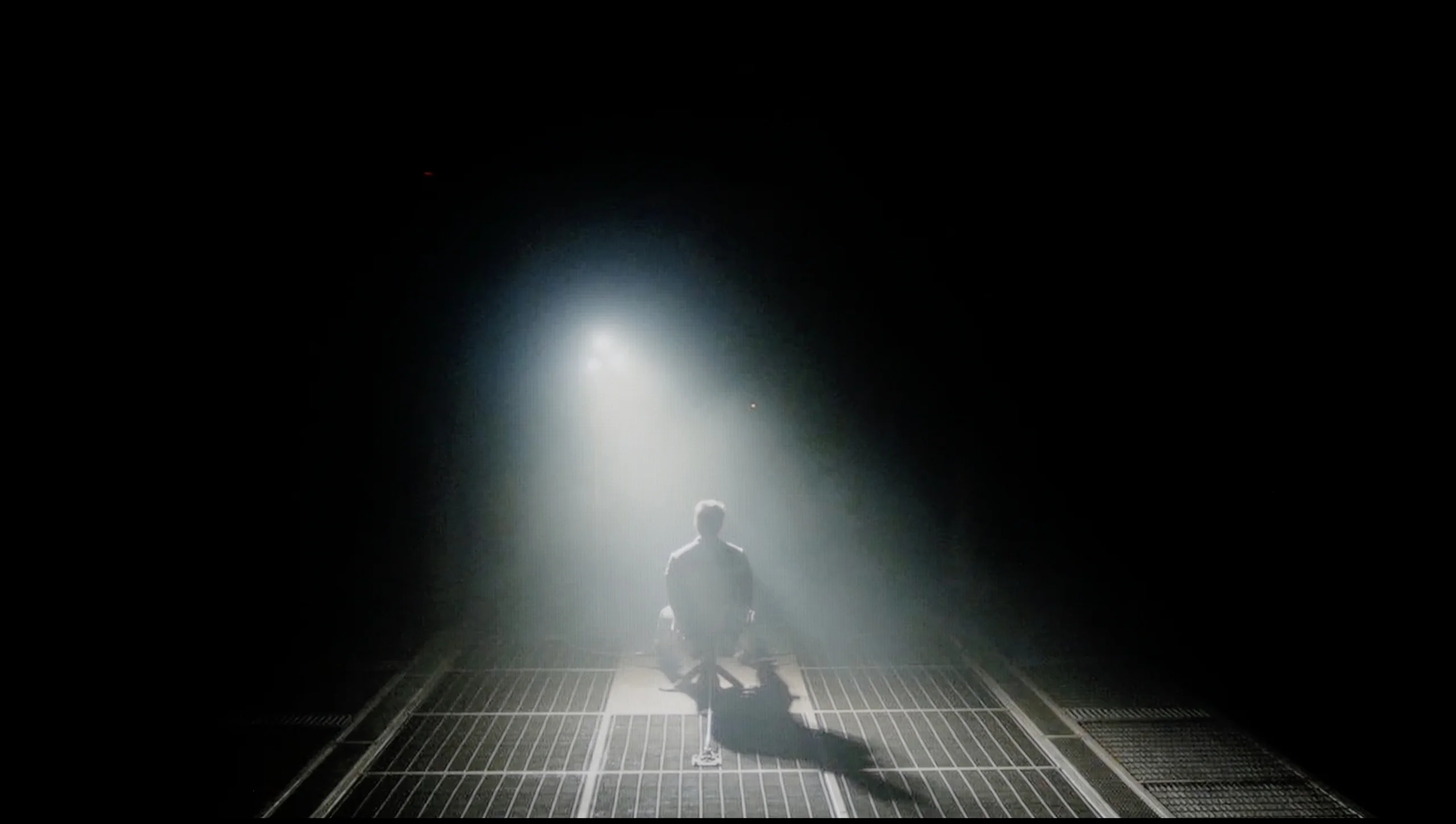
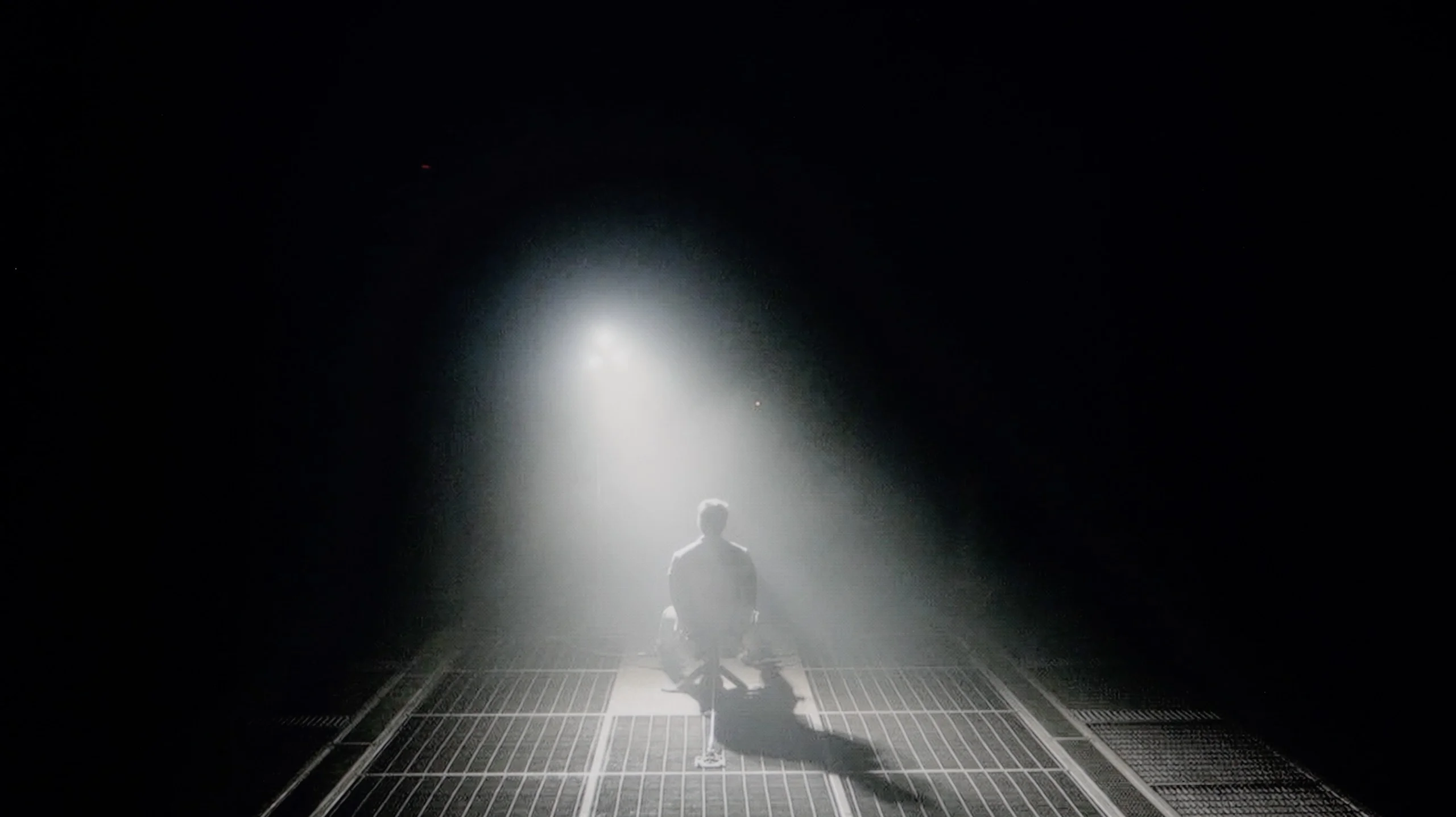
Check the visibility of bright lights on a dark background. Mini-LEDs often struggle with this. The photo does not compare black levels – that’s what the video below is for.
The video accurately shows differences in contrast and black levels between TVs, as well as potential issues: halo around bright objects or Mini-LED zone operation visible as brightness jumps.
Philips OLED 809, as the name suggests, uses an organic matrix. Like the vast majority of manufacturers, it comes from the LG Displays factory, which is not surprising, as other leading manufacturers, such as Sony and Panasonic, also use them. The application of this type of panel allows for achieving an ideal result in the contrast and black tests. Thanks to such results, the image is incredibly plastic and free from any blooming effect of bright texts on a dark background, which has become an inherent feature of televisions with local dimming. This is enabled by the very construction of the panel, which is not made up of many layers of filters, but of organic conductive polymers, controlled by electrical impulses. Therefore, if we want to achieve black, the pixel turns off to a value of 0, rather than being covered up. The lights present in the test image are perfectly separated from each other, which is extremely difficult, and often impossible for LCD televisions. One of the strongest points of Philips OLED 809 is its ability to render contrasts. Philips OLED809 test showed that the television handles the separation of bright elements, such as headlights, from the dark background excellently.
LG MRGB85 uses a VA panel, so even without extra tricks it offers better blacks than models based on IPS or ADS panels. In simpler scenes the picture has decent depth and can look quite convincing. The biggest limitation, however, appears when local dimming is turned on. The TV uses edge lighting positioned along the bottom of the screen. As a result it can't precisely control the brightness of small areas of the image. When a single bright element appears on a dark background, it often lights up an entire vertical band. This is accompanied by a noticeable halo, and even more noticeable is the behaviour of the backlight itself. When scenes change the brightness can jump up and down suddenly, causing the picture to visibly pulse in a dark room. Local dimming can be completely switched off in the TV's menu. Contrast then drops noticeably, but the picture becomes much more stable and the frequent backlight flicker disappears. In practice, some users may therefore consciously give up deeper blacks in favour of a calmer, more predictable picture.
HDR effect quality
6.9/10
5.7/10
Luminance measurements in HDR:

Result
921 nit

Result
970 nit

Result
1039 nit

Result
1022 nit

Result
425 nit
Result
583 nit
Result
401 nit
Result
569 nit
Result
423 nit
Result
455 nit
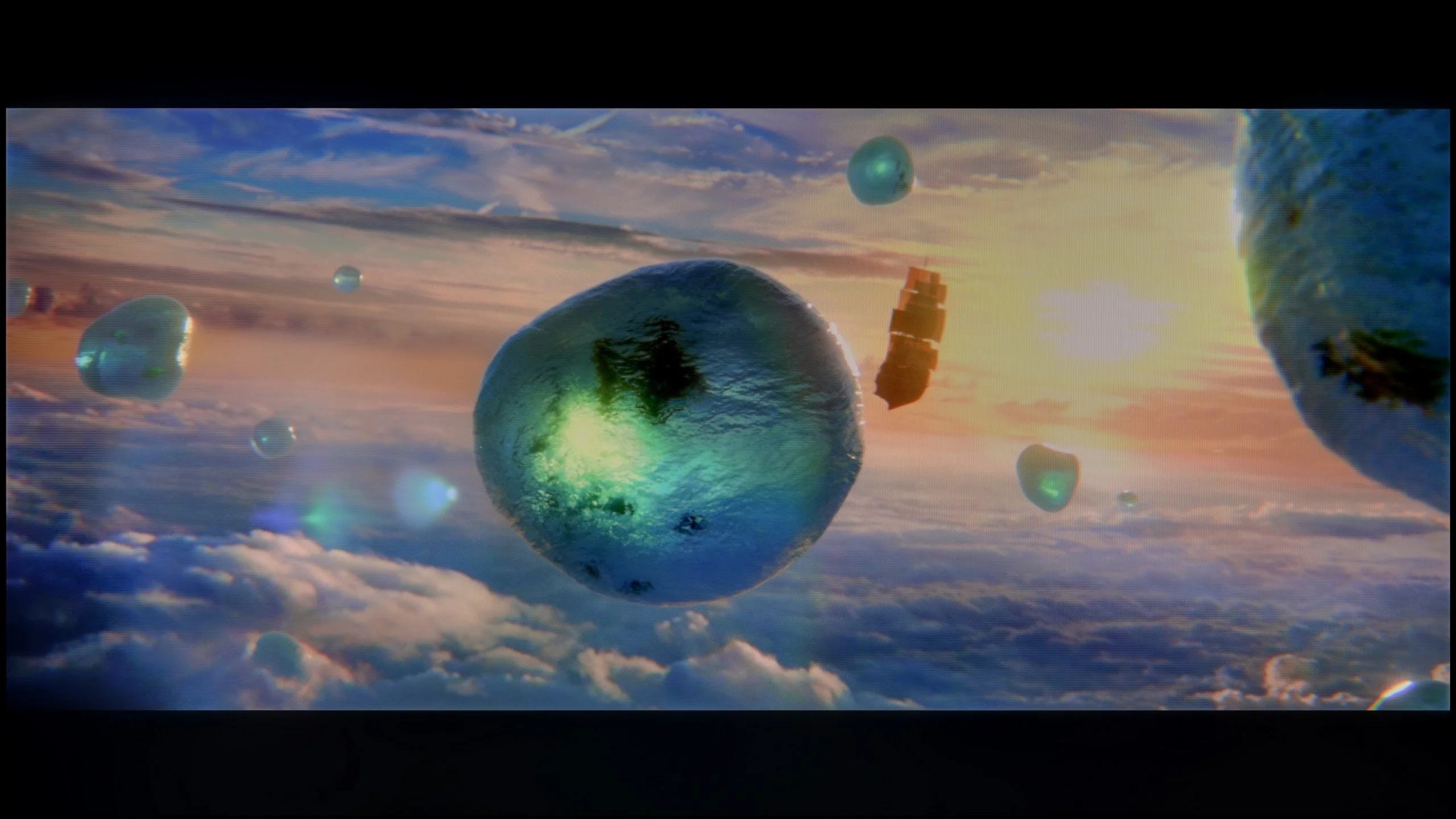
Scene from the movie “Pan” (about 2800 nits)
Scene from the movie “Billy Lynn” (about 1100 nits)
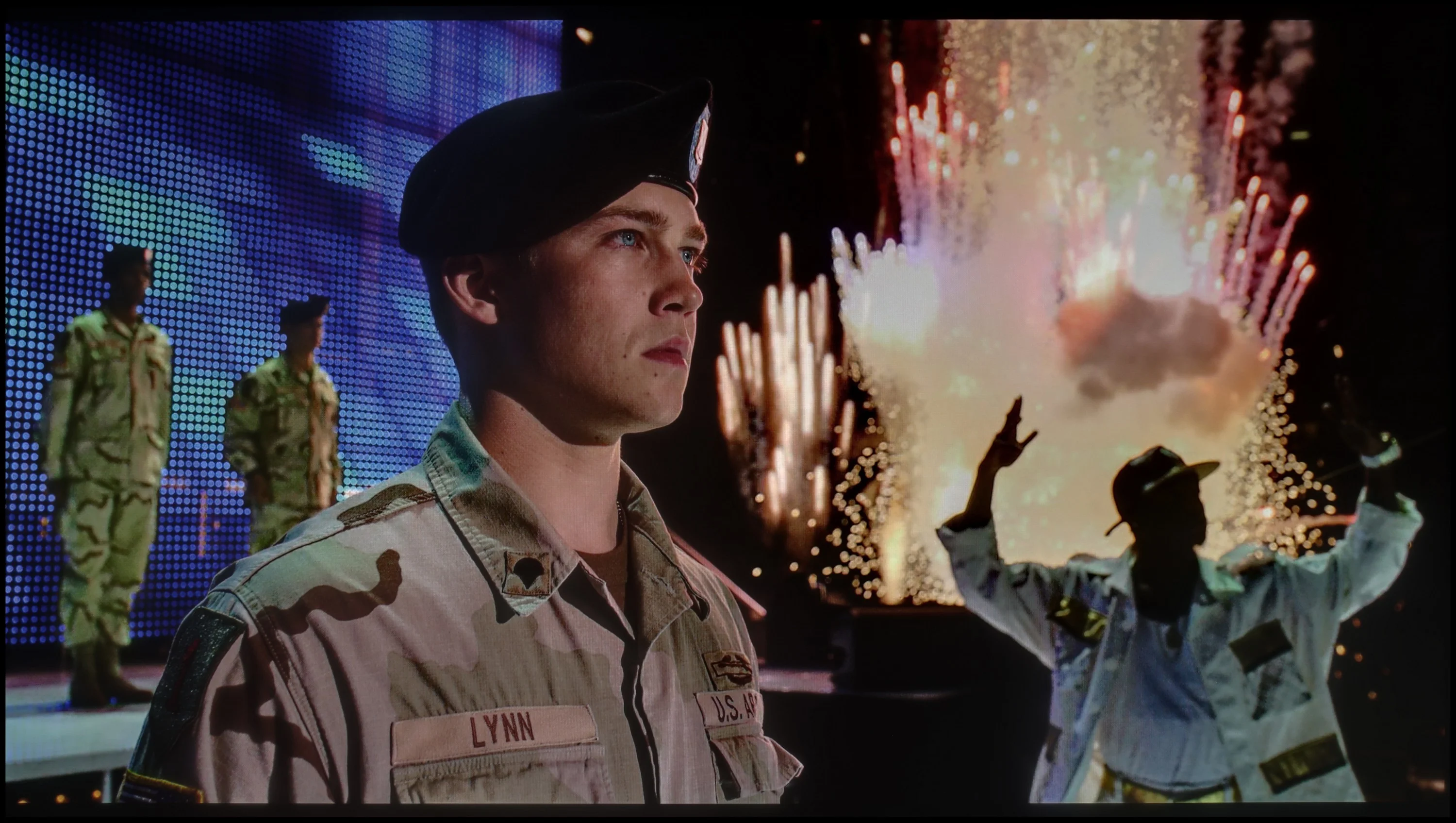
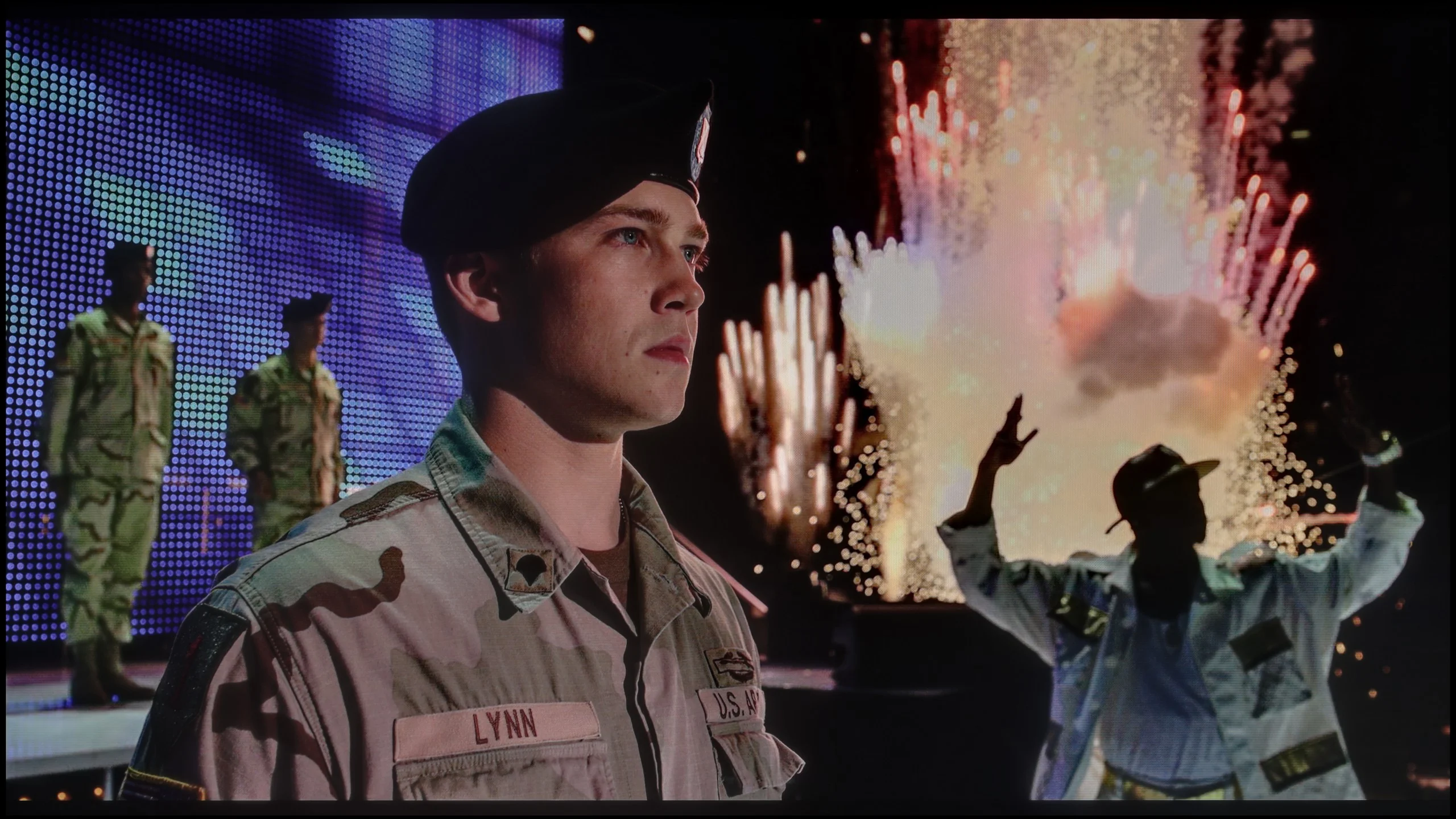
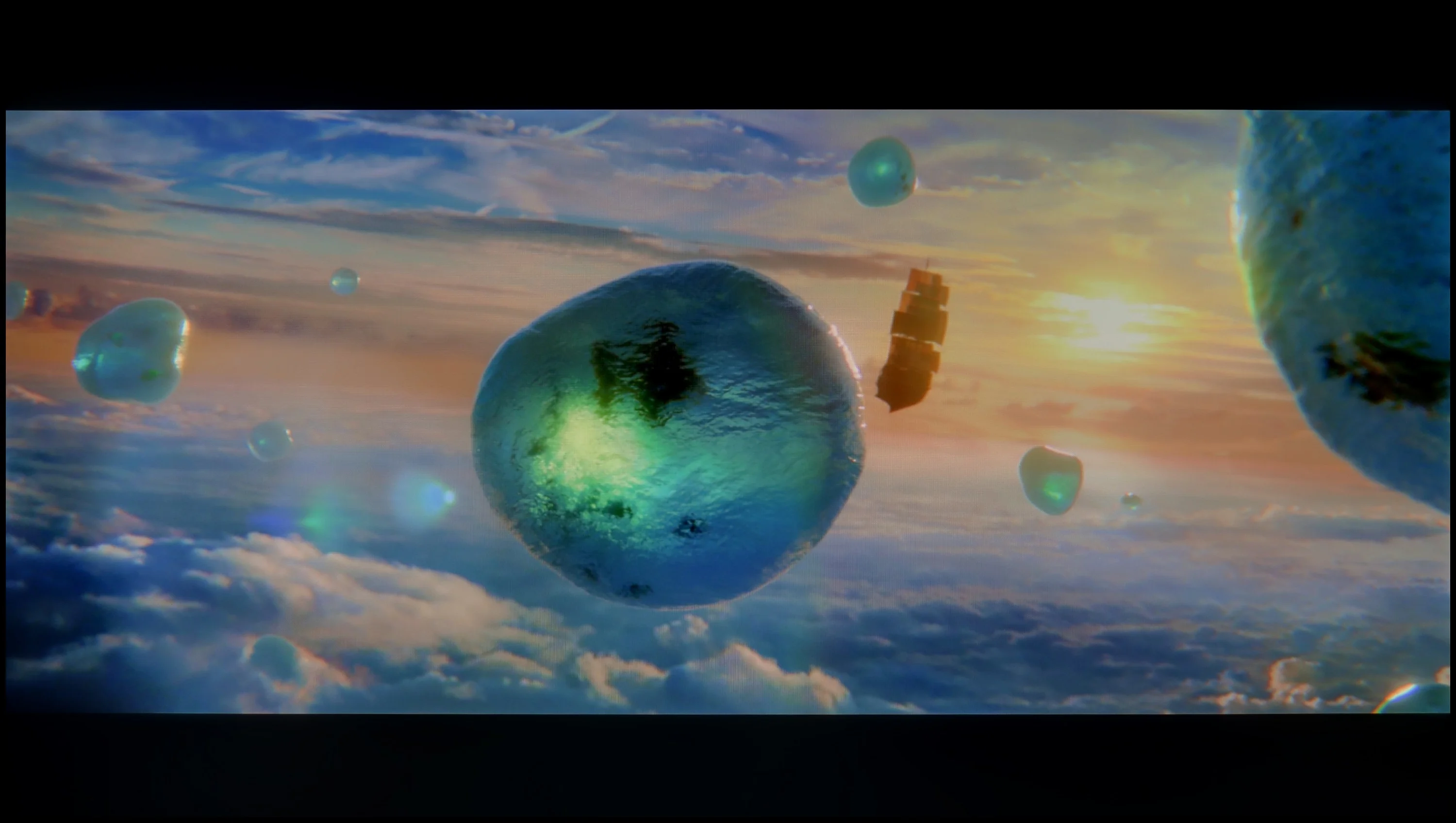
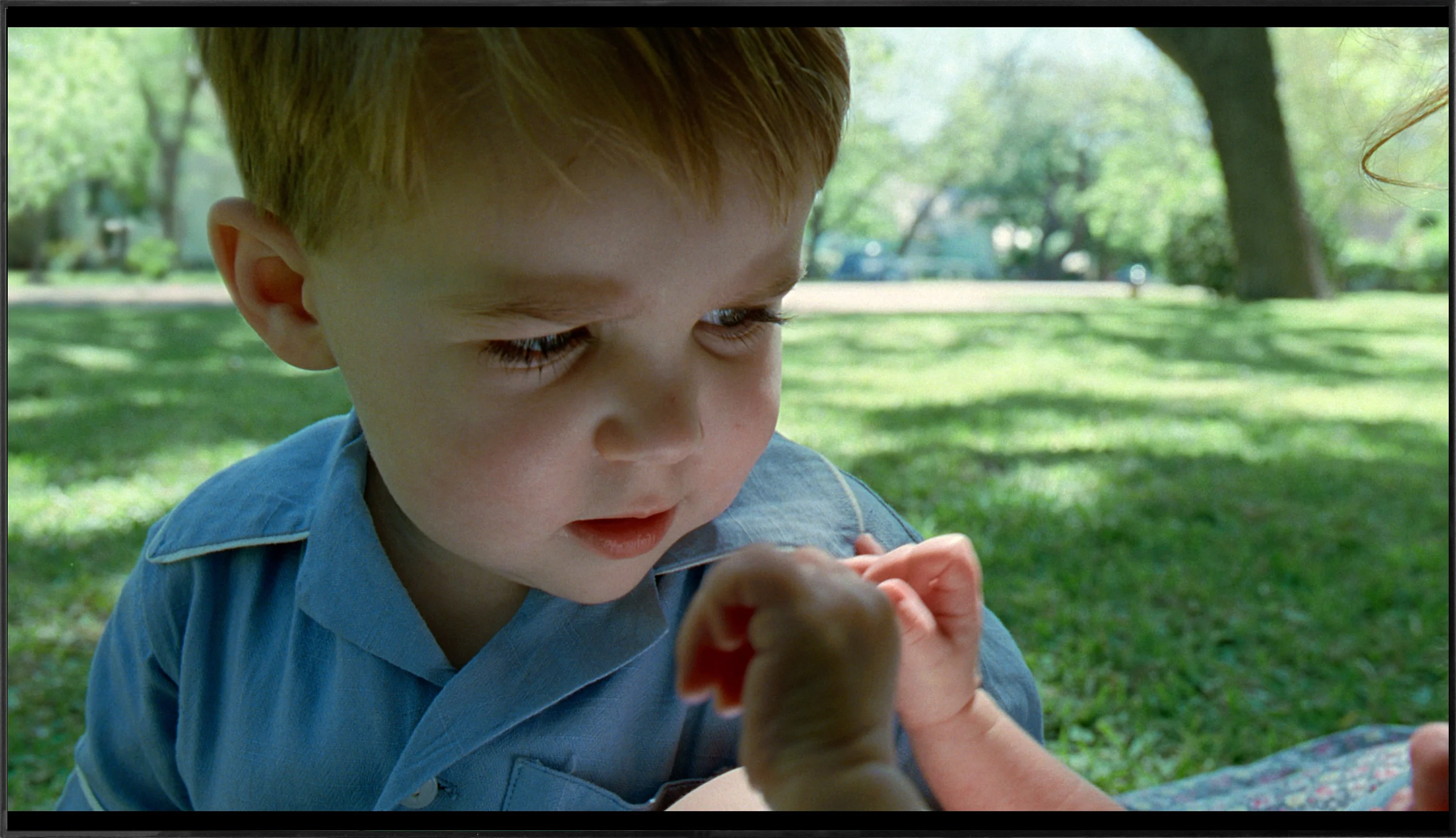
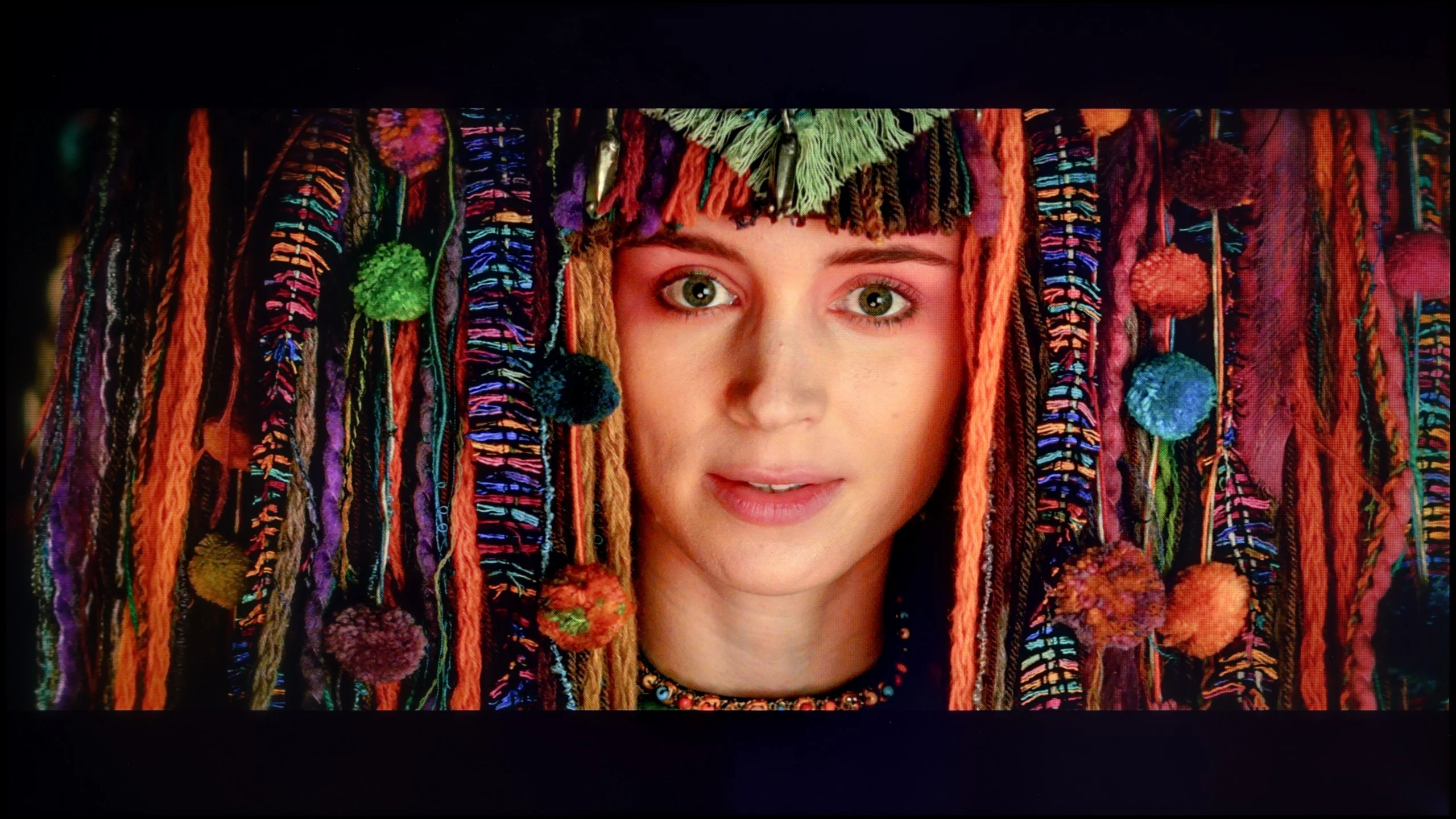
The photos show two HDR10 movies. 'Pan' is one of the brightest productions ever made, while 'Billy Lynn' (soldier) has brightness typical of streaming (Netflix, Prime, HBO MAX). Notice the intensity of effects and detail in whites.
Static HDR10


The photos present the visibility of white details in various HDR formats. They do not show brightness differences between TVs (these can be compared in the previous gallery).
Dynamic: Dolby Vision
Dynamic: Dolby Vision


The photos present the visibility of white details in various HDR formats. They do not show brightness differences between TVs (these can be compared in the previous gallery).
HDR luminance chart:
LG MRGB85B
Philips OLED809/819
Luminance of RGB colors
Philips OLED 809 delivers a more than satisfactory HDR effect. The television is capable of generating luminance exceeding 900 nits in almost every scene, and sometimes even over 1000. This result allows for a full experience of materials with a wide tonal range. The only moment when Philips OLED 809 cannot generate higher brightness is in a scene from the film "The Meg," which features a large amount of bright white across much of the screen. However, it cannot be said that this is a weak result, as it represents a significant improvement over its predecessor. Overall, such values for OLED panels produced by LG Display, which do not have MLA technology, are very, very good. Combined with high coverage of the DCI-P3 colour gamut, they allow for an HDR experience in a remarkable dimension. Philips OLED 809 test indicated that this television supports popular HDR formats such as Dolby Vision and HDR10+.
LG MRGB85 offers moderate brightness. On test patterns it reaches around 700 nits, which is a decent result in itself. In real movie scenes, however, values are lower and most often fall in the 400 to 600 nits range. Bright, wide shots look best. In scenes with large areas of black the TV noticeably reduces luminance, attempting to keep contrast as high as possible. The HDR effect is therefore visible, but it is far from the level offered by more advanced Mini-LED designs. Particularly in darker parts of films, the limitations of the edge-lit backlight and imprecise local dimming become apparent again.
HDR colours
A much stronger suit of the MRGB85 is its colour. The TV covers around 95% of the DCI-P3 colour space and 74% of BT.2020, so HDR content can look vivid and impressive. Colours are well saturated, and the difference compared with basic LCD TVs is clearly noticeable. It is worth noting, however, that this is not a classic RGB backlight, where each of the three primary colours is generated by a separate diode. Red is produced by a PFS phosphor, which expands the palette and achieves more saturated red tones. This solution performs well for colour reproduction, but it does not change the limitations of the local dimming. The diodes are not driven independently in the way the series name might suggest... so it turns out that Mini RGB is not the same as Mini-LED RGB!
Factory color reproduction
5.1/10
5.6/10
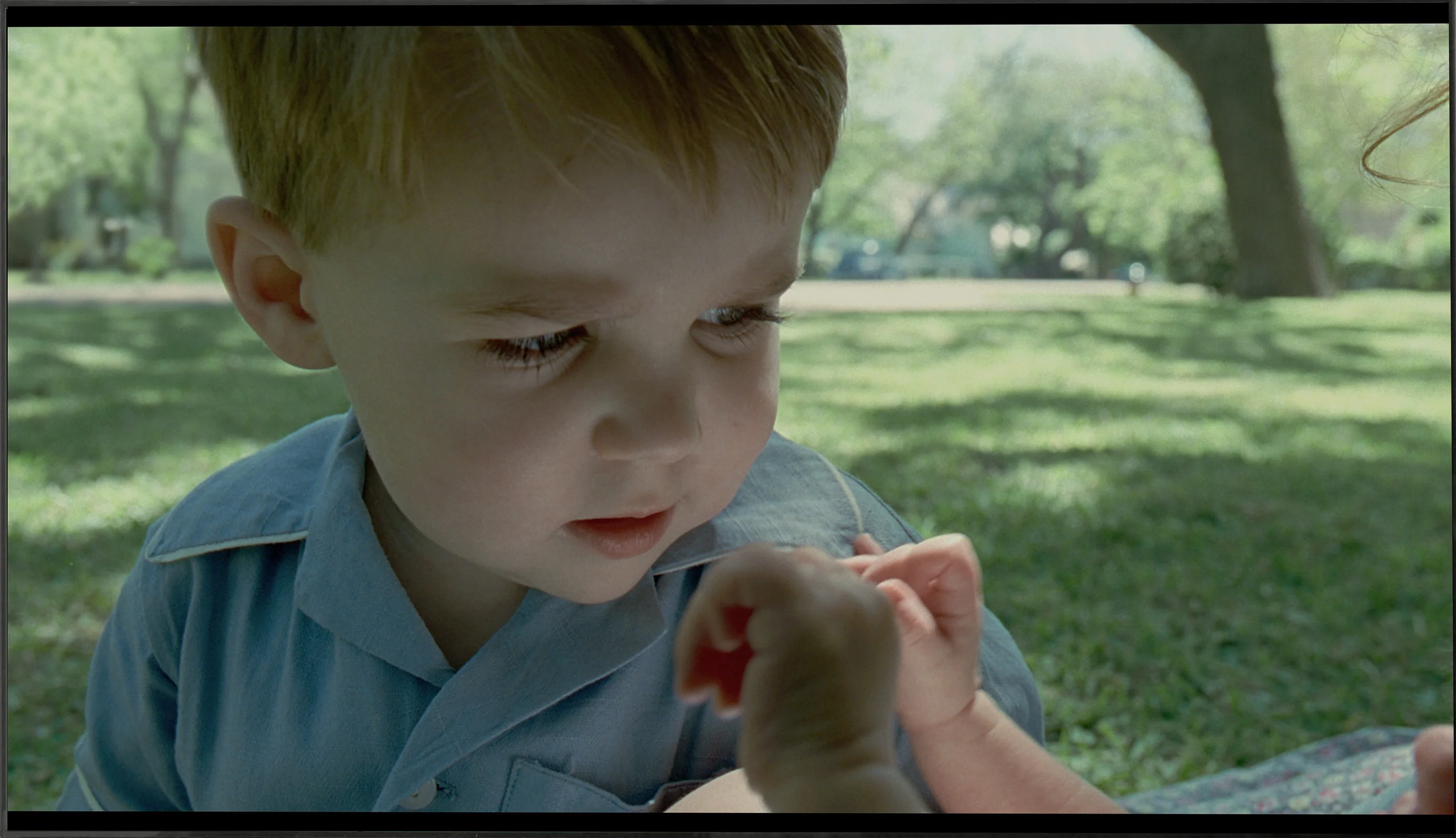
This gallery shows how colors change after professional TV calibration. If you notice the difference, we recommend ordering this service at SkalibrujTV.com.
Factory Mode
After calibration


This gallery shows how colors change after professional TV calibration. If you notice the difference, we recommend ordering this service at SkalibrujTV.com.
Factory Mode
After calibration
The best factory mode in which we conducted all our tests was "Filmmaker", which is now quite standard in televisions from this manufacturer. However, let's take a look at its characteristics before we start the calibration process. The first aspect we will examine is white balance, as despite being inconspicuous, it determines whether the image will be free from any tints. The graph clearly shows that in both SDR and HDR content, two colours dominated: red and green, which caused a strong yellow tint that was pervasive throughout the image. This is perfectly visible on the "ColourChecker" palette, where all colours shifted towards their warmer counterparts. The second thing we will scrutinise are, in our opinion, the two most important graphs in the context of image quality assessment: gamma and the EOTF curve. Both are intended to maintain appropriate brightness and contrast. The first describes the level of brightness in SDR materials, while the second depicts the rate of luminance increase. Analysing the first one, we can see that it has been remarkably lowered compared to the reference value indicated by the orange line. This situation resulted primarily in a sharp increase in brightness and a significant decrease in contrast, reminiscent of what one would expect from OLED televisions. The EOTF curve showed greater "caution" and only slightly brightened the entire image to 50% of the maximum brightness.
We tested the TV in Filmmaker Mode because, of the available presets, it produced the image closest to reference. The out-of-the-box colour reproduction wasn’t perfect, though. The biggest deviations were in the white balance, with too much red and not enough blue in the image, so the overall picture shifted noticeably towards warmer tones. Whites took on a slightly yellowish tint, and skin tones and bright areas didn’t always look natural. It wasn’t a fault that ruined the viewing experience, but in a direct comparison with the same panel after calibration the difference was clearly visible.
Color reproduction after calibration
9/10
7/10

The photos show how movies look on the TV. Pay attention to black detail visibility, colors, and shadow tint.

The photos show how movies look on the TV. Pay attention to black detail visibility, colors, and shadow tint.
Philips, like most leading manufacturers, has been providing advanced tools for the calibration process for years. Here, we find 2- and 20-point grey scale adjustments as well as an advanced CMS (Color Management System). As you can see, this has brought extremely beneficial results and fundamentally changed the perceived image. Practically every one of the elements mentioned above has undergone a transformation and has been returned to its natural state. This is particularly evident on the "ColourChecker" palette, where the measured samples are harmoniously in their places. It must be said that the white balance has turned out exceptionally well, allowing us to enjoy a clean image free from any tint in both SDR and HDR materials. The biggest issue with OLED809, which is gamma, has been properly modelled and only occasionally shows minor errors that won't affect the overall picture. The EOTF curve, on the other hand, has been stripped of that slight brightening and now presents itself almost referentially.
Calibration primarily corrected the white balance and removed the previously noticeable warm cast. After the correction, whites no longer had a yellow tint and colours became more neutral and natural. The biggest improvement was seen in SDR material, where the picture looked even and much closer to the reference. A similar effect was achieved in HDR. After calibration the image became more controlled, although not all of the TV’s limitations could be eliminated. The main issue remained intense reds, which were not always reproduced with sufficient precision. In practice the MRGB85 handles everyday SDR content very well, but in more demanding HDR material its limitations are still clearly visible.
Smoothness of tonal transitions
2.4/10
8.9/10

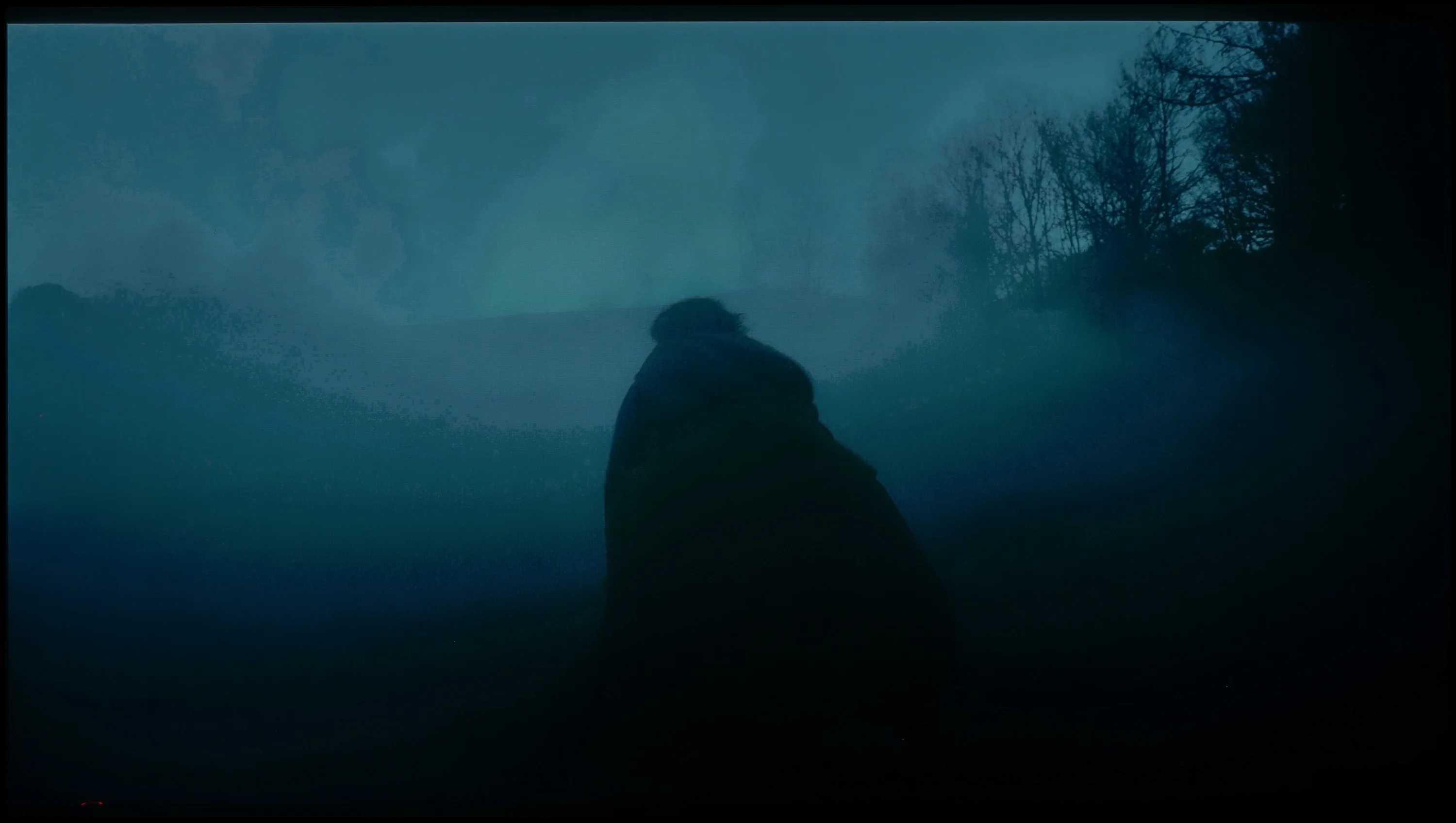
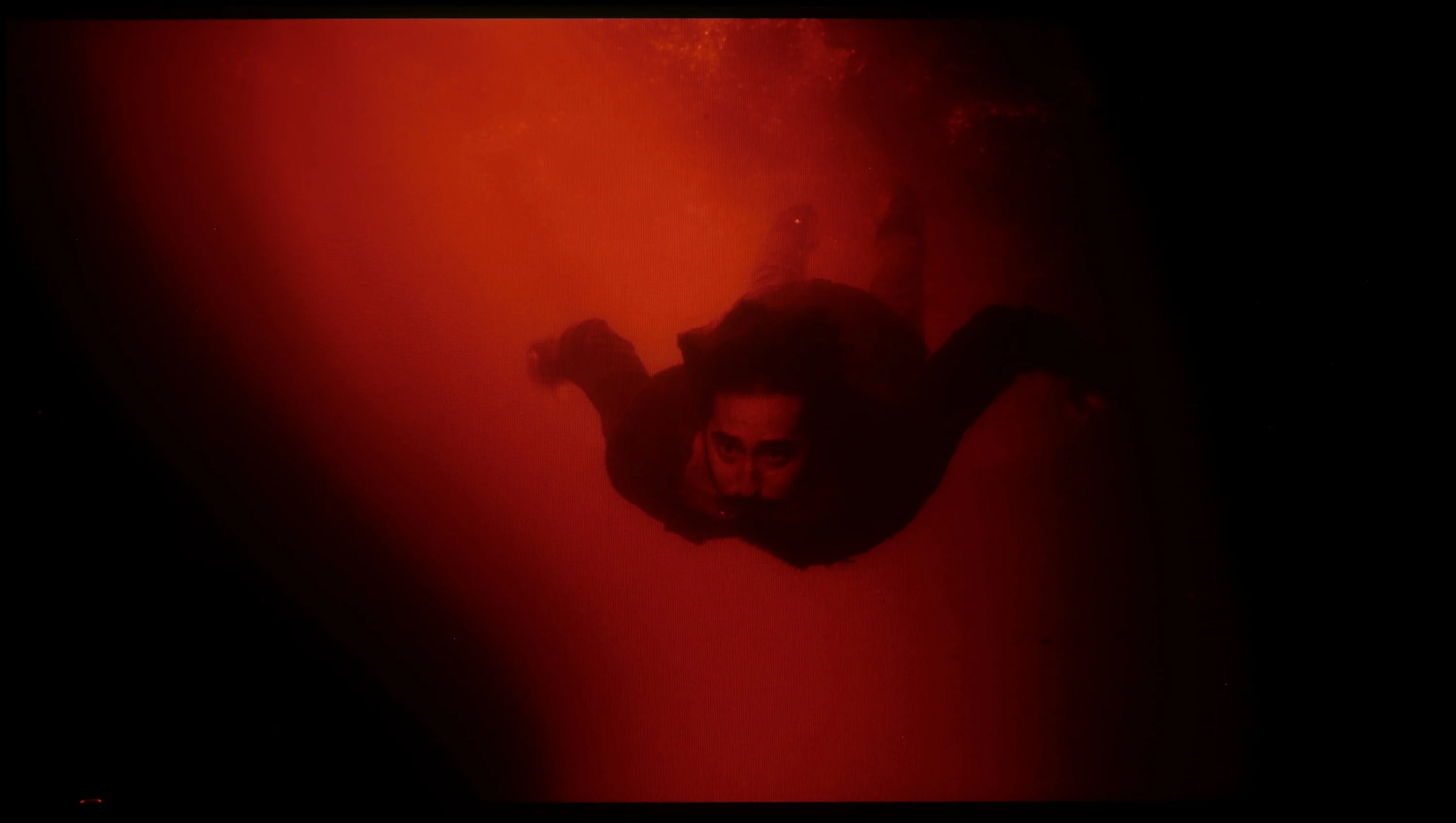
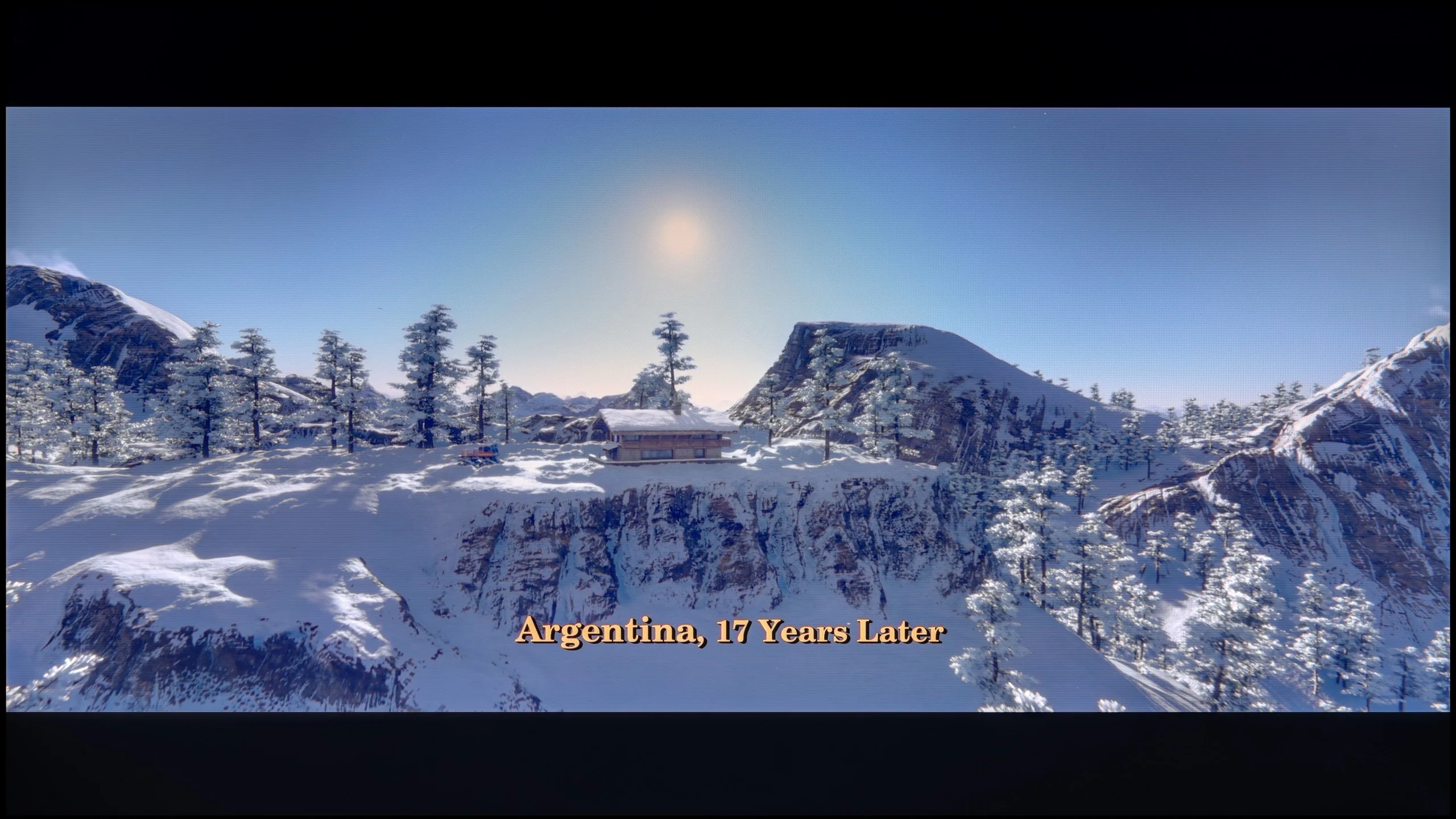
These are selected scenes that show smooth tonal transitions from one color to another. If you see distinct banding, it’s the TV panel’s fault.

These are selected scenes that show smooth tonal transitions from one color to another. If you see distinct banding, it’s the TV panel’s fault.
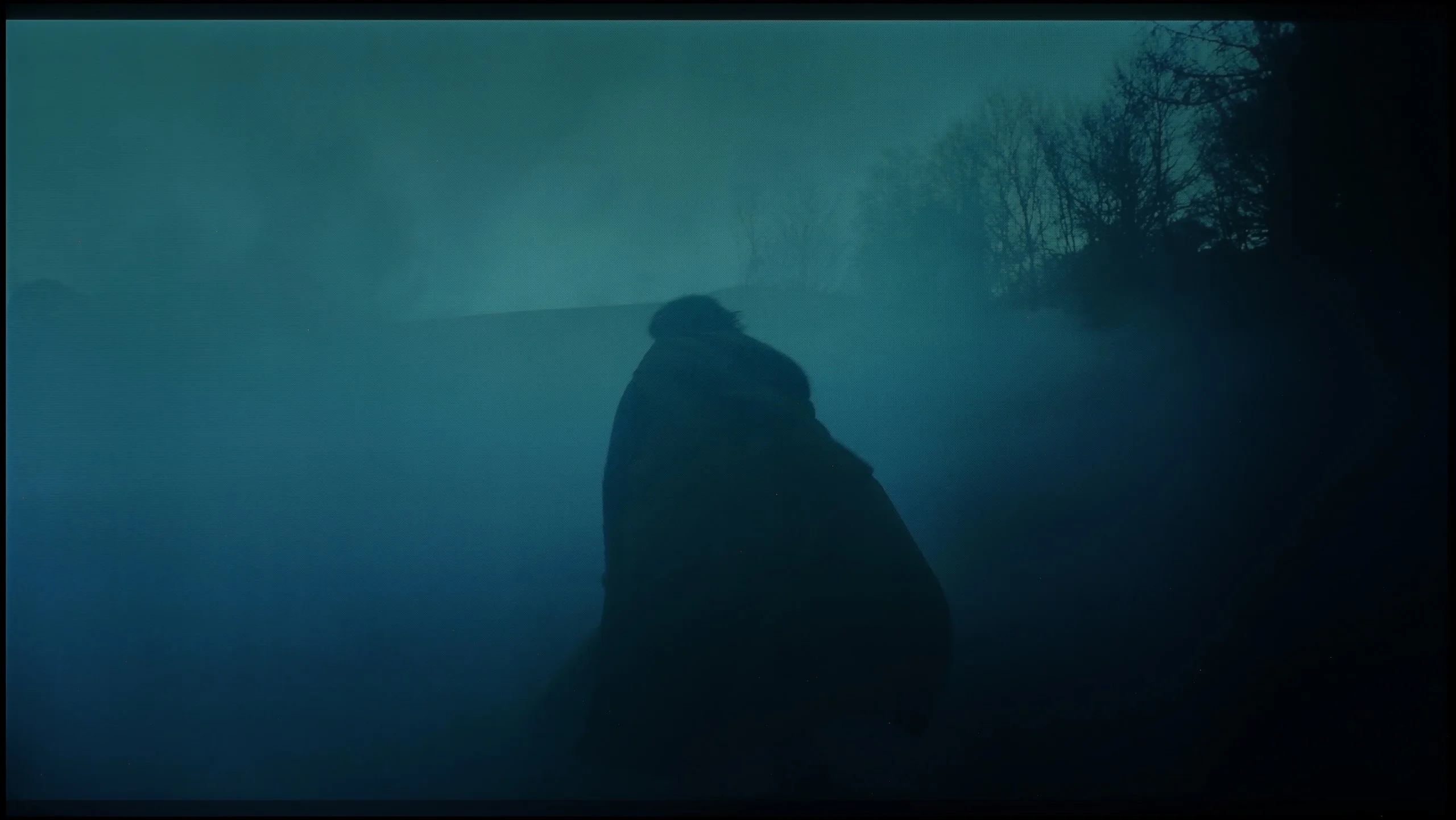
These are selected scenes that show smooth tonal transitions from one color to another. If you see distinct banding, it’s the TV panel’s fault.
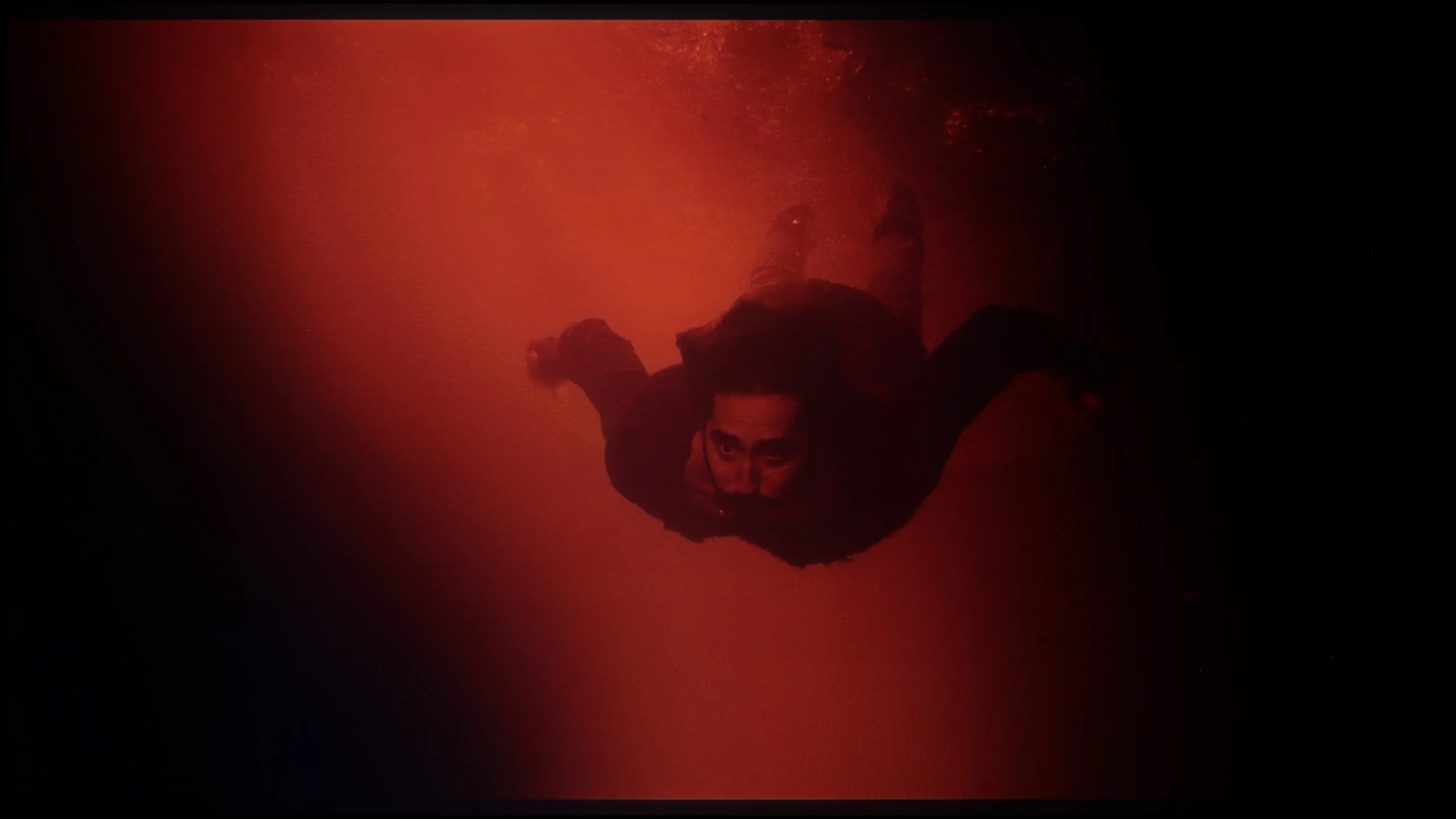
These are selected scenes that show smooth tonal transitions from one color to another. If you see distinct banding, it’s the TV panel’s fault.
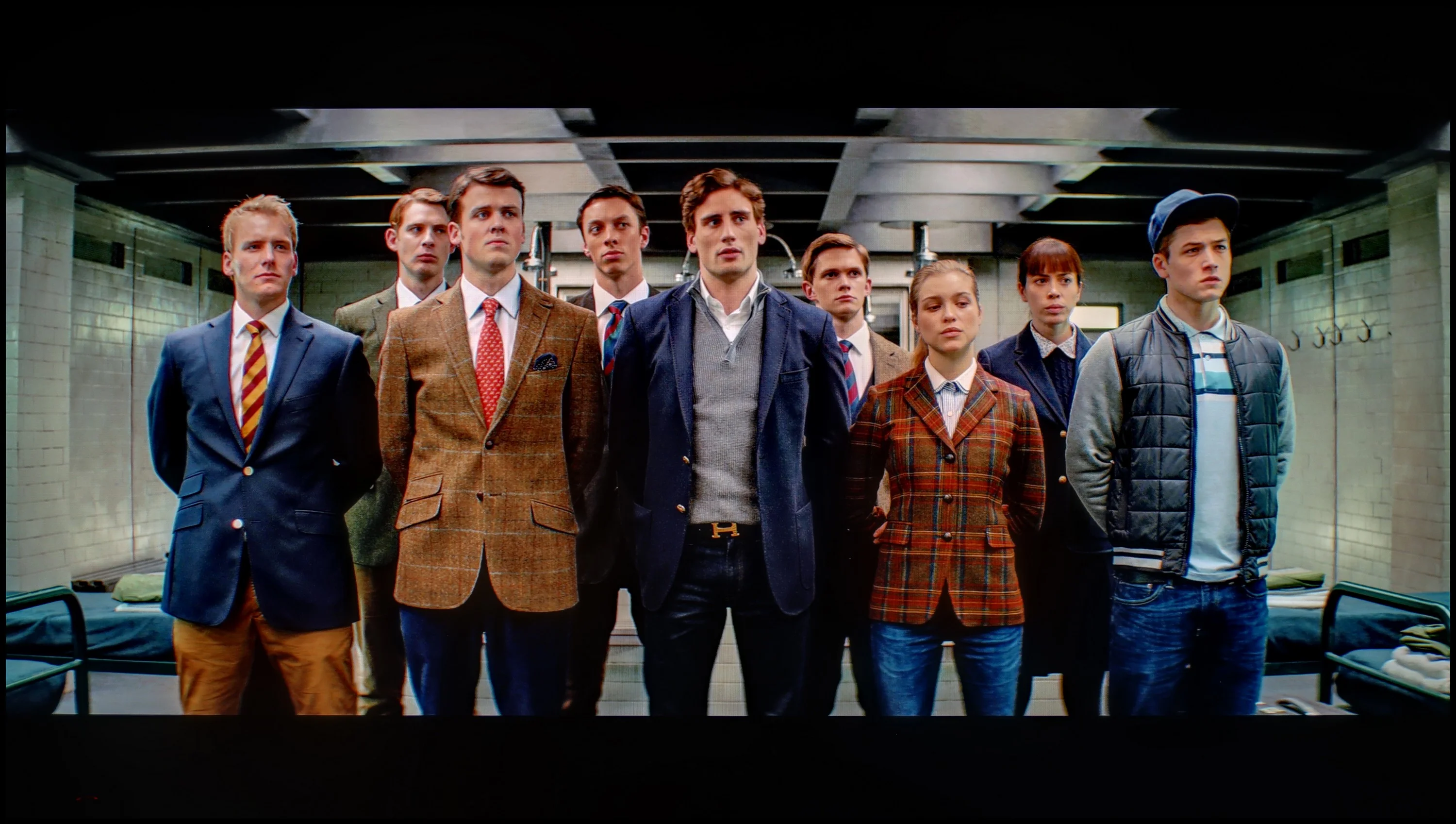
Equally important as colours, black and contrast in the context of image quality assessment, is its purity. The quality of tonal transitions can also be included in this category. How many of you have experienced the “banding” effect on your older screens? It is extremely annoying and often effectively hinders immersion in the series or film being watched. Philips OLED 809 unfortunately has some of those issues that are better left unmentioned. However, out of editorial duty, they deserve to be examined and assessed, which will be quite simple given their lack of complexity. As you can see, practically every scene showed a lack of fluidity between colours. And just like in the movie “Kingsman,” this is still acceptable, but in other productions, you really cannot leave a dry thread on them, especially when looking at “The Green Knight.” There, the dense fog has practically been replaced by horizontal bands and indistinct geometric shapes. There are televisions that can manage tonal transitions perfectly, but unfortunately, Philips OLED 809 doesn't belong to that group. During testing, we could see the banding effect, particularly in demanding scenes, which negatively impacts the viewing experience. Philips OLED 809 test indicates that even the options for removing posterization are not sufficiently helpful, which can be considered a serious flaw.
LG MRGB85 handles tonal gradations quite well. In bright scenes posterization is least noticeable and the TV has no trouble separating individual shades. Tonal transitions in dark scenes are a bit worse, though, where posterization in the most demanding moments that move into dark grey shades can be more visible. This is, however, a fairly typical issue for most TVs. It's worth noting that similar behaviour can be seen in Dolby Vision mode, where posterization on the MRGB85 is slightly worse than usual.
Image scaling and smoothness of tonal transitions
5.5/10
7.8/10


Smooth transition function
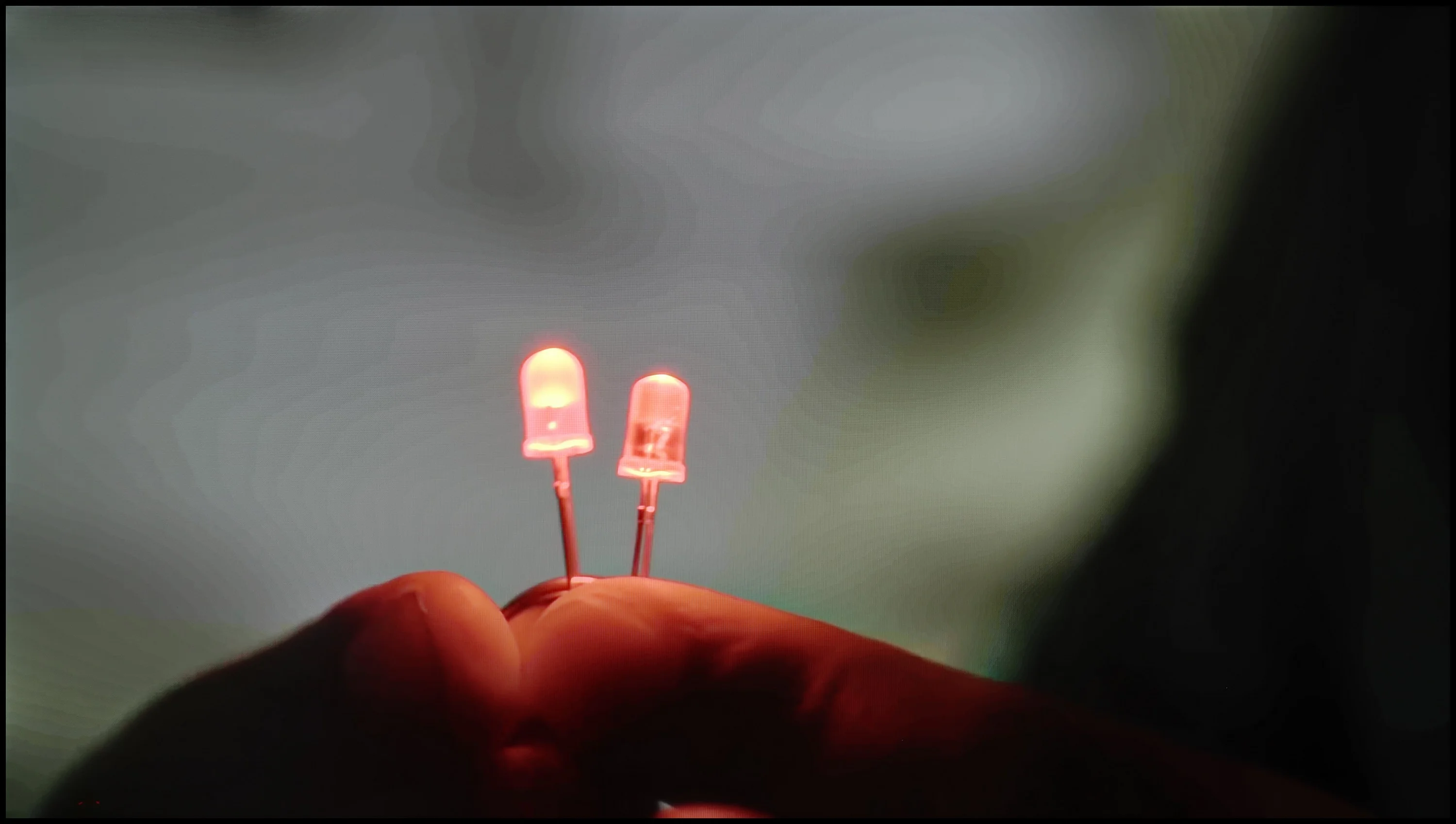
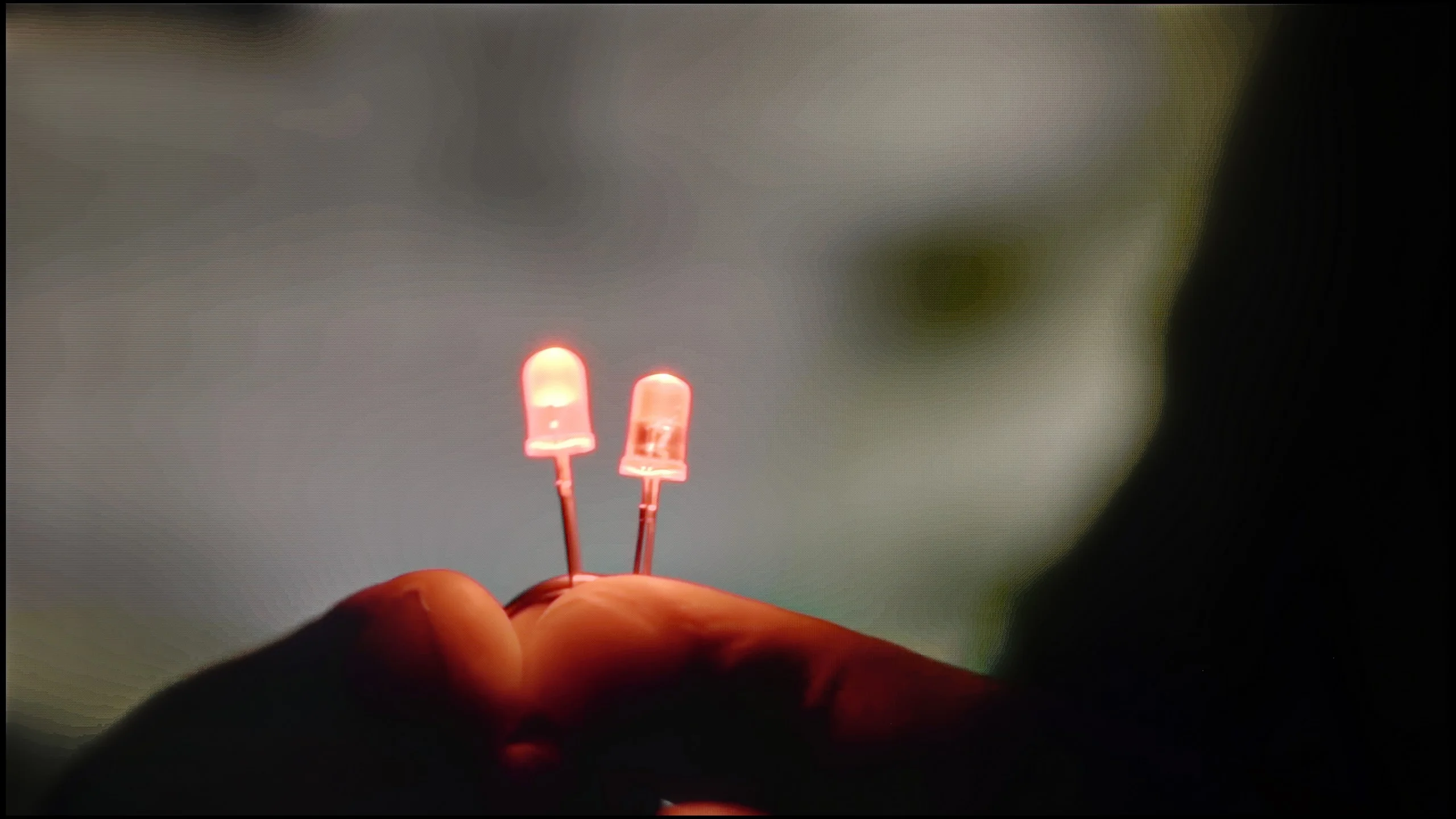
The match photo shows how the TV smooths weak tonal transitions in low-quality video.
Image scaling SD (576i)


The model photo shows how it handles upscaling of SD material.
Philips OLED 809 didn't perform too well in the test for the smoothness of tonal transitions. Moving on to the part of the test where we assess the behaviour of the TV's algorithms, we will again check the function responsible for removing posterisation. In fact, such a function exists in the menu and has several options available. As you can see in the photo on the left, although its presence has been confirmed by us, it is not useful. Only at the highest setting does it effectively remove disruptions, but it blurs the entire image in the process. Therefore, it is completely unusable.
Time and again, you and we find ourselves watching materials of lower quality. In this case, the quality of the image upscaling algorithms can have a salvaging effect. We must admit that those implemented in OLED 809 work quite efficiently and improve the image quality without visible artefacts. You can only notice slight edge blurring, but it is unlikely to be noticeable during normal viewing.
Upscaling and digital image processing perform quite well in the LG MRGB85. The Alpha 8 AI 4K Gen7 processor efficiently upscales lower-resolution material, and you can easily turn off overscan regardless of the source. The TV also handles compression artefacts well. The "Smooth Gradation" function can effectively reduce visible banding and tonal unevenness, but it isn't always precise. At higher settings it can also smooth out fine details, such as the texture of materials. A plus is that it doesn't remove film grain. The safest option is the "Low" or "Medium" setting, which offers the best compromise between artefact reduction and preserving detail.
Blur and motion smoothness
8.5/10
7.3/10
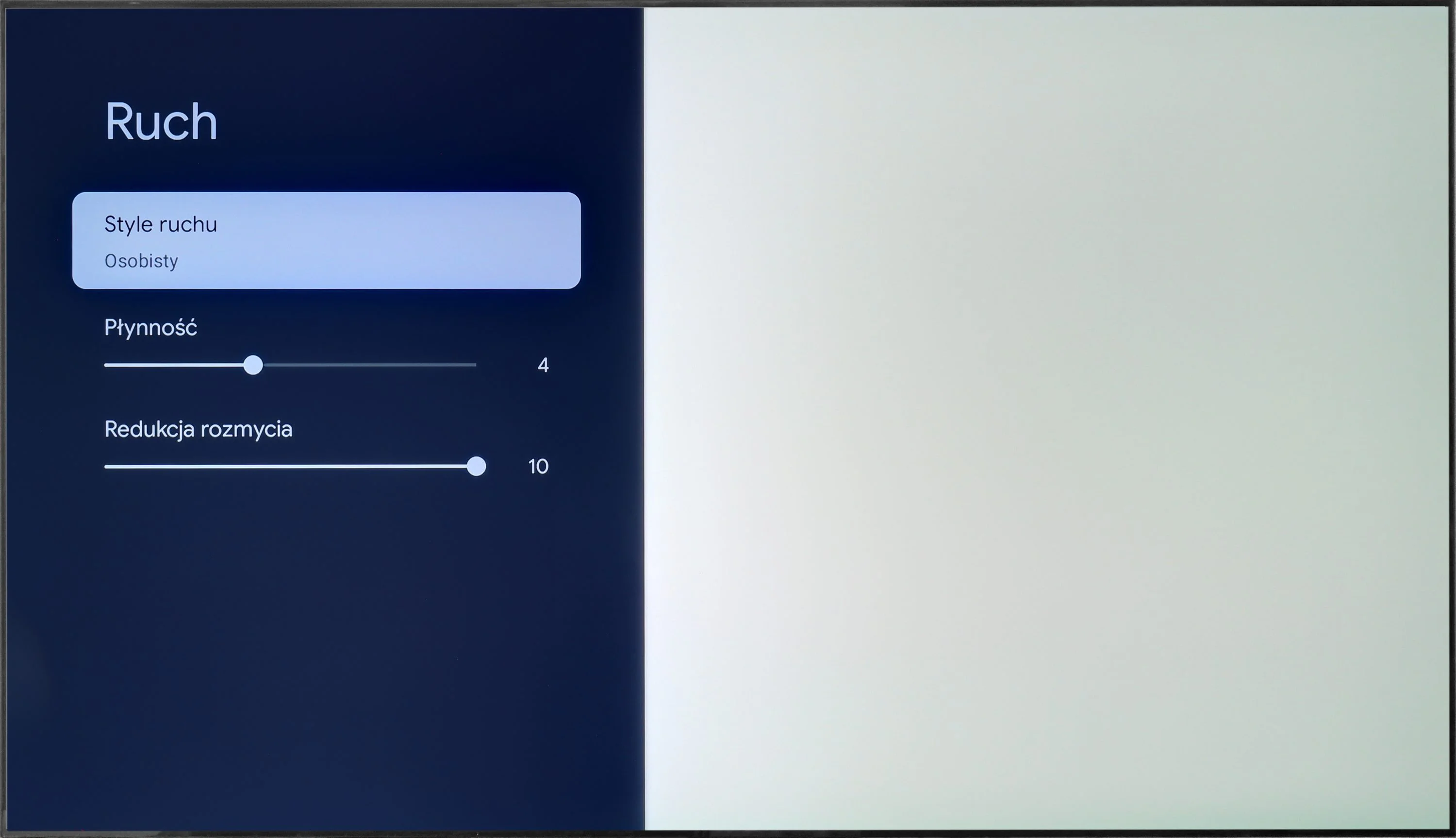
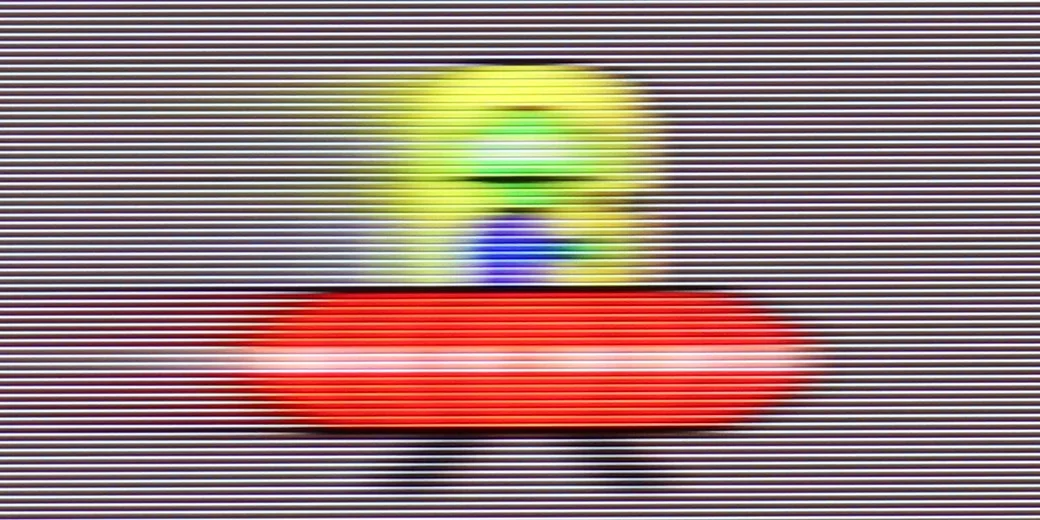
Blur (native resolution, maximum refresh rate):




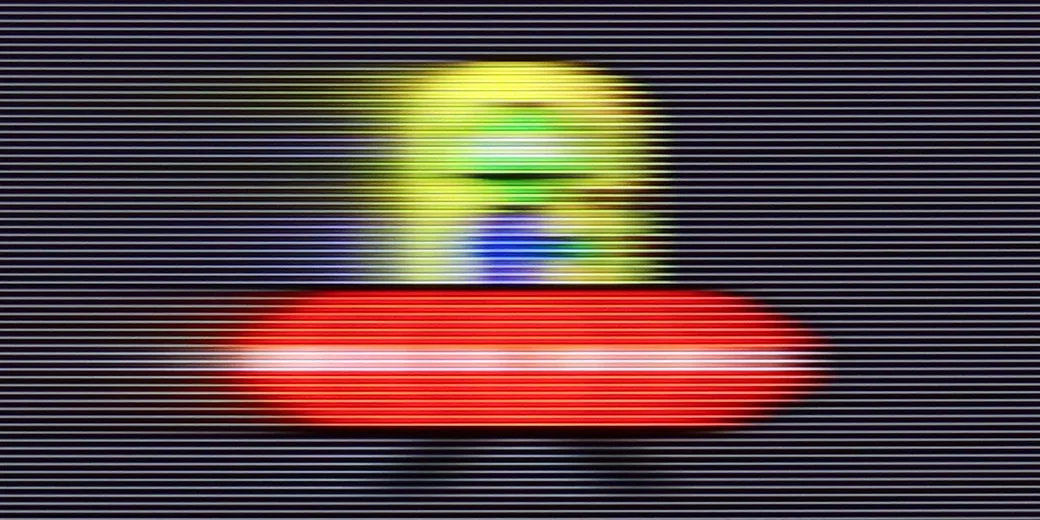
Blur (BFI function enabled):

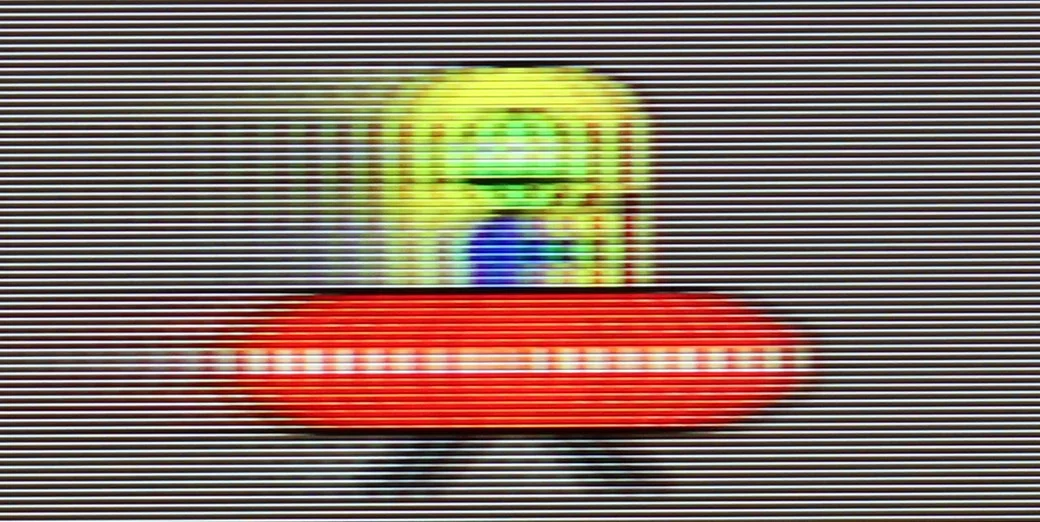
Blur ():
Blur (4K@144Hz):

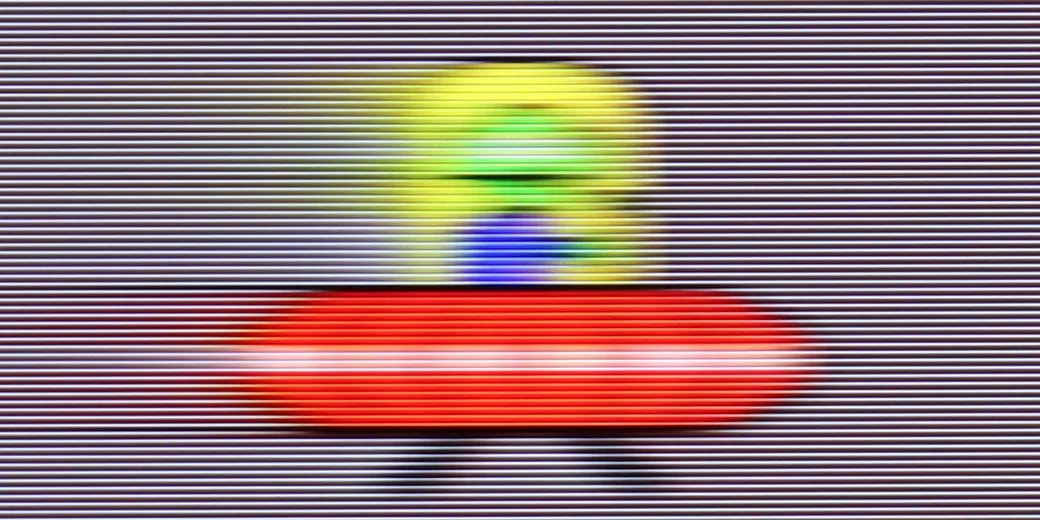
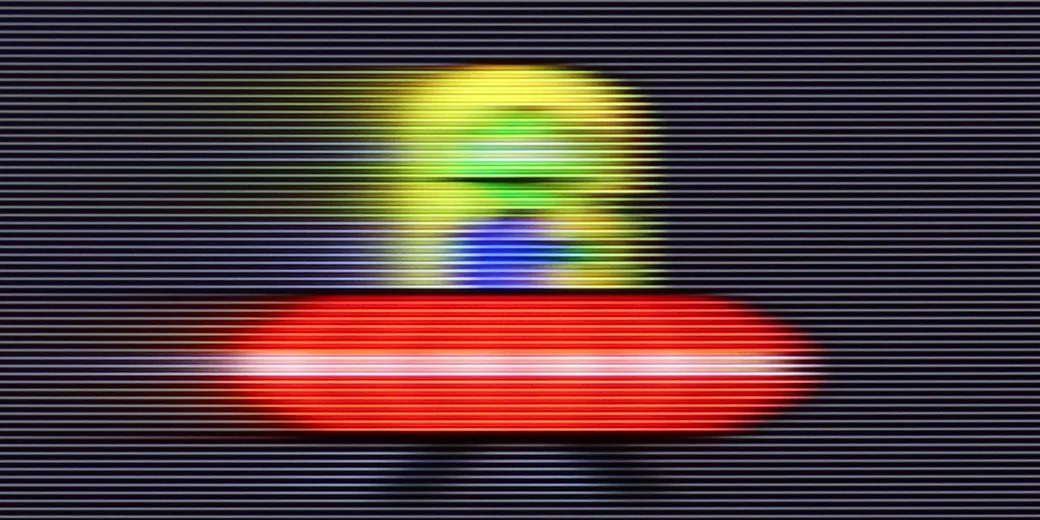
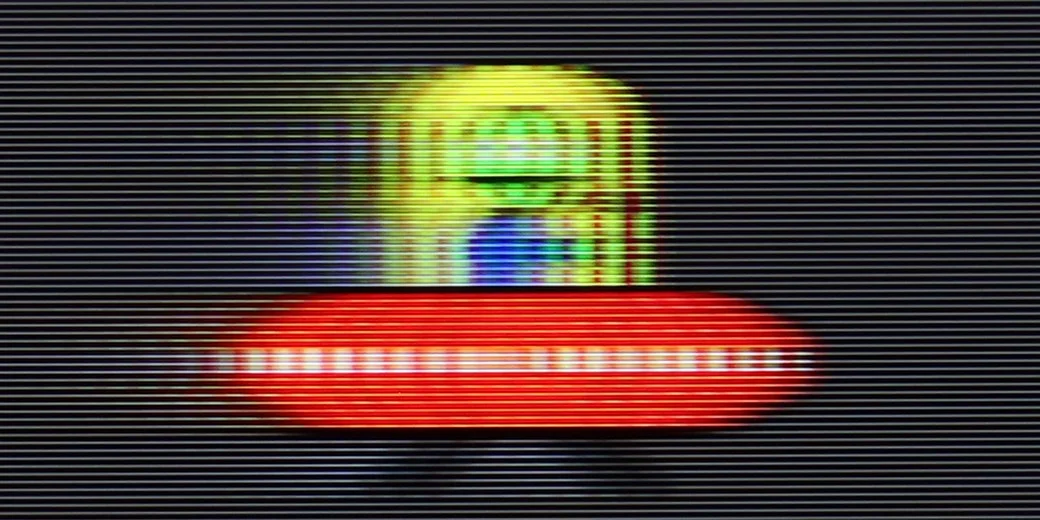
The maximum refresh rate we can set on the tested television is 144 Hz. This value can be achieved by connecting it to a really powerful PC. In the case of consoles or television, everything remains the same. For those who require high movement fluidity or dislike the characteristic judder of films recorded at 24 fps, the manufacturer has prepared a fairly advanced motion smoothing system. In the dedicated tab, we will find the “Smoothness” slider responsible for eliminating judder and “Blur Reduction”, which helps increase the sharpness of dynamic elements. The function works very well and granularly, meaning each of the settings has a real impact on the perception of motion. We also mention that it works at a refresh rate of 120 Hz, as it operates on the multiples of film or television materials. Thanks to such an extensive set, every user will find their happy medium. In the photo, we present our choice, which is slight smoothing without the soap opera effect.
Motion is influenced not only by the settings on the television but also by the response time of the panel itself. OLED televisions feature the best response time on the market, which in the case of 809 is about 0.1 ms. There are no IPS/ADS or even VA panels that significantly come close to the results of organic panels.
The LG MRGB85 is fitted with a VA panel with a native 144 Hz refresh rate, so its motion handling is very good. The TV easily handles 120 Hz content from consoles and higher refresh rates when connected to a PC. That matters not only for gaming but also when watching sport, where camera motion is noticeably smoother than on basic 60 Hz panels. There’s also the TruMotion system, which lets you set the level of motion smoothing yourself. You can keep a more cinematic motion or increase smoothness, which works well for live sports and TV programmes. The adjustment range is wide, so you can easily tailor the motion smoothing to your own preferences.
Console compatibility and gaming features
10/10
9.8/10
- ALLM
- VRR
- VRR range40 - 144Hz48 - 144Hz
- Dolby Vision Game Mode
- Correct implementation of HGIG
- 1080p@120Hz
- 1440p@120Hz
- 4K@120Hz
- Game bar
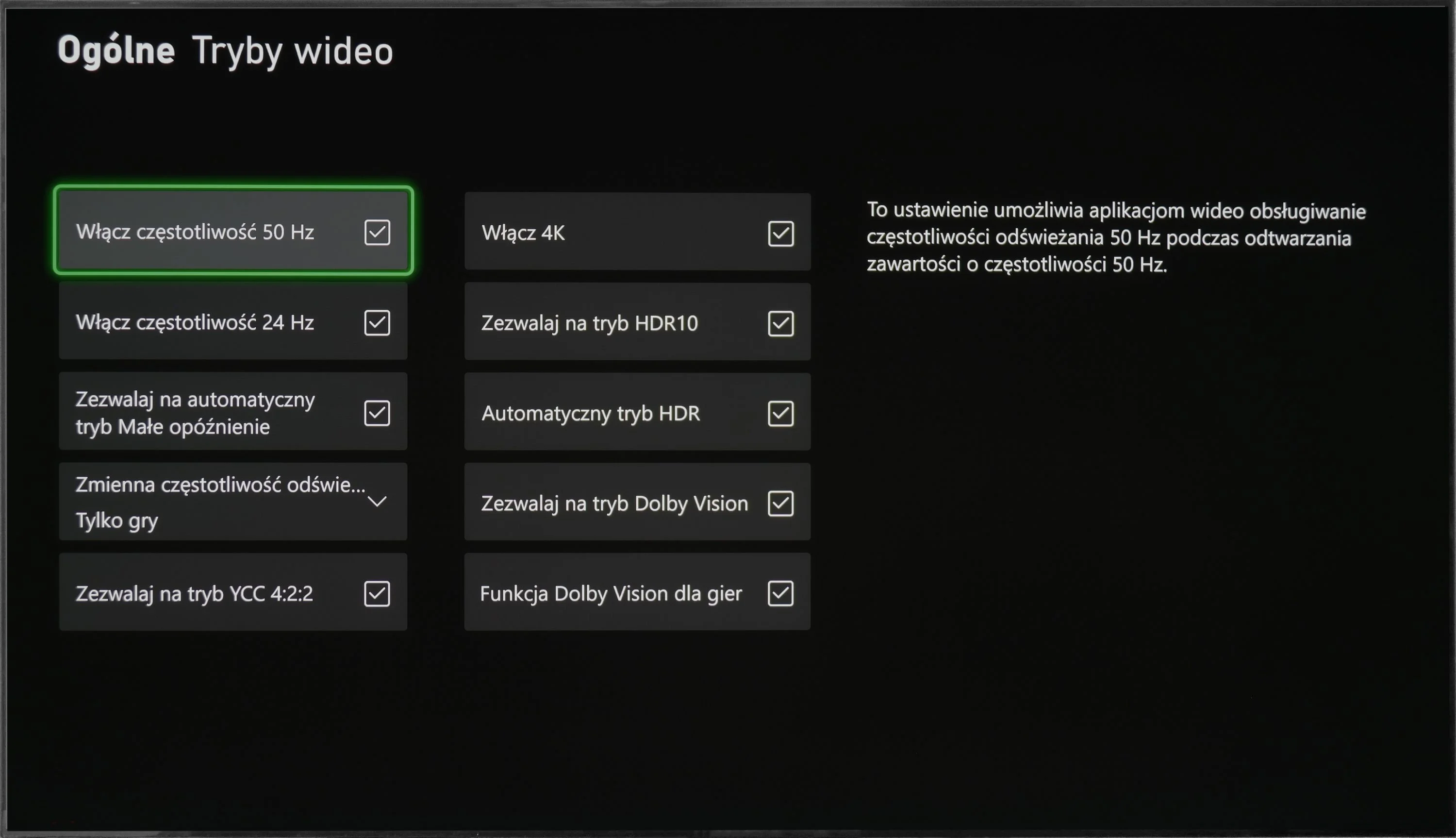
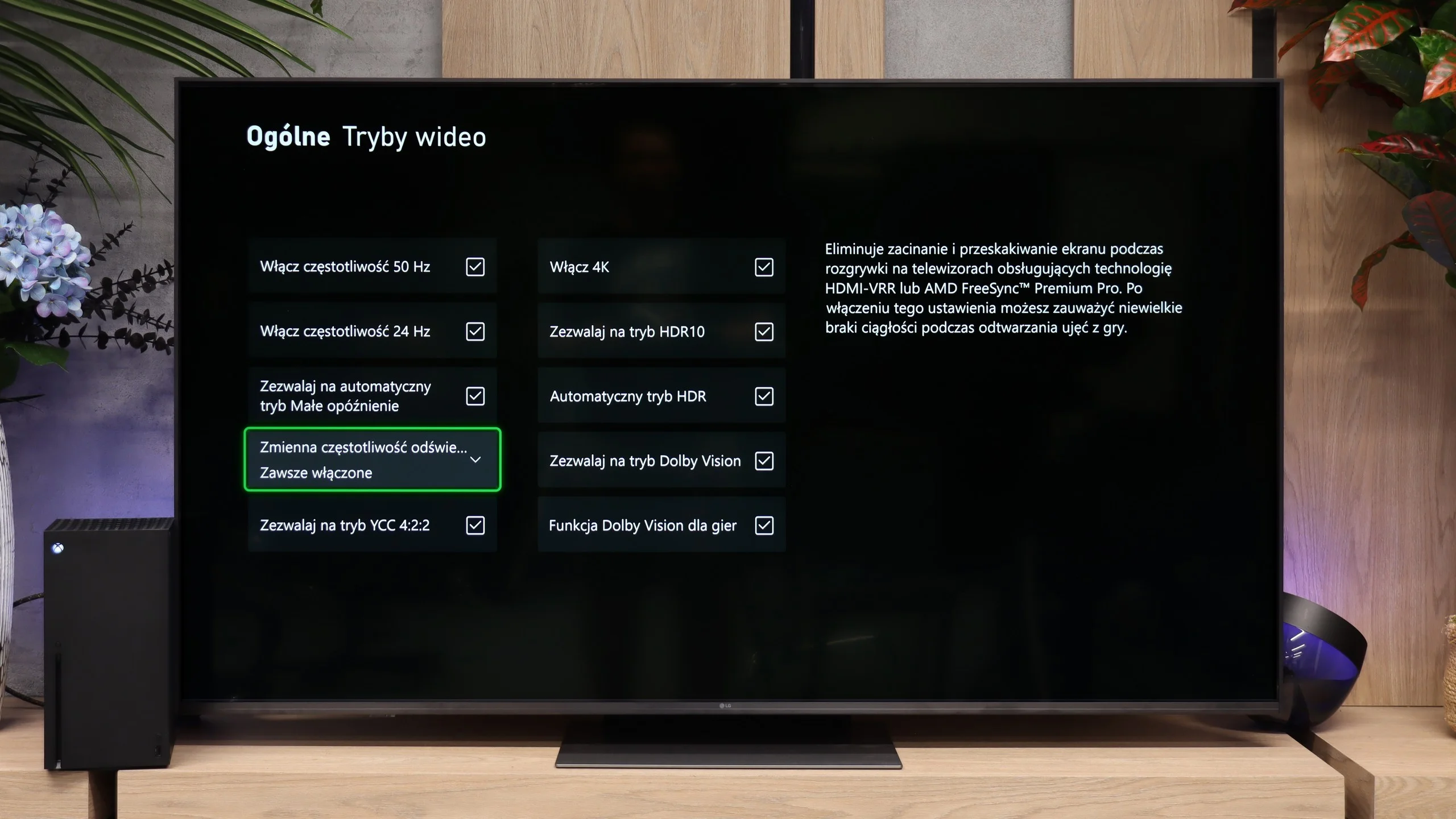
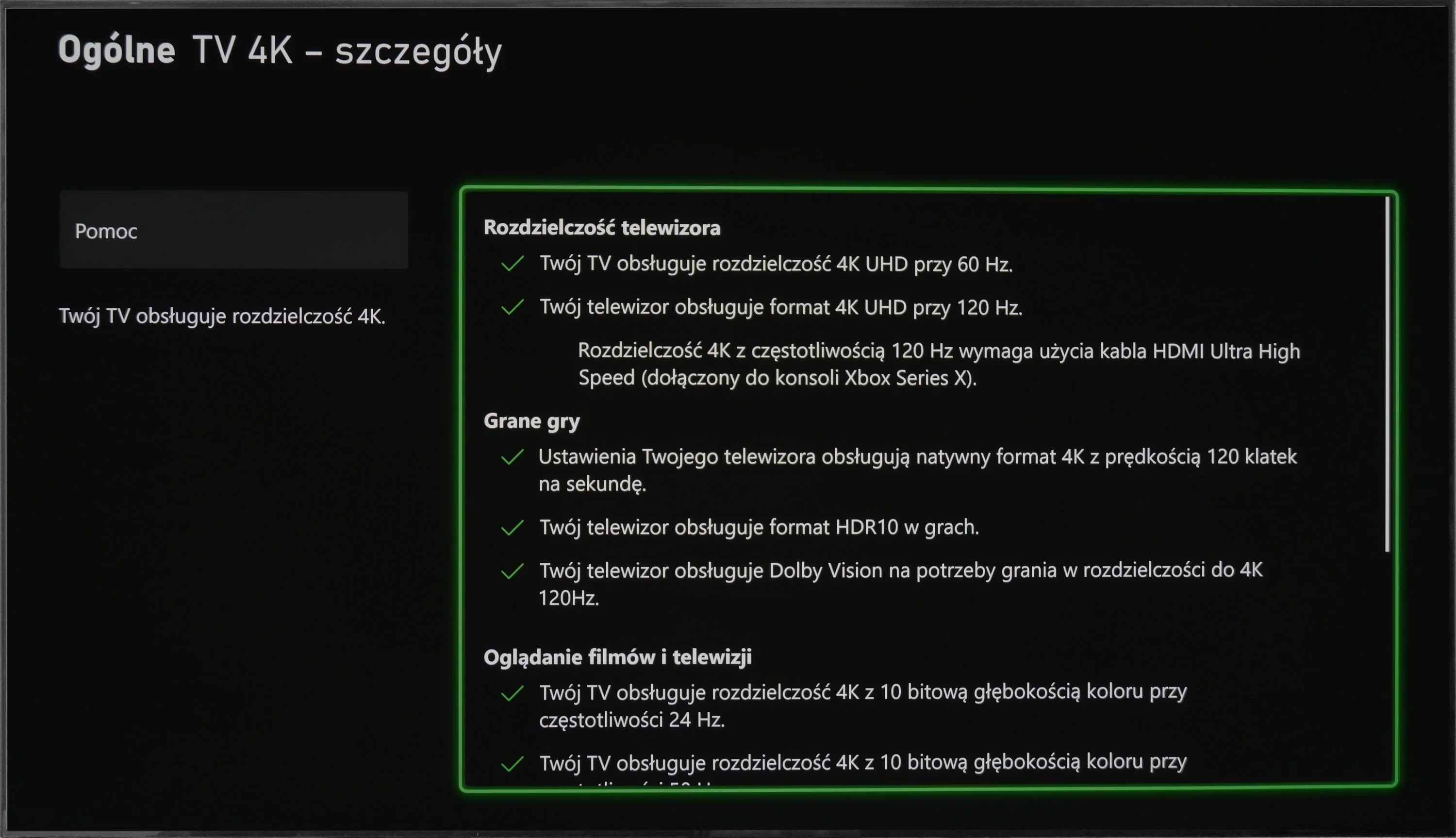
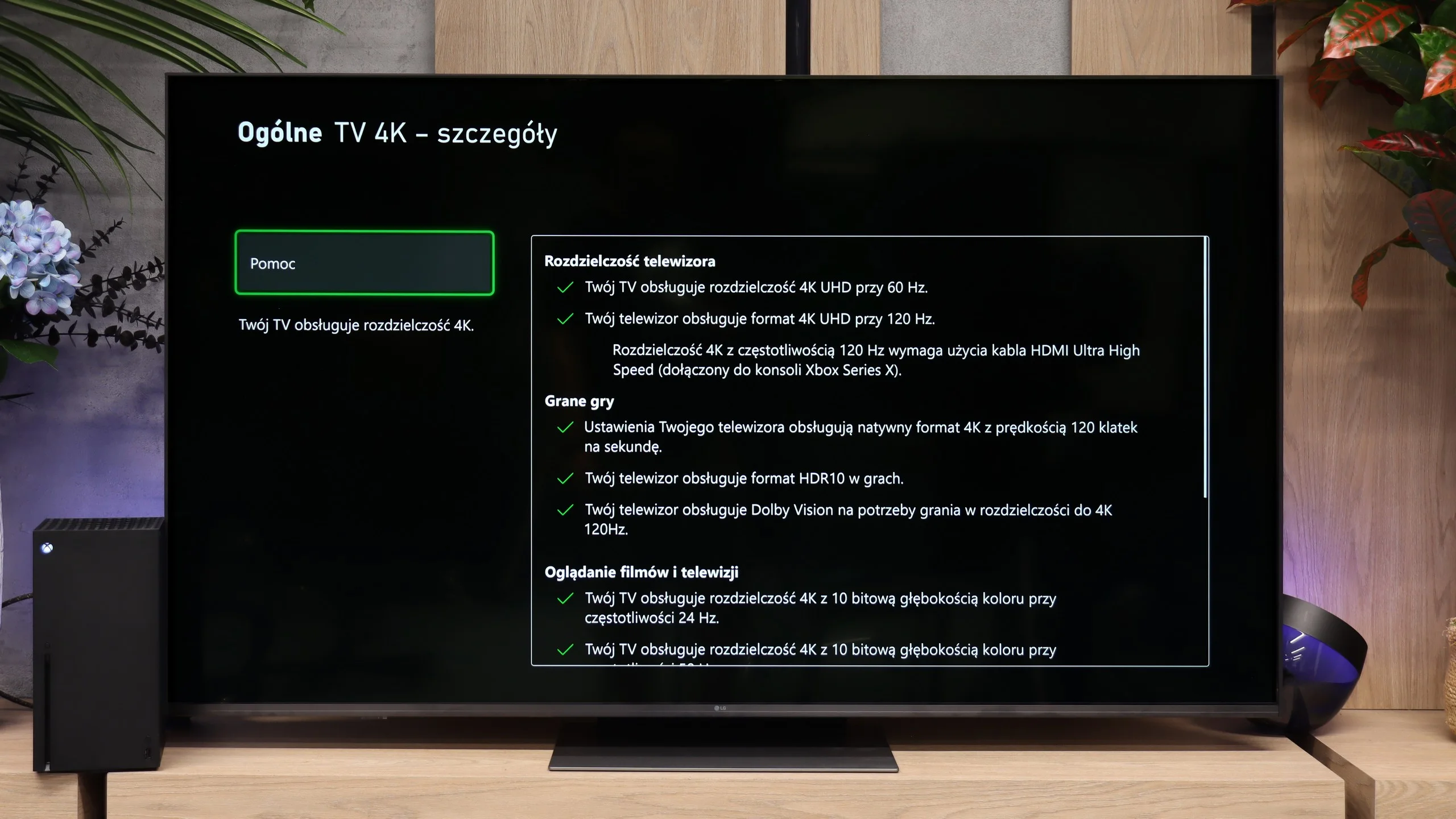
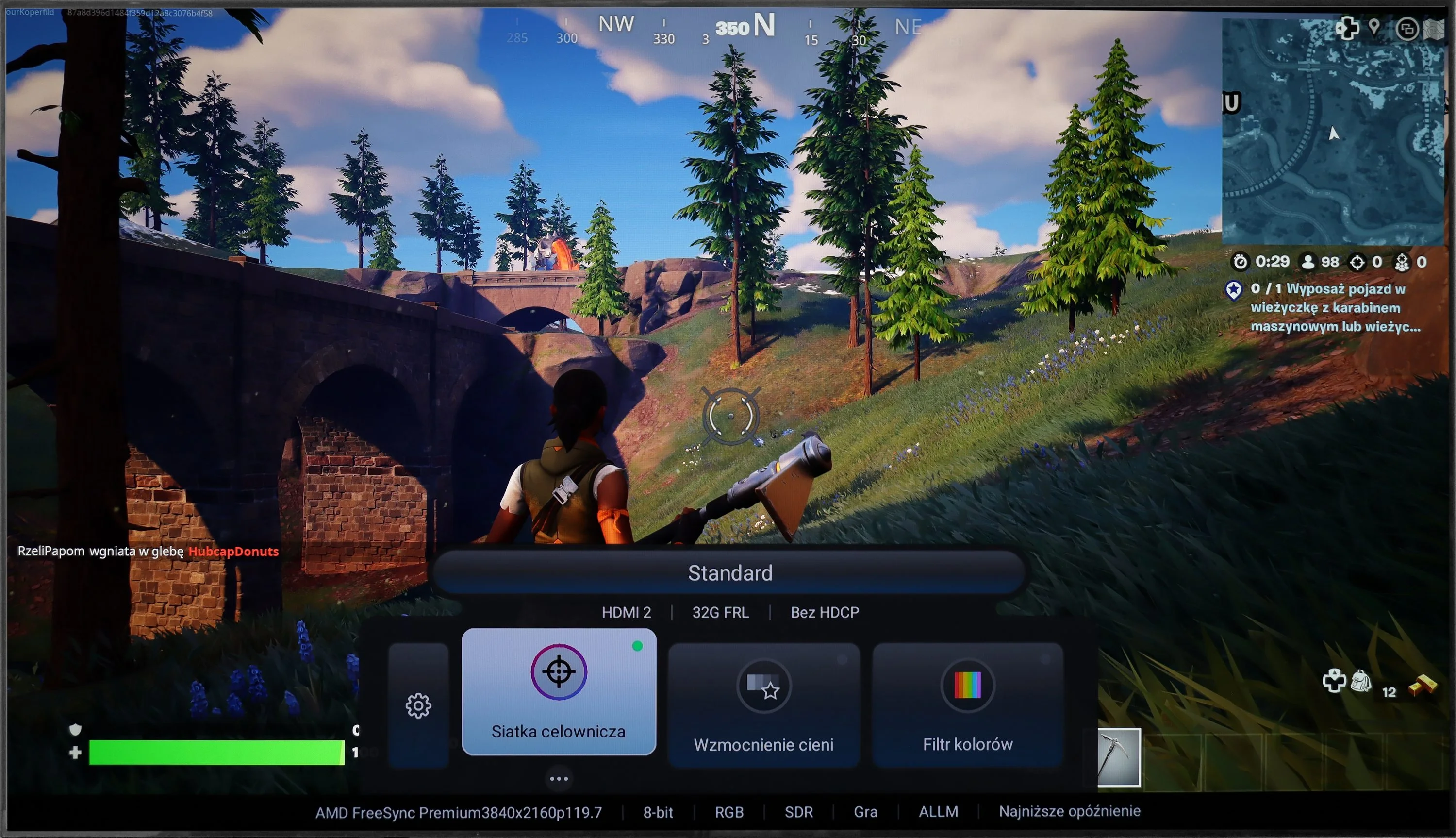
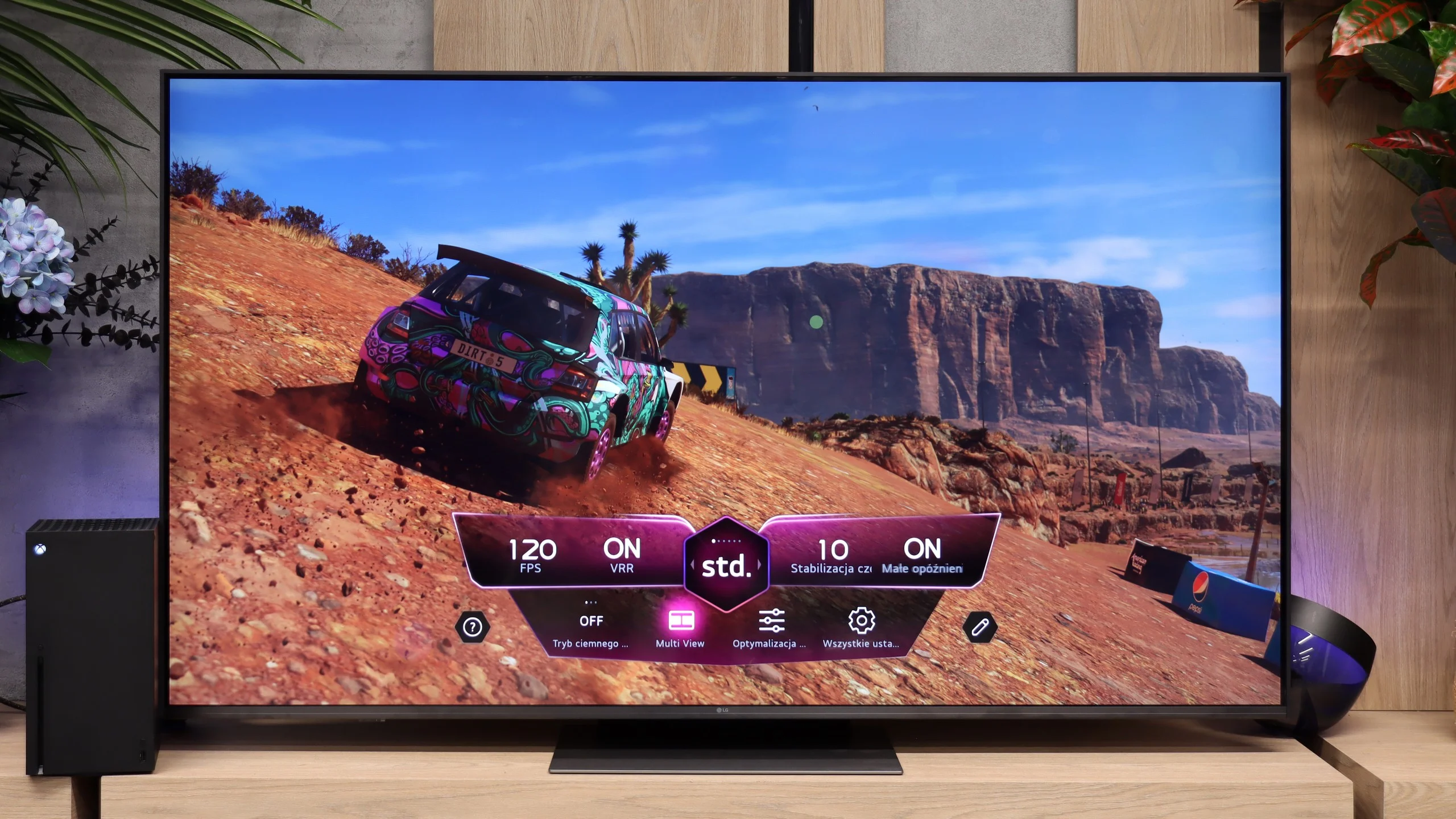
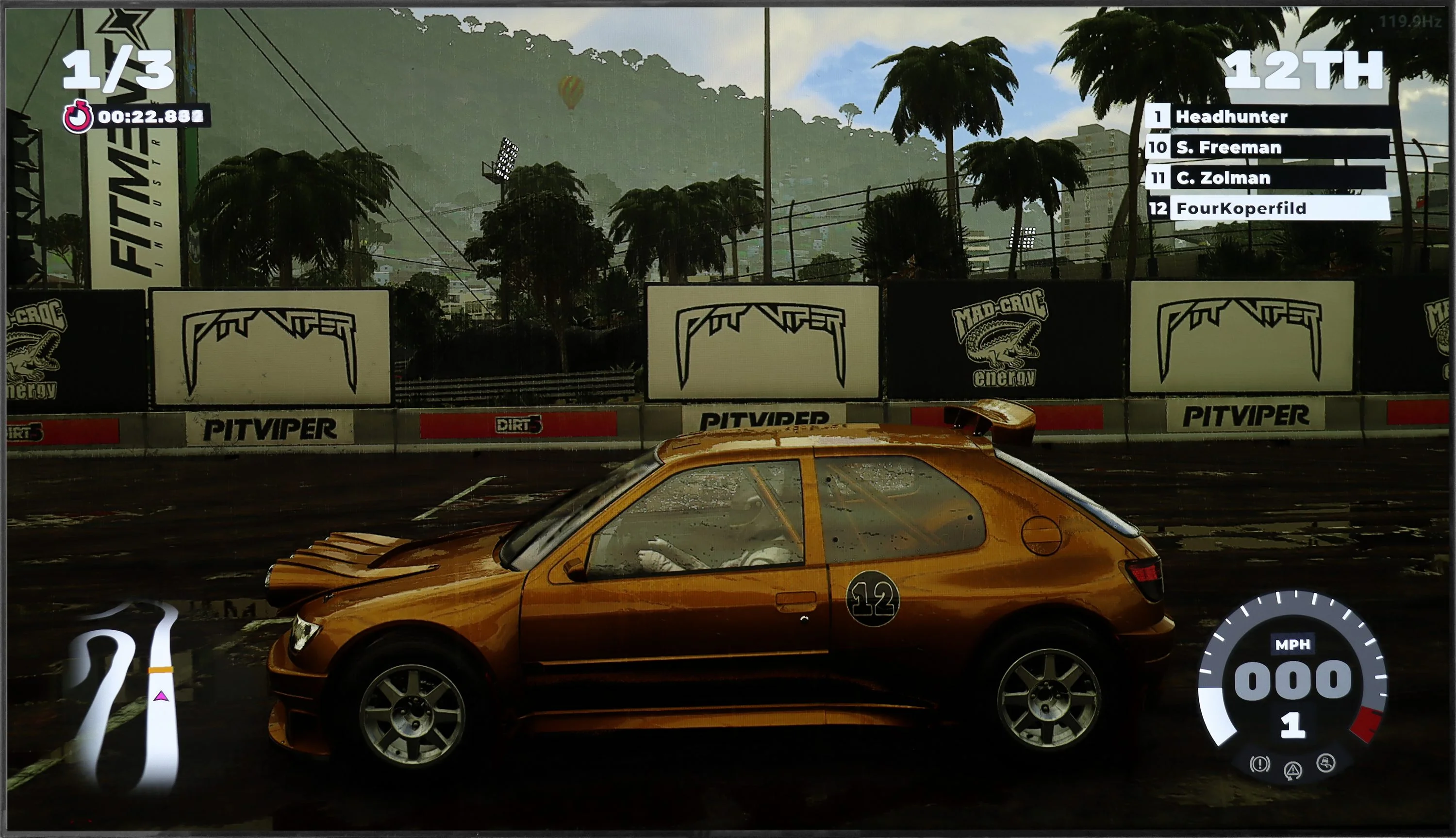
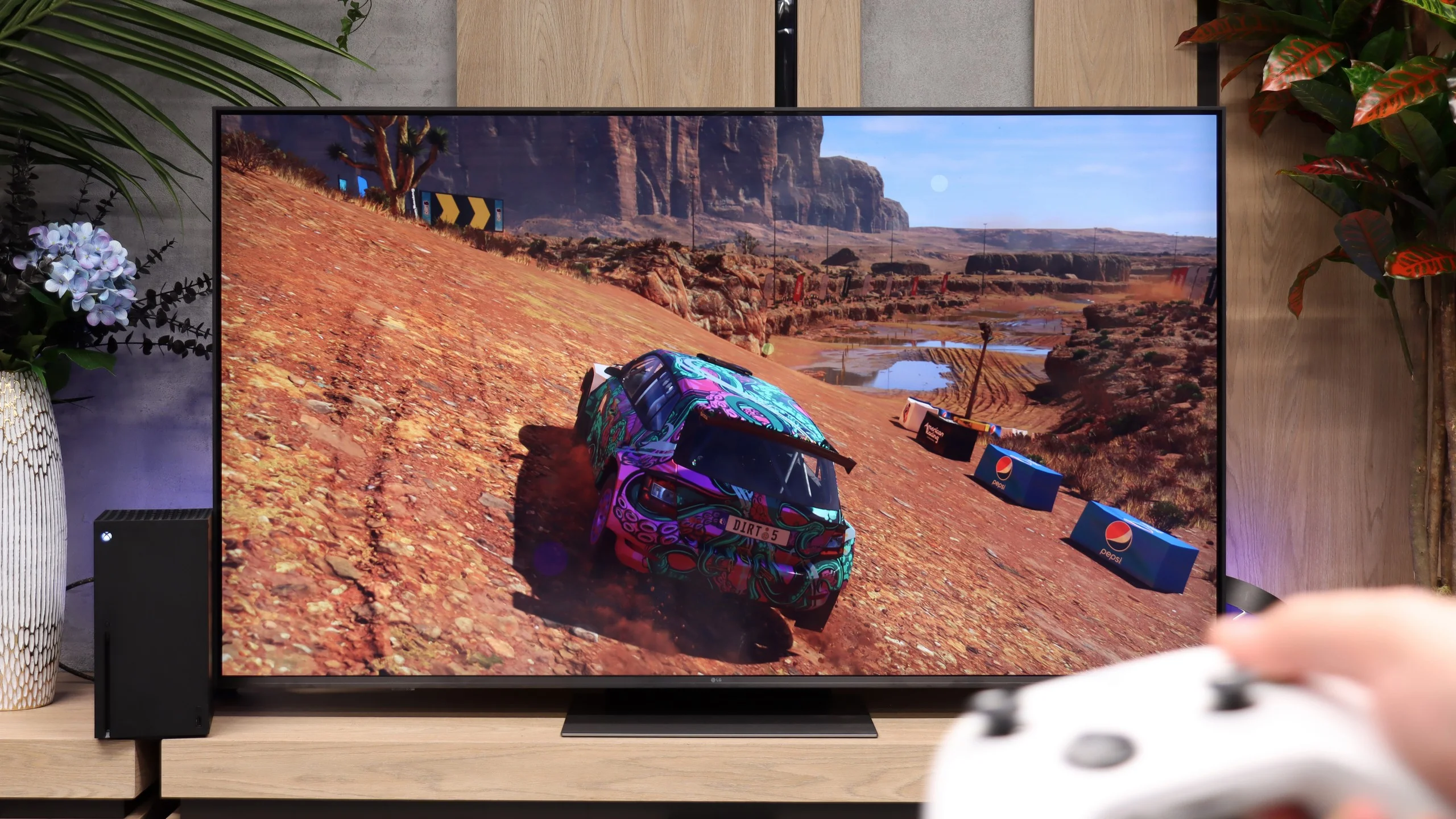
The Philips OLED 809 supports all the technologies included in the HDMI 2.1 standard, and during our tests, each one activated without any problems. Therefore, we must state that this television is perfect for all gamers, both those using a console and a computer. It's worth mentioning that the manufacturer has implemented the HGIG mode, which is a great alternative to Dolby Vision, which unfortunately on the OLED809 is unplayable due to the very high input lag.
A nod to gamers is also the inclusion of a dedicated GameBar, which allows monitoring of current gameplay parameters and quick adjustments of settings. There is also a function to activate a crosshair, which will be very useful when shooting from a sniper rifle, but from the so-called hip. Additionally, we can also find a shadow enhancement function for better visibility in shadows and a colour filter for gamers with visual impairments.
In summary, the OLED 809 is a very good and versatile device for gamers. Anyone who purchases this television for gaming does not need to worry about anything, as it is simply designed for gaming. Especially since features such as VRR, ALLM, G-Sync, FreeSync, and HDR Dolby Vision gameplay will allow for an even deeper immersion in their favourite title. Lastly, we should note that the only downside of the television in game mode is the artificial sharpening of the image, regardless of the settings, and it cannot be 'softened.'
When it comes to gaming, the LG MRGB85 performs by far the best. The manufacturer hasn’t skimped on the kit and has essentially carried over the full suite of features from pricier TVs into this model. You get three HDMI 2.1 ports with full 48 Gb/s bandwidth. Each supports 4K 120 Hz from a console, and when connected to a PC also 4K 144 Hz. So you don’t need to worry which port to plug your console or PC into, as they all offer the same set of capabilities.
On board you’ll also find VRR, AMD FreeSync Premium, NVIDIA G-Sync Compatible, ALLM and HGiG. Dolby Vision Gaming is included too, allowing supported games to use high refresh rates and dynamic HDR simultaneously on Xbox. Rounding it off is Game Optimizer, a handy in-game menu. Without leaving the game you can change the picture profile, brighten shadow detail or check the current frame rate. In terms of gaming features, the MRGB85 therefore offers almost the same as significantly more expensive LG models.
Input lag
9.5/10
9.7/10
SDR
HDR
Dolby Vision
The results of the input lag measurements on the Philips OLED 809 are at a high level, regardless of the signal or resolution. All gamers will surely appreciate the manufacturer's efforts, thanks to which a game running at 4K120Hz with HDR has only 5 ms of lag, which is practically unnoticeable even in online games. One should not forget about the proper implementation of the game mode with Dolby Vision, which can be praised for a similar response time of 13 ms. In this case, the Philips OLED 809 receives our highest score.
Input lag on the LG MRGB85 is really low. Our measurements showed about 10 ms with a 120 Hz signal and about 20 ms at 60 Hz. Importantly, we observed similar results in Dolby Vision mode. They may not be the absolute best on the market, but in practice they’re more than enough for comfortable, smooth gaming. The delay isn’t noticeable and shouldn’t be a problem even in fast-paced action games or online titles.
Compatibility with PC
6.4/10
8.4/10
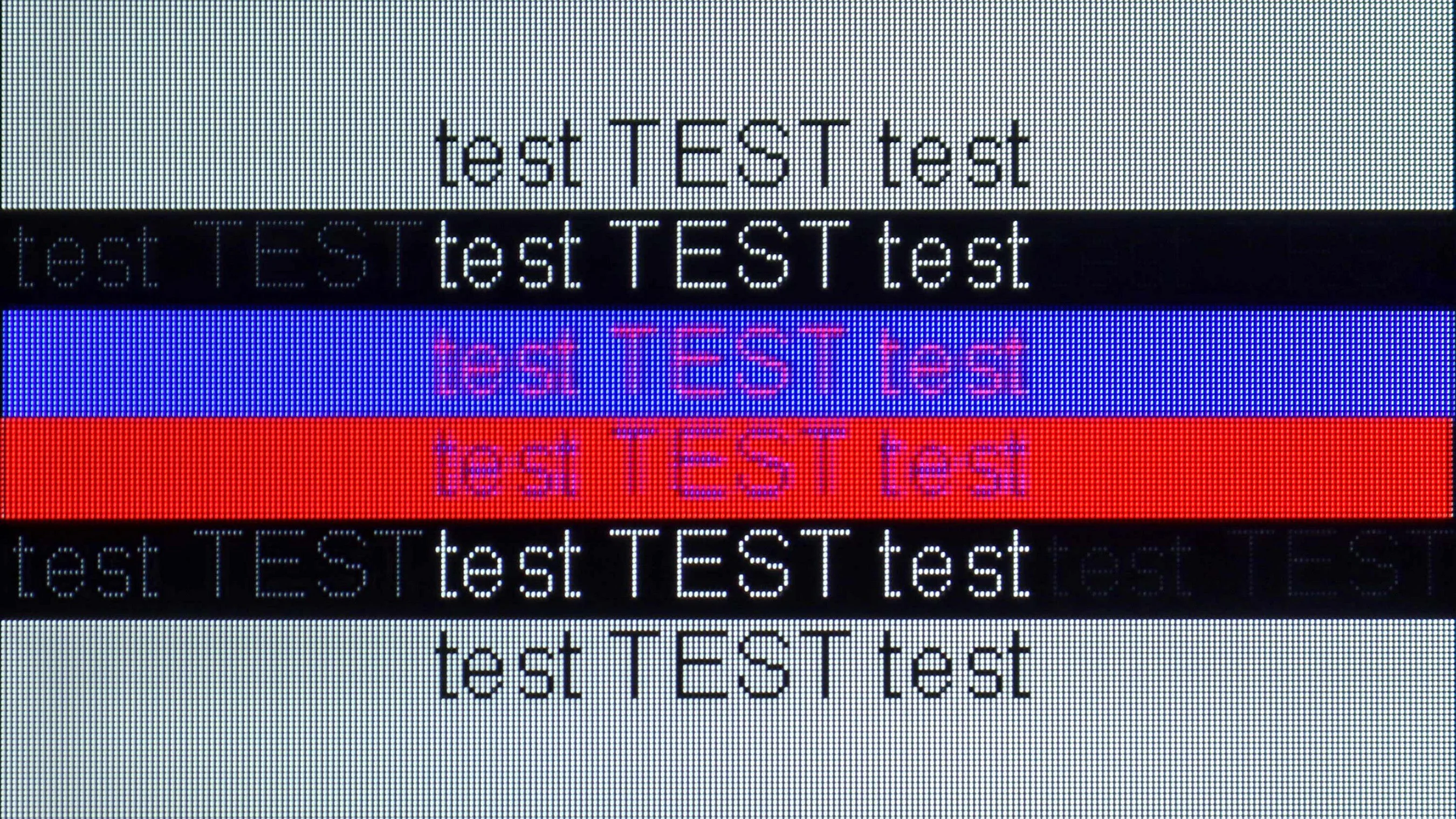
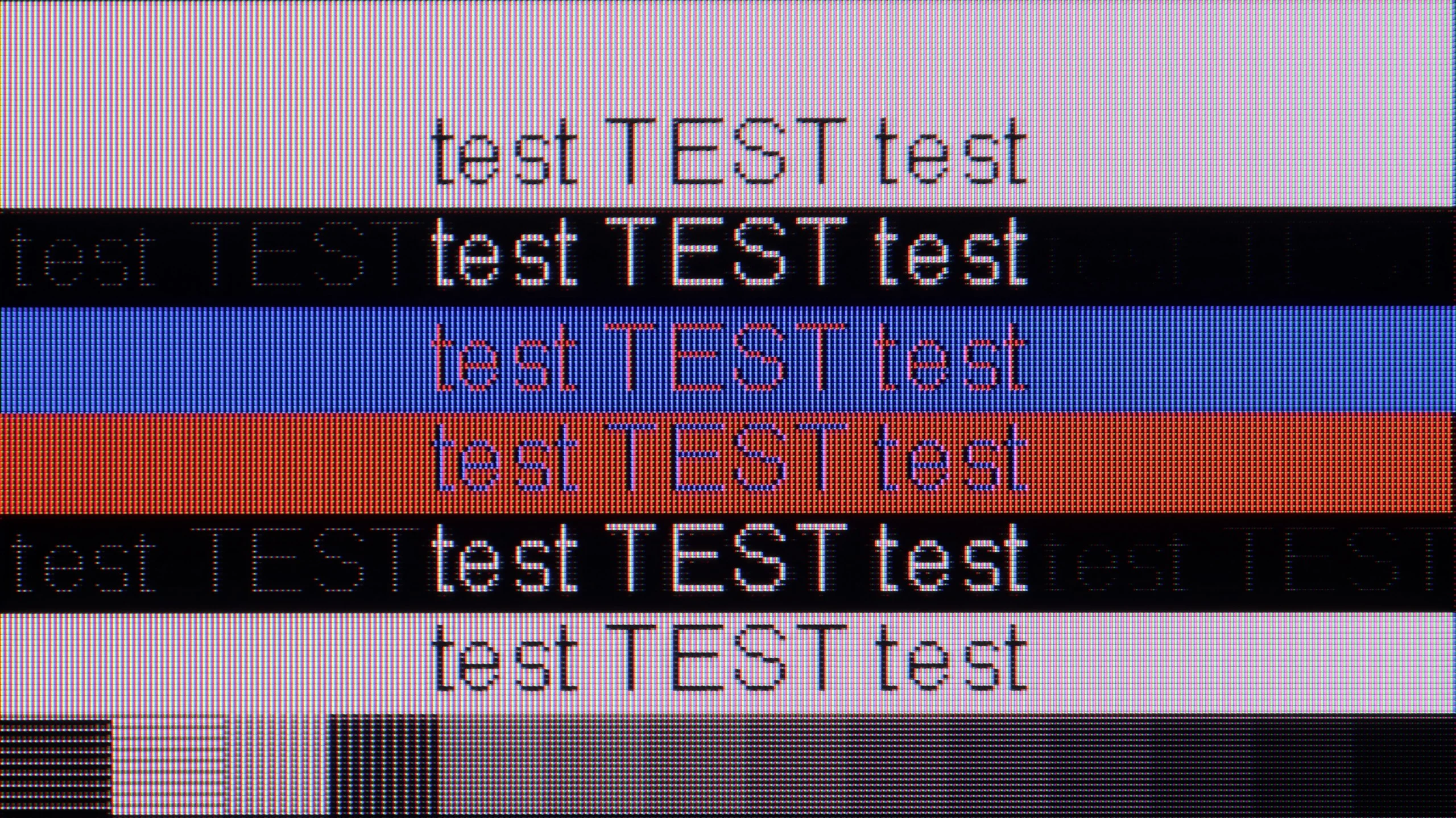
The photo shows the legibility of small fonts. Ideally, lines should be the same thickness on both light and dark text, with minimal pixel gaps.
Just like in games, the tested television performs excellently, but when it comes to everyday text work, it doesn't quite measure up. Its latency is very low; however, the issue lies elsewhere. The television does not support chroma 4:4:4, which results in unpleasant font blurriness, regardless of the given refresh rate. While this is not usually a problem in games, it can be quite annoying during text work due to poor readability. Additionally, the pixel layout in WOLED matrices doesn't make things easier for it.
The MRGB85 plays nicely with PCs. Support for 4K at 144 Hz plus G-Sync Compatible and FreeSync Premium mean it’s not just a gaming screen but also a perfectly capable monitor for work. When it comes to text legibility, it’s simply good. The TV correctly handles 4:4:4 chroma, so small fonts and system UI elements remain sharp. Only when viewing the screen from very close can you spot minor artefacts on the edges of letters, but at a normal distance from a 55" or larger screen it doesn’t matter at all.
Viewing angles
7.7/10
3.4/10
A widely known advantage of OLED panels is their efficiency when viewed even at sharp angles. There is no noticeable drop in contrast or colour saturation. However, a characteristic feature of panels produced by LG Display, which are not used in top models, is a tint in marine or cyan shades when viewed from a wide angle.
Viewing angles on the LG MRGB85 are average. Because it uses a VA panel, colour saturation fades fairly quickly, even at a slight angle. That’s a typical trait of this type of panel — you get high contrast at the expense of poorer viewing angles. IPS panels work the other way: they offer lower contrast but retain colours better when you look at the screen from the side. In theory the MRGB85 belongs to the family of RGB TVs, where viewing angles can be better than in models that use additional QLED filters. Here, however, that doesn’t offer much of an advantage. The small number of local dimming zones placed at the edge of the screen and the way they operate mean the picture quickly loses quality off‑axis, much like in ordinary LCD screens.
Daytime performance
5.5/10
6.1/10
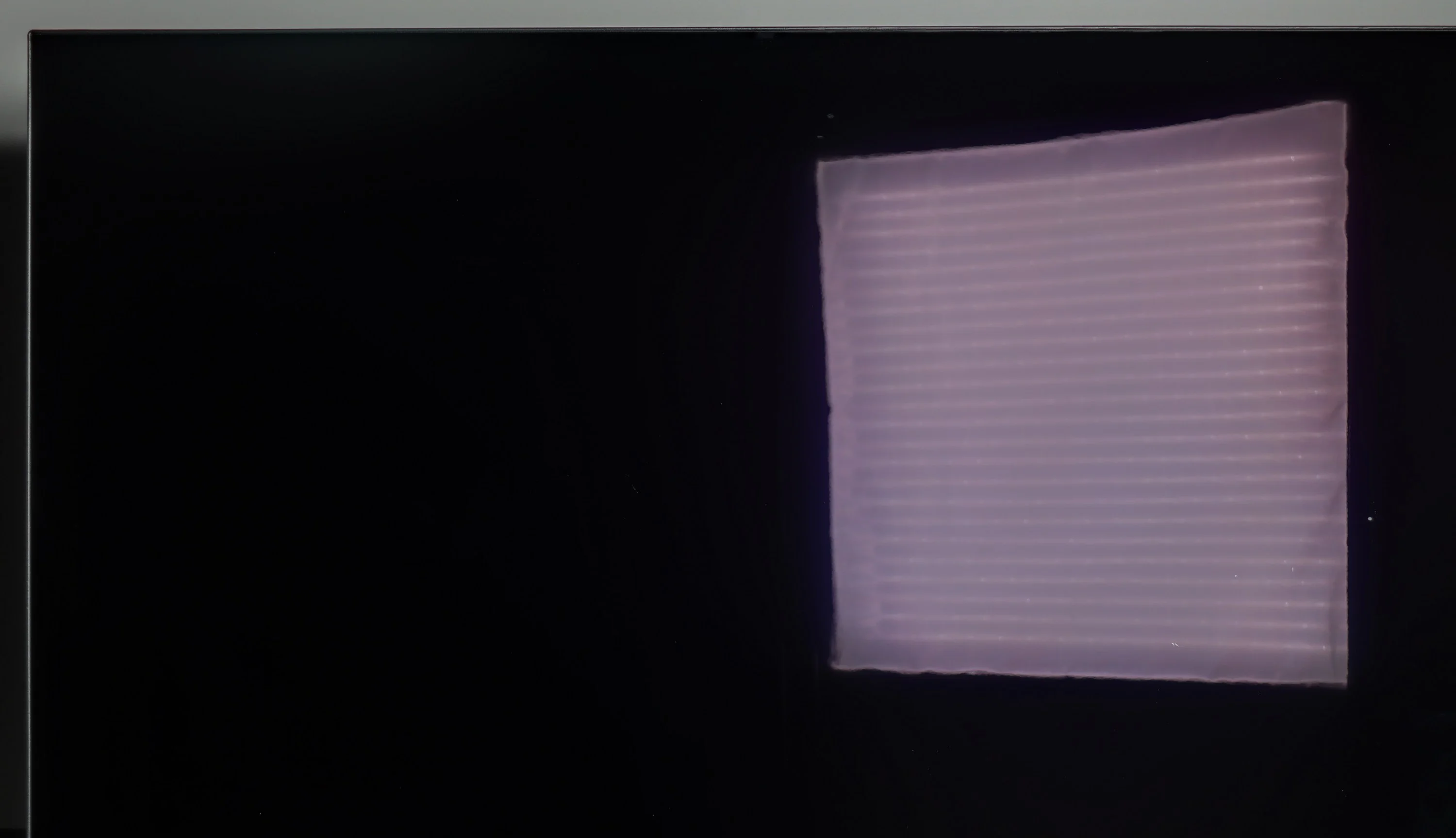
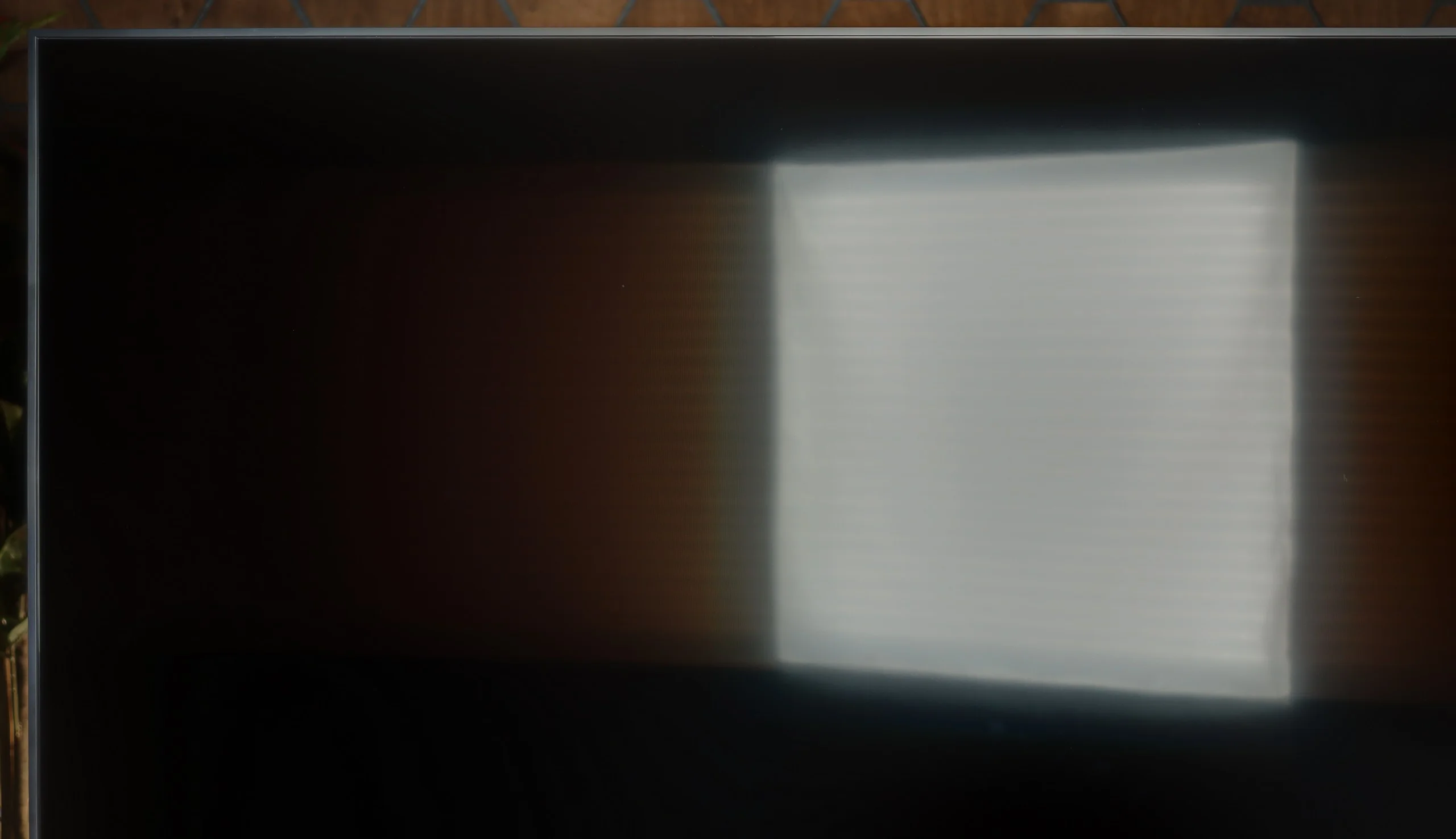
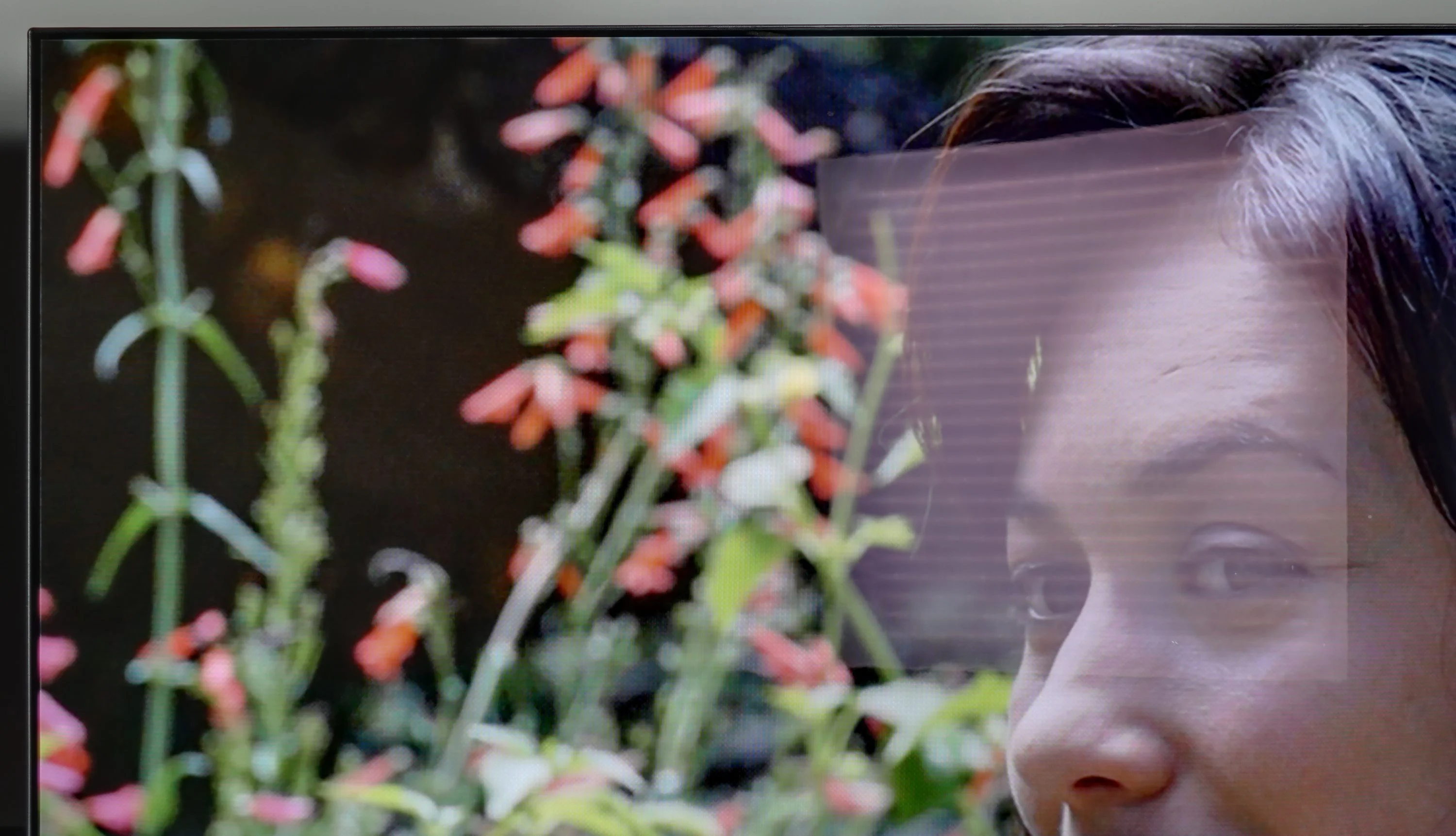
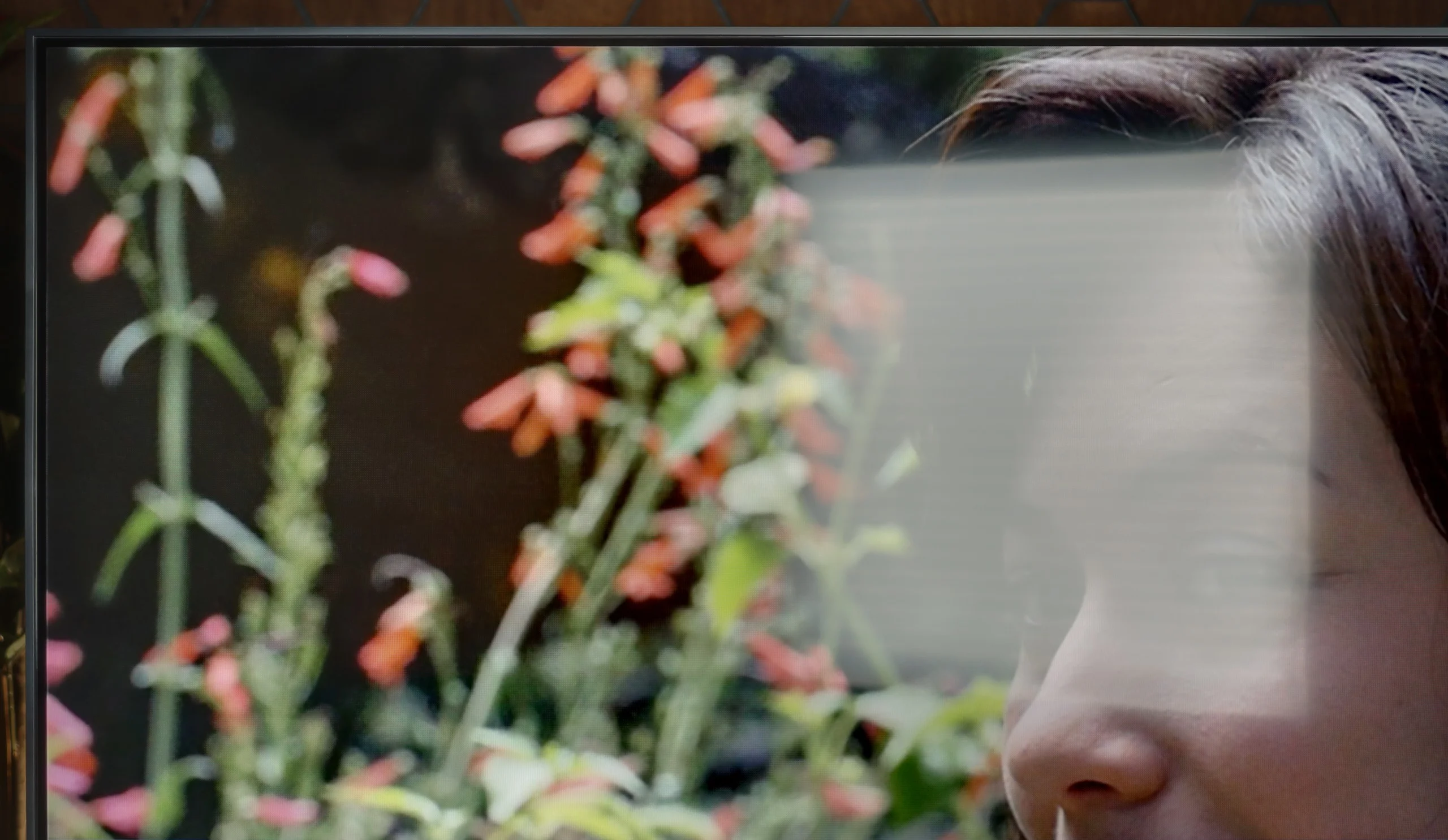
Panel brightness
LG MRGB85B: 515 cd/m2
Philips OLED809/819: 322 cd/m2
For many years, the issue of the performance of OLED TVs during the day has been raised. Many people still believe that these are not receivers intended for such use. They probably have a point, particularly when it comes to screens from several years ago. Technology has advanced, and currently, there are no objections to recommending such a TV for today. Admittedly, a glossy screen doesn't sound like something that would support this claim, however, it's hard to argue against the pictures that you can see for yourself. Another point we would like to highlight is the contrast during daytime use. This, in contrast to QD-OLED panels, and even OLEDs equipped with MLA technology, is higher. This is due to the absence of excited quantum dots and micro-lenses.
LG MRGB85 handles bright rooms quite well. Its average brightness reaches around 500 nits, clearly above average. That keeps the picture readable in a moderately sunlit living room and it doesn't look dimmed. The screen coating is less impressive, though, as it only does an average job of suppressing reflections. Direct reflections from windows or lamps can be quite noticeable, so it's best not to place the TV directly opposite large windows or strong light sources.
Panel details
Subpixel Structure:
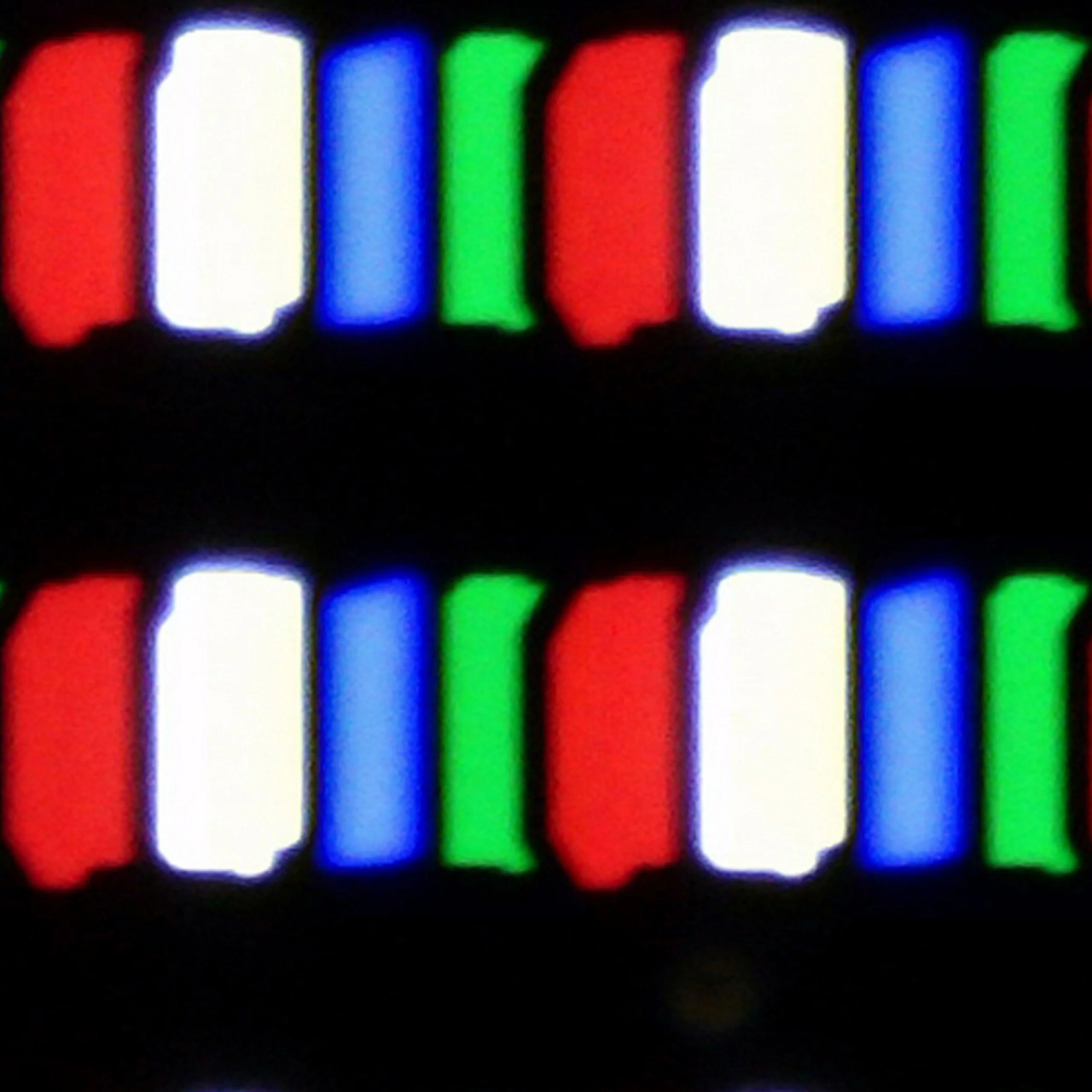
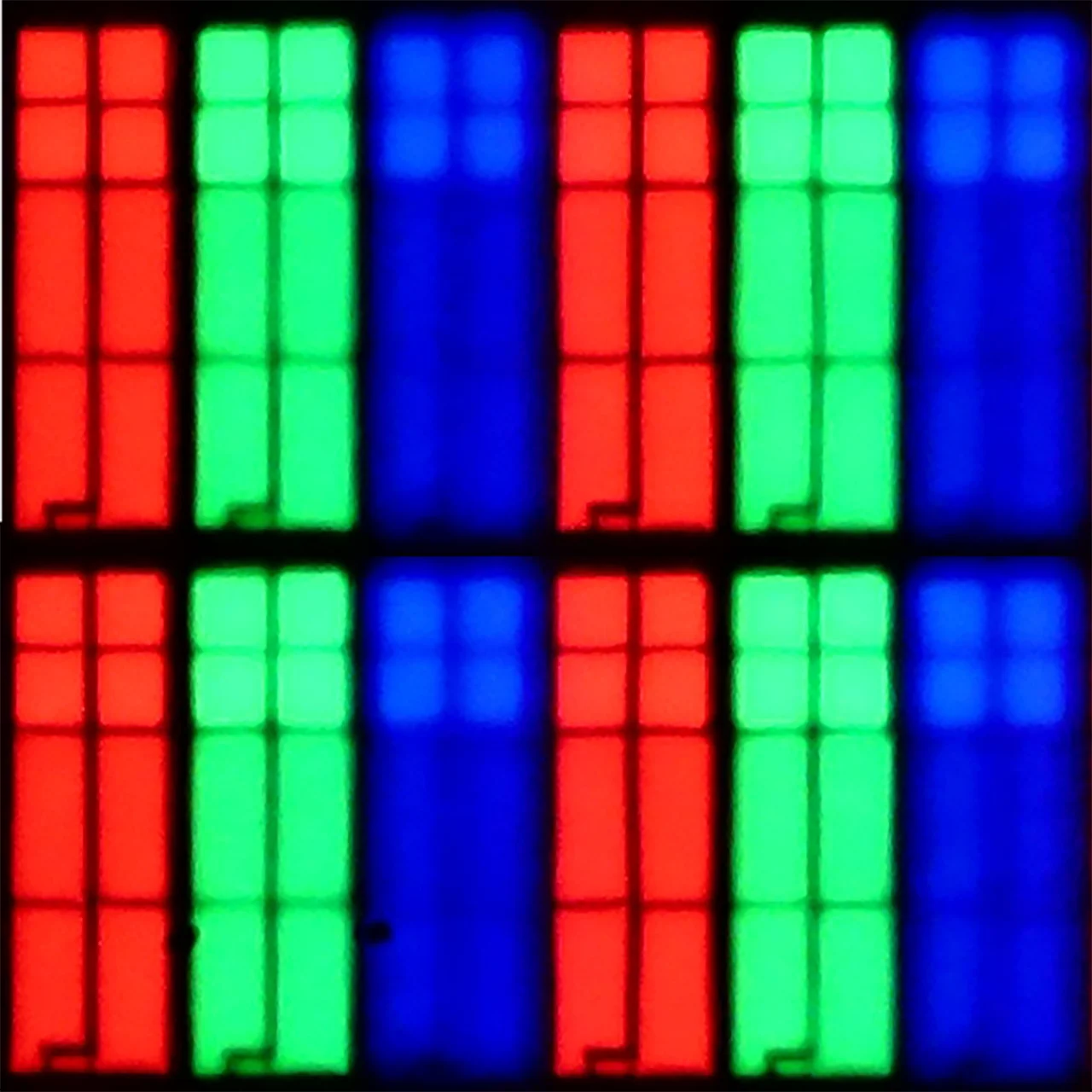
Panel uniformity and thermal imaging:
Philips OLED809/819
LG MRGB85B
TV features
7.9/10
7.7/10
- SystemGoogle TVWebOS
- System performanceGoodVery good
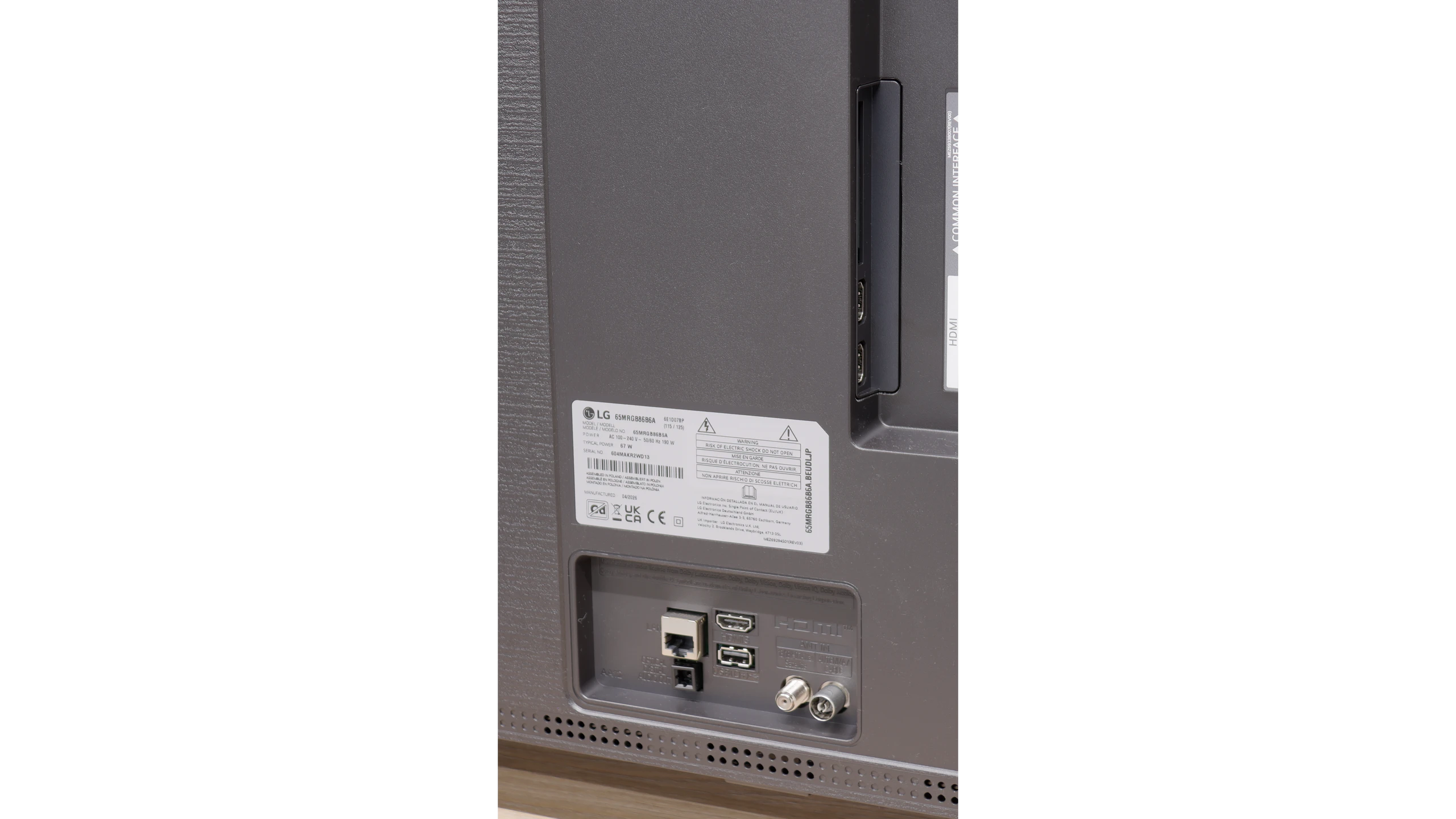
- HDMI inputs2 x HDMI 2.0, 2 x HDMI 2.1 48Gbps0 x HDMI 2.0, 3 x HDMI 2.1 48Gbps
- OutputsToslink (Optical audio), eARC (HDMI), ARC (HDMI)Toslink (Optical audio), eARC (HDMI), ARC (HDMI)
- Network InterfacesWi-Fi 2.4GHz, Wi-Fi 5GHz, Ethernet (LAN) 100MbpsWi-Fi 2.4GHz, Wi-Fi 5GHz, Ethernet (LAN) 100Mbps
- TV receptionDVB-T, DVB-T2, DVB-S, DVB-S2, DVB-CDVB-T, DVB-T2, DVB-S, DVB-S2, DVB-C
Classic features:
- Recording to USB (terrestrial TV)
- Recording programming
- Picture in Picture (PiP)
- RF remote control (no need to aim)
- Backlit remote control
- Teletext
- Audio only mode
- Bluetooth headphones support
- Simultaneous Bluetooth headphones & TV audio
Smart features:
- AirPlay
- Screen mirroring (Windows Miracast)
- Voice search
- Voice search in native language
- Ability to connect a keyboard and mouse
Sound connection options
- HDMI audioeARC (HDMI), ARC (HDMI)eARC (HDMI), ARC (HDMI)
- Other audio outputsToslink (Optical audio)Toslink (Optical audio)
- Wireless audioBluetoothBluetooth
Supported audio formats (external HDMI eARC audio):
- Dolby Digital Plus 7.1
- Dolby True HD 7.1
- Dolby Atmos in Dolby Digital Plus (JOC)
- Dolby Atmos in Dolby True HD
- DTS:X in DTS-HD MA
- DTS-HD Master Audio
Senior accessibility
- Numeric keyboard on TV
- Font size adjustment
- Audio description
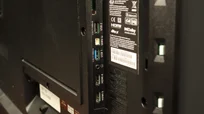
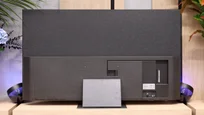
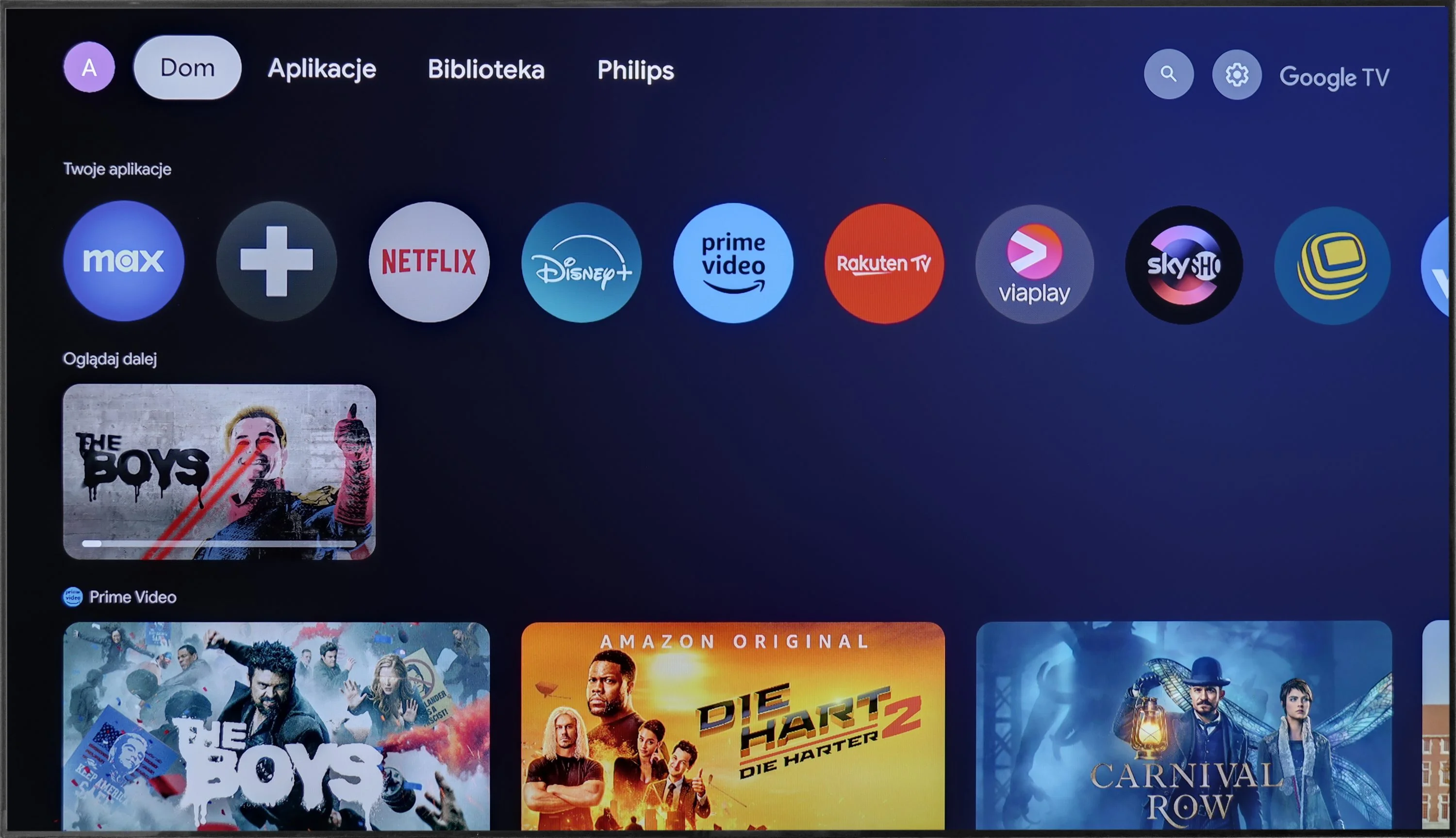
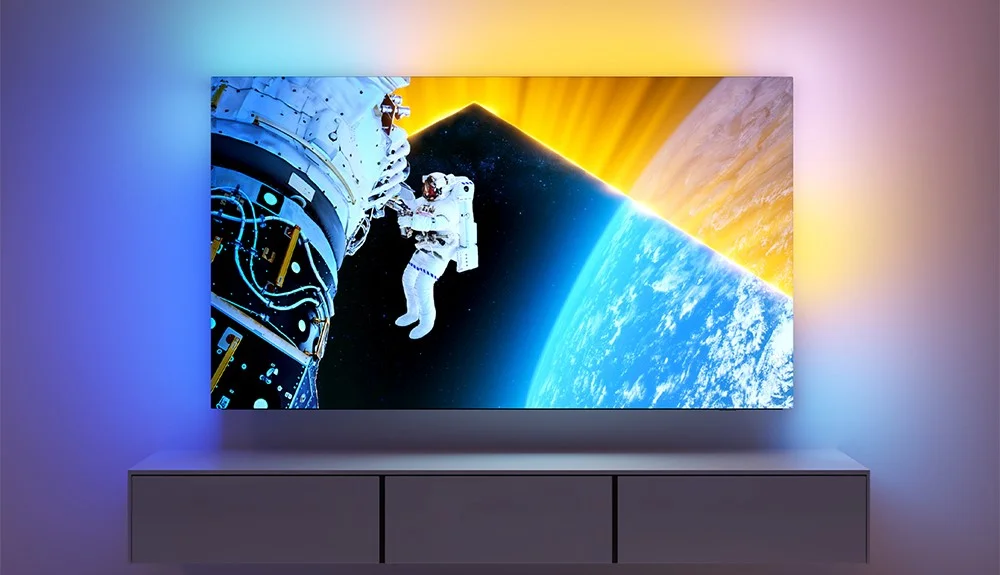
Before we dive into the software that controls the television, it’s impossible not to mention the biggest distinguishing feature of the manufacturer's televisions. This is, of course, the multicoloured Ambilight backlighting, which is located on the back of the device and displays colours tailored to what's happening on the screen, often allowing for an even greater immersive experience. The Philips OLED 809 is powered by the Google TV system. This is an undeniable advantage compared to some other models from the manufacturer, which use the proprietary TitanOS system, significantly more closed off and limited in terms of available applications. With Google TV, we can install practically any application, both from the store and directly from online repositories via an APK file.
The Google TV system also offers many conveniences related to control. We can easily connect a keyboard with a touchpad, which greatly simplifies typing queries and navigation. Additionally, thanks to integration with Google, we can issue voice commands using the remote, which are quickly and accurately interpreted by the system.
In summary: Google TV is currently one of the most popular systems on the market. Thanks to a powerful CPU, it runs very smoothly and stably, without freezing or stuttering during testing. This is definitely the best option for those who want to get the most out of their television's capabilities and appreciate the openness and versatility of the system.
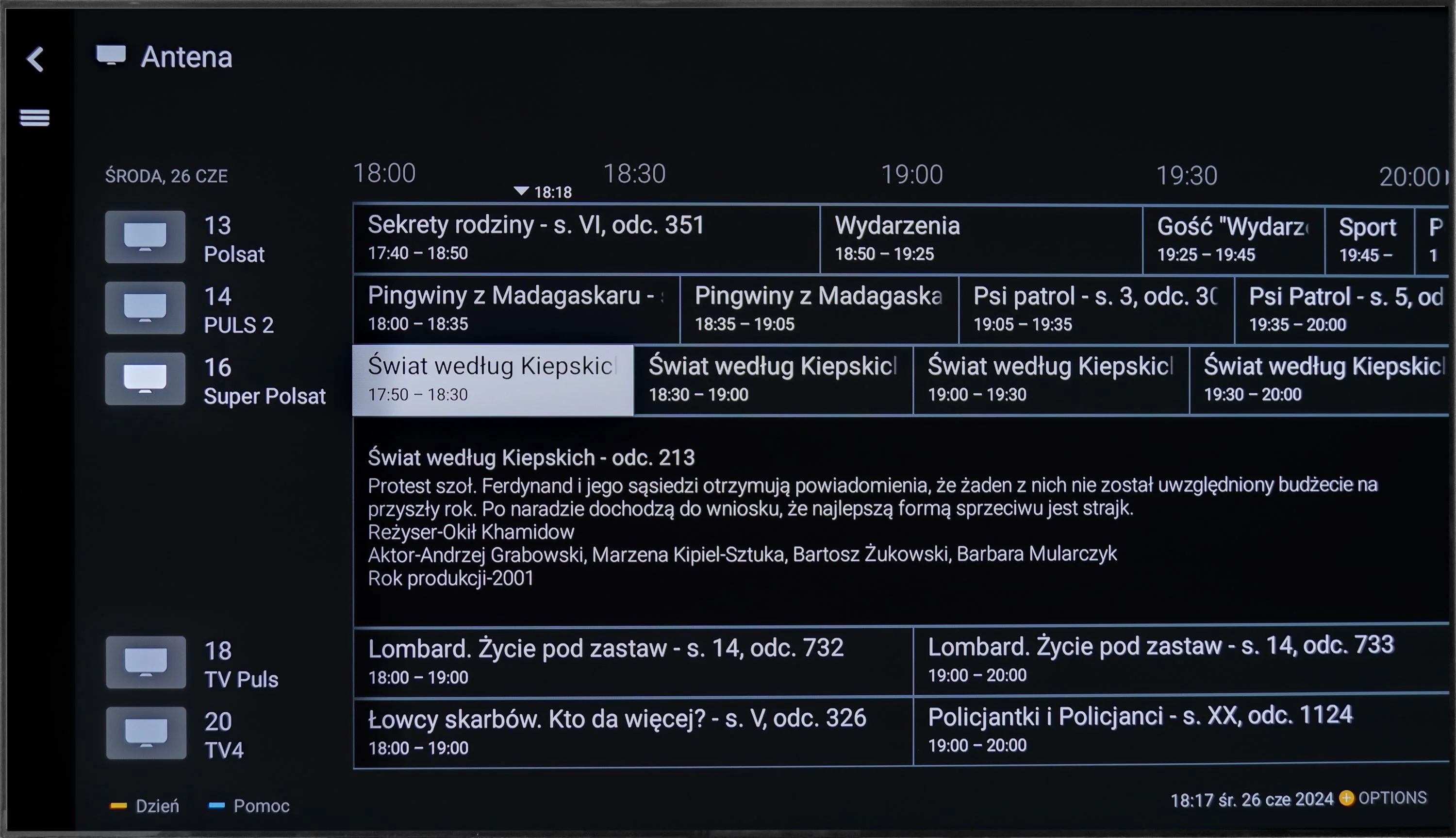
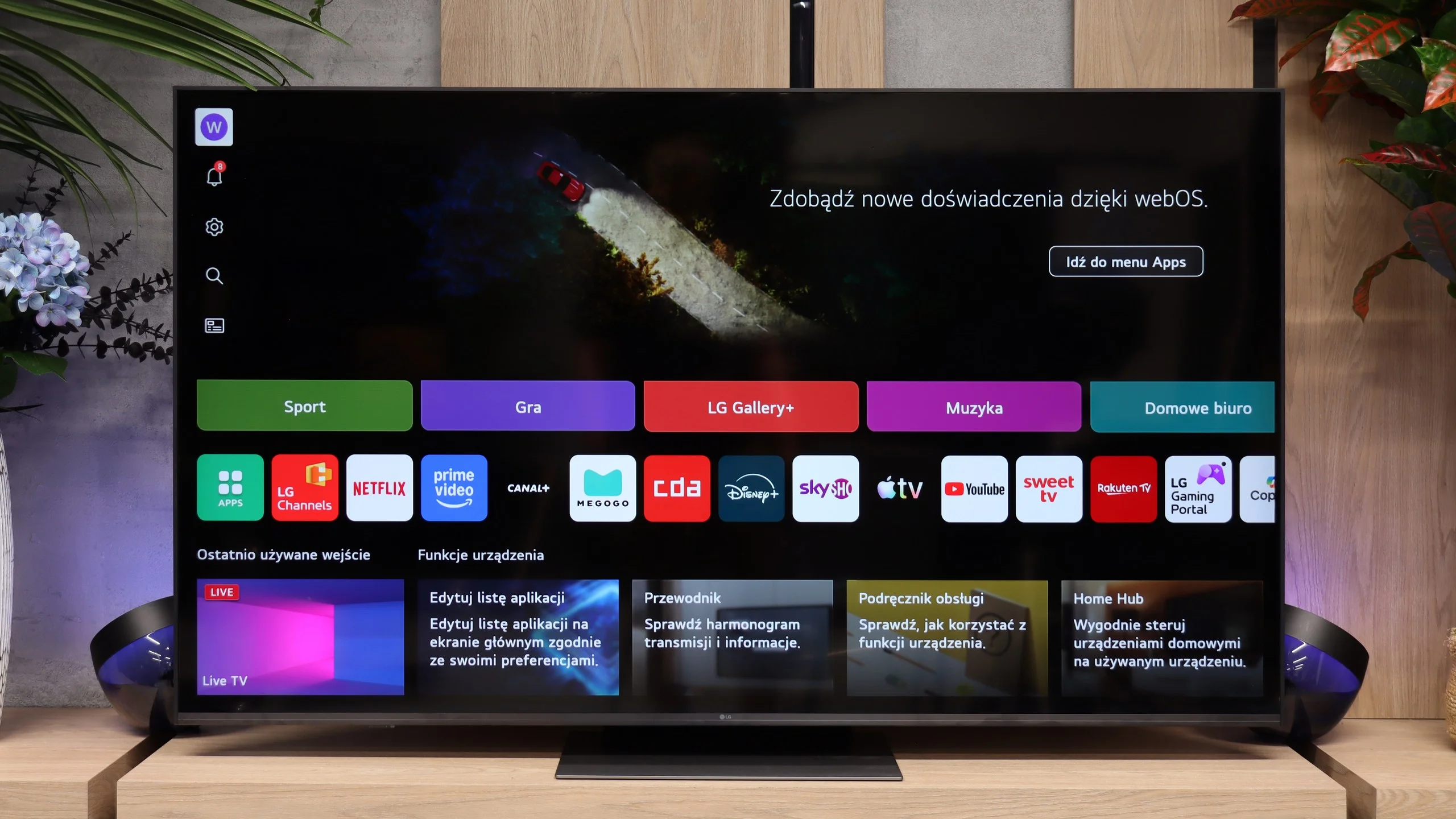
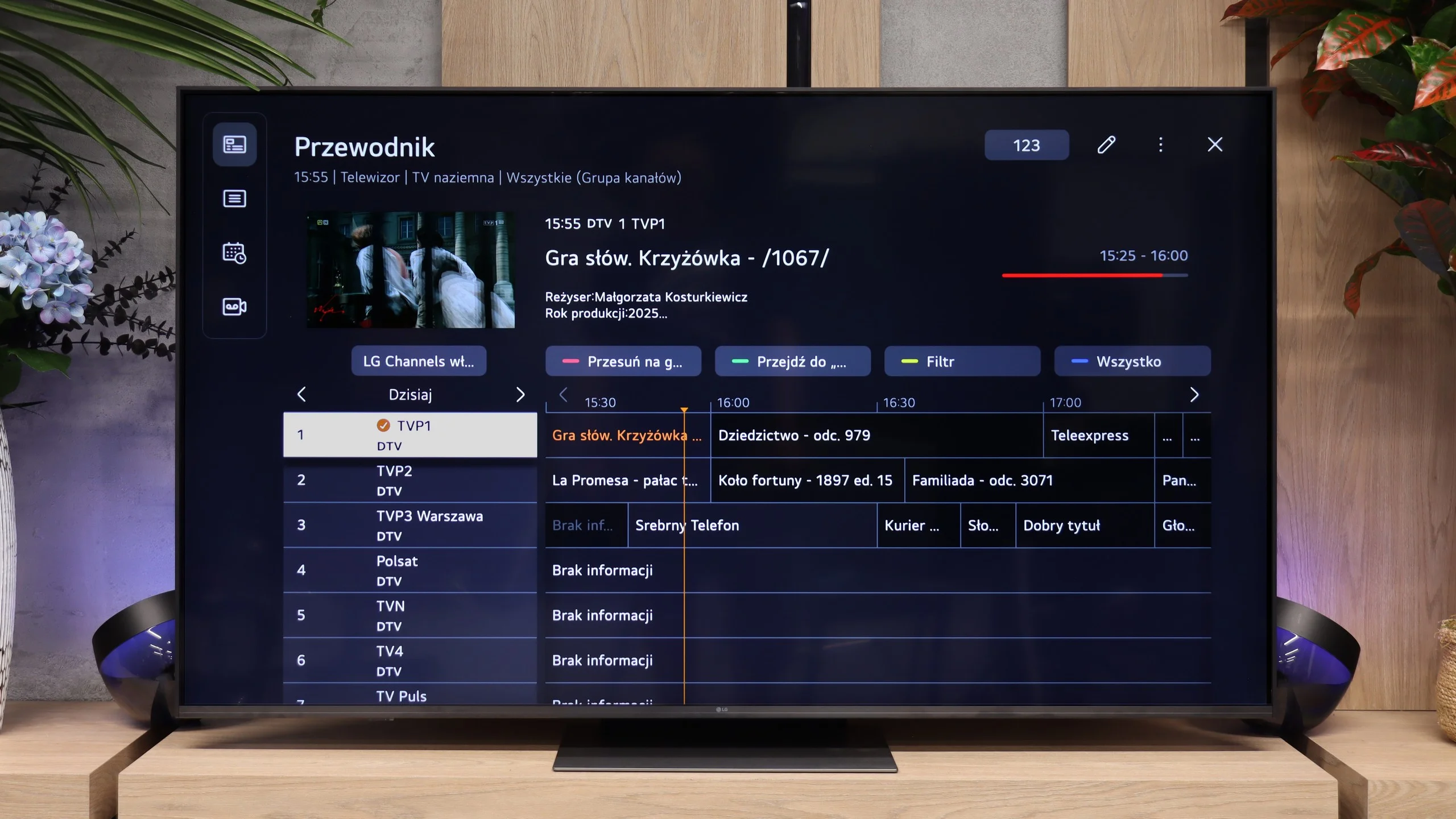
The LG MRGB85 runs webOS, which is fast, clear and gives access to all the major streaming apps. The menu is smooth and navigating it is straightforward. The TV also performs well with traditional broadcast TV. You get features like Time Shift, HbbTV and a handy channel guide. The MRGB85 is therefore suitable both for using Netflix or YouTube and for everyday TV viewing.
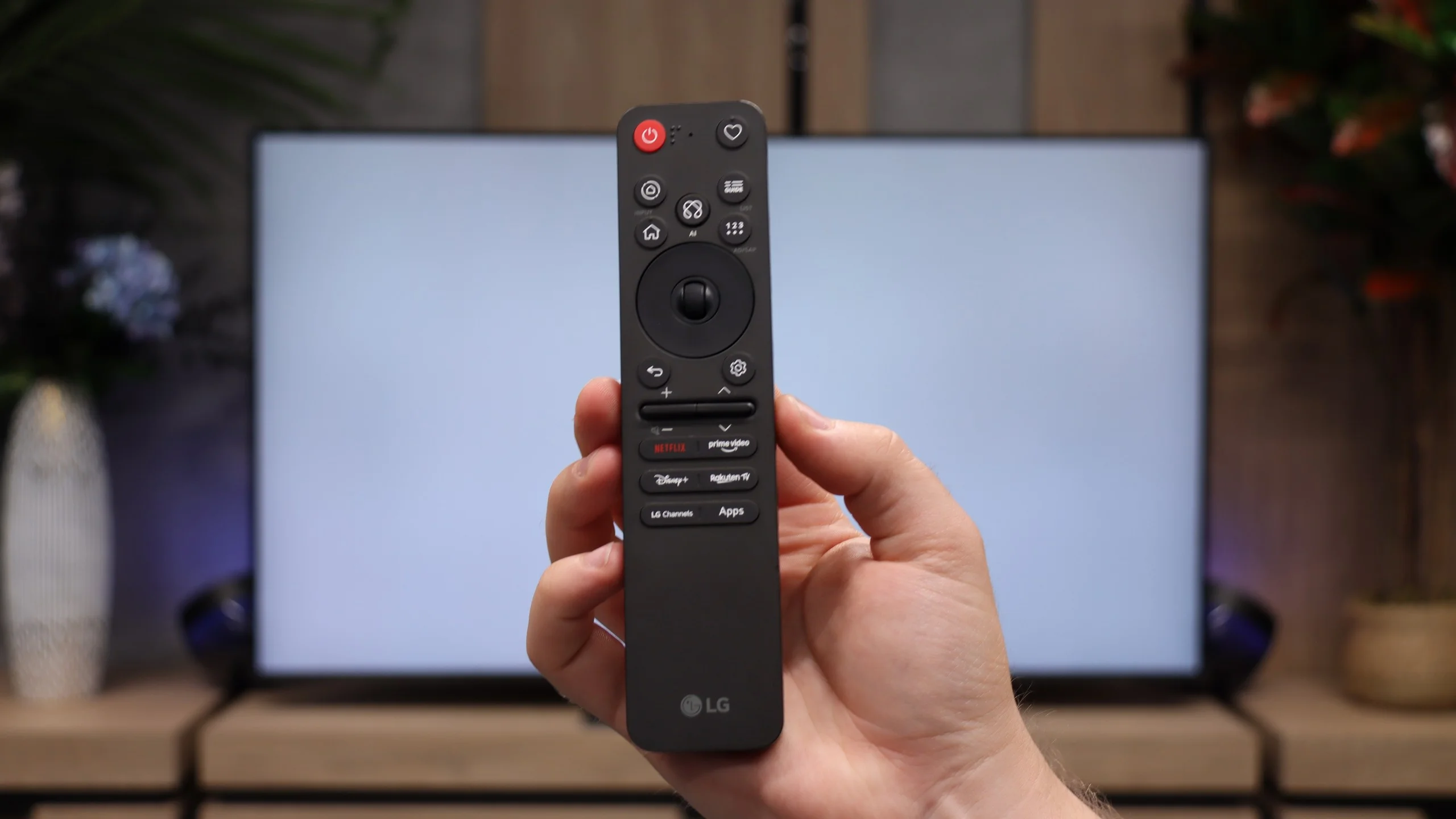
Control is handled by a newer version of the Magic Remote. Compared with older models it's noticeably slimmer and has dropped the traditional numeric keypad, but it feels better in the hand and is more comfortable for everyday use. It still retains the characteristic gyroscope, which lets you control the on-screen cursor with hand movements. Combined with webOS, this works very well.
Apps
9.6/10
9.1/10






















Playing files from USB
9.5/10
9/10
Supported photo formats:
Maximum photo resolution:
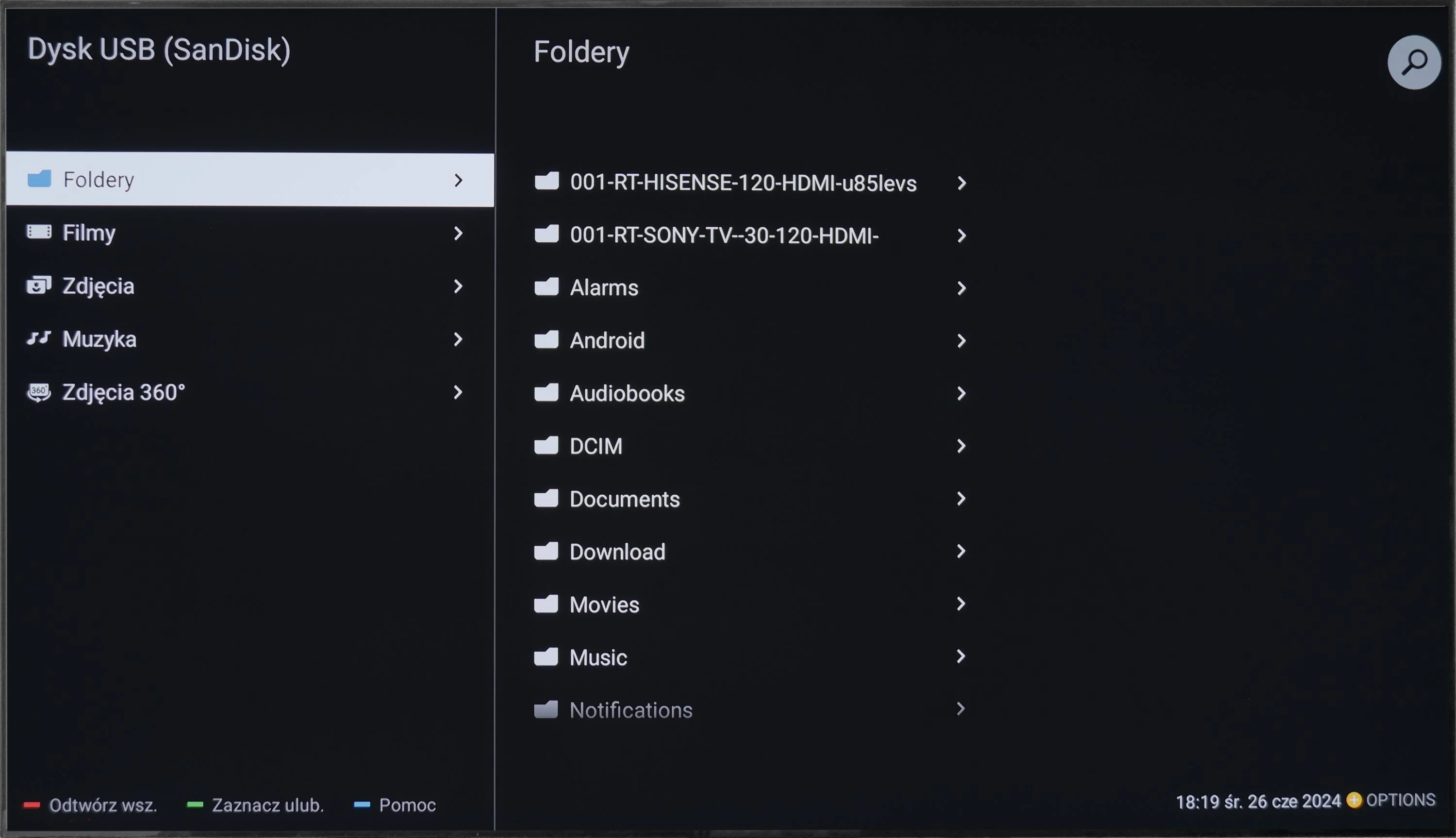
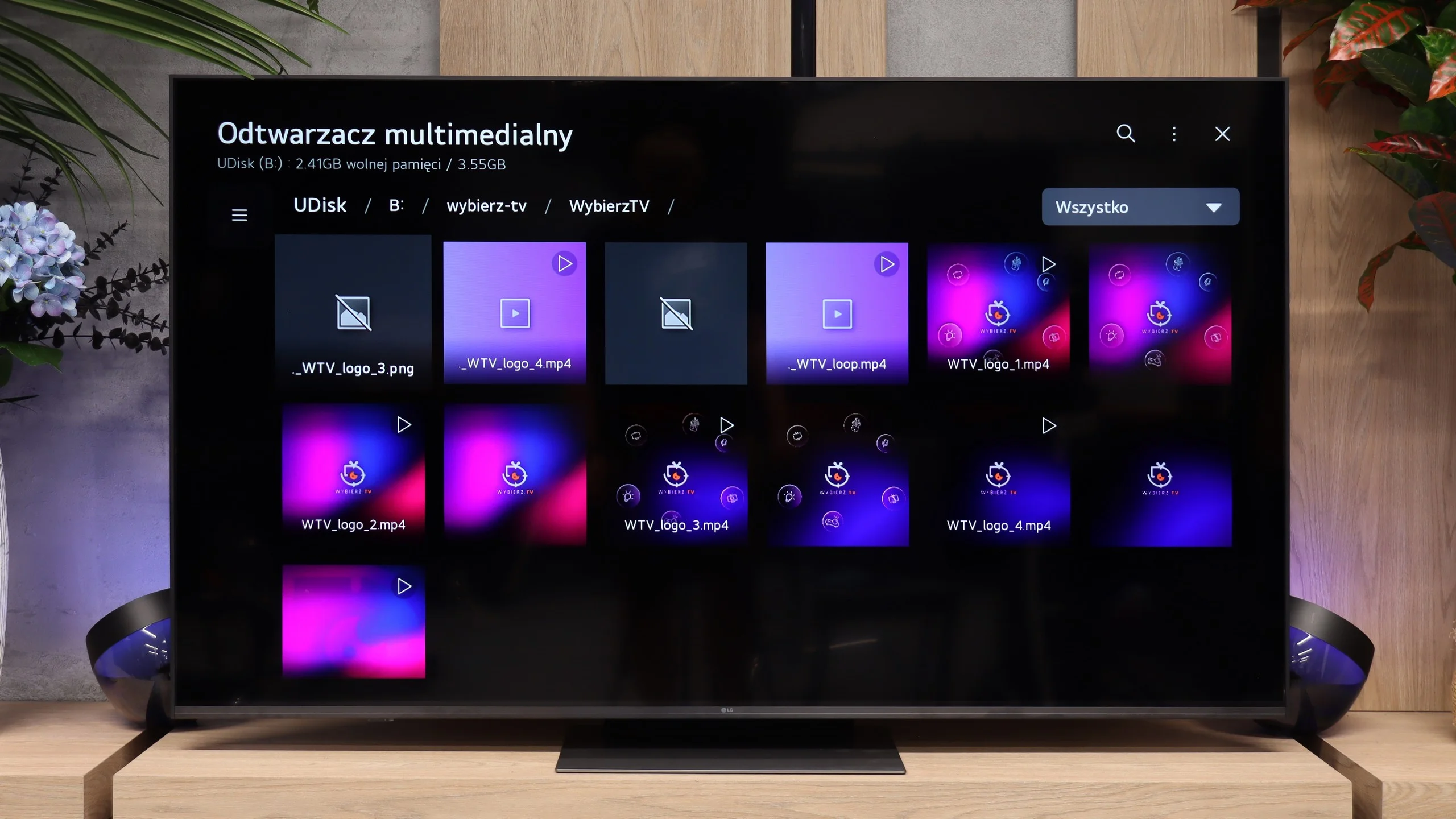
The default file player on the Philips OLED 809 is quite impressive, although it does have some drawbacks. It handles a wide range of video file formats exceptionally well, except for two less common ones. It deserves high praise for its inclusion of all the checkboxes confirming playback of various subtitle formats. The TV can manage any photo resolution, making it an excellent screen for viewing family albums or studio photos. The rest, including supported photo and audio formats, is satisfactory, and those formats the TV cannot play are either uncommon or obsolete. Moreover, it's not a problem, as we can download an app from the app store that will solve these issues.
The built-in media player handles most popular video, music and photo formats, so in everyday use you shouldn't be missing anything. The only unusual issue occurred with HEIC files. The TV correctly showed their thumbnails, but when opened it couldn't display the photo at full resolution. Other than that, the player worked without any major problems.
Sound
7.1/10
6.4/10
- Maximum volume-86dB
- Dolby Digital Plus 7.1
- Dolby True HD 7.1
- Dolby Atmos in Dolby Digital Plus (JOC)
- Dolby Atmos in Dolby True HD
- DTS:X in DTS-HD MA
- DTS-HD Master Audio
At the outset of this paragraph, it should be noted that sound quality is always subjective. In our opinion, the audio system that the manufacturer has equipped the Philips OLED 809 is at quite a high level. The bass is well-defined, but at the same time, it does not overshadow the mid and high tones. Looking at it from another perspective, when choosing a TV in this price range, we are more likely to already have an additional audio system. In this context, the tested television will definitely not disappoint, as it supports practically every important standard, including Dolby Atmos and, more importantly, DTS-HD Master Audio.
The sound in the LG MRGB85 is simply adequate and there's not much more to say. The 2.0 system with a total power of 20 W performs much like most TVs on the market. It lacks pronounced bass and a wider soundstage, although it can get fairly loud. For everyday TV viewing that setup is enough. Those who want fuller, more impressive sound should consider getting a soundbar or a home theatre system.
Sound Quality Test
No sound test video
Acoustic Measurements
No acoustic data
86dBC (Max)
75dBC
Reader comments
Comments are provided by the external service Disqus (Zeta Global). Once loaded, Disqus may set cookies and process data about your activity.
We will remember your choice on this device. Provider's privacy policy