Panasonic W95B is one of those televisions that not only impresses with its specifications on paper but also delights in practice. It features a fantastic Mini LED screen, offering excellent blacks, very high brightness, and smooth motion, which combined with refined local dimming creates an image close to perfection. Most content looks simply amazing on it, and the low latency game mode with support for key technologies makes it a good choice for gaming as well. However, it's important to remember that the W95B is aimed at a fairly specific group of users – those who are willing to accept weaker usability features in exchange for great picture quality. The Fire TV system in this version is not well refined: some apps are missing, certain functions operate clumsily, and the built-in file player does not even support subtitles. Despite these shortcomings, the Panasonic W95B is a solid, well-crafted piece of equipment that demonstrates that Mini LED can be a true alternative for those who, for some reason, do not want an OLED TV. It is one of the few televisions of this type that can be wholeheartedly recommended, provided that picture quality is the priority, rather than the system and apps.
- Matching (Score) |
- Our verdict |
- TV appearance |
- Where to buy |
- Contrast and black detail |
- HDR effect quality |
- Factory color reproduction |
- Color reproduction after calibration |
- Smoothness of tonal transitions |
- Image scaling and smoothness of tonal transitions |
- Blur and motion smoothness |
- Console compatibility and gaming features |
- Input lag |
- Compatibility with PC |
- Viewing angles |
- Daytime performance |
- Panel details |
- TV features |
- Apps |
- Playing files from USB |
- Sound
Panasonic W95B vs Blaupunkt UGC5500S
 Direct comparison
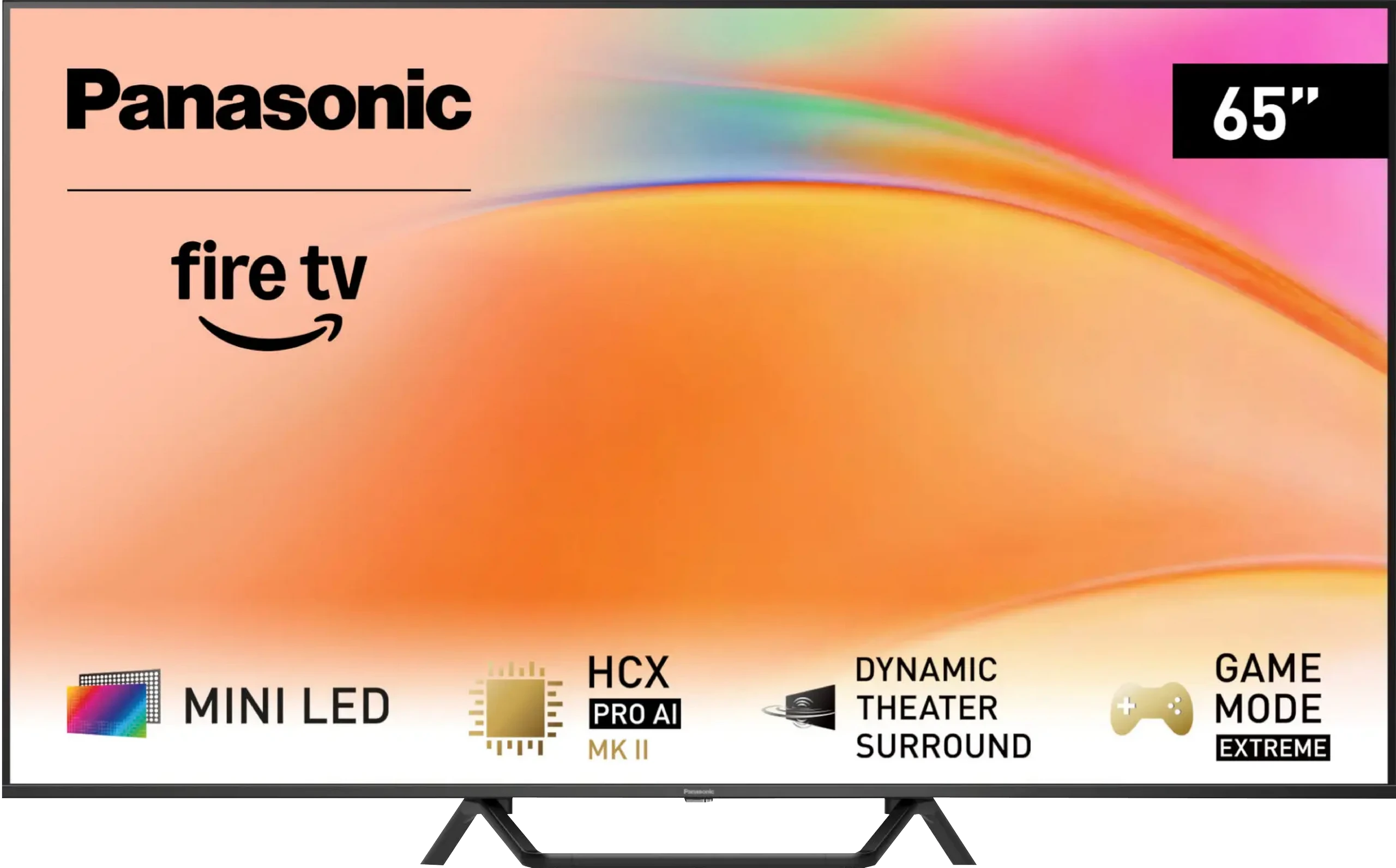
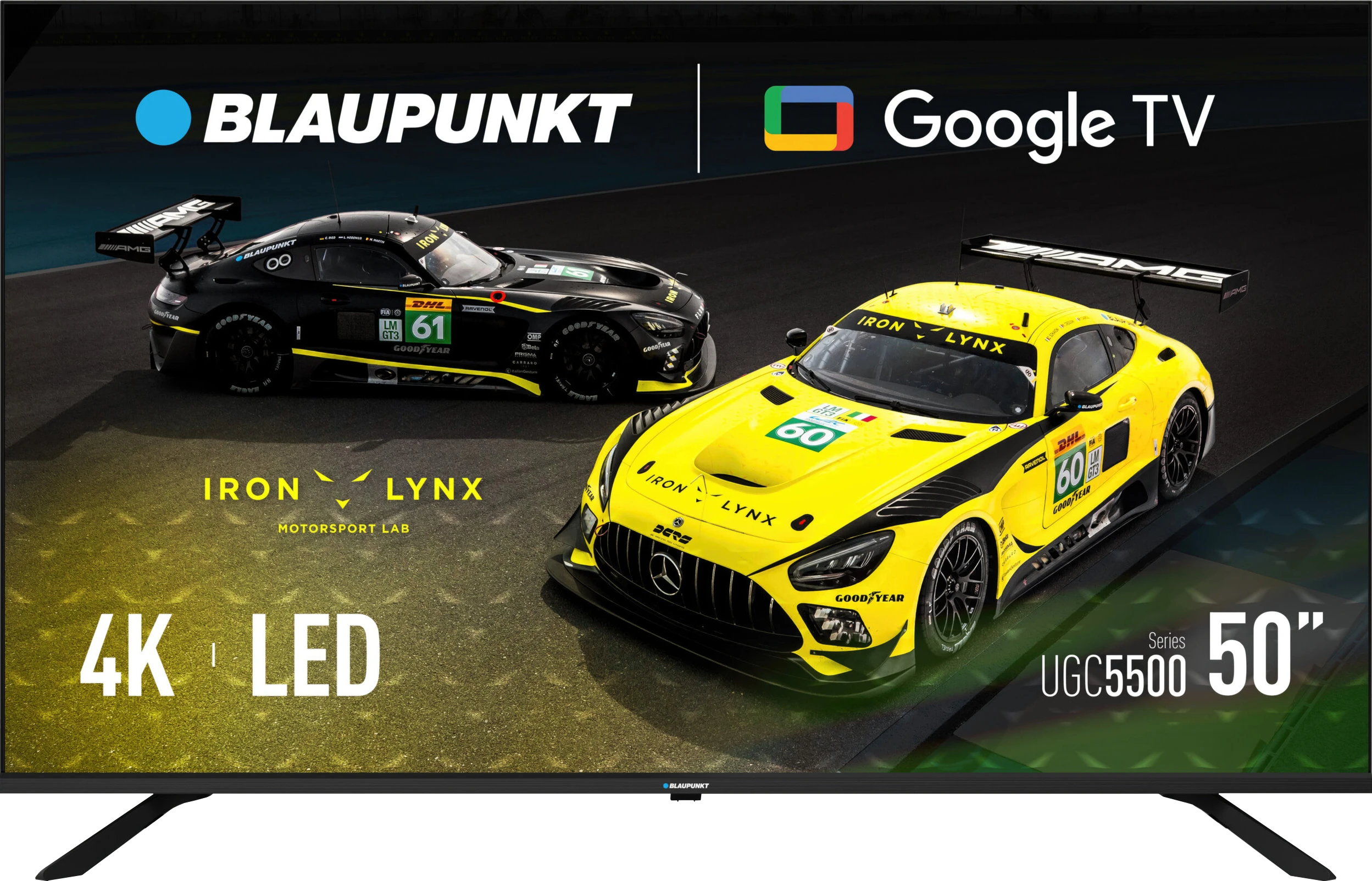
Panel type: LCD VA
Resolution: 3840x2160
System: Amazon FireTV
Model year: 2025
Complete the survey to find out the result
Panel type: LCD IPS
Resolution: 3840x2160
System: Google TV
Model year: 2025
Complete the survey to find out the result
Overall rating
7.5
5.0
 Movies and series in UHD quality
 7.3
4.2
 Classic TV, YouTube
 7.4
4.1
 Sports broadcasts (TV and apps)
 7.2
4.1
 Gaming on console
 8.6
5.4
 TV as a computer monitor
 8.4
6.0
 Watching in bright light
 7.2
4.0
 Utility functions
 6.8
5.1
 Apps
Apps 7.2
9.6
 Sound quality
 7.9
6.0
Complete the survey to find out what fits your preferences
Advantages

Great blacks and contrast thanks to 504 local dimming zones and a VA panel
Very high HDR brightness (up to 1400 nits)
Good motion smoothness. 144 Hz panel – perfect for gaming and dynamic content
Support for Dolby Vision, HDR10+
Many features for gamers including: HGiG, ALLM, FreeSync and G-Sync
Low input lag
Well-functioning upscaling and subtle digital image processing
High brightness during the day and effective glare reduction
Pleasant sound with Dolby Atmos support
Ability to record to USB, Bluetooth and jack connection
Google TV system: massive app library
Relatively low input lag
Good viewing angles: thanks to an IPS panel
PC compatibility: excellent font readability (Chroma 4:4:4)
Refresh rate: 120 Hz at Full HD resolution
Presence of a classic mini-jack output
Quite pleasant sound: clear and loud beyond "budget" standard
Disadvantages

Fire TV system poorly developed in Europe – lacks many applications
Clumsy interface operation and software bugs, e.g. lack of subtitles when playing movies from USB
Local dimming does not work in VRR mode
Narrow viewing angles – typical for VA panels
Only two HDMI 2.1 ports
Very weak blacks and contrast
HDR: low brightness (250 nits) and lack of real effect
System fluidity: sluggish performance and "dull" remote
Motion: total lack of digital smoothers in the menu
Image processing: noticeable overscan and motion artifacts
Our verdict
Blaupunkt UGC5500S is a textbook example of a very cheap television that has primarily two major advantages: the Google TV system and an extremely low price. It is these two elements that make it an attractive option for many people. During testing, we also found it has another great use, which is working with a computer. Thanks to exemplary font readability and good viewing angles of the IPS panel, Blaupunkt surprisingly performs well as a budget monitor. However, one must be aware that this device is typically budget-oriented, and that savings are reflected in the image quality. The panel is simply dark, making it difficult to perform well in tougher lighting conditions, not to mention creating any real HDR effect. Additionally, despite the good viewing angles, the black levels on this model leave much to be desired – in the evenings, it will tend to appear dark grey, which is a typical characteristic of the IPS technology used here. From a price perspective, this is a device that aims to compete in the market not on image quality, but rather on the amount on the receipt. Blaupunkt UGC5500S is perfectly suited as a secondary television in the home, equipment for the holiday house, or for a less important room, where the image just needs to be there, and we want to enjoy all the benefits and applications that Google TV offers.
TV appearance
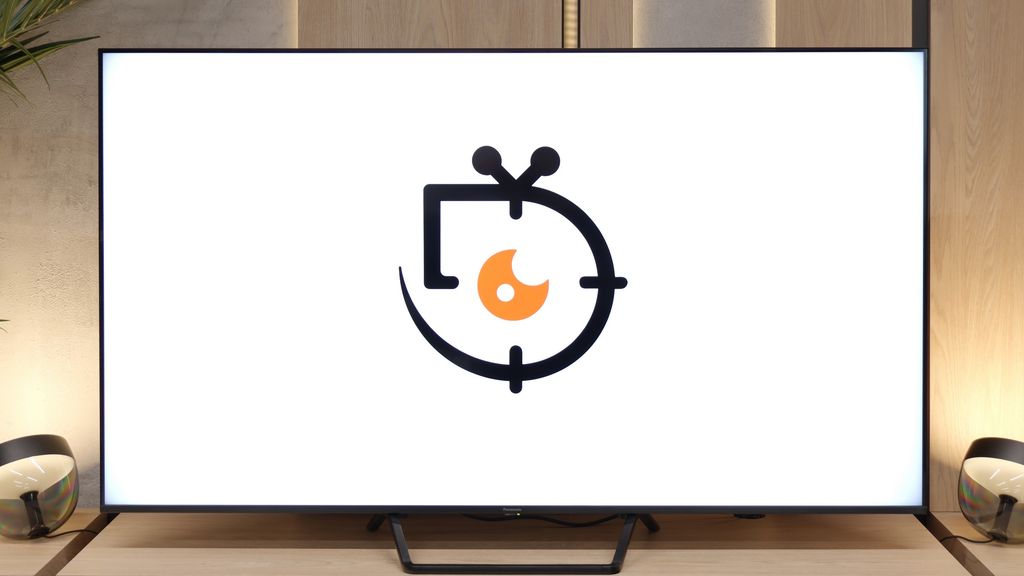
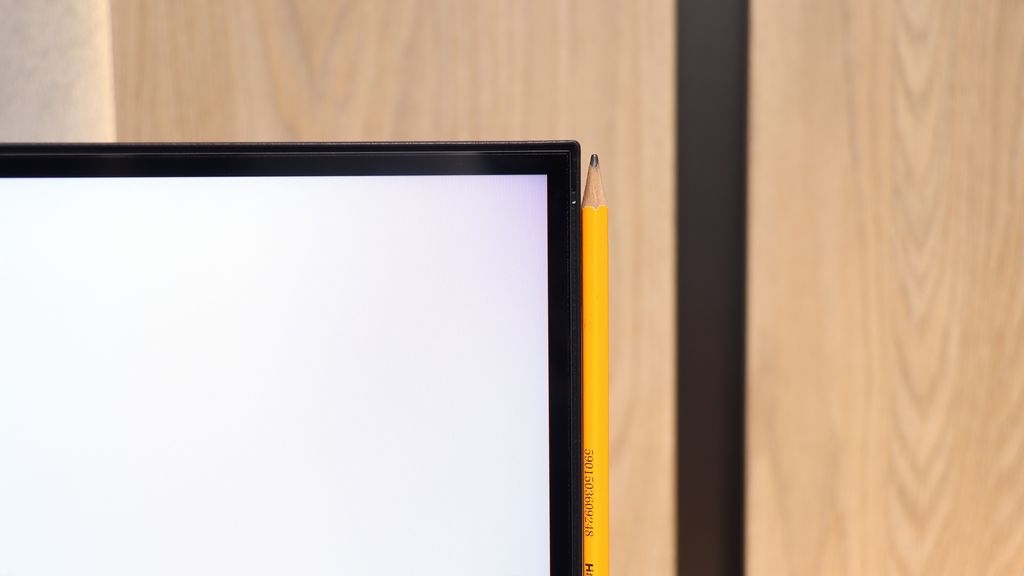
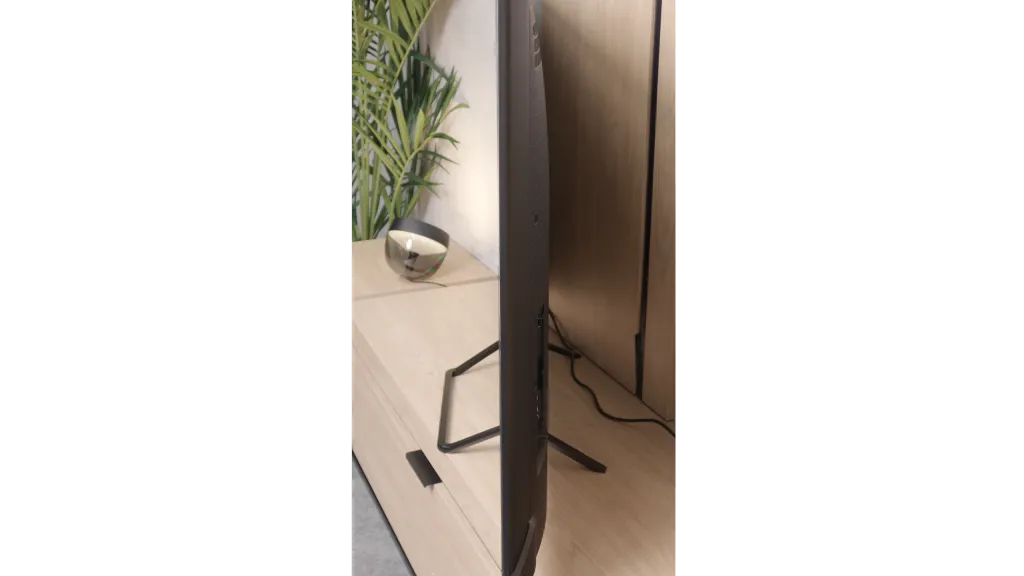
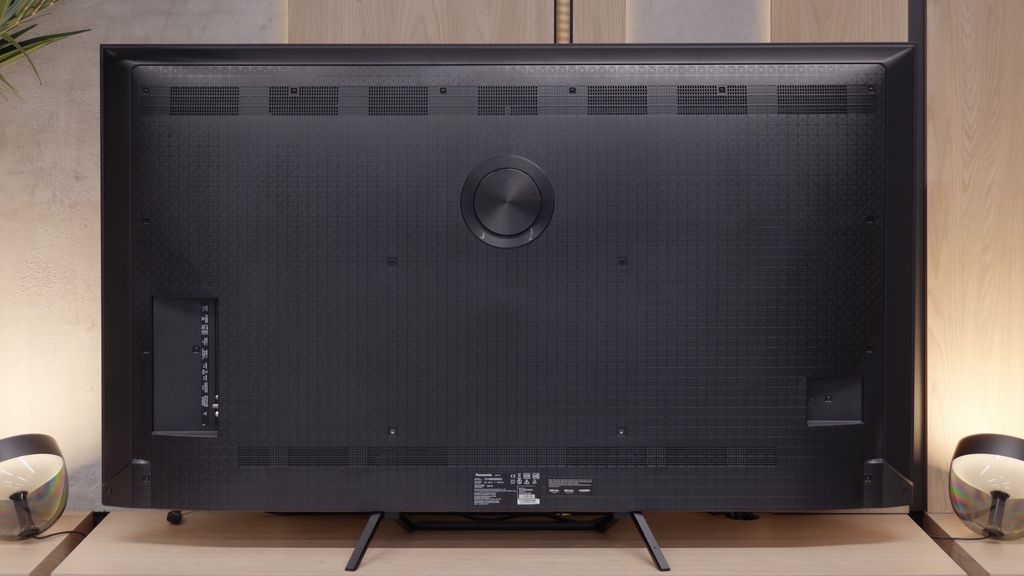
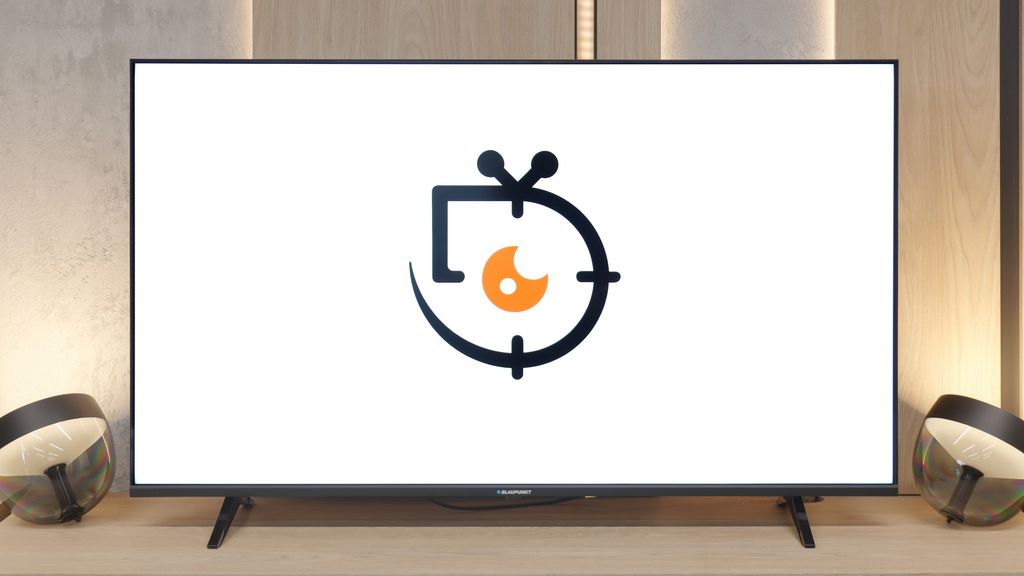

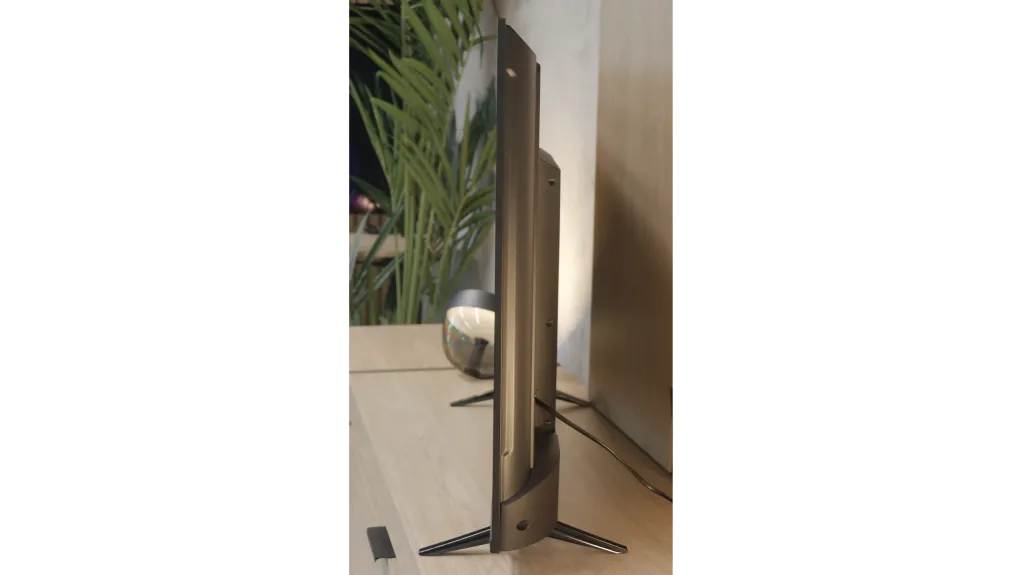
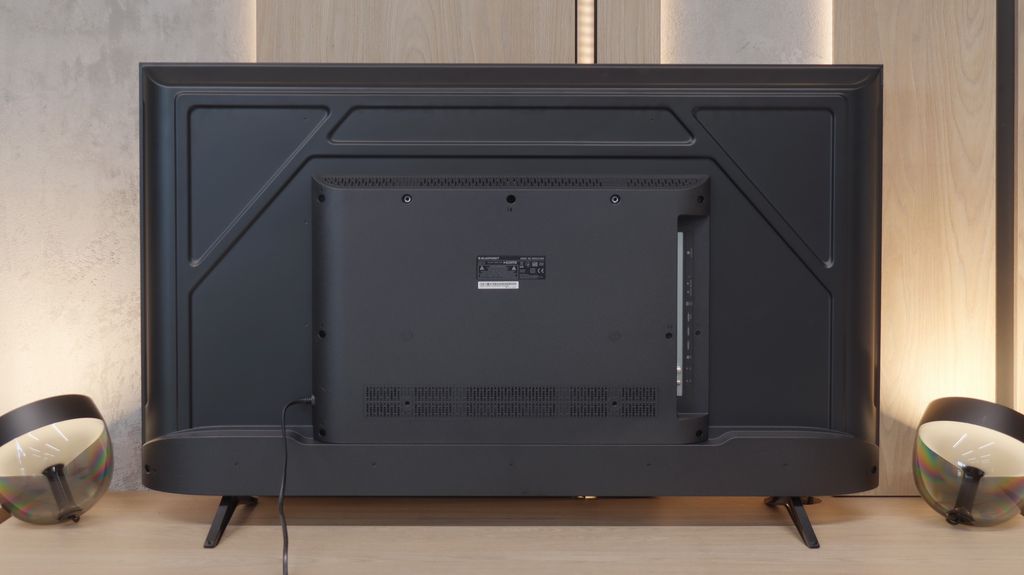

Contrast and black detail
7.5/10
2.2/10
Local dimming function: Yes, number of zones: 504 (18 x 28)
Local dimming function: No
Contrast:


Result
175,300:1

Result
28,450:1

Result
19,450:1

Result
8,600:1

Result
5,400:1
Result
1,000:1
Result
1,100:1
Result
1,150:1
Result
1,100:1
Result
1,050:1
Halo effect and black detail visibility:
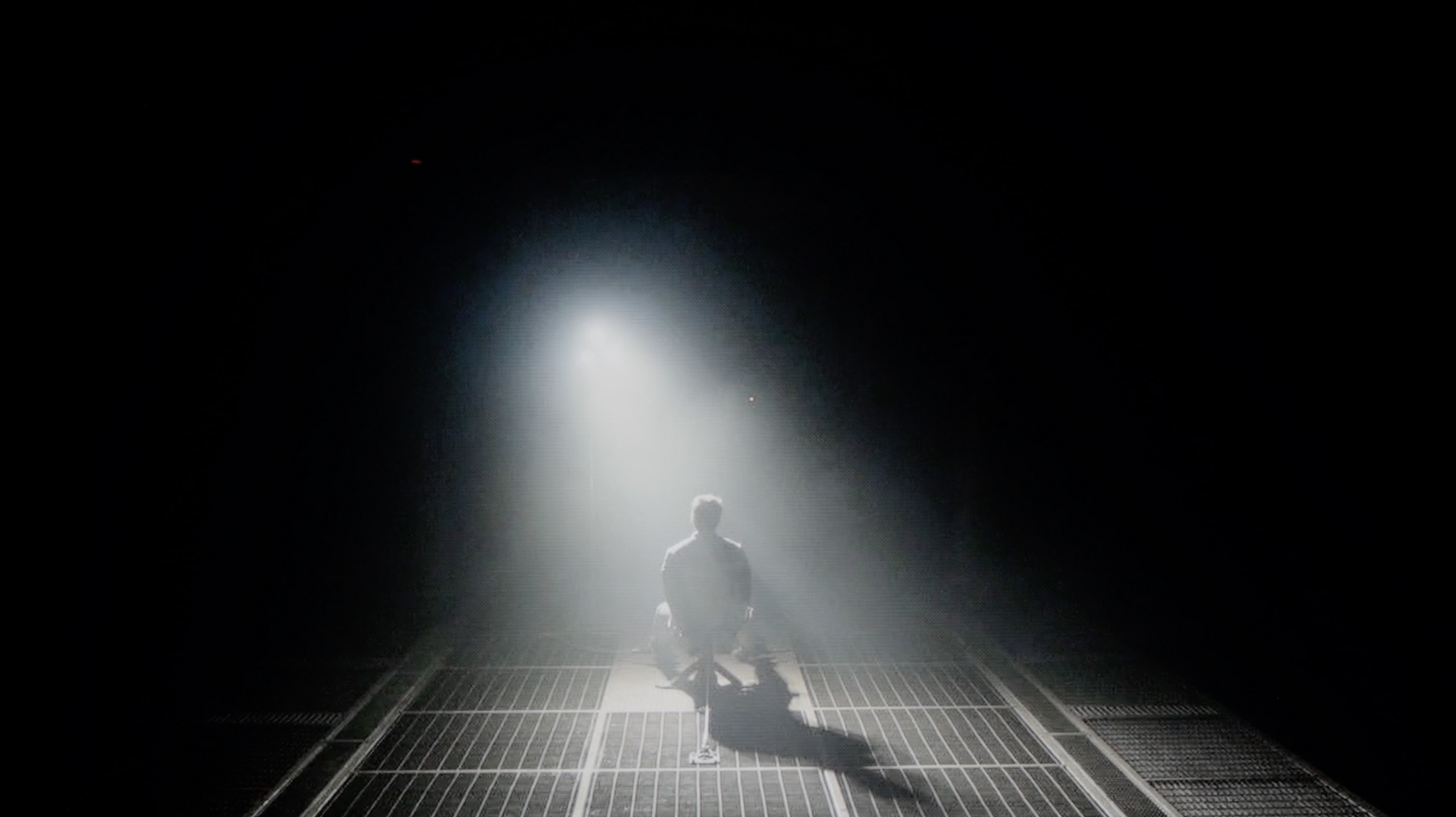

Check the visibility of bright lights on a dark background. Mini-LEDs often struggle with this. The photo does not compare black levels – that’s what the video below is for.
The video accurately shows differences in contrast and black levels between TVs, as well as potential issues: halo around bright objects or Mini-LED zone operation visible as brightness jumps.
We tested the 65-inch variant, equipped with as many as 504 local dimming zones. The Panasonic W95B is an LCD television with a VA panel, but the most important feature is the use of Mini LED backlighting with precise zone control. The results we achieved are truly impressive – in easier scenes, the contrast can reach six-digit values, making it at times easy to mistake this screen for an OLED. Of course, this model is not an OLED, and in more demanding sequences, certain limitations related to zone performance are visible; however, it must be said that Panasonic has refined its algorithms to near perfection. Local dimming is practically invisible in action – the image remains consistent, without noticeable defects or the effect of excessive "bleeding" of light. Details in dark areas are preserved, and transitions between brightness and black look exceptionally natural.
To put it bluntly: when it comes to black levels, it's just very poor. Our measurements on test patterns only confirmed what we could see with the naked eye – a result around 1000:1 is, these days, even in this price range, a disappointing outcome. In movie conditions, that "black" simply doesn't exist. To avoid being all talk, we fired up one of our favourite test scenes – the helicopter flight in "Sicario 2" (you can actually see it in the video we've linked below). Instead of inky, deep night, we got an image that is... navy blue. Everything on the screen that should be dark and mysterious actually glows a dark blue. This is the price we pay for using an IPS panel. On one hand, we get quite decent viewing angles, so if you're watching TV with the whole family from different angles, the picture doesn't lose much in saturation. On the other hand, if you're planning evening screenings with the lights off, this lack of contrast is going to sting your eyes from the very first minute.
HDR effect quality
5.7/10
3.8/10
Luminance measurements in HDR:

Result
1145 nit

Result
229 nit

Result
636 nit

Result
198 nit

Result
740 nit
Result
232 nit
Result
245 nit
Result
255 nit
Result
238 nit
Result
252 nit
Scene from the movie “Pan” (about 2800 nits)


Scene from the movie “Billy Lynn” (about 1100 nits)


The photos show two HDR10 movies. 'Pan' is one of the brightest productions ever made, while 'Billy Lynn' (soldier) has brightness typical of streaming (Netflix, Prime, HBO MAX). Notice the intensity of effects and detail in whites.
Static HDR10


The photos present the visibility of white details in various HDR formats. They do not show brightness differences between TVs (these can be compared in the previous gallery).
HDR luminance chart:
Blaupunkt UGC5500S
Panasonic W95B
The Panasonic W95B is truly a bright screen, capable of achieving peak luminance levels of around 1400 nits. In brighter, well-lit movie scenes, this value translates into spectacular HDR effects that can leave a big impression. However, knowing our test setup, you probably see that in very demanding shots – such as the moon in the distance or the lights of a helicopter in a scene from Sicario 2 – the television doesn’t impress. In such situations, brightness drops to around 200 nits, making the HDR effect much less noticeable. This happens because Panasonic focuses on maintaining deep blacks, not illuminating the background – which shouldn’t be a concern for many users. However, it’s important to remember that in such moments, the picture starts to resemble SDR content. The coverage of the colour palette also deserves praise, as it reaches around 93% of the DCI-P3 space thanks to the use of the PFS filter (also known from QLED technology). This means that most films look very good in terms of saturation and colours, maintaining a cinematic quality to the image.
We won’t beat around the bush here – if you’re looking for a TV strictly for cinematic HDR experiences, then you’ve come to the wrong place. Unfortunately, the Blaupunkt UGC5500S is not a machine built for such challenges. This is primarily due to its very low brightness, which we measured during our tests. A result of around 250 nits on movie screens speaks for itself. It’s simply too little to even consider any real HDR effect. To be honest, everything displayed in this format can confidently be seen as a somewhat “enhanced” SDR mode. We expected this, as practically every device in this price range falls short in this area, but we feel it’s our duty to warn you. Manufacturers love to brag about HDR compatibility on the boxes, but in reality, this format simply doesn’t exist here – it lacks the “fuel” in the form of brightness.
The situation is further complicated for Blaupunkt, as we’re dealing with a panel that has very basic coverage of the DCI-P3 colour gamut, reaching only about 80%. You won’t find any advanced coatings to expand these capabilities (like quantum dots), which means scenes that are supposed to burst with richly saturated colours appear simply underwhelming on this screen. Therefore, we have a particular piece of advice for you: don’t force HDR mode on this model. If you have the option in the streaming app settings – just turn it off. By sticking to the classic SDR mode, you’ll be sure that the TV won’t try to “enhance” something that it can’t handle hardware-wise.
Factory color reproduction
5.1/10
4.8/10


This gallery shows how colors change after professional TV calibration. If you notice the difference, we recommend ordering this service at SkalibrujTV.com.
Factory Mode
After calibration


This gallery shows how colors change after professional TV calibration. If you notice the difference, we recommend ordering this service at SkalibrujTV.com.
Factory Mode
After calibration
In Filmmaker mode, the Panasonic W95B offers an image with quite accurate colour reproduction, although it is not without minor imperfections. The white balance slightly leans towards red, which can cause a subtle warm tint to the image, and the gamma curve is slightly elevated, making the screen appear a bit brighter. It's good that the manufacturer has included this mode – even in its factory configuration, it provides a fairly natural look for films. However, knowing how susceptible Panasonic televisions are to calibration, we decided to check how much the image could be improved after professional tuning.
We also took a close look at how Blaupunkt handles colours in movie mode, and here the matter is, to put it simply, twofold. We must once again clearly separate what we see in the standard SDR format from what happens when HDR is switched on, as they are two completely different worlds. Let's start with the better side of the coin. If you're planning to watch traditional TV, YouTube, or older films on this television, you can count on really well-tuned colours. In our test sample, the white balance in movie mode performed exceptionally well, which honestly surprised us. Of course, to avoid being too rosy, we noticed some drawbacks. Looking at the gamma charts, we observed that the processor struggles with properly dimming the image in its brightest areas. Additionally, there is quite a strong, at times overly aggressive, red saturation, which resulted in visible errors in reproducing certain shades. Despite this, overall, the image in SDR is simply solid and watchable without a grimace on your face. Unfortunately, the magic fades when we re-enter the world of HDR. Here, Blaupunkt behaves as if we suddenly switched it to store mode, and in its worst rendition. The excess blue in the white balance is so significant that it’s glaring, ruining any realism in the scene. Furthermore, the television interprets brightness very loosely, which, upon analysing the EOTF curve, clearly showed that for most of the time, colours simply appear washed out and lacking depth. This is also perfectly evident in the colour errors that become apparent in this mode. Once again, we are left with the same conclusion: Blaupunkt in SDR mode looks significantly better and more natural than in HDR, which seems to be forcefully added without proper refinement.
Color reproduction after calibration
9.1/10
6.4/10


The photos show how movies look on the TV. Pay attention to black detail visibility, colors, and shadow tint.


The photos show how movies look on the TV. Pay attention to black detail visibility, colors, and shadow tint.
After professional calibration, the Panasonic W95B shows what it’s really capable of. Colour errors have mostly dropped below values of 2–3, making them practically invisible to the human eye. The excess red in the white balance has also been corrected, which means the image is no longer slightly tinted pink, and details in dark areas no longer get lost due to excessive dimming in the gamma. The improvement in HDR content is also noticeable – colour saturation is now more stable and doesn’t lean towards blue as distinctly as it did before. It’s truly a fantastic television for watching movies and series in the highest possible quality. While we know that Mini LED screens are not always perfectly suited for this, the W95B is a prime example that with proper tuning, a result close to OLEDs can be achieved.
It may sound like a joke – pulling out professional measuring equipment for a TV that costs around a thousand złoty / 250 dollars, but we wouldn’t be ourselves if we didn’t check it. The question is: does such cheap gear give us any leeway in terms of calibration? To your surprise, the answer is: yes, absolutely. In the Blaupunkt UGC5500S menu, we found surprisingly many options that allowed us to effectively work on the picture. These aren't just empty sliders; these are concrete tools that enabled us to make use of our measurement sensors and software. In SDR mode, the effects were visible to the naked eye. We successfully eliminated the problem we mentioned earlier – that excessive, almost artificial saturation of reds. We also fixed the issue with the incorrect dimming of the brightest parts of the image. After calibration, the picture in standard format became significantly more balanced and simply correct. When it comes to HDR, the situation was more complicated again. While we managed to “tame” that aggressive blue tint in the white balance, it was clear that we were fighting a bit of a losing battle. Even after changing the settings, the TV still tried to interfere with the picture in its own way, as if the electronics knew better than we did how the scene should look. To top it off, there's the hardware barrier that no slider can overcome – colours in HDR still remain undersaturated. This simply results from the quality of the panel itself; it physically cannot produce the most vivid colours. To summarise this point: if any of you ask whether it’s possible to calibrate a TV for “a grand”, we respond with complete conviction: it is possible.
Smoothness of tonal transitions
9.5/10
6.4/10
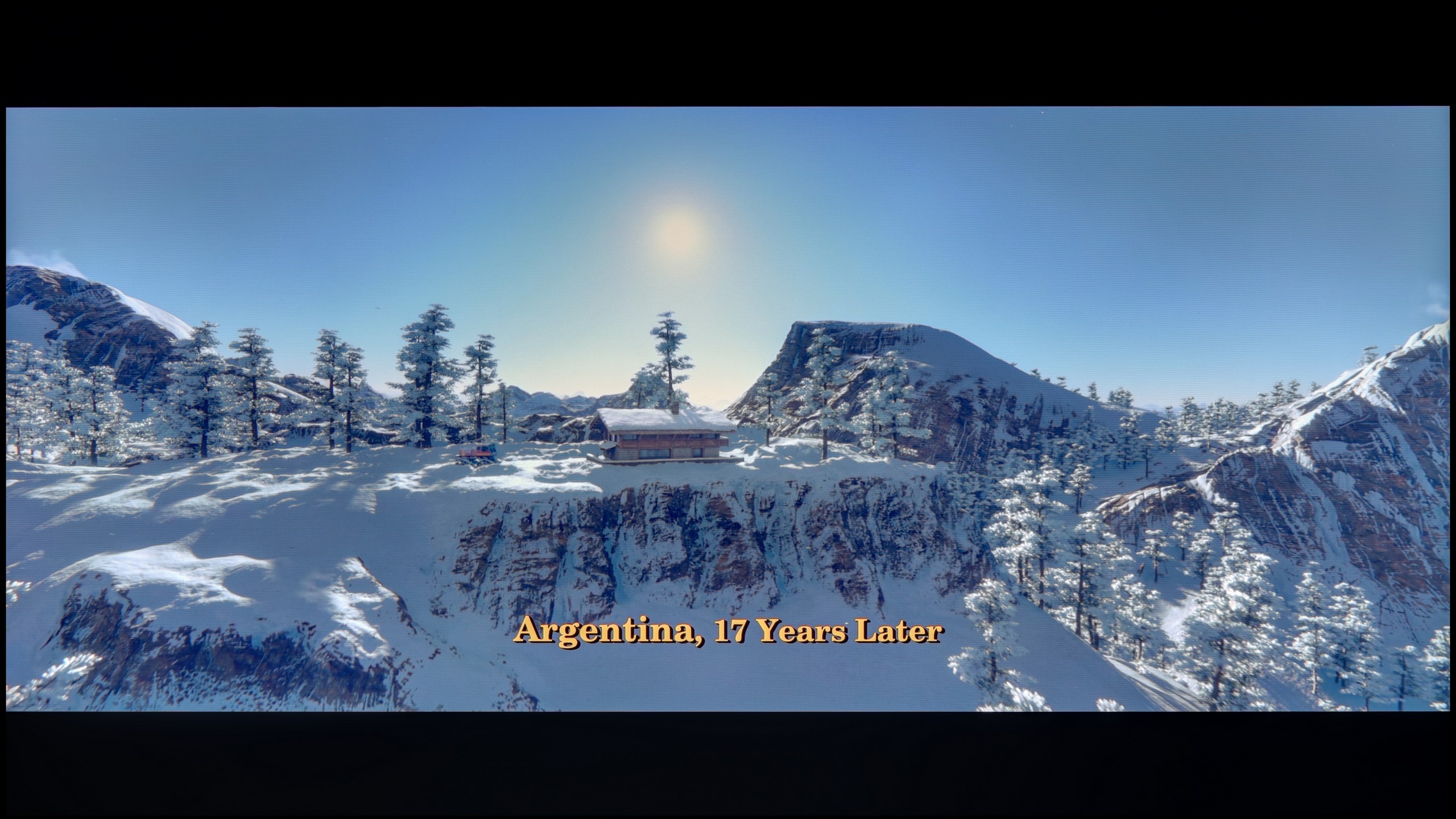



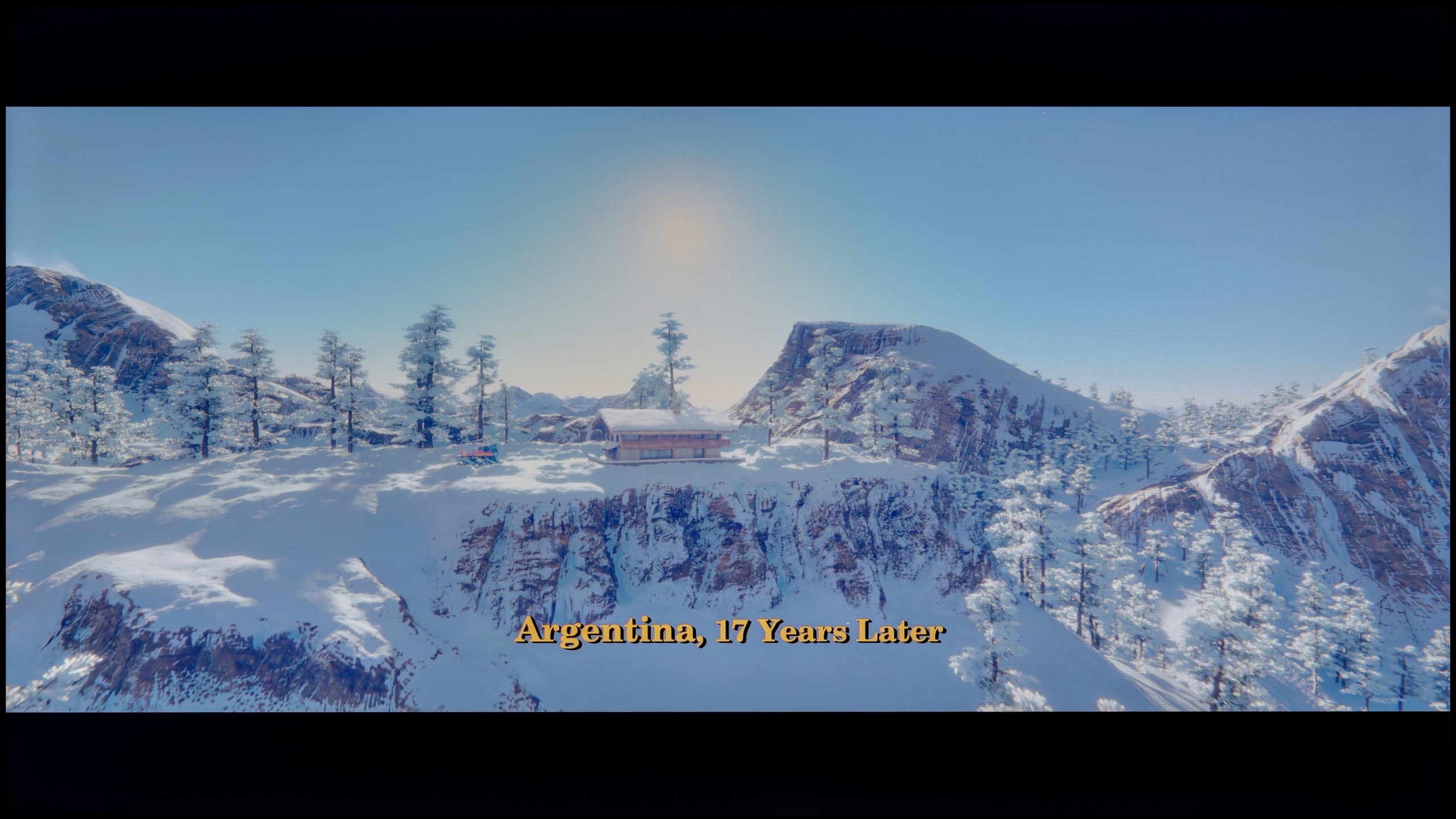
These are selected scenes that show smooth tonal transitions from one color to another. If you see distinct banding, it’s the TV panel’s fault.

These are selected scenes that show smooth tonal transitions from one color to another. If you see distinct banding, it’s the TV panel’s fault.

These are selected scenes that show smooth tonal transitions from one color to another. If you see distinct banding, it’s the TV panel’s fault.

These are selected scenes that show smooth tonal transitions from one color to another. If you see distinct banding, it’s the TV panel’s fault.
In terms of tonal transition fluidity, the Panasonic W95B performs exceptionally well. In the vast majority of scenes, the gradation is practically unnoticeable, which makes the image look exceptionally smooth and natural. Minimal issues only arise in extreme shades of grey, which occur extremely rarely and are difficult to catch with the naked eye. This is a level that will satisfy even the most demanding users.
Looking at our test photographs, it’s really hard to pick at anything. Most of the colours in the attached images blend together almost perfectly, creating smooth gradients without noticeable "jaggies". And indeed, in most scenes where we took these shots, it looked surprisingly good. However, the problem arises when we stop analysing still frames and start simply watching the films. In motion, the situation changes dramatically. During dynamic scenes on screen, artefacts begin to pop up, which are a direct result of simply having a poor image processor here. Unfortunately, a static photo can't capture that "tearing" of colours, but you have to take our word for it: what looks clean and smooth in the photo can really stand out and simply irritate during viewing. This is where our rather low rating in this category comes from.
Image scaling and smoothness of tonal transitions
7.8/10
2.5/10


Smooth transition function
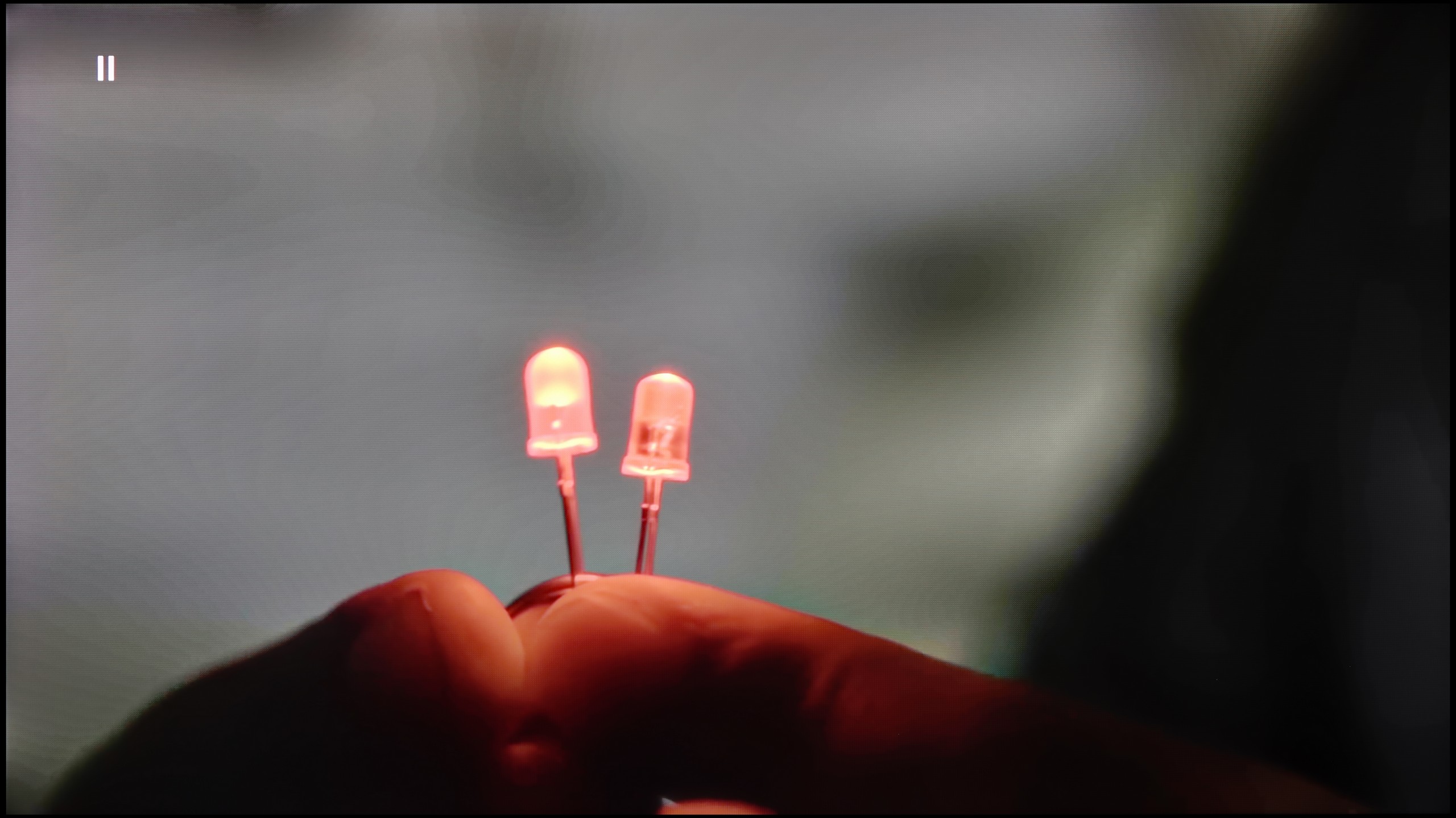

The match photo shows how the TV smooths weak tonal transitions in low-quality video.
Image scaling SD (576i)


The model photo shows how it handles upscaling of SD material.
In terms of image processing, the Panasonic W95B performs exceptionally well. The proprietary processor responsible for digital image processing effectively upscales lower resolution content to 4K, maintaining a high level of detail and a natural look to contours. The end result is impressive – the upscaling is truly top-notch, and Full HD content can look surprisingly good. Also noteworthy is how the TV smooths tonal transitions in low-quality materials. The algorithm doesn’t operate as aggressively as in some competing models, which helps avoid the loss of detail or the blurring of film grain.
If you're hoping that the processor in this model will magically "fix" the poor quality signal from your cable TV or old movies from YouTube, we must disappoint you. The capabilities of this television end at absolutely basic upscaling, which is simply stretching the image to a higher resolution. It does this correctly in that the image is not blurry, but there is no mention of any intelligent sharpening or adding details. Worse still, Blaupunkt is completely devoid of any functions to reduce unwanted tonal transitions. If the material being viewed shows what is known as banding (ugly "steps" instead of a smooth transition of colours, e.g., in the sky), this television will display them in all their glory. Additionally, the television has a tendency to slightly crop the edges of the image. Instead of displaying 100% of what the source sends, Blaupunkt slightly zooms in on the frame, causing us to lose details that are at the very edges of the screen. In summary: in the category of digital "enhancement" of the image, Blaupunkt simply performs poorly. We receive a raw, unprocessed signal, with all its flaws.
Blur and motion smoothness
7.8/10
3.7/10
Blur (native resolution, maximum refresh rate):




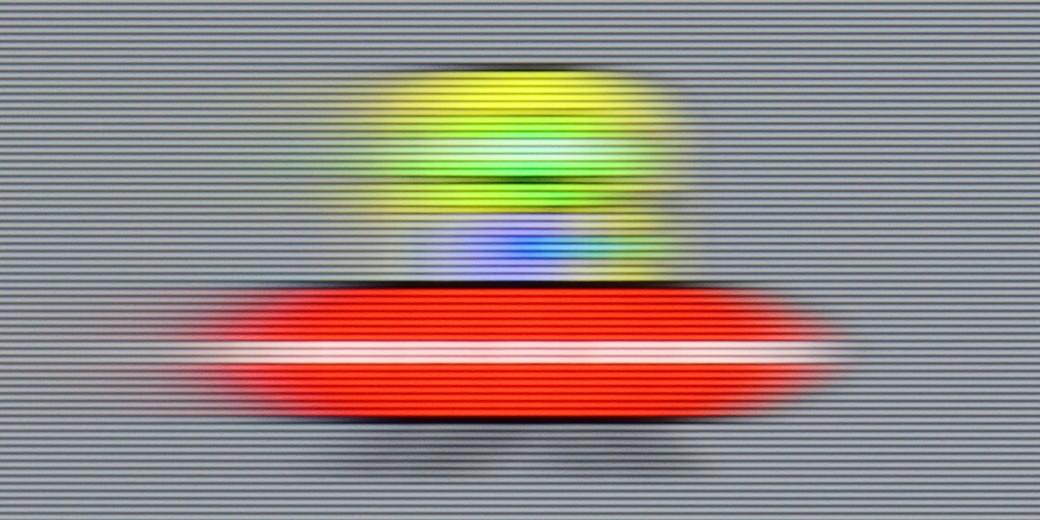

Blur (BFI function enabled):



Blur (4K@144Hz):



Blur ():
The 144 Hz panel used in the Panasonic W95B offers excellent smoothness, although in practice, given how television content looks or how new-generation consoles are limited, it’s worth looking at its performance when refreshing at 120 Hz. In this mode, the television performs exceptionally well – despite being a VA panel, which is not known for the fastest pixel response times, motion blur is minimal and difficult to detect with the naked eye.
When it comes to motion fluidity, Blaupunkt has nothing to defend itself with. A 60 Hz panel at this price is standard, so none of us expected a perfectly sharp image in fast action scenes or during a match. However, the biggest drawback of this model is that you won’t find any digital motion smoothers in the menu. The manufacturer hasn’t given us any room for manoeuvre – nothing can be smoothed out or the image adjusted to our personal preferences. The picture is always "raw" and we receive it exactly as it is transmitted by the source. For fans of cinematic "jumping" images, this might be good, but the rest simply has to get used to the lack of any motion enhancement.
Console compatibility and gaming features
9.8/10
3.5/10
- ALLM
- VRR
- VRR range48 - 144Hz
- Dolby Vision Game Mode
- Correct implementation of HGIG
- 1080p@120Hz
- 1440p@120Hz
- 4K@120Hz
- Game bar
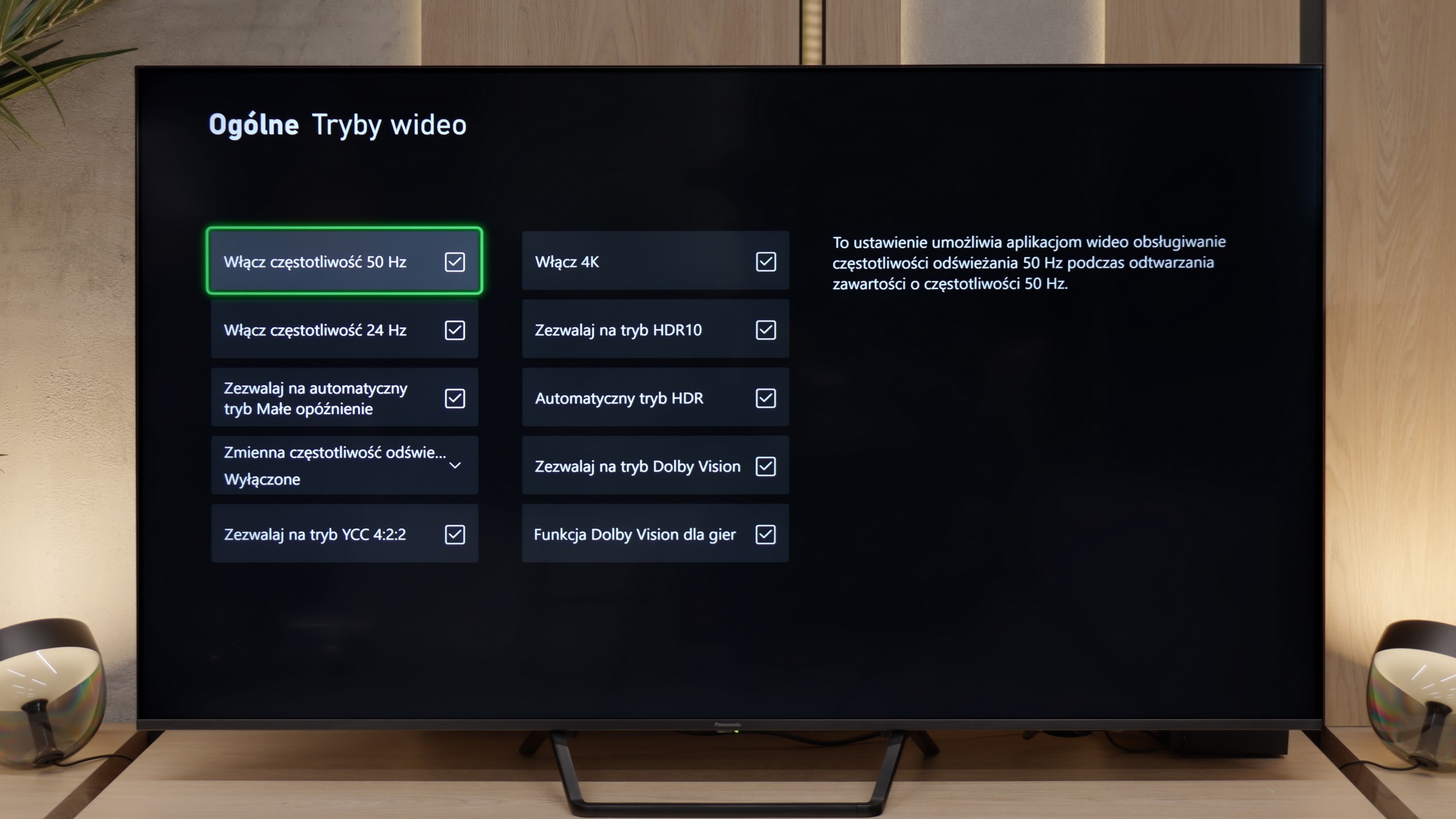
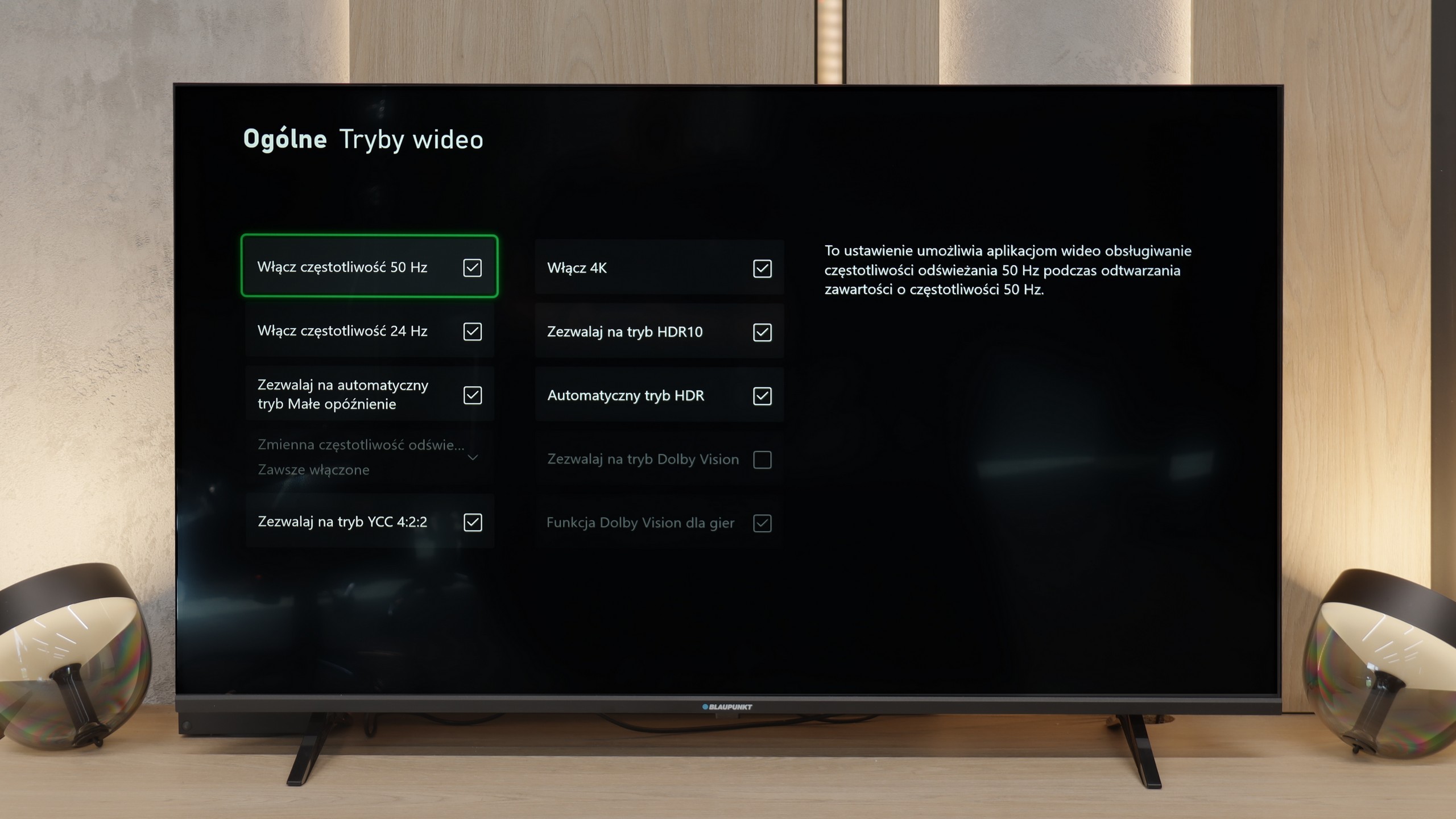
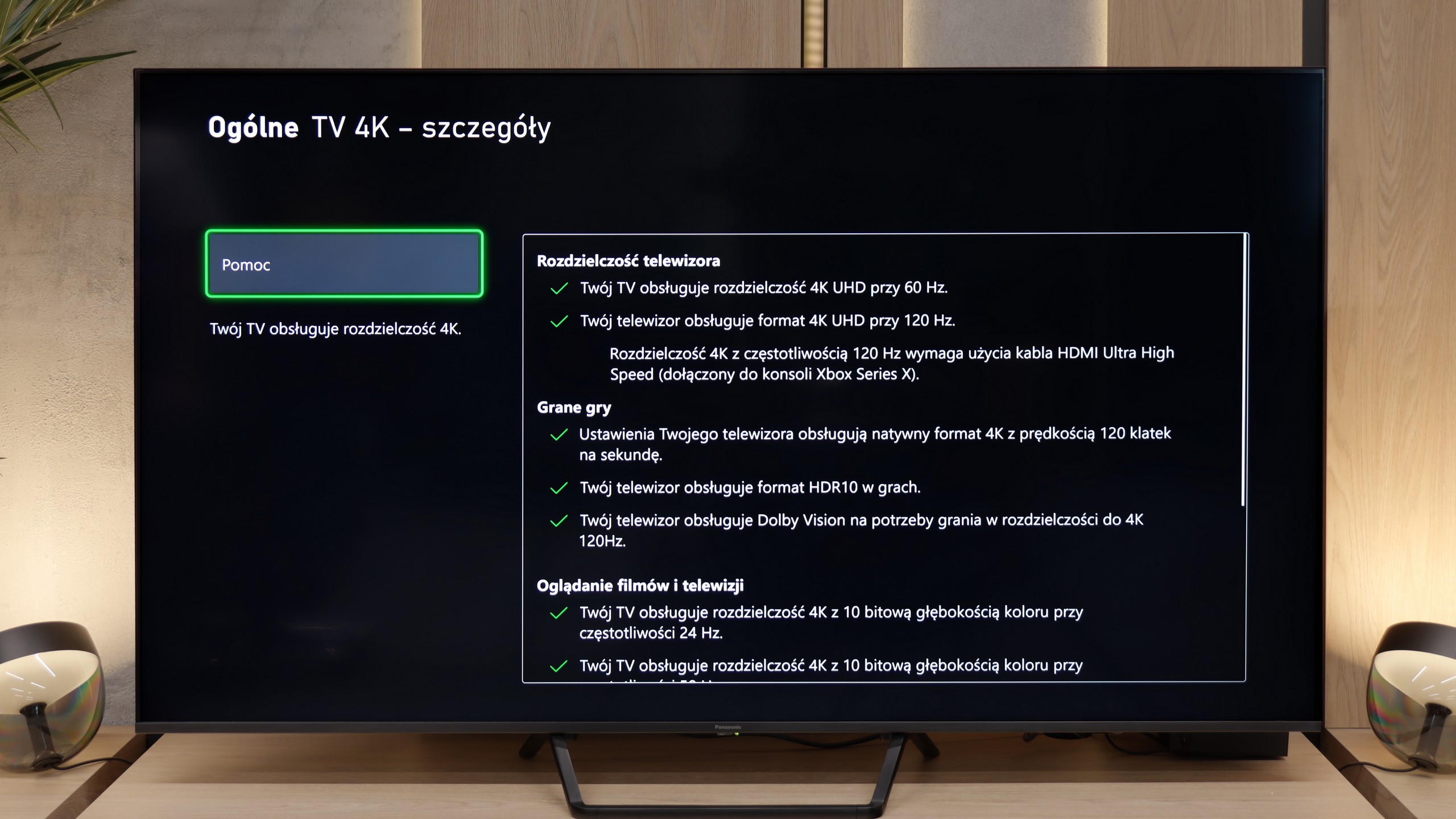
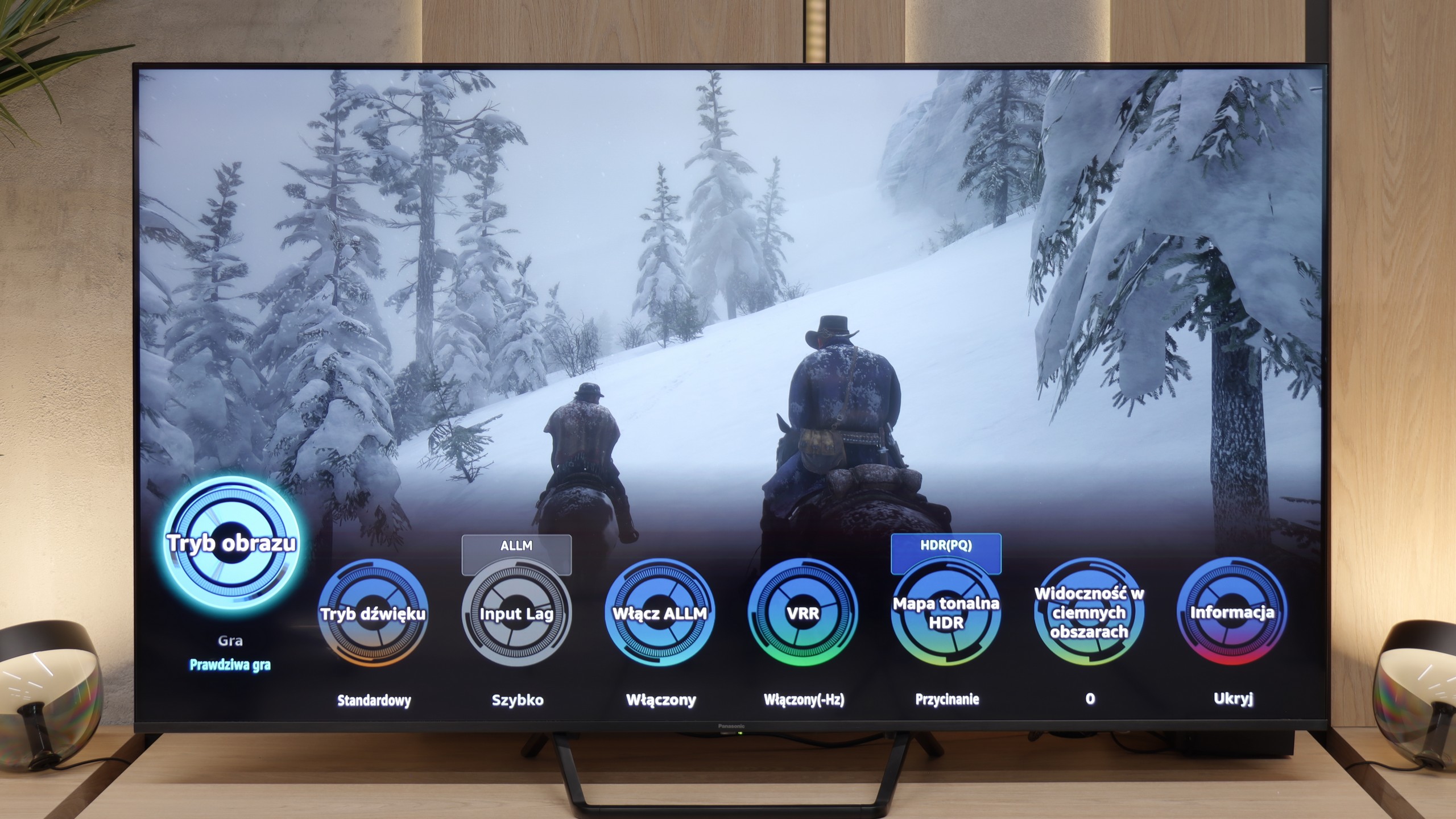
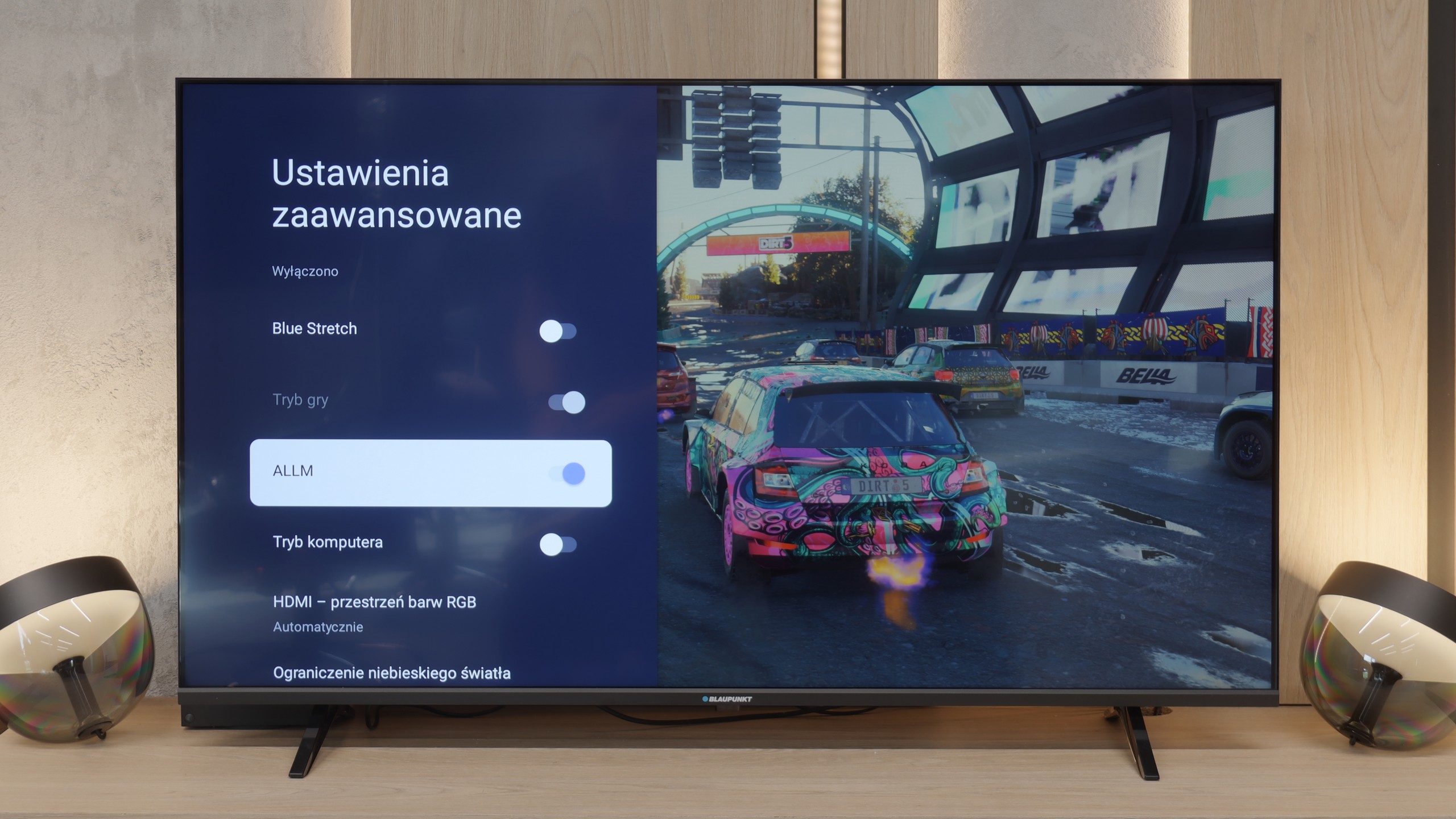
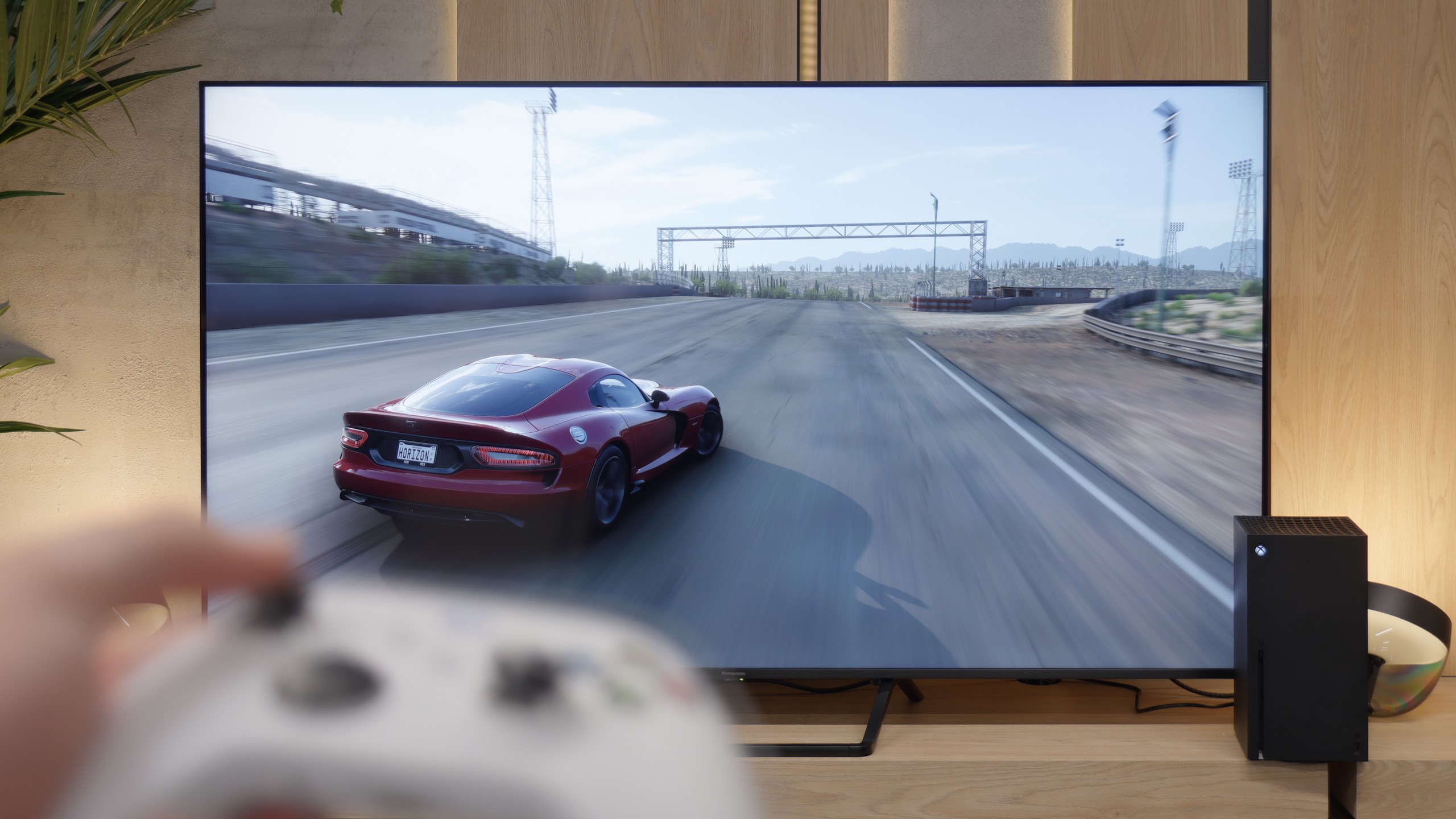
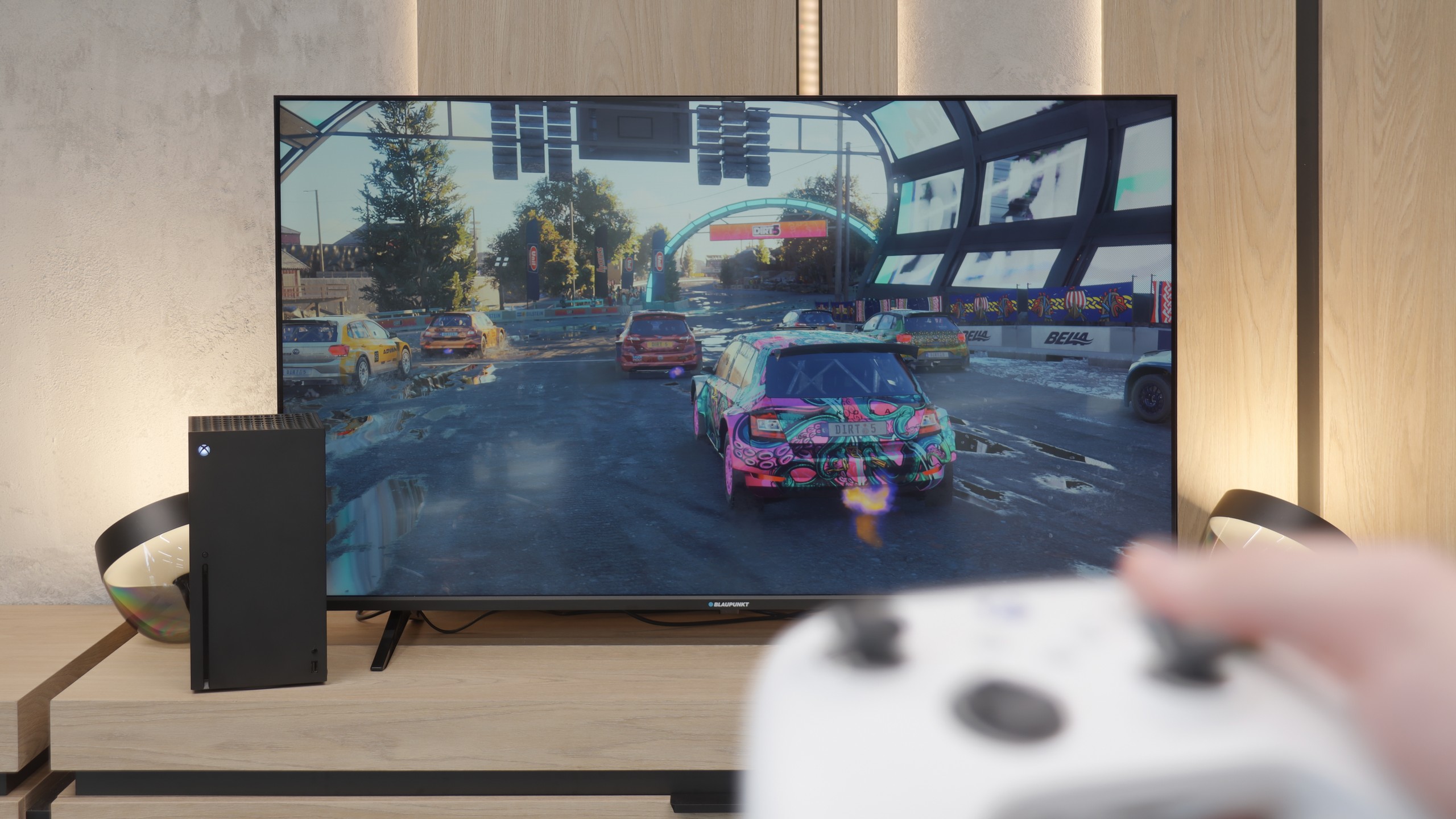
Aside from the previously mentioned issue related to VRR mode, where local dimming does not work, the Panasonic W95B is a true gaming beast. The TV offers practically everything that gamers could expect – perhaps apart from four HDMI 2.1 ports, as there are only two available. On board, we find automatic low latency mode (ALLM), correctly implemented HDR modes for gamers, including HGiG, as well as support for Dolby Vision in games. The whole package is complemented by an interestingly designed Game Bar, presented in the form of circles. It may not be the most visually attractive, but it fulfills its purpose – allowing quick access to key game parameters and adjusting settings without diving into the system menu.
When it comes to gaming on the Blaupunkt, we weren’t expecting miracles and indeed – the list of features isn’t very long. However, there are two interesting points worth mentioning, as they might be significant for some of you at this price. The first advantage is that the TV quite smoothly detects the connected console. Thanks to the ALLM (Auto Low Latency Mode) feature, the device knows when you start gaming and automatically switches to low latency mode. This is convenient because you don’t have to fiddle with settings every time to ensure input lag doesn’t spoil the fun. The second point is a real curiosity that surprised us. Despite it being a 60 Hz panel, the Blaupunkt can display a 120 Hz image at Full HD resolution. Sure, we lose 4K details, but for those playing more dynamic, online shooters where smoothness is more important than resolution, this is a really nice and unexpected addition in such an affordable device. Other than these two points, you won’t find anything more here. There are no advanced smoothness enhancement systems for gamers or extensive gaming menu bars. It’s a simple screen for occasional gaming.
Input lag
9.8/10
8.6/10
SDR
HDR
Dolby Vision
Panasonic W95B offers very low input lag – around 11 ms at 120 Hz content and 20 ms at 60 Hz. While these aren't record-breaking results that would impress the most demanding esports players on paper, in practice the difference is virtually imperceptible. During testing, even in dynamic, fast-paced titles we didn’t notice any response delays. The TV responds instantly, and gameplay remains smooth and comfortable. This level is more than sufficient for both console gaming and more demanding online productions.
An important point for every gamer is, of course, input lag, which is how quickly the television responds to our movements on the controller. Here, Blaupunkt has something to boast about, although the results are quite specific. At 4K resolution, the lag is only 12 ms. That's an excellent result. With such a lag, gaming is simply phenomenal, and the response is almost instantaneous. However, it's a bit disappointing that the situation changes when switching to 1080p. Here, the input lag increases to around 30 ms. Just to be clear: that's still not a terrible result. For most people, it will be "more than acceptable," and during casual gaming, you probably won't even notice it. Nevertheless, it's a pity that such good parameters couldn't be maintained as we saw with full 4K. Nonetheless, in the overall assessment, as a budget screen for console gaming, Blaupunkt really performs admirably in this regard.
Compatibility with PC
8.4/10
6/10
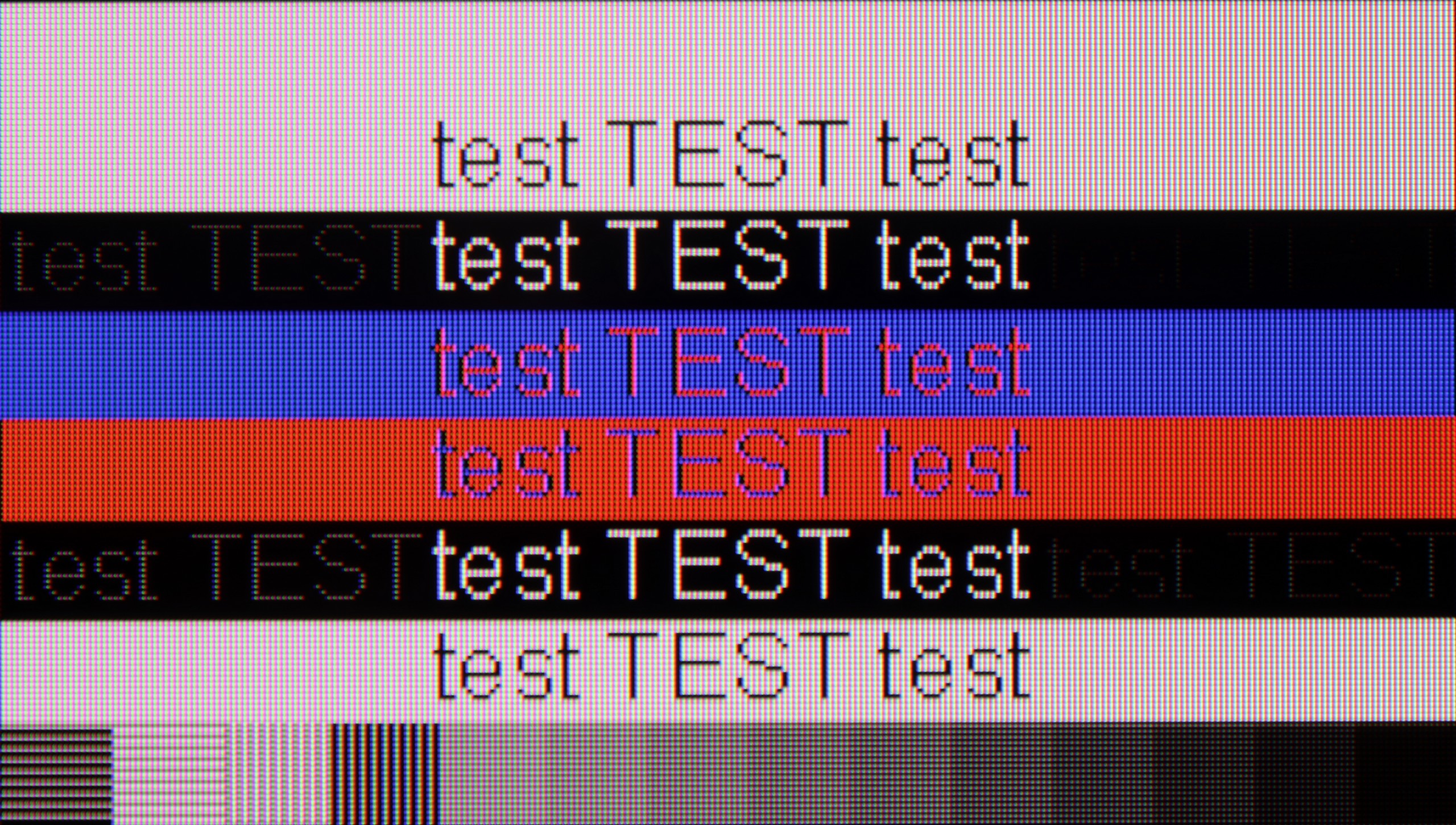
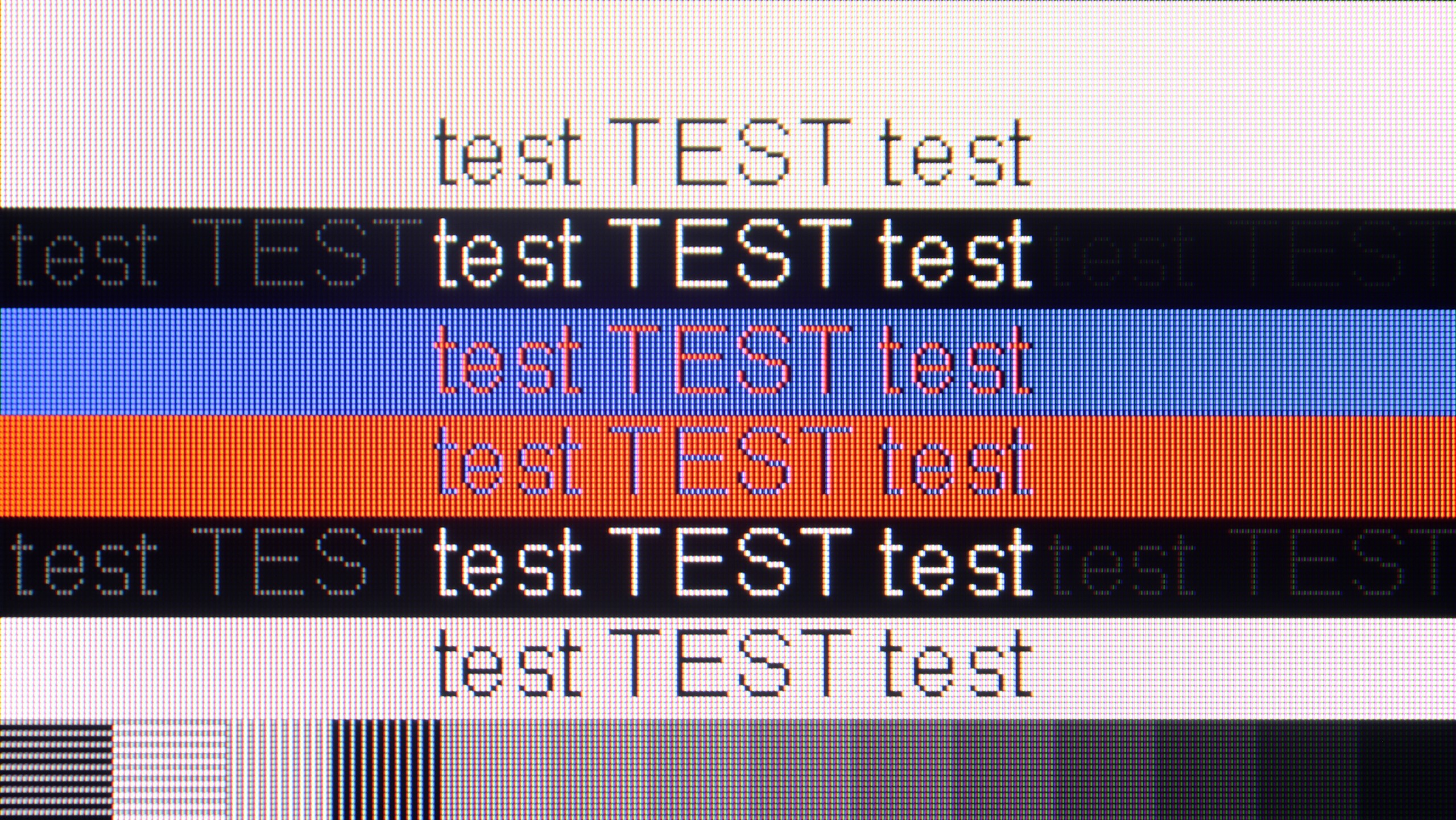
The photo shows the legibility of small fonts. Ideally, lines should be the same thickness on both light and dark text, with minimal pixel gaps.
The Panasonic W95B performs very well when connected to a computer. With its gaming monitor featuring a 144 Hz refresh rate and support for G-Sync and AMD FreeSync, the screen delivers smooth visuals without frame tearing, which will be appreciated not only by gamers but also by those using the TV as a large monitor. It can also be comfortably used for daily work – fonts are legible, and the image is sharp. While they may not be as clear as those from IPS panels, the display quality for text will be fully satisfactory for most users.
If you're planning to connect a computer to this television, it's absolutely crucial to find and enable the PC compatibility option in the menu. Once you do this, magic happens – the implementation of Chroma 4:4:4 and font readability jump to an exemplary level. The readability of text is simply excellent here. Of course, our editorial diligence wouldn't let us pass this equipment without taking a look "under the hood." In very specific tests with thin, dark text, we noticed that the horizontal and vertical matrix masks differ slightly in brightness levels. However, we want to reassure you: this phenomenon is so subtle that, during normal use, writing emails or browsing the web, you won't be able to notice it with the naked eye. We maintain our opinion that as a monitor strictly for dynamic gaming on PC, it isn't the ideal choice (as we mentioned in the context of the 60 Hz refresh rate), but if any of you are wondering whether you can comfortably work on such a Blaupunkt – we say: yes, it absolutely can be done.
Viewing angles
2.9/10
5/10
Unfortunately, this is the Achilles heel of the Panasonic W95B model – as with most TVs equipped with a VA panel without additional coatings to widen viewing angles. Colours start to fade with even a slight deviation from the screen axis, and the contrast noticeably drops. For this reason, when watching, it’s best to sit directly in front of the television to fully utilise the image's potential.
Here it's really very good. Whether we were sitting straight on or on the edge of the couch, the colours didn't lose their saturation. This is a big plus if you're planning to watch matches or movies with a larger group – no one will complain that the picture looks worse for them. Although IPS panels are known for their good viewing angles, in this particular model, when viewed from a sharp angle, the picture noticeably loses brightness. Interestingly, the colour saturation still remains in place, but the screen simply becomes darker. It's not something that disqualifies this television, but it's worth knowing.
Daytime performance
7.2/10
4/10
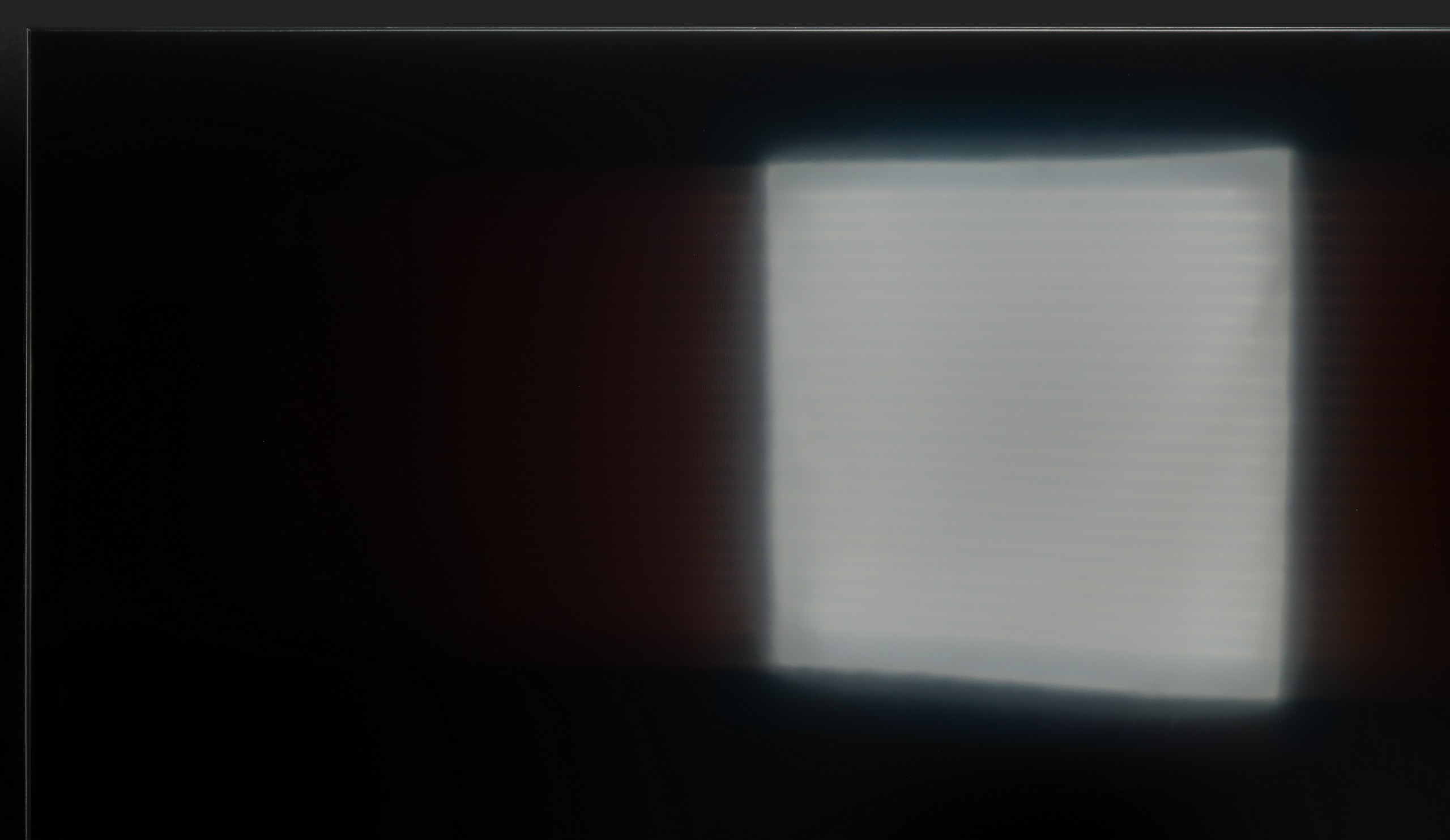
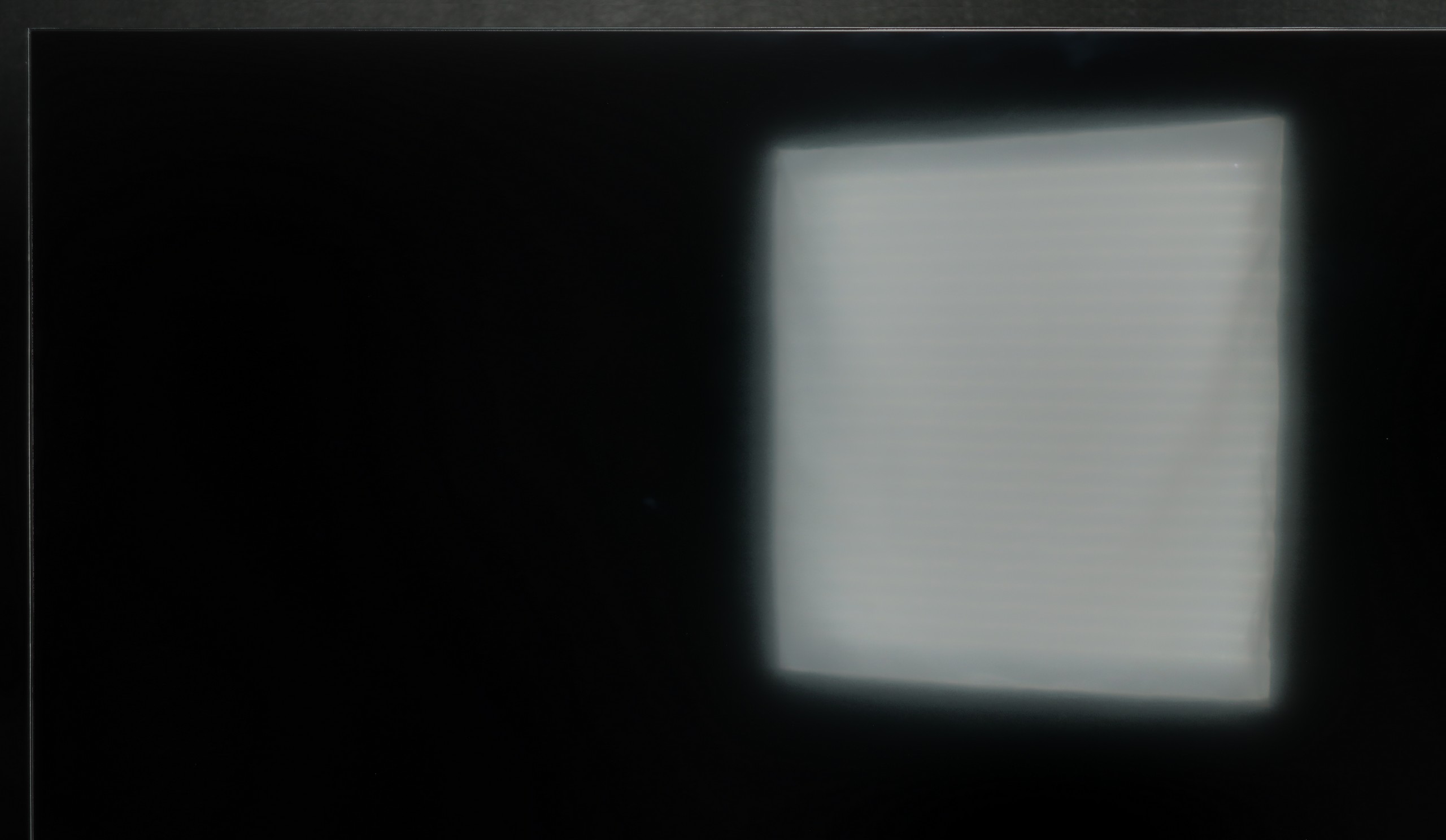

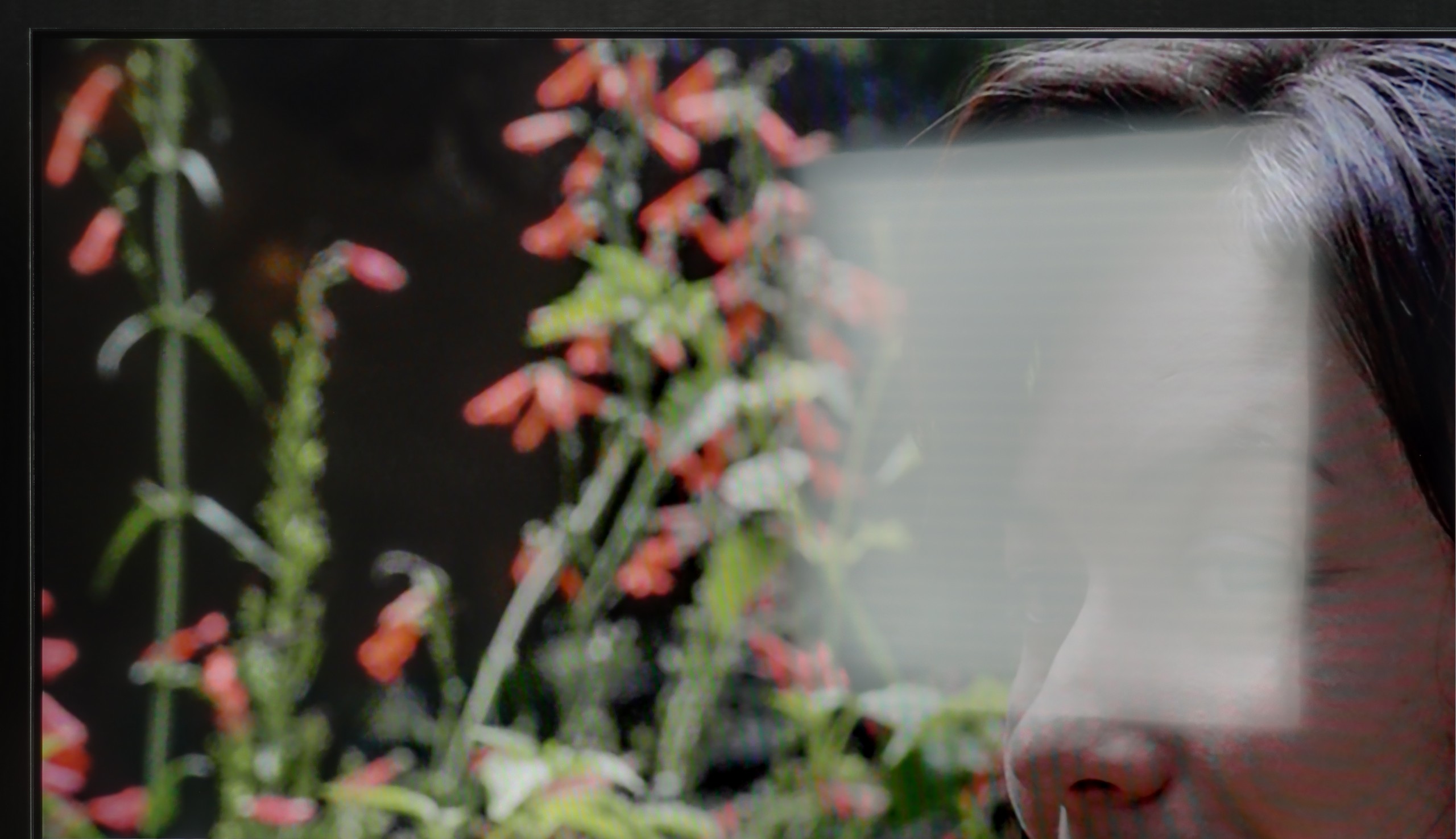
Panel brightness
Blaupunkt UGC5500S: 245 cd/m2
Panasonic W95B: 673 cd/m2
The satin coating applied in the Panasonic W95B effectively reduces light reflections, ensuring that the screen remains readable even in brightly lit rooms. However, the greatest advantage of this model is its high brightness – when watching everyday content, it reaches around 700 nits, which is more than sufficient even in very demanding daylight conditions. The television performs excellently in living rooms with large windows or when watching on a sunny day, maintaining appropriate contrast and colour saturation without sacrificing visual comfort.
In terms of daytime performance, Blaupunkt is simply average. It all comes down to the low brightness of the panel, which – as we mentioned, hovers around 250 nits. That’s definitely too low for the screen to comfortably "cut through" the strong light coming into the living room. As a result, in bright sunlight, the image loses its clarity and appears somewhat washed out. However, there is one bright spot in this category: the satin coating of the panel. Thanks to this, we don't have to deal with the mirror effect, which often means instead of watching a movie, we're seeing our own couch reflected. The satin nicely diffuses reflections, which somewhat saves the situation. Nevertheless, we can’t cheat physics: while the coating bravely fights against reflections, the low brightness ultimately capitulates in the face of the sun's rays. If you plan to watch something in the middle of the day in a very bright room, prepare yourself for the necessity of drawing the curtains.
Panel details
Subpixel Structure:
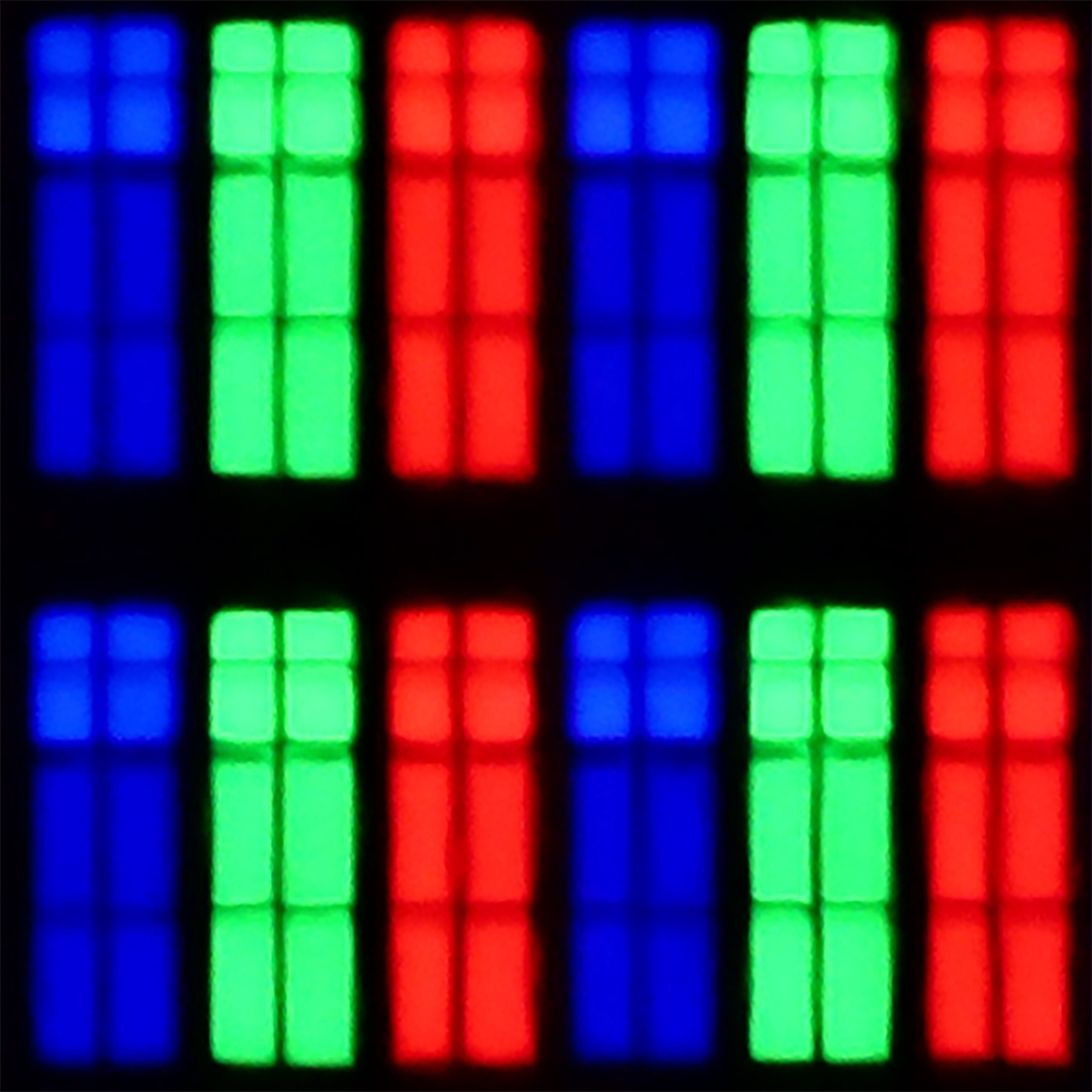
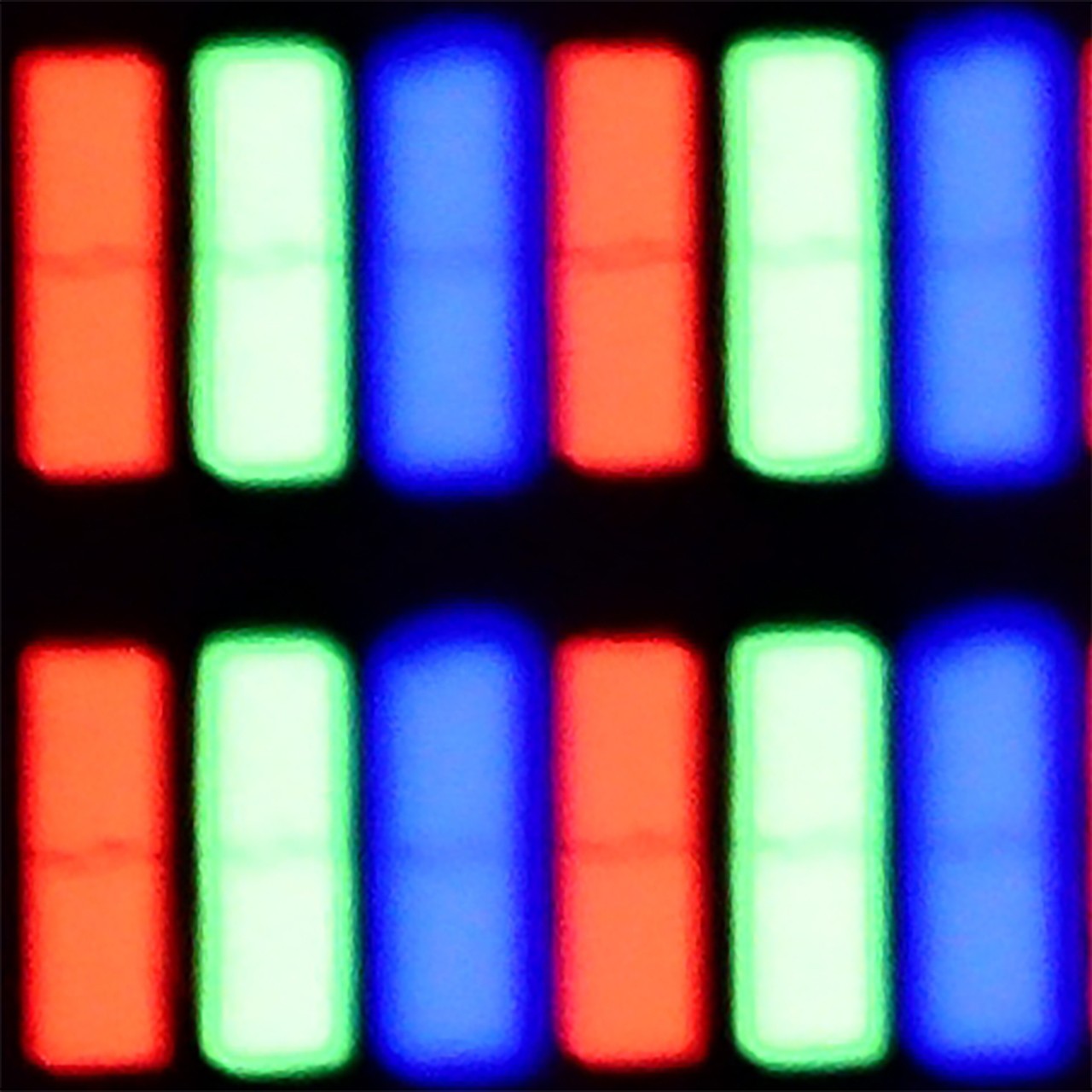
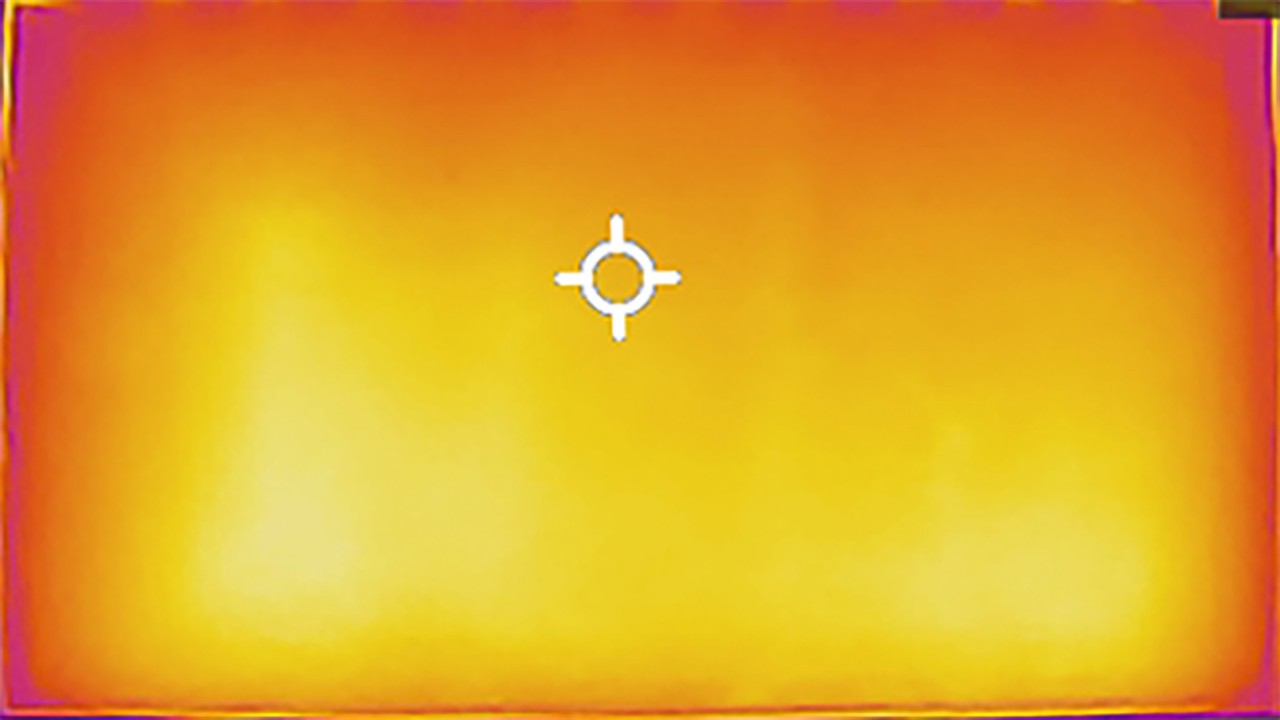
Panel uniformity and thermal imaging:



Panasonic W95B
Blaupunkt UGC5500S
TV features
6.8/10
5.1/10
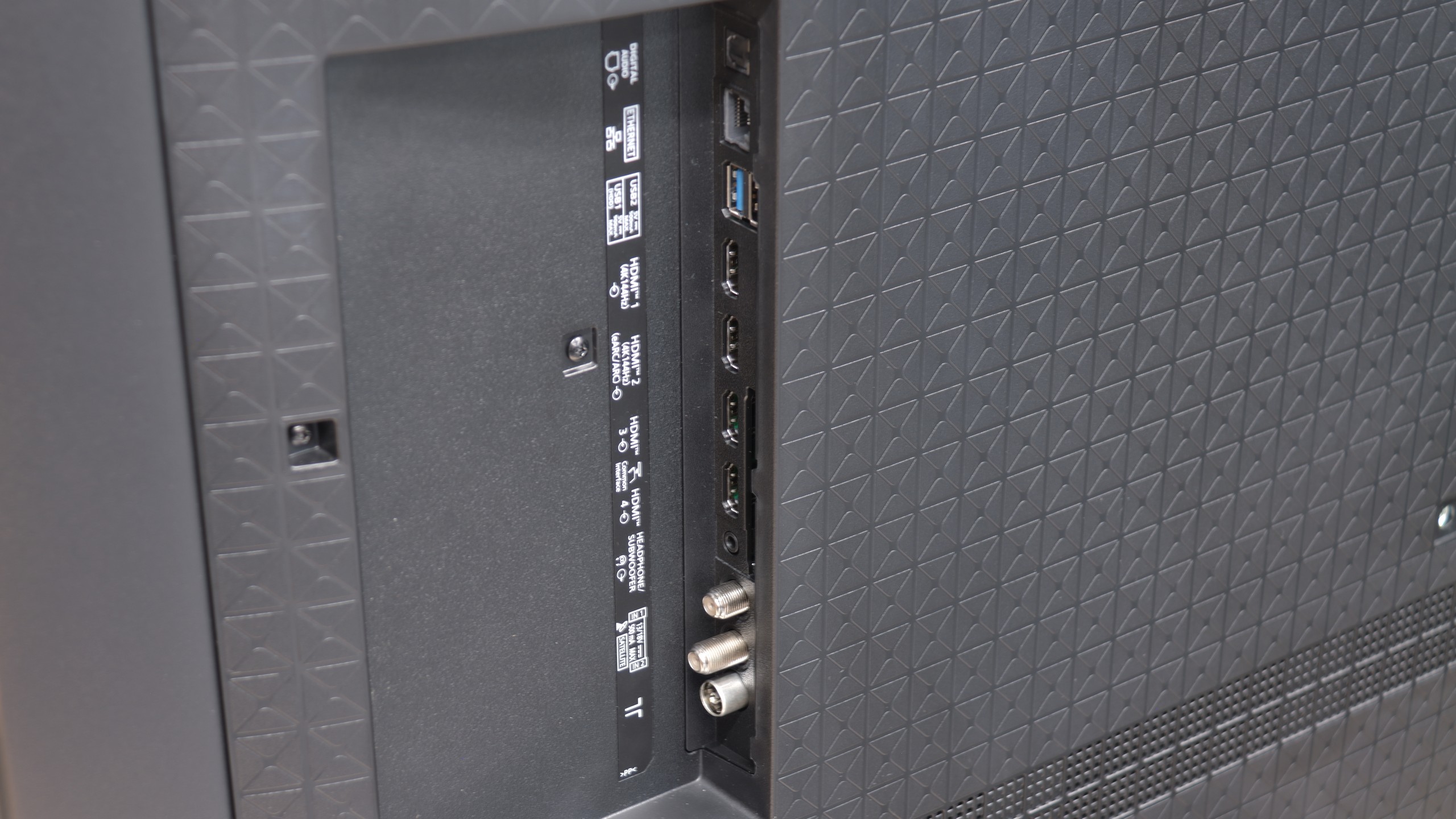
- HDMI inputs2 x HDMI 2.0, 2 x HDMI 2.1 48Gbps3 x HDMI 2.0, 0 x HDMI 2.1
- Other inputsRCA (Chinch)
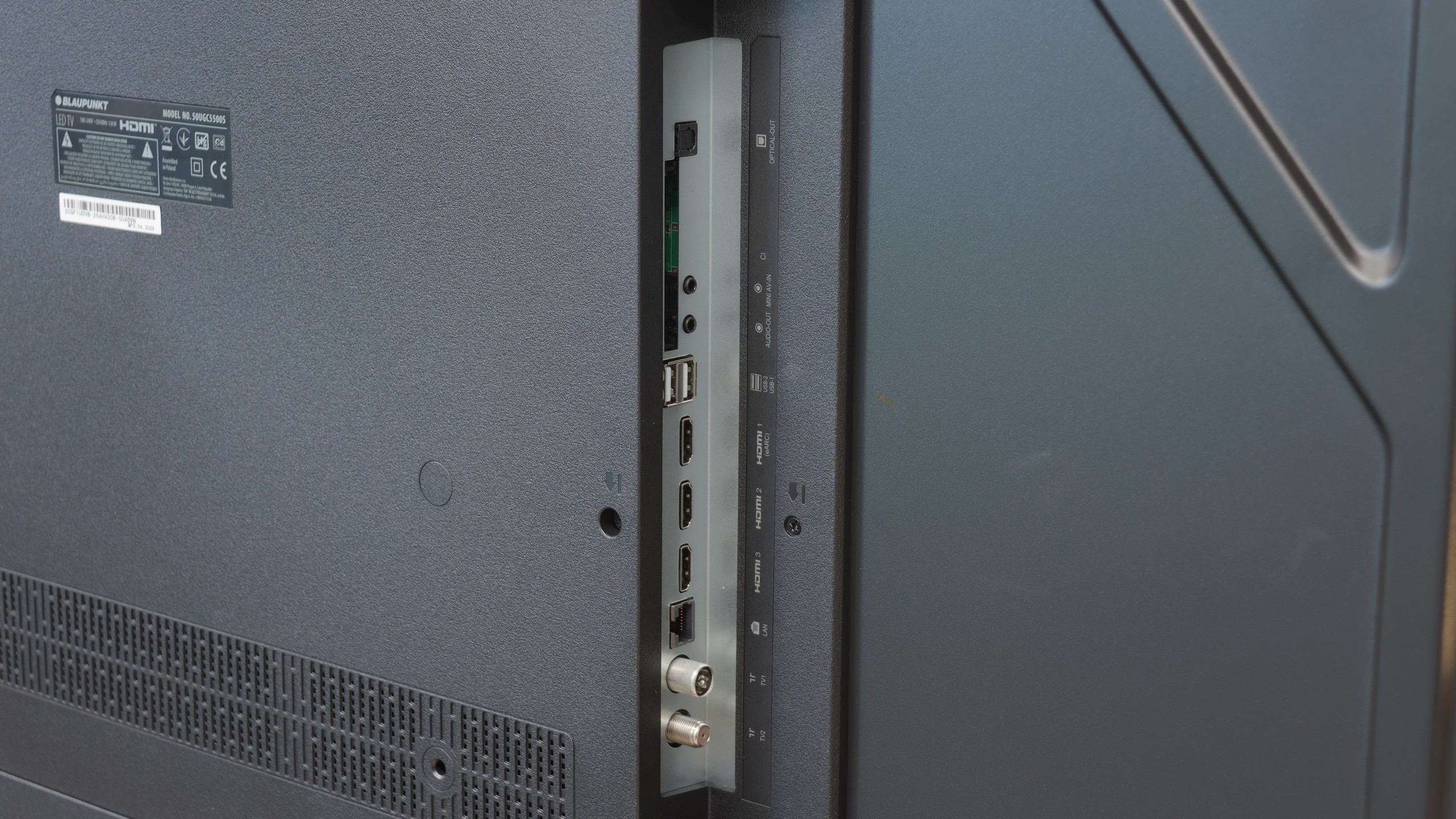
- OutputsToslink (Optical audio), eARC (HDMI), ARC (HDMI), Mini-Jack (Headphones)Toslink (Optical audio), eARC (HDMI), ARC (HDMI), Mini-Jack (Headphones)
- Network InterfacesWi-Fi 2.4GHz, Wi-Fi 5GHz, Ethernet (LAN) 100MbpsWi-Fi 2.4GHz, Wi-Fi 5GHz, Ethernet (LAN) 100Mbps
- TV receptionDVB-T, DVB-T2, DVB-S, DVB-S2, DVB-CDVB-T, DVB-T2, DVB-S, DVB-S2, DVB-C
Classic features:
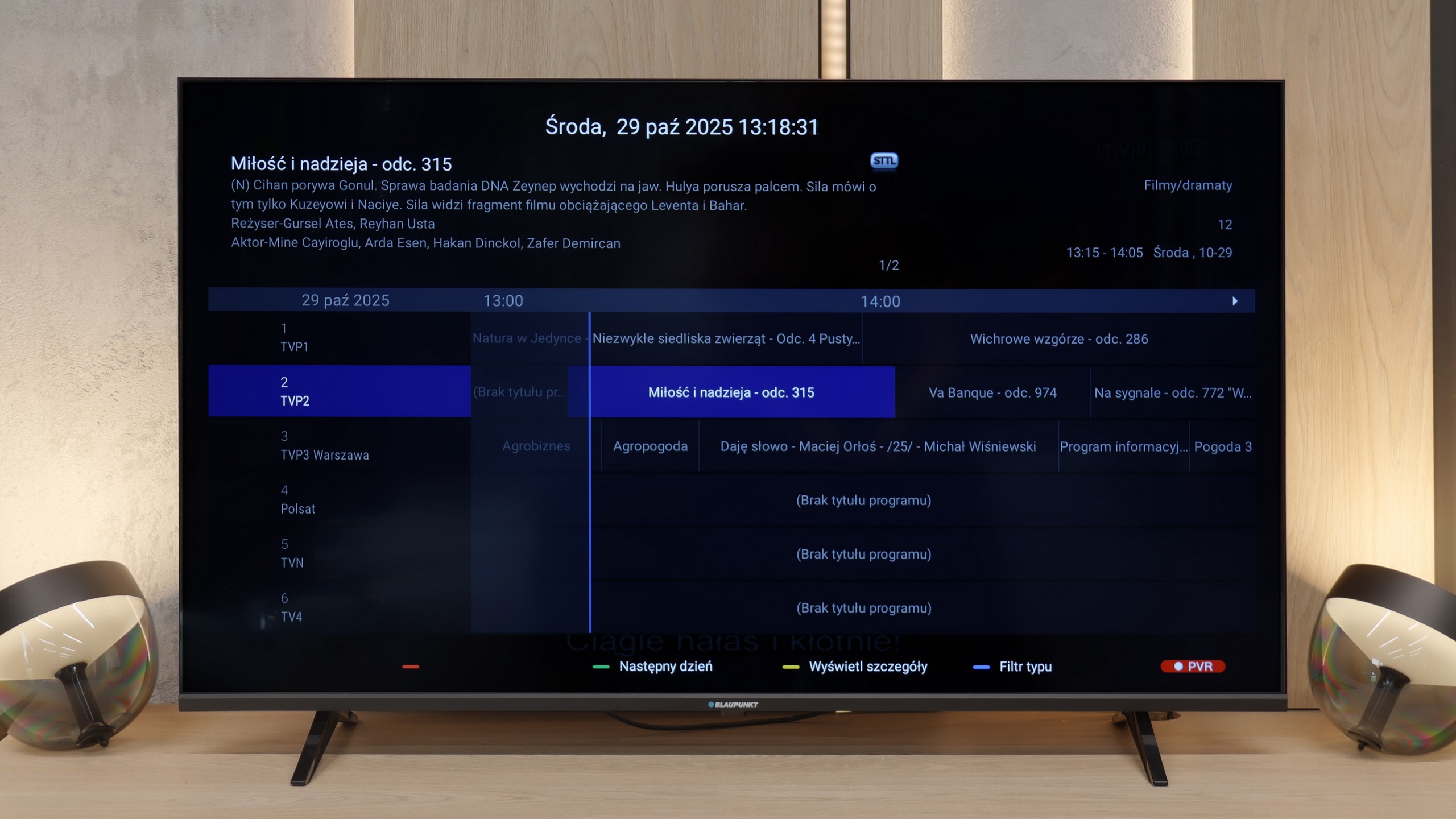
- Recording to USB (terrestrial TV)
- Recording programming
- Picture in Picture (PiP)
- RF remote control (no need to aim)
- Backlit remote control
- Teletext
- Audio only mode
- Bluetooth headphones support
- Simultaneous Bluetooth headphones & TV audio
Smart features:
- AirPlay
- Screen mirroring (Windows Miracast)
- Voice search
- Voice search in native language
- Ability to connect a keyboard and mouse
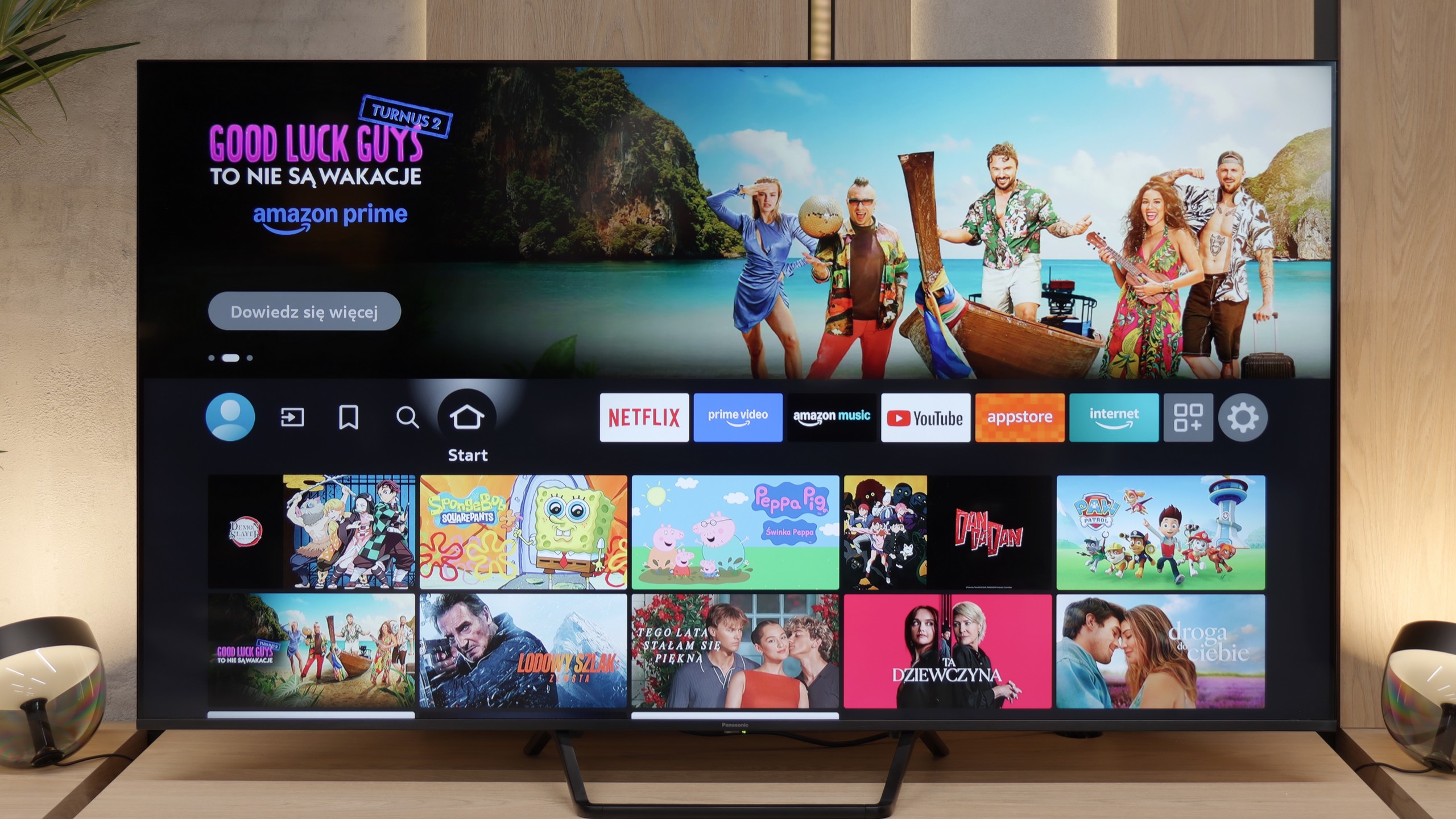

SmartTV Features W95B
Unfortunately, this is yet another Achilles' heel of the Panasonic W95B model. The Fire TV operating system used here in its European version is poorly refined – it lacks many key applications, and the interface operates sluggishly and clumsily in places. While it does have basic features like AirPlay and Screen Mirroring, it's a poor consolation compared to how smoothly platforms from other manufacturers operate. As a result, despite the excellent picture quality, the television falls short of expectations in terms of software.
User Features W95B
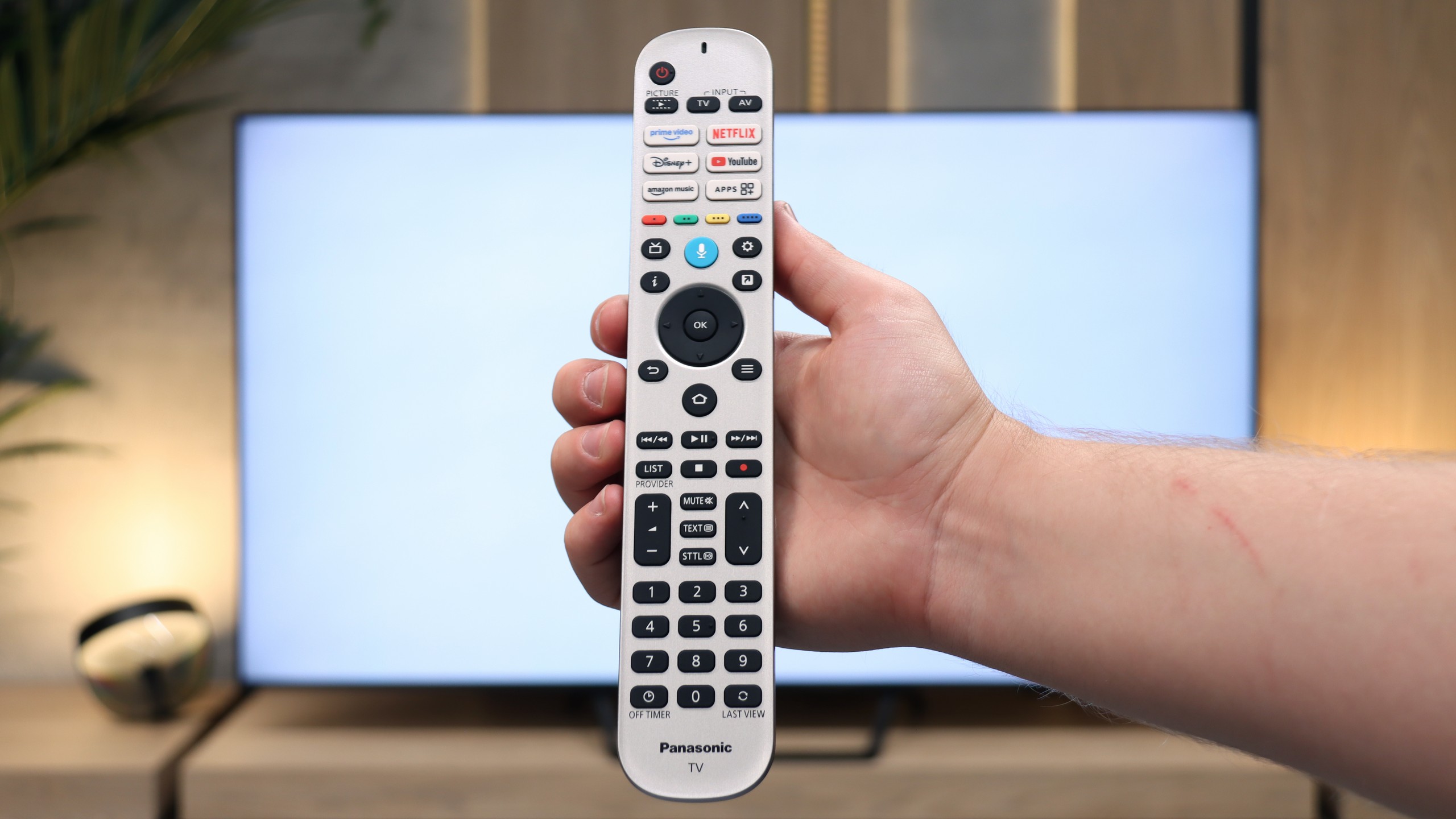
In terms of user features, the Panasonic W95B performs much better. The television offers Bluetooth, a classic well-equipped remote control, and the ability to record programs to USB from built-in terrestrial TV tuners – a rarity that many competing models lack. An additional advantage is the presence of a headphone jack, which will certainly please users of older home cinema systems or traditional wired headphones. In terms of hardware equipment, the W95B is therefore a solid and complete television.
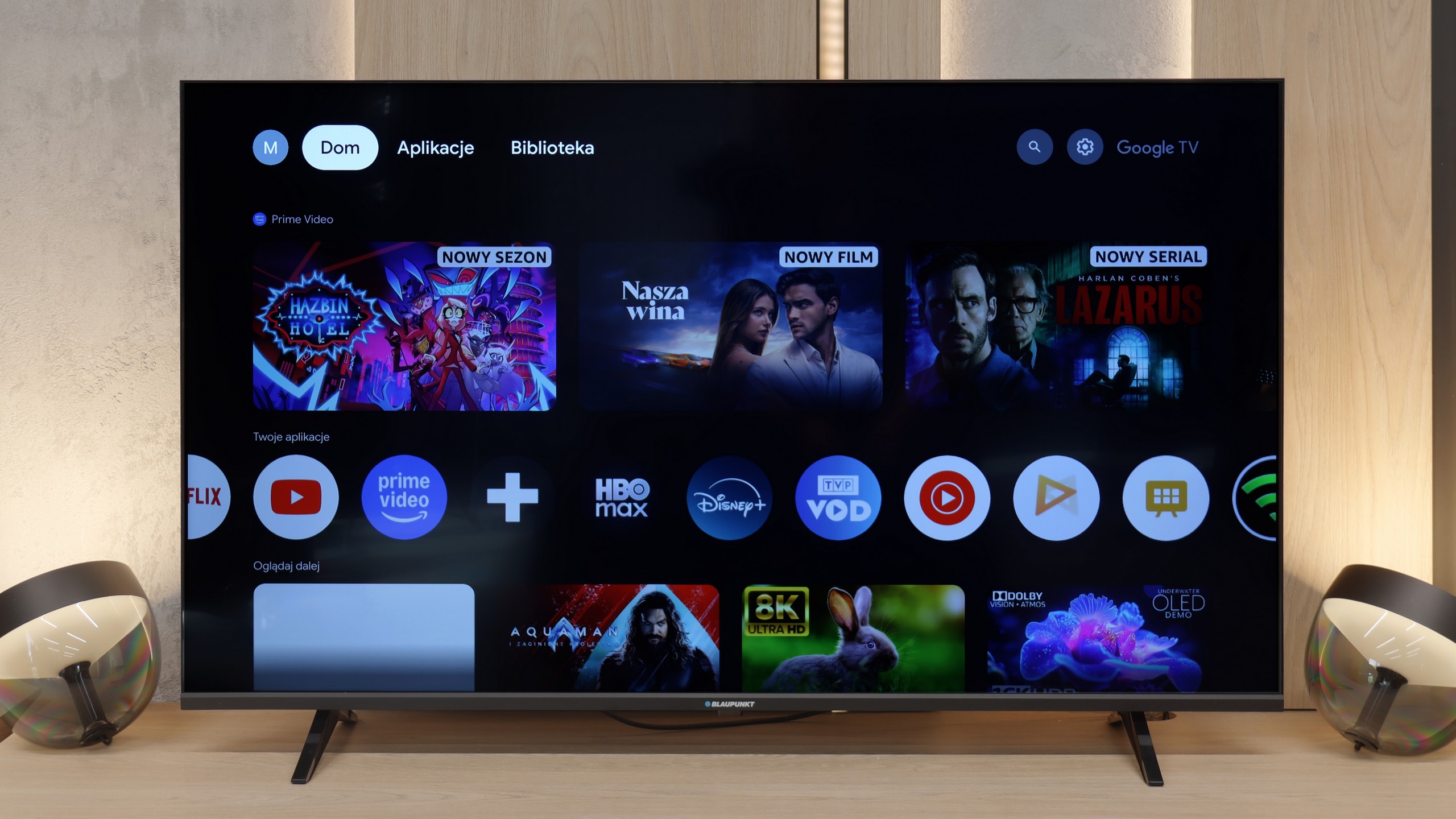
In terms of Smart TV functionality, the Blaupunkt UGC5500S is a classic example of a device where the system is both its biggest asset and its greatest flaw. On one hand, we have full Google TV, which is a huge plus at this price point. We gain access to a massive library of apps and basically all the functionality we know from brands using this software. Nothing has been cut out forcefully, which is really refreshing in such an inexpensive TV. Unfortunately, it must be honestly admitted that in the case of Blaupunkt, this system operates quite clumsily. This is a typical issue with low-budget TVs running Google TV – the processor barely keeps up with the software. Navigating through the menu isn’t as smooth as we would like, and the remote can react with noticeable delays, giving the impression of being "dull." Of course, once you launch a specific app and start a movie, everything works steadily, but just browsing through the interface requires a bit of patience.
When it comes to classic TV features, Blaupunkt offers nothing extraordinary. It’s a simple device for basic tasks. The remote is a plus, featuring a traditional numeric keypad, which is just convenient for hopping through cable channels. We also have Bluetooth, so you can easily connect wireless headphones or a speaker. The TV also has a physical mini-jack headphone output. At a time when manufacturers are mass-eliminating this connection, the presence of a "jack" is a nod to those with older audio equipment or simply those who prefer classic wired headphones. It’s a small thing, but it’s appreciated.
Apps
7.2/10
9.6/10






















Playing files from USB
3.1/10
9.3/10
Supported photo formats:
Maximum photo resolution:
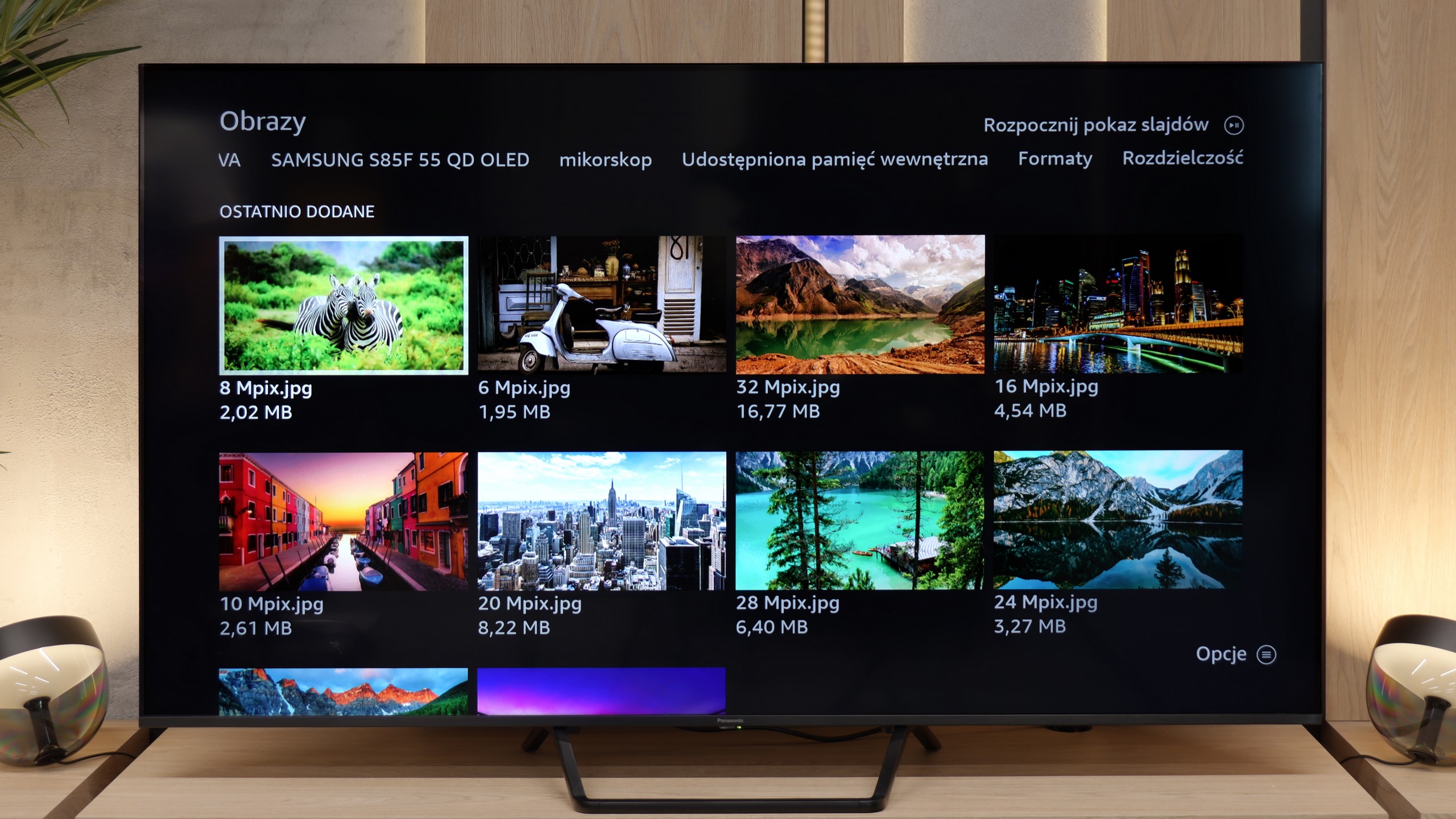
This is another issue with the Fire TV system used in the Panasonic W95B. If someone has their own movie library and plans to play them directly from a USB drive or external hard drive, they may be disappointed. The TV handles displaying photos, like from holidays, reasonably well, but video playback is quite limited. The biggest problem is the lack of subtitle display when playing movies from USB. Therefore, if you care about watching files from your own collection, it's definitely better to use an external media player.
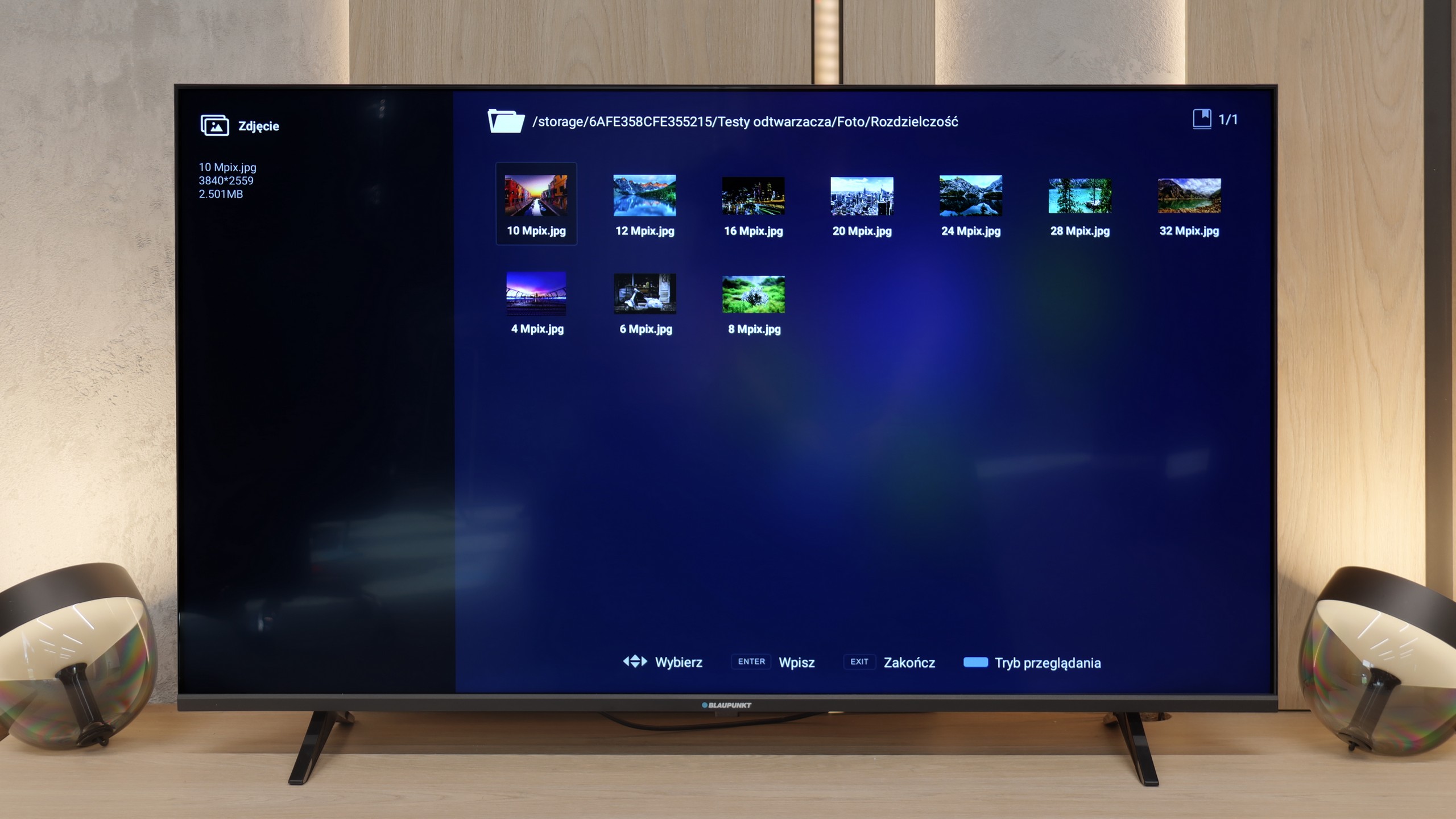
In terms of playing files from USB, Blaupunkt performs quite solidly. We tested several of the most popular formats and basically everything that matters worked without any fuss on the factory player. So you're not forced to immediately download additional software right after pulling the TV out of the box, because the equipment is simply self-sufficient ‘out of the box’. Nevertheless, taking advantage of the charms of Google TV, we still recommend installing some external software, like VLC or Kodi. The factory player is adequate, but it's in those external applications where you'll find the most configuration options, better subtitle support, or just a more convenient interface. Since the system gives you that freedom, it's worth taking advantage of it to get as much as you can out of your multimedia.
Sound
7.9/10
6/10
- Maximum volume82dB85dB
- Dolby Digital Plus 7.1
- Dolby True HD 7.1
- Dolby Atmos in Dolby Digital Plus (JOC)
- Dolby Atmos in Dolby True HD
- DTS:X in DTS-HD MA
- DTS-HD Master Audio
The Panasonic W95B performs surprisingly well for a television. The sound is clear and spacious, and thanks to the subwoofer located at the back, you can even hear a slightly perceptible bass, which is not often found in TVs of this class. The overall sound quality is at a very high level, allowing for comfortable viewing of movies and series without the need to connect an external audio system. Of course, as is well known, if someone wants to watch truly high-quality, it’s worth connecting a soundbar – especially since the Panasonic W95B supports Dolby Atmos format, which allows it to transmit spatial sound without any issues. The only thing missing is support for the less popular DTS:X format, which simply isn’t available in this model.
In terms of audio, Blaupunkt performs really well, especially considering it's a typical budget television. You can see, or rather hear, that the brand hasn't forgotten its roots and for such an inexpensive build, the sound is actually superb. Of course, there's a noticeable lack of bass, but overall it's loud, and surprisingly clear. What matters most to us – even at higher volumes, the sound isn't heavily distorted, which is rare and a pleasant surprise at this price point.
Sound Quality Test
Acoustic Measurements
82dBC (Max)
75dBC
85dBC (Max)
75dBC