LG NANO82T is the first model from the LG television series for 2024, featuring NanoCell technology. It is aimed at a wide audience looking for a television with an attractive operating system. WebOS is incredibly intuitive and fast, offering a broad range of applications to install and easy usage. The Magic remote, functioning like a computer mouse, allows for convenient navigation through the menu, and voice commands in Polish further simplify using the television. In terms of everyday use, LG NANO82T will definitely not disappoint. It supports a recording function, allowing you to save your favourite programs, and has good capabilities for enhancing lower-quality images. It also offers features like AirPlay and easy device pairing thanks to built-in Bluetooth. In terms of image quality, the television may not offer the highest brightness, but its contrast is quite good. The VA panel provides deep blacks and clear details, making watching movies and television shows a pleasurable experience. Additionally, the television is a good choice for occasional gamers and PC users. It has low input lag and basic features for PS5/XBOX consoles. When it comes to PC users, the readability of fonts is at a very high level. LG NANO82T is a great choice for those looking for a versatile device with a modern operating system and innovative solutions that will satisfy most users.
- Matching (Score) |
- Our verdict |
- TV appearance |
- Where to buy |
- Contrast and black detail |
- HDR effect quality |
- Factory color reproduction |
- Color reproduction after calibration |
- Smoothness of tonal transitions |
- Image scaling and smoothness of tonal transitions |
- Blur and motion smoothness |
- Console compatibility and gaming features |
- Input lag |
- Compatibility with PC |
- Viewing angles |
- Daytime performance |
- Panel details |
- TV features |
- Apps |
- Playing files from USB |
- Sound
LG NANO82T6B vs Samsung Q7F
 Direct comparison

Panel type: LCD VA
Resolution: 3840x2160
System: WebOS
Model year: 2024
Complete the survey to find out the result
Panel type: LCD VA
Resolution: 3840x2160
System: Tizen
Model year: 2025
Complete the survey to find out the result
Overall rating
5.9
5.8
 Movies and series in UHD quality
 5.8
5.7
 Classic TV, YouTube
 5.9
5.6
 Sports broadcasts (TV and apps)
 5.2
4.8
 Gaming on console
 6.6
6.4
 TV as a computer monitor
 5.6
6.0
 Watching in bright light
 3.9
3.9
 Utility functions
 7.7
7.3
 Apps
Apps 9.1
9.3
 Sound quality
 6.1
5.8
Complete the survey to find out what fits your preferences
Advantages

WebOS System and Magic Remote
High native contrast
Recording to USB
Low input lag values
Good for computer - PC
Solid native contrast (VA Panel)
Vivid colours thanks to the QLED filter
Low input lag (around 10MS)
Robust and smooth Tizen operating system
Compact sleek design with Type C charging
Disadvantages

Very low brightness
No Dolby Vision/HDR 10+
Does not support DTS audio format
Very low brightness (only 250 nits in HDR)
Lack of many features for gamers
Lack of many classic "TV" features, e.g., USB recording or PIP
No Dolby Vision
Average digital image processing quality
Our verdict
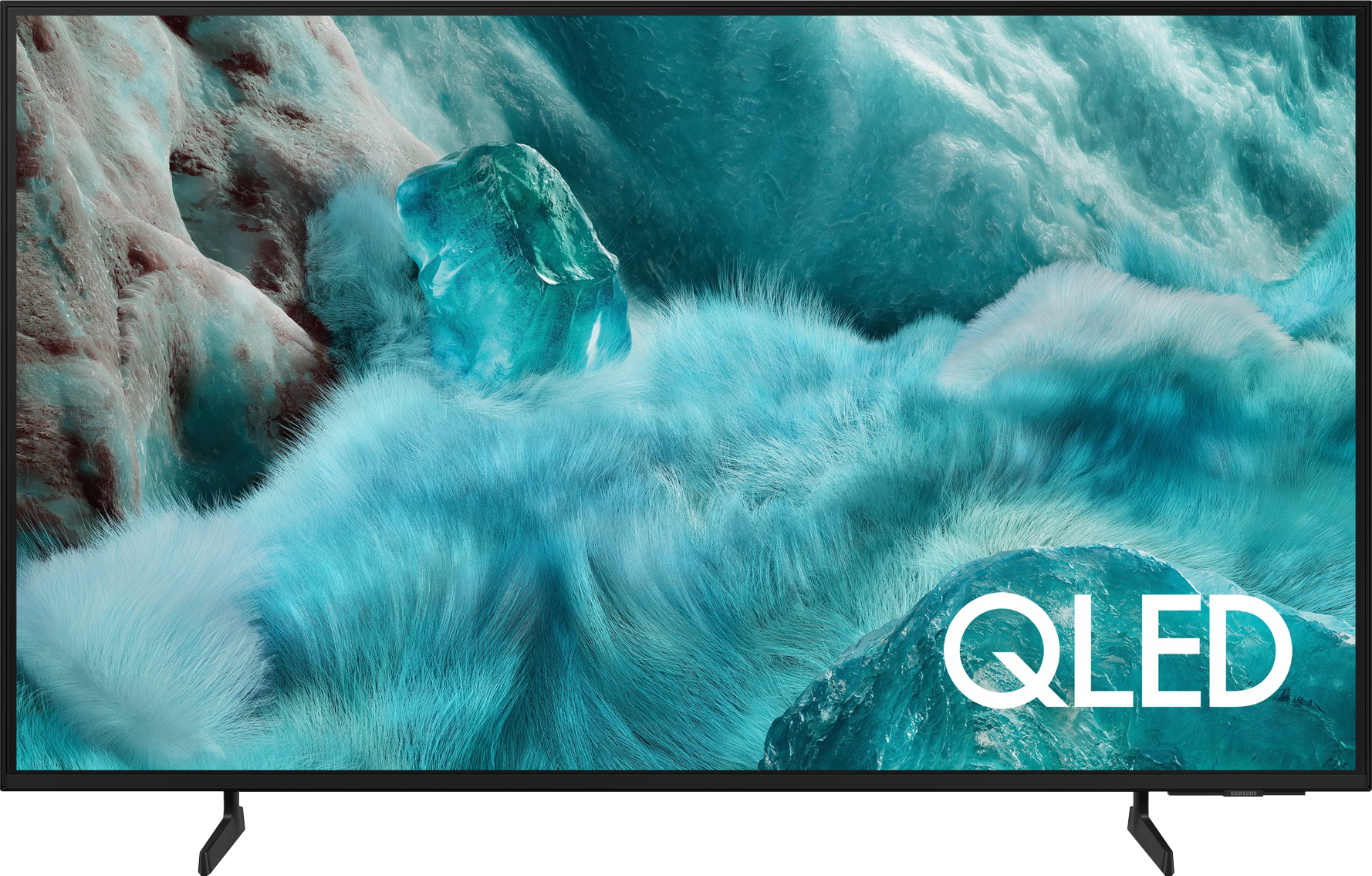
Samsung Q7F is the cheapest model from the manufacturer’s QLED line, and it must be said that several advantages can be pointed out here without any problem. After calibration, the colours look really good, and the additional QLED filter makes the colours more saturated than in typical budget LCD televisions. It also features a VA panel, which offers quite decent native contrast. This is definitely not at the level of top models, but it performs well for everyday viewing. However, the biggest plus is the Tizen system, which is Samsung's flagship platform. It runs smoothly, is feature-rich, provides access to a wealth of applications and add-ons, and allows easy connection of the television to the SmartThings ecosystem to control other devices in the home. Essentially, this is where the list of pros ends, because the longer you use the Q7F, the more apparent it becomes that this is a product that is quite underdeveloped. It’s not just about the panel with its low brightness and average picture quality in HDR films, but also about the lack of features that usually work flawlessly in Samsung models. The manufacturer claims that VRR and HGiG are present, but in practice, there is no benefit from them, making it difficult to recommend the television even to casual gamers. It also doesn’t perform the best with regular television, as the digital image processing is at best average, and the feature designed to improve tonal transitions, which usually works well in Samsung TVs, practically doesn’t operate here. The Q7F is equipment that can only be recommended to those looking for a television with two phrases on the box: “QLED” and “good Smart TV”. The rest get a rather bland product, which lacks a lot to compete even with other more budget-friendly options. It’s a shame, as usually the word "QLED" in Samsung meant something more than just an ordinary television.
[UPDATE] We have updated our tests of Samsung televisions from the 2025 model year due to the release of software version 1131, which restored the crucial gaming feature HGiG.
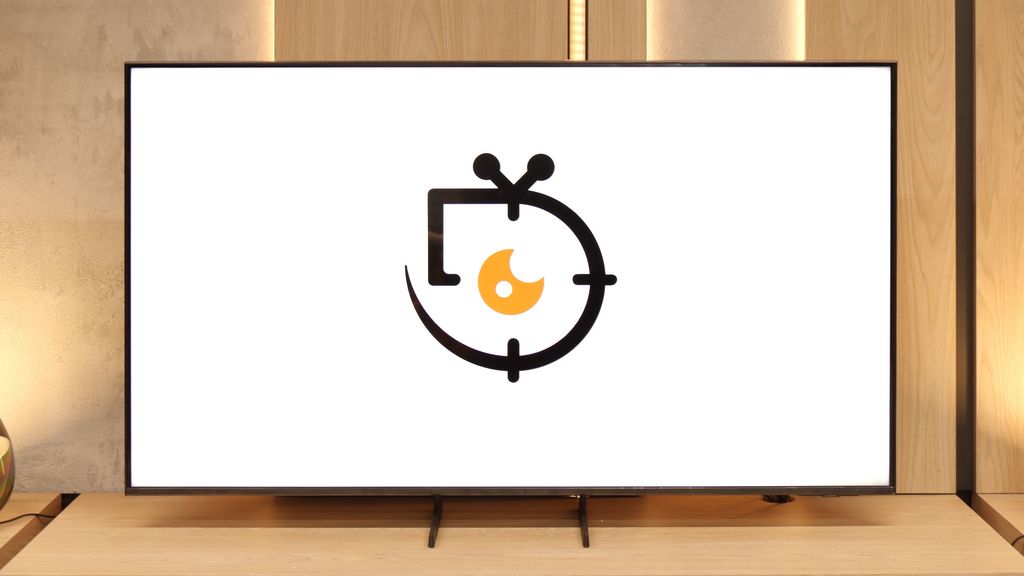
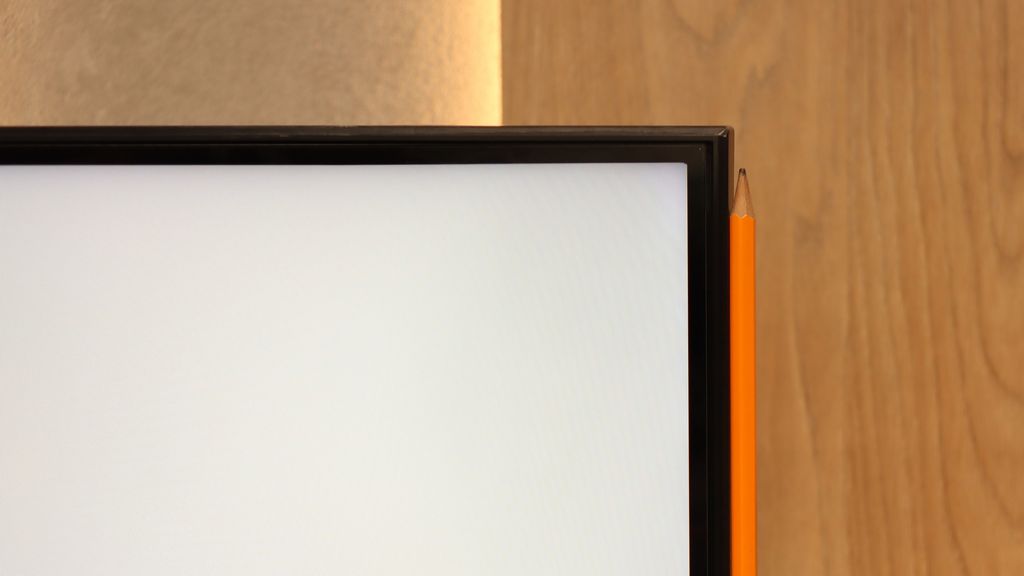
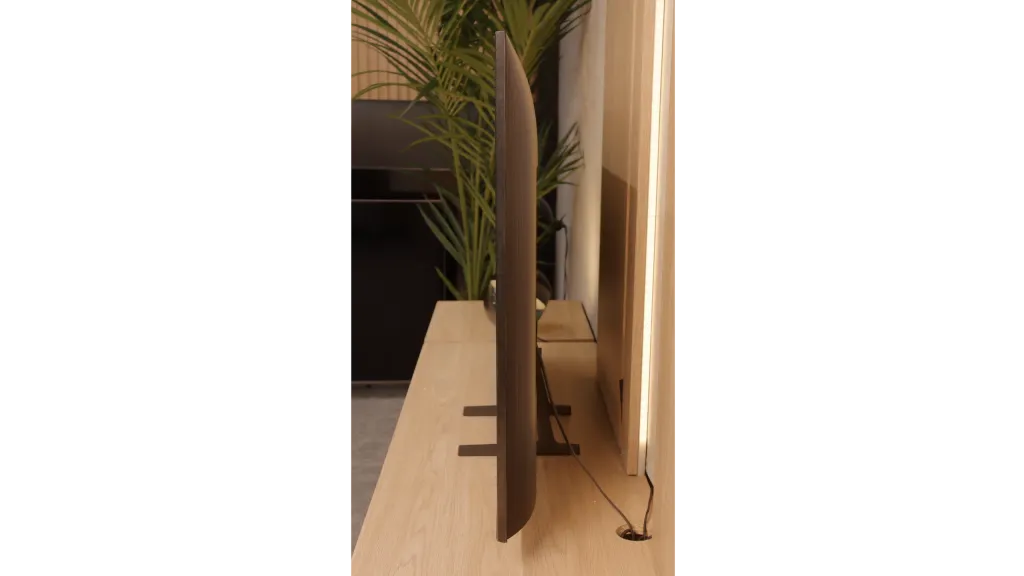
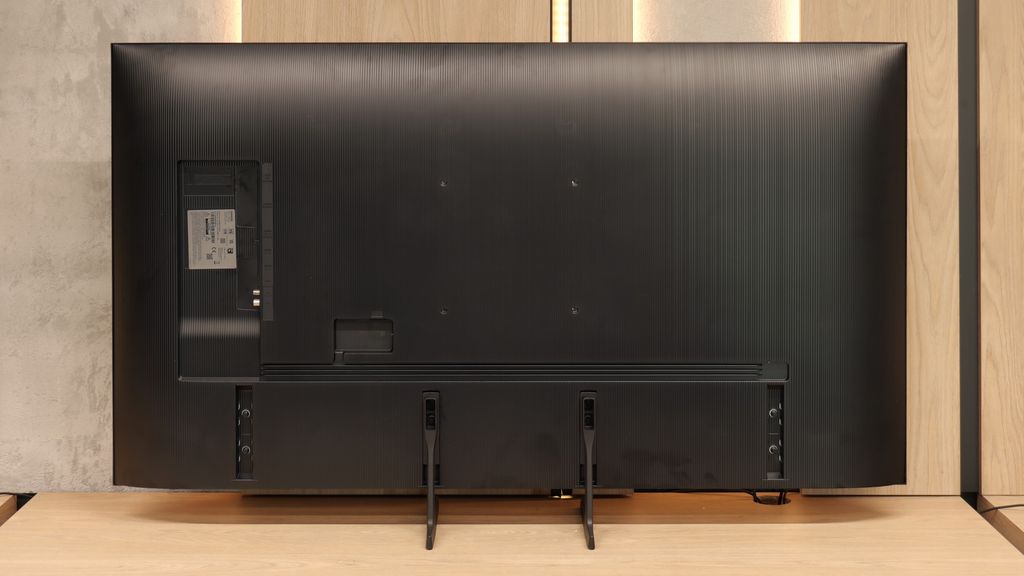
TV appearance



Contrast and black detail
5.3/10
4.7/10
Local dimming function: No
Local dimming function: No
Contrast:


Result
4,150:1

Result
4,250:1

Result
3,800:1

Result
3,700:1

Result
3,800:1
Result
2,850:1
Result
2,750:1
Result
3,300:1
Result
3,050:1
Result
2,750:1
Halo effect and black detail visibility:

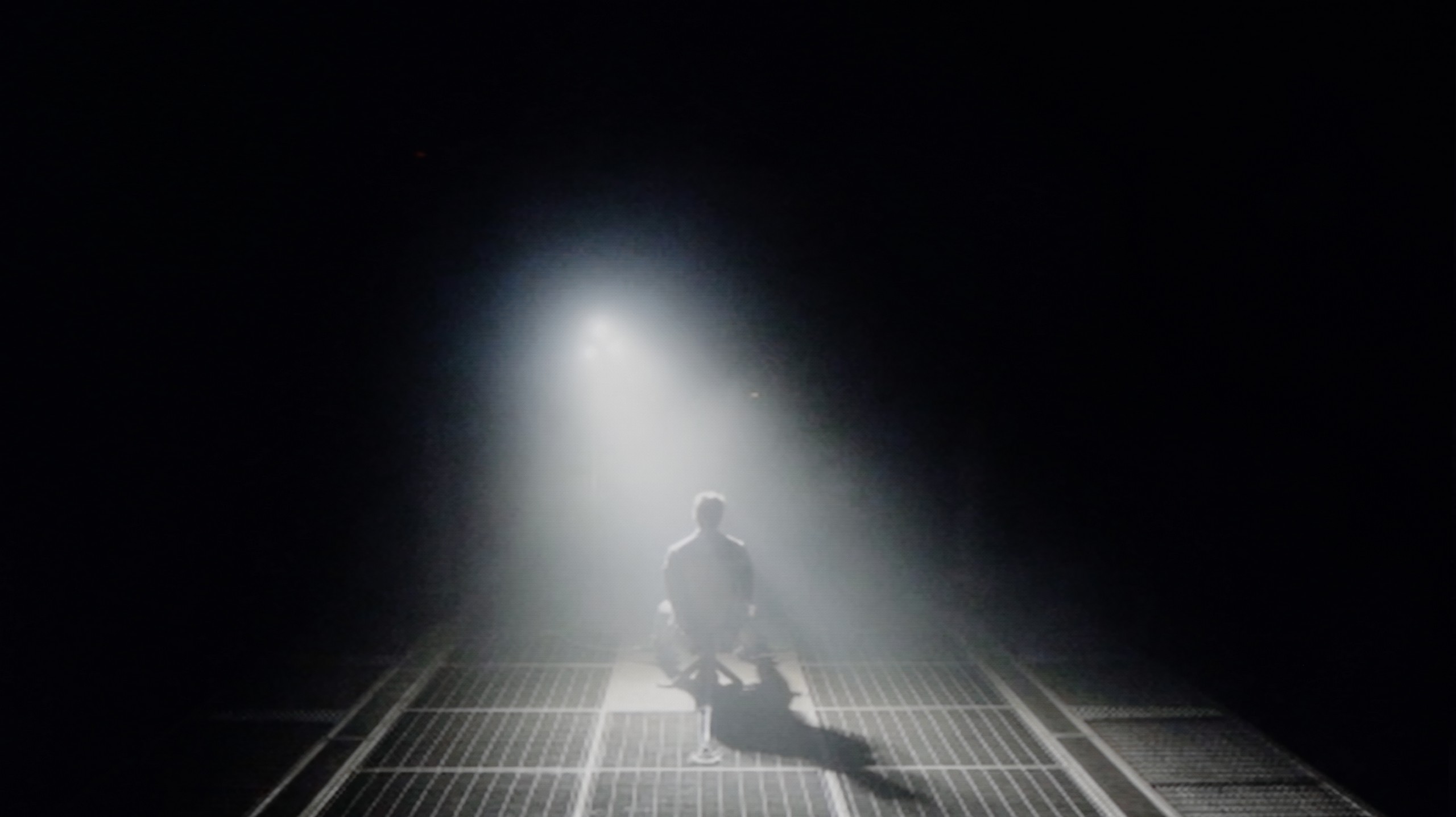
Check the visibility of bright lights on a dark background. Mini-LEDs often struggle with this. The photo does not compare black levels – that’s what the video below is for.
The video accurately shows differences in contrast and black levels between TVs, as well as potential issues: halo around bright objects or Mini-LED zone operation visible as brightness jumps.
LG NANO82T is equipped with a VA panel, which features quite good native contrast. Compared to IPS panels, VA offers better black depth and higher contrast, making images more vivid and realistic. However, due to the lack of local dimming technology – which is quite typical in this product category – some limitations of the television can be noticed. Since the TV cannot turn off specific segments of the screen, there is a lack of so-called "boost" for these elements. Black often resembles a dark navy blue rather than deep, absolute black. This situation can be observed in the tested film clips, for example, from the movie "Sicario 2". It affects the overall image quality, especially in darker scenes, where details may be less defined.
The Samsung Q7F in the 55-inch size we tested has a VA panel, which immediately translates to decent native contrast. Values around 3000:1 may not be record-breaking, as we know that VA panels are currently being produced with more than double the contrast, but it still performs much better than IPS or ADS panels, where black quickly turns into shades of grey or navy blue. Unfortunately, we won't find typical local dimming zones here, but the manufacturer has added something like global dimming – that is, dimming the whole screen relative to the content. The effect? In most scenes, black looks quite solid, although during nighttime viewing, we will still see that it resembles a dark navy or grey more than true pitch black. Overall, it's alright, but without any fireworks – it's not spectacular, but there's also no drama.
HDR effect quality
4/10
3.7/10
Luminance measurements in HDR:

Result
247 nit

Result
224 nit

Result
282 nit

Result
185 nit

Result
286 nit
Result
215 nit
Result
225 nit
Result
267 nit
Result
113 nit
Result
250 nit
Scene from the movie “Pan” (about 2800 nits)

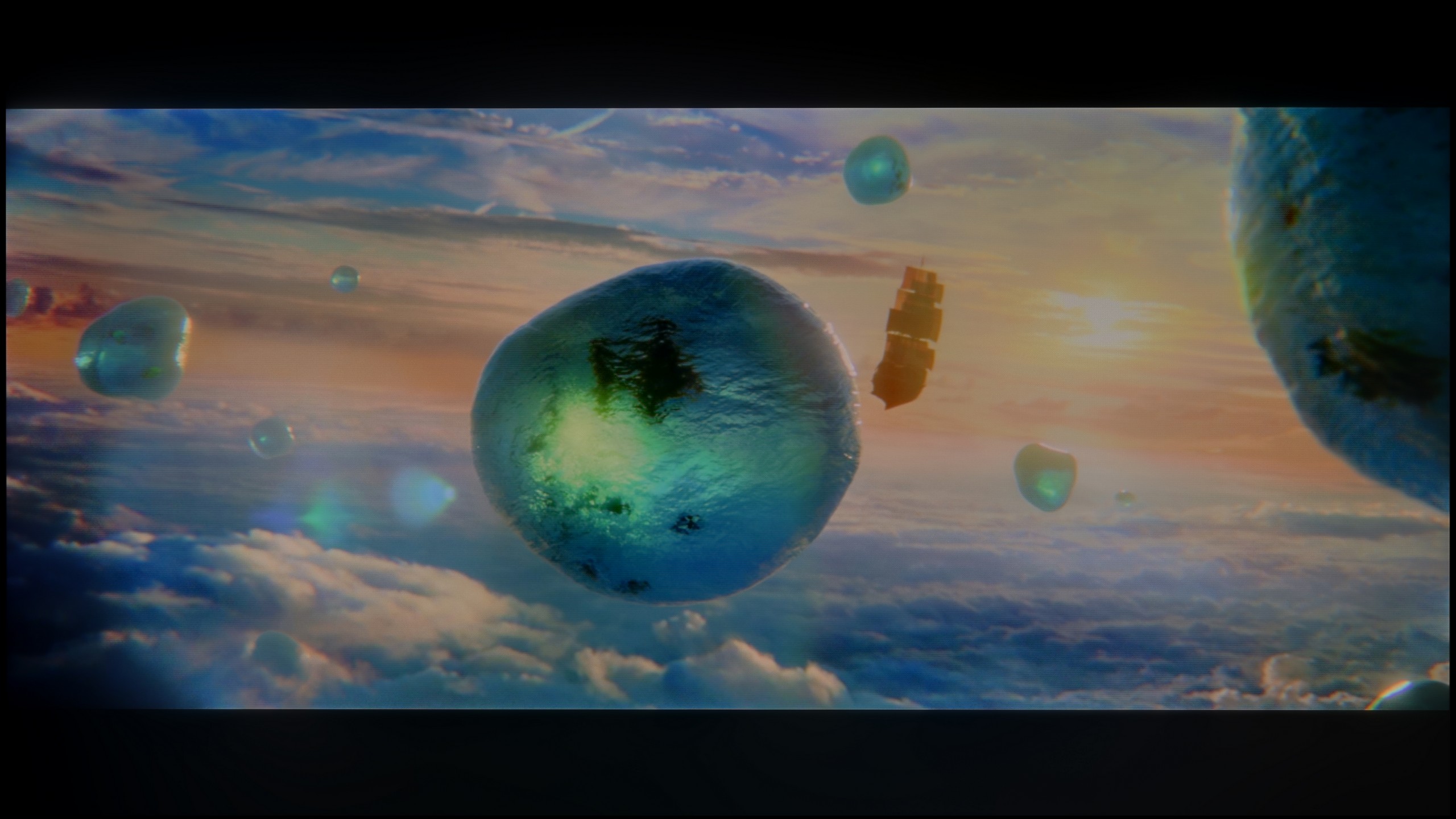
Scene from the movie “Billy Lynn” (about 1100 nits)


The photos show two HDR10 movies. 'Pan' is one of the brightest productions ever made, while 'Billy Lynn' (soldier) has brightness typical of streaming (Netflix, Prime, HBO MAX). Notice the intensity of effects and detail in whites.
Static HDR10


The photos present the visibility of white details in various HDR formats. They do not show brightness differences between TVs (these can be compared in the previous gallery).
HDR luminance chart:
Samsung Q7F
LG NANO82T6B
The brightness of NANO82T, to be honest, is quite average, especially when compared to alternatives in a similar price range. With a maximum brightness of around 280 nits, it is not among the highest and may affect the overall viewing experience of HDR content. While many TVs in this price class offer brightness above 400-500 nits, LG NANO82T may seem less impressive. As a result, details in bright areas of the image may be less distinct, and the HDR effect is not as spectacular as one might expect.
Unfortunately, the Samsung Q7F is not one of the bright televisions, which directly impacts the quality of HDR films. The peak brightness of the panel is only around 250 nits, which is definitely insufficient for claiming a true cinematic experience. In practice, the HDR content does not differ significantly from classic SDR, making it difficult to talk about any "wow effect" that usually accompanies us when watching such films. During testing of film scenes, the image simply looked dark, and the brightness almost always hovered around the aforementioned 250 nits. The worst performance came from shots with small, intensely glowing elements – the global dimming technique used reacted very aggressively in those cases, dimming the entire screen to maintain the black effect. However, it is worth noting the presence of a QLED coating that broadens the colour spectrum. For a budget QLED model, the Q7F performs quite decently here: the DCI-P3 colour gamut coverage is around 93%, and BT.2020 reaches 70%. This means that despite the low brightness, the colours can still look quite vivid and attractive.
Factory color reproduction
5.2/10
5/10


This gallery shows how colors change after professional TV calibration. If you notice the difference, we recommend ordering this service at SkalibrujTV.com.
Factory Mode
After calibration


This gallery shows how colors change after professional TV calibration. If you notice the difference, we recommend ordering this service at SkalibrujTV.com.
Factory Mode
After calibration
The colour reproduction in LG NANO82T in Filmmaker mode, which is the best mode available from the factory settings, is not without its flaws. The primary issue is the white balance, where the graph shows dips in the blue colour level. This phenomenon results in a shift of colours towards yellow shades, causing the image to appear warmer than it should. Such deviation means that the colours on the screen are not naturally reproduced, which can be particularly noticeable in scenes with white or neutral backgrounds. For example, the image below from the movie "Star Wars," where there are a lot of elements that should be white. The Color Checker test confirms that some colours are "shifting" into other shades, indicating that the TV does not display colours accurately.
In terms of contrast, the gamma graph analysis showed drops to a level of 2.1, while the optimal value should be 2.4. This means that the TV might display darker areas of the image brighter in certain scenes, reducing their depth and dynamism. Additionally, on the EOTF curve, which is responsible for brightness reproduction, a slight spike was noticed at the beginning. This phenomenon may result in excessive boosting of brightness in the brightest parts of the image, leading to a loss of detail in very bright scenes.
The reproduction of factory colours in the Samsung Q7F is definitely not one of its strong points. In Filmmaker mode, which theoretically should be closest to neutral, the white balance issue is immediately noticeable. There’s too much red on the screen, while blue is lacking. The effects are very easy to notice – white, instead of being neutral, takes on warm, almost slightly orange tones. In the long run, this makes the entire image appear a bit unnatural, while bright areas of the scene can seem unrealistic. The problems are even more evident in HDR content. The charts show that the TV has significant errors in the Color Checker palette, which results in visible inaccuracies in the real image. In practice, this means that colours are not presented as they should be. The Q7F also heavily manipulates brightness; darker elements are overly boosted, causing them to lose their cinematic feel, while bright parts can be dimmed. This makes the image seem flattened, and contrast, instead of helping to bring out details, only highlights its own limitations. In HDR materials, this is particularly frustrating because every detail matters. In scenes where a subtle play of light and shadow should be felt, the Q7F either overdoes the lighting or, conversely, suppresses elements that should attract the eye. This causes the image to lose its depth, and instead of cinematic realism, we have a rather simplified effect.
Color reproduction after calibration
7.6/10
7.6/10

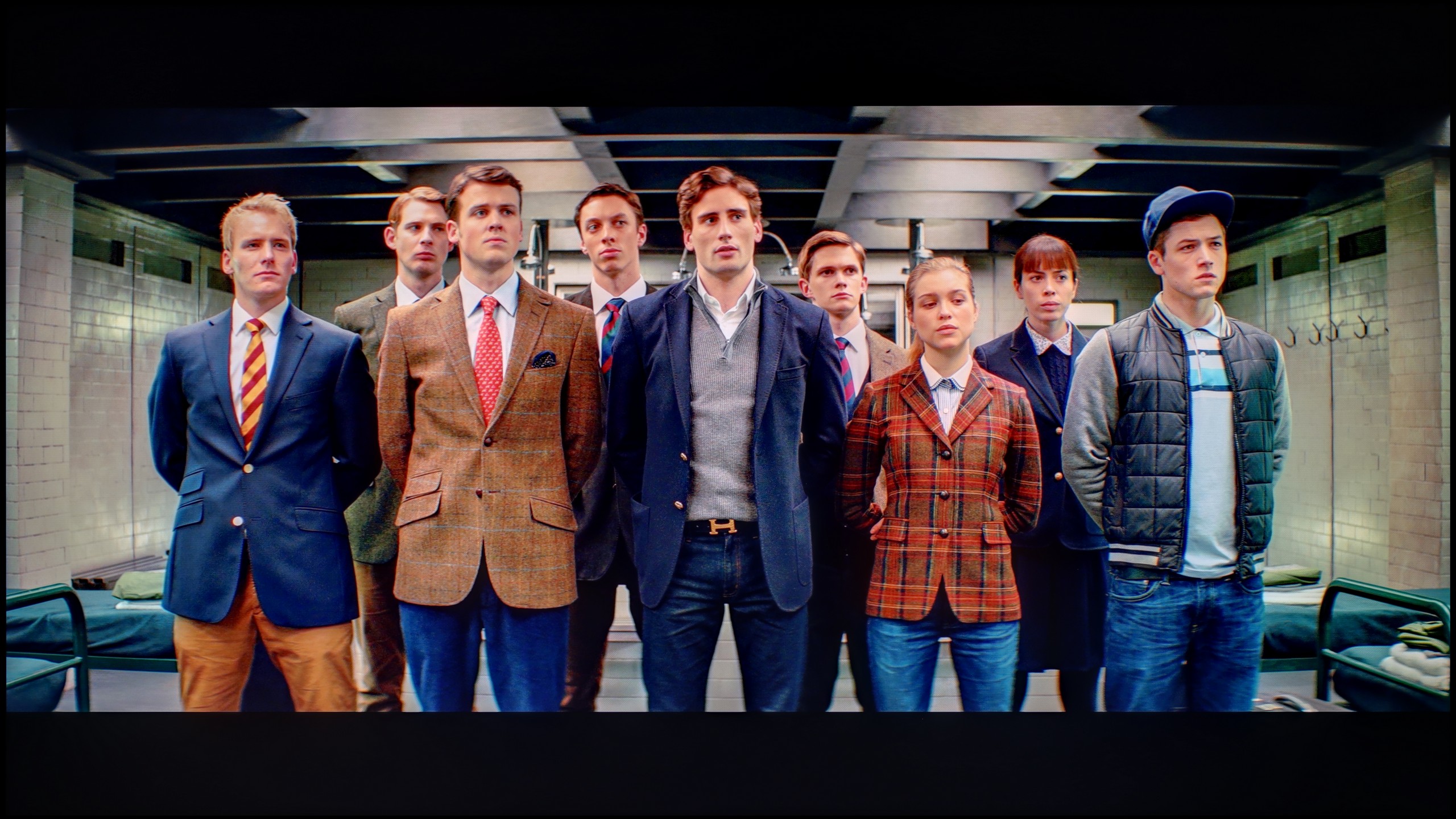
The photos show how movies look on the TV. Pay attention to black detail visibility, colors, and shadow tint.

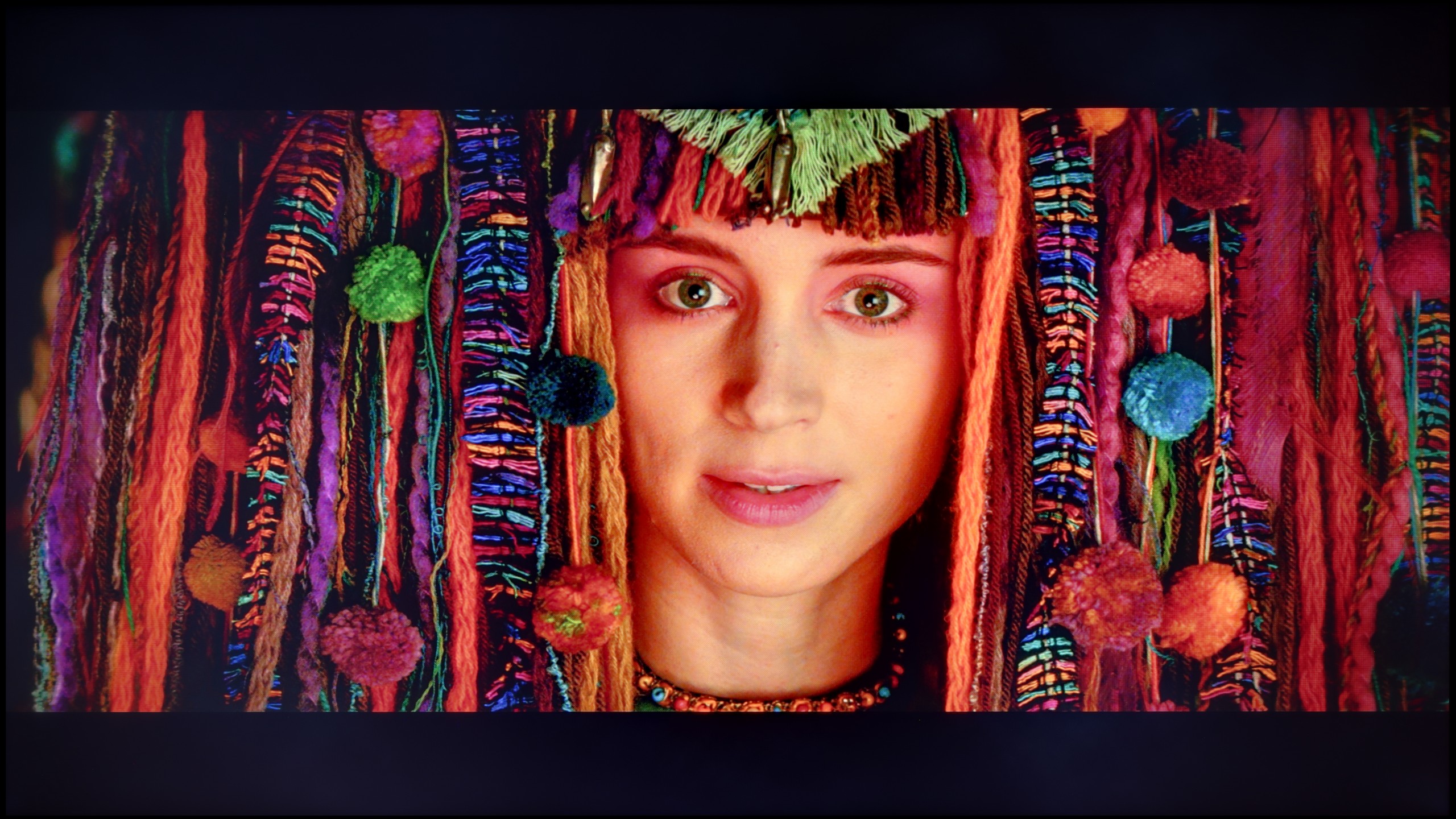
The photos show how movies look on the TV. Pay attention to black detail visibility, colors, and shadow tint.
After calibration, the colour reproduction in SDR content on LG NANO82T is very good. The white balance has been effectively improved, resulting in natural and balanced hues across various scenes. The gamma has also been adjusted, providing more precise detail representation in both shadow and highlight areas of the image. Thanks to these corrections, the television performs excellently in everyday use, offering solid colour quality and clear, well-balanced images in SDR mode.
However, in the case of HDR content, the situation is not as good. The television does not support a wide colour gamut, limiting the depth and richness of colours that HDR can offer. The EOTF curve diverges from the ideal, leading to excessive highlighting of details in the bright areas of the image. Unfortunately, this approach results in significant colour reproduction errors, as confirmed by tests on Colour Checker. The low brightness level of the panel further negatively impacts HDR image quality, causing the dynamic range effects to not be fully realised, and colours appear washed out.
The television significantly improved after calibration, especially in SDR content. The improvement in white balance and gamma has greatly enhanced image quality, providing a more natural and consistent colour reproduction. Compared to the state before calibration, the difference is clear, and the television now offers better performance in daily use, particularly in standard dynamic range.
After professional calibration, we managed to bring the Q7F to order – at least in terms of SDR content. The image in this mode looks really good: the white balance has been set correctly, the colours appear natural, and the errors in the colour palette have dropped to levels practically invisible to the eye. Gamma behaves exemplary, and the only minor flaw remains a slight lightening of smaller elements, which stems from the lack of local dimming. For everyday watching of television or films in standard quality, the Q7F performs surprisingly well.
It was significantly more challenging to tame HDR content. Despite adjusting the white balance, the television still heavily manipulates brightness, causing scenes to appear unnatural – what was meant to be subtly darker can sometimes be overly bright, and the bright parts of the image can occasionally be dimmed. The final effect is better than in factory settings, but it’s clear that the construction limitations of the Q7F do not allow for fully utilising the potential of HDR materials.
Smoothness of tonal transitions
8.9/10
9/10


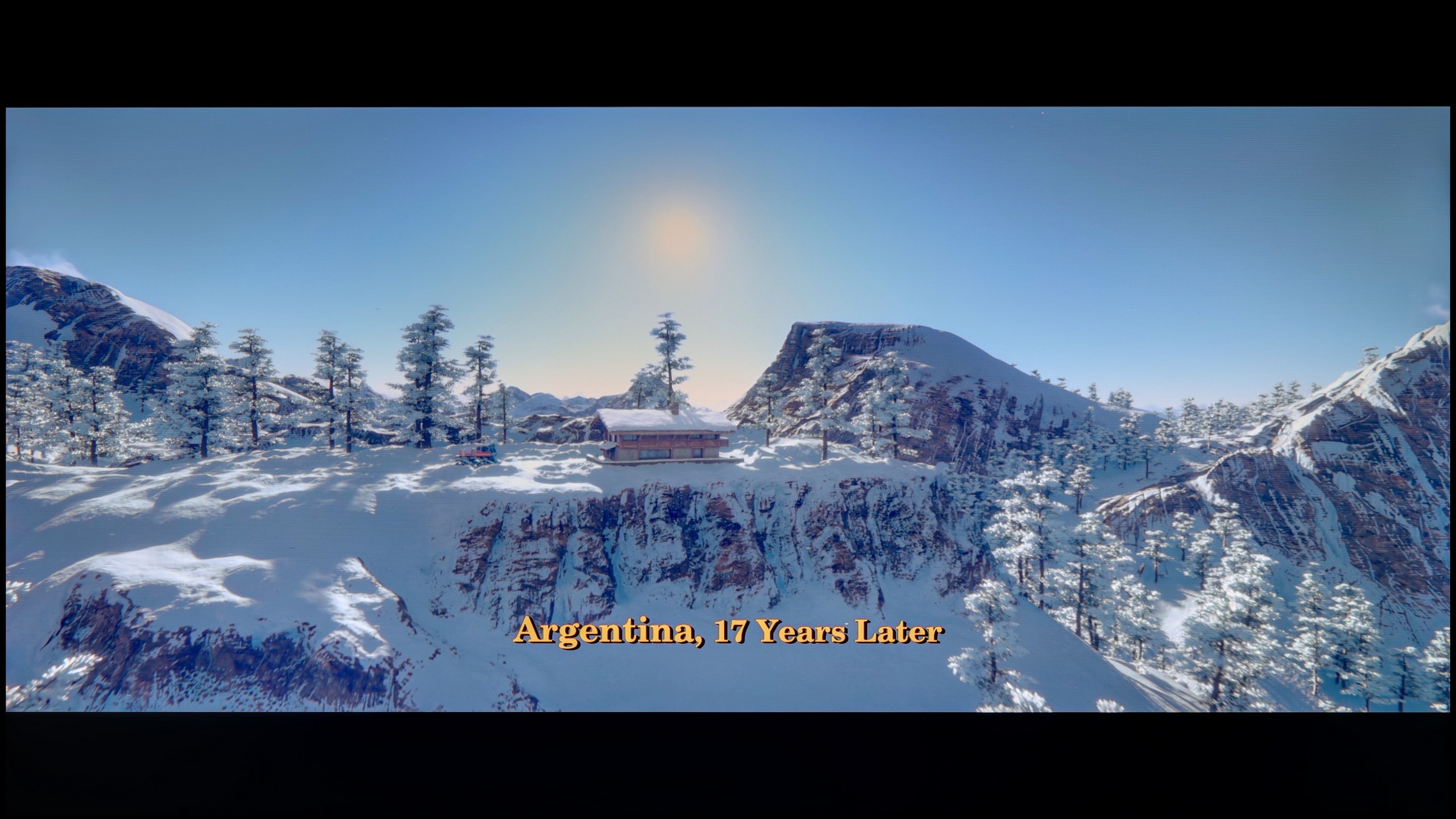
These are selected scenes that show smooth tonal transitions from one color to another. If you see distinct banding, it’s the TV panel’s fault.
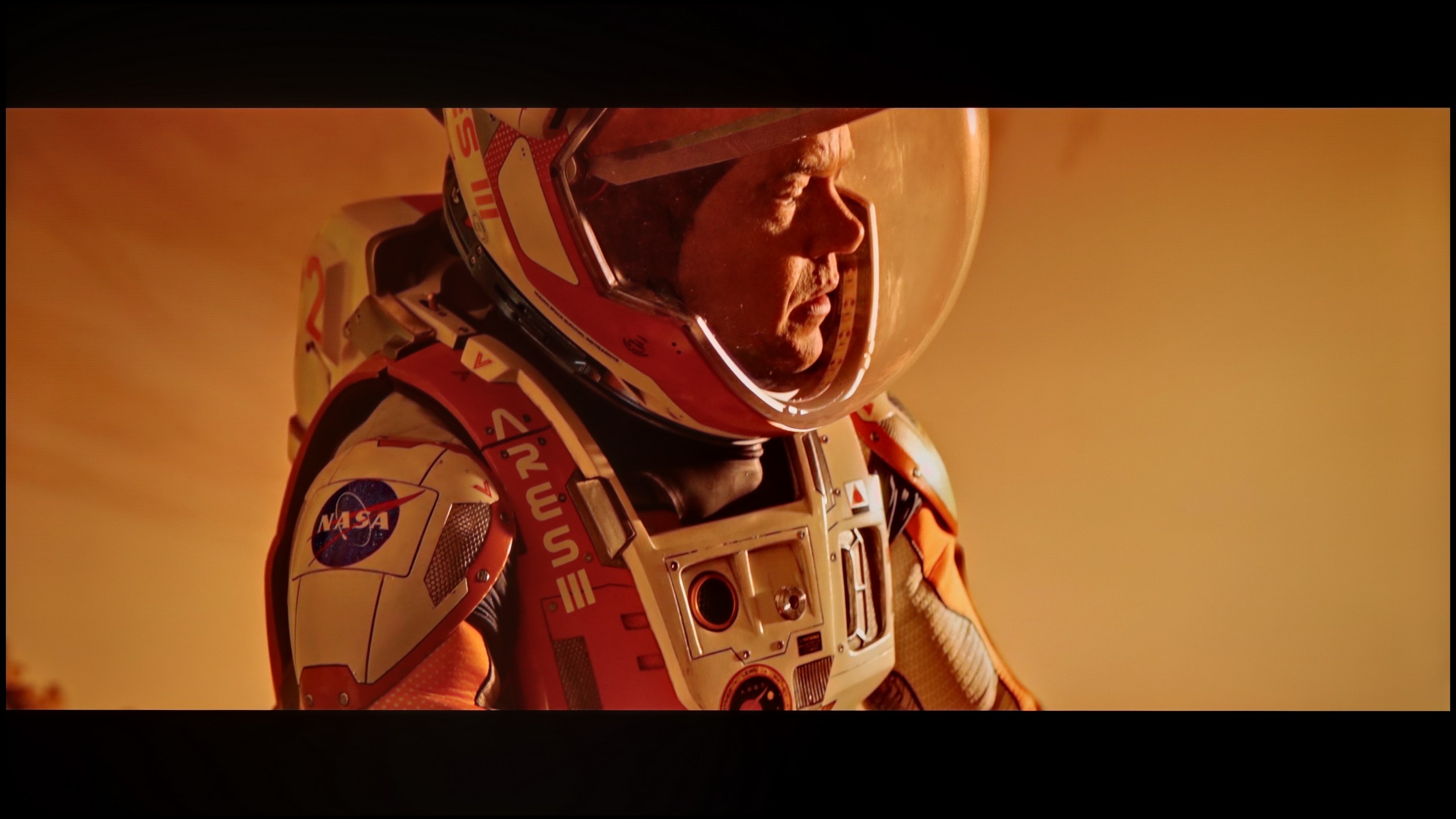
These are selected scenes that show smooth tonal transitions from one color to another. If you see distinct banding, it’s the TV panel’s fault.
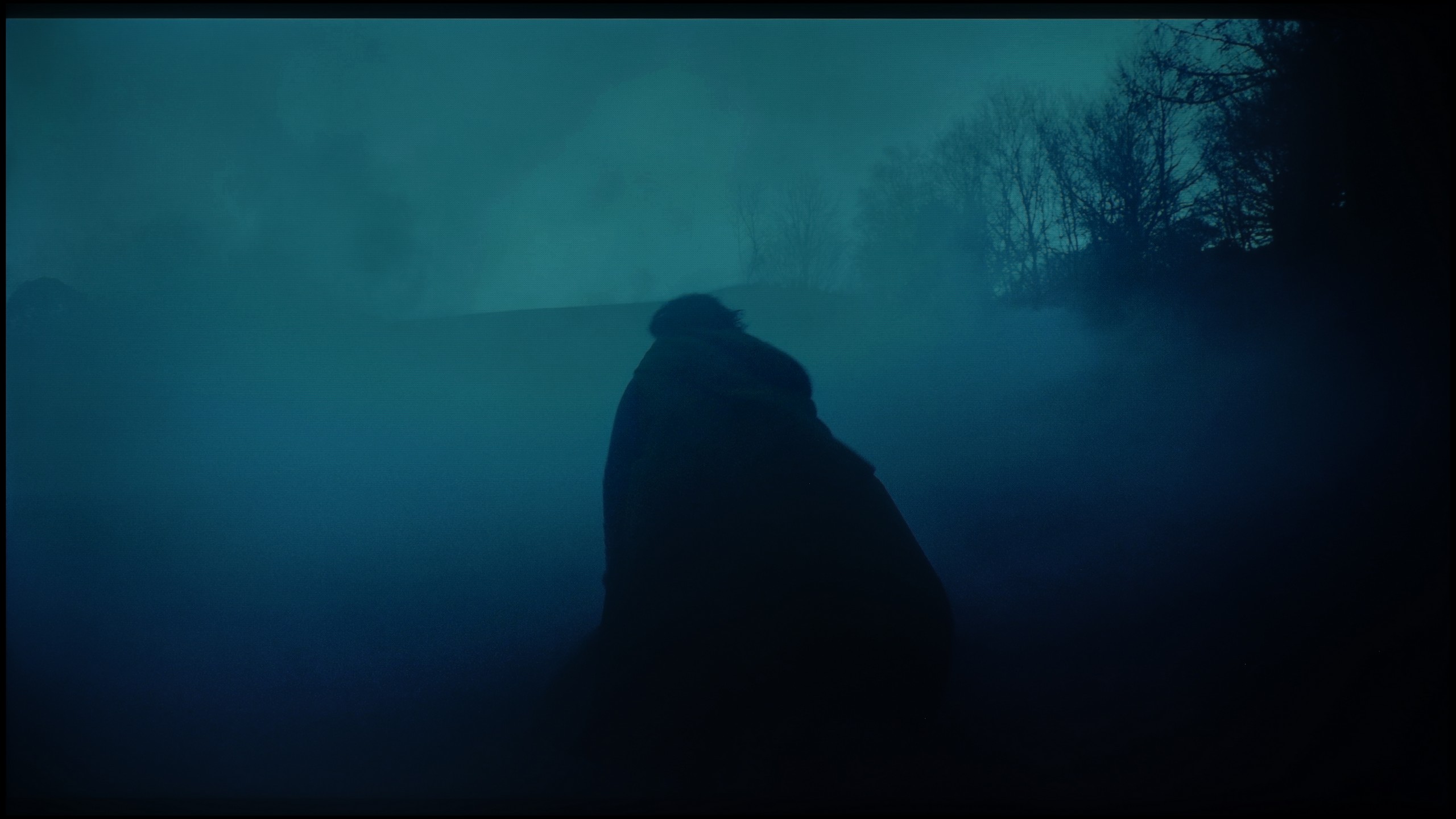
These are selected scenes that show smooth tonal transitions from one color to another. If you see distinct banding, it’s the TV panel’s fault.
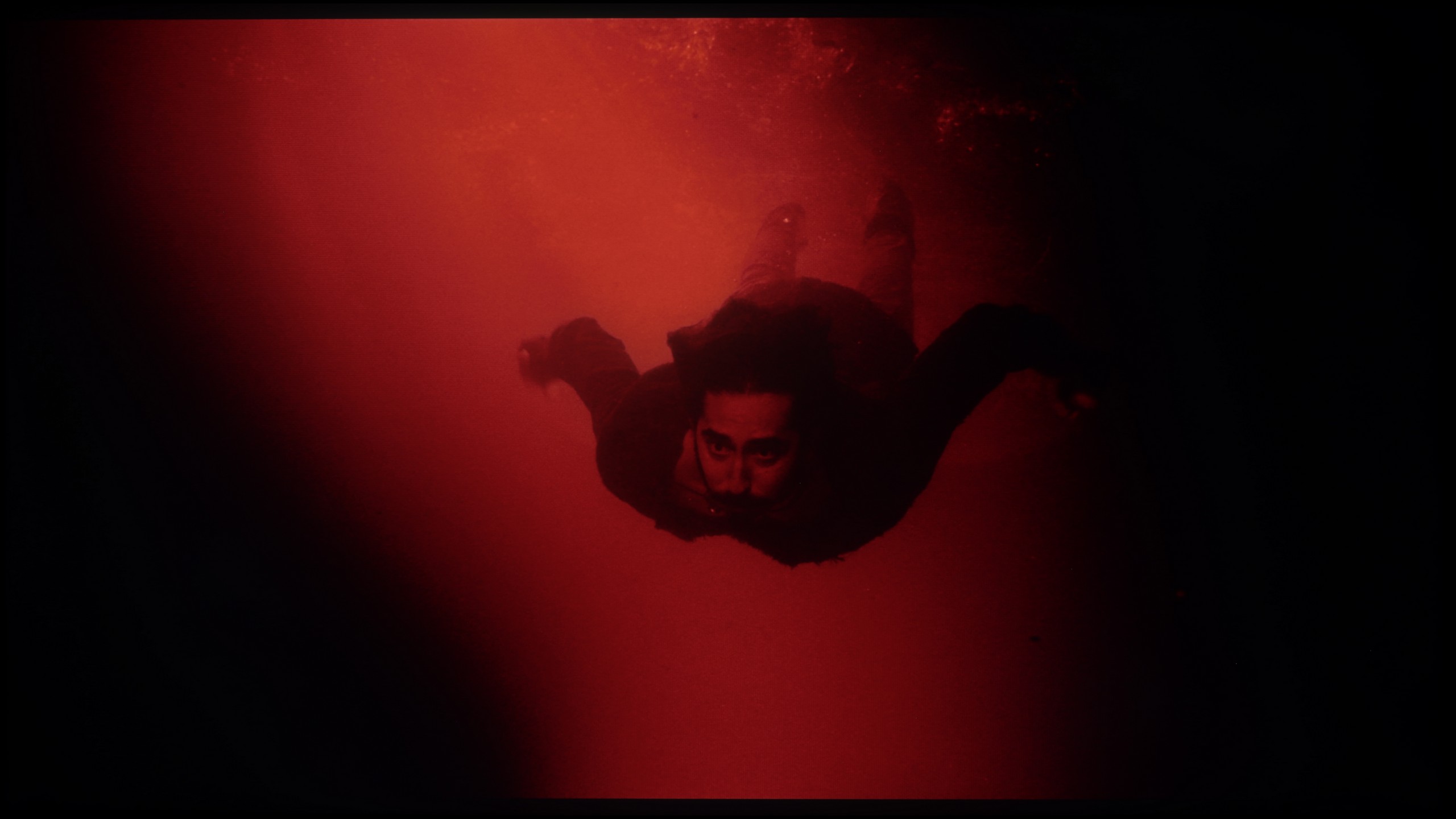
These are selected scenes that show smooth tonal transitions from one color to another. If you see distinct banding, it’s the TV panel’s fault.
The television handles tonal transitions smoothly, providing high image quality in every scene. Gradation issues occur occasionally, mainly in darker shades, but they are subtle enough that most viewers will not notice them. Only individuals with exceptionally keen eyesight may perceive these minor imperfections.
The fluidity of tonal transitions in the Q7F is really quite good. The gradients are smooth, without harsh steps or artificial divisions that can be quite noticeable in cheaper TVs. Even in more challenging scenes, like the one from The Revenant or the red shot with the actor swimming in water, the picture maintained its quality and simply looked good. If someone is looking very closely, they might notice slight imperfections in extremely demanding moments, but they are subtle enough that most people won’t even notice them. Given this price range, the Q7F performs surprisingly well in terms of gradation, and it's hard to find anything serious to complain about.
Image scaling and smoothness of tonal transitions
6.4/10
5/10


Smooth transition function

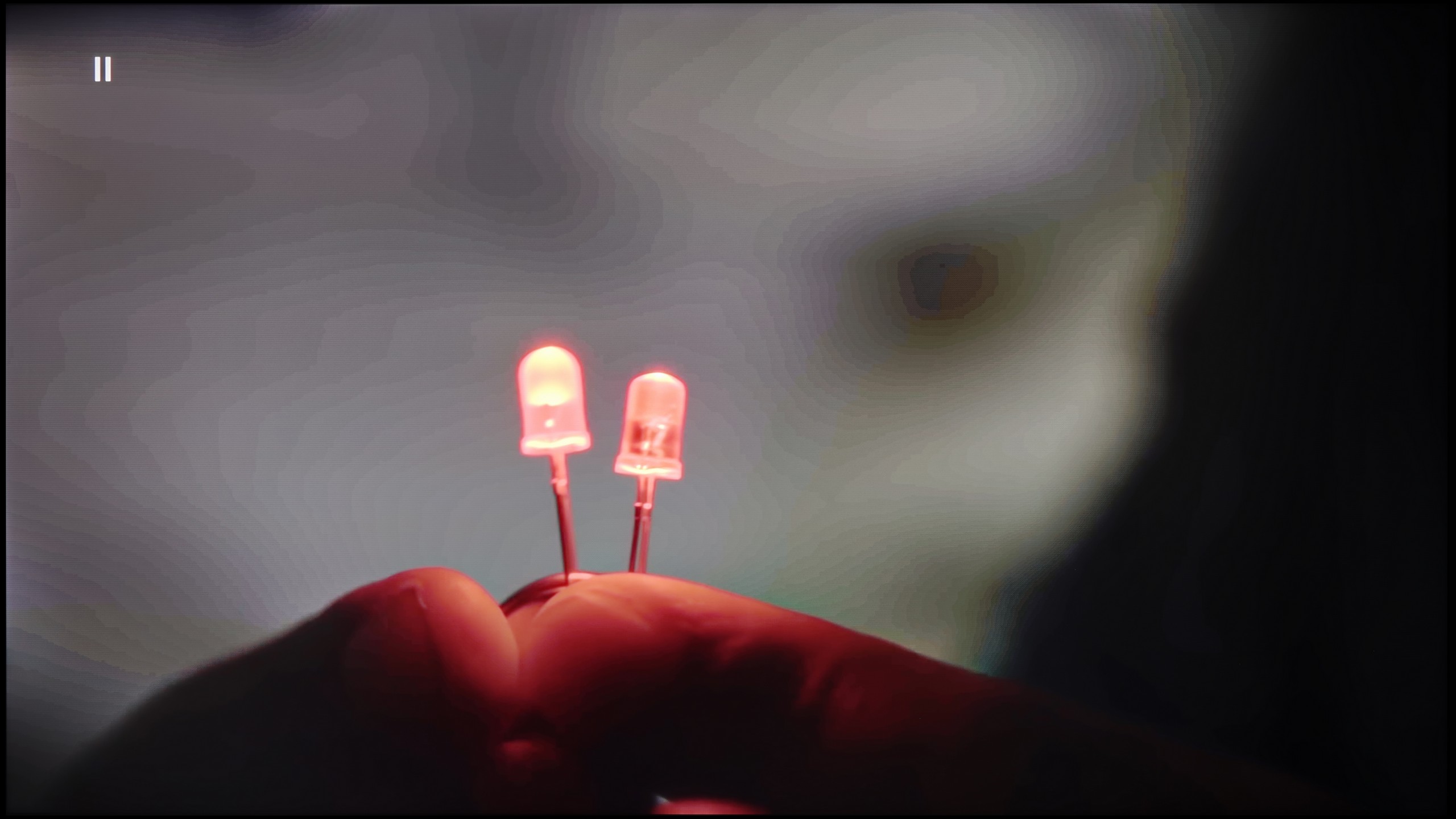
The match photo shows how the TV smooths weak tonal transitions in low-quality video.
Image scaling SD (576i)


The model photo shows how it handles upscaling of SD material.
If it comes to gradation in very low-quality materials, LG NANO82T gives us the option of a feature called "Smooth Gradation". In the "Low" setting, this feature slightly improves the most problematic tonal transitions, which is noticeable and useful for such content. In the "High" setting, it works even more effectively, enhancing tonal transitions, but at the cost of smoothing out details that shouldn't be smoothed. This is a compromise that not all users will appreciate.
When it comes to image scaling, NANO82T is not without certain limitations, particularly when playing content at lower resolutions. The television applies a gentle, artificial sharpness boost, making the image appear sharper. This effect mainly results from the overlay of artificial contours. For some users, this may be beneficial, as they prefer more pronounced and highlighted details. However, for those who value the naturalness of the image, this effect may be less attractive and too artificial. It’s a subjective issue that can impact viewers differently, depending on their visual preferences.
Upscaling and digital image processing in the Q7F is a bit of a rollercoaster. On one hand, we have really nice upscaling – weaker sources look better than you might expect. The image becomes clearer, sharper, and even older films or free-to-air TV hold up well. Samsung has been strong in this area for years, and the Q7F confirms that. On the other hand… things start to get tricky. The TV has a problem with overscan – part of the image is simply cut off, and it doesn't look very elegant. Additionally, we were let down by a feature called "noise reduction," which should improve the smoothness of tonal transitions in weaker materials. In other Samsungs, it works relatively well, but here it practically makes no difference – the banding in gradients is still there. It's a bit of a shame because we expected more from a model that is aimed at users looking for a display for SDR content.
Blur and motion smoothness
4.8/10
4/10

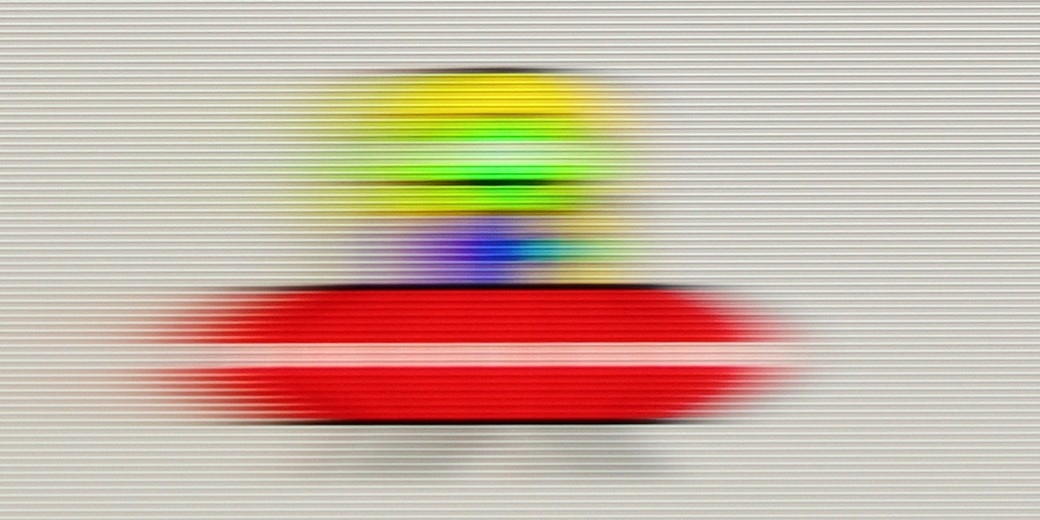
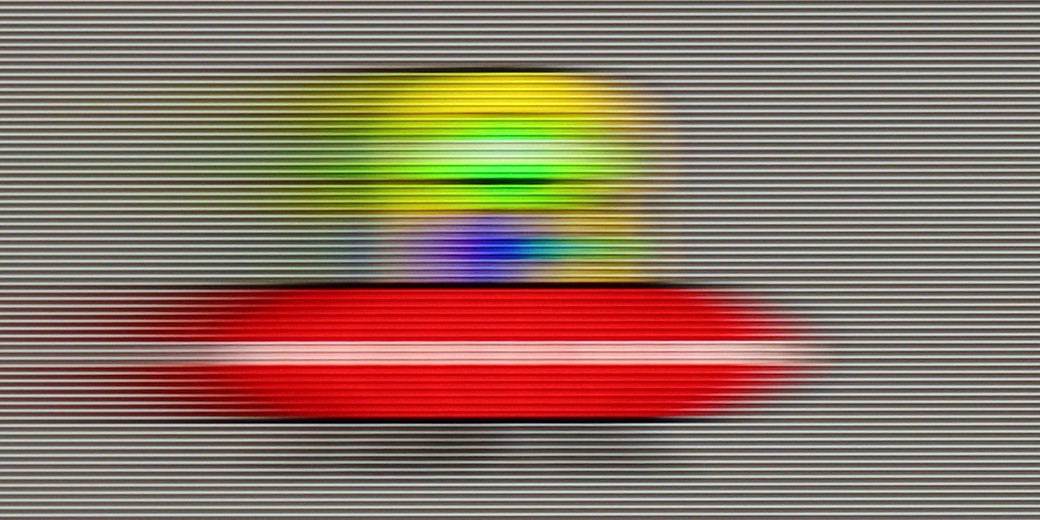
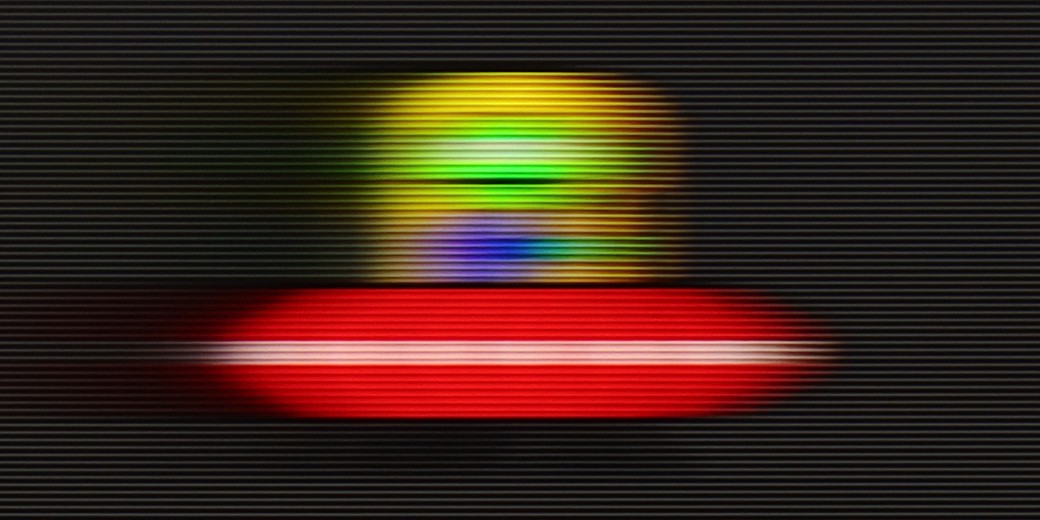
Blur (native resolution, maximum refresh rate):


Blur (BFI function enabled):
Image flickers in this mode
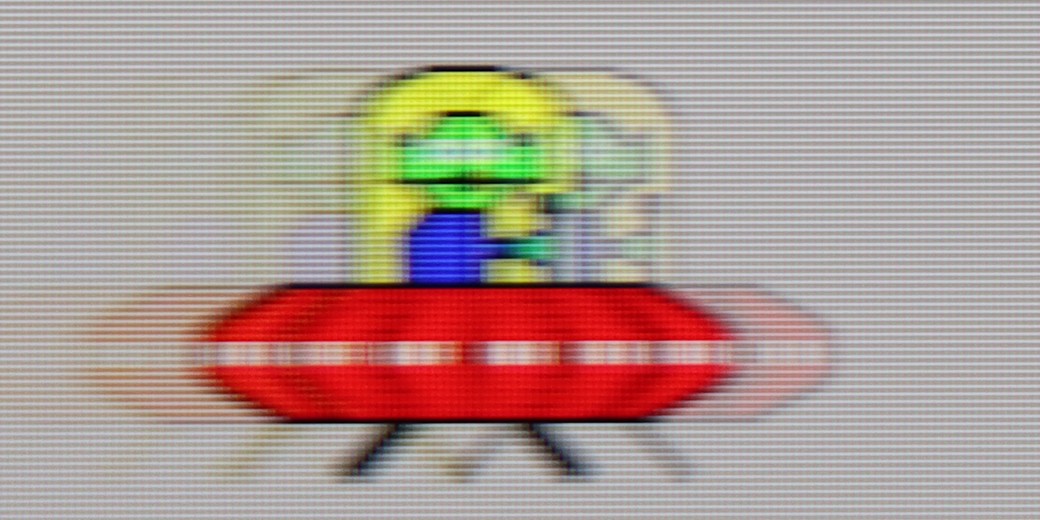


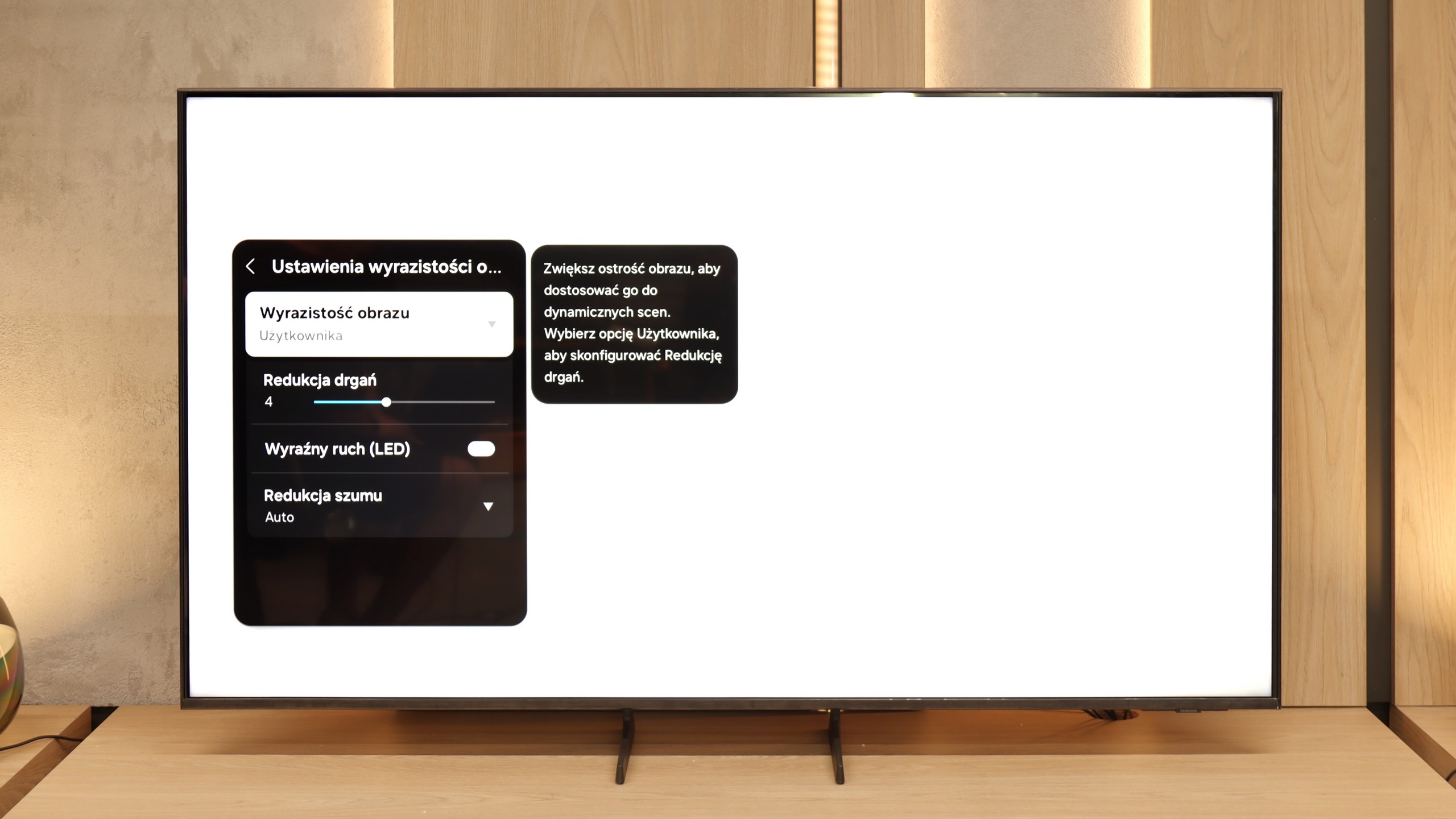
LG televisions, including the NANO82T, offer an interesting motion smoothing feature called TruMotion, which will satisfy most users who value control over the quality of the films they watch. The TruMotion function allows users to adjust the smoothness of the displayed films according to their preferences on a 10-point scale, enabling a personalised visual experience.
However, in the case of more dynamic scenes, such as games or action films, the television performs worse. The 60Hz panel and relatively slow pixel response times mean that motion clarity isn't ideal. The result is noticeable blurring and less smooth playback of fast scenes.
Overall, the LG NANO82T should satisfy those who primarily watch films and prefer more subdued content. However, for those who value dynamic, fast motion, we recommend looking for an alternative.
Motion blur and motion fluidity in the Q7F is probably the most budget-friendly aspect of this television. The 60 Hz panel makes the motion blur quite noticeable, especially in dynamic scenes, and it's rather hard to consider this model as equipment designed for watching sports or playing fast-paced games. In tests with the little green man, there was a long trail, similarly, the ball in a football match would leave behind streaks.
On the positive side, the presence of motion smoothing is worth noting. In films, it really makes a difference – especially since most materials are recorded in 24 frames. Here we can decide whether we prefer a more "cinematic" image, with a slight judder typically found in cinema, or a smoother, more “TV-like” one. This actually works quite well and helps improve the viewing comfort for series or movies.
Console compatibility and gaming features
4.7/10
4.7/10
- ALLM
- VRR
- VRR range
- Dolby Vision Game Mode
- Correct implementation of HGIG
- 1080p@120Hz
- 1440p@120Hz
- 4K@120Hz
- Game bar

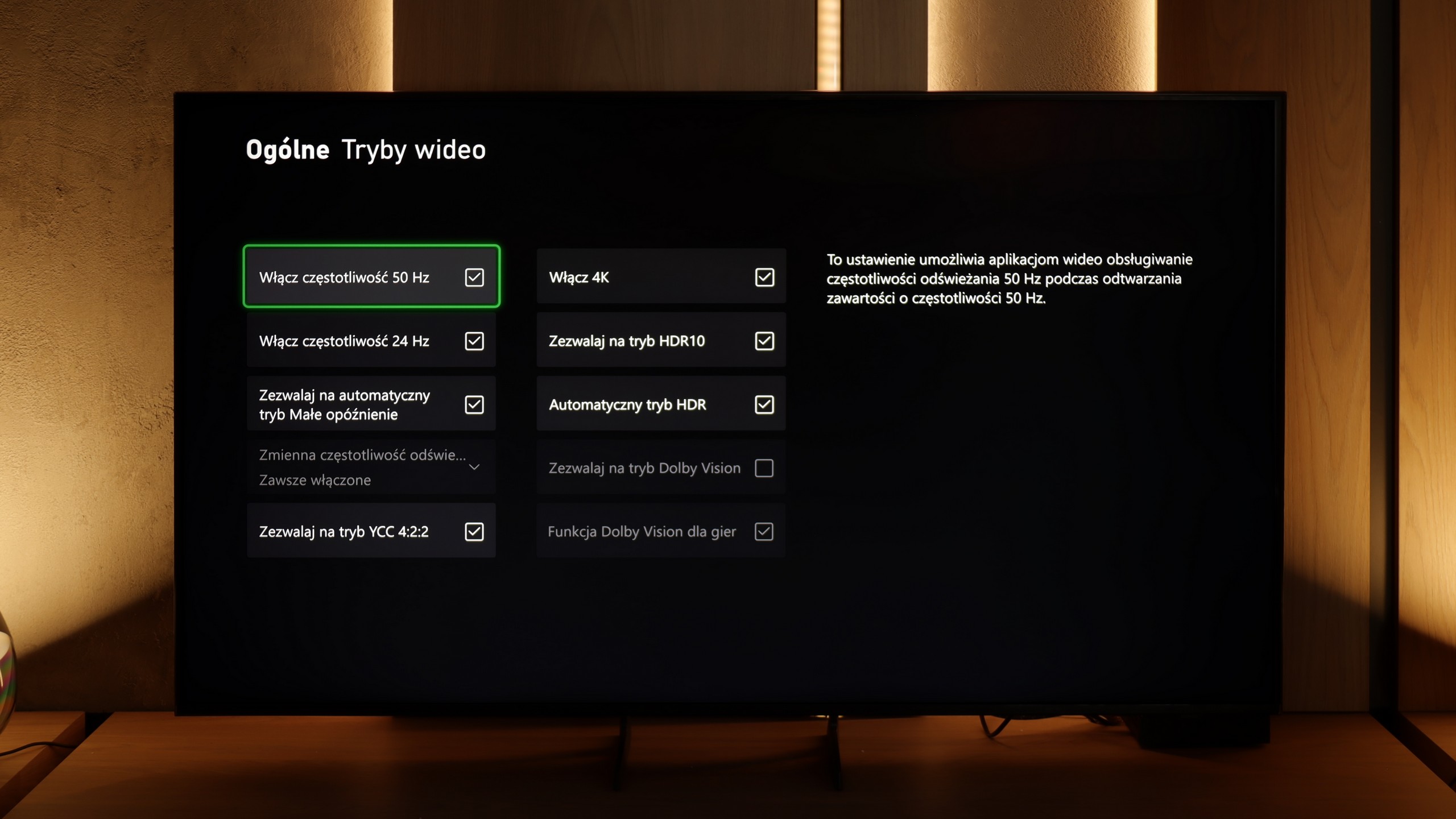

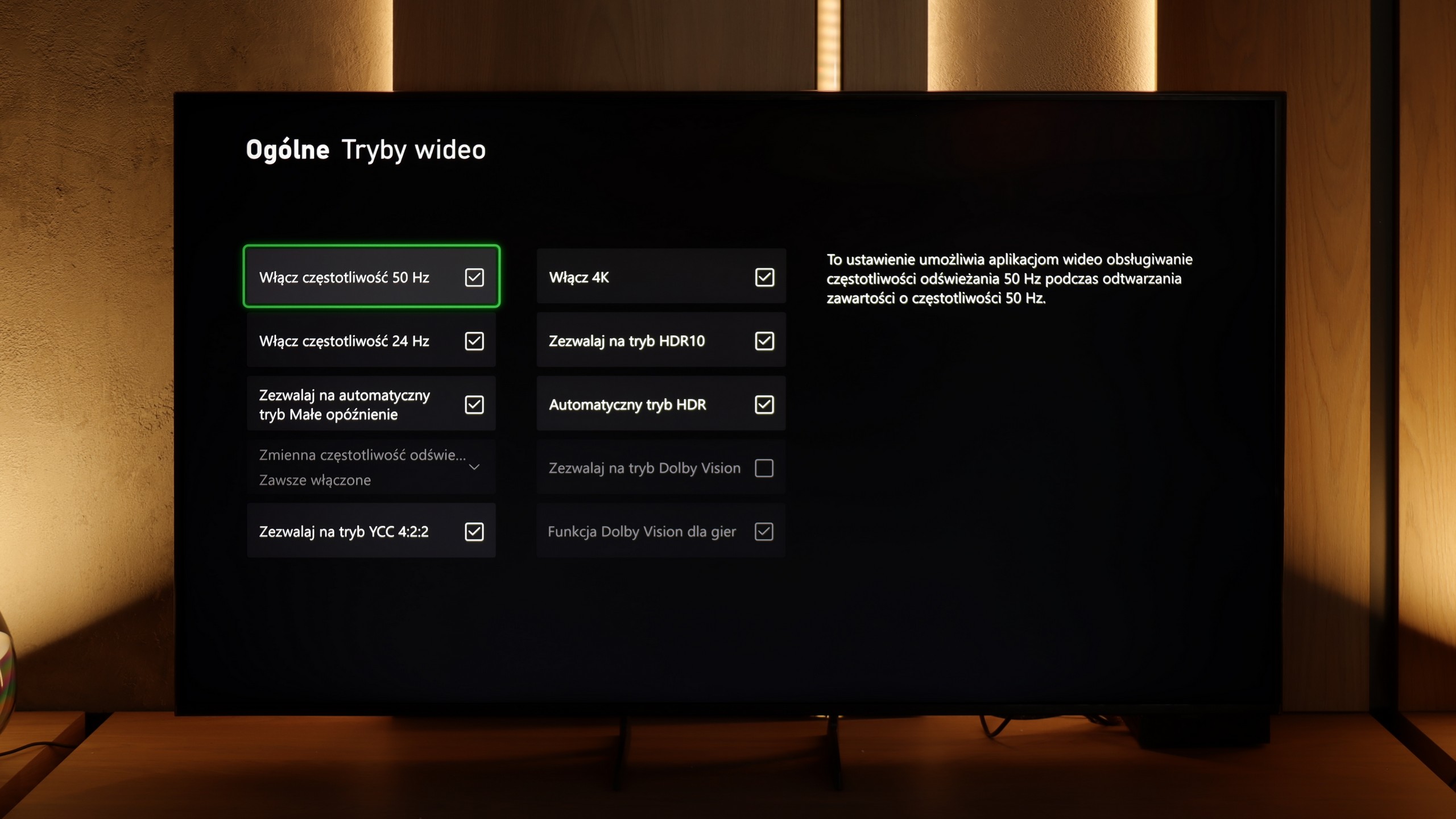

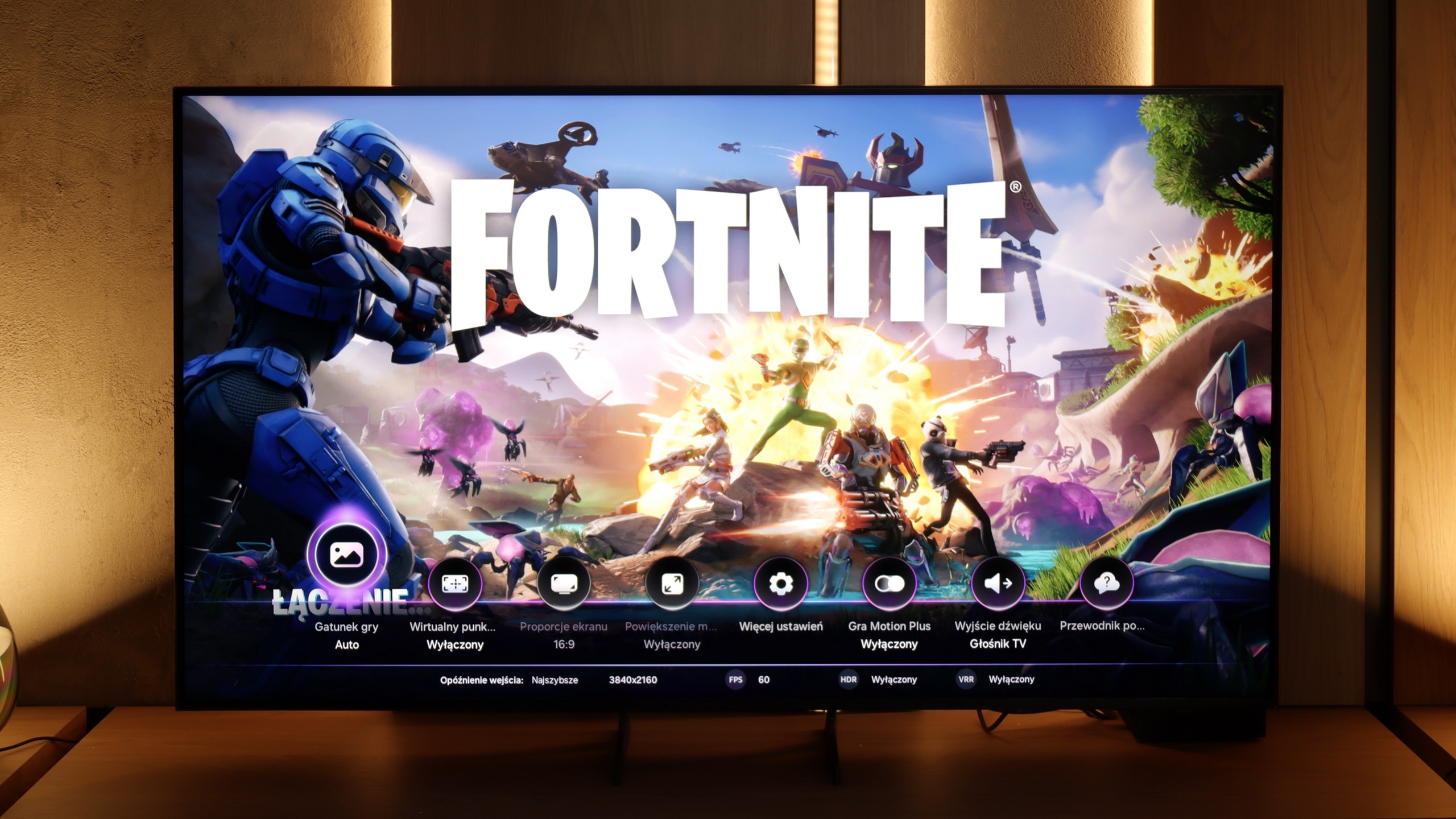

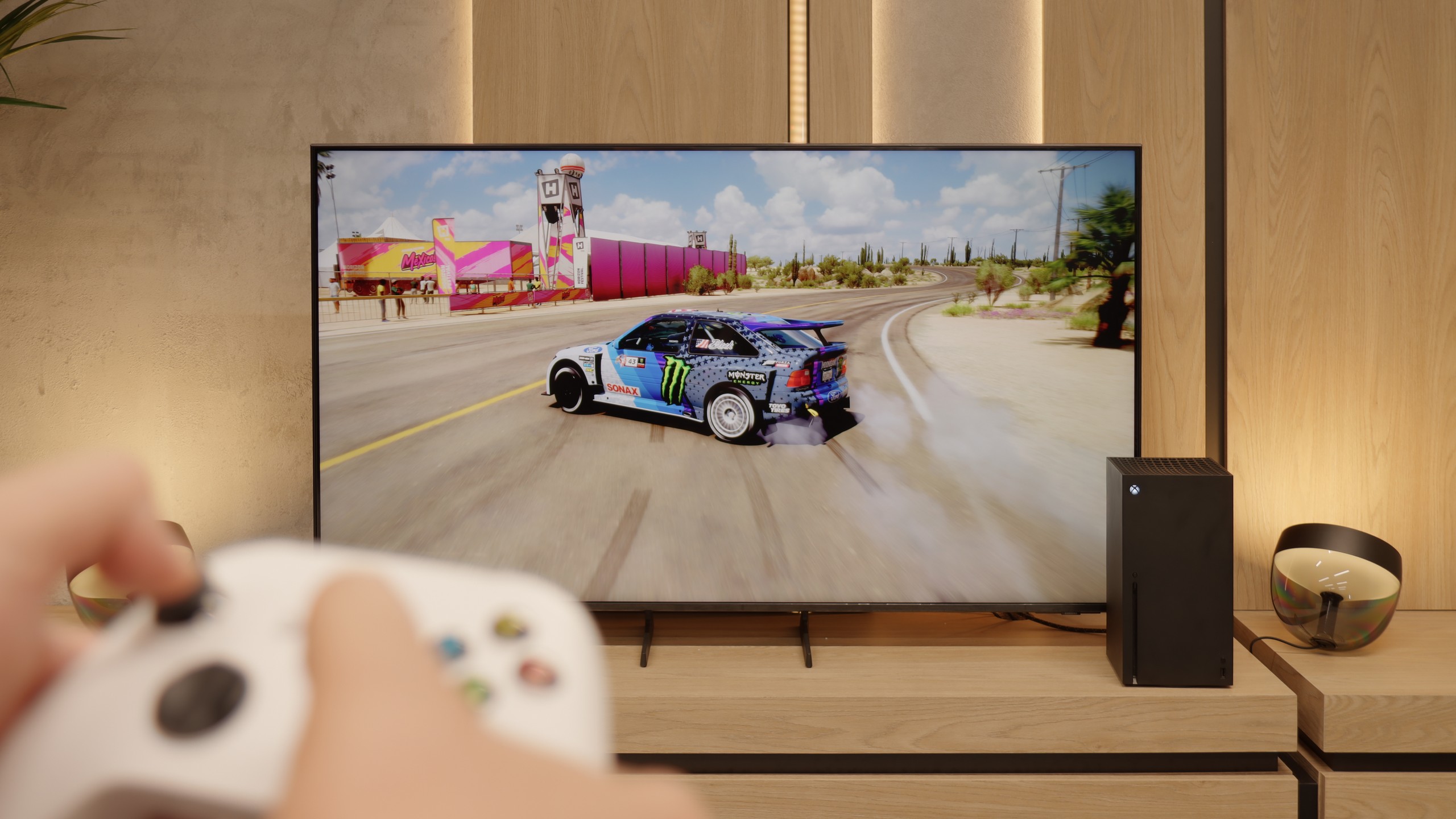
While gaming on the console, LG NANO82T offers a range of features that can significantly impact the gaming experience, though it also has some limitations. Among the advantages, it is worth mentioning the ALLM (Auto Low Latency Mode) feature, which automatically adjusts picture settings by switching the TV to low latency mode. This is particularly beneficial for gamers who need a quick response to their actions. Another plus is the support for HGiG (HDR Gaming Interest Group), as HDR games are displayed according to the creators' intentions, providing realistic and vivid visual effects. These features make the LG NANO82T offer a good gaming experience, although some aspects could be better, especially in dynamic scenes. Unfortunately, LG NANO82T has its limitations when it comes to gaming features. It lacks support for variable refresh rate (VRR), which can affect the smoothness of gameplay, especially in more dynamic games. The TV has a 60Hz panel, preventing the use of higher refresh rates. This is a significant drawback for gamers who expect smoother gameplay at higher resolutions. Additionally, the lack of G-Sync support limits image synchronization capabilities, which can lead to tearing and stuttering in games.
These shortcomings may mean that the LG NANO82T does not meet the expectations of the most demanding gamers who are looking for advanced features and the highest image smoothness.
Features for gamers in the Samsung Q7F are a topic that stirs up quite a few mixed emotions. On one hand – no sensible person expected miracles here because after all, it’s a 60 Hz TV and from the start, it was clear that it wouldn't be a device for squeezing the maximum out of a console or PC. On the other hand, since the manufacturer promised specific solutions in the promotional materials, it’s only natural that we wanted to see them in practice. At the outset, it's pretty decent. The automatic game mode (ALLM) works, so there's no need to manually fiddle with settings; the console switches the TV to low latency mode on its own. We also have the Game Bar, which looks impressive and allows you to peek at a few basic parameters without leaving the game. And this is where the good news ends.
[UPDATE] We have updated our tests of Samsung TVs from the 2025 model year due to the release of software version 1131, which restored the key HGiG feature for gamers.
The biggest problem with the Q7F is VRR, or rather its absence. Yes, a relevant icon appears in the menu, you can even see it in the Game Bar, but throughout the test, the feature remained dormant and could not be activated in any way. The issue with HGiG is even more painful; this option was actually available at the start, but after the software update, it disappeared completely, which is simply unprofessional. Therefore, the Q7F is only suitable for absolute basics. Sure, you can turn on the console, play more relaxed titles, and enjoy low input lag, but if someone is counting on more advanced features that the manufacturer promised, they'll be disappointed. This is not a TV you buy with the intention of gaming, and it's better to be aware of this before making a purchase.
Input lag
9.9/10
10/10
SDR
HDR
Dolby Vision
Input lag in LG NANO82T is really impressive, with a maximum value of just 15 ms. This is a remarkable result that provides instant reaction to player movements. With such low latency, gameplay becomes smooth and responsive, which is crucial for gamers who value quick and precise actions. Regardless of the type of game, the television offers an excellent experience by minimizing delays and allowing full immersion in the world of gaming.
Input lag on the Samsung Q7F is really good for a 60 Hz TV. Measurements showed values below 12 ms, which means this model is more than sufficient for regular gaming on a console. Of course, it doesn't compare to the top-tier 120 Hz screens that can drop below 6–7 ms, but in everyday use, it's hard to talk about noticeable delay. In this regard, the Q7F doesn't fall behind its competitors in its segment and can easily be considered a safe choice for casual or sports gaming. At least in this respect.
Compatibility with PC
5.6/10
6/10

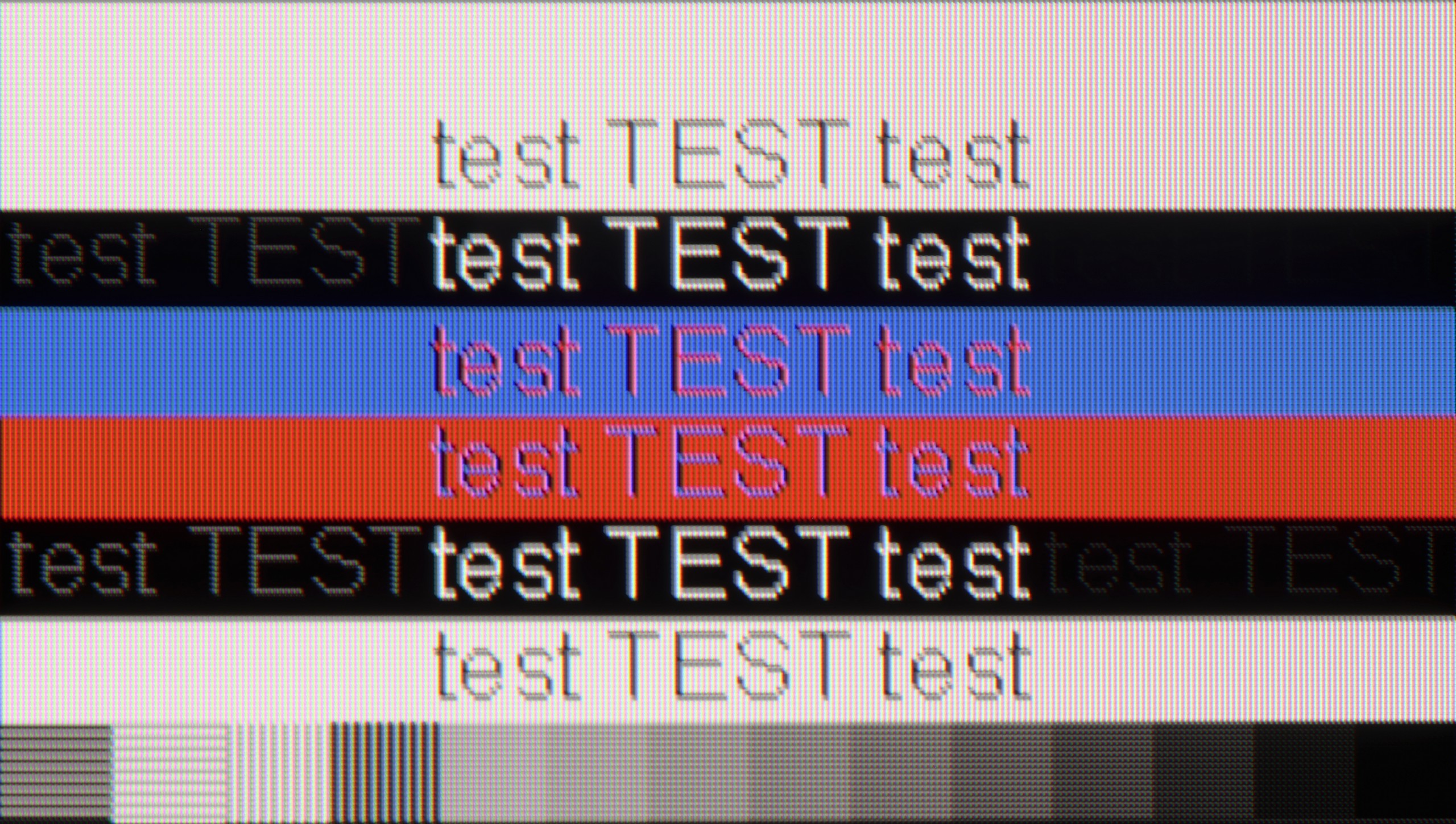
The photo shows the legibility of small fonts. Ideally, lines should be the same thickness on both light and dark text, with minimal pixel gaps.
The collaboration of LG NANO82T with a computer looks very good. The readability of the fonts is at a high level, making it easier to work with texts. Additionally, the television supports chroma 4:4:4, providing clear and sharp details. A low input lag of just 14 ms makes any actions on the screen smooth and responsive. This model offers a 60 Hz refresh rate panel, and the lack of support for G-Sync may disappoint gamers. For this reason, the television receives a lower rating in terms of gaming, although it performs reasonably well as a work monitor. Unfortunately, we deducted further points for the display of fonts on a dark background in green, which can be somewhat irritating in certain cases.
Collaboration with a PC on the Q7F is decent, though it's not a television that will satisfy the most demanding users. Fonts are displayed clearly and sharply, so you can comfortably work on it – especially for everyday office tasks or browsing the internet. With thin letters, you can notice slight shading, but it's not something that hinders normal use. In a smaller size, the Q7F can indeed serve as a computer screen, although you have to keep its limitations in mind. The lack of variable refresh rate means we won't benefit from G-Sync or FreeSync, and the 60 Hz effectively limits more demanding PC gaming. It will be fine for work and light use, but for serious gaming, it's definitely better to look for something higher up in Samsung's range.
Viewing angles
2.7/10
3.5/10
The viewing angles on LG NANO82T aren't great, which is typical for budget VA panels. Colours lose their intensity and contrast deteriorates when viewing the screen from the side. Blacks become more washed out and details less defined. This can affect the viewing quality in larger rooms where viewers sit at different angles. This is one of the main drawbacks of VA panels in lower-priced televisions. Although they offer better contrast and deeper blacks compared to IPS panels, the viewing angles are significantly limited. If we often watch television from various spots in the room, this can impact our visual experience.
The viewing angles on the Q7F are simply poor – typical for a VA panel. Just sitting slightly off to the side immediately shows that the picture loses quality. Colours fade, contrast noticeably drops, and blacks start to resemble grey more than anything deep. This is a television that is definitely best viewed head-on, and any larger viewing angle involves compromises.
Daytime performance
3.9/10
3.9/10

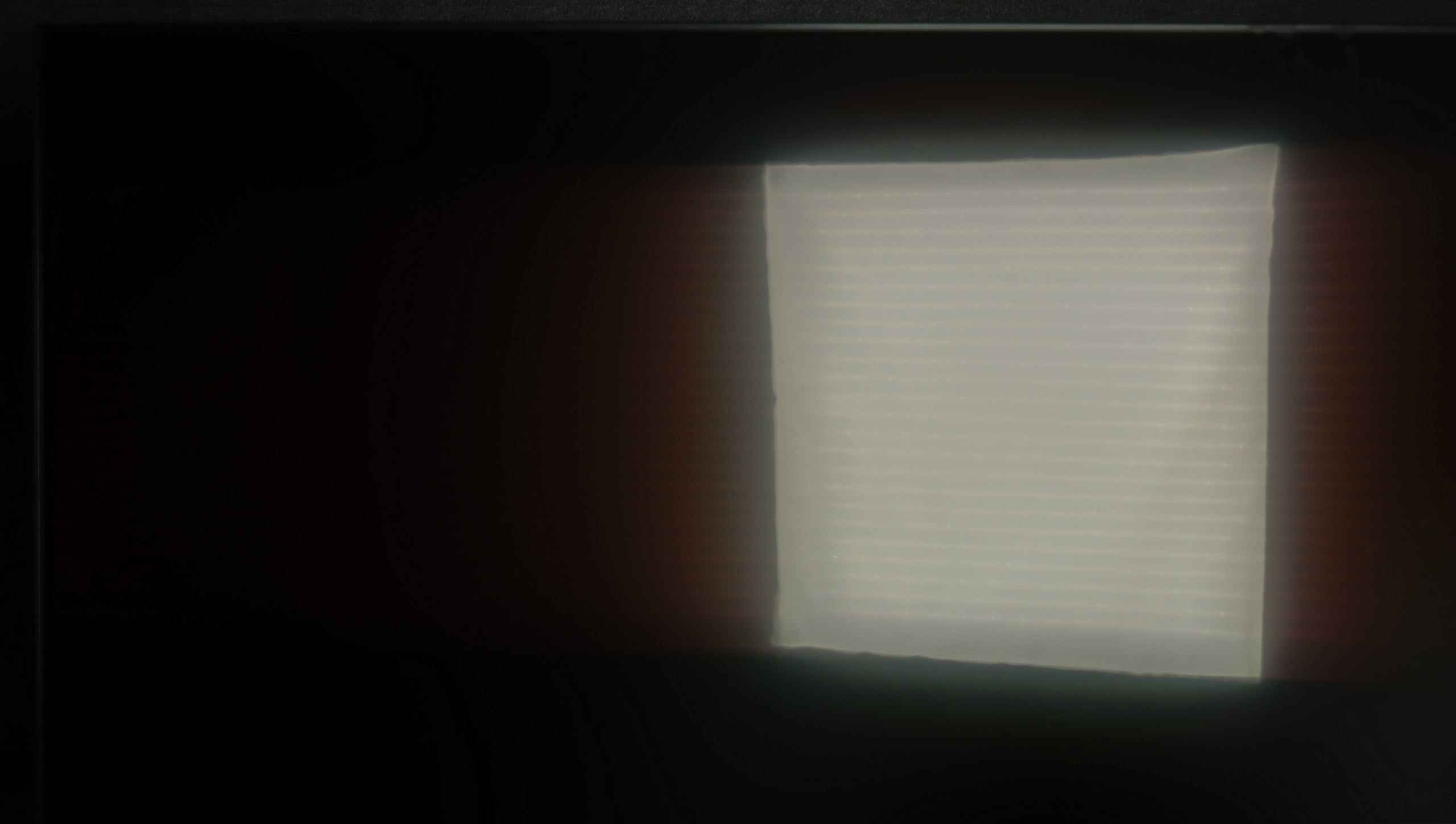

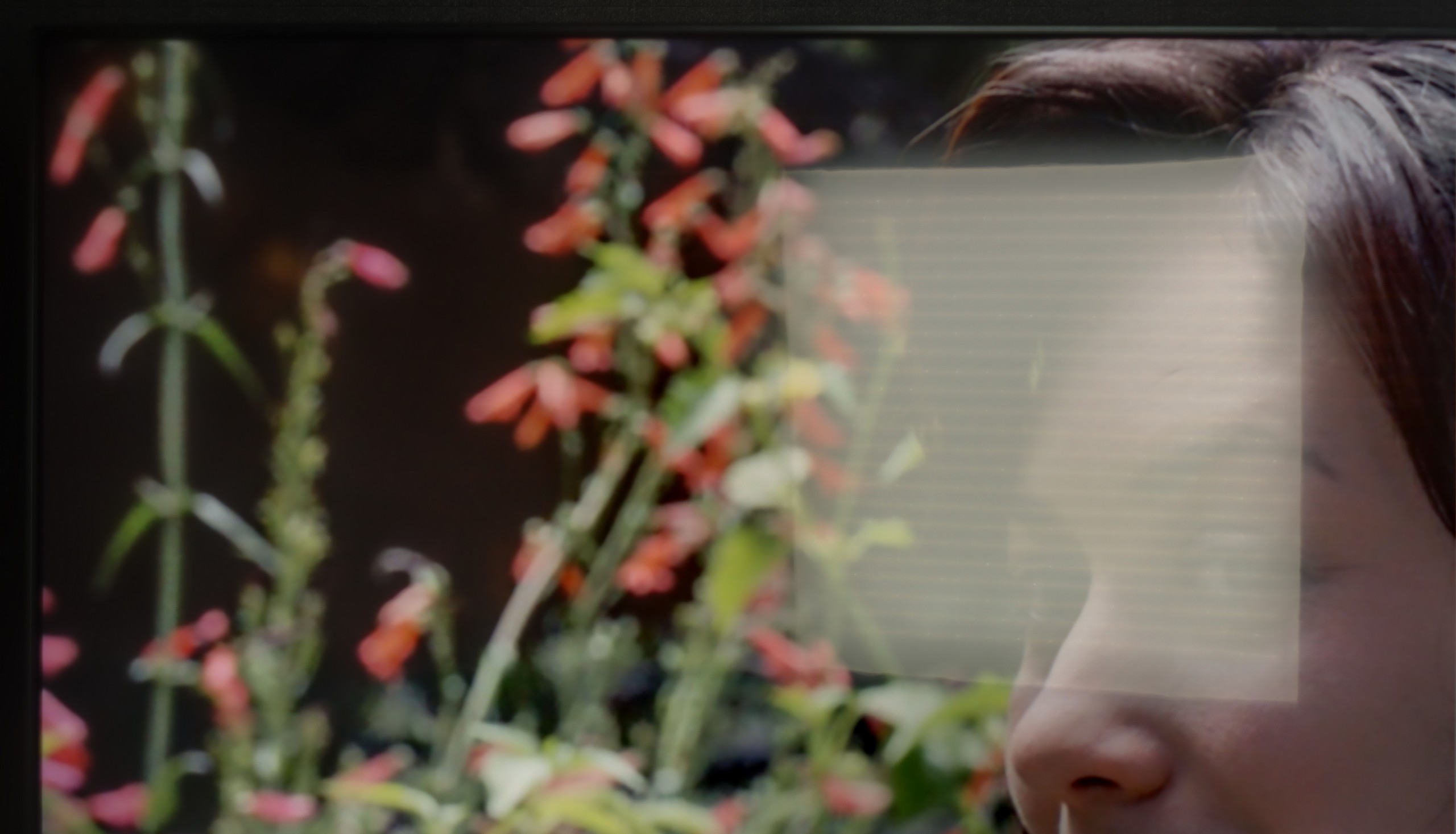
Panel brightness
Samsung Q7F: 237 cd/m2
LG NANO82T6B: 259 cd/m2
In the category of daytime performance, LG NANO82T does not perform the best. The satin panel offers average reflection handling, which can be problematic in bright rooms. The low rating is mainly due to the very poor screen brightness of only 250 nits. As a result, the television may struggle to provide adequate picture quality in well-lit environments, limiting its functionality in such conditions.
The performance of the Q7F during the day unfortunately doesn't impress. Due to its low brightness, the screen quickly capitulates in very sunny rooms. Therefore, it’s hard to recommend it to those who plan to watch television in a bright living room with large windows. In moderately lit rooms, it manages reasonably well, but in bright light, the image loses clarity. Additionally, the fact that the panel doesn’t always effectively handle reflections means that glares can be bothersome during the day. This is rather a screen for evening viewing than for daily sessions in full sunlight.
Panel details
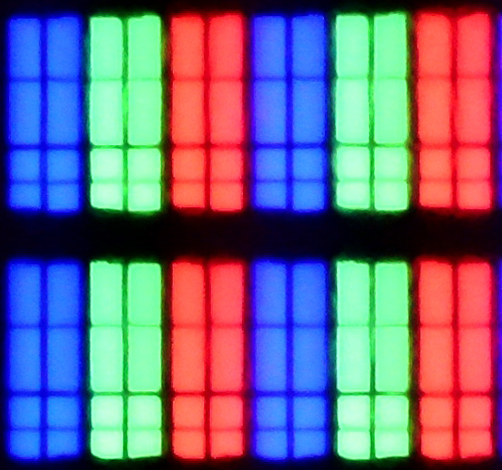
Subpixel Structure:

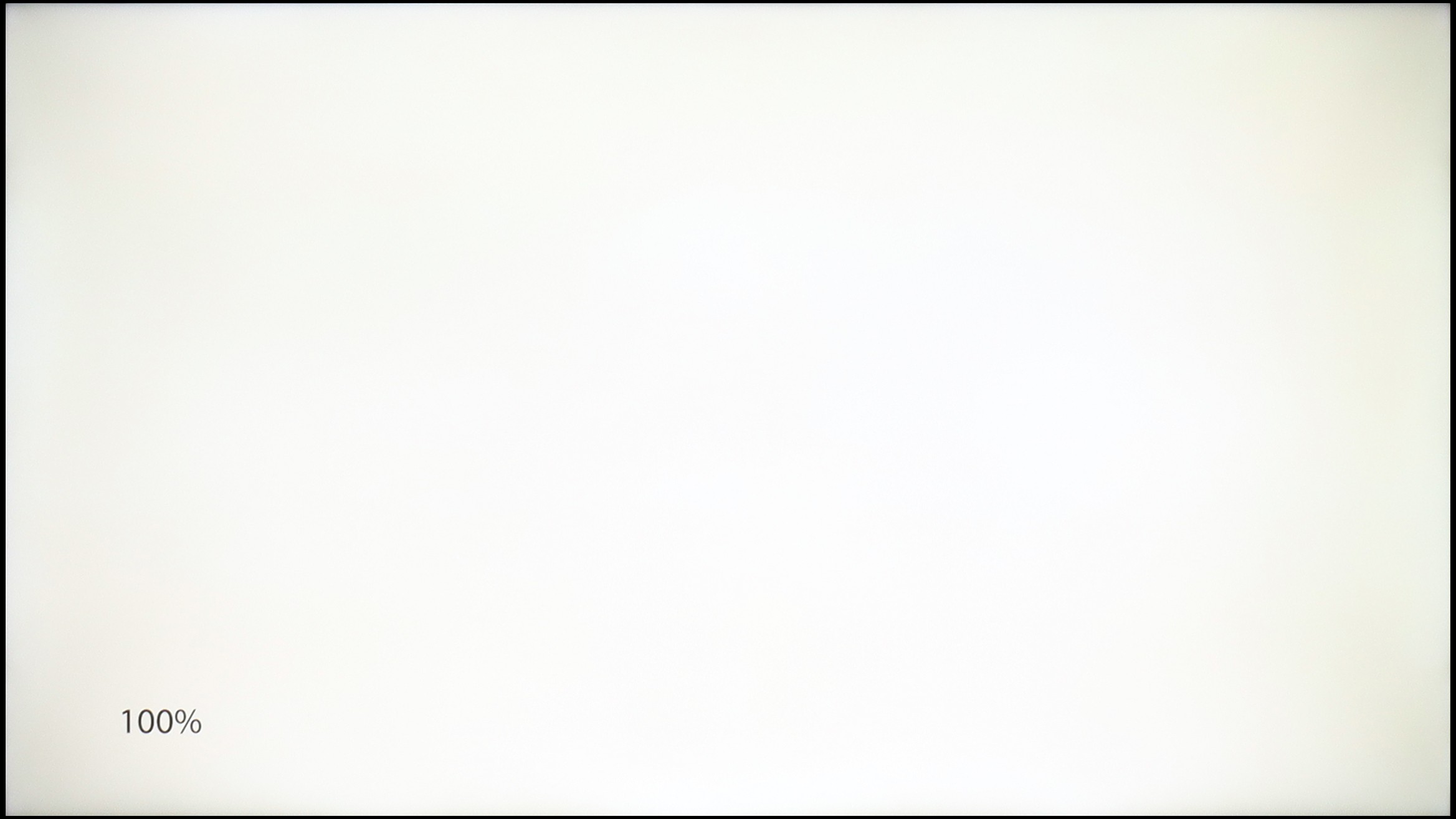
Panel uniformity and thermal imaging:

LG NANO82T6B
Samsung Q7F
TV features
7.7/10
7.3/10
- SystemWebOSTizen
- System performanceDecentGood
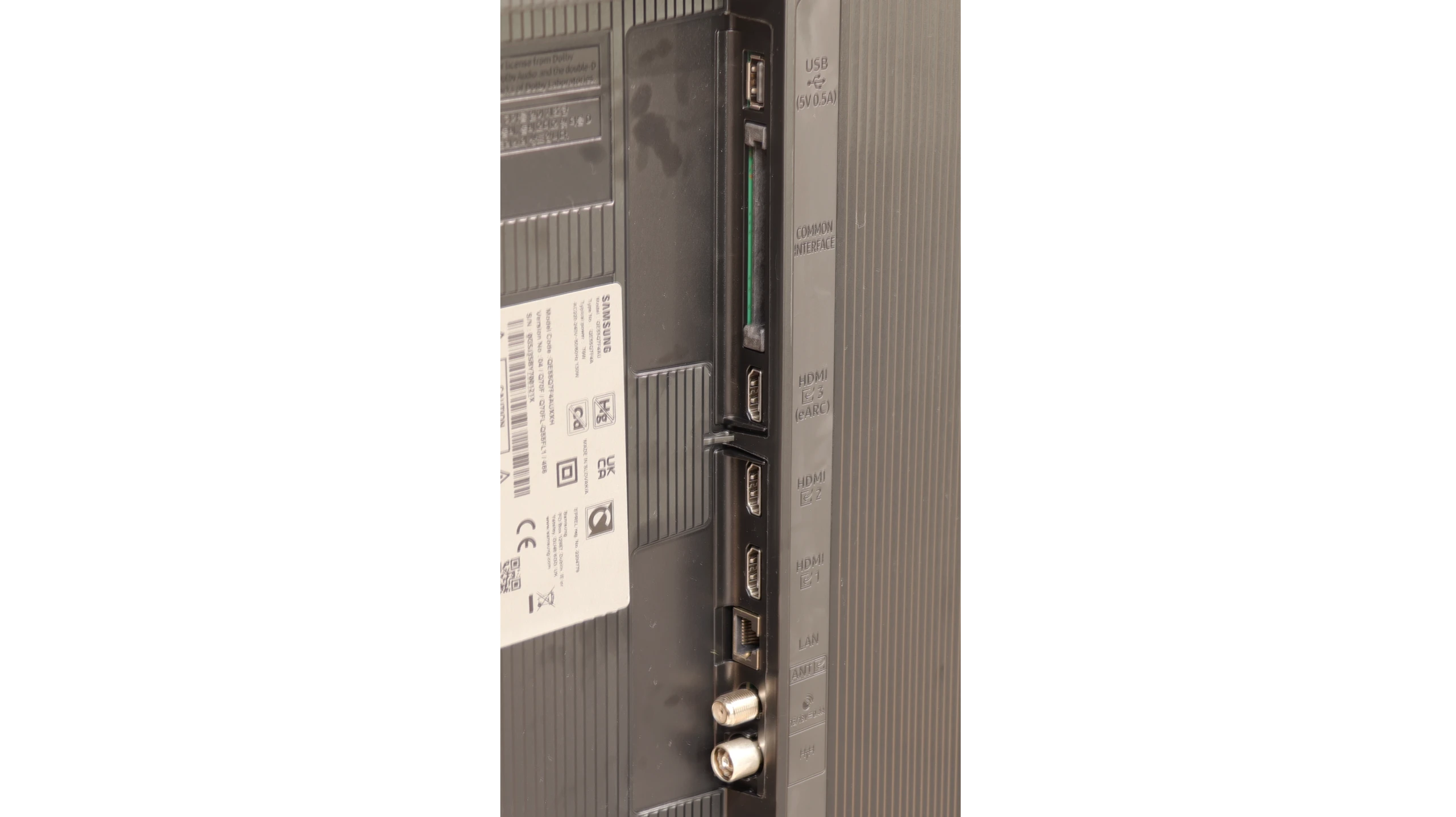
- HDMI inputs3 x HDMI 2.0, 0 x HDMI 2.13 x HDMI 2.0, 0 x HDMI 2.1
- OutputsToslink (Optical audio), eARC (HDMI), ARC (HDMI)Toslink (Optical audio), eARC (HDMI), ARC (HDMI)
- Network InterfacesWi-Fi 2.4GHz, Wi-Fi 5GHz, Ethernet (LAN) 100MbpsWi-Fi 2.4GHz, Wi-Fi 5GHz, Ethernet (LAN) 100Mbps
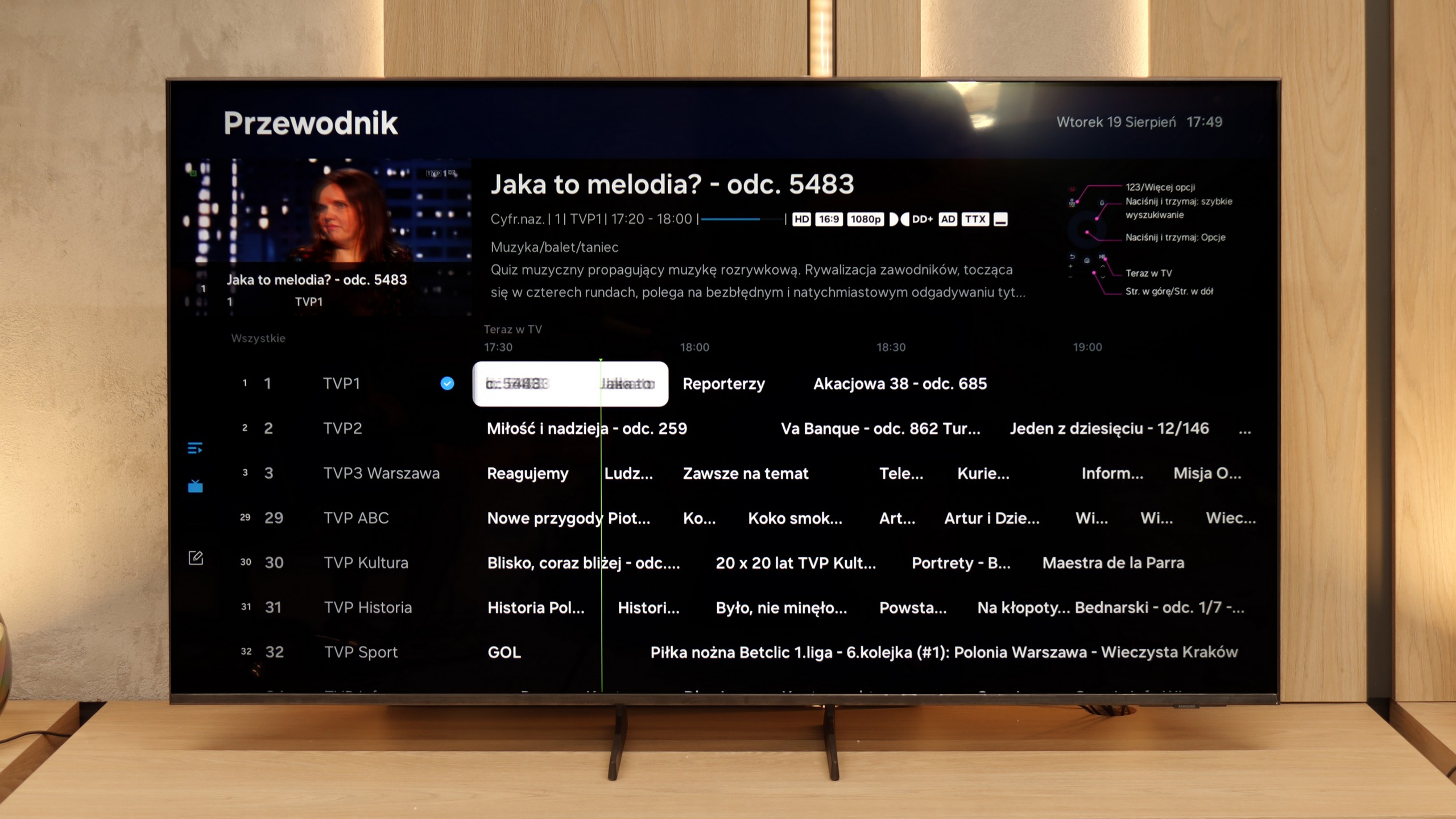
- TV receptionDVB-T, DVB-T2, DVB-S, DVB-S2, DVB-CDVB-T, DVB-T2, DVB-S, DVB-S2, DVB-C
Classic features:
- Recording to USB (terrestrial TV)
- Recording programming
- Picture in Picture (PiP)
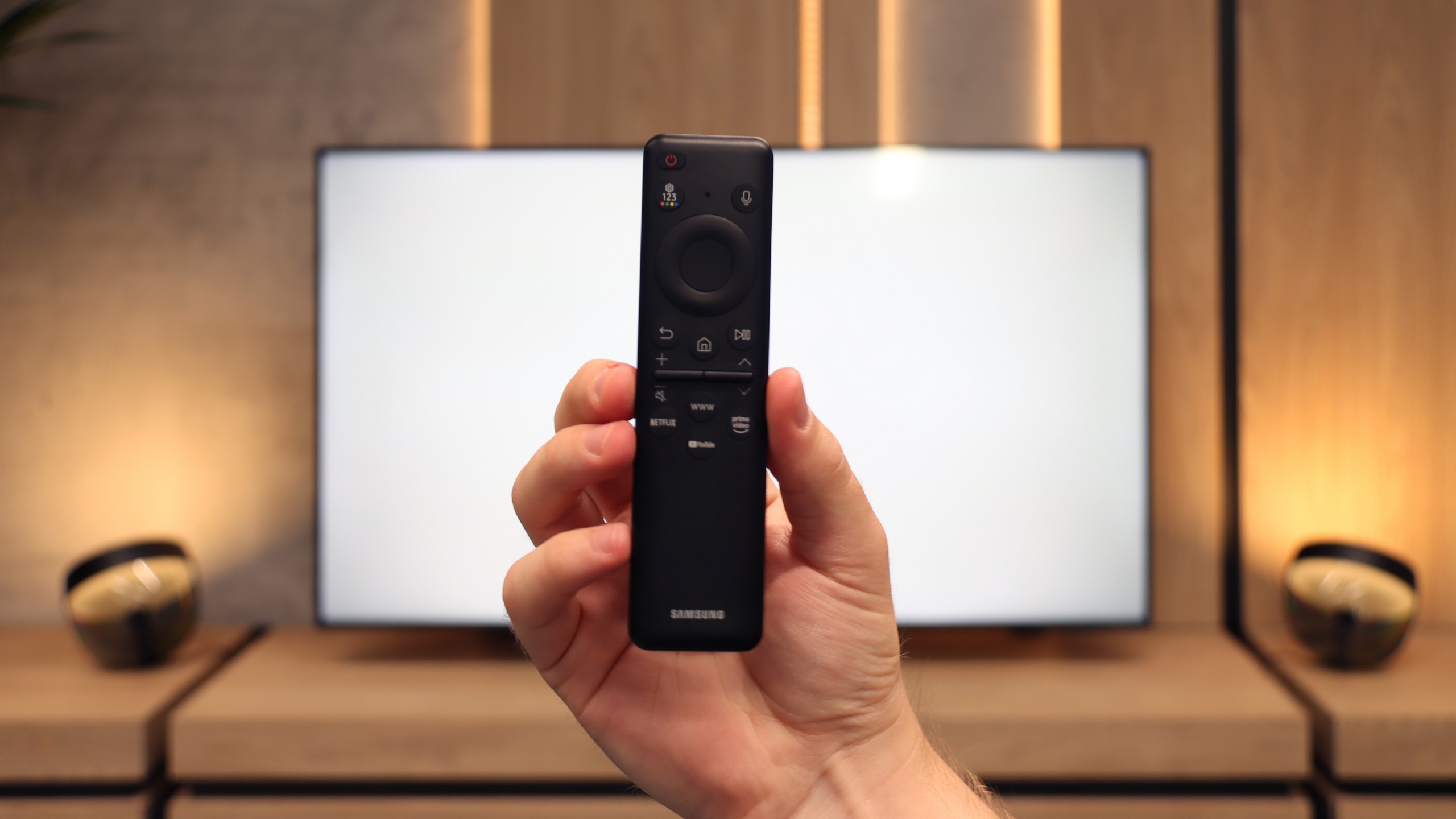
- RF remote control (no need to aim)
- Backlit remote control
- Teletext
- Audio only mode
- Bluetooth headphones support
- Simultaneous Bluetooth headphones & TV audio
Smart features:
- AirPlay
- Screen mirroring (Windows Miracast)
- Voice search
- Voice search in native language
- Ability to connect a keyboard and mouse


Sound connection options
- HDMI audioeARC (HDMI), ARC (HDMI)eARC (HDMI), ARC (HDMI)
- Other audio outputsToslink (Optical audio)Toslink (Optical audio)
- Wireless audioBluetoothBluetooth
Supported audio formats (external HDMI eARC audio):
- Dolby Digital Plus 7.1
- Dolby True HD 7.1
- Dolby Atmos in Dolby Digital Plus (JOC)
- Dolby Atmos in Dolby True HD
- DTS:X in DTS-HD MA
- DTS-HD Master Audio
Senior accessibility
- Numeric keyboard on TV
- Font size adjustment
- Audio description
LG NANO82T offers a wide range of features that significantly enhance user comfort. The webOS operating system deserves special attention. It is intuitive, fast, and offers a plethora of applications that can be easily installed and operated. The Magic Remote, or PilotMagic, is another convenience. It operates like a computer mouse and allows for quick navigation through the menu. Moreover, it supports voice commands in Polish, which greatly facilitates the use of the television. WebOS also supports AirPlay, making it easy to stream content from Apple devices such as iPhone or iPad.
In everyday use, the television performs excellently. It comes equipped with a recording function, allowing you to save your favourite shows and watch them at your convenience. Pairing other devices also poses no problem thanks to the built-in Bluetooth. You can easily connect headphones, speakers, and even keyboards or mice, making the television even more versatile. However, it is worth mentioning a downside in the lack of the PIP (Picture-in-Picture) function, which would allow for simultaneous viewing of two programs. Despite this, the LG NANO82T is a great choice for everyday use, offering many modern and convenient features.
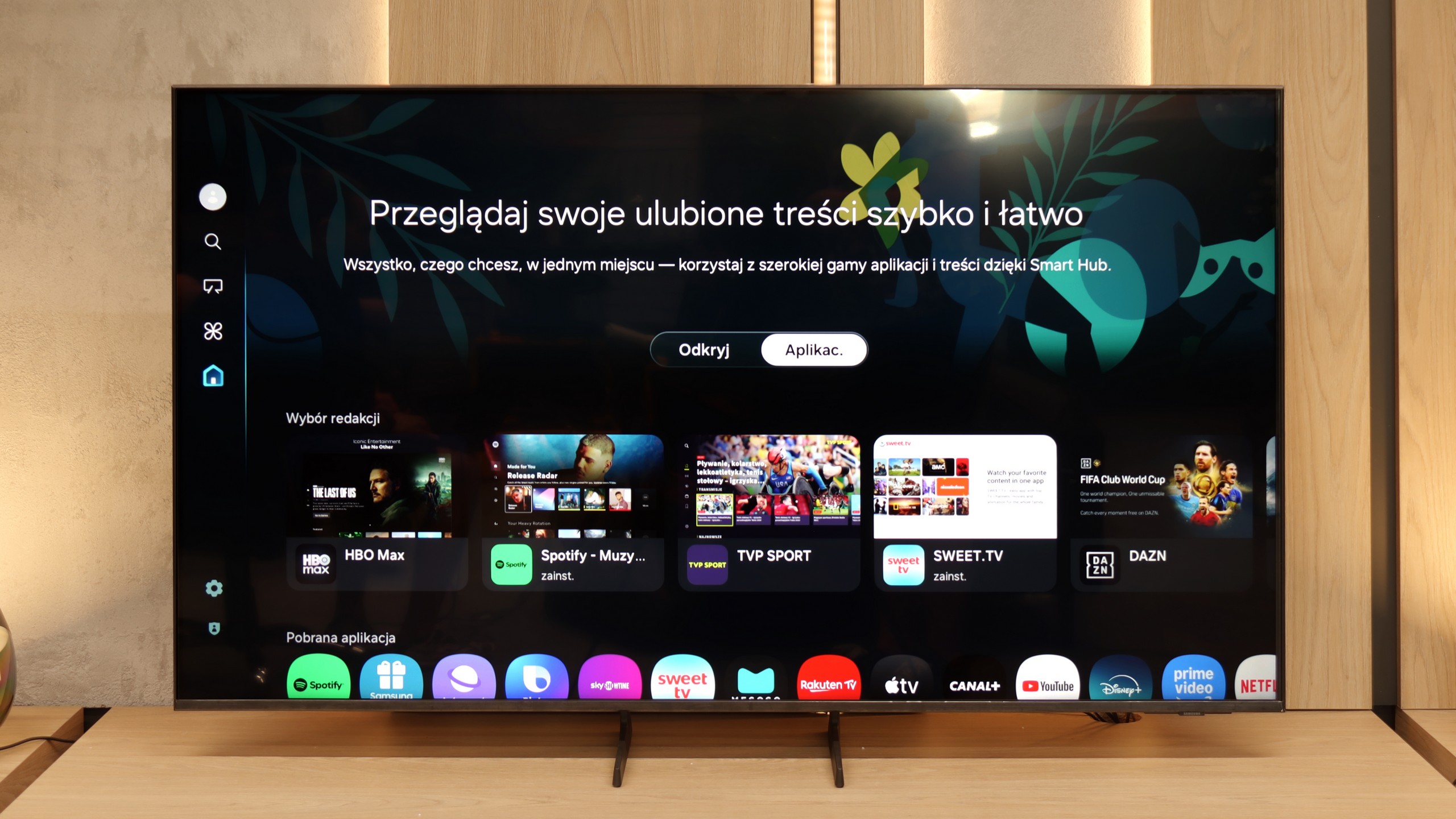
Smart TV – Tizen System
Here the Q7F shows its strongest side. Samsung has been developing the Tizen system for years, and it's clear that we are dealing with a mature, refined platform. Everything runs smoothly, the menu doesn’t lag even when switching between heavier applications, and installing additional programs from the library is quick and hassle-free. Additionally, there’s full support for AirPlay, integration with voice assistants, as well as a wide range of add-ons – from cooperation with devices in the SmartThings ecosystem to the ability to control Philips Hue smart lighting or other smart gadgets. Samsung strongly emphasises expanded network features, and it's evident – in terms of Smart TV, the Q7F has absolutely nothing to be ashamed of; on the contrary, it can put to shame more expensive competitors.
Classic Features
On the side of classic, “television” solutions, it’s clear that the manufacturer has put everything on the smart card. We won’t find USB recording or PiP mode here, which were once standards. It’s apparent that the Q7F is meant to be primarily a multimedia centre, rather than a device for those accustomed to more traditional solutions. Fortunately, there are a few practical additions – we have Bluetooth for pairing headphones or speakers and an option to change the font size in the menu, which users with weaker eyesight will appreciate.
Apps
9.1/10
9.3/10






















Playing files from USB
8.2/10
9/10
Supported photo formats:
Maximum photo resolution:

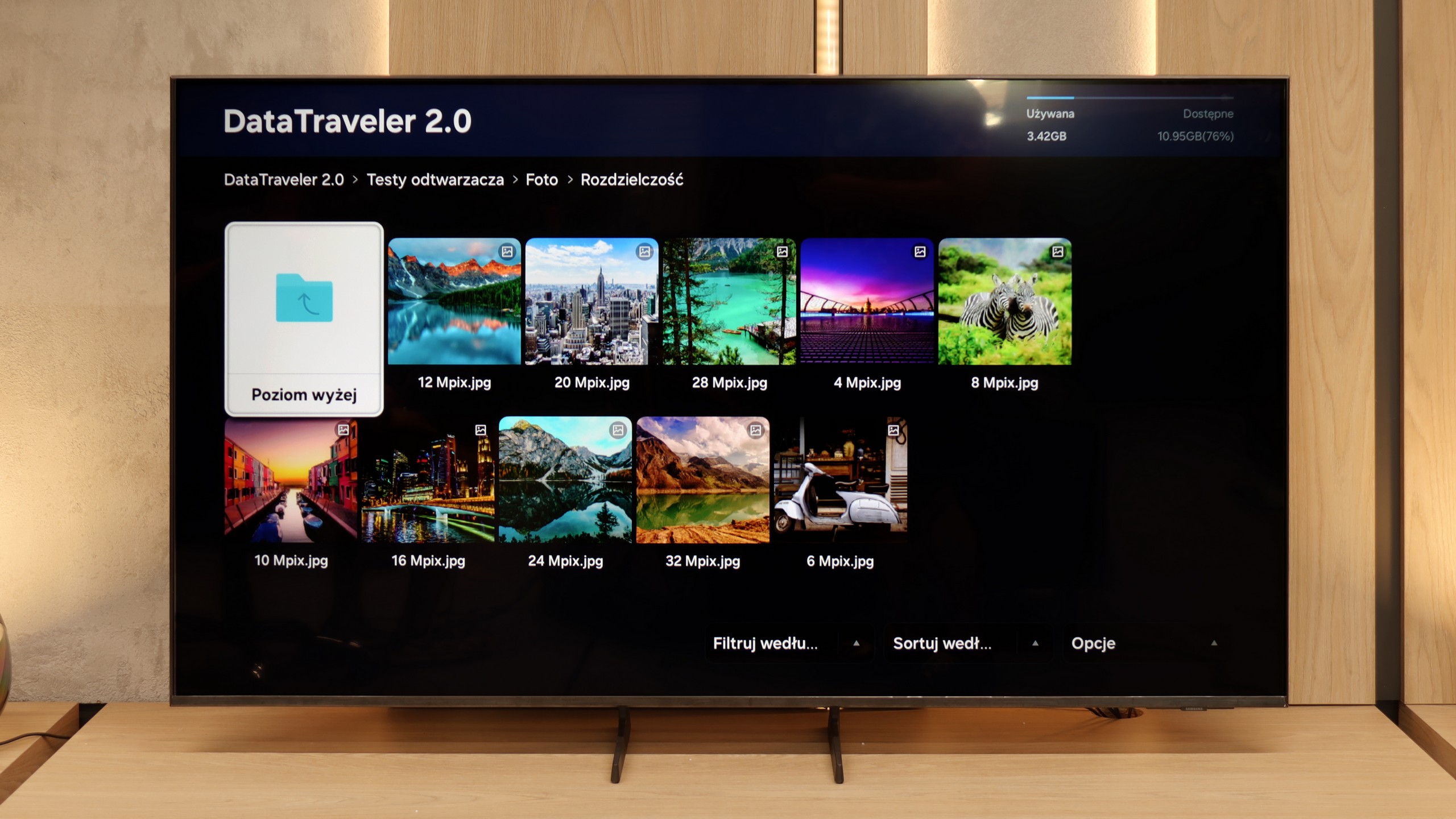
The file player in LG NANO82T is similar to what you can find in other LG models. It will satisfy most users, offering convenient and efficient playback of a variety of video and audio files. However, more demanding users, especially those who need support for unconventional image formats, may feel some limitations. In such cases, it is worth using a computer to achieve full compatibility with different file formats. Overall, the file player in LG NANO82T performs its basic task.
In the Q7F, we have a built-in file player and, as is usually the case with Samsung TVs, it works quite well – most popular movies or music play without any fuss. For basic use, it’s sufficient and you probably won’t need to reach for external solutions like connecting a laptop. It’s a different story if someone wants to upload photos – it can struggle here, especially with Apple’s HEIC or PNG, which are visible in the player menu but don’t necessarily want to work.
Sound
6.1/10
5.8/10
- Maximum volume-80dB
- Dolby Digital Plus 7.1
- Dolby True HD 7.1
- Dolby Atmos in Dolby Digital Plus (JOC)
- Dolby Atmos in Dolby True HD
- DTS:X in DTS-HD MA
- DTS-HD Master Audio
The sound on the LG NANO82T may not be exceptional, but it's definitely not the worst. The TV is equipped with a typical design of two 10W speakers positioned at the bottom, which allows for decent audio quality during everyday use. However, the lack of DTS format support may disappoint Blu-ray users who expect top-notch audio quality.
Samsung Q7F has a speaker set with a power of 20 W and… well, let's not kid ourselves, it's not a revelation. The TV itself sounds quite decent, meaning series, news, or daily programs are clearly audible, dialogues are not lost, but there's a significant lack of depth or sound space. There's practically no bass; something thuds, but it resembles tapping on a box more than real low frequencies. Music sounds flat, films also don't leave a strong impression – you won't feel like you're in a cinema. It's a sound in the "acceptable" category, just to have something built-in, but if someone is hoping for a stronger experience, they'll end up reaching for a soundbar sooner or later. And to be honest – even the simplest model will make a noticeable difference, and Samsung has quite a few of those on offer.
Acoustic Measurements
No acoustic data
80dBC (Max)
75dBC