Hisense S7NQ Canvas TV is a very interesting option, especially for those who are looking for something in the style of a picture-TV but don't want to spend a fortune. At first glance, it stands out primarily because the gallery mode with artwork is completely free – there’s no subscription fee, unlike Samsung's The Frame. Moreover, the box includes a light brown frame right away, which will be an extra bonus and saving for many people. Although it is primarily a TV for displaying art, it surprisingly performs quite well in other applications as well. The 144 Hz panel, full HDMI 2.1, support for VRR and ALLM – all of this makes gaming on consoles entirely possible and quite enjoyable. The Vidaa system runs smoothly, and we find all the most important apps and features here, such as AirPlay, USB recording, or screen mirroring from your phone. But there are also things that fall a bit short. First and foremost – the actual images. Compared to The Frame from Samsung, they simply look more digital here. There's a lack of that depth, paint texture, and subtle details that really impress with the competitor. Even though at first glance we’re dealing with a similar, matte panel, in practice, it performs much worse at suppressing reflections. Colours and blacks fade much quicker, especially in a bright room. This could also be the effect of lower brightness – Hisense is simply darker than its Korean rival. Additionally, there are some minor software flaws – e.g., the lack of displaying external subtitles despite the option to configure them, or the not entirely effective image smoothing function with lower quality materials. In short: the S7NQ is a good TV in the form of a "picture" that can be a great alternative for those who don’t mind the lower quality of displayed artworks but value the absence of subscription fees, an extra frame in the package, and the full functionality of a typical TV. It's not an ideal product, but a reasonable compromise for Samsung The Frame.
- Matching (Score) |
- Our verdict |
- TV appearance |
- Where to buy |
- Contrast and black detail |
- HDR effect quality |
- Factory color reproduction |
- Color reproduction after calibration |
- Smoothness of tonal transitions |
- Image scaling and smoothness of tonal transitions |
- Blur and motion smoothness |
- Console compatibility and gaming features |
- Input lag |
- Compatibility with PC |
- Viewing angles |
- Daytime performance |
- Panel details |
- TV features |
- Apps |
- Playing files from USB |
- Sound
Hisense S7NQ CanvasTV vs TCL C7L
 Direct comparison
S7NQ / CanvasTV

Available screen sizes: 55”

Panel type: LCD VA
Resolution: 3840x2160
System: VIDAA
Model year: 2024
Complete the survey to find out the result
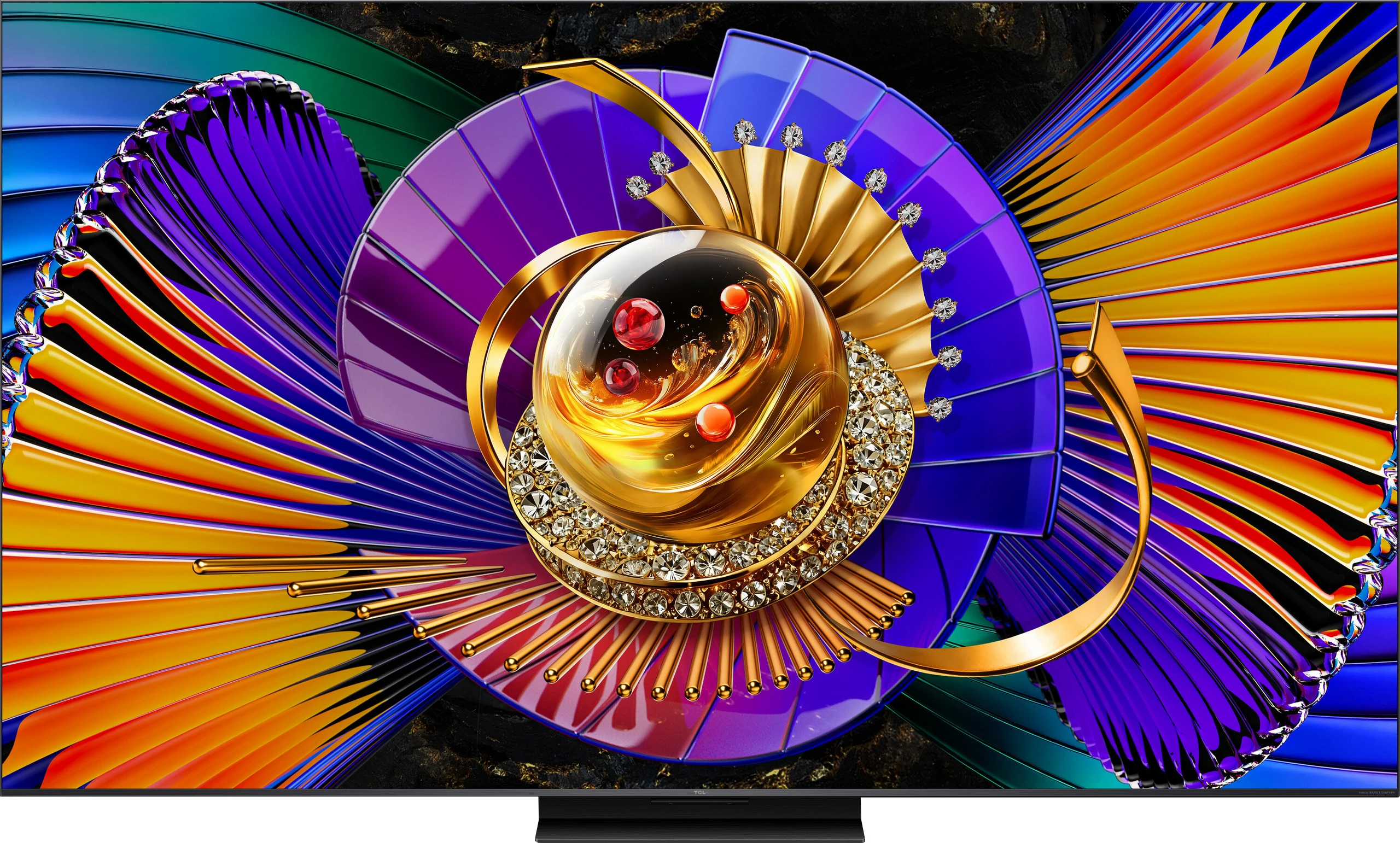
Panel type: LCD VA
Resolution: 3840x2160
System: Google TV
Model year: 2026
Complete the survey to find out the result
Overall rating
6.7
7.8
 Movies and series in UHD quality
 6.6
7.2
 Classic TV, YouTube
 6.3
6.8
 Sports broadcasts (TV and apps)
 6.1
6.7
 Gaming on console
 7.5
8.8
 TV as a computer monitor
 7.0
8.4
 Watching in bright light
 5.4
8.8
 Utility functions
 9.0
7.8
 Apps
Apps 7.7
9.6
 Sound quality
 6.3
7.7
Complete the survey to find out what fits your preferences
Advantages

Free gallery without subscription
Frame included
Great for gamers (144 Hz, HDMI 2.1, VRR, ALLM, Game Bar)
Supports Dolby Vision, HDR10 and HDR10+
Decent native contrast (VA Panel)
Works well with PC (chroma 4:4:4)
Fast Vidaa System
Straightforward connection to home theatres: Supports Dolby and DTS codecs
Very high brightness
Good blacks and contrast (VA panel + mini-LED)
Excellent colour gamut coverage thanks to the new "Super QLED" filter
Full support for HDR formats including Dolby Vision and HDR10+
Top parameters for gamers (HDMI 2.1, low input lag)
High motion smoothness with low motion blur (up to 288Hz)
Google TV operating system (plenty of apps, Gemini voice assistant)
Disadvantages

Worse image quality in gallery mode than in Samsung The Frame
Colours and blacks fade significantly in bright environments
Missing HGiG mode (for gamers)
Software issues - external subtitles do not display in films
Poor digital image processing due to the use of an older MediaTek Pentonic 700 processor
Only two HDMI 2.1 ports, one of which is shared with the eARC channel for audio, e.g., a soundbar
Sound losing dynamics above 40-50% volume
Our verdict
TCL C7L is an incredibly successful Mini-LED television and a fully deserved successor to the hit model C7K. The list of advantages of this device is really long. At the top is the extremely high brightness of the panel. Thanks to this, the television handles brightly lit living rooms without any problems, offering a fantastic and dynamic image in HDR format. Huge applause is also due for the use of the new Super QLED coating – after professional calibration, the colours can be not only natural but also incredibly vibrant. The best part is that the screen does this regardless of what scene is displayed on the screen, which is often not the case for all TVs with RGB backlighting. C7L is also an excellent piece of hardware for gamers; you could even say it’s a true "multimedia powerhouse." It fully supports consoles and PCs, refresh rates up to 288 Hz, G-Sync, and low input lag that doesn’t increase even when enabling very demanding modes like Dolby Vision Gaming. The whole package is tied together by a well-optimised Google TV system, which in this generation of TCL devices runs noticeably smoother and more efficiently (at least that’s the impression we got during our tests). Of course, C7L is not a perfect device, and the manufacturer had to make certain compromises in this model. The biggest flaw of the C7L is the use of a less powerful image processor. Unfortunately, this translates to fairly mediocre digital processing and another construction limitation in the form of only two HDMI 2.1 ports. A more powerful setup has been reserved this year for the higher series, such as C8L. From a business perspective, this is fully understandable. Why? Because if TCL had put a better processor here, most people would probably see no sense in paying extra for the higher model. So even if some compromises exist here, the C7L series promises once again to be one of the most cost-effective Mini-LED televisions of the year. If you’re looking for a versatile, incredibly bright screen for movies, series, TV, or games – literally for everything – and at the same time don’t want to overpay for the top series, then yes... C7L is a brilliant choice that we can definitely recommend to you.
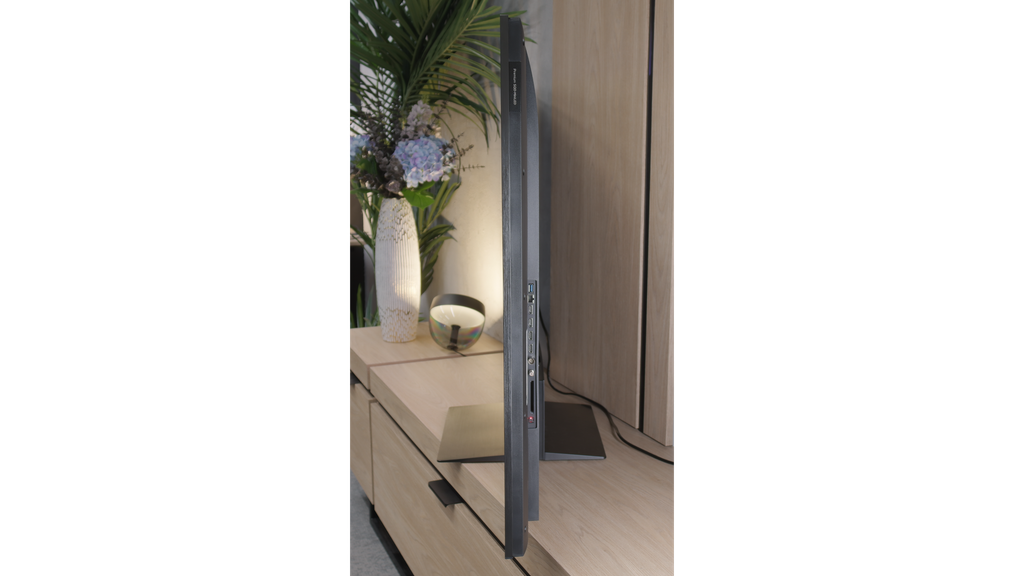
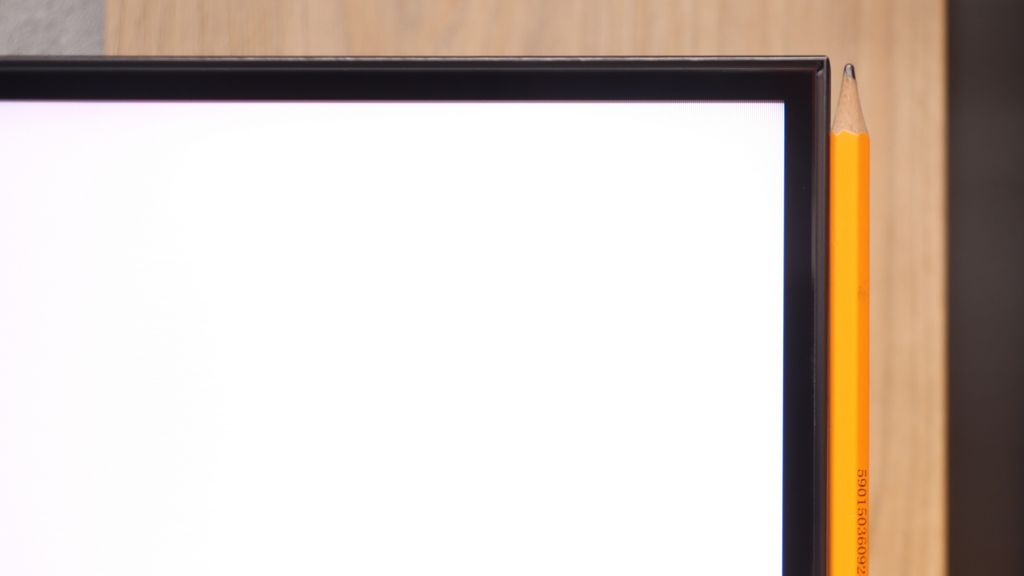
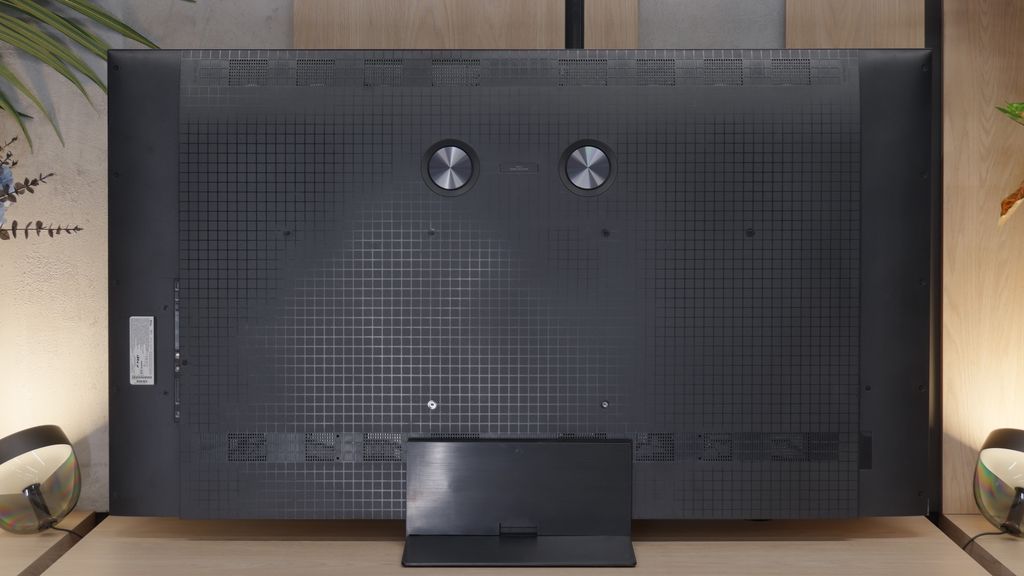
TV appearance



Contrast and black detail
5.6/10
7.7/10
Local dimming function: No
Local dimming function: Yes, number of zones: 1152 (24 x 48)
Contrast:


Result
3,400:1

Result
4,200:1

Result
5,200:1

Result
5,050:1

Result
3,650:1
Result
174,100:1
Result
25,700:1
Result
13,950:1
Result
10,900:1
Result
9,900:1
Halo effect and black detail visibility:

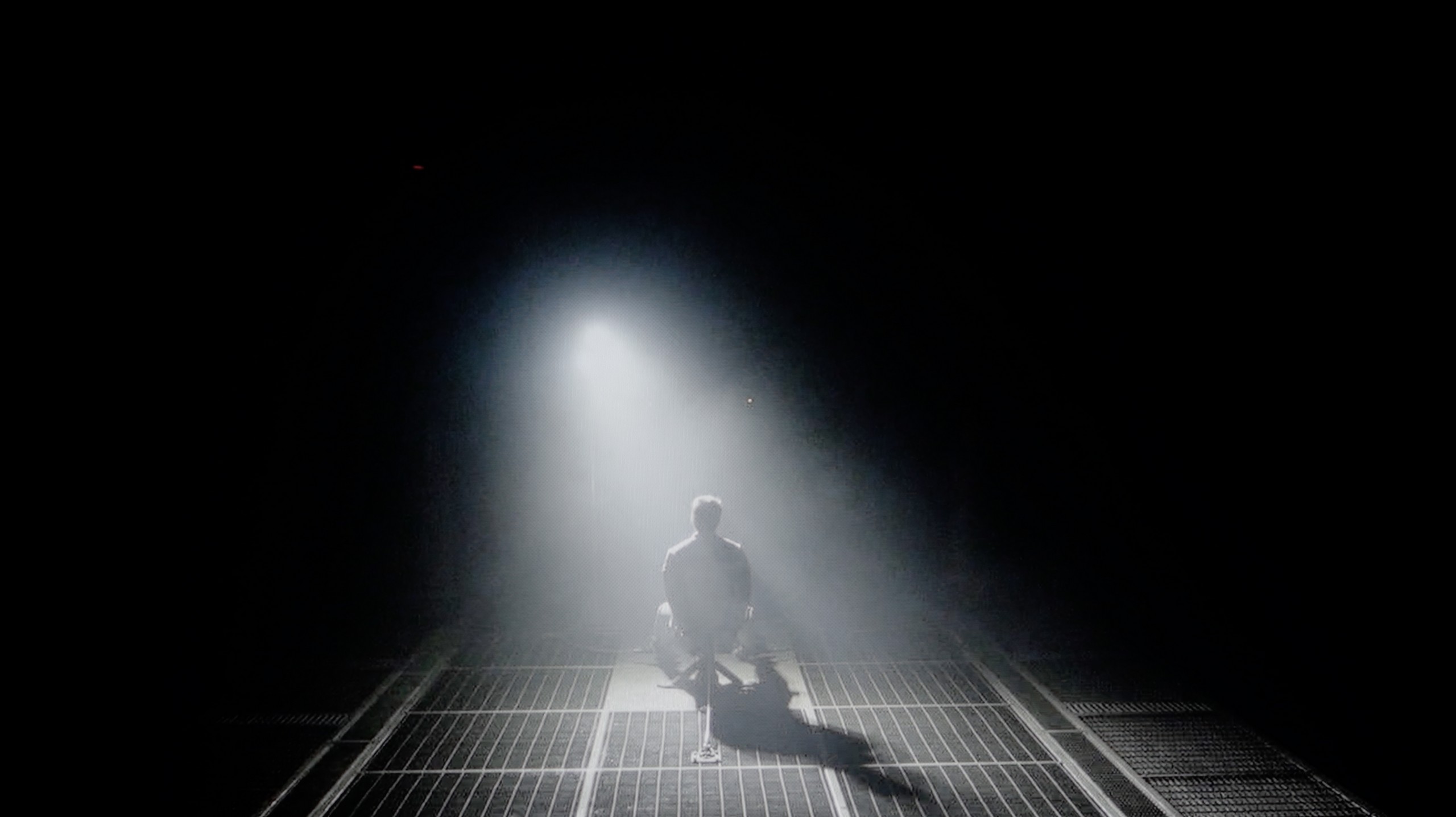
Check the visibility of bright lights on a dark background. Mini-LEDs often struggle with this. The photo does not compare black levels – that’s what the video below is for.
The video accurately shows differences in contrast and black levels between TVs, as well as potential issues: halo around bright objects or Mini-LED zone operation visible as brightness jumps.
The Hisense S7NQ CanvasTV is a television equipped with a VA panel, which on its own provides decent contrast. Our test patterns confirm this – an average score of around 4000:1. It may not be an outstanding value, but for this class of device, it's quite decent. Perhaps the result would be significantly better if the television was equipped with local dimming technology; however, this model sadly lacks that feature. As a result, blacks in a completely dark room resemble shades of navy blue or grey more than true black. This situation causes a slightly noticeable clouding effect. Overall, it's okay, but without any real excitement.
TCL C7L is a Mini LED TV, which in the 65-inch variant we tested, is equipped with over 1000 local dimming zones. This, combined with the proprietary VA panel (called HVA 2.0 by TCL CSOT), delivers really decent results in terms of black levels and contrast. In most of the scenes we measured, the blacks and contrast looked really good, and in the easiest shots, the black was deep enough to almost resemble that seen on OLED screens. This is of course referring to the least demanding shots with a lot of black on the screen. However, when more bright elements appear on the screen, and black stops dominating as much, it is evident that TCL C7L – like most Mini LED TVs – has its issues with local dimming zone management.
This can be clearly seen, for example, on the black bars in films shot in the 2.35:1 panoramic format. Then, on the black bars or around small, bright objects, a pronounced halo effect, or a bright light glow, can appear. The contrast then drastically dropped – from laboratory values of around 200,000:1 to about 10,000:1, which is quite noticeable in a completely dark room. It’s worth remembering that this shouldn’t be treated as a flaw of the TV but rather as a characteristic of mini-LED technology. Of course, this effect becomes much less bothersome when we turn on at least some light in the room… which I definitely recommend doing during screenings on any LCD TV.
HDR effect quality
5.6/10
6.6/10
Luminance measurements in HDR:

Result
455 nit

Result
414 nit

Result
438 nit

Result
451 nit

Result
470 nit
Result
1236 nit
Result
401 nit
Result
831 nit
Result
352 nit
Result
1204 nit
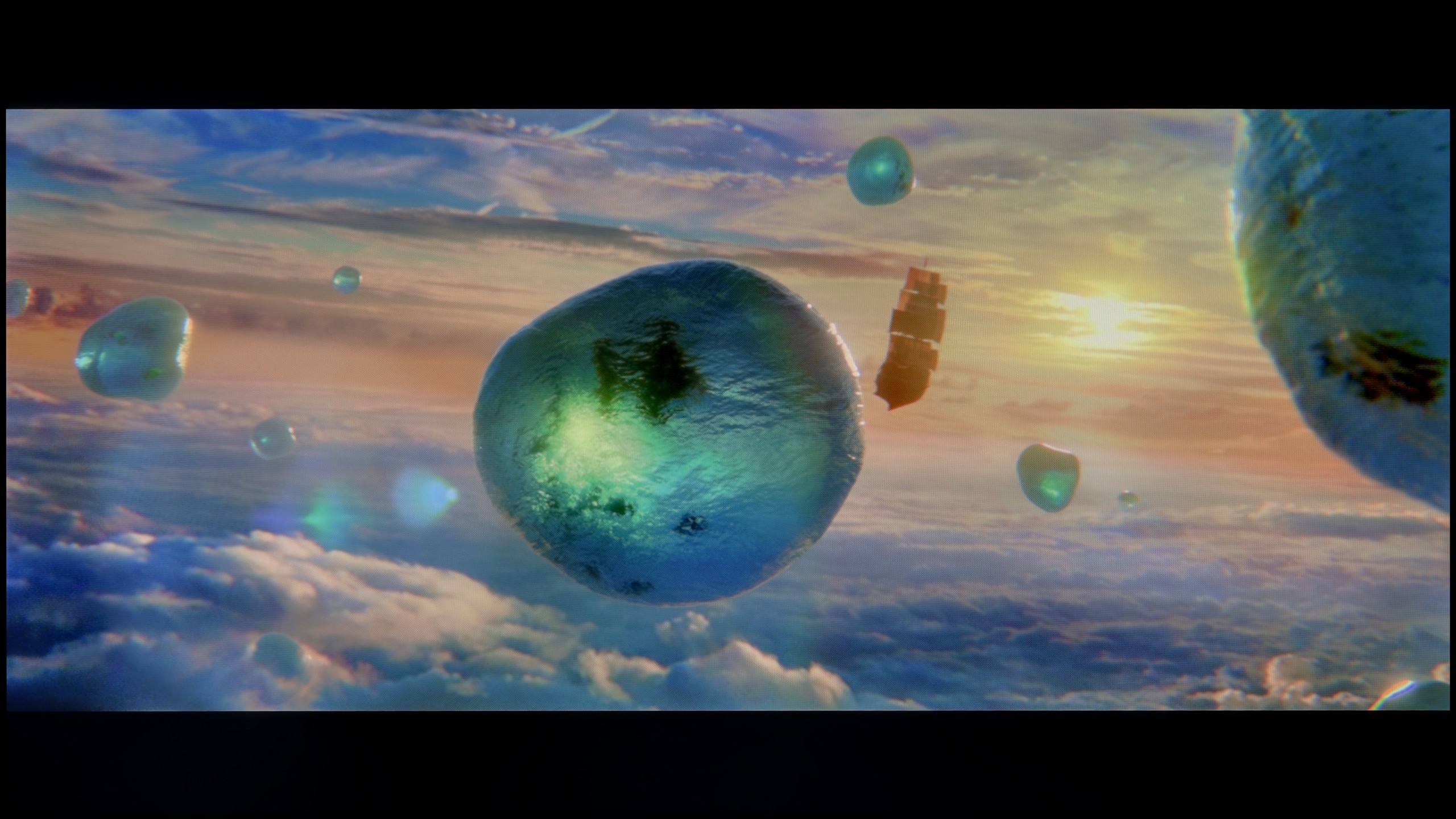
Scene from the movie “Pan” (about 2800 nits)

Scene from the movie “Billy Lynn” (about 1100 nits)

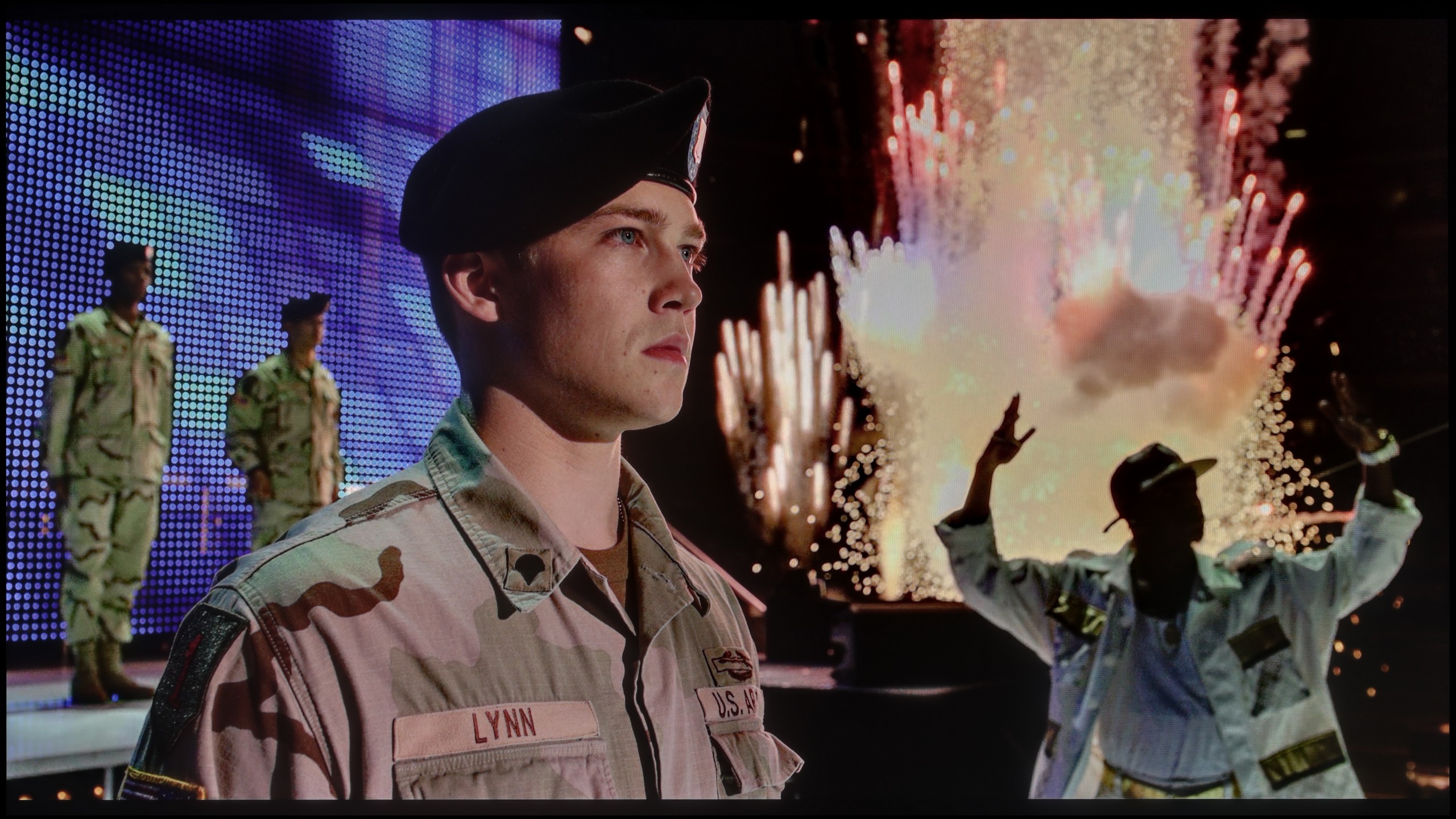
The photos show two HDR10 movies. 'Pan' is one of the brightest productions ever made, while 'Billy Lynn' (soldier) has brightness typical of streaming (Netflix, Prime, HBO MAX). Notice the intensity of effects and detail in whites.
Static HDR10


The photos present the visibility of white details in various HDR formats. They do not show brightness differences between TVs (these can be compared in the previous gallery).
Dynamic: Dolby Vision
Dynamic: Dolby Vision


The photos present the visibility of white details in various HDR formats. They do not show brightness differences between TVs (these can be compared in the previous gallery).
HDR luminance chart:
TCL C7L
Hisense S7NQ CanvasTV
When it comes to the brightness of the television and how it handles bright elements while watching films, it's just average – similar to the contrast. The average brightness level of the Hisense S7NQ is around 500 nits. This is a value that allows you to feel the hints of true HDR, but it's definitely not enough to speak of remarkable effects. However, the television should be praised for its colour gamut coverage – films look very colourful and vibrant. Thanks to the use of a PFS LED (QLED) coating, the device is able to cover more than 90% of the DCI-P3 colour gamut and over 72% of the wider BT.2020 palette. For a television of this class – these are really very good results.
TCL C7L is undoubtedly an extremely bright television. In synthetic tests on static patterns, it can achieve peak brightness of around 2800 nits. This is a phenomenal result, considering the price range it occupies. Unfortunately, tests with real movie scenes are not as spectacular as measurements of white squares. Brightness in real HDR footage drops in the C7L model to around 1200 nits. This is still a very good result, as this is the value at which the vast majority of contemporary films are mastered. However, when small, point-like elements appear on the screen, the brightness of these details drastically drops – even to around 400 nits – which somewhat diminishes the HDR effect. The television does this intentionally to maintain a better black level and to avoid a huge light bloom. This is somewhat explainable, but it also shows that Mini LED technology is not completely uncompromising in this regard. As for the HDR effect itself – alongside brightness, colours are of course key here. And these, thanks to the use of new, “super” quantum dots, are simply outstanding and among the best on the market. The television can achieve around 90% coverage of the ultra-wide colour gamut BT.2020 and 99% of the DCI-P3 gamut, easily matching the best RGB MINI-LED screens. Best of all, the C7L can maintain such high colour saturation regardless of the scene being displayed, which can often be problematic in competing RGB Mini-LED televisions.
Factory color reproduction
7.2/10
5.6/10


This gallery shows how colors change after professional TV calibration. If you notice the difference, we recommend ordering this service at SkalibrujTV.com.
Factory Mode
After calibration


This gallery shows how colors change after professional TV calibration. If you notice the difference, we recommend ordering this service at SkalibrujTV.com.
Factory Mode
After calibration
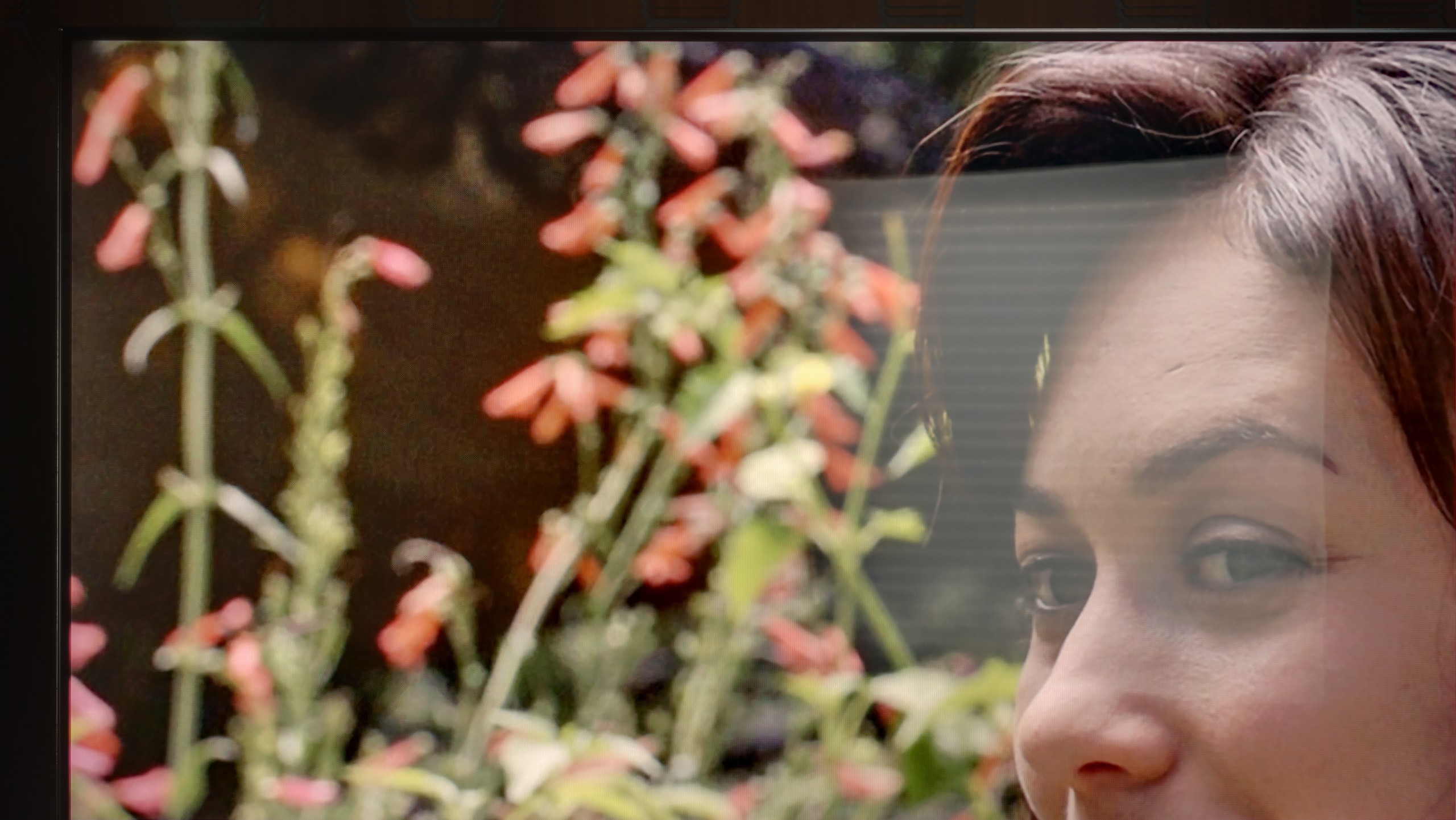
Let's check how the Hisense S7NQ CanvasTV performs in terms of colour reproduction in its best factory mode, which is Filmmaker. Right from the start, it’s clear that it’s definitely better than in dynamic or standard mode, but there are still a few things to nitpick. In terms of image quality from HD signals, the colours are slightly skewed – there’s a dominance of cooler blue tones and a lack of red. This makes the image seem a bit too cool.
A similar effect is noticeable in 4K content, but it’s more pronounced there. The excessive exposure of blue tones and lack of red makes the image appear distinctly cold. However, the biggest issue with this TV isn’t the colours themselves but the way brightness is managed. The unit we tested slightly increased brightness compared to the reference value. The result of this is indeed better visibility of details, but at the cost of significantly lighter blacks – which makes the entire image seem more "flat."
A similar phenomenon was observed in the 4K signal – the slightly inflated curve at the beginning of the EOTF graph indicates that the TV has a tendency to overexpose certain scenes. Fortunately, this effect can be improved through professional calibration, which we will discuss in the next point.
When it comes to out-of-the-box colours, a new feature in TCL TVs – including the C7L model – is the presence of a new picture mode called Filmmaker Mode. This is significant news, as such a mode was not previously available from this manufacturer. By design, as the name suggests, the picture in this setting is intended to be delivered with the full intent of the film's creator. After our tests, we can confirm that it is undeniably the best built-in mode in this TV if you value true-to-life colour reproduction straight out of the box. However, we certainly wouldn’t say it is perfect. Like most devices on the market, this C7L also had its factory faults. The white balance in Filmmaker Mode leaned towards a slightly greenish-yellow hue, mainly due to an excess of green component and a noticeable lack of blue. Of course, for the average viewer, this won’t be a drastic flaw, but if you value perfect whites, natural skin tones, and harnessing the full potential of these new "super" quantum dots from the structure, then the TV is begging for professional calibration.
Color reproduction after calibration
8.3/10
7.5/10

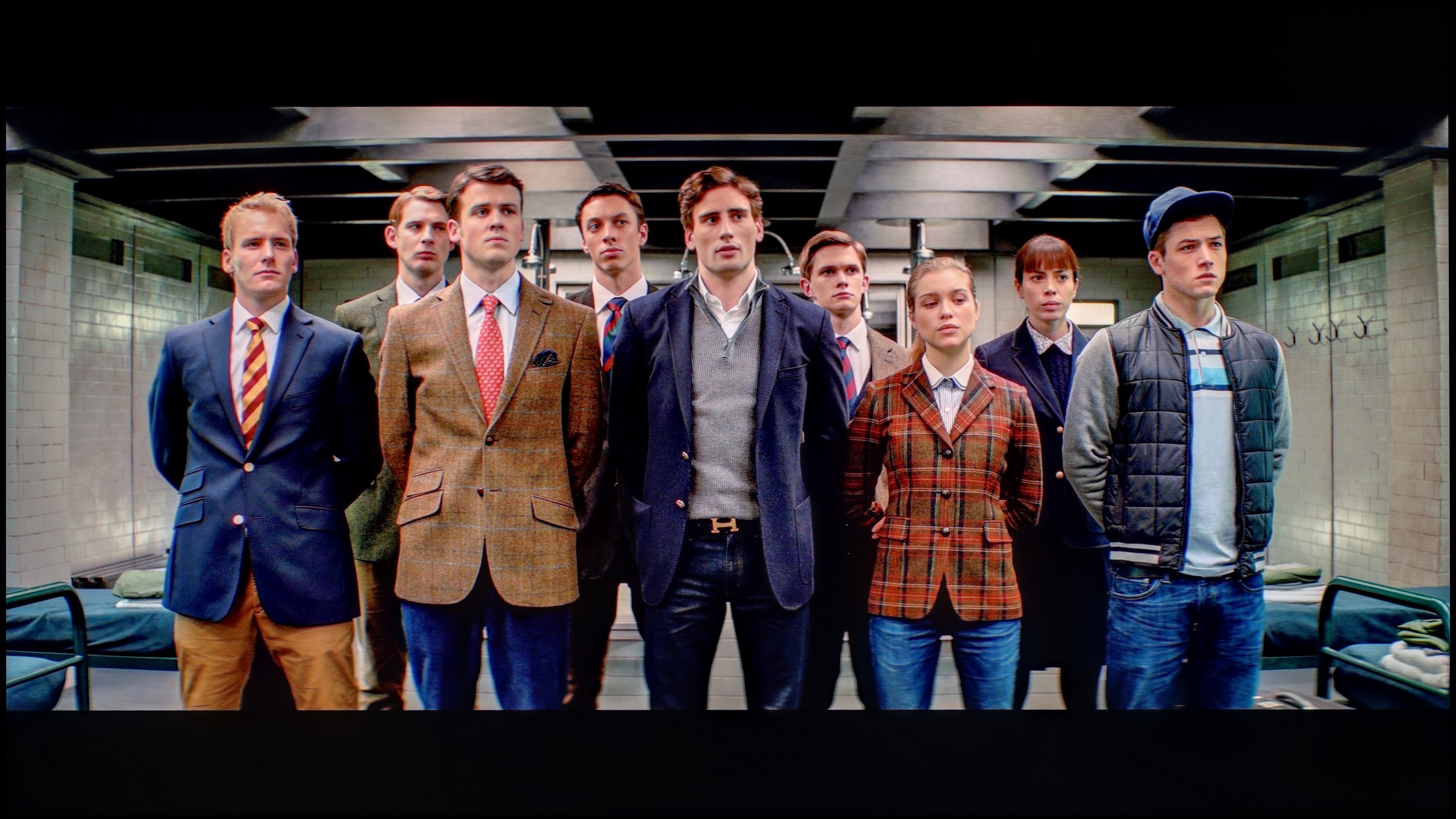
The photos show how movies look on the TV. Pay attention to black detail visibility, colors, and shadow tint.

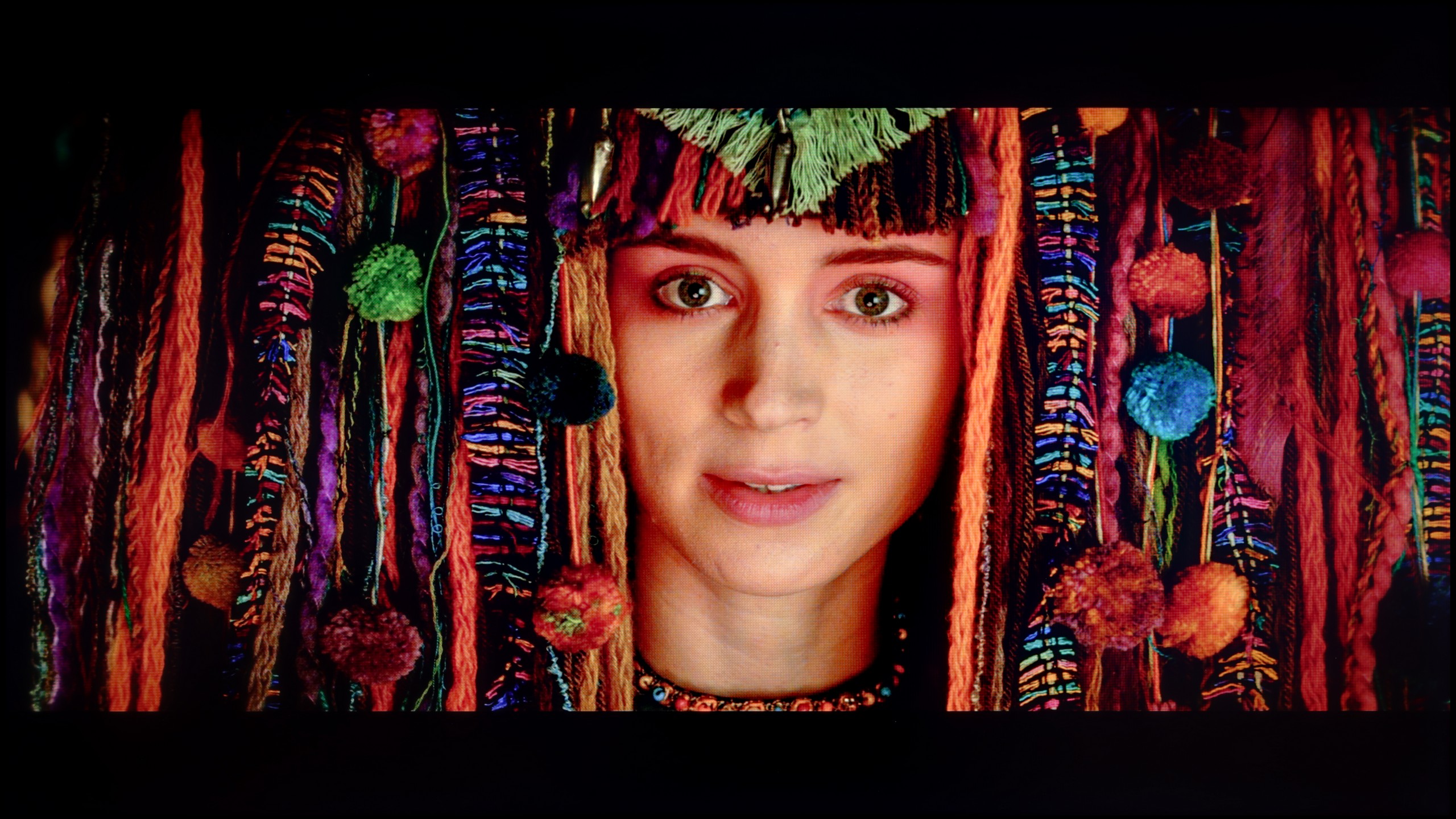
The photos show how movies look on the TV. Pay attention to black detail visibility, colors, and shadow tint.
The results we achieved after calibrating the Hisense S7NQ are really very good. Thanks to the calibration, we managed to eliminate excessive blue tone exposure and deficiencies in red with HD signals. A similar, albeit slightly weaker effect was also achieved with 4K HDR content. Brightness management in HD materials has also improved – the television no longer struggles with brightening the image "overall".
However, there are things that cannot be circumvented. The character of the EOTF curve has hardly changed, and the lack of local dimming means that the smallest elements on the screen will always be slightly overexposed. You just have to come to terms with this when choosing a television with a similar type of backlighting. Nevertheless, the final effect is very good and should fully satisfy the vast majority of users.
After conducting a professional calibration, we were able to greatly improve the situation in the factory Filmmaker Mode. Following our adjustments, the errors in the ColorChecker test and across the entire wide colour gamut dropped below the threshold of human perception – that is, below a value of 3, which is indeed a very good result. The TCL C7L definitely benefits from such a treatment in terms of colour fidelity, and it's hard to deny that. However, the management of brightness in HDR content after calibration appears to be a bit worse. As I described earlier – even though we set this model up properly, when we turn on real film scenes on the television, it can manage its brightness in quite a peculiar way. It often brightens certain elements on the screen in a manner inconsistent with the creator's intent, which is visibly apparent on the EOTF graphs measured in specific films. Despite this flaw – or rather, this specific characteristic of the television – one cannot take away from it: after calibration, the C7L was able to reproduce the colours flawlessly.
Smoothness of tonal transitions
9.2/10
8.6/10


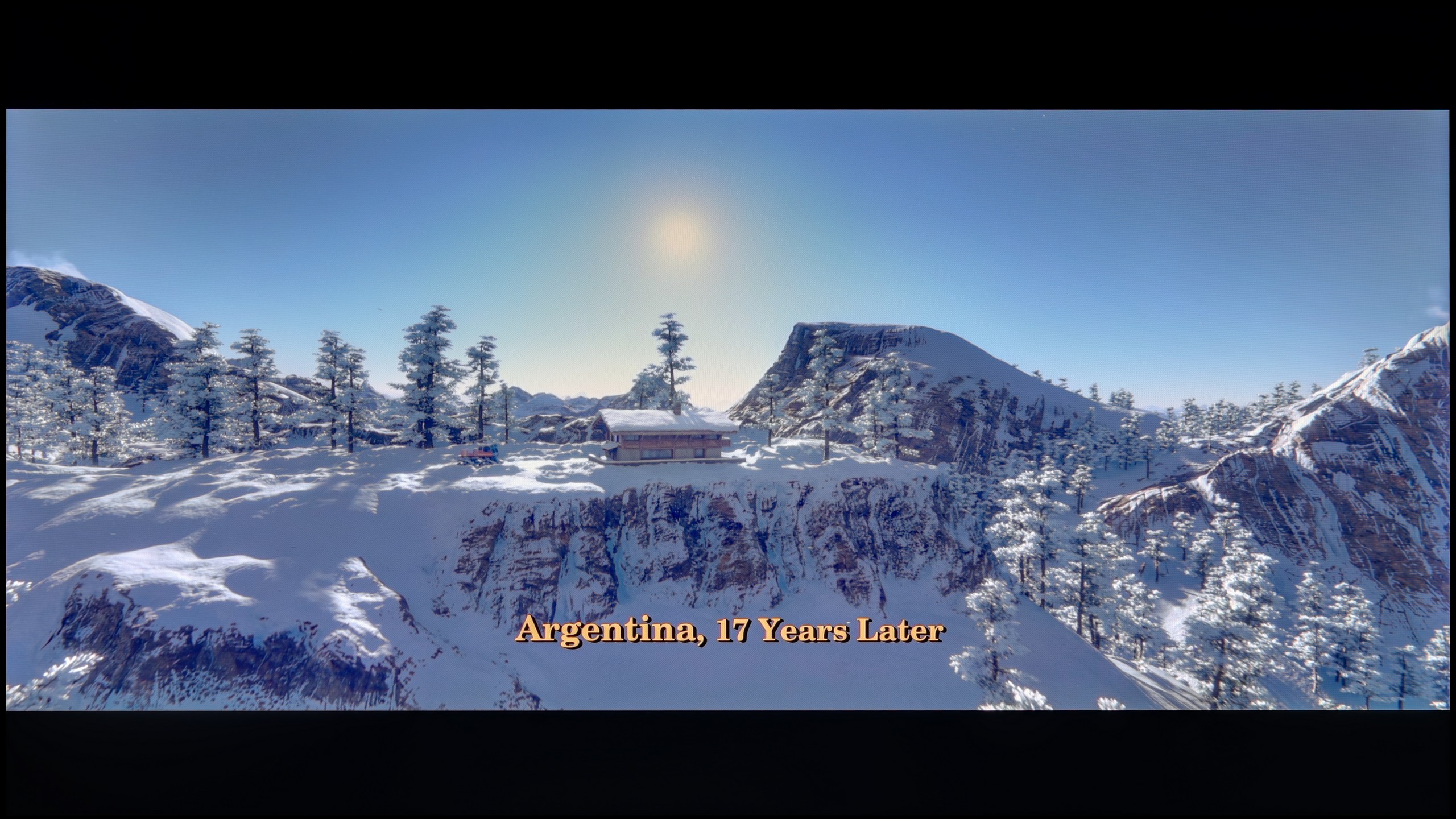
These are selected scenes that show smooth tonal transitions from one color to another. If you see distinct banding, it’s the TV panel’s fault.
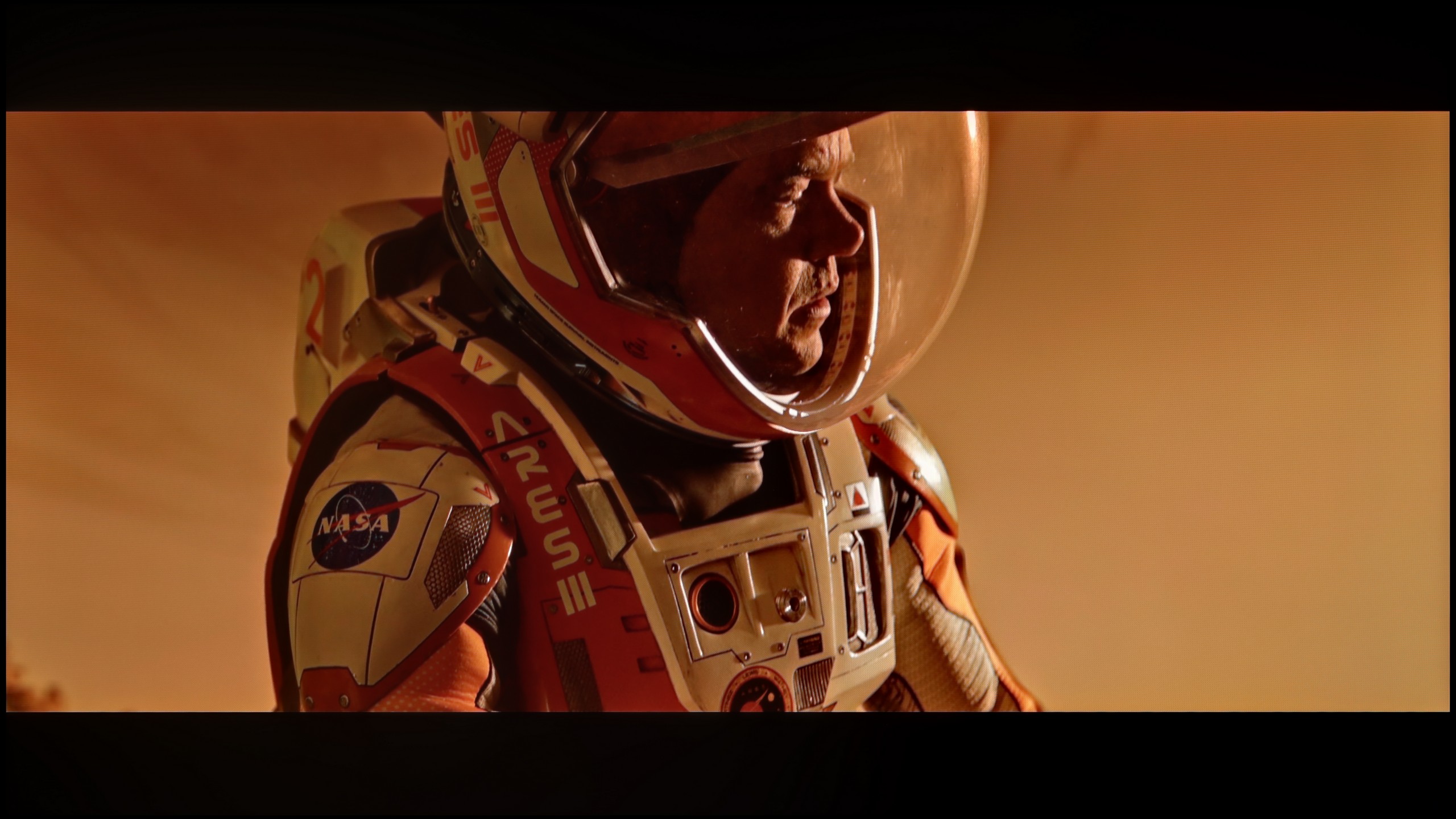
These are selected scenes that show smooth tonal transitions from one color to another. If you see distinct banding, it’s the TV panel’s fault.
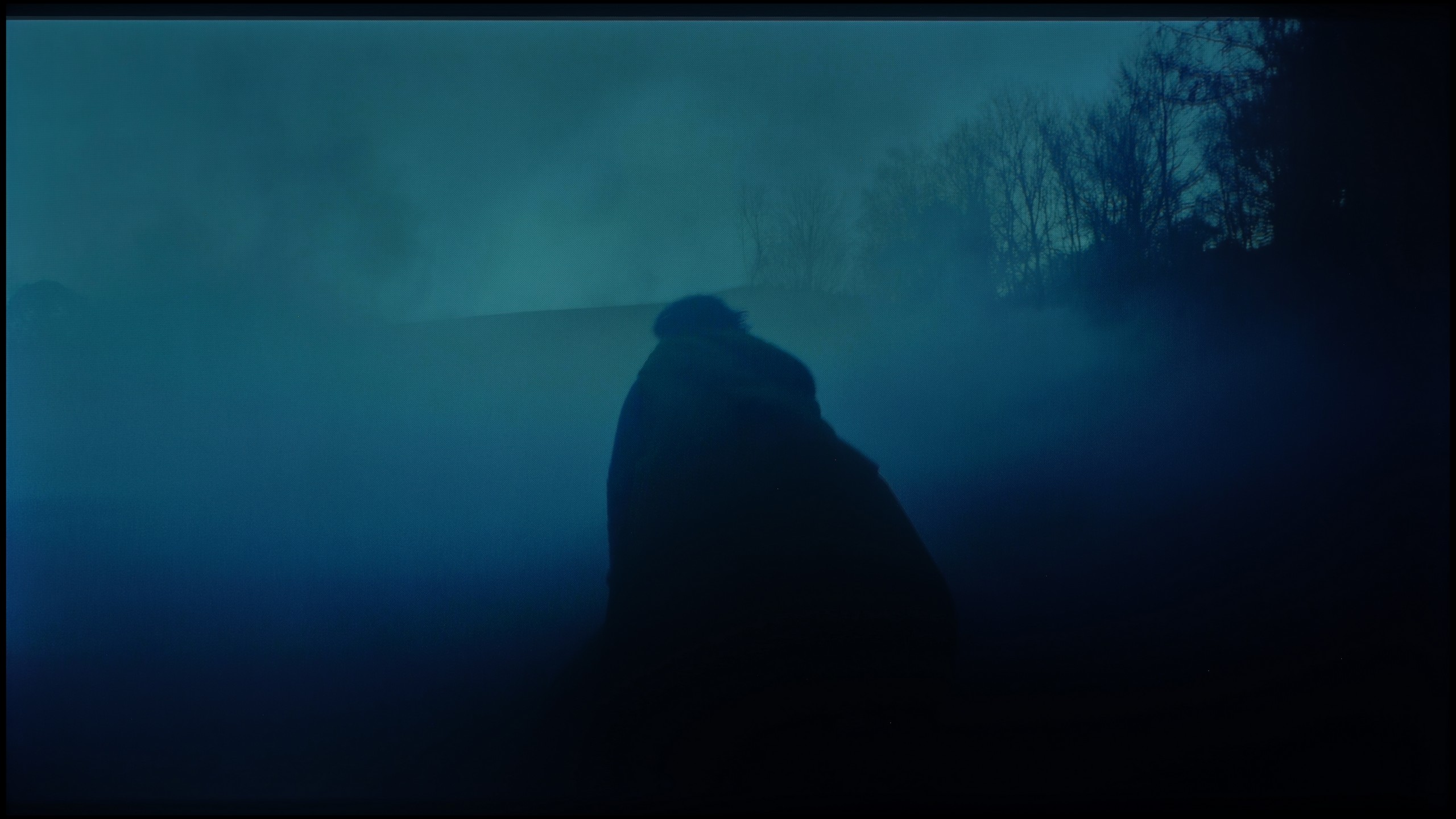
These are selected scenes that show smooth tonal transitions from one color to another. If you see distinct banding, it’s the TV panel’s fault.
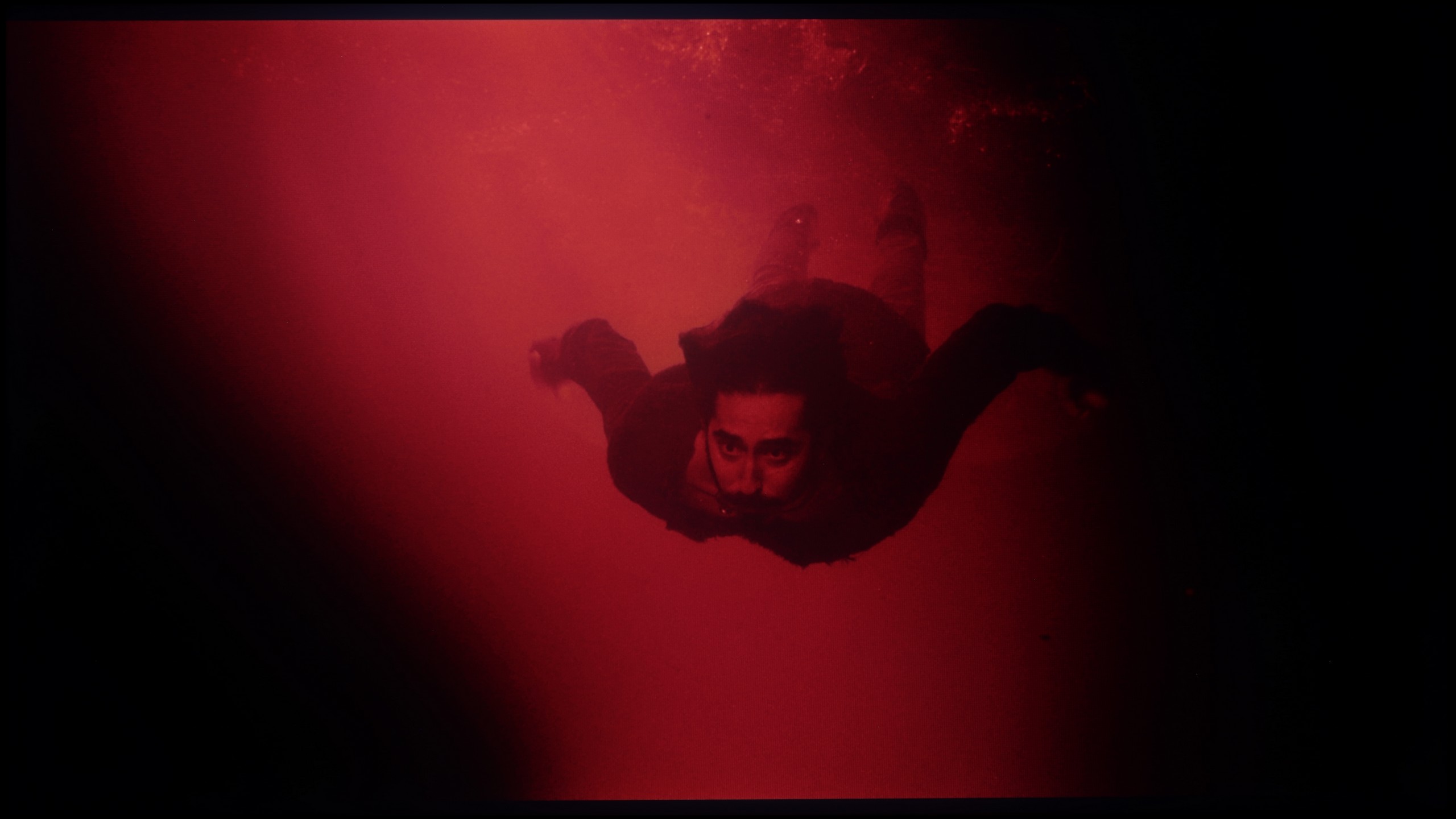
These are selected scenes that show smooth tonal transitions from one color to another. If you see distinct banding, it’s the TV panel’s fault.
The fluidity of tonal transitions is one of those categories that even less advanced users can notice. If someone doesn’t know what this means – we’ll explain. It’s about whether the colours blend smoothly into each other or if their “sticking” is visible in the form of distinct bands. Good tonal transitions are those that are natural and smooth, without significant jumps in colour.
The Hisense S7NQ performs very well in this area, although it must be honestly admitted that it falls slightly short compared to Samsung The Frame. In very bright scenes, slight imperfections can be noticed, but you really need a trained eye to catch them. Overall – as with most “frame” style televisions – it still performs excellently.
The next element worth discussing is the fluidity of tonal transitions. Here, it must be honestly acknowledged that in the TCL C7L, it simply looks good. In most scenes – especially in those brighter shots – there are absolutely no issues with gradients. In native 4K HDR content, the image is clear, and the transitions between shades are very smooth. It looks just as good in Dolby Vision mode, where during testing we noticed no digital defects or ugly colour banding. One could nitpick about very dark shots where a heavily compressed signal is displayed on the screen. In such conditions, the C7L can sometimes show minor imperfections, but in this model, it's not something that stands out significantly. Especially during regular movie viewings.
Image scaling and smoothness of tonal transitions
5.5/10
5.5/10


Smooth transition function

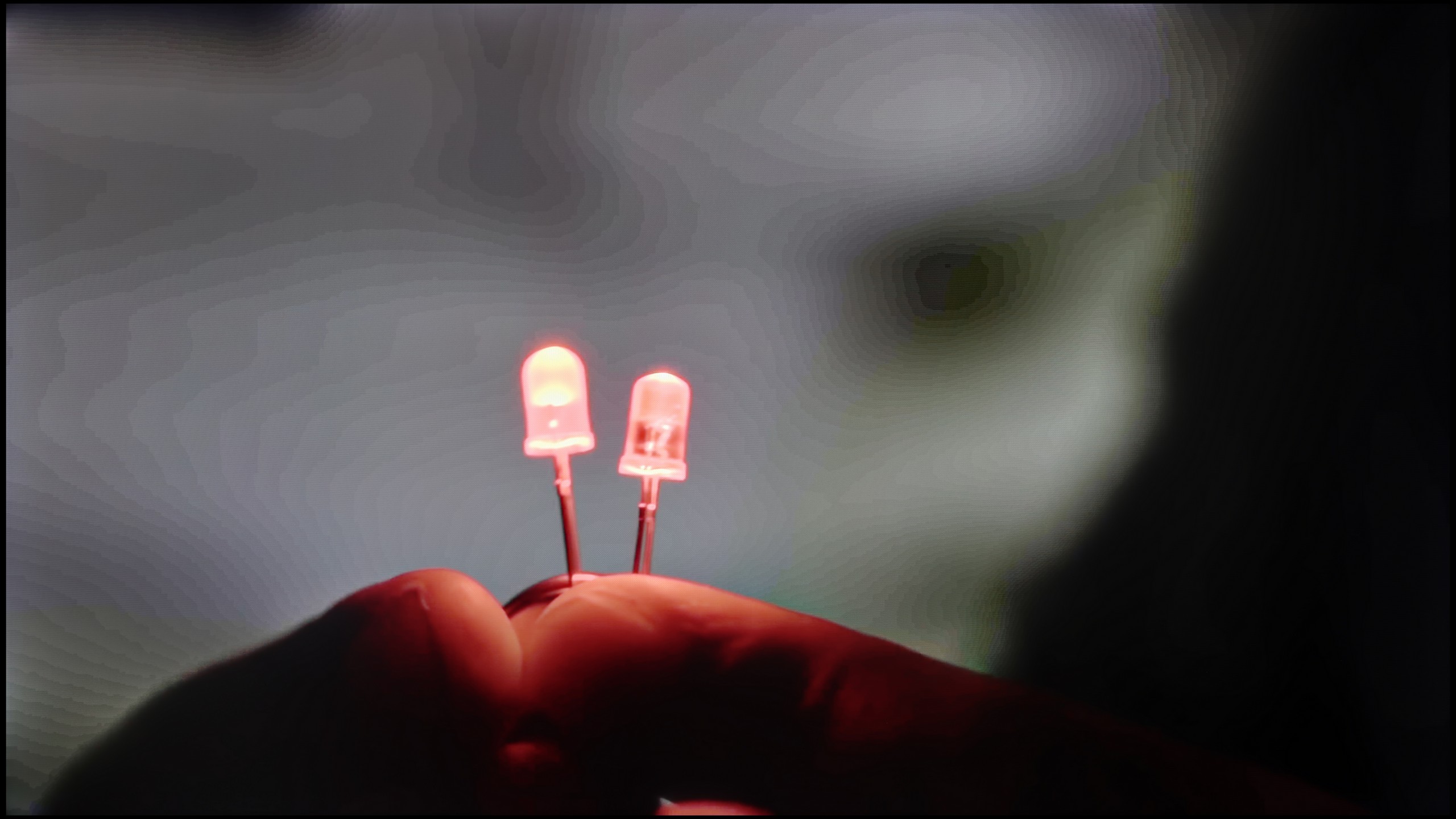
The match photo shows how the TV smooths weak tonal transitions in low-quality video.
Image scaling SD (576i)

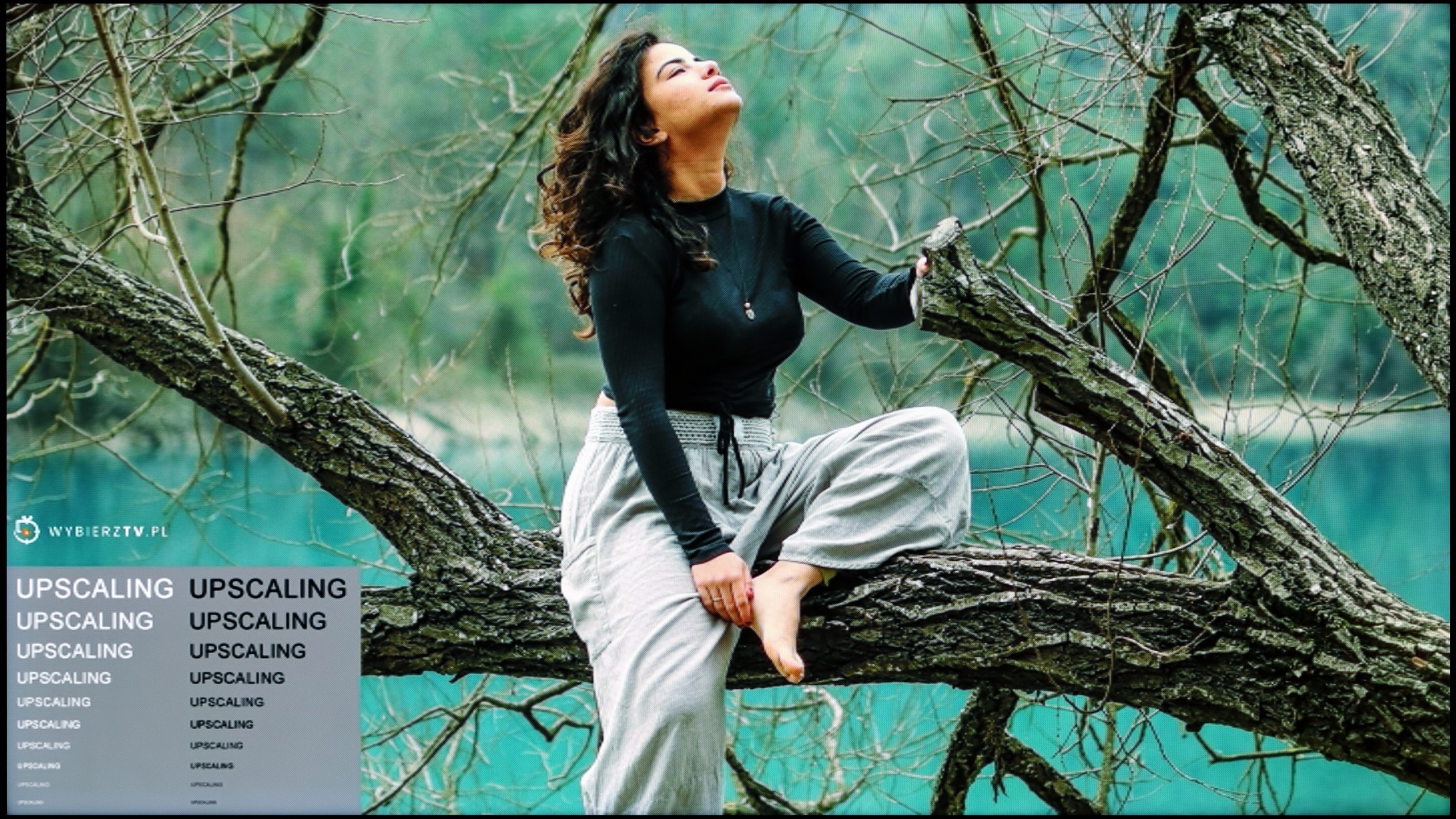
The model photo shows how it handles upscaling of SD material.
Equally important is how the television handles tonal transitions with a poorer signal – for example, in older films, on television, or on YouTube. Unfortunately, despite the presence of the “Smooth and Gradient Picture” feature, which was supposedly meant to improve this aspect, its functionality is really poor. It’s barely noticeable that it has any real impact on the visibility of colour transitions.
The image scaling is also disappointing. Yes, you can see that the television is trying to “pull up” the quality, but the end result is far from ideal. The image often appears slightly jagged, which is particularly noticeable in the example of tree branches in the background. Additionally, the Hisense S7NQ has a clear tendency to crop the image at lower resolutions, which could result in missing subtitles in the news or finer details in the image.
This point could be called in a sense the Achilles' heel of the C7L model. Unfortunately, this television uses an older chipset from MediaTek – the Pentonic 700 – which has never been known for outstanding digital image processing. This is clearly visible in the functioning of the gradual smoothing feature, which is responsible for reducing jagged edges and removing digital noise. It simply works very poorly – when set to a low level, its effectiveness is practically none. The only small plus here is that the algorithm doesn't mess up anything else in the image and doesn't forcefully blur details. The upscaling, that is, the scaling of the image from lower resolutions to 4K, performs a bit better. It is simply adequate and does not stand out in any particular way against the competition. However, it cannot be denied that the C7L would greatly benefit in this aspect if the manufacturer decided to use the newer Pentonic 800 processor, which is now being found in an increasing number of competitive models.
Blur and motion smoothness
6.5/10
7.8/10

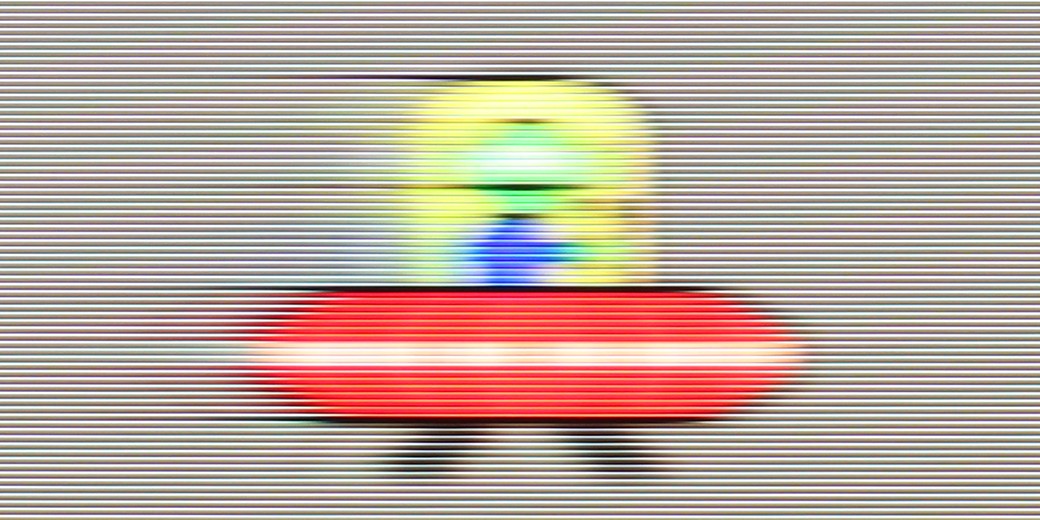
Blur (native resolution, maximum refresh rate):



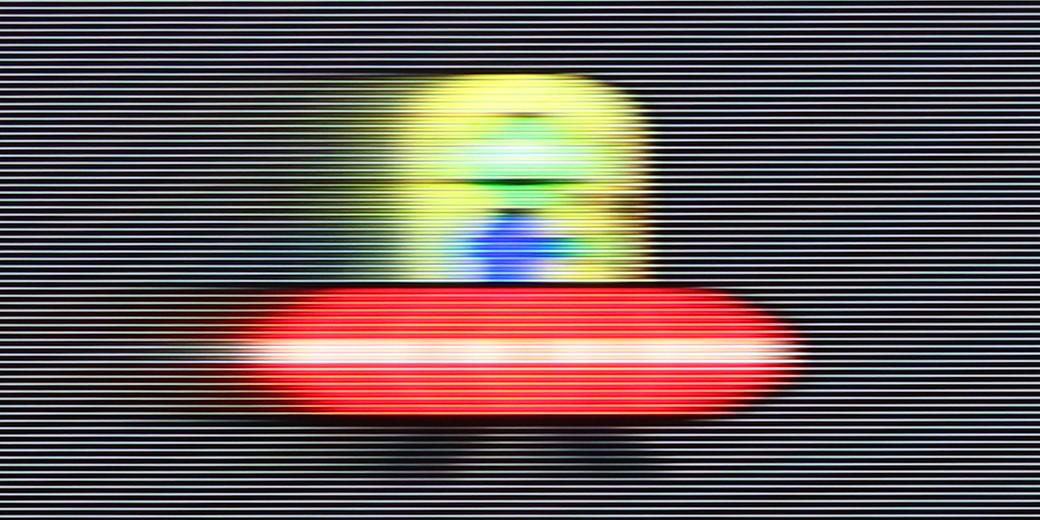
Blur (BFI function enabled):


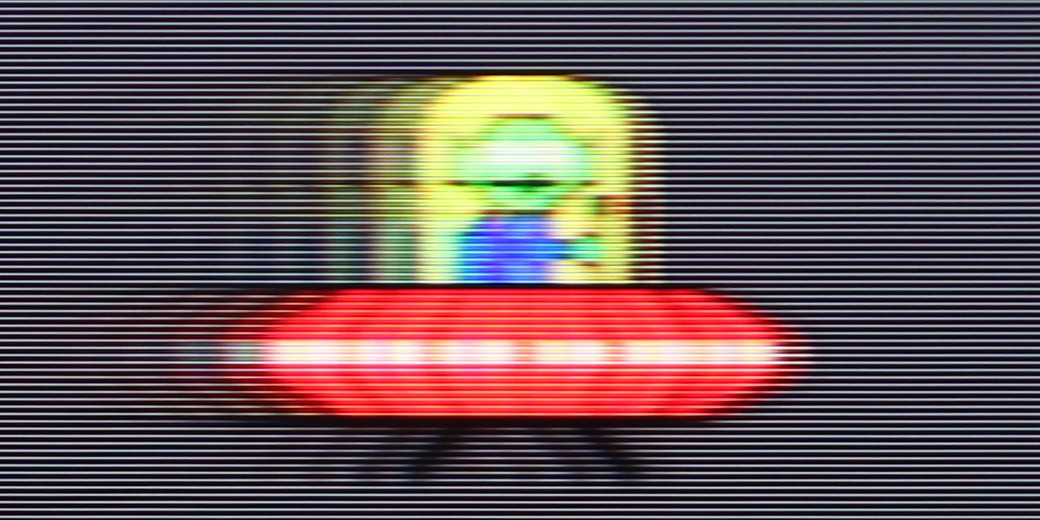
Blur ():
Blur (4K@144Hz):

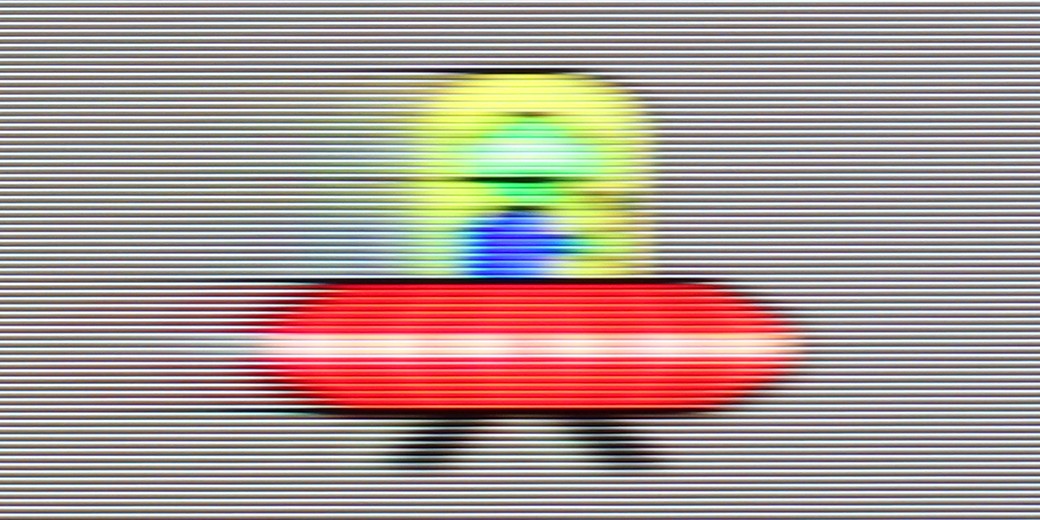
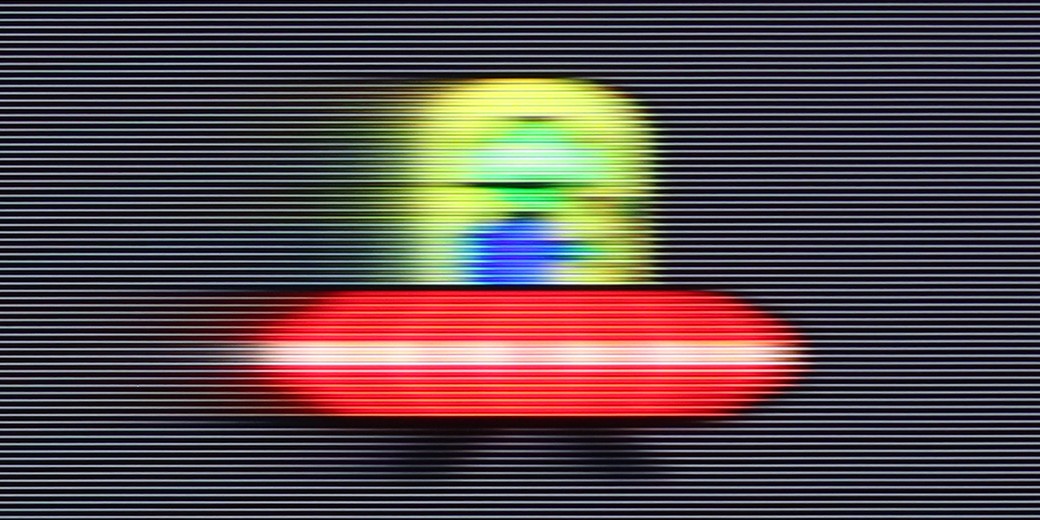
When it comes to motion fluidity, the television performs really well. Although the S7NQ was primarily designed for displaying static elements – such as images – the manufacturer has used a panel with a refresh rate of 144 Hz. As a result, sports or games look really good on it.
For content that is not recorded at a high frame rate, the manufacturer has provided two features that allow you to adjust the picture to your own preferences. “Motion blur reduction” and “blur” operate on a 10-point scale, enabling a choice between a more cinematic image – with characteristic frame jumps – and a smooth effect reminiscent of a “soap opera.” How to set this up? That’s a personal choice – we leave the decision to you.
TCL C7L features a native 4K panel with a refresh rate of 144 Hz, which can even ramp up to 288 Hz at lower resolutions when using a PC. These are certainly very high and commendable figures on paper, but in everyday life, it's worth remembering that almost all dynamic content you display on this television will still revolve around a maximum of 120 Hz. To tame this dynamism, the TV menu includes a motion smoothing system called "Motion Clarity." It offers several predefined modes, including a user mode, which we highly recommend setting manually using our tried-and-true guides on our YouTube channel. You’ll find two key sliders available. The first one, "Motion Blur Reduction," is responsible for reducing blurring and improving sharpness in 60fps dynamic content, such as sports broadcasts. The second slider, "Flicker Reduction," allows for the addition of artificial frames in movies and shows recorded at cinematic 24 or 30 frames per second. This naturally allows for the complete elimination of the annoying stutter effect during camera movement shots.
Console compatibility and gaming features
8.5/10
9.8/10
- ALLM
- VRR
- VRR range48 - 144Hz48 - 288Hz
- Dolby Vision Game Mode
- Correct implementation of HGIG
- 1080p@120Hz
- 1440p@120Hz
- 4K@120Hz
- Game bar

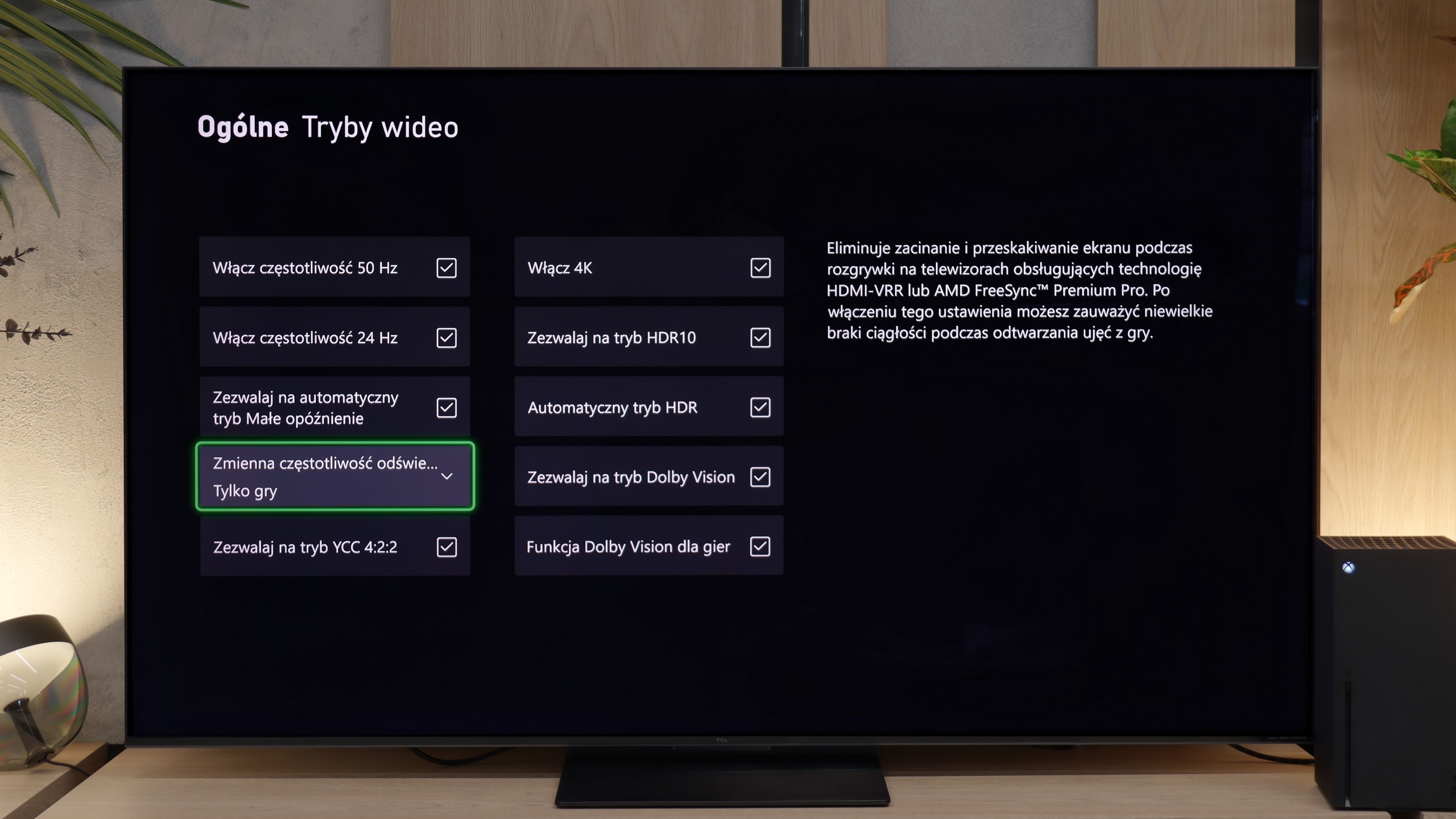

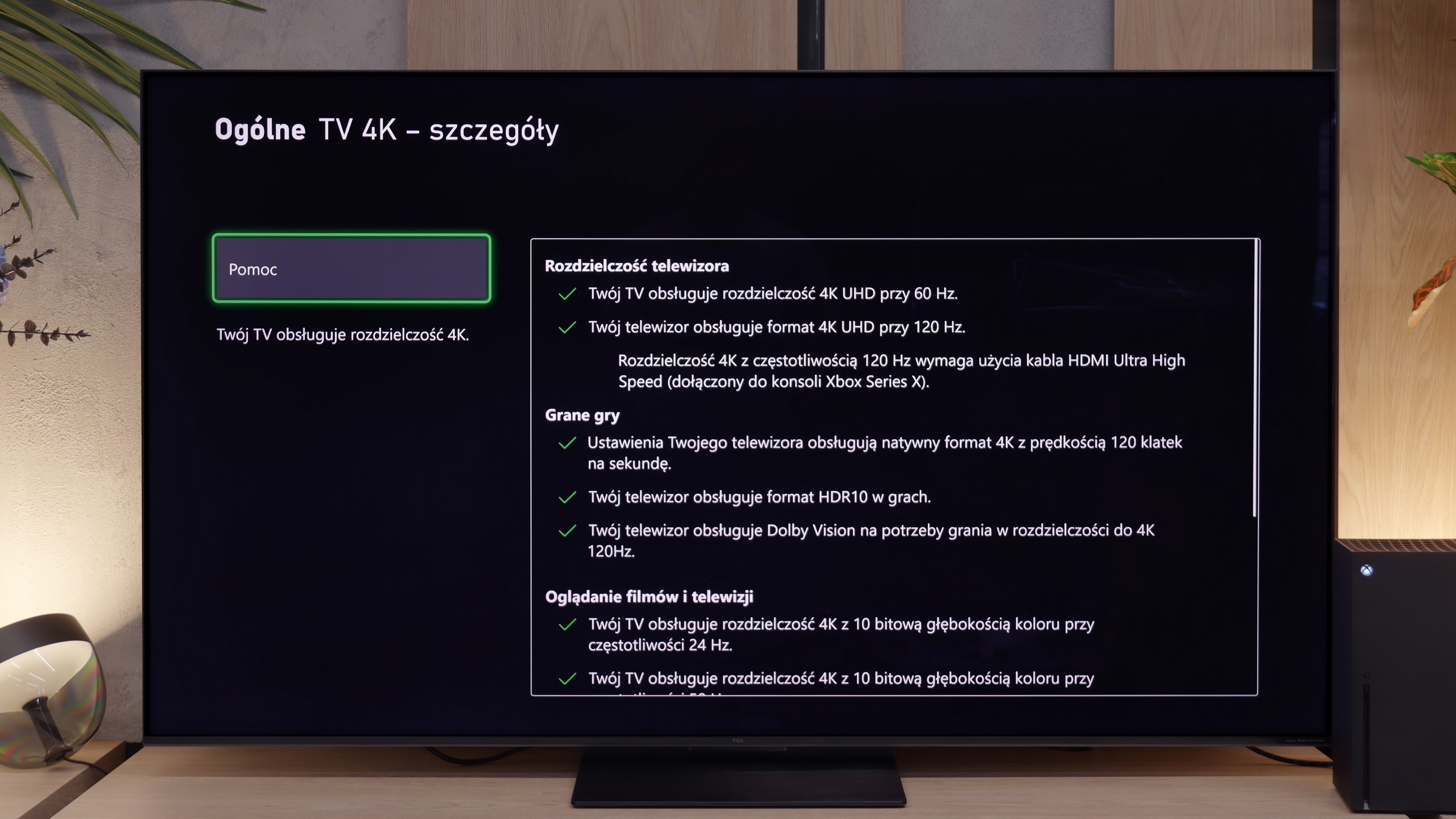

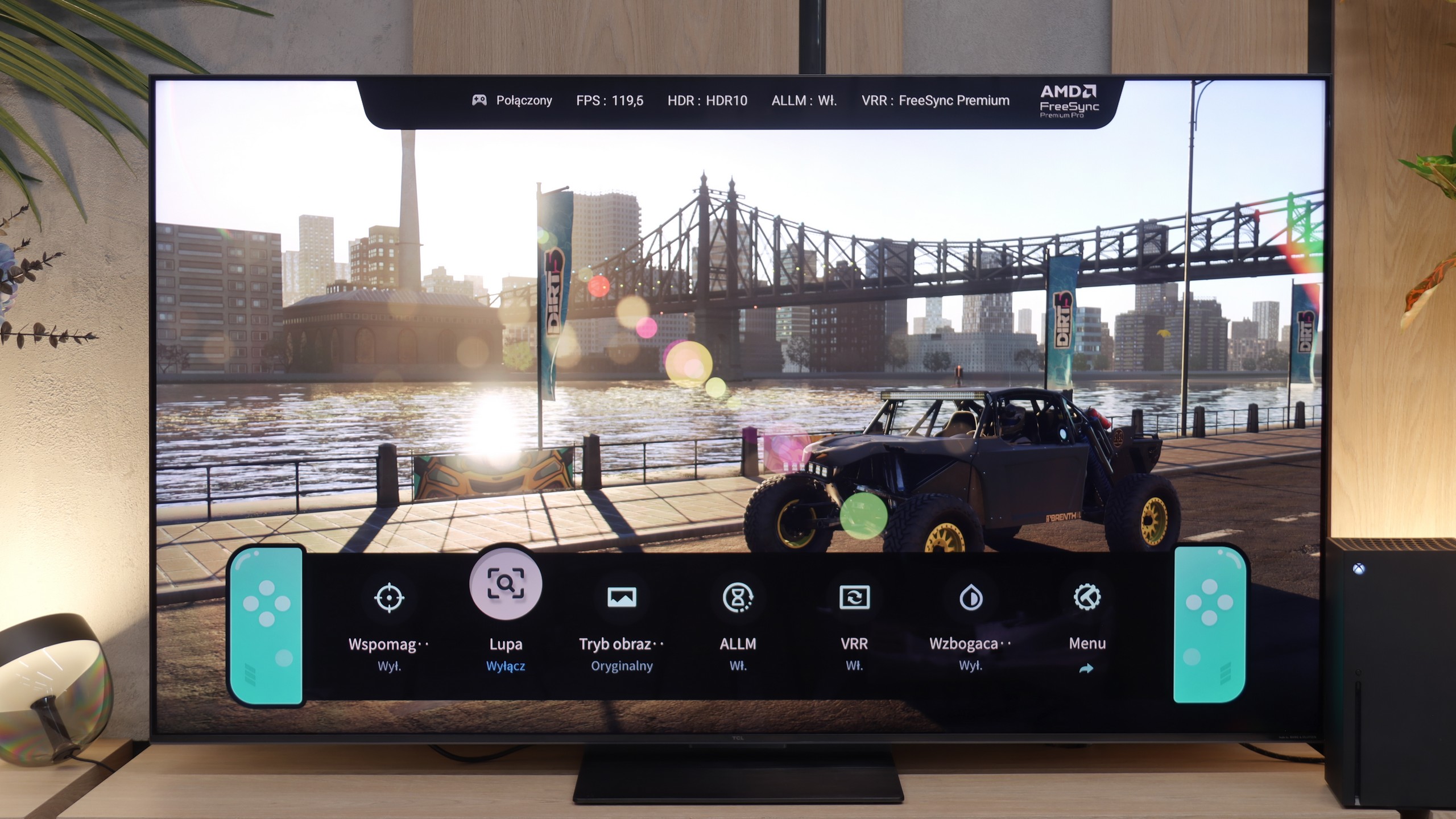

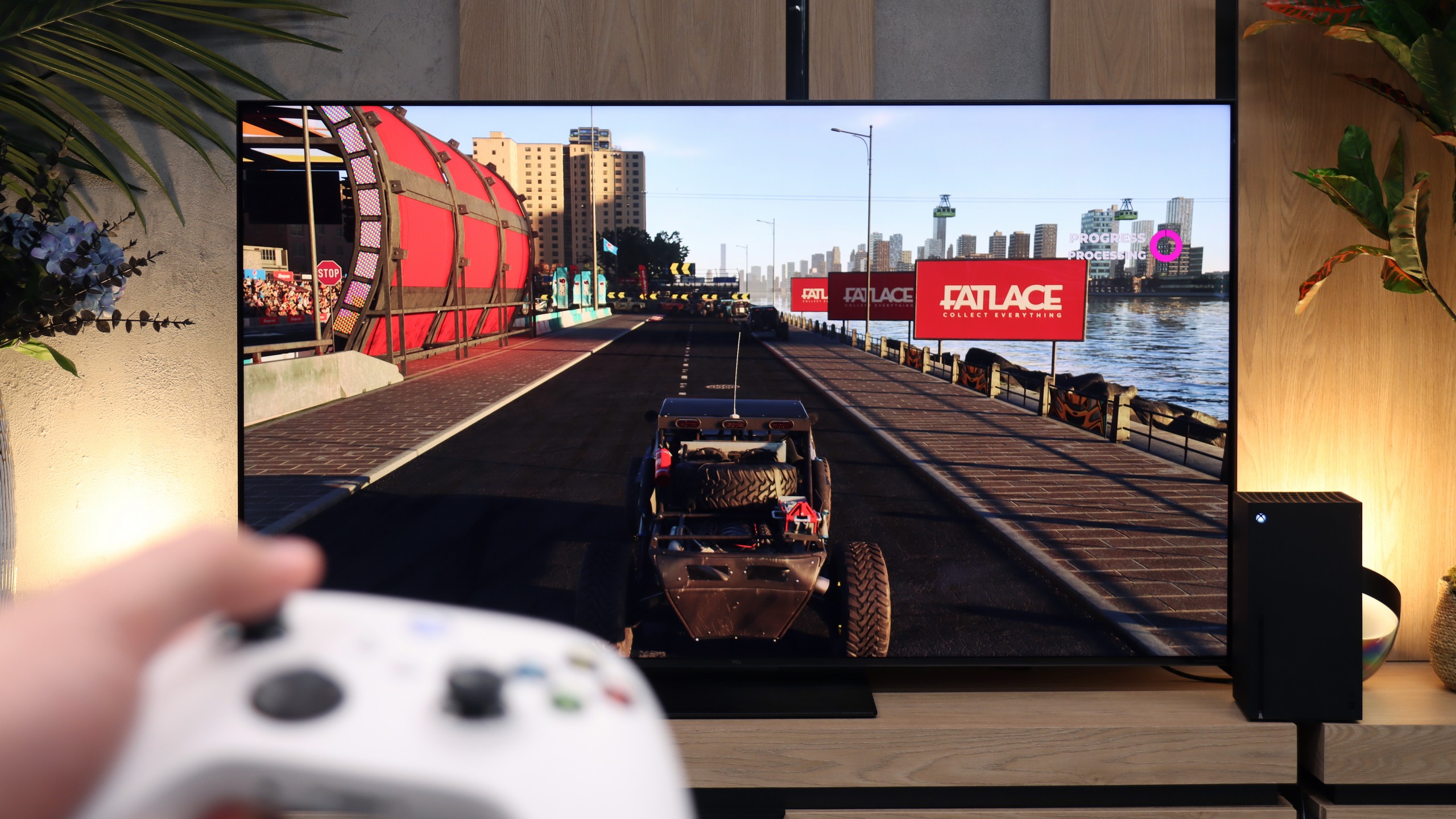
Even though the S7NQ is an "image" type television, you can actually play games on it. Really. It has practically everything (except for HGiG mode) that a modern gaming television needs. The 144 Hz panel and two full HDMI 2.1 ports allow for seamless connection of two consoles, such as the PlayStation 5 or Xbox Series X/S.
The television supports Automatic Low Latency Mode (ALLM) and Variable Refresh Rate (VRR) without any stutters or issues. It also handles high frame rates at lower resolutions without any trouble. A shoutout to Hisense for the very attractive Game Bar – it displays all available image options, and additionally, we have the ability to enlarge the minimap or turn on the crosshair (because sometimes someone might actually want to "aim" 😉).
The only missing element – as we mentioned earlier – is the lack of proper implementation of HGiG mode. This is the feature responsible for automatically setting the image in games as the developers intended. It’s a shame because it's the only thing that separates the Hisense S7NQ from being a full-fledged gaming "monster".
When it comes to gaming, the TCL C7L is simply an outstanding television for gamers. With the presence of two full-bandwidth HDMI 2.1 ports at 48 Gbps, it provides access to all the key features that console and high-end PC owners require. We have a well-functioning ALLM mode with very low input lag and VRR frame synchronization, which operates within an impressive range from 48 to 288 Hz. Importantly, unlike some competitors, TCL has ensured a proper implementation of the console HDR10 HGIG profile and support for Dolby Vision in games. This is complemented by a very well-designed gamer panel, known as Game Bar, which even allows for editing its appearance and changing the theme to perfectly match the style of your console.
The only thing that can – and should – be critiqued here is the fact that the television only offers two full HDMI 2.1 ports, while the other two are older HDMI 2.0. This creates quite a significant logistical problem. Why? Because one of those fast ports also supports the eARC audio return channel. In practice, this means that if you connect a soundbar or home theatre system to the television, you’ll only have one available HDMI 2.1 port left. If you have two consoles or a console and a powerful computer at home, unfortunately, you’ll have to give something up or constantly juggle cables at the back of the unit while maintaining comfortable audio system control.
Input lag
8.7/10
10/10
SDR
HDR
Dolby Vision
Input lag in the Hisense S7NQ performs well, though it can't be said to be exceptional – especially for the standards of 2024/25. Values around 30–20 ms aren't very high and the average player likely won't notice it, but those who spend a lot of time gaming may feel a bit of discomfort.
The situation looks significantly better when playing in Dolby Vision mode – then the lag is lower and the gameplay feels more enjoyable. The problem is that there are still very few games supporting this mode and they are mainly available on the Xbox console.
It’s worth taking a look at the dry numbers here, because in terms of signal delay, the TCL C7L is absolutely top of the market. Our measurements showed that the input lag is extremely low, and for a 60 Hz signal, it’s only around 10 ms. When we step it up and fire up a game at 120 Hz, the lag drops to an almost imperceptible 6 to 7 ms. However, what’s even more important is that these values are maintained even after activating the Dolby Vision format in games.
Compatibility with PC
7/10
8.4/10

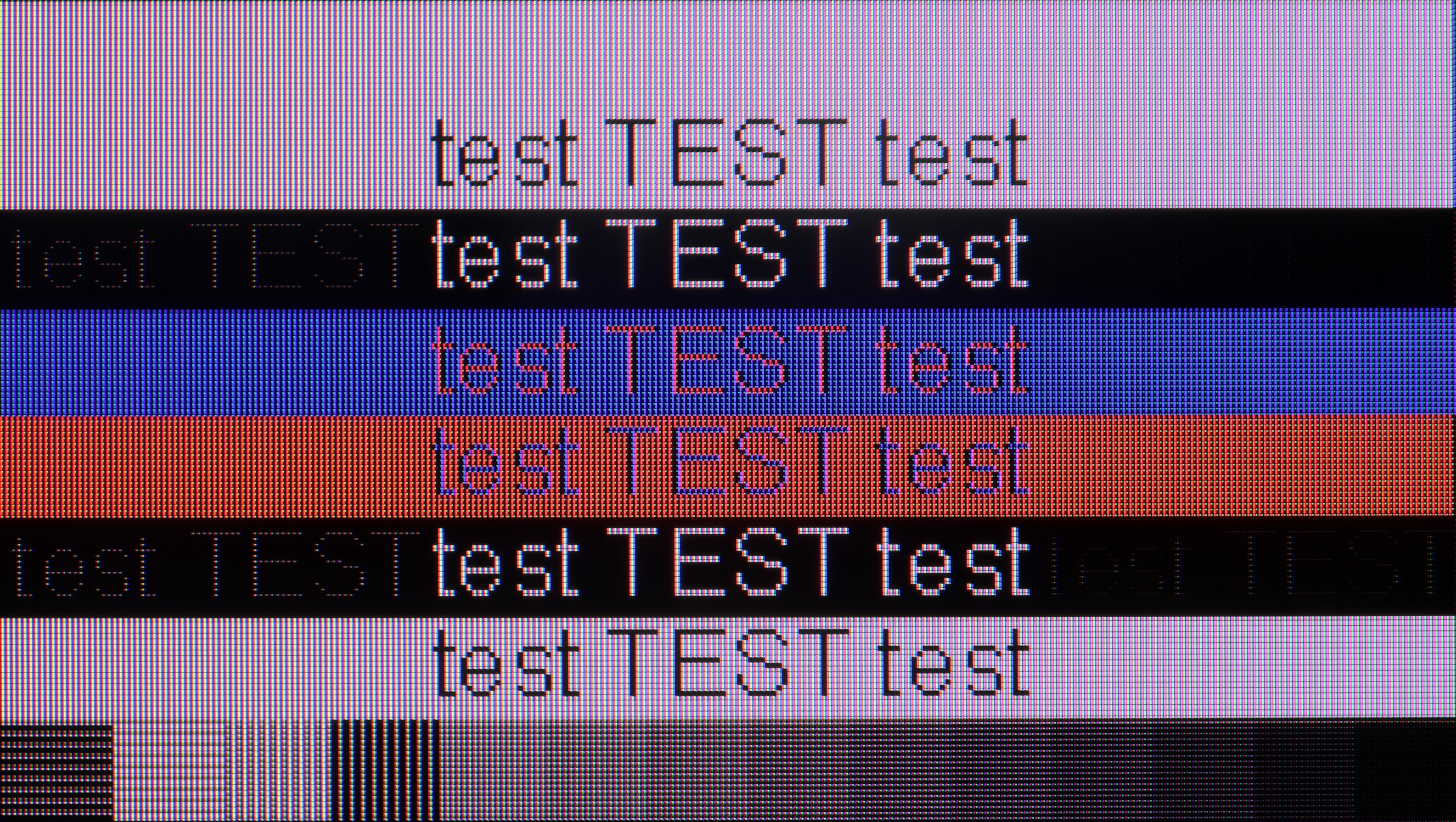
The photo shows the legibility of small fonts. Ideally, lines should be the same thickness on both light and dark text, with minimal pixel gaps.
When it comes to working with a computer, the S7NQ Canvas TV performs really well. Gaming on it is smooth thanks to the presence of a 144 Hz panel and support for G-Sync with Nvidia cards. Input lag – as we mentioned earlier – is good, though not exceptional.
And how about productivity? It’s doable. The TV has a proper implementation of chroma 4:4:4, so fonts look quite sharp. You might nitpick about some minor issues with the thinnest letters on a dark background, but let’s be honest – rarely does anyone sit a metre away from a 55-inch screen reading small text.
When it comes to playing on PC, as I mentioned earlier, it's really seamless. The TV handles high refresh rates with ease: full 4K at 144 Hz, and at Full HD resolution, it can even ramp up to 288 Hz. Synchronisation systems like G-Sync and FreeSync work flawlessly here as well. So, for PC gamers, the C7L can serve as a great, massive monitor.
However, typical office work with text is a bit less impressive, all due to the panel behaving rather strangely in these conditions. When the highest refresh modes are activated, namely 144 Hz and 288 Hz, the clarity and sharpness of dark text on a light background are fairly average – the fonts become slightly blurred and jagged. Fortunately, this can be easily remedied by changing the screen refresh rate to a stable 120 Hz in the graphics card settings. Then, the text becomes perfectly sharp again, which is definitely worth remembering if you plan to use the C7L as a work screen.
Viewing angles
3.4/10
3.7/10
Viewing angles here are typical for a VA panel. The S7NQ loses quite a bit when viewed from about a 45-degree angle – colours wash out and brightness noticeably decreases. It's a shame, as after all, it's a television that's meant to display works of art – it would be nice to be able to look at them from different spots in the room, not just straight on.
Unfortunately, the powerful native contrast of the HVA 2.0 panel comes at a cost. We're talking about viewing angles, which in the C7L model are simply poor. This is, of course, due to the use of the aforementioned VA panel. It is a completely natural characteristic of this technology and something to consider when making a purchase. If you sit directly in front of the screen, the picture will impress you with its depth, but just shifting a few dozen degrees to the side on the couch will cause the colours to immediately begin to fade. By choosing this model, you're opting for a classic market compromise: you get brilliant blacks and fantastic contrast, but you lose out on viewing angles.
Daytime performance
5.4/10
8.8/10

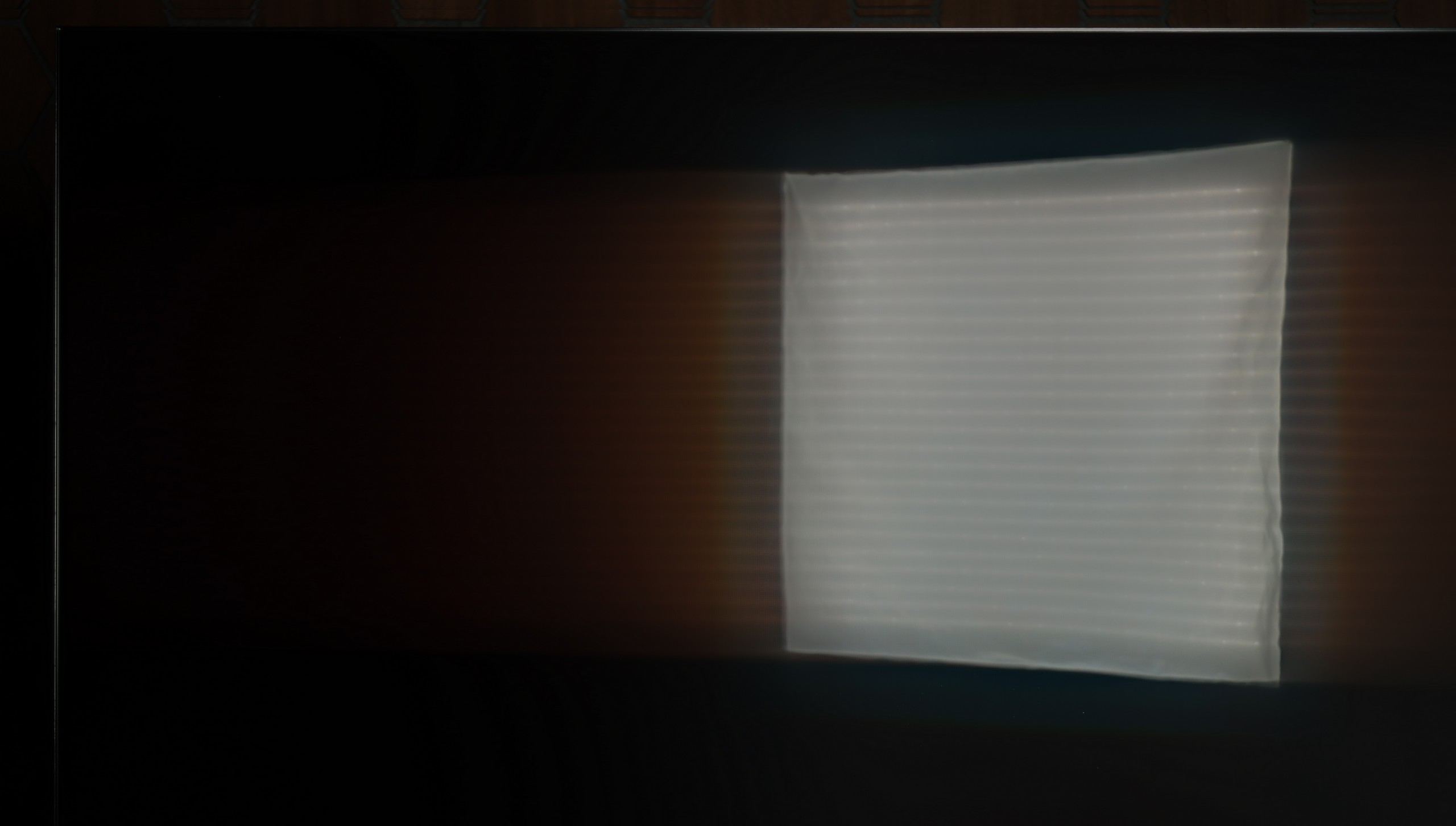

Panel brightness
TCL C7L: 1327 cd/m2
Hisense S7NQ CanvasTV: 497 cd/m2
Hisense S7NQ Canvas TV is equipped with a matte screen that effectively reduces reflections – quite similar to its Chinese rival, TCL A300 NXTVision. Unfortunately, both constructions fall short in this category compared to Samsung's The Frame, which offers a significantly better anti-reflective coating. In the case of the Chinese models, including the S7NQ, colours fade considerably under light, and black levels perform poorly in such conditions. The brightness of the television reaches about 500 nits – which is quite a decent value for a matte screen, but still lower than that of the aforementioned The Frame. Generally, if someone prefers matte displays, then... it looks like it looks – Samsung simply did it better.
It's also worth mentioning how the TCL C7L performs during everyday viewing in a sunny lounge. As we've established, it's an extremely bright television, and it's this powerful luminance reserve (up to 2400 nits in SDR!) that allows it to perform brilliantly in very bright rooms – the picture simply cuts through the incoming light effortlessly. The only thing to be cautious about here is the direct reflections on the screen. The coating used this year on the panel is definitely more glossy than what we saw in last year's C7K model. The screen does a significantly poorer job of reducing point light reflections, which in unfavorable conditions – for example, when the window is directly opposite the television – can be quite annoying for some users. Nonetheless, in terms of raw brightness, the C7L is simply a powerhouse for bright lounges.
Panel details
Subpixel Structure:
Panel uniformity and thermal imaging:

Hisense S7NQ CanvasTV
TCL C7L
TV features
9/10
7.8/10
- SystemVIDAAGoogle TV
- System performanceGoodVery good
- HDMI inputs2 x HDMI 2.0, 2 x HDMI 2.1 48Gbps2 x HDMI 2.0, 2 x HDMI 2.1 48Gbps
- OutputsToslink (Optical audio), eARC (HDMI), ARC (HDMI)Toslink (Optical audio), eARC (HDMI), ARC (HDMI)
- Network InterfacesWi-Fi 2.4GHz, Wi-Fi 5GHz, Ethernet (LAN) 100MbpsWi-Fi 2.4GHz, Wi-Fi 5GHz, Ethernet (LAN) 100Mbps
- TV receptionDVB-T, DVB-T2, DVB-S, DVB-S2, DVB-CDVB-T, DVB-T2, DVB-S, DVB-S2, DVB-C
Classic features:
- Recording to USB (terrestrial TV)
- Recording programming
- Picture in Picture (PiP)
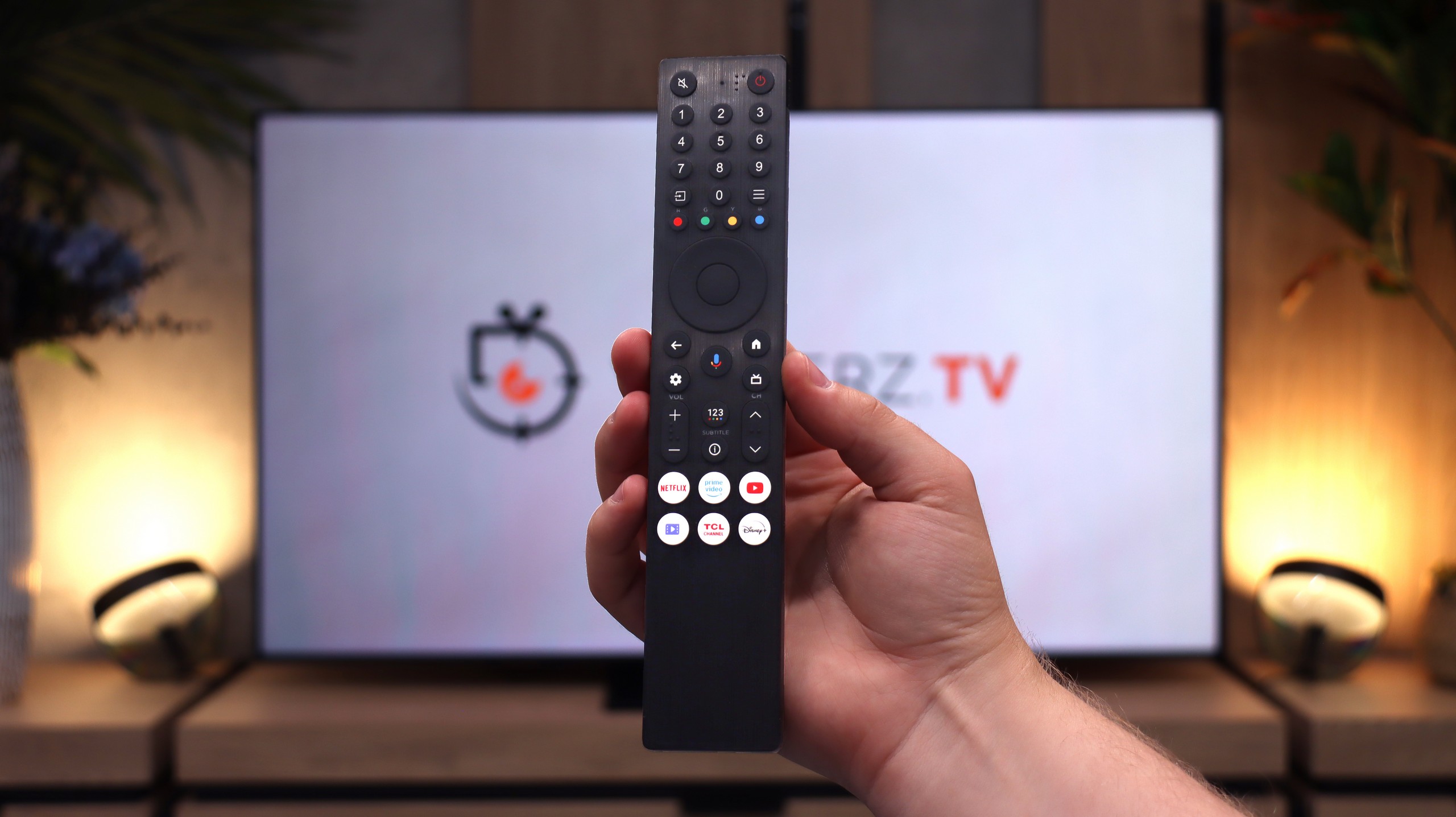
- RF remote control (no need to aim)
- Backlit remote control
- Teletext
- Audio only mode
- Bluetooth headphones support
- Simultaneous Bluetooth headphones & TV audio
Smart features:
- AirPlay
- Screen mirroring (Windows Miracast)
- Voice search
- Voice search in native language
- Ability to connect a keyboard and mouse


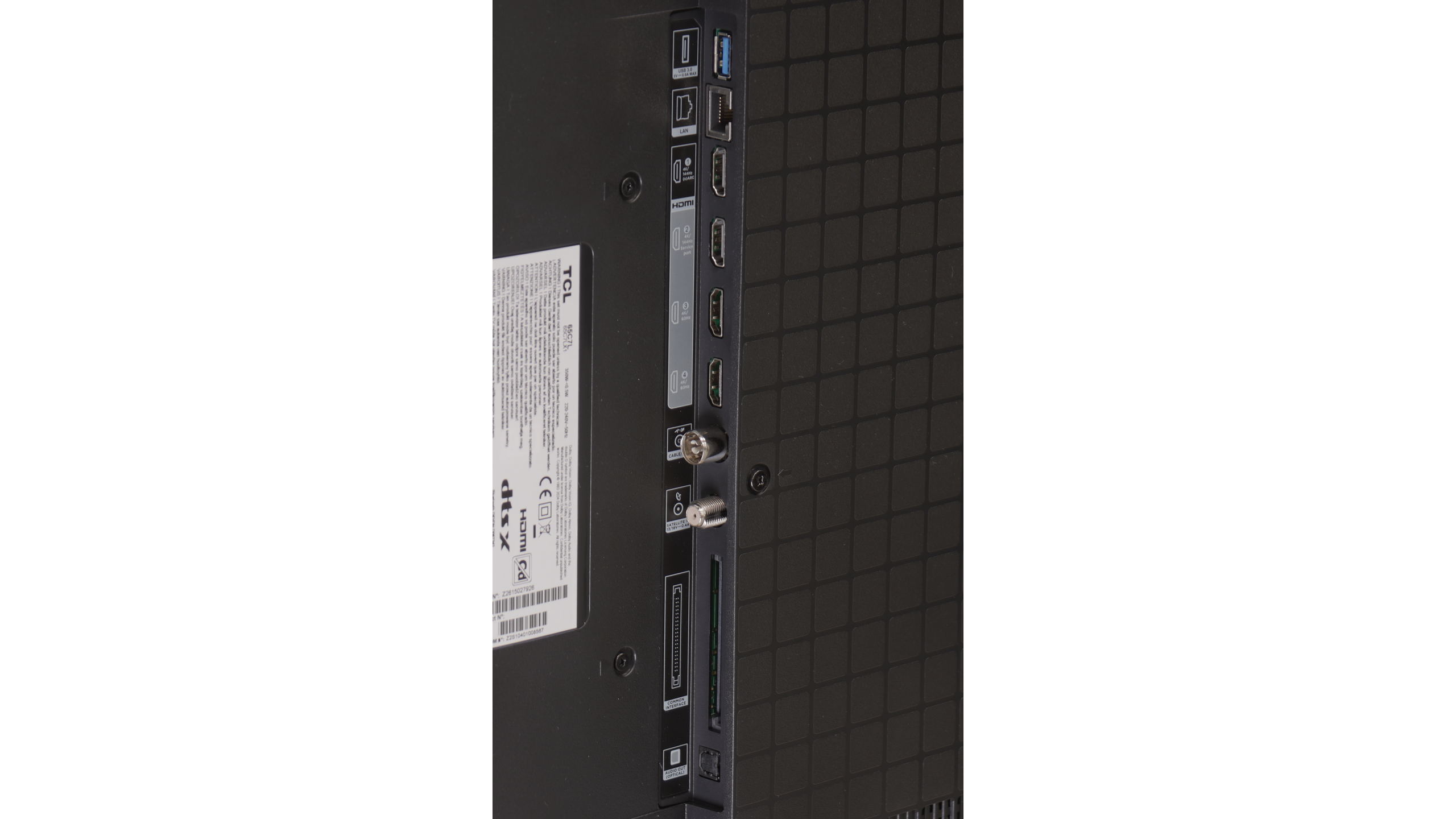
Sound connection options
- HDMI audioeARC (HDMI), ARC (HDMI)eARC (HDMI), ARC (HDMI)
- Other audio outputsToslink (Optical audio)Toslink (Optical audio)
- Wireless audioBluetoothBluetooth
Supported audio formats (external HDMI eARC audio):
- Dolby Digital Plus 7.1
- Dolby True HD 7.1
- Dolby Atmos in Dolby Digital Plus (JOC)
- Dolby Atmos in Dolby True HD
- DTS:X in DTS-HD MA
- DTS-HD Master Audio
Senior accessibility
- Numeric keyboard on TV
- Font size adjustment
- Audio description
As the Hisense S7NQ is a dedicated television, we'll start the description a bit differently – from the most important aspect of this type of model, which is displaying works of art. Like all "art" televisions, it features a special mount that allows for the screen to be installed completely flat. The biggest advantage over the Korean Samsung The Frame is the fact that despite fewer artworks available in gallery mode, all of them are completely free – there’s no subscription fee required. An additional bonus that comes with the S7NQ is the light brown frame. This is a significant plus, especially if someone was already planning to choose that colour – you can save a bit of money on both the frame and the subscription.
However, when it comes to the quality of the displayed images, it’s clear that Samsung The Frame significantly outperforms here. In the S7NQ, the images look more digital, whereas in The Frame, the Art Store mode offers true scans of artworks, showing even the texture of the paint or the brush strokes of the artist. And once again, we return to the old truth – for better quality, you simply have to pay.
Fortunately, the S7NQ is not just an "art piece", but also a normal television – and in this role, it performs really well. Like most Hisense models with the VIDAA system, it offers many basic functions such as USB recording, screen mirroring, and AirPlay support. As for apps – the most popular streaming services are present here, and you can find their complete list below.
Google TV and Smart TV
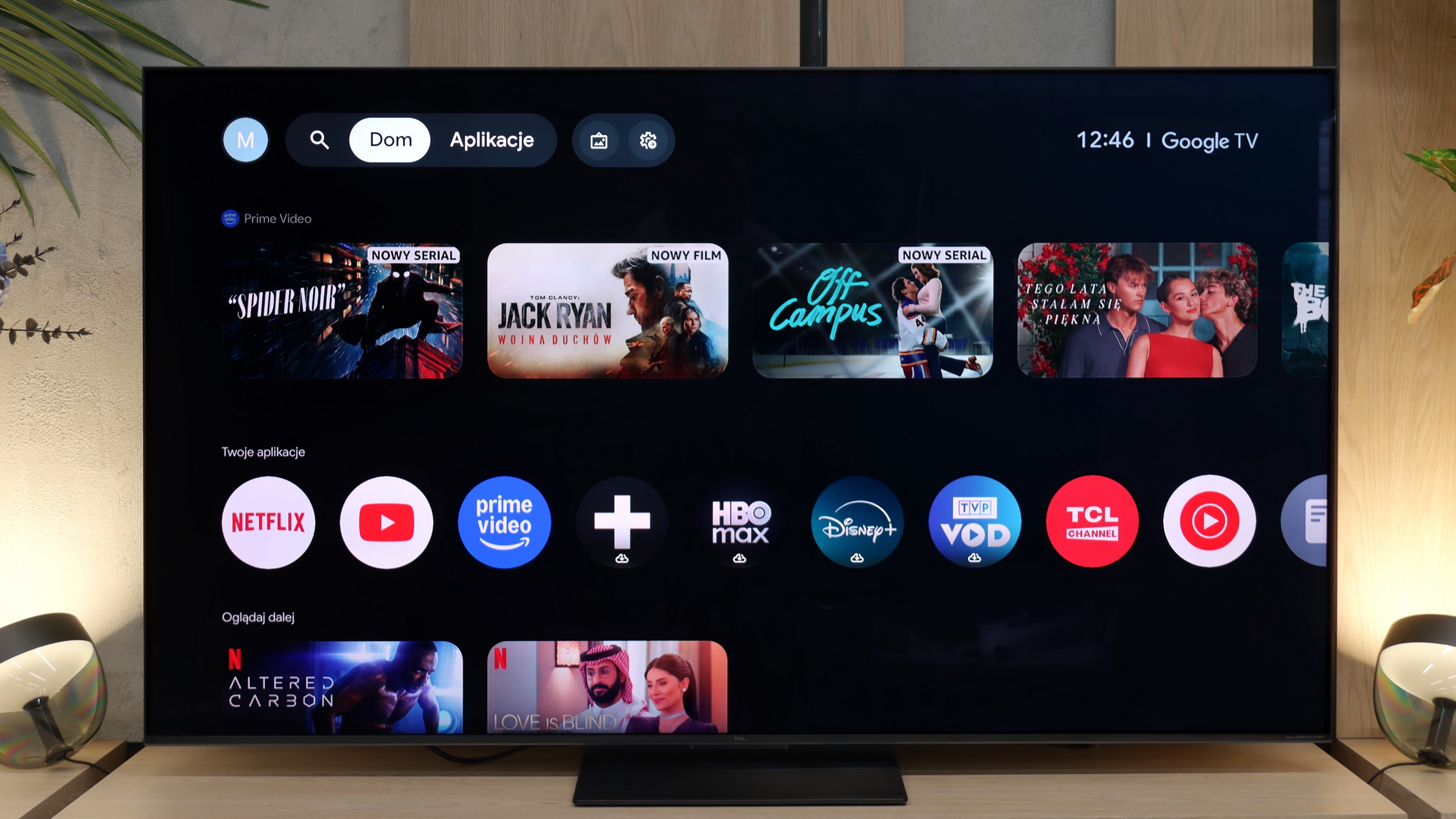
The heart of the TCL C7L multimedia system is, of course, the Google TV operating system, which provides access to a gigantic library of apps and all the most popular streaming platforms on the market. The Smart TV in this model works flawlessly, offering full support for useful networking features such as Apple AirPlay and Chromecast. However, a huge and pleasant surprise is the overall performance of the software. We noticed that Google’s system on the new C7L operates much more smoothly, fluidly, and quickly than on TCL models from last year. A lot of this is thanks to better optimisation at launch. Unnecessary stalls and minor interface stutters, known from older models, seem to have been forgotten.
TV Features
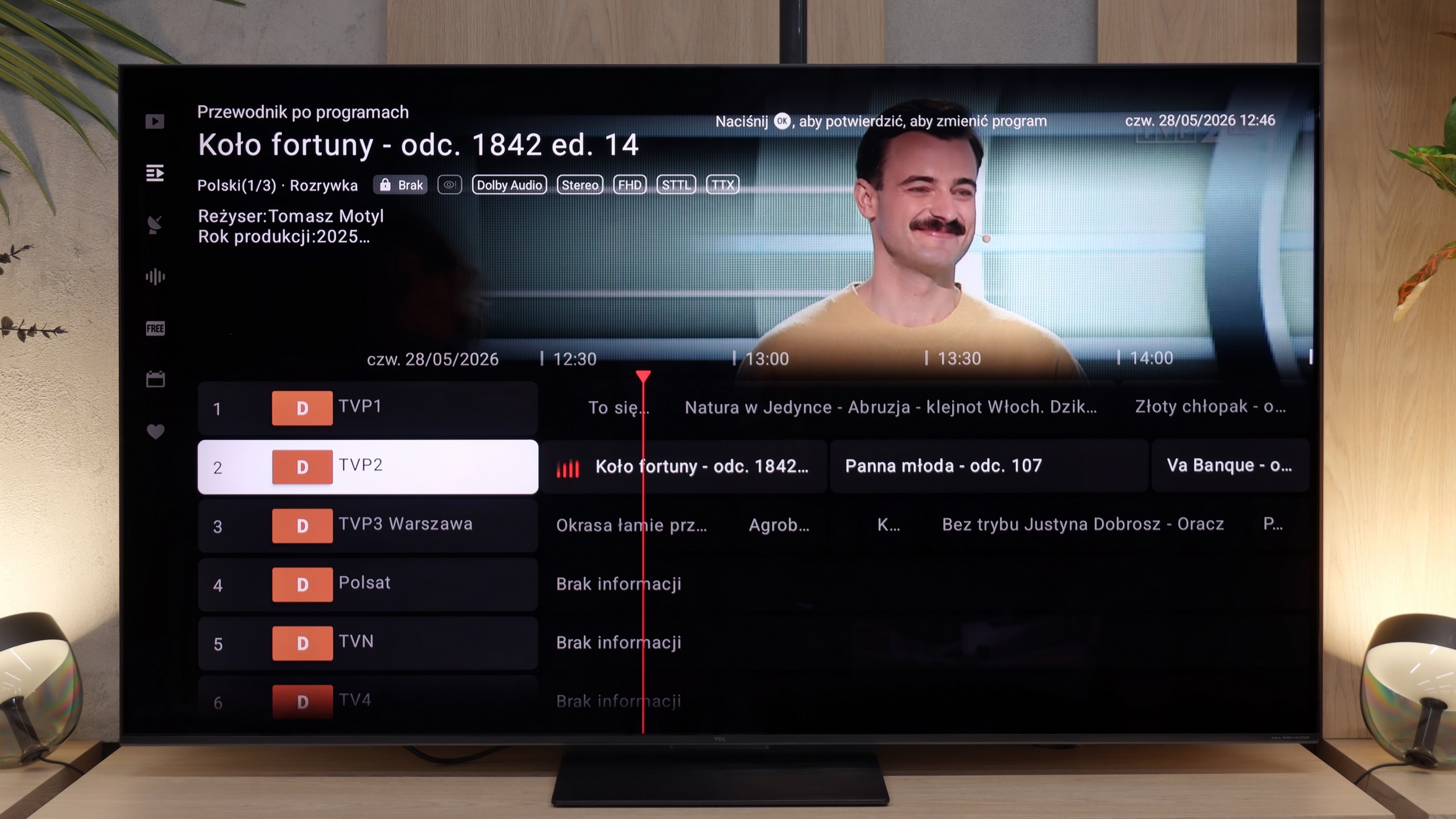
When it comes to traditional antenna or cable television, the TCL C7L does not offer many additional advanced features. It is simply a basic receiver. The manufacturer did not attempt any revolutionary solutions here, so aside from the traditional program guide, you won't find anything special. A great nod to traditional viewers is the classic remote control, which defies the prevailing trend towards minimalism by still being equipped with a full numeric keypad, greatly facilitating quick channel switching.
Apps
7.7/10
9.6/10






















Playing files from USB
5.4/10
9.4/10
Supported photo formats:
Maximum photo resolution:

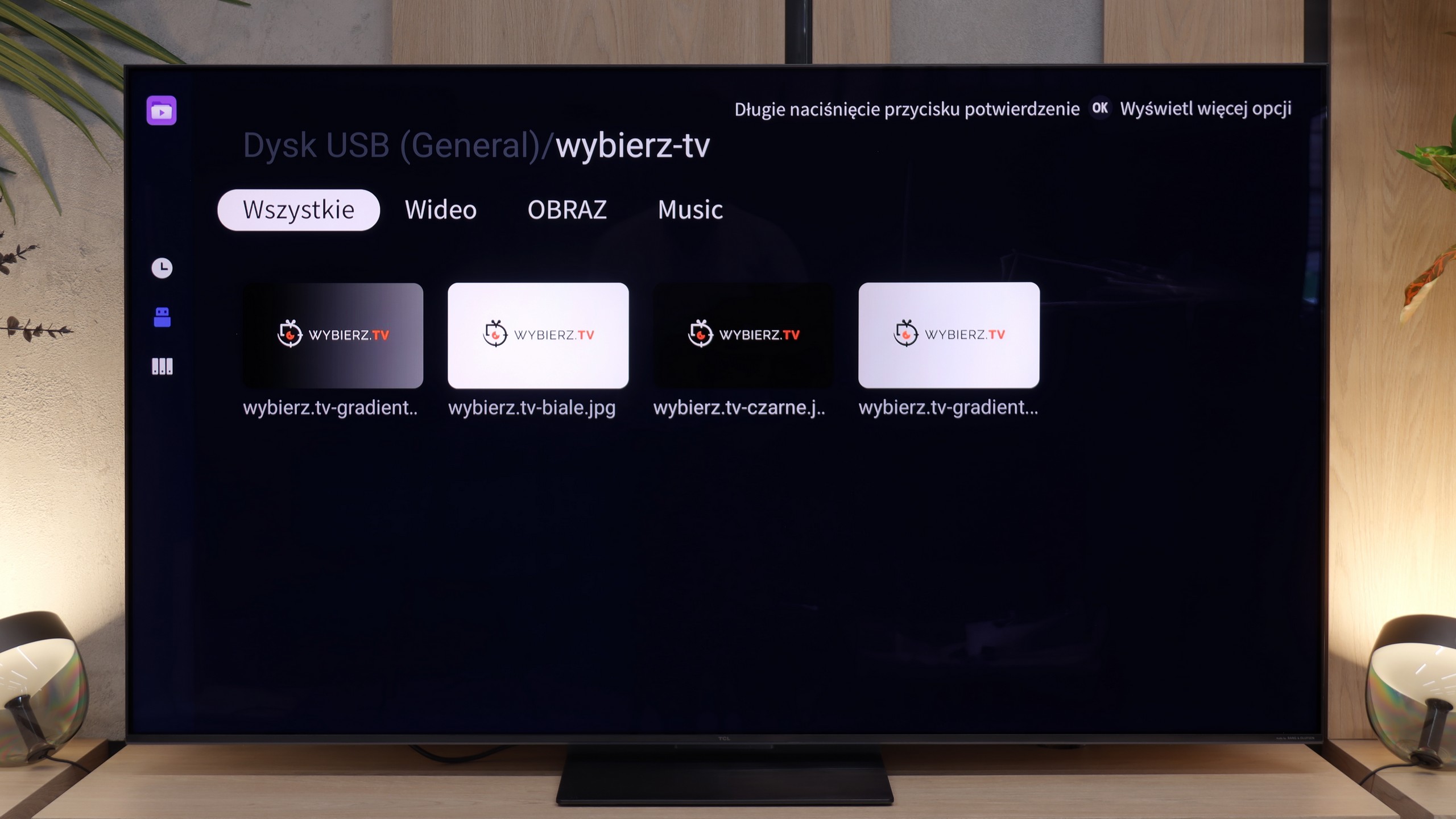
Hisense S7NQ has no trouble playing the vast majority of popular audio, photo, and video formats. So why is the rating in this category relatively low? Well, it's because of software issues. This is another Hisense television that didn't allow us to open external subtitles in movies. Regardless of whether we're talking about the .ass, .srt, .txt, or .sub format – the subtitles simply didn't appear.
The funniest (or rather the most frustrating) part about all this is that in the menu we can find options to change the font colour, size, and background… The problem is, the subtitles themselves are not visible at all.
At the very end of the multimedia section, it’s worth mentioning the playback of files from external USB drives. During our tests, we didn’t encounter any unpleasant surprises here – the factory player handles all popular video and audio formats just as it should. Interestingly, the TCL C7L had no trouble playing photos saved in Apple’s native format, HEIC. This is an extremely rare feature in the factory apps of television manufacturers. And while the Google TV system obviously gives you unlimited capability to install external media playback programs, in the case of the C7L, the built-in tool is refined enough that installing additional software will probably not be necessary for anyone.
Sound
6.3/10
7.7/10
- Maximum volume-77dB
- Dolby Digital Plus 7.1
- Dolby True HD 7.1
- Dolby Atmos in Dolby Digital Plus (JOC)
- Dolby Atmos in Dolby True HD
- DTS:X in DTS-HD MA
- DTS-HD Master Audio
When it comes to sound, it presents itself... just like a television on the wall – rather flat. Despite the use of a 2.0.2 speaker setup with a total power of 36 W, we can't speak of any exceptional sound quality here. But as is often the case – buying even the simplest soundbar can dramatically change the situation.
On the plus side, it does support virtually all popular Dolby and DTS codecs. This means we can easily connect the television to a home theatre system without having to fiddle with settings or audio conversion.
TCL C7L performs quite well and correctly. In terms of sound quality, there has been virtually no change compared to last year's model C7K. The manufacturer still uses a speaker system branded Bang & Olufsen in a 2.2 configuration. The only thing that can be quite annoying during viewing is the fact that after increasing the volume to higher levels – around above 50% on the scale – the volume no longer matches the scale visible on the screen. The audio system from B&O works great for daily watching of news or series at moderate volume, but if you're looking for good sound, it's worth getting at least a basic soundbar for the C7L.
Sound Quality Test
No sound test video
Acoustic Measurements
No acoustic data
77dBC (Max)
75dBC