The Sharp GR8 is a television created primarily for those who expect a maximally smooth image. It is somewhat of a successor to the FQ8 model, and it's clear that the manufacturer has strongly focused on the dynamics of motion. 144 Hz makes a difference – and not just in games. Sports broadcasts can also look stunning, without those annoying blurring or "stutters" that can detract from the enjoyment of watching. In terms of image quality, Sharp has opted for a VA panel. While there is no local dimming, one can still count on pleasant contrast. Additionally, there's Dolby Vision, which gives evening movie screenings depth – even if the television does not reach the brightness promised by the manufacturer. It must be said that when the lights in the room are dimmed, the overall presentation is truly pleasing to the eye. One of the biggest advantages of the GR8 is Google TV. We have access to a full range of applications, voice search in Polish, and a simple, intuitive interface. This means we are not limited to the standard functions of the television, as there is always the possibility to install additional programs and customize the system to our own needs. Of course, a few things could have been refined. The declared HDR brightness is higher on paper than in reality, which may leave the most demanding cinema enthusiasts wanting more. Additionally, a few useful features known from other models are missing: there is no USB recording or PiP function, and Apple device owners will be disappointed by the lack of AirPlay. Nevertheless, this is a television primarily aimed at those who value smooth images and high refresh rates. If we primarily care about dynamic gameplay and good support for games, and in the evenings we want to quietly watch a movie with pleasant image quality, the Sharp GR8 should meet those expectations.
- Matching (Score)
- Our verdict
- TV appearance
- Where to buy
- Contrast and black detail
- HDR effect quality
- Factory color reproduction
- Color reproduction after calibration
- Smoothness of tonal transitions
- Image scaling and smoothness of tonal transitions
- Blur and motion smoothness
- Console compatibility and gaming features
- Input lag
- Compatibility with PC
- Viewing angles
- Daytime performance
- Panel details
- TV features
- Apps
- Playing files from USB
- Sound
Sharp GR8 vs Hisense E7Q / E79Q
 Direct comparison
GR8765E / GR8465E / GR8265E

E7Q / E79Q

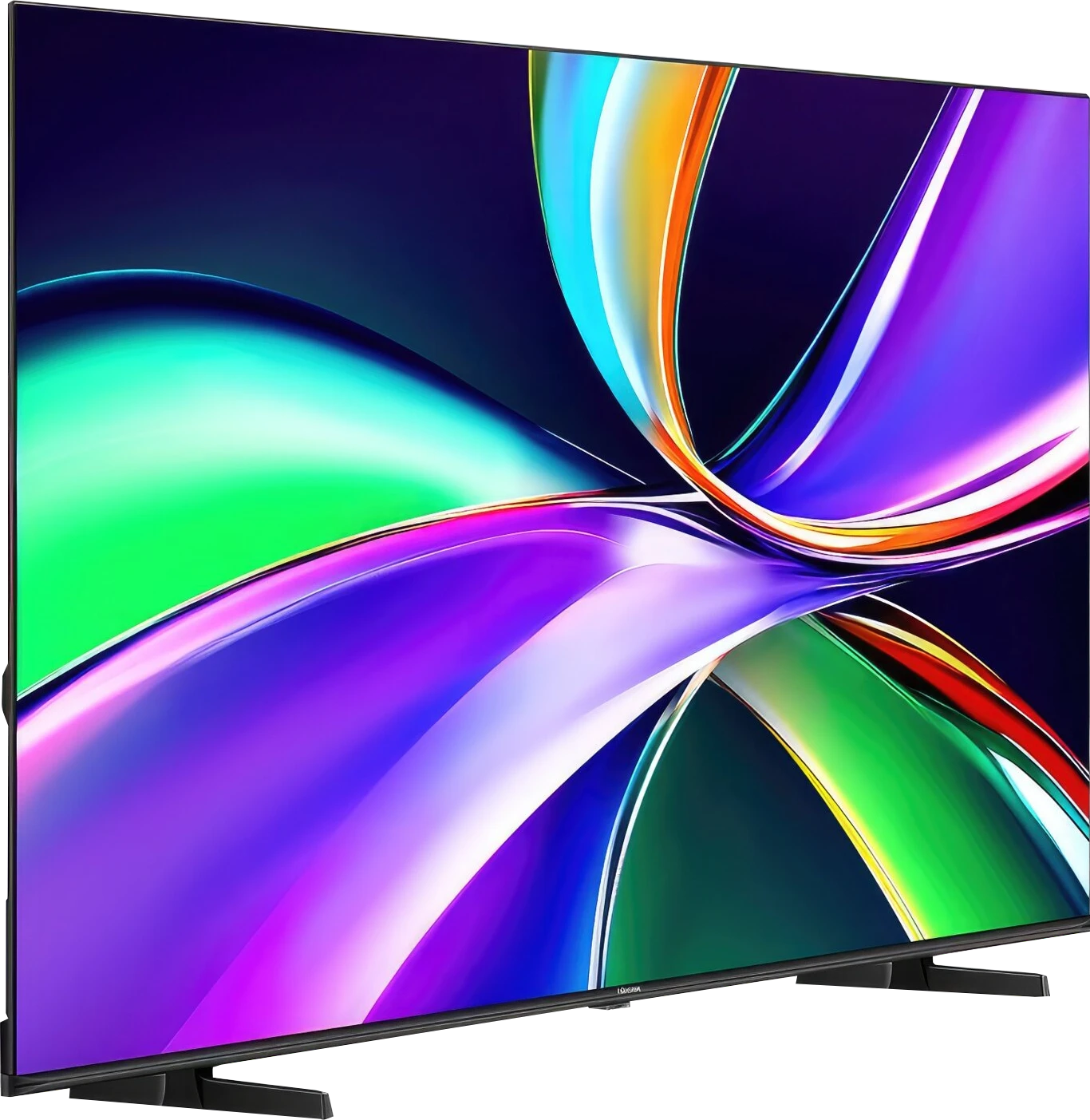
Panel type: LCD VA
Resolution: 3840x2160
System: Google TV
Model year: 2024
Complete the survey to find out the result
Panel type: LCD VA
Resolution: 3840x2160
System: VIDAA
Model year: 2025
Complete the survey to find out the result
Overall rating
6.4
6.1
 Movies and series in UHD quality
 6.2
6.2
 Classic TV, YouTube
 6.1
5.9
 Sports broadcasts (TV and apps)
 6.4
5.1
 Gaming on console
 7.8
7.1
 TV as a computer monitor
 4.0
3.0
 Watching in bright light
 4.5
5.2
 Utility functions
 6.0
8.7
 Apps
Apps 9.6
7.7
 Sound quality
 7.0
6.3
Complete the survey to find out what fits your preferences
Advantages

VA matrix with decent contrast
144 Hz refresh rate and two HDMI 2.1 ports – a great option for gamers
Support for VRR and ALLM, low input lag
Supports Dolby Vision
Google TV with a rich selection of apps, voice search in Polish, and an intuitive interface
Decent sound
Good black and contrast
QLED (PFS LED) – vibrant and saturated colors, DCI-P3 color gamut coverage approx. 92%
Many features for gamers: ALLM, VRR, Low-input lag, Game Bar
120Hz support in 1080p!
VIDAA system – easy to use, with AirPlay, Screen Mirroring, and voice search
Recording to USB from built-in tuners
3.5 mm jack output and component inputs for older devices
Support for multiple audio formats including Dolby Atmos and DTS:X
Attractive price
Disadvantages

Brightness in HDR lower than claimed by the manufacturer (about 360 nits instead of 500)
In PC mode, it does not support chroma 4:4:4 - text and fonts are less readable because of this
No USB recording and PiP function
Lack of support for AirPlay - Apple device owners may feel unsatisfied
Dolby Vision adds little (which is a shame)
Poor digital image processing: lack of image enhancement features, average upscaling
Strong dithering when connecting to a PC (colorful fonts)
The build quality of our unit was very average
Our verdict
The Hisense E7Q / E79Q is a type of television that doesn't promise miracles – and maybe that's why it can pleasantly surprise. It doesn't try to pretend to be high-end equipment; it simply does its job. If you're looking for a cheap screen for everything that can handle Netflix, a console, and morning YouTube while having coffee, this model makes a lot of sense. The VIDAA system has matured over the past few years, and you can see that the manufacturer is learning from experience. It has AirPlay, screen mirroring, and voice search in Polish – everything works, maybe not at lightning speed, but smoothly enough not to be irritating. You won't find thousands of apps like in Google TV, but the most important ones are readily available. It's a system meant to be simple and practical, not overloaded with unnecessary gimmicks – and in this sense, it really holds up. There’s also something interesting for gamers. The E7Q / E79Q offers low input lag, an automatic low latency mode (ALLM), support for VRR up to 60 Hz, and even a 120 Hz mode in 1080p resolution. It's not a screen for hardcore e-sports enthusiasts, but if you simply enjoy turning on your console in the evening to play a few rounds, this television will get the job done without complaints. And what about picture quality? We won’t deceive you – it’s not exceptional, but there are also no reasons to complain. A brightness of around 350 nits won’t impress anyone, but the contrast thanks to the VA panel can really surprise positively. The black levels are quite deep, and the colors have a pleasant intensity, especially in SDR mode. It's a bit of a shame that Dolby Vision doesn't add much – because if it worked as it should, we would have a television that could confidently be recommended for HDR viewing as well. On the other hand, it's hard to expect that in this price range. It's simply a fair, well-priced screen that doesn’t try to be a star but can deliver solid picture quality and surprisingly good features. And while it’s not perfect, after a few days of use, it's hard not to think: "wow, this cheap Hisense really does the job."
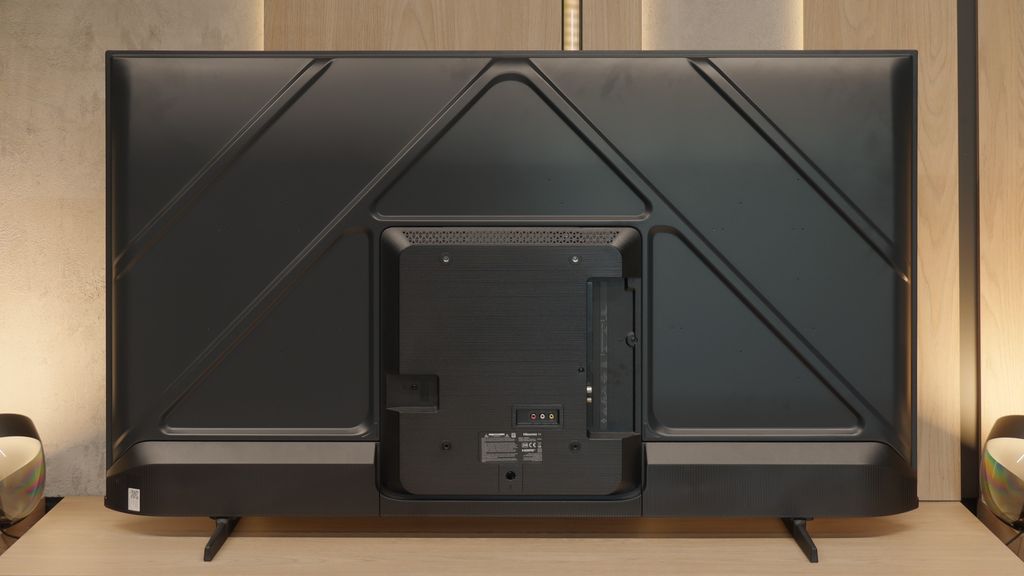
TV appearance


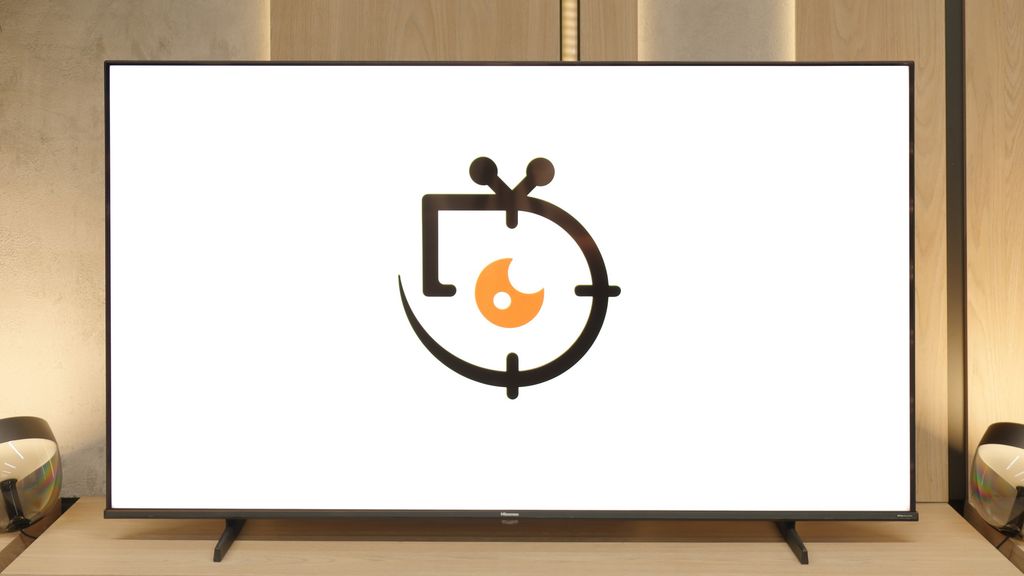
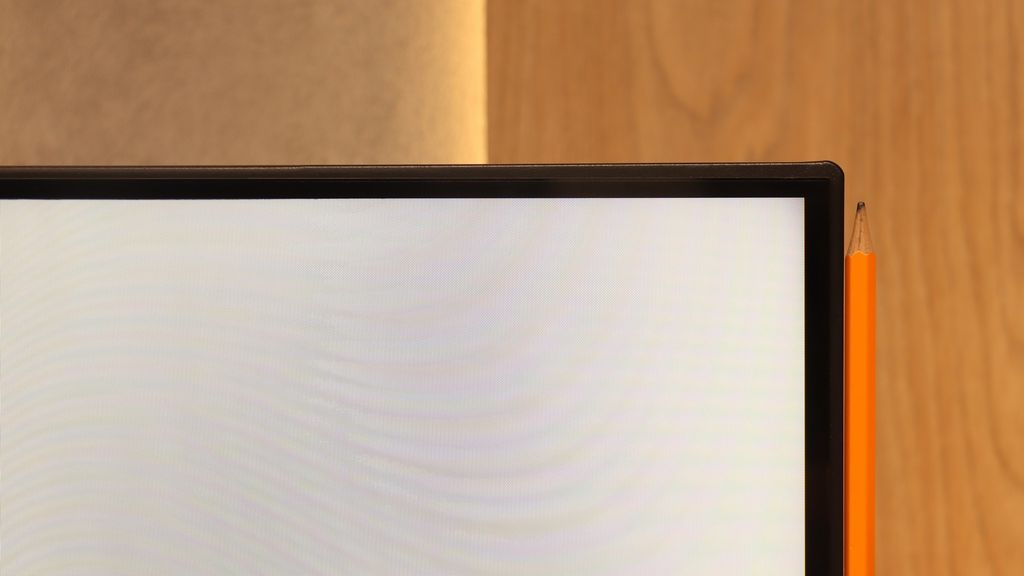
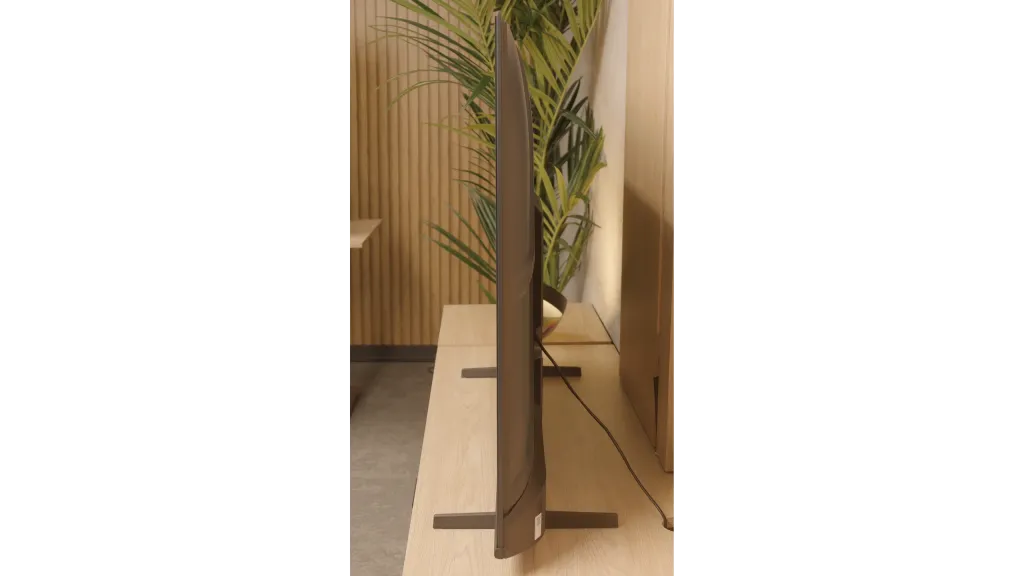

Contrast and black detail
5.9/10
5.7/10
Local dimming function: No
Local dimming function: No
Contrast:


Result
5,300:1

Result
5,800:1

Result
6,600:1

Result
5,650:1

Result
4,700:1
Result
5,400:1
Result
5,450:1
Result
3,800:1
Result
5,000:1
Result
4,350:1
Halo effect and black detail visibility:

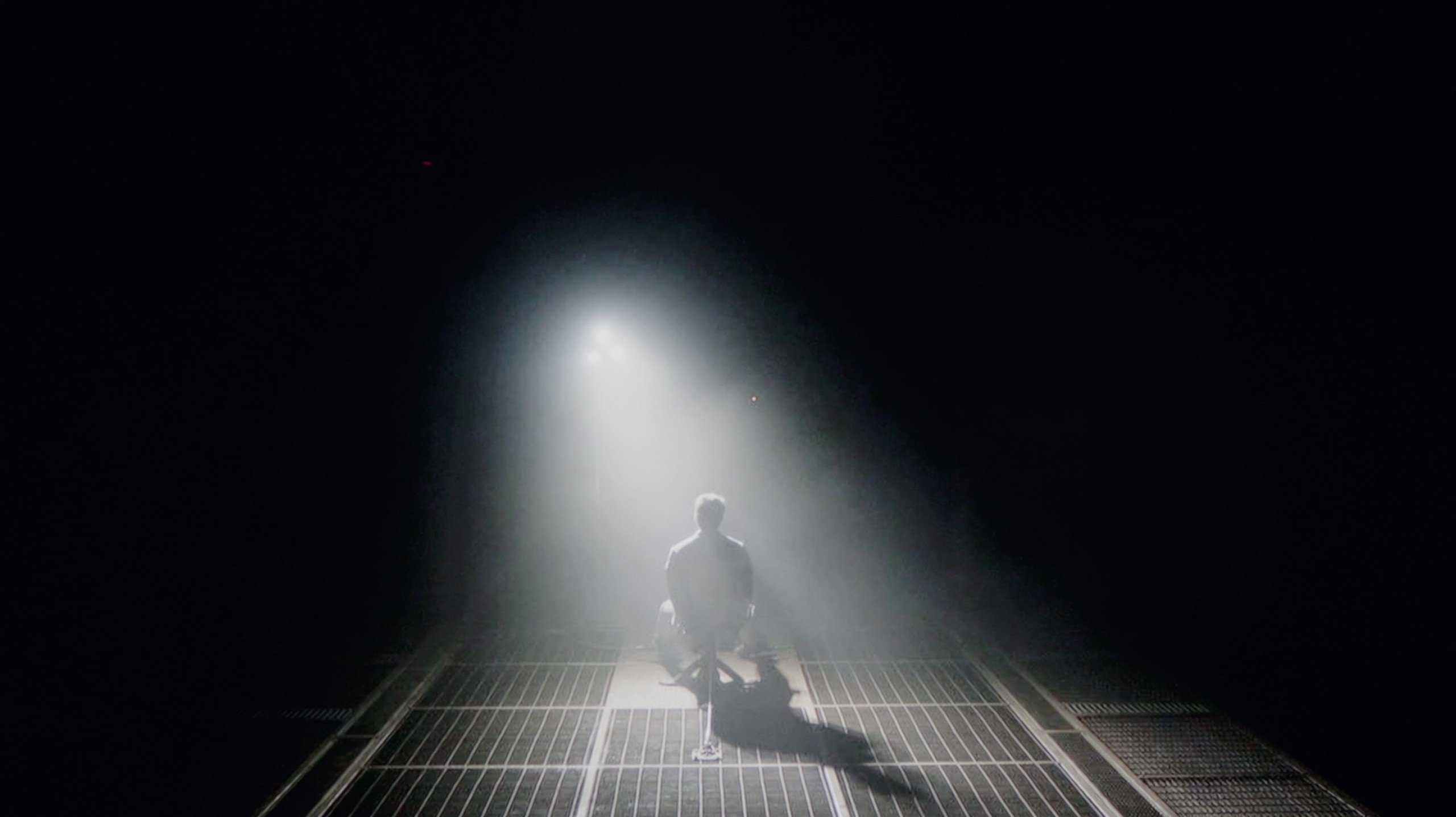
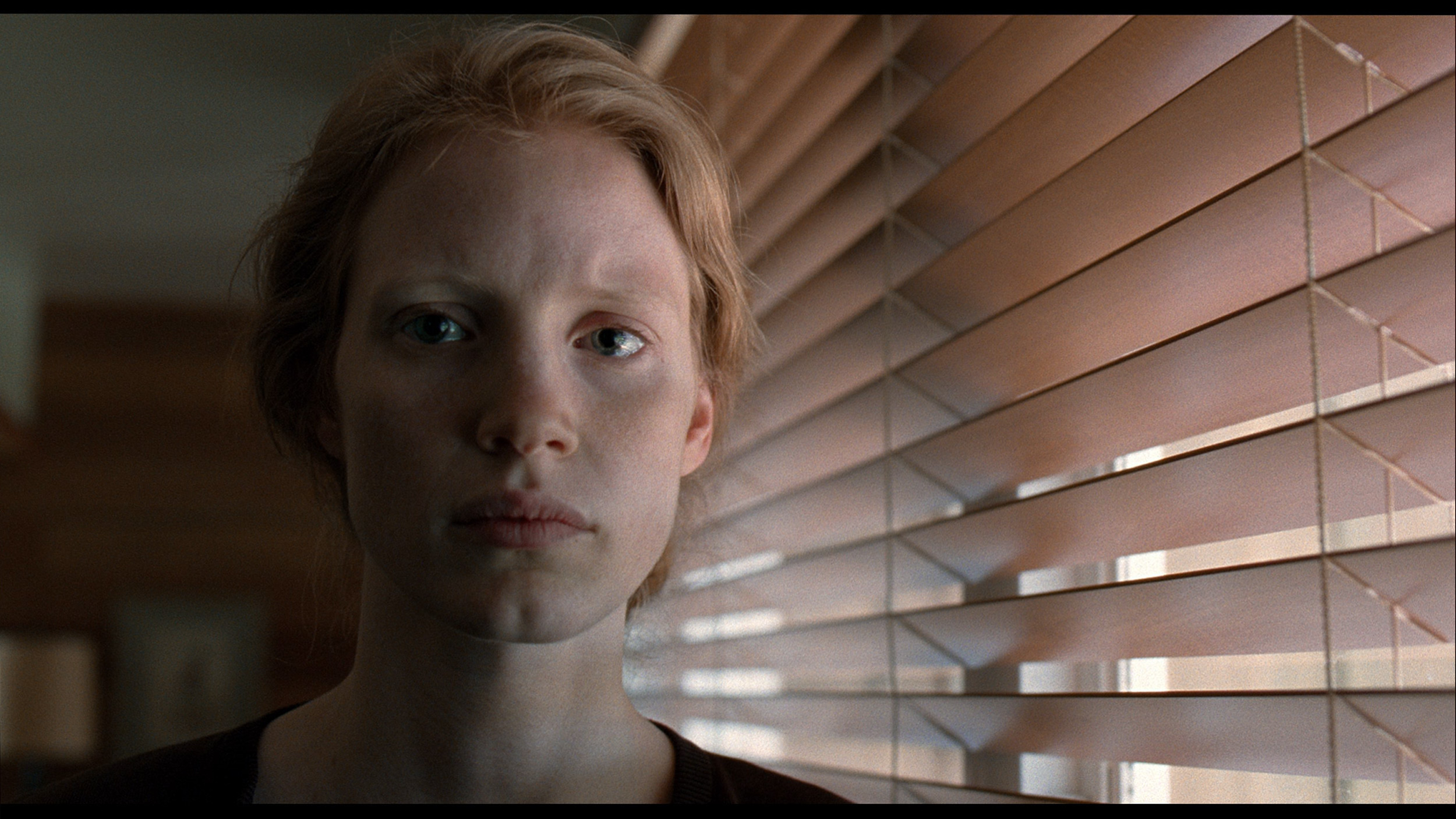
The Sharp GR8 utilizes a VA panel that can provide quite decent contrast. In the tested film scenes, for example in “Arrival”, the television demonstrated that it can achieve really good results. A contrast ratio of 6600:1 is a result that can be considered solid in this price segment. However, it should be mentioned that the television is not equipped with local dimming technology. This is quite obvious, considering the class of the equipment. Nonetheless, the Sharp GR8 handles the separation of bright and dark elements well, which definitely deserves recognition. It is worth noting that televisions without local dimming have their limitations. In very dark conditions, such as during a screening in a completely dark room, blacks can take on shades of navy blue instead of appearing deep and pitch black. In general, the Sharp GR8 offers quite solid contrast that should satisfy most users.
The Hisense E7Q / E79Q in our test variant of 58 inches is equipped with a VA panel, which has a significant impact on the perception of contrast and black levels in movies or series. With such a panel, one can expect decent contrast and a stable visual effect that performs really well in most scenes. In our measurements, we obtained values reaching around 6000:1, which is considered a solid result in this price range. However, it should be noted that this is not a local dimming design, so one shouldn’t expect deep, “pitch-black” blacks known from more expensive models. In some scenes, the black may have a slightly bluish hue, which is completely natural for this technology and price. However, this is a compromise that does not interfere with everyday viewing – especially when watching in the evening with slightly dimmed lighting.
HDR effect quality
4.8/10
5.1/10
Luminance measurements in HDR:

Result
305 nit

Result
332 nit

Result
369 nit

Result
365 nit

Result
367 nit
Result
300 nit
Result
329 nit
Result
379 nit
Result
389 nit
Result
397 nit
Scene from the movie “Pan” (about 2800 nits)


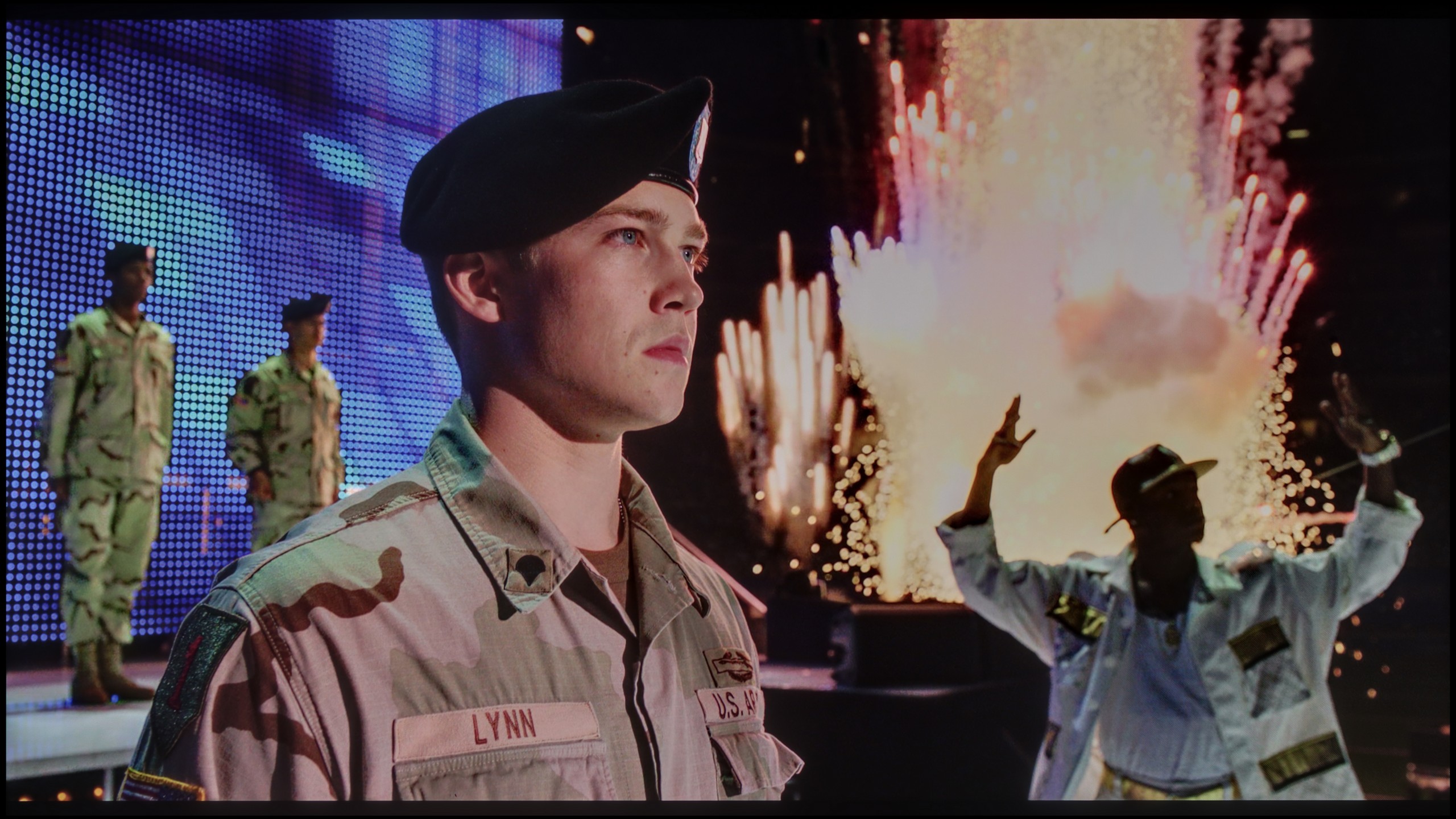
Scene from the movie “Billy Lynn” (about 1100 nits)

Static HDR10


Dynamic: Dolby Vision
Dynamic: Dolby Vision


HDR luminance chart:
Hisense E7Q / E79Q
HDR luminance
Sharp GR8
HDR luminance
Sharp GR8 boasts "very high brightness" at a level of 500 nits in its promotional materials. Unfortunately, our tests showed that the reality is somewhat different – the average luminance value we managed to achieve was around 360 nits. This is rather an average result, especially in the context of the manufacturer's claims. Such brightness does not allow for a full enjoyment of HDR effects. The image is somewhat sharper than in standard SDR, but it is difficult to speak of true juiciness and depth in bright elements. However, the coverage of the DCI-P3 color palette at 95% deserves praise. This is the result of applying an additional PFS coating, known from QLED technology. As a result, colors are vivid and have a pleasant, natural tint, which partially compensates for the deficiencies in brightness.
Hisense E7Q / E79Q is a television with average brightness, whose peak luminance level is around 350-380 nits. This is an absolute minimum that allows for watching HDR content in a way that is close to the creators' intentions, although without a clear "wow" effect. The results of synthetic tests on white images have been confirmed in practice – in movie scenes, the bright parts of the image are stable and fairly uniform, but it is hard to speak of a true "lighting impact" here. In everyday use, for example, while watching Netflix or YouTube, the HDR effect is acceptable and is completely sufficient for most users. However, it must be stated clearly – this is not the level of top screens, and one should not expect that at this price point. Fortunately, the Hisense E7Q / E79Q has an advantage that allows it to gain quite a few points: it is a PFS LED QLED panel, utilizing an additional phosphor layer that improves color reproduction. The measured range of the DCI-P3 palette is around 92%, which means that the colors in most scenes are vibrant, well-saturated, and pleasing to the eye, especially for this price range.
Factory color reproduction
5.4/10
5.2/10


Factory Mode
After calibration
Factory Mode
After calibration
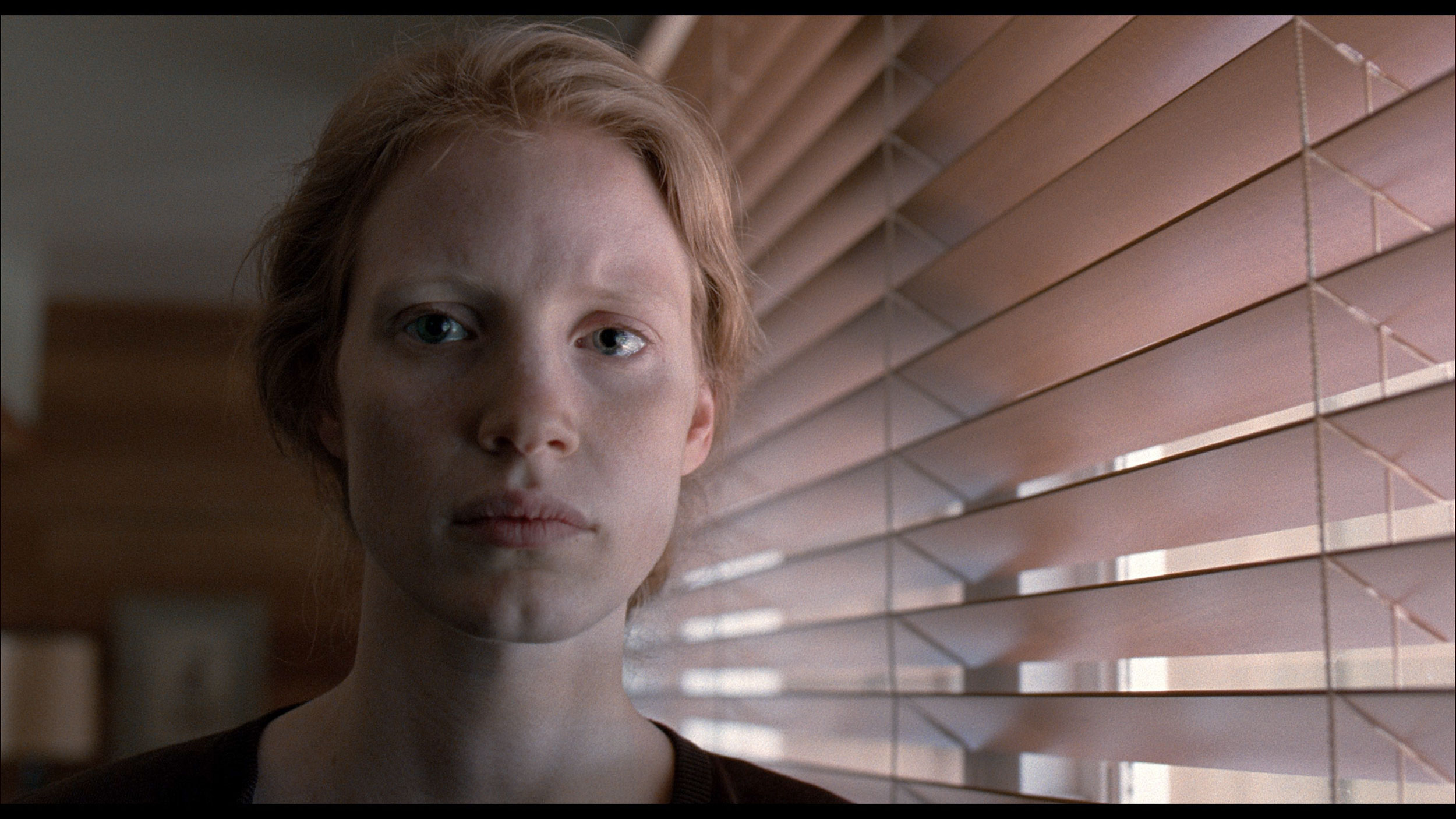
At the outset, it is worth noting that color reproduction tests are always conducted in the best factory picture mode. In the case of the Sharp GR8, this is the "Film" mode. As for the white balance, which is a characteristic that affects how we perceive colors on the screen, in SDR mode, the strong dominance of blue immediately stands out. This results in an unnatural cooling of the image—blue elements take on a purple hue, and skin tones acquire a pink glow, which we can see in the comparative photo from the movie STAR WARS. During the Color Checker test, it was clearly visible how the color samples deviated from the reference values, confirming significant errors in color reproduction. Gamma was not perfect either—it caused excessive brightening of the entire image, causing the scene to lose depth and proper tonal transitions.
In 4K HDR mode, the situation looks much better. The dominance of blue is much less noticeable, although there are minor issues with the combination of red and blue. This makes some shades look somewhat unnatural. The EOTF curve, responsible for the brightness of the image in 4K HDR content, showed another problem—the television tends to excessively darken the image across the entire screen.
In summary, the "Film" mode on the Sharp GR8 would require some adjustments to fully utilize the potential of this television. Fortunately, we addressed this and proceeded to calibration.
In Filmmaker mode, the Hisense E7Q / E79Q television was able to really surprise positively. Even after the first measurements, it turned out that the white balance is quite well calibrated, and the only minor deviation was a slight tendency toward a purple hue, which we mentioned earlier. However, this did not significantly affect the overall character of the image – it remained coherent and pleasant to perceive. A much larger problem turned out to be the brightness characteristics (gamma) in SDR content and the EOTF curve in HDR films. The television clearly brightened the image, flattening the contrast and taking away its depth. Gamma values could drop from the reference 2.4 down to about 1.9, making the image appear as if it were covered with a thin, milky layer. Fortunately, this is a problem that can be relatively easily corrected through calibration.
Color reproduction after calibration
8/10
7.4/10




Sharp GR8 is one of those televisions that really gains a second life after proper calibration. Both in HD and 4K content, the white balance performs very well, especially considering the price segment of this model. The image becomes much closer to what the director wanted to show – colors look natural, and skin tones acquire the appropriate depth and warmth. The brightness characteristics also leave a very positive impression. Both gamma and the EOTF curve show really solid values. Although minor imperfections can be noticed, they are subtle enough that it's hard to see them during everyday viewing. In summary, calibration makes the Sharp GR8 show its best side, offering an image that is not only pleasant to the eye but also faithfully conveys the creators' intentions.
The biggest beneficiary of calibration for the Hisense E7Q / E79Q turned out to be the SDR mode without a doubt. It managed to achieve nearly perfect picture quality – most errors in the Color Checker test dropped below a value of 3, and often even below 2, which is a remarkable result for this class of equipment. The greatest improvement came from aligning the brightness characteristic (gamma), making the picture no longer look washed out and regaining its natural depth. In HDR content, colors were also improved, and the purple tint we mentioned earlier was eliminated, but errors in the Color Checker measurements were still noticeable. This is due to the fact that – as is often the case with Hisense televisions – the screen manipulates brightness quite strongly, oversaturating some colors. This was also indicated by the EOTF curve, which was slightly above the reference values, suggesting these minor problems with excessive brightening. Despite this flaw and the construction limitations that arise with HDR content, the Hisense E7Q / E79Q gained a lot after calibration. In everyday use, the television presents a cohesive, natural, and pleasant-to-the-eye picture, and the difference compared to factory settings is truly vast.
Smoothness of tonal transitions
8/10
8.5/10

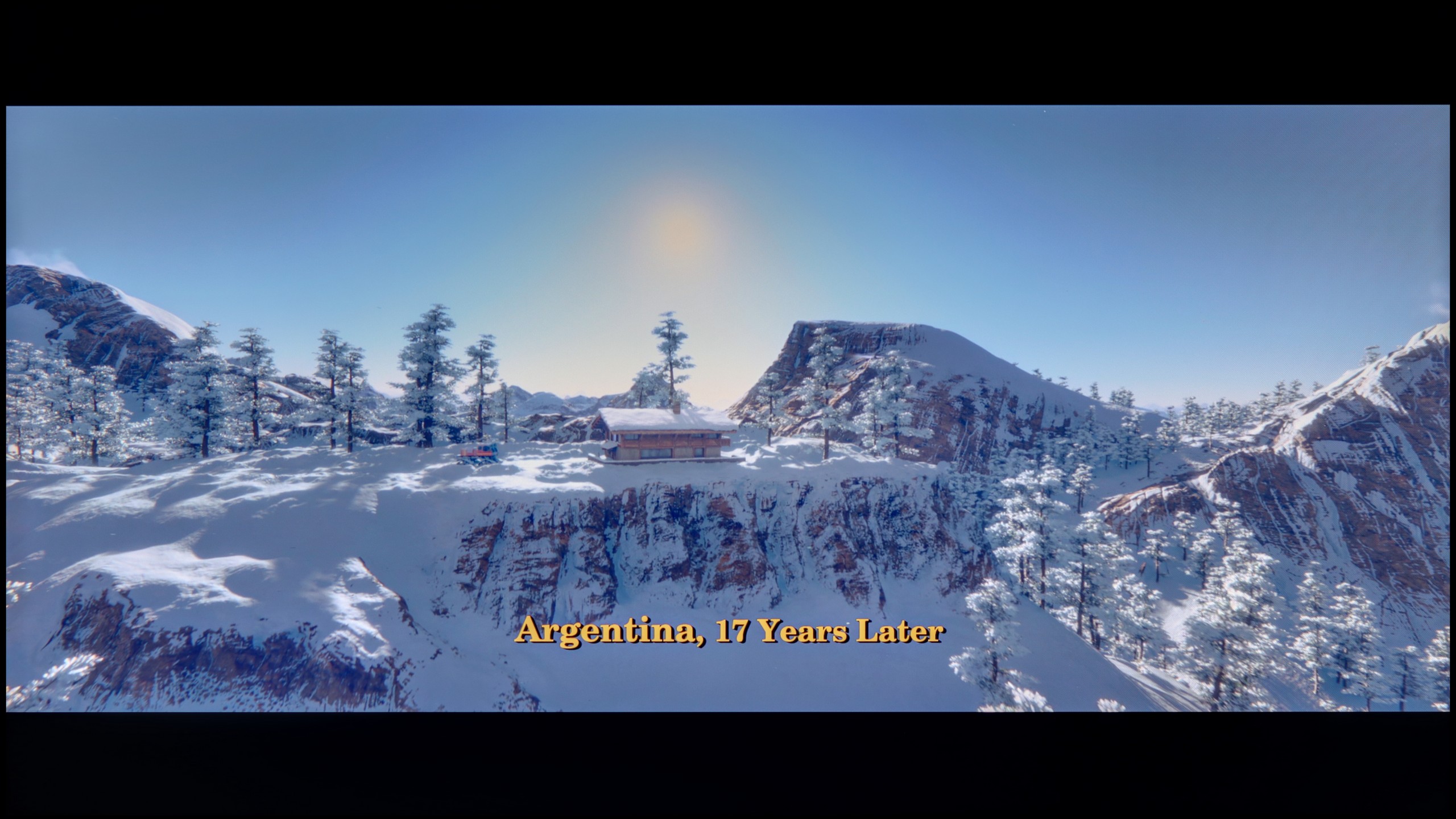



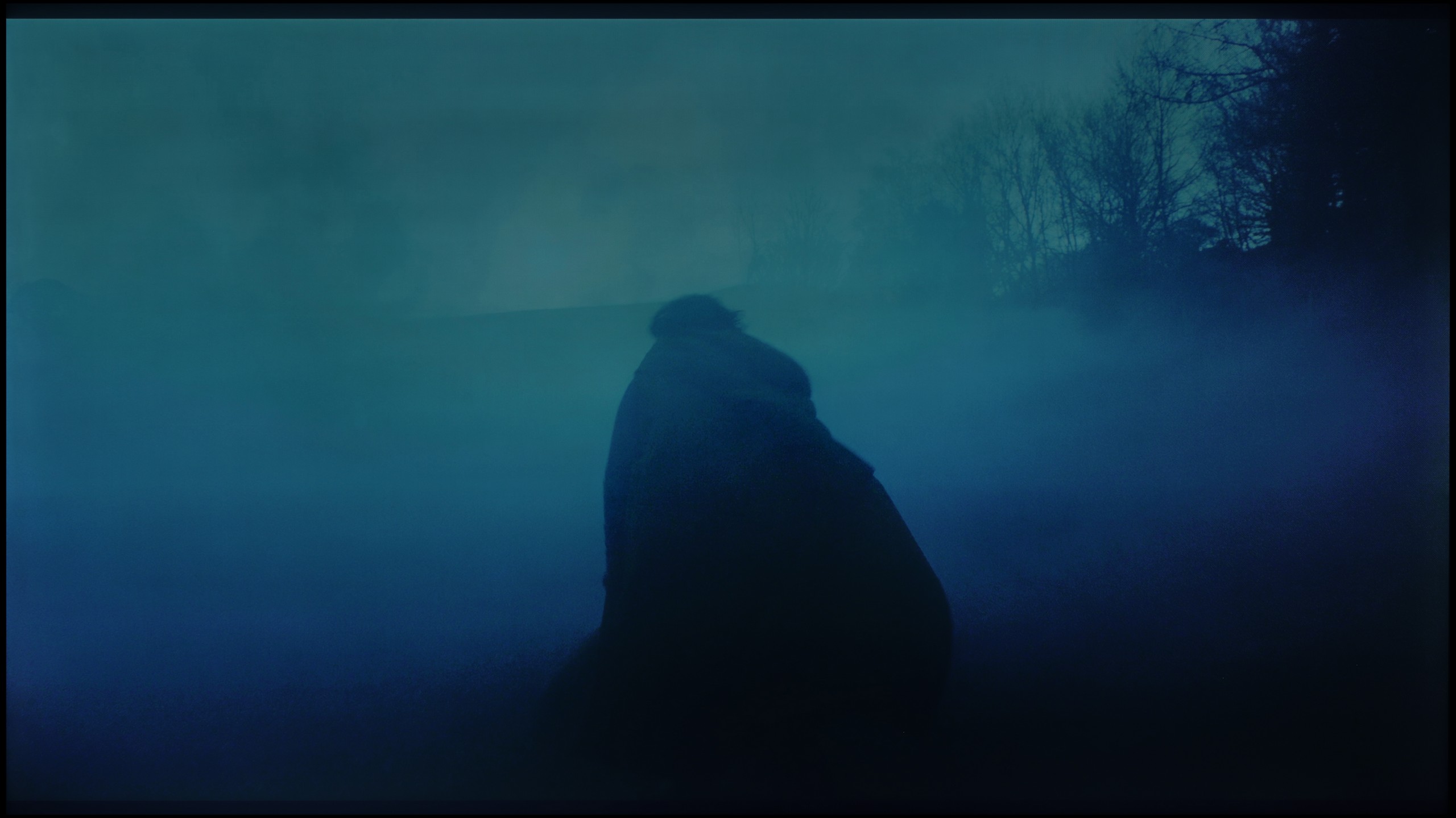

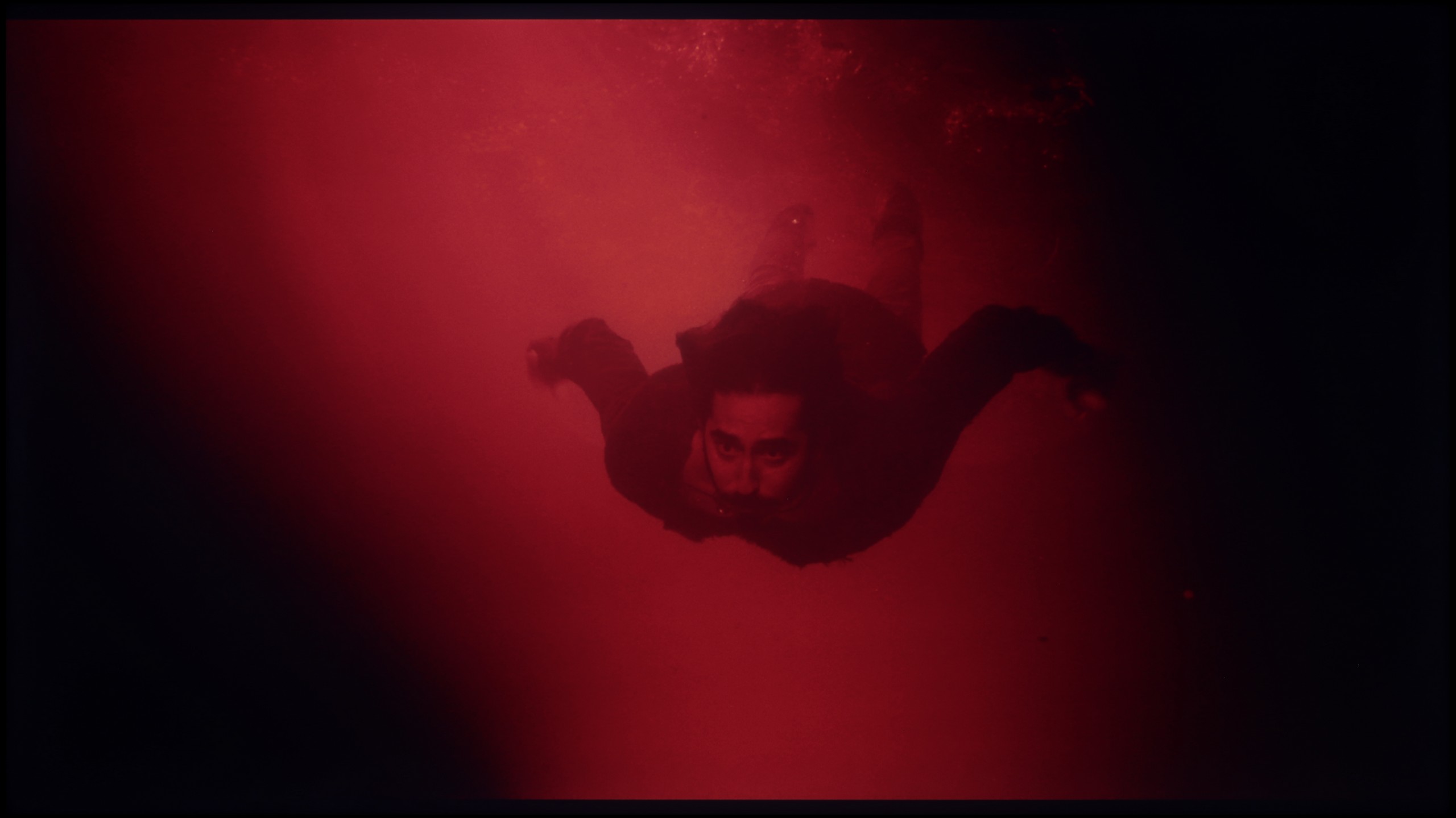
When it comes to the fluidity of tonal transitions in high-quality materials such as 4K, the Sharp GR8 performs really well. Color gradients are smooth, and the transitions between shades are natural and free of visible artifacts. The TV has no problems reproducing subtle differences in colors, even in demanding scenes. Only the most discerning users, who examine the image closely, may notice minor imperfections in the darkest shades. For most viewers, the quality of tonal transitions in the Sharp GR8 will be more than satisfactory and will not negatively affect the perception of the image.
For such a budget-friendly television, the Hisense E7Q / E79Q performs really well with a challenging element like the smoothness of tonal transitions. In most scenes, the colors blend together naturally, without visible jumps or artificial edges. Lighter parts of the image look particularly good – the transitions are smooth and pleasing to the eye. Minor issues only appear with very dark shades of gray, where slight banding can be noticed. However, this is a detail that doesn't affect the overall perception of the image. For a television in this category, the result is more than just decent.
Image scaling and smoothness of tonal transitions
5.5/10
5/10


Smooth transition function

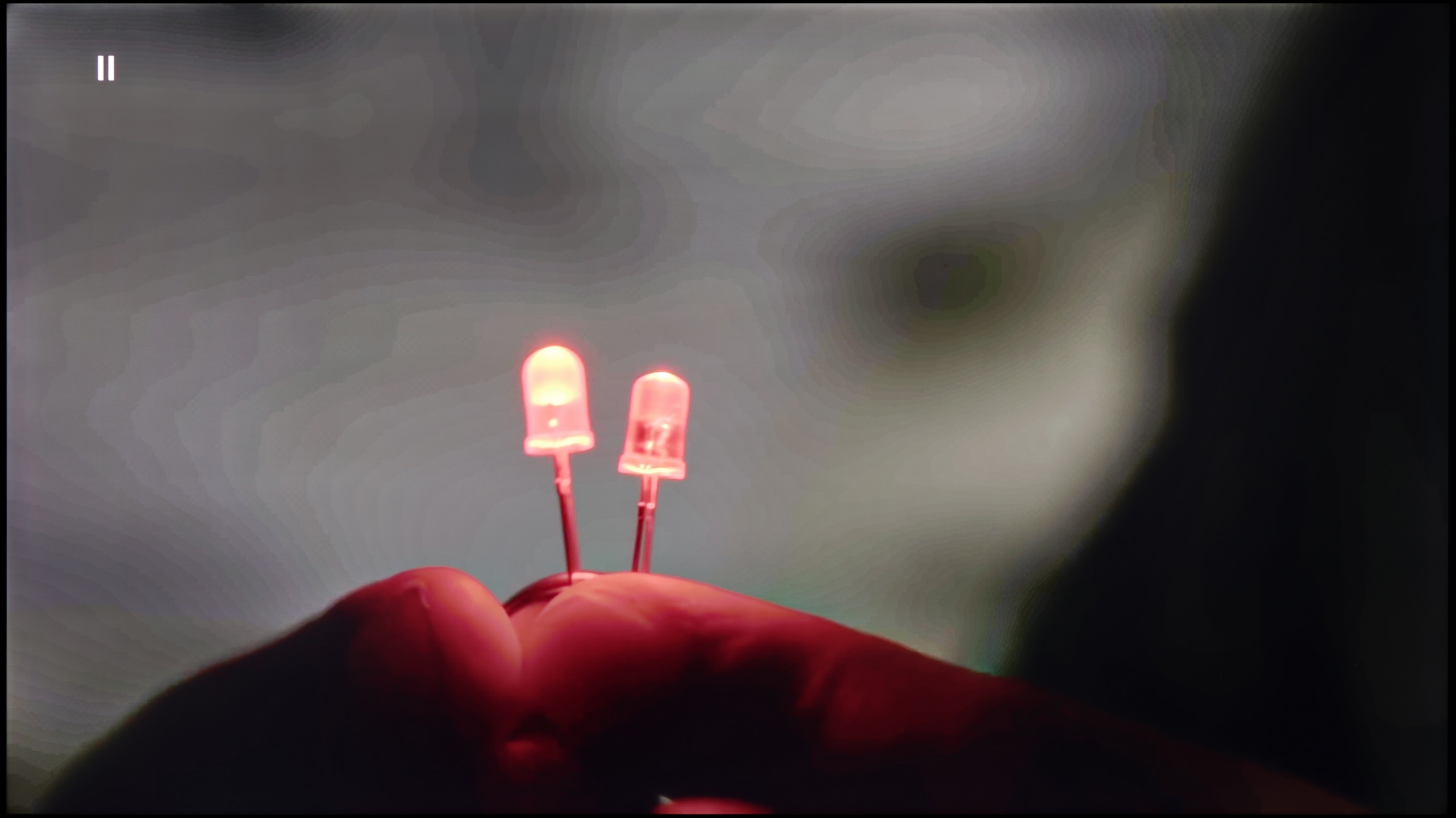
Image without overscan on the SD signal


The Sharp GR8 is equipped with the "10-bit color reproduction" feature, which theoretically should improve the smoothness of tonal transitions. In practice... well, the effect is surprising, but not in a very positive way. Even at the highest settings, it's hard to notice any impact on the actual tonal transitions. Instead, the function surprisingly smooths out things it shouldn't – walls, shirts, or other flat surfaces look almost like they have been steam-pressed. In the test, we had to note that there is simply no actual impact on tonal transitions.
When it comes to image scaling, the Sharp GR8 performs significantly better here. The television is capable of giving the image a plastic, smooth characteristic, making even lower resolution content look quite good. Of course, with more demanding details, such as thin tree branches in the background, you can see slight jaggedness, but this is not something that would significantly affect viewing comfort.
In the case of Hisense E7Q / E79Q, upscaling and digital image processing are not the strongest features of this television. It is clear that the manufacturer opted for simplicity rather than advanced image processing algorithms. The television does not offer any functions for smoothing tonal transitions or systems for improving image clarity, which means that lower resolution materials simply look very raw. On the screen, subtle compression edges can be noticed, which better processors in other models can effectively hide.
During tests of HD materials, we noticed that the E7Q tries to artificially enhance detail, which sometimes works and sometimes has the opposite effect – the image becomes soft, slightly smeared, at times even "watery." There is no aggressive sharpening that ruins naturalness, but there is also no finesse in detailing that better image processors offer.
Blur and motion smoothness
7.4/10
4.8/10

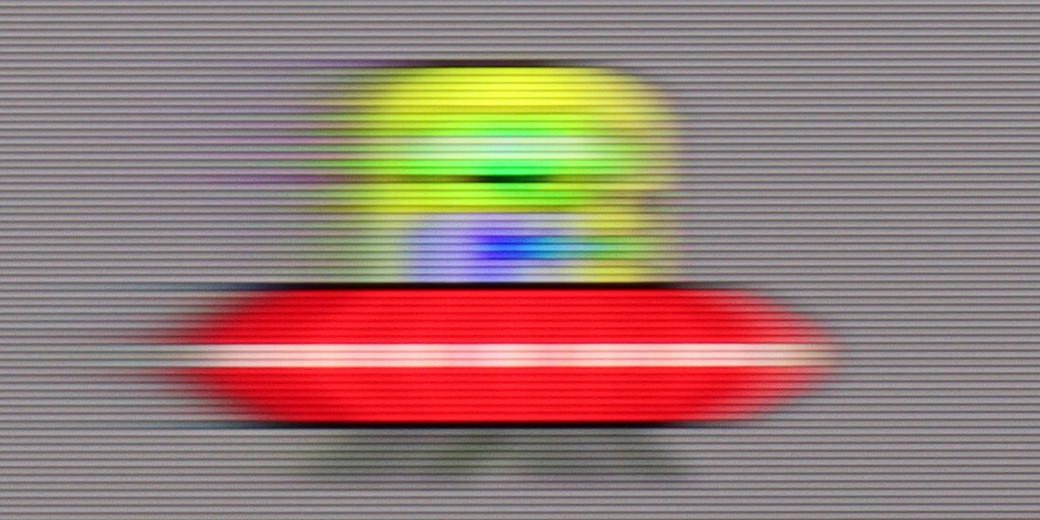
Blur (native resolution, maximum refresh rate):



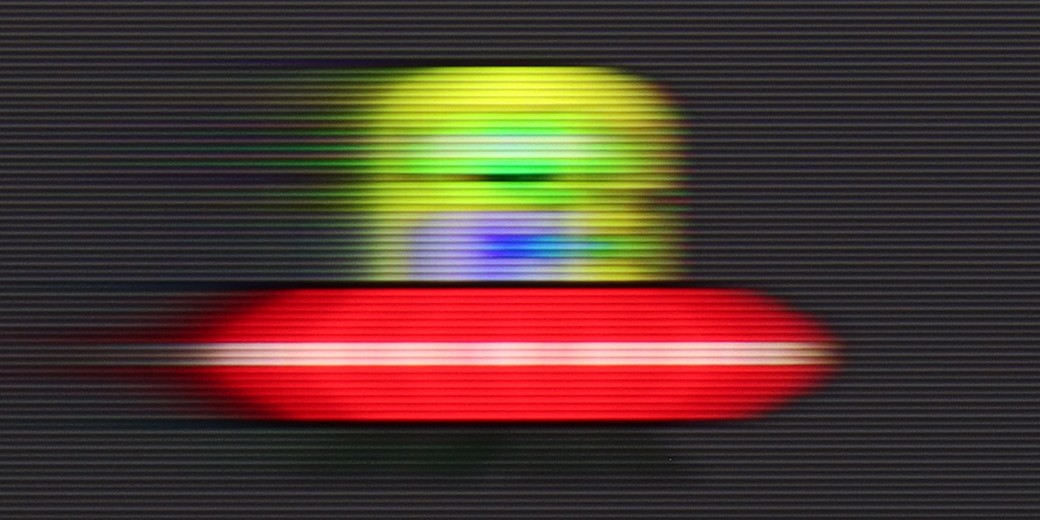
Blur ():
Blur (1080p@120Hz):

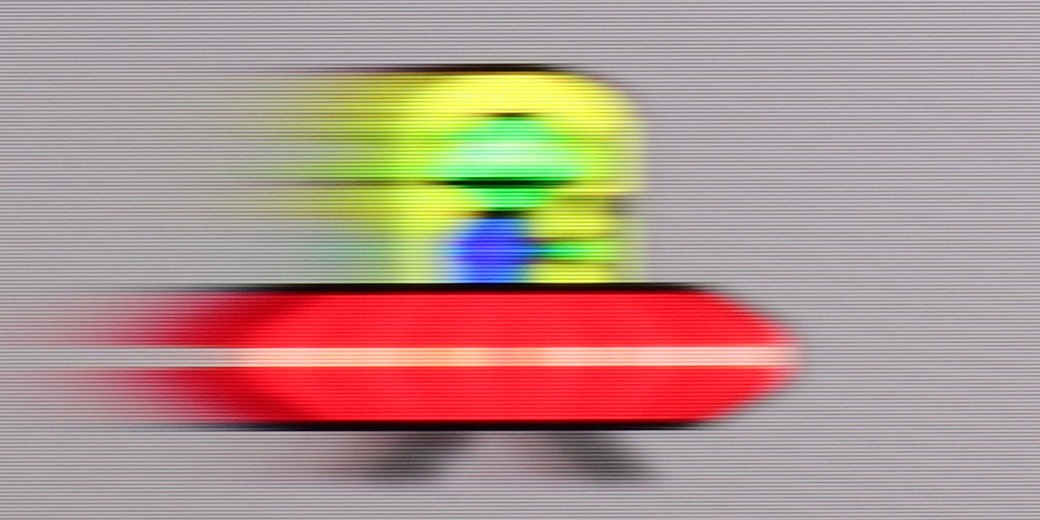
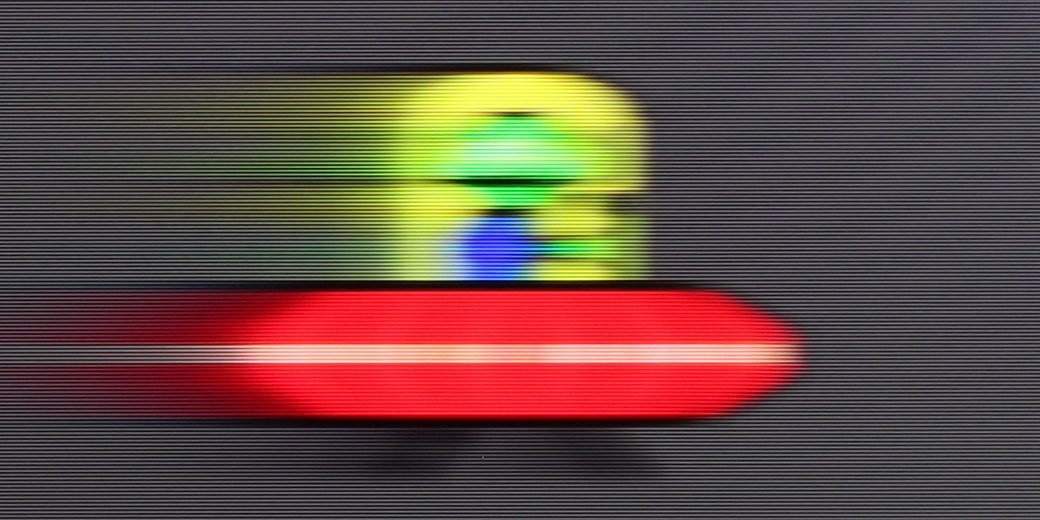
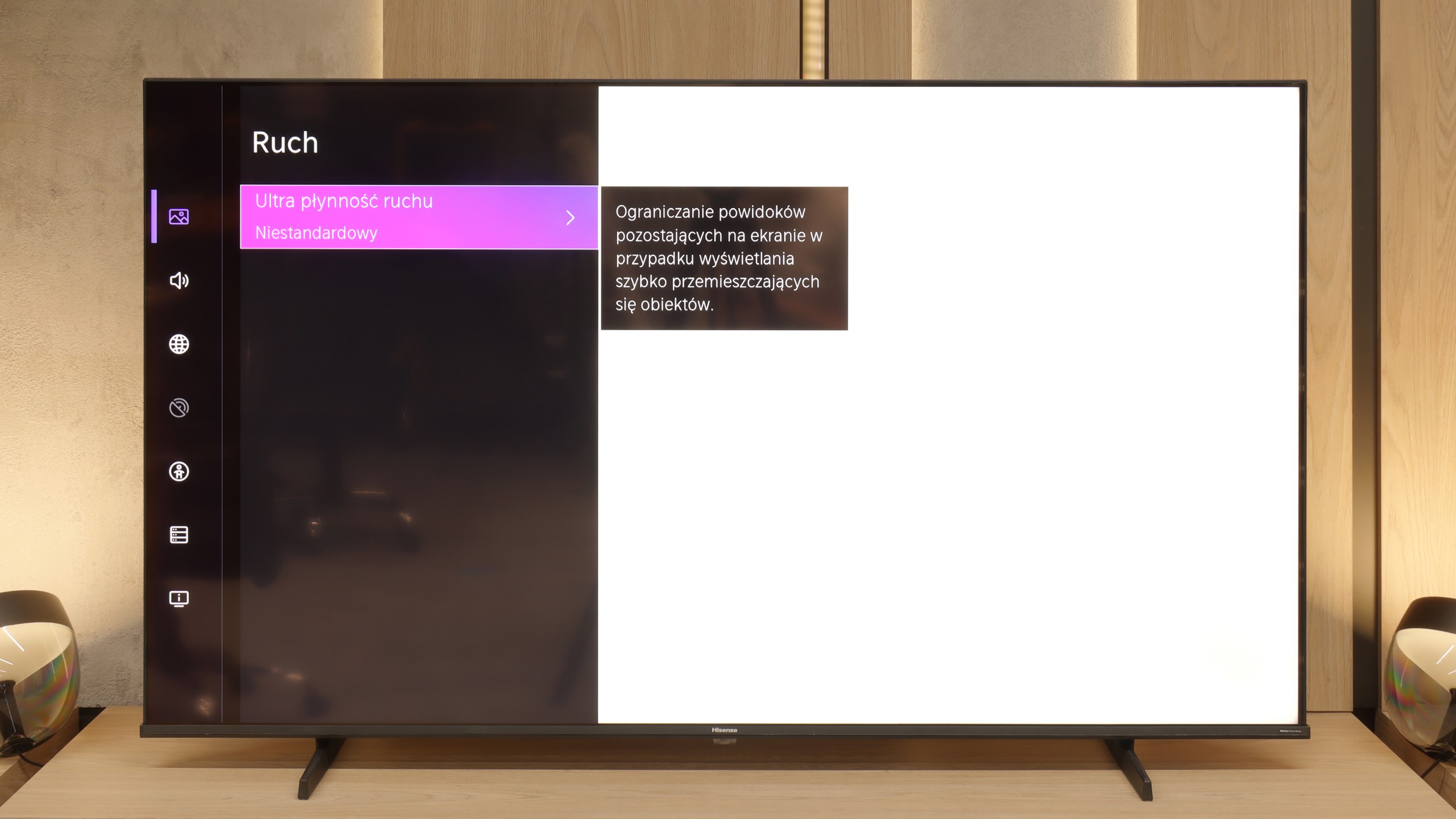
This is where the Sharp GR8 has the chance to stand out against the competition in its price segment. The TV is equipped with a 144 Hz refresh rate panel, which is an impressive result, especially if we plan to use it for dynamic content such as action movies, sports broadcasts, or video games. Additionally, the manufacturer has included a motion smoothing feature, commonly referred to as a "smoothener." The user has three levels of adjustment available, allowing them to tailor the effect to their own preferences – from subtle smoothing to more aggressive intervention in motion fluidity. This is a nice addition, especially for those who mainly watch movies and value smooth, cinematic sequences without annoying stuttering or frame drops.
Hisense E7Q / E79Q is a television with a 60 Hz screen, so 4K sports fans may feel a slight disappointment – we simply won't see such smooth images here as in more expensive models with higher refresh rates. Fortunately, when it comes to movies, the situation is much better. Cinematic materials recorded at 24 frames per second can be displayed here using a motion smoothing feature, allowing the user to adjust the image to their preferences – more cinematic with a visible frame or smoother, in a theatrical style.
Console compatibility and gaming features
7.8/10
6.3/10
- ALLM
- VRR
- VRR range48 - 144Hz48 - 60Hz
- Dolby Vision Game Mode
- Correct implementation of HGIG
- 1080p@120Hz
- 1440p@120Hz
- 4K@120Hz
- Game bar



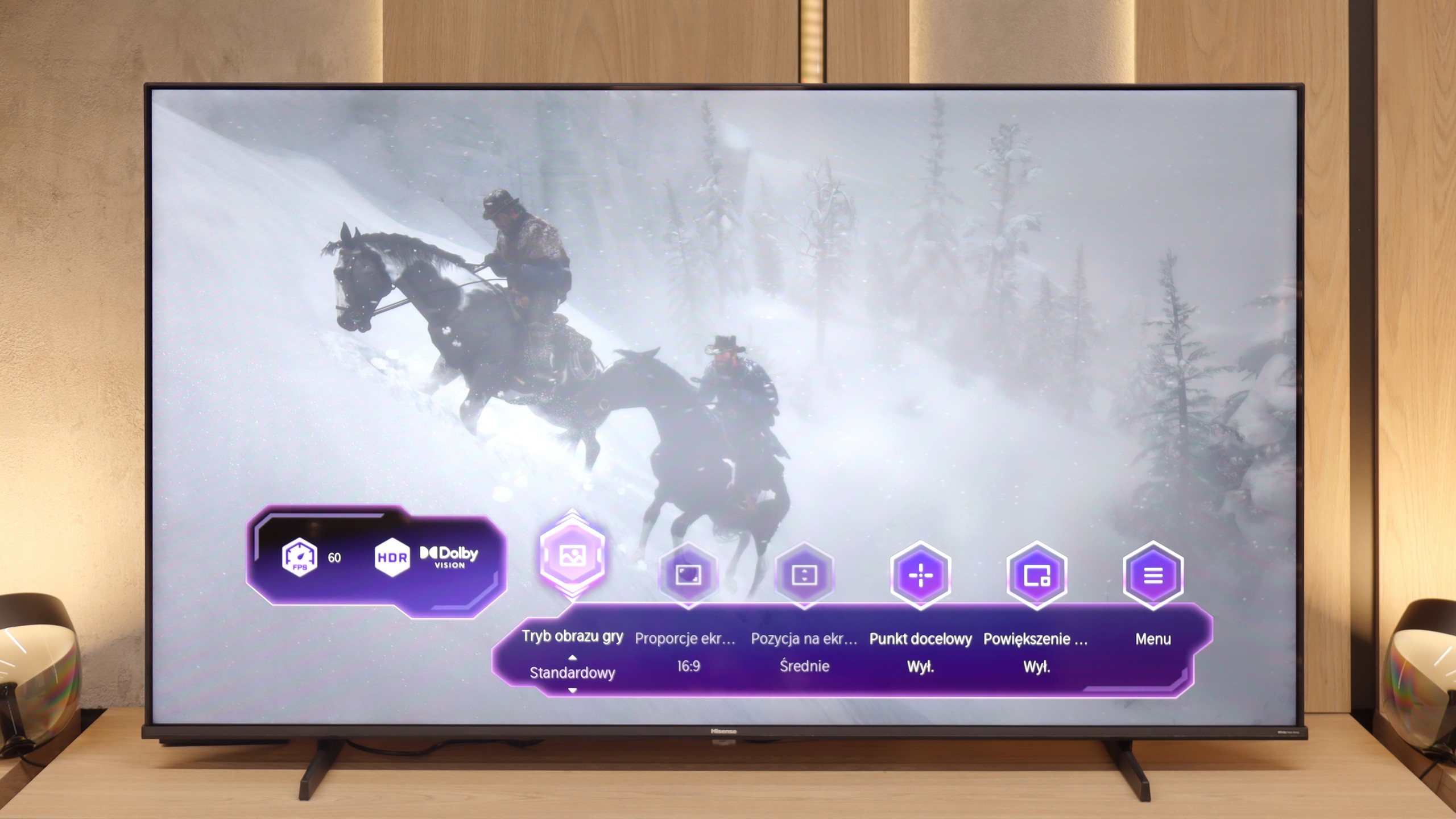

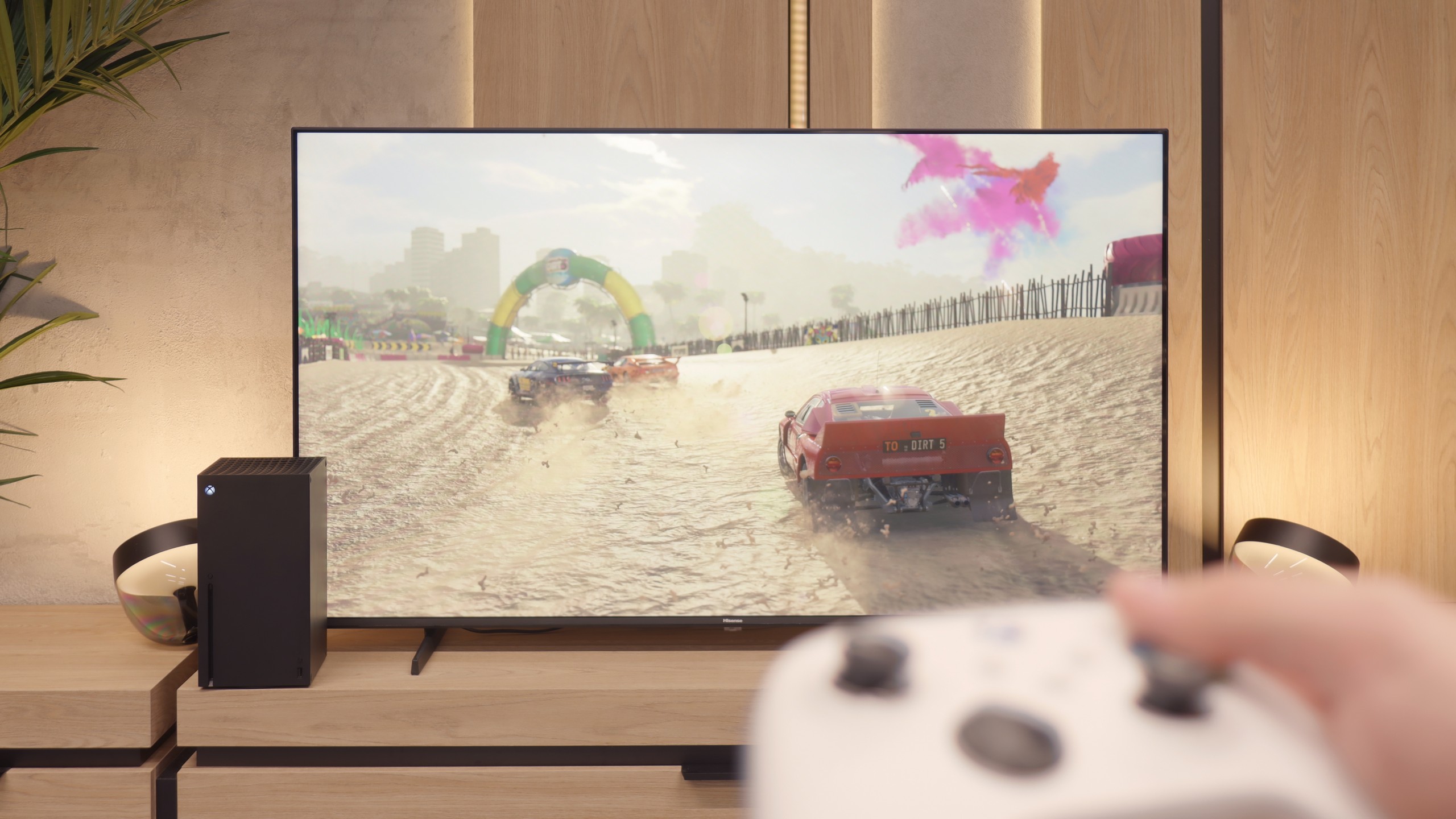
If a television has a 144 Hz display and two full HDMI 2.1 ports, it is clear that it has been designed with gamers in mind. The Sharp GR8 offers exactly that – high refresh rates and the right connections to maximize the performance of modern consoles and PCs. It also features ALLM, which automatically switches the television to low-latency mode, and VRR, which prevents screen tearing even in more demanding moments. In practice, everything works as it should, and it is hard to find any faults. However, there are some shortcomings. It lacks support for HGiG, which is a feature that better adjusts HDR for games, as well as a Game Bar that makes it easier to quickly adjust settings without leaving the game. Despite these downsides, the Sharp GR8 is a really solid option for gamers.
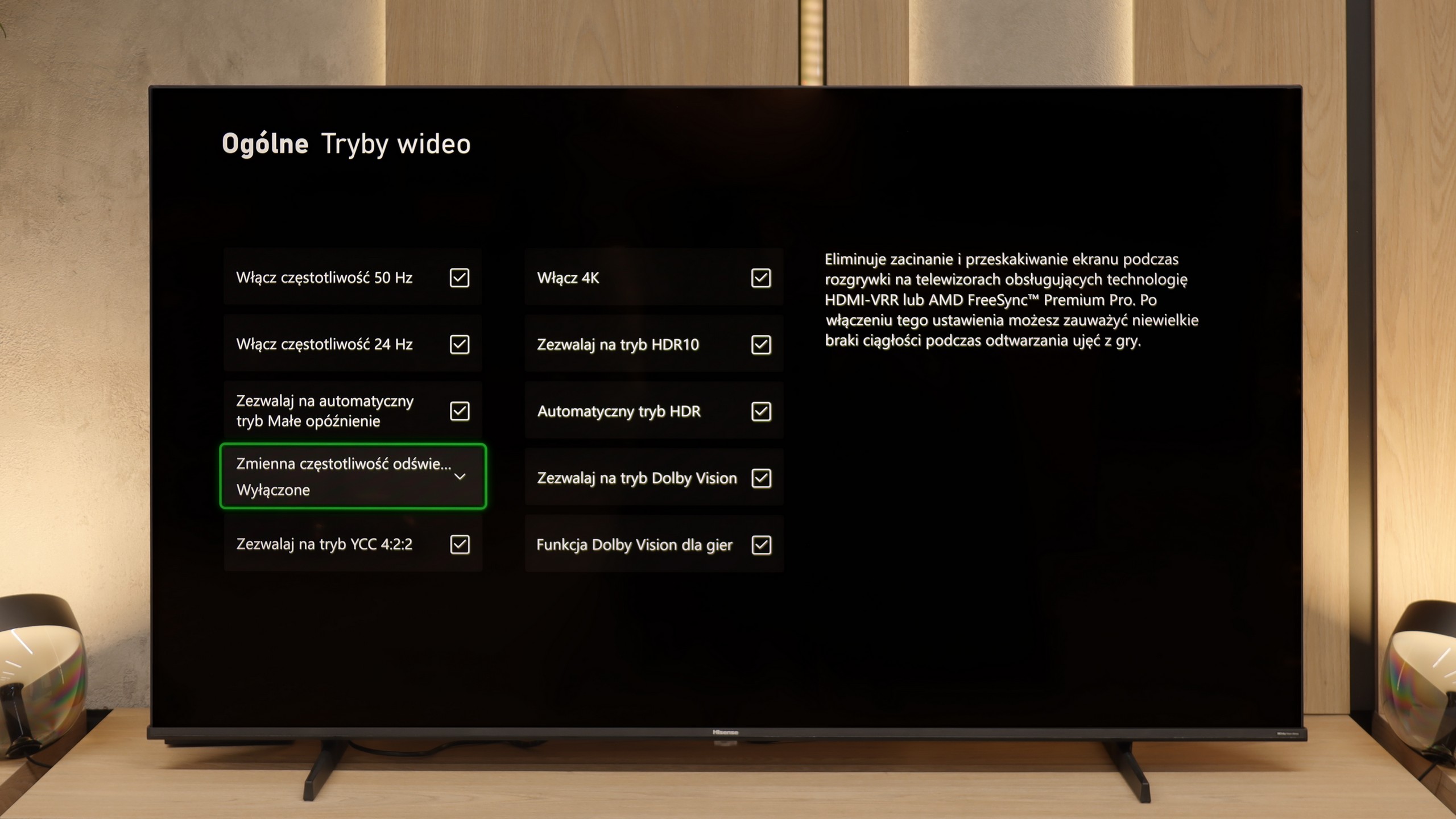
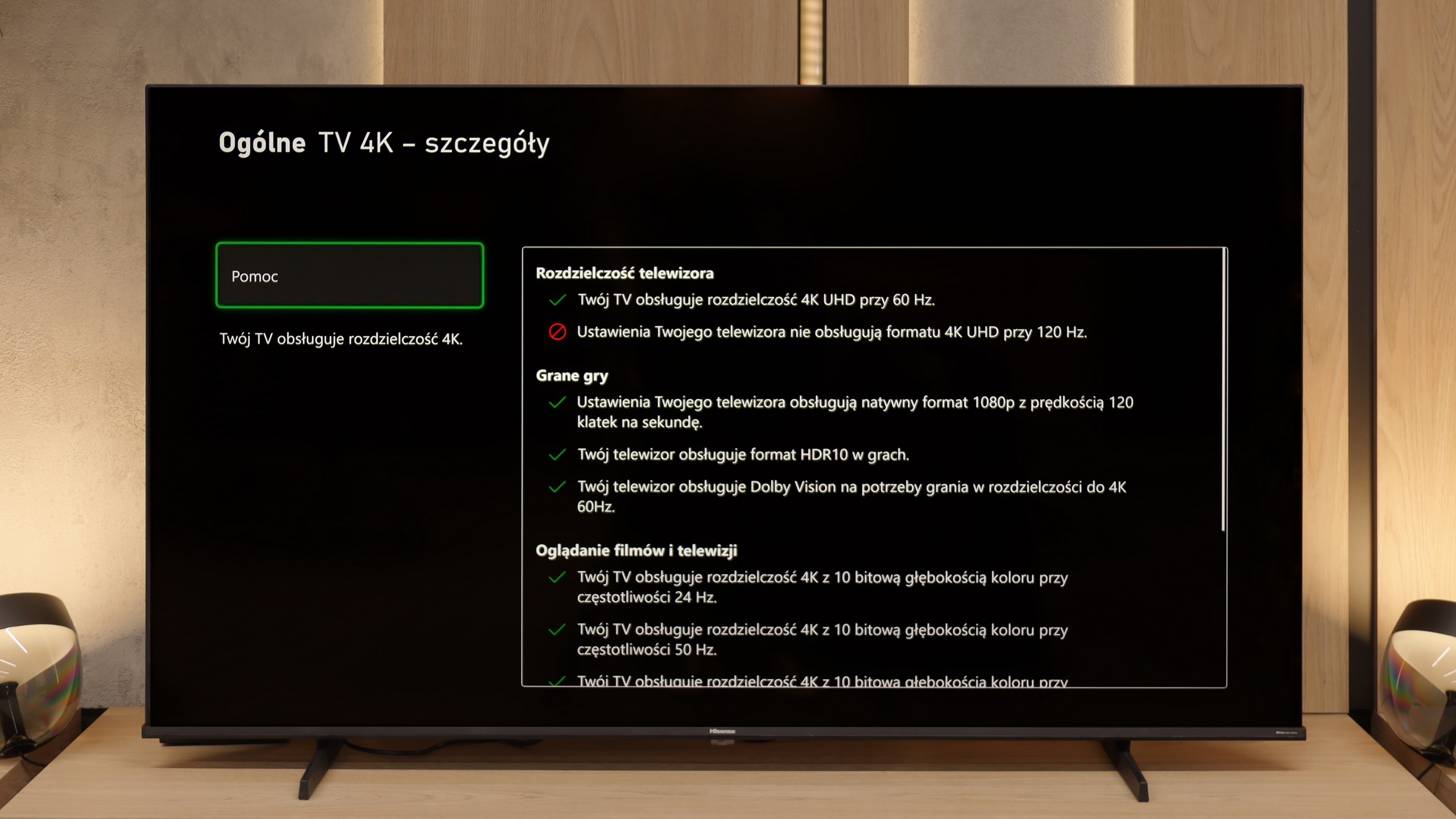
Hisense E7Q / E79Q is truly a successful television for gamers, even though it doesn't support 4K signal at 120 Hz. However, the manufacturer has included a set of features that until recently could only be found in more expensive models. There is ALLM, or automatic switching to low-latency mode, which allows the television to activate game mode with very low input lag. We also have VRR, functioning up to 60 Hz – this may not seem impressive on paper, but in practice, it is fully sufficient, as most games on consoles do not exceed this limit. All these settings can be quickly found in the Game Bar panel, a convenient menu created specifically for gamers. From this level, you can change picture modes, turn on a frame rate counter, or even… a crosshair on the screen – in the Vidaa system humorously named "target point," which is a result of awkward translation by the Chinese manufacturer.
Particularly praiseworthy is the ability to play in 1080p at 120 Hz, which realistically improves the smoothness and responsiveness of the image. This way, if someone wants to play a few titles at a higher refresh rate, they can simply lower the resolution and enjoy significantly smoother motion. Despite the lack of 4K@120Hz, Hisense E7Q / E79Q really performs well as a television for gamers – especially those who are not looking for perfection, but a solid and fast screen for everyday gaming.
Input lag
9.7/10
10/10
SDR
HDR
Dolby Vision
The Sharp GR8 performs really well in terms of latency. At a refresh rate of 120 Hz, the input lag is only 9 ms, and at 60 Hz - about 18 ms. These are practically imperceptible values even for the most demanding gamers, where every millisecond counts. Importantly, the Dolby Vision mode also works responsively, which is not at all standard in TVs in this price range. This is definitely a big plus for those who want to enjoy not only smoothness but also better HDR effects while gaming.
In games, the easiest thing to notice is how fast (or slow) the TV is – and the Hisense E7Q / E79Q passes this test without a hitch. After just a few minutes of playing, you can feel that the response to controller movements is instantaneous, without that characteristic delay that can ruin even the best match in FIFA or a critical exchange in a fighting game. In game mode, the E7Q / E79Q operates with a delay of less than 15 ms, which means that there is virtually no gap between pressing a button and seeing the reaction on the screen. This is a level that even more expensive models would be proud of. And it's precisely for this responsiveness – perhaps more than for the picture or extras – that this TV really deserves praise.
Compatibility with PC
4/10
3/10

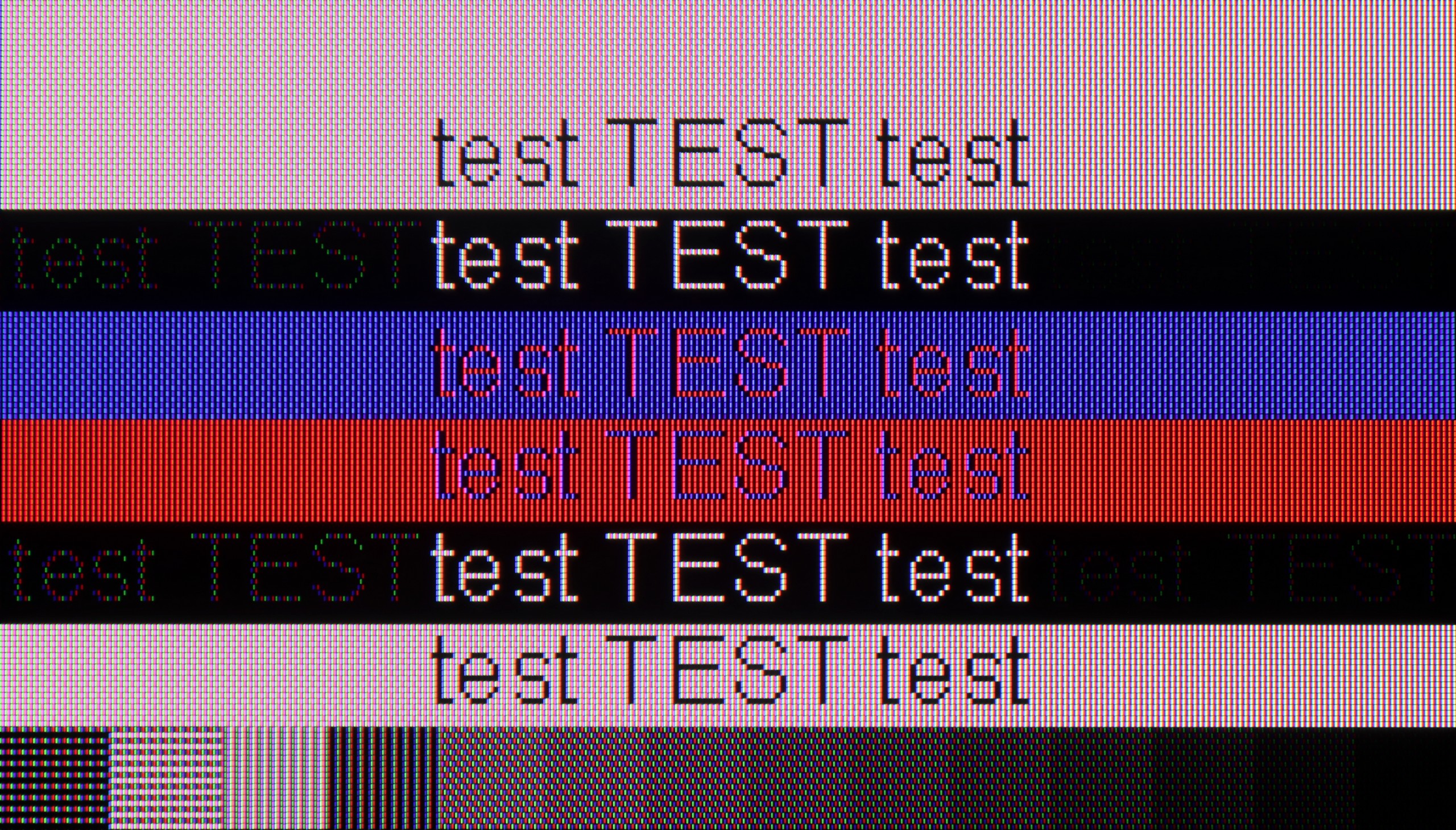
The Sharp GR8 performs quite well as a screen for PC gaming. The 144 Hz refresh rate, low input lag, and support for G-Sync and FreeSync technology provide a setup that guarantees smooth and responsive gameplay. Games look dynamic, and the image remains stable even in the most demanding moments. However, a problem arises when it comes time to work with text. The TV does not support chroma 4:4:4, which means that fonts are blurred and poorly readable. Longer work with documents or browsing websites can simply become tiring for the eyes.
The Sharp GR8 is a great choice for PC gamers, but rather poor for office work. If we plan to use this TV mainly for gaming, we should be satisfied. However, if we think of it as a monitor for daily work, it’s better to look for another solution.
In terms of collaboration with a PC, the Hisense E7Q / E79Q unfortunately does not impress. Yes, the television supports full chroma sampling 4:4:4, so text and fonts are quite readable, but that’s where the list of advantages pretty much ends. The screen has a significant issue with dithering, which in practice looks very unpleasant – as if the surface of the image was gently shimmering with colors. This is best seen with dark letters on a gray background – instead of neutral shades of fonts, there are delicate flashes of blue, green, and red, reminiscent of a rainbow effect. After prolonged use at the computer, it can strain the eyes and reduce comfort. On the positive side, there is support for frame synchronization and the ability to operate at 120 Hz at a lower resolution, which may be a small consolation for gamers. However, as a typical PC monitor, the E7Q / E79Q performs rather mediocrely.
Viewing angles
3.2/10
3.2/10
In terms of viewing angles, the Sharp GR8 does not surprise – and it is hard to blame it, considering the use of a VA panel. When watching from a wider angle, the image loses quality, colors become faded, and contrast clearly decreases. Additional coatings that widen viewing angles could improve this aspect, but that is a solution we typically encounter in more expensive LCD TV models. If we plan to watch television mainly straight on, there won't be a major problem. However, in the case of a larger number of viewers sitting at different angles, it is worth being aware of this limitation.
The Hisense E7Q / E79Q has typical VA panel weak viewing angles. Straight on, the picture looks very good – black is deep, and contrast is high. However, just sitting slightly to the side causes the situation to change quickly. At an angle of about 45 degrees, brightness drops by about 73%, and colors noticeably lose saturation. This is a typical compromise we have to make when choosing a TV with this type of panel instead of an IPS panel. There, the viewing angles are much better, but the black is much worse.
Daytime performance
4.5/10
5.2/10


Panel brightness
Average luminance SDR
Hisense E7Q / E79Q: 371 cd/m2
Sharp GR8: 329 cd/m2
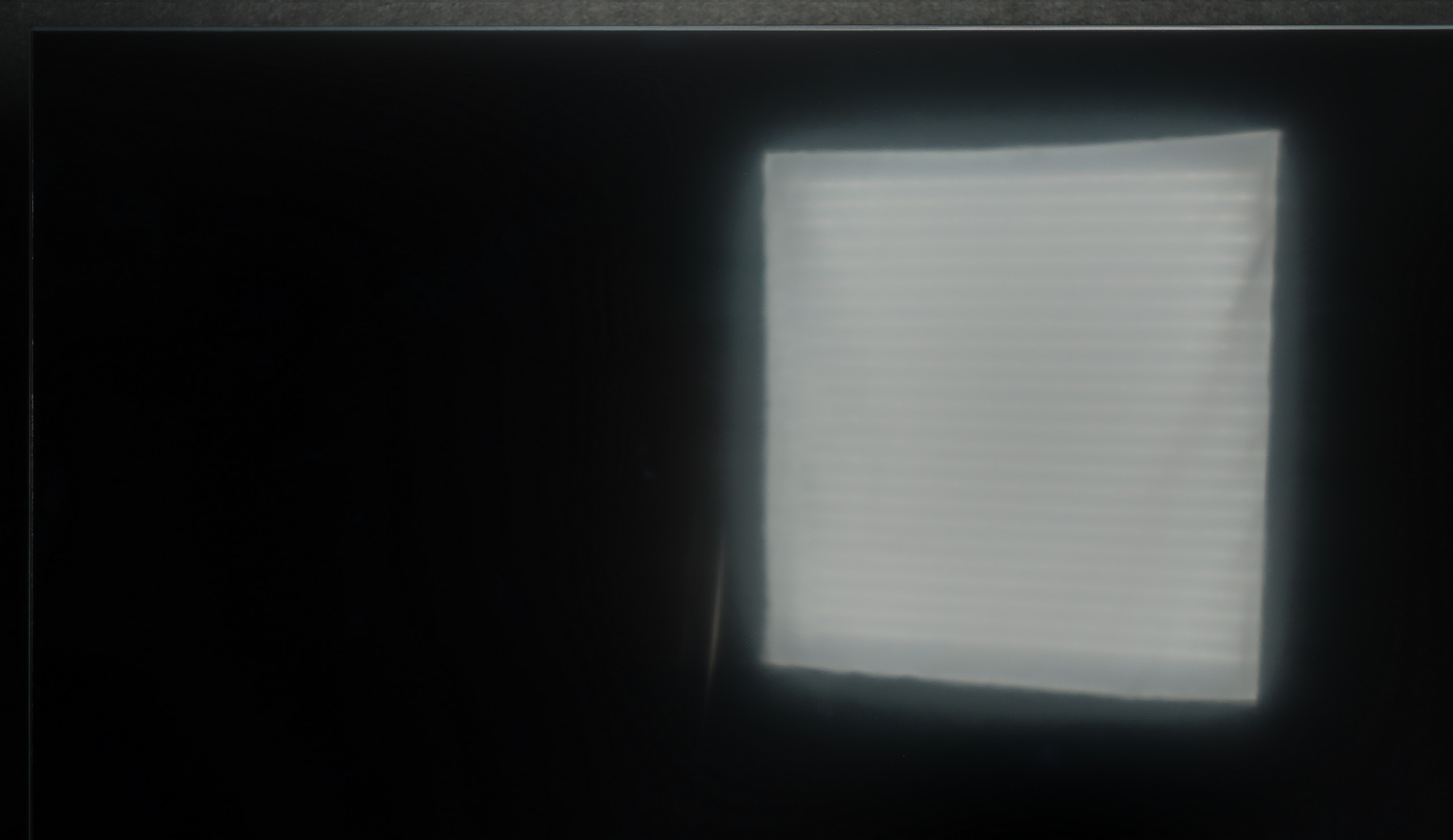
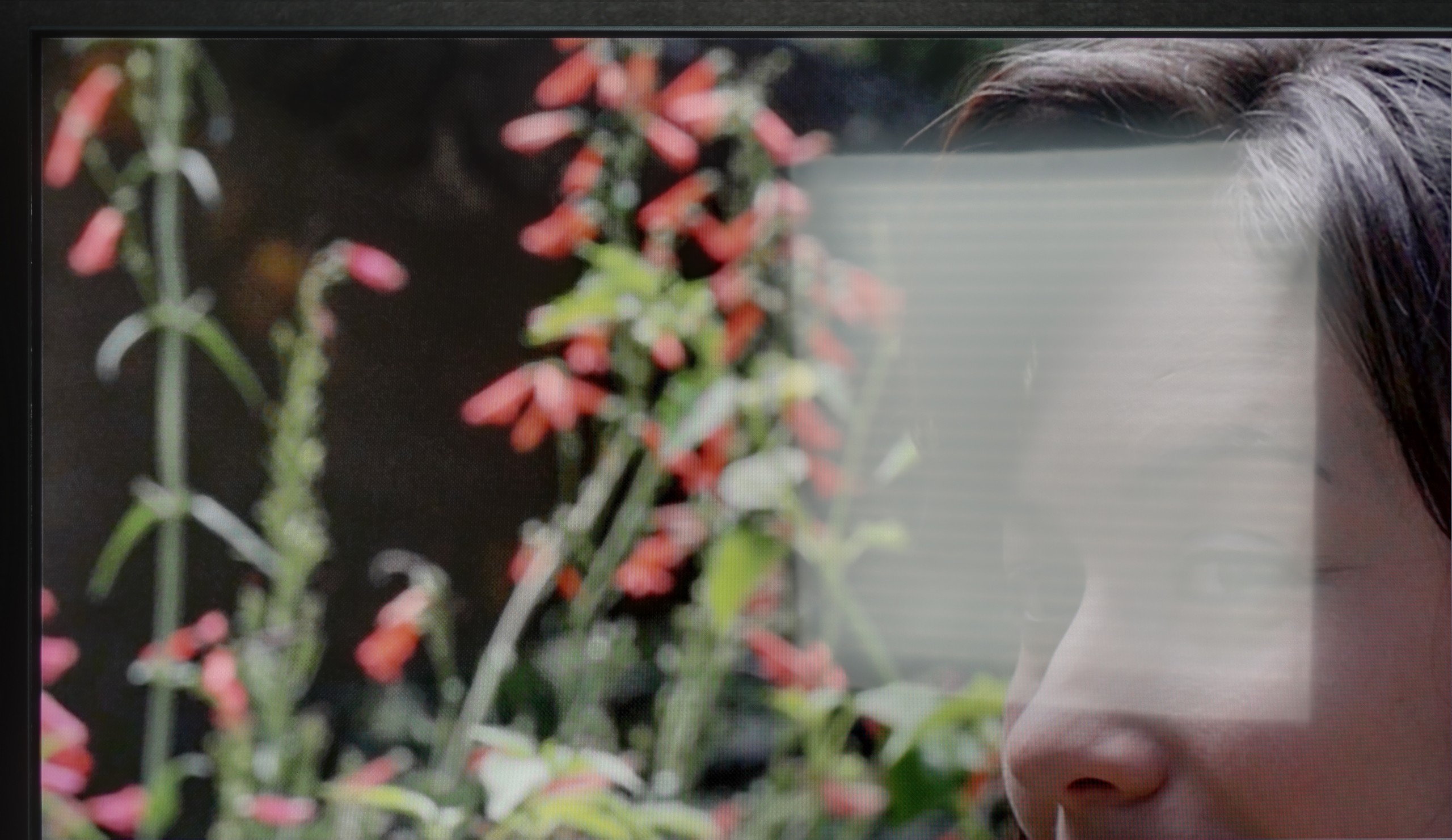
The Sharp GR8 has a satin finish display that handles reflections moderately. Bright surrounding elements, such as windows or lamps, are quite noticeable on the screen and can be distracting while watching. The brightness level of 330 cd/m² in SDR content is also unimpressive. As a result, the television performs best in rooms with not too much natural light. One could say that the GR8 manages during the day, but it is definitely not equipment designed for heavily sunlit living rooms. If we watch mainly in the evenings or in controlled lighting, this will not be a major issue.
Hisense E7Q / E79Q performs best in moderately bright living rooms. Its brightness ranges from 350 to 380 nits, so in typical home conditions, the picture looks good, but in very sunny rooms, it begins to lose clarity. It is simply not a screen for interiors with large windows or strong daylight. On the positive side, it's worth mentioning the satin coating of the panel, which effectively reduces reflections – both from lamps and from windows. As a result, even if the room is not in semi-darkness, the image remains quite clear.
Panel details
Subpixel Structure:

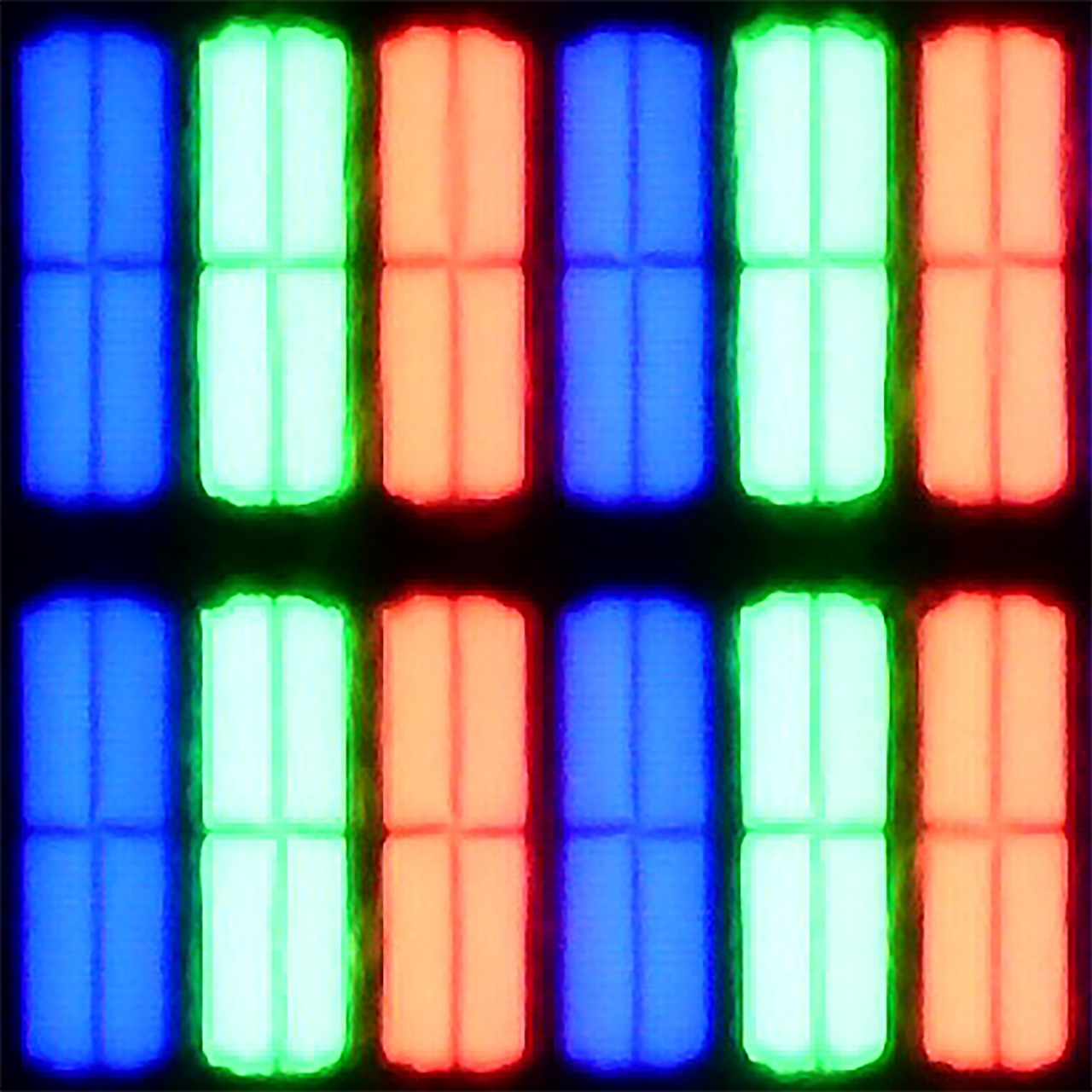
Panel uniformity and thermal imaging:


Sharp GR8
Hisense E7Q / E79Q
TV features
6/10
8.7/10
- HDMI inputs2 x HDMI 2.0, 2 x HDMI 2.1 48Gbps3 x HDMI 2.0, 0 x HDMI 2.1
- Other inputsRCA (Chinch)Component (YPbPr)
- OutputsToslink (Optical audio), eARC (HDMI), ARC (HDMI), Mini-Jack (Headphones)Toslink (Optical audio), eARC (HDMI), ARC (HDMI), Mini-Jack (Headphones)
- Network InterfacesWi-Fi 2.4GHz, Wi-Fi 5GHz, Ethernet (LAN) 100MbpsWi-Fi 2.4GHz, Wi-Fi 5GHz, Ethernet (LAN) 100Mbps
- TV receptionDVB-T, DVB-T2, DVB-S, DVB-S2, DVB-CDVB-T, DVB-T2, DVB-S, DVB-S2, DVB-C
Classic features:
- Recording to USB (terrestrial TV)
- Recording programming
- Picture in Picture (PiP)
- RF remote control (no need to aim at the screen)
- Backlit remote control
- Teletext
- Audio only mode
- Bluetooth headphones support
- Simultaneous Bluetooth headphones & TV audio
Smart features:
- AirPlay
- Screen mirroring (Windows Miracast)
- Voice search
- Voice search in native language
- Ability to connect a keyboard and mouse


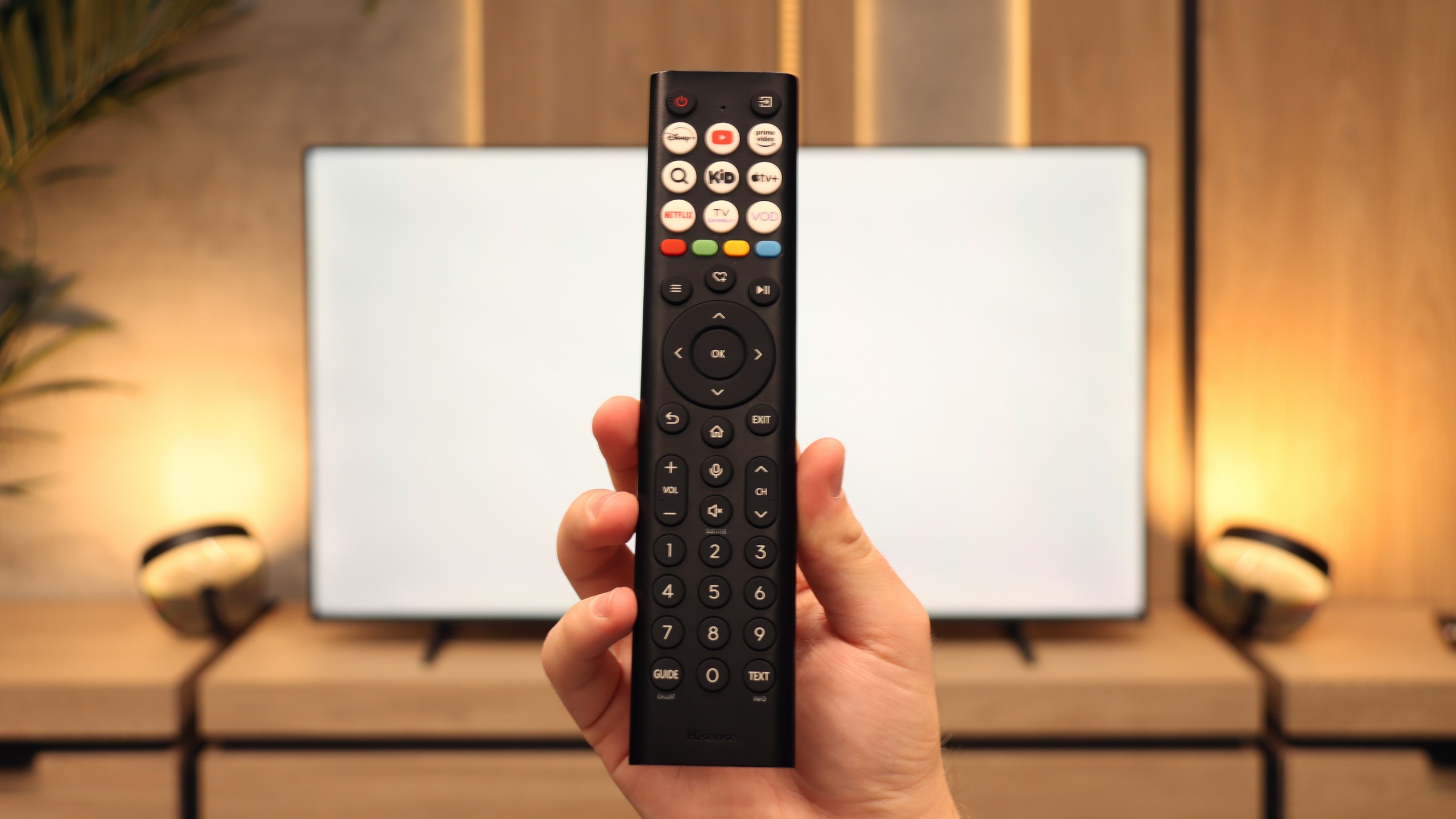
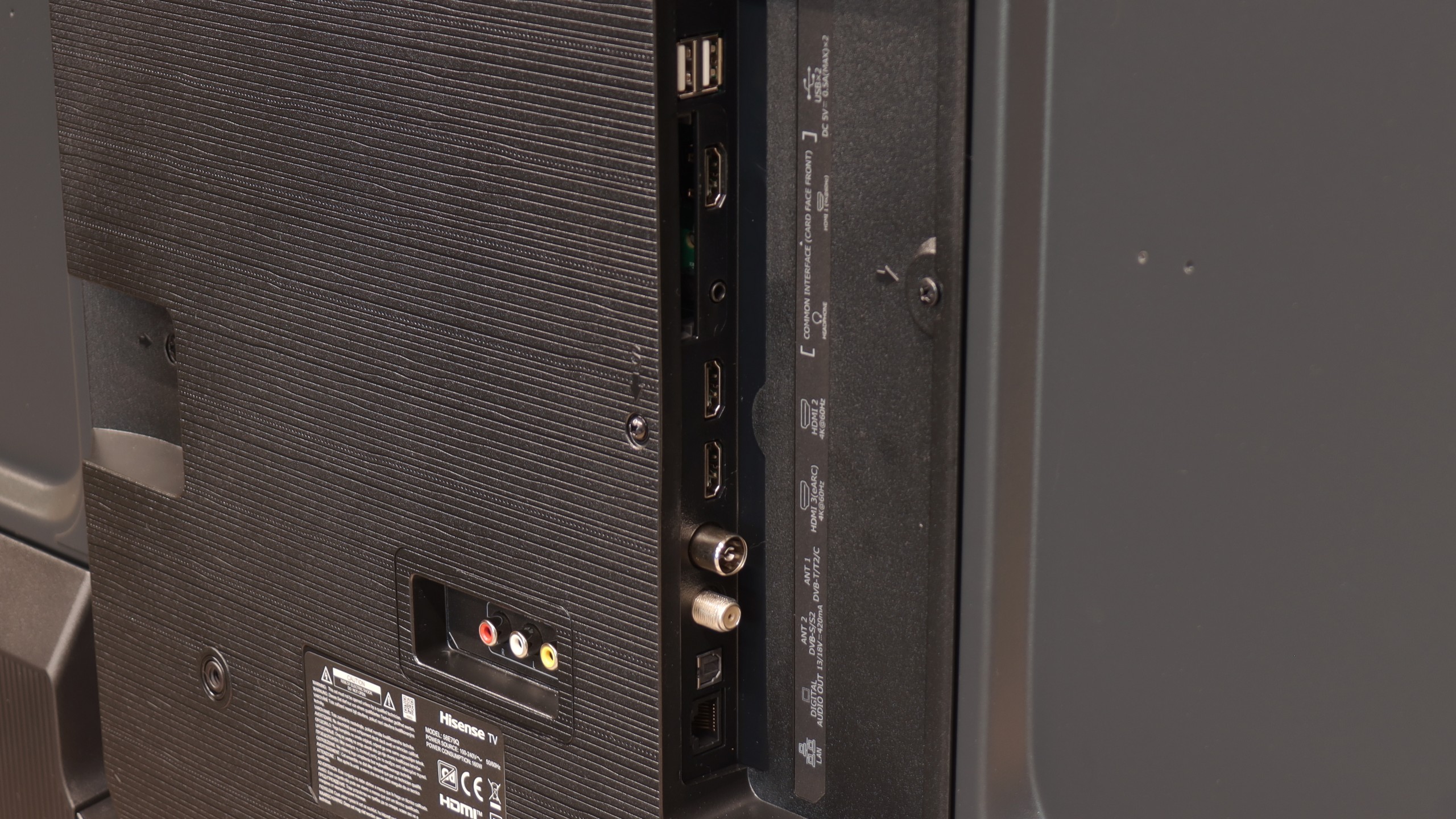
Google TV is definitely the biggest advantage of the Sharp GR8. This system is a true multimedia machine - it features almost all popular streaming applications, such as Netflix, HBO Max, and Disney+. Voice search works in Polish and, importantly, is really responsive. We can tell the TV what we want to watch, and it quickly finds the appropriate content. Moreover, the interface is clear and intuitive, so even those who are not fond of technological novelties can handle it without any problems. In short, Google TV gets the job done.
Unfortunately, when it comes to more classic features, the GR8 is fairly average. There are no options for USB recording or PiP (picture-in-picture) functionality. Moreover, although the TV supports Bluetooth connectivity, iPhone users may feel disappointed as there is no support for AirPlay.
The remote included in the package is simple yet well thought out. It has a solar panel on the front, which allows it to be charged by light, and the additional charging port means we don't have to worry about changing batteries. It is also a plus that the remote does not require pointing at the screen - it works regardless of the direction it is facing.
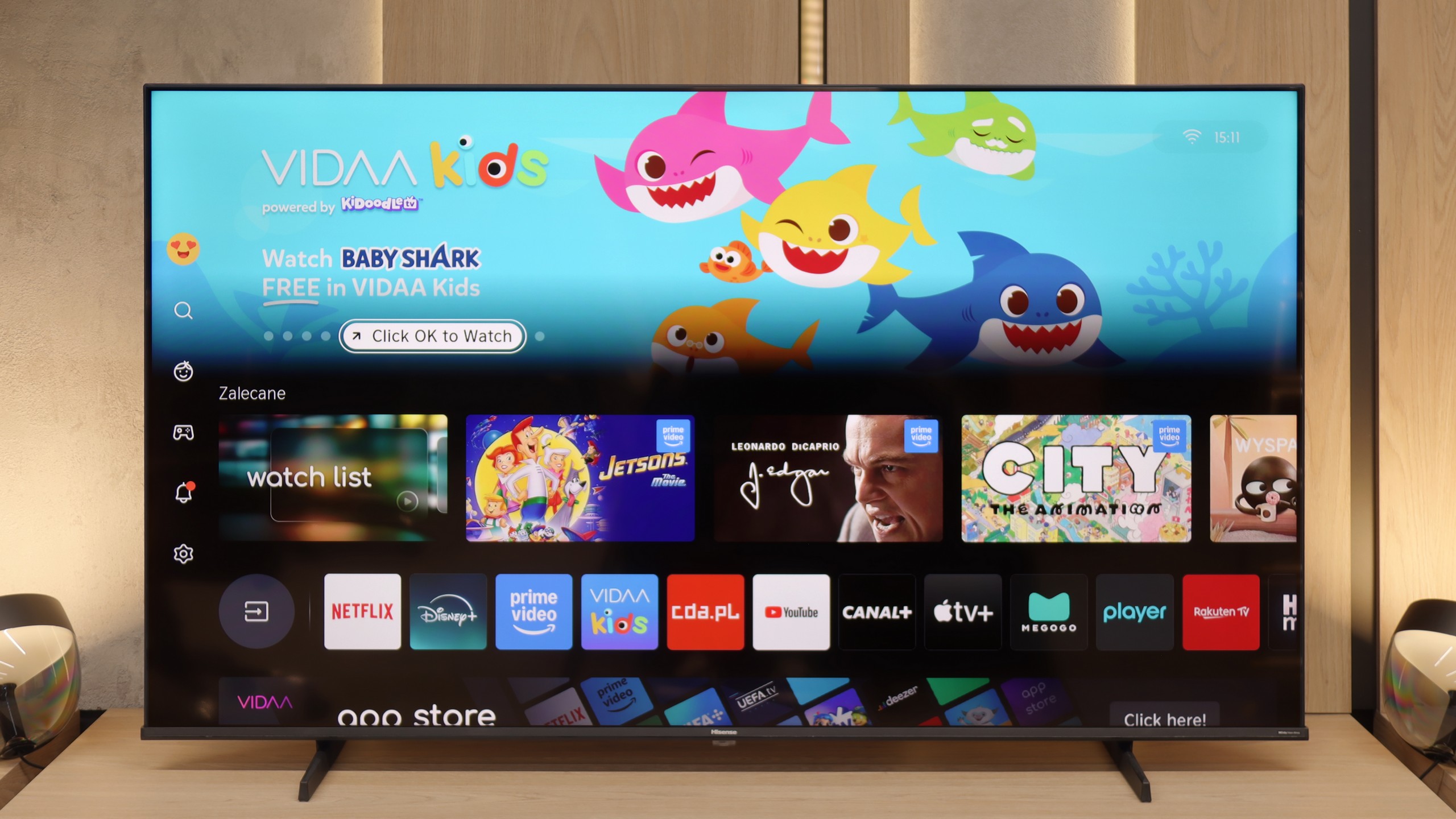
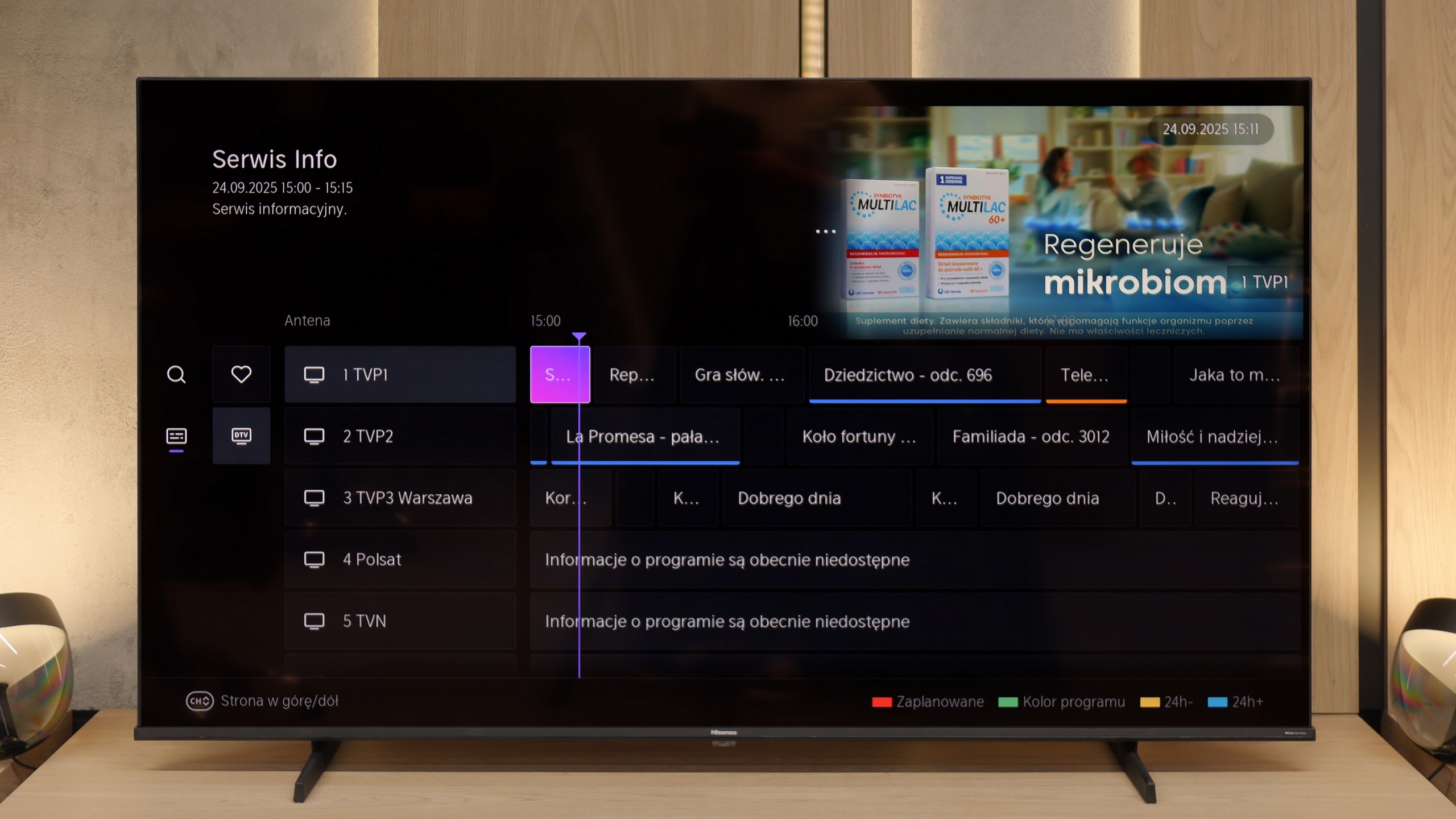
SmartTV Features: Vidaa
When it comes to Smart TV features, the Hisense E7Q / E79Q runs on the VIDAA system, which has been developed by the Chinese manufacturer for several years. It's clear that the software is maturing – it includes AirPlay, Screen Mirroring, and voice search in multiple languages, including Polish. Unfortunately, in our unit, it worked quite slowly, which surprised us a bit since this system reacted much faster in other Hisense models. The limited app library is also a downside. Of course, the most important ones are there – Netflix, Disney+, and YouTube – but it's worth checking before purchasing whether you'll find everything you use daily.
Classic Features
In terms of typical television functions, the E7Q performs significantly better. We have practically everything one can expect from a classic television: recording from built-in tuners to USB, a jack headphone output, and even a component input for older audio equipment. Additionally, it offers full audio support via eARC, so you can be assured that regardless of the situation, the soundbar will always "perform as it should." The remote is also quite classic, well-designed with a lot of buttons (including numeric ones), which may be appealing to those who still watch regular television on the TV. 😉
Playing files from USB
9.1/10
8.2/10
Supported photo formats:
Maximum photo resolution:

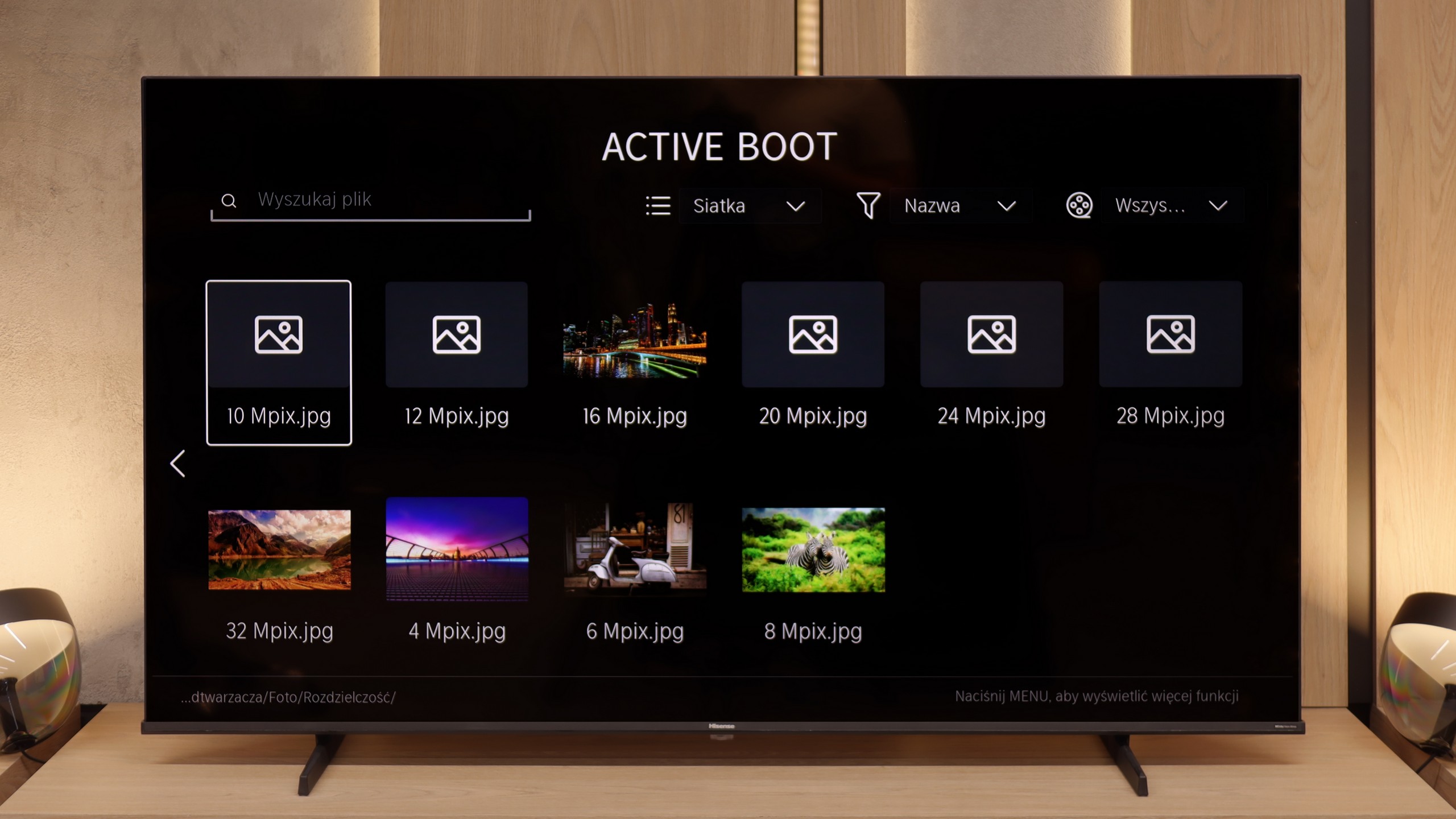
The Sharp GR8 performs really well when playing multimedia files from USB. It supports almost all popular audio and video formats, so we don't have to worry about any file not launching.
However, the built-in player has its limitations – for example, we won't find the option to change the font color in subtitles here. Fortunately, the Google TV system allows us to bypass this problem. You just need to download an alternative multimedia playback app from the Google Play Store, which offers more advanced configuration options.
The media player in the Hisense E7Q / E79Q works correctly but can be temperamental. The biggest problem concerns photo support – the TV only handles selected formats, and some files simply do not open. This is quite surprising because even cheaper models from other manufacturers usually do not have this issue. Videos and music play without major problems; however, one has to reckon with the fact that the E7Q is not a master of versatility when it comes to files from a USB drive. It's rather a basic player that works – as long as we don't try to "surprise" it with something.
Apps
9.6/10
7.7/10






















Sound
7/10
6.3/10
- Maximum volume-83dB
- Dolby Digital Plus 7.1
- Dolby True HD 7.1
- Dolby Atmos in Dolby Digital Plus (JOC)
- Dolby Atmos in Dolby True HD
- DTS:X in DTS-HD MA
- DTS-HD Master Audio
Sharp GR8 positively surprises with its sound quality. Although it is equipped with a standard set of speakers, the influence of collaboration with Harman/Kardon is evident. The sound is clear, dialogues are well emphasized, and the overall sound characteristic is pleasant to the ear. It is not on the level of flagship models with advanced audio systems, but for this price segment – it is really good.
Unfortunately, Sharp decided to remove the built-in soundbar that we could see in the previously reviewed model Sharp FQ8. It’s a pity, because this solution significantly improved sound quality and gave the television an advantage over the competition.
The sound on the Hisense E7Q / E79Q is exactly what you would expect from a TV in this price range – rather flat, but quite loud. During measurements, the maximum volume reached around 83 dB, which is totally sufficient for everyday viewing. Dialogues are clearly audible, somewhat compensating for the lack of pronounced bass and depth. There are no revelations here: it's just a solid minimum that can be accepted. However, one positive aspect is the wide support for audio formats. The TV handles Dolby TrueHD, Dolby Atmos, and even the increasingly rare DTS:X. This is a nice addition, as we can be sure that regardless of the source – everything will sound as it should. (Definitely when we connect it to an external audio source like a soundbar).
Sound Quality Test
No sound test video
Acoustic Measurements
No acoustic data
83dBC (Max)
75dBC